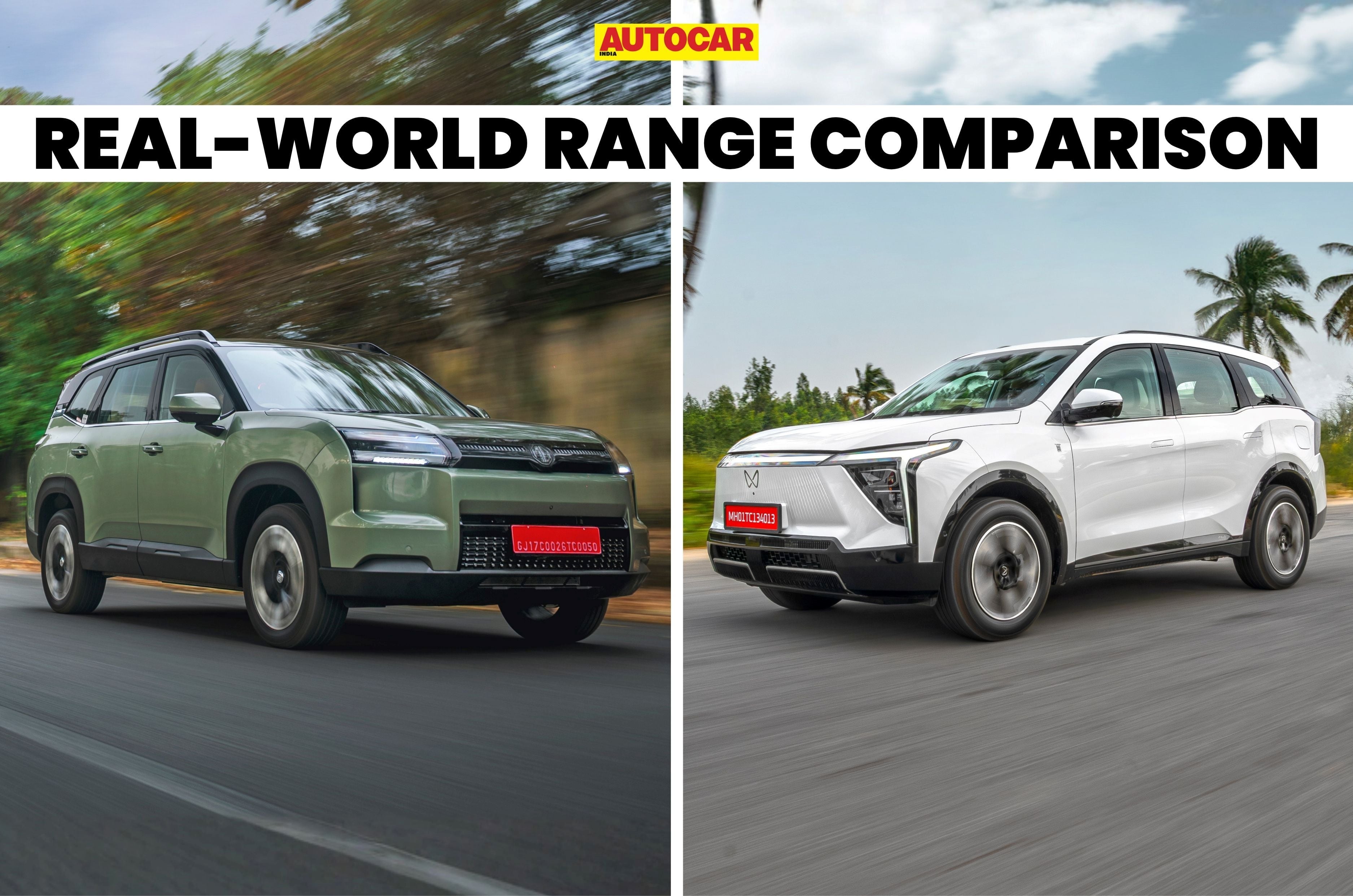
MG Hector Tomahawk EV vs Mahindra XEV 9S real-world range compared

MG Hector Tomahawk EV vs Mahindra XEV 9S real-world range compared

MG recently launched the Hector Tomahawk EV with a 69.2kWh battery, promising a claimed range of 517km. The 3-row electric SUV is positioned squarely against the Mahindra XEV 9S, which is one of the most popular EVs in its price range, and has a larger battery capacity and a higher claimed range of 679km. But in real-world conditions, does the Mahindra XEV 9S offer higher range than the MG Hector Tomahawk EV? We find out. 

MG Hector Tomahawk EV vs Mahindra XEV 9S: Specifications, price

Tomahawk EV has a smaller battery, but weighs less than XEV 9S and is more affordable

MG Hector Tomahawk EV vs Mahindra XEV 9S: Specifications, price


MG Hector Tomahawk EV

Mahindra XEV 9S

Battery pack (kWh)

69.2

79

No. of motor(s)

1

1

Drivetrain

FWD

RWD

Power (hp)

204

286

Torque (Nm)

310

380

Kerb weight (kg)

1,908

Over 2,201*

Price (in Rs lakh)

19.50-23.50

22.65-30.15

*The XEV 9e has a kerb weight of 2201kg, so the XEV 9S, being a 3-row offering, will be heavier.

The MG Hector Tomahawk EV gets a smaller 69.2kWh battery compared to the XEV 9S’ 79kWh unit. It also gets a less powerful front motor that produces 82hp and 70Nm less than the XEV 9S’s rear-mounted motor. However, the Hector Tomahawk EV is the lighter electric SUV in this comparison, weighing over 250kg less than the Mahindra XEV 9S.

The MG Hector Tomahawk EV also asks a lower price, its base-spec variant costing Rs 3.15 lakh less and its top-spec variant costing Rs 6.65 lakh less than the XEV 9S’s 79kWh battery trims. 

MG Hector Tomahawk EV vs Mahindra XEV 9S: Real-world range comparison

Although offering very different city and highway efficiencies, both eSUVs offer similar average range

MG Hector Tomahawk EV vs Mahindra XEV 9S: Real-world range comparison


MG Hector Tomahawk EV

Mahindra XEV 9S

Claimed range (ARAI)

517km

679km

Tested city range

495km

478km

Tested highway range

397km

477km

Tested average range

446km

477.5km

While the MG Hector Tomahawk EV has a claimed ARAI range of 517km, the Mahindra XEV 9S promises a higher range of 679km. However, in our real-world tests, the XEV 9S delivered a higher average range, despite the Hector Tomahawk EV performing better in city driving conditions.

In the city, the Tomahawk EV covered 495km on a full charge, which is 17km more than the XEV 9S. However, on the highway, the Mahindra managed 477km, going 80km further than the MG. As a result, the Mahindra achieved an average real-world range of 477.5km, which is 31.5km more than the Tomahawk EV’s 446km.
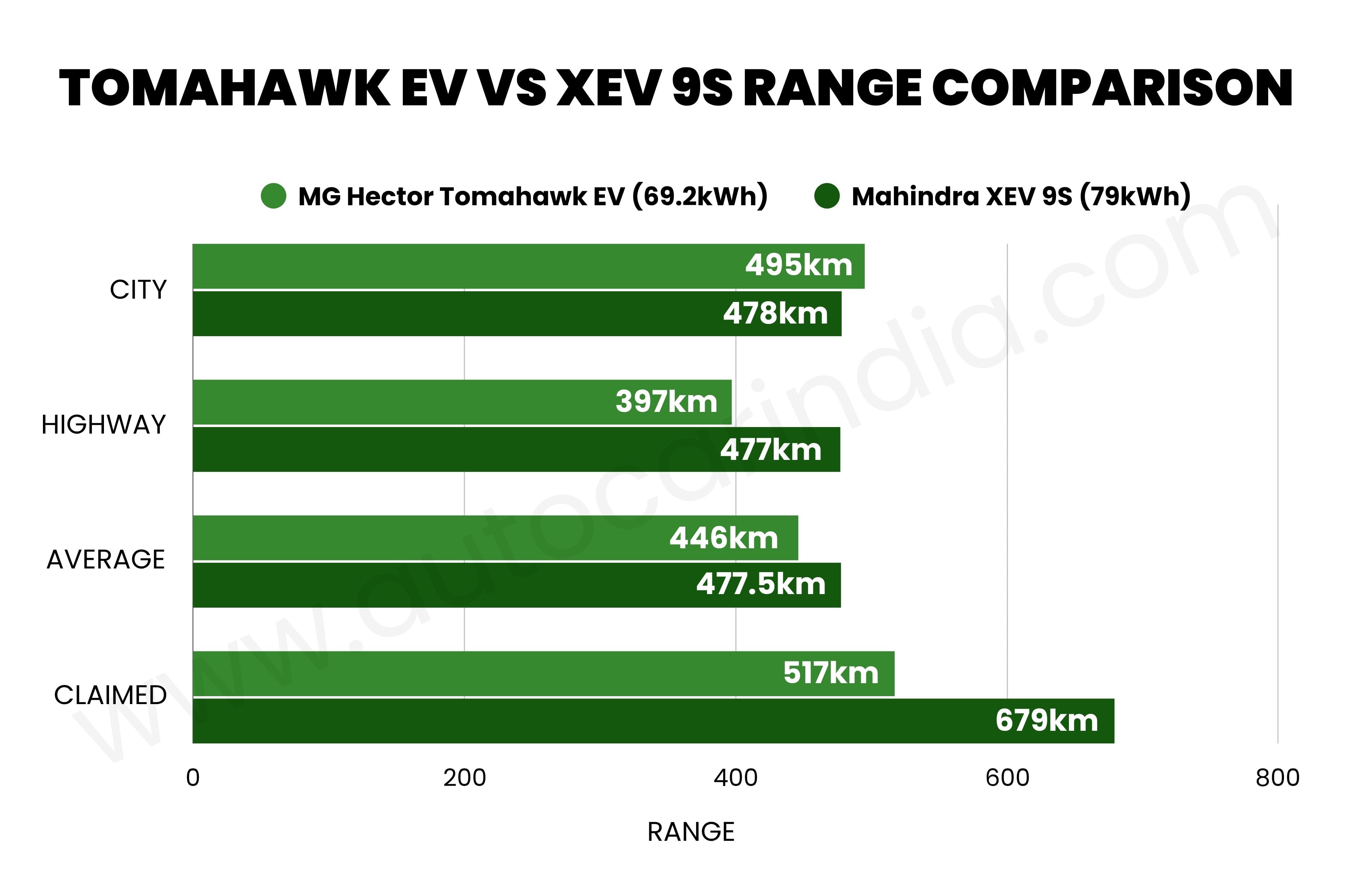
In our real-life tests, we found the Tomahawk EV’s relatively mild regenerative braking, even in its strongest setting, limits its potential for better city efficiency. Meanwhile, its bulky, upright design also works against it on the highway. The XEV 9S, on the other hand, weighs over 2.2 tonnes, which definitely affects its efficiency against the Hector Tomahawk EV.

Autocar India’s range testing

For our real-world range test, we begin with each car’s battery fully charged and tyre presures set as per the manufacturer’s recommendations. We drive the cars on a fixed loop covering both city and highway stretches while maintaining set average speeds. We then calculate the range based on the percentage of charge consumed. The AC is set to 22deg C in auto mode, and features such as the music system, lights and ventilated seats are used as needed, just as a regular user would. This approach ensures consistency and gives a clear idea of what to expect in daily use.

Prices are ex-showroom, India.
2027 Kawasaki KLE500 SE SmartRide revealed

2027 Kawasaki KLE500 SE SmartRide revealed
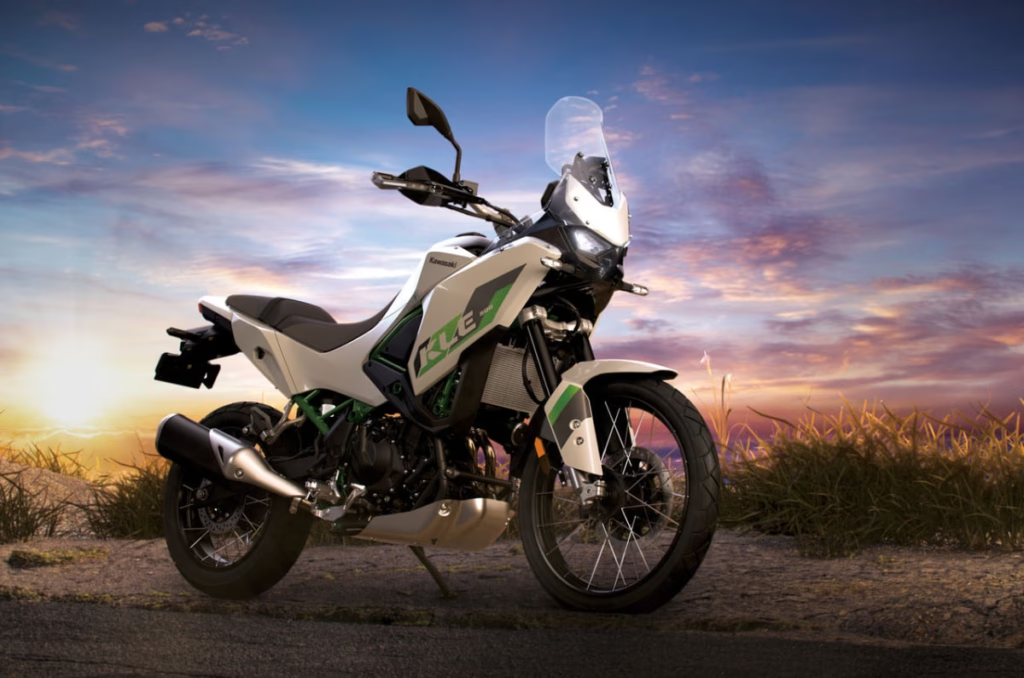
KLE500 SE press image

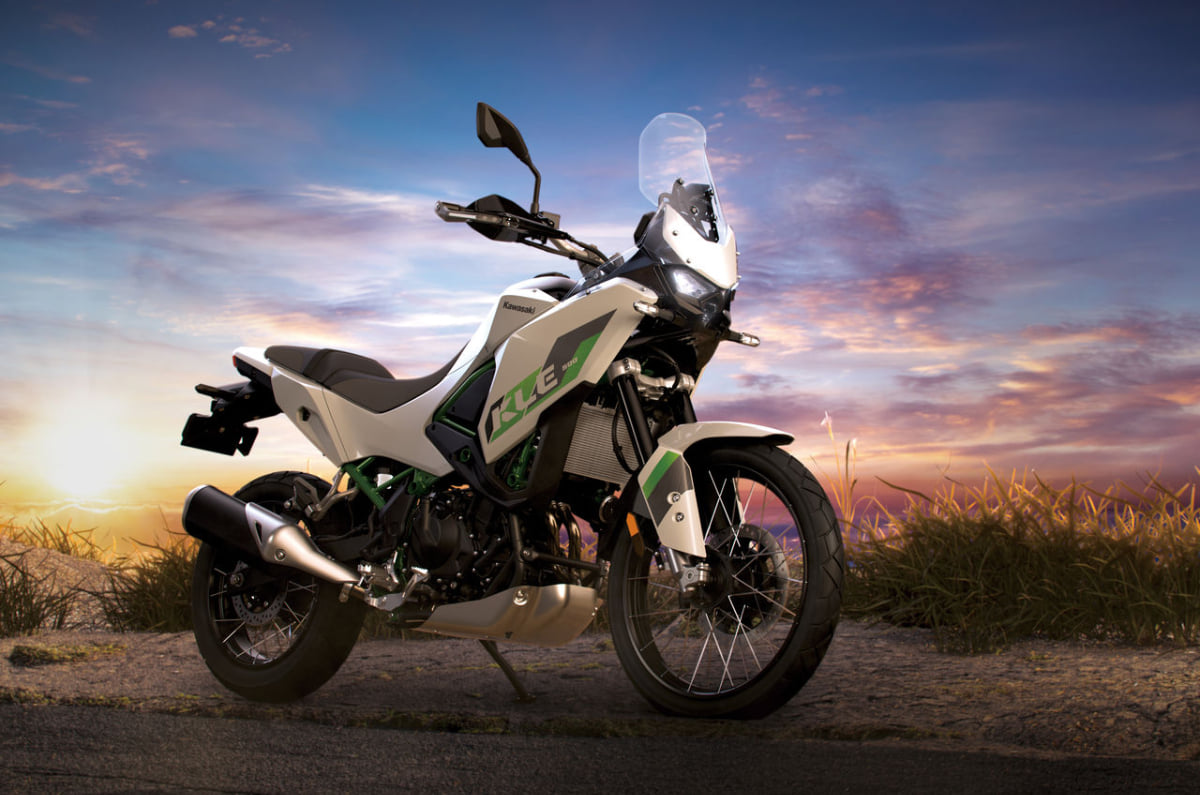
Kawasaki has expanded its 2027 KLE500 range with a new SE SmartRide variant, which adds a mechanical centrifugal clutch to the parallel-twin adventure motorcycle. The system allows riders to pull away and come to a stop without operating the clutch lever, while gear changes on the move still use the lever and pedal as normal.

  1. KLE500 now has three variants
  2. 451cc parallel-twin engine produces 45hp and 42.6Nm

Kawasaki KLE500 SE SmartRide details

No other mechanical changes over the KLE500 SE, which debuted last year

The KLE500 lineup now comprises three variants – the base KLE500, the KLE500 SE and the new KLE500 SE SmartRide. At first, the SmartRide system may sound similar to Honda’s E-Clutch technology, but the two work quite differently. While both aim to simplify clutch operation, Honda uses an electromechanical actuator to automate clutch movement, whereas SmartRide relies on a purely mechanical centrifugal clutch.

Aside from the addition of the clutch technology, the SmartRide variant also gets tubeless tyres, replacing the tube-type setup on the standard SE. Otherwise, the two variants share the same hardware, including the 451cc parallel-twin engine producing 45hp at 9,000rpm and 42.6Nm at 6,000rpm.

The SE SmartRide is available in a single colour, Pearl Blizzard White. Following its international debut last year, we’d reported that Kawasaki India has the KLE500 in the pipeline for a launch here, which we expect to happen over the next few months.

When it goes on sale, the KLE500 will join a growing list of sub-500cc adventure bikes in our market. Given its potential CBU (Completely Built-Up) import route and the premium pricing that would entail, it will also see competition from upcoming India-made motorcycles such as the Royal Enfield Himalayan 750 and the Norton Atlas.

Parag Parikh Flexi Cap Fund: पराग पारिख में पैसा लगाना बंद कर रहे निवेशक? 6 महीने में 77% घटा निवेश

Parag Parikh Flexi Cap Fund: पराग पारिख फ्लेक्सी कैप फंड में हर महीने आने वाला अनुमानित निवेश तेजी से घटा है। मार्च 2026 में यह करीब ₹3,950 करोड़ था। सितंबर में घटकर सिर्फ ₹900 करोड़ रह गया। यानी 6 महीने में करीब 77% की गिरावट आई। हालांकि, फंड में पैसा आना बंद नहीं हुआ है। इसके बावजूद फंड मैनेजर ने नए शेयरों और दूसरे निवेश विकल्पों में पैसा लगाना जारी रखा है।

फंड की कैश होल्डिंग भी काफी घटी है। मार्च में कुल संपत्ति का 18.94% पैसा कैश में था। सितंबर में यह घटकर 9.77% रह गया। इस दौरान फंड को रियल एस्टेट, REITs और चुनिंदा ऑयल एंड गैस कंपनियों में निवेश के मौके मिले।

फंड में निवेश क्यों घटा?

PPFAS Mutual Fund के फंड मैनेजर राज मेहता ने Moneycontrol को बताया कि निवेश में कमी से फंड की रणनीति नहीं बदली है। उनके मुताबिक, फंड में अब भी नया पैसा आ रहा है।

उन्होंने कहा कि हाल के दिनों में मिडकैप और स्मॉलकैप फंडों का प्रदर्शन बेहतर रहा है। ऐसे में निवेशकों का रुझान भी उनकी तरफ बढ़ा है। अक्सर निवेशक हालिया रिटर्न देखकर अपना पैसा लगाने का फैसला करते हैं।

कैश में पैसा रखने के बजाय कहां निवेश किया?

राज मेहता के मुताबिक, फंड कितना पैसा कैश में रखेगा, यह बाजार के स्तर से ज्यादा निवेश के मौकों पर निर्भर करता है। बाजार में लंबे समय तक खास तेजी न आने और कुछ शेयरों की कीमत घटने से फंड को खरीदारी के मौके मिले। इसलिए उसने कैश घटाकर शेयरों में निवेश बढ़ाया।

सितंबर की फैक्टशीट के मुताबिक, फंड की कुल संपत्ति का 72.06% हिस्सा भारतीय कोर इक्विटी में था। वहीं, 11.90% विदेशी सिक्योरिटीज, IDR और ADR में लगा था। REITs और InvITs में निवेश 6.27% था।

सितंबर में किन शेयरों में बढ़ाया निवेश?

अगस्त के मुकाबले सितंबर में DLF में सबसे ज्यादा नया निवेश किया गया। फंड की कुल संपत्ति का 1.81% हिस्सा इसमें लगाया गया। इसके अलावा Mahindra & Mahindra, Indus Towers, Bharti Airtel और कुछ ऑयल एंड गैस कंपनियों में भी निवेश बढ़ाया गया।

दूसरी तरफ, फंड ने Great Eastern Shipping Company से अपना निवेश निकाल लिया। अगस्त में इस शेयर में फंड की संपत्ति का 0.11% हिस्सा लगा था।

फंड के पास Embassy Office Parks REIT में 2.49%, Knowledge Realty Trust में 2.18% और Brookfield India Real Estate Trust में 1.60% निवेश था।

फंड का रिटर्न कैसा रहा?

हाल के प्रदर्शन की बात करें तो फंड का रिटर्न कमजोर रहा है। इसके रेगुलर प्लान ने एक साल में 4.14% निगेटिव रिटर्न दिया। वहीं, बेंचमार्क Nifty 500 TRI में 2.03% की गिरावट आई।

हालांकि, तीन, पांच और दस साल की अवधि में फंड ने अपने बेंचमार्क से बेहतर प्रदर्शन किया।

NPS vs PPF: रिटायरमेंट के लिए कौन बेहतर, किसमें बनेगा ज्यादा पैसा? समझिए पूरा कैलकुलेशन

Disclaimer: यहां दी गई जानकारी सिर्फ सामान्य जागरूकता के लिए है। किसी भी निवेश, लोन, टैक्स, बीमा या दूसरे वित्तीय फैसले लेने से पहले संबंधित एक्सपर्ट्स से सलाह जरूर लें। मनीकंट्रोल किसी भी फाइनेंशियल प्रोडक्ट या सर्विस की सिफारिश नहीं करता।

Jio Platforms IPO: एंकर बुक 30 गुना से ज्यादा सब्सक्राइब, ब्लैकरॉक और जेपी मॉर्गन जैसे बड़े नामों ने दिखाई दिलचस्पी

Jio Platforms IPO: रिलायंस ग्रुप की Jio Platforms के IPO को लेकर बड़े निवेशकों में जबरदस्त उत्साह है। कंपनी के ₹8,110 करोड़ के एंकर बुक के मुकाबले 30 गुना से ज्यादा मांग आई है। संस्थागत निवेशकों की कुल बोलियां करीब ₹2.5 लाख करोड़ तक पहुंच गई हैं। इस मामले से जुड़े लोगों के मुताबिक, भारतीय IPO बाजार में इतनी बड़ी मांग पहली बार देखने को मिली है।

इस इश्यू में दुनिया की कई बड़ी निवेश कंपनियों और सरकारी निवेश फंड ने दिलचस्पी दिखाई है। इनमें BlackRock, Fidelity Investments, JPMorgan Asset Management, Franklin Templeton, Invesco और Capital Group जैसे नाम शामिल हैं।

दुनिया के बड़े निवेशक लगा रहे दांव

Jio Platforms के IPO में सिंगापुर के GIC, नॉर्वे के Norges Bank Investment Management, Abu Dhabi Investment Authority और Qatar Investment Authority जैसे बड़े सरकारी निवेश फंड भी दिलचस्पी दिखा रहे हैं।

विदेशी निवेशकों के अलावा भारतीय म्यूचुअल फंड कंपनियां भी पीछे नहीं हैं। देश के टॉप 10 म्यूचुअल फंड हाउस ने इस इश्यू में दिलचस्पी दिखाई है। इनमें SBI Mutual Fund, HDFC Mutual Fund, ICICI Prudential Mutual Fund, Nippon India Mutual Fund और Kotak Mahindra Mutual Fund शामिल हैं।

LIC और बड़ी बीमा कंपनियां भी कतार में

इस IPO में देश की बड़ी बीमा और पेंशन कंपनियां भी निवेश करना चाहती हैं। इनमें LIC, HDFC Life, SBI Life, SBI Pension, HDFC Pension और ICICI Prudential के नाम शामिल हैं।

मामले से जुड़े एक व्यक्ति के मुताबिक, इस इश्यू के लिए कई अरब डॉलर की बोलियां मिली हैं। विदेशी लॉन्ग-टर्म निवेशकों, सरकारी निवेश फंड और पेंशन फंड से बड़ी मांग आई है। टेक्नोलॉजी पर फोकस करने वाले वैश्विक फंड और बड़े फैमिली ऑफिस भी इसमें दिलचस्पी दिखा रहे हैं।

सिर्फ टेलीकॉम कंपनी नहीं है Jio

Jio का कारोबार अब मोबाइल कनेक्टिविटी से आगे बढ़ चुका है। कंपनी ब्रॉडबैंड, क्लाउड, एंटरटेनमेंट और एंटरप्राइज सर्विसेज में भी काम कर रही है।

IPO के बाद निवेशकों को Jio Platforms में सीधे निवेश करने का मौका मिलेगा। अभी यह Reliance Industries की सब्सिडियरी है। करीब ₹2.5 लाख करोड़ की मांग और बड़े निवेशकों की दिलचस्पी से बाजार में उतरने से पहले कंपनी को लेकर मजबूत उत्साह दिख रहा है।

Hindustan Zinc Q2 Results: वेदांता की कंपनी का मुनाफा 142% उछला, रेवेन्यू रिकॉर्ड ₹15093 करोड़ पर पहुंचा

Disclaimer: मनीकंट्रोल, नेटवर्क18 ग्रुप का हिस्सा है। नेटवर्क18 का नियंत्रण इंडिपेंडेट मीडिया ट्रस्ट करता है, जिसकी एकमात्र लाभार्थी रिलायंस इंडस्ट्रीज है।

फिल्म ‘प्रहार’ में ललित प्रभाकर निभा रहे हैं यह अहम किरदार | Lalit Prabhakar

फिल्म ‘प्रहार’ में ललित प्रभाकर निभा रहे हैं यह अहम किरदार | Lalit Prabhakar

एक वक्त था, जब पिता को रेलवे स्टेशन पर सोना पड़ता था और पूरा परिवार एक छोटे-से वन रूम किचन में रहता था!
अभिनेता ललित प्रभाकर की सफलता के पीछे उनके माता-पिता का संघर्ष, त्याग और एक-दूसरे का साथ है।
‘जुळून येती रेशीमगाठी’ में आदित्य के किरदार से लेकर फिल्म ‘प्रहार’ में अजमल कसाब की चुनौतीपूर्ण भूमिका तक… ललित का यह सफर कई सीख देता है।

[Lalit Prabhakar, Lalit Prabhakar struggle story, Lalit Prabhakar father, Lalit Prabhakar Kasab role, Prahaar movie, inspiring success story, actor struggle story, family struggle, emotional story, journey to success]

फिल्म ‘प्रहार’ में ललित प्रभाकर निभा रहे हैं यह अहम किरदार | Lalit Prabhakar Plays an Important Role in ‘Prahar’ | Rajkumar#thebetterindia #goodnews #positivestories #indianews #thebetterindiahindi #hindi

Follow us for more:

Facebook: https://www.facebook.com/thebetterindia.hindi
Instagram: https://www.instagram.com/thebetterindia.hindi/
Twitter: https://twitter.com/TbiHindi
LinkedIn: https://www.linkedin.com/company/the-better-india-hindi/

Website: https://hindi.thebetterindia.com/

Mahindra XEV 9S vs MG Tomahawk EV performance comparison

Mahindra XEV 9S vs MG Tomahawk EV performance comparison
Mahindra XEV 9S vs MG Tomahawk EV

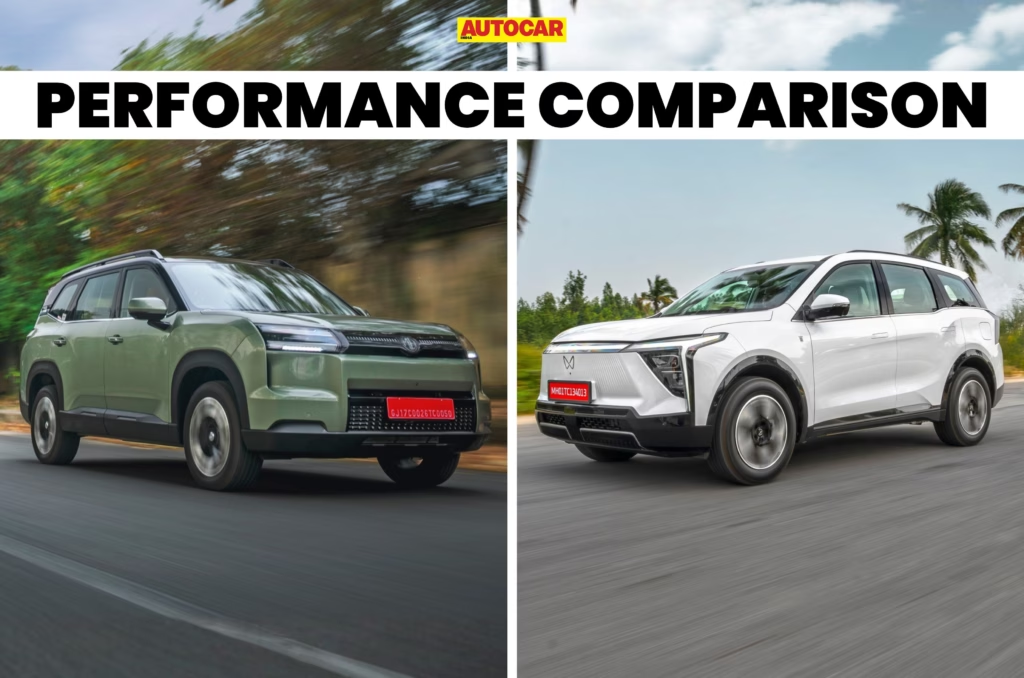
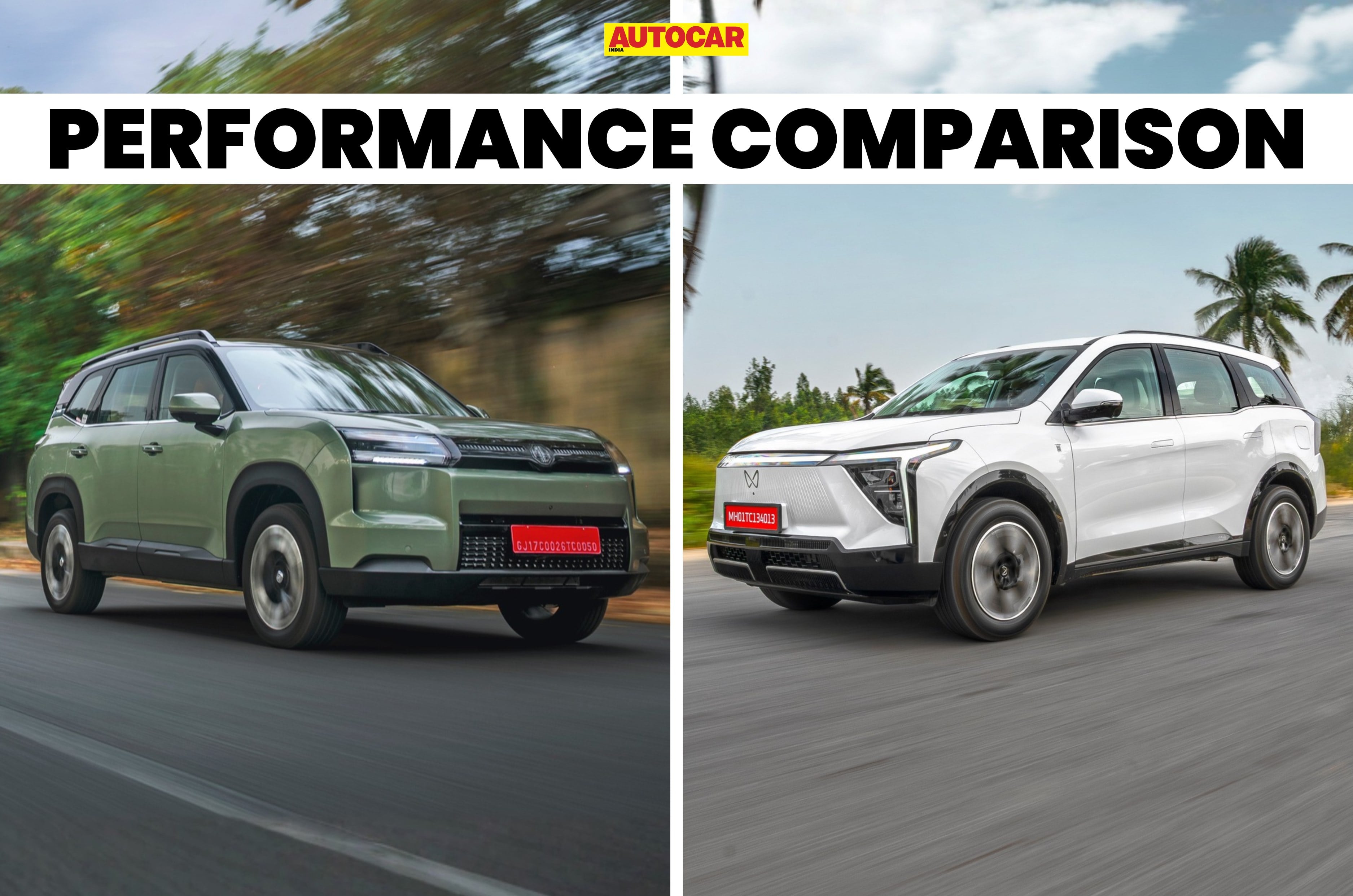
The Mahindra XEV 9S Pack Three Above and MG Hector Tomahawk EV are  three-row electric SUVs that differ in their acceleration, driving range and charging capabilities. Here’s how the two compare on performance, specifications and price.

Mahindra XEV 9S vs MG Hector Tomahawk EV: Specifications

SpecificationsMahindra XEV 9S Pack Three AboveMG Hector Tomahawk EV
Battery capacity79kWh69.2kWh
Electric motor setupSingle, rear-mountedSingle, front-mounted
Power286hp204hp
Torque380Nm310Nm
GearboxSingle-speed automaticSingle-speed automatic
Drive layoutRear-wheel driveFront-wheel drive
Claimed MIDC range679km517km
Maximum DC charging rate180kW90kW
Claimed DC charging time20min (20-80 percent)Around 35min (30-80 percent)
AC charging time

11.7 hours (7.2kW charger)

8 hours (11.2kW charger)

12.5 hours (10-100 percent)

The XEV 9S has a 82hp advantage over the Tomahawk EV and produces 70Nm more torque. The two SUVs also differ in their drive layouts. The XEV 9S sends power to the rear wheels, while the Tomahawk EV is front-wheel drive. Both use a single-speed automatic transmission.

The XEV 9S has a claimed MIDC range of 679km, which is 162km more than the Tomahawk EV’s 517km. It also supports DC fast charging at up to 180kW, compared with 90kW for the MG.

Mahindra claims the XEV 9S can charge from 20-80 percent in 20 minutes, while MG quotes around 35 minutes for a 30-80 percent charge. Since the quoted charging times cover different charging windows, they are not directly comparable. The AC charging figures also use different charging ranges. The XEV 9S supports an optional 11.2kW AC charger, in addition to the 7.2kW unit. The Tomahawk EV supports 7.4kW AC charging.

Mahindra XEV 9S vs MG Hector Tomahawk EV: Acceleration timings 

Mahindra XEV 9S vs MG Tomahawk EV: Acceleration timings (seconds)


Mahindra XEV 9S

MG Tomahawk EV

0-20kph

1.39

1.47

0-40kph

2.73

2.84

0-60kph

4.17

4.25

0-80kph

5.62

5.93

0-100kph

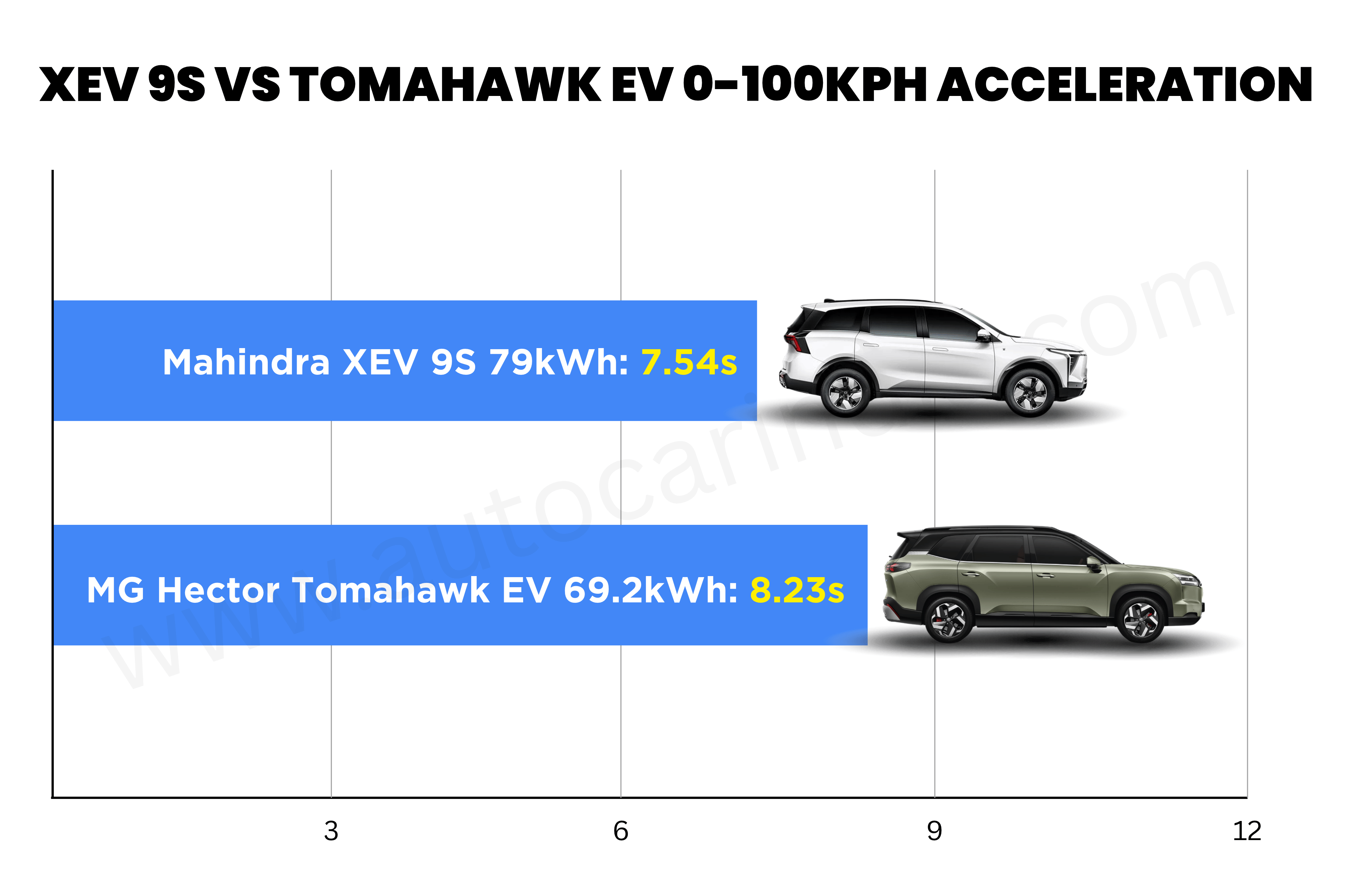
7.54

8.23

0-120kph

9.98

11.28

The XEV 9S gets off the line slightly quicker, reaching 20kph 0.08 seconds ahead of the Tomahawk EV. The gap remains narrow at 40kph and 60kph, with the Mahindra holding leads of 0.11 seconds and 0.08 seconds, respectively. 

It begins to pull further ahead beyond 60kph, reaching 80kph 0.31 seconds sooner and 100kph 0.69 seconds sooner than the MG. By 120kph, the difference has widened to 1.30 seconds, with the XEV 9S completing the run in 9.98 seconds against the Tomahawk EV’s 11.28 seconds. The results show the Mahindra’s advantage growing at higher speeds, rather than coming solely from its initial launch.

Mahindra XEV 9S vs MG Hector Tomahawk EV: Rolling acceleration timings 

Mahindra XEV 9S vs MG Hector Tomahawk EV: Rolling acceleration timings (seconds)

Rolling acceleration tests

Mahindra XEV 9S

MG Hector Tomahawk EV

20-80kph (in kickdown)

4.11

4.56

40-100kph (in kickdown)

4.74

5.45

The results show that the XEV 9S retains its lead across both rolling acceleration tests. It completes the 20-80kph run in 4.11 seconds, 0.45 seconds quicker than the Tomahawk EV’s 4.56 seconds. The gap widens in the 40-100kph test, with the Mahindra taking 4.74 seconds against the MG’s 5.45 seconds. This gives the XEV 9S a 0.71-second advantage in the higher-speed run, further underlining its stronger acceleration performance across both speed ranges.

Mahindra XEV 9S vs MG Hector Tomahawk EV: Braking tests 

Mahindra XEV 9S vs MG Hector Tomahawk EV: Braking tests


Mahindra XEV 9S

MG Hector Tomahawk EV

80-0kph distance (m)

29.67

27.52

80-0kph time (seconds)

2.55

2.39

80-20kph L1 regen distance (m)

341.03

575.94

80-20kph L2 regen distance (m)

215.8

389.91

80-20kph L3 regen distance (m)

162.46

210.09

The Tomahawk EV has the advantage in the conventional braking test, stopping from 80kph in 27.52m and 2.39 seconds. The XEV 9S takes 29.67m and 2.55 seconds to come to a halt, requiring 2.15m more distance.

The results reverse under regenerative braking. In the 80-20kph tests, the XEV 9S covers a shorter distance at all three regeneration levels. At L1, it takes 341.03m to slow down, compared with 575.94m for the MG. At L2, the respective distances are 215.8m and 389.91m, while at L3, they are 162.46m and 210.09m. The difference is largest at L2, where the Tomahawk EV covers 174.11m more than the Mahindra before slowing from 80kph to 20kph.

Mahindra XEV 9S vs MG Hector Tomahawk EV: Prices

ModelPrice (ex-showroom)
Mahindra XEV 9S Pack Three AboveRs 29.95 lakh
MG Hector Tomahawk EVRs 19.49 lakh-23.49 lakh

The MG Hector Tomahawk EV is priced between Rs 19.49 lakh and Rs 23.49 lakh, while the Mahindra XEV 9S Pack Three Above costs Rs 29.95 lakh. The Tomahawk EV’s top variant is Rs 6.46 lakh cheaper than the XEV 9S. The Mahindra, however, gets a larger 79kWh battery and higher power and torque outputs, and was quicker in all three acceleration tests. The MG stopped in a shorter distance in our 80-0kph braking test.

Autocar India’s testing standards

Before conducting our performance tests, we check and maintain tyre pressure based on the manufacturer’s recommendation and ensure that the car is charged to 100 percent. The car is then tested in a controlled environment with two people on board, and the data is collected via highly accurate GPS-based timing equipment.

All prices are ex-showroom, India.

New Tesla Roadster image gallery

New Tesla Roadster image gallery

Tesla has unveiled its new Roadster EV, with production set to begin in 2028. It will be the second generation of the Roadster, whose first generation was discontinued in 2012. The new model will be offered in a standard Performance trim, along with Thrust and Rocket packages. Bookings for the Performance trim and Thrust package are open in India at Rs 5 lakh, while the Rocket package is available only by invitation.

Tesla claims the new Roadster can accelerate from 0-100kph in under a second. However, final powertrain details, including battery capacity, motor output and range, are yet to be revealed. The electric sports car also gets an underbody suction fan for extra grip. The Thrust package adds four rear-mounted thrusters, while the Rocket package adds 10 more, allowing the car to perform airborne manoeuvres.

उत्तराखंड चुनाव से पहले BJP को झटका, सिंगर जुबिन नौटियाल के पिता रामशरण कांग्रेस में शामिल

Ramsharan Nautiyal joins Congress: उत्तराखंड में अगले साल होने वाले विधानसभा चुनाव से पहले राज्य में सत्ताधारी भारतीय जनता पार्टी (BJP) को बड़ा झटका लगा है। बीजेपी के वरिष्ठ नेता रामशरण नौटियाल सोमवार (19 अक्टूबर) को कांग्रेस में शामिल हो गए। कांग्रेस की उत्तराखंड प्रभारी कुमारी सैलजा और प्रदेश कांग्रेस कमेटी के अध्यक्ष गणेश गोदियाल की मौजूदगी में नौटियाल ने पार्टी की सदस्यता ग्रहण की। रामशरण नौटियाल बॉलीवुड के मशहूर सिंगर जुबिन नौटियाल के पिता हैं। नौटियाल पहले भी कांग्रेस में रह चुके हैं। वह करीब 12 साल पहले कांग्रेस छोड़कर भाजपा में शामिल हुए थे।

नौटियाल का कांग्रेस में स्वागत करते हुए सैलजा ने कहा कि पार्टी के पुराने साथी की घर वापसी हुई है। उन्होंने कहा, “हमारे पुराने साथी रामशरण नौटियाल जी को भाजपा में घुटन महसूस हुई। वहां के माहौल और काम से उनका मन खिन्न हो गया। रामशरण नौटियाल जी फिर से कांग्रेस पार्टी में शामिल हो रहे हैं। मैं उनका स्वागत करती हूं।” गोदियाल ने भी नौटियाल का पार्टी में स्वागत किया और उम्मीद जताई कि उनके आने से उत्तराखंड में कांग्रेस को मजबूती मिलेगी।

उन्होंने कहा, “आज रामशरण नौटियाल जी ने कांग्रेस पार्टी का दामन थामा है। इस मौके पर मैं कांग्रेस पार्टी में उनका स्वागत करता हूं। हमें उम्मीद है कि नौटियाल जी की मौजूदगी से कांग्रेस पार्टी को ताकत मिलेगी।” नौटियाल 2022 में उत्तराखंड के चकराता विधानसभा क्षेत्र से भाजपा के टिकट पर चुनाव लड़े थे। हालांकि उन्हें हार का सामना करना पड़ा था। वह देहरादून के जिला पंचायत अध्यक्ष भी रह चुके हैं। कांग्रेस में शामिल होने के बाद रामशरण नौटियाल ने कहा, “मैने पार्टी में शामिल होने और उसके लिए काम करने का फैसला किया।”

रामशरण नौटियाल के राजनीतिक सफर पर एक नजर

– राजनेता: उत्तराखंड

– पहचान: जुबिन नौटियाल के पिता

– राजनीतिक क्षेत्र: देहरादून जिला और जौनसार-बावर क्षेत्र

– पूर्व पद: देहरादून जिला पंचायत अध्यक्ष

– चुनाव: 2022 में भाजपा के टिकट पर चकराता से विधानसभा चुनाव लड़ा

– राजनीतिक पृष्ठभूमि: कांग्रेस और BJP, दोनों से जुड़े रहे हैं।

कांग्रेस से की थी राजनीति की शुरुआत

रामशरण नौटियाल पहले कांग्रेस में सक्रिय थे। वह उत्तराखंड कांग्रेस के प्रदेश उपाध्यक्ष भी रह चुके हैं। वर्ष 2014 में उन्होंने भारतीय जनता पार्टी का दामन थाम लिया था। BJP ने उन्हें 2022 के उत्तराखंड विधानसभा चुनाव में देहरादून जिले की चकराता सीट से उम्मीदवार बनाया था। इस चुनाव में उनका मुकाबला कांग्रेस के वरिष्ठ नेता प्रीतम सिंह से हुआ। रामशरण नौटियाल को 27,417 वोट मिले। जबकि प्रीतम सिंह को 36,853 वोट मिले।

ये भी पढ़ें- Tiger Shroff Firing Case: टाइगर श्रॉफ पर गोलीबारी करने वाले तीनों युवक कोटा से गिरफ्तार, जानिए कहां के रहने वाले हैं आरोपी

इस तरह रामशरण नौटियाल चुनाव हार गए थे। सितंबर 2026 के आखिर में रामशरण नौटियाल के BJP से इस्तीफा देने की खबरें सामने आईं। रिपोर्टों के अनुसार, वह स्थानीय नेताओं के रवैये और पार्टी के भीतर चल रही खींचतान से नाराज थे।

Scooter sales hit record high in first half of FY2027

Scooter sales hit record high in first half of FY2027
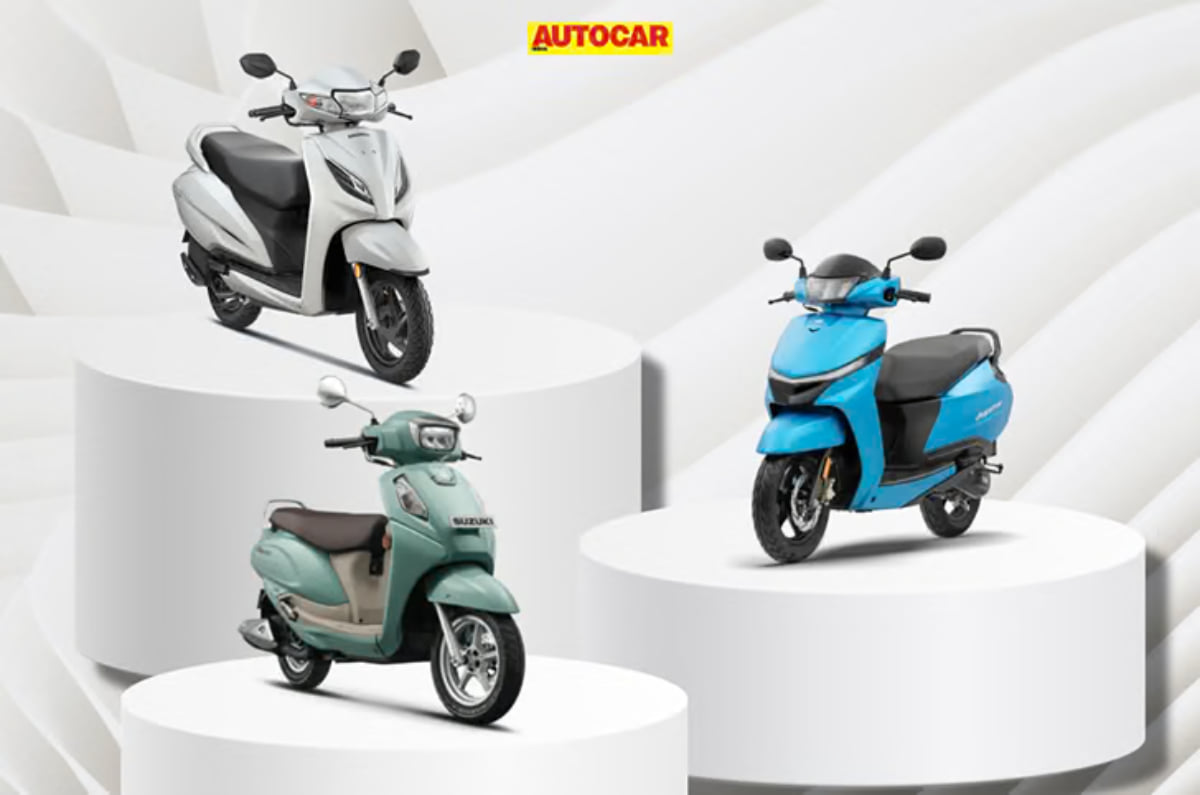
Graphic with Activa, Jupiter, and Access on a podium

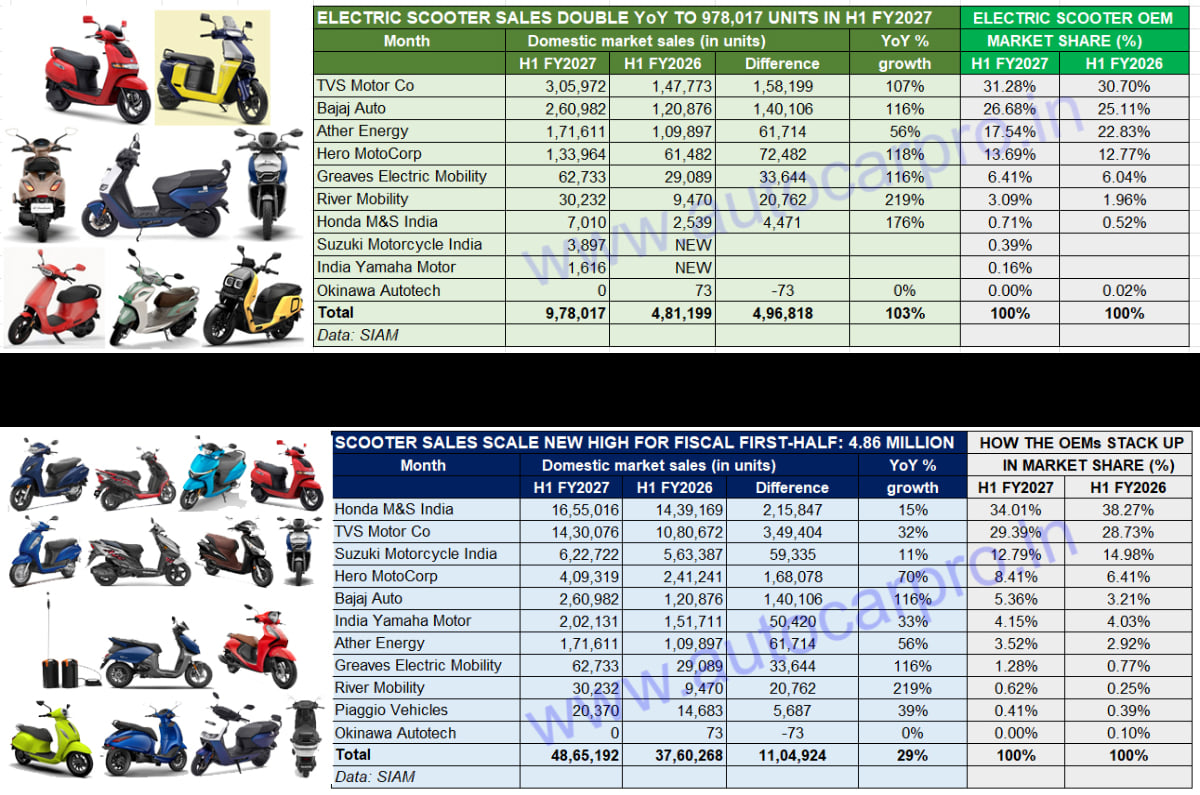
Two-wheeler manufacturers have dispatched a record 48,65,192 scooters in the domestic market in the first half (H1) of FY2027. That’s an additional 10.8 lakh units over the same period last year, representing a 29 percent increase. The six-month period included two monthly records: April 2026 opened as the best-ever April, with 6,91,993 units, while September registered 9,95,576 units – the highest monthly total ever for the category and just 4,424 units short of the million-unit (10 lakh) milestone.

Zooming out, the scale of the growth becomes clearer. Scooter sales have more than doubled over 12 years. In H1 FY2016, the total was 2.4 million units, whereas FY2027’s first half has already reached about 60 percent of FY2026’s full-year record of 8.11 million units.

Electric scooters double, claim a 20 percent share

Honda leads overall, TVS grows faster

The fastest-growing part of the segment is electric. E-scooter wholesales hit 9,78,017 units in H1 FY2027, up 103 percent year-on-year from 4,81,199 units in H1 FY2026. This surge has pushed EVs’ share of total scooter sales from 13 percent to 20 percent in a single year.

TVS Motor Company leads the e-scooter market, with 3,05,972 iQube and Orbiter units dispatched, up 107 percent year-on-year, giving it a 31 percent share. Bajaj Auto is second, with 2,60,982 Chetak and Yulu units – a 116 percent jump – and a 27 percent share. Together, the two account for 58 percent of all e-scooters sold in the first half. Ather Energy, with 1,71,611 units and 56 percent growth, held third place, though its share dipped from 23 percent to 18 percent as the market expanded. Hero MotoCorp’s Vida dispatched 1,33,964 units, up 118 percent, for a 14 percent share.

The three Japanese players – Honda, Suzuki and Yamaha – collectively sold 12,523 e-scooters, accounting for a combined 1 percent share. Honda led the group with 7,010 units, up 176 percent.

Across ICE and EV models combined, Honda Motorcycle & Scooter India remains the category leader with 1.65 million units, up 15 percent, although its market share has dipped from 38 percent to 34 percent. TVS Motor Company is in second place with 1.43 million units and 32 percent growth, adding 3,49,404 units year-on-year. Nearly half of that incremental volume came from its electric lineup.

Suzuki, with 6,22,722 units and 11 percent growth, and Hero MotoCorp, with 4,09,319 units and 70 percent growth, hold third and fourth place, respectively. Bajaj Auto has climbed to fifth with 2,60,982 units and 116 percent growth, displacing Yamaha, which recorded 2,02,131 units, up 33 percent. Ather Energy is seventh with 1,71,611 units, while River Mobility has entered the top 10, overtaking Piaggio with 30,232 units of the Indie scooter.

With the festive season now underway, the industry will be looking to convert the strong H1 momentum into retail sales. Whether Q3 and Q4 can sustain the near-30 percent growth rate needed to push scooter sales past 10 million units for the first time remains to be seen, but the trajectory points firmly in that direction.