Jaguar Type 01 revealed

Jaguar Type 01 revealed

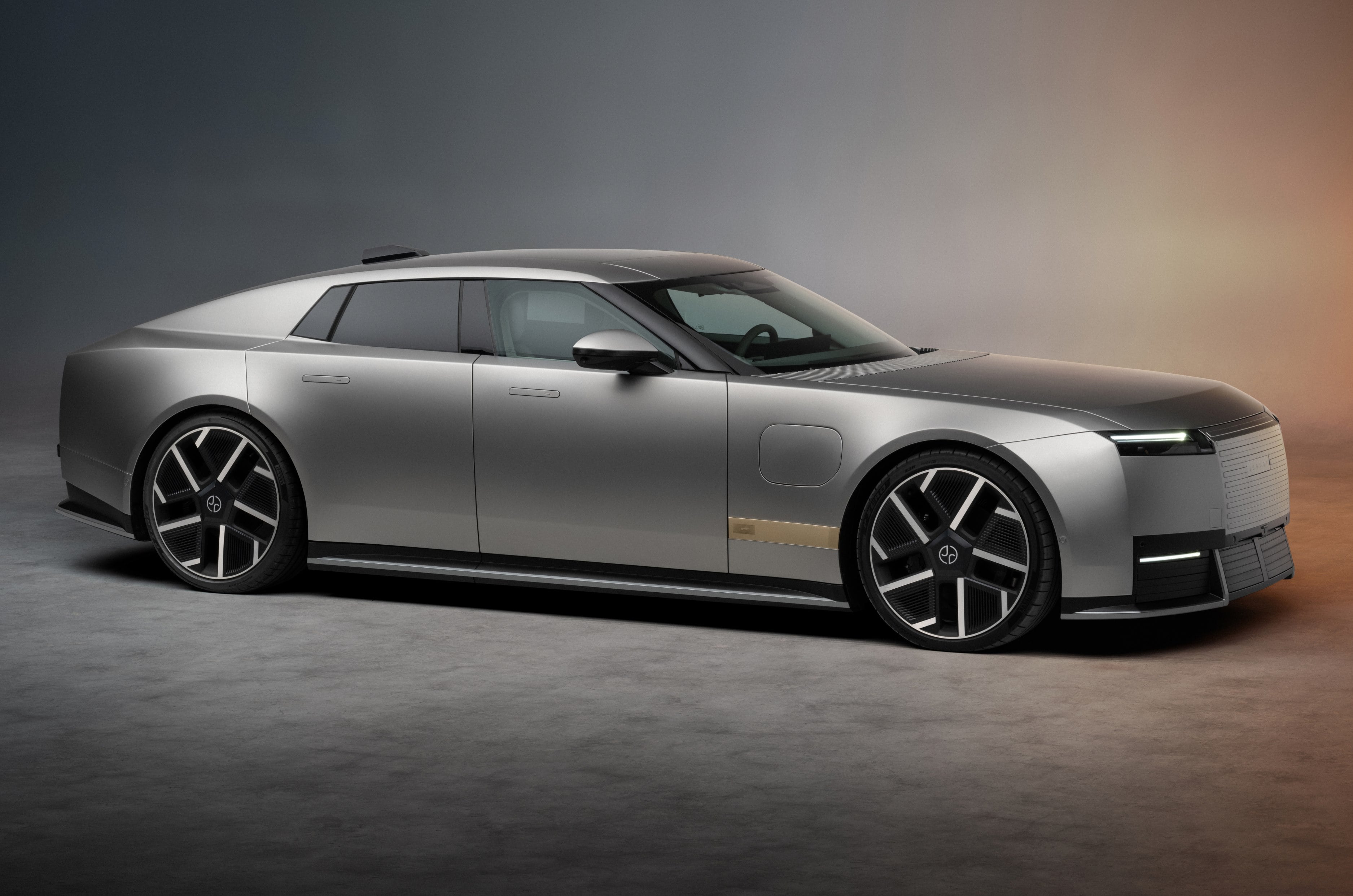
Grace, Space, Pace. That’s been a long-held Jaguar maxim, clearly no more the case, though, at least not that first part. Jaguar’s new Type 01 ditches grace for a design that’s very much in your face, or, styled with exuberant modernism, as the brand more eloquently puts it.

Yes, exuberant it most certainly is; the sheer size and presence of the car are unapologetically bold, and we knew this would be the case when we saw the Type 00 concept. At the time, Jaguar said it would greatly influence the actual production car. Love it or hate it, you have to applaud Jaguar for keeping a majority of the concept’s far-out ideas to the point where a lot of time was spent engineering the new Jaguar Electric Architecture (JEA) to make the design possible. 

Strike a chord
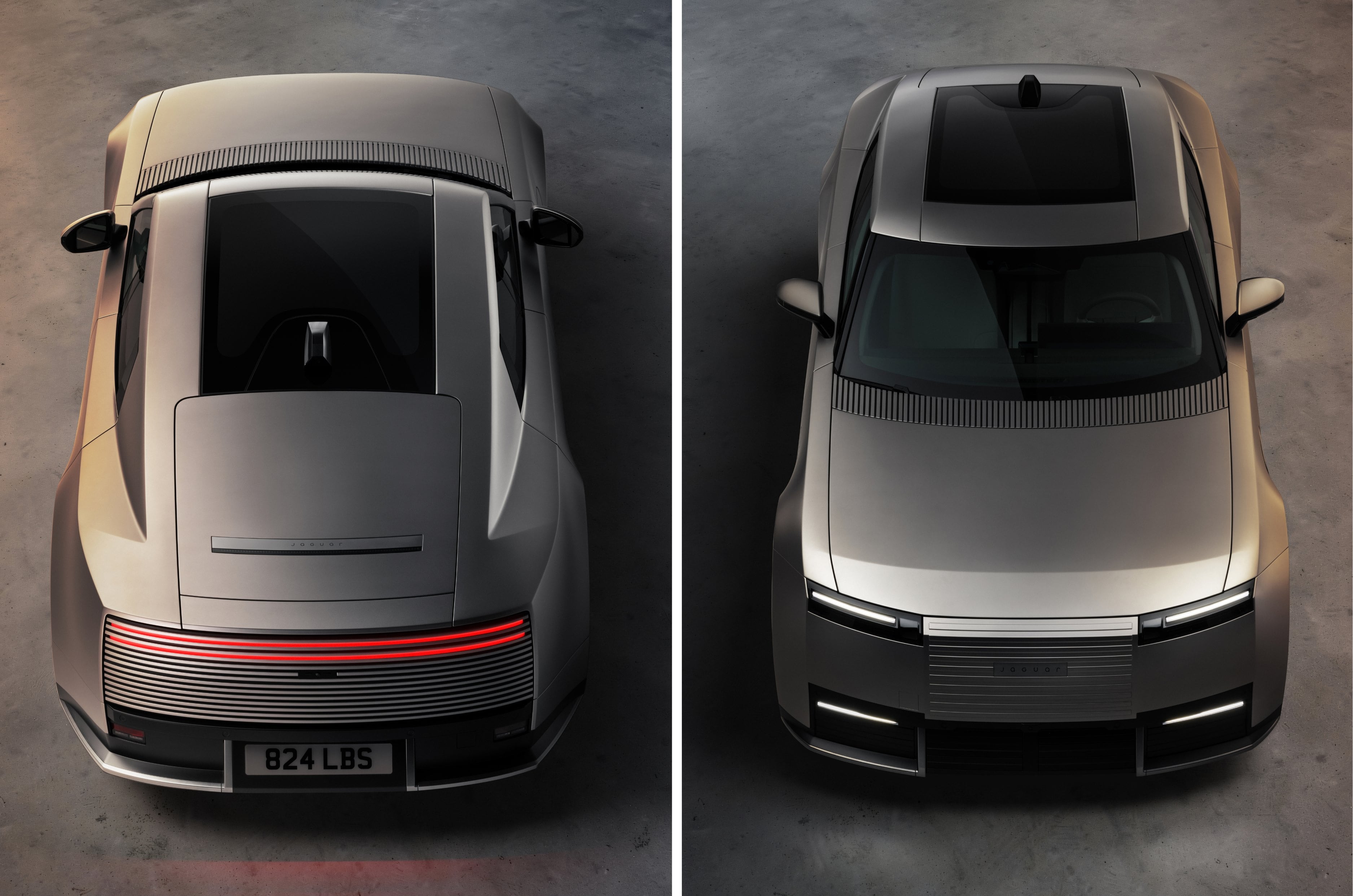
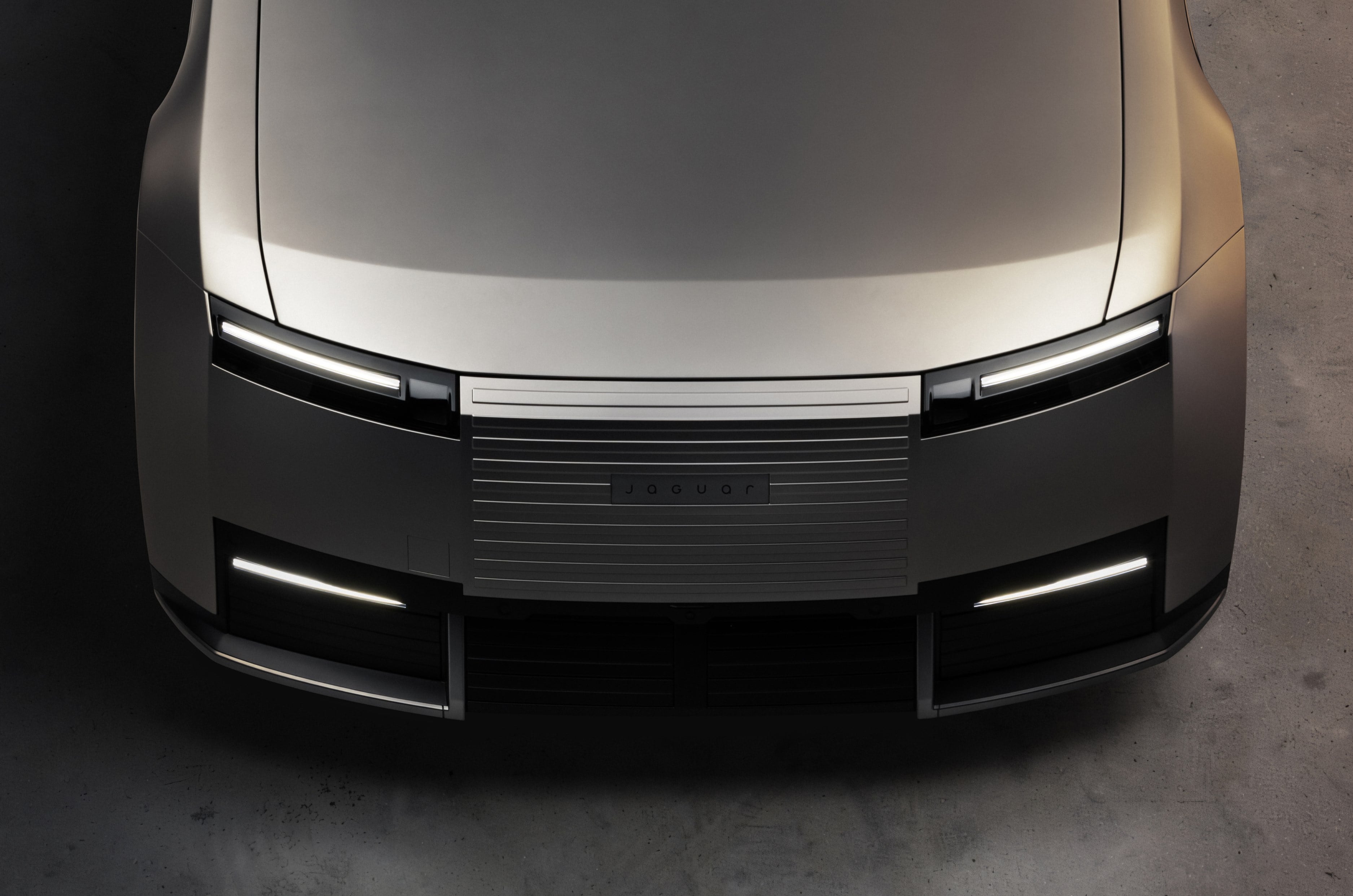
The front is dominated by Jaguar’s new ‘strikethrough’ design element, which gives the bluff nose some character. Unlike most EVs that have a blanked-off front, the strikethrough simulates a grille, retaining some of the visual character of a conventional car. There is, of course, cooling required, and this is handled by active shutters lower down, which open and close depending on cooling requirements.
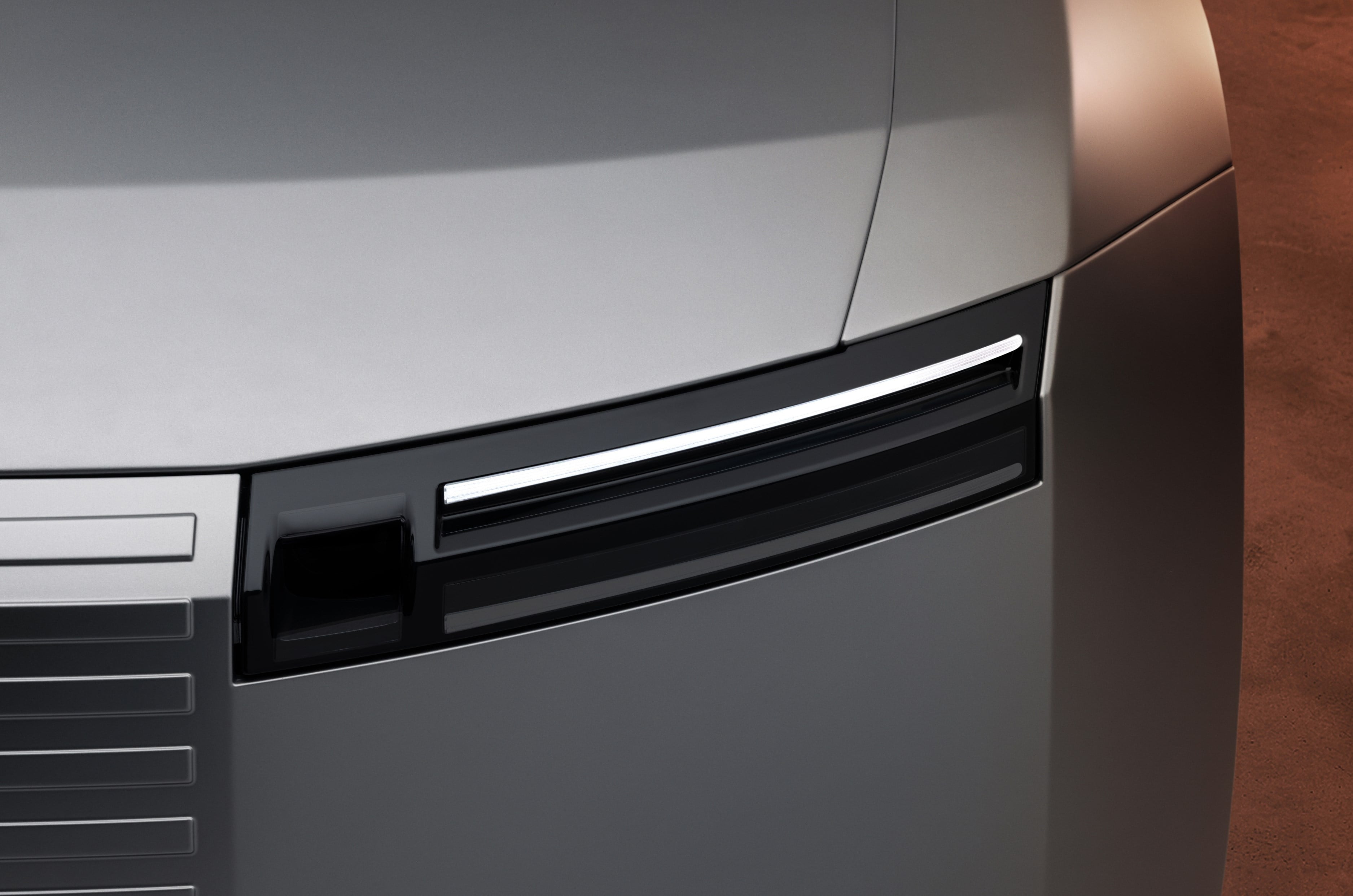
The four ‘line’ daytime running lights are another distinctive element and could become a signature for future Jaguars. The headlights, meanwhile, are the slimmest ever fitted to a Jaguar. 
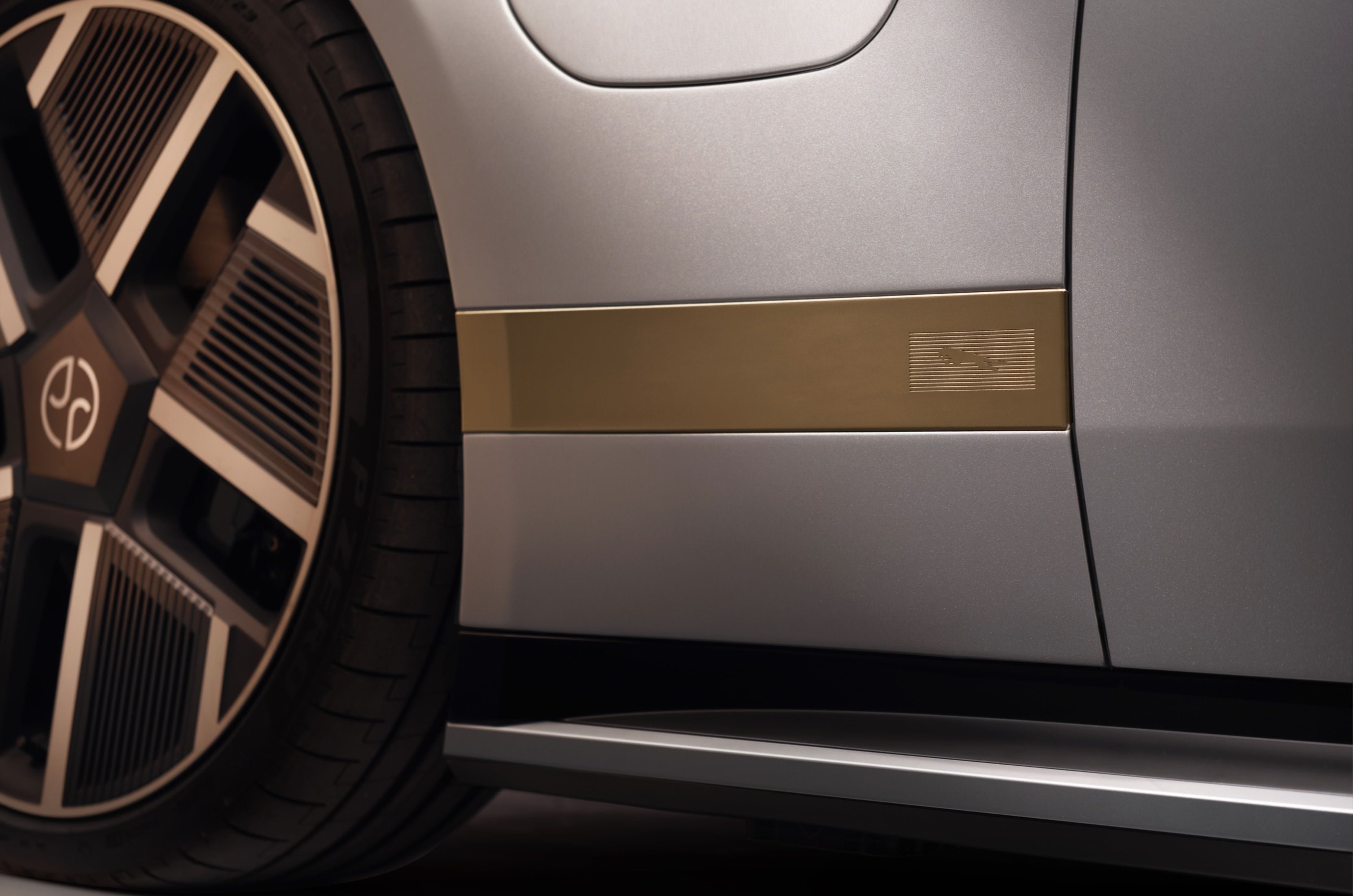
Despite its almost upright front end, the Type 01 is the most aerodynamic Jaguar yet, with a drag coefficient of just 0.23. This has been achieved through extensive aerodynamic work, including active aero elements and clean, uninterrupted body surfaces. The traditional leaping Jaguar mascot is absent from the bonnet, but fear not, it’s not entirely gone, surfacing on a brass-like panel on the front fenders, which also highlights what Jaguar calls the ‘luxury gap’ — the distance between the front axle and the A-pillar. This massive length gives the car its distinctive bonnet-forward proportions and a very regal stance; there is also a functional purpose.
The Type 01 has a split battery pack, comprising five separate modules: one positioned ahead of the A-pillar – in this gap – necessitating a re-engineered front crash structure; then there are three modules behind the A-pillar, a gap around the B-pillar area and then the final module near the C-pillar. Typically, EVs use a single battery pack contained between the A and C pillar line; however, the low roof meant Jaguar needed that gap to create a footwell for rear passengers. 

The long 3.2-metre wheelbase and low 1,400mm overall height give the Type 01 its dramatic slammed-down stance, a hallmark of the concept. In fact, the massive 23-inch wheels make up more than half the height of the entire car. Charging ports are provided on both sides, making it convenient to plug in regardless of which side the charging station is on.
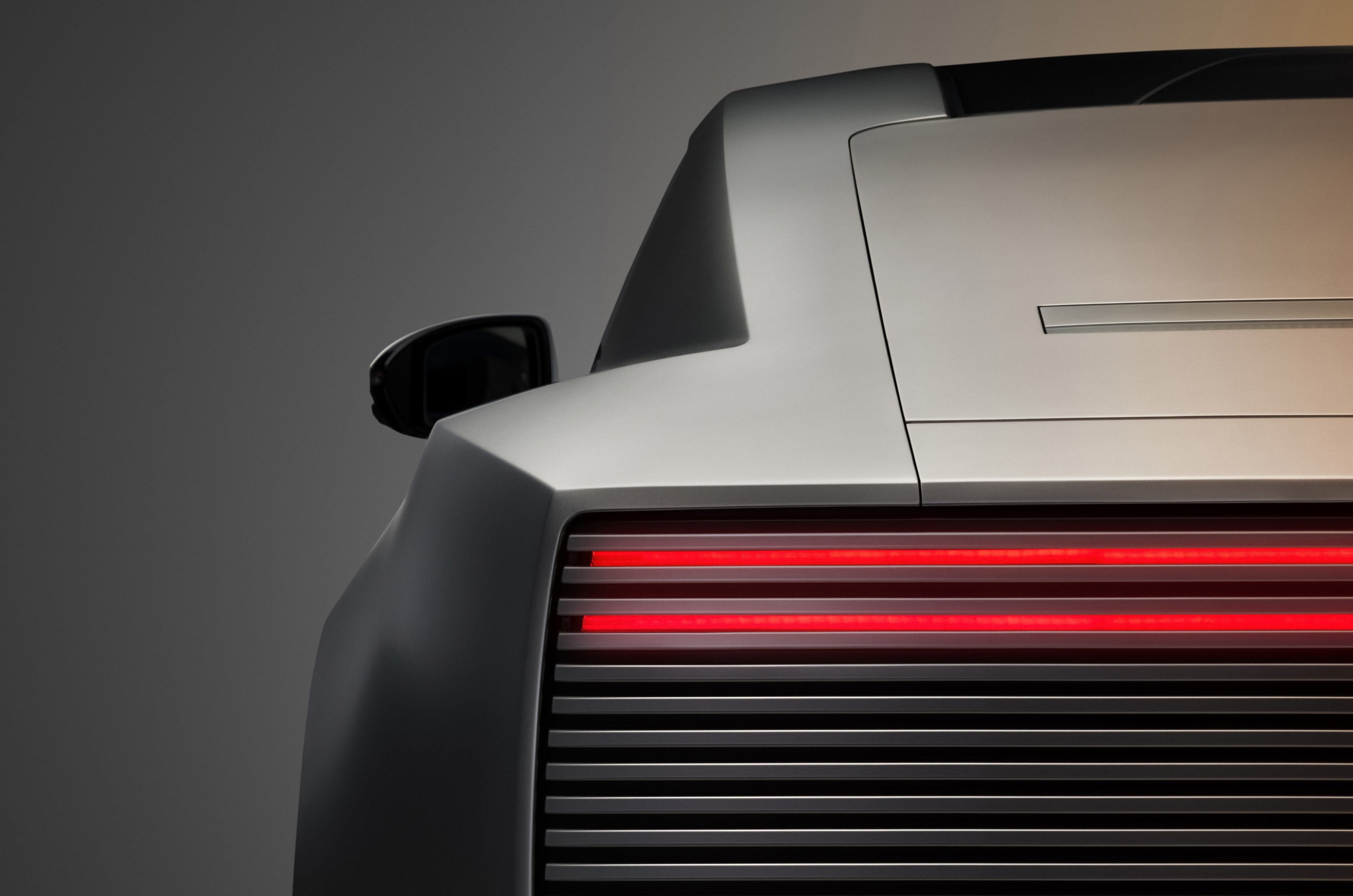
One of the most interesting elements of the Type 01’s is what Jaguar calls the ‘impossible panel’. This is essentially the rear fender panel that extends all the way to the A-pillar at the top and has an extremely deep draw forming massive shoulders over the rear wheels. Jaguar says computer simulations initially suggested that the required depth could not be created with a single piece of aluminium, but it worked with the tooling and made it a reality. The resulting panel features a sharp crease that rises from the window line and creates a striking visual effect, which stands out nicely in the silver finish of the car we see here.

The rear is another striking area and will be the one with the most polarised views. The strikethrough design continues, but it pretty much dominates the entire width of the car; even the taillights are hidden within. When the car is switched off, the lights are invisible, leaving just the grille-like surface, and it does look excessively lined, though unique.
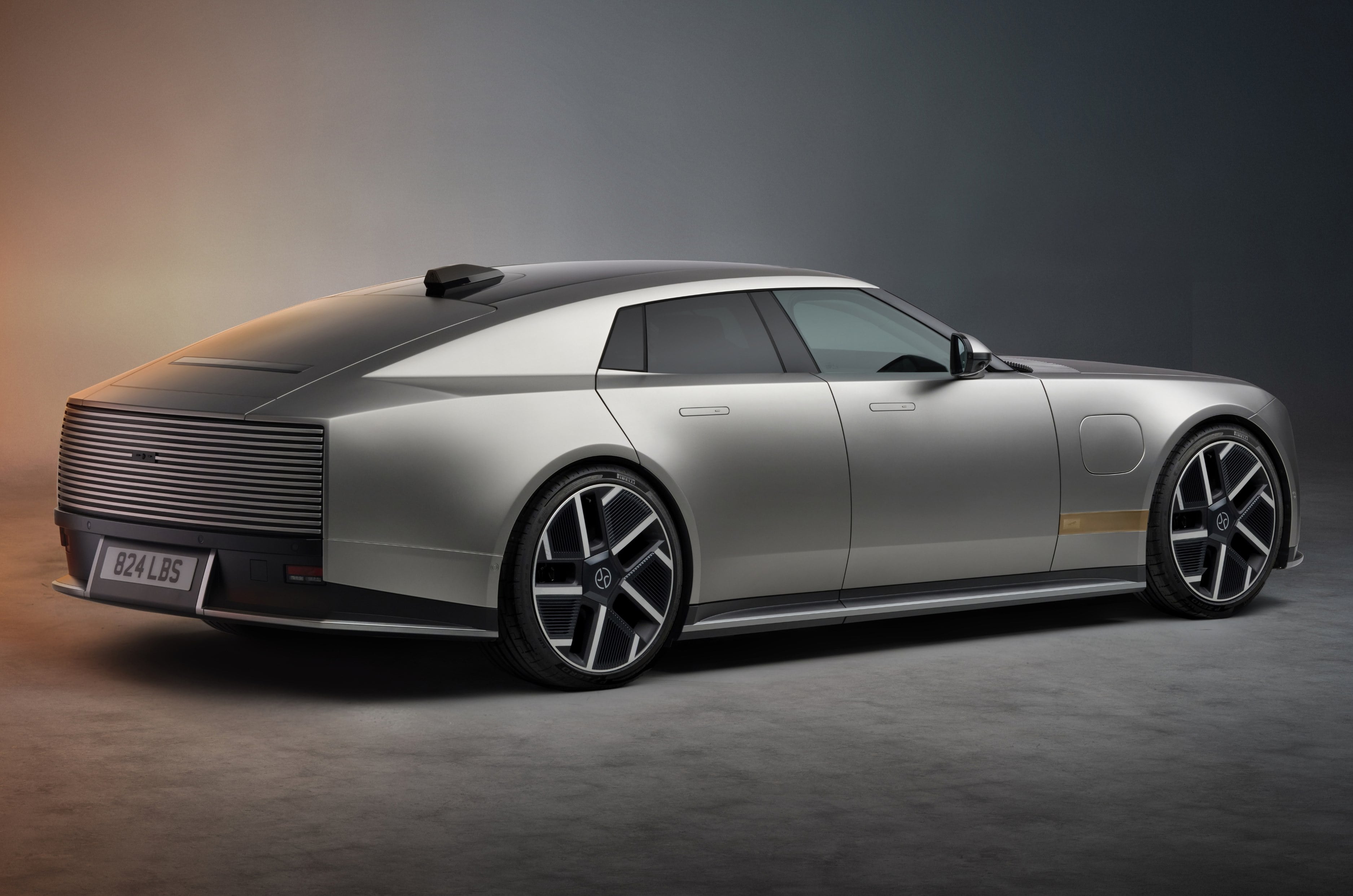
Then there’s the complete absence of a rear windscreen. Jaguar says a conventional rear windscreen would offer very limited visibility with a short vertical height, given the car’s long sloping roofline, so it opted for a clean monolithic panel while a camera feeds a digital rear-view mirror. There’s also a rear spoiler that can be deployed; there are three positions in all, adjusting according to speed to aid aerodynamic efficiency and stability. Beneath the tailgate is 450 litres of boot space in a relatively shallow bay, with some additional storage beneath a panel. 

Give and take
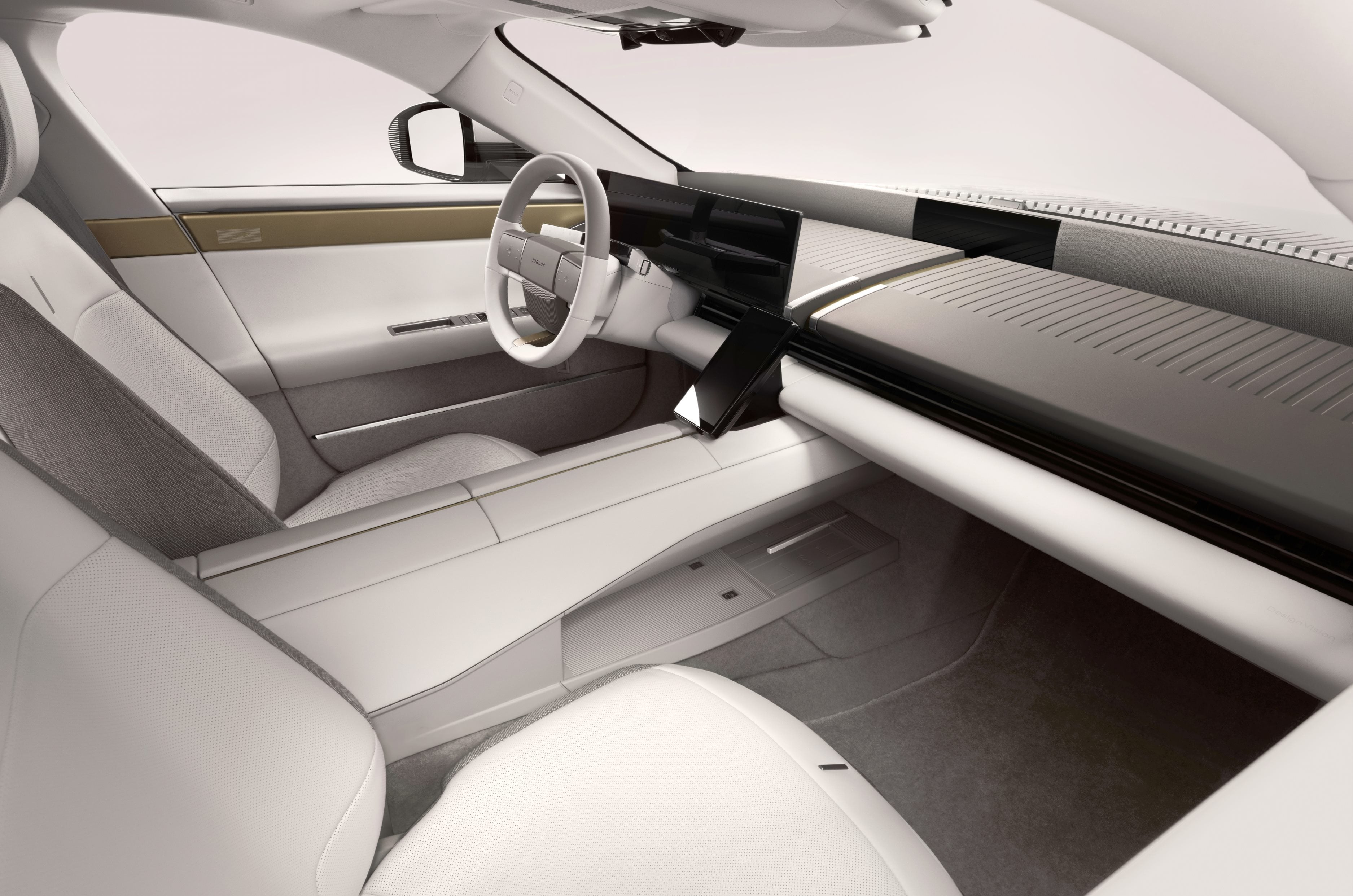
The Type 01’s concept car design and proportions do come with some compromises, and that’s immediately apparent stepping into the rear. You have to move around a protruding rear panel and sink into the seats. Once there, the space is cosy or claustrophobic depending on how you see small spaces. The trouble is the low roof is very close to your head, and the window panes are extremely small; there’s a glass roof, but it only does so much to alleviate the lack of cabin volume. Furthermore, you sit behind the pillar, so you get some privacy, but not an open view outside. 
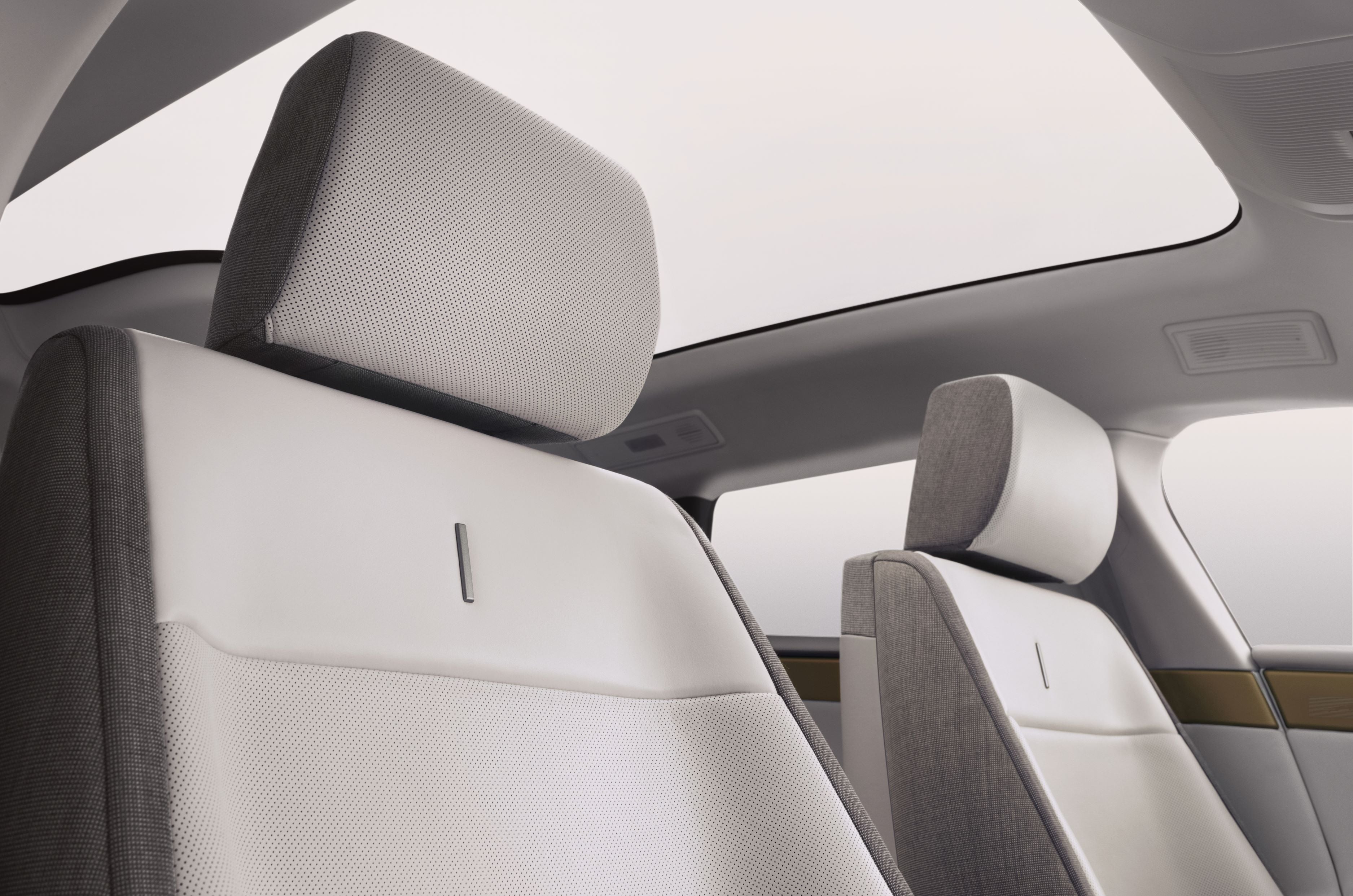
The seats are comfy enough, and at the rear the split battery arrangement reduces the knees-up seating position; while it isn’t comfortable like a conventional car, the arrangement makes a meaningful difference. 
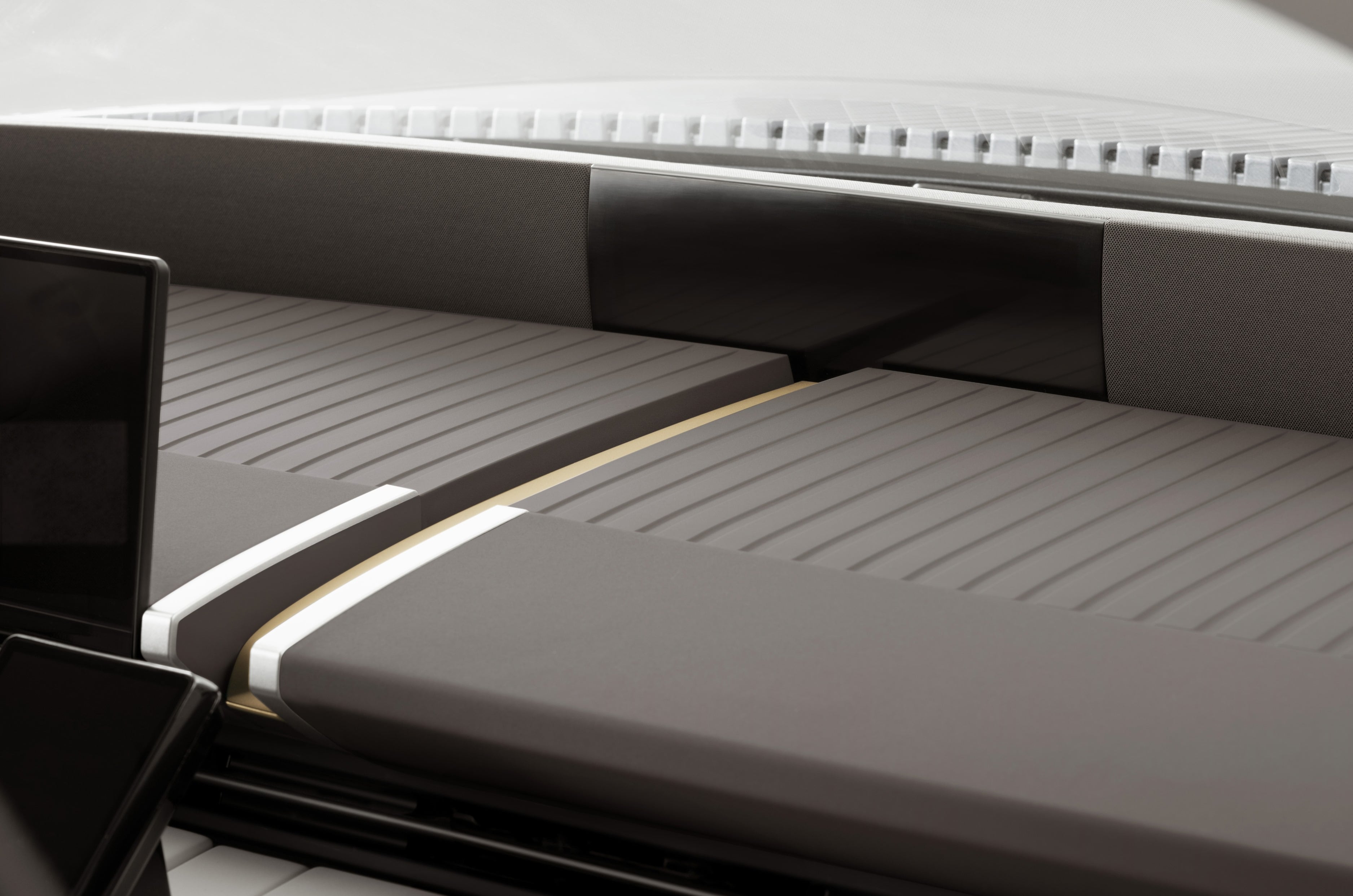
At the front too, the low roof means a low-set driving position; the windscreen is shallow in height, and headroom is just about sufficient for taller occupants. Also, the rear-view mirror – or display, more accurately – is positioned at the base of the windscreen rather than atop. The front seats feature heating, cooling and massage functions.

The cabin is divided into four distinct zones by a prominent central spine that houses storage spaces and a rear touchscreen controller. The dashboard carries the strikethrough pattern from the bonnet outside, and the doors carry prominent brass-finished panels. The absence of physical buttons is disappointing; thankfully, the central touchscreen, which handles climate control, is positioned in a manner that allows the driver to rest a hand on the central spine to make operations a bit easier.
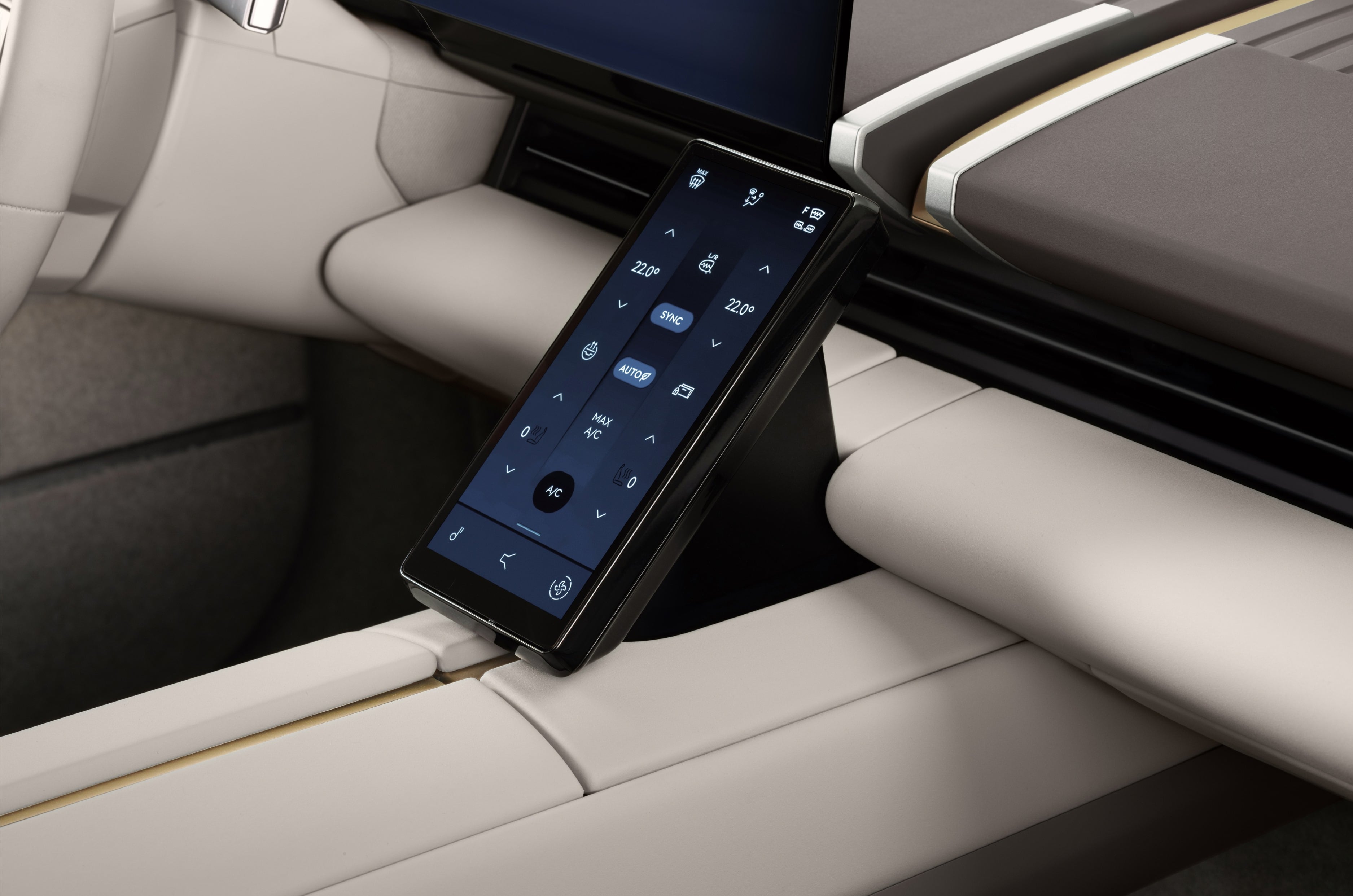
There’s a single large 24-inch display combining the instrument cluster and central infotainment screen; driver-focused information is to the right, and functions accessible to the front passenger are on the left. 

Number crunching 

Underneath its dramatic styling, the Type 01 packs in some serious performance hardware and is the latest to join the 1,000hp+ club. Power comes from a three-motor setup, two at the rear and one at the front. Combined, these produce a massive 1,030hp and 1,365Nm of torque, and despite it weighing in at about 2.7 tonnes, the Type 01 does the 0 to 100kph sprint in 3.2 seconds. This isn’t the 2-second territory that others of this high horsepower club claim, but it’s still extremely quick for what is essentially a four-door GT. Jaguar has often talked of ‘power in reserve’ and highlights its strong 100kph to 180kph of 4.0 seconds as evidence. 
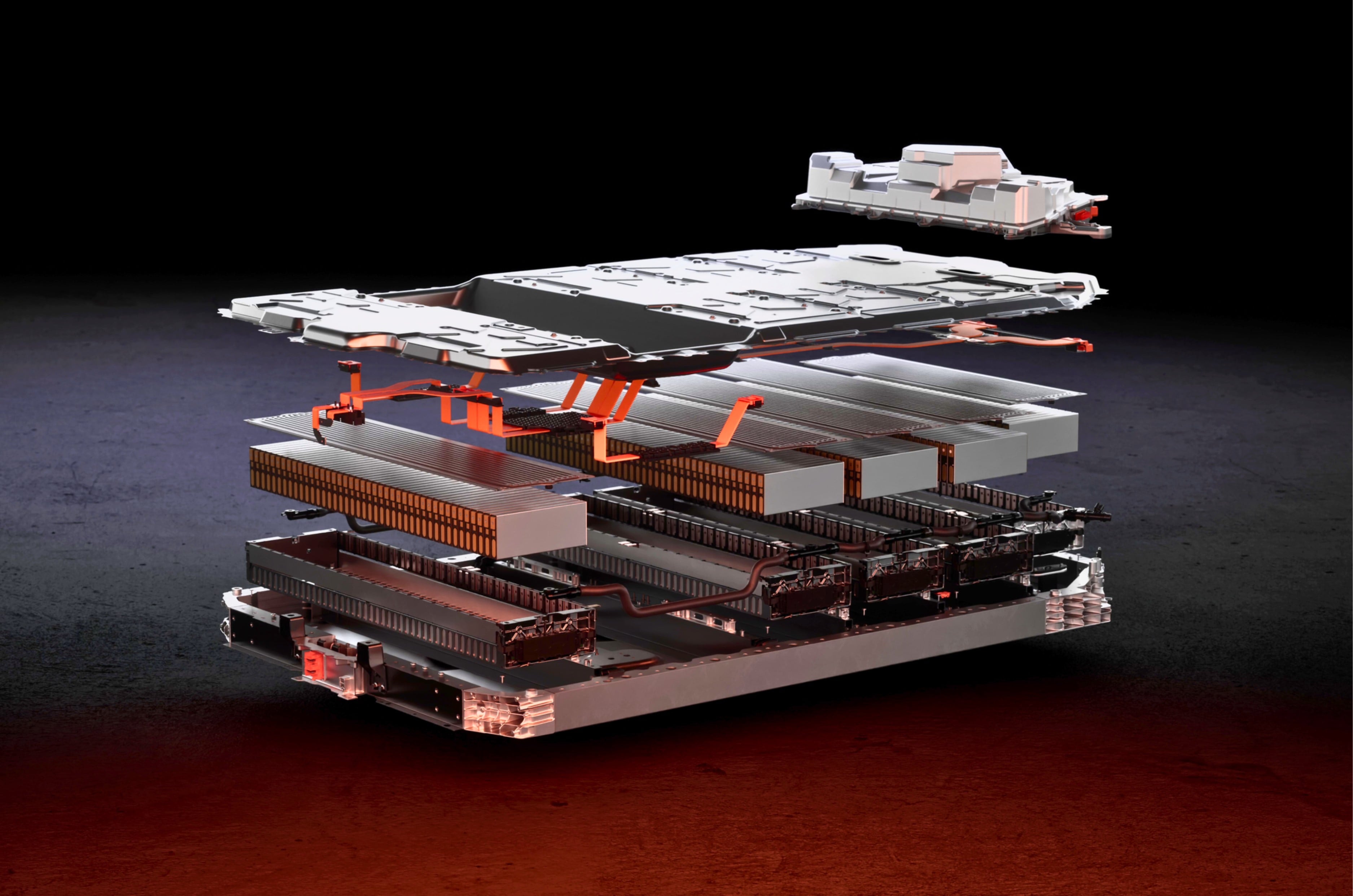
Feeding this power is the split module battery; it utilises NMC chemistry and has a 120kWh capacity (118kWh usable) and promises a WLTP range of up to 720km. Jaguar says thanks to the 850-volt architecture, on a 350kW DC charger you can add 321km of range in 13 minutes and 10-80 per cent in around 22 minutes with the split pack set-up to maximise 400-volt chargers. The Type 01 also features twin AC charging ports, one on each side, so it’s easy to charge no matter how you park. 

The powertrain has drive modes, torque vectoring and ride is courtesy of switchable air springs and twin-valve active dampers. Rear-wheel steering keeps a tight 11.5m wall-to-wall turning circle diameter. 

Shock! And awe?

The Type 01 is unlike Jaguars of the past, which were the target. Jaguar sales were drying up, and it needs to bring in new customers, and that’s where this entirely new design direction comes in. It has traces of its heritage but, on the whole, is unique, and there’s no denying it’s striking to look at with its wild concept car looks. This, however, means interior space is at a premium, and there are ingress and egress challenges. Making amends in some way is the minimal and classy interior styling and, of course, a powertrain with all the right numbers and ingredients that promises a thrilling drive experience.
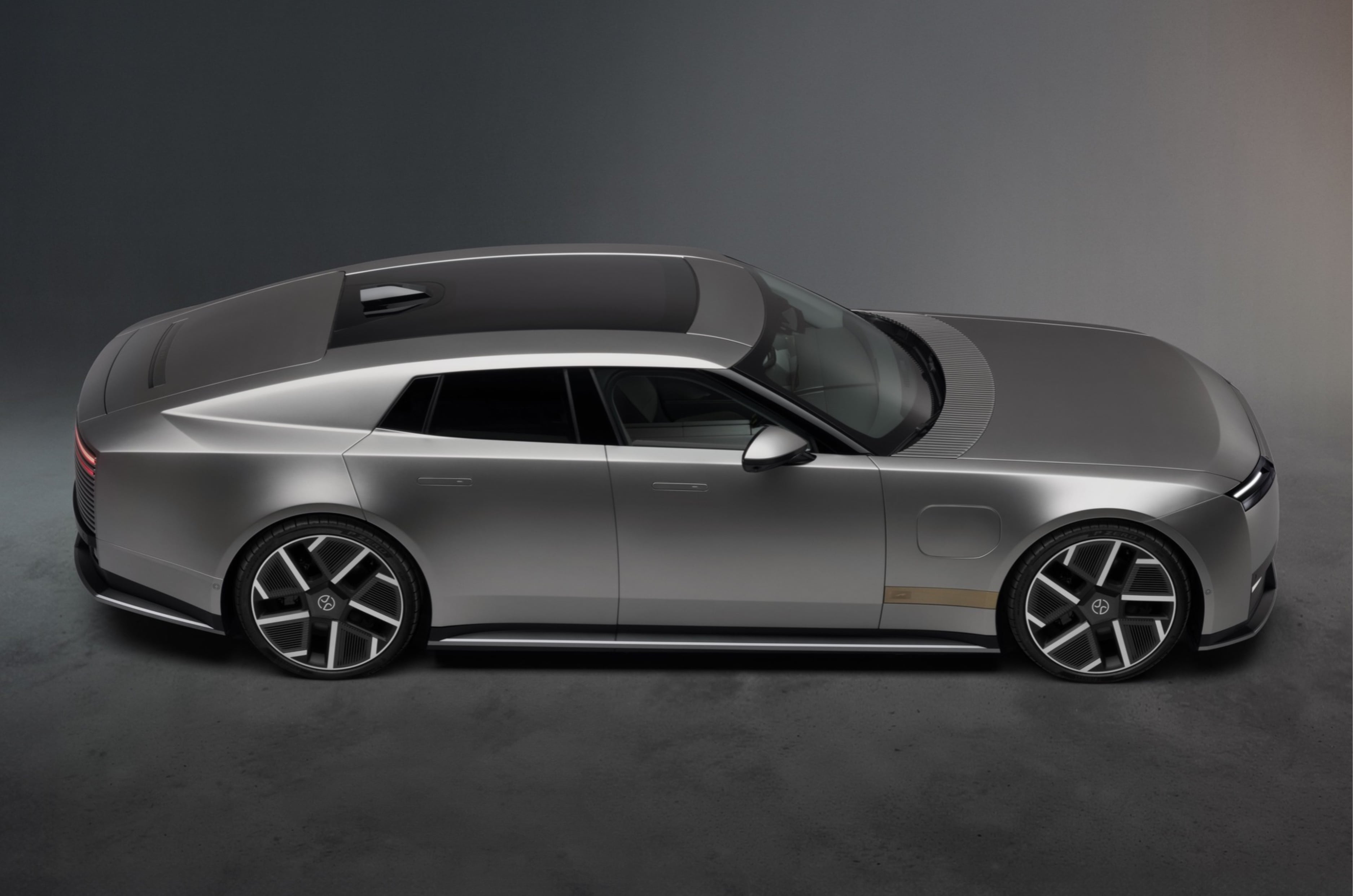
Asking prices for all this will be going up, not to the levels of a Rolls or Bentley but above what the brand’s previous flagships like the XJ were at. Expect prices to start at £120,000 in international markets where deliveries are scheduled to begin by mid-2027. India will follow a few months on with prices around the Rs 2 crore mark, give or take. 

Sitting between Mercedes and BMWs at the lower end and Rolls and Bentleys above, the Type 01 has found a gap and a differentiation in its style and appeal too. But can Jaguar transform from elegance and heritage to exuberant modernism? It’s a big leap for sure, and one that the company needs the big cat to make.  
IND vs WI T20 Highlights: कप्तान श्रेयस अय्यर का तूफानी शतक, भारत ने जीता मुकाबला

IND vs WI T20 Highlights: भारत और वेस्टइंडीज के बीच 5 मैचों की टी20 सीरीज की शुरुआत हो गई है। मुकाबले में श्रेयस अय्यर ने टॉस जीतकर पहले बॉलिंग करने का फैसला किया। सीरीज का पहला मुकाबला आज, 6 अक्टूबर को लखनऊ के इकाना स्टेडियम में खेला जा रहा। पहले बैटिंग करने आई वेस्टइंडीज की पूरी पारी 19.1 ओवर में 171 रन पर ऑलआउट हो गई। भारत को 172 रन का टारगेट दिया।

टारगेट का पीछा करने आई भारत की टीम 14.4 ओवर में 2 विकेट खोकर टारगेट हासिल कर लिया। मुकाबले में कप्तान श्रेयस अय्यर ने अपने करियर का पहला टी20 शतक लगाया है

भारत की पारी की शुरुआत अच्छी नहीं रही और तीसरे ओवर में अभिषेक शर्मा 10 गेंदों में 21 रन बनाकर आउट हो गए। इसके अगले ही ओवर में संजू सैमसन भी 11 रन बनाकर पवेलियन लौट गए, जिससे भारत ने 36 रन पर 2 विकेट गंवा दिए। इसके बाद श्रेयस अय्यर ने शानदार बल्लेबाजी करते हुए 43 गेंदों में 102 रन की तूफानी पारी खेली। ईशान किशन ने भी उनका अच्छा साथ दिया। दोनों बल्लेबाजों के बीच 67 गेंदों में 137 रन की मैच विनिंग साझेदारी की। ईशान किशन 37 रन और अय्यर 102 रन बनाकर नाबाद रहे।

वेस्टइंडीज की पारी 171 रन पर सिमट गई। अर्शदीप सिंह ने कामिल पूरन को 12 रन पर आउट कर भारत को पहली सफलता दिलाई। इसके बाद छठे ओवर में शिमरॉन हेटमायर (5) और रोवमैन पॉवेल (0) भी पवेलियन लौट गए। शाई होप ने 37 गेंदों में 52 रन की शानदार पारी खेली, लेकिन अर्धशतक पूरा करने के बाद नमन धीर की गेंद पर आउट हो गए। इसके बाद कुलदीप यादव और नमन धीर ने लगातार विकेट लेकर वेस्टइंडीज पर दबाव बनाए रखा।

रोमारियो शेफर्ड (7), मैथ्यू फोर्ड और शमर स्प्रिंगर को भी भारत ने जल्दी पवेलियन भेज दिया। शेरफेन रदरफोर्ड ने 56 रन की पारी खेलकर टीम को संभालने की कोशिश की, लेकिन मयंक यादव ने 19वें ओवर में उन्हें आउट कर दिया। आखिरी ओवर में अक्षर पटेल ने अकील होसेन का विकेट लेकर वेस्टइंडीज की पारी 171 रन पर समेट दी। अब भारत के सामने जीत के लिए 172 रन का लक्ष्य है।

वैभव को प्लेइंग 11 में जगह नहीं मिली है। इस मुकाबले से नमन धीर टी20 इंटरनेशनल में अपना डेब्यू करने जा रहे हैं। इससे पहले वेस्टइंडीज के खिलाफ वनडे मैच में नमन ने डेब्यू किया था।

भारत की ओर से टी20 डेब्यू करने वाले नमन धीर सबसे सफल गेंदबाज रहे। उन्होंने 4 ओवर में 31 रन देकर 3 विकेट झटके। अक्षर पटेल और कुलदीप यादव ने 2-2 विकेट लिए। अक्षर ने 3.1 ओवर में 26 रन दिए, जबकि कुलदीप ने 4 ओवर में 33 रन खर्च किए। अर्शदीप सिंह और मयंक यादव को 1-1 सफलता मिली। अर्शदीप ने 4 ओवर में 34 रन और मयंक ने 4 ओवर में 40 रन दिए।

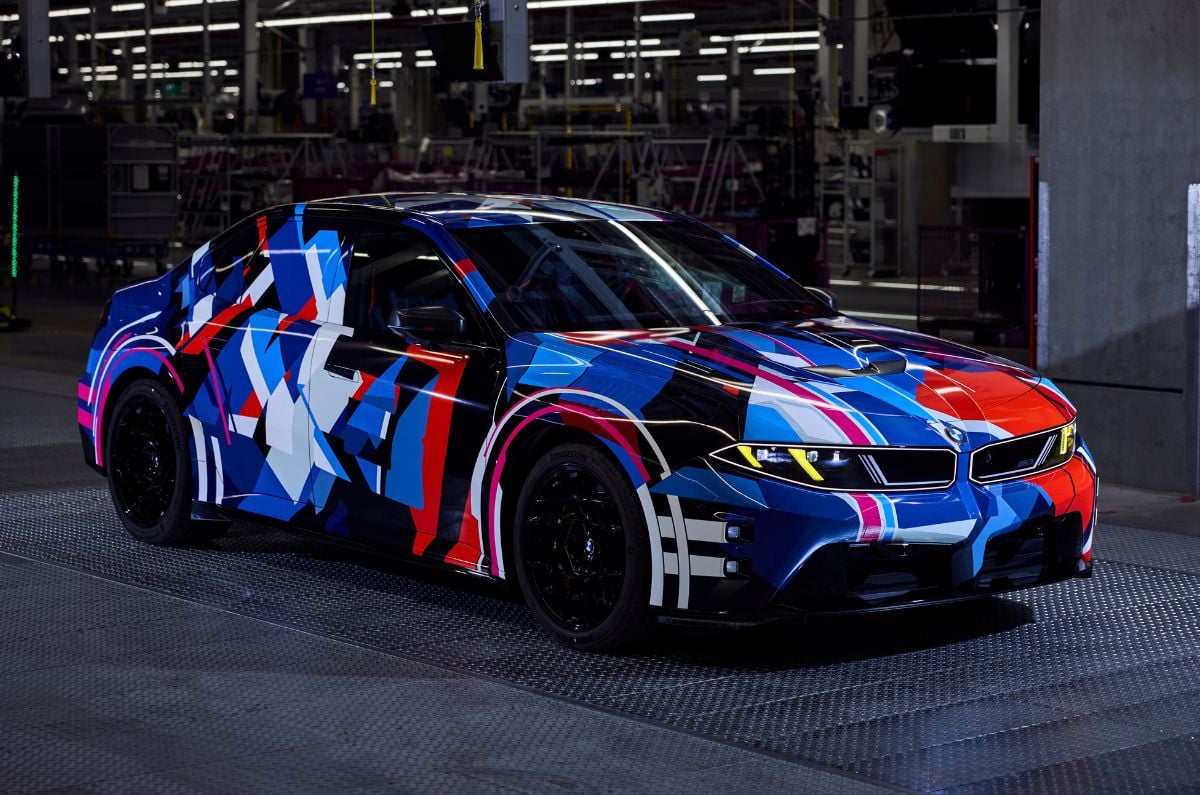
Near-production BMW M3 electric revealed in camo

Near-production BMW M3 electric revealed in camo
BMW M3 electric front quarter in camouflage

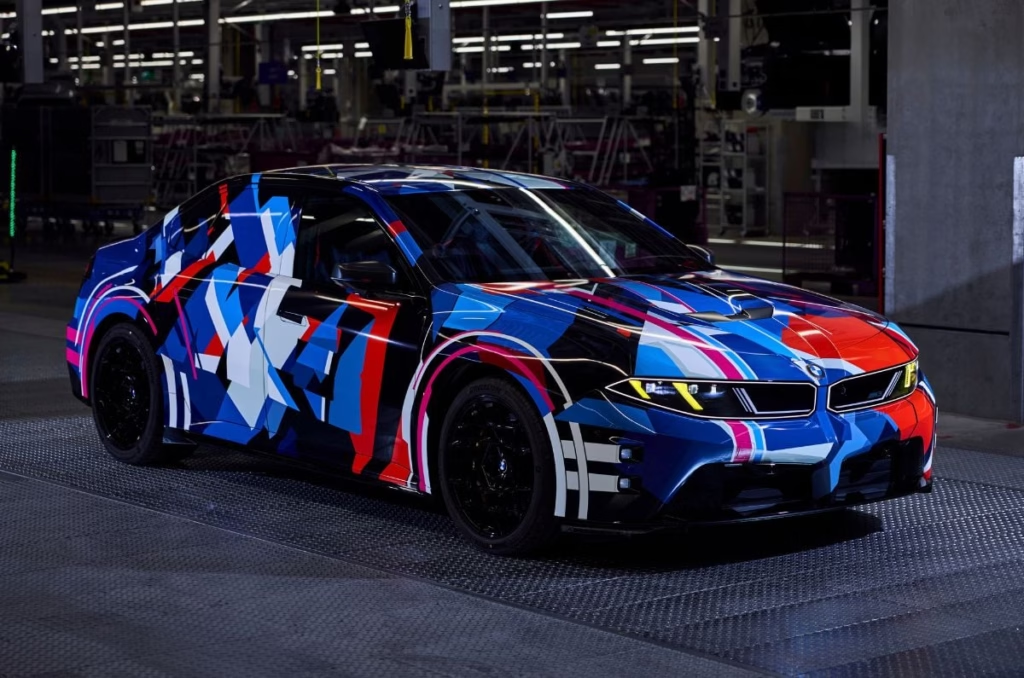
BMW has revealed a near-production M3 electric wrapped in camouflage. The images released provide us an insight into what the final, production model will look like. The fully electric M3 is to be produced at the German luxury automaker’s main plant, where the first BMW Neue Klasse model, the fully electric i3, is made. “We are delighted that we will also be producing the first fully-electric BMW M3 here in Munich,” said Peter Weber, Head of BMW Group Plant Munich.
BMW M3 electric exterior design

Neue Klasse details visible include the sleek front grille and LED elements

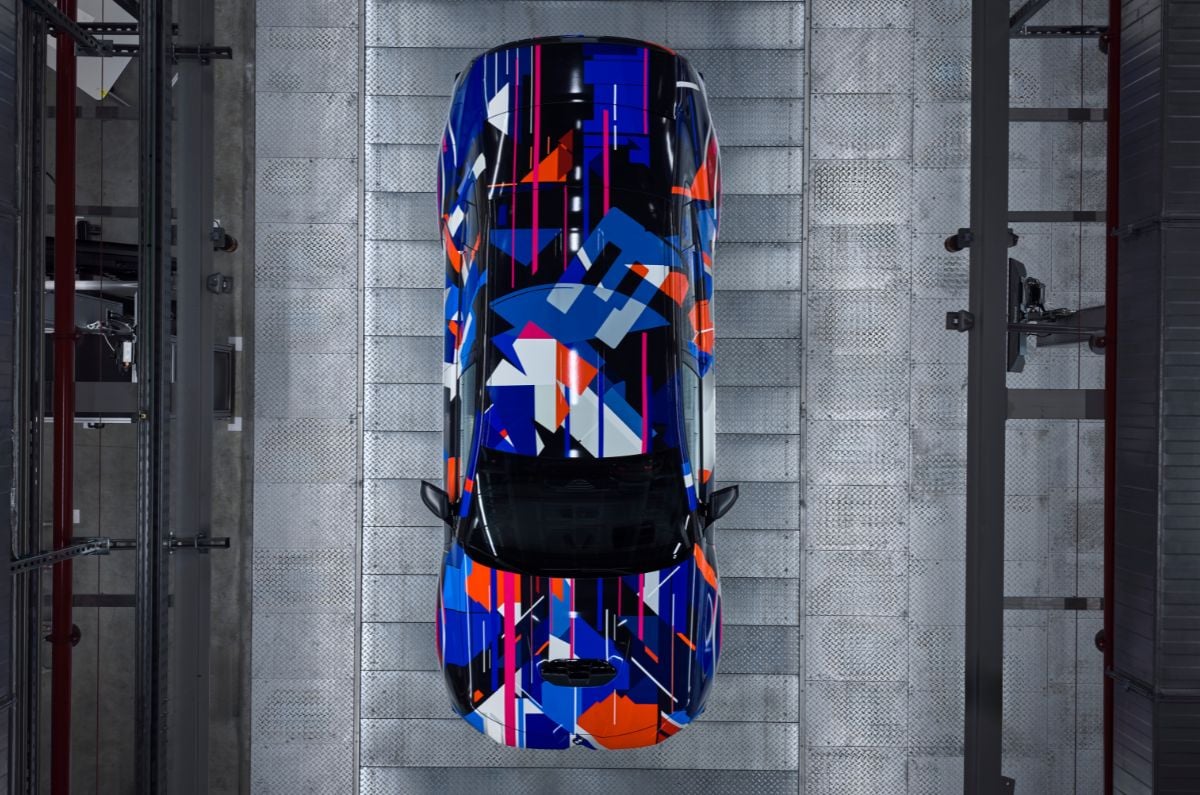
BMW M3 electric top down

Some of the design details poking through the camouflage are similar to what we see on the combustion-powered 3 Series. This means there’s the new kidney grille up front that’s flanked by angular LED lighting signatures. Lower down, however, is a revised bumper with pronounced aero elements and cube-shaped LEDs stacked vertically. The bonnet of the M3 electric also sports a hump.

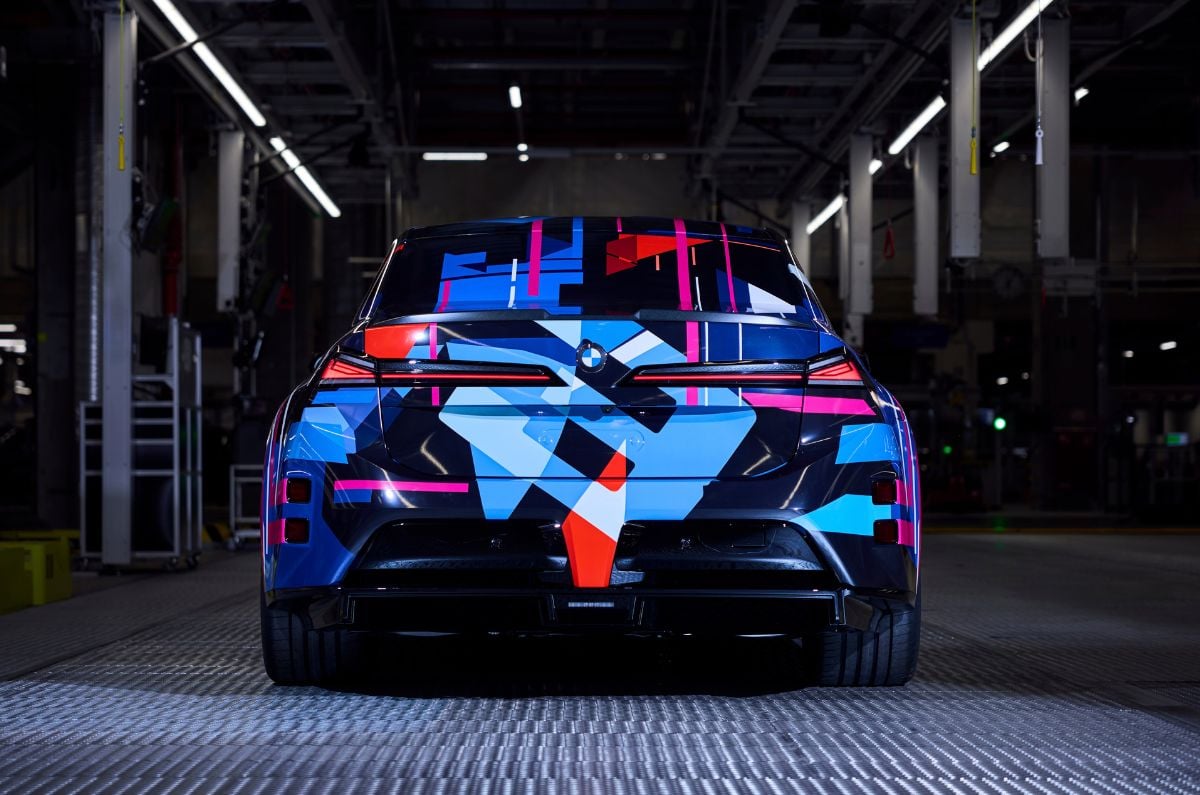
BMW M3 electric rear

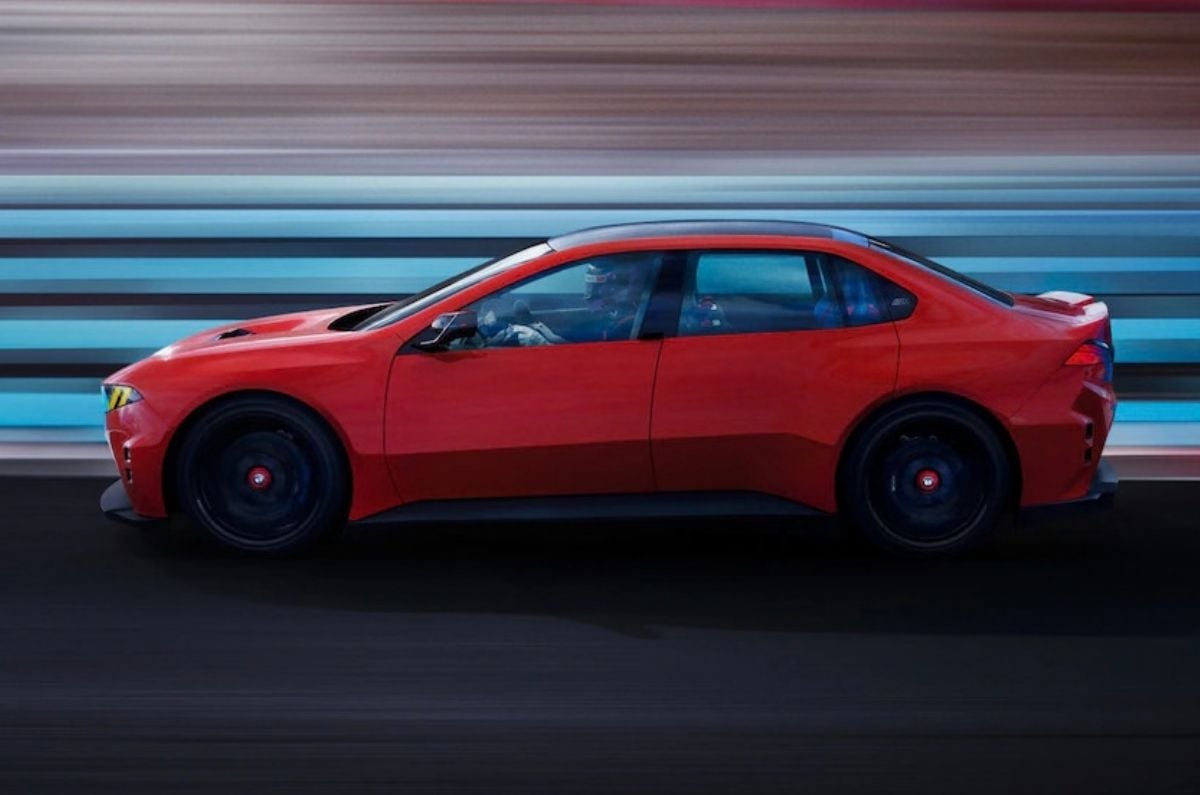
The so-called “reinterpreted M aero” ORVMs of the concept have been replaced by a more conventional design. Save for the centre cap design, the all-black alloy wheels look similar to what was seen on the concept. The rear of the camouflaged M3 electric gets a bootlip spoiler and the same cube-like design integrated into the bumper.

BMW M3 electric expected interior and features

Some of the design and equipment seen on the Neue Klasse concept will make it to the production model

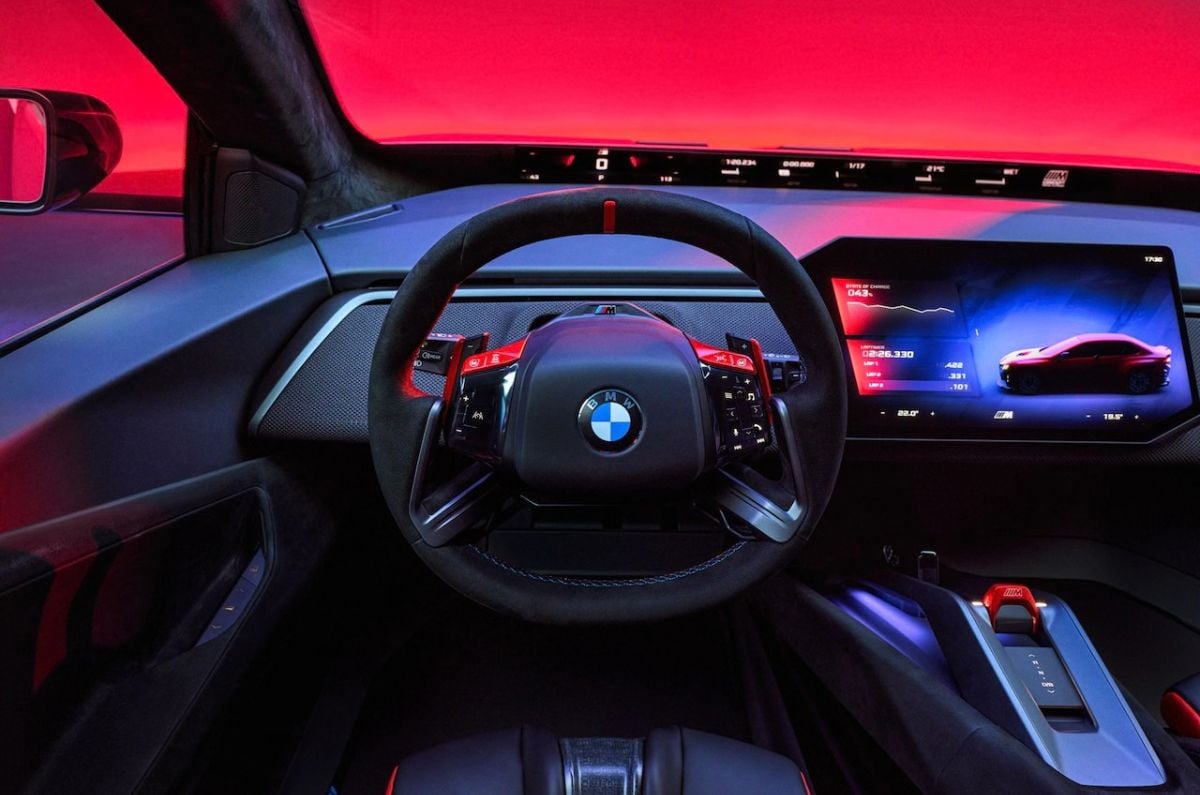
BMW M Neue Klasse concept interior

While BMW is yet to show the interior of the upcoming M3 electric, it’s likely to borrow some of the cues from the Neue Klasse concept. The latter was showcased with a sleek digital instrument panel cutting across the base of the windscreen and a chunky steering wheel with red highlights and BMW M stitching. The sloping centre console of the concept has a red toggle-style drive selector with ‘M’ branding, while the dashboard features a ‘floating’ infotainment screen.

BMW M Neue Klasse concept seats
BMW M Neue Klasse concept interior

The cabin of the Neue Klasse concept is primarily finished in black leather, with hexagonal lighting pattern on the textured dashboard. The production model could also come with the sporty bucket seats finished in a two-tone M livery. There will also be ‘M’ lettering and graphics on the seats and displays, respectively, as has been the case with other BMW M cars.

BMW M3 electric powertrain

The M3 EV could feature an 800V architecture and four electric motors

BMW said that the Neue Klasse concept featured an M-specific version of its sixth-generation cylindrical cells with a capacity of over 100kWh. The 800-volt architecture powers four electric motors – one for each wheel – as part of its new M eDrive powertrain. This will be accompanied by BMW’s new ‘Heart of Joy’ control unit and M Dynamic Performance Control software, with wheel-specific power delivery and braking systems.

BMW is yet to reveal specifics regarding this setup’s output or performance. “It’s not about having even more power. At the end of the day, you can’t put that down to the road anyway. You need to have sufficient power at every corner of the car and we are using four electric motors, but you will never use it at the same time,” BMW M CEO Franciscus van Meel told Autocar UK.

BMW M Neue Klasse concept side tracking
BMW M Neue Klasse concept

Instead, the focus here appears to revolve around better stability without compromising agility. “You can brake the inner wheels, accelerate the outer ones and can get out of turns in a completely different way. It’s a new era of vehicle dynamics,” said van Meel.

He also stated that the fully electric M3 will come with simulated gear shifts but without simulated engine sounds, with the intention being better driving intuitiveness. “We tried all the different sounds. We had a high-revving V10 from the M5, a high-revving V8 from the M3 and even tried the four-cylinder from the E30. But every sound only made sense for that specific car. If you try to put the sound in another car, the feeling is not right.”

According to van Meel, the priority while driving on a track isn’t down to just copying the feel and emotion of a combustion-powered car. Quickness around the track is more important. “You need to have some pedal feel and ratios that you are comfortable with, so that you automatically know you are driving [for example] 100mph because you are in third gear, because you know the deceleration and acceleration. That’s what you want. You can of course copy a gearbox, and it’s already quite emotional. That’s a good idea. But we want more,” van Meel continued.

BMW M3 electric production

The M3 EV will be made at the BMW Group Plant in Munich

BMW will be investing around EUR 650 million into its Munich facility to prepare it for fully electric models. Part of this investment has gone into modernising production structures and systematic digitalisation, along with enhancing cooperation with the development teams and suppliers. According to the brand, from 2027 onwards, this facility will only be producing EVs such as the M3 electric.

2026 Mercedes-Maybach S-Class launched at Rs 3.35 crore

2026 Mercedes-Maybach S-Class launched at Rs 3.35 crore
Mercedes-Maybach-S-Class-India

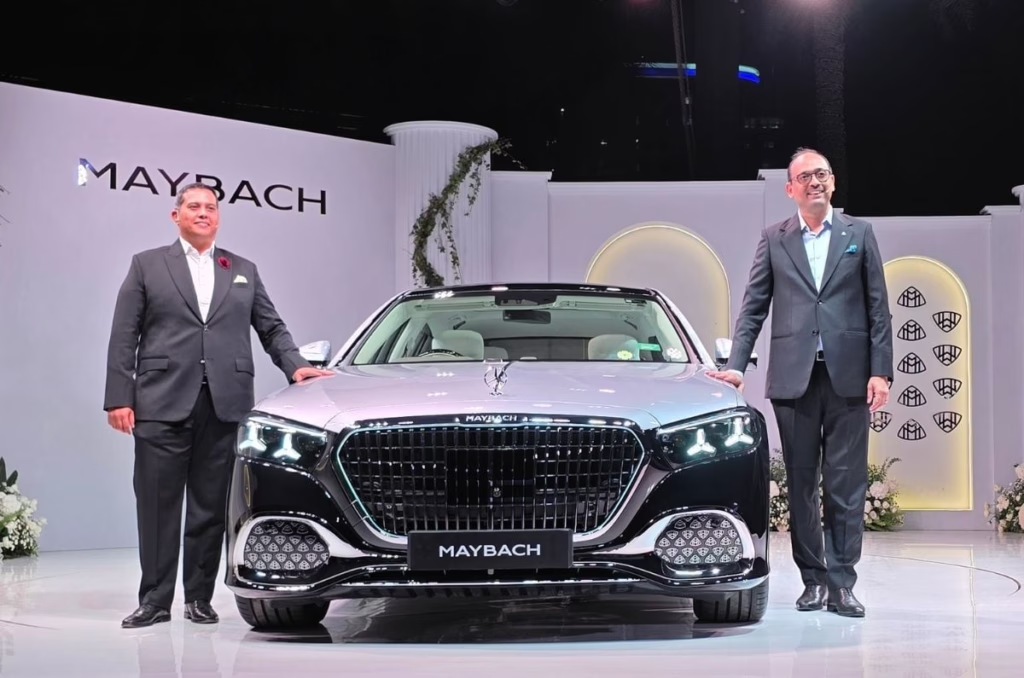
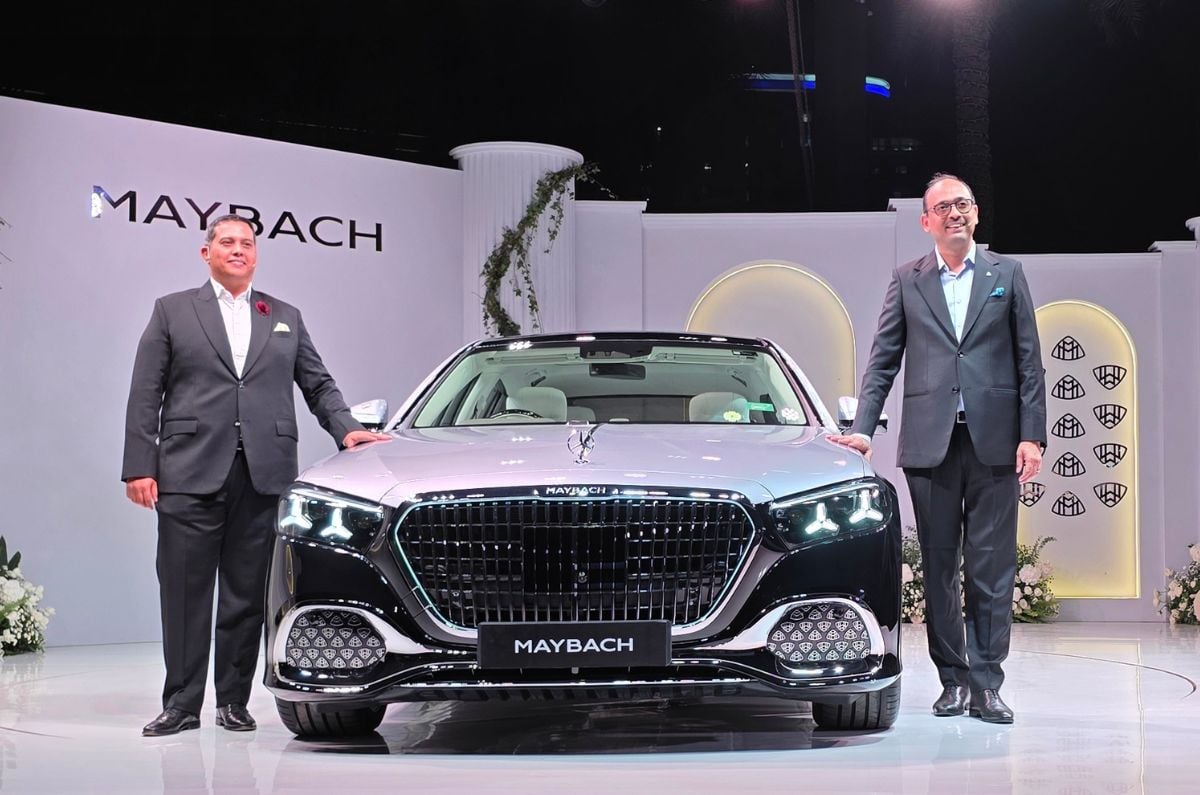
Mercedes-Benz has launched the Maybach S-Class facelift at Rs 3.35 crore (ex-showroom). It has been brought to India in S 580e guise, making it the first Maybach in India to be offered with a plug-in hybrid powertrain. Only 30 units have been allocated in the first batch, costing Rs 97 lakh more than the ‘regular’ S-Class Manufaktur Edition AMG Line that was launched just a couple of months ago. This is also Mercedes’s third PHEV in India, following the updated S-Class and AMG E 53 Hybrid. Mercedes says around 50 percent of its S-Class sales in India are of the Maybach variant. 

  1. Maybach S-Class comes to India in S 580e guise with 3.0-litre PHEV powertrain 
  2. Gets executive rear seats with full-length business console as standard 
  3. Offers 98km electric-only range thanks to a 22kWh battery 

Mercedes-Maybach S 580e powertrain and specs 

The new PHEV powertrain is one of the biggest updates to the Maybach S-Class, as the outgoing model was offered with a 4.0-litre V8. The S 580e uses a 443hp/560Nm 3.0-litre inline-six petrol engine paired with a 160hp/480Nm electric motor and a 22kWh battery. Total system output is 585hp and 750Nm, and it comes with all-wheel drive as standard. Mercedes claims the car can travel up to 98km and reach a top speed of 140kph on electric power alone. It also has a WLTP-certified fuel efficiency of 34.48kpl, although it’s likely not to be of much interest to a Maybach owner.  

The S 580e offers three drive modes – Maybach, Electric and Battery Hold – along with adjustable energy recuperation, including one-pedal driving. As for charging, Mercedes will offer an 11kW AC on-board charger, and the car is also compatible with up to 60kW DC fast charging. The S 580e gets air suspension and rear-axle steering as standard. 

Mercedes-Maybach S 580e interior and features 

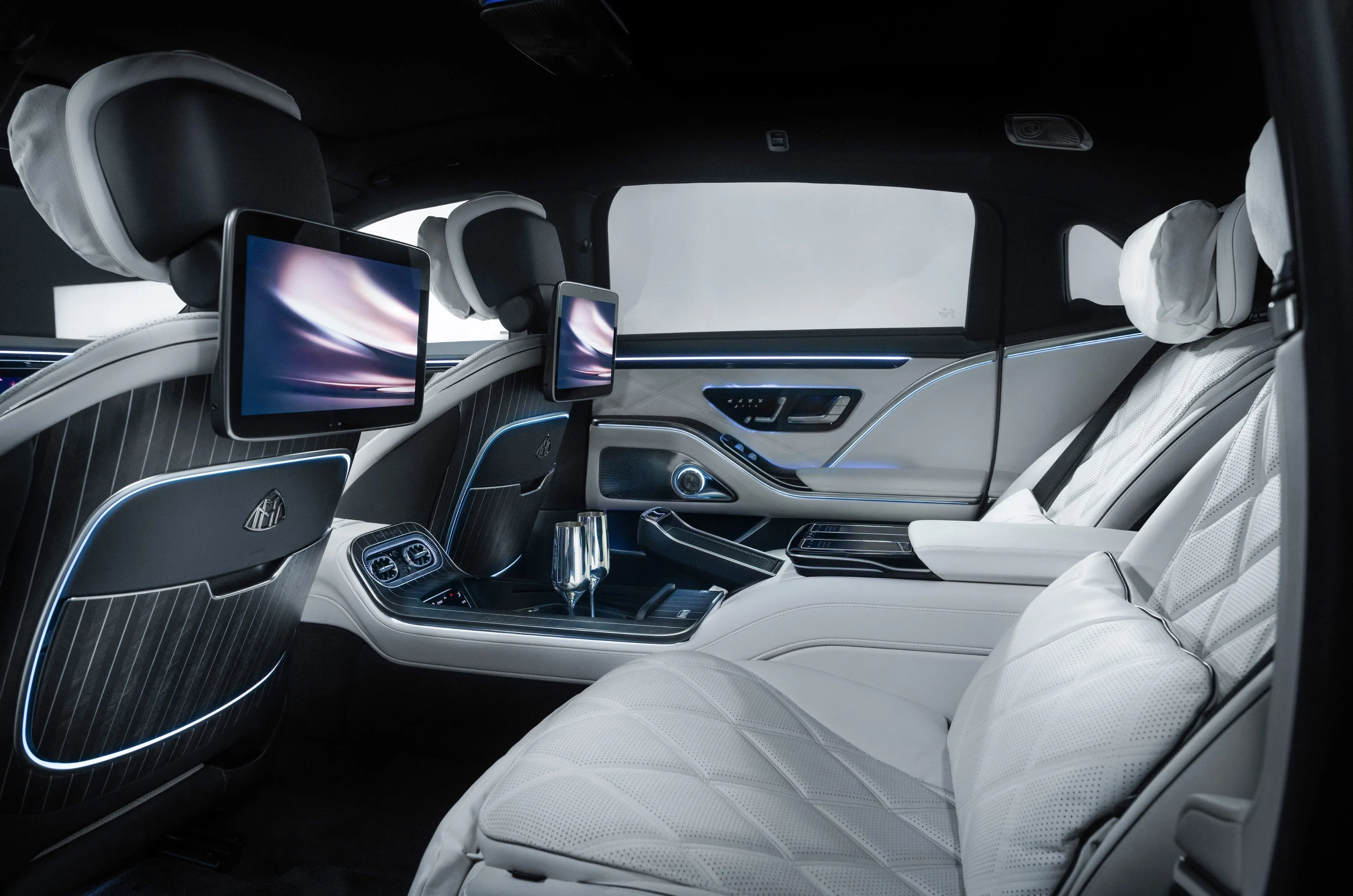
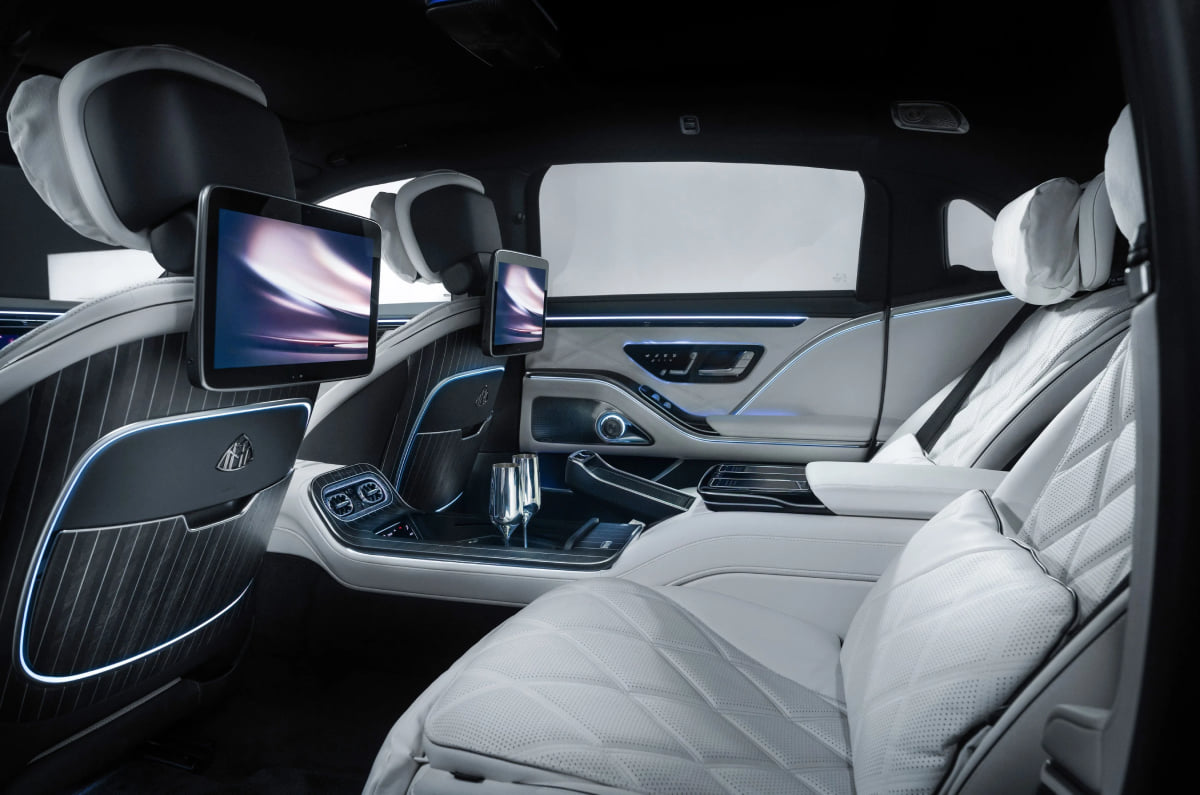
The focus of any Maybach is, of course, the back seat, and in that regard, Mercedes is offering the S 580e in a four-seat layout with executive seats with a full-length business console. Rear Comfort Package Plus is standard, offering fold-out tray tables, wireless charging pads, rear-compartment ambient lighting and even temperature-controlled cup holders. The seats recline to 43 degrees (compared to the regular S-Class’s 38 degrees) and are heated, ventilated and massaging. You also get two individual ‘smartphone’ remotes to operate everything instead of the tablet controller from before.

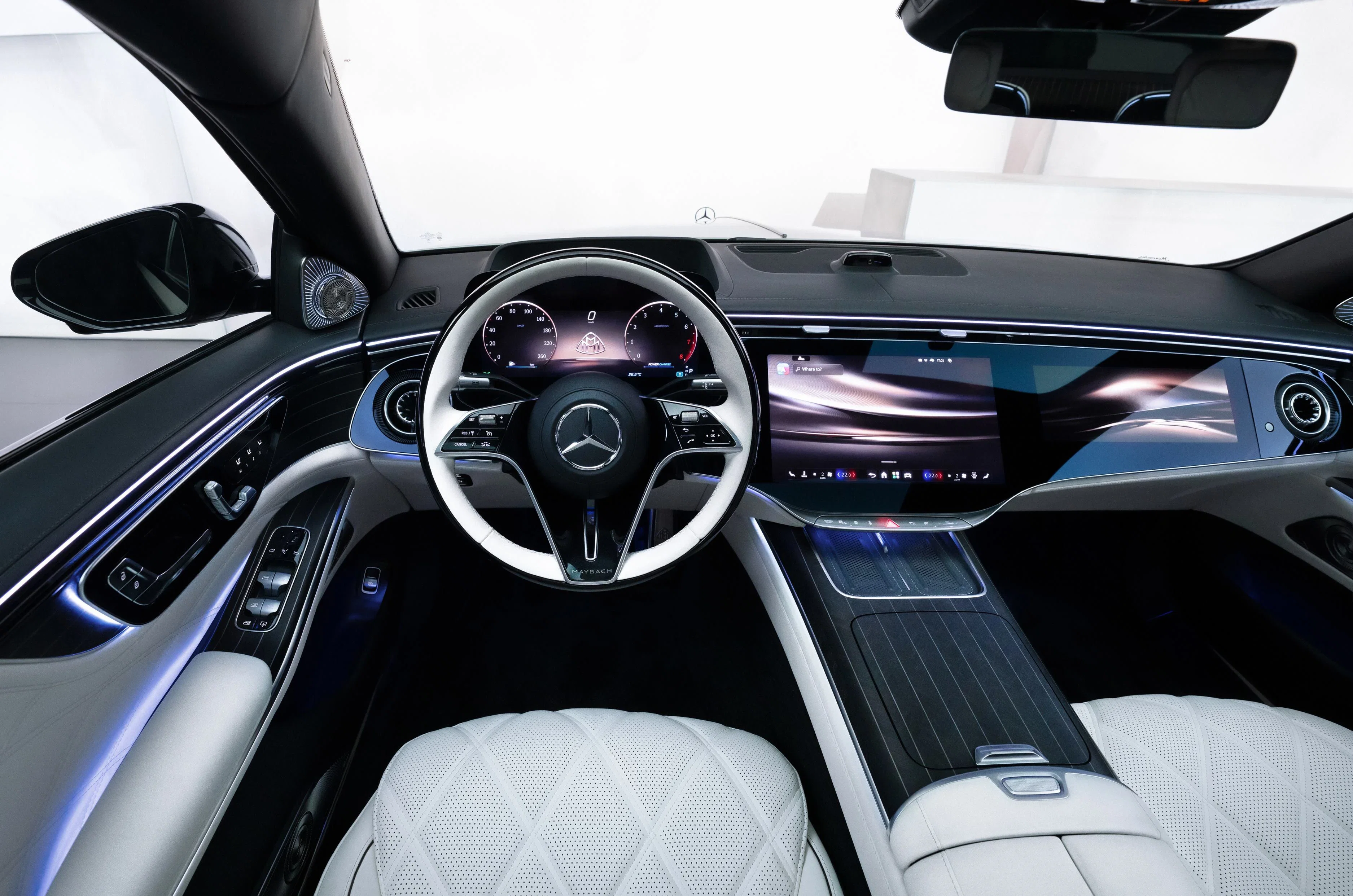
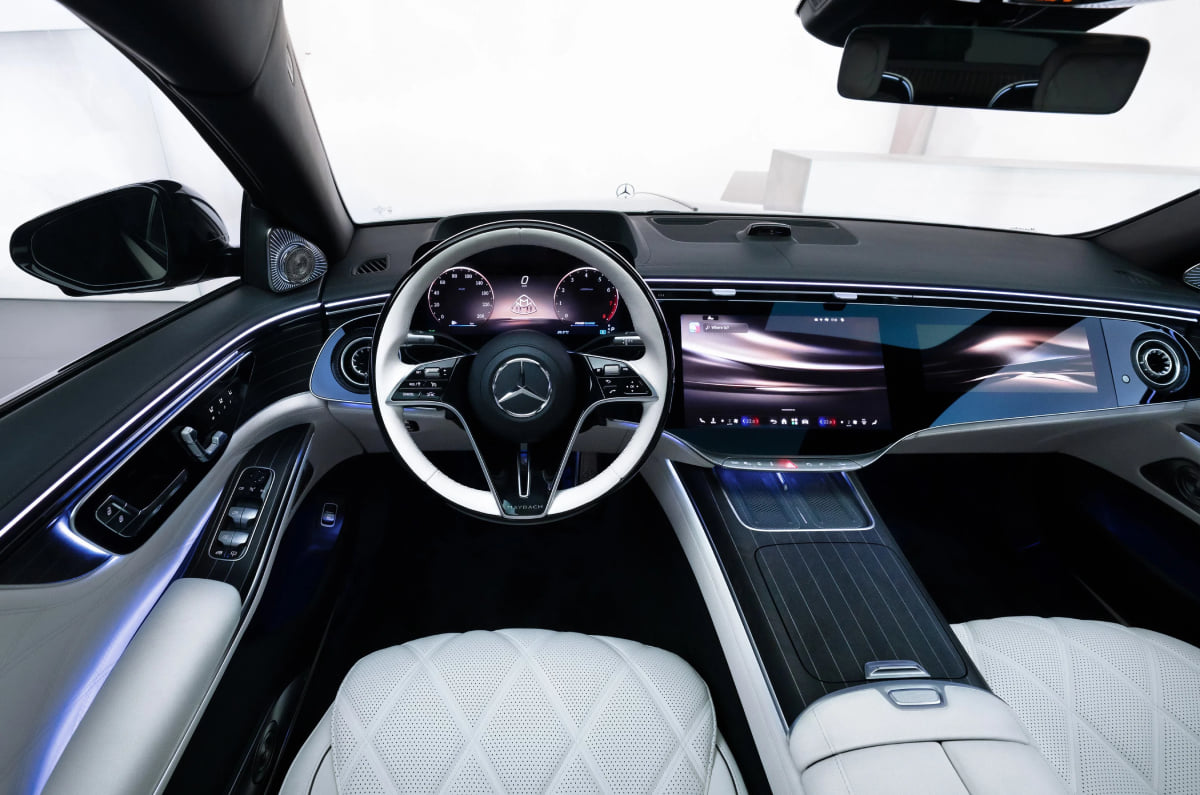
Up front, the dashboard remains largely unchanged from the regular S-Class. The MBUX Superscreen spans the front of the cabin, combining the central display with a front passenger display carrying a privacy function, while the driver gets a free-standing 3D display. The difference here is that you get a unique Maybach graphical theme for all screens, along with signature rose gold accents. Some of the equipment highlights include an augmented reality head-up display and navigation, a 31-speaker Burmester 4D surround sound system and two rear entertainment screens with wireless headsets.

The cabin is trimmed in Maybach-exclusive Nappa in crystal white and silver grey pearl, with Manufaktur piano lacquer trim, a Manufaktur roof liner in crystal white Nappa leather and Manufaktur seat backrest trim. 

Mercedes-Maybach S 580e exterior design 

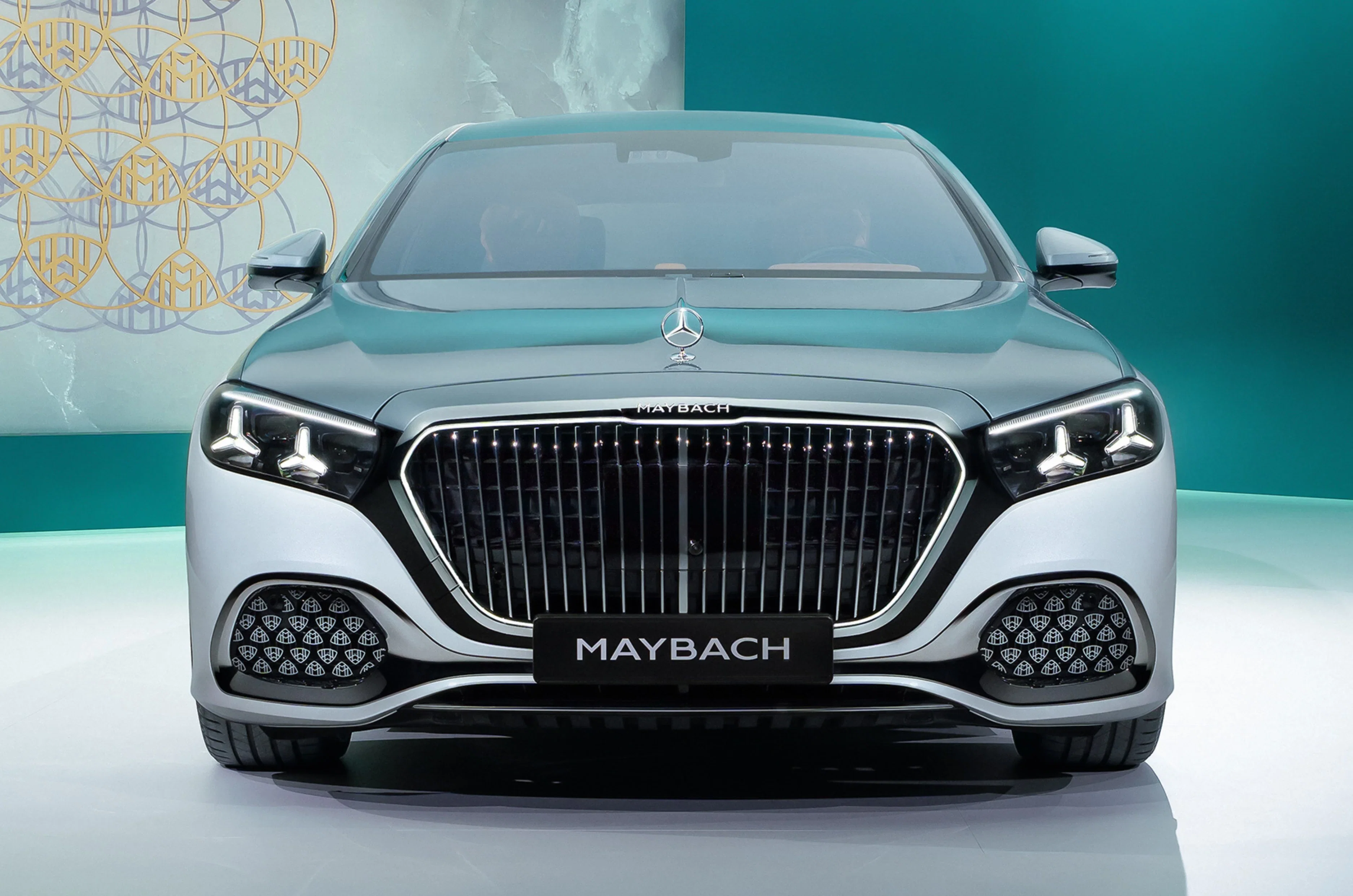
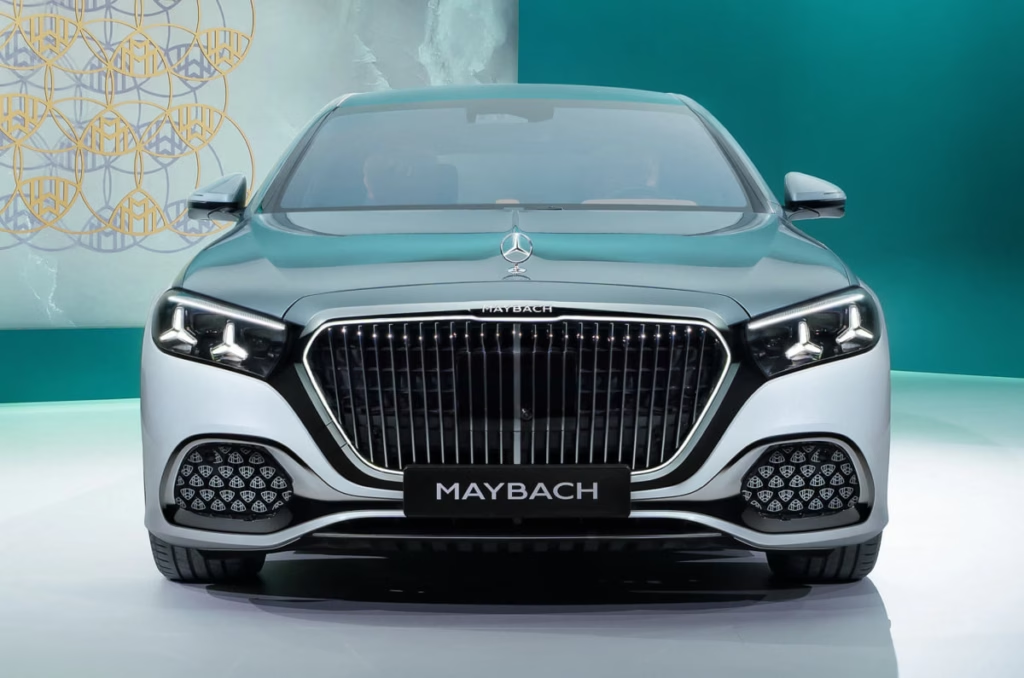
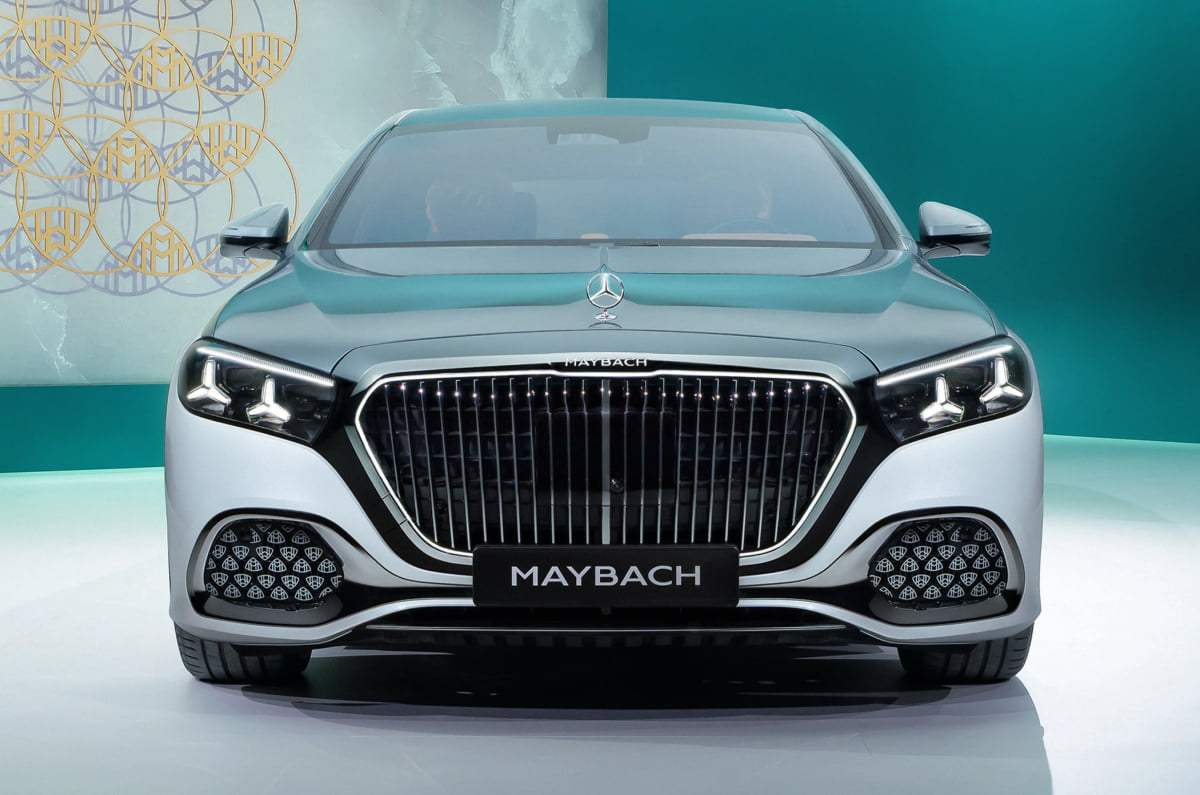
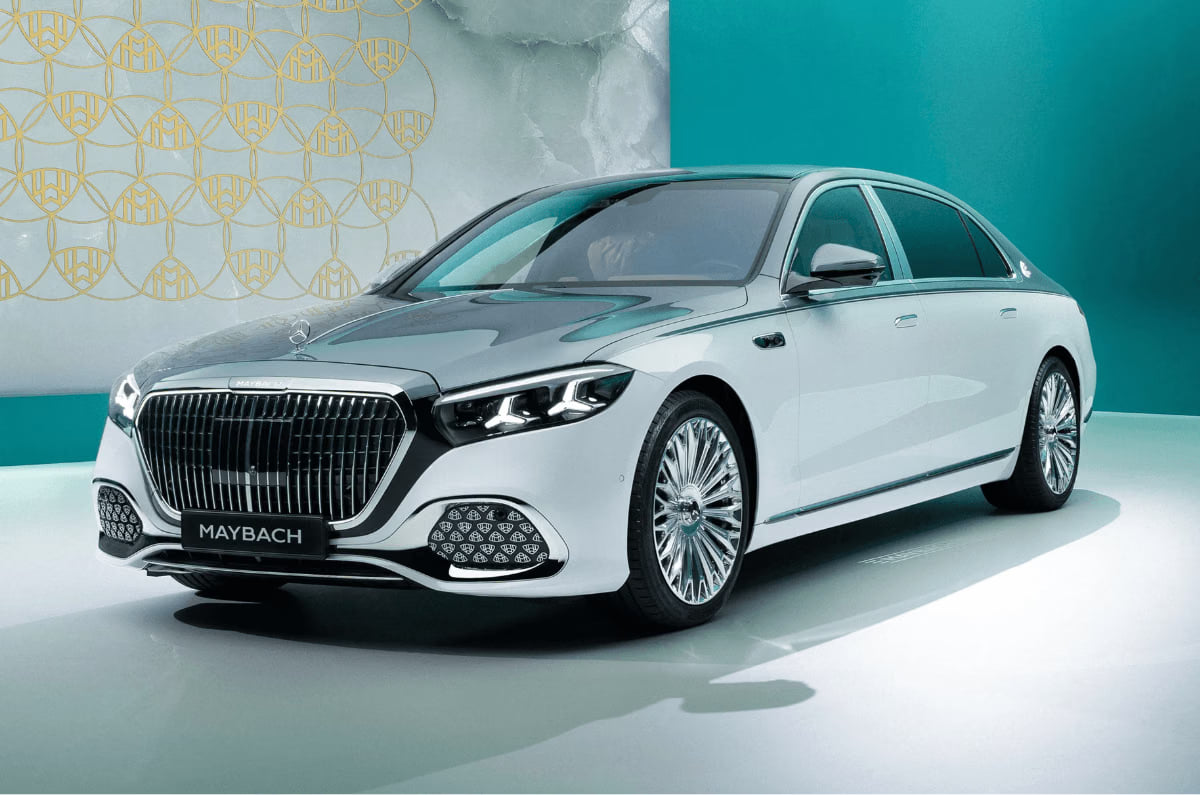
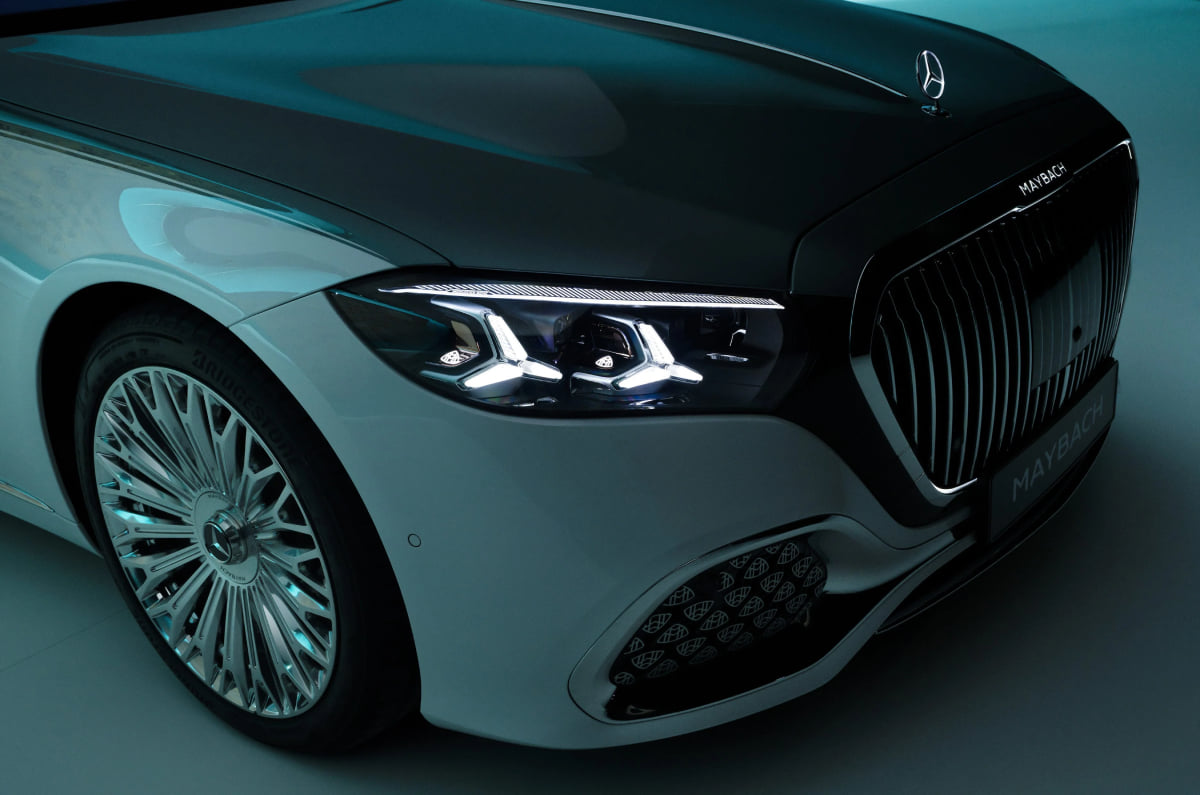
Changes to the exterior are similar to those on the regular S-Class facelift, albeit with a few Maybach-specific twists. For instance, here too the grille is 20 percent larger and framed by LED illumination, with an illuminated Mercedes star on the bonnet above. The difference is that the grille uses the Maybach signature vertical slats, and there’s an illuminated ‘Maybach’ wordmark above them.

The headlamps are the new, larger units with the latest version of Mercedes’s Digital Light ambient lighting and three-pointed star daytime running lamps (DRLs), but rather than the techie blue accents, there are rose gold embellishments with the Maybach logo on them.

Mercedes-Benz Maybach S-Class facelift Wheel

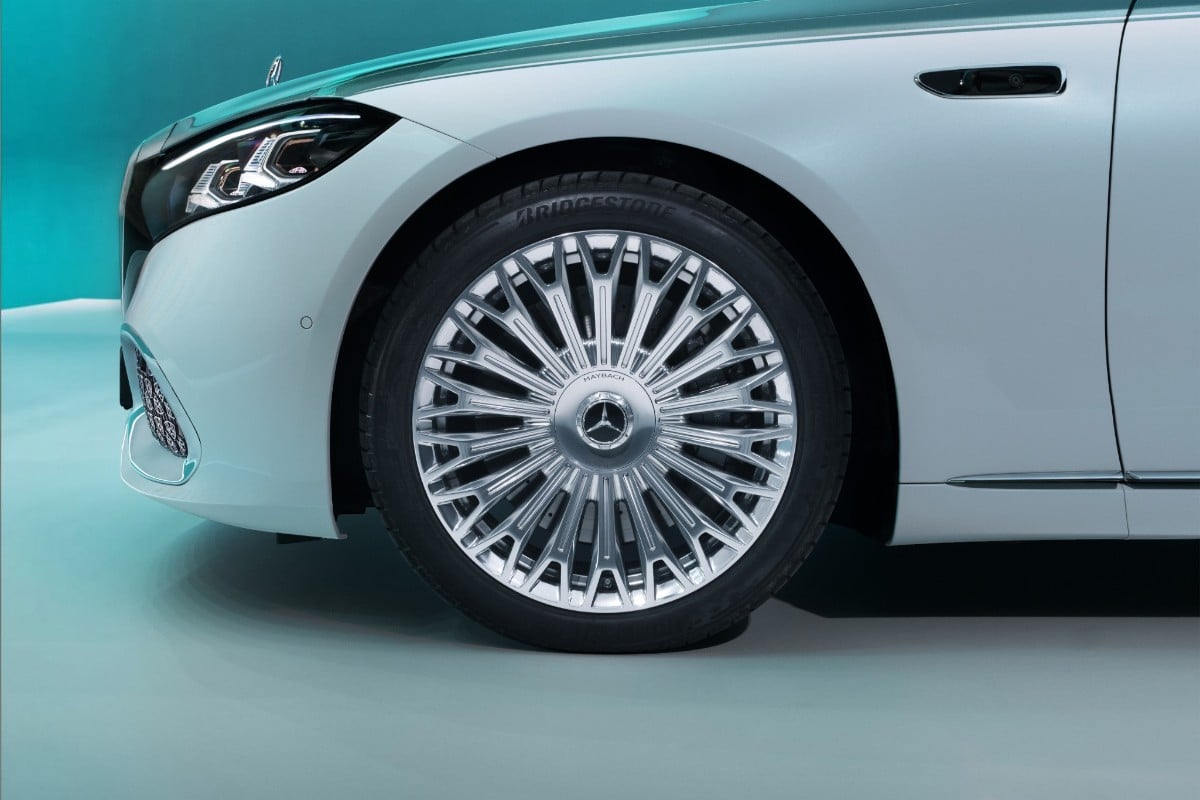
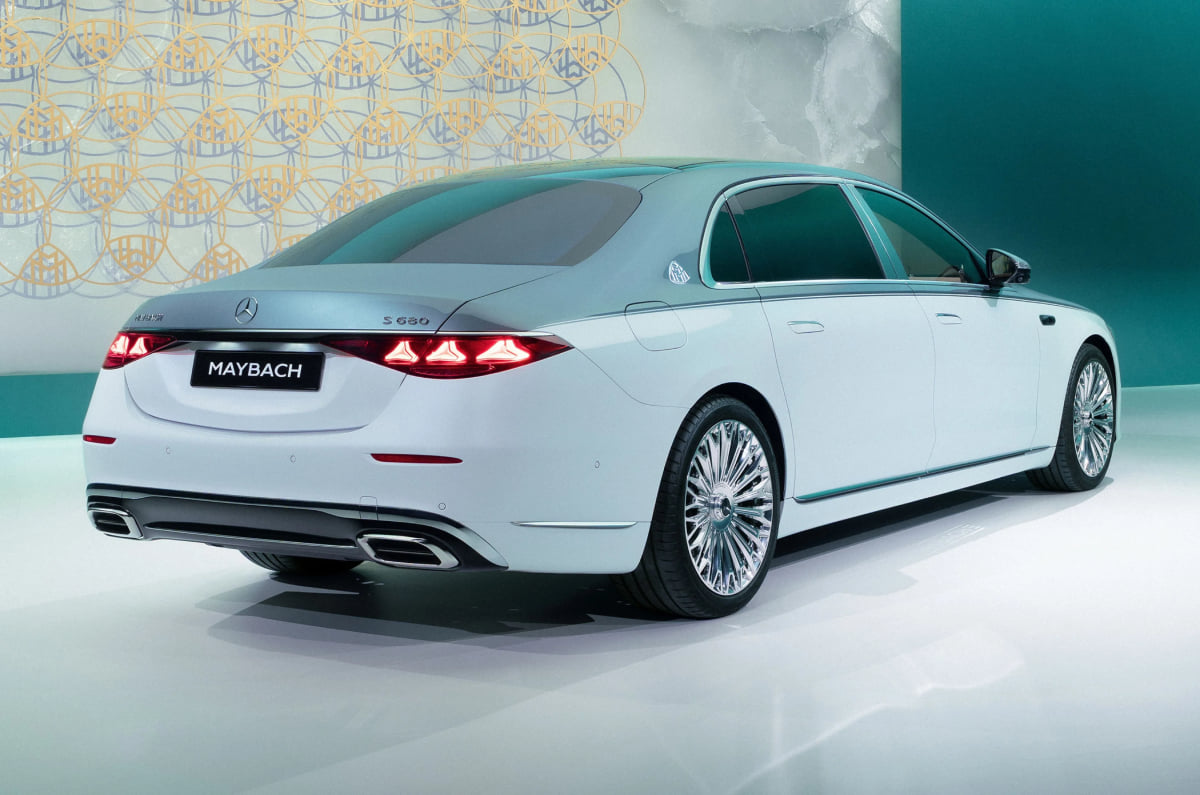
As before, the Maybach is 180mm longer than the long-wheelbase S, and that’s plain to see in profile. The India-spec model rides on 20-inch forged Maybach wheels, which also house a counterweighted Mercedes logo that always stays upright as the wheels turn. The Maybach logo on the D-pillar is illuminated as well, and the tail-lamps also get the triple-three-pointed star LED signature, like in the standard S-Class.

What to expect from Mercedes-Maybach S-Class ahead of launch tomorrow

What to expect from Mercedes-Maybach S-Class ahead of launch tomorrow
Mercedes Maybach S-Class

Mercedes-Benz will launch the updated Maybach S-Class in India on October 5. The facelift brings styling and technology updates, along with more personalization options and changes to the powertrain range. With the launch just around the corner, here’s everything you need to know about the new Maybach S-Class.

What exterior changes does the new Maybach S-Class get over the S-Class?

The Maybach S-Class gets the larger illuminated grille seen on the updated S-Class, but with Maybach-specific vertical slats and an illuminated ‘Maybach’ wordmark above them. It also gets an illuminated Mercedes star on the bonnet, LED headlights with three-pointed-star DRLs and rose gold embellishments featuring the Maybach logo instead of the techie blue accents on the standard S-Class. There are also tiny Maybach logos in the lower air-dam mesh, an illuminated Maybach logo on the D-pillar and the same three-pointed-star LED signature for the tail-lamps as the standard S-Class.

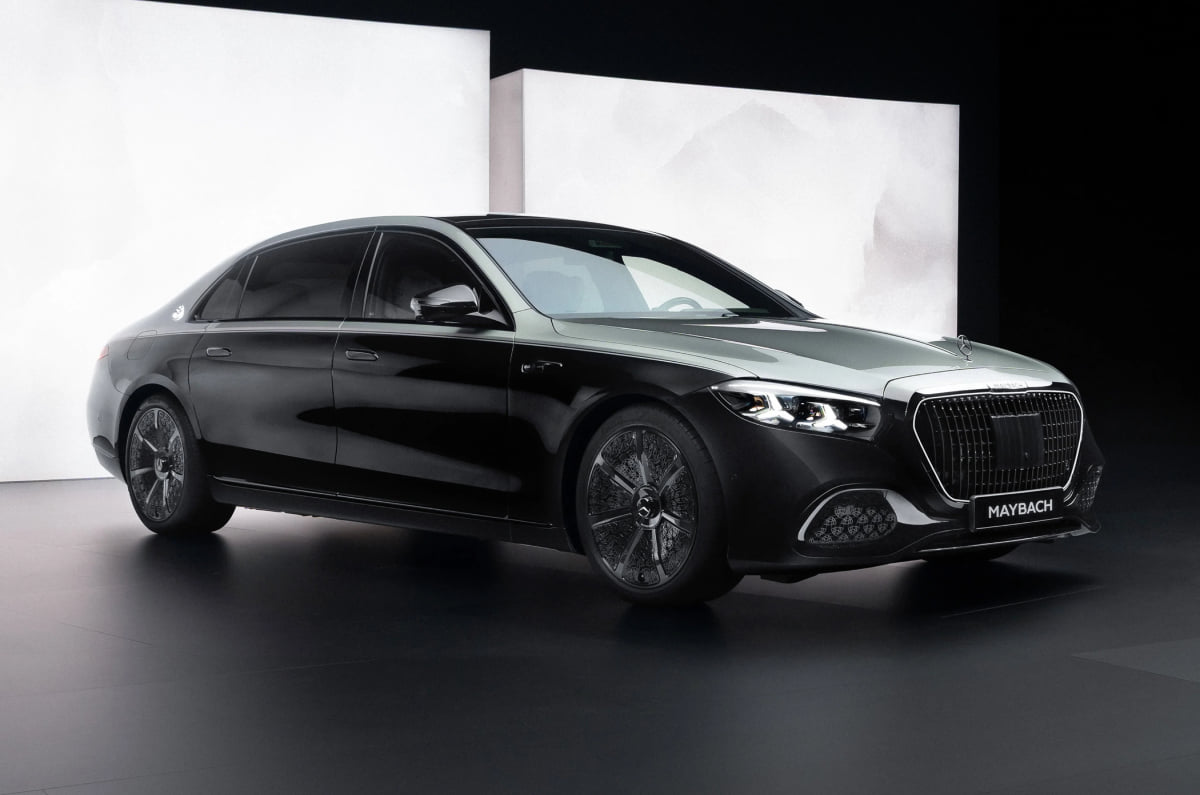
The Maybach is 180mm longer than the long-wheelbase S-Class. It is also available with new 20- and 21-inch forged alloy wheels, which feature a counterweighted Mercedes logo that stays upright as the wheels turn. The carmaker says every Maybach S-Class gets some options from its Manufaktur personalization range, which now includes more exterior colours and two-tone paint combinations.

What are the key interior and feature highlights of the Maybach S-Class?

The cabin of the Maybach S-Class, like the standard S-Class gets a Superscreen-style layout comprising a 12.3-inch digital instrument cluster, a 14.4-inch central touchscreen and a 12.3-inch passenger display. The car also uses a new E&E architecture with four ‘supercomputers’ that run the entire car, from the screens to the safety features to the driving dynamics.

As on the outside, Mercedes has expanded the choice of extended leather upholstery and added new upholstery colours. For the first time on a Maybach, buyers can also specify leather-free vegan upholstery with its own unique design. 

What changes have been made to the rear-seat experience of the Maybach S-Class?

The rear seats now recline up to 43 degrees, compared with 38 degrees in the standard S-Class. They are also heated, ventilated and equipped with massage functions. The previous tablet controller has been replaced by two individual smartphone-style remotes for operating the car’s functions. There is also a Maybach drive mode that makes the suspension even softer.

What engine options are available internationally on the Maybach S-Class, and which one will India get?

Internationally, the Maybach S-Class is offered with petrol and plug-in hybrid powertrains. The S 580 gets a 4.0-litre V8 with a flat-plane crank, producing 537hp and 750Nm. Some markets also get the S 580e plug-in hybrid, which combines a 3.0-litre inline-six with a 163hp electric motor and a 22kWh battery. Total output is 585hp and 750Nm, with an electric-only range of up to 98km. The top-spec S 680 gets either a V12 or a more powerful V8 depending on the market. 

In India, we are likely to get the 612hp, 850Nm version of the S 580’s 4.0-litre V8.

What is the Maybach S-Class Night Series?

The Night Series is a darker-themed version of the Maybach S-Class. It gets darker exterior and interior colours, while chrome elements are replaced with dark chrome. It also gets a different set of aero-efficient black wheels adorned with dozens of Maybach logos.

How much will the new Maybach S-Class cost in India

The outgoing Maybach S 580 is currently priced at Rs 2.87 crore, ex-showroom, before options. Like the outgoing model, the updated Maybach S-Class is also expected to be locally assembled in India. The updated model is expected to cost more, with the price likely to be north of Rs 3 crore.

Kia Sorento review: Kia’s big hybrid and diesel bet

Kia Sorento review: Kia's big hybrid and diesel bet
kia sorento

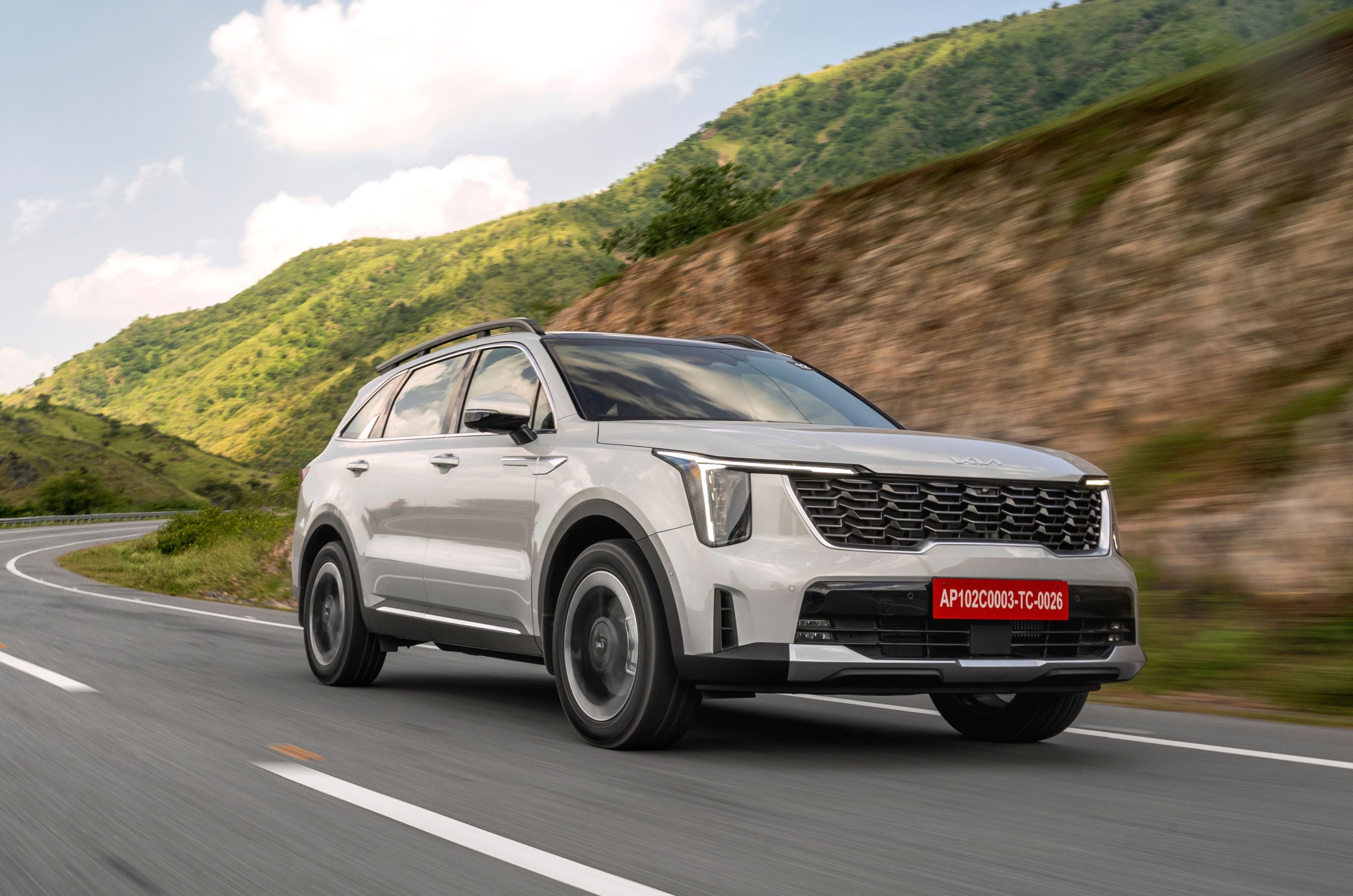
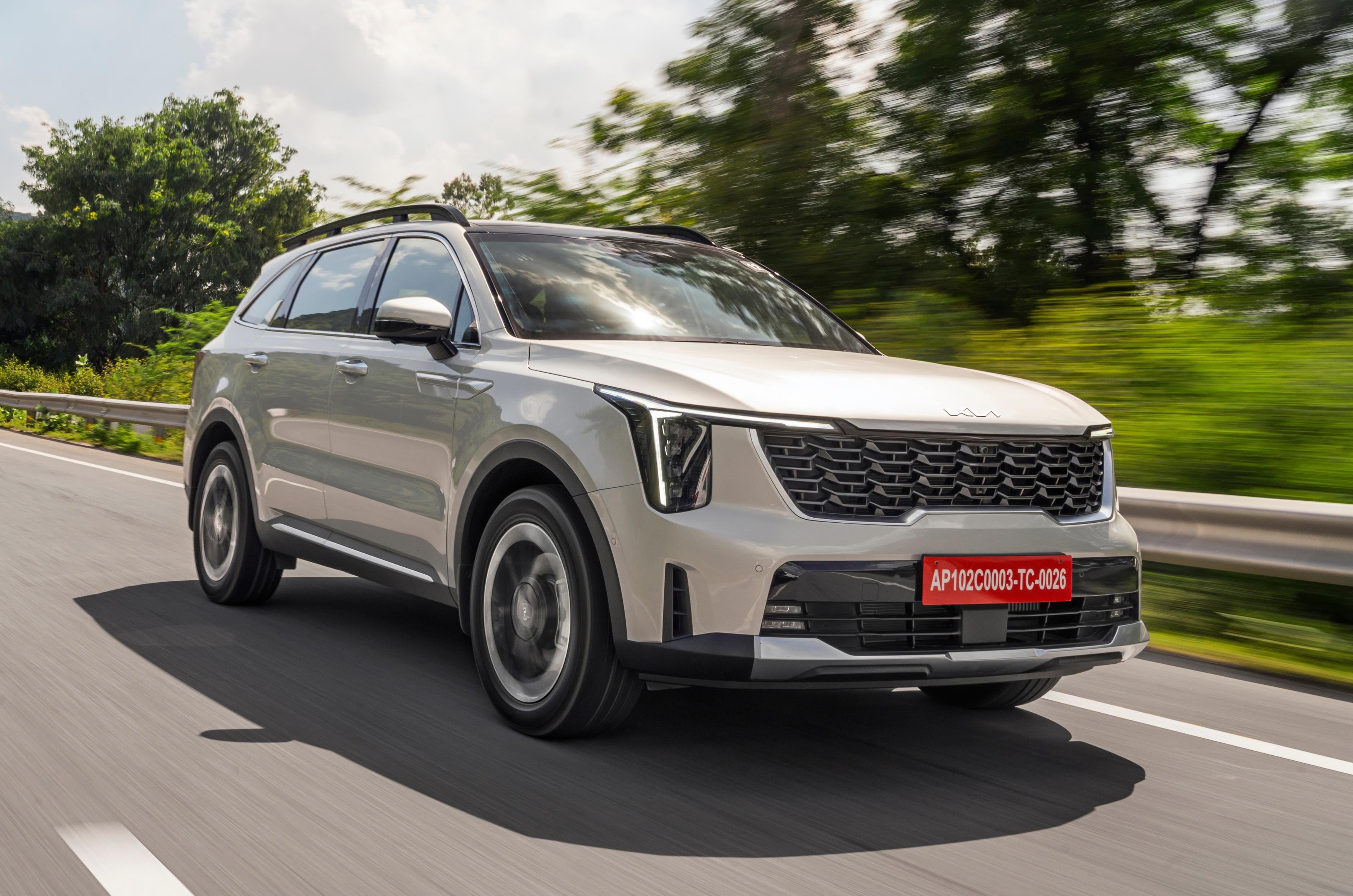
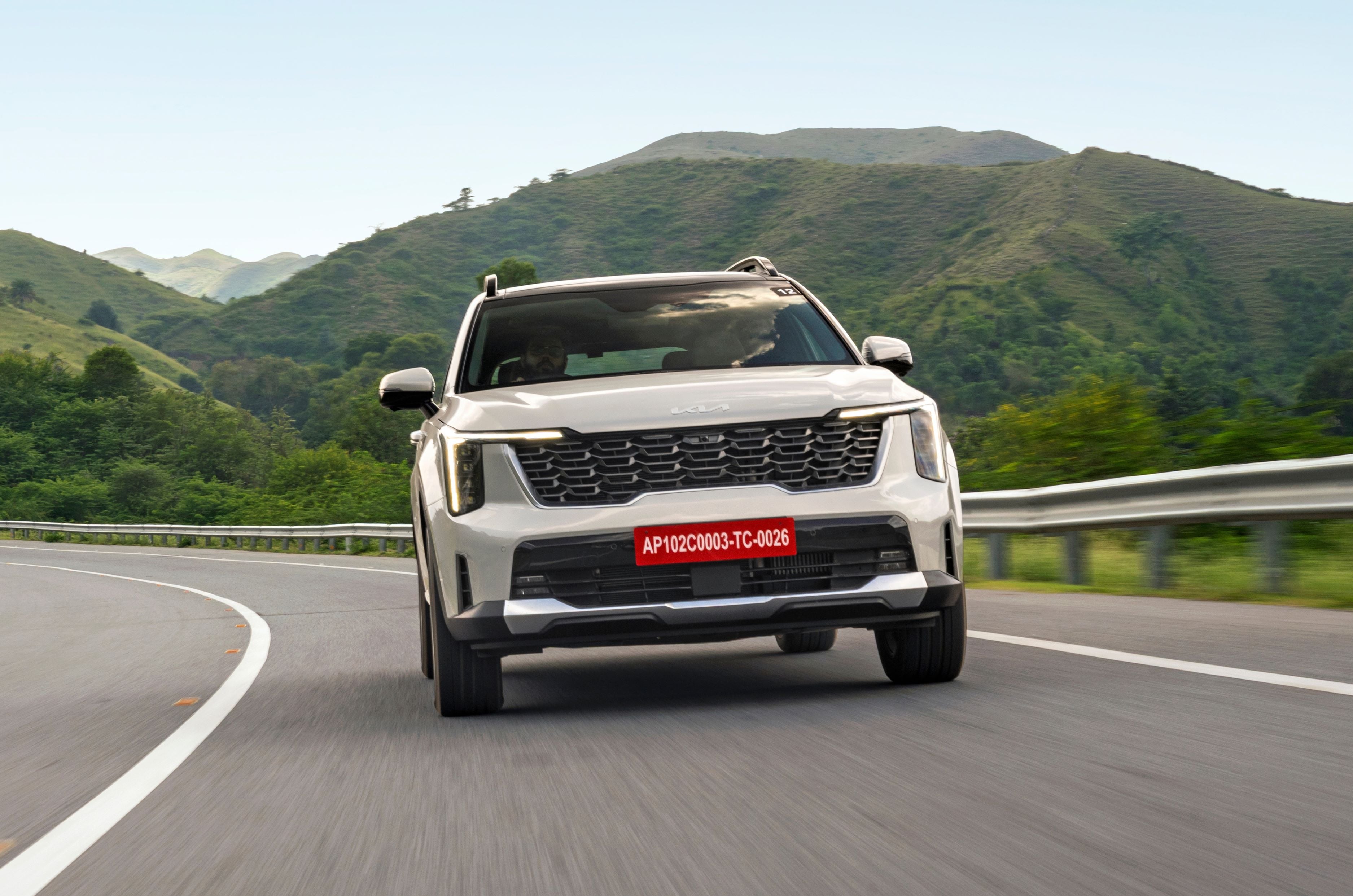
The Sorento is a big bet for Kia India, and you can tell. Six trims, two powertrains, front- and all-wheel drive, six or seven seats and 32 versions in all. This is not a toe in the water exercise but a full-blooded dive into the deep end of the executive SUV pool. More than that, it is a case study in how to launch a product in India, because Kia has got the basics right before it has even started talking about features.

Start with the powertrains, which for this class of SUV could hardly be better judged. There is a strong 2.2-litre diesel for diesel die-hards and there are still plenty of those. And then there is a 1.6-litre turbo-petrol strong hybrid whose timing couldn’t be more perfect. Petrol prices are climbing, E20 has quietly eaten into real-world efficiency, and buyers want diesel-like running costs from a smooth, quiet powertrain without lying awake worrying about diesel’s long-term future. The Sorento hybrid is pitched squarely at that anxiety.

The strategy behind the car is just as interesting. This fourth-generation (MQ4) Sorento arrives in India towards the end of its global life cycle. It is still a current product, but one due to be replaced internationally next year, while India will carry on with this one. That is actually a very smart move. A car this late in its life has its development costs largely amortised, and Kia India can bring some of the tooling here, which slashes the investment.

And this is a properly localised car, not a screwdriver job. The body is stamped and welded at Kia’s Anantapur plant, and the dashboard and seats are made here too. That is what makes the Rs 27.99 lakh starting price possible. The catch is that localisation on this scale only pays off with volume, and Kia wants to sell around 40,000 Sorentos a year. That is a big number for a Rs 30-40 lakh SUV. Can it get there?

Kia Sorento exterior design and engineering

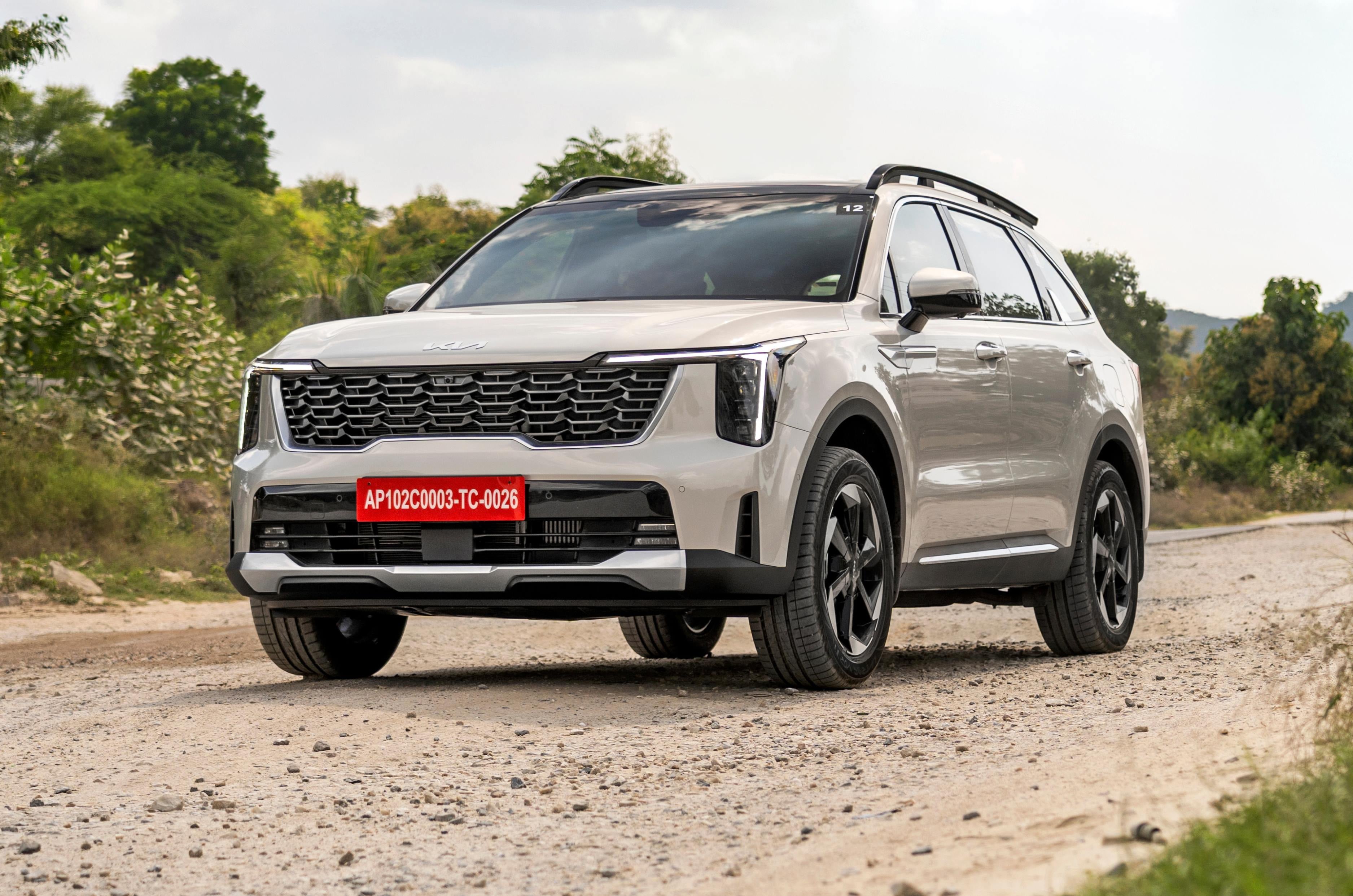
Based on the gen 4 Sorento, it carries over the older and more palatable design language.

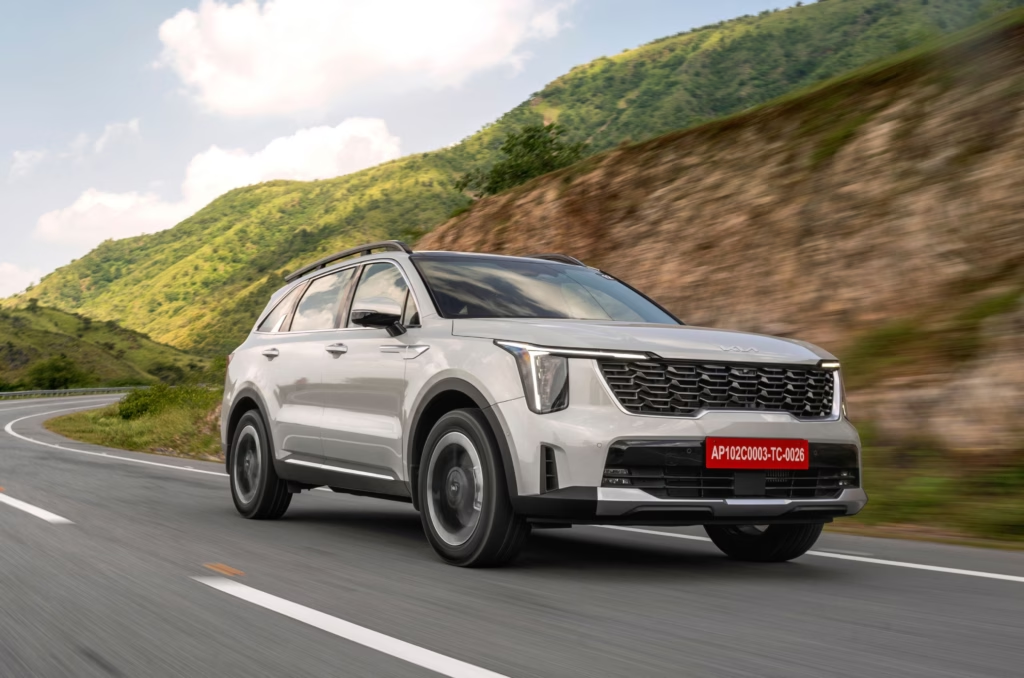
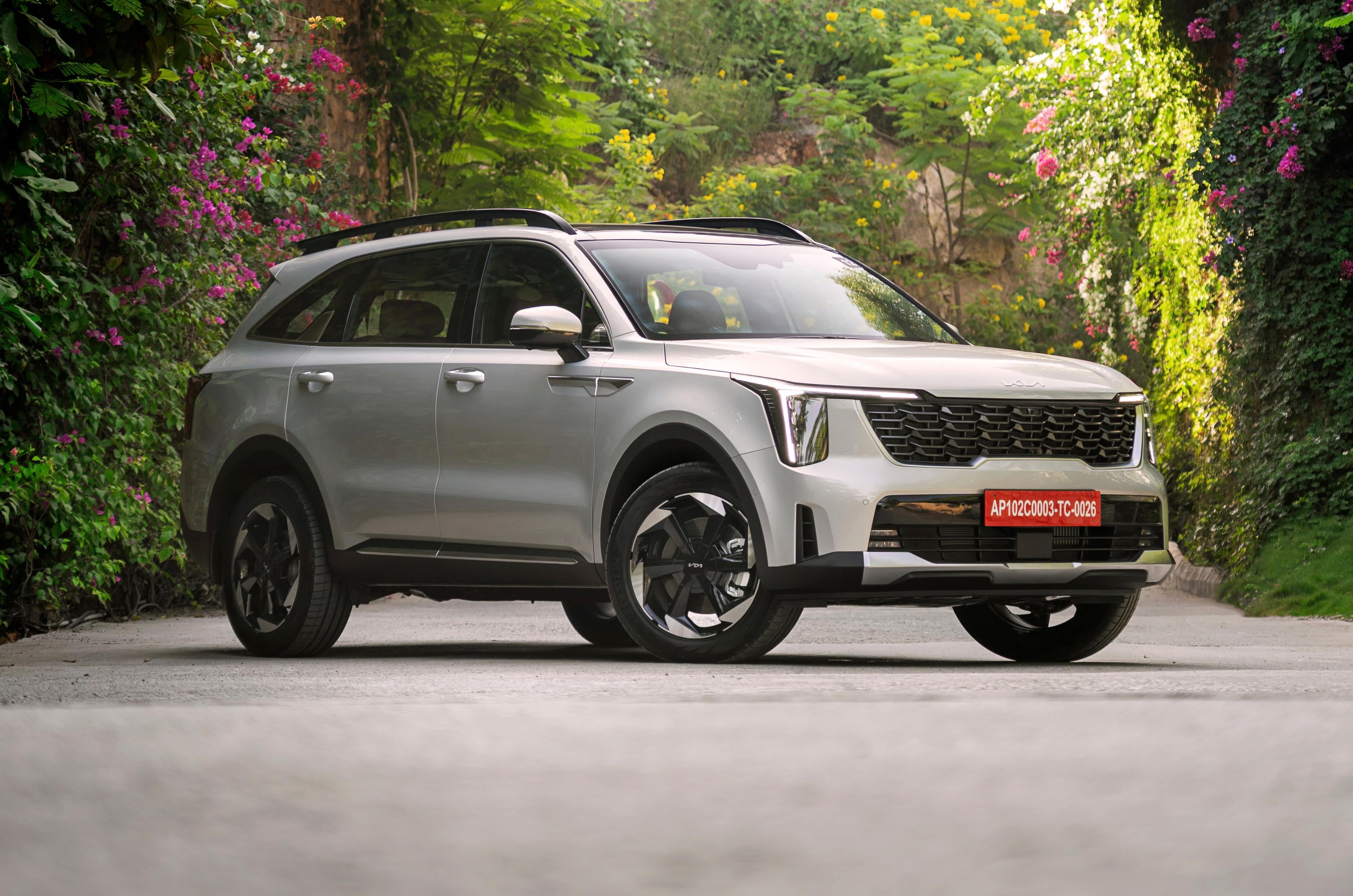
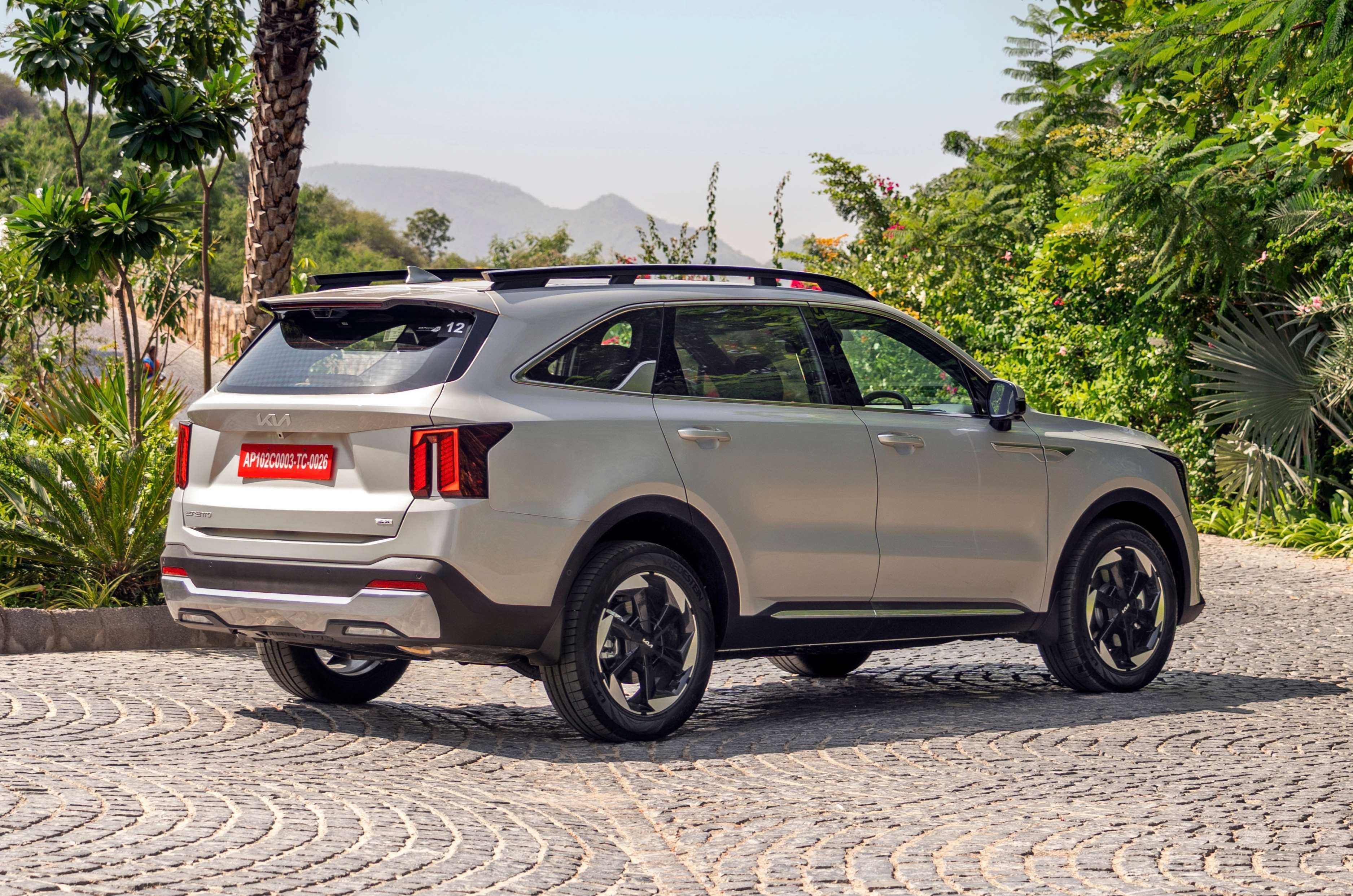
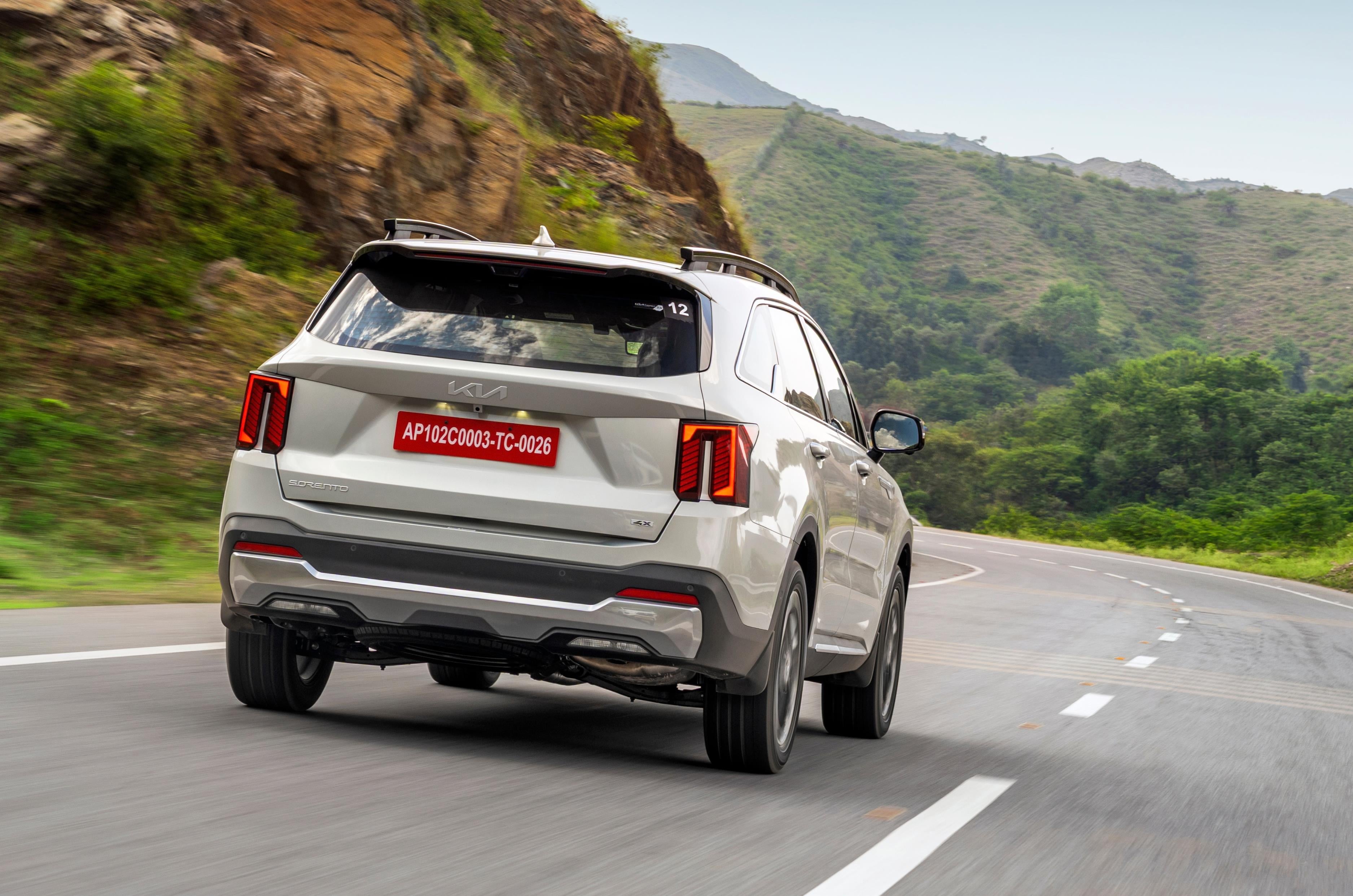
The Sorento sits on Hyundai-Kia’s MQ4 platform, the freshest architecture in its class, and it has already had a mid-life update to keep it looking current. The 2024 facelift brought the nose in line with the design language Kia kicked off with the EV9, so you get vertically stacked LED headlights, Y-shaped daytime running lamps and an aggressive looking bumper with wide intakes. At the back are L-shaped wraparound tail-lamps, and thankfully no light bar stretched across the tailgate.

Beats the rivals in length, width, and wheelbase.

Kia’s stated aim was a more technical, precise look, one meant to signal tight build quality and engineering sophistication. It is a trick the German premium brands have used for years, and Kia has clearly taken a leaf out of their book. The Sorento looks crisp and expensive rather than flashy, and is likely to age well too.

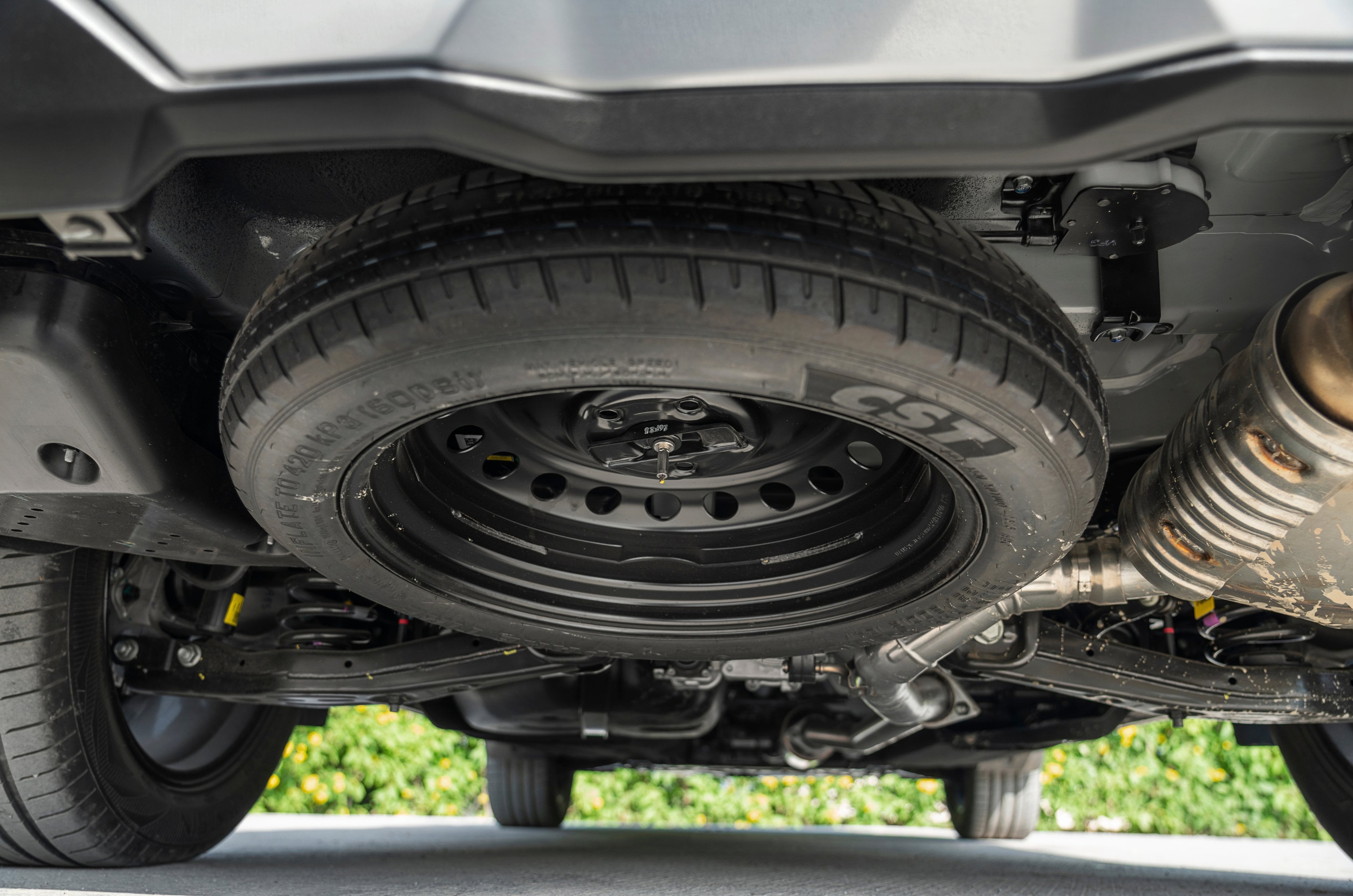
Spare wheel mounted under the floor frees up room in the boot.

What it does not have is brute presence. Despite being the longest, widest and tallest SUV in its segment, at 4,815mm long, 1,900mm wide and 1,785mm tall on a 2,815mm wheelbase, it does not loom in your mirrors the way a Fortuner does. The sloping roofline at the rear softens the silhouette and lends it a hint of crossover, and some will see it as a big Seltos rather than a junior Land Cruiser. Clearly this is not an SUV that looks like it can bully its way through traffic.

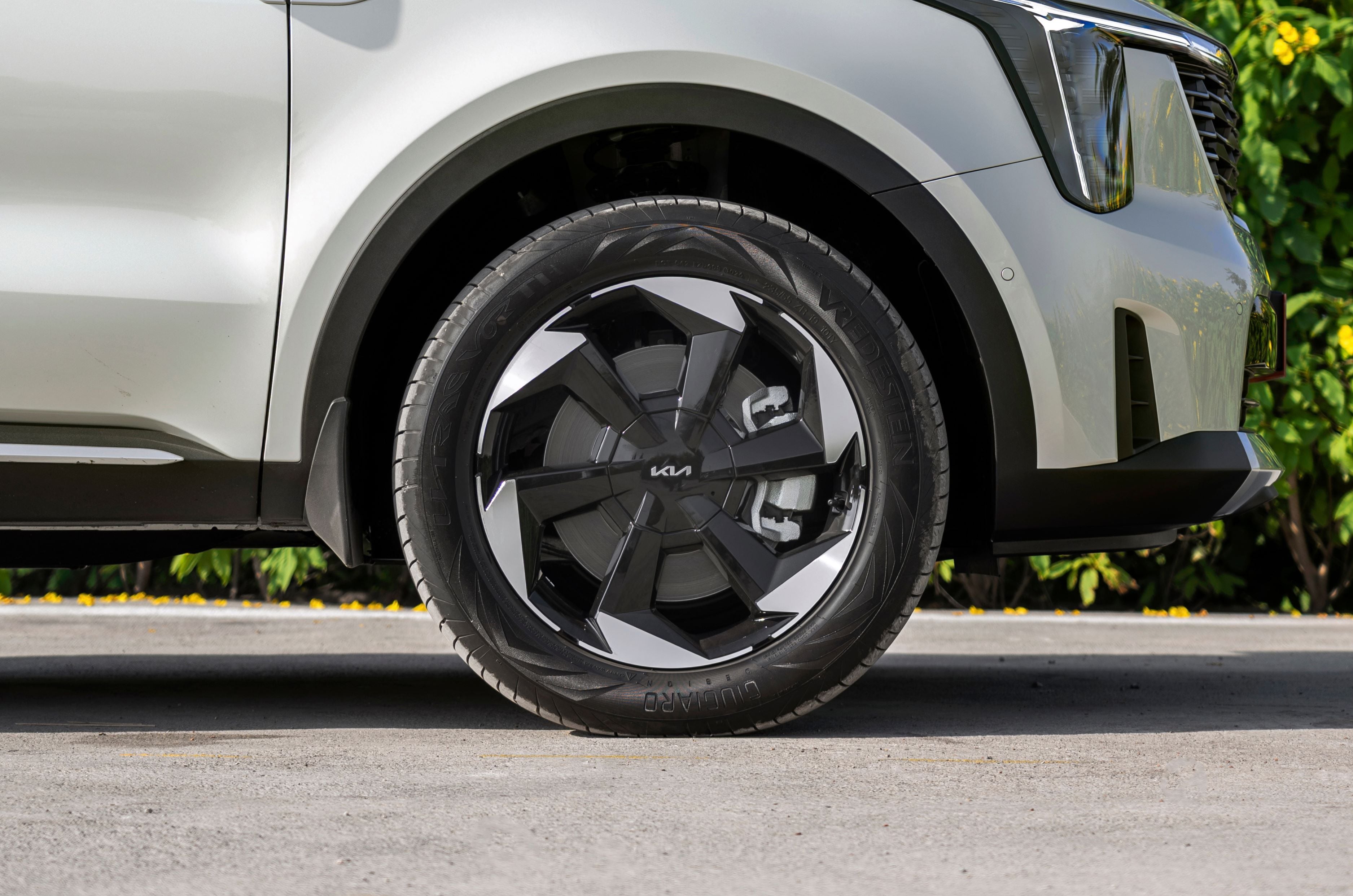
A more unique design could’ve been used for the 19-inch alloys.

The 19-inch dual-tone alloys could have been more distinctive, too an effect exaggerated by the chunky 235/55 R19 tyres. Those tall sidewalls, though, are not a styling misstep so much as an engineering choice, and they play a big part in how this car rides. More on that later.

Kia Sorento interior space and comfort

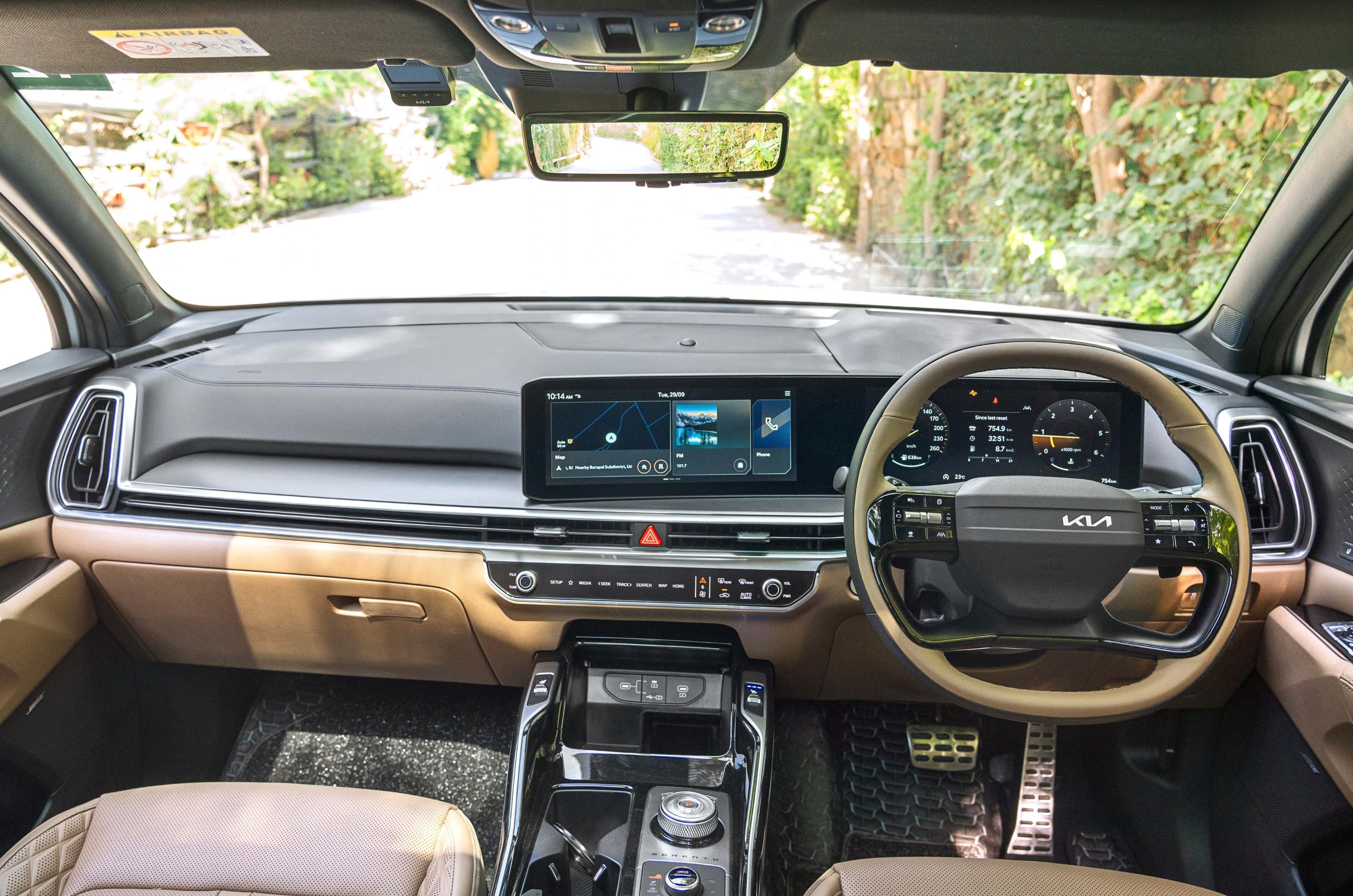
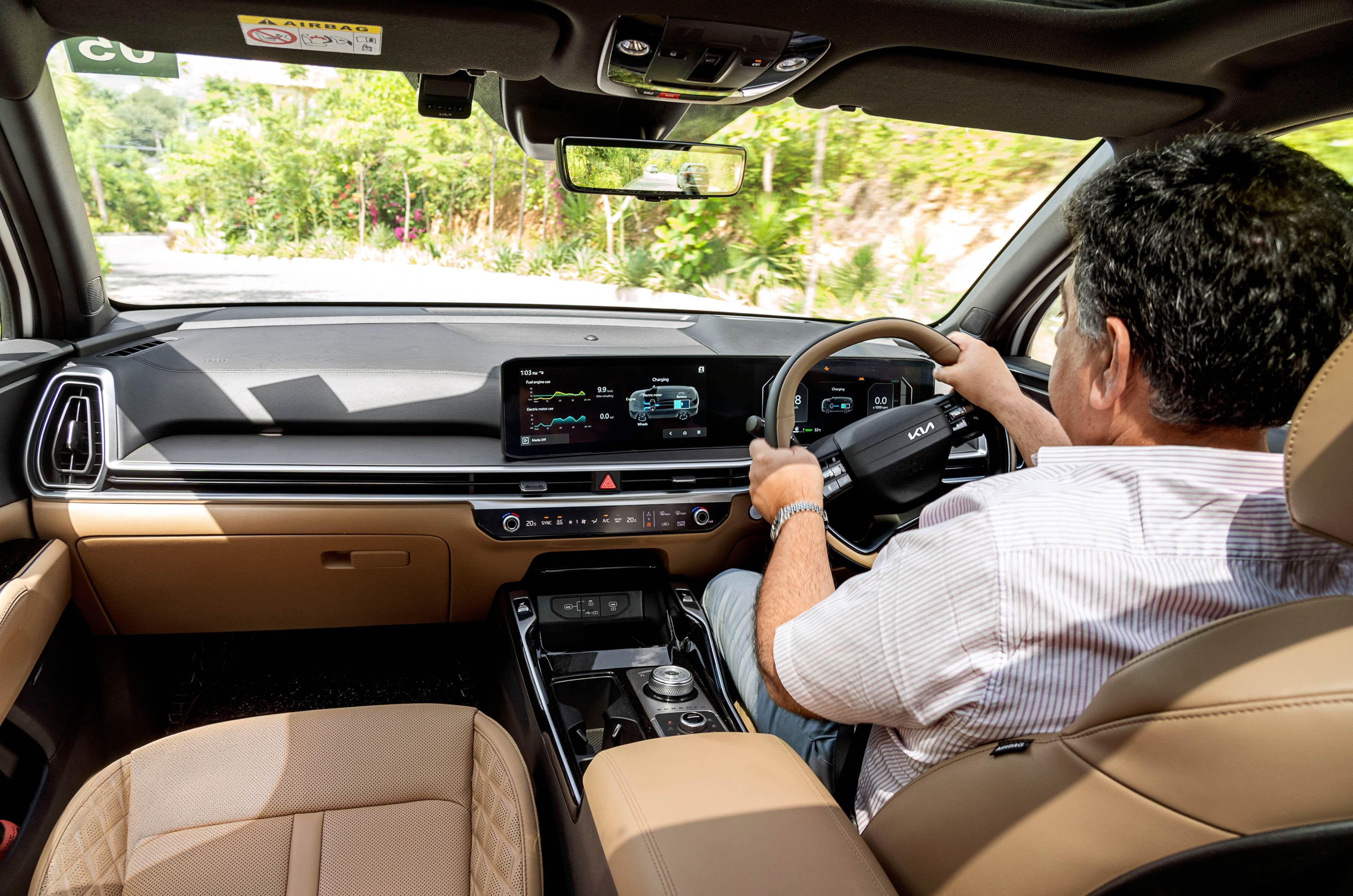
Clutter-free dashboard with solid build and plush feel.

If the exterior is quietly effective, the cabin is where Kia has truly aced it. The Sorento offers a mix of quality, equipment and ergonomics that nothing at this price can match. Soft-touch materials cover everything you are likely to touch, including the spots where your knee rests against the centre console. There is a healthy count of physical buttons, and they click with a precision that feels engineered rather than sourced. The knurled finish on the rotary drive selector and the switchgear adds a tactile richness you normally pay German money for.

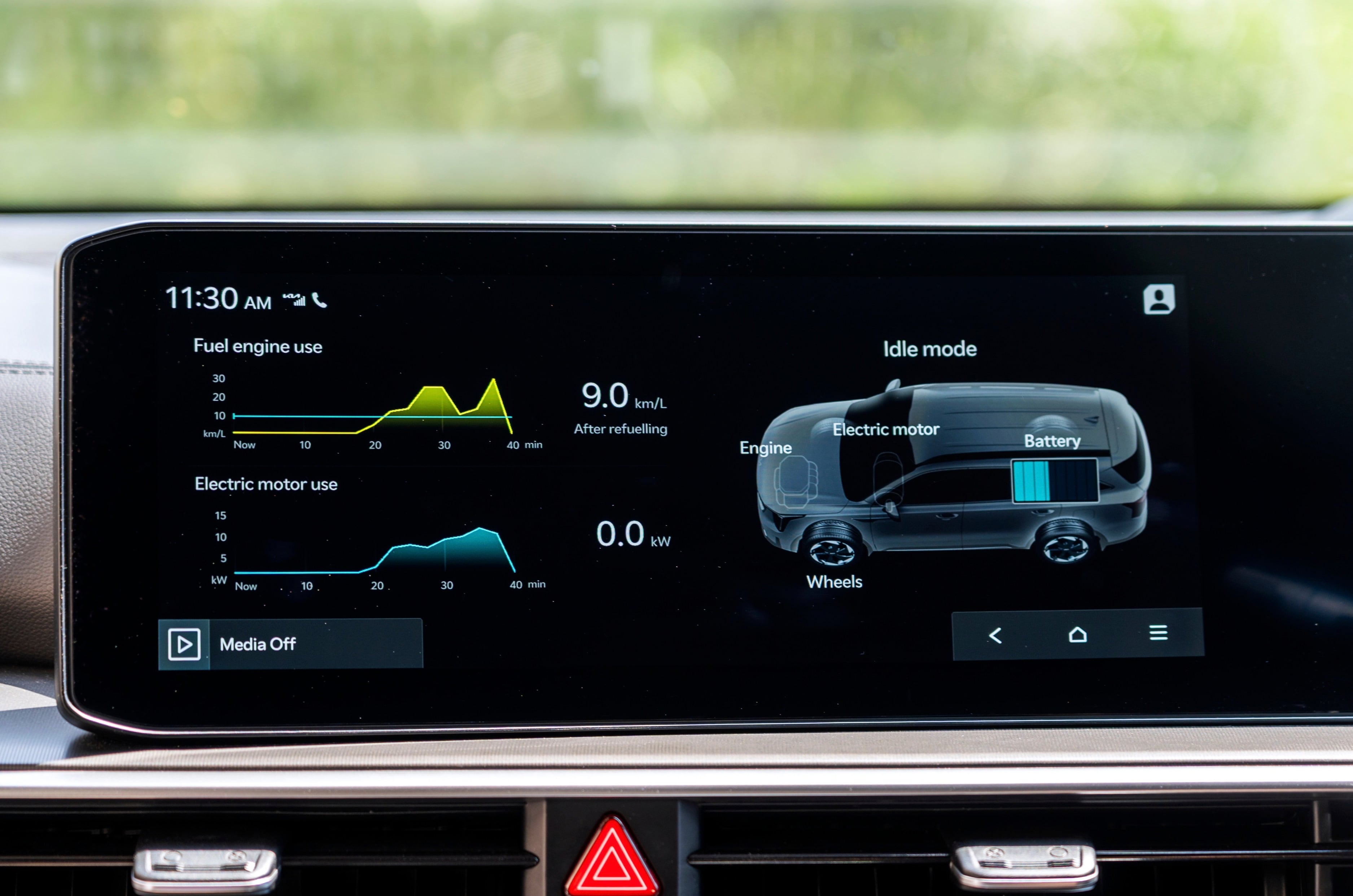
Hybrid variant gets exclusive data for power flow and efficiency.

As with its Hyundai cousins, the real ace is the software. The 12.3-inch infotainment system is logically laid out, menus are where you expect them to be, and getting to a feature takes a tap or two rather than a treasure hunt. Kia has also kept the climate controls off the main screen. They live on a touch-sensitive bar below it, with scrollers and a button that toggles the bar between air-con and infotainment shortcuts. It is a clever, space-saving solution, though you will occasionally find it in the wrong mode just when you need it.

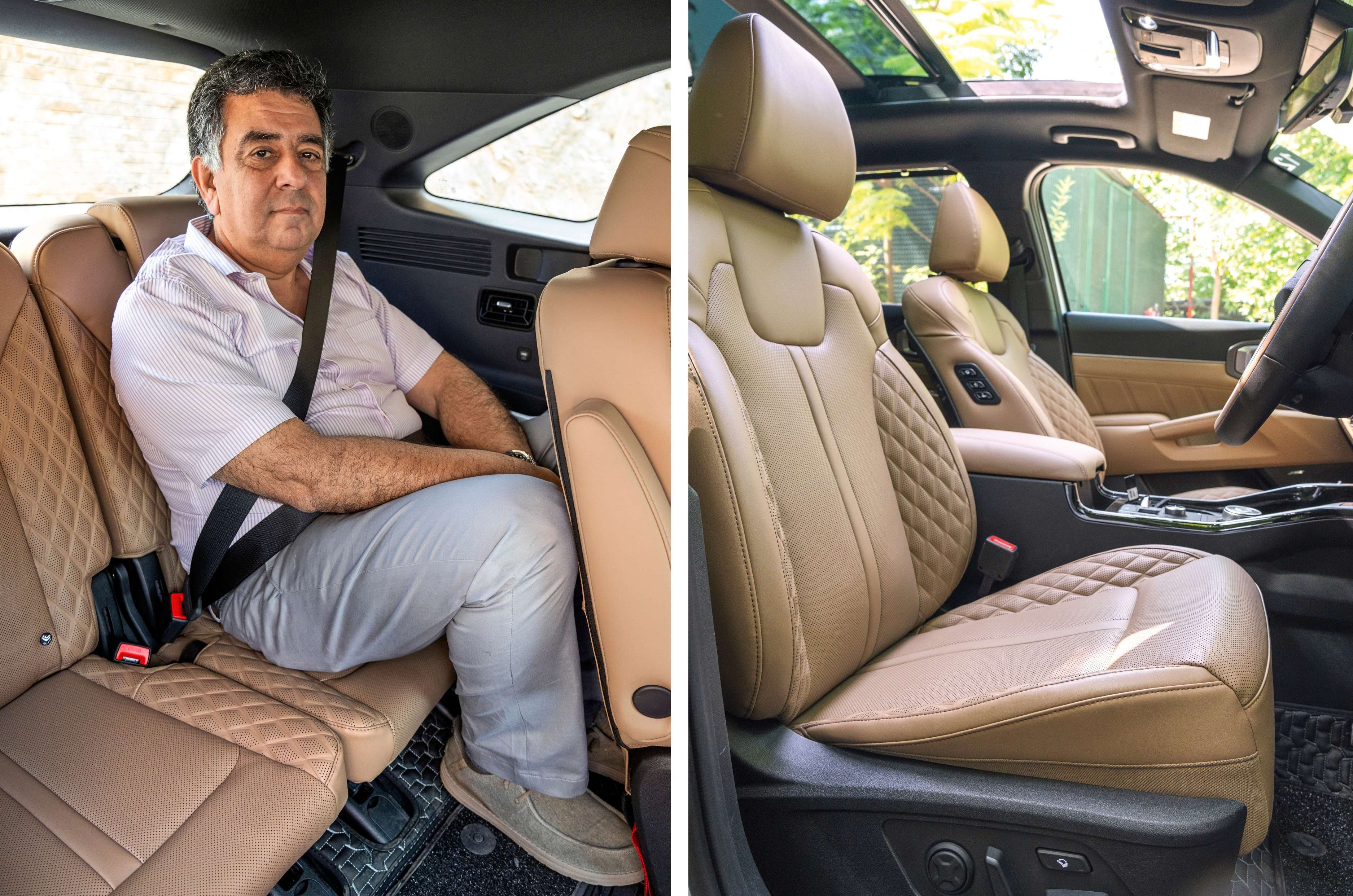
L: Third row seat placed on floor results in knees-up seating; best for children. R: Broad, supportive and well-cushioned front seats are electric and also get ventilation.

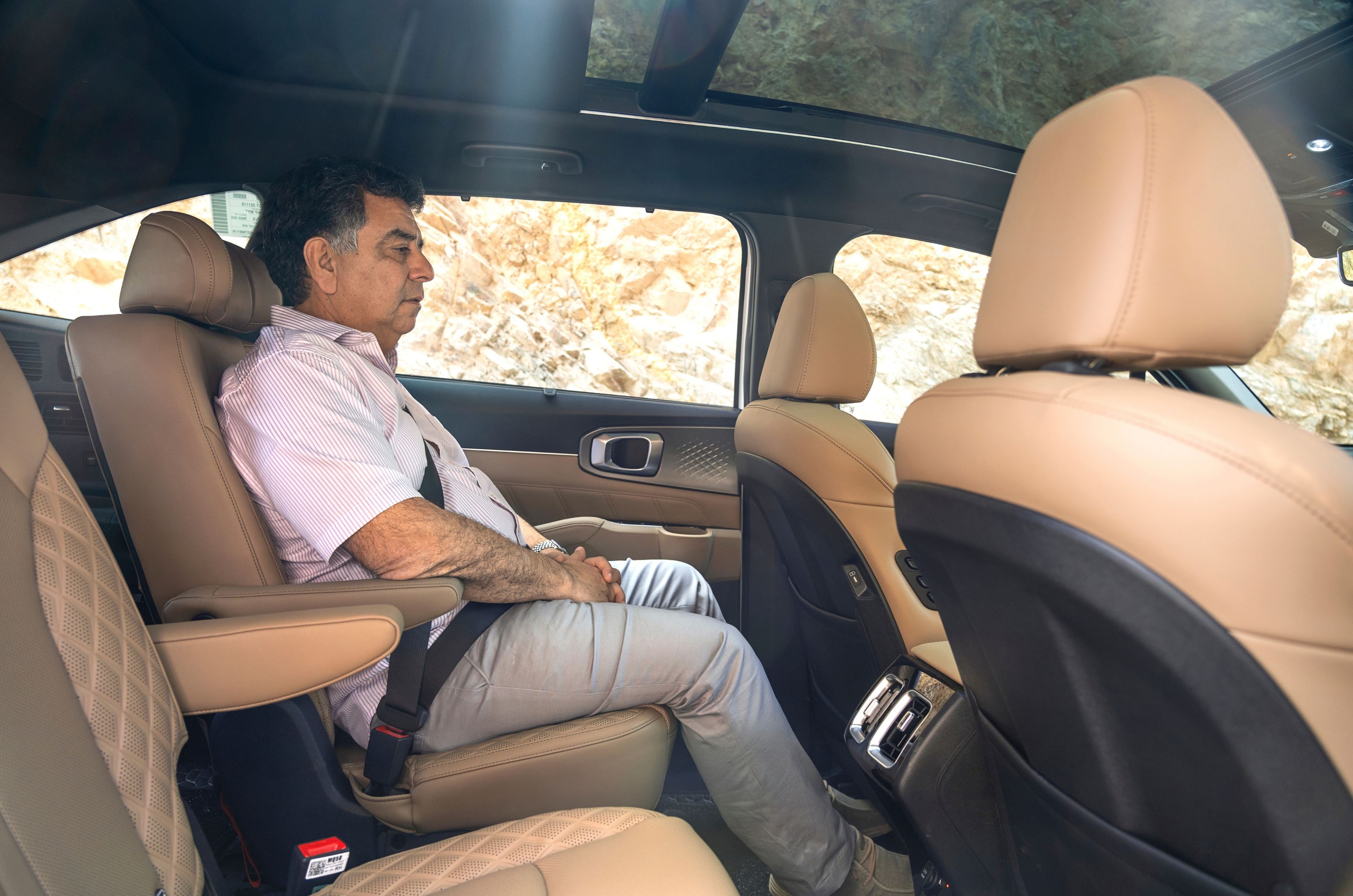
The front seats are fully powered, with 10-way adjustment, lumbar support and ventilation, and the passenger seat gets a boss mode so whoever sits behind can push it forward. Coming to the third row, access is easy. You can either walk through the gap between the captain chairs or press a button on the seat, which electrically slides and tilts it forward. Once there, the news is mixed. Legroom is better than you expect, but the seat base is mounted almost flat on the floor, so there is no under-thigh support and your knees point at the roof. Treat it as a space for children or short hops. At least the third row gets its own blower controls and USB ports.

Spacious middle-row with ventilated and adjustable captain chairs; bench seat version also available.

One of the Sorento’s highlights, however, is the second-row experience. Our test car was the top HTX with six seats, and its second-row captain chairs are ventilated too, a rarity in this class. They are the best seats in the house. There is lots of legroom, a commanding view out and good under-thigh support, comparable to the Innova Hycross’s middle-row captain chairs, though the Toyota seats you a touch higher. A neat detail is the cupholder moulded into the door, up near the handle, where it is actually easy to reach.

kia sorento boot space unfolded
kia sorento boot space folded
 

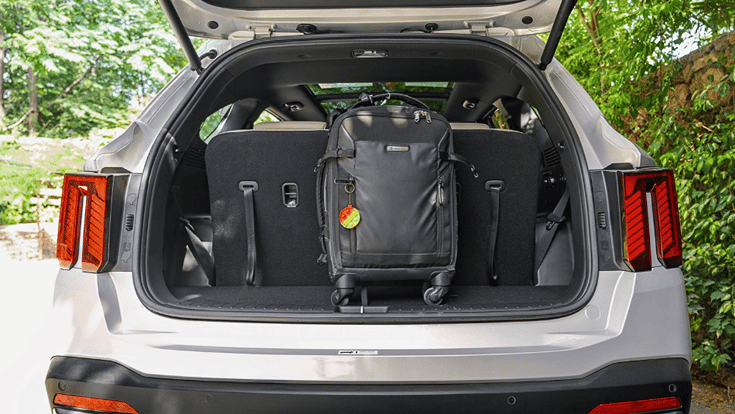
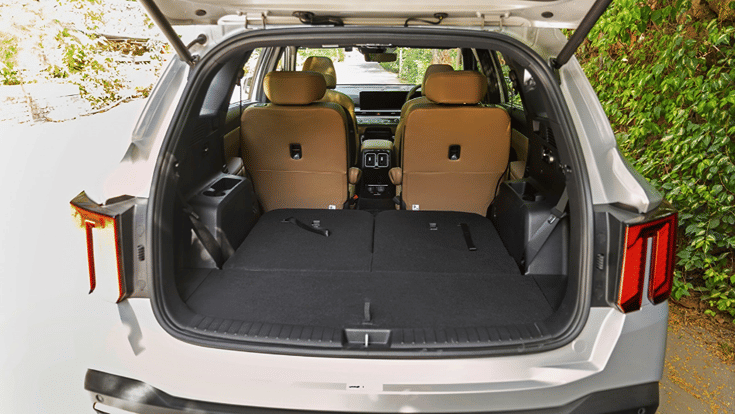
With all three rows up, the boot is a modest 179 litres; fold the third row and that grows to 813 litres. A full-size spare is welcome, but it is slung under the body, which is not the most convenient place to reach. Overhead, the massive panoramic roof floods the cabin with light and adds to the sense of space.

Kia Sorento features and technology

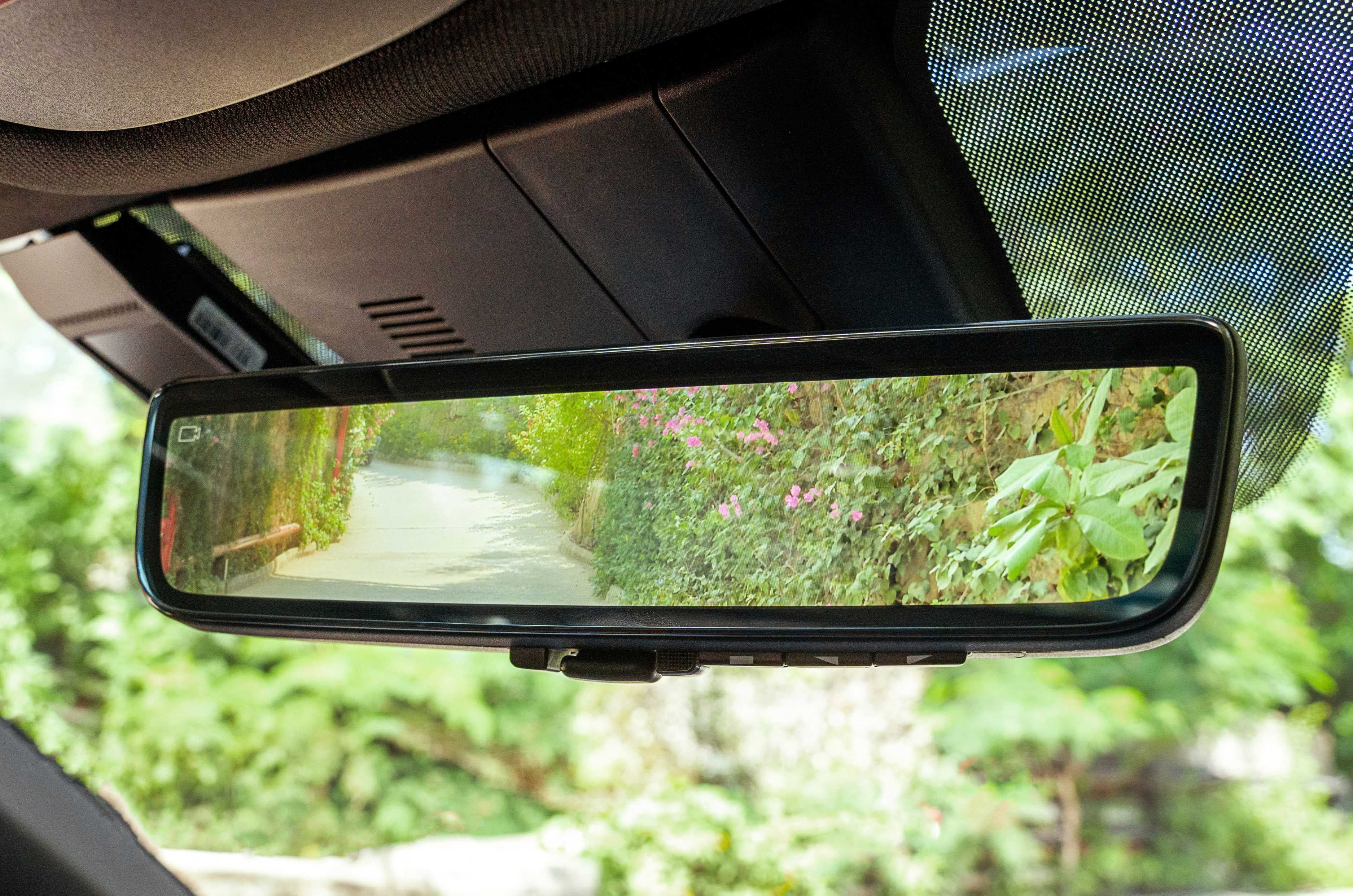
Digital IRVM offers excellent resolution and can be adjusted for level and brightness.

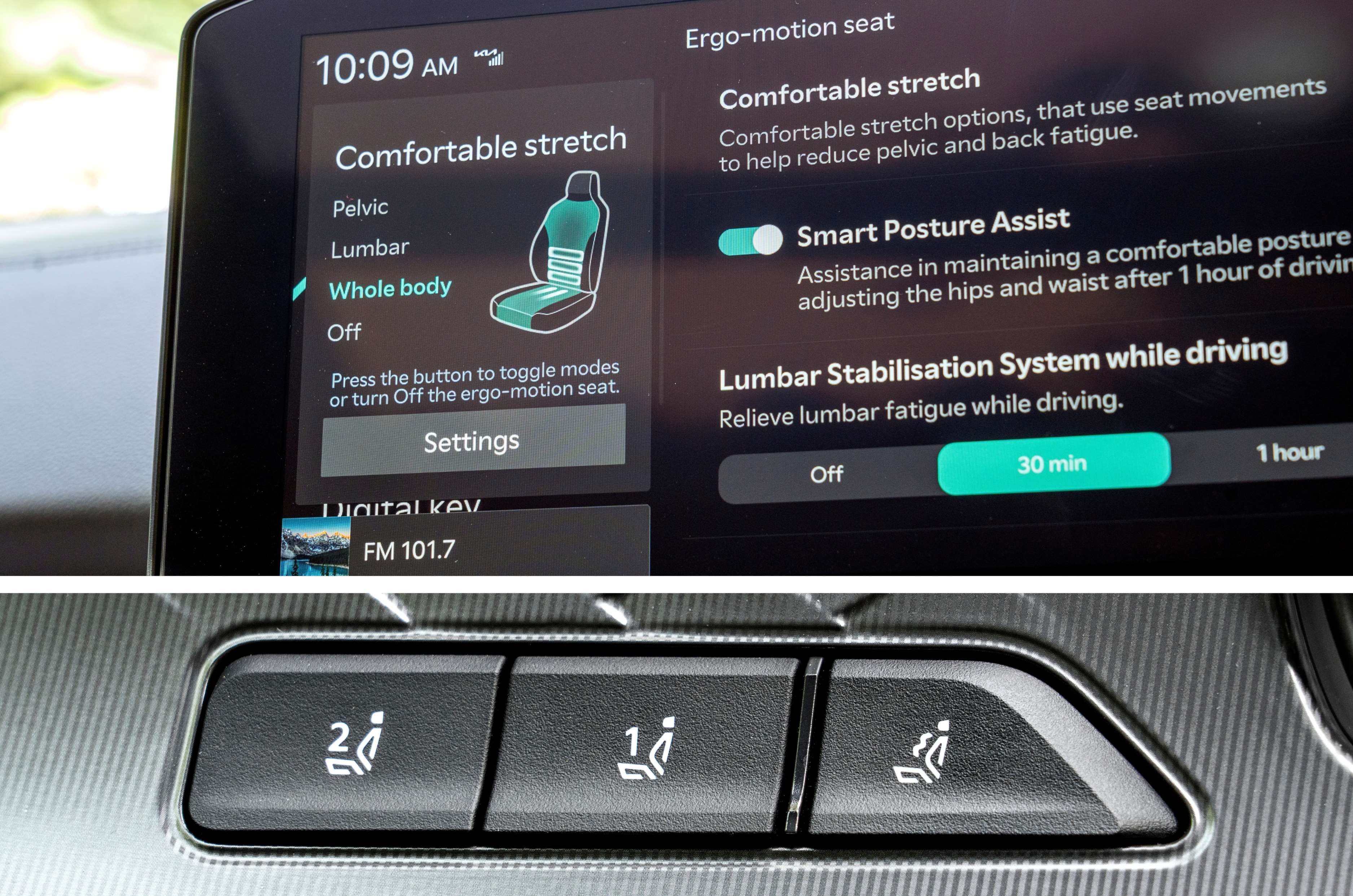
The equipment list is huge. In addition to the aforementioned 12.3-inch touchscreen, powered front seats, ventilated captain’s chairs, and panoramic sunroof, the Sorento comes packed with a 12.3-inch digital driver’s display, a head-up display, a 12-speaker Bose system, dual-zone climate control, a powered tailgate, rear-window sunshades, 64-colour ambient lighting and a digital rear-view mirror that flips back to a conventional one at the turn of a knob. The driver’s seat even gets an ‘ergo-motion’ mode that simulates a massage function by shifting the contours around.

Ergo mode for driver seat acts like a massage by moving the contours to avoid a stiff back on a long trip.

Safety is just as thorough, with 10 airbags, a 360-degree camera, front and rear dashcams, remote parking assist, TPMS and Level 2+ ADAS on the (A) trims. There is even real-time generative AI, a first for any Sorento globally.

Kia Sorento performance and refinement

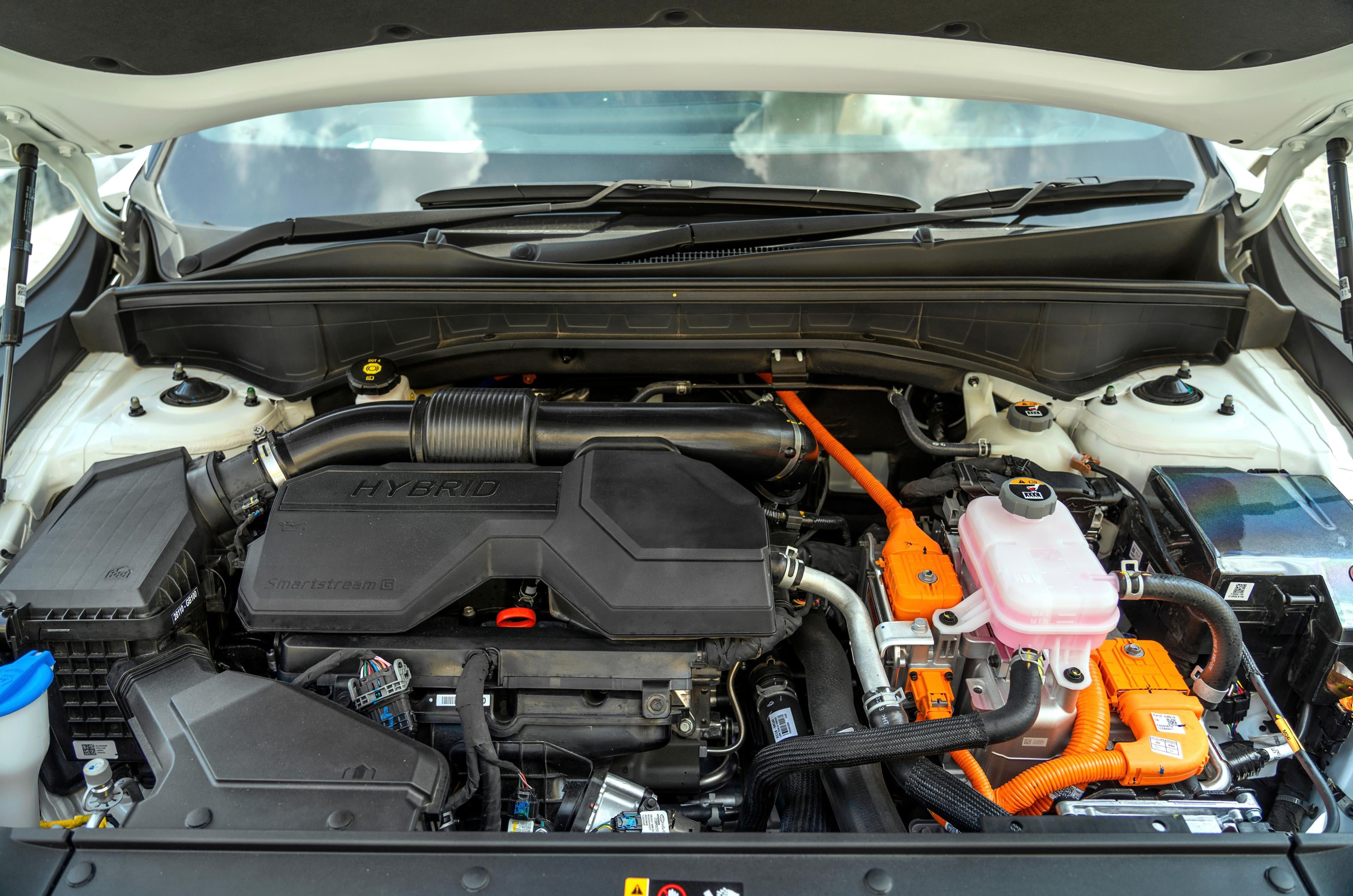
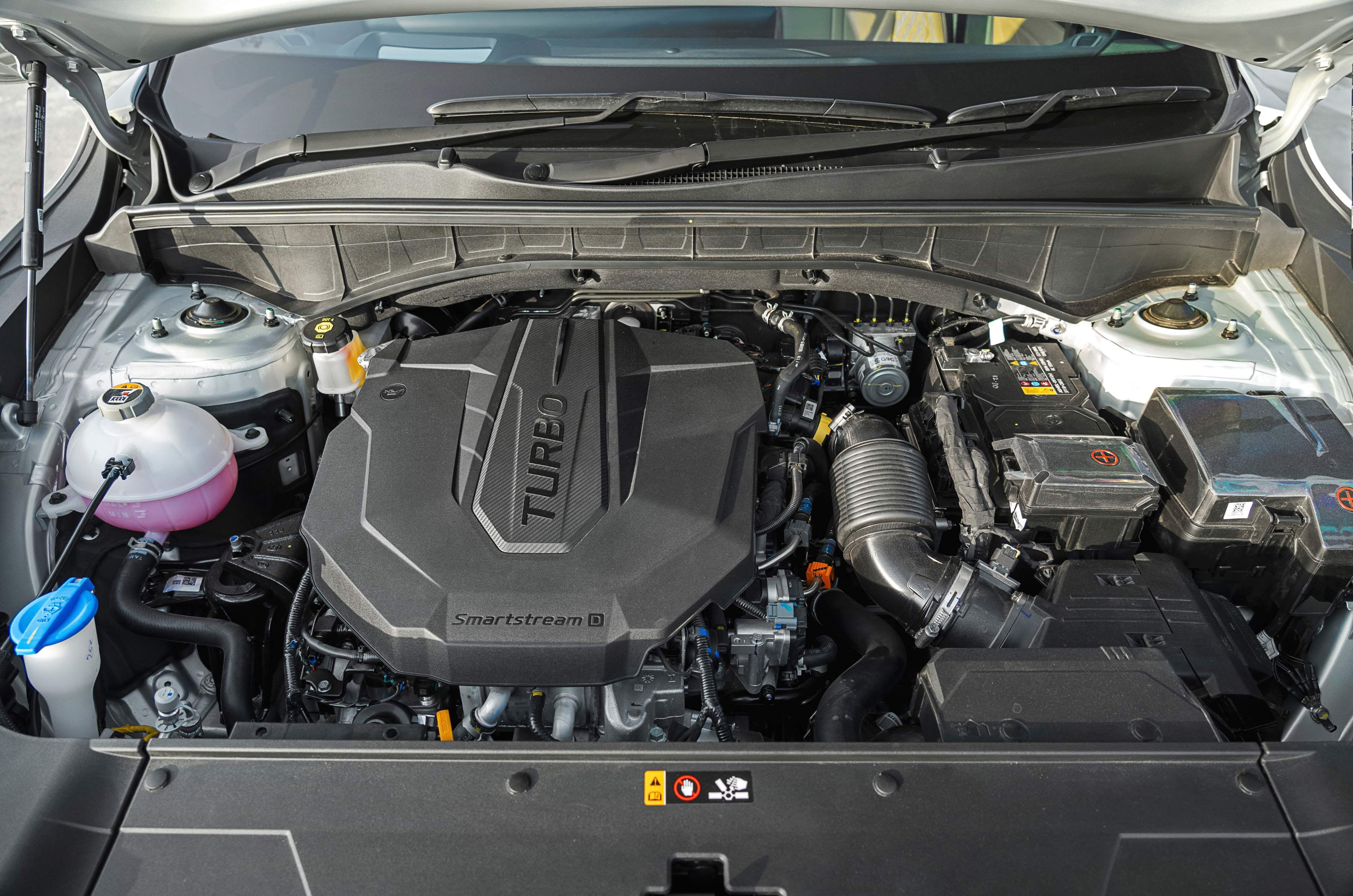
1.6-litre turbo-petrol engine paired with an electric motor and 6-speed torque converter automatic.

First up, the hybrid. Its 1.6-litre turbo-petrol makes 180hp and 265Nm, and the electric motor adds 65hp and 264Nm. The combined figure rating is 230hp and 380Nm of torque You can tell this the hybrid is the one for the city the moment you pull away, because the response is instant. It is well mated to the 6-speed torque-converter automatic, and the handover from electric to petrol power is close to seamless.

Hybrid variant is smooth in the city but gets noisy on the highway especially during overtakes.

The 1.49kWh battery lets it run in EV mode for a decent stretch at crawling speeds, and in stop-go traffic the hybrid makes eminent sense. Power delivery is refined, seamless and relaxing, and efficiency should be strong; The limitation is the motor itself. With only 65hp to shift a car weighing over two tonnes, it cannot do the heavy lifting on its own, so when you want to make quick progress the engine kicks in early. Push hard on the highway and the four-cylinder gets noisy and starts to run out of steam.

2.2-litre diesel engine makes 193hp mated to an 8-speed DCT and is the same unit seen on the Carnival.

Which is where the diesel comes in. The 2.2-litre is familiar from the Carnival, but it feels a lot sprightlier in the lighter Sorento. Its 193hp and 442Nm arrive in a strong, linear surge, and this is a fantastic, long-legged cruiser. Settle into eighth gear on an open highway and it simply lopes along, the engine barely working. It is also more tractable at low speeds than you might expect, pulling cleanly at part throttle from very low revs, so it can double as a city car, although its low-end response does not come close to the hybrid’s. It’s only when you floor it to dart through traffic that you experience a bit of hesitation, and its hear that you can use the paddle shifts to be in the right gear at the right time of the 8-speed DCT which comes as a pleasant surprise.

The diesel‘s strong torque and effortless cruising makes it perfect for long trips.

Rather than the snappy, slightly jerky shifts typical of dual-clutch boxes, this DCT slurs its changes almost like a torque converter, which adds to the smoothness of the whole package. The reason is that it is a wet-clutch unit, which also bodes well for durability in Indian traffic. The diesel is quite refined for the most part and its only when pushed hard that it gets audible and takes on a gruff note.

Both get drive modes; You can play with the Eco, Normal, Sport and Smart (or auto) modes in the diesel which alters the power delivery. In Sport, the throttle response is sharper and the default mode we liked whilst in Eco you can feel the response a bit dulled down. The Sorento Hybrid gets just Eco, Sport and Smart modes and in Eco mode EV running is prioritised. In addition, the AWD versions  get Snow, Sand and Mud terrain modes which we didn’t a get chance to fully experience.

Kia Sorento mileage

In terms of fuel efficiency, the hybrid is rated at a highly frugal 19.60kpl with front-wheel drive and 17.70kpl with AWD, while the diesel returns 17.66kpl and 15.79kpl respectively on the Indian test cycle. In real-world city driving the gap between the hybrid and diesel could be bigger, depending on traffic. On long cross-country runs, though, with extended stints of cruising in high gears, the diesel could well be the more frugal of the two.

Kia Sorento ride and handling

The Sorento’s ride comfort is simply outstanding, and it comes as a pleasant surprise. That’s because Kias have traditionally been stiffer sprung than their Hyundai cousins, but here Kia has clearly prioritised comfort over sportiness, and the suspension is on the soft side. The way it smothers bad roads at speed is remarkable. Around Udaipur, where several stretches are properly broken, we never once had to lift off for a bad patch. The car just soaked it up and kept going.

Ride quality is segment best and it is unfazed over broken roads.

The isolation it gives its passengers is shockingly good, and those tall-sidewall tyres deserve part of the credit. They do a fine job of rounding off sharp jolts and filtering out the high-frequency shocks that a suspension alone cannot fully absorb. At highway speeds there is a bit of body movement on the undulating bits but its not disconcerting and both versions feel stable and planted at high speeds, which matters in a car this tall.

Our HTX test cars came with AWD as standard. We did not get a chance to test its off-road ability properly, but on dirt roads it felt sure-footed and secure. A proper off-road test will reveal how capable the all-wheel-drive system, though we doubt owners will really want to test the Sorento’s off-road capability. 

Steering is light but lacks consistency and sharpness of European rivals.

The steering is less impressive. There is a dead zone around the straight-ahead position, and it does not feel as fluid or progressive as its European rivals’. The Volkswagen Tayron and Skoda Kodiaq are both dynamically sharper. One reason is because the Sorento rides taller too, as ground clearance has been raised from the global car’s 176mm to 208mm, and there is a touch of body roll when you push hard through corners.

But that misses the point. On balance, the Sorento’s ride and handling are superbly judged for the people who will buy it. Kia has done a fine job of understanding what a premium SUV buyer in India wants, and it has tailored the car accordingly.

Kia Sorento price and verdict

As a package, the Sorento hits it out of the park; rivals have a lot of catching up to do.

If the product does not win you over, the pricing certainly will. A starting price of Rs 27.99 lakh has set the cat amongst the pigeons, putting the Sorento within striking distance of the Mahindra XUV 7XO. And with its size, features and overall polish, the Sorento will not just nibble at the top end of the 7XO’s pie but with the Hybrid could also tempt a few Innova Hycross buyers. As for the Volkswagen Tayron and Skoda Kodiaq, the Sorento makes them look overpriced and underequipped.

The lower and mid variants are exceptional value. The top-end HTX, at Rs 37.49-40.19 lakh depending on fuel and seating, is pricey by comparison, around Rs 5 lakh more than an equivalent HTK, because it comes with AWD as standard. Here Kia has missed a trick. An HTX with two-wheel drive, a few lakh cheaper, would have been a far easier sell to the many buyers who want all the features and ventilated rear seats but will never leave the tarmac. That however is a small quibble that Kia can easily correct.

The lasting impression is that the Sorento feels premium, bordering on luxury. It is fantastically equipped, it rides beautifully, and it offers a choice of two powertrains that are each right for a distinct type of buyer. Most of all, it fits what the Indian SUV buyer actually wants with uncanny precision. Will Kia hit its target of 40,000 sales a year? That could be a tall order. But what there is no doubt about is that Kia has built another winner. 

All prices are ex-showroom, India.

Rajiv Yadav wins 2026 JK Tyre Rally of Himalayas

Rajiv Yadav wins 2026 JK Tyre Rally of Himalayas
2026 Rally of Himalayas

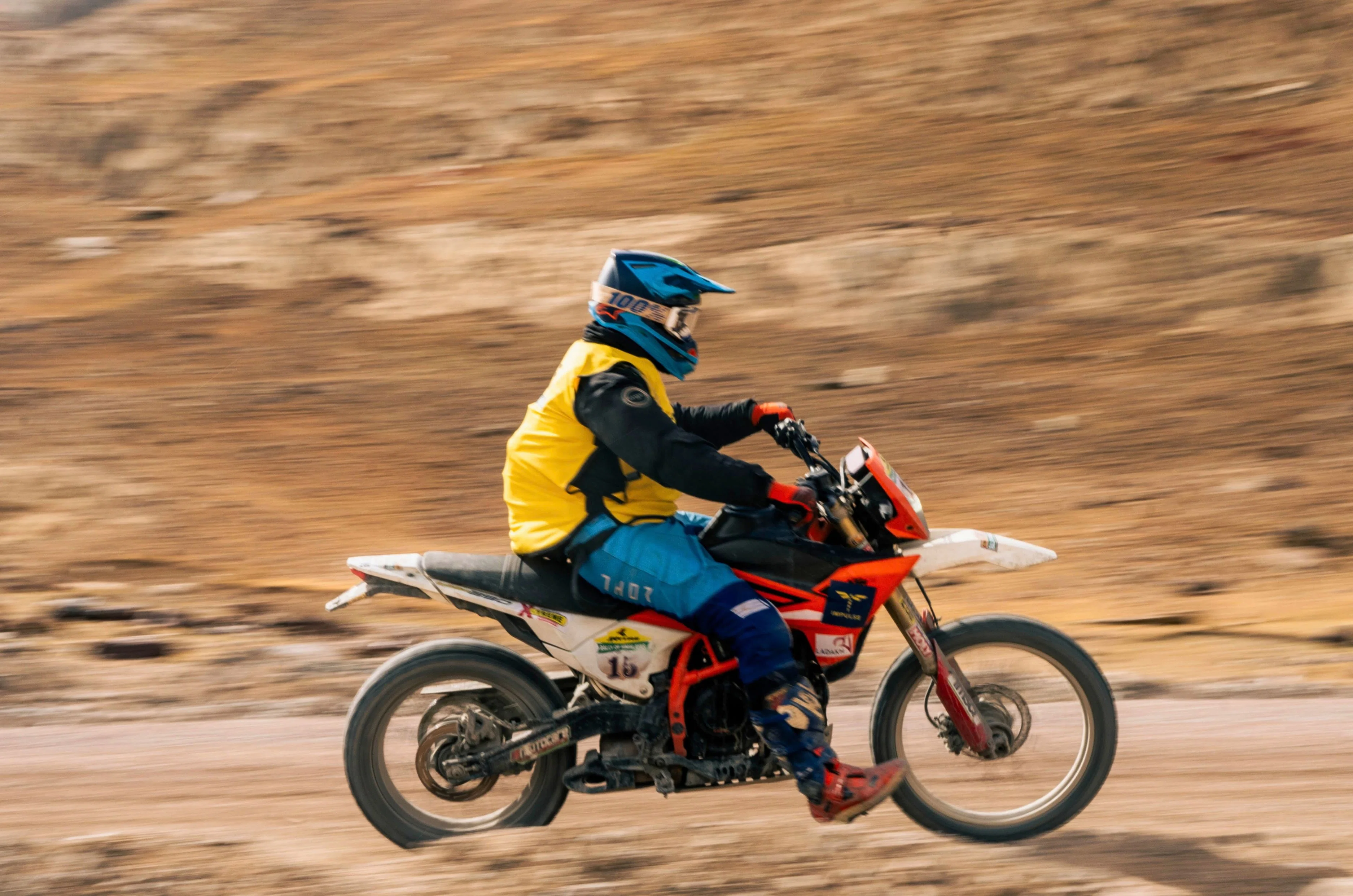
The 6th edition of the JK Tyre Rally of Himalayas saw Rajiv Yadav and Dhritimaan Singh take the top honours in the Extreme and Moto categories, respectively, while Soham Hazra finished on top in the TSD (Time, Speed and Distance) category. The cross-country rally raid, organised by Himalayan Xtreme Motorsports and Adventure X Fusion Tribe, saw nearly 130 participants across Moto, Extreme and TSD categories competing for four days across the unforgiving Himalayas. 

  1. 6th Edition saw nearly 130 participants across two and four-wheeler categories 
  2. Route traversed through Manali, Lahaul-Spiti and Zanskar 

2026 Rally of Himalayas: participants and route

The two-wheeler Moto category featured 80 riders while the four-wheeler Extreme category had 29 competitors and the TSD category had 20 competitors. Notably, there were women participants in all three categories, including one female rider in the Moto class, two female drivers in the Extreme class and four in the TSD class. Participants were also of varying ages, ranging from rookies to veterans and also included private teams and even Army teams. 

A notable highlight of this year’s rally was that it took participants to the Zanskar region for the first time. Flagging off from Manali, the route took competitors through Kaza, Jispa, and Kunzum La, before culminating in Padum, Zanskar, on September 30. 

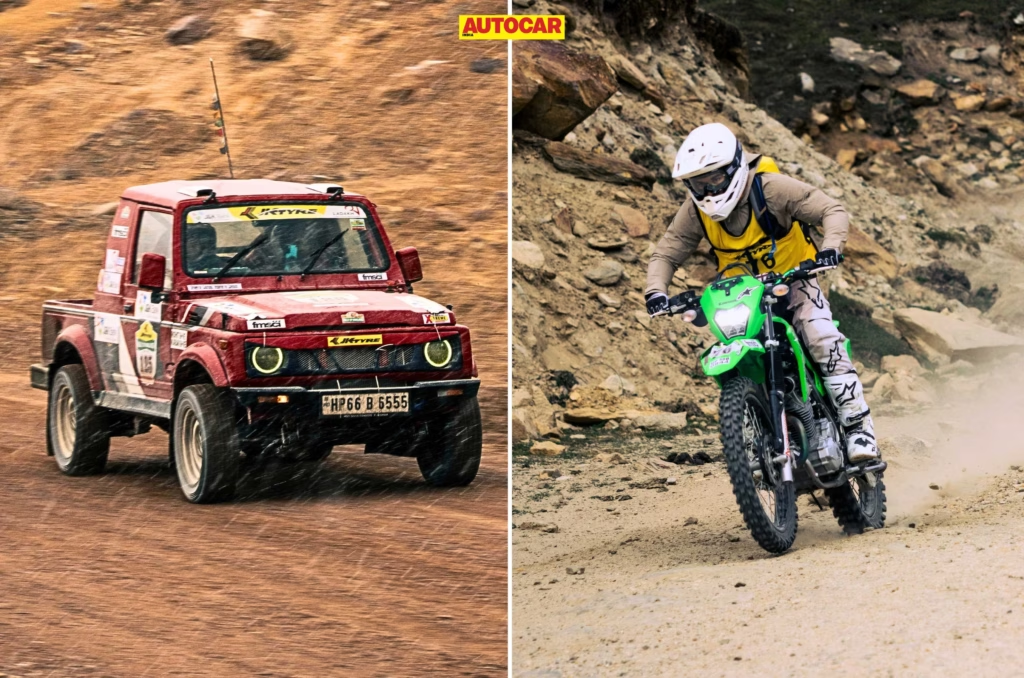
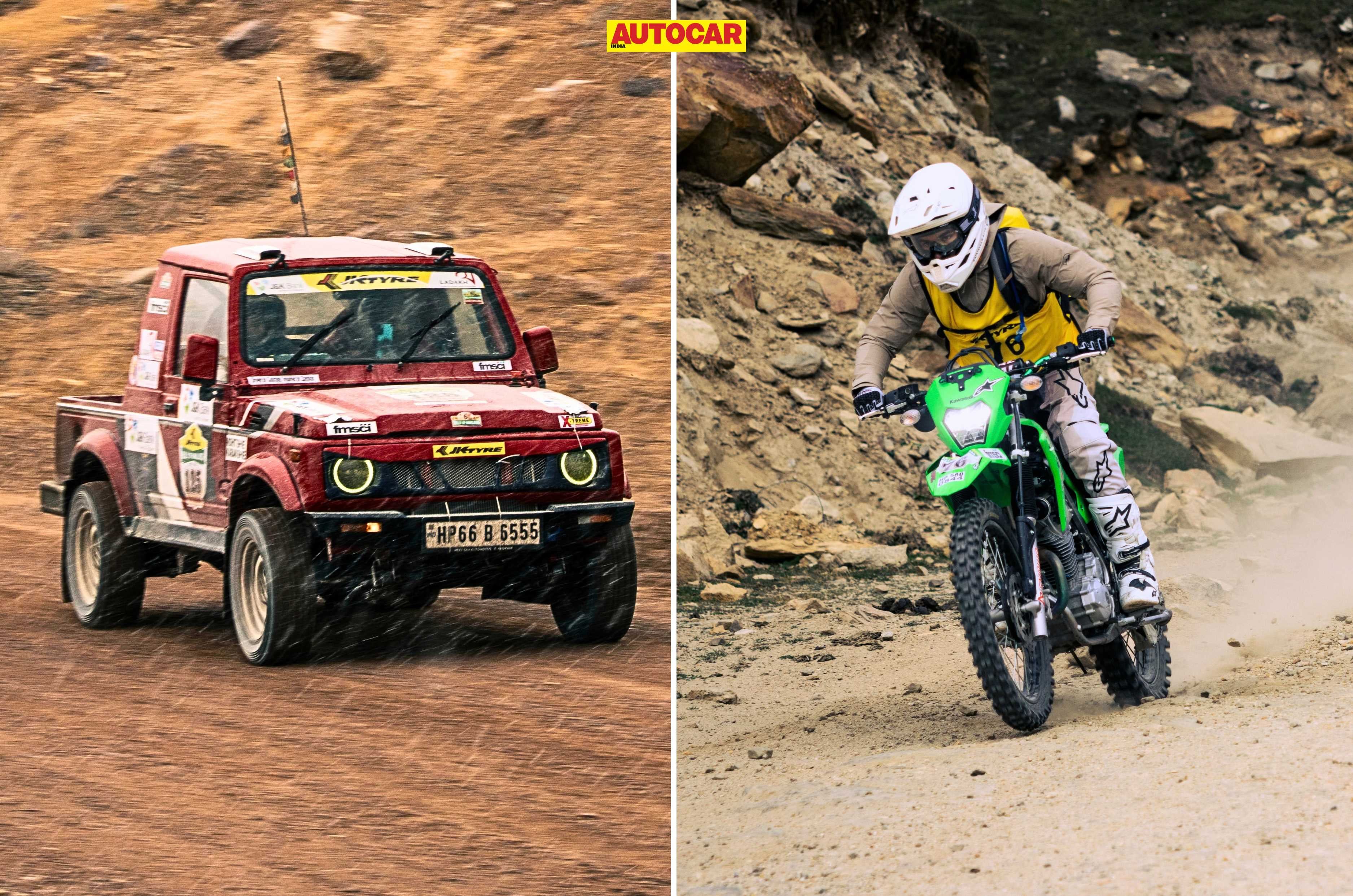
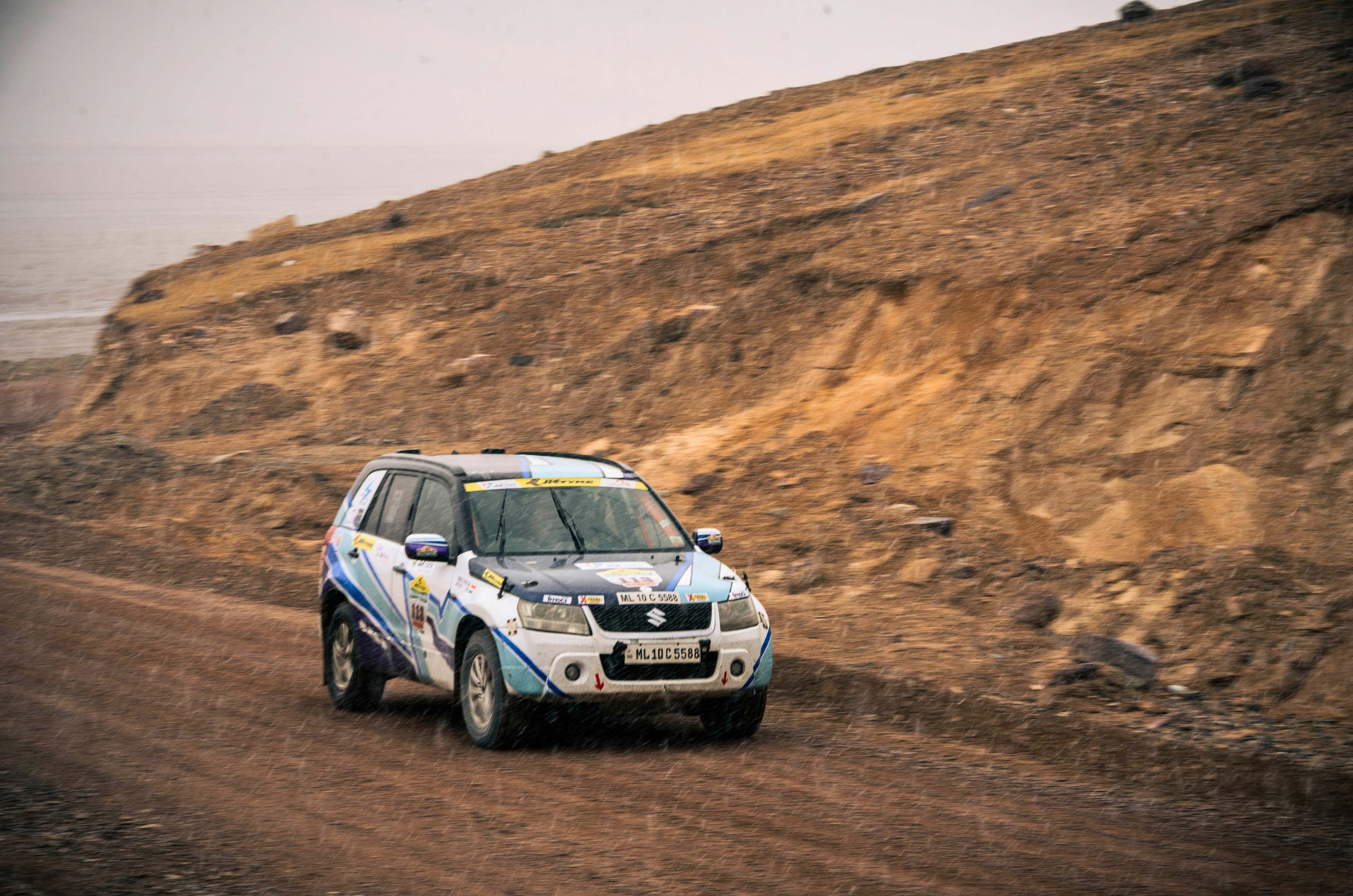
Not surprisingly, rally-prepped Maruti Gypsys were the mainstays in the four-wheeler Extreme category, while a couple of Hiluxes, first-gen Suzuki Grand Vitaras and even a first-gen Duster were in attendance. Despite the challenging terrain of the Himalayas, there were participants even competing in a Volkswagen Polo and a Honda Brio. Meanwhile, the two-wheeler Moto category saw participants bring along Kawasaki KLXs, Royal Enfield Himalayans, KTM 390 Enduros and of course, plenty of Hero Xpulses. 

2026 Rally of Himalayas as it unfolded 

On Day 1, Rajiv Yadav, competing in the Extreme category, took the lead in the early stages, although local competitor Aaryak Rana remained closed behind during the initial phase. Day 1 featured a 72-km gravel stage that was subsequently run in the reverse direction on Day 2. The format required the driver and riders to adapt braking points, turn-in timing and pacing strategies to a familiar route approached from a different direction. 

By the end of Day 2, over a dozen competitors in the Extreme category were already out due to mechanical failures, including Lakhpa Tsering, the 2015 Raid de Himalaya winner. That’s testimonial of how much the rider and drivers were tested of their skill, stamina and split-second decision making at every stage of the rally. 

Following the reverse stage, the rally’s momentum shifted towards Daksh Gill, who delivered strong performances over the next two stages, beginning with the reverse Losar to Gramphu stage. From there, the competition advanced towards Shinku La, with the route climbing to elevations of more than 16,500 feet. 

The rally then moved into the Zanskar Valley, where the desert-like landscape led to what was arguably the most exhilarating phase of the rally. Daksh Gill reached speeds of up to 200kph across the region’s vast and high-altitude terrain. The rally concluded in Padum, marking the culmination of more than four days of demanding competition across some of the most challenging terrain in the Himalayas. 

Category Winners and Podium Highlights:

Xtreme (Four-wheel)

  • Winner: Rajiv Yadav / Rohit Gowda
  • Runner-up: Aaryak Rana / Aditya Sharma
  • Second Runner-up: Daksh Gill / Virender Kashyap

Moto (2-Wheel)

  • Winner: Dhritimaan Singh
  • Runner-up: Happy Verma
  • Second Runner-up: Nitish Bharadwaj

TSD (2-Wheel)

  • Winner: Soham Hazra / Nirav Mehta
  • Runner-up: Santosh HM / Prakash Muthusamy
  • Second Runner-up: Chandra Mouli / Sri Sakthi Kumar N
  • Third place: Sachin Mandhwani / Adhitya Anthony

Mercedes-Benz CLA 250+ road test review

Mercedes-Benz CLA 250+ road test review

When we first drove the all-new, all-electric Mercedes-Benz CLA, we came away impressed with its smooth powertrain and its promise of a substantial real-world range. We’ve now subjected it to our real-world performance and efficiency tests to see if it delivers on that promise.

Mercedes CLA 250+ exterior design and engineering – 8/10

Polarising, aero-efficient design; based on new MMA platform.

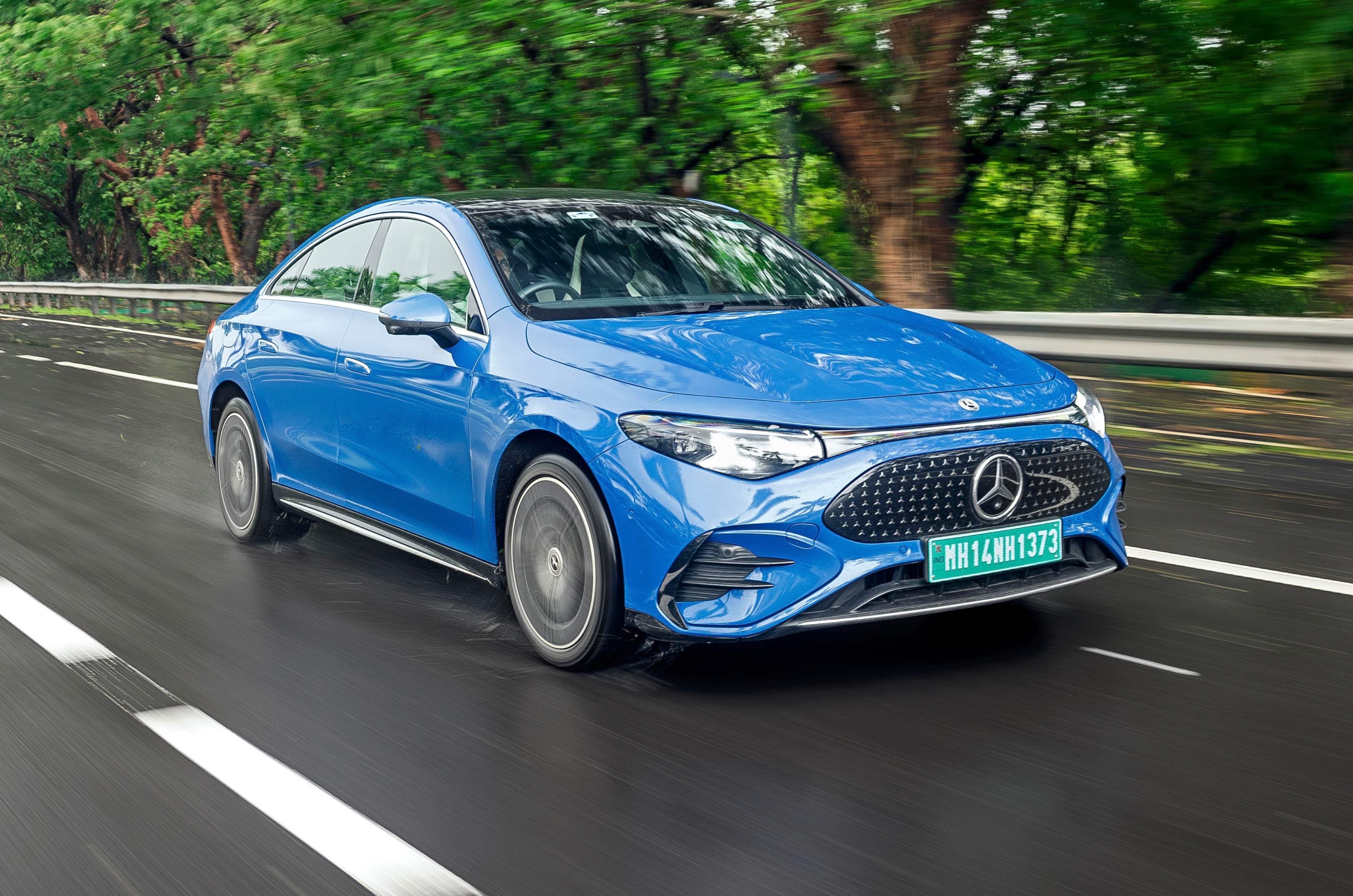
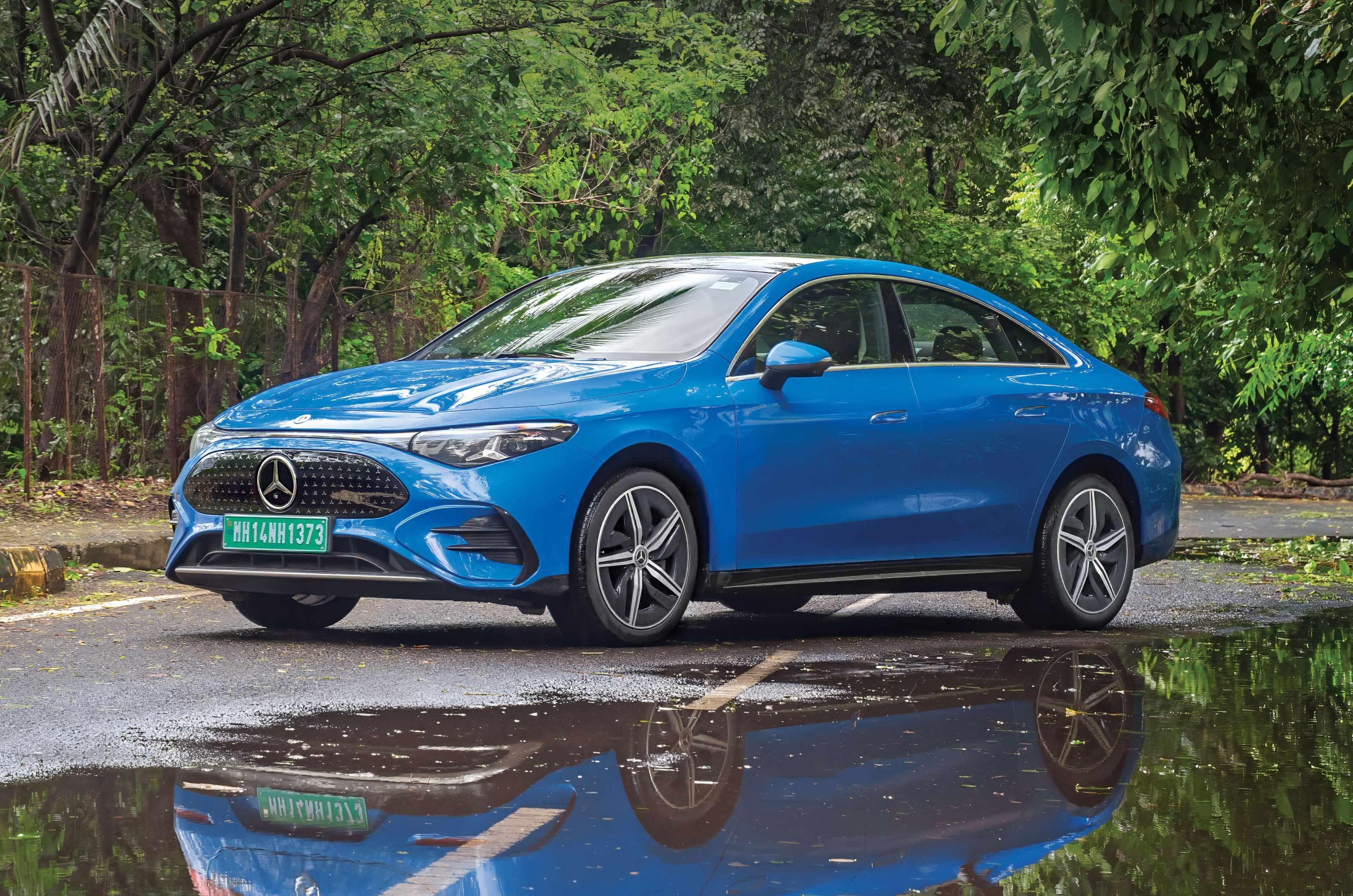
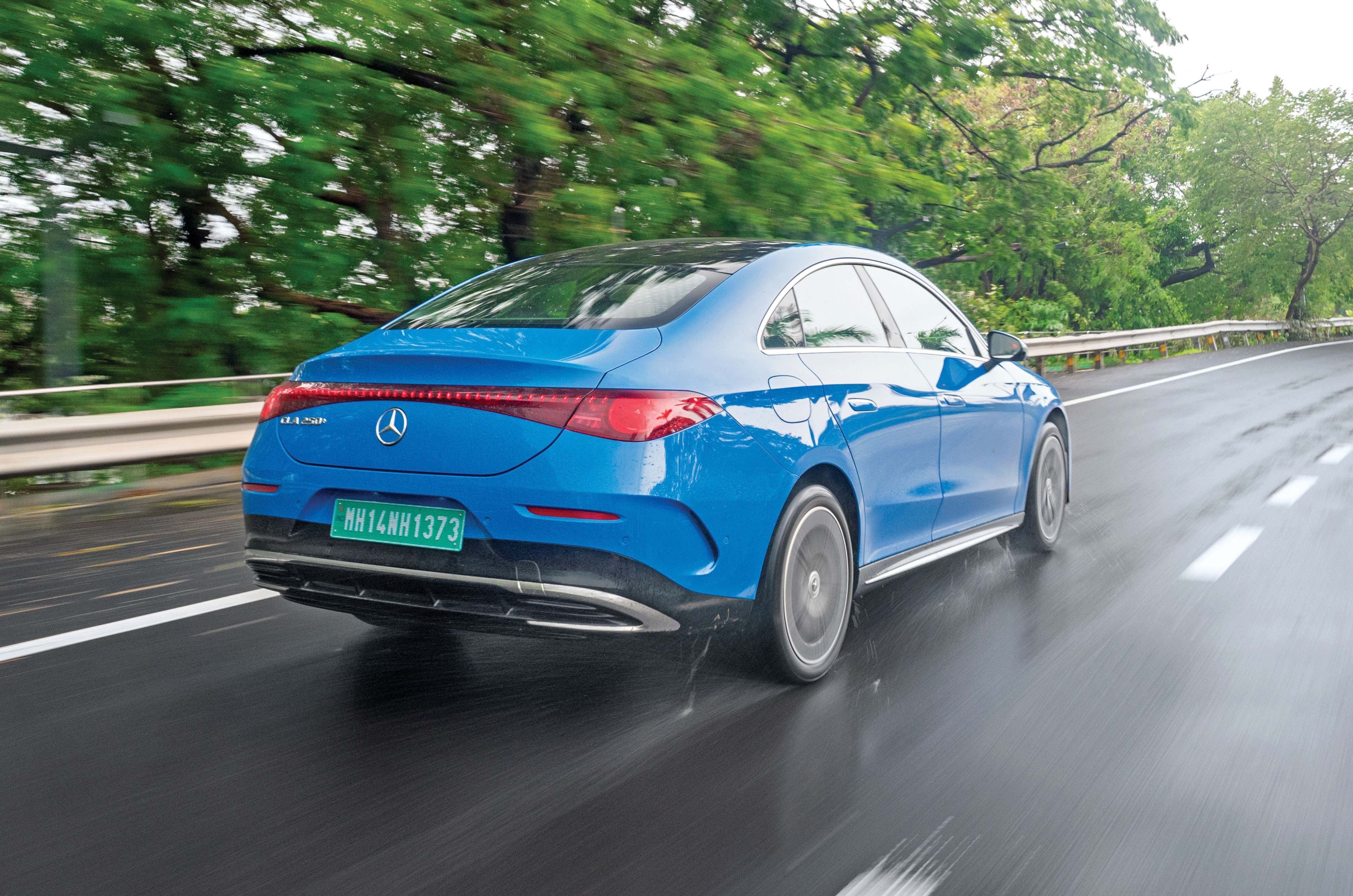
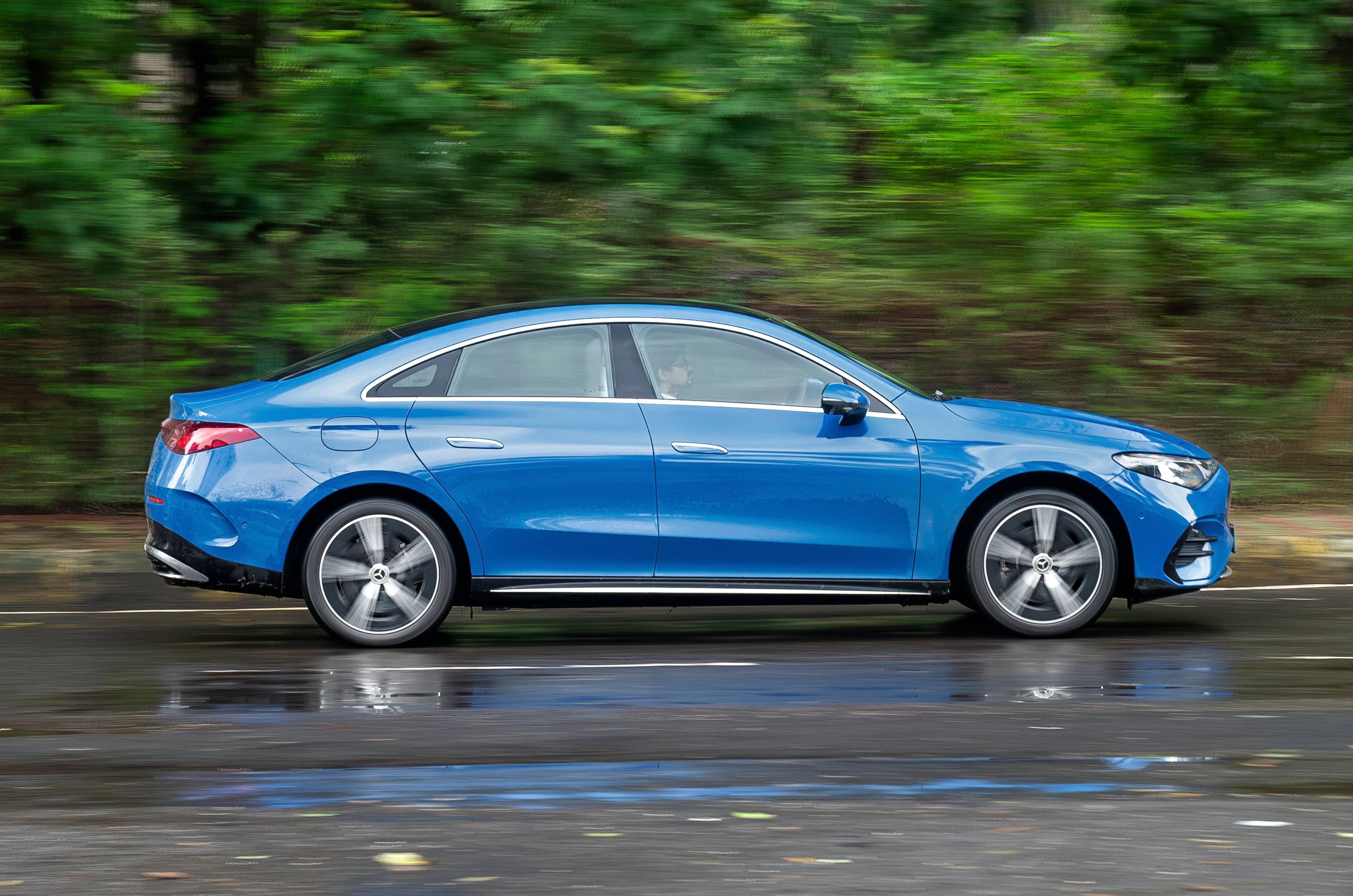
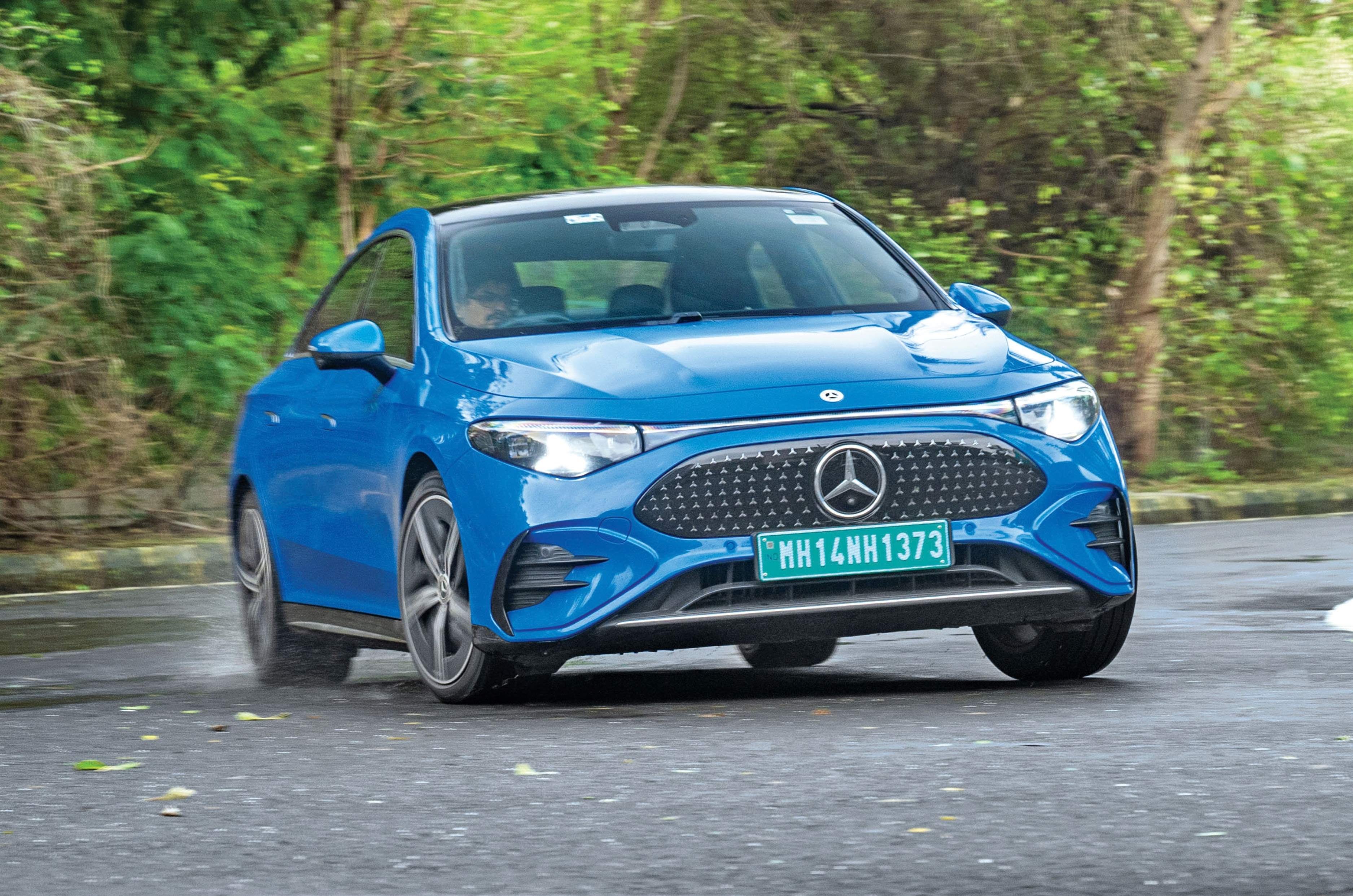
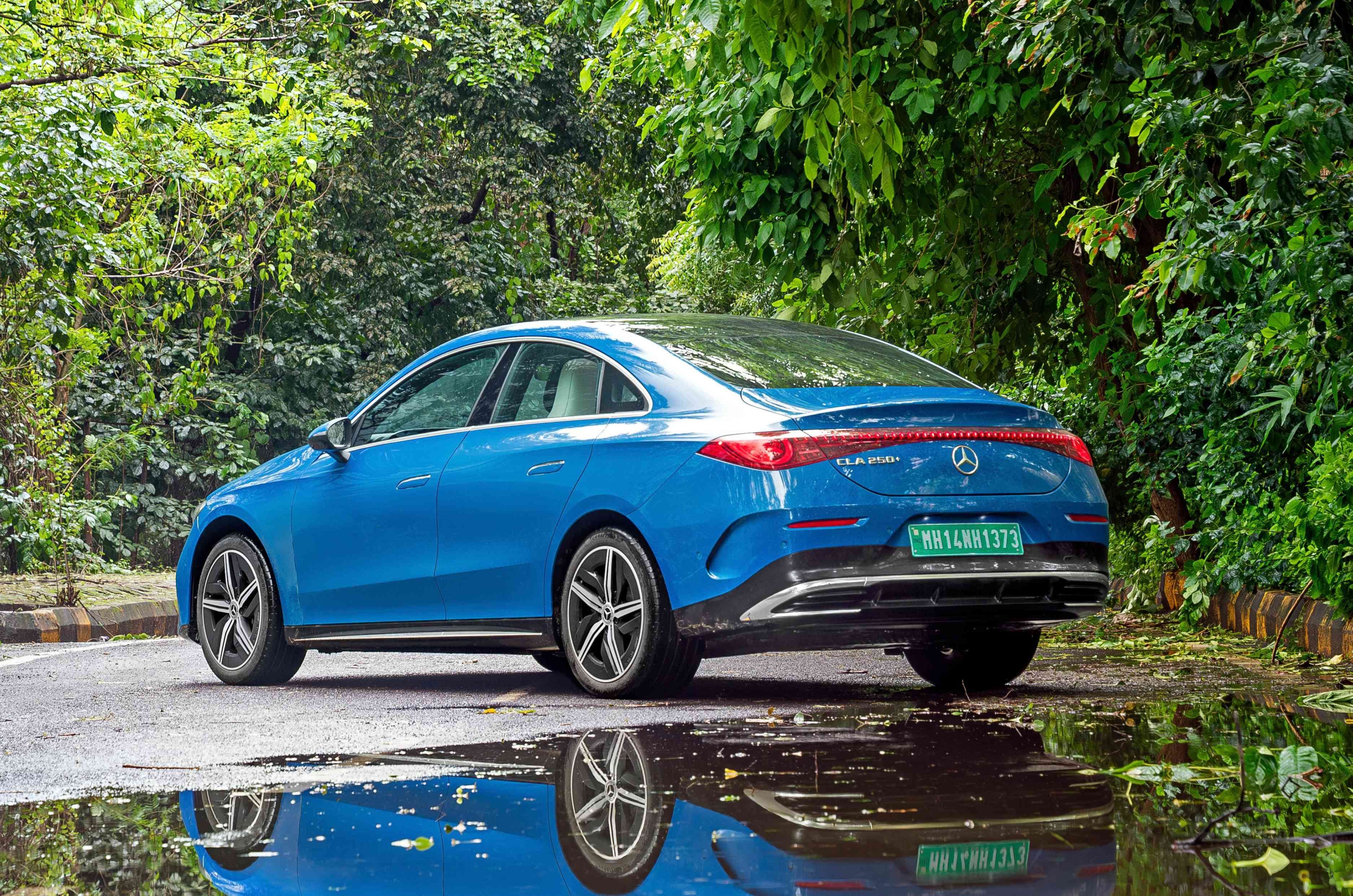
The new CLA has been designed with efficiency very much in mind, but Mercedes hasn’t completely abandoned the visual character that made the original car appealing. Its smooth, rounded silhouette is familiar from other Mercedes EVs, yet the low-slung, coupé-like roofline and frameless doors give it a distinct identity. Flush-fitting door handles, a sealed-off grille, aero-optimised 18-inch AMG alloys and a fully sealed underbody all contribute to an exceptionally slippery shape, with a drag coefficient of just 0.21Cd.

Mercedes’ three-pointed star features prominently across the CLA, appearing on the bonnet, grille, headlamps and tail-lamps. The grille itself gets 142 illuminated stars, which might sound excessive on paper, but they do give the CLA a distinctive look and, in person, seem to work rather well.

More significant, however, is what lies underneath. The CLA EV is the first Mercedes to use the new Modular Architecture (MMA) skateboard platform, which will also underpin future models. At over 4.7m long, more than 1.8m wide and over 1.4m tall, with a wheelbase approaching 2.8m, it is roughly the same size as a BYD Seal.

Mercedes CLA 250+ interior space and comfort – 7/10

Impresses with tech and quality; cramped rear with high floor.

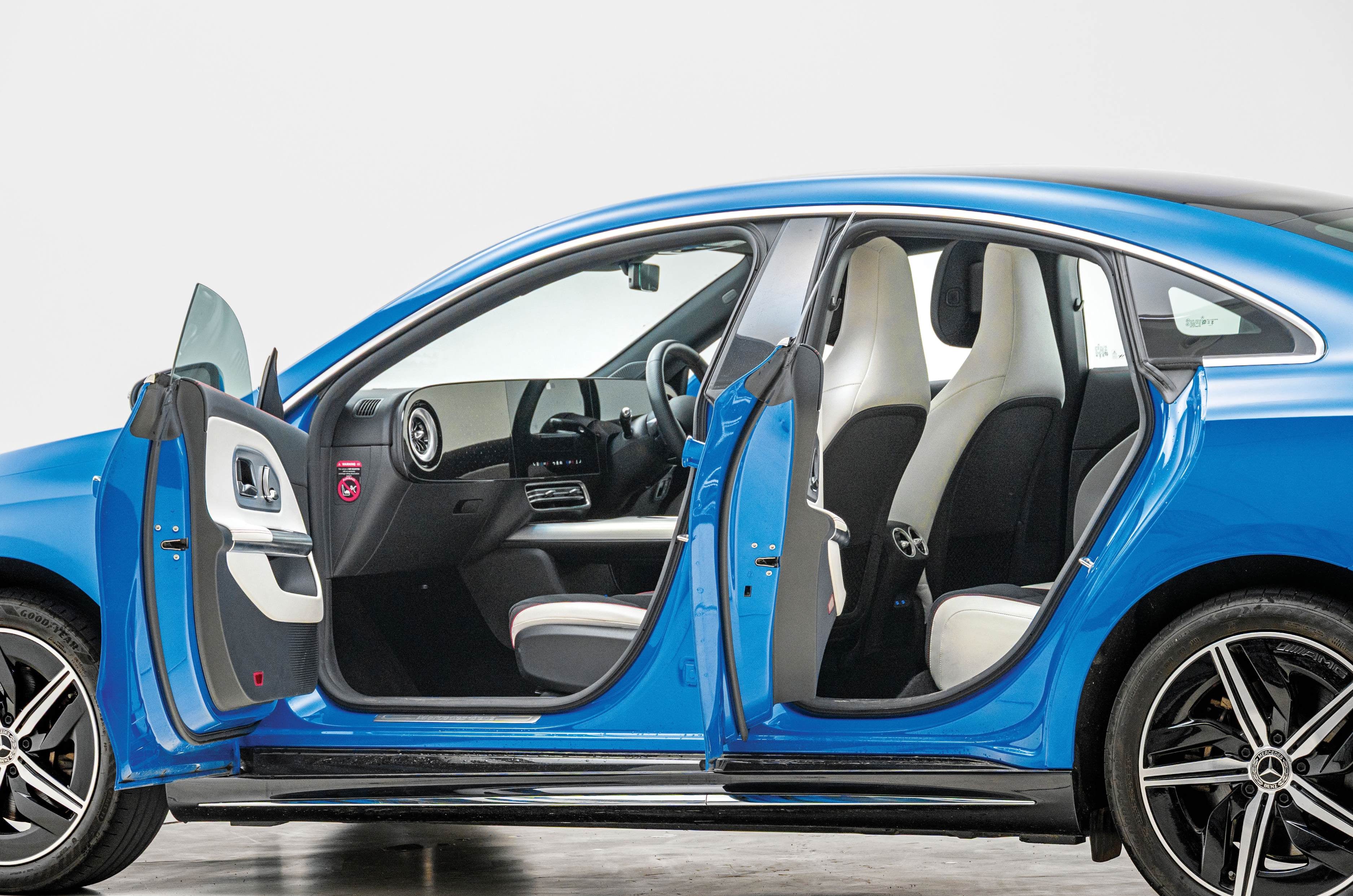
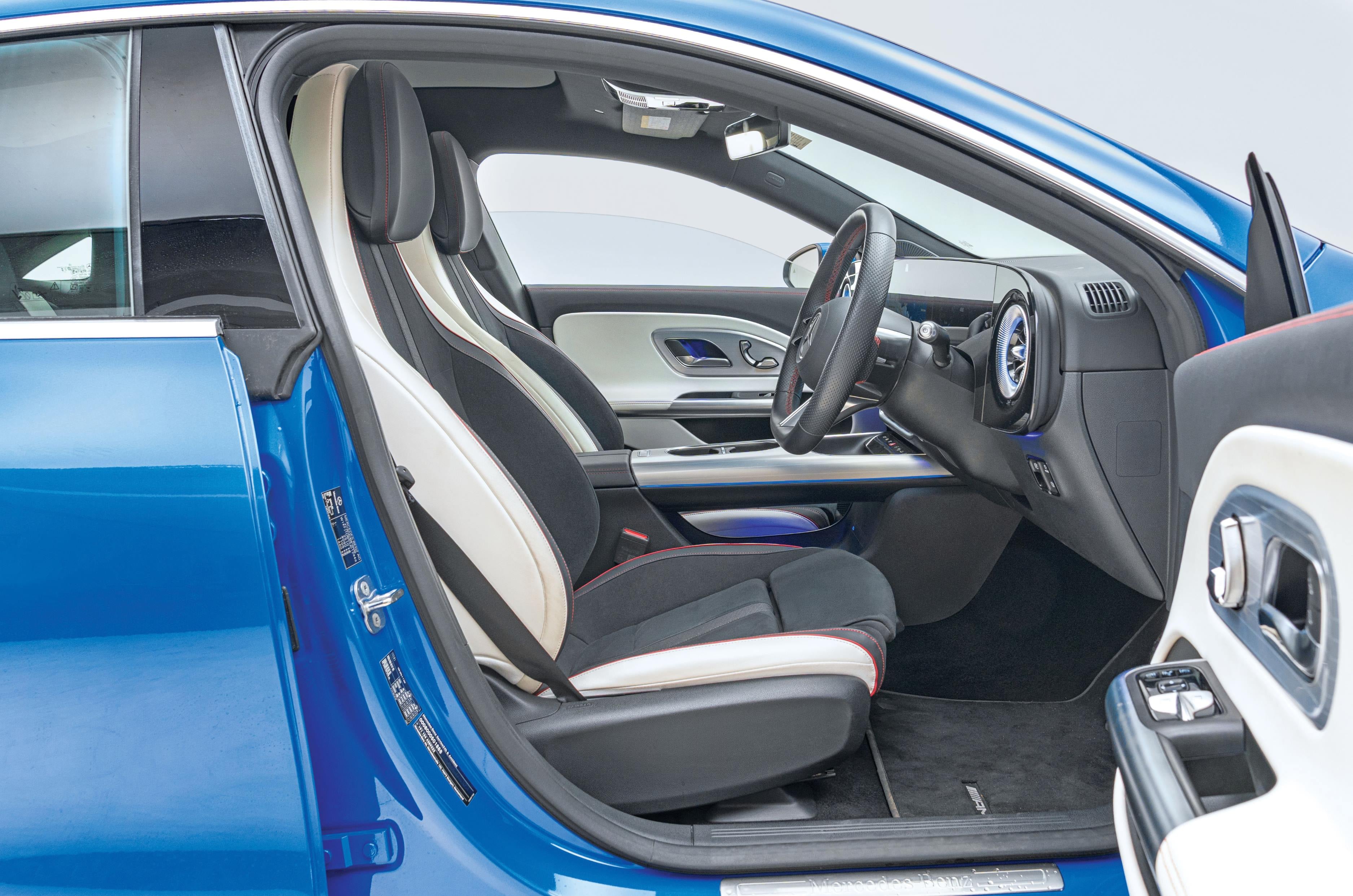
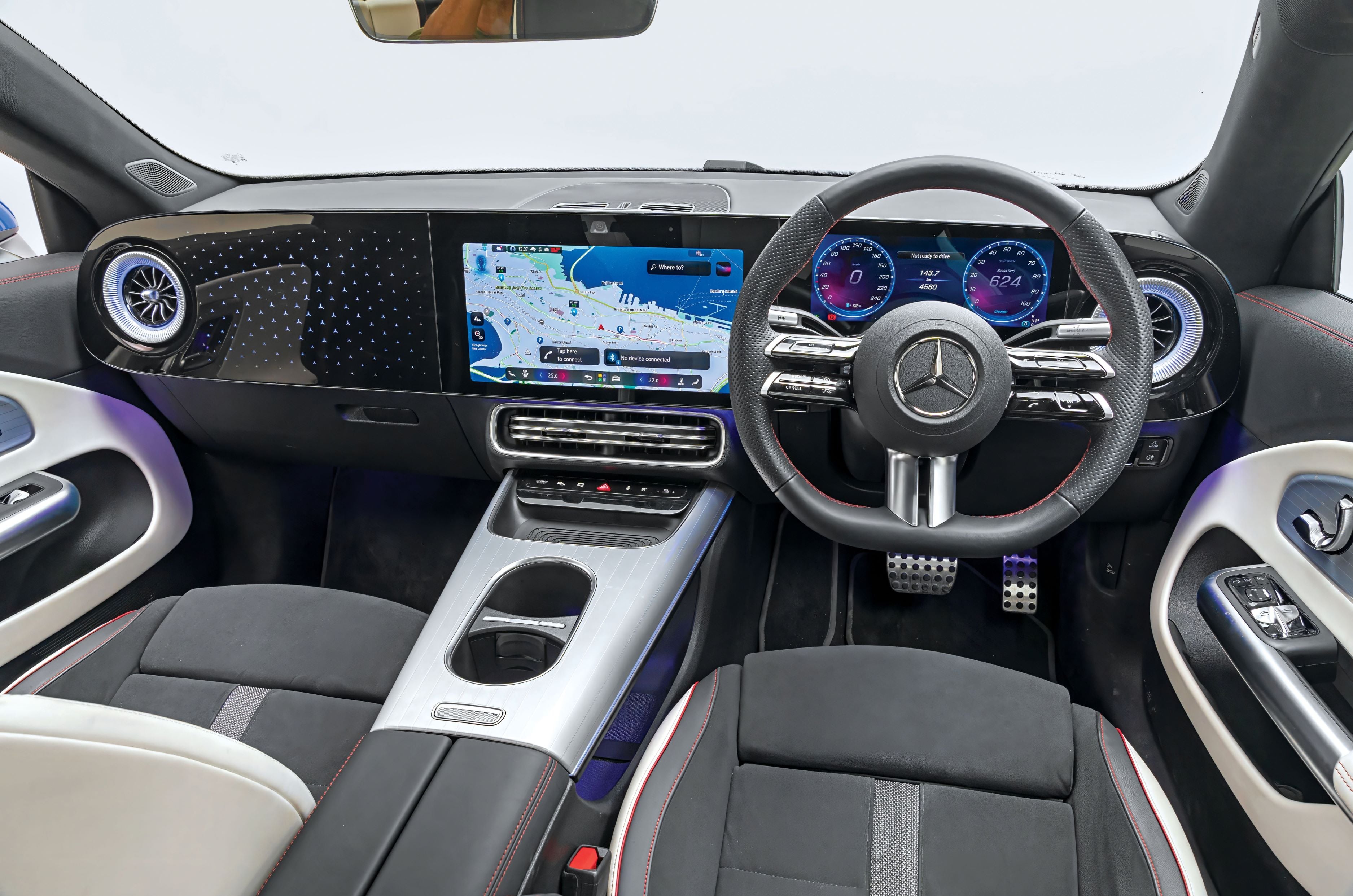
The CLA makes a good first impression inside. Its doors open wide for easy access, while the cabin combines smart design with good materials and build quality. The CLA 250+ is offered in AMG Line trim, so you get a flat-bottomed AMG steering wheel, sporty metal pedals and AMG-spec upholstery.

Doors open wide to aid access to the cabin; retains the stylish frameless doors.

The dashboard is dominated by a large gloss-black panel housing the digital displays. The graphics are sharp, the interface is clean, and the system is easy to navigate. What isn’t quite as convincing is the near-total absence of physical controls. Apart from a few capacitive shortcuts for functions such as volume and drive modes, most functions are accessed through the touchscreen, which isn’t ideal while on the move.

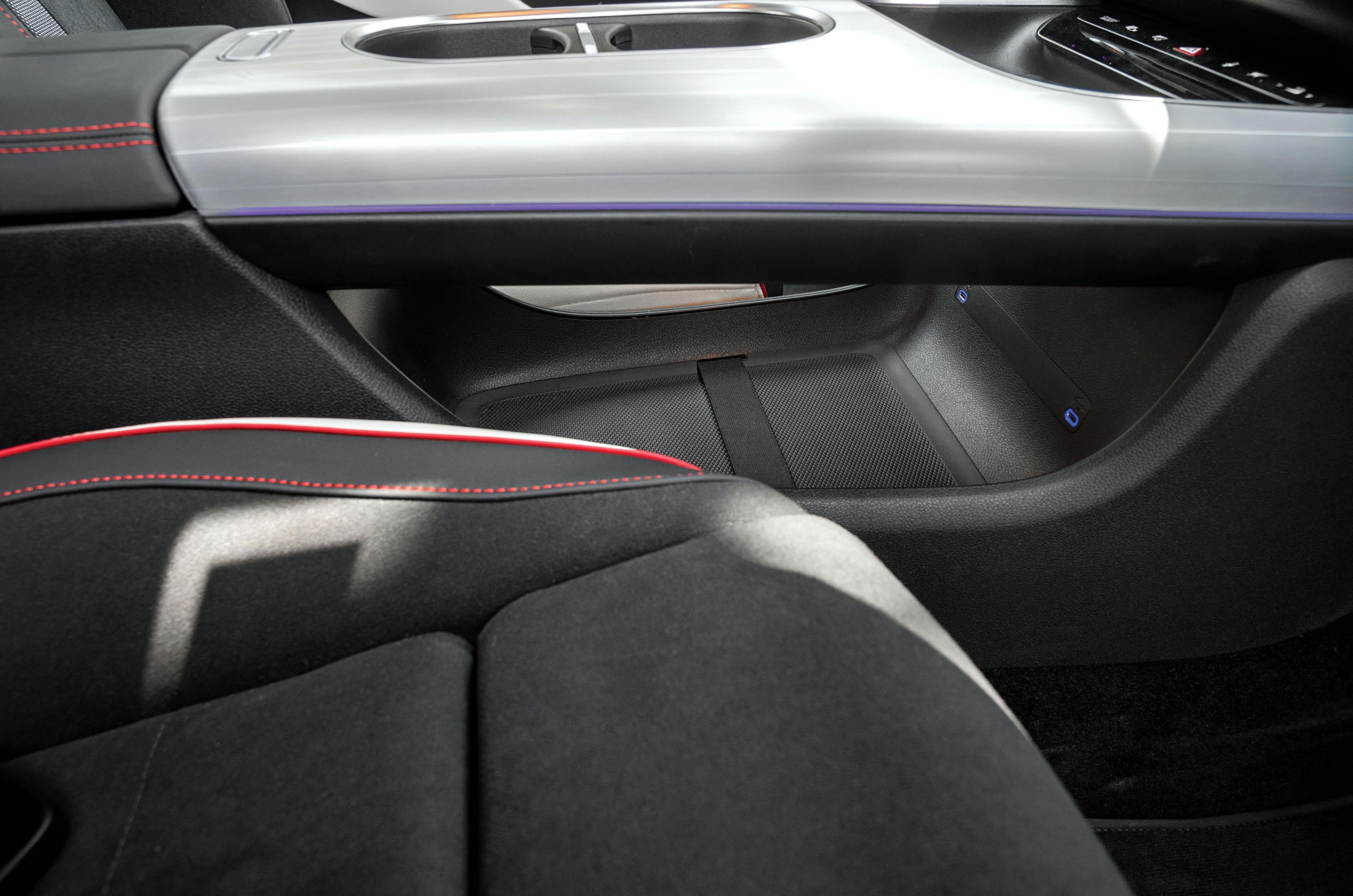
Centre console has two levels, with the top featuring cupholders and a wireless charger, and a large cubby space below.

The third passenger display offered in the 250+ Launch Edition has been omitted here, with its place taken by a gloss-black panel featuring illuminated Mercedes stars. The turbine-style air vents at either end of the dashboard are a nice touch, though, and are particularly satisfying to operate.

There is decent storage, too. You get a large glovebox, storage beneath the centre armrest, bottle holders in the doors and a floating centre console with cupholders and a wireless charger on top, along with a large storage area underneath.

AMG Line brings Alcantara and leather trim for the snug and supportive seats; relatively knees-up seating here too.

The front seats are supportive and well padded, although larger occupants might find them a little snug. More importantly, the relatively high floor means you sit with your knees raised even in the front. At the rear, this issue is more pronounced.

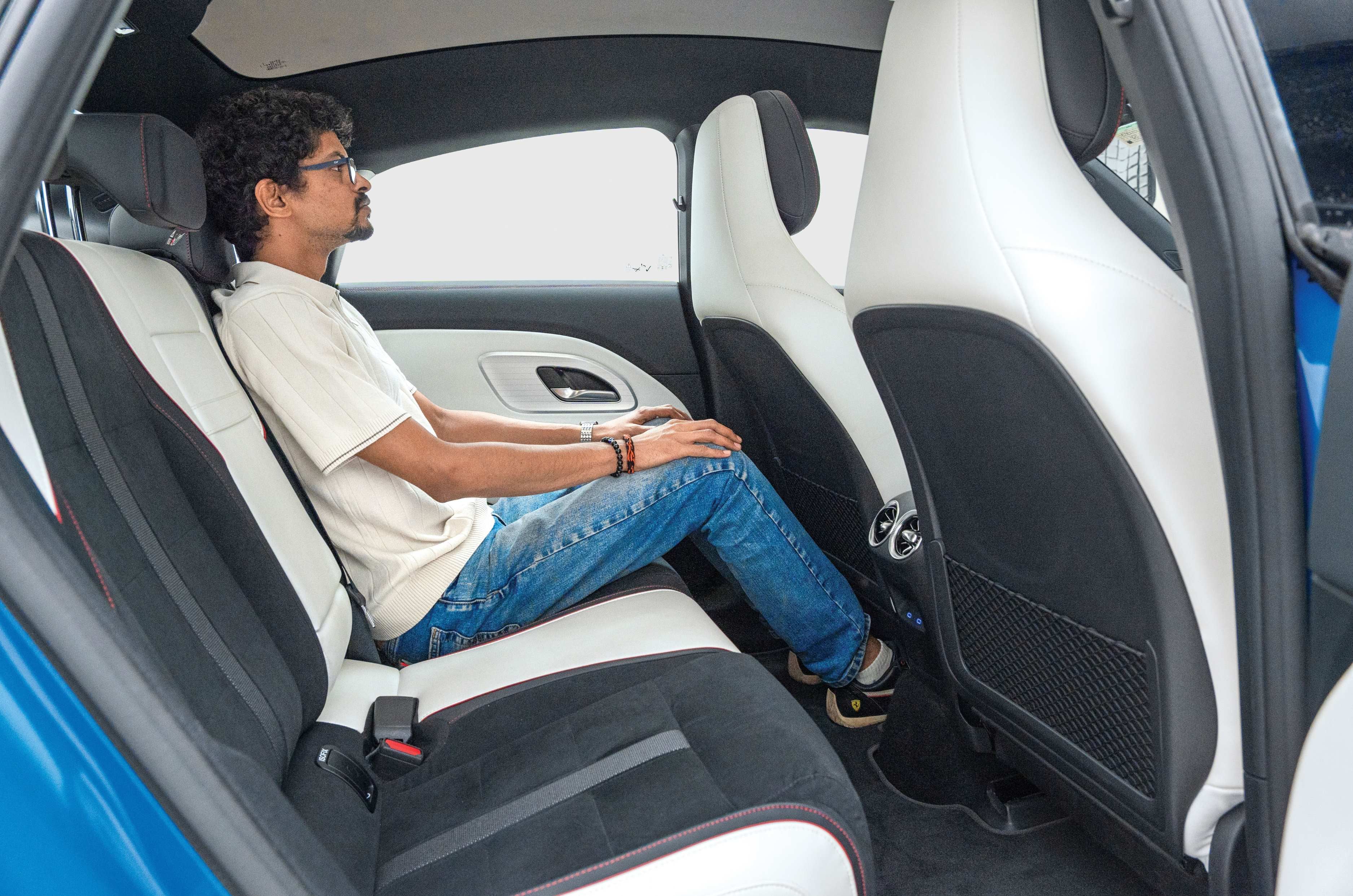
High floor results in knees-up seating, upright backrest and sloping roof further compromise rear seat’s comfort.

Although the CLA has a longer wheelbase than its predecessor, which improves knee room, the battery beneath the floor eats into under-thigh support and results in a knees-up seating position. The upright backrest and sloping roofline further compromise comfort, particularly for taller passengers. There is a centre armrest with cupholders and dedicated rear AC vents, but this still isn’t a car we’d recommend for regular chauffeur-driven use.

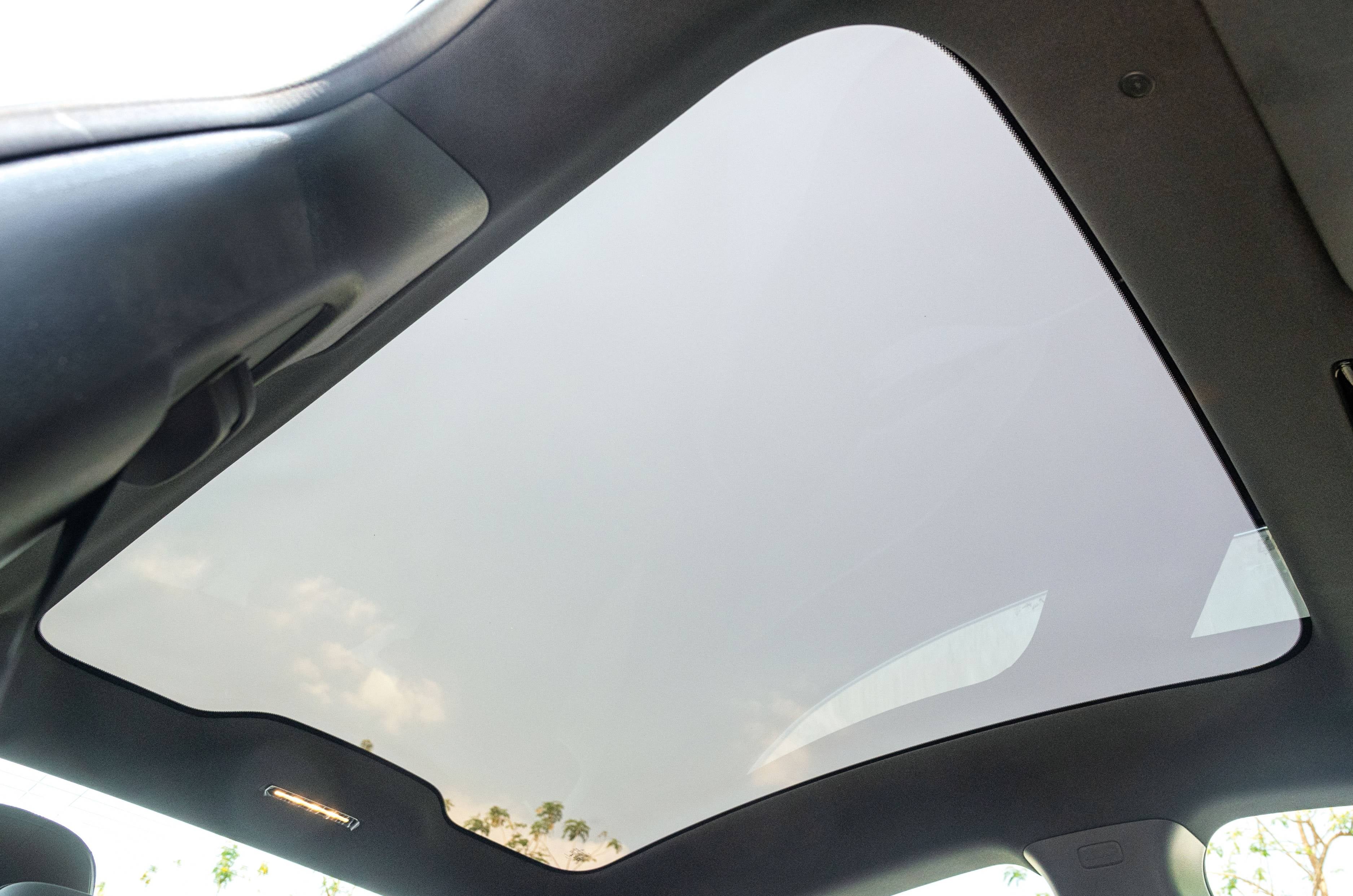
There is a large fixed panoramic glass roof that does make the cabin feel more spacious. Mercedes says the glass is heat-insulated, but a sunshade would have been welcome, particularly in our climate. It also misses sunblinds for the rear windows, meaning the rear AC has to work particularly hard to keep the back of the cabin cool.

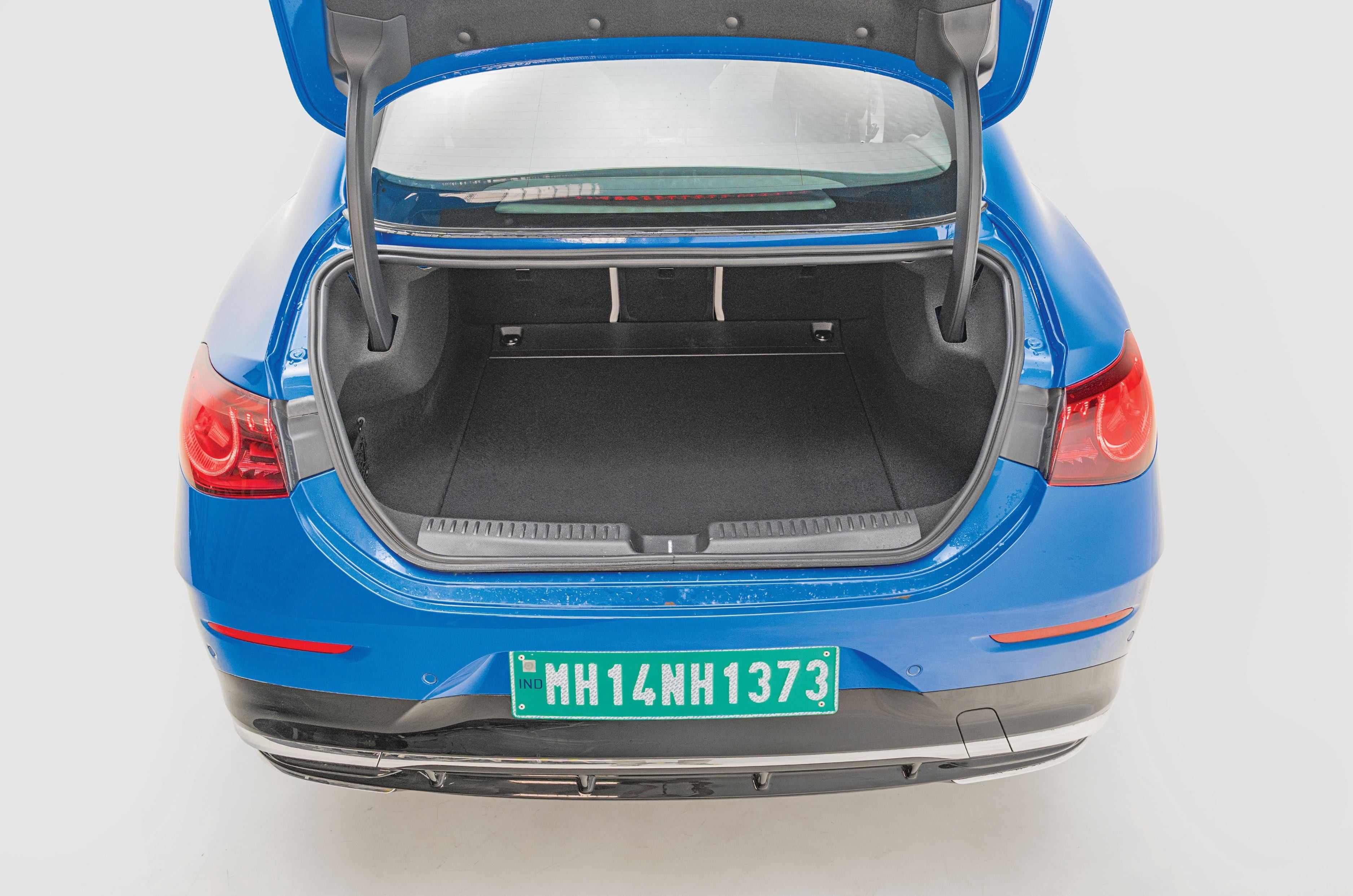
Cargo space is a useful 405 litres; boot opening isn’t large, though.

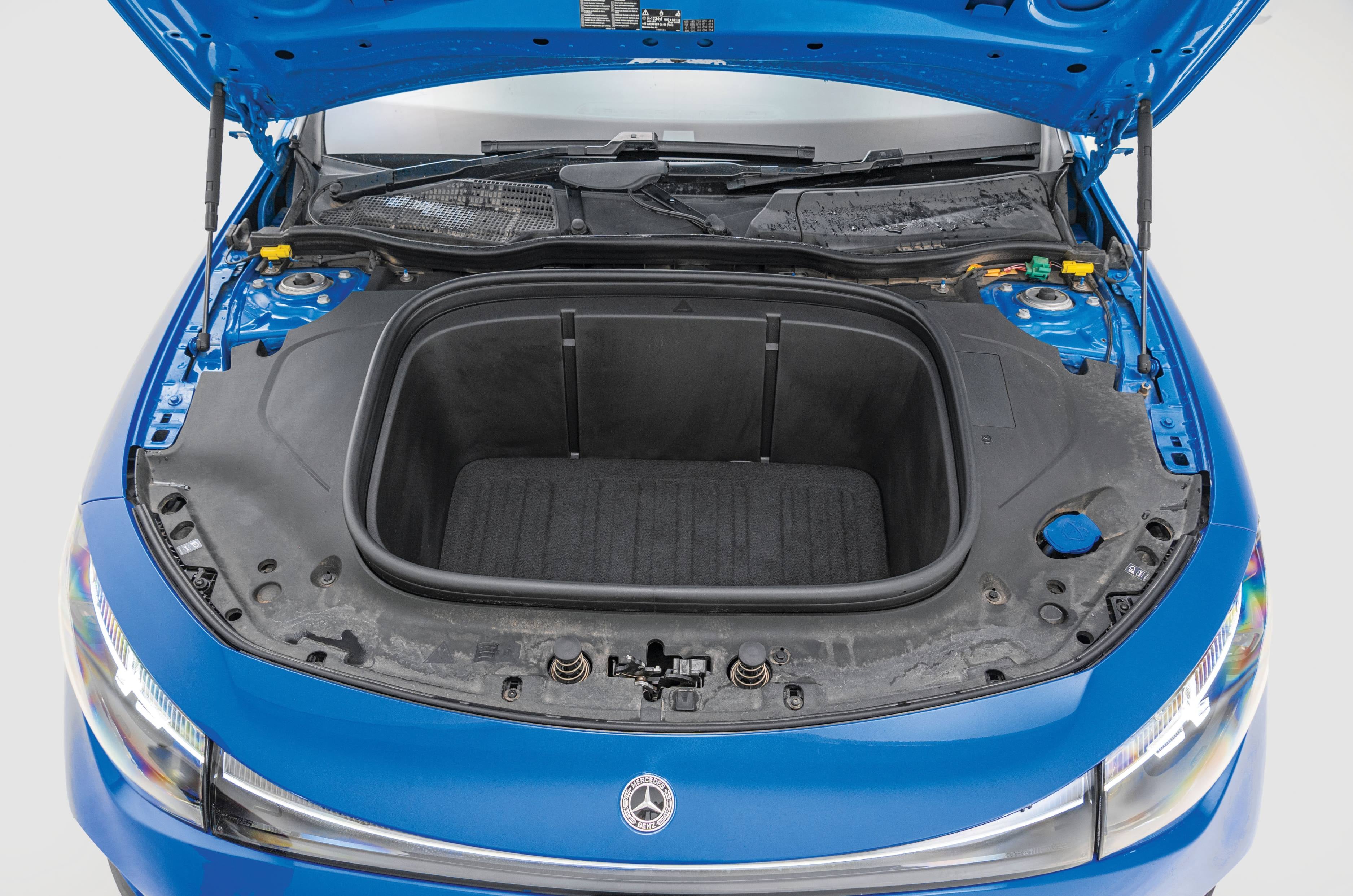
Boot space stands at a useful 405 litres. More interestingly, the CLA gets a 101-litre front trunk – the first time Mercedes has offered a frunk on one of its EVs.

In a first for Mercedes-Benz EVs, there’s a convenient 101-litre front trunk.

Mercedes CLA 250+ features and safety – 9/10

Packed with cutting-edge tech and features; no seat ventilation.

The CLA is a showcase for Mercedes’ latest technology. Four supercomputers provide the computing power, which Mercedes says is more than 200 times that of the previous CLA. It is also the first Mercedes to use the company’s new MB.OS infotainment operating system.

With the AMG Line styling package, the 250+ gets a flat-bottomed AMG steering, metal pedals and AMG seat upholstery; third passenger screen is reserved for the Launch Edition; cabin is practical with loads of storage, and overall fit/finish is good.

An Nvidia processor allows for quick responses, while over-the-air updates mean the system can be updated without a visit to the workshop. There’s also a new MBUX Virtual Assistant, which learns about the driver, including their language, accent and mood. It uses AI tools, including ChatGPT, Gemini and Bing, to further make your life easier, and you can ask them to do just about anything from setting navigation to changing the AC and so much more.

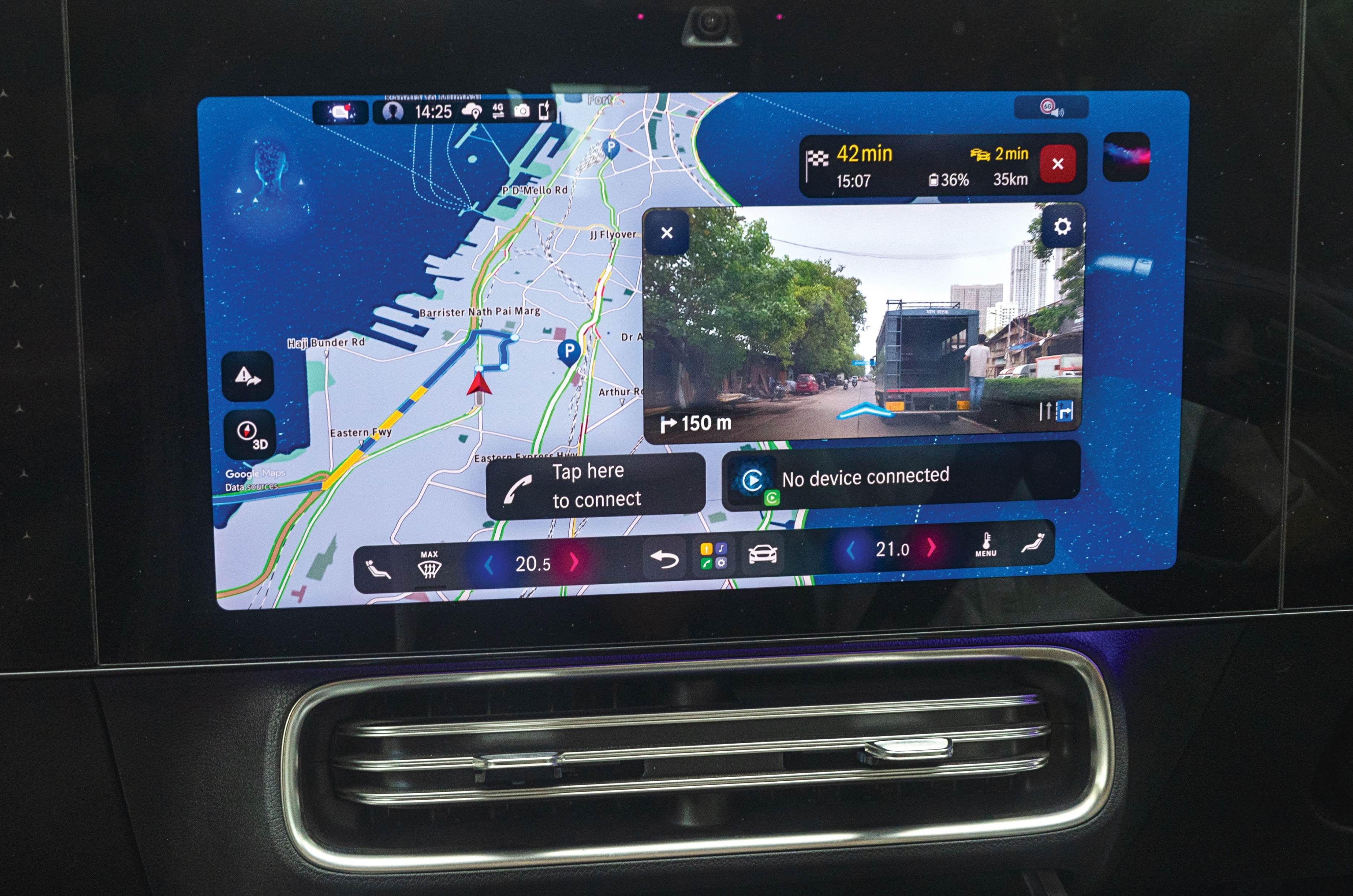
Screen is slick, has sharp graphics and native maps, which show directions in real-time using the camera feed.

The CLA also gets the new MB.Charge app, which brings charging providers together in one place. It can locate chargers, show their real-time availability, help plan a journey and even handle payment for a charging session.

The feature list is extensive. Highlights include a 14-inch central touchscreen, 10.25-inch digital driver’s display, powered, heated and massaging front seats, dual-zone climate control, configurable ambient lighting, a panoramic glass roof, Burmester 3D audio, wireless phone charging and auto parking. Ventilated front seats, however, aren’t offered.

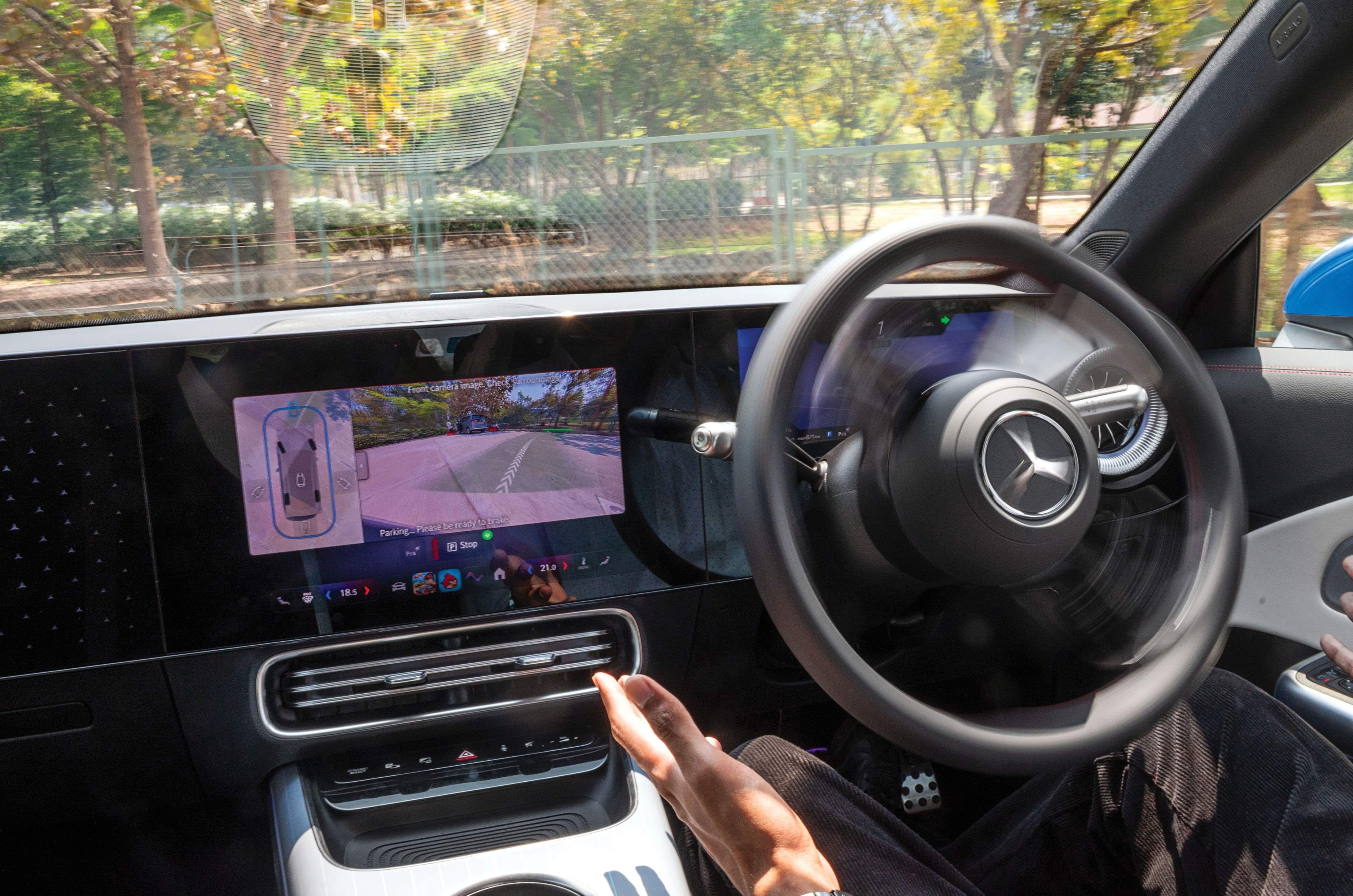
CLA 250+ packs in an auto park feature, which works very well in unmarked spaces too.

Safety equipment is comprehensive, with six airbags, a 360-degree camera and Level 2+ ADAS, which Mercedes calls MB.Drive. It includes adaptive cruise control, lane-keep assist, blind-spot monitoring, autonomous emergency braking and semi-autonomous driving functions. The system uses a combination of radar sensors and cameras and didn’t feel overly intrusive; better than previous Mercs, which feel trigger-happy with emergency braking. The CLA was also the safest car tested by Euro NCAP in 2025.

Mercedes CLA 250+ performance and refinement – 9/10

Smooth, progressive powertrain; refinement is impressive.

The CLA 250+ uses a rear-mounted electric motor producing 272hp and 335Nm. Performance is brisk, but what stands out more than outright acceleration is the way it delivers its performance.

Unlike some performance EVs that deliver power aggressively from the moment you bury the accelerator, the CLA builds speed in a smooth, progressive manner. The power delivery is linear, and there’s always enough performance on tap. Sport mode sharpens the response, while synthesised sounds played through the speakers add a little more theatre.

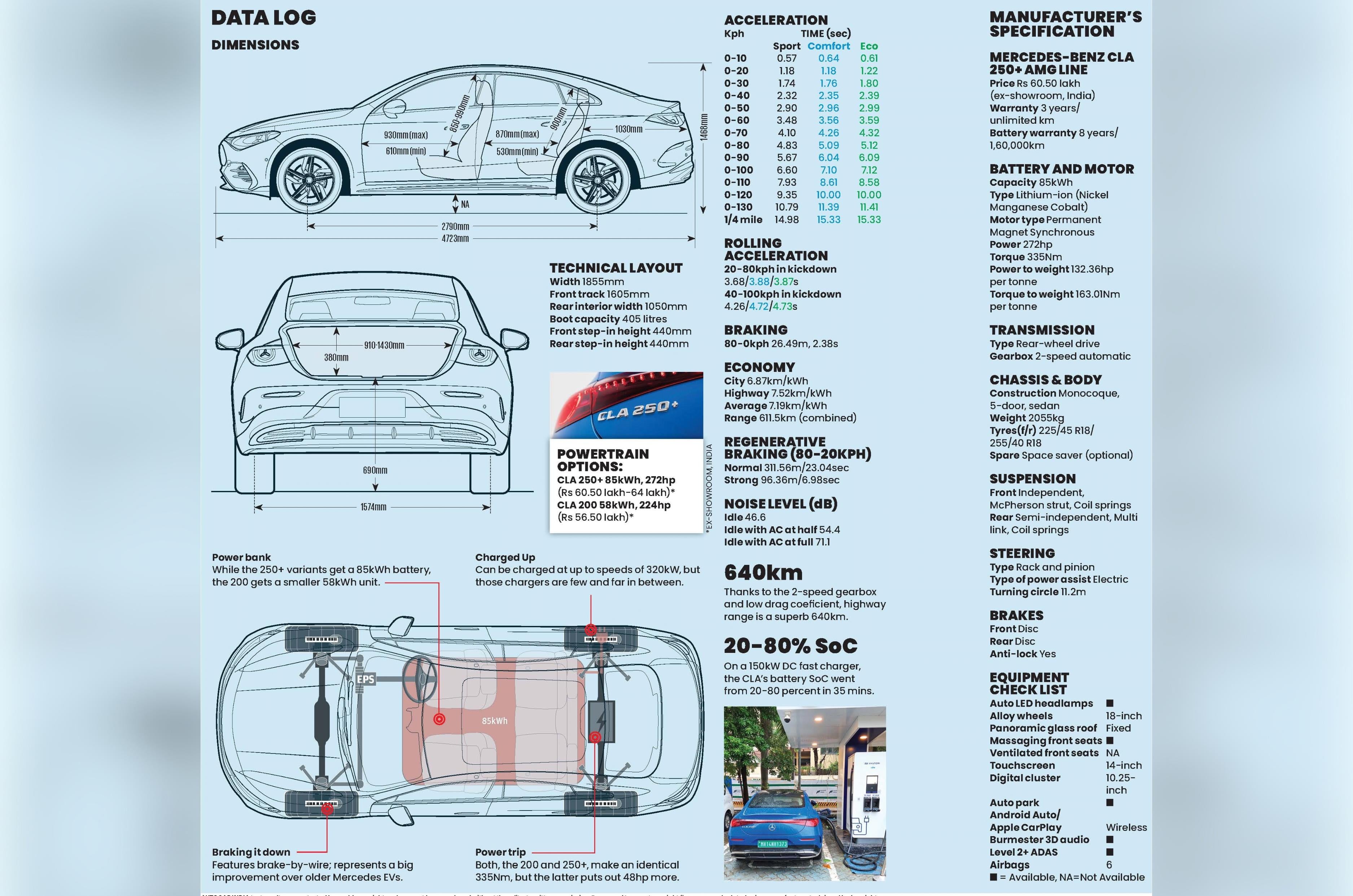
In our performance tests, it managed a 0-100kph time of 6.6sec in Sport mode, narrowly beating the claimed time of 6.7sec. Rolling acceleration is impressive too, with 20-80kph in Sport taking 3.68sec, and 40-100kph being dealt with in 4.26sec. Naturally, performance in the Comfort and Eco drive modes is more sedate than Sport, with the difference between the former two being almost negligible. 

Mercedes has also opted for a two-speed gearbox, which is unusual for an EV, but makes sense here. The short 11:1 first gear helps with initial acceleration, while the taller 5:1 second gear is intended to improve efficiency at higher speeds. And from behind the wheel, you can feel when it shifts gears. Mercedes claims a drivetrain efficiency of 93 percent, and that plays an important role in the CLA’s impressive range.

The new brake-by-wire system is another area where the CLA makes a big improvement over older Mercedes EVs. Brake response is reassuring, with a good bite and a natural, consistent feel. In our braking test, the CLA came to a halt from 80kph in 26.49m despite it being on a damp surface.

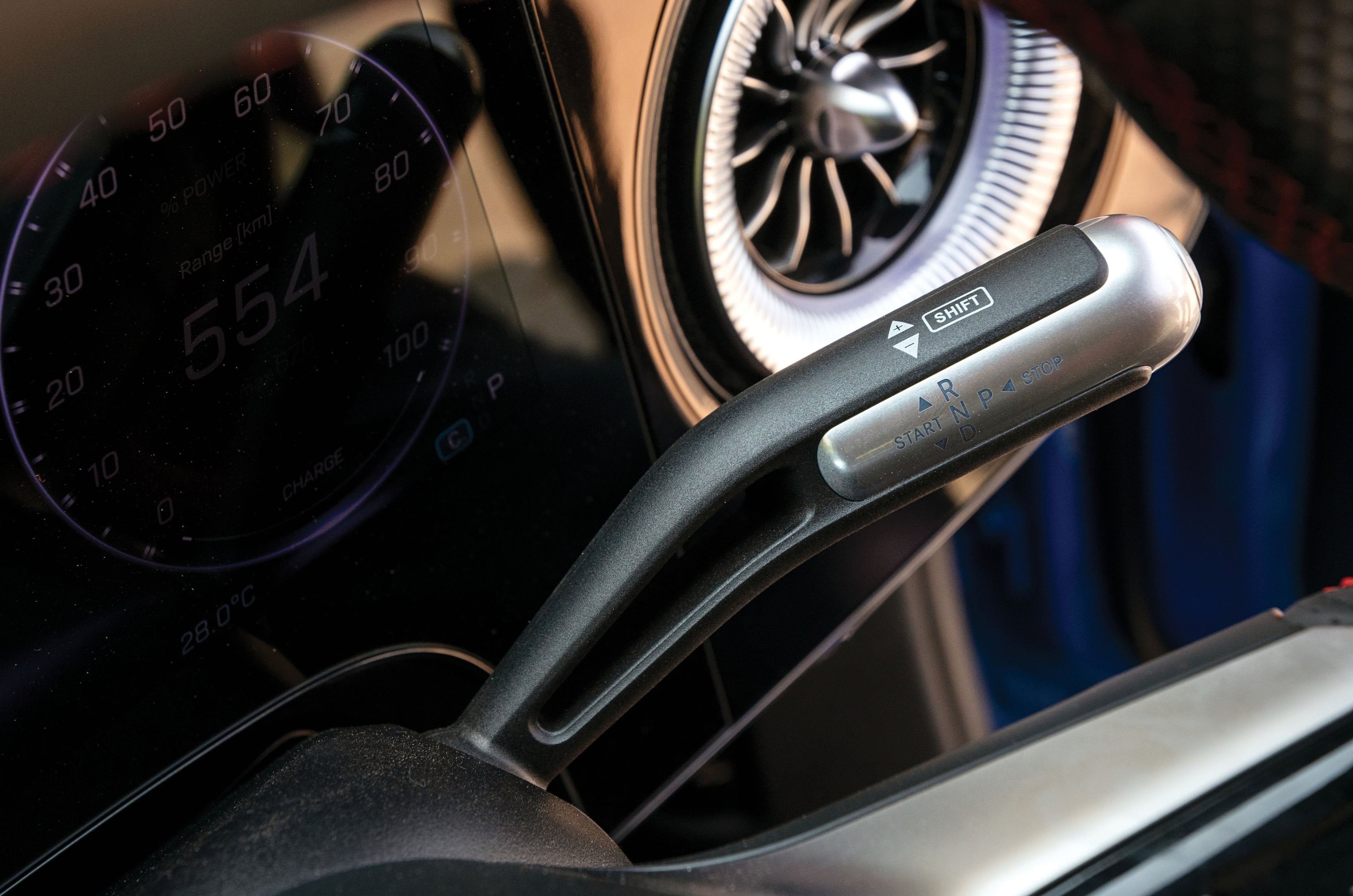
Control stalk now houses the start/stop button, the drive selector, and is also used to toggle between regen braking modes.

There are four levels of regenerative braking, including a one-pedal mode and an adaptive setting. They work well, with the Normal setting bringing it from 80-20kph in 311.56m, while the Strong setting takes 96.36m for the same. It’s worth noting, however, that Mercedes has moved the controls for the regen from the steering-mounted paddles used on some EVs to the gear selector stalk. You push or pull the stalk to change the regen level, and this isn’t quite as intuitive. The same stalk also incorporates the start/stop button.

Where the CLA really impresses is refinement. The absence of an engine obviously helps, but Mercedes has also done an excellent job of keeping wind and road noise out. At speed, the cabin remains remarkably quiet. A CLA 200 variant is also available in India, using the same rear-mounted motor layout but producing a lower 224hp and 335Nm. However, we’re yet to test this version.

Mercedes CLA 250+ tested acceleration times (sec)

 SportComfortEco
0-10kph0.570.640.61
0-20kph1.181.181.22
0-30kph1.741.761.80
0-40kph2.322.352.39
0-50kph2.902.962.99
0-60kph3.483.563.59
0-70kph4.104.264.32
0-80kph4.835.095.12
0-90kph5.676.046.09
0-100kph6.607.107.12
0-110kph7.938.618.58
0-120kph9.351010
0-130kph10.7911.3911.41
1/4 mile14.9815.3315.33
20-80kph (rolling)3.683.883.87
40-100kph (rolling)4.264.724.73

Mercedes CLA 250+ range and efficiency – 9/10

Low drag, efficient powertrain mean superb real-world range.

Mercedes claims a WLTP range of 792km from the 85kWh (net) NMC battery, although, predictably, the real-world range is lower. In the city, with the regen set to the strongest mode, it delivered an efficiency of 6.87km/kWh that translates to a range of 584km. On the highway, with the regen set to ‘Normal’, it delivered an efficiency of 7.52km/kWh for a 640km range. With an average efficiency of 7.2km/kWh, you can expect a real-world range of 612km on a single charge, which is very impressive.

In the city, the strongest regen setting enabled it to recoup energy effectively, which helped boost efficiency, while the two-speed gearbox, with its taller 5:1 second gear, enabled greater efficiency at higher speeds and thus contributed to the EV’s highway efficiency. Combined with the low 0.21Cd drag coefficient and the normal regen mode that allows for more coasting, it proved even more efficient on the highway, which isn’t usually the case with EVs.

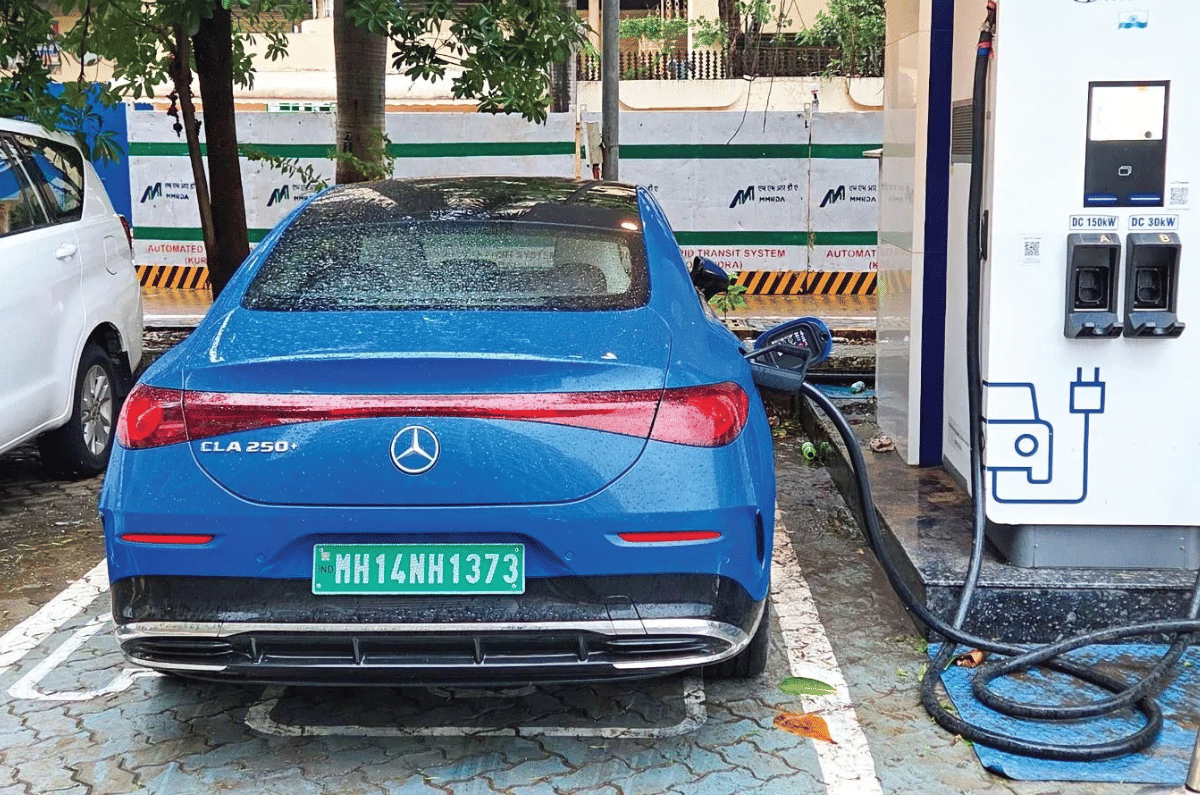
The CLA 250+ uses an 800V electrical architecture and supports charging at up to 320kW, but chargers capable of delivering that output remain few and far between in India. In our charging test using a 150kW DC fast charger, we saw an average charging speed of around 92kW with a peak charging speed of 125kW. To charge from 20-80 percent, it took 35 minutes and consumed 53.89kWh in total. This, combined with the efficiency and large real-world range, should make long-distance driving relatively stress-free.

Mercedes CLA 250+ tested range

City (km/kWh)6.87
Highway (km/kWh)7.52
Average (km/kWh)7.19
Range (km)611.5

Mercedes CLA 250+ ride comfort and handling – 8/10

Strikes a mature balance between ride and handling.

The CLA’s rear-wheel-drive layout gives it an enjoyable character on a winding road, and the steering is one of its stronger points. With no drive being sent through the front wheels, it feels precise, building up weight progressively with speed. It’s light enough at low speeds to make manoeuvring easy, yet gains enough weight as you go faster.

Thanks to the CLA’s rear-wheel-drive setup and precise steering, it feels agile and good fun around corners.

Mercedes has increased the Euro-spec CLA’s 107mm ground clearance for India and made suspension changes to better suit our roads, and both have worked. There’s enough clearance to deal with regular-sized speed breakers, while the additional height hasn’t really compromised the car’s handling or comfort. Around corners, the CLA remains agile, and body roll is well controlled. The ride does have a hint of firmness to it, but it deals with road imperfections without fuss and feels composed at both low and high speeds. Overall, it’s a mature combination of ride comfort, stability and handling.

Mercedes CLA 250+ value for money – 8/10

Refined and efficient powertrain, long range and sorted ride and handling make it Merc’s best EV yet.

Priced at Rs 60.50 lakh (ex-showroom), the CLA 250+ is a fairly compelling proposition, considering what it brings to the table. There are shortcomings, most notably the cramped rear seat, knees-up seating even at the front, and the absence of sunshades for the panoramic roof and rear windows. But if you’re going to drive yourself and want a luxury EV that’s distinctive, the CLA makes a strong case for itself.

Its powertrain is smooth and refined, its efficiency is excellent, it has an impressive real-world range of over 600km, and it strikes a very good balance between ride comfort and handling. Add to that a cabin packed with cutting-edge tech, and the new CLA emerges as one of the company’s most accomplished EVs yet.  

Honda CB350: Price and variants explained

Honda CB350: Price and variants explained
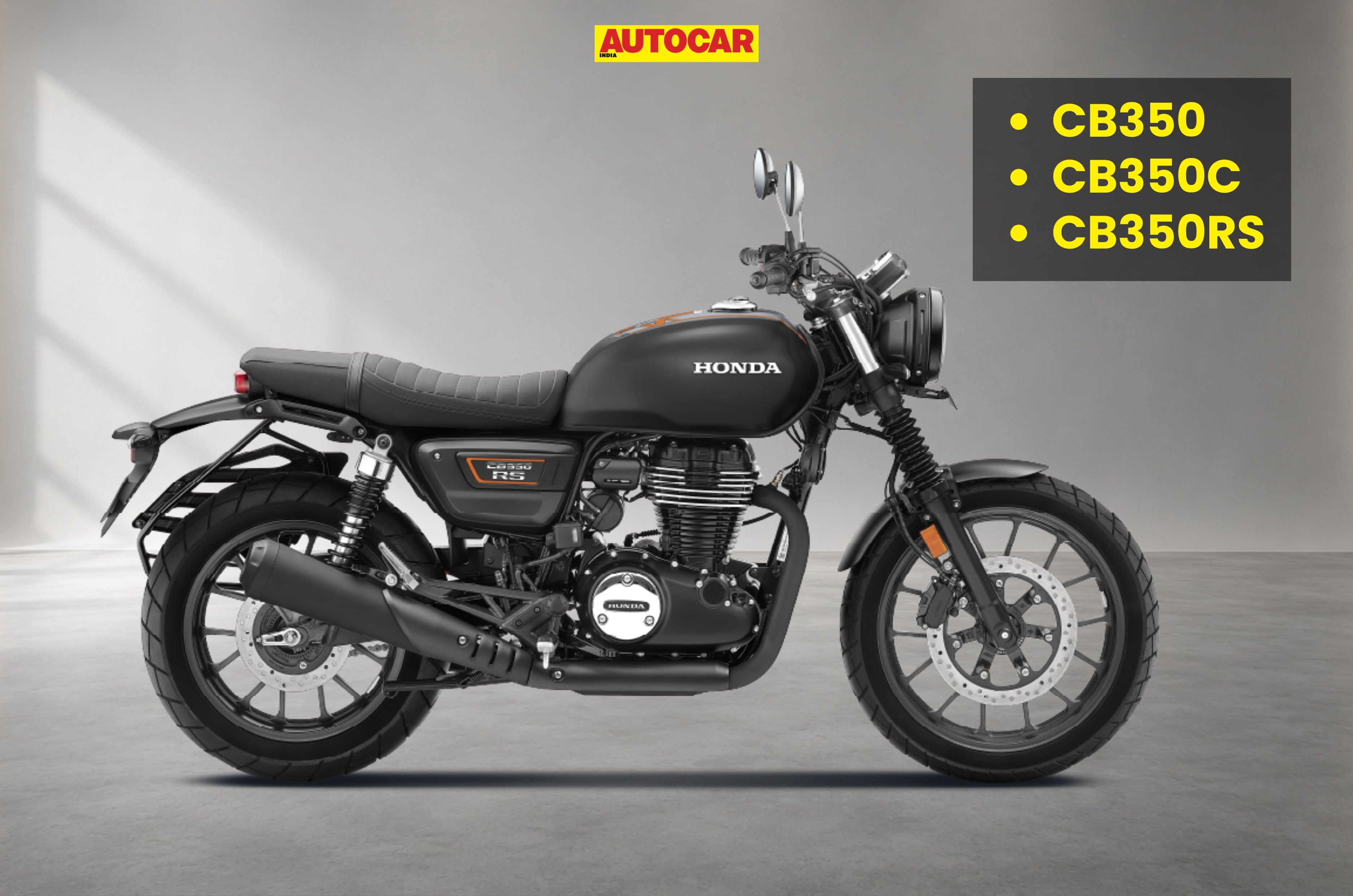
Inside render showing the CB350RS in Pearl Igenous Black colour, along with a list of the variants: CB350, CB350C, and CB350RS

The CB350 is Honda’s retro contender in India, first launched in 2020. Since then, it’s been updated to spawn different variants that differ minutely from each other. Currently, there are three versions of the motorcycle: CB350, CB350C and CB350RS. The RS is available right away; the other two are scheduled to be available in October from Honda BigWing Showrooms. If you’re confused about the right variant for you, here’s how they differ.

All prices mentioned are ex-showroom, Delhi.

Honda CB350 variant breakdown

CB350

With the latest update, Honda has dropped the H’ness suffix, and the bike is simply called the CB350. Honda has also introduced a new STD (Standard) variant that starts at 1.95 lakh. Above that, you have a DLX at Rs 1.97 lakh and a Chrome variant at Rs 1.99 lakh. The differences between the three will largely boil down to features, some cosmetic touches and colours.

This is the second-lightest version of the CB350 at 181kg (kerb weight), and it has 166mm of ground clearance with a 15-litre fuel tank. In this version, the engine makes 30Nm of torque.

CB350C

Next is the CB350C, which has three variants: Standard, Deluxe and Special Edition. The CB350C STD costs Rs 2 lakh and goes up to Rs 2.04 lakh for the Special Edition. This makes the CB350C Special Edition the most expensive version of the motorcycle.

This is the heaviest version of the CB350, with a 186kg kerb weight, and gets 165mm of ground clearance (1mm less than the CB350 and 3mm less than the CB350RS). The fuel tank capacity is 15.2 litres. In this version, the engine makes 29.5Nm of torque (0.5Nm less than the other two versions).

CB350RS

Last is the Scrambler-esque CB350RS. It now has two variants: Standard and Deluxe. There are seven colours on offer, two for the STD (Pearl Deep Ground Grey and Pearl Igneous Black) and five for DLX (Matt Axis Gray Metallic, Pearl Deep Ground Grey, Pearl Igneous Black, Pearl Siren Blue and Rebel Red Metallic 2). Even though two of the colours appear to be common between the two, the highlights are slightly different. The STD costs Rs 1.99 lakh and the DLX Rs 2.02 lakh.

The CB350RS further differs from the other two CB350s in tyre size. It is the only one with a 17-inch rear tyre (versus 19-inch), and the rear tyre is wider too at 150/70-17 (versus 130/70-18). This is the lightest CB350 at 180kg (kerb) and gets the maximum amount of ground clearance at 168mm. It goes back to a 15-litre fuel tank like the regular CB350, and in this version, the engine makes 30Nm of torque, once again, like the regular CB350.

The common factors between the variants are, of course, the shared name and the 348.36cc single-cylinder engine, making 20.7hp of power. Besides that, they all get a 5-speed transmission, traction control, dual-channel ABS, a slip-and-assist clutch and Honda Roadsync smartphone connectivity on the higher variants.

5 things to know before buying the 2026 Triumph Daytona 660

5 things to know before buying the 2026 Triumph Daytona 660
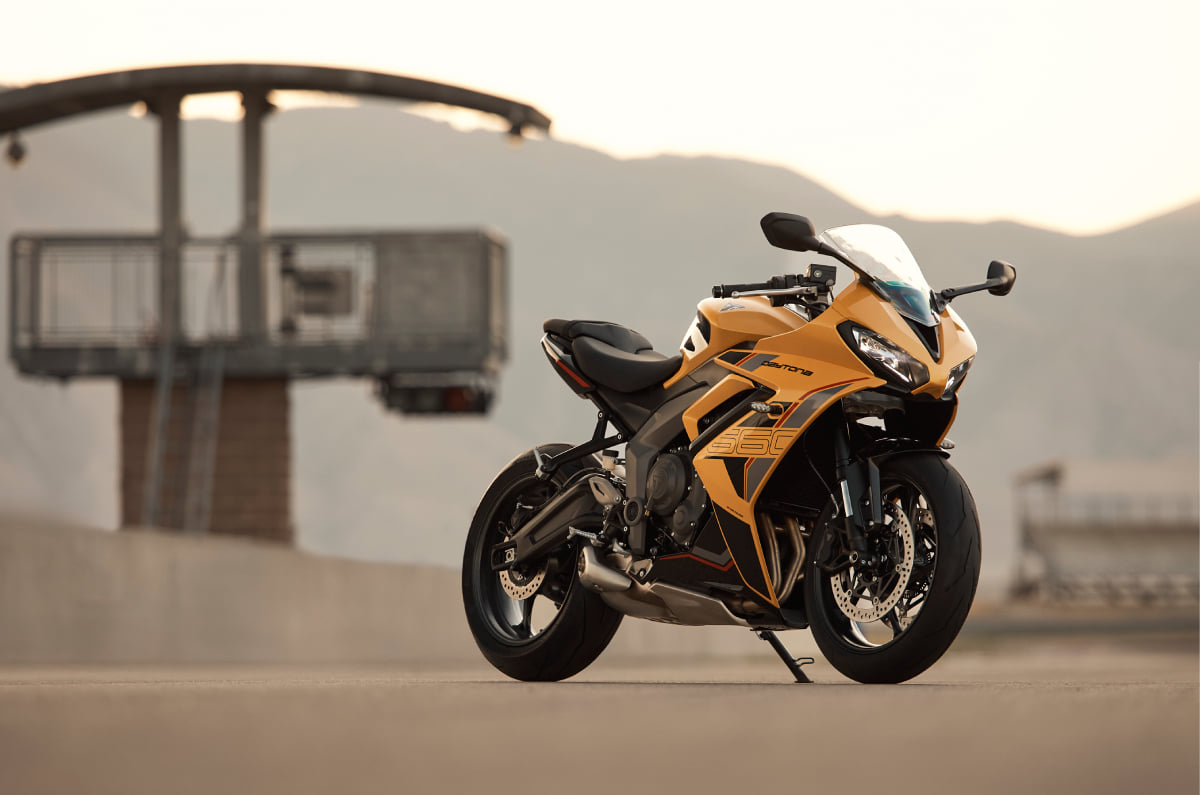
Triumph Daytona 660 static

The Triumph Daytona 660 is built on the same platform as the Trident 660, sharing its 660cc inline-triple engine but with sportier ergonomics, a full fairing and a more performance-oriented character. For 2026, Triumph has addressed some of the original bike’s shortcomings with meaningful hardware upgrades. Here are answers to some of the most commonly asked questions about it.

What is the price of the 2026 Triumph Daytona 660?

The 2026 Triumph Daytona 660 is priced at Rs 9.99 lakh (ex-showroom, India), marking an Rs 11,000 hike over the outgoing model’s Rs 9.88 lakh. At its new price point, it’s also exactly Rs 1 lakh more expensive than the Trident 660 that it shares its platform with.

What’s new on the 2026 Triumph Daytona 660?

The 2026 update brings three meaningful changes to the ride package. The 41mm Showa USD front fork is now fully adjustable for compression and rebound, while retaining the 110mm travel figure. The bidirectional quickshifter, which was previously an optional accessory, is now standard equipment. The Michelin Power 6 tyres of the outgoing model have also been replaced with Metzeler M9 RR rubber, which uses a grippier, more track-oriented compound. The rear monoshock remains unchanged, with adjustable preload and 130mm of travel.

What engine does the Triumph Daytona 660 use?

The Daytona 660 continues with the same 660cc, liquid-cooled inline-triple engine producing 95hp and 68Nm of torque, paired with a 6-speed gearbox. The engine and all other mechanical elements carry over unchanged from the outgoing model.

What features does the Triumph Daytona 660 have?

The Daytona 660 comes with three riding modes – Rain, Road and Sport – each altering throttle response and traction control sensitivity. The instrument cluster combines an LCD multifunction display with a TFT screen and offers smartphone connectivity for turn-by-turn navigation, music and call control. As mentioned above, for 2026, it also gets a bidirectional quickshifter as standard.

What colours is the Triumph Daytona 660 available in?

The 2026 Daytona 660 is available in three new colours – Aluminium Silver, Cosmic Yellow and Sapphire Black. Both the Aluminium Silver and Cosmic Yellow variants come with glossy Sapphire Black highlights in the decals, while the Sapphire Black option features an all-over glossy finish.