आईआईटी में पढ़ाई का सपना टेक्नोलॉजी के क्षेत्र में करियर बनाने के इच्छुक ढेरों युवाओं का होता है। इसके लिए छात्र जेईई एडवांस्ड की तैयारी करते हैं, जिसे देश की सबसे मुश्किल प्रतियोगी परीक्षाओं में से एक माना जाता है। आमतौर पर छात्र और अभिभावक सोचते हैं कि JEE एडवांस्ड की तैयारी का मतलब सबसे अच्छी कोचिंग, शांत स्टडी रूम या बिना रुकावट इंटरनेट एक्सेस होना है। लेकिन मुंबई के अभिषेक शर्मा के लिए ये सुविधाएं उपलब्ध नहीं थीं। इसके बावजूद उन्होंने जेईई एडवांस्ड में ऑल इंडिया रैंक 2,456 हासिल की, जिसमें OBC-NCL रैंक 415 थी। वह अब आईआईटी दिल्ली से बीटेक कर रहे हैं।
मोबाइल डेटा खत्म होने के बाद पड़ोसी के वाईफाई से की पढ़ाई
अभिषेक की कामयाबी की चर्चा होना इसलिए भी जरूरी है, क्योंकि उन्होंने साबित किया है कि देश की सबसे प्रतियोगी प्रवेश परीक्षा में सफल होने के लिए पैसा हो या न हो, सही सोच जरूरी है। उनका परिवार मुंबई के एक स्लम एरिया लोकमान्य तिलक नगर में किराए के घर में रहता था, जहां वे हर महीने ₹3,000 किराया देते थे। उनके पिता एक स्टील फैब्रिकेशन कंपनी में मजदूर के तौर पर काम करते थे और परिवार के पास पैसे कम थे। जेईई एडवांस्ड की तैयारी कर रहे कई छात्रों के लिए, किताबें, कोचिंग, स्टेबल इंटरनेट और पढ़ाई के लिए एक खास जगह तक पहुंच उनकी तैयारी का एक जरूरी है। शर्मा के पास उस स्तर की सुविधाएं नहीं थीं। इसके बजाय, उन्होंने अपने आस-पास जो भी सुविधाएं मौजूद थीं, उन पर भरोसा किया और मुश्किलों के बावजूद पढ़ाई जारी रखी।
कम सहूलियों के बावजूद शर्मा ने कैसे की तैयारी ?
अभिषेक के लिए जेईई एडवांस्ड की तैयारी के रास्ते की सबसे बड़ी मुश्किल थी इंटरनेट एक्सेस। फोन का मोबाइल डेटा जब खत्म हो जाता था, तो वह छत पर जाते थे और अपने पड़ोसी के Wi-Fi से कनेक्ट करते थे ताकि वह अपनी पढ़ाई जारी रख सकें। उनके घर का माहौल भी परिवार के वित्तीय हालात से अलग नहीं था। उनका परिवार महंगी कोचिंग सुविधा और तैयारी के दूसरे महंगे स्रोत उपलब्ध नहीं करा सकता था। इसके बावजूद अभिषेक ने इन मुश्किलों को अपने इरादे कमजोर करने नहीं दिया। उन्होंने एग्जाम की तैयारी जारी रखी और आखिरकार ऐसी रैंक हासिल की जिससे भारत के सबसे बड़े इंजीनियरिंग इंस्टीट्यूशन में से एक में एडमिशन मिल गया।
JEE एडवांस्ड रैंक 2456 से IIT दिल्ली तक
जब JEE एडवांस्ड के रिजल्ट घोषित हुए, तो अभिषेक का नाम ऑल इंडिया रैंक 2,456 और OBC-NCL रैंक 415 के साथ आया। यह रिजल्ट उनके करियर का वह पहला कदम था जहां से IIT दिल्ली की यात्रा शुरू होनी थी। शर्मा अब आईआईटी दिल्ली से बीटेक कर रहे हैं। उनका सफर दिखाता है कि एक ही परीक्षा की तैयारी कर रहे छात्रों के हालात कितने अलग हो सकते हैं। अभिषेक की सक्सेस स्टोरी दिखाती है कि प्रतियोगी परीक्षाओं की तैयारी के दौरान पैसों की तंगी किस तरह की मुश्किलें पैदा कर सकती है।
दूरसंचार विभाग (DoT) ने फर्जी तरीके से SIM कार्ड जारी करने और उसके गलत इस्तेमाल को लेकर नागरिकों को सतर्क किया है। विभाग के मुताबिक, किसी व्यक्ति की जानकारी या सहमति के बिना उसके पहचान दस्तावेजों का इस्तेमाल करके मोबाइल कनेक्शन जारी करना, SIM का गलत इस्तेमाल करना या IMEI नंबर से छेड़छाड़ करना कानूनी अपराध हो सकता है।
DoT के मुताबिक फर्जी तरीके से SIM जारी करना, टेलीकॉम पहचानकर्ताओं का गलत इस्तेमाल करना और IMEI नंबर में छेड़छाड़ करना Telecommunications Act, 2023 के तहत दंडनीय अपराध हैं। दूरसंचार कानून के तहत ऐसे मामलों में 3 साल तक की जेल और ₹50 लाख तक का जुर्माना लगाया जा सकता है।
ऐसे में यह जानना जरूरी है कि आपके नाम पर कितने मोबाइल कनेक्शन चल रहे हैं और कोई नंबर आपकी जानकारी के बिना तो जारी नहीं हुआ है। DoT की यह एडवाइजरी मध्यप्रदेश लाइसेंस्ड सर्विस एरिया (MP LSA) की हालिया साइबर क्राइम जांच के बाद जारी की गई है। जांच में फर्जी तरीके से SIM कार्ड जारी किए जाने के मामले सामने आए हैं।
बिना जानकारी के जारी किए गए SIM का मामला सामने आया
DoT के अनुसार, साइबर जांच के दौरान छत्तीसगढ़ में ऐसे मामले सामने आए, जहां पॉइंट ऑफ सेल (POS) के जरिए नागरिकों की जानकारी या सहमति के बिना उनके पहचान दस्तावेजों का इस्तेमाल कर मोबाइल कनेक्शन एक्टिवेट किए गए।
आरोप है कि एजेंट ने नागरिकों के पहचान दस्तावेजों का इस्तेमाल उनकी जानकारी और सहमति के बिना 25 मोबाइल कनेक्शन एक्टिवेट कर दिए। जांच के बाद DoT और संबंधित टेलीकॉम कंपनियों ने इस PoS एजेंट को ब्लैकलिस्ट कर दिया। अब वह भविष्य में नए मोबाइल कनेक्शन जारी नहीं कर सकेगा।
मामले सामने आने के बाद दूरसंचार विभाग और संबंधित टेलीकॉम सर्विस प्रोवाइडर ने संबंधित POS को ब्लैकलिस्ट किया। इसके अलावा कई मोबाइल कनेक्शनों की जांच इंटेलिजेंस प्लेटफॉर्म पर की गई और संदिग्ध पाए गए नंबरों का दोबारा सत्यापन किया गया। जांच के बाद कई नंबरों को ब्लॉक भी किया गया।
DoT ने नागरिकों को सलाह दी है कि अपने नाम पर जारी SIM कार्ड किसी दूसरे व्यक्ति को न दें और न ही उसे ट्रांसफर या बेचें। अगर उस नंबर का इस्तेमाल साइबर फ्रॉड, धोखाधड़ी या किसी अन्य गैरकानूनी गतिविधि में होता है, तो वास्तविक सब्सक्राइबर के लिए कानूनी परेशानी खड़ी हो सकती है। इसलिए अपना SIM किसी को उधार देने, किराए पर देने या किसी अन्य उद्देश्य से इस्तेमाल करने के लिए देने से बचें।
IMEI से छेड़छाड़ वाले फोन से रहें दूर
विभाग ने नागरिकों को ऐसे मोबाइल डिवाइस खरीदने या इस्तेमाल करने से भी बचने की सलाह दी है, जिनके IMEI नंबर के साथ छेड़छाड़ की गई हो। मोबाइल खरीदते समय डिवाइस की वैधता और उसकी पहचान की जानकारी जांचना जरूरी है। IMEI मोबाइल डिवाइस की विशिष्ट पहचान संख्या होती है।
कॉलिंग लाइन आइडेंटिटी बदलने वाले ऐप से बचें
DoT ने नागरिकों को मोबाइल ऐप या वेबसाइट के जरिए Calling Line Identity (CLI) में बदलाव करने वाली सेवाओं का इस्तेमाल न करने की सलाह दी है। किसी दूसरे व्यक्ति के नाम पर SIM लेकर उसका इस्तेमाल करना या अपने नाम पर जारी SIM को किसी अन्य व्यक्ति को देकर उससे साइबर अपराध करवाना गंभीर कानूनी समस्या पैदा कर सकता है।
संचार साथी से ऐसे जांचें अपने नाम के SIM
अपने नाम पर कितने मोबाइल कनेक्शन सक्रिय हैं, इसकी नियमित जांच करना नागरिकों के लिए महत्वपूर्ण है। इसके लिए सरकार के संचार साथी (Sanchar Saathi) पोर्टल और मोबाइल ऐप का इस्तेमाल किया जा सकता है। अगर आपको अपने नाम पर ऐसा मोबाइल नंबर दिखाई देता है जिसे आपने जारी नहीं कराया है या जिसका इस्तेमाल आप नहीं करते हैं, तो उपलब्ध सुविधा के जरिए उसके खिलाफ कार्रवाई या उसे ब्लॉक कराने की प्रक्रिया शुरू की जा सकती है।
मोबाइल फोन असली है या नहीं, ऐसे करें चेक
संचार साथी प्लेटफॉर्म पर ‘Genuineness of Your Mobile Handset’ सुविधा भी उपलब्ध है। इसके जरिए मोबाइल हैंडसेट से जुड़ी जानकारी की जांच की जा सकती है। इस सुविधा में मोबाइल ब्रांड, मॉडल और निर्माता से जुड़ी जानकारी देखी जा सकती है। नया या इस्तेमाल किया हुआ मोबाइल खरीदते समय यह जांच उपयोगी हो सकती है। DoT ने नागरिकों से अपील की है कि वे सतर्क रहें और अपने नाम पर जारी मोबाइल कनेक्शन और इस्तेमाल किए जा रहे हैंडसेट की समय-समय पर जांच करते रहें। Sanchar Saathi की सेवाएं पोर्टल के साथ-साथ Android और iOS के लिए उपलब्ध मोबाइल ऐप के जरिए भी इस्तेमाल की जा सकती हैं।
नागरिकों के लिए DoT की जरूरी सलाह
अपने नाम पर जारी SIM किसी दूसरे व्यक्ति को न दें।
SIM को बेचने या अनधिकृत रूप से ट्रांसफर करने से बचें।
अपने नाम पर सक्रिय मोबाइल कनेक्शन की नियमित जांच करें।
अनजान या संदिग्ध मोबाइल नंबर की जानकारी मिलने पर उसकी शिकायत करें।
IMEI से छेड़छाड़ किए गए मोबाइल फोन का इस्तेमाल न करें।
संदिग्ध मोबाइल डिवाइस खरीदने से पहले उसकी जानकारी जांचें।
CLI बदलने वाली संदिग्ध वेबसाइट या ऐप का इस्तेमाल न करें।
संचार साथी के जरिए अपने मोबाइल कनेक्शन और हैंडसेट की जांच करें।
ऐसे मॉडेम, मॉड्यूल, SIM Box या अन्य उपकरणों का इस्तेमाल करना जिनमें IMEI नंबर बदला या छेड़छाड़ किया गया हो।
मोबाइल ऐप, वेबसाइट या किसी अन्य माध्यम से Calling Line Identity (CLI) या अन्य टेलीकॉम पहचानकर्ताओं में बदलाव करना।
KPSC Recruitment Exam: कर्नाटक लोक सेवा आयोग (KPSC) की भर्ती परीक्षा में सामने आई कथित अनियमितताओं को लेकर कर्नाटक हाईकोर्ट ने सख्त रुख अपनाया है। जस्टिस एम. नागप्रसन्ना की सिंगल बेंच ने मामले की निष्पक्ष और स्वतंत्र जांच के लिए स्पेशल इन्वेस्टिगेशन टीम (SIT) गठित करने का आदेश दिया है। वहीं, कोर्ट ने इस जांच की जिम्मेदारी सिनियर IPS अधिकारी आलोक कुमार को सौंपी है।
CID और पुलिस से SIT को सौंपे जाएंगे साक्ष्य
SIT के गठन के बाद अब तक मामले की जांच कर रही CID और संबंधित पुलिस थानों से केस डायरी, दस्तावेज और अन्य अहम सबूत नई जांच टीम को सौंपे जाएंगे। कोर्ट के इस कड़े कदम से सरकारी महकमे में हड़कंप मच गया है।
विभागों और जांच एजेंसियों को सहयोग का निर्देश
हाई कोर्ट ने संबंधित विभागों, जांच एजेंसियों और सार्वजनिक प्राधिकरणों को SIT के साथ पूरा सहयोग करने का निर्देश दिया है। अदालत ने कहा है कि सभी संबंधित संस्थाएं जांच में आवश्यक सहायता उपलब्ध कराएं, ताकि मामले की निष्पक्ष और प्रभावी जांच सुनिश्चित हो सके।
100 दिनों में जांच रिपोर्ट पेश करने का निर्देश
कोर्ट ने सुनवाई करते हुए SIT को जांच शुरू होने के 100 दिनों के भीतर जांच रिपोर्ट पेश करने का निर्देश दिया है। साथ ही, SIT को हर 30 दिन में प्रगति रिपोर्ट भी अदालत के समक्ष दाखिल करनी होगी।
रिपोर्ट के बाद सुनी जाएंगी आपराधिक याचिकाएं
हाई कोर्ट ने यह भी निर्देश दिया कि अपराधों को रद्द करने की मांग वाली सभी संबंधित आपराधिक याचिकाओं पर SIT की जांच रिपोर्ट पेश किए जाने के बाद विचार किया जाएगा।
बता दें कि अदालत के इस आदेश के बाद KPSC भर्ती अनियमितताओं से जुड़े मामलों की जांच अब SIT की निगरानी में आगे बढ़ेगी।
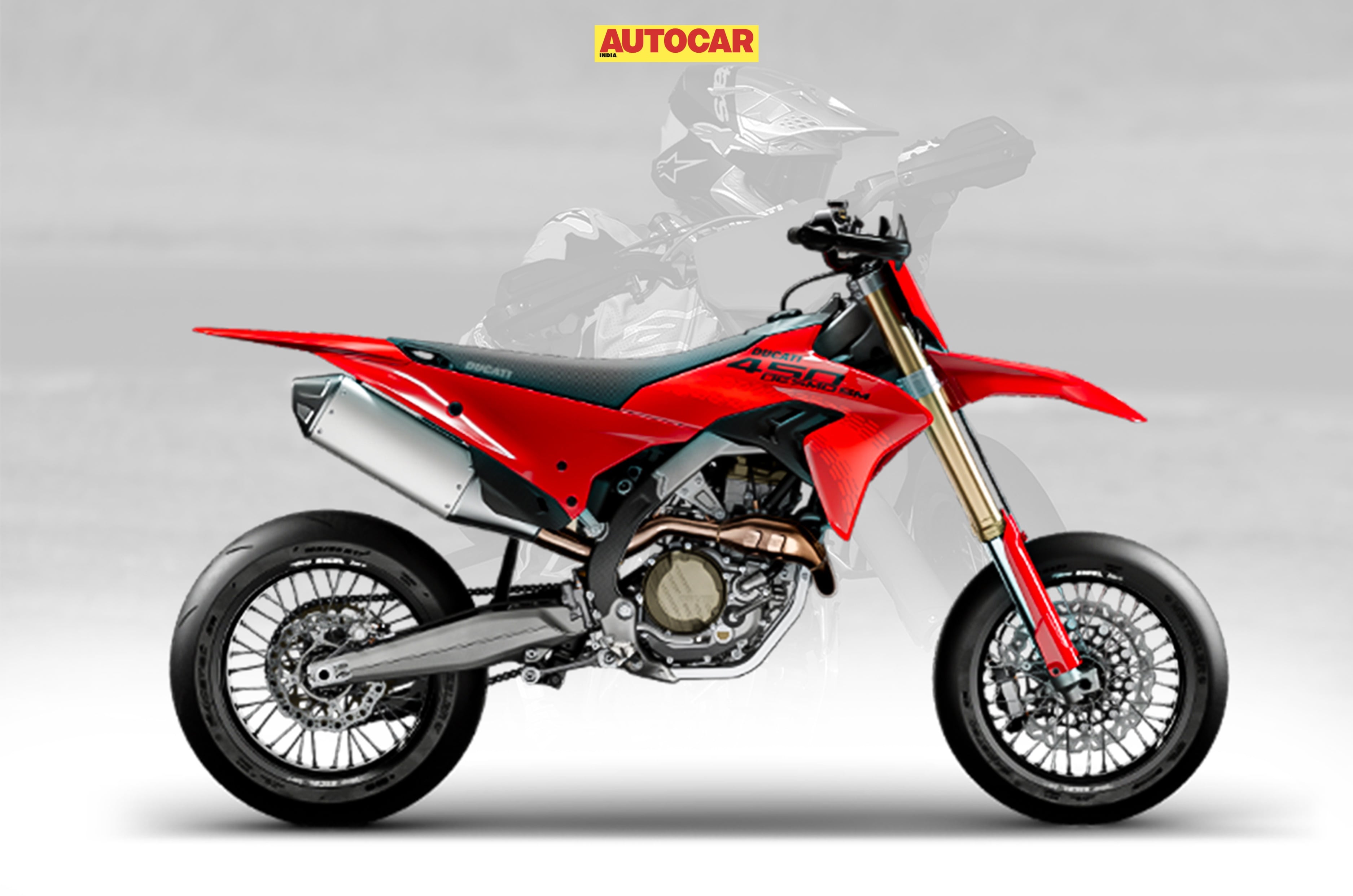
After its first look during Ducati World Week, the Italian manufacturer has unveiled the Desmo450 SM supermoto, based on the Desmo450 MX platform. Ducati appears to be aiming it squarely at racing enthusiasts, with its equipment, design, and maintenance centred around that use case. The lack of a headlight is another obvious sign that it’s not meant to be street-legal.
Gets adjustable front and rear suspension with 280mm and 295mm travel, respectively
Has 16.5 front and 17-inch rear rims with tubeless tyres
Only production Ducati to have race slick tyres as standard
Ducati Desmo450 SM: What’s different from the Desmo450 MX?
Almost completely reworked for the supermoto discipline
Even though the platform is shared with the Desmo450 MX, Ducati has reworked it in almost every way for the Desmo450 SM. Starting with the suspension, Ducati has sought Showa’s help in redesigning it for supermoto use. The SM uses a Showa sealed cartridge 49mm USD fork with 280mm travel that is adjustable for compression and rebound. The monoshock at the rear has 295mm travel, and is fully adjustable. Ducati says the suspension enables precise braking and corner entries, while keeping the balance and traction intact. The twin-spar aluminium frame, however, is shared as-is with the Desmo450 MX.
Other parts like the handguards and fork guards have been made smaller to fit the discipline and the SM sports slicks as standard, making it the first and only production Ducati to do so. The bike sports a 16.5-inch front rim and a 17-inch rear rim with a Bartubeless system. According to Ducati, this system reduces the rotating and unsprung mass on the bike by 1.2kg. The factory-fit slicks are Metzeler Racetec Slick SMs, the same as those used in the Supermoto World Championship. Speaking of which, the Desmo450 MX has already seen quite a bit of success in the 2026 Supermoto World Championship, at the hands of four-time world champion Marc-Reiner Schmidt.
The engine is a 449.6cc single-cylinder mill, delivering 63.5hp and 53.5Nm of torque. Thanks to the Desmodromic valve train, the rev limiter is set at 11,900rpm, offering a wide power band and flexible riding. The fuel tank capacity is 7.2 litres; with an empty fuel tank, the SM weighs just 109kg.
Braking duties are handled by a Brembo stylema radial caliper with a 310mm Galfer front disc and a 240mm Galfer rear disc with Brembo floating caliper. Other rider aids include Ducati Traction Control, Engine Brake Control, Launch Control, up-only quickshifter, and a Suter slipper clutch. All the control systems are tied to the two ride modes on offer, and can be customised to the rider’s liking using Ducati’s X-Link app.
The maintenance intervals remind you once again that Ducati is aiming the Desmo450 SM at serious riders for competitive racing. An oil change is recommended every 15 hours of riding, with piston replacement and valve clearance checks necessitated every 45 hours. Ducati recommends a full engine overhaul every 90 hours of riding. If you’d like electronic assistance with this, Ducati offers a Com-Link module as an accessory which assesses the wear on engine components to make maintenance precise and efficient over time.
At the time of writing, Ducati has announced the Desmo450 SM will be available in European markets starting December 2026, followed by the rest of the world; Ducati hasn’t indicated if India will be one of the markets to get the Desmo450 SM at this time, but considering that the Desmo450 MX was launched here a year after its global debut, we could see the supermoto sibling here as well. In Italy, the asking price for the Desmo450 SM is EUR 13,990 (Rs 15.38 lakh). For context, the Desmo450 MX costs EUR 12,990 (Rs 14.28 lakh) in Italy, whereas in India, it is priced at Rs 17.28 lakh. We could thus expect to see the Desmo450 SM to sit above the MX if and when Ducati launches it here.
All prices as ex-showroom. EUR-to-INR conversion based on current exchange rates.
उत्तर प्रदेश में 2027 के विधानसभा चुनावों को लेकर राजनीतिक सरगर्मी तेज हो गई। इसी बीच, ऑल इंडिया मजलिस-ए-इत्तेहादुल मुस्लिमीन (AIMIM) के प्रमुख असदुद्दीन ओवैसी ने एक बड़ा राजनीतिक बयान देकर सूबे की सियासत में हलचल पैदा कर दी है। उन्होंने उत्तर प्रदेश विधानसभा चुनाव 2027 के मद्देनजर विपक्षी दलों (सपा और कांग्रेस) को गठबंधन के लिए 2 अक्टूबर तक की डेडलाइन दी है। ALSO READ: ओमप्रकाश राजभर का दावा: यूपी के चार टुकड़े होंगे, पूर्वांचल का सीएम बनेगा राजभर समाज का बेटा
समाचार एजेंसी एएनआई से बातचीत के दौरान ओवैसी ने कहा कि अगर विपक्षी दलों का मुख्य उद्देश्य बीजेपी को सत्ता से बाहर रखना है, तो उनकी पार्टी AIMIM उनके साथ मिलकर काम करने को पूरी तरह तैयार है।
अकेले भाजपा को नहीं हरा सकते
ओवैसी ने जोर देकर कहा कि हम उत्तर प्रदेश में तीसरी बार भाजपा की सरकार नहीं बनने देना चाहते। यदि कोई दल ऐसा ही सोचता है, तो वे हमसे बात कर सकते हैं। लेकिन यह समझना बहुत जरूरी है कि कोई भी पार्टी अकेले दम पर भाजपा को नहीं रोक सकती। उन्होंने समान विचारधारा वाले दलों को एकजुट होकर चुनावी मैदान में उतरने का न्योता दिया है।
आगामी चुनावों को लेकर दी चेतावनी
बयान के दौरान ओवैसी ने आगामी राजनीतिक मुकाबले की नजाकत को भी समझाया। उन्होंने चेतावनी देते हुए कहा कि 2027 के विधानसभा चुनावों को पुराने चश्मे से नहीं देखा जाना चाहिए। यह मुकाबला न तो 2014 जैसा होगा, न ही 2017, 2019 या 2022 के चुनावों की तरह होगा; इस बार चुनावी मैदान की चुनौतियां बिल्कुल अलग और नई होंगी।
ओवैसी ने सवाल उठाया कि राम मंदिर में कथित गबन मामले की SIT रिपोर्ट जनता के सामने क्यों नहीं रखी गई? सरकार इसे जारी क्यों नहीं कर रही है? और इस मामले के आरोपियों को जमानत कैसे मिल रही है? यह बेहद अजीब है और यह भी चुनाव में एक बड़ा मुद्दा बनेगा।
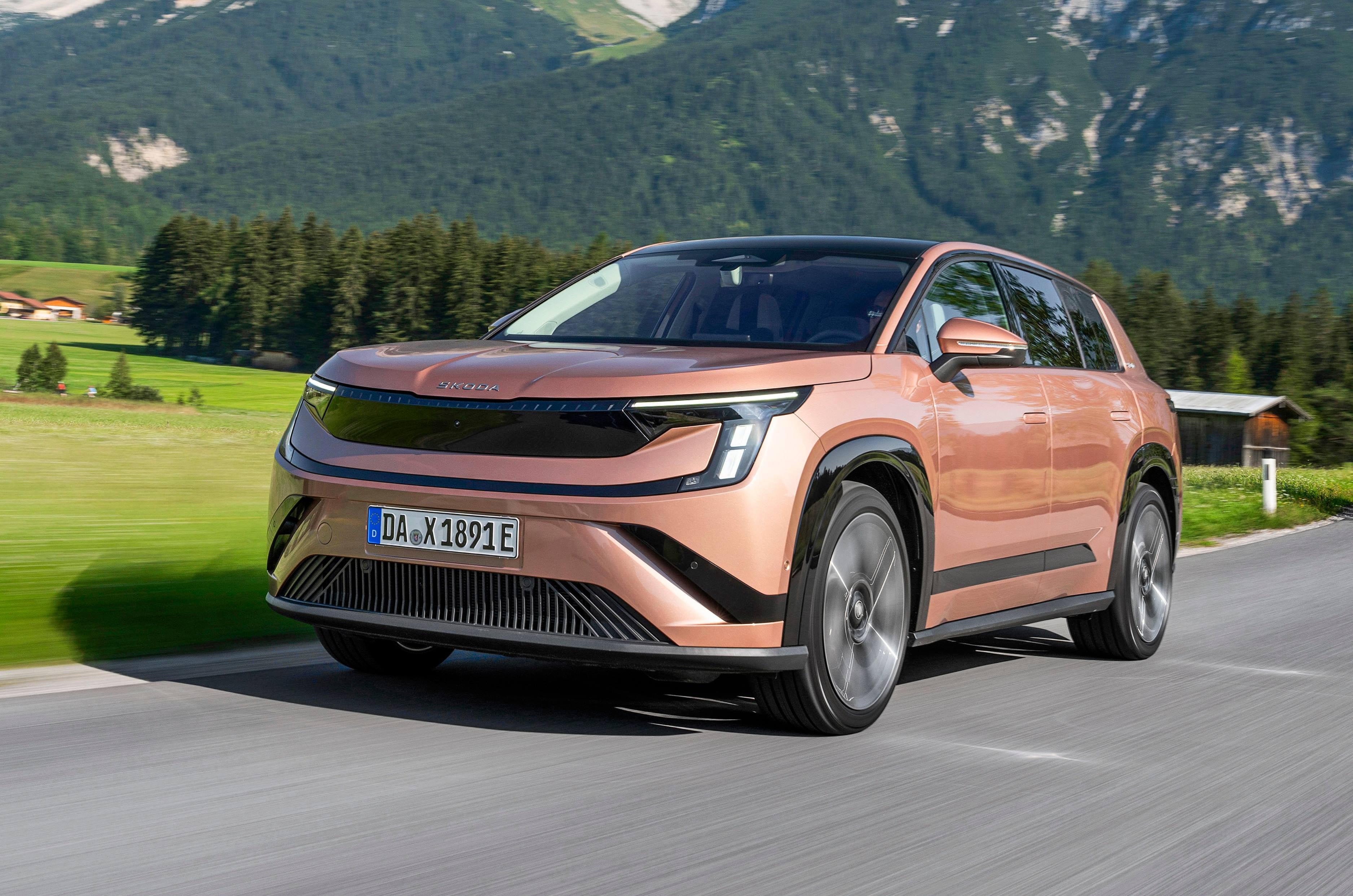
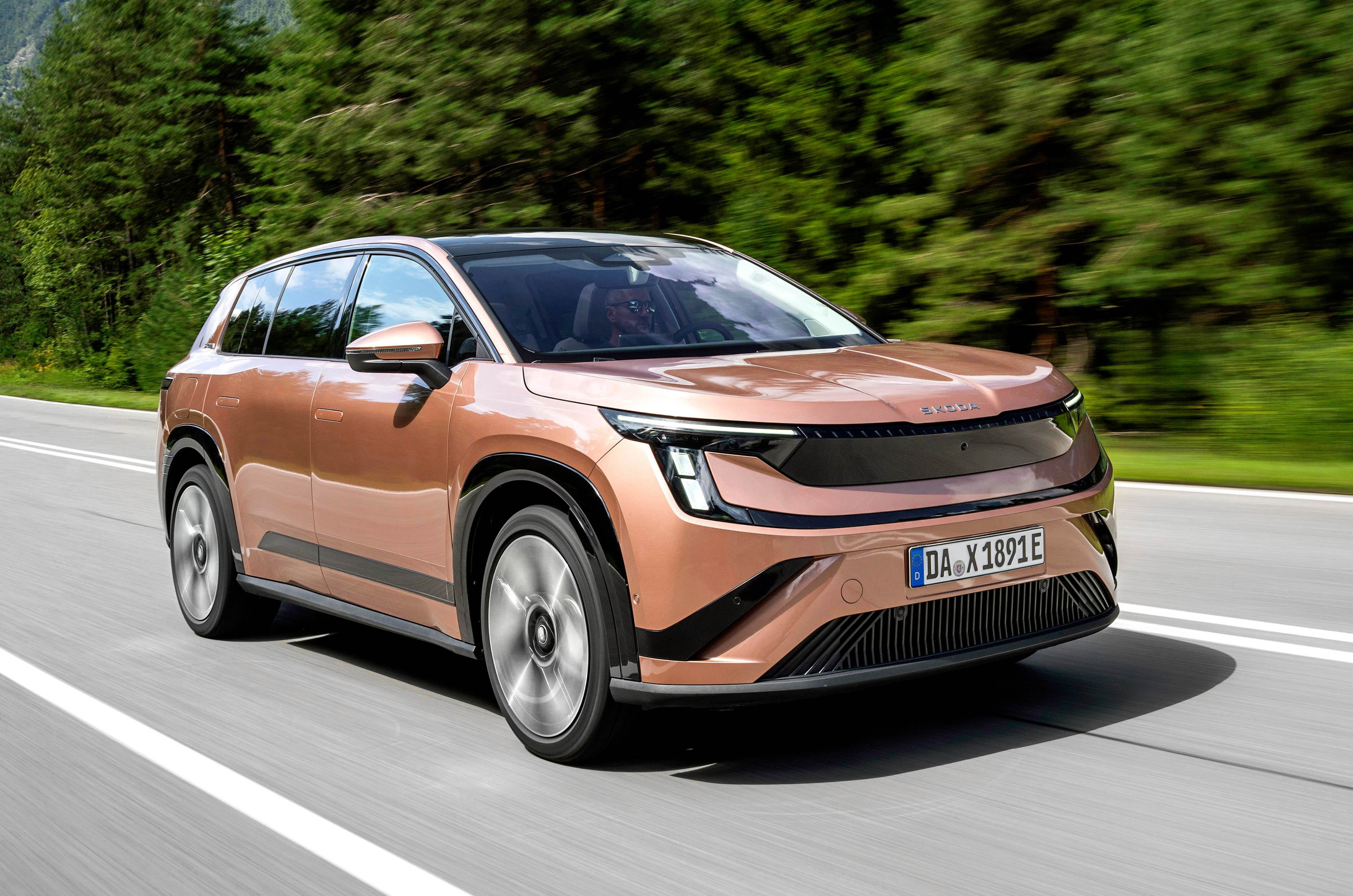
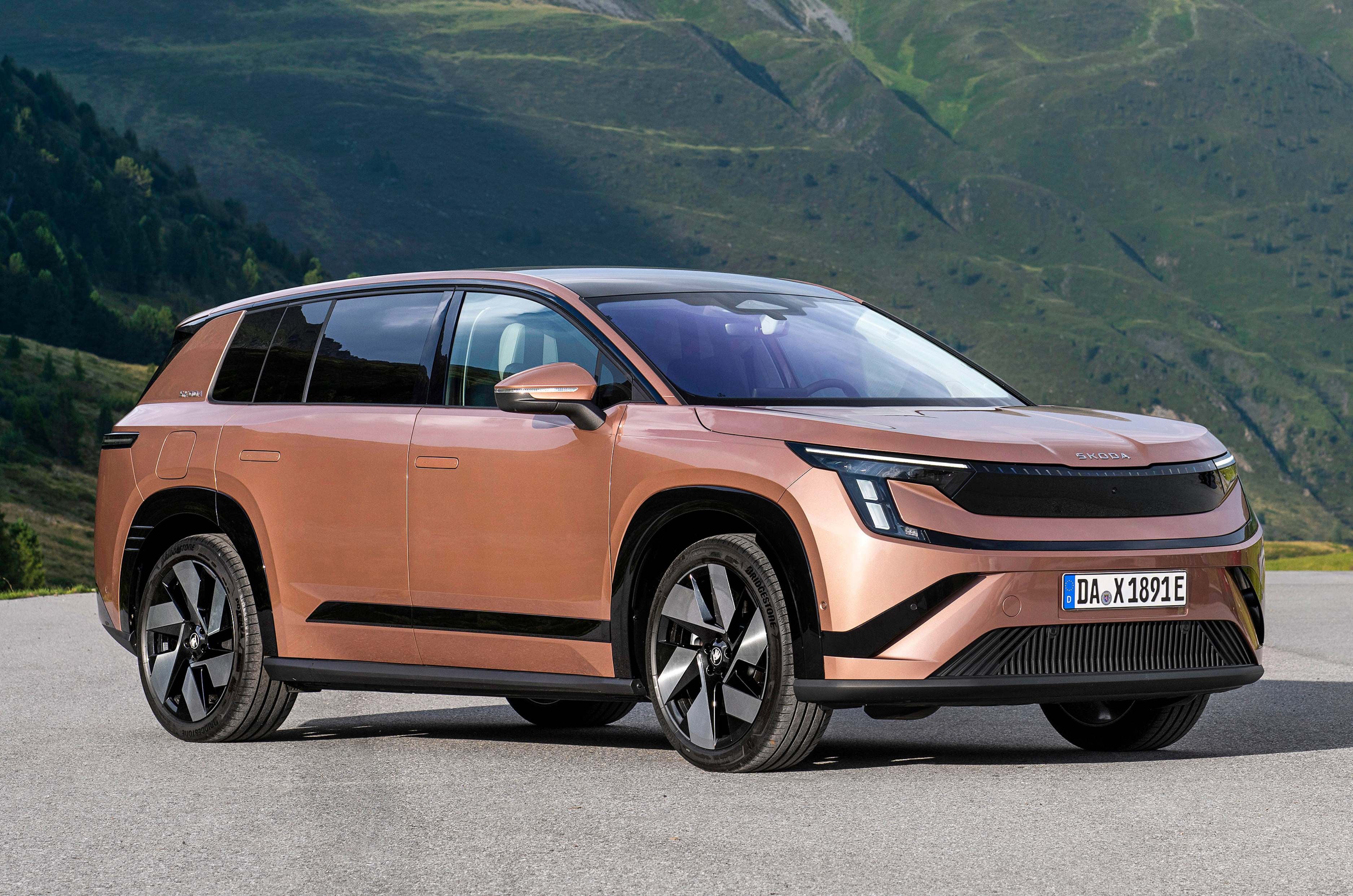
Epiq, Elroq, Enyaq, it’s pretty clear to see the nomenclature every electric Skoda SUVs follows, not so here though. You see this is Skoda’s new flagship or its peak as the company says, ergo we have the Peaq.
Skoda Peaq Exterior Design and Engineering – 9/10
Doubles down on minimalist style but looks premium, classy and has good presence.
At 4.87 meters, the Peaq is the largest Skoda SUV yet.
While the entry level model, the Epiq, utilizes the front wheel driven MEB+ platform, the Elroq, Enyaq and the Peaq are all built on the MEB platform which is primarily rear wheel driven with the option of AWD, which the Peaq does offer. At 4.87 meters the Peaq is the largest Skoda SUV and sports Skoda’s largest boot, battery and sunroof, too.
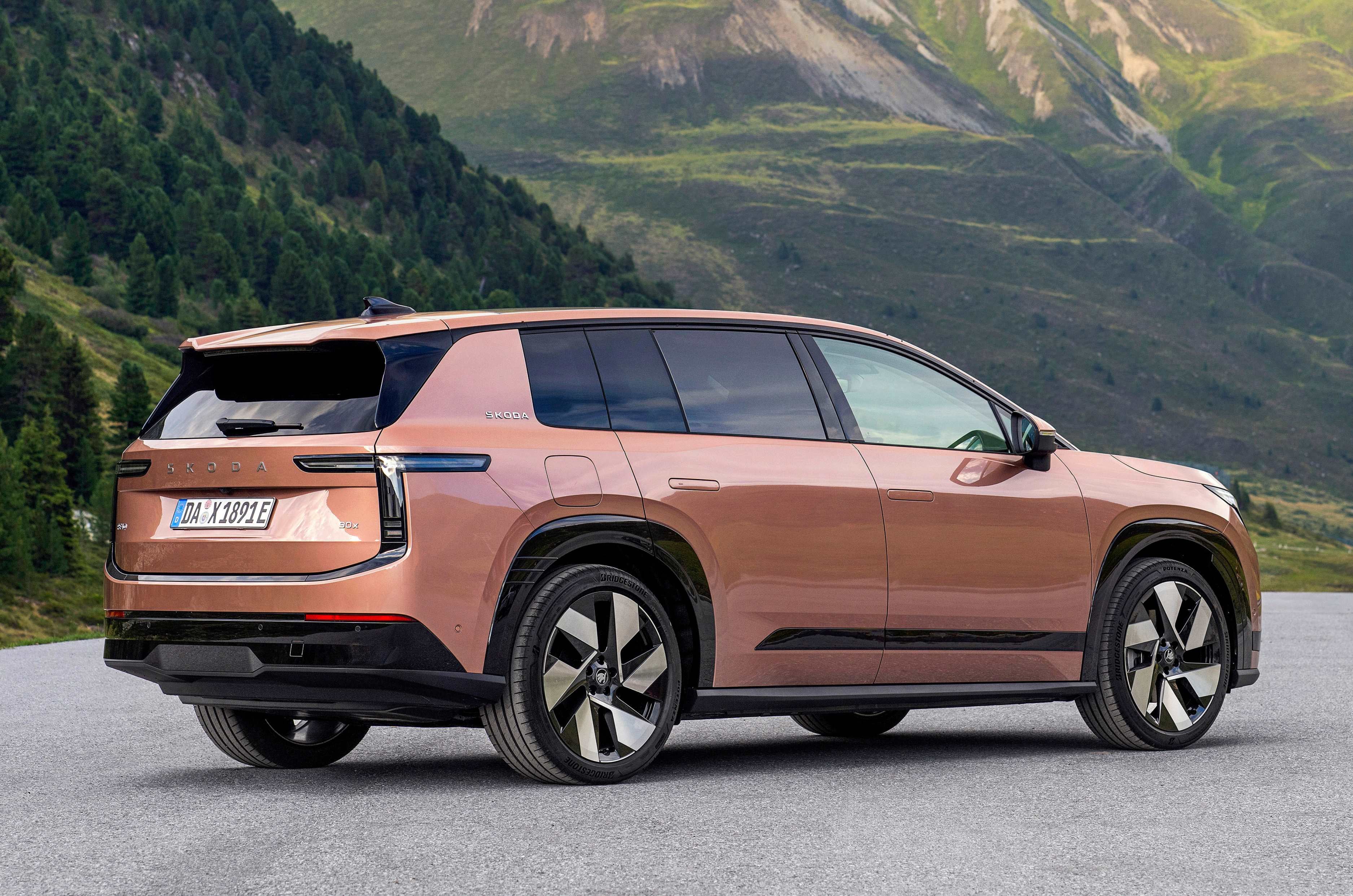
Despite its size it doesn’t look brutish like most large SUVs seem to be leaning towards these days. Thanks to Skoda’s new ‘Modern Solid’ design language, which is all about minimalism the Peaq looks premium and classy and the bodywork is quite aero efficient too with a 0.249 drag coefficient.
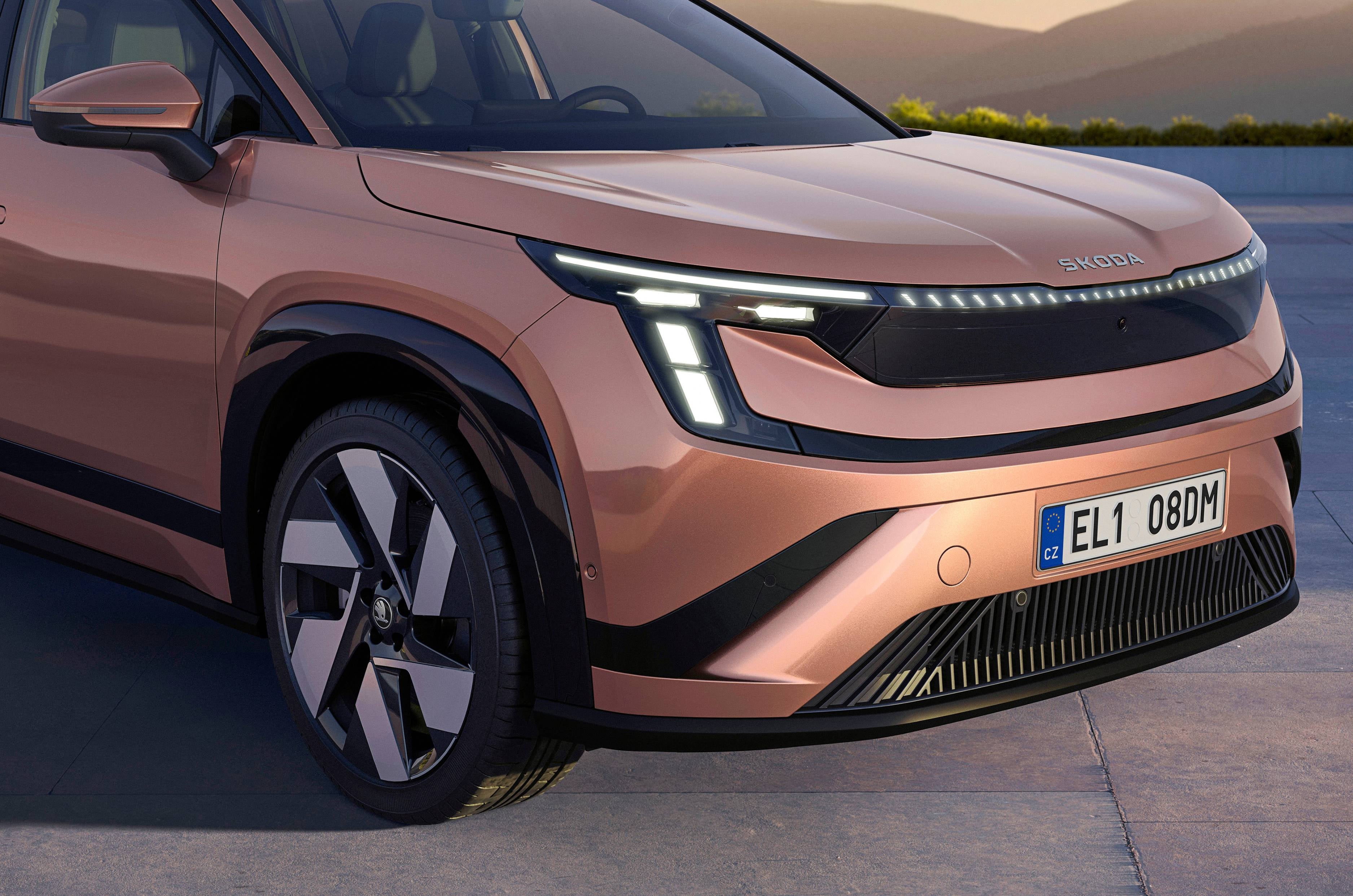
The black panel houses all the tech bits like the cameras, radars and lidar.
At the front the lines are simple and clean. The fascia sports the company’s T-shaped DRL and headlight signature and the rather clever Tech Deck; the black panel which hides all the tech bits like the cameras, radars and lidar and mimics a grille thus avoiding that faceless look many EVs sport. Skoda has even hidden LED lights behind it that – to a small extent – mimic grille slots. Notably the Skoda emblem is missing, the company is in the process of moving away from it and the Peaq carries the new Skoda letter mark instead.
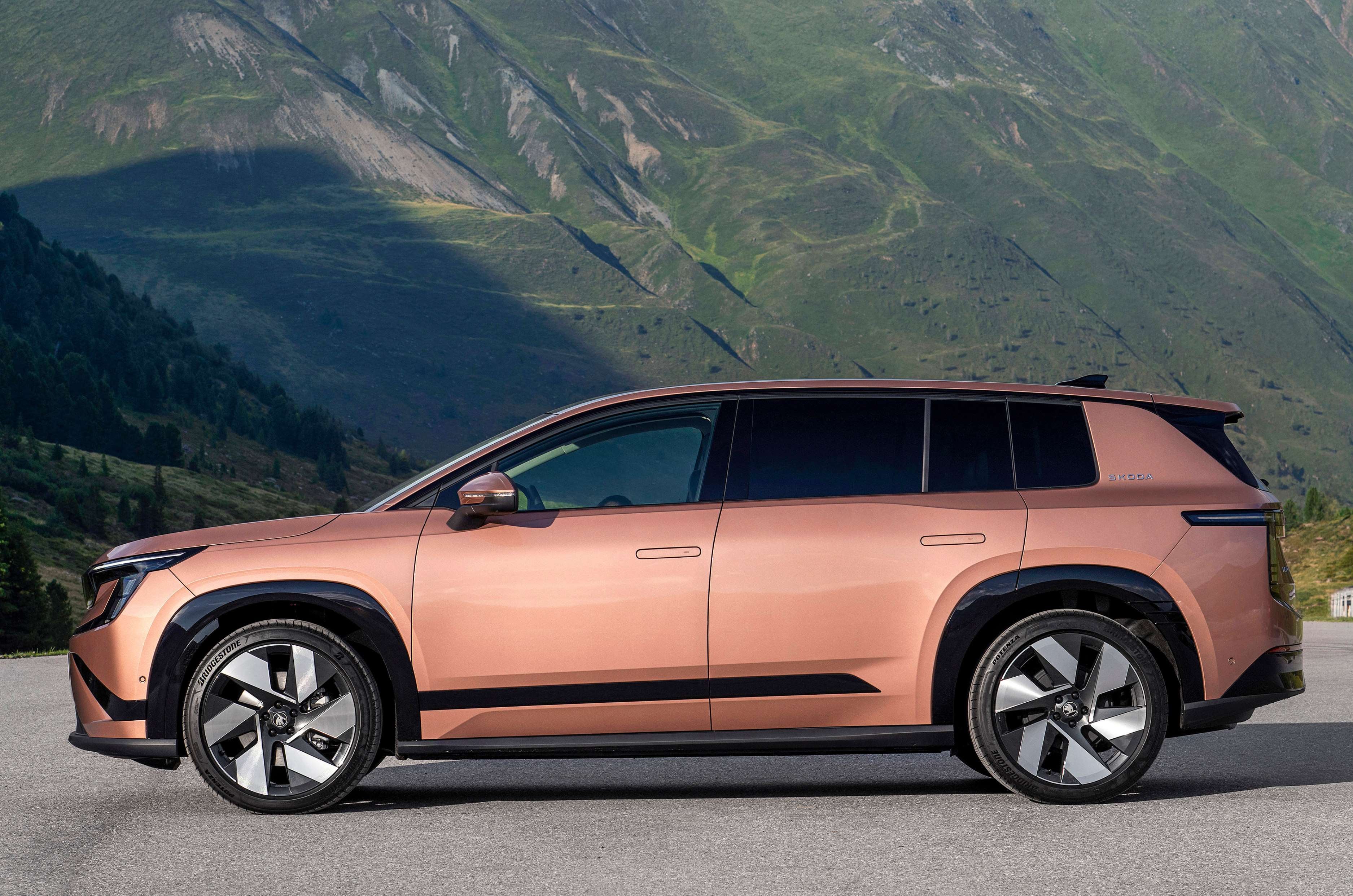
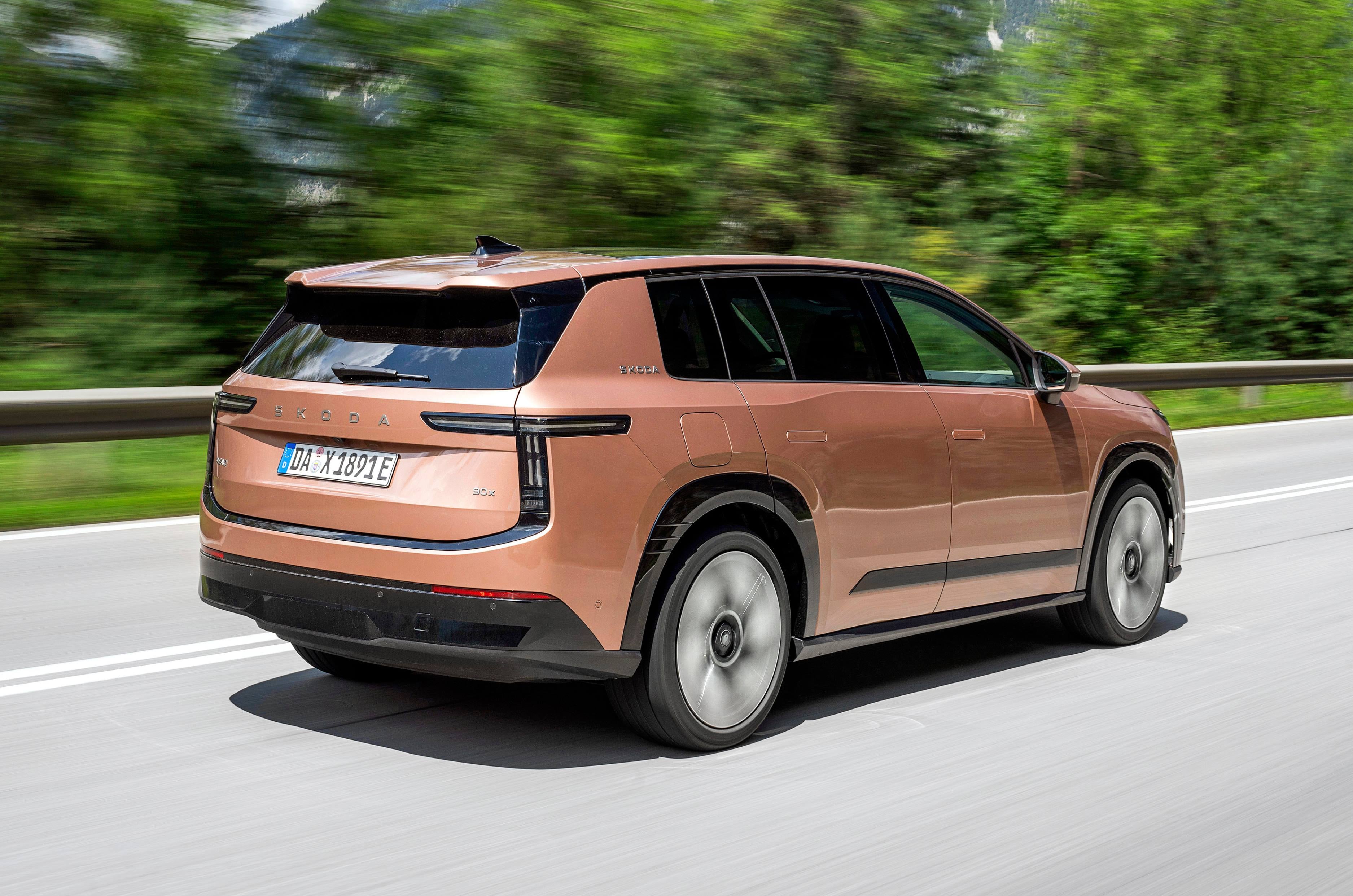
Over at the sides the clean lines continue with flush door handles, these can also be pressed in at the edge to manually operate them. The alloy wheels on our car were the 21 inchers and have a neatly balanced sporty and classy look. A defining styling element in profile is the C pillar which is body coloured and looks like a reversed fin and carries the Skoda lettering.
T-shaped tail lights are connected by a stylistic loop running at the bottom of the tail gate.
Like the headlights, the taillights too are T-shaped and are connected to each other via a stylistic loop running at the bottom of the tailgate. A roof integrated spoiler and a shark fin antenna complete the rear look and here too it’s just the Skoda lettering spelled out across the boot lid.
Skoda Peaq Interior Space and Comfort – 7/10
Minimalism carries on inside but cabin could do with a dash of flair.
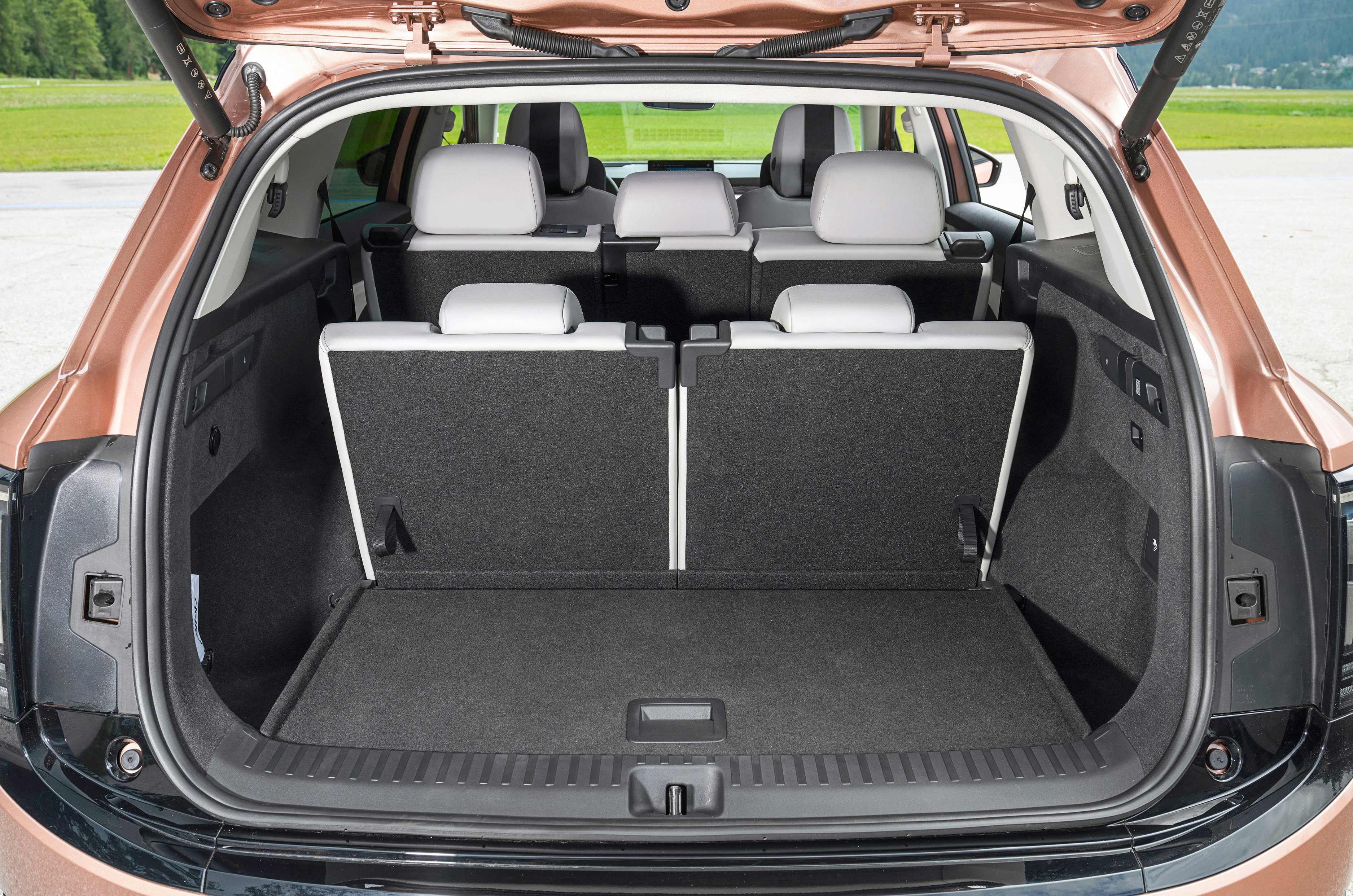
Peaq’s boot is the largest on a Skoda so far; offers 299-litres of space with all rows up.
With a near three-meter wheelbase there’s plenty of space inside, beginning with the boot which is the largest on a Skoda so far; 935 litres without the third row, but even in the 3-row version and with the third-row seats in place, there’s 299 litres which is more than enough for a few small bags. A handy little bit is a motorised cargo cover that rolls open or close with the boot opening and closing. At the front there’s also a 37-litre frunk.
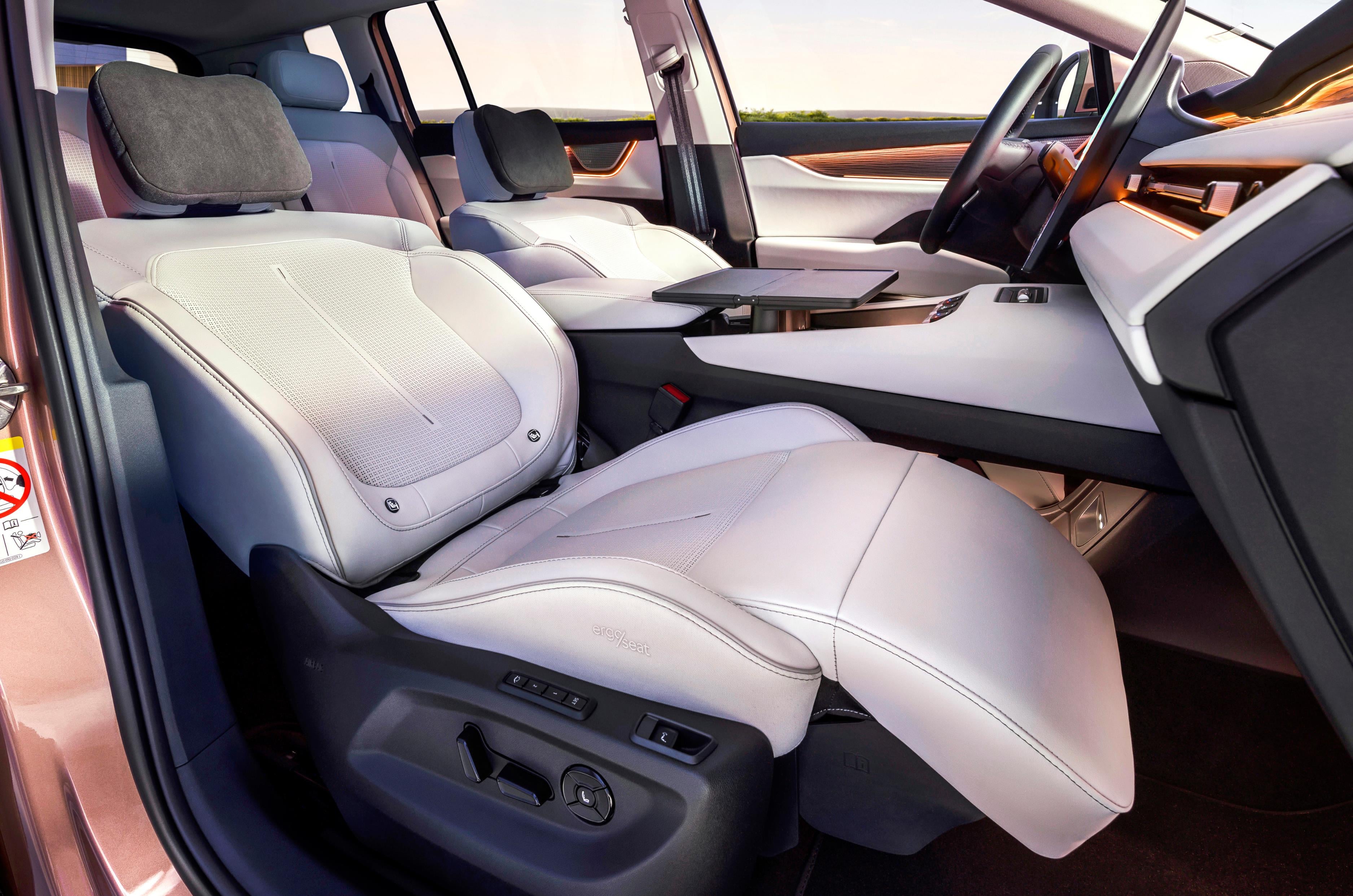
Front seats feature a ‘zero-gravity’ position allowing one to fully stretch out.
Passengers are well catered too, especially at the front two rows. The front seats offer plenty of space and will suit broader frames quite nicely. They also offer a ‘zero-gravity’ position wherein at the touch of a button the seat base dips, the seat back reclines and an ottoman style leg rest extends upward. They also offer heating, ventilation and a massage function. There’s an app too – which new EV does not have one these days – and that can configure the cabin lighting, seats, climate and other elements in six modes from a relaxing to an energizing ambience. On our drive in the cold Austrian mountains, we had a lot of rain and the ‘warm feet’ HVAC setting proved to be very handy and welcome.
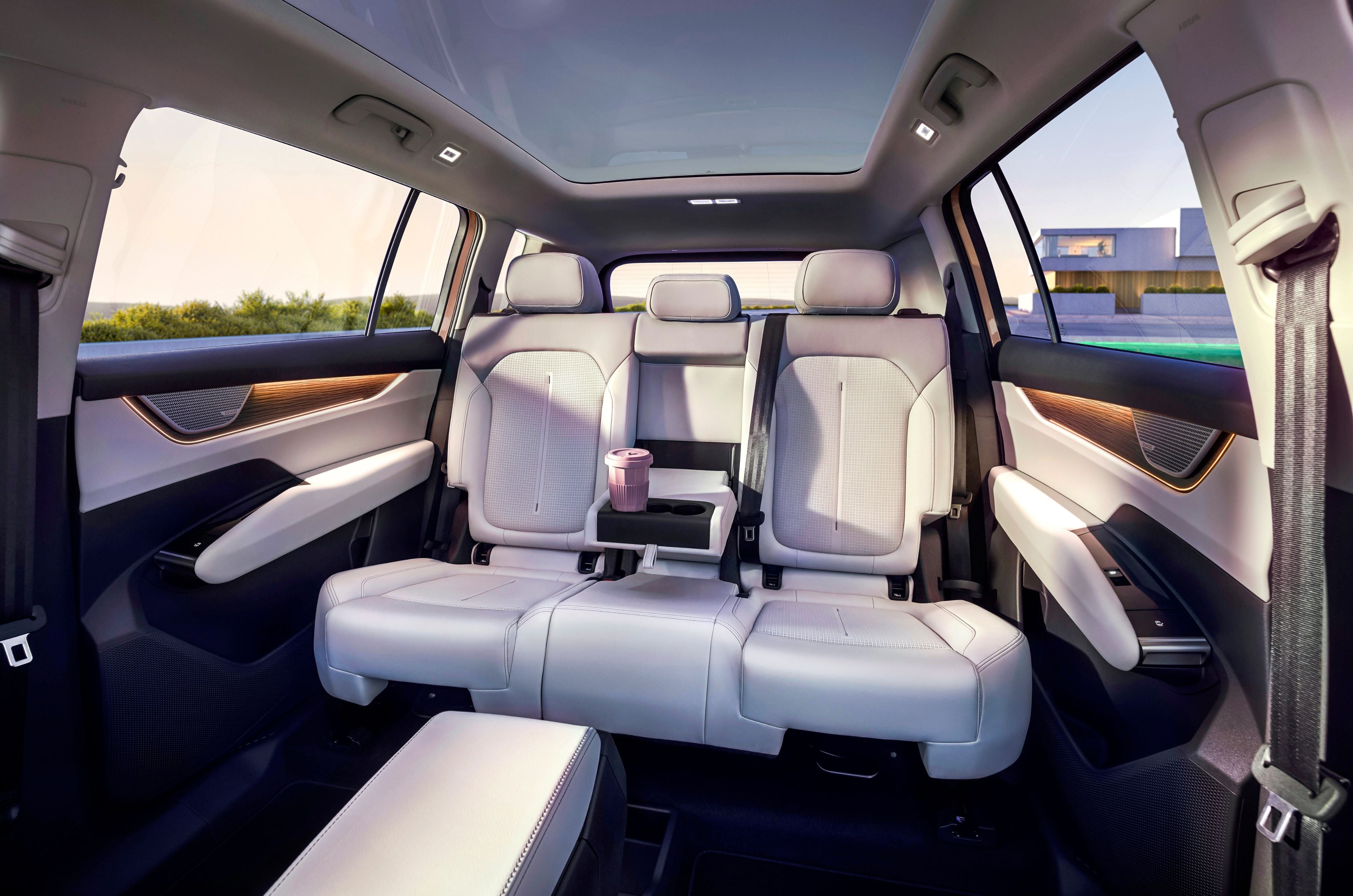
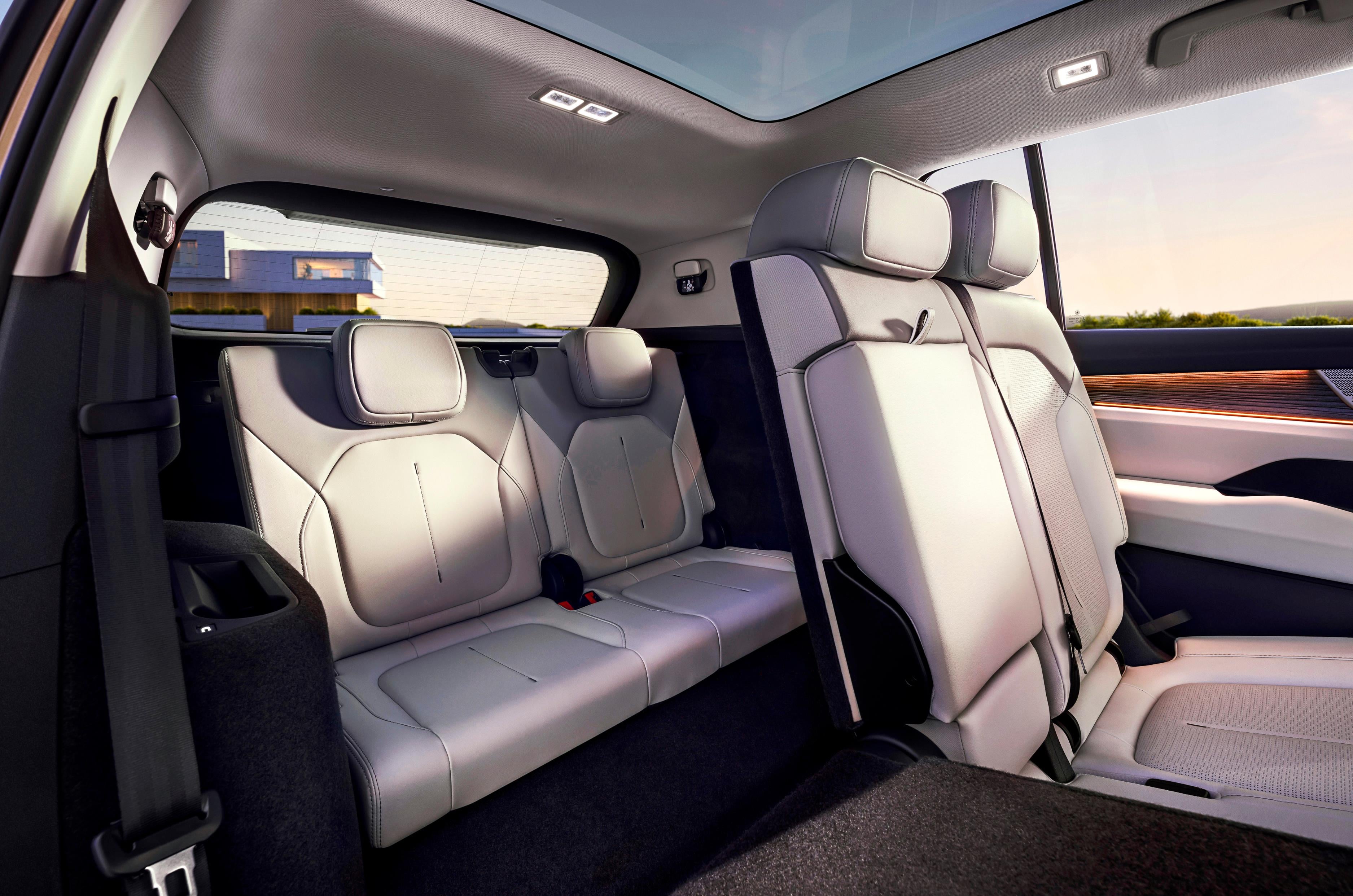
Three people can sit abreast in the second row; one doesn’t sit in a knees-up position like in most EVs.
There’s plenty of space in the second row, legroom is good as is shoulder room. We did sit three abreast and didn’t have too much of shoulder overlap. Headroom is very generous and what’s nice is that you don’t sit in a knees-up position as is the case in some EVs. The third row is decent, there should have been more room given the length of the car, but on its own its quite useable and more than enough for kids or short journeys. Like the second row, headroom here is also good.
In terms of styling the cabin follows on with the exterior minimalist theme and all the lines are simple and clean, with very little flair about. A bit of panache would have been nice and in keeping with the flagship positioning of the Peaq.
Third row is decent enough for kids or for short journeys.
Skoda Peaq Features and Safety – 8/10
Well equipped and with a healthy does of Skoda’s ‘Simply Clever’ details.
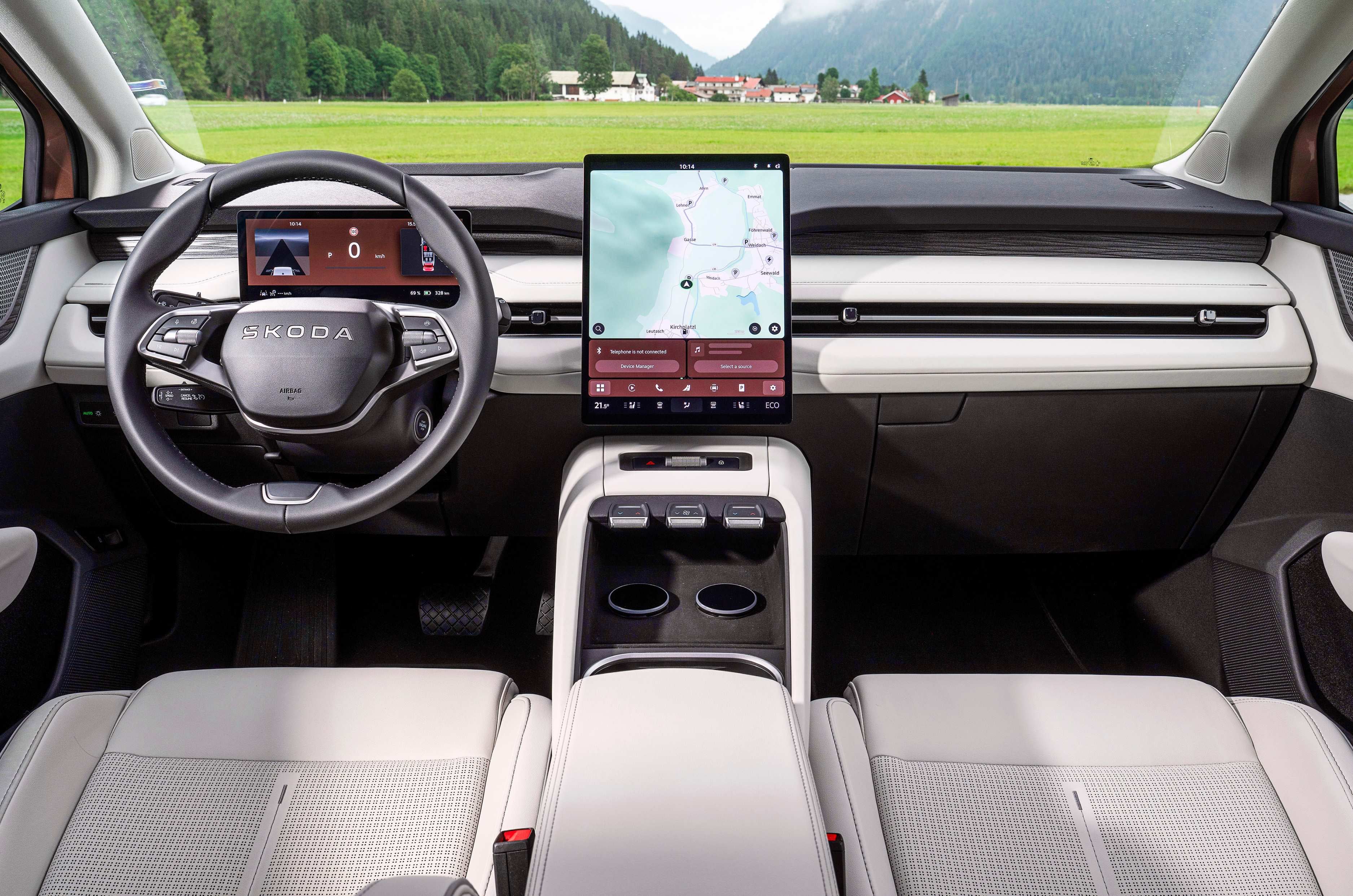
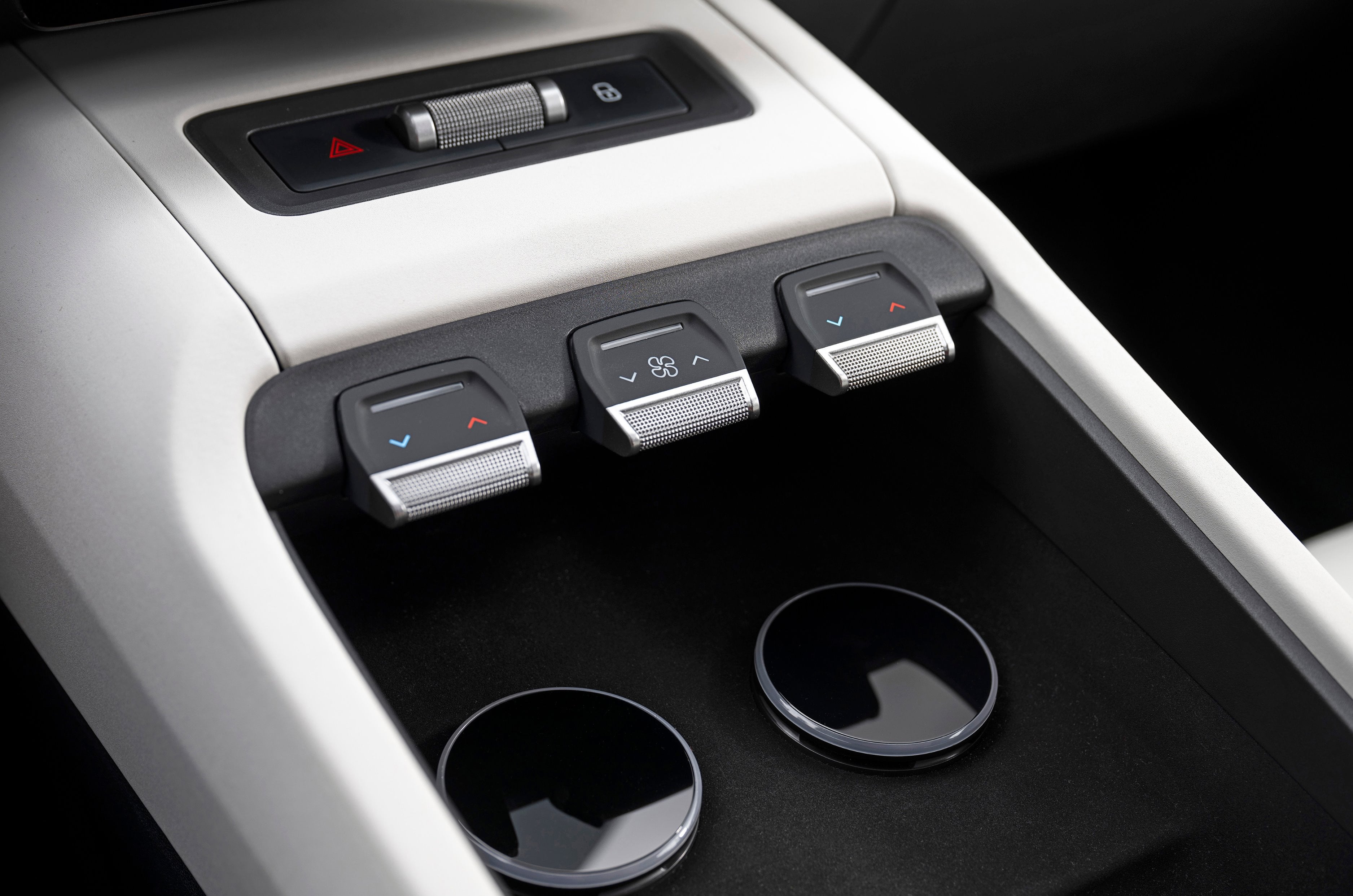
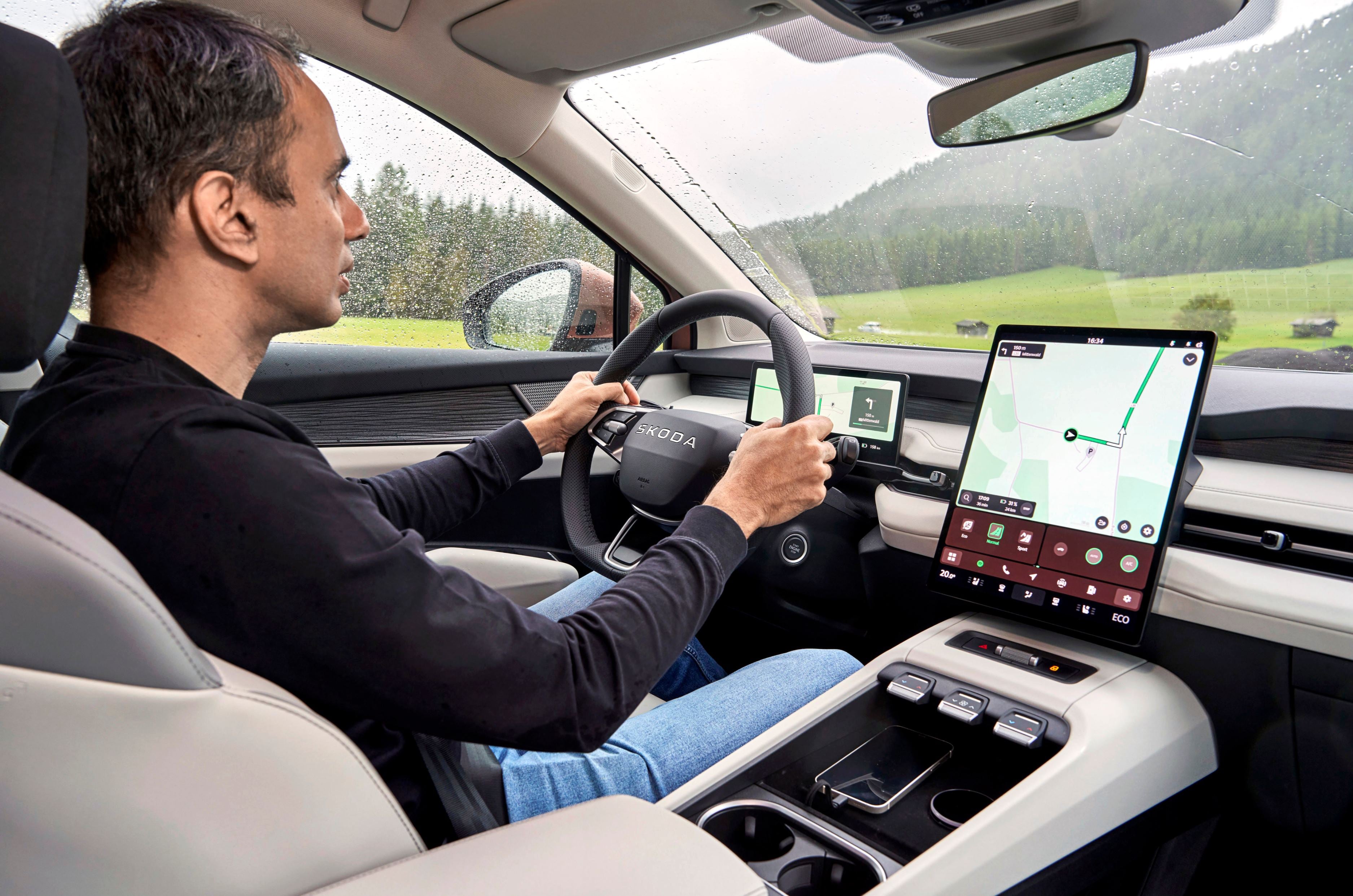
Sitting at the very top of the Skoda range the Peaq is well equipped. The dash carries a 13.6-inch, portrait-oriented touch screen – a first for Skoda – which runs a new UI. There’s a hard baked area for certain controls and thankfully physical controls are retained for main entertainment and HVAC functions, the latter being large toggle switches that are easy to use. These sit on top of an open charging box that has two illuminated magnetic Qi2 wireless charging disc with active cooling, and have a max speed of 25W. The rest of the center console is made up of many storage spaces and cubbies with a neat pass-through slot for charging cables from the lower to the upper console.
A portrait-oriented touchscreen is a first for a Skoda, and runs a brand-new UI.
Ahead of the driver is a 10-inch digital instrument panel which sounds large but has a slim aspect ratio, and there’s also an HUD. The steering wheel is the familiar Skoda unit with the letter mark on the boss and the buttons and scroll wheels on the two wings and as expected the operate with a satisfying click feel.
Thankfully, there are large toggle switches for HVAC controls which are easy to use.
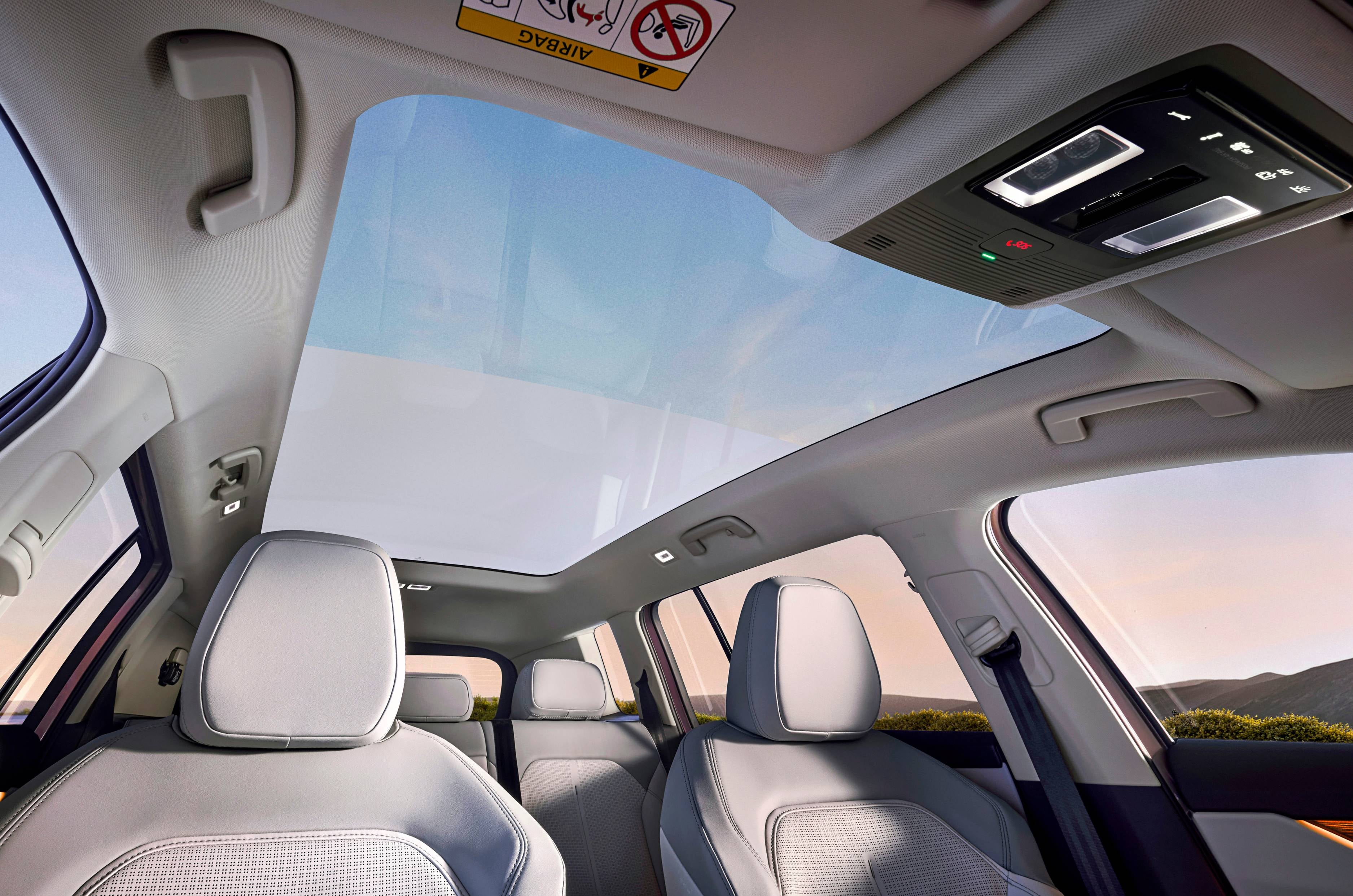
Other features include a 360-degree camera with a transparent 3D body on the display that helps in positioning the car, a 16-speaker SONOS sound system, park assist, a full connectivity suite, 10-airbags and ADAS and of course a healthy dose of Skoda’s ‘Simply Clever’ details like a fold out table for the front passengers that’s tucked away in the center console and umbrella holders in the doors. And topping things off is a large panoramic glass roof, which does not have a sunscreen, instead there’s 9 electrochromic panels that can be darkened to keep out the light and heat says Skoda. We’ll reserve that judgement for when we test it here in our hot climate though.
Panoramic glass roof doesn’t have a sunscreen but features 9 electrochromic panels to keep sun and heat out.
Skoda Peaq Performance and Refinement – 8/10
Strong performance that does not feel characterless like most EVs
There are three powertrain versions on offer starting with the 60-variant, power for which comes from a 63kWH (gross) NMC battery that drives a 204 hp rear motor. Next is the 90 trim which has a 91kWh (gross) NMC battery – the largest on a Skoda –power is courtesy a 286hp rear motor, and the range topper is the 90X which is also powered by the same battery as the 90 but driving a dual motor AWD set up that puts out a combined 300hp. Either of the 90 series cars is what Skoda will bring to India and for our drive today we had the 90X version.
Throtlle response feels quite ICE-like, building speed progressively.
As expected, power delivery is strong and acceleration is brisk, the claimed 0 – 100kph time stands at 6.7 seconds which is plenty quick for a large seven seat family SUV. What’s nice though is that the delivery isn’t typically EV like, which is to say power dumped in an instant and then linear all through. On the Peaq, throttle response feels quite ICE like, it’s fed in progressively and build nicely as you explore deeper regions of the throttle pedal. Top speed is limited to 180kph which is very easy to get too, on the unrestricted section of the German autobahns we hit an indicated 185kph. Wind and tyre noise is well controlled especially over the smooth tarmac sections and even at high triple digit speeds the cabin was silent enough.
Wind and tyre noise are well contained even at triple digit speeds.
Skoda Peaq Ride Comfort and Handling – 7/10
Very stable at speeds, but Normal mode sees some body float over undulations.
The 90X comes with Skoda’s dynamic chassis control and the adjustable dampers do alter the ride character noticeably. In Normal mode is very comfy and could do well over potholes and ruts, however at highway speeds and over undulations that we did see on some section there is some body float. A switch to the Sport setting however tides this up quite nicely and was the default setting I used for most of the drive. Being an AWD, there’s also a few off-road modes though we didn’t get to try these out and I suspect most owners won’t either.
Depending on the mode, adjustable dampers noticeably alter the ride quality.
In terms of handling this isn’t what you would call light on its feet, you do know you are driving a large SUV but its never cumbersome and through the mountain passes we did have a bit of fun, not sporty then but enjoyable enough if how I’d describe the handling character.
Skoda Peaq Range and Efficiency – 7/10
Charging speeds and range are par for course
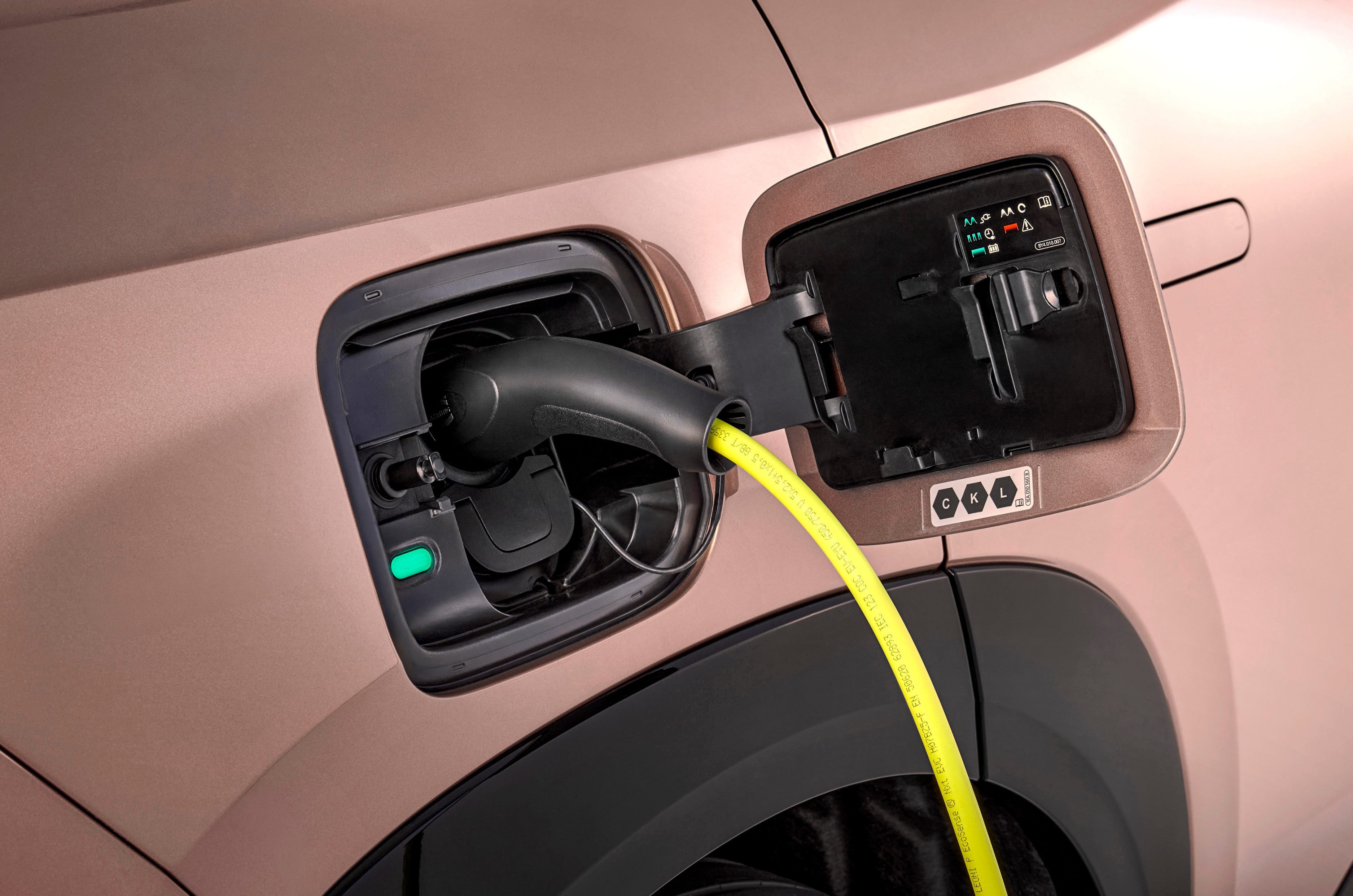
The Peaq 60 battery capacity stands at 63kWh (59kWh net) and that’s good for a range of 450kms says Skoda. Max charging speed is 160kW on a DC fast charger and that can take the battery from 10 to 80 percent in 27 minutes.
A 160kW DC fast charger can top up the battery from 10 to 80 percent in 27 minutes (claimed).
The 90 cars are powered by a larger 91kWh (86kWh net) battery, max charging speed stands at 199kW and a 10 to 80 percent charge on a DC fast charger takes 28 mins. On the 90X range stands at 610kms while the two wheel drive 90 version sees a slightly longer range at 640 kms. We’ll know the real-world range once we put it through our standard test cycle back home.
Skoda Peaq Expected price and Verdict – 8/10
Priced at Rs 60 lakh it would be a tempting option and it does more than enough to call this peak Skoda.
Skoda is really doing a fine job with its EVs, we liked the Enyaq, were superbly impressed with the Elroq and the flagship Peaq does not disappoint too. Yes, the ride does feel soft and the interiors do lack flair, something you would expect on a flagship and we’ll of course have to wait and see how Skoda price this when it comes to India some time mid next year. Skoda says it will arrive as a CBU and we expect it to be priced at around Rs 60 lakh ex-showroom where it will be able to compete with rivals like the Tesla Model Y L, above that though and Skoda will face some heat from premium brands like BMW and Mercedes that are also expanding their electric SUV portfolio.
The Peaq will arrive in India as a CBU and is expected to be priced around the Rs 60 lakh mark.
The Peaq though does provide a very well-turned-out product, it looks classy and premium and that’s important at this price point, there’s a good amount of space inside, especially for the front two rows, it’s well equipped with typically Skoda clever bits and the drive experience is mature and enjoyable. All typical highlights that we’ve come to expect of the brand. All in all, then, the Skoda Peaq does more than enough to safely call this, peak Skoda.
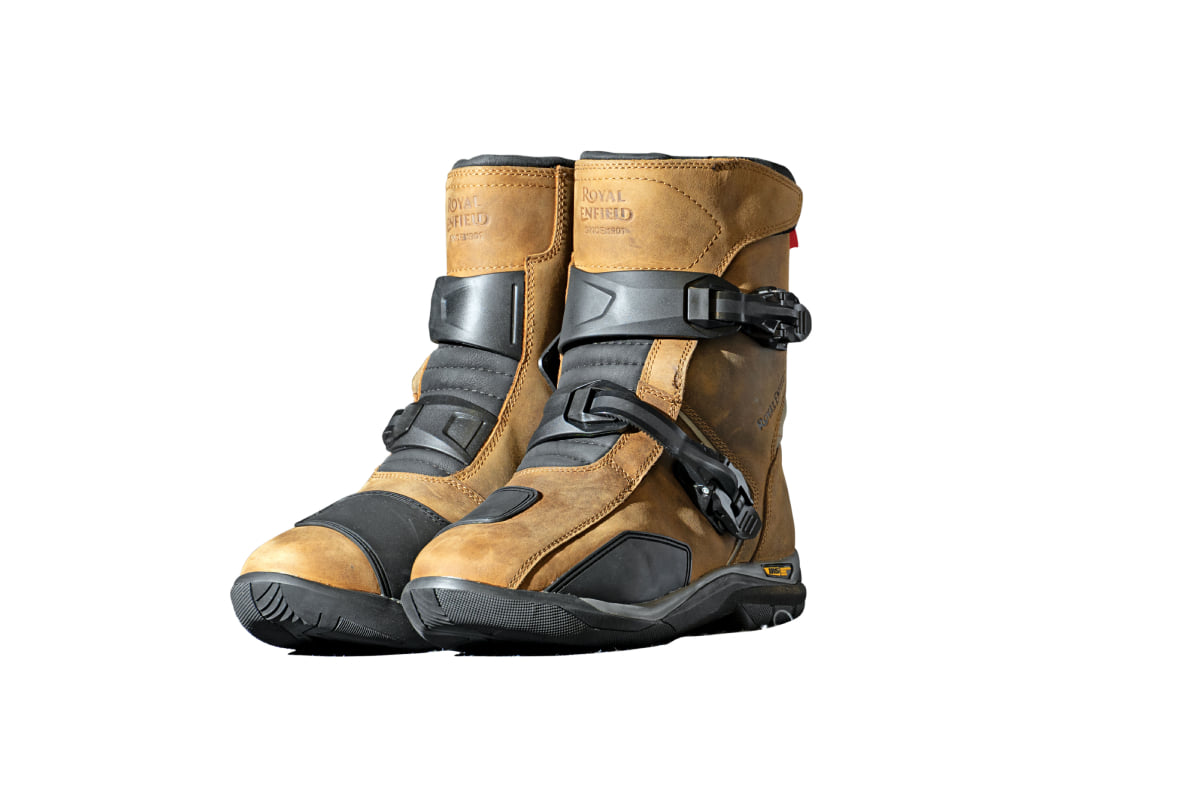
These are versatile riding boots that sit between an everyday motorcycle boot and a more rugged touring option. They use leather as the primary outer material and feature a sturdy construction with a grippy sole. For waterproofing, the boots use a membrane/liner and sealed seams.
They feel substantial and sturdy when you first put them on. They weren’t uncomfortable but didn’t have the flexibility you would expect. It took around 500-600km of riding for them to properly break in. Once they did, the difference was quite noticeable. They became more comfortable and allowed greater freedom of movement. They also started feeling more natural when walking around off the bike, which is important for a pair of boots that you’re likely to use as a daily option in the rainy season.
On the motorcycle, these boots give you a good sense of security. They feel sturdy around your feet and ankles, and the solid construction with TPR protectors in the heel cup, toe box, and ankle inspires confidence while riding. Whether shifting gears, using the rear brake or standing on the pegs, they were secure without feeling cumbersome.
The boots are also alright for some mild off-road riding. I wouldn’t recommend them for particularly technical or hardcore trails, where a dedicated off-road boot would offer greater protection, but for lighter trails and the occasional gravel or dirt section, they get the job done.
The waterproofing, however, is where these boots have a limitation. During shorter rides, they performed well. I used them extensively around the city and encountered wet conditions without any water seeping through. Even for longer commutes of 50-60km, the waterproof liner did a good job of keeping water out.
However, things changed on a longer tour. After around 300km of riding in wet conditions, water eventually started making its way inside the boots. Of course, this also depends on the intensity of rain and how much water is hitting each boot. From my experience, more water seeped into the right boot compared to the left. So, I’d be more inclined to recommend the Wanderers for city use and shorter weekend getaways rather than long rides. Additionally, once they get wet from the inside, they take quite some time to dry out. In other respects, the boots work really well as touring footwear.
Priced at Rs 9,990, they offer a good mix of protection, comfort and versatility, especially once they have been properly broken in.
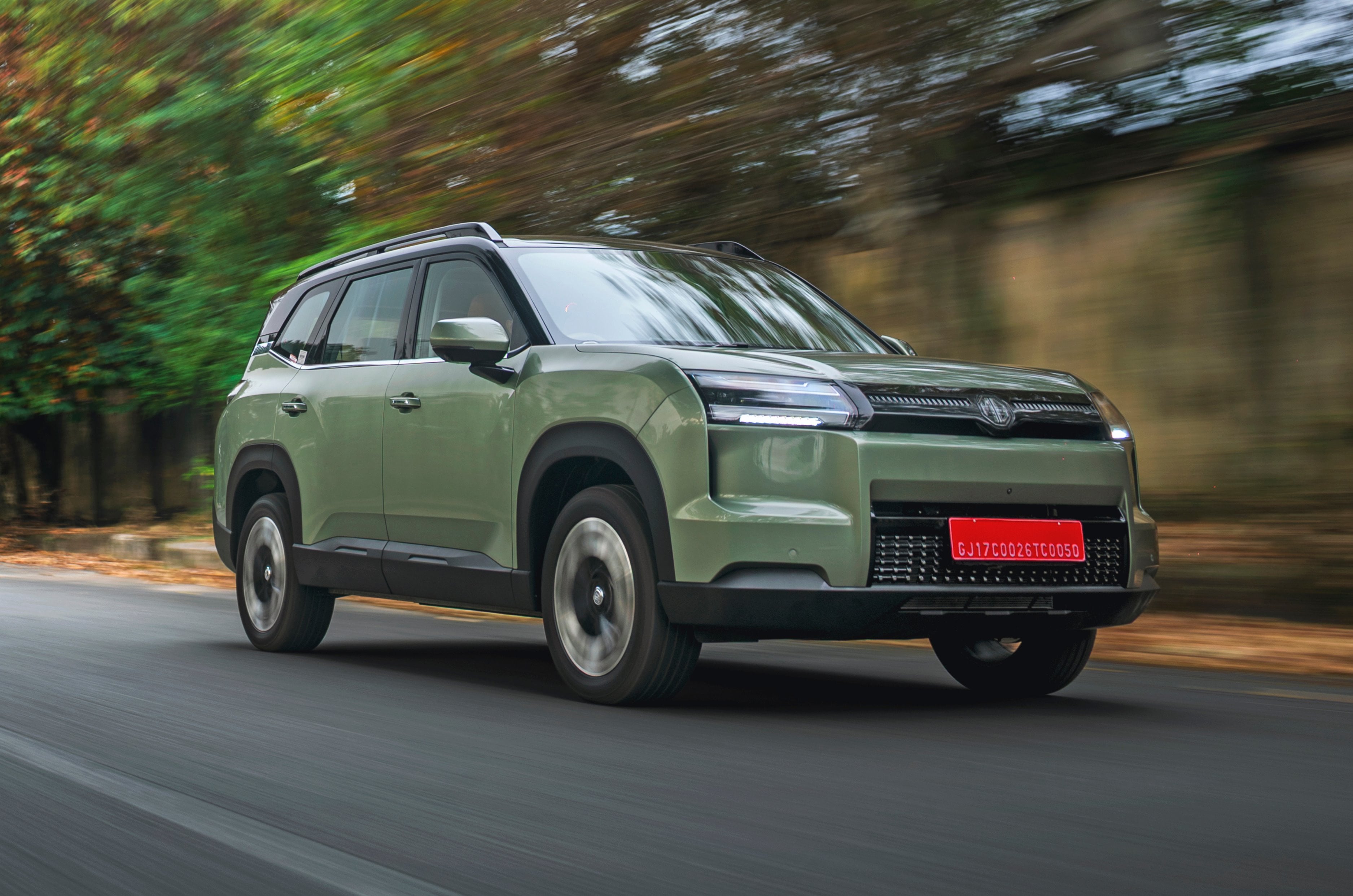
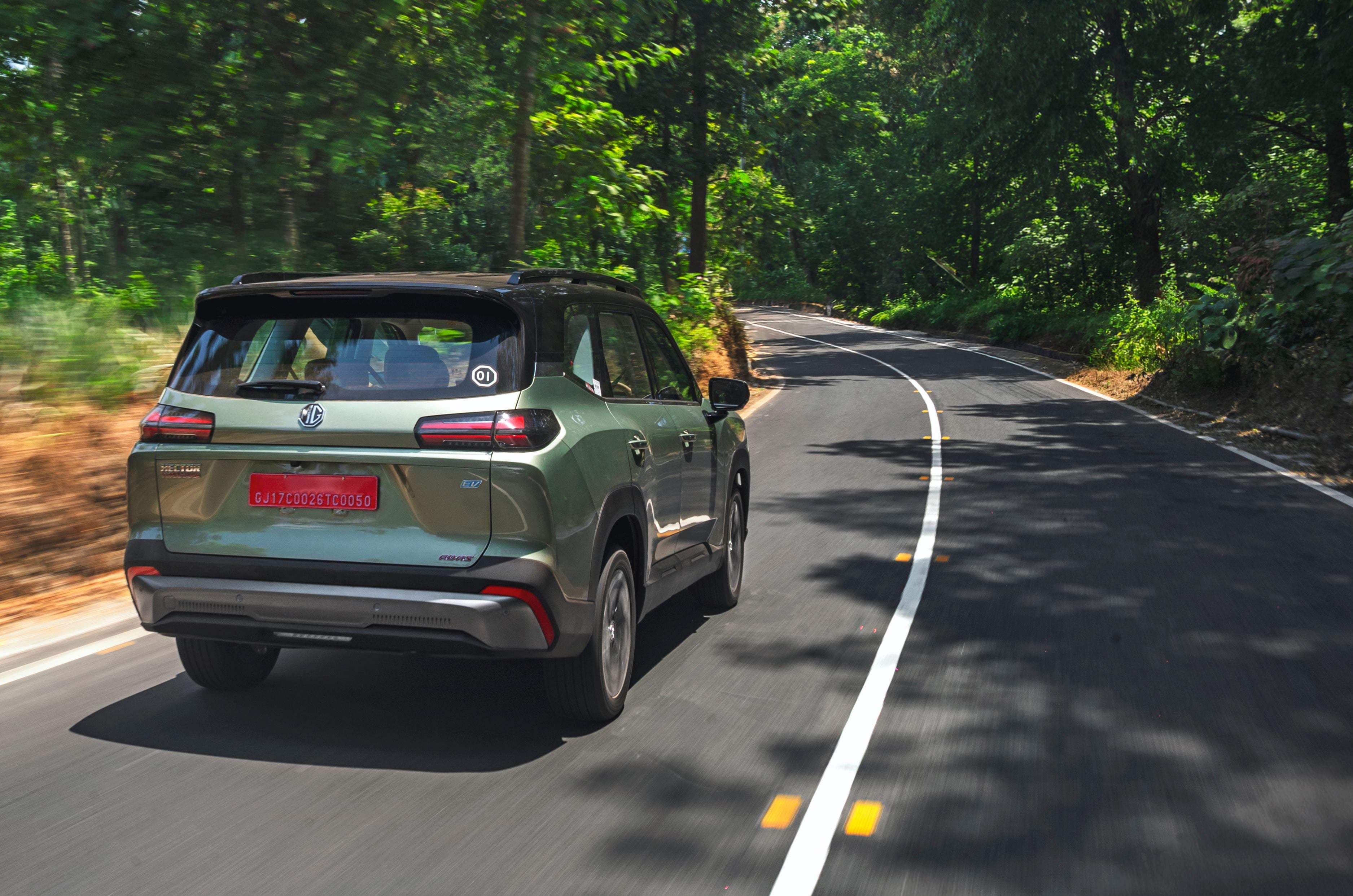
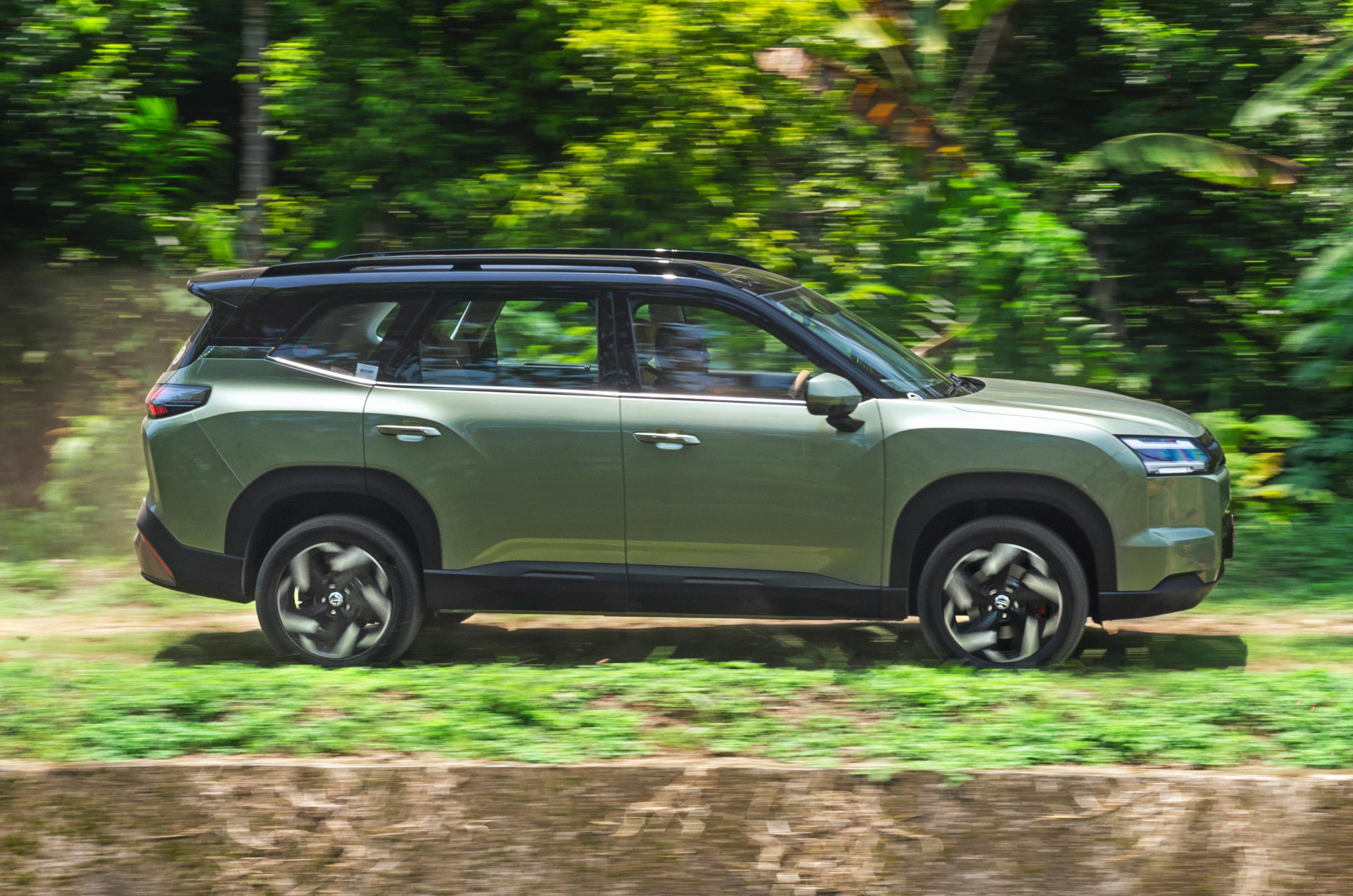
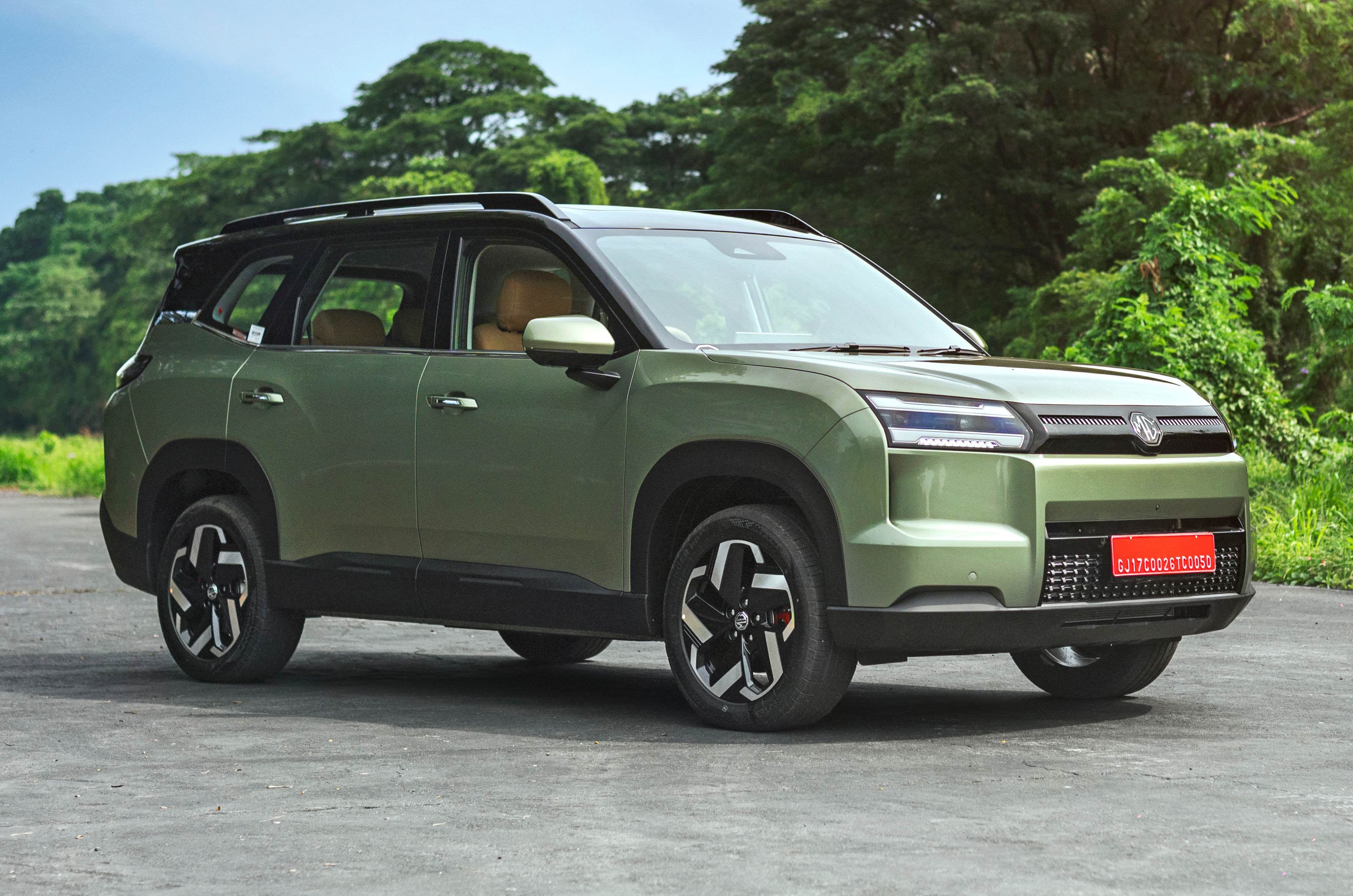
MG’s newest SUV has been christened the Hector Tomahawk, but despite the name, it shares nothing with the ICE-powered Hector we’ve known since 2019. The Hector Tomahawk EV and PHEV are the first models on MG’s ADAPT architecture, which will eventually spawn strong hybrids and range-extender hybrids. We drove the Tomahawk EV in sunny Kochi to see how it stacks up in the ever-growing segment.
MG Hector Tomahawk EV Exterior Design and Engineering – 6/10
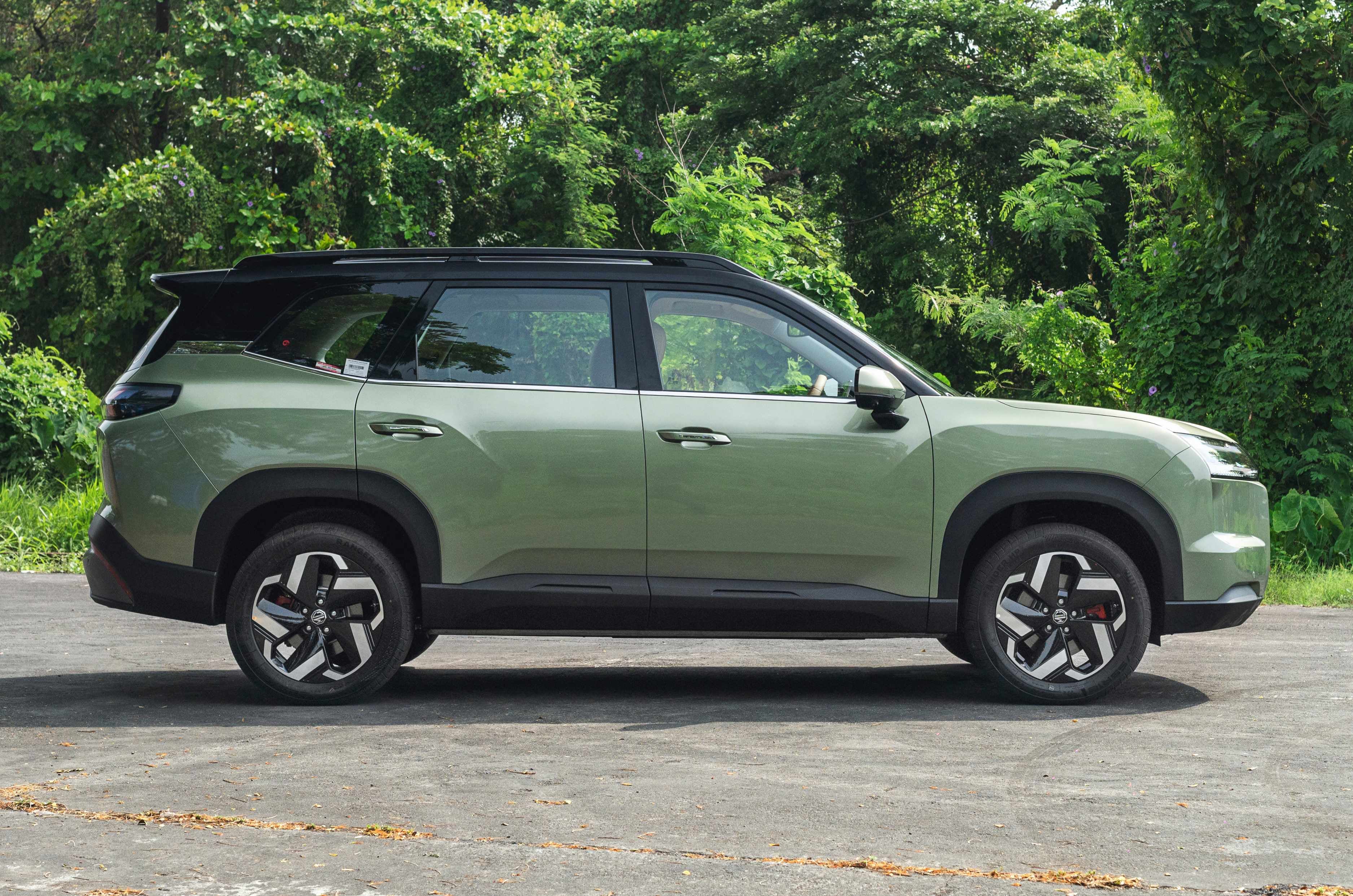
Let’s talk dimensions first. At 4,745mm long, 1,850mm wide, 1,770mm tall and with a 2,810mm wheelbase, the Tomahawk is larger than the Mahindra XEV 9S in all areas except width. Ground clearance, at 230mm (measured to battery), is also class-best. However, these numbers don’t translate to a particularly imposing stance. Instead, it straddles the line between an MPV and SUV.
Size doesn’t translate to an imposing stance; it straddles the line between an MPV and an SUV.
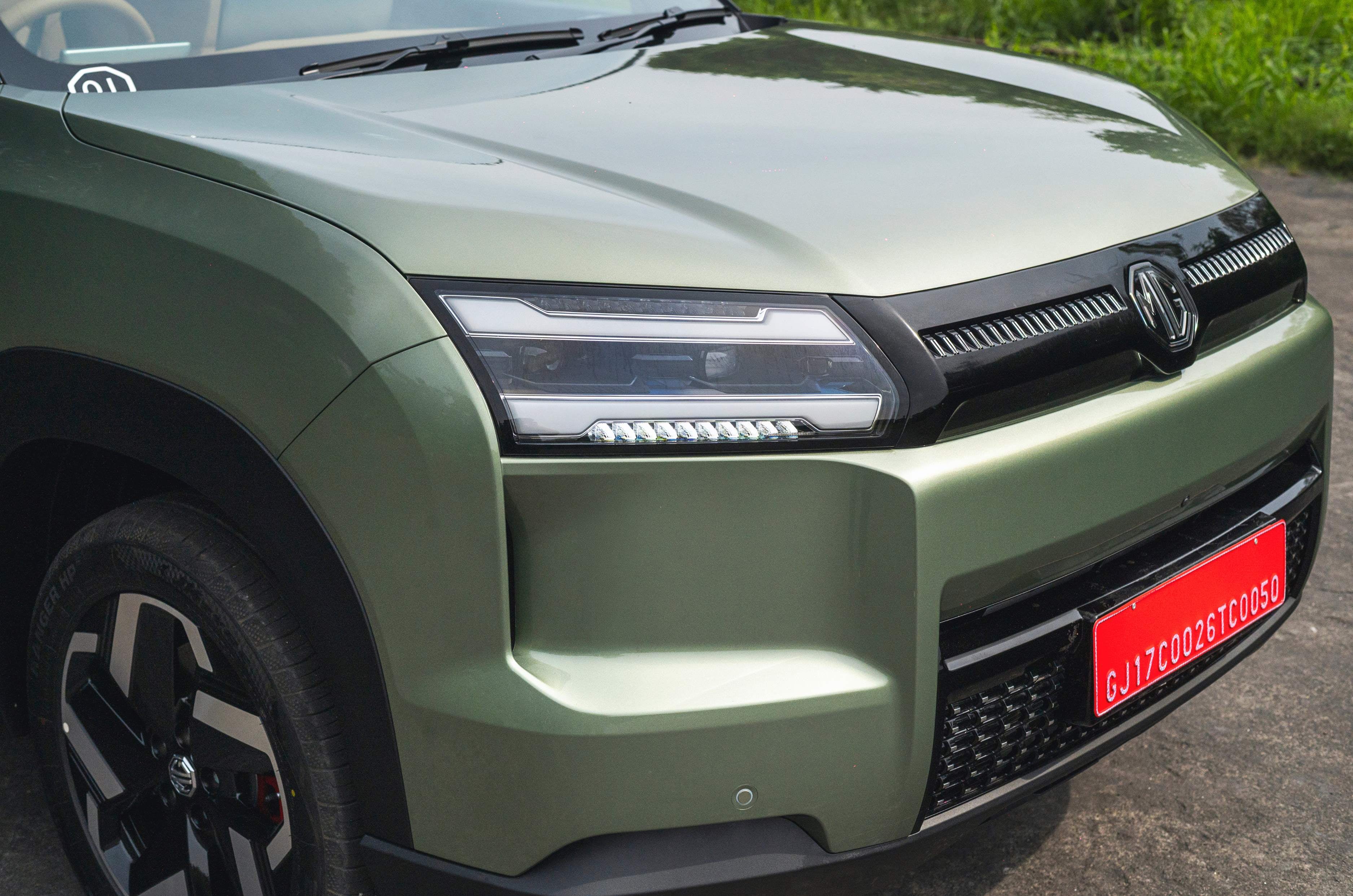
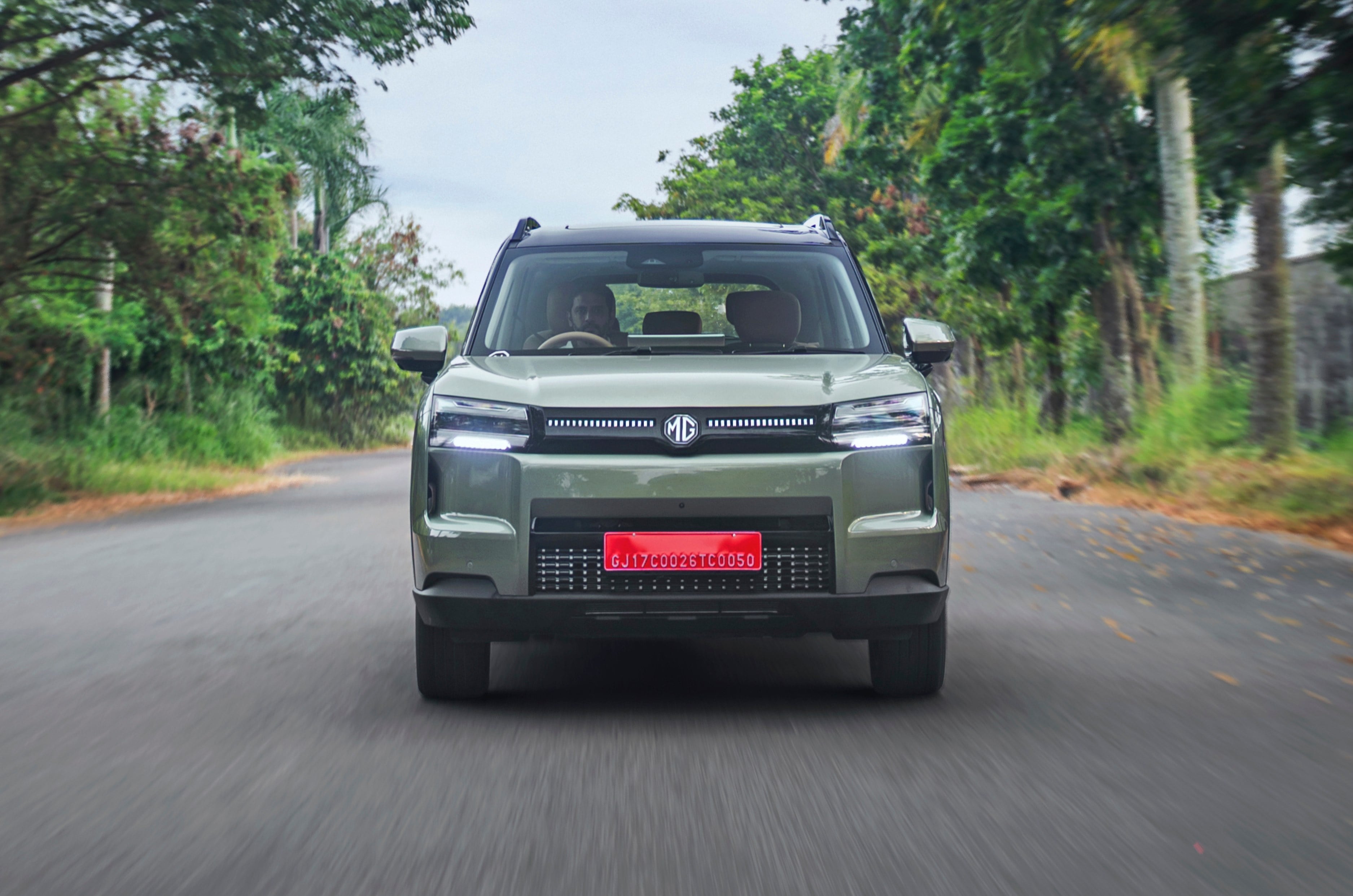
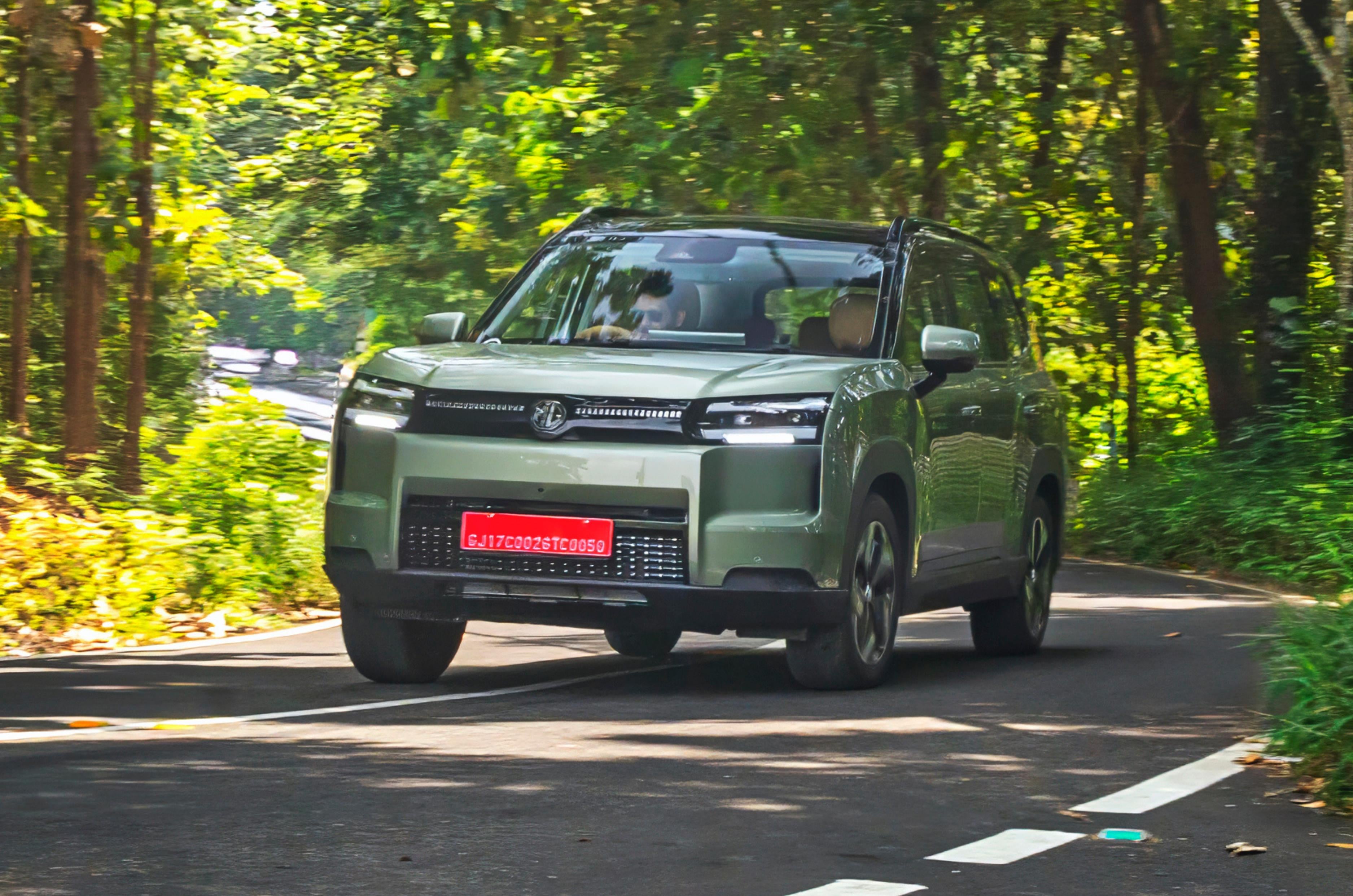
The design is clean and quite handsome, if a bit uninspiring. The front bumper is squared off with pass-through aero vents on the edges and chunky cladding lower down. Cooling requirements are met by slim slots in the centre section with some chrome detailing, while the conventional grille is blanked off and finished in gloss black. No light bar here, thankfully, but the MG logo does glow and is flanked by rectangular LED headlights with a subtle H-shaped light signature.
Large rectangular LED headlights have a subtle H in them; no light bar, but the MG logo glows.
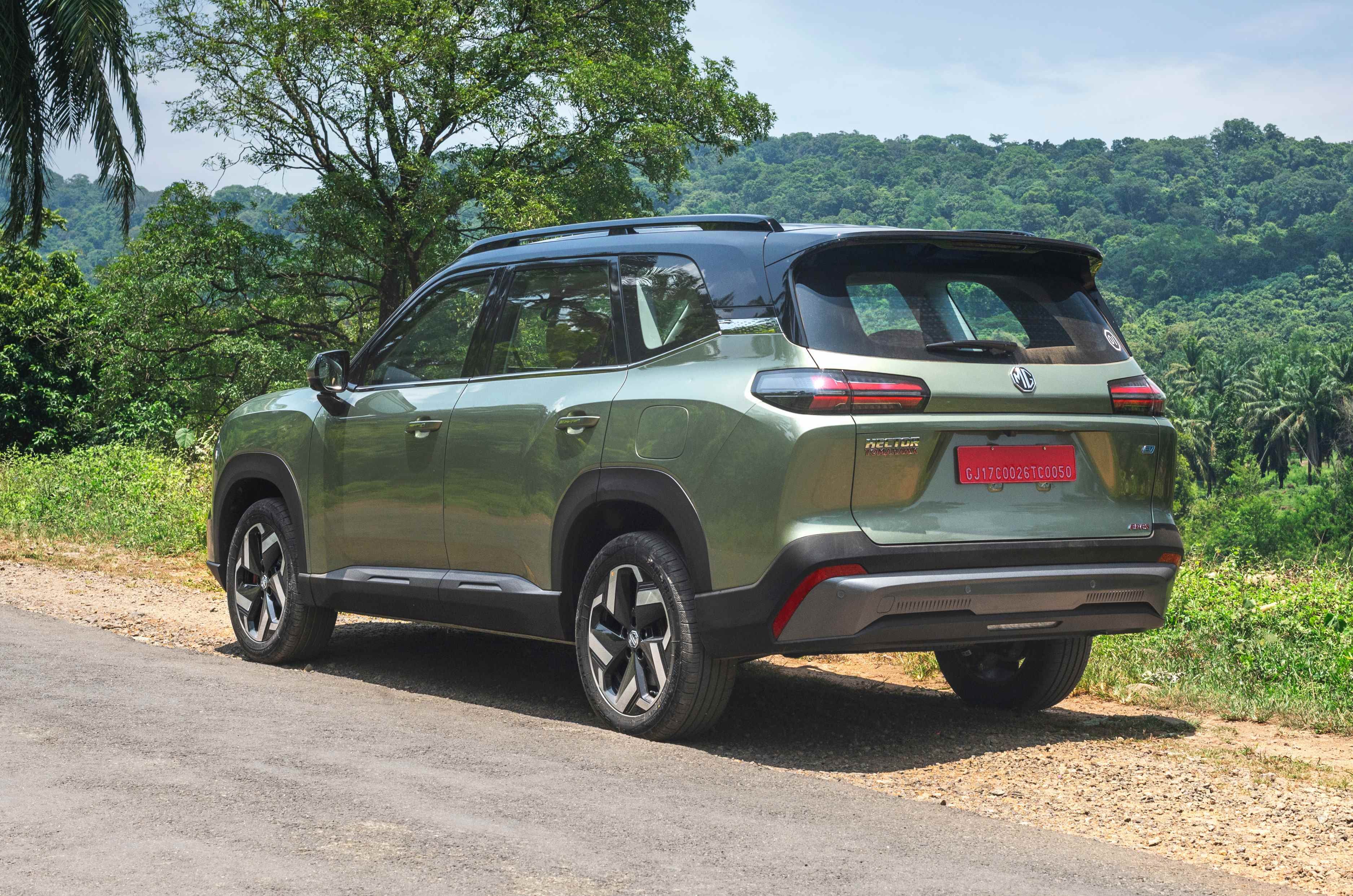
In profile, it looks quite slab-sided, with sharp creases along the fenders and plastic wheel-arch cladding adding some definition. These, along with the chunky door cladding, attempt to give it a rugged appearance but are let down by 18-inch wheels that look a tad too small. No electric door handles here, just good old-fashioned pull types.
Further back are a set of intricate LED tail-lights that again resist the connected trend. MG’s love for badging is clear though, with four on the powered tailgate. Finishing things off nicely is a sculpted bumper with a grey trim piece and a centre-mounted reverse lamp. Overall, it’s a reasonably pleasing design, but it looks a tad dated and lacks the butch appeal of some rivals.
Overall styling is neatly done but somewhat uninspiring.
MG Hector Tomahawk EV Interior Space and Comfort – 8/10
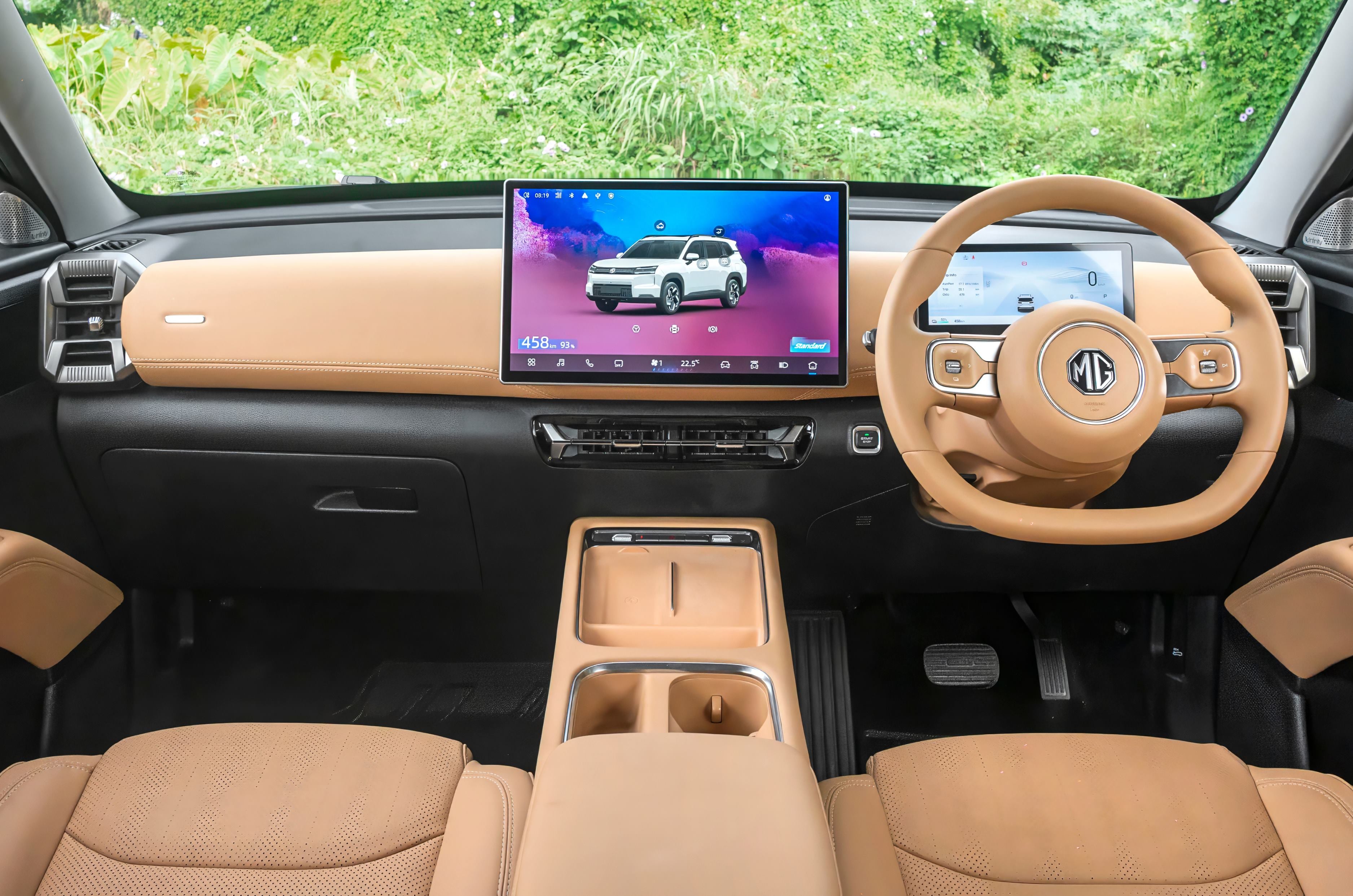
Inside, the dash features a familiar minimalistic layout with a large touchscreen front and centre. It looks premium and features soft-touch materials on the dash and doors, but lacks a certain wow factor, and the light tan colour palette might not be to all tastes. That said, the light tone and large windows do give it an airy ambience. Look hard, and you will find areas where fit and finish could be improved. The centre console in particular feels poorly textured and finished, which we were told is down to a supplier issue. Speaking of the centre console, the column-mounted drive selector frees up space here for a wireless charger, cupholders, multiple bins as well as a large pass-through cubby lower down, and the door bins are enormous too.
Minimalistic interior looks premium, but the light tan colour palette might not be to all tastes.
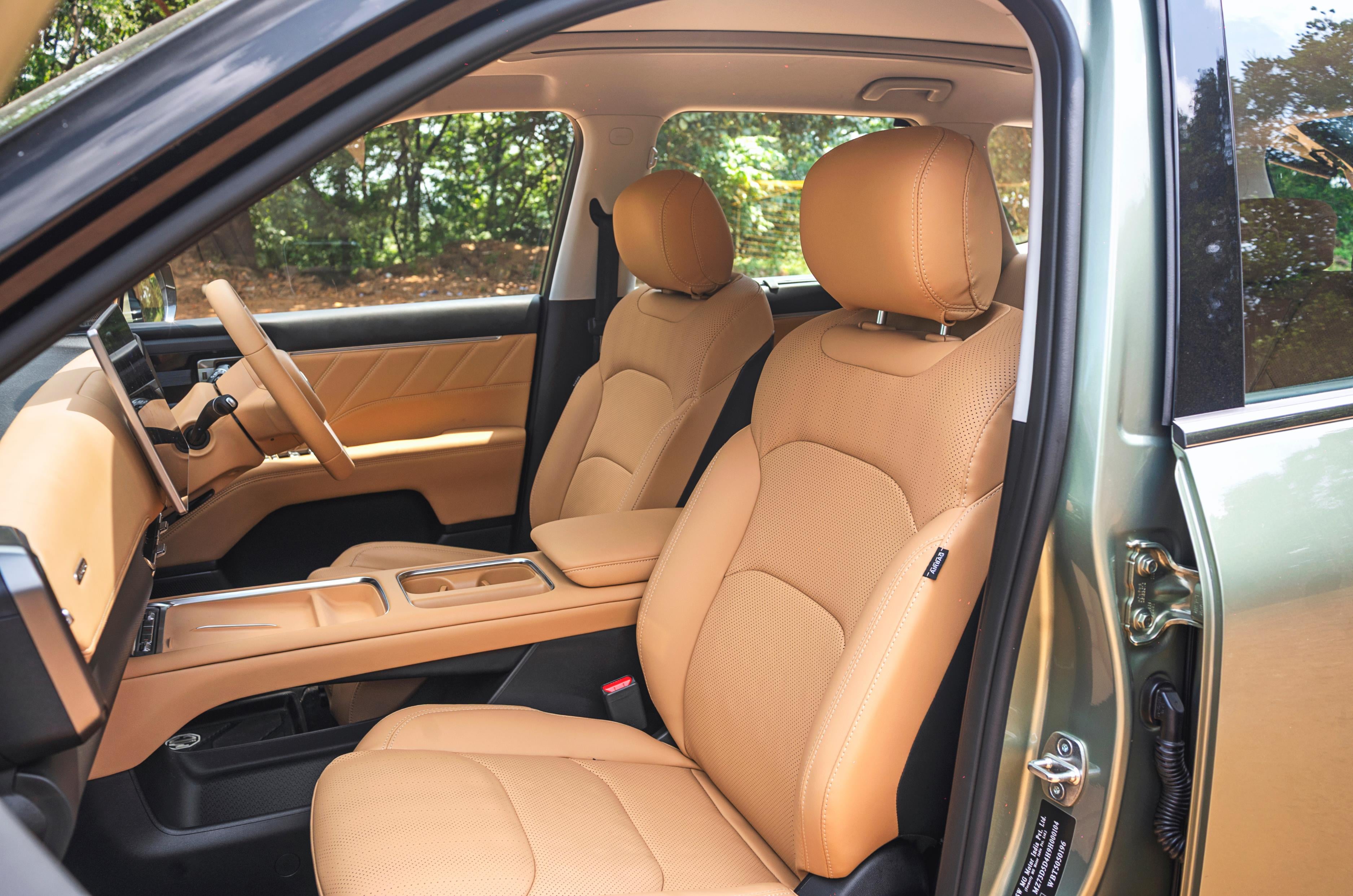
It’s easy to get into a comfortable and commanding driving position using the power-operated seats and reach-and-rake adjustment for the steering wheel. The seats themselves are wide, and despite the firm cushioning, they felt comfortable on our full day of driving. They are ventilated too, and the driver’s seat also gets a memory function.
Powered and ventilated front seats are wide and comfortable; driver’s seat gets a memory function.
The Tomahawk has the second-longest wheelbase in class (next only to the Vinfast MPV 7), and it shows in the second row. Legroom is excellent, and while you do sit slightly knees-up, thigh support is adequate too. The seatback reclines pretty far back and features an armrest and three adjustable headrests. Window sunshades, AC vents and Type-C USB ports add to the rear-seat comfort and convenience.
The chauffeur-driven are well taken care of, with a comfy reclining bench, plenty of room all around and sunblinds.
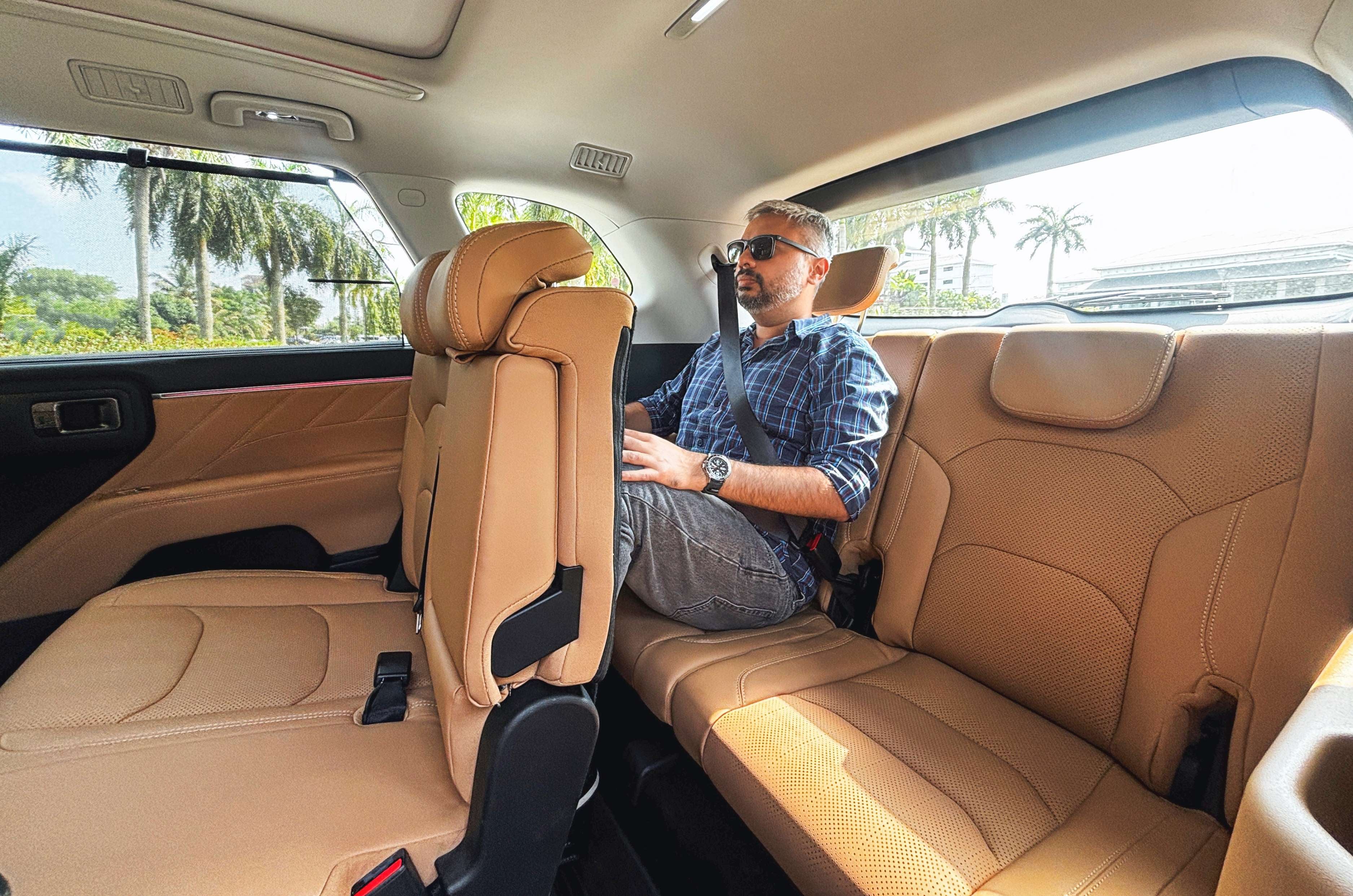
The Tomahawk EV is available in both 5- and 7-seater guises. The latter adds a sliding second row with one-touch tumble to access the third row, as well as more AC vents on the roof and a dedicated fan-speed control. Getting into the last row is surprisingly dignified thanks to a large aperture, but kneeroom depends largely on the middle-row passengers’ generosity, and the low seat means thigh support is non-existent. Headroom is good, though, and for short journeys, adults will be fine back there.
Third row will fit adults but with a slight compromise to the middle-row space.
With the third row up, boot space stands at 192 litres – enough for a couple of carry-on bags – expanding to a generous 528 litres with it stowed. Under the boot floor are a few more storage cubbies, which are handy since there is no frunk – a miss considering there appears to be enough space under the bonnet. A space-saver spare is mounted underneath the car.
MG Hector Tomahawk EV Features and Safety – 8/10
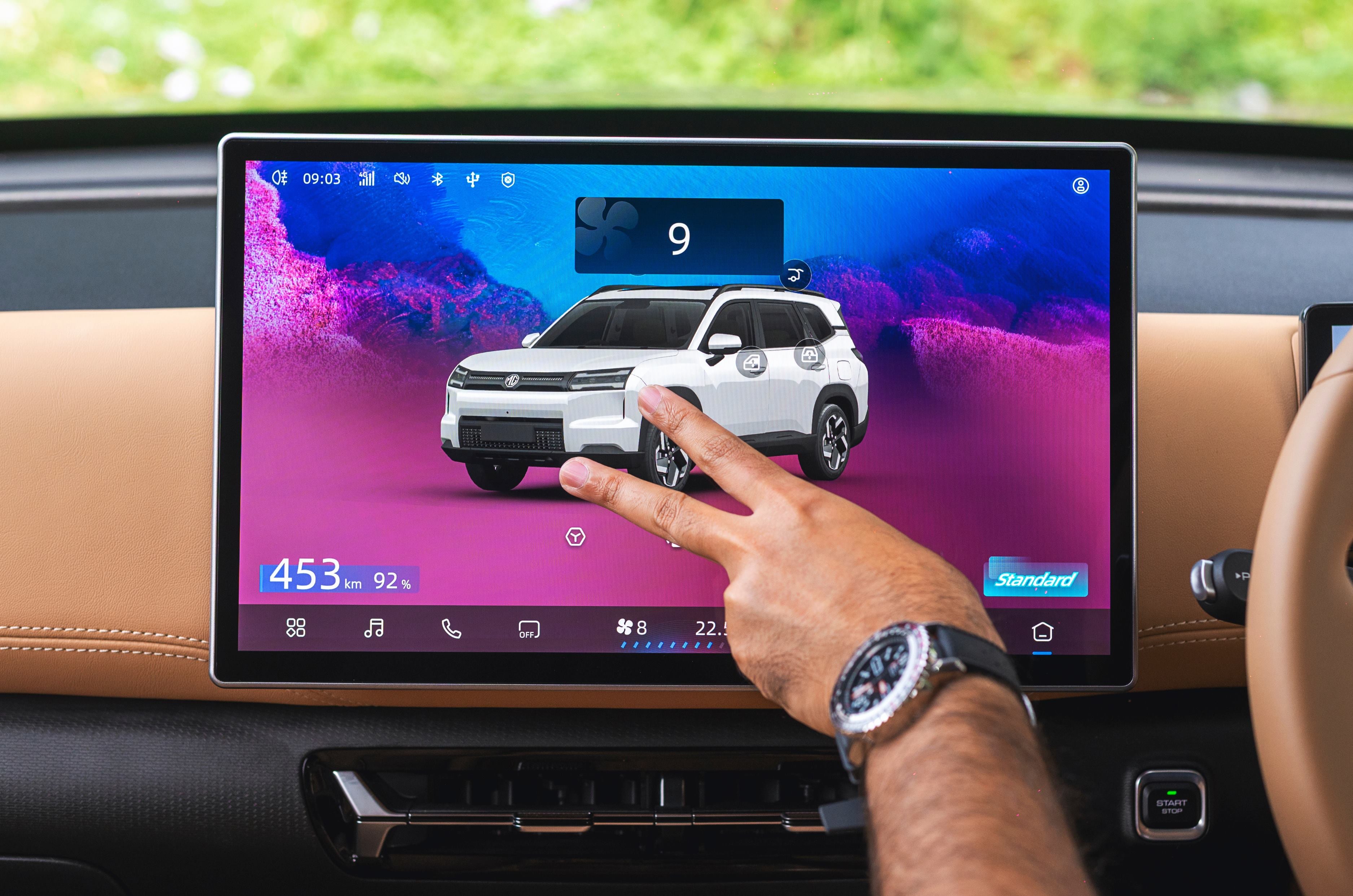
The minimalist interior layout means you reach for the 15.6-inch infotainment screen for most functions. While this can get distracting, physical and swipe-gesture controls together handle most basic HVAC and audio functions with surprising ease. Anything beyond basic, though, will require a deep dive into the screen. While the screen is sharp and snappy and the UI is clean, it can take a while to find your way through the maze of sub-menus. Wireless Android Auto and Apple CarPlay are also present, but using either hides the row of shortcuts at the bottom of the screen. Hardcoding these buttons to always stay on top would improve usability. The screen also often catches glare, which takes away from the otherwise sharp 360-degree camera.
Several functions are baked into the 15.6-inch touchscreen, but gesture controls for essential functions are quite intuitive.
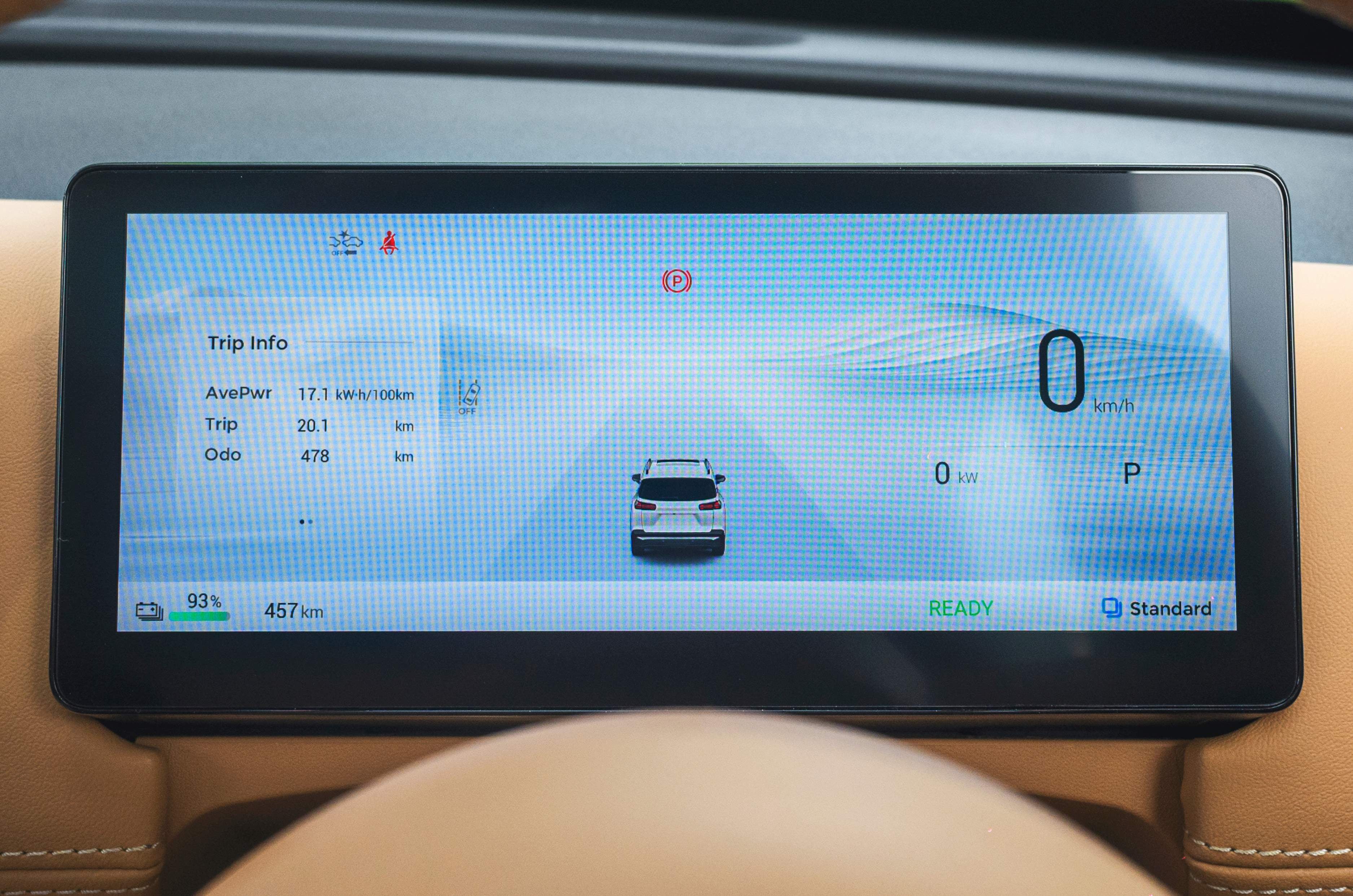
Instrumentation is handled by an 8.8-inch display directly in front of the driver. The screen itself is sharp, but some smaller fonts might have you reaching for your reading glasses. Its real estate could also be better utilised by displaying the blind-view camera feed rather than the current pop-up on the centre screen. Other feature highlights include a sweet-sounding 10-speaker Infinity audio system, a panoramic sunroof that stretches over the second row, 256-colour ambient lighting, connected car tech, an AI assistant and more. It’s worth mentioning that the Tomahawk EV also gets a physical start/stop button, which is absent on the brand’s other EVs.
8.8-inch driver’s display is sharp, but some smaller fonts might have you reaching for your reading glasses.
A Level 2 ADAS suite is also available on the top Essence trim, with functions such as adaptive cruise control, lane keep assist and auto emergency braking. While there isn’t an official crash-test rating yet, the robust standard safety kit, including six airbags, ESP, all-wheel disc brakes and Isofix mounts, provides some confidence.
MG Hector Tomahawk EV Performance and Refinement – 7/10
The Tomahawk EV offers just one powertrain configuration – a 69.2kWh LFP battery pack powering a single motor on the front axle, producing 204hp and 310Nm, good for a claimed 0-100kph time of 8.2 seconds. Its front-wheel-drive layout puts it at a disadvantage against rivals from Tata and Mahindra, who offer either rear- or all-wheel drive and higher power outputs. The front-driven Hyundai Creta Electric or Kia Carens Clavis EV are closer matches, and the Tomahawk EV betters them on power and torque.
First EV on MG’s ADAPT architecture pairs a 69.2kWh battery with a front-mounted motor producing 204hp and 310Nm.
Initial throttle response is mild, making it quite easy to amble around town, but push harder, and you get a power spike resulting in torque steer. In Sport mode, you’ll hear the front tyres protest when made to put all that torque down on a less-than-perfect road. Standard mode dulls response slightly, but it can still catch new drivers off guard. With time, it is possible to drive around this, but the latest crop of rival EVs has mastered a more linear delivery. Eco mode feels a bit tepid and is best saved to counter range anxiety, while a Custom mode lets you customise power output and regen braking in increments of 10 percent. There are also three preset regen modes – Standard, Comfort and Strong – but no paddles to control them or one-pedal mode. Instead, you get an Intelligent setting that uses the ADAS sensors to adjust regen in real time based on the traffic in front of you.
Grip levels and body control are good, but FWD layout struggles to put power down.
Refinement is a bit of a mixed bag. While the motor is fairly muted and there is little wind or tyre noise coming through, you hear the suspension at work on rough patches.
MG Hector Tomahawk EV Range and Efficiency – 7/10
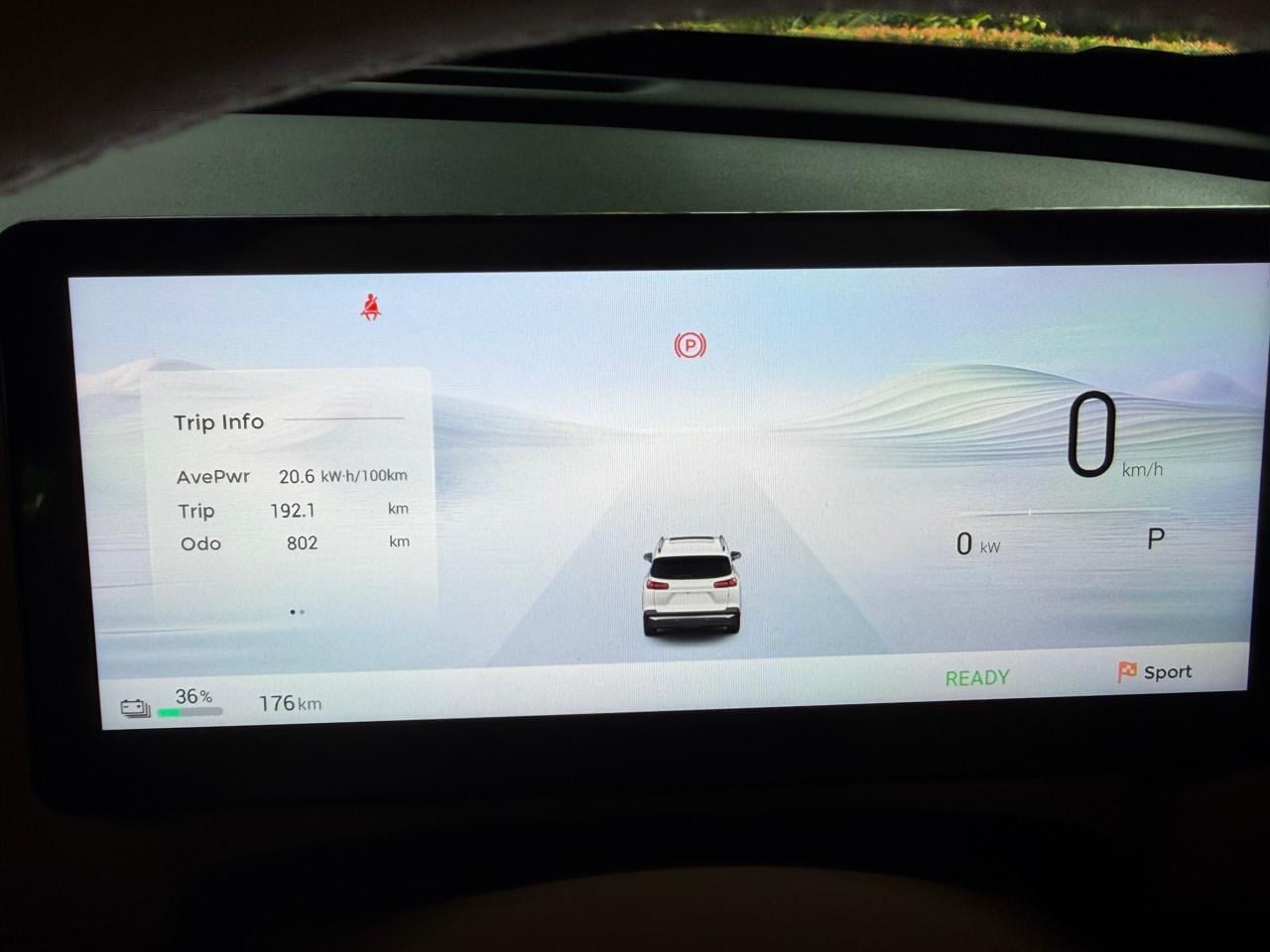
A spirited highway drive from Kochi to Kozhikode covering 192km, resulted in an overall efficiency of 4.85km/kWh.
While the Hector name is often associated with poor fuel efficiency, the new EV and PHEV hope to change that. MG claims an MIDC range of 517km from its 69.2kWh battery pack. On a spirited drive from Kochi to Kozhikode covering 192km, we recorded an overall efficiency of 4.85km/kWh, translating to a real-world range of 336km. This was on a fast highway run, where the Tomahawk’s tall shape won’t do its efficiency any favours. We’ll put it through our standard real-world efficiency test when we have the car for longer.
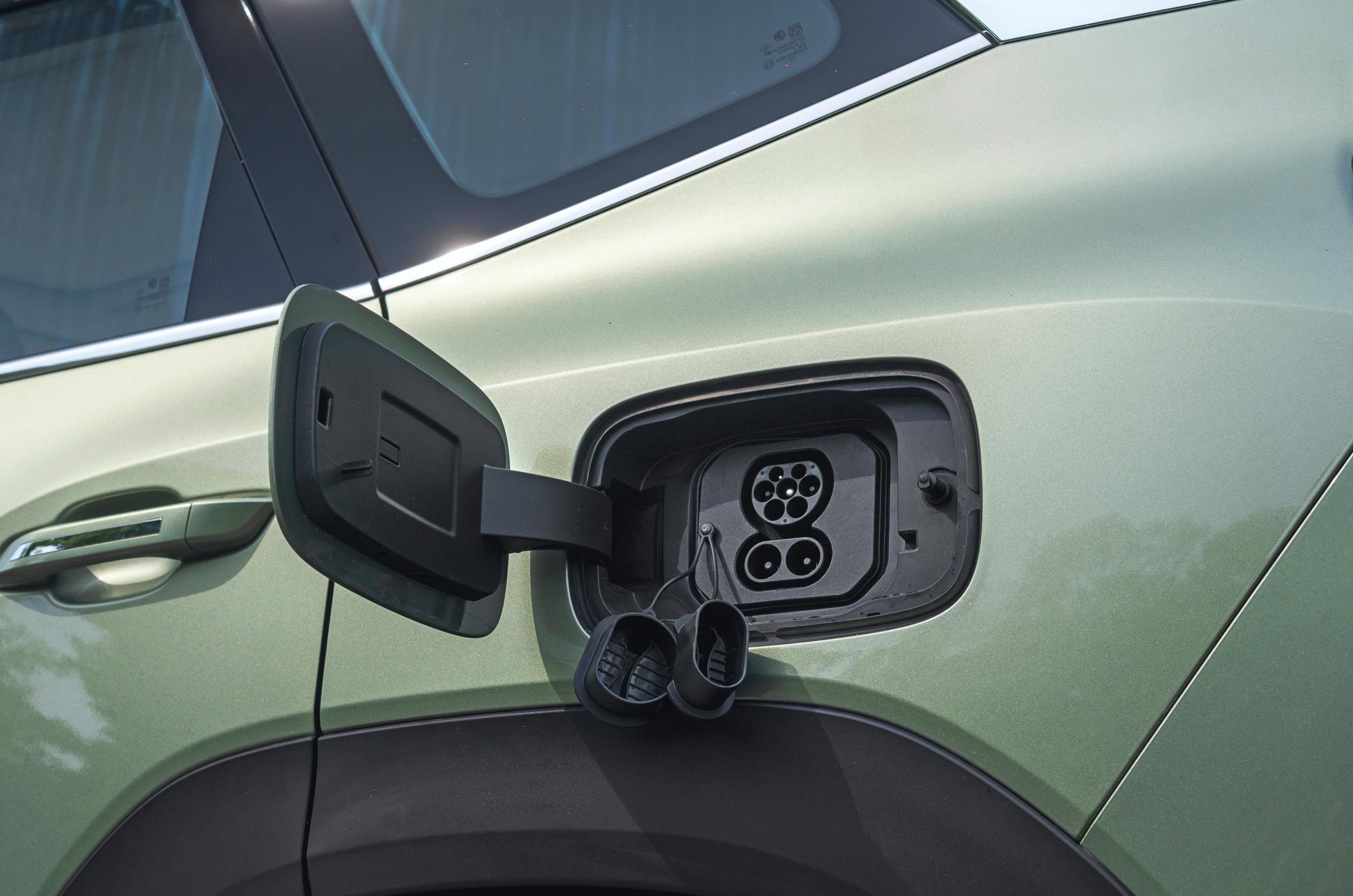
DC fast charges at 90kW – slower than rivals but enough for a 30 to 80 percent top-up in a claimed 35 minutes.
Topping up the battery from 10 to 100 percent using the 7.4kW charger is said to take around 12.5 hours. It can also DC fast charge at speeds of up to 90kW, which is lower than its immediate rivals but still enough to take the battery from 30 to 80 percent in about 35 minutes.
MG Hector Tomahawk EV Ride Comfort and Handling – 7/10
Rides with more maturity than previous MG EVs, but suspension can be heard working.
The Hector Tomahawk EV makes a big step up in ride and handling compared to the ICE Hector, but there is still some room for improvement. It rides with more maturity than previous MG EVs, comfortably absorbing most of what we threw at it. However, you do hear the suspension working. Sharper bumps reveal an underlying firmness that occasionally comes through to the cabin. Most roads around Kochi were relatively smooth, and we weren’t able to experience it on rippled concrete, so we will reserve full judgement until we have the car for longer.
A big positive is how easy the Tomahawk is to drive for something this large. Visibility all around is excellent, and you can see the bonnet’s edges from the driver’s seat. A light steering also helps, and overall, it feels less intimidating to drive through tight traffic than, say, the XEV 9S.
230mm claimed ground clearance is best in class; wheelbase second only to VF MPV 7.
The steering also weighs up as speeds rise and feels reasonably direct, though the sheer amount of torque going to just the front wheels corrupts the feel. At a quick pace through the twisties, you feel the wheel tugging at your hands as you apply power. Body control is good, and it stays composed through quick direction changes, but a sedate pace is more its element. Braking is strong, with four-wheel discs bringing the heavy SUV to a confident halt.
MGHector Tomahawk EV Value for Money – 7/10
Introductory pricing for the Hector Tomahawk EV starts at Rs 19.49 lakh and tops out at Rs 23.49 lakh. The Battery-as-a-Service (BaaS) scheme lowers the entry barrier to Rs 13.99 lakh, with battery rental set at Rs 4.90 per km. While all these prices are applicable to limited units only, this is quite aggressive pricing from MG.
Practical, comfortable and no-nonsense SUV will appeal to the chauffeur-driven but lacks the dynamic polish of its rivals.
When compared spec-for-spec, it undercuts the competition from Tata and Mahindra while offering a bigger battery and more performance than its Korean rivals. It has a spacious and comfortable cabin, a comprehensive feature set and is surprisingly easy to drive for its size. However, it lacks the dynamic polish of its rivals and therefore doesn’t feel like a latest-generation EV. As such, its Hector name starts to make more sense. It is a practical, comfortable, no-nonsense SUV that will appeal to the chauffeur-driven just like its forebear. Those looking to do the driving, though, are better off looking elsewhere.
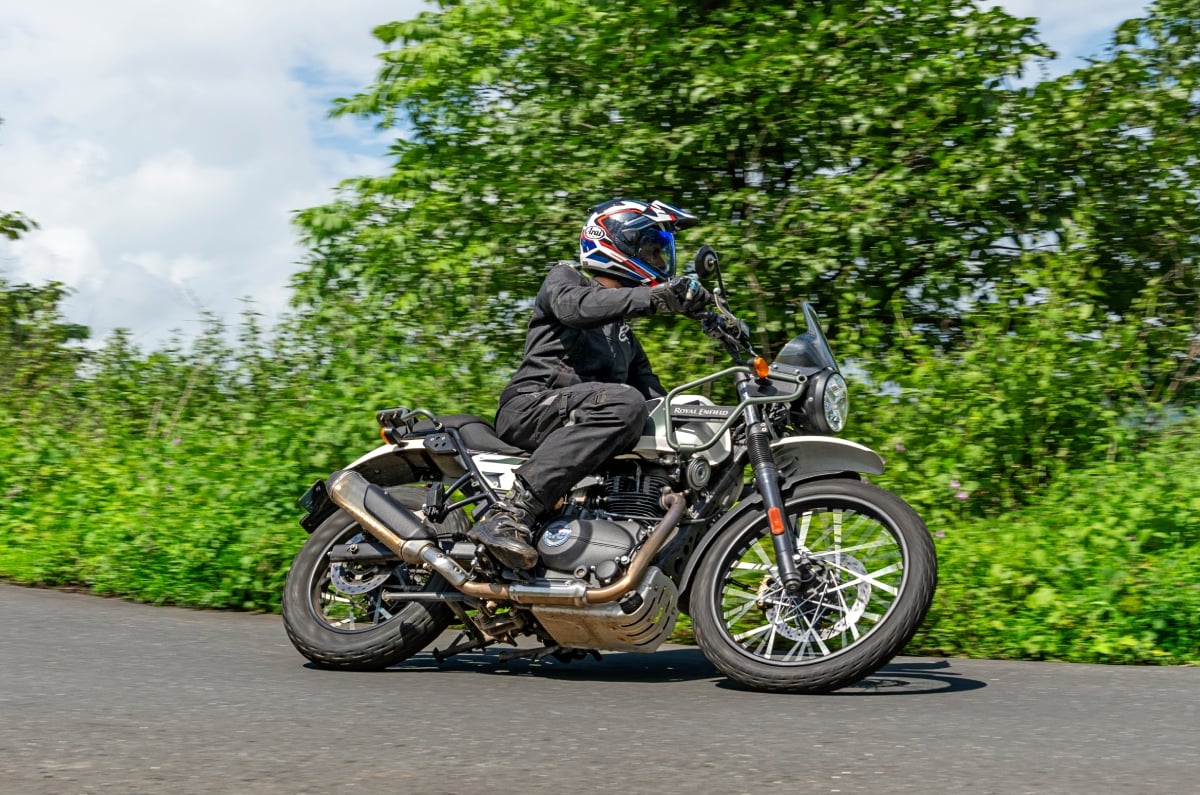
A lot can change in three years, as it turns out. Back in October 2023 at the Himalayan 450 launch, I would have confidently told you that the older Himalayan’s 411 time was up and that the 450 served as a fitting replacement. Fast forward to 2026 and I will now willingly concede that there is very much a place for the new Himalayan 440 in this market.
What’s new and why is it back?
A tempting price as well as meaningful improvements
Price plays a big role behind this change in reasoning. 3 years ago, the entry level 450 was about Rs 40,000 more than the top 411 – a not insignificant, but justifiable increase . Today that gap has nearly doubled thanks to the agonizingly short-sighted new GST policy that levies a brutal 40 percent tax rate on motorcycles that use engines bigger than 350cc. RE is clearly feeling the heat from the new wave of sub 350cc competition because the reborn 440 is priced super aggressively. In fact, at 2.29 lakh ex-showroom Chennai, it costs exactly the same as the top 411 did in 2023, despite packing significant improvements. Beyond the price, it’s those very improvements that have convinced me that this bike has earned its return in 2026.
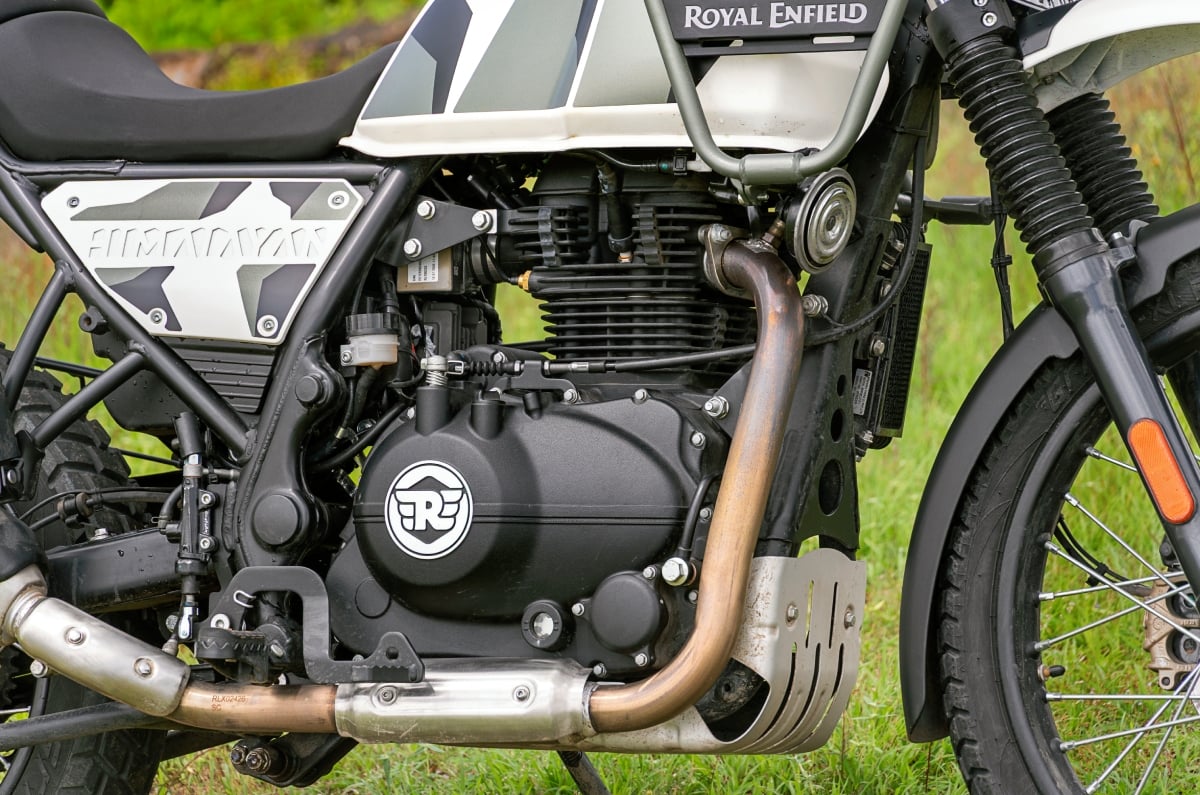
The Himalayan 440 is based on the Scram 440 and it brings in the same improvements we saw there last year. The oil-cooled single has been bumped up to 443cc and RE has also strived towards increasing the refinement. An added 6th gear and as well a lighter clutch lever increase the bike’s appeal on the highway and in the city. Work has also been put into improving braking performance and feel.
Himalayan 440 Design and Style – 7/10
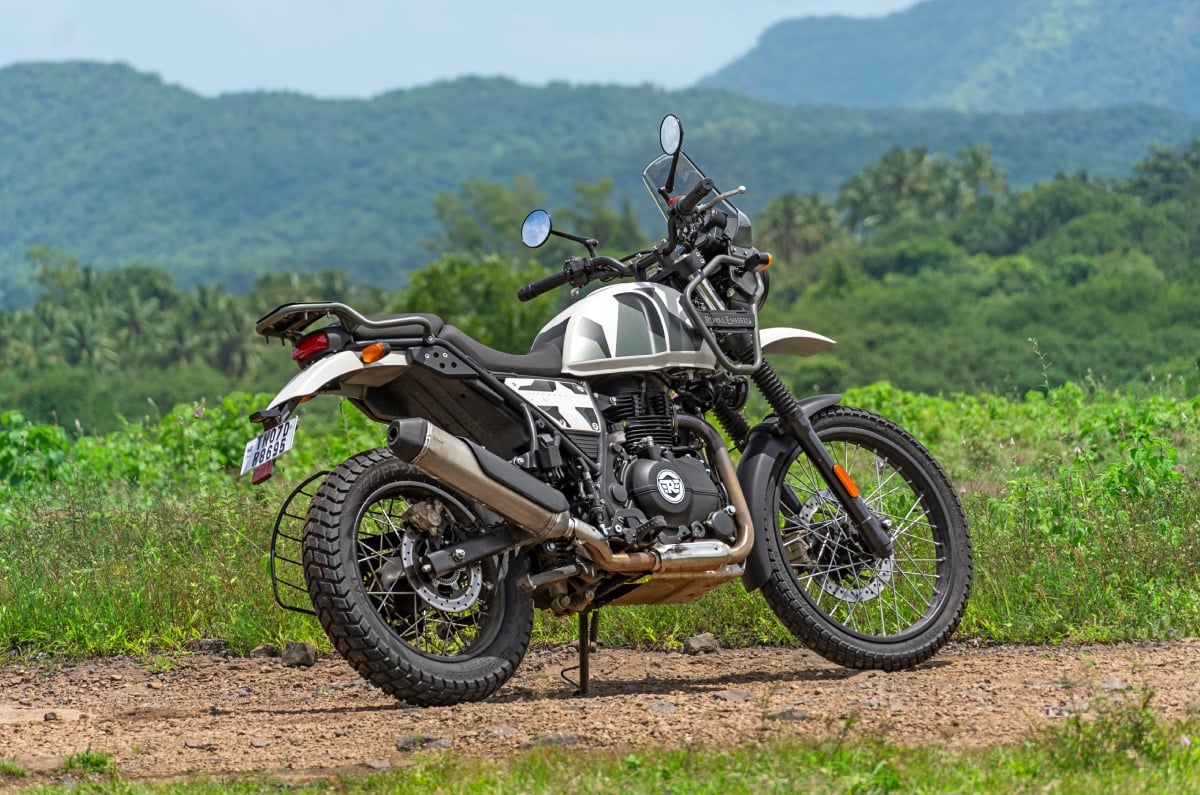
New colours, but familiar design
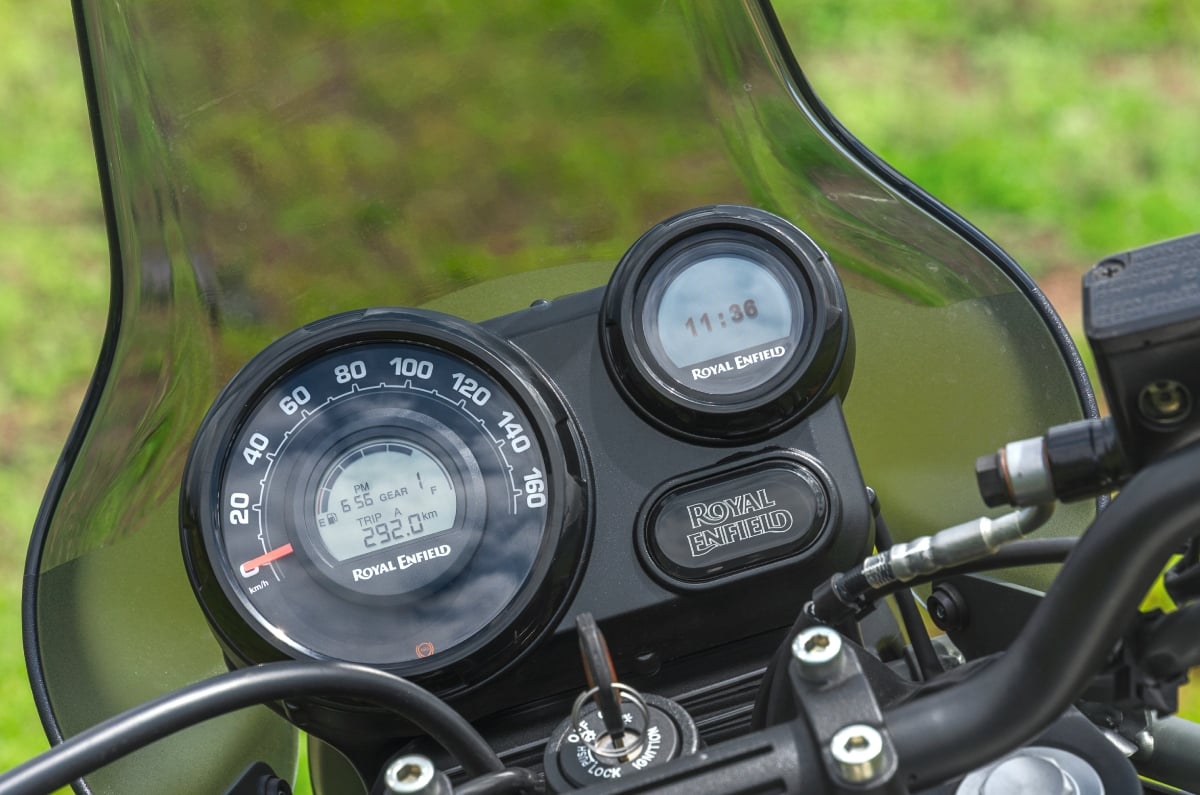
There are three new colour schemes as well, but beyond that, the bike retains its quirky oddball styling, although it does gain a new (average at best) LED headlamp and an updated instrument cluster based on the Scram 440.
Gets an updated instrument cluster based on the Scram 440.
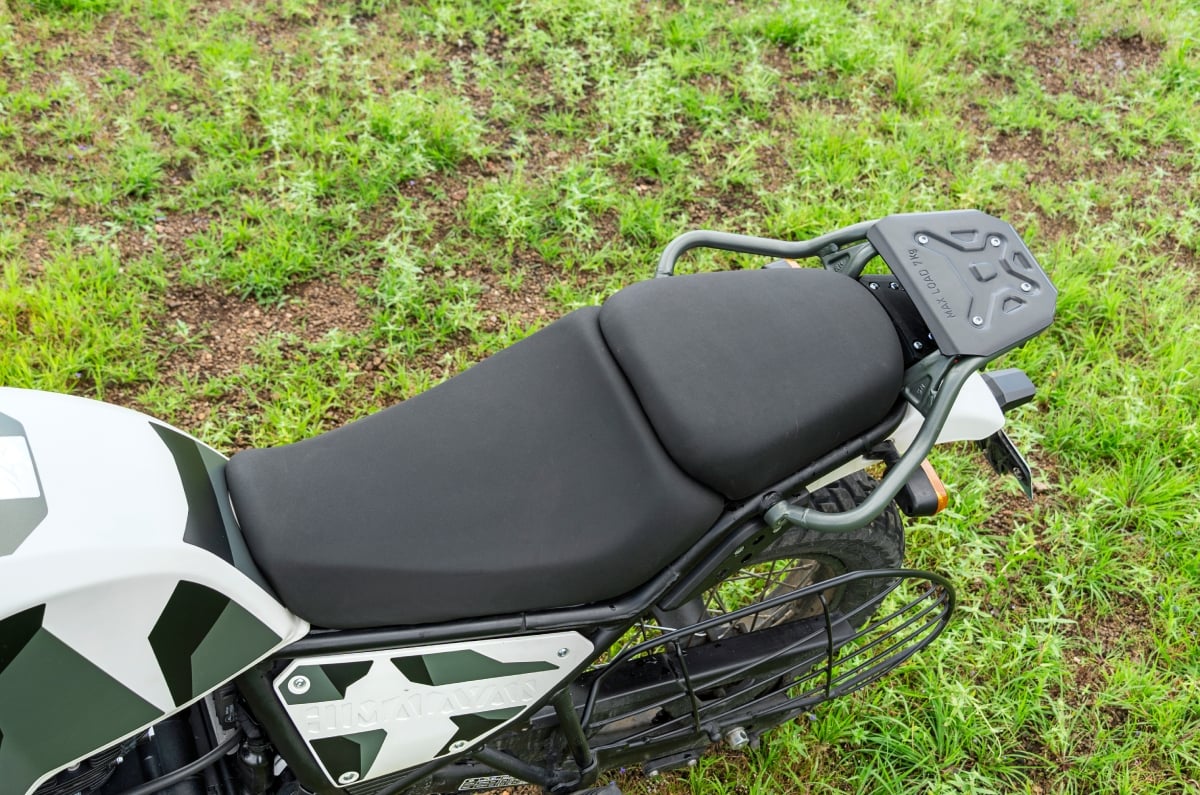
Hopping onto the Himalayan 440 after all these years is like being re-acquainted with an old friend. It more or less looks the same and also feels the same to sit on. The low 800mm seat height in particular is one of the biggest appeals with this bike and it brings back some of the short rider accessibility that was sacrificed by the Himalayan 450.
Himalayan 440 Engine and performance – 8/10
A smooth and characterful engine brimming with torque, but it’s not about speed
The engine retains that same relatively slow thump as its predecessor, but there is certainly an improvement in refinement. You can very much hear and feel the engine through the entire bike, but there are no intrusive vibrations until you build the revs quite high. Unfortunately, the Himalayan no longer has a rev counter so I can’t tell what rpm it starts to feel stressed at, but peak power comes in at just 6250rpm, so the number isn’t that high.
Nevertheless, with this improved vibration control as well as the added 6th gear, a 100kph cruise is now a smooth and stressfree affair. You can stretch that up to about 110kph before the engine’s discomfort starts to become apparent. Top speed is around an indicated 130kph, but this is not the bike’s happy place.
Our performance and efficiency test revealed numbers that you would expect and while this Himalayan is certainly not a fast bike, it’s not slow either. That being said, the 440 is an absolute joy when ridden at a sedate pace. The new-found smoothness, dialed-in throttle connection and oodles of torque make it one of the nicest bikes at this price point to calmly explore the great outdoors. Its 25.4hp power figure is on par with many rivals in the class, but the 34Nm of torque is what makes the difference to the riding experience – as well as the pleasing exhaust sound that occasionally includes loud pops on deceleration. Then again, its 199kg kerb weight is an equally big differentiator to the rest of the segment.
Himalayan 440 comfort, handling and off road – 7/10
Welcoming to short riders and decently capable, but feels its age
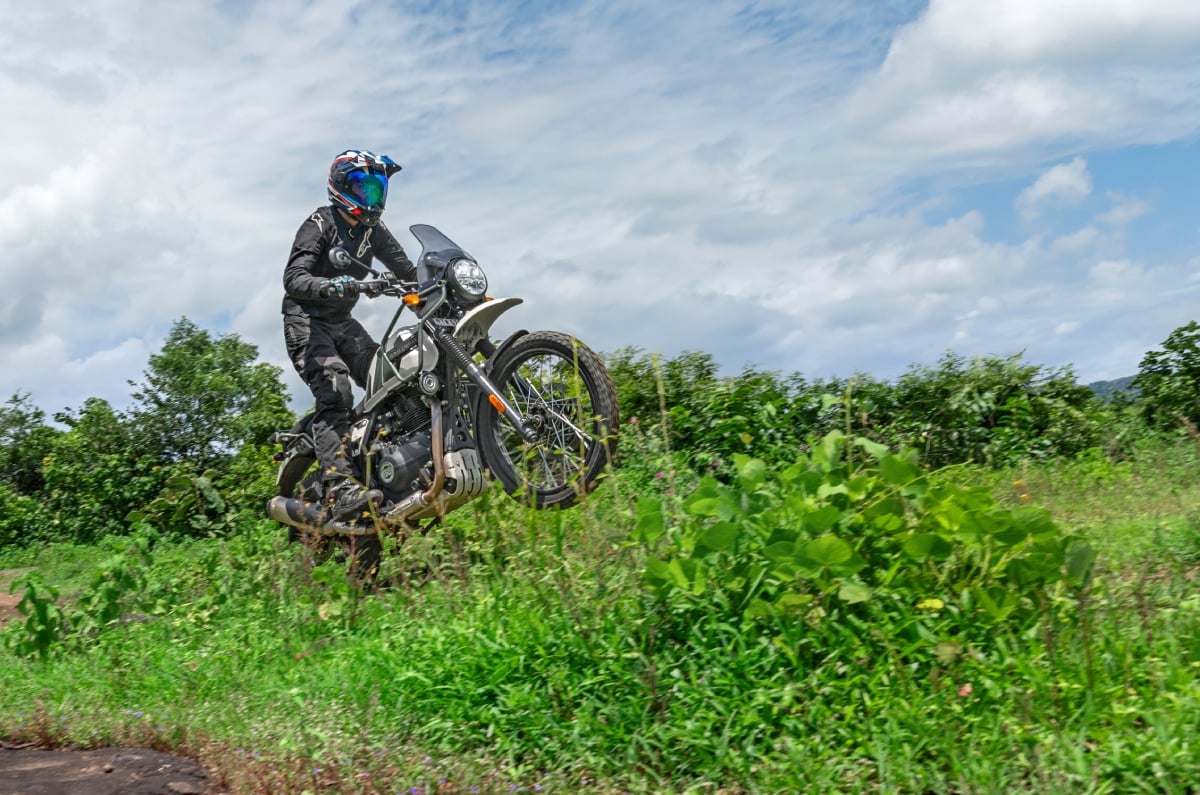
The chassis is pretty much unchanged and that means that the Himalayan 440 is very similar to the 411 in terms of dynamics. This is where you become aware that the 440 feels more like a refined version of an old motorcycle, rather than an all new one. It can carry a decent pace on or off road, but it doesn’t appreciate being ridden fast. The main stand starts to scrape at lean on road – or when you land it with some conviction off road – which serves as a reminder to ease off. Keep pushing and you’ll realise that the chassis doesn’t have the same composure as more modern rivals and the suspension certainly doesn’t come anywhere close to the lofty standards set by the 450.
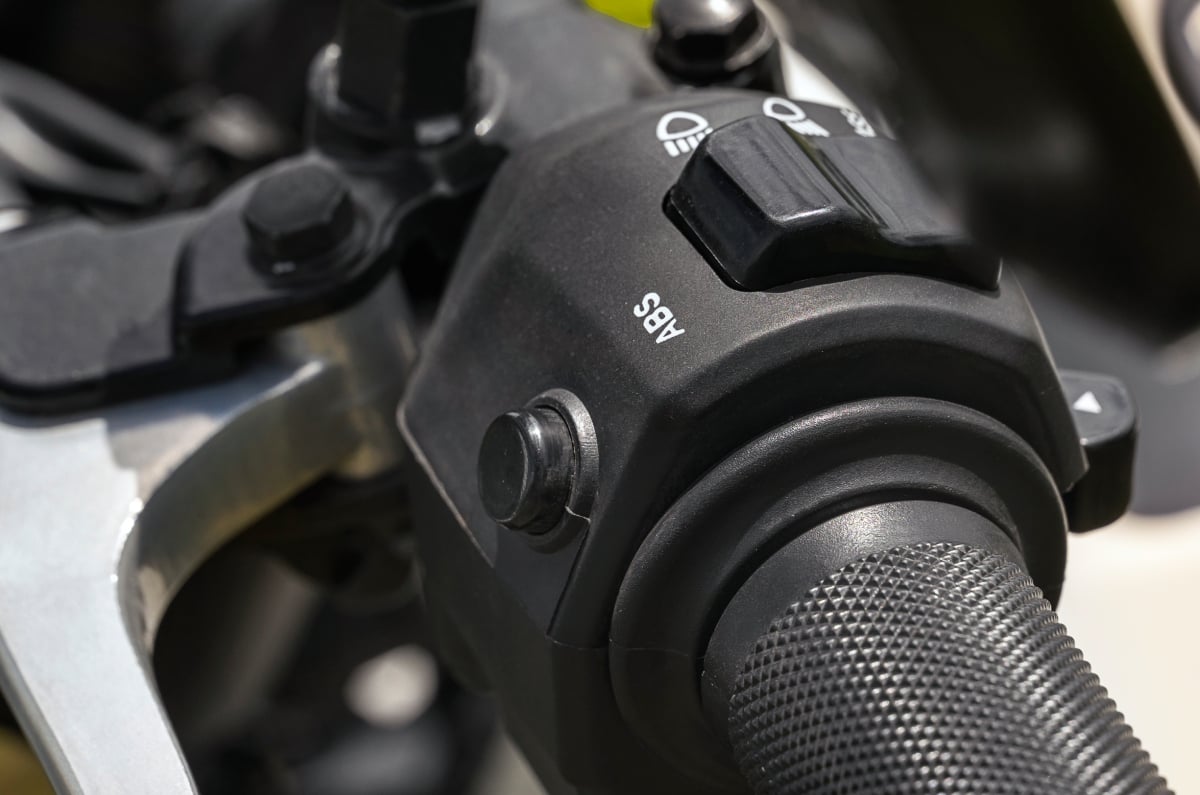
Over normal roads, suspension comfort is good. However, the 440 did not isolate me as well as I’d have liked from the incessantly bumpy concrete surfaces that now sadly snake across large parts of Maharashtra. After an 8-hour ride over mostly concrete roads at highway speeds, I returned home with a slightly sore back. If absolute comfort is a priority, bikes like the Xpulse 210 or Himalayan 450 are where you want to look. As for braking, it is by no means outstanding, but the 440 gets the job done and there is switchable ABS, which is nice.
Himalayan 440 Features and Safety – 7/10
It’s a simple bike but provides most of the essentials
The Himalayan 440 retains its original identity as a rugged, go anywhere, yet simple and basic motorcycle. In terms of features, you get a USB C port, RE’s Tripper navigation display and the aforementioned switchable ABS. Compared with most rivals, it does have fewer frills, but the only real ‘luxury’ that I miss is tubeless tyres. It would be nice to have the option of paying extra for them like you can on the Himalayan 450.
Himalayan 440 Price and verdict – 8/10
Well priced and a unique riding experience
Essentially, this is a back to basics motorcycle and it feels that way in person. If maximum bang for your buck is what you’re after, then the TVS Apache RTX will completely outdo the 440 in nearly all parameters for similar, if not less money. The same goes for speed and aggression – there are better options at this price point. However, if you want a gentle, well-mannered and characterful motorcycle that makes for a convincing travel partner at a reasonable price, then the new 440 definitely packs genuine appeal.
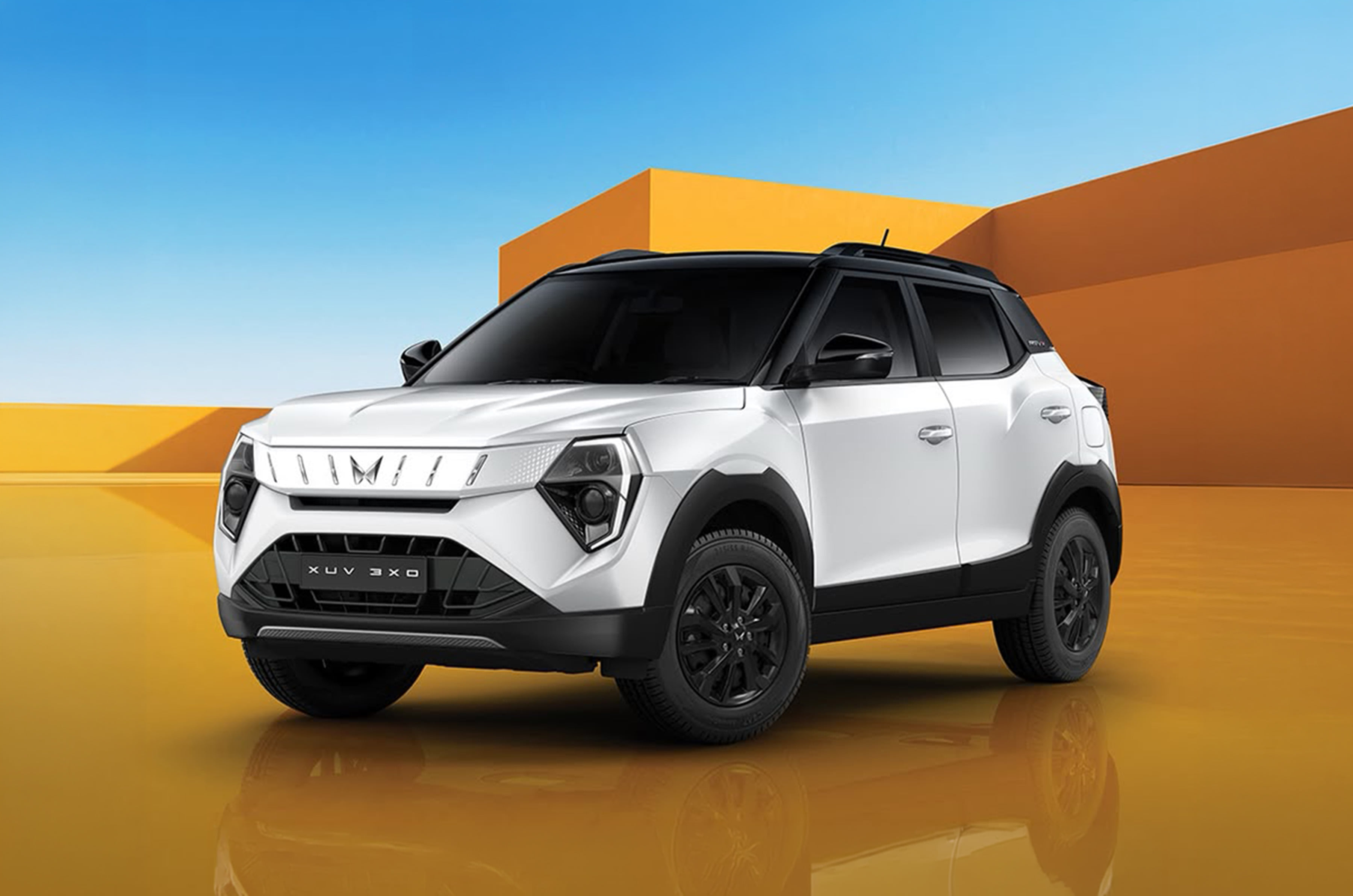
Mahindra has expanded the XUV 3XO RevX line-up with a new RevX Edge trim. Priced from Rs 9.39 lakh (ex-showroom), the RevX Edge essentially makes a few features more accessible from higher up in the trim lineup. Mahindra has also expanded the powertrain lineup on the RevX range, now offering it with a diesel engine and a more affordable 1.2-litre turbo-petrol automatic variant. Let’s look at all the updates in closer detail.
Here’s a look the prices (ex-showroom) of the newly introduced variants:
Trim
Petrol-MT
Petrol-AT
Diesel-MT
Diesel-AMT
RevX M(O)
Rs 9.99 lakh
RevX Edge
Rs 9.39 lakh
Rs 10.59 lakh
Rs 10.59 lakh
RevX Edge (O)
Rs 9.89 lakh
Rs 11.09 lakh
Rs 11.09 lakh
Rs 11.91 lakh
Mahindra XUV 3XO RevX Edge: what’s new?
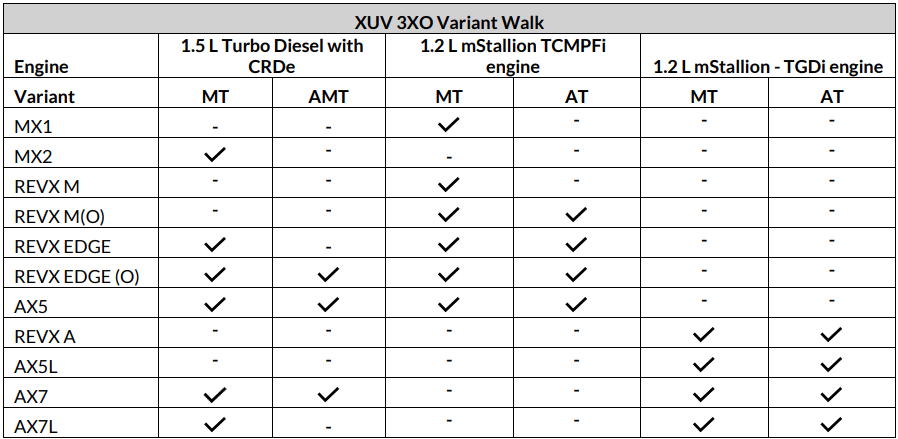
The new RevX Edge and RevX Edge (O) trims sit above the previously launched RevX M and RevX M (O) trims. Overall, the new Edge trims are positioned bang in the centre of the XUV 3XO lineup. The XUV 3XO is now available in a total of 11 trims: MX1, MX2, RevX M, RevX M (O), RevX Edge, Rev X Edge (O), AX5, RevX A, AX5L, AX7, AX7L. Meanwhile, the previously available MX2 Pro, MX3 and MX3 pro trim have been discontinued.
Over the RevX M (O) trim, the new RevX Edge adds 10.25-inch touchscreen with wireless Apple CarPlay and Android Auto, a rearview camera, a Type C USB port and cruise control. The Rev X Edge (O) further adds a panoramic sunroof, roof rails, electrically foldable ORVMs, auto headlamps and wipers, remote entry and push button start.
As before, the RevX trims continue to be set apart from the regular trims with a dual-tone paint shade, a body-coloured grille and blacked-out alloy wheels.
Safety features such as 6 airbags, ESC, ISOFIX child-seat mounts, reverse parking sensors, three-point seat belts and seat-belt reminders for all passengers are standard across the entire XUV 3XO range.
Mahindra XUV 3XO RevX Edge powertrain options
When the RevX trims were introduced last year, it was made available with the 111hp, 1.2-litre turbo-petrol and the 131hp, 1.2-litre TGDi turbo-petrol engines. Now, Mahindra has expanded the powertrain lineup to also include the 117hp, 1.5-litre diesel engine with manual and AMT gearboxes, but the RevX trims are no longer with the 131hp, TGDi turbo-petrol engine.
Here’s a look at the full variant spread of the updated XUV 3XO lineup