Pappu Yadav Viral Video: निर्दलीय सांसद पप्पू यादव ने शनिवार को CJP एक्टिविस्ट निशु आजाद से जुड़े मामले पर खुलकर बात की। हालांकि, उनके बयान से ज्यादा लोगों का ध्यान उनके बदले हुए लुक पर गया।
बता दें कि सोशल मीडिया पर उनके घटे हुए वजन को लेकर काफी चर्चा हो रही है। X पर कई यूजर्स ने कहा कि शुरू में तो उन्हें सांसद को पहचानने में भी मुश्किल हुई।
#WATCH | Patna, Bihar: On the case related to CJP activist Nishu Azad, Independent MP Pappu Yadav says, “Now, as long as Rahul Gandhi is not sitting at the police station for a protest, the daughter will never get justice. Today, we had to sit at the police station for three… pic.twitter.com/jUUJkBFXFw
कई यूजर्स ने उनके शारीरिक बदलाव पर भी ध्यान दिया और उनके वजन में आई भारी कमी चर्चा का विषय बन गई। एक यूजर ने मजाक में कहा, “पप्पू यादव का बाकी हिस्सा कहां है?”
#WATCH | Patna, Bihar: On the case related to CJP activist Nishu Azad, Independent MP Pappu Yadav says, “Now, as long as Rahul Gandhi is not sitting at the police station for a protest, the daughter will never get justice. Today, we had to sit at the police station for three… pic.twitter.com/jUUJkBFXFw
एक और यूजर ने कहा, “फेक न्यूज फैलाना बंद करो? इसमें पप्पू यादव कहां से आ गए??”
कई यूजर्स ने तो यह भी कहा कि इस जबरदस्त बदलाव के पीछे ‘ओजेम्पिक’ (Ozempic) दवा का हाथ है। यह दवा मुख्य रूप से टाइप-2 डायबिटीज के लिए दी जाती है और कभी-कभी डॉक्टर की देखरेख में वजन कम करने के लिए भी इस्तेमाल की जाती है।
एक यूजर ने कहा, ‘ Ozempic एक चमत्कार है’।
#WATCH | Patna, Bihar: On the case related to CJP activist Nishu Azad, Independent MP Pappu Yadav says, “Now, as long as Rahul Gandhi is not sitting at the police station for a protest, the daughter will never get justice. Today, we had to sit at the police station for three… pic.twitter.com/jUUJkBFXFw
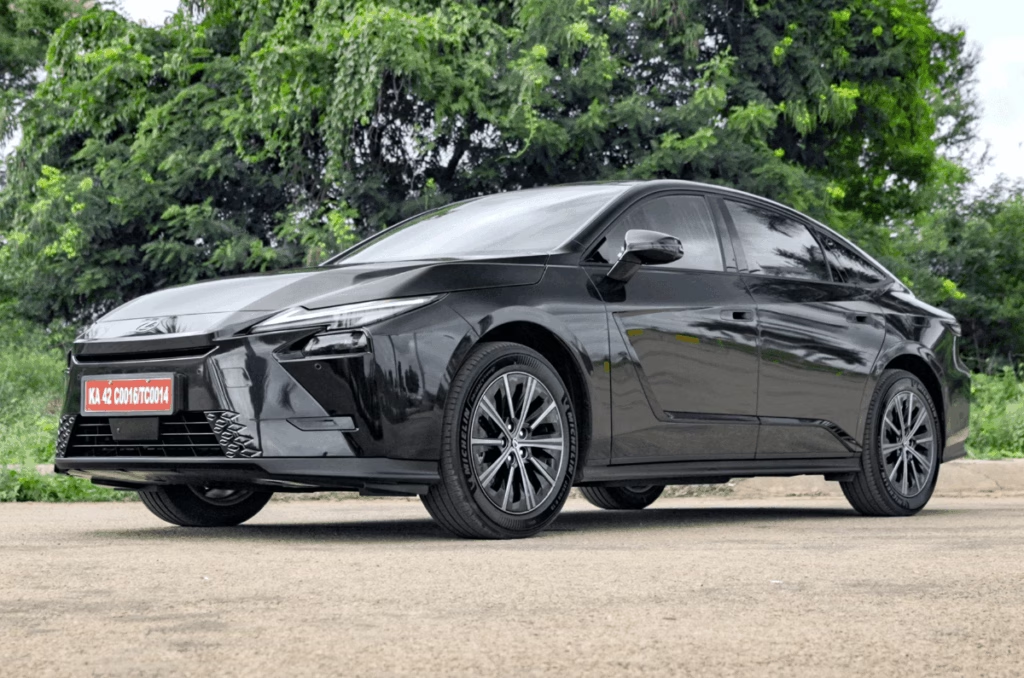
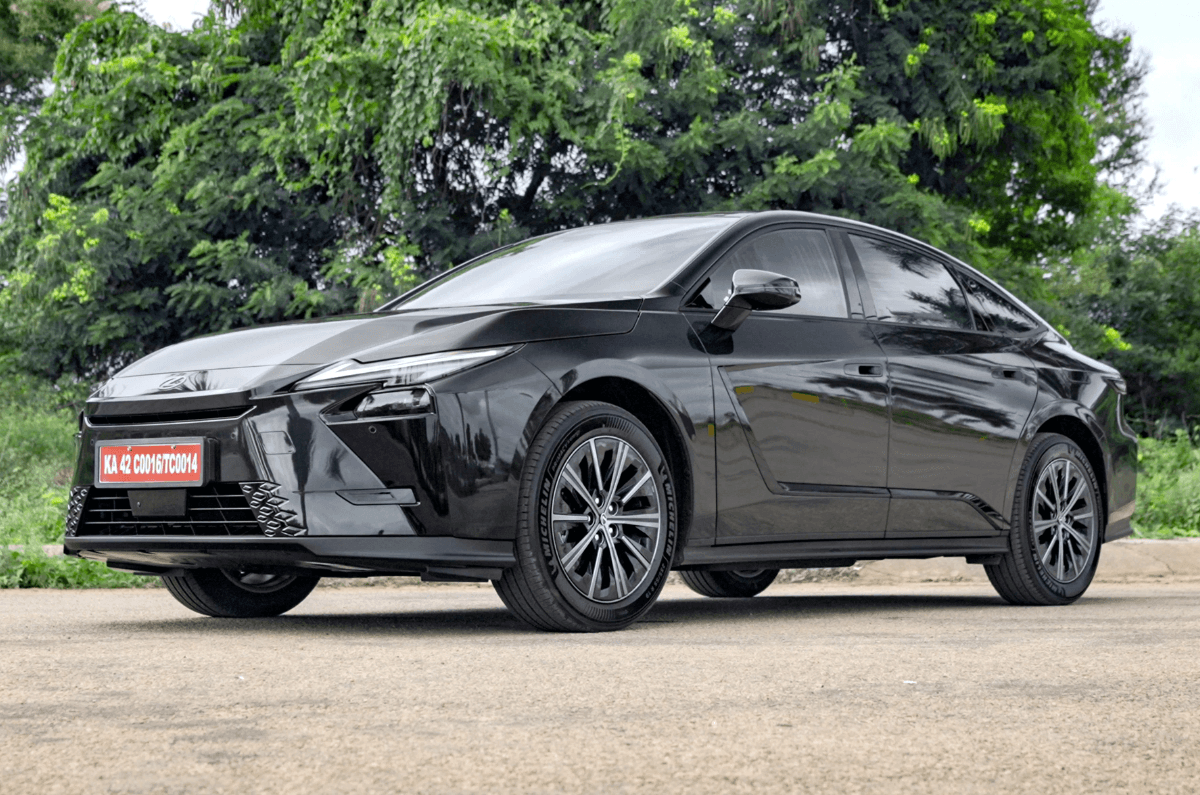
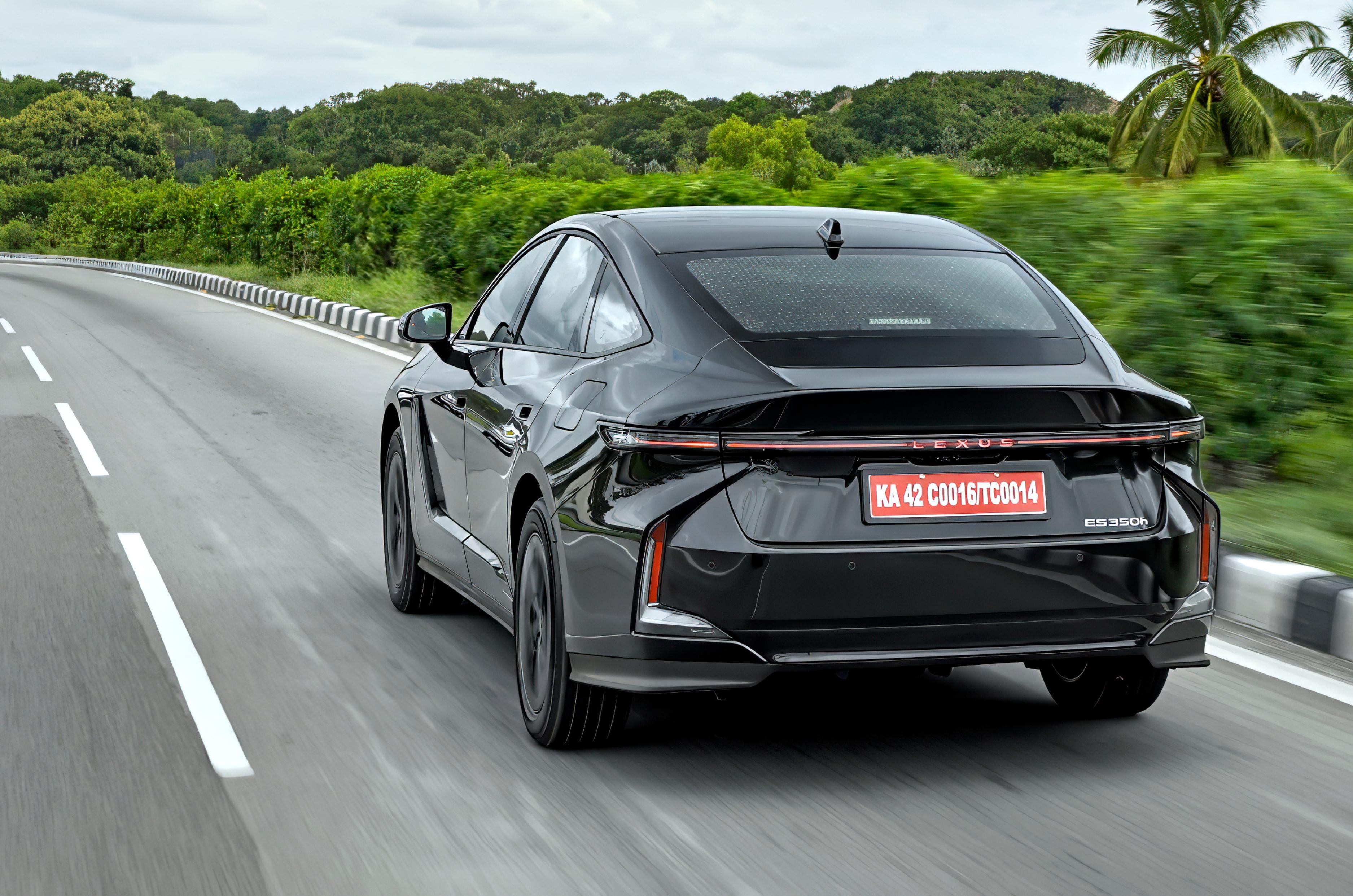
The eighth-generation Lexus ES is based on a new platform, gets an all-new design and is available in both strong-hybrid (350h) and EV (500e) guises. Since the core Lexus ES fanbase is all about the hybrid, we are focusing on the ES 350h here. We look at three reasons why the hybrid sedan deserves a spot in your garage, and two reasons why you may want to skip it.
Reasons to buy the Lexus ES 350h
Fuel-efficient powertrain
A hybrid powertrain’s advantage is its range and the ability to ability to skip fuel pumps. While saving on fuel would not be a priority for luxury sedan buyers, it is still a good bonus and can significantly reduce the fuel bill. On a full tank of petrol, you can expect a range of around 800 kilometres. In the city, you can easily run on electric power from home to work without using any fuel. A result of its silent running is the excellent refinement, adding a layer of luxury to the experience.
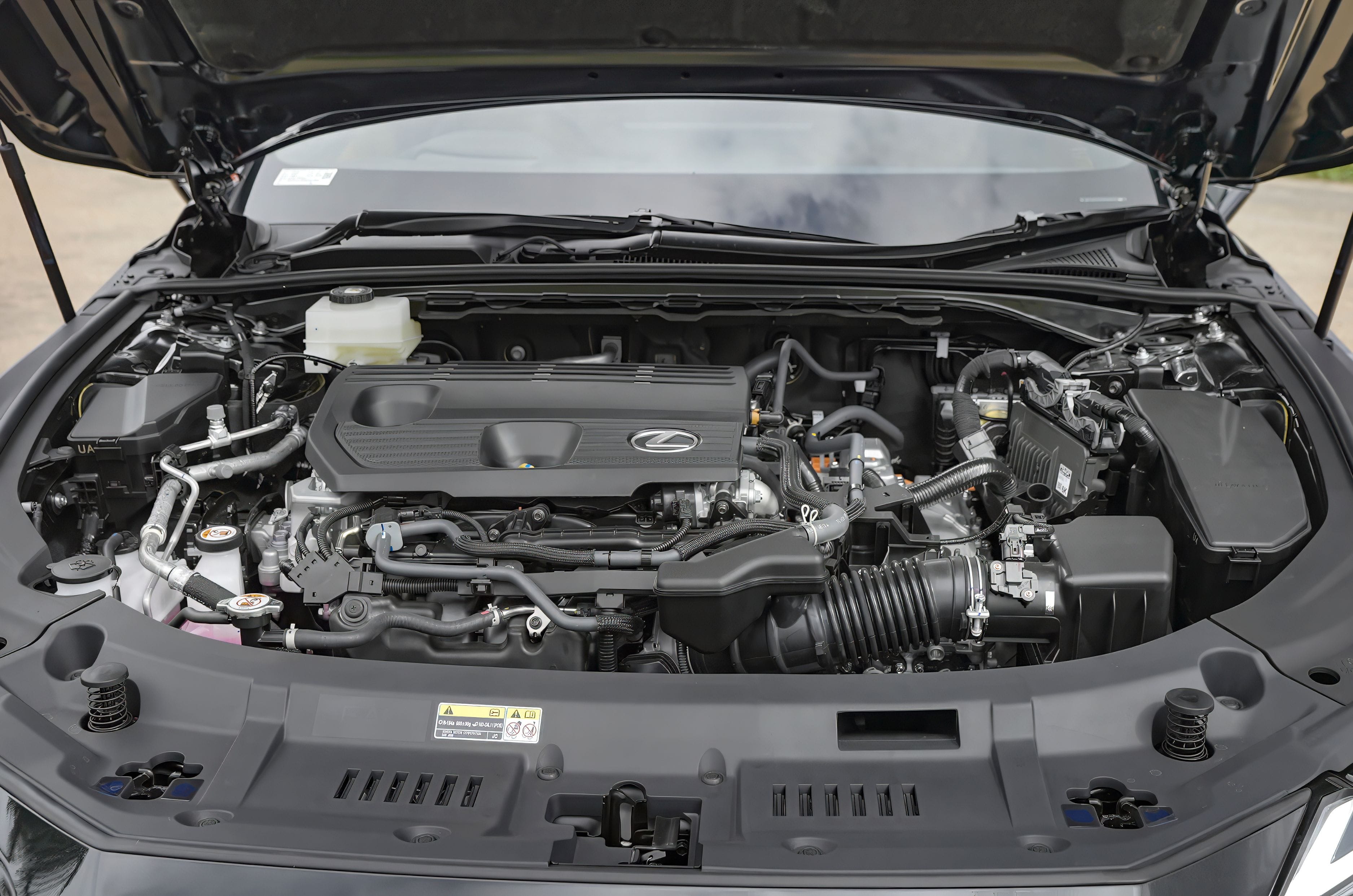
Speaking of technical specifications, the ES 350h’s hybrid powertrain comprises a 2.5-litre, 4-cylinder petrol engine and a permanent magnet synchronous electric motor. Together, this hybrid setup develops 247hp, and gearbox duties are handled by an e-CVT.
Impressive ride comfort
Lexus has equipped the ES 350h with a soft suspension setup, which, combined with the 19-inch wheels with a tall tyre sidewall, leads to a comfortable ride at low speeds. Even over speed bumps and potholes, the 350h is impressive. It feels composed and confident even at highway speeds, with none of the floating usually associated with low-slung sedans.
Less expensive than rivals
At Rs 66.10 lakh, ex-showroom, for the range-starting Exquisite trim, the ES 350h is extremely well priced. For someone looking for a spacious, refined and reliable luxury sedan for the long run, it makes a strong case.
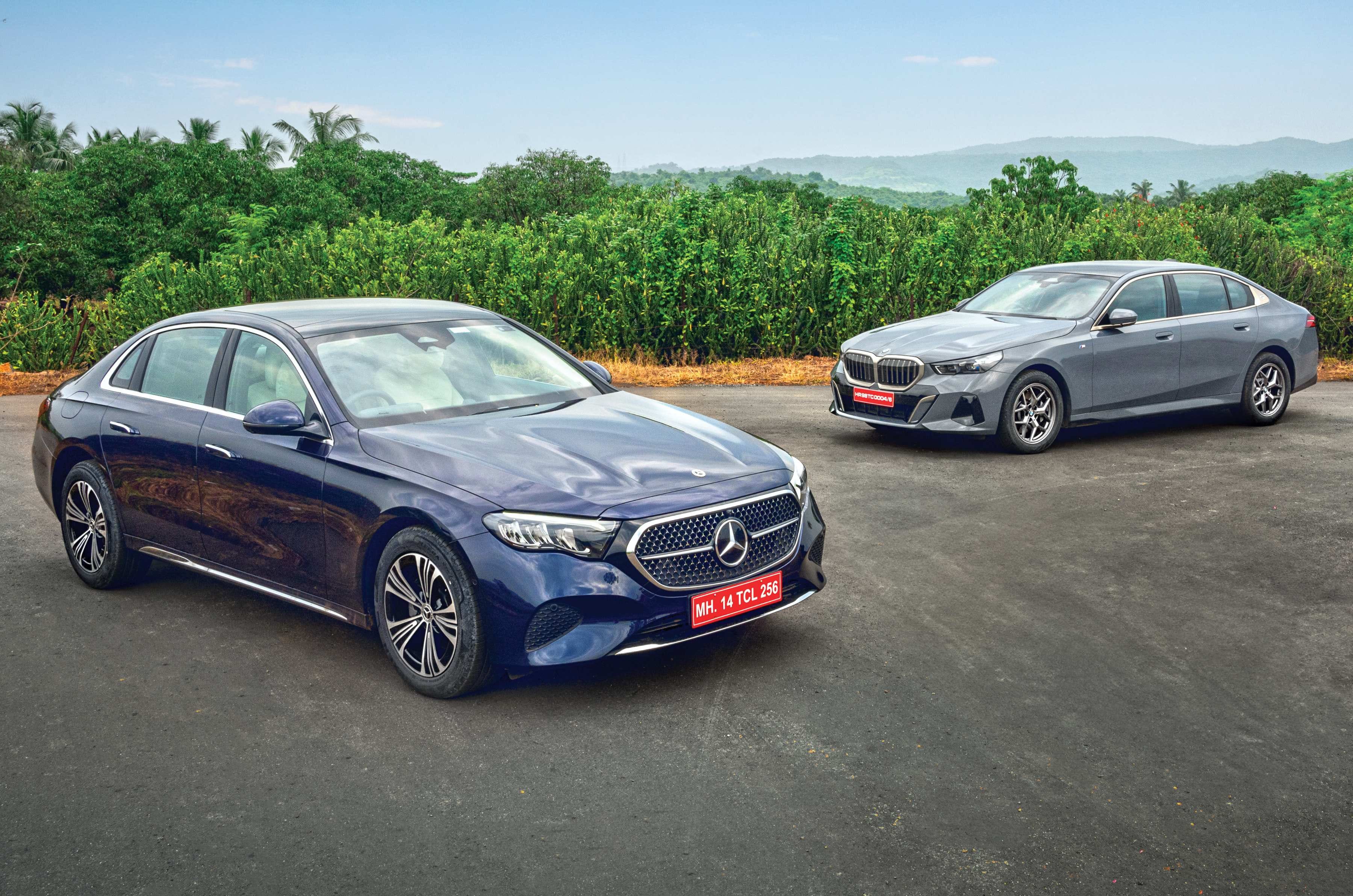
Mercedes E-Class (left), BMW 5 Series LWB (right).
The top-spec Luxury trim costs Rs 71.80 lakh, ex-showroom, and gets a decent set of features, while still being considerably less expensive than similarly sized rivals like the Mercedes-Benz E-Class and BMW 5 Series LWB. For those who are not chasing badge value and value longevity over flash, the ES 350h is worth a strong consideration.
Like any other car, the Lexus ES 350h has a few limitations. Let us look at a few reasons why you might want to skip it.
Reasons not to buy the Lexus ES 350h
Misses out on some features compared to rivals
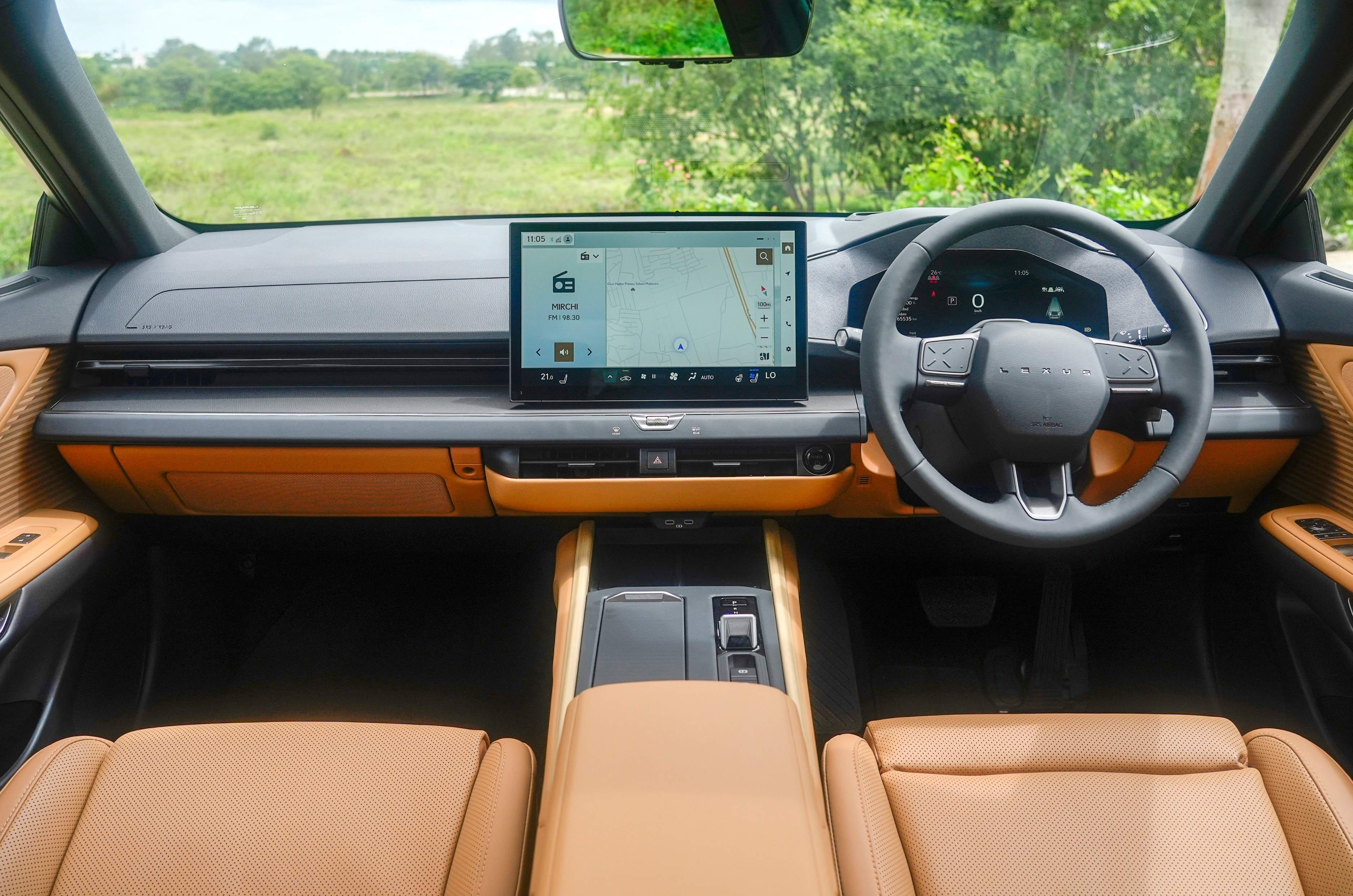
The passenger display in the Mercedes E-Class, part of its Superscreen setup, adds to the wow factor; the ES, meanwhile, gets a touchscreen and a digital driver’s display. The ES gets a single-pane sunroof, but a panoramic or even a split-pane sunroof would have helped open up the cabin during the daytime. In comparison, the E-Class gets a panoramic sunroof, while the 5 Series LWB gets a fixed panoramic glass roof. Strangely, even sunblinds are absent from the 350h; the Mercedes sedan offers powered blinds.
What’s interesting is that the ES’ older version (the seventh-generation facelift) did pamper chauffeur-driven passengers with sunblinds and even media controls. Now, however, AC vents with two Type-C ports are all that is available.
Rear seat comfort not as good as rivals
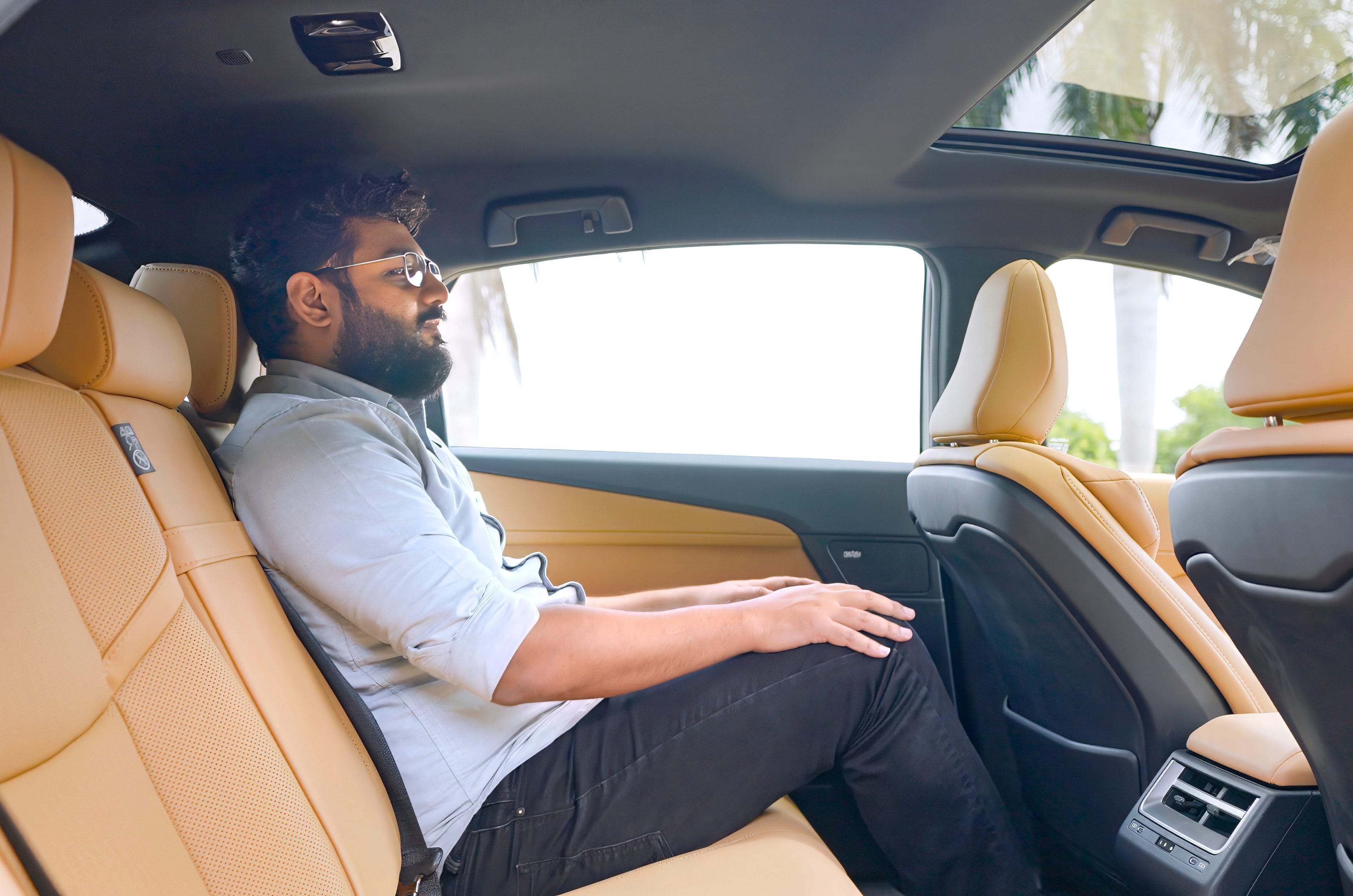
While legroom at the rear is plentiful, the raised floor, however, means the rear passengers sit in a knees-up position, and there is no recline function for the backrest. This does not work in favour of the ES, as both the Mercedes E-Class and BMW 5 Series are known for their impressive rear-seat experience, which is important for those who prefer to be chauffeur-driven.
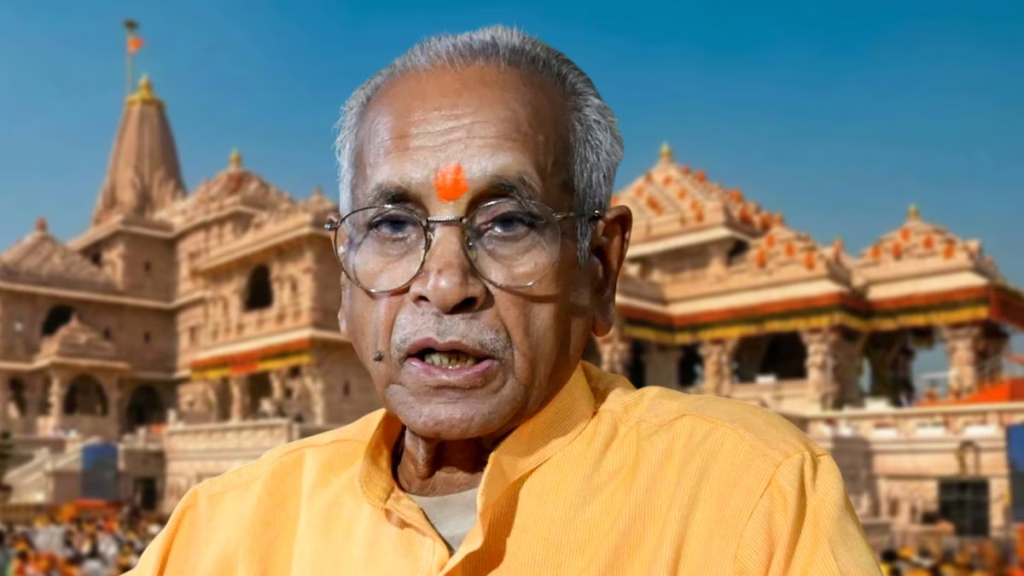
श्रीराम जन्मभूमि तीर्थ क्षेत्र ट्रस्ट के नए महासचिव स्वामी गोविंद देव गिरि जी महाराज ने पूर्व महासचिव चंपत राय की ट्रस्ट में वापसी या किसी नए पद पर नियुक्ति की अटकलों पर विराम लगा दिया है। पत्रकारों द्वारा यह पूछे जाने पर कि क्या चंपत राय को ट्रस्ट में कोई नया पद दिया जाएगा, स्वामी गोविंद देव गिरि ने स्पष्ट करते हुए कहा कि ऐसी अभी कोई बात नहीं है। यदि हमें ऐसा करना होता तो हम अभी ही कर लेते। हमें तीन नए लोगों का चयन करना था, जिनमें हम दो लोग बाहर के चुन लेते और एक उन्हें (चंपत राय को) पद दे देते। लेकिन फिलहाल ऐसी कोई बात हमारे सामने विचाराधीन नहीं है।
स्वामी गोविंद देव गिरि के इस बयान के बाद अब यह पूरी तरह साफ हो गया है कि चंपत राय को फिलहाल ट्रस्ट में किसी नई जिम्मेदारी पर रखने की कोई योजना नहीं है। आपको बता दें की राम मंदिर ट्रस्ट के पूर्व महासचिव चम्पत राय का नाम राम मंदिर मे चढ़ावा चोरी व चंदा चोरी की घटना मे प्रमुख रूप से आया था जिसकी SIT जांच भी हुयी जिसमे चम्पत राय को क्लीन चिट दें दी गयी, जिसके बाद से चम्पत राय की अयोध्या के करसेवक पुरम डेरा डाले हुए है जहाँ राम मंदिर व ट्रस्ट के पदाधिकारी कार्यकर्त्ताओ का बराबर आवागमन बना हुआ है भाजपा के विधायकगण भी चरण वंदना कर रहे है जिससे उनका भौकाल अभी टाइट है।
ram mandir trust govind dev giri: अयोध्या स्थित श्रीराम जन्मभूमि तीर्थ क्षेत्र ट्रस्ट की अहम बैठक में प्रशासनिक और संगठनात्मक स्तर पर कई ऐतिहासिक फैसले लिए गए हैं। चढ़ावा विवाद के चलते चंपत राय की जिम्मेदारी अब गोविंद देव गिरि को सौंपी गई है। दिल्ली के महेश भागचंदका को ट्रस्ट का कोषाध्यक्ष बनाया गया है। गिरि को महासचिव बनाए जाने के फैसले पर सवाल उठने लगे हैं। उनके बारे में कहा जा रहा है उनके कोषाध्यक्ष रहते हुए ही चढ़ावा में चोरी की घटना हुई थी। कोष के लिए कोषाध्यक्ष ही सीधे जिम्मेदार माना जाता है। ऐसे में महासचिव के रूप में गोविंद गिरि का नाम लोगों के गले नहीं उतर रहा है।
क्या कहा गोविंद देव गिरि ने?
ट्रस्ट के नवनियुक्त महासचिव स्वामी गोविंद देव गिरि ने स्पष्ट किया कि नई टीम का मुख्य लक्ष्य अयोध्या को दुनिया की सांस्कृतिक राजधानी के रूप में विकसित करना और मंदिर निर्माण के साथ-साथ ट्रस्ट के प्रशासनिक व वित्तीय कामकाज को पूरी पारदर्शिता से आगे बढ़ाना है।
बैठक में वित्तीय व्यवस्था में तकनीक का इस्तेमाल बढ़ाने, चढ़ावे की गिनती में मानवीय हस्तक्षेप कम करने और SIT जांच से जुड़े सुप्रीम कोर्ट के आदेश पर ट्रस्ट का रुख स्पष्ट किया गया। आने वाले दिनों में जरूरत पड़ने पर ज्वाइंट या डिप्टी CEO की नियुक्ति के लिए जल्द ही SOP और दिशा-निर्देश तैयार किए जाएंगे।
चंपतराय का दबदबा बरकरार
महासचिव पद से इस्तीफा दे चुके चंपत राय का सीधे-सीधे तो नहीं, लेकिन परोक्ष रूप से ट्रस्ट में उनका दबदबा बरकरार है। दरअसल, नए कोषाध्यक्ष महेश भागचंदका अशोक सिंघल फाउंडेशन के संस्थापक ट्रस्टी हैं। चंपत राय इस ट्रस्ट के आजीवन ट्रस्टी हैं। ट्रस्ट के नए सदस्य महेश पांडेय को भी चंपत राय का करीबी माना जाता है। हालांकि अध्यक्ष और महासचिव के पद अब संत समाज के पास हैं।
उल्लेखनीय है कि ट्रस्ट के प्रशासनिक संचालन को सुदृढ़ करने के लिए पूर्व एयर मार्शल जितेंद्र मिश्रा को राम मंदिर का पहला मुख्य कार्यकारी अधिकारी (CEO) चुना गया है। इस पद के लिए 16 अभ्यर्थियों में से तीन नाम—एयर मार्शल जितेंद्र मिश्रा, मेजर जनरल संजय प्रताप सिंह और श्रुति भारद्वाज—शॉर्टलिस्ट किए गए थे, जिसमें से जितेंद्र मिश्रा के नाम पर अंतिम सहमति बनी।
इनके अलावा अयोध्या निवासी वरिष्ठ अधिवक्ता मदन मोहन पांडेय, जिन्होंने राम जन्मभूमि-बाबरी मस्जिद विवाद में रामलला की ओर से प्रभावी कानूनी पैरवी की थी। शिक्षाविद डॉ. निर्मला यादव को भी ट्रस्ट का सदस्य बनाया गया।
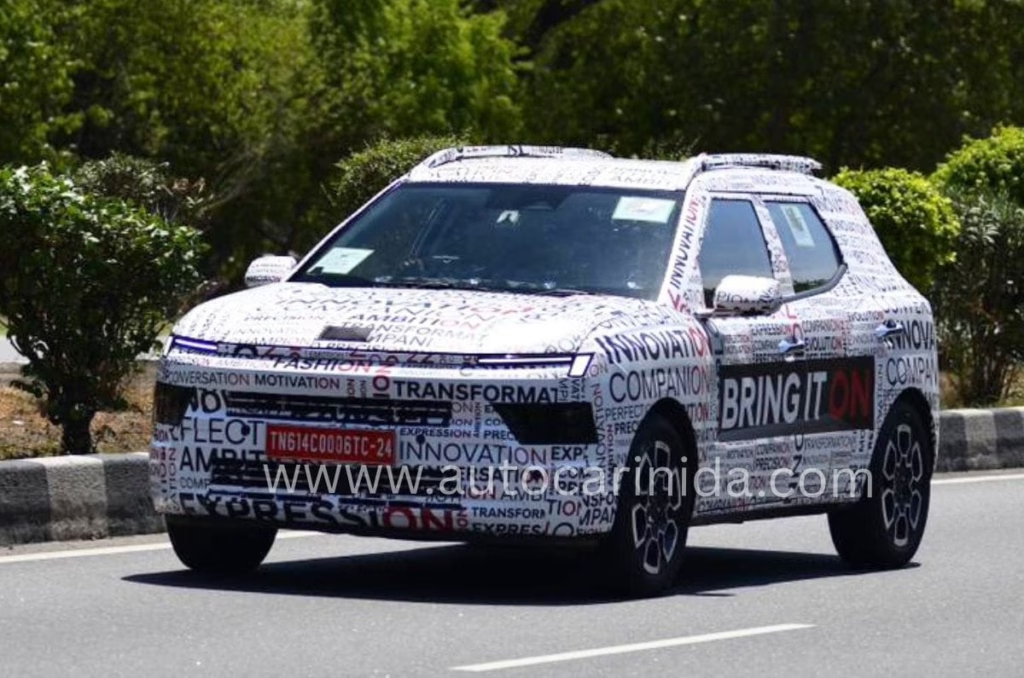
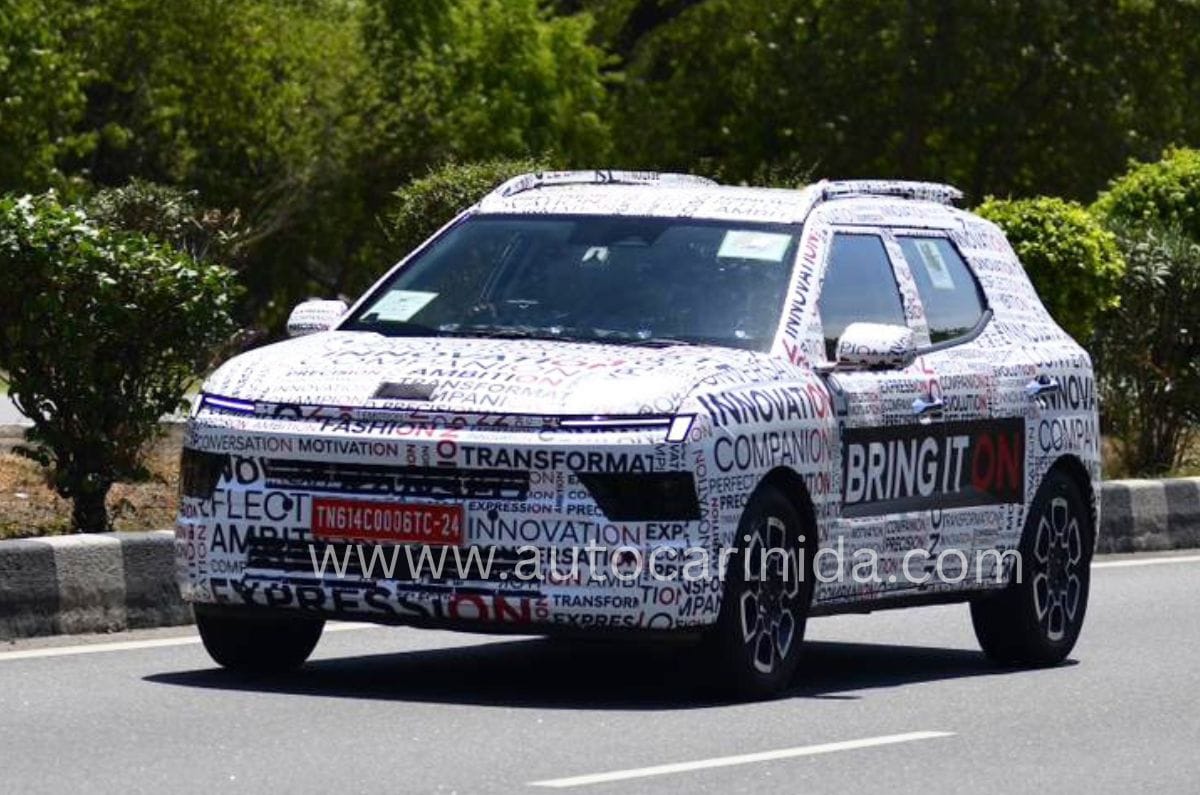
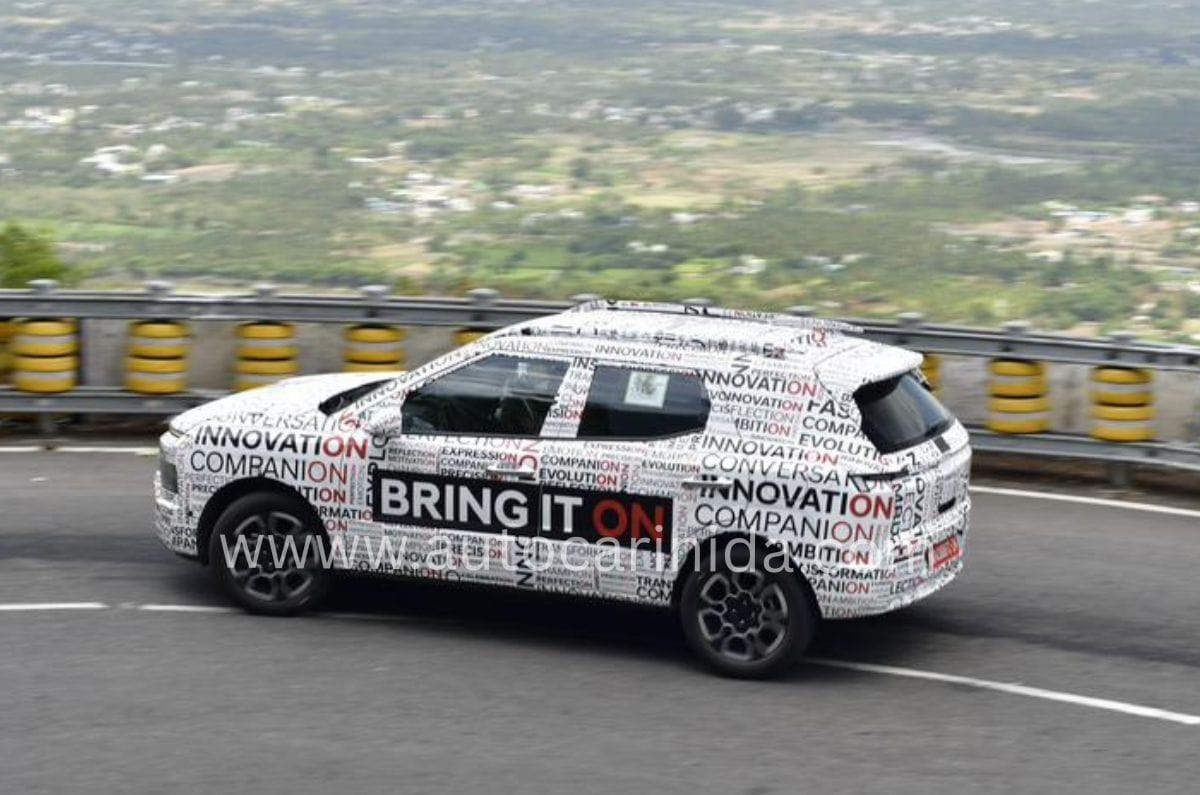
The upcoming Hyundai Bayon-based midsize SUV has been spied testing on our roads once again ahead of its launch this festive season. This latest sighting gives us the clearest look yet at the upcoming model which will sit below the Creta in Hyundai’s lineup, but still measure over 4-meters in length.
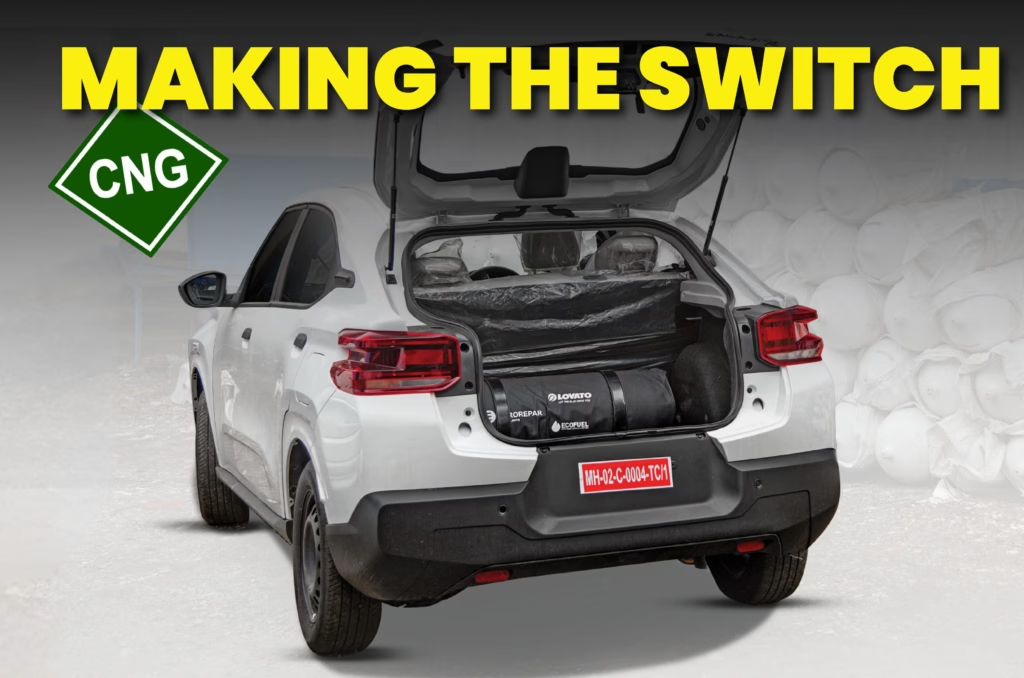
Although it’s based on the international-spec Bayon, the India-spec model gets a complete different top hat with crossover-ish stance and sharp LED styling elements. It is expected to come with a 1.5-litre naturally aspirated petrol engine with manual and CVT gearbox options. This engine will also be offered in CNG form with an underbody tank, making the Bayon-based SUV the first Hyundai car over four metres long to be powered by CNG.
Much like Maruti, this will give Hyundai a two-pronged plan to tackle the burgeoning midsize SUV market.
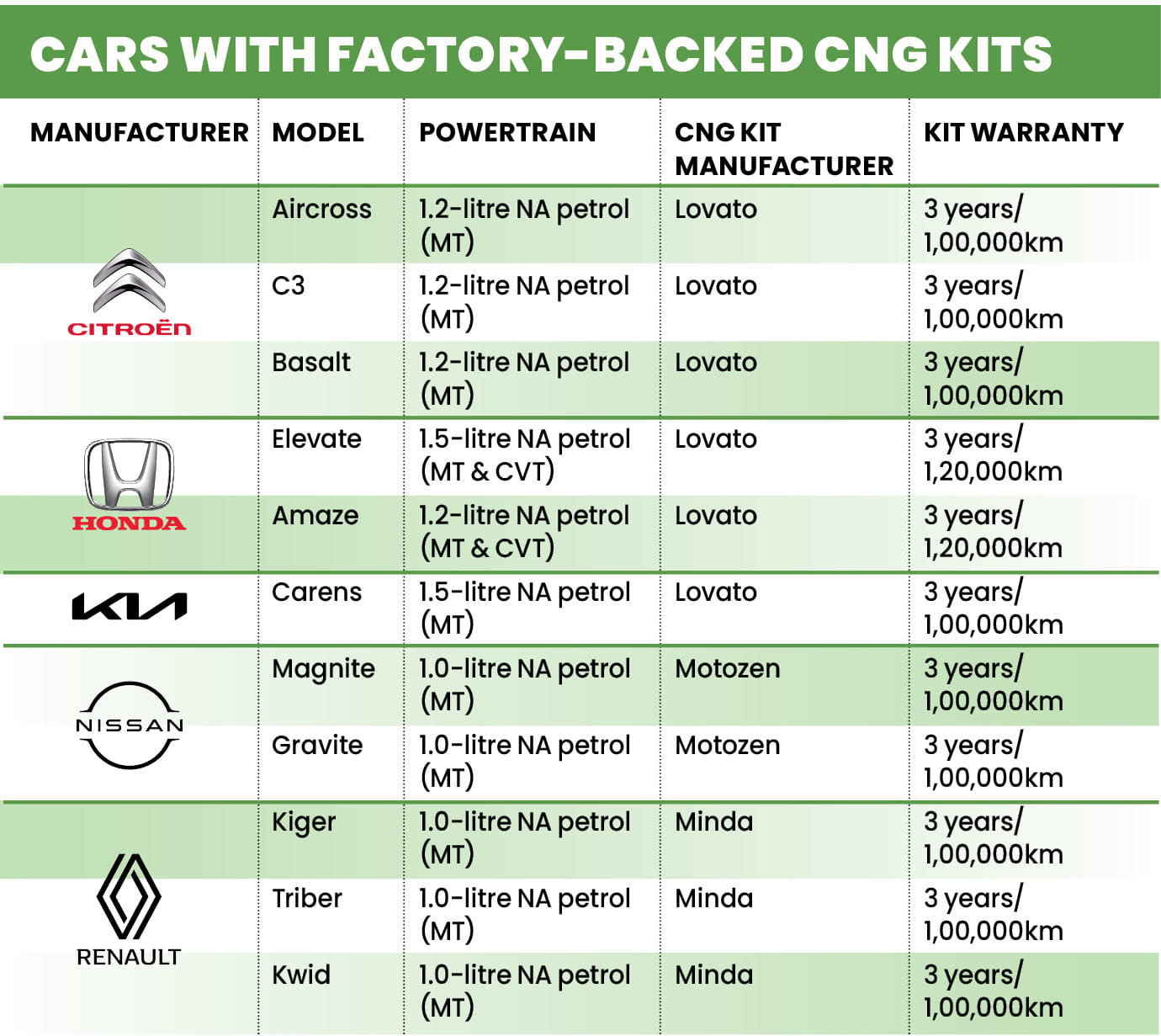
While aftermarket CNG conversions are not new, with the rise in fuel prices, there has been a noticeable spike in interest surrounding them. Although there are more factory-fitted CNG cars on the market than ever before, several models still do not give you the option. Not to mention, existing car owners are increasingly looking to convert their cars to CNG to reduce running costs.
Naturally, this increased interest brings up several questions about the technology, the installation, the legalities and more. We thus teamed up with Lovato CNG’s authorised distributor in Maharashtra, Blue Drive Traders, as well as Lets Go CNG and its authorised installer in Mumbai, M.S Motors, to answer questions about CNG conversions.
Know your CNG kit
There are three broad types of kits available on the market today. The oldest is the Venturi type, typically used for cars that are Bharat Stage 3-compatible and older. These use a Venturi mixer, similar to a carburettor, that mixes CNG with air before it is injected into the intake manifold. They are the most affordable, usually costing between Rs 30,000 and Rs 40,000, including installation and registration, but they are not the most efficient and bring a significant drop in performance. Since the cars they are compatible with are also reaching the end of their lifecycle, these kits are gradually being phased out.
Modern naturally aspirated MPFI cars require a sequential type kit. These use individual injectors that inject CNG directly into the intake manifold and feature their own ECU that controls timing, volume and other parameters based on RPM and driver inputs. These are much more fuel-efficient, and the drop in performance is nominal in everyday driving conditions. Like the older Venturi kits, these too require the car to be started on petrol before switching over to CNG. However, they automate the process by making the switch once a certain engine temperature is reached. Prices vary depending on the manufacturer and the specifications of each kit, ranging from Rs 40,000-Rs 50,000 for older BS4 cars, to Rs 50,000-Rs 65,000 for smaller BS6 cars, stretching to Rs 70,000-Rs 75,000 for larger cars that require an eight-injector kit.
The newest type of kit to hit the market is the direct-injection kit, used for cars with direct petrol injection. Like sequential kits, these too inject CNG into the intake manifold. However, direct-injection engines cannot run purely on CNG. The fuel injectors in a DI engine sit within the combustion chamber, so to prevent them from overheating, a small amount of petrol still needs to be injected through them even when running on CNG. Therefore, a turbocharged direct-injection engine can only run on a maximum 80:20 ratio of CNG and petrol. As a result, fuel efficiency gains are not quite as high as with a naturally aspirated engine, and kit prices range from Rs 1 lakh to Rs 1.5 lakh, thus pushing the breakeven point further away.
What’s in the box?
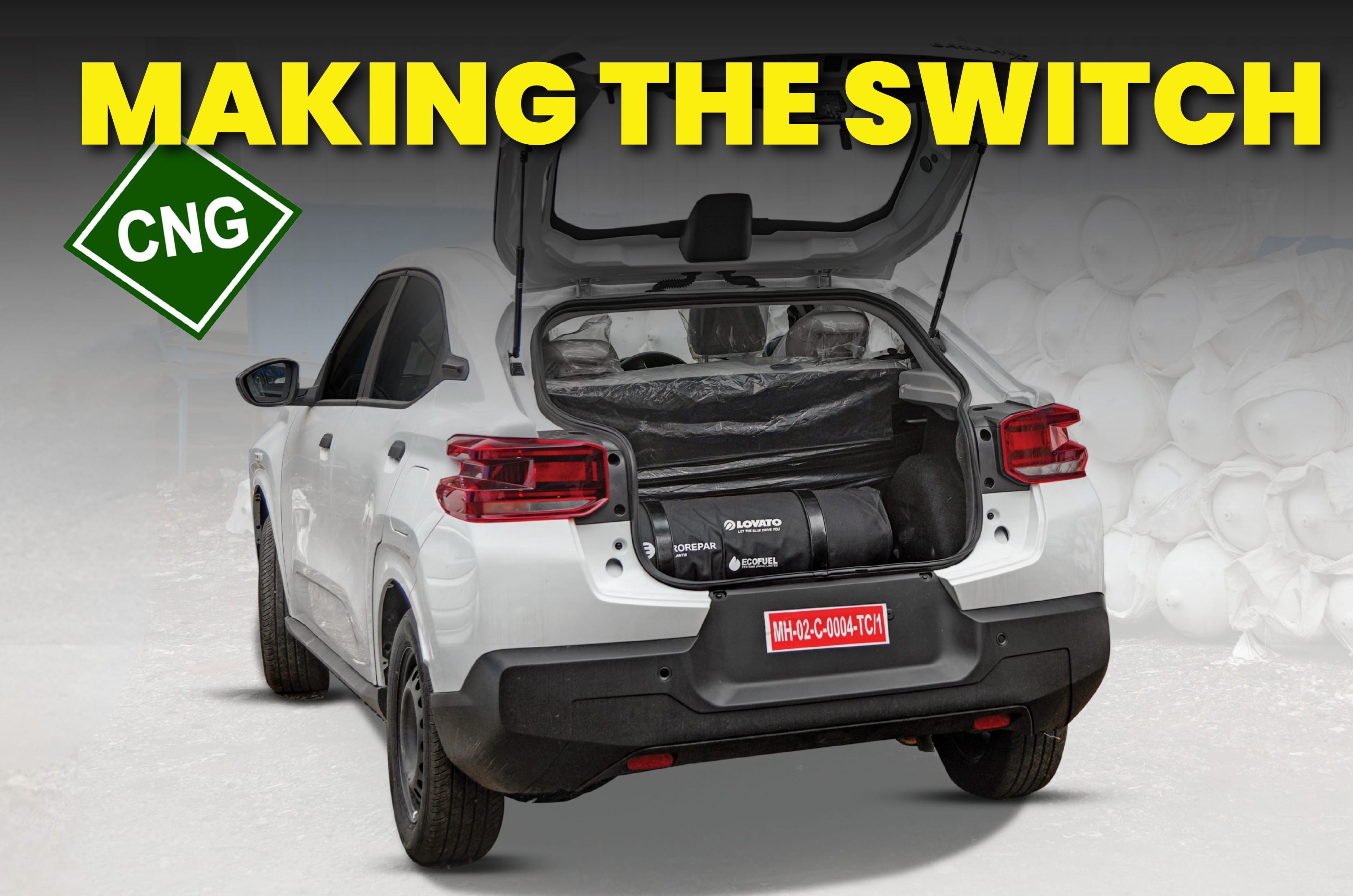
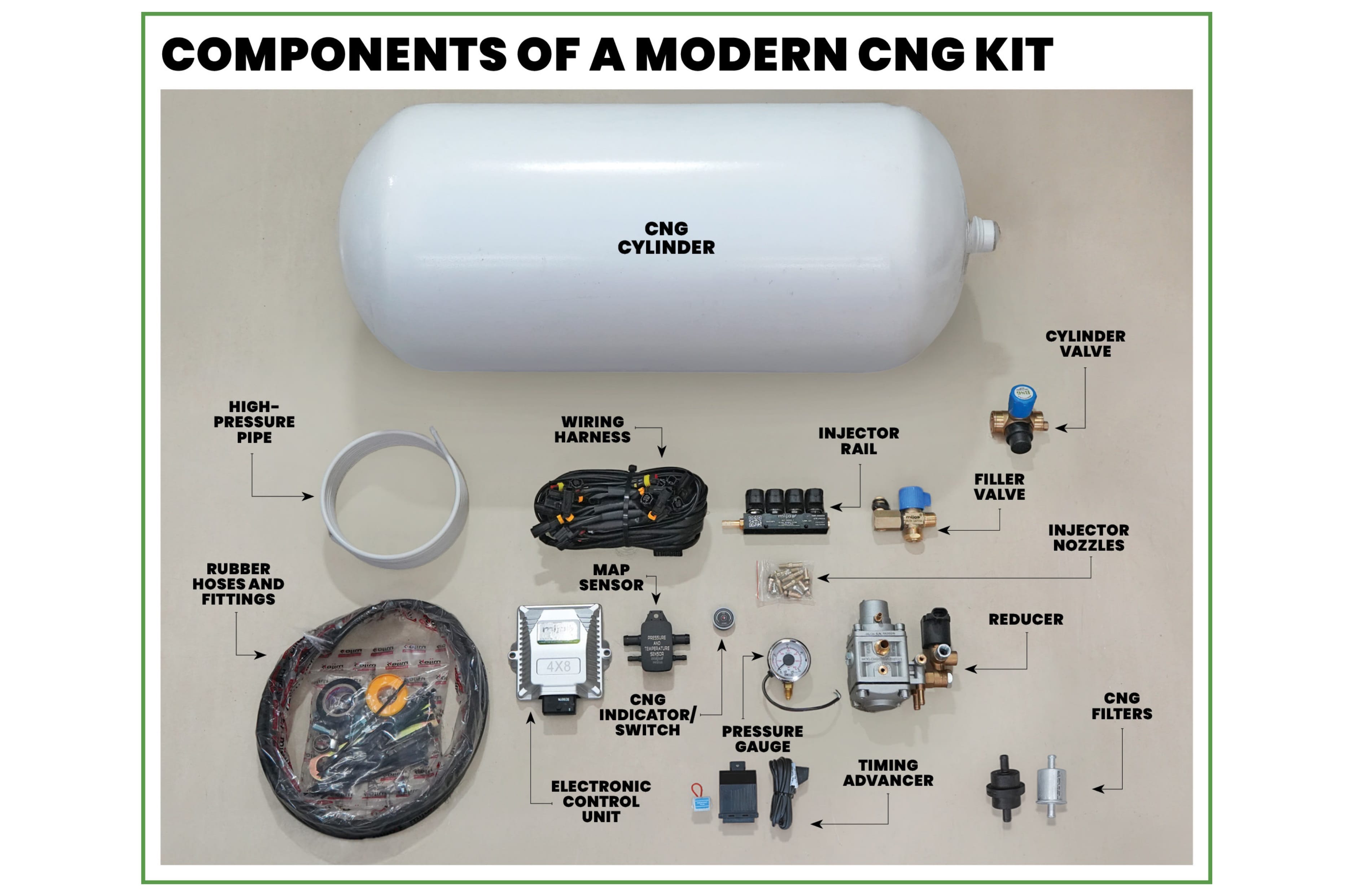
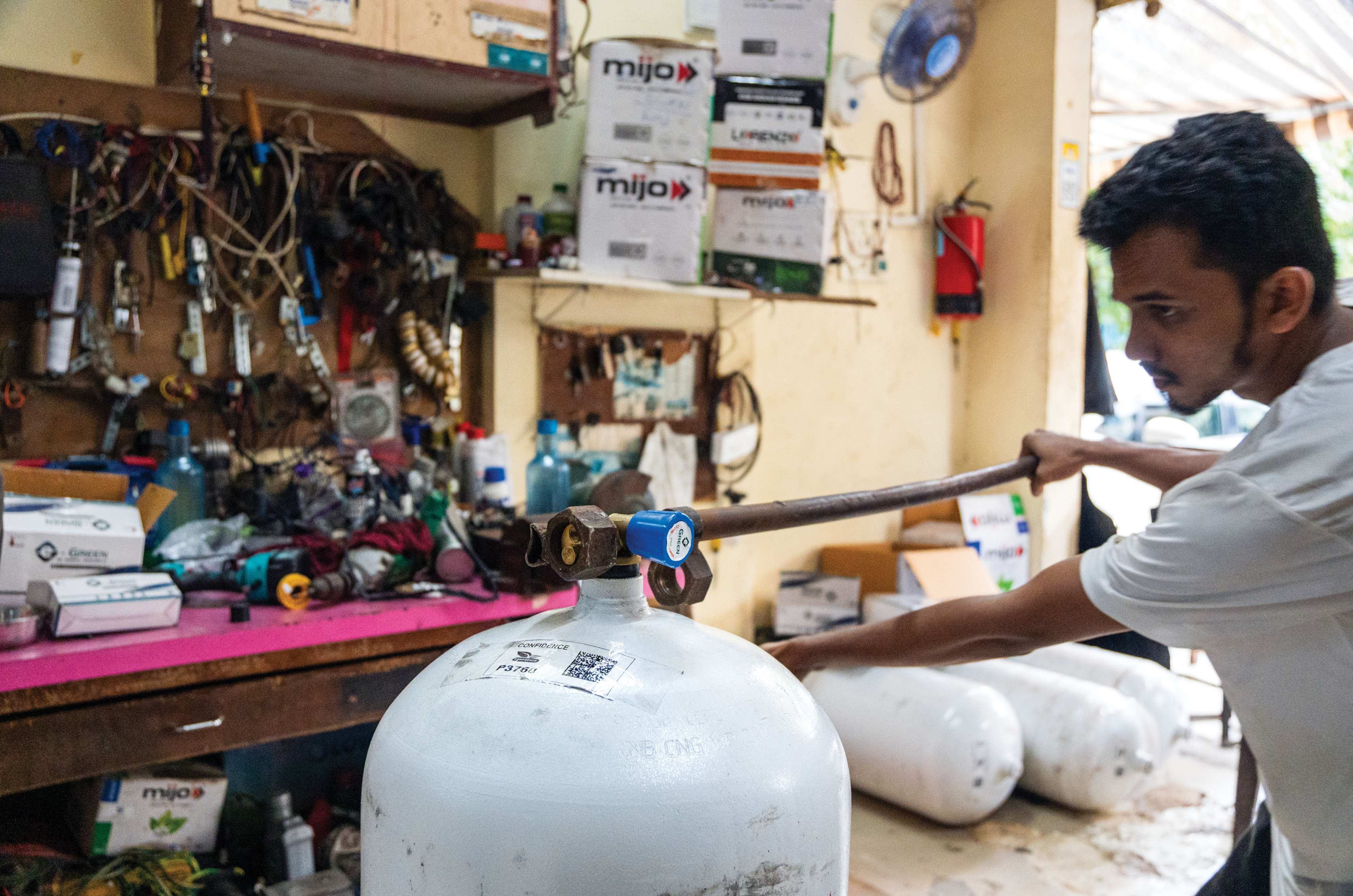
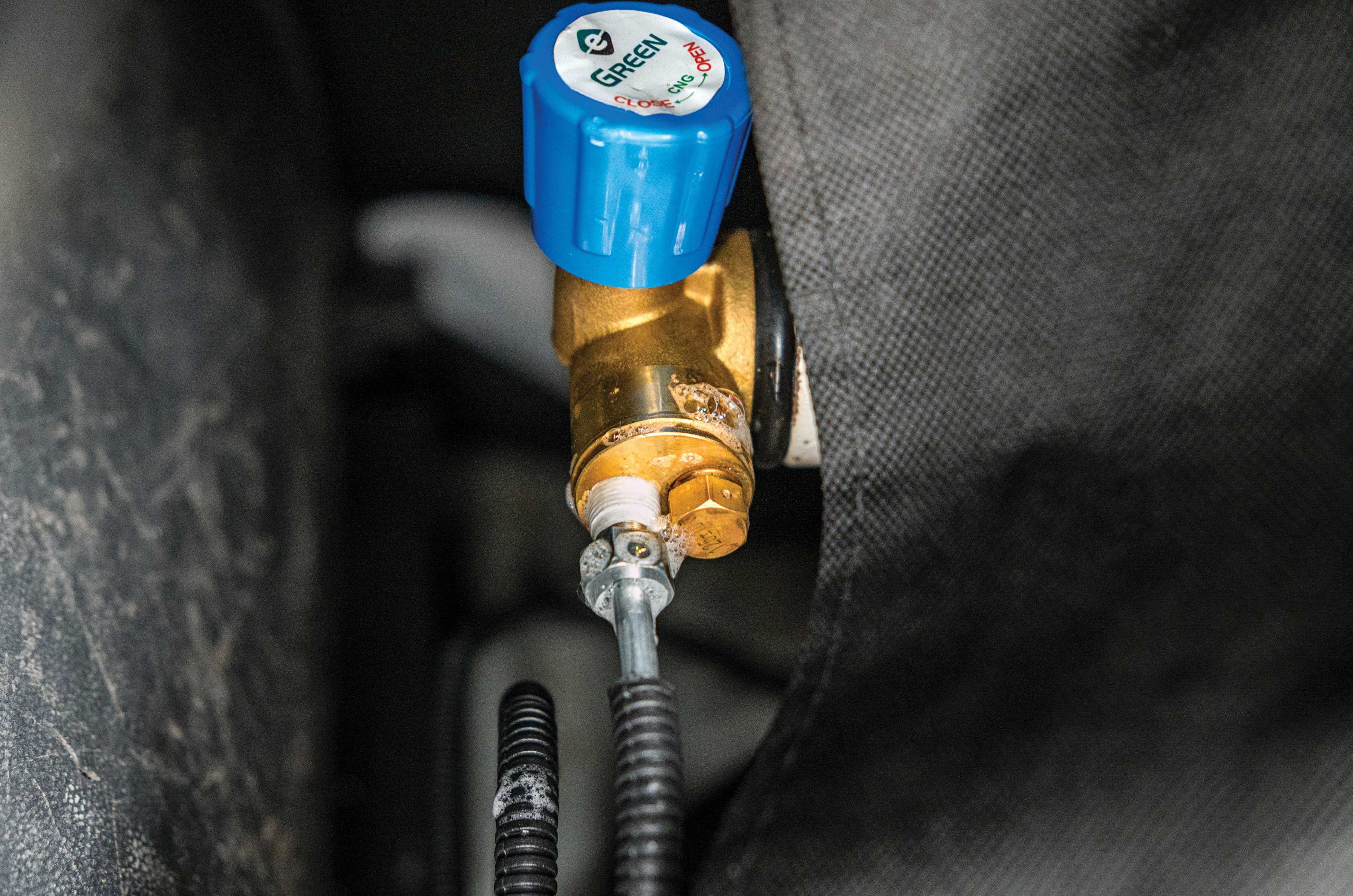
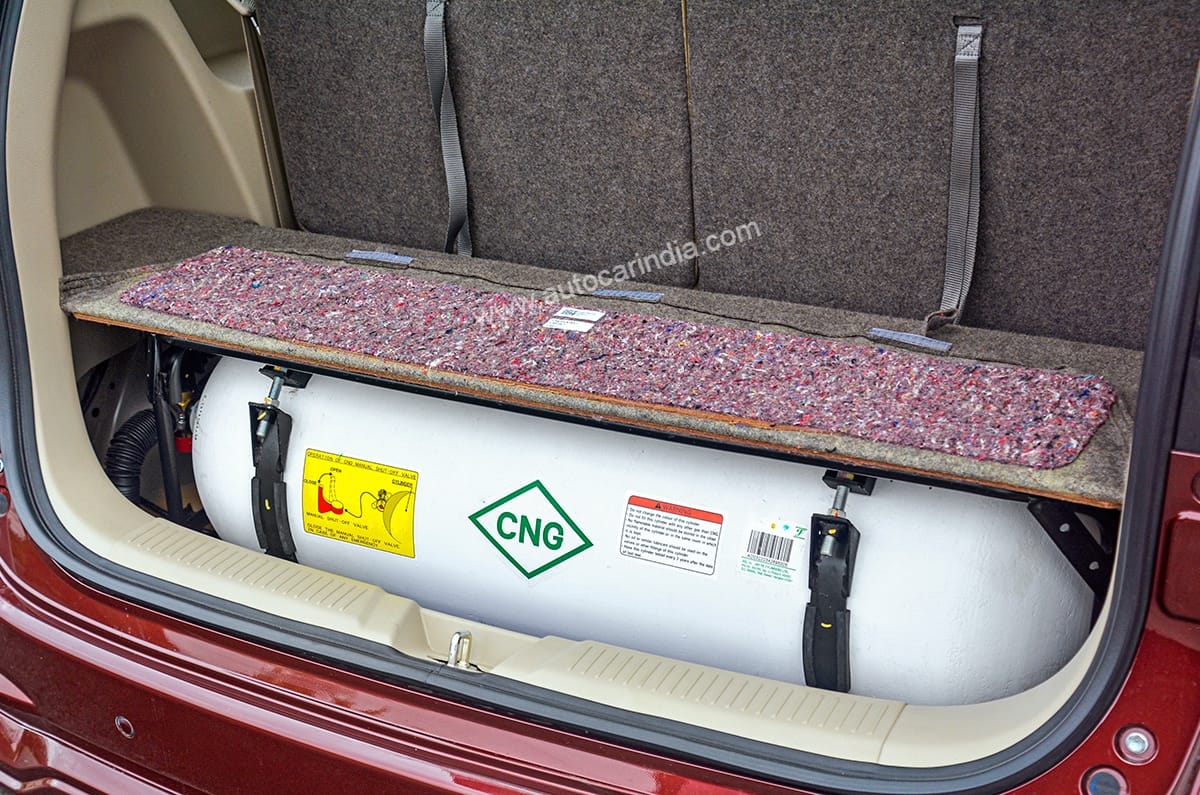
The largest and heaviest component of a typical CNG kit is the tank itself. Made from seamless steel, these can weigh close to 70kg empty, with volumetric capacities ranging from 60 to 65 litres. Metal-lined composite cylinders and carbon fibre-reinforced plastic cylinders are also now available, and while they are significantly lighter, they usually cost two or three times more. Attached to the tank is a valve with a manual shut-off.
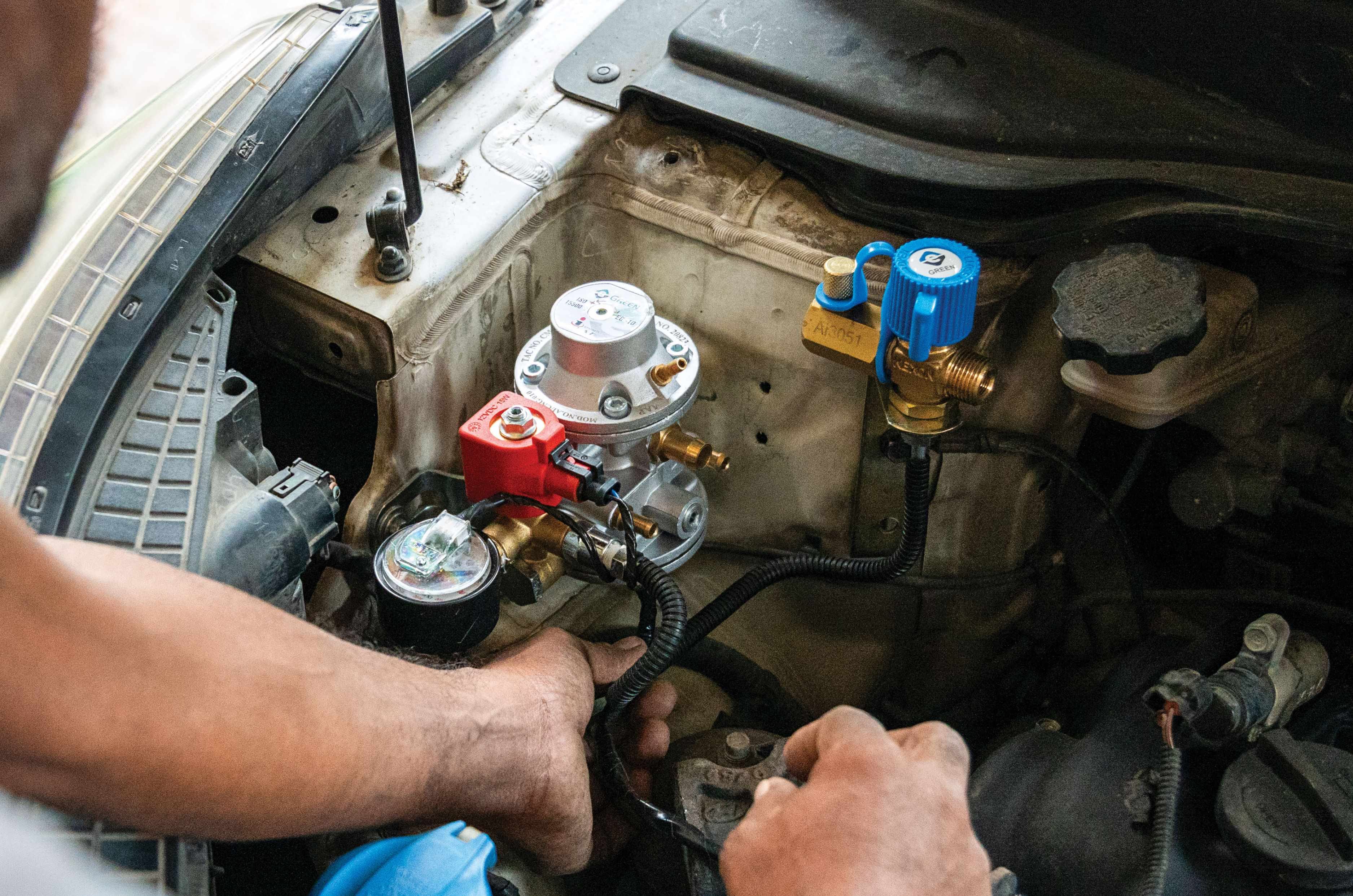
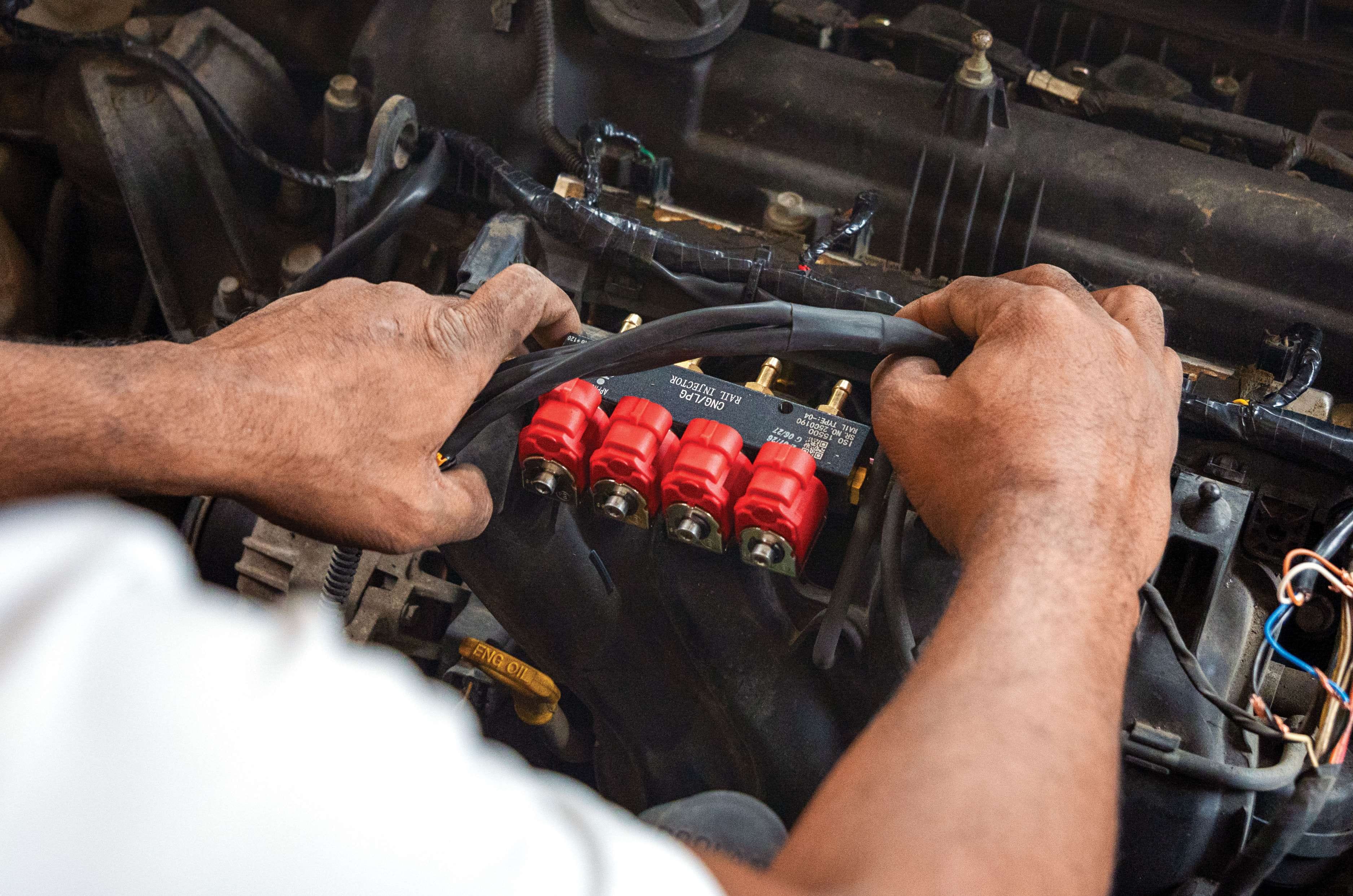
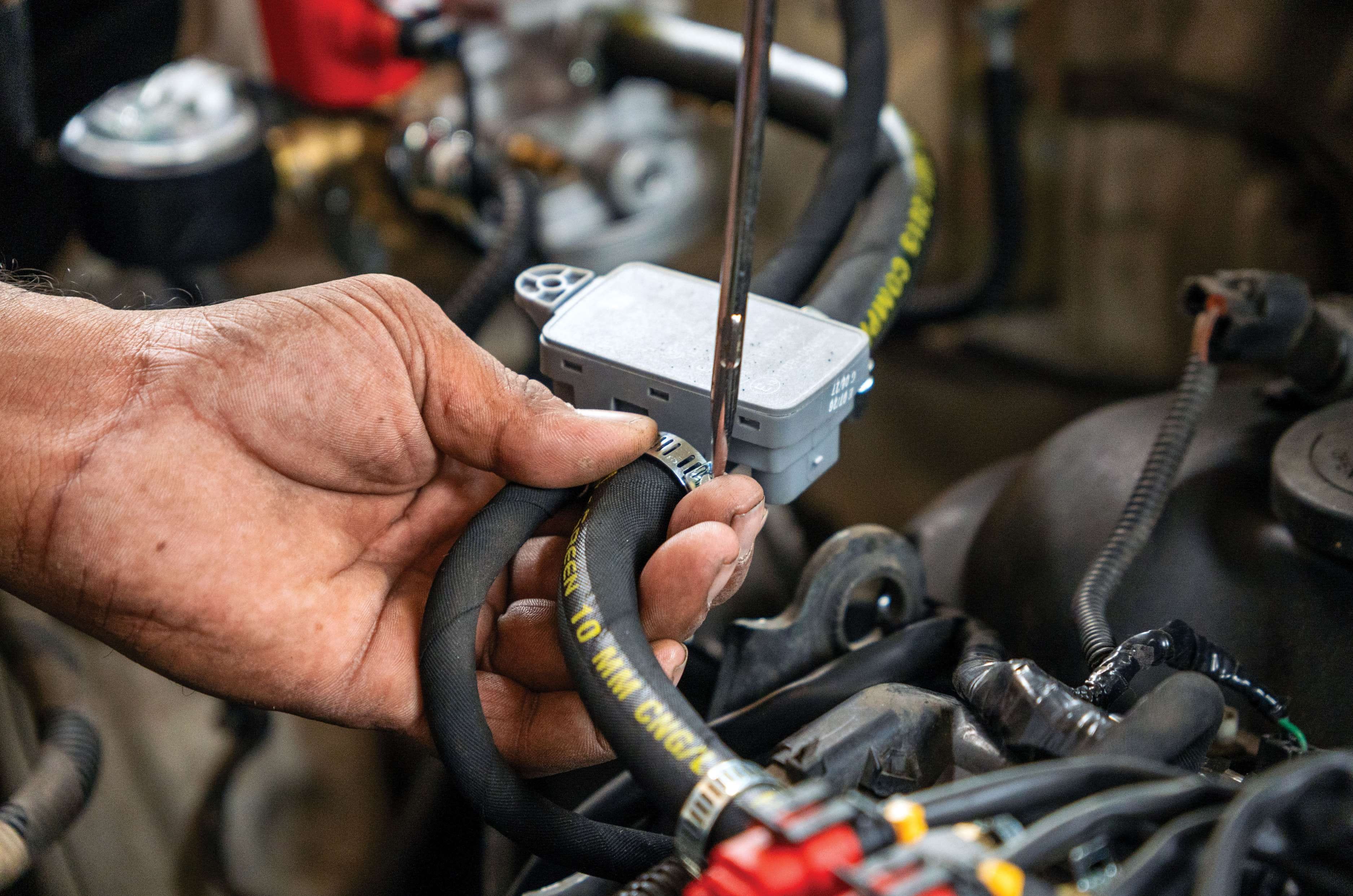
The filling valve, through which CNG is filled, can either be placed under the bonnet or beside the petrol filler cap, depending on the vehicle. Transporting the gas from the tank to the pressure reducer under the bonnet is high-pressure tubing made from carbon steel and coated in polymers. The reducer has a pressure gauge and lowers gas pressure from about 200bar in the tank to a manageable 2-3 bar. From here, the gas is routed to the injector rail that sits atop the engine, which further distributes it to nozzles drilled into the intake manifold via reinforced rubber hoses. Between the reducer and the injector rail sits a Manifold Absolute Pressure (MAP) sensor to measure the pressure as well as the temperature of the gas. There is also an optional filter to remove any impurities in the line.
Controlling the injector rail is an Electronic Control Unit (ECU) that uses signals from the MAP sensor and communicates with the car’s original ECU to dictate the amount of CNG being injected and the timing. Modern kits also come with a comprehensive wiring harness that can plug into the car’s original wiring via OBD connectors. Older pre-BS6 cars, however, may require some wire splicing. Optionally available is an Advancer, which advances ignition timing when running on CNG and negates some of the power loss, particularly on smaller-capacity engines. Some sedans and hatchbacks also require a rear coil spring spacer to compensate for the added weight of the tank in the boot.
How a CNG kit is installed
A professional CNG installation takes around 4 to 5 hours to complete. Here’s what happens behind the workshop doors.
Health check
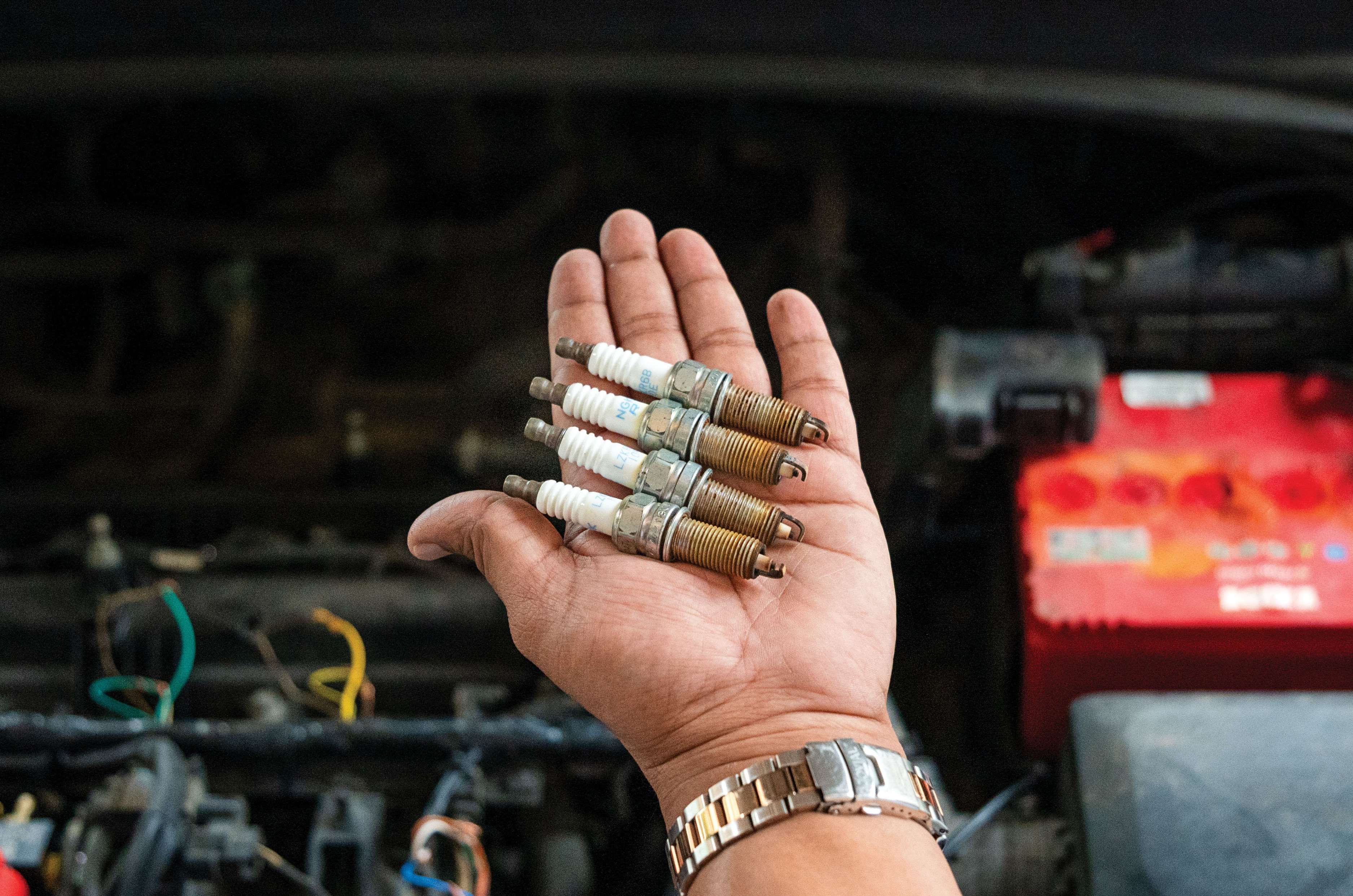
The engine is inspected to ensure it’s suitable for CNG conversion. A basic service is performed if required, with spark plugs and ignition coils replaced as needed and the throttle body cleaned.
Components positioned
The reducer and its pressure gauge are mocked up in the engine bay before mounting points are marked and drilled. The filler valve may be located alongside them or next to the petrol filler cap, depending on the vehicle.
Injectors installed
The CNG injector rail is mounted on its dedicated bracket close to the petrol injectors. This will send CNG to corresponding nozzles that are drilled and fitted into the vehicle’s plastic intake manifold.
ECU wired in
The CNG ECU is mounted alongside the factory ECU and connected to the vehicle’s wiring loom. The harness is neatly routed and secured away from heat and moving parts.
Plumbing completed
Reinforced rubber gas hoses are cut to length and connected between the reducer, injector rail and the intake manifold. A MAP sensor and a filter are also installed as part of the system.
Tank prepared
The CNG tank is temporarily mounted to a rig that holds it in place while the shut-off valve and associated fittings are installed before everything is torqued down.
Tank frame installed
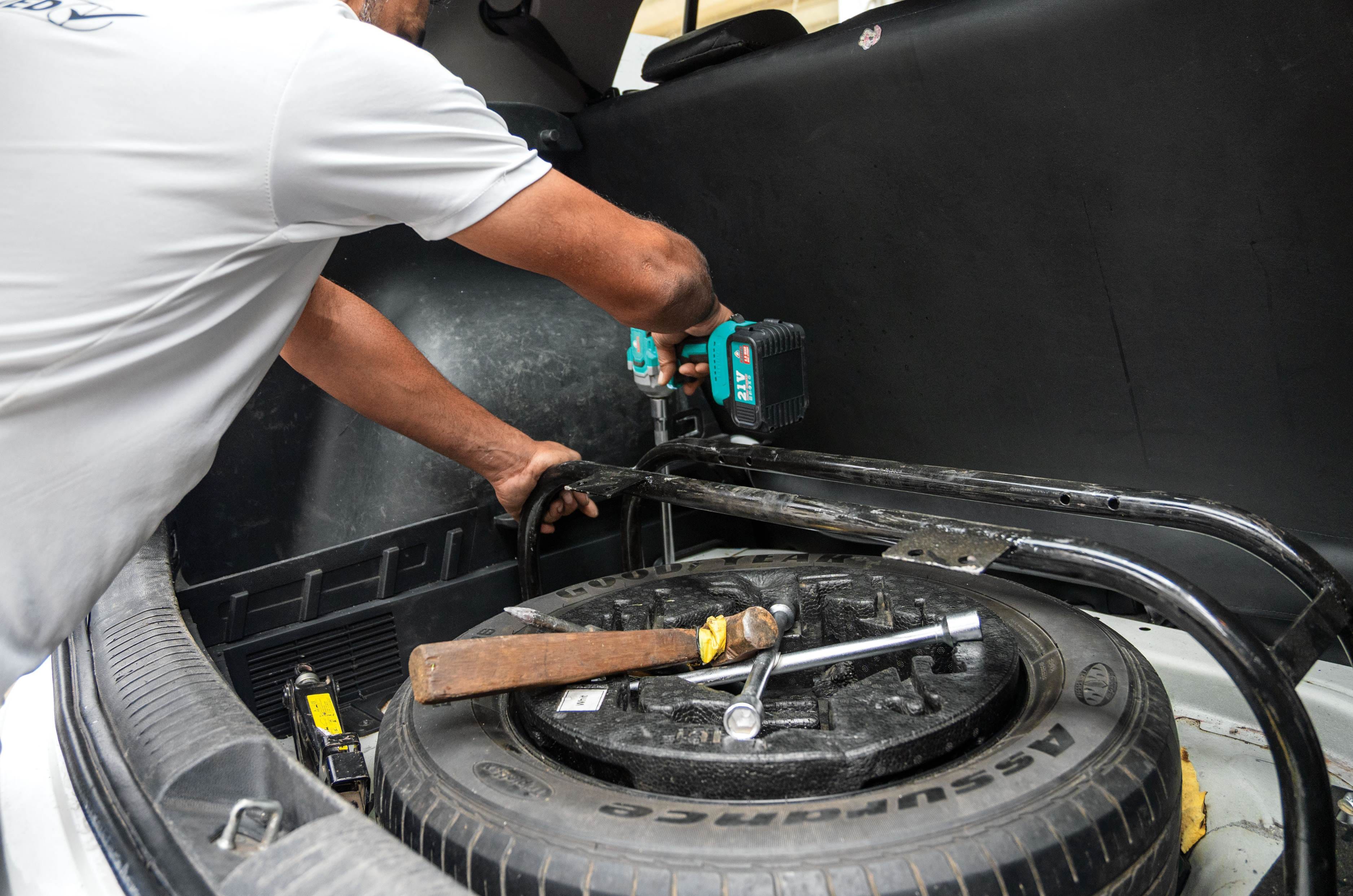
The mounting frame is positioned inside the boot, holes are drilled through the floor, and reinforced brackets securely bolt it to the vehicle’s structure.
Tank fitted
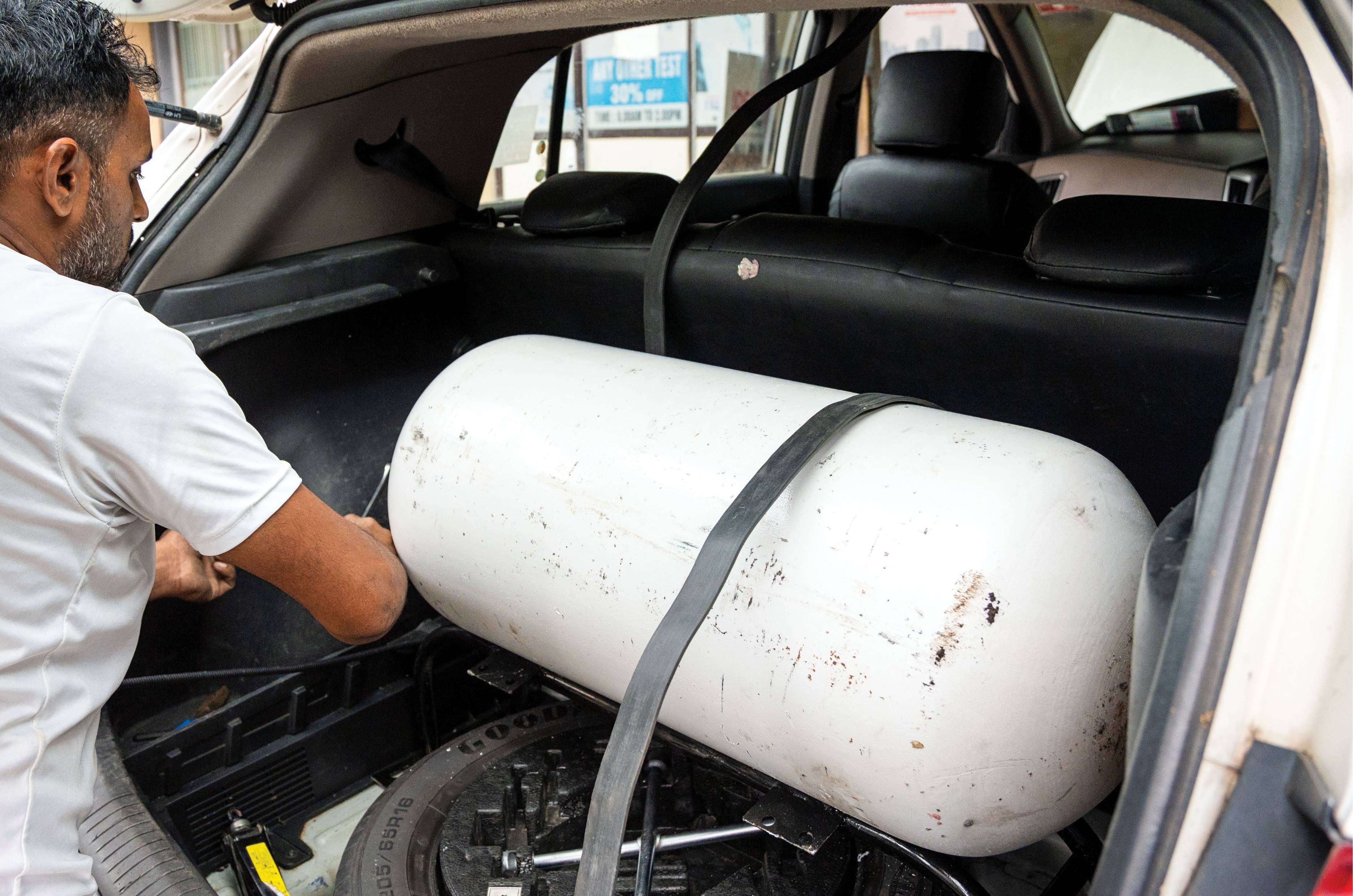
The CNG cylinder is secured to the frame using heavy-duty metal straps and bolts before being covered with a carpeted shroud for a neat factory-like finish.
High-pressure line routed
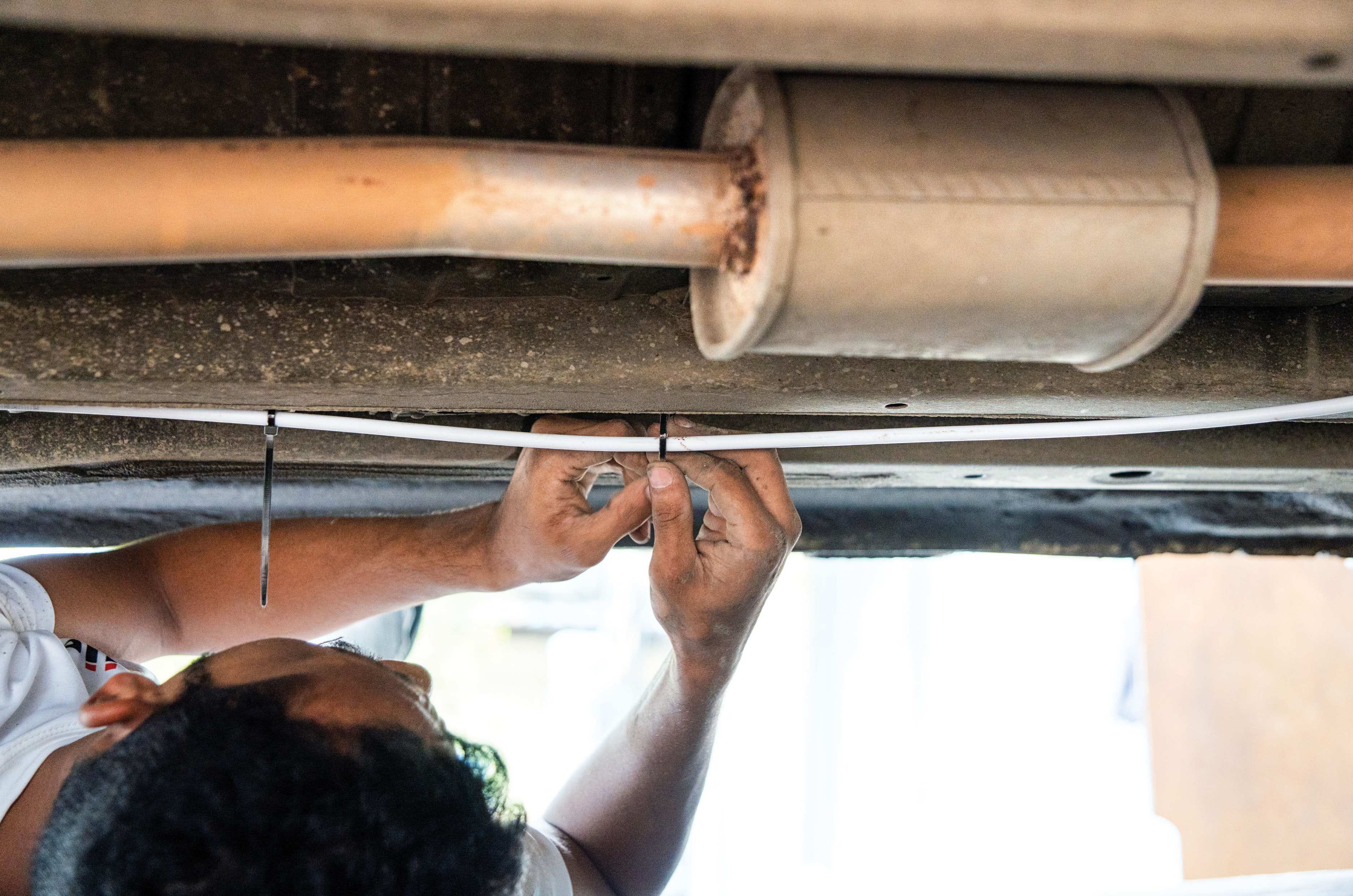
Polymer-coated steel high-pressure pipes are routed beneath the car, connecting the CNG filler valve, the tank and the reducer under the bonnet.
Electrical connections
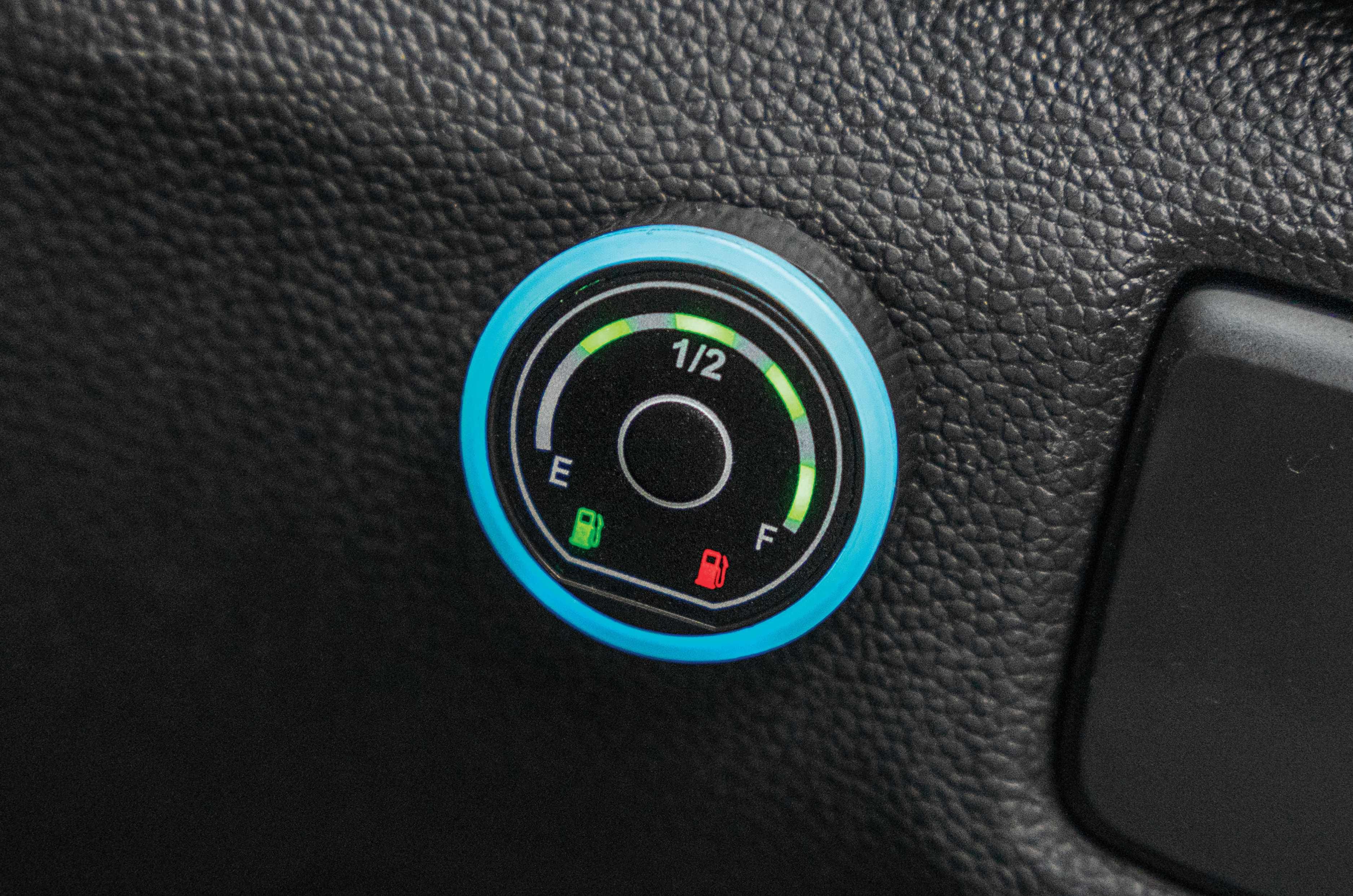
The remaining wiring is completed and a dashboard-mounted CNG switch is installed, allowing the driver to monitor fuel level and switch between petrol and CNG.
Leak test
Around 2kg of CNG is added and every connection is checked using an electronic gas detector and good old-fashioned soap solution to ensure the entire system is leak-free.
Calibration and road test
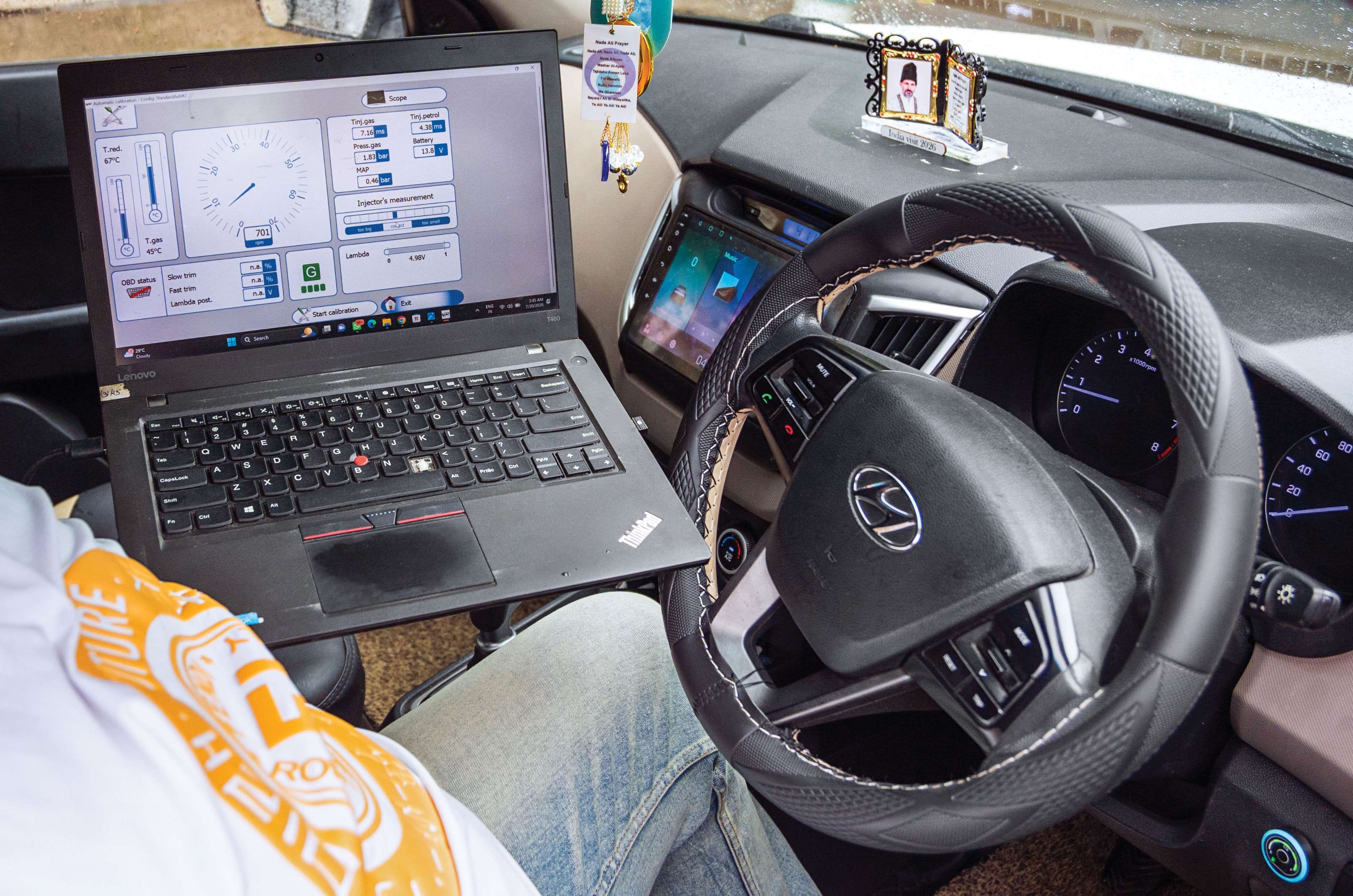
The system is calibrated using dedicated software to optimise fuel delivery and switchover settings. A final road test confirms performance before the vehicle is delivered to the customer.
Why go aftermarket?
On average, an aftermarket CNG installation costs around 25 to 30 percent less than the premium a factory-fitted CNG variant commands over its petrol counterpart. However, this alone is not enough to swing the scales in favour of the aftermarket due to the disadvantages we will get into later. The bigger advantage the aftermarket holds is the ability to convert models or variants that do not come with a CNG option. For instance, Maruti Suzuki only offers its factory-fitted CNG cars with a manual transmission, so if you want one with an automatic, an aftermarket CNG kit is your only option.
Similarly, popular SUVs like the Hyundai Creta and Kia Seltos are not available in CNG guise, which leads many owners to turn to the aftermarket. Owners of older cars, or those buying used cars, can also convert them to CNG for a fairly affordable price and enjoy significantly lower running costs. CNG is spark-ignited, thus only petrol cars can be converted to run on the gas. Since diesel cars use compression-ignition, they would need far too many modifications to make this possible. Strong hybrids are also not recommended for conversions, as here, the engine keeps switching on and off too often, which makes CNG calibration complex. Cars that are not in good mechanical shape should also not be converted to CNG, as the conversion can take a toll on the overall engine health.
For a car in generally good shape, aftermarket kits are proving to be reliable in the long run, provided they are well maintained. Most modern sequential kits from brands like Lovato and Mijo are also comparable in quality to OEM systems, and reputed, authorised installers are able to achieve near-OEM levels of fitment.
The catch
Fitting an aftermarket CNG kit – even if it is government-approved and fitted by an authorised installer – is grounds for the manufacturer warranty to be voided. While some brands may still honour warranty claims that are unrelated to the powertrain, it remains a grey area. Some dealer-fitted CNG kits do retain the factory warranty, while others provide a third-party warranty in its place.
Aftermarket installers have also begun offering third-party warranties in collaboration with insurance companies to provide coverage in place of the factory warranty. This, however, is in addition to the cost of the CNG kit. The kits themselves generally come with a warranty ranging from one to two years.
Packaging is also one area where the aftermarket trails OEMs. While Maruti, Tata and Hyundai are now offering underbody and dual-tank setups to retain a usable boot, the aftermarket still largely uses larger single tanks that take up more space.
Staying fit
As per law, any CNG tank – aftermarket or OEM fit – must be hydrotested every three years. For this, the tank must be removed from the vehicle and sent to a dedicated facility. While the process itself takes only a couple of hours, hydrotesting facilities are usually located outside major cities, adding transport time to the process. A hydrotest typically costs around Rs 3,000 per tank.
The CNG filter should also be replaced at the same three-year or 10,000km interval, whichever comes first. This typically costs under Rs 1,000 and is fairly straightforward. It is also recommended to drive on petrol at least 10 percent of the time to keep the fuel system healthy. Finally, it is important that the engine’s service schedule is strictly followed.
The legal bit
Aftermarket CNG installations are legal as long as the kit is government-approved, fitted by an approved installer and the registration certificate (RC) is updated accordingly. Most approved installers will handle the RC update at the Regional Transport Office (RTO) as part of the service. Once this is complete, the owner must also update the insurance provider.
The verdict
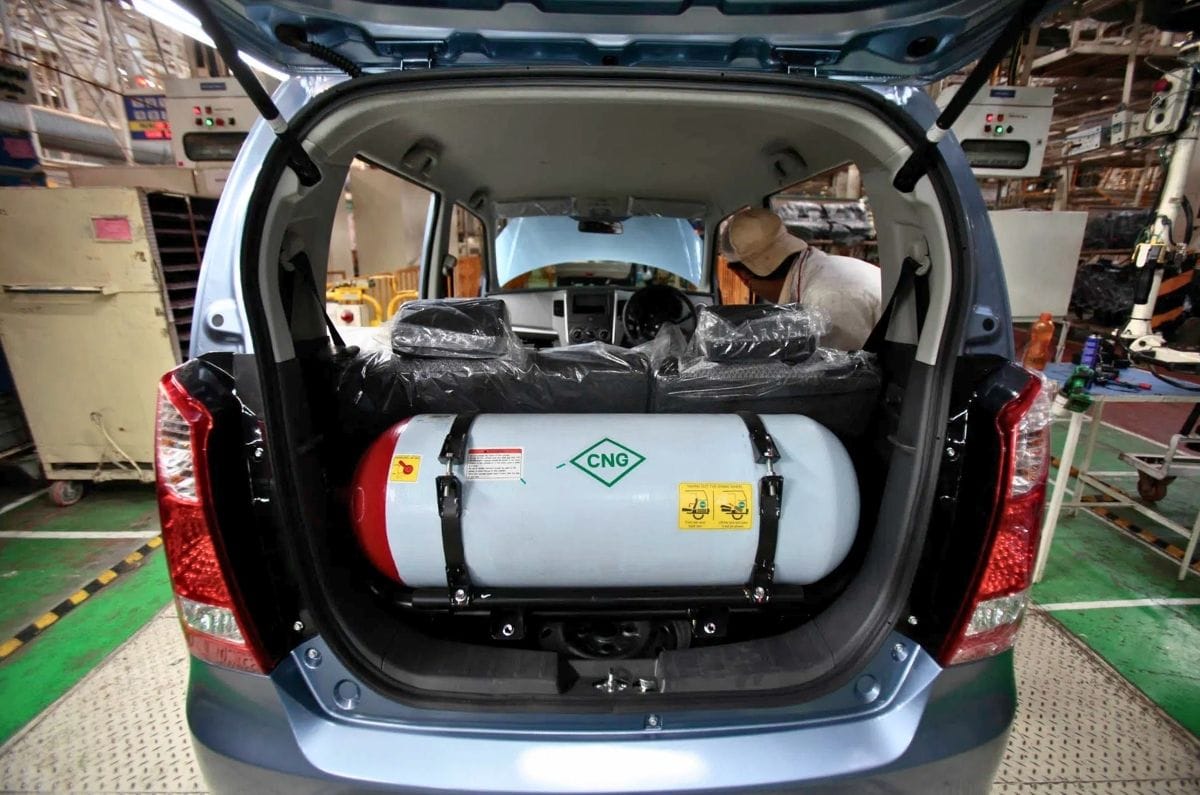
Maruti Ertiga’s factory-fitted CNG tank shown for representative purposes only.
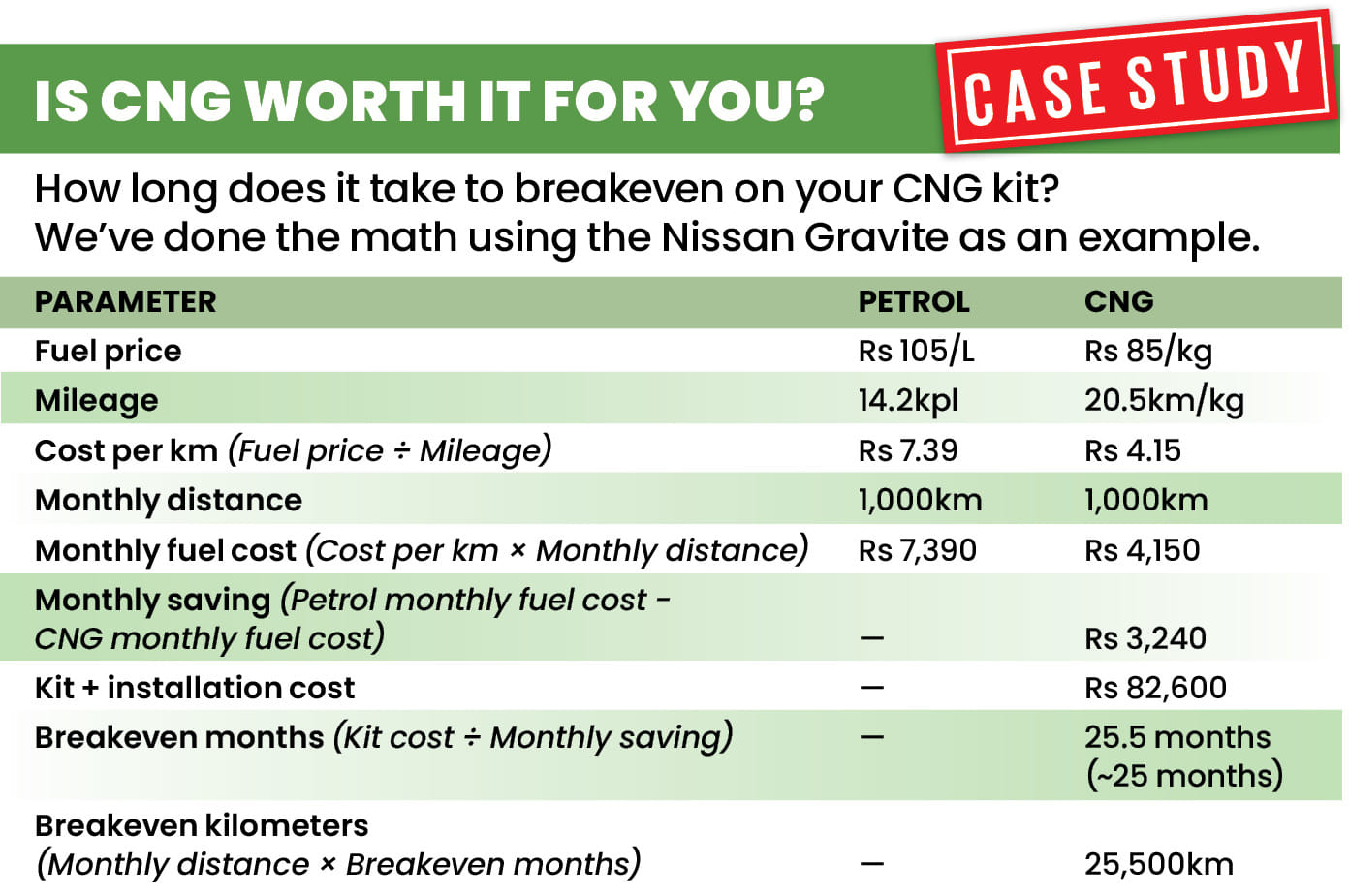
There is no denying the running cost advantage that CNG provides. However, when buying a brand-new car, a factory-fitted CNG version is still preferable to an aftermarket conversion simply because of the peace of mind. Once a car is out of warranty, though, a CNG conversion makes a great deal of sense. In most cases, the cost of the kit can be recouped within a couple of years, even with an average monthly running of around 1,500km.
However, the installer is just as important as the kit. Always opt for government-approved kits installed by approved installers with a strong reputation. Wherever possible, insist the installation is carried out without splicing into the original wiring and follow the recommended service schedule to ensure your car stays reliable.
B. Nagendra: कर्नाटक कैबिनेट मंत्री बी. नागेंद्र ने शुक्रवार को अपने पद से इस्तीफा दे दिया है। बता दें कि यह इस्तीफा ‘कर्नाटक महर्षि वाल्मीकि अनुसूचित जनजाति विकास निगम’ में कथित तौर पर 89 करोड़ रुपये की गड़बड़ी को लेकर बीजेपी की रायचूर से बेल्लारी तक 10 दिन की पदयात्रा से ठीक पहले दिया गया।
योजना और सांख्यिकी विभाग संभालने वाले नागेंद्र ने बीजेपी के आरोपों को खारिज करते हुए कथित वाल्मीकि घोटाले में अपनी किसी भी भूमिका से इनकार किया। उन्होंने कहा कि उन्होंने पार्टी आलाकमान के नेताओं से मुलाकात की और अपना इस्तीफा सौंप दिया है।
उन्होंने कहा, “मैं अपनी मर्जी से इस्तीफा दे रहा हूं। मेरे मुख्यमंत्री का भी मानना है कि मैंने कुछ गलत नहीं किया है। विकास और मुख्यमंत्री के विजन में कोई रुकावट नहीं आनी चाहिए। बीजेपी ने मुझे आरोपी बताकर एक बेगुनाह को आरोपी बना दिया है।”
इससे पहले भी दे चुके हैं इस्तीफा
बता दें कि यह दूसरी बार है जब नागेंद्र ने सरकार से इस्तीफा दिया है। इससे पहले, 2024 में कर्नाटक अनुसूचित जनजाति विकास बोर्ड से जुड़े ₹94 करोड़ के फंड डायवर्जन घोटाले में नाम आने के बाद उन्होंने सिद्धारमैया की कैबिनेट से ST कल्याण मंत्री के पद से इस्तीफा दिया था।
वहीं, कर्नाटक विधानसभा का हालिया मॉनसून सत्र हंगामे की वजह से बेकार चला गया, क्योंकि बीजेपी ने नागेंद्र के इस्तीफे की मांग की थी।
नागेंद्र ने कहा, “साजिश वाली राजनीति के कारण, हमने कई बार अपील की और विपक्ष से कहा कि वे नोटिस दें और चर्चा के लिए आएं। वे सूखे, KPSC और कई अन्य मुद्दों पर चर्चा के लिए नहीं आए। बिना किसी आधार या मुद्दे के, उन्होंने घोटाले होने का झूठा दावा करते हुए विरोध प्रदर्शन किए। उन्होंने झूठा दावा किया कि वाल्मीकि घोटाला हुआ और निर्दोष लोगों की जिंदगी बर्बाद कर दी।”
उन्होंने आगे कहा, “SIT और CID ने इस मामले की जांच की। साजिश के तहत CBI जांच शुरू करवाई गई और ED ने मुझे गिरफ्तार कर लिया। मैं तीन महीने जेल में भी रहा और फिर बाहर आया। दूसरी चार्जशीट में, उन्होंने बेवजह मेरा नाम शामिल कर दिया।”
बीजेपी और उसकी सहयोगी पार्टी जनता दल (सेक्युलर) ने कथित वाल्मीकि घोटाले को लेकर नागेंद्र के इस्तीफे की मांग तेज कर दी है। दोनों पार्टियों ने 1 सितंबर से रायचूर से बल्लारी तक 170 किलोमीटर लंबी पदयात्रा निकालने का ऐलान किया है।
बीजेपी एमएलसी एन. रवि कुमार ने कहा, “नागेंद्र को आज नहीं तो कल इस्तीफा देना ही होगा क्योंकि उन्होंने भ्रष्टाचार किया है। 600 खातों में पैसे जमा किए गए। वह सरकारी फंड था… कांग्रेस पार्टी ने तेलंगाना और बेल्लारी लोकसभा चुनावों में और परिवार के लिए सोना खरीदने में सरकारी पैसे का इस्तेमाल किया।”
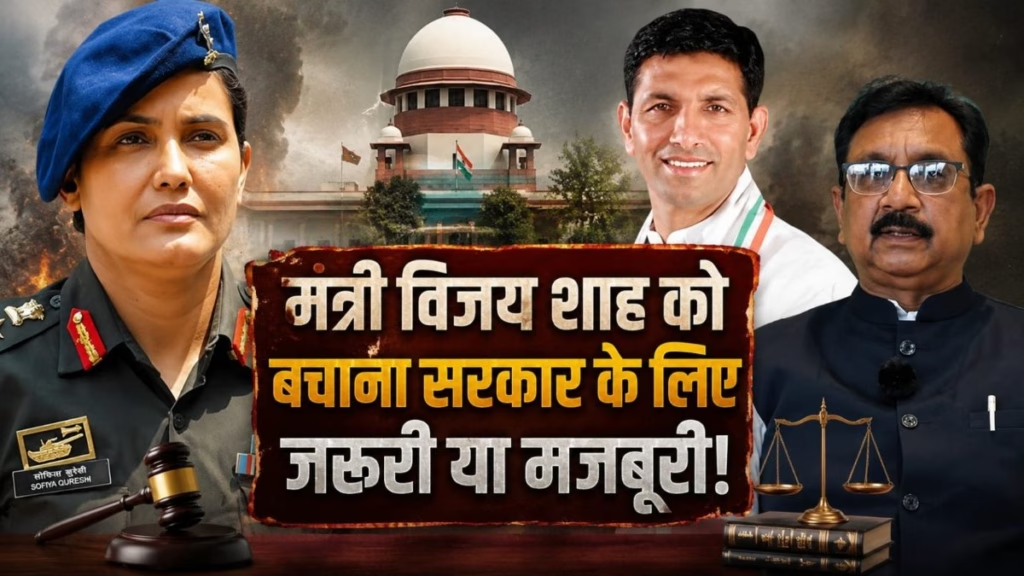
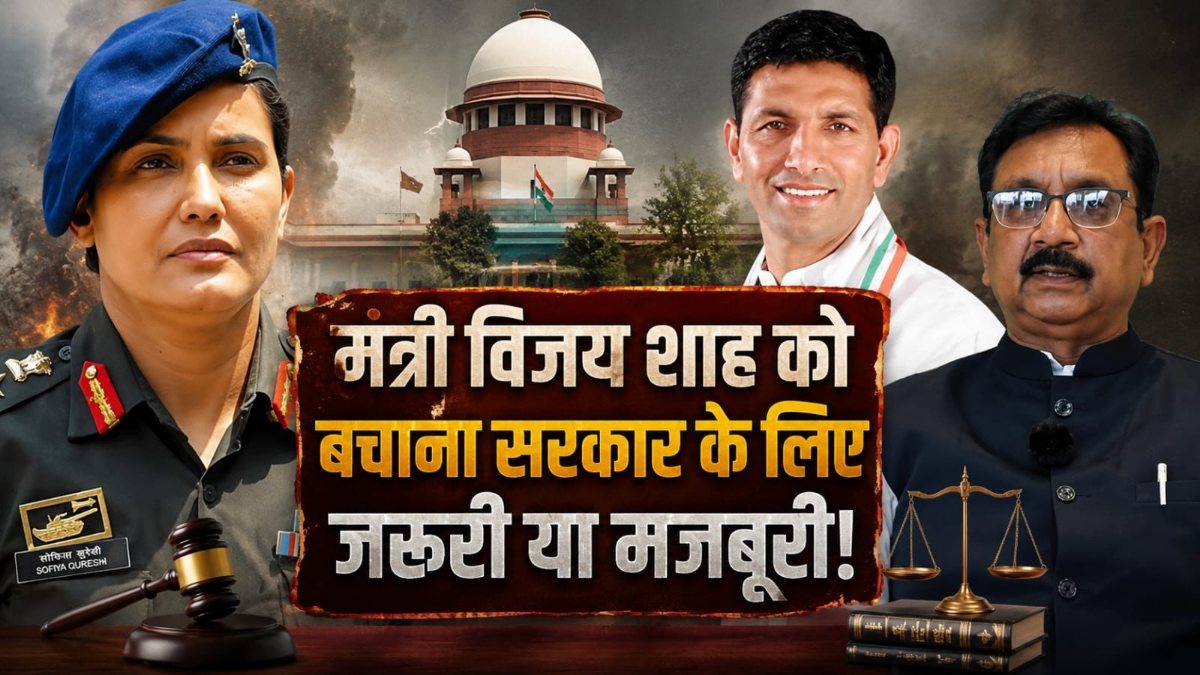
कर्नल सोफिया कुरैशी पर विवादित टिप्पणी करने वाले कैबिनेट मंत्री विजय शाह के खिलाफ केस चलाने की मंजूरी नहीं जाने के सरकार के फैसले को लेकर प्रदेश में सियासी पारा गर्मा गया है। कांग्रेस प्रदेश अध्यक्ष जीतू पटवारी ने राष्ट्रपति को पत्र लिखकर इससे सेना का अपमान बताकर प्रदेश सरकार को बर्खास्त करने की मांग की है।
जीतू पटवारी ने की सरकार को बर्खास्त करने की मांग- प्रदेश कांग्रेस अध्यक्ष जीतू पटवारी ने राष्ट्रपति को लिखे पत्र में संवैधानिक एवं न्यायिक व्यवस्था की गरिमा की रक्षा और प्रदेश सरकार की जवाबदेही सुनिश्चित करने की मांग की है। जीतू पटवारी ने अपने पत्र में लिखा कि “आज मैं यह पत्र राजनीतिक दल के प्रदेश अध्यक्ष के रूप में नहीं, भारतीय सेना, संविधान और न्याय की गरिमा में विश्वास रखने वाले एक नागरिक के रूप में लिख रहा हूँ! मध्य प्रदेश के मंत्री विजय शाह ने देश की जांबाज बेटी और भारतीय सेना की अधिकारी कर्नल सोफिया कुरैशी के संबंध में आपत्तिजनक टिप्पणी कर जिस मर्यादा को तार-तार किया, वह एक व्यक्ति ही नहीं, देश की सेना का भी अपमान था”।
उन्होंने आगे लिखा कि “लेकिन, आज प्रश्न उससे भी गंभीर हो गया है! मध्य प्रदेश सरकार द्वारा विजय शाह के विरुद्ध अभियोजन की स्वीकृति नहीं देने का निर्णय एक बड़ेबोल मंत्री को राजनीतिक संरक्षण देने के साथ, उस व्यवस्था पर प्रश्नचिह्न है, जिसमें सत्ता अपने राजनीतिक व्यक्ति को जवाबदेही से बचाने के लिए न्यायिक प्रक्रिया के सामने दीवार बनकर खड़ी हो रही है! सुप्रीम कोर्ट द्वारा गठित SIT ने अभियोजन की स्वीकृति की मांग की है। ऐसे में सरकार का रुख देश के सामने एक गंभीर संवैधानिक प्रश्न खड़ा करता है, क्या सत्ता में बैठे व्यक्ति कानून से ऊपर हैं।“
उन्होंने आगे लिखा कि प्रधानमंत्री नरेंद्र मोदी ने अनेक अवसरों पर भारतीय सेना, सैनिकों और उनकी शहादत के सम्मान को राष्ट्र के सर्वोच्च गौरव से जोड़ा है! यदि वे अपने ही शब्दों की गरिमा बनाए रखना चाहते हैं, तो उन्हें इस मामले में तत्काल और स्पष्ट हस्तक्षेप करना चाहिए! मेरा यह भी मानना है कि मध्य प्रदेश मंत्रिमंडल का असंवैधानिक निर्णय प्रधानमंत्री की राजनीतिक सहमति के बिना संभव नहीं था। यदि ऐसा नहीं है, तो प्रधानमंत्री को स्वयं आगे आकर देश के सामने स्पष्ट करना चाहिए कि वे विजय शाह को संरक्षण देने वाले इस निर्णय से “असहमत हैं।” इसलिए, आज देश प्रधानमंत्री से भी जवाब चाहता है! यह आपराधिक घटनाक्रम उस कथित 'डबल इंजन सरकार' के अहंकार को उजागर करता है, जिसमें एक मंत्री के राजनीतिक संरक्षण के लिए लोकतांत्रिक, संवैधानिक और न्यायिक मर्यादाओं को चुनौती देने तक की स्थिति पैदा हो रही है! विजय शाह ने पहले सेना का अपमान किया! अब उन्हें बचाने की कोशिश उस अपमान और अपराध को संस्थागत संरक्षण देने जैसी है! मध्य प्रदेश के राजनीतिक इतिहास का यह एक अत्यंत शर्मनाक अध्याय है, जहां सवाल अब केवल विजय शाह के आचरण का नहीं, मुख्यमंत्री और पूरे मंत्रिमंडल की संवैधानिक एवं नैतिक जवाबदेही का है! इसलिए, मध्य प्रदेश में मुख्यमंत्री सहित अब पूरे मंत्रिमंडल को तत्काल बर्खास्त किया जाना चाहिए!
विजय शाह का बचाव क्यों कर रही सरकार?- मोहन सरकार में सीनियर मंत्री विजय शाह आदिवासी वर्ग से आते है और उनकी आदिवासी वोट बैंक पर मजबूत पकड़ है। बालाघाट में 25 बैगा आदिवासी बच्चों की मौत के बाद सरकार पूरी तरह बैकफुट पर है। हरसूद से भाजपा विधायक विजय शाह आदिवासी वर्ग में गोंड जाति से आते है। प्रदेश में 21.5 फीसदी वोट बैंक रखने वाले आदिवासी वर्ग के लिए 47 विधानसभा सीट आरक्षित भी है। विधानसभा और लोकसभा चुनाव के परिणाम बताते है कि आदिवासी वोटर पूरी तरह भाजपा के साथ है। दिसंबर 2023 के विधानसभा चुनाव की बात करें तो तो प्रदेश में आदिवासी वर्ग के लिए आरक्षित 47 विधानसभा सीटों पर भाजपा ने 24 सीटों पर जीत हासिल की है वहीं कांग्रेस ने 22 सीटों पर जीत हासिल की है।
खंडवा की हरसूद विधानसभा सीट से ढाई दशक से विधायक चुने जा रहे विजय शाह के मालवा-निमाड़ के आदिवाली बाहुल्य इलाके में गहरी पैठ है। खासकर निमाड़ के आदिवासियों के बीच उन्हें आज भी राजा के तौर पर माना जाता है। ऐसे में भाजपा के इस बात का डर है कि अगर विजय शाह पर केस चलाने की अनुमति दी जाती है उनको मंत्रिमंडल से भी बाहर करना होगा। इससे आदिवासी वर्ग में गलत मैसेज जाएगा और इसका नुकसान उसको चुनाव में उठाने पड़ेगा। भाजपा को शंका है कि विजय शाह के इस्तीफा का सीधा असर निमाड़ की 10 विधानसभा सीटों पर पड़ेगा, और भाजपा को आने वाले वक्त पर इन सीटों पर मुश्किलों का सामना करना पड़ा सकता है।
क्या है पूरा मामला?-मध्यप्रदेश के आदिवासी नेता और मोहन सरकार कैबिनेट मंत्री विजय शाह से जुडा यह पूरा मामला मई 2025 का है। पहलगाम आतंकी हमले के बाद ऑपरेशन सिंदूर के तहत पाकिस्तान और पीओके में आतंकी ठिकानों पर कार्रवाई की थी। इस ऑपरेशन की जानकारी मीडिया को देने वाली सैन्य अधिकारियों की टीम में कर्नल सोफिया कुरैशी भी शामिल थीं। 11 मई 2025 को महू के रायकुंडा गांव में आयोजित एक कार्यक्रम में विजय शाह ने कर्नल सोफिया कुरैशी को लेकर ऐसी टिप्पणी की, जिसे उनके धर्म और पहलगाम हमले के आतंकियों के समुदाय से जोड़कर देखा गया। इस पूरे मामले मध्यप्रदेश हाईकोर्ट ने मामले का स्वत: संज्ञान लिया और शाह के खिलाफ एफआईआर दर्ज करने का आदेश दिया। हाईकोर्ट ने टिप्पणी को बेहद आपत्तिजनक माना था। इसके बाद मामला सुप्रीम कोर्ट पहुंचा।
सुप्रीम कोर्ट ने मामले की जांच के लिए विशेष जांच दल यानी SIT गठित की। SIT ने जांच पूरी करने के बाद विजय शाह के खिलाफ भारतीय न्याय संहिता की धारा 196(1)(a) के तहत अभियोजन की अनुमति मांगी। यही अनुमति लंबे समय से राज्य सरकार के पास लंबित है। जनवरी 2026 में सुप्रीम कोर्ट ने मध्यप्रदेश सरकार को अभियोजन स्वीकृति पर दो सप्ताह के भीतर निर्णय लेने का निर्देश दिया था। इसके बाद भी फैसला नहीं हुआ। मई में सुप्रीम कोर्ट ने फिर सरकार के रुख पर नाराजगी जताई और आदेश के पालन के लिए समय दिया। जुलाई की स्थिति रिपोर्ट में भी सरकार की ओर से जरूरी दस्तावेज दाखिल नहीं किए जाने की बात सामने आई थी।
सुप्रीम कोर्ट में इस मामले की सुनवाई 31 अगस्त को होनी है। वहीं इससे पहले गत मंगलवार को मंत्रालय में हुई कैबिनेट बैठक में मंत्री विजय शाह पर केस चलाने के लिए सरकार के स्तर पर अभियोजन स्वीकृति देने के प्रस्ताव की चर्चा थी लेकिन कैबिनेट बैठक मे यह प्रस्ताव नहीं आया है।
Hathras Victim Family Relocation: इलाहाबाद हाई कोर्ट की लखनऊ पीठ ने हाथरस दुष्कर्म मामले की पीड़िता के परिवार के पुनर्वास को लेकर उत्तर प्रदेश सरकार के रवैये पर कड़ी नाराजगी जताई है। अदालत ने राज्य सरकार के 22 फरवरी, 2025 के फैसले को रद्द करते हुए उसे तीन महीने के भीतर पीड़िता के परिवार को गाजियाबाद या नोएडा में बसाने का निर्देश दिया। जस्टिस राजन रॉय और जस्टिस जसप्रीत सिंह की पीठ ने कहा कि हाई कोर्ट ने पहले राज्य सरकार को पीड़िता के परिवार को गाजियाबाद या नोएडा में बसाने के अनुरोध पर विचार करने का निर्देश दिया था। लेकिन सरकार ने इस अनुरोध पर समुचित ध्यान नहीं दिया।
पीठ ने कहा कि सरकार ने अदालत के निर्देशों की अनदेखी करते हुए अपने फैसले में परिवार को पुनर्वास के लिए कासगंज, एटा और अलीगढ़ में से किसी एक स्थान को चुनने का विकल्प दिया था। सोमवार को दिए गए आदेश में पीठ ने कहा कि 22 फरवरी, 2025 के फैसले में सरकार ने गाजियाबाद या नोएडा में पुनर्वास के परिवार के अनुरोध का कोई उल्लेख नहीं किया था। इसलिए इसे हाई कोर्ट के निर्देशों के अनुपालन में लिया गया फैसला नहीं माना जा सकता।
NCR में बसाने की मांग
पीठ ने कहा कि इस मामले में राज्य की ओर से अनावश्यक विरोध दिखाई देता है। उसके रवैये से परिवार के इस आरोप को बल मिलता है कि सरकार इस मामले को अपने खिलाफ मुकदमे की तरह देख रही है। पीड़िता के परिवार की ओर से पेश वकील महमूद प्राचा ने कहा कि कासगंज, एटा और अलीगढ़ हाथरस के करीब हैं। इससे परिवार की सुरक्षा को लेकर चिंता पैदा होती है। उन्होंने कहा कि इन जिलों में परिवार का कोई रिश्तेदार भी नहीं रहता है।
उन्होंने कहा कि इसके विपरीत परिवार के रिश्तेदार गाजियाबाद और नोएडा में रहते हैं, जहां बसने पर वे बिना किसी भय के सामान्य जीवन जी सकेंगे। अदालत ने निर्देश दिया कि पुनर्वास पूरा होने के बाद परिवार के एक सदस्य को रोजगार भी दिया जाए, जैसा कि 26 जुलाई, 2022 के आदेश में निर्देश दिया गया था।
मुख्य सचिव को अहम निर्देश
पीठ ने यूपी के अपर मुख्य सचिव (गृह) को अनुपालन शपथपत्र दाखिल करने का भी निर्देश दिया है। अदालत ने कहा कि आदेश का पालन नहीं होने की स्थिति में उन्हें 30 नवंबर, 2026 को व्यक्तिगत रूप से उसके समक्ष पेश होना होगा।
क्या है केस?
उत्तर प्रदेश के हाथरस जिले में 14 सितंबर, 2020 को एक दलित युवती के साथ सामूहिक दुष्कर्म की कथित घटना सामने आई थी। घटना के करीब दो सप्ताह बाद दिल्ली के एक अस्पताल में युवती की मौत हो गई थी।
मजिस्ट्रेट के समक्ष दिए गए अपने बयान में पीड़िता ने चार आरोपियों पर उसके साथ सामूहिक दुष्कर्म करने का आरोप लगाया था। यह भी आरोप लगाया गया था कि पुलिस ने परिवार की सहमति के बिना रात में पीड़िता का जबरन अंतिम संस्कार कर दिया था। हालांकि, पुलिस ने इस दावे को गलत बताया था।
Ram Mandir Chanda Chori Case: अयोध्या स्थित श्री राम जन्मभूमि मंदिर में चढ़ावे की कथित चोरी से जुड़ी जांच अब केवल दस्तावेजों की पड़ताल तक सीमित नहीं रह गई है। विशेष जांच दल (SIT) ने मामले में संपत्तियों और बैंक लॉकरों की फोरेंसिक जांच शुरू कर दी है। राम मंदिर ट्रस्ट से जुड़े सभी 30 बैंक लॉकरों में रखी सामग्री का सत्यापन किया जा रहा है। जांच का मुख्य उद्देश्य यह पता लगाना है कि लॉकरों में वास्तव में कितनी और कौन-कौन सी वस्तुएं मौजूद हैं। साथ ही यह पता लगाया जाएगा कि क्या उनका डिटेल्स राम मंदिर ट्रस्ट के रिकॉर्ड में दर्ज इन्वेंट्री से मेल खाता है या नहीं।
‘अमर उजाला’ की रिपोर्ट के मुताबिक, जांच टीम ने मंगलवार (26 अगस्त) को भी अपनी कार्रवाई जारी रखी। पूरी प्रक्रिया को वीडियो रिकॉर्ड किया जा रहा है। लॉकर खोलने से लेकर उसमें रखी प्रत्येक वस्तु की जांच तक हर चरण का डिजिटल रिकॉर्ड तैयार किया जा रहा है। टीम वस्तुओं की पहचान, उनकी संख्या, उपलब्धता और स्थिति की पुष्टि करने के साथ-साथ संबंधित दस्तावेजों और रिकॉर्ड से उनका मिलान कर रही है।
रिकॉर्ड और वास्तविक सामान का होगा मिलान
फोरेंसिक सत्यापन का सबसे महत्वपूर्ण हिस्सा यह पता लगाना है कि ट्रस्ट के रिकॉर्ड में दर्ज सामान और लॉकरों में वास्तव में मौजूद सामान में कोई अंतर तो नहीं है। टीम प्रत्येक वस्तु को रिकॉर्ड में दर्ज विवरण से क्रॉस-चेक कर रही है।
जांच के दौरान केवल सामान की गिनती ही नहीं की जा रही, बल्कि यह भी देखा जा रहा है कि संबंधित वस्तु किस रिकॉर्ड में दर्ज है और मौके पर उसकी वास्तविक स्थिति क्या है। इस पूरी प्रक्रिया के आधार पर एक विस्तृत फोरेंसिक रिपोर्ट तैयार की जाएगी।
हर सामान का बनाया जा रहा ऑडियो-वीडियो रिकॉर्ड
जांच की खास बात यह है कि प्रत्येक वस्तु के सत्यापन के दौरान ऑडियो-वीडियो साक्ष्य भी तैयार किया जा रहा है। सामान का डिटेल्स, उसकी पहचान, रिकॉर्ड में उसकी एंट्री और मौके पर उसकी मौजूदगी को डिजिटल तरीके से दर्ज किया जा रहा है।
सूत्रों के मुताबिक, इन डिजिटल रिकॉर्ड को सुरक्षित तरीके से संरक्षित किया जा रहा है, ताकि भविष्य में न्यायिक कार्यवाही के दौरान उनकी प्रामाणिकता पर सवाल न उठे। इस तरह जांच टीम केवल कागजी रिकॉर्ड पर निर्भर नहीं रहना चाहती। बल्कि भौतिक साक्ष्यों का भी डिजिटल दस्तावेज तैयार कर रही है।
पेन ड्राइव में सुरक्षित होंगे जांच के दस्तावेज और वीडियो
फोरेंसिक सत्यापन के बाद तैयार होने वाली रिपोर्ट को डिजिटल रूप से सुरक्षित किया जाएगा। जांच से जुड़े दस्तावेजों और वीडियो साक्ष्यों को एक पेन ड्राइव में संकलित कर सुप्रीम कोर्ट के समक्ष पेश करने की भी तैयारी की जा रही है। इससे जांच में सामने आए भौतिक साक्ष्यों का डिजिटल रिकॉर्ड भी न्यायिक प्रक्रिया का हिस्सा बन सकेगा।
सितंबर के पहले सप्ताह में सुप्रीम कोर्ट को रिपोर्ट?
सूत्रों के अनुसार, SIT की जांच अब अंतिम चरण में पहुंच गई है। संभावना जताई जा रही है कि जांच टीम सितंबर के पहले सप्ताह में अपनी रिपोर्ट सुप्रीम कोर्ट में दाखिल कर सकती है। वहीं, 2 सितंबर को श्री राम जन्मभूमि तीर्थ क्षेत्र ट्रस्ट की बैठक भी प्रस्तावित है। रिपोर्टों के मुताबिक, इसी बैठक के आसपास SIT अपनी अंतिम रिपोर्ट सुप्रीम कोर्ट में सीलबंद लिफाफे में सौंप सकती है।
फिलहाल, 30 बैंक लॉकरों की फोरेंसिक जांच को इस मामले की सबसे अहम कड़ी माना जा रहा है। इस सत्यापन से यह स्पष्ट होने की उम्मीद है कि ट्रस्ट के रिकॉर्ड में दर्ज संपत्तियों और वास्तविक रूप से मौजूद सामान के बीच कोई अंतर है या नहीं। जांच पूरी होने के बाद सामने आने वाली रिपोर्ट से मामले में आगे की कानूनी कार्रवाई की दिशा भी तय हो सकती है।
आरोपियों पर BNS की गलत धाराएं लगाने का वकील का दावा
उत्तर प्रदेश के अयोध्या में राम मंदिर में चढ़ावे की कथित चोरी के मामले में आरोपियों की ओर से पेश वकील ने मंगलवार को विशेष अदालत में दावा किया कि पुलिस ने मामले की जांच भारतीय न्याय संहिता (BNS) की गलत धाराओं के तहत की है। आरोपियों के वकील कुल शेखर सिंह ने कहा कि मामले में चोरी और गबन, दोनों की धाराएं लगाई गई हैं। जबकि ये दोनों धाराएं एक साथ लागू नहीं हो सकतीं। सिंह ने अयोध्या के विशेष जज (भ्रष्टाचार निवारण अधिनियम) रजत वर्मा की अदालत में यह दलील दी।
उत्तर प्रदेश सरकार द्वारा कथित चोरी की जांच के लिए गठित विशेष जांच दल (एसआईटी) ने 23 जून को अपनी प्रारंभिक जांच रिपोर्ट सौंपी थी। इसके बाद FIR दर्ज की गई। साथ ही मंदिर में चढ़ावे की गिनती की प्रक्रिया से जुड़े आठ लोगों को गिरफ्तार किया गया था। इसके बाद जांच का दायरा बढ़ाया गया। पुलिस ने श्री राम जन्मभूमि तीर्थ क्षेत्र ट्रस्ट के महासचिव चंपत राय समेत कई लोगों के बयान दर्ज किए।
सिंह ने यह भी दलील दी है कि पुलिस ने आरोपियों को लोक सेवक के रूप में पेश किया है। जबकि राम मंदिर ट्रस्ट लोक प्राधिकरण नहीं है। उन्होंने कहा कि पुलिस ने लगाई गई धाराओं में आरोपियों को लोक सेवक बताया और उन पर सार्वजनिक संपत्ति के गबन का आरोप लगाया। सिंह ने बताया कि अदालत ने मामले में अपना फैसला सुरक्षित रख लिया है। अगली सुनवाई के लिए दो सितंबर की तारीख तय की है।