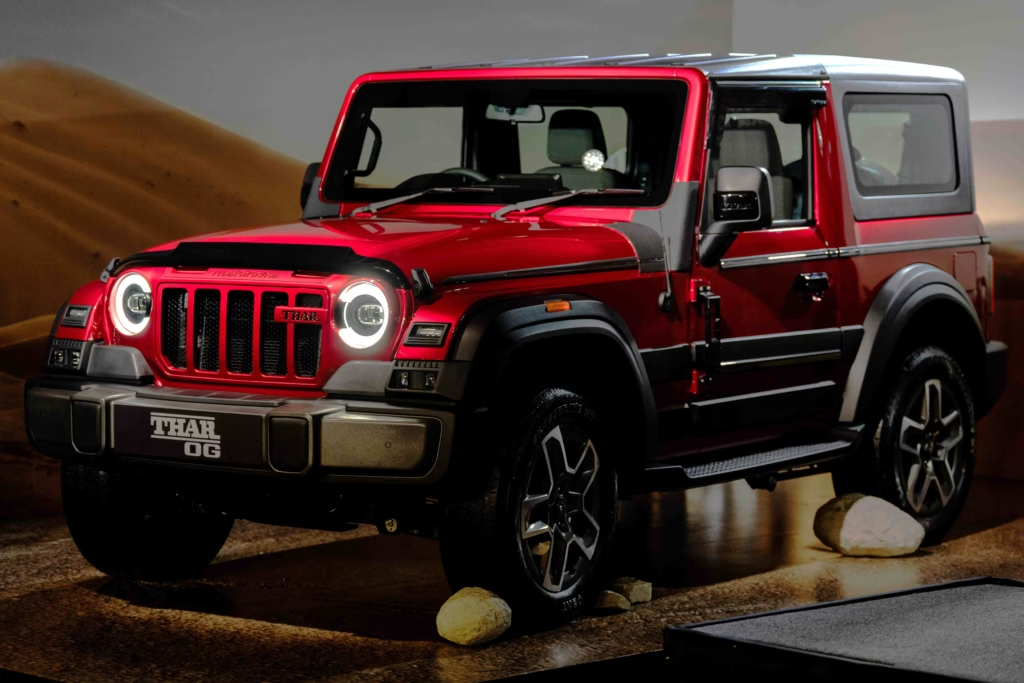
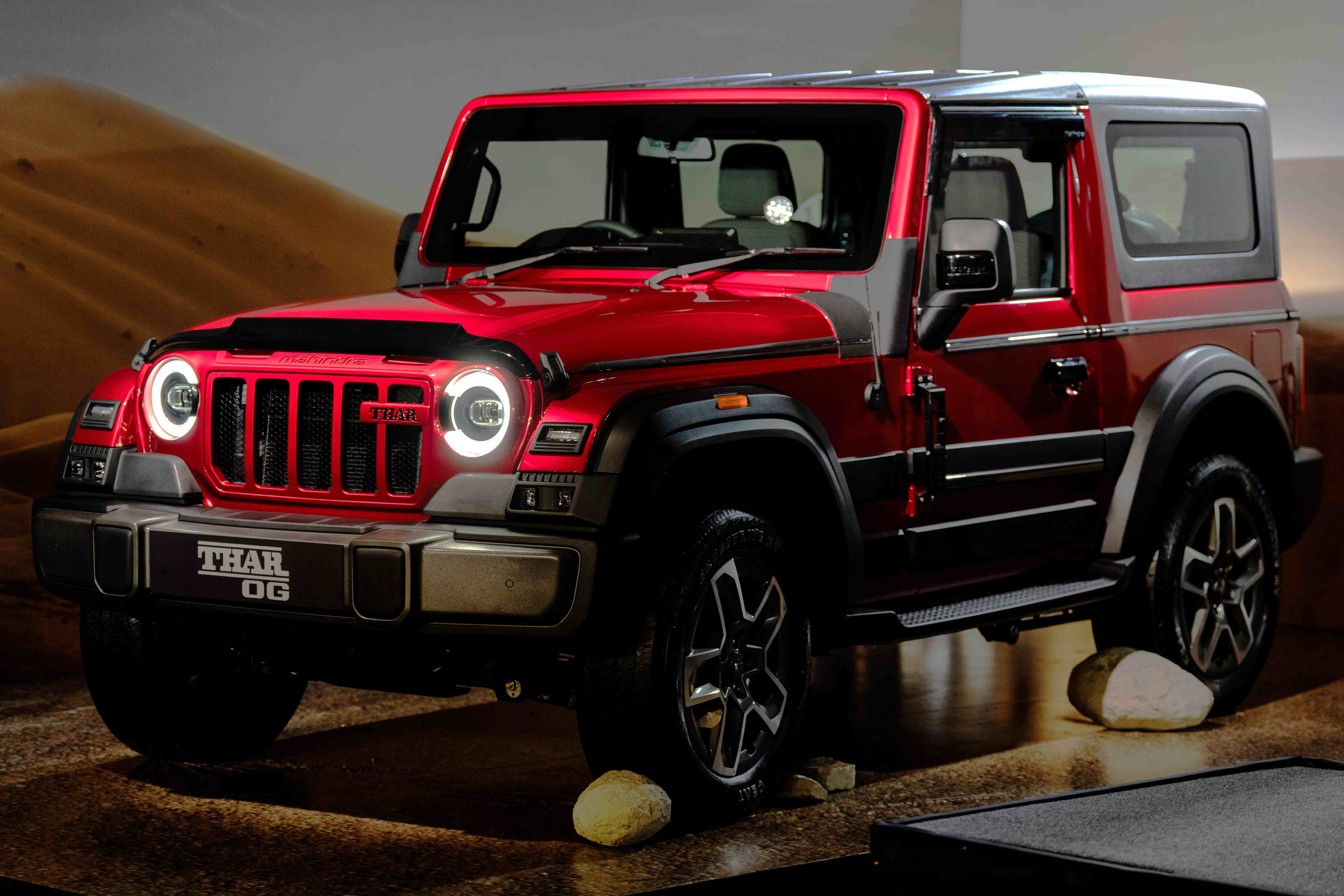
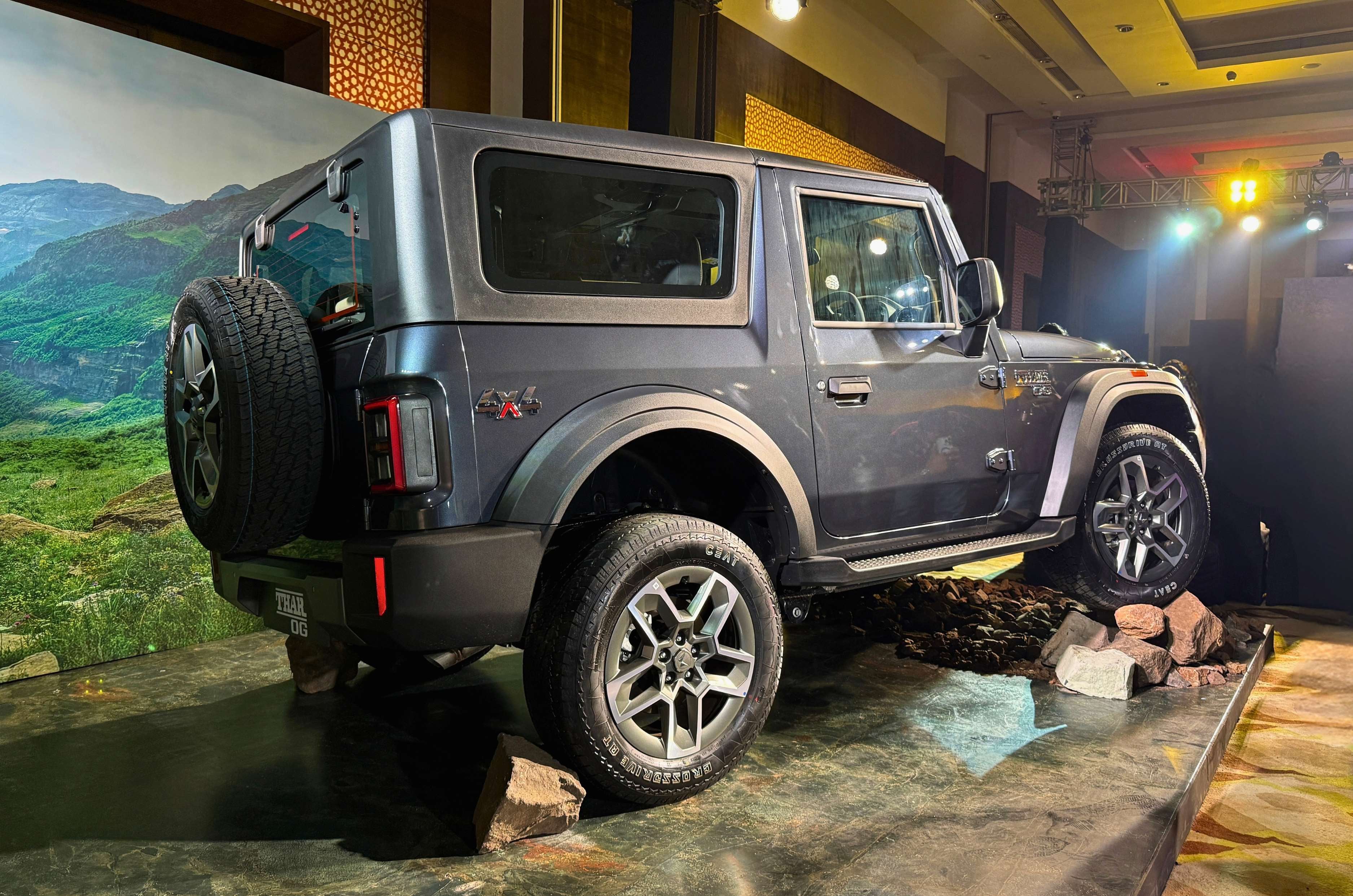
Barely a year after its previous facelift, Mahindra has updated the Thar yet again. Compared to the 2025 model, the 2026 updates to the Thar are much more comprehensive. In fact, the Thar now gets an ‘OG’ suffix to differentiate it from the larger Thar Roxx. From a new platform and updated suspension to more power and features, here is everything that has improved with the Thar OG over its predecessor.
1. Newer Platform
The Thar OG is underpinned by the ‘M_Glyde 4G’ platform. This same platform first underpinned its elder sibling, the Thar Roxx. Mahindra says this platform offers higher structural stiffness compared to its predecessor.
2. Updated rear suspension with FDD
Mahindra has improved the Thar by borrowing mechanicals from its other siblings. The OG gets a rear Penta-link suspension with a Watts Link, which is also seen on the Thar Roxx and Scorpio-N. Moreover, the Thar OG now comes with Frequency Dependent Damping (FDD)—dubbed ‘DAVINCI dampers’ by the brand, which first debuted on the XUV 7XO.
3. Electronic Locking Differential, terrain and drive modes
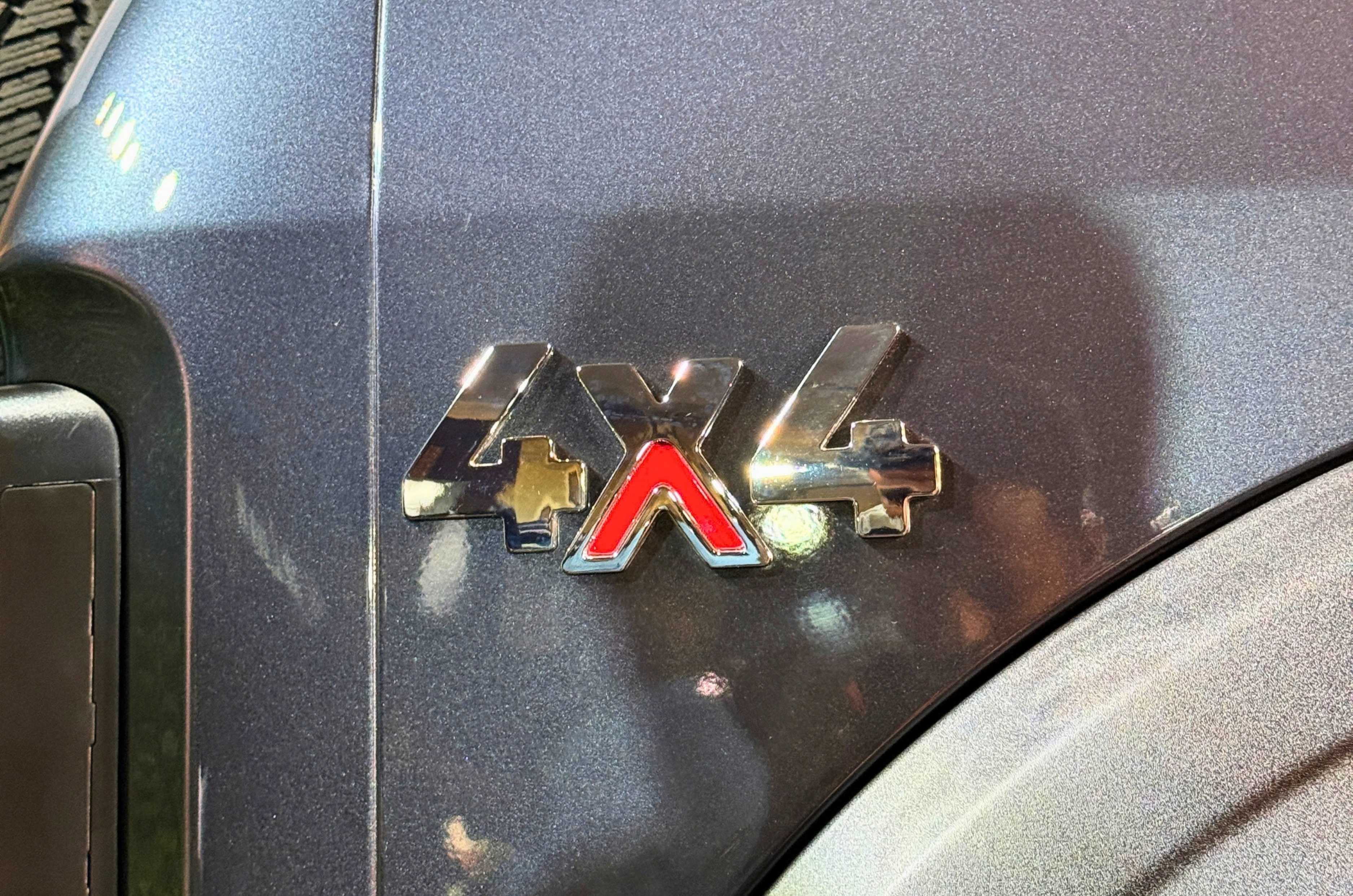
The mechanical locking differential from the predecessor has been upgraded to an electronically assisted unit in the Thar OG. Another new addition is the inclusion of dedicated terrain modes (Snow, Sand, Mud) and drive modes (Zip and Zoom). These upgrades are expected to help the Thar OG tread more confidently off-road.
4. Electric Power Steering
The Thar finally gets electric power steering for the first time. Prior to this, all previous iterations of the Thar came with hydraulic power steering. In fact, in our 2025 Thar facelift review, we noted that its hydraulically assisted steering required more effort at low speeds and felt heavy. The electric power steering on the Thar OG is expected to make the manoeuvring experience easier.
5. More Powerful Engines
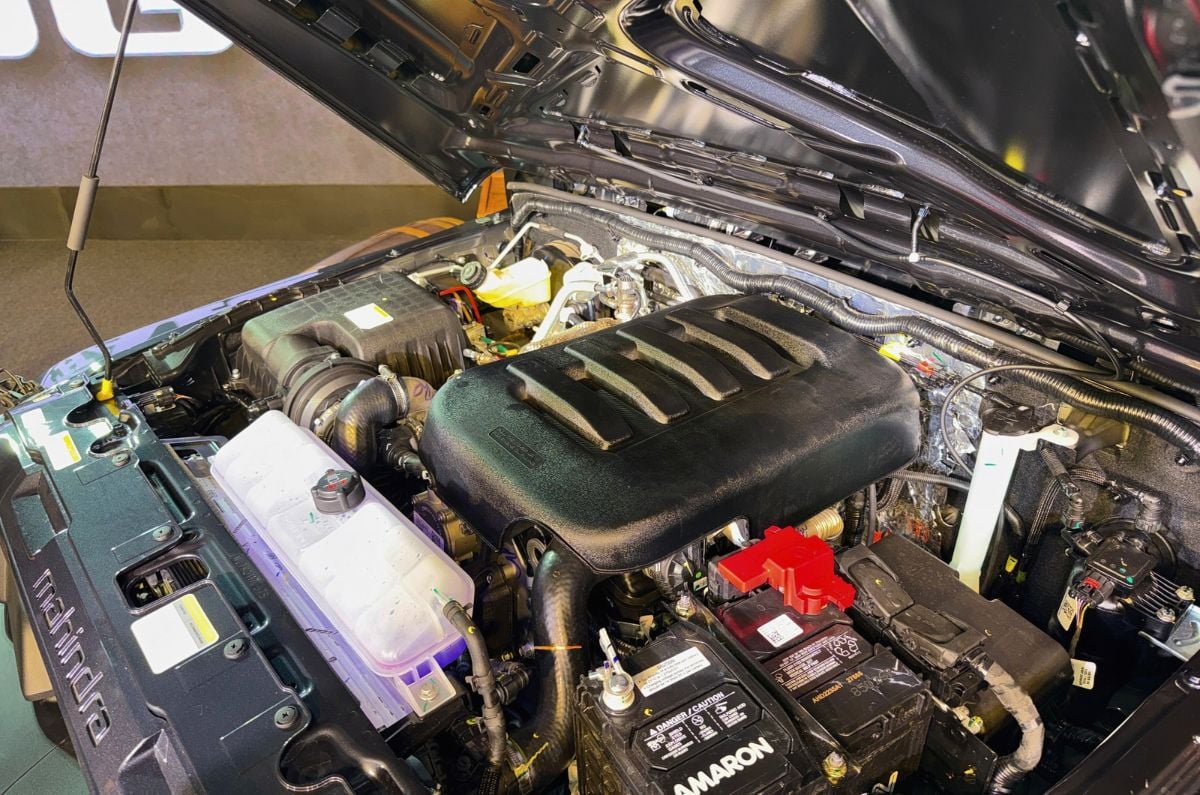
The engine options of the Thar OG have been carried over from its predecessor, but with increased power output for select powertrains. The 2.2-litre diesel engine now produces 152 hp and 330 Nm, while the 2.0-litre turbo-petrol mill delivers 162 hp and 330 Nm. This is an increase of 18hp and 30Nm for the former, while the latter receives a power bump of 10hp and 30Nm.
6. Improved Safety Suite
The Thar’s safety suite sees a range of comprehensive updates on the OG. Top-spec versions of the Thar OG with six airbags come with a Head-Pelvis-Thorax-Shoulder (HPTS) airbag system that the brand says protects the head, pelvis, thorax, and shoulders of the front and rear passengers in the event of a side impact, claims Mahindra. There are also all-wheel disc brakes and front parking sensors, but they’re limited to top-spec variants only. However, six airbags are not standard across the lineup.
7. New seat upholstery and feature additions
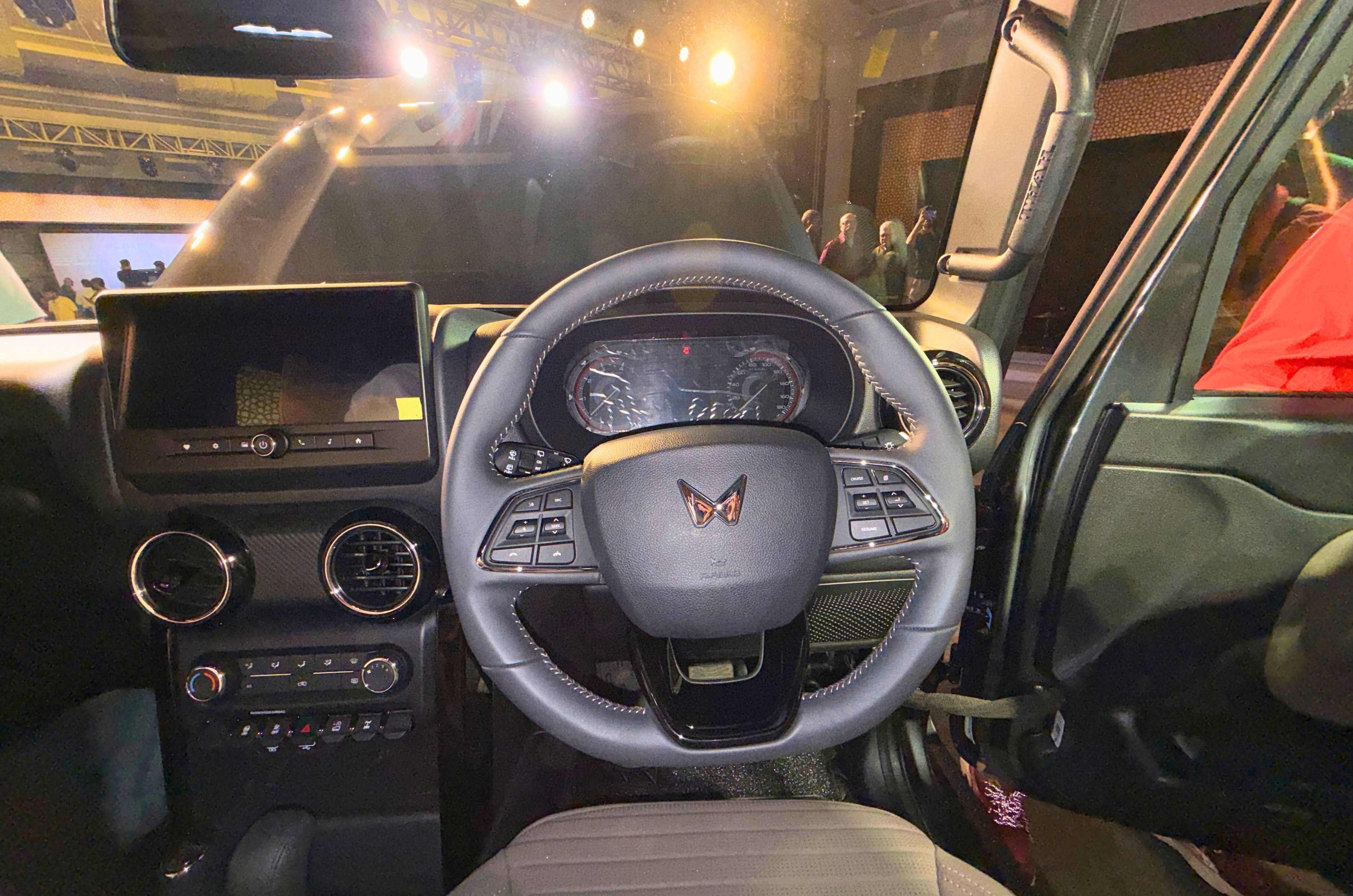
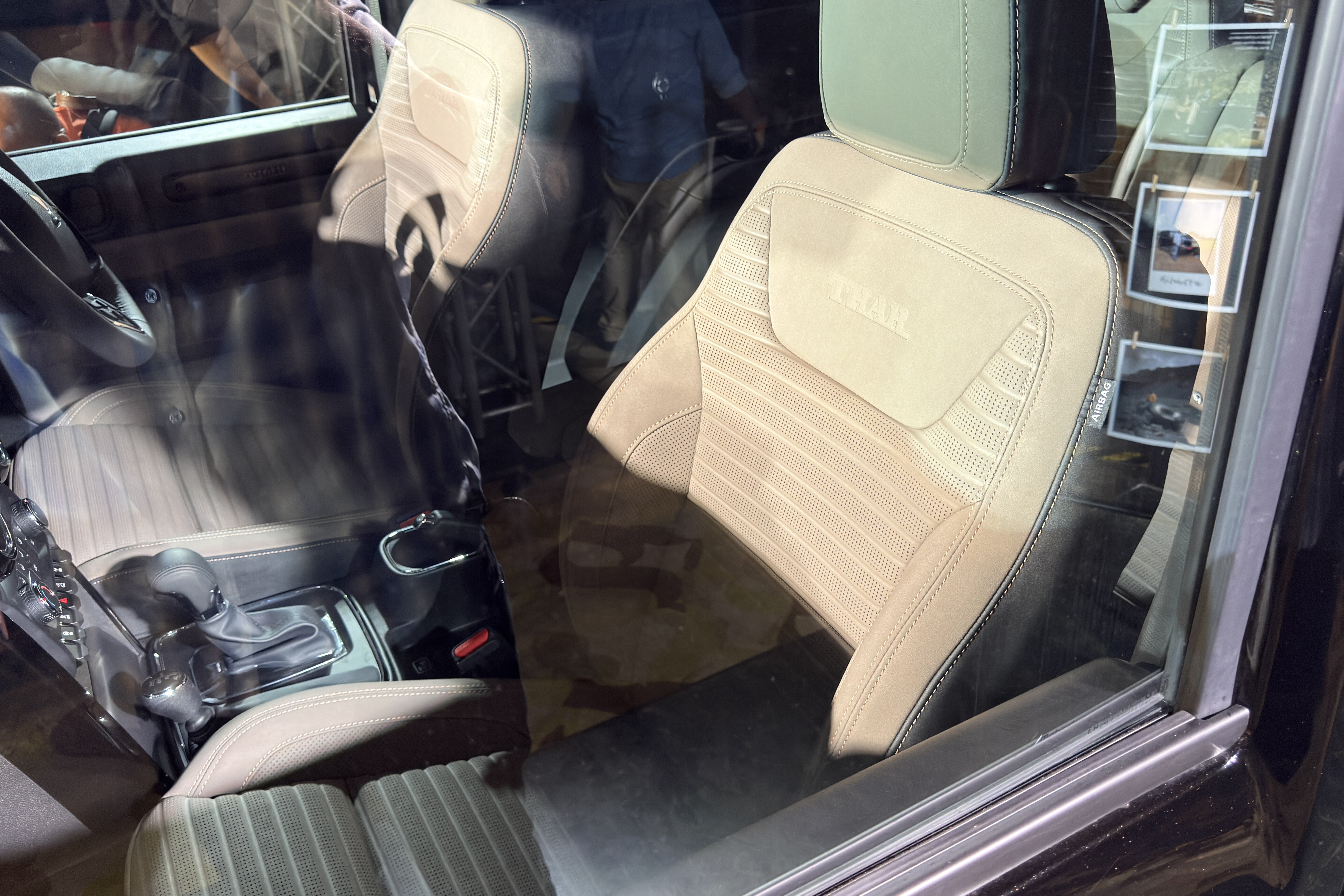
Mahindra hasn’t changed much of the Thar OG’s interior design, but it has introduced much-needed features. The seats now come with leatherette upholstery as opposed to the fabric used in its predecessor. Additionally, rear passengers get added convenience via a dedicated center armrest with cupholders. New features include a wireless phone charger, cornering function for the headlamps, and push-button start.
8. Cosmetic Upgrades
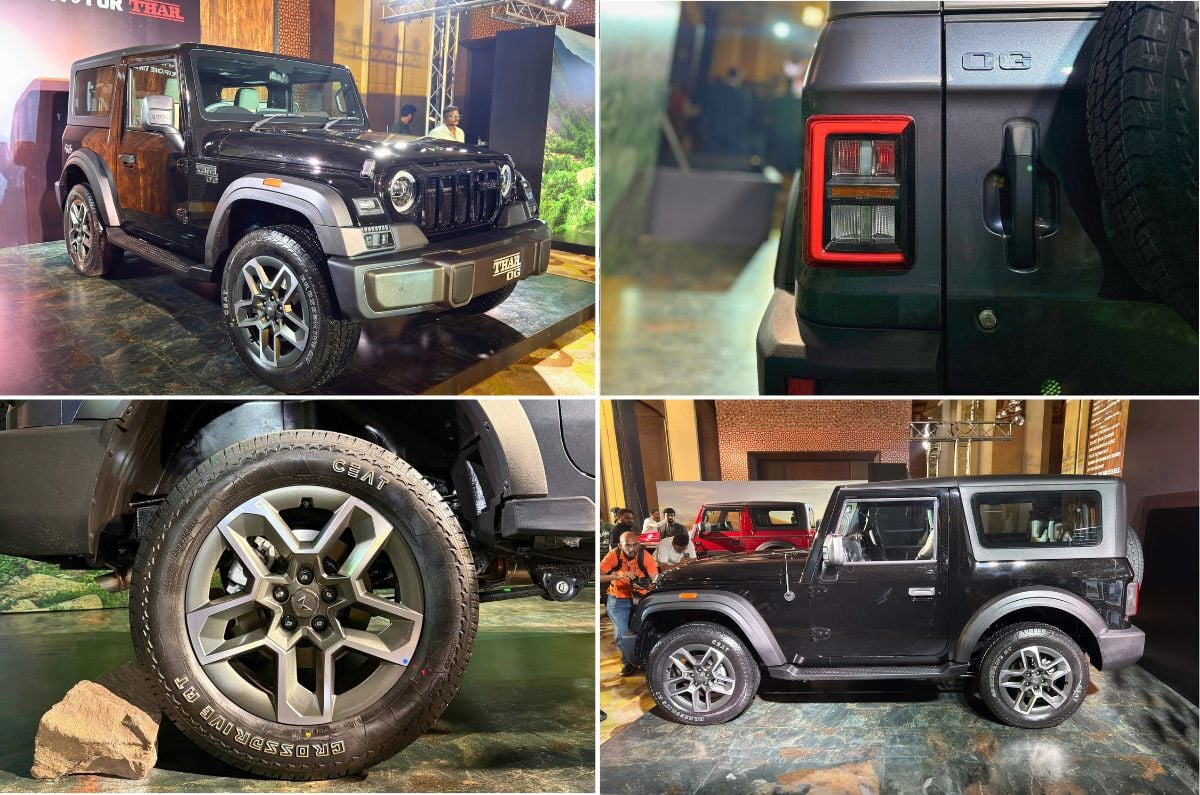
The Thar OG receives several styling updates that give it a fresher look. There are all-new LED headlamps with C-shaped DRLs, LED fog lamps, and LED taillamps, replacing the halogen units from the older model. The bumpers are all new and come with a dual-tone finish, and the wheel size has been bumped up to 19 inches.
Road trips have a useful way of exposing compromises. A car can feel perfectly adequate around town, but add two people, luggage and a boot full of camera equipment, then point it towards a destination over 350km away, and you soon find out where the corners have been cut.
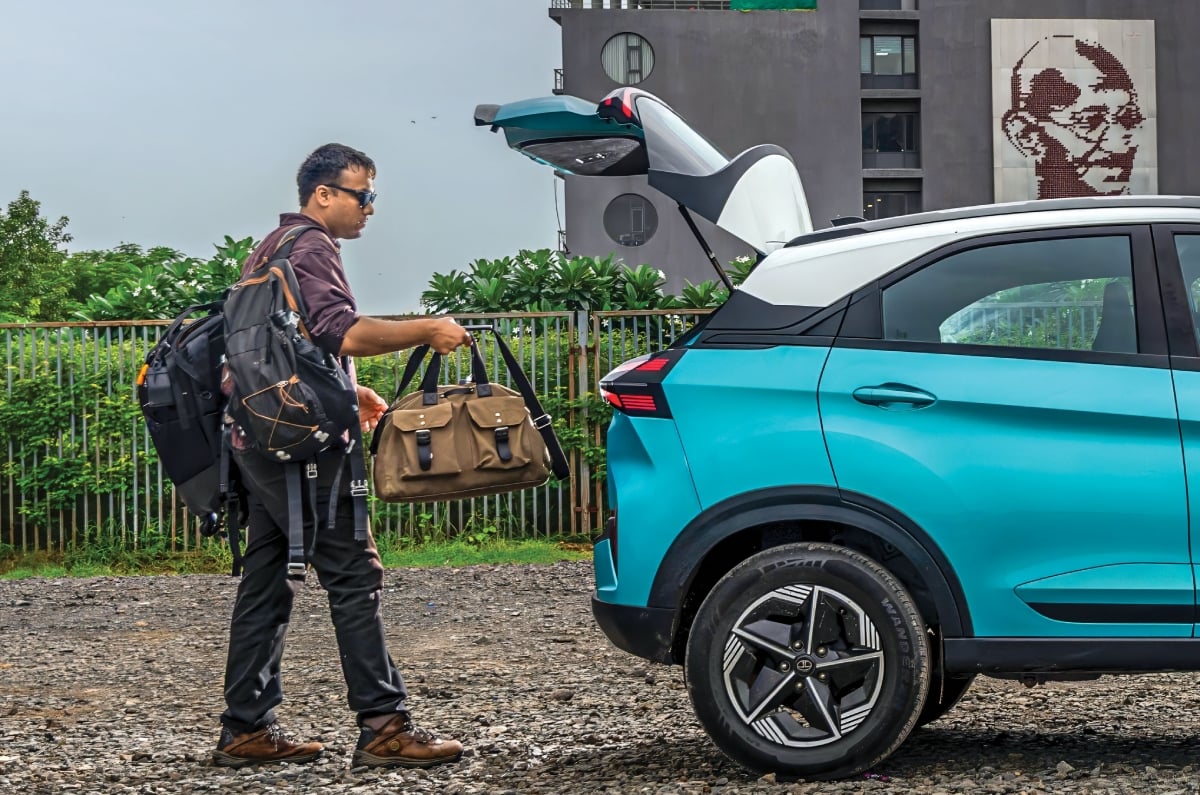
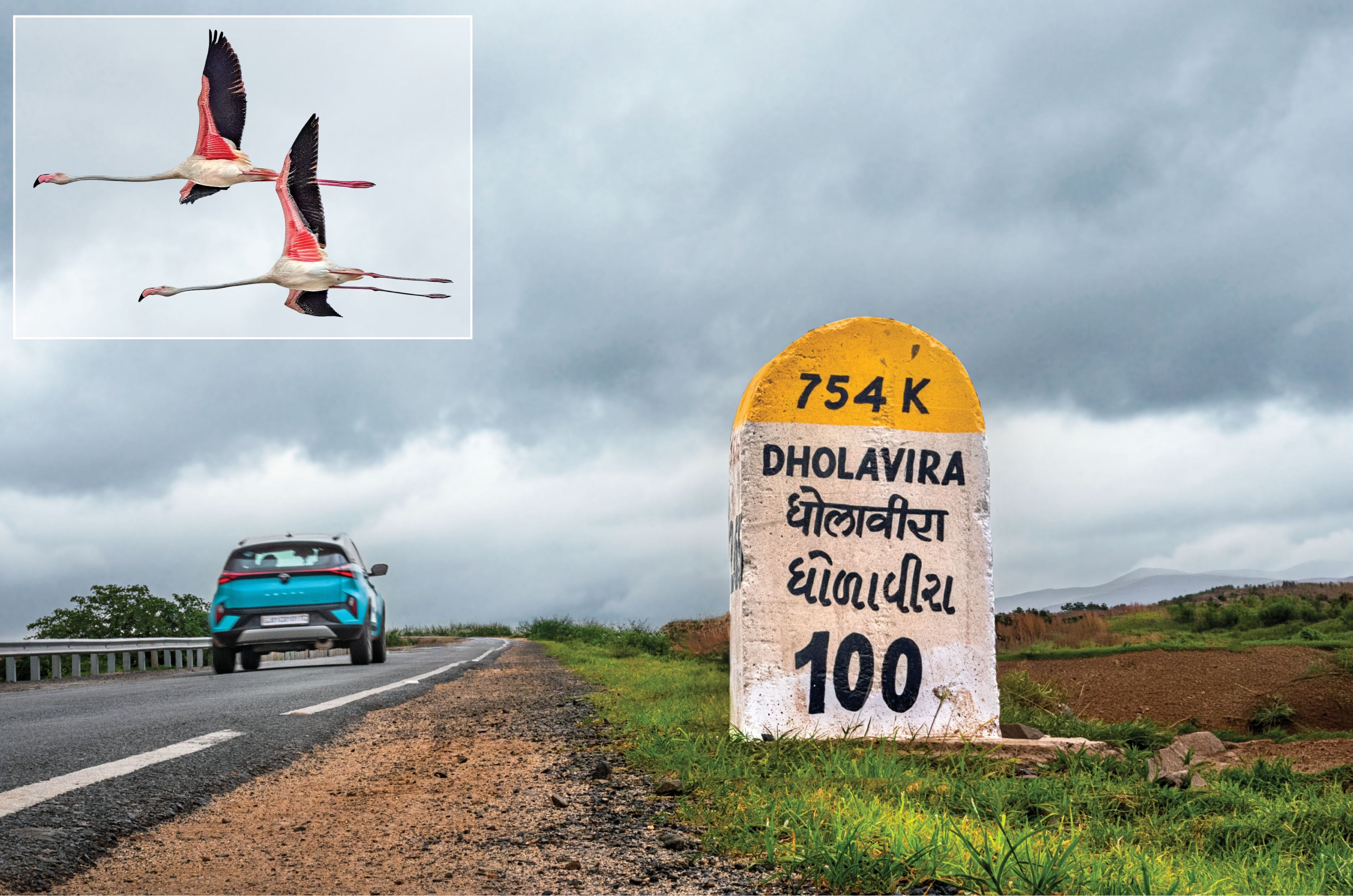
This was particularly interesting because we weren’t doing it in an ordinary petrol SUV. We were taking the Tata Nexon iCNG from Ahmedabad to Dholavira and back – more than 770km in total – with everything we needed for an overnight stay and a full shoot.
CNG cars traditionally come with a familiar list of compromises. Performance is one. Boot space is another. There is also the assumption that choosing CNG means giving up some of the equipment and driving appeal you would expect from a modern SUV.
The Nexon iCNG takes a different approach. Start with the engine. Its 1.2-litre turbocharged CNG powertrain makes it India’s only Turbo CNG offering, and the difference is noticeable on the open road. The point isn’t to turn a CNG car into a sports car; it is to make sure you don’t have to drive it differently simply because you’re running on CNG – and this makes all the difference when the brief is to drive across the magnificent state of Gujarat.
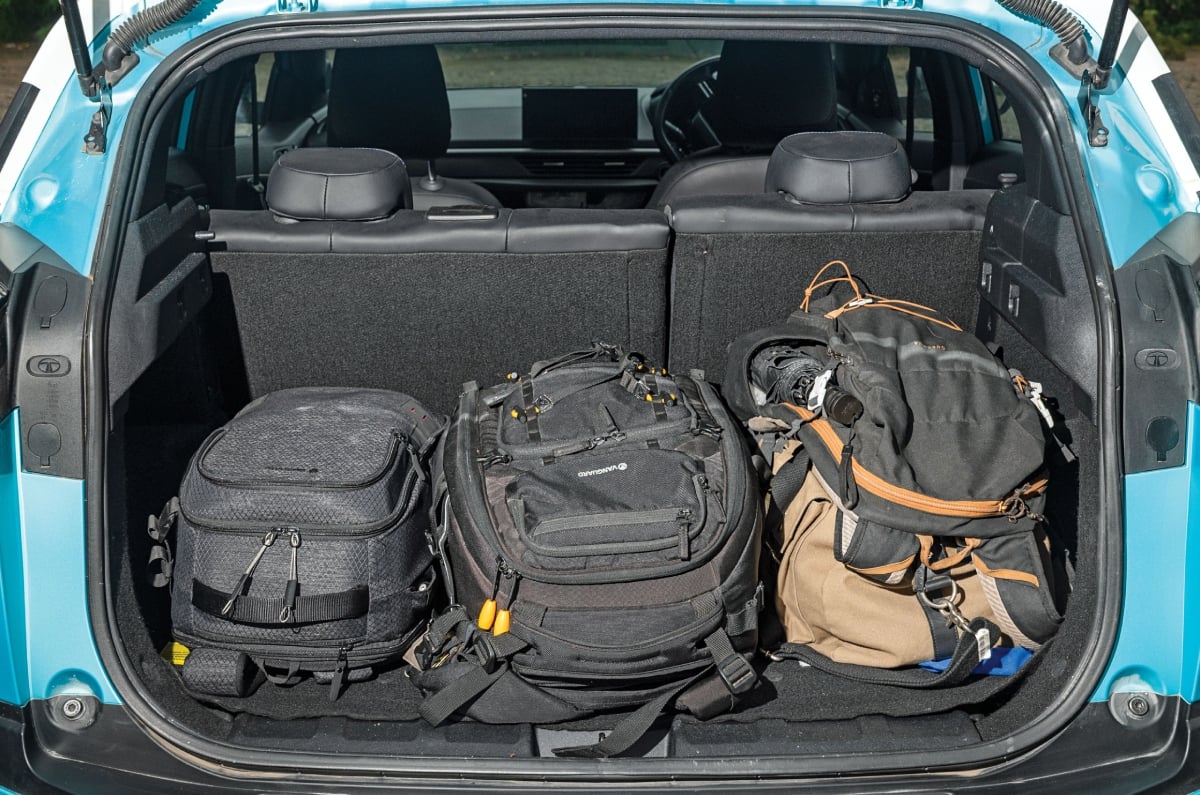
The 321-litre boot is plenty, even when it looks like you’re relocating.
Once Ahmedabad disappeared behind us, the traffic thinned, the roads opened up, and the Nexon settled into an easy long-distance rhythm, with enough performance for overtaking and climbing gradients without the strained feeling you might associate with a CNG car.
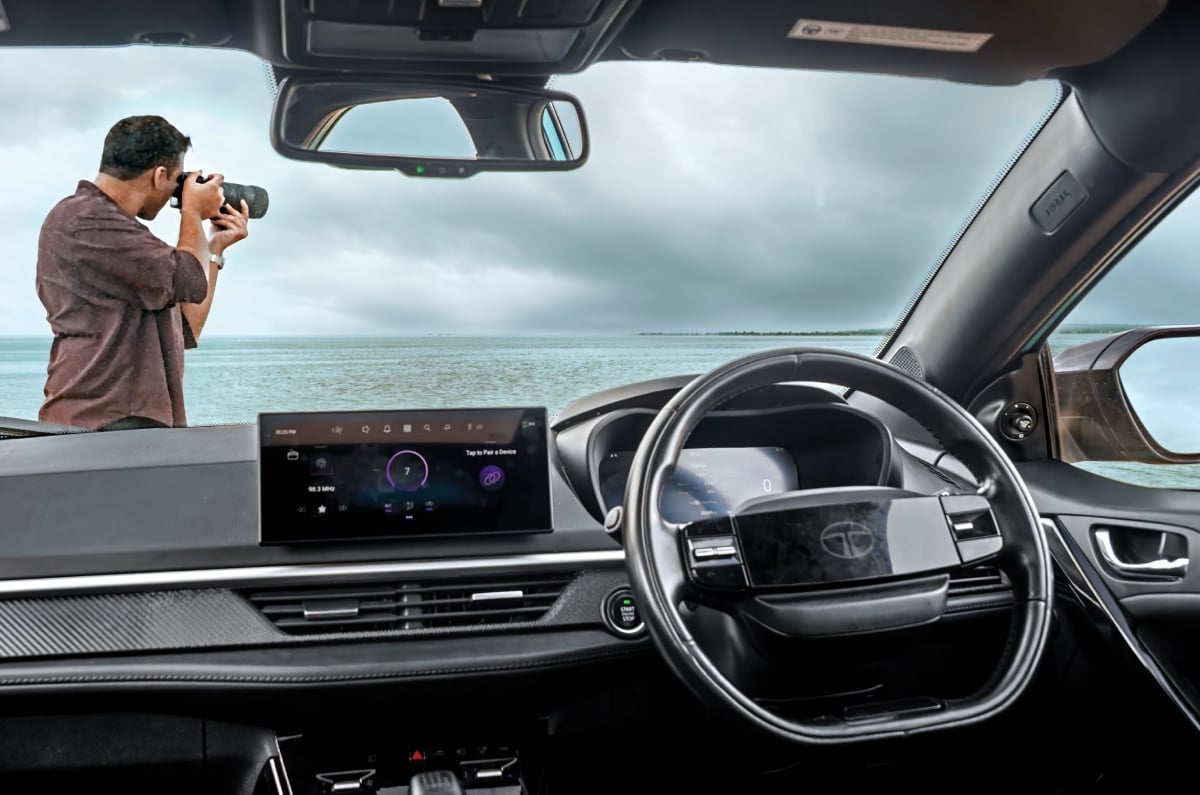
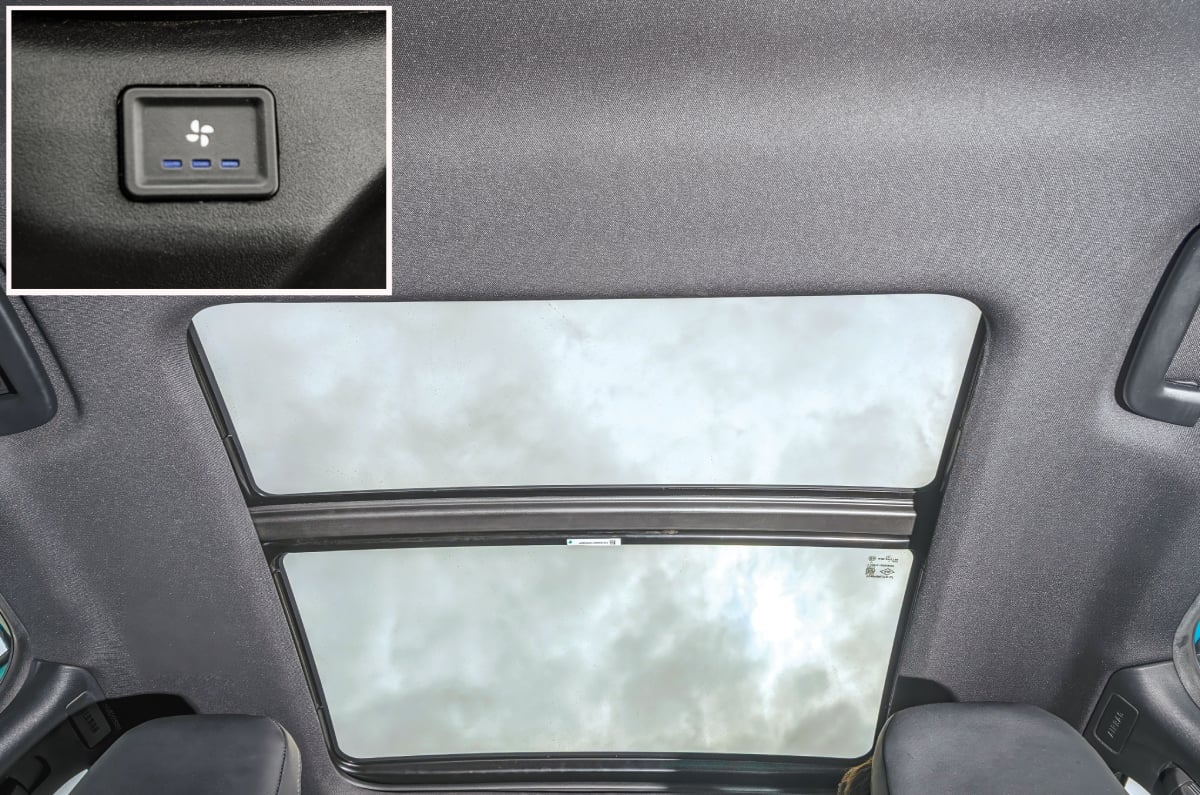
Inside, there is little sense of compromise either. The Nexon iCNG retains the equipment expected of a modern SUV, including its large 10.25-inch touchscreen, digital instrumentation, ventilated seats, voice-assisted panoramic sunroof and 360-degree camera. The latter proved particularly useful when we inevitably found ourselves manoeuvring into tight spaces for photographs.
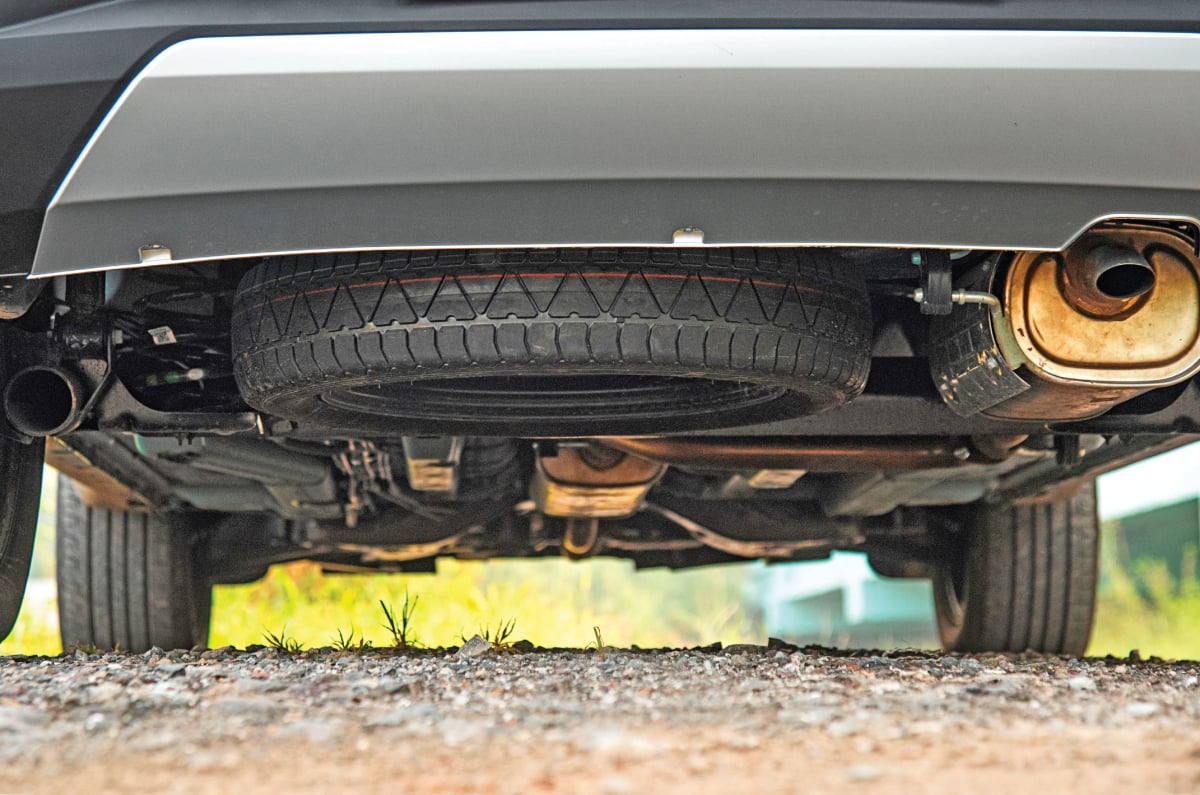
Underbody-mounted spare wheel adds another layer of confidence on long road trips.
Then there is the boot. A conventional CNG cylinder can make luggage space something of an afterthought. The Nexon iCNG’s twin-cylinder layout puts the CNG tanks beneath the boot floor, leaving a proper luggage compartment and a spare wheel. For us, that meant camera bodies, lenses, tripods, overnight bags, and everything else could go in without sacrificing the rear seats.
The system also starts directly in CNG, making the transition almost irrelevant to the driver. And over the first few hundred kilometres, fuel was barely discussed. With CNG and petrol available, there was no need to plan the journey around the next filling station.
The Rann of Kutch is a popular destination for humans and flamingos alike.
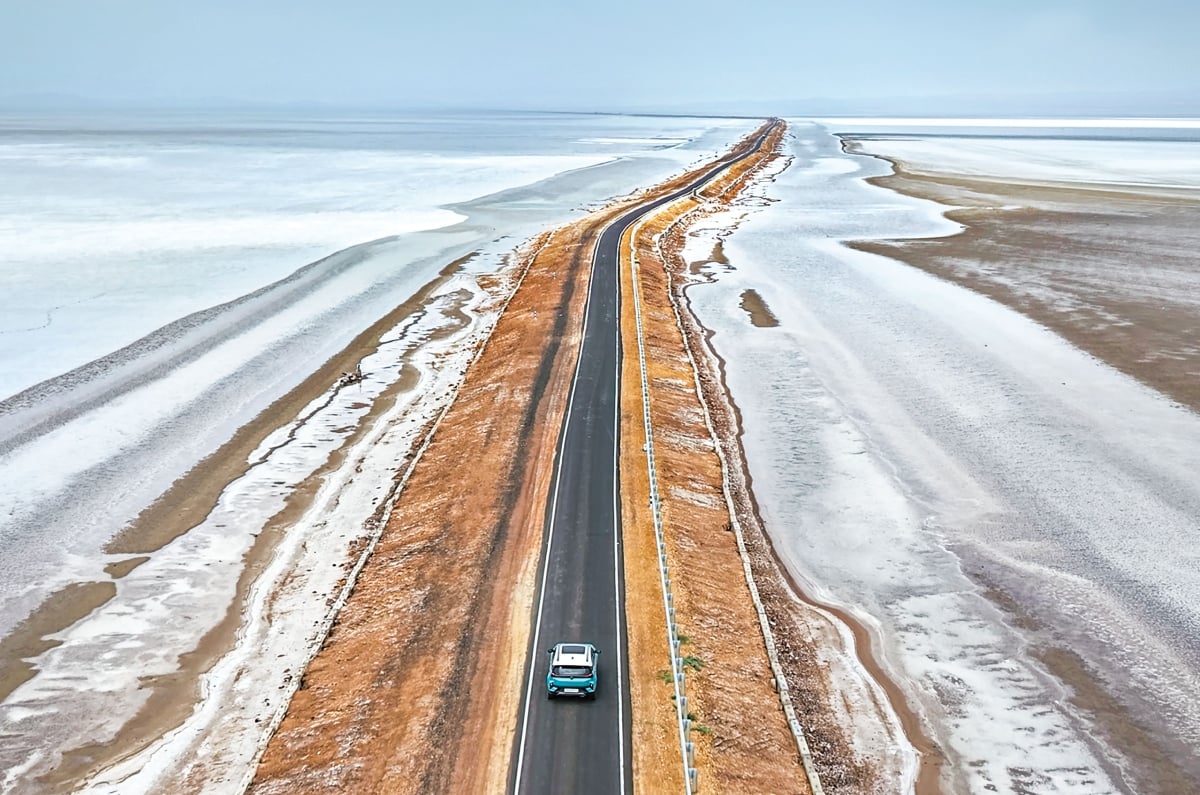
The road itself provided more to think about. As we moved towards Kutch, traffic became sparse, villages grew further apart, and the vast Kutch sky revealed itself. Eventually we reached the Road to Heaven. The name is rather grand, but the road itself doesn’t need much embellishment. It runs almost arrow-straight through the Rann, with the white landscape opening out on either side. There is no great corner to attack and no climb to conquer. You simply drive into an enormous amount of empty space. We stopped, naturally. The cameras came out, the light changed into evening, and before we knew it, darkness crept up on us and made us head to our overnight halt.
By nightfall, we had covered more than 350km. We had also spent much of the day not thinking about the fact that this was a CNG SUV. The next morning, we turned around. The return journey passed more quickly, as they tend to. By the time Ahmedabad reappeared, the trip meter showed more than 770km. Two people, luggage and a boot full of camera equipment had gone to Dholavira and back without a fuel stop.
That is perhaps the more interesting measure of what the Nexon iCNG achieved. Not that it can cover 770km, but that doing so doesn’t require the usual concessions we have come to associate with CNG: no cramped boot, no reluctant engine, no sense of a stripped-out cabin and, in our case, no need to organise the journey around fuel.
The voice-activated panoramic sunroof really lets you appreciate the vast Kutch sky; ventilated front seats are a godsend in hot and humid conditions (inset).
We set out to drive to the Road to Heaven and back. And the fact that we did it in a CNG-powered car without actually having to think about it only made the whole thing that much more special.
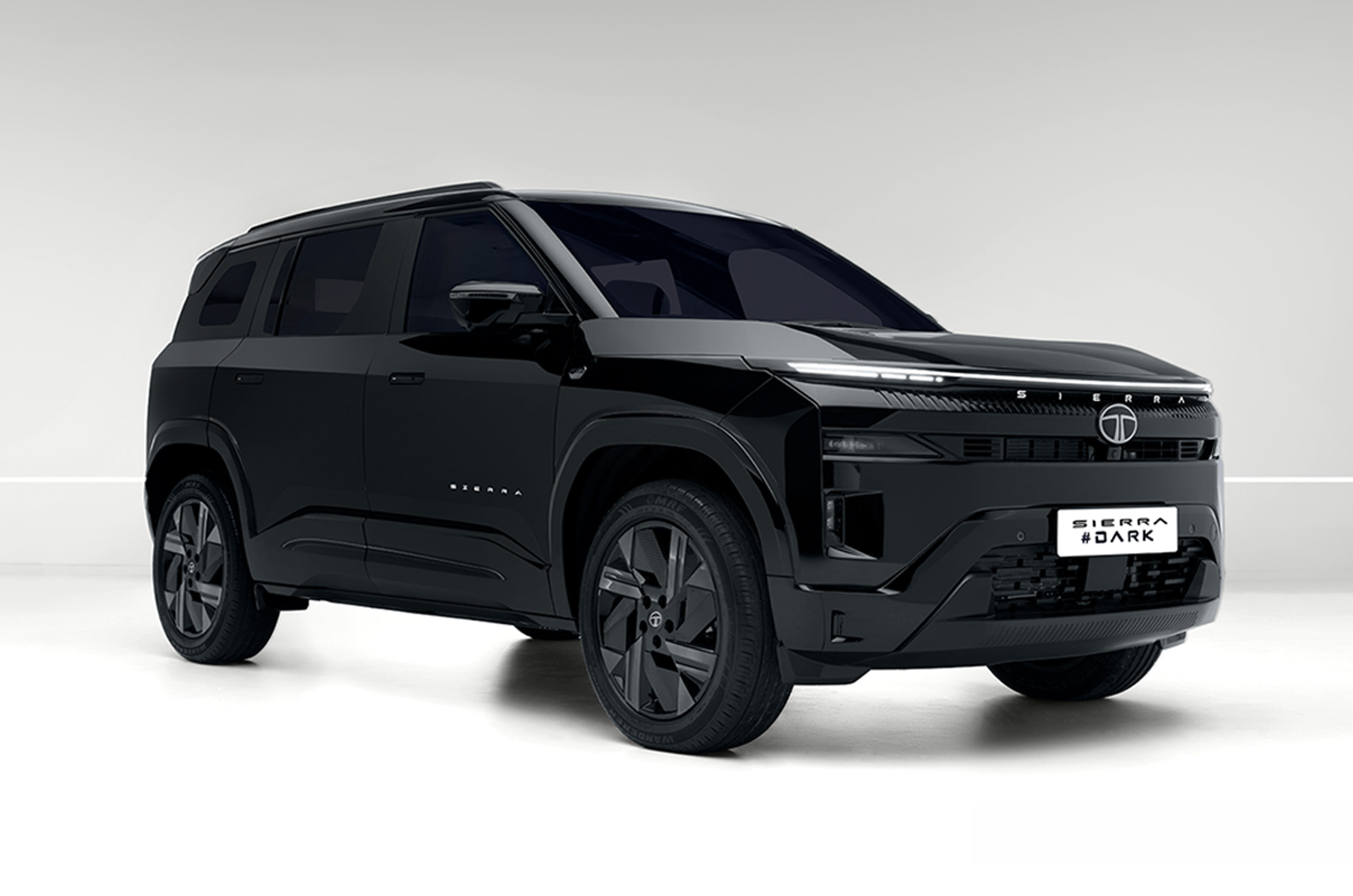
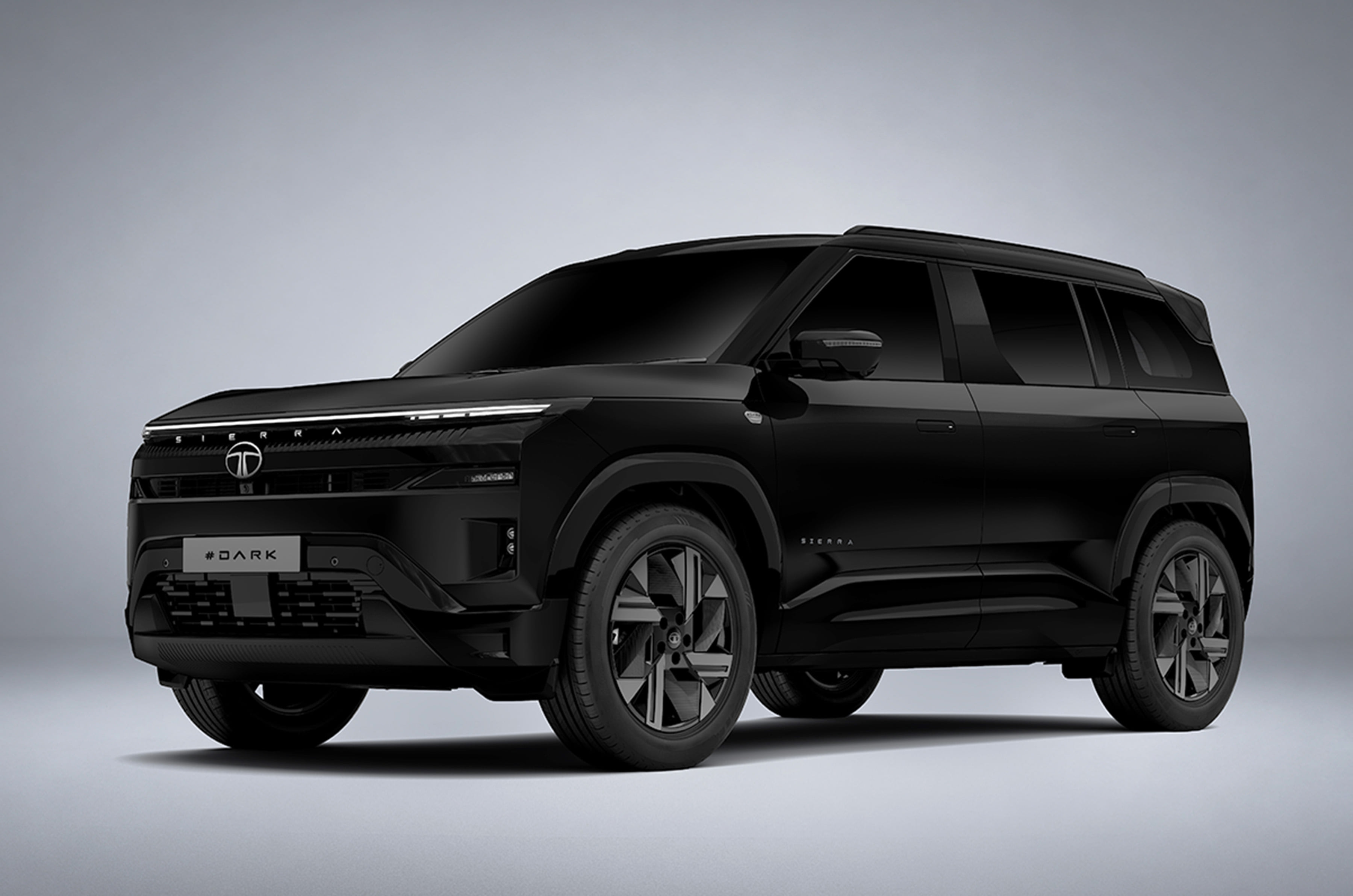
Like many of Tata’s other SUVs, the Sierra can now be had with a blacked-out Dark Edition cosmetic package. The Sierra Dark Edition is available from the Pure L trim onwards, where it commands a premium of Rs 20,000 over the standard version. For all succeeding trims, the Sierra Dark Edition costs Rs 30,000 extra. Pricing for the Sierra Dark Edition starts at Rs 13.99 lakh for the Pure L trim, and at Rs 21.59 lakh for the top-spec Accomplished+ trim.
Sierra Dark Edition gets new Friesian Black paint finish
Interior gets blacked-out treatment with violet and purple highlights
Available with all powertrain options of the Sierra
Here’s a look at the full price list of the Tata Sierra Dark Edition:
Tata Sierra Dark Edition price (ex-showroom)
Trim
Petrol-MT
Petrol-DCT
Turbo-petrol AT
Diesel-MT
Diesel-AT
Pure L #Dark
Rs 13.99 lakh
Rs 15.29 lakh
–
Rs 15.44 lakh
–
Pure L (O) #Dark
Rs 14.59 lakh
Rs 15.89 lakh
–
Rs 16.04 lakh
Rs 17.34 lakh
Pure+ L #Dark
Rs 15.29 lakh
Rs 16.59 lakh
–
Rs 16.74 lakh
Rs 18.04 lakh
Adventure+ L #Dark
Rs 17.29 lakh
Rs 18.59 lakh
Rs 19.29 lakh
Rs 18.49 lakh
Rs 19.79 lakh
Accomplished #Dark
Rs 18.29 lakh
–
Rs 20.29 lakh
Rs 19.29 lakh
Rs 20.29 lakh
Accomplished+ #Dark
–
–
Rs 21.29 lakh
Rs 20.59 lakh
Rs 21.59 lakh
Tata Sierra Dark Edition exterior and interior
As you’d expect, the Sierra Dark Edition comes finished in Friesian Black on the outside as standard. Much of the exterior trim is black instead of chrome, and the Tata emblems and alloy wheels have been darkened as well. Lastly, this stealth-spec Sierra gets ‘#DARK’ badging on the front fenders.
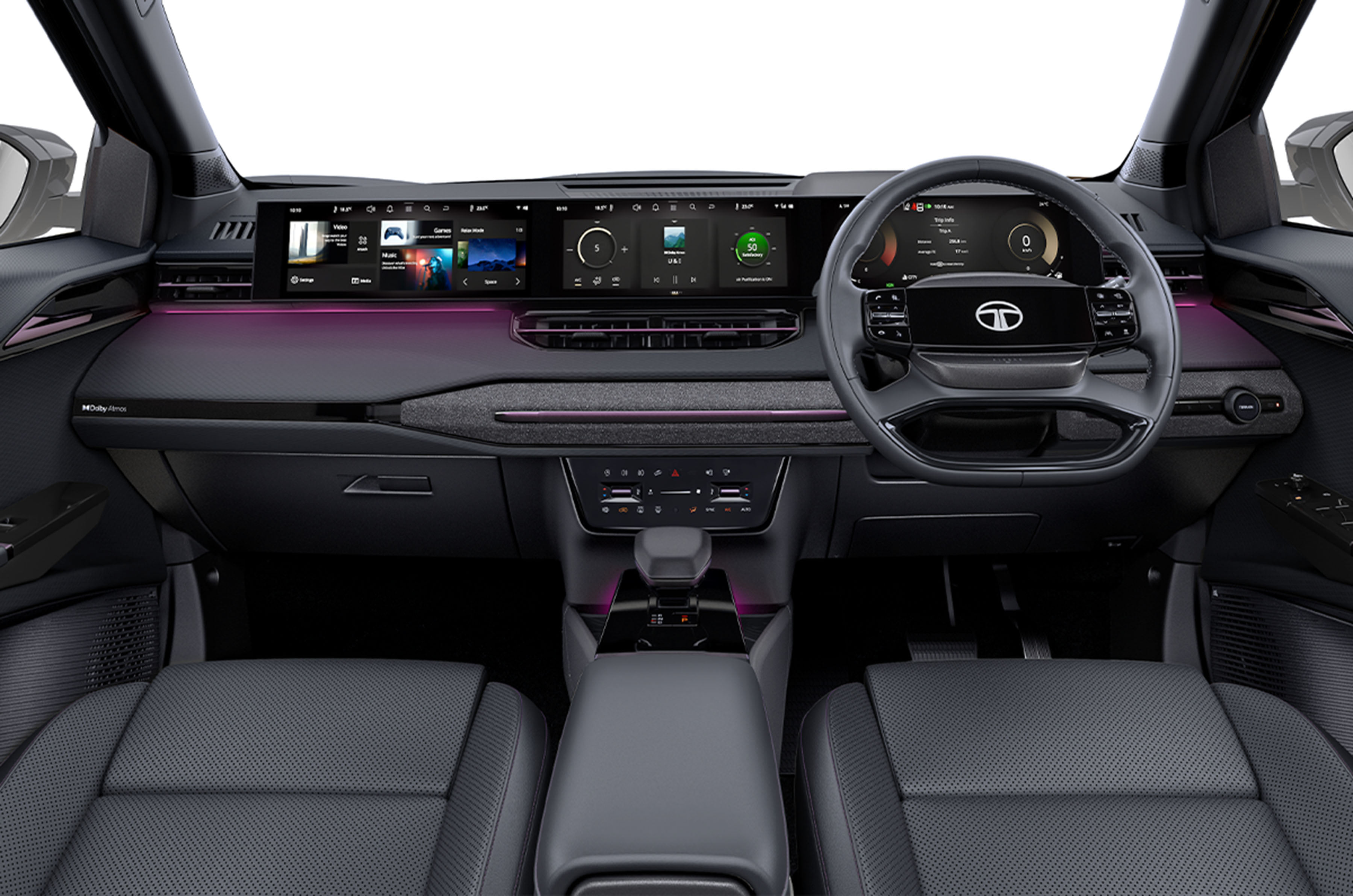
The blacked-out finish extends to the Sierra’s cabin as well, but Tata has added a pop of colour by way of violet metallic trim pieces in areas like the AC vent bezels, door handles, front armrest, front seatbacks, and more – even the seat stitching is purple. There are otherwise no changes to the interior layout or features list over the standard versions of the Sierra, so depending on the variant, you get goodies like a triple-screen setup, ventilated front seats, a panoramic sunroof, dual-zone climate control, a powered tailgate, connected car tech, Level 2 ADAS, a 360-degree camera, a 12-speaker JBL Black sound system, among others.
Tata Sierra Dark Edition engine and gearbox
There are no changes to the powertrain offerings for the Sierra Dark Edition. It offers the same configurations found in the trim it’s based on. That means depending on the variant, you get a 106hp 1.5-litre naturally aspirated petrol engine with either a 6-speed manual or 7-speed DCT, a 118hp 1.5-litre diesel mill with either a 6-speed manual or 6-speed torque converter, or a 160hp 1.5-litre direct-injection turbo-petrol motor mated solely to a 6-speed torque converter.
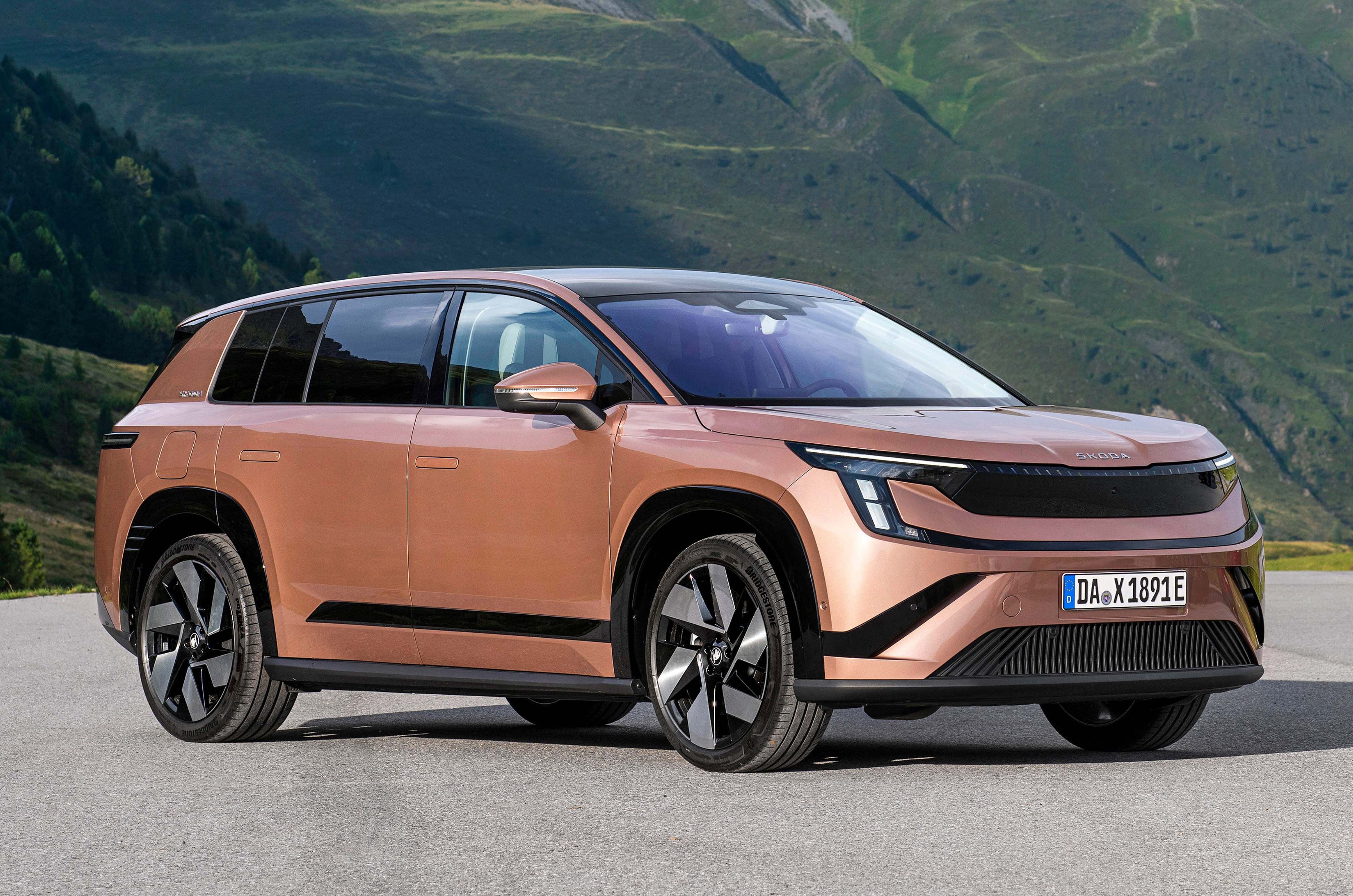
Epiq, Elroq, Enyaq, it’s pretty clear to see the nomenclature every electric Skoda SUVs follows, not so here though. You see this is Skoda’s new flagship or its peak as the company says, ergo we have the Peaq.
Skoda Peaq Exterior Design and Engineering – 9/10
Doubles down on minimalist style but looks premium, classy and has good presence.
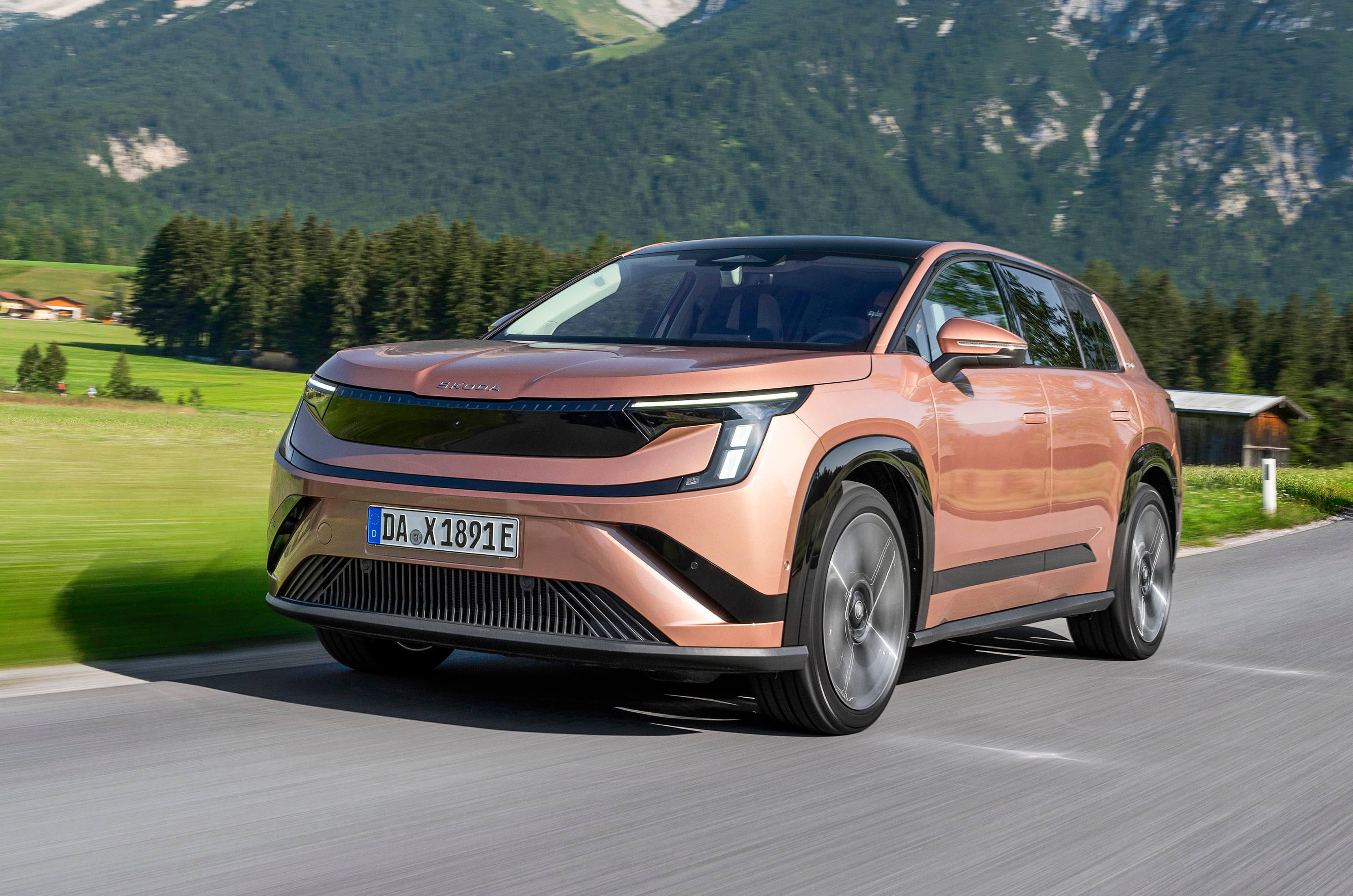
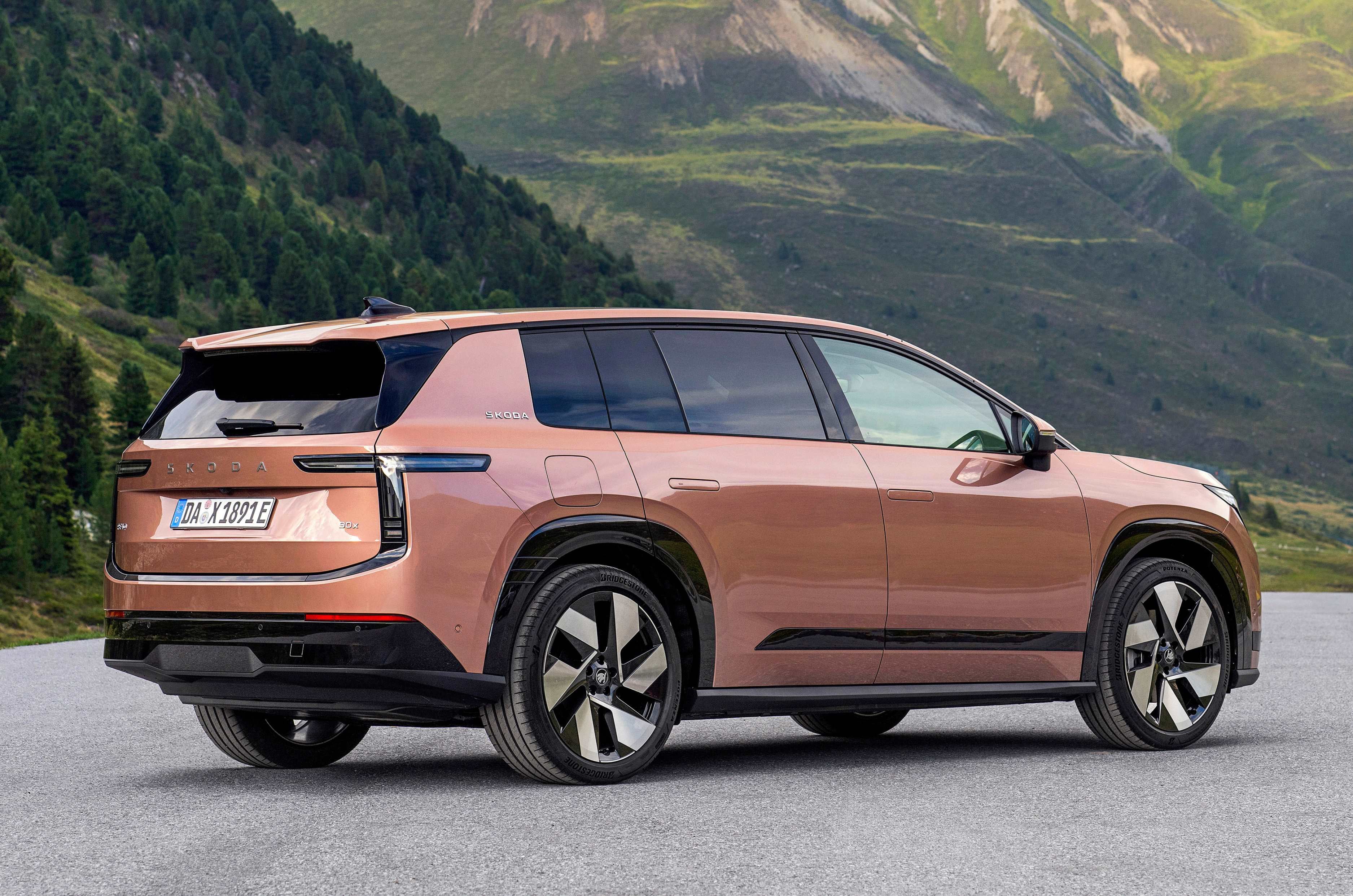
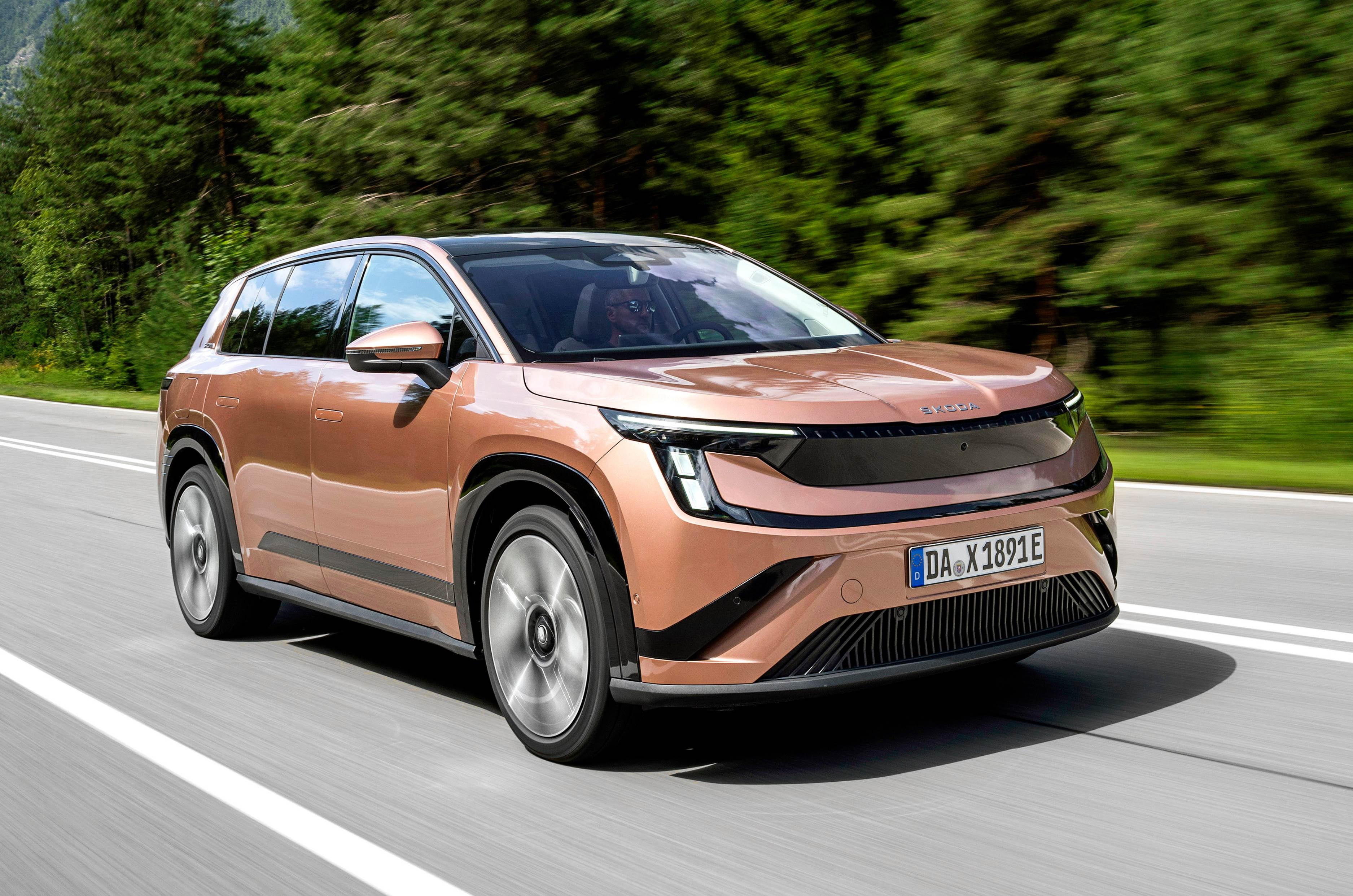
At 4.87 meters, the Peaq is the largest Skoda SUV yet.
While the entry level model, the Epiq, utilizes the front wheel driven MEB+ platform, the Elroq, Enyaq and the Peaq are all built on the MEB platform which is primarily rear wheel driven with the option of AWD, which the Peaq does offer. At 4.87 meters the Peaq is the largest Skoda SUV and sports Skoda’s largest boot, battery and sunroof, too.
Despite its size it doesn’t look brutish like most large SUVs seem to be leaning towards these days. Thanks to Skoda’s new ‘Modern Solid’ design language, which is all about minimalism the Peaq looks premium and classy and the bodywork is quite aero efficient too with a 0.249 drag coefficient.
The black panel houses all the tech bits like the cameras, radars and lidar.
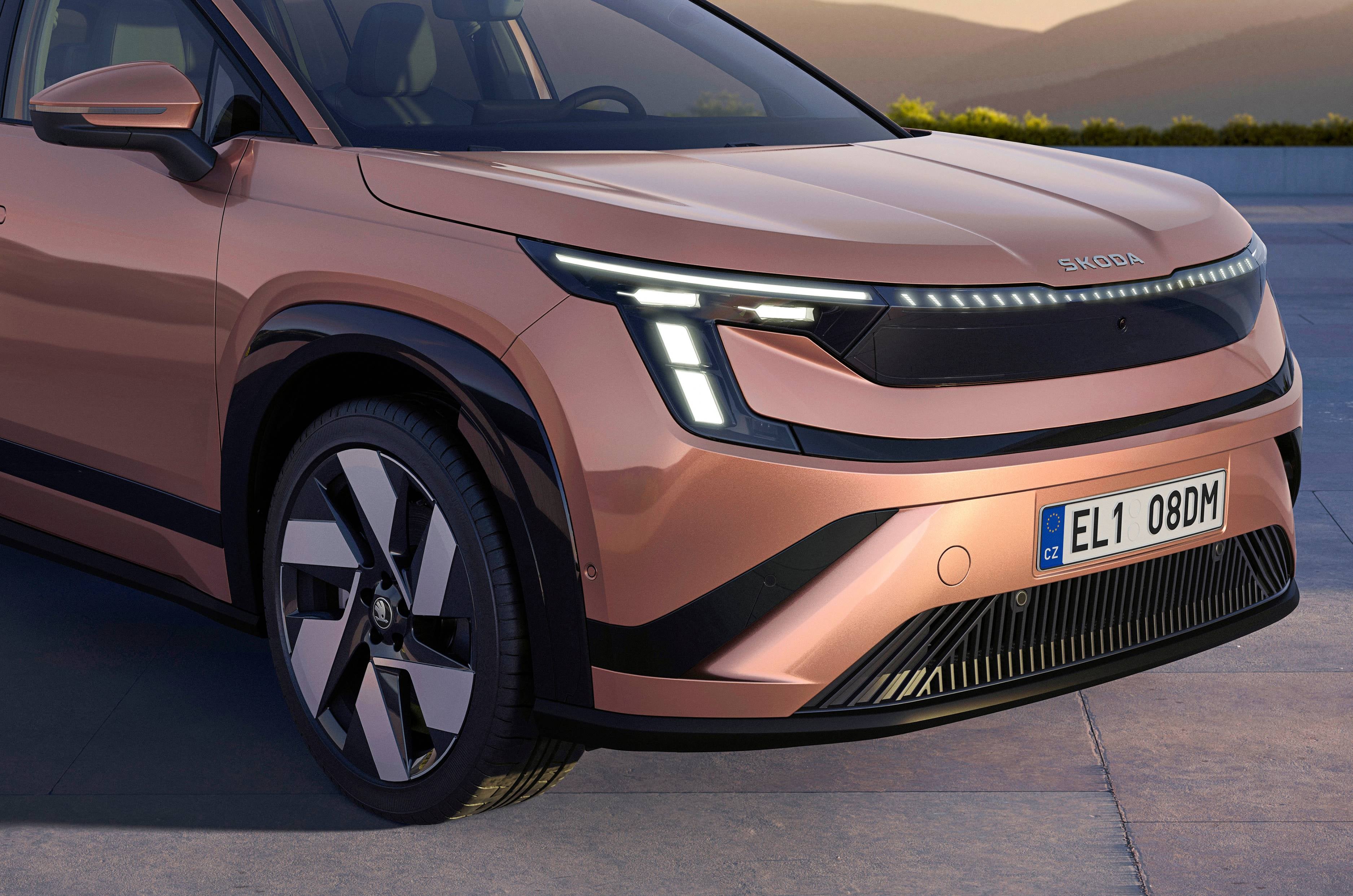
At the front the lines are simple and clean. The fascia sports the company’s T-shaped DRL and headlight signature and the rather clever Tech Deck; the black panel which hides all the tech bits like the cameras, radars and lidar and mimics a grille thus avoiding that faceless look many EVs sport. Skoda has even hidden LED lights behind it that – to a small extent – mimic grille slots. Notably the Skoda emblem is missing, the company is in the process of moving away from it and the Peaq carries the new Skoda letter mark instead.
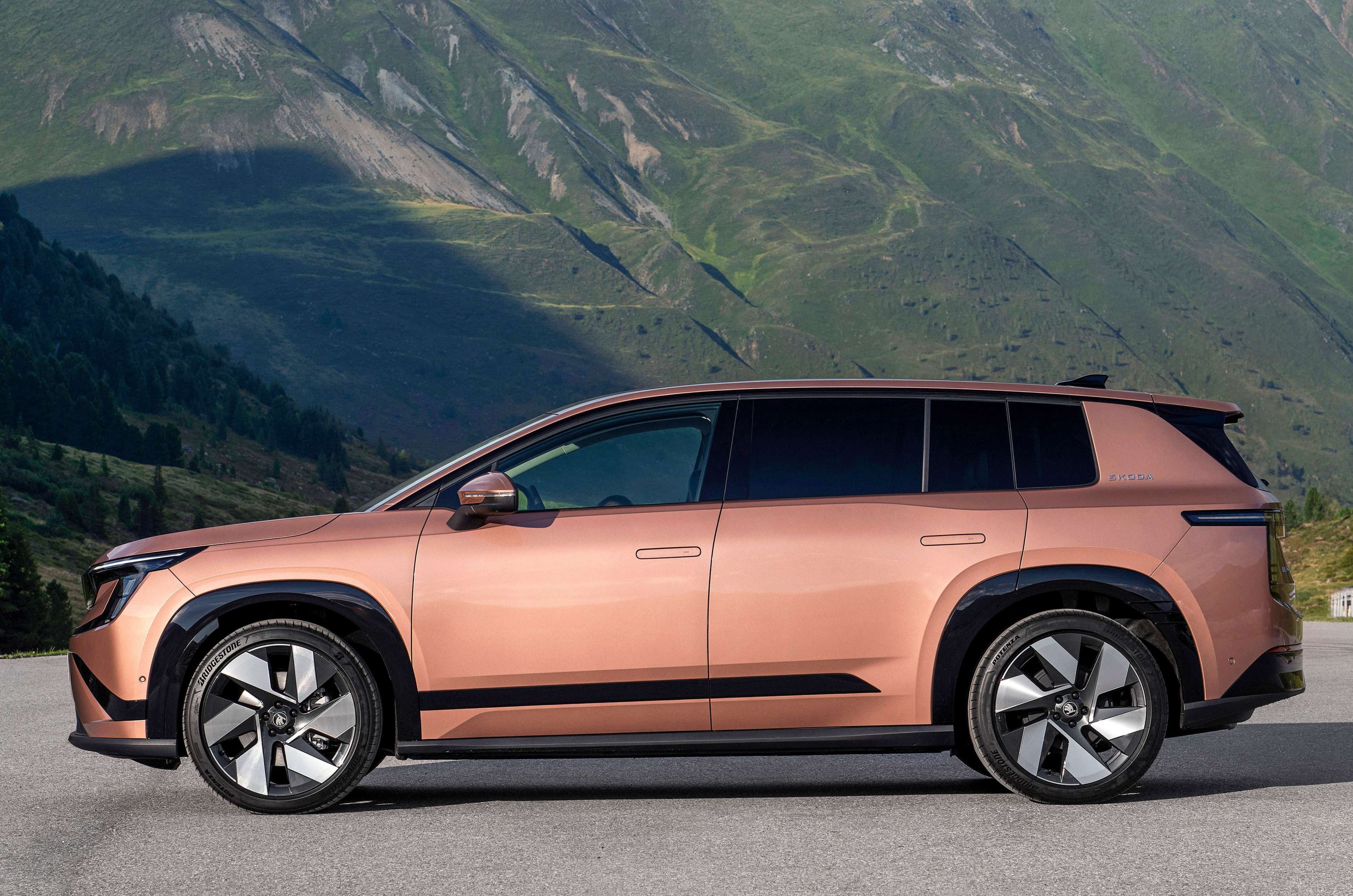
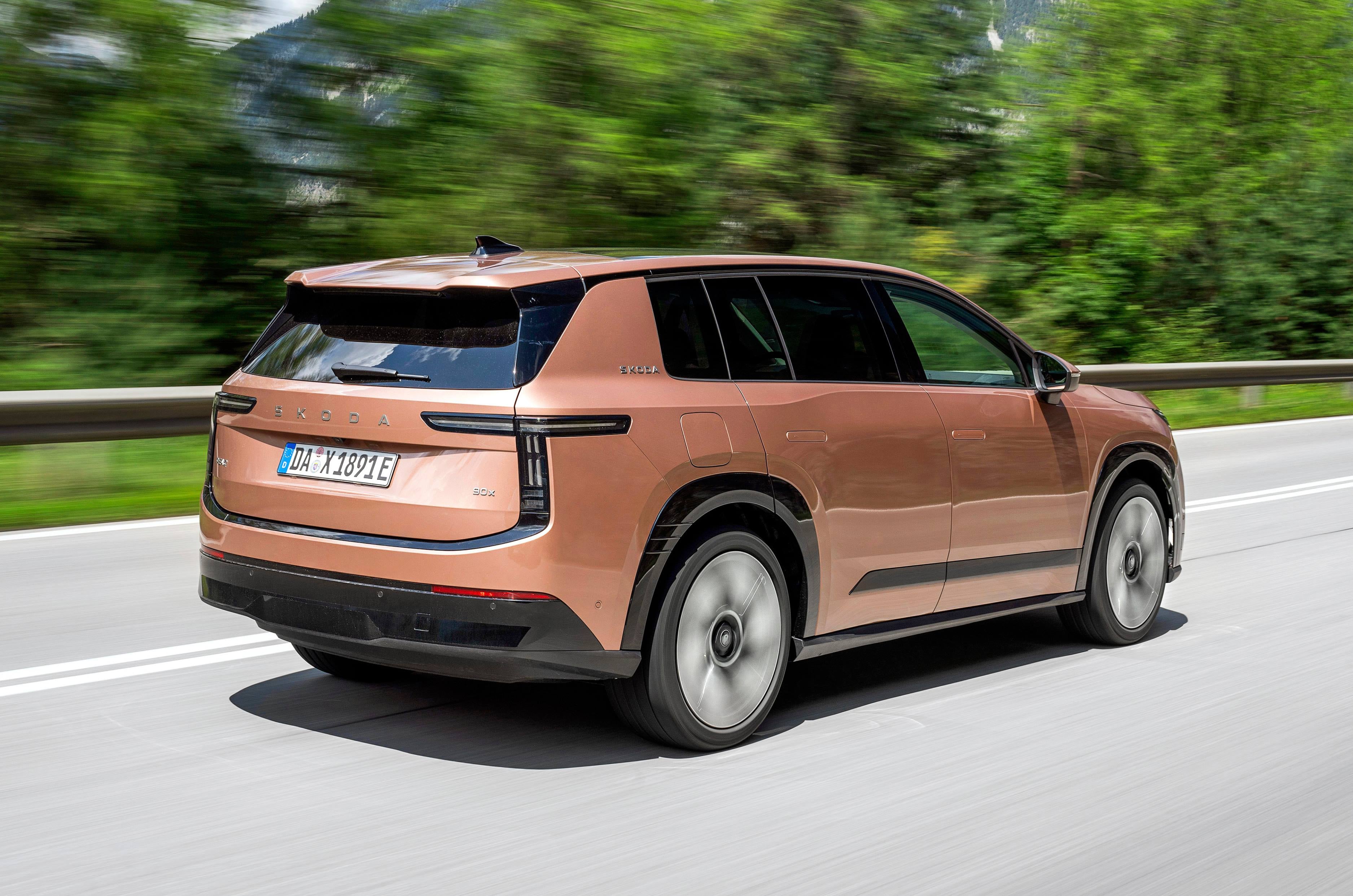
Over at the sides the clean lines continue with flush door handles, these can also be pressed in at the edge to manually operate them. The alloy wheels on our car were the 21 inchers and have a neatly balanced sporty and classy look. A defining styling element in profile is the C pillar which is body coloured and looks like a reversed fin and carries the Skoda lettering.
T-shaped tail lights are connected by a stylistic loop running at the bottom of the tail gate.
Like the headlights, the taillights too are T-shaped and are connected to each other via a stylistic loop running at the bottom of the tailgate. A roof integrated spoiler and a shark fin antenna complete the rear look and here too it’s just the Skoda lettering spelled out across the boot lid.
Skoda Peaq Interior Space and Comfort – 7/10
Minimalism carries on inside but cabin could do with a dash of flair.
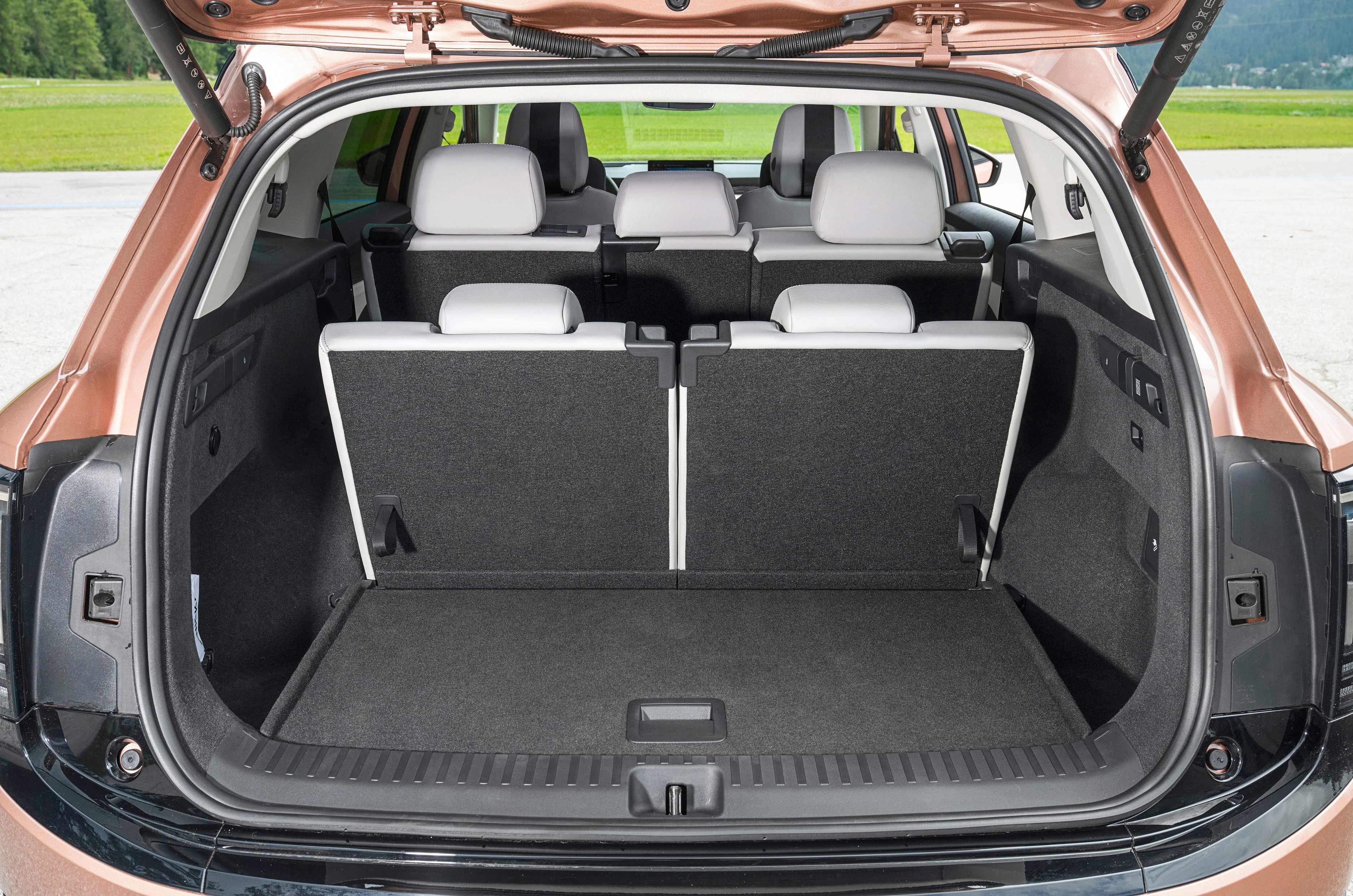
Peaq’s boot is the largest on a Skoda so far; offers 299-litres of space with all rows up.
With a near three-meter wheelbase there’s plenty of space inside, beginning with the boot which is the largest on a Skoda so far; 935 litres without the third row, but even in the 3-row version and with the third-row seats in place, there’s 299 litres which is more than enough for a few small bags. A handy little bit is a motorised cargo cover that rolls open or close with the boot opening and closing. At the front there’s also a 37-litre frunk.
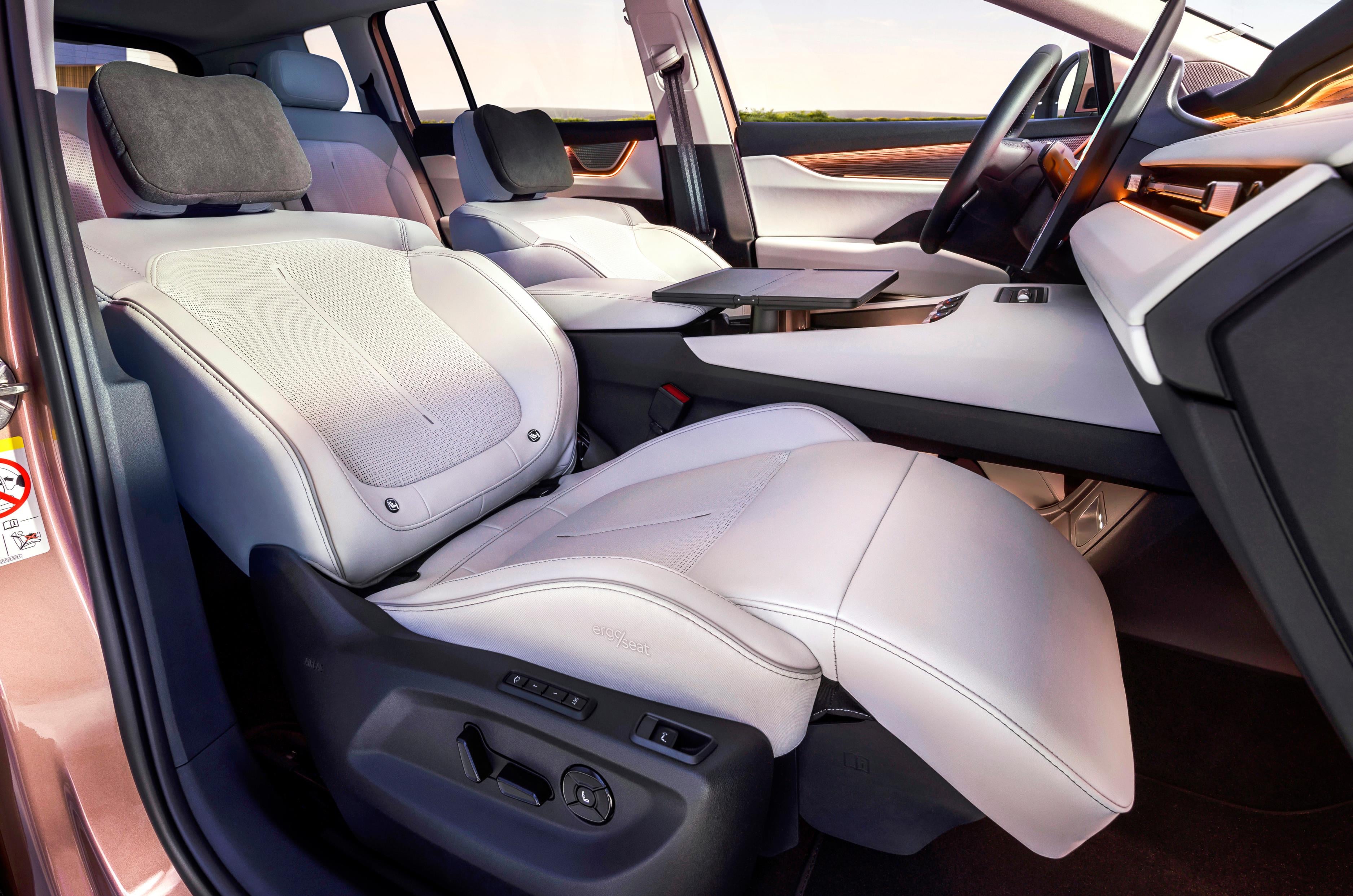
Front seats feature a ‘zero-gravity’ position allowing one to fully stretch out.
Passengers are well catered too, especially at the front two rows. The front seats offer plenty of space and will suit broader frames quite nicely. They also offer a ‘zero-gravity’ position wherein at the touch of a button the seat base dips, the seat back reclines and an ottoman style leg rest extends upward. They also offer heating, ventilation and a massage function. There’s an app too – which new EV does not have one these days – and that can configure the cabin lighting, seats, climate and other elements in six modes from a relaxing to an energizing ambience. On our drive in the cold Austrian mountains, we had a lot of rain and the ‘warm feet’ HVAC setting proved to be very handy and welcome.
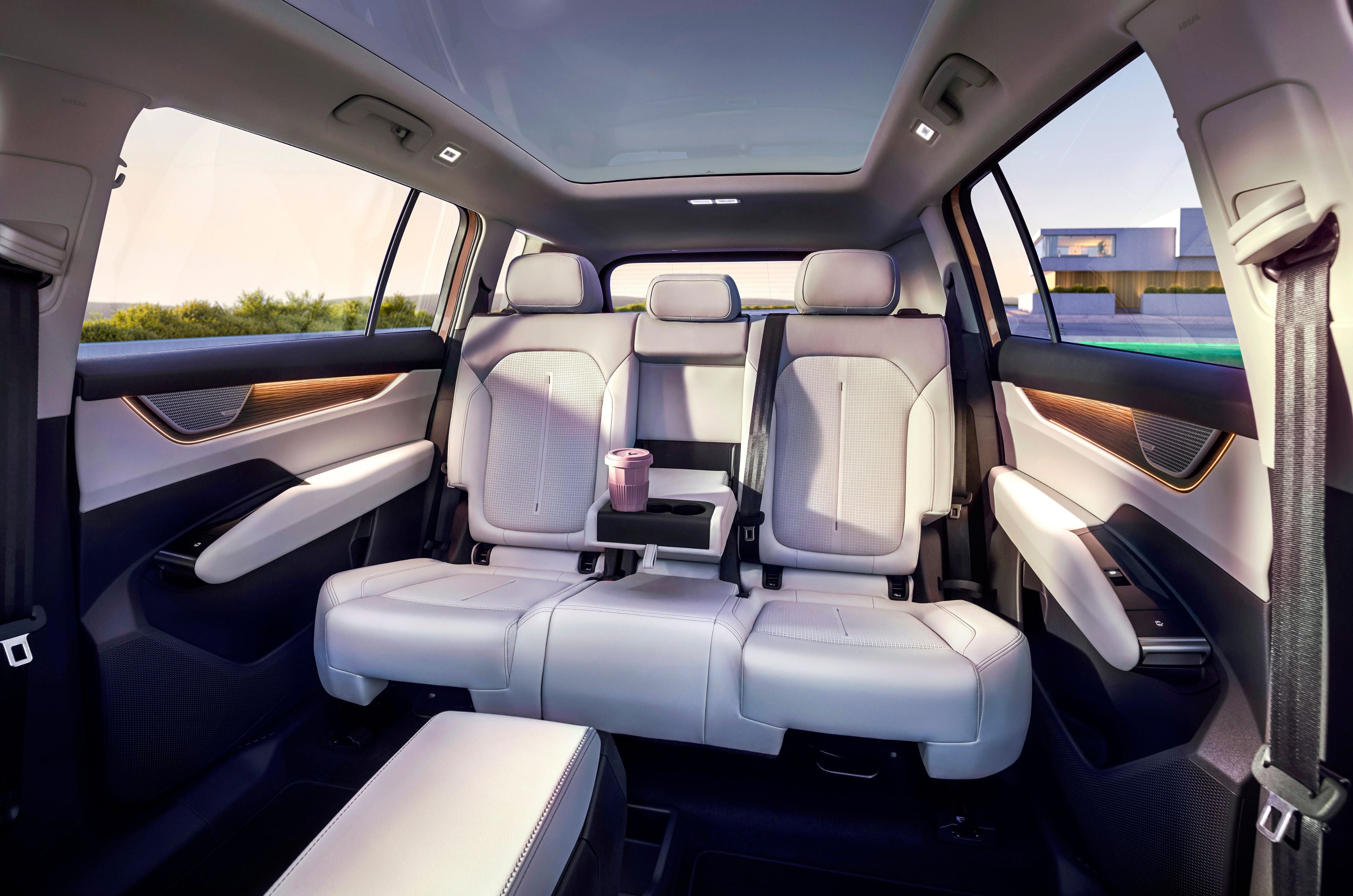
Three people can sit abreast in the second row; one doesn’t sit in a knees-up position like in most EVs.
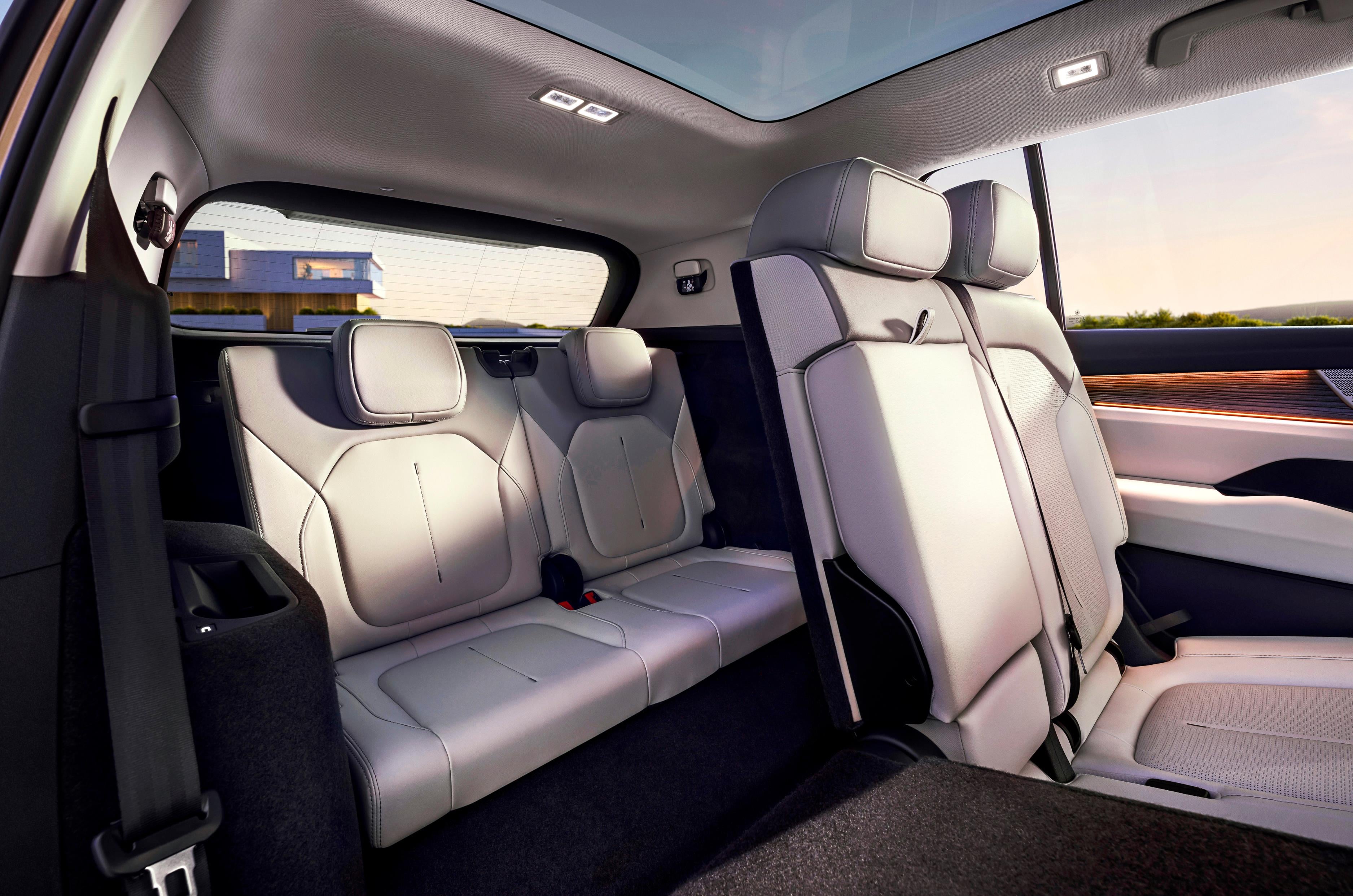
There’s plenty of space in the second row, legroom is good as is shoulder room. We did sit three abreast and didn’t have too much of shoulder overlap. Headroom is very generous and what’s nice is that you don’t sit in a knees-up position as is the case in some EVs. The third row is decent, there should have been more room given the length of the car, but on its own its quite useable and more than enough for kids or short journeys. Like the second row, headroom here is also good.
In terms of styling the cabin follows on with the exterior minimalist theme and all the lines are simple and clean, with very little flair about. A bit of panache would have been nice and in keeping with the flagship positioning of the Peaq.
Third row is decent enough for kids or for short journeys.
Skoda Peaq Features and Safety – 8/10
Well equipped and with a healthy does of Skoda’s ‘Simply Clever’ details.
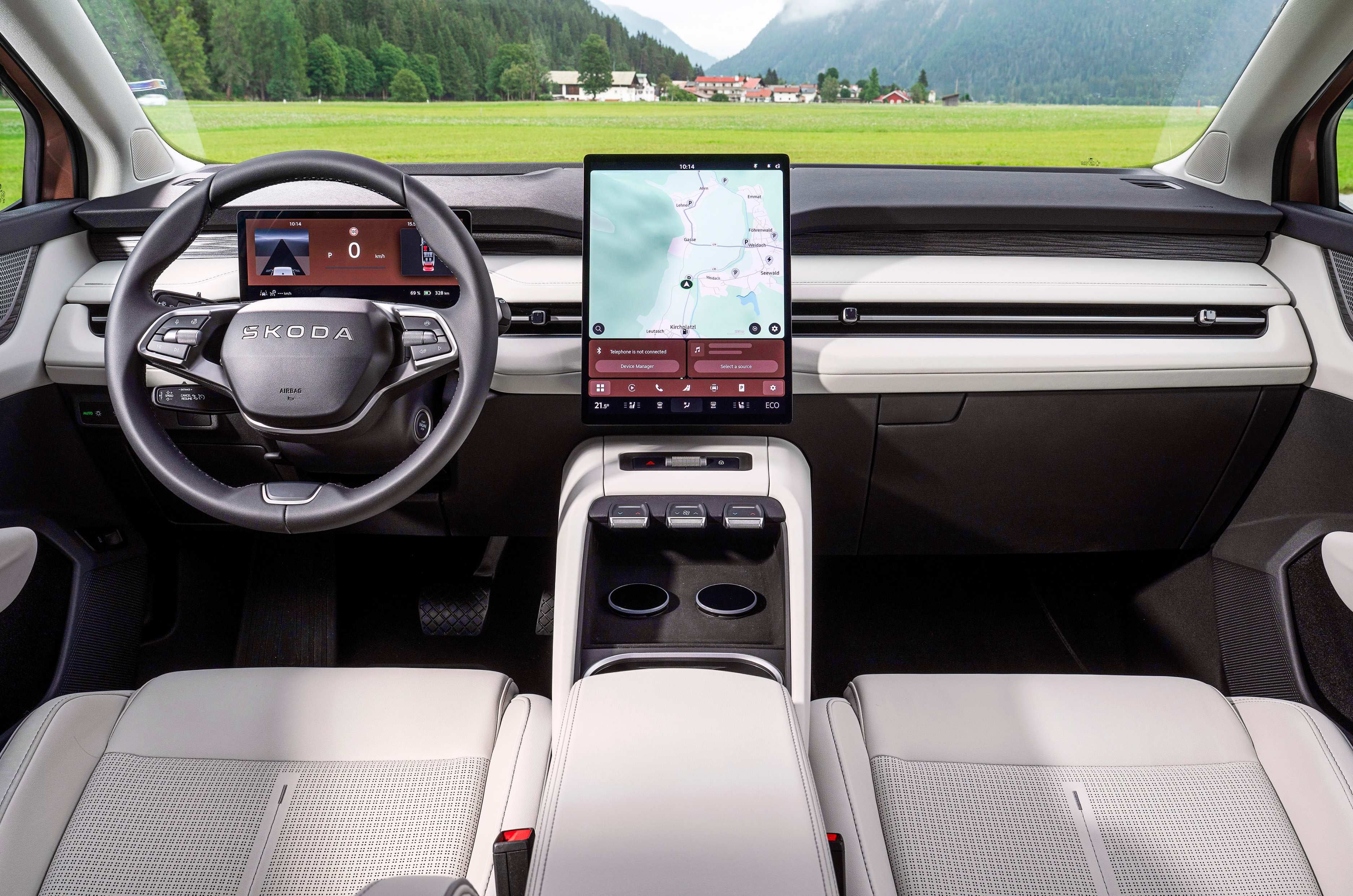
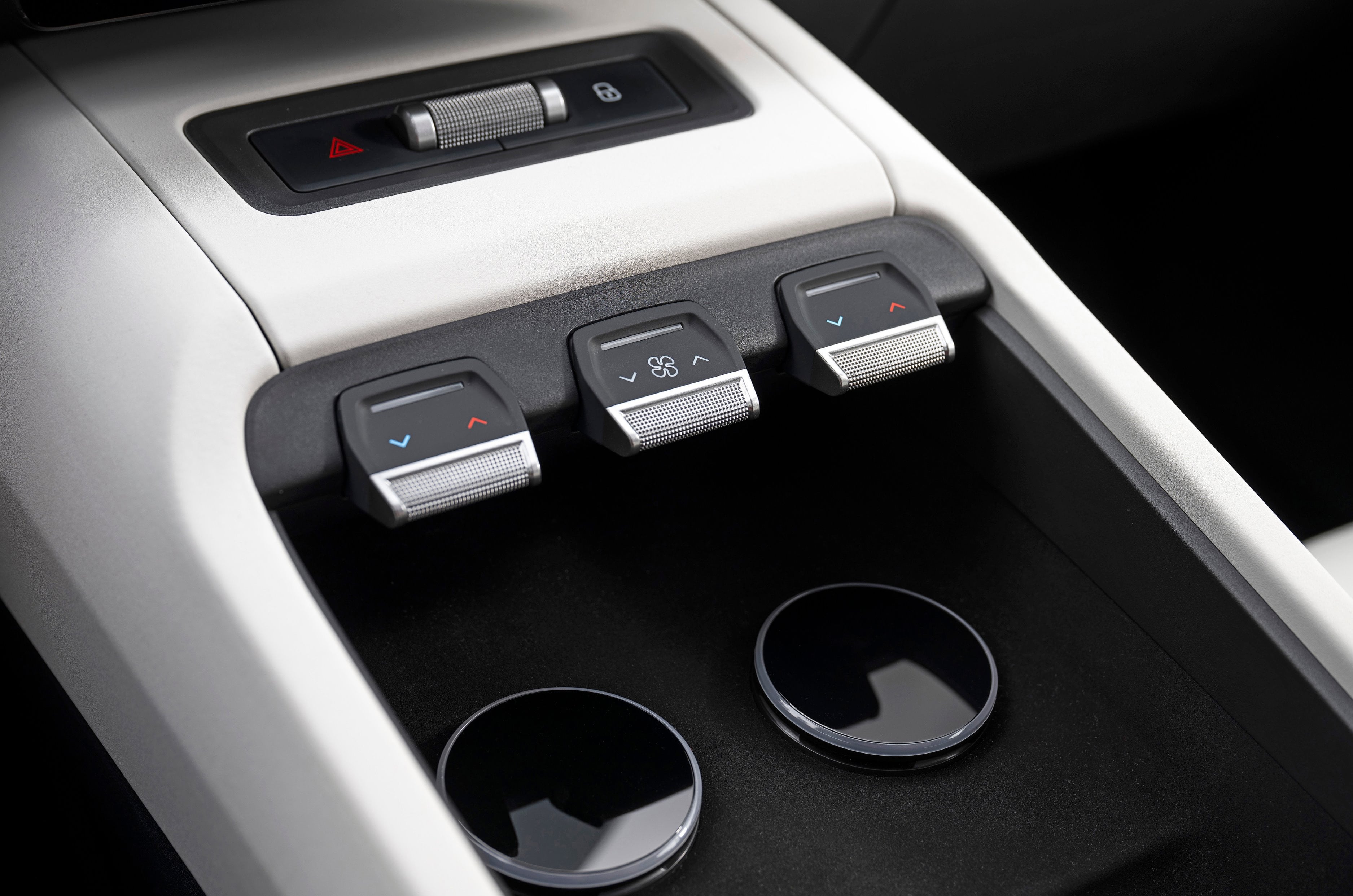
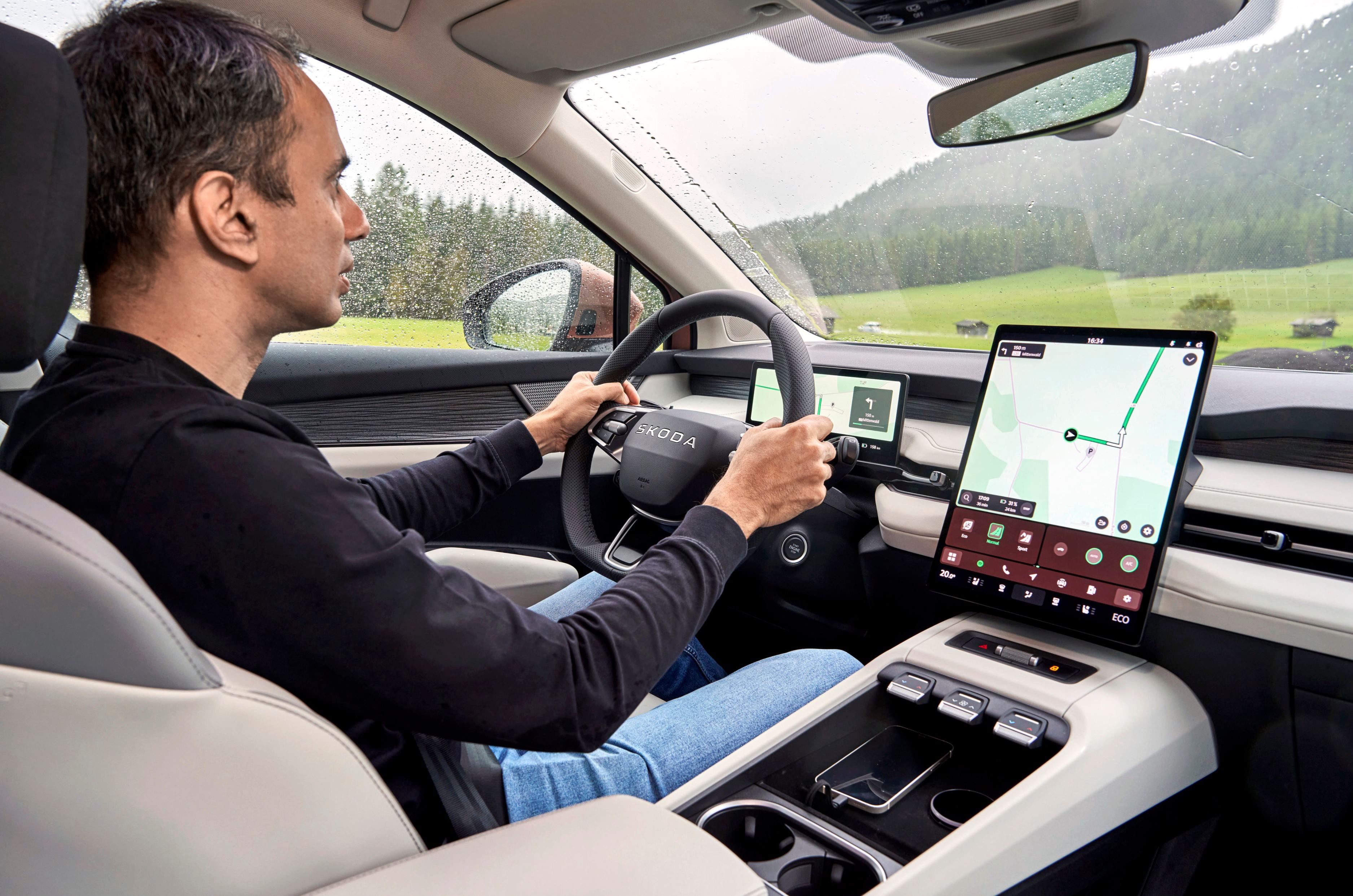
Sitting at the very top of the Skoda range the Peaq is well equipped. The dash carries a 13.6-inch, portrait-oriented touch screen – a first for Skoda – which runs a new UI. There’s a hard baked area for certain controls and thankfully physical controls are retained for main entertainment and HVAC functions, the latter being large toggle switches that are easy to use. These sit on top of an open charging box that has two illuminated magnetic Qi2 wireless charging disc with active cooling, and have a max speed of 25W. The rest of the center console is made up of many storage spaces and cubbies with a neat pass-through slot for charging cables from the lower to the upper console.
A portrait-oriented touchscreen is a first for a Skoda, and runs a brand-new UI.
Ahead of the driver is a 10-inch digital instrument panel which sounds large but has a slim aspect ratio, and there’s also an HUD. The steering wheel is the familiar Skoda unit with the letter mark on the boss and the buttons and scroll wheels on the two wings and as expected the operate with a satisfying click feel.
Thankfully, there are large toggle switches for HVAC controls which are easy to use.
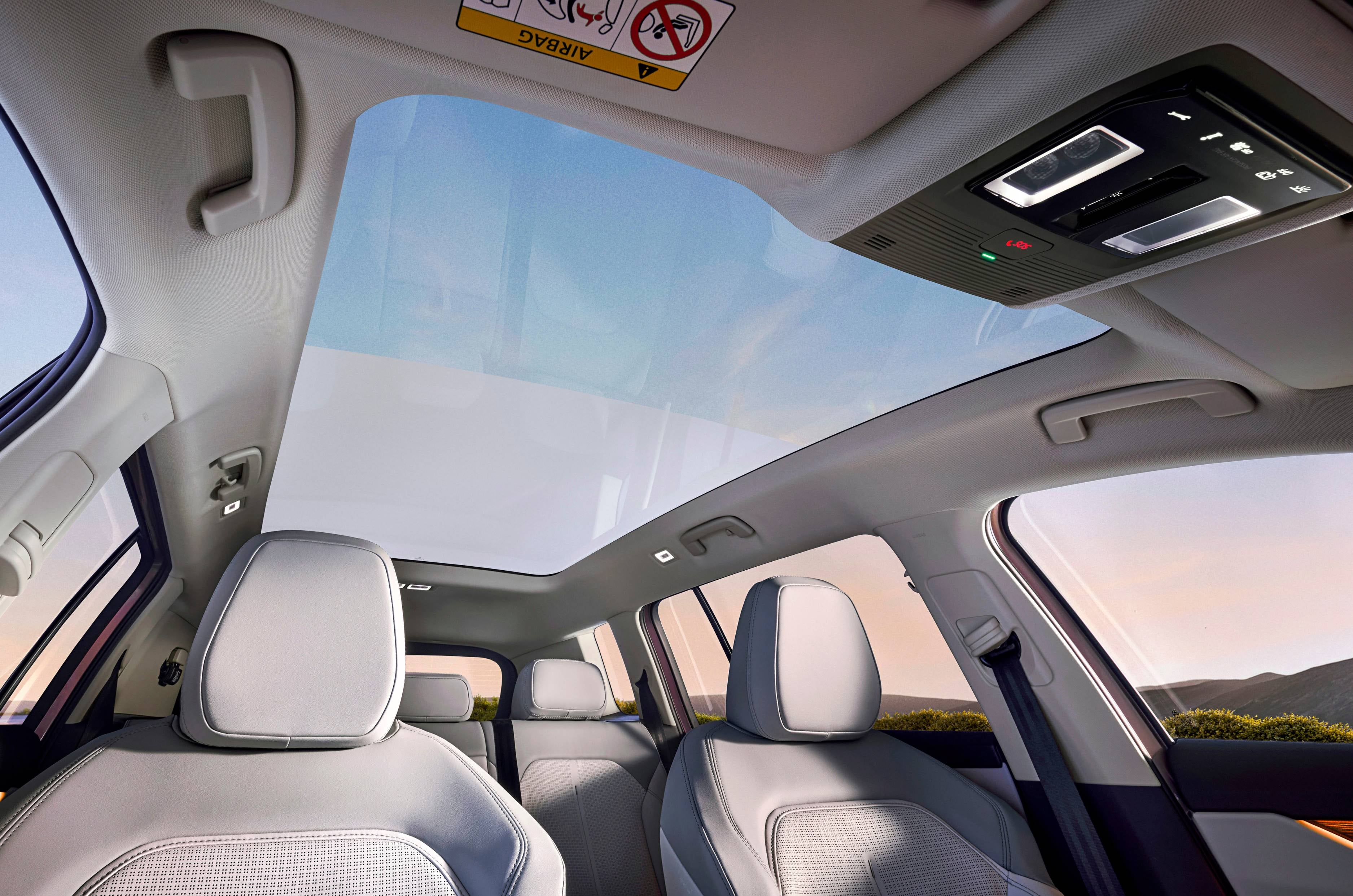
Other features include a 360-degree camera with a transparent 3D body on the display that helps in positioning the car, a 16-speaker SONOS sound system, park assist, a full connectivity suite, 10-airbags and ADAS and of course a healthy dose of Skoda’s ‘Simply Clever’ details like a fold out table for the front passengers that’s tucked away in the center console and umbrella holders in the doors. And topping things off is a large panoramic glass roof, which does not have a sunscreen, instead there’s 9 electrochromic panels that can be darkened to keep out the light and heat says Skoda. We’ll reserve that judgement for when we test it here in our hot climate though.
Panoramic glass roof doesn’t have a sunscreen but features 9 electrochromic panels to keep sun and heat out.
Skoda Peaq Performance and Refinement – 8/10
Strong performance that does not feel characterless like most EVs
There are three powertrain versions on offer starting with the 60-variant, power for which comes from a 63kWH (gross) NMC battery that drives a 204 hp rear motor. Next is the 90 trim which has a 91kWh (gross) NMC battery – the largest on a Skoda –power is courtesy a 286hp rear motor, and the range topper is the 90X which is also powered by the same battery as the 90 but driving a dual motor AWD set up that puts out a combined 300hp. Either of the 90 series cars is what Skoda will bring to India and for our drive today we had the 90X version.
Throtlle response feels quite ICE-like, building speed progressively.
As expected, power delivery is strong and acceleration is brisk, the claimed 0 – 100kph time stands at 6.7 seconds which is plenty quick for a large seven seat family SUV. What’s nice though is that the delivery isn’t typically EV like, which is to say power dumped in an instant and then linear all through. On the Peaq, throttle response feels quite ICE like, it’s fed in progressively and build nicely as you explore deeper regions of the throttle pedal. Top speed is limited to 180kph which is very easy to get too, on the unrestricted section of the German autobahns we hit an indicated 185kph. Wind and tyre noise is well controlled especially over the smooth tarmac sections and even at high triple digit speeds the cabin was silent enough.
Wind and tyre noise are well contained even at triple digit speeds.
Skoda Peaq Ride Comfort and Handling – 7/10
Very stable at speeds, but Normal mode sees some body float over undulations.
The 90X comes with Skoda’s dynamic chassis control and the adjustable dampers do alter the ride character noticeably. In Normal mode is very comfy and could do well over potholes and ruts, however at highway speeds and over undulations that we did see on some section there is some body float. A switch to the Sport setting however tides this up quite nicely and was the default setting I used for most of the drive. Being an AWD, there’s also a few off-road modes though we didn’t get to try these out and I suspect most owners won’t either.
Depending on the mode, adjustable dampers noticeably alter the ride quality.
In terms of handling this isn’t what you would call light on its feet, you do know you are driving a large SUV but its never cumbersome and through the mountain passes we did have a bit of fun, not sporty then but enjoyable enough if how I’d describe the handling character.
Skoda Peaq Range and Efficiency – 7/10
Charging speeds and range are par for course
The Peaq 60 battery capacity stands at 63kWh (59kWh net) and that’s good for a range of 450kms says Skoda. Max charging speed is 160kW on a DC fast charger and that can take the battery from 10 to 80 percent in 27 minutes.
A 160kW DC fast charger can top up the battery from 10 to 80 percent in 27 minutes (claimed).
The 90 cars are powered by a larger 91kWh (86kWh net) battery, max charging speed stands at 199kW and a 10 to 80 percent charge on a DC fast charger takes 28 mins. On the 90X range stands at 610kms while the two wheel drive 90 version sees a slightly longer range at 640 kms. We’ll know the real-world range once we put it through our standard test cycle back home.
Skoda Peaq Expected price and Verdict – 8/10
Priced at Rs 60 lakh it would be a tempting option and it does more than enough to call this peak Skoda.
Skoda is really doing a fine job with its EVs, we liked the Enyaq, were superbly impressed with the Elroq and the flagship Peaq does not disappoint too. Yes, the ride does feel soft and the interiors do lack flair, something you would expect on a flagship and we’ll of course have to wait and see how Skoda price this when it comes to India some time mid next year. Skoda says it will arrive as a CBU and we expect it to be priced at around Rs 60 lakh ex-showroom where it will be able to compete with rivals like the Tesla Model Y L, above that though and Skoda will face some heat from premium brands like BMW and Mercedes that are also expanding their electric SUV portfolio.
The Peaq will arrive in India as a CBU and is expected to be priced around the Rs 60 lakh mark.
The Peaq though does provide a very well-turned-out product, it looks classy and premium and that’s important at this price point, there’s a good amount of space inside, especially for the front two rows, it’s well equipped with typically Skoda clever bits and the drive experience is mature and enjoyable. All typical highlights that we’ve come to expect of the brand. All in all, then, the Skoda Peaq does more than enough to safely call this, peak Skoda.
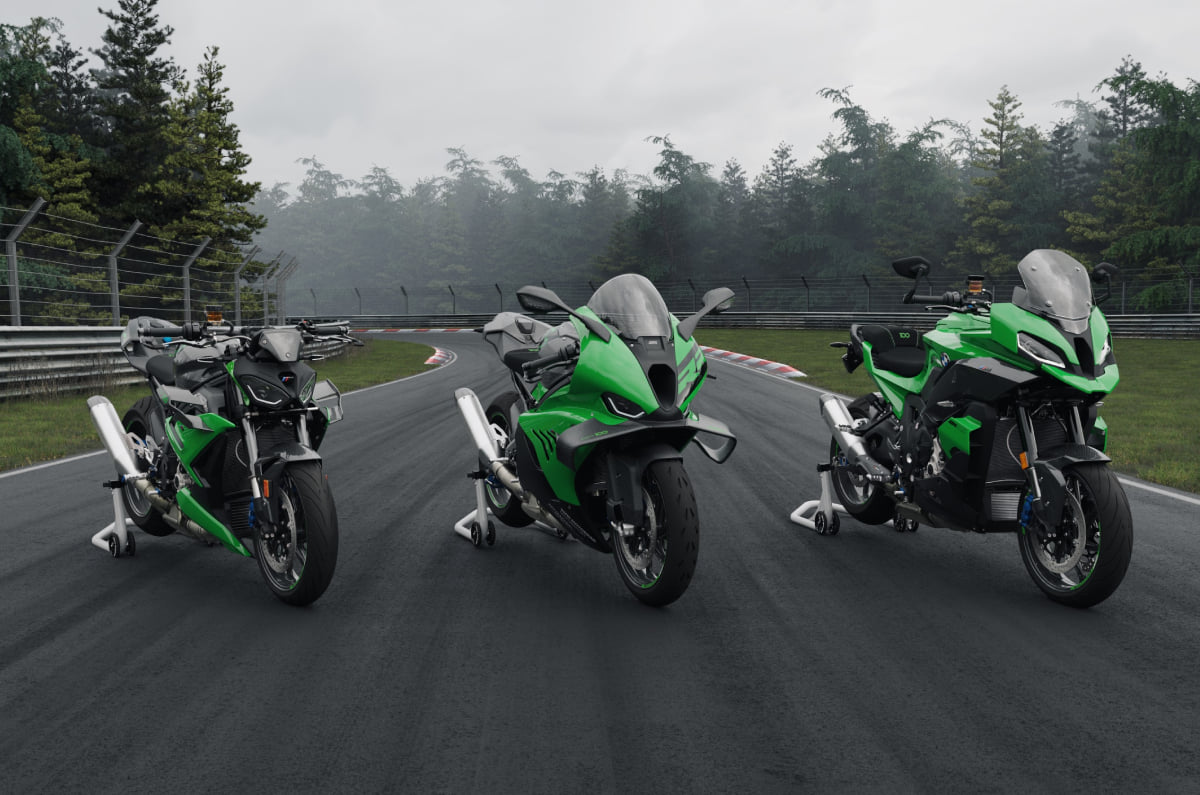
BMW Motorrad has unveiled three limited-edition motorcycles to celebrate the 100th anniversary of the Nurburgring in 2027. Each of the M 1000 RR, M 1000 R and M 1000 XR 100 Jahre Nurburgring editions is limited to just 100 units worldwide and is scheduled to arrive in late 2027. All three share an exclusive Nurburgring green colour scheme, a silhouette of the Nordschleife on the fuel tank, an anniversary design on the airbox cover, black rear frames and swingarms, carbon wheels with Nurburgring green graphics and seats with an Alcantara look and ‘100’ embroidery. Each motorcycle comes with a certificate of authenticity, an M Track package, a Nurburgring anniversary mat and a rear assembly stand as standard.
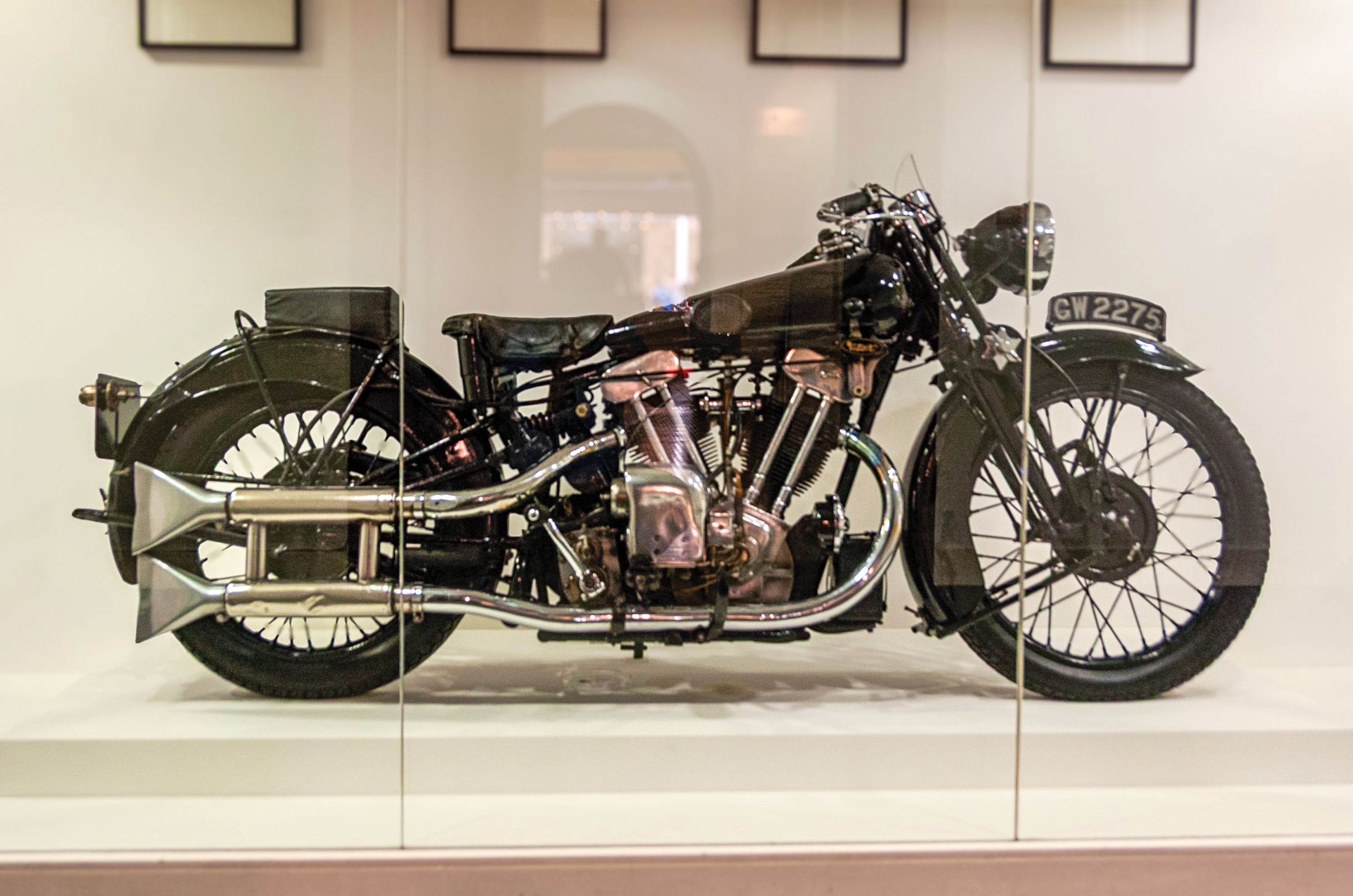
Seventeen years ago, in the Imperial War Museum on Lambeth Road in London, I stood mesmerised in front of a motorcycle with the number plate GW 2275, enclosed in a glass case. It was a beautiful, brooding machine, low and long, finished in deep black with just enough nickel and chrome to catch the museum lights: twin fishtail exhausts sweeping back in a graceful curve, the big JAP V-twin sitting exposed and unapologetic between the frame rails, cylinders splayed wide, cooling fins stacked like the pages of a book. Thin copper oil lines ran externally along the frame, feeding the total-loss lubrication system of the era, a solution that looked almost primitive next to a modern engine yet was efficient enough to survive being wrung out past 100mph on 1930s public roads.
A flamboyant form, every component left exposed, hinting at George Brough’s intention to let you see exactly what you were paying for. This was, in its day, the pinnacle of what was once the finest motorcycle industry in the world, the British motorcycle industry. Standing there, it was easy to understand why a certain kind of Englishman, restless, brilliant, and a little broken, would have fallen entirely in love with a machine like this.
The very Brough Superior SS100 Lawrence died on, photographed at the Imperial War Museum in 2008. Its last known owner, reclusive collector John Weekly, kept it in his lounge for over 45 years before his death in 2024. After which the Brough’s whereabouts are unknown.
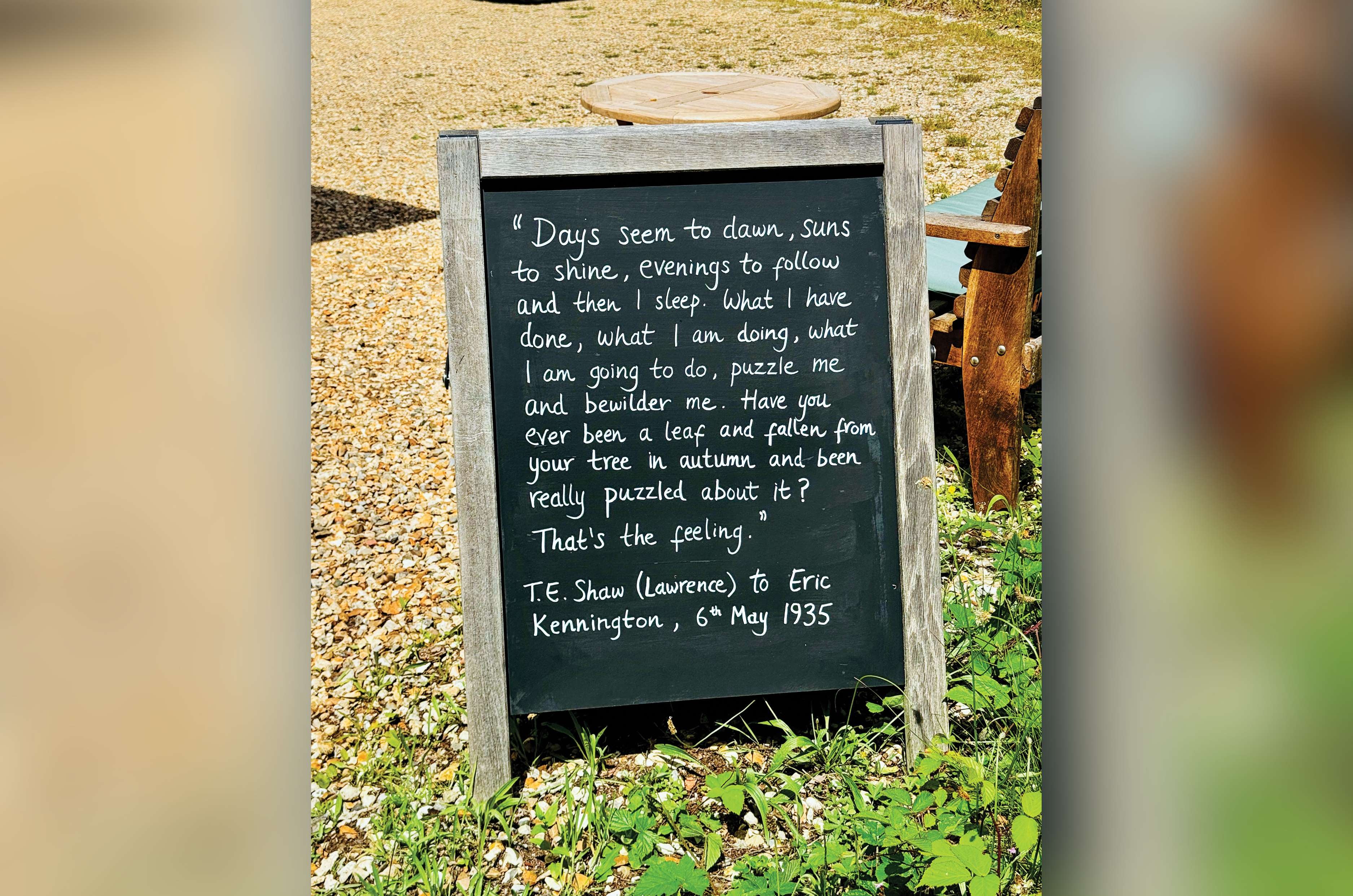
It took me straight back to being a teenager watching Lawrence of Arabia for the first time. The film famously opens with this motorcycle: the frantic braking, the fatal swerve to avoid two boys on bicycles, before flashing back to how a restless desk officer became a legendary guerrilla leader in the Arab Revolt, and how that legend curdled into cynicism once Britain betrayed the cause he’d fought for. This was the actual Brough Superior SS100 that TE Lawrence was ripping home on from Bovington on May 13, 1935, when he went over the handlebars, struck his head, and died six days later without regaining consciousness.
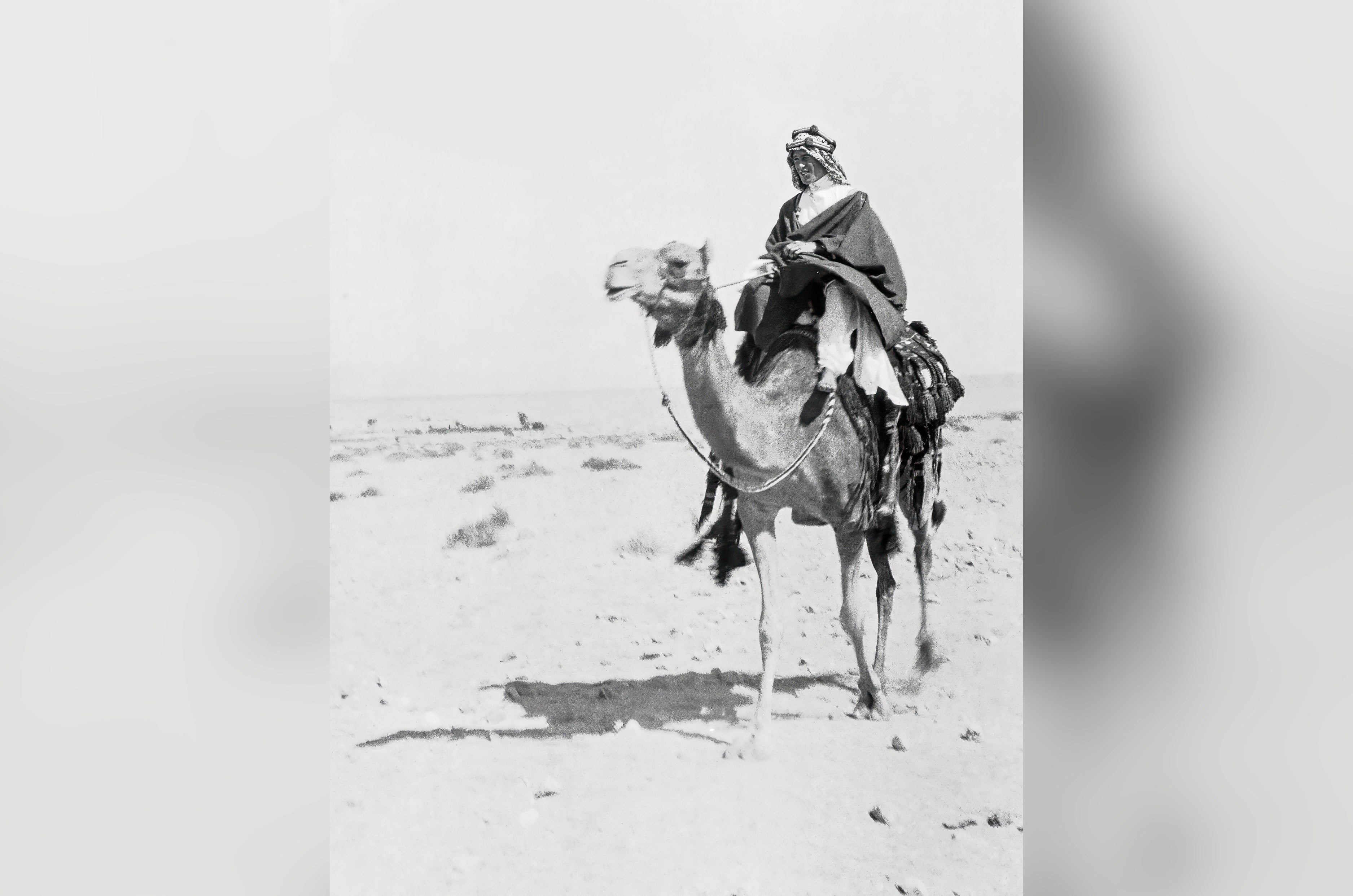
Motorcycle or camel, Lawrence rode with consummate ease.
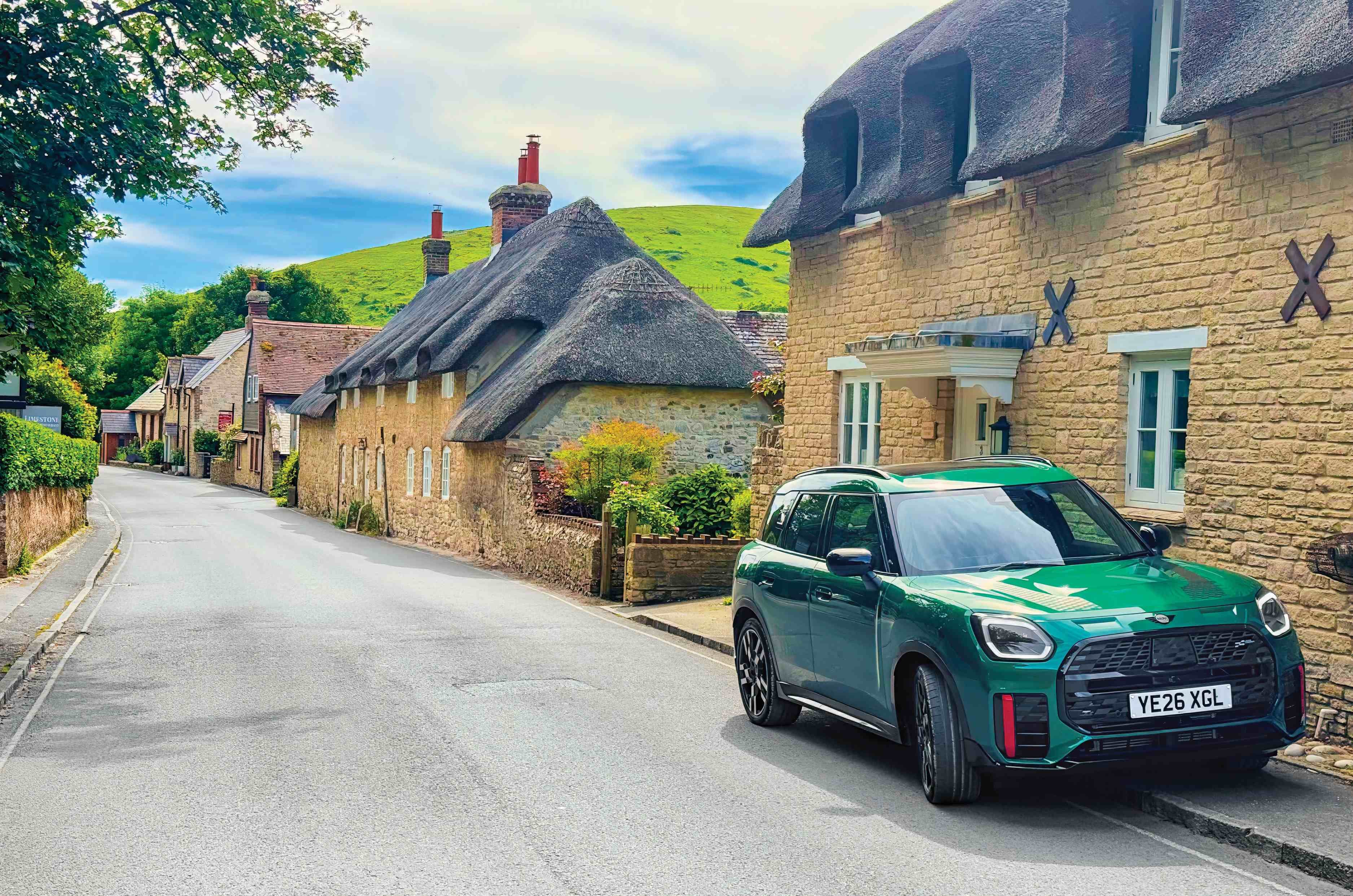
I have always felt a pull towards places where history happened, where the past has left something tangible behind, and this anniversary issue gave me the excuse I needed to follow Lawrence’s last ride. For this quest, I got behind the wheel of the new Mini Countryman John Cooper Works. A slightly contradictory choice of car for a story about a restless man who spent his last years trying to shrink his own reputation by changing his name twice to get away from the legend he’d unwillingly become. Because the new Countryman is going through much the same thing but in reverse.
By the very virtue of its name, the Mini has a reputation of being a compact and cheeky car that seems to occupy hardly any road at all, but this Mini is large and an SUV, accentuated by beefy curves with all-wheel drive as standard and sporty vivid red disc calipers. Under the bonnet sits a potent 2.0-litre turbo four-cylinder engine with 300 horsepower of shove and 400Nm of tug.
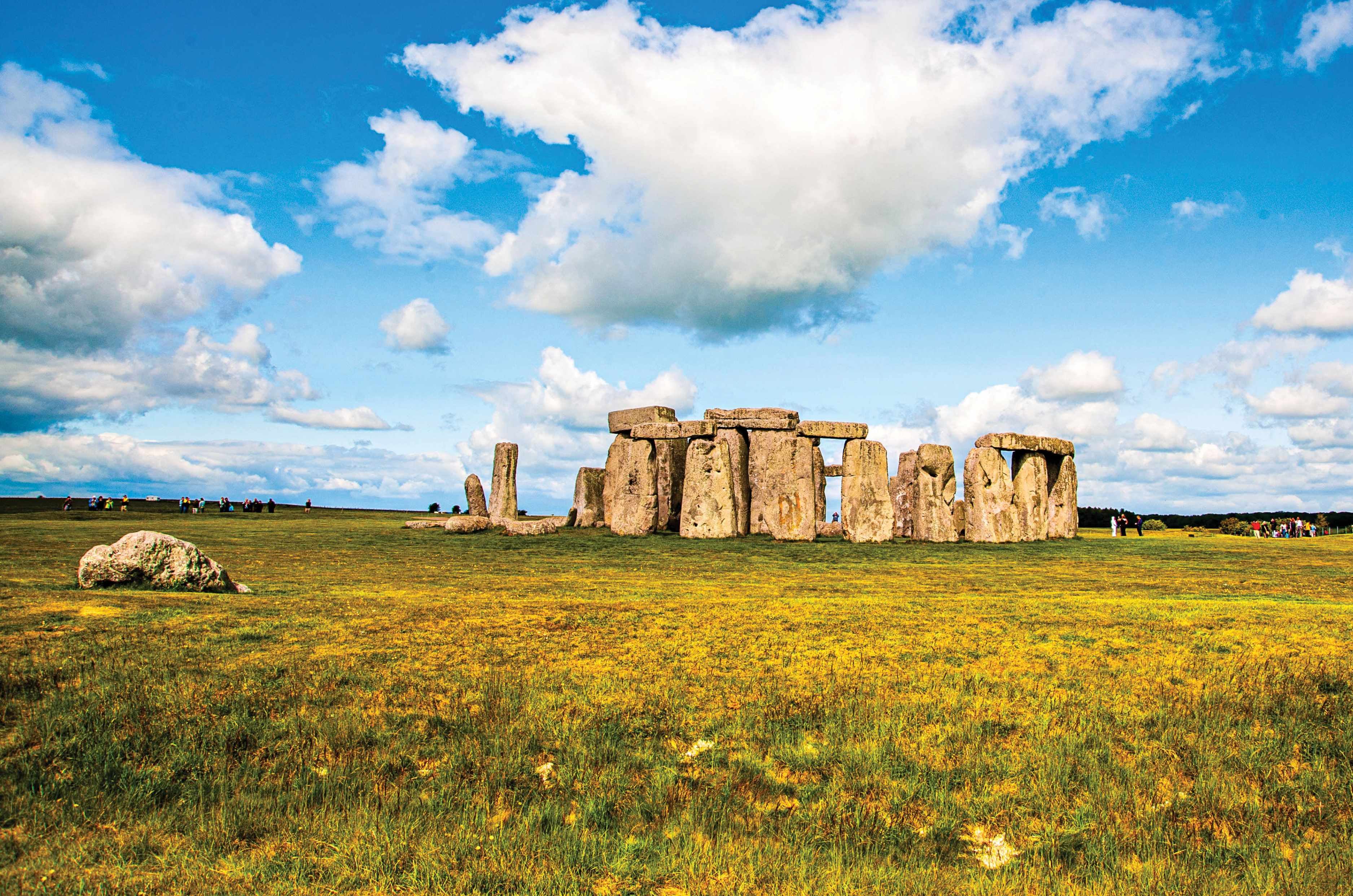
The irony was not lost on me: I was driving a car that had outgrown its own name, setting off to chase a man who’d spent his final years trying to shrink his. I pointed the car west out of London on the M3, then the A303, pulling over near Stonehenge for a quick photograph before pressing on toward another English icon further down the road.
The road to Clouds Hill
Stonehenge bursts into view without warning as the A303 tops a crest, the ancient stones suddenly filling the windscreen against the Salisbury Plain.
Beyond Stonehenge, the Countryman ate the tarmac in complete comfort, cabin hushed, adaptive cruise doing most of the thinking. The road eventually dropped south onto narrower country lanes for the final approach into Dorset, and it was here, as the hedgerows closed in, that the JCW visibly changed character. All-wheel drive dug in through the bends, the exhaust note sharpened, and for a few minutes on the approach to Clouds Hill, this bulked-up, grown-up Mini showed me that the nimbleness of its ancestors still lived somewhere in its genes.
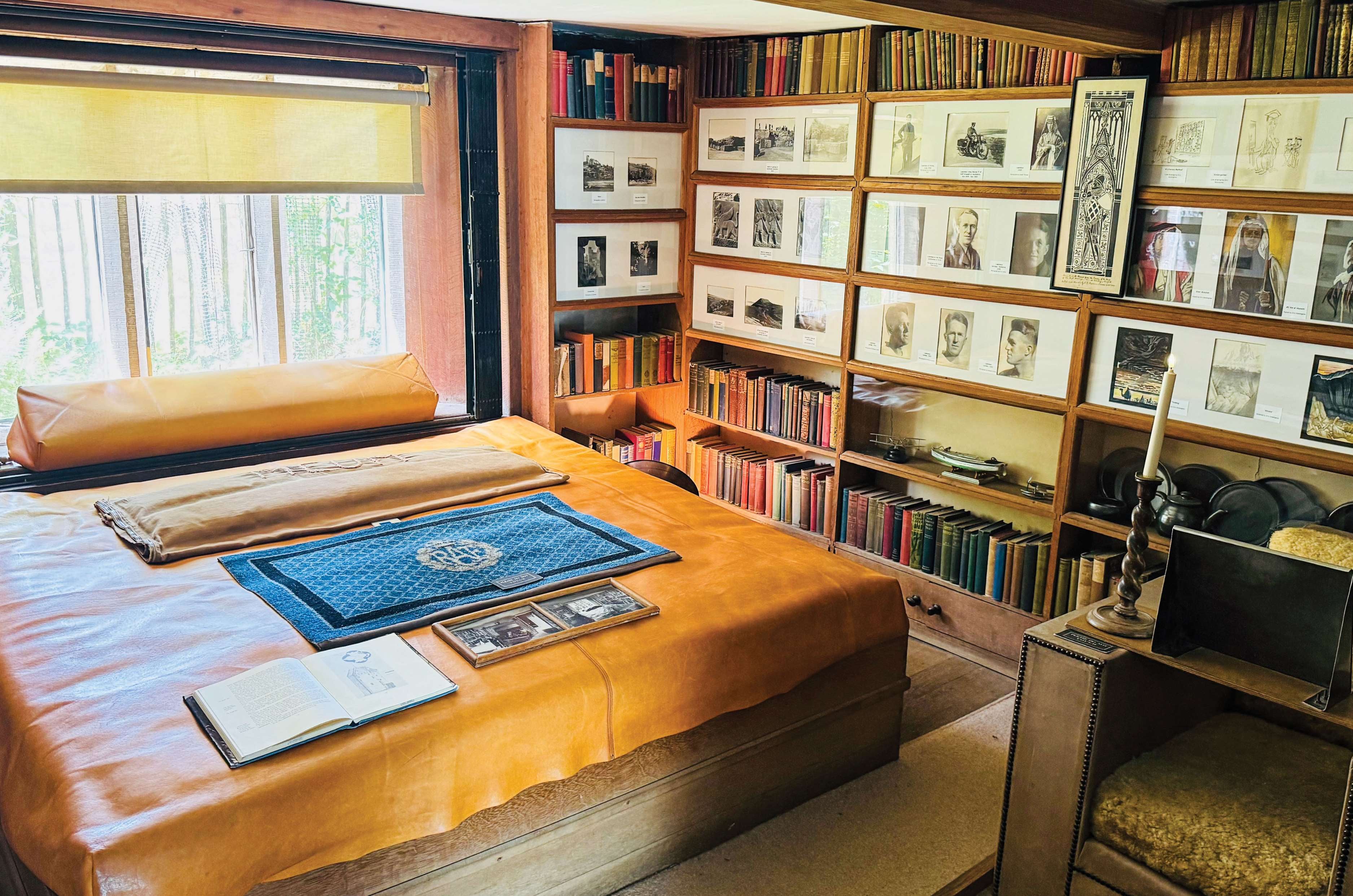
Inside Clouds Hill: Lawrence’s daybed and bookshelves, preserved almost as he left them.
Clouds Hill itself is almost comically modest for a man who became one of the most famous people in England. It’s a four-room labourer’s cottage with no electricity, which Lawrence first rented in 1923 while stationed at nearby Bovington, then painstakingly rebuilt with his own hands before buying it outright in 1929. Inside, the leather-topped daybed, bookshelves crammed with correspondence and photographs, and framed portraits of Bedouin faces and RAF colleagues remain much as he left them, preserved by the National Trust.
What hints at the pull of Lawrence’s personality is who came all the way here to visit him. George Bernard Shaw, EM Forster, Thomas Hardy and Robert Graves all found their way to this tiny, electricity-less retreat, which was slightly ironic, because Lawrence was doing his best to disappear. The world knew him as Lawrence of Arabia, the flamboyant soldier in Arab robes who’d become one of the most recognisable figures of the First World War, and he wanted none of the celebrity that came with it.
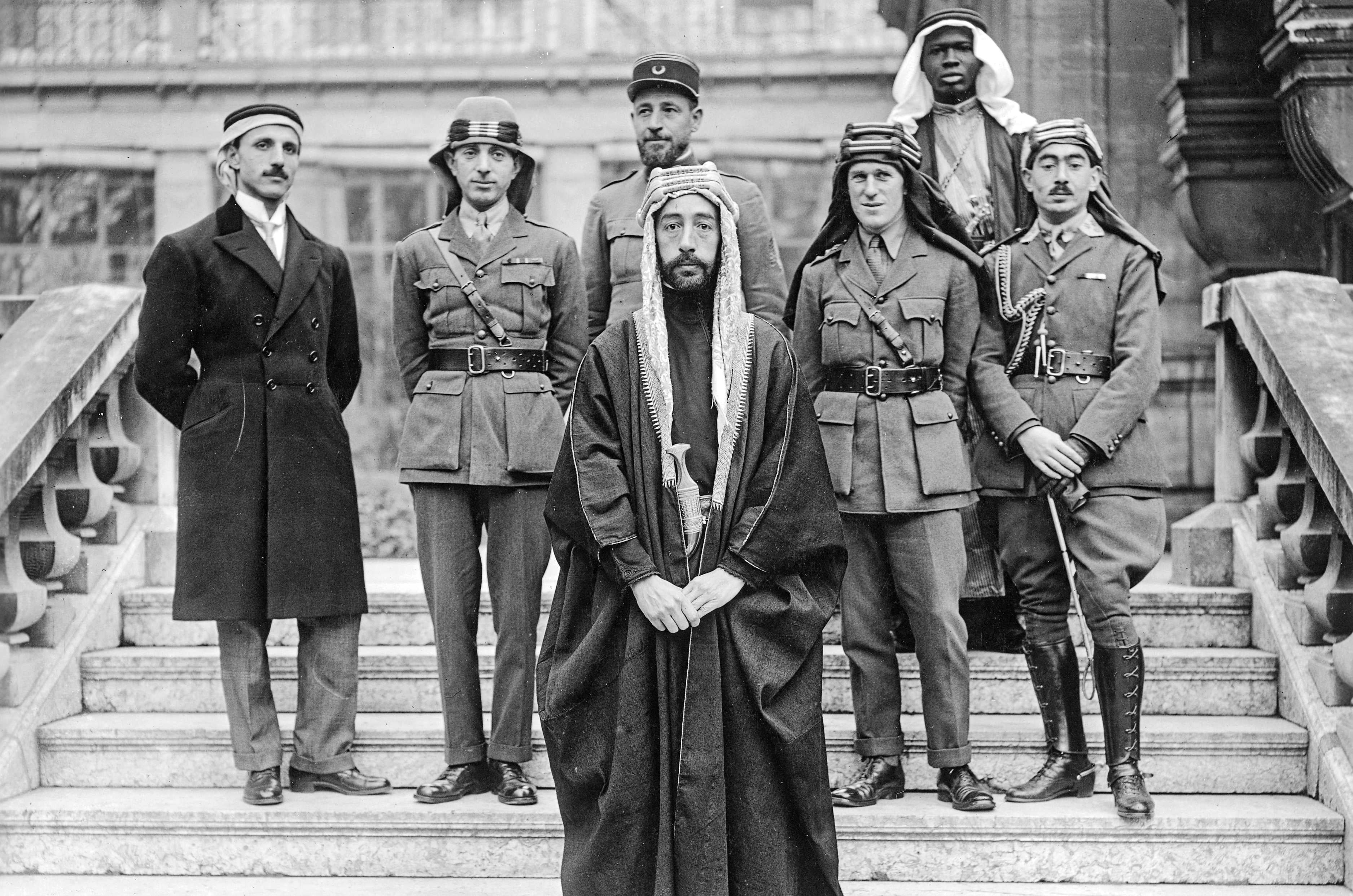
Prince Faisal’s delegation at the 1919 Paris Peace Conference. Lawrence (third from left) stood among men Britain would soon betray.
He’d already tried once: in 1922, he joined the RAF under the name John Hume Ross, but the press uncovered him within months. The following year, he joined the Tank Corps as TE Shaw, a name he kept for the rest of his life. Clouds Hill became his refuge, a place to read, write, listen to music, work on his boats and motorcycles, and retreat from a world determined to keep finding him.
He did make forays out. Winston Churchill was a genuine friend, and Lawrence would occasionally turn up unannounced at Chartwell, Churchill’s home about 130 miles away. He liked to boast that his long-distance visits to friends like Churchill and Lady Astor were made in “record time” thanks to the Brough’s speed, calling the machine “the silkiest thing I have ever ridden.”
Churchill’s daughter Mary remembered him arriving as “a short, nondescript, sandy-haired airman riding a motorcycle,” only to reappear at dinner transformed, “presenting himself in the flowing robes of a Prince of Arabia.” She also recalled the “pin-drop silence” that fell over the room whenever Lawrence spoke, a silence that apparently included her father, who himself considered Seven Pillars of Wisdom “unsurpassable” as a war narrative. It was an odd, quietly moving thing to stand in a room with no electricity and realise the man who once sat there could hold some of the loudest reputations in England spellbound.
The road that killed him
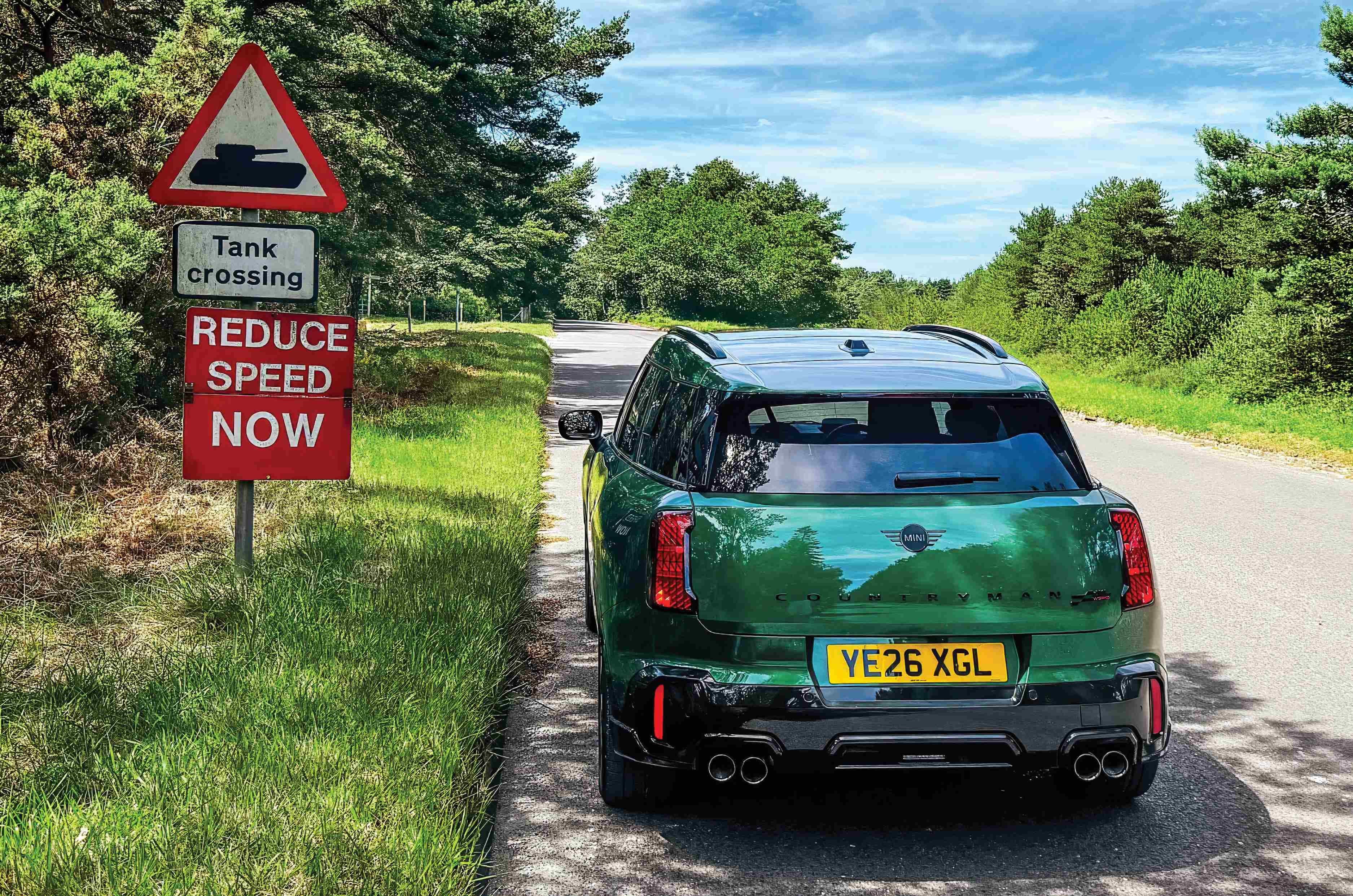
This road has widened over the decades, much like the Mini brand, which now includes an SUV.
From Clouds Hill, the road towards Bovington Camp is the one Lawrence rode almost daily, and it’s easy to see why he loved it: well cambered, with quick, confident curves that seem made for two wheels rather than four. The road has changed considerably since 1935, widened, realigned and smoothed out, the dips Lawrence knew long gone, but the bends remain, and the JCW flowed through them on silky modern tarmac with barely a shudder.
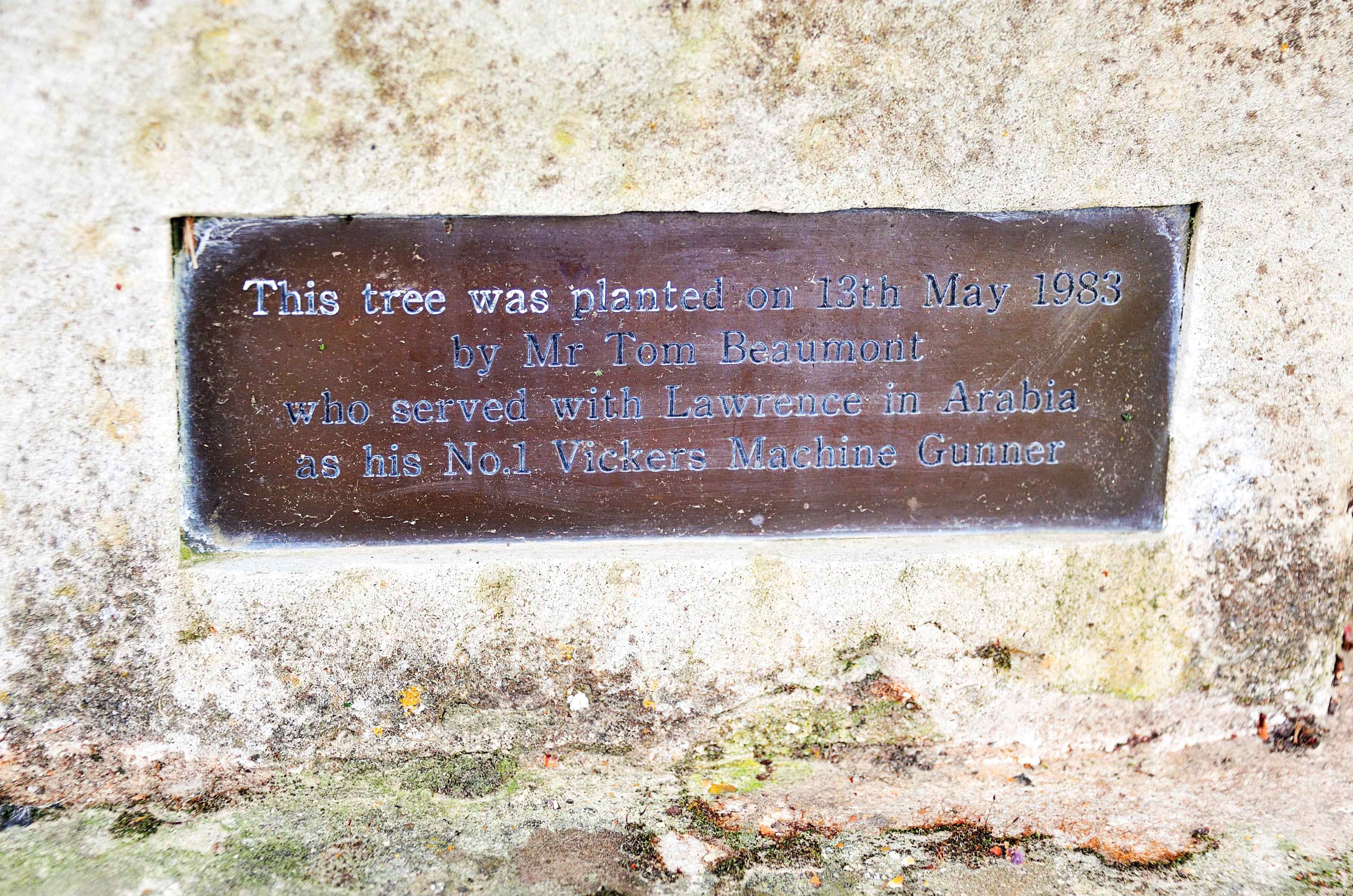
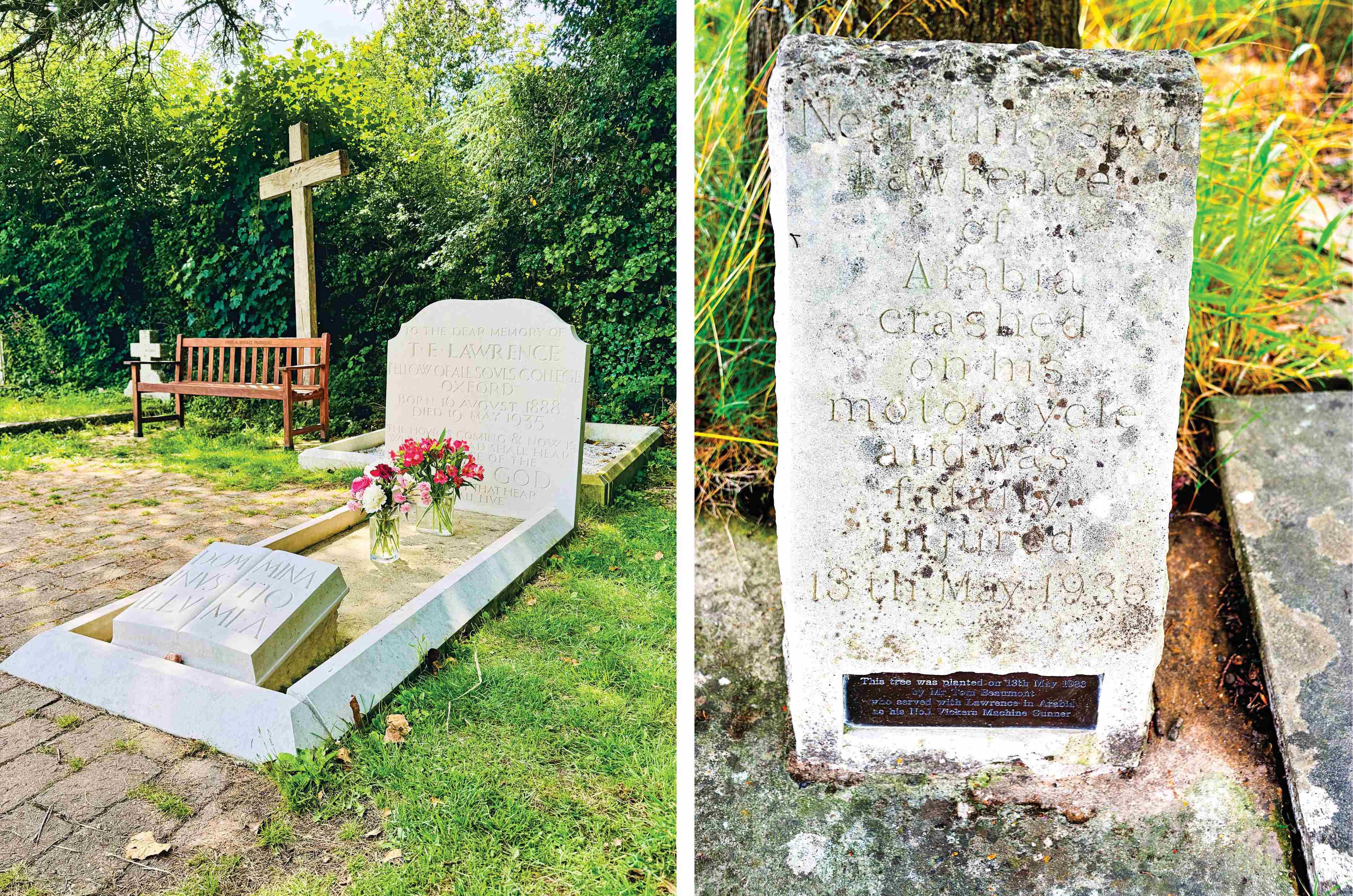
The plaque marking the tree planted by T.E. Lawrence’s former Vickers gunner, Tom Beaumont, in 1983.
Lawrence was known to push his Brough to 100mph on roads like this despite the rougher surfaces and primitive brakes of the time. It takes a particular sort of nerve to do that. Sadly, this is also the road on which he died. A small, weathered stone marker stands by the roadside near the crash site, its inscription barely legible: Near this spot Lawrence of Arabia crashed on his motorcycle and was fatally injured, 13th May 1935.
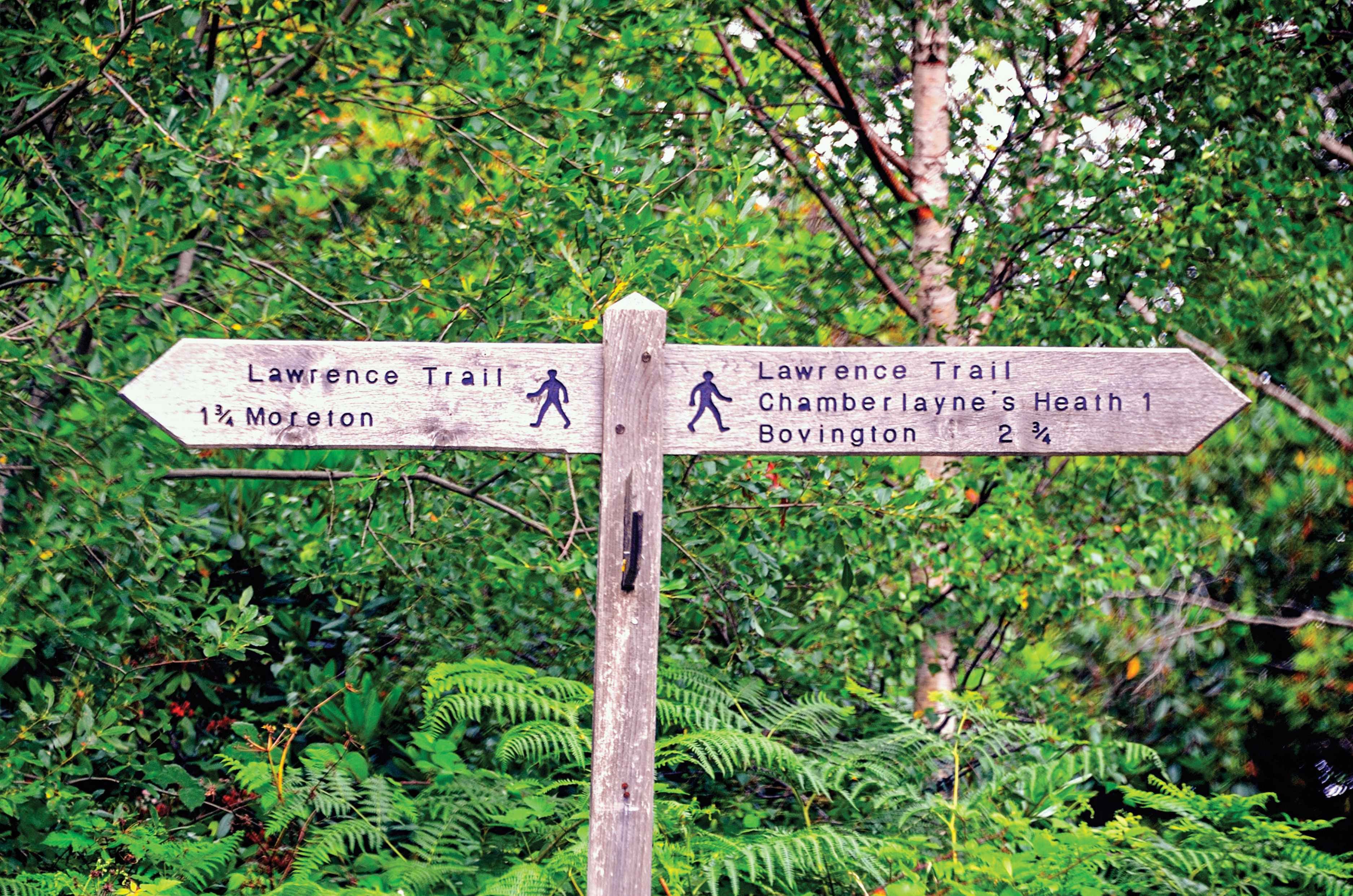
A signpost for the Lawrence of Arabia Trail.
Below it, a plaque records that the tree beside the marker was planted in 1983 by Tom Beaumont, who had served as Lawrence’s Vickers machine gunner in Arabia, one old comrade returning nearly half a century later to mark where another had died. It’s a small, unshowy memorial for a man who became the subject of an Oscar-winning film. Bovington Camp is also the start and finish point of the circular 10.8km Lawrence of Arabia Trail, which strings together the cottage, the crash site, and the church at Moreton in one walkable loop.
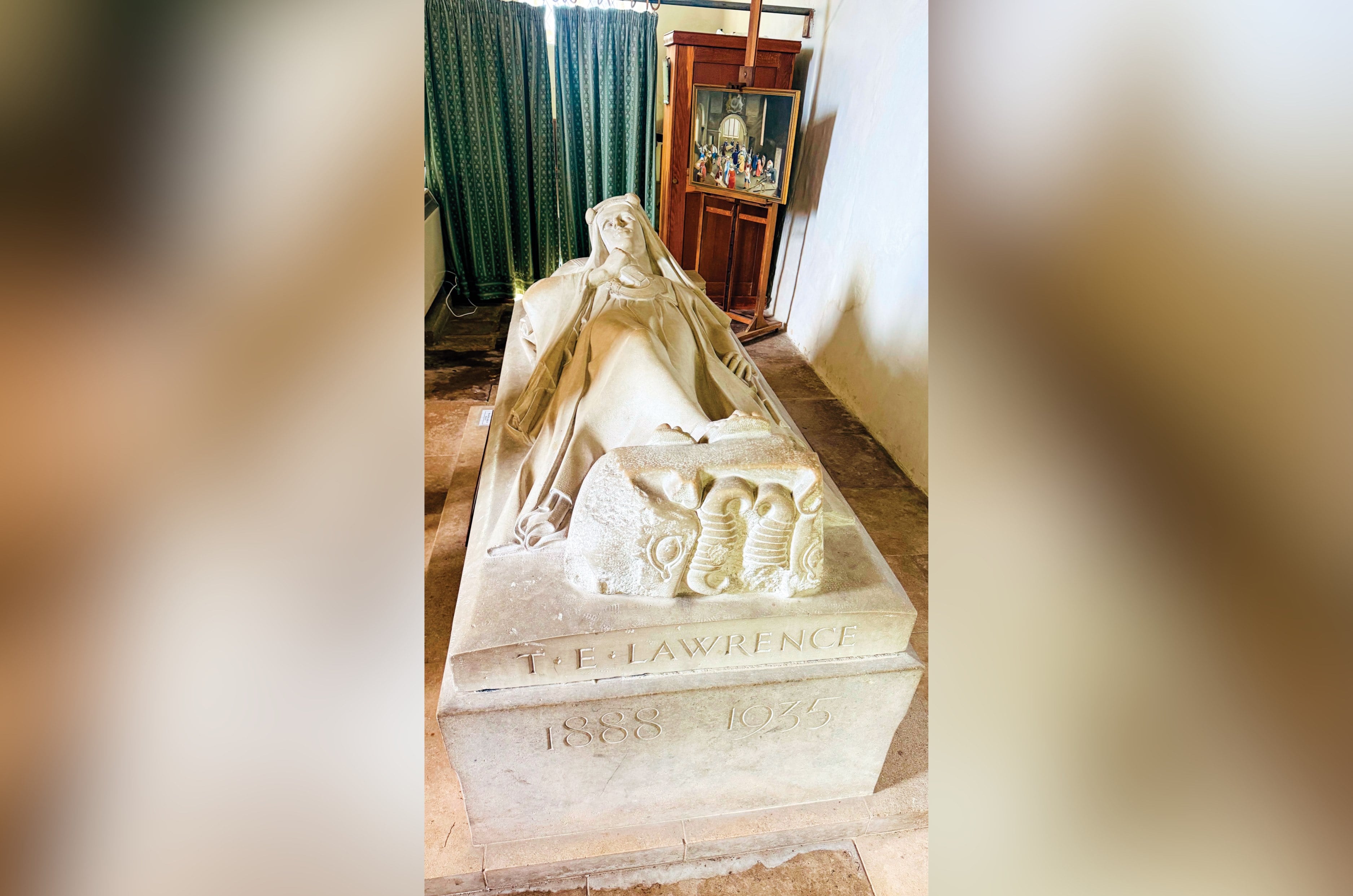
Lawrence’s effigy at St Martin’s Church, Wareham, carved by his friend Eric Kennington.
A short drive away in Wareham is one more stop worth making: the Saxon church of St Martin’s, home to a life-size effigy of Lawrence carved by his friend Eric Kennington, originally intended for St Paul’s Cathedral before being rejected there and finding its way to this small parish church instead.
Moreton and the memory of him
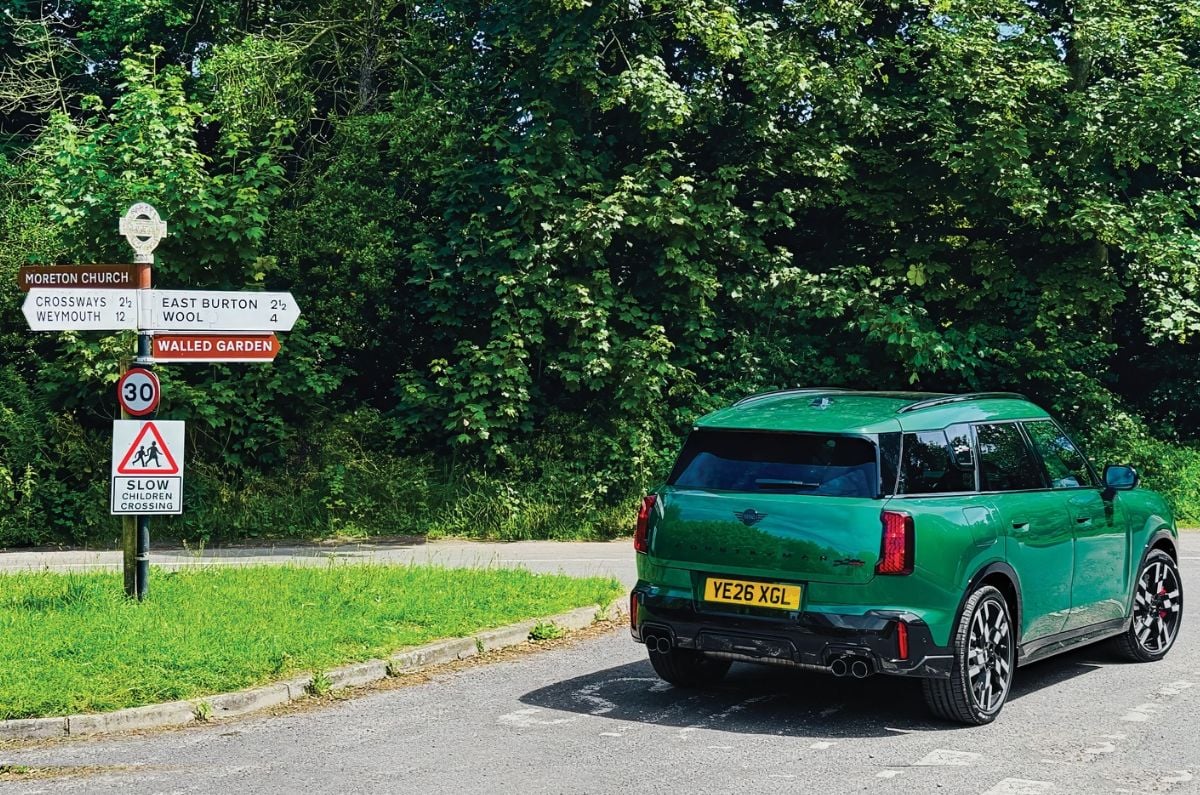
Moreton itself is a proper Dorset postcard, a signpost outside St Nicholas’ Church pointing the way to “Walled Garden” beside directions to Wool and Weymouth, as if history and horticulture share equal billing. Lawrence’s small and very private funeral and burial were held here on May 21, 1935, and the mourners included Churchill, Lady Astor, General Wavell (who flew in by autogiro), and author Henry Williamson.
Left: T.E. Lawrence’s grave at St Nicholas’ Church, Moreton. Simple white stone, flowers left fresh by visitors. Right: The weathered marker near Bovington, barely legible, recording the spot of Lawrence’s crash.
His grave sits a short walk from the church, simple white stone, flowers laid fresh by visitors, the inscription noting he was a Fellow of All Souls College, Oxford, and making no mention at all of Arabia.
The coast, and letting the car breathe
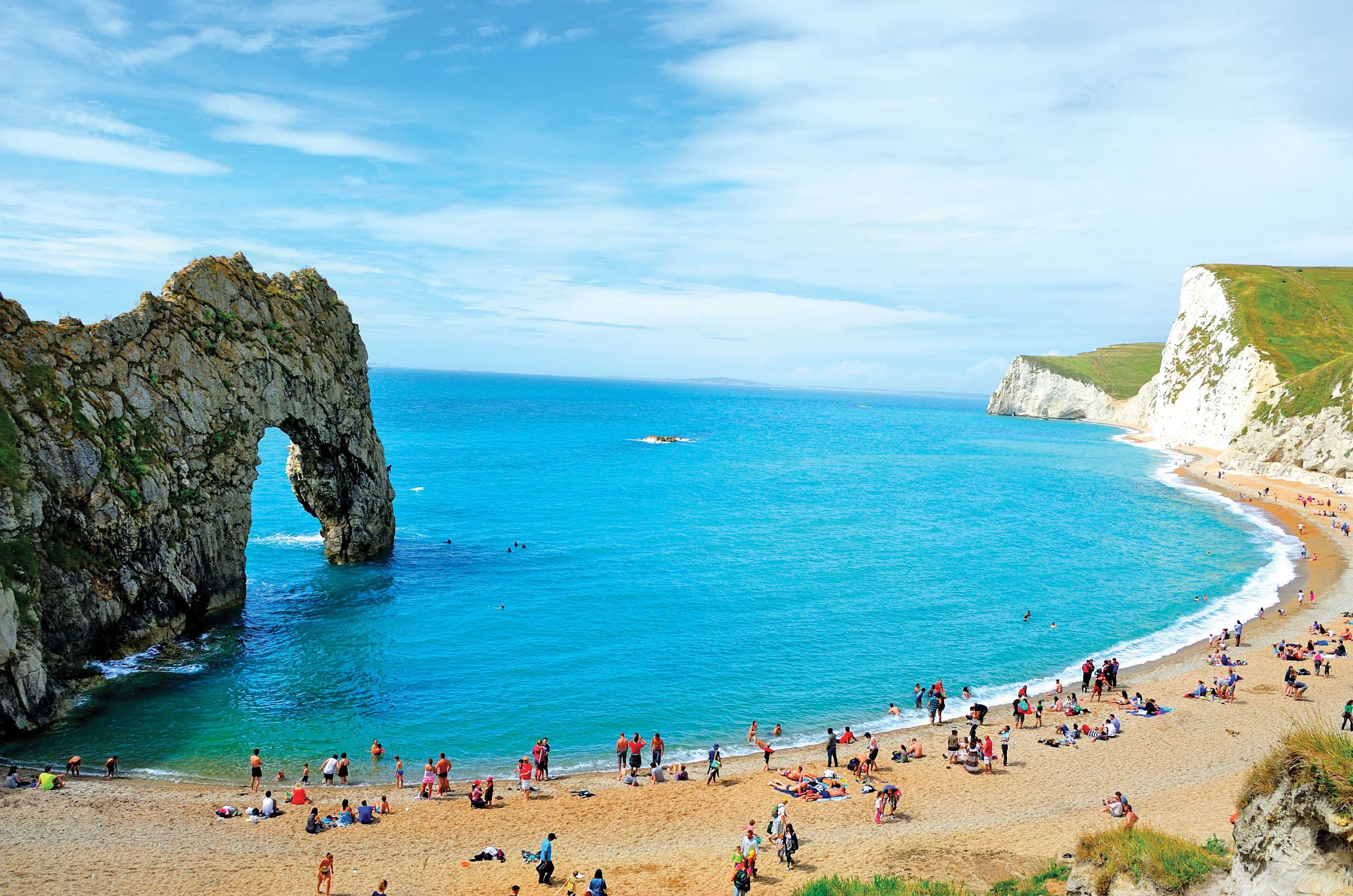
Durdle Door, the natural limestone arch that draws crowds to this stretch of coastline.
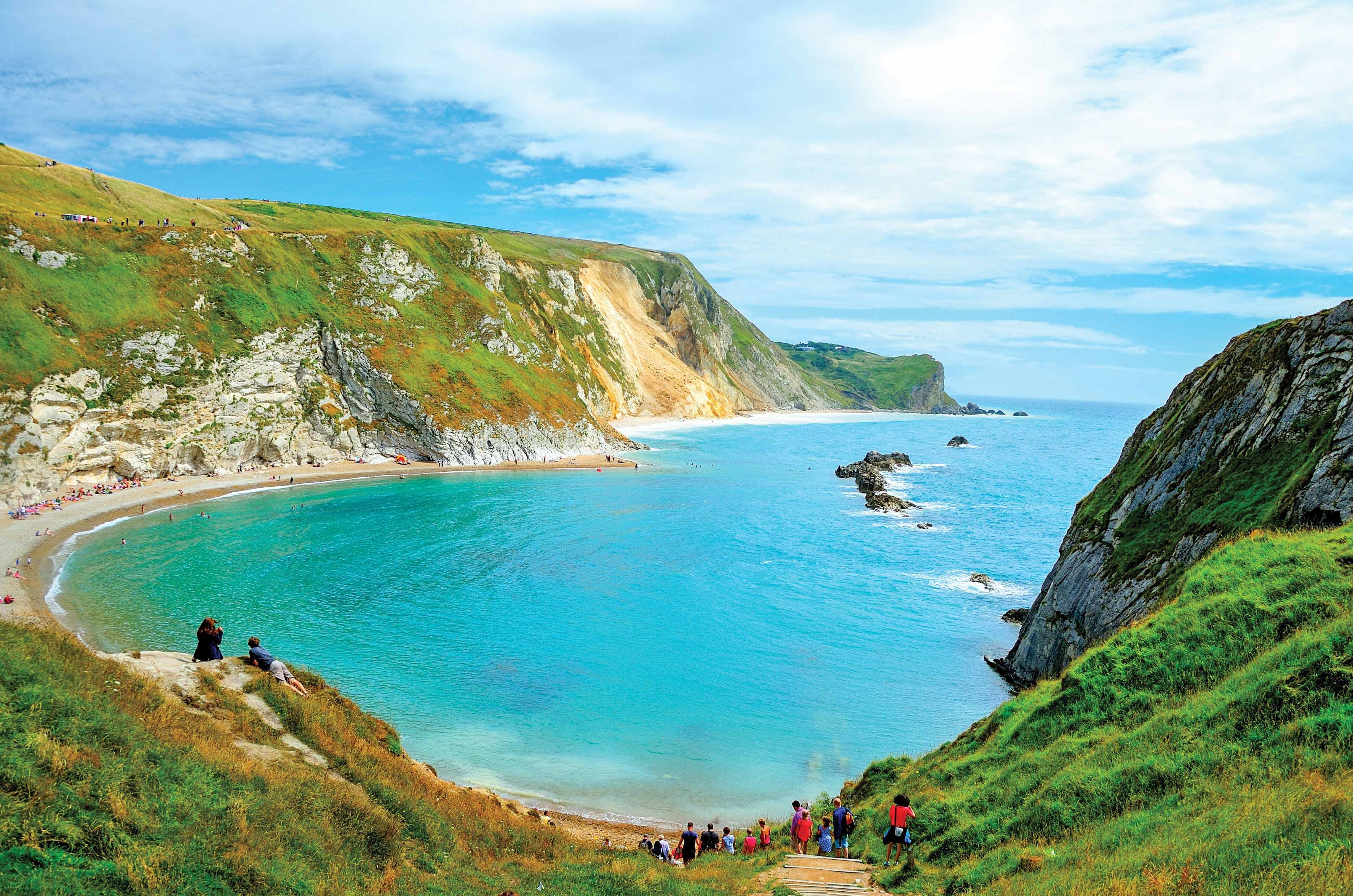
I couldn’t leave Dorset without giving the JCW a proper stretch, so I pushed south to the Jurassic Coast, Durdle Door and Lulworth Cove, a slight detour from Lawrence’s own story, but too good to leave out of a day like this. Every mile of the drive validated it being classed as an SUV. The properly deep boot held picnic mats, beach gear, including chairs and an umbrella, without the need of the rear seats being dropped.
Lulworth Cove’s chalk cliffs and turquoise water, a world away from Lawrence’s Dorset lanes.
The cabin felt roomy, and the ride height shrugged off potholed coastal car parks without a second thought. There’s real engine grunt for those urgent overtakes on narrow country lanes when stuck behind agonizingly slow motorhomes that make you feel like tearing your hair out.
West Lulworth, all thatched roofs and honey-coloured stone, is about as quintessentially Dorset as a village gets.
The all-wheel-drive system quietly sorts out grip on the tighter, greasier lanes, especially with the left wheels on a shoulder slick with wet grass. Flick it into its sportiest mode, and the exhaust note gets a synthesised boost through the speakers. It may be all theatre, but it certainly made me grin, and that’s a win because sound plays such a large part in defining how a car makes me feel.
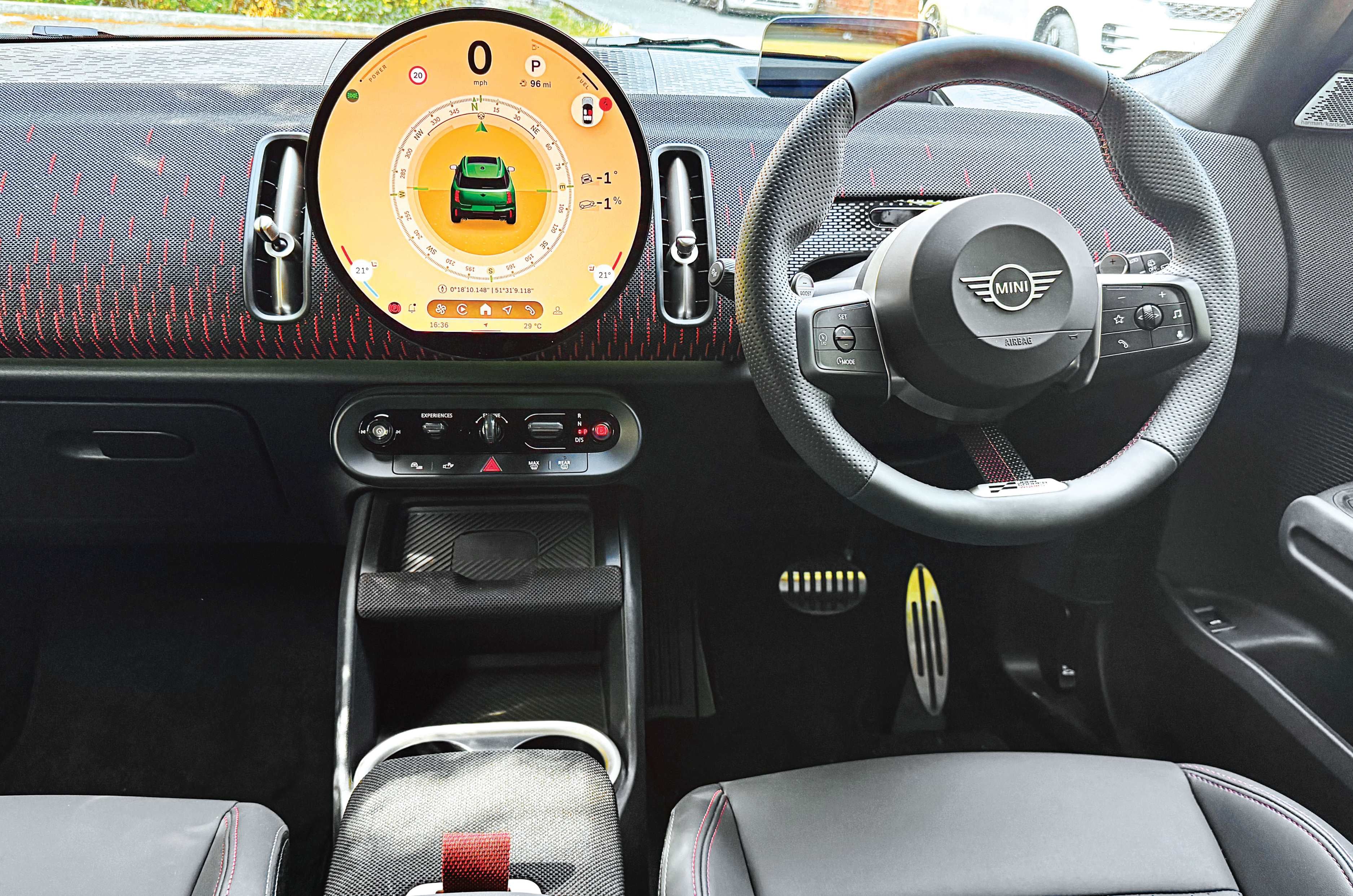
A compass and live pitch-and-roll readout flaunts SUV identity; instrumentation no traditional Mini has ever needed.
By the time I rolled back into London, it was quite clear to me that at the wheel of a Mini Countryman, what you get is a car that is actually larger and roomier than the Jeep Compass. It has the space, the grunt and the ground clearance, and from the smooth roads of Dorset to the Jeep-only trails of Zanskar, this Mini is genuinely man enough for whatever the country throws at it.
The Helmet He Never Wore
Lawrence’s fatal crash had one consequence far beyond Dorset. Among the doctors treating him at Bovington Camp Military Hospital was a young Australian neurosurgeon named Hugh Cairns, who had himself served in the Middle East during the First World War. Watching Lawrence die of head injuries that a helmet might have prevented left a deep impression on him, and he began studying motorcycle head trauma as a direct consequence.
Sir Hugh Cairns
Crash helmets already existed, invented back in 1914 for racing at Brooklands, but nobody wore them on the road. It took the Second World War, and Cairns’s appointment as a head injuries adviser to the Ministry of Health, for that to change. Researching fatalities among military despatch riders, he found that head injuries were the single biggest killer among motorcyclists and that, of the few riders wearing helmets when they crashed, not one had died.
His 1941 paper was damning enough that helmets became compulsory for all military motorcyclists within a month, and a 1946 follow-up showed the death rate had fallen sharply as a result. Cairns argued the same logic should extend to every civilian rider. It took another 27 years, and Cairns didn’t live to see it, for that to become UK law in 1973. But the chain runs in a straight, almost eerie line from one Dorset lane to millions of ordinary commutes: the man who died avoiding two boys on bicycles ended up, through the doctor who treated him, saving countless lives on two wheels after his own.
“The Rolls-Royce of Motorcycles”
Every Brough Superior was hand-built at George Brough’s works on Haydn Road, Nottingham, and Brough himself was as singular as his machines. Rarely seen without his trademark tailored flat cap, he carried himself more like landed gentry than a factory owner, and his standards bordered on obsessive. Born to motorcycle pioneer William Edward Brough, George forged his own path in 1919 after a rift with his father over how grand and expensive motorcycles ought to be.
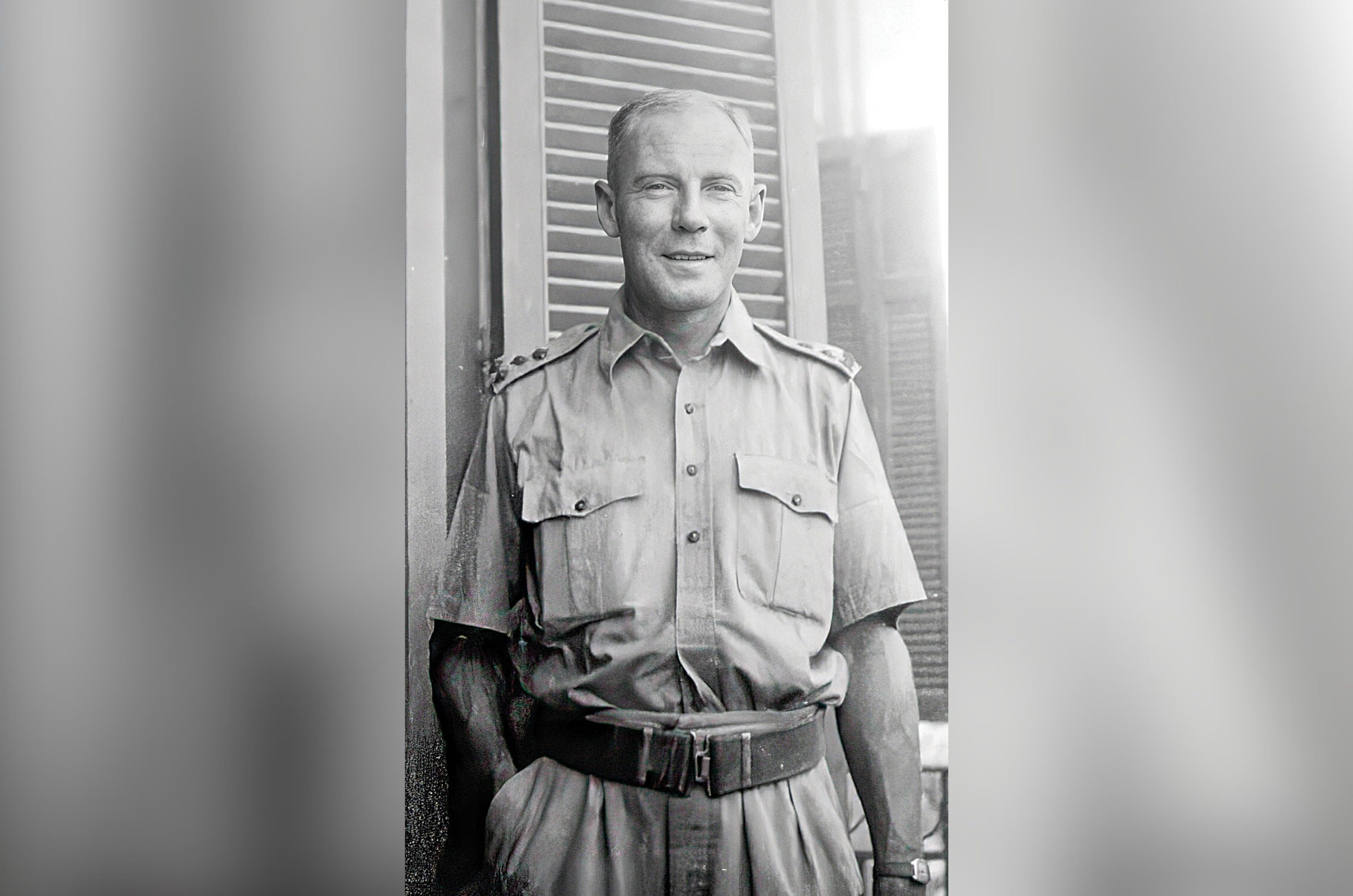
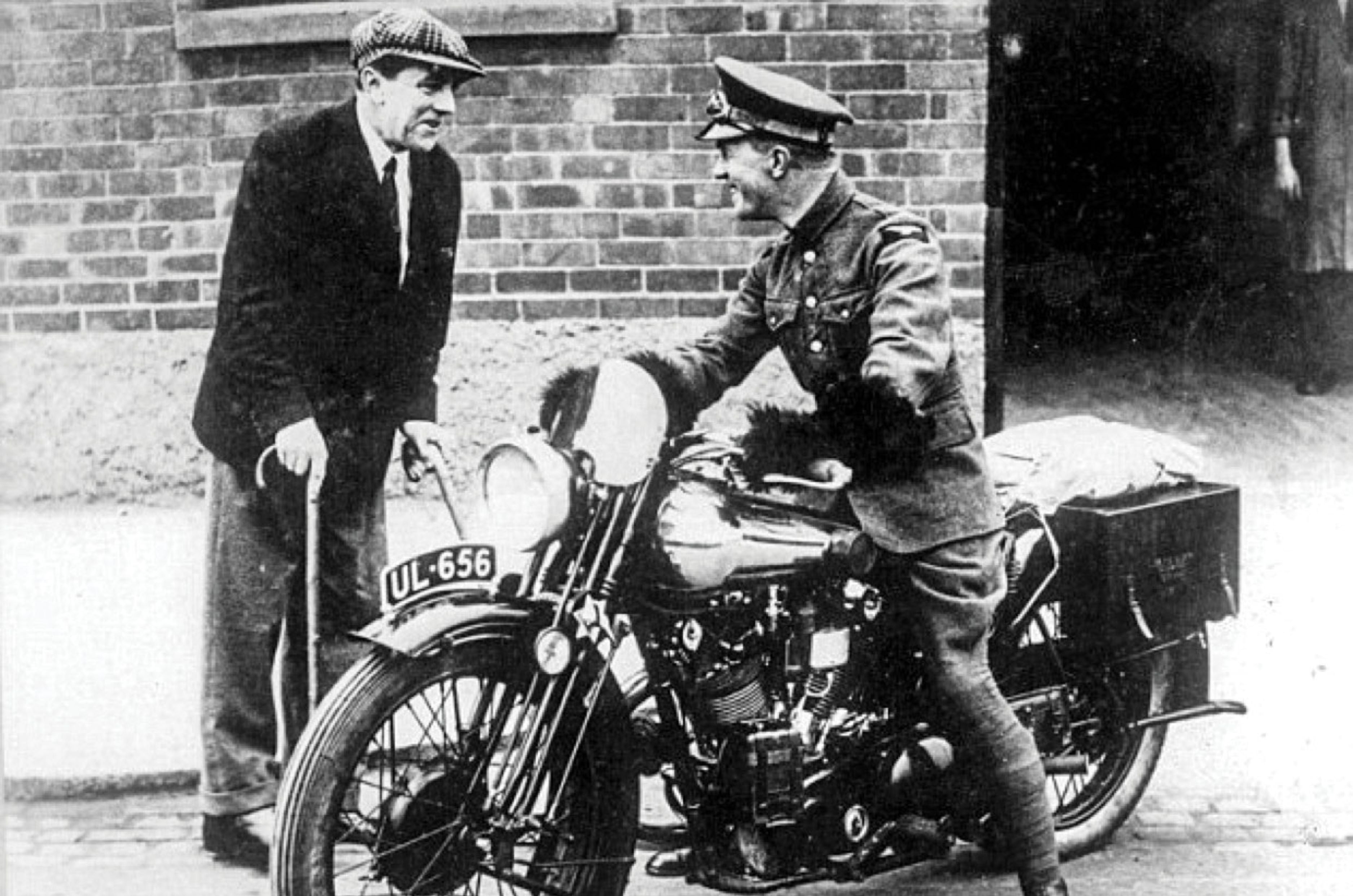
Left: George Brough, Right: T.E. Lawrence
A friend suggested adding “Superior” to the name, which Brough senior took as a personal insult. That pursuit of excellence defined the marque: each machine was assembled once to fit every component together, then stripped down for painting and plating, then reassembled for delivery. Brough tested every SS100 himself on public roads past 100mph, and each one left the factory with George Brough’s personal approval and a written certificate guaranteeing it had been timed at the ton over a flying quarter mile.
‘SS’ stood for Super Sports, ‘100’ for that guaranteed top speed of a 100mph, and Brough pushed the idea further still in 1928, setting a 130.6mph record at Arpajon in France. The “Rolls-Royce of Motorcycles” nickname was coined by journalist HD Teague of The Motor Cycle, and Brough liked it enough to use it in his own advertising, reportedly with the real Rolls-Royce’s blessing.
War ended civilian production in 1940, when the factory turned to munitions and aircraft parts, and the specialised J.A. Prestwich (JAP) 998cc, air-cooled, 50-degree OHV V-twin engines Brough relied on were never commercially viable again. Around 3,100 machines were made across 19 models in the marque’s 21-year run, and roughly a third survive today, making every survivor a priceless piece of automotive art.
Lawrence’s relationship with the marque ran deeper than most customers’. Writing to Brough in 1926, he said he’d ridden five Broughs and covered 1,00,000 miles in four years, calling them the greatest delight of his life, two of them possessing “a speed and reliability that reminded me of an express train.” Between 1922 and 1935, he owned eight. The first, bought in 1922, was nicknamed “Boa,” short for Boanerges, meaning “son of thunder.”
The seven that followed were named George I through George VII, with a ninth, George VIII, still being built when he died. At around £200 apiece, enough to buy a modest cottage, this was extraordinary indulgence for a man on an RAF aircraftman’s pay, though royalties from Seven Pillars of Wisdom helped fund it. The Brough he crashed on May 13, 1935, registration GW 2275, was George VII, his last completed machine.
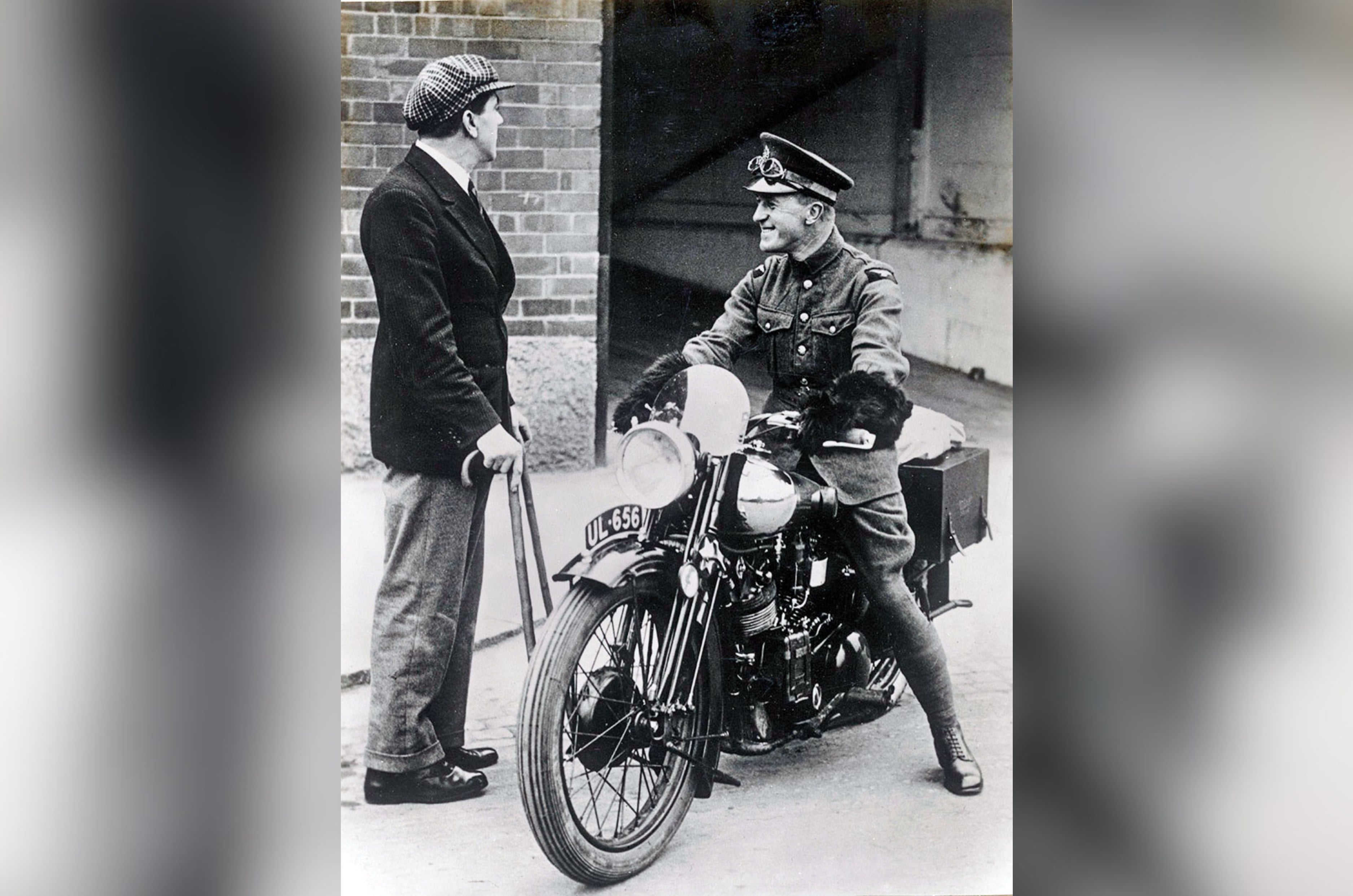
The photographs here are of George Brough and Lawrence on the Brough nicknamed George VI. They were taken during one of Lawrence’s frequent, unassuming visits to the Haydn Road factory by Jack Hallsworth, a Nottingham Journal photographer who knew George Brough and had been tipped off to bring his camera one afternoon.
It’s a rare glimpse of a man famously camera-shy and almost never photographed candidly, hinting at the genuine warmth behind the machines: two very different Englishmen, one a self-effacing war hero trying to vanish into rural obscurity, the other a flamboyant engineer-showman happy to let Rolls-Royce’s name do some of his advertising for him, bound by a friendship that outlasted their differences.
JSW Group, one of India’s largest conglomerates, is preparing to significantly expand its automotive ambitions. Having already established a presence through JSW-MG Motor India, its joint venture with China’s SAIC, the company is now gearing up to enter the market with an all-new brand of its own, JSW Motor.
Rather than taking the conventional route of developing products from the ground up, JSW is leveraging global partnerships to fast-track its entry into the industry. Its first product for India will be a large plug-in hybrid SUV based on the Chery Jetour T2, which is expected to be assembled at JSW’s upcoming facility in Chhatrapati Sambhajinagar, and we hear it will be called the Combat.
With its rugged styling, imposing road presence and the promise of combining EV-like efficiency and long-distance touring ability, the SUV is expected to be positioned in the Rs 30-50 lakh segment and take on established players head-on.
Ahead of its India launch later this year, we got an early drive of the SUV to find out whether JSW Motor’s debut offering is ready for combat.
Jetour T2 Exterior Design and Engineering – 8/10
A handsome SUV that oozes character and rugged appeal.
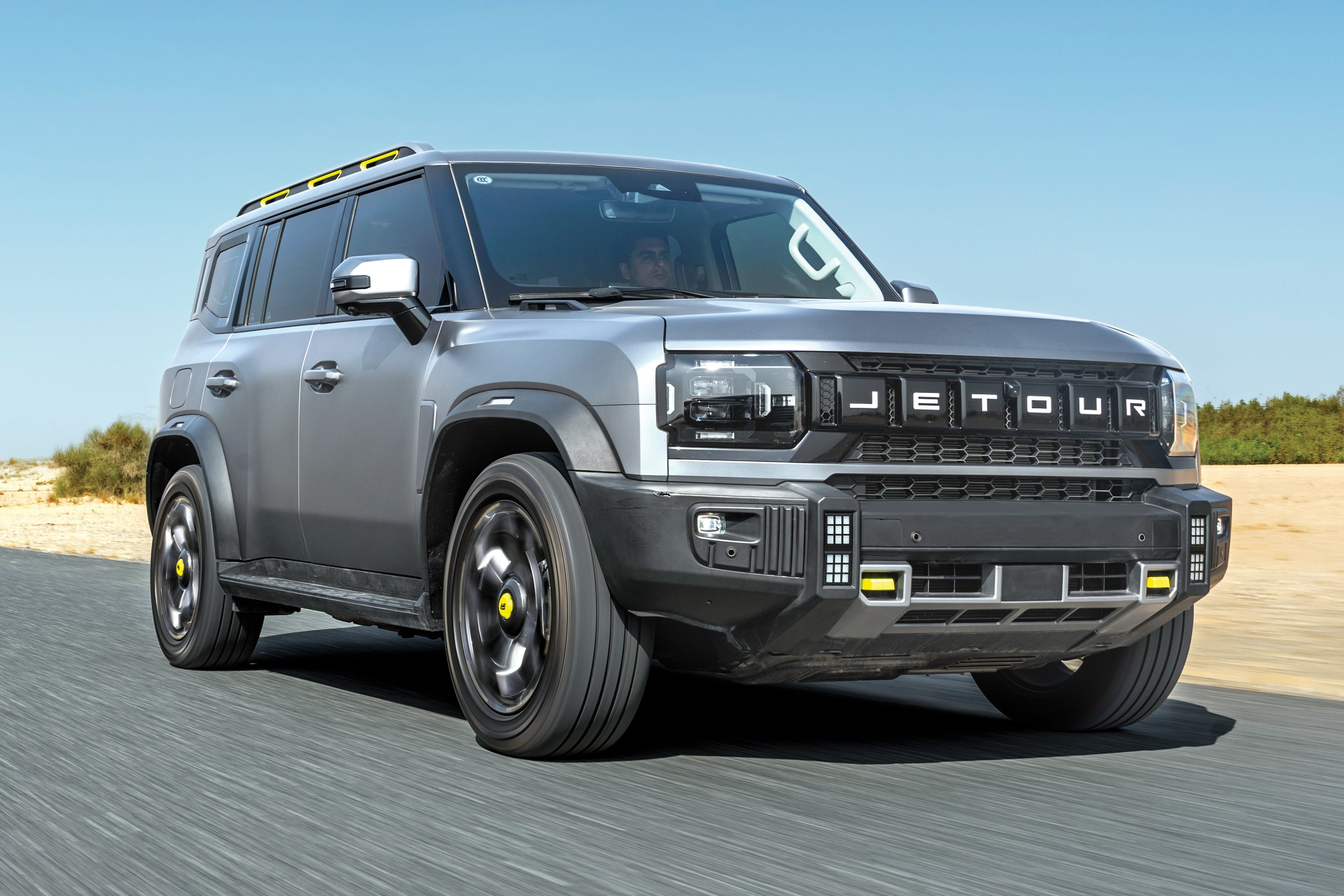
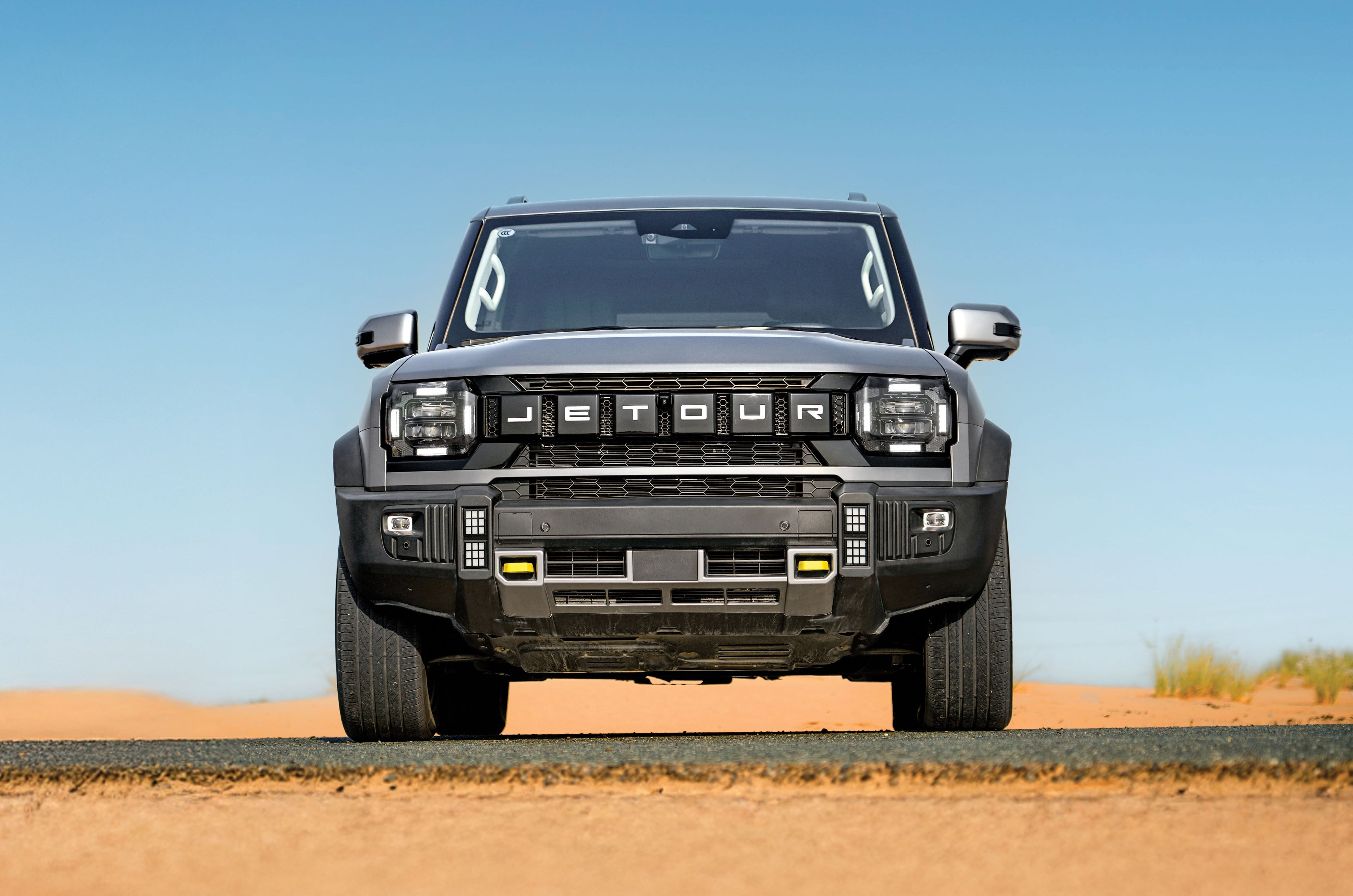
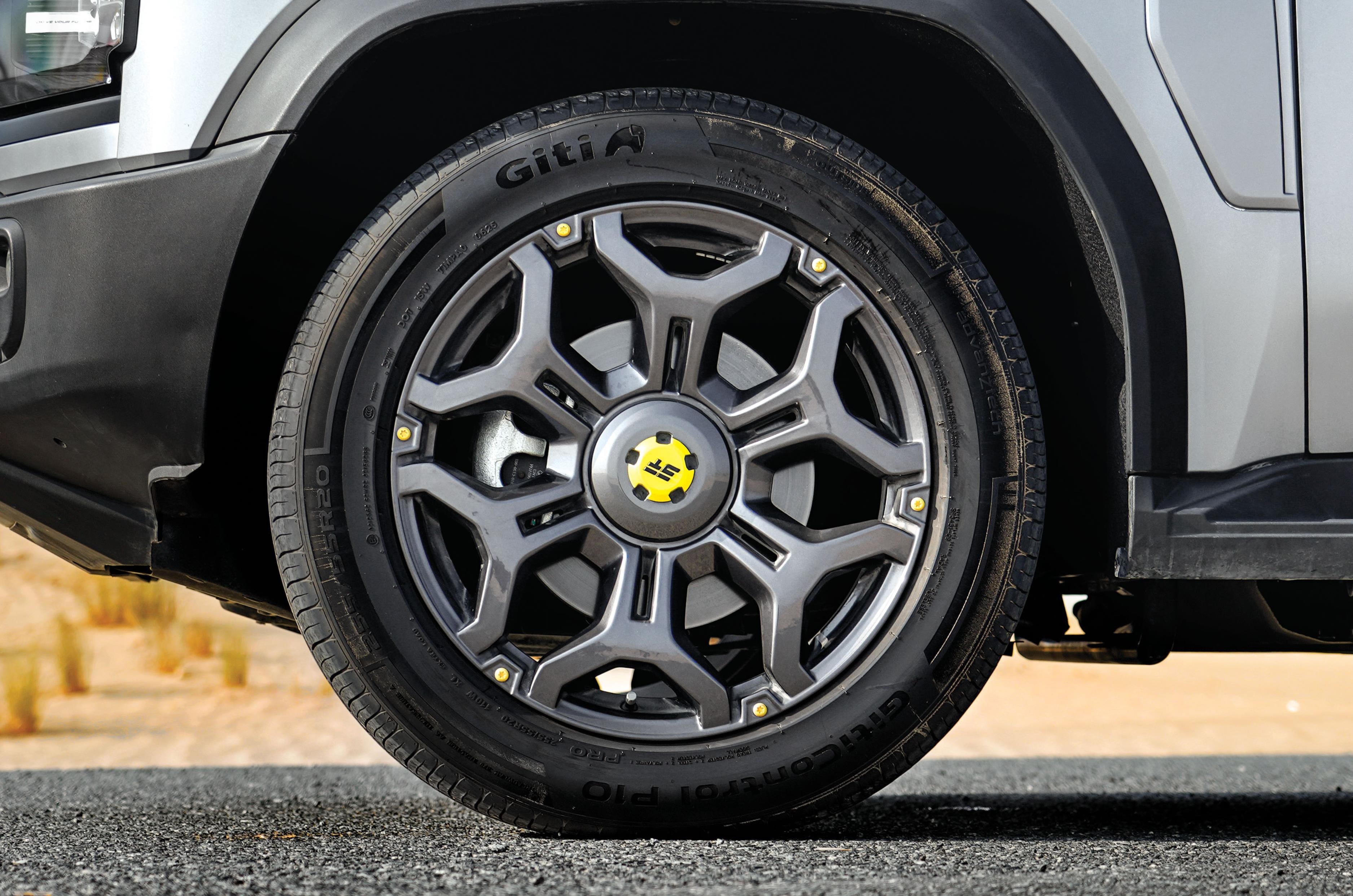
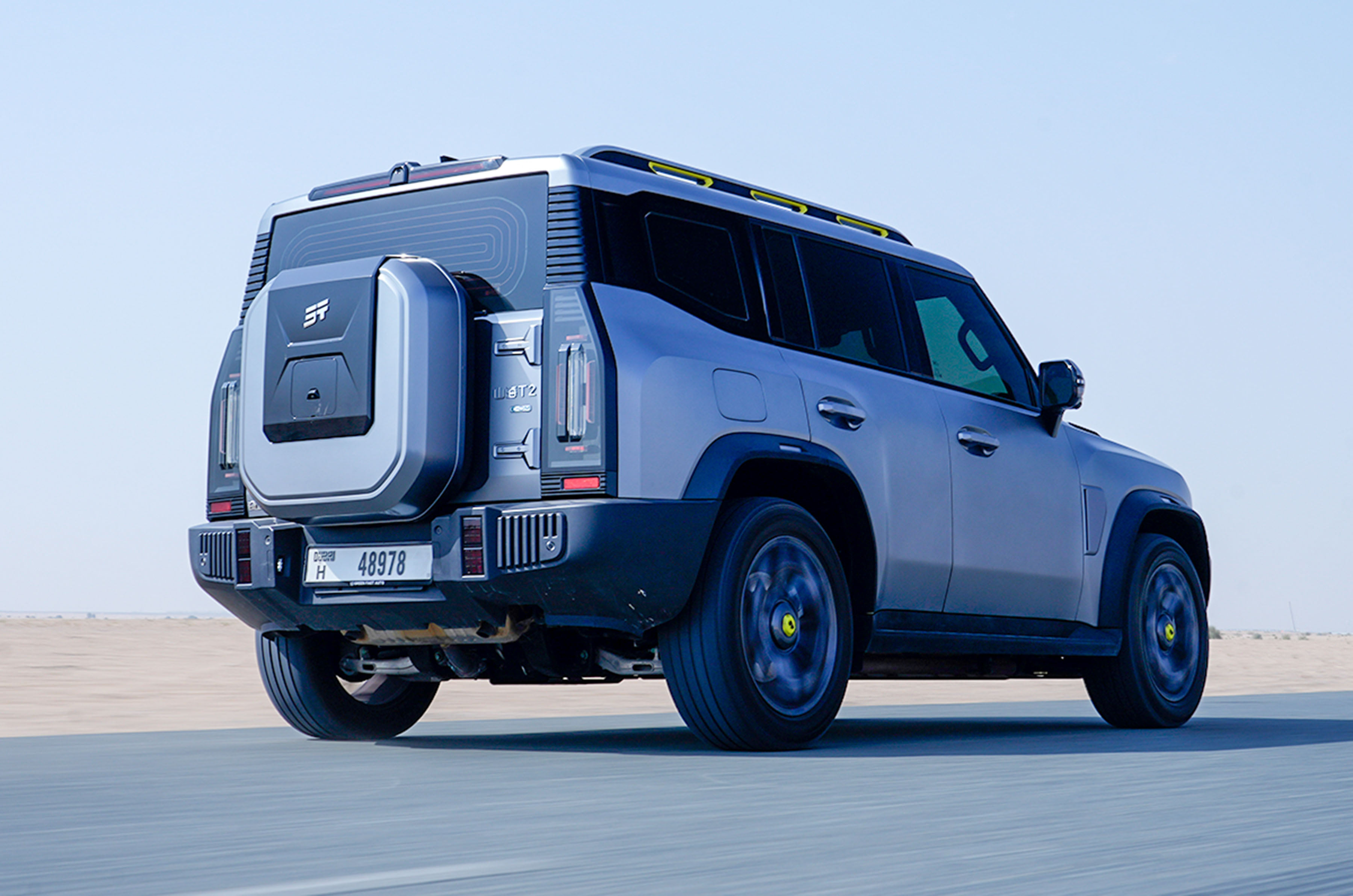
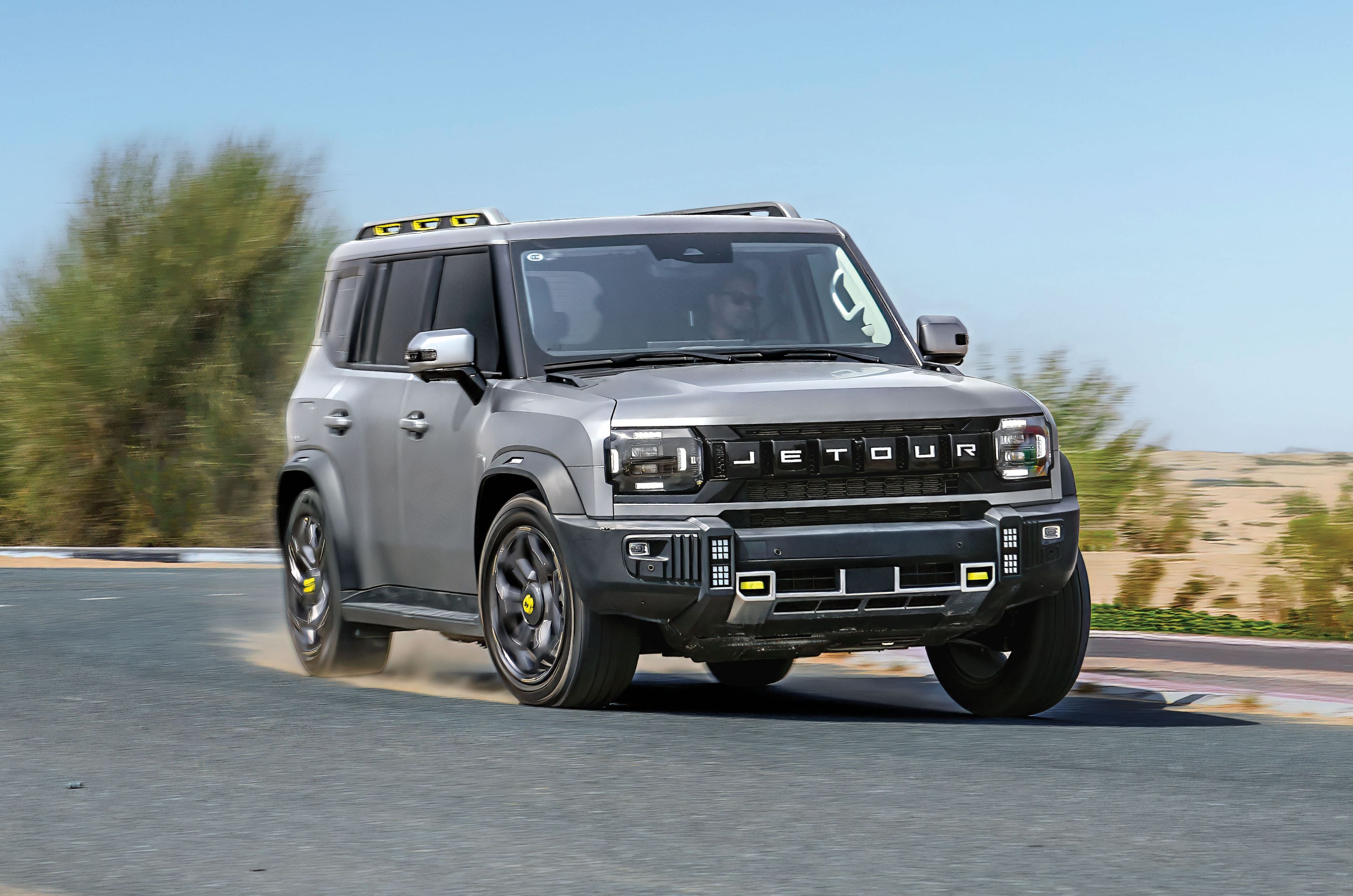
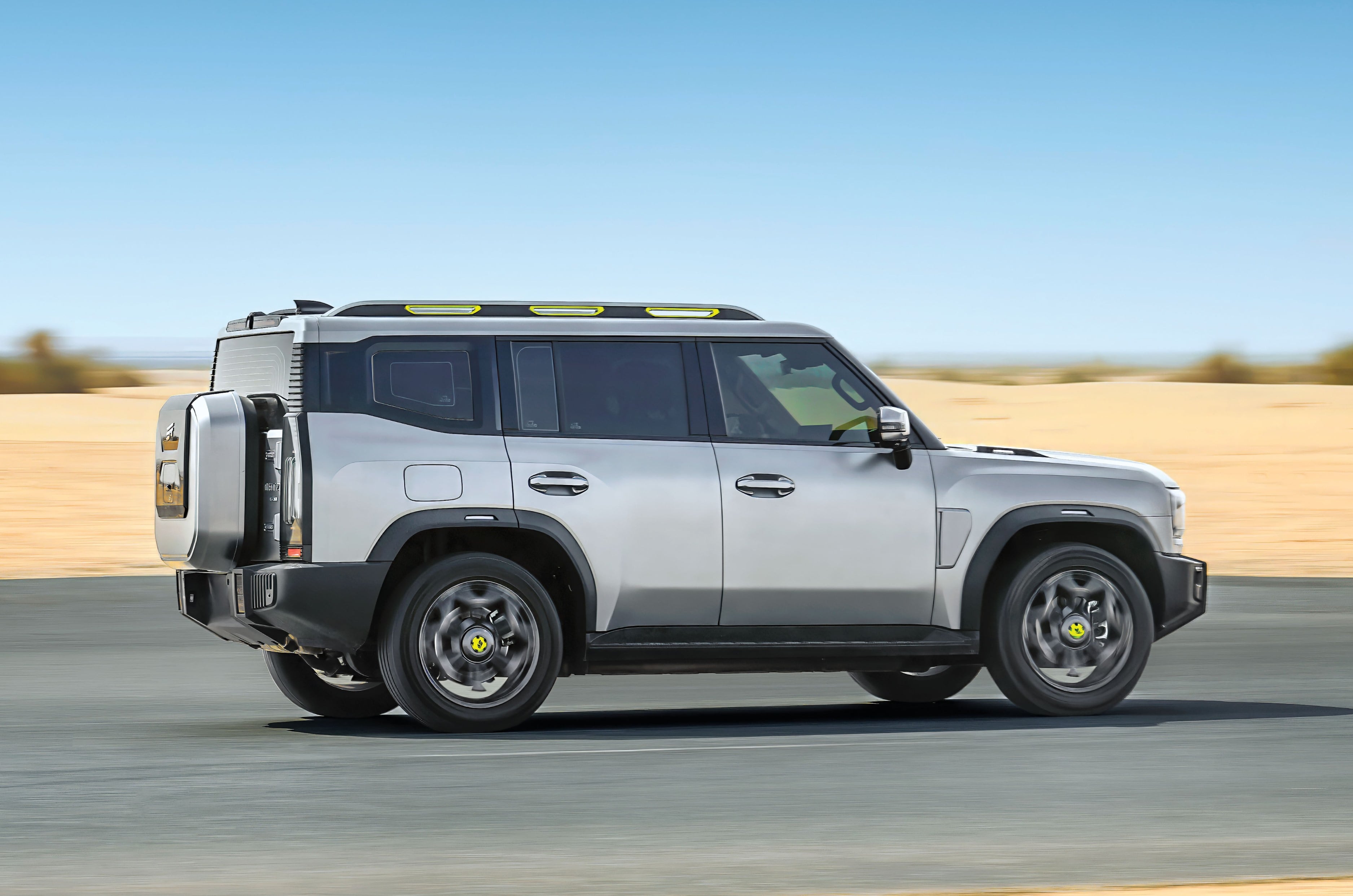
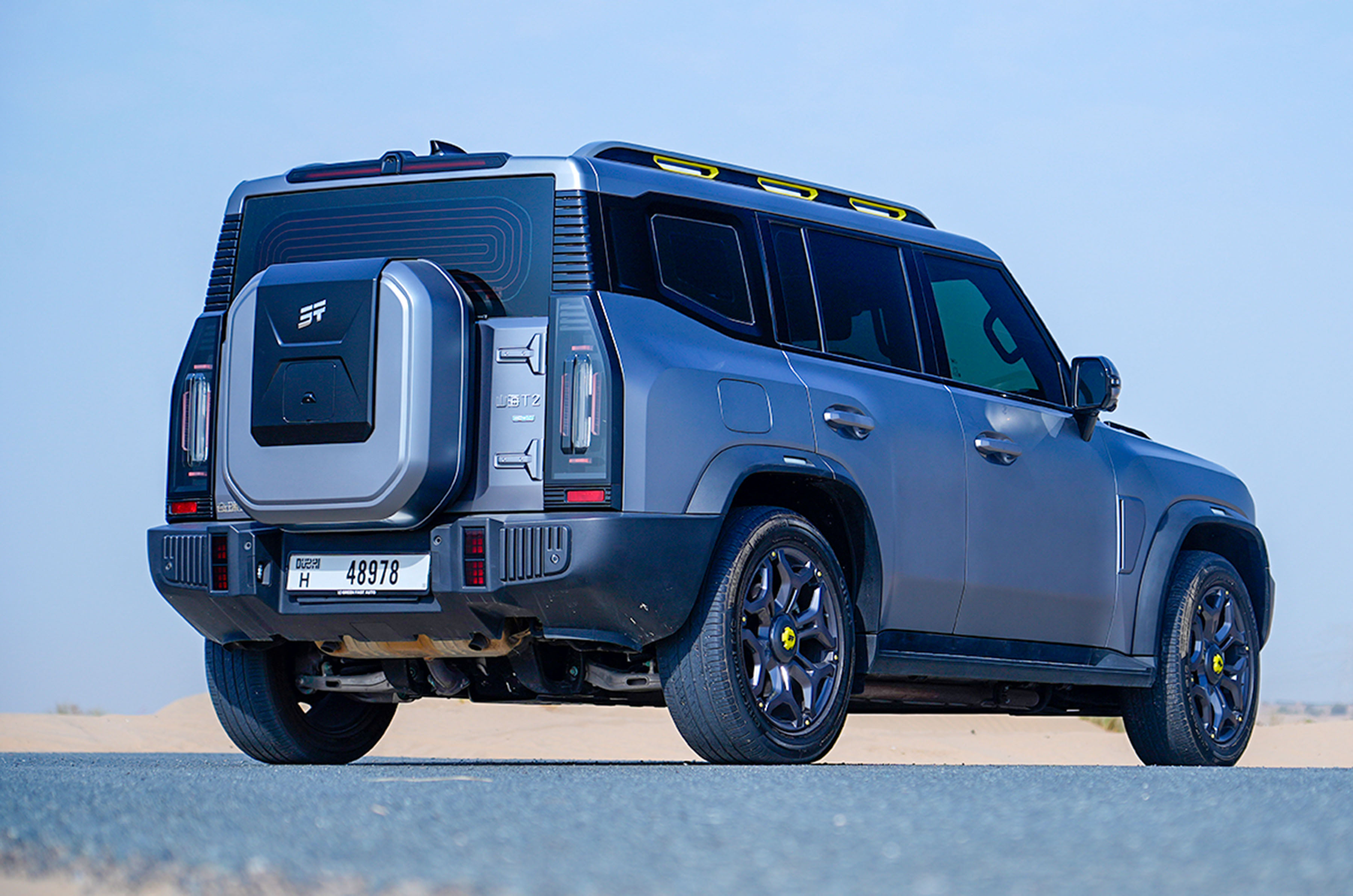
The Jetour T2 delivers on the SUV template to the T – flat bonnet, upright stance, raised ride height, chunky tyres, rugged body cladding, and, as the icing on the cake, a spare wheel mounted on the tailgate. It looks imposing and highly desirable, and while its silhouette bears a resemblance to the Defender, the T2 still manages to carve out a distinctive identity. JSW is likely to make a few changes to the headlamps, grille and bumpers to further differentiate the Combat, but the overall shape, clean surfacing and most of its defining design elements are expected to remain unchanged.
Attractive 20-inch wheels; 201mm of laden clearance.
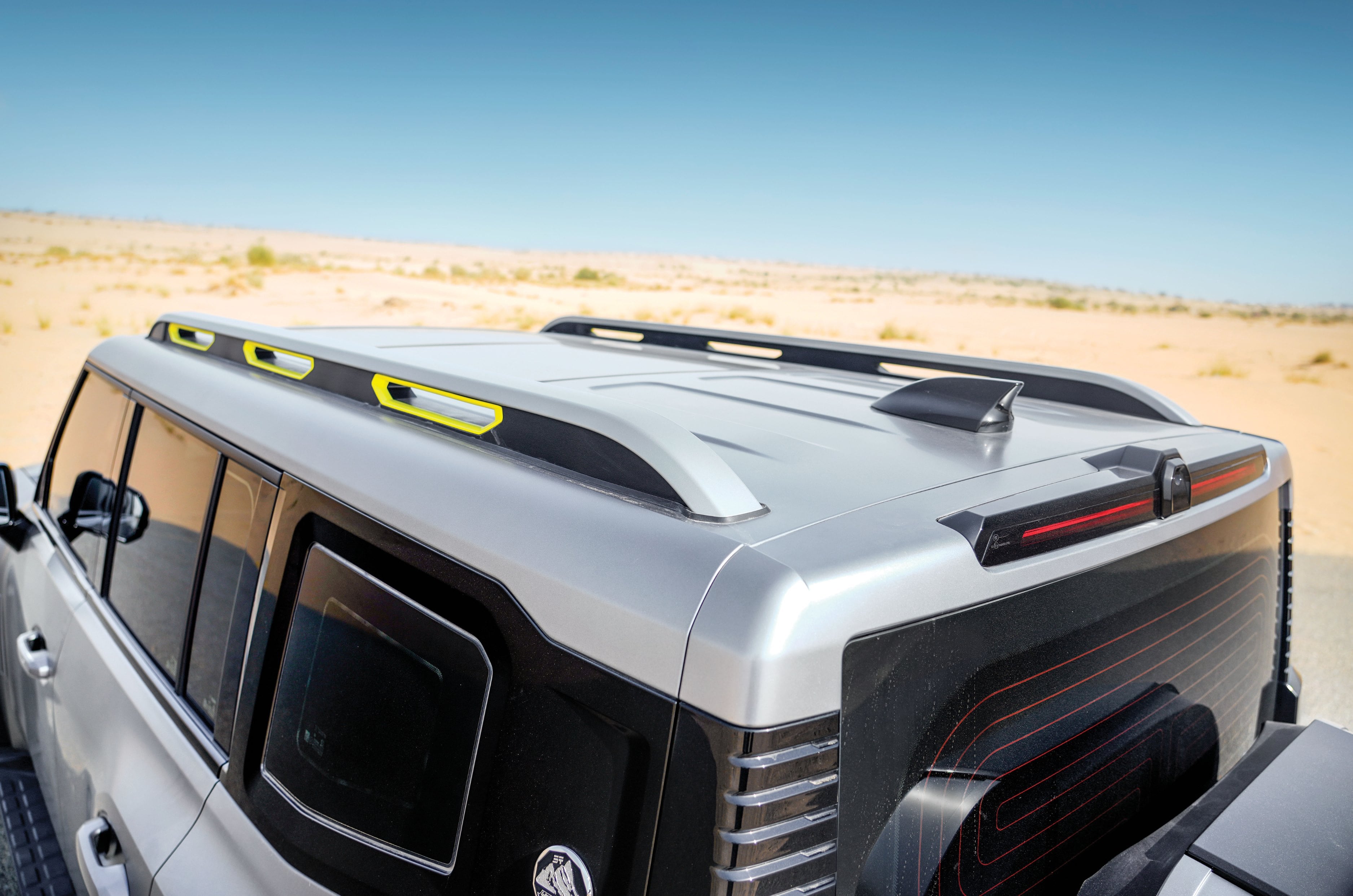
The massive 20-inch wheels suit the T2’s stance perfectly, and the clean bodywork, free of unnecessary cuts and creases, is particularly appealing. It also gets functional roof rails capable of carrying up to 100kg of luggage, while the side steps feel reassuringly sturdy and genuinely useful.
The T2’s space-saver spare wheel sits within a squircle-shaped cover, although accessing it involves a multi-step process that could prove frustrating if you ever need to change a tyre on a deserted road late at night.
Functional roof rails can take up to 100kg of load.
In terms of dimensions, it is longer (including the spare wheel), wider and taller than the Toyota Fortuner. Ground clearance, too, is an impressive 190mm in laden condition. However, don’t let its rugged appearance fool you – the version destined for India will remain front-wheel drive.
Jetour T2 Interior Space, Comfort, and Features – 8/10
Solidly built, well-designed cabin with some clever detailing and plenty of storage areas.
Climb aboard using the sturdy side step and handy grab handles, and the T2 immediately impresses with its sense of solidity. The cabin feels built to last, with numerous thoughtful design details lending it plenty of character. Nearly upright windows, a steeply raked windscreen and a dashboard pushed far forward create a tremendous sense of space, further amplified by the panoramic sunroof.
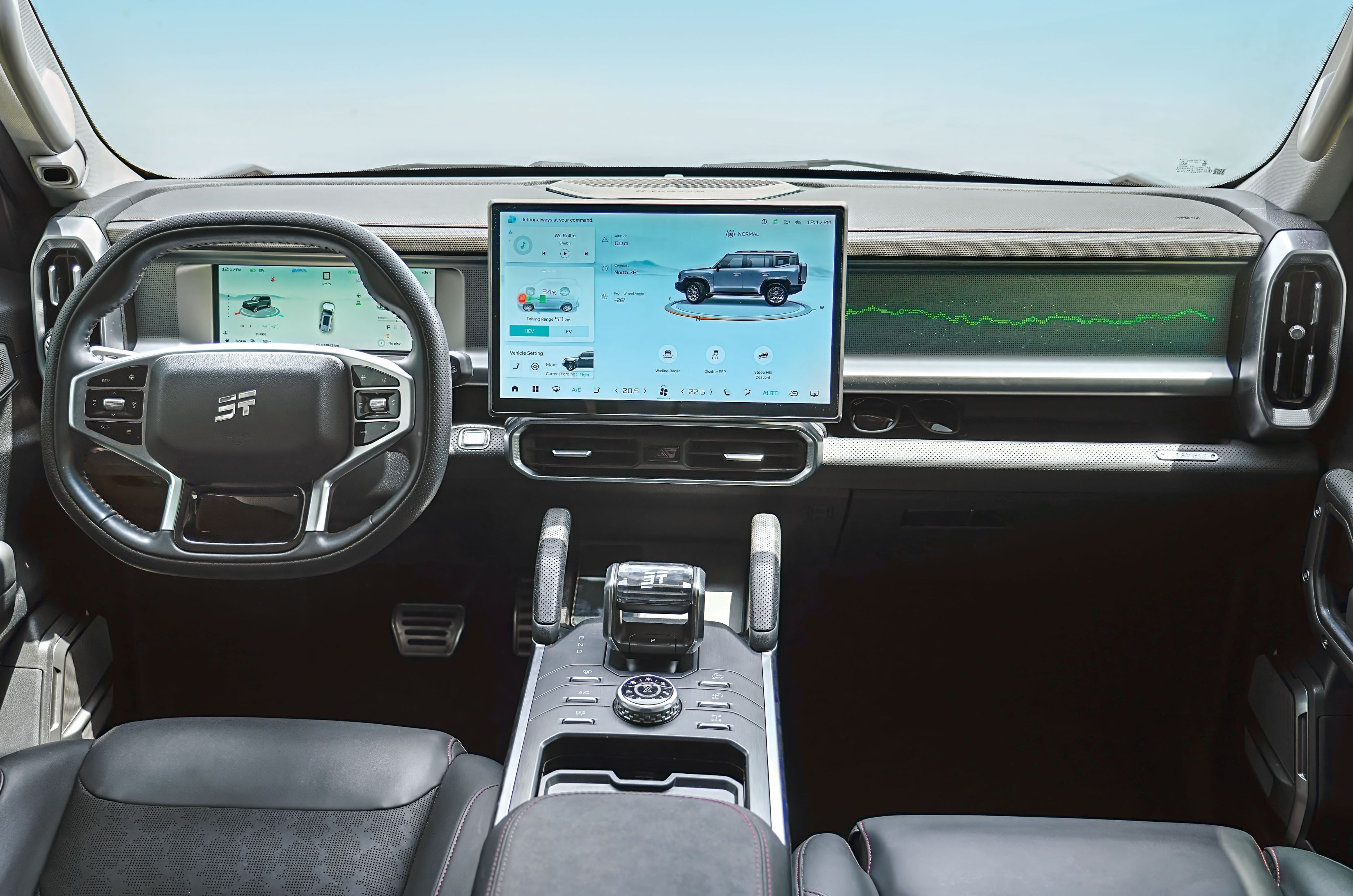
The dashboard itself has a distinctive design, with an illuminated pattern across the fascia adding a unique touch. Several layers are wrapped in dimpled leatherette padding, a theme that extends to the steering wheel and centre console.
Dominating the cabin is a massive 15.6-inch touchscreen that houses numerous vehicle functions, including mirror adjustment, climate control and seat ventilation/heating settings. Wireless Android Auto and Apple CarPlay are included, while the 12-speaker Sony audio system delivers impressive sound quality. Even the 540-degree camera system offers excellent image clarity. The downside is that the interface isn’t slick or responsive.
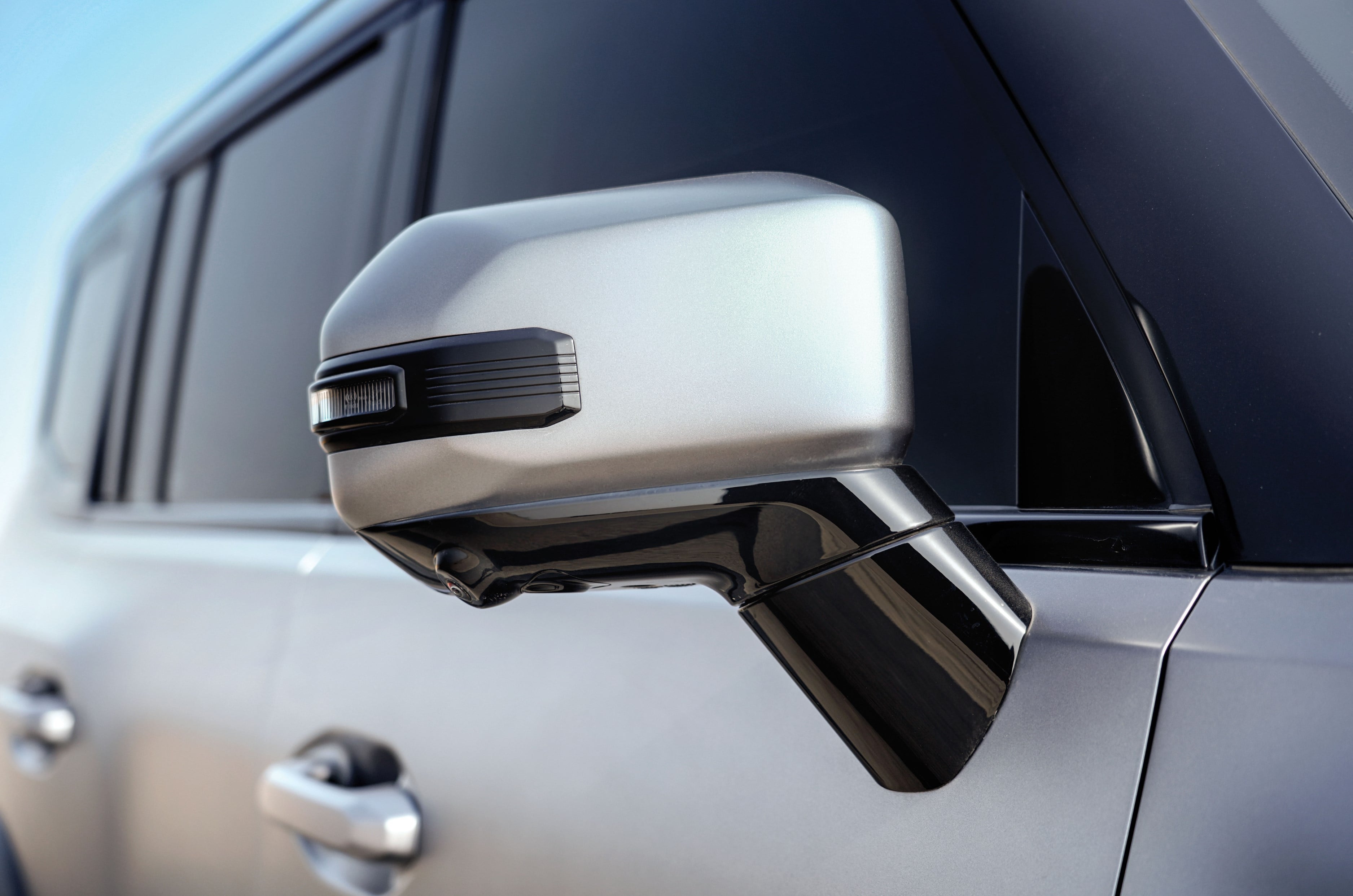
Chunky, door-mounted mirrors. Sadly, controls via touchscreen.
Ahead of the driver sits a 10.6-inch digital instrument cluster, a unit we’ve previously seen in some MG and BYD models. While it displays a wealth of information, the fonts and icons are rather small, making them difficult to read at a glance.
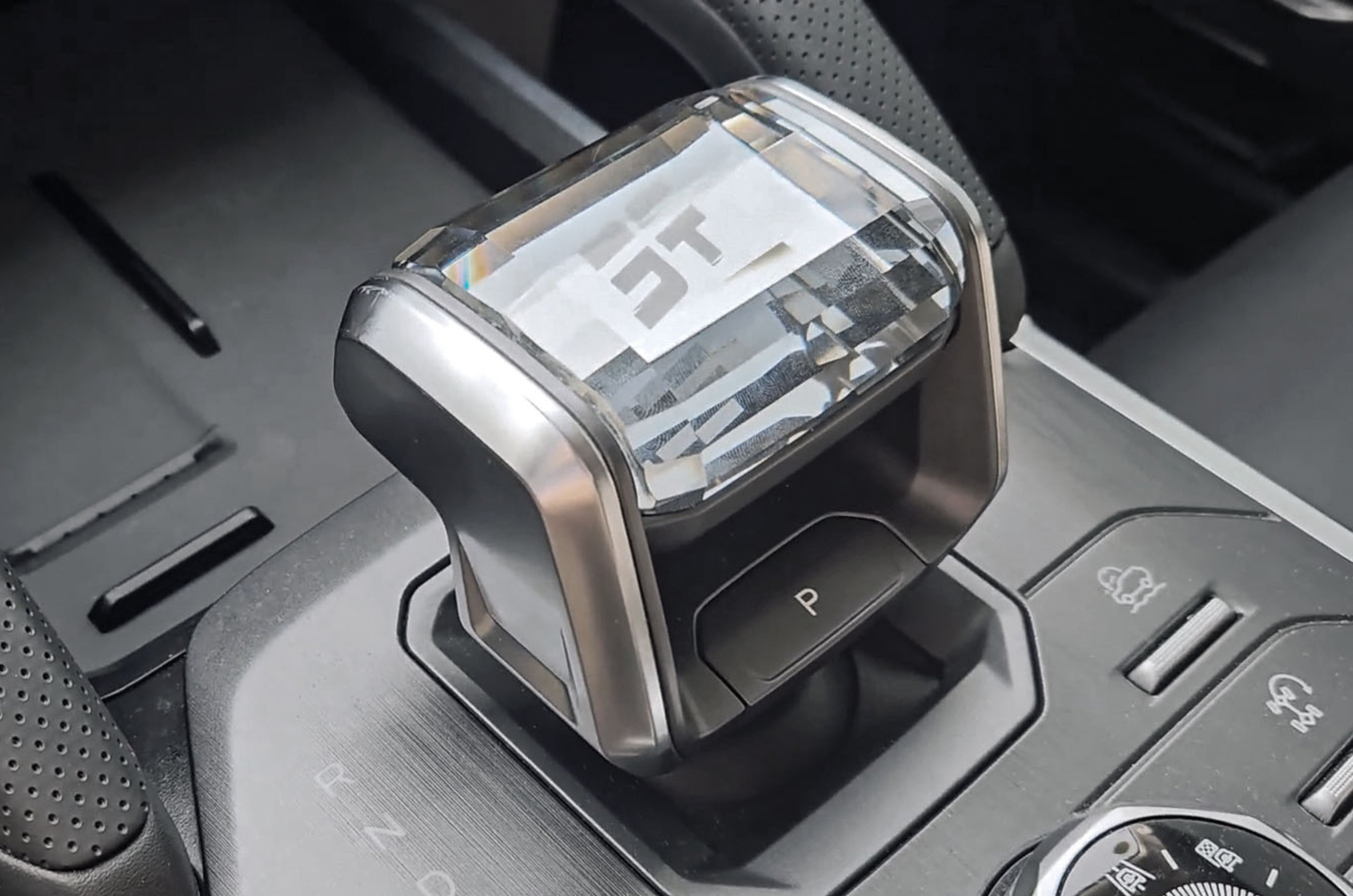
Material quality is generally impressive. The stalks and window switches feel robust and premium, while the jewel-like gear selector features an attractive diamond-cut effect. However, under harsh sunlight, it becomes highly reflective and can prove distracting. Reflections from the dashboard on the front windows are also noticeable.
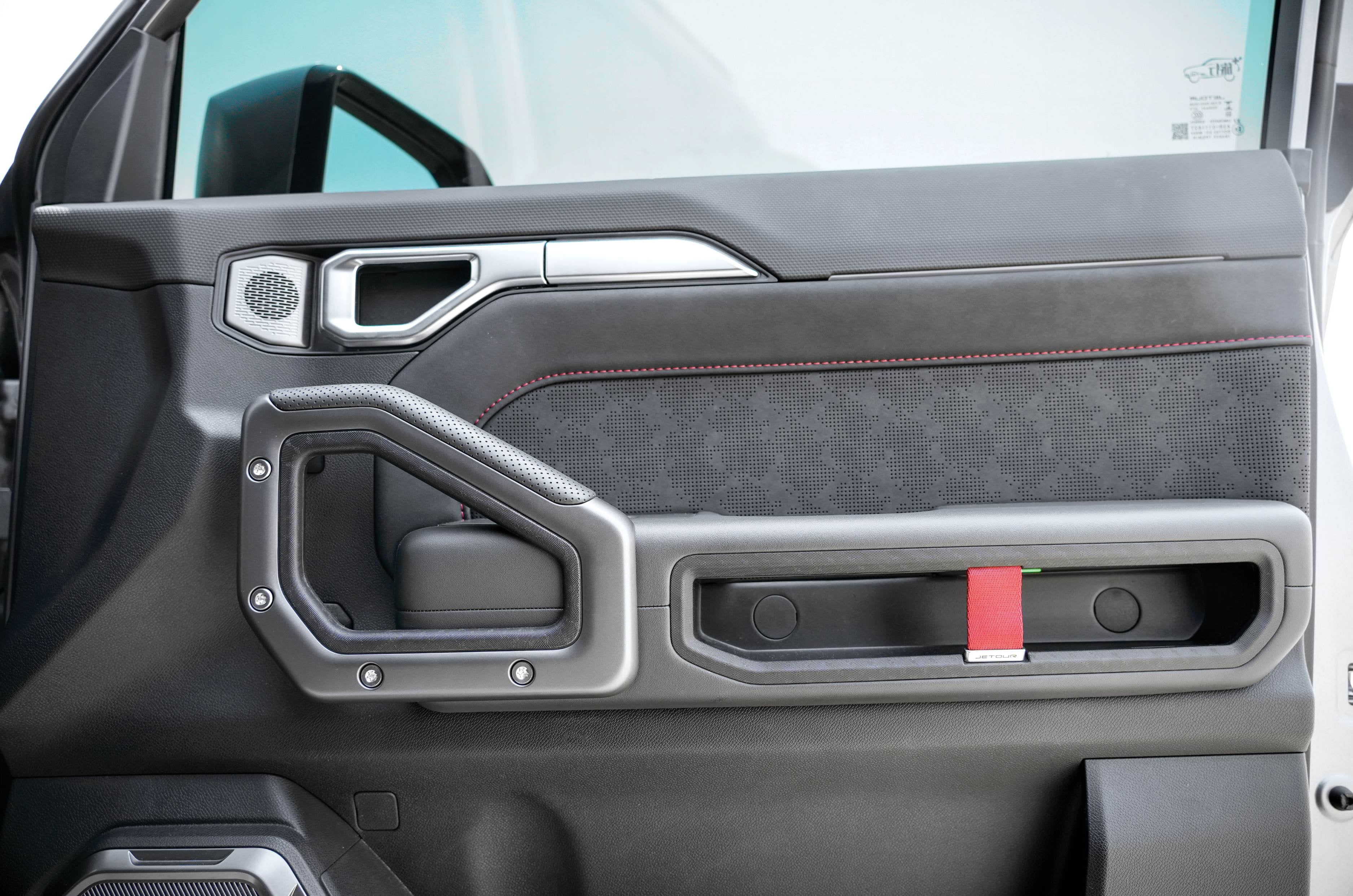
Rugged-looking door pads with nice detailing.
Notably, its dual-zone climate control struggled to cool its large cabin quickly despite the heavily tinted windows. While our test vehicle was a China-specific version, we hope the version we’re going to get in India has an upgraded air-con compressor. Its seat ventilation didn’t seem very effective either, even at its maximum setting.
Diamond-like chunky gear selector is illuminated.
The sculpted front seats, finished in black leatherette with contrasting red stitching, look suitably sporty. They provide excellent support, though the cushioning feels slightly overstuffed, and the absence of lumbar adjustment is disappointing.
Practicality is a strong point. There are large door bins, two phone storage areas (one incorporating a wireless charger), cupholders, a deep-cooled centre console, a large glovebox and even a hidden storage tray beneath the front seat.
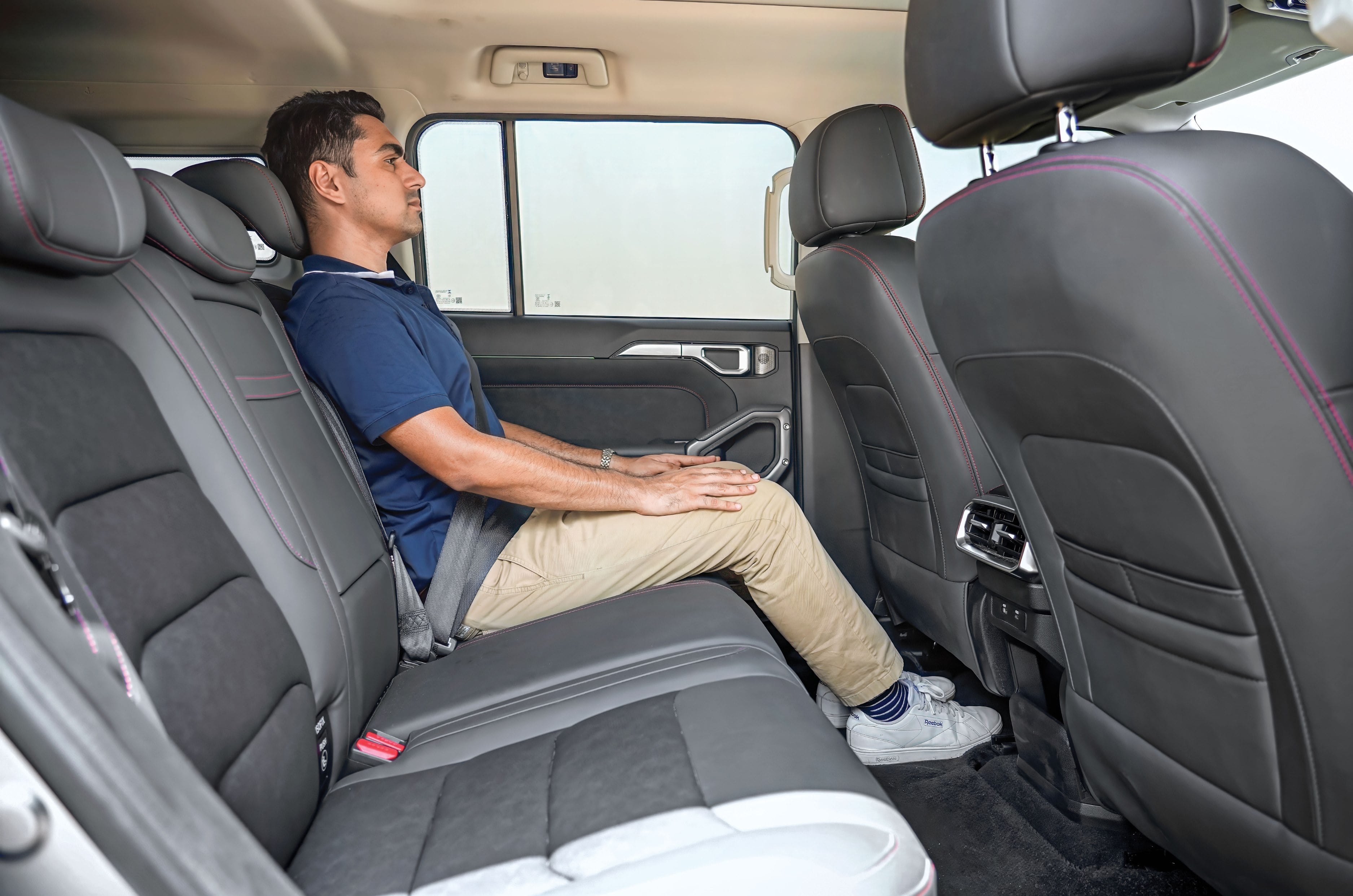
Albeit a bit low-set, rear seat is spacious. Flat floor, wide bench make it comfy for three adults.
The rear seat is equally spacious. A wide bench and completely flat floor make it comfortable for three adults, while the boxy cabin ensures generous headroom and overall space. The seat base is positioned slightly low, but comfort levels remain good.
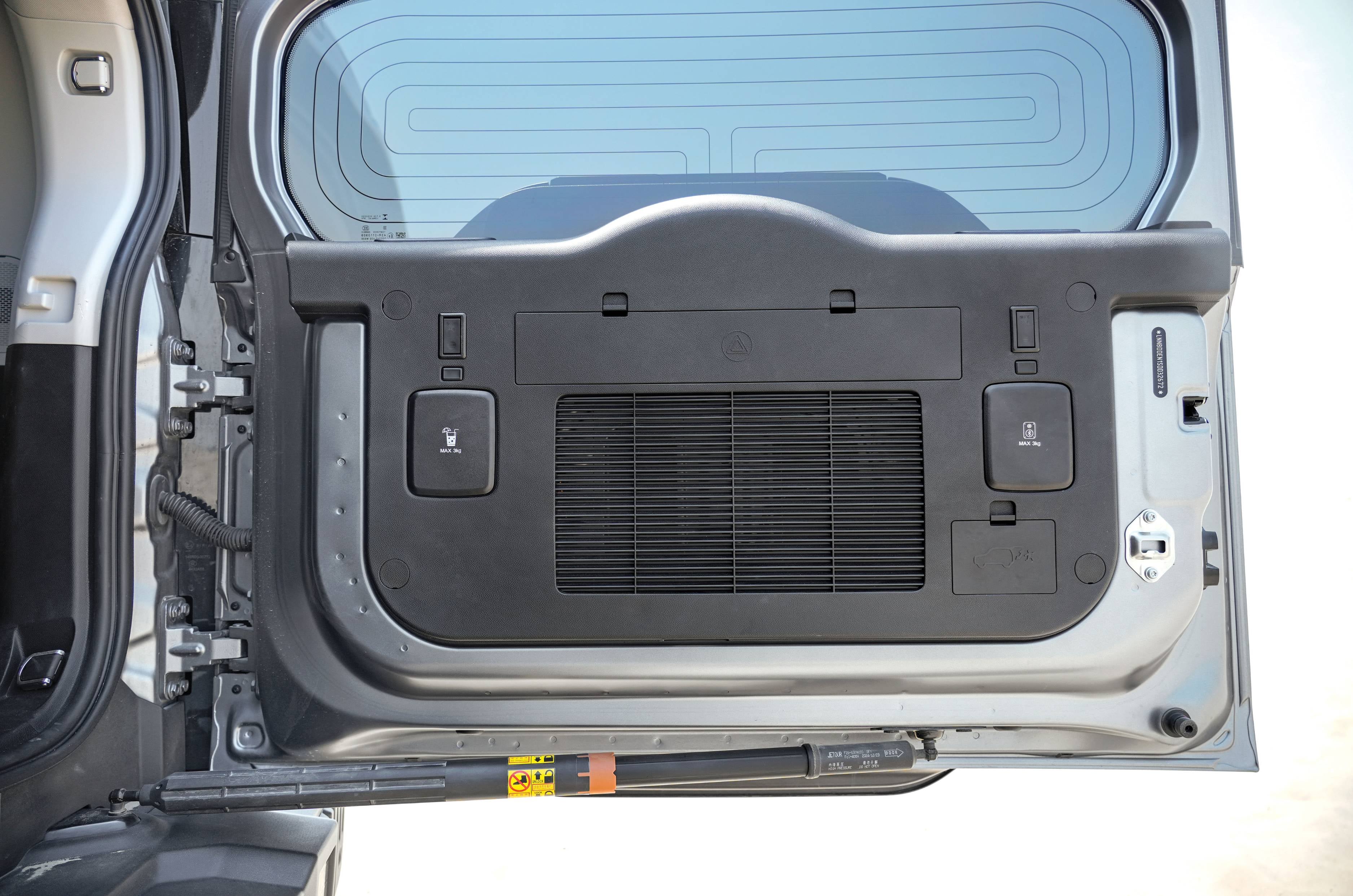
Cupholders, luggage hooks, bottle opener on its tailgate.
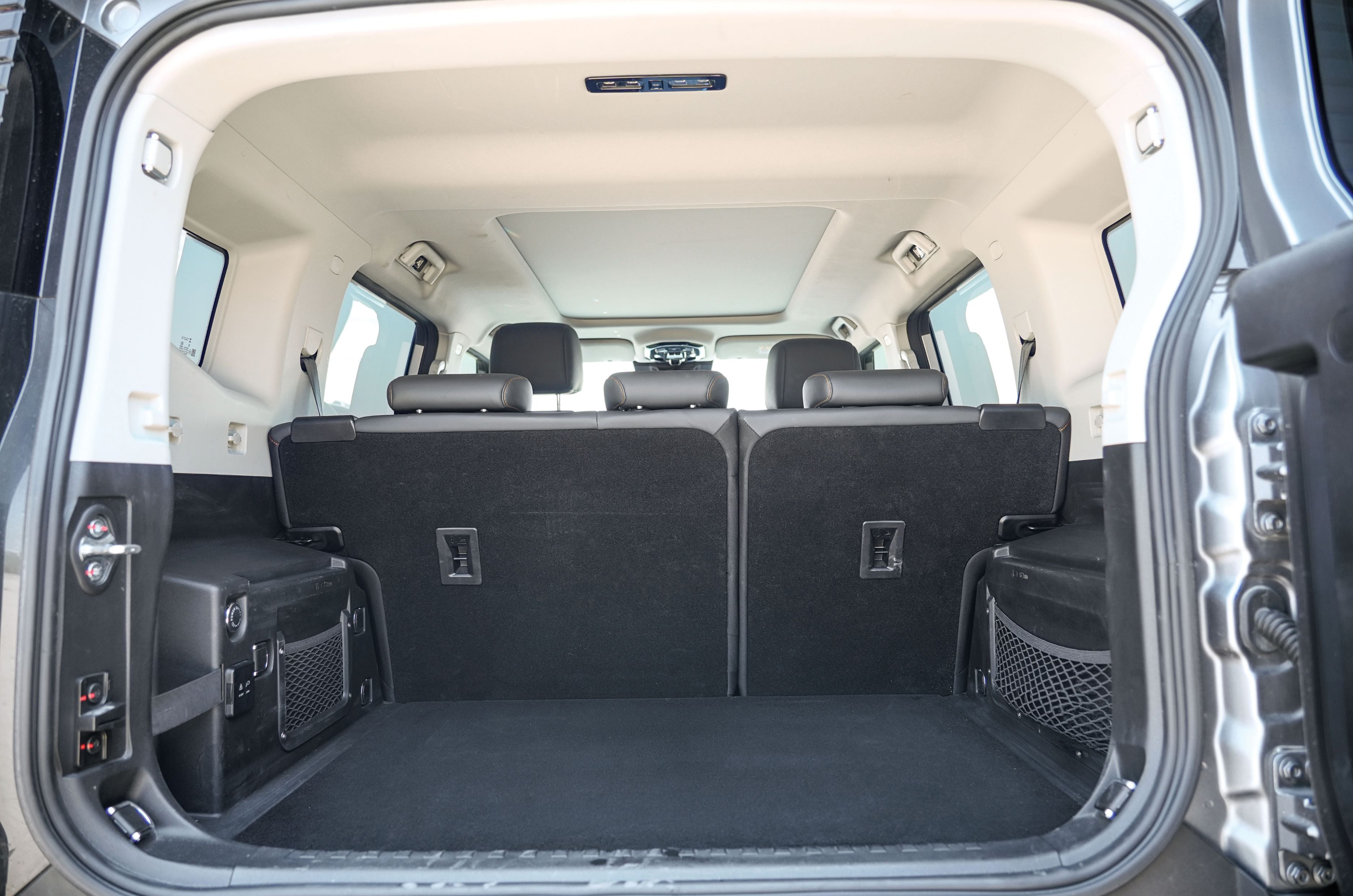
The side-hinged tailgate opens to reveal a cavernous 580-litre boot. Despite carrying the spare wheel, the tailgate itself requires surprisingly little effort to open. Thoughtful touches include a locking mechanism that prevents it from swinging shut unexpectedly, and there are cupholders, luggage hooks and even a bottle opener integrated into the inner panel. The boot area also features clever luggage nets and charging provisions, while a soft-close function further enhances convenience.
Humongous 580L boot. 60:40 rear seat split for added flexibility.
Besides the features already mentioned, it gets one-touch-down power windows, powered front seats with memory, LED lights all around, ambient lighting, a frameless inside mirror, autonomous emergency braking, lane-assist, adaptive cruise control, blind-spot monitoring, front and rear cross-traffic alert, six airbags, hill-start assist, hill descent control and ESP, to name a few more.
Jetour T2 Performance, Refinement and Efficiency- 8/10
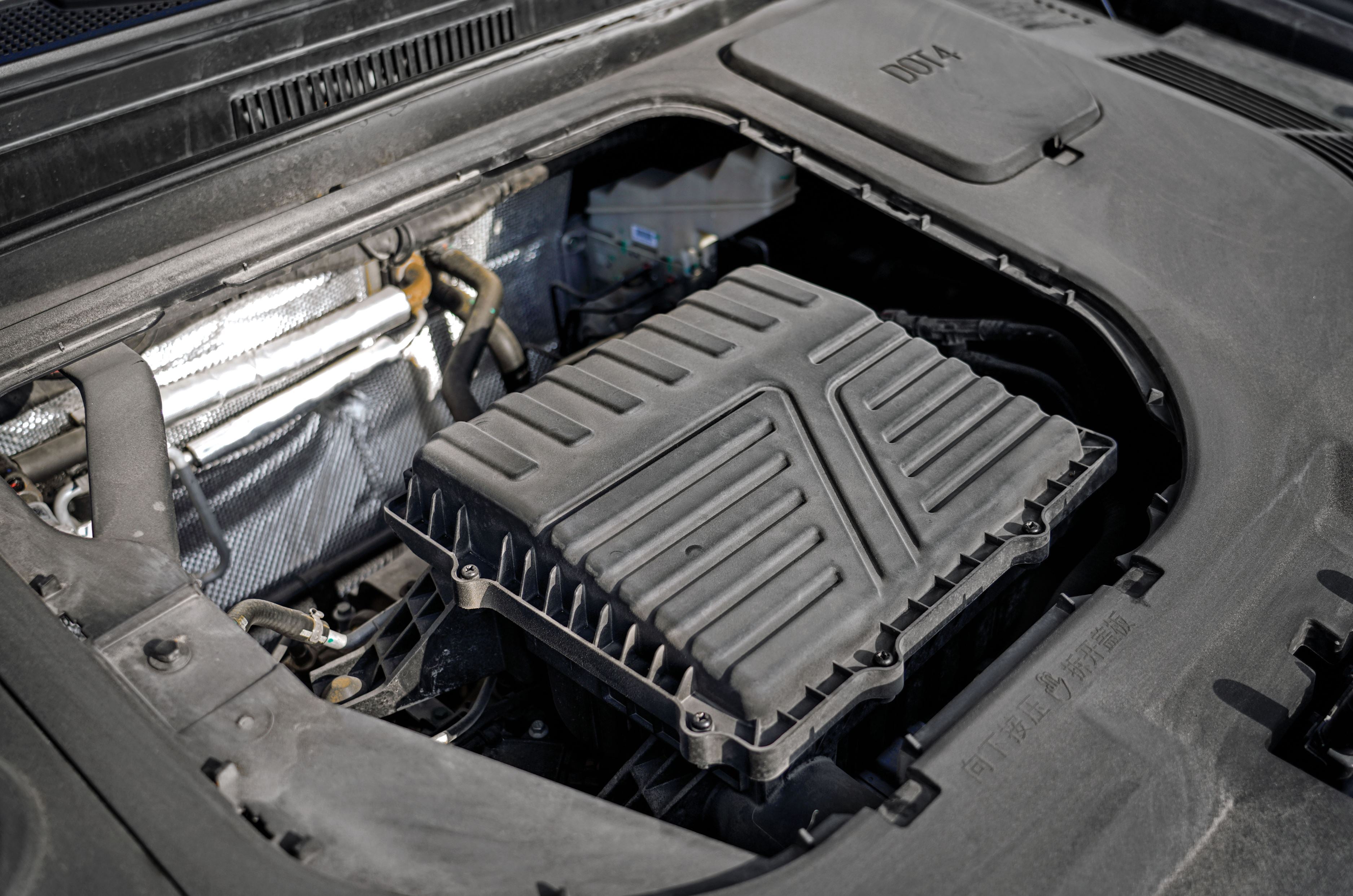
The T2 version we’re driving today is a plug-in hybrid, which combines a 156hp/220Nm 1.5-litre direct-injection turbo-petrol engine, a 43.24kWh LFP battery pack, and three electric motors. Together, the three motors produce 462hp and 700Nm of torque, with power sent to all four wheels. India will also see the plug-in tech, but in front-wheel-drive guise only, with two electric motors instead of three and a smaller 18.4kWh battery.
Powered by a 1.5 turbo along with 3 electric motors.
While the engineering sounds complex, the driving experience is refreshingly straightforward. The four-cylinder engine is refined, although when it operates primarily as a generator to charge the battery, a faint and distant hum does filter into the cabin.
The SUV can be driven either in pure EV mode or in hybrid mode. In EV mode, Jetour claims a range of up to 211km, and performance feels smooth and relaxed rather than outright brisk. Switch to hybrid mode, and the system automatically alternates between EV operation and combined petrol-electric drive, depending on throttle inputs, road conditions and battery charge levels, among other factors.
In this mode, performance feels remarkably effortless, with the T2 gathering speed with surprising urgency as speeds rise. Under full throttle, acceleration is initially measured up to around 40kph, after which there is a noticeable surge in performance as the powertrain delivers a much stronger pull.
Multiple drive modes are available, including Eco, Normal and Sport. In both Normal and Sport, we noticed the vehicle continuing to accelerate momentarily even after lifting off the throttle, which can feel unnerving. Throttle response in these modes is also a touch too aggressive. Eco mode offers a more natural and polished throttle calibration.
In our testing conducted in 40-degree heat, the T2 accelerated from 0-100kph in just 6.35 seconds in its sportiest setting – quick for its size. Flat out, it will reach a claimed top speed of 200kph.
The T2 also offers three levels of regenerative braking. Impressively, all three feel natural in operation, bringing the SUV down to a crawl smoothly and predictably. The brake pedal itself inspires confidence, with the transition between regenerative and friction braking being almost imperceptible.
Jetour T2 Ride Comfort and Handling – 6/10
Soft suspension and tall ride height mean driving dynamics aren’t anything to write home about.
The T2 rides on MacPherson struts at the front and a multi-link independent rear suspension setup. Its suspension tuning leans towards comfort, but this results in a degree of bounce over speed breakers and undulating surfaces.
The chunky, high-profile tyres do an excellent job of smothering smaller imperfections, while the 201mm laden ground clearance provides ample confidence over rough roads. At higher speeds, however, the ride never feels quite as settled or composed. One positive is that it remains well controlled under heavy braking, resisting excessive pitch.
Dynamic prowess is clearly not the priority here. The tall body exhibits a fair amount of roll, noticeable during quick lane changes. Push harder through a series of bends, and this two-tonner T2 understeers quite readily. Combined with its light and somewhat disconnected steering, it is clear that this SUV prefers a more relaxed driving style.
A light steering, smooth hybrid and excellent visibility make it surprisingly easy to drive.
Driven at a gentler pace, the T2 proves extremely easy to live with. The steering offers three weight settings, though it feels best in its lightest mode. Combined with excellent visibility and a smooth, responsive hybrid powertrain, it makes piloting this large SUV remarkably effortless.
Jetour T2 Should You Buy Now or Wait – 8/10
The Jetour T2 plug-in hybrid appears to have all the ingredients needed to establish the JSW brand in India and perhaps even challenge the Toyota Fortuner, despite offering only five seats. It is spacious and practical, it is expected to come loaded with technology and features, and its rugged styling gives it immense road presence and desirability.
The plug-in hybrid powertrain adds further unique appeal, offering the flexibility of pure EV driving and an impressive mileage figure with the hybrid tech. Better still, the system is smooth, refined and delivers strong performance.
It’s larger than a Fortuner, looks imposing, and stays true to the SUV formula.
Yes, it is not without flaws. The touchscreen experience and throttle calibration need refinement, the air-conditioning needs to be more effective, and the ride and handling would benefit from further fine-tuning for Indian conditions. These are areas we hope JSW addresses before launch.
On the whole then, the T2 is certainly ready for combat. Will it win, though, will also depend on JSW pulling off an aggressive pricing strategy and, importantly, backing it up with a reliable ownership and service experience too. That latter is why Toyota rules the roost. The battle lines, then, are drawn.
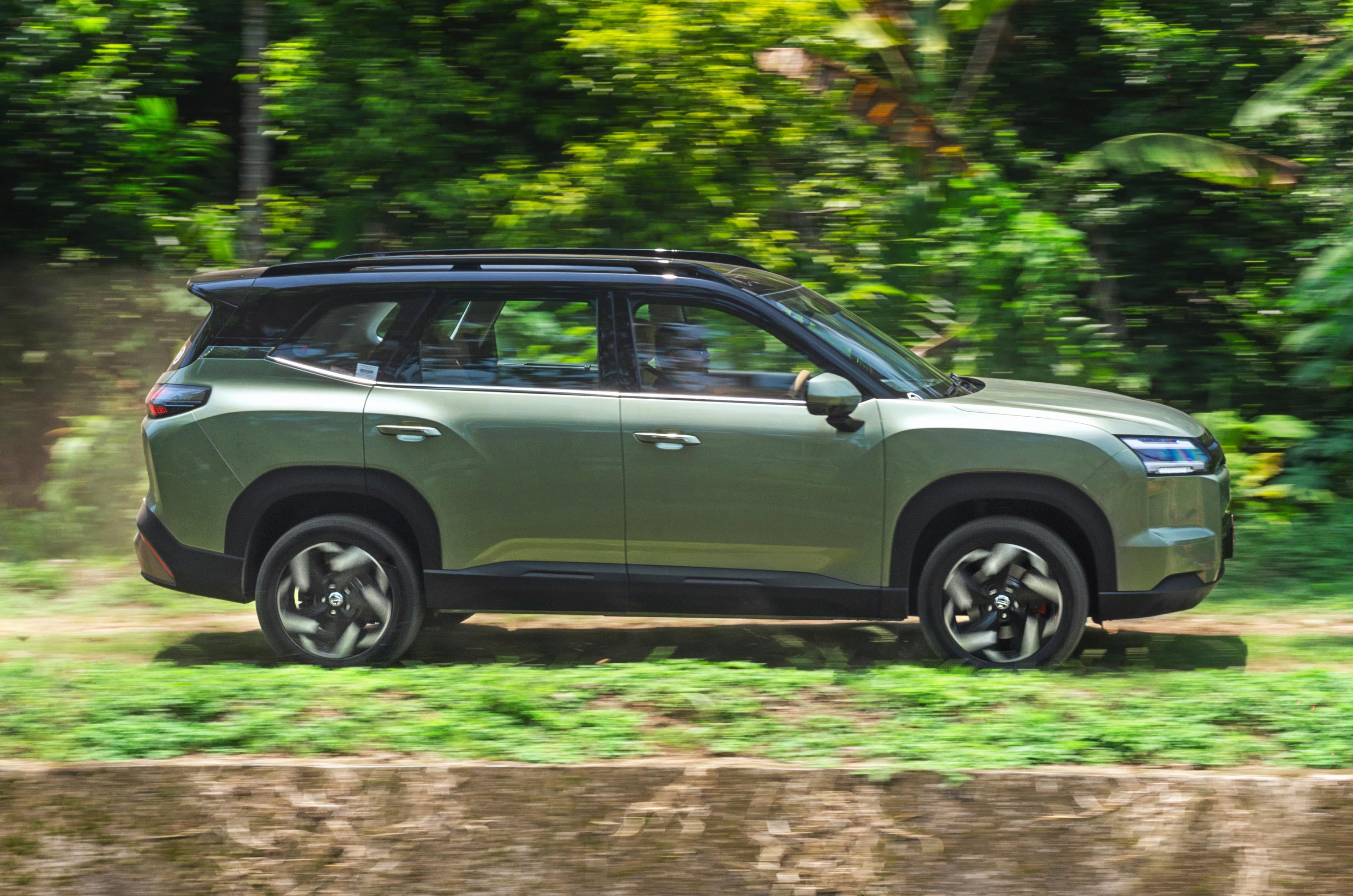
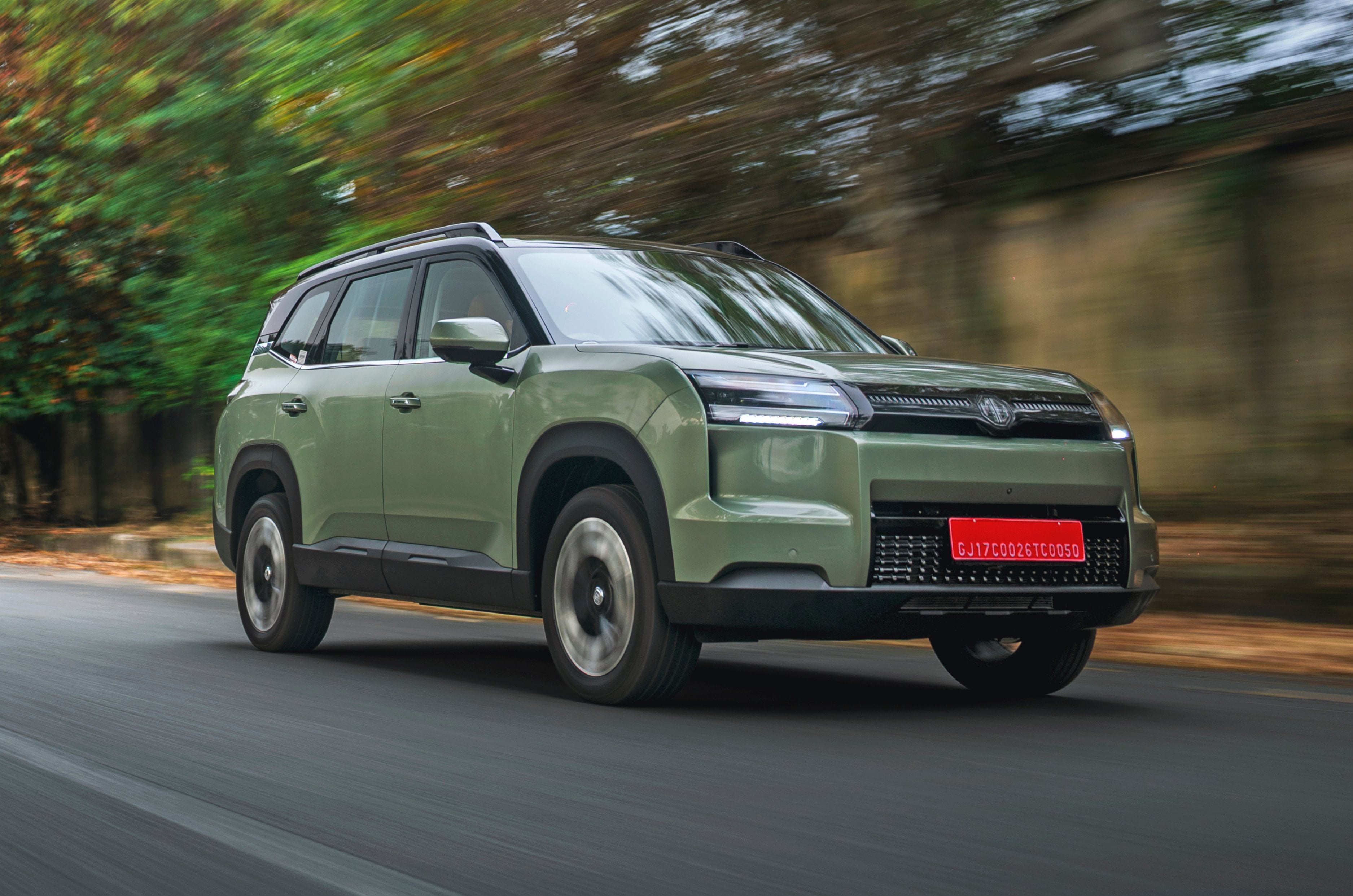
The Hector Tomahawk EV (alongside the PHEV) is the first MG model based on the brand’s new ADAPT platform, and costs from Rs 19.49 lakh to Rs 22.99 lakh (ex-showroom). The MG Hector Tomahawk EV is priced more competitively than the Hyundai Creta Electric while also seating up to seven occupants. There’s also the Kia Clavis EV, which costs about the same as the Tomahawk, but that’s an MPV. All that said, let’s start with the positives of this MG SUV first.
Reasons to buy the MG Hector Tomahawk EV
Spacious and premium interiors
Three rows of seats and an accommodating boot make this a practical family hauler
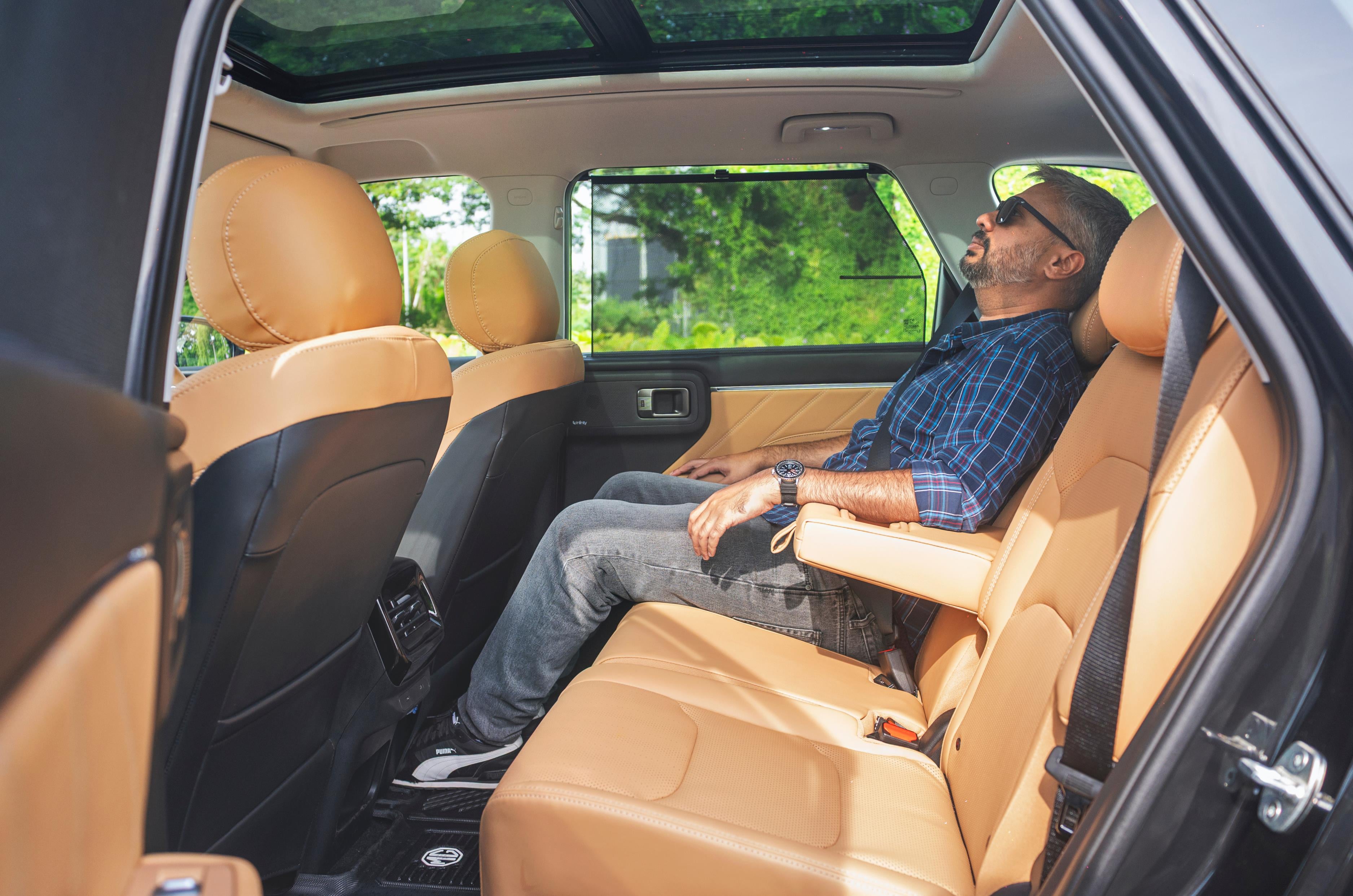
The cushioning of the wide front seats of the Hector Tomahawk EV feels comfortable even on long journeys. These seats are ventilated for added comfort, while the driver’s seat also gets a memory function for added convenience. In-cabin storage comes in the form of large door pockets and plenty of cubbies in the centre console. The Hector Tomahawk’s long wheelbase means there’s more than enough legroom for second-row passengers – these seats also recline for added comfort.
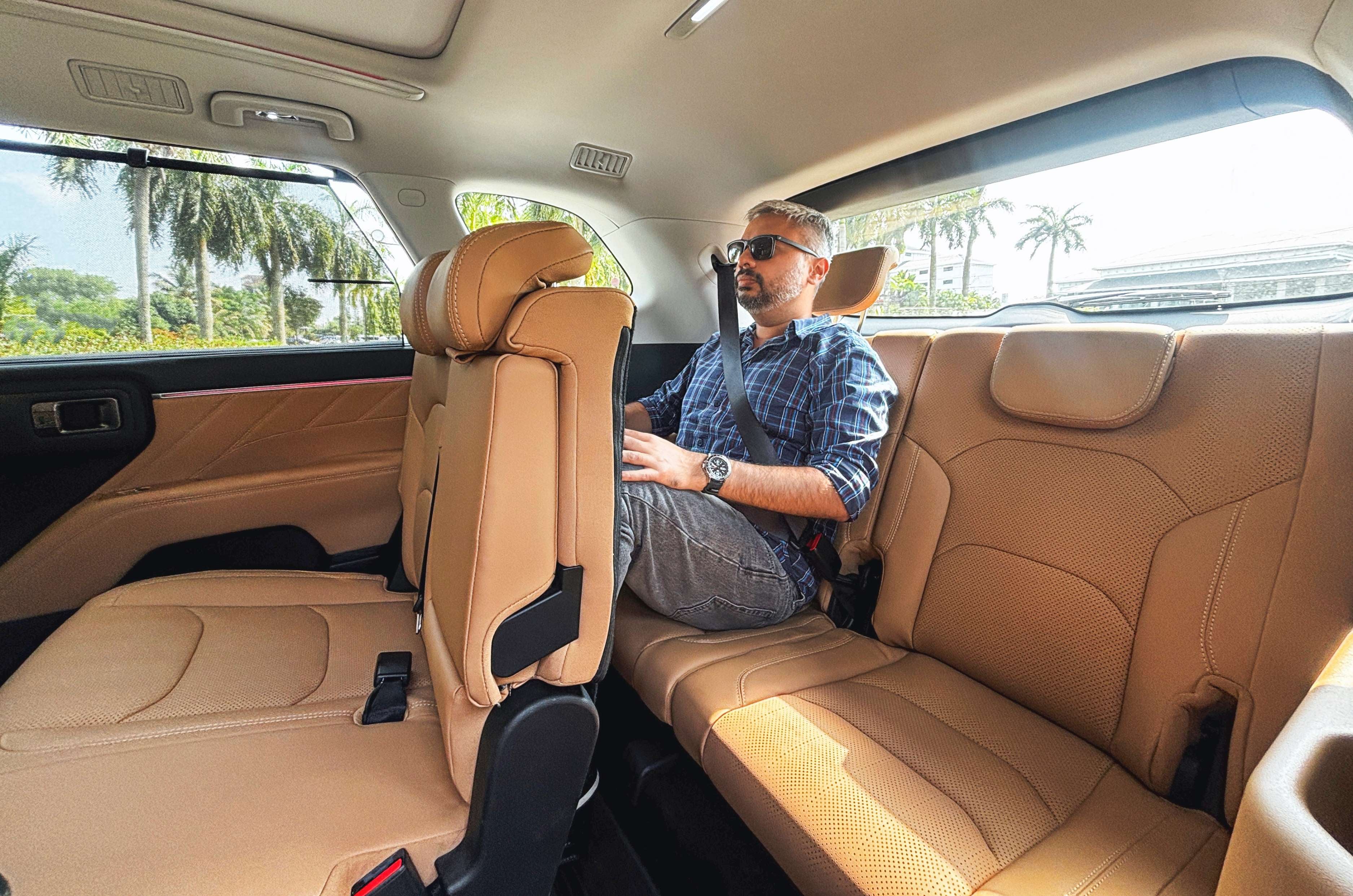
The inclusion of a centre armrest with cupholders, sunblinds, AC vents, USB ports and adjustable headrests make this a nice place to be. Accessing the third row from here is easy and fairly straightforward, courtesy of the sliding second row with its ‘one-touch tumble’ function and a large walk-through gap in the middle. While not the roomiest, last-minute jaunts won’t be an issue as there’s plenty of headroom on offer, and this third row is not devoid of AC vents or LED roof lights.
Even with the third row up, the Hector Tomahawk EV’s boot stands at 192 litres. This is enough to accommodate a couple of carry-on bags without much fuss. If you’re serious about carrying cargo, folding down those last seats will liberate 528 litres worth of space. The two-tone beige-and-black interior’s minimalistic design gets a generous splattering of soft-touch materials, and the good fit-and-finish further extends the premium appeal of this cabin.
Brimming with modern features
This MG SUV offers more than enough equipment to keep everyone on-board entertained
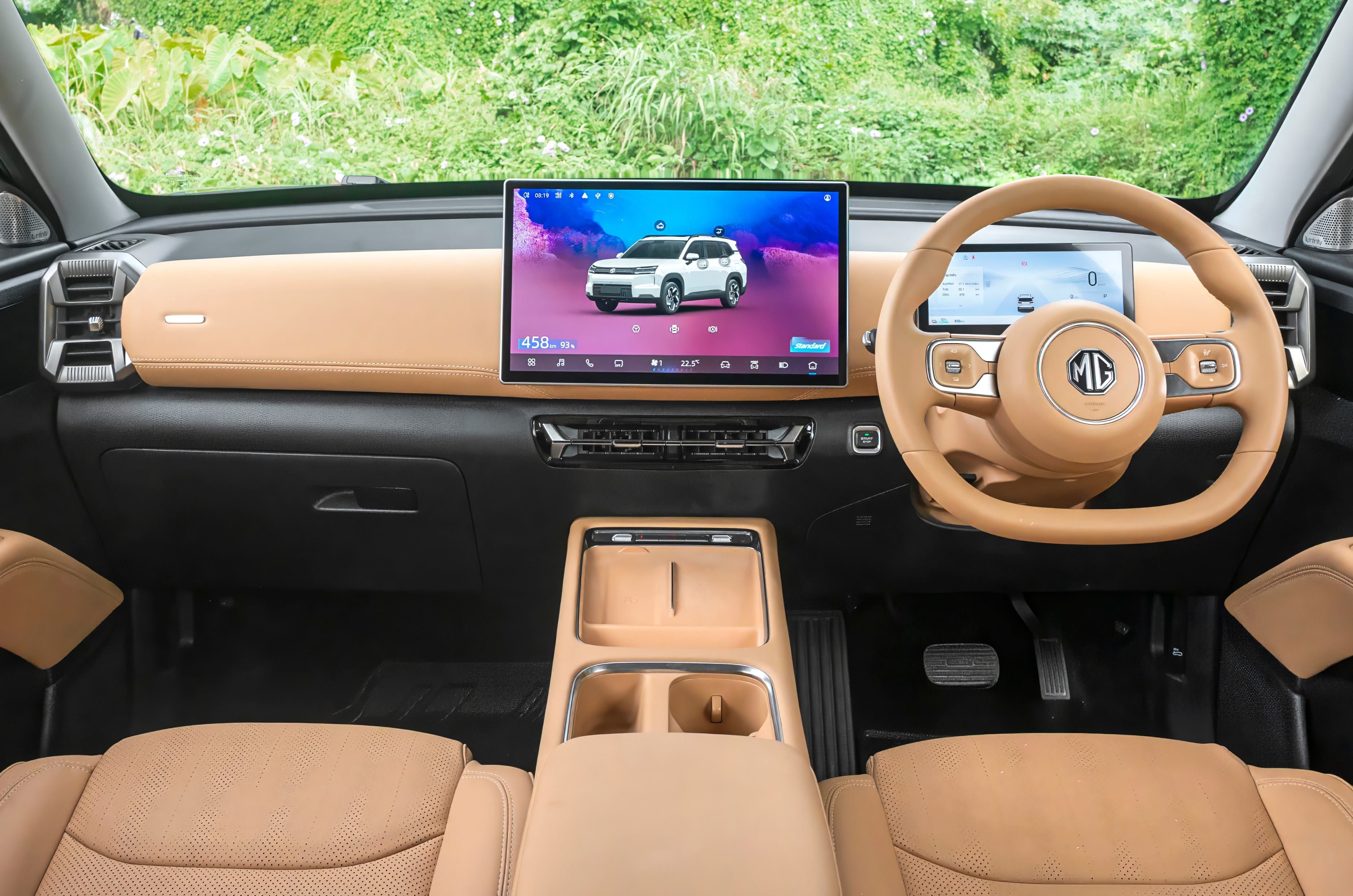
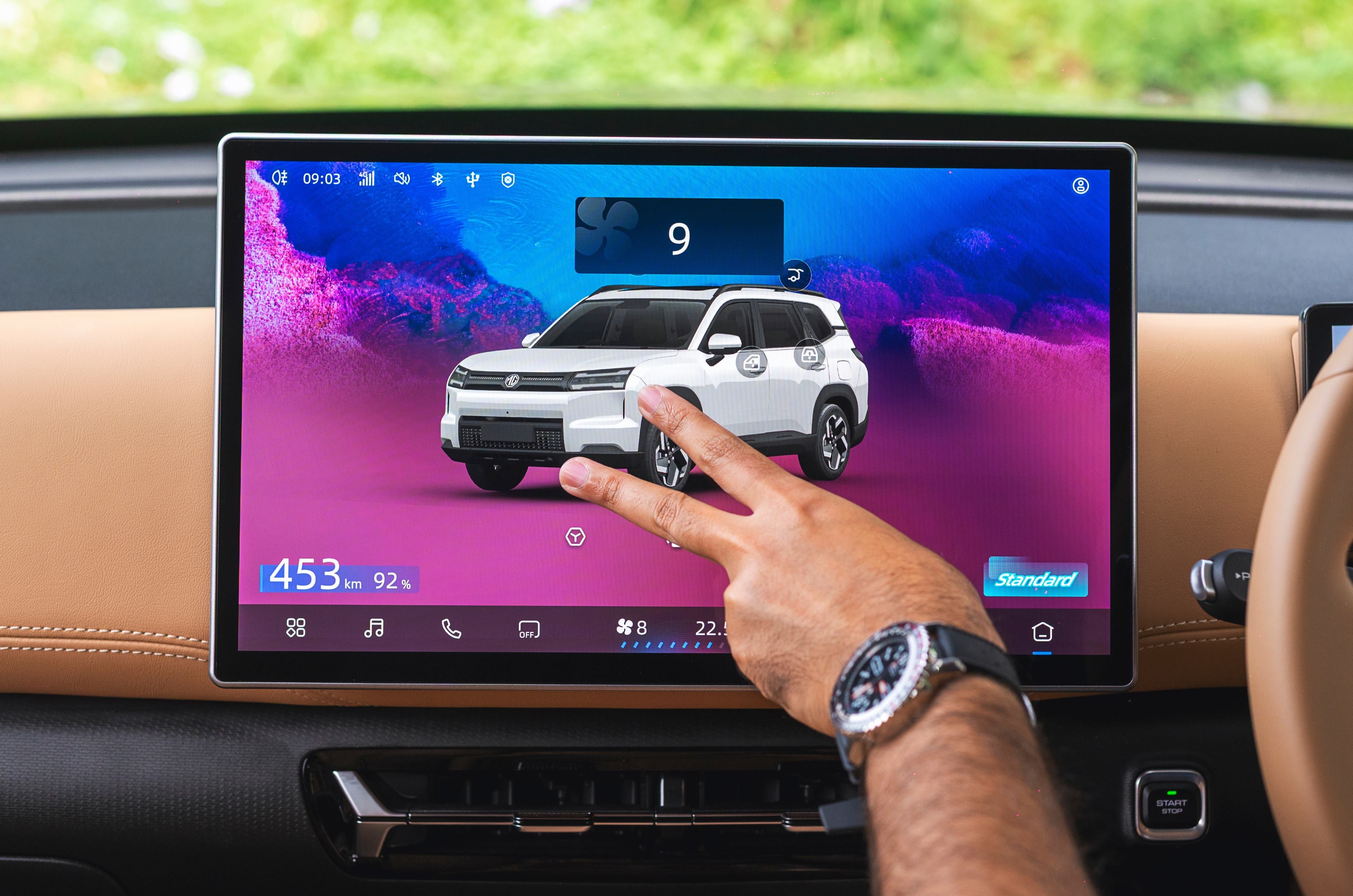
Taking centre stage on the dashboard is a 15.6-inch infotainment touchscreen, the user interface of which looks clean at first glance. The graphics are crisp and performance is snappy, too. MG has also added swipe-based gesture controls to make it easier to manipulate everyday functions such as adjusting the climate control system or the audio settings. The infotainment system comes with 6 mood-based ambient settings, wireless Apple CarPlay and Android Auto, AI-powered karaoke and multi-lingual voice commands.
Furthering the on-board experience is the well-integrated 256-colour ambient lighting system, a 10-speaker Infinity audio system (which sounds great), and crisp-looking 360-degree cameras. There’s also a ‘Custom’ mode for those who wish to tweak the power output and regen braking in 10-percent increments. The Level-2 ADAS suite of the MG Hector Tomahawk EV is comprehensive enough, while the regenerative braking system uses one of its sensors to automatically adjust regen levels in real-time based on traffic conditions.
Easy to drive
The large size of the Hector Tomahawk EV doesn’t make it a handful in the city
A commanding seating position, combined with the light steering and excellent all-around visibility, makes driving the MG Hector Tomahawk EV around town a manageable affair. Finding a suitable driving position is fairly easy too, thanks to the adjustable steering (for reach and rake) and the electrically adjustable driver’s seat. The Tomahawk EV also controls its body movements decently, feeling more mature than any MG EV before it. Finally, the brakes are good, too.
Reasons to not buy the MG Hector Tomahawk EV
Noisy suspension
The Tomahawk’s suspension can get audible over bad patches
While noises from the powertrain, tyres and wind are barely noticeable in this cabin, the same cannot be said about the Hector Tomahawk EV’s suspension. Going over bad roads, you will hear it working fairly easily, which takes away some of the premium feel of the cabin.
Non-linear power delivery
The Tomahawk EV’s powertrain lacks the linearity offered by rivals
The poor calibration of the electric powertrain of the MG Hector Tomahawk EV means that it may not be ideal for new drivers. ‘Standard’ drive mode dulls the response to prods from your right foot ever so slightly, with firmer throttle application resulting in torque steer due to a sudden surge in power reaching the front wheels. Trying to accelerate hard in ‘Sport’ mode will easily overwhelm the tyres up front – linearity in power delivery is missing.
Too much reliance on the touchscreen
Almost everything is routed through the massive infotainment screen
It might be sharp and responsive, but burying almost every major function and feature in the infotainment head unit gets distracting. The labyrinth of menus and sub-menus means that you will have to take your eyes off the road for using any of this SUV’s comprehensive feature set. Its sheer size also results in the touchscreen catching reflections, causing further distractions while driving.
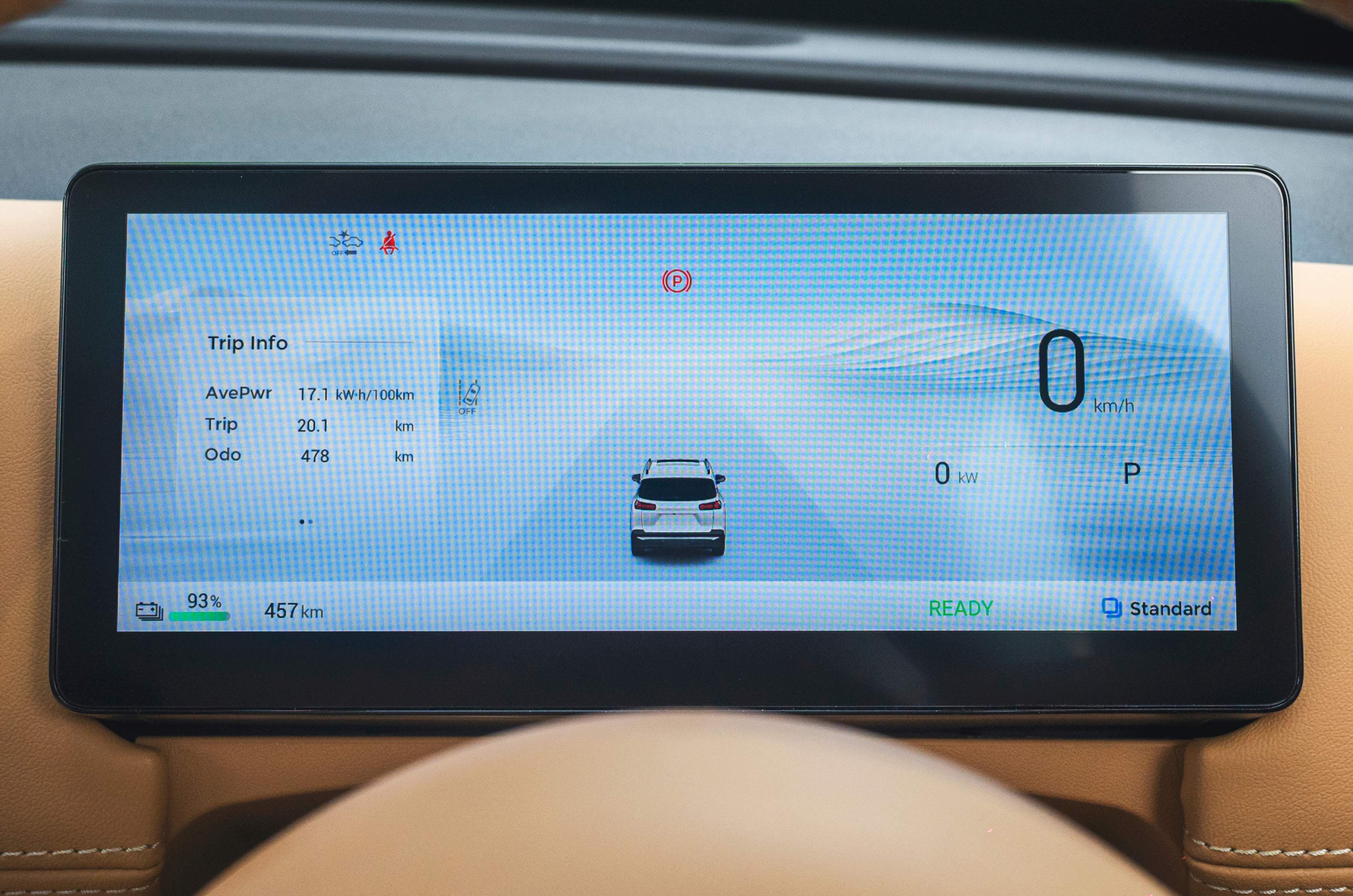
As for the 8.8-inch digital driver’s display, its real-estate could have been used better. While sharpness isn’t a problem, but that positive is overshadowed by the small fonts used for information read-outs. This can make reading most details on this display difficult.
MG’s newest SUV has been christened the Hector Tomahawk, but despite the name, it shares nothing with the ICE-powered Hector we’ve known since 2019. The Hector Tomahawk EV and PHEV are the first models on MG’s ADAPT architecture, which will eventually spawn strong hybrids and range-extender hybrids. We drove the Tomahawk EV in sunny Kochi to see how it stacks up in the ever-growing segment.
MG Hector Tomahawk EV Exterior Design and Engineering – 6/10
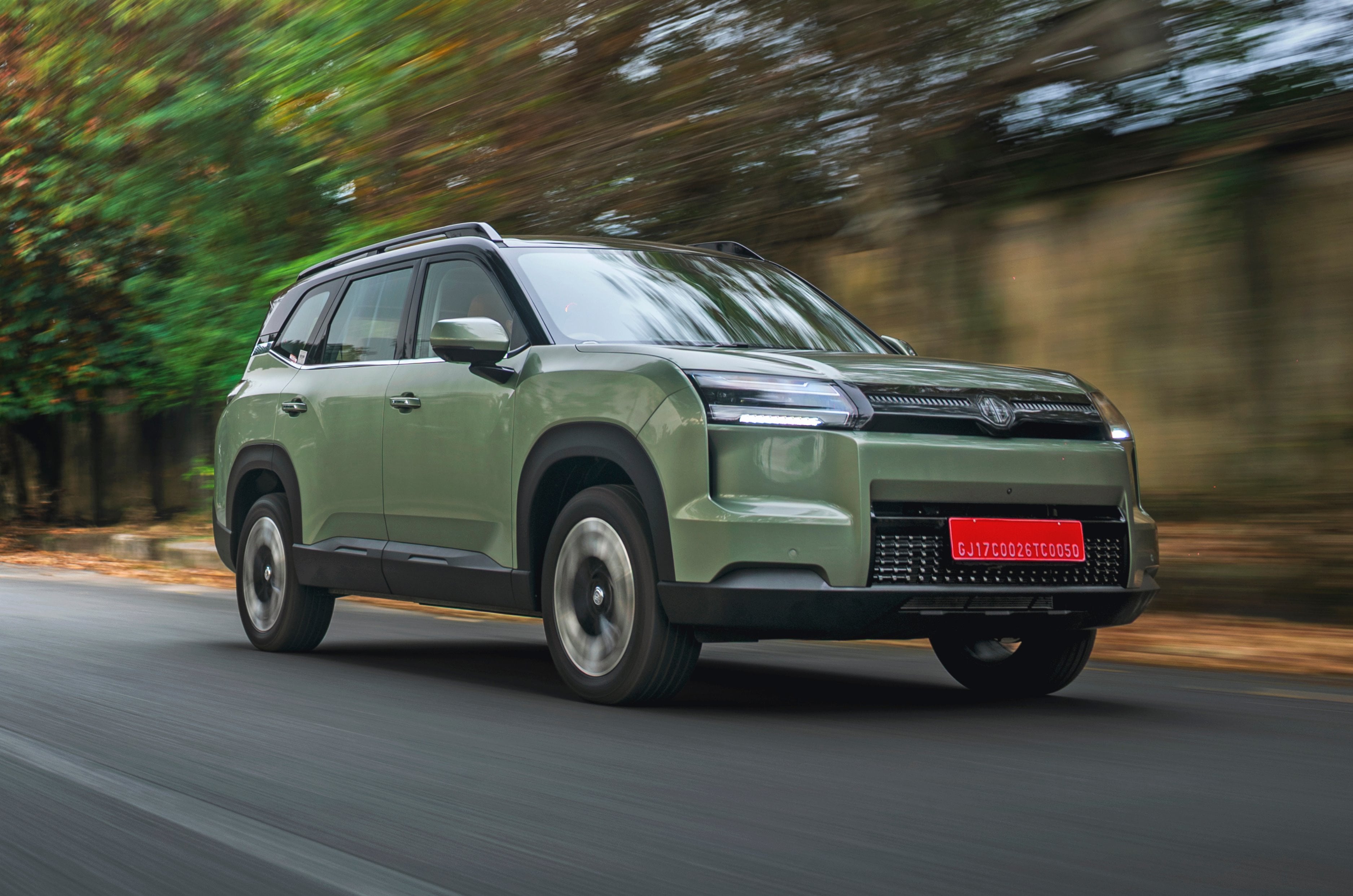
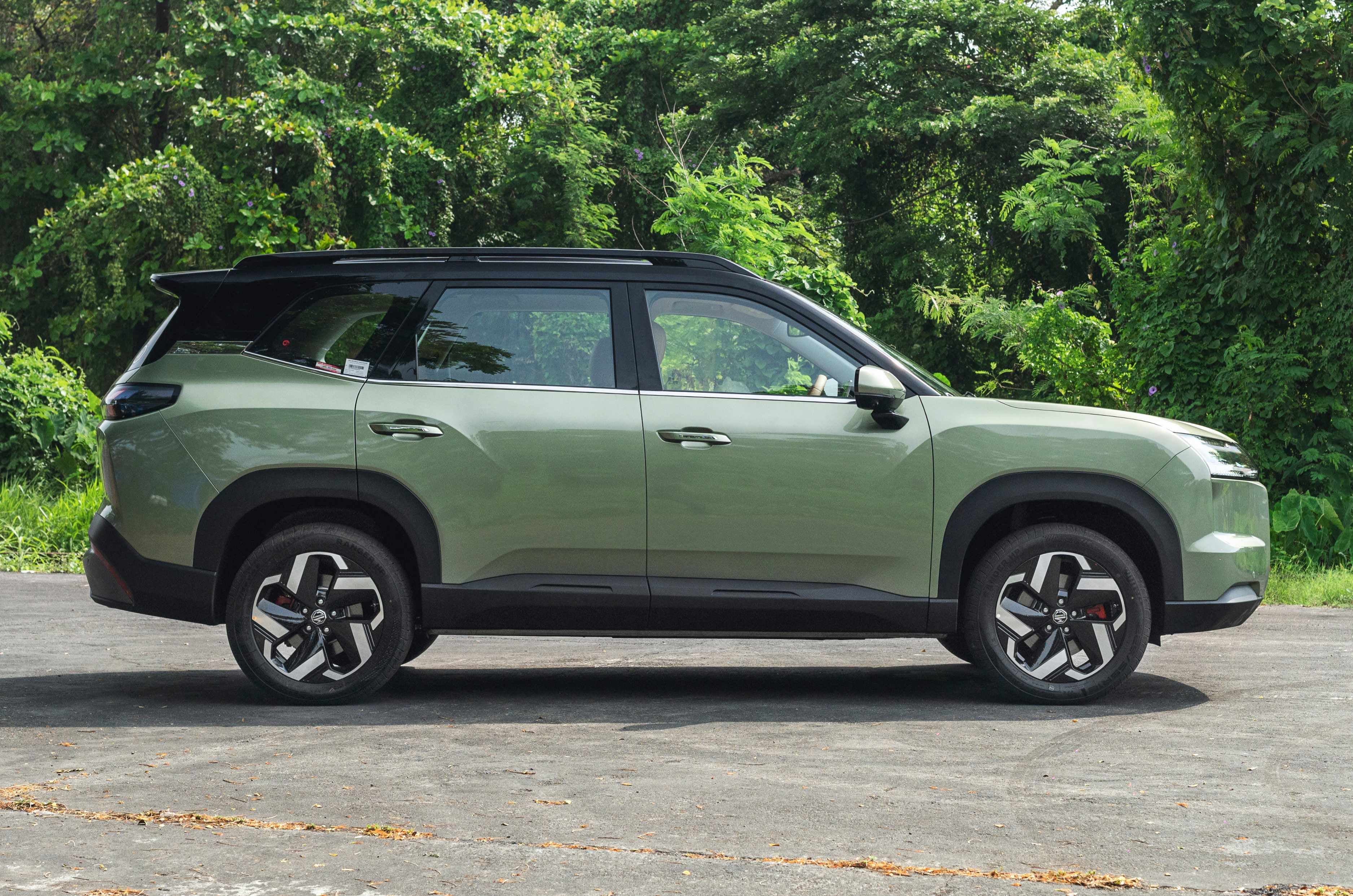
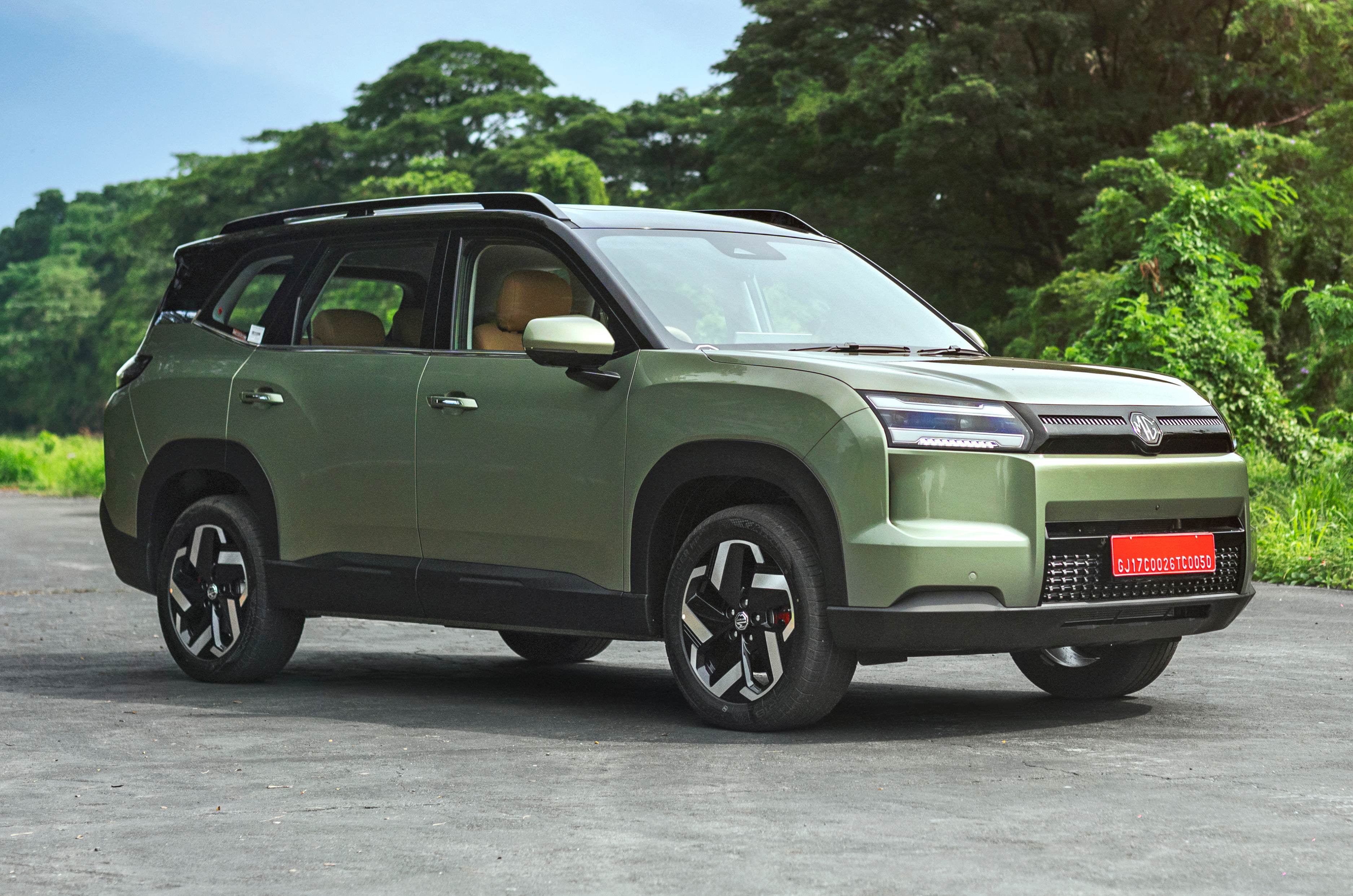
Let’s talk dimensions first. At 4,745mm long, 1,850mm wide, 1,770mm tall and with a 2,810mm wheelbase, the Tomahawk is larger than the Mahindra XEV 9S in all areas except width. Ground clearance, at 230mm (measured to battery), is also class-best. However, these numbers don’t translate to a particularly imposing stance. Instead, it straddles the line between an MPV and SUV.
Size doesn’t translate to an imposing stance; it straddles the line between an MPV and an SUV.
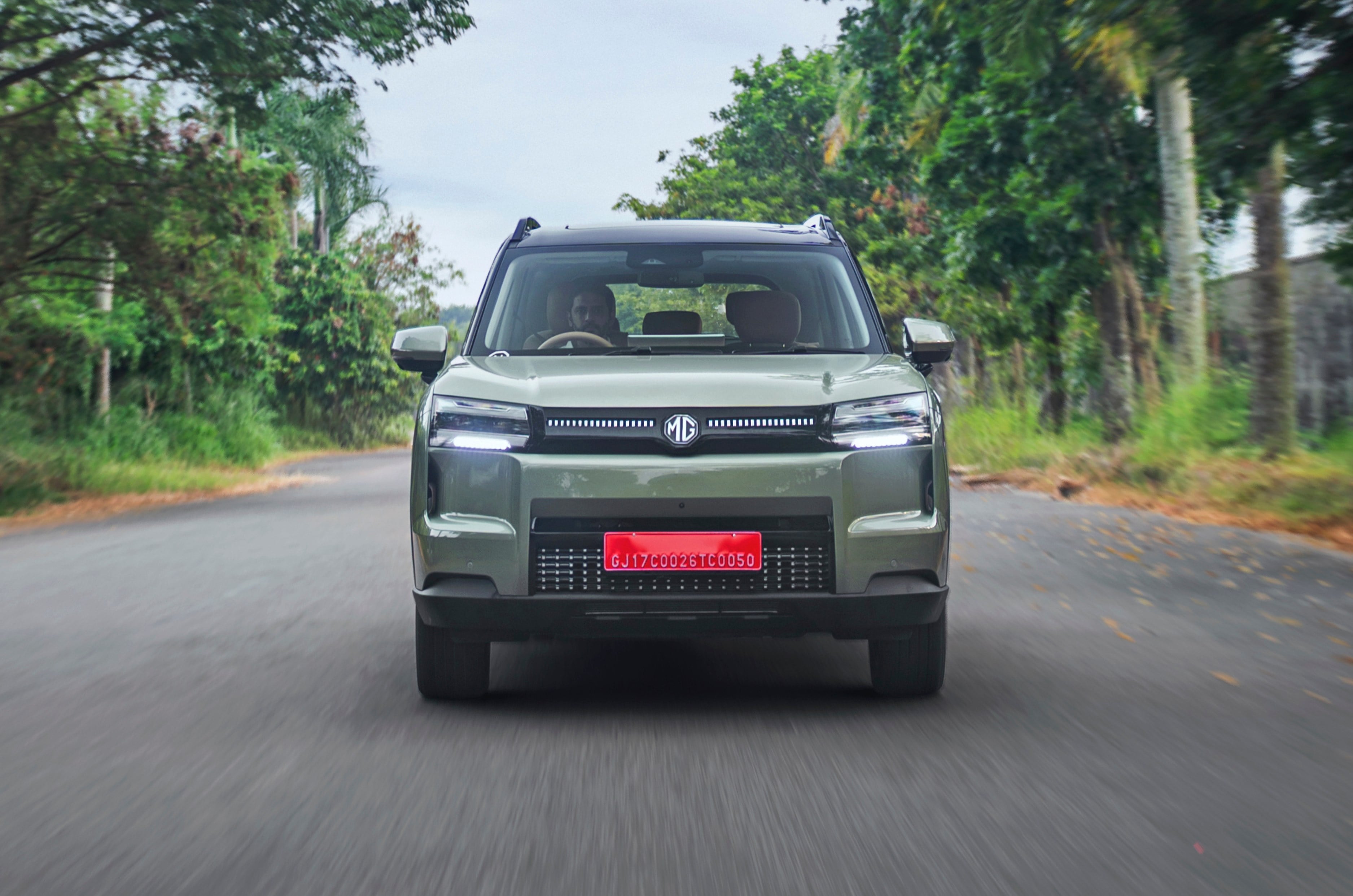
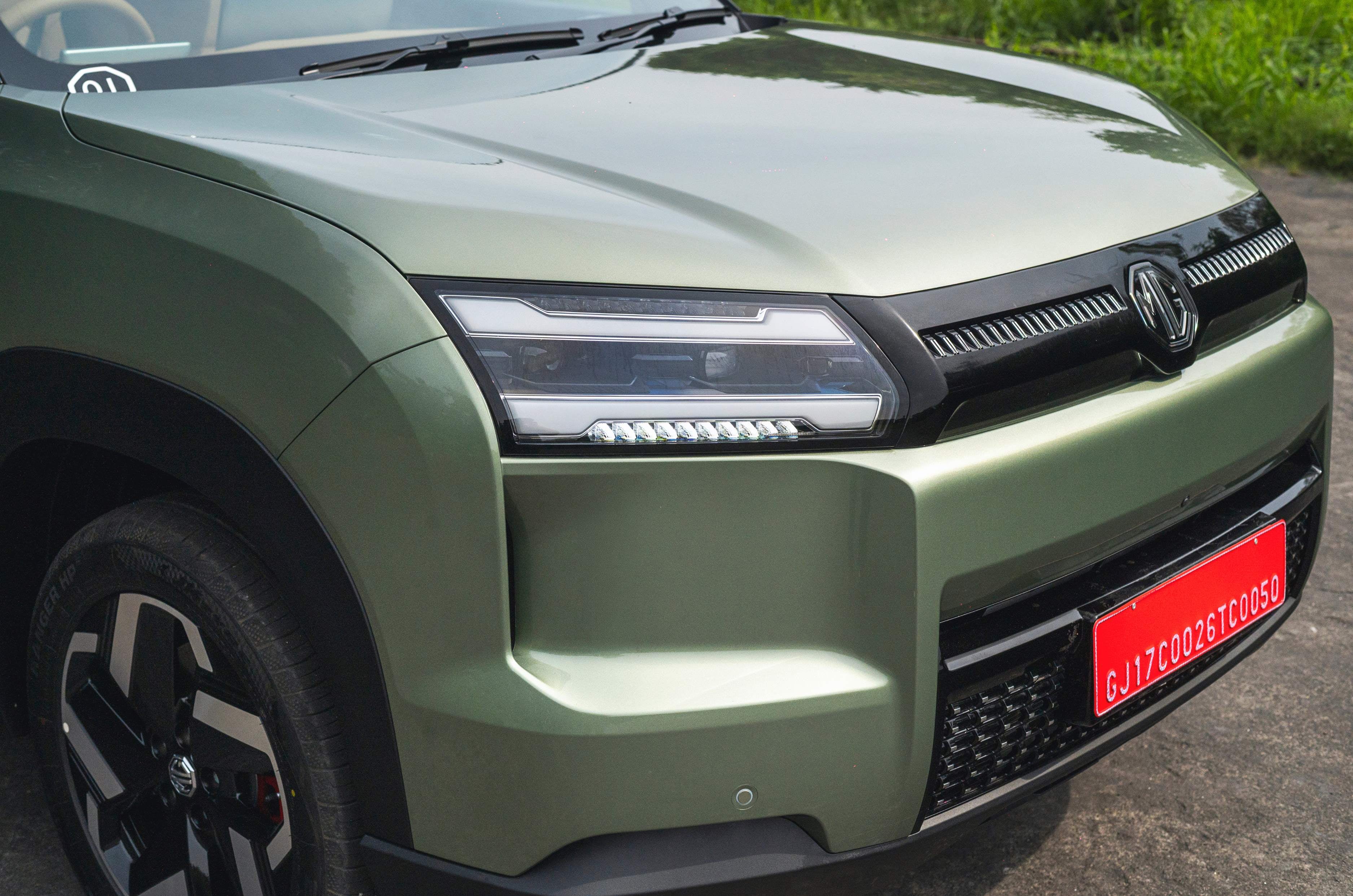
The design is clean and quite handsome, if a bit uninspiring. The front bumper is squared off with pass-through aero vents on the edges and chunky cladding lower down. Cooling requirements are met by slim slots in the centre section with some chrome detailing, while the conventional grille is blanked off and finished in gloss black. No light bar here, thankfully, but the MG logo does glow and is flanked by rectangular LED headlights with a subtle H-shaped light signature.
Large rectangular LED headlights have a subtle H in them; no light bar, but the MG logo glows.
In profile, it looks quite slab-sided, with sharp creases along the fenders and plastic wheel-arch cladding adding some definition. These, along with the chunky door cladding, attempt to give it a rugged appearance but are let down by 18-inch wheels that look a tad too small. No electric door handles here, just good old-fashioned pull types.
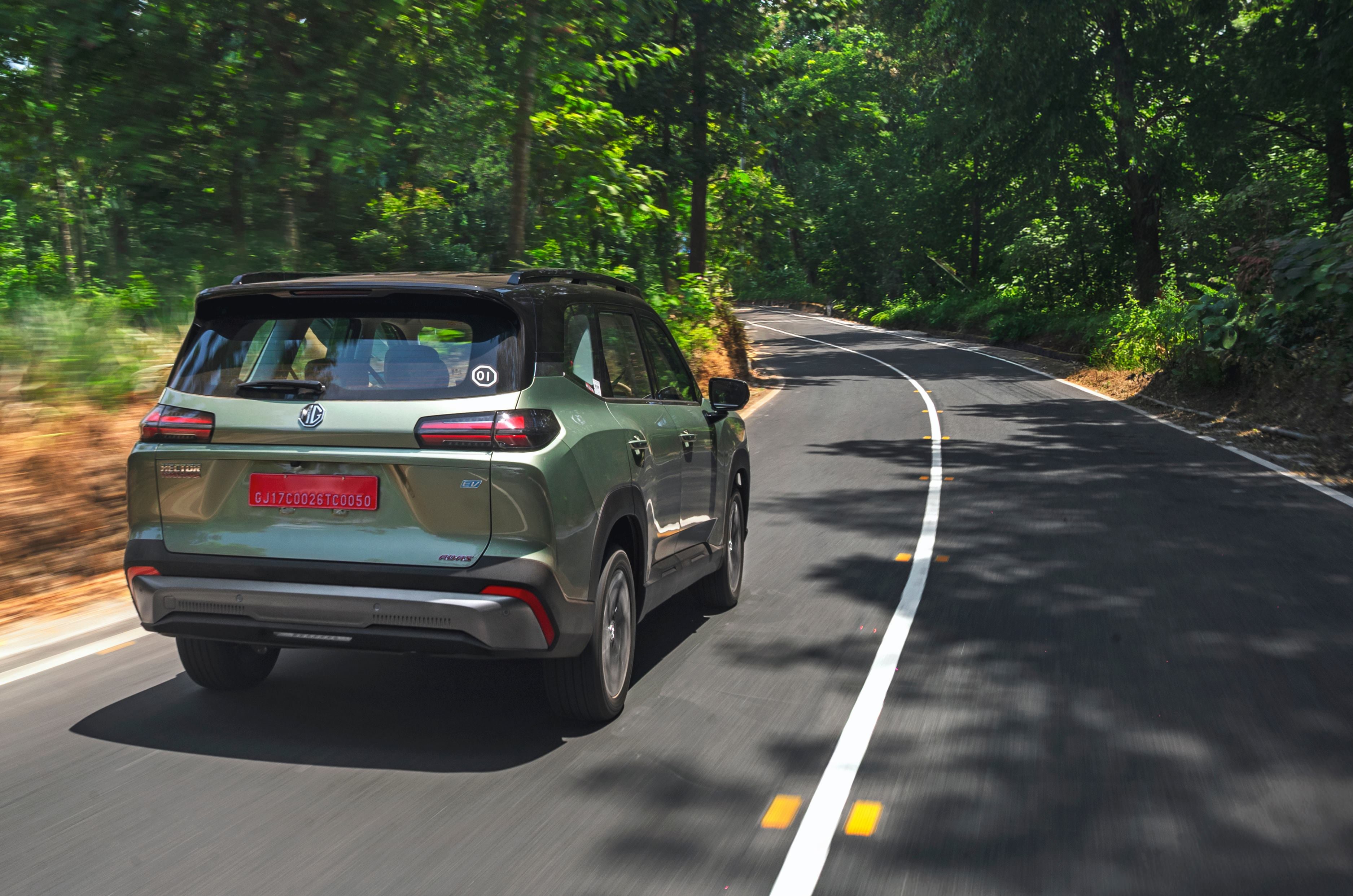
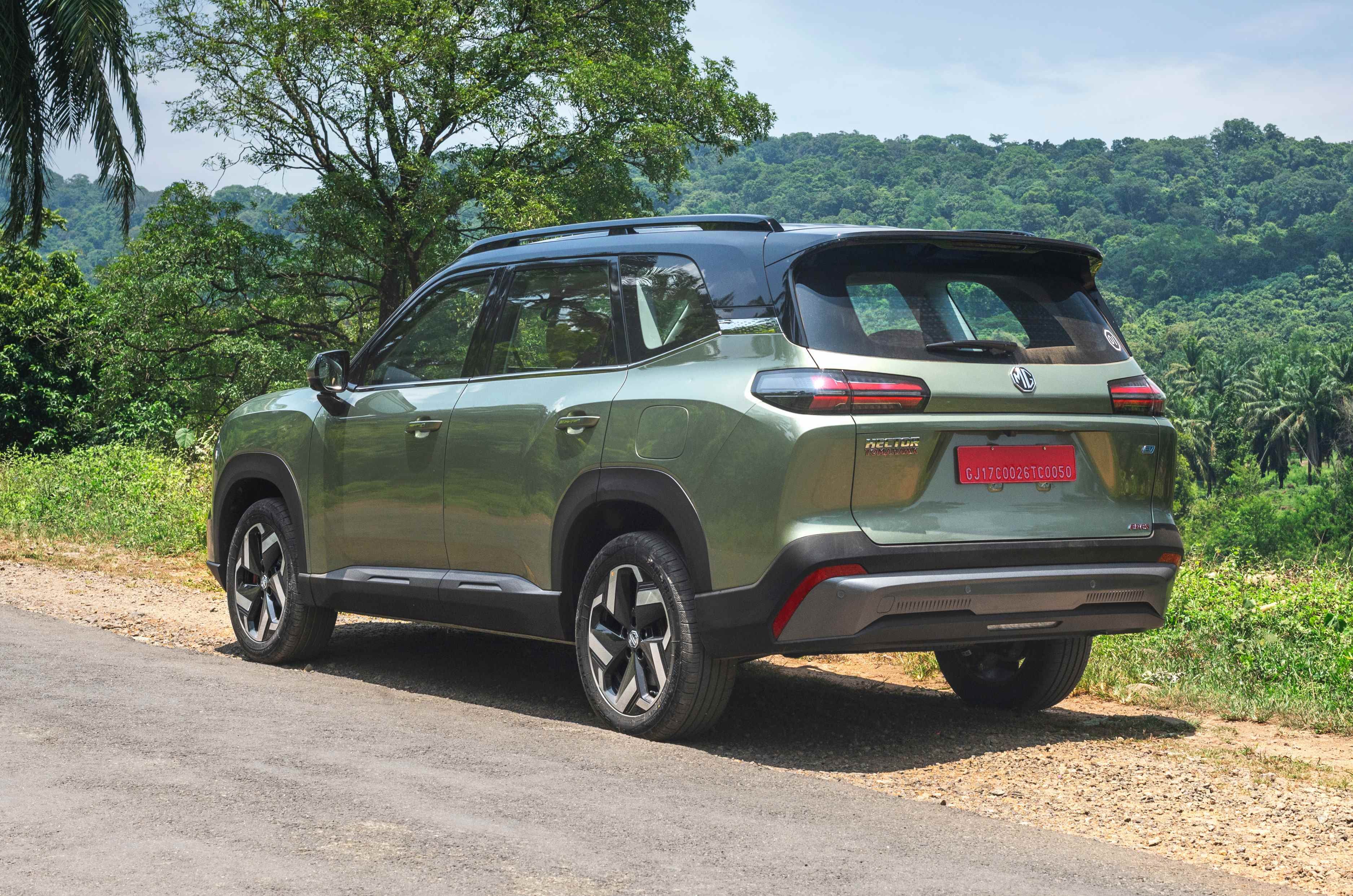
Further back are a set of intricate LED tail-lights that again resist the connected trend. MG’s love for badging is clear though, with four on the powered tailgate. Finishing things off nicely is a sculpted bumper with a grey trim piece and a centre-mounted reverse lamp. Overall, it’s a reasonably pleasing design, but it looks a tad dated and lacks the butch appeal of some rivals.
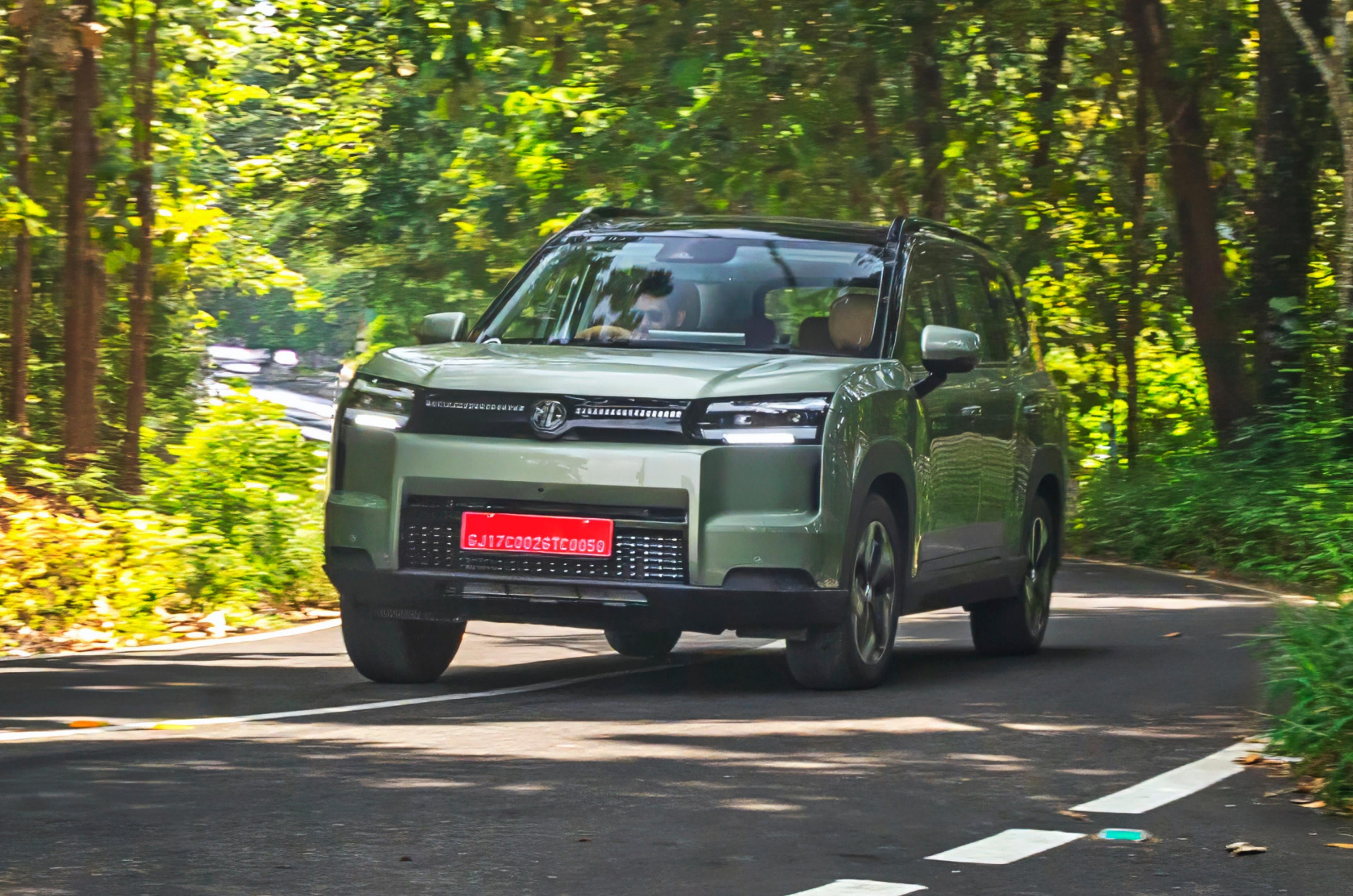
Overall styling is neatly done but somewhat uninspiring.
MG Hector Tomahawk EV Interior Space and Comfort – 8/10
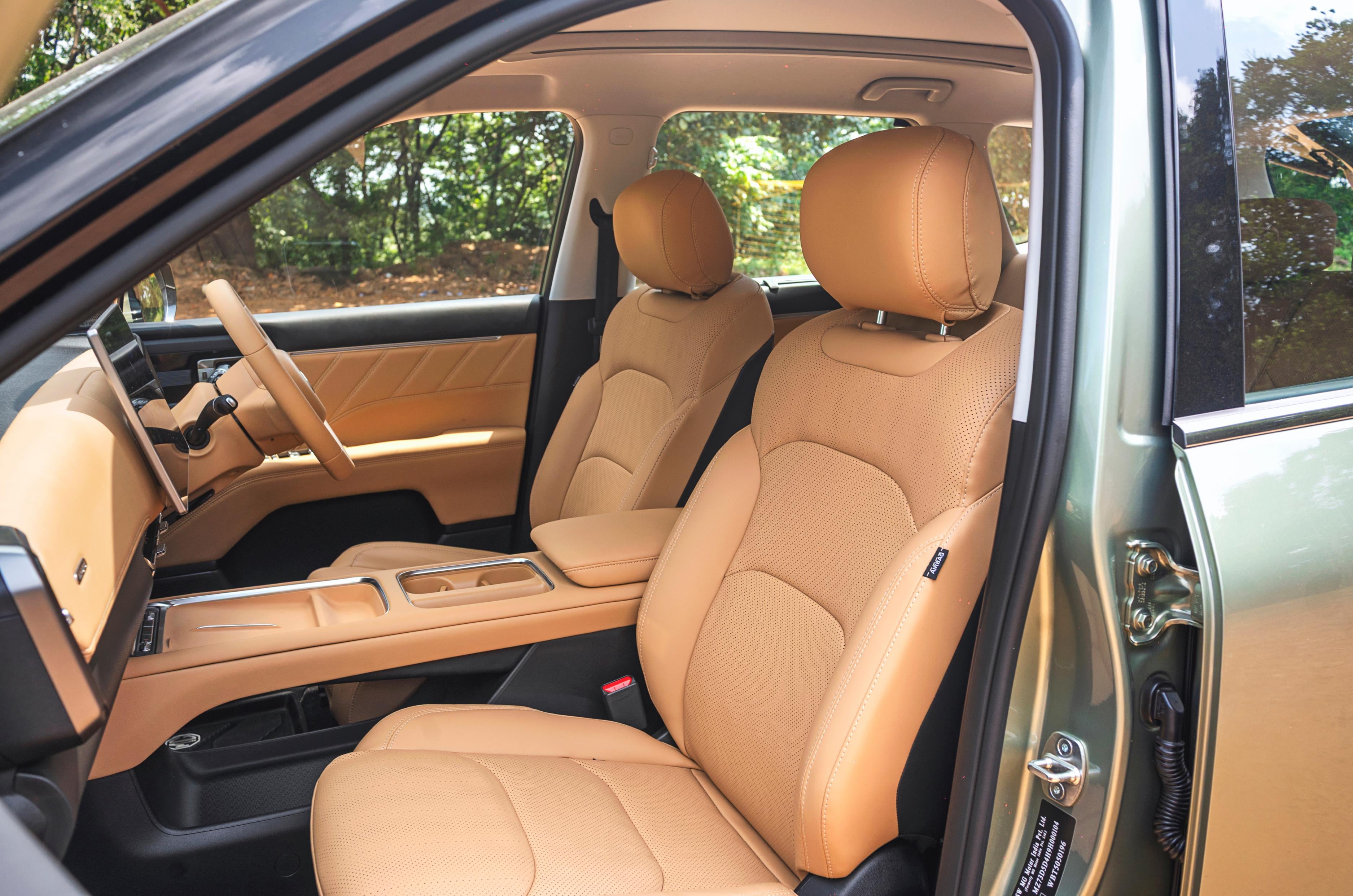
Inside, the dash features a familiar minimalistic layout with a large touchscreen front and centre. It looks premium and features soft-touch materials on the dash and doors, but lacks a certain wow factor, and the light tan colour palette might not be to all tastes. That said, the light tone and large windows do give it an airy ambience. Look hard, and you will find areas where fit and finish could be improved. The centre console in particular feels poorly textured and finished, which we were told is down to a supplier issue. Speaking of the centre console, the column-mounted drive selector frees up space here for a wireless charger, cupholders, multiple bins as well as a large pass-through cubby lower down, and the door bins are enormous too.
Minimalistic interior looks premium, but the light tan colour palette might not be to all tastes.
It’s easy to get into a comfortable and commanding driving position using the power-operated seats and reach-and-rake adjustment for the steering wheel. The seats themselves are wide, and despite the firm cushioning, they felt comfortable on our full day of driving. They are ventilated too, and the driver’s seat also gets a memory function.
Powered and ventilated front seats are wide and comfortable; driver’s seat gets a memory function.
The Tomahawk has the second-longest wheelbase in class (next only to the Vinfast MPV 7), and it shows in the second row. Legroom is excellent, and while you do sit slightly knees-up, thigh support is adequate too. The seatback reclines pretty far back and features an armrest and three adjustable headrests. Window sunshades, AC vents and Type-C USB ports add to the rear-seat comfort and convenience.
The chauffeur-driven are well taken care of, with a comfy reclining bench, plenty of room all around and sunblinds.
The Tomahawk EV is available in both 5- and 7-seater guises. The latter adds a sliding second row with one-touch tumble to access the third row, as well as more AC vents on the roof and a dedicated fan-speed control. Getting into the last row is surprisingly dignified thanks to a large aperture, but kneeroom depends largely on the middle-row passengers’ generosity, and the low seat means thigh support is non-existent. Headroom is good, though, and for short journeys, adults will be fine back there.
Third row will fit adults but with a slight compromise to the middle-row space.
With the third row up, boot space stands at 192 litres – enough for a couple of carry-on bags – expanding to a generous 528 litres with it stowed. Under the boot floor are a few more storage cubbies, which are handy since there is no frunk – a miss considering there appears to be enough space under the bonnet. A space-saver spare is mounted underneath the car.
MG Hector Tomahawk EV Features and Safety – 8/10
The minimalist interior layout means you reach for the 15.6-inch infotainment screen for most functions. While this can get distracting, physical and swipe-gesture controls together handle most basic HVAC and audio functions with surprising ease. Anything beyond basic, though, will require a deep dive into the screen. While the screen is sharp and snappy and the UI is clean, it can take a while to find your way through the maze of sub-menus. Wireless Android Auto and Apple CarPlay are also present, but using either hides the row of shortcuts at the bottom of the screen. Hardcoding these buttons to always stay on top would improve usability. The screen also often catches glare, which takes away from the otherwise sharp 360-degree camera.
Several functions are baked into the 15.6-inch touchscreen, but gesture controls for essential functions are quite intuitive.
Instrumentation is handled by an 8.8-inch display directly in front of the driver. The screen itself is sharp, but some smaller fonts might have you reaching for your reading glasses. Its real estate could also be better utilised by displaying the blind-view camera feed rather than the current pop-up on the centre screen. Other feature highlights include a sweet-sounding 10-speaker Infinity audio system, a panoramic sunroof that stretches over the second row, 256-colour ambient lighting, connected car tech, an AI assistant and more. It’s worth mentioning that the Tomahawk EV also gets a physical start/stop button, which is absent on the brand’s other EVs.
8.8-inch driver’s display is sharp, but some smaller fonts might have you reaching for your reading glasses.
A Level 2 ADAS suite is also available on the top Essence trim, with functions such as adaptive cruise control, lane keep assist and auto emergency braking. While there isn’t an official crash-test rating yet, the robust standard safety kit, including six airbags, ESP, all-wheel disc brakes and Isofix mounts, provides some confidence.
MG Hector Tomahawk EV Performance and Refinement – 7/10
The Tomahawk EV offers just one powertrain configuration – a 69.2kWh LFP battery pack powering a single motor on the front axle, producing 204hp and 310Nm, good for a claimed 0-100kph time of 8.2 seconds. Its front-wheel-drive layout puts it at a disadvantage against rivals from Tata and Mahindra, who offer either rear- or all-wheel drive and higher power outputs. The front-driven Hyundai Creta Electric or Kia Carens Clavis EV are closer matches, and the Tomahawk EV betters them on power and torque.
First EV on MG’s ADAPT architecture pairs a 69.2kWh battery with a front-mounted motor producing 204hp and 310Nm.
Initial throttle response is mild, making it quite easy to amble around town, but push harder, and you get a power spike resulting in torque steer. In Sport mode, you’ll hear the front tyres protest when made to put all that torque down on a less-than-perfect road. Standard mode dulls response slightly, but it can still catch new drivers off guard. With time, it is possible to drive around this, but the latest crop of rival EVs has mastered a more linear delivery. Eco mode feels a bit tepid and is best saved to counter range anxiety, while a Custom mode lets you customise power output and regen braking in increments of 10 percent. There are also three preset regen modes – Standard, Comfort and Strong – but no paddles to control them or one-pedal mode. Instead, you get an Intelligent setting that uses the ADAS sensors to adjust regen in real time based on the traffic in front of you.
Grip levels and body control are good, but FWD layout struggles to put power down.
Refinement is a bit of a mixed bag. While the motor is fairly muted and there is little wind or tyre noise coming through, you hear the suspension at work on rough patches.
MG Hector Tomahawk EV Range and Efficiency – 7/10
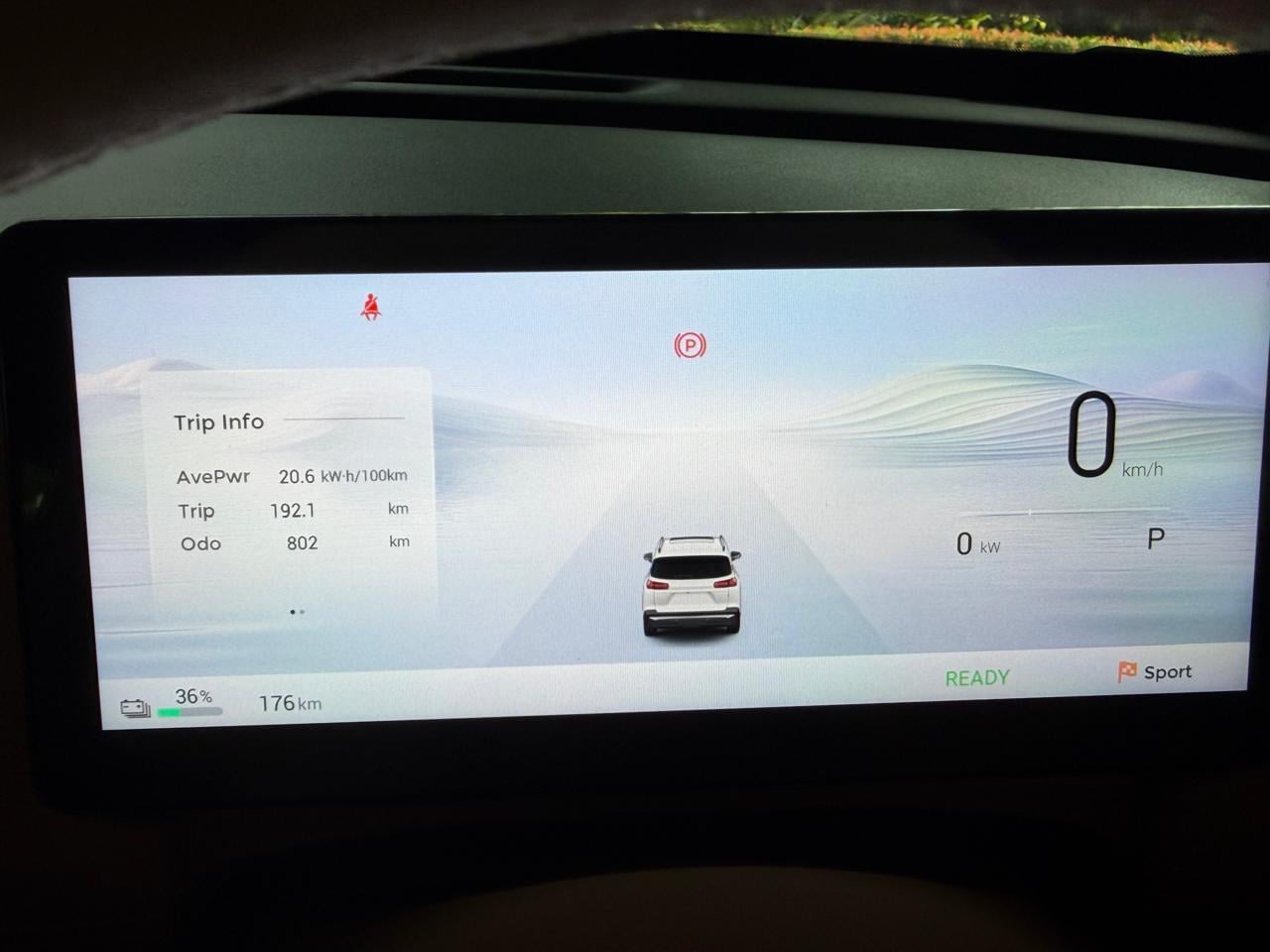
A spirited highway drive from Kochi to Kozhikode covering 192km, resulted in an overall efficiency of 4.85km/kWh.
While the Hector name is often associated with poor fuel efficiency, the new EV and PHEV hope to change that. MG claims an MIDC range of 517km from its 69.2kWh battery pack. On a spirited drive from Kochi to Kozhikode covering 192km, we recorded an overall efficiency of 4.85km/kWh, translating to a real-world range of 336km. This was on a fast highway run, where the Tomahawk’s tall shape won’t do its efficiency any favours. We’ll put it through our standard real-world efficiency test when we have the car for longer.
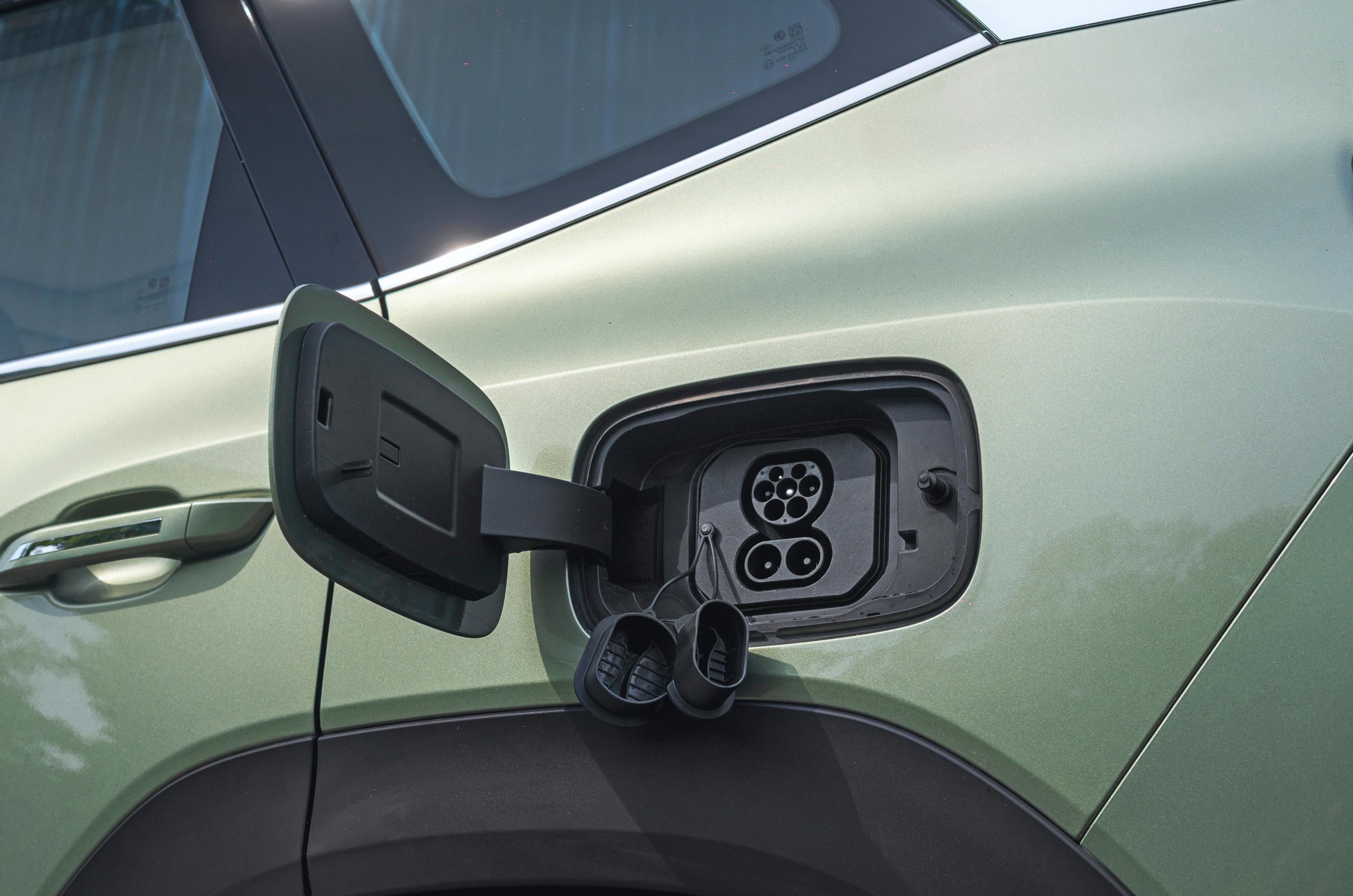
DC fast charges at 90kW – slower than rivals but enough for a 30 to 80 percent top-up in a claimed 35 minutes.
Topping up the battery from 10 to 100 percent using the 7.4kW charger is said to take around 12.5 hours. It can also DC fast charge at speeds of up to 90kW, which is lower than its immediate rivals but still enough to take the battery from 30 to 80 percent in about 35 minutes.
MG Hector Tomahawk EV Ride Comfort and Handling – 7/10
Rides with more maturity than previous MG EVs, but suspension can be heard working.
The Hector Tomahawk EV makes a big step up in ride and handling compared to the ICE Hector, but there is still some room for improvement. It rides with more maturity than previous MG EVs, comfortably absorbing most of what we threw at it. However, you do hear the suspension working. Sharper bumps reveal an underlying firmness that occasionally comes through to the cabin. Most roads around Kochi were relatively smooth, and we weren’t able to experience it on rippled concrete, so we will reserve full judgement until we have the car for longer.
A big positive is how easy the Tomahawk is to drive for something this large. Visibility all around is excellent, and you can see the bonnet’s edges from the driver’s seat. A light steering also helps, and overall, it feels less intimidating to drive through tight traffic than, say, the XEV 9S.
230mm claimed ground clearance is best in class; wheelbase second only to VF MPV 7.
The steering also weighs up as speeds rise and feels reasonably direct, though the sheer amount of torque going to just the front wheels corrupts the feel. At a quick pace through the twisties, you feel the wheel tugging at your hands as you apply power. Body control is good, and it stays composed through quick direction changes, but a sedate pace is more its element. Braking is strong, with four-wheel discs bringing the heavy SUV to a confident halt.
MGHector Tomahawk EV Value for Money – 7/10
Introductory pricing for the Hector Tomahawk EV starts at Rs 19.49 lakh and tops out at Rs 23.49 lakh. The Battery-as-a-Service (BaaS) scheme lowers the entry barrier to Rs 13.99 lakh, with battery rental set at Rs 4.90 per km. While all these prices are applicable to limited units only, this is quite aggressive pricing from MG.
Practical, comfortable and no-nonsense SUV will appeal to the chauffeur-driven but lacks the dynamic polish of its rivals.
When compared spec-for-spec, it undercuts the competition from Tata and Mahindra while offering a bigger battery and more performance than its Korean rivals. It has a spacious and comfortable cabin, a comprehensive feature set and is surprisingly easy to drive for its size. However, it lacks the dynamic polish of its rivals and therefore doesn’t feel like a latest-generation EV. As such, its Hector name starts to make more sense. It is a practical, comfortable, no-nonsense SUV that will appeal to the chauffeur-driven just like its forebear. Those looking to do the driving, though, are better off looking elsewhere.
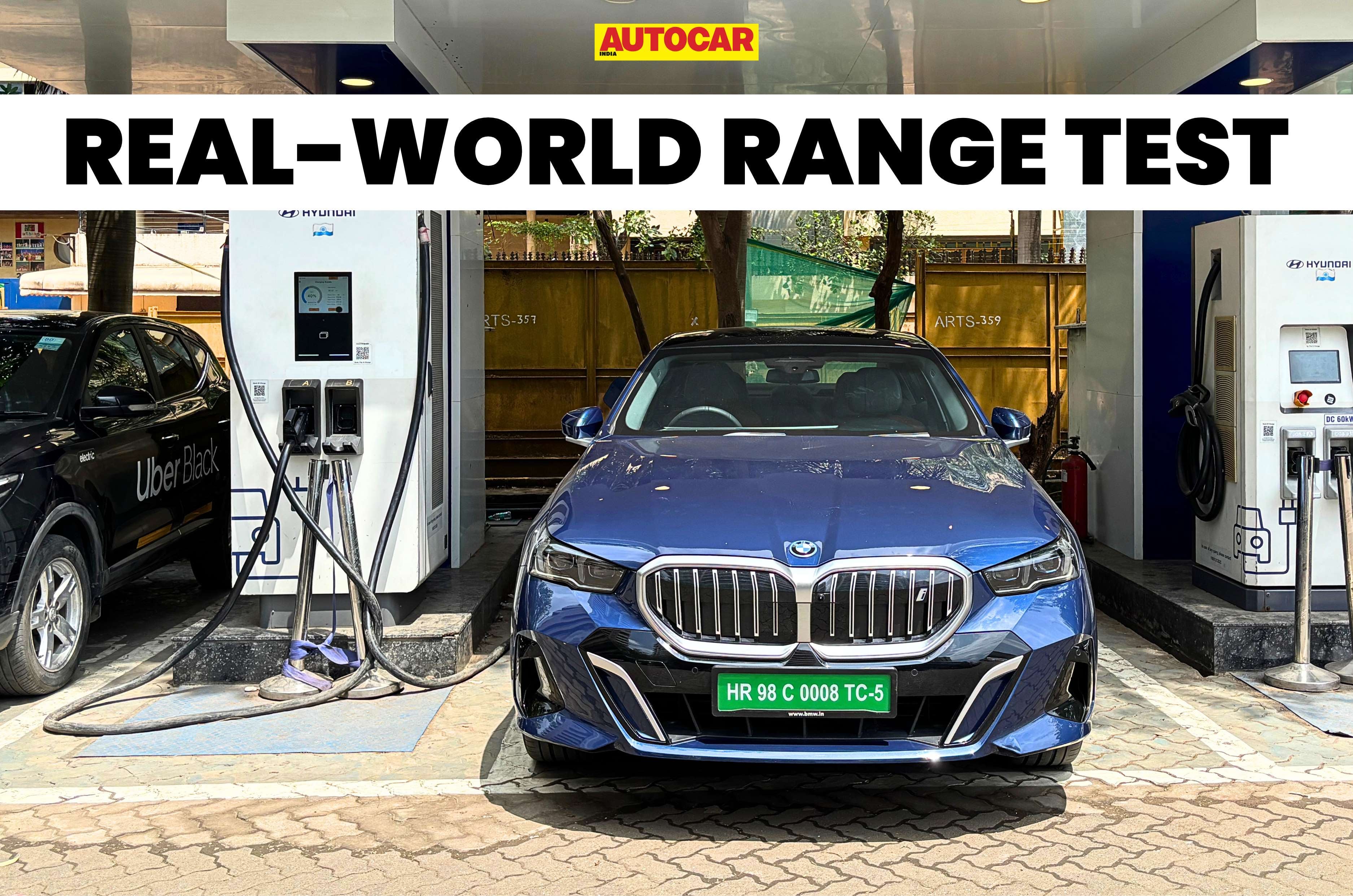
BMW has launched the BMW i5 eDrive35L, the electric version of the long wheelbase 5 series sedan. Compared to the international spec, this India-spec version’s wheelbase has been extended by 110mm. Priced at Rs. 79.60 lakh (ex-showroom), it commands a Rs. 3 lakh premium over its petrol counterpart, the 530Li. We put the BMW i5 LWB through our real-world tests to find out how efficient it really is
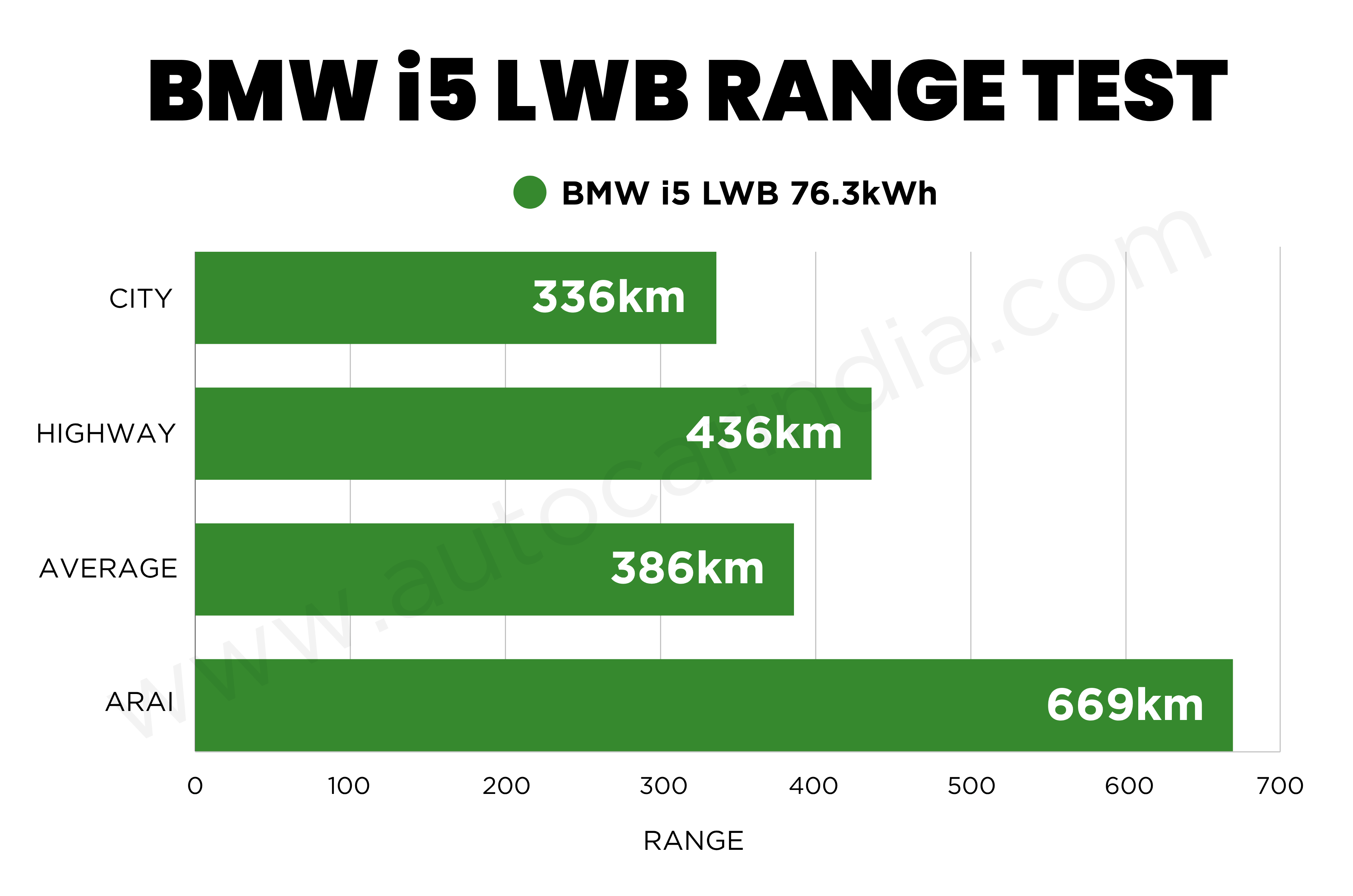
Claimed range is 669km
Gets five regen modes – High, Medium, Low, B Mode and Adaptive
Net battery capacity is 76.3kWh
BMW i5 LWB real-world range and charging explained
This BMW i5 LWB is powered by a single motor mounted on the rear-axle, and produces 272hp and 410Nm. It is equipped with a 81.6kWh (gross capacity) battery pack that uses NMC (Nickel Manganese Cobalt) cell chemistry. For this test, we drove the BMW i5 LWB in ‘Efficient’ mode with the regen set to ‘Adaptive’. In Adaptive mode, the regenerative braking is automatically adjusted depending on the road and traffic conditions, and it works as intended.
In the city, the i5 delivered an efficiency of 4.4km/kWh, whereas on the highway, it delivered 5.71km/kWh. This extrapolates to a range of 336km and 436km in the city and on the highway, respectively. With an overall average efficiency of 5.06km/kWh, you can expect a real world range of 386km on a full charge.
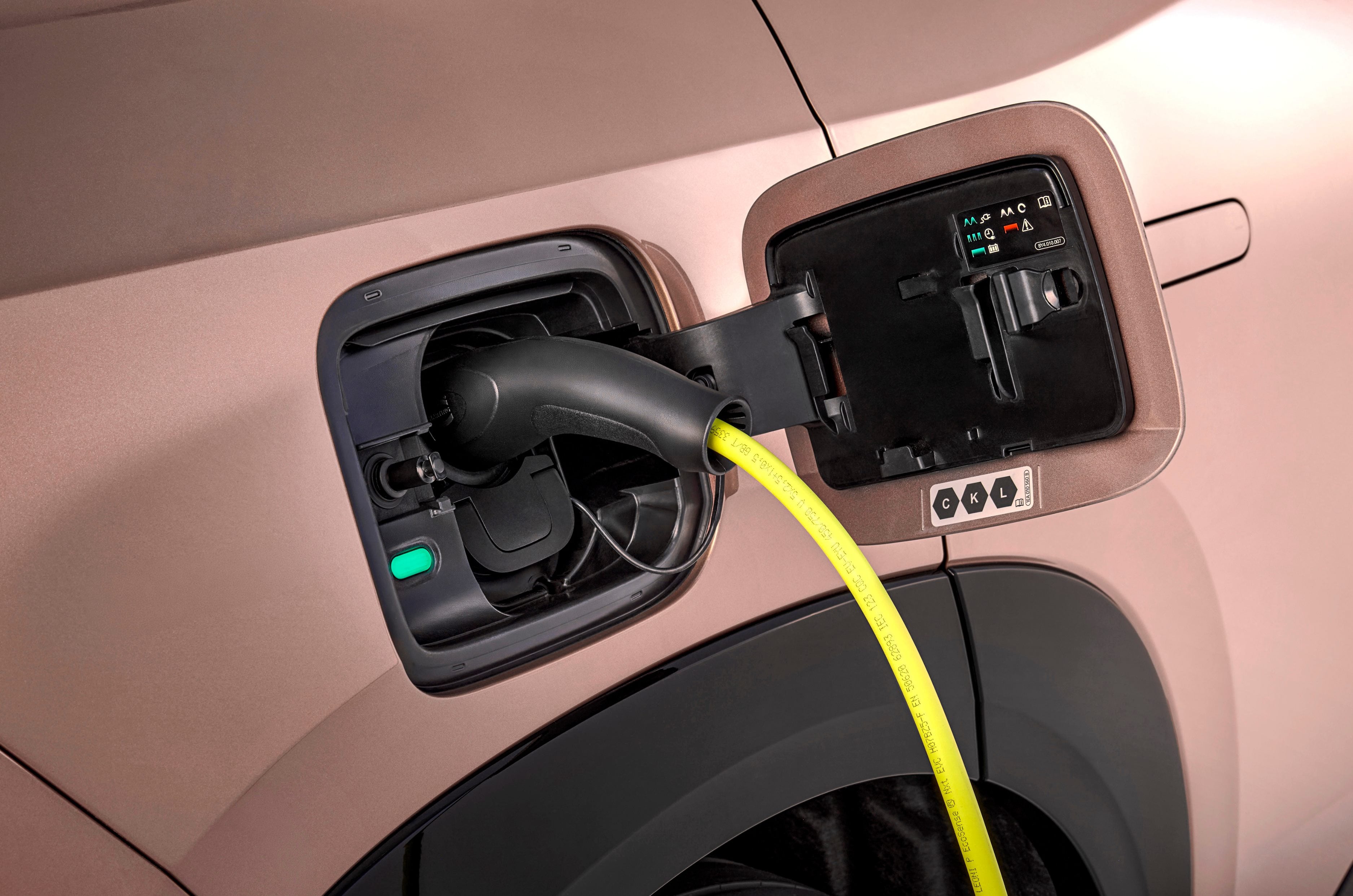
BMW claims that the i5 can charge from 10-80 percent in 33 minutes using a 160kW DC fast charger. We recharged its battery using a 60kW DC fast charger, and it took 47 minutes to charge the battery from 20-80 percent.
Autocar India’s range testing
Before our real-world range tests, the battery of our test car was fully charged, and we maintained tyre pressures in accordance with the manufacturer’s recommendations. The car was driven on a weekday in Mumbai city and on the adjoining state highway in a fixed loop, and we maintained the set average speeds. At the end of each cycle, we calculated the range based on the percentage charge consumed.
Throughout our tests, the climate control was set to 22deg C in a full-auto setting, and other electricals, such as the audio system, indicators and ventilated front seats, were used when required, just as a regular user would. We take pride in our testing data, which isn’t merely consistent but also gives users an accurate indication of what they can expect in the real world.