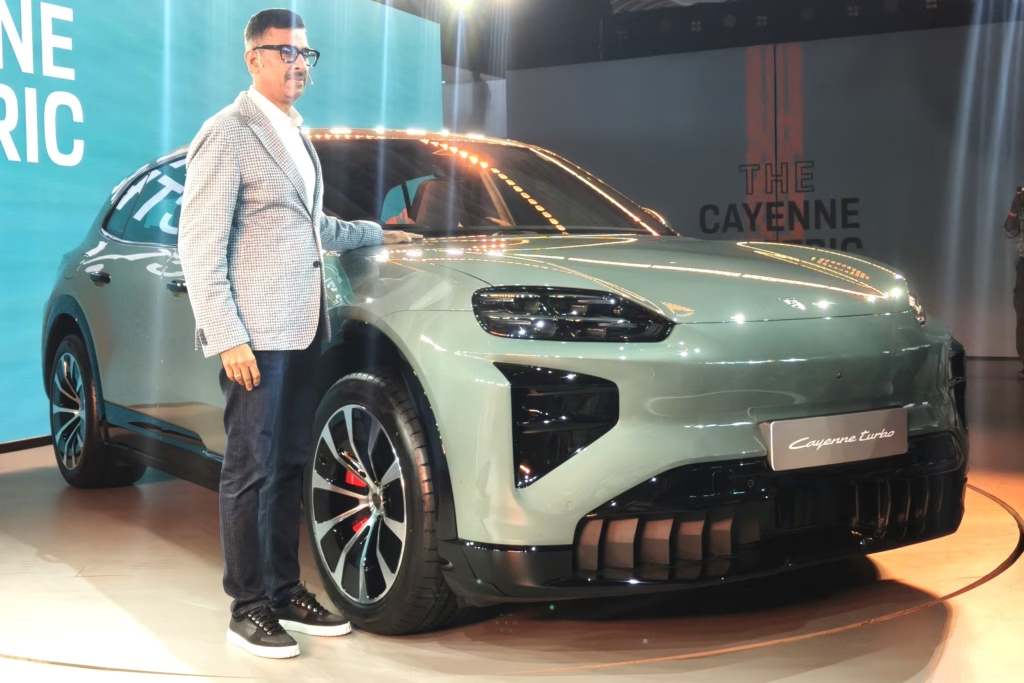
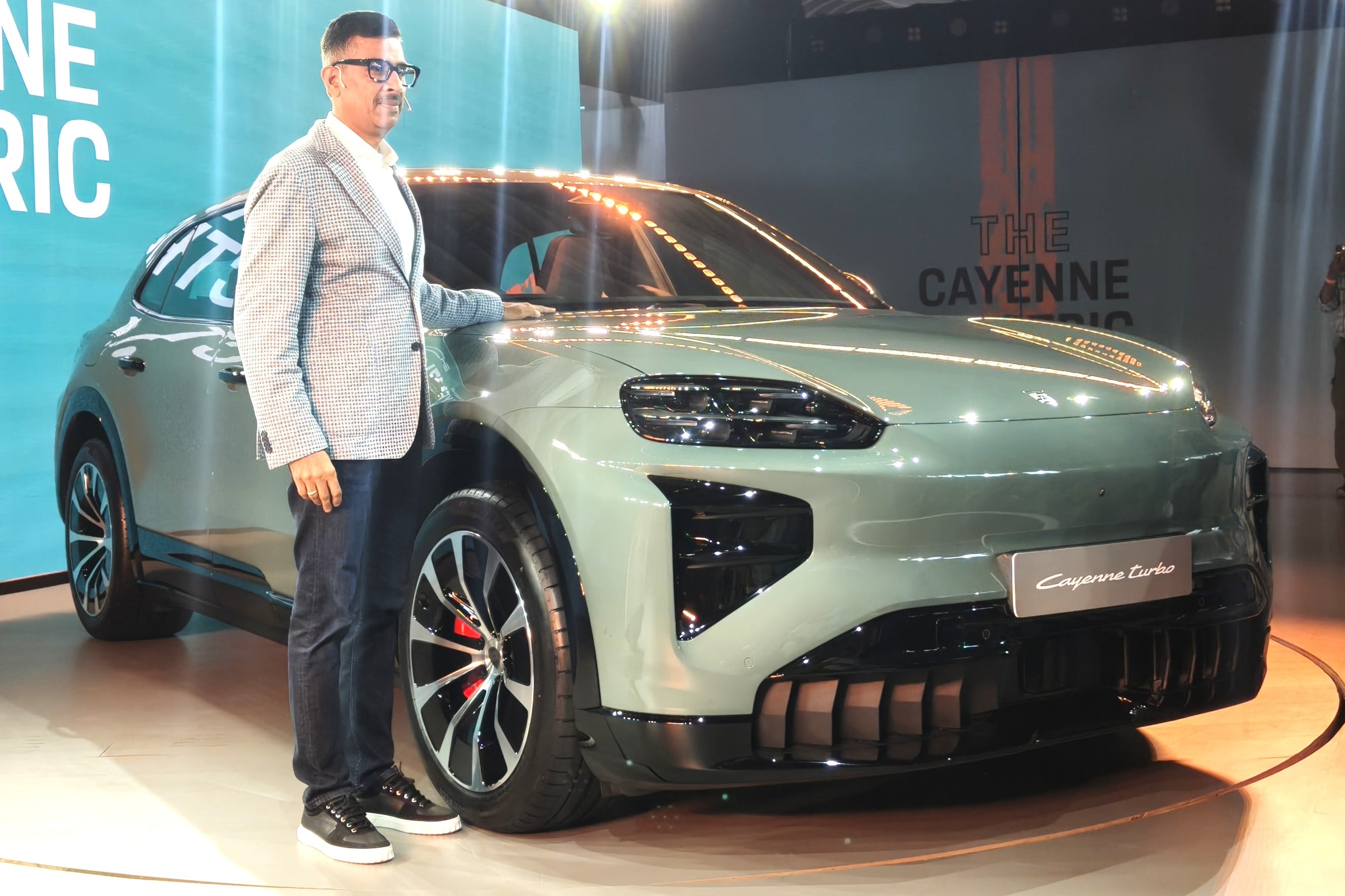
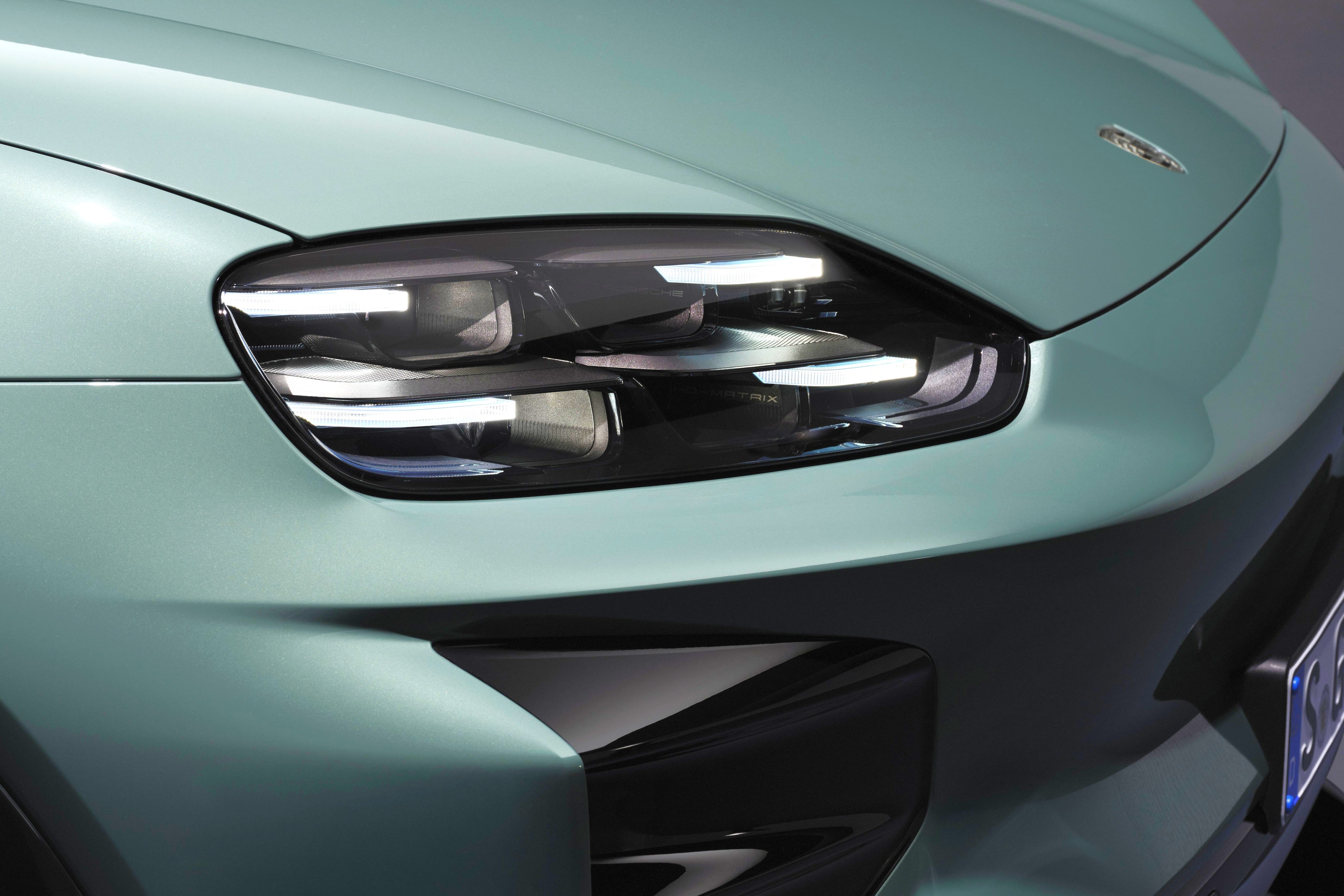
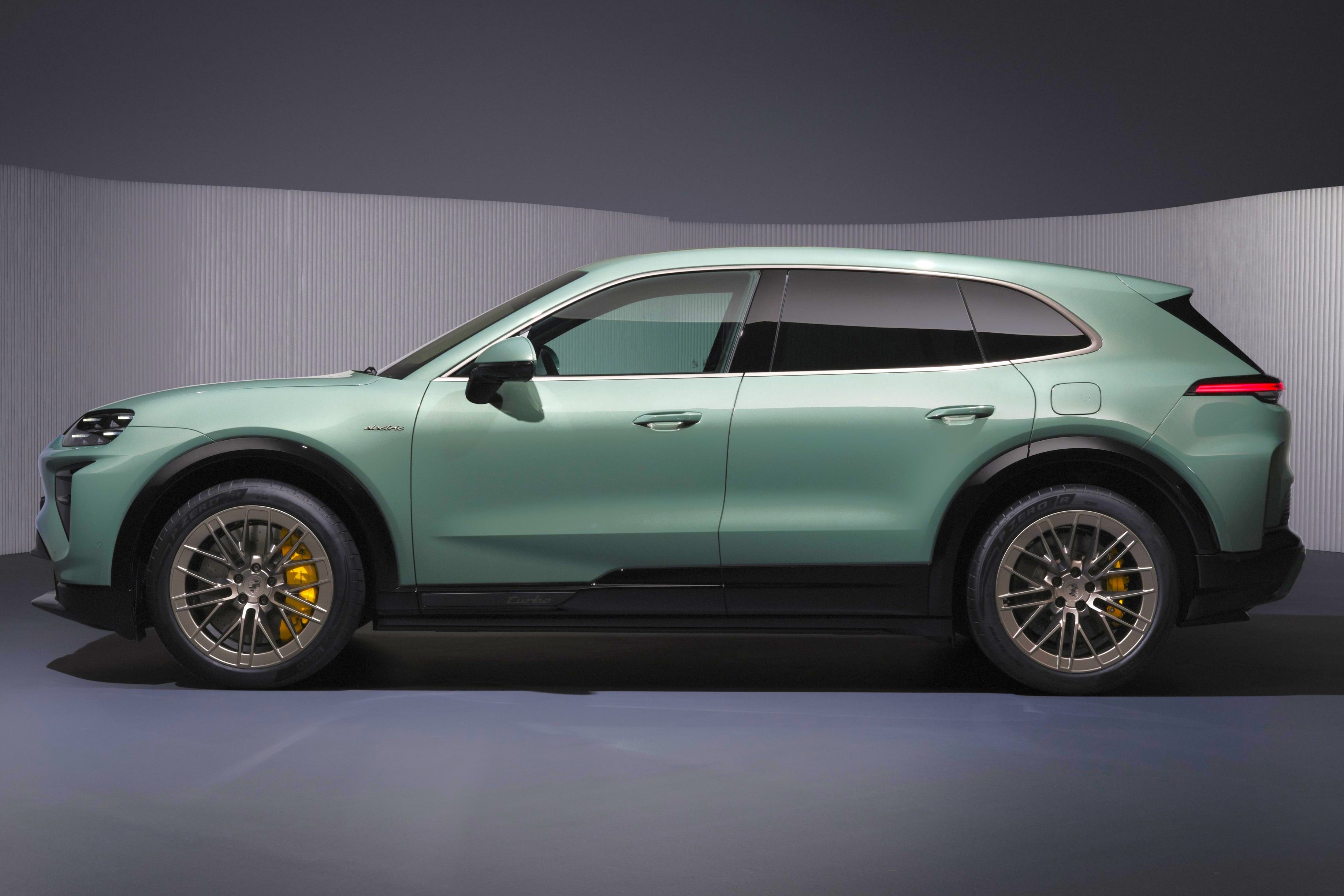
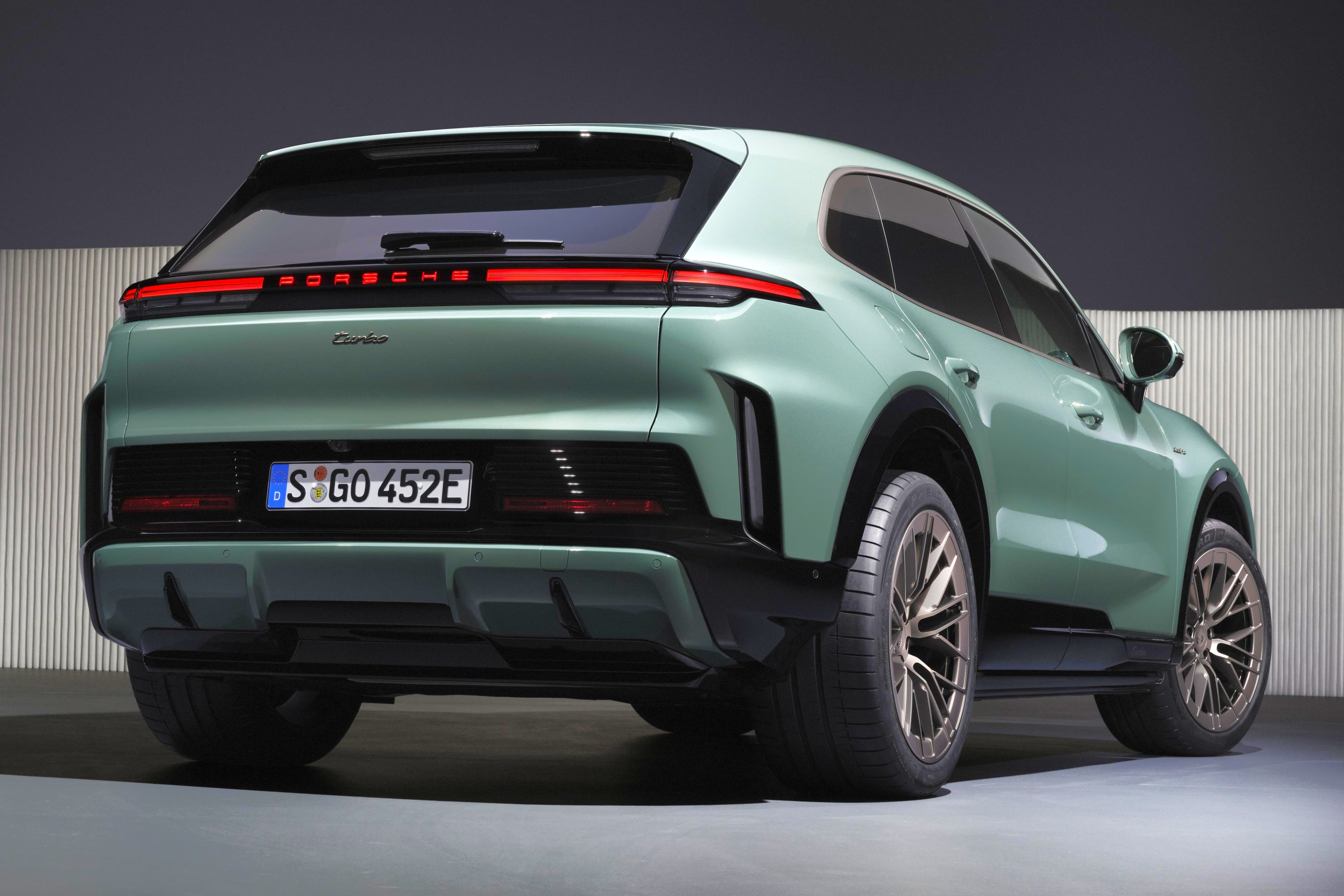
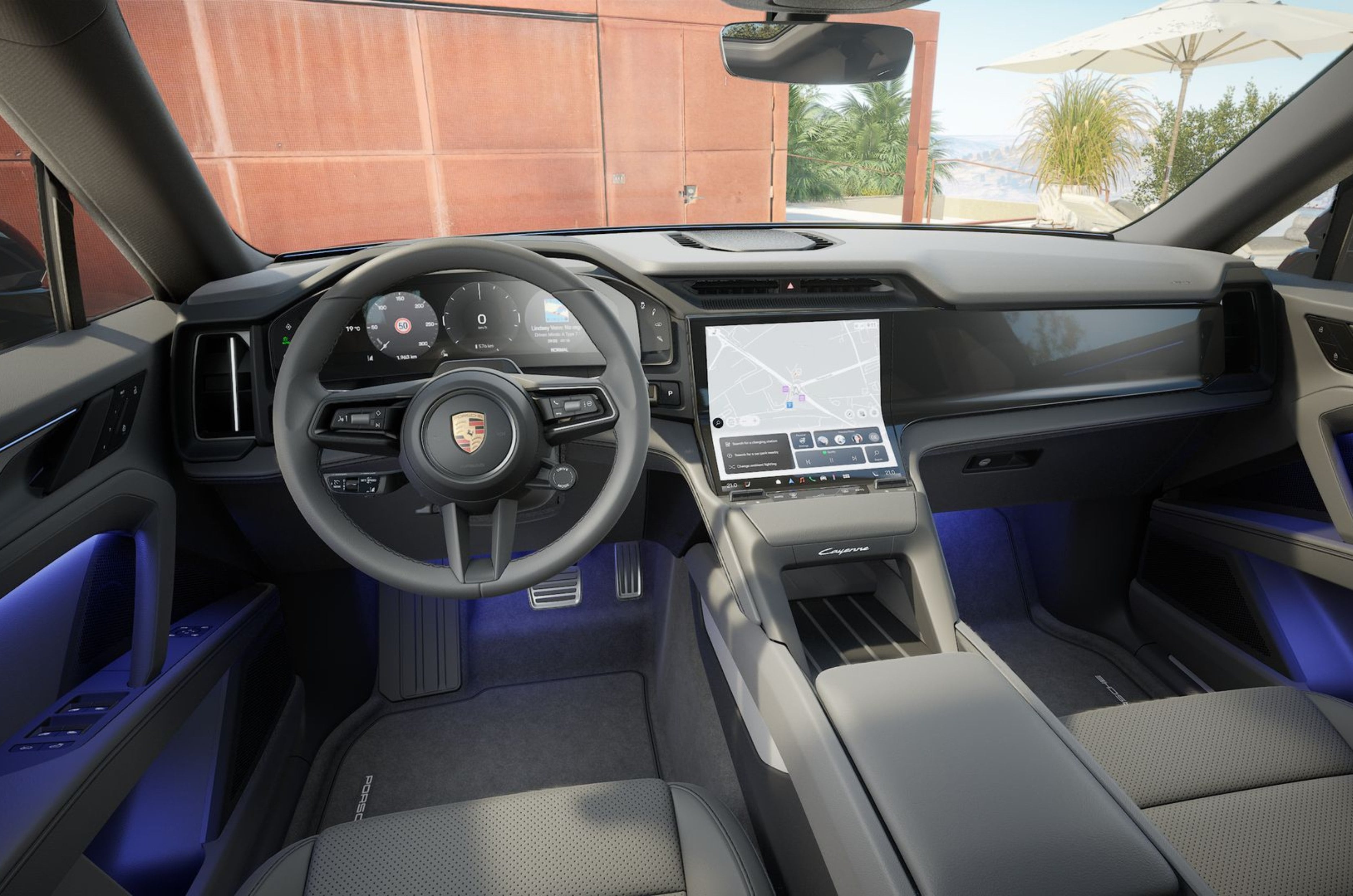
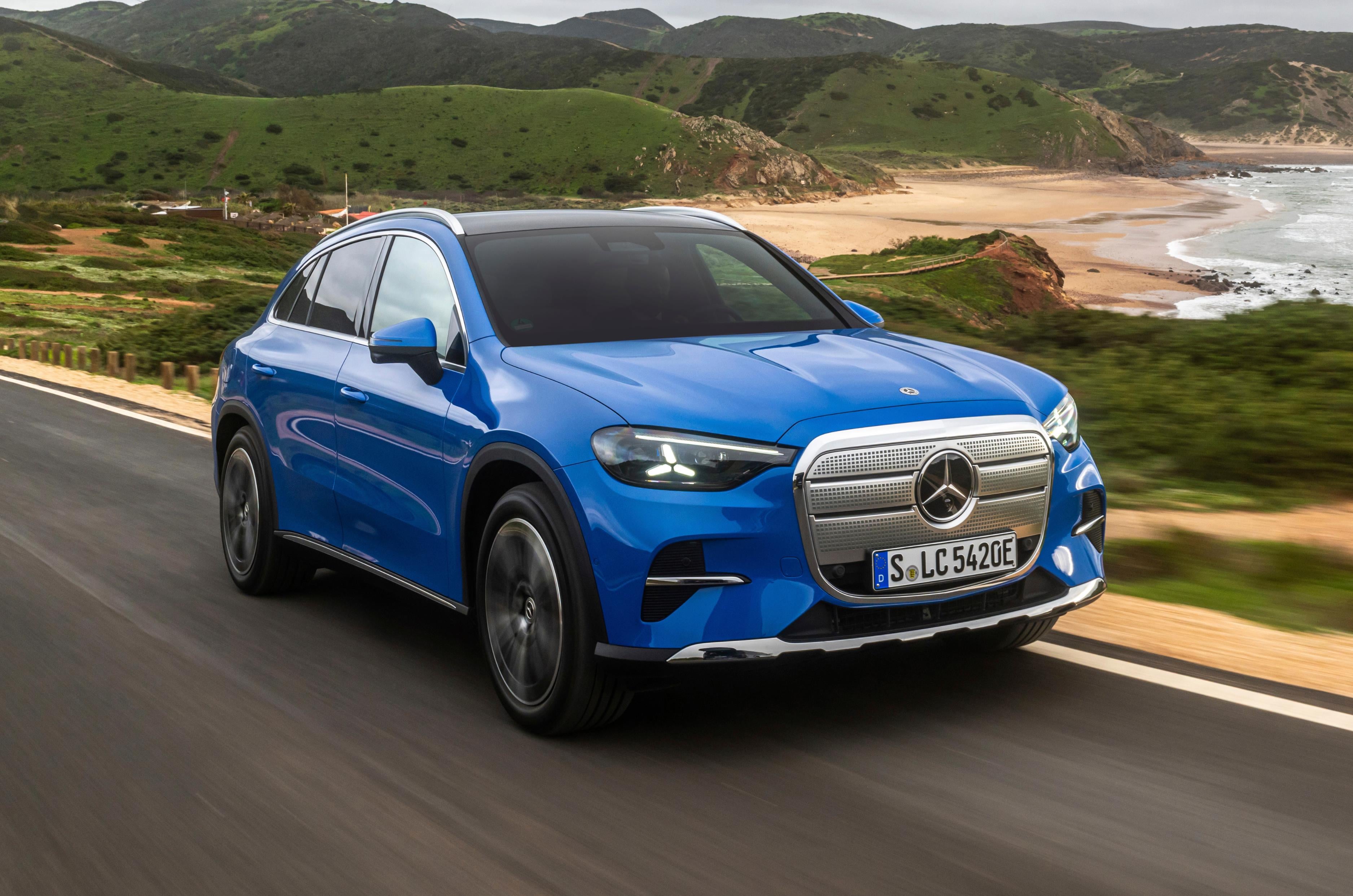
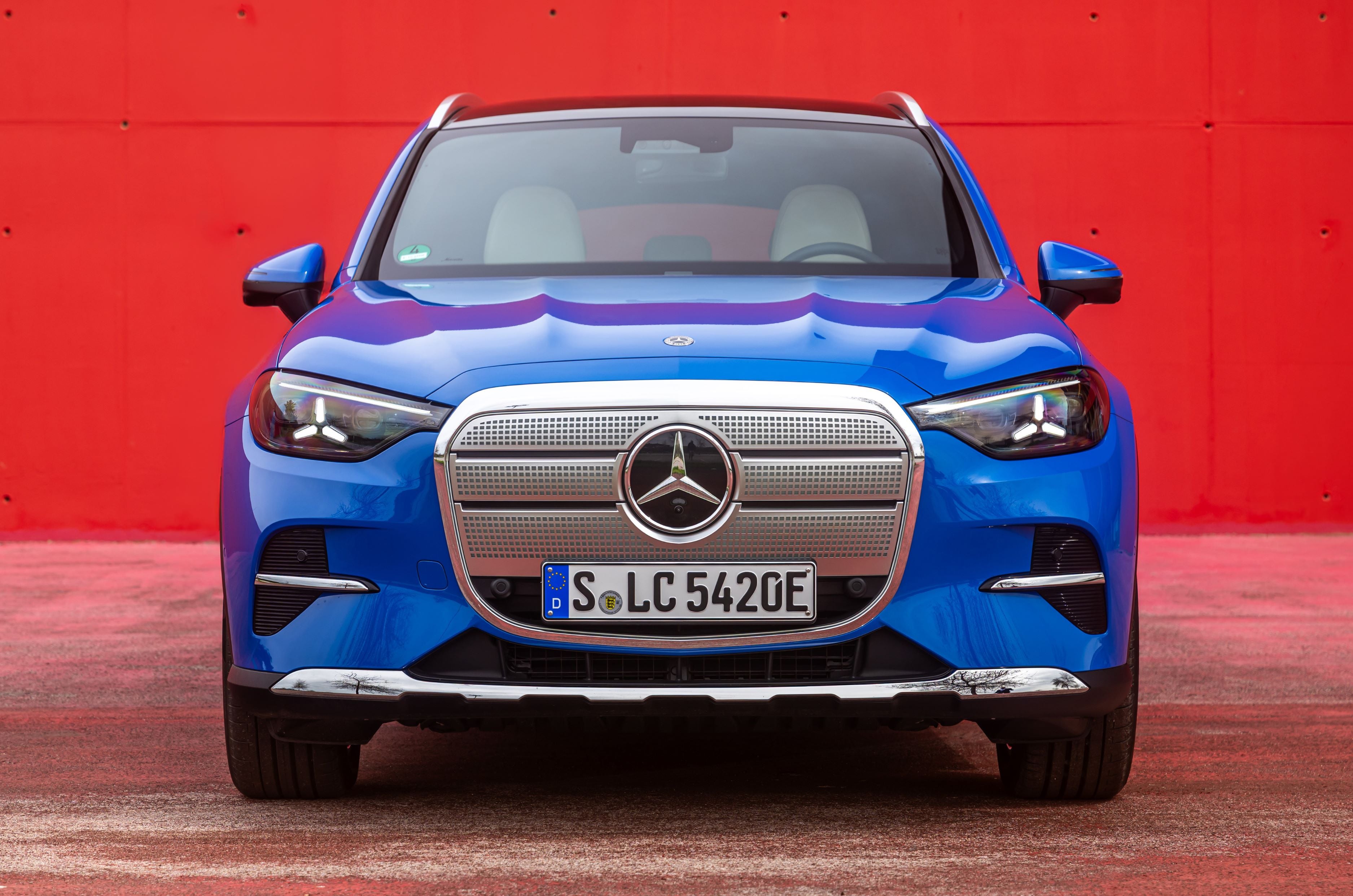
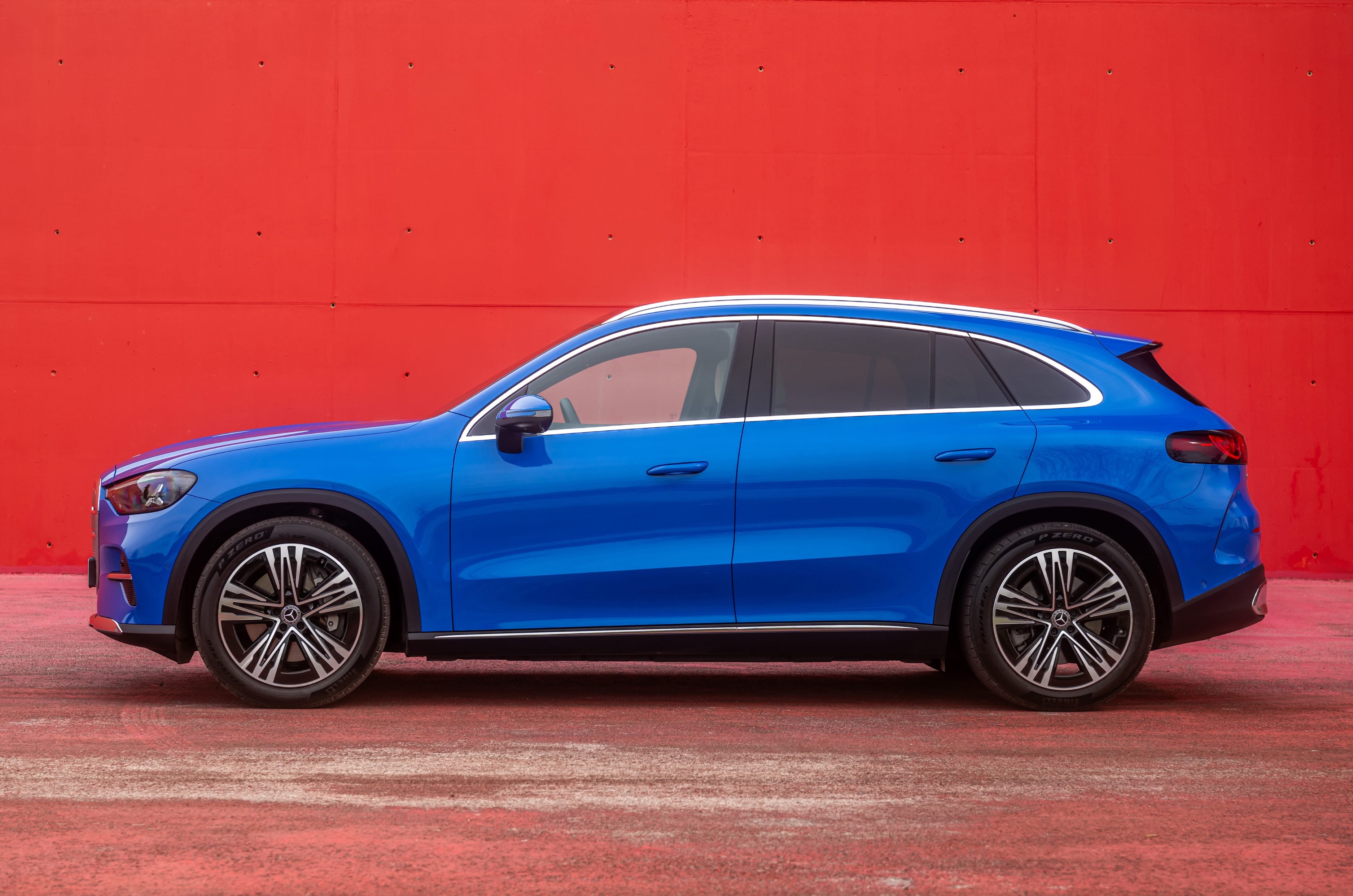
Following the India price reveal of the Cayenne Electric in late 2025, Porsche has formally showcased the electric SUV here for the first time. It’s positioned as Porsche’s flagship electric SUV globally and is available in India in two variants: Cayenne Electric and Cayenne Turbo Electric. These are priced at Rs 1.77 crore and Rs 2.28 crore (before options), respectively.
Porsche Cayenne Electric powertrain and performance
Underpinned by the Volkswagen Group’s 800V Premium Platform Electric (PPE) architecture, the Cayenne Electric comes with a 113kWh battery pack and dual motors (AWD) as standard. The base state of tune is 408hp and 750Nm (442hp and 835Nm with Launch Control engaged), while the range-topping Turbo belts out 857hp and 1,360Nm (1,156hp and 1,500Nm with Launch Control engaged).
With Launch Control, the base Cayenne Electric claims a 0-100kph time of 4.8 seconds, while the Turbo achieves the same in a supercar-baiting 2.5 seconds. The former is good for a top speed of 230kph, with the Turbo upping it to 260kph.
As for WLTP range, the base version is rated at 642km and the Turbo at 623km. Thanks to its 800V architecture, the Cayenne Electric can charge at DC wattages of up to 390kW, which can juice the battery from 10-80 percent in just 16 minutes – a 10-minute charge can net you up to 324km of range. AC charging at up to 22kW is also supported, with a 0-100 percent charge said to take 5.75 hours.
Porsche Cayenne Electric exterior design
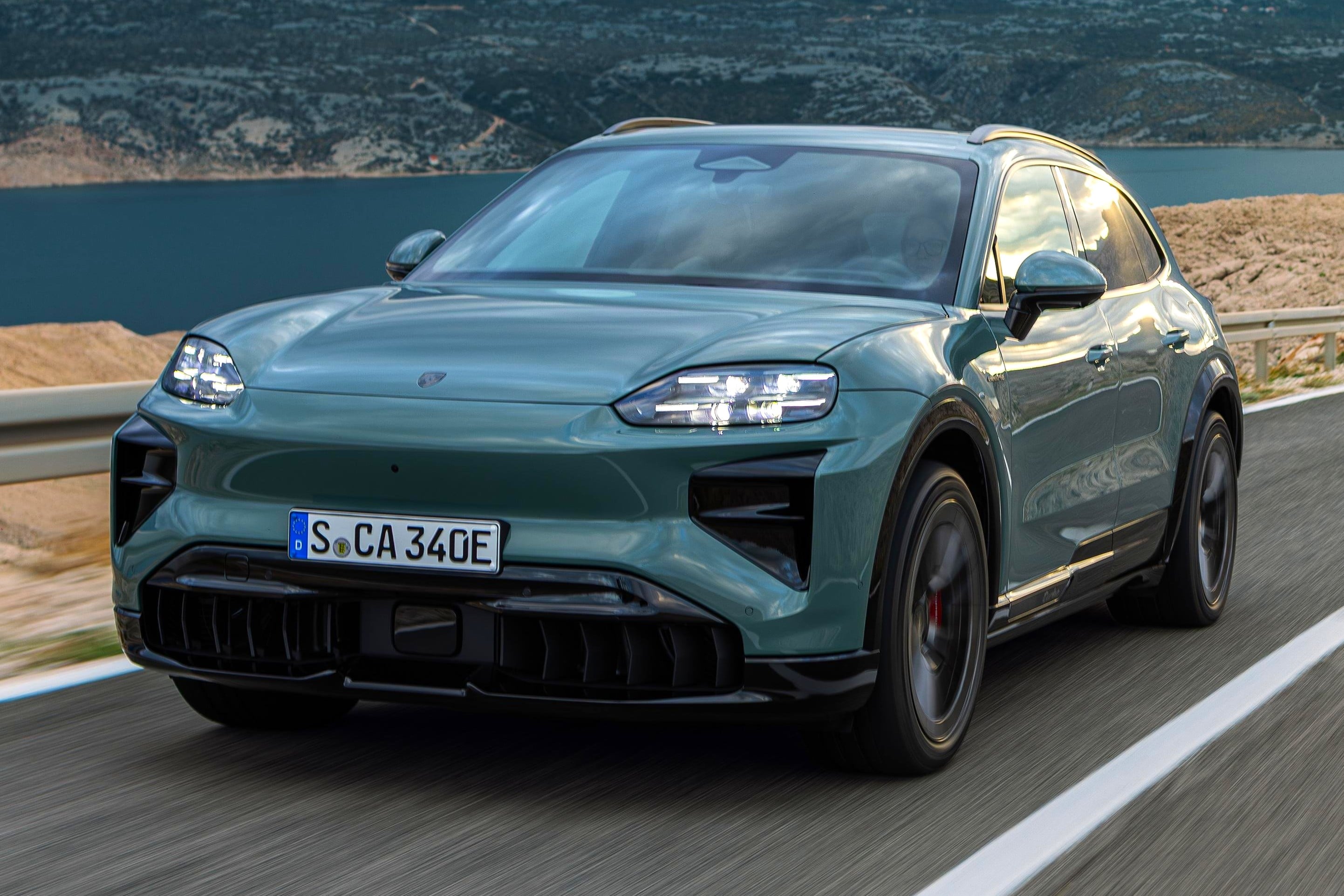
The Cayenne Electric features an evolution of the design language seen on the smaller Macan Electric. Up front, the SUV sports oblong-shaped Matrix LED headlamps housing four individual daytime running lights (DRLs) each. The clean-looking front bumper has a wide air dam flanked by vertically oriented air intakes, along with some relatively discreet black cladding. Under the bonnet, there’s a 90-litre frunk.
Over to the side, the Cayenne Electric is 55mm longer than its ICE-powered counterpart, measuring 4,985mm in length, 1,980mm in width and 1,674mm in height, with a wheelbase of 3,023mm. 20-inch alloy wheels are standard fit for the Cayenne Electric, which can be optioned up to 22 inches. The SUV comes with soft-close doors as standard too.
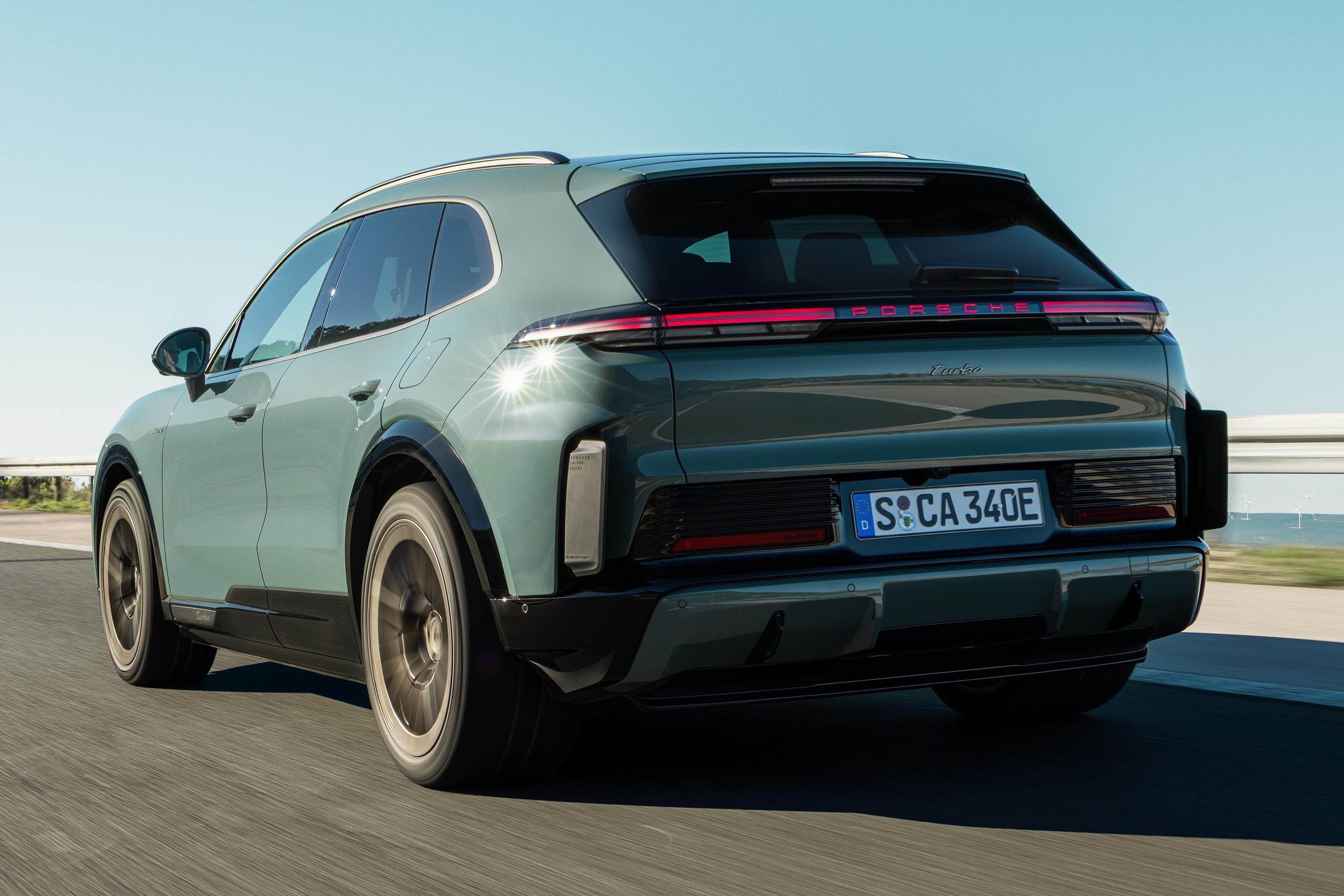
The rear end of the Cayenne Electric features a sporty raked roofline, though not as much as that of its coupe-SUV sibling, the Cayenne Coupe Electric. A wraparound clear-lens LED light bar with an illuminated Porsche wordmark takes prominence here, and there’s a sizeable roof spoiler as well. The rear bumper is quite chunky, and above it lies a blacked-out section with horizontal slats and reflectors.
Porsche Cayenne Electric interior and features
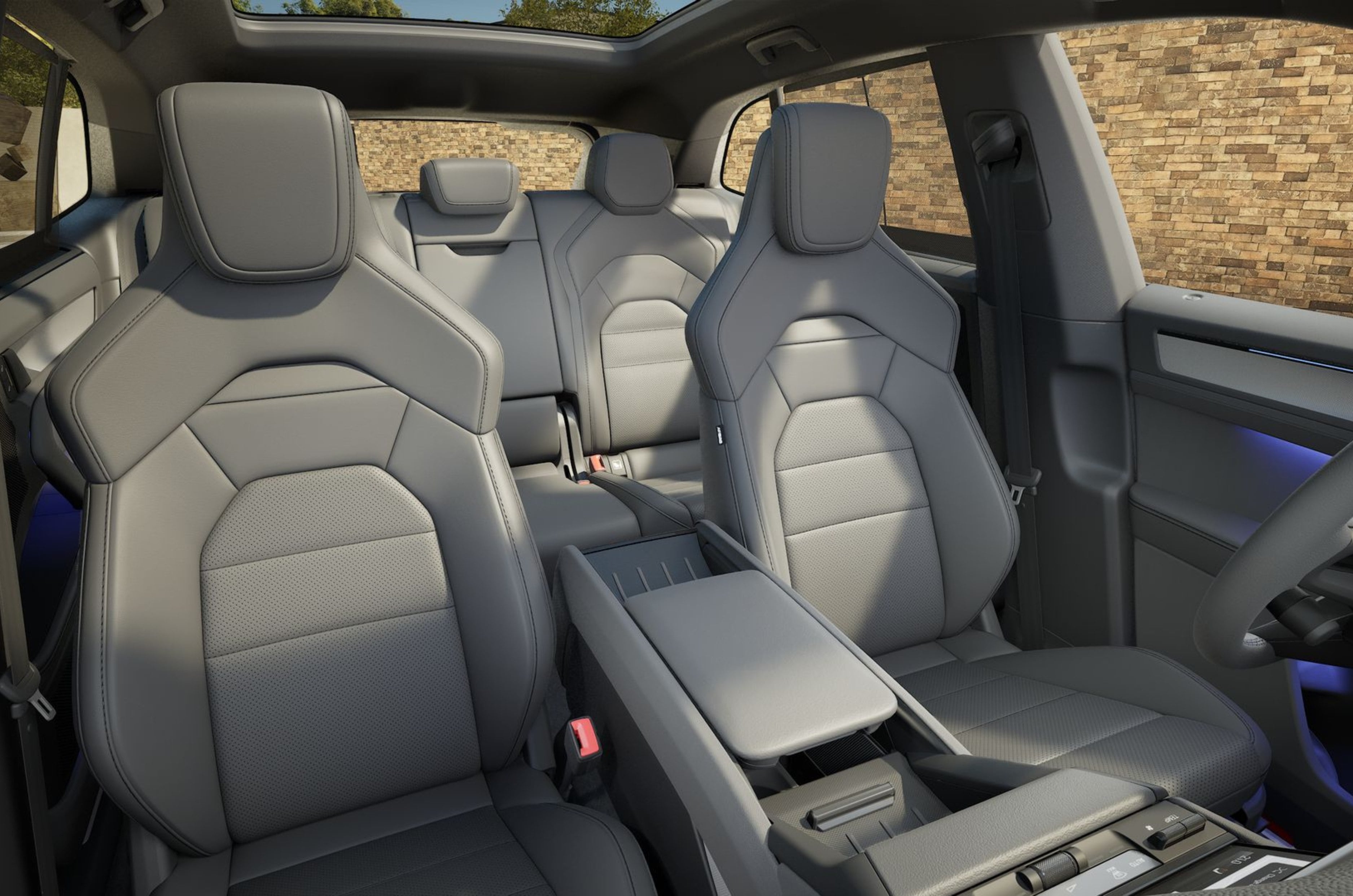
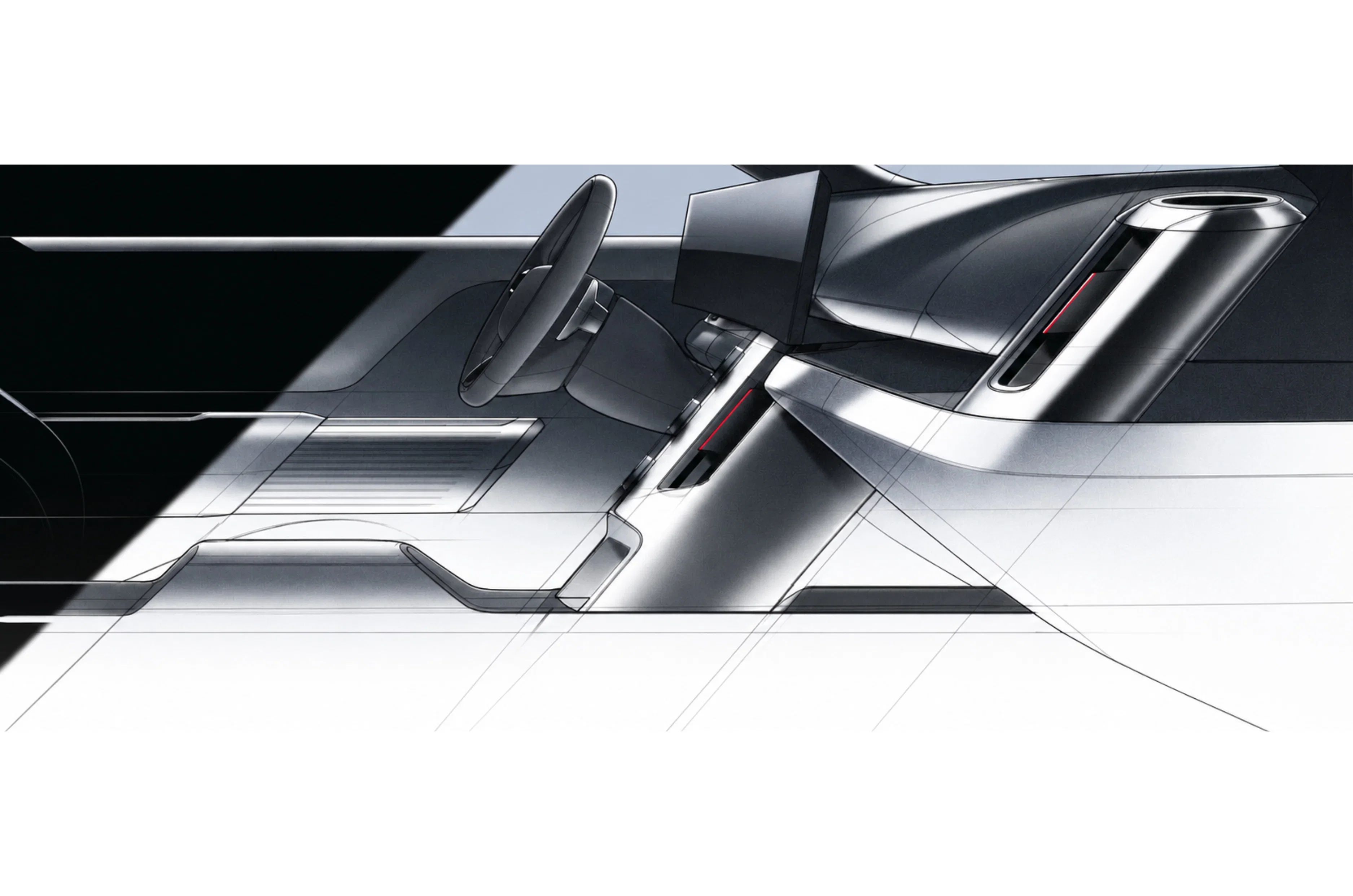
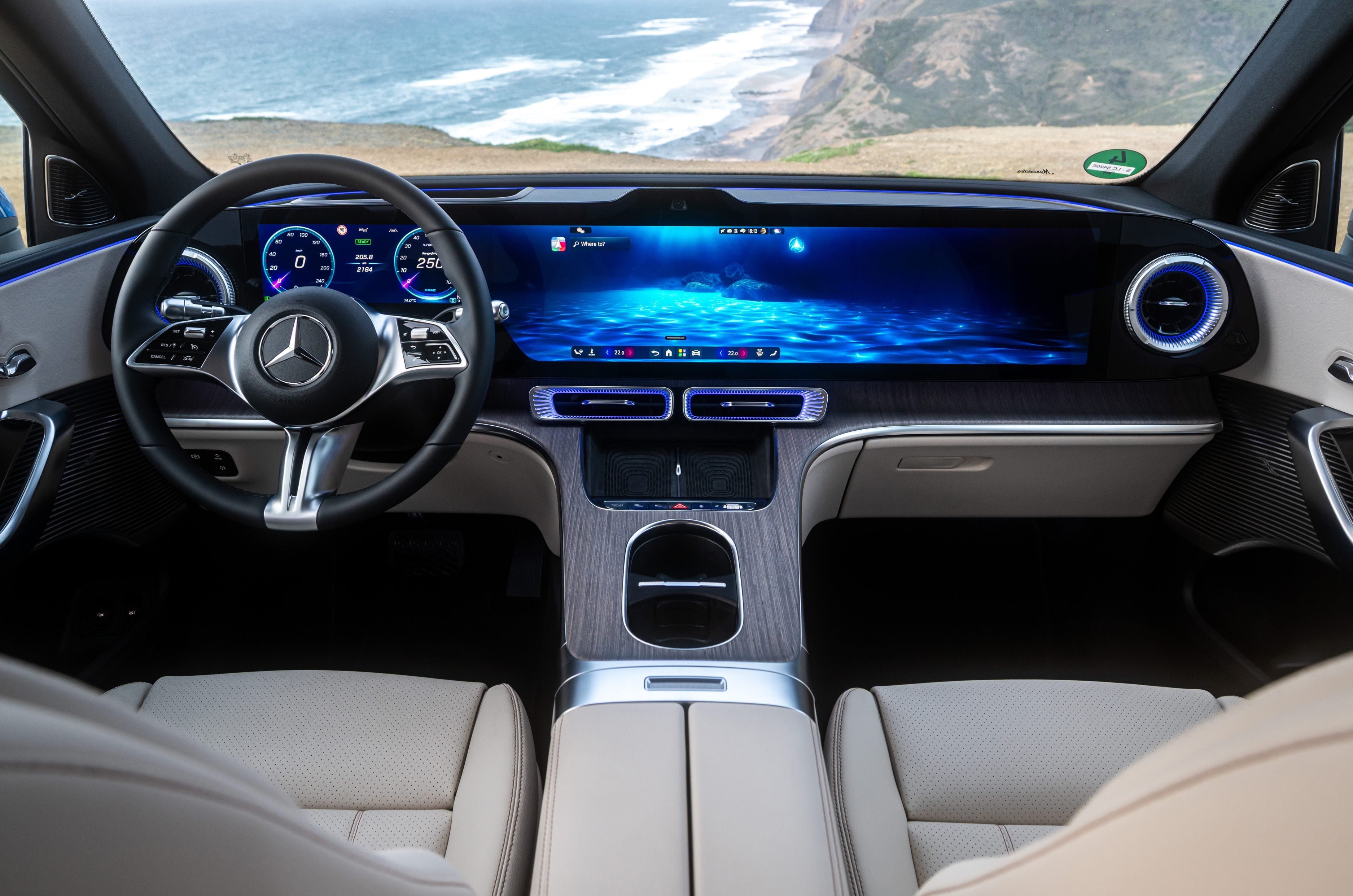
As standard, the interior of the Cayenne Electric is finished in black, and so are many of the controls. The dashboard gets a unique-looking 14.5-inch curved OLED touchscreen in the centre, and there’s a 14.25-inch OLED driver’s display and a three-spoke steering wheel to the side – a 14.9-inch passenger screen is available as an optional extra. The centre console has a pass-through design, allowing for some storage space and a wireless charging pad underneath, and there’s a fairly high central tunnel separating the front seats. Ambient lighting bathes the footwells and door liners in one of 30 configurable colours.
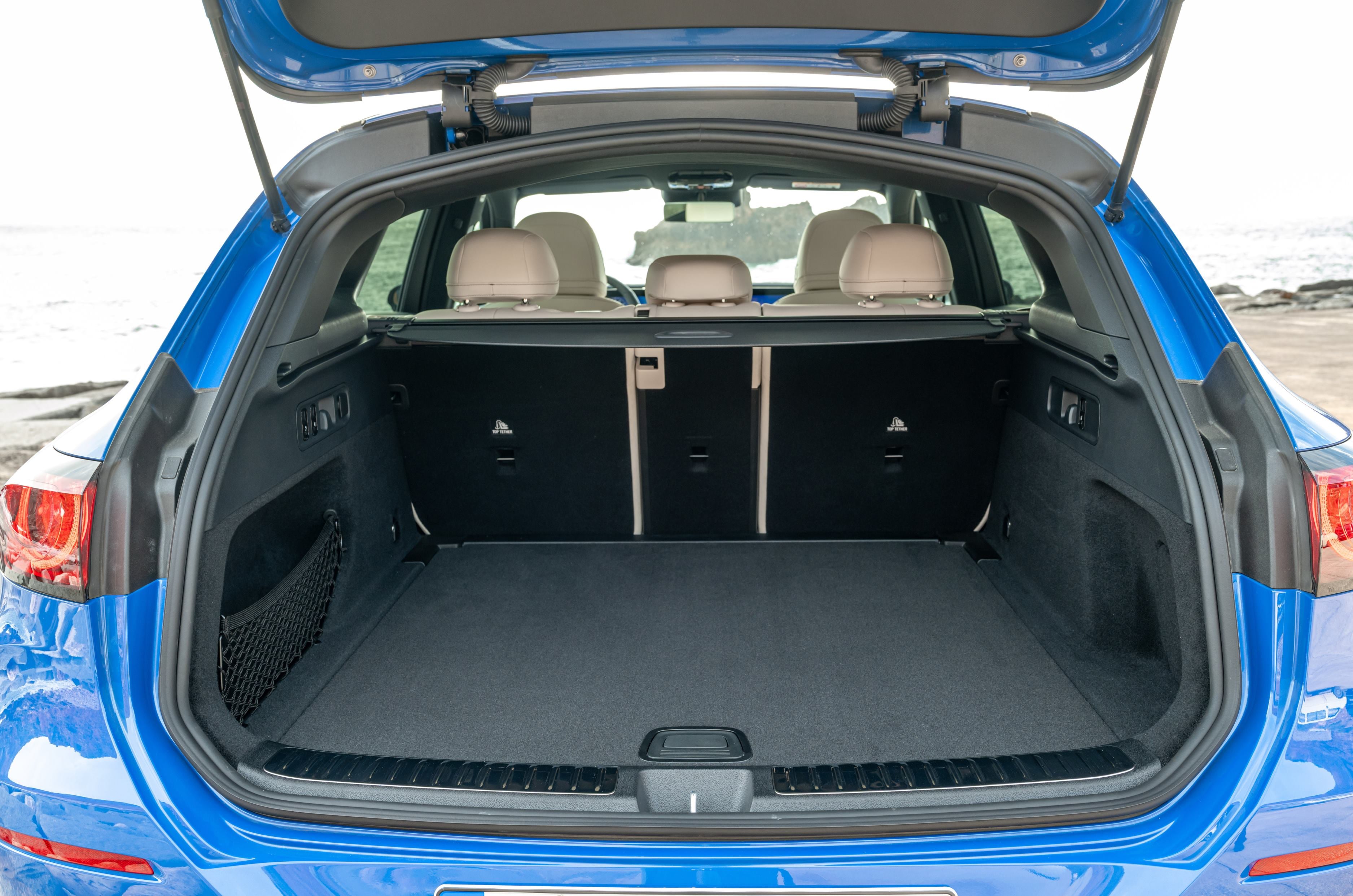
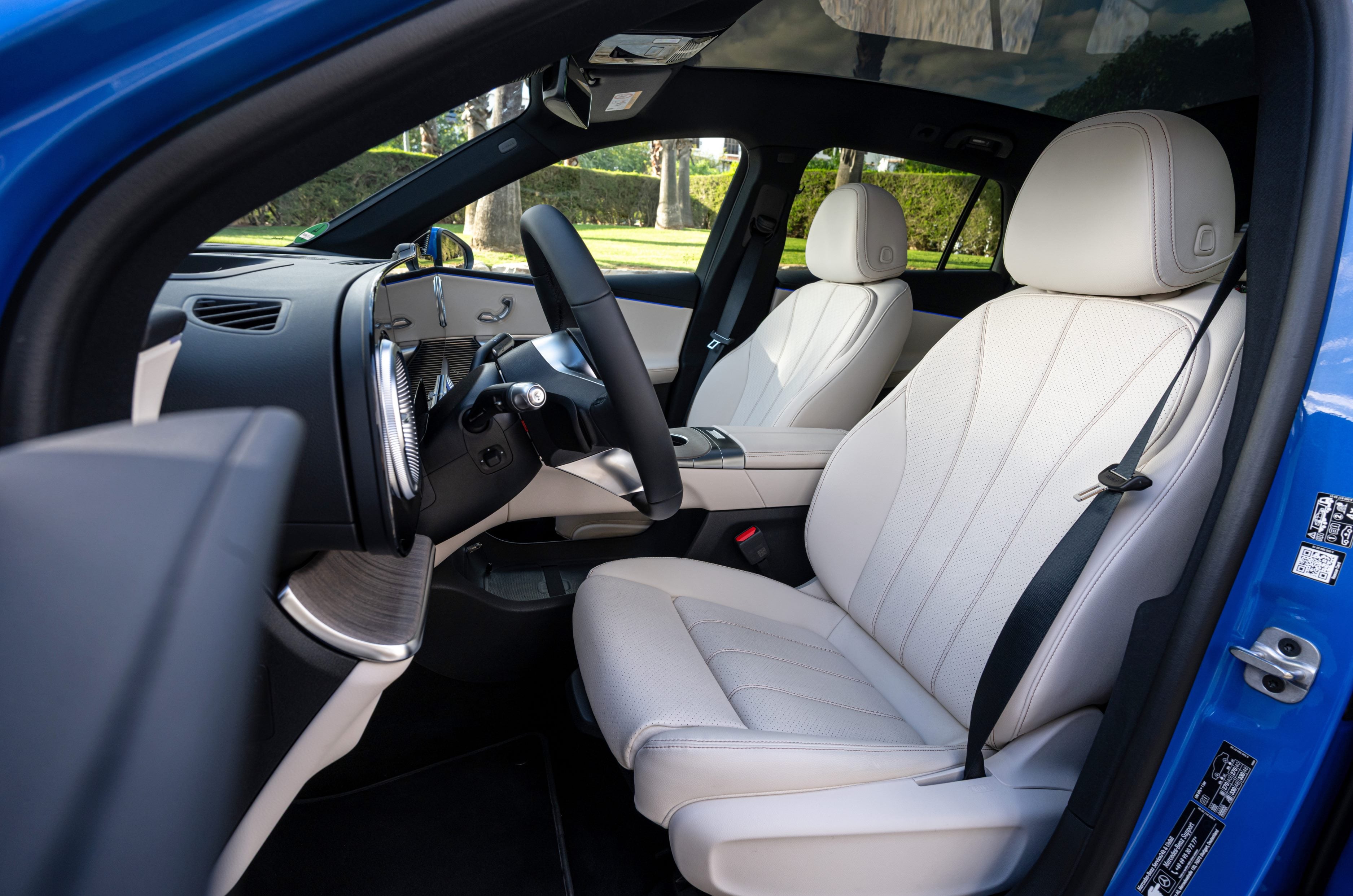
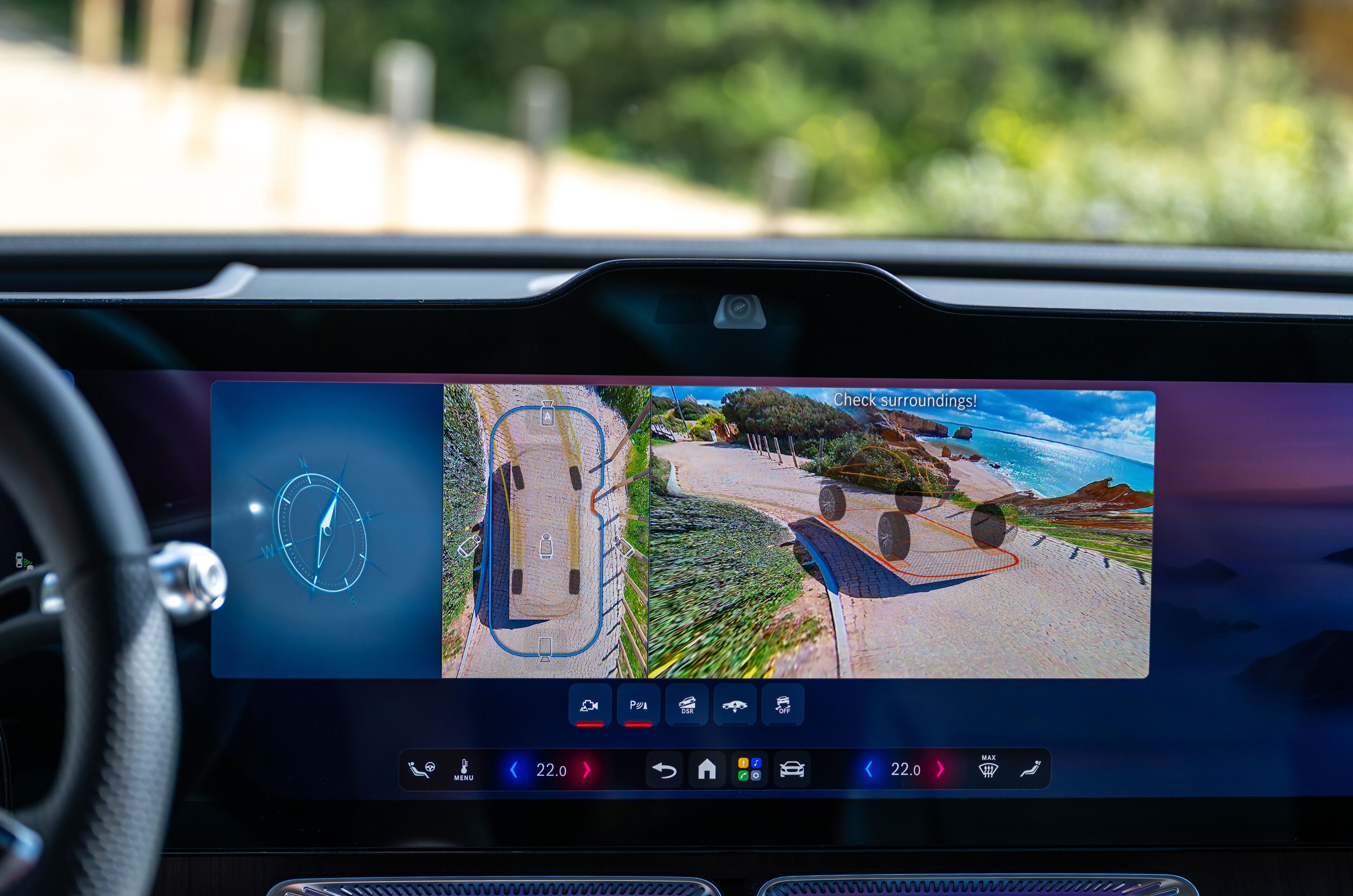
Being a Porsche, the Cayenne Electric offers lots of customisation potential and optional features. Speaking of which, standard equipment for the Cayenne Electric includes a 10-speaker sound system, 8-way powered and heated front seats, a memory function for the driver’s seat, a panoramic sunroof, four-zone climate control, a cabin air purifier, a powered boot lid, powered rear sunshades, a 360-degree camera, advanced driver assistance systems (ADAS), and more. Boot space is rated at a whopping 781 litres.
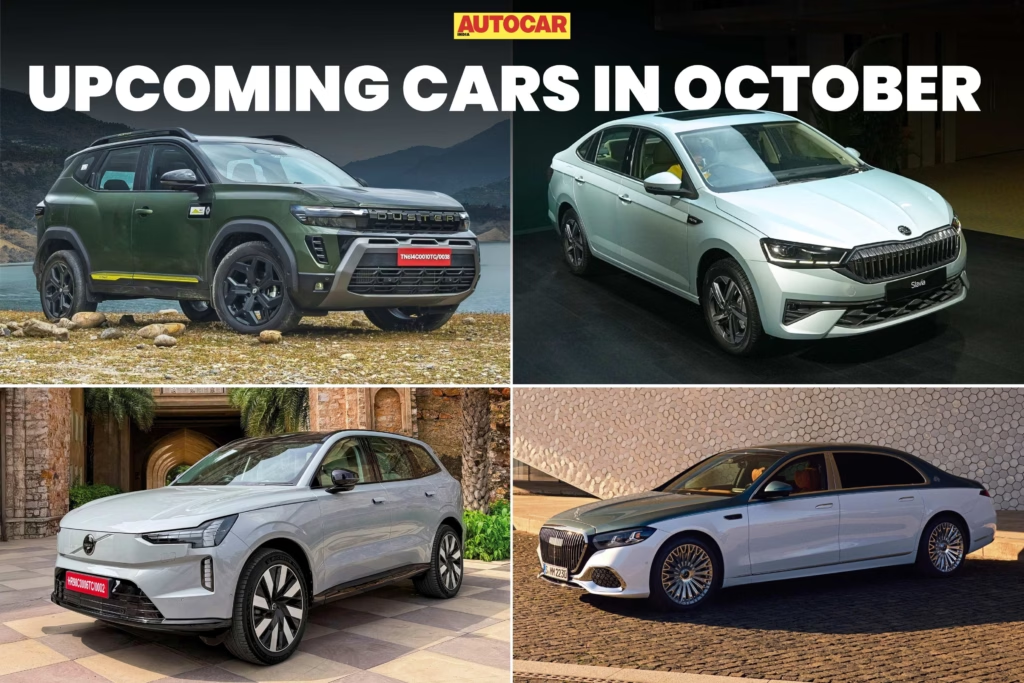
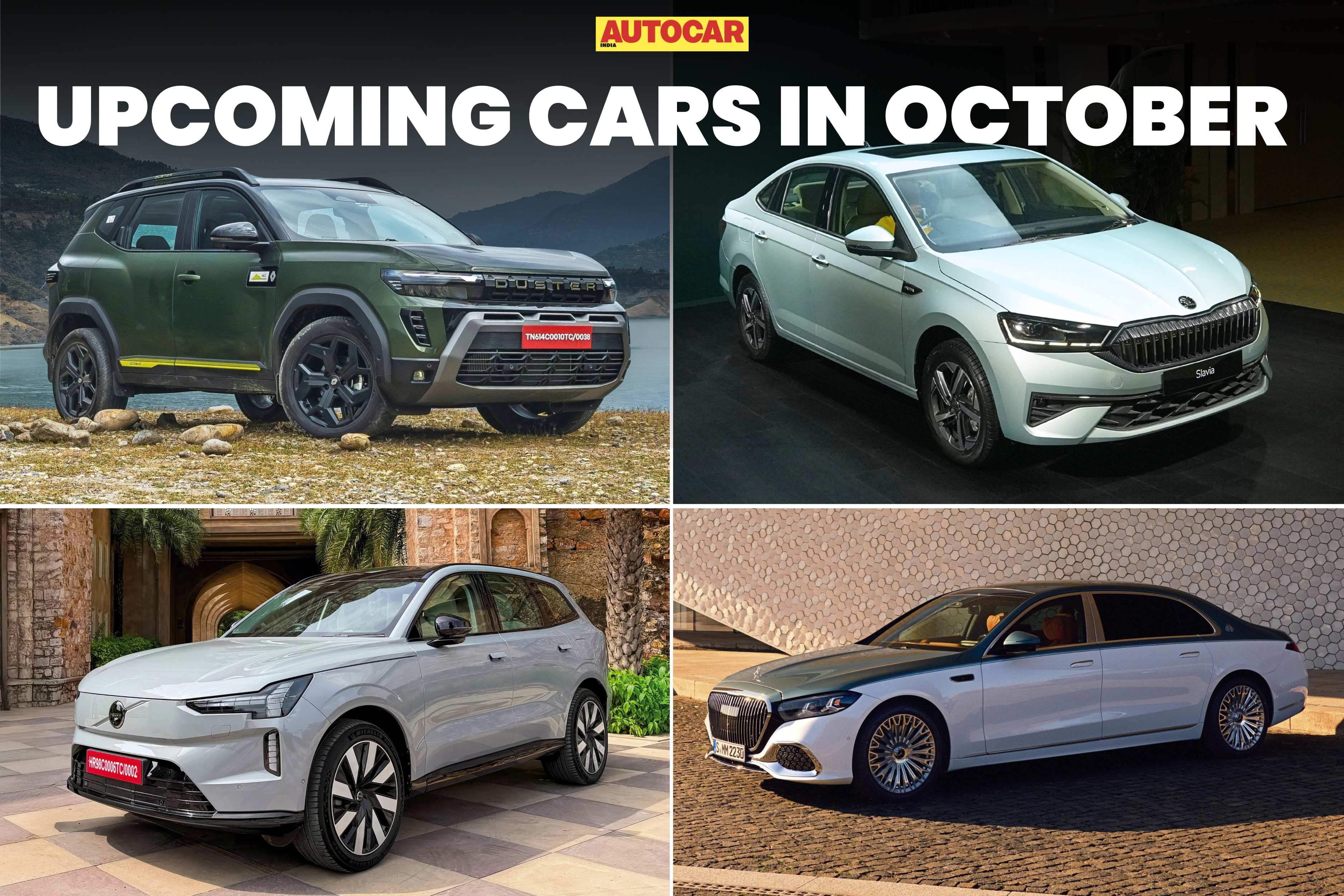
October marks the onset of the festive season in India, which means manufacturers line up a barrage of new car launches and debuts for prospective buyers to consider. It’s no different this year, with October 2026 looking quite stacked with fresh launches and debuts, especially during the first half of the month. Let’s delve into every new car that will either go on sale or debut in India next month.
Mercedes-Benz Maybach S-Class facelift
Launch: 5 October
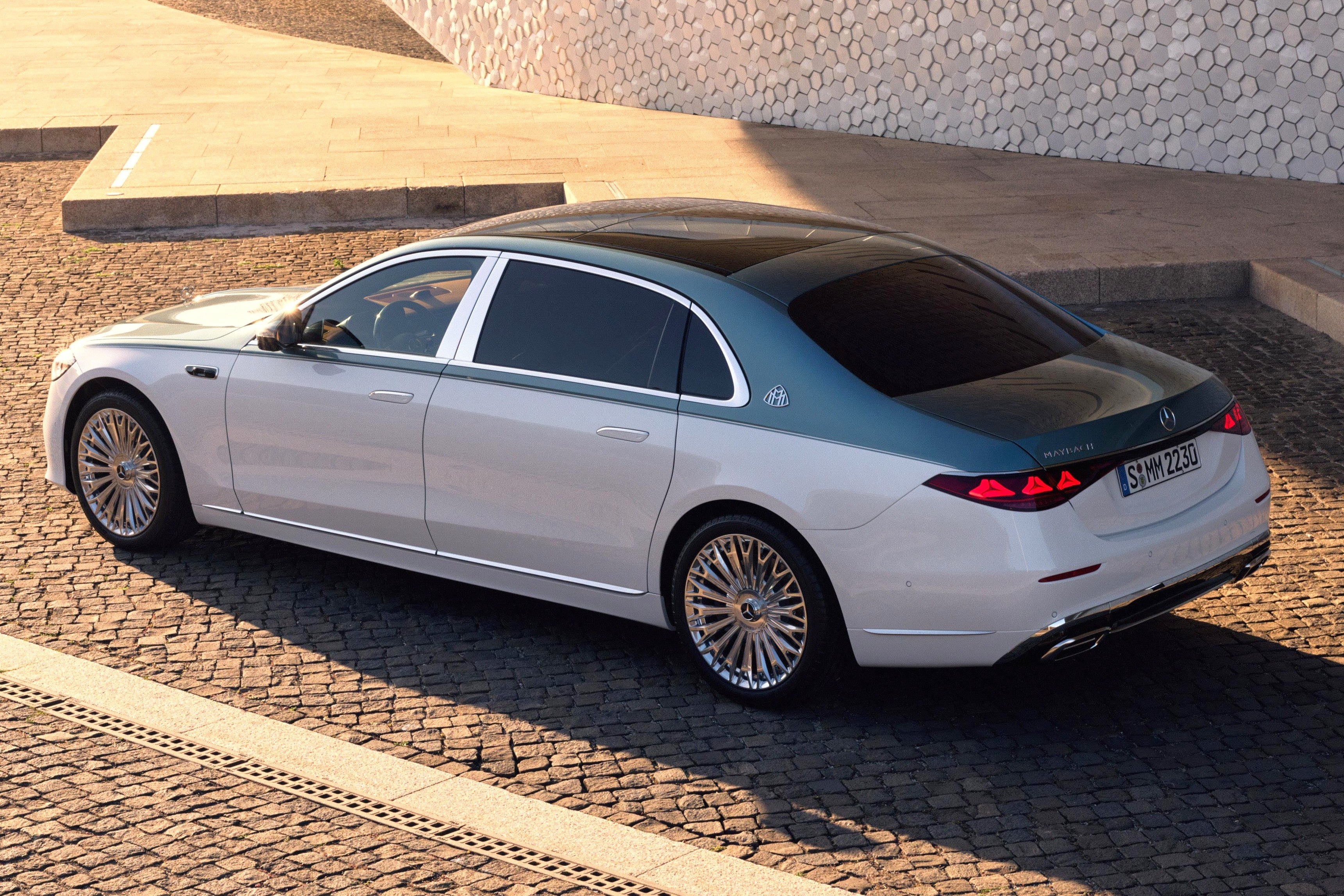
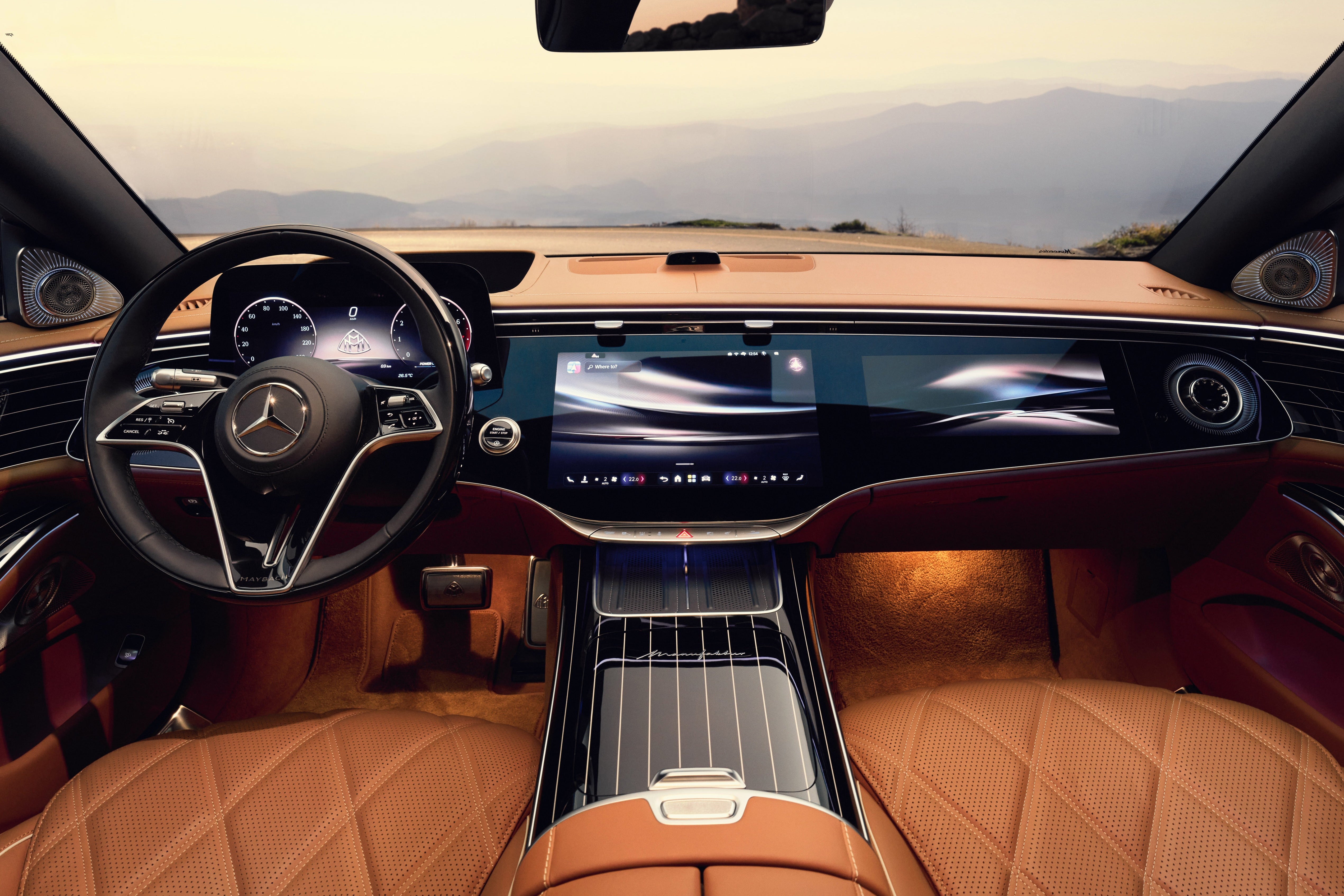
Following the launch of the 2026 S-Class facelift back in June, Mercedes-Benz India will bring the sedan’s longer and more luxurious Maybach derivative in October. Compared to its standard version, the Maybach S-Class facelift continues to be 180mm longer, but carries styling differentiators like a vertically-slatted grille adorned with a ‘Maybach’ wordmark, mildly revised bumpers, bespoke wheel designs, lots of Maybach logos peppered across the bodywork, and the signature dual-tone exterior finish.
Inside, the Maybach prominently retains the standard S-Class’s Superscreen setup, comprising a 12.3-inch digital driver’s display, a 14.4-inch central touchscreen, and a 12.3-inch passenger display. New upholstery choices include extended leather and a leather-free vegan option. The rear seats remain largely unchanged, offering up to 43 degrees of recline, along with heating, ventilation, and massage functions. Globally, the Maybach S-Class can be had with either a 4.0-litre twin-turbo mild-hybrid V8 (S 580), a 4.0-litre twin-turbo V8 plug-in hybrid (S 580e), or a 612hp 6.0-litre twin-turbo V12 (S 680). Mercedes-Benz India is likely to offer the updated Maybach S-Class in S 580 or S 580e spec.
Honda Elevate facelift
Launch: 6 October
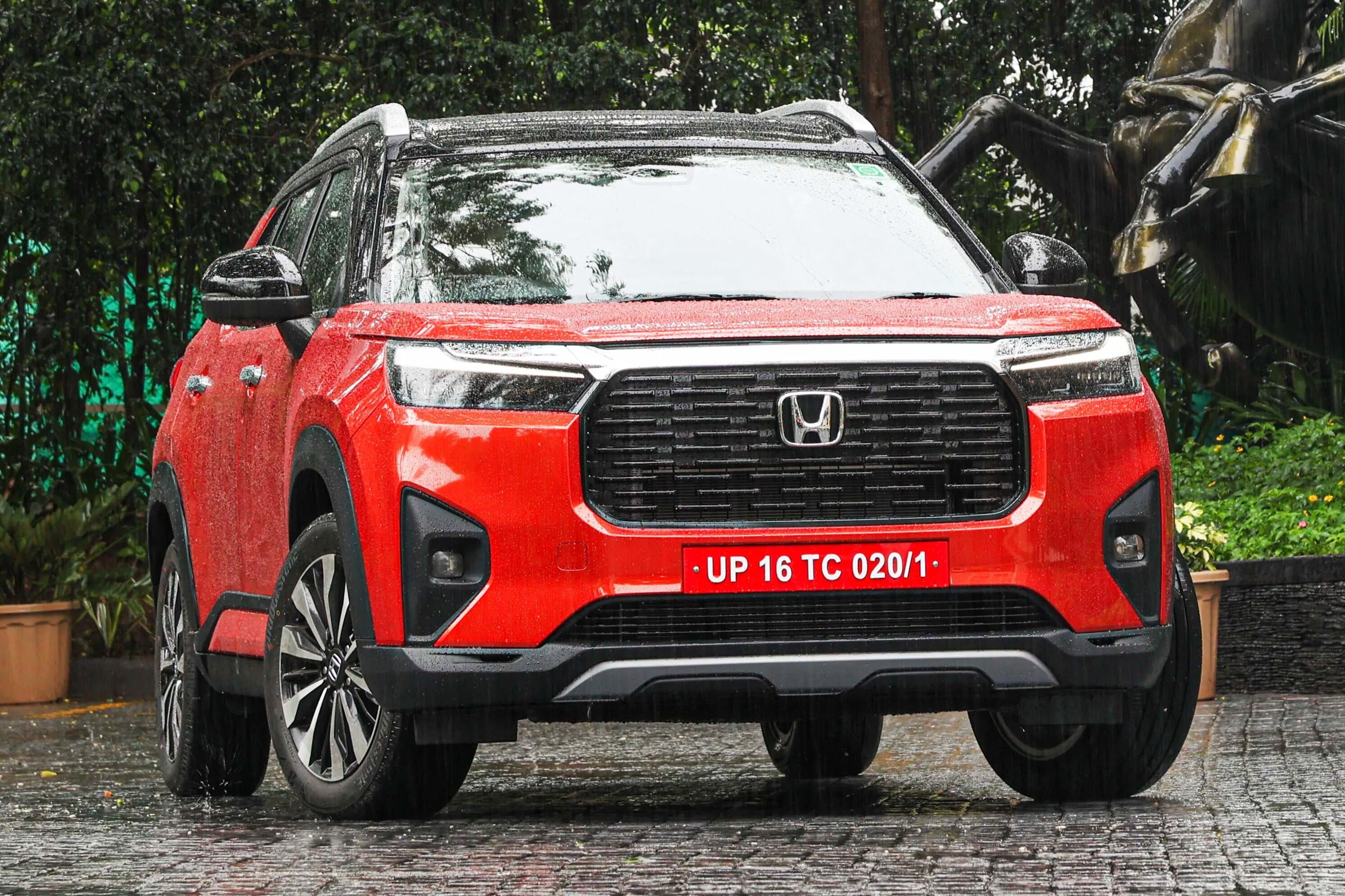
Current Honda Elevate. Image used for representation only.
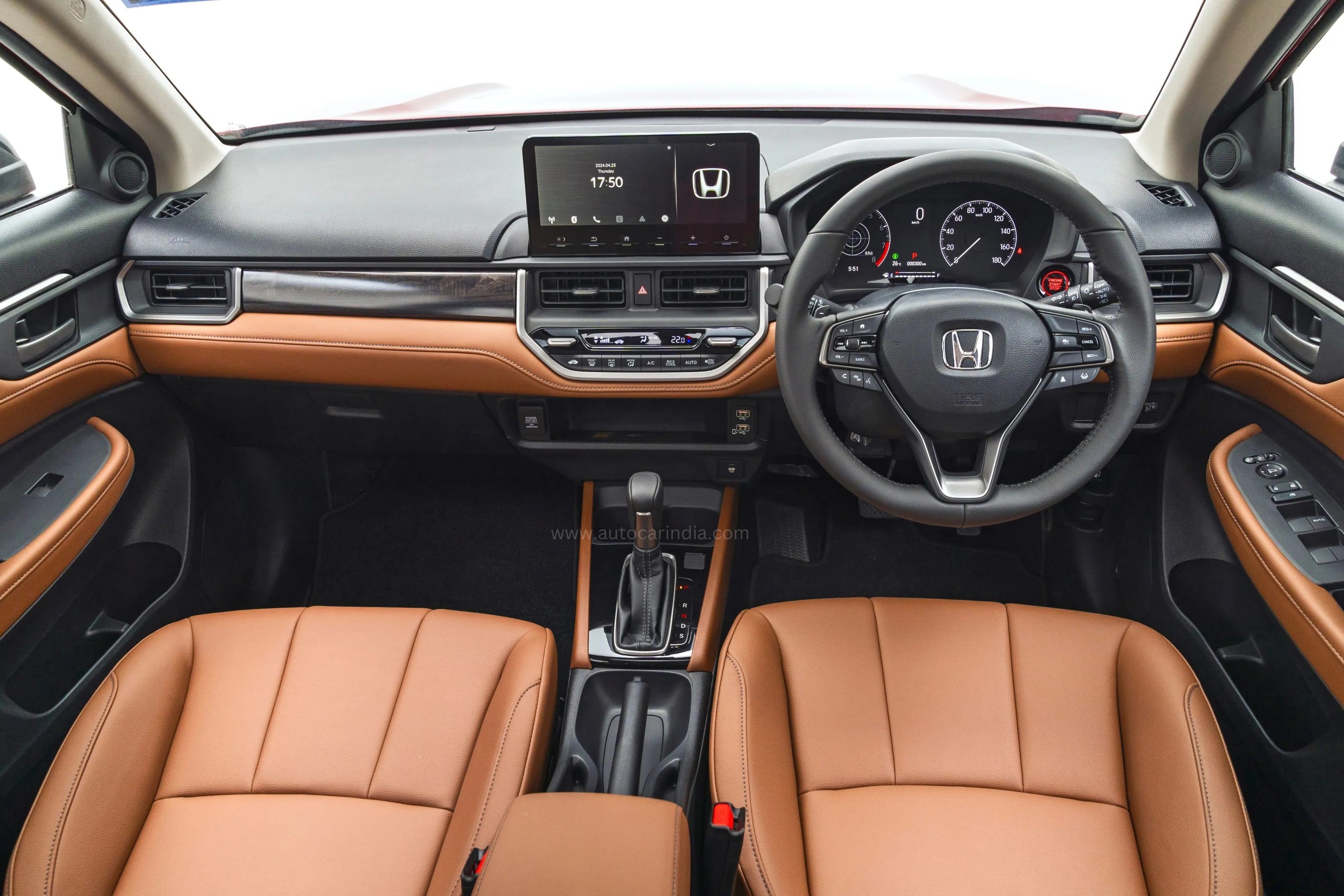
Following in the footsteps of the 2026 City facelift, Honda will launch an updated version of the Elevate SUV in October. Expect the Elevate facelift to sport revised styling cues, including the headlamps, tail-lamps, bumpers, grille, and wheels. The interior is anticipated to see changes like a larger infotainment touchscreen and revised colour schemes, along with feature upgrades like ventilated front seats, a 360-degree camera, ambient lighting, and more.
Current Honda Elevate interior. Image used for representation only.
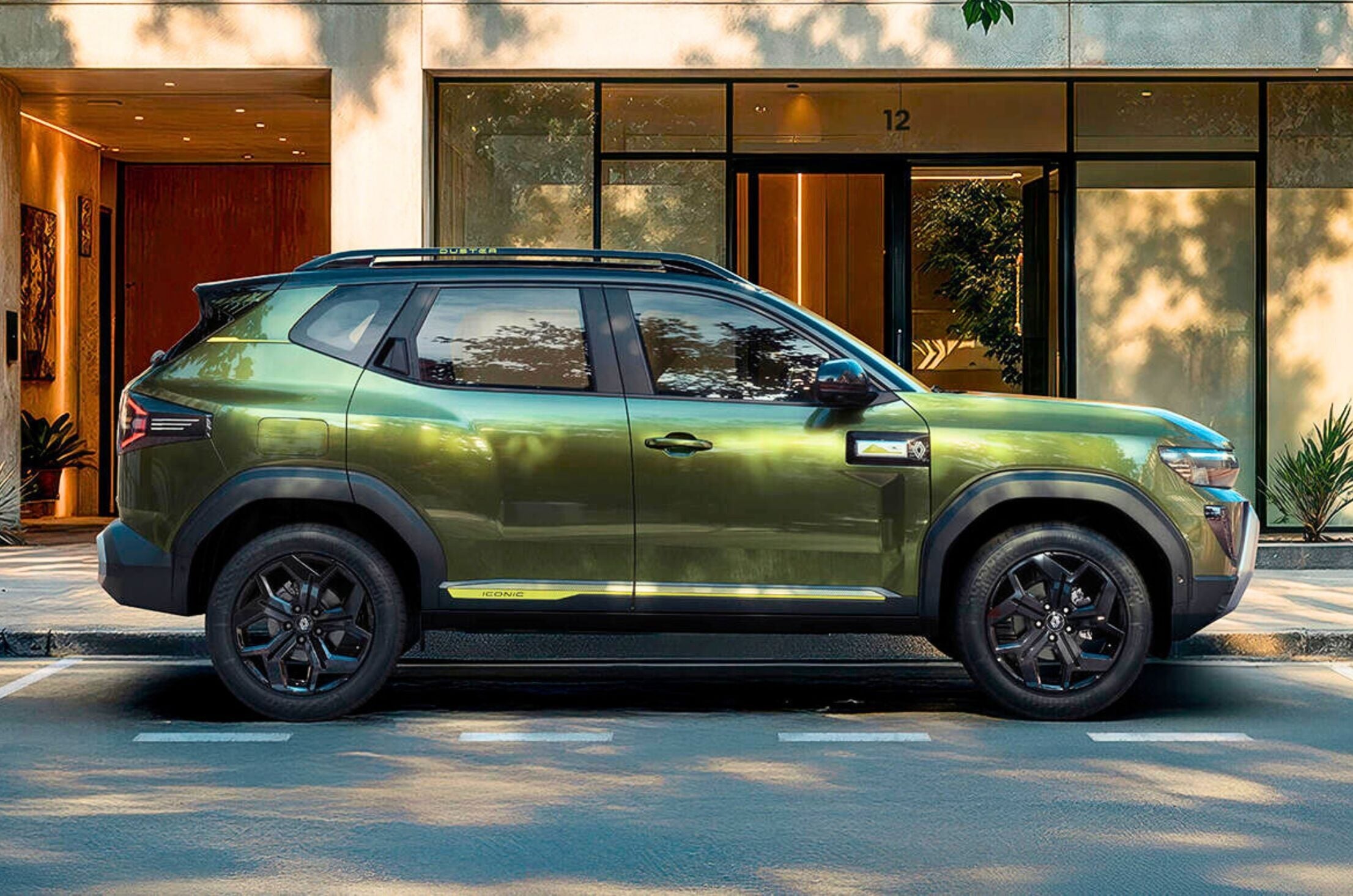
The facelifted Elevate is likely to retain the current model’s 121hp 1.5-litre four-cylinder naturally aspirated petrol engine, and its 6-speed manual and CVT automatic gearbox options. It remains to be seen if Honda will additionally offer the Elevate facelift with the City e:HEV’s 126hp 1.5-litre four-cylinder petrol-hybrid powertrain, which is solely mated to an e-CVT automatic. A strong hybrid version of the Elevate would allow it to compete directly with established hybrid midsize SUVs like the Maruti Grand Vitara, Victoris, and Toyota Hyryder, as well as the upcoming Renault Duster hybrid – also slated for launch next month.
Skoda Slavia facelift
Launch: 6 October
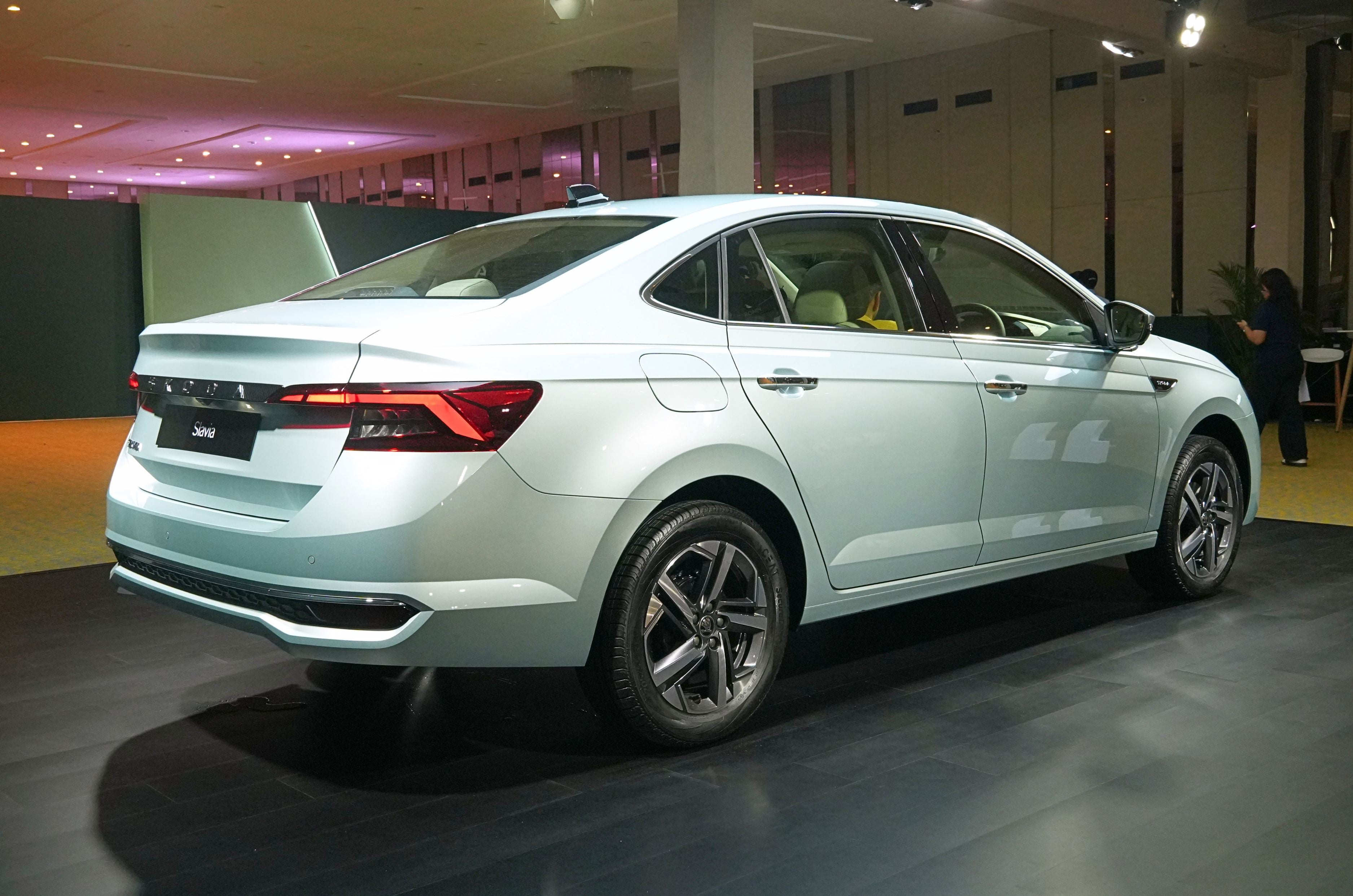
Having debuted back in August, the facelifted Skoda Slavia’s prices will be announced next month. The Slavia facelift brings a host of exterior tweaks, like new DRL signatures for the headlamps, an updated grille, redesigned bumpers, and fresh alloy wheels. Not much has changed on the inside, but there are new colour schemes on offer. Skoda has also added features like a 360-degree camera, a massage function for the outboard rear seats, a larger 10.25-inch digital driver’s display, a Google-based AI assistant, an upgraded variable-geometry AC compressor, and front parking sensors.
Under the bonnet, the Slavia facelift retains its 115hp 1.0-litre three-cylinder direct-injection turbo-petrol and 150hp 1.5-litre four-cylinder direct-injection turbo-petrol engines. The big change here is that the 6-speed torque converter automatic that was previously available for the 1.0 TSI has been swapped with an 8-speed unit, which should deliver better fuel efficiency on the highway. A 6-speed manual gearbox is also available for the 1.0 TSI, whereas the 1.5 TSI continues to be paired exclusively with a 7-speed dual-clutch automatic. The 1.5 TSI will be offered with rear disc brakes too – a much-requested upgrade.
Volvo ES90
Launch: 12 October
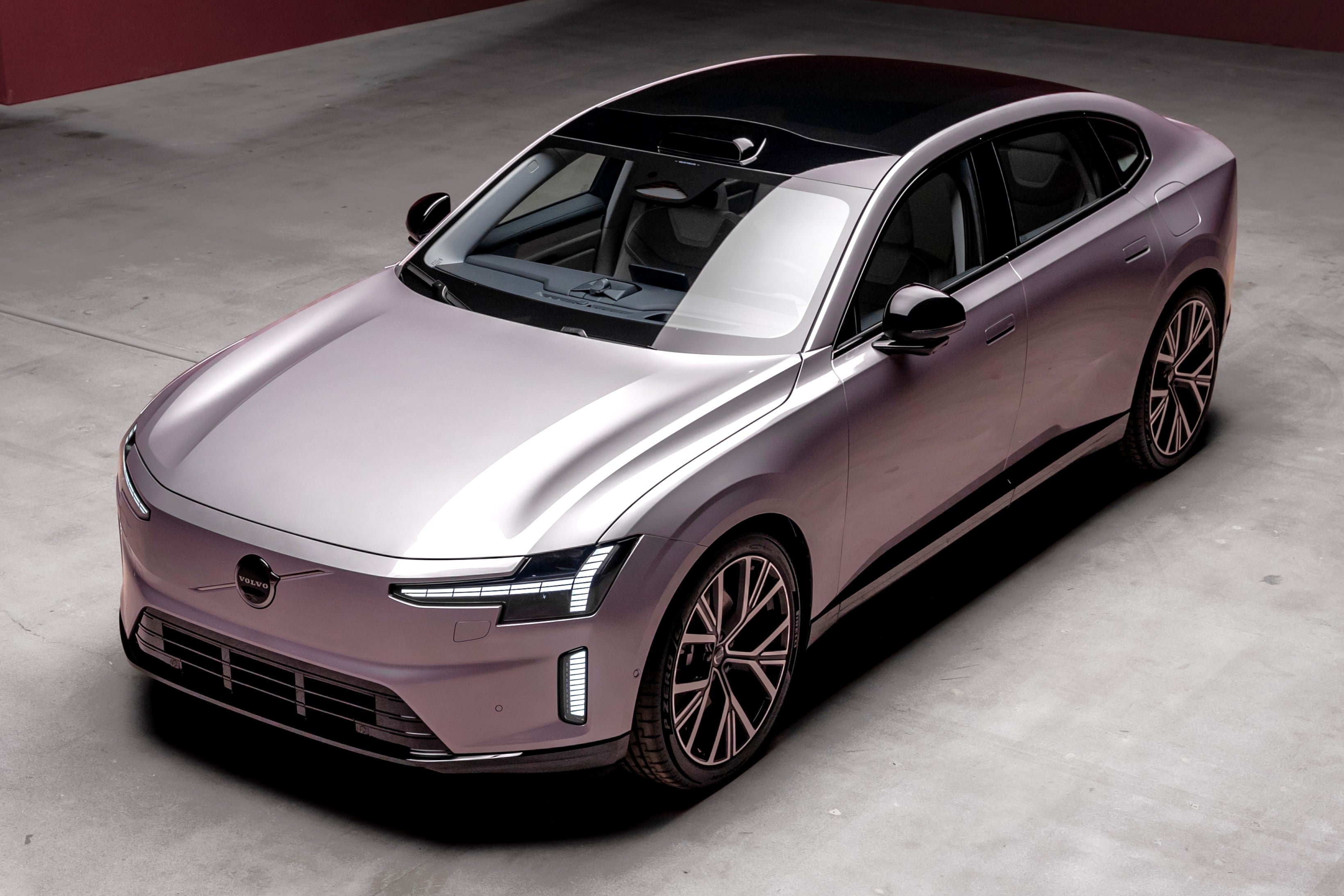
Volvo will return to the luxury sedan space next month with the launch of the all-electric ES90. It’s based on Volvo’s 800V SPA2 platform, and is likely to be offered with a 106kWh battery, dual-motor AWD setup in India. Combined output is pegged at 456hp and 670Nm, which is good for a claimed 0-100kph time of 5.3 seconds. As for WLTP range, the ES90 is rated at 696km, and the sedan can charge at up to 350kW DC, taking 22 minutes for a 10-80 percent top-up.
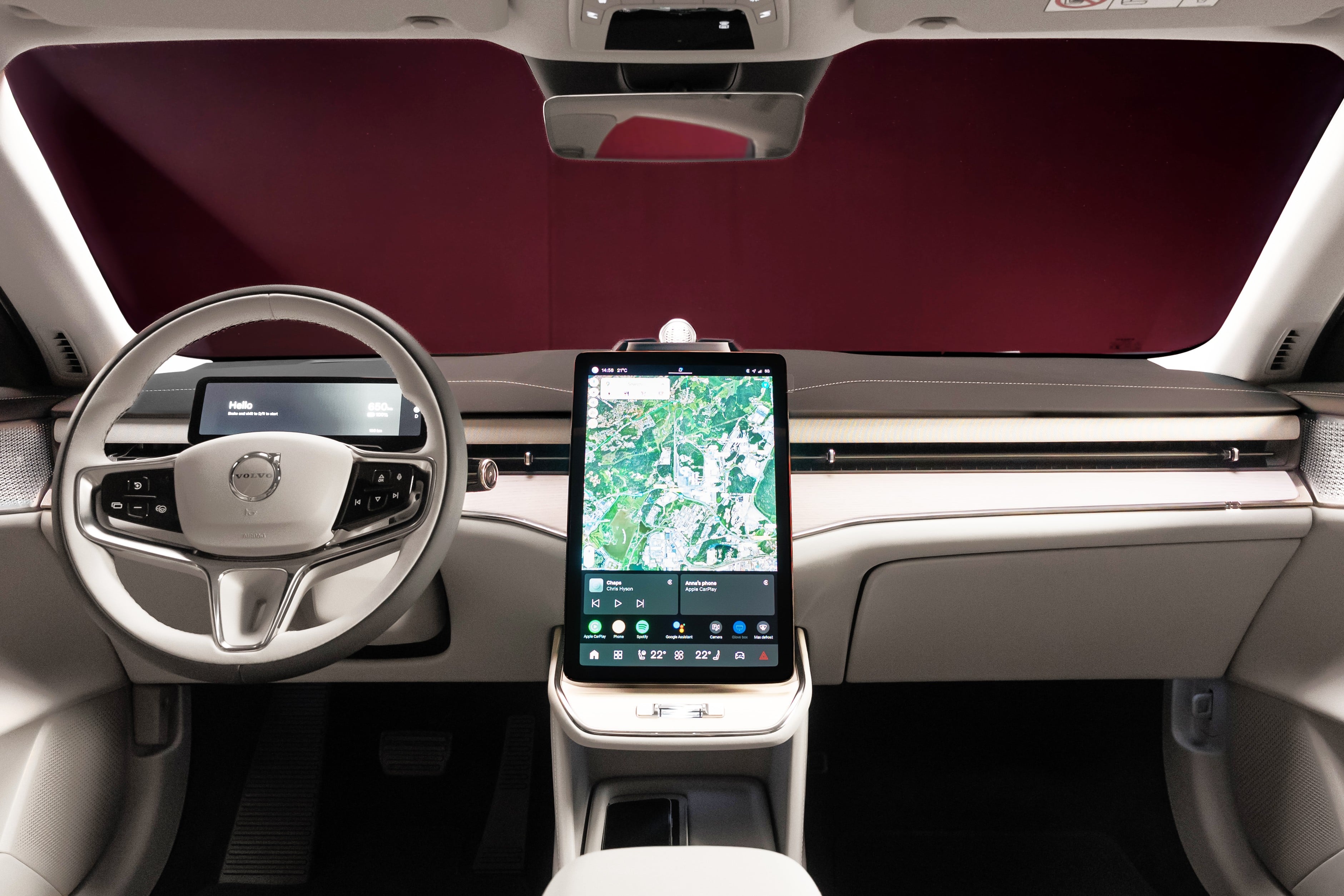
On the outside, the ES90 looks sleek and quietly aggressive, with T-shaped LED headlamps, vertically oriented front fog lamps, clean panelling, and C-shaped tail-lamps. Moreover, it has a drag coefficient of 0.25, making it the most aerodynamic Volvo car yet. Inside, the ES90 packs a 14.5-inch Google-based portrait touchscreen, a floating centre console, a three-spoke steering wheel, a slim 9-inch digital driver’s display, a 13.2-inch head-up display, a panoramic glass roof, four-zone climate control, powered front seats, Level 3 ADAS, and a Bose sound system.
Volvo EX90
Launch: 12 October
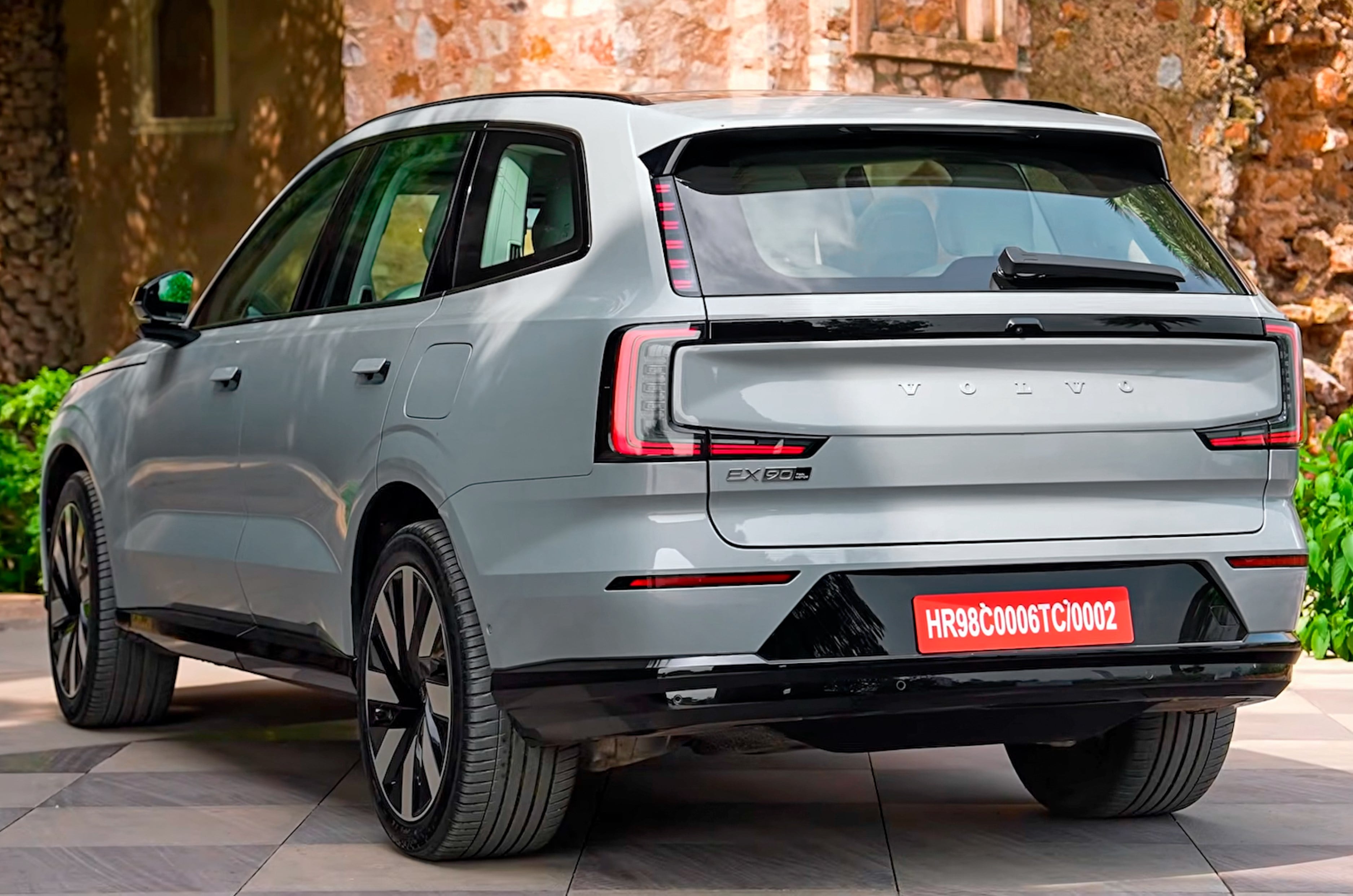
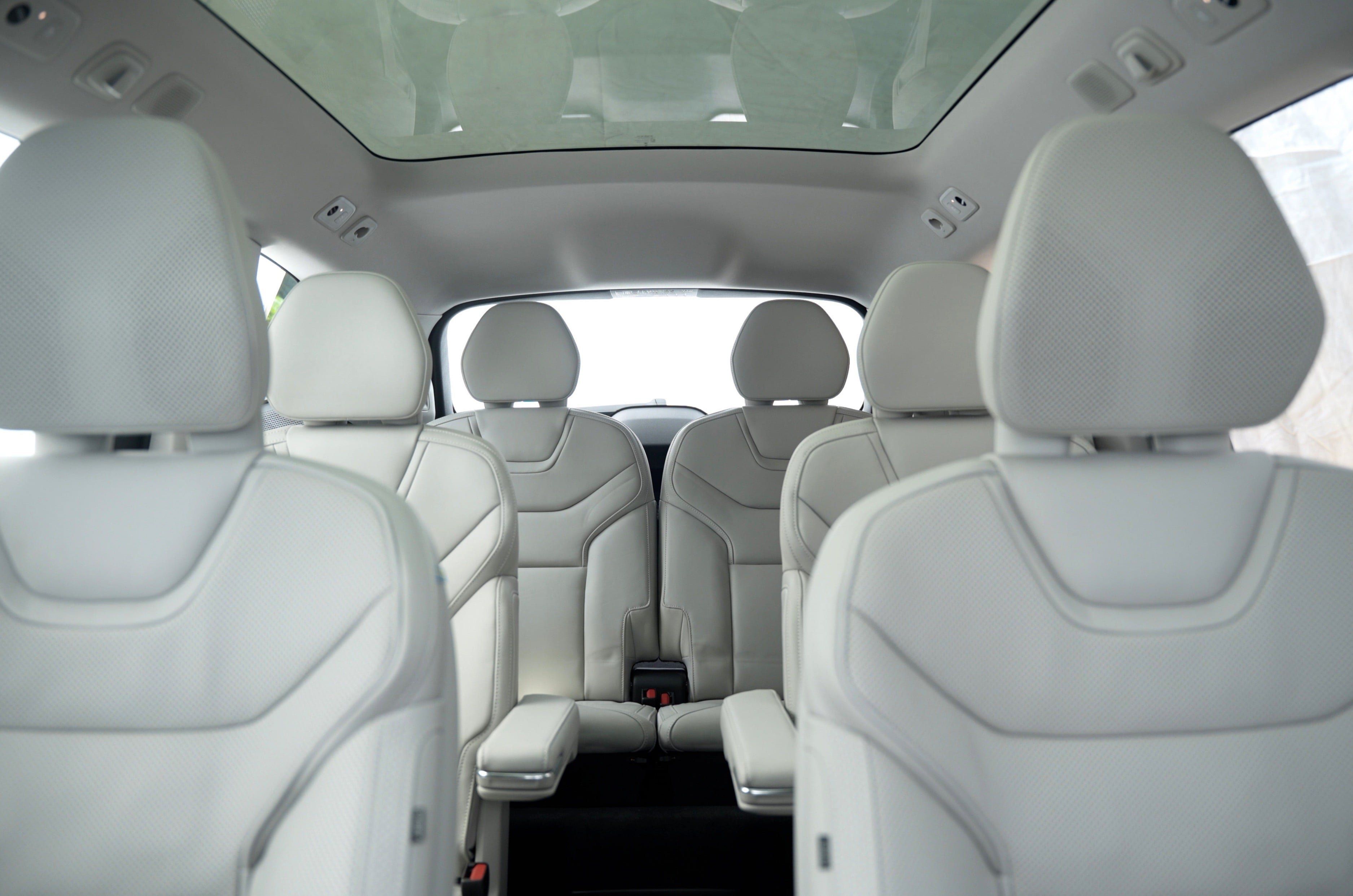
Alongside the ES90, Volvo will launch its SUV counterpart, the EX90. The electric SUV is also based on the SPA2 platform and is expected to offer the same 106kWh dual-motor AWD powertrain. Owing to its higher-riding stance, the EX90’s WLTP range is slightly lower at 625km, but the SUV impressively claims the same 5.3sec 0-100kph time.
Even in terms of exterior design, the core elements are quite similar between the EX90 and ES90. The same holds true for the interior and equipment list as well, with the only major difference being that the EX90 can seat up to six occupants and gets second-row captain’s chairs.
Toyota Glanza facelift
Debut: 14 October
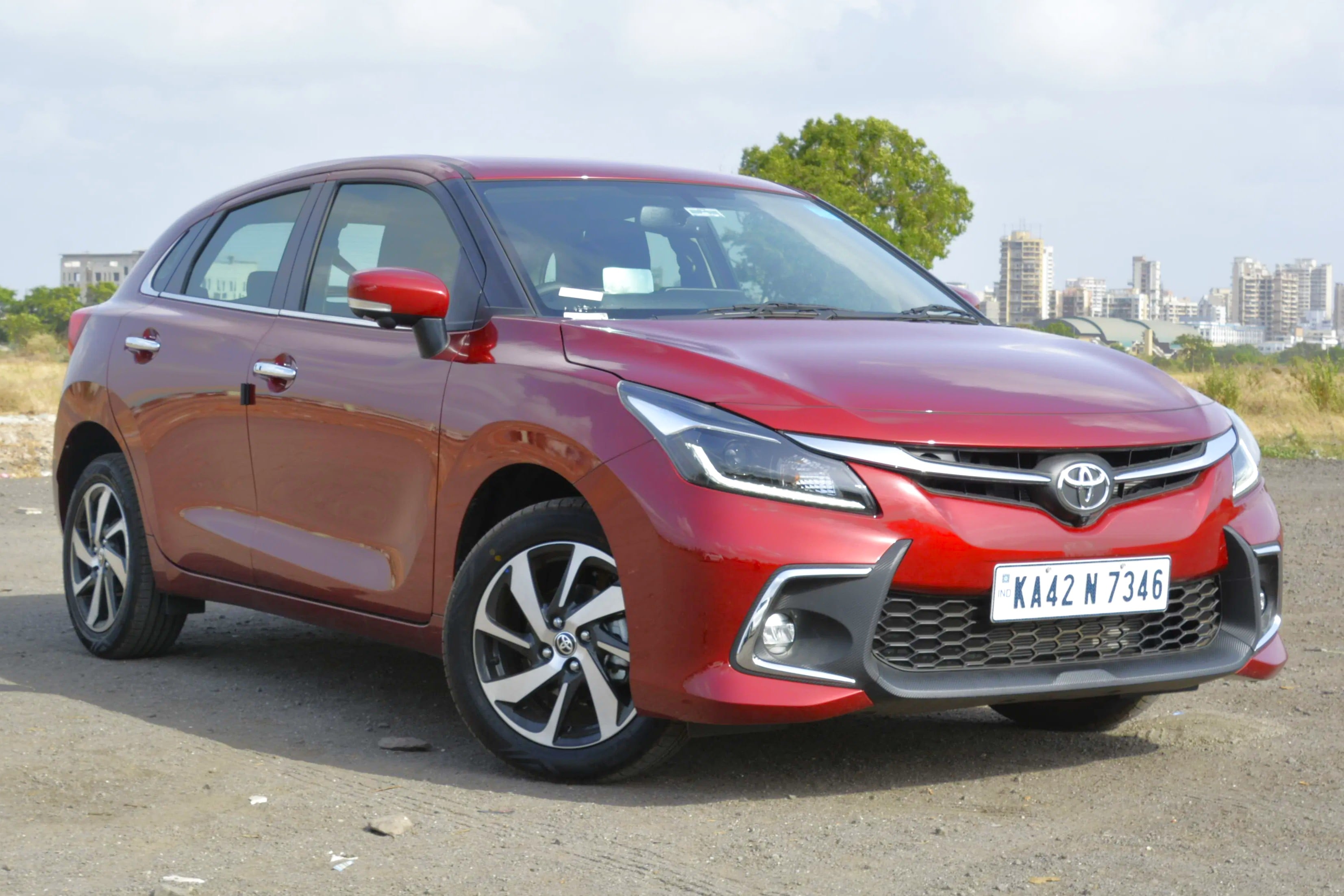
Current Toyota Glanza. Image used for representation only.
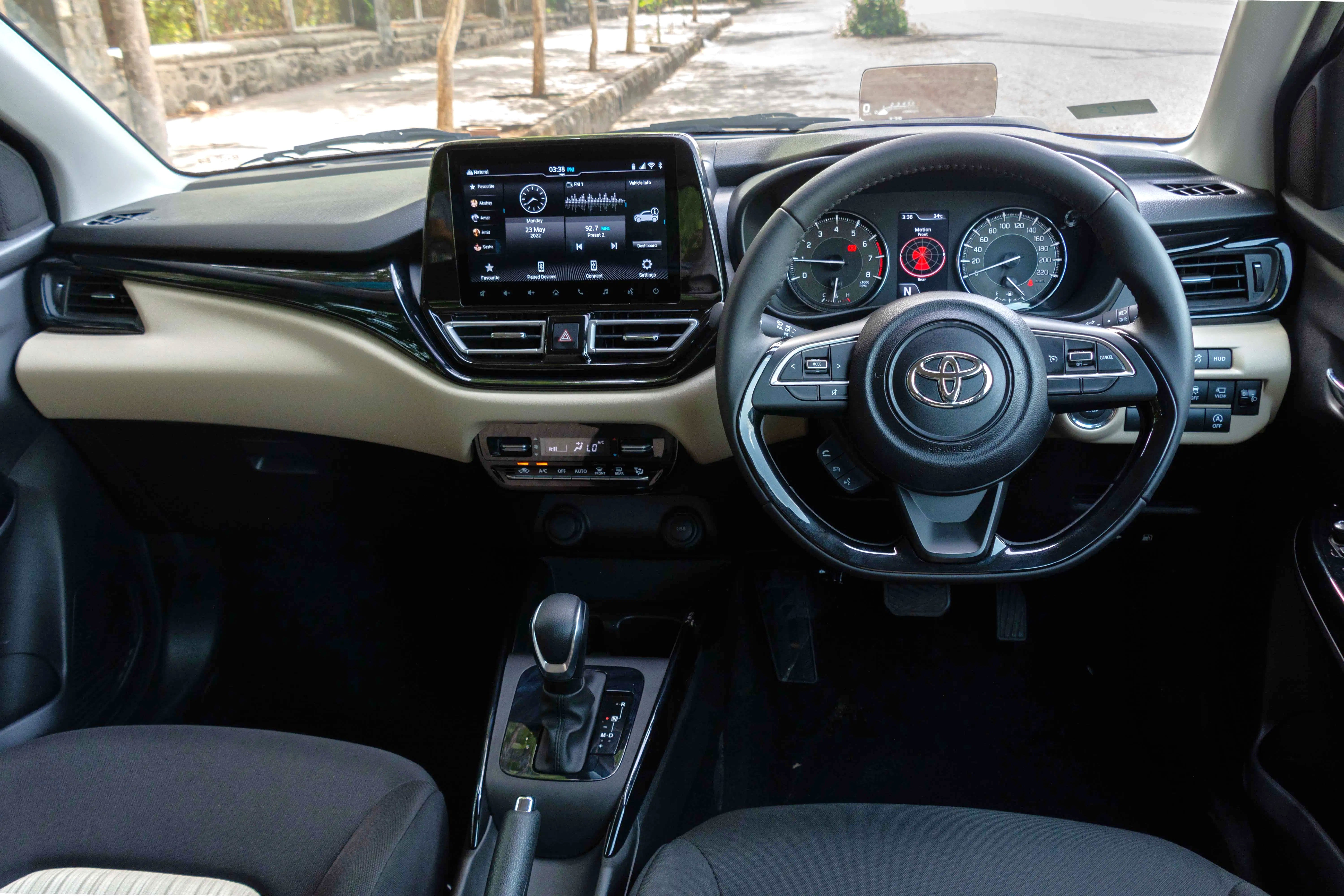
Just a month after the launch of the Baleno facelift, the updated form of its Toyota-badged counterpart, the Glanza, will be revealed. The Glanza facelift is likely to feature styling revisions similar to those of the updated Baleno, like a larger grille, redesigned bumpers, and new alloy wheel designs. Inside, the Toyota hatchback’s dashboard layout is expected to be largely unchanged, save for fresh seat upholstery. New creature comforts are likely to include Level 2 ADAS, a wireless charging pad, and ventilated front seats.
Current Toyota Glanza interior. Image used for representation only.
Under the bonnet, the Glanza facelift is anticipated to mirror the Baleno in dropping its current 90hp 1.2-litre four-cylinder K12N petrol engine in favour of the 83hp 1.2-litre three-cylinder Z12E mill. Like in the Baleno facelift, this engine is expected to be offered with either a 5-speed manual or 5-speed AMT in the updated Glanza, along with a 70hp CNG option.
Third-gen Audi Q3
Launch: 16 October
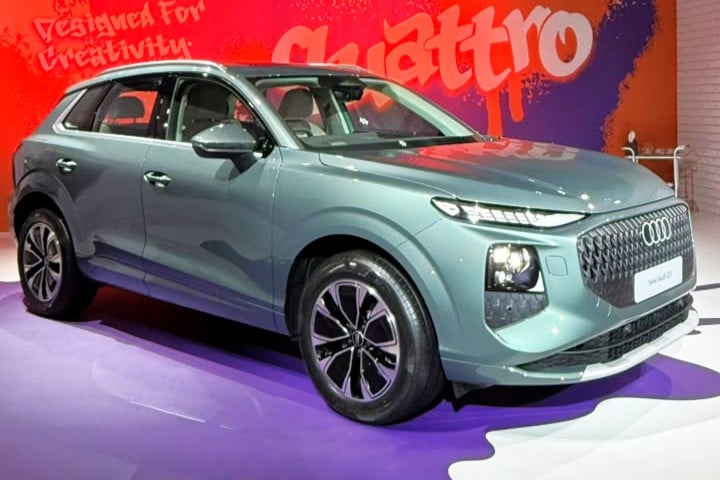
Audi India will launch the latest generation of its entry-level SUV, the Q3, next month. The India-spec third-gen Q3 was unveiled back in August, and will continue to rival the BMW X1 and Mercedes-Benz GLA. On the outside, the new Q3 is larger than its predecessor in every dimension and bears a sharper design language, which includes split LED headlamps, a wide grille, 18-inch alloy wheels, and a rear light bar with an illuminated Audi emblem.
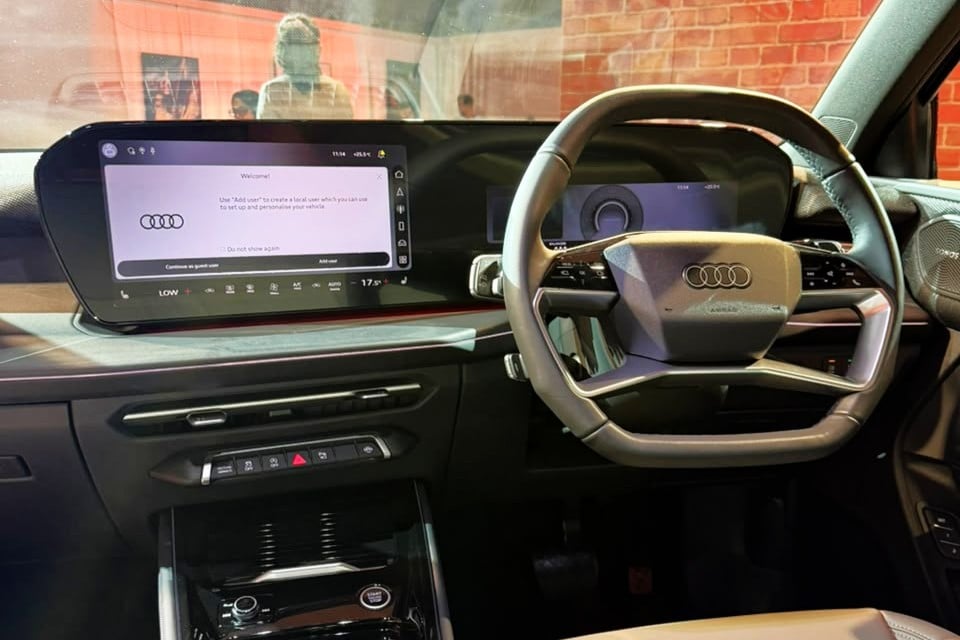
The interior of the third-gen Q3 is more modern and feature-loaded too, offering a 12.8-inch touchscreen, an 11.9-inch digital driver’s display, a new squircle-shaped four-spoke steering wheel, ambient lighting, a Sonos sound system, a panoramic sunroof, ambient lighting, a 360-degree camera, dual-zone climate control, among others. Under the bonnet, the Q3 continues to get a 204hp 2.0-litre four-cylinder direct-injection turbo-petrol engine, mated to a 7-speed dual-clutch automatic and Audi’s Quattro AWD system. 0-100kph comes up in a claimed 7.1 seconds, and the top speed is rated at 229kph.
Renault Duster hybrid
Launch: 17 October
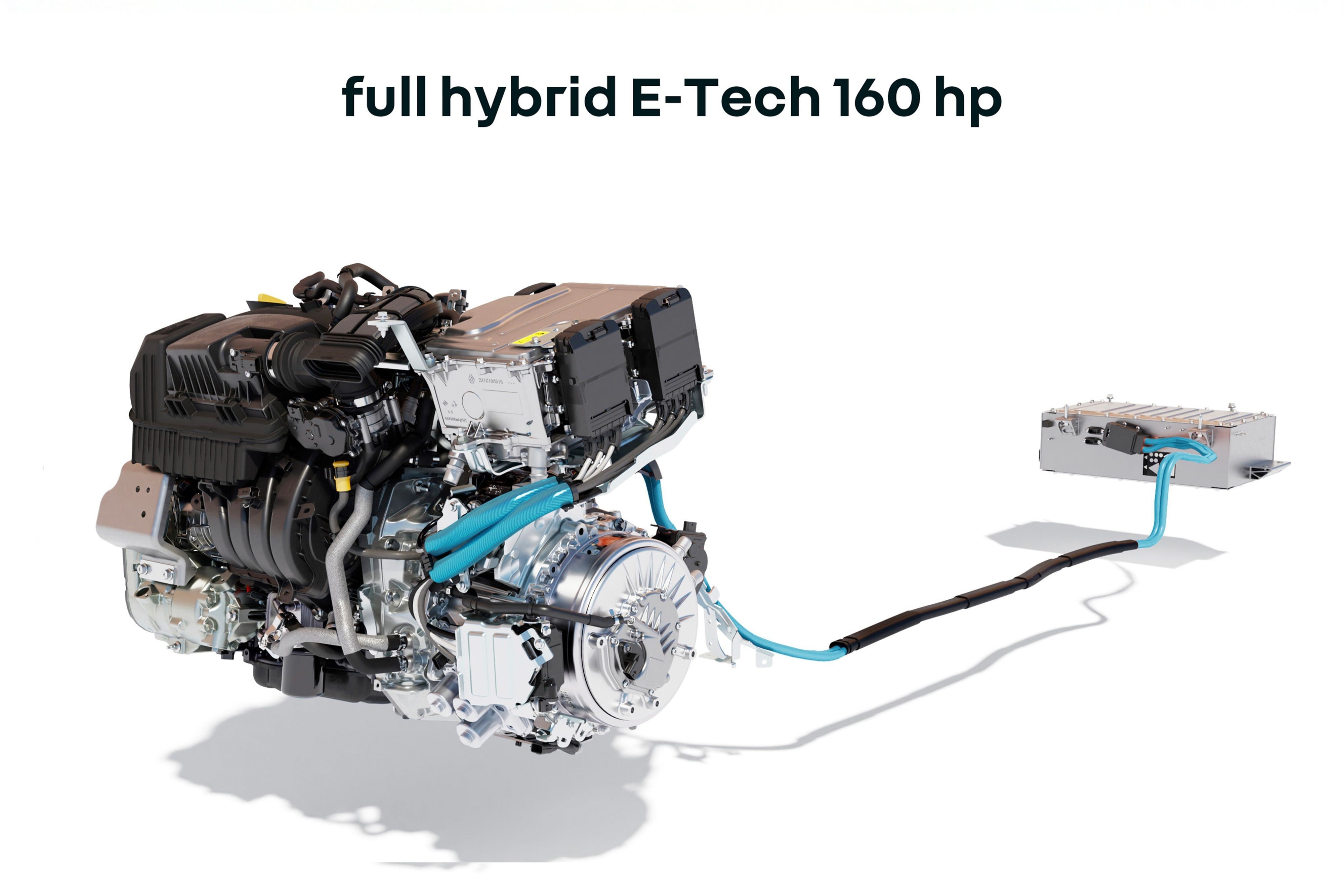
Since its launch earlier this year, the Renault Duster has been available with a couple of turbo-petrol engines only, but that will change come October 17. Renault will bolster the Duster’s line-up with a strong hybrid powertrain dubbed the E-Tech 160. It pairs a 1.8-litre four-cylinder naturally aspirated petrol engine with two electric motors and a 1.4kWh battery pack, developing a combined 160hp and 172Nm.
This setup will be paired with a segment-first 8-speed dedicated hybrid transmission (DHT) that uses fixed gear ratios, unlike the e-CVTs seen in hybrid SUV rivals like the Grand Vitara, Victoris, and Hyryder. The DHT should therefore enable a more natural driving feel to the Duster hybrid. Thanks to its 1.4kWh battery, the E-Tech 160 is also claimed to deliver 80 percent of urban driving in all-electric mode, which should help the Duster hybrid achieve great fuel efficiency.
Hyundai Bayon
Launch: Mid to late October
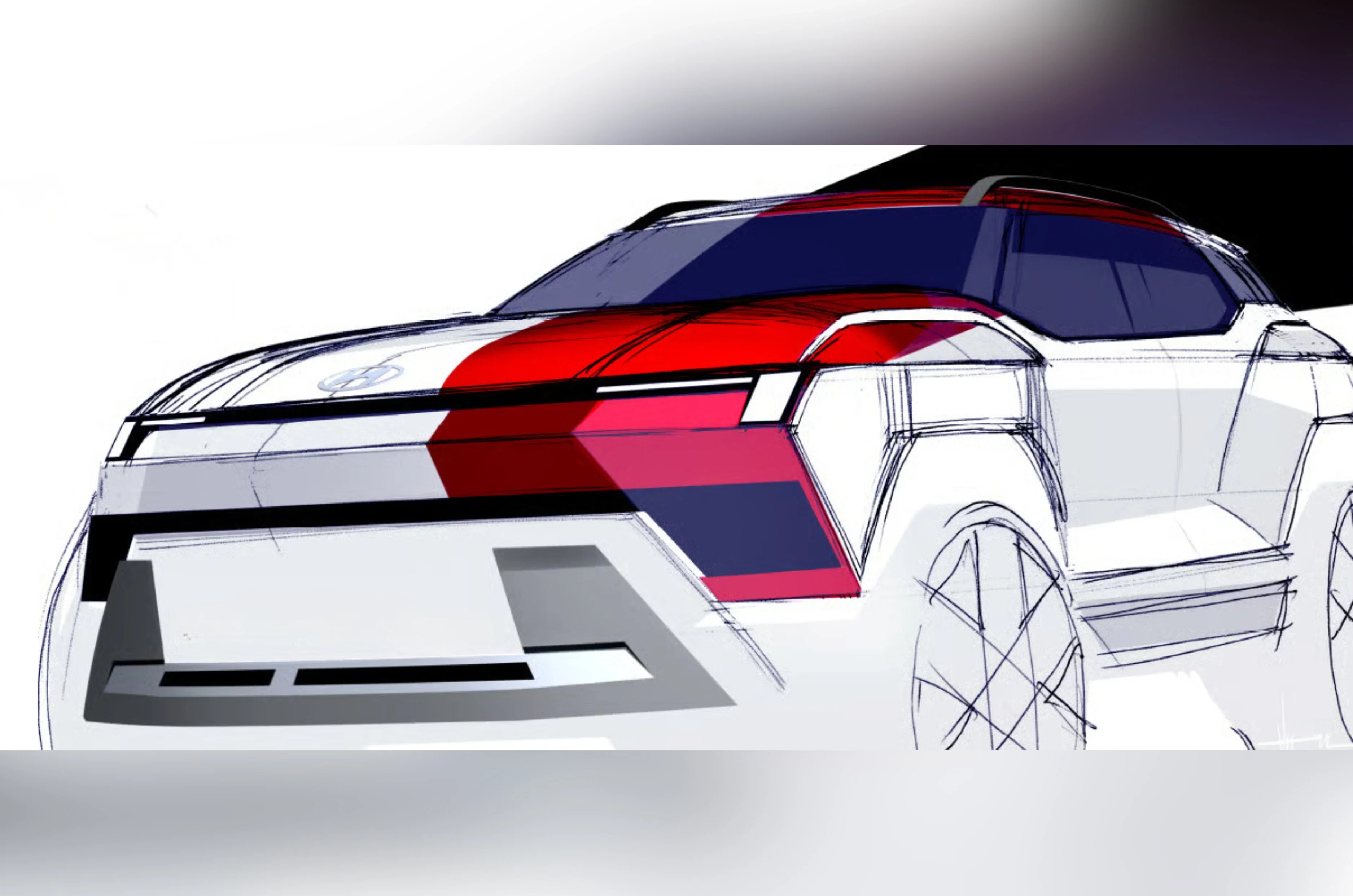
Hyundai’s second midsize SUV for India, the Bayon, is expected to be fully revealed and launched next month – bookings commenced on 23 September. The Bayon will slot between the Venue and Creta, offering the latter’s 1.5-litre naturally aspirated engine in petrol and CNG guises. Gearbox options are likely to include a 6-speed manual and CVT automatic. On the outside, the Bayon will feature Hyundai’s ‘Art of Steel’ design language, with styling cues like L-shaped front and rear LEDs, rakish proportions, an upward-sloping window line, and more. It’s also expected to be the first Hyundai car to come with an underbody CNG tank.
The interior of the Bayon is likely to offer a curved dual-screen setup, a three-spoke steering wheel bearing Hyundai’s four-dot motif, and a vertically oriented centre console – the dashboard layout will resemble that of the fourth-gen i20, which was revealed for the Brazilian market a few months ago.
Suzuki is planning to make core advanced driver assistance system (ADAS) functions standard across its future India lineup, including affordable cars, as it develops a lower-cost system suited to Indian road conditions. The aim is to offer greater access to accident prevention. “Fitting expensive advanced driver assistance systems only to a few luxury cars does not reduce accidents across society,” said Katsuhiro Kato, Suzuki’s chief technology officer, at the company’s recent technology strategy briefing, citing more than 1.77 lakh road accident fatalities in India in 2024.
Proposed system’s cameras and AI tech to eliminate the need for a front radar
Suzuki is working on lighter bodies designed to protect occupants in crashes
Core ADAS functions to become standard
Kato said Suzuki intends to make safety functions such as automatic emergency braking and lane departure prevention standard, while reserving additional comfort and convenience functions for higher variants. The manufacturer describes the approach as “just-right ADAS”, with the system being developed specifically around Indian traffic conditions and the need to keep costs down.
Cameras and AI to eliminate the need for a front radar
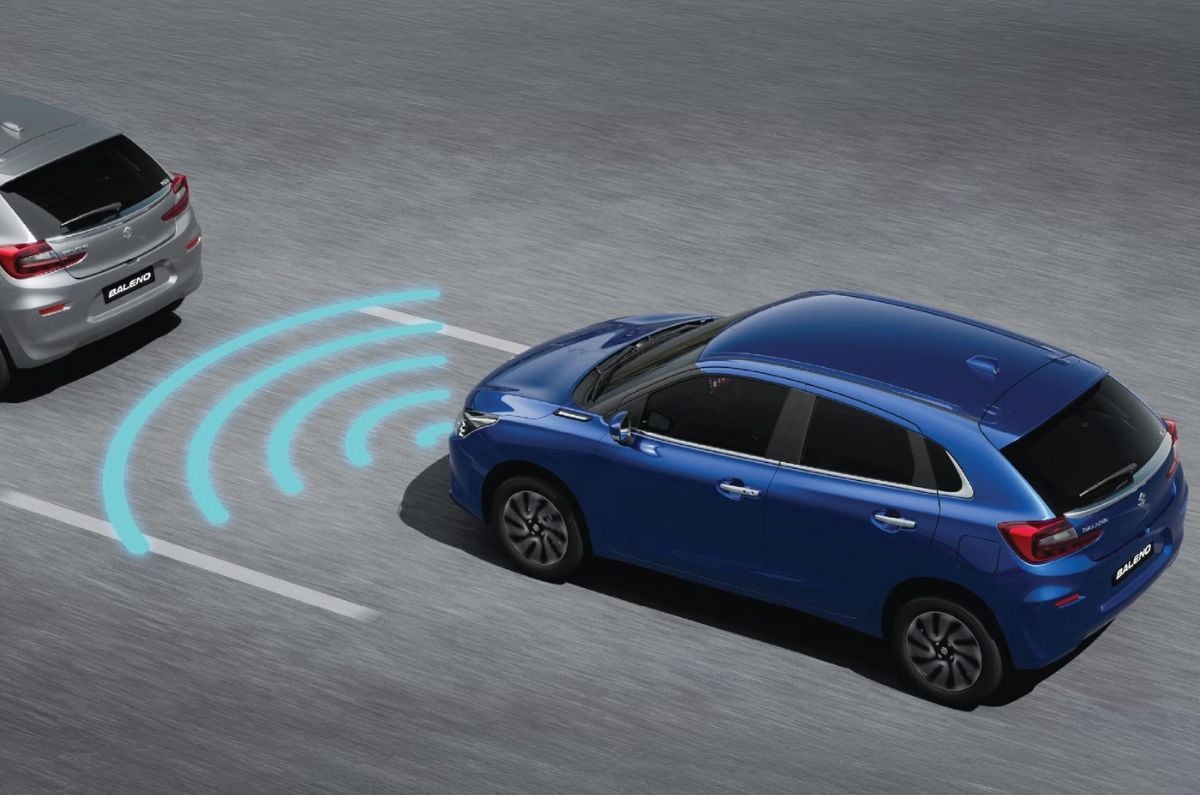
To reduce the cost of the system, Suzuki plans to use high-resolution cameras and AI chips, while integrating driver and occupant monitoring with ADAS. The proposed setup will also do away with the front radar sensor. The company says it is targeting “major cost reductions” while maintaining “equal or better safety performance”. These, however, are development targets, and Suzuki has not released performance results for a production version of the system.
The manufacturer says it is approaching vehicle safety from two directions: preventing accidents through ADAS and protecting occupants when a crash occurs. Alongside its electronic safety systems, the company is working on lighter vehicle bodies designed to protect occupants in a collision.
New electronic architecture could cut costs
The carmaker’s ADAS plans form part of its wider “SDV Right” strategy, which aims to simplify the electronic architecture of its future vehicles. The manufacturer plans to combine communication, power distribution and body-control functions into a Central Zone ECU. Suzuki estimates that this controller could cost around 30 percent less and weigh about 15 percent less than its conventional arrangement.
Suzuki has not yet announced which models will get the new ADAS system or when it will be introduced. In the small-car segment, the Baleno is currently Maruti Suzuki’s most affordable model to offer an ADAS suite, which was introduced with its recent facelift. The technology is currently not offered by any of its premium hatchback rivals.
Jeep India has unveiled a new special edition of the Wrangler, dubbed the Whitecap Mojito Limited Edition. It’s based on the Rubicon variant of the standard Wrangler, and brings a host of cosmetic changes. Expect the Wrangler Whitecap Mojito edition to command a slight premium over the Rubicon, which is priced at Rs 70.8 lakh (ex-showroom).
Jeep Wrangler Whitecap Mojito: What’s new?
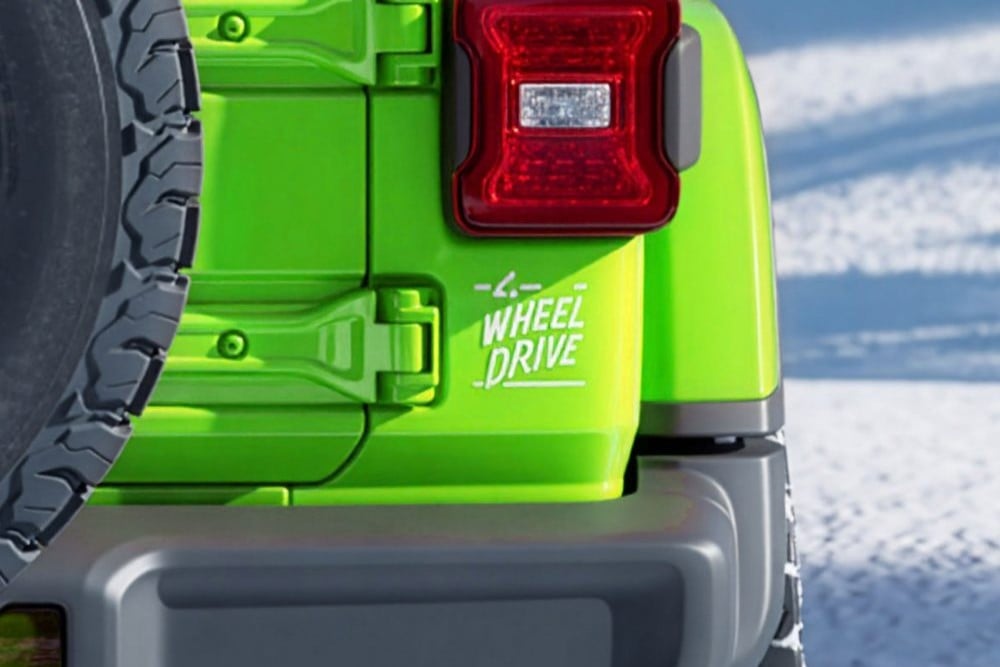
The Wrangler Whitecap comes solely in an exclusive bright-green ‘Mojito’ colour on the outside, which is paired with a white finish for the roof. Up front, there’s a white surround for the grille, while the side profile gets ‘1941’ decals (a reference to when the original Willys MB Jeep was introduced) and body-coloured fenders. A white ‘4 Wheel Drive’ sticker on the bootlid rounds off the cosmetic tweaks.
Inside, the Wrangler Whitecap Mojito distinguishes itself with a built-in dashcam and reinforced grab handles. Elsewhere, it retains the feature set of the Wrangler Rubicon, including a 12.3-inch infotainment touchscreen, 12-way powered front seats, an ADAS suite, 6 airbags, dual-zone climate control, a 9-speaker Alpine sound system with a subwoofer, a 7-inch driver’s display, and more.
Jeep Wrangler Whitecap Mojito engine and gearbox
Mechanically, the Whitecap Mojito edition remains unchanged from the Wrangler Rubicon, which means it’s powered by a 2.0-litre four-cylinder direct-injection turbo-petrol engine developing 272hp and 400Nm. An 8-speed automatic transmission channels that power to all four wheels via a standard 4×4 system.
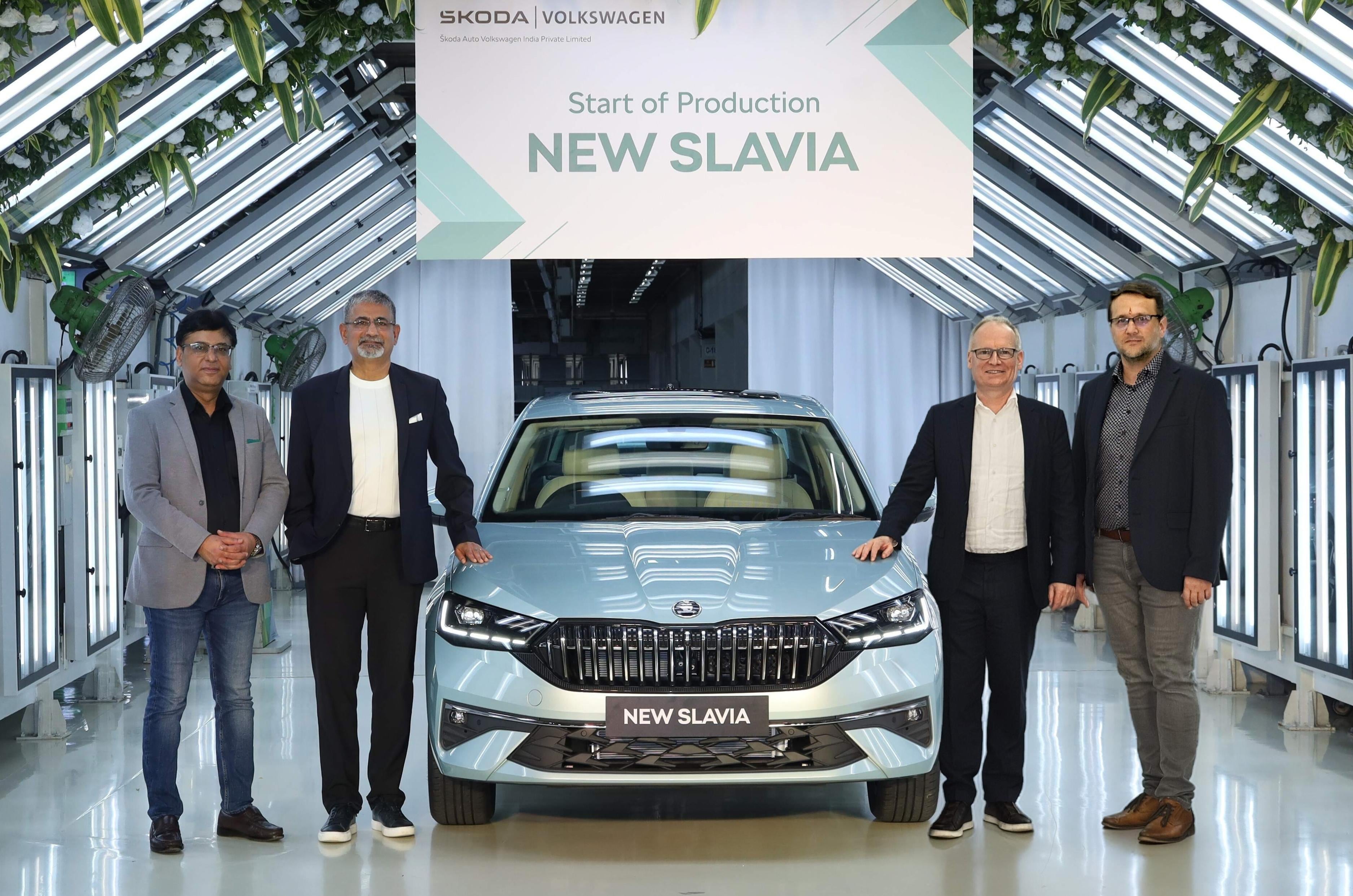
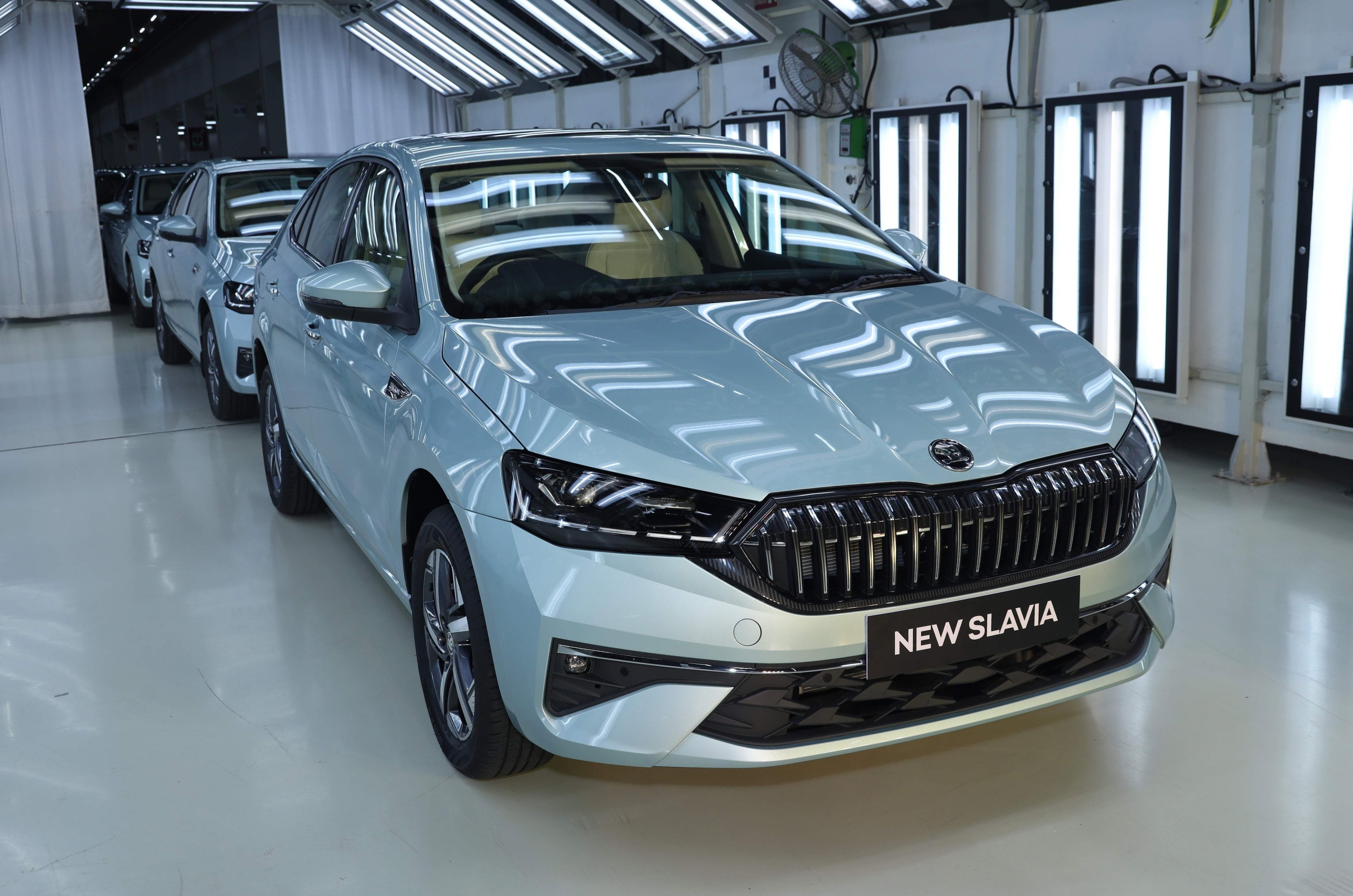
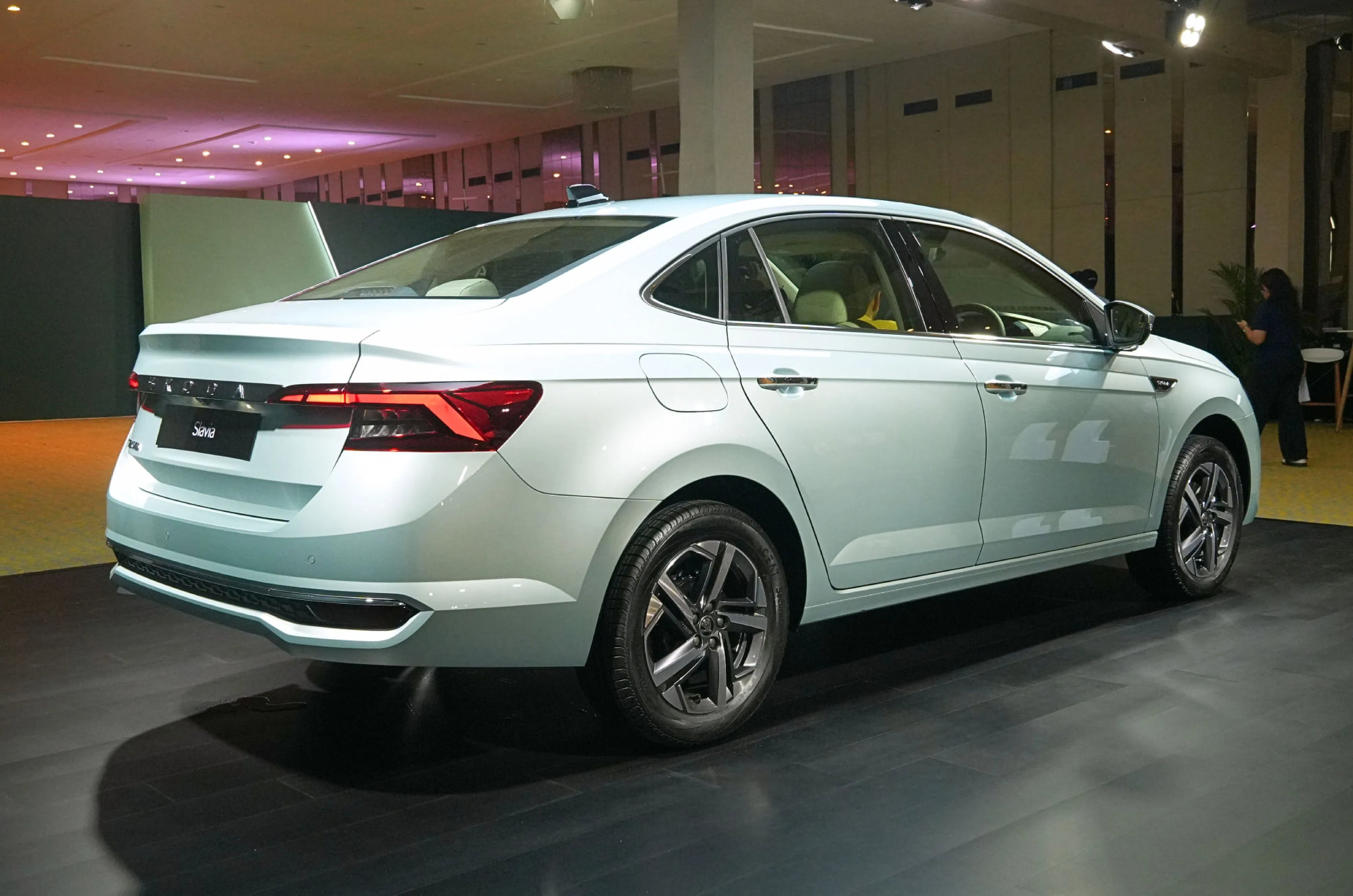
Skoda Auto Volkswagen India has commenced production of the facelifted Slavia at its Chakan plant in Pune. The updated sedan is expected to reach customers during the festive season, with prices set to be announced soon.
The 2026 Slavia gets revised exterior styling, new features and an 8-speed torque-converter automatic for the 1.0-litre TSI engine. It continues with the 115hp 1.0 TSI and 150hp 1.5 TSI turbo-petrol engines, while the latter retains its 7-speed dual-clutch automatic.
Production begins ahead of the festive-season launch
Gets 360-degree camera and rear sequential turn indicators
Rear seats gain a new massage function
2026 Skoda Slavia: What’s new?
The Slavia retains its existing overall shape but gets revised headlights, tail-lights, grille, air dam and alloy wheels. It also gets new LED daytime running light signatures, sequential rear turn indicators and a new trim between the tail-lights bearing the ‘SKODA’ lettering.
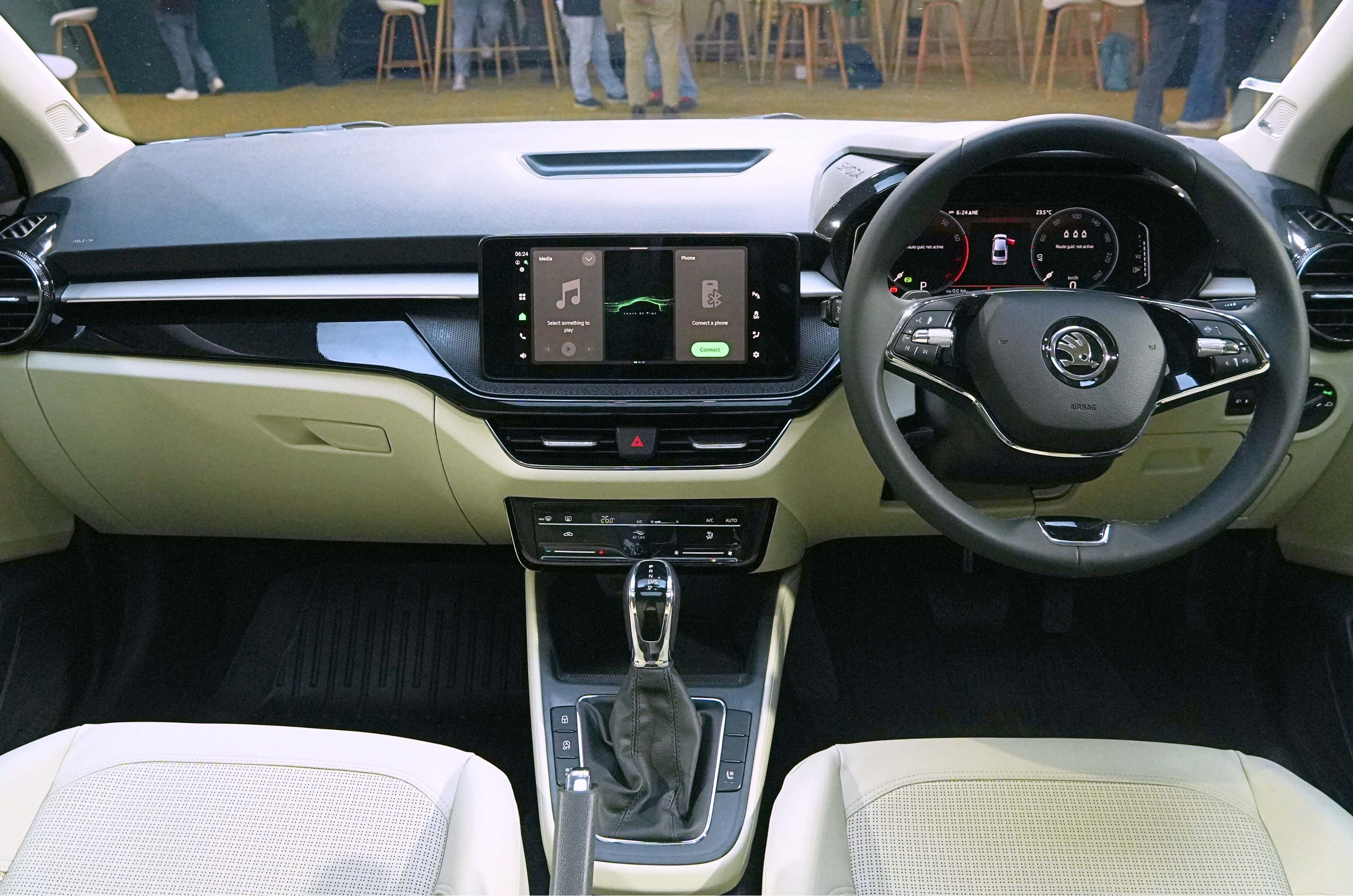
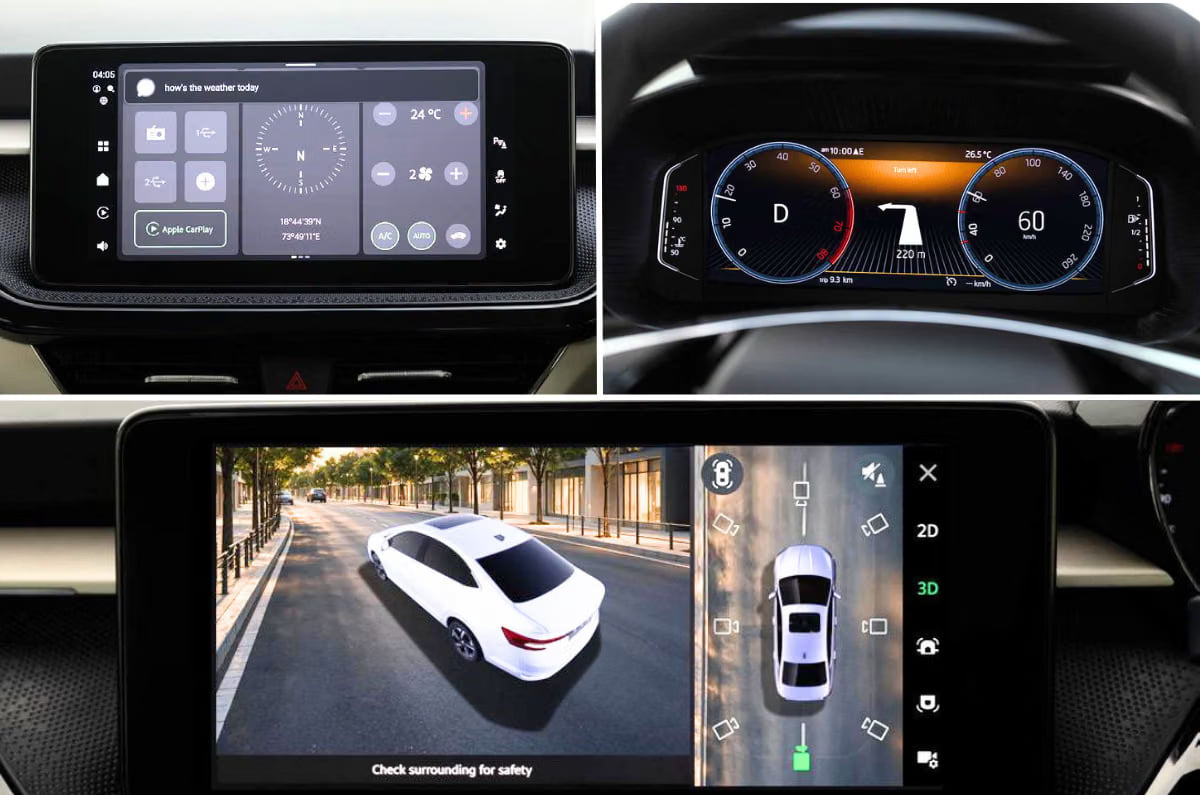
Inside, the basic dashboard layout has been retained, but the touchscreen has grown from 10 inches to 10.1 inches, while an 8-inch driver’s display has been replaced by a 10.25-inch unit. Both screens get updated graphics and functions. An ADAS suite continues to be unavailable.
Top: Touchscreen (L), driver’s display (R); bottom: 360-degree camera view.
The facelift also adds a 360-degree camera, replacing the outgoing car’s rearview camera. Other additions include a rear-seat massage function and a new variable-geometry compressor for better AC performance. A panoramic sunroof is still not part of the package, and the car continues with a single-pane unit.
2026 Skoda Slavia: Engine and gearbox
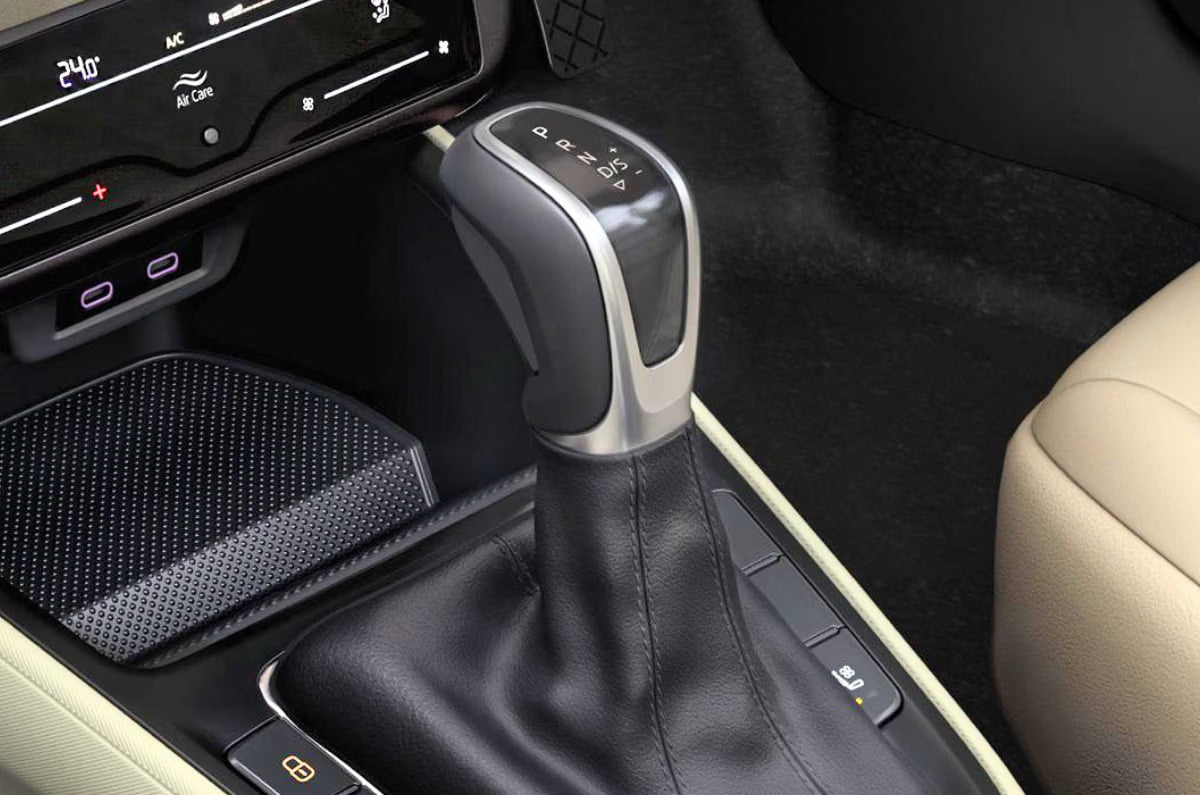
New 8-speed torque-converter gearbox replaces the 6-speed unit.
The 2026 Slavia carries over the existing 115hp 1.0 TSI and 150hp 1.5 TSI direct-injection turbo-petrol engines. The 1.0 TSI continues with a 6-speed manual, while the 1.5 TSI is paired with a 7-speed dual-clutch automatic.
The major powertrain change is to the 1.0 TSI automatic, which now gets an 8-speed torque-converter gearbox in place of the outgoing 6-speed automatic.
2026 Skoda Slavia: Launch and price
Bookings for the facelifted Slavia are already open, while prices will be announced in early October. Deliveries are scheduled to begin during the festive season. The outgoing Slavia is priced between Rs 10 lakh and Rs 18.19 lakh, ex-showroom. With the facelift, a price hike of up to Rs 85,000 is likely. The Slavia competes with the Hyundai Verna, Honda City and Volkswagen Virtus.
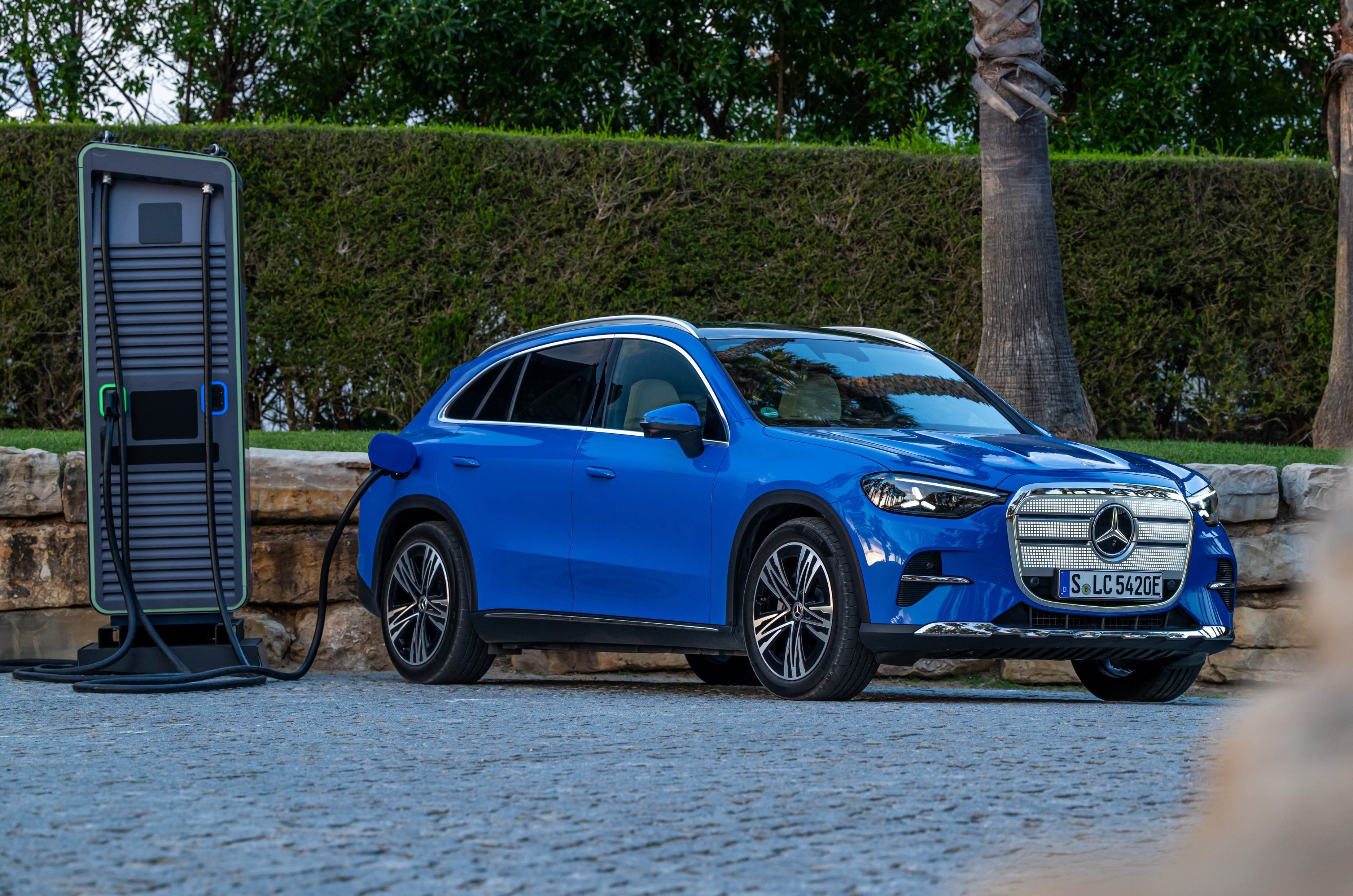
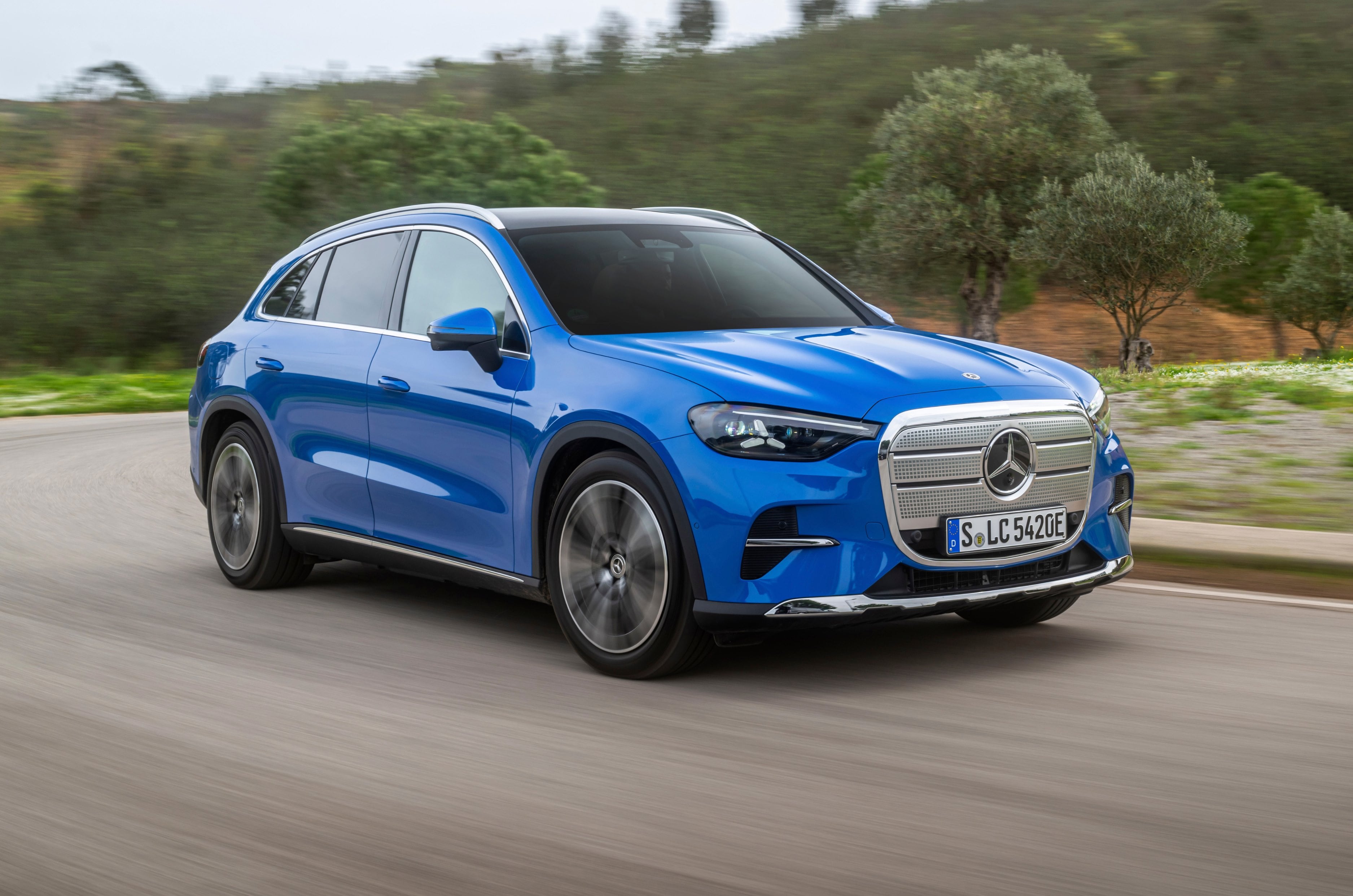
The Mercedes-Benz GLC EV you see here is not merely an electric derivative of the GLC you and I are familiar with. It’s built on an all-electric platform, and it’s longer, wider, and built on a slightly larger wheelbase than the GLC. And it also does 0-100kph in just 4.3 seconds.
The big news is that it’s coming to India by the end of the year. There’s lots to talk about, so let’s go one by one.
Mercedes-Benz GLC EV Exterior Design and Engineering – 8/10
Large new grille reminiscent of older Mercs
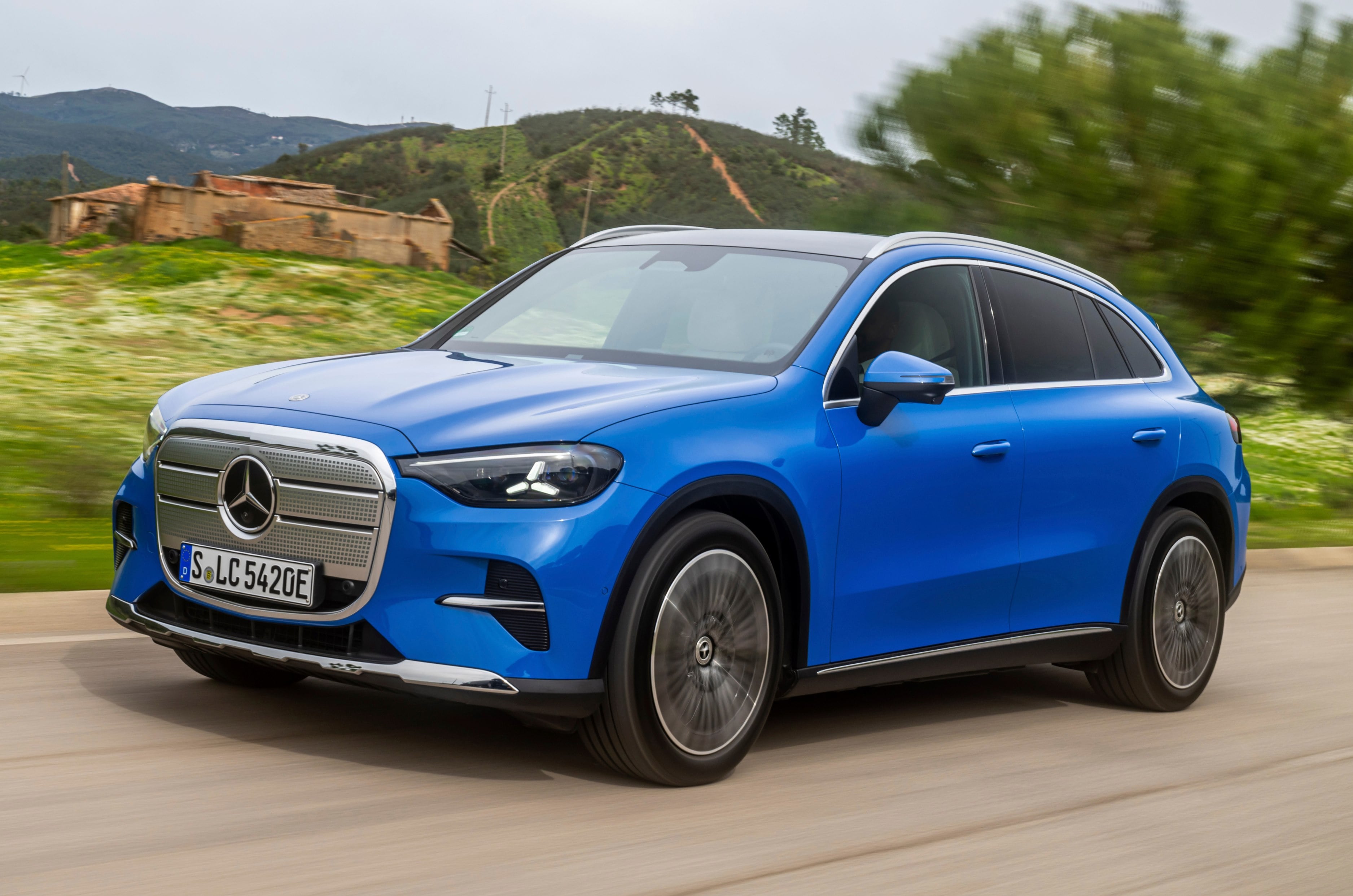
Let’s talk styling first, and what catches your attention up front is this large new grille. It’s very different from what we’ve seen of Mercs of late, but it actually has a link to Mercs of old. The upright grille is styled to look like the one on iconic models like the W112 S-Class, but there’s a lot of modernity built into it as well. There are 942 lighting elements in it! Talking of lighting, the three-pointed star on the nose glows and there’s a tri-star DRL pattern in the headlights too. And unlike other Merc EVs from the (recent) past, there is a functional frunk with a handy 129 litres of space.
Gets an 84mm longer wheelbase than the ICE version.
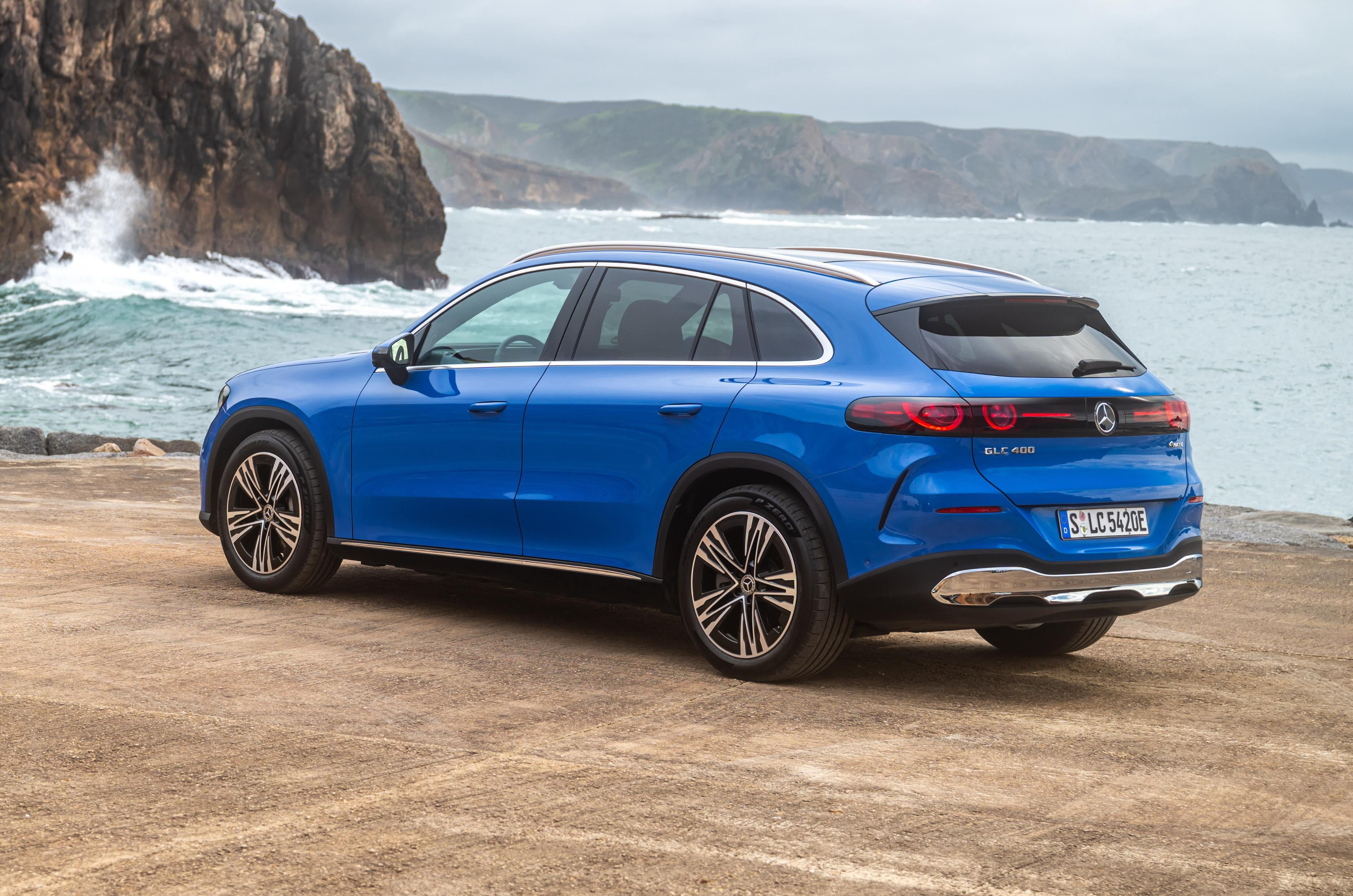
The GLC EV doesn’t look all too different to the ICE GLC in profile. Which is to say it is not an upright SUV but curvy, low-slung and aerodynamic. What is noticeably different is the wheelbase, which is a full 84mm longer. Mind you, this is the standard wheelbase GLC EV. There’s a long-wheelbase version sold in markets like China. India will get the GLC with 20-inch rims and flush-fitted door handles that pop out when the doors are unlocked.
570-litre boot is spacious, but a caveat is the absence of a spare wheel.
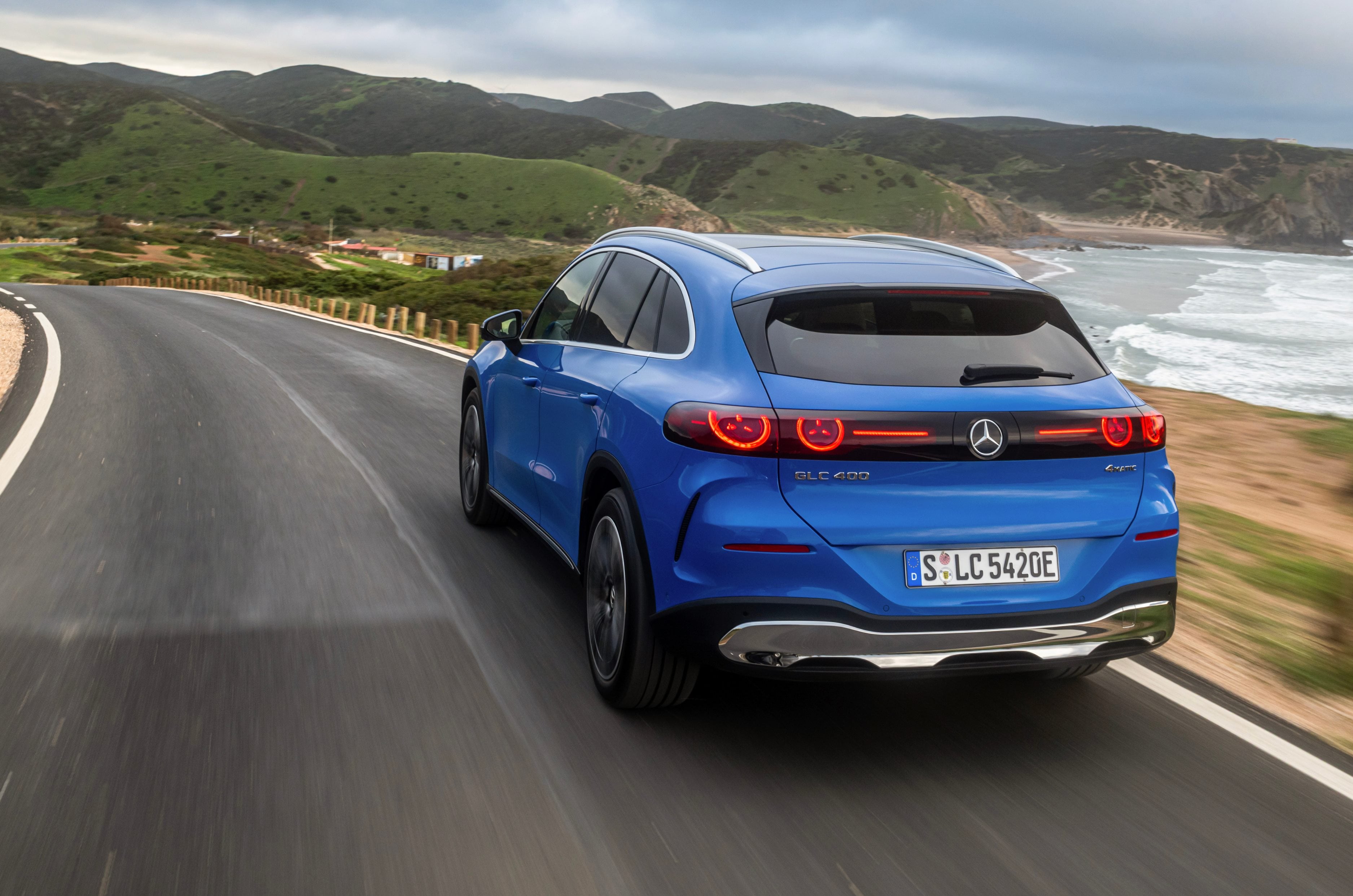
Styling at the back is quite distinct from the other lot of Mercedes SUVs, and that’s thanks to a band of black that runs the width of the tailgate. There’s full-LED lighting at the back replete with three-pointed star light signatures.
The powered tailgate opens up to a 570-litre luggage area, which is quite sizable. The only catch is that there’s no space for a spare tyre. Mercedes India will probably have to provide one to sit on the boot floor, which means not much space will be left for luggage.
Before we proceed, I have to admit, I didn’t like what I saw of the GLC EV in pictures. In reality, it is eye-catching, and in a very good way.
Mercedes-Benz GLC EV Interior Space and Comfort – 8/10
Interior quality is impressive, with open-pore wood trim while physical steering knobs and AC vents have a tactile feel
That new-age Mercedes vibe continues inside too, and that feeling is all thanks to a 39-inch Hyperscreen that extends nearly the entire width of the dash. There’s a seamless connection between the digital instrument cluster, the centre touchscreen and front passenger display, and it does look really impressive. That being said, the screens have taken away some of the warmth that you’d expect in a Merc.
Comfy front seats come with various levels of adjustment, massage and heating. India-spec model expected to come with a cooling function.
In terms of quality, though, the GLC EV feels like an expensive Mercedes. There’s open-pore wood, the AC vents operate with very satisfying clicks and clacks, and physical rotary controllers make a welcome comeback to the steering wheel.
The front seats are as comfy as they look, with multi-way powered adjustment, massage and heating. We expect the model for India to pack in ventilation as well.
You get more space than the standard GLC, and unlike some EVs, you do get good foot room. However, it’s best suited for two.
It’s at the back where things get really interesting for buyers confused between a GLC and a GLC EV. Rear seat space is a bit more generous than the standard GLC. There’s also good foot room under the front seats, which is not something you can say about all EVs, and even the seating position isn’t the typical knees-up that we’ve come to associate with EVs. A longer seat squab would have upped the experience. Also, the rear seat is best for two. A middle passenger will have to contend with a high centre tunnel.
Mercedes-Benz GLC EV Features and Safety – 9/10
The Hyperscreen is the focal point of the dash and delivers brilliant graphics across the entire display. The digital dials, centre touchscreen and passenger screen appear to be part of a seamless display and look terrific. There are themes for the screen too that also adjust other functions for the full effect. For instance, a bonfire on the screen will be accompanied by the seat heating coming on.
Massive 39-inch hyperscreen has a good UI and seamlessly integrates with other in-car displays but packs in too many functions.
The thing is, there’s just too much packed onto the centre touchscreen. The UI is good but more physical controls would just make life easier. The passenger display is slick in its own right but only blanks out if it detects the driver looking at it (a camera on the dash monitors the driver’s gaze). A privacy glass would have just been better.
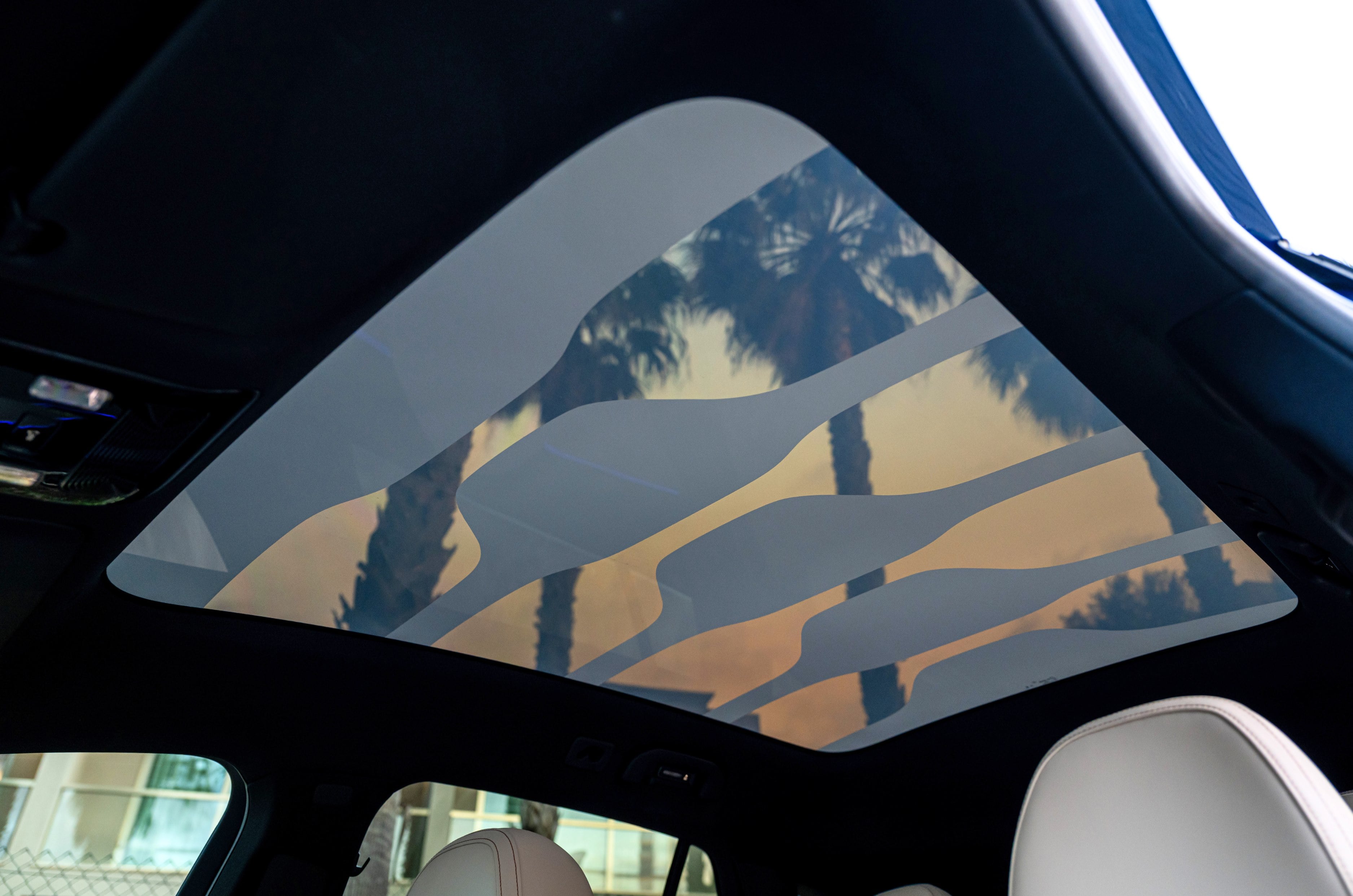
Among the other features, the panoramic glass roof is made up of nine segments which can be individually controlled for transparency. You can make them completely opaque, and they did a surprisingly good job of keeping the heat out. You could even have the glass roof specced with 162 stars that change colour with the ambient lighting.
Panoramic glass roof comprises nine individually configurable segments to control transparency.
Features-wise, aside from the screens and glass roof, the other highlight is the Burmester 4D sound system with exciters in the seat, so you can actually feel the bass. The head-up display and cameras are also top-class, while the AI integration doesn’t feel like a tick-mark item. You can actually converse with your car for restaurant recommendations or even abstract general knowledge.
The safety suite includes 9 airbags, ESC and a full suite of ADAS features.
Mercedes-Benz GLC EV Performance and Refinement – 9/10
Your friendly Mercedes salesperson will only be too happy to run you through the GLC 400’s big numbers: 489hp, 800Nm and a 4.3 sec 0-100kph time. The figures are made possible by front and rear permanently excited motors that draw power from a 94kWh battery pack.
489hp from its dual motors makes the GLC EV feel like an AMG compared to its ICE counterpart.
How does it all come together? The first thing that gets you is the silence. The drive experience is just what you’d expect in a plush Mercedes electric car. So it’s really quiet, and you don’t hear much of the world outside. There is a bit of wind noise if you really pay attention, but honestly, with some music piping out of the Burmester sound system, it’s not something that will catch your attention in the least.
What’s also clear is that the GLC EV is the strong and silent type. The performance makes the GLC EV feel like an AMG compared to the standard GLC petrol and diesel. A two-speed gearbox ensures quick getaways when needed, as well as the long legs for a more relaxed drive. Stomp down on the accelerator from a steady cruise, and you can feel the kickdown.
You won’t need to drive like a hoon to enjoy the GLC EV. Performance, no surprises, is very brisk when you put some weight on the accelerator pedal, with easy access to power. You can make the GLC EV feel a bit more urgent when you play around with the drive modes, but honestly, you won’t really need to because of how friendly the power feels and how ready the GLC EV feels at all times.
Power is easily accessible and is ready to push further when you put your foot down.
You’ll also take very naturally to the regen braking levels. One-pedal driving is included, and there’s the option of an intelligent mode too that reads the driving environment and optimises regen force.
The GLC EV also gets sound profiles, and we have to say they’re a bit unusual. They’re not trying to mimic the sound of a V8 or a V6 or any kind of ICE engine. The sounds are more on the sci-fi spectrum, so if you accelerate hard, you’d get the feeling of being in a UFO, which is disconcerting, if we can be honest. We’d rather enjoy the quiet inside.
Mercedes-Benz GLC EV Range and Efficiency – 8/10
Its large 94kWh battery can be charged from 10-80 percent in 22 minutes with a 330kW DC fast charger.
Now, on to the matter of range. Mercedes claims a 715-kilometre range on the WLTP cycle. Even if you account for real-world Indian conditions, you’re looking at a comfortable range of over 550 kilometres. Drive with a bit of care, and you could see that figure go past 600 kilometres. We really have come a long way in just a few years, haven’t we?
Of course, the go-to charging solution for most owners will be home charging. There’s up to 22kW AC support. The GLC can also be charged at up to 330kW using DC charging. Theoretically, at max speed, the GLC EV’s 94kWh battery can be juiced up from 10 to 80 percent in 22 minutes. A 10-minute charge alone can give you 300 kilometres of range.
Mercedes-Benz GLC EV Ride Comfort and Handling – 8/10
We can’t give a definitive verdict on cornering ability, as the bulk of our route was on the Autobahn outside Stuttgart, which has the gentlest of curves.
At Autobahn speeds, the GLC EV feels really planted and drives like a proper German car should. There’s pleasant weight at the steering wheel as well.
In terms of high-speed ride comfort, the GLC EV doesn’t come across as softly sprung as something like an EQS SUV, which really feels a bit roly-poly. There is still some vertical movement even when you switch to Sport mode, but it’s not to the point of being an irritant.
Feels planted out on the Autobahn and the steering is well-weighted
We’ll reserve judgement on the air suspension’s bump absorption till we drive the GLC EV on our roads, but on the sole patch of broken road on our route, the GLC EV didn’t feel entirely plush. Perhaps that’s something for Mercedes India to have on their list of things to do for the version headed our way.
A cool feature on the GLC’s suspension is its use of Google Maps to identify the vehicle’s environment and adjust ride height. For instance, the car automatically lowers on a highway. Also cutting-edge is how the suspension preps damping force in advance of a bump based on Car2X information from a Mercedes vehicle driving ahead. The systems better be up for the challenge of our roads.
Bundled in with air suspension is rear-axle steer, and the 4.5 degrees of movement does help greatly at parking speeds.
Mercedes-Benz GLC EV Should You Buy Now or Wait – 9/10
Bookings for the GLC EV open in early October, and the model will be launched in India within 2026.
It’s a big deal because the GLC EV comes to India within just six months of its European rollout. What makes the timeline even more impressive is the fact that the GLC EV won’t be an import, but will be assembled in India. Local assembly points at keen pricing.
The GLC EV will be locally assembled 6 months after its European version goes on sale.
We expect the model to be priced at about Rs 85-90 lakh (estimated, ex-showroom), which wouldn’t be all too far from the ICE GLC’s price. Factor in the registration benefits on EVs, and the price gets more tempting still.
As a product, the GLC EV does have lots going for it. It’s got the power, the refinement and the tech you’d expect on a luxury EV. Importantly, it doesn’t feel like your dad’s Mercedes, and that new-age cool is something many buyers will resonate with.
BMW’s iX3 Long Wheelbase and Audi’s Q6 e-tron are alternatives to watch out for in 2027, but in the near future, the GLC EV looks set for a clean run.
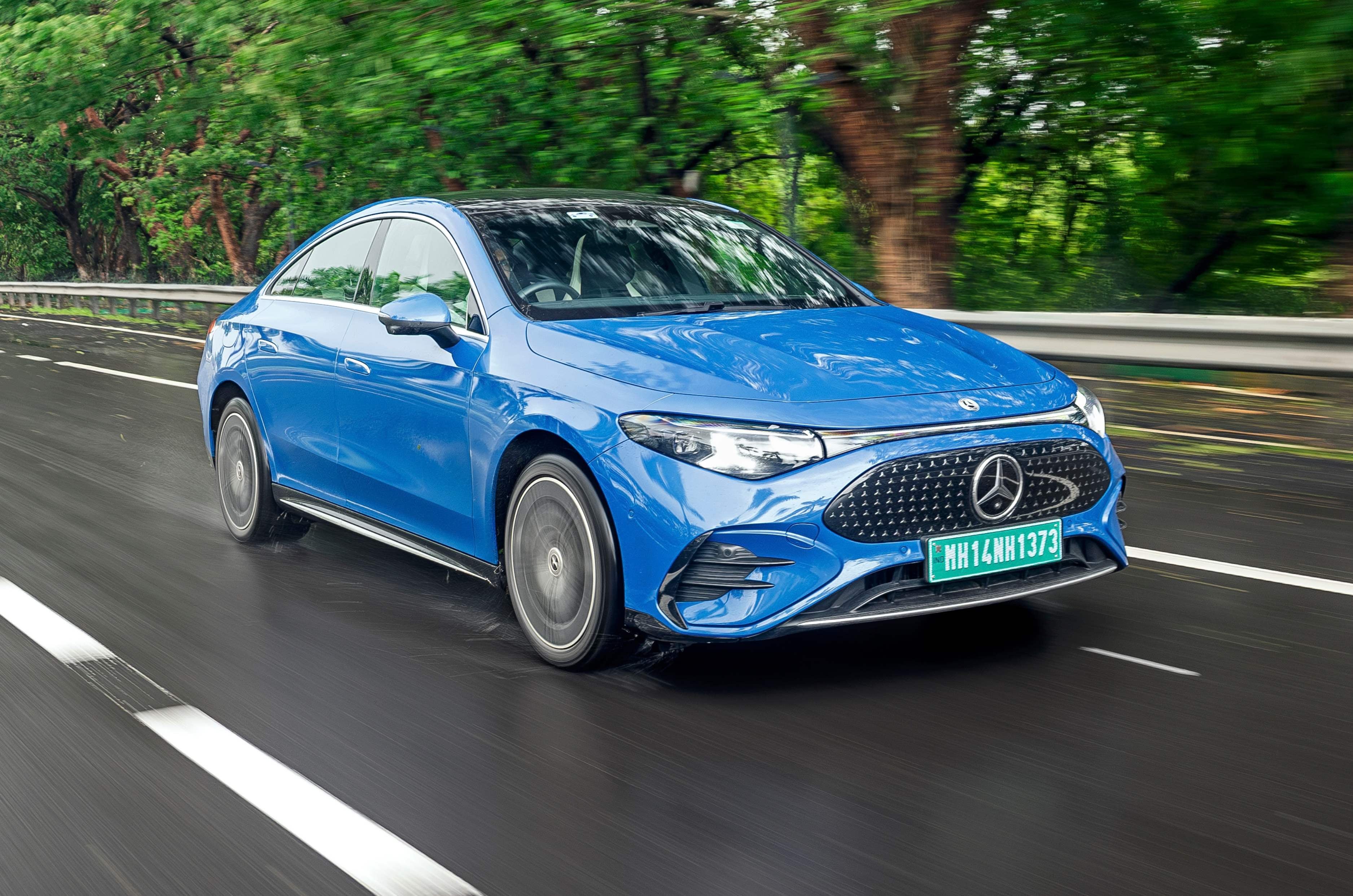
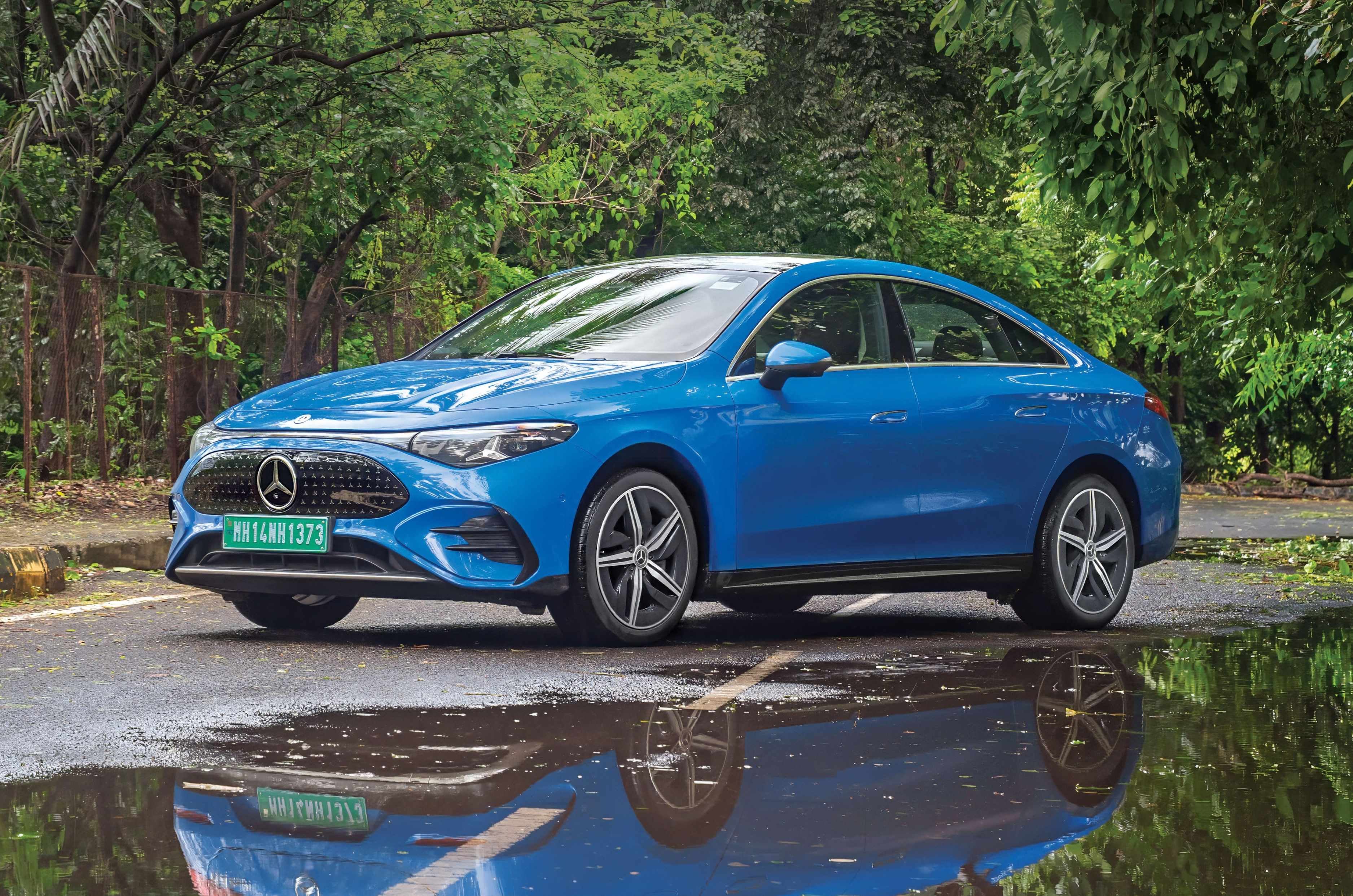
When we first drove the all-new, all-electric Mercedes-Benz CLA, we came away impressed with its smooth powertrain and its promise of a substantial real-world range. We’ve now subjected it to our real-world performance and efficiency tests to see if it delivers on that promise.
Mercedes CLA 250+ exterior design and engineering – 8/10
Polarising, aero-efficient design; based on new MMA platform.
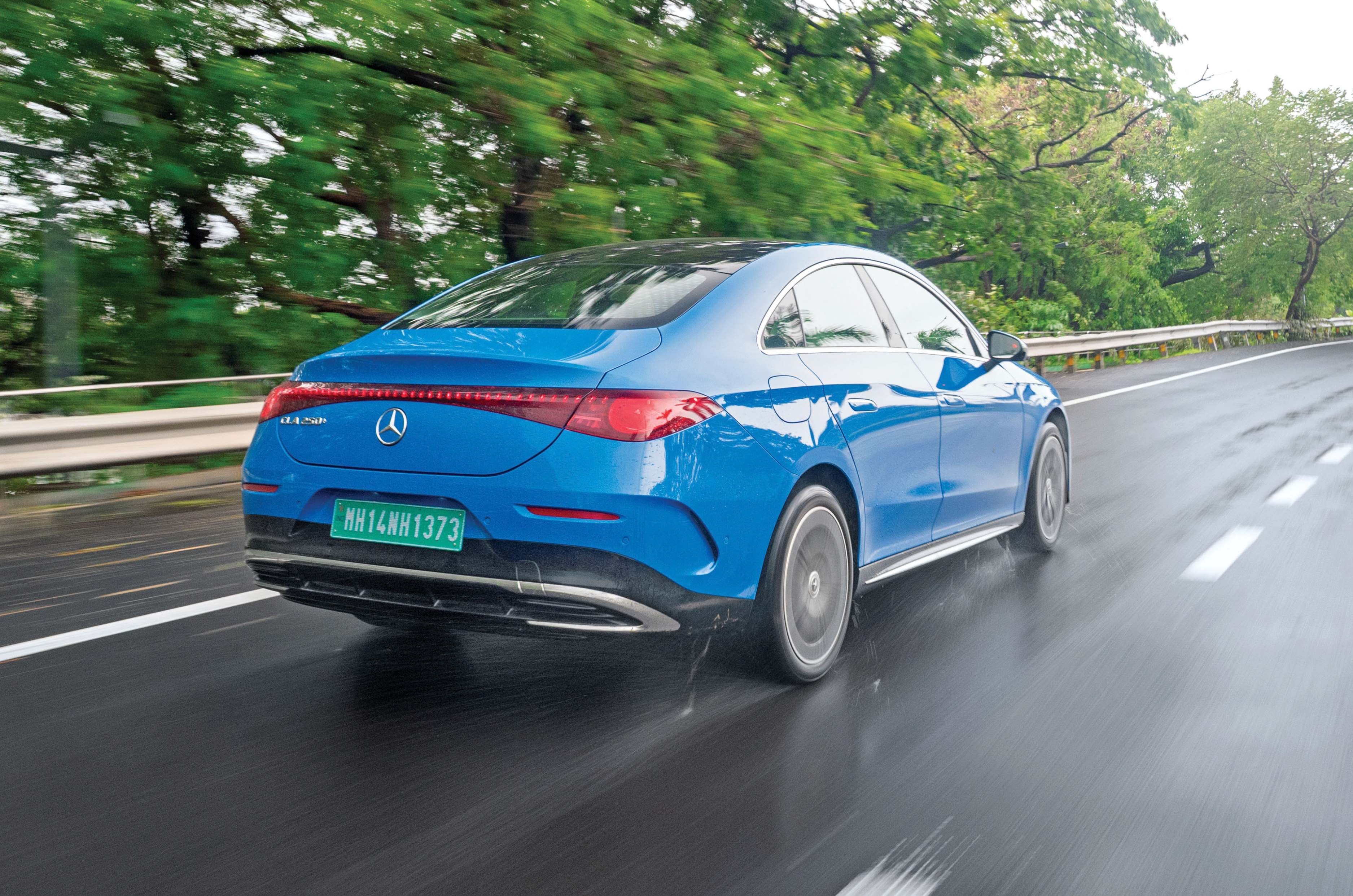
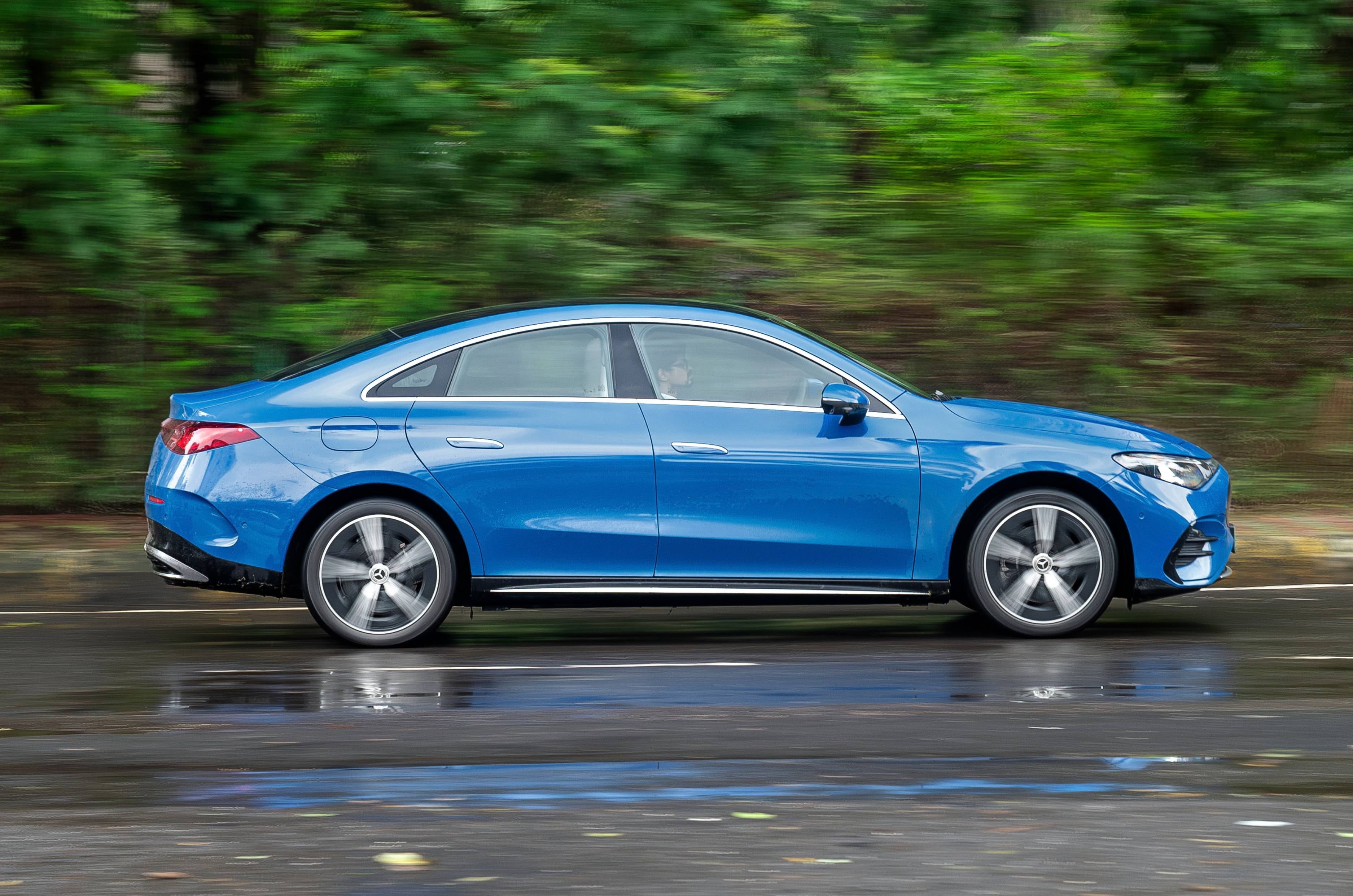
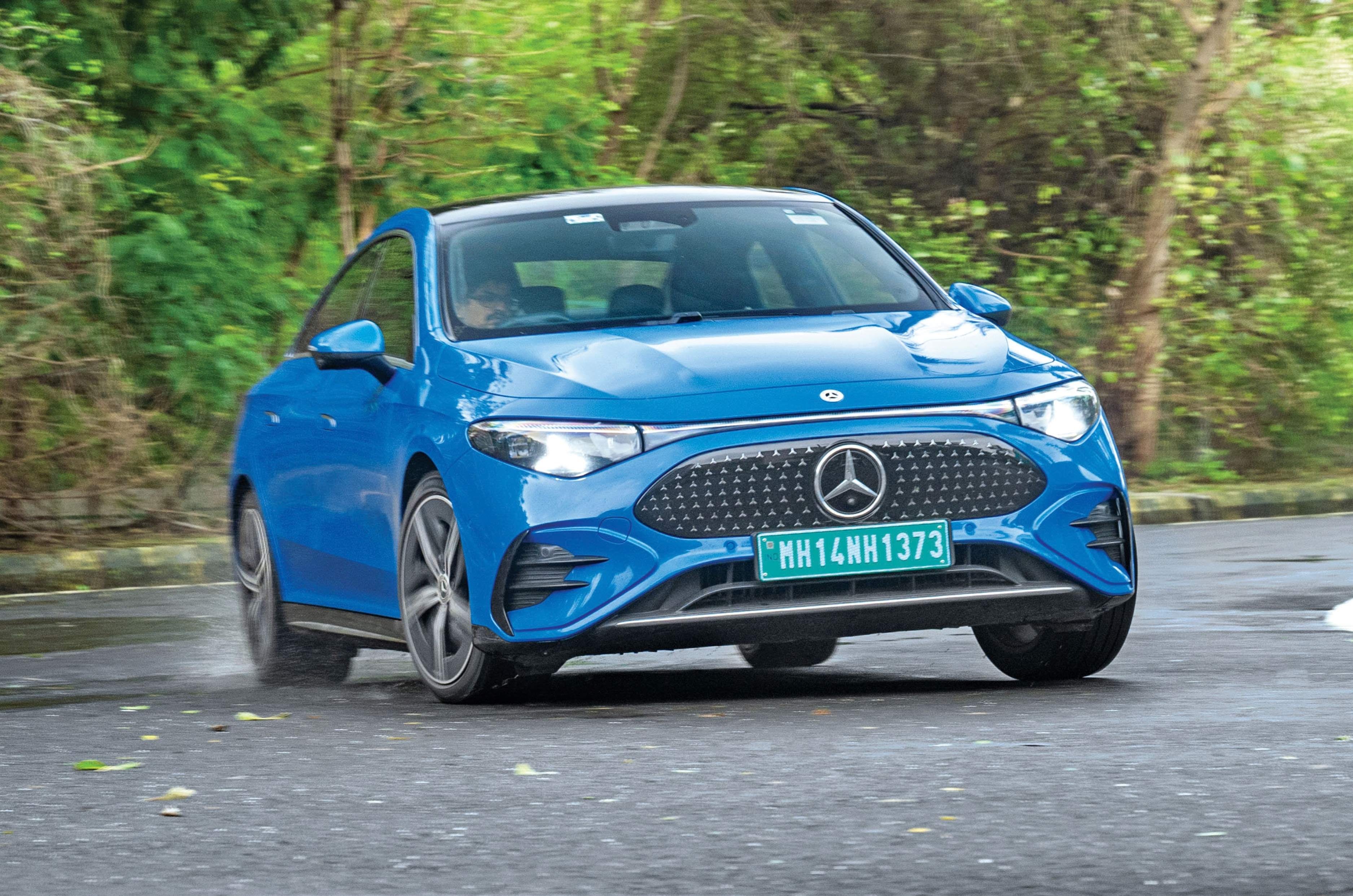
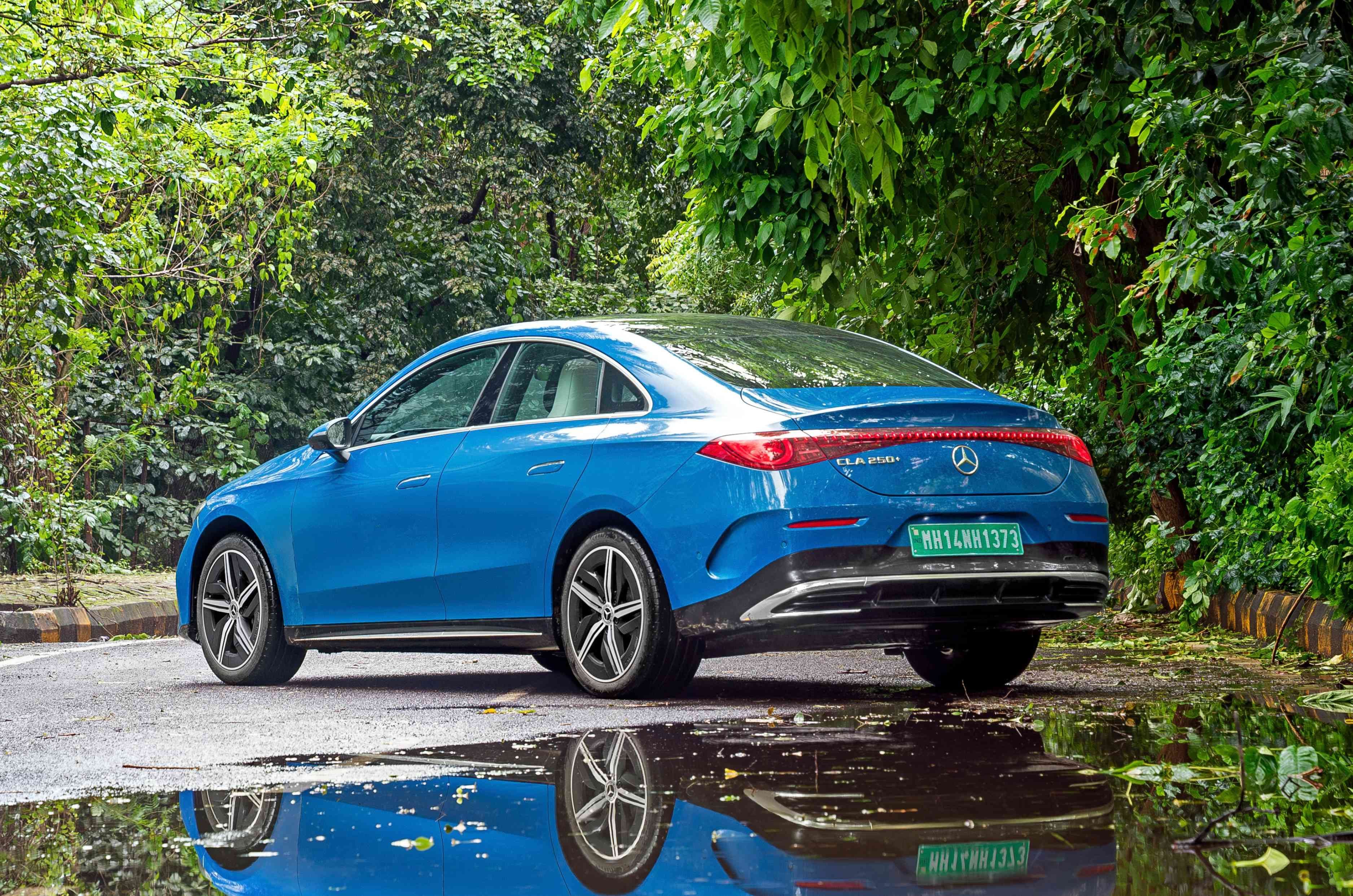
The new CLA has been designed with efficiency very much in mind, but Mercedes hasn’t completely abandoned the visual character that made the original car appealing. Its smooth, rounded silhouette is familiar from other Mercedes EVs, yet the low-slung, coupé-like roofline and frameless doors give it a distinct identity. Flush-fitting door handles, a sealed-off grille, aero-optimised 18-inch AMG alloys and a fully sealed underbody all contribute to an exceptionally slippery shape, with a drag coefficient of just 0.21Cd.
Mercedes’ three-pointed star features prominently across the CLA, appearing on the bonnet, grille, headlamps and tail-lamps. The grille itself gets 142 illuminated stars, which might sound excessive on paper, but they do give the CLA a distinctive look and, in person, seem to work rather well.
More significant, however, is what lies underneath. The CLA EV is the first Mercedes to use the new Modular Architecture (MMA) skateboard platform, which will also underpin future models. At over 4.7m long, more than 1.8m wide and over 1.4m tall, with a wheelbase approaching 2.8m, it is roughly the same size as a BYD Seal.
Mercedes CLA 250+ interior space and comfort – 7/10
Impresses with tech and quality; cramped rear with high floor.
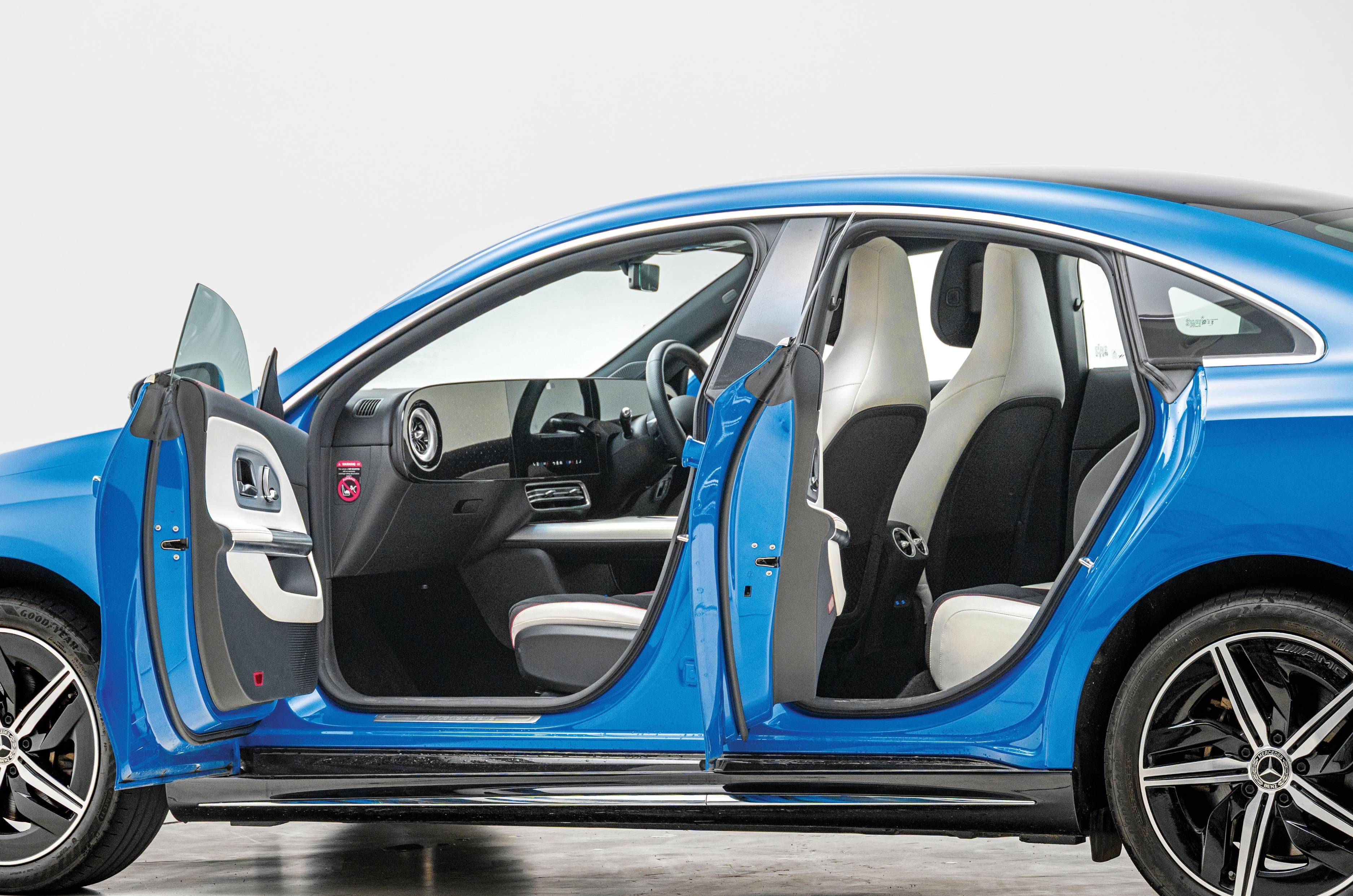
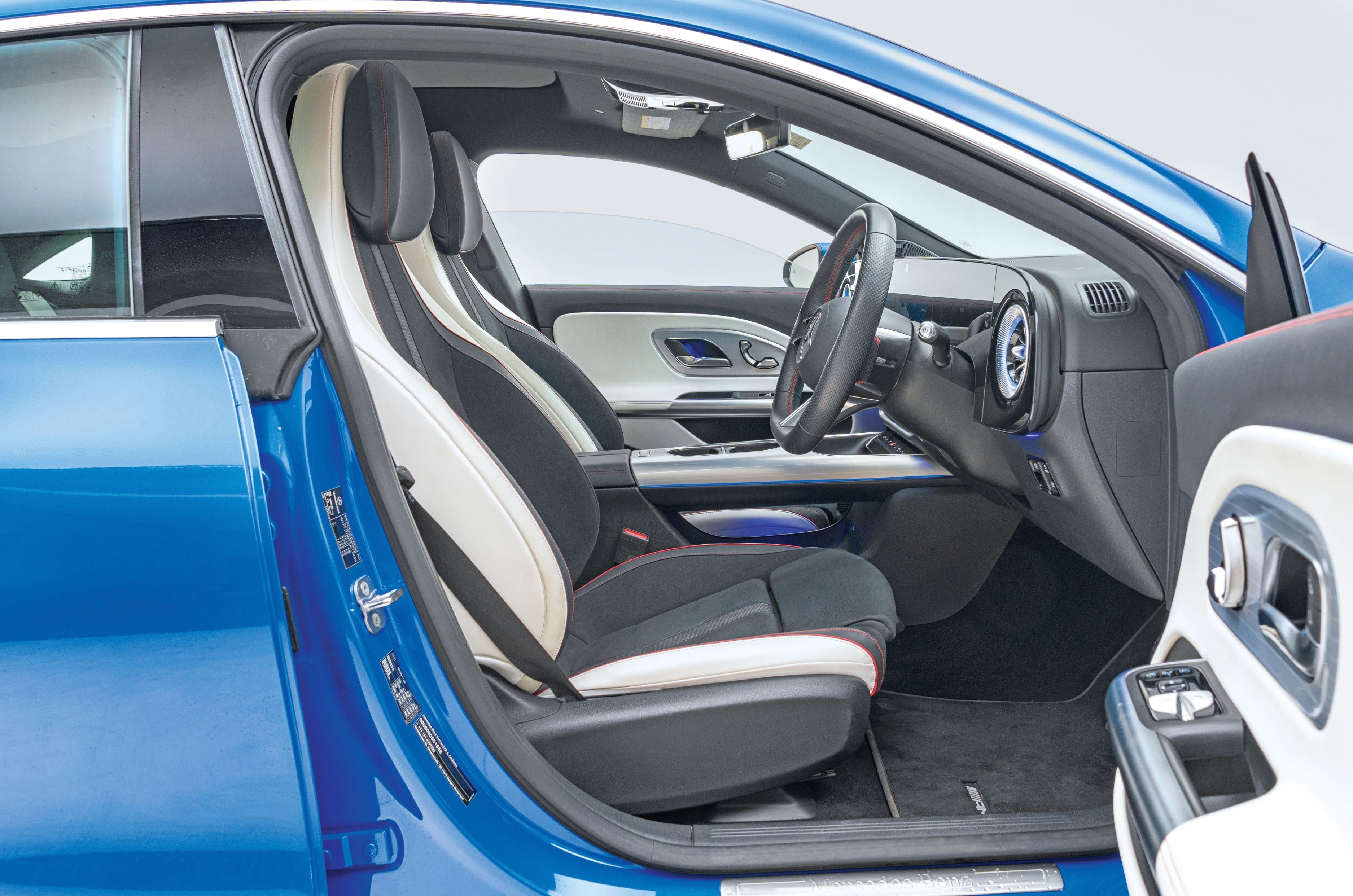
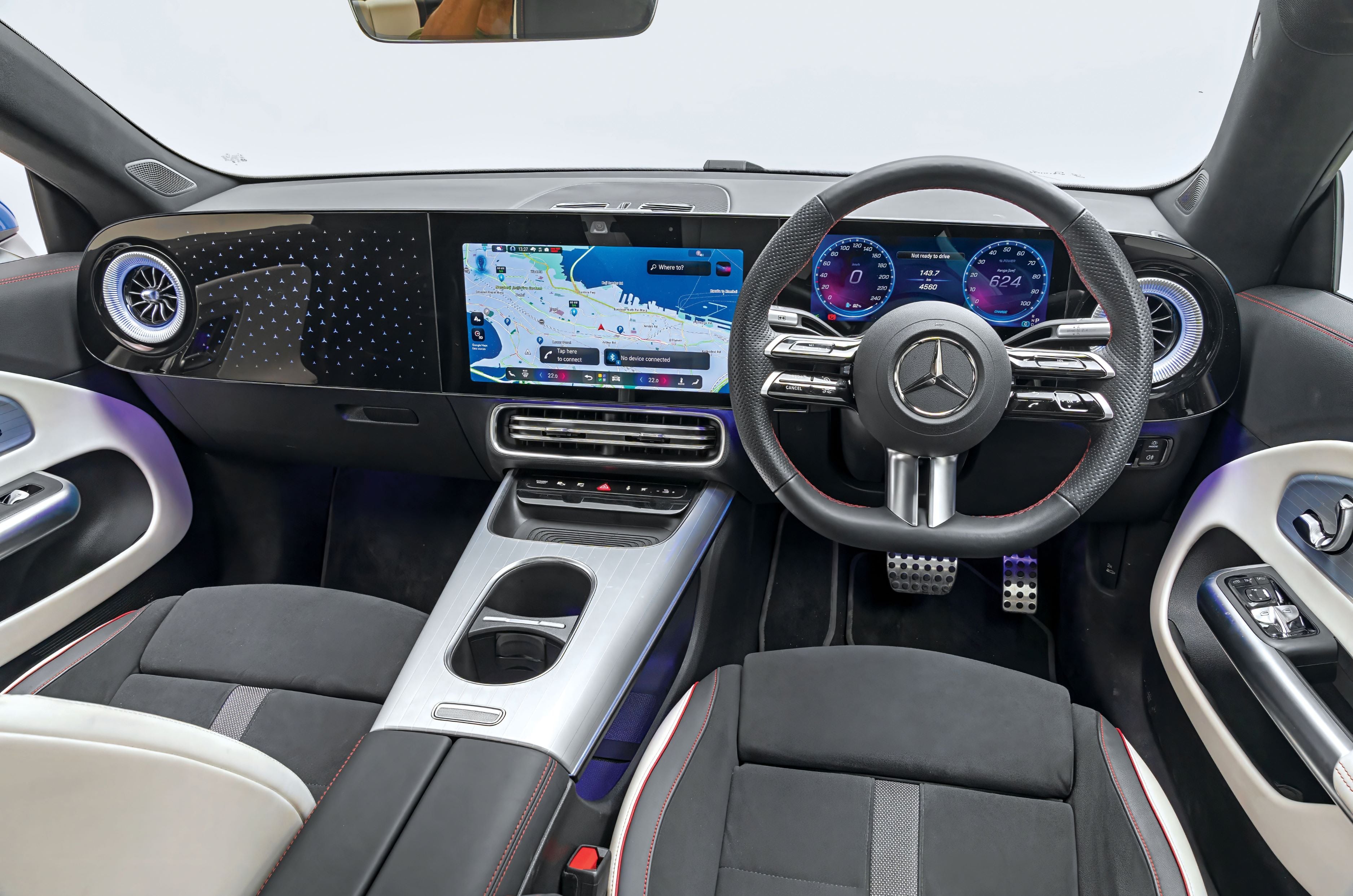
The CLA makes a good first impression inside. Its doors open wide for easy access, while the cabin combines smart design with good materials and build quality. The CLA 250+ is offered in AMG Line trim, so you get a flat-bottomed AMG steering wheel, sporty metal pedals and AMG-spec upholstery.
Doors open wide to aid access to the cabin; retains the stylish frameless doors.
The dashboard is dominated by a large gloss-black panel housing the digital displays. The graphics are sharp, the interface is clean, and the system is easy to navigate. What isn’t quite as convincing is the near-total absence of physical controls. Apart from a few capacitive shortcuts for functions such as volume and drive modes, most functions are accessed through the touchscreen, which isn’t ideal while on the move.
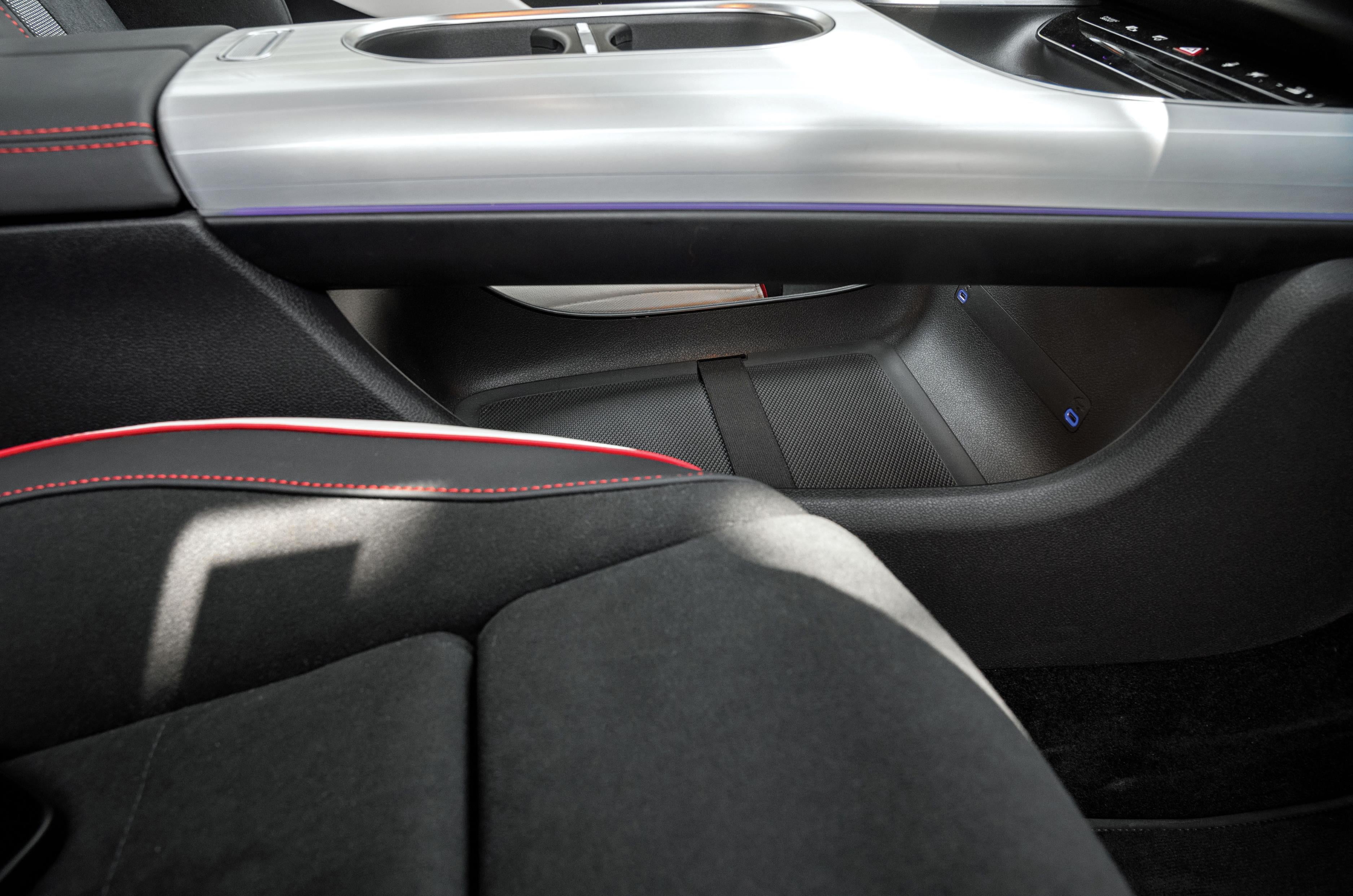
Centre console has two levels, with the top featuring cupholders and a wireless charger, and a large cubby space below.
The third passenger display offered in the 250+ Launch Edition has been omitted here, with its place taken by a gloss-black panel featuring illuminated Mercedes stars. The turbine-style air vents at either end of the dashboard are a nice touch, though, and are particularly satisfying to operate.
There is decent storage, too. You get a large glovebox, storage beneath the centre armrest, bottle holders in the doors and a floating centre console with cupholders and a wireless charger on top, along with a large storage area underneath.
AMG Line brings Alcantara and leather trim for the snug and supportive seats; relatively knees-up seating here too.
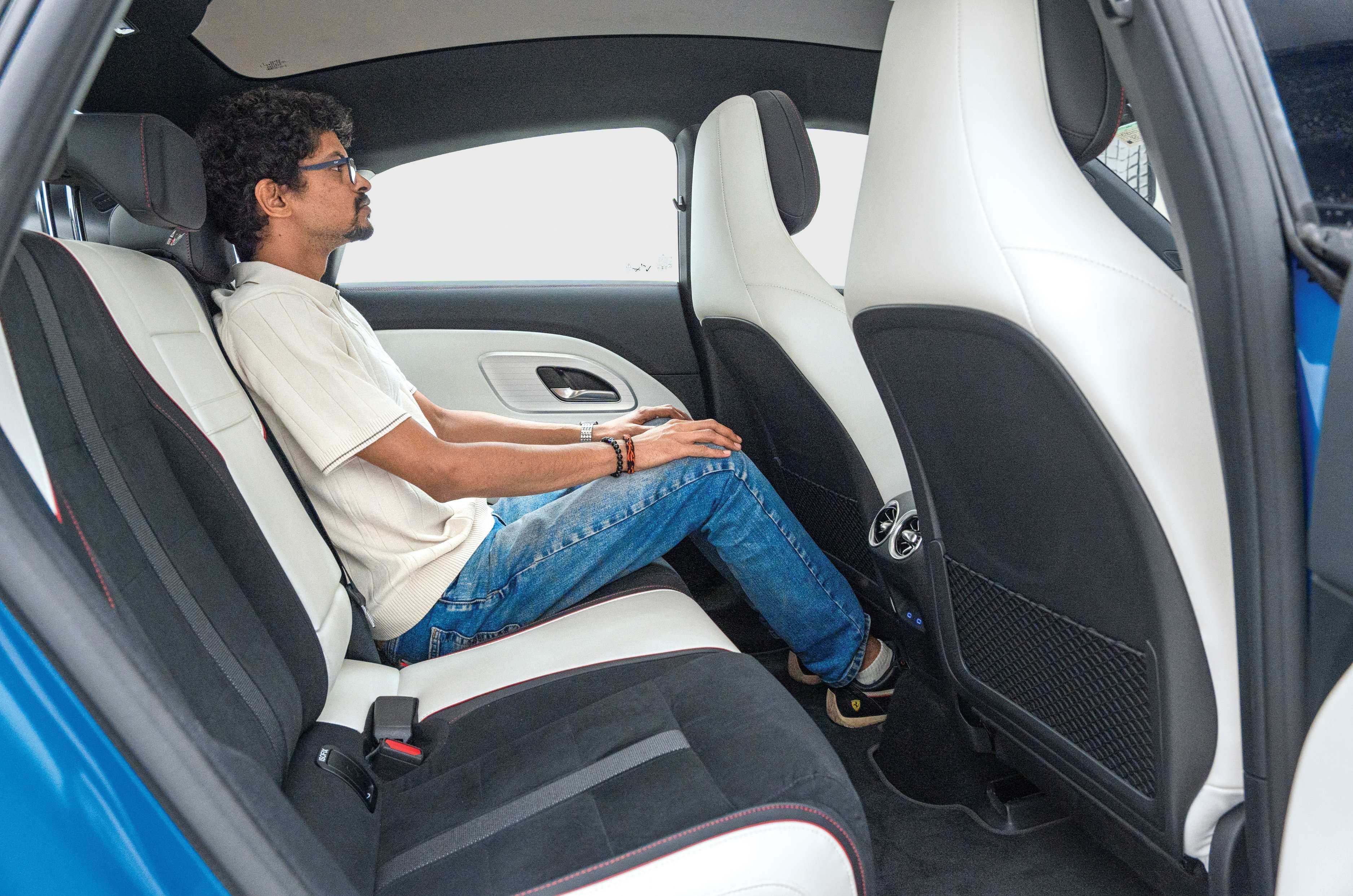
The front seats are supportive and well padded, although larger occupants might find them a little snug. More importantly, the relatively high floor means you sit with your knees raised even in the front. At the rear, this issue is more pronounced.
High floor results in knees-up seating, upright backrest and sloping roof further compromise rear seat’s comfort.
Although the CLA has a longer wheelbase than its predecessor, which improves knee room, the battery beneath the floor eats into under-thigh support and results in a knees-up seating position. The upright backrest and sloping roofline further compromise comfort, particularly for taller passengers. There is a centre armrest with cupholders and dedicated rear AC vents, but this still isn’t a car we’d recommend for regular chauffeur-driven use.
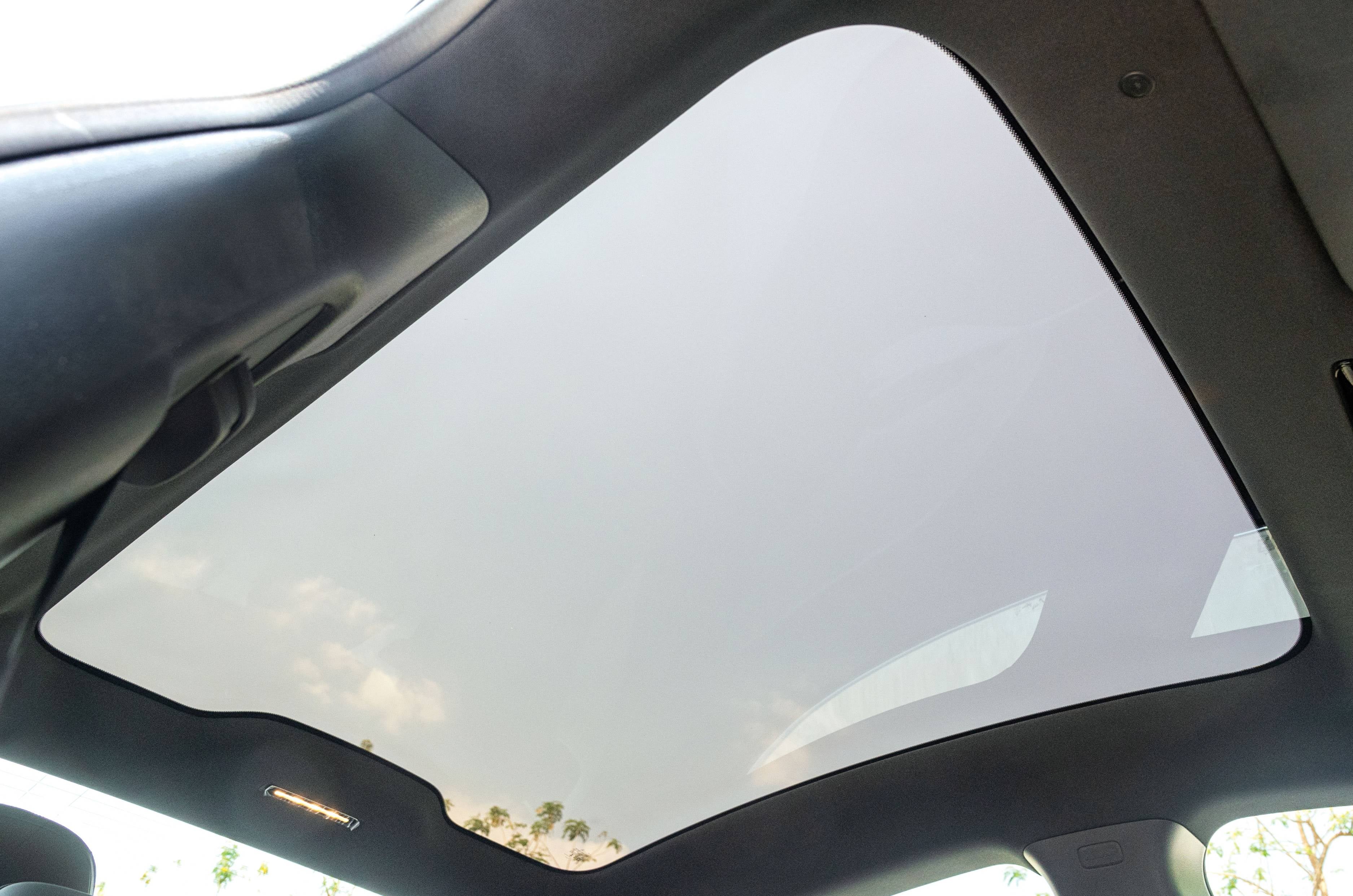
There is a large fixed panoramic glass roof that does make the cabin feel more spacious. Mercedes says the glass is heat-insulated, but a sunshade would have been welcome, particularly in our climate. It also misses sunblinds for the rear windows, meaning the rear AC has to work particularly hard to keep the back of the cabin cool.
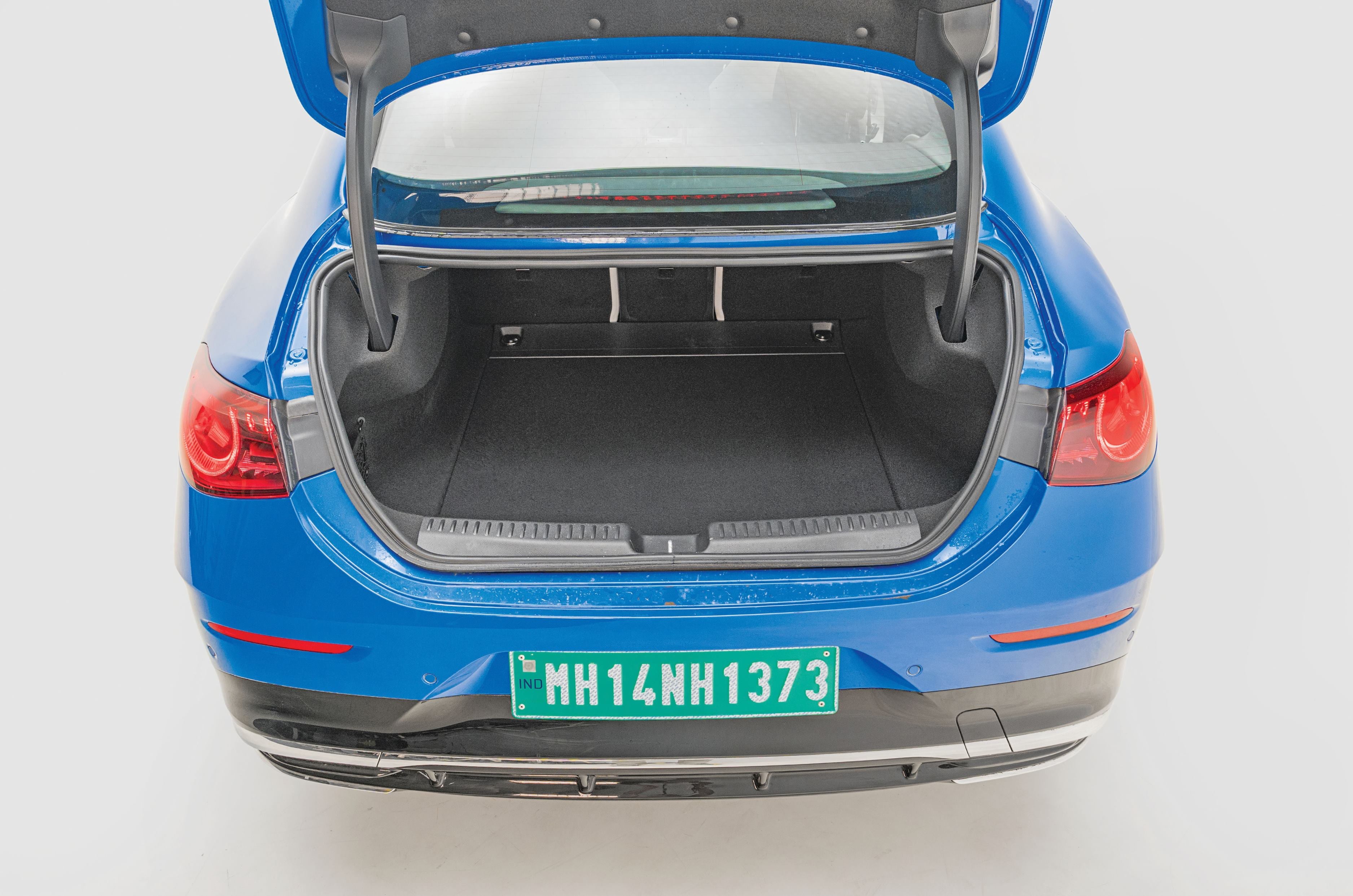
Cargo space is a useful 405 litres; boot opening isn’t large, though.
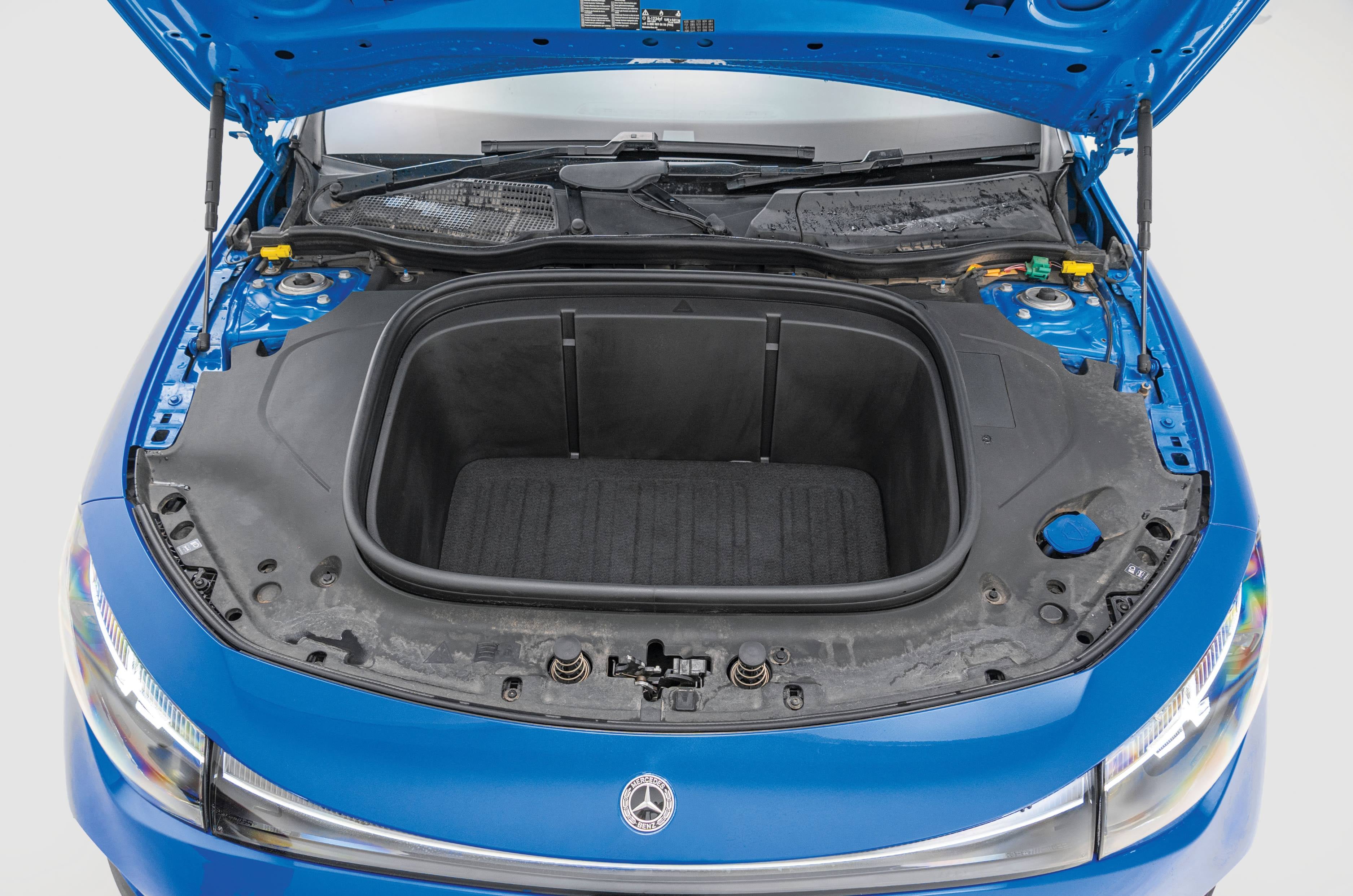
Boot space stands at a useful 405 litres. More interestingly, the CLA gets a 101-litre front trunk – the first time Mercedes has offered a frunk on one of its EVs.
In a first for Mercedes-Benz EVs, there’s a convenient 101-litre front trunk.
Mercedes CLA 250+ features and safety – 9/10
Packed with cutting-edge tech and features; no seat ventilation.
The CLA is a showcase for Mercedes’ latest technology. Four supercomputers provide the computing power, which Mercedes says is more than 200 times that of the previous CLA. It is also the first Mercedes to use the company’s new MB.OS infotainment operating system.
With the AMG Line styling package, the 250+ gets a flat-bottomed AMG steering, metal pedals and AMG seat upholstery; third passenger screen is reserved for the Launch Edition; cabin is practical with loads of storage, and overall fit/finish is good.
An Nvidia processor allows for quick responses, while over-the-air updates mean the system can be updated without a visit to the workshop. There’s also a new MBUX Virtual Assistant, which learns about the driver, including their language, accent and mood. It uses AI tools, including ChatGPT, Gemini and Bing, to further make your life easier, and you can ask them to do just about anything from setting navigation to changing the AC and so much more.
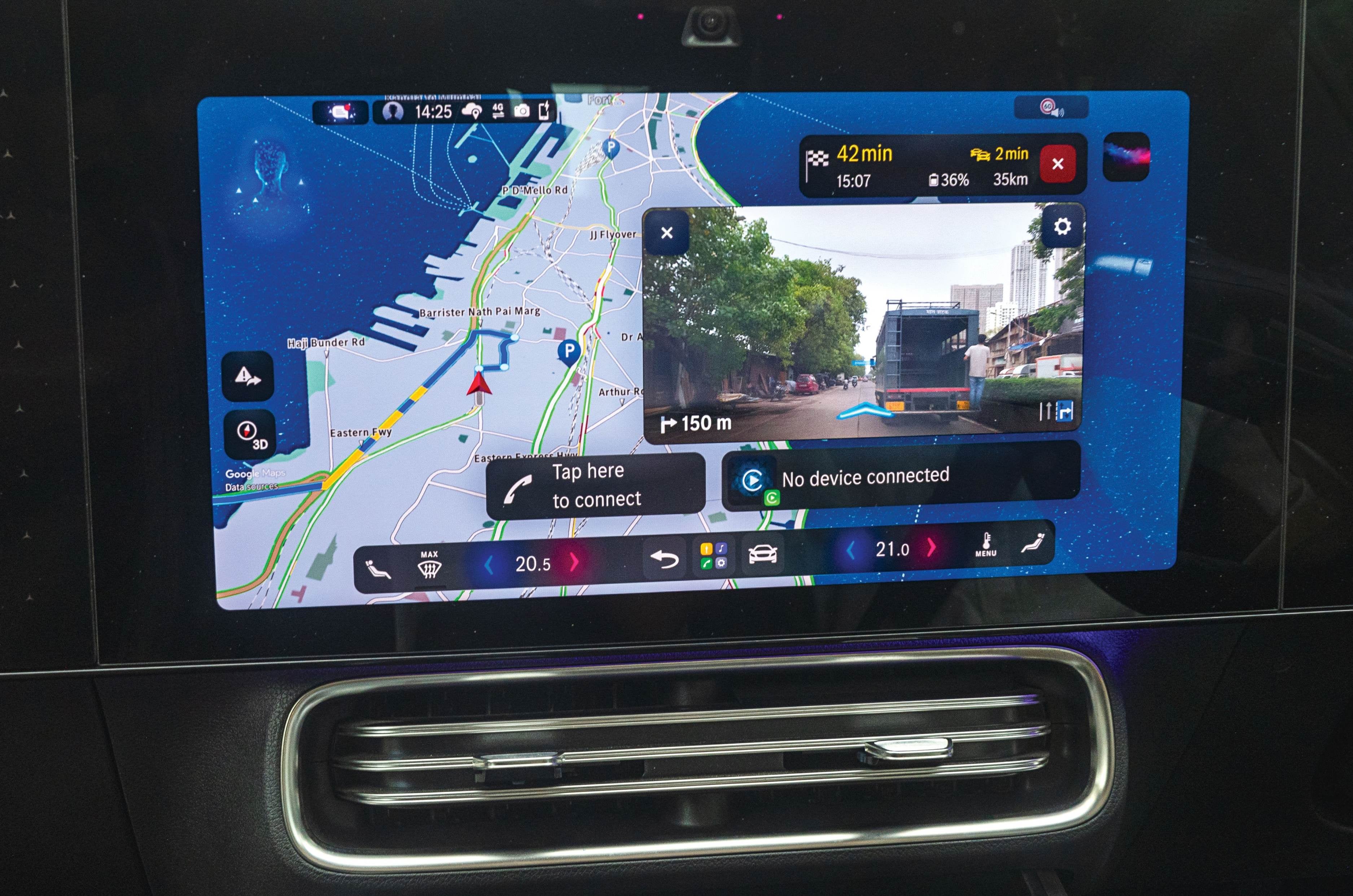
Screen is slick, has sharp graphics and native maps, which show directions in real-time using the camera feed.
The CLA also gets the new MB.Charge app, which brings charging providers together in one place. It can locate chargers, show their real-time availability, help plan a journey and even handle payment for a charging session.
The feature list is extensive. Highlights include a 14-inch central touchscreen, 10.25-inch digital driver’s display, powered, heated and massaging front seats, dual-zone climate control, configurable ambient lighting, a panoramic glass roof, Burmester 3D audio, wireless phone charging and auto parking. Ventilated front seats, however, aren’t offered.
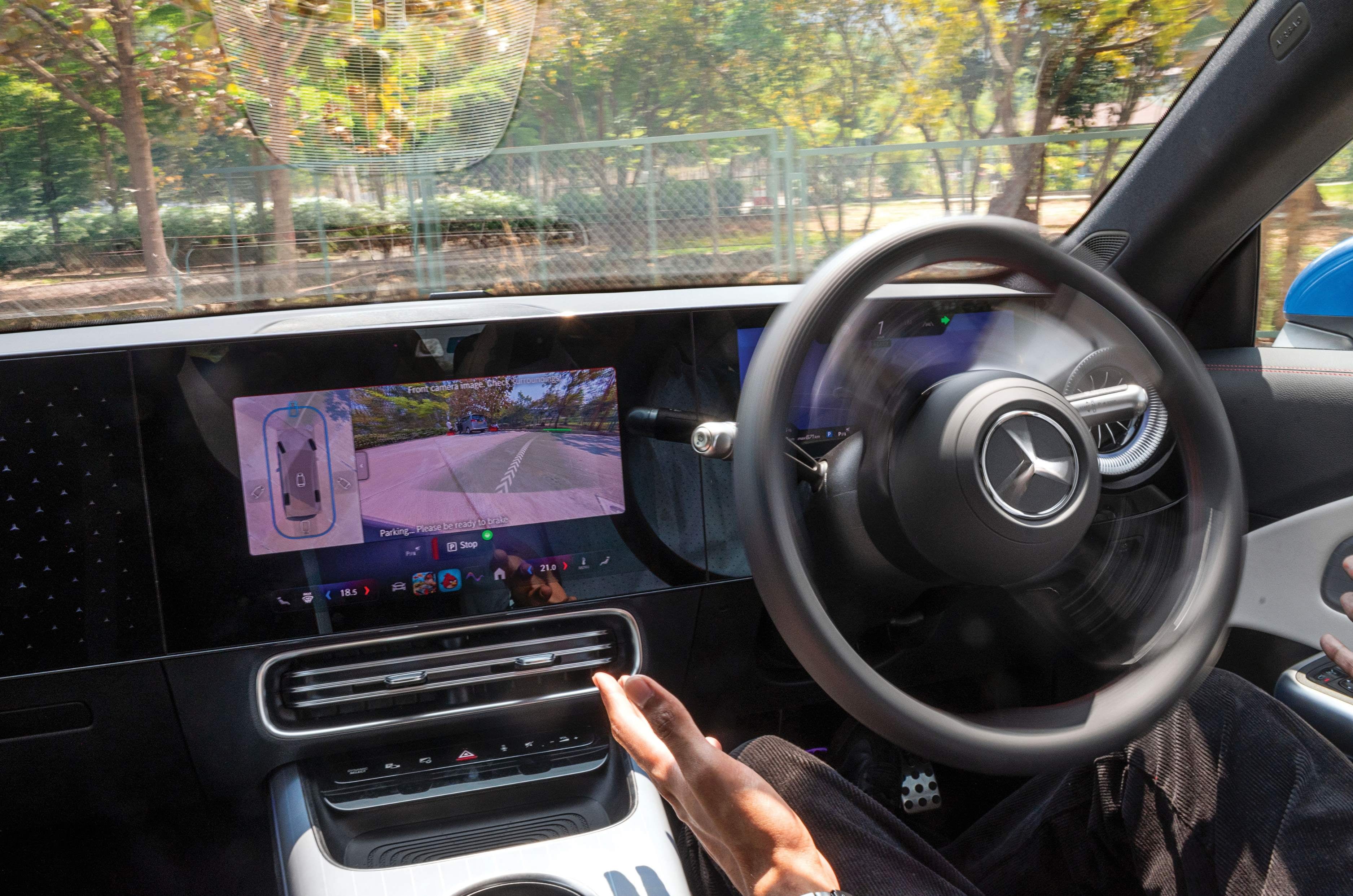
CLA 250+ packs in an auto park feature, which works very well in unmarked spaces too.
Safety equipment is comprehensive, with six airbags, a 360-degree camera and Level 2+ ADAS, which Mercedes calls MB.Drive. It includes adaptive cruise control, lane-keep assist, blind-spot monitoring, autonomous emergency braking and semi-autonomous driving functions. The system uses a combination of radar sensors and cameras and didn’t feel overly intrusive; better than previous Mercs, which feel trigger-happy with emergency braking. The CLA was also the safest car tested by Euro NCAP in 2025.
Mercedes CLA 250+ performance and refinement – 9/10
Smooth, progressive powertrain; refinement is impressive.
The CLA 250+ uses a rear-mounted electric motor producing 272hp and 335Nm. Performance is brisk, but what stands out more than outright acceleration is the way it delivers its performance.
Unlike some performance EVs that deliver power aggressively from the moment you bury the accelerator, the CLA builds speed in a smooth, progressive manner. The power delivery is linear, and there’s always enough performance on tap. Sport mode sharpens the response, while synthesised sounds played through the speakers add a little more theatre.
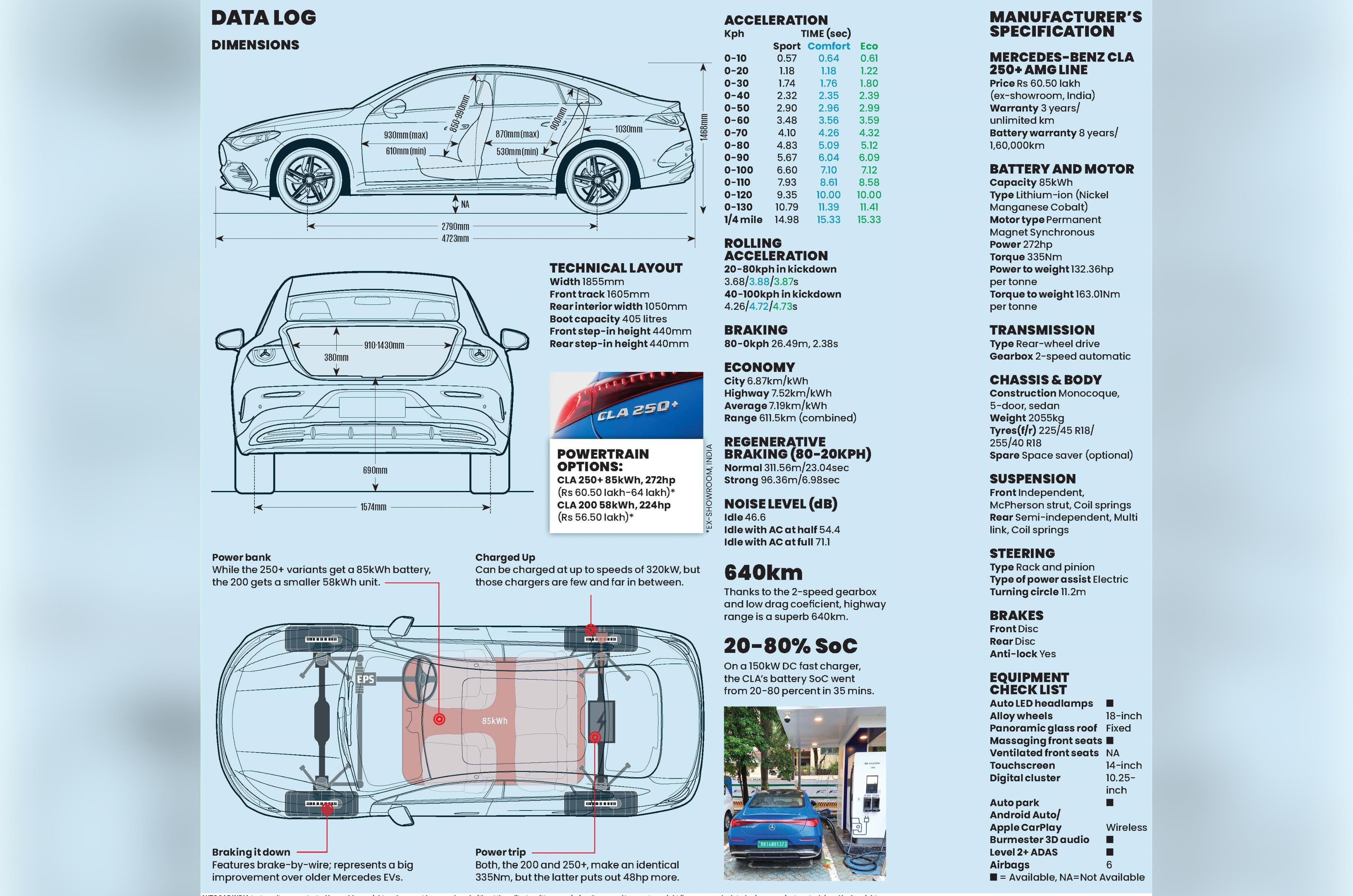
In our performance tests, it managed a 0-100kph time of 6.6sec in Sport mode, narrowly beating the claimed time of 6.7sec. Rolling acceleration is impressive too, with 20-80kph in Sport taking 3.68sec, and 40-100kph being dealt with in 4.26sec. Naturally, performance in the Comfort and Eco drive modes is more sedate than Sport, with the difference between the former two being almost negligible.
Mercedes has also opted for a two-speed gearbox, which is unusual for an EV, but makes sense here. The short 11:1 first gear helps with initial acceleration, while the taller 5:1 second gear is intended to improve efficiency at higher speeds. And from behind the wheel, you can feel when it shifts gears. Mercedes claims a drivetrain efficiency of 93 percent, and that plays an important role in the CLA’s impressive range.
The new brake-by-wire system is another area where the CLA makes a big improvement over older Mercedes EVs. Brake response is reassuring, with a good bite and a natural, consistent feel. In our braking test, the CLA came to a halt from 80kph in 26.49m despite it being on a damp surface.
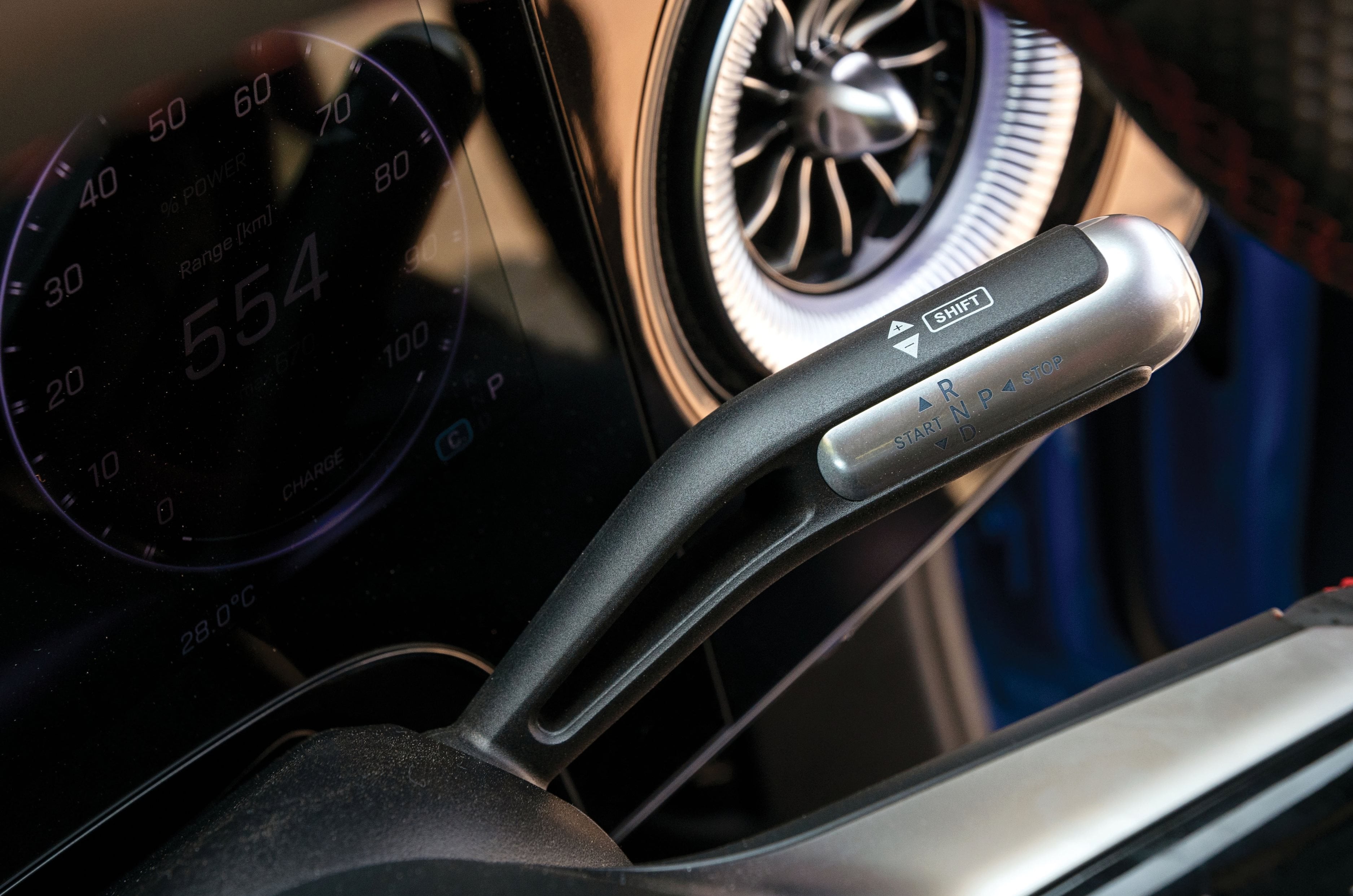
Control stalk now houses the start/stop button, the drive selector, and is also used to toggle between regen braking modes.
There are four levels of regenerative braking, including a one-pedal mode and an adaptive setting. They work well, with the Normal setting bringing it from 80-20kph in 311.56m, while the Strong setting takes 96.36m for the same. It’s worth noting, however, that Mercedes has moved the controls for the regen from the steering-mounted paddles used on some EVs to the gear selector stalk. You push or pull the stalk to change the regen level, and this isn’t quite as intuitive. The same stalk also incorporates the start/stop button.
Where the CLA really impresses is refinement. The absence of an engine obviously helps, but Mercedes has also done an excellent job of keeping wind and road noise out. At speed, the cabin remains remarkably quiet. A CLA 200 variant is also available in India, using the same rear-mounted motor layout but producing a lower 224hp and 335Nm. However, we’re yet to test this version.
Mercedes CLA 250+ tested acceleration times (sec)
Sport
Comfort
Eco
0-10kph
0.57
0.64
0.61
0-20kph
1.18
1.18
1.22
0-30kph
1.74
1.76
1.80
0-40kph
2.32
2.35
2.39
0-50kph
2.90
2.96
2.99
0-60kph
3.48
3.56
3.59
0-70kph
4.10
4.26
4.32
0-80kph
4.83
5.09
5.12
0-90kph
5.67
6.04
6.09
0-100kph
6.60
7.10
7.12
0-110kph
7.93
8.61
8.58
0-120kph
9.35
10
10
0-130kph
10.79
11.39
11.41
1/4 mile
14.98
15.33
15.33
20-80kph (rolling)
3.68
3.88
3.87
40-100kph (rolling)
4.26
4.72
4.73
Mercedes CLA 250+ range and efficiency – 9/10
Low drag, efficient powertrain mean superb real-world range.
Mercedes claims a WLTP range of 792km from the 85kWh (net) NMC battery, although, predictably, the real-world range is lower. In the city, with the regen set to the strongest mode, it delivered an efficiency of 6.87km/kWh that translates to a range of 584km. On the highway, with the regen set to ‘Normal’, it delivered an efficiency of 7.52km/kWh for a 640km range. With an average efficiency of 7.2km/kWh, you can expect a real-world range of 612km on a single charge, which is very impressive.
In the city, the strongest regen setting enabled it to recoup energy effectively, which helped boost efficiency, while the two-speed gearbox, with its taller 5:1 second gear, enabled greater efficiency at higher speeds and thus contributed to the EV’s highway efficiency. Combined with the low 0.21Cd drag coefficient and the normal regen mode that allows for more coasting, it proved even more efficient on the highway, which isn’t usually the case with EVs.
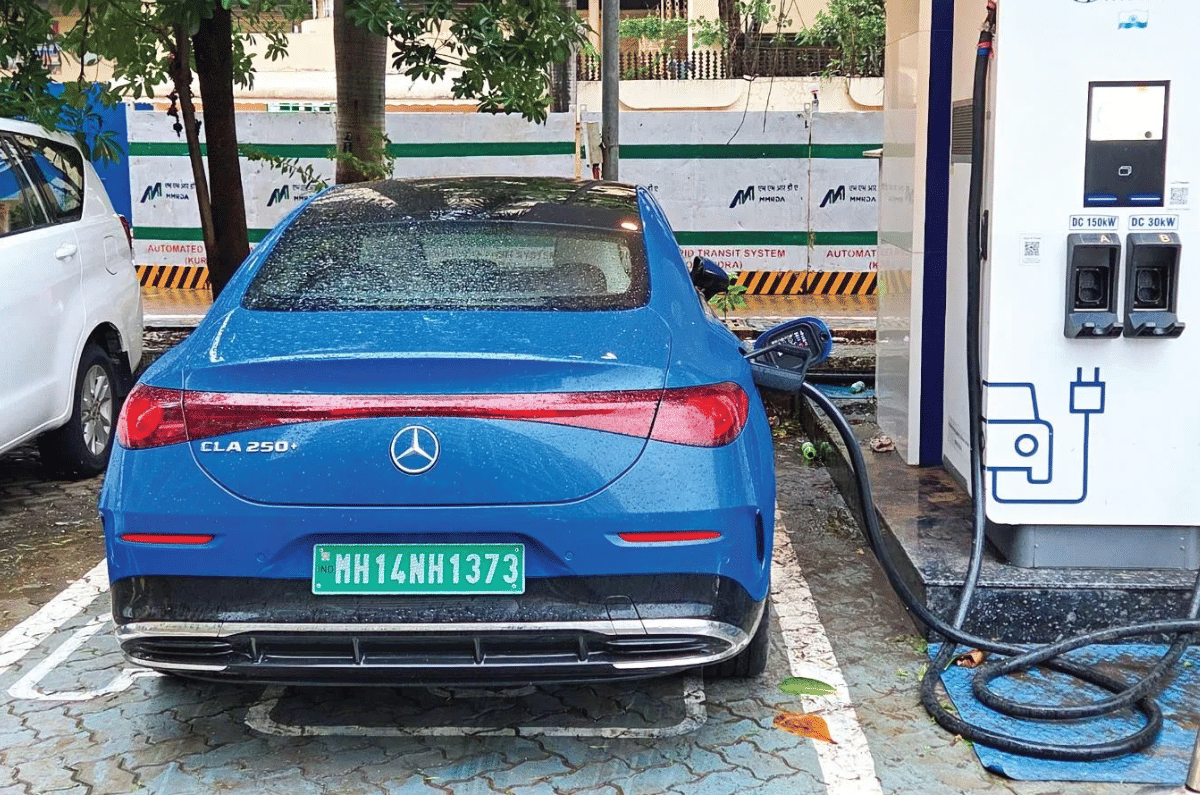
The CLA 250+ uses an 800V electrical architecture and supports charging at up to 320kW, but chargers capable of delivering that output remain few and far between in India. In our charging test using a 150kW DC fast charger, we saw an average charging speed of around 92kW with a peak charging speed of 125kW. To charge from 20-80 percent, it took 35 minutes and consumed 53.89kWh in total. This, combined with the efficiency and large real-world range, should make long-distance driving relatively stress-free.
Mercedes CLA 250+ tested range
City (km/kWh)
6.87
Highway (km/kWh)
7.52
Average (km/kWh)
7.19
Range (km)
611.5
Mercedes CLA 250+ ride comfort and handling – 8/10
Strikes a mature balance between ride and handling.
The CLA’s rear-wheel-drive layout gives it an enjoyable character on a winding road, and the steering is one of its stronger points. With no drive being sent through the front wheels, it feels precise, building up weight progressively with speed. It’s light enough at low speeds to make manoeuvring easy, yet gains enough weight as you go faster.
Thanks to the CLA’s rear-wheel-drive setup and precise steering, it feels agile and good fun around corners.
Mercedes has increased the Euro-spec CLA’s 107mm ground clearance for India and made suspension changes to better suit our roads, and both have worked. There’s enough clearance to deal with regular-sized speed breakers, while the additional height hasn’t really compromised the car’s handling or comfort. Around corners, the CLA remains agile, and body roll is well controlled. The ride does have a hint of firmness to it, but it deals with road imperfections without fuss and feels composed at both low and high speeds. Overall, it’s a mature combination of ride comfort, stability and handling.
Mercedes CLA 250+ value for money – 8/10
Refined and efficient powertrain, long range and sorted ride and handling make it Merc’s best EV yet.
Priced at Rs 60.50 lakh (ex-showroom), the CLA 250+ is a fairly compelling proposition, considering what it brings to the table. There are shortcomings, most notably the cramped rear seat, knees-up seating even at the front, and the absence of sunshades for the panoramic roof and rear windows. But if you’re going to drive yourself and want a luxury EV that’s distinctive, the CLA makes a strong case for itself.
Its powertrain is smooth and refined, its efficiency is excellent, it has an impressive real-world range of over 600km, and it strikes a very good balance between ride comfort and handling. Add to that a cabin packed with cutting-edge tech, and the new CLA emerges as one of the company’s most accomplished EVs yet.
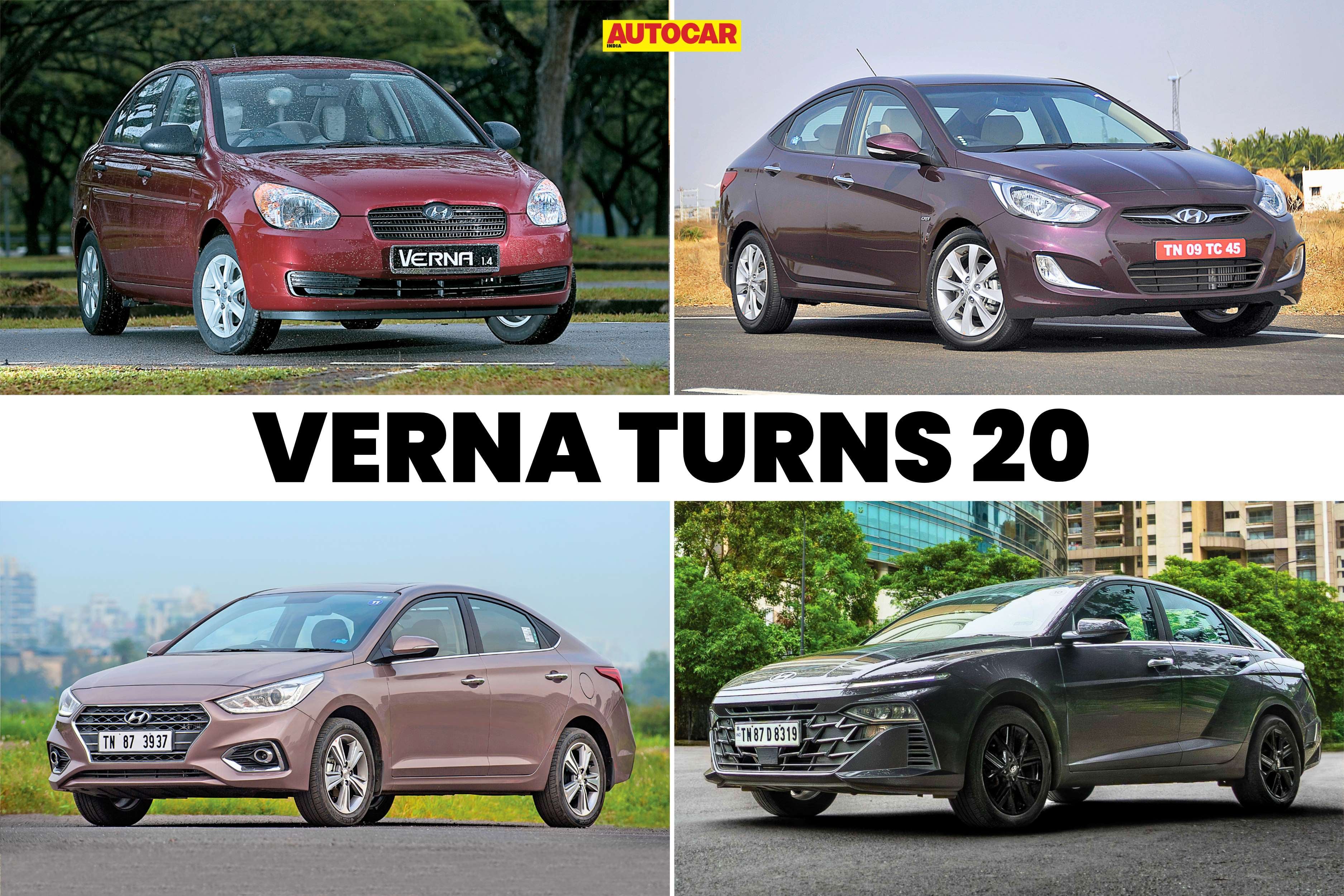
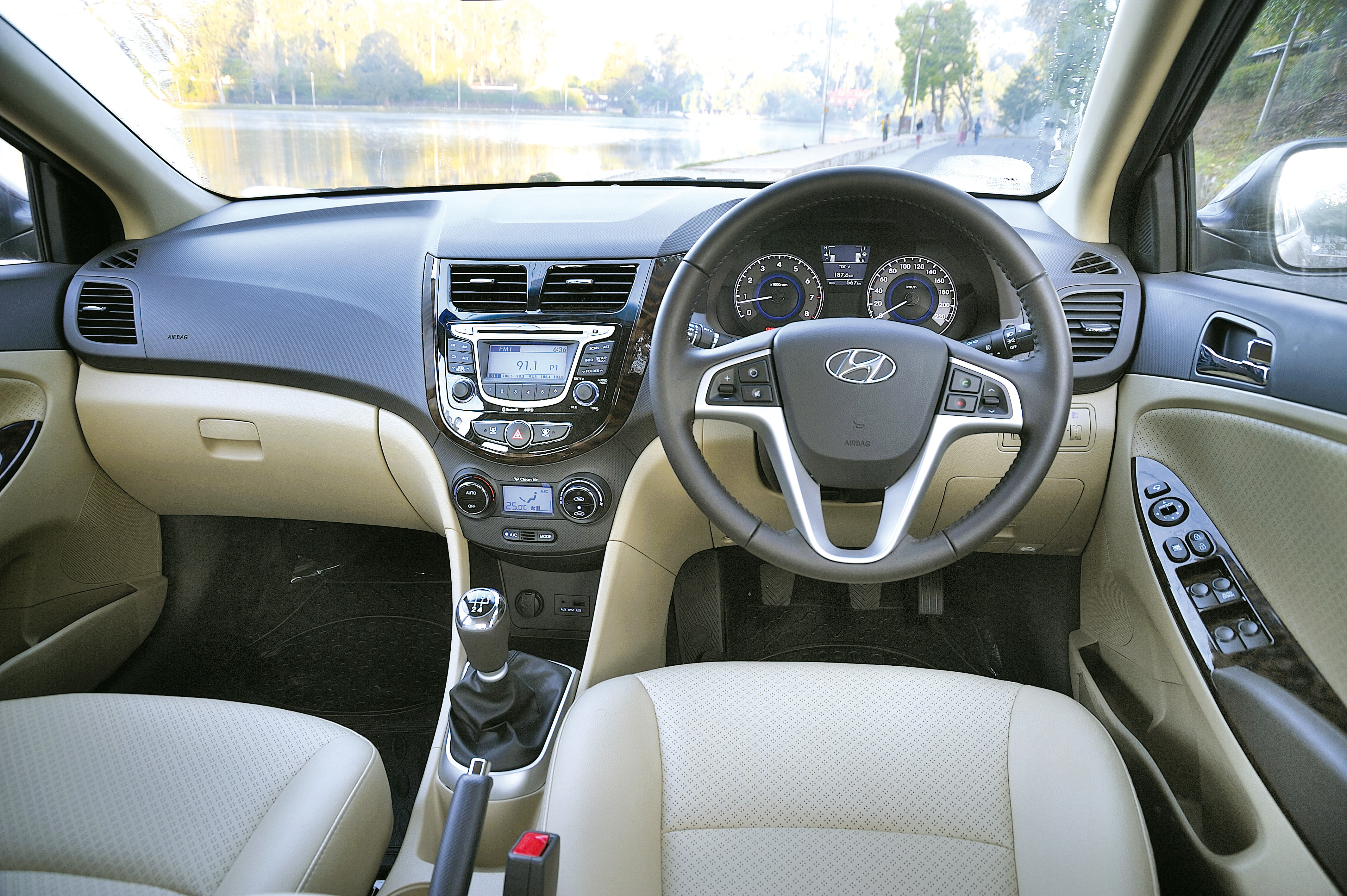
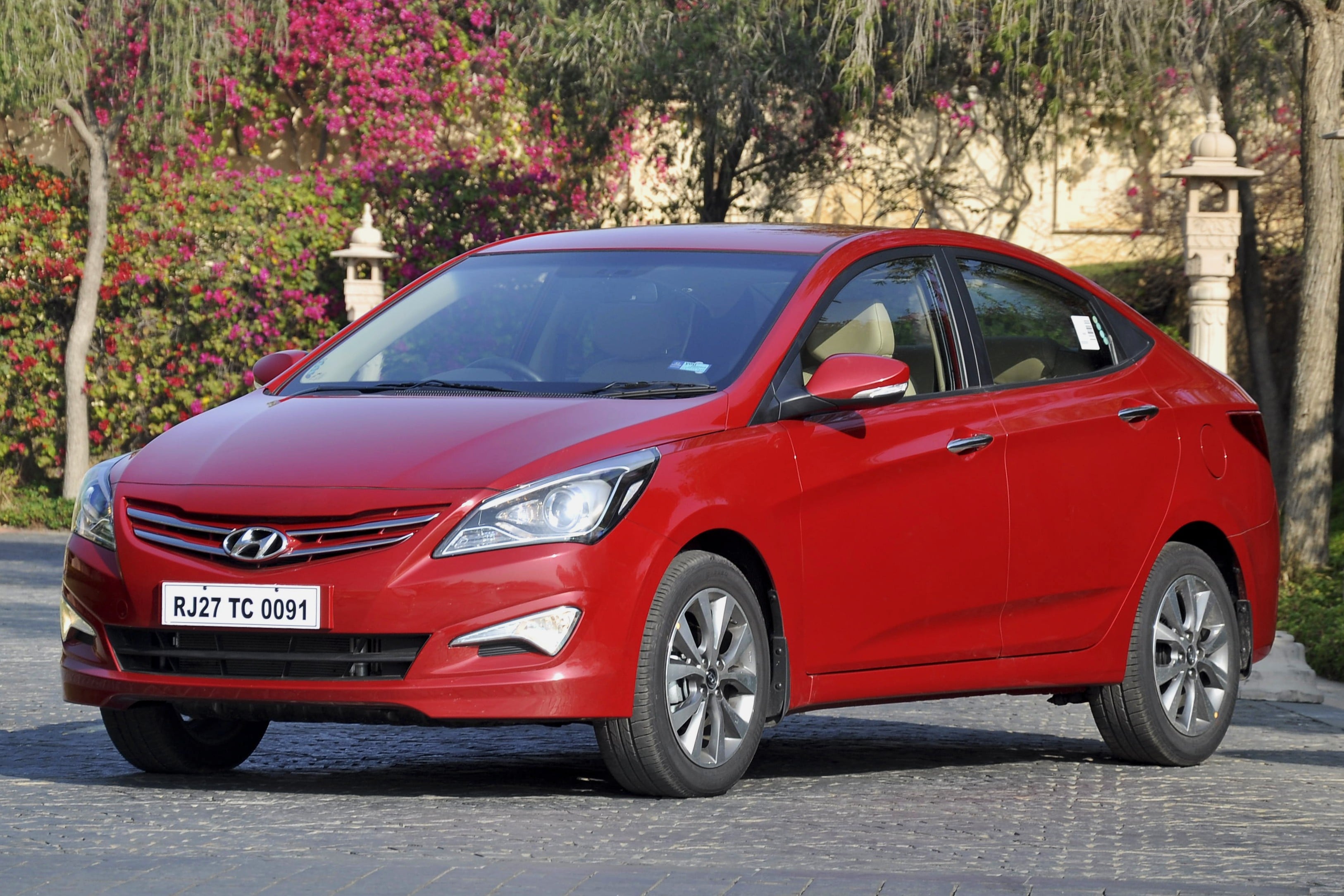
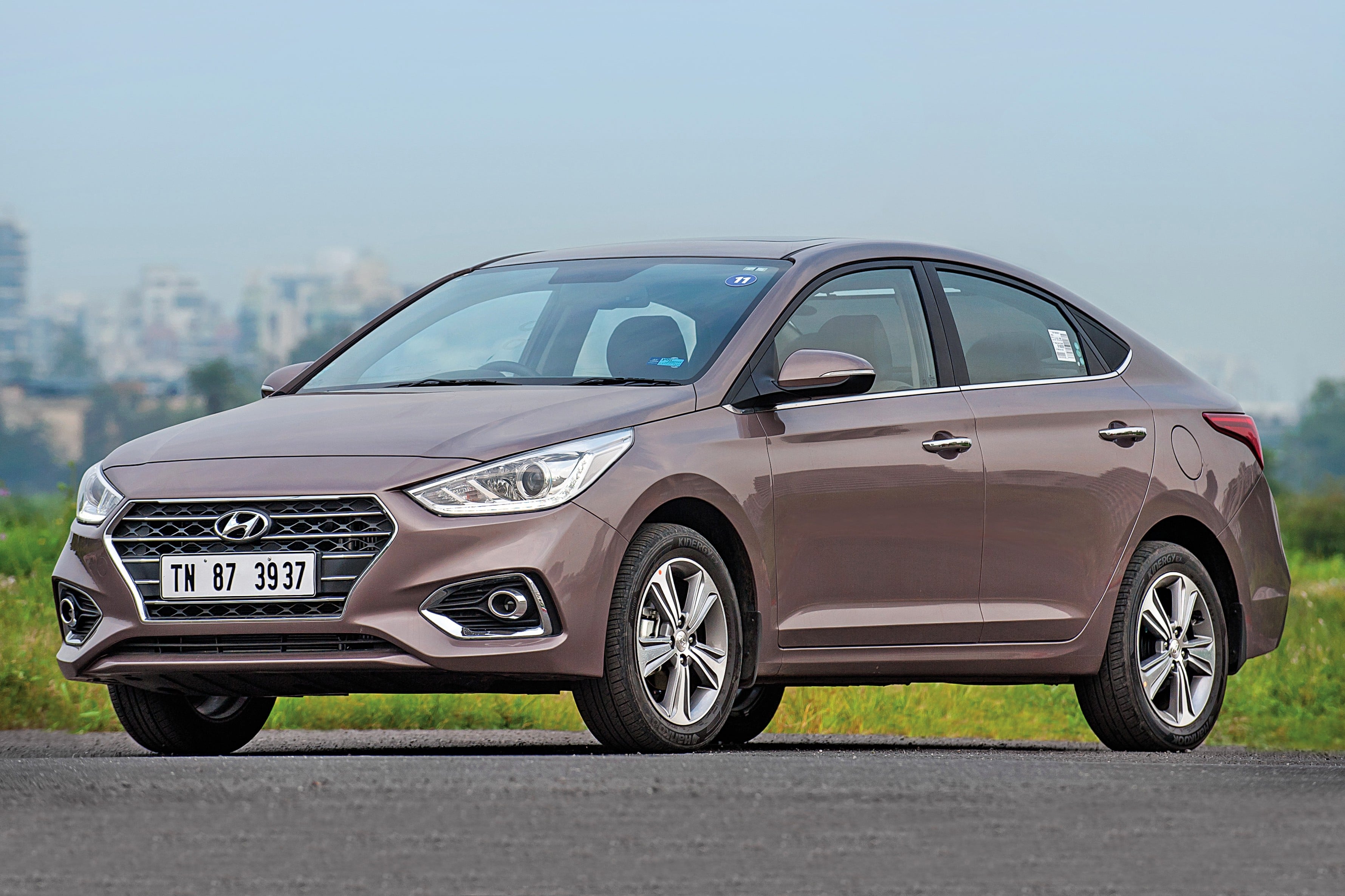
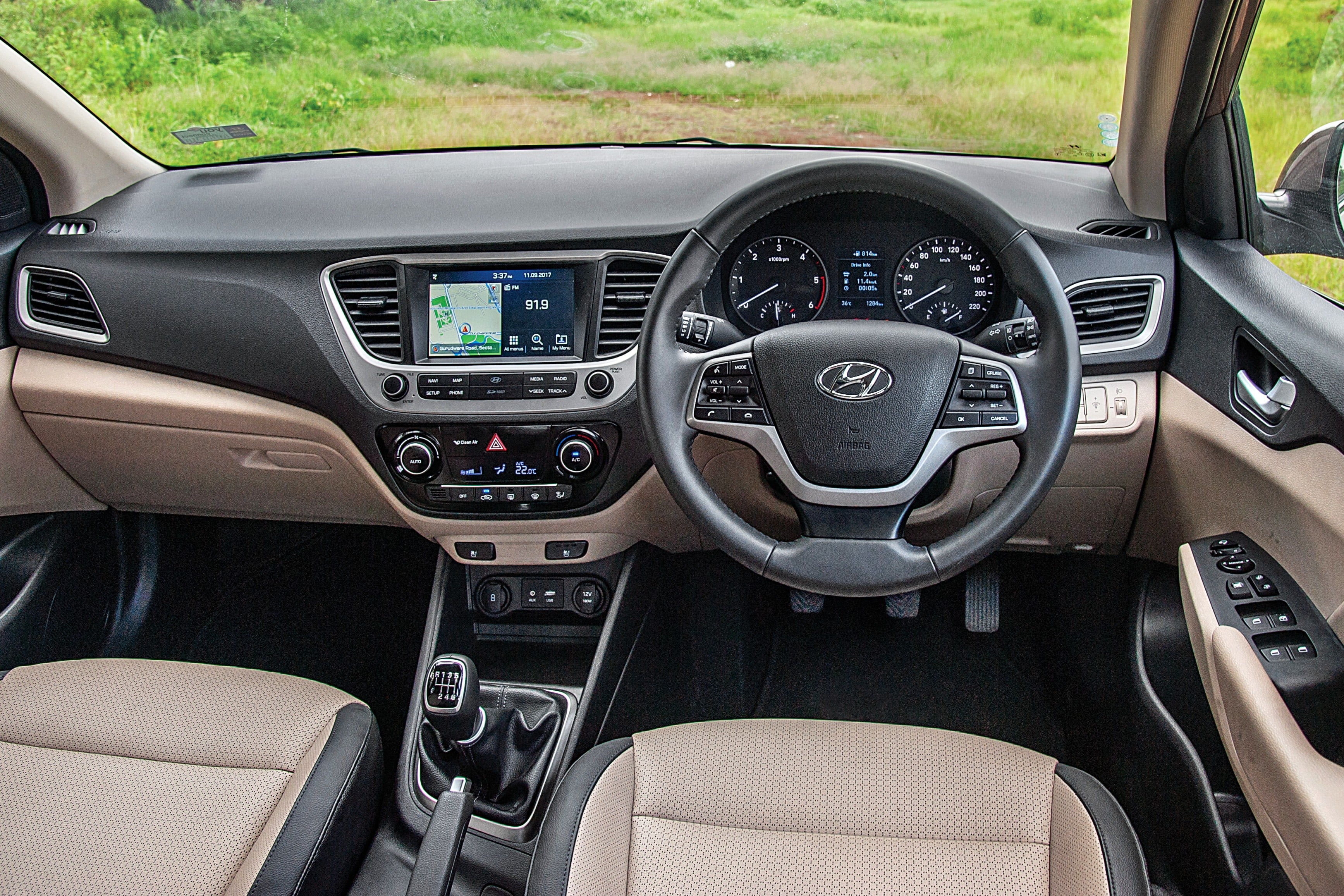
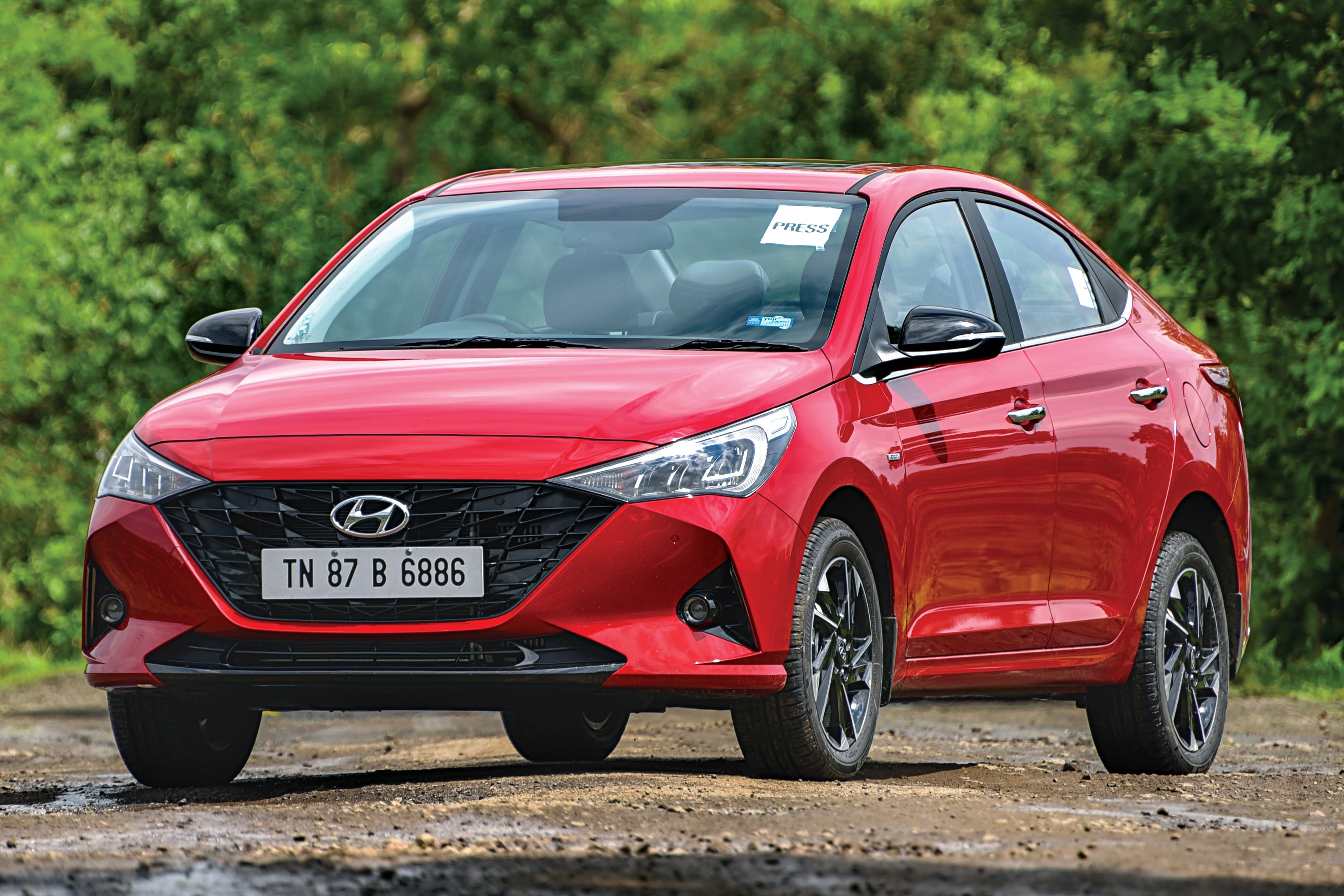
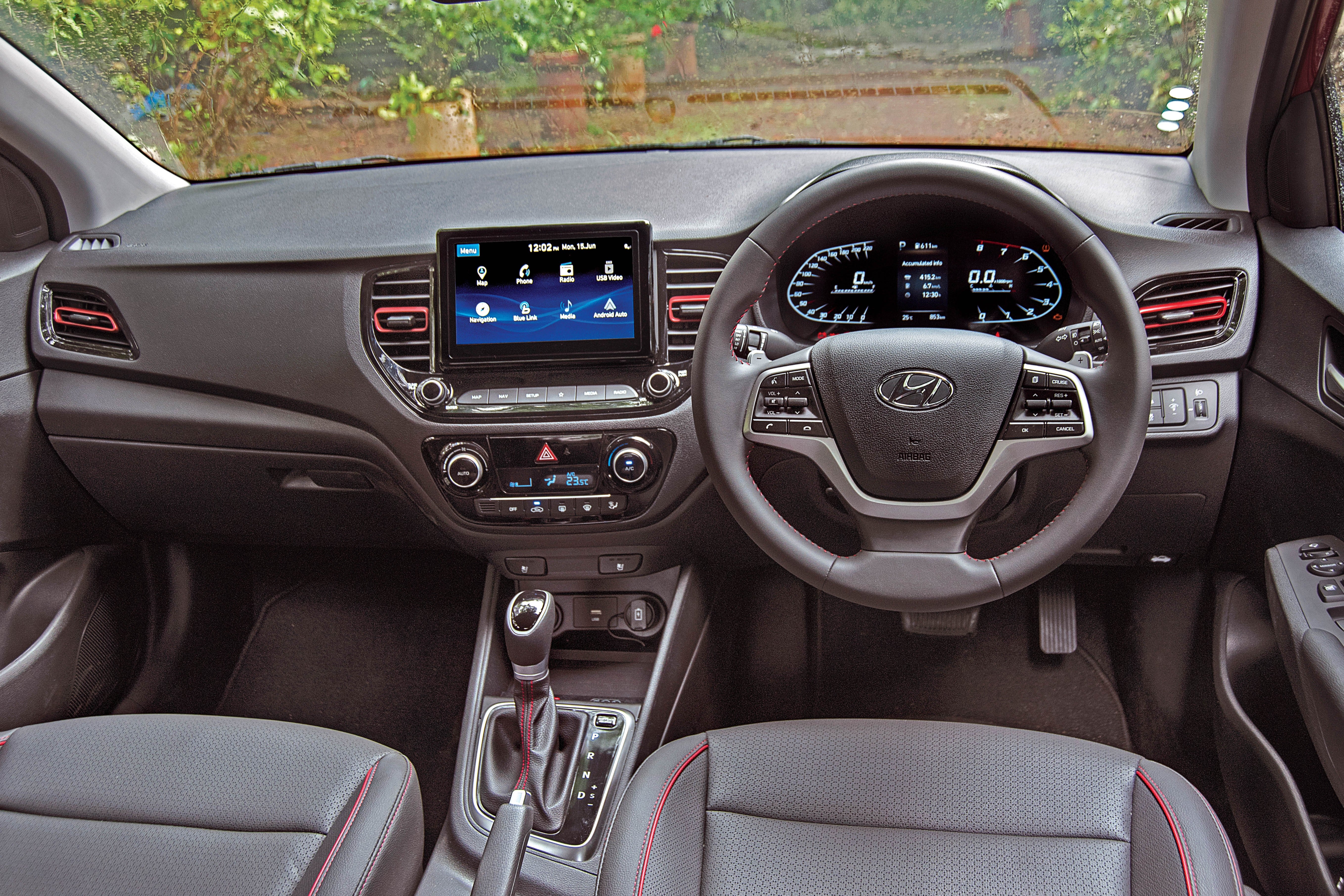
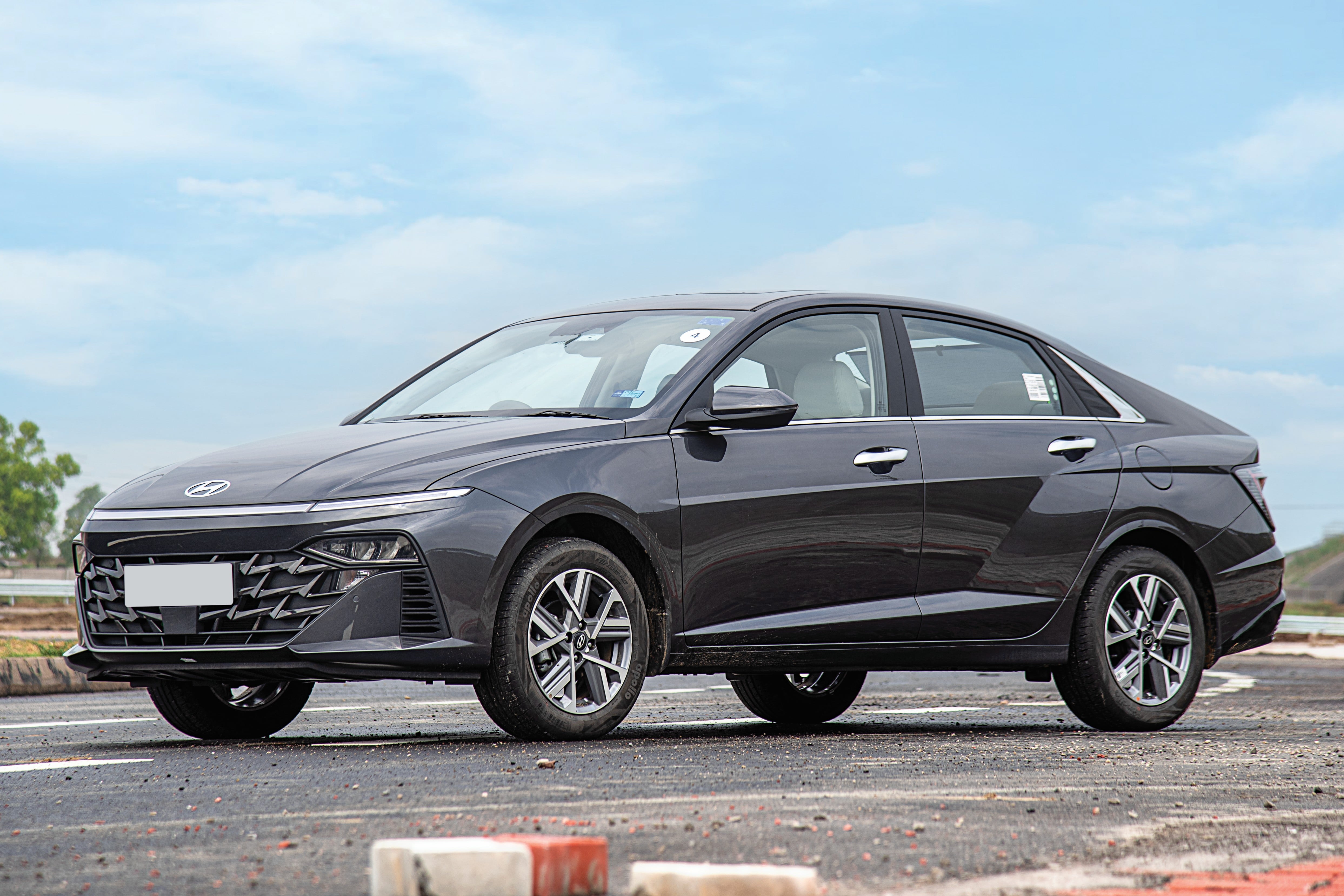
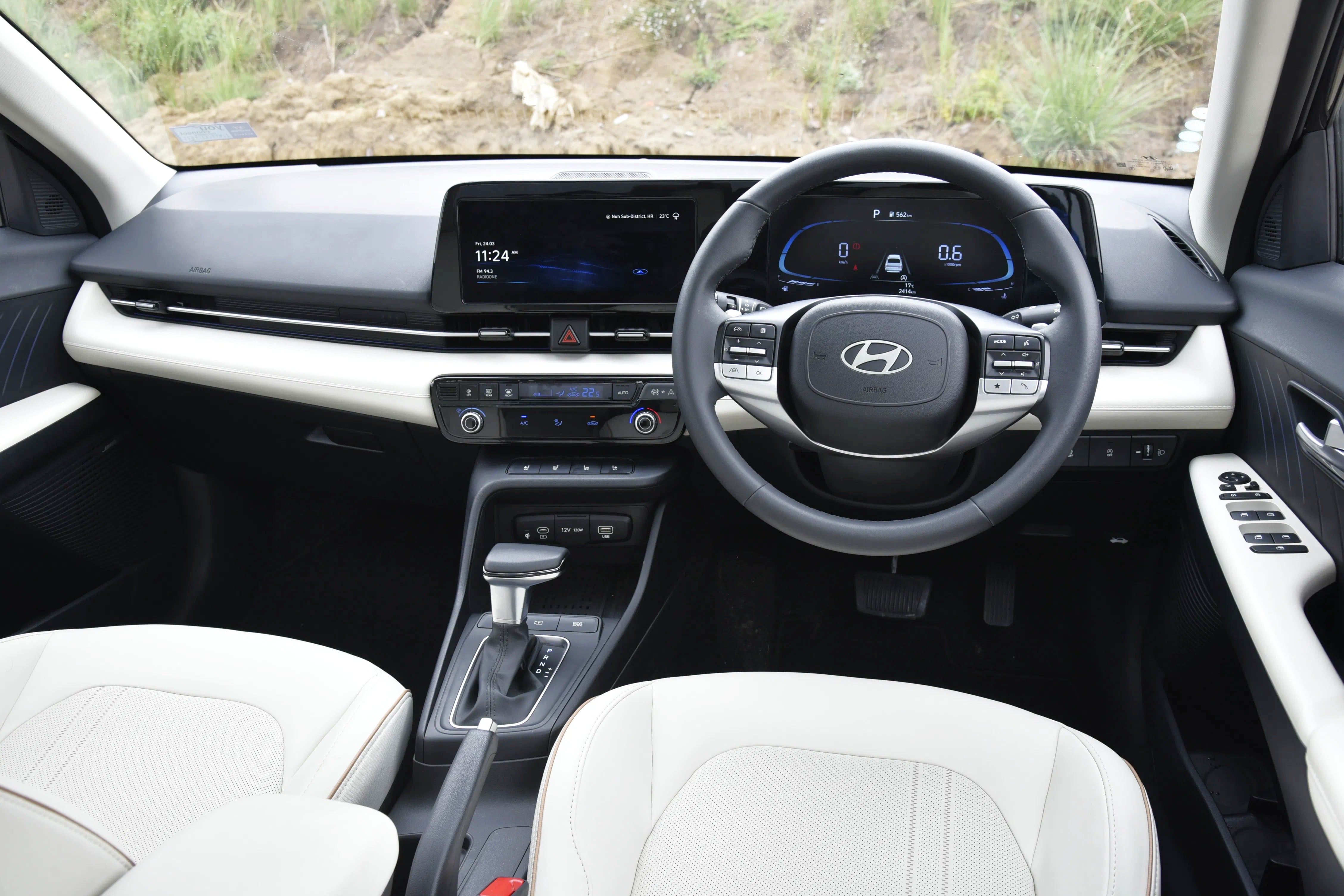
Hyundai is currently all-in on SUVs thanks to the persistent success of the Creta and Venue, but not many people know that the Korean carmaker’s longest-running nameplate in India belongs to a sedan: the Verna. Launched on September 25, 2006 as the successor to the Accent, the Verna is the longest-standing rival to the venerable Honda City in the midsize sedan segment.
Competitors like the Maruti Suzuki SX4 and Ciaz, Toyota Yaris, Fiat Linea, and Nissan Sunny came and went from this space, but the Verna continues to survive, pushing the segment forward and helping keep the midsize sedan alive – more important than ever given buyers’ increasing preference for high-riding form factors. On the Verna’s 20th anniversary, let’s take a look at how this beloved sedan has evolved with each generation.
First-gen Hyundai Verna (2006-2011)
The one that started it all
In 2006, Hyundai launched its Accent replacement under the Verna name because it wanted to sell both midsize sedans concurrently. The first-gen Verna featured a straightforward three-box design and was just over 4.3 metres long. Inside, the Verna was much more premium than the Accent, offering features like keyless entry, automatic climate control, a 4-speaker sound system, and more.
Under the bonnet, the first-gen Verna came with 103hp 1.6-litre naturally aspirated petrol and 110hp 1.5-litre diesel engine options, both of which were mated solely to a 5-speed manual gearbox – the diesel was later available with a segment-first 4-speed automatic transmission. The diesel Verna was particularly lauded for its strong power delivery and excellent fuel efficiency. Prices ranged from Rs 6.21 lakh-7.35 lakh, which was quite reasonable for the time. Needless to say, sedan buyers flocked to the Verna in droves, and it even won the 2007 Autocar India Value for Money award, among several others.
2010 facelift (Verna Transform)
The Verna’s very first facelift arrived in 2010 with a ‘Transform’ suffix attached to its name, and priced from Rs 6.56 lakh-9.22 lakh. While the engine options were unchanged, the Verna Transform was given a sharper-looking redesign on the outside, with revisions to the headlamps, grille, bumpers, wheels, and tail-lamps. The interior was fitted with blue LED illumination and a new instrument cluster, but was largely identical to the prior Verna.
Second-gen Hyundai Verna (2011-2017)
The one remembered as the ‘Fluidic’
The second-generation Verna is the one many Indians still picture when they think of the nameplate. Adopting Hyundai’s ‘Fluidic Sculpture’ design language, the second-gen Verna was larger and lower-slung than its predecessor, featuring more sculpted body lines, wing-shaped tail-lamps, and distinctive ‘eagle-eye’ headlamps. It was a sensational design at the time, and the engine options further sweetened the deal.
This generation of the Verna had the widest powertrain spread of them all. Buyers could choose between two naturally aspirated petrol engines – a 107hp 1.4-litre and a 124hp 1.6-litre – and two diesel engines – a 90hp 1.4-litre and a 128hp 1.6-litre. The petrol engines came with a 5-speed manual as standard, with the 1.6-litre unit additionally offering a 4-speed automatic. Similarly, the diesel mills got a 6-speed manual, with the larger engine available with a 4-speed automatic as well.
Combine all of the above with a much more modern interior equipped with segment-first goodies like a rear camera, 6 airbags, a cabin air purifier, and a cooled glovebox, along with very competitive pricing (Rs 6.99 lakh-10.74 lakh), and it’s no surprise that the Fluidic Verna was a major success.
2015 facelift (Verna 4S)
2015 marked the arrival of the second-gen Verna’s mid-lifecycle facelift, with prices starting at Rs 7.74 lakh and topping off at Rs 12.20 lakh. The styling grew more mature, with reshaped headlamps, updated bumpers, new wheels, and more, while the broad powertrain line-up was unchanged. However, the diesel engines came with a new low-friction piston coating that improved fuel efficiency and refinement. There were no changes to the interior layout, but Hyundai added rake adjust for the steering wheel, rain-sensing wipers, and even a manual Boss mode.
Third-gen Hyundai Verna (2017-2023)
The one with the Audi-like grille
Underpinned by Hyundai’s newer K2 platform, the third-gen Verna was longer and wider than its Fluidic predecessor, and featured styling cues inspired by the larger and more upmarket Elantra. These included swept-back headlamps, L-shaped DRLs, an Audi-like hexagonal grille, and sleek tail-lamps. On the inside, the third-gen Verna yet again pushed the envelope with features like ventilated front seats (a segment-first), a sunroof, a 7-inch infotainment touchscreen, a 6-speaker sound system, cruise control, and more.
Engine options were simplified to just one per fuel type at launch: a 123hp 1.6-litre naturally aspirated petrol and a 128hp 1.6-litre diesel, both available with 6-speed manual and 6-speed torque converter automatic gearbox options. The third-gen Verna went on sale at a starting price of Rs 7.99 lakh, climbing to Rs 12.61 lakh at the top end.
2020 facelift
Hyundai launched a comprehensive facelift of the third-gen Verna in 2020, bringing compliance with Bharat Stage 6 emission norms by way of fresh 1.5-litre diesel and naturally aspirated petrol engines with manual and automatic gearboxes. This was also the first generation of the Verna to offer a turbo-petrol engine, specifically the 120hp 1.0-litre 3-cylinder direct-injection unit from the Venue, paired with a 7-speed dual-clutch automatic.
The 2020 Verna facelift also introduced significantly sharper styling changes, like a wider grille, larger headlamps, redesigned bumpers, new alloy wheels, and more. Inside, the midsize sedan saw upgrades like a larger 8-inch touchscreen, an Arkamys sound system, connected car tech, and a digital driver’s display. Pricing for the 2020 Verna facelift ranged from Rs 9.31 lakh to Rs 15.10 lakh – a considerable uptick over the prior model.
Fourth-gen Hyundai Verna (2023-present)
The one with the lightbar
The current-gen Verna went on sale in India in 2023, and unlike its predecessors, the styling immediately split opinions. Hyundai’s ‘Sensuous Sportiness’ design language introduced a split-headlamp setup with a full-width LED light bar on the fourth-gen Verna’s front end, lots of cuts and creases all around the bodywork, a sloping fastback-esque roofline, and connected LED tail-lamps. Another point of contention was the absence of a diesel engine in the line-up – a first for the Verna.
Only two petrol engines are available for the fourth-gen Verna, particularly a 115hp 1.5-litre naturally aspirated and a 160hp 1.5-litre direct-injection turbo-petrol unit. Both engines get a 6-speed manual as standard, with the naturally aspirated motor additionally offering a CVT and the turbo-petrol a 7-speed dual-clutch automatic. On the inside, though, the fourth-gen Verna has an impressively clean and contemporary layout, equipped with segment-first features like heated front seats, Level 2 ADAS, and an 8-speaker Bose sound system.
2026 facelift
Most recently, Hyundai launched a facelift of the fourth-gen Verna. Styling updates were limited to revised bumpers and fresh alloy wheel designs, while the interior got a new three-spoke steering wheel, a 10.25-inch full-digital instrument cluster, and additional segment-first features like Boss mode, a 360-degree camera, and 7 airbags. Powertrains remain unchanged, and prices start at Rs 10.99 lakh and extend all the way up to Rs 18.31 lakh.
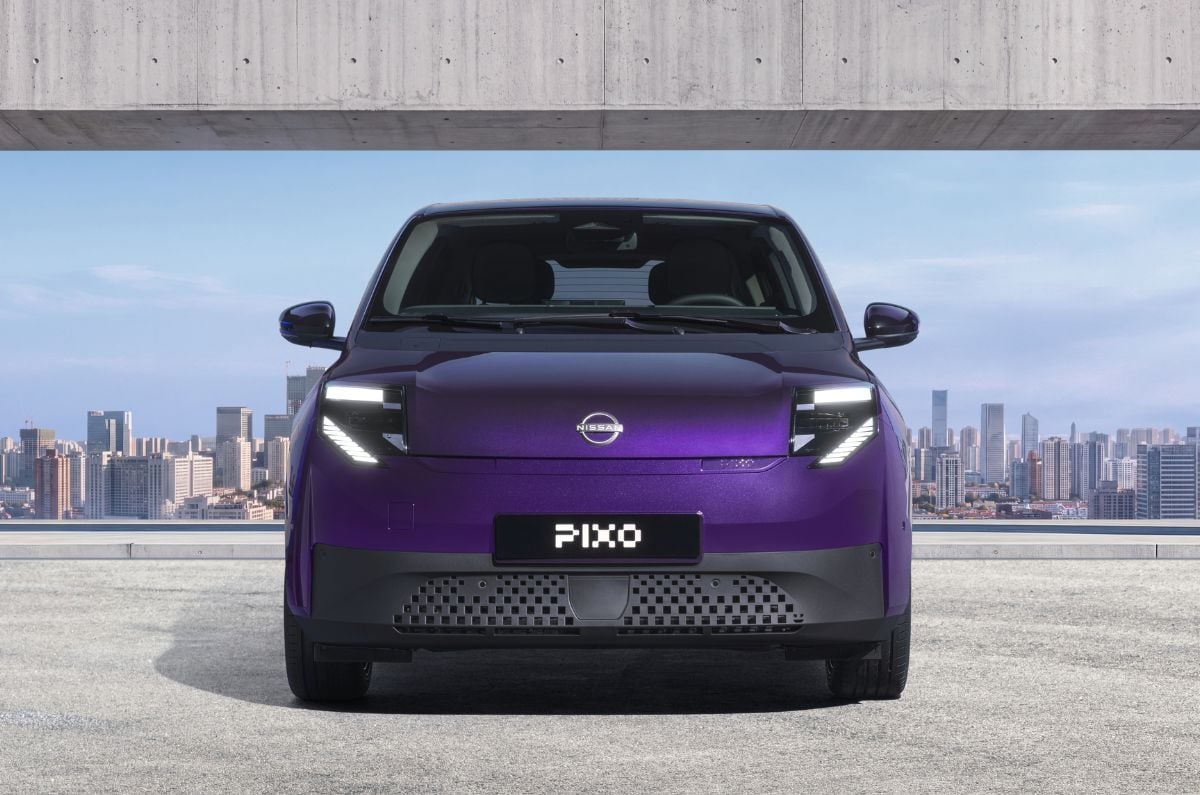
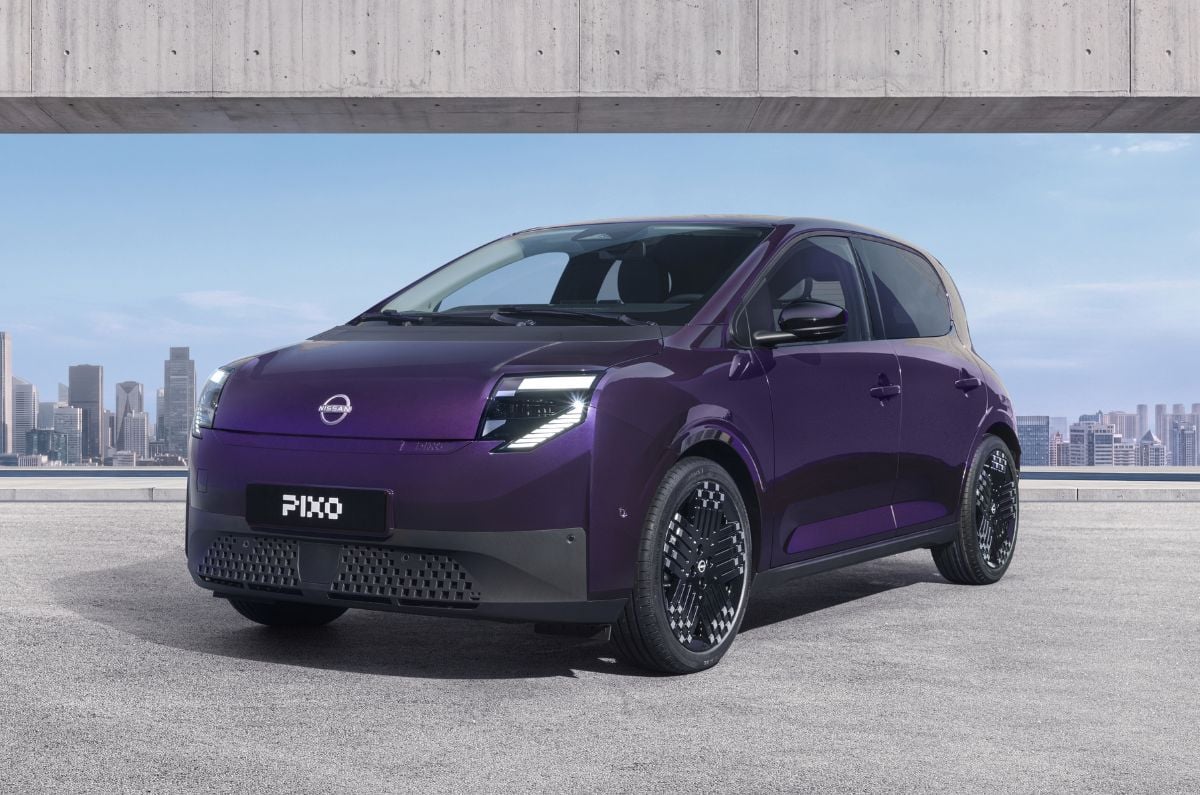
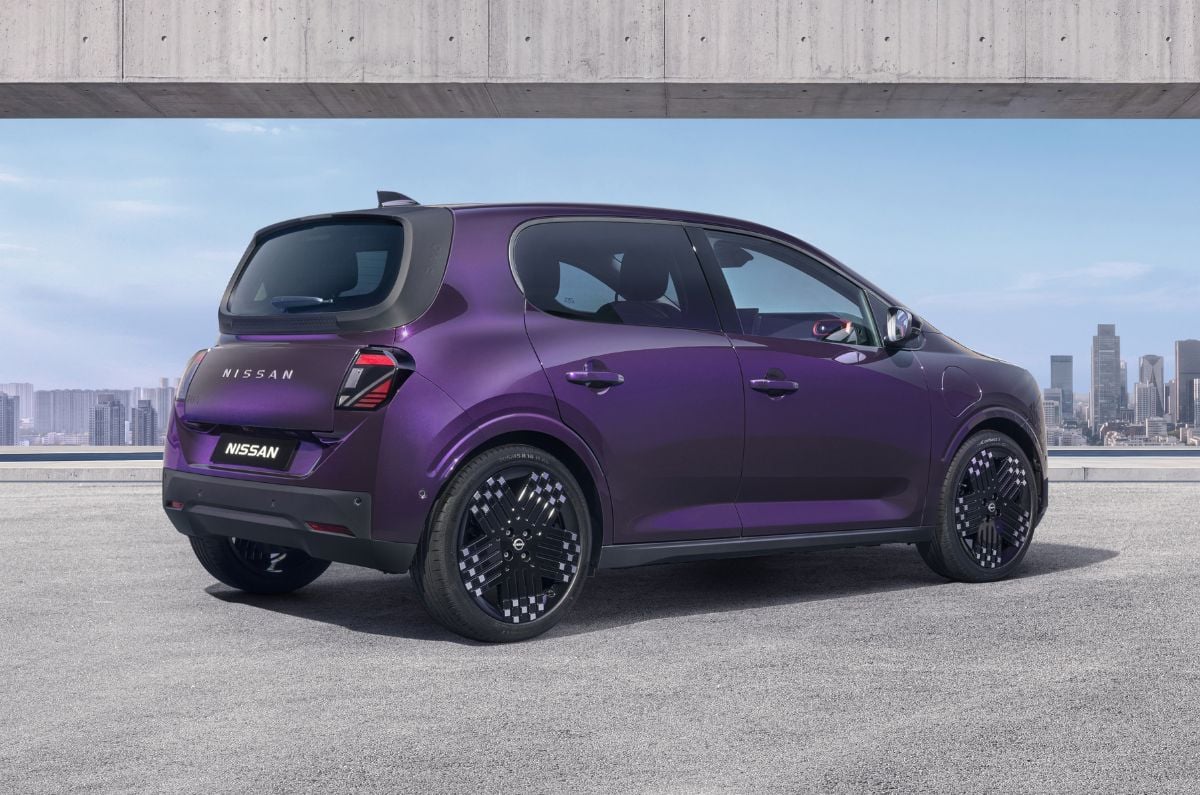
Nissan has pulled the covers off the Pixo, which is an A-segment EV specifically meant to cater to the urban buyer in Europe, according to the automaker. The Pixo is the result of a collaboration between NDE (Nissan Design Europe) and alliance partner Renault, and is manufactured at the latter’s Novo Mesto facility in Slovenia.
Design highlights include pixel-inspired lighting and “robot face” front bumper.
3,796mm long, 1,790mm wide and seats up to four adults.
Sliding rear seats, 10-inch touchscreen, Google built-in, ADAS and more.
27.5kWh battery, 82hp motor and up to 259km WLTP range.
Nissan Pixo exterior and dimensions
The Pixo features striking colour options and cube-inspired proportions
The Nissan Pixo features the Japanese brand’s latest design language meant specifically for EVs. The cube-inspired proportions of the Pixo are accompanied by what the brand says are pixel-inspired lighting and a “robot face” front bumper. ‘Pixo’ lettering aside, there are also ‘2-3’ markings to denote ‘Ni-San’ in Japanese. There are pixel-like highlights on the 18-inch wheels, while ‘Nissan’ is spelled out on the tailgate.
Nissan says that the Wonder Purple and Gear Blue paint options are meant to reinforce the Pixo’s youthful urban character, and these striking colours are contrasted by black trim bits on select surfaces. At 3,796mm long and 1,790mm wide, Nissan claims that the Pixo’s dimensions are specifically meant to fit European cities without compromising space on the inside. Meanwhile, it has a 9.9-meter turning circle.
Nissan Pixo interior design and features
This EV has been designed to carry up to four adults and sports a vertically stacked dashboard
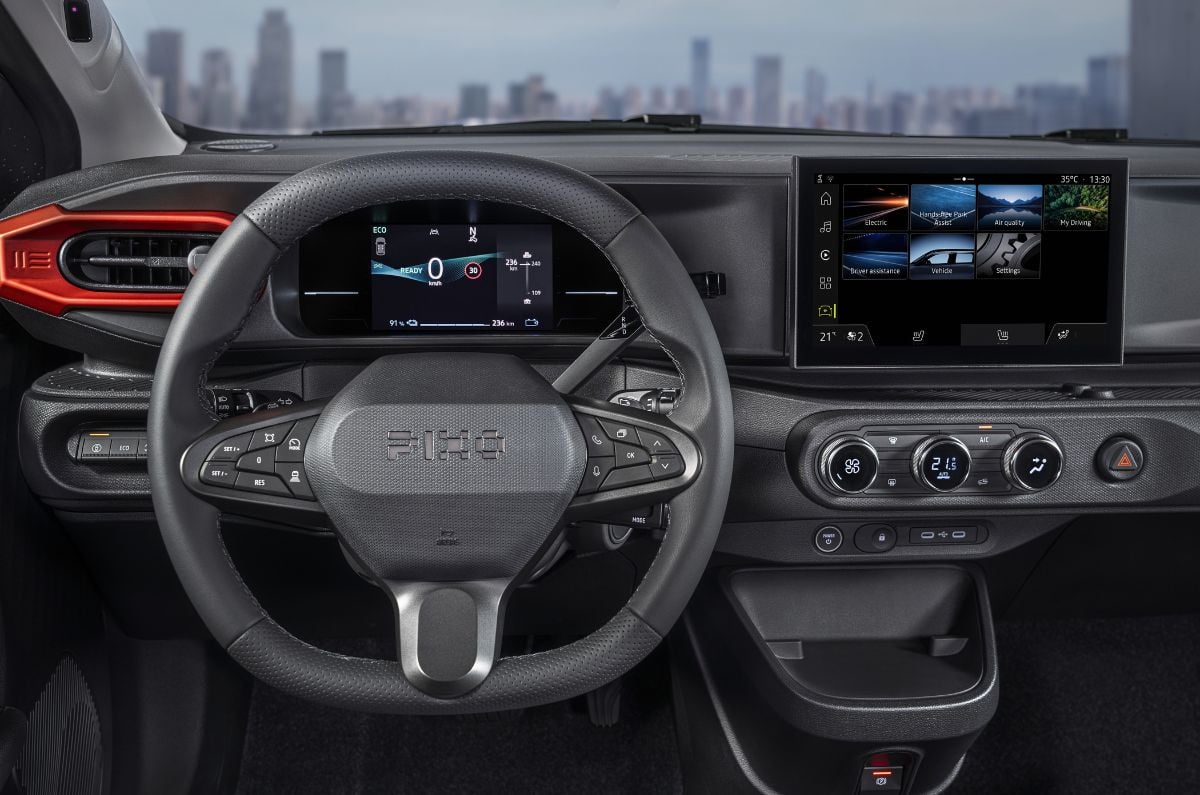
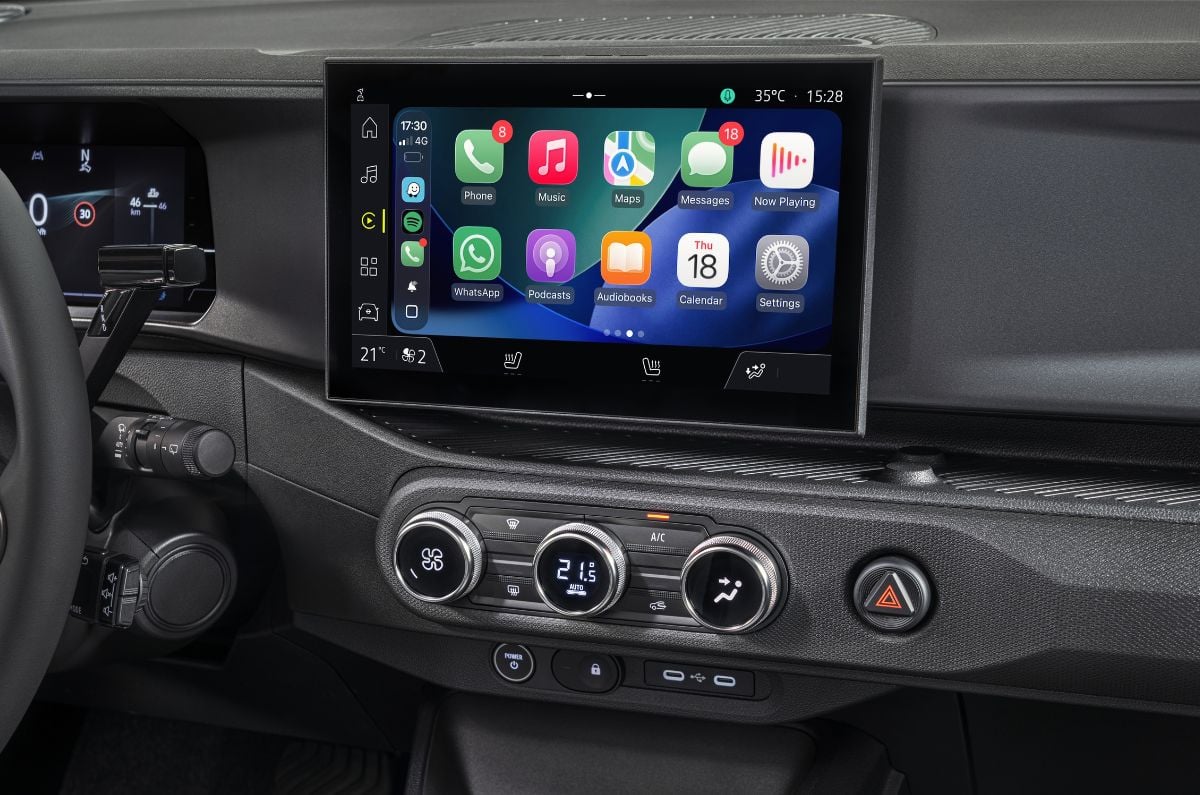
The Nissan Pixo has a relatively modern but simple-looking interior. However, it does get a vertically stacked dashboard with a textured finish and orange accents around the AC vents. There are physical buttons and dials to control the automatic climate control system, with a large drive-selector stalk behind the steering wheel. The dash also integrates a 7-inch digital driver’s display and a tablet-style 10-inch touch-infotainment screen.
Equipment highlights of the Nissan Pixo include Google Gemini, which the brand claims is ‘first-in-segment’ and that it will be offered in 16 languages and dialects. Adding to this list will be Google built-in features, MyNissan app and Face ID with the capability of recognising different drivers and remembering their personalised settings. The Nissan Pixo will be available with ADAS (advanced driver assistance systems), integrating adaptive cruise control, lane-departure warning and ‘Hands-Free Parking’.
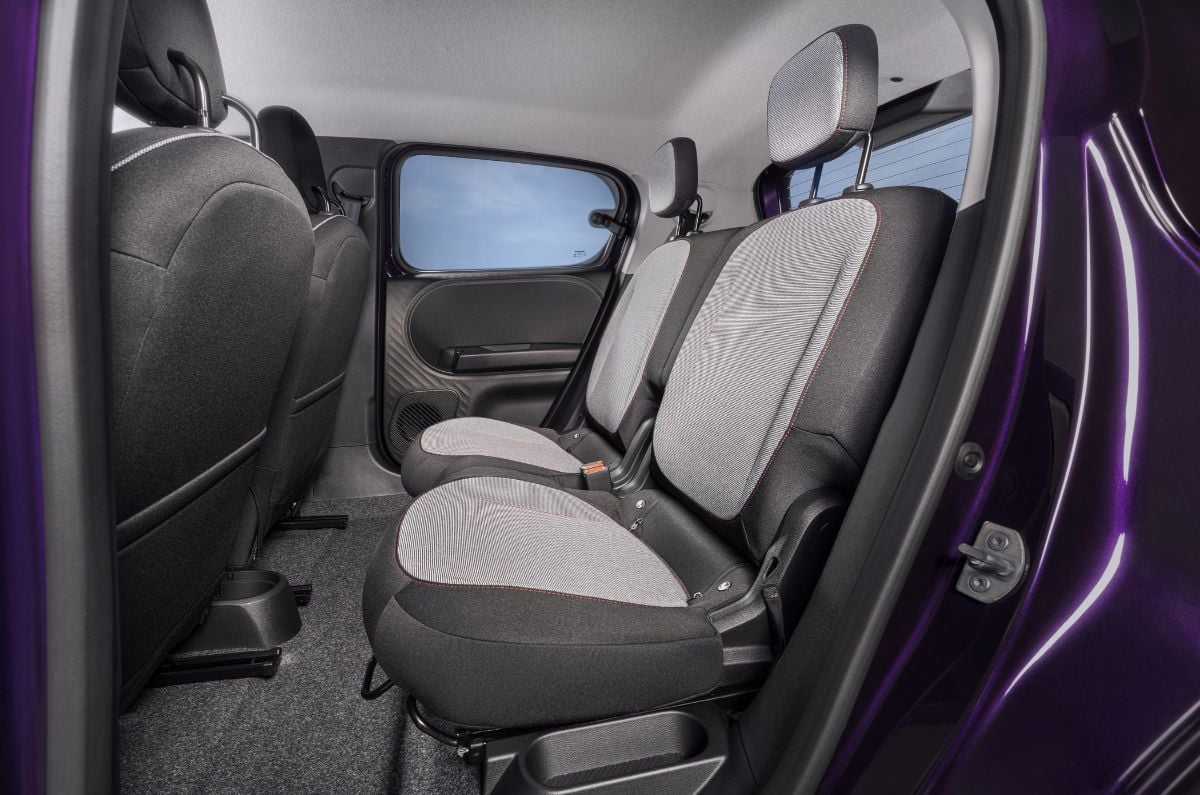
There are dual-tone fabric seats that look simple, and there’s enough space to carry four adults, with the rear units capable of being individually slid forward or backward based on cargo-space requirements. Nissan says that the Pixo can accommodate up to 356 litres of cargo in the boot – out of which 50 litres is taken up by the charging cable. “We’ve worked hard to maximise the space within the Pixo’s compact dimensions, creating a cabin that feels open, practical and surprisingly roomy,” said Masato Koyama, Lead Exterior Designer at Nissan Global Design.
Nissan Pixo powertrain and charging
This electric powertrain comprises a lithium iron phosphate battery and a single electric motor
The Nissan Pixo is equipped with a 27.5kWh lithium iron phosphate (LFP) battery pack, which energises a single electric motor capable of producing 82hp. While Nissan hasn’t released torque or performance figures of the Pixo yet, it does claim a WLTP range of 259km on a full charge.
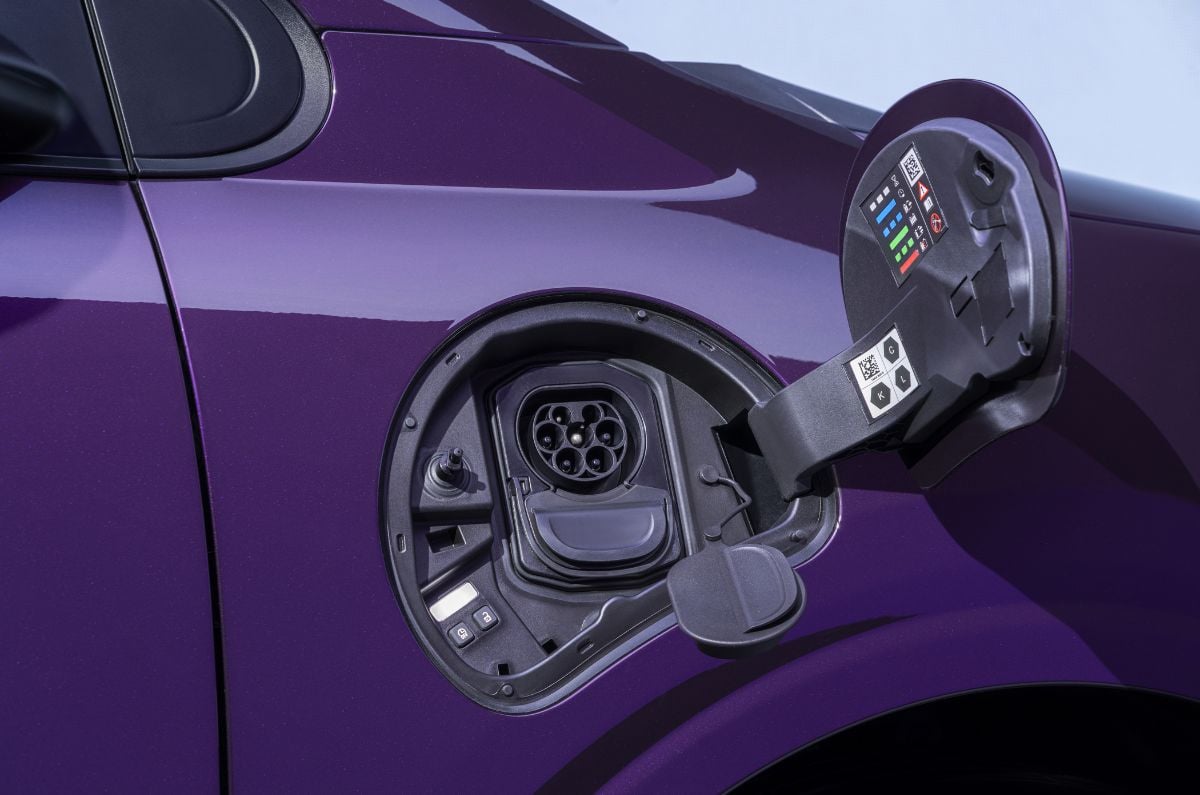
The Pixo supports DC fast-charging at up to 50kW, which the brand says can take the state of charge from 15-80 percent in around 28 minutes. The Nissan Pixo also supports bi-directional AC charging of 11kW. Nissan is yet to announce the price of the Pixo, though customer deliveries in Europe are scheduled start in early 2027.
For 107 years, Bentley has been defined by what sits under the bonnet: supercharged Blowers, mighty W12s and thundering V8s. The Torcal has none of that. It’s Bentley’s fourth model line and its first electric car. It slots in below the Bentayga, and it will never get a petrol engine. Bentley also calls it the template for every Bentley that follows, whatever the powertrain.
Like many modern Bentleys, the Torcal is named after a natural wonder. El Torcal de Antequera is a dramatic landscape of weathered limestone in southern Spain. The car is also the first Bentley to wear the brand’s redesigned, modernised emblem, which was revealed last year. That leaves one question that matters. Take away the engine, and is it still a Bentley? We haven’t driven it yet, so the full answer will have to wait. After a close look at the First Edition, the fully loaded launch car, there’s plenty to go on.
Bentley Torcal exterior design: light is the new chrome
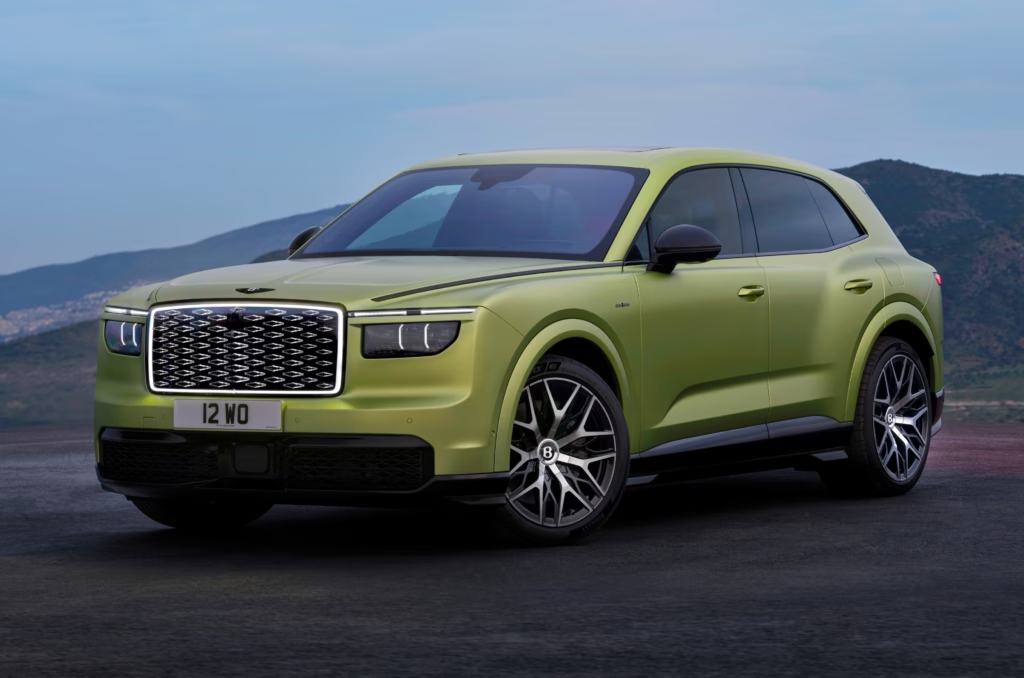
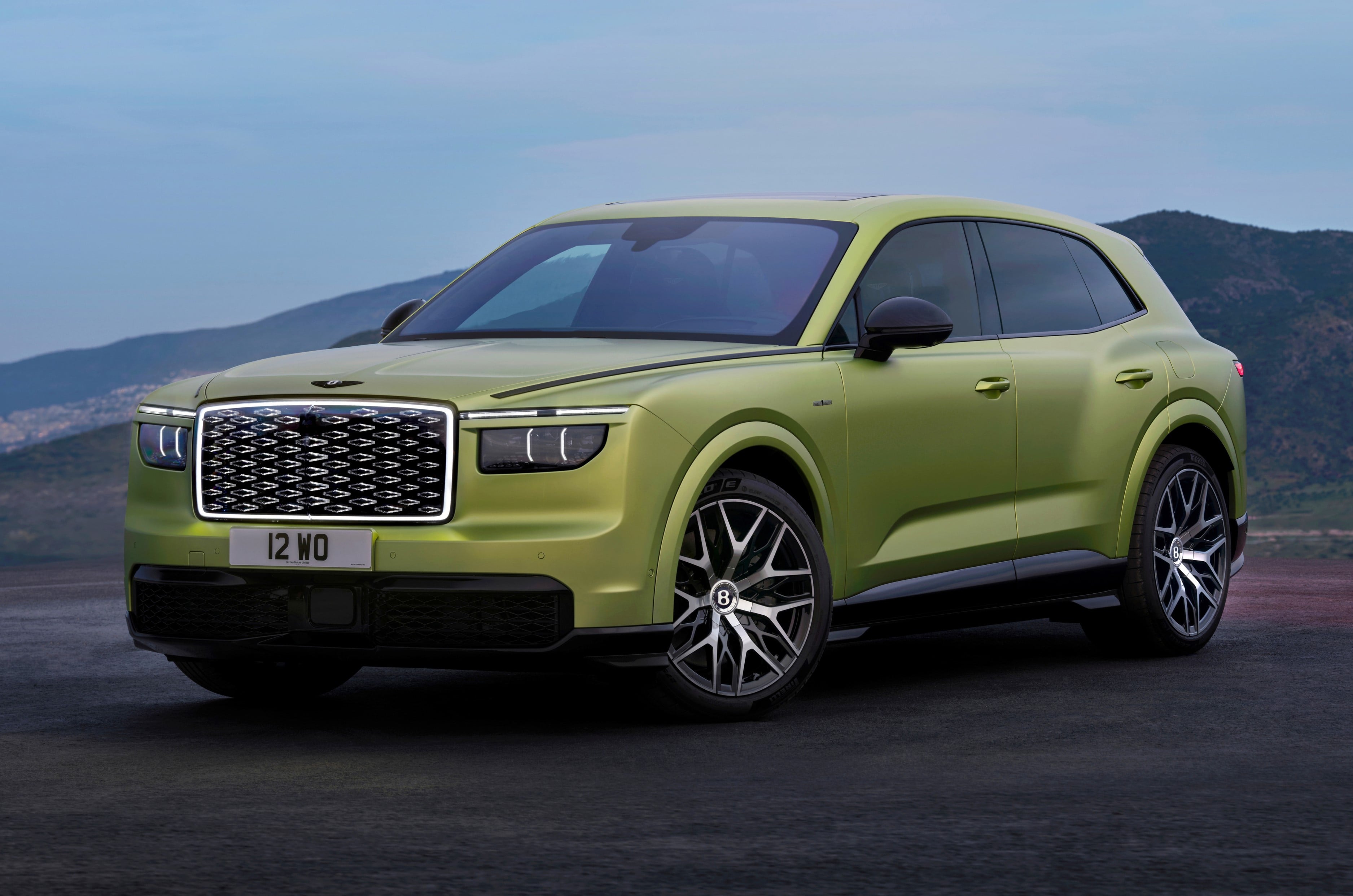
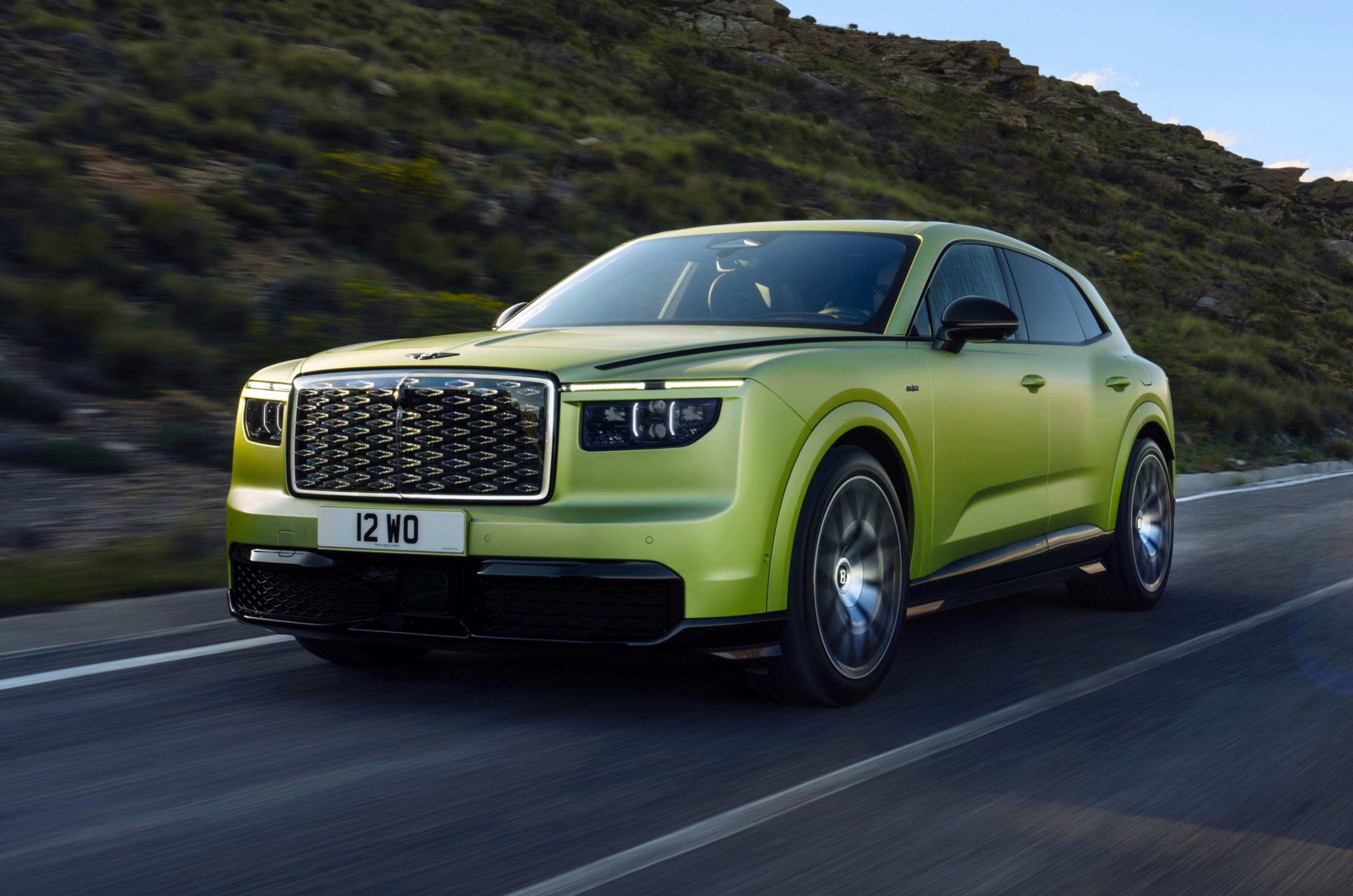
Designing an EV for a brand with this much pedigree was never going to be easy, but Robin Page’s in-house team at Crewe has done a fine job. The Torcal sits 50mm lower and is 120mm shorter than a standard-wheelbase Bentayga, yet it looks the better proportioned of the two. The wheelbase is just over three metres, the car is about five metres long, and the overhangs are short. Bentley’s signature ‘endless bonnet’ does much of the visual heavy lifting.
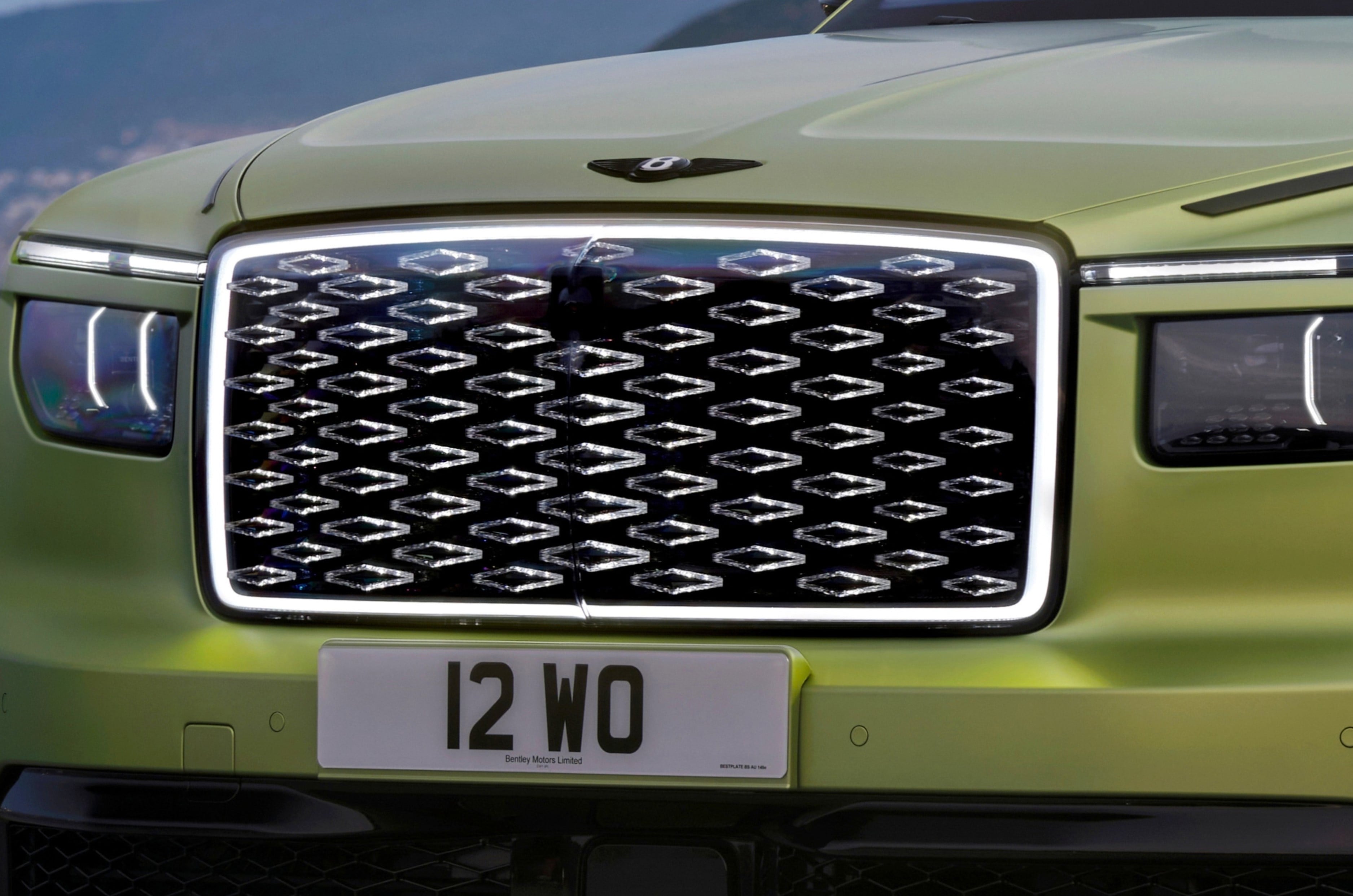
The Torcal gets a clear polycarbonate panel with diamond-like elements for a grille.
An EV doesn’t need a grille for cooling, but Bentley argues that a car without one is faceless. The Torcal’s solution is an illuminated one with crystal-effect, diamond-like elements set behind a clear polycarbonate panel. It’s the car’s signature piece, and it will look spectacular filling someone’s rear-view mirror. The face echoes the Continental T, reinterpreted through slim, high-tech lighting.
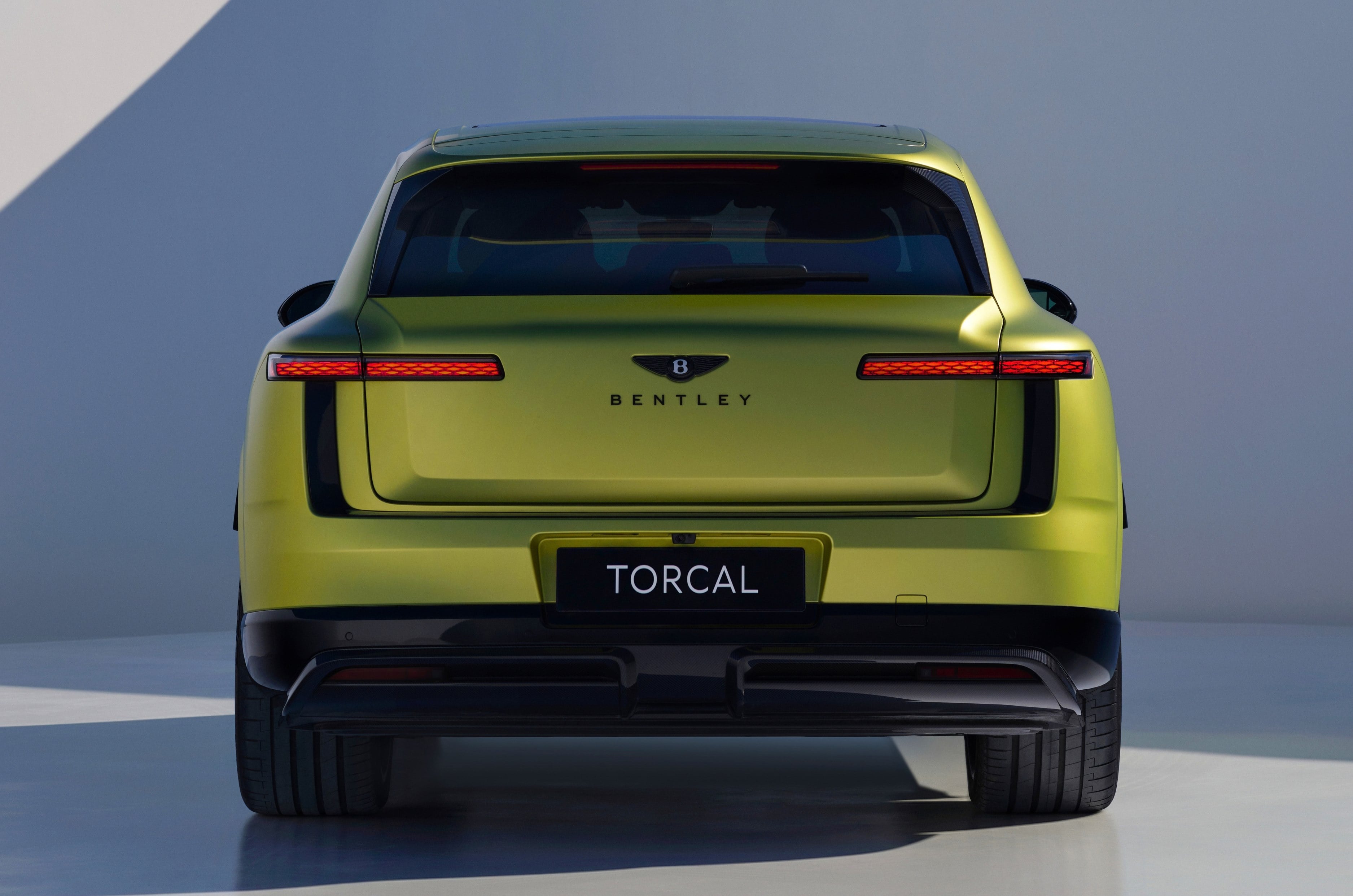
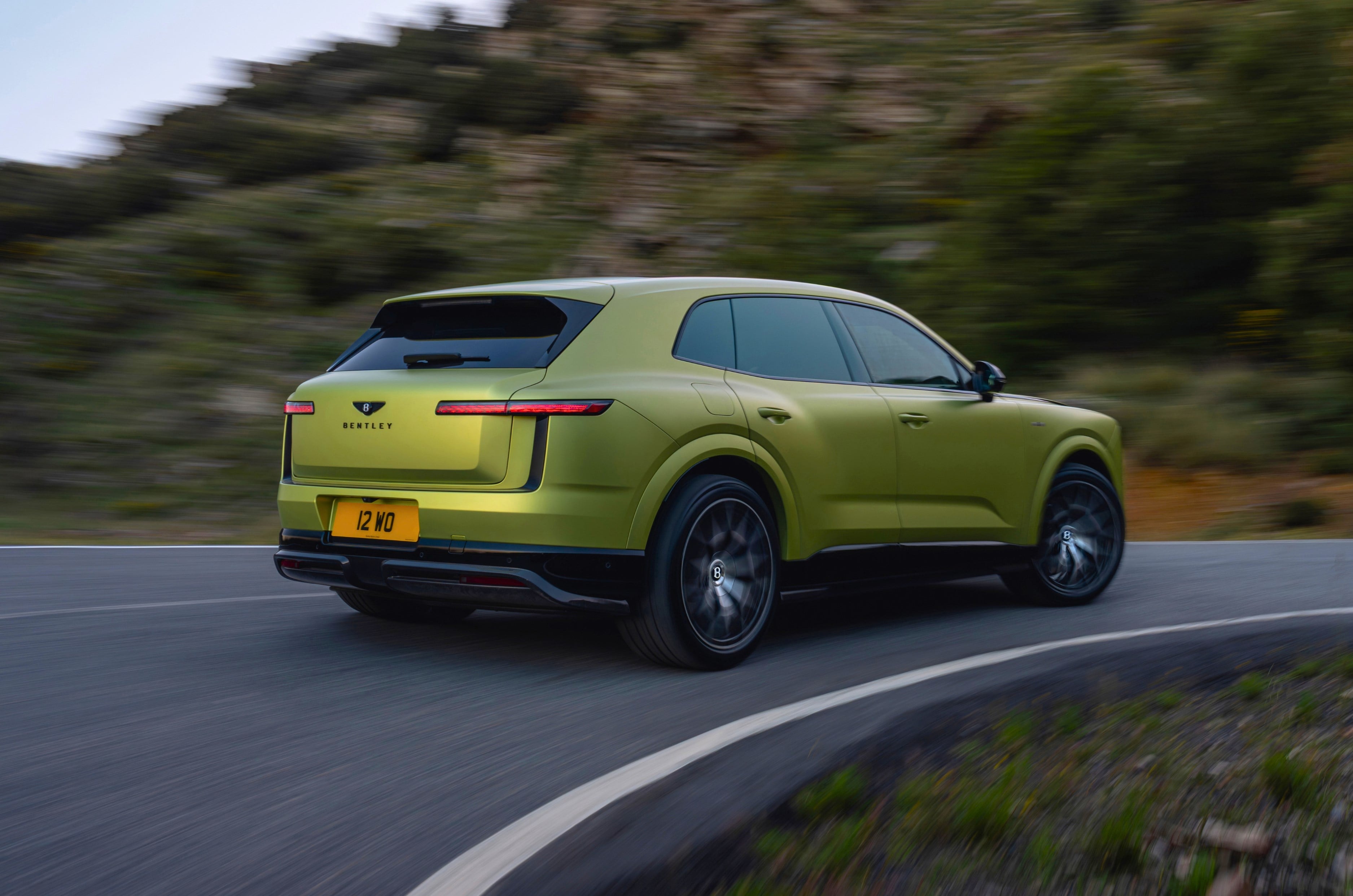
The flanks are deliberately free of fussy creases. The cabin tapers towards the rear so the body can swell over the back wheels, a look the designers call the ‘resting beast’. At the back, Bentley claims are some of the slimmest tail-lamps in the industry. A U-shaped motif ties them together and emphasises the car’s width.
U-shaped motif at the rear ties the tail lamps together.
Our car rode on 22-inch wheels. The core car gets 21s as standard, and India-spec cars may well get the smaller, higher-profile rim. Other neat touches include a charging flap that slides open when you wave a hand over it, and a 90-litre frunk under that long bonnet. The 460-litre boot isn’t especially generous, and there’s no spare wheel, only a puncture repair kit. On Indian roads that could be an issue, though most owners will simply leave a flat to the chauffeur to fix
Bentley Torcal interior: Screens, with restraint
The cabin is completely new, and the tricks start before you’re inside. All four doors are powered and radar-controlled. The driver shuts theirs by pressing the brake pedal, and passengers can close theirs simply by buckling up.
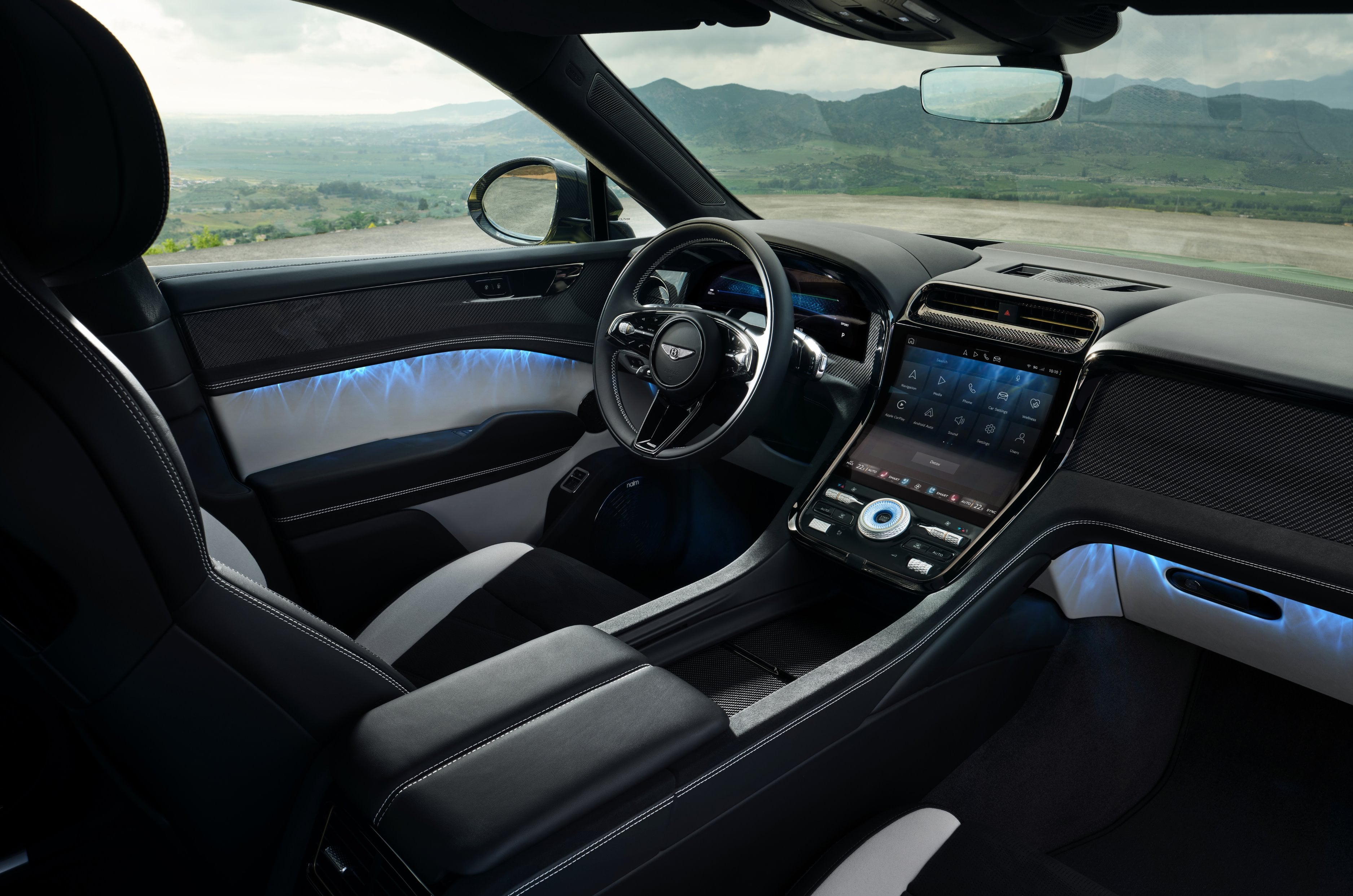
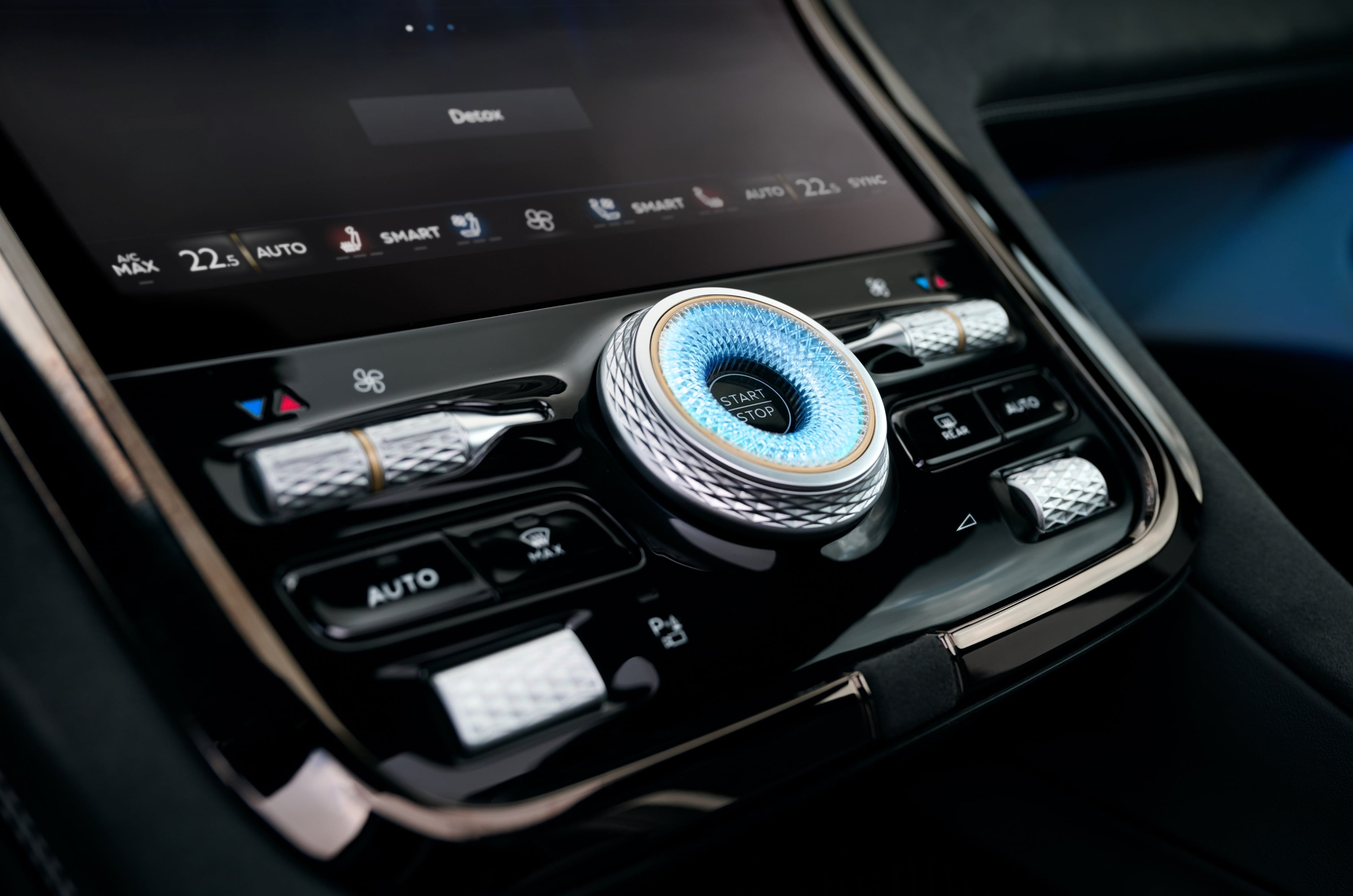
The first thing you notice is that Bentley hasn’t turned the Torcal into an iPad showroom. The centrepiece is the curved OLED centre screen. It doesn’t perch on the dash like a tablet; it sweeps down and flows into the centre console as one continuous form, and nothing else in the class looks quite like it. The OLED panel gives deep blacks and rich colours, and the curve brings every corner of the display within easier reach. Crucially, physical controls haven’t been binned. The switches have a beautiful knurled finish and satisfying, precise clicks, and purists will love them.
A curved OLED touchscreen infotainment is the centrepiece of the interior.
There’s one gripe. The direction of the front air vents is set through the touchscreen, a trend creeping into many luxury cars, and a physical slider would have been far nicer. Otherwise, we haven’t seen any car balance digital and physical controls better.
The tech runs deep. A facial-recognition camera in the rear-view mirror identifies the driver and loads their seat, steering and ADAS settings. An augmented-reality head-up display projects navigation arrows and hazard markers into the driver’s line of sight.
Curated experience
Twist the rotary collar around the starter button and you cycle through four Experience Modes. Each one changes the cabin’s lighting, sound, climate and displays as well as the car’s dynamics.
Rotary dial around the starter button can be used to cycle through four Experience modes.
Sport bathes the cabin in blue rather than the expected red. Bentley’s reasoning is that red signals anger while blue signals focus, which makes it a better colour for driving fast. Bentley mode balances performance and comfort. Comfort mode calms things down and offers a ‘digital detox’ that hides all but essential information. Refresh ups the fresh-air flow and brightens the lighting.
Drumming up character
The hardest thing about an electric Bentley is making it feel like a Bentley. For traditional owners, that means sound. The 6¾-litre V8 is iconic, but it was never a perfect engine. Bentley’s view is that its flaws, like in humans, give it emotion and character. So rather than synthesising a flawless digital imitation, Bentley recorded real musicians on drums, viola and bass guitar. The result is the ‘Dynamic Symphony’, complete with tiny imperfections. It responds to torque demand and speed, grows louder in Sport, and can be switched off entirely.
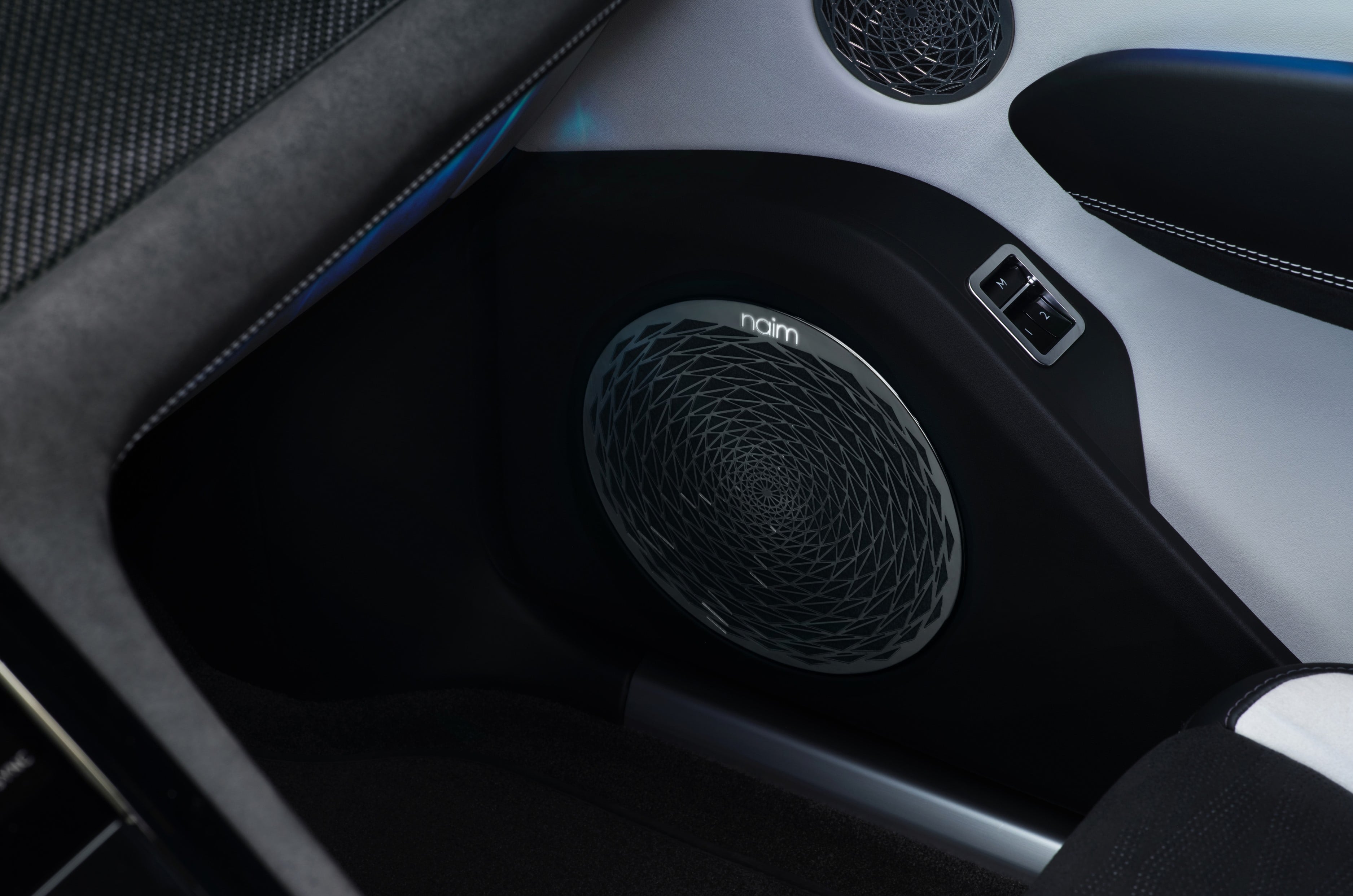
Optional Naim audio brings 28 speakers with Dolby Atmos 7.1
The attention to sound goes further. The indicator tick is a recording of a hammer striking leather in Bentley’s upholstery workshop, and the touchscreen chime comes from a crystal glass. Standard audio is a 620W, 16-speaker system. The Naim option runs to 1,780W and 28 speakers, with headrest speakers, seat shakers and Dolby Atmos 7.1
Material world
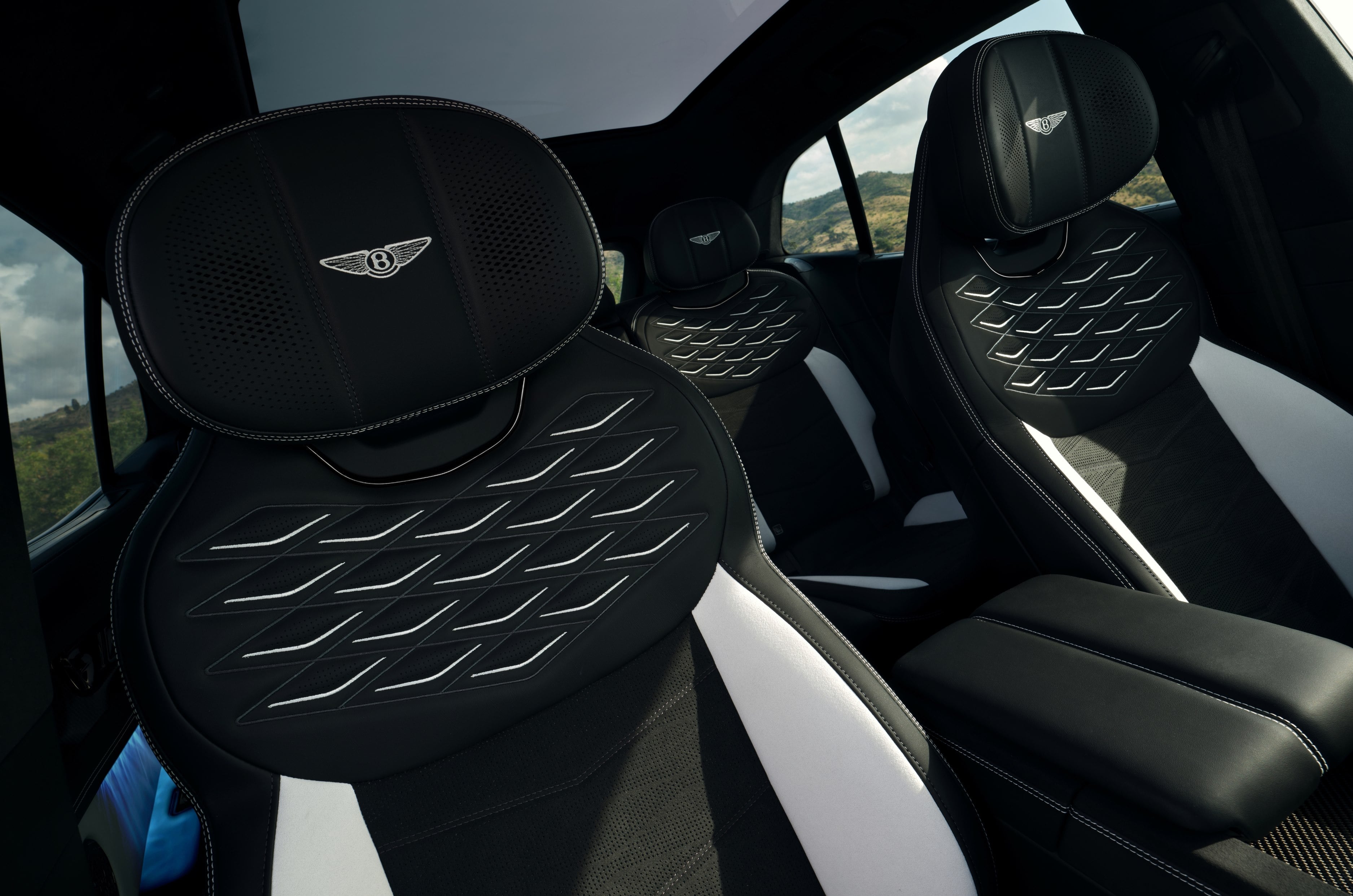
Materials are traditional Bentley, pushed further. There are wood veneers less than a millimetre thick, crisp aluminium and a deep piano black. Leather comes in 15 shades. The real headline is the world’s first 100 per cent Merino wool automotive fabric, developed with Somerset weavers Fox Brothers.
Scope for personalisation is vast, with 15 different shades just for the leather.
New Mulliner finishes include Ombré Walnut, which presses up to 1,000 layers of walnut off-cuts and recycled paper into a veneer that fades from black to smoke. Sunburst Aluminium reinterprets the engine-turned dashboards of old Bentleys. Overhead, the Frosted Diamond sunroof uses switchable glass, so you decide how much light floods in. The scope for personalisation is vast. A second car we saw, trimmed in lighter upholstery with far more brushed aluminium, felt like a different interior altogether.
Bentley Trocal back seat experience
Legroom and headroom at the back are quite decent.
The rear seat matters most for Indian buyers, many of whom will be chauffeured. It’s impressive for a car smaller than a Bentayga. Under-thigh support is genuinely good, which is rare in an EV, where the battery usually pushes the floor up. Legroom and headroom are decent, though this is ultimately a car to be driven.
The rear climate vents get the physical controls the front vents lack. There are heated and cooled seats, and three USB-C ports, one of them rated at 100W for charging a laptop. The rear bench is also the first in a Bentley to power-fold.
Bentley Torcal specs, battery and range
The Torcal gets a 113kWh battery for a claimed WLTP range of 600km.
The Torcal rides on the PPE platform that underpins Porsche’s Cayenne Electric. The Cayenne tops 1,100hp in its most potent form, but Bentley has deliberately stopped short. The flagship makes 888hp and 1,350Nm, the most torque of any Bentley ever and has launch control which I doubt will ever be used!That’s enough to take a roughly 2.7-tonne SUV from 0-100kph in 2.9 seconds. Bentley’s research found that most customers find anything more violent uncomfortable.
Two permanent-magnet motors draw from a 113kWh (net), 800V battery, which carries a 10-year, 100,000-mile warranty. Claimed range is 600km WLTP. This is a continent-crosser, so charging speed was a priority. On a 400kW charger, a 10-80 per cent top-up takes 16 minutes, and around 160km of range goes in during a seven-minute coffee stop. India currently has no such high-speed chargers, yet.
It also gets fully active suspension and rear-wheel steering.
The chassis is Bentley’s most advanced yet. Fully active suspension replaces anti-roll bars altogether, and five degrees of rear-wheel steer shrink the turning circle to 11.1m. Carbon-ceramic brakes with 440mm front discs are optional. The ADAS suite uses 25 radars, sensors and cameras. It can reverse the car along the last 50 metres of its route, and it can park itself in a designated space up to 200 metres away.
Bentley Torcal India launch plans
The Torcal arrives in India in the second half of 2027. It’s a smidgen smaller than the Bentayga but will be substantially pricier, because EVs don’t get the same customs-duty benefit under the new UK-India FTA. Expect around Rs 4.5 crore, ex-showroom. Is it worth it? We’ll tell you once we’ve driven it. Standing still, at least, the Torcal makes a convincing case that a Bentley without an engine is still a Bentley.