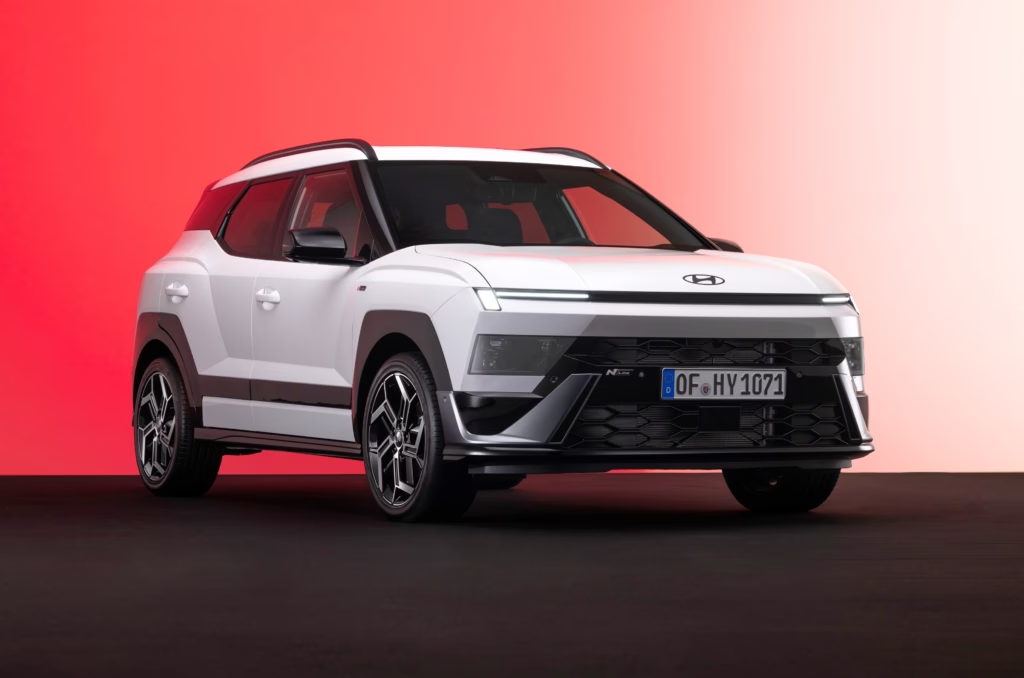
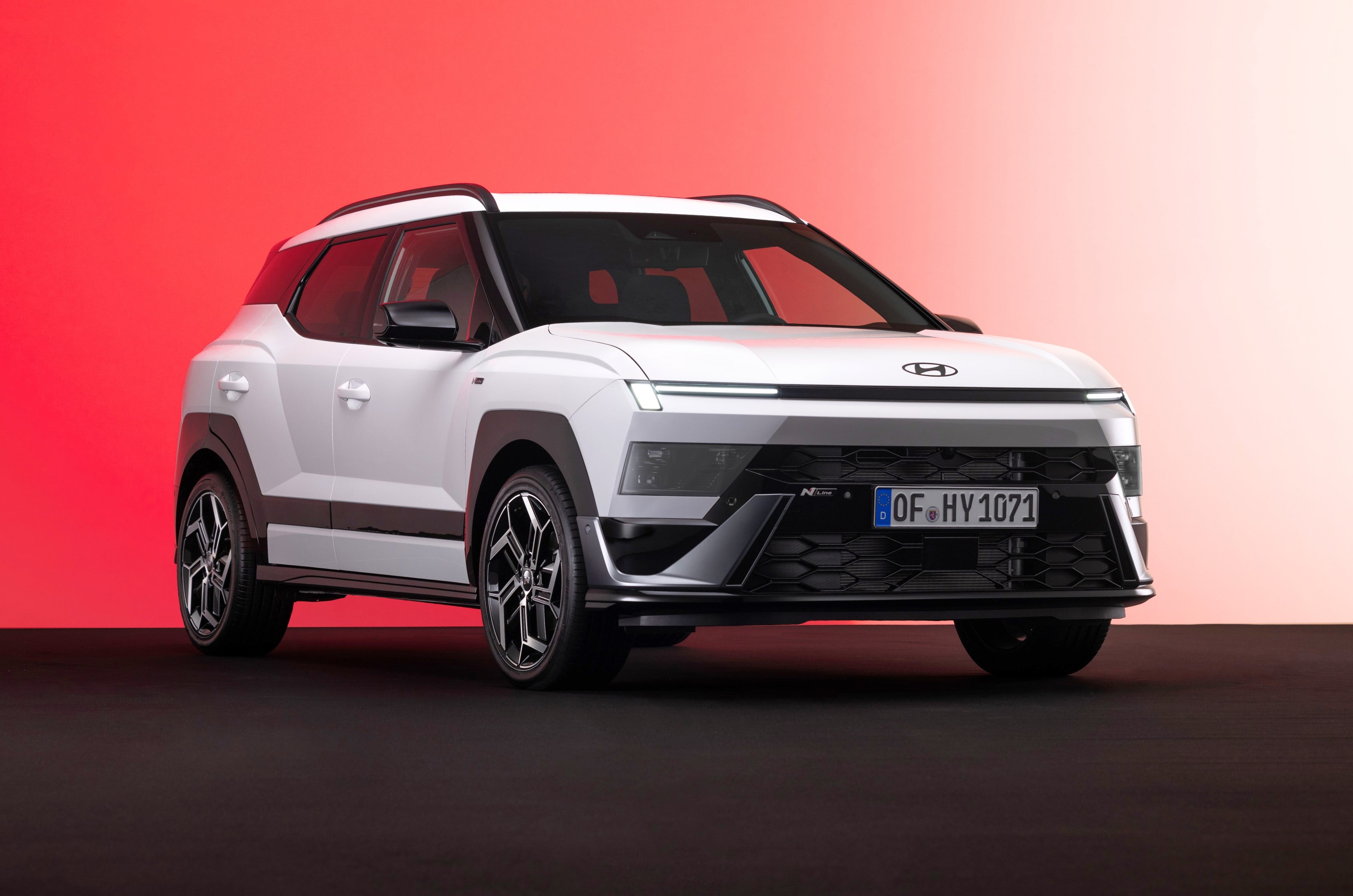
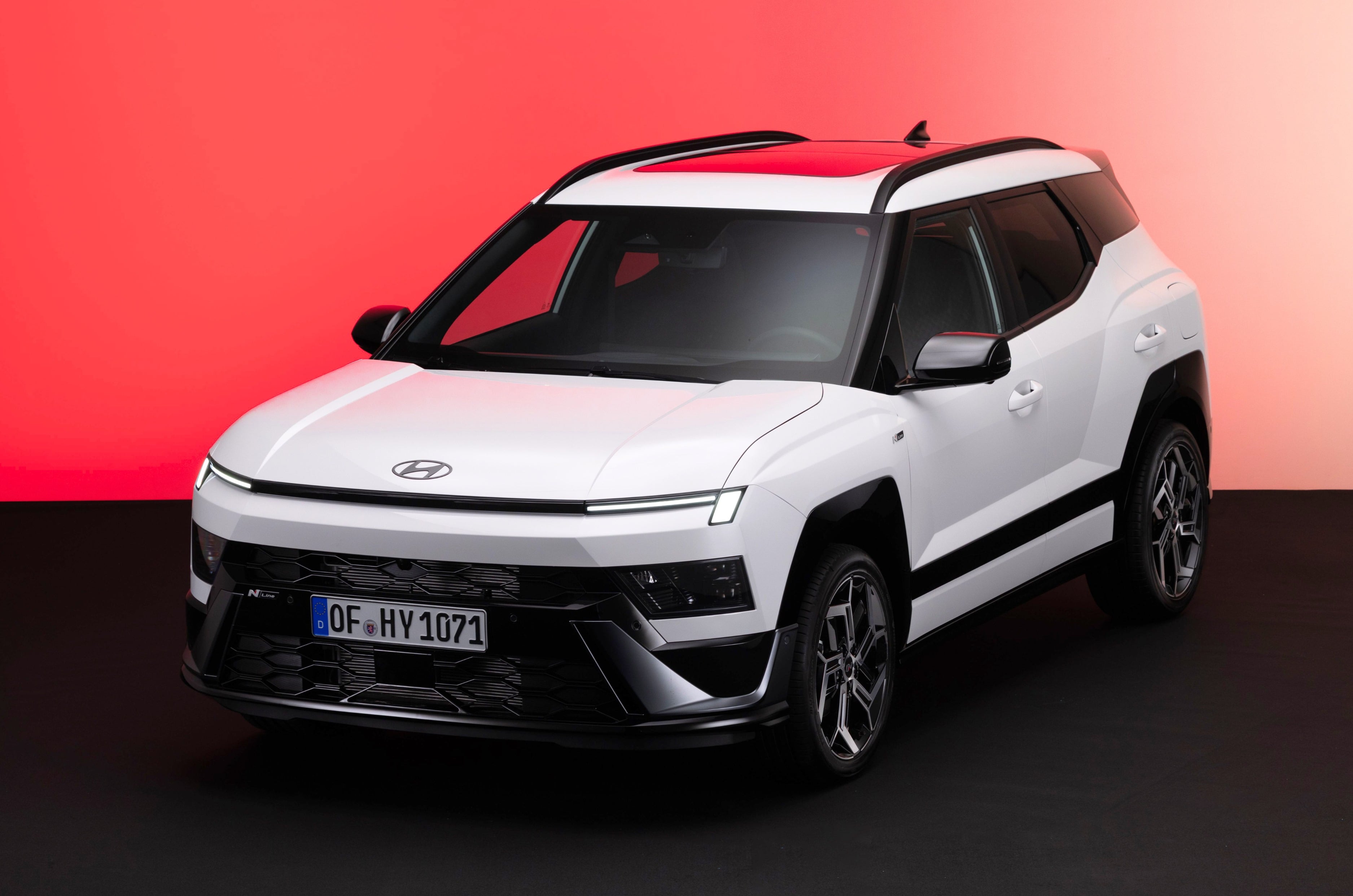
Alongside the recent reveal of the India-spec Bayon, Hyundai unveiled the SUV’s sporty N Line version at Paris Motor Show 2026. The Bayon N Line shares its top hat with the standard India-spec model, but has sportier touches all around and different engines.
2026 Hyundai Bayon N Line exterior design
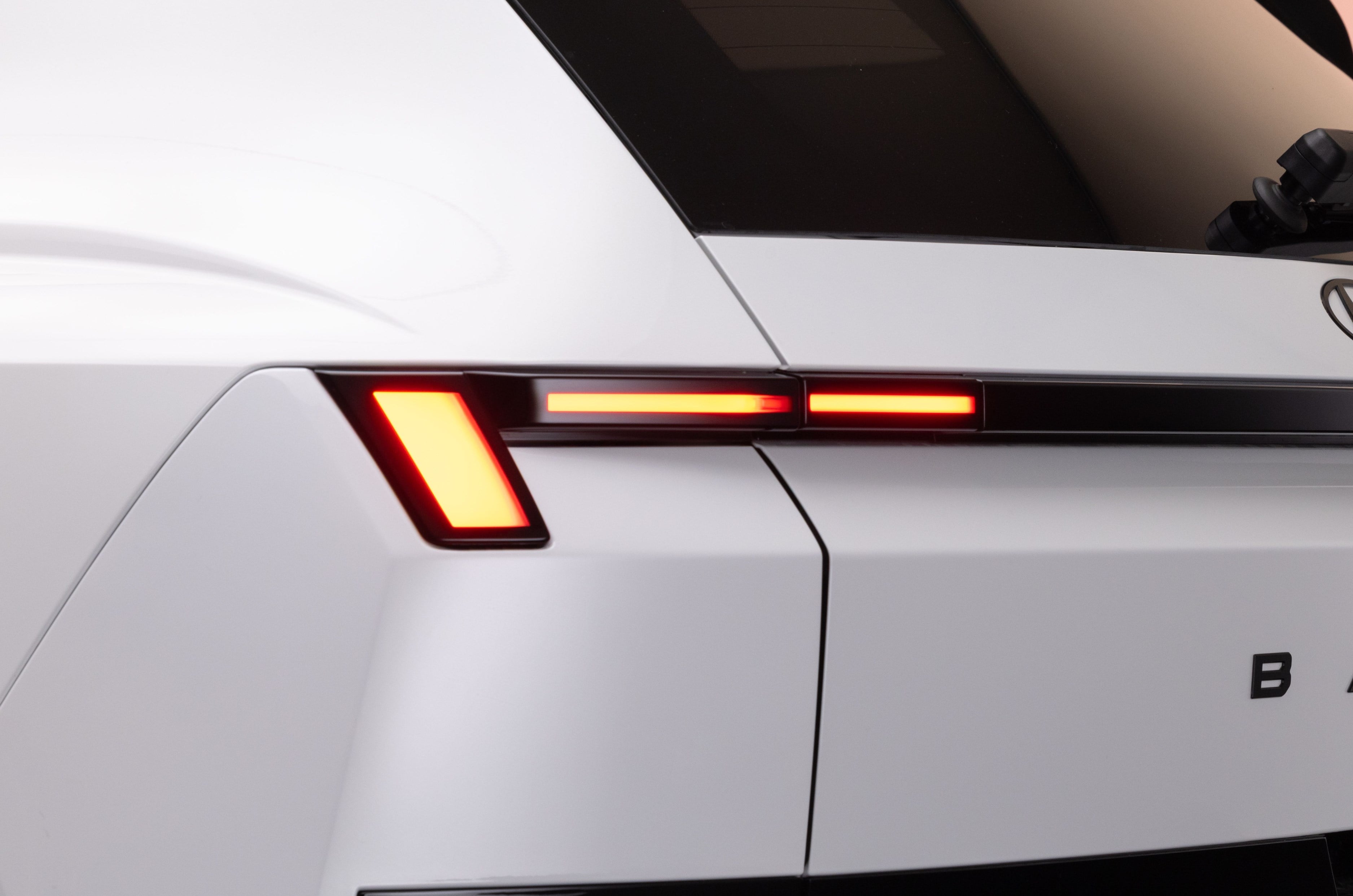
Much like the India-spec Bayon, the N Line features design cues like L-shaped front and rear lights, squared-off headlamp units, boxy wheel-arch cladding and flared fenders, a Bayon wordmark on the bootlid, and a heavily kinked windowline. However, the Bayon N Line differentiates itself with sportier styling elements.
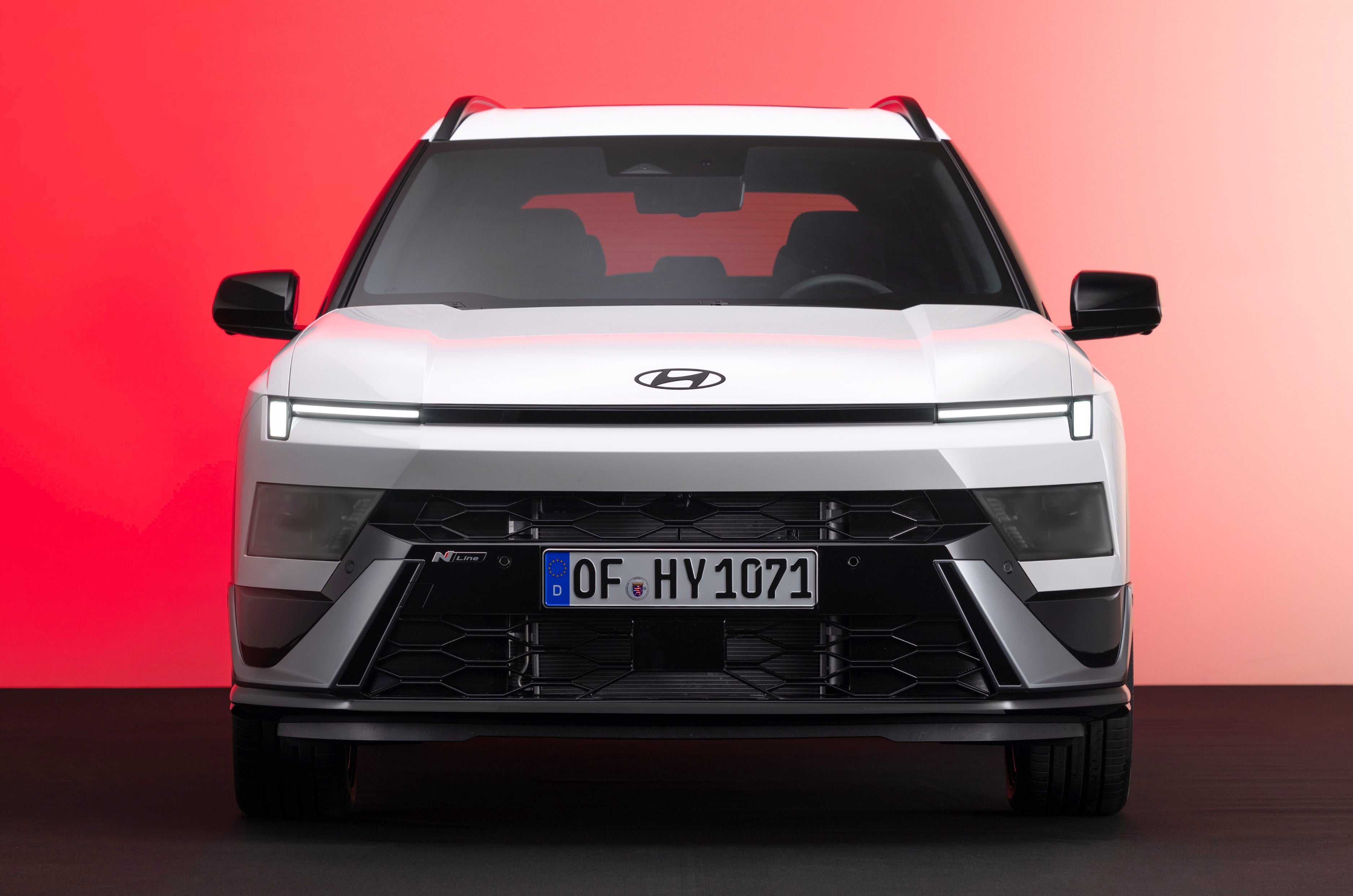
Up front, the Bayon N Line has a different bumper with a more open design, blacked-out cladding, winglets, and a honeycomb pattern for the grille. An ‘N Line’ badge can also be seen on the left side of the bumper, and the headlamps look to have a smoked finish.
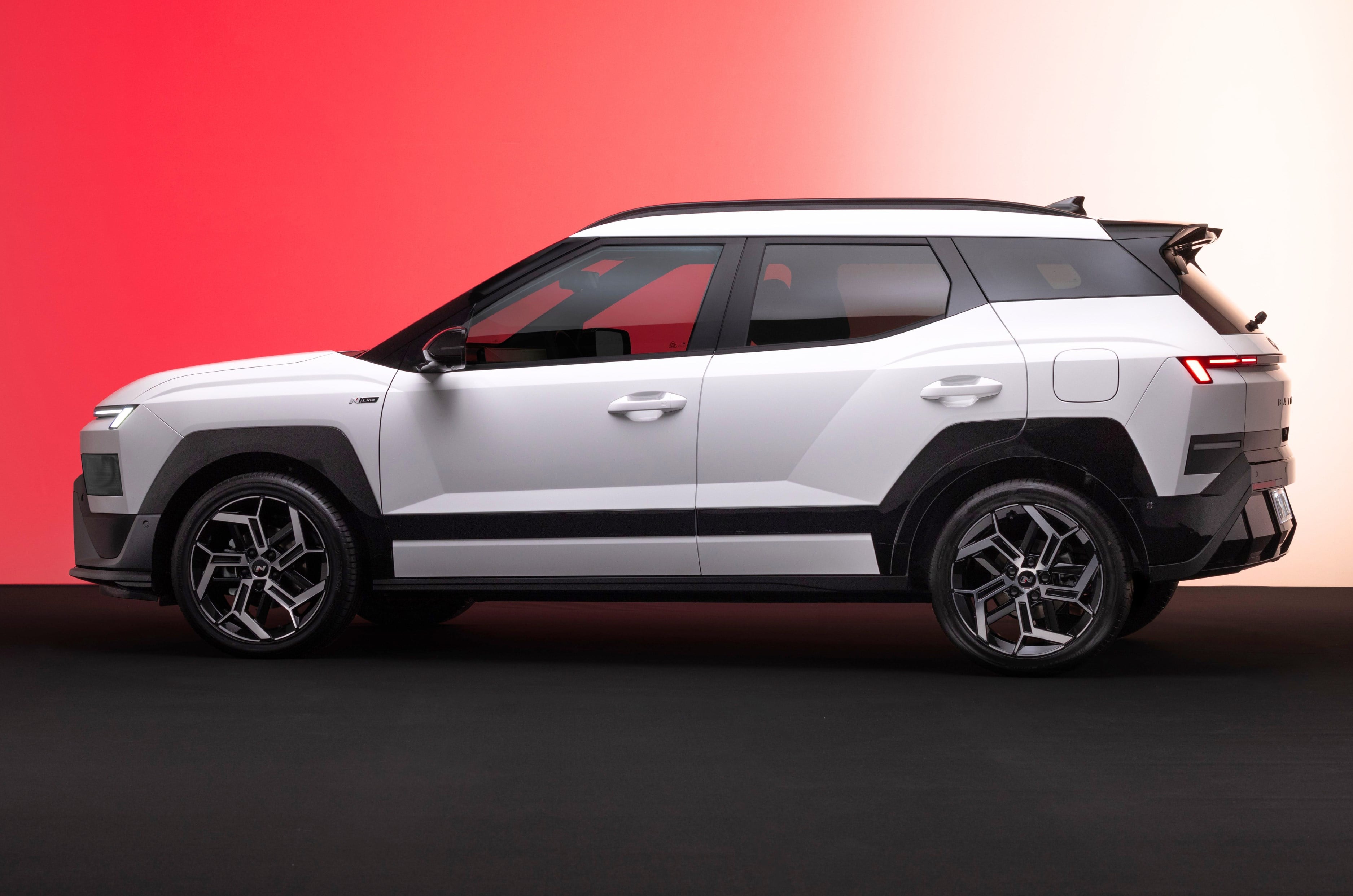
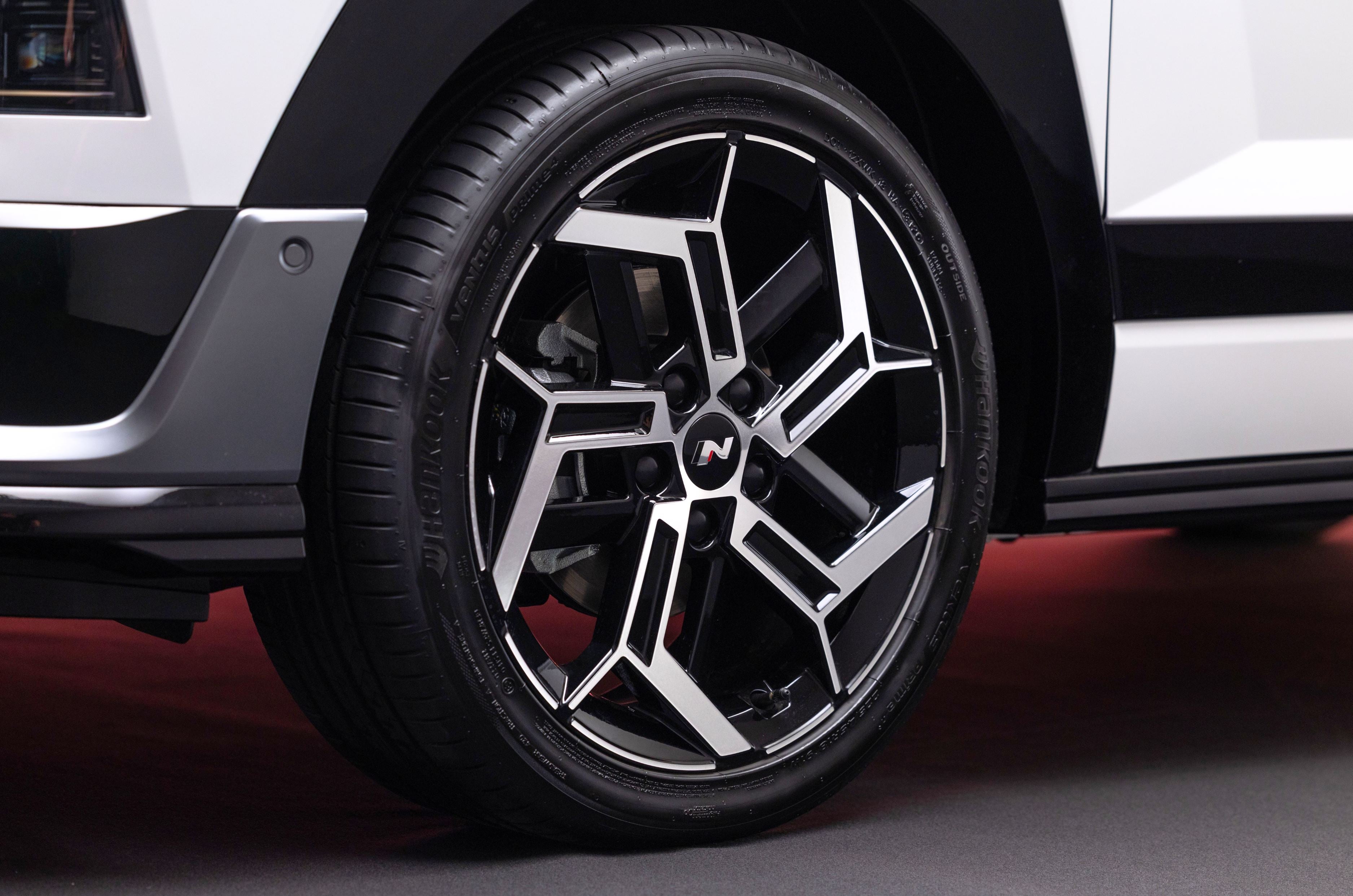
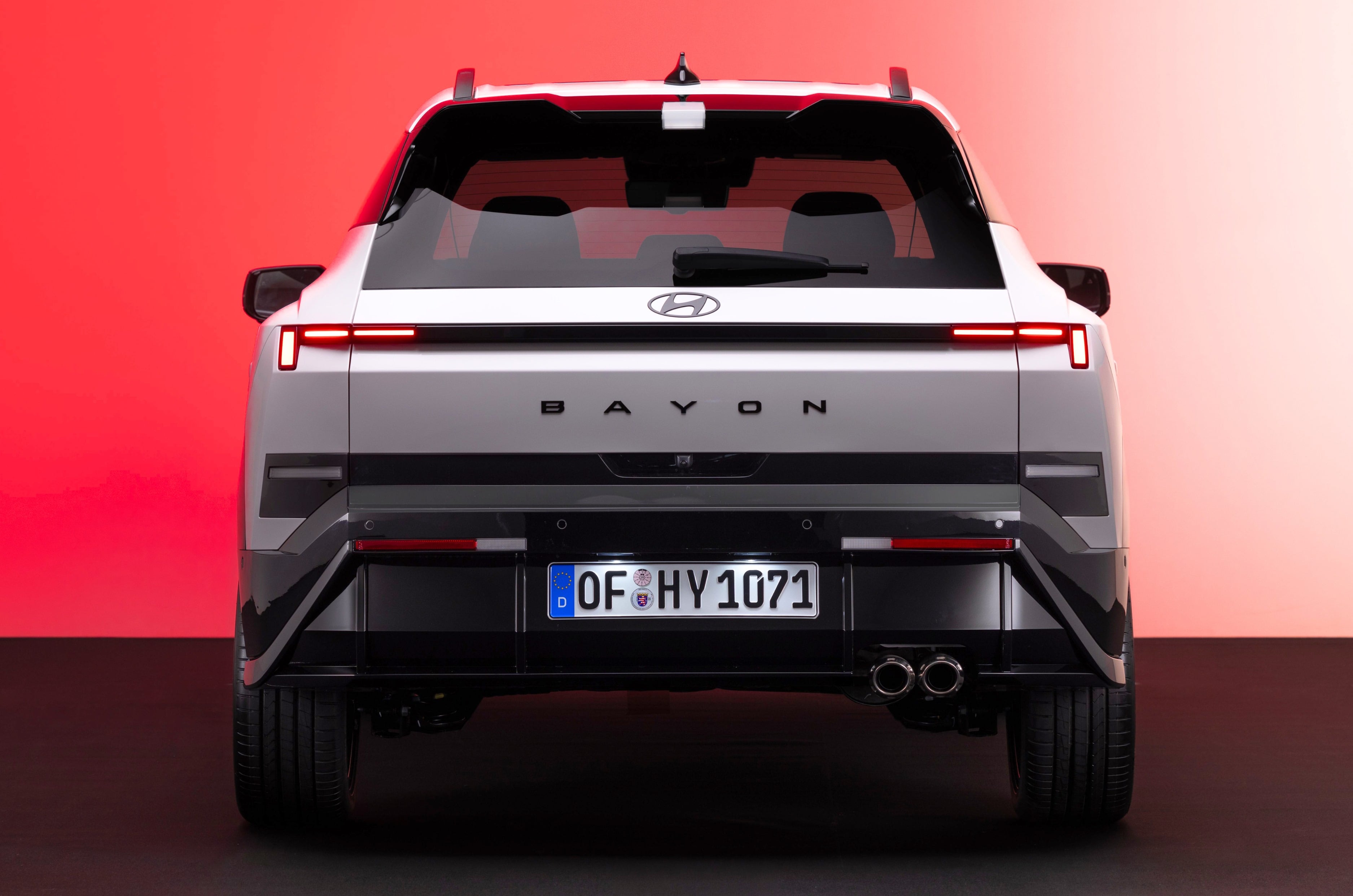
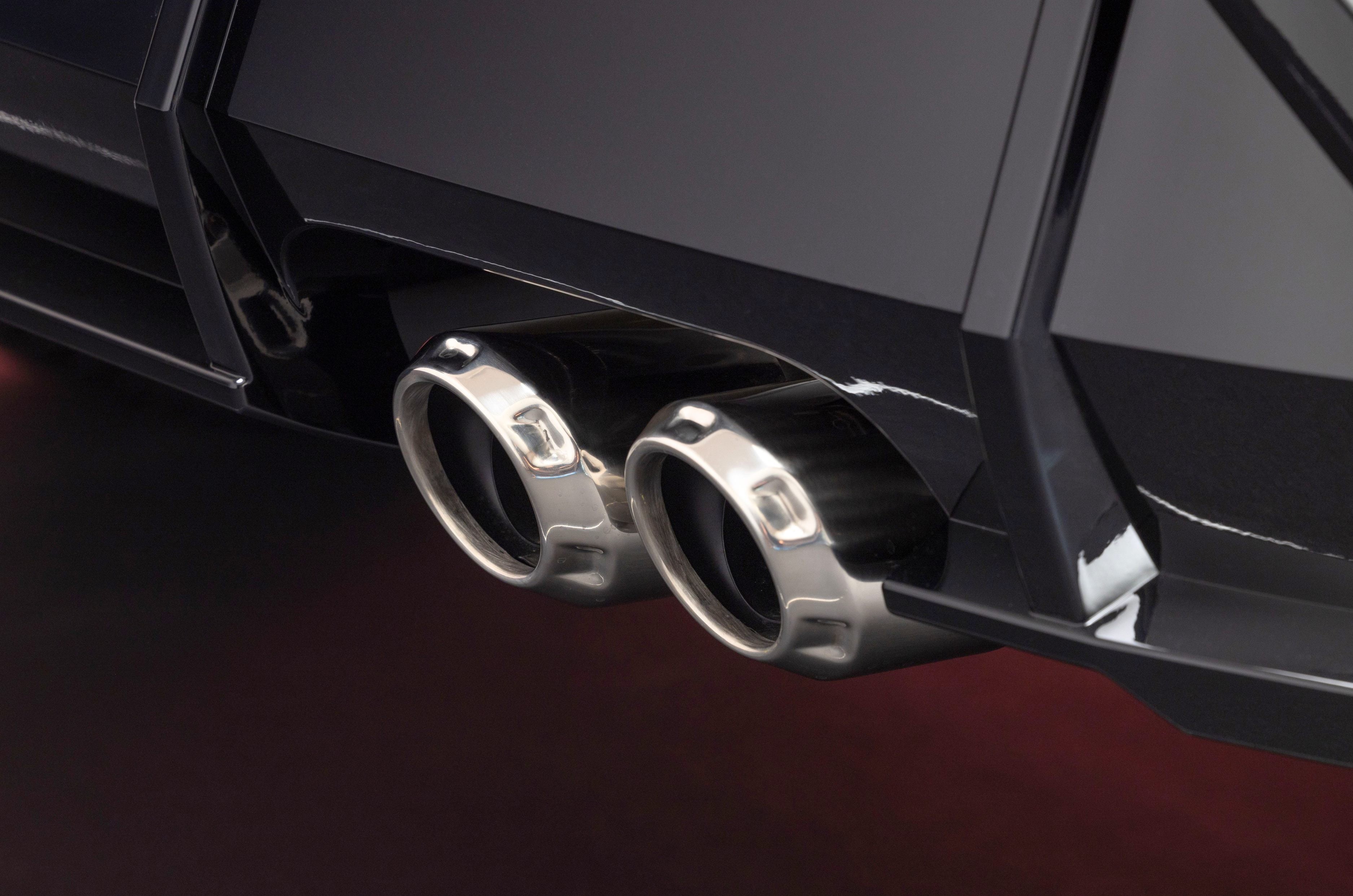
Over to the side, the N Line gets gloss-black finishes for the cladding and ORVMs, larger 18-inch alloy wheels, and N Line badging on the front fenders. The roof rails are also slimmer than the ones seen on the India-spec Bayon. At the back, the Bayon N Line sports a bigger twin-ridge roof spoiler, dual exhaust tips, a fully black bumper, and black finishes for the Hyundai emblem and Bayon wordmark on the bootlid.
The Europe-spec Bayon stretches the tape at 4,245mm long, 1,810mm wide, and 1,565mm tall, with a wheelbase of 2,600mm. These dimensions place it perfectly between the Venue and Creta in terms of size, and you can expect the India-spec Bayon to not stray that far off from them.
2026 Hyundai Bayon N Line interior and features
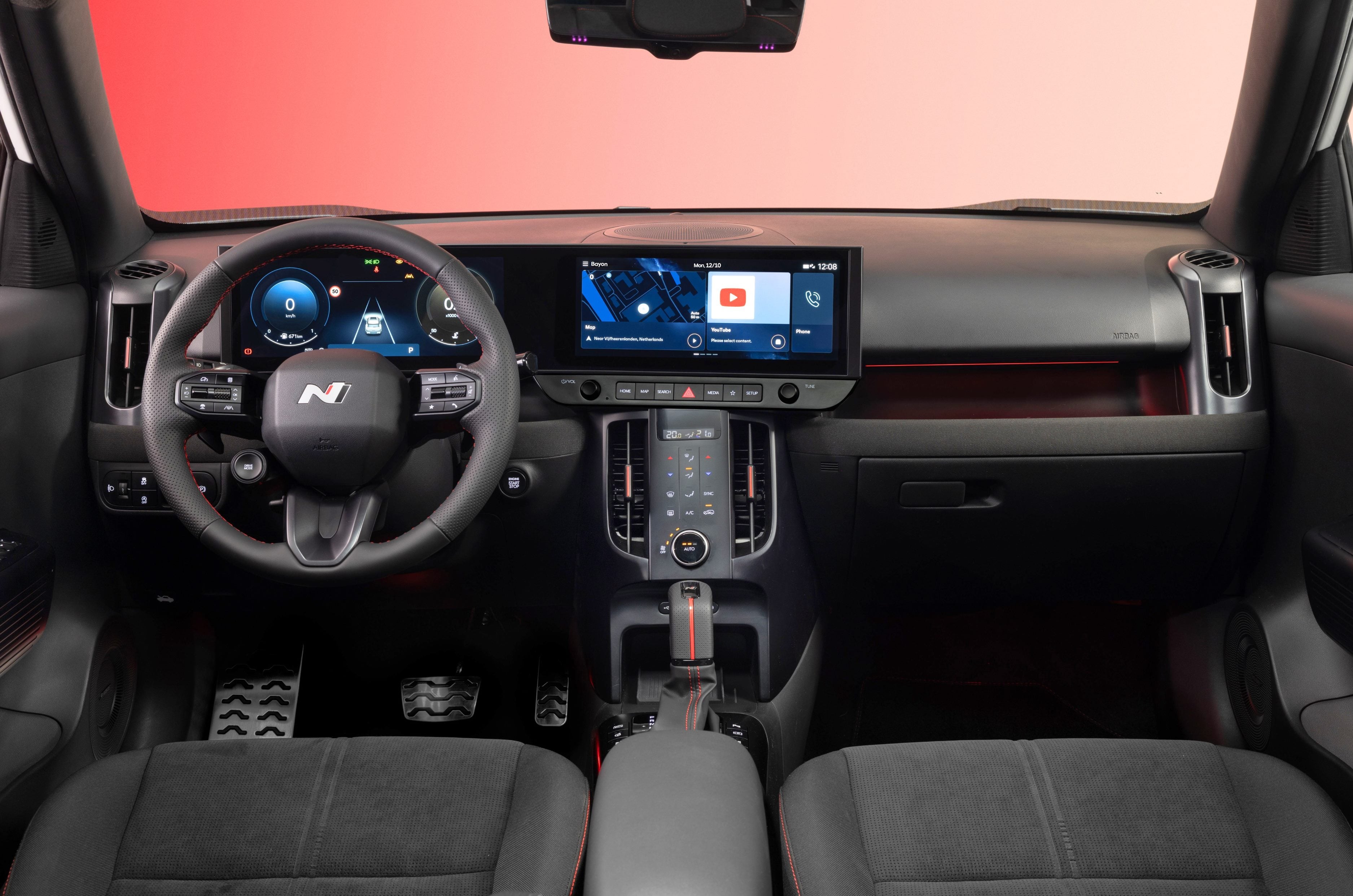
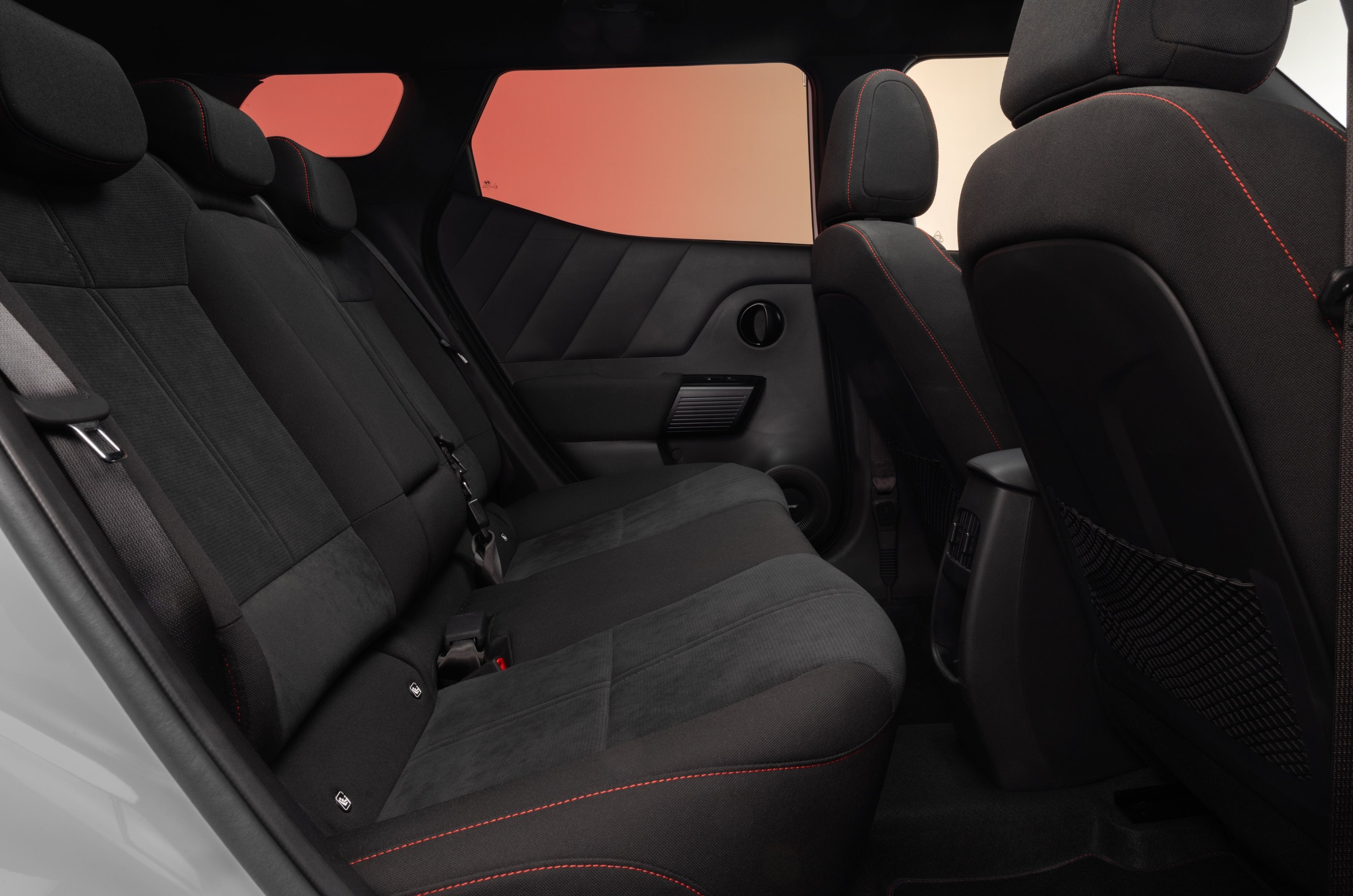
Similar to the outside, the core interior layouts of the India-spec Bayon and the N Line are identical, including a curved pair of 12.3-inch displays, a vertical design for the centre console (à la the fourth-gen i20), vertically oriented air vents, an open storage space on the co-driver side of the dashboard, among others. The Bayon N Line, however, brings in sportier touches like a black interior colour scheme with red accents and contrast stitching, Alcantara-esque seat upholstery, and an N-Line-specific steering wheel and gear lever.
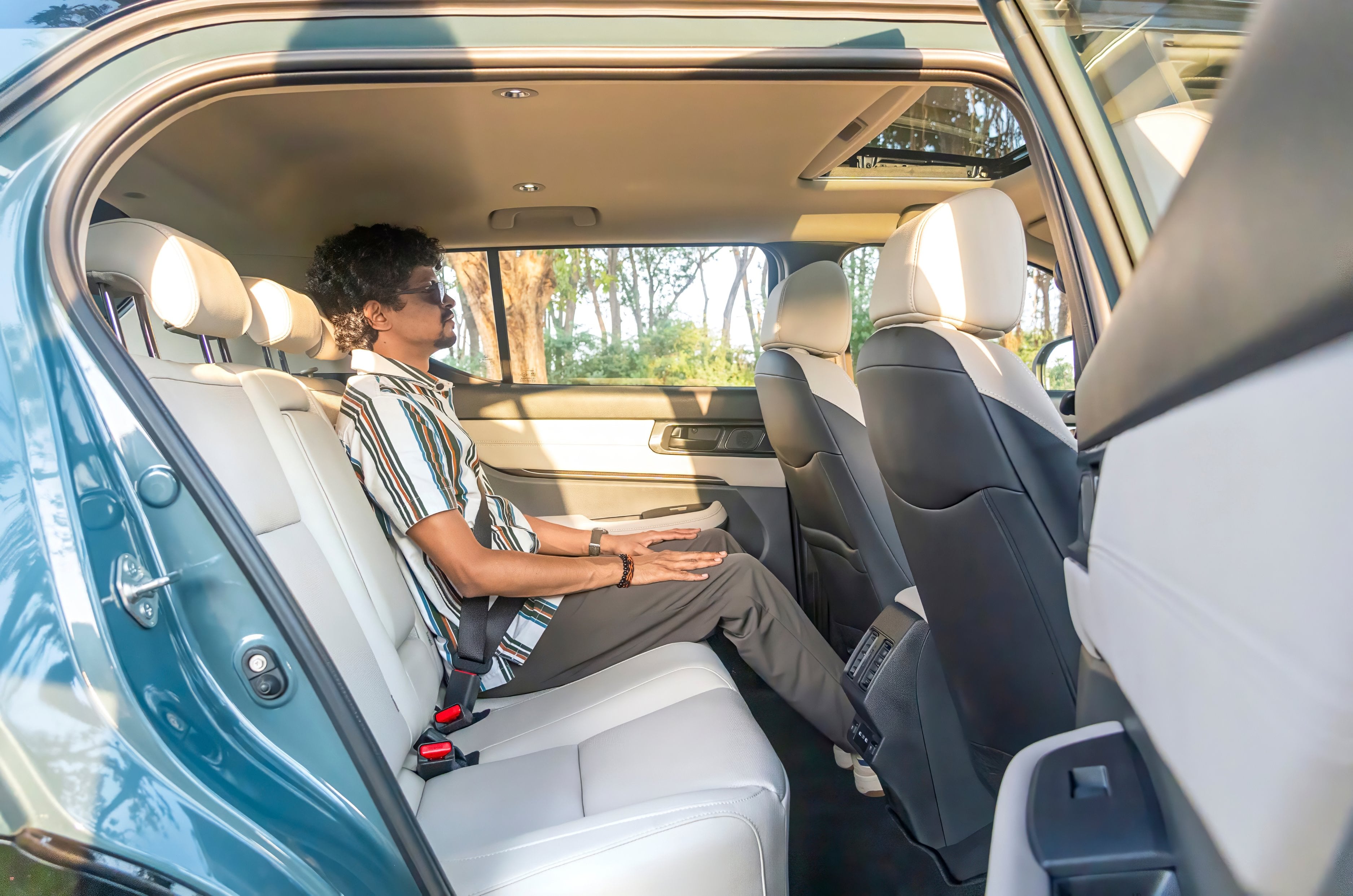
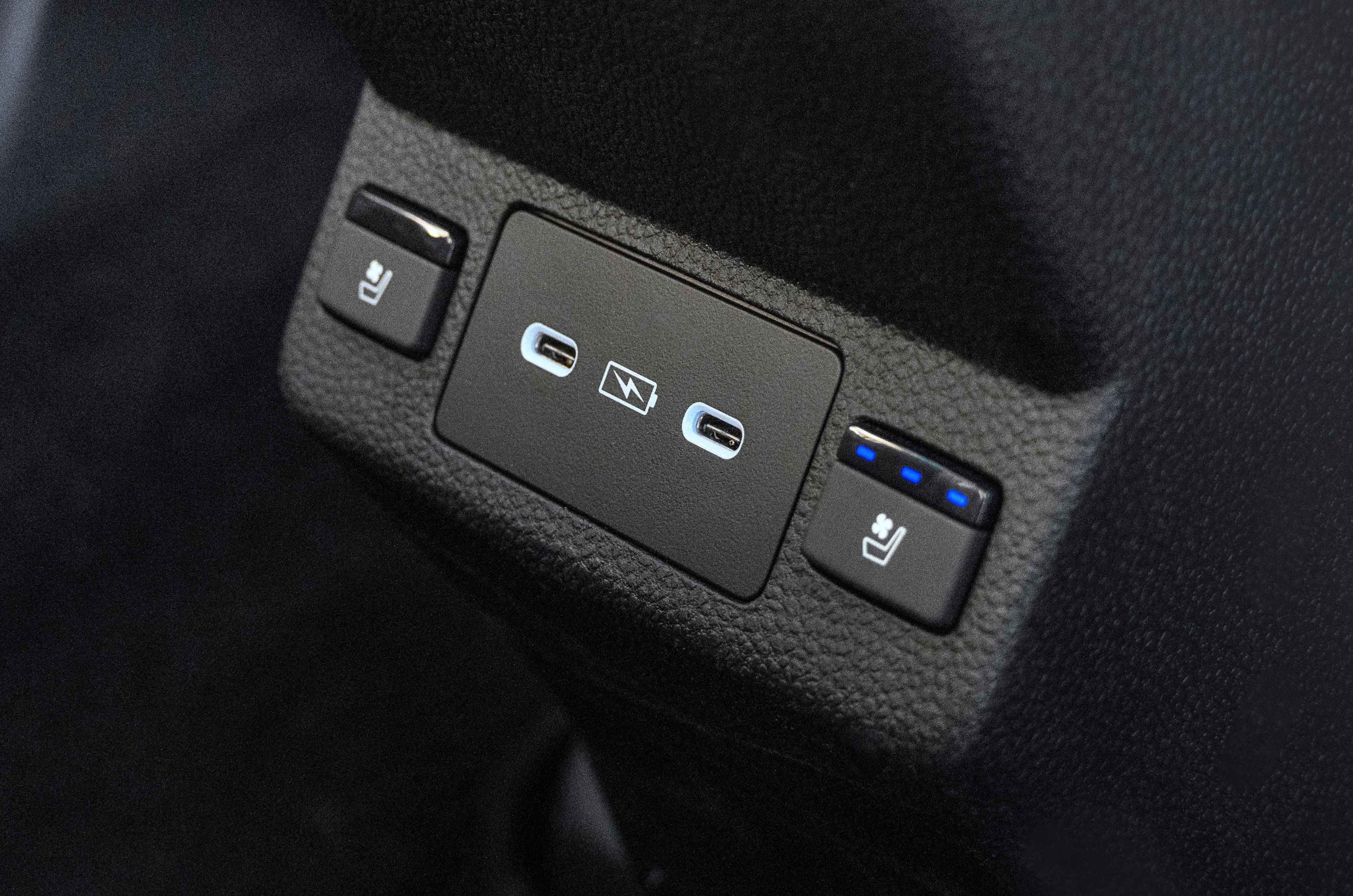
As for features, the Bayon N Line offers wireless Apple CarPlay and Android Auto, ambient lighting, a panoramic sunroof, heated and ventilated front seats, reclining rear seats, a digital key, an 8-speaker Bose sound system, Level 2 ADAS, connected car tech, a wireless charging pad, dual-zone climate control, and more. Notably, Hyundai has not mentioned the inclusion of a generative AI voice assistant for the Bayon N Line, which the India-spec model will get. Coming to boot space, Hyundai claims 440 litres for non-hybrid versions of the Europe-spec Bayon.
2026 Hyundai Bayon N Line engine and gearbox
Where the India-spec Bayon will be powered solely by a 115hp 1.5-litre naturally aspirated four-cylinder petrol engine mated to either a 6-speed manual or CVT automatic, the N Line will be offered with Hyundai’s 1.0-litre three-pot direct-injection turbo-petrol motor in two states of tune – 90hp and 115hp – along with 6-speed manual and 7-speed dual-clutch automatic gearbox options.
Hyundai claims a 0-100kph time of as low as 10.8 seconds for the Bayon N Line – likely the 115hp DCT version – going up to 14.1 seconds for presumably the 90hp MT variant. Additionally, a strong-hybrid version will join the Europe-spec Bayon line-up at a later date, comprising a 1.6-litre direct-injection petrol engine, an electric motor, and a 6-speed DCT for a combined output of 138hp. It will also get adaptive regenerative braking that can be controlled by the steering-mounted paddle shifters.
Similarly, the India-spec Bayon is expected to receive a CNG version sometime after launch, which will strap an underbody tank to the SUV and allow it to directly rival the likes of the Maruti Suzuki Victoris, Maruti Suzuki Grand Vitara, and Toyota Hyryder.
Will the Hyundai Bayon N Line come to India
Hyundai is yet to confirm whether the Bayon N Line will be available in India, but given the positioning and target demographic of the model that will soon go on sale here, the prospect is unlikely (at least initially). The India-spec Bayon’s relatively sedate 1.5-litre engine, borrowed from the Creta, encourages smooth and relaxed driving over outright sportiness, and the incoming CNG version further reinforces the notion that this model will serve as Hyundai’s answer to the Victoris – a practical, no-nonsense midsize SUV that’s high on feel-good factor and low on running costs.
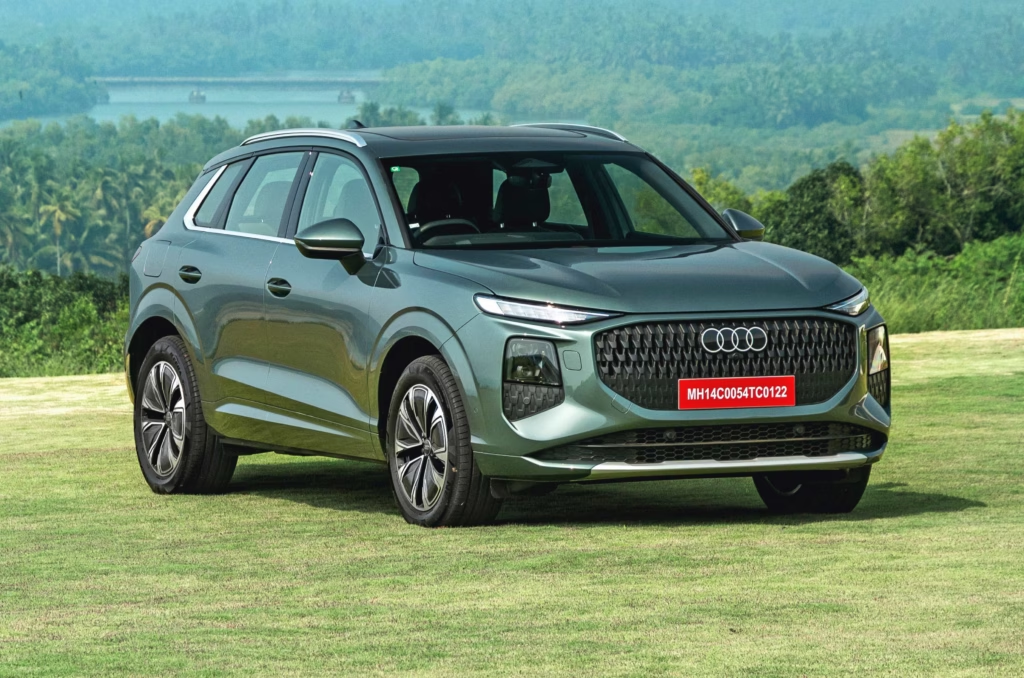
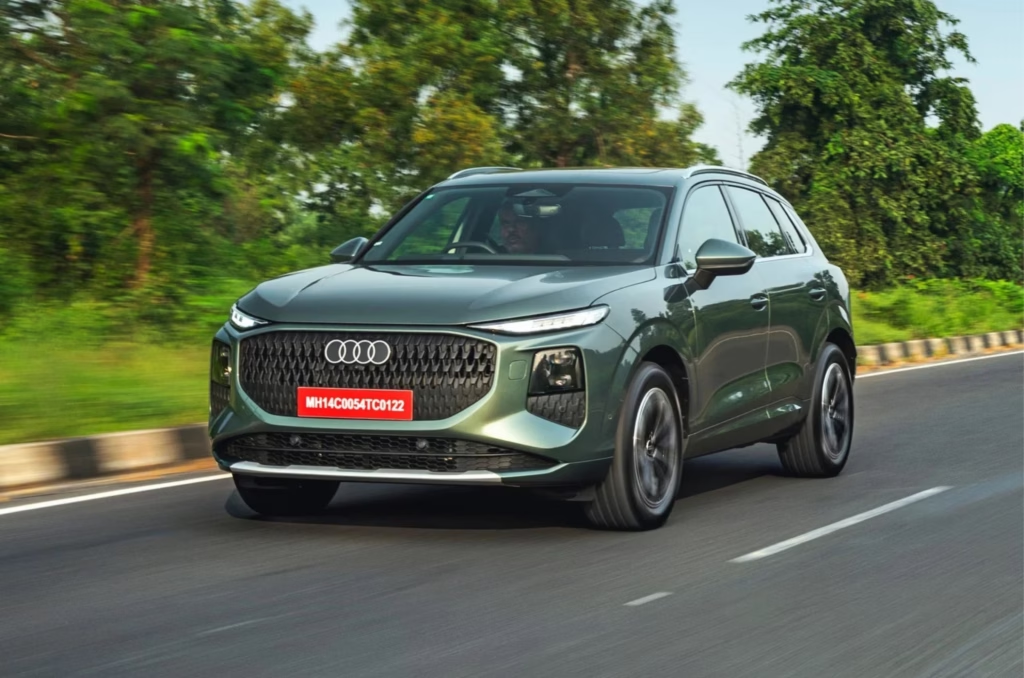
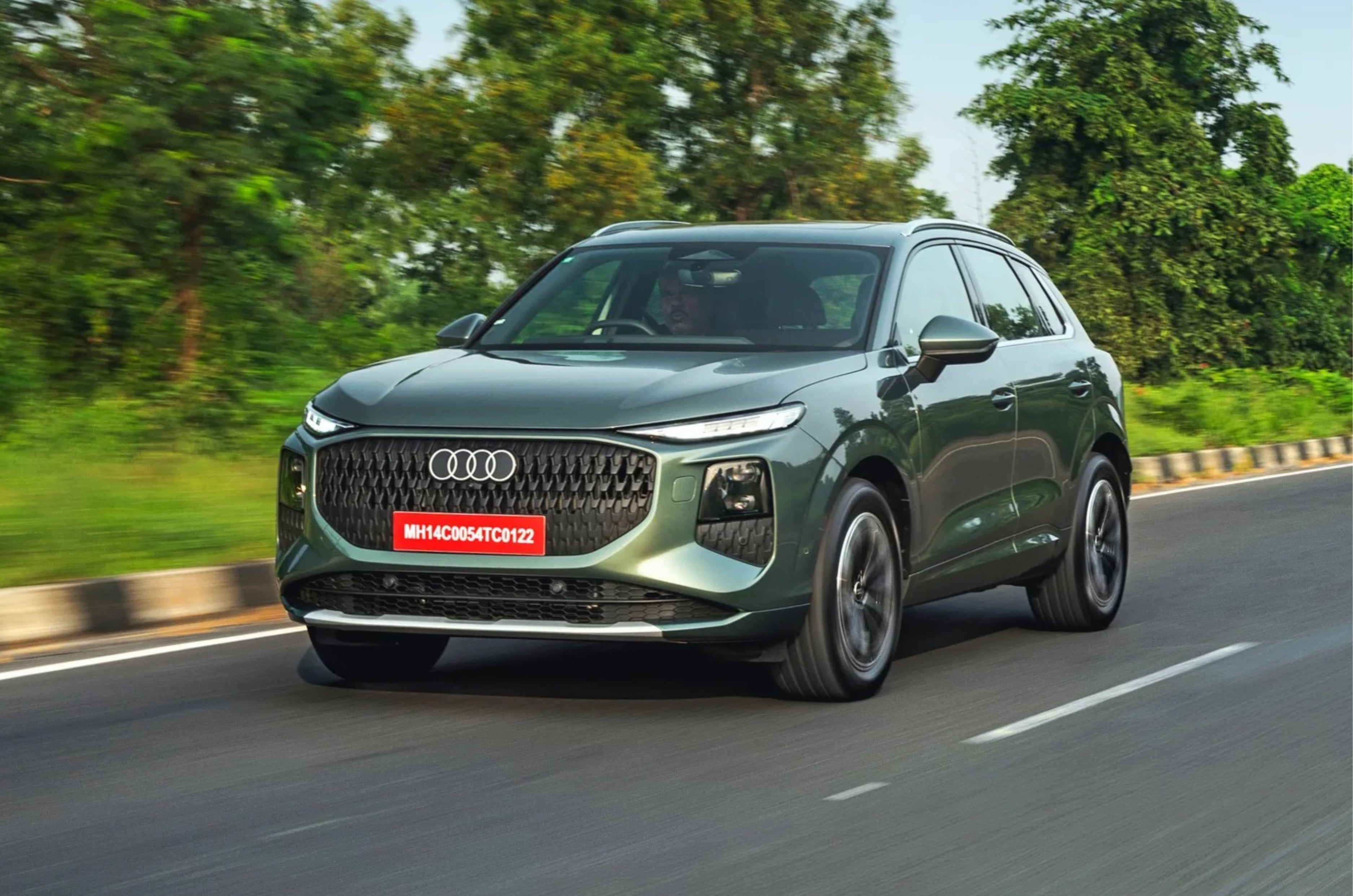
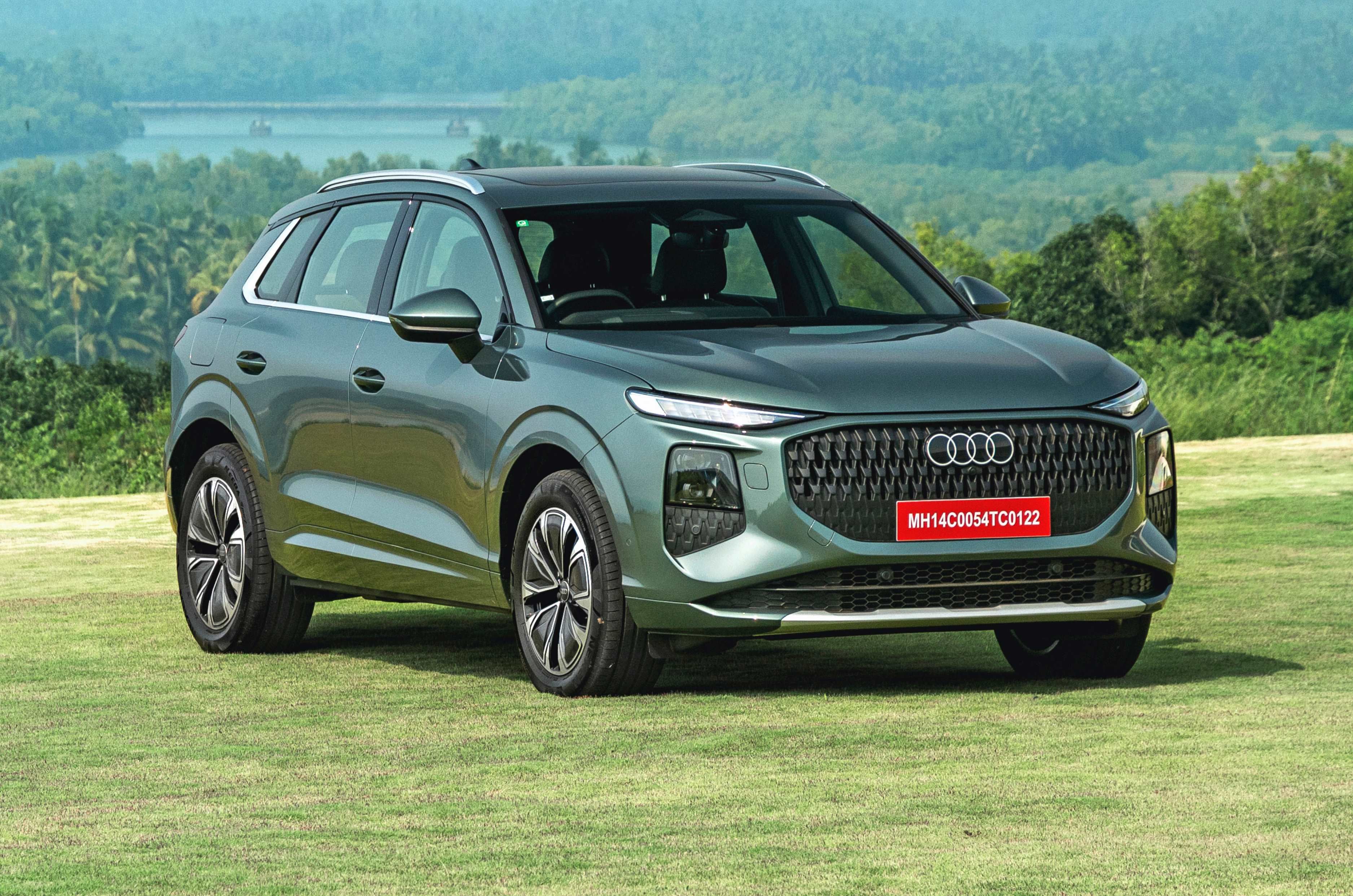
Audi India is set to launch the third-gen Q3 on Friday, 16 October. It will replace the current Q3, which has been around for quite a while, as Audi India’s entry-level SUV. More importantly, the third-gen Q3 will usher in some of the latest tech that Audi offers, which should make the SUV much more competitive against rivals like the Mercedes-Benz GLA and BMW X1. But will it? Now that we’ve reviewed the new Q3, here are three reasons why you should consider it over rivals, and two reasons why you may want to think twice about buying one.
Pros
Punchy turbo-petrol engine
Like its predecessor, the third-gen Q3 is powered by a 2.0-litre four-cylinder direct-injection turbo-petrol engine developing 204hp and 320Nm. It’s the biggest and strongest engine in its segment, and save for some brief hesitation at low revs, remains a gem. As soon as the turbo is on song, this engine is eager and free-revving, responding promptly in the city and building speed easily on the highway. Audi claims a 0-100kph time of 7.1 seconds for the new Q3 – a segment-best figure.
The Q3’s engine continues to be paired with a 7-speed dual-clutch automatic, which is a great companion. Downshifts are quick and easy, and engaging Sport mode or flicking the paddle shifters will give you full control. Audi’s Quattro all-wheel drive system is standard fit for the Q3 as well, giving you more confidence when driving on slippery surfaces.
Excellent ride and handling balance
Audi has tuned the new Q3’s suspension very well. The setup has the typical firmness you expect from a European car, but it’s never uncomfortable and absorbs potholes and broken roads with great composure. Part of the credit goes to the 55-profile tyres too, as their thick sidewalls soak up much of the shock before it reaches the suspension.
The handling of the new Q3 is surprisingly good too, with the variable-ratio steering effectively loosening at low speeds and weighing up as you increase the pace. There’s a slight amount of slack around the straight-ahead position, but the steering remains very accurate and direct regardless. Despite its quick steering, the Q3 also remains stable at highway speeds and changes lanes with ease and agility.
Well-built interior
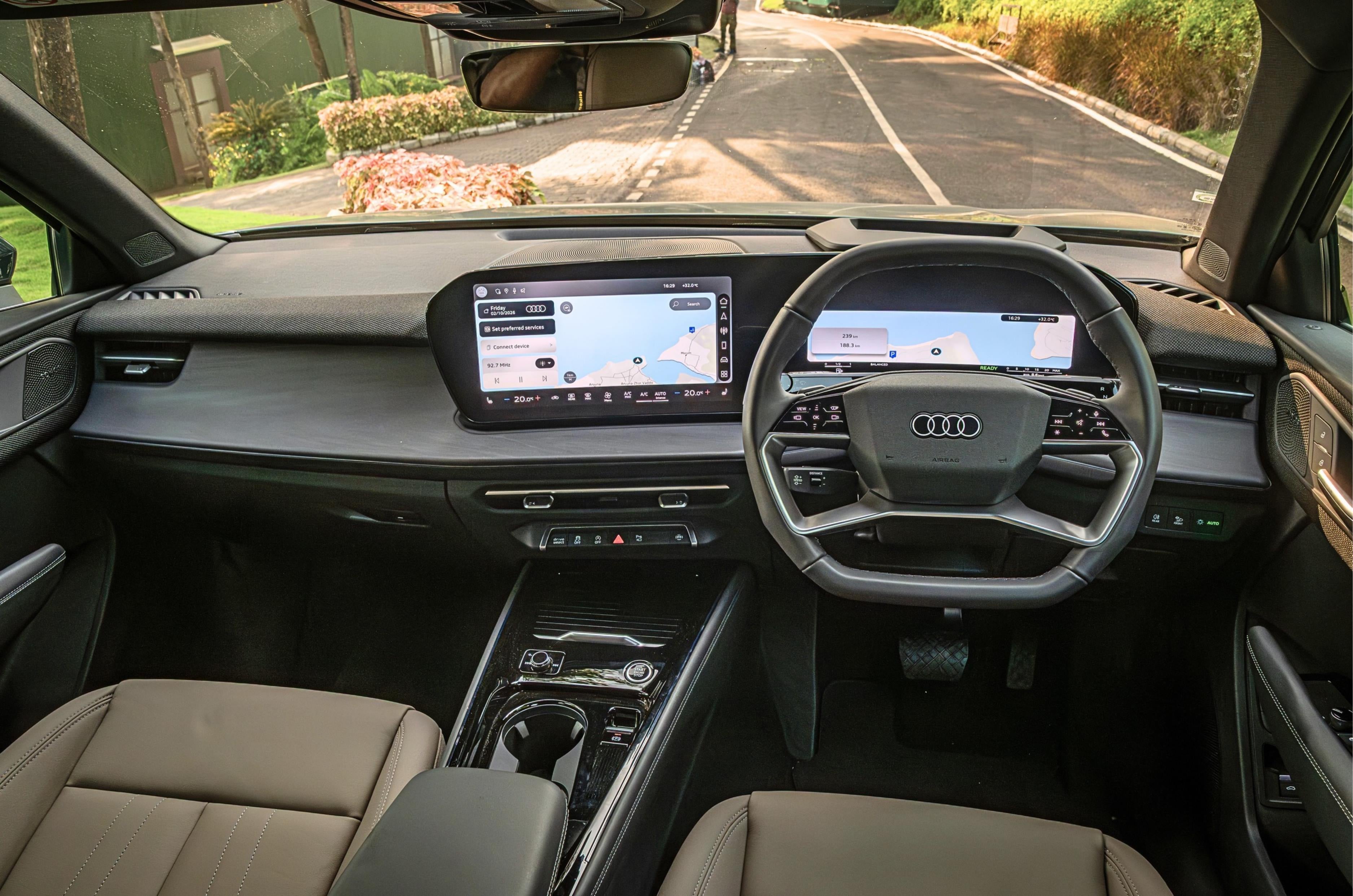
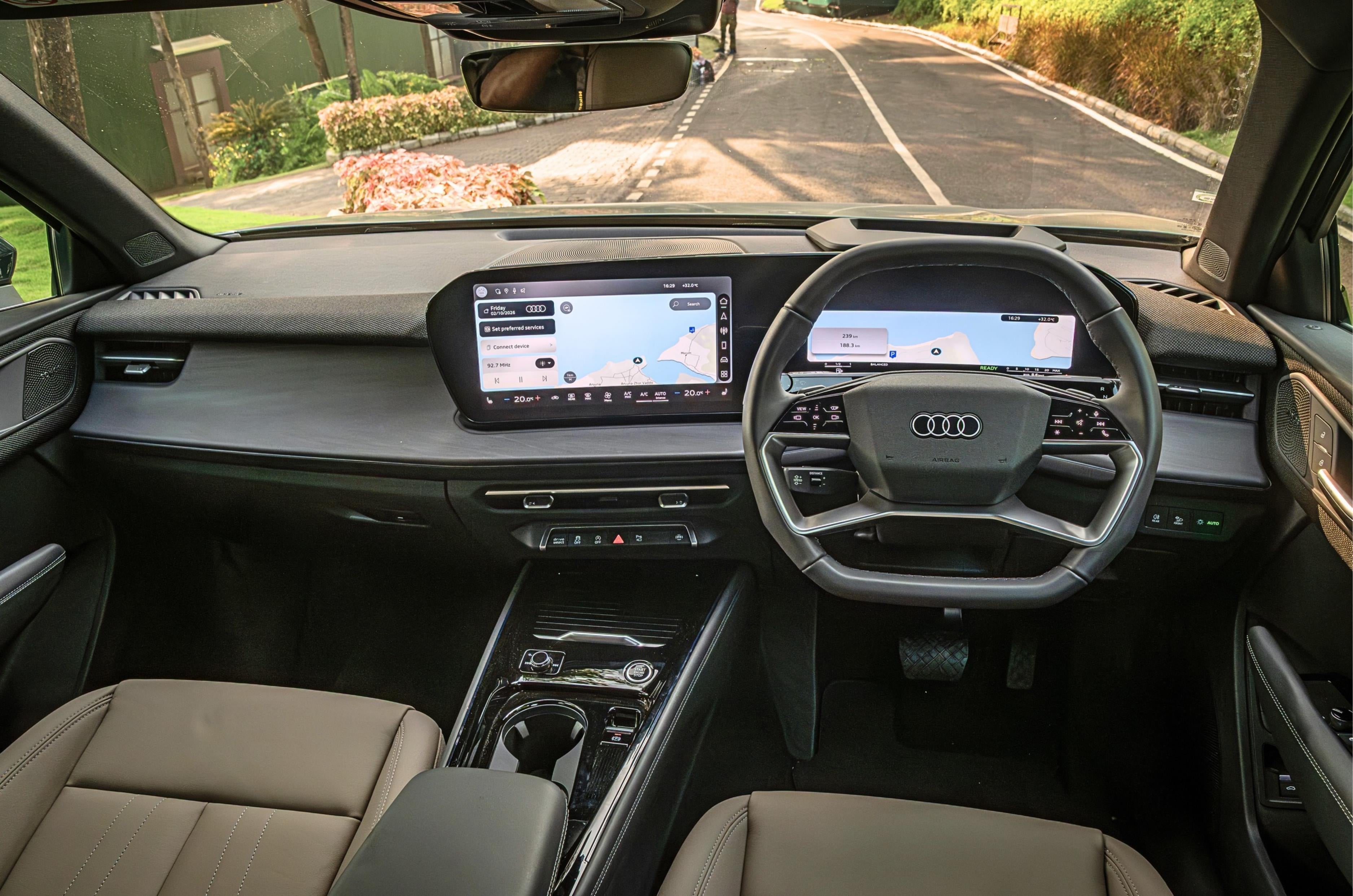
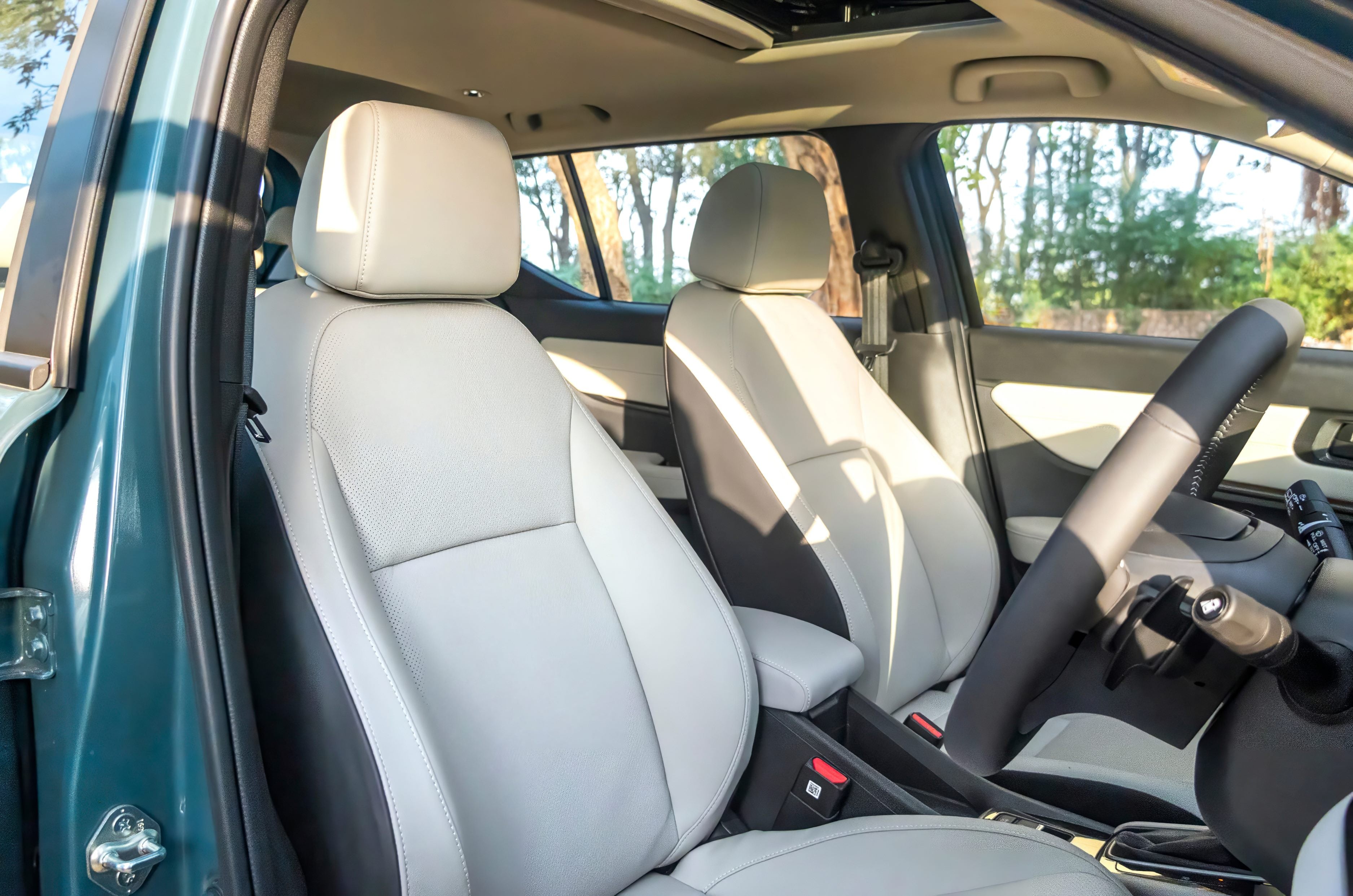
Among the most noticeable leaps of the new Q3 over the outgoing model is on the inside. The dashboard sports a cleaner and more modern layout, housing an 12.8-inch infotainment touchscreen and 11.9-inch digital driver’s display. Much of the leather in the cabin has been ditched in favour of fabric, and plastic quality isn’t that great in the lower regions, but even so, the Q3’s interior feels well put-together and more robust than those of its rivals.
Cons
Lack of powertrain options
The Q3’s turbo-petrol engine is undoubtedly lovely, but that’s about it as far as powertrain options go. There will be no diesel, hybrid, or electric versions of the India-spec Q3, at least at launch. This puts the Audi SUV at a disadvantage, since the GLA and X1 can be had with diesel engines – the BMW is available as a long-wheelbase EV too (iX1 LWB). Offering Quattro as standard may also drive up the price of the new Q3, which could dissuade buyers who prefer a lower price tag over all-wheel drive.
Some features still missing
While the Q3 has a decent list of equipment, including a 12-speaker Sonos sound system, a panoramic sunroof, powered and heated front seats, dual-zone climate control, adaptive cruise control, auto-park assist, and more, there are still some features that Audi missed out on.
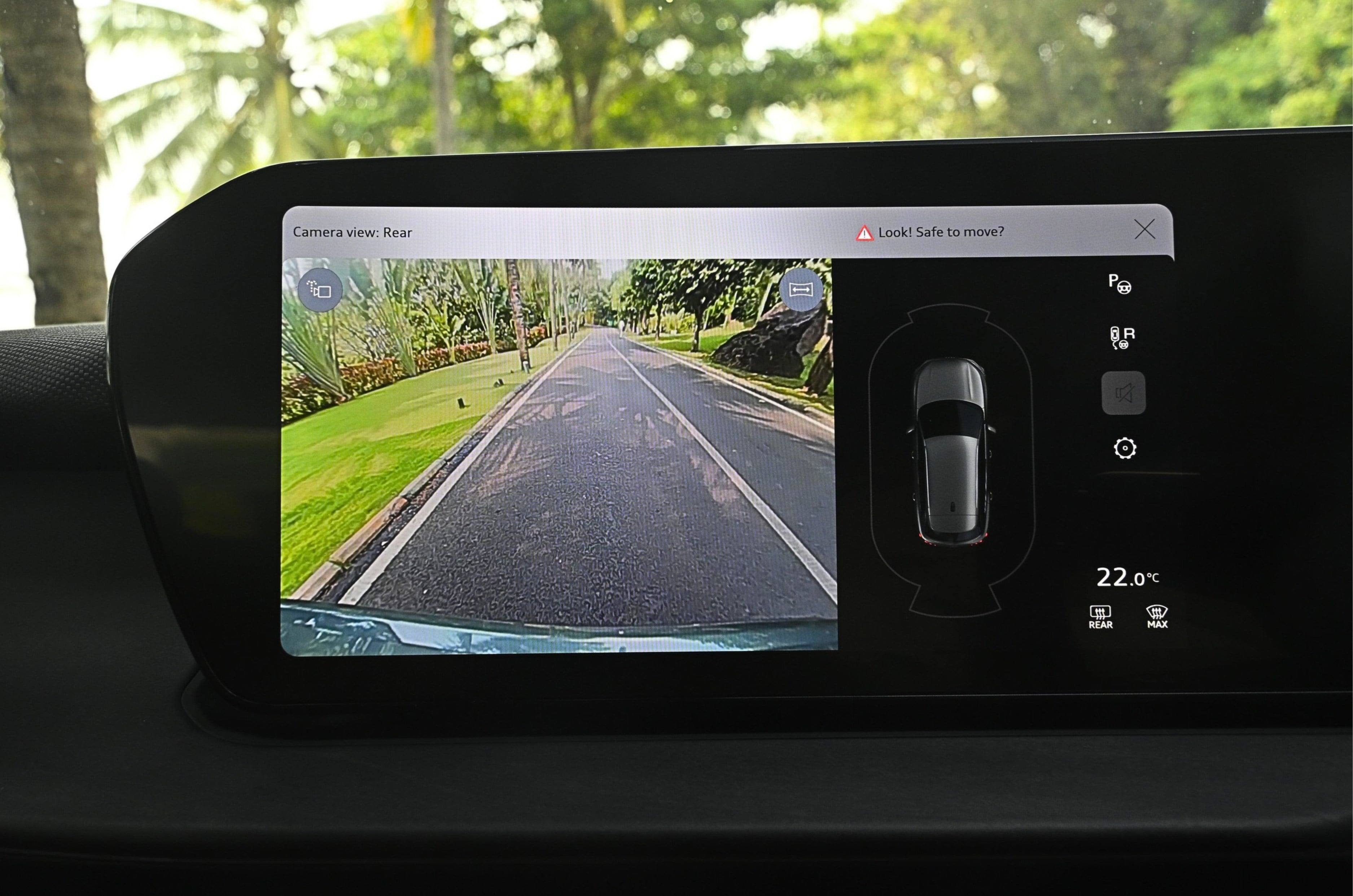
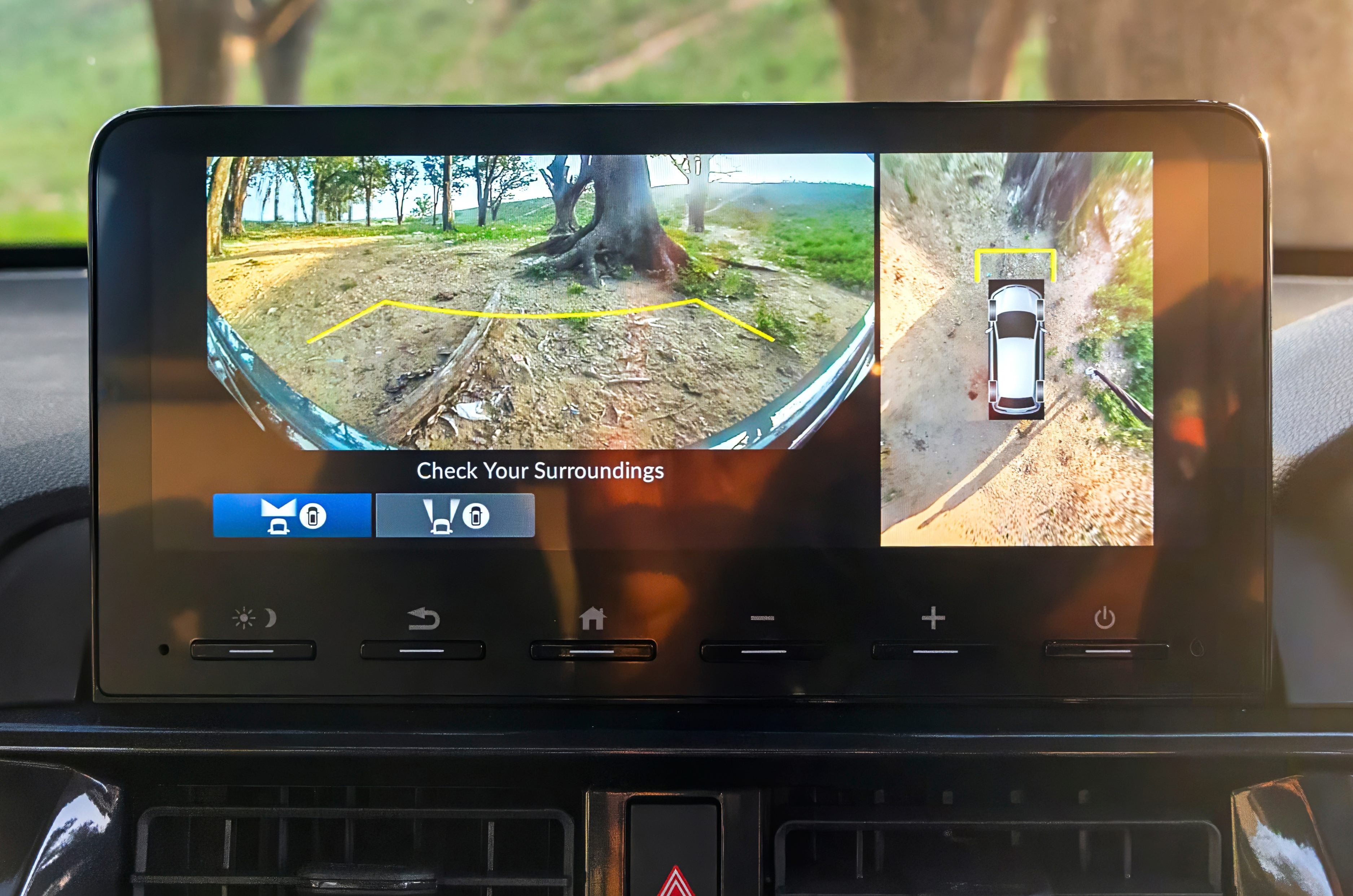
Chief among them is seat ventilation, which makes much more sense than heated seats in our climate conditions. Another big miss is a 360-degree camera, as it greatly helps with maneuovring and parking in tight spaces. The included rear camera’s resolution (pictured above) is disappointing too. Lastly, there are no ADAS features aside from adaptive cruise control – lane-keep assist and blind-spot monitoring would’ve come in handy.
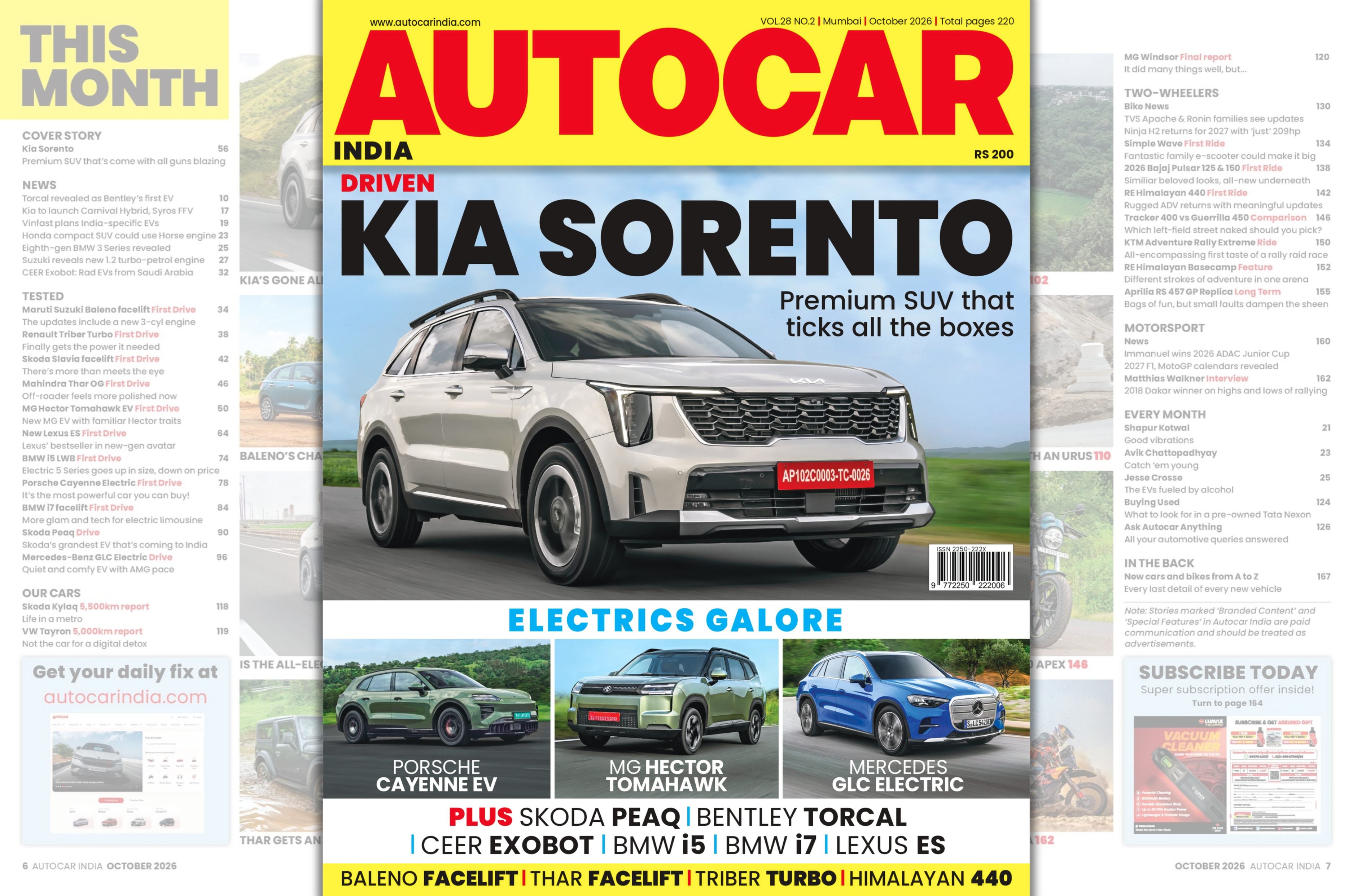
This month, we go big on power and even bigger on premium metal. The cover story is Kia’s biggest swing yet at the executive SUV segment, and then there’s a family SUV with more horsepower than a Lamborghini, and BMW’s electric onslaught continues with a new long-wheelbase sedan and a sharper flagship limousine.
Kia Sorento: Cover Story
Six trims, two powertrains, up to seven seats and 32 variants in all. Kia isn’t dipping a toe into the premium SUV pool; it’s diving straight in, locally assembling the Sorento from Rs 27.99 lakh to take on the Skoda Kodiaq and VW Tayron. Has Kia cracked the code, or has it bitten off more than it can chew?
Porsche Cayenne Electric: First Drive
Forget hypercars. The most powerful vehicle currently on sale in India is a family SUV, the Cayenne Electric, with more horsepower than your senses can fathom. We took it to an airstrip to see what that actually does to your stomach.
BMW i5 LWB & i7 Facelift: First Drives
BMW’s electric push continues, with a long-wheelbase i5 slotting in between the iX1 and flagship i7. Can BMW’s long-wheelbase playbook continue to work? And there’s also the i7 getting a sharper face and more tech to go with it, like it didn’t have enough already.
Mercedes-Benz GLC Electric: Drive
The first-gen electric GLC was far from ideal. The new one, however, is a completely new generation with an 800V architecture, 330kW charging and a claimed 715km range. We took all 489 of its horses to the Autobahn to see how much of an improvement it has been over its predecessor.
MG Hector Tomahawk EV: First Drive
Don’t let the familiar name fool you. The Hector Tomahawk EV rides on MG’s all-new ADAPT platform, bigger than the Mahindra XEV 9S in every dimension, with a PHEV sibling already waiting in the wings.
Maruti Suzuki Baleno, Renault Triber Turbo and Skoda Slavia: First Drives
India’s favourite premium hatch, the Baleno, gets a new engine and ADAS, the budget-friendly Triber finally gets the power it’s been begging for, and the Slavia’s facelift turns out to be more than skin-deep.
Mahindra Thar OG: First Drive
The original three-door Thar gets another round of updates, bringing changes to its engines, equipment and chassis. With the off-road icon continuing to evolve, we head out to discover what this latest iteration brings to the table.
Taking the High Road: Features
Goa’s new Porvorim Elevated Corridor opens on NH66, and we test it in two ways: solo against Google Maps’ ETA in an MG Cyberster, and then flanked by a dozen supercars, Ferraris, a McLaren 750S and a Lamborghini Huracan among them, for its proper initiation.
Rocket Ship to the Moon: Feature
A Lamborghini SUV is already an exercise in excess. Take it somewhere unexpected, add a little spectacle, and you have the ingredients for an automotive adventure that refuses to be ordinary.
Royal Enfield Himalayan 440
The original Himalayan is back with a bigger engine and a handful of meaningful changes. In a world where adventure bikes keep getting more complicated, there’s something rather appealing about going back to basics.
Tracker 400 vs Guerrilla 450: Comparison
Two left-field street nakeds, the Triumph Tracker 400 and Royal Enfield Guerrilla 450, go head-to-head. One takes its inspiration from flat-track racers, while the other fancies itself a sporty roadster. Both want your money, and neither is particularly interested in being sensible about it.
KTM Adventure Rally Extreme: Ride
Adventure riding is all well and good until the road disappears, the terrain turns hostile and you begin questioning your life choices. We get a taste of KTM’s rally raid experience, where the only shortcut is having the skill to take one.
It would be easy to file the third-generation Q3 as just another new model but it isn’t. For Audi India, this is closer to a reset. The brand has spent the past few years soldiering on with ageing, outdated products and its showroom traffic has paid the price for this freeze in new products. But that’s all changed now. With fresh investment pouring in from its headquarters, Audi is on a new product offensive which has been kicked started with the Q3. This compact SUV is also the entry point into the brand, so it carries the burden of deliveringthe maximum sales. There’s a lot riding on the Q3’s gentle shoulders and Audi is hopeful that this will model will mark the turning point for the brand. But first, Audi has to convince customers. Is the new Q3 a quantum leap over the past Q3? We drove it in Goa to find out.
Audi Q3 Exterior Design and Engineering – 8/10
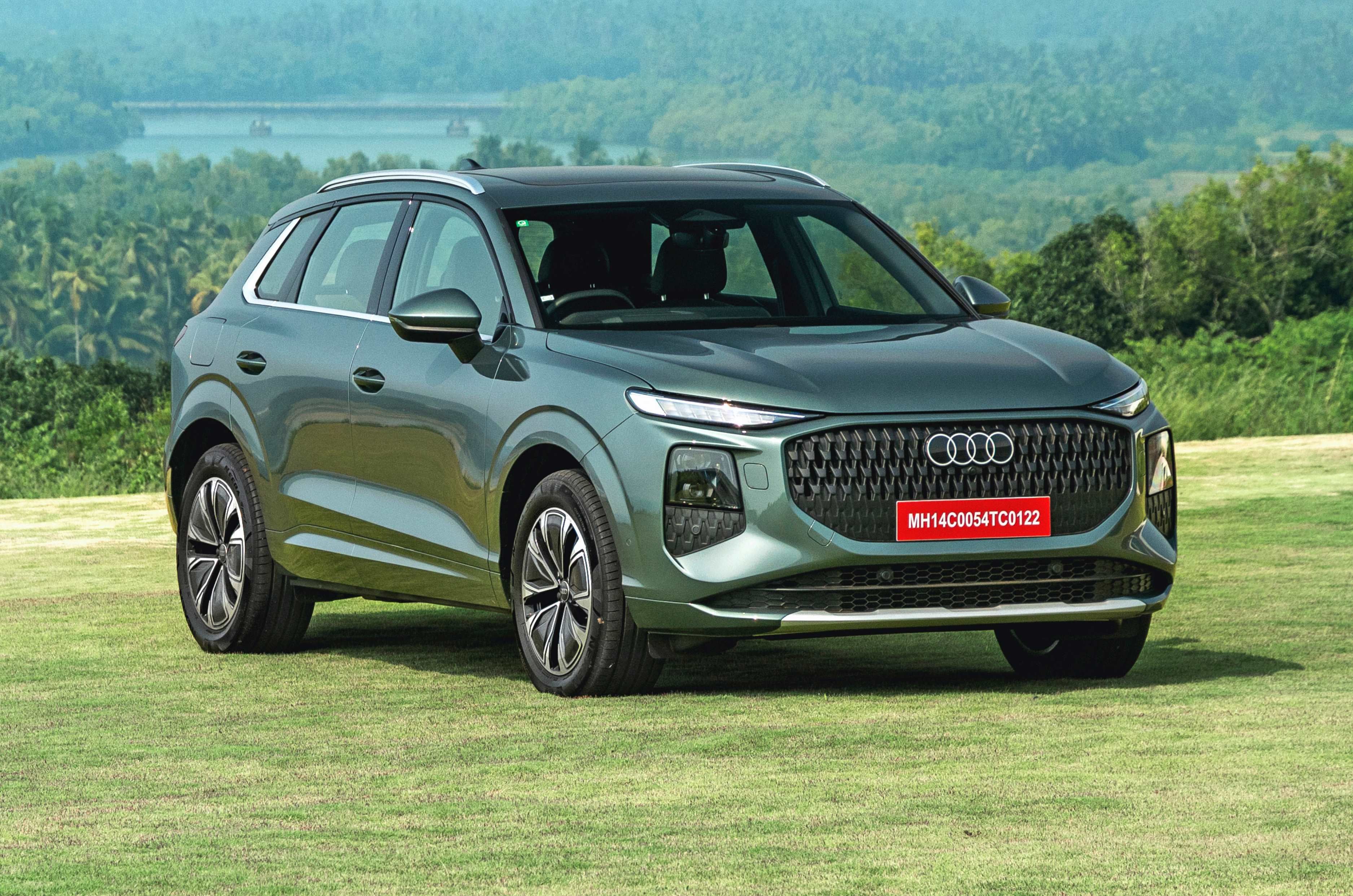
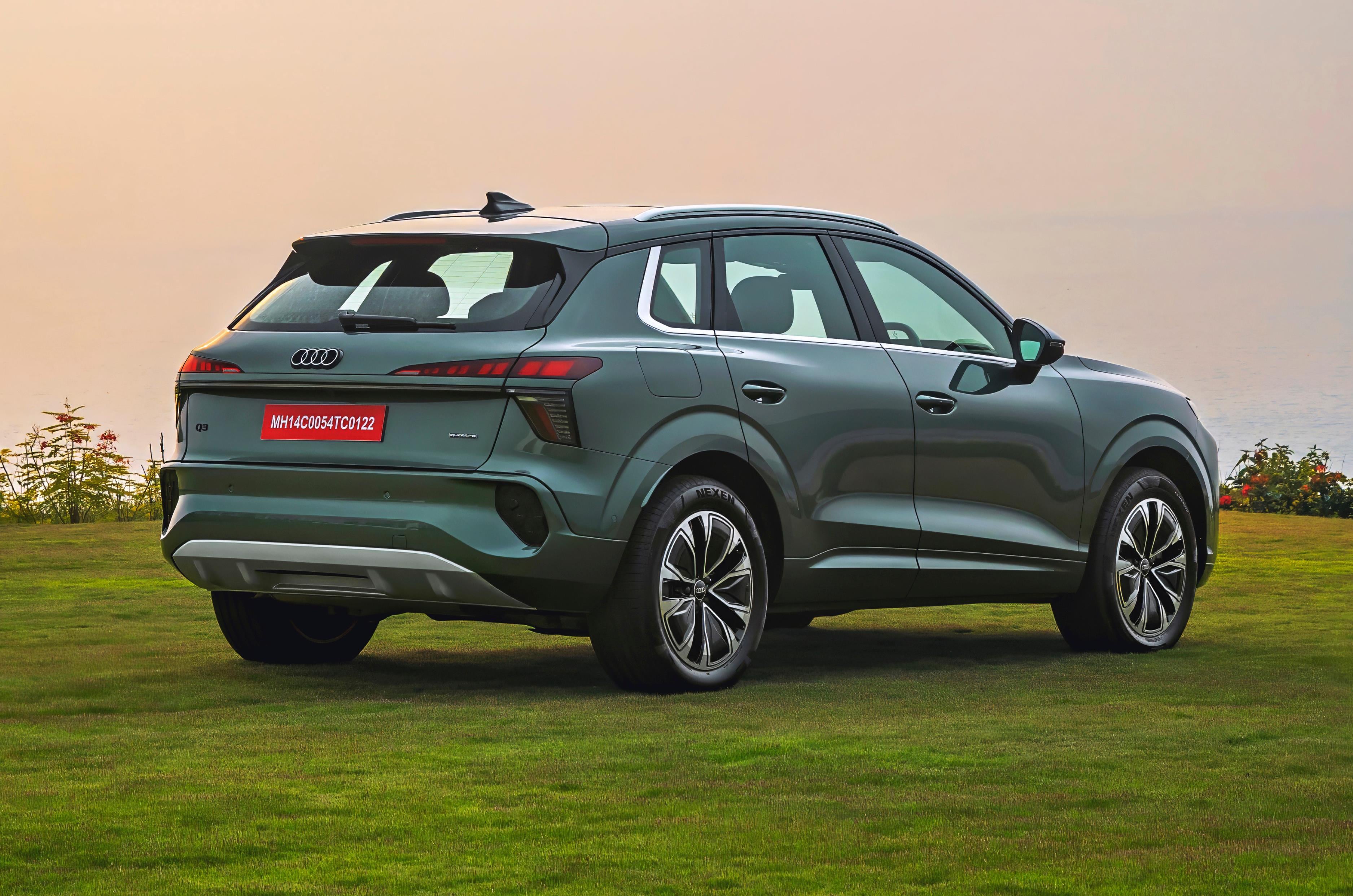
The crisp, edgy lines of the old car have made way for something more fluid and flamboyant. The new Q3 has grown marginally in every dimension, but the 2,681mm wheelbase is unchanged, so it keeps the compact footprint its urban buyers like.
A fluid and flamboyant new design language replaces the edgy styling of the old car
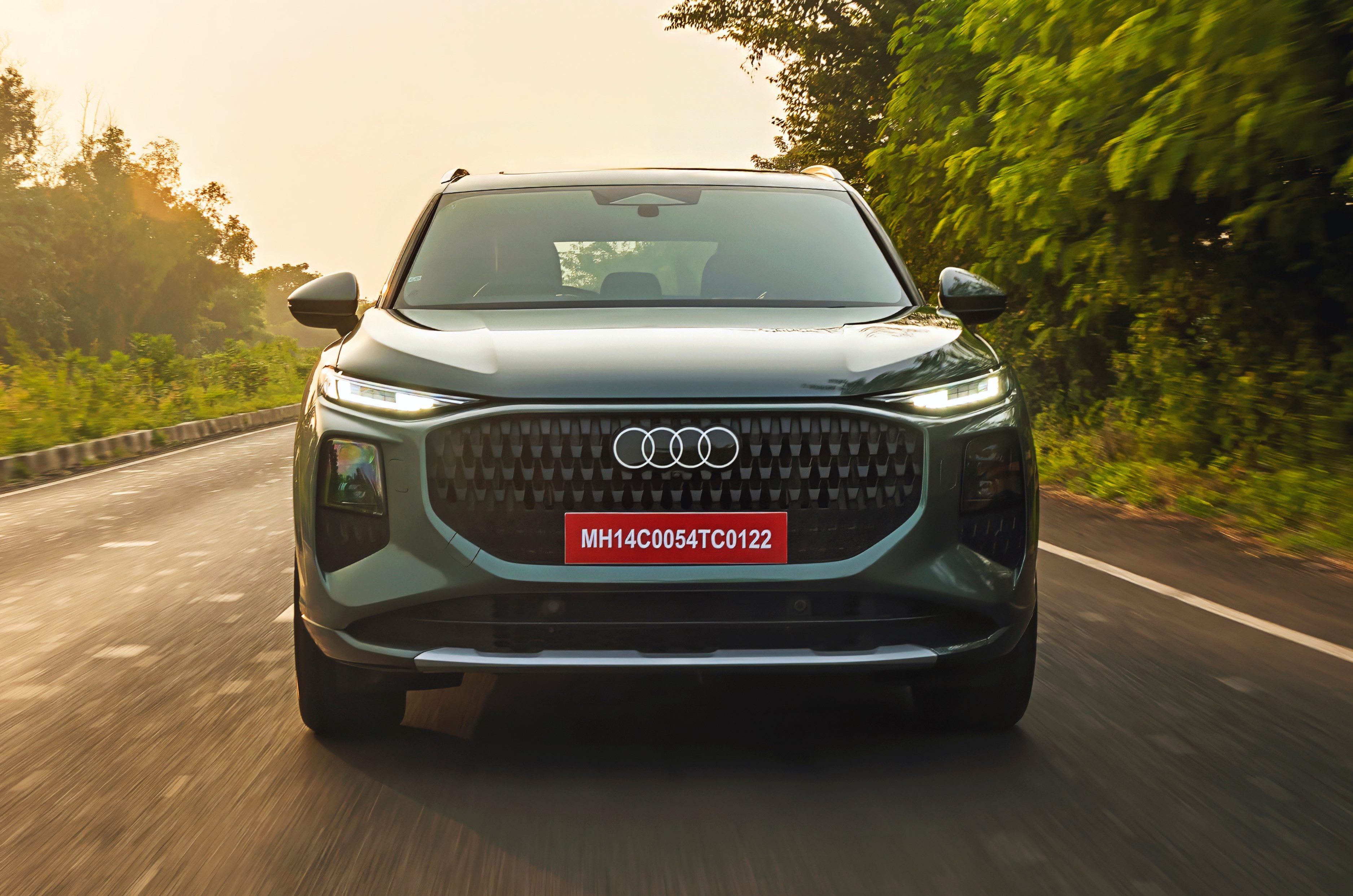
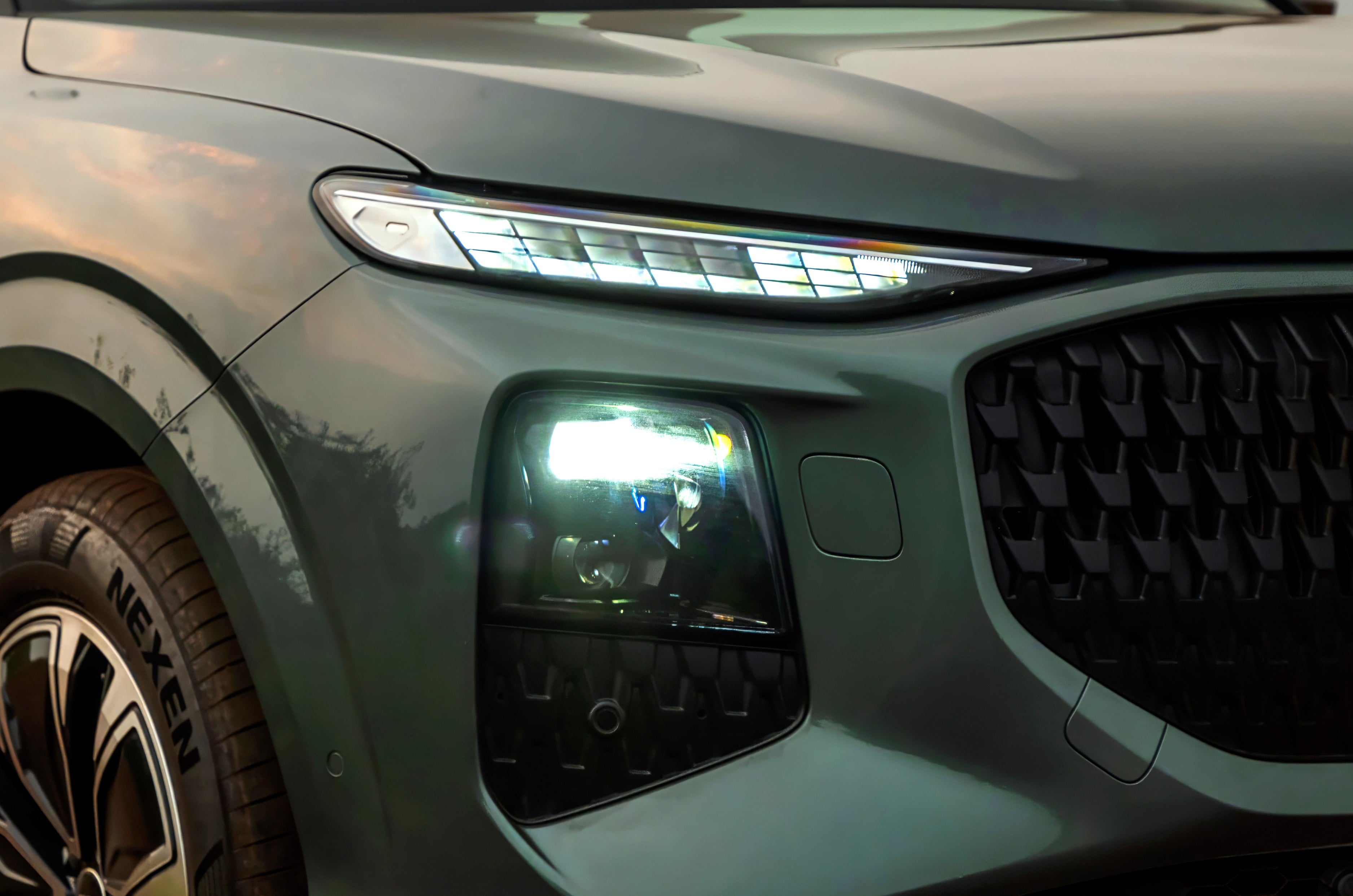
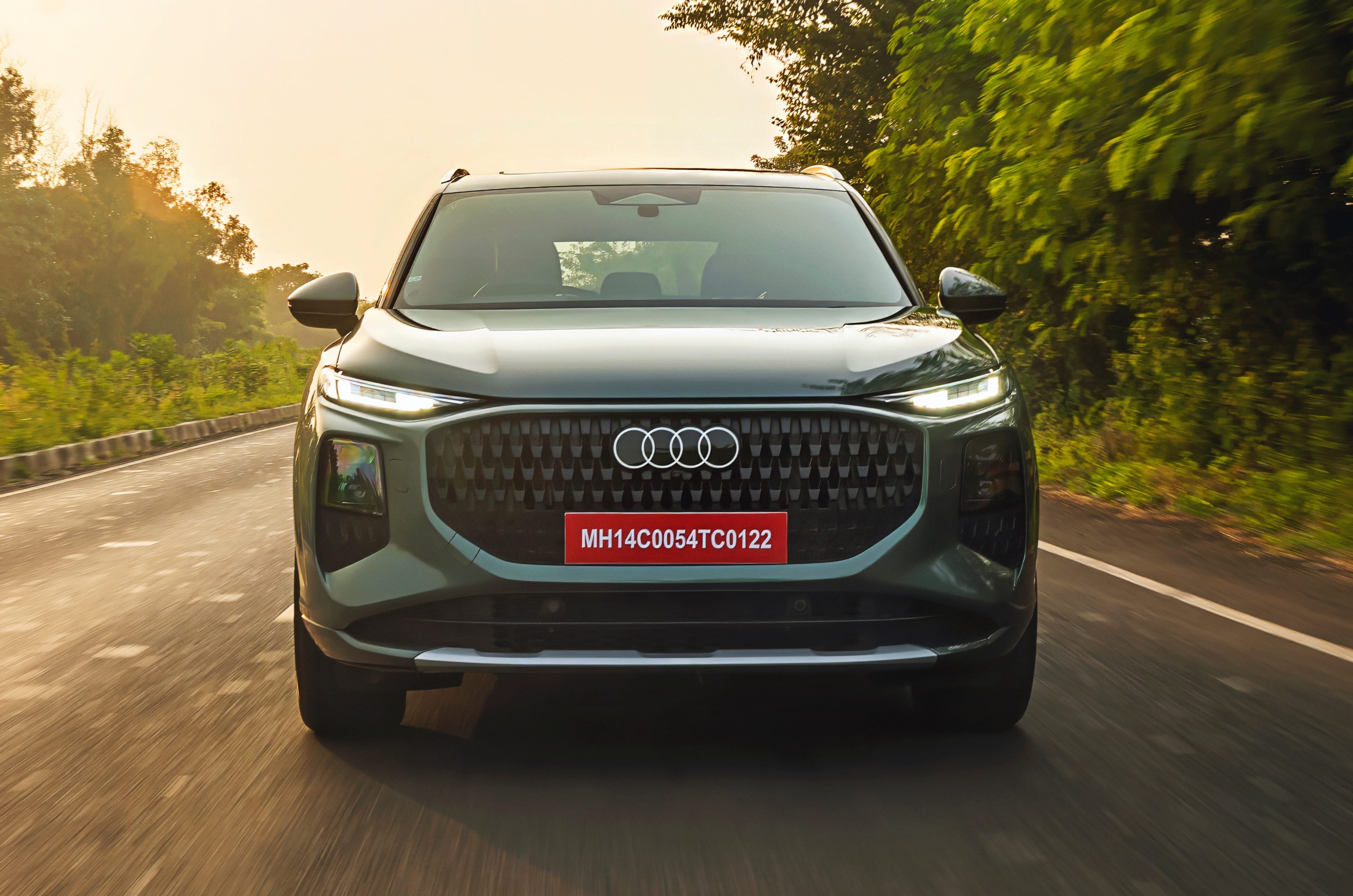
The face is split in two. Slim LED daytime running lights sit up top and double as dynamic indicators, while the main headlamps are stacked below. The wide honeycomb grille certainly makes a statement, and its flat 2D logo hides the ADAS radar. Up close, though, the grille’s finish looks a touch plasticky for a car wearing four rings.
Lighting is the real party piece. The Digital Matrix LED units use micro-LED technology, with some 25,600 individually controlled pixels per headlamp. That lets them do far more than dip and glare-free high beam. They can project a carpet of light in your own lane, and when you flick the indicator, the beam stretches across to illuminate the lane you are moving into. It’s a clever way to flag your intent and place the car on dark, unlit roads. The DRLs also offer four selectable light signatures via the touchscreen. There is a caveat. The projection tricks are at their best on pitch-black roads; with streetlights around, the effect is largely lost.
Trick Digital Matrix LED headlights use 25,600 individually controlled pixels per side
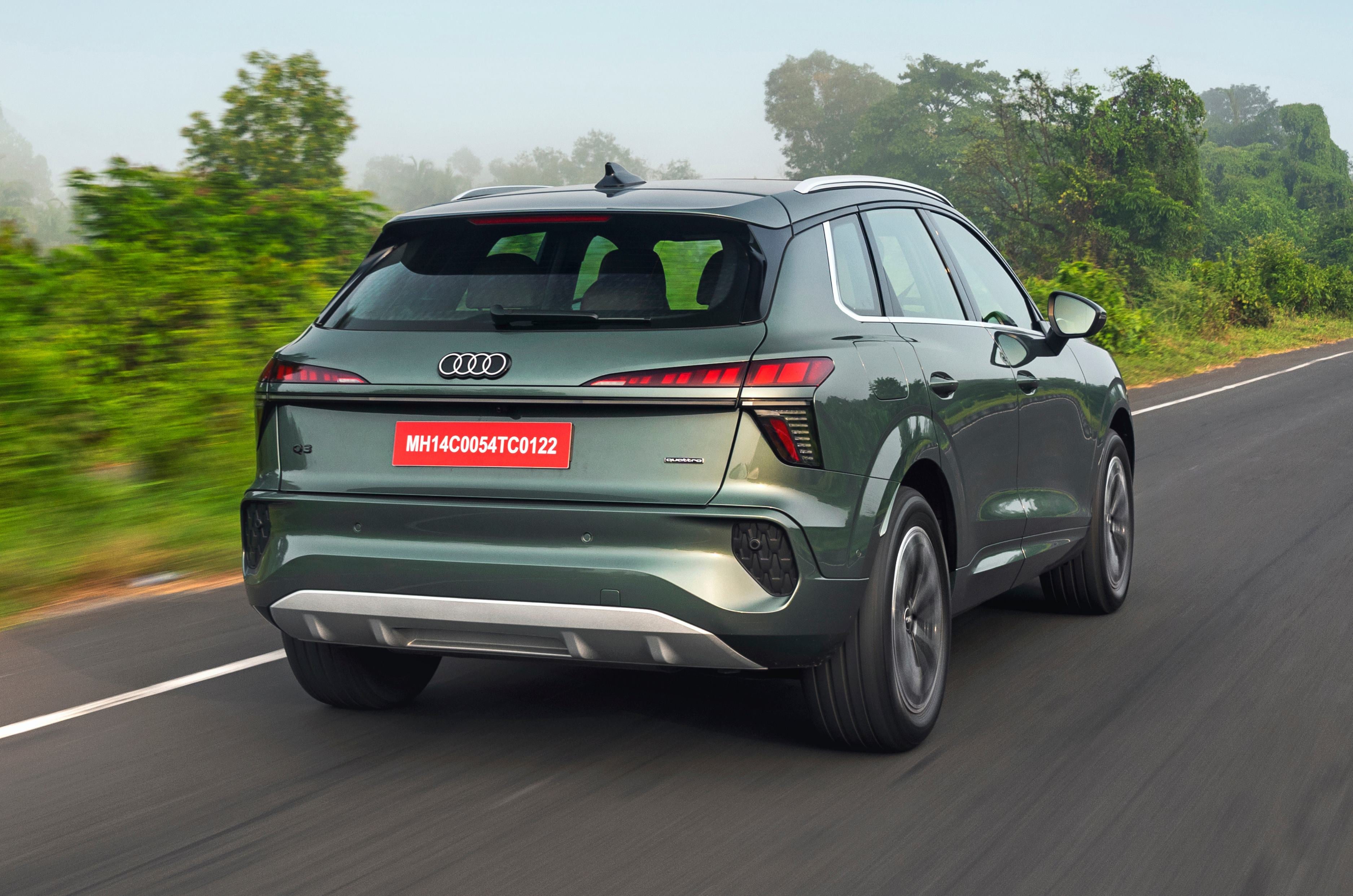
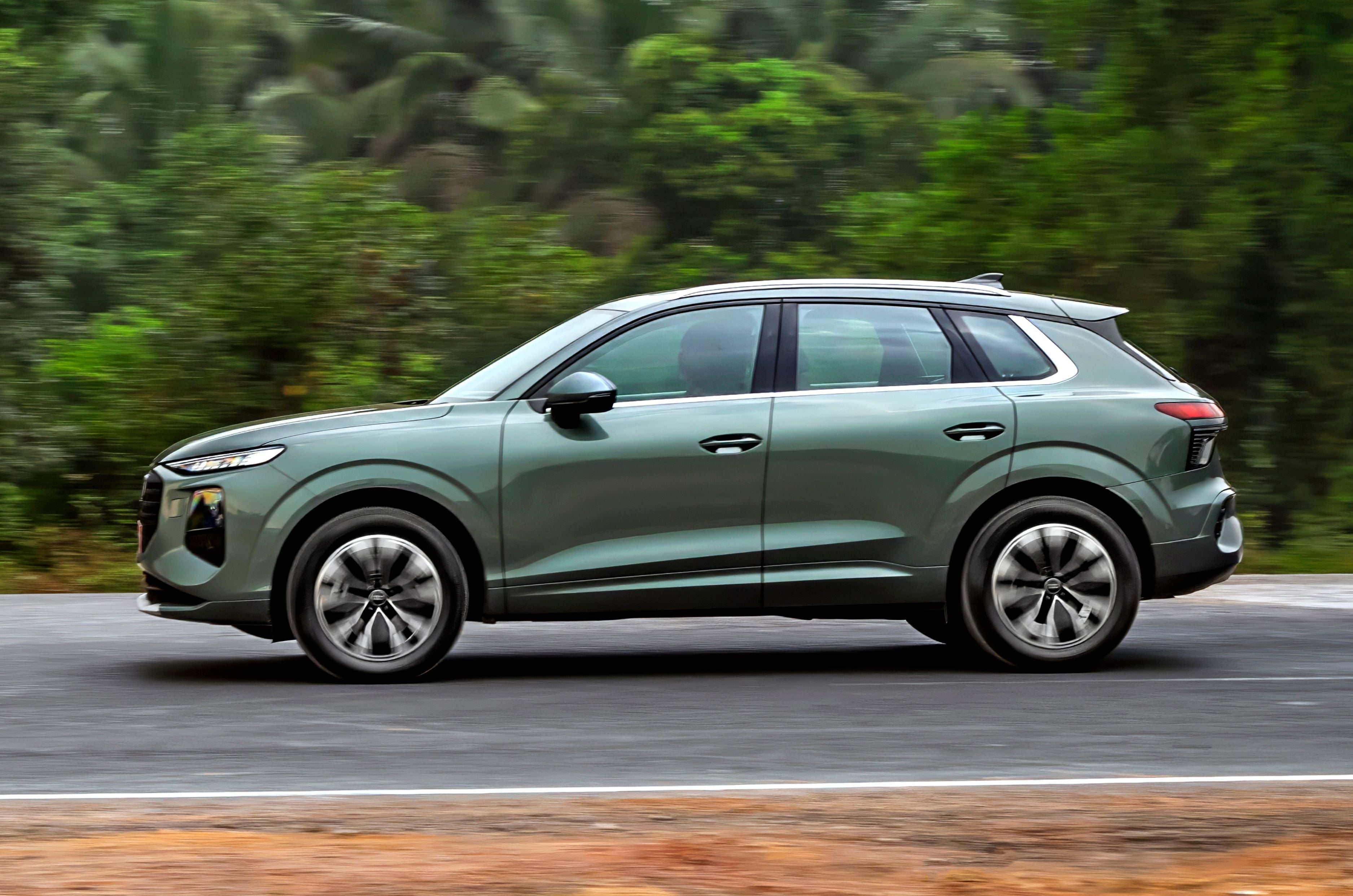
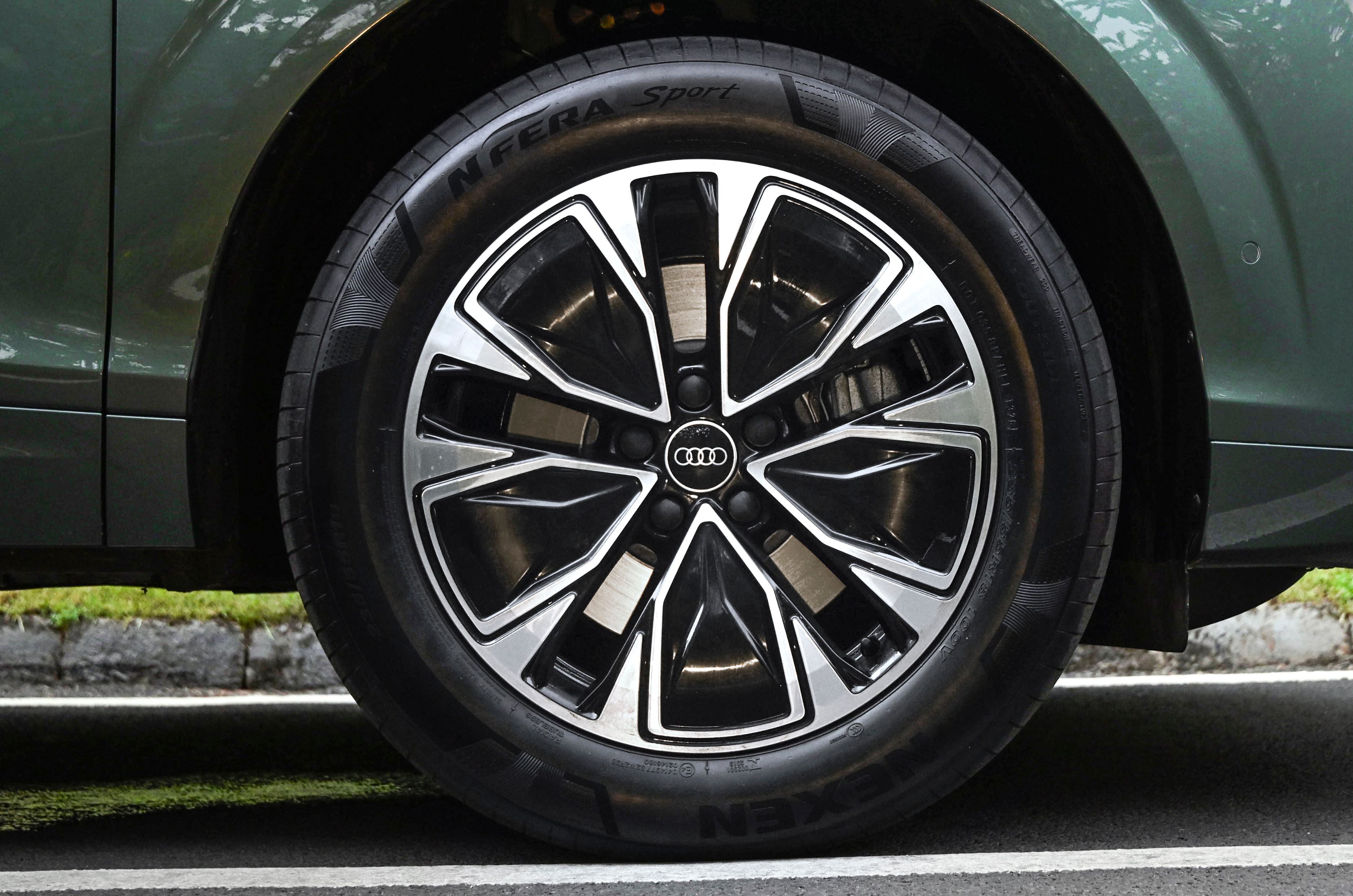
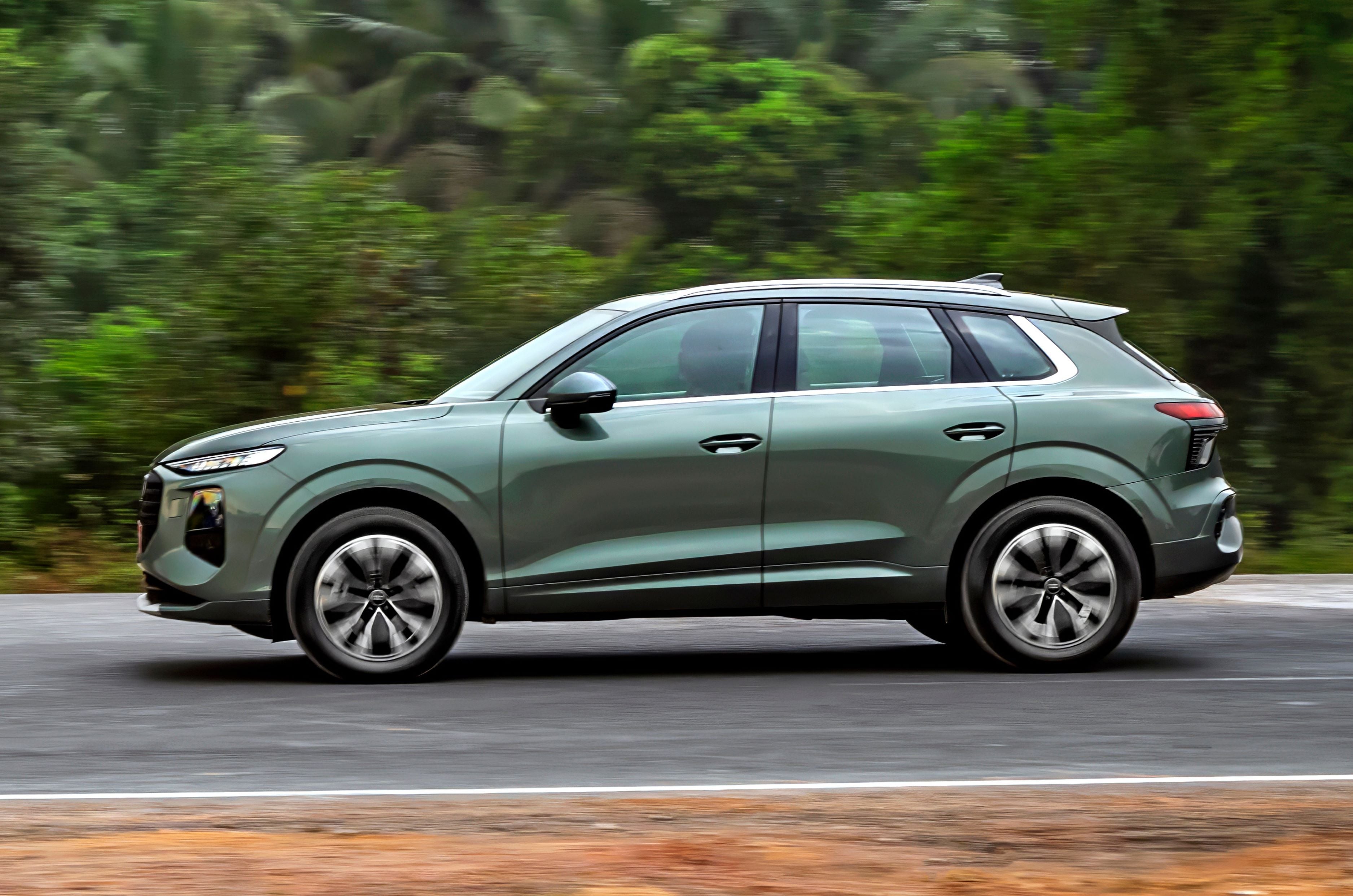
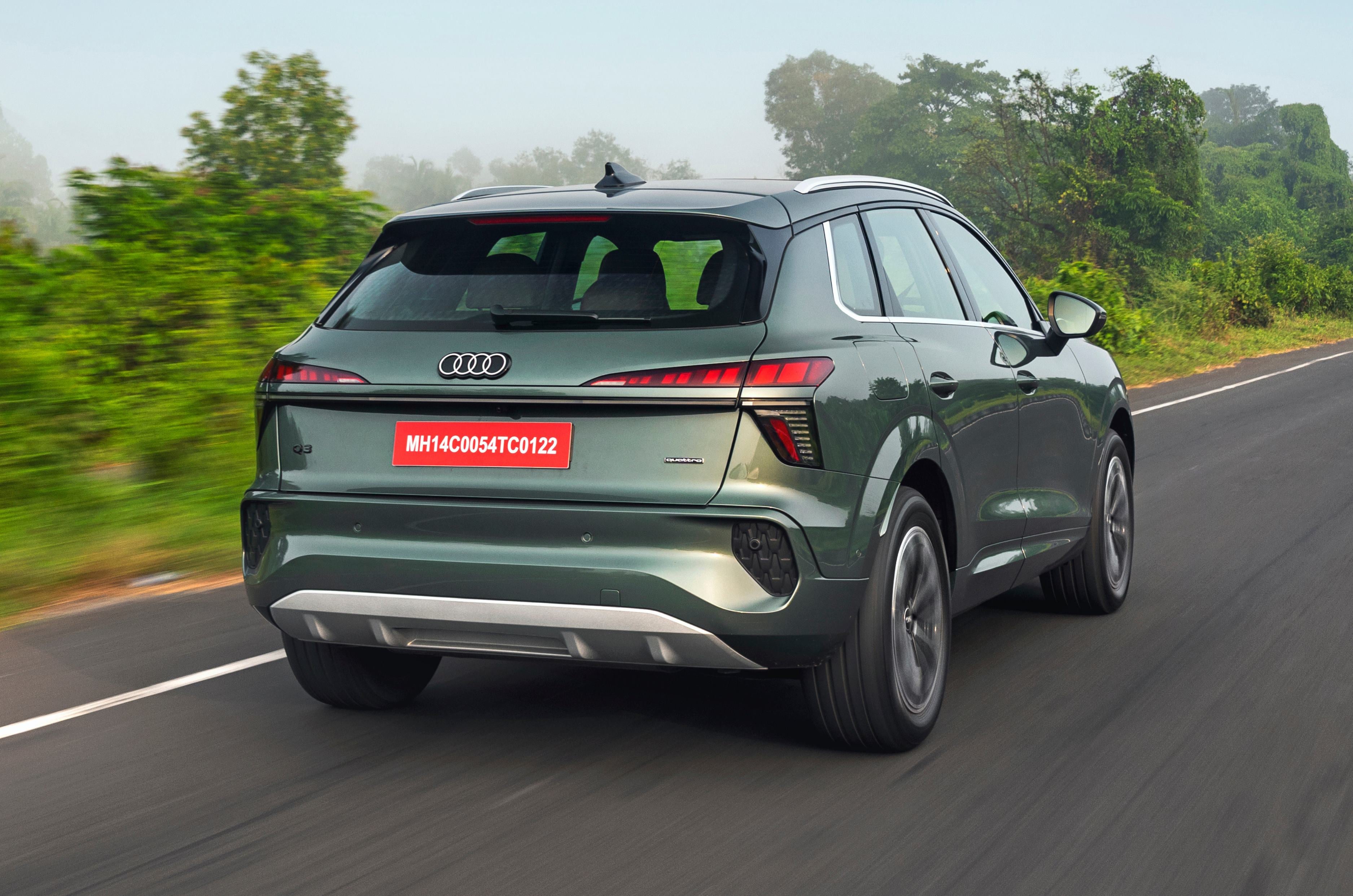
In profile, brushed aluminium below the windows and gloss black above create a floating-roof effect, and the rear haunches add a hint of muscle. For once, the wheels deserve a mention too. Audi has rarely nailed its alloy designs, but these are genuinely striking, wrapped in chunky, high-profile rubber. At the back, split LED tail-lamps are joined by a slim light bar and an illuminated Audi logo, and the tailgate is powered.
Stunning 18-inch alloys get self-leveling centre caps and are wrapped in high-profile tyres
Audi Q3 Interior Space and Comfort – 8/10
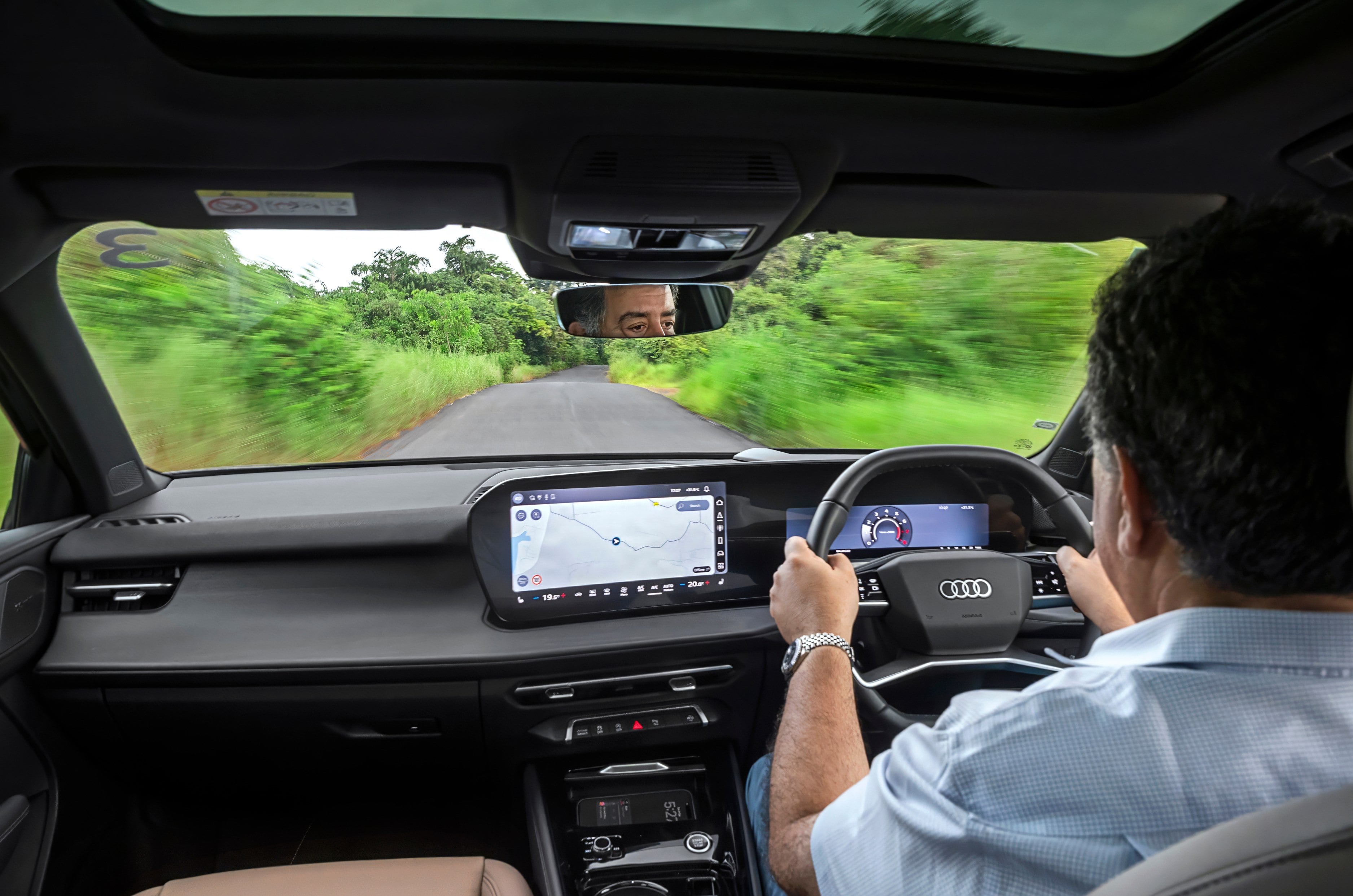
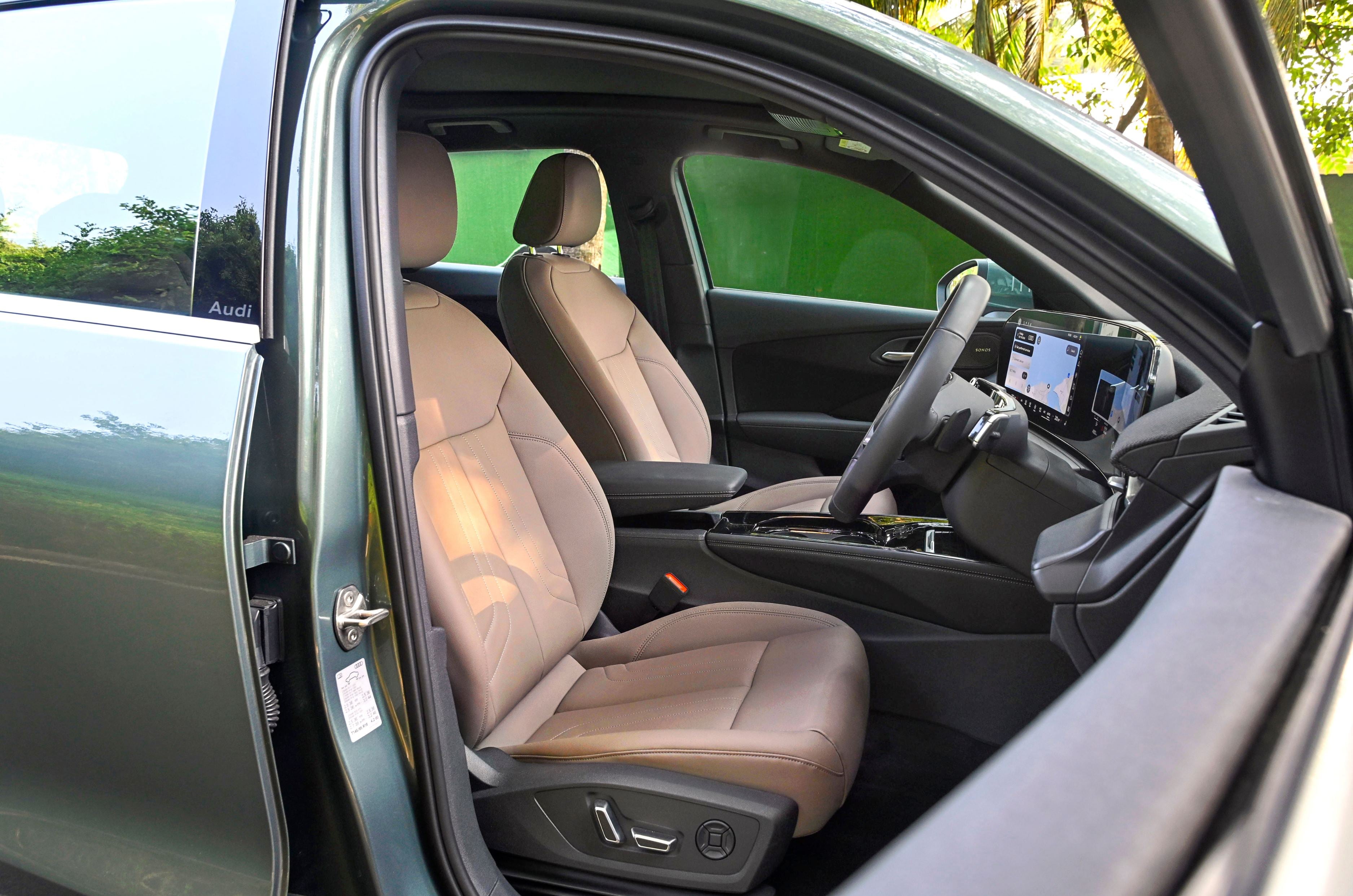
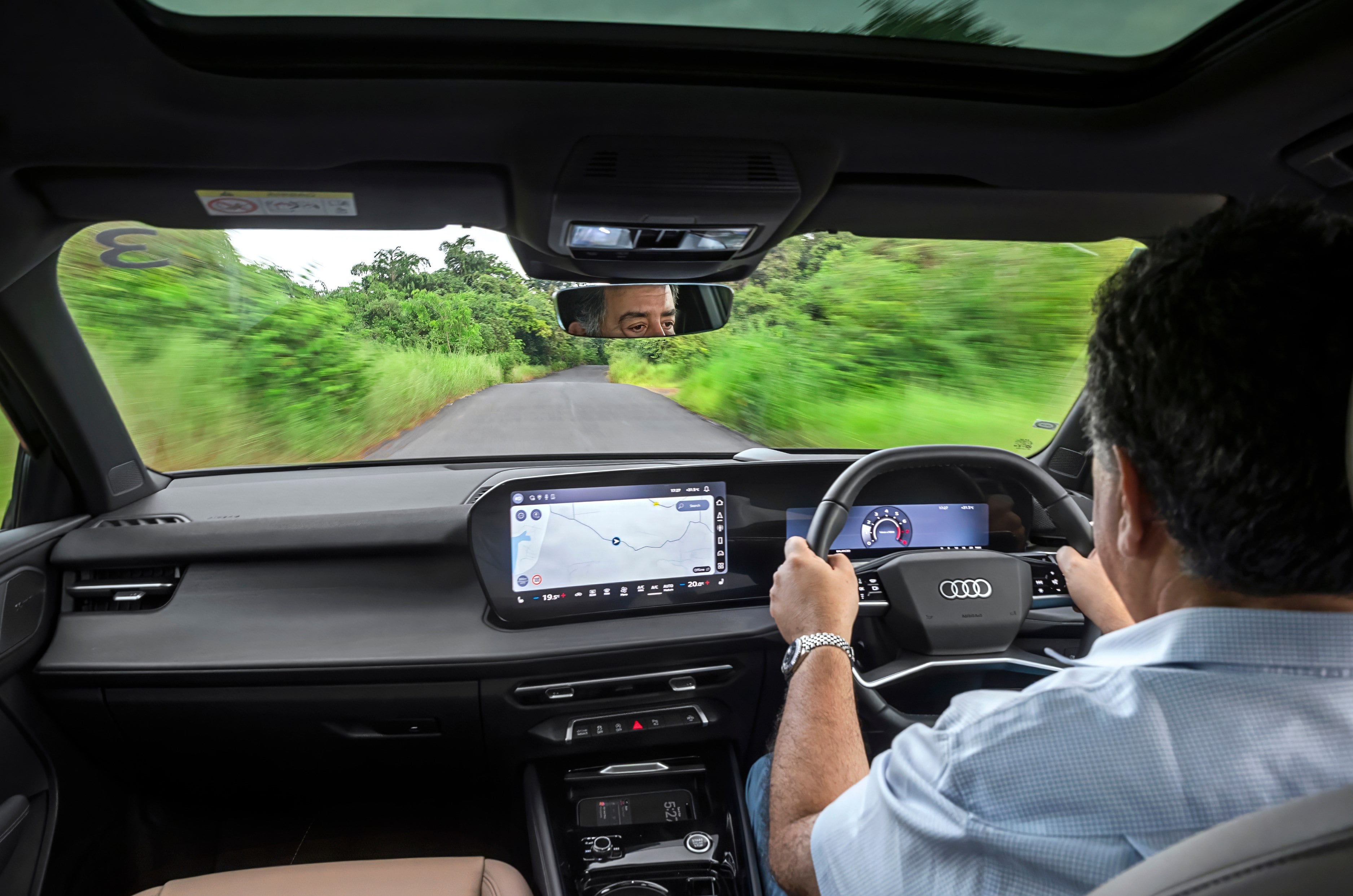
Step inside and the leap over the old Q3 is obvious. The dashboard is clean and contemporary, anchored by a curved panel that houses an 11.9-inch driver’s display and a 12.8-inch touchscreen. Fabric replaces leather across much of the cabin and the lower plastics are on the hard side. Yet the overall impression is of a cabin that’s solidly screwed together, and it feels more robust than its German rivals. Small details help: the fat tabs that adjust the air-con vents have a reassuringly substantial action.
New interior is a big leap over the last model and feels better built than its German rivals
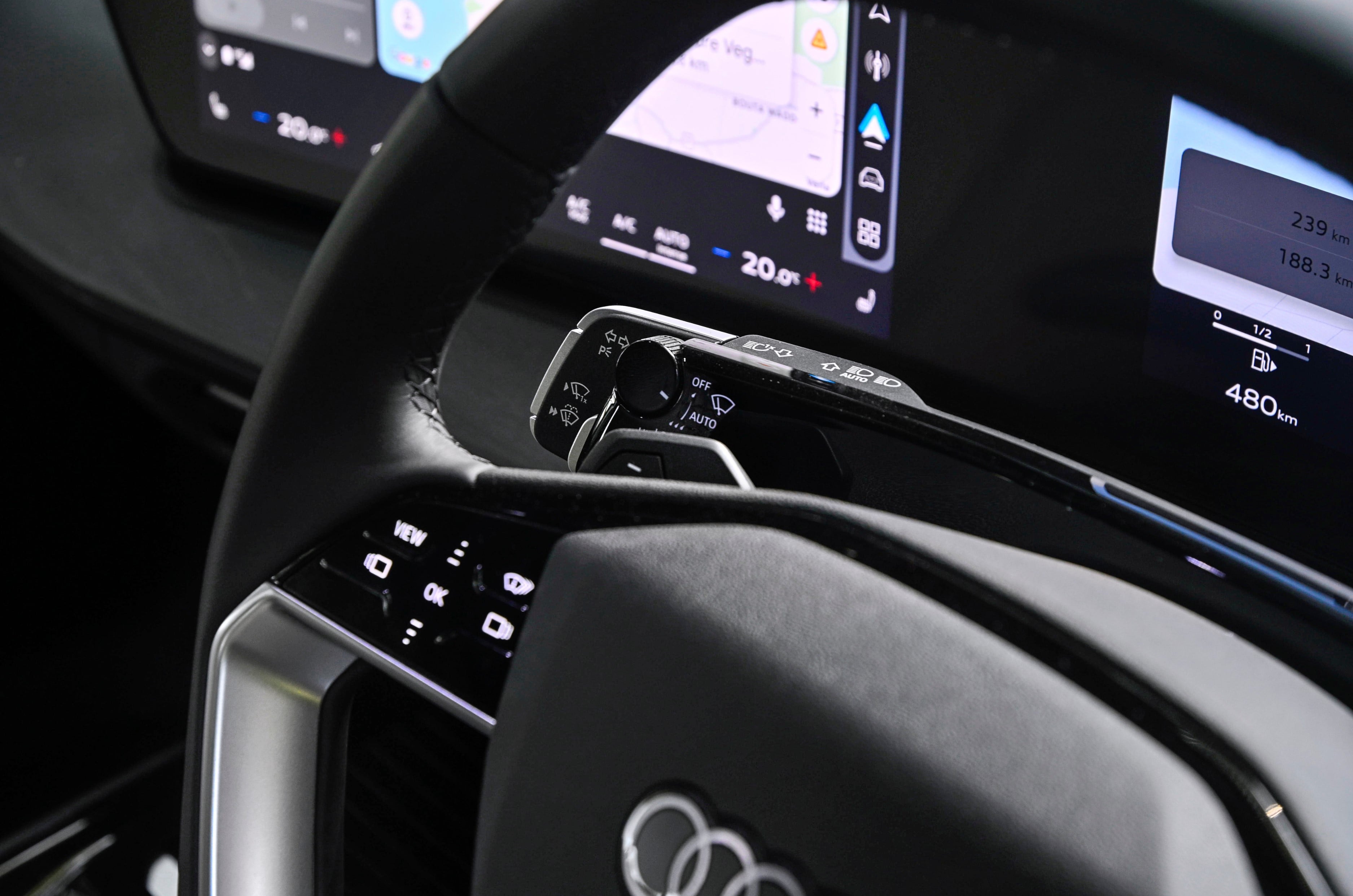
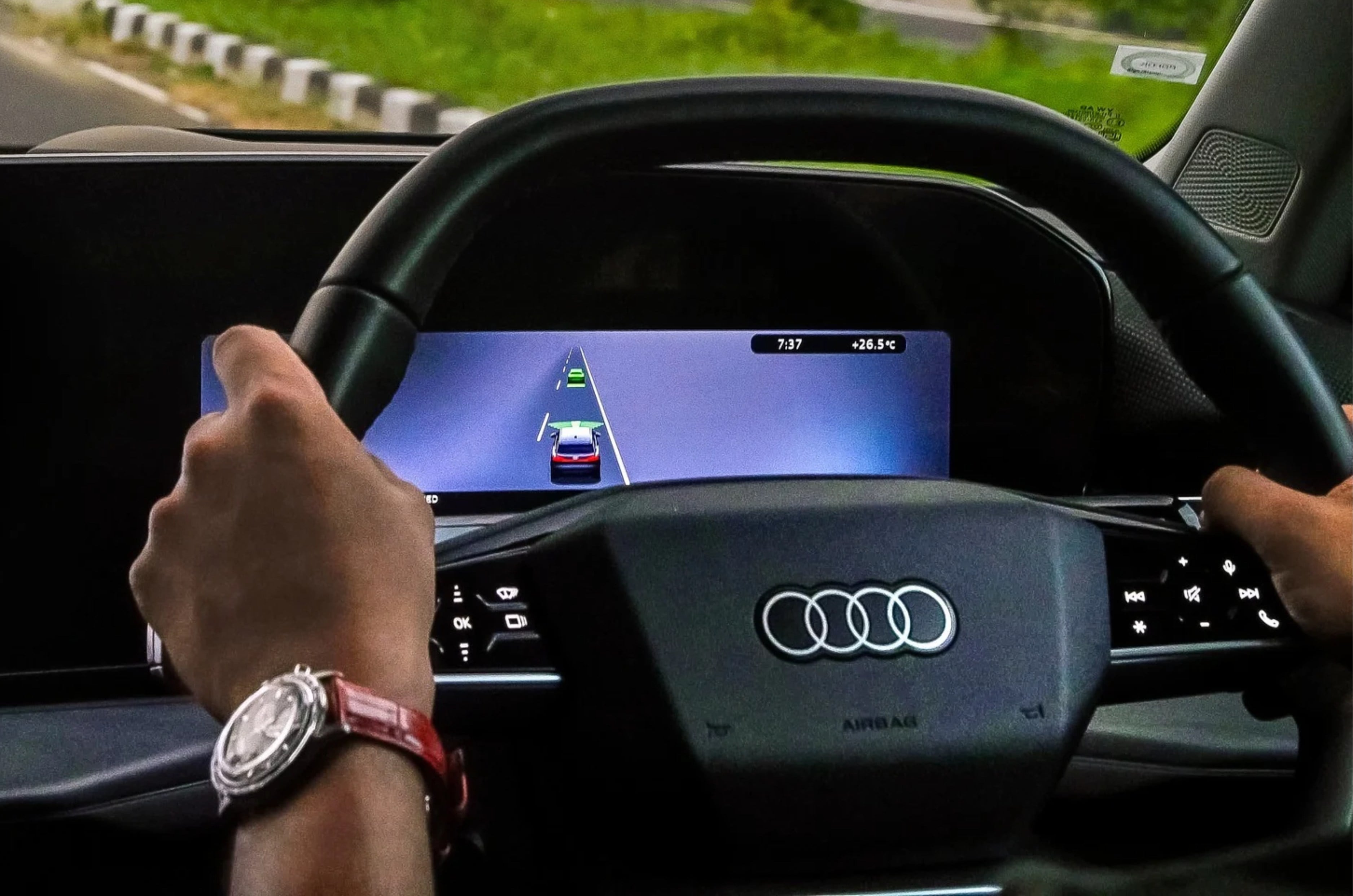
The hexagonal steering wheel takes some getting used to. So does the new control stalk, which Audi has loaded with an astonishing number of jobs: indicators, front and rear wipers and headlamp controls all live on one chunky lever. The gear selector moves to a stalk of its own on the other side. It feels awkward at first, but within a day it becomes second nature.
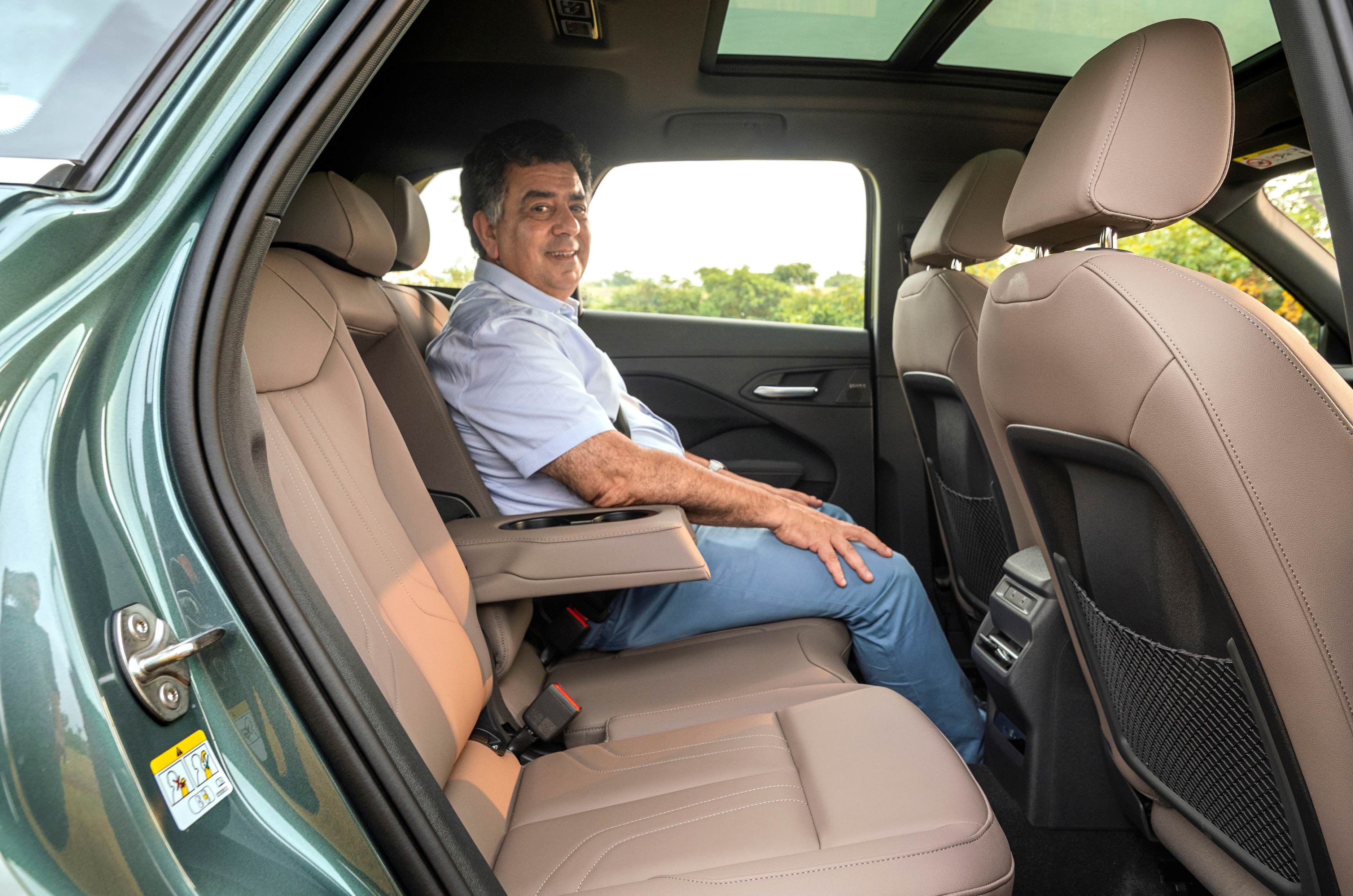
Two adults will be comfortable in the back seat, but a third will feel like a sqeeze
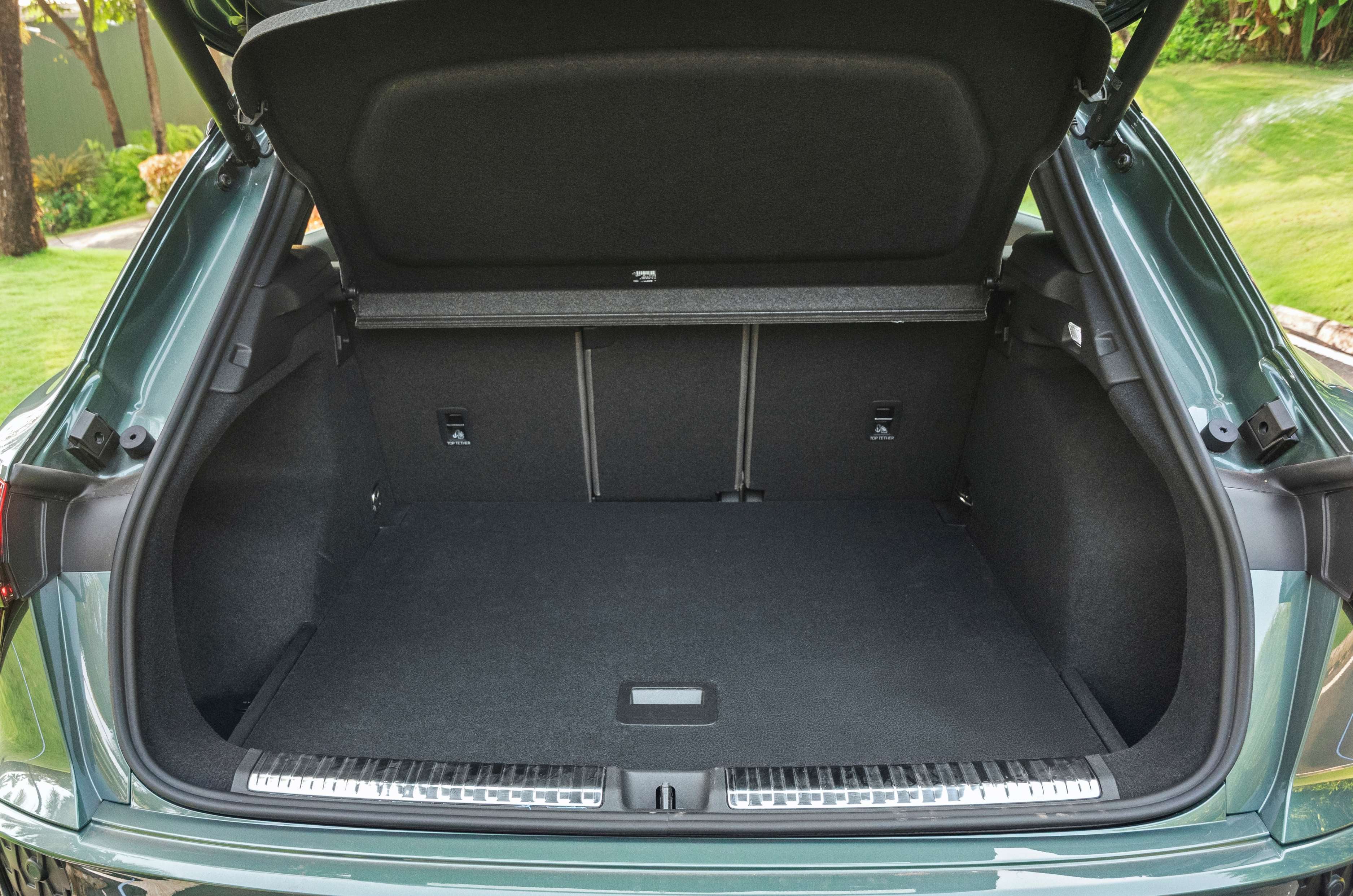
The front seats are generous, well bolstered and very comfortable over long stints. The rear hasn’t moved on much from the old car. Two large adults will be fine, but three is a squeeze; think of it as a four-seater with an occasional fifth. Rear passengers do get a third climate zone and two USB-C ports. The boot is spacious, and it’s good to find a space-saver spare under the floor.
Powered tailgate opens to a large 488-litre boot; seats split 40:20:40 for longer items
Audi Q3 Features and Safety – 7/10
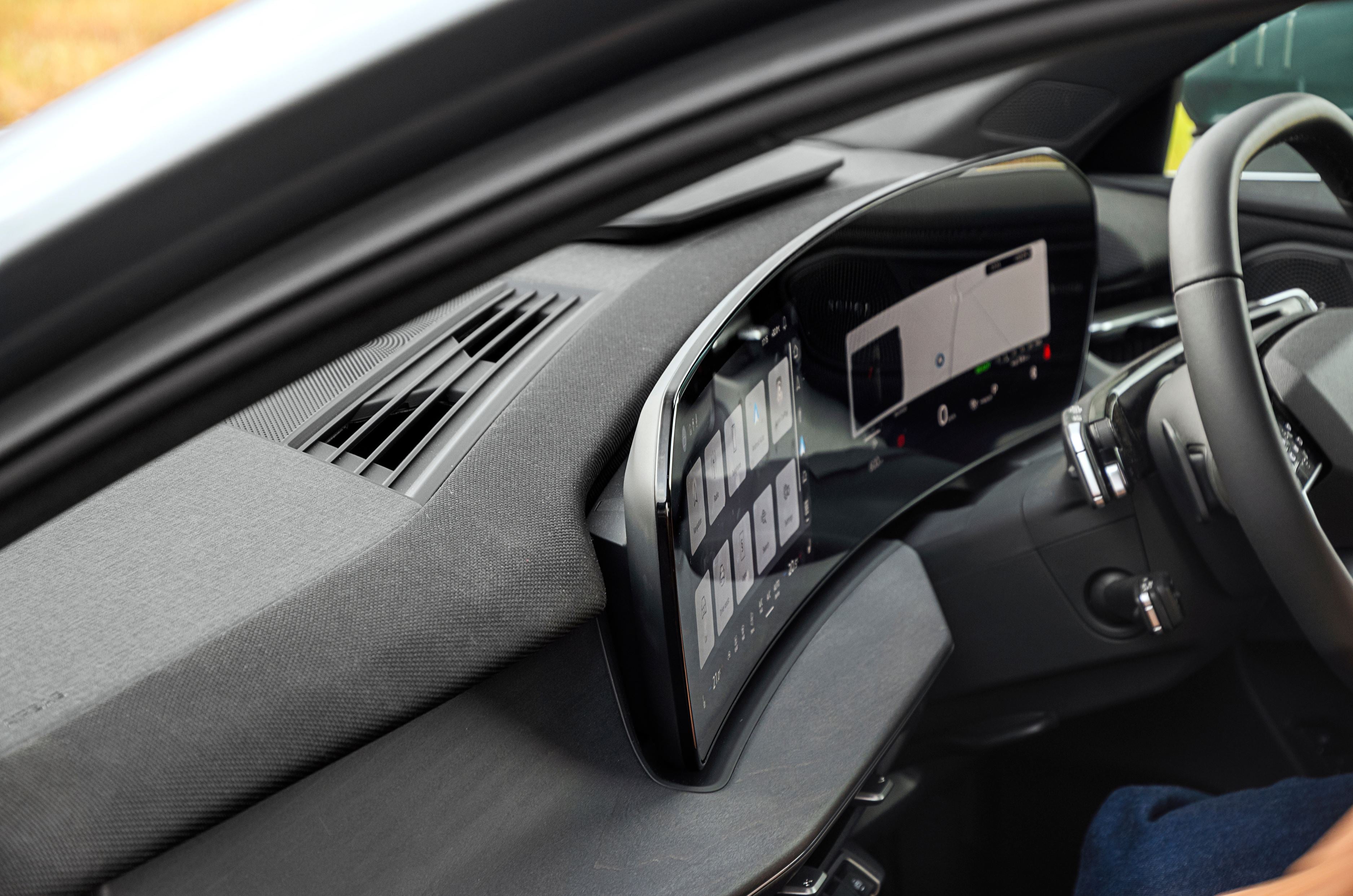
The curved touchscreen works well, and the curvature itself cuts out glare and reflections. Response is smooth and quick, though the icons are, in typical Audi fashion, a bit subdued and not instantly distinguishable. Physical buttons are fewer, but the climate controls sit permanently at the base of the screen, so you never dig through menus to change the temperature or blower speed.A head-up display brings key information into your line of sight and the fonts are crisp and sharp.
Curved display cuts out glare and reflections
Audi’s own navigation is good, but integrated Google Maps, increasingly the benchmark, is expensive to licence and hence missing. The instrument cluster is surprisingly basic too, with little configurability and minimal choice of layouts and that’s a let-down from the brand that pioneered the virtual cockpit.
We also hit a software glitch with our iPhones. Wireless phone mirroring connected initially, then dropped out and refused to reconnect, prompting a switch to USB. It’s the sort of bug an over-the-air update should fix.
Lighting and wiper controls are odd at first but easy to get used to
The equipment list isn’t thin. There’s a superb-sounding 12-speaker Sonos system, a large panoramic sunroof, powered and heated front seats with driver memory, nine airbags and adaptive cruise control. That cruise works well, too. But for a car costing over Rs 50 lakh and launching in 2026, there gaps that are hard to overlook.
There is no lane-keep assist, so the ADAS suite stops at adaptive cruise. A full Level 2+ package is now table stakes in this class, all the more so when far cheaper mass-market cars offer one. There are no ventilated seats either, near-essential in our climate. The biggest miss, though, is a 360-degree camera, something a great many buyers actively look for. The reversing camera’s resolution is disappointing, although there is an auto-park function.
ADAS kit limited to auto emergency braking and adaptive cruise control
None of this is unusual for its rivals. But as the newest kid on the block, the Q3 should have moved the game on, and here it hasn’t.
Audi Q3 Performance and Refinement – 9/10
The engine is the star of the show. Audi’s 2.0 TFSI makes 201bhp and 320Nm, and it is smooth, strong and refined. That alone hands the Q3 a massive edge over the underwhelming, smaller-capacity motors in the X1 and GLA.
Strong and refined 2.0 TFSI makes 204hp and 320Nm, enough for 0-100kph in 7.1 seconds
It isn’t flawless. At low revs there’s a brief hesitation before it gathers itself and pulls smartly, which is why we left it in Dynamic mode most of the time. Once on the boil, though, it is eager and free-revving, a reminder of why this is the best 2-litre turbo-petrol in the business. Around town it feels responsive; on the highway it builds pace effortlessly. Audi claims 0-100kph in 7.1sec, which puts the Q3 at the top of its class.
The 7-speed dual-clutch remains a fine partner, eager to drop a gear to keep the engine in its powerband. Flick it into Sport or reach for the paddles if you want to take charge. Quattro all-wheel drive is now standard on every Q3, not an option, and there’s a range of drive modes including an off-road setting to make the most of it. It’s good insurance on slippery surfaces and gives the Q3 an edge over rivals when conditions turn tricky. Whether many owners need it, or more importantly will pay extra for it, is another question.
Strikes a great balance of ride and handling; gets Quattro all-wheel drive as standard
Audi Q3 Ride Comfort and Handling – 9/10
The big surprise is the handling. The variable-ratio steering adjusts its response to both speed and lock, so its light and effortless at parking speeds, then quicker and more direct as you wind on more lock. Barring a touch of slack around the straight-ahead, it is accurate and weights up superbly.
Quick steering often makes a car nervous at speed. Not here. The Q3 stays stable and reassuring when the needle climbs, yet changes direction with an agility you simply don’t expect from an Audi SUV.
New Progressive Steering is light at parking speeds, but gets sharper and more direct as speeds rise
What you do expect from an Audi is a good ride, and the Q3 delivers. It is on the firm side but never uncomfortable, soaking up potholes and broken patches with real composure. A big help is the 55-profile tyres. Their roughly 130mm sidewall is the first line of defence, absorbing much of the shock before it reaches the suspension and, ultimately, the cabin.
Audi Q3 Value for Money – 8/10
The new Q3 is a superbly engineered car, and its mechanical package sits well ahead of its rivals. The cabin is a big step up too, but given its timing, the Q3 doesn’t quite leapfrog the competition here; it lands a little short on equipment.
What it does do is drive brilliantly. It is by far the nicest car to drive in its class, and that matters, because Audi says 84 percent of Q3 owners drive themselves.
Easily the nicest car to drive in its class, but doesn’t leapfrog the competition in terms of features
A lot now rides on price. At around Rs 65 lakh on-road, it is steep. Not because the car isn’t worth it, but because buyers may balk at paying so much more than the outgoing Q3, whose transaction price had slipped to around Rs 40 lakh.
On the product front, though, Audi has come back with a bang. A brilliant powertrain, a superb blend of ride and handling and a genuinely classy feel make the Q3 the enthusiast’s pick of the class. If this is the opening act, Audi’s reset is off to a promising start.
Volvo India has launched the EX90 electric SUV at Rs 1.26 crore as the Swedish carmaker’s new range-topper. The EX90 is Rs 27.2 lakh more expensive than its combustion-powered equivalent, the XC90. However, that’s on account of the EX90 being much more modern and tech-loaded than the XC90, the current generation of which has been around for more than a decade.
As part of an introductory offer for bookings placed before 31 December, 2026, Volvo will bundle an 11kW home charger, a 3-year service package, and assured buyback scheme (65 percent / 3 years) for every EX90 buyer.
Volvo EX90 battery and range
The EX90 is available with a sole 106kWh battery pack powering a dual-motor all-wheel drive setup. Combined output is 456hp and 670Nm, which is good for a claimed 0-100kph time of 5.5 seconds and a top speed of 180kph. The WLTP-rated range is 625km, and in our EX90 review, the SUV returned an efficiency of roughly 5.5km/kWh, which translates to a real-world range of around 580km.
As for charging, an 11kW AC wallbox takes approximately 11 hours for a full charge. Thanks to its 800-volt SPA2 architecture, the EX90 can also charge at up to 350kW from a DC source, at which speed a 10 to 80 percent top-up takes just 22 minutes.
Volvo EX90 exterior design
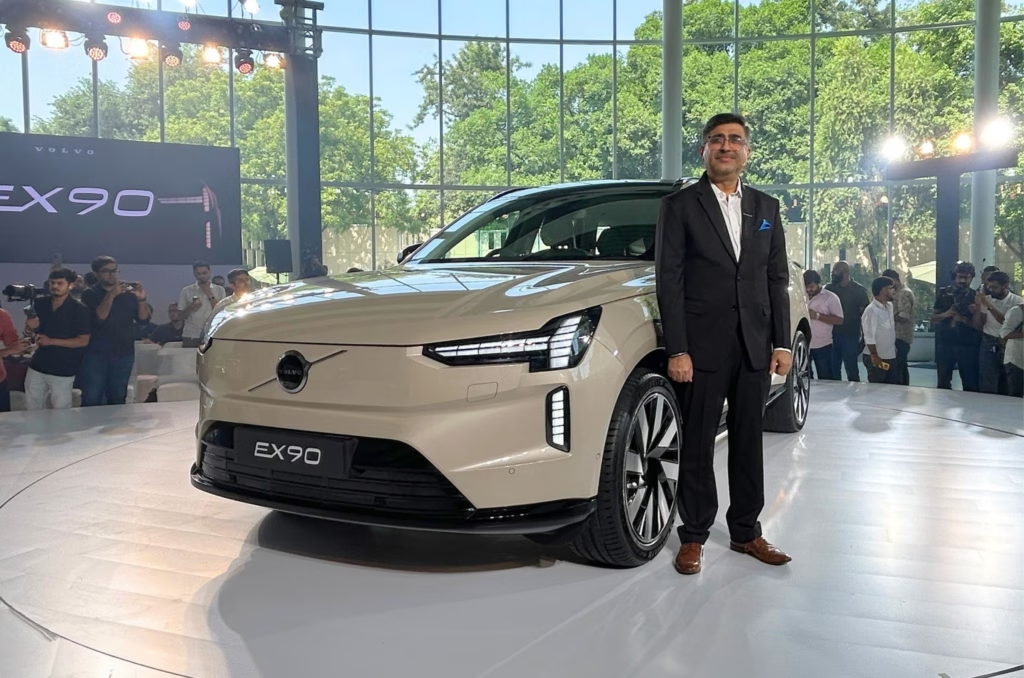
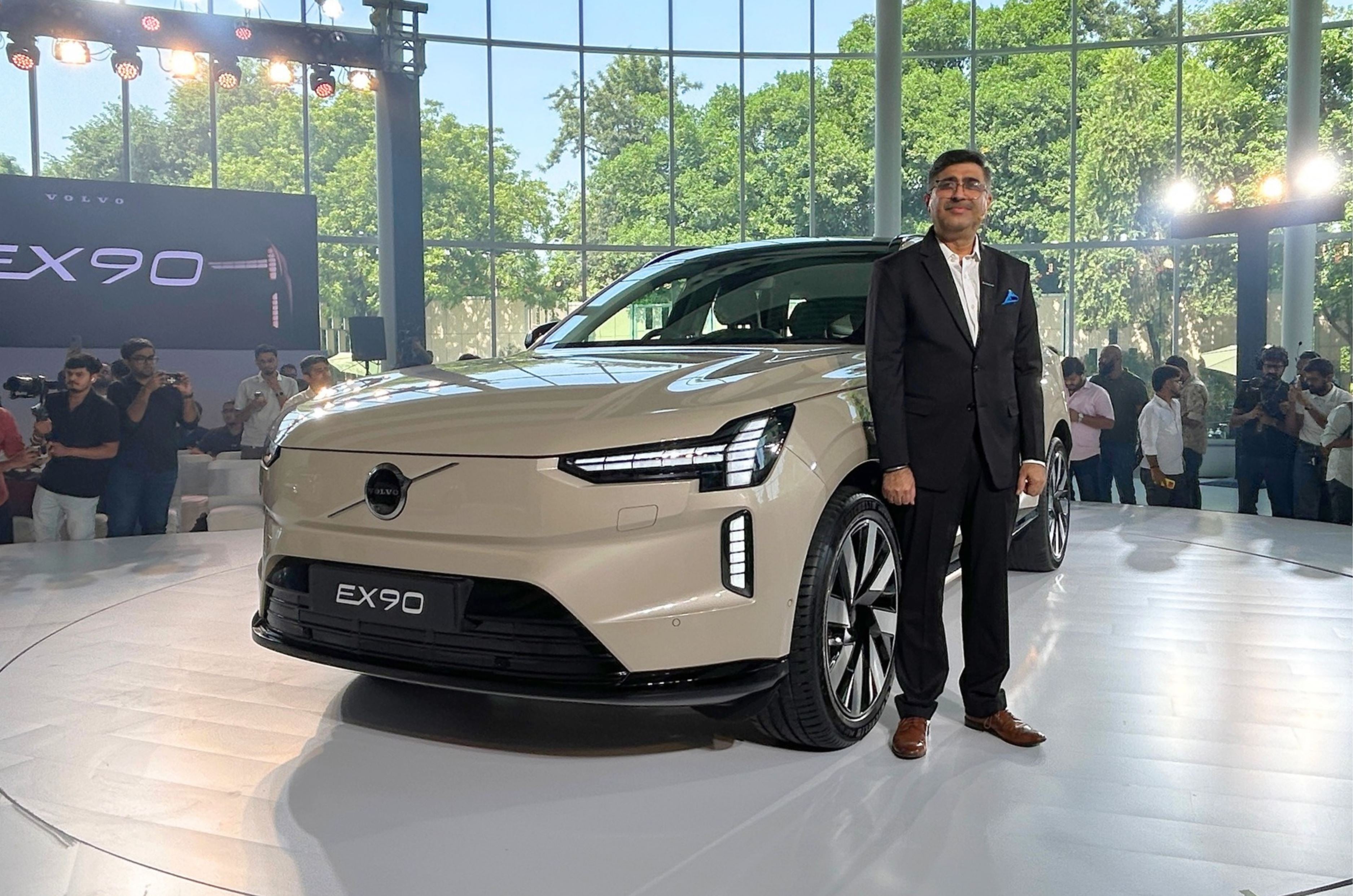
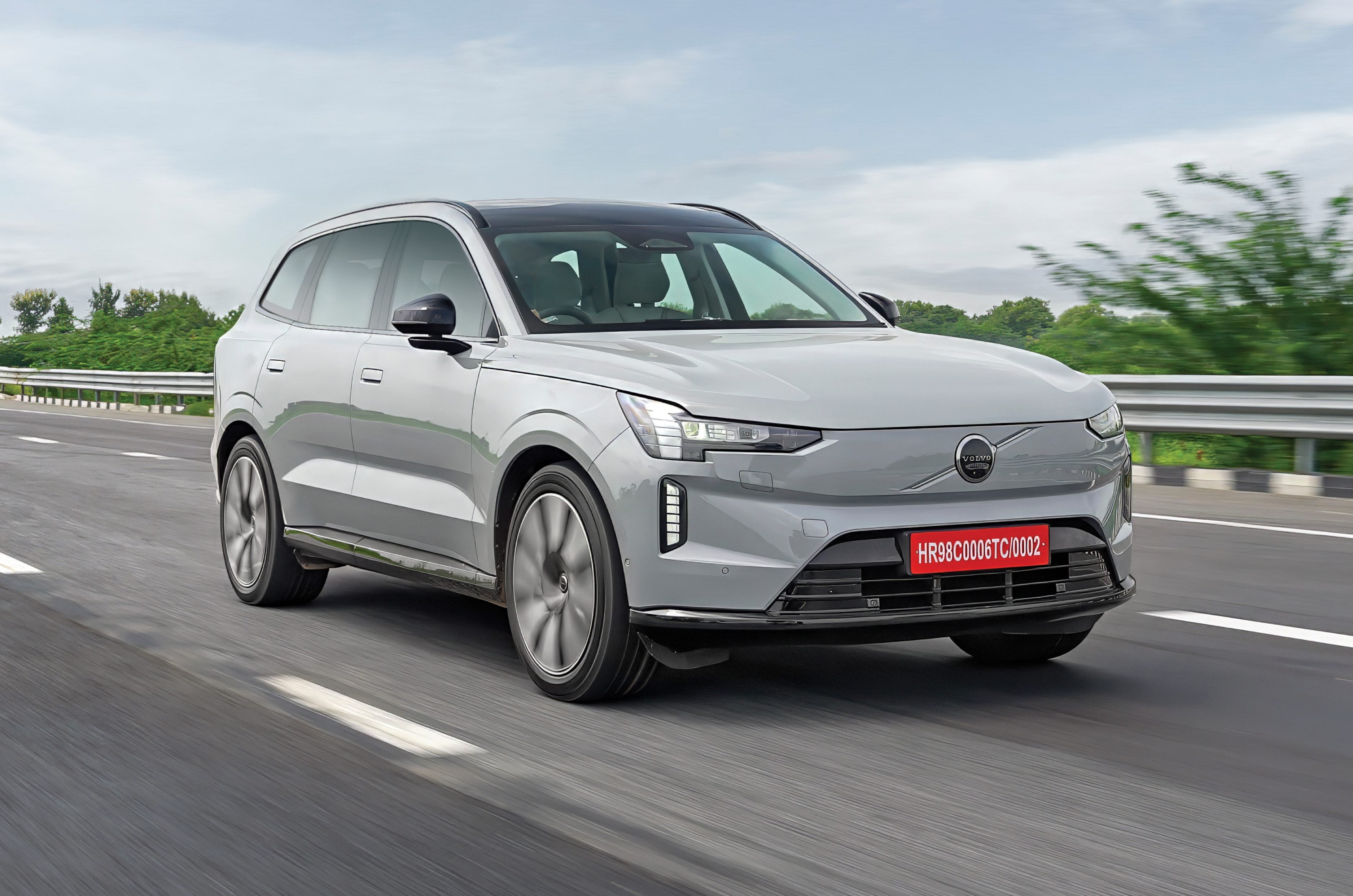
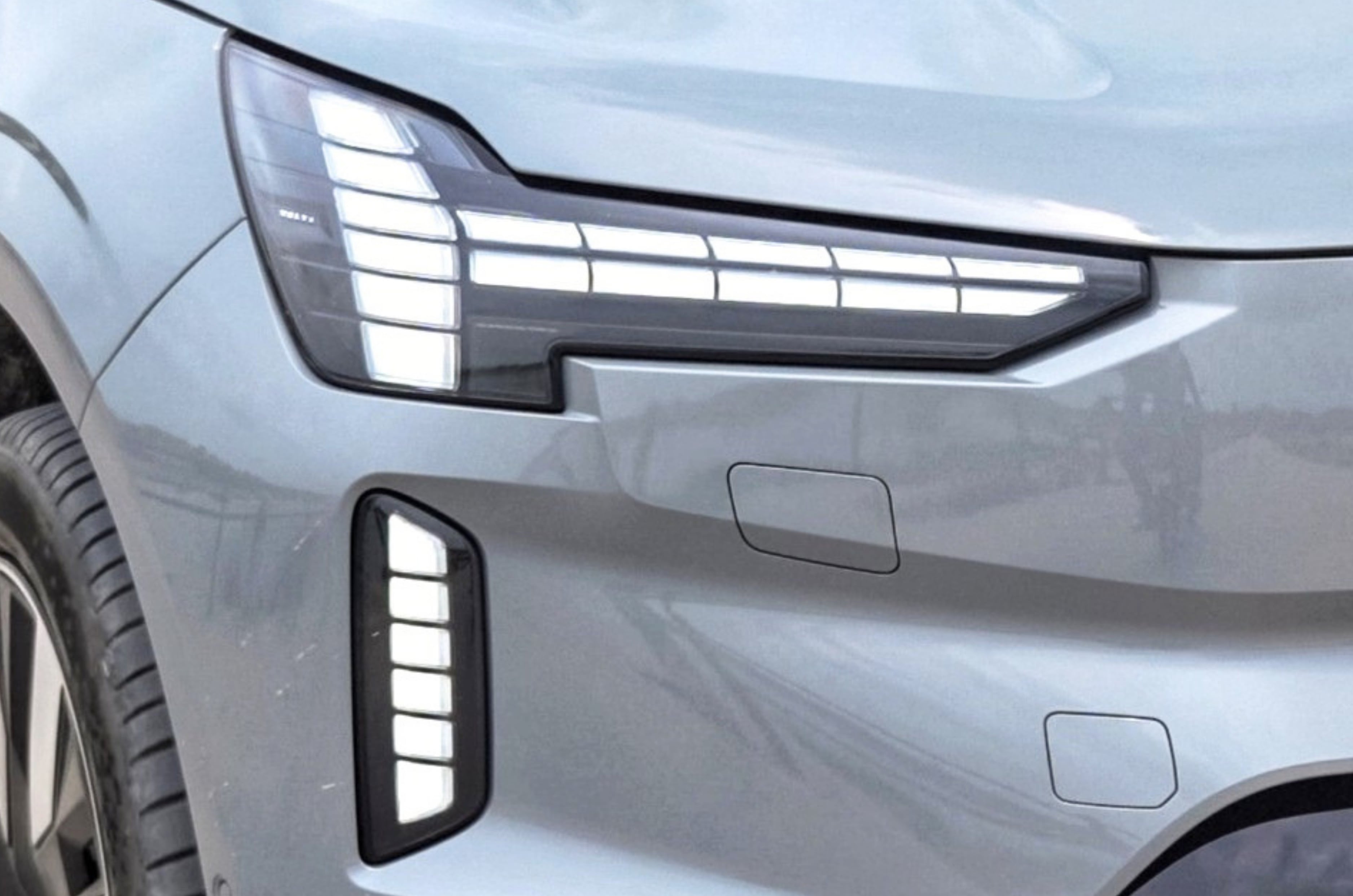
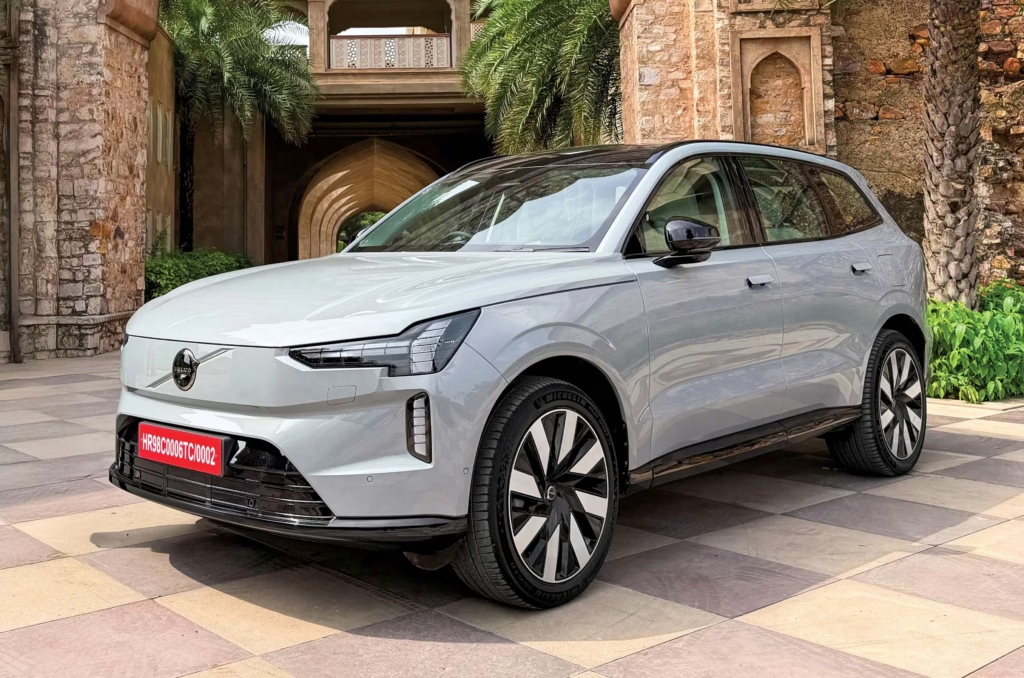
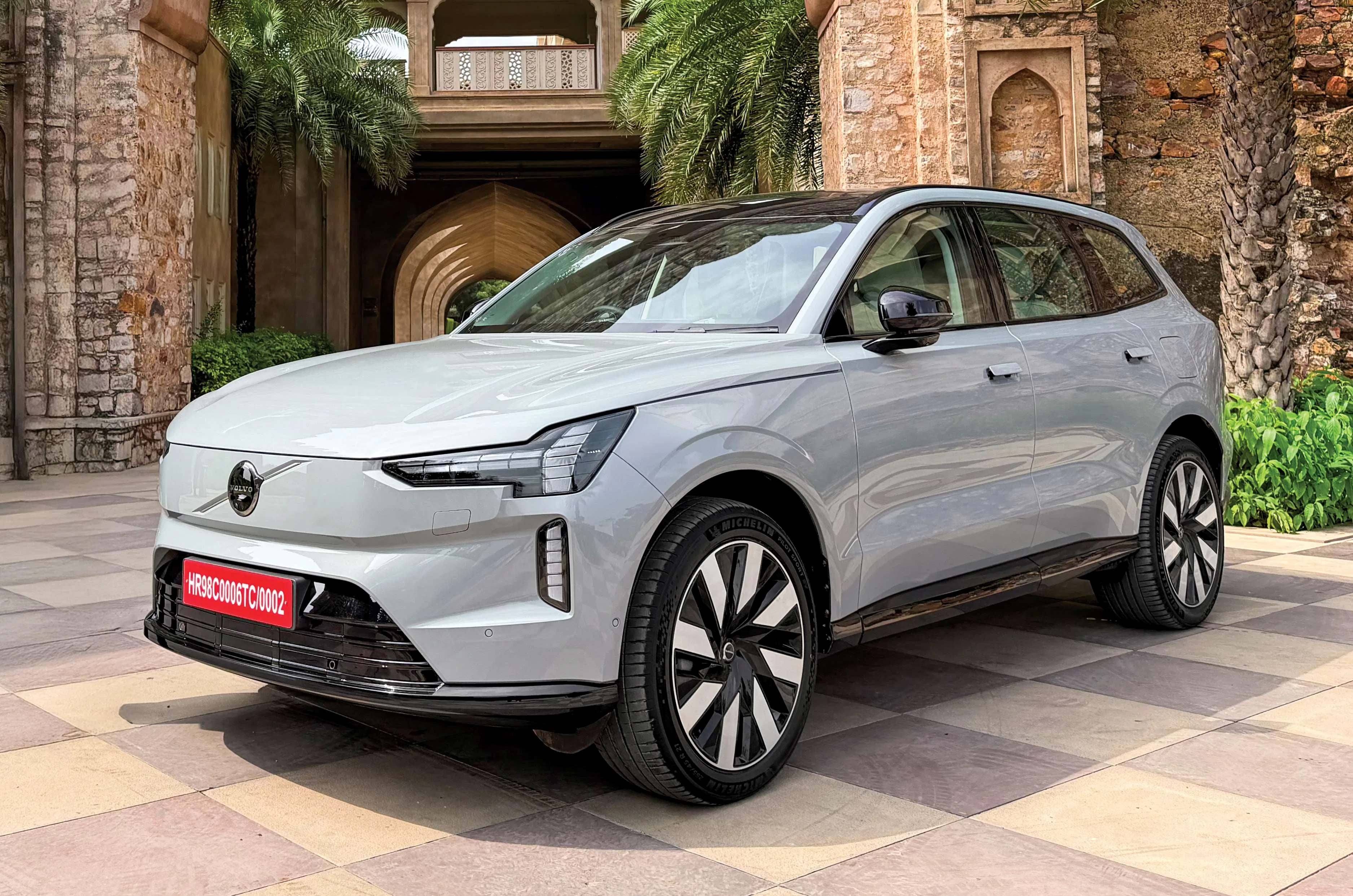
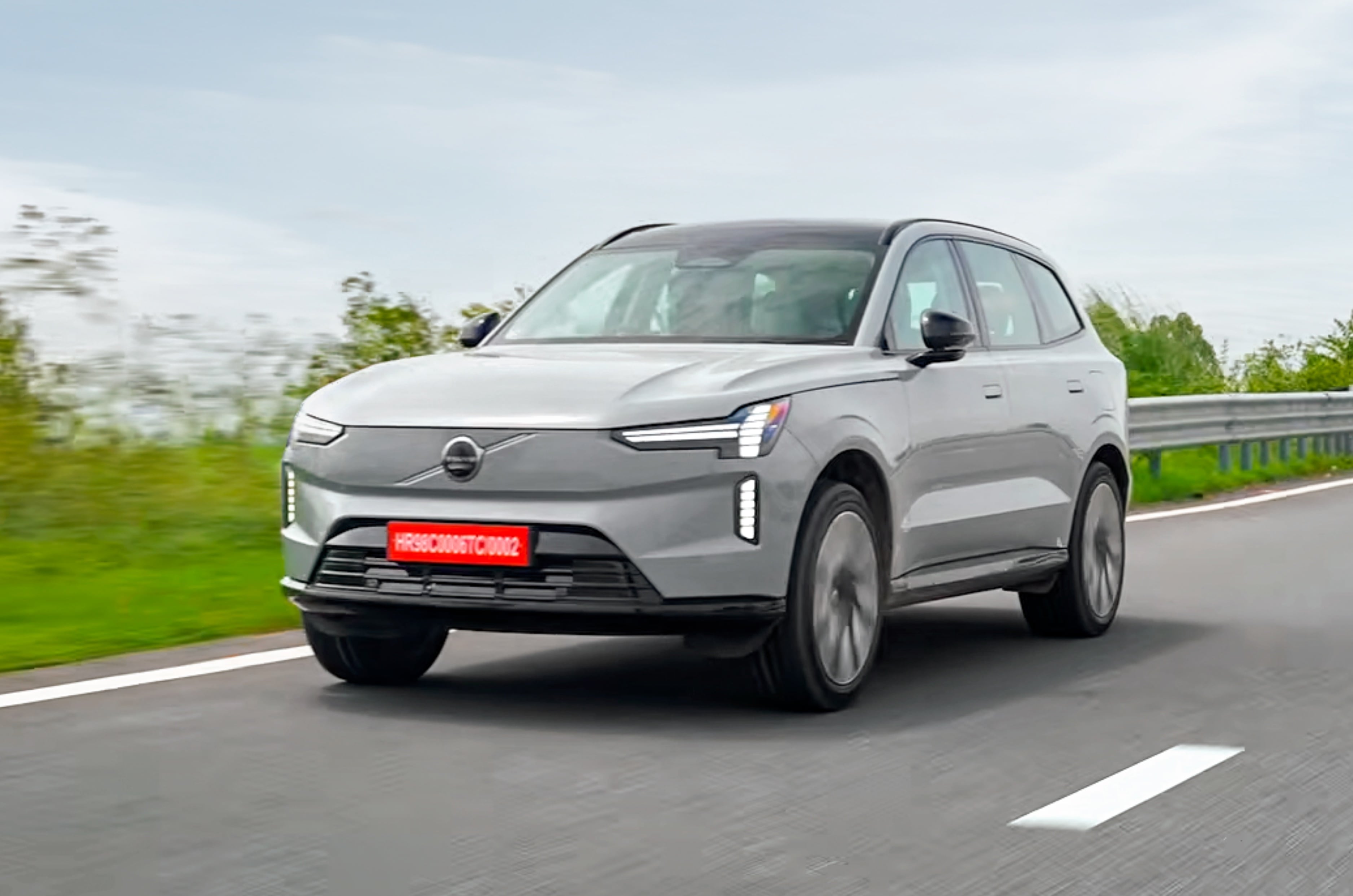
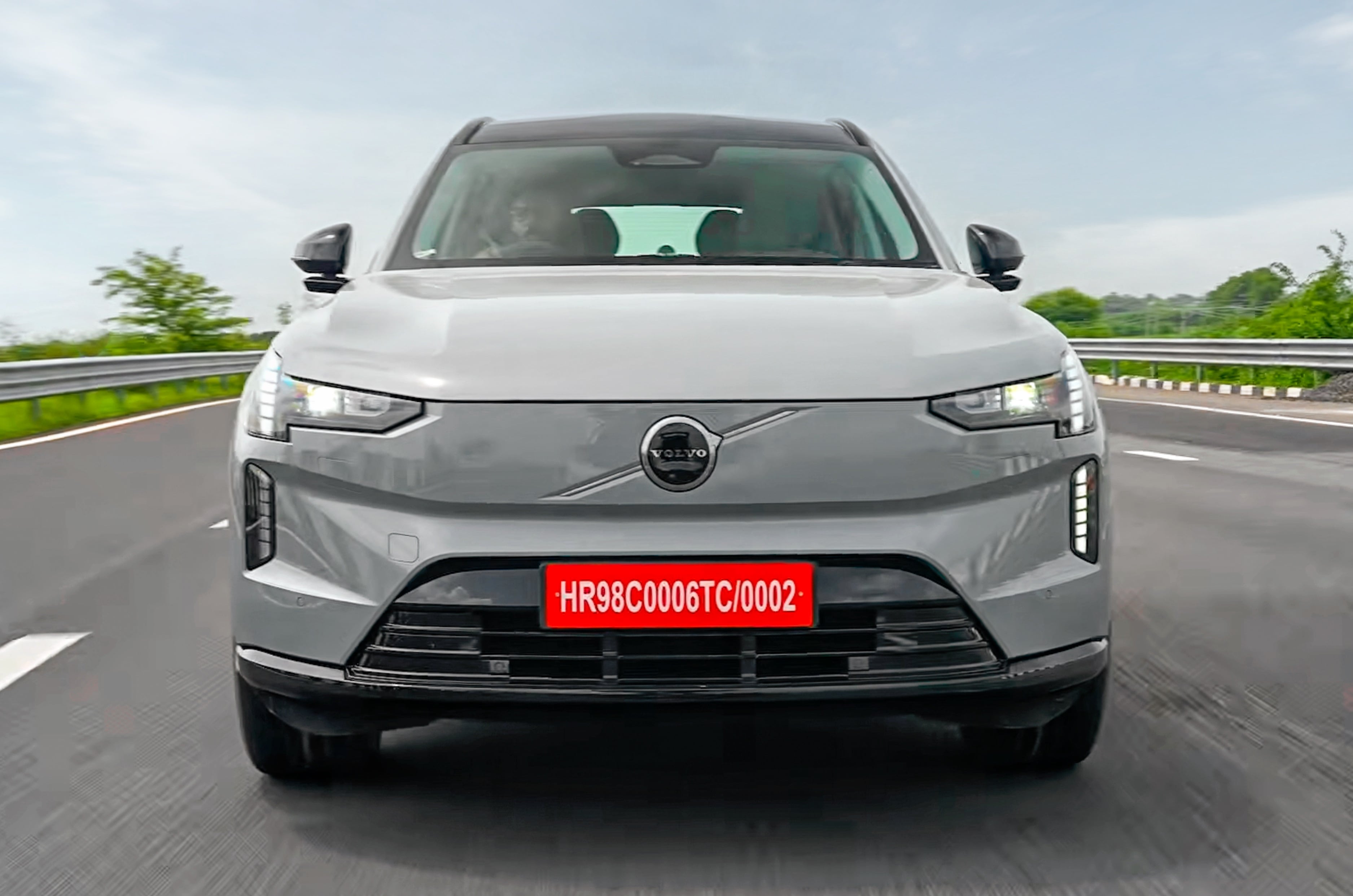
On the outside, the EX90 carries forward Volvo’s hallmark minimalistic styling, but with some new-age touches. The front end gets T-shaped LED headlamps with pixel-like DRL signatures, below which sit slim, vertically oriented fog lamps. There’s no grille on the fascia, only the Volvo emblem in the centre and a trapezoidal air dam lower down.
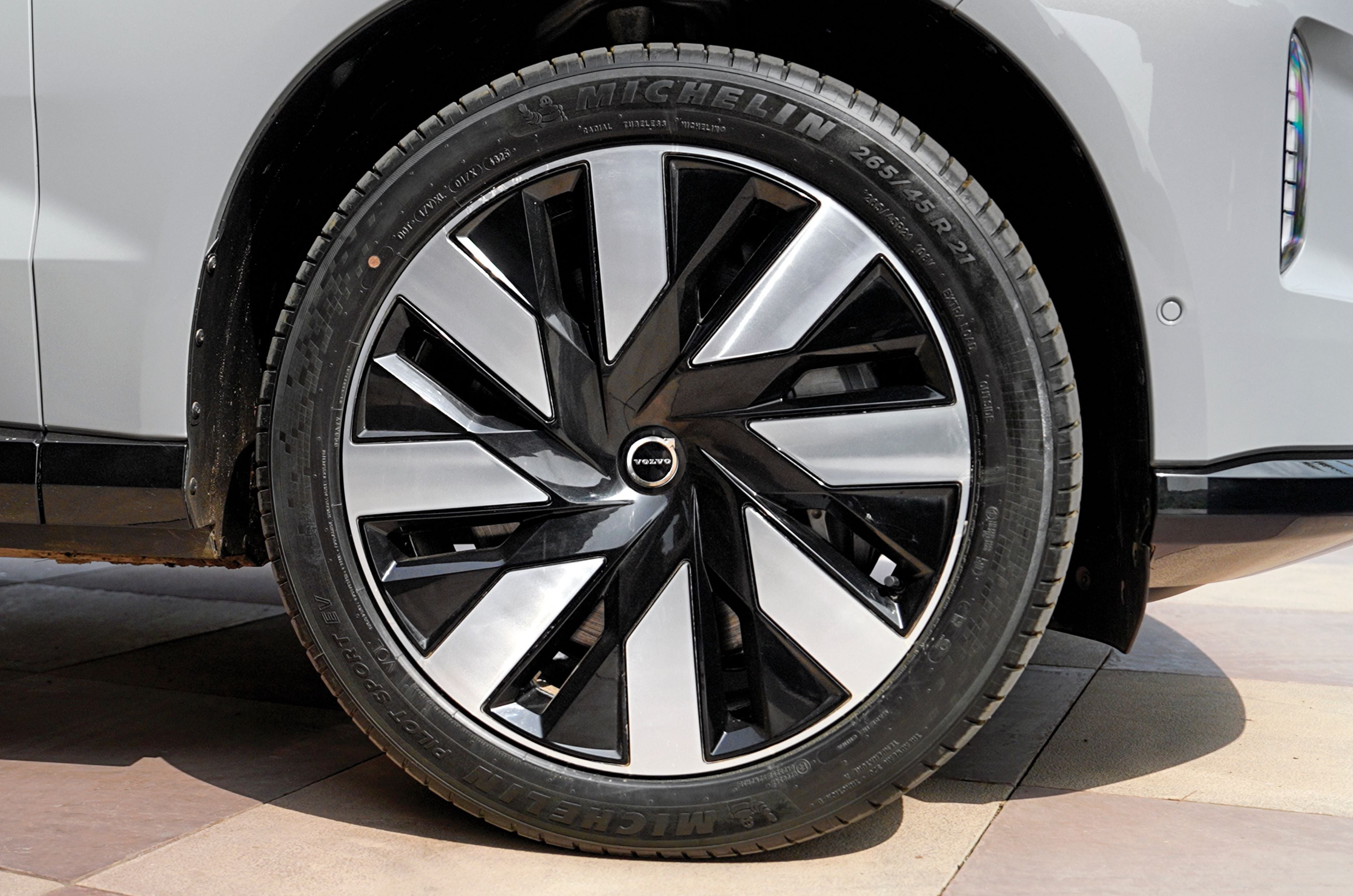
The side profile is clean and upright, with a 2,985mm wheelbase, 21-inch alloy wheels as standard, and a 210mm ground clearance. Air suspension is standard fit on the EX90 too, allowing you to raise the ground clearance to a maximum of 250mm.
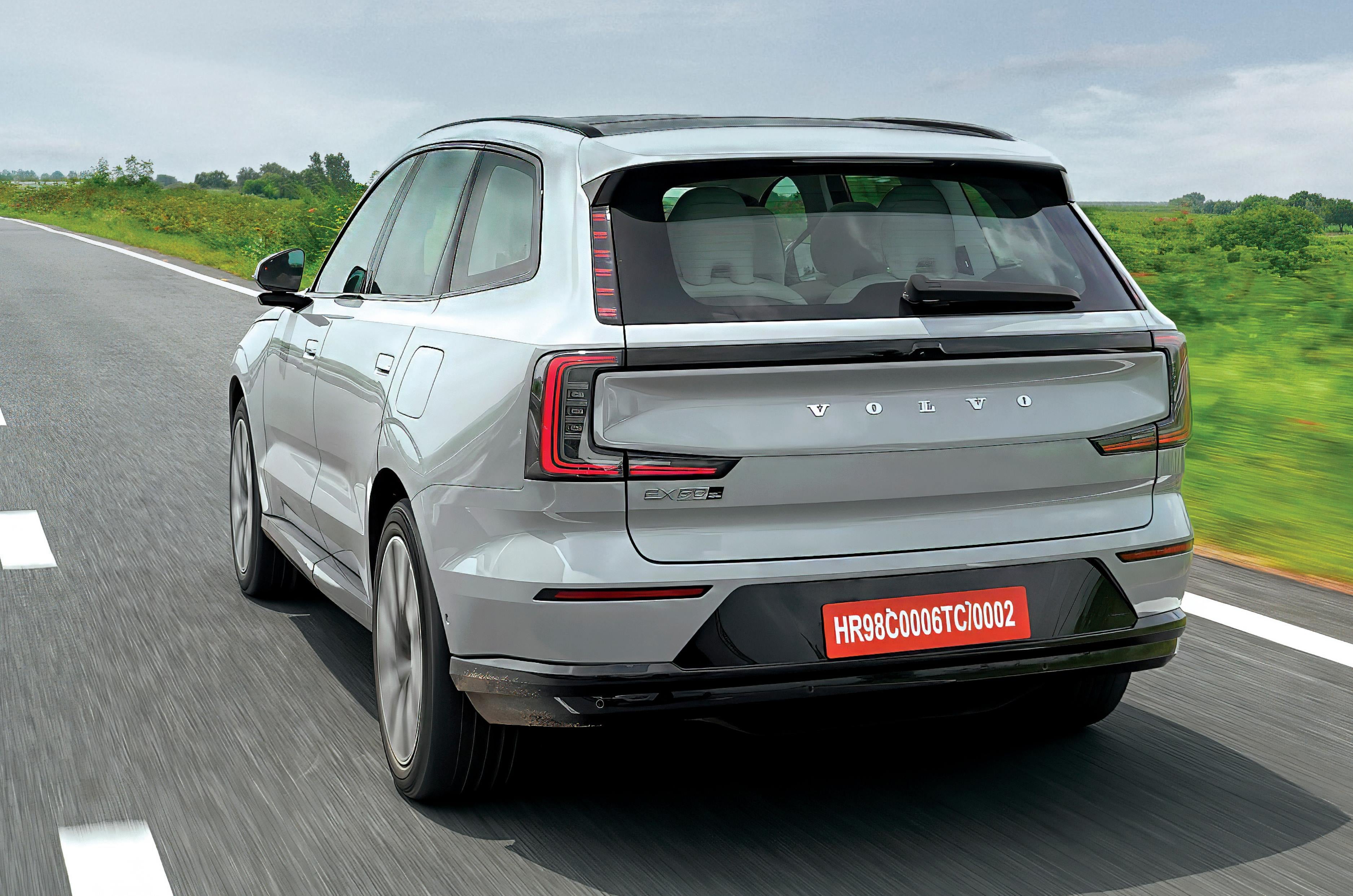
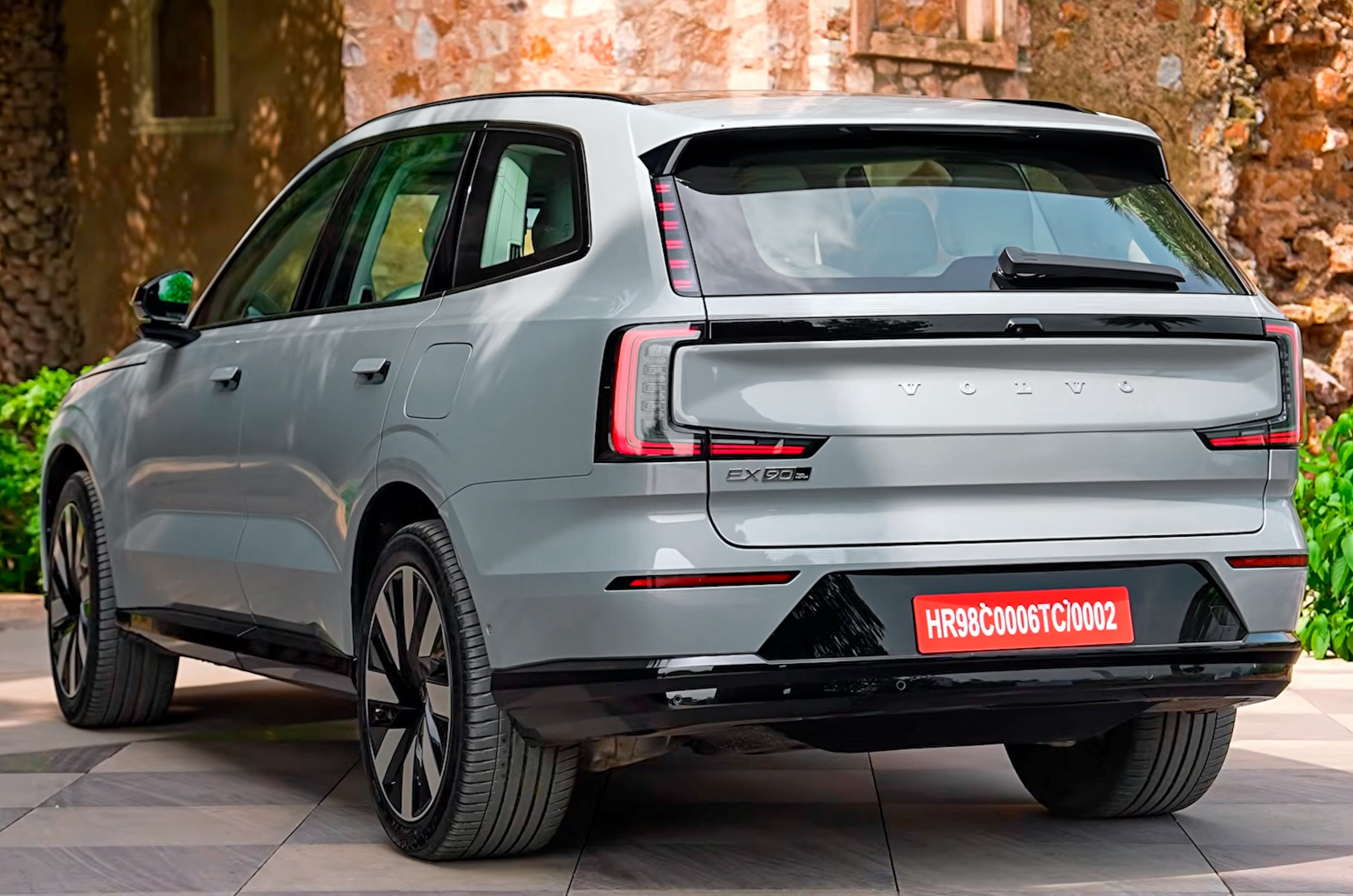
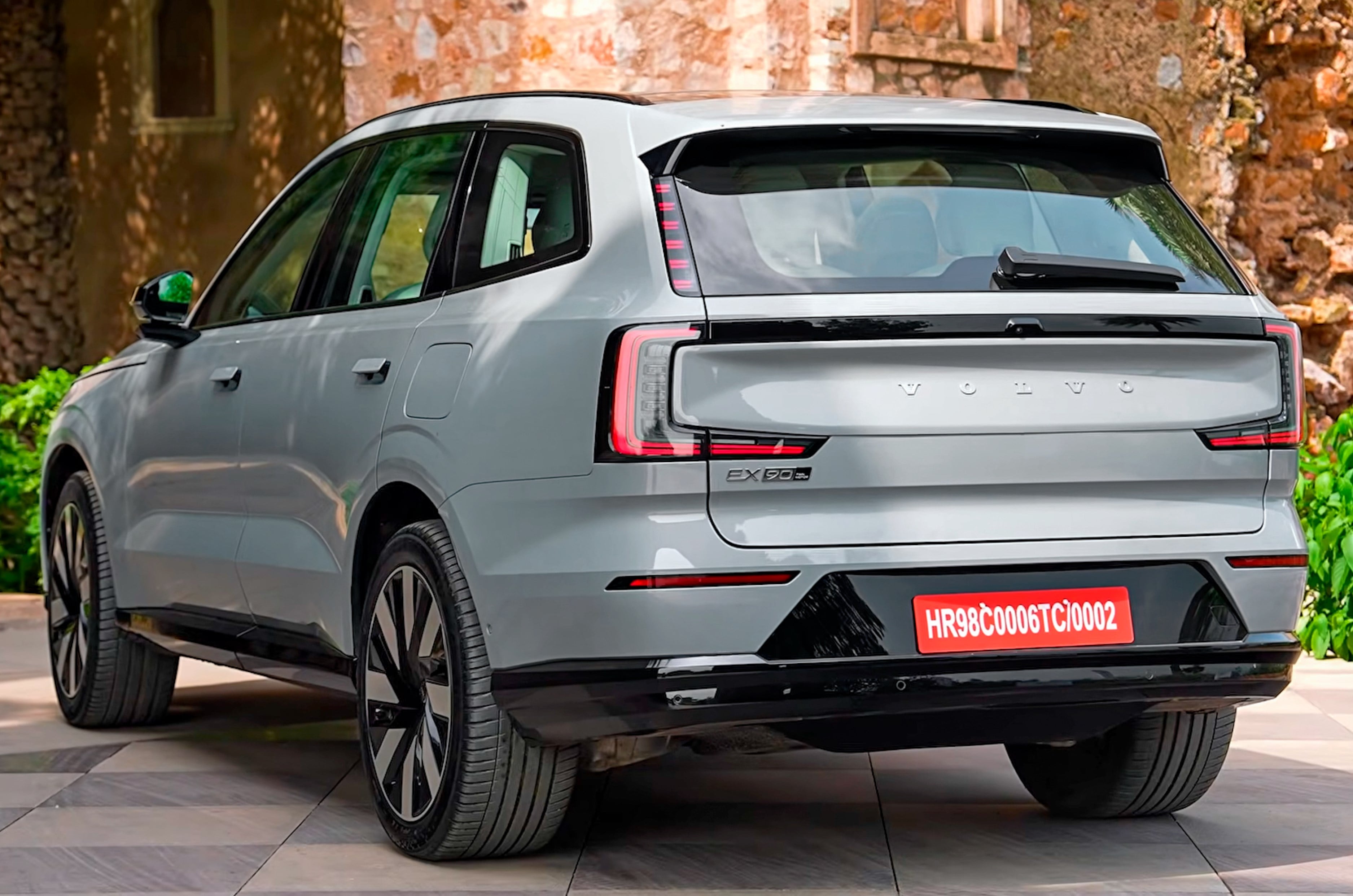
At the back, the EX90 features C-shaped LED tail-lamps connected by a black strip, along with LED arrays flanking the rear windscreen. A Volvo wordmark sits proud in the centre of the bootlid, and the bumper has a neat and discreet design. Colour options for the EX90 comprise Crystal White, Denim Blue, Mulberry Red, Onyx Black, Sand Dune, and Vapour Grey.
Volvo EX90 interior and features
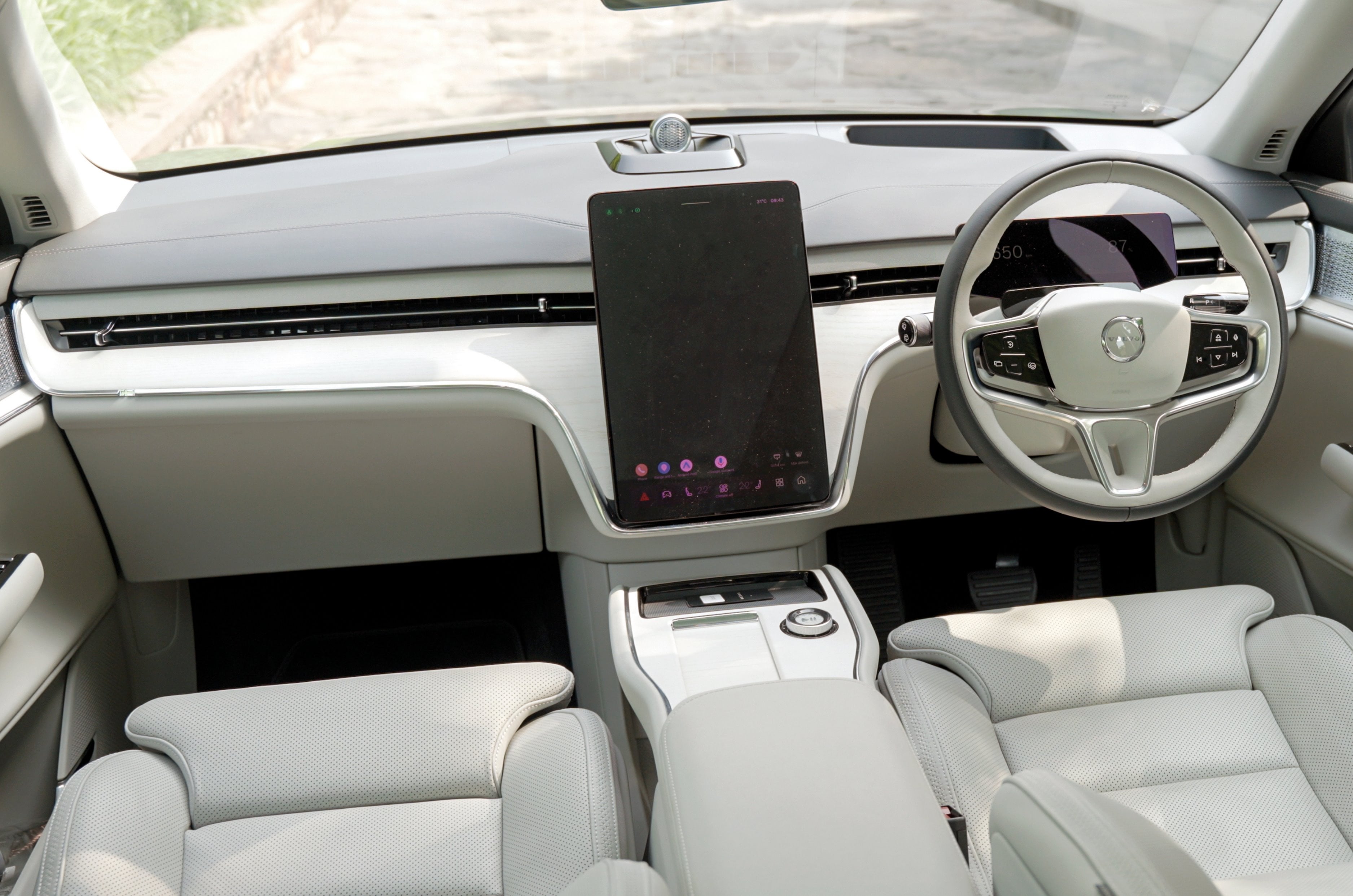
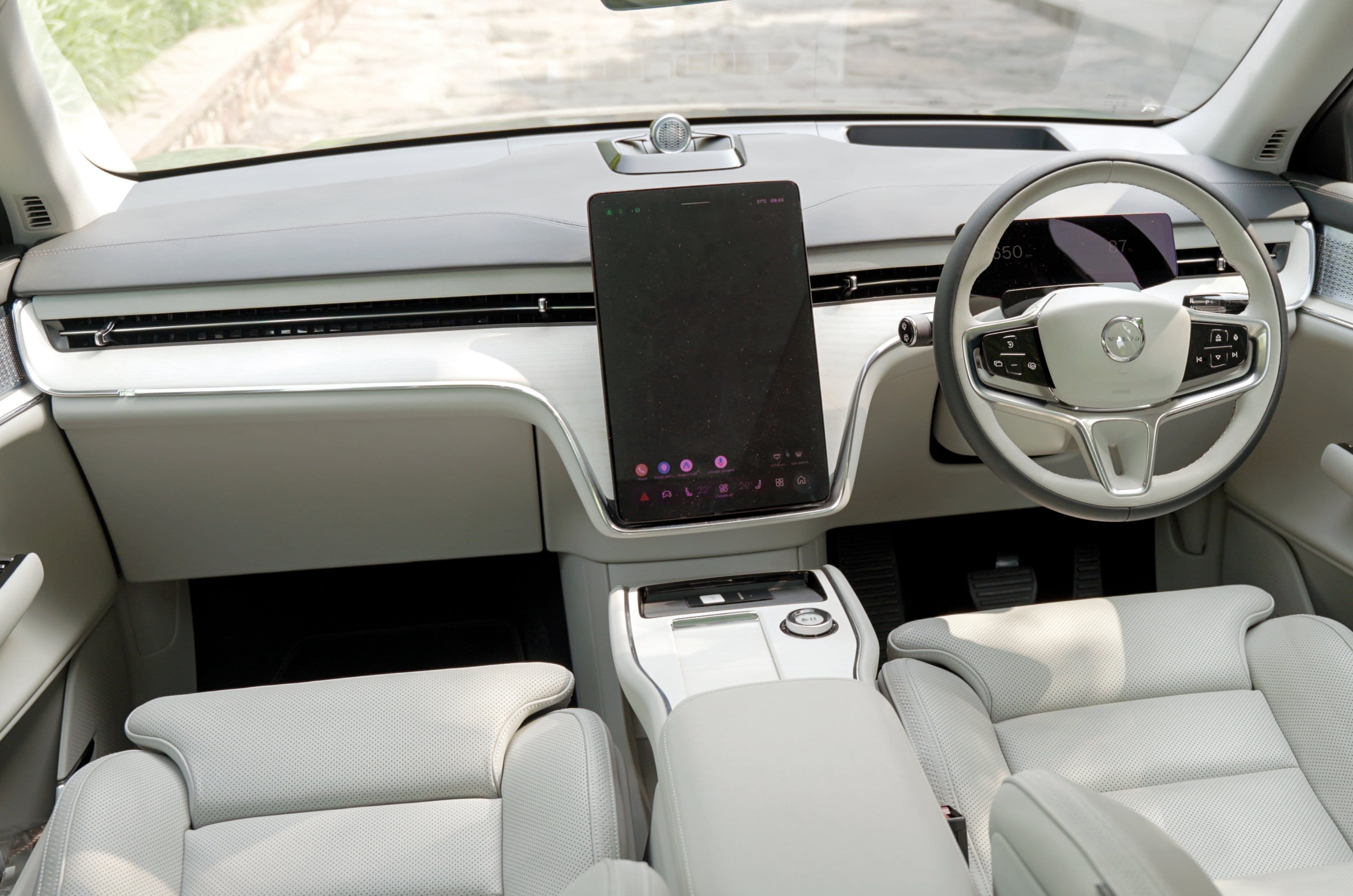
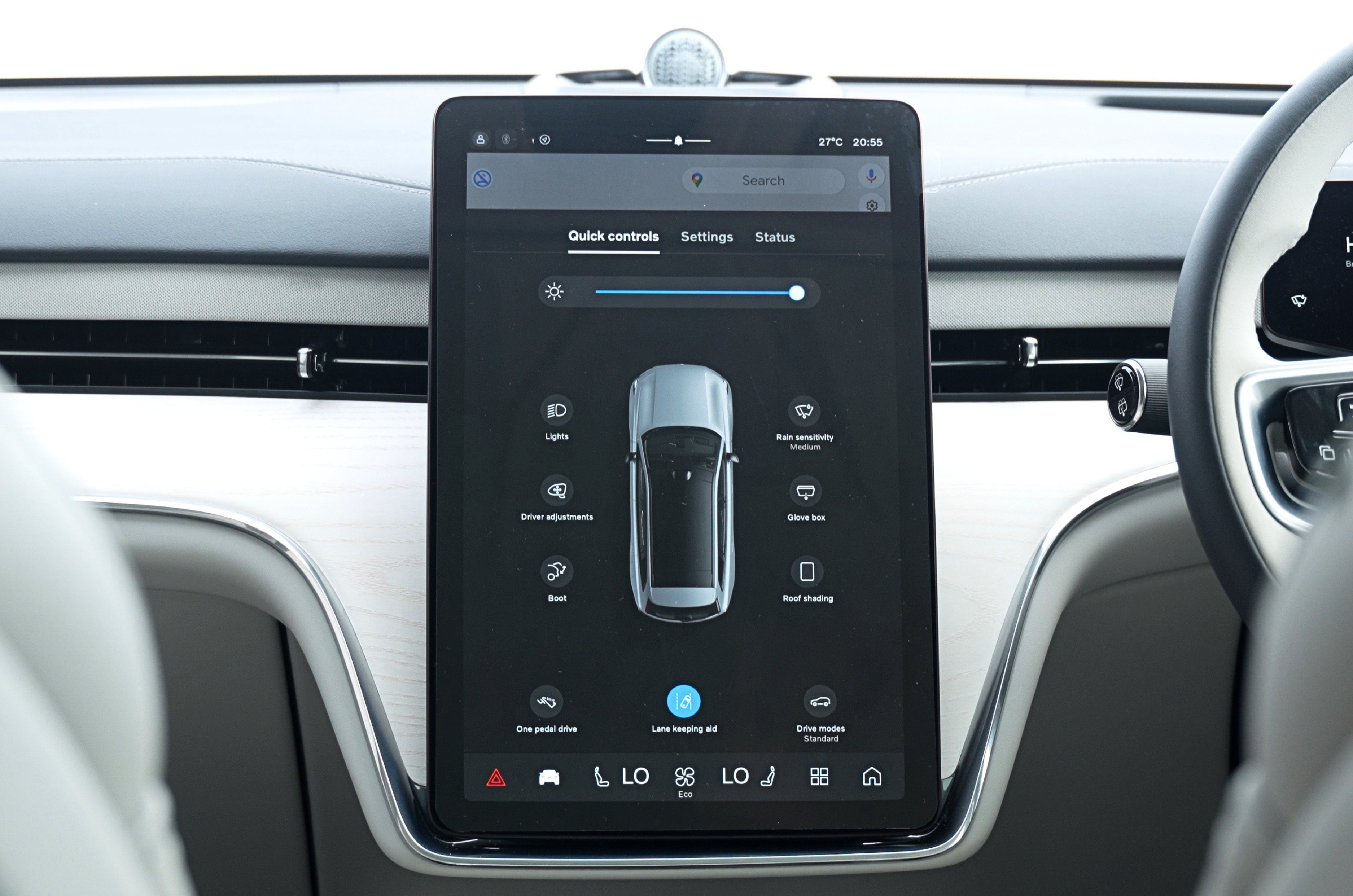
Volvo’s minimalist design philosophy extends to the EX90’s cabin, with a clean dashboard layout that incorporates rich two-tone Nappa leather upholstery, a three-spoke steering wheel, brushed aluminium trim pieces, a huge 14.5-inch vertically oriented infotainment touchscreen, and a slimmer 9-inch driver’s display. Physical controls are a rare sight in the cabin, as most of the in-car functions have been folded into the central touchscreen.
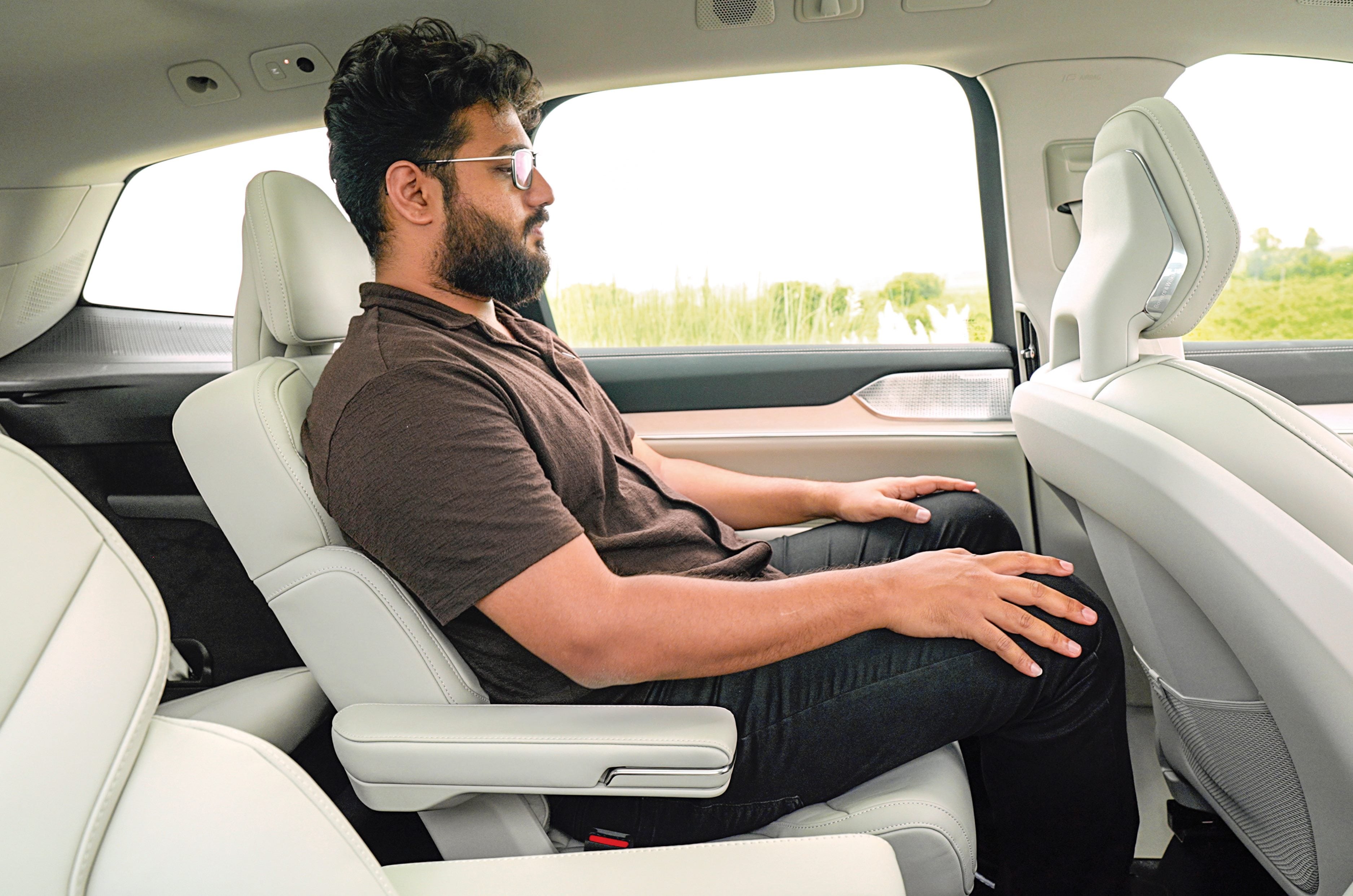
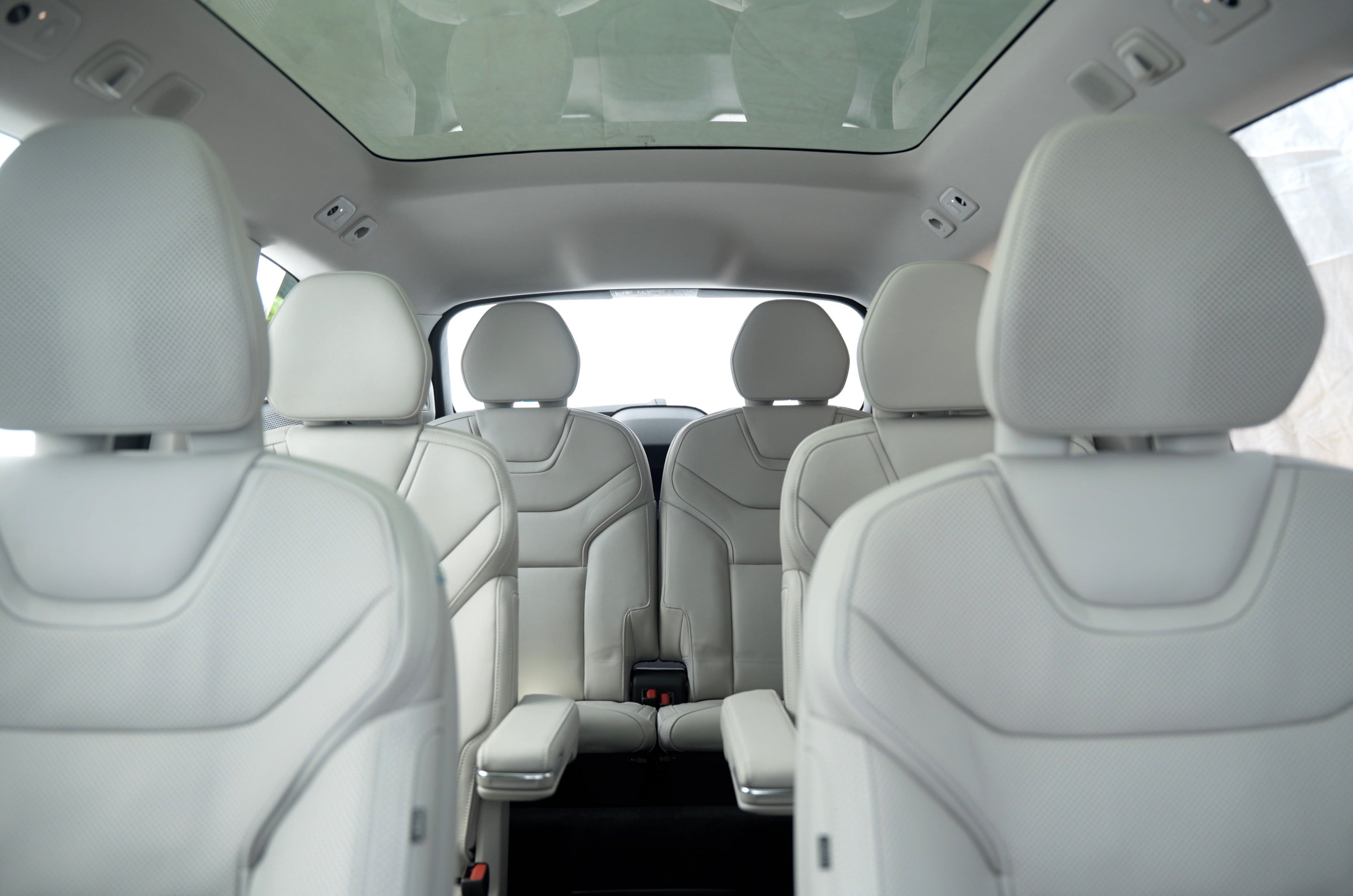
As noted previously, the India-spec EX90 is offered solely as a 6-seater with second-row captain’s chairs that slide and recline. There’s good space and comfort for second-row occupants, but these captain’s chairs don’t get the electrical adjustment, ventilation, heating, and massage functions that the front seats do. There are no sunshades for the rear windows, either, but you do get a large panoramic sunroof with switchable transparency.
Coming to the third row, access is easy by way of the space between the captain’s chairs (they don’t fold down, though). Once you’re there, however, the space on offer is best-suited to kids, or adults on short drives. Boot space is rated at 324 litres with the third row up, and if you fold that down, the capacity increases to 690 litres. You get a 46-litre frunk as well.
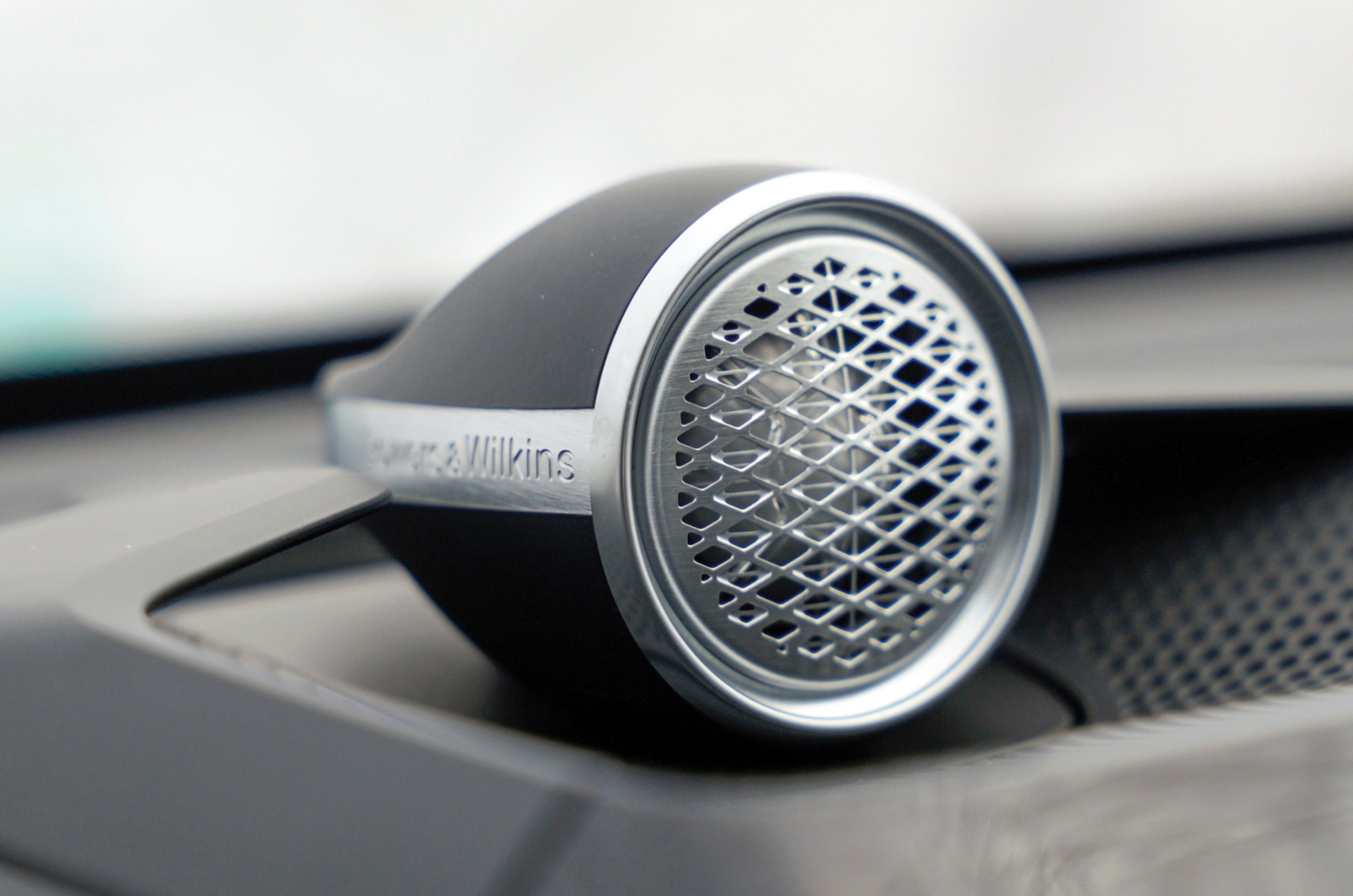
In addition to the features mentioned above, the EX90 comes packed with four-zone climate control, a 25-speaker Bowers & Wilkins sound system, configurable ambient lighting, 9 airbags, an ADAS suite, wireless Apple CarPlay and Android Auto, a 360-degree camera, auto park assist, a digital key, a wireless charging pad, a cabin air purifier, and more.
The Volvo EX90 rivals electric luxury SUVs like the Mercedes-Benz EQS SUV 580 and Kia EV9, which are priced at Rs 1.49 crore and Rs 1.30 crore, respectively. With its Rs 1.26 crore price tag, the EX90 undercuts both of its chief rivals.
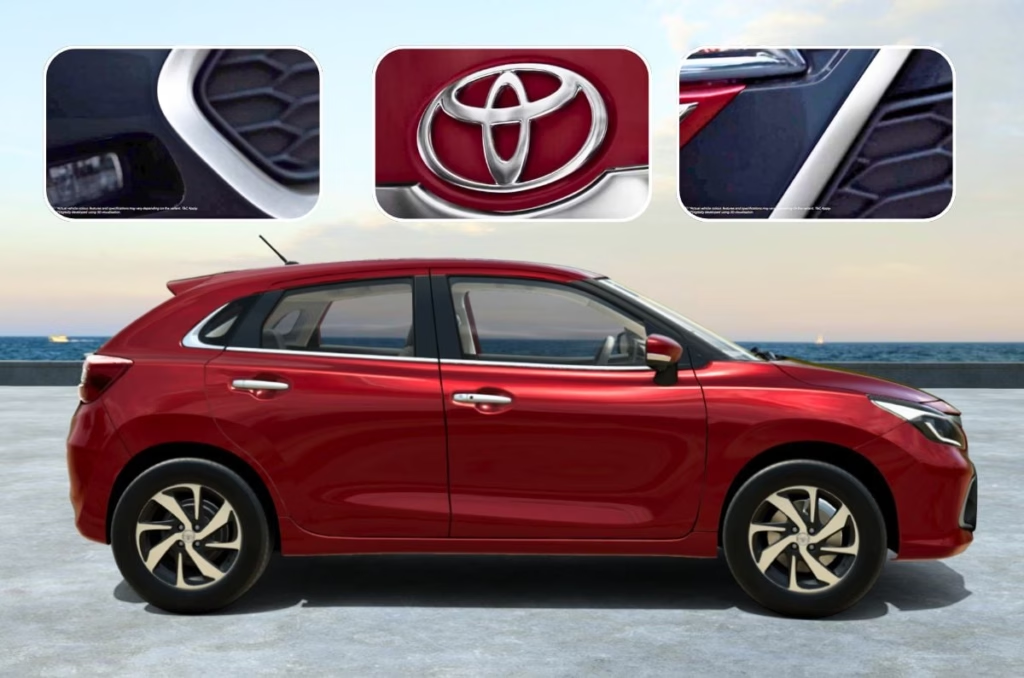
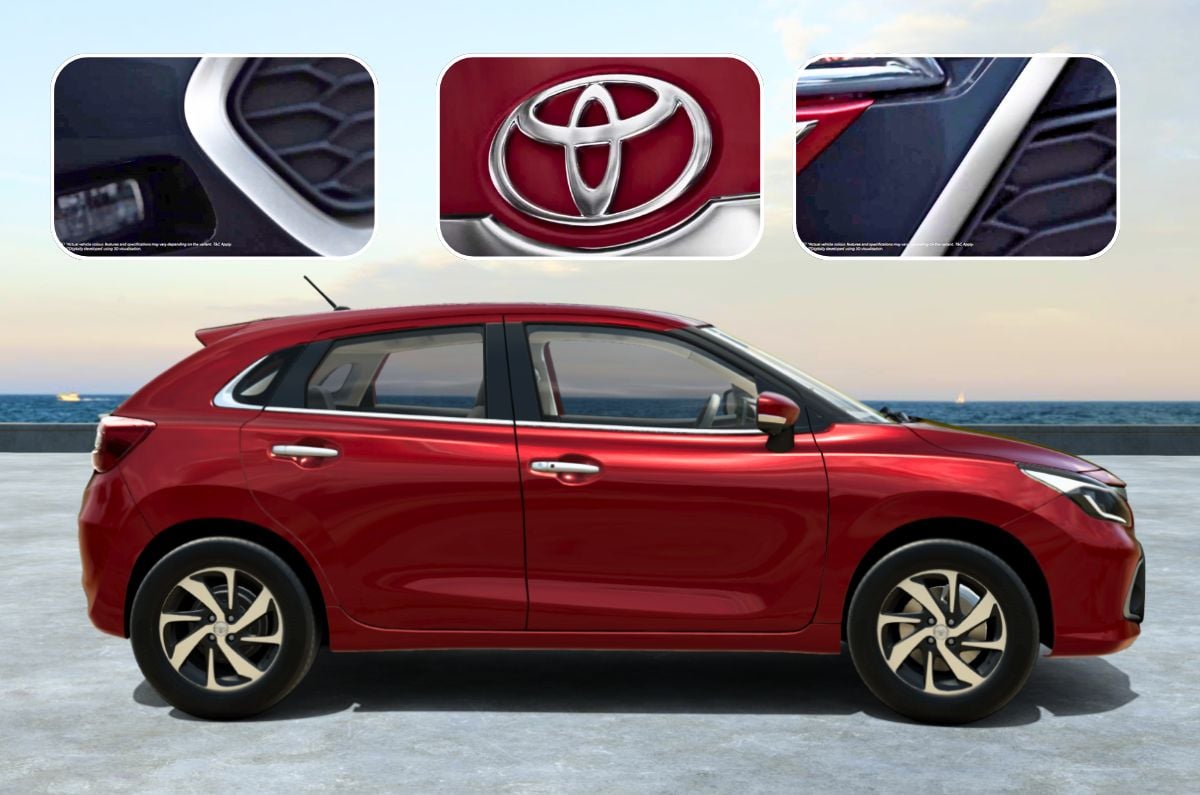
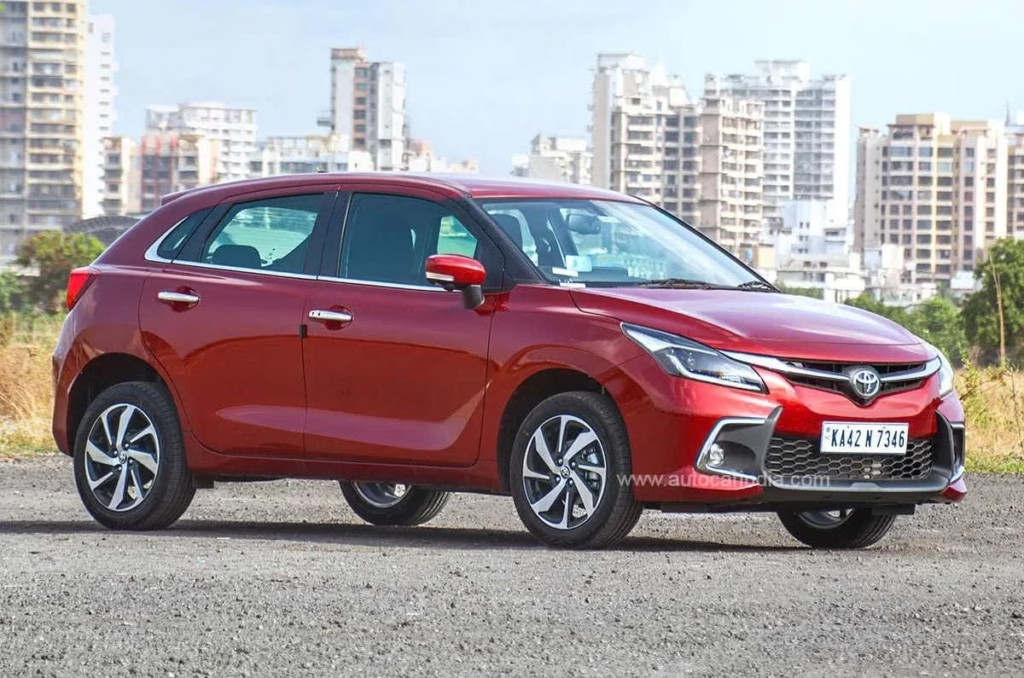
Toyota has teased the Glanza facelift for the first time ahead of its October 14 launch. The teaser shows glimpses of the facelifted Glanza’s fascia, while the rest of the design changes are under wraps. The Glanza facelift is also expected to get additional features and a new engine under the hood, similar to its badge-engineered Maruti Baleno sibling.
Teaser reveals a larger grille, revised fog lamps and a repositioned Toyota logo
Expected to be offered with additional features like ventilated seats, ADAS
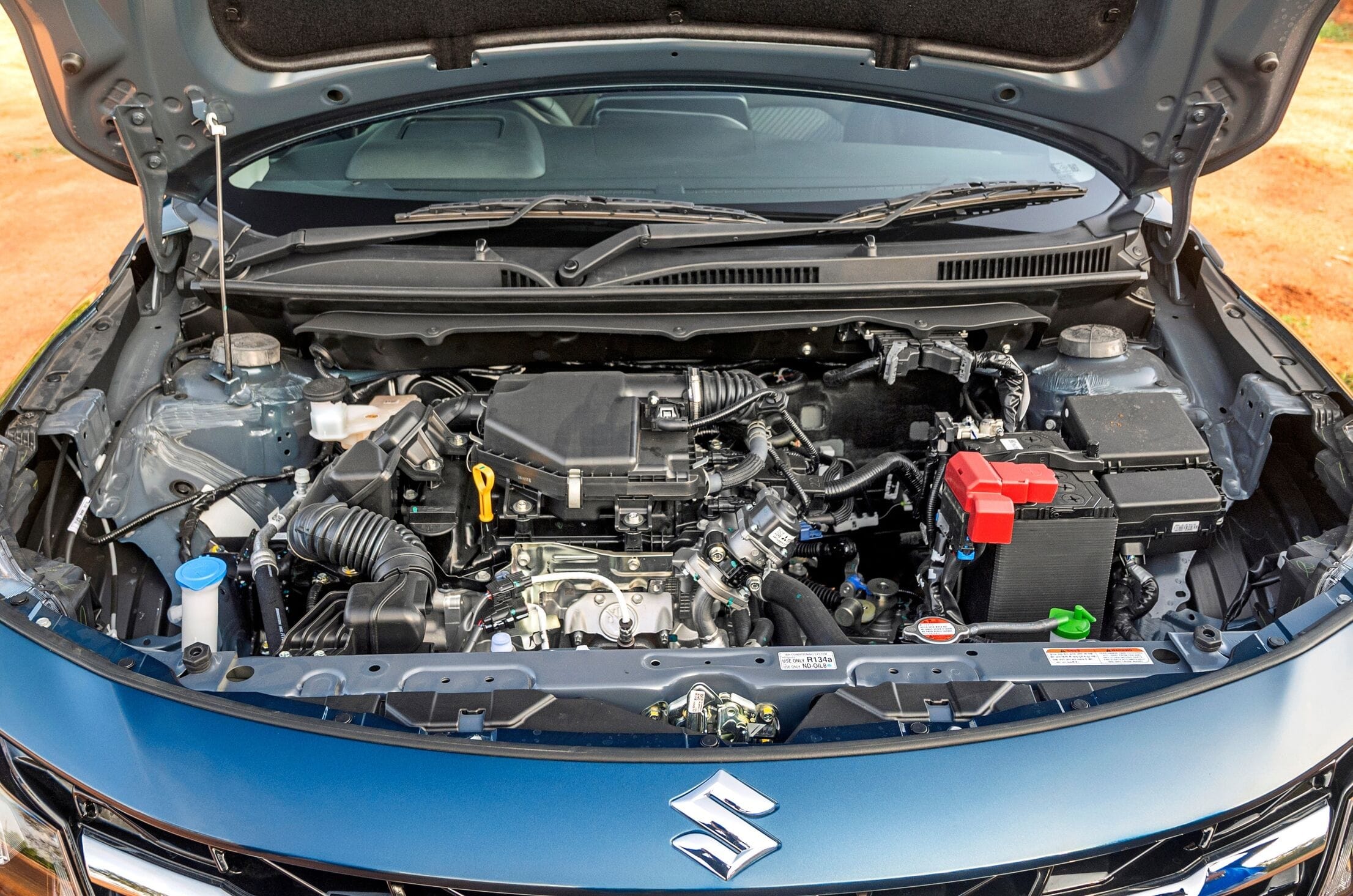
Could get a new Z12E 3-cylinder petrol engine from the 2026 Maruti Baleno
Toyota Glanza facelift teased: What was seen?
Teaser reveals a larger grille and redesigned front fog lamps
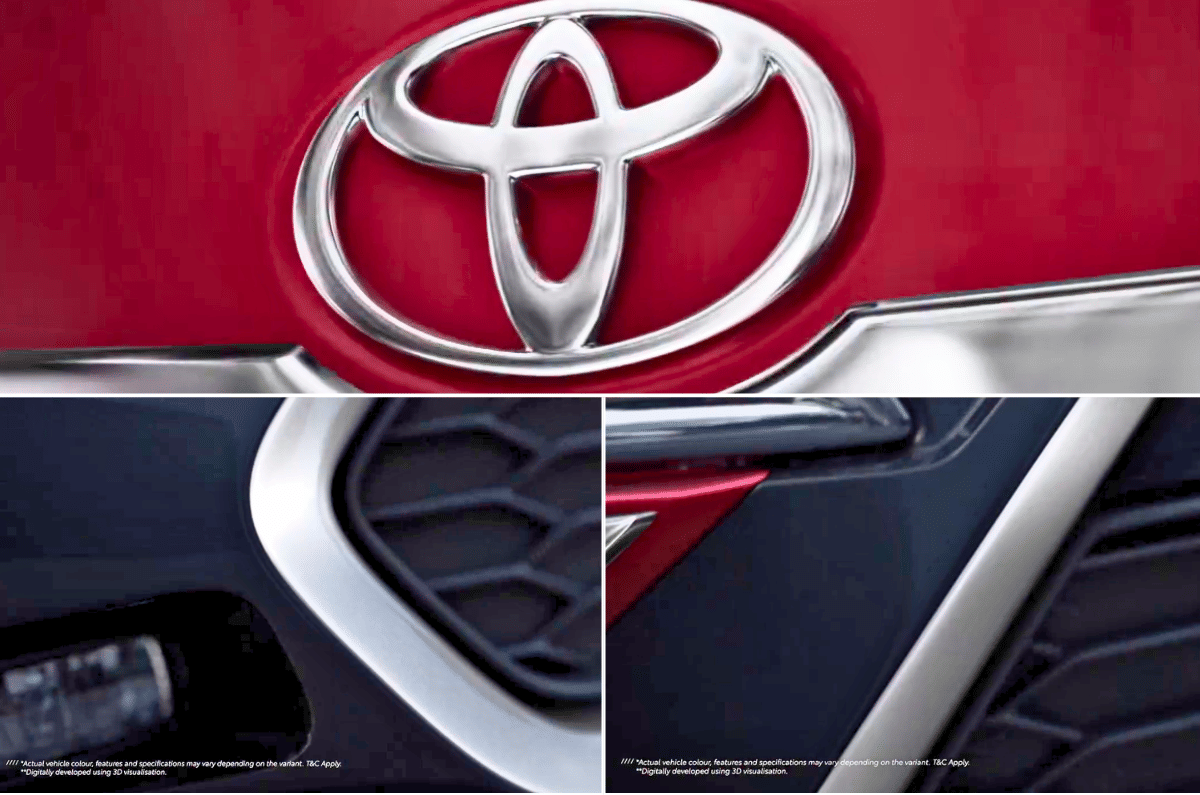
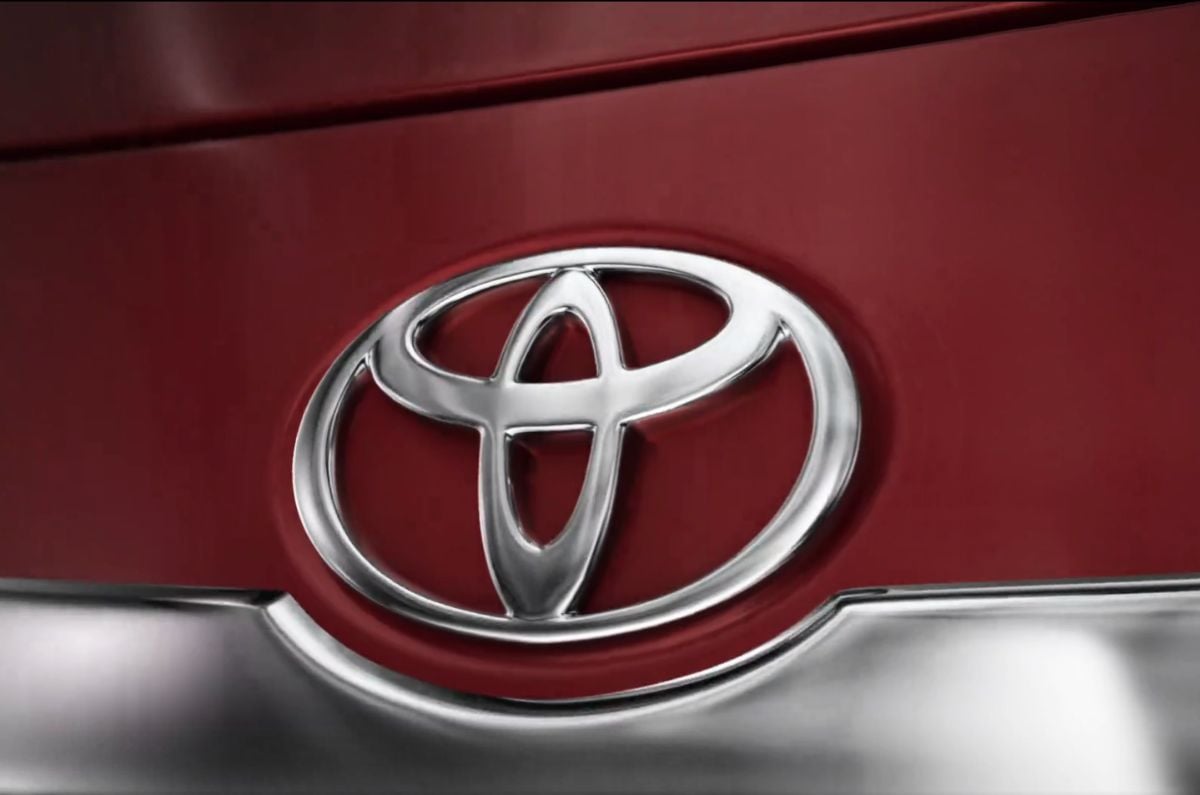
The teaser shows the Glanza facelift with a large grille featuring honeycomb mesh and chrome strips on the sides. The Toyota logo has shifted from the grille to a body-coloured trim over it. There is a thick chrome strip under the logo spanning from one headlight to the other. The teaser video also shows the revised LED fog lamps.
Other elements, including the headlights with LED DRLs and the taillights, are expected to be similar to the outgoing model. The only other expected change on the outside could be the design for the 16-inch alloy wheels.
Toyota Glanza facelift: Other expected changes
Ventilated front seats, ADAS, wireless phone charger expected to be added
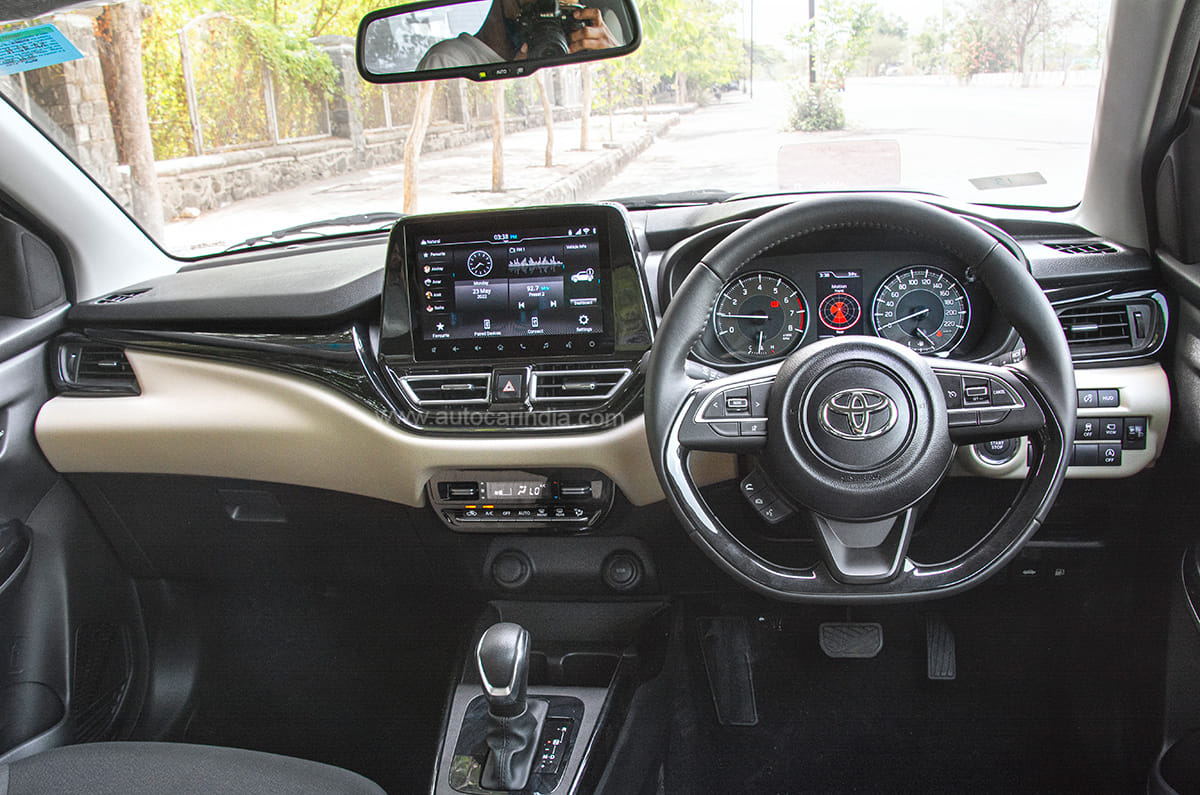
The pre-facelift Toyota Glanza’s dashboard is shown for representational purposes only.
While the interior design is expected to be similar to the outgoing model, the facelift could add new features like ventilated front seats, a wireless phone charger with cooling vents underneath it, and a Clarion sound system. On the safety front, a new advanced driver assistance system (ADAS) suite is expected to be offered.
New Z12E 3-cylinder petrol engine is expected to power it
The Maruti Baleno’s Z12E engine is shown for representational purposes only.
The Glanza facelift is expected to be offered with the Z12E 1.2-litre 3-cylinder naturally aspirated petrol engine that also does duty in the 2026 Baleno. The engine produces 83hp and 112Nm, which is 7hp and 1Nm less than the outgoing model’s K12N 4-cylinder petrol engine, but is more fuel efficient. A 70hp, 102Nm CNG option is also expected to be offered at launch.
Currently, the Glanza is offered with a choice between a 5-speed manual and a 5-speed automated manual transmission (AMT), which are expected to be carried over to the facelifted model. However, the CNG choice is available only with a manual transmission in the outgoing model, but the Baleno CNG is offered with an AMT option too. It will be interesting to see if Toyota offers an AMT option with the Glanza CNG.
With the facelift, the Toyota Glanza’s prices are expected to be rejigged from the current Rs 6.73 lakh to Rs 9.99 lakh range (ex-showroom). It will continue to rival the Maruti Baleno, Hyundai i20 and Tata Altroz.
Toyota is all set to launch the Glanza facelift on October 14, 2026, about a month after the launch of the 2026 Maruti Suzuki Baleno facelift. The Japanese automaker has released an official teaser, giving us a glimpse of the upcoming premium hatchback’s design. Here’s what you can expect from the 2026 Toyota Glanza facelift.
1. What will the 2026 Toyota Glanza facelift look like?
Official teaser shows the hatchback sporting a thoroughly revised front fascia
While the Japanese automaker is yet to fully reveal the 2026 Glanza facelift, the teaser gives us a decent glimpse of this hatchback’s front fascia. Understandably, there are some similarities between the upcoming Glanza and the updated Maruti Baleno. Like the latter, most of the changes to the outside are to be focused up front. This starts with the Toyota logo, which has been moved from the grille to the leading edge of the bonnet.
Another noticeable design cue on the front fascia of this facelift is the shiny garnish that extends down into the revised bumper. The circular fog lamps of the outgoing model have now been replaced by rectangular units, while the revised air-intake sports a hexagonal pattern. The 2026 Toyota Glanza facelift could also get an ADAS unit at the front like the updated Baleno. There could be new colour options, with dimensions of the upcoming Glanza facelift unlikely to change.
2. How different will the interior of the Toyota Glanza facelift be?
Cabin is likely to retain the familiar layout of the outgoing model
Pre-facelift Toyota Glanza’s interior shown for representational purposes.
Like the updated Baleno, the interior design and layout of the 2026 Toyota Glanza facelift are also expected to stay largely unchanged. This means that we can expect to find the same layered dashboard, plenty of physical switchgear, and a dash-top infotainment screen as in the pre-facelift model. What could be new are additional buttons on the steering wheel, tied to the expected ADAS feature.
3. What features are expected with the 2026 Toyota Glanza facelift?
Highlights with update could include Level 2 ADAS and ventilated front seats
Toyota could introduce the 2026 Glanza facelift with the set of new features that the updated Maruti Baleno received. This means niceties like ventilated front seats, a wireless charging pad with cooling, and an upgraded audio system could be made available on top trims. Features like the 9-inch touchscreen, automatic climate control and connected car tech are to be carried over.
The feature set is expected to be similar to that of the updated Maruti Baleno.
The upcoming Glanza facelift’s safety add-ons are likely to include Level 2 ADAS (advanced driver assistance systems) and a tyre-pressure monitoring system (TPMS). Like with the updated Baleno, the former’s functionalities would include adaptive cruise control with auto-emergency braking and lane-keep assist. Other safety features like the 360-degree camera, head-up display, hill-hold assist, stability control and 6 airbags could be retained as well.
4. What engine and gearbox will the Toyota Glanza facelift use?
A three-cylinder petrol engine is expected to replace the outgoing four-cylinder unit
A major change with the 2026 Toyota Glanza facelift is expected under the bonnet. The 1.2-litre four-cylinder K-series petrol engine from Maruti is to be replaced by the brand’s newer 1.2-litre three-cylinder Z-series unit. In the updated Baleno, this mill produces 83hp and 112Nm – down from 90hp and 113Nm developed by the older four-cylinder engine.
Powertrain options are expected to be the same as the 2026 Maruti Baleno.
Gearbox options are expected to remain the same, which means a 5-speed manual or a 5-speed AMT (automated manual transmission). Similar to the outgoing Glanza, the facelift is also expected to be available in CNG variants. The output figures for the Glanza CNG facelift could be comparable with its Maruti counterpart, where the output is 70hp and 102Nm. Fuel efficiency is expected to improve over the outgoing model, which for reference is rated at between 22.35kpl and 22.94kpl.
5. What is the expected price of the 2026 Toyota Glanza facelift?
The updates could lead to a bump in price over the outgoing model
Considering the feature additions and design updates, the upcoming Toyota Glanza facelift could be priced higher than its predecessor. For reference, the outgoing Glanza is priced between Rs 6.73 lakh and Rs 9.99 lakh (ex-showroom). The Toyota Glanza facelift will continue to compete against the Maruti Suzuki Baleno, Tata Altroz and Hyundai i20.
This month, we go big on power and even bigger on premium metal. The cover story is Kia’s biggest swing yet at the executive SUV segment, and then there’s a family SUV with more horsepower than a Lamborghini, and BMW’s electric onslaught continues with a new long-wheelbase sedan and a sharper flagship limousine.
Kia Sorento: Cover Story
Six trims, two powertrains, up to seven seats and 32 variants in all. Kia isn’t dipping a toe into the premium SUV pool; it’s diving straight in, locally assembling the Sorento from Rs 27.99 lakh to take on the Skoda Kodiaq and VW Tayron. Has Kia cracked the code, or has it bitten off more than it can chew?
Porsche Cayenne Electric: First Drive
Forget hypercars. The most powerful vehicle currently on sale in India is a family SUV, the Cayenne Electric, with more horsepower than your senses can fathom. We took it to an airstrip to see what that actually does to your stomach.
BMW i5 LWB & i7 Facelift: First Drives
BMW’s electric push continues, with a long-wheelbase i5 slotting in between the iX1 and flagship i7. Can BMW’s long-wheelbase playbook continue to work? And there’s also the i7 getting a sharper face and more tech to go with it, like it didn’t have enough already.
Mercedes-Benz GLC Electric: Drive
The first-gen electric GLC was far from ideal. The new one, however, is a completely new generation with an 800V architecture, 330kW charging and a claimed 715km range. We took all 489 of its horses to the Autobahn to see how much of an improvement it has been over its predecessor.
MG Hector Tomahawk EV: First Drive
Don’t let the familiar name fool you. The Hector Tomahawk EV rides on MG’s all-new ADAPT platform, bigger than the Mahindra XEV 9S in every dimension, with a PHEV sibling already waiting in the wings.
Maruti Suzuki Baleno, Renault Triber Turbo and Skoda Slavia: First Drives
India’s favourite premium hatch, the Baleno, gets a new engine and ADAS, the budget-friendly Triber finally gets the power it’s been begging for, and the Slavia’s facelift turns out to be more than skin-deep.
Mahindra Thar OG: First Drive
The original three-door Thar gets another round of updates, bringing changes to its engines, equipment and chassis. With the off-road icon continuing to evolve, we head out to discover what this latest iteration brings to the table.
Taking the High Road: Features
Goa’s new Porvorim Elevated Corridor opens on NH66, and we test it in two ways: solo against Google Maps’ ETA in an MG Cyberster, and then flanked by a dozen supercars, Ferraris, a McLaren 750S and a Lamborghini Huracan among them, for its proper initiation.
Rocket Ship to the Moon: Feature
A Lamborghini SUV is already an exercise in excess. Take it somewhere unexpected, add a little spectacle, and you have the ingredients for an automotive adventure that refuses to be ordinary.
Royal Enfield Himalayan 440
The original Himalayan is back with a bigger engine and a handful of meaningful changes. In a world where adventure bikes keep getting more complicated, there’s something rather appealing about going back to basics.
Tracker 400 vs Guerrilla 450: Comparison
Two left-field street nakeds, the Triumph Tracker 400 and Royal Enfield Guerrilla 450, go head-to-head. One takes its inspiration from flat-track racers, while the other fancies itself a sporty roadster. Both want your money, and neither is particularly interested in being sensible about it.
KTM Adventure Rally Extreme: Ride
Adventure riding is all well and good until the road disappears, the terrain turns hostile and you begin questioning your life choices. We get a taste of KTM’s rally raid experience, where the only shortcut is having the skill to take one.
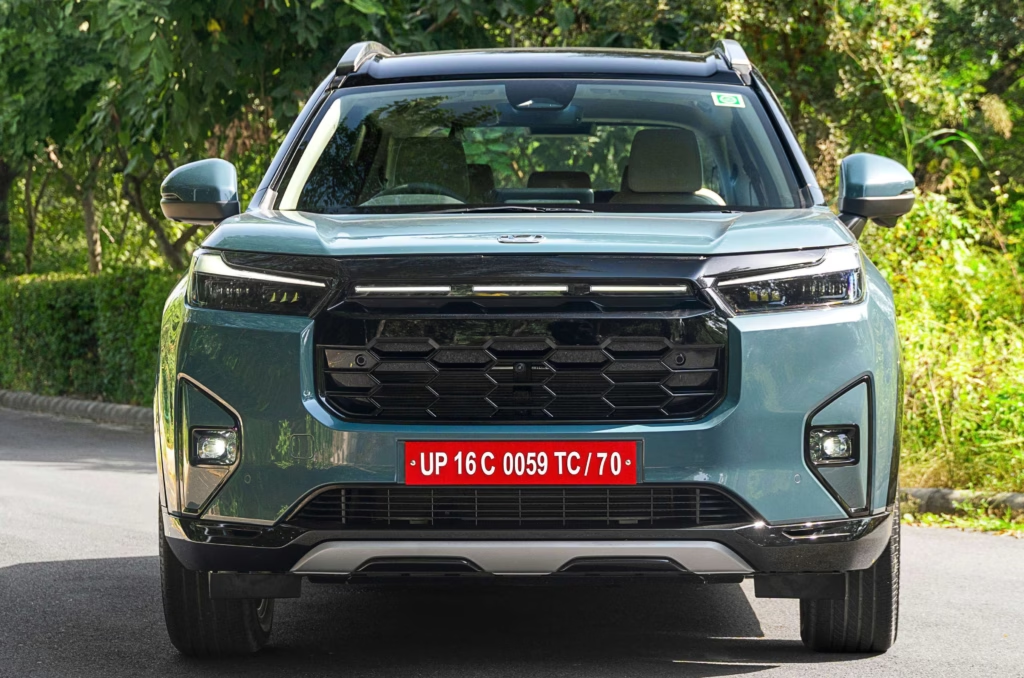
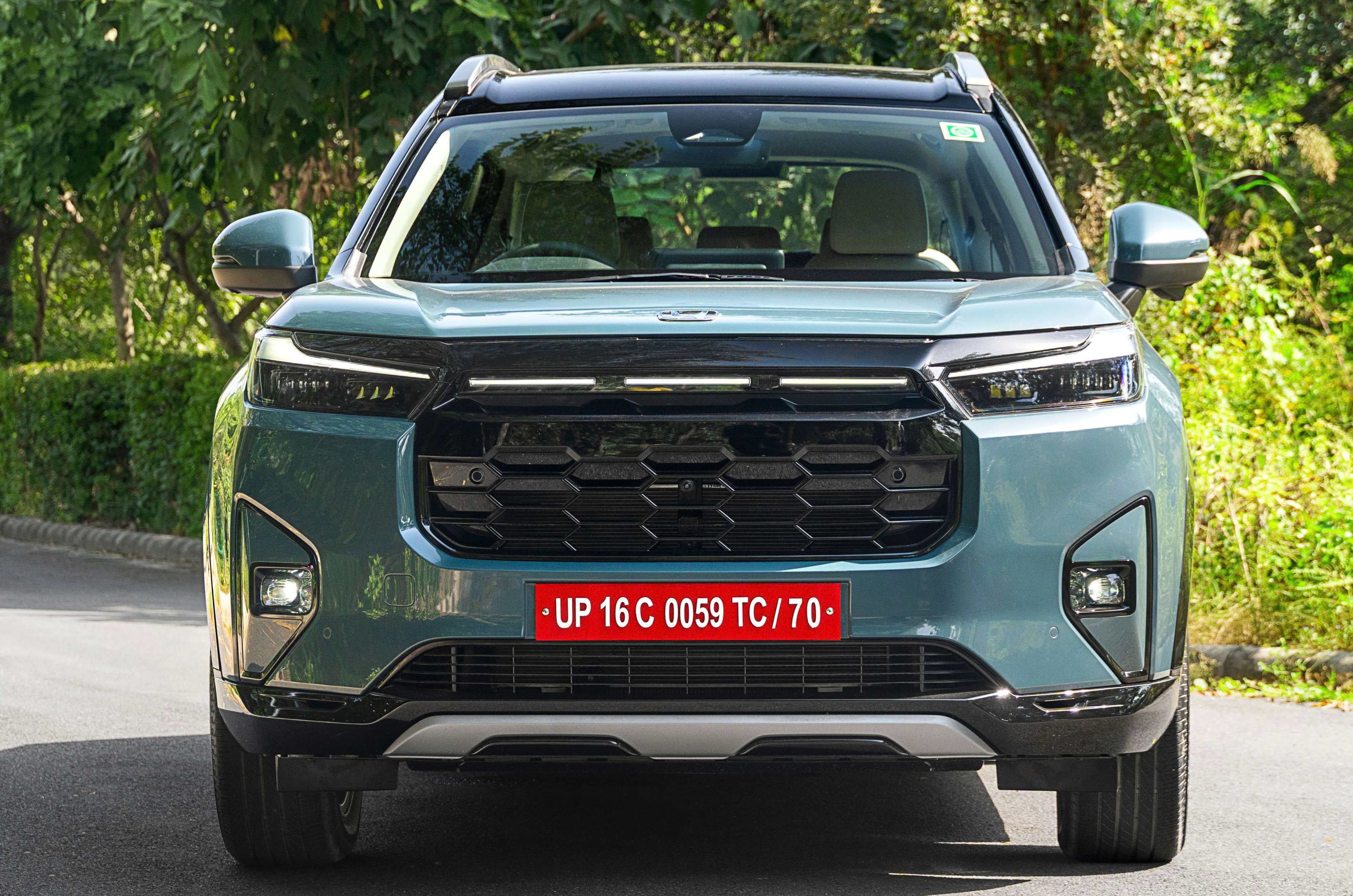
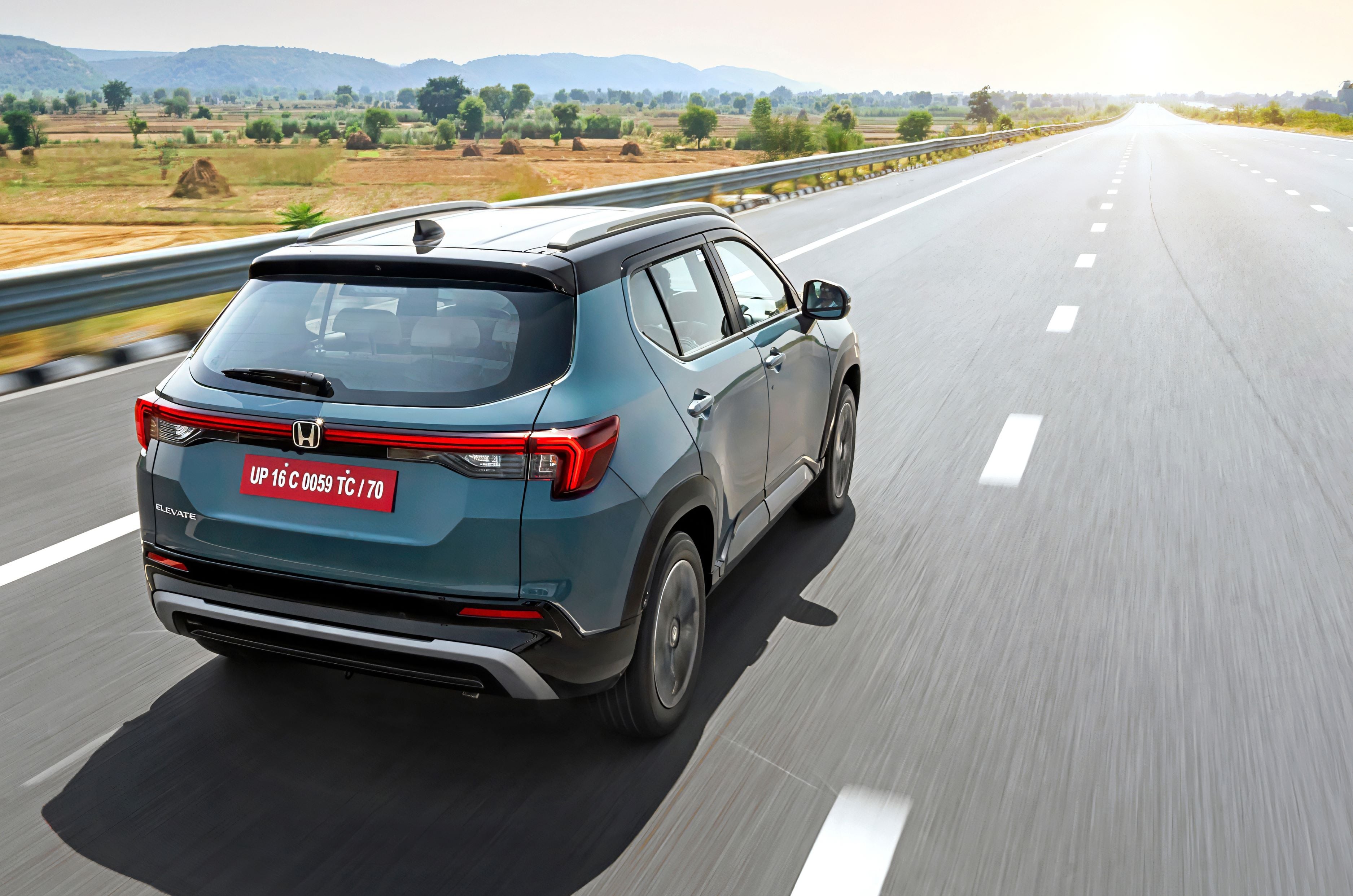
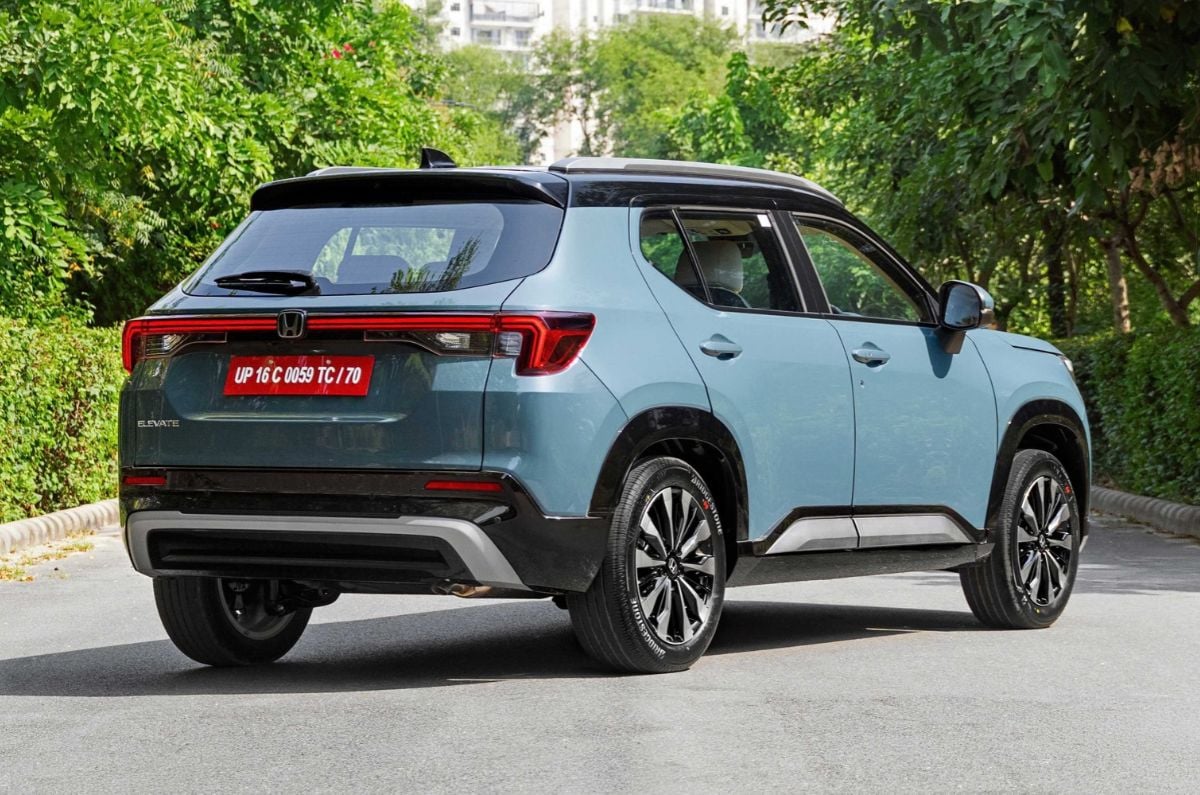
Honda has priced the 2026 Elevate facelift from Rs 11.80 lakh to Rs 18.58 lakh (ex-showroom). Its list of midsize SUV rivals is pretty long, and includes the Hyundai Creta, Kia Seltos, Tata Sierra, Renault Duster, Nissan Tekton, Volkswagen Taigun and Skoda Kushaq. The Elevate is underpinned by the City’s platform, and comes with a single 1.5-litre petrol engine with a choice of manual and CVT gearboxes. Here’s what works in the updated Elevate’s favour, and what doesn’t.
Reasons to buy the 2026 Honda Elevate facelift
Eager engine and confident road manners
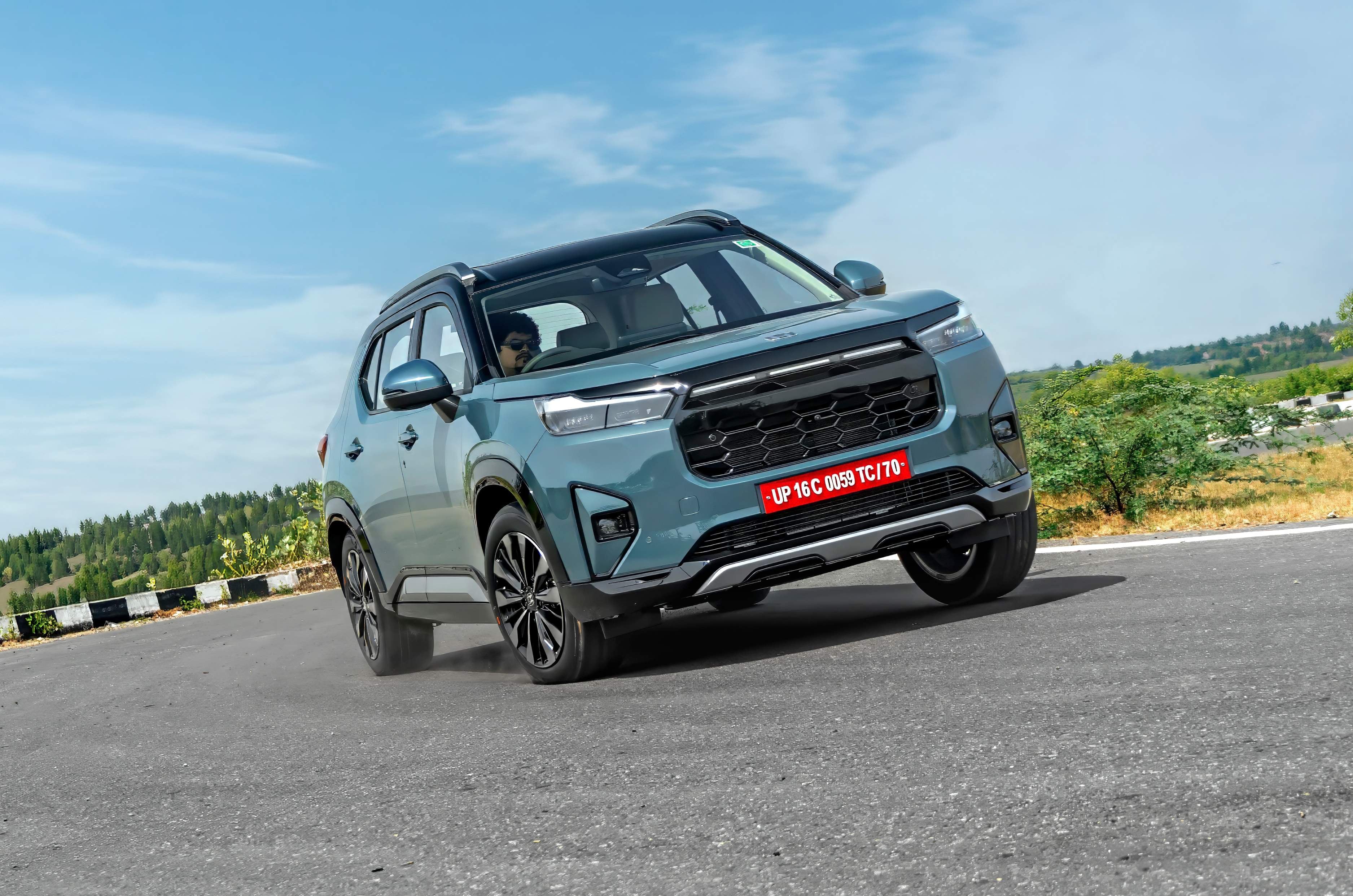
A lively engine, tidy handling and strong brakes are among the Elevate’s fortes
The Elevate’s i-VTEC engine provides strong performance, while high-speed stability is good too.
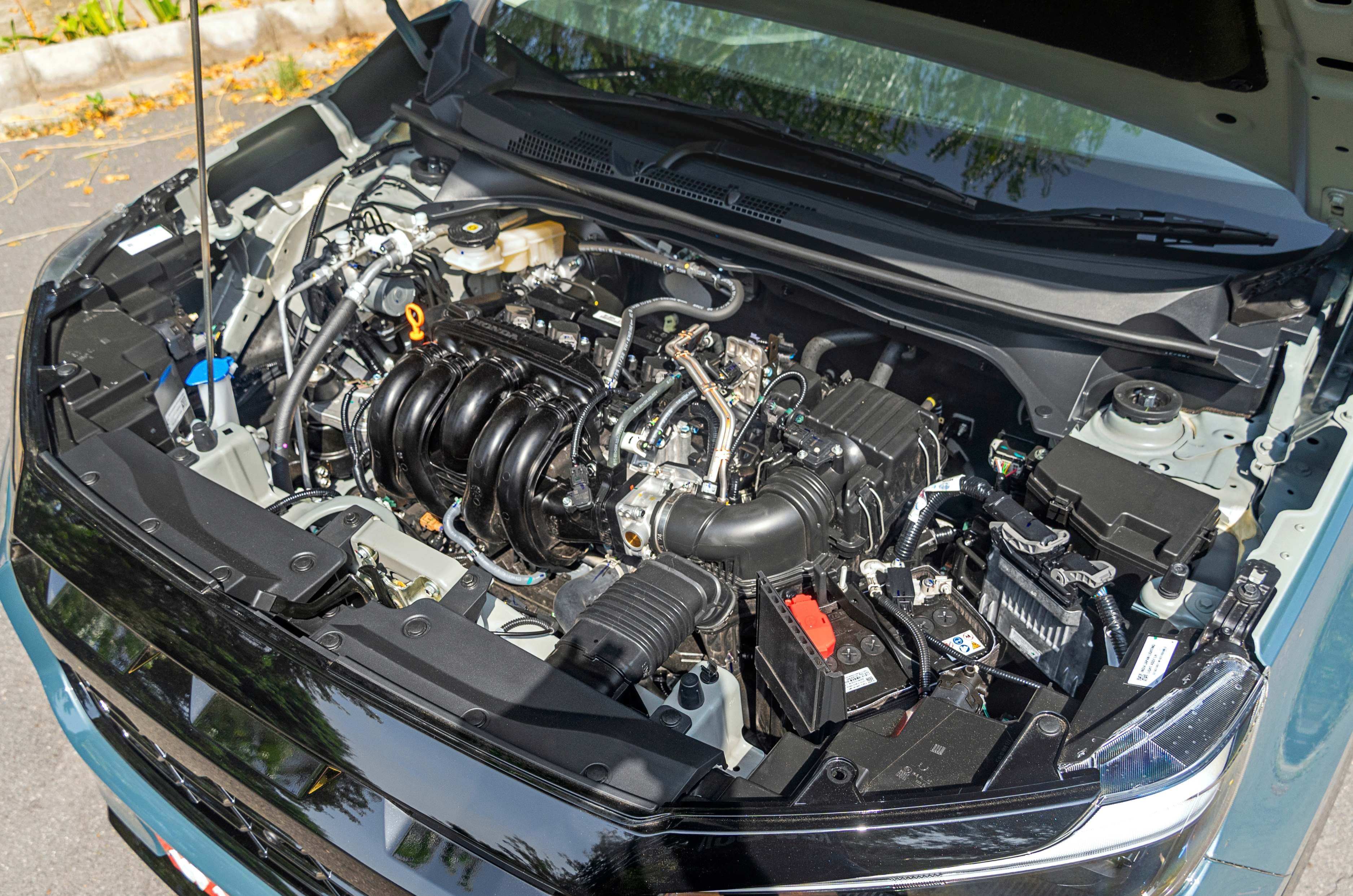
The 2026 Elevate continues with the same 1.5-litre four-cylinder i-VTEC petrol engine of its predecessor, but it’s now WLTP emissions norms compliant. The smooth and eager unit produces 121hp and 145Nm of torque, delivering this power cleanly and progressively all through its rev range. The throttle response is sharp, too. For those looking for a hassle-free urban commuter, the smooth CVT (continuously variable transmission) does the job well. It also gets paddle shifters so you can move through pre-set ratios, offering that extra sense of control.
The Elevate feels planted and offers a good balance between handling and ride quality.
The Elevate has always been an easy car to drive around town, courtesy of a light yet responsive steering that makes parking manoeuvres easy. The steering weighs up progressively as speeds rise, and the Elevate also feels planted out on the open highway, inspiring confidence. A good control on body roll means that, despite its tall SUV stance, the Honda Elevate corners neatly without much drama. The brakes are strong and feel progressive, further inspiring driver confidence. The ride feels firm but the Elevate manages to smooth out surface imperfections with relative ease.
Premium and comfy cabin
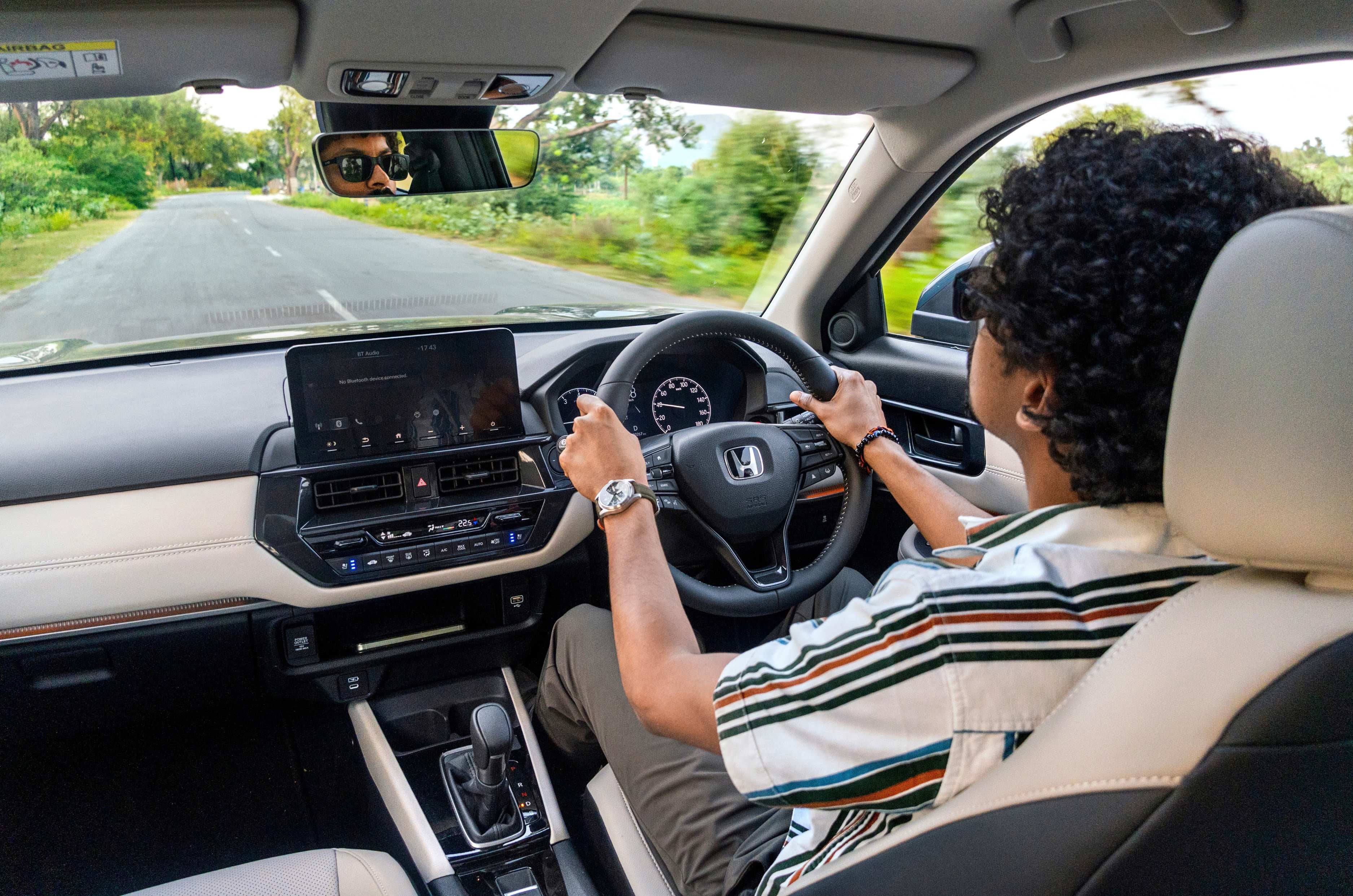
Interior retains the model’s practicality quotient while upping the premium experience
The 2026 update has made this interior feel more premium.
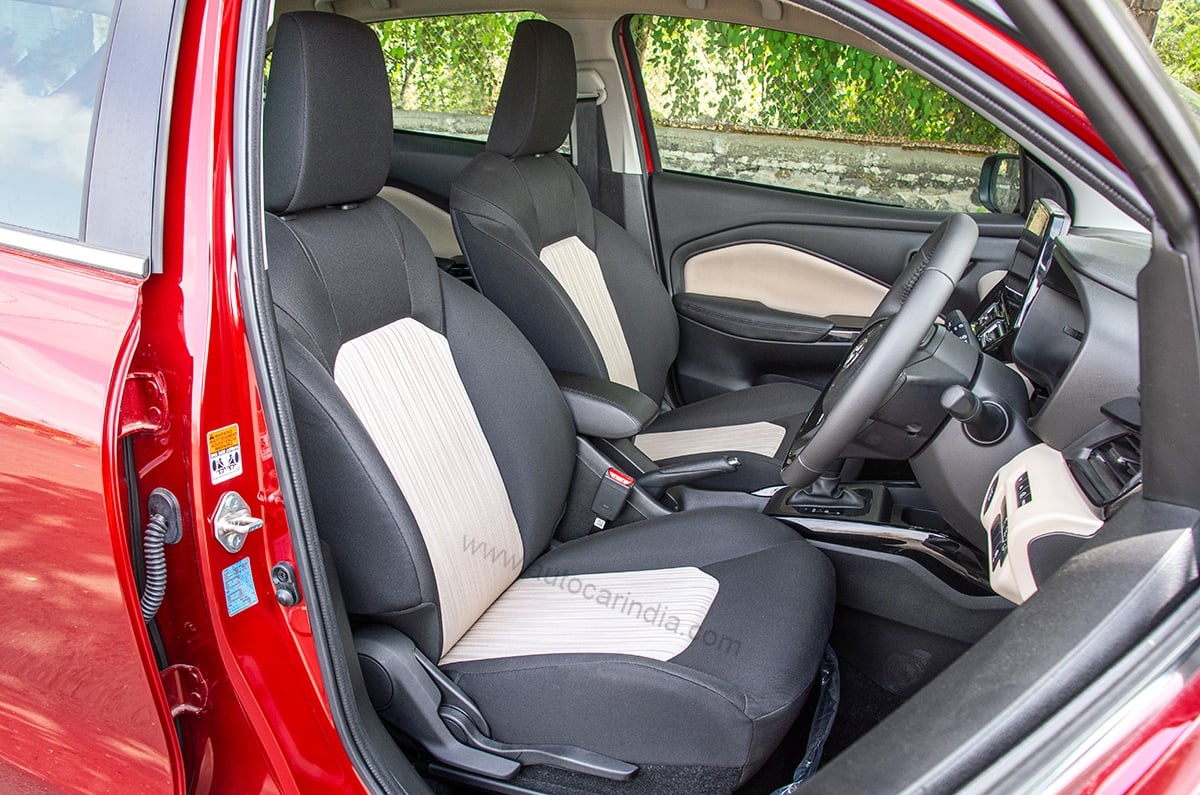
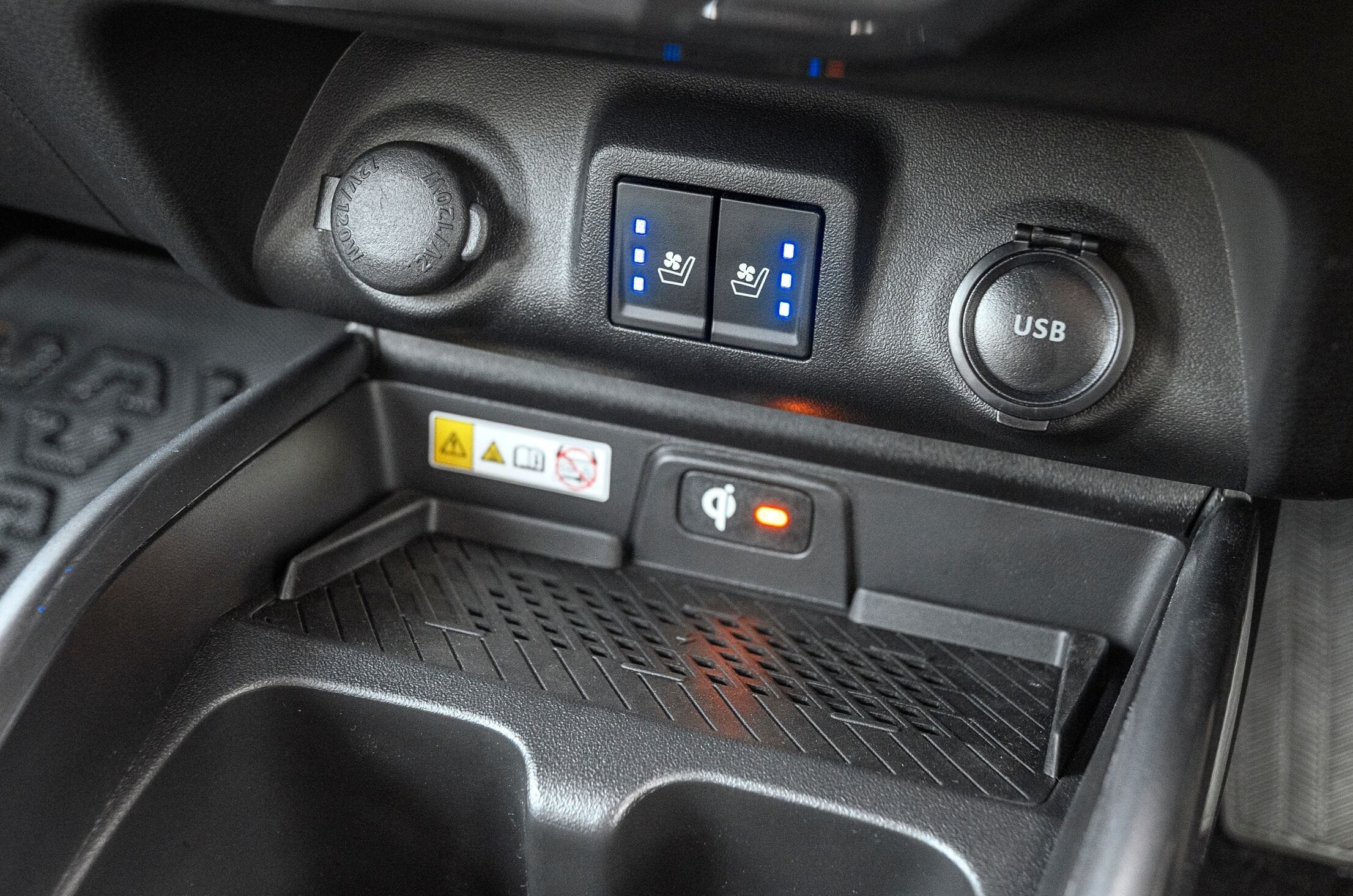
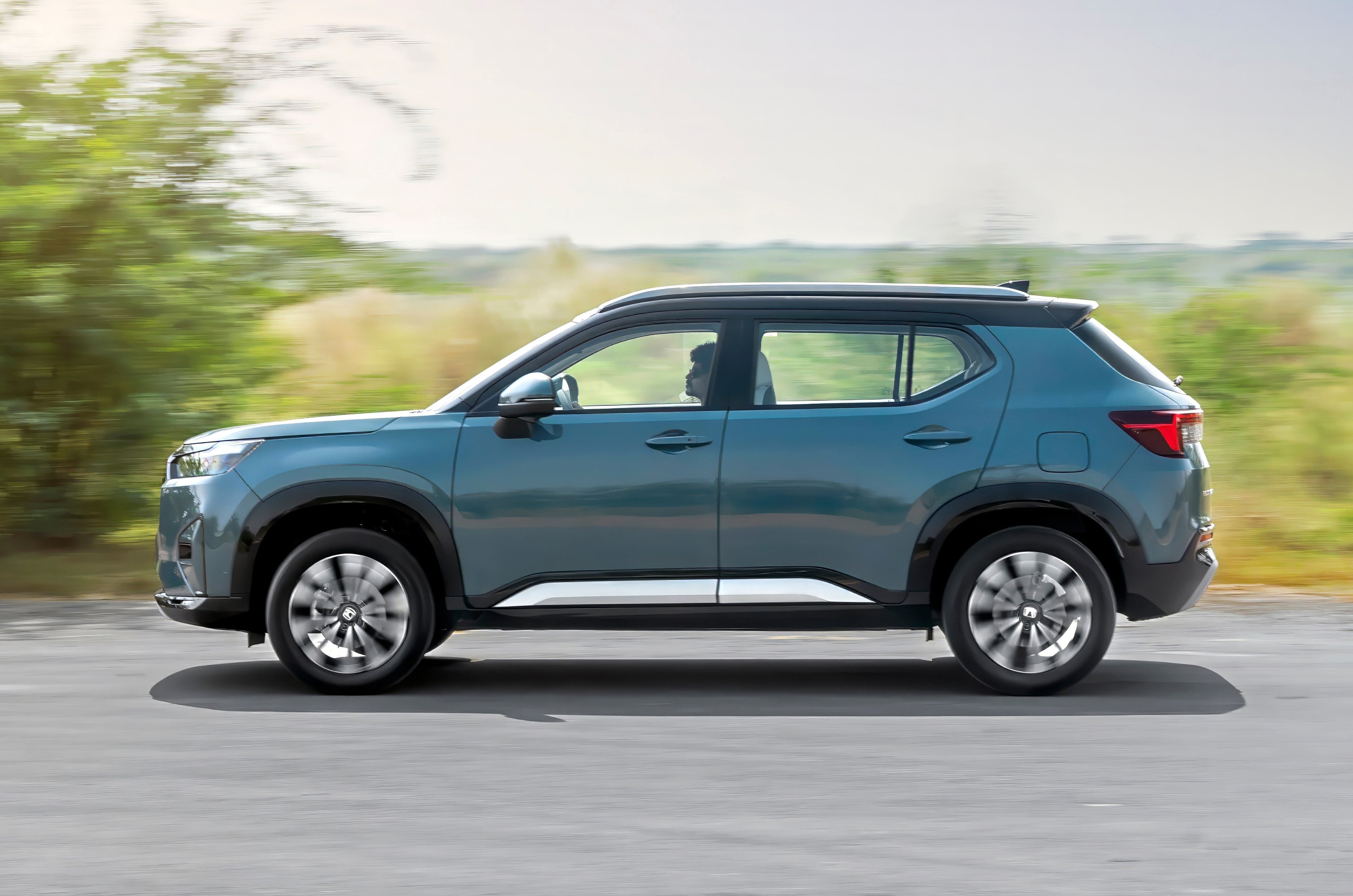
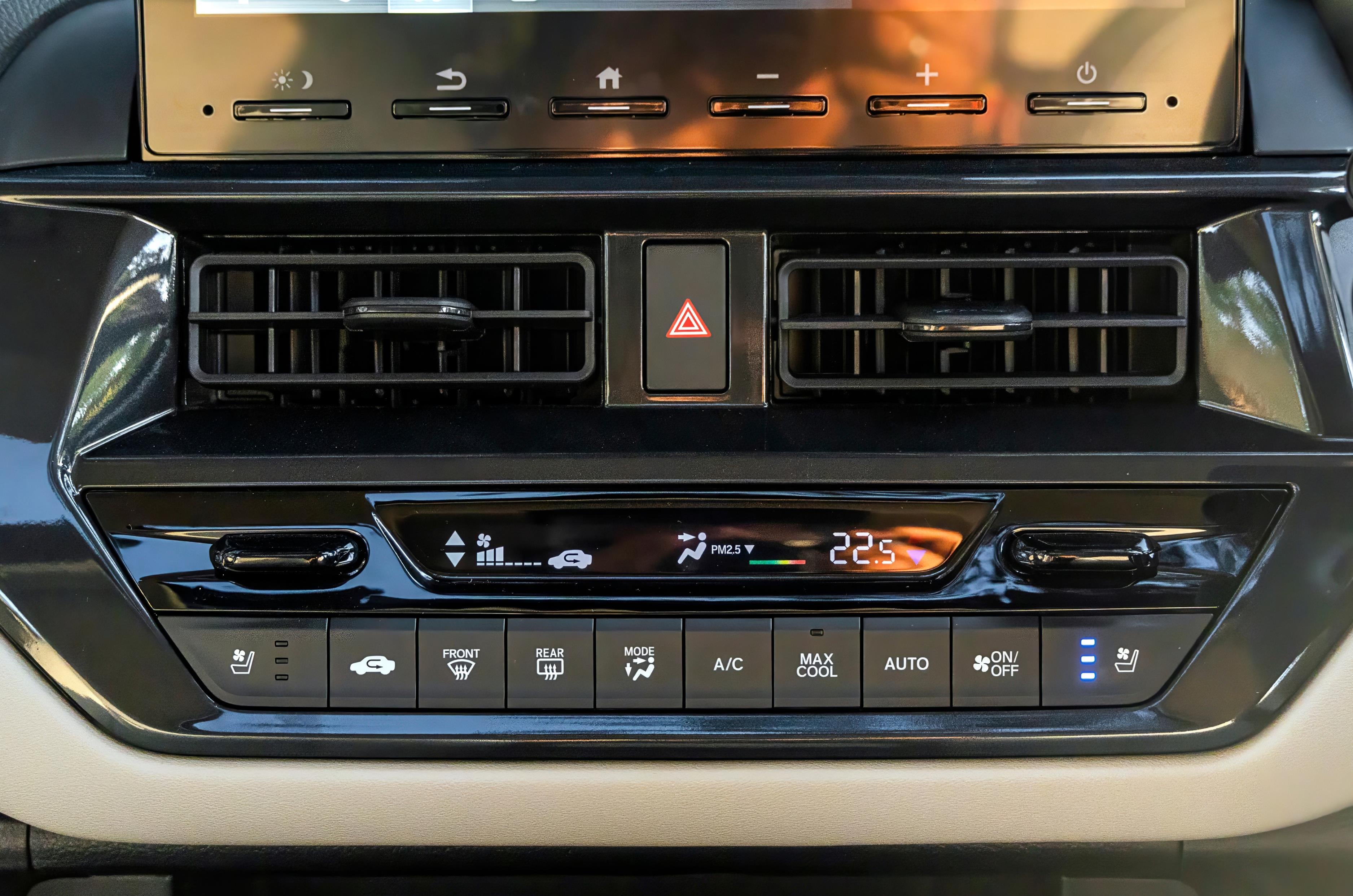
The Elevate has been known for providing an ergonomically sound cabin – this hasn’t changed with the 2026 update. The front seats remain nice and supportive, while finding a comfortable driving position is easy. There’s now lighter leatherette padding and stitching on the dashboard, a revised headliner that looks and feels more premium, and an updated HVAC panel with buttons for the front-seat ventilation feature.
Headroom and kneerom for back-seat passengers is good.
It is easy to get comfortable in the back of the Honda Elevate facelift. There’s plenty of headroom and kneeroom for two adults, while conveniences like a centre armrest with cupholders, dedicated AC vents and USB charging ports add to the overall experience. There’s also no shortage of cubbies to store your knick-knacks, plus a roomy 458-litre boot. You also get a spare tyre under the boot floor, further boosting the Elevate’s practicality.
Better equipped than before
Honda has added more features to the Elevate’s equipment list
The Honda Elevate now gets segment-first rear-seat ventilation.
The back seats of the 2026 Elevate facelift are also where you will see the new touch-operated LED reading lamps. The Elevate now offers rear-seat ventilation, which is a first for the segment. Features such as orange ambient lighting, multi-way powered front seats, wireless charging, auto climate control with a built-in PM2.5 air purifier, wireless Apple CarPlay & Android Auto, an 8-speaker audio system, a 7-inch MID, and a 360-degree camera are available too.
A 360-degree camera is now a factory-fit option on the top-spec trim.
There’s enough on the safety front, too. The 2026 Elevate facelift is available with front parking sensors, Honda’s LaneWatch camera, and a camera-based ADAS (advanced driver assistance systems) suite. This ropes in adaptive cruise control, auto-emergency braking, lane-keep assist and more. The CVT variants get a new low-speed follow function for the adaptive cruise control to tackle stop-and-go traffic conditions, along with rear disc brakes and an electronic parking brake with auto hold. Standard equipment includes 6 airbags, stability & traction control, rear parking sensors, adjustable headrests and three-point seatbelts for all occupants.
Reasons not to buy the 2026 Honda Elevate facelift
Cabin has its shortcomings
Lacklustre noise insulation aside, the Elevate’s cabin still has a few niggles
Some may find the front lumbar support to be excessive.
While the 2026 facelift has made the Honda Elevate more competitive, there’s still room for improvement. For starters, the lumbar support up front can feel intrusive for some, and taller occupants will find the under-thigh support underwhelming. Seating a third passenger in the back wouldn’t be easy, due to the narrower cabin width of the Elevate over some rivals. The raised centre seat doesn’t make this better, either.
Rear occupants will notice vertical movements at higher speeds over undulating roads.
The cabin is quieter than before, but engine and road noise can be heard quite easily at highway speeds. Those at the back will also notice a fair bit of vertical movement over undulating highways at triple-digit speeds.
Only one engine option
The Elevate still doesn’t get a diesel, turbo-petrol, hybrid or CNG option
Lack of engine choices even with the latest update is a definite con for the Honda Elevate.
In a segment where rivals offer multiple engine options (even across fuel types), the 2026 Honda Elevate facelift continues with just the one naturally aspirated petrol unit. This limits its appeal when compared to other offerings in the hotly contested midsize segment. While we are yet to test its mileage, the lack of an automatic engine stop-start system and ‘Eco’ drive mode won’t help boost fuel efficiency.
Latest features reserved for the top trim
Most of the headline features are offered only with the new range-topping ZX+
Only the range-topping ZX+ gets all of the newly introduced features.
If you want all the new bells & whistles that the 2026 Honda Elevate facelift has to offer, you’ll have to stretch your budget to accommodate the new top-spec ZX+ trim. This is where niceties like rear seat ventilation, powered front seats, a 360-degree camera and front parking sensors reside. However, this also means a price tag of between Rs 16.88 lakh and Rs 18.58 lakh (ex-showroom).
The ZX+ trim still misses features like two-zone climate control, a panoramic sunroof and rear sunblinds.
Despite the ZX+’s higher price, it still misses out on a panoramic sunroof, powered tailgate, a fully digital driver’s display, rear sunblinds and dual-zone climate control. Some similarly priced rivals offer a more comprehensive feature set, more cabin space and multiple powertrain options.
Volvo India will launch its flagship electric EX90 SUV on October 12, 2026. It will launch alongside the ES90 flagship sedan, and both are underpinned by Volvo’s EV-dedicated SPA2 architecture. In Volvo India’s portfolio, it will sit above the brands other electric SUVs like the EX30 and EC40. The EX90 will be positioned as an all-electric alternative to the already existing ICE-powered XC90. Ahead of its launch, here’s everything you need to know about the Volvo EX90.
What is the expected price and rivals of the Volvo EX90?
The Volvo EX90 is expected to be priced in the ballpark of Rs 1.4 crore to Rs 1.5 crore, ex-showroom. The Volvo EX90 will lock horns with the Mercedes-Benz EQS and the Kia EV9.
What powertrains will the Volvo EX90 get?
The EX90 will come in one fully-loaded variant to India. It will be powered by a 106kWh battery pack paired with a dual-motor setup enabling AWD. The combined power output is 456hp and 670Nm with a claimed 0-100kph time of 5.5 seconds. Volvo claims a WLTP-certified range of 625km and, during our time with it, it delivered a respectable 530km range. As for charging, it supports 11kW AC charging speeds, taking 11 hours to top up from 0-100 percent. On DC charging, it supports up to 350kW thanks to its 800V system.
What will the Volvo EX90 look like?
In typical Volvo fashion, the EX90 gets an understated exterior appearance, and it looks quite different from its ICE-powered XC90. At the front, there are LED DRLs with ‘Thor’s Hammer’ signatures that split open to reveal the main headlamp units. The grille gets a blanked-off finish with the Volvo badge in the centre, DRL strips on the sides of the bumper, and a trapezoidal air intake lower down.
In profile, it gets a smooth finish for the doors, flush door handles, a rising window line, gloss black cladding for the sills, and 21-inch dual-tone alloy wheels. The rear gets a split design for the LED tail-lamps with C-shaped LEDs below and vertically stacked LED strips on the D-pillar. Like the front, there’s minimal cladding at the back with a gloss black finish lower down the bumper. Boot space is 324 litres with the third row up and 690 litres when folded
What will the Volvo EX90 interior look like?
Inside, the Volvo EX90 gets a minimalistic cabin with a two-tone grey and white theme. There aren’t many physical buttons here, but a large vertically oriented infotainment screen is placed at the centre of the dashboard.
Across the interior, there’s open-pore wood and brushed aluminium trims, while the seats are wrapped in Nappa leather upholstery. Below the infotainment screen is a centre console comprising a wireless phone charger and a rotary knob for media controls. The Volvo EX90 is a 6-seat SUV in a 2+2+2 configuration with captain chairs for the middle row.
What features will the Volvo EX90 get?
The Volvo EX90’s equipment list includes a 14.5-inch infotainment screen powered by Google, 9-inch digital driver’s display. Wireless phone charger, 25-speaker Bowers & Wilkins sound system, powered, ventilated, and massaging front seats, an electrochromic panoramic glass roof, and 4-zone climate control. Safety features include 9 airbags, an ADAS suite, a 360-degree camera, and automatic parking.