Autocar India turns 27, and rather than quietly celebrating with a cake, we’ve celebrated the way we know best: with scoops, exclusive drives and a frankly unreasonable amount of driving. In this issue, we bring you an exclusive drive of JSW’s new Combat SUV (you heard the name here first), a scoop on BYD’s Denza luxury push, and the last leg of the 20,000km Pune-to-Prague odyssey, alongside a serious collection of new cars and bikes. Oh, and there’s also a Boeing 737 Max aircraft involved. Because apparently cars weren’t complicated enough.
JSW Combat: Review
JSW’s first SUV is a rugged plug-in hybrid based on the Jetour T2. We get an early exclusive drive of the Combat and examine whether this newcomer really has what it takes to shake up the Rs 30-50 lakh SUV market.
BYD Denza: China’s Luxury Offensive
BYD is bringing Denza to India, with luxury EVs like the D9 MPV and Z9 GT aimed squarely at the established big boys. Having disrupted the mid-range EV market with BYD, it is now going after the high-end market with Denza.
ADAS Meets Autopilot: Hands Off!/Look ma, no hands!
What do a Hyundai Venue and a Boeing 737 Max have in common? Quite a lot, apparently. We climb into a full-flight simulator to understand how aircraft autopilot works and what it has in common with the increasingly sophisticated systems in our cars.
Skoda Kylaq: Pune to Prague, Part 2
The Silk Route may have been built for traders, but we’ve used it to find out just how far you can take a small SUV before it starts asking for a holiday. After 19,000km, 70 days and not a single puncture, our Skoda Kylaq finally reaches Prague.
Autocar’s Day Out: M-ployees of the Month
Most company off-sites involve a resort, a buffet and someone reluctantly joining a team-building exercise. Ours involved six BMW M cars, more than 3,000hp, a deserted concrete ground and a frankly irresponsible amount of tyre abuse. Four M4s and two M2s went head-to-head in slalom, football and drifting, and what began as a relaxing team outing rapidly descended into a war.
Tesla Model Y vs Hyundai Ioniq 5: Comparison
Two premium EVs, two very different ideas about what an electric car should be. The Model Y with its recently revised price, and the updated Ioniq 5 go head-to-head to see which makes the stronger case.
Bentley Supersports: Drive
Take a Continental GT and turn the dial towards something completely unnecessary. The result is Bentley’s Supersports, a rear-wheel-driven beast with considerably more intent. We drive it around Laguna Seca.
Mini Countryman C: First Drive
The Countryman has grown into a proper luxury SUV, with generous space, loads of kit and a new 1.5-litre turbo. At Rs 47.5 lakh, it’s the biggest and most grown-up Mini yet, and is ready to lock eyes with real luxury SUVs rather than merely be a fashion statement. But has it done that?
5 Ways to Adventure: Feature
Five made-in-India ADVs, 1,300km and one simple question: which is the best way to go exploring? We put the bikes through highway miles, trail riding and plenty of scenic detours to see how their different approaches to adventure stack up.
Ather Konarc: First Ride
Ather’s new Konarc brings the brand’s blend of quality and comfort to a wider audience, with prices starting at Rs 99,999. A compelling new step into the mainstream.
Suzuki e-Access vs Yamaha EC-06: Comparison
Japan finally answers India’s e-scooter boom, and the two takes couldn’t be more different – one built from scratch, the other born from an Indian startup partnership. Which one takes the crown?
UP Lekhpal Result 2026: उत्तर प्रदेश अधीनस्थ सेवा चयन आयोग (UPSSSC) ने यूपी लेखपाल रिजल्ट 2026 जारी कर दिया है। यूपी लेखपाल भर्ती लिखित मुख्य परीक्षा 21 मई, 2026 को हुई थी। इस परीक्षा में शामिल उम्मीदवार अब आधिकारिक वेबसाइट upsssc.gov.in पर अपना रिजल्ट देख सकते हैं। रिजल्ट में उन कैंडिडेट की डिटेल्स हैं, जो अगले चरण में शामिल होने के लिए सफल घोषित किए गए हैं। शॉर्टलिस्ट उम्मीदवार डॉक्यूमेंट वेरिफिकेशन (DV) चरण में शामिल होंगे। यूपीएसएसएससी जल्द ही डीवी का विस्तृत शेड्यूल और निर्देश आधिकारिक पोर्टल पर जारी करेगा।
यूपी लेखपाल भर्ती 2026 विज्ञापन संख्या 02-एग्जाम/2025 के तहत आयोजित की जा रही है। इसके तहत राज्य में कुल 7994 लेखपाल पदों पर नियुक्ति की जाएगी। यूपी लेखपाल भर्ती 2026 लिखित मुख्य परीक्षा में 28,409 कैंडिडेट क्वालिफाई हुए हैं, जो डॉक्यूमेंट वेरिफिकेशन के अगले चरण में शामिल होंगे। यूपी लेखपाल रिजल्ट 2026 यूपीएसएसएससी की आधिकारिक वेबसाइट के रिजल्ट सेक्शन में नोटिफिकेशन पीडीएफ के जरिए देखा जा सकता है। शॉर्टलिस्ट किए गए कैंडिडेट्स को भर्ती प्रक्रिया के अगले चरण के लिए रिजल्ट की एक प्रिंटेड कॉपी रखनी होगी।
यूपी लेखपाल रिजल्ट 2026 एक नजर में
इस भर्ती के जरिए राजस्व विभाग/बोर्ड ऑफ रेवेन्यू, उत्तर प्रदेश में कुल 7,994 पद भरे जाएंगी। नीचे दिए गए टेबल में इस भर्ती से जुड़ी डिटेल्स देखें।
खास जानकारी
एग्जाम यूपी लेखपाल 2026
कन्डक्टिंग बॉडी उत्तर प्रदेश सबऑर्डिनेट सर्विसेज़ सिलेक्शन कमीशन (UPSSSC)
रिजल्ट घोषित
रिजल्ट रिलीज डेट 11 सितंबर, 2026
रिजल्ट मोड ऑनलाइन
कुल क्वालिफाइड कैंडिडेट 28,409
खाली जगहों की संख्या 7994
अगला स्टेज डॉक्यूमेंट वेरिफिकेशन
ऑफिशियल वेबसाइट upsssc.gov.in
यूपीएसएसएससी लेखपाल रिजल्ट 2026 डाउनलोड करने के स्टेप्स
कैंडिडेट अपना यूपी लेखपाल रिजल्ट 2026 चेक करने के लिए नीचे दिए गए स्टेप्स फॉलो कर सकते हैं
यूपीएसएसएससी की ऑफिशियल वेबसाइट upsssc.gov.in पर जाएं।
होमपेज पर नोटिस बोर्ड सेक्शन पर जाएं
एडवर्टाइजमेंट नंबर-02-एग्जाम/2025, लेखपाल मेन एग्जामिनेशन (PET-2025)/01 के तहत एलिजिबिलिटी / डॉक्यूमेंट वेरिफिकेशन के लिए क्वालिफाई हुए कैंडिडेट्स के रिजल्ट लिंक पर क्लिक करें।
जरूरी डिटेल्स डालें।
रिजल्ट देखने के लिए डिटेल्स सबमिट करें।
रिजल्ट में अपना क्वालिफाइंग स्टेटस चेक करें।
आगे के रेफरेंस के लिए रिजल्ट की एक कॉपी डाउनलोड करके सेव कर लें।
यूपीएसएसएससी लेखपाल रिजल्ट 2026 में दी गई डिटेल्स
यूपीएसएसएससी लेखपाल रिजल्ट 2026 में दी गई ये डिटेल्स चेक कर सकते हैं
कैंडिडेट का नाम
रोल नंबर
रजिस्ट्रेशन नंबर
कैटेगरी
क्वालिफाइंग स्टेटस
मेरिट या शॉर्टलिस्टिंग स्टेटस
एलिजिबिलिटी या डॉक्यूमेंट वेरिफिकेशन के बारे में डिटेल्स
अगले स्टेज के लिए जरूरी निर्देश
यूपी लेखपाल रिजल्ट 2026 रिजल्ट के बाद क्या?
यूपी लेखपाल रिजल्ट 2026 में शॉर्टलिस्ट उम्मीदवारों को अब दस्तावेज सत्यापन के लिए बुलाया जाएगा। यूपीएसएसएससी डीवी का विस्तृत शेड्यूल और जरूरी निर्देश अपनी ऑफिशियल वेबसाइट के जरिए देगा।
When the first Bajaj Pulsar 150 broke onto the scene in 2001, it shattered the mould of what was expected of an accessible yet sporty commuter motorcycle. This recipe saw such widespread success that nothing Bajaj brought out since has been able to replace it. Therefore, the company went back to the drawing board and has now brought out a new generation of Classic Pulsars, spearheaded by the 125 and 150. In this review, we’ll share what the larger one was like to ride.
Bajaj Pulsar 150: What’s changed compared to before?
From the mechanicals to the tech, it is all-new
To start with, gone are the double-cradle frame and twin shock absorbers, replaced by a lighter and stiffer diamond frame and monoshock, respectively. Complementing the new chassis is a brand new motor. This engine started life as an engine from a similar displacement N model, but Bajaj has made certain changes to suit this application. The state of tune, various internals and the exhaust system are all different over here.
The Pulsar 150, understandably, has the sprightlier performance of the two.
Unlike before, the motor is now used as a stressed member of the chassis, and Bajaj has also peppered in the learnings it has made from the N range. For starters, the gearbox now has shorter, more tractable ratios, and there’s also a low rpm assist function, which raises engine rpm slightly to reduce stalling when you’re crawling at a higher gear at low speeds. Furthermore, higher variants of the 150 also come equipped with an Integrated Starter Generator (ISG), which brings in silent start and a reasonably quick start/stop system.
Pulsar 150 design and quality – 8/10
Looks uncannily similar to the older bike; feels very similar to sit on, too
Considering how much has changed underneath, it’s especially commendable that the Pulsar 150 looks this similar to before. Bajaj’s design team has deliberately gone to great lengths to package everything neatly and retain the bike’s instantly recognisable silhouette. Pulsar hallmarks that people appreciate, like a ‘wolf eye’ headlight, a chunky tank, sharp tank extensions and a pointy tail, all continue, and you won’t be mistaking it for anything other than a classic Pulsar. There are no complaints when it comes to quality, and it’s as well-finished as you’d expect from a commuter bike today.
Top variants come with a split seat.
Just like the near-unchanged design, the Pulsar 150’s ergonomics are almost the same as before – but that’s a good thing. You’re sat very neutrally, and the riding position is that of a textbook commuter with only slightly rearward pegs for the sporty touch that a Pulsar is known for. With a perch that’s just 795mm off the ground, the 150 strikes a nice chord by being friendly and approachable for both shorter folks and 6’1 Rishaad. To cater to the wants of different riders, Bajaj will sell you a Pulsar equipped with either a single piece seat or split seats. Both options are spacious – the single piece seat understandably more so – and decently padded, capable of accommodating two full-size people without them getting acquainted with each other too intimately.
Pulsar 150 performance – 8/10
Has enough pep for city and highway duties, engine stalls a little too easily, though
City traffic is where most Pulsar riders spend most of their time, so we did the same and found that the bike behaves exactly as you’d expect from a commuter. The motor has good low- and mid-range torque, and paired with the super light clutch, wading through the drudgery of traffic doesn’t feel too taxing.
The new engine is also super smooth, and should you choose to venture out onto the highway, the Pulsar can do that as well. The upper limit of the 150’s comfortable cruising speed is 90-95kph in its top 5th gear, which is par for the course in this class.
Engine
149.5cc, single-cylinder, air-oil cooled
Power
14hp at 8,000rpm
Torque
14.1Nm at 6,500rpm
Gearbox
5-speed
However, for all its strengths, the engine in the Pulsar 150 unit we were allotted displayed a tendency to stall a little too easily, and this happened on multiple occasions to both myself and Rishaad, who rode the bike.
Pulsar 150 ride and handling – 8/10
Behaves predictably and handles all situations well
While the chassis is largely the same between the 125 and 150, one noteworthy difference is that the bigger one uses a fatter 33mm fork, compared to the 31mm unit on the smaller bike. Also, unlike the 125, the Pulsar 150 comes with the government-mandated safety net of single-channel ABS. All variants come with a 260mm disc brake at the front, paired with either a 230mm drum brake on the lowest variant or a 230mm disc on the higher two variants.
Pulsar 150 behaves neutrally and predictably when subjected to a variety of riding conditions.
The best way to describe the new Pulsar 150’s handling is neutral and predictable. Neither does it feel as vague as the previous-gen model, nor does it feel as responsive as the N / NS models. The Classic Pulsar 150 retains its surefootedness in a straight line while introducing a newfound taut feeling when taking a corner. Its demeanour is predictable at all times, which is sure to inspire confidence in the varied sort of riders it will cater to. The brakes work well and bring the Pulsar to a stop in a quick fashion without much drama, although overenthusiastic usage will result in the rear locking up.
Fuel tank
14 litres
Seat height
785mm
Ground clearance
165mm
Kerb weight
141kg
Wheelbase
1,320mm
However, for all its strengths, the Pulsar 150 is not perfect, and there are some areas of improvement. The rear suspension feels slightly underdamped and springy, throwing you off the seat over larger road imperfections. The gearshifts, too, felt a little rubbery and vague, lacking a snick feel.
Pulsar 150 features and safety – 8/10
Comes with a lot of tech-y features on the top two variants
Following today’s market trends, even a humble commuter like this one now packs a dollop of tech. This includes a USB-C charging port, 4 riding modes (Sport, Tour, Road and Rain), Bluetooth connectivity for the dash via Bajaj’s app, which brings in a host of functions, and you can even cast your phone’s screen onto the TFT display, although some of these functions are still not available yet and will be rolled out at a later date.
Top variants also come with a colour TFT display and riding modes
To control the TFT display’s functions and switch between the riding modes on the top variants, you also have more comprehensive switchgear whereas the colour LCD dash on the lower variants is paired with a simpler switch cluster. Both displays are informative and well laid-out and bring an air of premiumness from the rider’s POV. Admittedly, most of these features aren’t going to add much value for most everyday riders but for the few that want their motorcycle to double up as a gadget, they’re there.
Pulsar 150 price and verdict – 8/10
It suits its intended purpose quite well
Aside from a few small misses, the new Pulsar 150 is a lovely commuter, which comes in at a price point that is more or less in line with the competition today. Prices start at Rs 1.15 lakh and go up to Rs 1.23 lakh (ex-showroom, Delhi). Compared to the last-gen 150, this latest-gen Pulsar’s prices have gone up by Rs 4,000-Rs 6,000, which is a digestible amount considering the sheer scale of new components in use here.
Given the huge demand for a bike that looks like a Classic Pulsar and the fact that this new-gen model is such a quantum leap ahead compared to the old ones while costing just a few thousand rupees more, Bajaj seems to have a winner on its hands.
Car buyers today are pretty spoilt for choice. Beyond a multitude of brands, body styles and variants, there are now more fuel options than ever before. Petrol, diesel, CNG, hybrid, electric, and soon even ethanol-powered vehicles are all vying for attention, making the decision increasingly complicated. So, which powertrain makes the most sense for you?
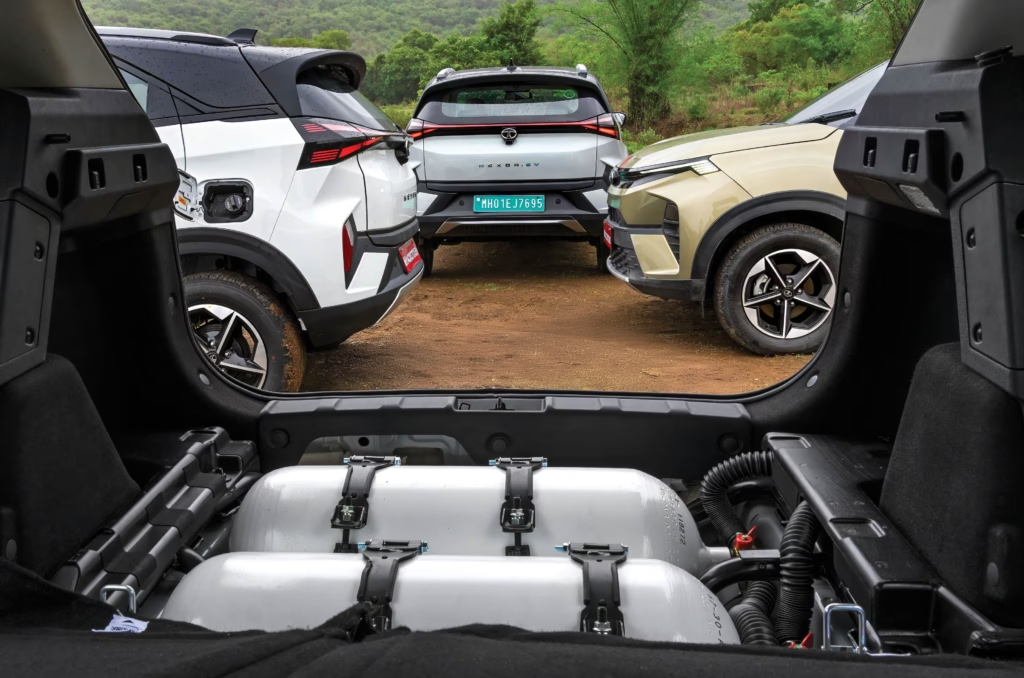
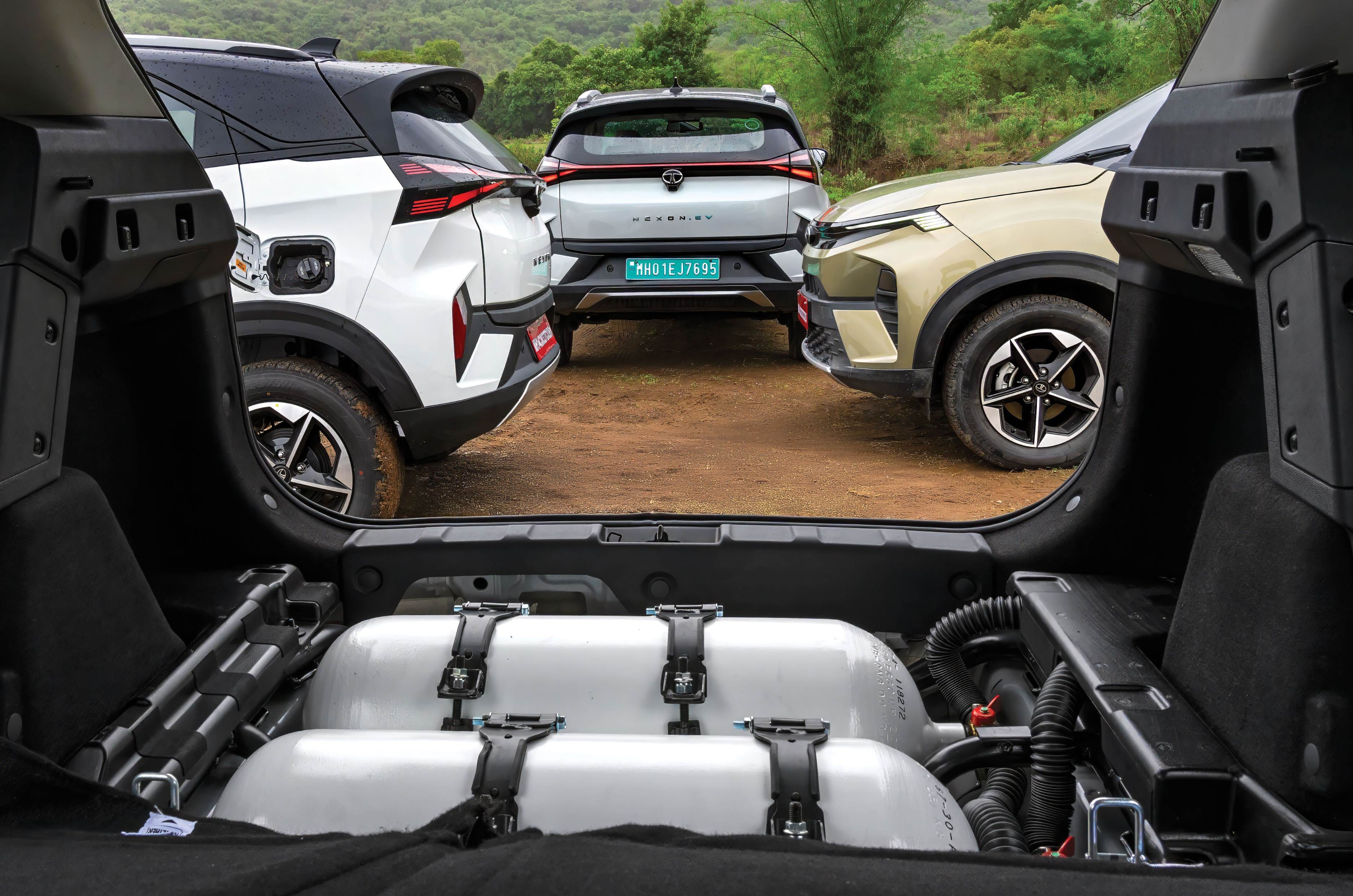
Tata Nexon models (left to right): Petrol, diesel, petrol-CNG and EV.
To answer that question, we turned to one of the most versatile models on sale in India – the Tata Nexon. Few vehicles offer such a broad range of powertrain choices, and with design, space, practicality, safety and features remaining largely consistent across the range, the Nexon provides the perfect platform to isolate the one key variable – the fuel itself. So, we got together the turbo-petrol, CNG, diesel, as well as the EV to find out each fuel’s pros and cons, and thus, which would best fit your needs.
Disclaimer: Fuel prices vary from state to state.
Tata Nexon turbo-petrol: Fuss free
Tata’s 1.2-litre, three-cylinder ‘Revotron’ turbo-petrol engine debuted with the Nexon in 2017 and received a power bump in 2020, taking outputs to 120hp and 170Nm. Today, it is offered with an unusually wide range of transmission choices – a 5-speed manual, 6-speed manual, 6-speed AMT and a 7-speed dual-clutch automatic.
Prices start at Rs 7.40 lakh and extend up to Rs 13.90 lakh, ex-showroom (excluding dual-tone, Dark and Red Dark editions). Its broad variant spread and attractive pricing are key reasons why the turbo-petrol accounts for 42 percent of all Nexon sales.
The engine offers decent driveability and benefits from selectable Eco, City and Sport drive modes. But outright performance, refinement and smoothness aren’t class-leading and not what you get from other turbo-petrols.
Within the range, the 7-speed DCA stands out as the most desirable option. Despite accounting for less than 4 percent of total Nexon sales, it is arguably the nicest ICE-powered Nexon on sale. The wet-clutch dual-clutch transmission prioritises smoothness over sportiness and suits the engine’s character well. While downshifts can occasionally feel a touch hesitant, the overall experience is noticeably more polished than the manual and AMT alternatives. Notably, the top-spec Turbo DCA is the best-equipped ICE version and is also the only version to offer ADAS.
Fuel efficiency, however, remains this powertrain’s weakest area. In our tests, the turbo-petrol DCA returned 7.7kpl in the city and 13.9kpl on the highway, translating to an average running cost of Rs 9.46 per kilometre – the highest among all Nexon powertrains.
To put that into perspective, even though a fully loaded Fearless + A PS DCA is Rs 2.65 lakh more affordable than a top-spec Empowered + A 45 EV, the EV’s significantly lower running costs (of Rs 1.03 per km using home charging) allow owners to recover that initial price difference in roughly 32,000km.
Tata Nexon diesel: Highway star
The diesel range starts at Rs 9.15 lakh and extends up to Rs 14.40 lakh for the top-spec AMT. Interestingly, while the diesel once outsold the petrol version in the Nexon’s early years, buyer preferences shifted following the BS6 transition, causing diesel sales to gradually decline to 13 percent. Despite this, Tata has persisted with the fuel, and today remains one of the few carmakers still offering diesel engines in its portfolio.
Instead of adopting a conventional SCR setup with a urea tank, AdBlue injection system and additional electronic controls, Tata developed a Lean NOx Trap system for the 1.5-litre, four-cylinder turbo-diesel engine. Despite this relatively low-cost passive emissions-control system, the price premium over an equivalent turbo-petrol variant remains around Rs 1 lakh – broadly in line with what rivals charge. The only tangible benefit for buyers is that, unlike many competitors, there is no urea tank requiring periodic top-ups, resulting in marginal savings over time and a bit less hassle.
Like the turbo-petrol, refinement isn’t this diesel’s strongest suit. And even though turbo lag is more perceptible than in the petrol iteration, performance flows in a rather strong manner, making it well-suited for highway drives. Its tall fuel efficiency also makes it ideal for those who cover long distances frequently. In our tests, the diesel-manual delivered an impressive average of 17.95kpl, resulting in a running cost of just Rs 5.30 per kilometre – significantly lower than the turbo-petrol.
Tata Nexon EV: Smooth operator
As India’s first widely accessible electric SUV from a domestic manufacturer, the Nexon EV played a pivotal role in democratising EV ownership. Combining brisk performance, usable real-world range and a relatively accessible price point, it opened up the Tata brand to an entirely new set of buyers. For a long time, it was India’s bestselling EV. Within the Nexon range, it accounts for 14 percent of total sales.
Today, the Nexon EV range spans Rs 12.49 lakh to Rs 17.49 lakh, with buyers able to choose between two battery packs – 30kWh and 45kWh. The line-up itself is relatively straightforward, with three trims available for each battery option.
In the real world, the 30kWh version can deliver a little over 200km on a charge, while the larger 45kWh battery can comfortably manage around 350km. For buyers seeking the smoothest and most refined driving experience, nothing quite matches the seamlessness of an EV. Acceleration feels brisk, and its zippy yet seamless performance makes for a hushed, enjoyable drive experience.
The two battery versions differ in more ways than just capacity. The 45kWh version uses Tata’s newer Gen 2 motor, which is lighter, more compact and more efficient than the Gen 1 unit used in the 30kWh variant. The long-range version’s more modern architecture also enables significantly faster DC charging. To put it into perspective, the 30kWh version takes about an hour to charge from 20-80 percent using a DC fast charger, whereas the 45kWh variant achieves the same in just 29 minutes. Not only does the larger battery offer greater range, but it is also quicker to recharge despite its higher capacity, making it the more suitable choice for longer highway journeys.
Interestingly, the EV also enjoys a feature advantage over the best-equipped turbo-petrol DCA, gaining a larger 12.3-inch touchscreen, rear disc brakes, and an electronic parking brake with auto-hold functionality.
Coming to the 45kWh version’s running cost, using a home charger (at an average cost of Rs 8 per unit of electricity), buyers can enjoy driving around at just Rs 1.03 per km. Even if users opt for public DC fast-charging, the rates of which range between Rs 24 and Rs 28 per unit, still, average running costs work out to merely Rs 3.34 per km, which is almost a third of the petrol-automatic’s number and about sixty percent of a diesel-manual’s cost per km.
Tata Nexon CNG: Jack of all trades
There’s a lot Tata has got right with the Nexon CNG. For starters, prices range from Rs 8.35 lakh to Rs 13.60 lakh, positioning it neatly between the petrol and diesel alternatives.
Under the bonnet is the same 1.2-litre, three-cylinder turbocharged engine found in the petrol Nexon. Not only is it India’s first turbo-petrol CNG SUV, but it is also the most powerful, producing 100hp and 170Nm when running on CNG. Impressively, peak torque remains identical to the petrol version, although it is available across a narrower band. As a result, driveability feels remarkably similar to the turbo-petrol, and users are unlikely to find themselves wanting for performance, whether in urban conditions or on the highway.
Being a turbocharged CNG engine, efficiency in city driving can take a hit. In our real-world city test involving frequent stop-start traffic, the Nexon CNG returned 15.1km/kg. Out on the highway, however, flowing traffic and the presence of a sixth gear helped it achieve close to 24km/kg. The end result is an average running cost of just Rs 4.28 per kilometre, making it the most economical option in the ICE line-up.
With driveability that’s remarkably close to the turbo-petrol, lower purchase and running costs than the diesel, and very few compromises in practicality or equipment, the Nexon CNG presents perhaps the strongest all-round case in the range. Its only notable drawback is the limited CNG infrastructure. While station availability continues to improve, rising CNG adoption often leads to longer queues and wait times at many outlets.
Unlike many CNG vehicles, the Nexon CNG doesn’t feel like a stripped-down, budget-focused alternative. It remains spacious, practical and generously equipped while delivering the lowest running costs of any ICE Nexon. Small omissions, such as cruise control, connected-car technology and JBL-branded speakers, are unlikely to be deal-breakers for most buyers.
Viewed through the lens of value, usability and cost of ownership, the Nexon CNG strikes perhaps the most convincing balance of the lot. Which perhaps explains why, despite being offered with just one engine and a manual gearbox, it now contributes more than a third of all Nexon sales.
Tata Nexon petrol vs diesel vs CNG vs EV: Verdict
The turbo-petrol’s lowest starting price, as well as the widest choice for buyers, is the reason behind its popularity. Our pick of the range, however, is the priciest 7-speed DCA, which delivers the smoothest and most polished Nexon ICE driving experience. That said, performance and efficiency aren’t exactly class-best.
The diesel’s impressive fuel efficiency and thus low running costs make it an ideal choice for those who rack up high annual mileages. Performance is the strongest among all ICE versions, and its torquey nature makes it an excellent highway companion, perfect for those who regularly cover long distances.
For buyers with reliable home charging, a predominantly urban usage pattern and high annual running, the EV is the one to pick. The 45kWh model has a genuinely usable real-world range and is also the most advanced version with a rich feature list, making it a very well-rounded option.
The Nexon CNG retains the petrol’s drivability, offers low running costs, a long range, and buyers aren’t forced to compromise features or practicality either. It thus strikes a convincing balance between price, performance and real-world usability, emerging as the sweet spot of the line-up.
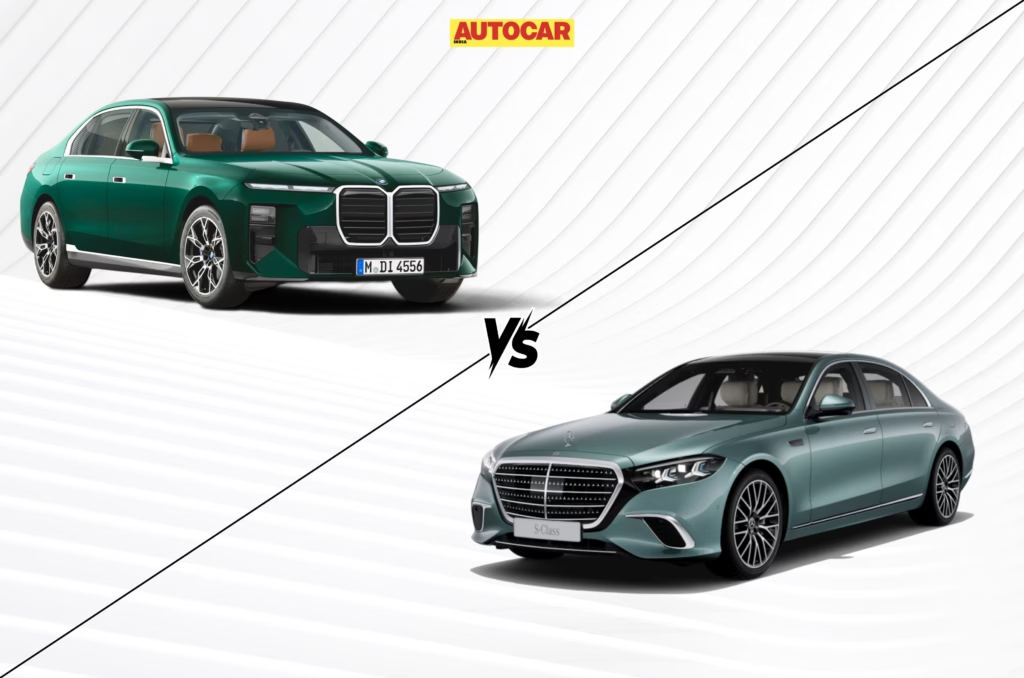
BMW has launched the facelifted 7 Series in India, bringing a redesigned exterior and interior, more features, and a more powerful powertrain. Its arch-rival, the Mercedes-Benz S-Class, also received a facelift earlier this year. The two have been fierce competitors in the luxury sedan segment since their respective introductions. Now that the updated versions are on sale, which one makes the better buy? Let’s find out.
2026 BMW 7 Series vs Mercedes S-Class: Dimensions
The 7 Series has a slightly larger wheelbase and is overall a bit longer than the S-Class
2026 BMW 7 Series vs Mercedes S-Class: Dimensions and other specifications
BMW 7 Series
Mercedes S-Class
Difference
Length (mm)
5,395
5,304
+91
Width (mm)
1,950
1,921
+29
Height (mm)
1,550
1,503
+47
Wheelbase (mm)
3,215
3,216
-1
Boot space (litres)
540
345
+195
The 2026 BMW 7 Series is longer and slightly taller than the S-Class, while the two sedans have a similar wheelbase and width. The BMW also offers a 195-litre larger boot, giving it a clear advantage in terms of luggage capacity. The 7 Series is also expected to offer more cabin space, as the S-Class’ underbody battery pack for its plug-in-hybrid (PHEV) powertrain takes up some of the available space.
2026 BMW 7 Series vs Mercedes S-Class: Powertrain specs
Both sedans get similar engines, but the S-Class has a PHEV powertrain
2026 BMW 7 Series vs Mercedes S-Class: Engine specifications and driving tech
BMW 7 Series
Mercedes S-Class
Engine
3.0-litre 6-cyl petrol
3.0-litre 6-cyl petrol
Hybrid type
Mild hybrid
Plug-in hybrid
Power (hp)
400
435
Torque (Nm)
540
680
Transmission
8-speed AT
9-speed AT
Drivetrain
RWD
RWD
Fuel efficiency
NA
32.3kpl (WLTP)
0-100kph
5.4 seconds
5.7 seconds
Top speed
250kph
250kph
All-electric range
NA
115km (WLTP)
Both the BMW 7 Series and Mercedes-Benz S-Class are powered by 3.0-litre six-cylinder petrol engines. However, the S-Class gets a plug-in hybrid (PHEV) powertrain, while the 7 Series is offered with a mild-hybrid setup. As a result, the S-Class has a claimed all-electric range of 115km, a feature the 7 Series does not offer. BMW is yet to reveal the 7 Series’ claimed fuel efficiency, but the S-Class PHEV will be the more efficient of the two.
The S-Class is also more powerful, producing 35hp and 140Nm more than the 7 Series. Despite this, it is 0.3 seconds slower from 0-100kph, with the added weight of the PHEV components likely contributing to the difference.
Both sedans are rear-wheel-drive (RWD) models and come equipped with air suspension and rear-axle steering.
2026 BMW 7 Series vs Mercedes S-Class: Exterior
Exterior features are similar on both luxury sedans
2026 BMW 7 Series vs Mercedes S-Class: Exterior
BMW 7 Series
Mercedes-Benz S-Class
Headlights
Auto LED
Auto LED
DRLs
LED
LED
Taillights
LED
LED
Carpet lights
Yes
Yes
Other illumination
Grille surrounds
Grille surrounds
Alloy wheels
20-inch
20-inch
On the exterior front, the features are similar, with both sedans getting an all-LED lighting system, including illuminated grille surrounds and carpet lights. The alloy wheel sizes are also similar at 20 inches.
2026 BMW 7 Series vs Mercedes S-Class: Interior, features
The 7 Series offers larger screens
2026 BMW 7 Series vs Mercedes S-Class: Interior and features
BMW 7 Series
Mercedes-Benz S-Class
Instrumentation screen
Panoramic iDrive display
12.3-inch display
Infotainment screen
17.9-inch
14.4-inch
Front passenger display
14.6-inch
12.3-inch
Android Auto, Apple CarPlay
Wireless
Wireless
Head-up display
Coloured, 3D
Coloured, AR-based
Audio system
35-speaker Bowers & Wilkins
31-speaker Burmester
Rear screen
Yes, one 31.3-inch display
Yes, two 13.1-inch displays
Roof
Panoramic glass roof
Panoramic sunroof
Climate control
4-zone
4-zone
Seat upholstery
Leather
Leather
Wireless phone charger
Both rows
Both rows
1st row seat heating, ventilation, massage
Yes
Yes
2nd row seat heating, ventilation, massage
Yes
Yes
Window sunshades
Yes, powered
Yes, powered
Rear windshield sunshade
Yes, powered
Yes, powered
Powered doors
Yes
Yes
Powered tailgate
Yes
Yes
Ambient lighting
Yes
64 colours
USB ports
Type-A and C
Type-A and C
Connected car tech
Yes
Yes
While both sedans are loaded with features, the 7 Series emerges as the more tech-laden of the two. It gets a larger infotainment and passenger display, along with BMW’s Panoramic iDrive display, which shows key instrumentation across the lower portion of the windscreen. Its rear-seat entertainment display is also larger than the two rear entertainment screens offered in the S-Class.
While this is unlikely to influence a buying decision, one notable distinction is the roof design. The 7 Series gets a panoramic glass roof, whereas the S-Class is equipped with a panoramic sunroof.
2026 BMW 7 Series vs Mercedes S-Class: Safety
S-Class offers more airbags
2026 BMW 7 Series vs Mercedes S-Class: Safety features
BMW 7 Series
Mercedes-Benz S-Class
Airbags
7
15
ADAS
Level-2
Level-2
Camera setup
360-degree
360-degree
Driver monitor camera
Yes
Yes
Parking sensors
Front and rear
Front and rear
Auto park assist
Yes
Yes
Parking brake
Electronic
Electronic
Disc brakes
Front and rear
Front and rear
TPMS
Yes
Yes
IRVM
Auto-dimming
Auto-dimming
Hill start assist
Yes
Yes
Hill descent control
Yes
Yes
ESC
Yes
Yes
The Mercedes-Benz S-Class gets 15 airbags, eight more than the BMW 7 Series. However, both sedans offer a similar suite of safety features, including Level 2 advanced driver assistance systems (ADAS), a 360-degree camera, and auto-parking assistance.
2026 BMW 7 Series vs Mercedes S-Class: What to choose?
7 Series is slightly more affordable than the S-Class
2026 BMW 7 Series vs Mercedes S-Class: Prices (ex-showroom)
Model
Price range (in Rs, crore)
BMW 7 Series
1.95
Mercedes-Benz S-Class
2.20-2.38
The BMW 7 Series is Rs 25 lakh more affordable than the S-Class, yet it offers more technology, a larger boot, and quicker 0-100kph acceleration. With all these advantages at a significantly lower price, the 7 Series makes a stronger case for itself and is the more recommendable choice over the S-Class.
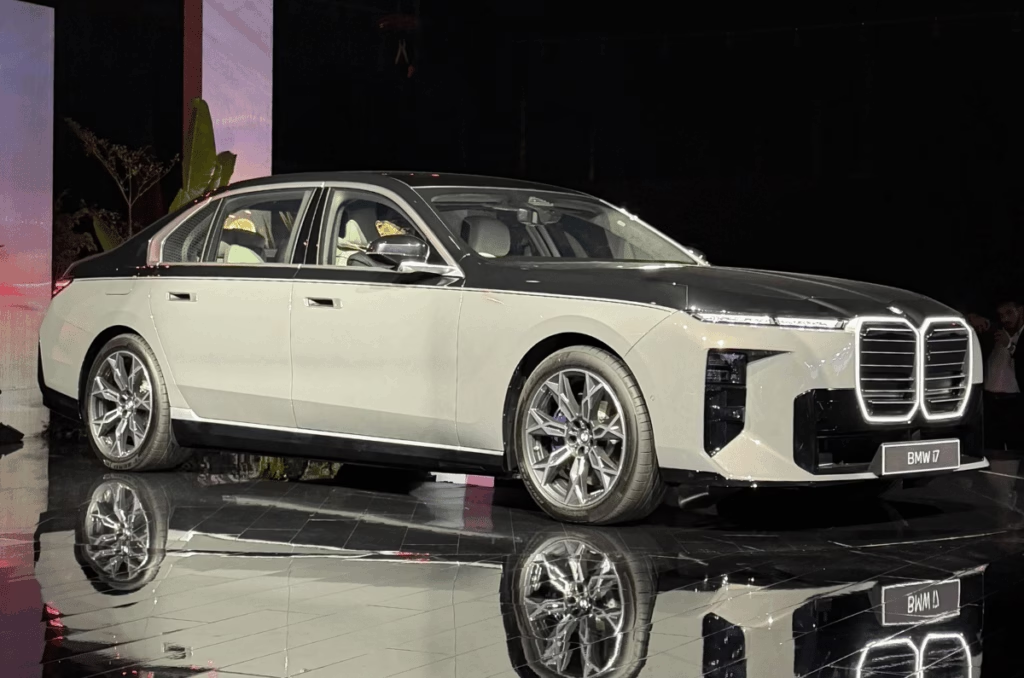
BMW India has launched the 2026 i7 facelift at Rs 1.95 crore (eDrive 50 trim), ex-showroom. The range-topping M70 xDrive trim costs Rs 2.65 crore. With this year’s mid-lifecycle update, BMW’s flagship electric sedan gets powertrain upgrades, along with several exterior and interior design tweaks.
2026 BMW i7 facelift: Powertrain specs
The range-starting i7 eDrive 50 trim makes 455hp and 600Nm, accelerating from 0-100kph in 5.5 seconds and topping out at 210kph. It uses a 112.5kWh battery pack, allowing for a single charge range of 728km (WLTP rated). BMW claims that is an increase of 125km over the outgoing model.
The top-spec i7 M70 xDrive (all-wheel drive in BMW speak) makes higher outputs of 680hp, and 1,015Nm (in Sport mode) and 1,100Nm (with Sport Boost function). As a result, it does the sprint from rest to 100kph in just 3.8 seconds; top speed is 250kph. Range, however, stands at 686km (also WLTP).
With a 250kW DC fast charger, a 10-80 percent charge takes 28 minutes; BMW claims that a 10-minute charging top-up can add a range of 235km. Whereas, it takes about six hours to charge the battery from 0-100 percent with a 22kW AC charger. Both trims come with a complimentary wallbox charger with installation. It can be installed at home to enable charging at speeds of up to 22kW.
2026 BMW i7 facelift: Exterior highlights
The updated i7 sedan receives subtle styling revisions, though it carries over the overall design of the outgoing model. Part of the changes include a more squared-off kidney grille with illuminated surrounds, revised LED headlamps and a new front bumper. Along the sides, BMW has introduced a new alloy wheel design while retaining the flush-fitting door handles. At the rear, the i7 gets new tail-lamps with smoked lenses, along with a redesigned tailgate and bumper.
Compared to the standard sedan, i7 M70 xDrive gets a larger front air intake. In addition to the grille, this trim also gets M badges on the Hofmeister kink of the side windows and on the outer edges of the rear lights. The M70 rides on 21-inch wheels.
2026 BMW i7 facelift: Interior features
The biggest changes are inside the cabin. Instead of a traditional driver’s display, the facelift gets BMW’s Panoramic Vision full-width projection at the windscreen’s base. The rhomboidal touchscreen in the centre measures 17.9 inches, and it runs the latest BMW Operating System X, supports over-the-air updates, wireless Apple CarPlay and Android Auto, and features improved voice controls. There’s a new passenger screen as well, and it measures 14.6 inches.
Even the centre console has been redesigned with a more storage space, lesser buttons, and a new cylindrical rotary drive selector. BMW has also redesigned the dashboard, introduced a new four-spoke steering wheel like in its Neue Klasse models.
As before, the i7 gets a massive 31.3-inch 8K Theatre Screen at the rear. Audio duties are taken care of by a Bowers & Wilkins surround sound system with Dolby Atmos. Powered doors have been retained as well. The panoramic glass roof can be specified with more than 40 LED lights. Other features include Boss mode, powered ottomans, connected car tech, Level 2 ADAS, and powered, heated, ventilated, and massaging seats.
The 2026 BMW i7 eDrive 50 will be locally-assembled at the company’s Chennai plant, while the M70 xDrive version will arrive here as a fully imported model.
AIIMS NORCET 11 Admit Card 2026: अखिल भारतीय आयुर्विज्ञान संस्थान में नर्सिंग अधिकारी भर्ती की तैयारी कर रहे उम्मीदवारों के लिए बड़ा अपडेट है। एम्स इस भर्ती के लिए नर्सिंग ऑफिसर कॉमन एलिजिबिलिटी टेस्ट (NORCET) का आयोजन करता है। इसके जरिए देश के विभिन्न एम्स संस्थानों में नर्सिंग अधिकारियों की नियुक्ति की जाती है। एम्स नॉरसेट 11 की परीक्षा पूरे देश में 12 सितंबर को आयोजित की जाएगी। एम्स ने नॉरसेट 11 2026 के लिए हॉल टिकट आधिकारिक वेबसाइट पर जारी कर दिया है।
एम्स नॉरसेट स्टेज-I परीक्षा के लिए पंजीकृत परीक्षार्थी ऑफिशियल वेबसाइट से अपने लॉगिन क्रेडेंशियल की मदद से अपना हॉल टिकट डाउनलोड कर सकते हैं। इस बहुप्रतीक्षित भर्ती अभियान के तहत, देश भर के विभिन्न संस्थानों में कुल 2218 नर्सिंग ऑफिसर पद भरे जाने हैं। परीक्षा आयोजित करने वाली अथॉरिटी ने 09 सितंबर, 2026 को अपनी ऑफिशियल वेबसाइट पर एम्स नॉरसेट 11 एडमिट कार्ड 2026 डाउनलोड लिंक एक्टिवेट कर दिया है। कैंडिडेट एम्स की आधिकारिक वेबसाइट aiimsexams.ac.in के भर्ती पेज पर जाकर एम्स नॉरसेट 11 एडमिट कार्ड 2026 डाउनलोड लिंक प्राप्त कर सकते हैं।
एम्स नॉरसेट 11 एग्जाम 2026: जरूरी तारीखें
सिटी स्लिप रिलीज डेट : 03 सितंबर 2026
एडमिट कार्ड रिलीज डेट : 09 सितंबर 2026
प्रीलिम्स/ स्टेज 1 एग्जाम डेट : 12 सितंबर 2026
स्टेज 1 रिजल्ट : 18 सितंबर 2026
मेन्स/ स्टेज 2 एग्जाम डेट : 30 सितंबर 2026
स्टेज 2 रिजल्ट डेट : 10 अक्टूबर 2026
एम्स नॉरसेट 11 एडमिट कार्ड 2026 रिलीज डेट
एम्स नॉरसेट 11 एडमिट कार्ड 2026, जो एग्जाम में बैठने के लिए एक जरूरी डॉक्यूमेंट है, 09 सितंबर को रिलीज हो गया है, और एग्जाम 12 सितंबर, 2026 को होना है। कैंडिडेट अपने लॉगिन क्रेडेंशियल का इस्तेमाल करके अपना हॉल टिकट डाउनलोड कर सकते हैं। कैंडिडेट्स को सलाह दी जाती है कि वे नर्सिंग ऑफिसर रिक्रूटमेंट कॉमन एलिजिबिलिटी टेस्ट (NORCET)-11 के प्रीलिम्स परीक्षा के लिए अपना हॉल टिकट डाउनलोड कर लें, क्योंकि लिंक एक्टिवेट हो गया है।
AFCAT 2 Result 2026 Out: भारतीय वायु सेना (IAF) ने एयर फोर्स कॉमन एडमिशन टेस्ट (AFCAT) 2 2026 लिखित परीक्षा का रिजल्ट जारी कर दिया है। एफकैट 2 लिखित परीक्षा में शामिल सभी कैंडिडेट अब एफकैट पोर्टल, afcat.edcil.co.in पर लॉग इन करके अपना रिजल्ट देख और डाउनलोड कर सकते हैं।
रिजल्ट का पीडीएफ देखने के लिए, उम्मीदवारों को अपना यूजर आईडी और पासवर्ड डालना होगा। रिजल्ट के साथ, एफकैट 2026 का कट-ऑफ भी जारी कर दिया गया है। कट-ऑफ कैटेगरी के हिसाब से जारी नहीं किया गया है, बल्कि यह एंट्री ब्रांच के आधार पर जारी किया गया है।
बता दें, एफकैट का कट-ऑफ कई बातों पर निर्भर करता है। इसमें परीक्षा में शामिल होने वाले कैंडिडेट की संख्या, पेपर में कितना मुश्किल था और कैंडिडेट की परफॉर्मेंस शामिल है। एफकैट 2 लिखित परीक्षा 8 अगस्त, 2026 को फ्लाइंग ब्रांच और ग्राउंड ड्यूटी (टेक्निकल और नॉन-टेक्निकल) ब्रांच में भर्ती के लिए आयोजित की गई थी।
एफकैट 2 रिजल्ट 2026: डाउनलोड करने के स्टेप्स
कैंडिडेट्स एफकैट 2 रिजल्ट पीडीएफ चेक और डाउनलोड करने के लिए नीचे दिए गए स्टेप्स फॉलो कर सकते हैं।
ऑफिशियल वेबसाइट: afcat.edcil.co.in पर जाएं
होमपेज के टॉप पर मौजूद ‘कैंडिडेट लॉगिन’ ऑप्शन पर क्लिक करें।
‘AFCAT 02/2026’ लिंक चुनें।
स्क्रीन पर एक नई रिजल्ट लॉगिन विंडो दिखाई देगी।
दिए गए फील्ड में जरूरी क्रेडेंशियल्स डालें।
एफकैट 2 रिजल्ट लिंक पर क्लिक करें।
रिजल्ट स्क्रीन पर दिखाई देगा।
रिजल्ट डाउनलोड करें और इसे भविष्य के लिए सेव कर लें।
एफकैट 2 रिजल्ट 2026: आगे क्या है?
एफकैट 2 लिखित परीक्षा में चयनित उम्मीदवार चयन प्रक्रिया के अगले चरण – एयर फोर्स सिलेक्शन बोर्ड (AFSB) इंटरव्यू में जाएंगे। इसके बाद उम्मीदवारों का चिकित्स परीक्षण किया जाएगा। ये सभी चरण पूरे होने के बाद, फाइनल मेरिट लिस्ट जारी की जाएगी।
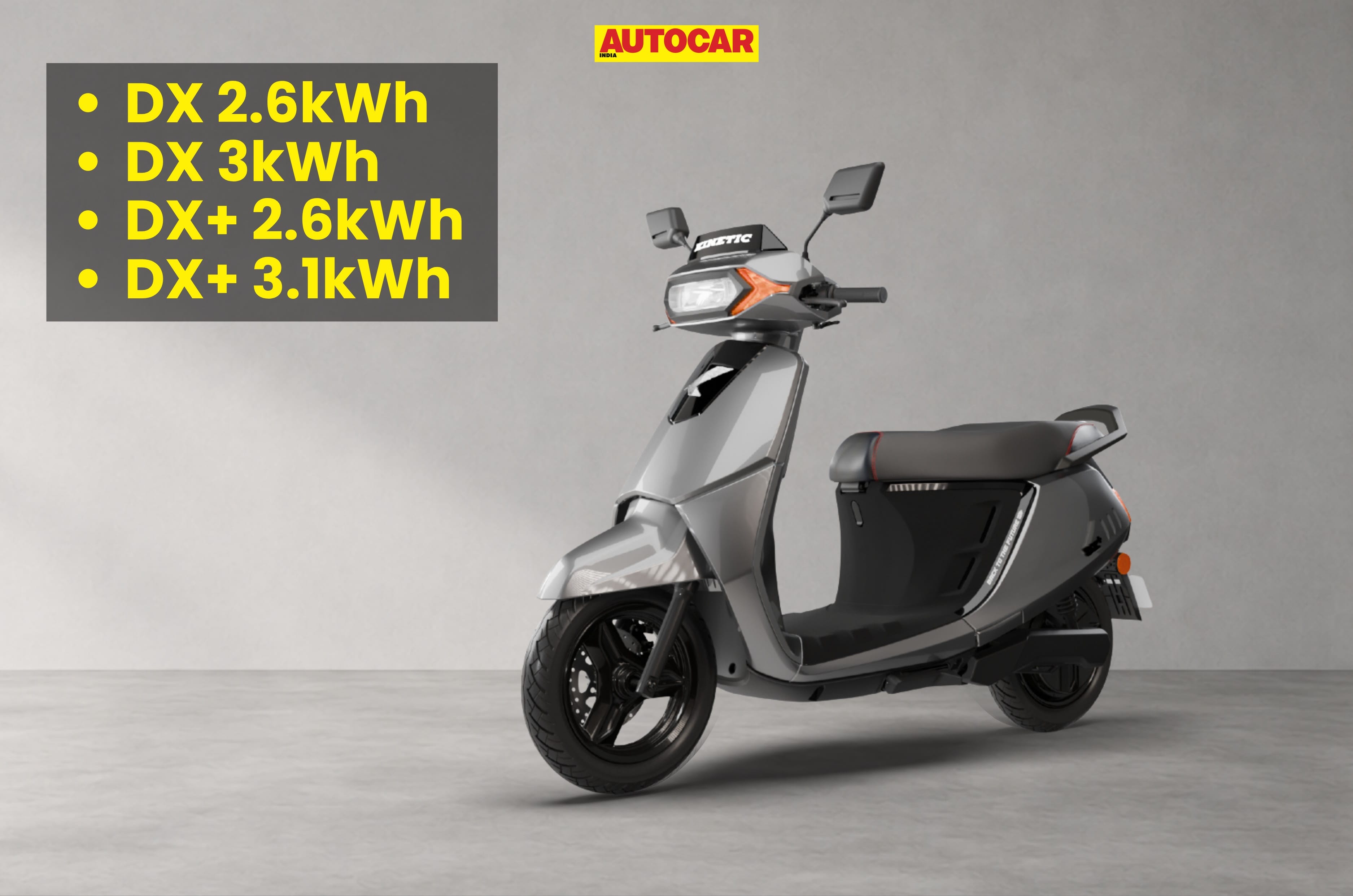
Kinetic Watts & Volts, the electric mobility arm of Kinetic Engineering, is building on the brand’s long history in the Indian two-wheeler market with its DX electric scooter range. The range is now offered in four variants, with the existing 2.6kWh versions joined by larger-battery options for both the DX and DX+. Prices range from Rs 1.11 lakh to Rs 1.28 lakh (ex-showroom, Pune), while the larger batteries are aimed at buyers looking for more range. Kinetic, however, has not yet published complete specifications for the new DX 3kWh.
All four use LFP batteries and a BLDC hub motor, with the DX+ versions getting Kinetic’s Easy Charge system. The scooters also share a 37-litre underseat storage capacity, 12-inch wheels, telescopic front suspension, adjustable twin rear shocks, a 220mm front disc and a 130mm rear drum brake. Here’s what each variant offers and what sets them apart.
Kinetic DX variant breakdown
DX 2.6kWh
The entry-level DX uses a 2.6kWh LFP battery and has a claimed IDC range of 102km. Its BLDC hub motor produces 4.77kW of peak power and there are three riding modes – Range, Power and Turbo. It also gets regenerative braking and reverse assist, along with an off-board charger. The DX gets a metal body and is available in Black and Silver. It is priced at Rs 1.11 lakh.
DX 3kWh
The newer DX 3kWh gets a larger battery and is priced at Rs 1.19 lakh, around Rs 7,000 more than the 2.6kWh version. However, this is where Kinetic’s current specifications become ambiguous – while the OEM confirms the 3kWh battery capacity and price, its comparison page lists the range, peak power, charger type, colours and several other specifications as “Awaiting”. As a result, there is currently no OEM-confirmed IDC range or motor output to quote for this variant.
DX+ 2.6kWh
The DX+ 2.6kWh uses the same 2.6kWh LFP battery but has a slightly higher claimed IDC range of 105km. Its BLDC hub motor produces 4.78kW of peak power and it gets Range, Power and Turbo riding modes. Unlike the DX, it features Kinetic’s Easy Charge system, which is essentially an on-board charger, and has a three-hour 0-80 percent claimed charging time. Much like the lower variant, it also gets a metal body, along with 37-litre storage, regenerative braking and reverse assist. The DX+ is available in Red, Blue, Black, Silver and White and costs Rs 1.21 lakh.
DX+ 3.1kWh
The range-topping DX+ gets a 3.1kWh LFP battery, taking its claimed IDC range up to 132km. There is an interesting trade-off here, though – its BLDC hub motor produces 3.8kW of peak power, down from 4.78kW on the DX+ 2.6kWh, while the riding modes are reduced to Range and Power, with Turbo dropped. The larger-battery version retains Easy Charge and has the same three-hour 0-80 percent charging time. It also gets the DX’s metal body, 37-litre storage, regenerative braking and reverse assist. It is available in Red, Blue, Black, Silver and White and costs Rs 1.28 lakh.
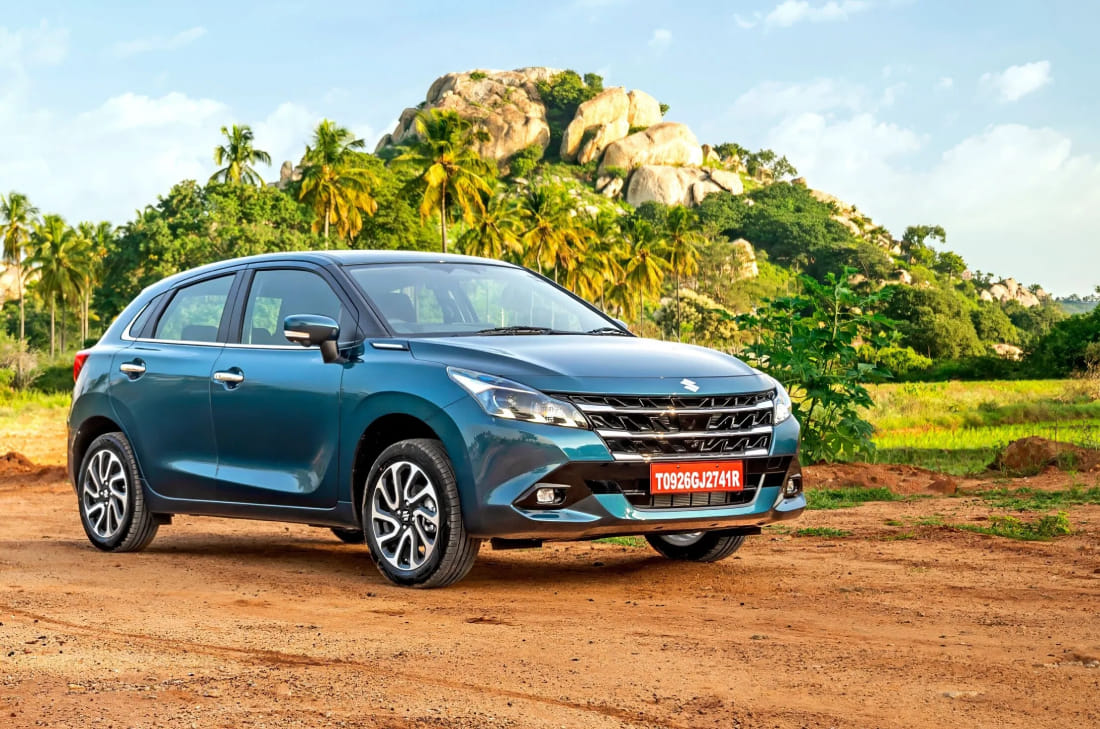
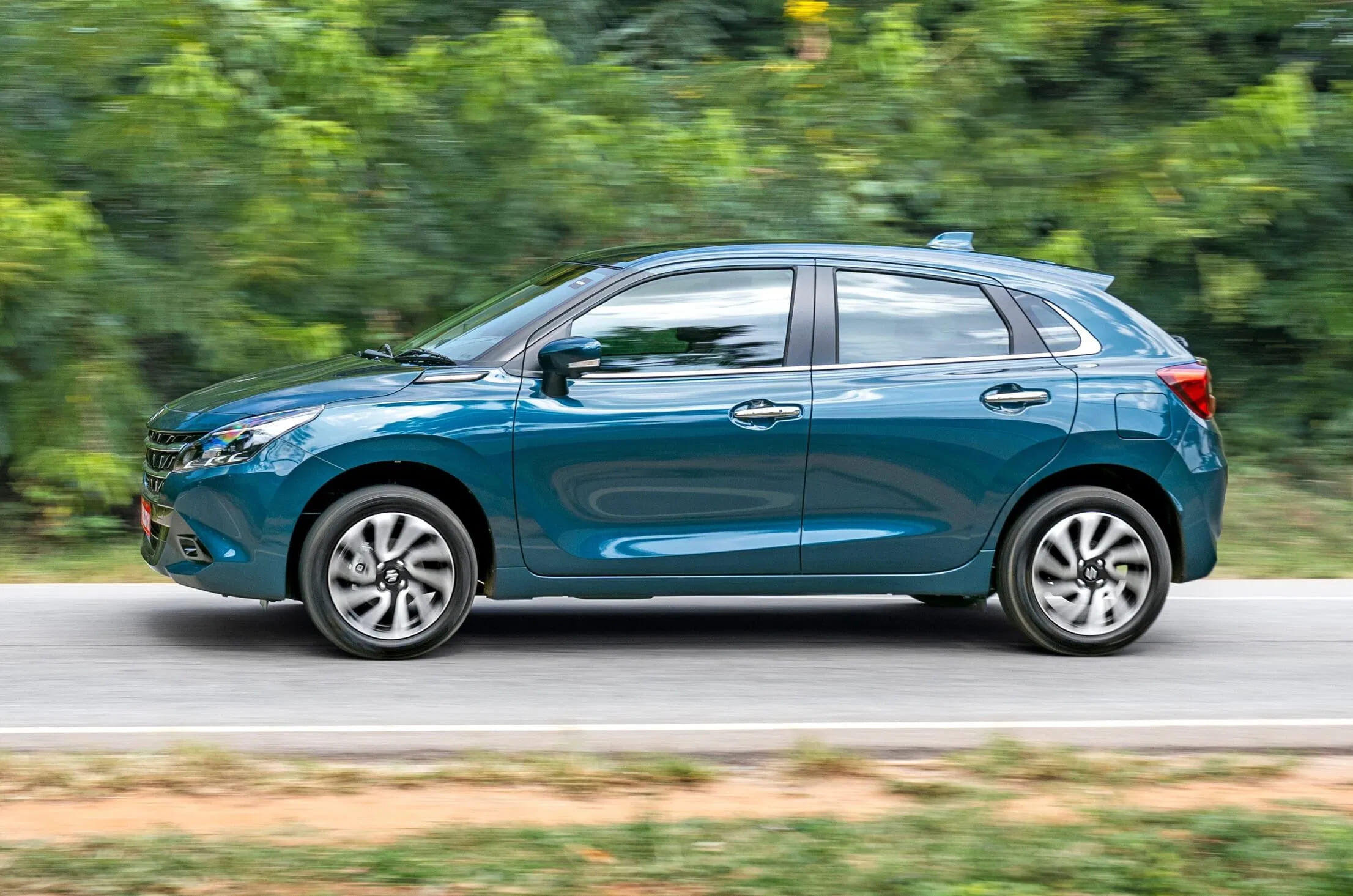
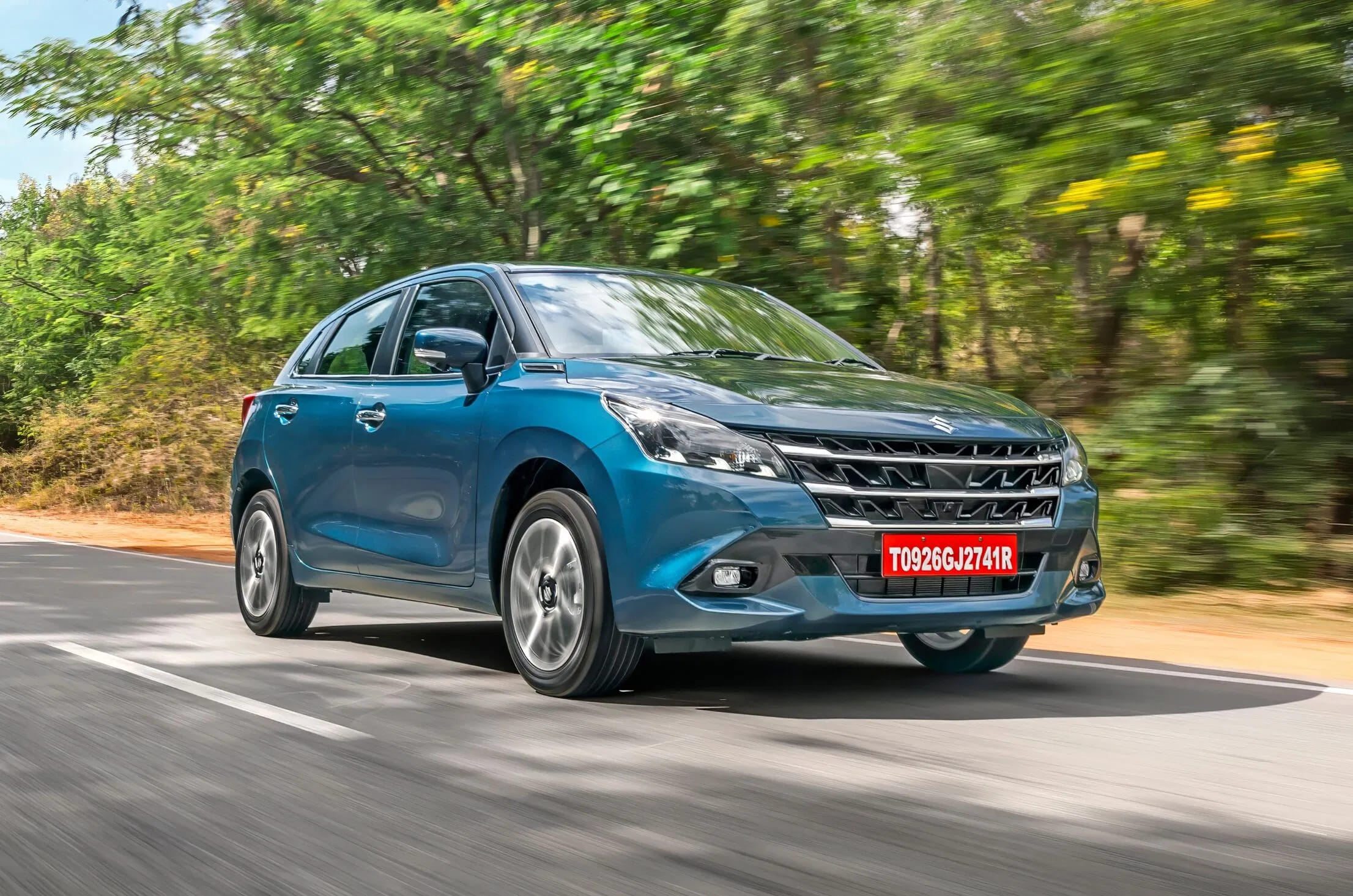
Maruti Suzuki recently updated the Baleno with new features, cosmetic changes and, most significantly, a new 1.2-litre three-cylinder petrol engine. It is available with petrol and CNG powertrains, with manual and AMT gearbox options on offer, and is priced from Rs 6.10 lakh onwards. But does it have what it takes to be the right premium hatchback for you? Here are three reasons to consider the Baleno and two reasons why you may want to look elsewhere.
Pros
1. Spacious and well-equipped cabin
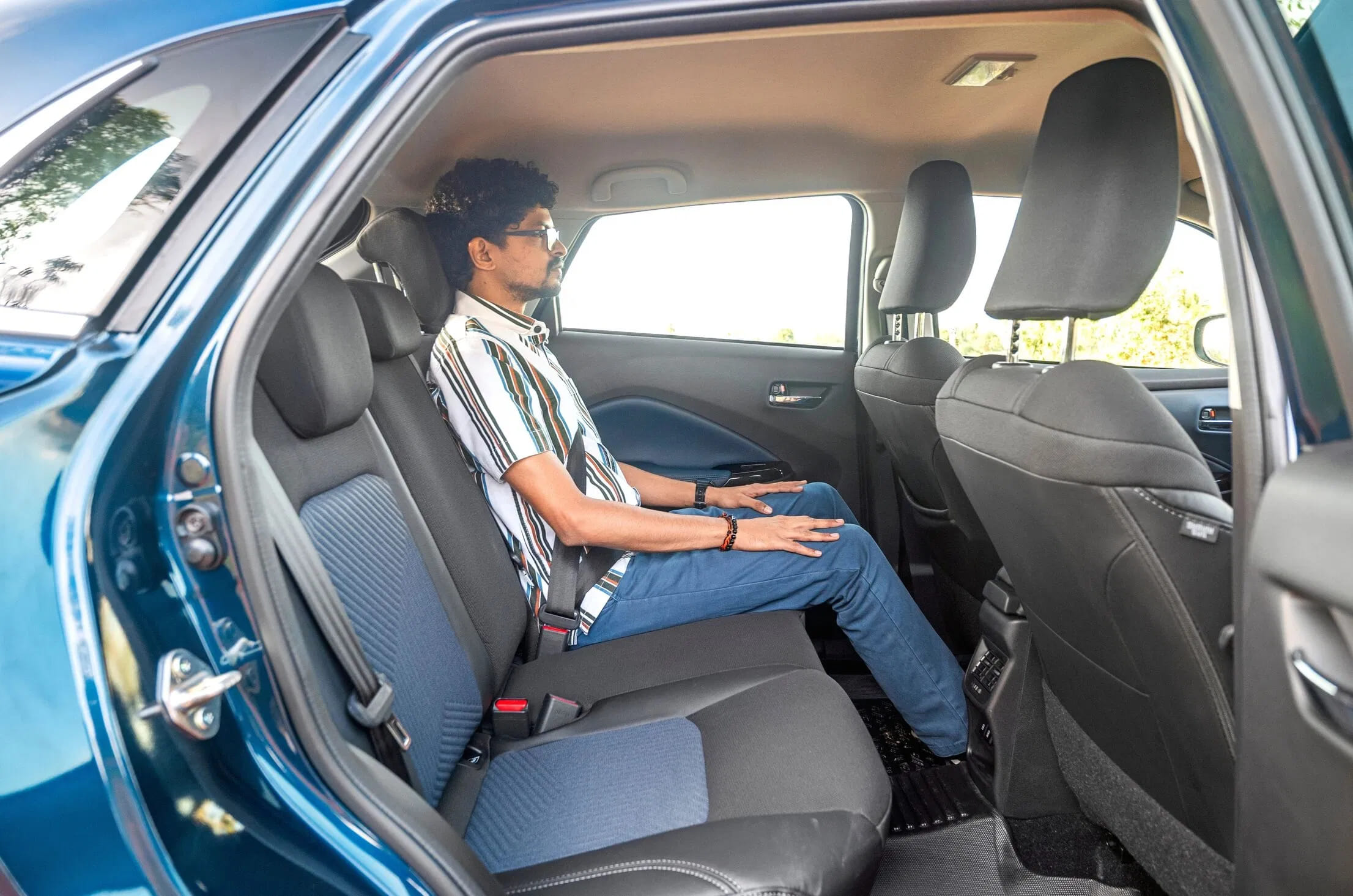
The Baleno has a spacious cabin, particularly at the rear, with ample headroom and legroom for tall passengers. The seats offer good cushioning and under-thigh support, while rear passengers get dedicated AC vents and USB charging ports. The 318-litre boot is useful for everyday needs, although the loading lip is high.
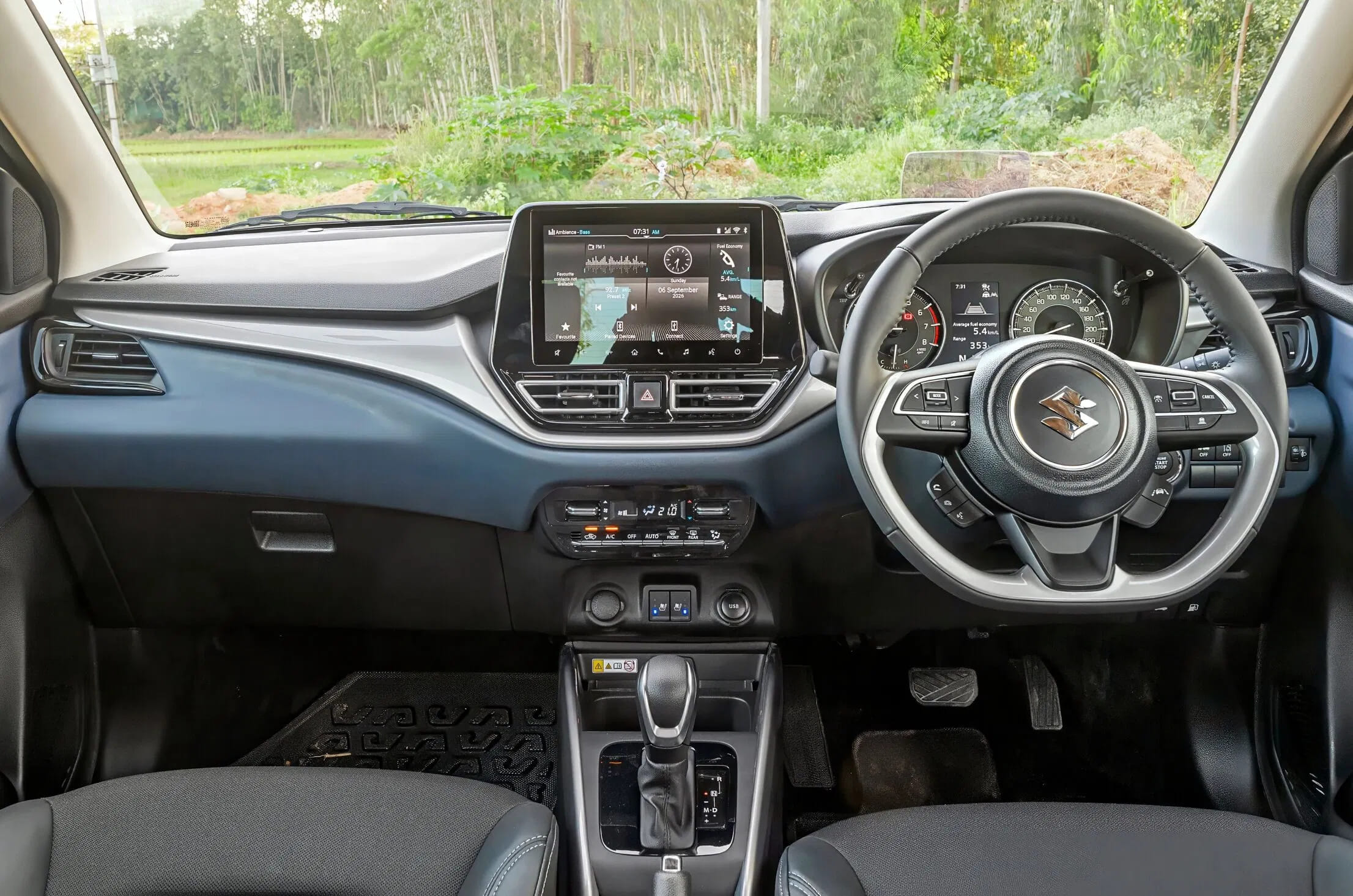
The equipment list is also a highlight, with the Baleno being the only in its segment to offer Level 2 ADAS and ventilated front seats. A head-up display is another useful addition, while the top-spec Alpha (O) also gets a 9-inch touchscreen with wireless smartphone integration, automatic climate control, a cooled wireless charger and connected-car features. Six airbags and traction control are standard.
2. Refined engine with strong claimed fuel efficiency
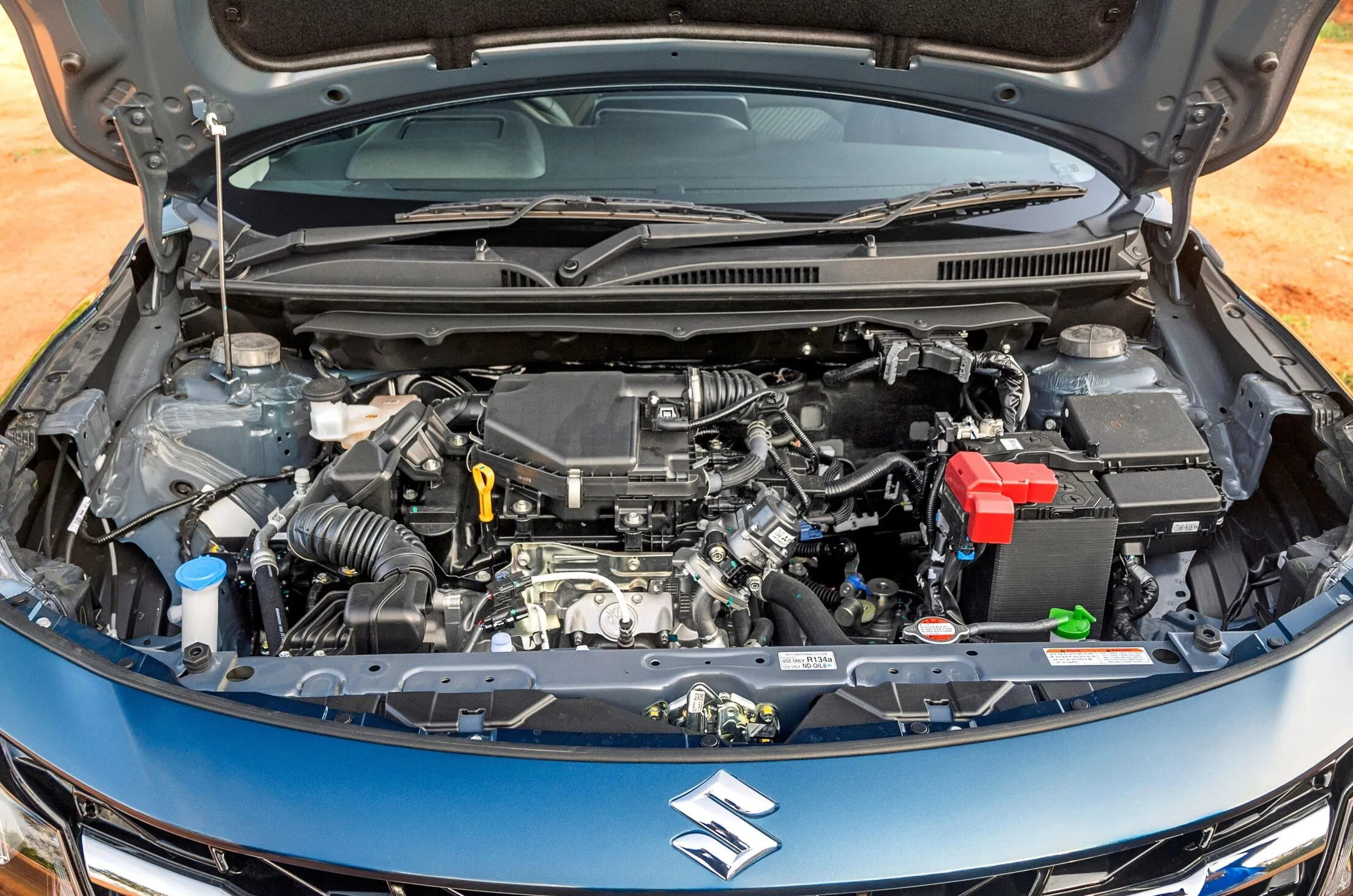
The 1.2-litre three-cylinder Z-series petrol engine produces 83hp and 112Nm and is one of the more refined three-cylinder engines. It has good low-end response, smooth power delivery and is well suited to everyday city driving. Fuel efficiency is another strong point. The petrol-manual has a claimed 23.80kpl, while the AMT claims 24.77kpl. The CNG version is rated at 33.61km/kg, although these are claimed figures and real-world efficiency will be lower.
3. Comfortable ride and good high-speed composure
The Baleno’s soft suspension delivers an excellent low-speed ride, absorbing most road imperfections with ease. Only sharp bumps and large potholes tend to unsettle it, making the car particularly comfortable around town.
It also remains composed at higher speeds, with well-contained body movements. The steering is light at low speeds for easy manoeuvring and gains weight as speed increases, while body control is good through corners.
Cons
1. AMT can hesitate during quick overtakes
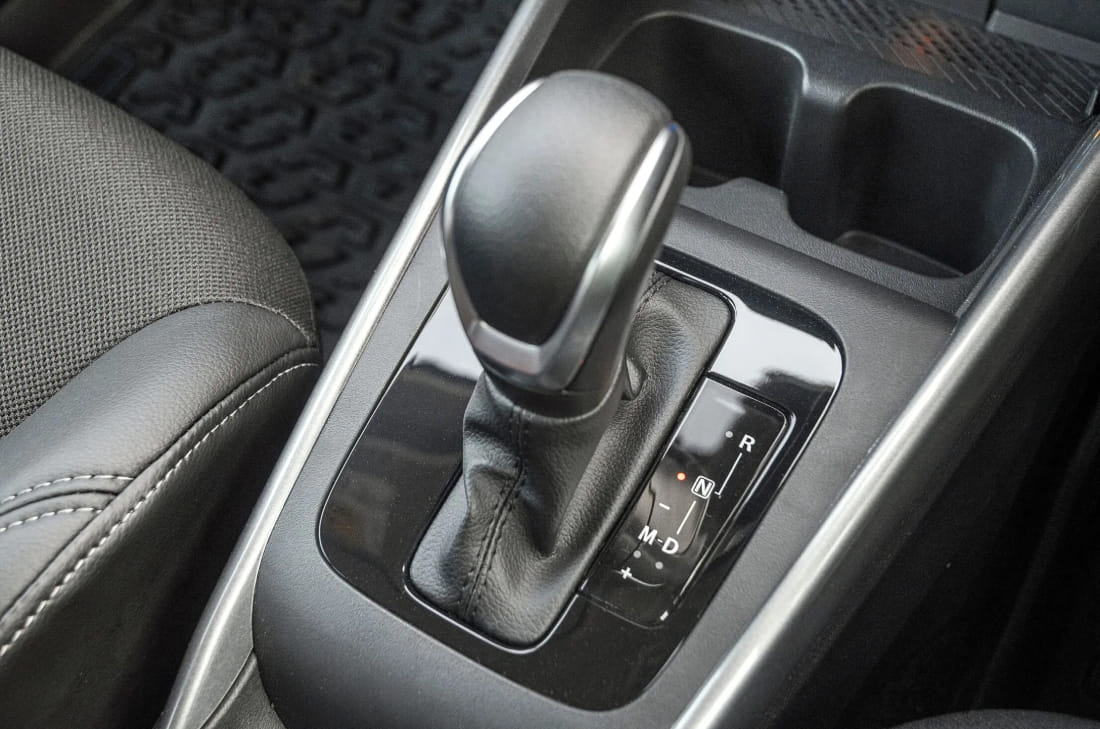
The five-speed AMT is reasonably smooth but has a noticeable head-nod between shifts. More importantly, it can take time to downshift when a quick overtake is required, resulting in hesitation. Manual mode helps by letting the driver select the required gear, while the five-speed manual itself is smoother and more satisfying to use, with a light clutch and short, well-defined shifts.
2. Outright performance is not its strength
The Z-series engine has good low-end response and smooth power delivery, but it lacks punch higher up the rev range. It is also less peppy than the older K-series engine, while its lower output and the new Baleno’s higher weight compared to its predecessor result in slower outright acceleration. For regular city driving, the engine is adequate and easy to use. However, buyers looking for stronger acceleration, particularly during highway overtakes, may find it lacking.