Bengaluru-Mumbai Vande Bharat: बेंगलुरु और मुंबई के बीच ट्रेन से सफर करने वाले यात्रियों को दक्षिण रेलवे इस कर्नाटक राज्योत्सव के मौके पर बड़ी सौगात दे सकता है। अभी इन दोनों मेट्रो शहरों के बीच 1,118 km की दूरी तय करने में सबसे तेज उद्यान एक्सप्रेस को लगभग 24 घंटे लगते थे। लेकिन, इस कर्नाटक राज्योत्सव में यह बदल सकता है, क्योंकि साउथ वेस्टर्न रेलवे 1 नवंबर को बेंगलुरु-मुंबई वंदे भारत स्लीपर एक्सप्रेस की पहली स्पेशल ट्रेन चलाने का प्रस्ताव दे रहा है।
इस प्रस्तावित सेवा से दोनों शहरों के बीच सफर का समय 24 घंटे से घटकर लगभग 16 घंटे होने की उम्मीद है। हालांकि, विशेषज्ञों का कहना है कि कर्नाटक के बढ़ते यात्री ट्रैफिक के लिए रेल कनेक्टिविटी को और बढ़ाना जरूरी है, जिसमें बेंगलुरु को मुंबई, हैदराबाद और चेन्नई से जोड़ने वाली तेज ट्रेनें हों। कर्नाटक के लिए, 1 नवंबर का प्रस्ताव एक अच्छी शुरुआत हो सकता है। अगर यह योजना आगे बढ़ती है, तो यह भारत के दो सबसे बड़े आर्थिक केंद्रों को जोड़ने वाले रेल नेटवर्क में एक बड़ा मील का पत्थर होगा।
16 घंटे में पूरा होगा 1,118 km का सफर
इस प्रस्तावित सेवा से 1,118 km का सफर लगभग 16 घंटे में पूरा होने की उम्मीद है, जिससे सफर का समय लगभग आठ घंटे कम हो जाएगा। हालाकि, नियमित व्यावसायिक सेवा शुरू होने की तारीख अभी घोषित नहीं की गई है। उम्मीद है कि केंद्रीय रेल मंत्री अश्विनी वैष्णव पहली स्पेशल ट्रेन को हरी झंडी दिखाएंगे। यह ट्रेन दक्षिण भारत में पहली वंदे भारत स्लीपर सर्विस होगी। रेलवे सूत्रों के अनुसार, प्रस्तावित ट्रेन अक्टूबर में लॉन्च नहीं की जा सकी क्योंकि कर्नाटक विधान परिषद चुनावों के लिए आचार संहिता लागू थी।
16 कोच की होगी ट्रेन
बेंगलुरु-मुंबई वंदे भारत स्लीपर एक्सप्रेस में 16 कोच होंगे, 11 AC थ्री-टियर, चार AC टू-टियर और एक AC फर्स्ट-क्लास कोच, जिनकी कुल क्षमता 823 बर्थ होगी। सफर का किराया क्लास के आधार पर ₹2,600 और ₹4,250 के बीच होने की उम्मीद है, हालांकि फाइनल किराया अभी घोषित नहीं किया गया है। प्रस्तावित रूट में ट्रेन मुंबई पहुंचने से पहले अनंतपुर, गुंटकल, रायचूर, कलबुर्गी, सोलापुर और कल्याण से गुजरेगी।
‘हमें सिर्फ एक नहीं, बल्कि और ट्रेनों की जरूरत है’
एक शहरी यातायात विशेषज्ञ ने नाम न बताने की शर्त पर News18 से बात की। उन्होंने कहा कि प्रस्तावित सेवा का स्वागत है, लेकिन कर्नाटक को रेल नेटवर्क के और भी बड़े विस्तार की जरूरत है। एक्सपर्ट ने बड़ी संख्या में यात्रियों के बेंगलुरु आने-जाने की ओर इशारा किया। खासकर, छुट्टियों के दौरान देश भर के लोगों के लिए एक डेस्टिनेशन के रूप में शहर की खास स्थिति देखने को मिलती है। एक्सपर्ट ने तर्क दिया कि कर्नाटक को दशकों से रेलवे ने कम आंका है और उसे अलग-अलग रूटों पर कई सेवाओं की जरूरत है।
त्योहारों के मौसम में यात्रा की मांग तेजी से बढ़ती है और यात्रियों को अक्सर सस्ते टिकट खोजने में मुश्किल होती है। बेंगलुरु और मुंबई के बीच एक तेज ट्रेन राहत दे सकती है, लेकिन शहर को दूसरी बड़ी जगहों से जोड़ने के लिए और ज्यादा सर्विस की जरूरत है।
Salman Khan: रविवार शाम मुंबई में अभिनेता टाइगर श्रॉफ की कार पर हुई गोलीबारी की घटना के बाद बांद्रा स्थित गैलेक्सी अपार्टमेंट के बाहर सुरक्षा बढ़ा दी गई है। IANS द्वारा शेयर किए गए एक वीडियो में सलमान खान के घर के बाहर बुलेटप्रूफ जैकेट पहने पुलिसकर्मी और अतिरिक्त पुलिस गाड़ियां देखी गईं। यह घटना तब हुई जब 18 अक्टूबर को शाम करीब 7 बजे, जुहू इलाके में एक फुटबॉल ग्राउंड से निकलते समय कुछ अज्ञात हमलावरों ने टाइगर श्रॉफ की गाड़ी पर गोलियां चला दीं।
बांद्रा में सलमान खान के घर के बाहर सुरक्षा बढ़ाई गई
NDTV के अनुसार, मुंबई पुलिस ने बांद्रा स्थित सलमान खान के गैलेक्सी अपार्टमेंट वाले घर के बाहर सुरक्षा कड़ी कर दी है। एहतियात के तौर पर, वे इस इलाके से गुजरने वाली हर गाड़ी की जांच कर रहे हैं। रिपोर्ट्स के मुताबिक टाइगर श्रॉफ को सीधे गोली नहीं लगी, लेकिन उनके ड्राइवर और वहां मौजूद एक राहगीर को गोली लग गई। बताया जा रहा है कि घायल हुए दोनों लोग अब खतरे से बाहर हैं।
Mumbai, Maharashtra: Security visuals from outside Galaxy Apartments, the residence of actor Salman Khan. https://t.co/cSeKl8wkE9
टाइगर श्रॉफ पर गोलीबारी का मामला- तीनों आरोपी गिरफ्तार
इस बीच एंटी-गैंगस्टर टास्क फोर्स (ATF) और राजस्थान पुलिस ने सोमवार को तीनों आरोपियों को गिरफ्तार कर लिया। 17, 18 और 22 साल के ये आरोपी मुंबई के जुहू इलाके में टाइगर श्रॉफ की कार पर हुई गोलीबारी की घटना के बाद से फरार थे। इन आरोपियों को राजस्थान के कोटा रेलवे स्टेशन पर एक ट्रेन से पकड़ा गया, जब वे मुंबई से दिल्ली की ओर जा रहे थे।
ATF राजस्थान से मिली जानकारी के अनुसार जब ट्रेन कोटा रेलवे स्टेशन पहुंची तो तीनों आरोपियों को पकड़ लिया गया। बताया जा रहा है कि फायरिंग की घटना के बाद भागने की कोशिश में ये हमलावर वसई से ट्रेन में सवार हुए थे, लेकिन कोटा पुलिस ने उन्हें दबोच लिया।
बिश्नोई गैंग से जुड़े एक गैंगस्टर ने टाइगर श्रॉफ के मामले में हुई फायरिंग की जिम्मेदारी ली
इस घटना ने मुंबई की जानी-मानी फिल्मी हस्तियों की सुरक्षा को लेकर चिंता बढ़ा दी है। सोशल मीडिया पर एक पोस्ट भी सामने आई है, जिसमें लॉरेंस बिश्नोई गैंग के नाम पर इस हमले की जिम्मेदारी लेने का दावा किया गया है। हालांकि PTI की रिपोर्ट के अनुसार, पुलिस ने अभी तक इस पोस्ट की सच्चाई की पुष्टि नहीं की है।
हमले के कुछ घंटों बाद अनिल पंडित नाम के एक गैंगस्टर की सोशल मीडिया पोस्ट सामने आई। जिम्मेदारी लेते हुए रिकॉर्डिंग में बोलने वाले व्यक्ति ने कहा- “मैं अनिल पंडित हूं, लॉरेंस बिश्नोई का छोटा भाई।” उसने आगे दावा किया- “आज मुंबई में टाइगर श्रॉफ के साथ जो हुआ, उसकी जिम्मेदारी मैं, अनिल पंडित और मेरा बड़ा भाई हरमन संधू लेते हैं।”
बोलने वाले व्यक्ति ने यह भी दावा किया कि टाइगर श्रॉफ को पहले ही चेतावनी दी गई थी। उसने कहा- “हमने उसे समझाया था, लेकिन वह नहीं समझा।”उस व्यक्ति ने कहा, “फिल्म इंडस्ट्री में जो कोई भी हमसे अलग होकर काम करेगा या सलमान खान के साथ मिलकर काम करेगा, हम उसे मार डालेंगे। यह पहली और आखिरी चेतावनी है।”
इस ऑडियो की सच्चाई और इसमें सुनाई दे रही आवाज़ किसकी है, इसकी अभी तक स्वतंत्र रूप से पुष्टि नहीं हुई है। इससे पहले 14 अप्रैल 2024 को गैलेक्सी अपार्टमेंट के बाहर हुई एक और फायरिंग की घटना के बाद सलमान खान की सुरक्षा को लेकर चिंताएं सामने आई थीं। उस घटना में मोटरसाइकिल पर आए दो हमलावरों ने उनके घर के बाहर कई राउंड फायरिंग की थी। इसके बाद पुलिस ने लॉरेंस बिश्नोई गैंग से जुड़े होने के शक में जांच की थी। उस हमले के बाद सलमान खान के घर पर सुरक्षा के इंतजाम और कड़े कर दिए गए थे।
मुंबई{mumbai}। बॉलीवुड एक्टर टाइगर श्रॉफ पर रविवार शाम हुए फायरिंग हमले में अब चश्मदीद का बड़ा बयान सामने आया है। जुहू इलाके में हुई इस वारदात ने पूरे बॉलीवुड में हड़कंप मचा दिया है। ऑटो ड्राइवर राकेश कुमार ने ANI को बताया कि हमला पूरी प्लानिंग के साथ किया गया था।चश्मदीद ने क्या देखा?
बाल-बाल बचे टाइगर, ड्राइवर को लगी गोली
राकेश कुमार ने बताया, “मैं शाम करीब 7 बजे अपनी गाड़ी निकालने आया था। वहां तीन लोग थे – एक बाइक पर बैठा था और दो लोग गेट के बाहर खड़े थे। जैसे ही टाइगर श्रॉफ की कार फुटबॉल क्लब से बाहर निकली, सामने वाले ने सीधे उसी सीट पर फायरिंग शुरू कर दी, जहां टाइगर बैठे थे। गेट के पास खड़े दूसरे शख्स ने ड्राइवर पर गोली चलाई जो उसके हाथ में लगी।”5 राउंड फायरिंग, ड्राइवर घायल
मुंबई पुलिस के मुताबिक, DCP मोहित गर्ग ने बताया कि टाइगर श्रॉफ बाल-बाल बच गए। हमले में 5 राउंड गोलियां चलीं। टाइगर को सीधे गोली नहीं लगी लेकिन बारूद और कांच के टुकड़ों से उनके हाथ, कंधे और छाती पर चोटें आईं हैं। उनके ड्राइवर को हाथ में गोली लगी है। दोनों घायलों को तुरंत अस्पताल ले जाया गया।पुलिस ने तीन अज्ञात लोगों के खिलाफ BNS की धारा 109(1), 3(5) और आर्म्स एक्ट की धारा 3, 25 के तहत FIR दर्ज कर ली है। हमलावरों के खिलाफ BNS और आर्म्स एक्ट में केस दर्ज कर जांच शुरू कर दी गई है।
घर पहुंचे एकनाथ शिंदे
घटना के बाद रविवार रात महाराष्ट्र के डिप्टी CM एकनाथ शिंदे टाइगर श्रॉफ के घर पहुंचे। तस्वीरों में टाइगर के कंधे, छाती और हाथ पर पट्टी बंधी दिख रही है। उनकी मां आयशा श्रॉफ भी काफी घबराई हुई थीं।शिंदे ने कहा, “यह बेहद निंदनीय घटना है। 90 के दशक में मुंबई में गैंगवार आम था, जिसे पुलिस ने खत्म किया था। पब्लिक फिगर को इस तरह धमकाना बर्दाश्त नहीं किया जाएगा। सरकार टाइगर के परिवार के साथ खड़ी है और आरोपियों को जल्द पकड़ा जाएगा।”
Tiger Shroff Firing: बॉलीवुड अभिनेता टाइगर श्रॉफ को निशाना बनाकर की गई कथित फायरिंग की घटना से जुड़ा पहला वीडियो सामने आया है। मुंबई के जुहू इलाके में हुई इस फायरिंग के वीडियो में गोली चलने की आवाजें सुनाई देने और मौके पर अफरा-तफरी का माहौल दिखाई दे रहा है। शुरुआती जानकारी के मुताबिक, बाइक सवार अज्ञात हमलावरों ने टाइगर श्रॉफ की गाड़ी पर गोलियां चलाई थीं। सामने आए वीडियो में टोपी पहने दो संदिग्ध टाइगर श्रॉफ की ओर फायरिंग करते नजर आ रहे हैं। एक आरोपी ने सामने से, जबकि दूसरे ने भीड़ के बीच से गोली चलाई। वारदात के बाद दोनों फरार हो गए, जिनमें से एक मोटरसाइकिल के जरिए मौके से भाग निकला। इस घटना में अभिनेता को कोई चोट नहीं आई। जबकि उनके ड्राइवर और एक ऑटो रिक्शा चालक के घायल होने की खबर है।
वीडियो सामने आने के बाद पुलिस की जांच में अब हमलावरों की पहचान करने और घटनाक्रम की कड़ियां जोड़ने के लिए सीसीटीवी फुटेज अहम भूमिका निभा सकते हैं। हालांकि, मामले में हमलावरों की पहचान और फायरिंग के पीछे की वजह की आधिकारिक पुष्टि जांच पूरी होने के बाद ही हो सकेगी। सोशल मीडिया पर वायरल एक पोस्ट के अनुसार, लॉरेंस बिश्नोई गिरोह ने हमले की जिम्मेदारी ली है।
मौके पर मची अफरा-तफरी
सामने आए कथित वीडियो में फायरिंग के दौरान का तनावपूर्ण माहौल दिखाई देता है। फुटेज में गोलियों की आवाजें सुनाई देने का दावा किया गया है। घटना के दौरान लोग अचानक हुई गोलीबारी से घबराते नजर आते हैं और मौके पर अफरा-तफरी मच जाती है। वीडियो के एक हिस्से में एक व्यक्ति को ‘टाइगर भाई’ कहते हुए भी सुना जा सकता है। इस फुटेज को जांच के लिहाज से महत्वपूर्ण माना जा रहा है, क्योंकि इससे हमलावरों की गतिविधियों और घटना के दौरान मौके पर मौजूद लोगों की प्रतिक्रिया को समझने में मदद मिल सकती है।
हमले के बाद एक्टर ने खुद दौड़ाई कार
एक वायरल वीडियो में ड्राइवर को चोट लगने के बाद टाइगर खुद कार चलाते हुए दिखाई दे रहे हैं। वारदात के ठीक बाद टाइगर ने बहुत सूझबूझ दिखाई। गोलीबारी की घटना के बाद वह खुद कार से बाहर नहीं निकले, बल्कि अंदर ही ड्राइवर सीट बदल ली। वह जानते थे कि कार के बाहर अभी खतरा हो सकता है, इसलिए यही जगह उन्हें सबसे सुरक्षित दिखी।
Amazing presence of mind by tiger shroff , after shooting incident he Did not get out of the car , shifted the driver seat inside only .He knew that’s the safest place . https://t.co/J5ClqDpFE6
जानकारी के मुताबिक, रविवार शाम मुंबई के जुहू इलाके में पुष्पा पार्क के पास यह घटना हुई। आरोप है कि बाइक पर आए अज्ञात लोगों ने टाइगर श्रॉफ की गाड़ी को निशाना बनाकर फायरिंग की।
घटना के समय टाइगर श्रॉफ सुरक्षित थे। हालांकि, उनके ड्राइवर और एक ऑटो रिक्शा चालक के घायल होने की सूचना सामने आई है।
घायलों की स्थिति को लेकर विस्तृत आधिकारिक जानकारी उपलब्ध नहीं है। फायरिंग की सूचना मिलने के बाद मुंबई पुलिस ने जांच शुरू कर दी है। पुलिस की कई टीमें हमलावरों की पहचान करने, उनके आने-जाने के रास्ते का पता लगाने और वारदात के पीछे की वजह समझने में जुटी हैं। घटनास्थल और आसपास के इलाकों में लगे सीसीटीवी कैमरों की फुटेज भी खंगाली जा रही है।
लॉरेंस बिश्नोई गैंग के नाम से कथित ऑडियो वायरल
फायरिंग की घटना के बाद एक कथित ऑडियो संदेश भी सामने आया। इस मैसेज में अनिल पंडित नाम से अपनी पहचान बताने वाले एक व्यक्ति और हरमन संधू ने लॉरेंस बिश्नोई गैंग की ओर से घटना की जिम्मेदारी लेने का दावा किया। संदेश में सलमान खान से जुड़े फिल्म उद्योग के लोगों को भी धमकी दिए जाने की बात कही गई है।
हालांकि, इस ऑडियो की प्रामाणिकता और फायरिंग में कथित गैंग की भूमिका की पुलिस की ओर से स्वतंत्र पुष्टि नहीं हुई है। जांच एजेंसियां यह पता लगाने की कोशिश कर रही हैं कि फायरिंग के पीछे व्यक्तिगत रंजिश, धमकी या कोई अन्य वजह थी। कथित ऑडियो और घटना के बीच संबंध स्थापित करने के लिए भी जांच जरूरी है।
Actor #TigerShroff hurriedly moves to the driver’s seat moments after his car was attacked and his driver injured . https://t.co/98JQX8G9SF
मुख्यमंत्री देवेंद्र फडणवीस ने पुलिस कमिश्नर से की बात
घटना के बाद महाराष्ट्र के मुख्यमंत्री देवेंद्र फडणवीस ने मुंबई पुलिस कमिश्नर देवेन भारती से बातचीत की। उन्होंने मामले की गहन जांच करने और वारदात के लिए जिम्मेदार लोगों के खिलाफ जल्द कार्रवाई सुनिश्चित करने के निर्देश दिए। वहीं, महाराष्ट्र के उपमुख्यमंत्री एकनाथ शिंदे ने भी टाइगर श्रॉफ और उनके परिवार से मुलाकात। उन्होंने कानून-व्यवस्था बिगाड़ने वालों के खिलाफ कार्रवाई का भरोसा दिया और अभिनेता को सुरक्षा का आश्वासन दिया।
फायरिंग का कथित वीडियो सामने आने के बाद पुलिस के लिए हमलावरों की पहचान करना जांच का प्रमुख हिस्सा बन गया है। सीसीटीवी फुटेज, घटनास्थल से जुटाए गए साक्ष्य और दूसरे तकनीकी इनपुट के आधार पर वारदात की कड़ियां जोड़ी जा रही हैं। फिलहाल सबसे अहम सवाल यही हैं कि हमलावर कौन थे, उन्होंने टाइगर श्रॉफ की गाड़ी को ही निशाना क्यों बनाया और क्या इस घटना का कथित धमकी भरे ऑडियो से कोई संबंध है। इन सवालों के जवाब पुलिस जांच के बाद ही सामने आ पाएंगे।
#BREAKING: Fresh video of attack on Bollywood Actor Tiger Shroff in Mumbai surfaces. Three Gunmen of Lawrence Bishnoi Gang are visible in the video firing at his car and then rushing away on a bike. Mumbai Police form several teams to trace the shooters. https://t.co/m2fmDq64p2
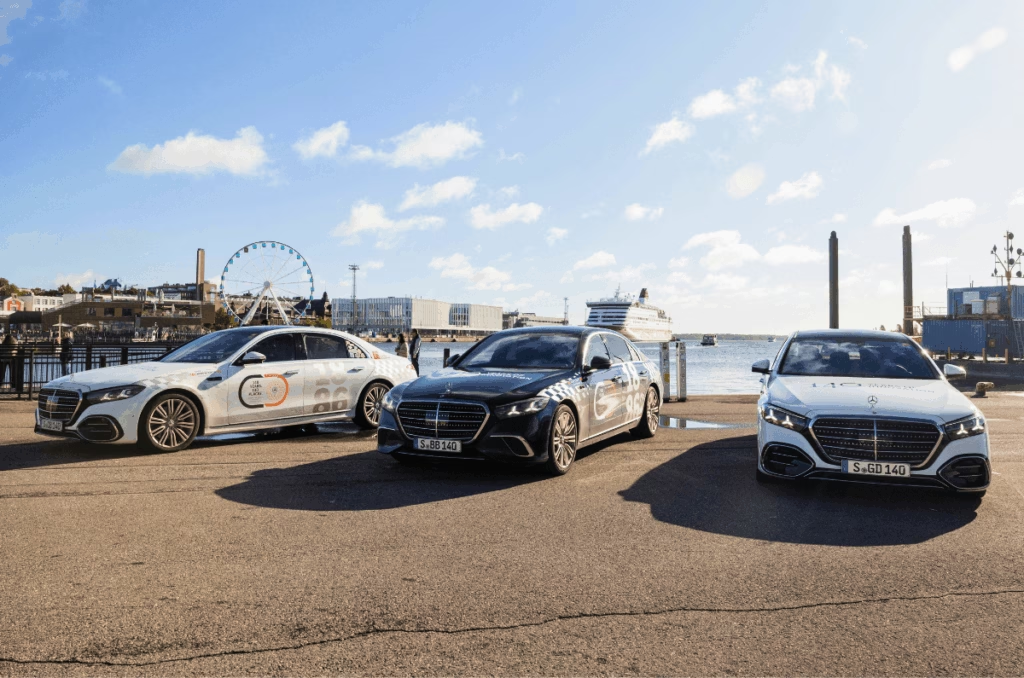
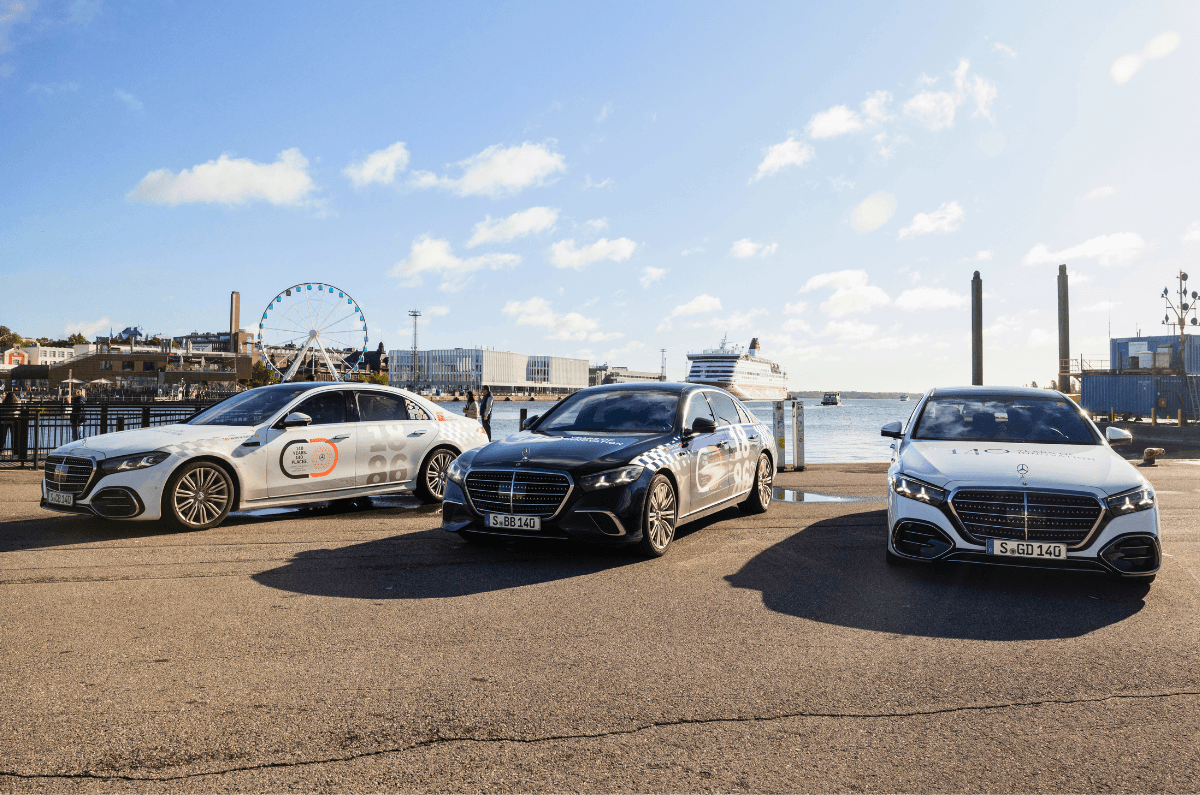
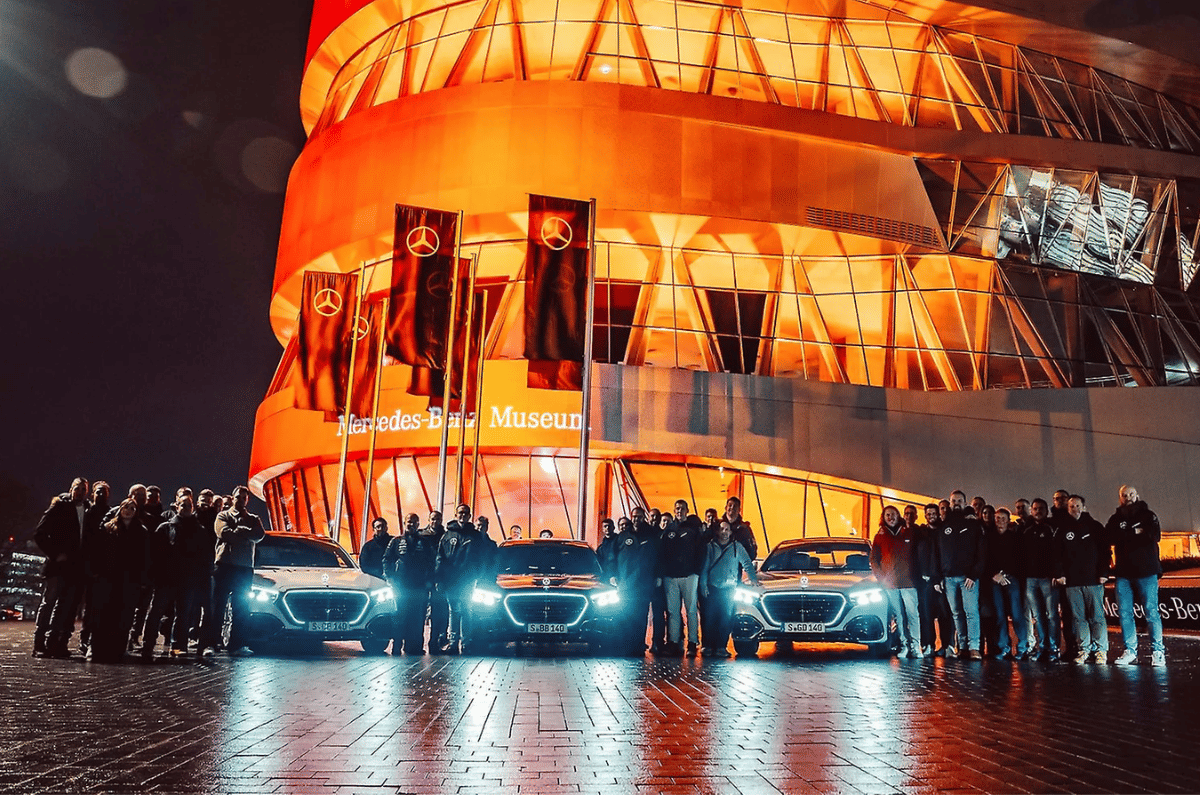
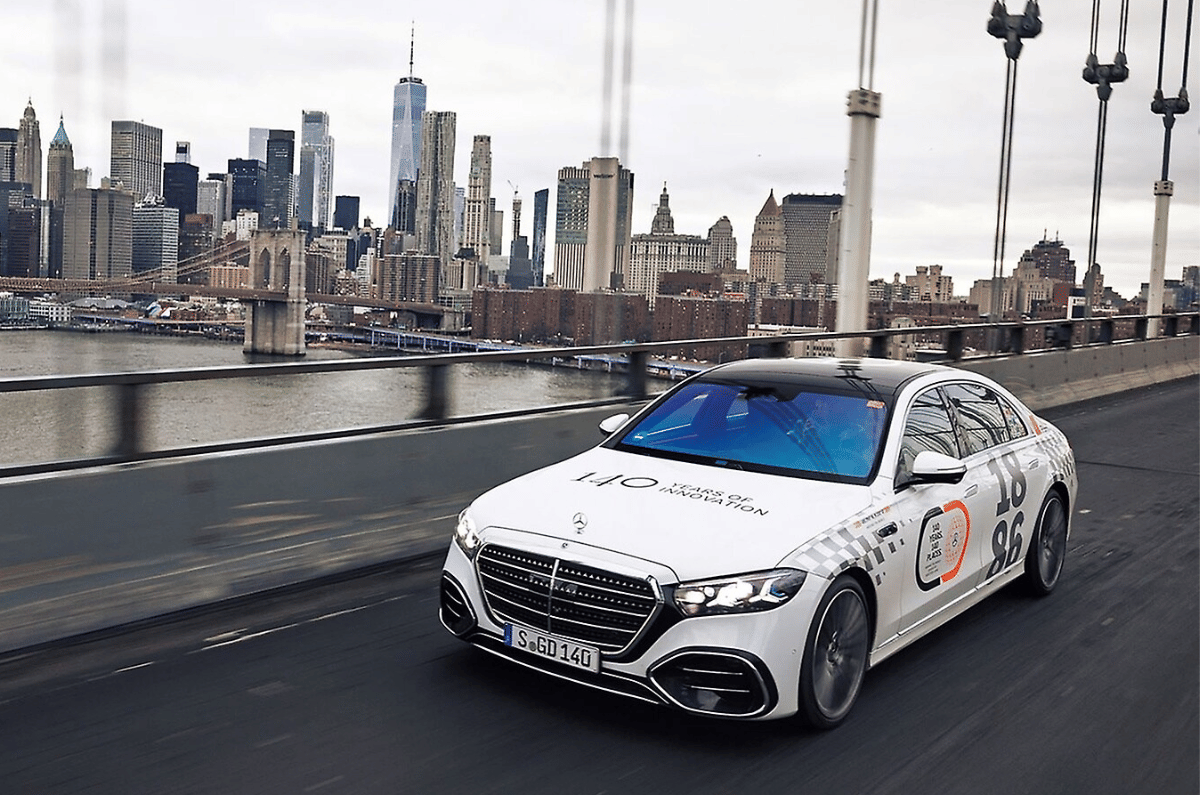
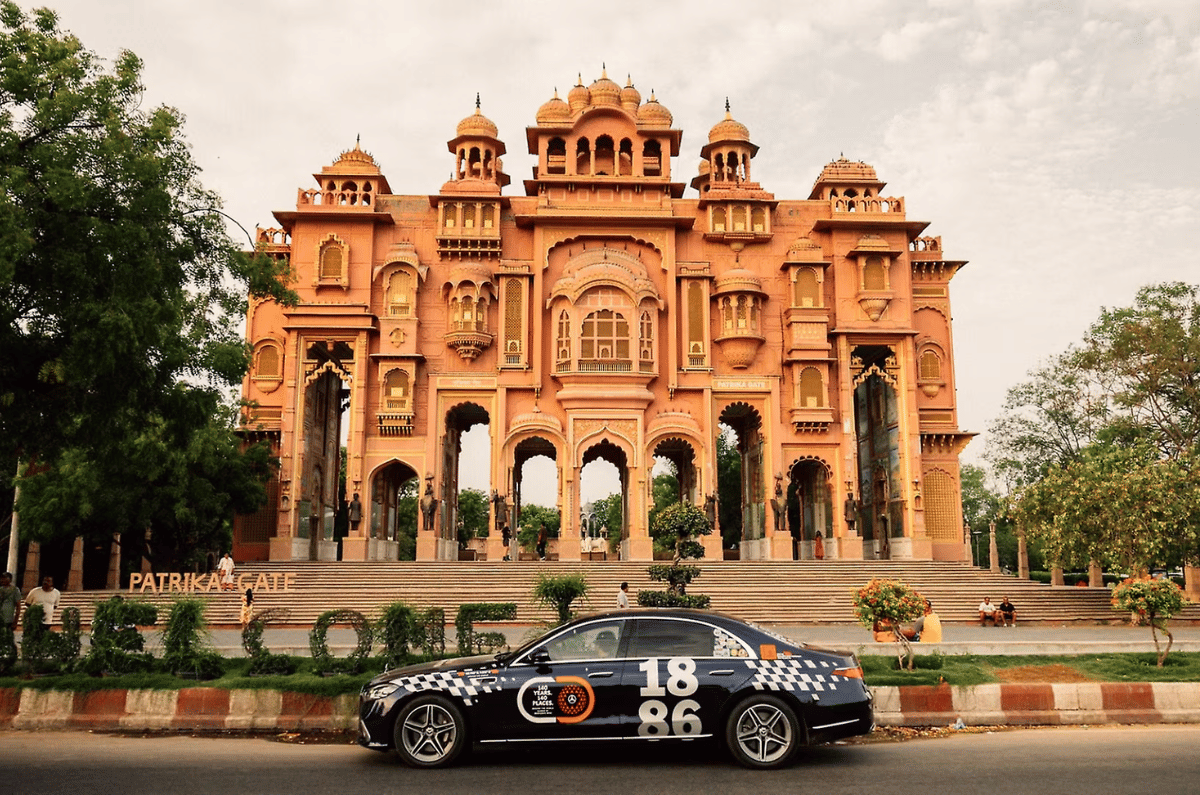
Mercedes-Benz has concluded its ‘140 Years. 140 Places.’ global tour, organised to commemorate 140 years since Carl Benz filed the patent for his Motorwagen in 1886. Three S-Class sedans returned to the Mercedes-Benz Museum in Stuttgart, Germany, on October 17, after covering more than 65,000km across 55 countries and six continents over nearly nine months. Approximately 20,000 guests attended the homecoming event, which also featured the global debut of the new Mercedes-AMG GT SUV.
Mercedes-Benz 140 Years, 140 Places: All you need to know
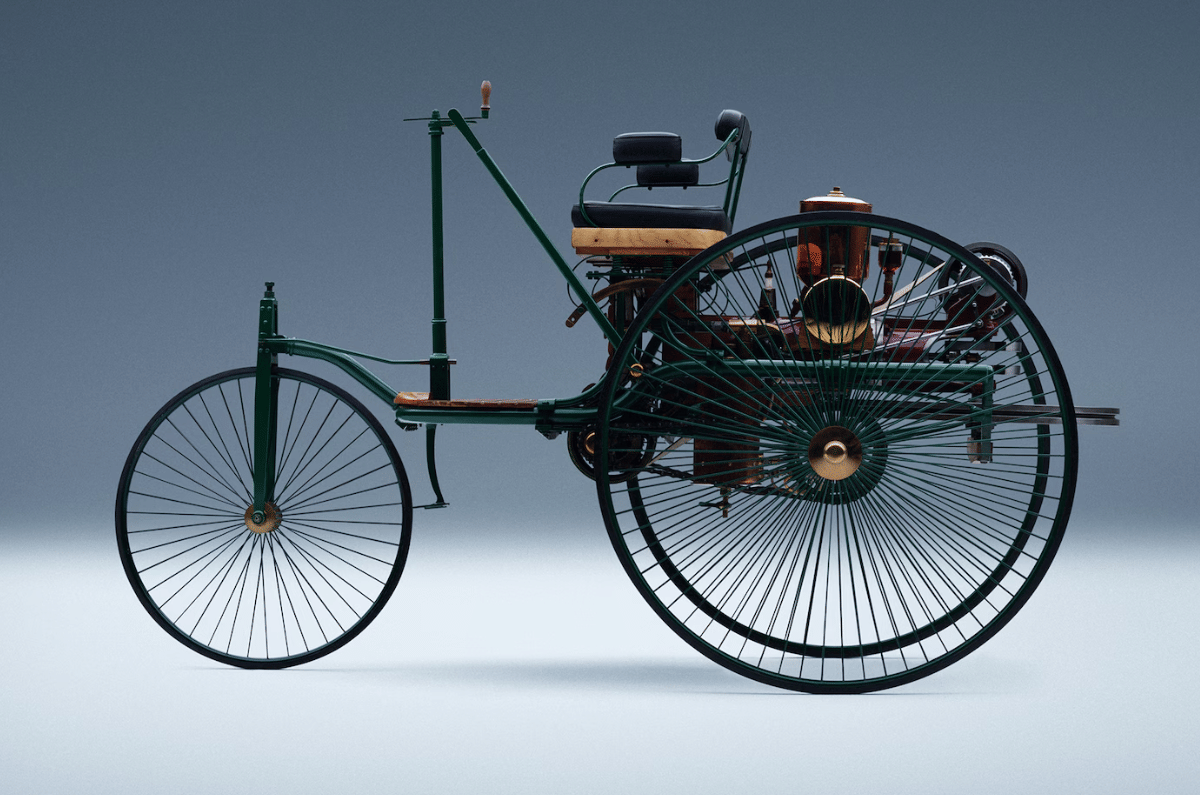
Tour marks 140 years since Carl Benz’s Patent-Motorwagen
The expedition began in Stuttgart on January 29, 2026, with three S-Class sedans named Bertha, Carl and Gottlieb. The tour visited more than 140 locations across six continents, crossing 67 national borders and 13 climate zones.
The route covered cities including New York, Tokyo, Mumbai, Nairobi and Sao Paulo. The cars returned to Stuttgart in a convoy of 140 historic and current vehicles, including a replica of the 1886 Benz Patent-Motorwagen, the Mercedes-Benz 300 SLR Uhlenhaut Coupé, a Ponton 220 S, the C 111 experimental vehicle, and the electric G-Class and C-Class.
Mercedes-Benz says tour tested S-Class under challenging conditions
Mercedes-Benz said the expedition provided insights into the S-Class under real-world conditions beyond those covered by its regular development testing in extreme temperatures and simulation chambers.
During the India leg, the cars travelled to Umling La, at approximately 5,800 metres above sea level, and encountered monsoon conditions and flooded roads. In Kenya, Tanzania and Zambia, the route included unpaved and uneven surfaces. Mercedes-Benz said the journey also exposed the cars to temperatures varying by more than 50deg C across desert and tropical climates.
Autocar India participated in the India Leg
We also participated in the India leg of the expedition, driving the pre-production S-Class sedans through Udaipur and Ahmedabad. The drive provided an opportunity to experience the updated luxury sedan’s performance, ride comfort and technology.
Anniversary activities continue through December
Mercedes-Benz will continue its ‘140 Years of Innovation’ anniversary programme through the end of 2026. Mercedes-Benz plans further studios in international cities following launches in Copenhagen, Los Angeles, Sydney and Delhi.
In December, the company will convert the approximately 145-metre-long glass facade of its dealership at Donnersbergerbrucke in Munich into an oversized Advent calendar. Mercedes-Benz is also planning a coffee-table book documenting the expedition, its stops, and its encounters along the route.
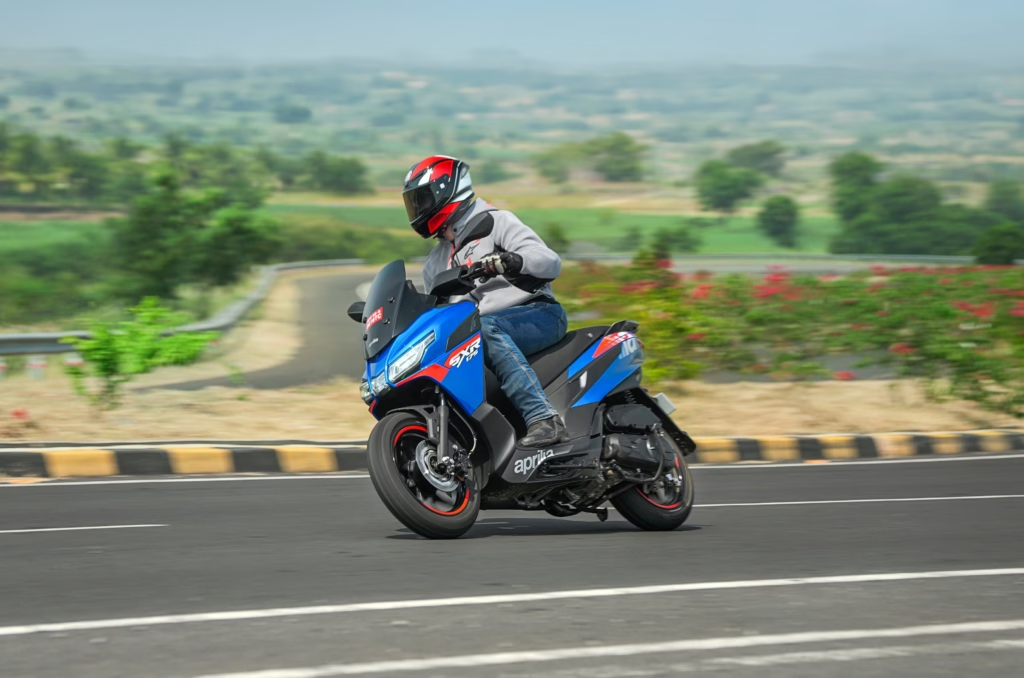
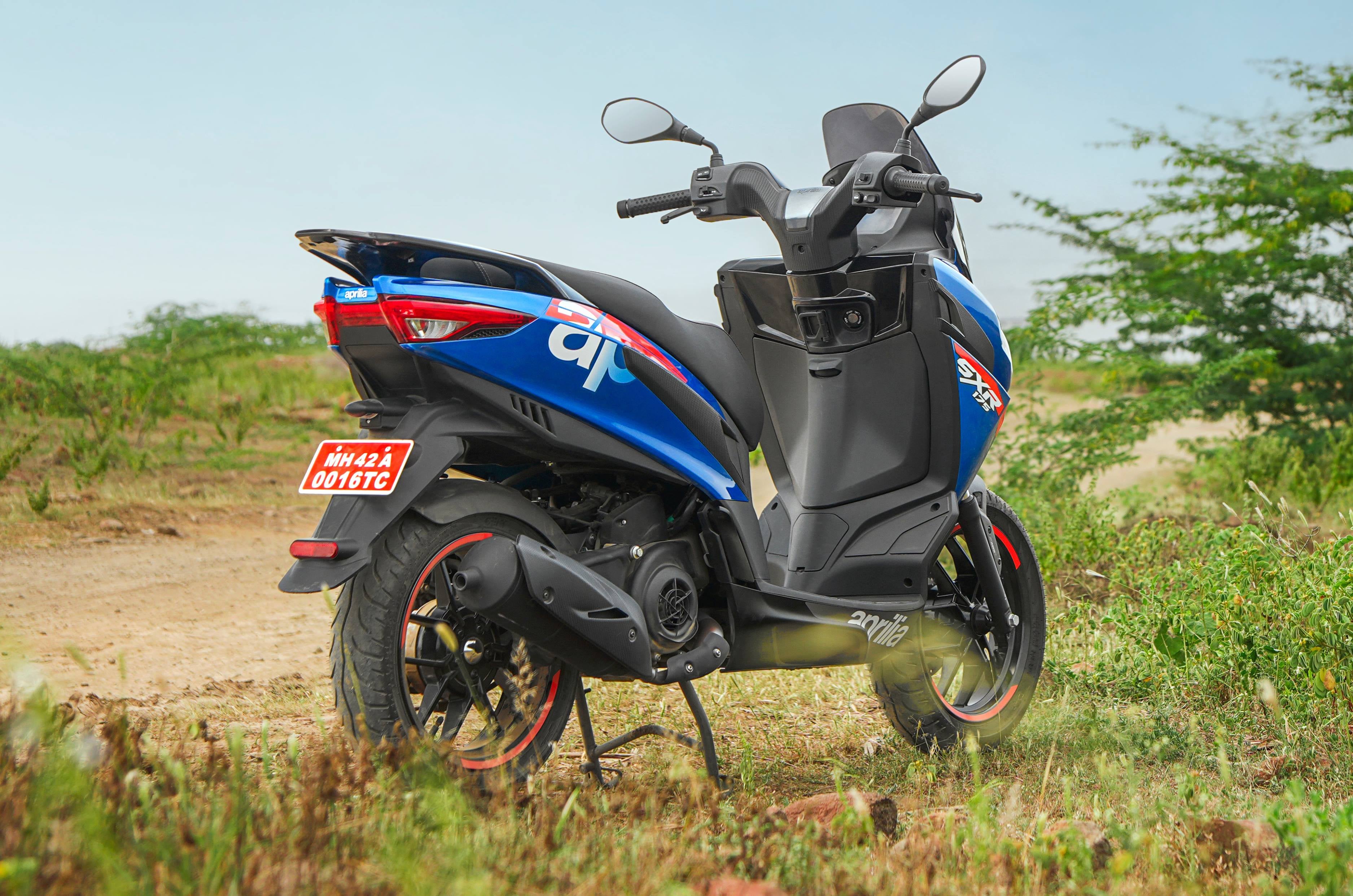
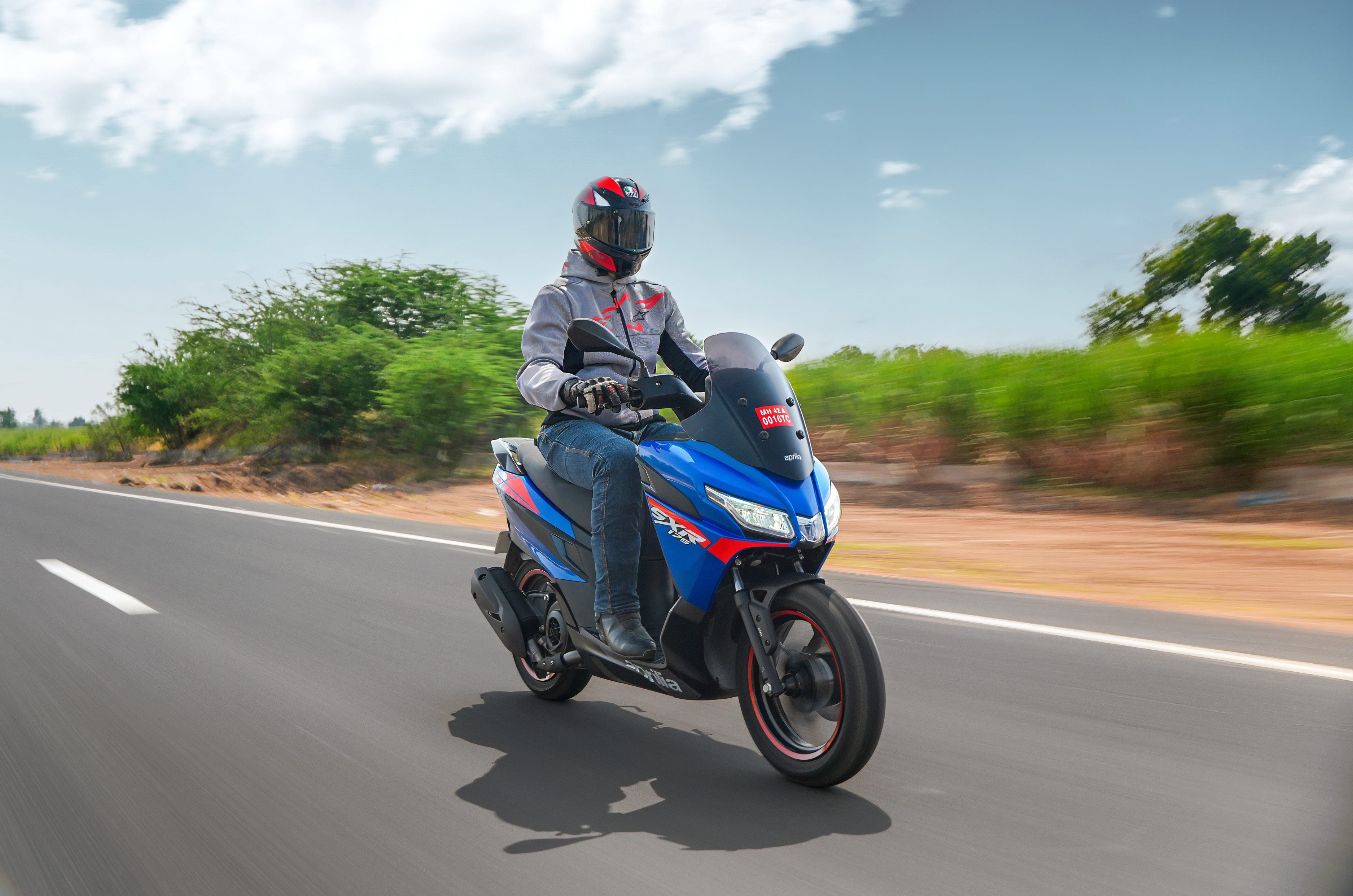
Aprilia may not be the biggest player in the Indian scooter market but it is certainly one of the most radical. It was the first to give us a taste of a true-blue affordable performance scooter with the SR 150 in 2015 and in 2020 the company then upped the ante and introduced India to a premium, yet attainable maxi-style scooter with the SXR 160.
However, six years is a long time and in this interim, the niche that Aprilia was the sole occupant of has now been infringed upon by TVS, Hero, Yamaha and more recently, even Honda! To counter, Aprilia has now taken the next step in the SXR’s evolution and has introduced two models with new engines (125cc and 175cc), more features and a GT suffix. We were given a chance to sample the larger 175cc version and here are our initial impressions.
Aprilia SXR GT 175 Design and features – 7/10
It’s an old design but still looks good; has received a good features upgrade
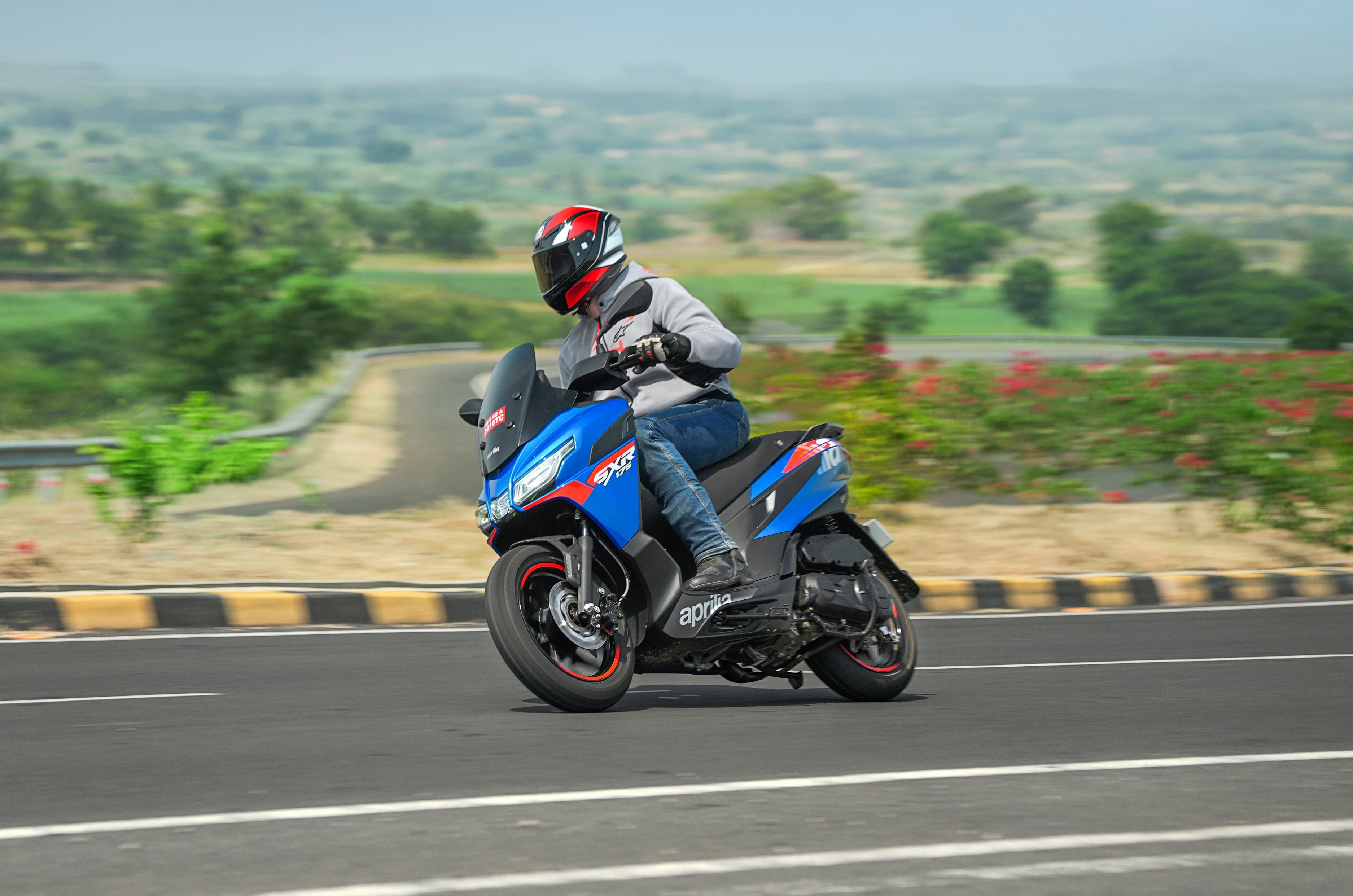
This design may be 6 years old, but it still manages to look good and turn heads
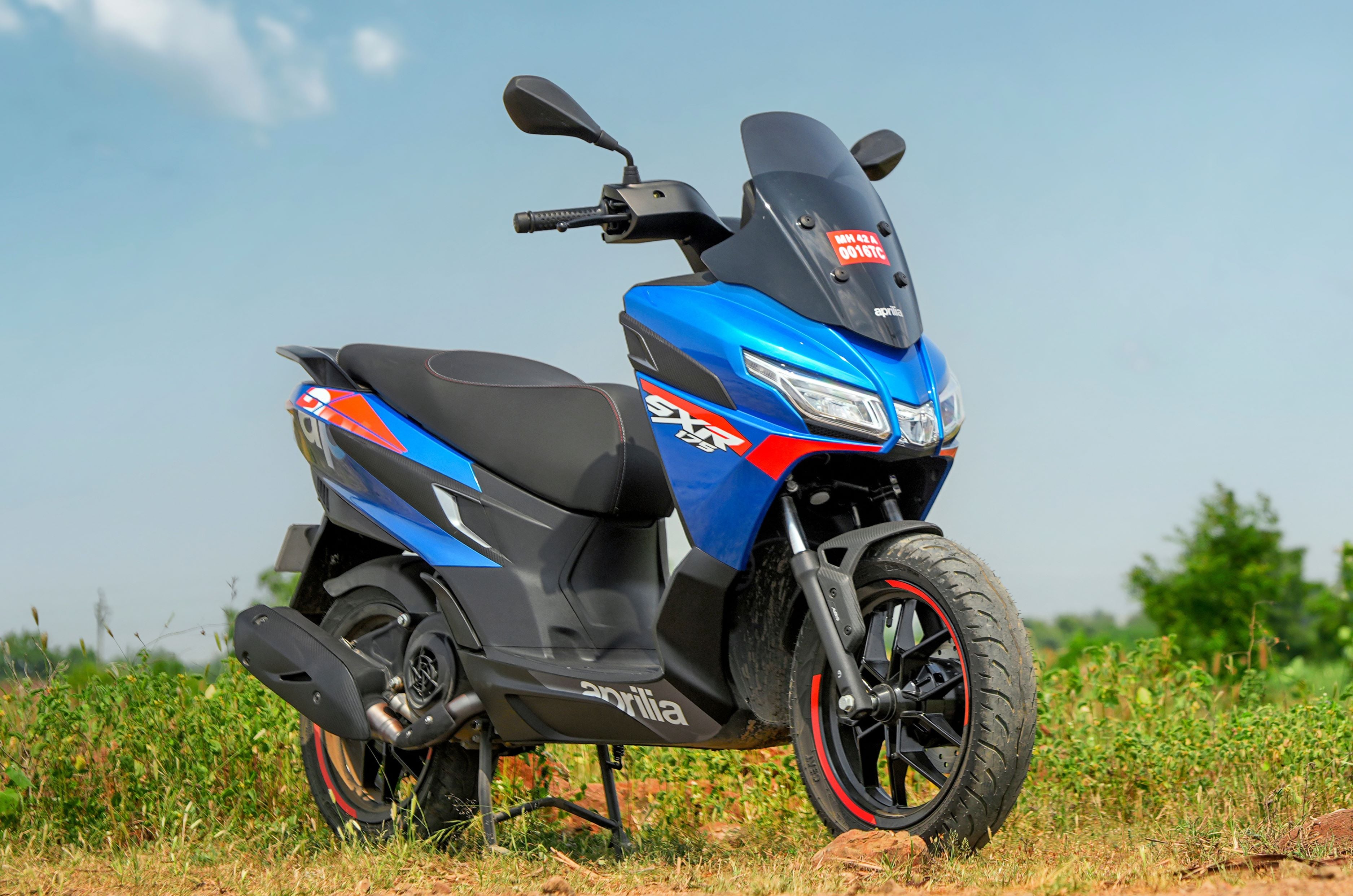
At this juncture, you’re probably wondering aside from the new colours and graphics, how different is the SXR GT 175 to the erstwhile SXR 160 it replaces? The answer to that question is, not very much. Aside from larger 14-in wheels, the SXR GTs look identical to the models they replace and you can certainly feel like it wouldn’t be unreasonable to expect more from the company. However, what you can’t deny is that the scooters still look handsome and striking without going over the top, despite looking nearly the same as they did 6 years ago – that’s Italian design brilliance for you! There are three new colours on offer – the vibrant blue you see here accompanied by a stealthy black and a camo army green scheme.
5-in TFT also shared with SR 175, is well laid out but UI isn’t entirely straightforward
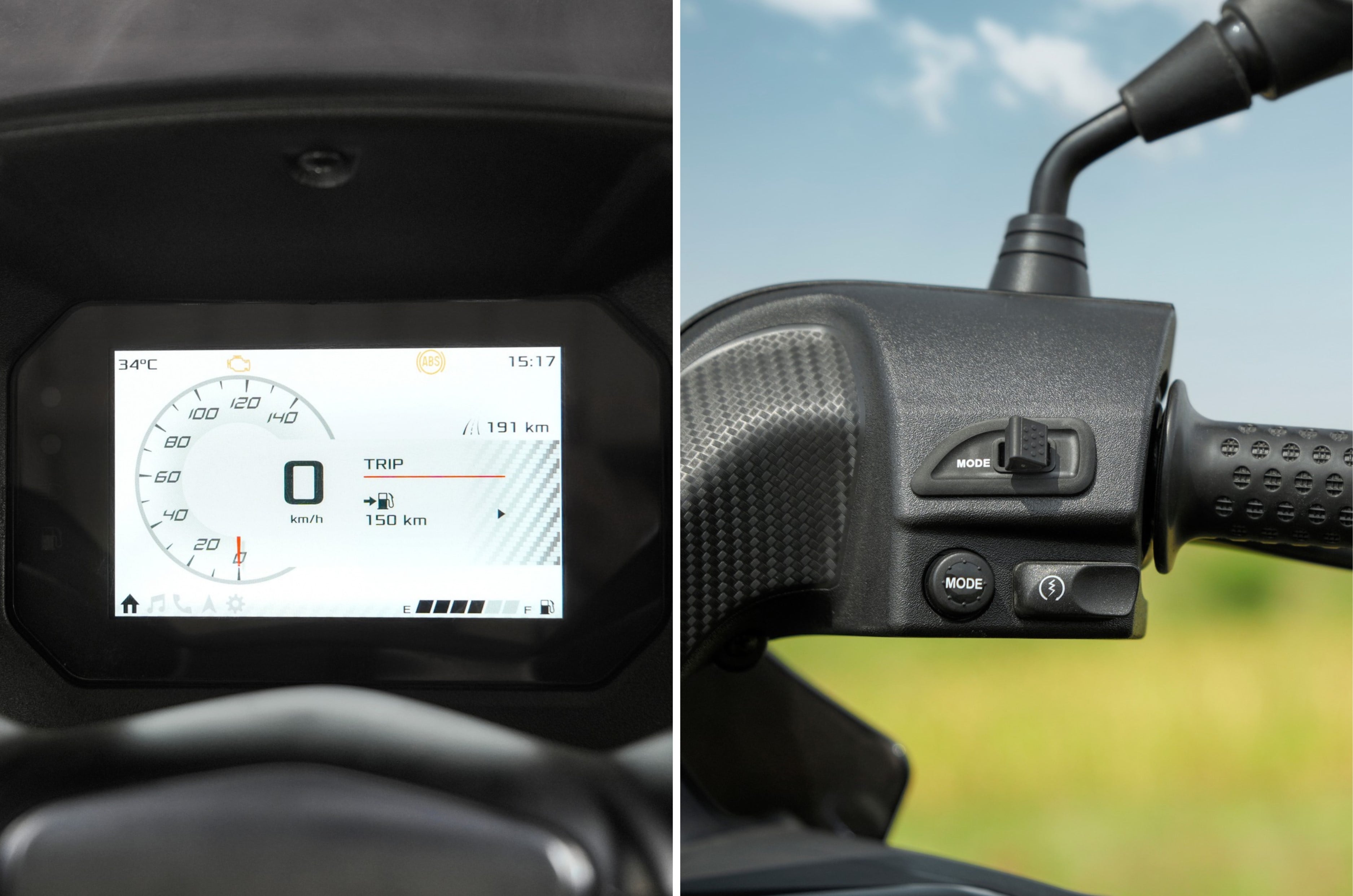
However, once you get astride, you’ll realise that there are a fair few changes going on. For starters, the SXR GT 175 uses the same bright and well laid-out colour TFT display as the SR 175 and this dash is replete with Bluetooth functionality which brings in call/notification alerts & navigation prompts. Like that scooter, the overall user interface is a bit complicated and you will need to learn some of the secret handshakes necessary to fully utilise it. Another gripe I have with this dash is that while it has a lot of tech, you have to make do with a single trip meter, which seems like a small but unnecessary omission.
Bootspace is nothing to write home about
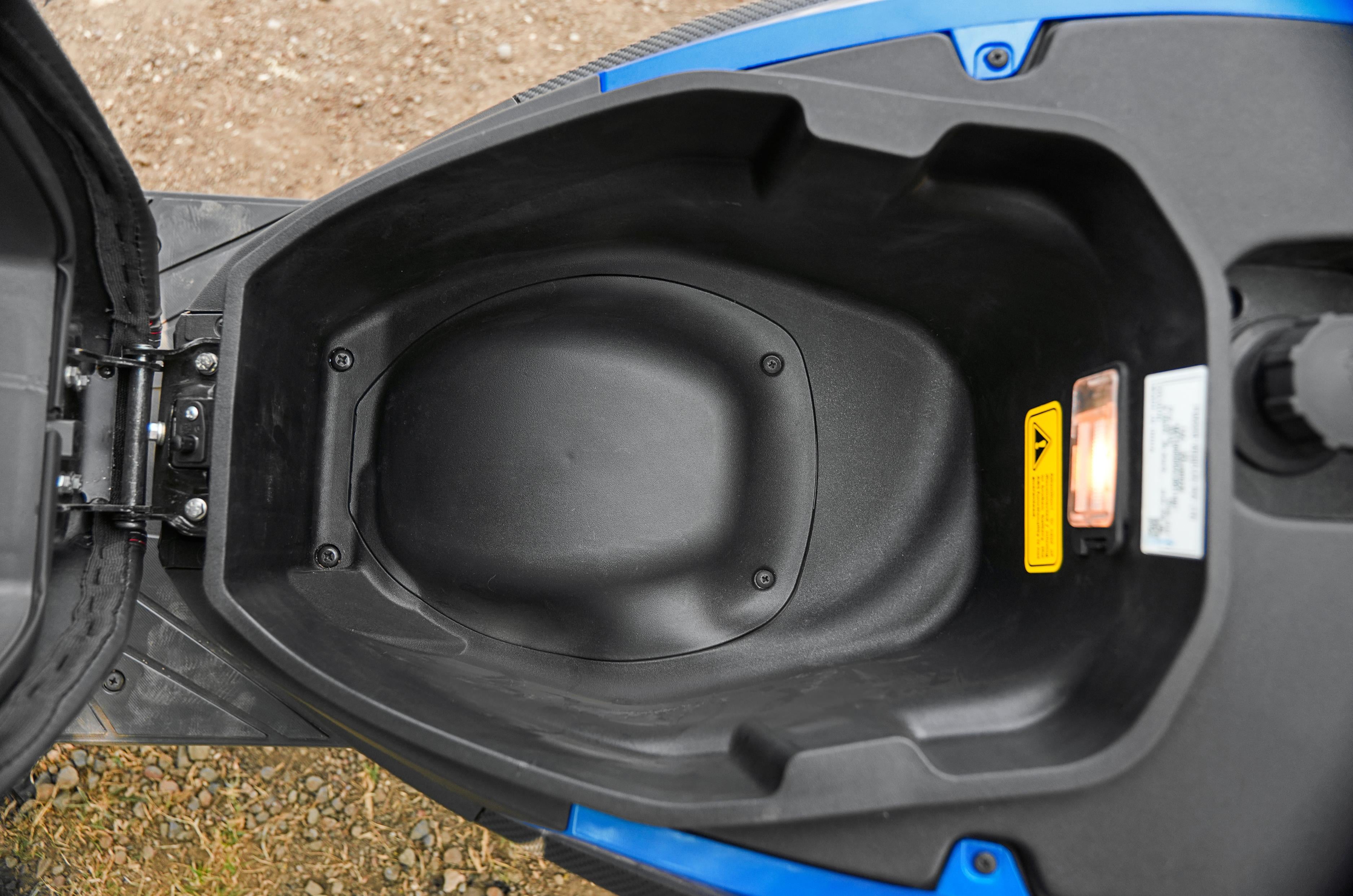
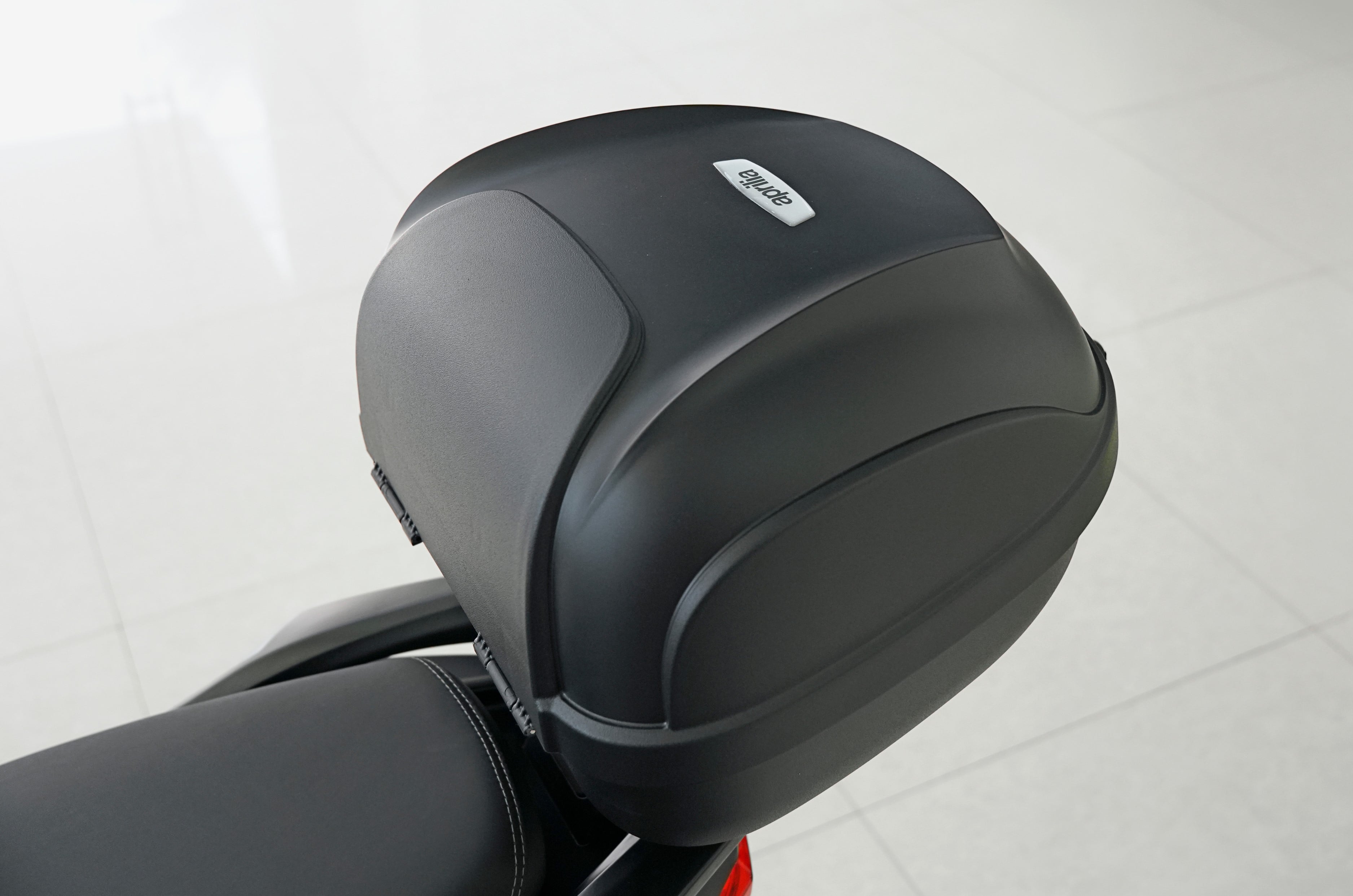
Another small omission is the absence of a multi-function ignition key slot, which means you need to remove the key and put it in its dedicated slot to open the seat and access the boot – something most smaller and cheaper scooters have long moved past. The underseat storage space here isn’t anything to write home about either. However, Aprilia will sell you a pretty spacious 32 litre accessory top box to alleviate that issue, although we don’t have a price for that yet.
But Aprilia will sell you an accessory 32L top box to alleviate that issue
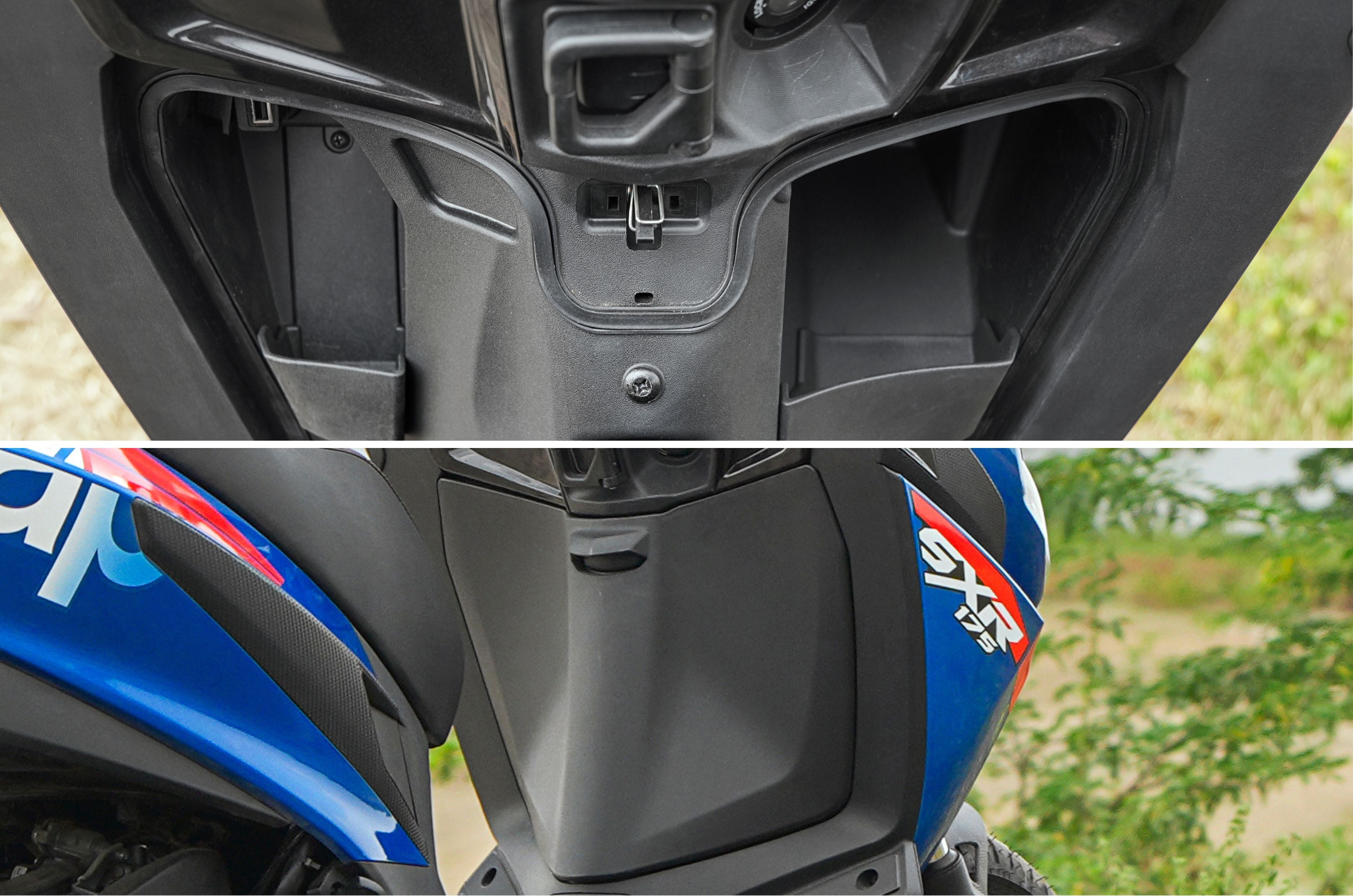
What is a nifty storage solution that comes as standard – carried over from the SXR 160 – are the fully enclosed cubbies on the front apron, and one of them even has a USB-A charging port. While this is surely a safe and practical storage area for your knick-knacks, it’s not the most convenient solution to access when on the move. That’s because you first need to come to a stop, then twist the key to its off position and press it inwards to unlock the cubby.
Enclosed, lockable area opens up to reveal 2 small cubbies; one of them has a USB Type-A charger
Aprilia SXR GT 175 Ergonomic – 7/10
Has one of the tallest seat heights in the scooter space; rider’s triangle is neutral
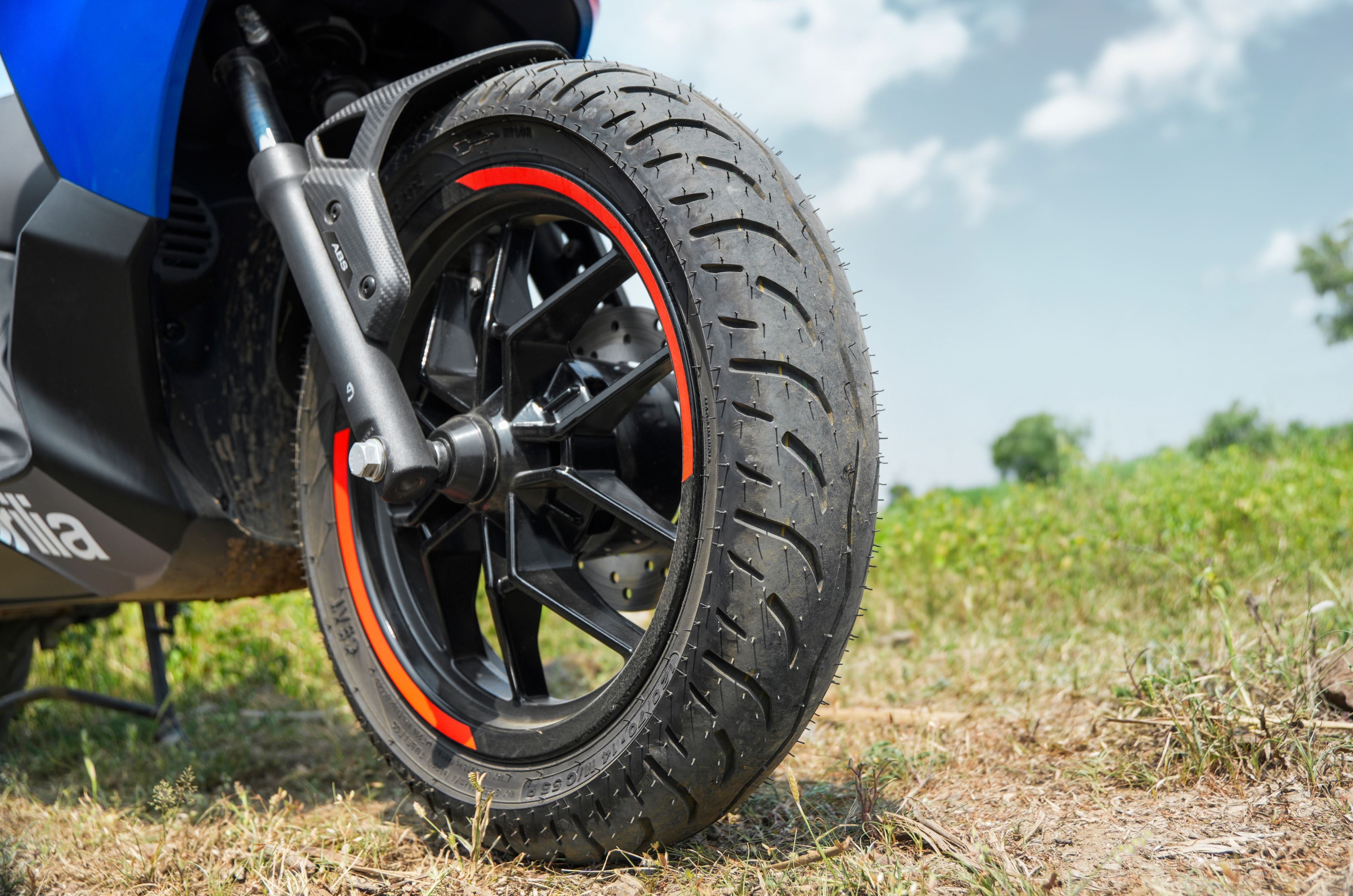
Of course, the new feature that is visible most prominently on the SXR GT is its new 14-inch wheel setup, which has its set of pros and cons. On the plus side, the proportions of the scooter are now better than ever before and its ground clearance has also now risen to 170mm – always a good thing on our unpredictable roads. However, because of the larger wheels, the SXR’s seat height has now risen to 800mm, which makes it the tallest seat height on any made-in-India petrol scooter.
14-inch wheels bring in surefooted handling and high-speed stability but the trade-off is heavier steering at slower speeds demanding more effort
Credit where it’s due, this number may seem big on paper but in the real world its not an unapproachable machine. Our photographer Omkar (who’s 5’2) could move the scooter around at our shoot location while seated without too much trouble. However, for someone that wants a friendly and approachable machine, the 132kg SXR is not where you should be looking.
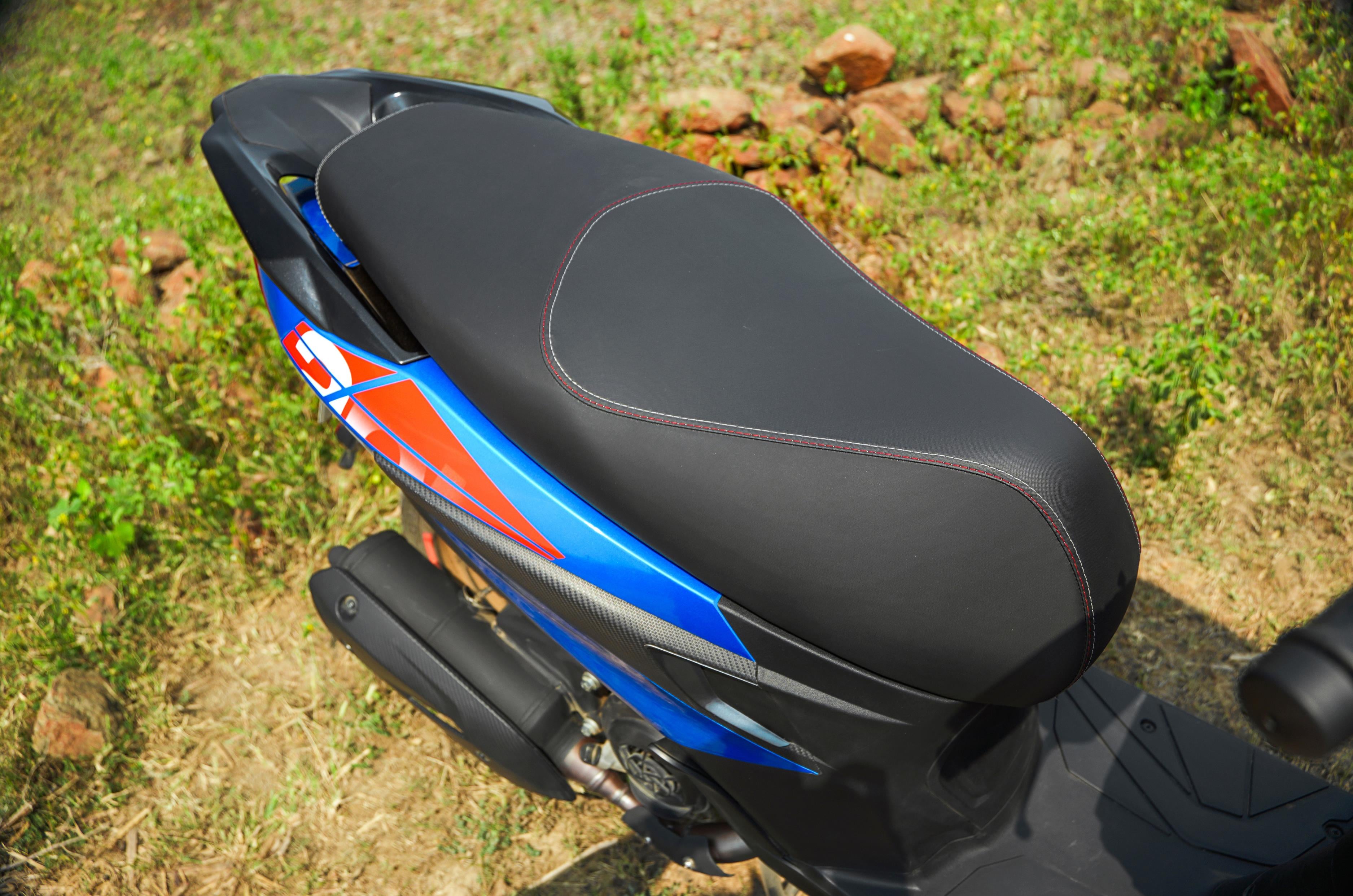
Aside from that, the SXR’s ergonomics haven’t changed and it retains the neutral and upright riding position from before. The seat’s padding is on the stiffer side, which will be especially noticeable on shorter trips but it works well for longer durations and for a person like myself that’s on the heavier side of the scale (80kg without gear). What, however, doesn’t work for a taller person like me (5’11) is that the handlebar is placed a tad low and fouls my knees when making lock-to-lock u-turns.
Neutral and upright ergonomics are unchanged from before; spacious seat’s padding is on the stiffer side
Aprilia SXR GT 175 Performance – 8/10
Engine provides sprightly performance, is smooth at high speeds
While practicality and convenience are one half of the story when it comes to a scooter like this, what plays an equally important role is how the scooter rides and handles. It will probably not come as any surprise to you when I say that this is surely a fun scooter.
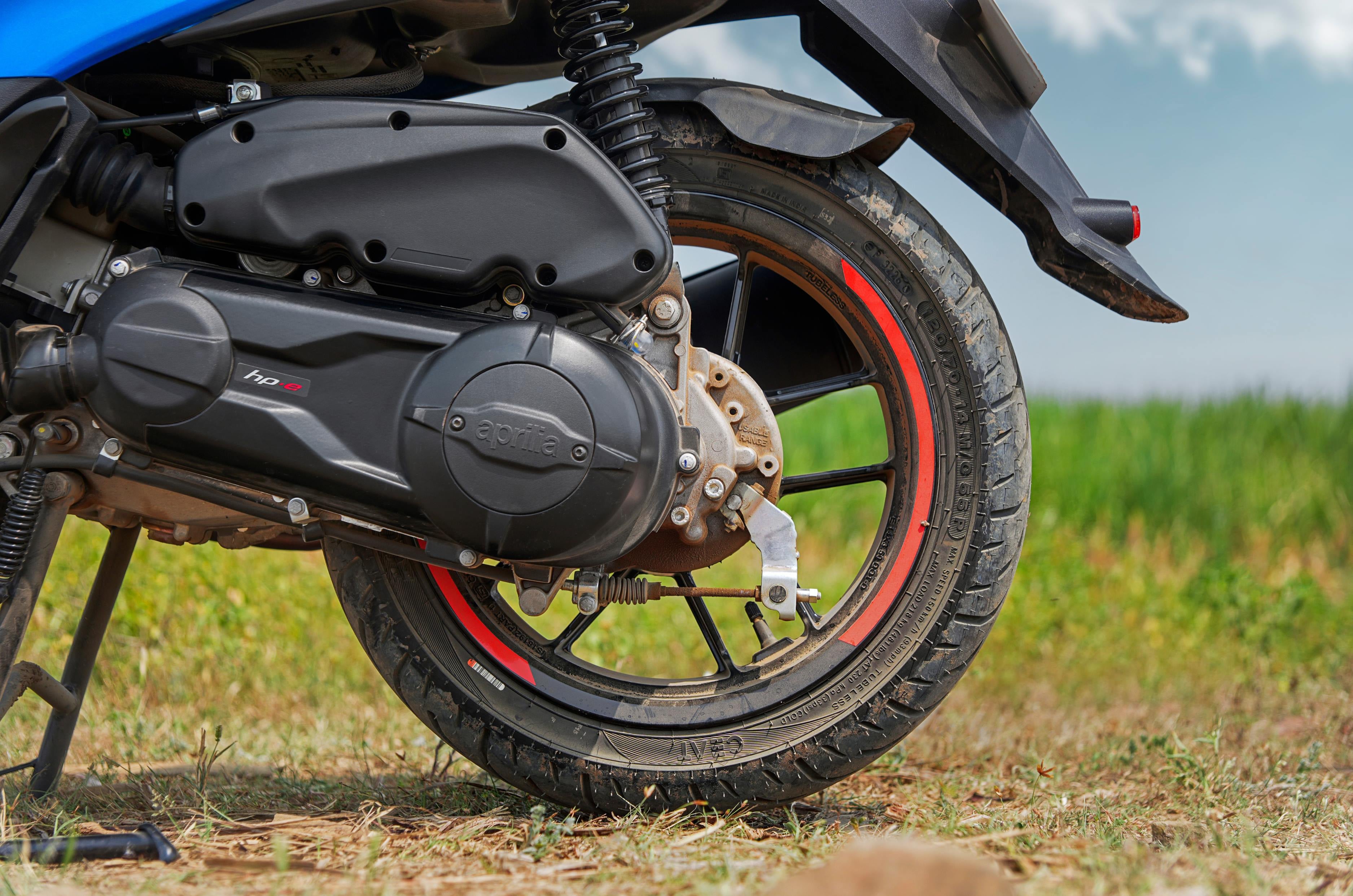
From the moment you thumb the starter and the motor settles into its gruff idle, the 174.4cc, 3-valve motor makes its intentions quite clear – it wants to be ridden quickly. While the vibrations do subside once you get going, the engine clearly rewards energetic riding because the faster you go, the smoother it seems to get! Not just 80kph, even at a speedo-indicated 100kph, it remains absolutely smooth at all the touch points with no signs of protest. For all you top speed nuts, we were able to see an indicated 110kph on the display before the rev limiter kicked in.
Sprightly 174.4cc engine shared with SR 175 has enough performance to placidly sustain 80-100kph
While the SXR is a quick scooter, from what I remember, it doesn’t feel as quick as the lighter and sportier SR. The 0-50kph dash is quite energetic but after that, acceleration becomes more measured. Nevertheless, this level of performance is more than acceptable for our environs and you’ll rarely wish for more power.
Aprilia SXR GT 175 Ride and Handling – 7/10
Planted and surefooted handler, but not the easiest to manage at slower speeds
Equally as enticing as its performance is the SXR GT 175’s handling. The new and bigger 14 inch wheels lend it a newfound sense of stability around corners and at higher speeds. To ride, this feels like a proper maxi scooter experience rather than just a styling exercise. However, the tradeoff is noticeably heavier steering at slower speeds which demands quite a bit more effort. If you’re going to spend a lot of time in dense stop and go traffic that you constantly need to manoeuvre around, the SXR GT is not the ideal machine for that task.
To account for these larger wheels, Aprilia has also tuned the SXR’s suspension differently to before. The damping and shock absorption are really quite composed at the rear but the fork feels stiff and jarring over rough roads and does bottom out over larger, sharper-edged bumps. Since Mumbai’s roads are dominated by these conditions, we’re not sure how comfortable the SXR GT will be there, but hope to find out soon.
It sticks to the Aprilia SXR formula of giving you a decently-priced, good-looking scooter with both functional practicality and zippy performance
Well-priced and stands out but its not for everyone
In the scooter segment, Aprilia operates in its own niche where people that really value style and performance continue to choose its offerings over mainstream options. We don’t see that changing with the SXR GT because even though it is more well-rounded than its sporty SR sibling, it still has some hurdles to overcome both on the product’s as well as the after-sales side and fresh styling would have helped increase the appeal after all these years. Nevertheless, the company assures us it is working on the after sales front and it aims to have 250 showrooms in India before the year ends, up from the current 230. Still, that’s vastly lower than the sales reach of Aprilia’s rivals.
To sum up, this latest iteration hasn’t really diverged from what has been the cornerstone of the Aprilia SXR formula – to give you a decently-priced, good-looking scooter with both functional practicality and zippy performance. Speaking of price, the SXR GT 175 is priced at Rs 1.30 lakh (introductory, ex-showroom, Maharashtra) which is a pretty decent price considering what it brings to the table. If you must have a stylish and fun scooter that stands out of the crowd without breaking the bank, the Aprilia SXR GT should be on your radar.
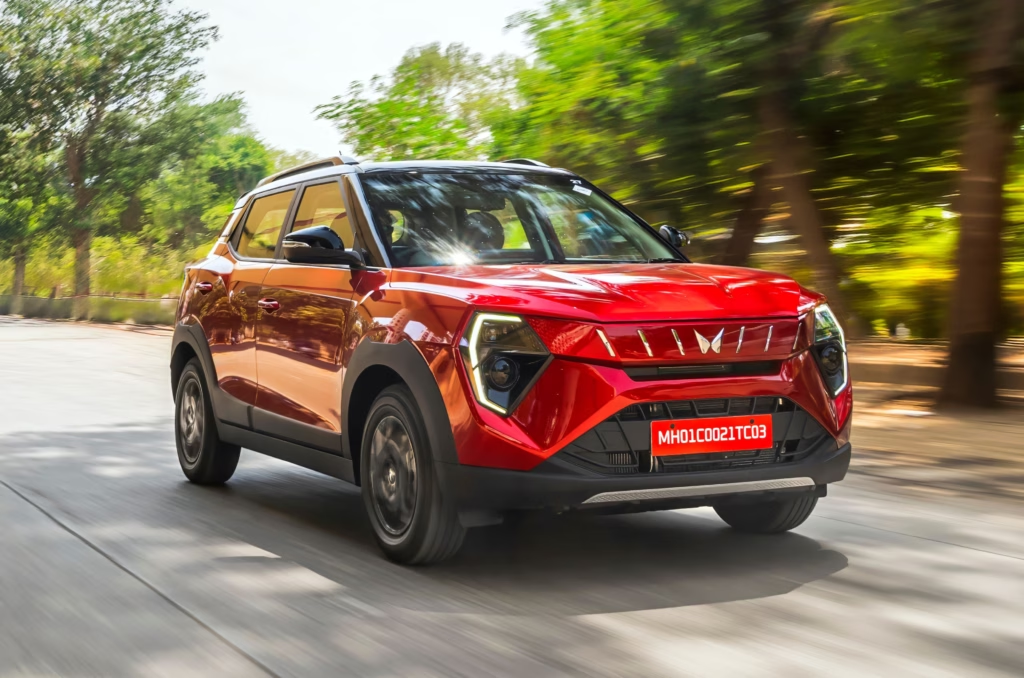
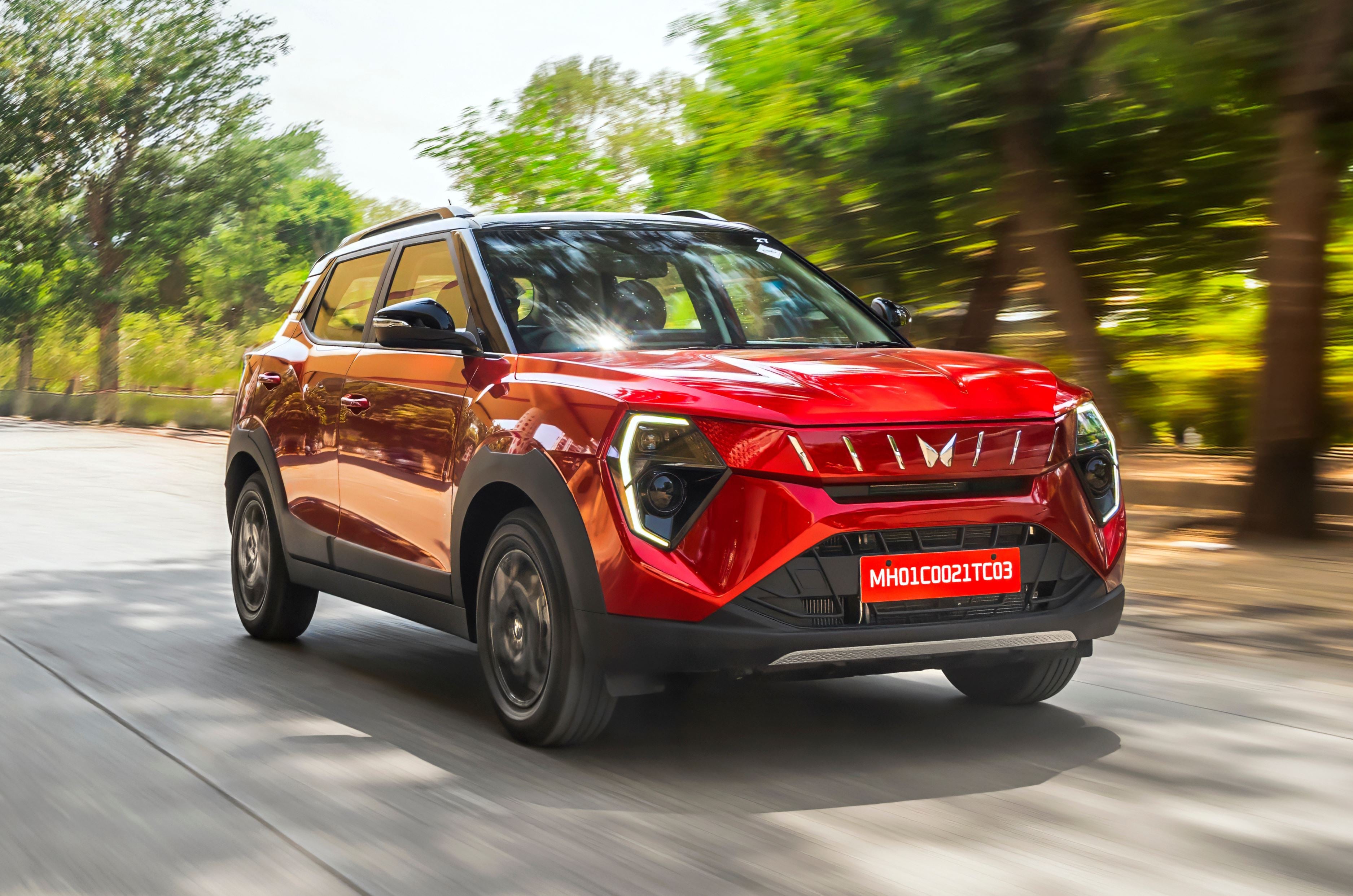
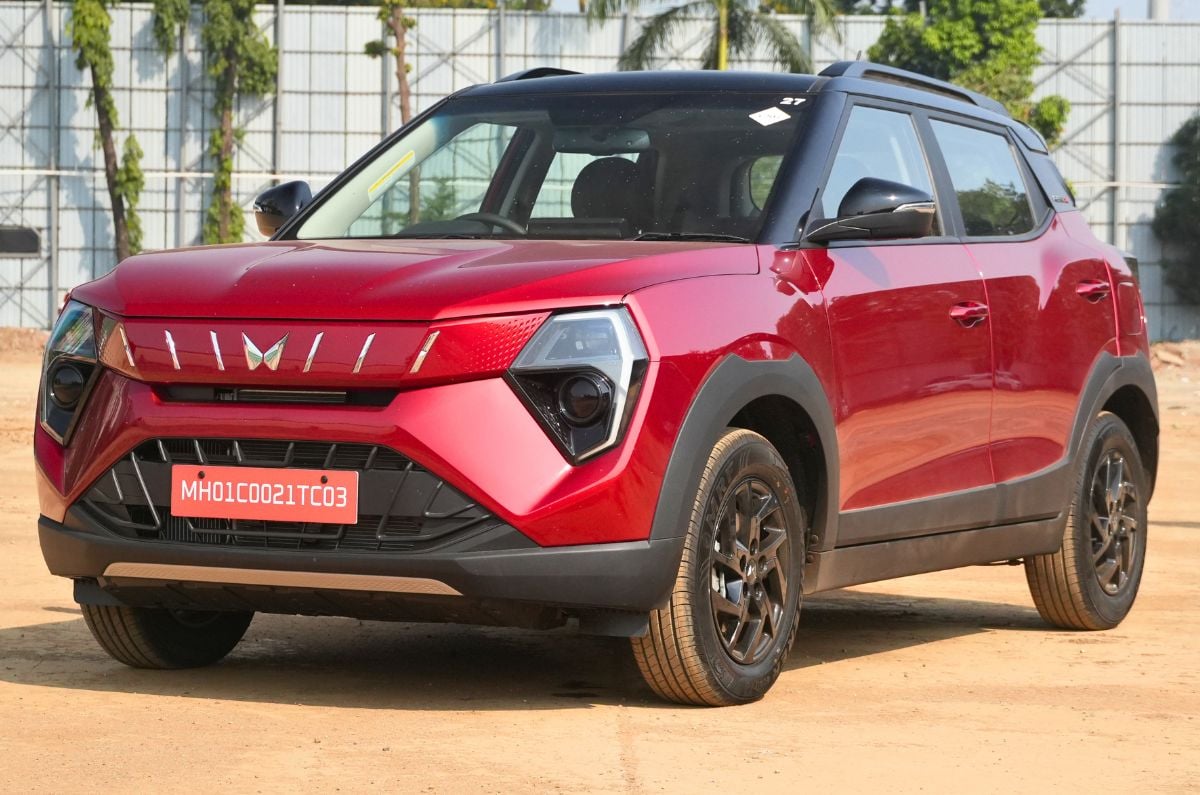
CNG is shaping up to be the new diesel. For the second year running, CNG passenger vehicles outsold diesels, accounting for 21.98 percent of the market compared to 18.08 percent for oil burners in FY2026. That is a very big deal. Big enough for Mahindra – traditionally a diesel-first brand – to sit up, take notice and want a piece of the action. Its first attempt – if you don’t count the fleet-only KUV100 CNG – is the Mahindra XUV 3XO ZNG. Read as Zee-NG and pronounced Zing. The headline is that it makes the same amount of power as the pure-petrol 3XO TCMPFi. We experienced it in Mumbai to see if it really has zing.
Mahindra XUV 3XO ZNG Exterior Design and Engineering – 7/10
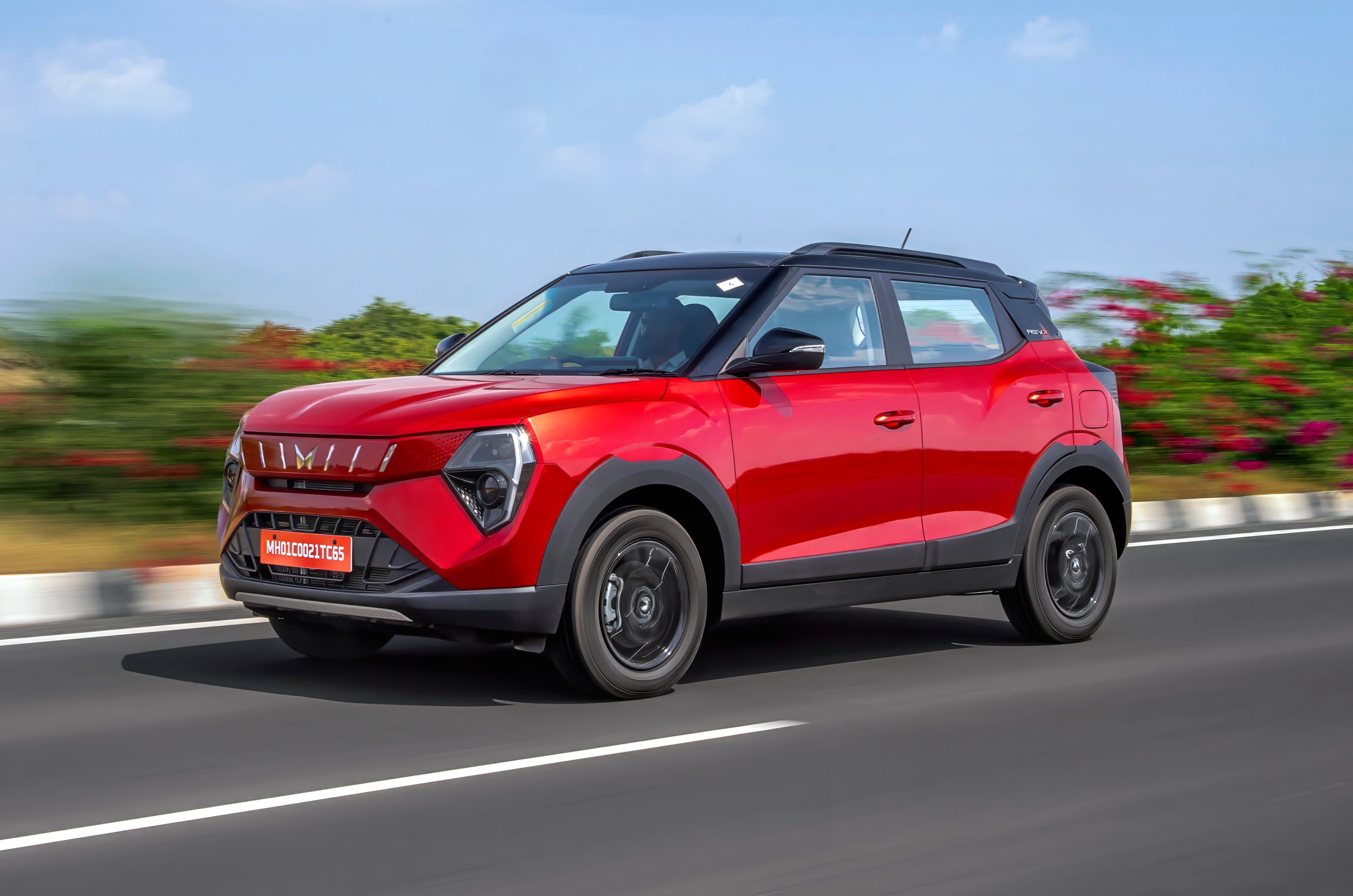
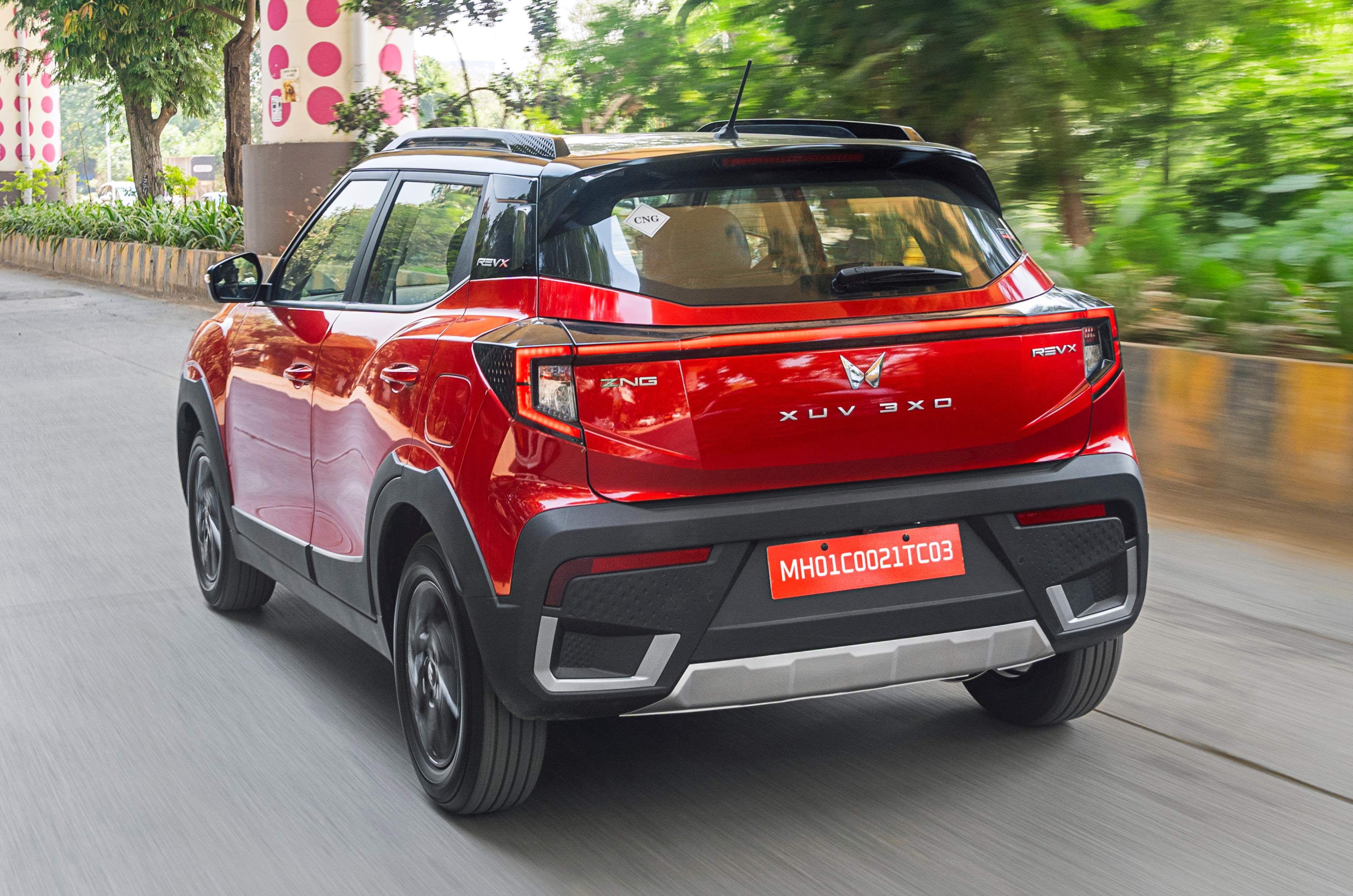
Outside, there isn’t much to tell the ZNG apart from the regular XUV 3XO. Our test car is based on the REVX trim and gets a body-coloured grille, while other trims gloss black. LED lighting is present, though fog lamps are missing even on the top REVX A CNG trim.
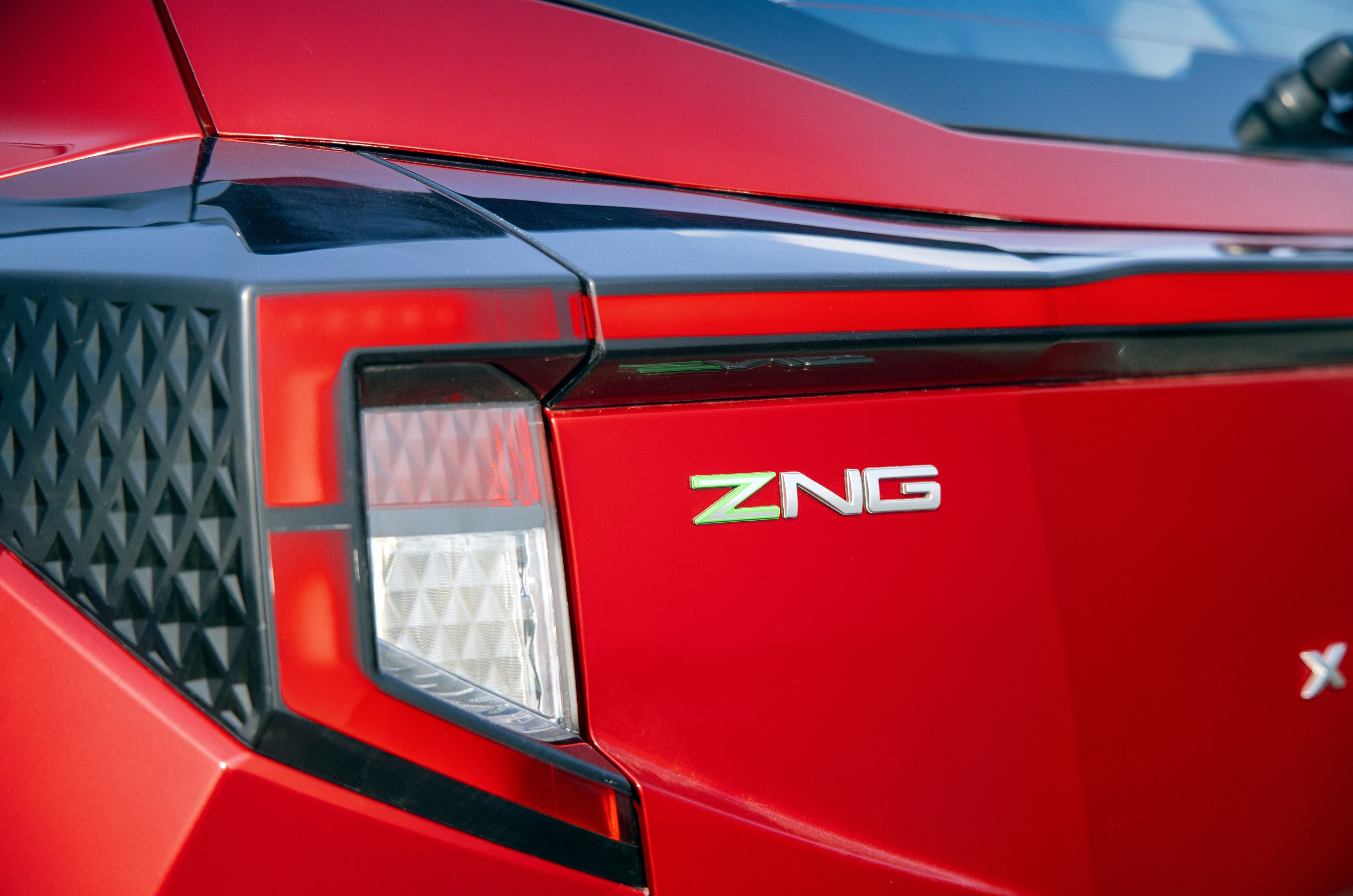
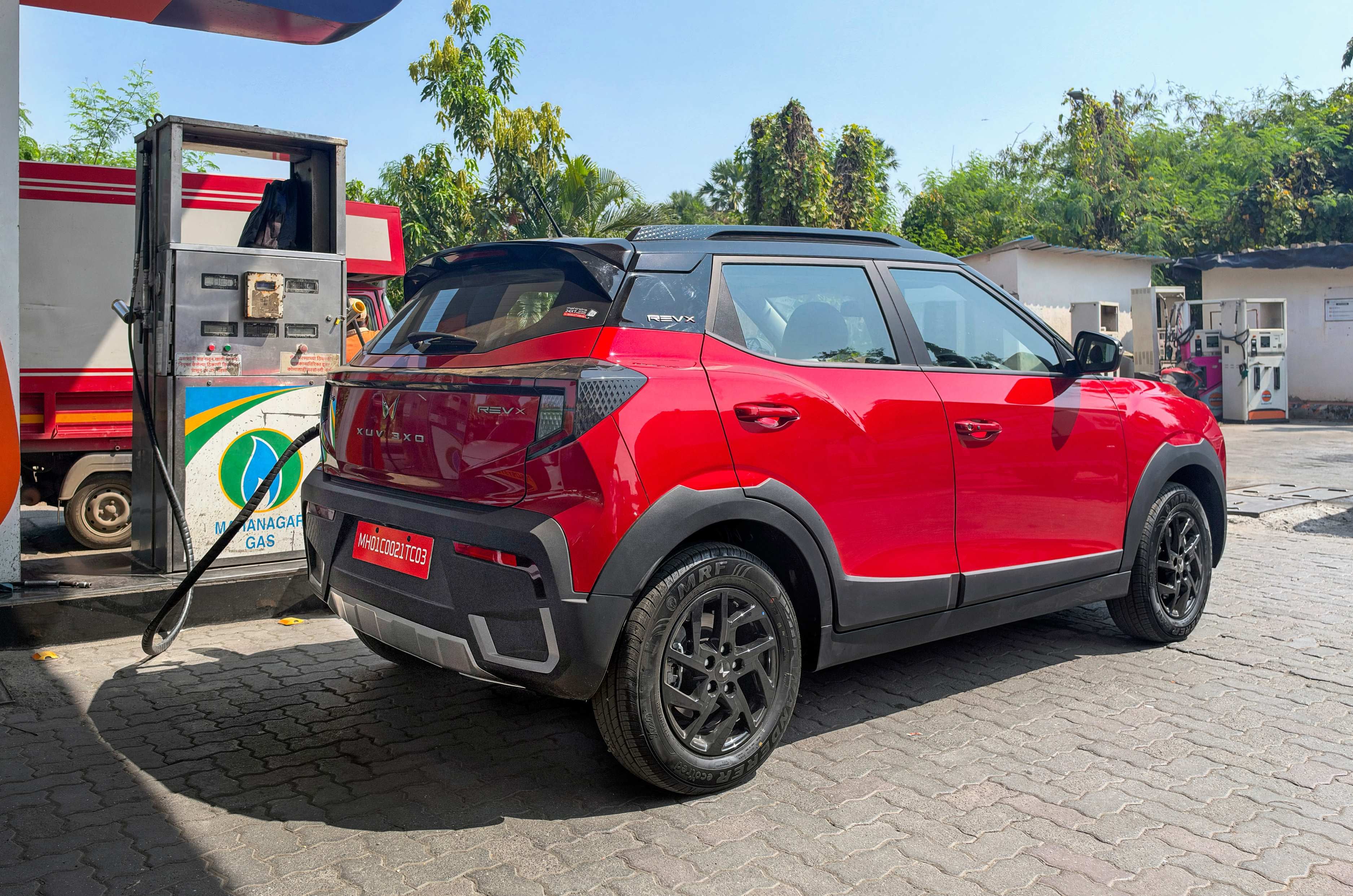
ZNG badge on the tailgate is the only exterior telltale of the CNG powertrain.
In profile, you’ll notice the gloss black 16-inch wheels – the largest size available on the ZNG, with 17s reserved for the pure-petrol TGDi. At the rear is the clearest giveaway of its CNG powertrain: a ZNG badge on the tailgate.
XUV 3XO ZNG Interior Space and Comfort – 8/10
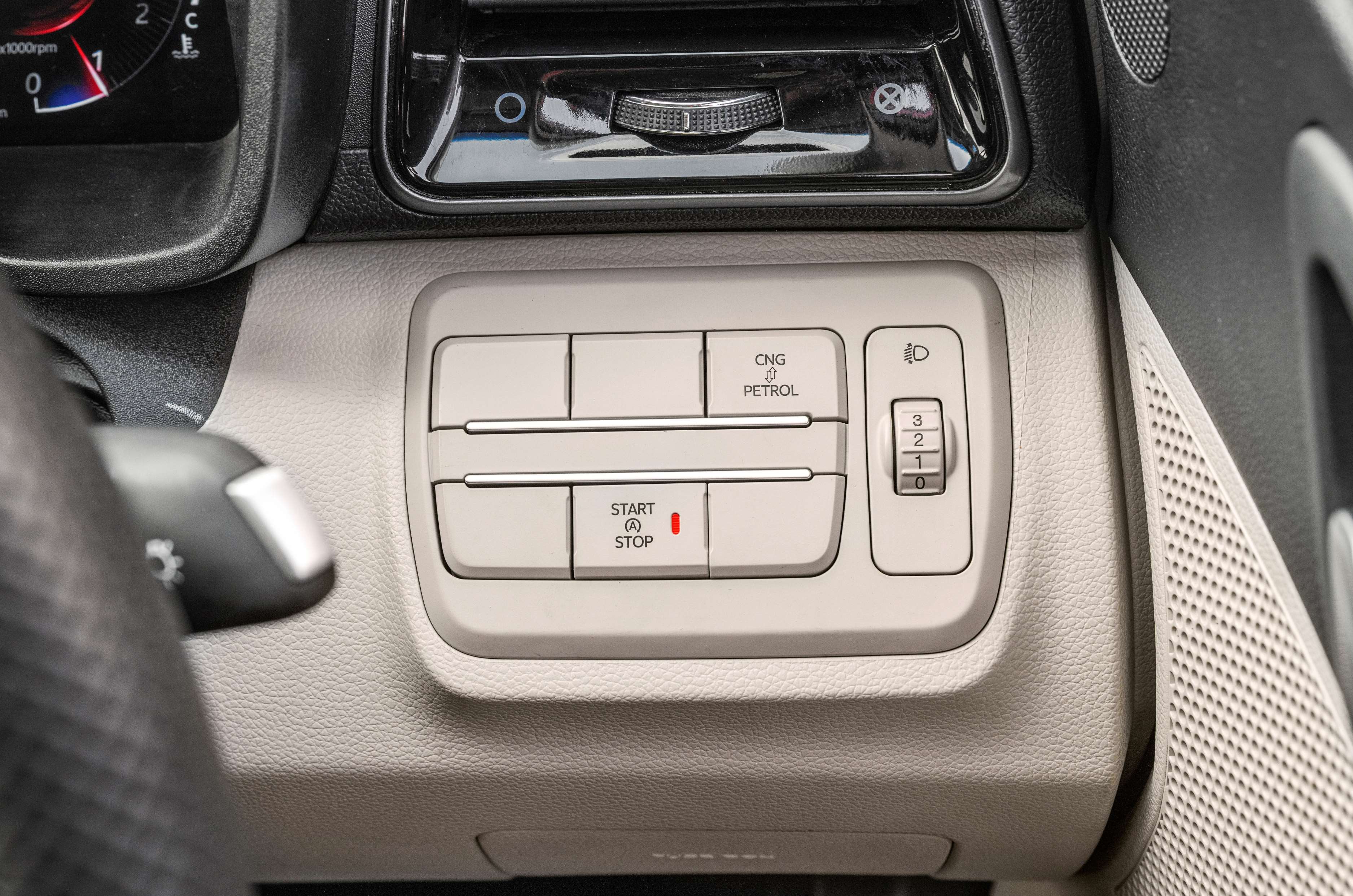
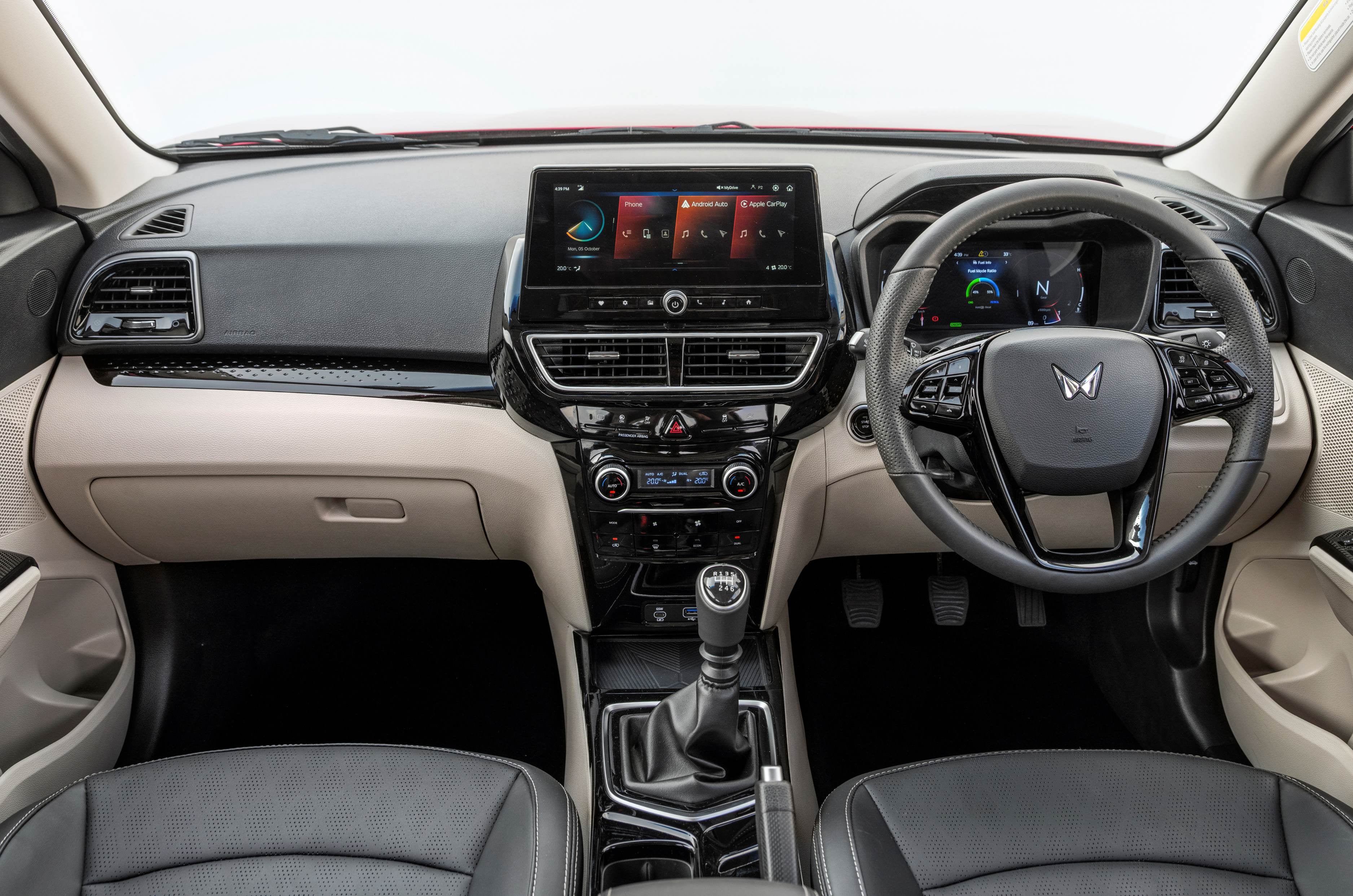
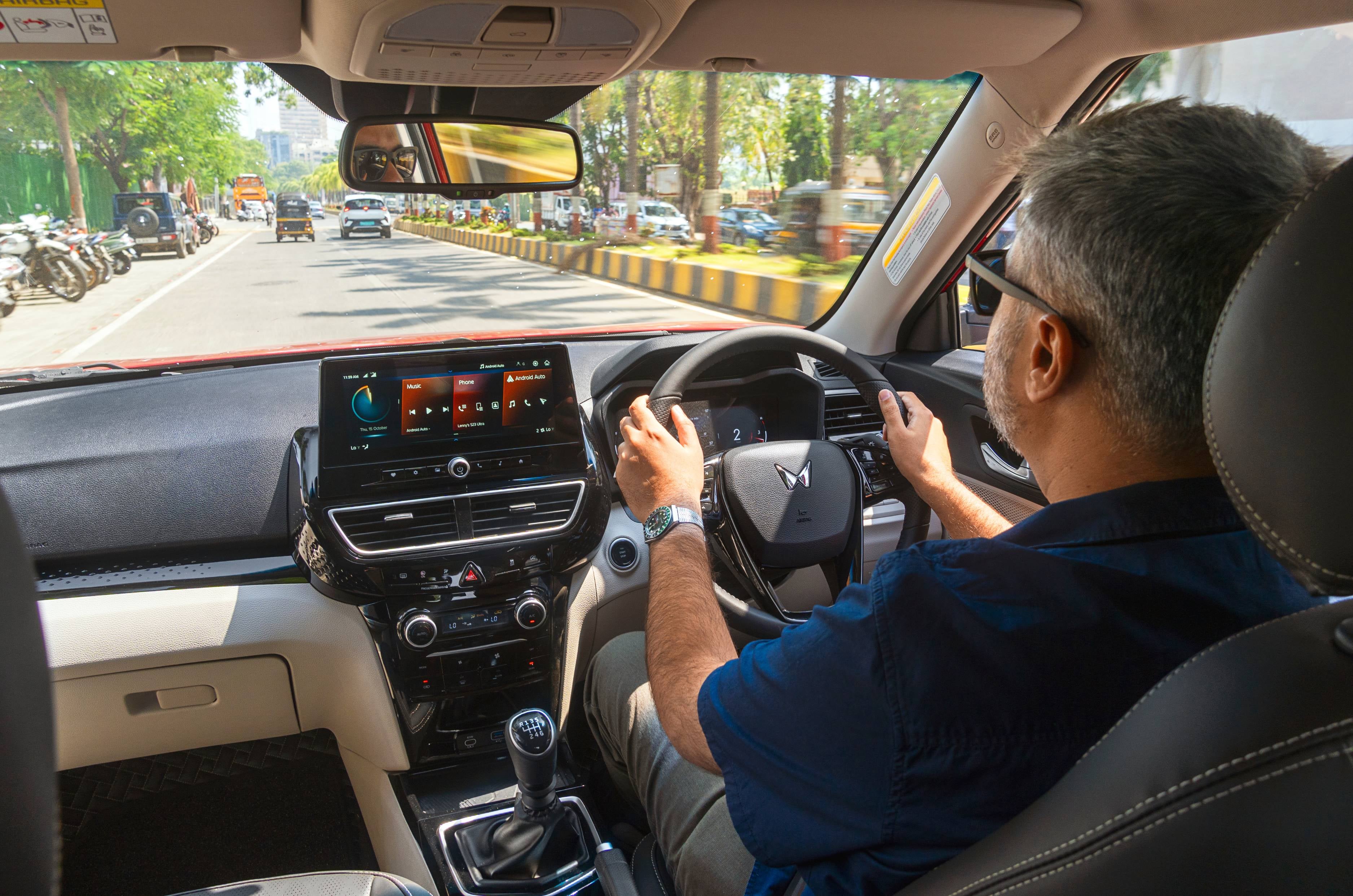
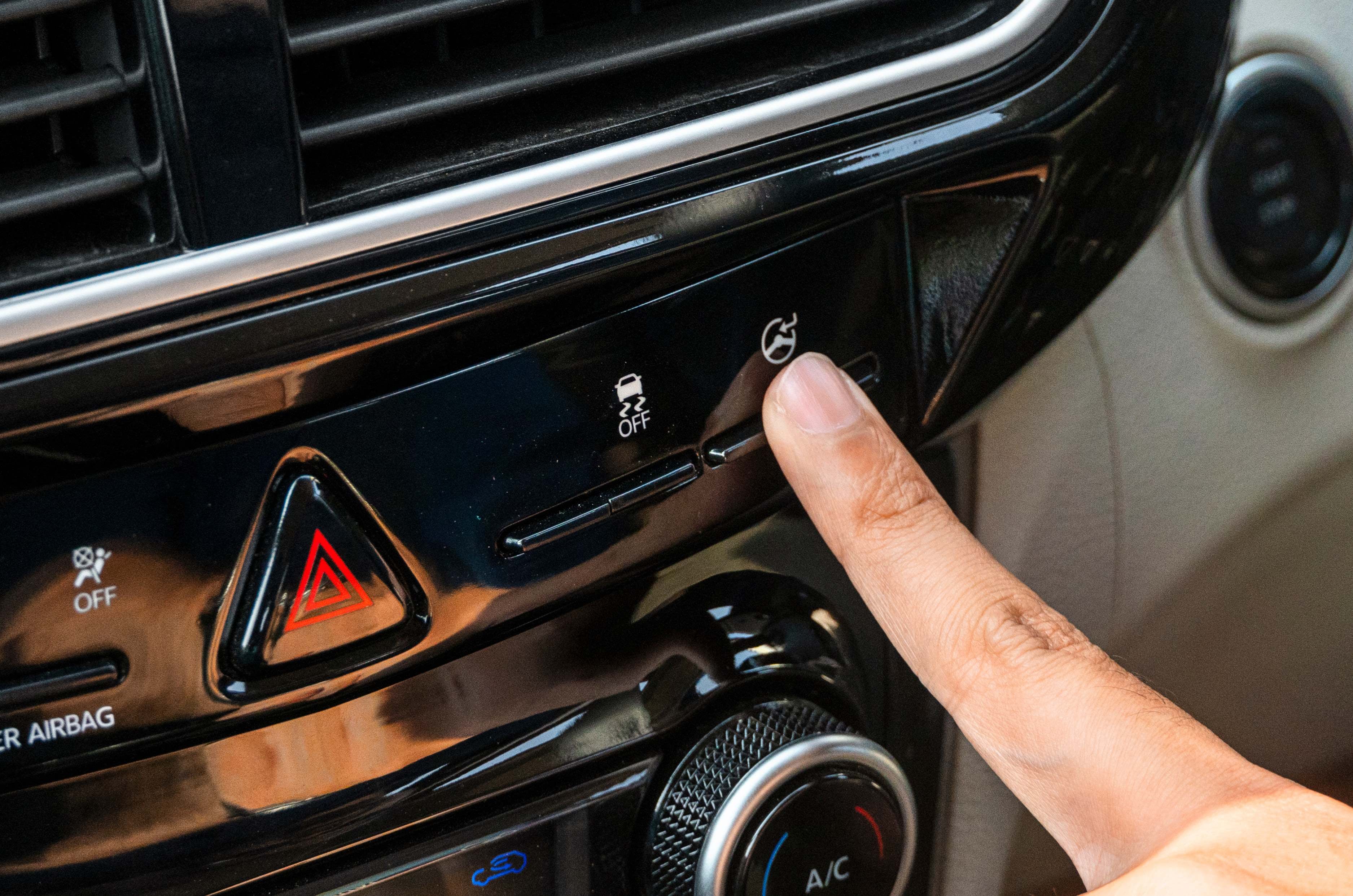
Inside, too, the ZNG is largely identical to its petrol and diesel counterparts, with a CNG switch to the right of the steering wheel being the only real giveaway. The dual-tone dashboard with lots of gloss black trim is otherwise carried over unchanged. Despite not being the top of the line variant, the cabin has an upmarket and well-trimmed air to it.
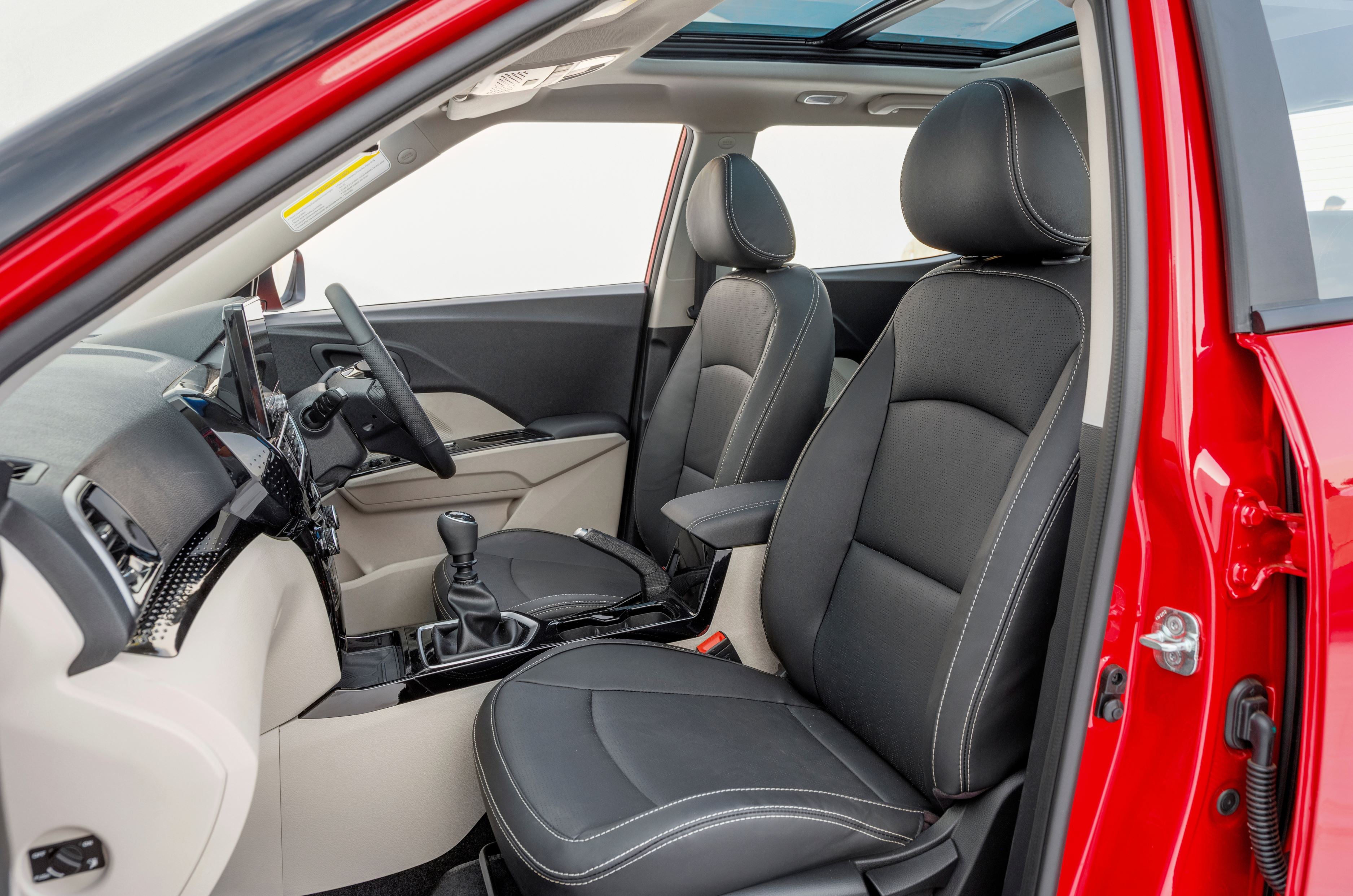
Our REVX A test car gets black leatherette seats, which can get quite hot, and they lack ventilation, just like the regular 3XO. The front seats are also a bit tight for larger frames, and the lack of a telescoping steering makes it hard to get comfy. Another ergonomic gripe is the tight driver’s footwell, with no dead pedal – pertinent as a six-speed manual is your only gearbox option.
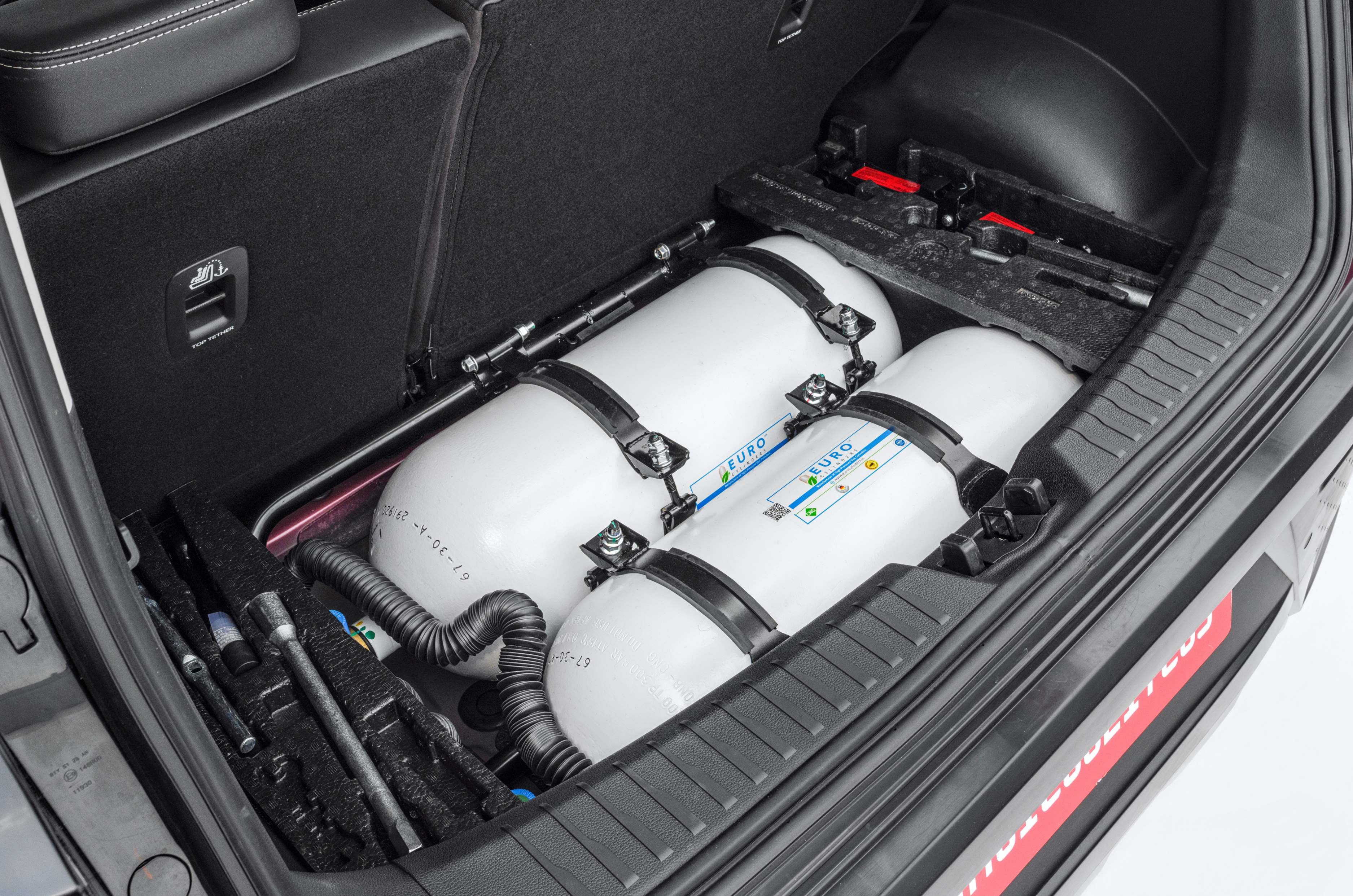
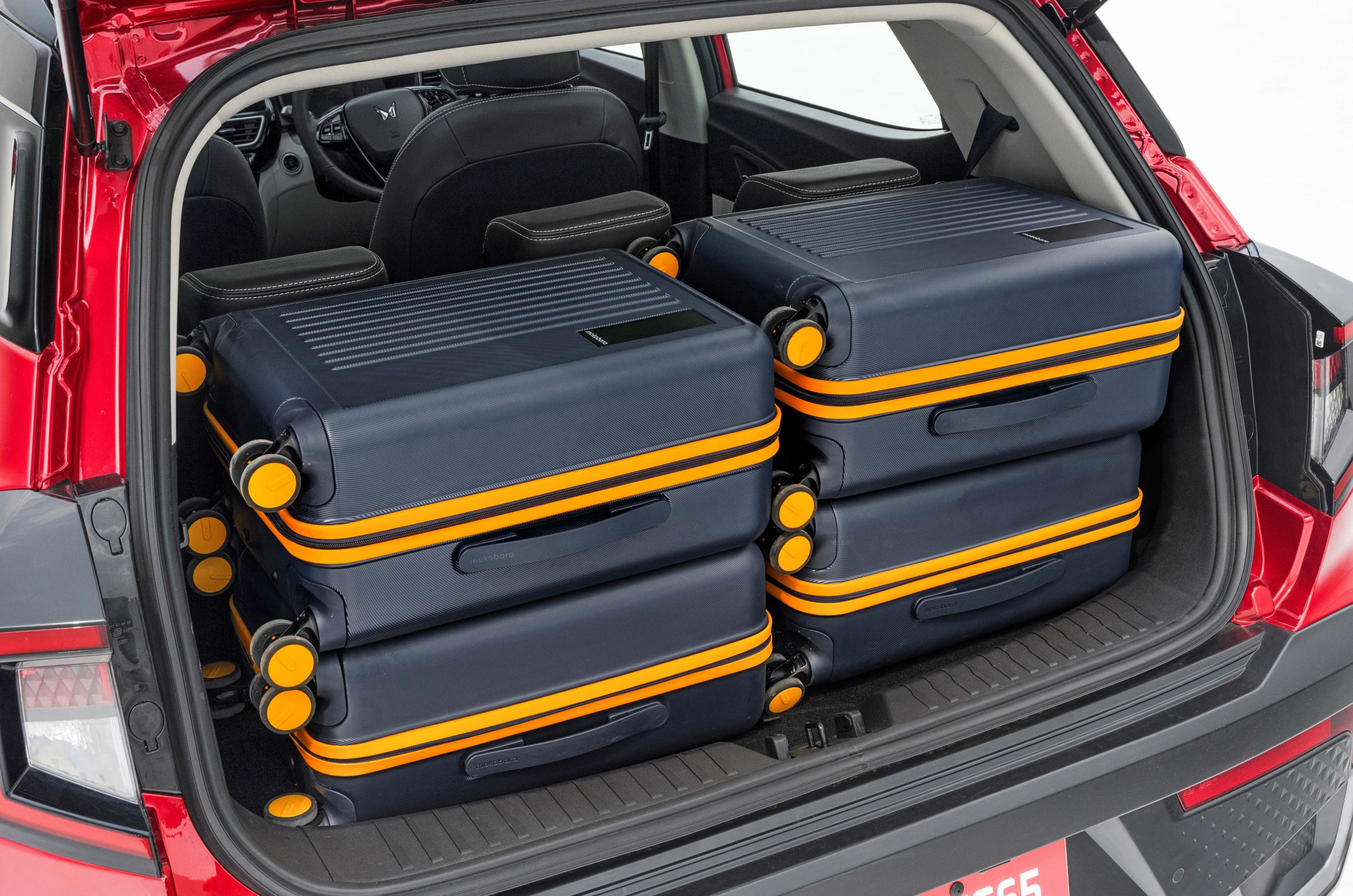
The rear seat remains spacious and comfortable for its segment, and accommodating three abreast is not an issue. One area where the 3XO fell short was boot space, measuring just 295 litres – the smallest in the segment. To keep as much of the boot intact as possible, Mahindra has moved the space-saver spare under the body and placed a dual-tank setup under the boot floor. The combined liquid capacity of the tanks is 60 litres, which translates to 10kg of CNG capacity.
Boot capacity has dropped to 270 litres, which is smallest amongst immediate rivals, however it remains fairly wide and can accommodate up to four cabin bags.
Mahindra XUV 3XO ZNG Features and Safety – 8/10
The 3XO ZNG is available in four trims, which offer the same features as their petrol and diesel counterparts. The highlights are a pair of sharp 10.25-inch screens for infotainment and instrumentation, a panoramic sunroof and a six-speaker audio system with Dolby Atmos.
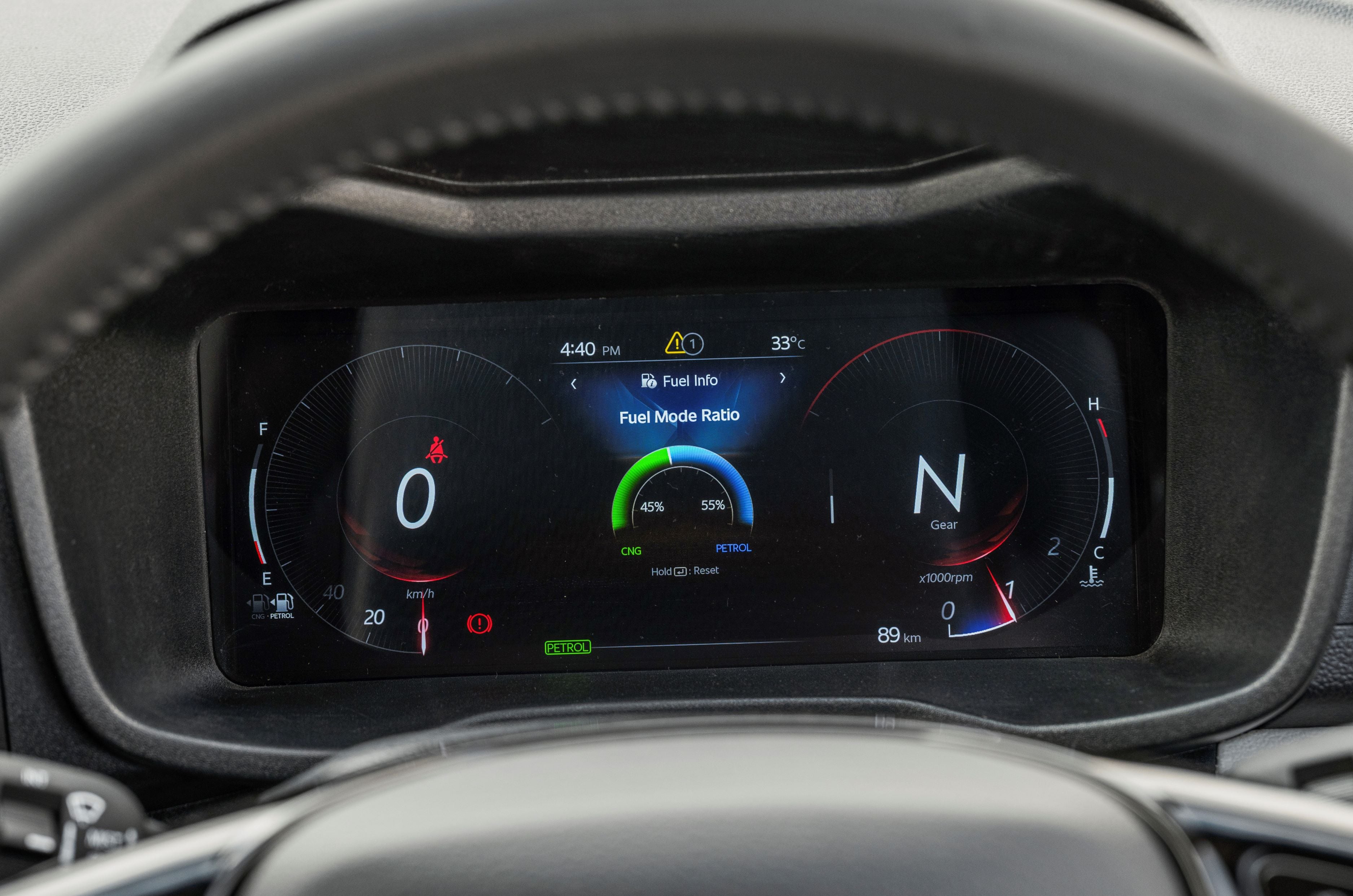
The digital instrument cluster has a few more CNG-related functions. Hit the CNG switch, and an indicator on the digital instrument cluster confirms the fuel you are using, while the fuel gauge changes to display the fuel level. The cluster can also show the ratio of time spent in each fuel mode and the corresponding fuel efficiency.
As such, the 3XO ZNG is reasonably well equipped compared to equivalent variants of its main rival, the Tata Nexon iCNG. However, the Nexon offers a wider choice of CNG variants, with top-spec versions getting features such as a 360-degree camera, ventilated front seats and a wireless charger, all of which the Mahindra misses out on.
The safety kit is quite comprehensive, featuring six airbags, ESC, ISOFIX mounts, a tyre pressure monitoring system and a reversing camera. The regular XUV 3XO is also a five-star Bharat NCAP safety-rated car, and Mahindra says the ZNG has been engineered to meet the same standards.
Mahindra XUV 3XO ZNG Performance and Refinement – 8/10
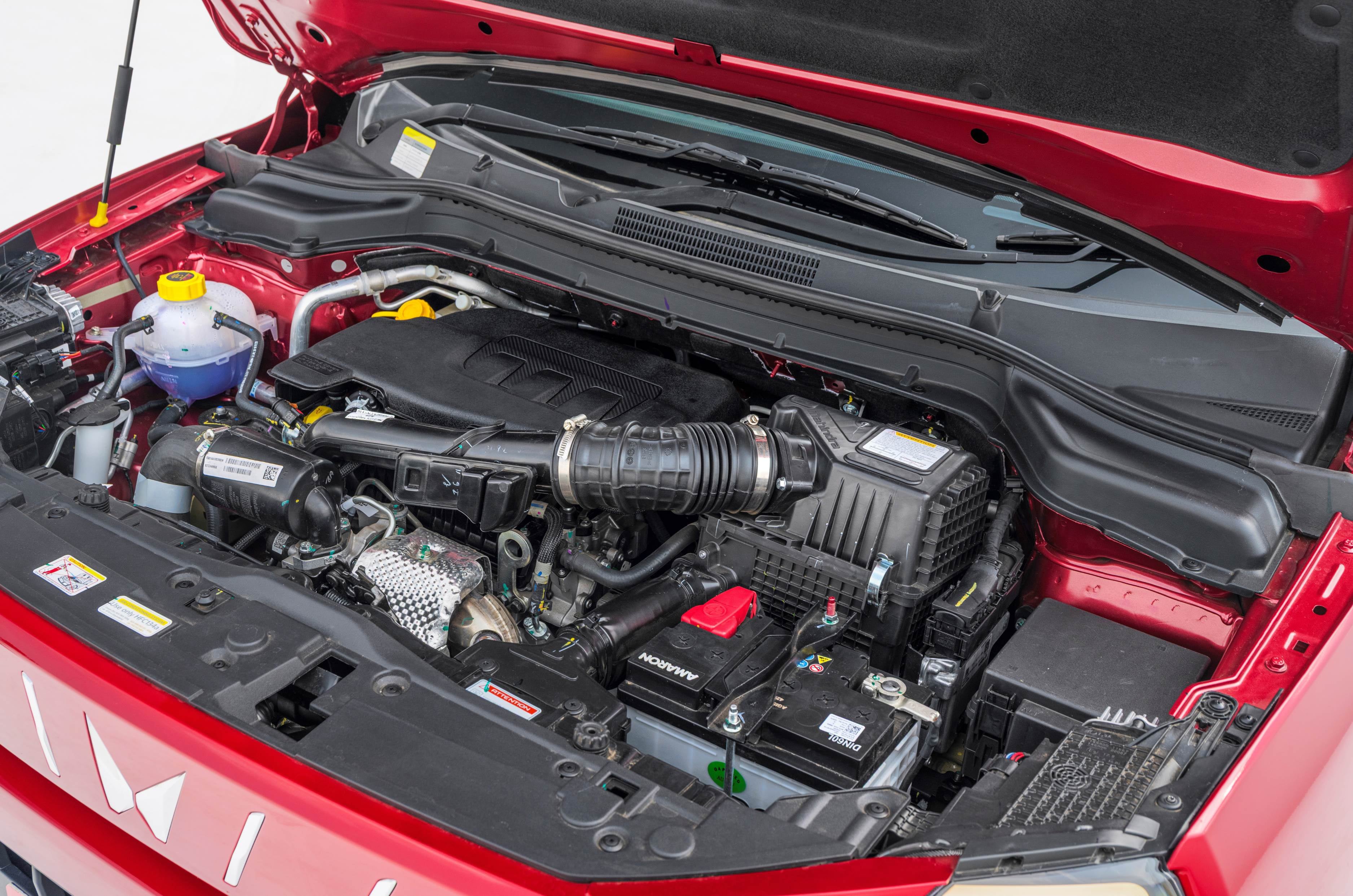
Powering the ZNG is the same 1.2-litre multi-point fuel injection (MPFi) turbo-petrol engine that does duty on the lower and mid-level trims of the 3XO. The kicker is that Mahindra quotes the exact same power and torque figures for CNG as for the pure-petrol version – 111hp and 200Nm. That is highly unusual, as a 10 to 15 percent drop in power figures is the norm. For comparison, its direct rival, the Tata Nexon iCNG, loses 20hp when switching from petrol to CNG. Mahindra says it has managed this with the use of a 10-bar CNG injection system. It also says the turbocharger and ECU calibration have been optimised to run on CNG, and initial impressions seem to back this up.
1.2-litre TCMPFI engine uses a 10-bar CNG injection system; Mahindra claims identical 111hp and 200Nm figures for petrol and CNG.
In everyday driving, the difference between CNG and petrol modes is barely noticeable. The engine feels smooth and refined in both, only becoming audible when extended. Performance, too, is very similar. Throttle response is good and the motor feels tractable, rarely requiring a shift into first when negotiating a speed breaker. There is a bit of turbo lag below 2,000rpm, but get past this and performance feels brisk.
The switch between modes is also quite seamless, with no apparent jerkiness or change in engine note. However, switch back and forth a few times, and you’ll notice the throttle response is ever so slightly duller in CNG mode, and there are times when it will hesitate on sudden throttle inputs. Overall, though, calibration in CNG mode is very good, and in everyday driving, there is very little to fault.
Performance feels brisk once you get past 2000rpm.
While the pure-petrol version of this engine can be had with a six-speed torque-converter automatic, the ZNG is only available with the six-speed manual. While its immediate rivals don’t offer an automatic with CNG either, Mahindra would have done well to offer at least an AMT. As it is, the manual is a smooth and easy-to-use unit, but not quite at the level of its Japanese or Korean competition. Its throws are a bit too long, and the clutch, while light, has a long travel.
In terms of outright performance, Mahindra claims an 11.8sec 0-100kph time for the ZNG. We conducted a quick performance test (not to Autocar India standards), which resulted in a 0-100kph time of 12.98s on petrol and 12.64s on CNG – a difference we put down to the launch. In-gear acceleration figures paint a clearer picture, where the ZNG was quicker in petrol mode by about 0.7 seconds in both 20-80kph and 40-100kph runs. Nevertheless, performance in either CNG or petrol is so close that most drivers would be hard-pressed to tell the difference.
Mahindra XUV 3XO ZNG Mileage and Efficiency – 8/10
Mahindra claims an efficiency figure of 24.7km/kg for the XUV 3XO ZNG, which translates to a theoretical range of 247km from its 10kg CNG capacity.
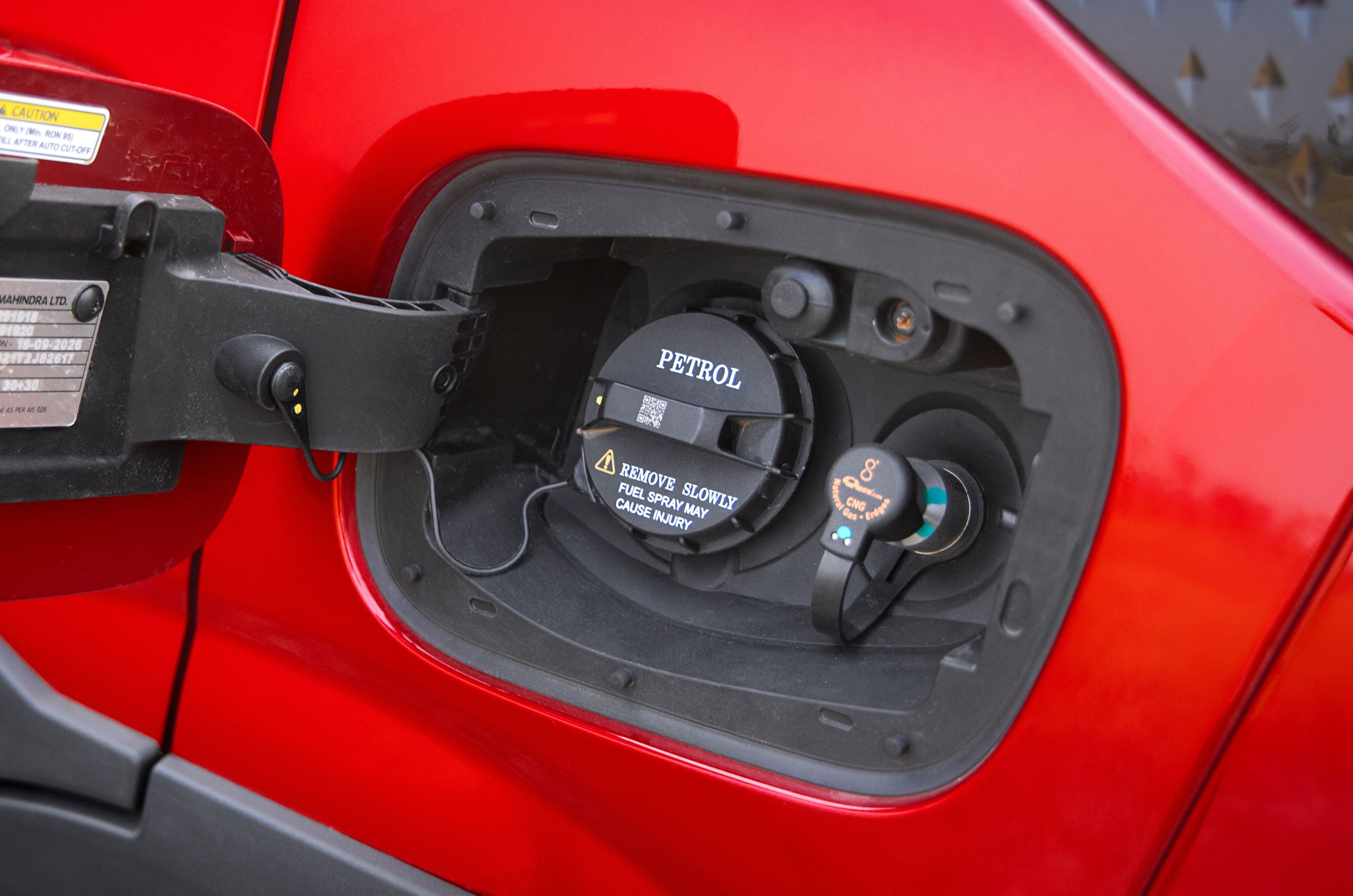
CNG filler neatly positioned beside the fuel filler; fuel filler door still has a manual release in the cabin.
It also gets an idle-stop/start function, which should help efficiency. We will verify these claims with a real-world test soon.
Mahindra XUV 3XO ZNG Ride Comfort and Handling – 9/10
Light steering works well in town; steering modes dial up resistance but don’t offer better feel.
The switch to CNG adds around 100kg to the 3XO, most of it concentrated at the rear. To ensure this doesn’t affect ride or handling, Mahindra has tweaked the suspension to cope with the extra weight. The ZNG’s ride has a slightly firm edge, but overall it deals with bad roads very well.
16-inch wheels and tall tyres are better at absorbing sharper bumps than the 17s on higher petrol trims.
The smaller 16-inch wheels also play an important part here, as their taller-sidewall tyres absorb sharp edges before they make their way to the cabin. Overall, the ride remains amongst the best in the class.
Handling, too, remains tight and engaging, with a planted feel around the bends. The steering is light and direct, and while you can dial up the resistance using the three steering modes, this adds little in terms of feel or feedback.
Mahindra XUV 3XO ZNG Value for Money – 8/10
Overall, the Mahindra XUV 3XO offers good value for money and makes for a compelling entrant into the CNG compact SUV space. Prices for the Mahindra XUV 3XO ZNG start at Rs 9.99 lakh and go up to Rs 12.27 lakh, which is between Rs 1 lakh and Rs 1.2 lakh more than the equivalent petrol trims. Pricing is on par with comparable variants of the Tata Nexon iCNG. However, the Nexon has a wider range and also offers more features on the higher trims.
Mahindra has packaged the CNG tanks cleverly, minimising the impact on boot space. That said, the 3XO’s boot wasn’t particularly large to begin with, and that remains a drawback. What sets it apart is the driving experience. CNG calibration is very good, and performance in CNG mode is close enough to petrol for most people not to notice a real difference. For a first attempt, the XUV 3XO ZNG certainly ticks a lot of boxes.
Rajasthan Bus Accident: राजस्थान के खाटू श्याम मंदिर में दर्शन करने जा रहे श्रद्धालुओं का सफर कोटा में एक दर्दनाक हादसे का शिकार हो गया। दिल्ली-मुंबई एक्सप्रेसवे पर श्रद्धालुओं से भरी एक बस पलट गई। इस हादसे में कम से कम 8 लोगों की मौत हो गई। जबकि 6 से ज्यादा यात्री घायल हो गए। बता दें कि बस में बच्चे और बुजुर्ग समेत कुल 21 यात्री सवार थे। ये सभी यात्री भोपाल से राजस्थान के खाटू श्याम मंदिर जा रहे थे।
#WATCH | Rajasthan | Eight passengers died after a bus overturned on Delhi-Mumbai Expressway in Kota; more than 6 injured passengers are hospitalised.
Visuals from the hospital. https://t.co/zKH30tKSwl
शुरुआती जानकारी के मुताबिक, बस चलाते समय ड्राइवर ने वाहन से नियंत्रण खो दिया, जिसके बाद बस सड़क किनारे खाई में जा गिरी। हालांकि, हादसा किस वजह से हुआ, इसकी अभी तक आधिकारिक पुष्टि नहीं हुई है। दुर्घटना के कारणों का पता लगाने के लिए जांच की जा रही है।
डीएम ने की मौत की पुष्टी
इस घटना के बाद, कोटा के जिला कलेक्टर पीयूष सामरिया ने बताया कि सभी घायलों को MBS अस्पताल ले जाया गया है और उनका इलाज चल रहा है। उन्होंने आठ लोगों की मौत की भी पुष्टि की।
वे जिले के एक वरिष्ठ पुलिस अधिकारी के साथ अस्पताल पहुंचे, जहां उन्होंने घायलों से मुलाकात की और उनकी स्थिति का जायजा लिया।
मलबे से 8 शव निकाले गए: सिमलिया SHO
चल रहे बचाव अभियान के बारे में जानकारी देते हुए, सिमलिया के SHO नंद सिंह ने TOI को बताया कि मलबे से अब तक आठ शव निकाले जा चुके हैं। उन्होंने बताया कि हादसे के समय ट्रैवलर बस में लगभग 23 यात्री सवार थे।
SHO ने बताया कि घायलों को तुरंत इलाज के लिए पास के अस्पतालों – कोटा के न्यू मेडिकल कॉलेज अस्पताल और MBS अस्पताल – में ले जाया गया। इसके लिए तीन एम्बुलेंस तैनात की गई थीं। पुलिस के अनुसार, आठ घायल यात्रियों को इलाज के लिए इन दोनों अस्पतालों में भर्ती कराया गया है।
फिलहाल आधिकारिक तौर पर आठ लोगों की मौत की पुष्टि हुई है, लेकिन अधिकारियों को आशंका है कि मरने वालों की संख्या बढ़ सकती है, क्योंकि बचाव दल अभी भी घटनास्थल से मलबा हटाने और पीड़ितों की पहचान करने का काम कर रहे हैं।
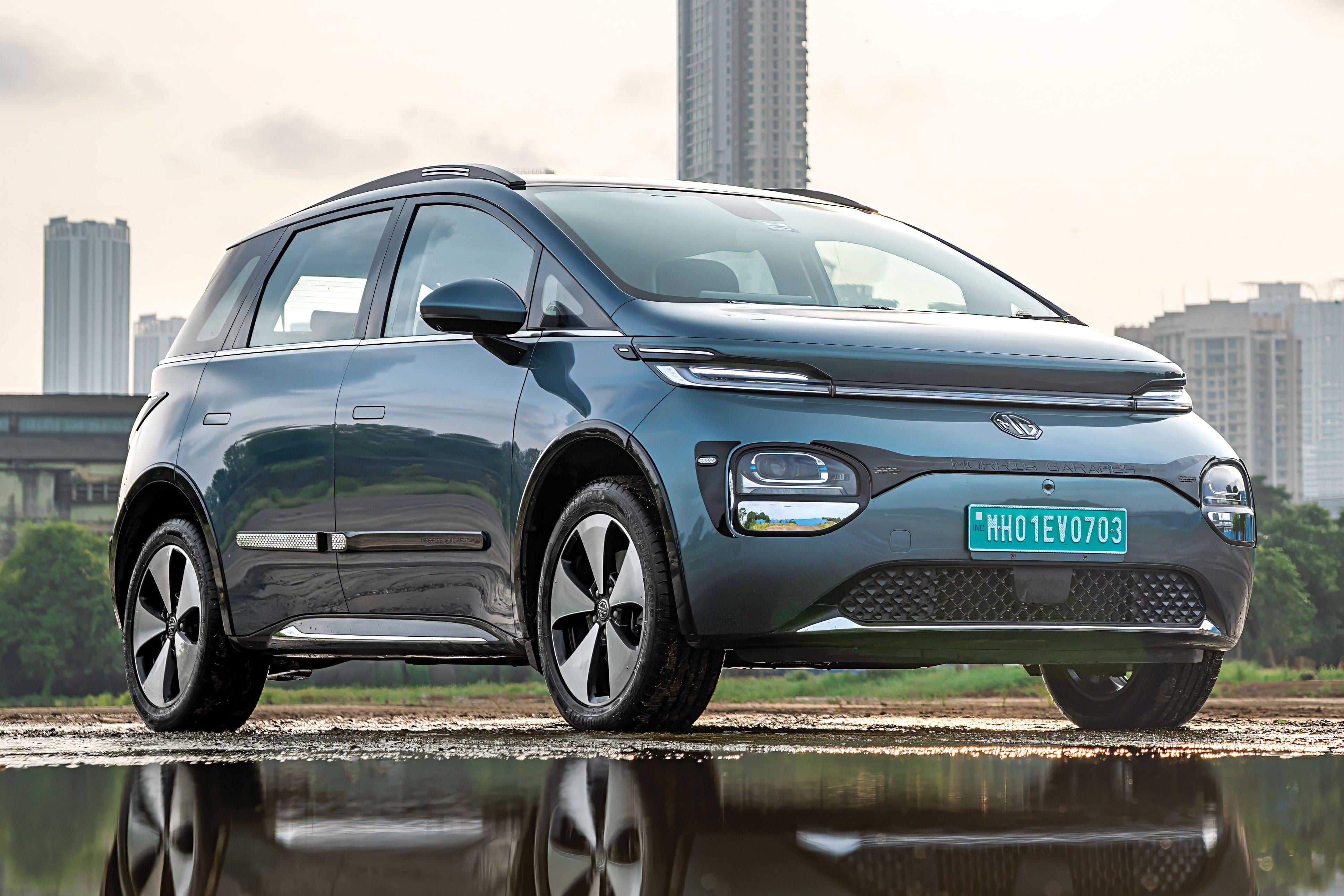
The MG Windsor EV is convenience Pro Max. You walk up to it, the doors unlock on their own, you slide into the driver’s seat, select ‘D’ on the gear-selector stalk, and pull away. Quick, simple, easy, and super convenient.
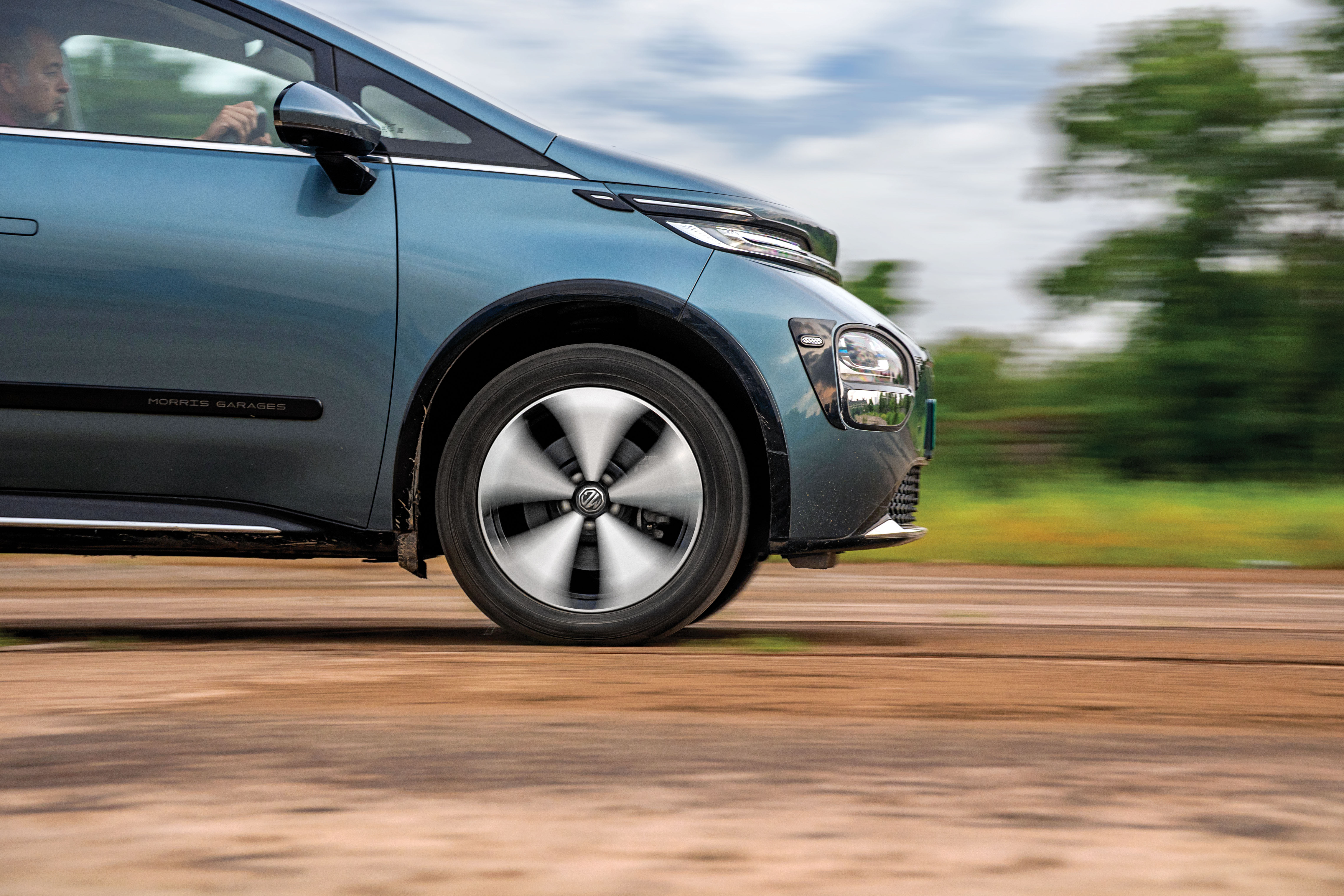
Over the weeks and months we’ve had the car, I’ve even found it to be well suited to our traffic, especially when the need to overtake quickly arises. The electric motor makes a healthy 200Nm of torque, and with near-instant responses, overtaking becomes almost therapeutic.
Overtaking slower cars is a breeze due to the strong and linear torque delivery
Squeeze down on the accelerator and a wave of torque helps you breeze past the car ahead. What’s nice is that the e-motor doesn’t overreact or deliver a massive spike of torque the moment you touch the pedal, it’s well metered and measured, and that makes all the difference. So, the Windsor feels surprisingly swift and fleet-footed; just what the doctor ordered for our fluid traffic, where gaps and opportunities open and close quickly.
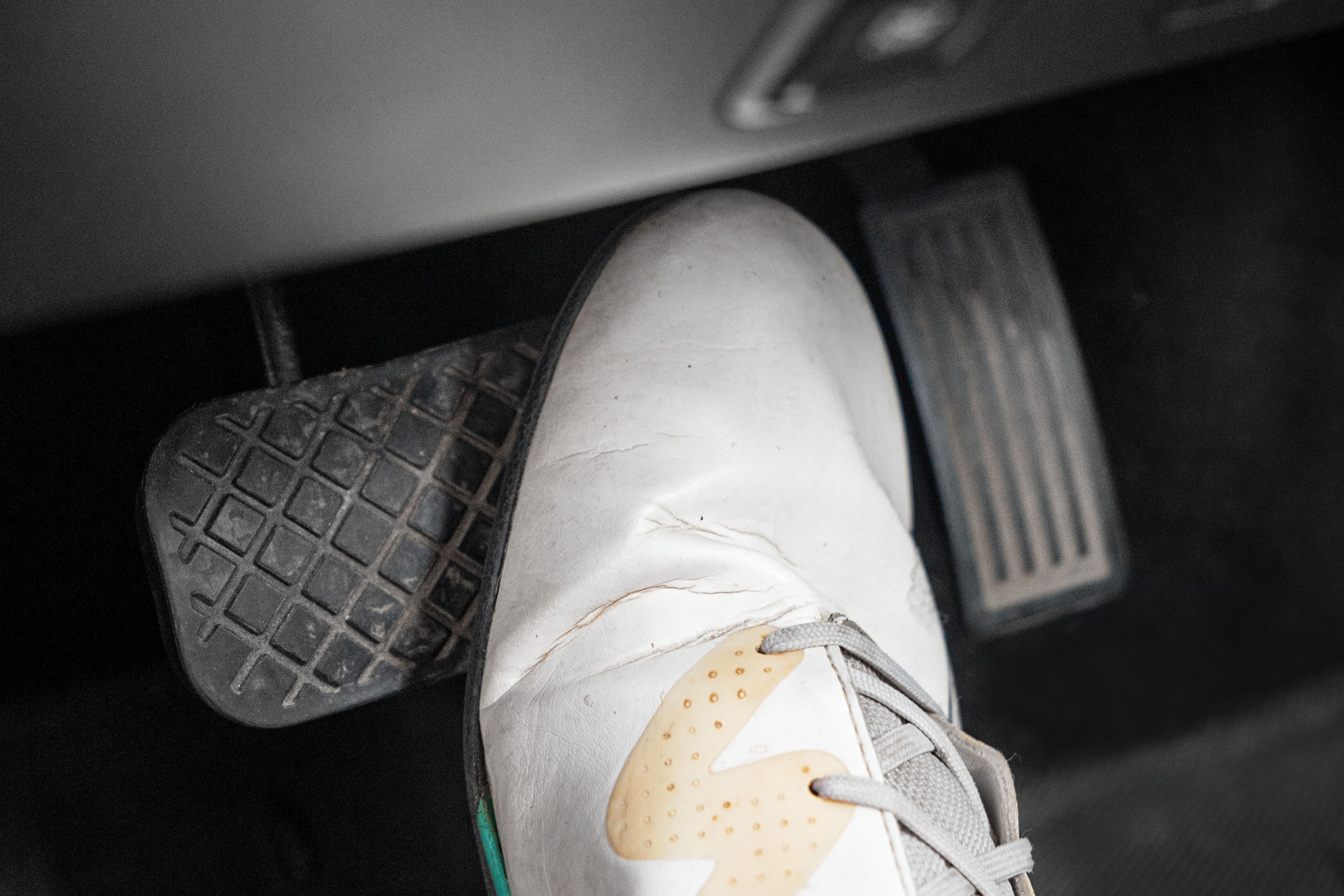
Strong brakes blend regenerative and friction braking quite seamlessly.
I even really like the strong brakes, especially how well they blend initial regeneration and later stronger action via the discs. Even the steering is light, direct and well-suited to urban use. Put all these factors together, and you can see why I found myself setting off to run a lot more errands in this car, with even long intra-city commutes handled with ease; podcasts on the clear audio system keeping me company.
What I’ve often found, however, especially when driving on a low battery, is that Eco mode is not as well calibrated. The responses are quite severely dulled down, and that means you need to keep using more and more throttle to get a move on. I soon switched back to Normal, almost every single time.
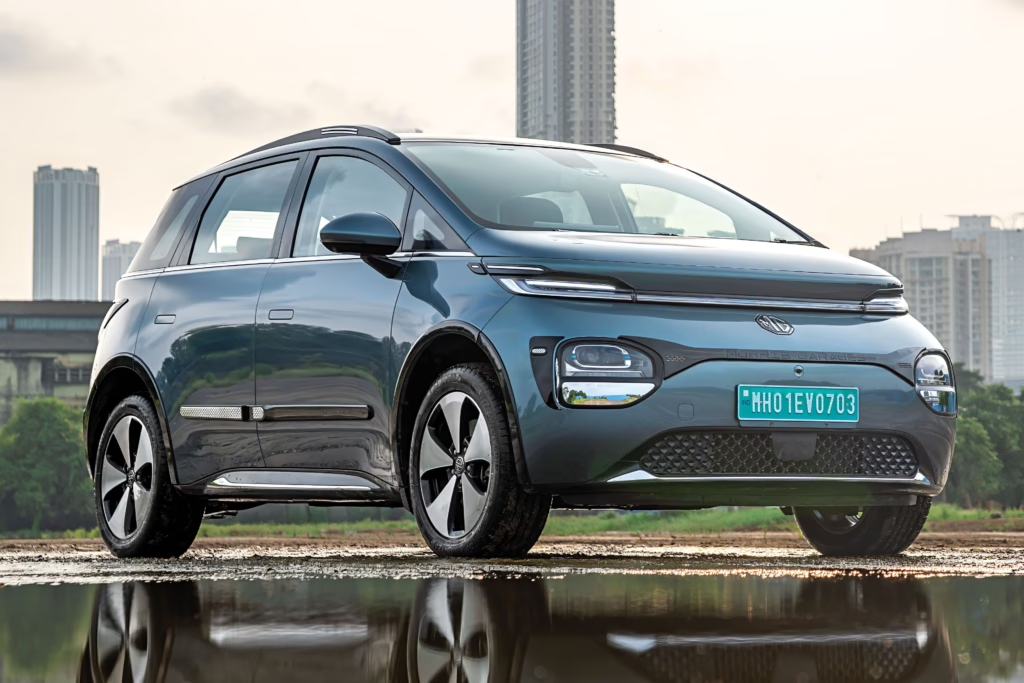
Where the Windsor also did well was that despite being a monovolume, the design has wide appeal. Sure, it has an unconventional profile, an unconventional cab-forward stance and an unconventional seating position. But the design works so well, first impressions from passengers are overwhelmingly positive. Many passengers commented on its modern looks and the spacious feeling in the rear. And doesn’t the stepped nose up front, with its chrome embellishments, work well?
MPV profile nicely packaged with modern details and look.
The MG Windsor, however, also has its fair share of issues and irritants. For one, insulation is very poor. It’s tolerable at lower city speeds, but past 70 or 80kph, road noise gets so prevalent, you start looking around for a commercial vehicle overtaking you. There is none. Then there’s the fact that the ride often gets brittle and unsettled, and go faster, such as on the Coastal Road in Mumbai, and stability at speed is also nowhere near as good as it should be. Some of this is down to the Windsor’s raised ride height and tall stance. But hey.
Over the time we’ve had the car, I’ve also come across a litany of questionable details in the cabin. To begin with, the seats have diamond-quilted covers that prod you in the back and feel unnecessarily ‘textured’. Then a lot of the plastics feel low-rent and cheap, especially the faux wood and the top of the dash. This includes some of the toggle switches used for the aircon and, especially, the gear selector stalk. Then there’s the fact that the screen is a size too large and in your face, and the left bottom of the windscreen is obscured by it; especially irritating when you are parking in a tight place.
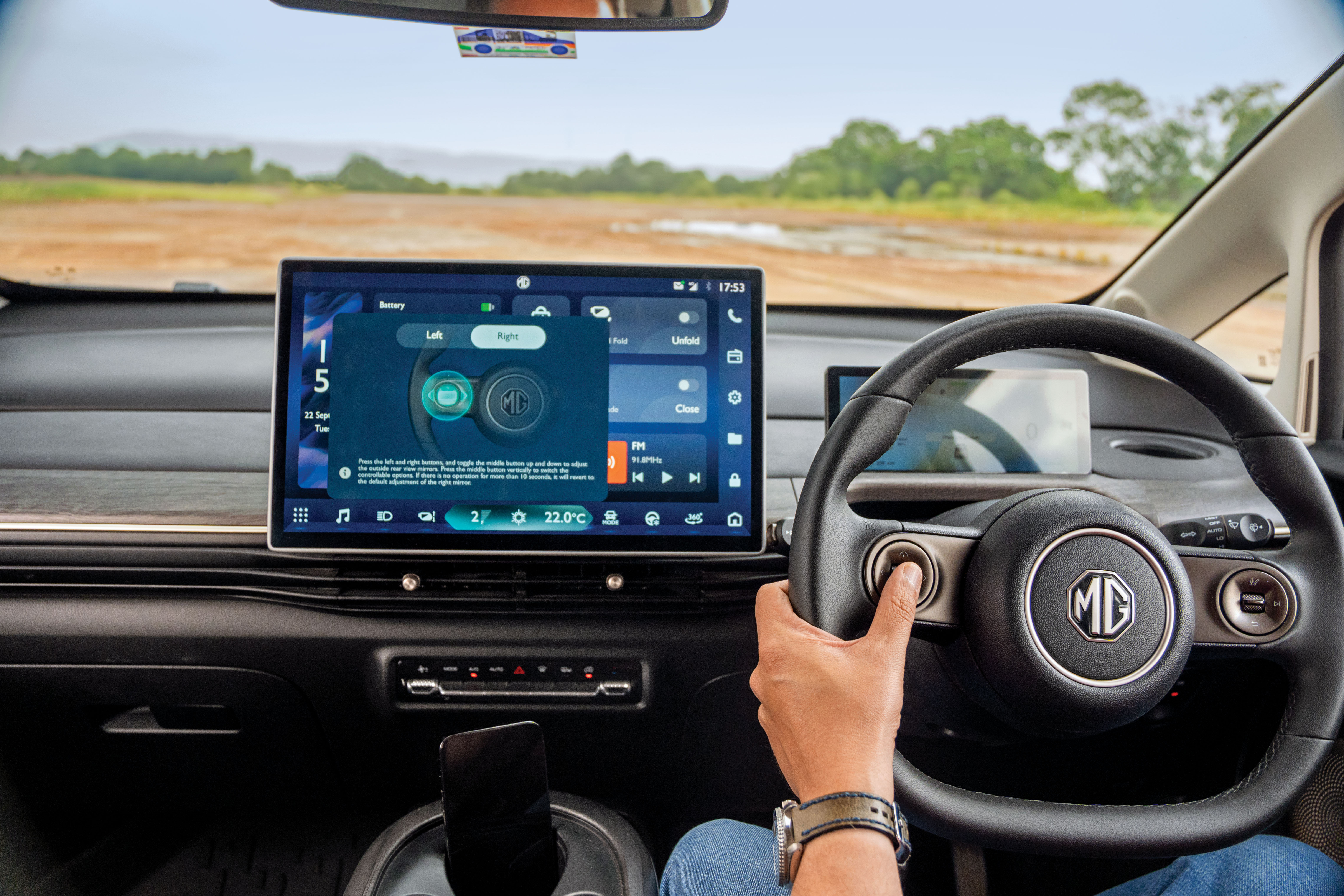
Even important functions like adjustments of the mirrors are on the screen
Then, of course, almost everything is controlled from the screen. This includes adjustment of mirrors, drive modes and regenerative braking, among others. So, often, you find yourself stopped on the side of the road, diving into a menu. And more often than not, the said feature is difficult to find. Too much of a good thing here, for sure. It’s only right that buttons are coming back.
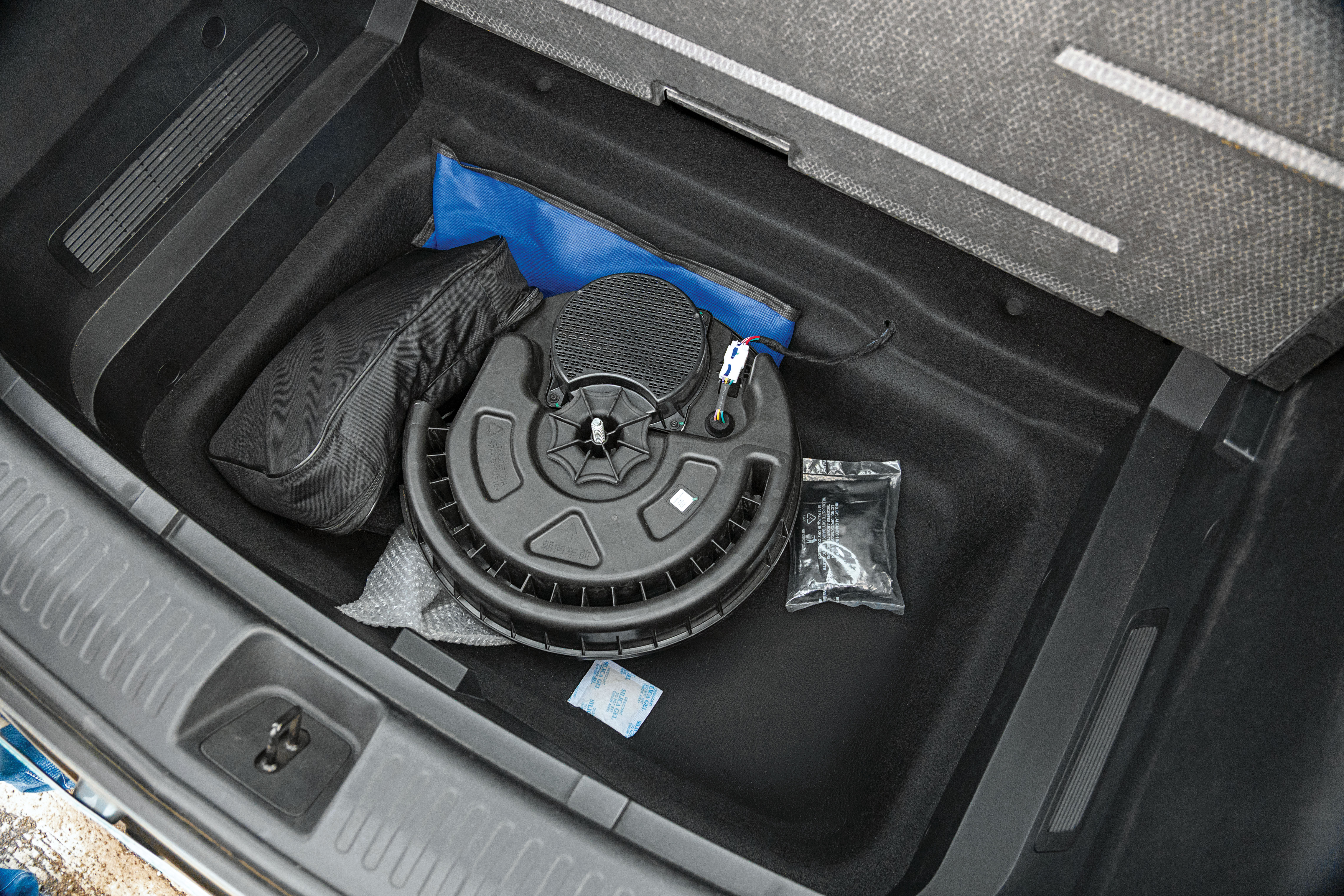
Then there’s the fact that while the fonts on the massive screen are huge, those on the digital ‘instrument panel’ are tiny and often difficult to read in a moving car. There’s also no spare tyre, only a puncture kit, of no use if you get a sidewall cut, and this version of the car gets no parcel tray; annoying if you have to leave a bag or luggage.
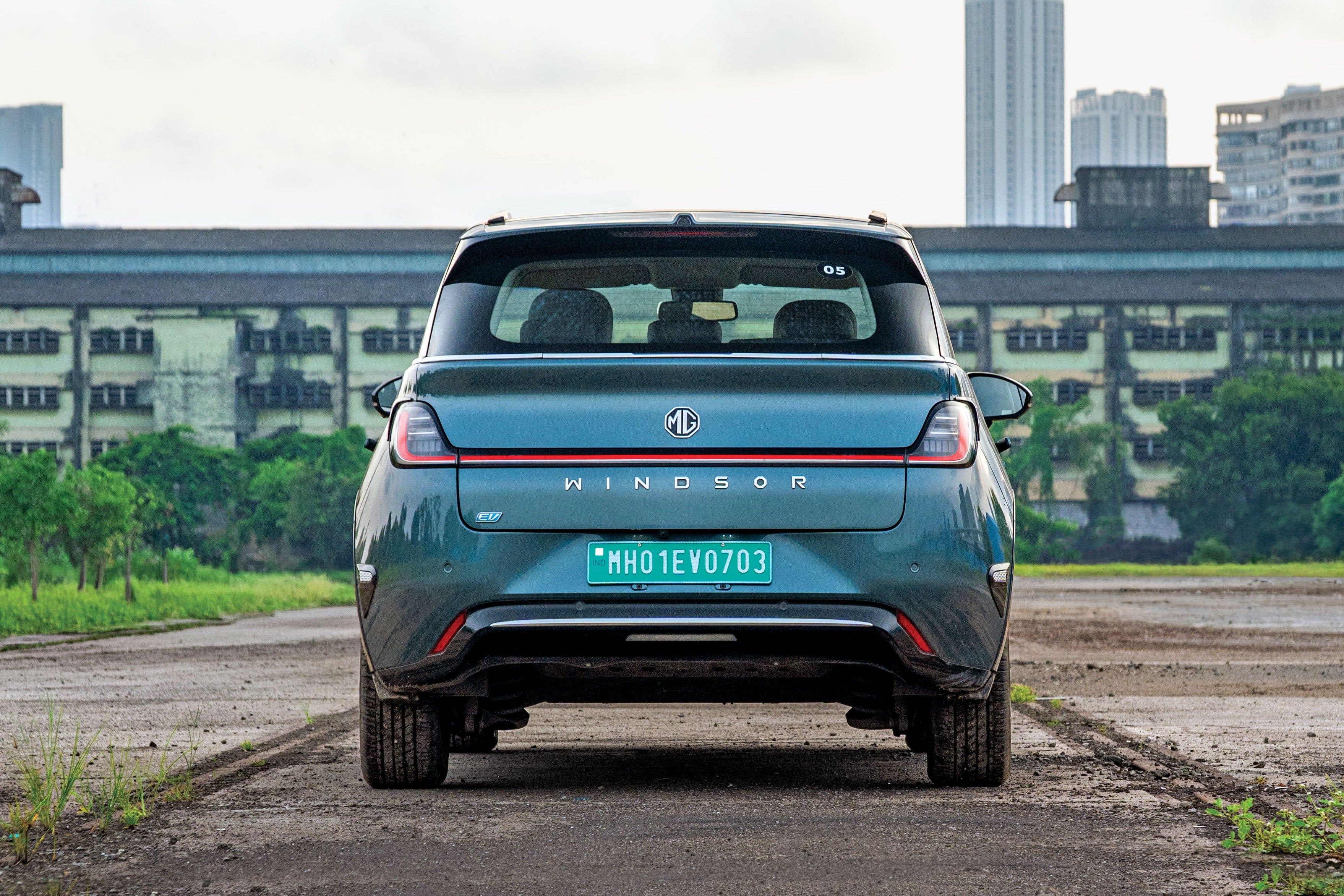
No spare or space to keep one; all you get is a puncture repair kit.
What of the battery and the range? The 37.9 kWh battery, charged for the most part at our office in Byculla, Mumbai, indicates a 100 percent battery range of around 320kms and has been delivering an average of around 6.5 kilometers per kW. So yes, while the MG Windsor is a lot of EV for the money and offers plenty of convenience, space and comfort, MG has a long to-do list for the facelift.
Actor Imran Khan: मुंबई में एक विरोध प्रदर्शन में हिस्सा लेने के बाद अमेरिकी नागरिक और बॉलीवुड अभिनेता इमरान खान इमिग्रेशन जांच के दायरे में आ गए हैं। भारतीय जनता पार्टी (BJP) के नेता किरीट सोमैया ने मशहूर अभिनेता आमिर खान के भांजे इमरान की कथित विदेशी नागरिकता और ओवरसीज सिटीजन ऑफ इंडिया (OCI) स्टेटस को लेकर उनके खिलाफ कार्रवाई की मांग की है। खबरों के अनुसार, इमरान खान से कथित तौर पर 28 अक्टूबर तक भारत छोड़ने के लिए कहा गया है। 10 अक्टूबर को मुंबई पुलिस ने अगस्त क्रांति मैदान से सैकड़ों लोगों को हिरासत में लिया था, जिनमें इमरान खान भी शामिल थे।
वहां प्रदर्शनकारी ‘कॉकरोच जनता पार्टी’ (CJP) के समर्थन में इकट्ठा हुए थे। इस प्रदर्शन में मतदाता सूची के ‘स्पेशल इंटेंसिव रिवीजन’ (SIR) में कथित अनियमितताओं को लेकर मुख्य चुनाव आयुक्त ज्ञानेश कुमार के इस्तीफे की मांग की गई थी। अभिनेता को उसी शाम रिहा कर दिया गया। रिपोर्ट के मुताबिक, इस मामले में अब मुंबई पुलिस द्वारा एक नोटिस जारी किया गया है। एक अधिकारी ने पीटीआई को बताया, “मुंबई पुलिस ने आव्रजन और विदेशी नागरिक अधिनियम के उल्लंघन के आरोप में अमेरिकी नागरिक एवं अभिनेता इमरान खान को भारत छोड़ने के लिए कहा है।”
इमरान खान को इमिग्रेशन से जुड़ी कार्रवाई का सामना क्यों करना पड़ रहा है?
न्यूज एजेंसी IANS के मुताबिक, इमरान खान को मुंबई पुलिस ने गुरुवार (15 अक्टूबर) को एक नोटिस जारी कर 28 अक्टूबर तक भारत छोड़ने का निर्देश दिया है। मुंबई पुलिस के अनुसार, भारतीय नागरिक न होने के बावजूद विरोध प्रदर्शन में शामिल होने के कारण इमरान खान के खिलाफ इमिग्रेशन एक्ट (प्रवासन अधिनियम) की संबंधित धाराओं के तहत कार्रवाई की गई है।
‘टाइम्स नाउ’ की रिपोर्ट के मुताबिक, बीजेपी के पूर्व सांसद किरीट सोमैया ने आरोप लगाया है कि खान एक अमेरिकी नागरिक हैं। उन्होंने कहा कि उनके पास OCI कार्ड है। इसलिए उन्होंने राजनीतिक प्रदर्शन में हिस्सा लेकर नियमों का उल्लंघन किया है। उन्होंने अभिनेता के खिलाफ कार्रवाई की मांग की है। अधिकारियों से उन्हें हिरासत में लेने और देश से बाहर भेजने (निर्वासन) पर विचार करने को कहा है।
इमरान खान के खिलाफ कार्रवाई की मांग
इमरान खान उन प्रदर्शनकारियों में शामिल थे जिन्हें पुलिस ने अगस्त क्रांति मैदान से हिरासत में लिया था। मुंबई के संयुक्त पुलिस आयुक्त मनोज कुमार शर्मा को लिखे पत्र में बीजेपी नेता ने सवाल उठाया कि क्या खान को इस आंदोलन में शामिल होने की कानूनन अनुमति थी। सोशल मीडिया प्लेटफॉर्म ‘एक्स’ पर एक पोस्ट में BJP नेता ने इमरान खान को तुरंत देश से बाहर निकालने की मांग की।
हिरासत में लिए जाने के बाद मुंबई पुलिस के वैन से अभिनेता ने सोशल मीडिया पर लिखा, “ऐसा लगता है कि मैं ड्राइव पर जा रहा हूं।” बाद में एक वीडियो भी सामने आया, जिसमें खान पुलिस अधिकारियों से यह पूछते दिखे, “मैंने क्या किया है? मेरे साथ धक्का-मुक्की क्यों की जा रही है?”
Actor Imran Khan, nephew of Aamir Khan, has been issued a notice by Mumbai Police directing him to leave India by October 28. Imran Khan had participated in a protest at Mumbai’s August Kranti Maidan demanding the resignation of Chief Election Commissioner Gyanesh Kumar. Mumbai Police had also detained him. Action has been taken against Imran Khan under the relevant provision of the Immigration Act over his participation in the protest despite not being an Indian citizen: Mumbai Police