Weather Update: मंगलवार, 1 सितंबर को देश के कई हिस्सों में मानसून सक्रिय बना हुआ है। ओडिशा, झारखंड, छत्तीसगढ़, बिहार और उत्तर प्रदेश के कुछ हिस्सों में भारी से बहुत भारी बारिश होने की संभावना है। वहीं, मुंबई और कोलकाता में भी बारिश हो सकती है, जबकि दिल्ली में दोपहर और शाम के समय हल्की बारिश के साथ गरज-चमक होने की संभावना है।
मौसम विभाग के मुताबिक, अगस्त महीने में देश में औसत से 16 फीसदी कम बारिश हुई।
Monthly Outlook for Rainfall during September 2026
Monthly rainfall over the country as a whole during September 2026 is most likely to be below normal (<91% of Long Period Average (LPA)). Spatially, many parts of the country are likely to receive below-normal rainfall. However,… pic.twitter.com/rTITpCnKU8
— India Meteorological Department (@Indiametdept) August 31, 2026
दिल्ली, मुंबई और कोलकाता में बारिश का दिन
दिल्ली में आसमान में आंशिक रूप से बादल छाए रहने और दोपहर व शाम के समय कई जगहों पर हल्की बारिश के साथ आंधी-तूफान और बिजली कड़कने की संभावना है। रात में तापमान 25°C से 27°C और दिन में 34°C से 36°C के बीच रहने का अनुमान है।
आने वाले दिनों में भी दिल्ली में बारिश जारी रह सकती है। IMD ने 3 से 5 सितंबर के बीच दिल्ली और पड़ोसी राज्यों हरियाणा और पंजाब में व्यापक बारिश का अनुमान लगाया है।
मुंबई में भी बारिश जारी रहने की संभावना है, क्योंकि कोंकण और गोवा क्षेत्र में 6 सितंबर तक व्यापक बारिश का अनुमान है। IMD को उम्मीद है कि मंगलवार को भी इस क्षेत्र में बारिश जारी रहेगी। हालांकि, बुलेटिन में मुंबई के लिए अलग से कोई खास अनुमान नहीं दिया गया है।
वहीं, कोलकाता और गंगा के मैदानी इलाकों वाले पश्चिम बंगाल के कुछ हिस्सों में मंगलवार को भारी बारिश हो सकती है। IMD ने 31 अगस्त और 1 सितंबर को गंगा के मैदानी इलाकों वाले पश्चिम बंगाल में भारी बारिश और क्षेत्र के कुछ हिस्सों में तेज हवाएं चलने का भी अनुमान लगाया है।
देश के बाकी हिस्सों का मौसम
मंगलवार को भुवनेश्वर और ओडिशा के दूसरे इलाकों में भारी बारिश का सबसे ज्यादा खतरा है। IMD ने ओडिशा में कहीं-कहीं भारी से बहुत भारी बारिश का अनुमान लगाया है। बता दें कि जैसे-जैसे मौसम का सिस्टम जमीन की ओर बढ़ेगा, राज्य में कहीं-कहीं बहुत ज्यादा भारी बारिश भी हो सकती है।
हैदराबाद और तेलंगाना के दूसरे हिस्सों में छिटपुट बारिश हो सकती है, साथ ही आंधी-तूफान, बिजली कड़कने और तेज हवाएं चलने की भी संभावना है। हवा की रफ्तार 30-40 किमी/घंटा हो सकती है और झोंके 50 किमी/घंटा तक पहुंच सकते हैं।
मंगलवार को बेंगलुरु में छिटपुट बारिश होने की संभावना है, क्योंकि दक्षिण आंतरिक कर्नाटक में आम तौर पर हल्की लेकिन लगातार बारिश का दौर जारी है।
चेन्नई और तमिलनाडु के कुछ हिस्सों में 2 सितंबर तक छिटपुट बारिश हो सकती है, साथ ही आंधी-तूफान, बिजली कड़कने और तेज हवाएं चलने की भी संभावना है। हवा की रफ्तार 40-50 किमी/घंटा तक पहुंच सकती है और कुछ इलाकों में हवा के झोंके और भी तेज हो सकते हैं।
मध्य और पूर्वी भारत में भारी बारिश का दायरा बढ़ा
मंगलवार को सबसे ज्यादा चिंता ओडिशा, छत्तीसगढ़, झारखंड, बिहार और पूर्वी उत्तर प्रदेश को लेकर है। IMD ने इन इलाकों में भारी से बहुत भारी बारिश की चेतावनी दी है, जबकि पूर्वी मध्य प्रदेश में 5 सितंबर तक बारिश जारी रहने की संभावना है। वहीं, छत्तीसगढ़ पर खास तौर पर ज्यादा खतरा है, क्योंकि वहां 1 सितंबर को कहीं-कहीं बहुत ज्यादा बारिश होने का अनुमान है।
भारी बारिश के कारण कई जगहों पर जलभराव हो सकता है, निचले इलाकों में बाढ़ आ सकती है और संवेदनशील जगहों पर सड़क व रेल यातायात में रुकावट आ सकती है। IMD ने अगले 24 घंटों में छत्तीसगढ़, ओडिशा, झारखंड और गंगा के मैदानी इलाकों वाले पश्चिम बंगाल के कुछ हिस्सों में अचानक बाढ़ (flash floods) का कम से मध्यम खतरा भी बताया है।
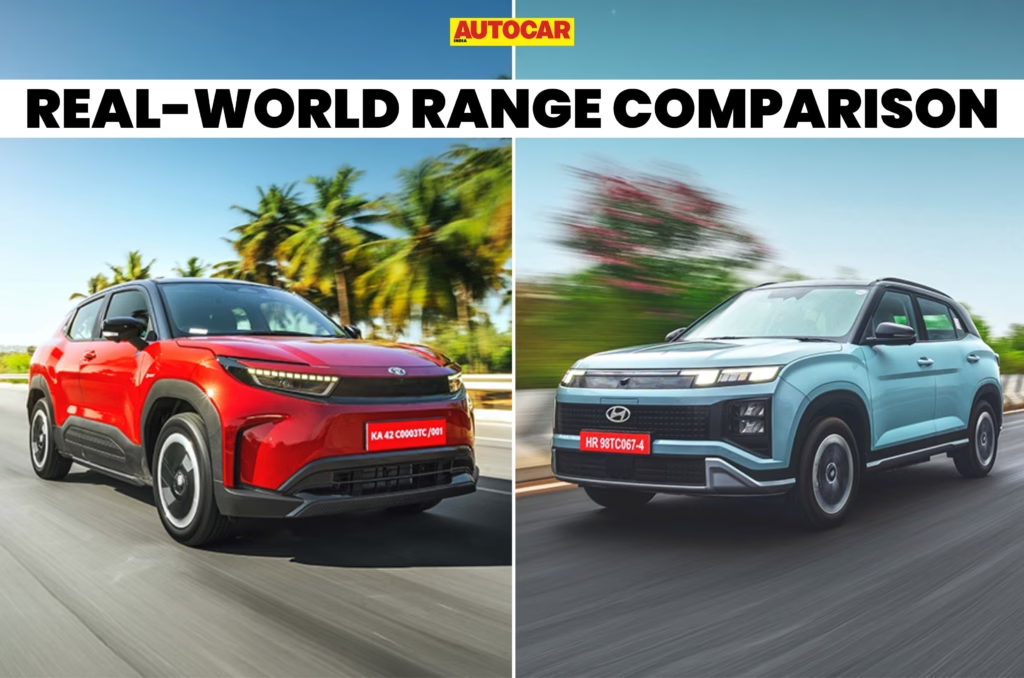
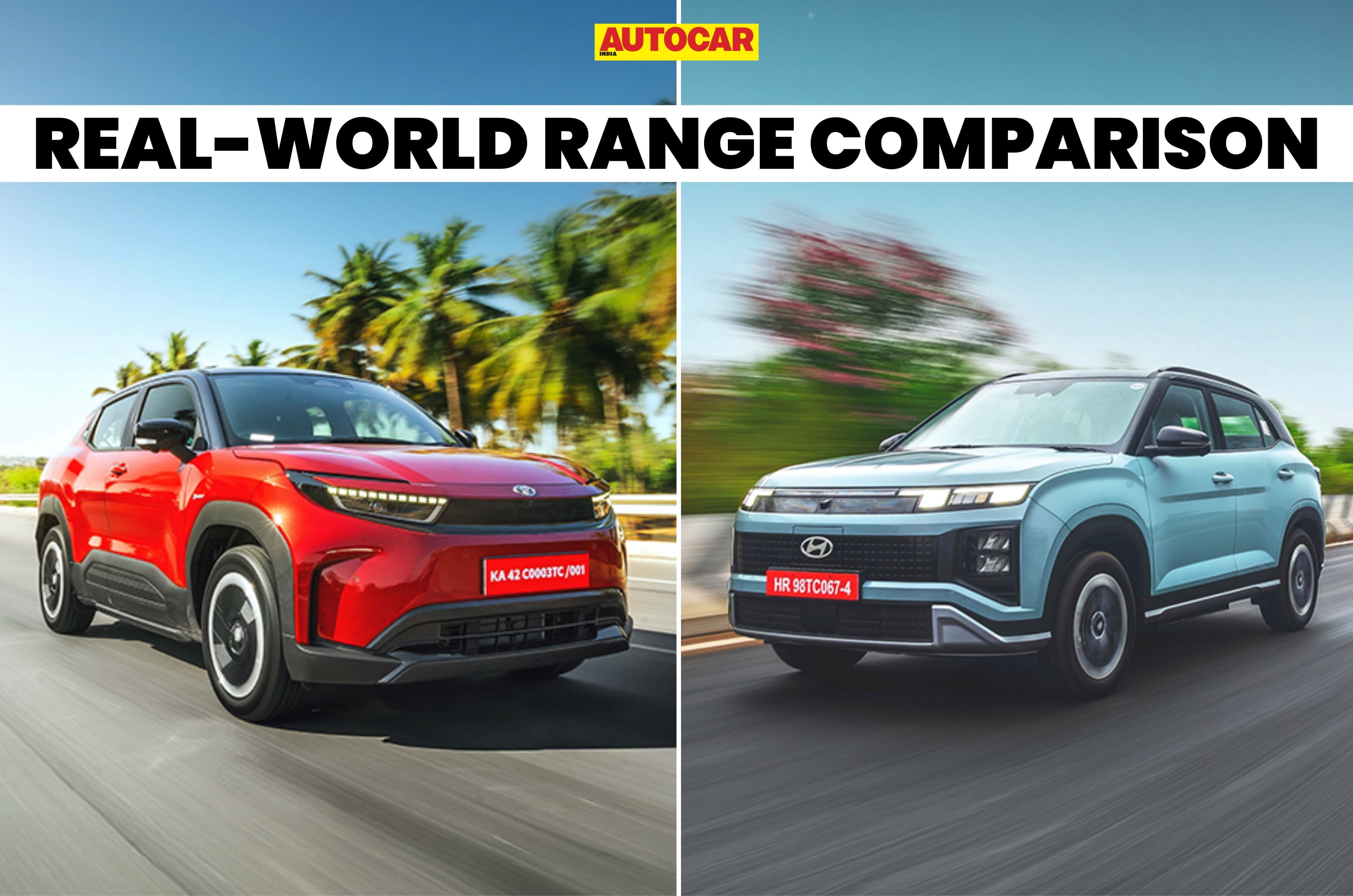
The Toyota Urban Cruiser Ebella is one of the newer entrants in the electric midsize SUV segment, which the Hyundai Creta Electric has been a part of since early 2025. Both electric SUVs are rated at over 500km of range by MIDC, but which one travels further on a single charge in the real world? We put the Urban Cruiser Ebella and Creta Electric through our detailed range tests to find out.
Toyota Ebella vs Hyundai Creta Electric: Specifications
Ebella
Creta Electric
Battery capacity (kWh)
61
51.4
Motor setup
Single, front
Single, front
Power (hp)
174
171
Torque (Nm)
193
255
MIDC range (km)
543
510
Kerb weight (kg)
1,815
1,577
The Ebella’s battery pack is nearly 10kWh larger than that of the Creta Electric, allowing the Toyota EV to claim a higher MIDC range. However, the Ebella is nearly 240kg heavier, which can detract from its real-world range. Both electric SUVs are similar in terms of power output, but the Creta Electric develops over 60Nm more torque.
Toyota Ebella vs Hyundai Creta Electric: Real-world range
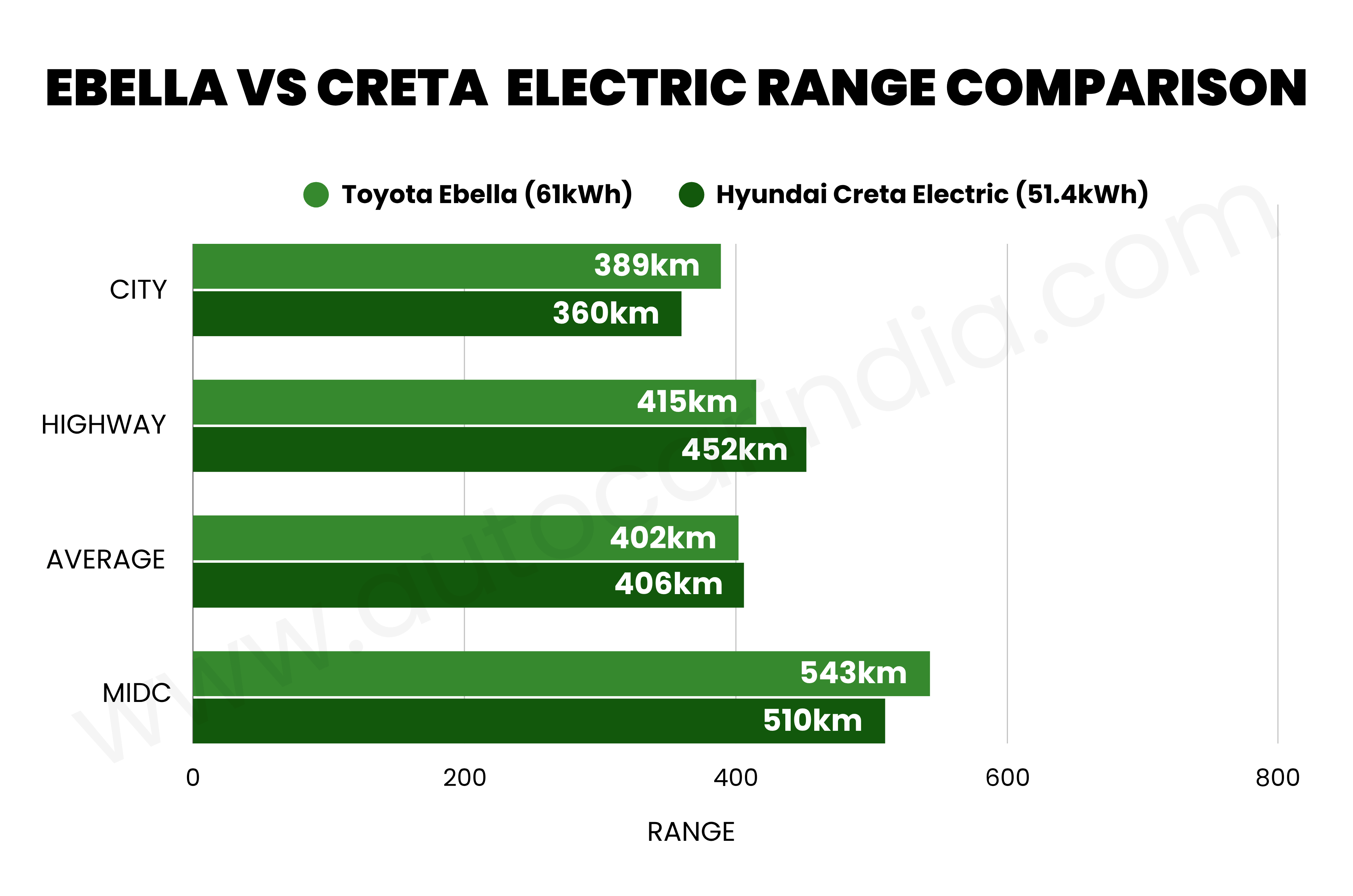
Despite the Ebella’s battery capacity advantage, the Creta Electric emerged as the overall winner in our real-world range tests. The Hyundai EV formed a 37km lead over the Ebella on the highway, while the Toyota SUV was ahead by 29km in urban conditions. In terms of battery efficiency, the Creta Electric achieved higher numbers across the board.
Toyota Ebella vs Hyundai Creta Electric real-world efficiency
Ebella
Creta Electric
Tested city efficiency (km/kWh)
6.37
7.00
Tested highway efficiency (km/kWh)
6.80
8.80
Tested average efficiency (km/kWh)
6.59
7.90
Averaging the range figures above, the Creta Electric beat the Ebella by a slim 6km margin. With a gap of 104km, the Creta Electric’s real-world range adhered better to its MIDC figure too, while the Ebella recorded a 141km deficit for the same.
Toyota Ebella vs Hyundai Creta Electric: Prices
Price range (Rs, lakh)
Ebella
23.60
Creta Electric (51.4kWh)*
20.00-23.67
*Prices exclusive of home charger and installation cost.
The Ebella is available in just one 61kWh variant, which is priced on par with the Creta Electric’s top-spec 51.4kWh version. Since the Creta Electric 51.4kWh is sold in multiple variants, it undercuts the Ebella by up to Rs 3.6 lakh. That said, the Ebella comes bundled with a home charger, while Hyundai charges an extra Rs 73,000 for it.
Autocar India’s range testing
Before our real-world range tests, the battery of our test car was fully charged, and we maintained tyre pressures in accordance with the manufacturer’s recommendations. The car was driven on a weekday in Mumbai city and on the adjoining state highway in a fixed loop, and we maintained the set average speeds. At the end of each cycle, we calculated the range based on the percentage charge consumed.
Throughout our tests, the climate control was set to 22deg C in a full-auto setting, and other electricals, such as the audio system, indicators and ventilated front seats, were used when required, just as a regular user would. We take pride in our testing data, which isn’t merely consistent but also gives users an accurate indication of what they can expect in the real world.
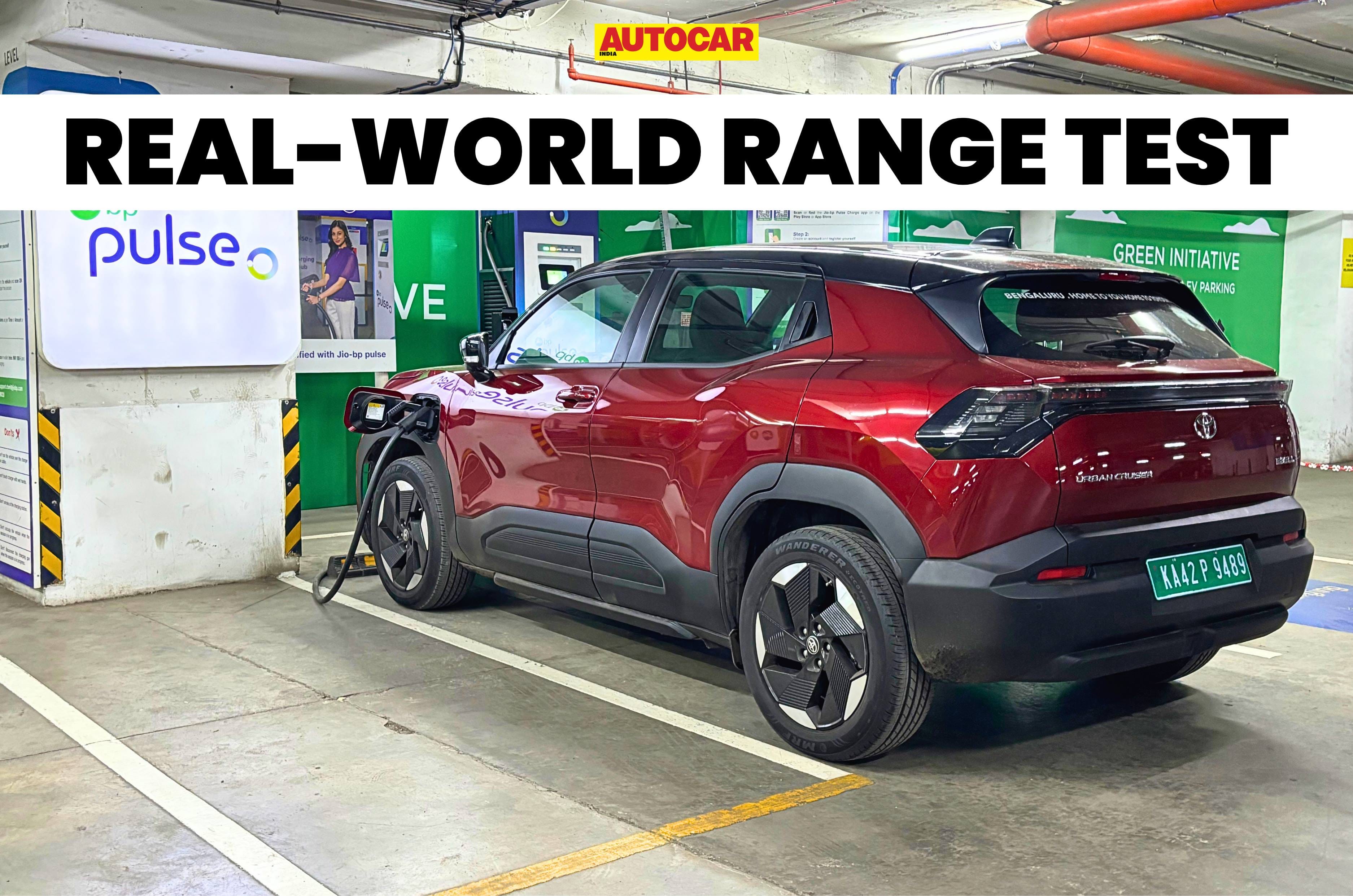
Toyota Urban Cruiser Ebella is the company’s first and only EV sold in the country, and is essentially a badge-engineered Maruti Suzuki eVitara. Toyota has limited the Ebella range to a single variant, priced at Rs. 23.6 lakh. We put the Toyota Urban Cruiser Ebella with the 61kWh battery pack through our range test to find out how it performs.
Three driving and regen modes; no single pedal driving
Weighs 1,815kg
20-80 percent recharge takes 35 minutes using a 90kW DC fast charger
Toyota Urban Cruiser Ebella: Real-world range
The Toyota Urban Cruiser Ebella is solely available with a 61kWh lithium-ion LFP battery pack and it is powered by a 174hp/193Nm electric motor driving the front wheels. For our tests, we used the Eco driving mode all throughout, with regen set to ‘High’ in the city and ‘Medium’ on the highway.
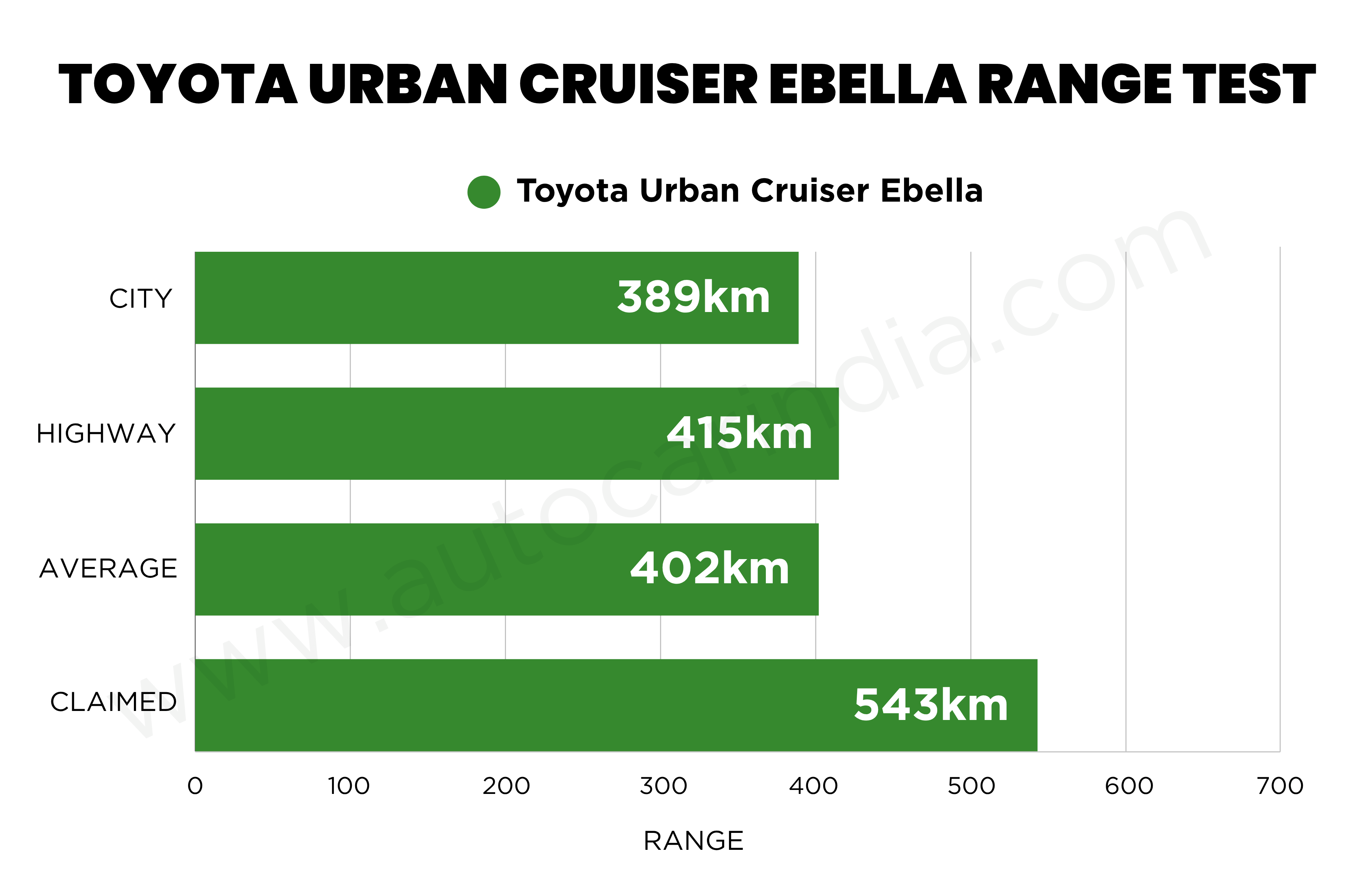
In city conditions, the Toyota Ebella returned 6.37km/kWh which translates to a range of 389km. Interestingly, the efficiency increased on the highway to 6.8km/kWh extrapolating to a range of 415km. With an overall efficiency of 6.59km/kWh, the Toyota Ebella can deliver a real-world range of 402km on a full charge.
Toyota Urban Cruiser Ebella: Charging test
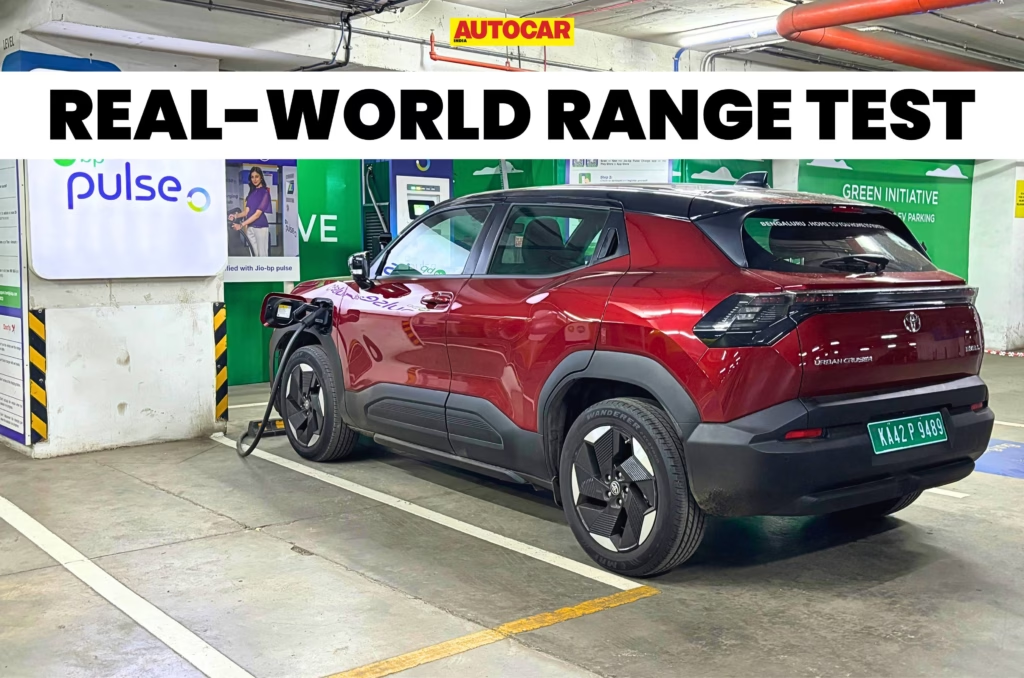
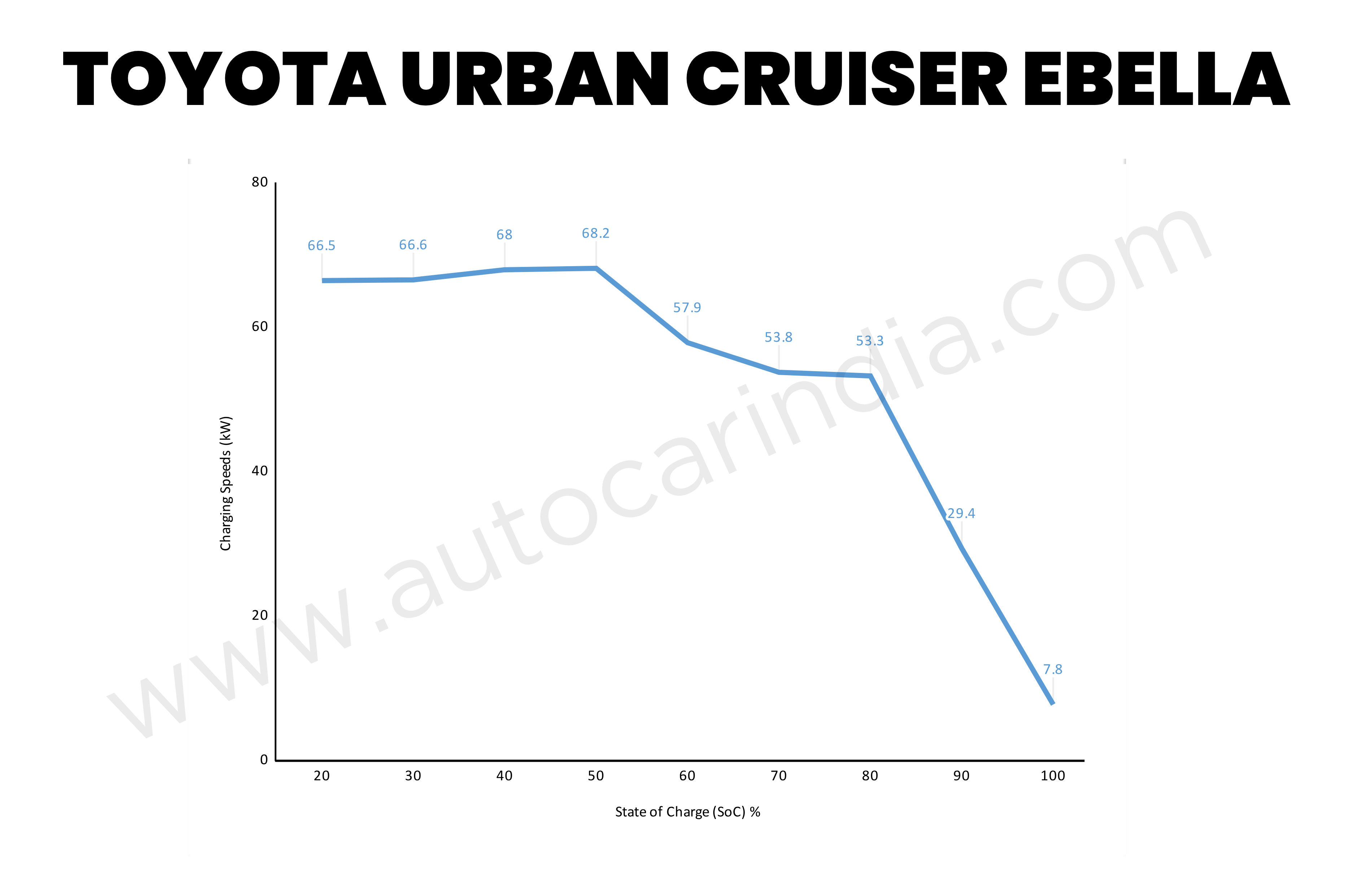
Toyota hasn’t shared any details regarding the Ebella’s DC fast charging capability, but we noted peak charging speeds of around 68.2kW when using a 90kW DC fast charger. In terms of duration, it took 35 minutes to charge from 20-80 percent, and another 36 minutes to reach 100 percent.
Autocar India’s range testing
Before our real-world range tests, the battery of our test car was fully charged, and we maintained tyre pressures in accordance with the manufacturer’s recommendations. The car was driven on a weekday in Mumbai city and on the adjoining state highway in a fixed loop, and we maintained the set average speeds. At the end of each cycle, we calculated the range based on the percentage charge consumed.
Throughout our tests, the climate control was set to 22deg C in a full-auto setting, and other electricals, such as the audio system, indicators and ventilated front seats, were used when required, just as a regular user would. We take pride in our testing data, which isn’t merely consistent but also gives users an accurate indication of what they can expect in the real world.
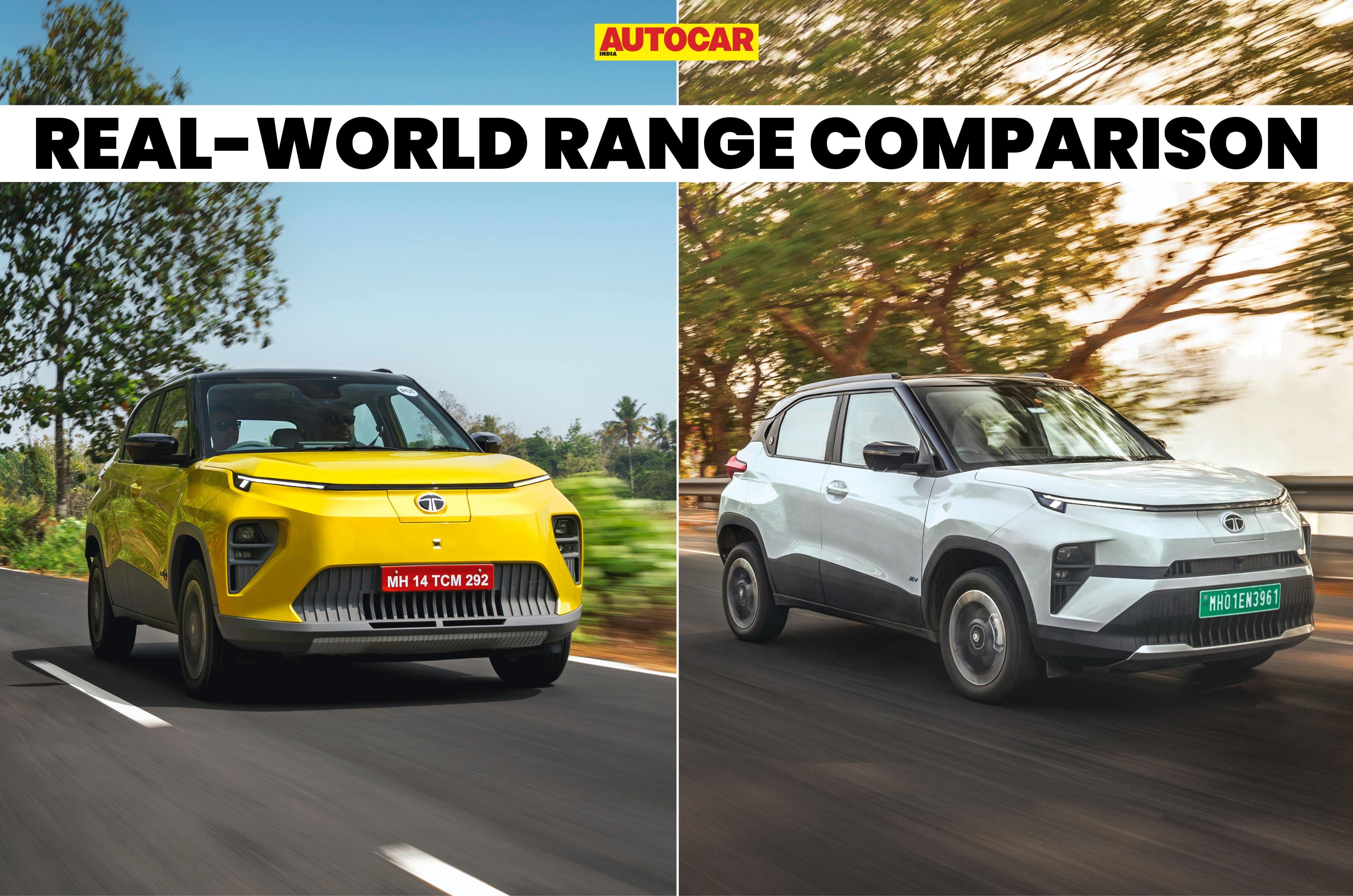
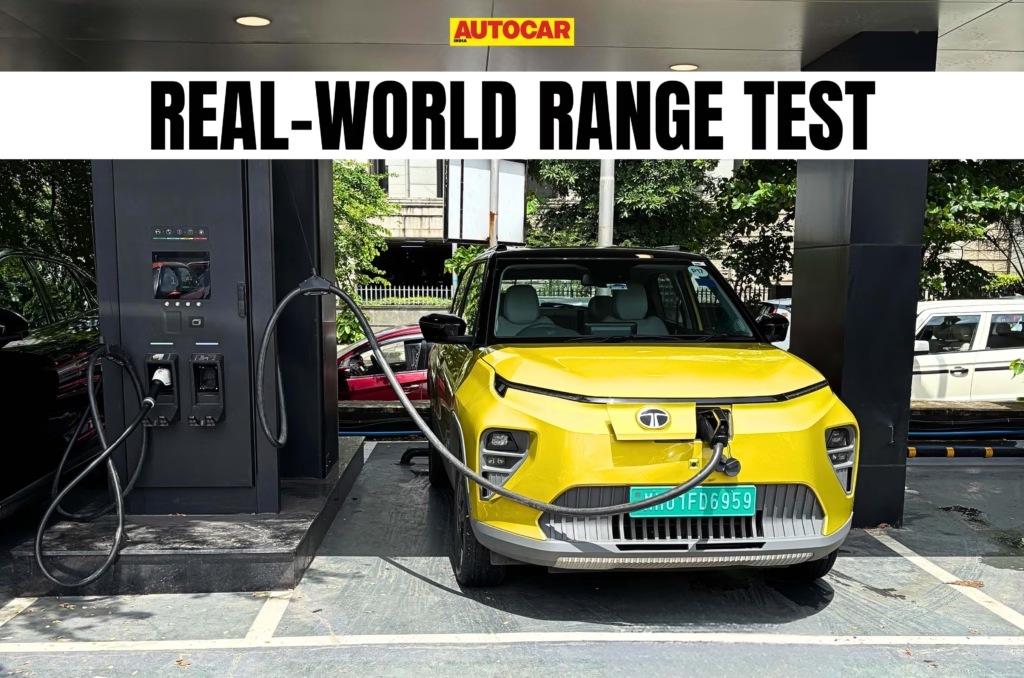
In February 2026, Tata Motors brought incremental updates to the Punch EV. The carmaker’s most affordable electric SUV saw a bump in battery size, subtle cosmetic revisions, and feature additions, while also being more affordable than its predecessor. To see how much the 2026 Punch EV has improved over its older iteration, we put it through our real-world range tests and compare it to its predecessors.
Tata Punch EV new vs old: Specifications
Tata Punch EV new vs old: Specifications
Tata Punch EV New
Tata Punch EV Old
Battery size
40
35
Electric motor setup
Single motor, front
Single motor, front
Power (hp)
129
122
Torque (Nm)
154
190
ARAI range (km)
468
365
Kerb weight (kg)
1365
1,360
0-100kph time (claimed, in seconds)
9
9.5
With the newer Punch EV, Tata has increased the battery size in its long-range version by 5kWh and bumped the motor’s power slightly. However, the older Punch EV’s motor delivered 36Nm more torque than the newer model. In the new Punch EV, Tata introduced a new 6-in-1 drivetrain setup, replacing the older one’s 3-in-1 unit. With this new setup, Tata claims a 50 percent reduction in packaging size, a 28 percent reduction in weight, and a 6 percent increase in efficiency. Despite the larger battery, this new drivetrain setup on the Punch EV has led to a weight increase of a mere 5kg over its predecessor.
Tata Punch EV new vs old: Real-world range
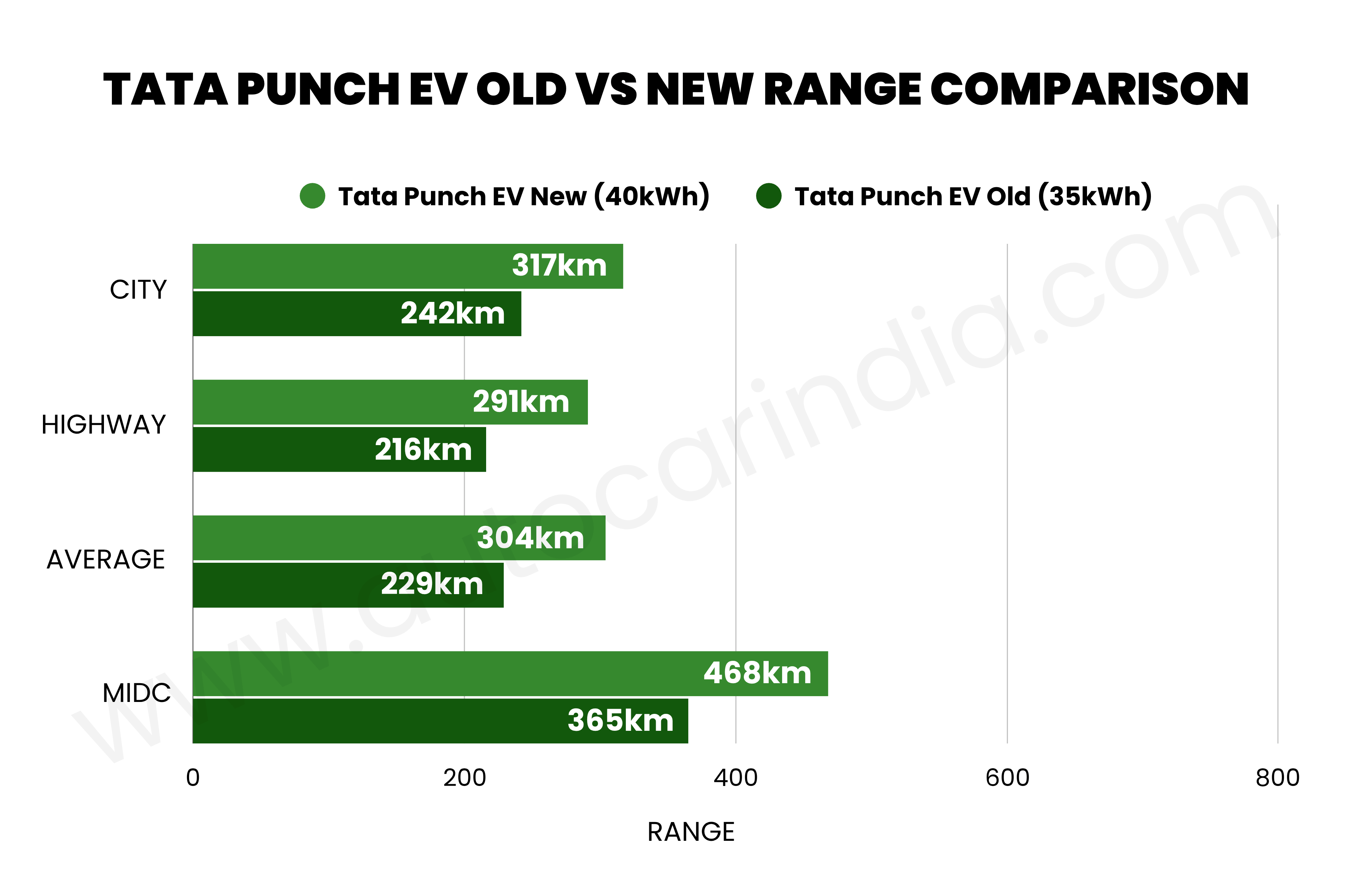
In our real-world range tests, the newer Tata Punch EV delivered much higher range than its predecessor. On average, the former goes 75km further than the latter on a single charge. This is because the more efficient drivetrain setup (see table below), coupled with the larger battery pack on the new Punch EV, has translated into going farther on a single charge.
Tata Punch EV new vs old: Efficiency
Tata Punch EV New
Tata Punch EV Old
City efficiency (km/kWh)
7.92
6.92
Highway efficiency (km/kWh)
7.29
6.17
Average efficiency (km/kWh)
7.61
6.54
Tata Punch EV new vs old: Prices
Tata Punch EV new vs old: Prices
Tata Punch EV New
Tata Punch EV Old
Long Range version price range (Rs lakh)
10.99 – 12.79
12.99 to 14.49
Despite the updates and higher real-world range, the new Tata Punch EV is much more affordable than the older model. In fact, depending on the variant chosen, the former is up to Rs 2 lakh cheaper than the latter.
Autocar India’s range testing
Before our real-world range tests, the battery of our test car was fully charged, and we maintained tyre pressures in accordance with the manufacturer’s recommendations. The car was driven on a weekday in Mumbai city and on the adjoining state highway in a fixed loop, and we maintained the set average speeds. At the end of each cycle, we calculated the range based on the percentage charge consumed.
Throughout our tests, the climate control was set to 22deg C in a full-auto setting, and other electricals, such as the audio system, indicators and ventilated front seats, were used when required, just as a regular user would. We take pride in our testing data, which isn’t merely consistent but also gives users an accurate indication of what they can expect in the real world.
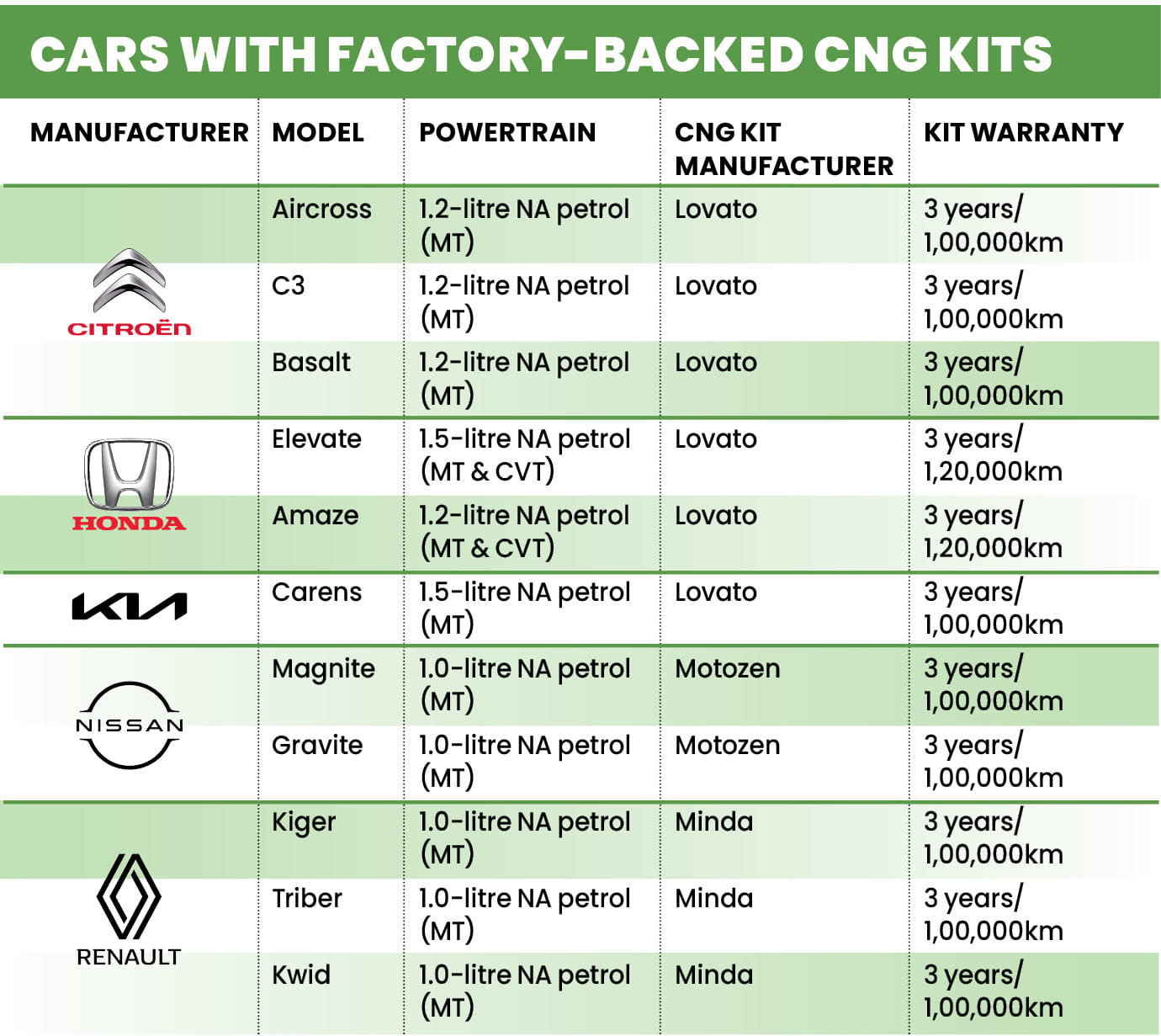
While aftermarket CNG conversions are not new, with the rise in fuel prices, there has been a noticeable spike in interest surrounding them. Although there are more factory-fitted CNG cars on the market than ever before, several models still do not give you the option. Not to mention, existing car owners are increasingly looking to convert their cars to CNG to reduce running costs.
Naturally, this increased interest brings up several questions about the technology, the installation, the legalities and more. We thus teamed up with Lovato CNG’s authorised distributor in Maharashtra, Blue Drive Traders, as well as Lets Go CNG and its authorised installer in Mumbai, M.S Motors, to answer questions about CNG conversions.
Know your CNG kit
There are three broad types of kits available on the market today. The oldest is the Venturi type, typically used for cars that are Bharat Stage 3-compatible and older. These use a Venturi mixer, similar to a carburettor, that mixes CNG with air before it is injected into the intake manifold. They are the most affordable, usually costing between Rs 30,000 and Rs 40,000, including installation and registration, but they are not the most efficient and bring a significant drop in performance. Since the cars they are compatible with are also reaching the end of their lifecycle, these kits are gradually being phased out.
Modern naturally aspirated MPFI cars require a sequential type kit. These use individual injectors that inject CNG directly into the intake manifold and feature their own ECU that controls timing, volume and other parameters based on RPM and driver inputs. These are much more fuel-efficient, and the drop in performance is nominal in everyday driving conditions. Like the older Venturi kits, these too require the car to be started on petrol before switching over to CNG. However, they automate the process by making the switch once a certain engine temperature is reached. Prices vary depending on the manufacturer and the specifications of each kit, ranging from Rs 40,000-Rs 50,000 for older BS4 cars, to Rs 50,000-Rs 65,000 for smaller BS6 cars, stretching to Rs 70,000-Rs 75,000 for larger cars that require an eight-injector kit.
The newest type of kit to hit the market is the direct-injection kit, used for cars with direct petrol injection. Like sequential kits, these too inject CNG into the intake manifold. However, direct-injection engines cannot run purely on CNG. The fuel injectors in a DI engine sit within the combustion chamber, so to prevent them from overheating, a small amount of petrol still needs to be injected through them even when running on CNG. Therefore, a turbocharged direct-injection engine can only run on a maximum 80:20 ratio of CNG and petrol. As a result, fuel efficiency gains are not quite as high as with a naturally aspirated engine, and kit prices range from Rs 1 lakh to Rs 1.5 lakh, thus pushing the breakeven point further away.
What’s in the box?
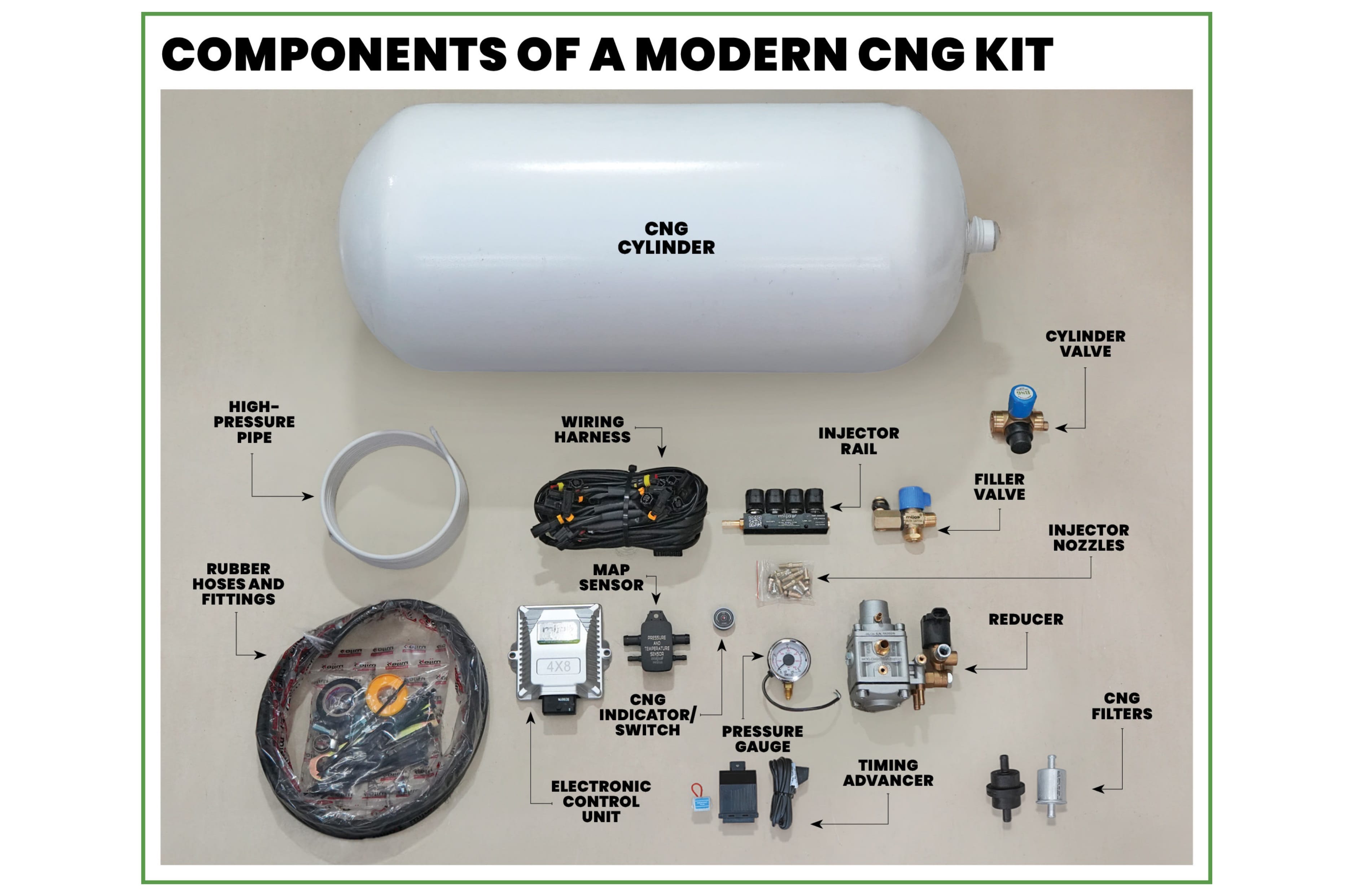
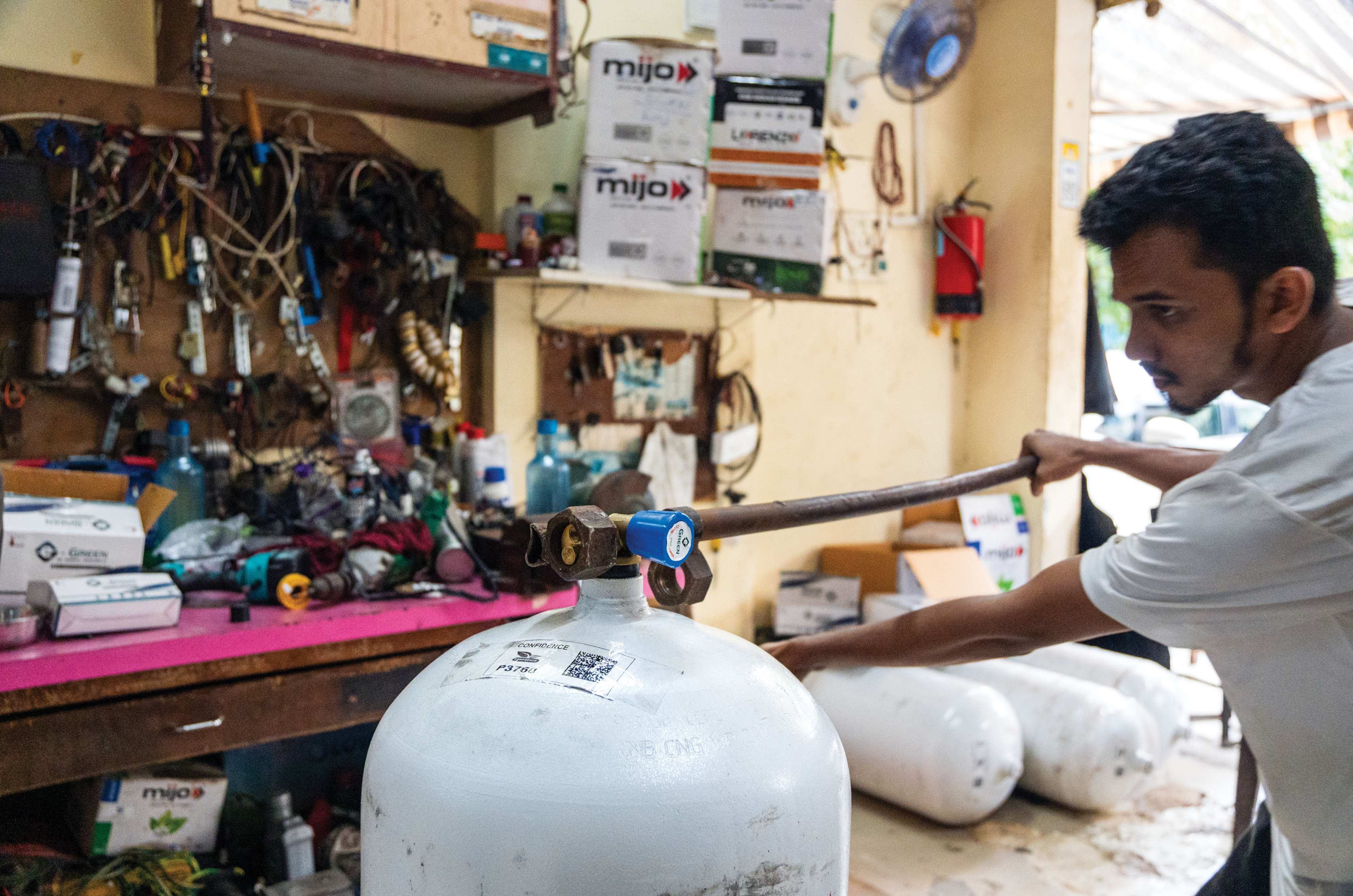
The largest and heaviest component of a typical CNG kit is the tank itself. Made from seamless steel, these can weigh close to 70kg empty, with volumetric capacities ranging from 60 to 65 litres. Metal-lined composite cylinders and carbon fibre-reinforced plastic cylinders are also now available, and while they are significantly lighter, they usually cost two or three times more. Attached to the tank is a valve with a manual shut-off.
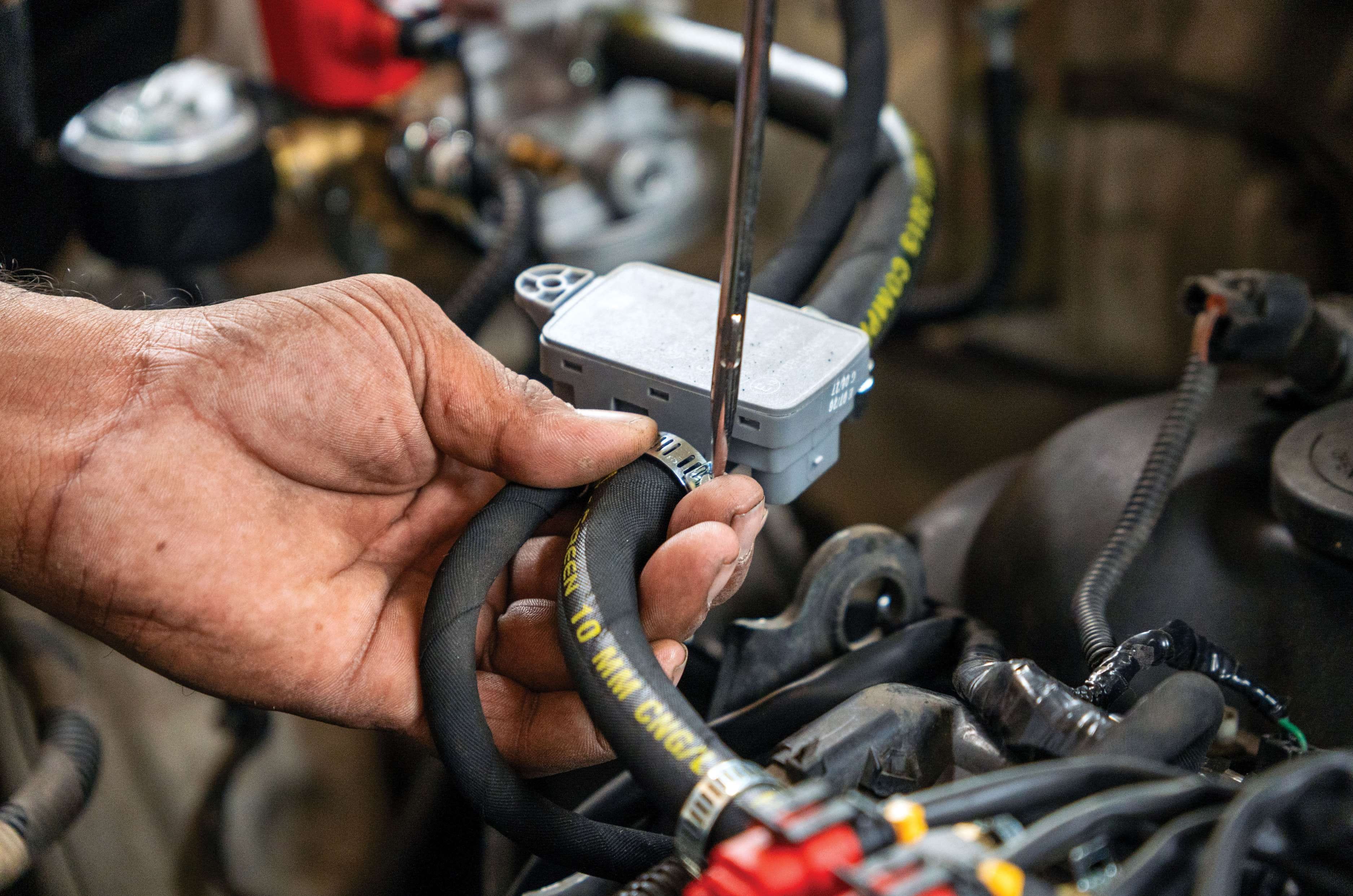
The filling valve, through which CNG is filled, can either be placed under the bonnet or beside the petrol filler cap, depending on the vehicle. Transporting the gas from the tank to the pressure reducer under the bonnet is high-pressure tubing made from carbon steel and coated in polymers. The reducer has a pressure gauge and lowers gas pressure from about 200bar in the tank to a manageable 2-3 bar. From here, the gas is routed to the injector rail that sits atop the engine, which further distributes it to nozzles drilled into the intake manifold via reinforced rubber hoses. Between the reducer and the injector rail sits a Manifold Absolute Pressure (MAP) sensor to measure the pressure as well as the temperature of the gas. There is also an optional filter to remove any impurities in the line.
Controlling the injector rail is an Electronic Control Unit (ECU) that uses signals from the MAP sensor and communicates with the car’s original ECU to dictate the amount of CNG being injected and the timing. Modern kits also come with a comprehensive wiring harness that can plug into the car’s original wiring via OBD connectors. Older pre-BS6 cars, however, may require some wire splicing. Optionally available is an Advancer, which advances ignition timing when running on CNG and negates some of the power loss, particularly on smaller-capacity engines. Some sedans and hatchbacks also require a rear coil spring spacer to compensate for the added weight of the tank in the boot.
How a CNG kit is installed
A professional CNG installation takes around 4 to 5 hours to complete. Here’s what happens behind the workshop doors.
Health check
The engine is inspected to ensure it’s suitable for CNG conversion. A basic service is performed if required, with spark plugs and ignition coils replaced as needed and the throttle body cleaned.
Components positioned
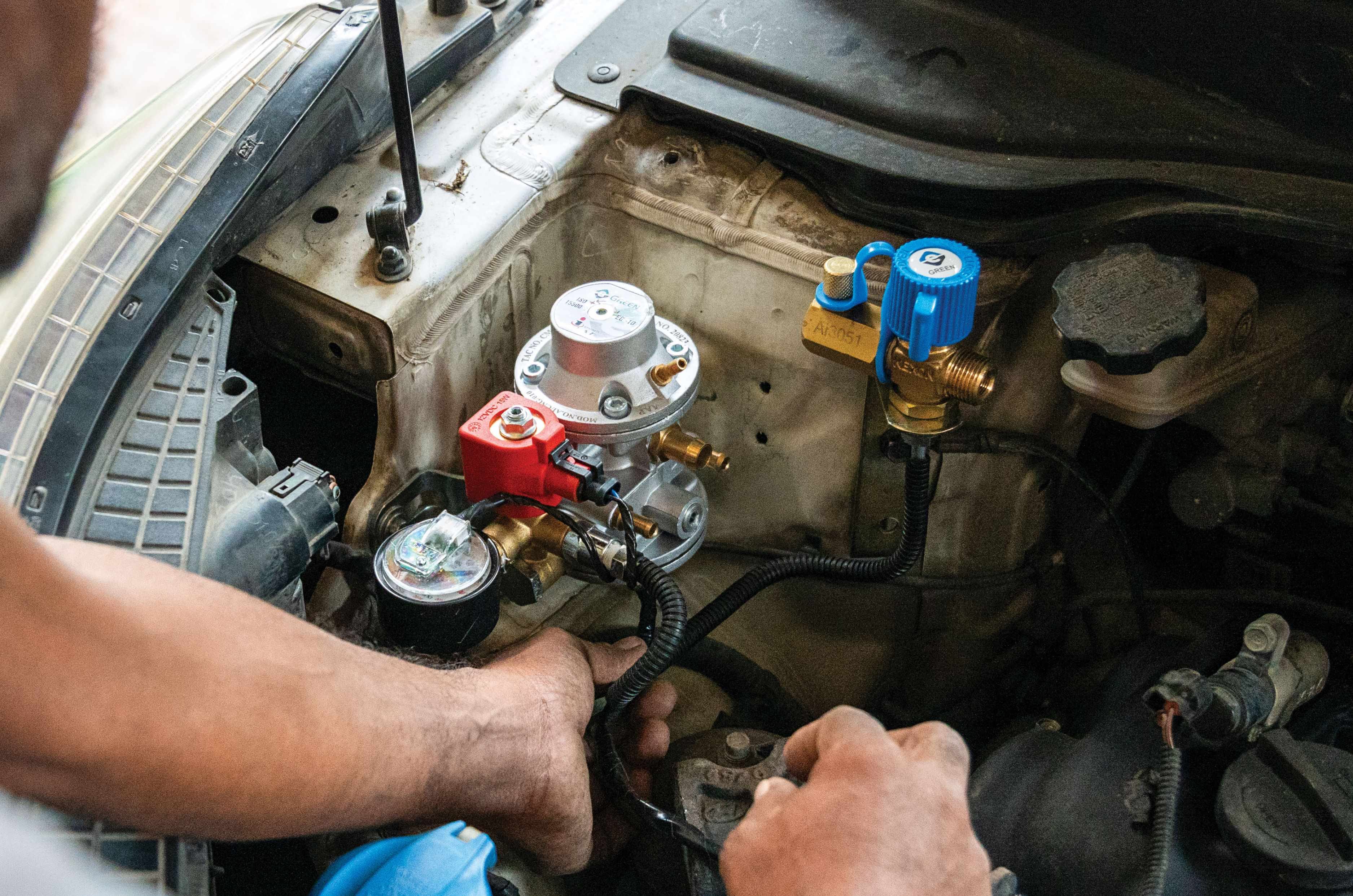
The reducer and its pressure gauge are mocked up in the engine bay before mounting points are marked and drilled. The filler valve may be located alongside them or next to the petrol filler cap, depending on the vehicle.
Injectors installed
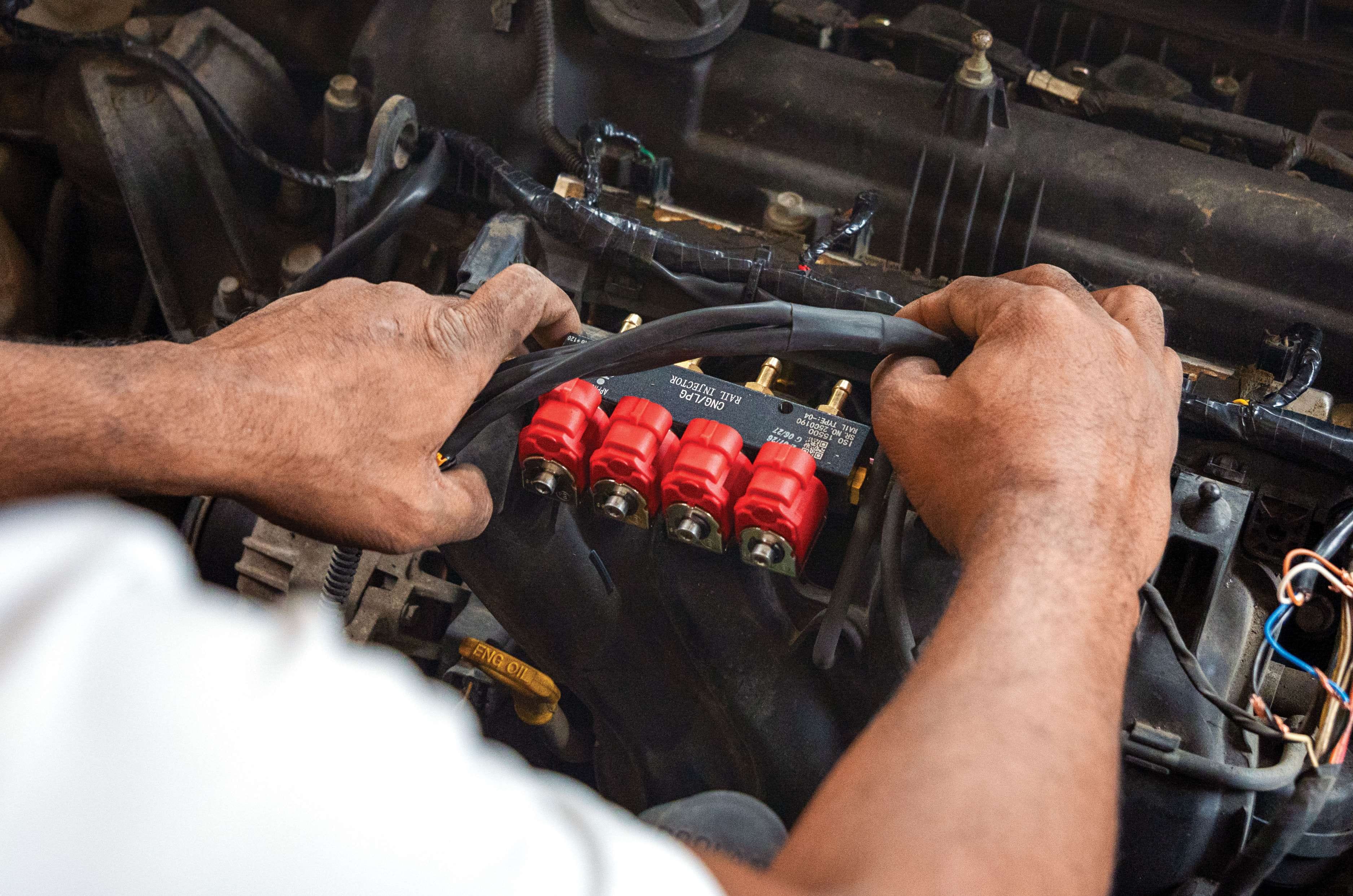
The CNG injector rail is mounted on its dedicated bracket close to the petrol injectors. This will send CNG to corresponding nozzles that are drilled and fitted into the vehicle’s plastic intake manifold.
ECU wired in
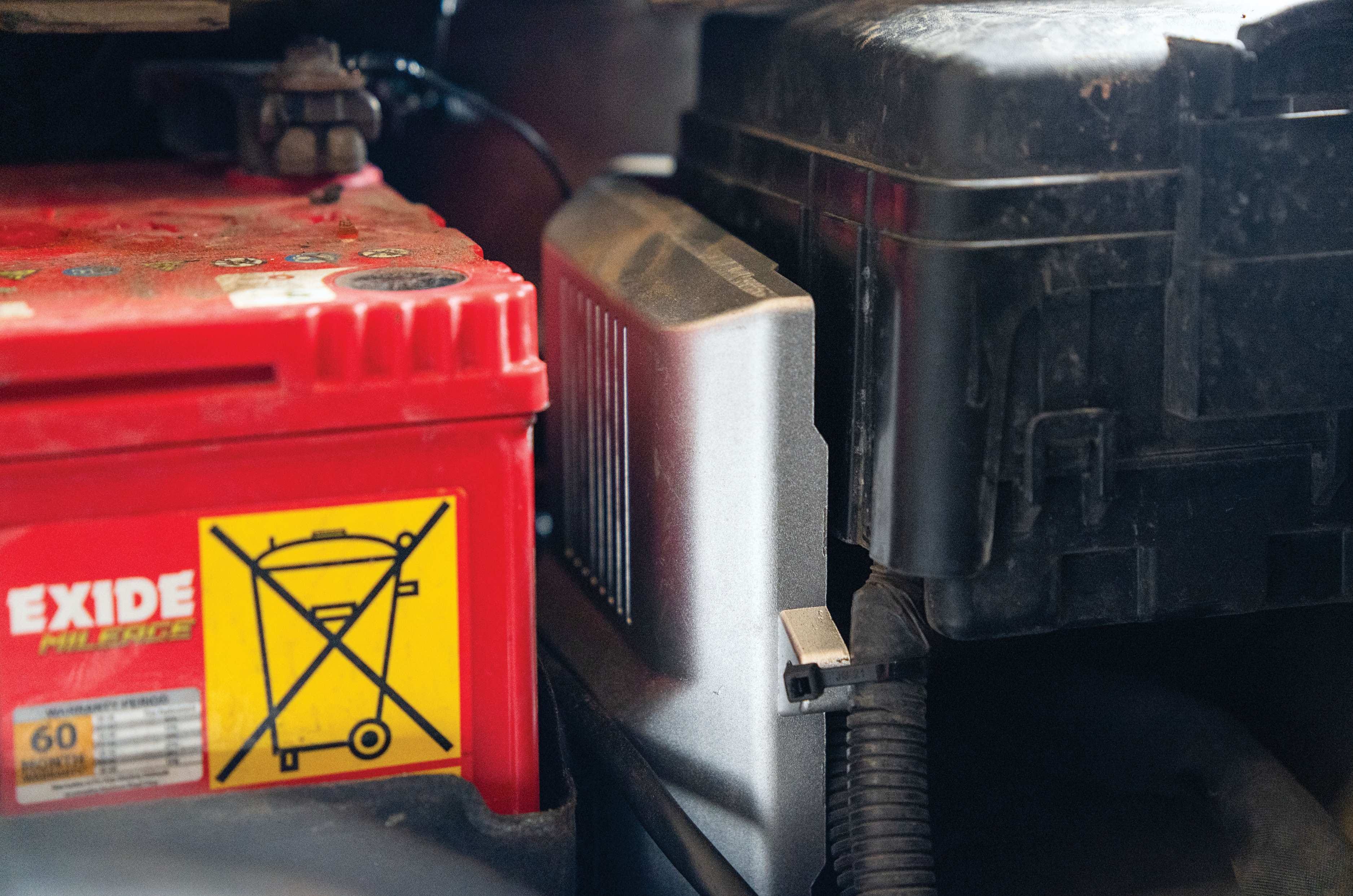
The CNG ECU is mounted alongside the factory ECU and connected to the vehicle’s wiring loom. The harness is neatly routed and secured away from heat and moving parts.
Plumbing completed
Reinforced rubber gas hoses are cut to length and connected between the reducer, injector rail and the intake manifold. A MAP sensor and a filter are also installed as part of the system.
Tank prepared
The CNG tank is temporarily mounted to a rig that holds it in place while the shut-off valve and associated fittings are installed before everything is torqued down.
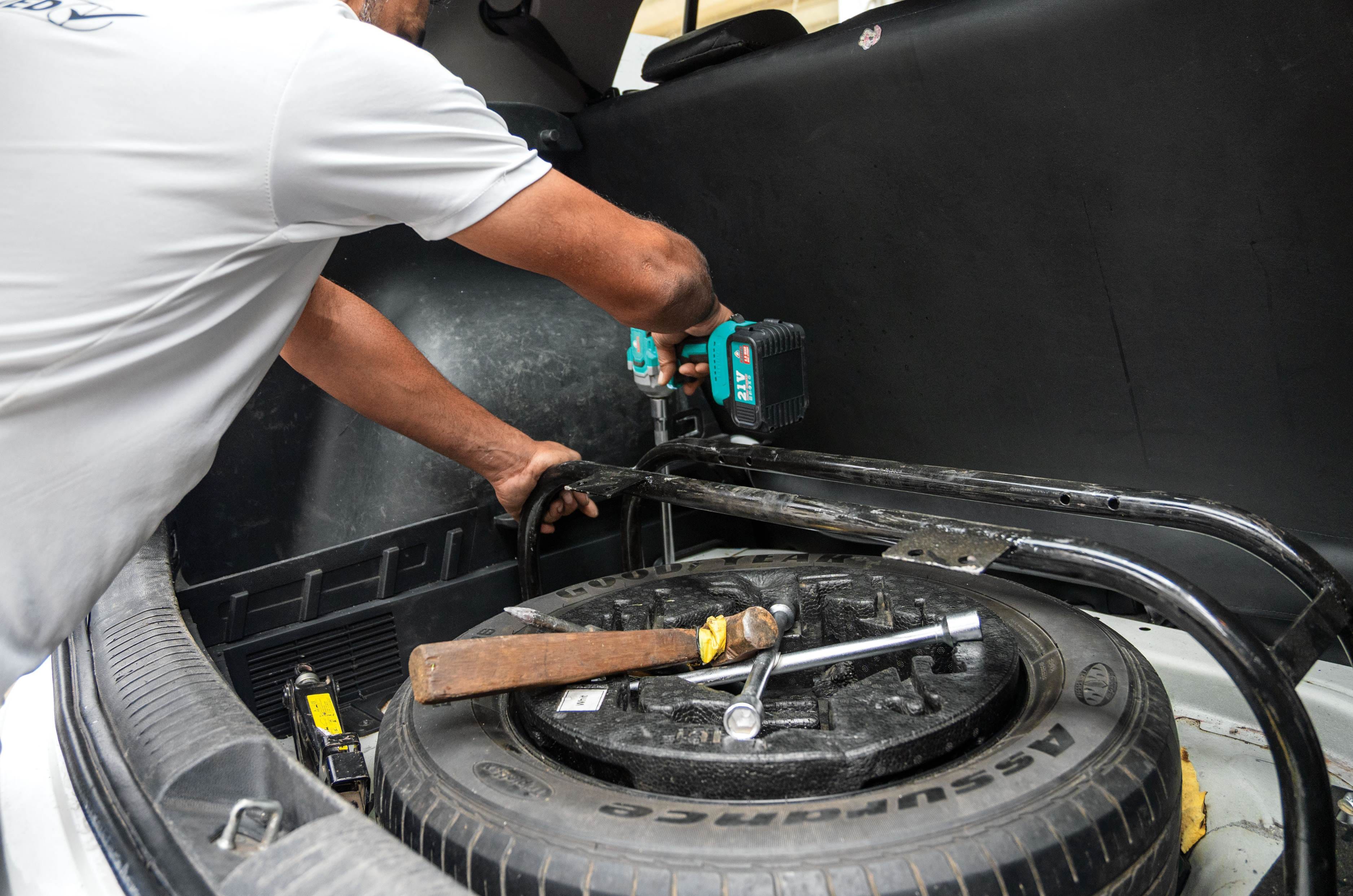
Tank frame installed
The mounting frame is positioned inside the boot, holes are drilled through the floor, and reinforced brackets securely bolt it to the vehicle’s structure.
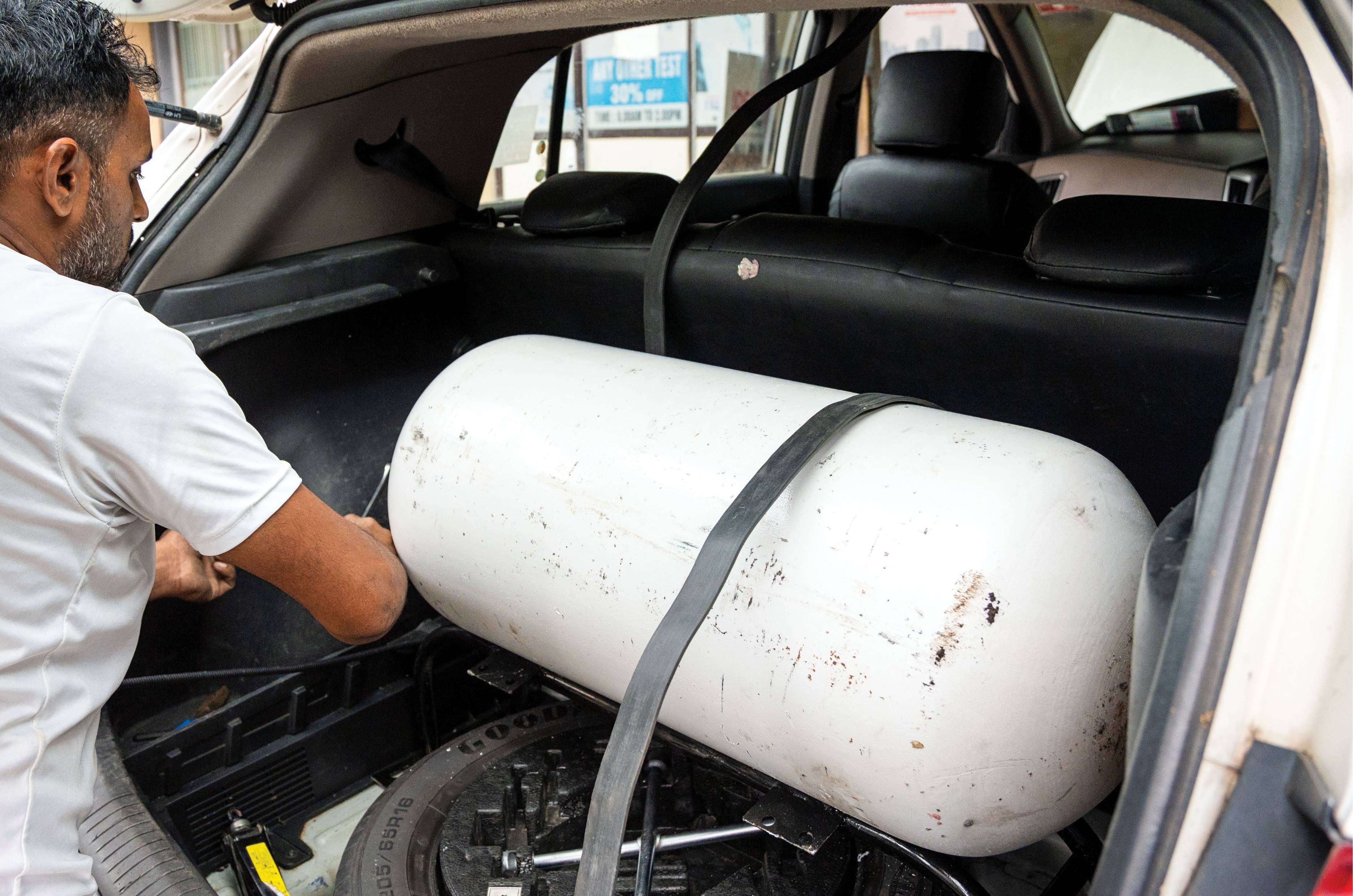
Tank fitted
The CNG cylinder is secured to the frame using heavy-duty metal straps and bolts before being covered with a carpeted shroud for a neat factory-like finish.
High-pressure line routed
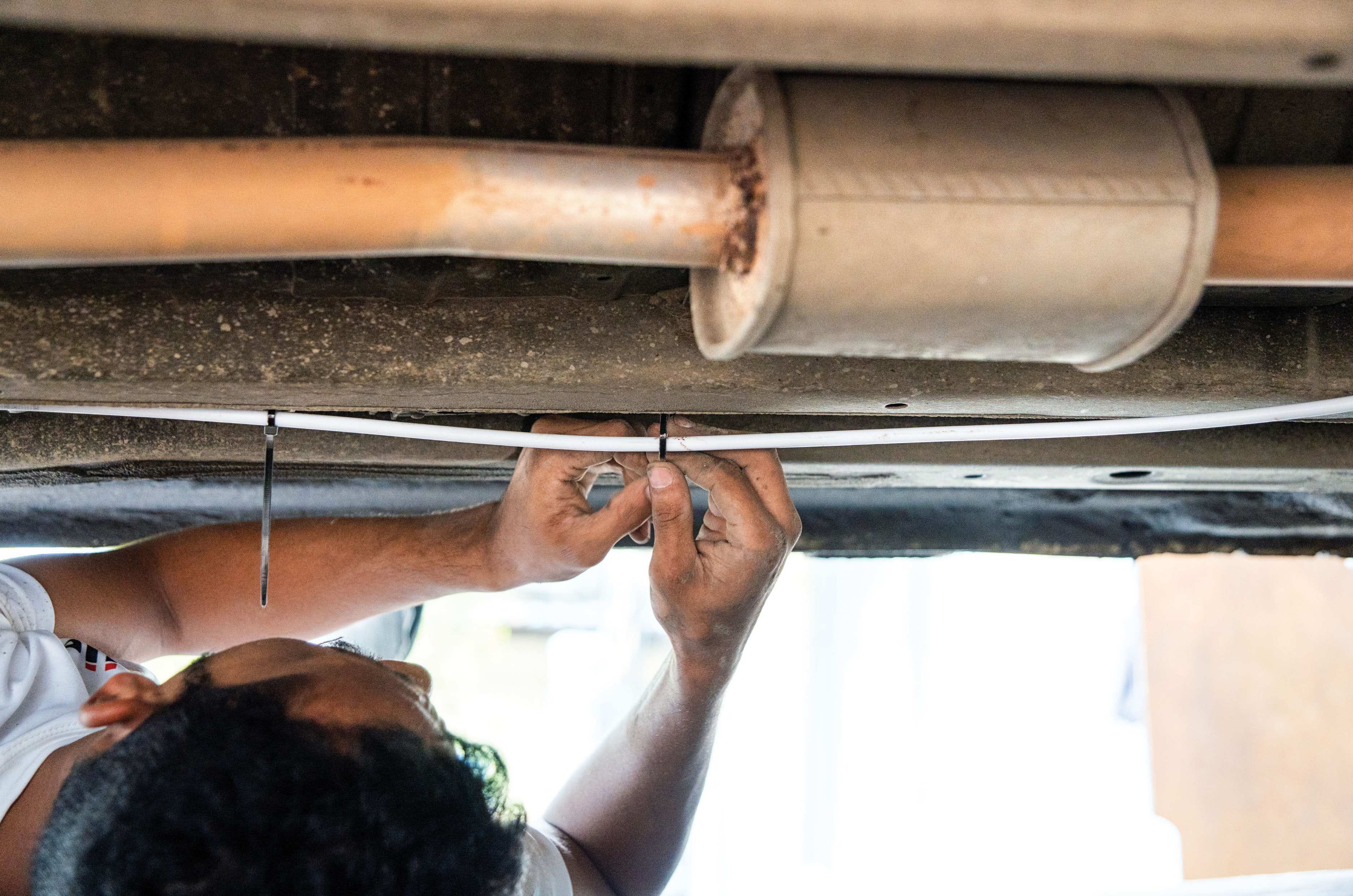
Polymer-coated steel high-pressure pipes are routed beneath the car, connecting the CNG filler valve, the tank and the reducer under the bonnet.
Electrical connections
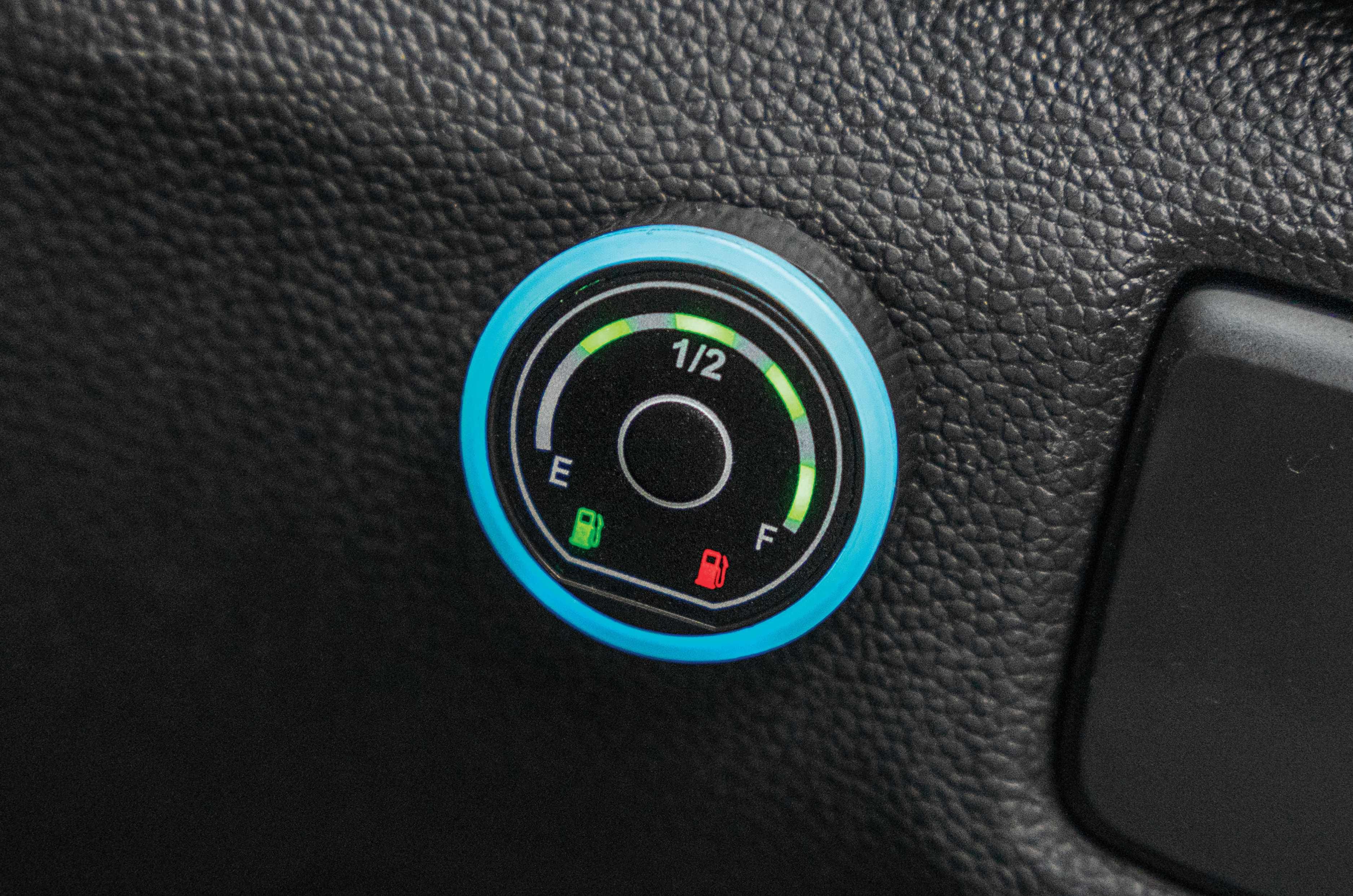
The remaining wiring is completed and a dashboard-mounted CNG switch is installed, allowing the driver to monitor fuel level and switch between petrol and CNG.
Leak test
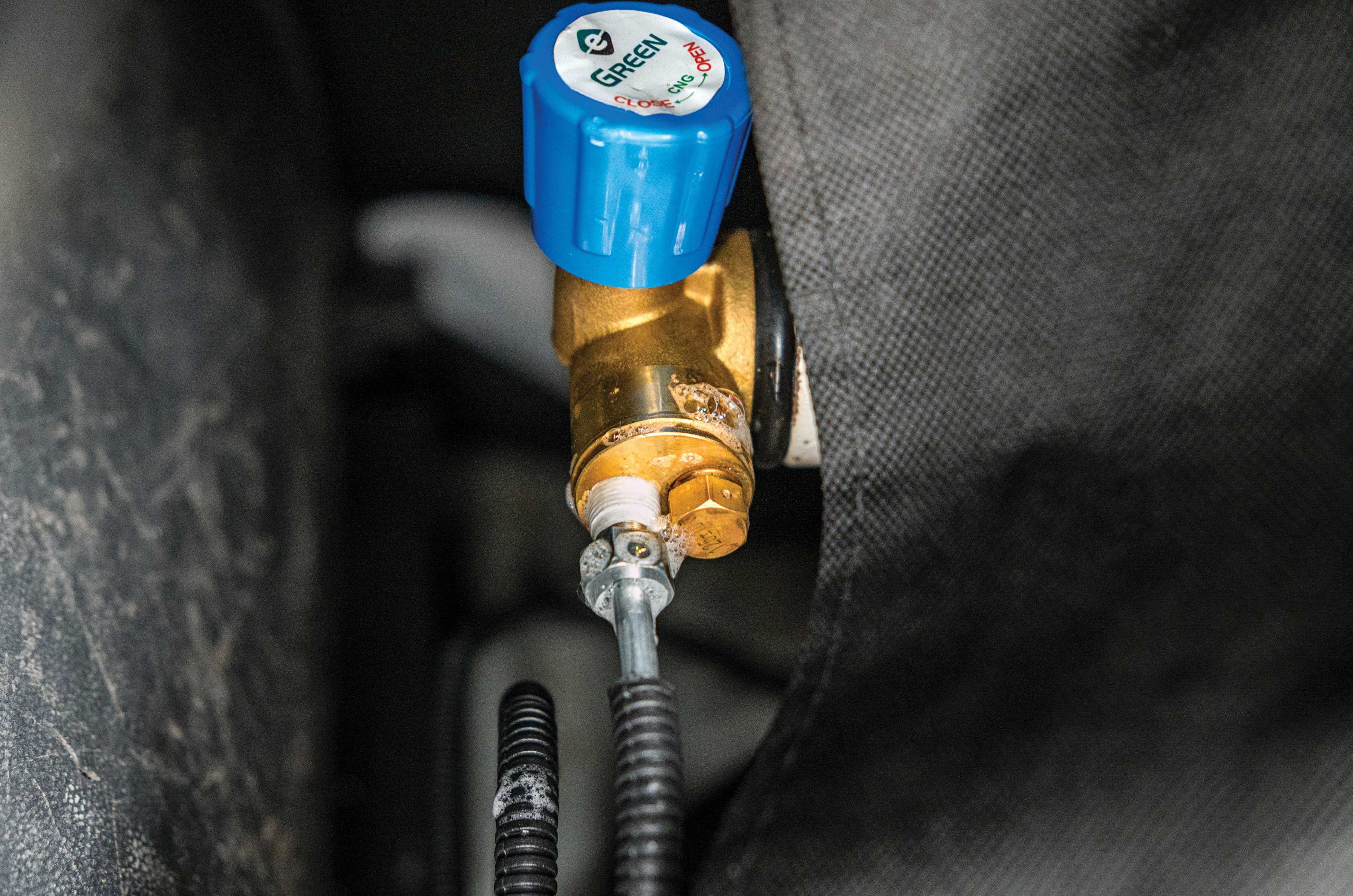
Around 2kg of CNG is added and every connection is checked using an electronic gas detector and good old-fashioned soap solution to ensure the entire system is leak-free.
Calibration and road test
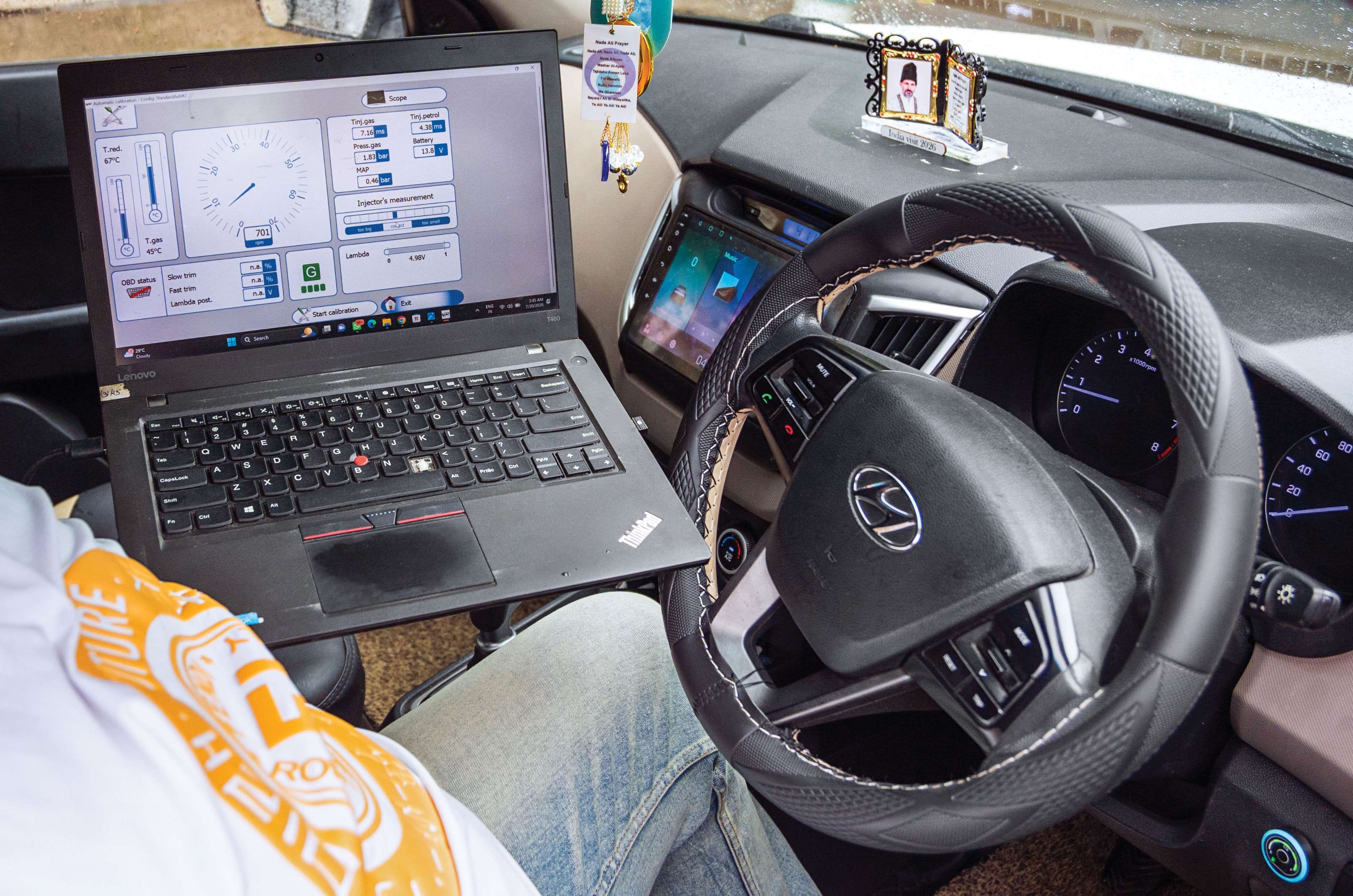
The system is calibrated using dedicated software to optimise fuel delivery and switchover settings. A final road test confirms performance before the vehicle is delivered to the customer.
Why go aftermarket?
On average, an aftermarket CNG installation costs around 25 to 30 percent less than the premium a factory-fitted CNG variant commands over its petrol counterpart. However, this alone is not enough to swing the scales in favour of the aftermarket due to the disadvantages we will get into later. The bigger advantage the aftermarket holds is the ability to convert models or variants that do not come with a CNG option. For instance, Maruti Suzuki only offers its factory-fitted CNG cars with a manual transmission, so if you want one with an automatic, an aftermarket CNG kit is your only option.
Similarly, popular SUVs like the Hyundai Creta and Kia Seltos are not available in CNG guise, which leads many owners to turn to the aftermarket. Owners of older cars, or those buying used cars, can also convert them to CNG for a fairly affordable price and enjoy significantly lower running costs. CNG is spark-ignited, thus only petrol cars can be converted to run on the gas. Since diesel cars use compression-ignition, they would need far too many modifications to make this possible. Strong hybrids are also not recommended for conversions, as here, the engine keeps switching on and off too often, which makes CNG calibration complex. Cars that are not in good mechanical shape should also not be converted to CNG, as the conversion can take a toll on the overall engine health.
For a car in generally good shape, aftermarket kits are proving to be reliable in the long run, provided they are well maintained. Most modern sequential kits from brands like Lovato and Mijo are also comparable in quality to OEM systems, and reputed, authorised installers are able to achieve near-OEM levels of fitment.
The catch
Fitting an aftermarket CNG kit – even if it is government-approved and fitted by an authorised installer – is grounds for the manufacturer warranty to be voided. While some brands may still honour warranty claims that are unrelated to the powertrain, it remains a grey area. Some dealer-fitted CNG kits do retain the factory warranty, while others provide a third-party warranty in its place.
Aftermarket installers have also begun offering third-party warranties in collaboration with insurance companies to provide coverage in place of the factory warranty. This, however, is in addition to the cost of the CNG kit. The kits themselves generally come with a warranty ranging from one to two years.
Packaging is also one area where the aftermarket trails OEMs. While Maruti, Tata and Hyundai are now offering underbody and dual-tank setups to retain a usable boot, the aftermarket still largely uses larger single tanks that take up more space.
Staying fit
As per law, any CNG tank – aftermarket or OEM fit – must be hydrotested every three years. For this, the tank must be removed from the vehicle and sent to a dedicated facility. While the process itself takes only a couple of hours, hydrotesting facilities are usually located outside major cities, adding transport time to the process. A hydrotest typically costs around Rs 3,000 per tank.
The CNG filter should also be replaced at the same three-year or 10,000km interval, whichever comes first. This typically costs under Rs 1,000 and is fairly straightforward. It is also recommended to drive on petrol at least 10 percent of the time to keep the fuel system healthy. Finally, it is important that the engine’s service schedule is strictly followed.
The legal bit
Aftermarket CNG installations are legal as long as the kit is government-approved, fitted by an approved installer and the registration certificate (RC) is updated accordingly. Most approved installers will handle the RC update at the Regional Transport Office (RTO) as part of the service. Once this is complete, the owner must also update the insurance provider.
The verdict
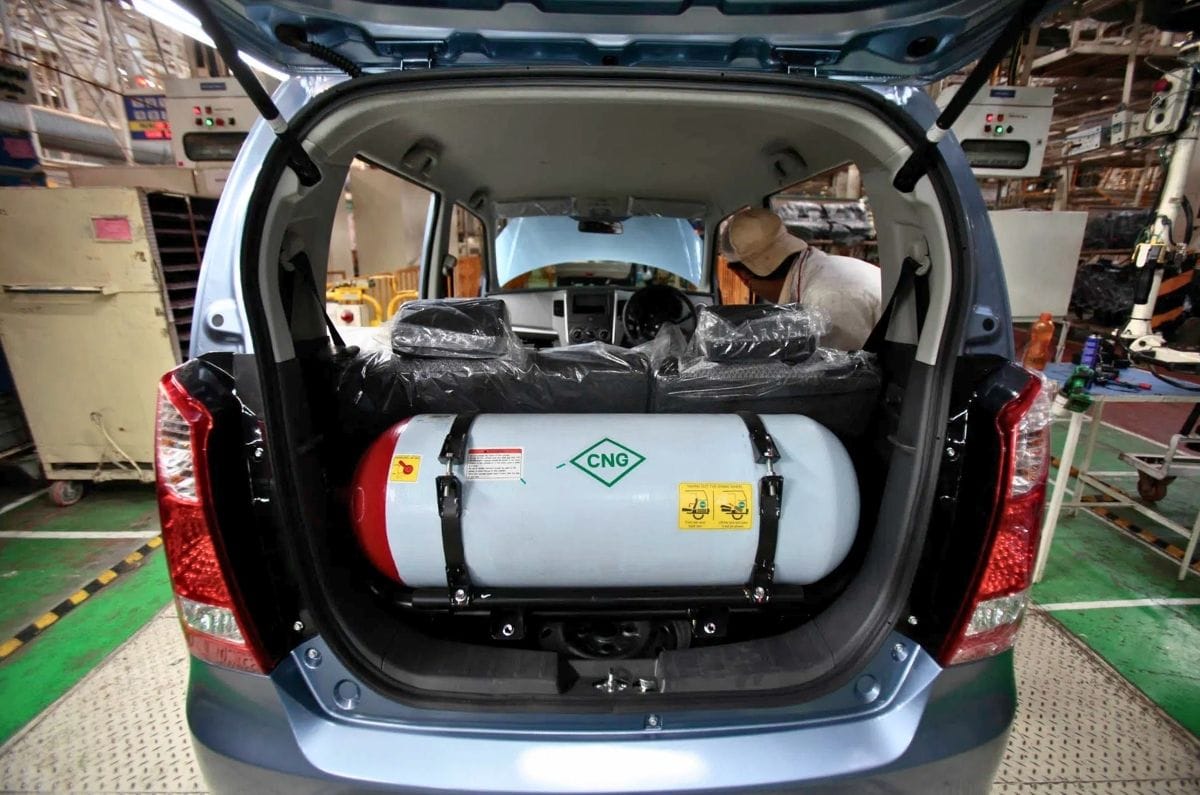
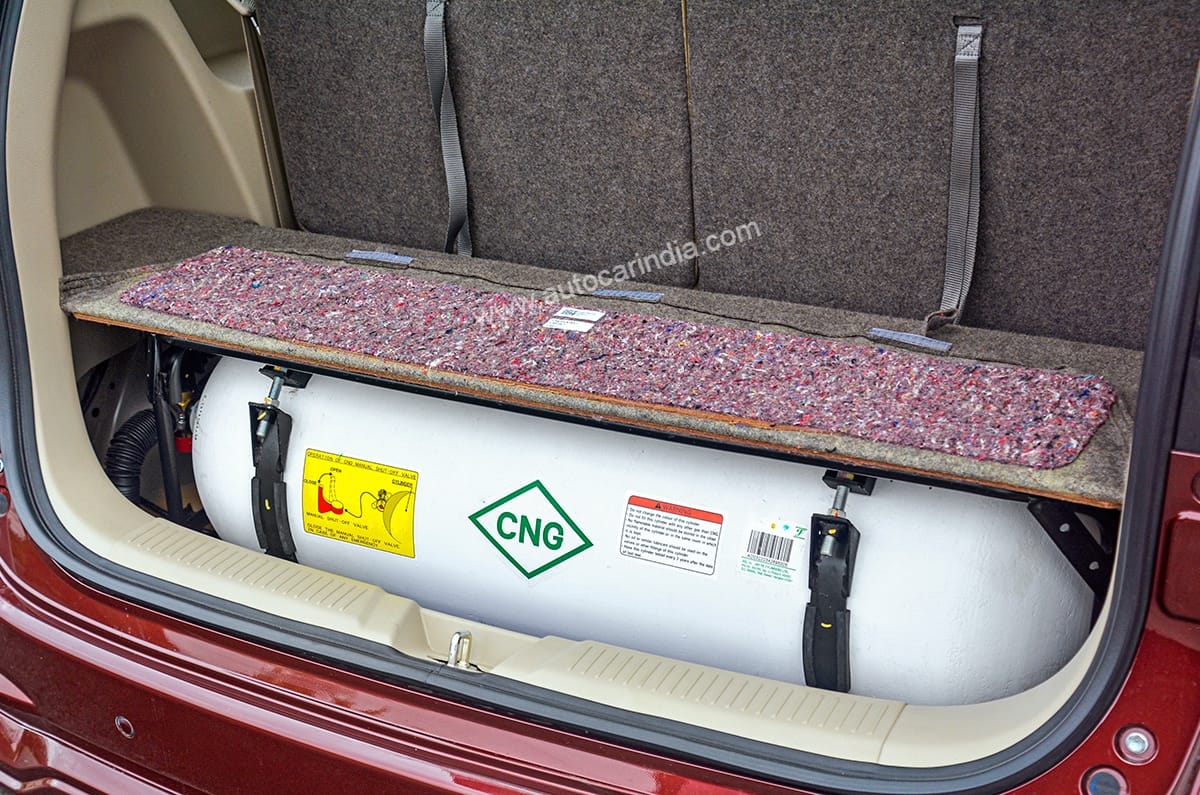
Maruti Ertiga’s factory-fitted CNG tank shown for representative purposes only.
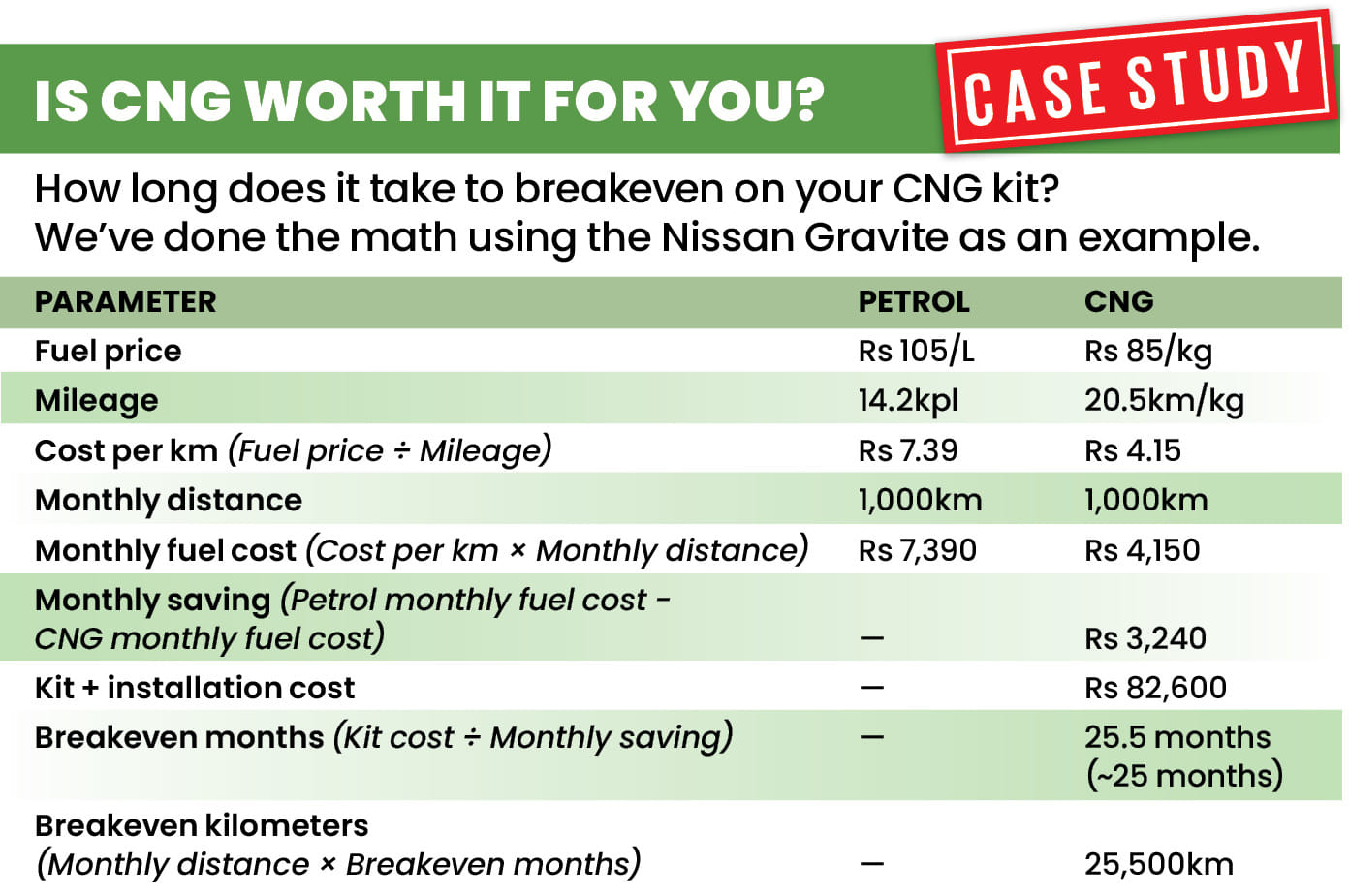
There is no denying the running cost advantage that CNG provides. However, when buying a brand-new car, a factory-fitted CNG version is still preferable to an aftermarket conversion simply because of the peace of mind. Once a car is out of warranty, though, a CNG conversion makes a great deal of sense. In most cases, the cost of the kit can be recouped within a couple of years, even with an average monthly running of around 1,500km.
However, the installer is just as important as the kit. Always opt for government-approved kits installed by approved installers with a strong reputation. Wherever possible, insist the installation is carried out without splicing into the original wiring and follow the recommended service schedule to ensure your car stays reliable.
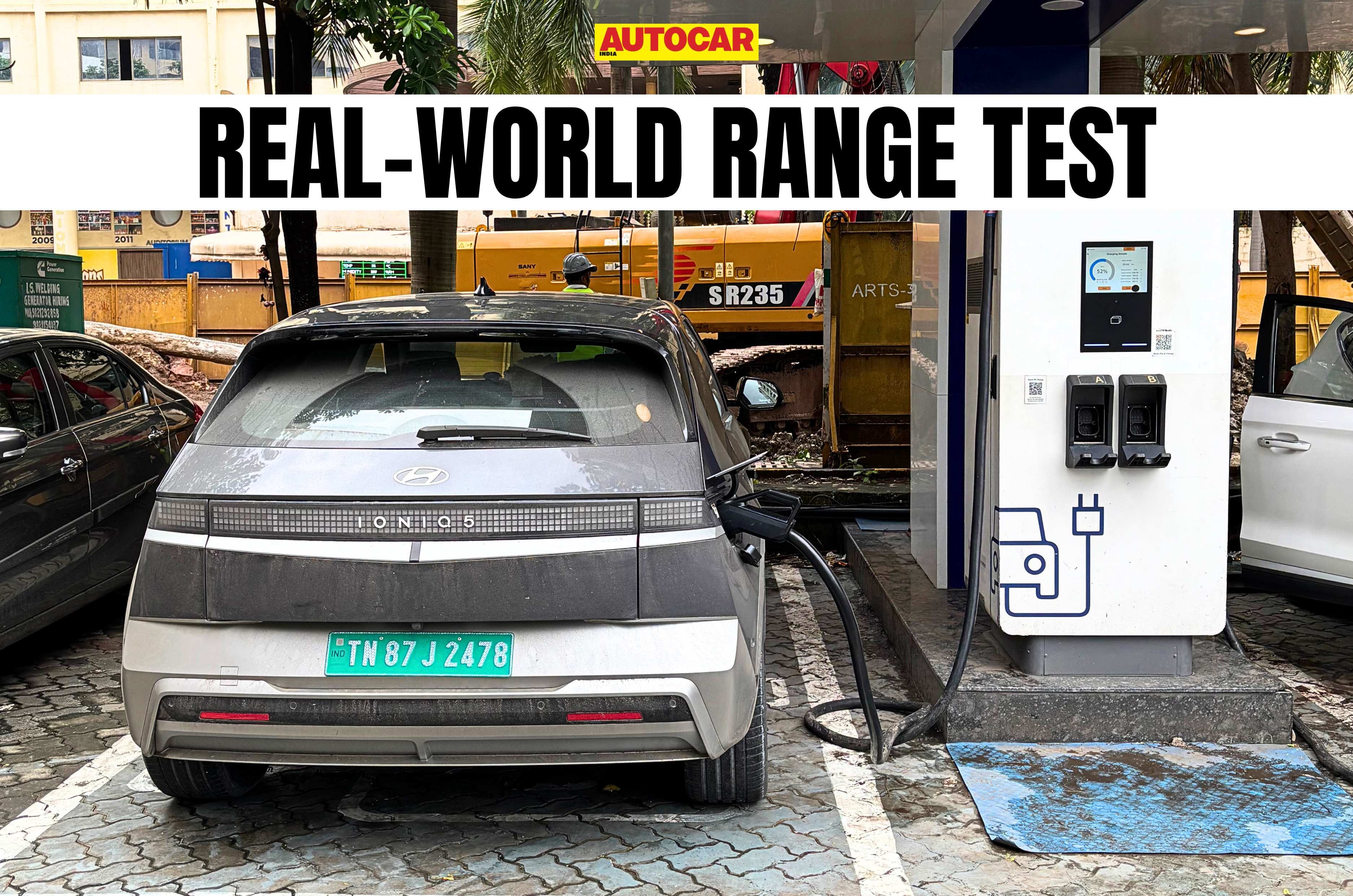
The 2026 update for the Hyundai Ioniq 5 brought with it some cosmetic updates and a larger 84kWh battery. More significantly, its pricing and positioning have changed. While the previous model, with its 72.6kWh battery, was priced at Rs 45 lakh and was considered the value king of its segment, that claim is harder to justify for the new model, which now costs Rs 55.7 lakh.
Hyundai says the larger battery helps the 2026 Ioniq 5 deliver an ARAI-certified range of 690km. We put that claim to the test to determine its real-world efficiency.
Weighs 2,165kg; 150kg more than before
0-80 percent took 22 minutes on a 150kW DC fast charger
Max charging speed of 350kW
Hyundai Ioniq 5 real-world range and charging tested
The 2026 Hyundai Ioniq 5 is powered by a rear-mounted PMSM motor producing 229hp and 350Nm. Paired with a larger 84kWh lithium-ion battery pack using Nickel Manganese Cobalt (NMC) cell chemistry, it now boasts a claimed ARAI range of 690km, up from 631km in the previous 72.6kWh version. The Ioniq 5 offers four drive modes — Eco, Normal, Sport and Snow. For our tests, we used Eco mode, with regenerative braking set to Level 2 in the city and Level 1 on the highway.
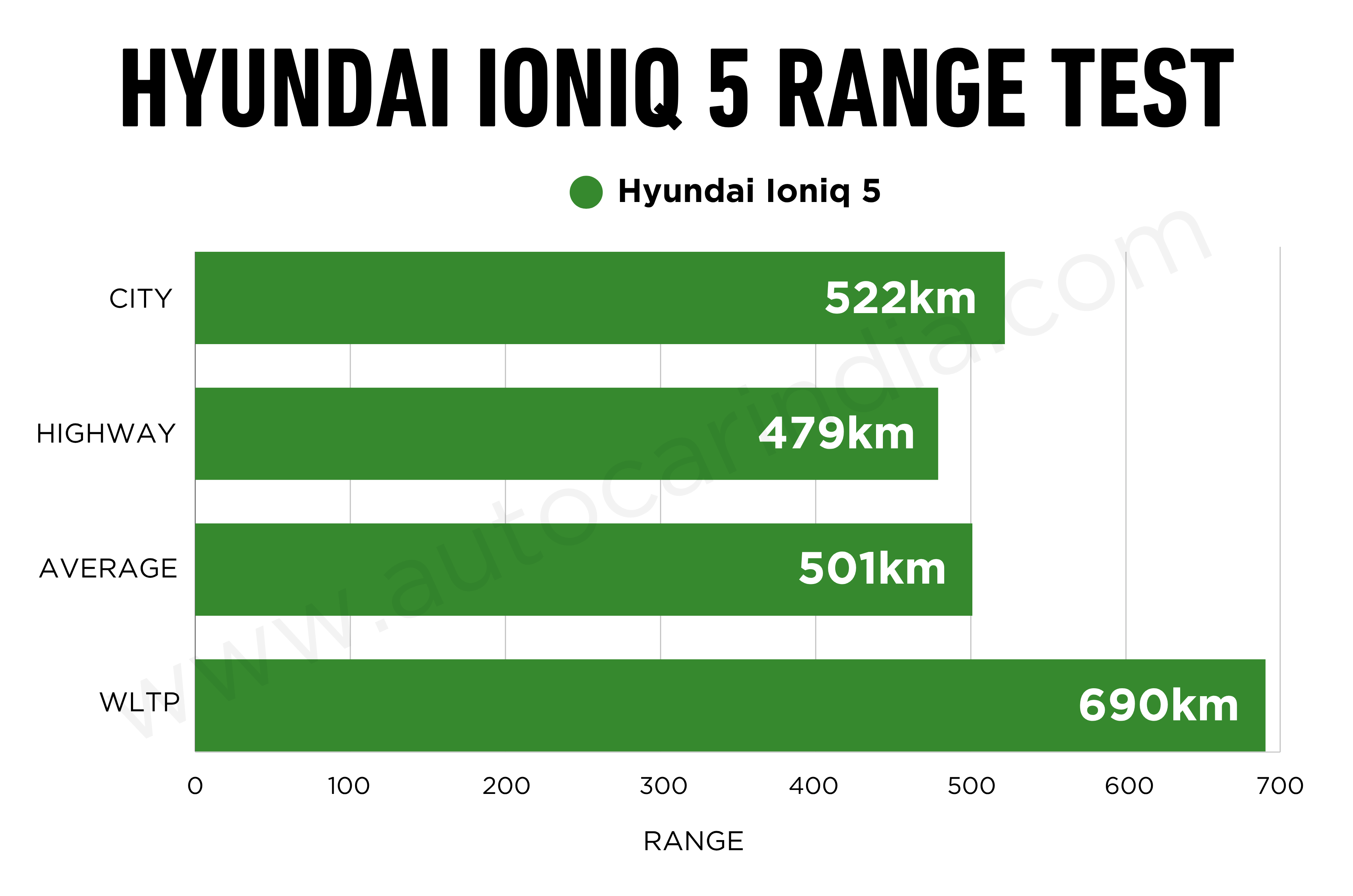
In city conditions, the Ioniq 5 returned an efficiency of 6.22km/kWh, translating to an estimated range of around 523km. On the highway, efficiency dropped slightly to 5.71km/kWh, resulting in an extrapolated range of 479km. With an overall efficiency of 5.96km/kWh, the Ioniq 5 can realistically deliver about 501km on a full charge.
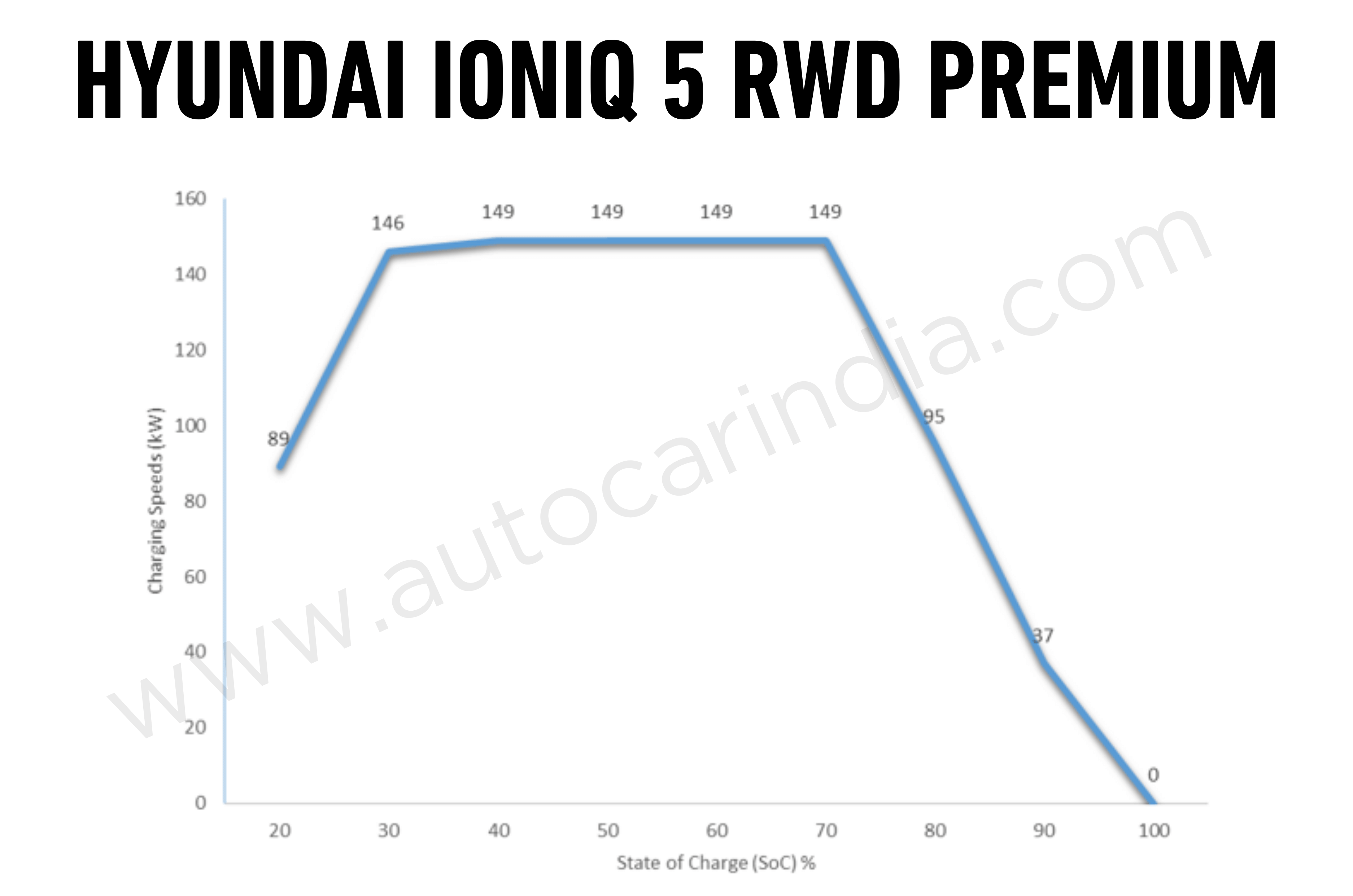
Hyundai claims the Ioniq 5 can support DC fast-charging speeds of up to 350kW. We charged it using a 150kW DC fast charger and recorded a peak charging rate of 149kW. Impressively, the charging speed remained close to its peak from 30 percent to 70 percent state of charge, before tapering off rapidly. In terms of charging times, the Ioniq 5 took 22 minutes to charge from 20 to 80 percent, and a further 32 minutes to reach 100 percent.
Autocar India’s range testing
Before our real-world range tests, the battery of our test car was fully charged, and we maintained tyre pressures in accordance with the manufacturer’s recommendations. The car was driven on a weekday in Navi Mumbai city and on the adjoining state highway in a fixed loop, and we maintained the set average speeds. At the end of each cycle, we calculated the range based on the percentage charge consumed.
Throughout our tests, the climate control was set to 22deg C in a full-auto setting, and other electricals, such as the audio system, indicators and ventilated front seats, were used when required, just as a regular user would. We take pride in our testing data, which isn’t merely consistent but also gives users an accurate indication of what they can expect in the real world.
मुंबई में दूध खरीदने वालों की जेब पर अब महंगाई का असर पड़ने वाला है। जन्माष्टमी और गणेश चतुर्थी जैसे बड़े त्योहारों से पहले शहर में दूध के दाम बढ़ने जा रहे हैं। इससे आम लोगों के घरेलू बजट पर भी असर पड़ेगा। 1 सितंबर से शहर में दूध के दाम बढ़ सकते हैं। दाम बढ़ने का सीधा असर डेयरी या पशुओं के बाड़े से दूध खरीदने वाले लोगों पर पड़ेगा। दूध से साथ ही लस्सी, छाछ, घी और मिठाई जैसे दूध से बने सामान के दाम भी बढ़ सकते हैं। इस बढ़ोतरी का असर ग्राहकों की खरीद कीमत पर भी दिखाई देगा।
NDTV की रिपोर्ट के मुताबिक, मुंबई मिल्क प्रोड्यूसर्स एसोसिएशन ने दूध की थोक कीमत 93 रुपये से बढ़ाकर 102 रुपये प्रति लीटर कर दी है। इसके बाद अब ग्राहकों को भी ज्यादा कीमत चुकानी पड़ सकती है। रिटेल में दूध का दाम करीब 100 रुपये से बढ़कर 110 रुपये प्रति लीटर होने की संभावना है। जानें त्योहारों से पहले क्यों बढ़ रहे दाम
110 रुपये लीटर मिलेगा दूध
रिपोर्ट के मुताबिक, 1 सितंबर से दूध के दाम बढ़ने के बाद मुंबई में ग्राहकों को अब पहले से ज्यादा कीमत चुकानी पड़ेगी। नई दर पर रिटेल दूध 100 से बढ़कर 110 रुपये प्रति लीटर हो सकता है। दूध उत्पादकों का कहना है कि पशुओं की देखभाल, चारा और अन्य जरूरी सामान पर खर्च लगातार बढ़ रहा है। बढ़ती लागत की वजह से डेयरी संचालकों पर आर्थिक दबाव बढ़ा है, इसलिए दूध की कीमत में यह बढ़ोतरी की गई है। इसका असर अब दूध की कीमतों पर पड़ रहा है। वहीं, दूध के दाम बढ़ने का असर दूसरे डेयरी सामान पर भी दिखाई दे सकता है। लस्सी, छाछ, घी, मिठाई और अन्य दूध से बने उत्पादों की कीमतें बढ़ने की संभावना है, क्योंकि बढ़ी हुई लागत का असर कंपनियां अपने उत्पादों के दाम में शामिल कर सकती हैं।
पशुओं के खाने की कीमतों में हुई बढ़ोतरी
डेयरी संचालकों के मुताबिक, पिछले कुछ महीनों में पशुओं के खाने के लिए इस्तेमाल होने वाले अनाज, अरहर और चने जैसी चीजों के दाम काफी बढ़ गए हैं। रिपोर्ट के अनुसार, इन खाद्य पदार्थों की कीमतों में करीब 25 फीसदी तक बढ़ोतरी हुई है। इसका सीधा असर पशुओं की देखभाल और उन्हें पालने के खर्च पर पड़ा है। बढ़ती लागत की वजह से दूध उत्पादन से जुड़े खर्च भी बढ़ गए हैं।
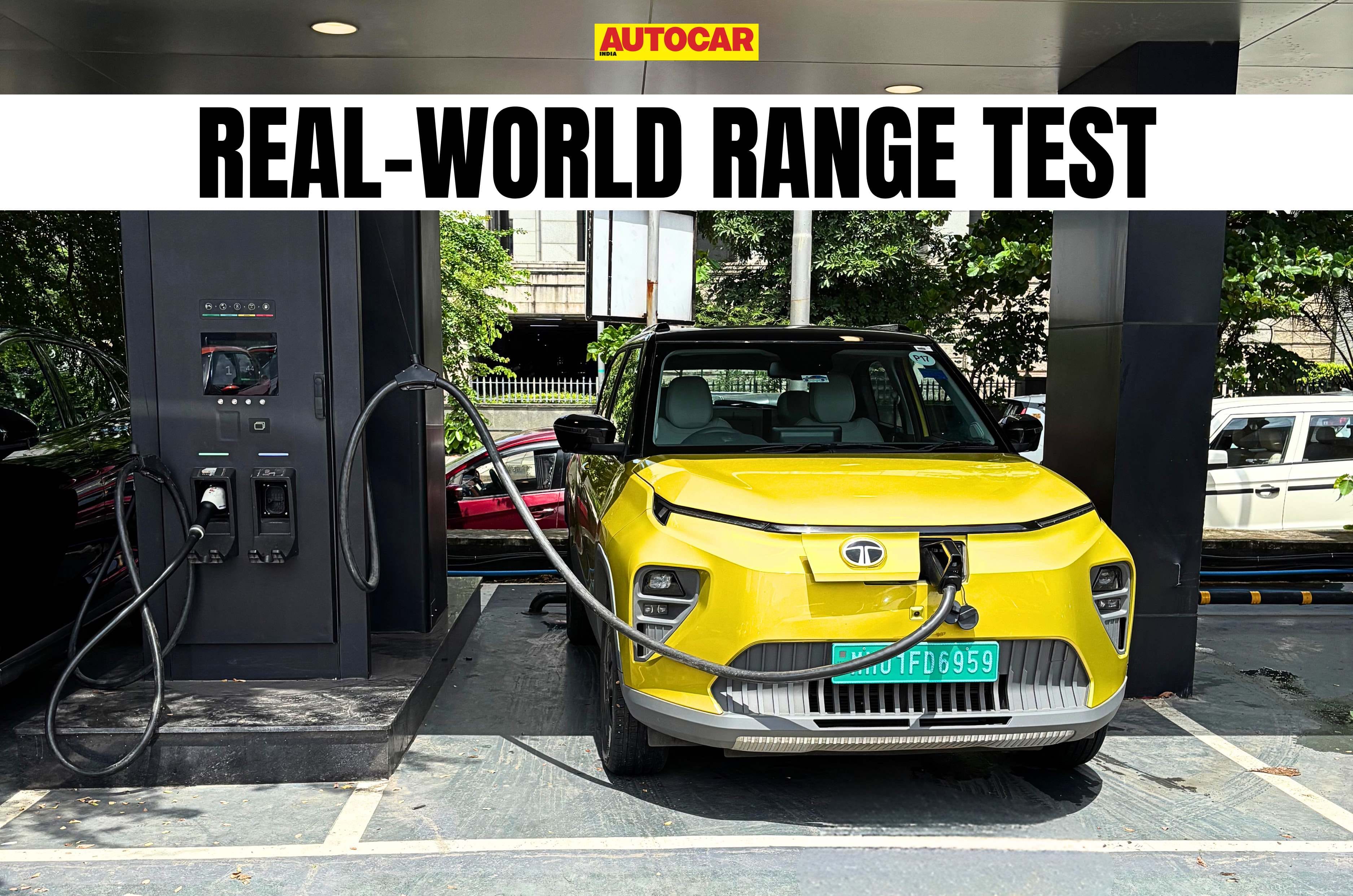
The 2026 Tata Punch EV gets changes to its styling, tweaks to the powertrain and bigger battery options. Interestingly, its starting price is now Rs. 1.65 lakh lower than before and the price range spans Rs. 9.7 lakh and Rs. 12.8 lakh (ex-showroom). We put the Tata Punch EV with the 40kWh battery through our real-world efficiency test to see how it performs.
80 percent recharge takes 27 minutes on a 180kW DC fast charger
Punch EV 40kWh variant weighs 1,365kg
Gets four regen modes; no single pedal driving
Tata Punch EV real-world range and charging explained
The Punch EV currently is available with either a 30kWh or a 40kWh battery pack, up from 25kWh and 35kWh, respectively. We tested the Punch EV with the 40kWh battery pack, which is powered by a PMSM motor producing 129hp and 154Nm. The Punch EV offers three driving modes – Eco, City and Sport. For our tests, we used the Eco driving mode with the regen level set to L3 in the city and L1 on the highway.
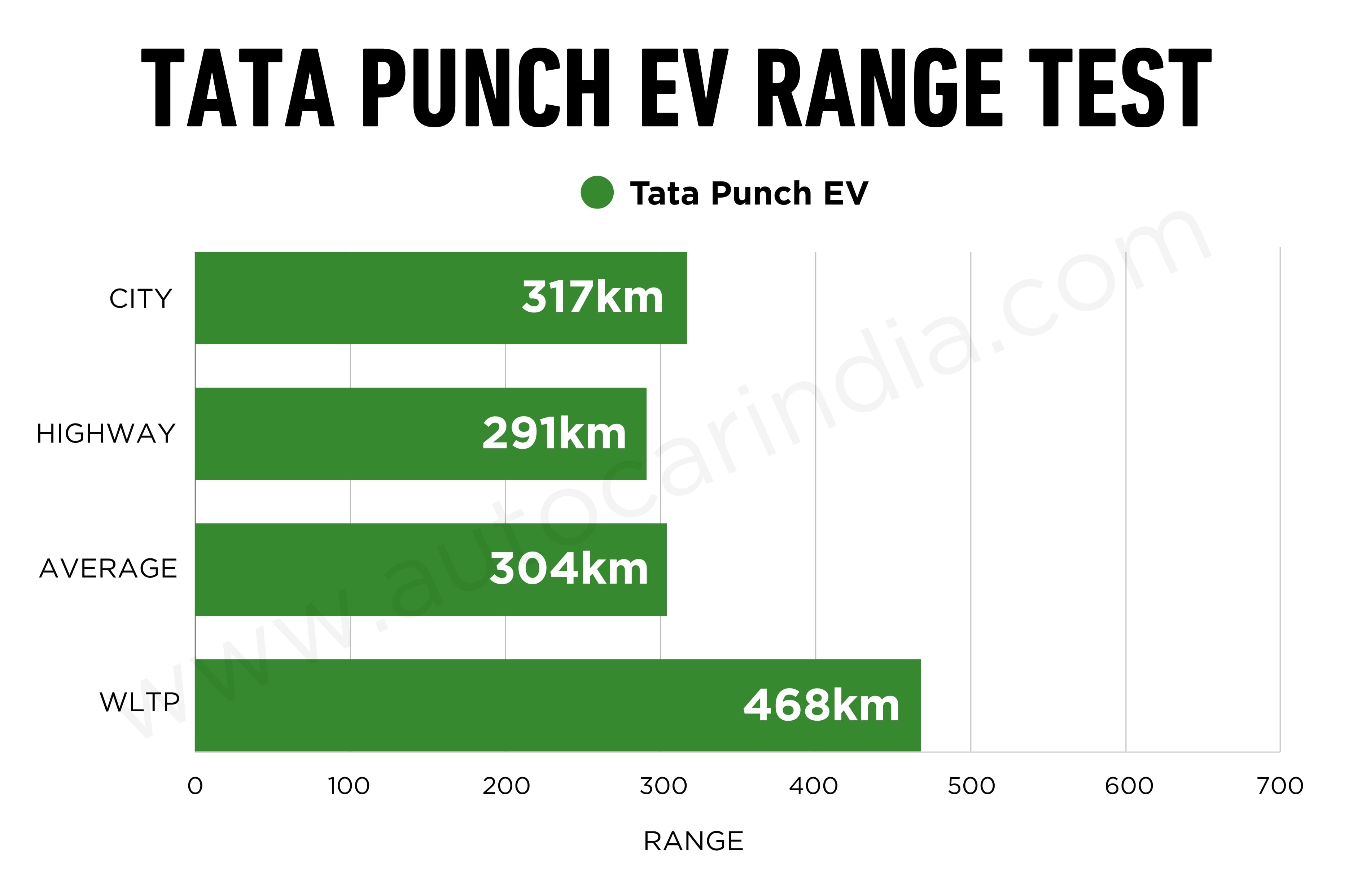
In the city, the Tata Punch EV returned an efficiency of 7.92km/kWh extrapolating to a range of 317km. On the highway, the efficiency dropped to 7.29km/kWh translating to a range of 291km. With an overall efficiency of 7.61km/kWh, the Tata Punch EV can deliver a real-world range of 304km on a full charge.
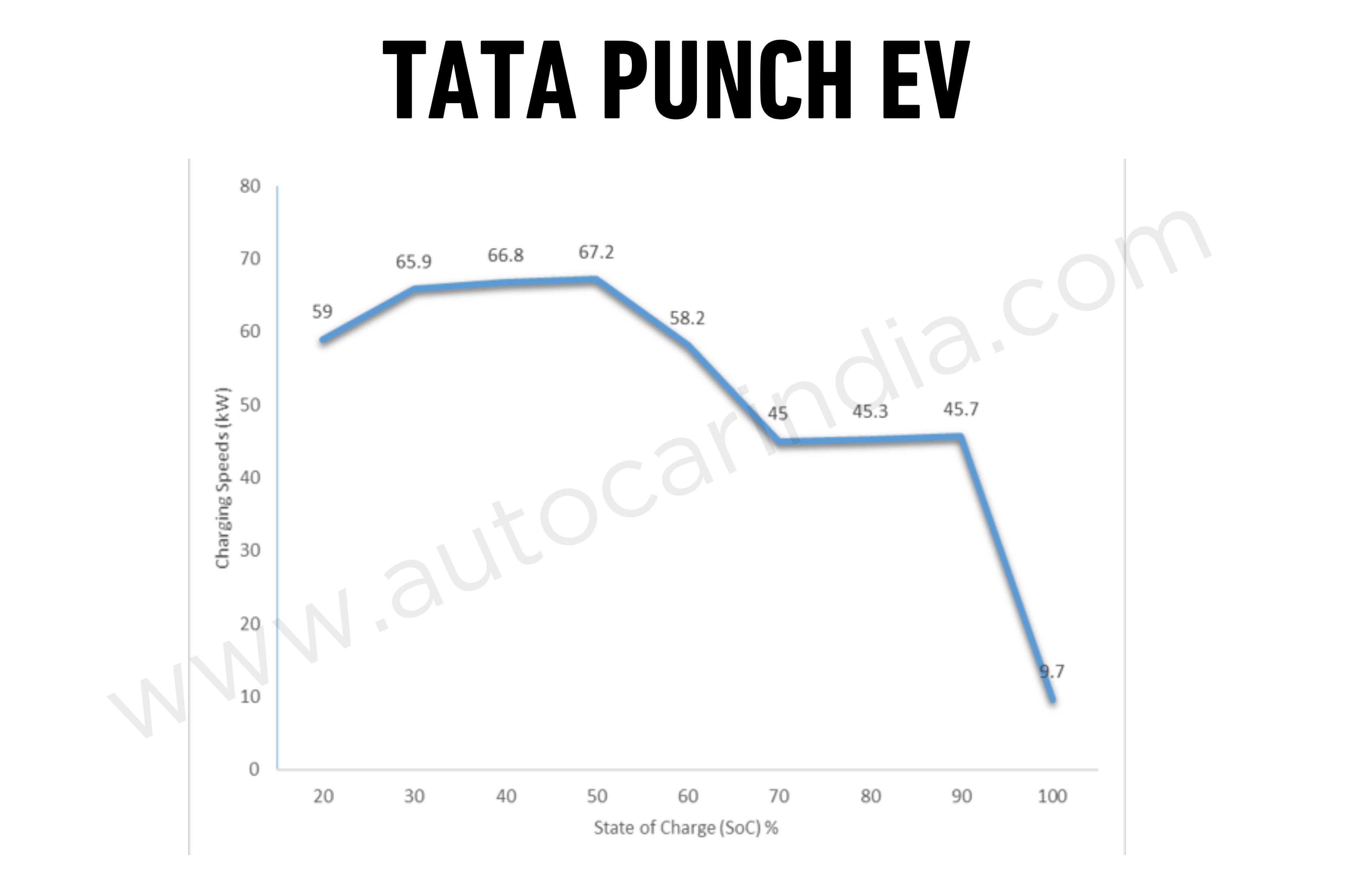
Tata claims that the DC fast capability of the Punch EV has gone up to 65kW from 50kW in the previous model. That said, we charged the car using a 180kW DC fast charger and noted peak charging speeds around 67.3kW. However, the charging speed dropped after 50 percent state of charge, before rapidly dropping after 90 percent. In terms of charging times, the Punch EV took 27 minutes to charge from 20-80 percent, and took another 31 minutes to reach 100 percent.
Autocar India’s range testing
Before our real-world range tests, the battery of our test car was fully charged, and we maintained tyre pressures in accordance with the manufacturer’s recommendations. The car was driven on a weekday in Mumbai city and on the adjoining state highway in a fixed loop, and we maintained the set average speeds. At the end of each cycle, we calculated the range based on the percentage charge consumed.
Throughout our tests, the climate control was set to 22deg C in a full-auto setting, and other electricals, such as the audio system, indicators and ventilated front seats, were used when required, just as a regular user would. We take pride in our testing data, which isn’t merely consistent but also gives users an accurate indication of what they can expect in the real world.
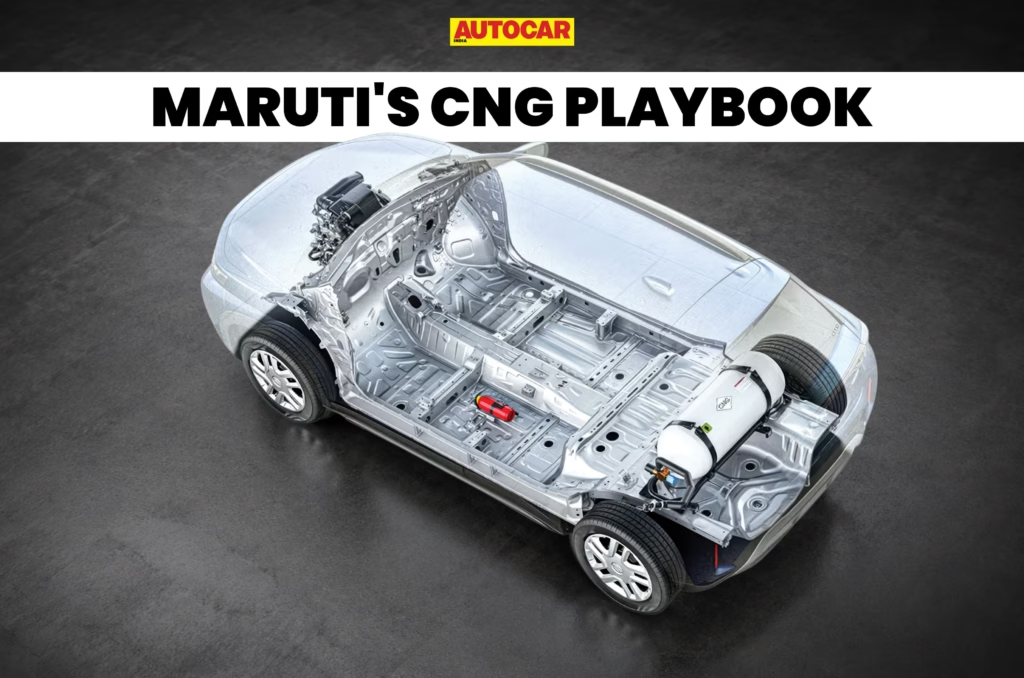
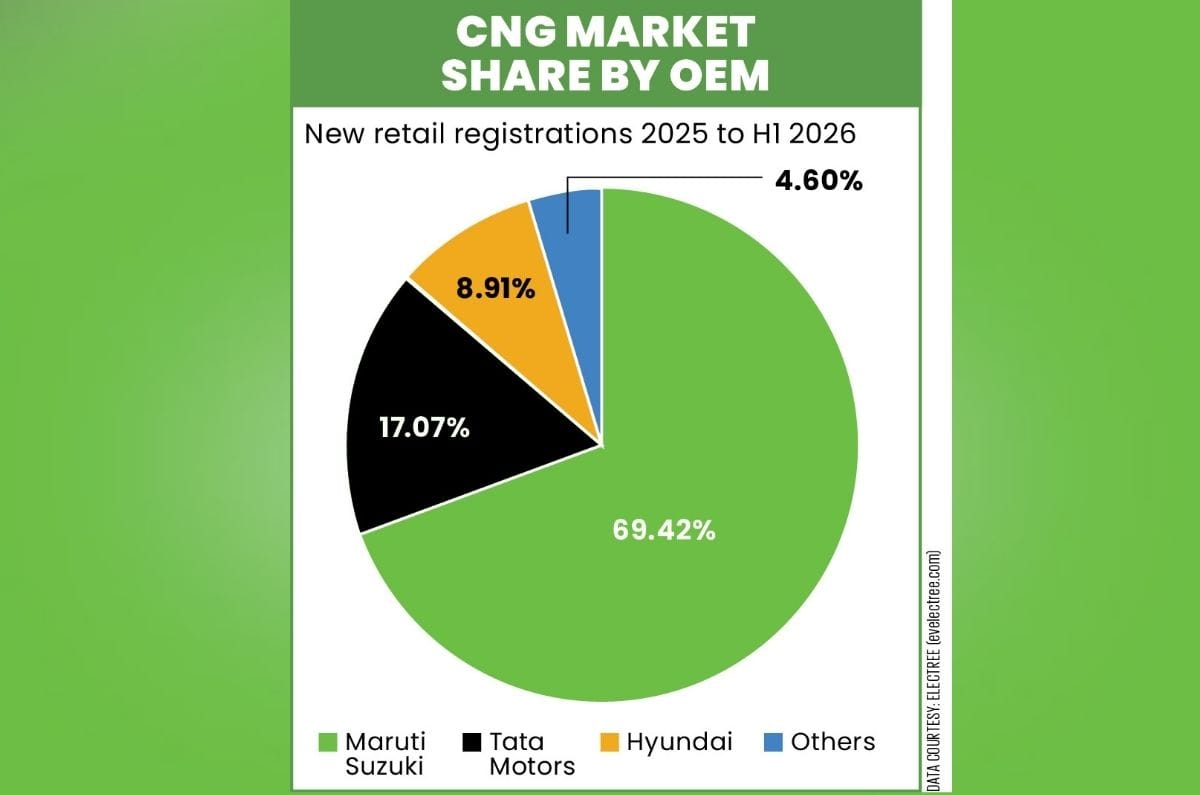
When Maruti Suzuki introduced its first factory-fitted CNG models in 2010, the fuel had little acceptance among private buyers. Availability was largely restricted to Delhi-NCR, Mumbai-Pune and Gujarat, while the filling network was small and uneven. CNG penetration remained at just 1-2 percent until 2016-17, but Maruti continued to improve the technology and expand its range. It began with affordable cars such as the Alto and Eeco before taking CNG to the WagonR, Swift, Baleno, Dzire and Ertiga. Today, its portfolio includes SUVs such as the Brezza, Fronx, Grand Vitara and Victoris.
Fixing what buyers disliked
In the late 1990s, buyers who wanted a CNG car usually had to convert a petrol model using an aftermarket kit. Most kits were imported, often from Italy or Argentina, and a conversion cost around Rs 30,000-32,000.
As demand grew, some dealers began tying up with local retrofitters. But when these cars developed problems, owners often returned to Maruti workshops even though the company had not supplied or installed the kit. Poorly fitted systems raised concerns about gas leaks and vehicle fires. An aftermarket conversion could also invalidate the manufacturer’s warranty, while the engine and fuel system were not always designed to cope with CNG.
Performance was another weakness. Early conversions resulted in a noticeable drop in power. Some owners would switch to petrol before overtaking or climbing steep roads and returned to CNG once the additional performance was no longer needed.
Factory-fitted systems addressed many of these problems. Engines, valve seats, fuel lines and mounting points were designed to work with CNG. Better calibration reduced the performance loss, while the car retained its manufacturer warranty and could be serviced through Maruti’s dealer network.
The financial case was already strong. Around 2010, CNG cost roughly Rs 20-21 per kg, compared with about Rs 48 per litre for petrol and Rs 38 for diesel. A factory-fitted system added around Rs 45,000-54,000 to the price of the car, but offered better engineering, safety and warranty protection than an aftermarket conversion.
Even so, CNG did not take off immediately. Diesel was widely available, delivered better performance and offered low running costs. In 2013, diesel accounted for around 38 percent of India’s passenger vehicle market, making it the easier choice for many high-mileage users.
The network caught up
India had around 1,200 CNG stations in 2016-17. By March 2026, the network had expanded to about 8,900 stations across roughly 350 cities. This made CNG practical beyond its traditional strongholds. Petrol prices also rose sharply after 2020, crossing Rs 100 per litre in several cities and strengthening the case for switching to a cheaper fuel.
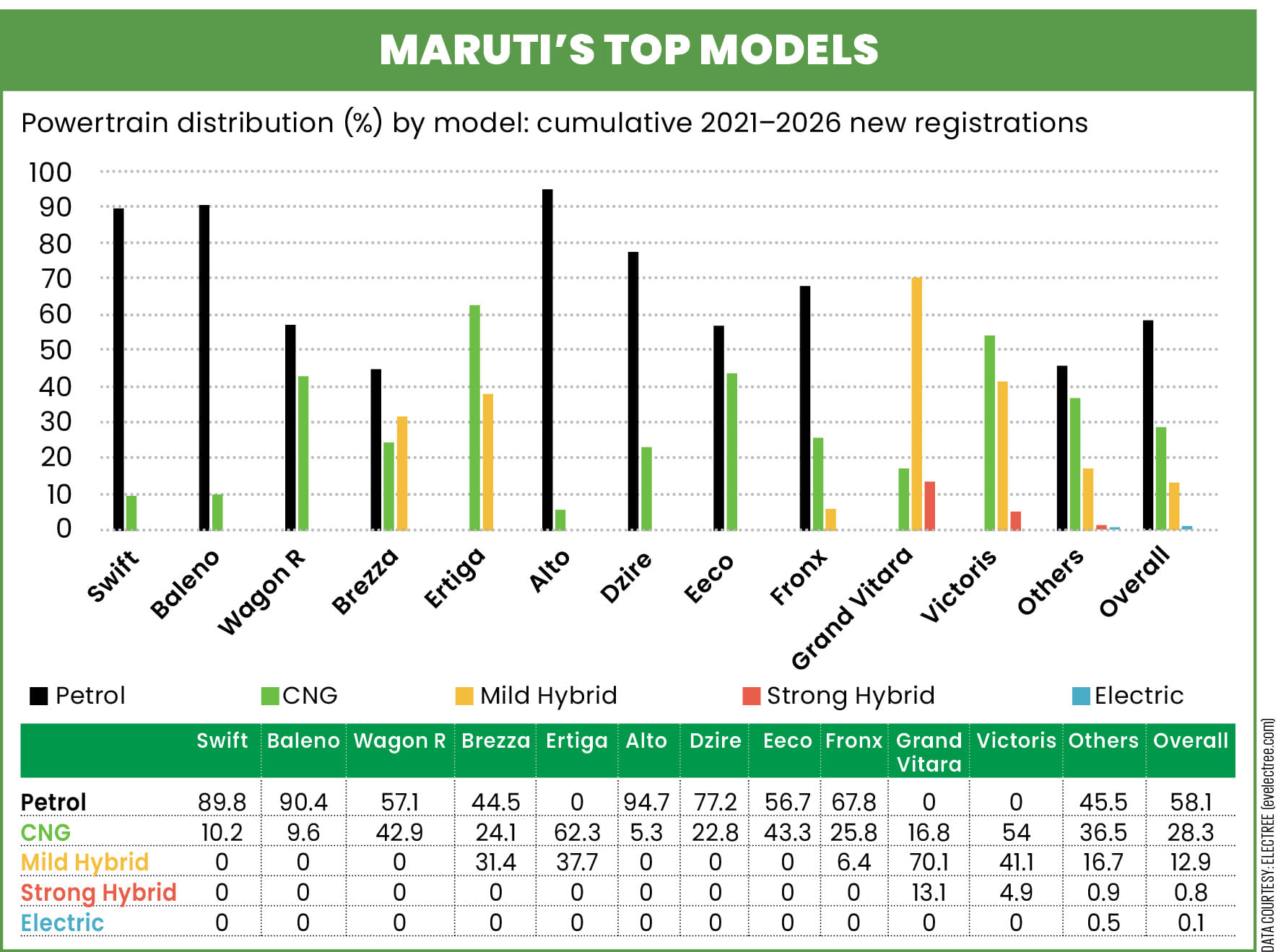
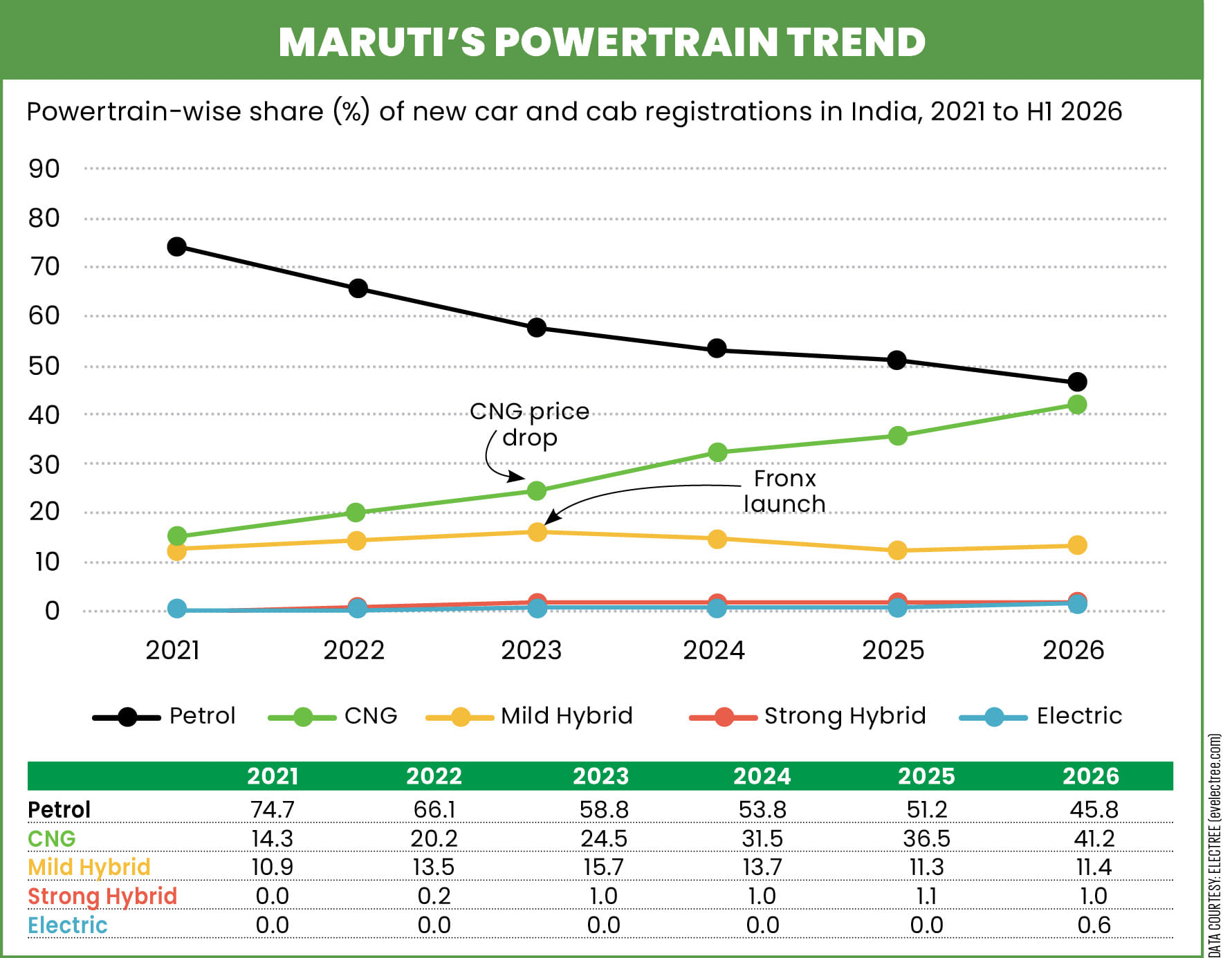
By then, Maruti had already addressed many of the product-related concerns and could respond with a broad factory-fitted portfolio. CNG’s share of Maruti’s new registrations, including private cars and cabs, increased from 14.3 percent in 2021 to 41.2 percent in the first half of 2026. Petrol’s share fell from 76.5 percent to 45.9 percent over the same period. The sharpest jump came between 2023 and 2024, when CNG’s share rose from 24.6 percent to 32 percent.
Commercial vehicles remain important. Cabs account for around 10 percent of Maruti’s cumulative registrations, but contribute more than a quarter of its CNG volumes. However, private buyers now account for the larger part of demand.
“Earlier, if a customer was opting for CNG, the perception was that he was just a very value-conscious customer,” says Maruti Suzuki’s senior executive officer, sales and marketing, Partho Banerjee. “Now, especially with underbody CNG, the profile of customers has changed. They are not only looking for mileage, they also want an aspirational product that feels no different to drive from gasoline.”
CNG moves beyond small cars
The WagonR remains the quintessential CNG hatchback. Its CNG share has risen from 42.5 percent in 2021 to 49.1 percent in the first half of 2026. Nearly every second WagonR buyer now chooses it. CNG is also gaining ground in models that were once overwhelmingly petrol-powered. Its share in the Swift has increased from 1.9 percent to 18 percent, while the Baleno has moved from 2.1 percent to 14.5 percent.
The Dzire has seen an even sharper change. CNG accounted for just 1.7 percent of its registrations in 2021. Its share reached 33.6 percent in H1 2026.
Adoption is strongest in vehicles that cover longer distances or carry more passengers. CNG’s share of the Ertiga has risen from 39.3 percent to 73.6 percent, while the Eeco has moved from 31 percent to 55.2 percent. Big shifts are now also taking place in the SUV segment, where buyers care as much about design, features and luggage space as they do about mileage.
CNG accounts for 43.4 percent of Brezza registrations, compared with 23.7 percent for its Smart Hybrid powertrain in H1 2026. The Fronx has seen its CNG share rise from 10.9 percent at launch in 2023 to 35.4 percent in the first half of 2026. In the case of the Grand Vitara, it has increased from zero to 23.9 percent.
The Victoris has moved even faster. CNG accounted for 55.2 percent of its registrations in the first half of 2026. Its strong response shows that midsize SUV buyers will accept the fuel when it does not compromise the overall ownership experience.
Better packaging removes a key compromise
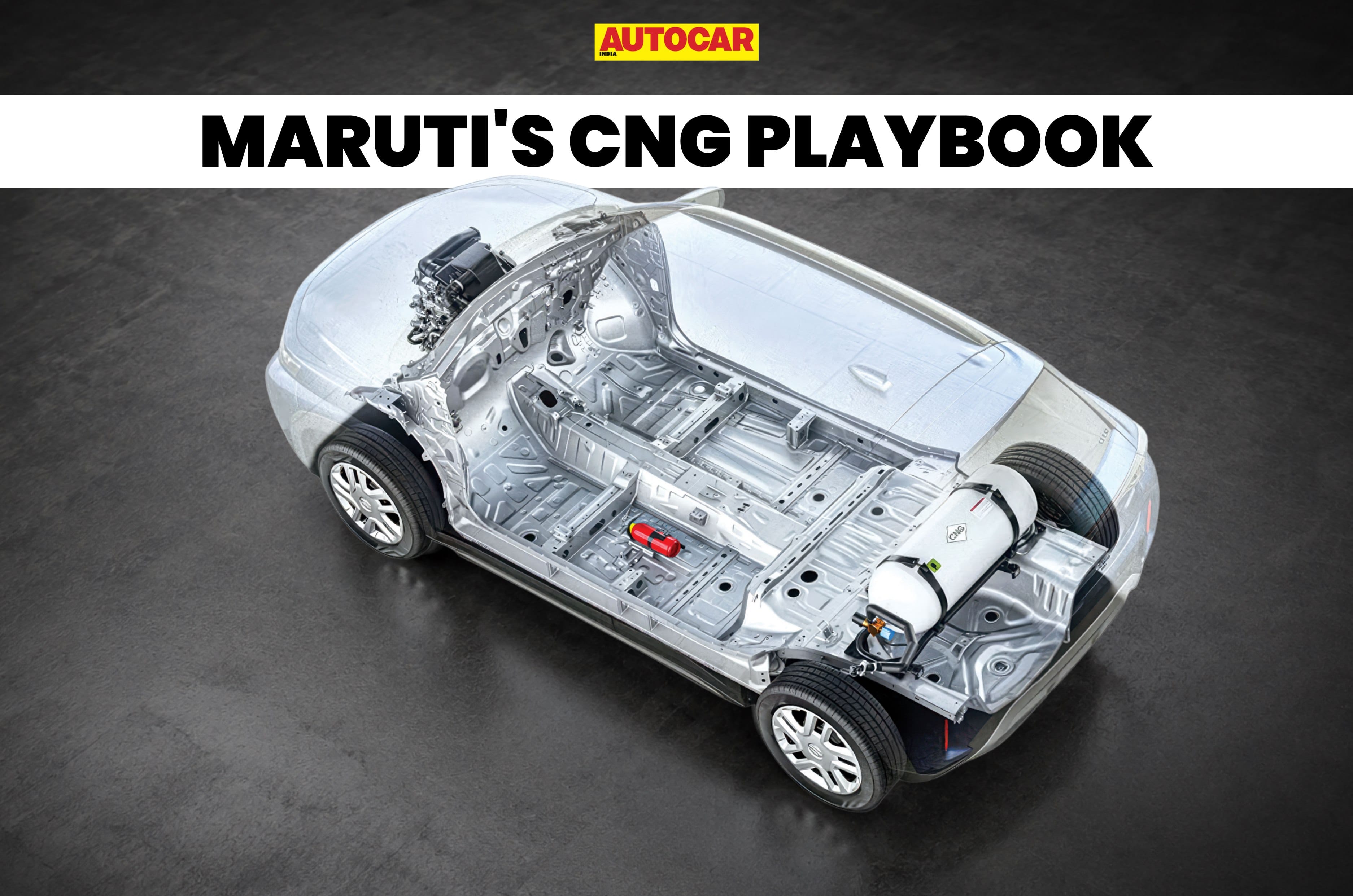
A large cylinder placed across the luggage compartment has long been one of CNG’s biggest drawbacks. Dual-cylinder systems that divide the gas storage between two smaller cylinders positioned lower in the boot, or placing an underbody tank, create a flatter and more usable luggage area.
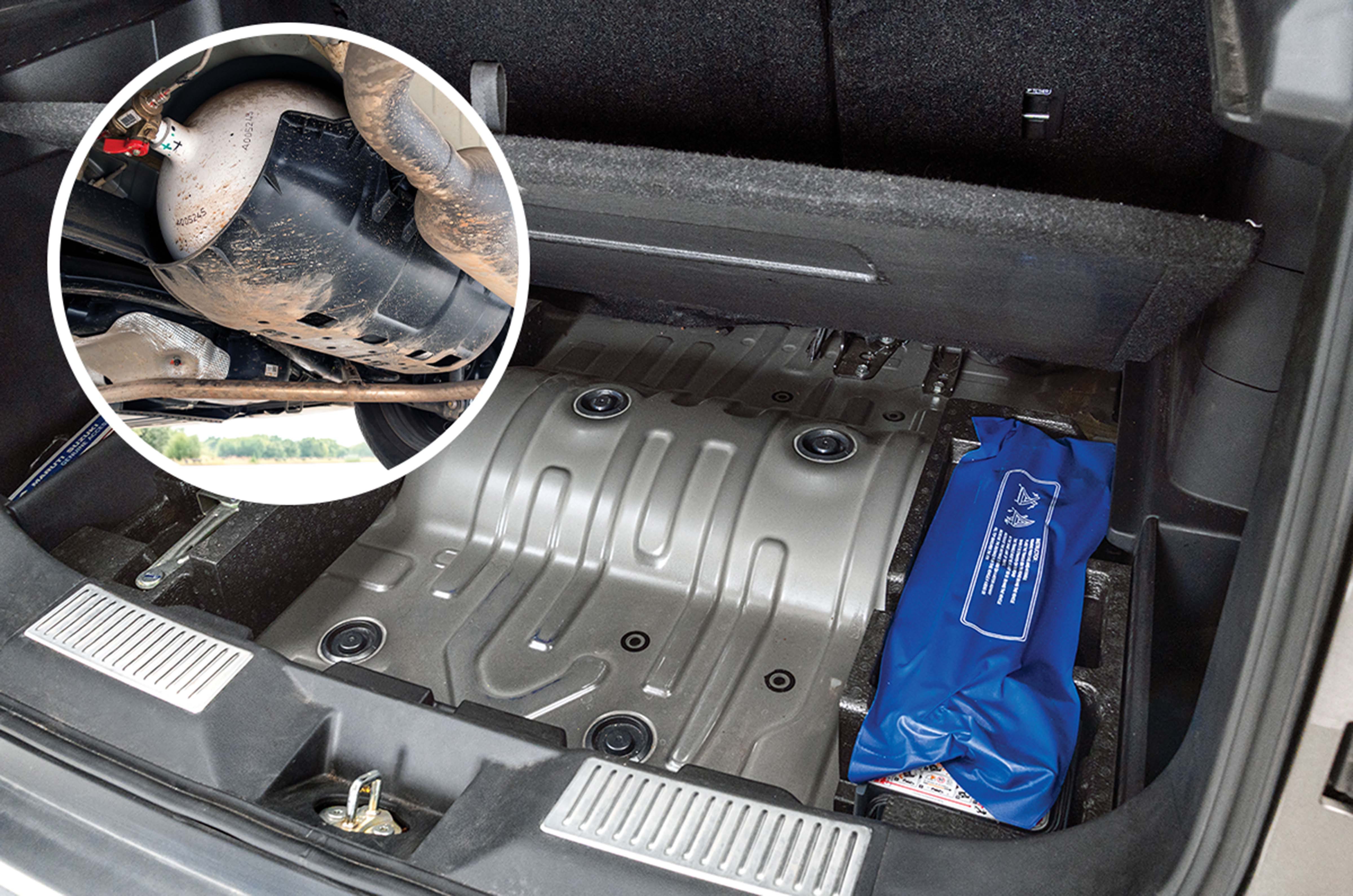
Maruti’s latest CNG development is the underbody tank on the Victoris and Brezza.
Central to Maruti’s next CNG push is the underbody CNG setup. The newly launched CNG Brezza opts for this setup – just like in the Victoris – where the tank is placed beneath the floor. It does negate the ability to have the spare tyre, but luggage space remains useable with a boot that is pretty much free of intrusions.
“If I don’t compromise on my driving experience, and I don’t lose boot space, and on top of that I reduce my total cost of ownership, then it is ticking all the boxes. Why would I not go for it?” says Banerjee.
Filling the gap left by diesel
Maruti’s exit from diesel in 2020 left a gap for buyers seeking low running costs without moving to an EV. CNG has become the answer. It cannot match a diesel engine’s torque or effortless highway performance, but it can cost substantially less to run than petrol, particularly for buyers covering high monthly distances. The vehicle can also switch to petrol when CNG is unavailable.
CNG will not replace diesel in every situation. Drivers who regularly travel on highways, carry heavy loads or value strong mid-range performance may still prefer diesel where it remains available. But for largely urban use, CNG now delivers much of the economic advantage that once made diesel attractive. The market has moved beyond mileage.
CNG has reached around 20 percent penetration without requiring buyers to completely change the way they use a car. There is no home charger to install, and the vehicle can run on petrol when the gas runs out. But the next stage will require more than savings. Buyers moving onto larger and more expensive vehicles will expect performance, equipment, luggage space and convenience alongside lower running costs.
“Quality, reliability and mileage are now hygiene,” says Banerjee. “You need to give all of that anyway and then still meet their lifestyle expectations.”
With the Victoris establishing CNG in the midsize SUV market and the Brezza addressing the compact SUV space, Maruti is now taking the fuel deeper into India’s largest vehicle segment, and it says there’s more to come.
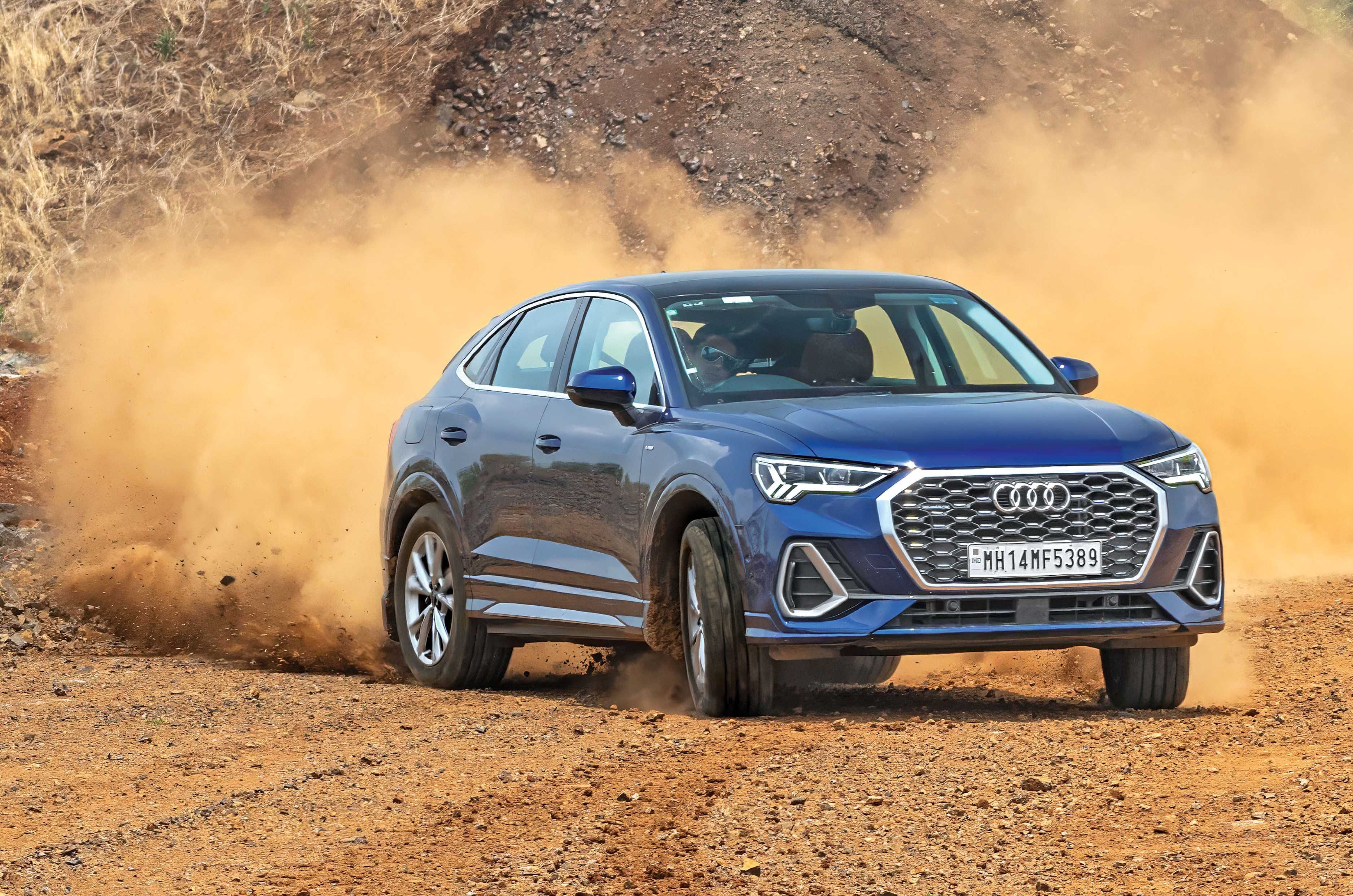
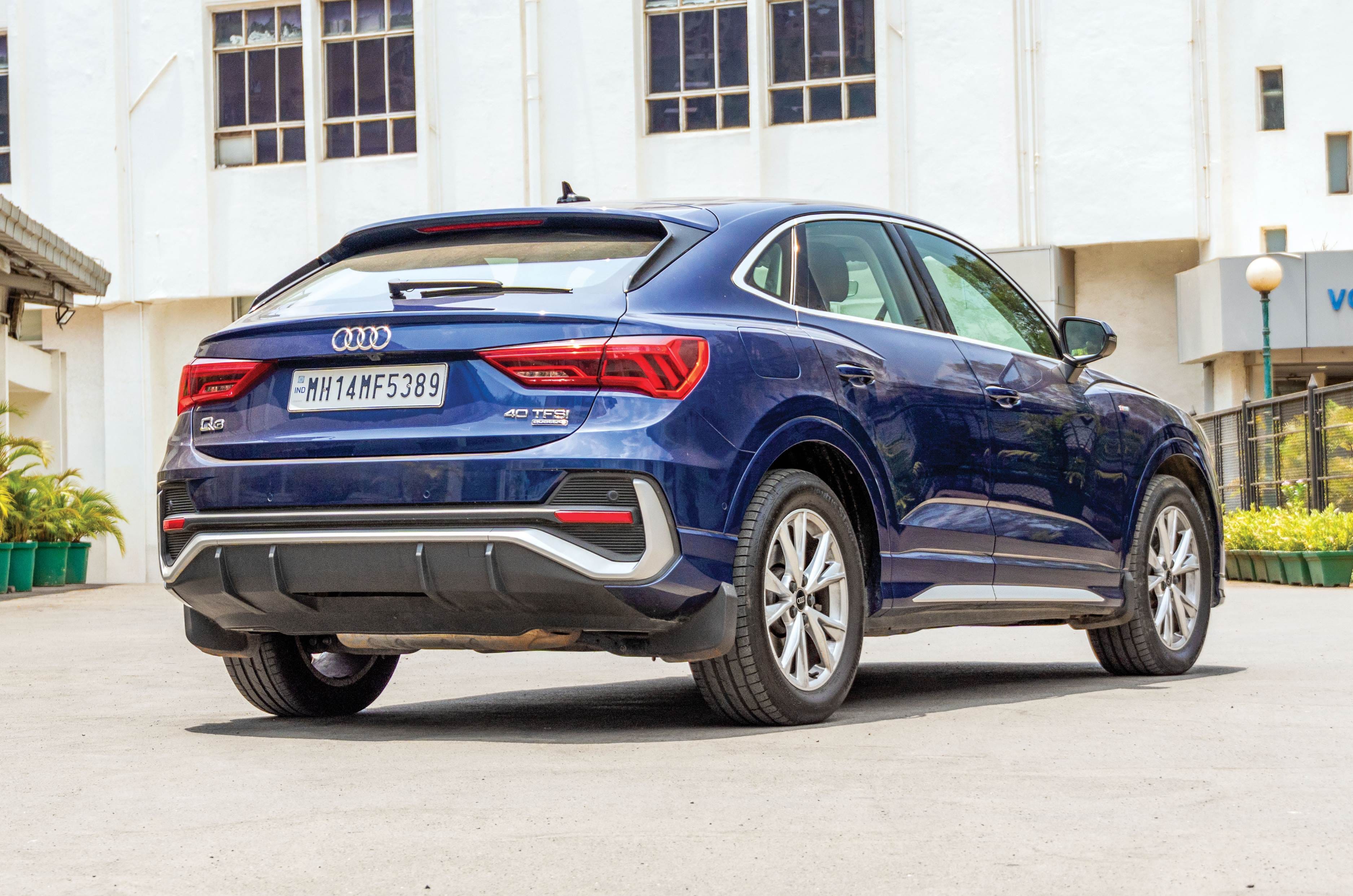
Okay, first, a clarification: that’s not me hooning around in the Audi Q3 Sportback. That’s a certain Mr Saumil Shah, who borrowed the car from me for ‘work’ – in the biggest air quotes imaginable.
The Q3 Sportback was the support car for our Lamborghini Sterrato shoot at Nanoli Speedway. And, naturally, a muddy track with acres of runoff was an opportunity that proved far too tempting for him to resist. Fun cars do have a way of making you do slightly silly things when the right opportunity presents itself. And I’d definitely put the Audi Q3 in that category. It’s got a peppy engine, neat handling and even good ground clearance, all wrapped within a compact footprint. As someone who loves smaller cars, the Q3 is right up my alley.
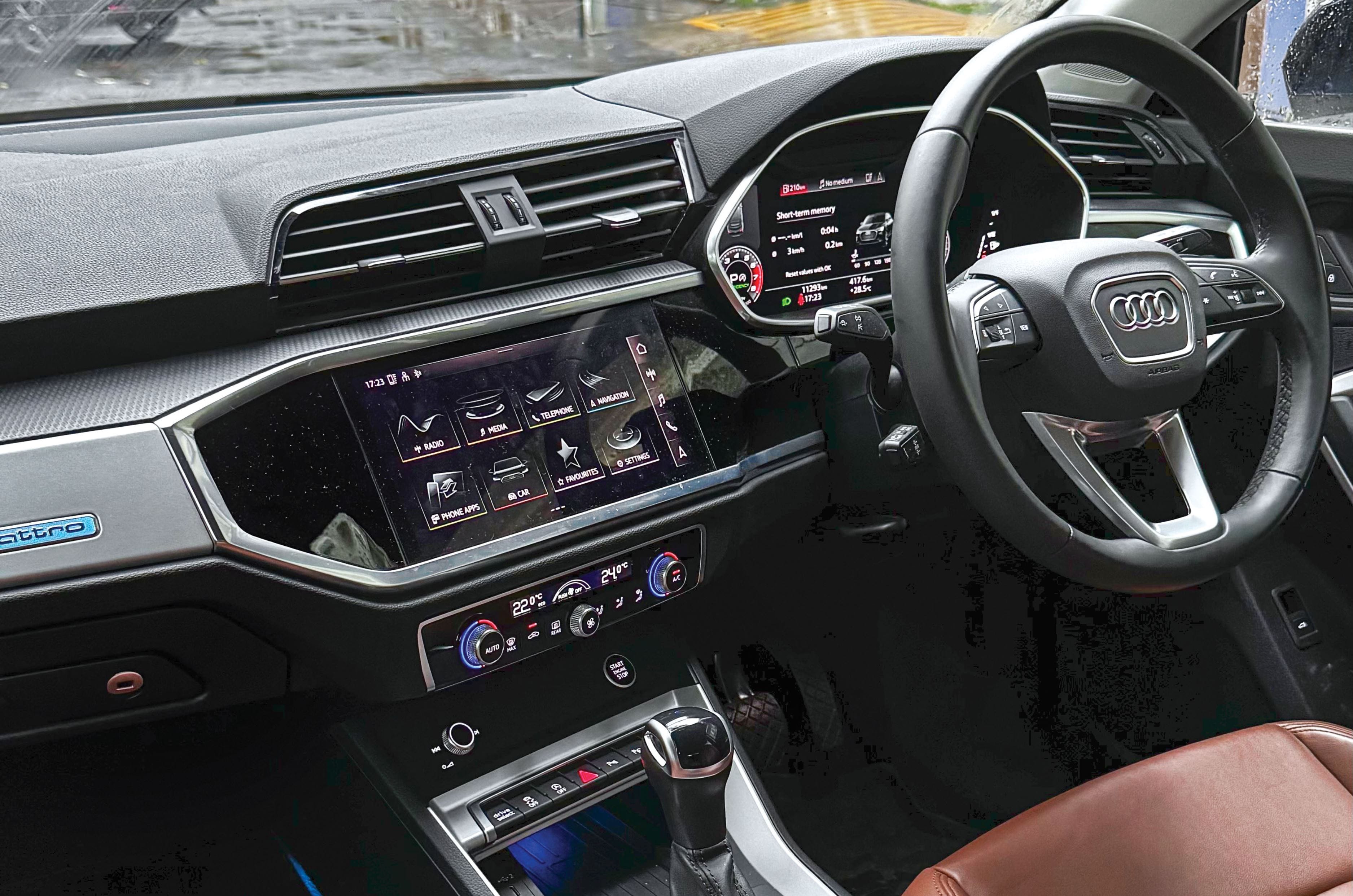
It might not look cutting-edge, but buttons and knobs make the dash very user-friendly.
I’ll admit, life with a luxury car can be a little stressful on Mumbai’s congested roads, where you’re sharing whatever road space is left after all the construction with cars, bikes, battle-hardened buses and everything in between. But the Q3 takes a lot of that stress away. The small size and elevated seating make it very easy to place, and what makes things more relaxing still is the excellent noise insulation. It’s no EV (the engine does get vocal in a good way when rushed), but the Q3 does cut out a lot of the cacophony outside. Another highlight on the Q3 is ride comfort. It makes light work of bad roads with the chunky tyres taking up a lot of the initial impact. Just wish the Q3 got snazzier wheels. The boring alloys undo much of the glamour of the Sportback’s SUV-coupé shape. Gun to my head, I’d still take the standard Q3 with its more conventional derriere.
The Sportback has its fans, but I’d have the conventional Q3.
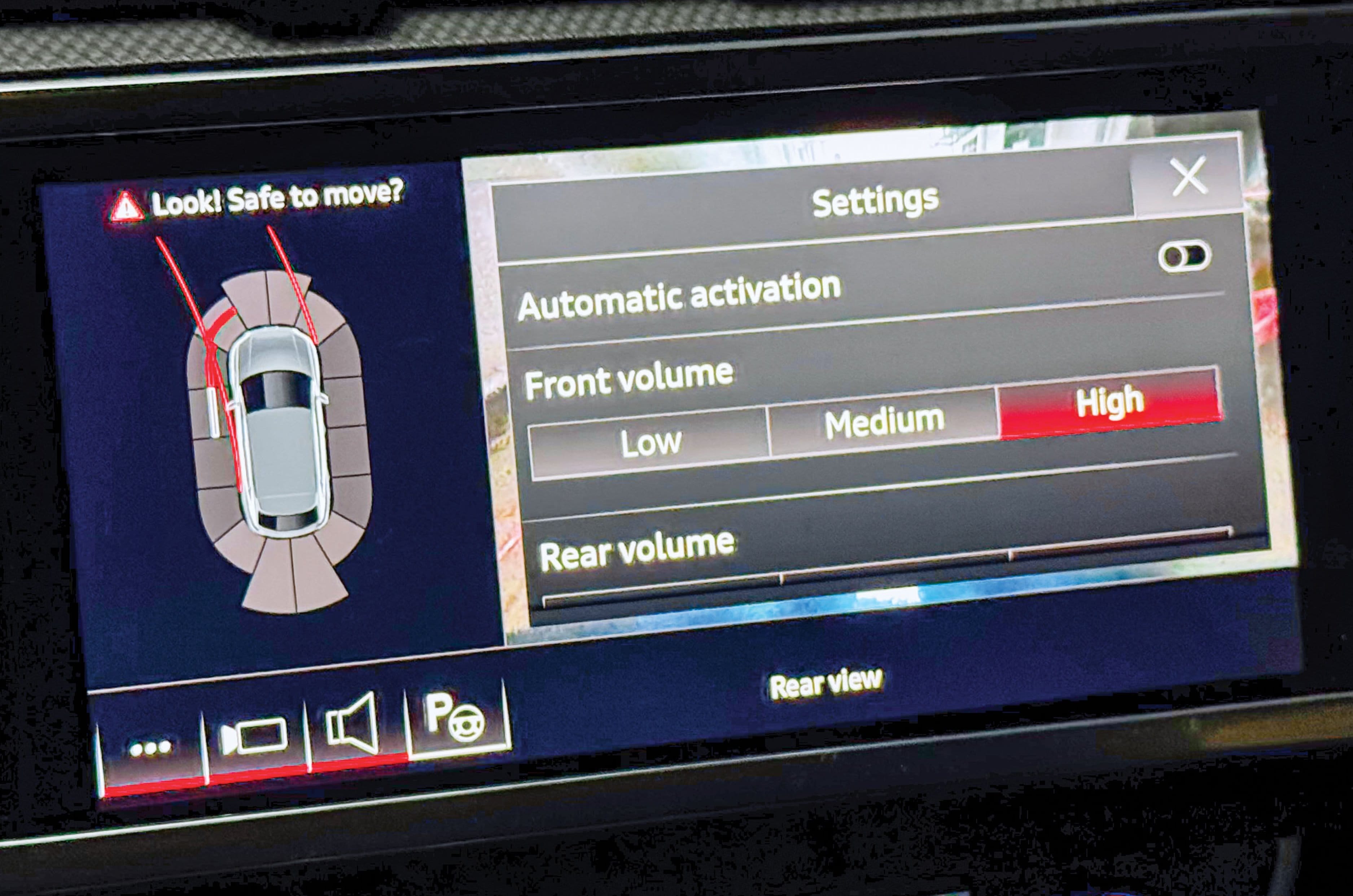
In cars with ADAS, my SOP is to first check if auto-braking functions are off. The Q3 doesn’t have ADAS, but I do still have a pre-flight check. And that is to ensure Automatic Parking Sensor Activation is turned off. The Q3’s overly sensitive proximity sensors seem to react to absolutely everything around the car and the constant beeping can get alarming in heavy traffic. Of course, connecting my phone via a wire is also a requirement because there’s no wireless connectivity in the Audi.
Constant warnings from over-sensitive proximity sensors an irritant. Best kept off in traffic.
Thing is, I don’t want to overplay these small irritants. Because, in the big picture, the Q3 remains a charming option for buyers looking for an entry luxury car. More so now with some great deals going on the model as it makes way for the next-gen Q3 that comes later this year. Having lived with one, I know I won’t get bored of this Q3 for a long time to come. Heck, maybe I need to scout around for a good deal myself.