“सालों से मुझे ऐसा लगता था कि मेरी बातें सुनने के लिए कोई नहीं है, लेकिन अब इतने सारे लोग मेरी बातें सुनते हैं। ये मेरे लिए किसी सपने जैसा है।” – 48 साल की आरती मिश्रा का जीवन बेहद उतार-चढ़ाव भरा रहा।
हर कदम पर अपने सपनों को त्यागकर उन्होंने दूसरों के लिए जिया, लेकिन आज Content बनाने के बहाने वो खुल कर खुद के लिए जी रही हैं, पहली बार अपनी ख़ुशी के लिए अपने लिए कुछ कर रही।
आइए जानते हैं Internet की Favourite Aunty की कहानी
@beyondaarti
48 में बनाया पहला वीडियो और बन गईं Internet की Favourite Aunty | Housewife to Influencer| Women Empowerment | Bihar | Mumbai
48-year-old Indian woman starts making videos on social media, Bihar housewife becomes social media influencer at 48, Indian homemaker starts a new life through social media, Inspiring story of a 48-year-old Indian mother, Indian woman who started content creation after 48
मुंबई का गणेशोत्सव अपनी भव्यता, आस्था और अनोखी भेंटों के लिए जाना जाता है। लेकिन इस बार साकिनाका चा महाराजा के दरबार में बप्पा को मिली एक ऐसी भेंट ने सबका ध्यान खींच लिया, जो आकार में विशाल होने के साथ-साथ सोच में भी बेहद खास है। मुंबई के सबसे ऊंचे गणपति के लिए 351 किलो का चीनी-मुक्त मोदक तैयार किया गया, जिसे मशहूर शेफ हर्ष केडिया ने बनाया है।
करीब चार फीट ऊंचे इस विशाल मोदक को देखकर श्रद्धालुओं के लिए यह यकीन करना भी मुश्किल था कि यह वही पारंपरिक मिठाई है, जिसे गणेशोत्सव में भगवान गणेश को सबसे प्रिय भोगों में गिना जाता है।
20 घंटे की मेहनत, भक्ति से जुड़ी कहानी
इस अनोखे मोदक को तैयार करने में शेफ हर्ष केडिया ने करीब 20 घंटे लगाए। हर्ष केडिया को उनके शुगर-कॉन्शस और डायबिटिक-फ्रेंडली व्यंजनों के लिए जाना जाता है। ऐसे में इस बार उन्होंने अपनी कला को सिर्फ एक विशाल मिठाई बनाने तक सीमित नहीं रखा, बल्कि उसे भक्ति और समावेशिता से जोड़ दिया। मोदक को पूरी तरह चीनी-मुक्त रखा गया, ताकि उम्रदराज, डायबिटीज से जूझ रहे और स्वास्थ्य के प्रति सजग श्रद्धालु भी प्रसाद का आनंद ले सकें।
पारंपरिक मोदक में चॉकलेट का मॉडर्न ट्विस्ट
इस विशाल मोदक को खास बनाने वाली एक और चीज थी इसकी अंतिम सजावट। इसके ऊपर भारत में उगाए गए कोको से तैयार चॉकलेट की परत चढ़ाई गई। यानी आकार और परंपरा में भारतीय, लेकिन प्रस्तुति में आधुनिक अंदाज। 351 किलो वजन वाला यह मोदक किसी आम पूजा की थाली में समा जाए, ऐसा तो संभव ही नहीं था। इसे बप्पा के विशाल पंडाल में विशेष भेंट के रूप में रखा गया, जहां श्रद्धालुओं की निगाहें बार-बार इस विशाल मिठाई पर टिकती रहीं।
‘यह मोदक मेरे लिए भावुक पल है’
शेफ हर्ष केडिया ने सोशल मीडिया पर इस भेंट से जुड़ी अपनी भावनाएं साझा करते हुए इसे महज एक पाक-कला का प्रदर्शन नहीं, बल्कि बप्पा के प्रति प्रेम और समर्पण बताया। उनके संदेश का भाव यही था कि यह मोदक उनके हाथों से निकलकर बप्पा के दरबार तक पहुंचा है और इसके पीछे ढेर सारा प्यार है।
जब प्रसाद बना सबके लिए
साकिनाका चा महाराजा की 42 फीट से अधिक ऊंची गणपति प्रतिमा के सामने रखा गया यह मोदक सिर्फ देखने की चीज बनकर नहीं रहा। रिपोर्टों के मुताबिक, बाद में इसे श्रद्धालुओं के बीच प्रसाद के रूप में वितरित किया गया।
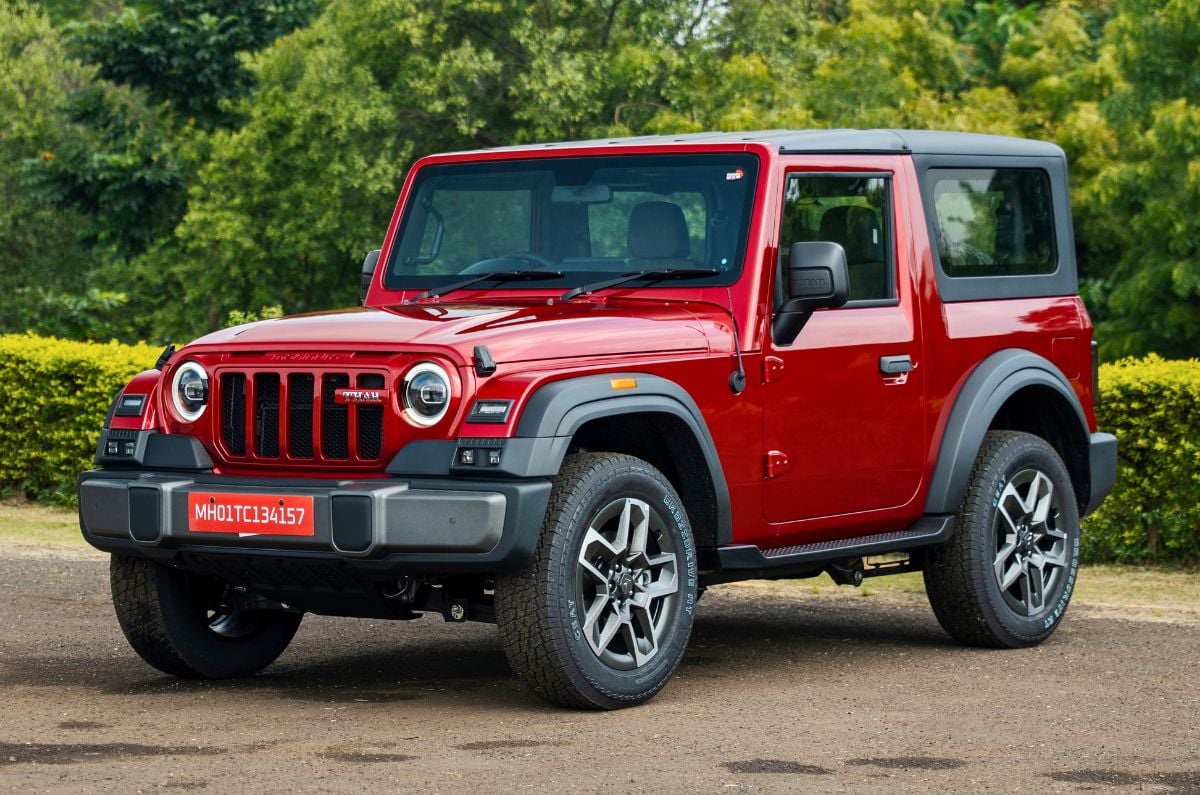
Mahindra recently launched the facelifted Thar, now called the Thar OG, with introductory prices ranging from Rs 10.32 lakh to Rs 18.99 lakh (ex-showroom). It is being offered in three trims: AXT, LXT and ZXT. With the new Thar OG, Mahindra has introduced a new-gen platform, a revised suspension and steering setup, more powerful engines, fresh exterior design elements and a more premium interior.
In case you want to know how much you need to pay to get your hands on one, here are the Mahindra Thar OG’s on-road prices across major Indian cities. Do note that deliveries of the Thar OG will commence from October 11.
Mahindra Thar OG on-road prices
On-road Thar OG prices range from Rs 11.56 lakh to Rs 23.36 lakh in major cities
Mahindra Thar OG on road price in major Indian cities (in Rs, lakh)
Note: On-road prices may vary based on city-specific registration charges and other cost components, including insurance, FASTag and RTO fees. Please check with your nearest Mahindra dealership for exact figures.
Among the major cities mentioned, the Mahindra Thar OG’s on-road price is the lowest in Chandigarh. Kolkata comes next, followed by Delhi and Mumbai. The prices are the highest in Bengaluru, and compared to Chandigarh, the 1.5-litre diesel MT (AXT) costs Rs 1.14 lakh. RWD-AT versions of the 2.0-litre turbo-petrol engine and 2.2-litre diesel engine cost an additional Rs 1.77 lakh and Rs 1.54 lakh, respectively. The top-spec 4WD-AT versions of the turbo-petrol and diesel engines cost an additional Rs 1.95 lakh and Rs 2.09 lakh, respectively, in Bengaluru compared to Chandigarh.
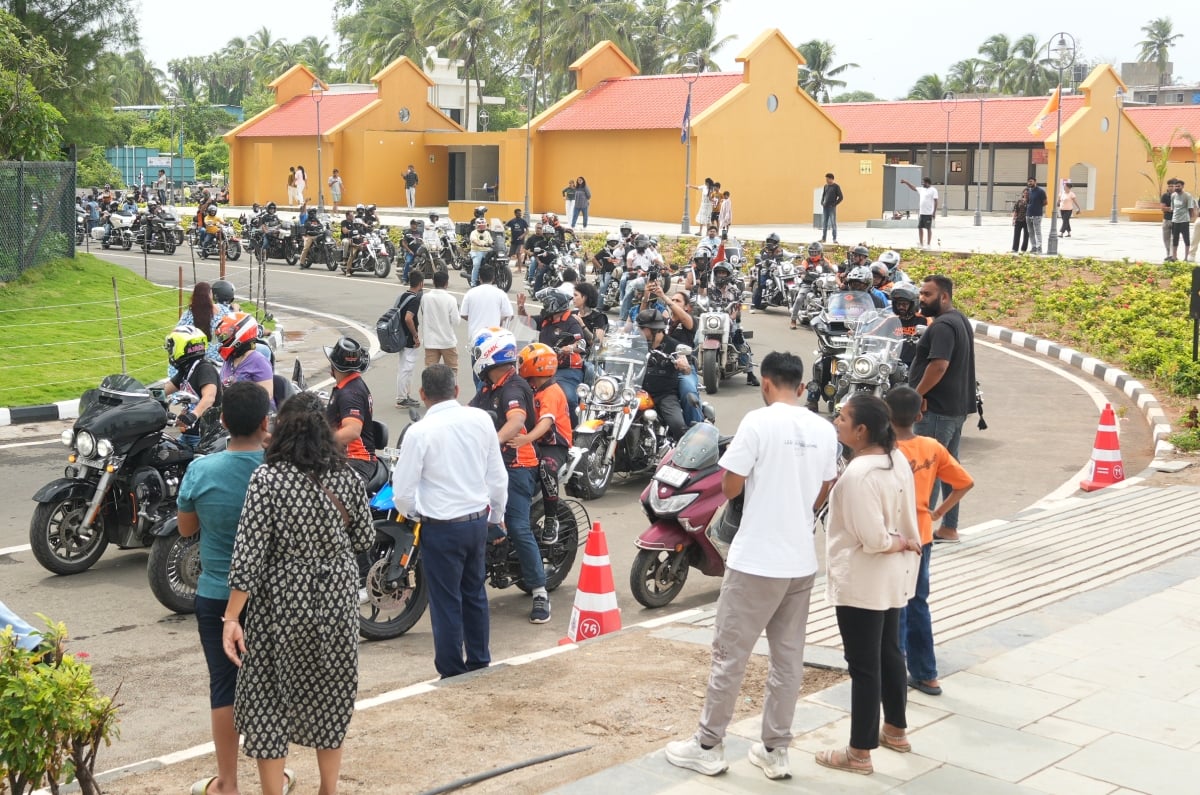
The Seven-Islands Mumbai H.O.G Chapter hosted the Western H.O.G. Ride (WHR) 2026 at The Deltin, Daman, bringing together over 360 Harley Owners Group members and guests from across the country. It was one of the largest HOG gatherings Daman has hosted.
The weekend opened with live sets from Valenciaga and Aangan on the first night, alongside a curated dining experience by the venue.
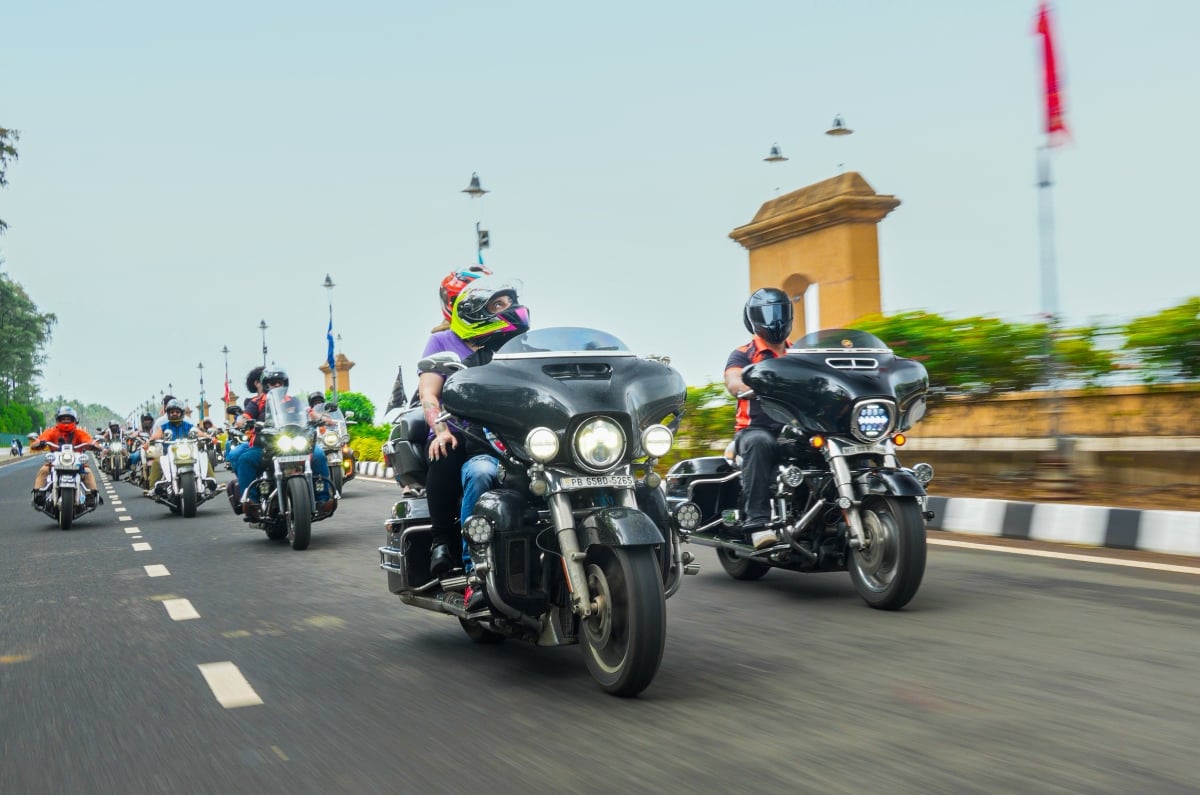
Day two centred on the Harley-Davidson Ride to Daman Lighthouse, organised in coordination with Dadra & Nagar Haveli and Daman & Diu Tourism. Over 80 Harley-Davidsons, spanning everything from the entry-level X440 to the bigger models like the Fat Boy, rode out in formation through the city before making their way to the lighthouse. The ride was followed by a Sundowner session at the pool. The evening’s entertainment picked up with a stand-up comedy set and closed with “War of DJs”.
The event was organised by the Seven-Islands HOG Chapter Committee, comprising Carl Sequeira, Abhishek Divekar, Sanjay Pai and Sajid Ali, who coordinated the route, logistics and full weekend programme, including permissions for the formation ride through Daman.
WHR has grown into a fixture on the western chapter’s calendar, and this edition marks its largest turnout to date.
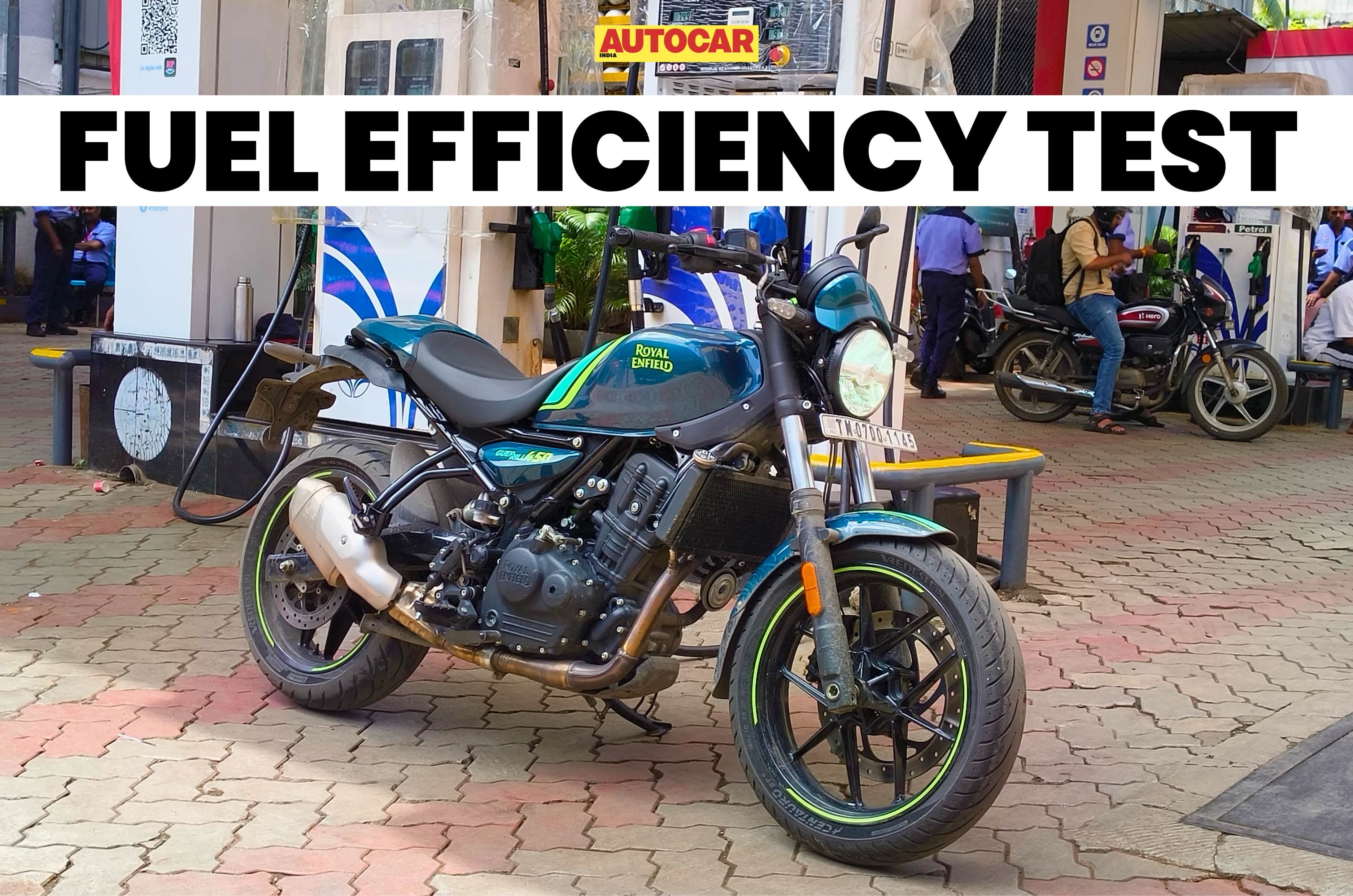
The Guerrilla 450 Apex is Royal Enfield’s sportiest motorcycle yet and it has a more focused rider triangle and comes with road-focused Vredestein Centauro ST sport touring tyres. We were recently able to subject the bike through our instrumented fuel economy tests and here are the numbers we received. It bears mentioning that since the difference between the standard Guerrilla and the Apex boils down to different ergos, a few cosmetic parts and different tyres, these numbers will largely hold true for the standard Guerrilla as well.
Royal Enfield Guerrilla 450 real-world fuel efficiency
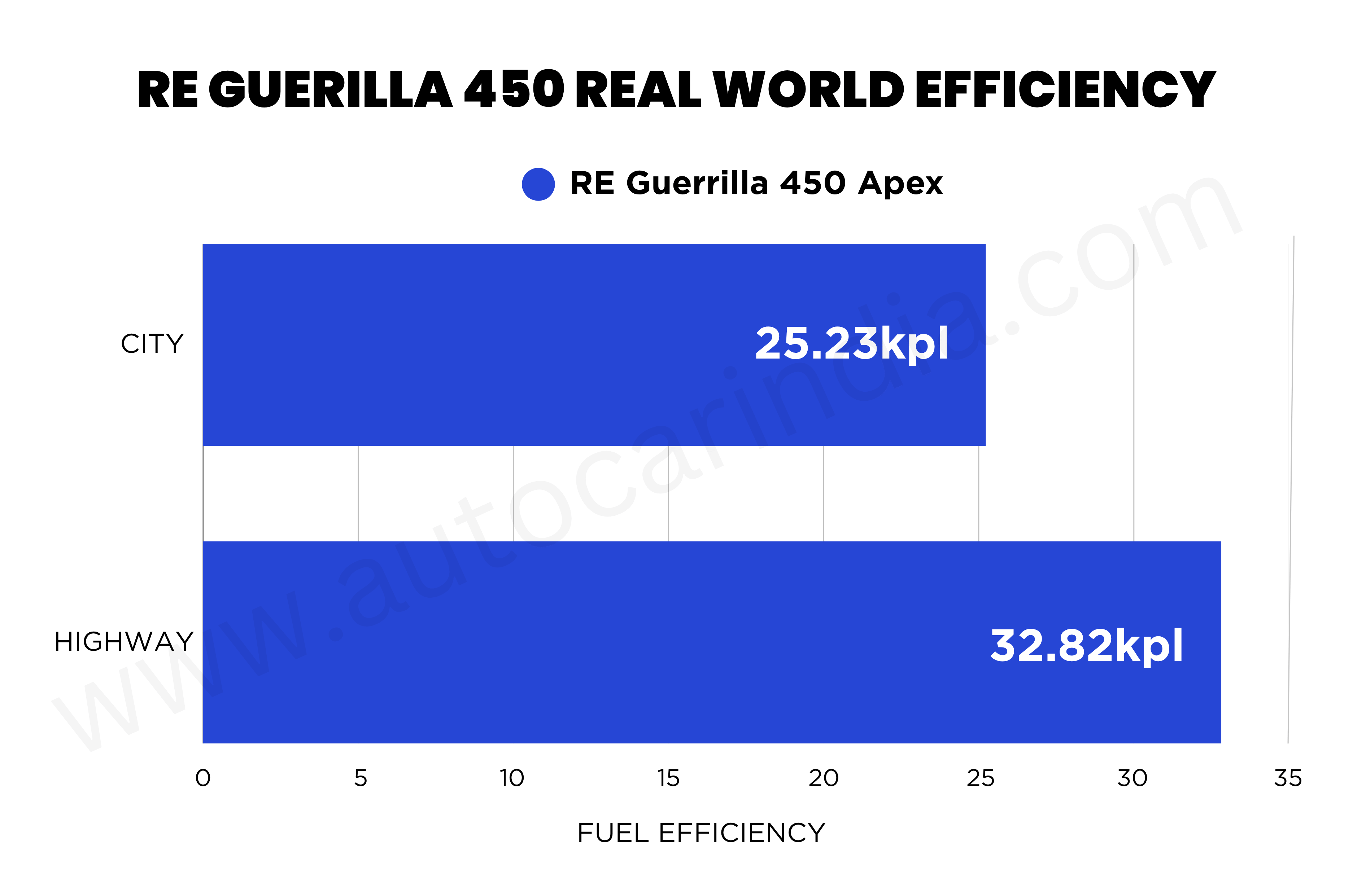
It returned 25.23kpl in the city, 32.82kpl on the highway
As is our norm, we first ran the Guerrilla 450 Apex on the highway for a little over 40km (we couldn’t do our usual 50km loop due to construction on our testing patch), after which it took 1.30 litres of fuel to brim the tank.
Then we headed to the traffic-riddled streets of South Mumbai, where we again ran the bike for a little over 40km once again after which it needed 1.7 litres to top up the tank once more. Thus, we arrived at a fuel economy number of 25.23kpl.
Royal Enfield Guerrilla 450 fuel efficiency analysis
452cc single has a strong mid-range, makes for effortless riding
The Guerrilla 450 is powered by the same ‘Sherpa 450’ engine as the Himalayan 450 and it makes the same 40hp at 8,000rpm and 40Nm of torque at 5,500rpm. The power figure – while certainly respectable – may not be the best in class but it is the strong surge of mid-range torque which really dictates the riding experience.
Out on the highway, the Guerrilla purrs along stress-free at 75-80kph (the legal speed limit on the stretch of highway where we conduct our tests), with the revs hovering around the 4,000rpm mark. If you need to make a quick overtake, all it takes is a small twist of the accelerator to make forward progress.
In the city, it’s again the strong low and mid-range pull which makes it a breeze to squeeze through gaps in traffic. One caveat is that you need to keep the revs above 3,000rpm to keep the engine in its sweet spot, below that mark the motor feels sluggish and progress is noticeably slower.
Autocar India’s fuel-efficiency testing
Our fuel-efficiency testing routine starts by first brimming the tank and ensuring the bike is running the manufacturer’s recommended tyre pressures. The bike is then ridden on fixed city and highway routes, where we maintain average speeds that best mimic real-world scenarios as well as keeping speed limits in mind. The payload on the bikes is kept constant by balancing rider weights and ballast, ensuring consistency across different vehicles and riders. At the end of the test cycle, the fuel tank is once again filled to the brim, giving us an accurate figure of how much fuel has been consumed against the trip meter reading.
Asian Games 2026: भारत की सुचिका तारियाल ने रविवार (20 सितंबर) को नागोया में जारी 2026 एशियन गेम्स में महिलाओं के पारंपरिक 60 किग्रा मिक्स्ड मार्शल आर्ट्स (MMA) में मंगोलिया की अल्तांचिमेग बैगलमा को 2-0 से हराकर सेमीफाइनल में जगह बनाई। इसी के साथ उन्होंने आइची-नागोया एशियाई खेलों में भारत का पहला मेडल पक्का कर लिया है। यह 36 वर्षीय खिलाड़ी अब सोमवार 21 सितंबर को सेमीफाइनल में उतरेगी। इस प्रतियोगिता में सेमीफाइनल में पहुंचने पर पदक पक्का हो जाता है, क्योंकि अंतिम चार में हारने वाली दोनों खिलाड़ियों को कांस्य पदक मिलता है।
सुचिका बेहद अनुभवी खिलाड़ी हैं। उन्होंने जूडो, कुराश, जिउ-जित्सु और अब एमएमए सहित कई खेलोंं में अपना करियर बनाया है। एमएमए को पहली बार एशियाई खेलों में शामिल किया गया है। सुचिका के शानदार करियर में यह नई उपलब्धि है। वह 2022 राष्ट्रमंडल खेलों में जूडो और 2023 एशियाई खेलों में कुराश में भारत का प्रतिनिधित्व कर चुकी हैं। वह 2024 में जिउ-जित्सु में विश्व चैंपियन भी रह चुकी हैं।
घुटने की चोट और कुछ अन्य कारणों से कुछ समय तक खेलों से बाहर रहने के बाद उन्होंने एमएमए में हाथ आजमाए और सफलता हासिल करने में सफल रही। सुचिका ने यूरेशिया क्षेत्र में 92वें स्थान पर काबिज बैगलमा के खिलाफ मुकाबले पर पूरा नियंत्रण रखते हुए 2-0 से जीत हासिल करते हुए अंतिम चार में जगह पक्की की।
भारत का खोला खाता
सुचिका की जीत ने Asian Games 2026 में भारत का पहला मेडल पक्का कर दिया है। यह Asian Games में MMA में भारत का पहला मेडल भी होगा। भारत ने रविवार को एशियाई खेलों की महिला टीम टेबल टेनिस स्पर्धा के ग्रुप एफ के अपने शुरुआती मैच में इंडोनेशिया को 3-0 से हराकर शानदार शुरुआत की। श्रीजा अकुला ने पहले मैच में नी महारानी को 3-1 से हराकर भारत को बढ़त दिलाई। श्रीजा ने पहला गेम जीतने के बाद दूसरा गेम 8-11 से गंवाया। लेकिन इसके बाद वापसी करते हुए अगले दोनों गेम 11-4, 11-4 से जीत लिए।
दीया चितले ने इसके बाद अल्माइरा नेबुचदनेज्जर को 3-0 से हराकर भारत की बढ़त दोगुनी कर दी। दीया ने 11-9, 11-8, 11-5 से जीत दर्ज की और भारत को जीत की दहलीज तक पहुंचाया। यशस्विनी घोरपड़े ने तीसरे मैच में चित्रा रस्मी को 3-0 से हराकर भारत की जीत सुनिश्चित की। यशस्विनी ने 12-10, 11-4, 11-4 से जीत दर्ज की। ग्रुप एफ में भारत के साथ इंडोनेशिया, पाकिस्तान और सिंगापुर शामिल हैं।
दीपिका ने दागे आठ गोल
इस बीच, दीपिका ने शानदार खेल का नमूना पेश करते हुए आठ गोल दागे, जिससे भारतीय महिला हॉकी टीम ने रविवार को एशियाई खेलों के पूल बी में अपने पहले मैच में कमजोर उज्बेकिस्तान को 19-0 से करारी शिकस्त दी। यह एकतरफा मुकाबला होने की उम्मीद थी। ठीक वैसा ही हुआ क्योंकि उज्बेकिस्तान की रक्षापंक्ति भारत के लगातार हमलों का कोई जवाब नहीं दे पाई।
दोनों टीमों के बीच का अंतर मैदान पर स्पष्ट रूप से दिखाई दे रहा था क्योंकि शुरुआत से ही भारत ने गोल वर्षा शुरू कर दी थी। भारत के लिए दीपिका (8वें, 22वें, 25वें, 33वें, 36वें, 38वें, 41वें, 54वें मिनट) ने गोल की झड़ी लगा दी। जबकि लालरेम्सियामी (7वें), इशिका (11वें, 42वें, 54वें), बलजीत कौर (12वें), नेहा (18वें), नवनीत कौर (23वें, 45वें), लथंतलुआंगी (43वें, 51वें) और साक्षी राणा (43वें) ने भी गोल किए।
इंडोनेशिया से भिड़ेगा भारत
भारत सोमवार को अपने अगले मैच में इंडोनेशिया से भिड़ेगा। प्रतियोगिता में दूसरी सबसे ऊंची रैंकिंग वाली टीम भारत ने शुरुआत से ही आक्रामक रवैया अपनाते हुए पहले हाफ में ही आठ गोल दाग दिए।यह मैच पूरी तरह से एकतरफा मुकाबला था और दोनों टीमों के बीच कौशल का स्तर स्पष्ट रूप से दिखाई दे रहा था।
इसकी शुरुआत तब हुई जब लालरेम्सियामी ने करीब से एक फील्ड गोल किया। दीपिका ने इसके एक मिनट बाद ही बढ़त को दोगुना कर दिया। इसके बाद सुनेलिता टोप्पो के पास पर इशिका ने सर्कल के बाईं ओर से शानदार गोल दाग दिया।
एक मिनट बाद बलजीत ने स्कोर 4-0 कर दिया, जिसके बाद नेहा ने एक और फील्ड गोल करके स्कोरशीट में अपना नाम दर्ज कराया। इसके बाद दीपिका ने पेनल्टी कॉर्नर से मिले मौके पर जोरदार ड्रैगफ्लिक शॉट लगाकर अपना दूसरा गोल किया और स्कोर 6-0 कर दिया।
नवनीत ने भी फील्ड गोल करके स्कोरशीट में अपना नाम दर्ज कराया, जिसके बाद दीपिका ने एक और पेनल्टी कॉर्नर को गोल में बदलकर भारत को पहले हाफ में 8-0 की बढ़त दिला दी। उज्बेकिस्तान के लिए स्थिति बद से बदतर हो गई क्योंकि भारतीय टीम ने आखिरी दो क्वार्टर में 11 गोल दाग दिए।
Mumbai Accident: मुंबई के कोस्टल रोड पर रविवार सुबह तेज रफ़्तार एक BMW कार के टक्कर मारने से तीन पैदल चलने वालों की मौत हो गई। जबकि एक व्यक्ति गंभीर रूप से घायल हो गया। यह हादसा रविवार तड़के कोस्टल रोड पर लाला कॉलेज के सामने लोटस जेटी के पास हुआ। कोस्टल रोड कंट्रोल रूम से मिली जानकारी के मुताबिक, BMW मरीन ड्राइव से हाजी अली की ओर जा रही थी, तभी यह हादसा हुआ। हादसे की वजह तेज रफ़्तार बताई जा रही है। घायल चार लोगों को इलाज के लिए नायर अस्पताल ले जाया गया। नायर अस्पताल के चीफ मेडिकल ऑफिसर (CMO) से मिली जानकारी के अनुसार, अस्पताल लाए गए चार लोगों में से तीन को मृत घोषित कर दिया गया।
मुंबई पुलिस ने एक बयान में कहा, “20 सितंबर को सुबह करीब 5:20 बजे मुंबई कोस्टल रोड पर लोटस जेटी के पास एक BMW कार के दुर्घटनाग्रस्त होने से तीन लोगों की मौत हो गई और एक व्यक्ति गंभीर रूप से घायल हो गया। पुलिस ने बताया कि कार मरीन ड्राइव से हाजी अली की ओर जा रही थी, तभी तेज रफ़्तार के कारण ड्राइवर ने कथित तौर पर गाड़ी पर से नियंत्रण खो दिया। चारों को नायर अस्पताल ले जाया गया।” मृतकों की पहचान शनाय गज्जल और धैर्य सेठ के तौर पर हुई है। एक अन्य 20 वर्षीय युवक को गंभीर हालत में अस्पताल में भर्ती कराया गया है। हादसे के बारे में और जानकारी का इंतजार है।
गणपति पंडाल के पास करंट लगने से आठ वर्षीय लड़की समेत दो लोगों की मौत
इस बीच, मुंबई के लालबाग इलाके में शनिवार देर रात गणपति पंडाल के पास करंट लगने से आठ वर्षीय लड़की समेत दो लोगों की मौत हो गई और कई अन्य घायल हो गए। अधिकारियों ने बताया कि यह घटना रात करीब दो बजकर 20 मिनट पर कालाचौकी स्थित दत्ताराम लाड मार्ग पर कालाचौकी विभाग सार्वजनिक उत्सव मंडल के पास हुई। उस समय गणपति उत्सव के कारण लालबाग इलाके में बड़ी संख्या में लोग मौजूद थे।
नगर निकाय के अधिकारियों ने बताया कि घटना की सूचना मुंबई दमकल विभाग (एमएफबी) को रात दो बजकर 42 मिनट पर मिली। इसके बाद दमकल विभाग, पुलिस, बेस्ट (बृहन्मुंबई विद्युत आपूर्ति और परिवहन) और महानगरपालिका के वार्ड कार्यालय के कर्मचारियों को मौके पर भेजा गया। पुलिसकर्मियों से मौके पर मिली जानकारी के अनुसार, पांच घायलों को भायखला स्थित मसीना अस्पताल ले जाया गया। जबकि अन्य घायलों को परेल स्थित ग्लोबल अस्पताल में भर्ती कराया गया।
मसीना अस्पताल में आठ वर्षीय राघनी घनश्याम यादव को डॉक्टरों ने मृत घोषित कर दिया। 19 वर्षीय किरण अकबर नाइक, 19 वर्षीय तन्वी नरश हांडे, 19 वर्षीय साहिल संदीप तारे और 12 वर्षीय रूही सिंह का अस्पताल में उपचार हो रहा है। उनकी हालत के बारे में जानकारी अभी नहीं मिली है। बाद में एक अधिकारी ने एक अन्य मौत की भी पुष्टि की। उन्होंने बताया कि ग्लोबल अस्पताल में भर्ती एक महिला ने भी चोटों के कारण दम तोड़ दिया। उसकी पहचान और अन्य डिटेल्स की जानकारी अभी नहीं मिल सकी है।
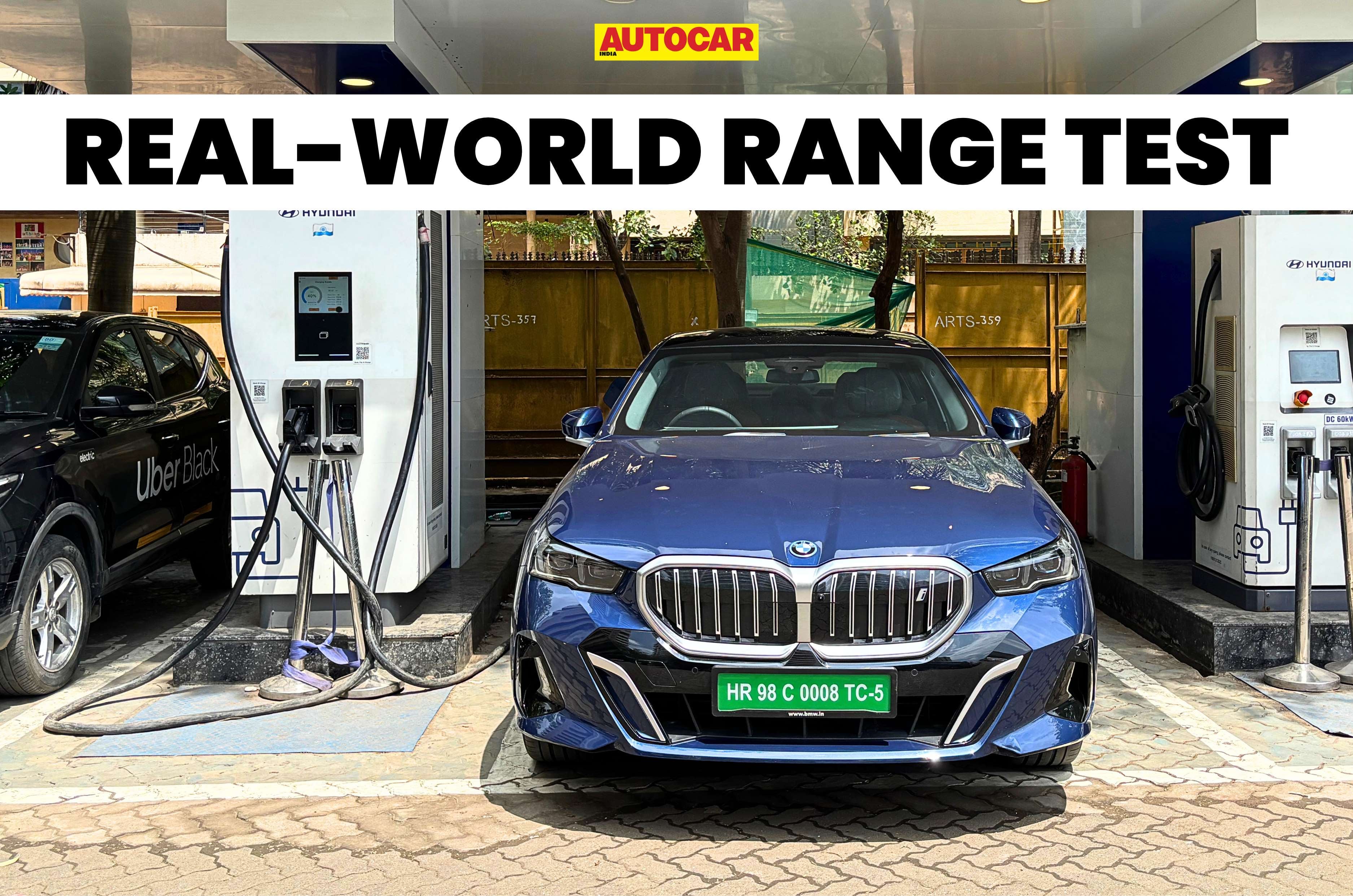
BMW has launched the BMW i5 eDrive35L, the electric version of the long wheelbase 5 series sedan. Compared to the international spec, this India-spec version’s wheelbase has been extended by 110mm. Priced at Rs. 79.60 lakh (ex-showroom), it commands a Rs. 3 lakh premium over its petrol counterpart, the 530Li. We put the BMW i5 LWB through our real-world tests to find out how efficient it really is
Claimed range is 669km
Gets five regen modes – High, Medium, Low, B Mode and Adaptive
Net battery capacity is 76.3kWh
BMW i5 LWB real-world range and charging explained
This BMW i5 LWB is powered by a single motor mounted on the rear-axle, and produces 272hp and 410Nm. It is equipped with a 81.6kWh (gross capacity) battery pack that uses NMC (Nickel Manganese Cobalt) cell chemistry. For this test, we drove the BMW i5 LWB in ‘Efficient’ mode with the regen set to ‘Adaptive’. In Adaptive mode, the regenerative braking is automatically adjusted depending on the road and traffic conditions, and it works as intended.
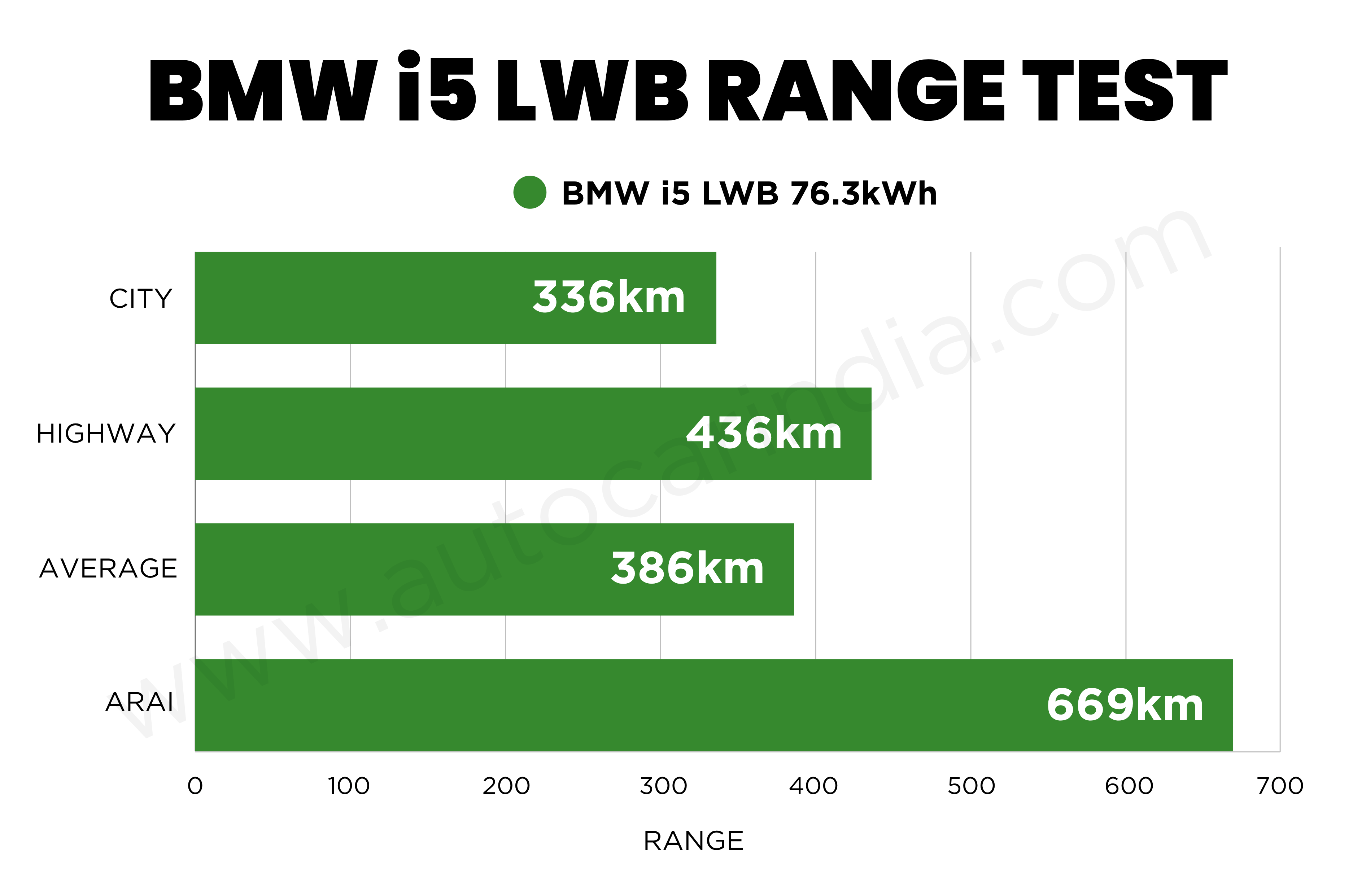
In the city, the i5 delivered an efficiency of 4.4km/kWh, whereas on the highway, it delivered 5.71km/kWh. This extrapolates to a range of 336km and 436km in the city and on the highway, respectively. With an overall average efficiency of 5.06km/kWh, you can expect a real world range of 386km on a full charge.
BMW claims that the i5 can charge from 10-80 percent in 33 minutes using a 160kW DC fast charger. We recharged its battery using a 60kW DC fast charger, and it took 47 minutes to charge the battery from 20-80 percent.
Autocar India’s range testing
Before our real-world range tests, the battery of our test car was fully charged, and we maintained tyre pressures in accordance with the manufacturer’s recommendations. The car was driven on a weekday in Mumbai city and on the adjoining state highway in a fixed loop, and we maintained the set average speeds. At the end of each cycle, we calculated the range based on the percentage charge consumed.
Throughout our tests, the climate control was set to 22deg C in a full-auto setting, and other electricals, such as the audio system, indicators and ventilated front seats, were used when required, just as a regular user would. We take pride in our testing data, which isn’t merely consistent but also gives users an accurate indication of what they can expect in the real world.
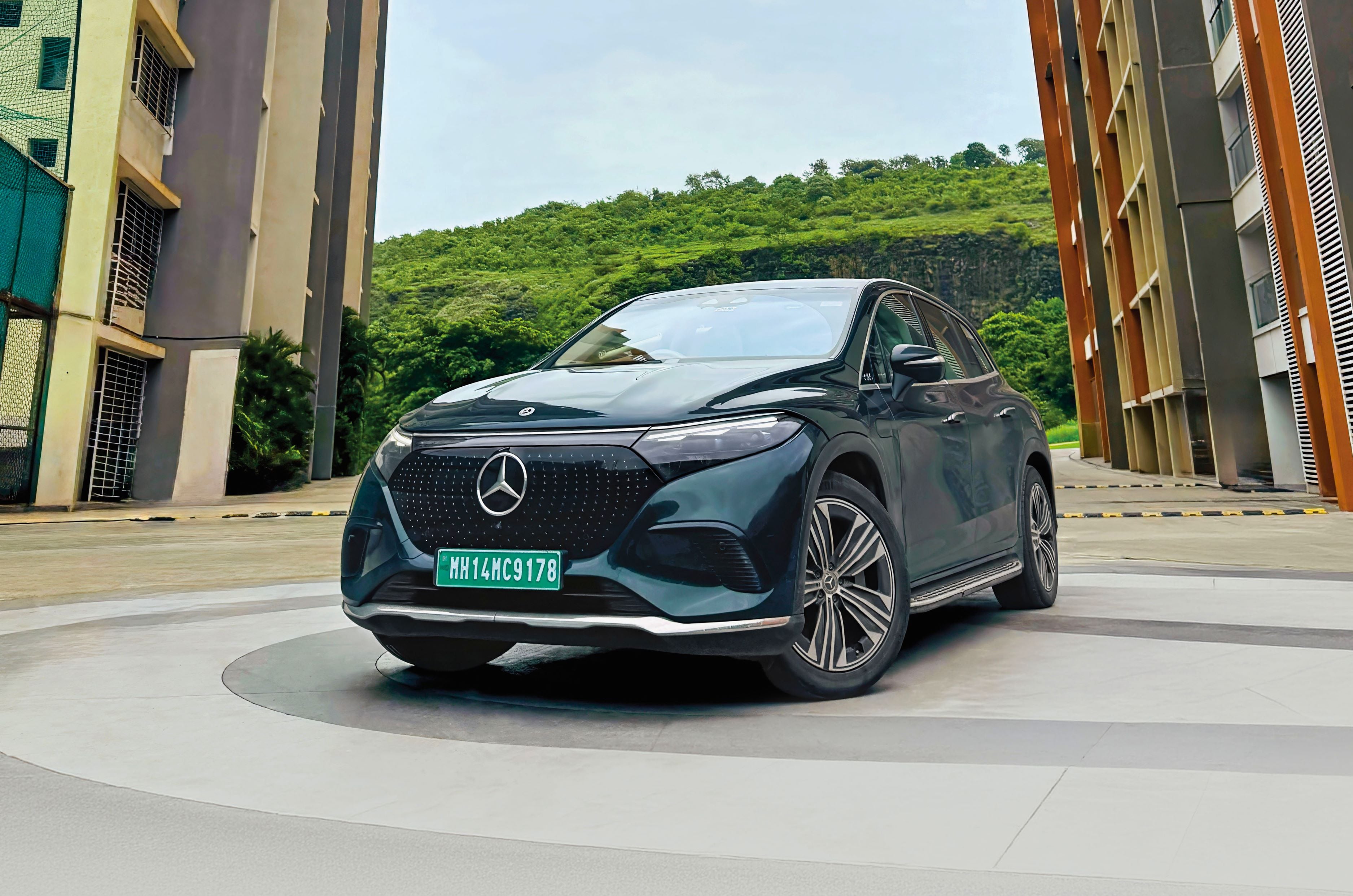
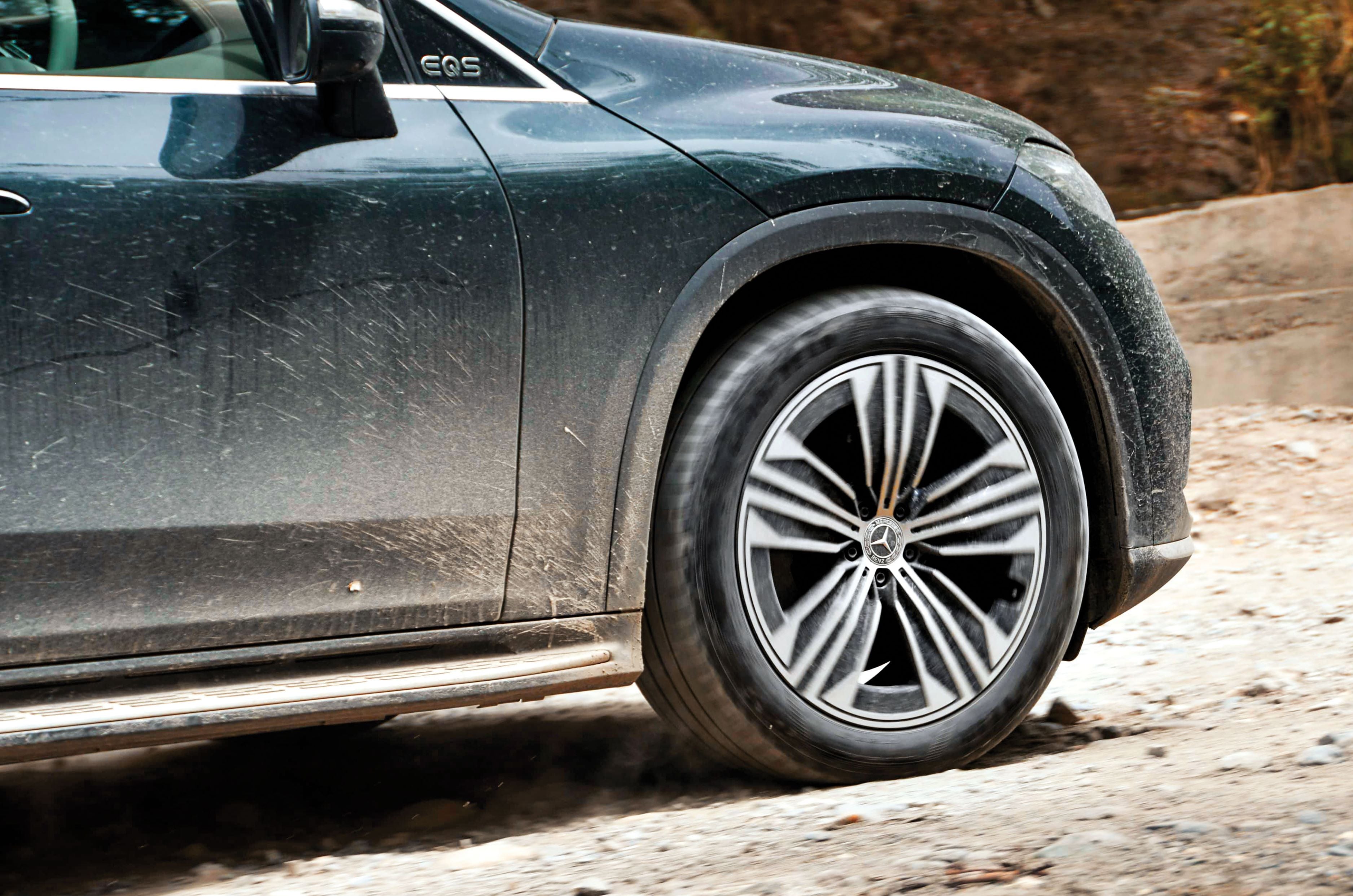
The Mercedes-Benz EQS SUV is back in the Autocar India long-term fleet, and after spending the last month with it, I can understand why I was happy to see it return. I have used it for everything from Mumbai office commutes and daily errands to highway runs and even as a cargo hauler, and it has quickly slipped back into the role of a comfortable and effortless family companion. In fact, the more I use it, the more I find myself appreciating just how easy this enormous luxury SUV is to live with.
The EQS SUV is a large SUV, and it feels every bit as luxurious as you would expect from a Mercedes. The cabin is beautifully appointed, the materials feel expensive, and the seats are extremely welcoming and comfortable. My family particularly loves the space and comfort it offers. There is plenty of room inside, and the overall ambience is one of calm and refinement. Being an EV, it is also extremely refined, with the near-silence of the electric powertrain adding to the sense of luxury.
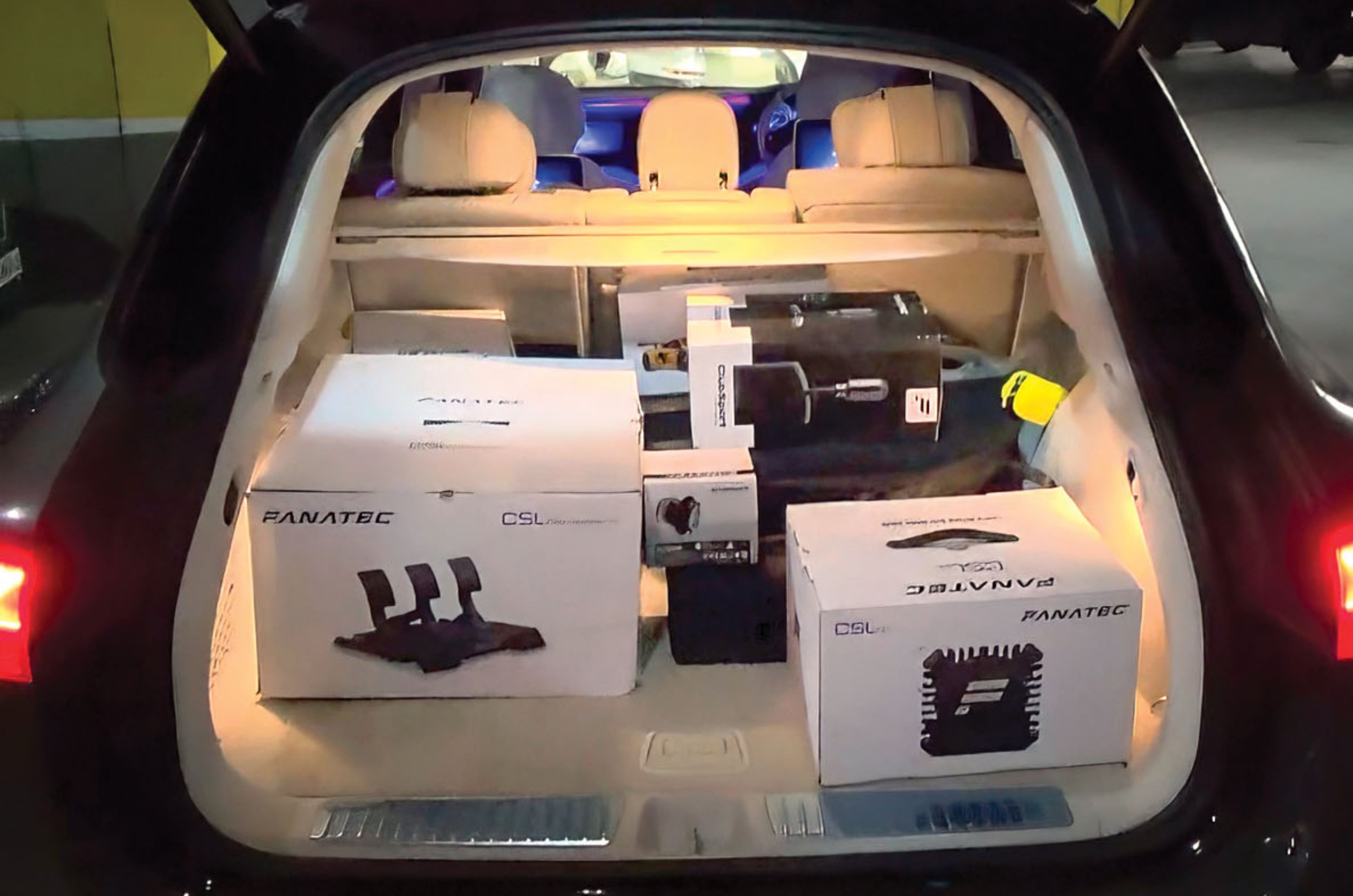
When your driving simulator needs an SUV-sized boot.
Despite its size, the EQS SUV doesn’t feel too big to drive. At more than 5.1 metres long, you would expect it to feel cumbersome, particularly in tight spaces, but that hasn’t been my experience. All-round visibility is very good, which makes it relatively easy to place on the road. The real party trick, however, is the rear-wheel steering. It makes turning around in tight spots remarkably easy, and you quickly stop worrying about the car’s size.
For some perspective, the EQS SUV has a turning circle of just 10.1 metres. That’s actually shorter than my wife’s much smaller Kia Sonet. It is a remarkable statistic and, more importantly, something you can genuinely appreciate when manoeuvring the car in the real world.
Rear-wheel steering makes this 5.1-metre-long SUV surprisingly easy to manoeuvre.
The EQS SUV’s 122kWh battery has also thrown range anxiety right out of the picture for me. I experienced this recently when I shifted from Pune to Mumbai. I had to carry a few important and expensive items, but one trip wasn’t enough to move everything, so I had to make the journey twice.
That meant doing roughly two trips of around 500km in the same day, and the EQS SUV managed it with battery to spare. It was an excellent demonstration of the advantage of having such a large battery. Instead of worrying about where I would have to stop and charge, I could simply concentrate on getting the job done. For an EV that is also expected to undertake long journeys, that kind of range is extremely reassuring.
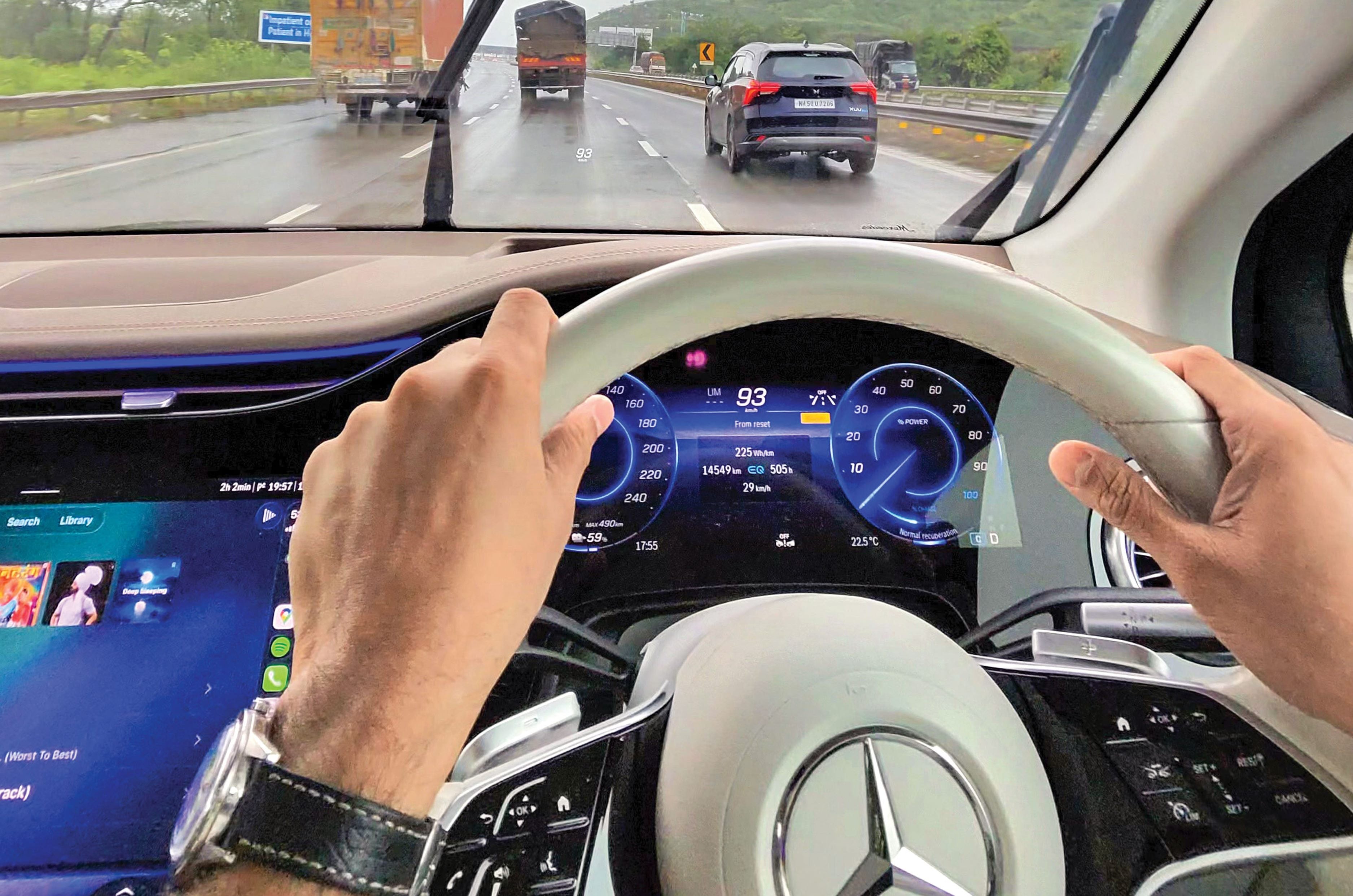
It settles into a relaxed rhythm on the highway, making long-distance journeys feel easy.
On the highway, the EQS SUV just glides. It is an extremely relaxed long-distance tourer, and I found myself feeling surprisingly fresh even after longer drives. The combination of its refinement, comfort and electric powertrain makes covering distance very easy. There is no engine noise or vibration, and the car simply settles into a comfortable rhythm on the highway. The Burmester 3D Surround Sound System also kept me good company on these longer drives.
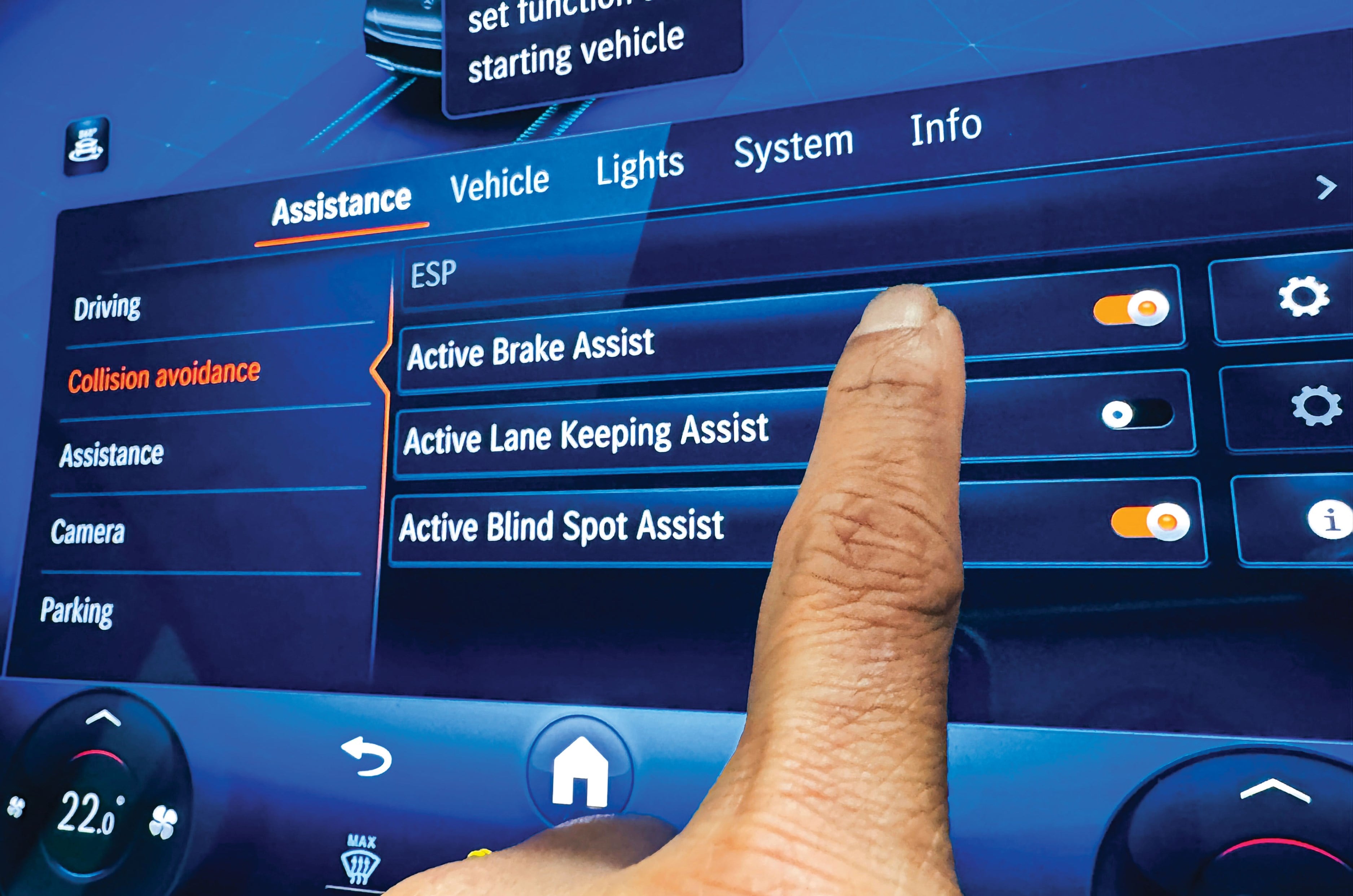
There are, however, a couple of things that I don’t particularly like. The first thing I do in any Mercedes is switch off the emergency brake assist. It is a system designed for situations where traffic moves in a relatively organised manner, but I find it extremely sensitive in our chaotic traffic conditions.
Active Brake Assist can be overly sensitive in chaotic traffic, with sudden braking that can really startle you.
I was reminded of this when I once forgot to switch it off. I was driving onto a crowded road when the system suddenly slammed on the brakes. It startled everyone inside the car, but I was also worried about the possibility of someone behind me rear-ending the car. In India, where traffic can be unpredictable and vehicles often follow each other very closely, an unexpected intervention like this can be unsettling. Ideally, there should be an option that allows the driver to switch the system off and keep it off even after the car is restarted.
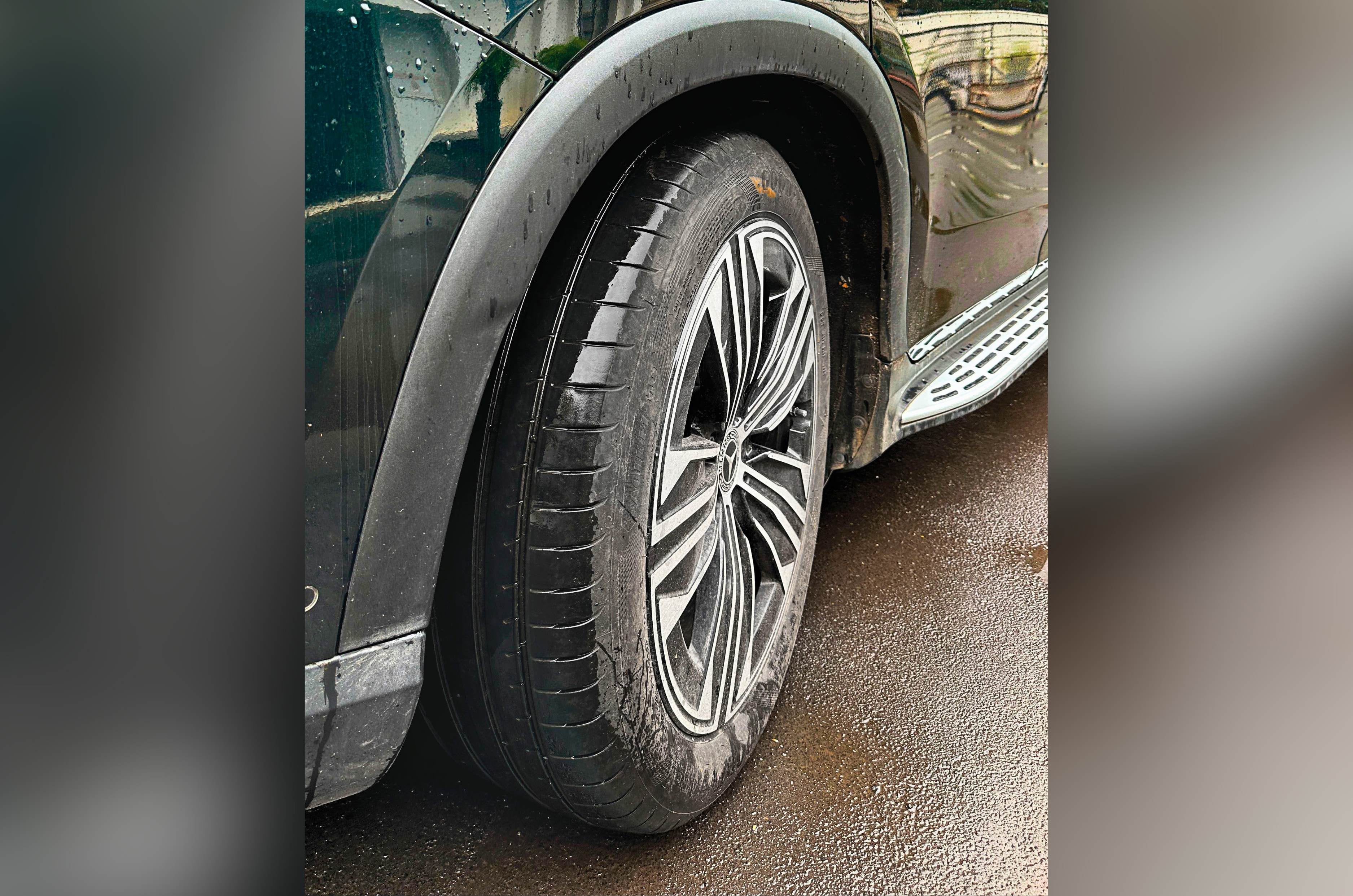
The other issue is with the ride over bad roads. At low speeds, the ride is cushy and plush, but the EQS SUV’s weight does occasionally make itself felt. If one side of the wheels goes into a pothole at really slow speeds, you can feel the side-to-side movement of the car. It isn’t a major issue, but it is a reminder of just how much car you are driving.
There is also a mild thud if you take a pothole a little faster than you should. The air springs don’t seem to have much negative travel, and you can feel the suspension hit the bump stops.
The plush low-speed ride can get unsettled over potholes, with the EQS’ weight making itself felt.
Other than these two niggles, the EQS SUV has been a comfortable and luxurious companion for me and the family. It has handled my office commutes, daily errands, highway runs and even the demanding Pune-Mumbai move without fuss. Its huge battery has made range anxiety almost irrelevant, while its excellent comfort and refinement make long journeys particularly enjoyable.
Despite its size, the rear-wheel steering makes it surprisingly easy to manoeuvre, and the cabin is exactly the sort of place you want to spend time in. After a month, I am still very fond of the EQS SUV, and I am looking forward to seeing how the experience develops as our long-term stint continues.
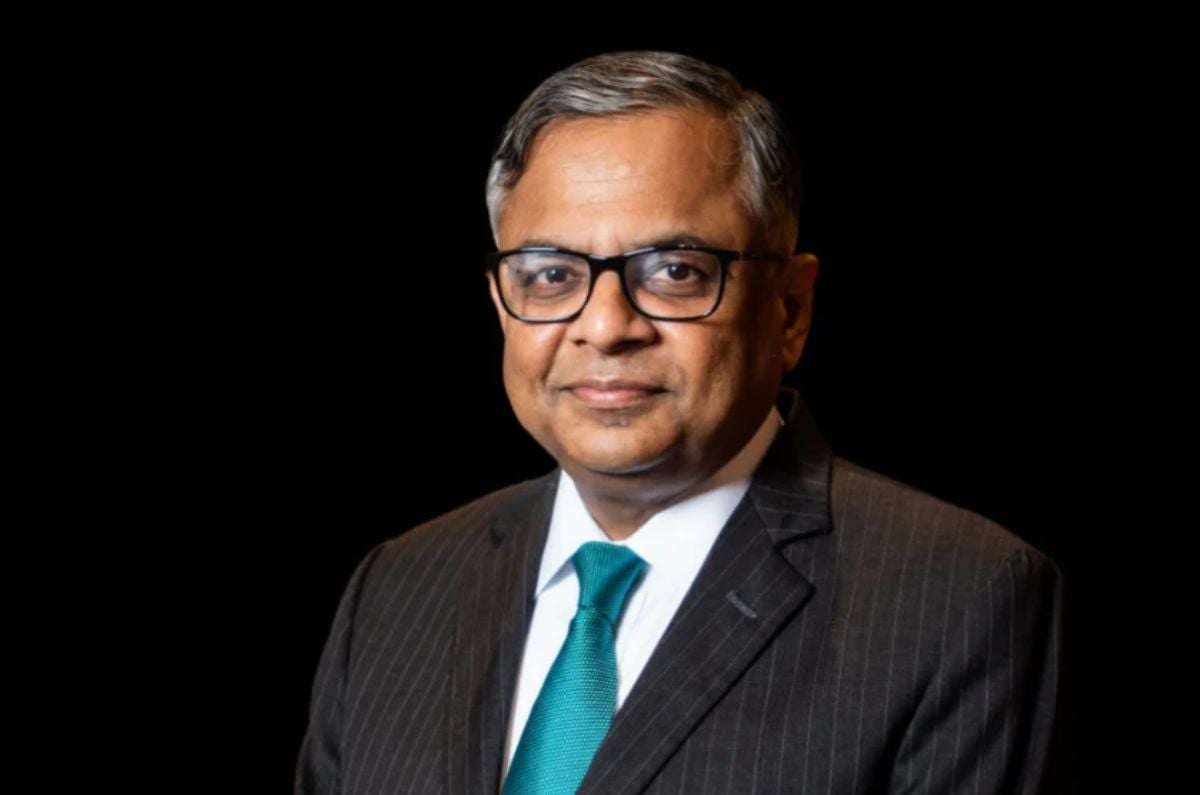
In a resolution approved by a majority of the board, Tata Sons has reappointed N Chandrasekaran as the company’s Executive Chairman on a new five-year term, a Reuters report said. The decision follows Chandrasekaran’s announcement in August 2026 where he stated that he wouldn’t seek another term at the company once his current tenure ends on February 20, 2027.
N Chandrasekaran to continue heading Tata Sons
The resolution was passed by a majority at a Tata Sons board meeting held in Mumbai on September 17, 2026, the Reuters report mentioned. The reasons behind this reversal are yet to be disclosed to the public, with Tata Sons yet to issue an official comment on the matter. A fresh term means that Chandrasekaran would continue heading the company until February 2032. Chandrasekaran has chaired Tata Sons since February 2017 and is currently serving his second five-year term, which will end on February 20, 2027.