Which Royal Enfield 350 to buy? Classic vs Hunter vs Meteor vs Bullet vs Goan Classic

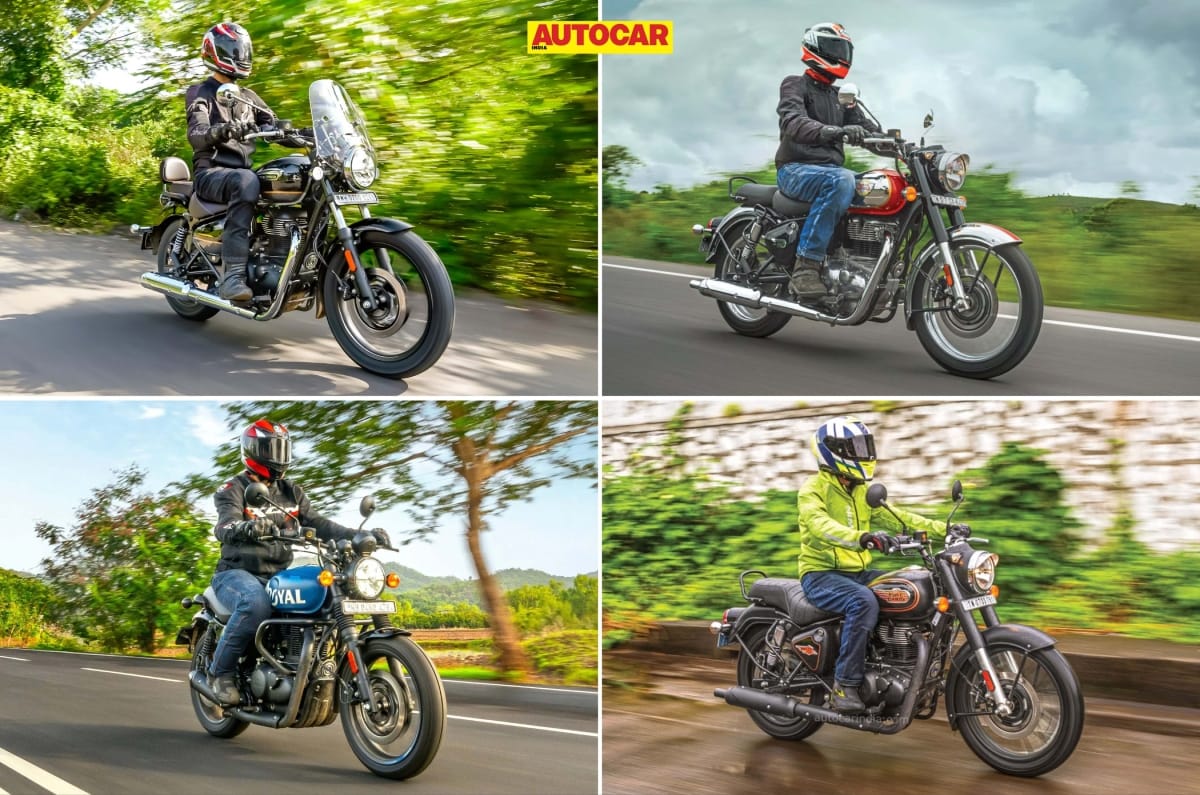
Collage of four RE 350 bikes

Royal Enfield’s 350cc J-platform is the thumping heart behind a significant part of the company’s sales. To put things into perspective, Royal Enfield sold over a million motorcycles between April 2025 and February 2026. Of those 10.07 lakh units, 9.31 lakh – or 92 percent – came from its 350cc range.

These bikes – the Classic 350, Hunter 350, Meteor 350, Bullet 350 and Goan Classic 350 – need no introduction. While they’re all based on the same platform, they differ in design, purpose and the riding experience they offer. If you’re in the market for one, this guide should help you figure out which suits you best.

Royal Enfield 350cc platform details

All five bikes share the same engine with identical output figures.

All five motorcycles are powered by the same 349cc, single-cylinder, air/oil-cooled engine producing 20.2hp at 6,100rpm and 27Nm at 4,000rpm, paired with a 5-speed gearbox. Over the past few months, Royal Enfield has rolled out a slip-and-assist clutch across most of the range. The Hunter 350, Meteor 350, Goan Classic 350 and Classic 350 have all received it, leaving the Bullet 350 as the only model yet to get the update.

The main chassis architecture is also shared across the lineup, comprising a twin-downtube frame suspended by conventional telescopic forks at the front and twin shock absorbers at the rear. However, each model features its own suspension tuning and ergonomics.

Royal Enfield Hunter 350

Royal Enfield Hunter 350 price starts at Rs 1.38 lakh.

The Hunter 350 is Royal Enfield’s most affordable and lightest 350, designed as a neo-retro roadster that feels most at home in the city. With a kerb weight of 181kg, it’s at least 10kg lighter than its siblings, making it easier to handle and more manageable in traffic. A slip-and-assist clutch, along with revised rear springs and seat foam introduced as part of a 2025 update, also make it more comfortable and easier to ride in urban conditions.

The Hunter range has since expanded with a new Base Premium variant at Rs 1.51 lakh, which slots between the entry-level Base at Rs 1.38 lakh and the higher variants. It adds alloy wheels with tubeless tyres and a more powerful headlight over the base model, while retaining single-channel ABS and a rear drum brake. Two new colour options – Moonshot White and Mumbai Yellow – have also been introduced on the top variant, which is now priced at Rs 1.71 lakh. If you’re looking for a lightweight, city-friendly Royal Enfield, the Hunter 350 is arguably your best pick.

Also see:

2025 Royal Enfield Hunter 350 review: Meaningful changes

Royal Enfield Meteor 350

Royal Enfield Meteor 350 price starts at Rs 1.91 lakh.

The Meteor 350 is Royal Enfield’s cruiser in the 350cc range, featuring forward-set footpegs and an accessible 765mm seat height. It now comes with Tripper navigation, LED headlights, LED turn indicators and a slip-and-assist clutch as standard across all variants. At 191kg, it’s on the heavier side, but we’ve found that its weight is well managed and doesn’t make the bike difficult to ride or manoeuvre.

The Meteor 350 is available in multiple variants with either alloy or wire-spoke wheels, with prices ranging from Rs 2 lakh to Rs 2.21 lakh for the Supernova Black.

Also see:

2025 Royal Enfield Meteor 350 review: Small updates, better to ride

Royal Enfield Bullet 350

Royal Enfield Bullet 350 price starts at Rs 1.62 lakh.
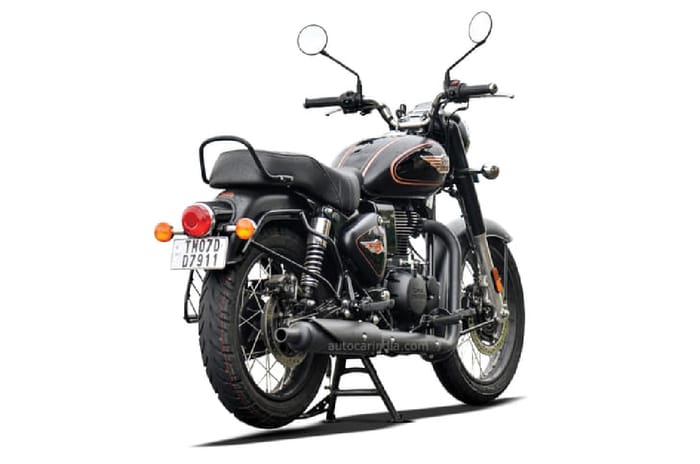
The Bullet is arguably the quintessential Royal Enfield, most faithfully embodying the brand’s core identity. Decades on, it continues to carry distinctive design elements like the single seat and iconic silhouette, although the latest iteration has grown increasingly similar to the Classic 350. The Bullet 350 is also now the only model in Royal Enfield’s 350cc lineup yet to receive a slip-and-assist clutch.

In terms of the riding experience, the Bullet 350 feels very similar to the Classic. The key differences lie in its slightly taller handlebar, which offers a more upright riding position, and a seat with extra padding for improved comfort. The base variant features a single-tone paint scheme, single-channel ABS and generous chrome detailing, while the top-spec version gets dual-channel ABS along with a blacked-out engine and exhaust. It is priced at Rs 2.10 lakh.

Also see:

Royal Enfield Bullet 350 review: subtle differences

Royal Enfield Classic 350

Royal Enfield Classic 350 price starts at Rs 1.81 lakh.
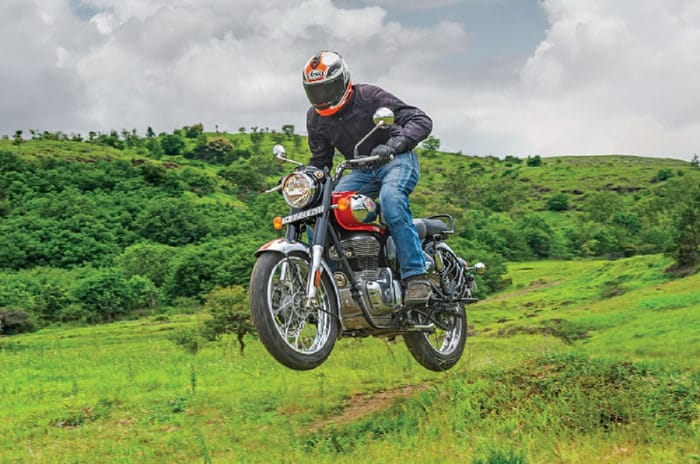
The Classic remains Royal Enfield’s bestselling and most important motorcycle. It is also the latest model to receive a slip-and-assist clutch and a faster USB Type-C charging port, although both features are exclusive to the dual-channel ABS variants. The base single-channel Redditch Red continues unchanged at Rs 1.87 lakh. Two colour options – Halcyon Black and Jodhpur Blue – have also been discontinued.

It offers a neutral, upright riding position with handlebars within easy reach and footpegs positioned directly beneath the rider. Its 19-inch front and 18-inch rear wheel combination makes it slightly less nimble than the Hunter and Meteor, both of which use smaller wheels. Prices for the Classic 350 range go up to Rs 2.24 lakh.

Also see:

Royal Enfield Classic 350 review, road test

Royal Enfield Goan Classic 350

Royal Enfield Goan Classic 350 price starts at Rs 2.18 lakh.
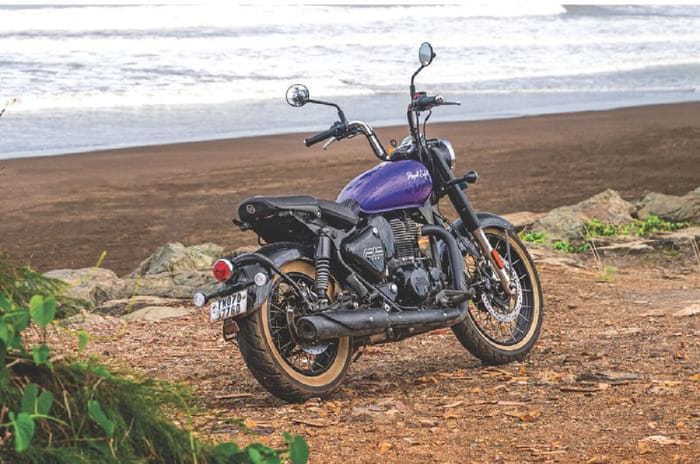
Simply put, the Goan Classic 350 is a custom-styled motorcycle you can buy straight from the showroom. With its ape-hanger handlebars and bobber-inspired design, it’s easily the most distinctive – and the most expensive – bike in the 350cc lineup.

Compared to the standard Classic 350, the Goan Classic sits lower with a 750mm seat height, features forward-set footpegs borrowed from the Meteor, and uses tall mini ape-hanger handlebars that completely transform the riding experience. Other standout styling elements include a 16-inch rear wheel and white-wall tyres mounted on tubeless wire-spoke rims. Fit and finish are also a step above the rest of the lineup, with details such as the premium metal switch cubes borrowed from Royal Enfield’s 650cc models. The Goan Classic is available in four colour schemes: Purple Haze and Shack Black are priced at Rs 2.25 lakh, while Trip Teal and Rave Red cost Rs 2.28 lakh.

Also see:

Royal Enfield Goan Classic 350: Grace over pace

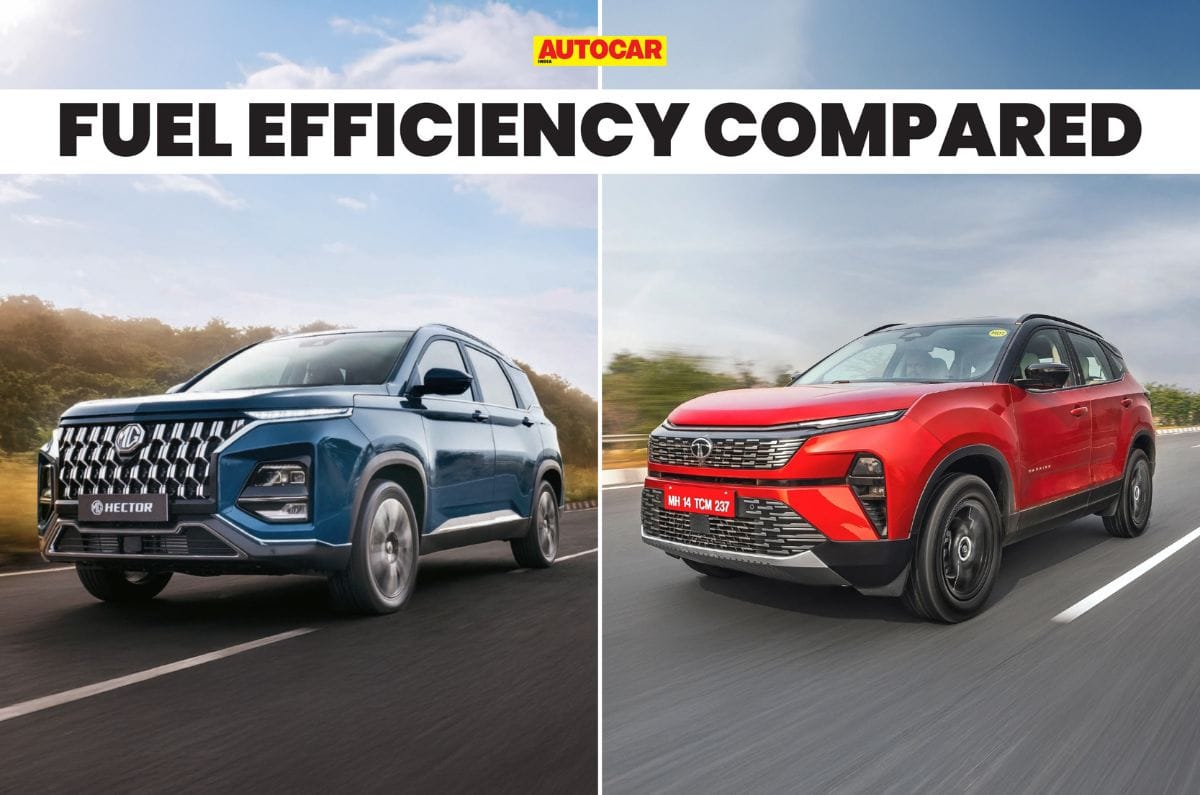
Tata Harrier vs MG Hector petrol automatic: Real world mileage compared

Tata Harrier vs MG Hector turbo-petrol automatic mileage comparison

Since its introduction in 2019, the MG Hector has been available with a turbo-petrol engine with manual and CVT automatic transmissions. However, it wasn’t until January 2026 that Tata Motors equipped the Harrier with a turbo-petrol engine. Where MG offers the Hector in 7-seater configurations, the Tata Harrier petrol only offers seating for 5 occupants. That said, let’s find out which SUV delivers better fuel economy.

Explore full specs, features and a price breakdown in our Harrier vs Hector comparison.

Tata Harrier vs MG Hector turbo-petrol automatic: Specifications

The Harrier petrol has the clear power advantage over the equivalent Hector

Tata Harrier vs MG Hector turbo-petrol automatic: Specifications


Tata Harrier

MG Hector

Engine

4 cyl, petrol

4 cyl, petrol

Displacement (cc)

1498

1451

Power (hp)

170 (5,000rpm)

143 (5,200rpm)

Torque (Nm)

280 (1,750-3,500rpm)

250 (3,000rpm)

Gearbox

6-speed automatic

Continuously variable transmission

Fuel tank (litres)

50

60

While both SUVs are powered by 1.5-litre direct-injection turbo-petrol engines, the Harrier’s unit is ever so slightly bigger (by 47cc). It backs up this size advantage by developing 27hp and 30Nm more than the engine under the MG Hector’s bonnet. The Tata Harrier’s higher torque output is also available across a wide RPM band, with peak power coming in at 200rpm lower in the engine’s rev range when compared to the Hector.

A key differentiator here is that the Tata Harrier petrol is paired with a 6-speed torque converter automatic gearbox, while the MG Hector makes use of a CVT (continuously variable transmission). The latter also features a bigger fuel tank, holding 10 litres more petrol.

Tata Harrier vs MG Hector turbo-petrol automatic: Real-world fuel efficiency

The Hector’s more efficient in the city, but the Harrier manages a higher average economy

Tata Harrier vs MG Hector turbo-petrol automatic: Real-world mileage


Tata Harrier

MG Hector

Tested city mileage (kpl)

6.17

8.30

Tested highway mileage (kpl)

12.49

9.60

Tested average mileage (kpl)

9.33

8.95

During our time testing it in the real world, the MG Hector’s mileage figures remained in the single digits. In the city, the Hector turbo-petrol turned out to be 2.13kpl more frugal than the Tata Harrier. Out on the open highway, it was the Tata Harrier turbo-petrol that fared better by achieving a fuel economy in the double digits – it was 2.89kpl higher than the Hector.

A wider peak torque spread of the Tata SUV means that its engine is less stressed at higher speeds, one of the factors explaining its better mileage on the highway. On the other hand, if a majority of your drives are in a city environment, The Hector’s CVT gearbox helps it sip less fuel in the city, given this design’s inherent efficiency advantages at lower speeds. Unfortunately, the MG SUV’s average mileage is lower than the Harrier’s despite its lower kerb weight and the CVT. Both cars get an Eco drive mode, but neither features an automatic engine stop-start system.

Tata Harrier vs MG Hector turbo-petrol automatic: Prices

Tata Harrier vs MG Hector turbo-petrol automatic: Prices


Tata Harrier

MG Hector

Price range (in Rs, lakh)

17.70-24.25

17.00-20.00

There are six trim levels of the Tata Harrier petrol with the automatic gearbox, and all of them are priced higher than their MG Hector counterparts. At the bottom end, the Hector CVT is Rs 70,000 cheaper than the entry-level Harrier petrol automatic. For those wishing to get all the bells & whistles that are only available in the range-topping trims of each SUV, the top-end Hector CVT is Rs 4.25 lakh less expensive than its equivalent Tata Harrier petrol variant.

Autocar India’s fuel efficiency testing

Before our real-world fuel efficiency tests, we fill our test cars’ tanks to the brim and maintain tyre pressures based on the manufacturer’s recommendations. These cars are driven in fixed city and highway loops in and around Navi Mumbai, and we maintain certain average speeds. Throughout the tests, there is only one person in each car, running the air conditioner and other electricals, such as the audio system, indicators and wipers, when required, just like a regular user would. Periodic driver swaps further neutralise variations in driver patterns. At the end of each cycle, we calculate efficiency by filling the tanks to full again.

Prices are ex-showroom, India.

Also read

Renault Duster 1.3L turbo MT vs DCT: Performance compared

Mahindra XUV 7XO vs Tata Harrier petrol AT: Real world mileage compared

Hero Xoom 160: For the journey, not the detour

Hero Xoom 160: For the journey, not the detour

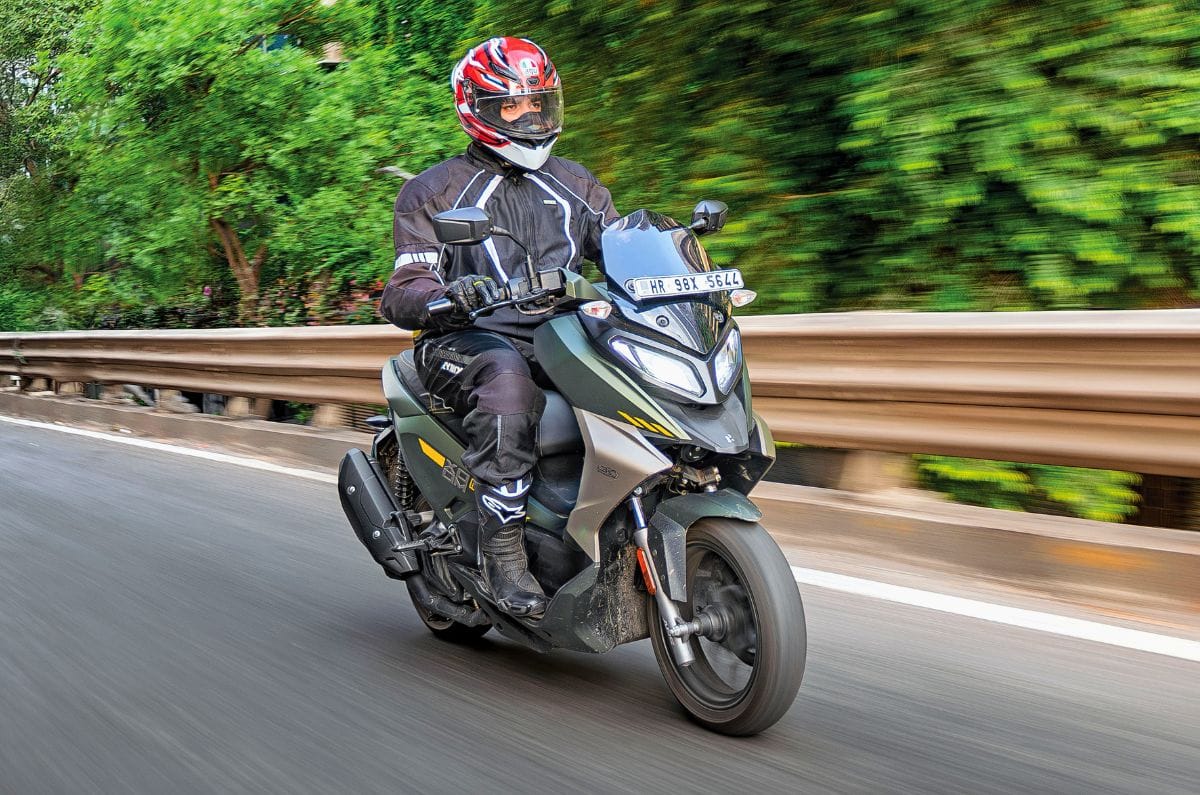
The Hero Xoom 160 is unlike anything else currently sold in India. Styled like an adventure scooter and borrowing elements from European maxi-scooters, it aims to offer more space, comfort and touring ability than a conventional scooter. After spending extended time with it in Mumbai, it’s clear that Hero has got some aspects very right, but a few key areas stop it from being as convincing as its styling suggests.

Xoom 160 Design and Practicality – 8/10

The Xoom 160 stands out with its ADV-styling

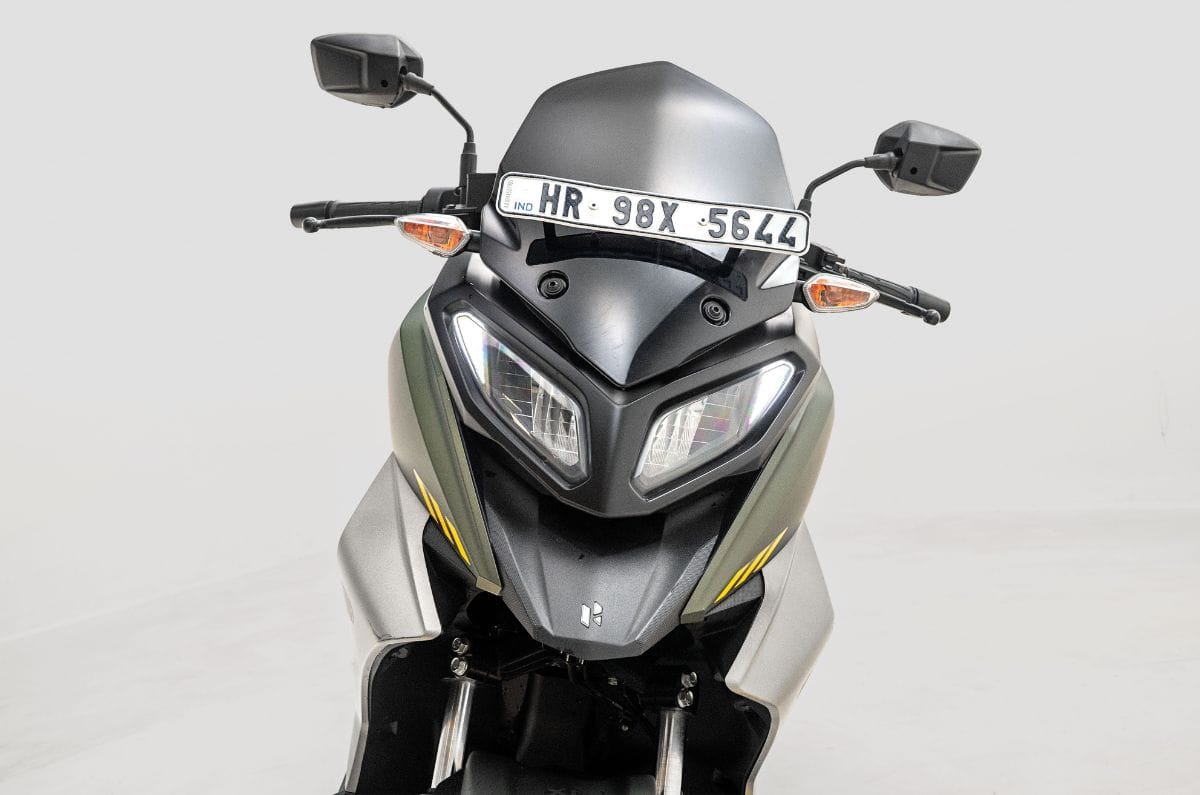
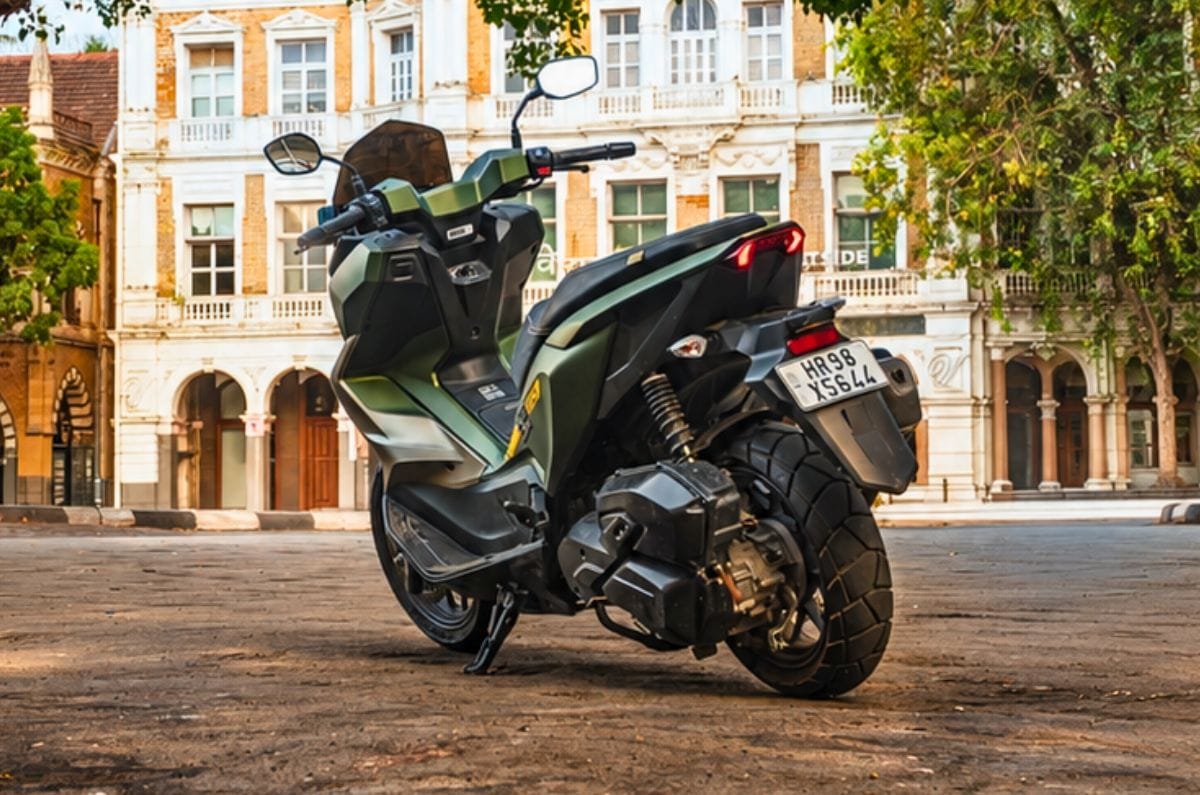
The Xoom 160 makes a strong first impression. From its prominent front beak and block-pattern tyres to the sharp twin-LED headlamp, everything about the scooter projects an adventure-inspired image. It also has genuine road presence and feels noticeably larger than a conventional scooter, one that makes passersby give it a second glance.

The front beak with twin headlights look striking

Hero has made good use of that size. There is a practical front storage cubby for everyday items, while the underseat compartment offers 22 litres of storage and can accommodate certain full-face helmets. Taller riders will also appreciate the generous knee room, which makes the riding position feel much less restrictive than the Aerox 155.

Xoom 160 Features and Quality – 6/10

The instrumentation and switchgear are big letdowns in an overall strong package. 

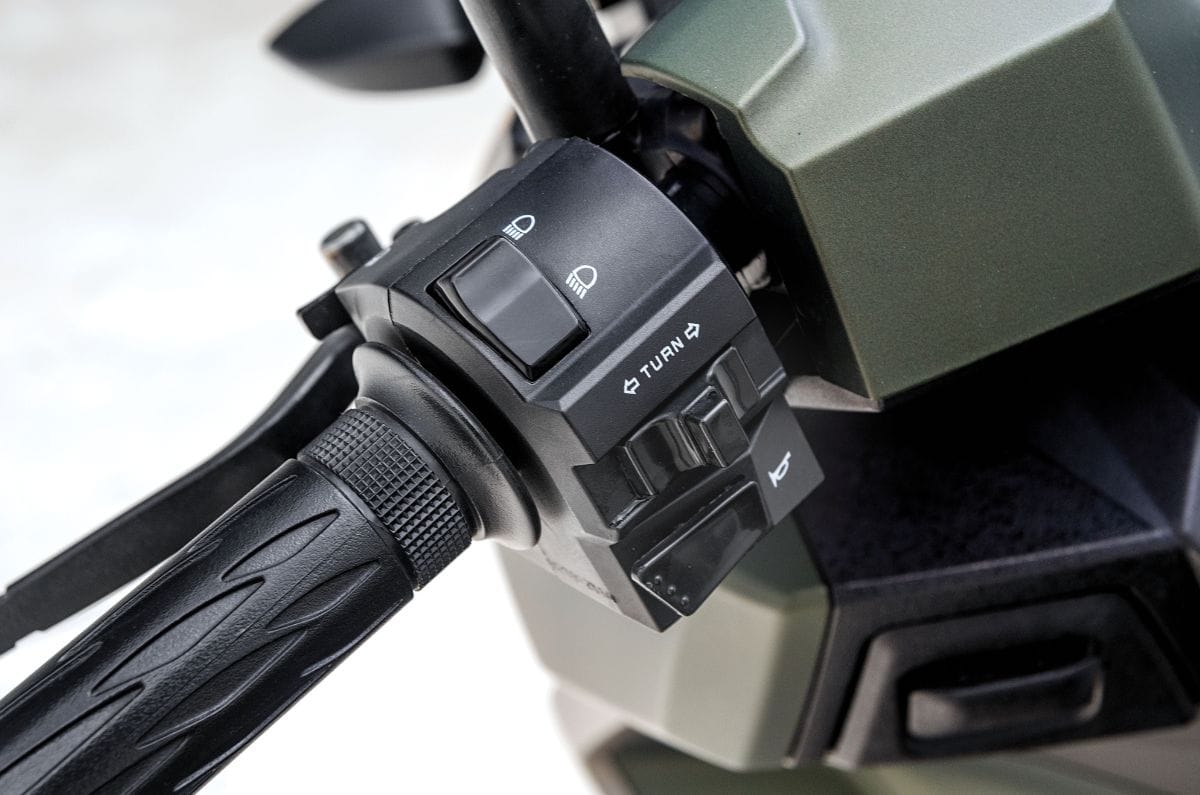
One area where the Xoom 160 already feels dated is its instrumentation and switchgear. Despite being Hero’s flagship scooter, the switchgear lacks the premium feel and even other newer Hero products such as the Xoom 125 have nicer switchgear.

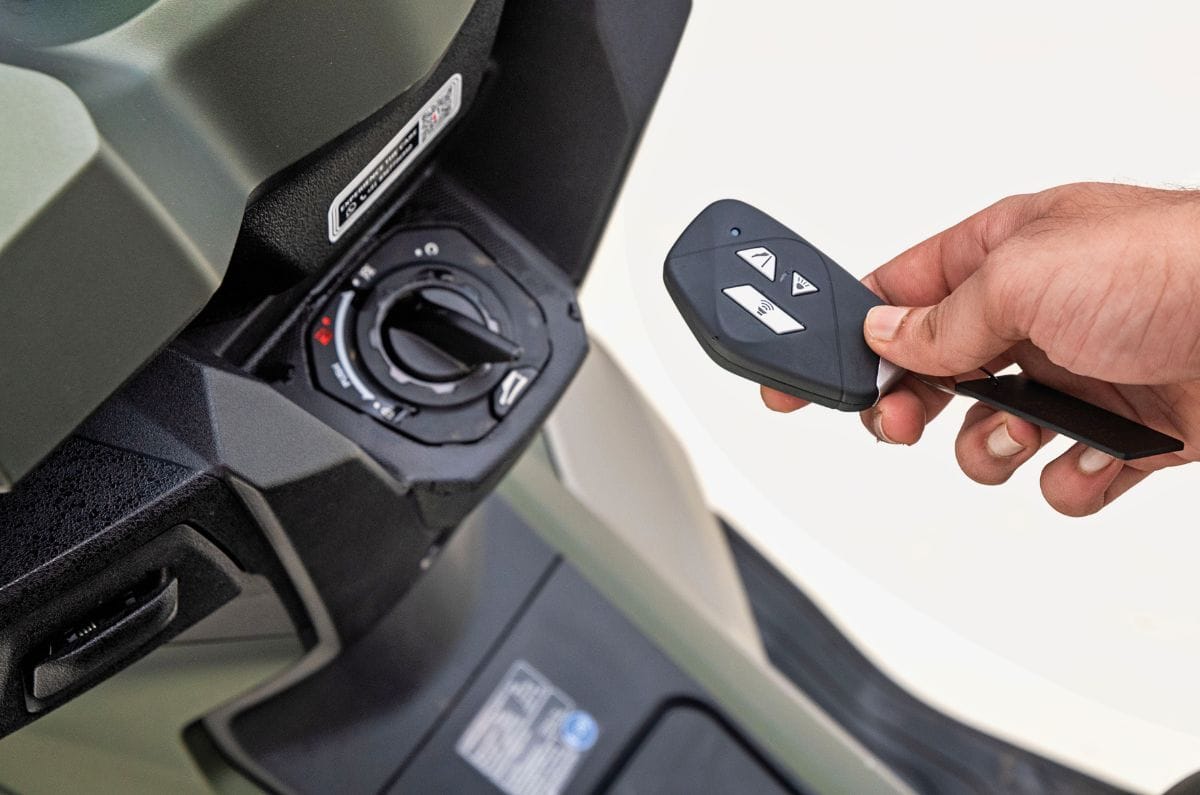
The LCD display offers Bluetooth connectivity and all the expected information, but it is small and not particularly easy to read on the move. The scooter does get keyless operation and a remote seat-release function, both of which add a degree of convenience and premium feel.

The overall feature distribution is somewhat puzzling as it has been with most Hero’s. Another example of this is how the smaller Xoom 125 receives segment-first, sequential LED indicators, while the more expensive Xoom 160 makes do with conventional bulb indicators.

Xoom 160 Performance and Refinement – 8/10

The performance isn’t as exciting as its chief rival but the engine is superbly refined.

The key fob looks and feels premium, unlike the switch cubes.

The 156cc liquid-cooled, four-valve engine is one of this scooter’s highlights. It is smooth, refined and delivers its performance in a very linear manner.

Unlike the Yamaha Aerox 155, the Xoom 160 doesn’t feel particularly sporty or aggressive. Instead, it focuses on refinement and ease of use. In our performance tests, the Aerox reaches 80kph quicker, but the gap disappears by the time both scooters reach 100kph. Considering the Xoom’s substantial weight disadvantage, that is an impressive result. An excessively long accelerator twist action does impact the engine’s effortlessness, though.

The engine also remains smooth at higher speeds and feels well suited to long-distance riding. Talking about long-distance riding, Hero will also sell you a top-box.

Xoom 160 Ride and Handling – 7/10

Once leaned in, the Xoom holds its line well through the corners.

At 142kg, the Xoom 160 is around 16kg heavier than the Aerox 155, and that weight is impossible to ignore in the city. Filtering through traffic, changing direction and negotiating corners all require more effort than on a conventional scooter.

Switchgear looks a generation older

Although, the weight does bring in some benefits. The scooter feels planted and stable at speed, and once leaned into a corner, it holds its line confidently. However, it never feels particularly eager or agile and is more comfortable cruising than being ridden aggressively. The block-pattern tyres offer adequate dry-weather grip, although wet-weather confidence could be better.

Xoom 160 Comfort and suspension setup – 6/10

The seat height is low enough to not intimidate shorter riders.

The riding position is comfortable and accommodating. The 787mm seat height is approachable, while the floorboard on either side of the underspine allows riders to either sit conventionally or stretch their legs forward in typical maxi-scooter fashion.

However, the suspension does not live up to the promise of the styling. Ride quality is noticeably firmer than expected, particularly on broken roads and this was something the lighter riders in our office felt more acutely. While the seat cushioning is excellent and helps improve long-distance comfort, it cannot completely mask the stiff suspension setup. A more absorbent suspension tune and rear preload adjustability would have significantly improved the overall experience.

Xoom 160 Fuel efficiency and braking – 7/10

The Xoom returned an average fuel economy of 38.7kpl

The Xoom’s 7-litre fuel tank – the largest on any Indian-made scooter – enhances its touring credentials. Highway comfort is also good, with the engine feeling relaxed and vibrations remaining well controlled at cruising speeds.

In our instrumented fuel-efficiency tests, the Xoom 160 returned 38.7kpl overall, with figures of 39.6kpl on the highway and 37.9kpl in the city. These are respectable numbers, although not class-leading.

Interestingly, the scooter’s fuel-efficiency display consistently showed figures that were nearly 10kpl lower than what we achieved during testing.

Braking performance is reassuring and despite its weight, the Xoom sheds speed well. The 240mm front disc provides decent stopping power without feeling overly aggressive, while the ABS calibration remains unobtrusive.

Xoom 160 Price and Verdict – 7/10

At Rs 1.40 lakh, it costs Rs 3,000 less than the Base Aerox 155.

The Hero Xoom 160 is an interesting scooter because it attempts something genuinely different. It combines maxi-scooter proportions with adventure-inspired styling and delivers practicality and refinement 

However, the execution does not fully match the promise suggested by the design. The firm suspension, dated switchgear and missing features prevent it from becoming the complete package it could have been.

Even so, there is a lot to like here. The Xoom 160 is refined, spacious and priced at Rs 1.40 lakh, it is unlike anything else in the segment. Hero may not have extracted the full potential from the concept, but it has shown that there is room in India for a more convincing maxi-scooter in the future.

Jeep Wrangler Rubicon long term review, 27000km report

Jeep Wrangler long term review

Cross-town excursions in Mumbai need some planning in the Wrangler Rubicon. Will there be parking when I get there? Will I be allowed to park it myself rather than give it to a valet who might find the size and width intimidating? And most importantly: will the on- and off-ramps be wide enough to access the parking levels easily? A quick phone call to NMACC, the Ambani cultural center in BKC Mumbai, confirms all of the above. “Some of our parking spaces and access ramps have been designed to house the largest and widest luxury cars,” comes the polite answer, “and, of course, you can park yourself.”

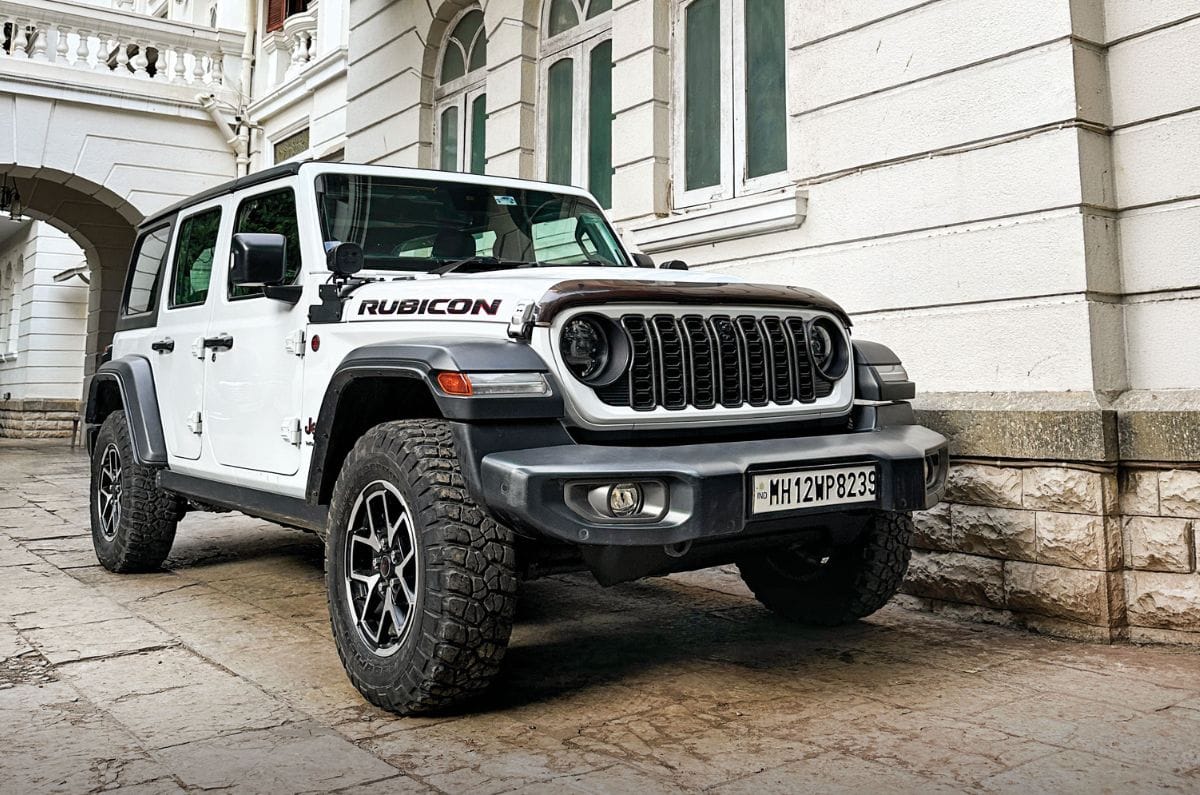
With its wheels pushed out and big plastic fenders, it’s pretty wide and, at times, is a squeeze.

The early morning trudge up along the coastal road brings its own set of challenges. While the wide, open vistas of the sea are an absolute treat, as is the road’s ability to shrink time and distance in the city, what you do have to contend with at highway speeds is the loud hum from the off-road tyres.

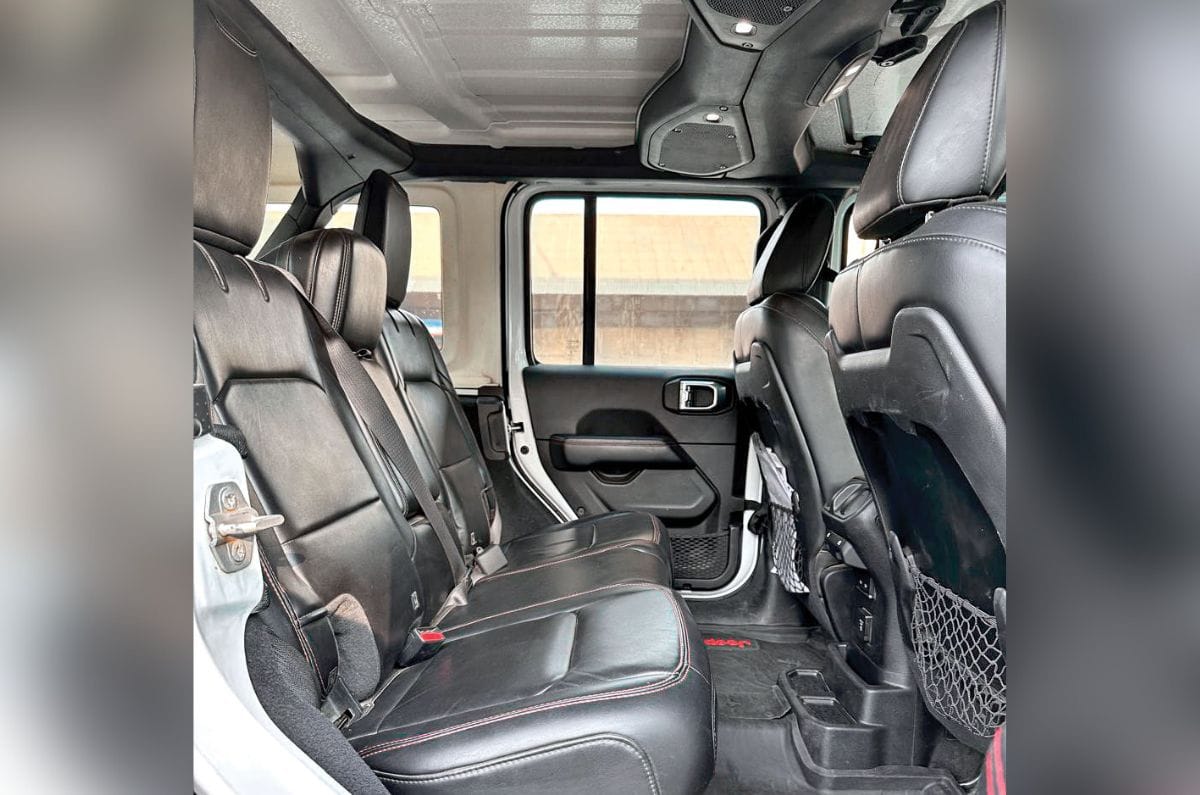
Not the best place for long drives as the seats are placed low and space is at a premium.

Apart from that, the Rubicon feels just ice cool to drive around. For one, it’s the real thing; a true icon with a direct link to the off-roader that started it all. And a real ‘tool’ of a car with genuine functionality. And that means something. To top it off, its proportions are seriously alluring, and Jeep has given this one a massive amount of embellishments to make it ‘pop.’ Talk about being eye candy, this off-roader gets more eyeballs and attention than the Maybachs and Range Rovers at NMACC. It’s tall, however, and I was worried about all the low ducting and plumbing in the parking lot, but the Rubicon managed just fine. 

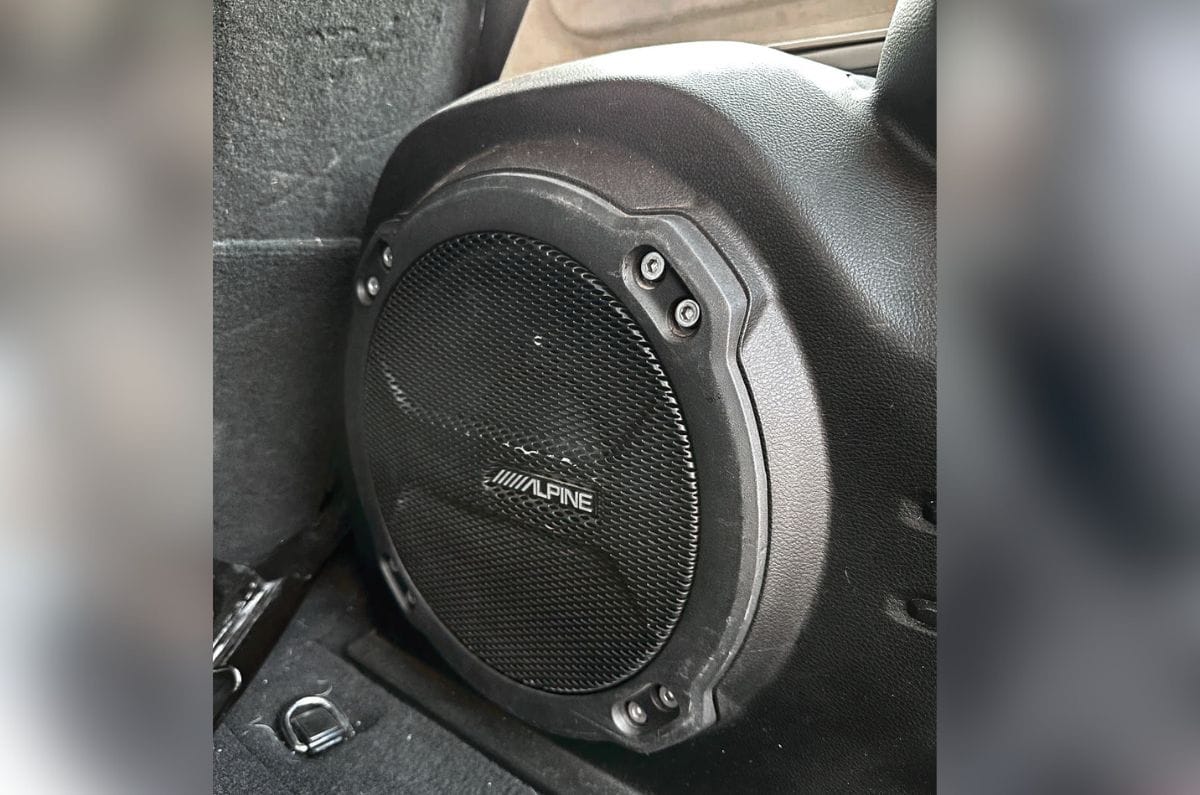
Subwoofer adds some nice thump to the audio system; plays loud even with roof off.

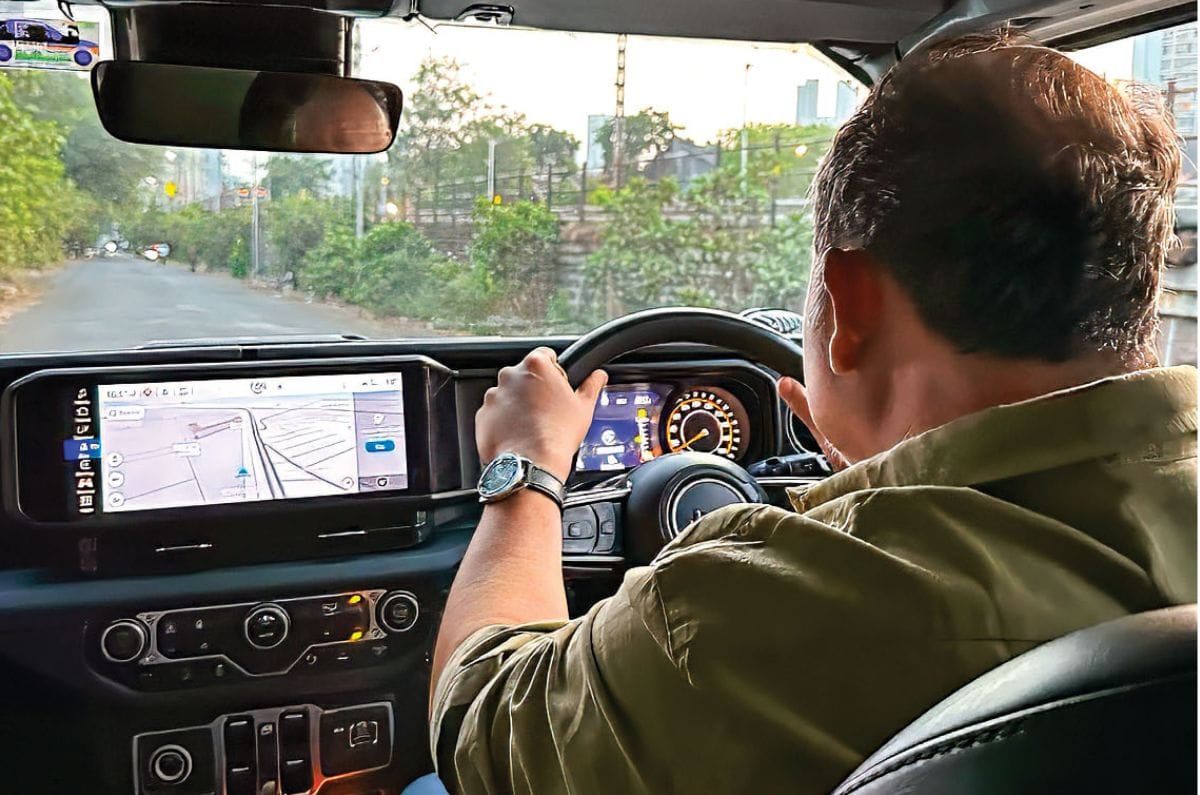
Also, after having driven it for a bit, the size isn’t as intimidating as it originally was. Sure, I still crane my neck to get a glimpse of the plastic fenders that stick out when parking, and I sometimes forget just how long it is when reversing into a tight slot, but otherwise, I’m much more comfortable with the size. And what makes it even more agreeable to drive in the city is its direct, meaty steering and the surprisingly strong responses from the 270hp engine. 

With a hefty right foot, the gearbox and turbo engine deliver a nice shove in the back.

The Rubicon is also unique in another way; you can remove all the doors, remove the roof, drop the windscreen and drive it around with as much of an open and airy feeling as a bike. And that’s just what we’ll be doing next, subsequently finding out how well the cabin gets along with the rain and, of course, what it’s like on a long off-road trail in the monsoon. That, and other fascinating stuff, coming up from the off-roader that started the SUV craze. 

Odometer 26,900km
Price Rs 68.31 lakh (ex-showroom)
Economy 8.0kpl
Maintenance CostNone
Faults None 

Rajesh Sharma: प्रभास स्टारर ‘फौजी’ के सेट पर बीमार पड़े राजेश शर्मा अस्पताल से हुए डिस्चार्ज, सामने आया हेल्थ अपडेट

Rajesh Sharma: प्रभास की आने वाली फिल्म ‘फ़ौजी’ की शूटिंग के दौरान कीड़े के काटने की घटना के कुछ दिनों बाद, अस्पताल से छुट्टी मिलने पर एक्टर राजेश शर्मा मुंबई स्थित अपने घर पर ठीक हो रहे हैं। हालांकि अनुभवी एक्टर की हालत ठीक बताई जा रही है और उम्मीद है कि वे जल्द ही काम पर लौटेंगे, लेकिन इस घटना को लेकर अलग-अलग बातें सामने आई हैं।

फेडरेशन ऑफ़ वेस्टर्न इंडिया सिने एम्प्लॉइज (FWICE) की ओर से दी गई जानकारी के मुताबिक, इलाज के बाद शर्मा घर लौट आए हैं और अभी ठीक हो रहे हैं। इस बात की पुष्टि करते हुए FWICE के प्रेसिडेंट बीएन तिवारी ने बॉलीवुड हंगामा को बताया, “राजेश शर्मा जी को हाल ही में अस्पताल से छुट्टी मिली है। वे अभी मुंबई में अपने घर पर ठीक हो रहे हैं। वे आने वाले दिनों में एक प्रोजेक्ट की शूटिंग के लिए विदेश भी जाने वाले हैं।”

हाल ही में, उनके पारिवारिक दोस्त और एक्टर सुदीपा चटर्जी ने बताया कि शर्मा की हालत ‘काफी बेहतर’ है और उनकी स्थिति पर लगातार नज़र रखी जा रही है। चटर्जी ने हिंदुस्तान टाइम्स को बताया, “अब वे थोड़े बेहतर हैं। किसी अनजान कीड़े के काटने की वजह से यह हुआ है; टेस्ट किए जा रहे हैं और उनकी हालत पर नज़र रखी जा रही है। इलाज चल रहा है और पिछले दो दिनों में वे काफी बेहतर हुए हैं।”

उन्होंने आगे कहा, “राजेश जी की मां बहुत बुज़ुर्ग हैं और उनकी बहन विदेश में थीं, इसलिए वे हमारे पारिवारिक दोस्त हैं। जब हमें इस बारे में पता चला, तो हम तुरंत अस्पताल पहुंचे और तभी मैंने अपना पहला बयान भी दिया।”

सुदीपा ने आगे बताया, “हैदराबाद से लौटने के बाद जब वे घर पर थे, तो उन्हें बुखार था। उन्हें लगा कि यह बुखार है या शायद मच्छर के काटने की वजह से हो सकता है, इसलिए वे घर आ गए। घर पर बेचैनी महसूस होने के बाद वे पास के अस्पताल गए, जहां उन्हें भर्ती कर लिया गया।”

शर्मा की सेहत से जुड़ी खबरें इस महीने की शुरुआत में तब सामने आईं, जब एक्ट्रेस और उनकी पारिवारिक दोस्त सुदीपा चटर्जी ने सोशल मीडिया पर एक बयान शेयर किया; हालांकि, बाद में उस बयान को हटा दिया गया। बयान में कहा गया था कि हैदराबाद के रामोजी फिल्म सिटी में ‘फ़ौजी’ की शूटिंग के दौरान एक्टर को किसी कीड़े ने काट लिया था। इसमें आगे बताया गया कि इस घटना के बाद उनकी हालत बिगड़ गई, जिसके बाद वे कोलकाता गए और इलाज के लिए ढाकुरिया के मणिपाल अस्पताल में भर्ती हुए।

हालांकि, ‘फौजी’ के मेकर्स ने ऐसी किसी घटना की जानकारी होने से इनकार किया है। ‘गुल्टे’ की एक रिपोर्ट के अनुसार, फिल्म की टीम के सदस्यों ने बताया कि राजेश ने अपनी तय शूटिंग लगभग एक हफ़्ते पहले ही पूरी कर ली थी और वे सेट से जा चुके थे। उन्होंने कहा कि उन्हें कीड़े के काटने की घटना के बारे में कोई जानकारी नहीं थी।

एक्टर अक्षय कुमार, जिन्होंने ‘भूत बंगला’ में शर्मा के साथ काम किया है, ने भी इस खबर पर प्रतिक्रिया दी और उनके जल्द ठीक होने की कामना की। X पर एक पोस्ट शेयर करते हुए उन्होंने लिखा, “शूटिंग के दौरान कीड़े के काटने के बाद मेरे प्यारे दोस्त राजेश की सेहत के बारे में सुनकर बहुत चिंता हुई। उम्मीद है कि महादेव उन्हें जल्द और पूरी तरह से ठीक कर देंगे। जल्दी ठीक हो जा यार, अभी साथ बैठकर बहुत हंसना है।”

राजेश शर्मा या उनके प्रतिनिधियों ने अभी तक इस घटना पर कोई आधिकारिक बयान जारी नहीं किया है। शर्मा ने कई सालों में बेहतरीन काम किया है। उन्होंने ‘खोसला का घोसला’, ‘इश्किया’, ‘नो वन किल्ड जेसिका’, ‘चिल्लर पार्टी’, ‘द डर्टी पिक्चर’, ‘स्पेशल 26’, ‘तनु वेड्स मनु रिटर्न्स’, ‘बजरंगी भाईजान’, ‘एम.एस. धोनी: द अनटोल्ड स्टोरी’, ‘टॉयलेट: एक प्रेम कथा’, ‘इंडियाज़ मोस्ट वांटेड’ और ‘भूत बंगला’ जैसी फिल्मों में शानदार अभिनय किया है।

Nissan Gravite petrol MT real world fuel economy tested, explained

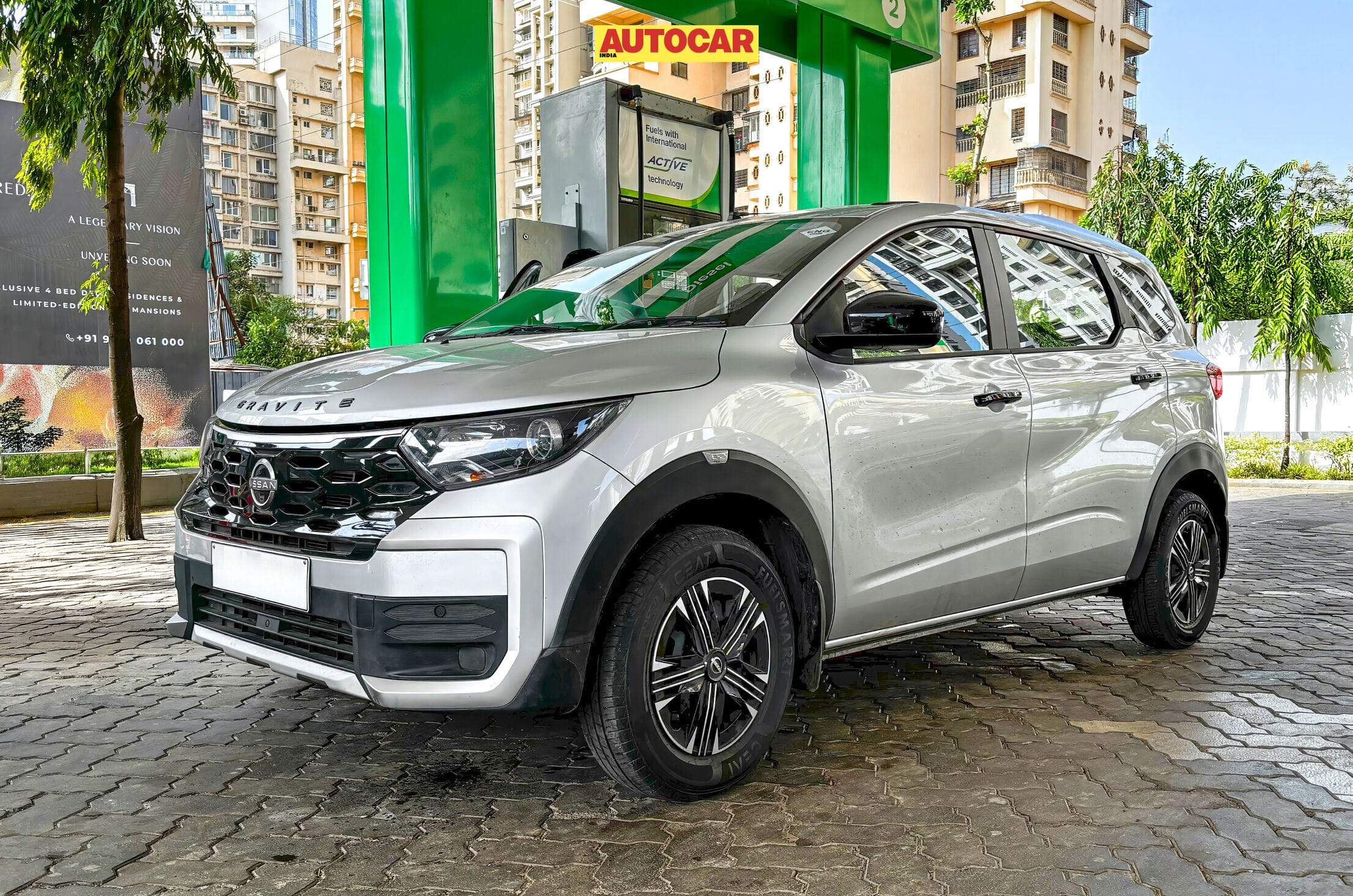
nissan gravite at fuel station

The Gravite is essentially Nissan’s version of the Renault Triber, with some minor cosmetic tweaks. Apart from the Renault Triber, it is the only three-row MPV under 4-meters and it’s priced from Rs. 5.73 lakh (ex-showroom). We’ve put the Nissan Gravite manual through our instrumented real-world tests to see how efficient it really is.

  1. Misses an auto engine start-stop feature
  2. Has a claimed fuel efficiency of 19.3kpl
  3. Kerb weight is a light 988kg

Nissan Gravite petrol MT real-world mileage

Gets a 72hp 1.0-litre 3-cyl NA engine

Powering the Gravite is 1.0-litre, three-cylinder, naturally-aspirated petrol engine (BR10), which is also offered with the Magnite, and it makes 72hp and 96Nm. It is offered with a 5-speed manual and a 5-speed AMT automatic, the former of which we’ve tested here.

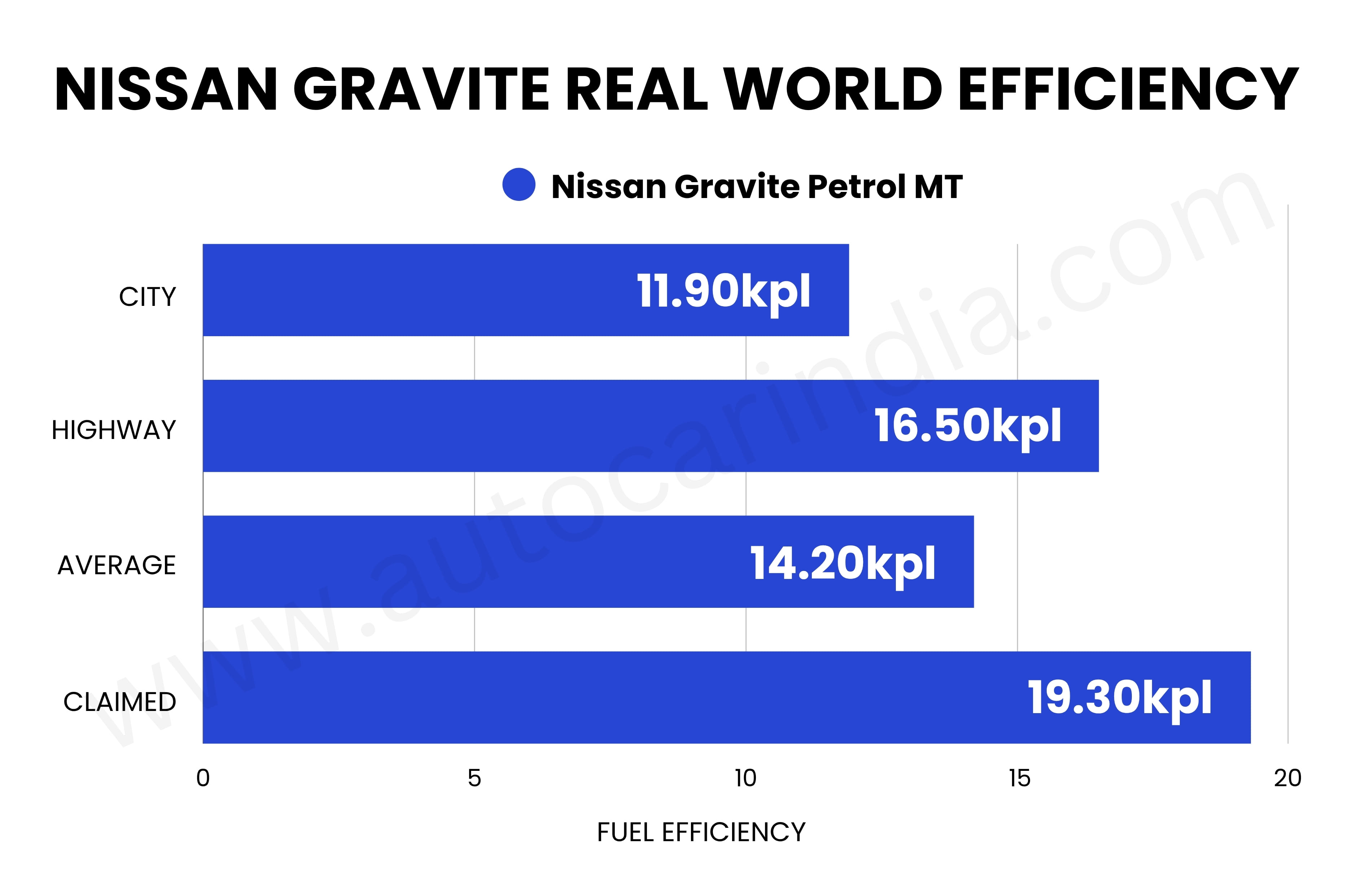
In our real-world tests, the Nissan Gravite manual returned 11.9kpl in the city and 16.5kpl on the highway, for an overall average efficiency of about 14.2kpl. While the city efficiency is decent, an auto engine start-stop feature would have boosted it further. Thanks to the taller 4th and the 5th gears, the highway efficiency is quite impressive. Ambient temperatures were also above 30degC throughout our test which affected the efficiency.

With an overall average fuel efficiency of 14.2kpl and a 40-litre fuel tank in the Gravite, one can expect a real-world range of around 560km on a tankful of petrol.

Autocar India’s fuel-efficiency testing

Before conducting our real-world fuel-efficiency tests, we fill our test cars’ tanks to the brim and maintain tyre pressures based on the manufacturer’s recommendation. These cars are then driven on fixed city and highway loops in and around Navi Mumbai, and we maintain certain average speeds. Throughout the tests, the aircon is set to fan speed 2 with temperature dialed to the lowest position, and other electricals, such as the audio system, indicators and wipers, when required – just as a regular user would. Periodic driver swaps further neutralise variations in driver patterns. At the end of each cycle, we calculate efficiency by filling the tanks to full again.

Kia Syros 1.0 turbo MT vs DCT: Real world mileage compared

Kia Syros 1.0 turbo MT vs DCT: Real world mileage compared

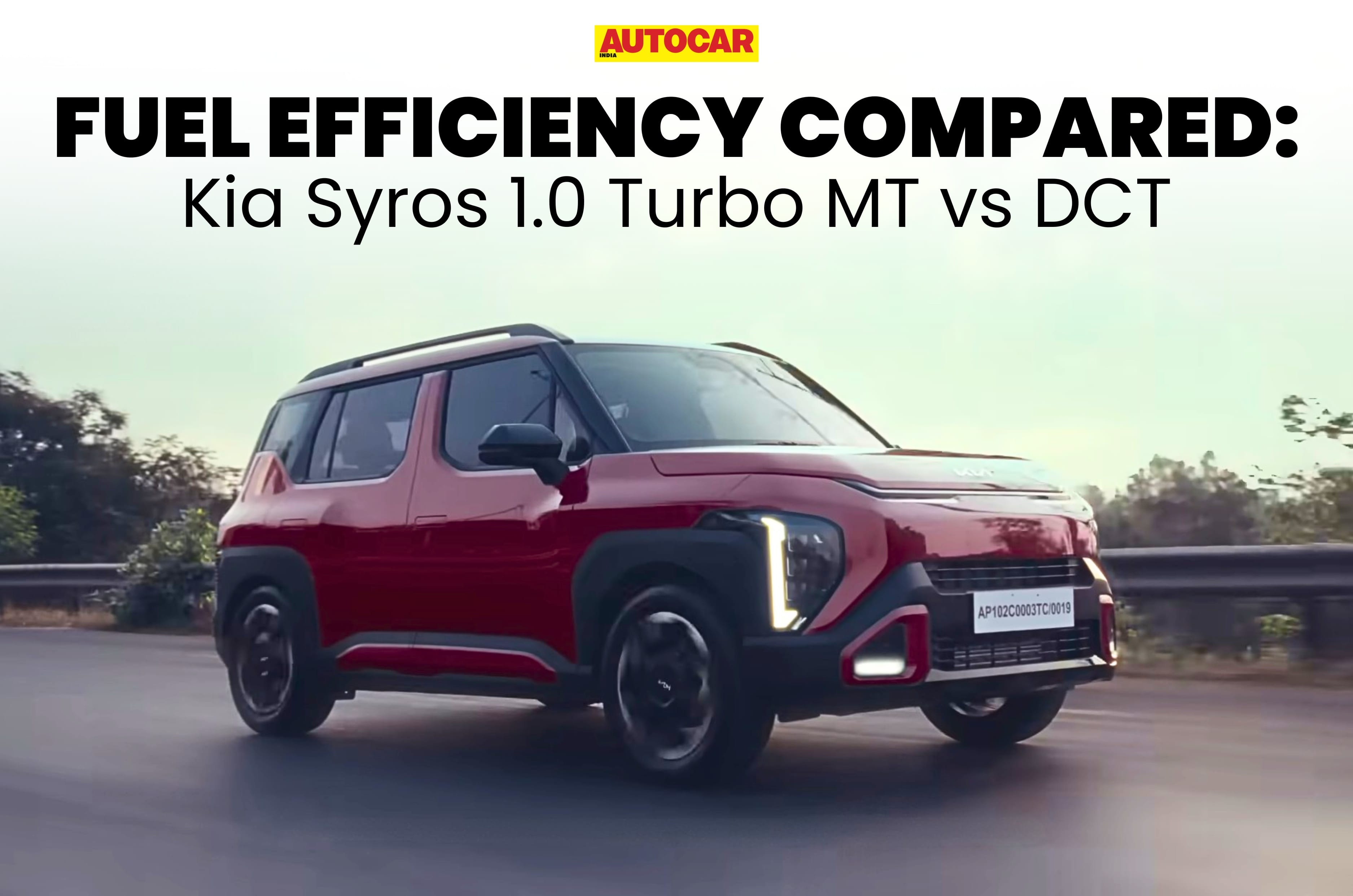
The Kia Syros is a compact SUV that is positioned between the Sonet compact SUV and the Seltos midsize SUV. It is offered with a 1.0-litre turbo-petrol and 1.5-litre diesel engine options. Among these, the turbo-petrol engine comes with manual and DCT options, with claimed fuel efficiency of up to 18.2kpl. But which of these two powertrain options offers more real-world mileage? Let’s find out.

Kia Syros 1.0L turbo-petrol MT vs DCT: Specifications and price

The Syros turbo MT’s top-end price is similar to the DCT’s starting price

Kia Syros 1.0L turbo-petrol MT vs DCT: Specifications and price


Syros 1.0TP MT

Syros 1.0TP DCT

Engine

3-cyl, turbo-petrol

3-cyl, turbo-petrol

Displacement (cc)

998

998

Power (hp)

120

120

Torque (Nm)

172

172

Gearbox

6-speed MT

7-speed DCT

Fuel tank capacity (litres)

45

45

Claimed mileage (kpl)

18.2

17.68

Price range (Rs, lakh)

8.42-12.02

11.96-15

With a total output of 120hp and 172Nm, the Syros has one of the most potent turbo-petrol engines in the segment. It is available with either a 6-speed manual or a 7-speed DCT, with the former claiming to be the more frugal option. The manual version is more affordable than the DCT, and interestingly, the top-end manual’s price is just Rs 6,000 more than the entry-spec DCT variant.

Kia Syros 1.0L turbo-petrol MT vs DCT: Real-world fuel efficiency

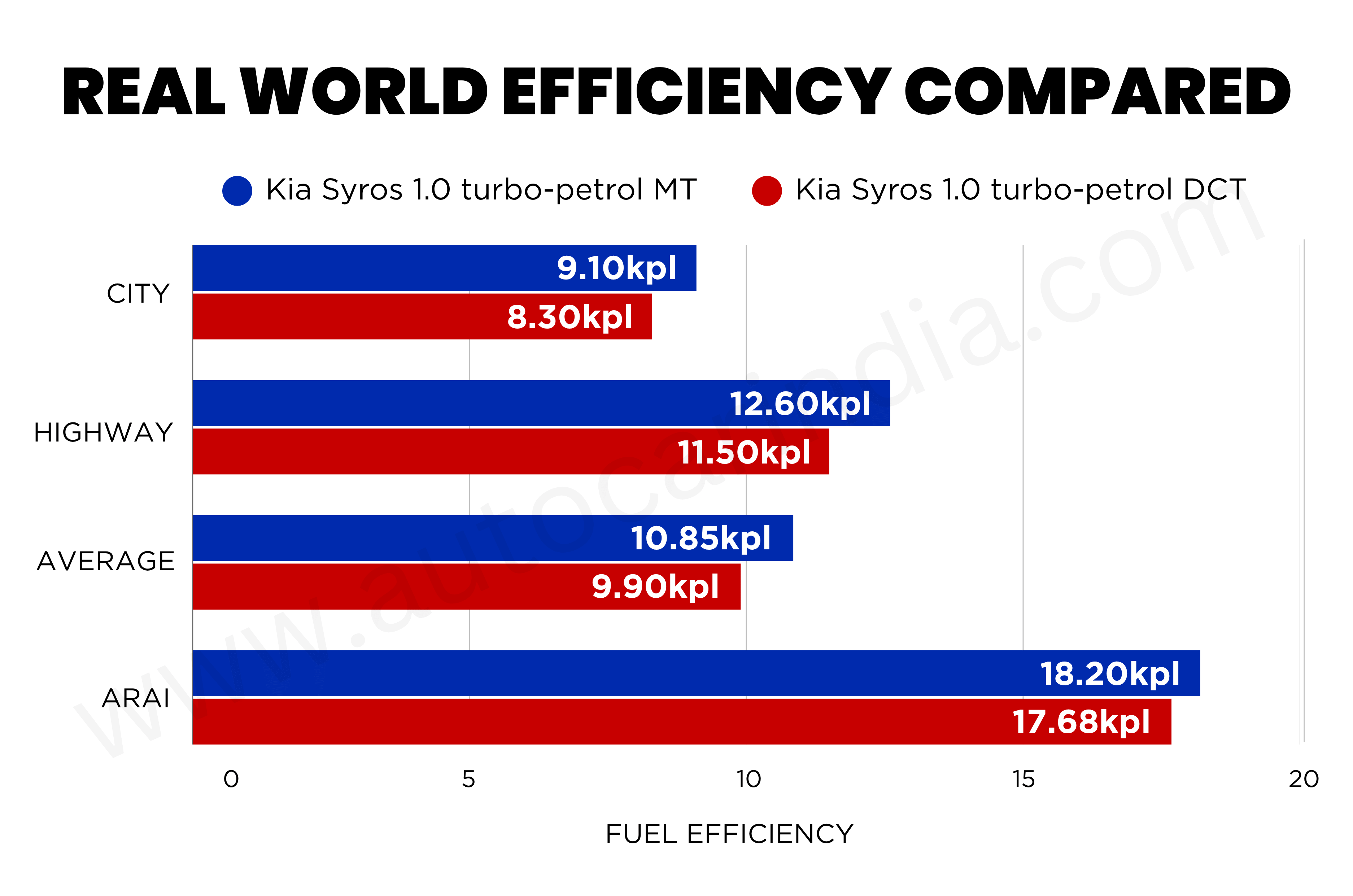
The manual is almost 1kpl more frugal than the DCT

Kia Syros 1.0L turbo-petrol MT vs DCT: Acceleration from rest (in seconds)


Syros 1.0TP MT

Syros 1.0TP DCT

Tested city mileage (kpl)

9.10

8.30

Tested highway mileage (kpl)

12.60

11.50

Tested average mileage (kpl)

10.85 

9.90

In our real-world tests, we found that the manual version was more frugal than the DCT version in both city and highway conditions by 0.81kpl and 1.1kpl, respectively. This results in the Syros turbo-petrol manual being overall 0.95kpl more fuel efficient than the DCT version. 

Autocar India’s fuel efficiency testing

Before our real-world fuel efficiency tests, we fill our test cars’ tanks to the brim and maintain tyre pressures based on the manufacturer’s recommendations. These cars are driven in fixed city and highway loops in and around Navi Mumbai, and we maintain certain average speeds. Throughout the tests, there is only one person in each car, running the air conditioner and other electricals, such as the audio system, indicators and wipers, when required, just like a regular user would. Periodic driver swaps further neutralise variations in driver patterns. At the end of each cycle, we calculate efficiency by filling the tanks to full again.

Prices are ex-showroom, India.

‘हर्निया की सर्जरी के लिए 11.04 लाख रुपये…’, मरीज ने शेयर किया मुंबई के अस्पताल का बिल, लोगों के उड़े होश

अस्पताल में चार दिन रहना…, एक आम सर्जरी… और 11 लाख रुपये से ज्यादा का बिल। मुंबई के एक अस्पताल में हर्निया की सर्जरी के लिए एक मरीज द्वारा 11.04 लाख रुपये चुकाने का दावा करने वाली एक वायरल पोस्ट ने बहस छेड़ दी है। इस दावे ने भारत के मेट्रो शहरों में हेल्थकेयर की बढ़ती लागत पर सवाल खड़े कर दिए हैं।

यह चर्चा तब शुरू हुई जब X यूजर निखिल झा ने एक पोस्ट शेयर किया, जिसमें दावा किया गया कि उनके एक फॉलोअर की मुंबई के एक नामी अस्पताल में इंग्वाइनल हर्निया की सर्जरी हुई थी। पोस्ट के अनुसार, मरीज से इलाज के लिए 11.04 लाख रुपये लिए गए।

जानकारी शेयर करते हुए पोस्ट में लिखा था, “कल एक फॉलोअर ने हमें मुंबई के एक बड़े अस्पताल में अपनी हर्निया सर्जरी के बारे में मैसेज किया। कुल खर्च 11.04 लाख रुपये था। हां, हर्निया की सर्जरी के लिए 11.04 लाख रुपये।” आगे अपनी बात रखते हुए झा ने लिखा, “हम इतनी बड़ी रकम देखकर हैरान और स्तब्ध रह गए। अगर छोटी सी हर्निया सर्जरी का खर्च इतना है, तो बड़ी सर्जरी का खर्च क्या होगा? तो क्या मुंबई में अस्पताल में भर्ती होना कोई अपराध बनता जा रहा है? क्या शहर में अच्छी हेल्थकेयर ऐसी लग्जरी बन गई है, जिसे सिर्फ बहुत अमीर लोग ही उठा सकते हैं?”

पोस्ट में एक स्क्रीनशॉट भी शेयर किया गया, जो इंश्योरेंस क्लेम सेटलमेंट का मैसेज लग रहा था। इमेज के अनुसार, कुल मेडिकल खर्च 11,04,100 रुपये था, जबकि सेटल किया गया इंश्योरेंस क्लेम अमाउंट 4,64,000 रुपये था। डॉक्यूमेंट से पता चला कि मरीज को इंग्वाइनल हर्निया से जुड़े इलाज के लिए 6 जुलाई से 10 जुलाई, 2026 तक अस्पताल में भर्ती किया गया था।

हालांकि, पोस्ट में इलाज के बारे में पूरी जानकारी नहीं थी, जैसे कि कौन सी सर्जरी हुई, कमरे की कैटेगरी, डॉक्टर की फीस, अतिरिक्त प्रक्रियाएं या क्या मरीज़ को अतिरिक्त मेडिकल देखभाल की जरूरत थी। इसके बावजूद, पोस्ट ने तेजी से लोगों का ध्यान खींचा और यूजर्स ने प्राइवेट अस्पतालों के खर्च और मेडिकल इलाज के खर्च को उठाने की क्षमता पर अपनी राय दी। जहां कुछ यूजर्स ने सवाल उठाया कि हर्निया की सर्जरी का बिल इतना ज्यादा कैसे हो सकता है, वहीं दूसरों ने कहा कि मामले को ठीक से समझने के लिए और जानकारी की जरूरत है।

एक डॉक्टर ने पोस्ट पर कमेंट किया, “हर्निया की सर्जरी के लिए 11 लाख रुपये बहुत ज़्यादा हैं। क्या इसमें हेलीकॉप्टर से पिक-अप और ड्रॉप भी शामिल था?” एक यूजर ने हेल्थकेयर के खर्च को उठाने की क्षमता के बारे में चिंता जताई और लिखा, “हर्निया की सर्जरी के लिए 11.04 लाख रुपये? यह भारत के मेट्रो शहरों में हेल्थकेयर के खर्च को उठाने की क्षमता पर गंभीर सवाल खड़े करता है। 11 लाख रुपये से ज़्यादा की आम हर्निया सर्जरी कई मध्यम-वर्गीय परिवारों की पहुंच से बाहर है। इंश्योरेंस होने पर भी, अगर क्लेम सीमित हैं या रिजेक्ट हो जाते हैं, तो ऐसे खर्च आर्थिक तनाव पैदा कर सकते हैं। अस्पताल की कीमतों, इंश्योरेंस सेटलमेंट और मेडिकल बिलिंग में ज़्यादा पारदर्शिता होनी चाहिए। अच्छी क्वालिटी की हेल्थकेयर सिर्फ अमीरों के लिए ही नहीं होनी चाहिए।”

एक और यूजर ने शहरों के बीच इलाज के खर्च की तुलना की और लिखा, “सूरत में हर्निया की सर्जरी का खर्च 1.5 लाख रुपये है, जबकि मुंबई के एक बड़े अस्पताल में उसी प्रक्रिया का खर्च 11.04 लाख रुपये है। कीमत में इतना बड़ा अंतर होने के बावजूद, पॉलिसीहोल्डर एक जैसा प्रीमियम देते हैं। यह दिखाता है कि कैसे बड़े मेट्रो अस्पतालों में इलाज का बढ़ता खर्च सालाना हेल्थ इंश्योरेंस प्रीमियम को बढ़ाने में योगदान दे सकता है।”

कुछ यूजर्स ने यह भी कहा कि सिर्फ अस्पताल का बिल पूरी मेडिकल स्थिति को नहीं समझा सकता। यूजर ने लिखा, “यह मैसेज यह नहीं बताता कि कौन सी प्रक्रिया की गई थी। यह समझने के लिए कि क्या मरीज को कोई कॉम्प्लिकेशन हुआ था और क्या उसे ICU में रहना पड़ा था, हमें ऑपरेशन नोट्स और डिस्चार्ज समरी देखने की जरूरत है।”

भारत के इन 3 शहरों ने मारी बाजी, 2026 की वर्ल्ड बेस्ट सिटीज लिस्ट में छाया इनका जलवा!

भारत के तीन खूबसूरत शहरों ने दुनिया के सबसे पसंदीदा टूरिस्ट डेस्टिनेशन में अपनी जगह बनाई है। ‘ट्रैवल + लेज़र’ के ‘वर्ल्ड्स बेस्ट अवार्ड्स 2026’ में उदयपुर, जयपुर और मुंबई को दुनिया के टॉप 25 शहरों में शामिल किया गया है। यह रैंकिंग दुनियाभर के 6.61 लाख से ज्यादा रीडर्स के वोट और उनके ट्रेवल एक्सपीरियंस के बेस पर तैयार की गई है, आइए जानते हैं आखिर ये तीनों भारतीय शहर दुनिया के बेस्ट टूरिस्ट डेस्टिनेशन की लिस्ट में क्यों शामिल हुए और यहां घूमने की क्या खास वजह है:

दुनिया की टॉप 25 लिस्ट में तीन भारतीय शहर

Must Visit Countries In Southern Europe With A Schengen Visa

‘ट्रैवल + लेजर’ के ‘वर्ल्ड्स बेस्ट अवार्ड्स 2026’ में भारत के उदयपुर, जयपुर और मुंबई ने दुनिया के टॉप 25 शहरों में जगह बनाई। यह लिस्ट लाख से भी ज्यादा लोगों के ग्लोबल रीडर सर्वे के बेस पर तैयार की गई है, जिसमें शहरों को उनके टूरिस्ट एक्सपीरियंस, संस्कृति और मेहमाननवाजी के लिए आंका गया।

उदयपुर बना सबसे ऊंची रैंक वाला भारतीय शहर

शीश महल के बारे में जानकारी – Swan Tours – Blogs

उदयपुर दुनिया में 12वें और एशिया में 8वें स्थान पर रहा। इसे ‘झीलों का शहर’ कहा जाता है। यहां की पिछोला झील, सिटी पैलेस, फतेह सागर झील, हेरिटेज होटल और राजस्थानी संस्कृति पर्यटकों को बेहद पसंद आती है।

अगर आप शाही माहौल, शांत झीलों में बोट राइड और खूबसूरत सूर्यास्त का आनंद लेना चाहते हैं, तो उदयपुर जरूर जाएं। यहां घूमने का सबसे अच्छा समय अक्टूबर से मार्च है।

जयपुर ने भी बनाई खास पहचान

जयपुर में आपका स्वागत है: भारत का गुलाबी शहर » अगोडा: कम खर्च में दुनिया देखें

जयपुर ने दुनिया में 16वीं और एशिया में 10वीं रैंक हासिल की। ‘पिंक सिटी’ अपने ऐतिहासिक किलों, हवेलियों, महलों और रंग-बिरंगे बाजारों के लिए मशहूर है।

यहां आमेर किला, हवा महल, सिटी पैलेस और लोकल मार्केट घूमने लायक हैं। हिस्ट्री, आर्किटेक्टर, शॉपिंग और राजस्थानी खाने का मजा लेना चाहते हैं, तो जयपुर एक बेहतरीन डेस्टिनेशन है।

मुंबई की संस्कृति और लाइफस्टाइल को मिली पहचान

मुंबई महाराष्ट्र के गेटवे ऑफ इंडिया का इतिहास तथा महत्वपूर्ण जानकारी | SamanyaGyan

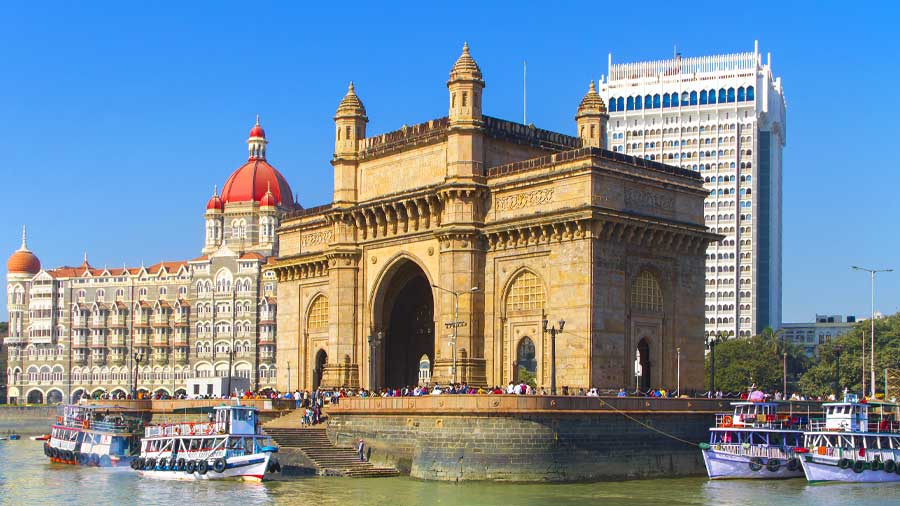
मुंबई दुनिया में 21वें और एशिया में 12वें स्थान पर रही। यह शहर मॉडर्न लाइफस्टाइल और ट्रेडिशन का शानदार ब्लेंड है। यहां गेटवे ऑफ इंडिया, मरीन ड्राइव, जुहू चौपाटी, बॉलीवुड, स्ट्रीट फूड और नाइटलाइफ टूरिस्ट को अट्रैक्ट करते हैं।

अगर आप समुद्र किनारे घूमना, अलग-अलग तरह का खाना चखना और शहर की तेज रफ्तार जिंदगी का एक्सपीरियंस लेना चाहते हैं, तो मुंबई जरूर जाएं। यहां घूमने का सबसे अच्छा समय नवंबर से फरवरी है।

दुनिया के टॉप 5 शहर कौन-से हैं?

Kyoto japan 1080P, 2K, 4K, 5K HD wallpapers free download | WallpaperFlare

इस साल की ग्लोबल रैंकिंग में सैन मिगुएल डी एलेंडे (मेक्सिको) पहले स्थान पर रहा। इसके बाद क्योटो (जापान), चियांग माई (थाईलैंड), होई आन (वियतनाम) और ओआक्साका (मेक्सिको) ने टॉप 5 में जगह बनाई।

भारत के तीन शहरों का इस लिस्ट में शामिल होना देश के टूरिस्म के लिए बड़ा अचीवमेंट माना जा रहा है।

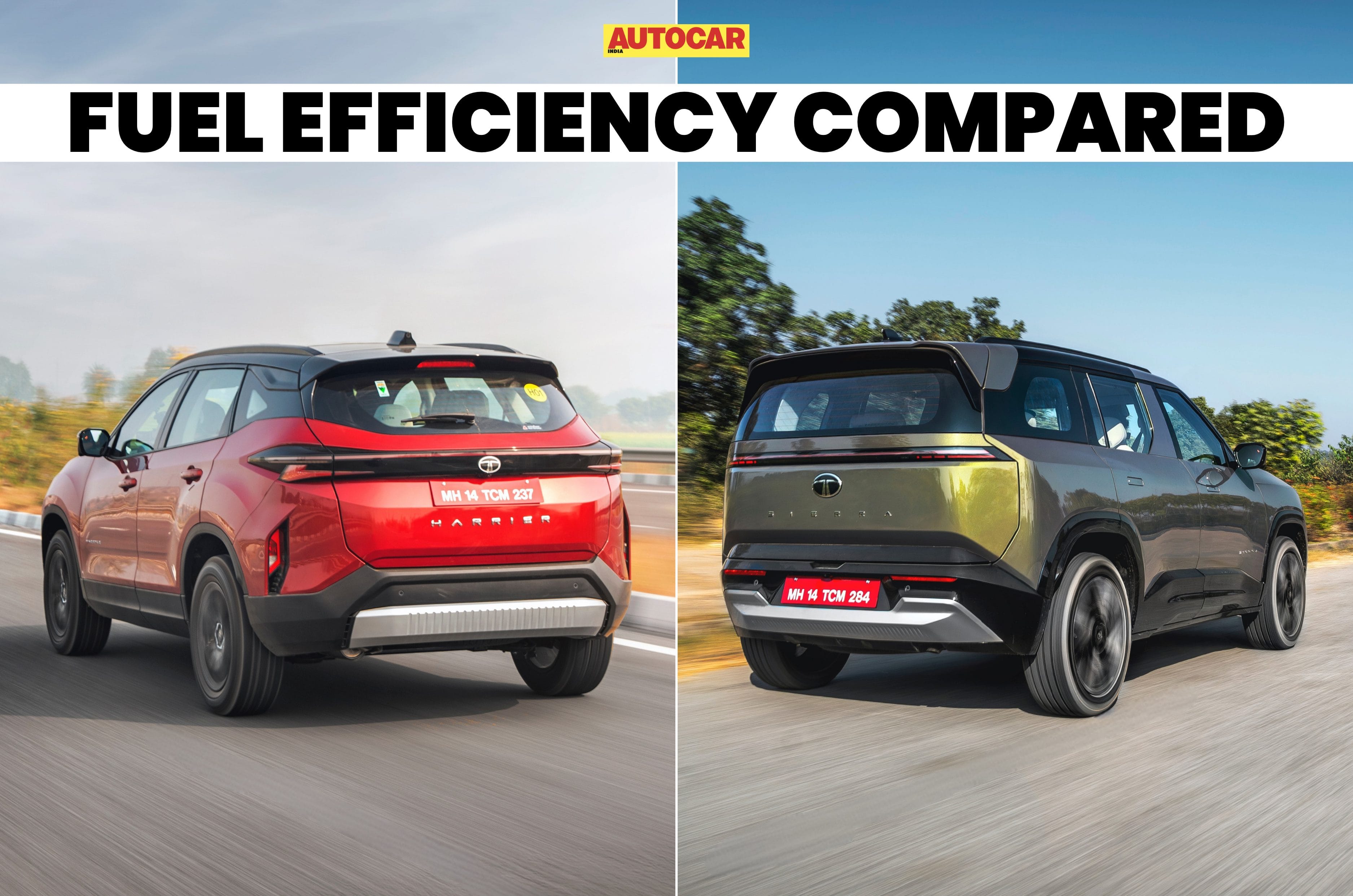
Tata Harrier vs Tata Sierra turbo petrol AT real-world mileage compared

Tata Harrier vs Tata Sierra

The new 1.5-litre ‘Hyperion’ turbo-petrol engine was developed in-house by Tata and first debuted on the Sierra in 2025. In January 2026, the carmaker introduced this engine into its larger stablemate, the Harrier. Since its inception in 2019, the Harrier has been offered only with a diesel engine. We’ve put the turbo-petrol automatic versions of both SUVs through our real-world mileage tests and compared their efficiency figures to find out which is more frugal. 

Tata Harrier vs Tata Sierra turbo petrol AT: Specifications

Tata Harrier vs Hyundai Alcazar turbo-petrol: Specification and price 


Tata Harrier

Tata Sierra

Engine

4 cyls, turbo-petrol

4 cyls, turbo-petrol

Displacement (cc)

1,498

1,498

Power (hp)

170

160

Torque (Nm)

280

255

Gearbox

6AT

6AT

Fuel tank (litres)

50

50

Kerb weight (kg)

1,738

1,552

Though powered by the same 1.5-litre turbo-petrol engine, both SUVs are tuned differently. While the Sierra’s mill develops 160hp and 255Nm, the Harrier’s unit develops more power and torque at 170hp and 280Nm, respectively. However, the larger Harrier is 186 kg heavier than the Sierra. Common to both SUVs are 6-speed torque-converter automatics and 50-litre fuel tanks. 

Tata Harrier vs Tata Sierra turbo petrol AT:  Real-world fuel efficiency

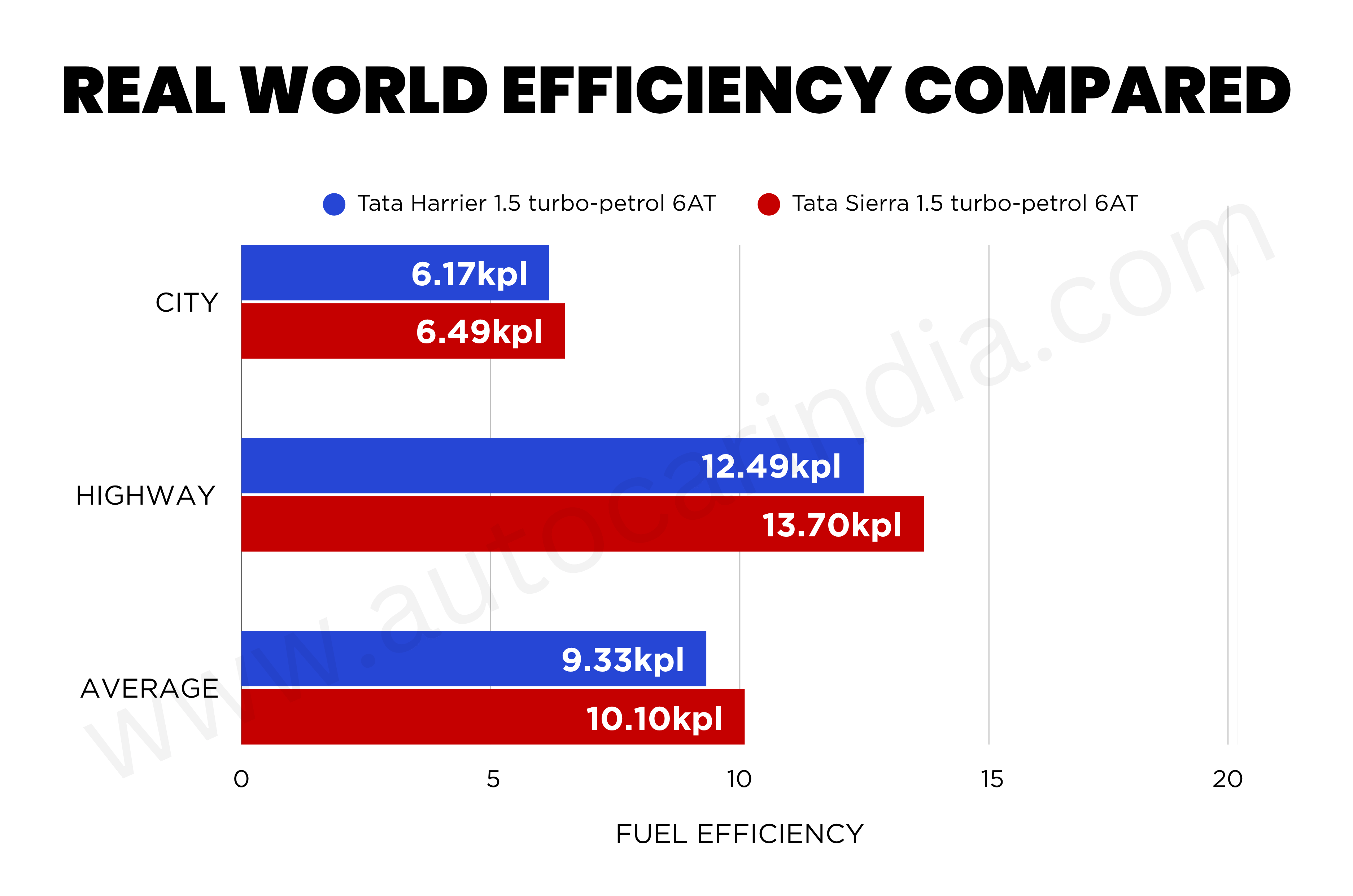
In our real-world fuel efficiency tests, the Sierra’s lighter weight helped it deliver 0.77kpl better fuel efficiency than the Harrier overall. Despite the Harrier getting an ‘Eco’ driving mode over the Sierra to improve fuel efficiency, the latter outperformed it by 0.32kpl in the city. On the highway, the efficiency gap increased to 1.21kpl because at 100kph, the Harrier’s engine runs at 1,900rpm in top gear, whereas the Sierra cruises at 1,750rpm in sixth gear at the same speed.

Tata Harrier vs Tata Sierra turbo petrol AT: Price

Tata Harrier vs Tata Sierra turbo petrol AT: Price


Tata Harrier

Tata Sierra

Petrol automatic price range (Rs lakh)

17.68 – 24.85

17.99 – 20.99

Considering turbo-petrol automatic price ranges, the Harrier turbo petrol automatic is Rs 31,000 cheaper than the Sierra. This is because the engine-gearbox combo is offered on the former’s one above the base trim, while the latter gets it on a mid-level trim onward. At the top end, however, the Harrier is pricier than the Sierra by Rs 3.86 lakh. 

Autocar India’s fuel-efficiency testing

Before our real-world fuel-efficiency tests, we fill our test cars’ tanks to the brim and maintain tyre pressures based on the manufacturer’s recommendations. These cars are driven in fixed city and highway loops in and around Navi Mumbai, and we maintain certain average speeds. Throughout the tests, there is only one person in each car, operating the air conditioner and other electricals, such as the audio system, indicators and wipers, when required, just like a regular user would. Periodic driver swaps further neutralise variations in driver patterns. At the end of each cycle, we calculate efficiency by filling the tanks to full again.