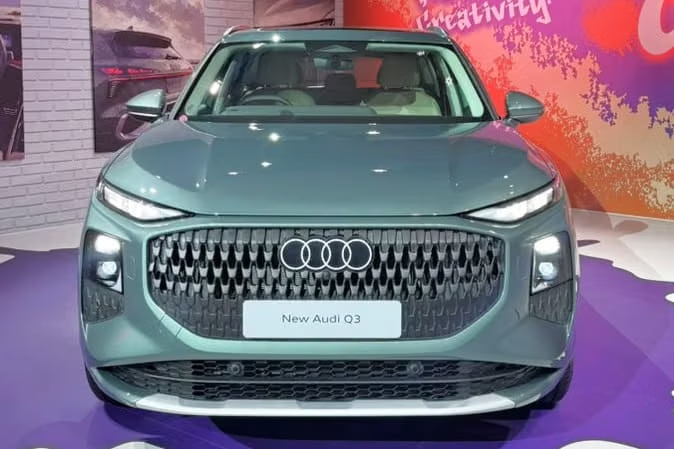
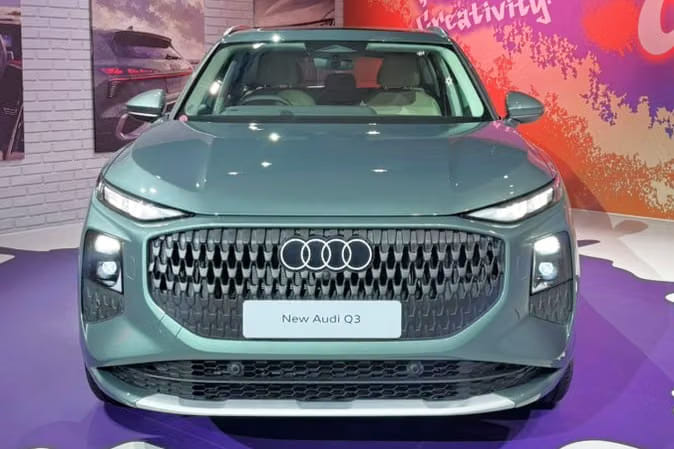
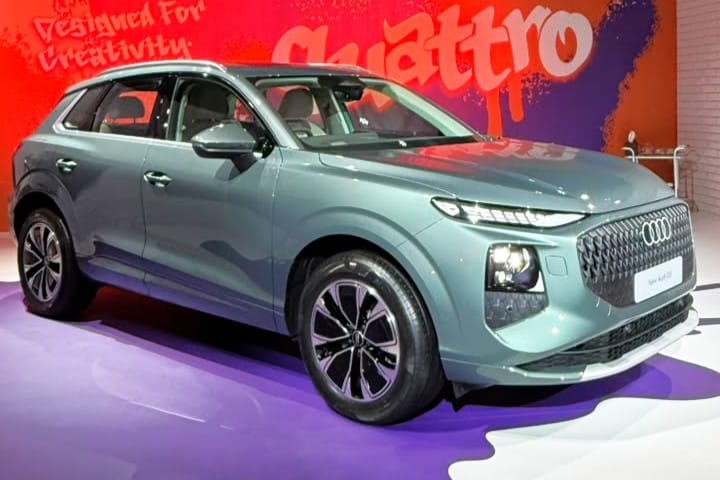
Audi India is slated to launch the new Q3 on October 16, 2026. The India-spec Q3 debuted in August 2026 and is the first of all-new Audis to arrive in India. The German carmaker’s entry-level luxury replaces its second-generation version, which has been on sale for four years and will be locally assembled.
To be powered solely by a turbo-petrol engine
The third-generation Audi Q3 is powered by a 2.0-litre direct-injection turbo-petrol engine. Though power figures are yet to be confirmed, it is expected to produce 204hp and 320Nm. A 7-speed DCT sends power to all wheels via Audi’s Quattro AWD system that’s likely to be standard fitment across the Q3 range.
Gets an aggressive exterior and a tech-laden interior
The new Q3’s exterior bears a more imposing look than its predecessor. Unlike its rivals that sport a traditional headlamp setup, the Q3 gets a split headlamp design with configurable DRLs. In profile, there’s body-coloured cladding, a chrome beltline, 18-inch dual-tone alloy wheels, and a black trim across the side windows and rear windscreen. The back comes with a split design for the tail-lamps, an illuminated Audi logo, and a spoiler.
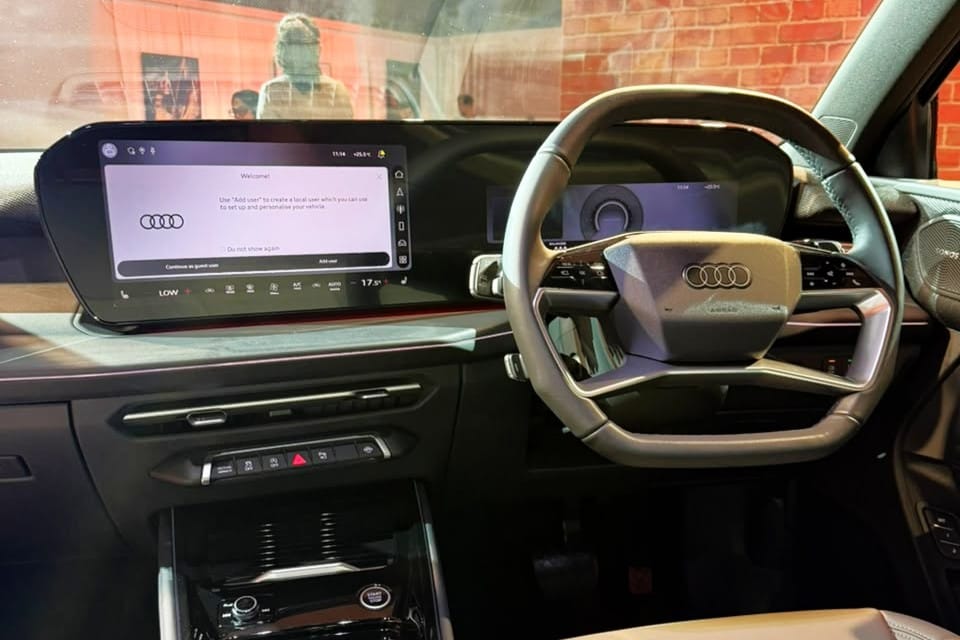
Inside, the Q3 gets an upmarket interior with a dual-screen setup for the digital driver’s display and infotainment screen. There’s also a four-spoke steering wheel, a steering column-mounted gear lever, and features like a Sonos sound system, a panoramic sunroof, wireless Apple CarPlay and Android Auto, dual-zone climate control, and a 360-degree camera setup.
Expected to be priced at around Rs 55 lakh
With an all-new generation inbound, the new Audi Q3 is likely to command a premium over the current version that retails between Rs 43.67 lakh and Rs 53 lakh. The new Q3 is expected to be priced at around Rs 55 lakh -60 lakh (ex-showroom). It will continue to take on the likes of the BMW X1, Mercedes-Benz GLA, and the Mini Countryman C.
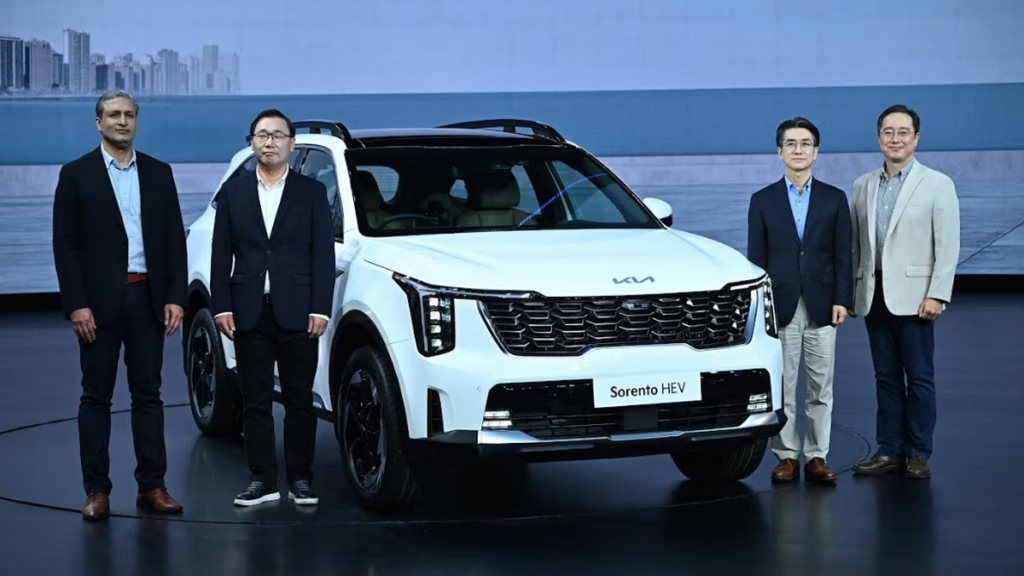
kia sorento launched : किआ इंडिया ने भारत के प्रीमियम थ्री-रो SUV सेगमेंट में कदम रखते हुए अपनी ग्लोबल SUV Kia Sorento को भारत में लॉन्च कर दिया है। इसकी शुरुआती एक्स-शोरूम कीमत ₹27.99 लाख रखी गई है। वहीं, इसका Hybrid मॉडल ₹29.99 लाख की शुरुआती कीमत पर उपलब्ध होगा।
Kia Sorento के साथ कंपनी ने भारत में पहली बार Hybrid पावरट्रेन पेश किया है। इसके अलावा, भारत-स्पेक Sorento में Kia AI Assistant भी पेश किया गया है, जिसमें रियल-टाइम Generative AI की क्षमता है। कंपनी के मुताबिक, यह तकनीक पहली बार वैश्विक स्तर पर Sorento में पेश की गई है। Kia Sorento की आधिकारिक डिलीवरी 4 सितंबर 2026 से देशभर में शुरू हो गई है।
भारत में पहली बार Hybrid पावरट्रेन
Kia Sorento को Hybrid और Diesel, दो पावरट्रेन विकल्पों के साथ पेश किया गया है। Hybrid मॉडल में Smartstream 1.6 Turbo GDI Hybrid इंजन मिलता है। इस इंजन से 180 PS की पावर और 265 Nm का टॉर्क मिलता है। इसके साथ 65 PS का इलेक्ट्रिक मोटर दिया गया है, जो 264 Nm का टॉर्क पैदा करता है। Hybrid पावरट्रेन को 6-स्पीड ऑटोमैटिक गियरबॉक्स से जोड़ा गया है।
दूसरा विकल्प Smartstream 2.2 Diesel इंजन है, जो 193 PS की पावर और 442 Nm का टॉर्क देता है। इसे 8-स्पीड Dual Clutch Transmission (8DCT) के साथ जोड़ा गया है। दोनों पावरट्रेन में Eco, Normal, Smart और Sport ड्राइव मोड दिए गए हैं।
Hybrid के साथ AWD का भी विकल्प
Kia Sorento अपने सेगमेंट की पहली SUV है जिसमें Hybrid पावरट्रेन के साथ All-Wheel Drive (AWD) का विकल्प दिया गया है। Hybrid और Diesel दोनों पावरट्रेन AWD के साथ उपलब्ध हैं। इनमें Snow, Sand और Mud जैसे Terrain Modes दिए गए हैं, जो अलग-अलग परिस्थितियों में बेहतर ट्रैक्शन और टॉर्क डिस्ट्रीब्यूशन में मदद करते हैं।
4,815 mm लंबी और 1,900 mm चौड़ी SUV
Sorento को Kia के ग्लोबल N3 प्लेटफॉर्म पर तैयार किया गया है। इसकी लंबाई 4,815 mm, चौड़ाई 1,900 mm, व्हीलबेस 2,815 mm और रूफ रेल्स के साथ ऊंचाई 1,785 mm है। कंपनी के अनुसार, यह अपने सेगमेंट की सबसे लंबी और चौड़ी SUV है। इसका बड़ा आकार तीनों रो में ज्यादा जगह उपलब्ध कराने में मदद करता है। SUV के फ्रंट में Kia Digital Tiger Face, Crystal Cube LED Projection Headlamps और Star Map LED DRLs दिए गए हैं। पीछे Star Map LED Tail Lamps मिलते हैं। इसके अलावा SUV में Satin Chrome फिनिश वाली फ्रंट और रियर स्किड प्लेट, Satin Chrome बेल्टलाइन और इंटीग्रेटेड रियर स्पॉयलर भी दिया गया है। Sorento में 18-इंच Sporty Crystal Cut Alloy Wheels और 19-इंच Premium Crystal Cut Alloy Wheels का विकल्प मिलता है।
प्रीमियम केबिन में 12.3-इंच के दो डिस्प्ले
Kia Sorento के केबिन को प्रीमियम और टेक्नोलॉजी से लैस बनाया गया है। इसमें Panoramic Curved Display Panel मिलता है, जिसमें 31.24 cm यानी 12.3-इंच HD Touchscreen Navigation Cockpit और 12.3-इंच HD Digital Instrument Cluster शामिल हैं। इसके साथ Windshield Head-Up Display और Advanced Digital IRVM दिया गया है। SUV में Smoky Black & Grey और टॉप HTX वेरिएंट में Black & Olive Brown इंटीरियर थीम का विकल्प मिलता है। इसमें Dual Pane Panoramic Sunroof और 64-कलर Ambient Mood Lighting भी दी गई है।
6 और 7-सीटर दोनों विकल्प
Kia Sorento को 6-सीटर और 7-सीटर कॉन्फिगरेशन में पेश किया गया है। पहली रो में 10-Way Power Driver और Co-Passenger Seats, Lumbar Adjustment, Relaxation Power Seats, Driver Seat Ergo Function और Integrated Memory System जैसे फीचर्स दिए गए हैं। Sorento की खासियत यह है कि इसमें पहली रो के अलावा दूसरी रो में भी Ventilated Seats मिलती हैं। सीटों में 3-स्टेप कूलिंग फंक्शन दिया गया है। 6-सीटर मॉडल में दूसरी रो में Captain Seats मिलती हैं, जबकि 7-सीटर मॉडल में 60:40 स्प्लिट रियर सीटें दी गई हैं। दोनों में Slide, Recline और Walk-in फंक्शन मिलता है।
इसके अलावा 4-Way Power Boss Mode, Wing Type Headrests, तीसरी रो में 50:50 Split-Folding Seats और दूसरी-तीसरी रो के लिए Rear AC Vents दिए गए हैं।
Kia Sorento में पहली बार Real-Time Generative AI
Kia Sorento का सबसे बड़ा टेक्नोलॉजी अपडेट इसका Kia AI Assistant है। भारत-स्पेक Sorento में यह तकनीक पहली बार वैश्विक स्तर पर पेश की गई है। Kia AI Assistant रियल-टाइम सर्च पर आधारित जानकारी उपलब्ध कराता है। यह सामान्य बातचीत को समझने के साथ Follow-up Questions का जवाब भी दे सकता है। “Hey Kia” Wake Word के जरिए इसे हैंड्स-फ्री इस्तेमाल किया जा सकता है। यह चुनिंदा वाहन फंक्शंस, जैसे Air Conditioning और Windows को भी कंट्रोल कर सकता है।
इसके अलावा Sorento में:
Remote Vehicle Immobilization
Kia Connect 2.0 के 85+ कनेक्टेड कार फीचर्स
30 कंट्रोलर्स के लिए OTA Software Updates
Digital Key 2.0
Wireless Android Auto
Wireless Apple CarPlay
जैसे फीचर्स मिलते हैं।
Disney, Marvel और Pixar थीम से कर सकेंगे कार को पर्सनलाइज
Kia ने पहली बार भारत में Personalized Display Themes भी पेश किए हैं। Sorento के Cluster और Infotainment सिस्टम में Disney, Marvel और Pixar पर आधारित कुल 9 थीम मिलेंगी। इन थीम के जरिए ग्राहक डैशबोर्ड के रंग, एनिमेशन और स्क्रीन लेआउट को अपनी पसंद के अनुसार बदल सकेंगे। दिसंबर 2026 से Kia Connect Store भी Sorento के लिए शुरू किया जाएगा। इसके जरिए ग्राहक चुनिंदा Feature-on-Demand सेवाओं को खरीद सकेंगे।
30 ADAS फीचर्स और 10 एयरबैग तक
सेफ्टी के मामले में भी Sorento को काफी एडवांस बनाया गया है। SUV में ADAS Level 2+ के 30 फीचर्स दिए गए हैं।
इनमें:
Forward Collision Warning
Forward Collision-Avoidance Assist
Lane Keeping Assist
Lane Following Assist
Highway Driving Assist
Smart Cruise Control
Blind Spot Collision Avoidance
Rear Cross Traffic Collision Avoidance
Safe Exit Warning
Remote Smart Parking Assist
जैसे फीचर्स शामिल हैं।
Kia का Robust 26 Standard Safety Package भी मिलता है। इसमें 7 एयरबैग स्टैंडर्ड हैं, जबकि टॉप वेरिएंट में अतिरिक्त Rear Side और Centre Side Airbags के साथ कुल 10 एयरबैग तक मिलते हैं।
इसके अलावा 360-डिग्री कैमरा, Blind View Monitor, 12 पार्किंग सेंसर, पांच रडार और Dynamic Guidelines वाला रियर कैमरा भी दिया गया है।
भारत में बनी, भारतीय ग्राहकों के हिसाब से तैयार
Kia Sorento का उत्पादन भारत में Kia India की अनंतपुर, आंध्र प्रदेश स्थित मैन्युफैक्चरिंग फैसिलिटी में किया गया है। कंपनी ने भारतीय सड़कों और ग्राहकों की जरूरतों को ध्यान में रखते हुए इसमें कई बदलाव किए हैं। इनमें India-specific grille detailing, Acoustic Windshield और Black High Glossy Bridge Type Roof Rails शामिल हैं। कंपनी का दावा है कि Acoustic Windshield, Door Trim Insulator और अन्य इंजीनियरिंग सुधारों की वजह से Sorento में बेहद शांत केबिन और बेहतर NVH प्रदर्शन मिलता है।
ये प्रमुख फीचर्स भी मिलेंगे
Kia Sorento में कई प्रीमियम और सेगमेंट-फर्स्ट फीचर्स दिए गए हैं, जिनमें शामिल हैं:
Smart Power Tailgate with Anti-Pinch
Dual Pane Panoramic Sunroof
Bose Premium Sound System with 12 Speakers
Smart Dashcam with Front & Rear Camera
Remote Smart Parking Assist
220V Power Outlet
Digital IRVM
Head-Up Display
Wireless Smartphone Charger
Dual-Zone Automatic Climate Control
Tyre Pressure Monitoring System
Electronic Parking Brake with Auto Hold
Front और Rear Seat Side Airbags
Driver Knee Airbag
All-Wheel Disc Brakes
ISOFIX
Rear Occupant Alert
Kia Sorento की कीमत और वेरिएंट
Kia Sorento को तीन मुख्य ट्रिम्स और उनके Option Pack के साथ पेश किया गया है। Diesel 7-Seater की शुरुआती कीमत ₹27.99 लाख है, जबकि Hybrid 7-Seater की शुरुआती कीमत ₹29.49 लाख है। टॉप वेरिएंट में कीमत करीब ₹40.19 लाख एक्स-शोरूम तक जाती है।
प्रमुख कीमतें
पावरट्रेनसीटिंगशुरुआती कीमतटॉप कीमत
2.2 Diesel 8DCT7-सीटर₹27.99 लाख₹38.69 लाख
2.2 Diesel 8DCT6-सीटर₹32.69 लाख₹38.89 लाख
1.6 Turbo Hybrid 6AT7-सीटर₹29.49 लाख₹40.19 लाख
1.6 Turbo Hybrid 6AT6-सीटर₹34.19 लाख₹40.39 लाख
आठ एक्सटीरियर कलर का विकल्प
Kia Sorento को आठ मोनो-टोन एक्सटीरियर कलर में पेश किया गया है:
Glacier White Pearl
Gravity Gray
Imperial Blue
Magma Red
Pewter Olive
Ivory Silver Gloss
Aurora Black Pearl
Matte Dark Gun Metal
इसके अलावा पहली बार Kia India लाइन-अप में Black Line Trim भी पेश किया गया है। इसमें Kia और Sorento बैज, 19-इंच Premium Crystal Cut Alloy Wheels, Fender Garnish और Beltline सहित कई एक्सटीरियर एलिमेंट्स को ब्लैक फिनिश दी गई है।
4.8 मिलियन से ज्यादा ग्राहकों का भरोसा
Kia Sorento पिछले 24 वर्षों और चार पीढ़ियों के दौरान 132 देशों में 4.8 मिलियन से ज्यादा ग्राहकों तक पहुंच चुकी है। यही वजह है कि यह Kia की सबसे सफल ग्लोबल SUV नेमप्लेट में शामिल है। भारत में नई Sorento के साथ Kia ने पहली बार प्रीमियम थ्री-रो SUV सेगमेंट में कदम रखा है। Hybrid पावरट्रेन, AWD, ADAS Level 2+, 10 एयरबैग तक और Real-Time Generative AI वाला Kia AI Assistant इसे इस सेगमेंट की एक टेक्नोलॉजी-फोकस्ड SUV बनाते हैं।
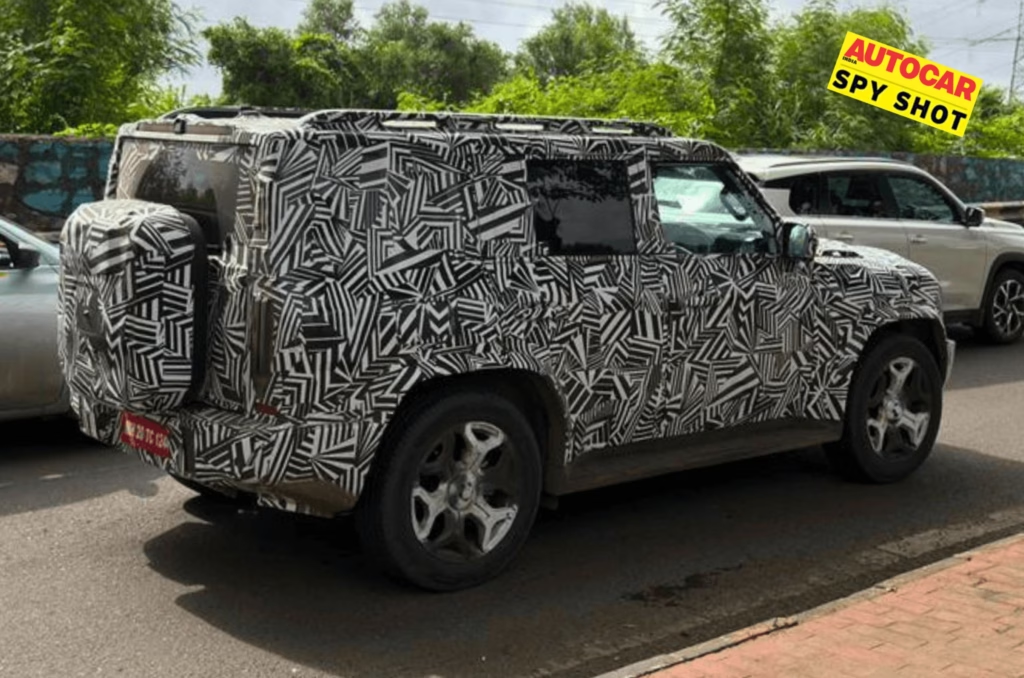
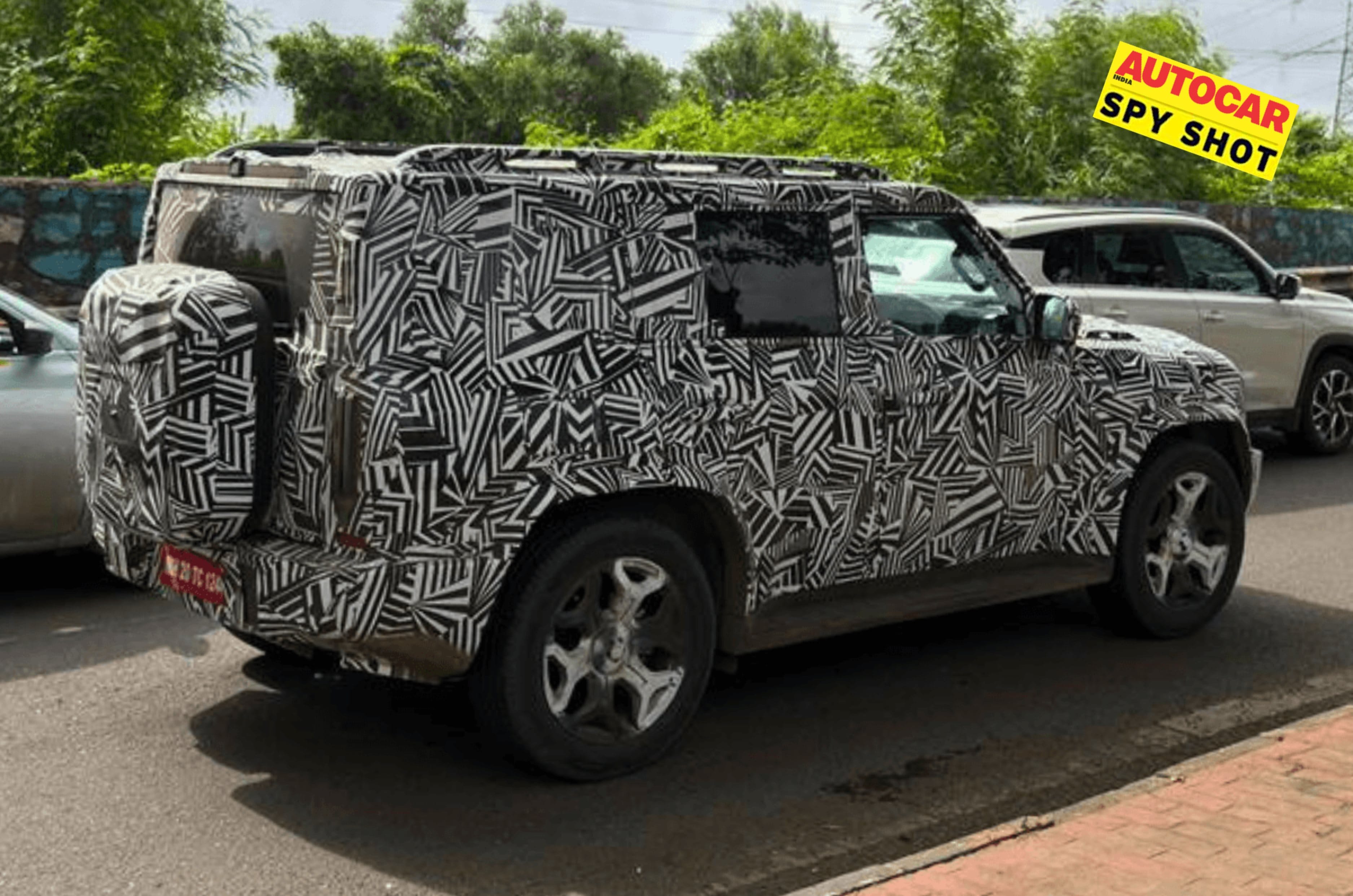
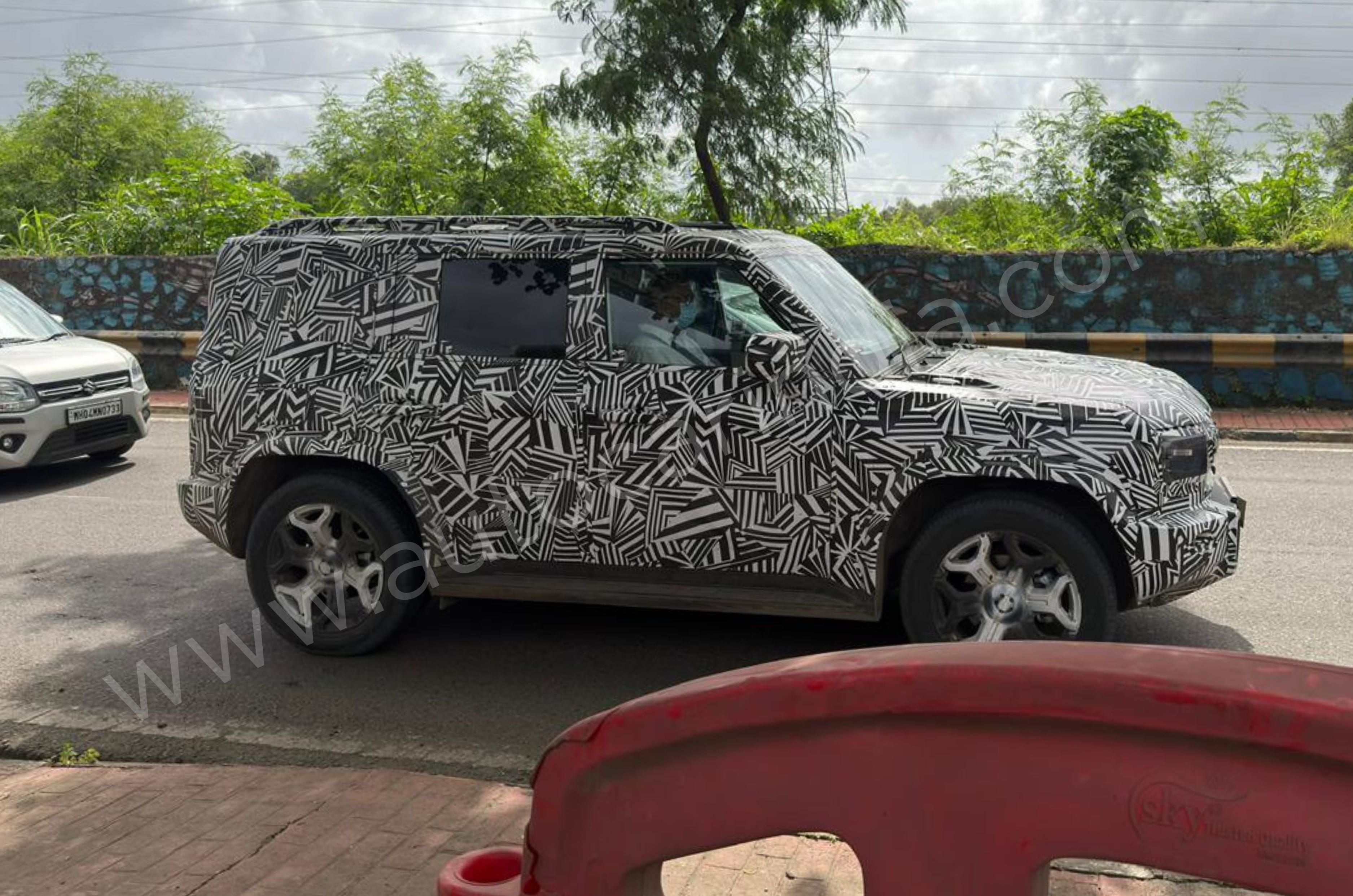
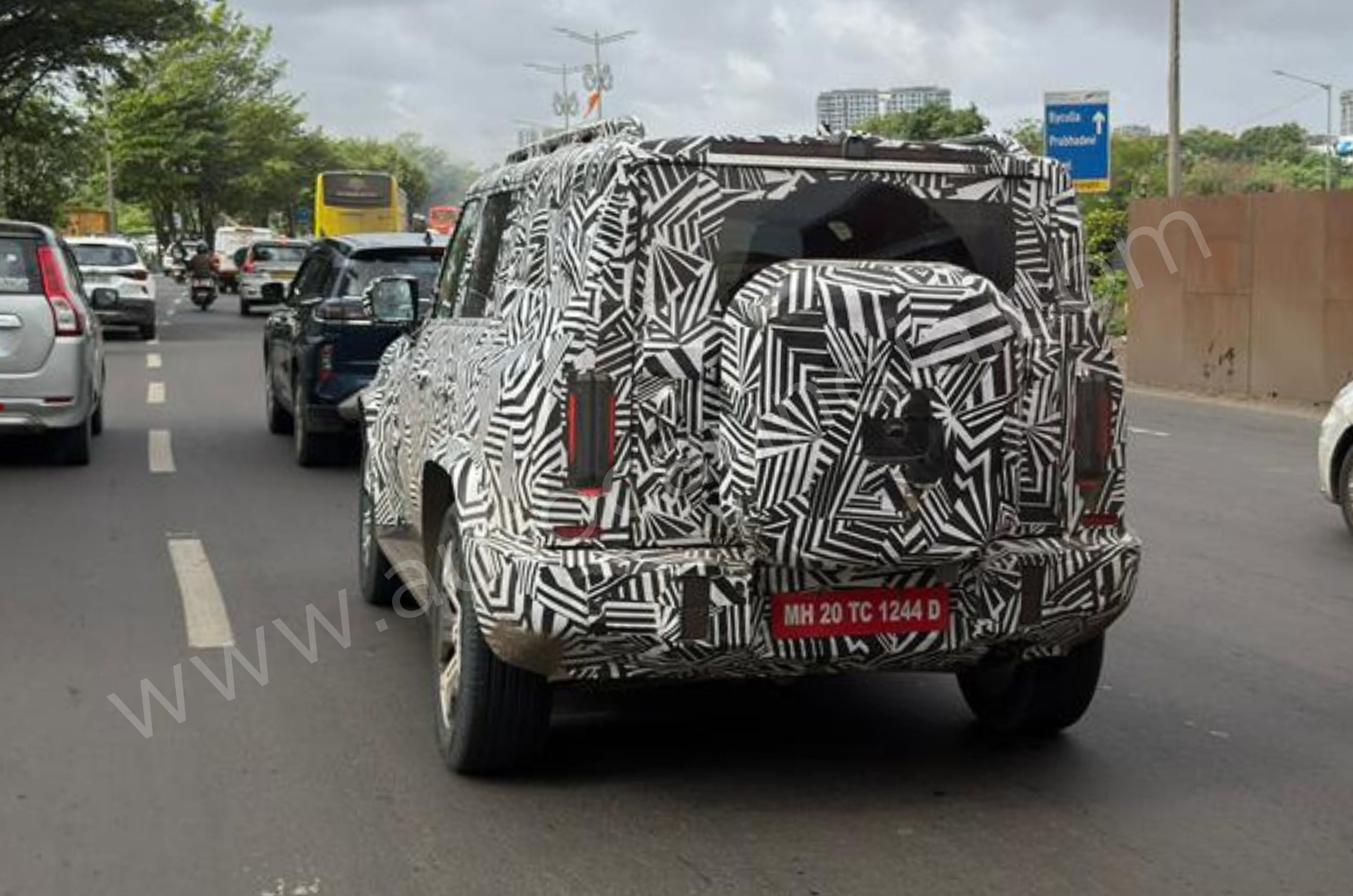
A camo-clad test mule of JSW Motors‘ upcoming SUV based on the Jetour T2 was recently spied on our roads. The T2-based model will be JSW Motors’ debut offering, and it will be offered with a plug-in hybrid powertrain. It will be assembled at JSW Motors’ Chhatrapati Sambhajinagar (formerly Aurangabad) plant in Maharashtra.
Going by the spy shots, the design resembles that of the T2 sold overseas. Even the design for the tail-lights, roof rails and wheels look similar. A design patent filed in India earlier this year suggests the JSW SUV could retain most of the T2’s design elements, while replacing the Jetour branding with the carmaker’s own.
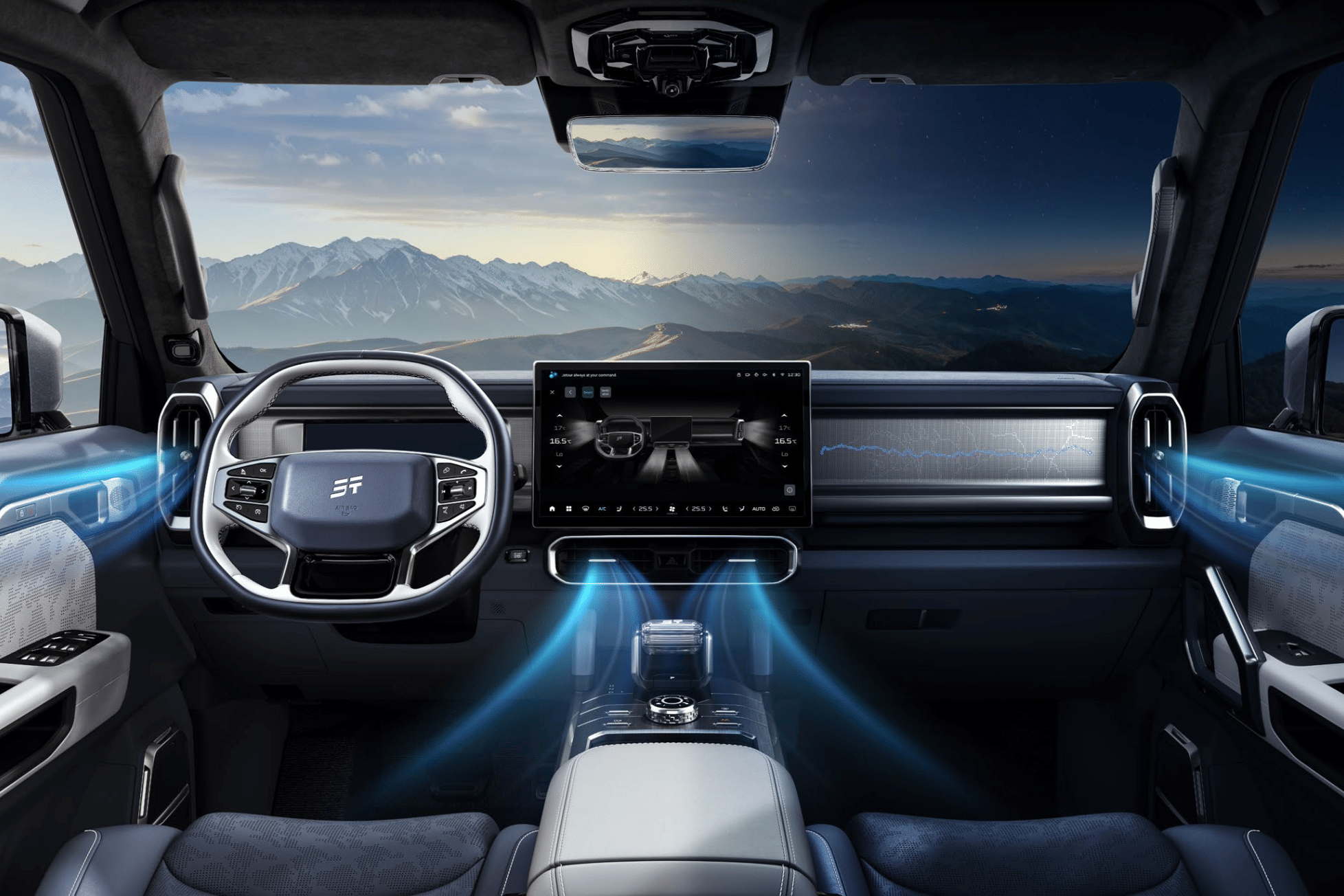
The SUV’s interior was not seen, and specifics around the feature list are currently unknown. The global-spec Jetour T2, for reference, gets a massive 15.6-inch touchscreen, a 540-degree camera, Level 2 ADAS, a panoramic sunroof, a Sony surround-sound system, ambient lighting, a wireless charging pad, a powered tailgate and more.
International-spec Jetour T2’s interior shown for representation.
The JSW SUV is expected to use the Jetour T2 i-DM’s plug-in hybrid powertrain, which features a 1.5-litre direct-injection turbo-petrol engine, and a 26.7kWh battery pack which powers two electric motors. One of the motors is placed on the front axle and can drive the wheels. The other motor, meanwhile, is integrated into the gearbox to provide assistance during engine starting and torque fill during gear shifts.
The Jetour T2 plug-in hybrid’s combined output stands at 381hp and 610Nm and transmission duties are handled by a 3-speed dedicated hybrid transmission (DHT). The global-spec T2 i-DM has an NEDC-rated electric-only range of 139km, while the combined range is over 1,000km (brand claimed figure). As of now, the range figures for the JSW Motors SUV are not known.
JSW Motors’ Jetour T2-based SUV: Estimated price and rivals
We expect JSW Motors’ Jetour T2-based SUV to be priced between Rs 38 lakh and Rs 40 lakh, ex-showroom. At this price, it will find itself in the company of the Skoda Kodiaq and Volkswagen Tayron. However, among ICE SUVs in this price range, the T2-based SUV is expected to offer significantly more power and torque than its rivals.
As for the launch, our sources had earlier indicated a September timeline, but JSW Motors has not yet made any official announcement. Recent reports, meanwhile, suggest that the company will launch its first passenger vehicle in January 2027.
The EX90 is Volvo’s latest offering in India and also its most premium one. The EX30 and EC40 compete in the entry-level luxury EV segment, but the EX90 is the brand’s flagship electric SUV. It comes in a single, fully loaded variant with all the bells and whistles, along with a dual-motor setup and a claimed range of over 600km. Can it bring in a new audience or convert some XC90 customers? It certainly has the traits to do both.
EX90 Exterior Design and Engineering – 9/10
Built on Volvo’s SPA2 dedicated EV platform that has hints of the XC90.
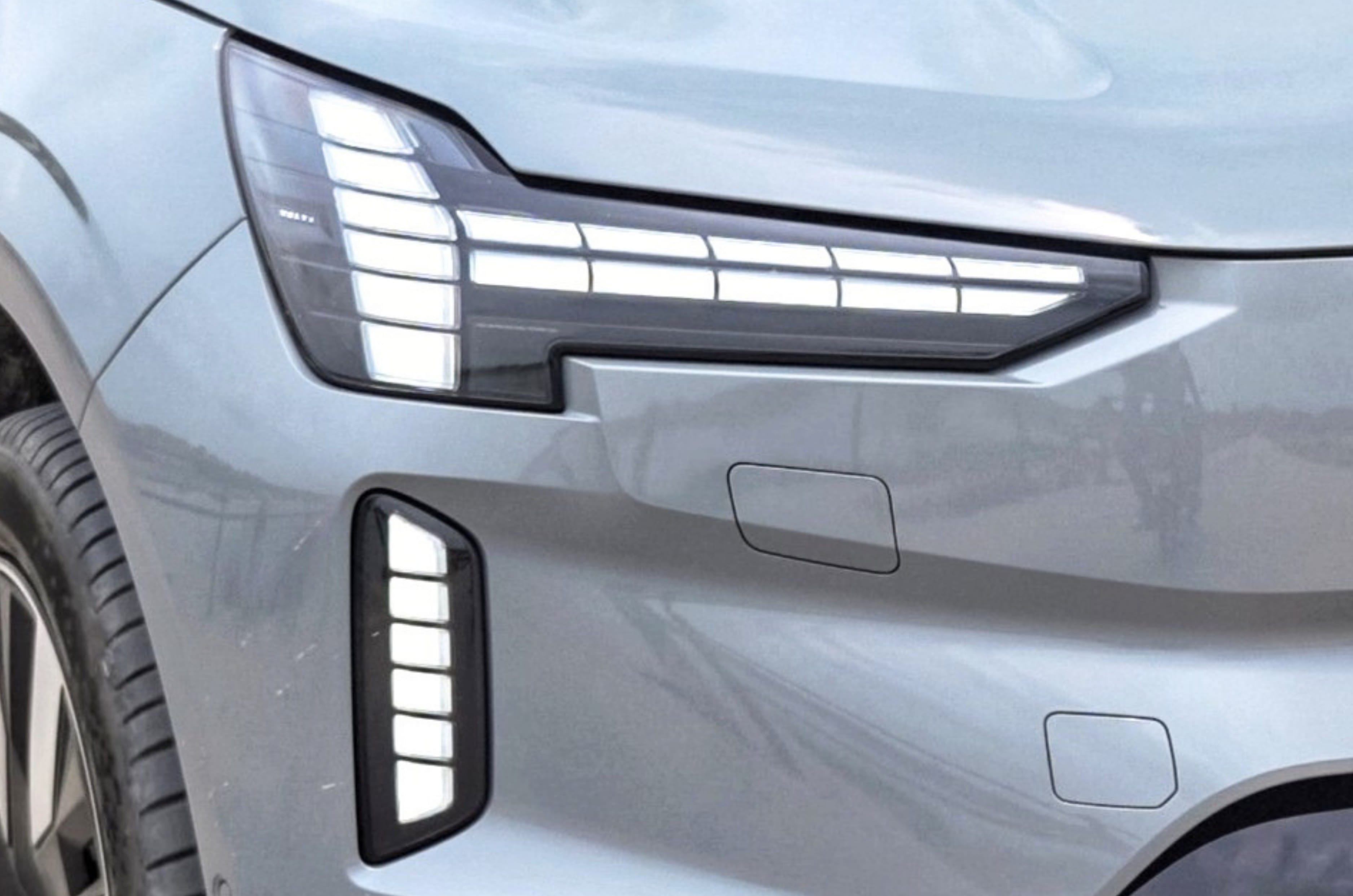
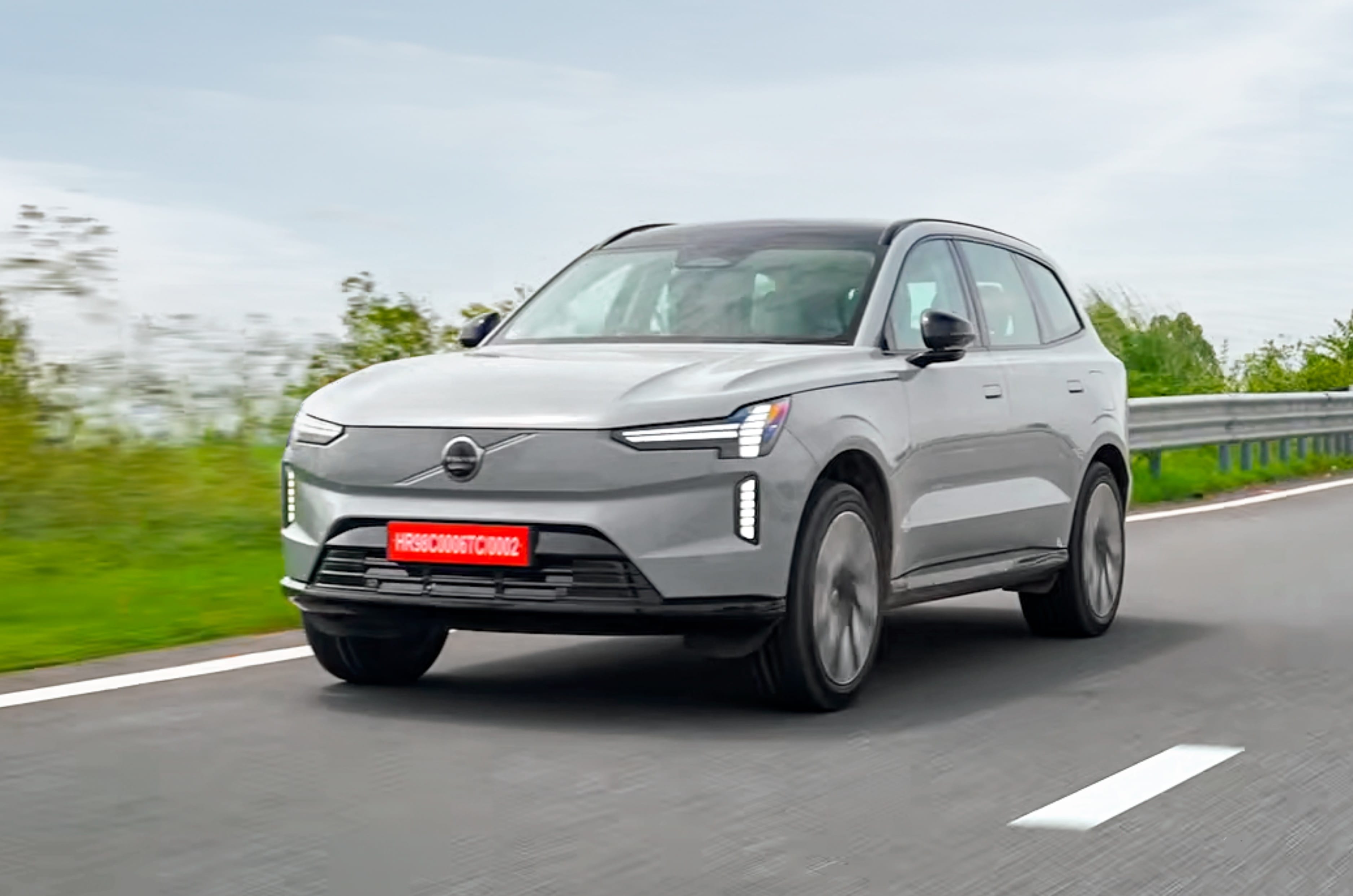
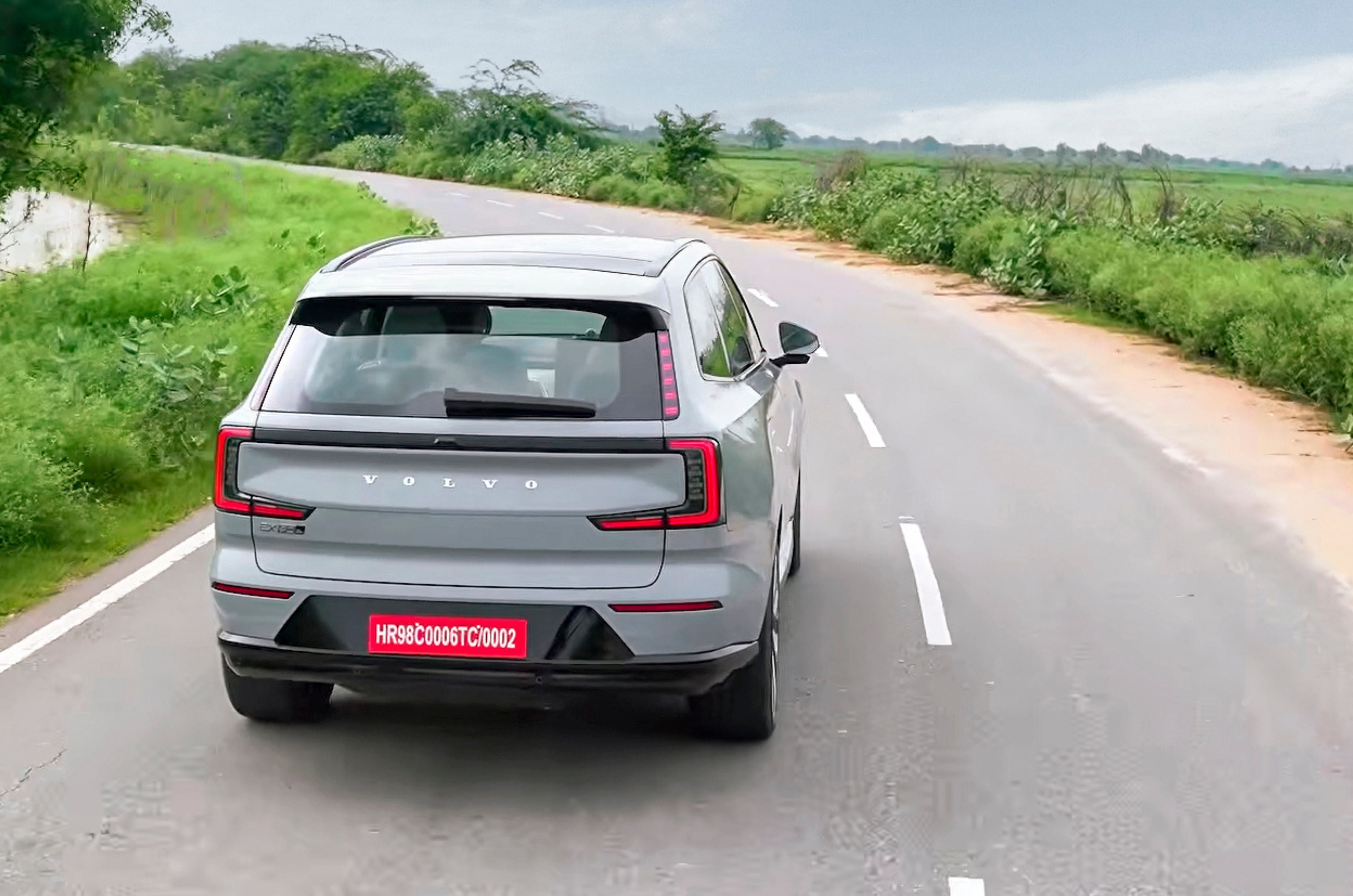
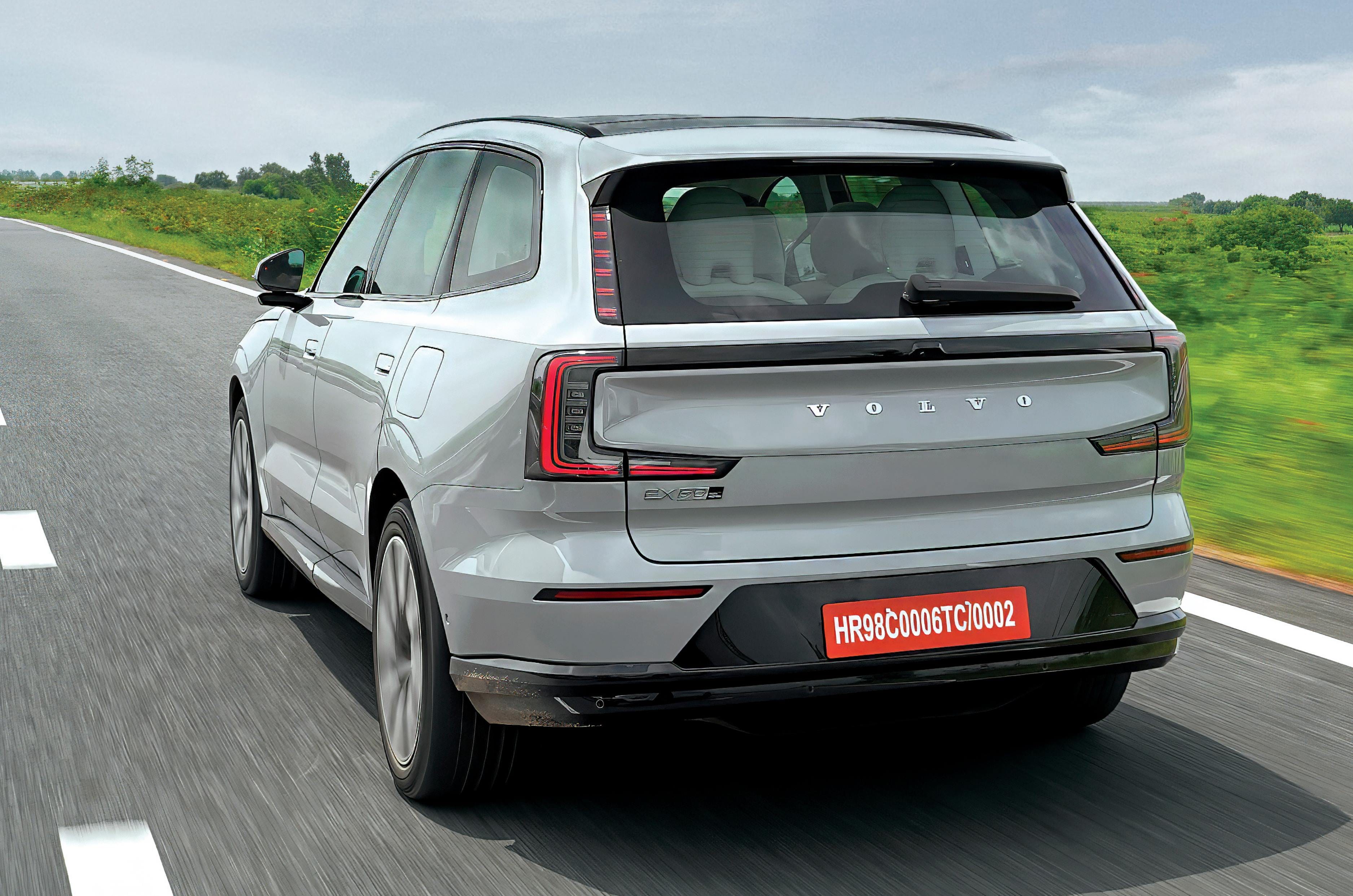
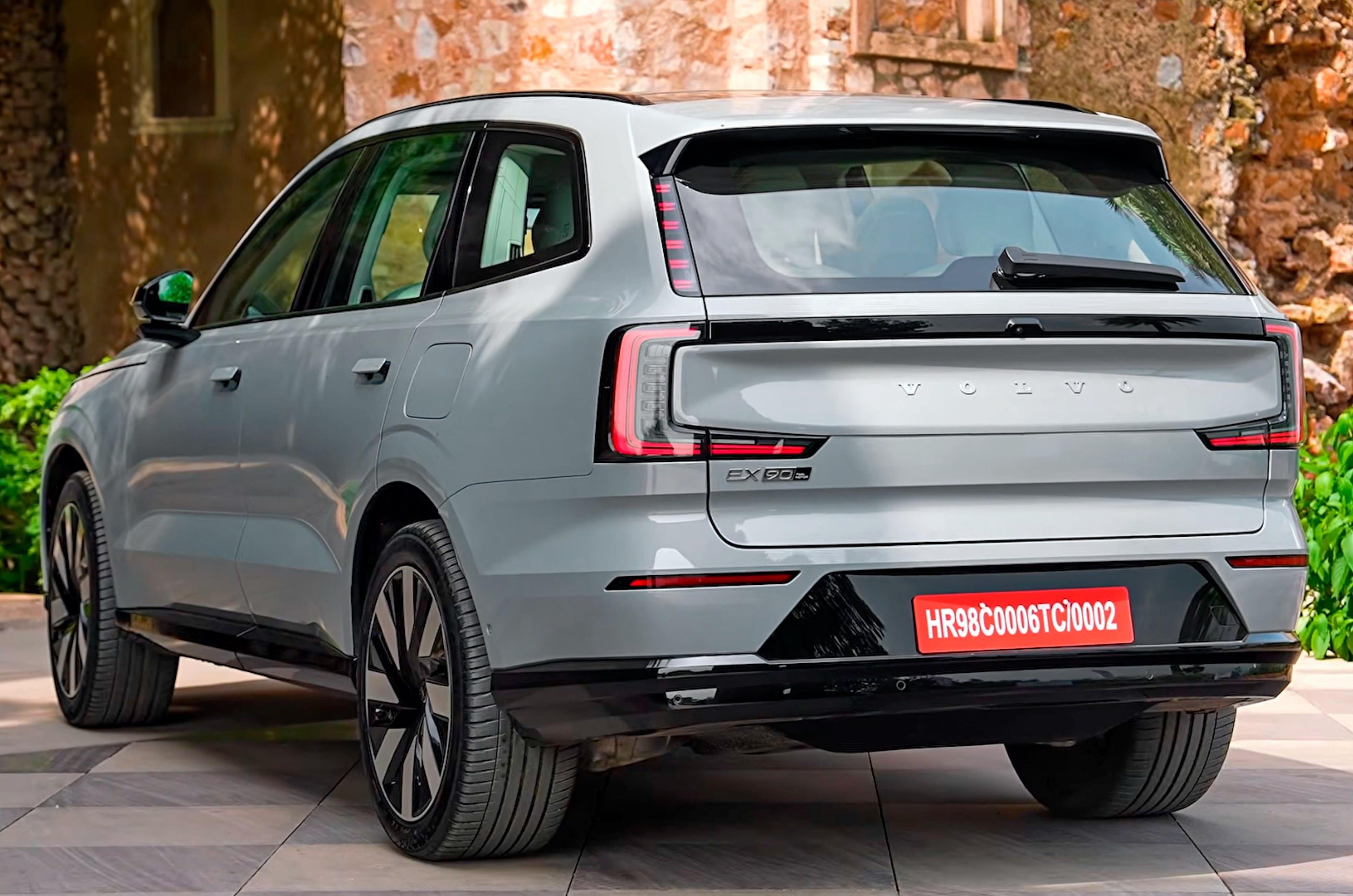
Based on the new SPA2 architecture, which has its roots in the previous SPA platform but is built specifically for EVs, the EX90 does share some resemblance to the XC90 in its shape and form factor. However, the details are different. As expected, the overall design is simple and far from outlandish or attention-seeking. This is in keeping with the brand’s image, and the restraint actually works. The flat, closed-off front end dismisses any chances of a blingy chrome grille, and what adds drama instead are the LED lights that split open to reveal the main headlamps behind. These, too, have an impressive party trick; with over a million pixels, they can individually light up or switch off and constantly shape a light beam to avoid dazzling oncoming traffic. Further down, you get some more DRL strips, one on each side, and a rather simple, fuss-free bumper.
DRLs that spilt open to reveal headlamps add drama.
Over to the side, the EX90 is slightly longer than the XC90, while the rest of its dimensions see a marginal bump. 21-inch wheels are standard, and the 210mm of ground clearance at its lowest setting is plenty. The air suspension also allows you to raise the car up to 250mm for off-road use. The door handles are pop-up, flip-up-style units, and you no longer get a key. Instead, you get a card that you need to tap at the right spot, with the Volvo logo facing the right way, for the handle to pop up. Alternatively, you can simply link your phone to the car and use it as a key. It seems convenient on paper, but the card system needs to be a lot more seamless to be hassle-free.
At the rear, it gets a split setup for the LED tail-lamps, with C-shaped LEDs on the lower half and vertically stacked LEDs in the D-pillar. There isn’t a single strip of chrome, and even the cladding is minimal. Subtlety is what Volvo aims for with its design, and the EX90 offers just that.
EX90 Interior Space and Comfort – 8/10
Two-tone upholstery looks rich and materials feel plush.
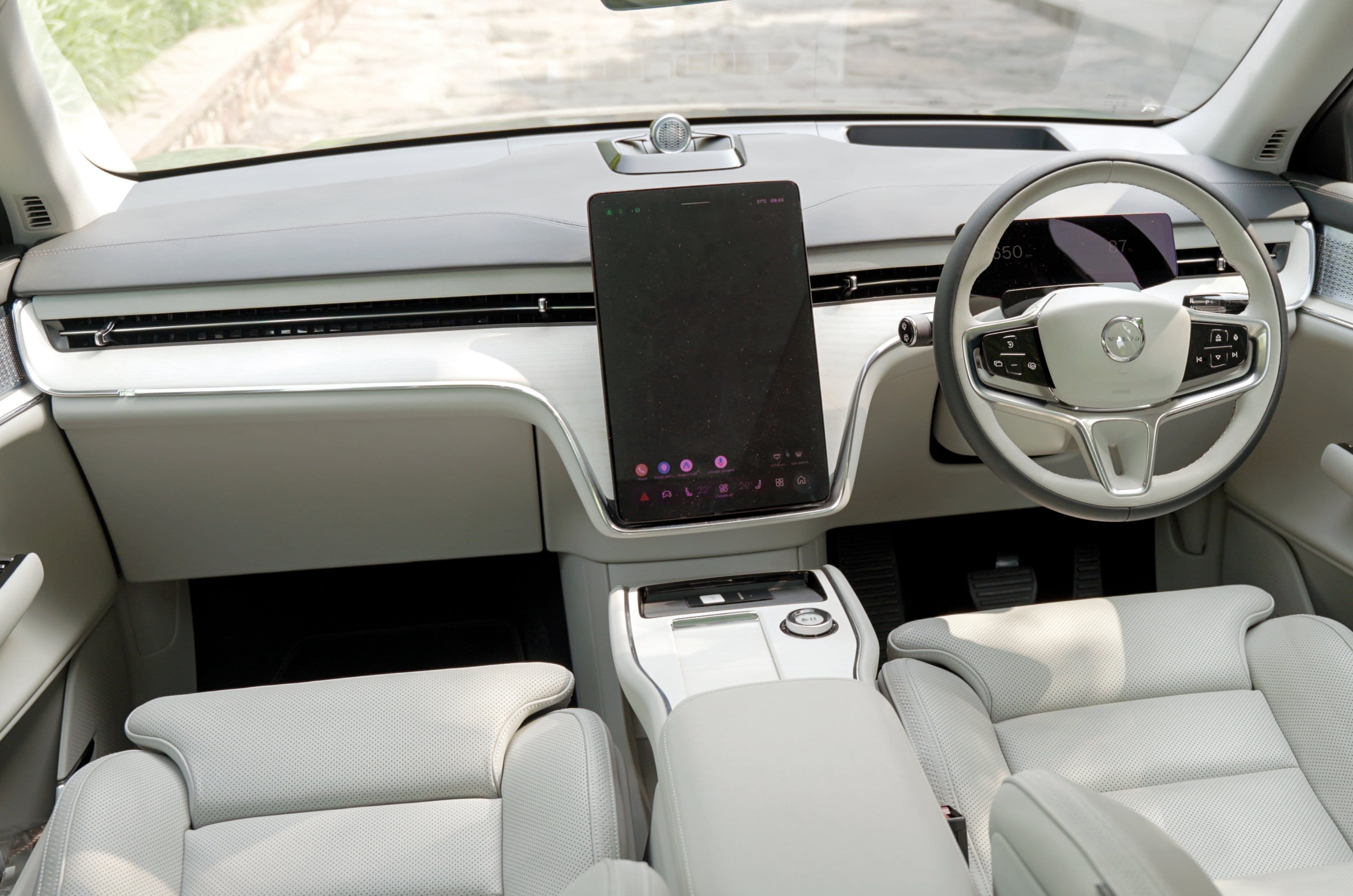
Inside, the minimalist approach continues and even takes precedence. The dashboard is devoid of any buttons whatsoever, and the majority of the real estate is taken up by the 14.5-inch touchscreen. However, the bright seats and upholstery, along with the bright open-pore wood, lift the cabin ambience significantly. There is generous use of brushed aluminium as well, and the Nappa leather is fantastic to the touch. The centre console also features wireless charging and a rotary knob for media control.
There is plenty in the front seats to pamper you. They offer excellent support, and feature heating, ventilation and a whole host of massage options. Plenty of electric adjustment also means finding an accurate driving position is easy, and all-round visibility is very good.
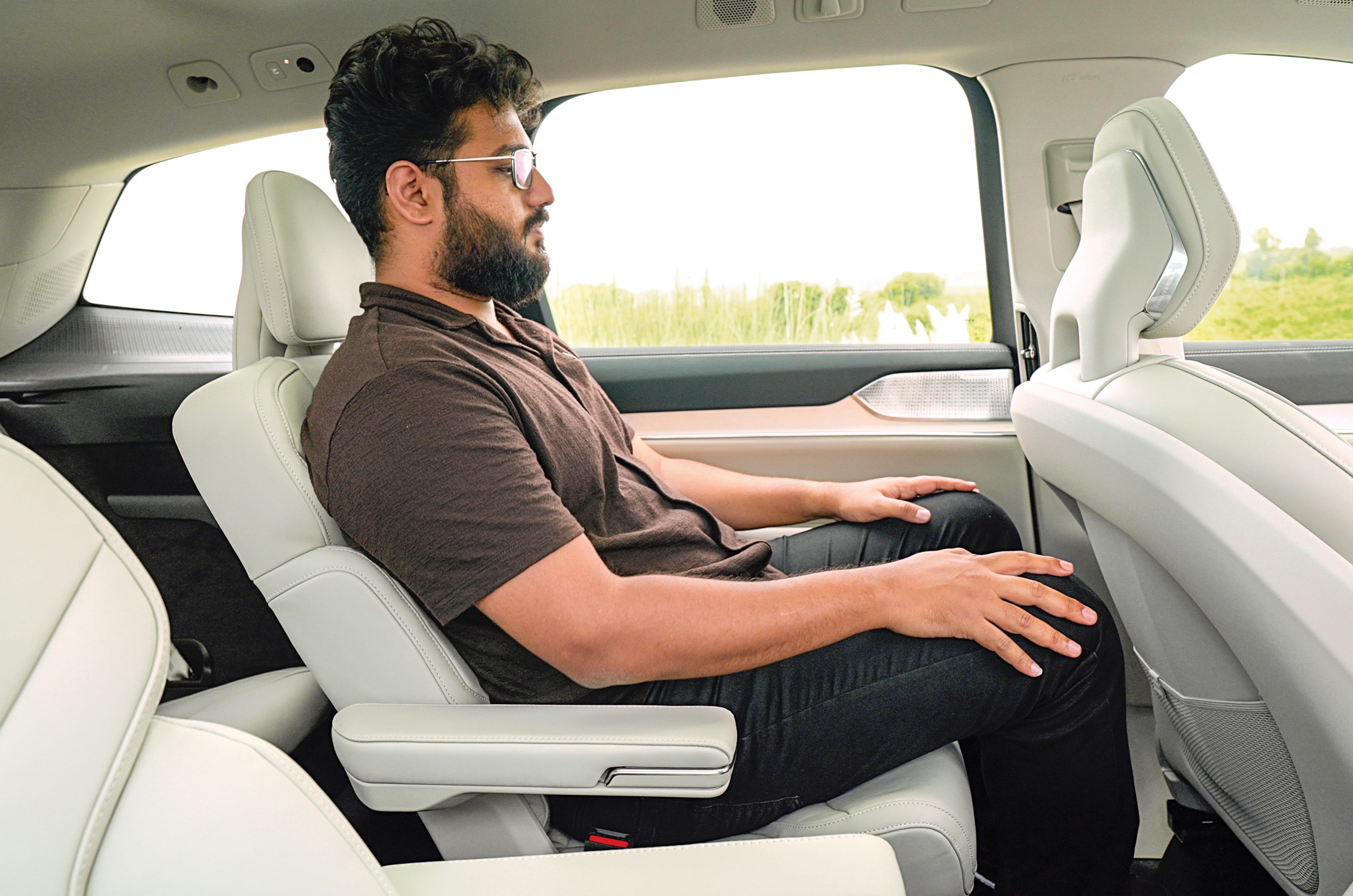
Exclusively a six-seater with good space and comfort.
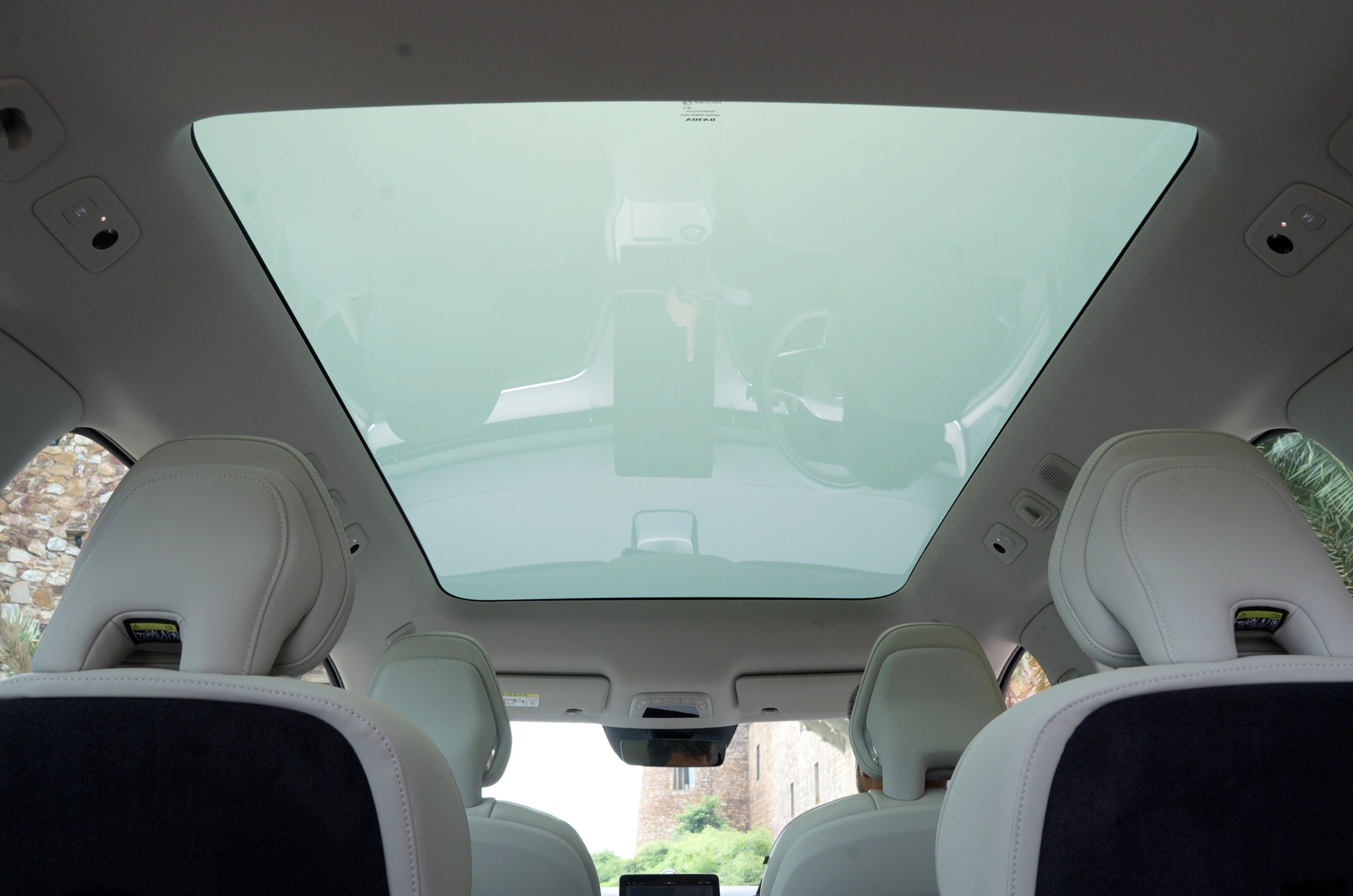
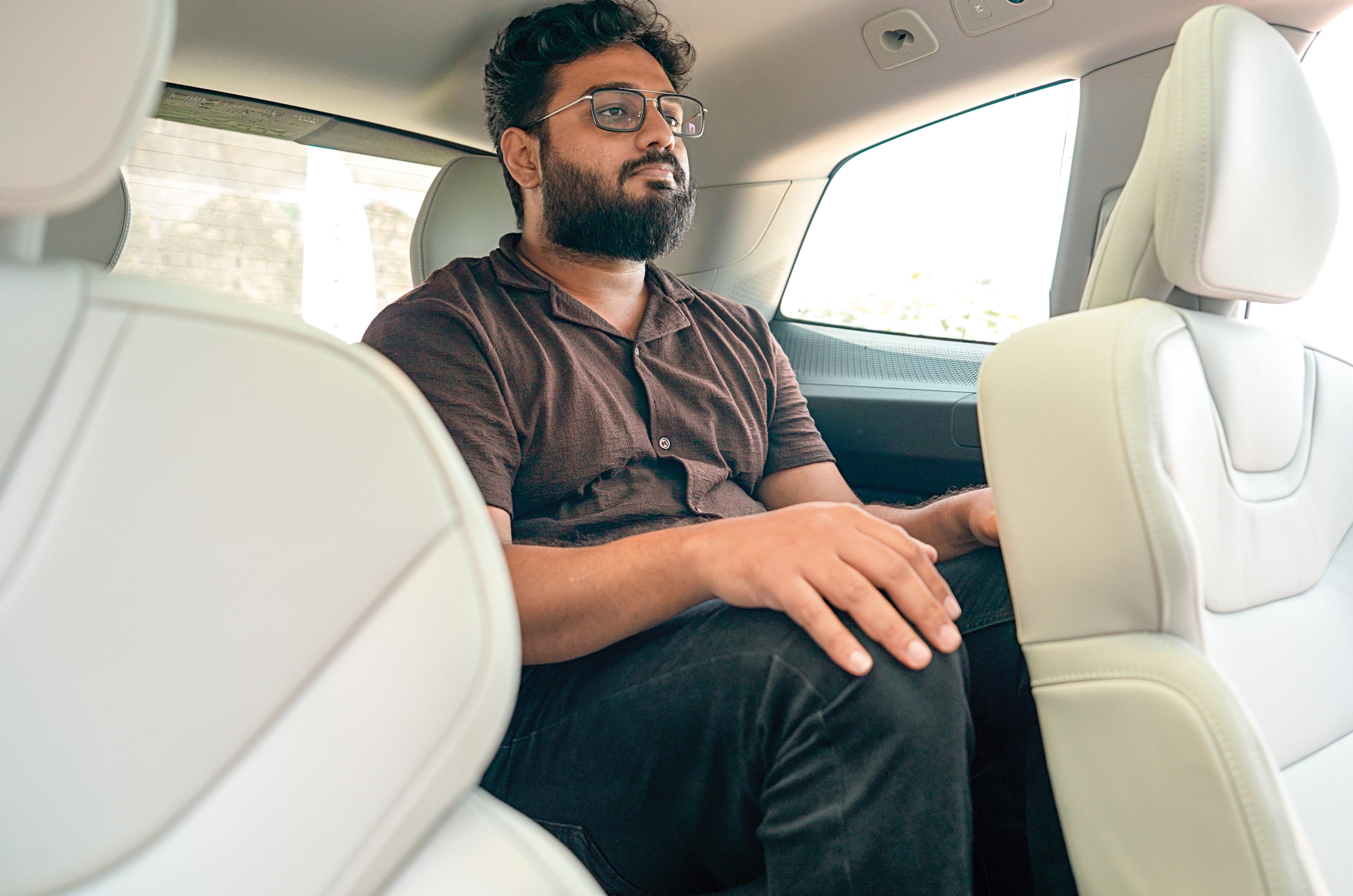
The EX90 is only available as a six-seater, so in the middle row you get captain’s chairs, but these would feel snug for some, and for a luxury car that would be chauffeur-driven, you don’t get the same level of pampering as in the front seats. There is no electric adjustment, heating, ventilation or massage either. There aren’t any sunblinds for the windows too, and even though the huge panoramic sunroof is electrochromic, at the tap of a button you get a bit of tint in the glass, on a hot day with the sun overhead, you will need more.
Massive panoramic glassroof gets electrochromic shade. Physical sunshade is an accessory.
The accessories list has a proper roof shade to protect you from that, and it is an extra we recommend you select. On the plus side, space is good, and the seats can be adjusted for legroom and recline too. You get four-zone climate control, with AC vents in the pillars that are a lot more effective, and cupholders stowed within the armrests. Also, being a modified platform, the floor is raised, and you notice this while getting in and out of the car.
Access to the third row is easy from between the captain’s chairs, thanks to the flat floor, but there is no tumble feature for the seats. Instead, they only slide forward, opening a cavity to get in. Room in the last row is at a premium for tall adults, but kids or shorter adults will do just fine with a little adjustment to the middle row.
Third row best suited for kids or short adults over quick drives.
With all three rows up, boot space stands at a healthy 324 litres, and with the third row folded away, it is a sufficient 690 litres. There is a 46-litre frunk too for stowing charging cables. Impressively, there is a full-size spare wheel as standard, which will eat up some boot space but is a huge relief given the low-profile tyres and our roads.
EX90 Features and Safety – 8/10
Annoyingly every control is within the 14.5-inch Google-powered screen.
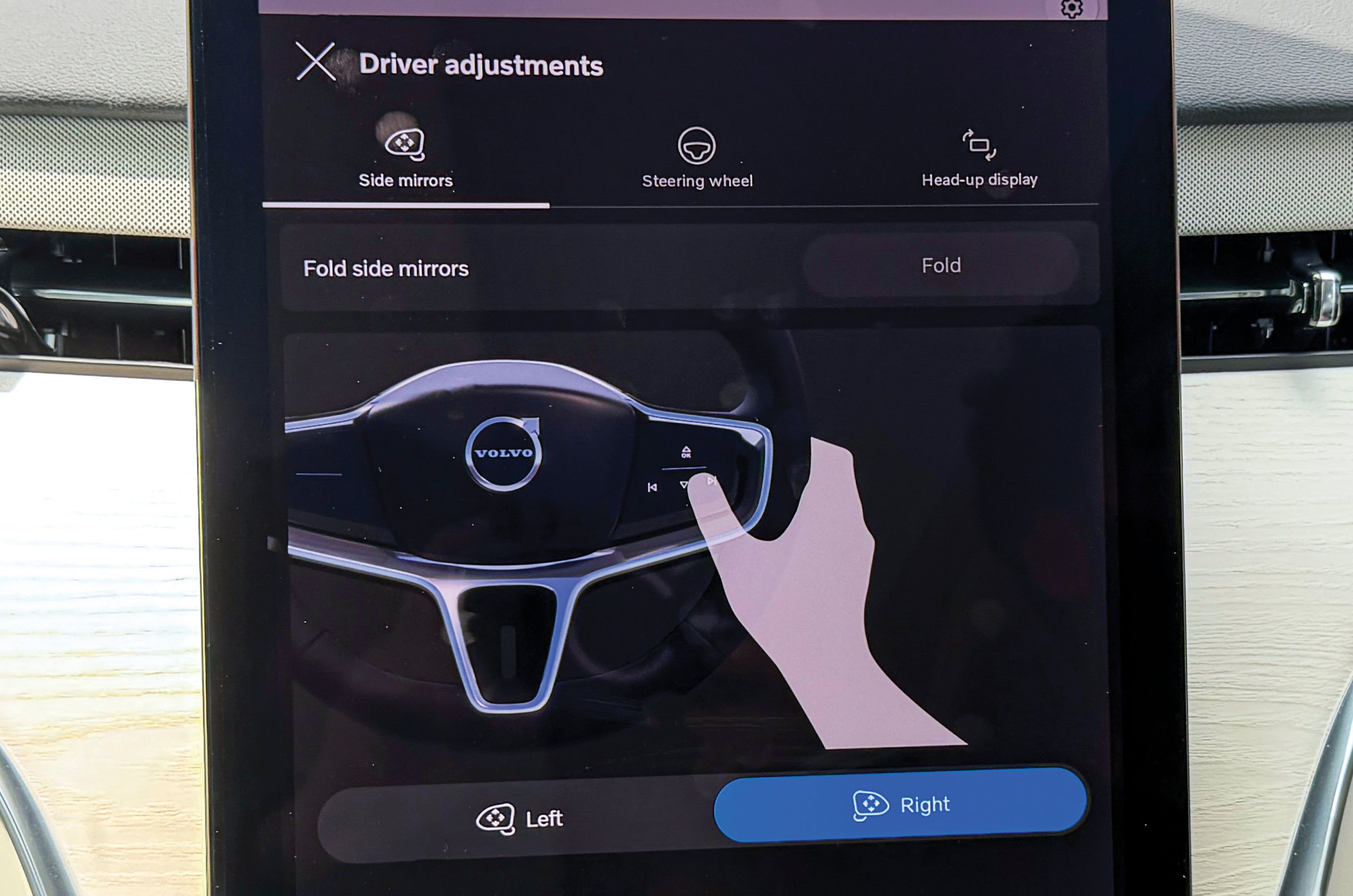
Most of the EX90’s features are accessed through the massive, vertically oriented touchscreen. Being Google-powered, it runs a smooth OS, but simple tasks like adjusting the ORVMs require multiple inputs and navigation through the menus, which isn’t easy while on the move. There are some hard-coded functions at the bottom of the touchscreen, such as climate control, but you still need to focus on the screen and cannot operate them easily while driving. There is also a 9-inch driver display with nothing but the absolute necessary figures, such as range, speed and battery percentage. You can also load up the maps there, and it displays the traffic around you too. However, don’t expect multiple dials and a loaded, fighter-jet-like cockpit experience, the instrumentation is all minimal but feels sparse too.
Bowers & Wilkins Hi-Fi audio system is epic.
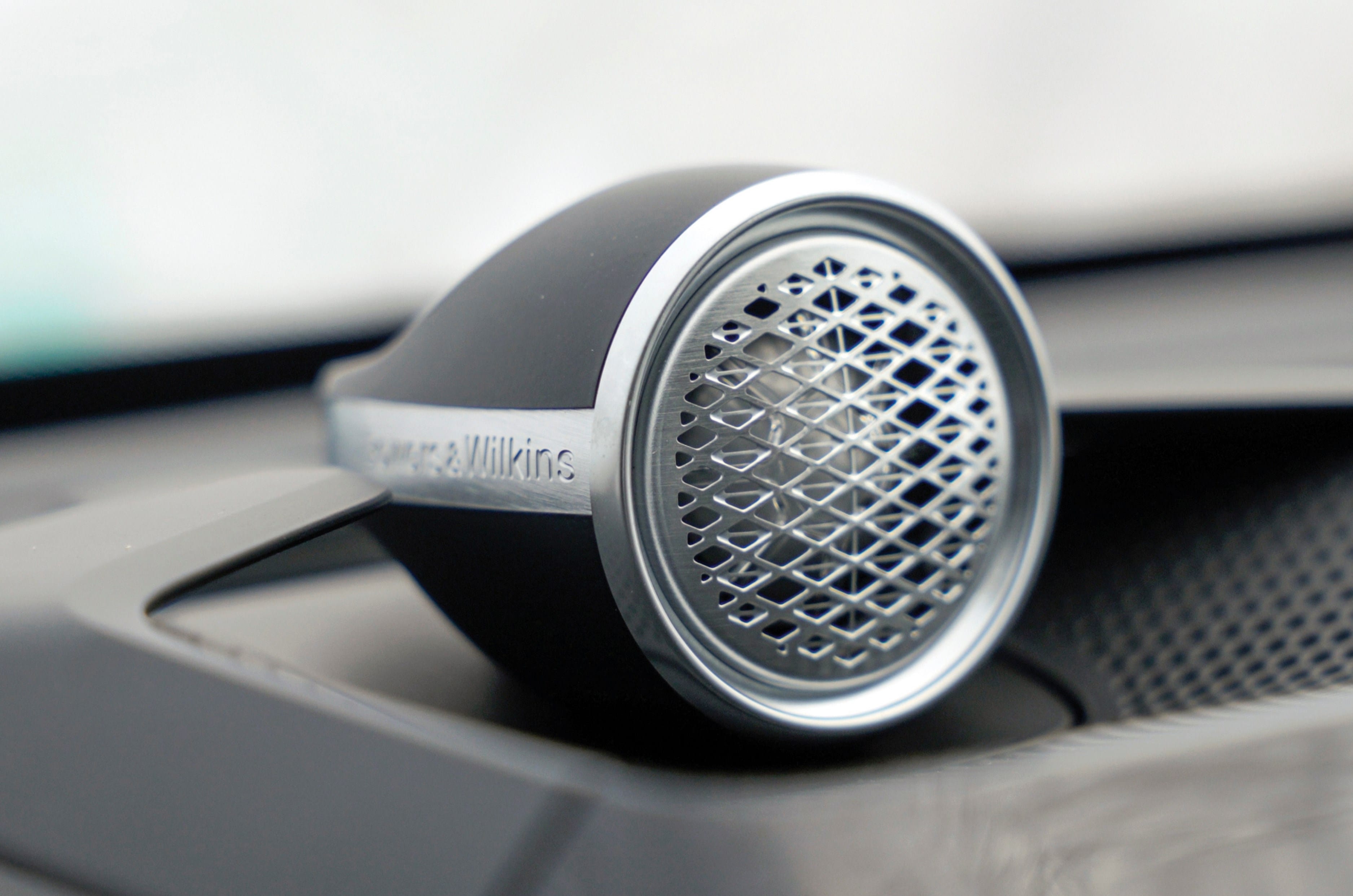
What is excellent, however, is the music system: a 1,610W, 25-speaker Bowers & Wilkins Hi-Fi audio system with custom presets and modes that truly transform the cabin. If you enjoy your music, there are few cars in the world that offer something at this level or better. Safety is where Volvo excels, and the EX90, being the flagship, has all the bells and whistles – active and passive. Nine airbags, five cameras, five radars and 12 ultrasonic sensors, powering a full ADAS suite including door-opening alert and post-impact braking, make it exceptionally well equipped. Essentials like a 360-degree camera and auto-parking further make it easy to live with.
EX90 Performance and Refinement – 9/10
It is just as nice to drive as it is to be chauffeured in.
The EX90 comes in a single variant in India, with a dual-motor setup and a 106kWh battery pack. It develops 456hp and 670Nm, making it quick off the line. 0-100kph takes just 5.5sec, which, given its size and type, is pretty impressive. However, from behind the wheel, the experience aligns with its laid back character. You can alter the dynamics using the four drive modes. ‘Range’ prioritises efficiency, and power and torque are heavily restrained, although in bumper-to-bumper traffic, you will not notice the dip. There is a creep function too for peak-hour jams. ‘Standard’ is a balance that suits the car well for the most part, while ‘Performance’ is for that rare time when you want to add some enthusiasm.
Despite its strong power figures, performance feels more like an airliner than a fighter jet.
Don’t expect fighter-jet levels of reactions, though. Even in ‘Performance’ and with a heavy right foot, the EX90 builds pace gradually. It is almost like taking off in an aeroplane, where the speed rises in a strong and linear manner. This mode zaps power swiftly, so it is best to use the ‘Standard’ mode and get the best of all worlds. If you end up venturing off the tarmac, the ‘Off-road’ mode allows for more ground clearance (250mm), and it alters traction control and ESP settings to allow for more traction on loose surfaces.
Once on the move, what is extremely impressive is cabin refinement. With no engine sound to distract you, EV cabins amplify ambient sounds like wind and road noise, especially with large tyres, but the EX90 is a different story. Cabin insulation is top-notch, and it is near-silent on the inside. It also has a neat trick, microphones all around the car can relay conversations via the speakers clearly no matter where you are seated. You only have to talk in your natural tone for your voice to clearly go through the microphone and speakers. So passengers sitting at the first and third row can have a conversation without having to speak loudly.
EX90 Mileage / Range and Efficiency – 9/10
The 106kWh battery can eke out 625km according to the WLTP cycle. In our short test drive, we saw an efficiency of 5km/kWh in mixed driving conditions, resulting in a range of 530km. That is rather respectable, and considering a majority of our drive was on the highway, this number should only get better in the city.
The EX90 also has regenerative braking, and you can go from having it completely off to low or high, or just leave it in Auto, where it does all the thinking for you. Feel, though, leaves a lot to be desired, the pedal never feels consistent in its bite point. You get an 11kW AC charger for your home or office, which takes 11 hours for 0-100 percent. But being an 800V system, it can charge at up to 350kW on a DC charger, taking just 23 minutes for 10-80 percent. The car will also pre-condition the battery, meaning it gets the battery up to its optimum temperature to charge as quickly as possible.
EX90 Ride Comfort and Handling – 8/10
The EX90 rides on air suspension, which, over broken roads at medium or high speeds, is excellent. The car adjusts within microseconds, and you barely feel bumps inside. You can firm it up for the highway, so there is none of the wallowy feel associated with a softly sprung setup. Three modes to choose from give you flexibility depending on the road surface. ‘Standard’ offers the best balance, as it has the softness without feeling overly soft in the corners, while ‘Firm’ adds a layer of stability at speed and on fast bends. ‘Soft’ is a bit too soft, and the car ends up diving or rolling a tad more than necessary. In the city, there is none of the harshness over low-speed bumps, and the composed nature of the suspension is its highlight.
EX90 Value for Money – 8/10
The EX90 offers just about everything you need in a luxury EV
Prices for the EX90 will be out in October, and it will be the brand’s flagship SUV, sitting above the XC90. If you are looking for a chauffeur-driven luxury EV, it will tick the right boxes. That said, sunblinds would have been nice, and as a driver, it will frustrate you with an over-reliance on the touchscreen and a fiddly key card. On the whole, though, it does a lot to impress and allows you to forgive these shortcomings. You get everything you expect from a luxury EV, the cabin is plush and comfortable, the materials and feel are excellent, the design is subtle but svelte, and the ride comfort is truly impressive. It rivals the Mercedes-Benz EQS and BMW iX, and while it may not be as feature-loaded in the rear seat as the EQS or as powerful and fun to drive as the iX, it does find a very nice middle ground and would be top of the list for those looking for minimalist class and luxury.
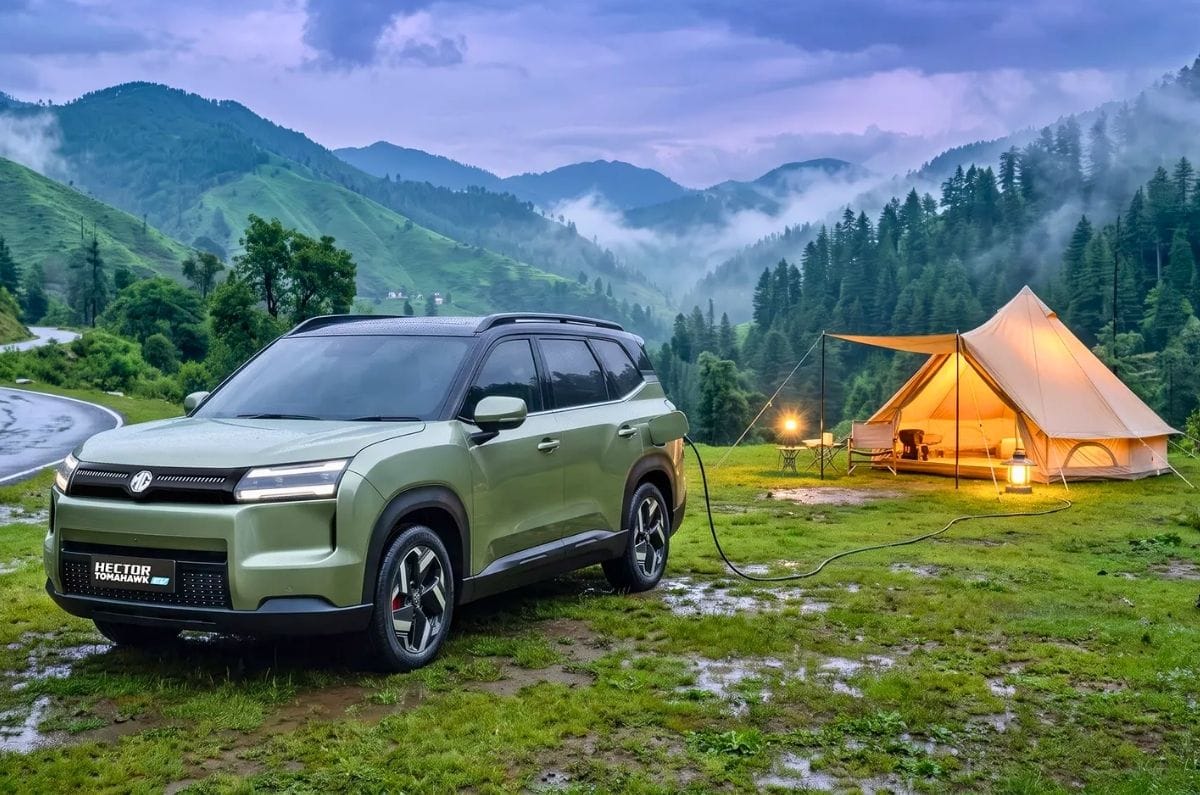
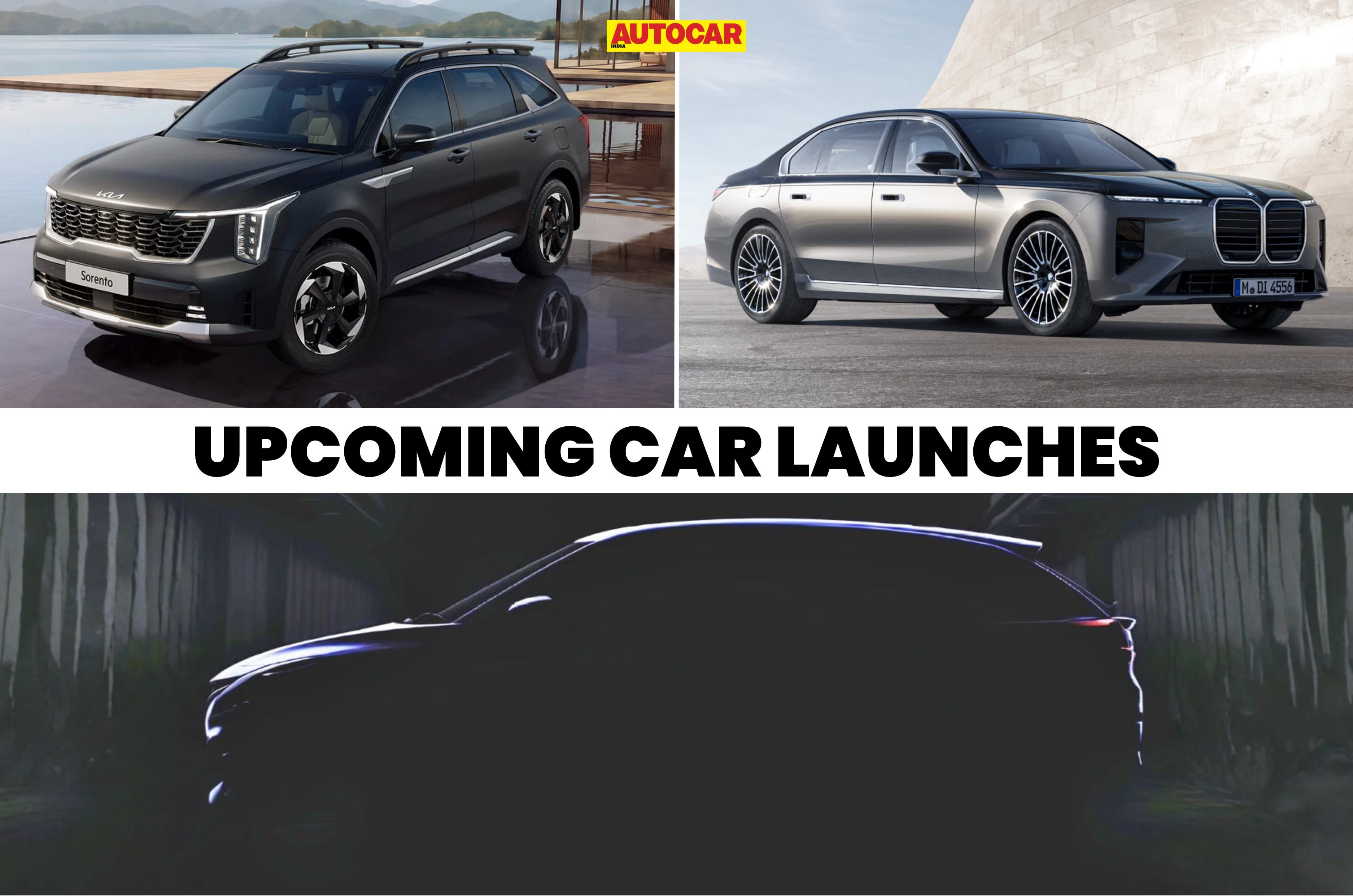
August was a busy month for the Indian car market, bringing several new models ajd variants, as well as updates. The BMW X1 LWB and MG Hector Tomahawk EV and PHEV were among the fresh launches, while the Mahindra Scorpio N received a mid-lifecycle update. The Mahindra BE 6 gained the ‘Sporteq’ suffix, while three existing models added new trims: the Range Rover SV Ultra, BYD Sealion 7 Dynamic and Skoda Kylaq Sportline. After such a packed August, September is also set to see more car launches.
Kia Sorento
Launch: September 4
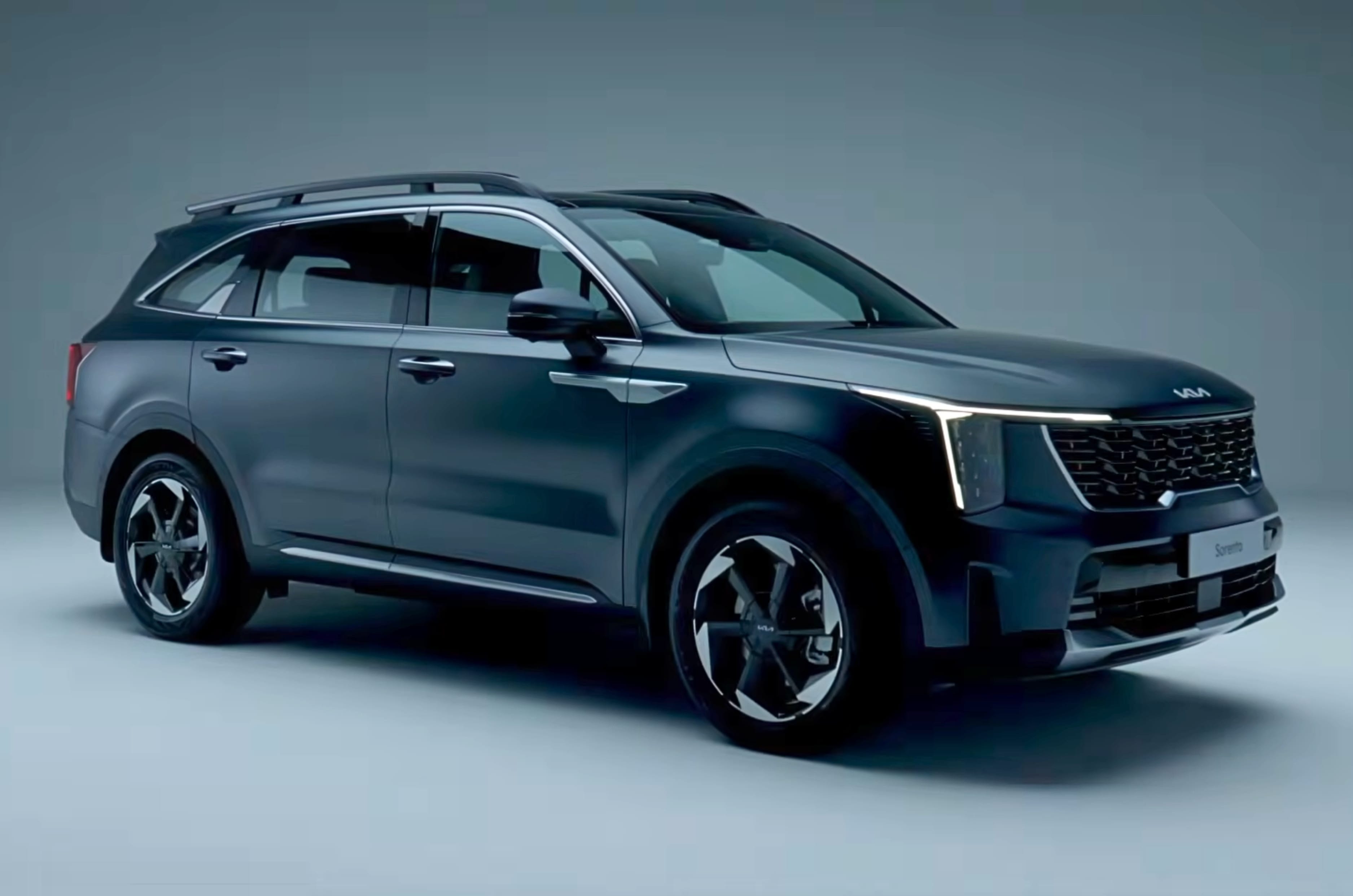
The Kia Sorento will be the brand’s new flagship ICE model in India, and it will be offered with both strong-hybrid and diesel powertrains. The 1.6-litre strong-hybrid version will produce 238hp and 380Nm, while the 2-litre diesel will make 202hp and 441Nm.
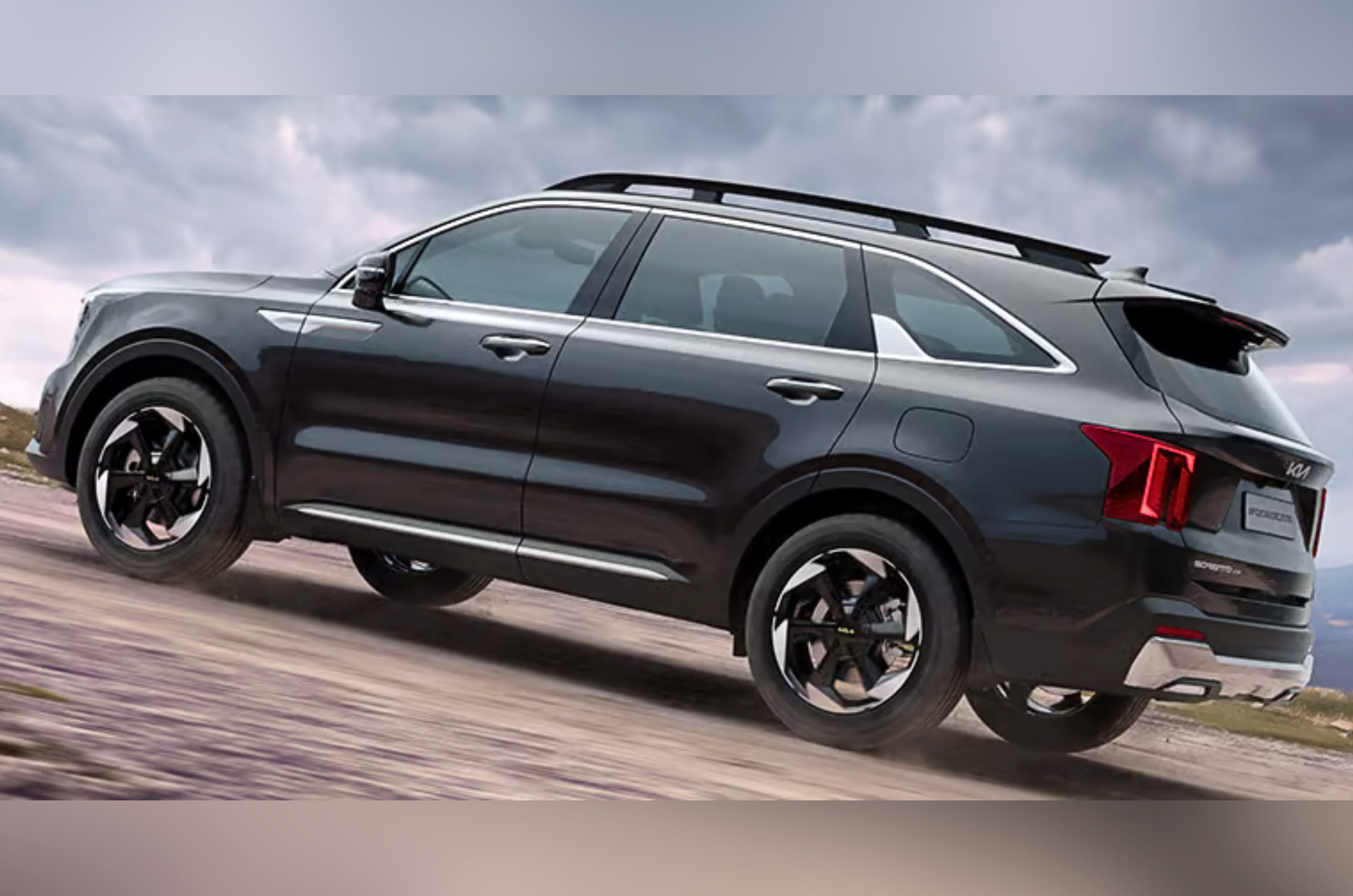
The Sorento gets Kia’s signature Tiger Nose grille, large vertical LED headlights with Y-shaped LED daytime running lamps (DRLs), LED fog lamps and vertical aero vents at the edges. Kia has not revealed the alloy wheel size yet, but they are likely to be 19-inch units. At the rear, the Sorento gets squarish tail-lamps with an inverted L-shaped LED signature, a large roof spoiler and a two-tone bumper.
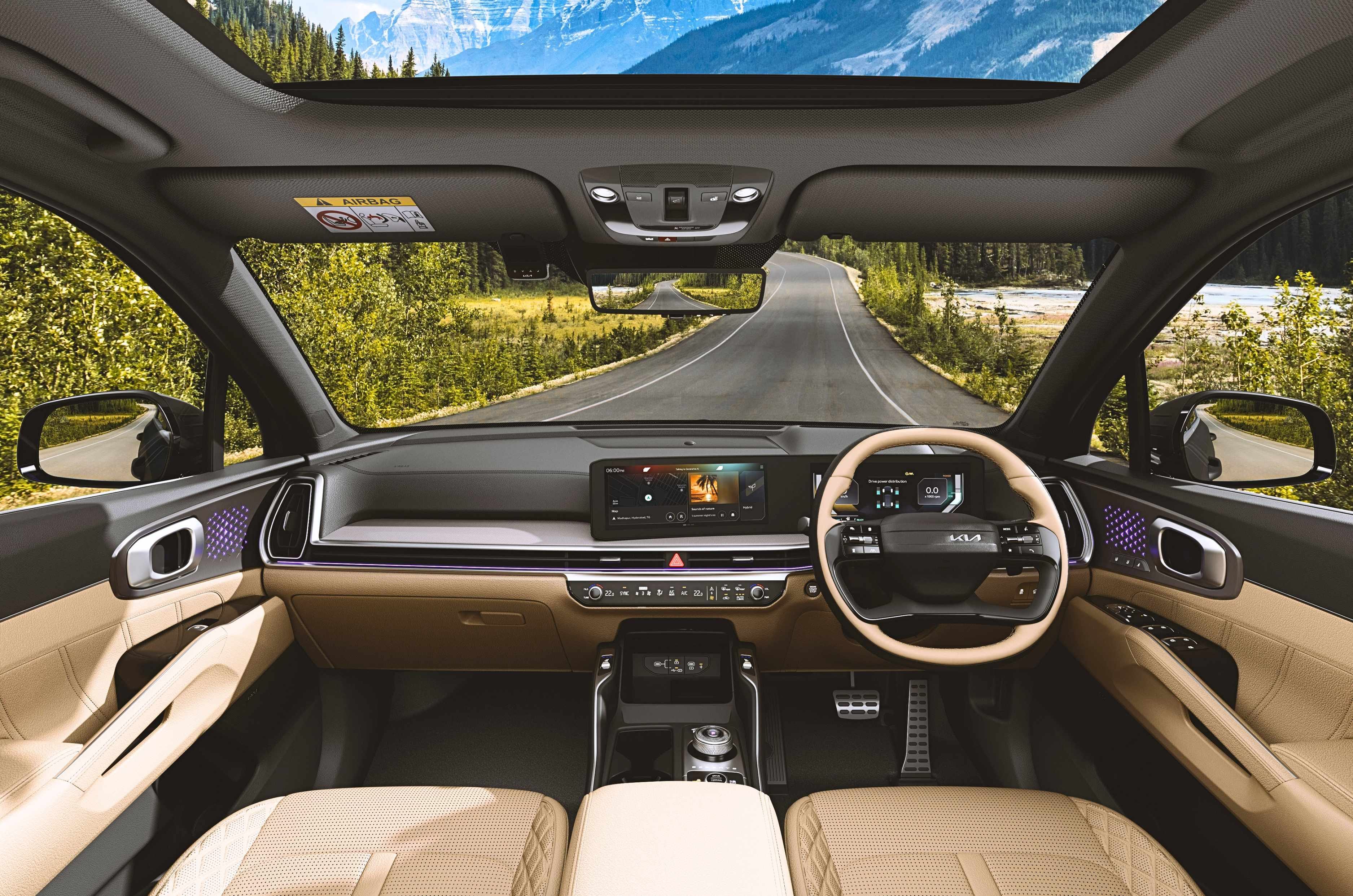
Inside, there is a connected panel housing the infotainment and instrument cluster screens. Kia has not revealed their sizes, but both are likely to be 12.3-inch units. Other features seen in the official images include ADAS, ventilated front seats, a digital interior rearview mirror (IRVM), an electrically operated tailgate, dual-zone climate control, ambient lighting and a panoramic sunroof.
The Sorento is expected to be available in both 6- and 7-seat layouts. Kia has already started accepting bookings for the Sorento and upon launch, it will compete with the Skoda Kodiaq, Volkswagen Tayron and Jeep Meridian.
Maruti Baleno facelift
Launch: September 5
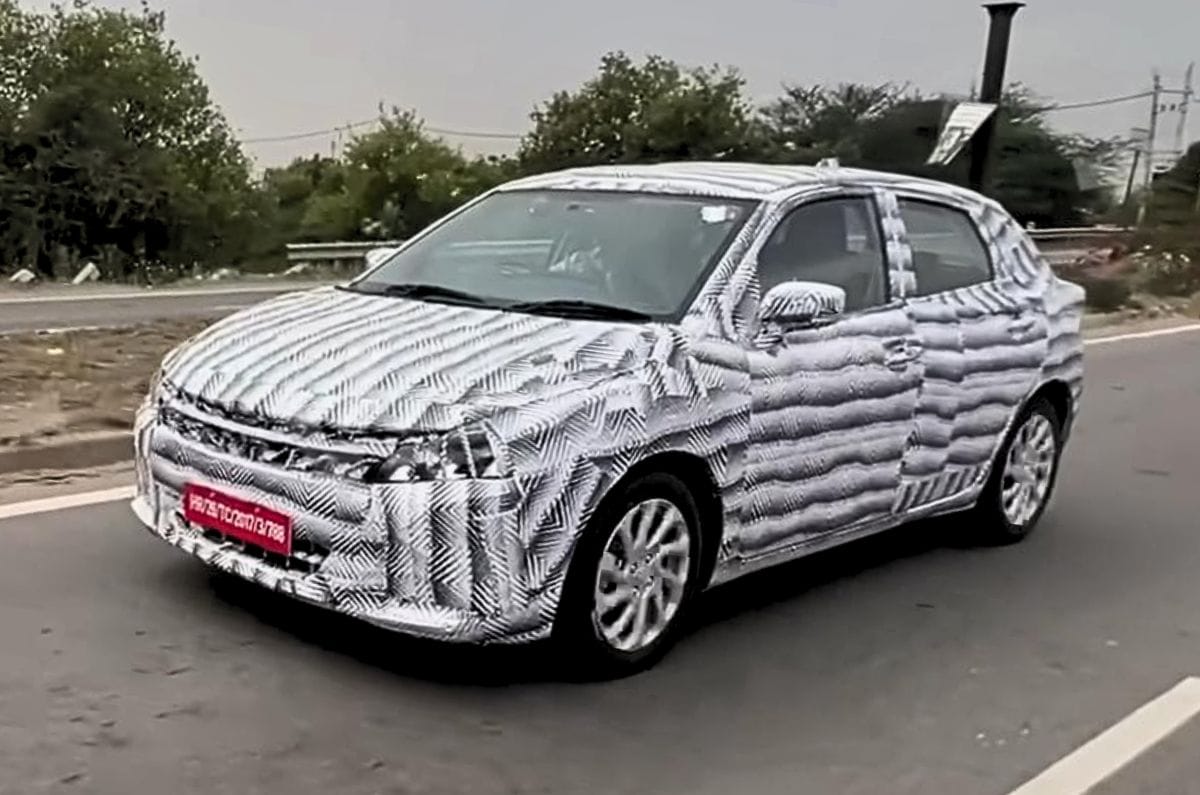
The Maruti Baleno is currently in its second generation, which was launched in 2022, and is due for an update. Previous spy shots of the Baleno facelift have suggested a redesigned front end with a new grille featuring a horizontal bar in the centre connecting the headlights. Test mules have also shown a new bumper without the front fog lamps seen on the current model.
Image credit: Harsh Vlogs via YouTube.
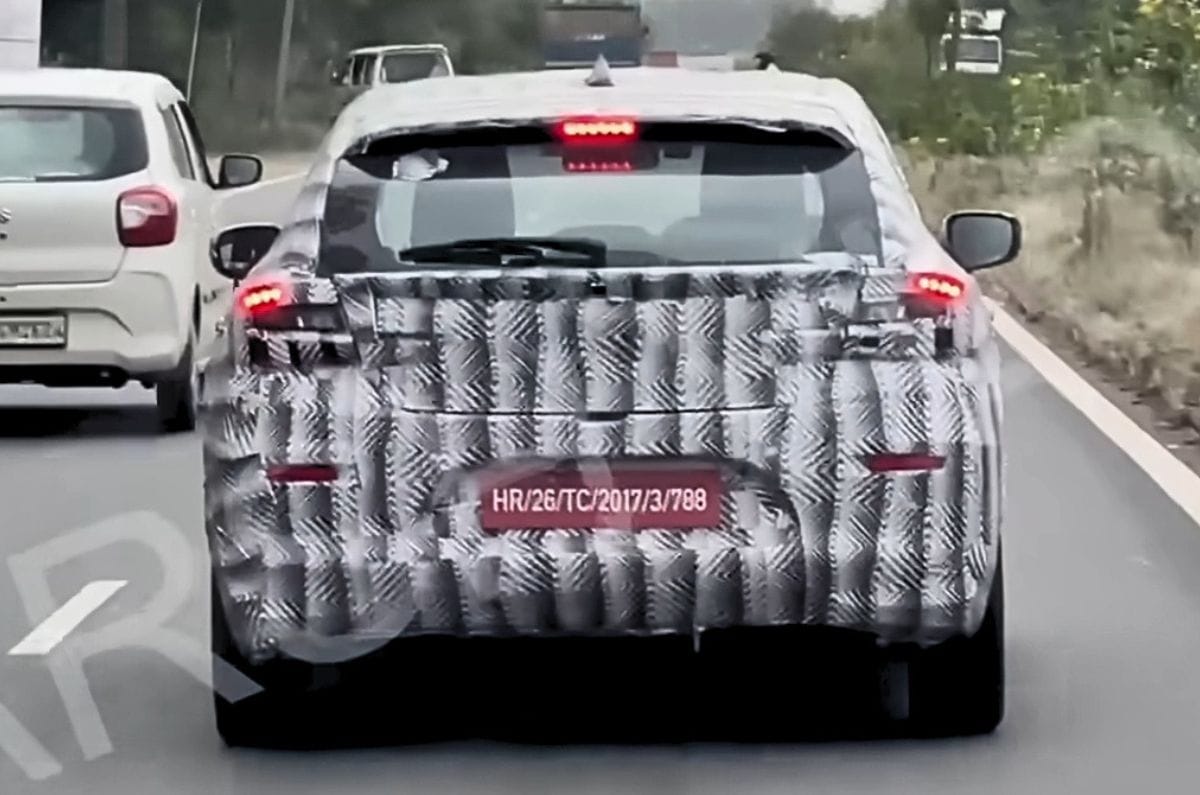
From the side, the only expected change is a new alloy wheel design. At the rear, the facelift could get a redesigned bumper, while the tail-lights are likely to remain unchanged. Inside, the Baleno could retain the current 9-inch touchscreen; however, update the upholstery and add new features.
Image credit: Harsh Vlogs via YouTube.
Under the hood, the facelifted Baleno is expected to continue with the existing powertrain options. These include a 90hp 1.2-litre naturally aspirated petrol engine with 5-speed manual and 5-speed AMT choices, along with a 77.5hp CNG version available only with the manual gearbox. It will continue to rival the Tata Altroz, Hyundai i20 and Toyota Glanza.
BMW 7 Series, i7 facelifts
Launch: September 11
BMW opened bookings for the facelifted 7 Series and i7 flagship sedans on August 1, soon after their global debut earlier this year. In India, the company currently sells the 740i petrol and 740d diesel versions of the 7 Series, along with the eDrive 50 and M70 xDrive variants of the all-electric i7. These versions get several updates with the facelift, although BMW is yet to confirm which variants will be introduced in here.
In international markets, the facelifted 740i and 740d continue with their 3.0-litre straight-six engines, but with uprated outputs. The 740i makes 400hp and 580Nm, up by 19hp and 60Nm, while the 740d develops 313hp and 670Nm, an increase of 27hp and 20Nm. Both continue to use 48V mild-hybrid systems, 8-speed automatic gearboxes and BMW’s xDrive all-wheel-drive system. The i7 also gets a larger 112.4kWh battery in both variants, up from 101.7kWh. The lower 50 trim now comes only with xDrive all-wheel drive instead of rear-wheel drive and produces 455hp and 660Nm, up by 6hp and 10Nm. The M70 xDrive now makes 680hp and 1,100Nm, gaining 30hp and 85Nm. Charging speeds have also improved.
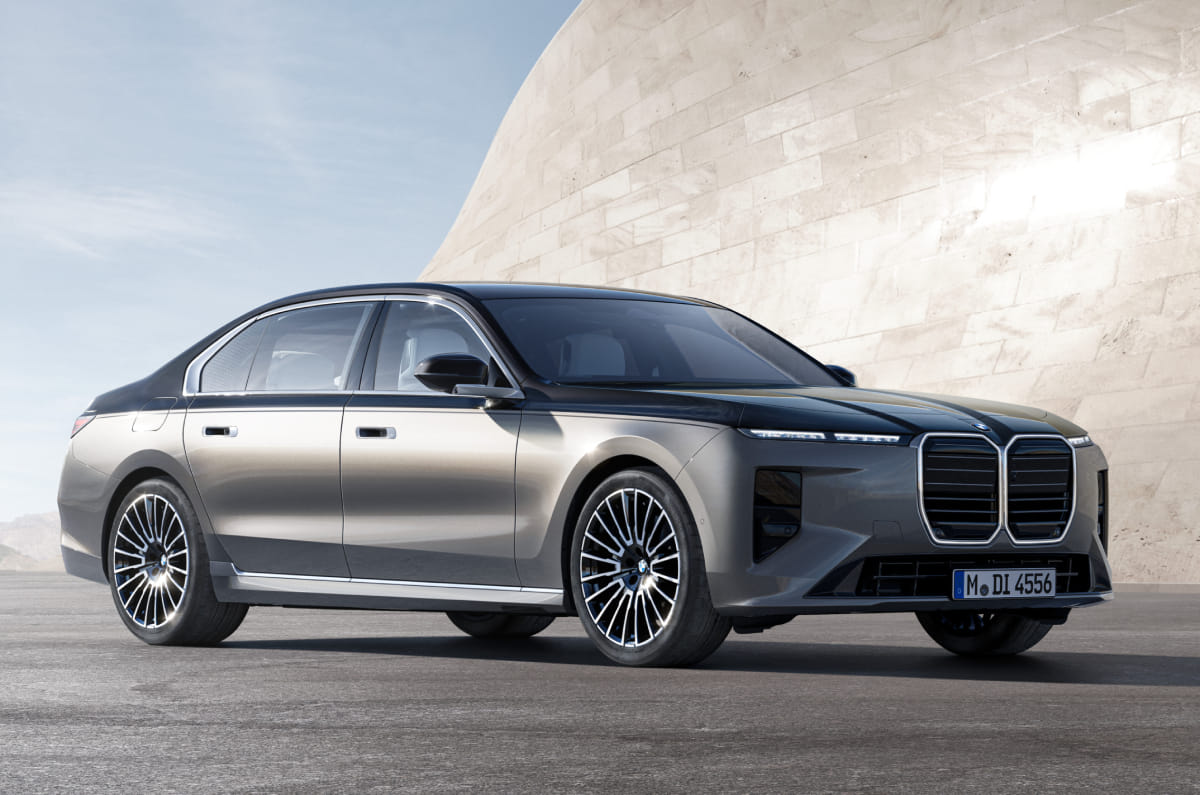
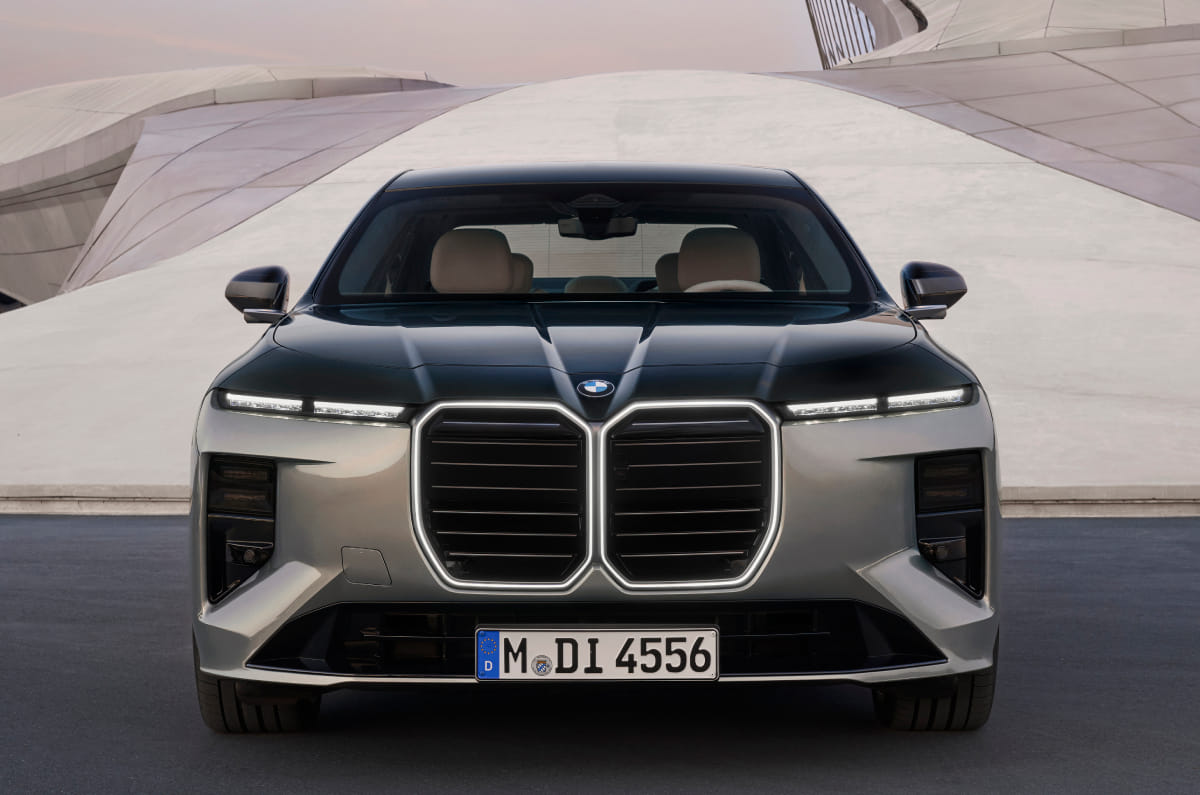
Visually, the updated 7 Series and i7 have a more monolithic look. They get new split LED headlights, slimmer and more upright kidney grilles with an illuminated surround, and larger bumper air intakes. The side profile remains largely unchanged apart from the side skirts and alloy wheels, while the rear gets new wraparound LED tail-lamps, a redesigned tailgate and a revised bumper.
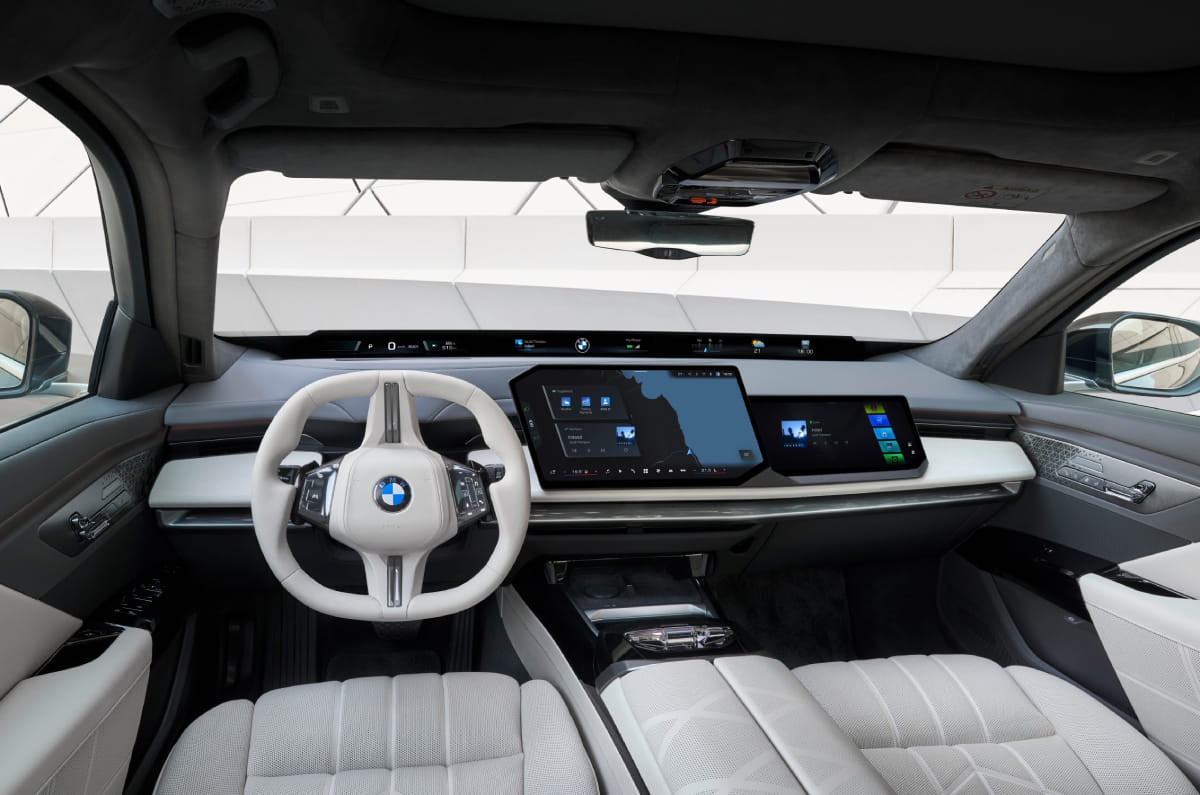
Inside, BMW has redesigned the dashboard around a 17.9-inch infotainment touchscreen, a 14.6-inch passenger display and a pillar-to-pillar Panoramic Vision display at the base of the windscreen. The steering wheel is now a four-spoke unit, similar to those used in BMW’s Neue Klasse models, while the centre console and transmission tunnel have also been updated.
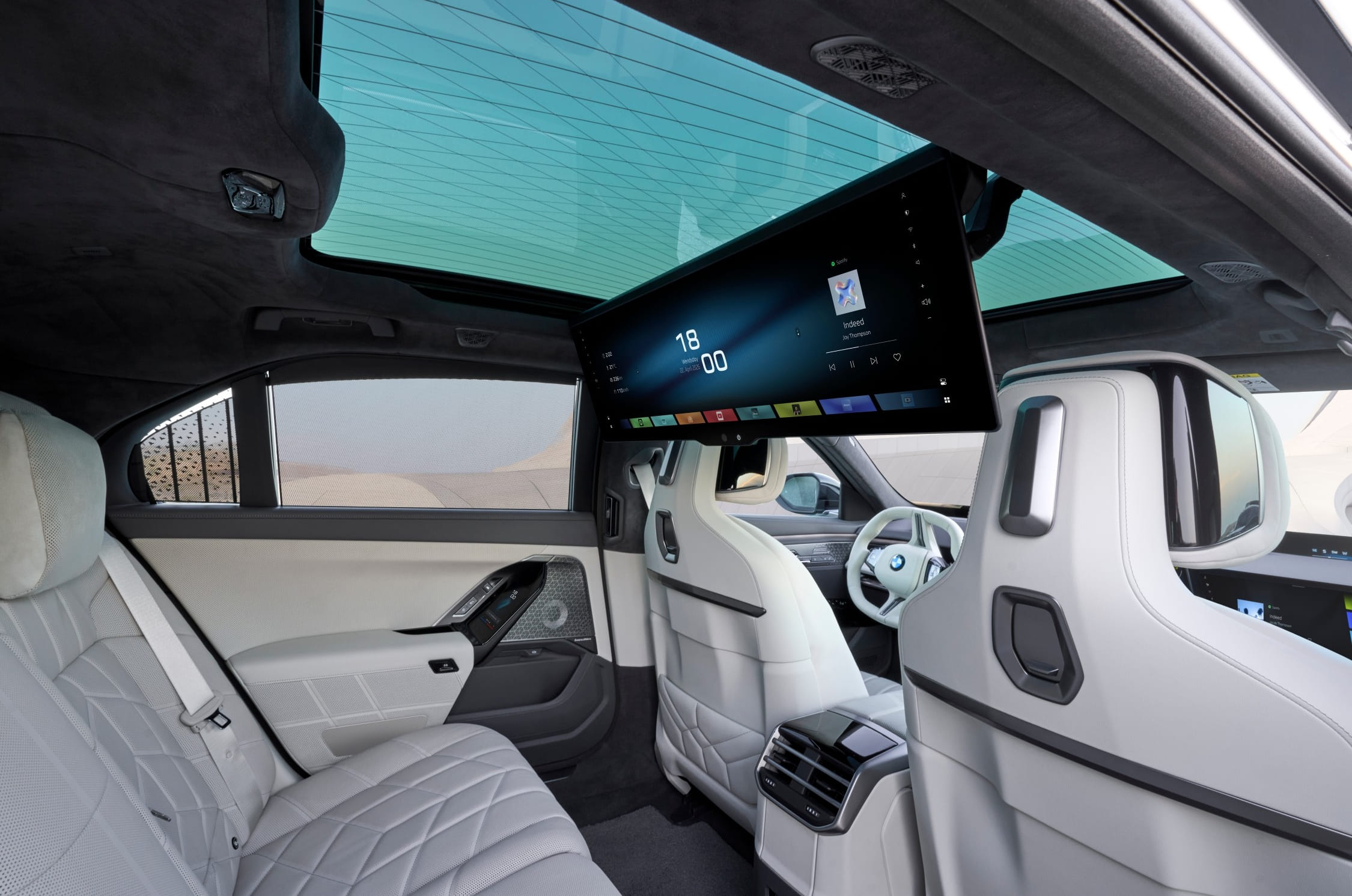
Rear passengers get powered seats with heating, ventilation, massage and lumbar support. The 31.3-inch 8K Theatre Screen can now be operated by touch, while the rear-door displays have also been updated to control the rear-seat experience. Other key features include ambient lighting, a Bowers & Wilkins surround sound system and 4-zone climate control. The BMW luxury sedan competes directly with the Mercedes-Benz S-Class, which also received a facelift this year.
Porsche Cayenne Electric
Debut: September 30
Porsche announced prices for the Cayenne Electric in November last year, and the SUV is now set for its physical showcase. The standard Cayenne Electric is priced at Rs 1.77 crore, while the range-topping Turbo Electric costs Rs 2.27 crore (both ex-showroom).
Both trims of the Porsche Cayenne Electric get a 113kWh battery and a dual-motor all-wheel-drive setup as standard. The more powerful Turbo Electric produces 1,156hp and 1,500Nm with Launch Control, allowing it to sprint from 0-100kph in 2.5 seconds before reaching an electronically limited top speed of 260kph. It has a claimed WLTP range of 537km. Whereas, the standard Cayenne Electric makes 442hp and 835Nm with Launch Control, does 0-100kph in 4.8 seconds and has an electronically limited top speed of 230kph. Its claimed WLTP range stands at 542km.
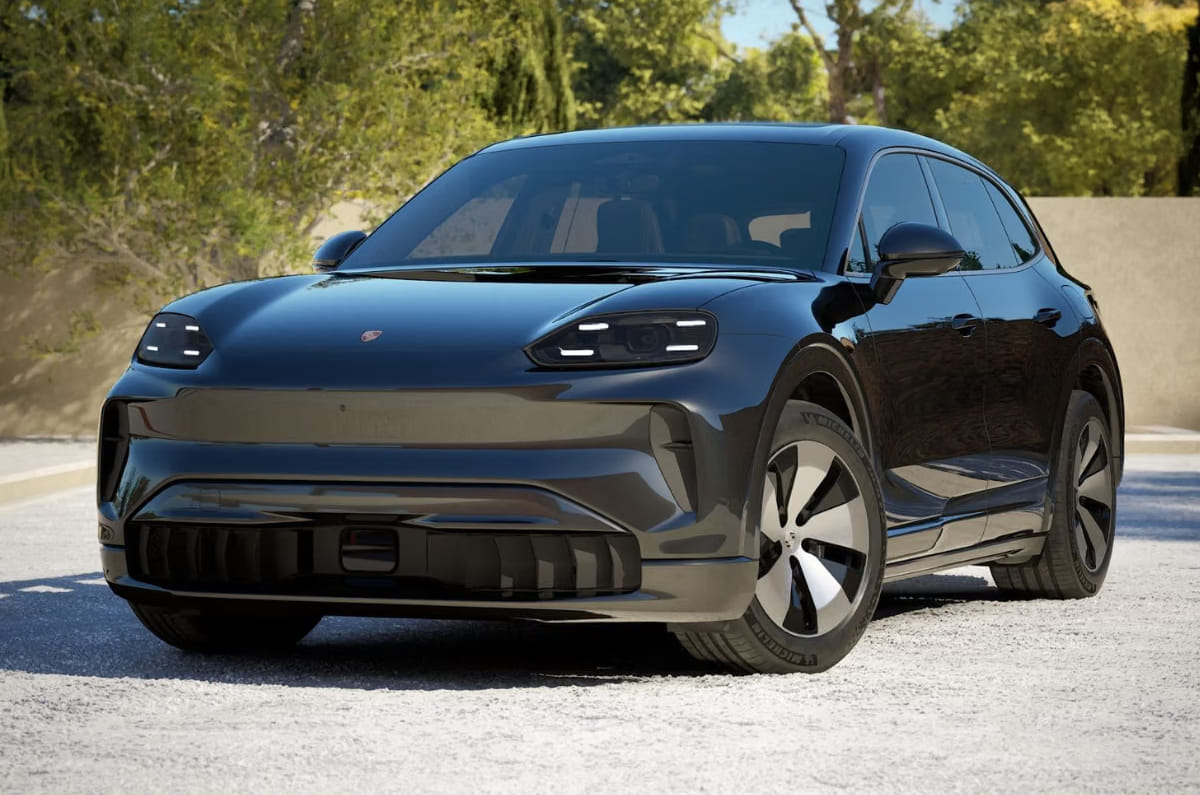
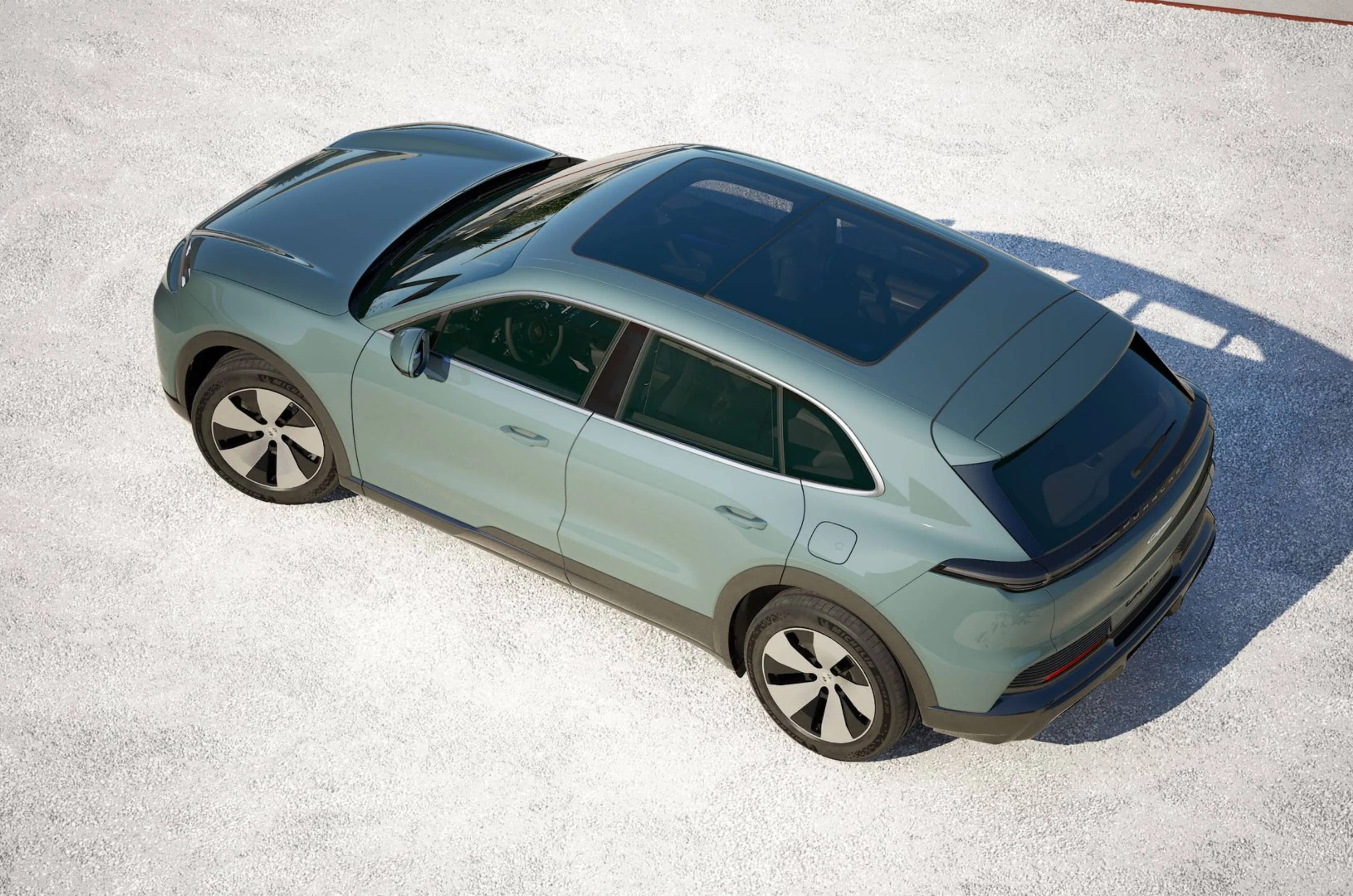
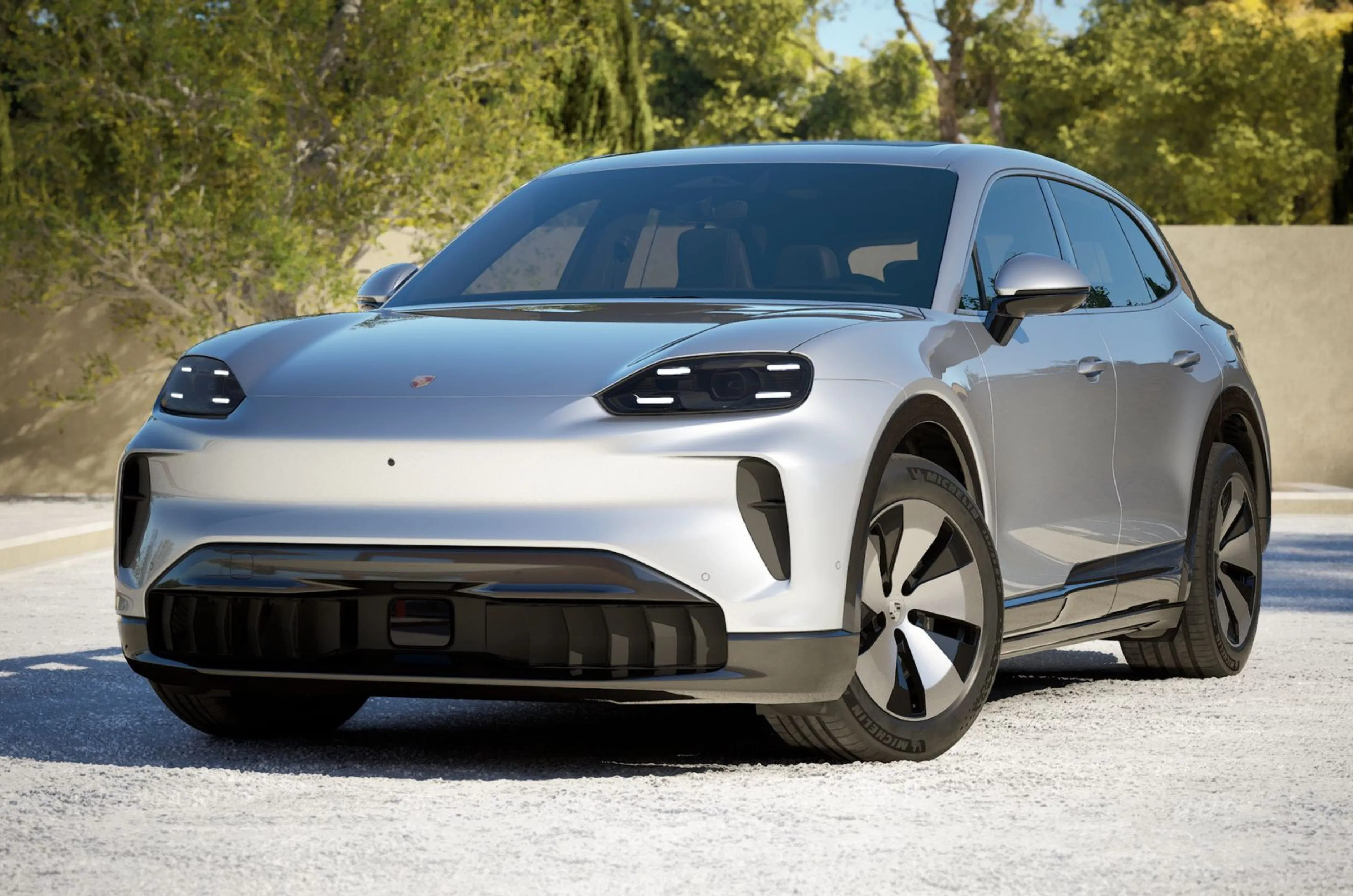
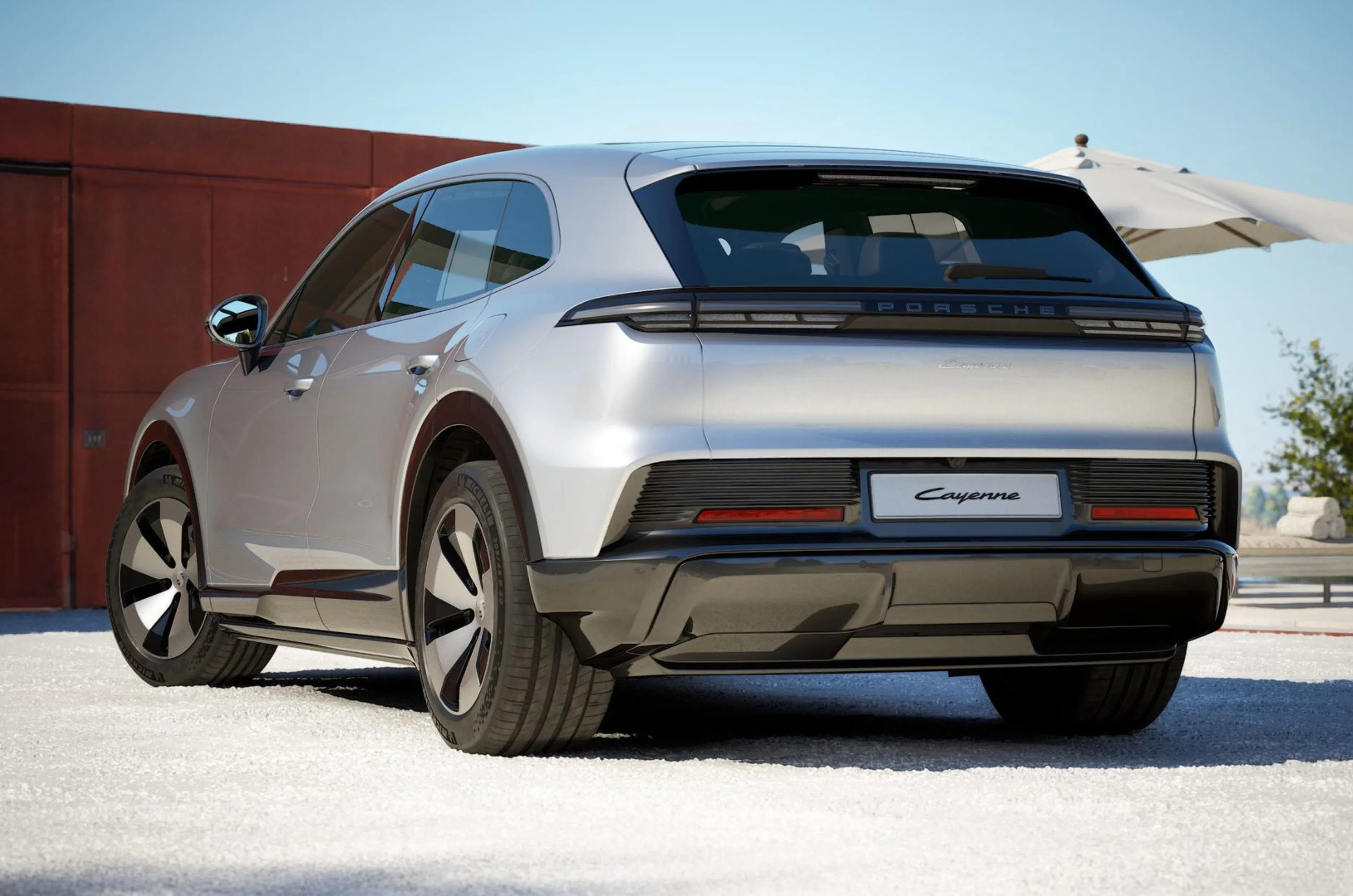
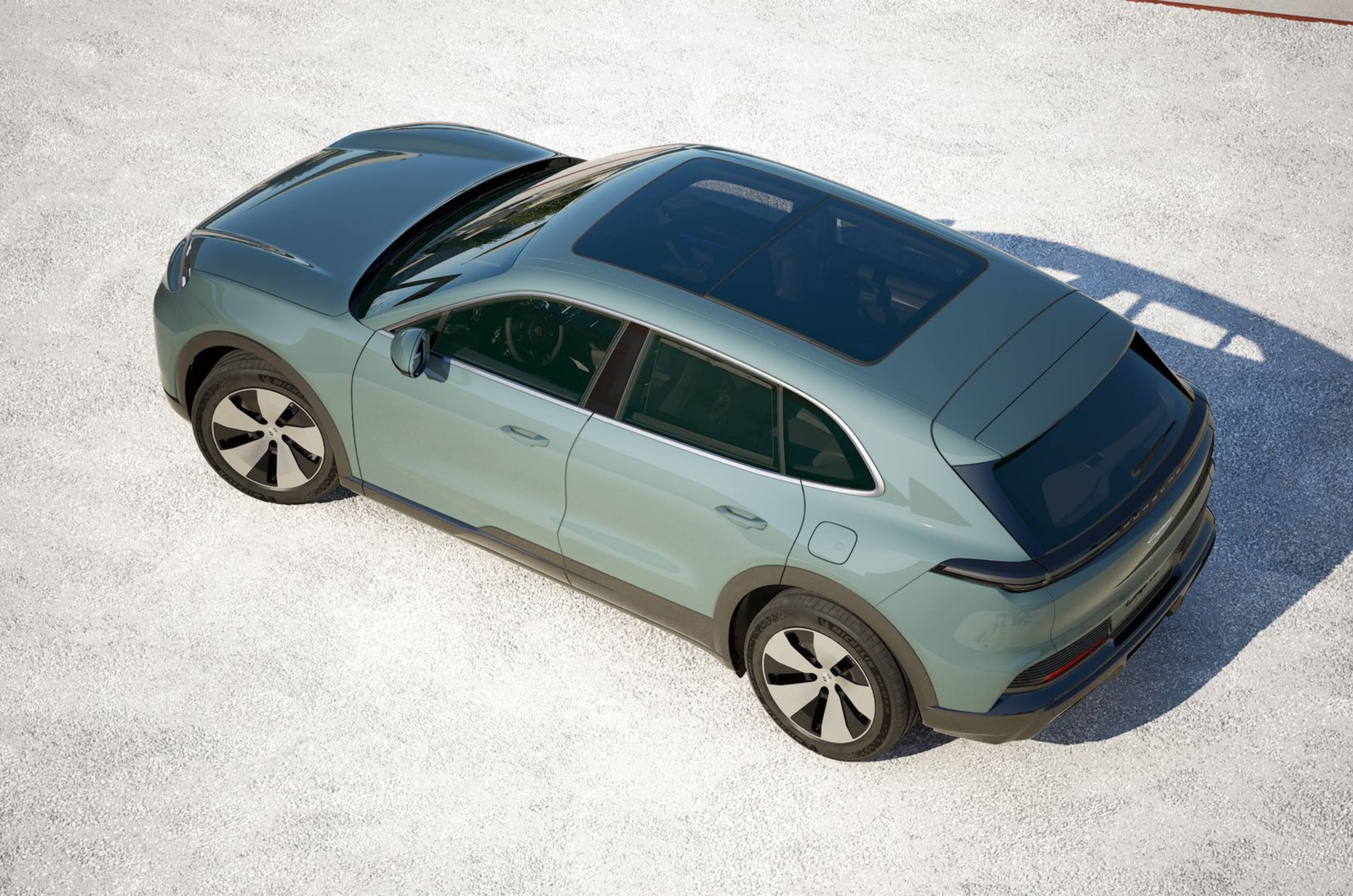
The Cayenne Electric keeps a similar overall shape to the ICE-powered Cayenne. However, the EV gets a closed-off grille, with two air vents on either side of the bumper to cool the battery and electrical components. These vents are larger on the Turbo trim. At the rear, there is a full-width LED light bar with illuminated Porsche lettering. The bumper has also been redesigned with horizontal black elements.
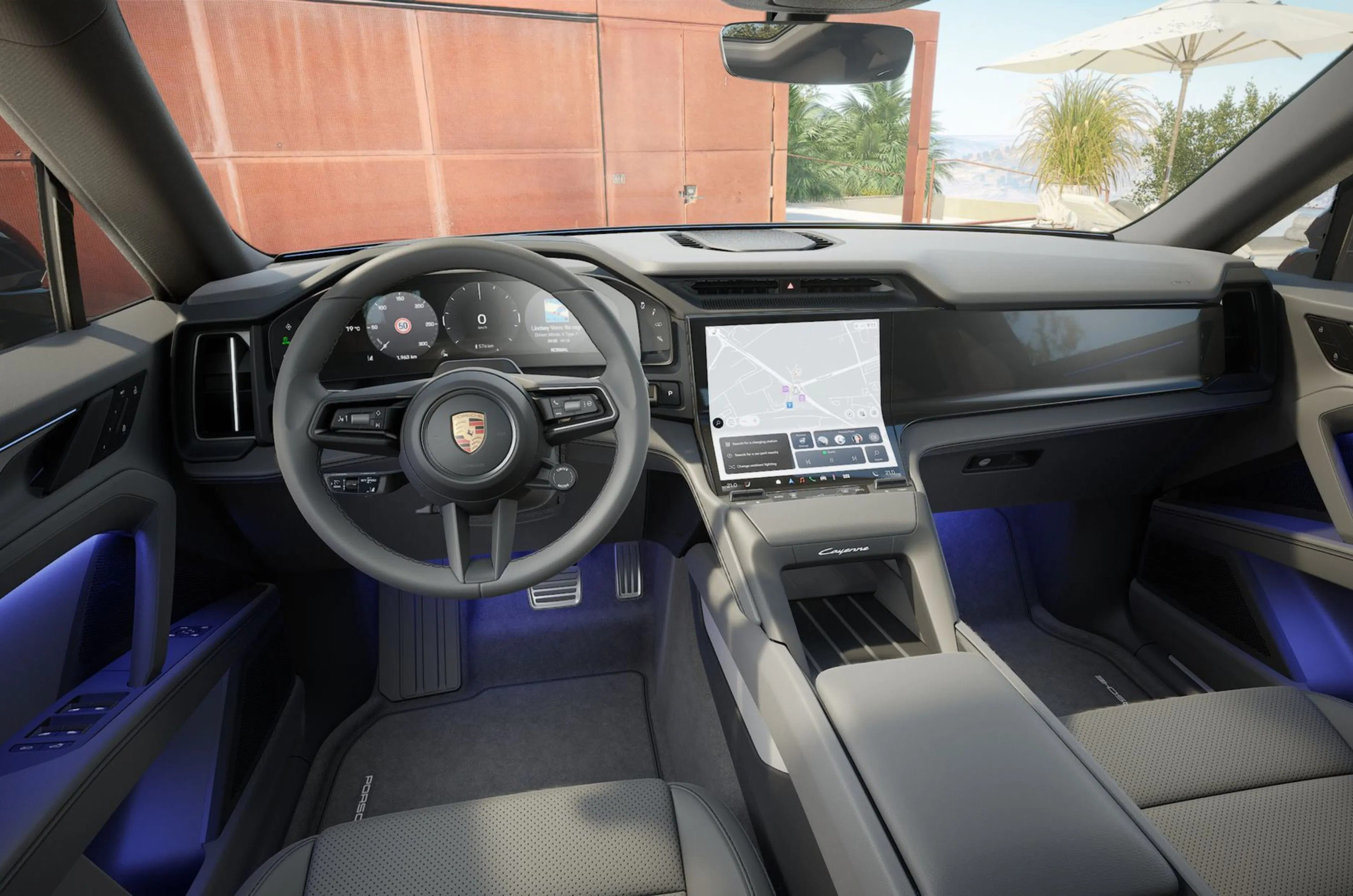
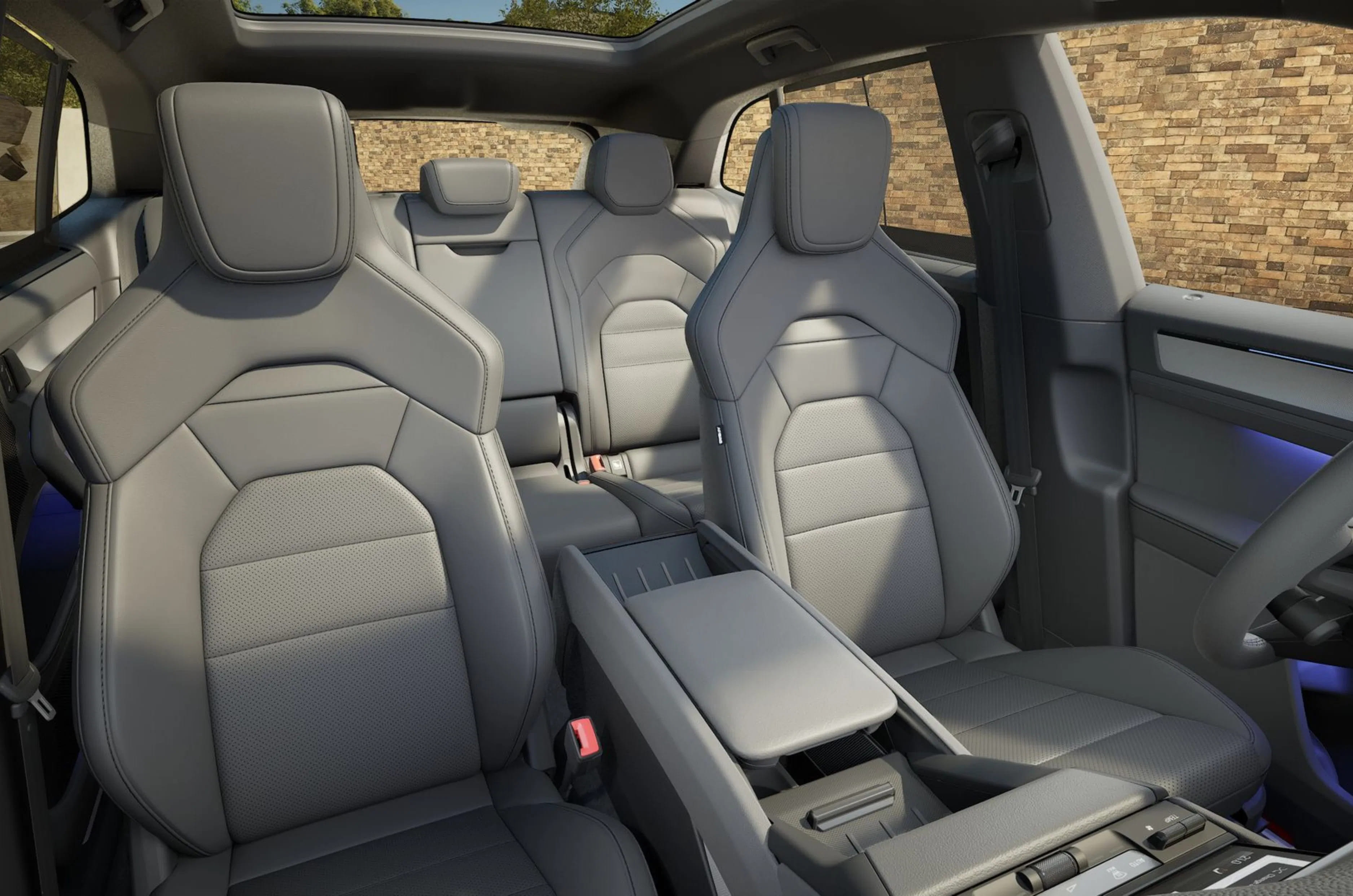
Inside, the Cayenne Electric gets a three-spoke steering wheel and digital driver’s display, similar to the ICE model. Porsche has also added a new 14.5-inch curved touchscreen infotainment system that flows into the centre console. An optional 14.9-inch passenger display is also available at an additional cost. Other features include 8-way electrically adjustable front seats, four-zone automatic climate control, ventilated front seats, a panoramic sunroof and wireless phone charging.
Nepal-Tibet Flood Update: पड़ोसी देश नेपाल में हालिया भीषण बाढ़ की त्रासदी के बीच एक बार फिर भोटे कोशी नदी को लेकर चिंता बढ़ गई है। नेपाल के नेशनल डिजास्टर रिस्क रिडक्शन एंड मैनेजमेंट अथॉरिटी (NDRRMA) ने रविवार (20 अगस्त) सुबह बताया कि रसुवा में भोटेकोशी नदी में बाढ़ का बहाव फिर बढ़ गया है। ऐसे में नदी के आसपास रहने वाले लोगों को सतर्क रहने की अपील की गई है। NDRRMA के अनुसार, रसुवा जिला प्रशासन कार्यालय को सूचना मिली है कि भोटे कोशी नदी में बढ़े हुए बाढ़ प्रवाह की आवाज सुनाई दे रही है। इसके बाद नदी के आसपास के इलाकों में विशेष सावधानी बरतने को कहा गया है।
रसुवा, नुवाकोट और धाडिंग में हाई अलर्ट
NDRRMA ने खास तौर पर रसुवा, नुवाकोट और धाडिंग जिलों में नदी के आसपास रहने वाले लोगों को सतर्क रहने की सलाह दी है। लोगों से नदी के किनारे जाने से बचने और किसी भी संभावित खतरे की स्थिति में सुरक्षित स्थान की ओर जाने के लिए तैयार रहने को कहा गया है।
नेशनल डिजास्टर रिस्क रिडक्शन एंड मैनेजमेंट अथॉरिटी ने रविवार सुबह सोशल मीडिया प्लेटफॉर्म X पर एक पोस्ट में लिखा, “रसुवा के जिला प्रशासन कार्यालय को जानकारी मिली है कि भोटे कोशी नदी में बाढ़ का बहाव तेज होने की आवाज सुनी गई है। इसलिए, हम रसुवा, नुवाकोट और धाडिंग तक नदी के आस-पास के इलाकों में सावधानी बरतने का अनुरोध करते हैं। जैसे ही और जानकारी मिलेगी, हम आगे की अपडेट देंगे।”
यह चेतावनी ऐसे समय आई है जब नेपाल में कुछ दिन पहले आई विनाशकारी बाढ़ में बड़े पैमाने पर जान-माल का नुकसान हुआ है। फिलहाल, राहत एवं बचाव अभियान अभी भी जारी है। रविवार को बचाव अभियान का पांचवां दिन है। नेपाल-चीन सीमा के इलाकों में भयानक अचानक आई बाढ़ और मलबे के बहाव से हुई तबाही के बाद टीमें बचे हुए लोगों और लापता लोगों की तलाश कर रही हैं।
आगे की जानकारी का इंतजार
NDRRMA ने कहा है कि जैसे-जैसे अतिरिक्त जानकारी प्राप्त होगी, लोगों को आगे अपडेट किया जाएगा। हालांकि, नेपाल के बाढ़ पूर्वानुमान विभाग ने बाद में कहा कि भोटे कोशी क्षेत्र में बड़े स्तर की बाढ़ का तत्काल खतरा नहीं है, लेकिन नदी के आसपास सावधानी बरतना जरूरी है। फिलहाल प्रशासन की अपील है कि नदी किनारे रहने वाले लोग किसी भी अफवाह पर भरोसा न करें और आधिकारिक चेतावनियों पर नजर बनाए रखें।
मरने वालों की संख्या 691 हुई
अधिकारियों से मिली ताजा जानकारी के मुताबिक, नेपाल और चीन के तिब्बत इलाके में मरने वालों की कुल संख्या 691 हो गई है। जबकि 3,000 से अधिक लोग अभी भी लापता हैं। अधिकारियों ने 675 मौतों और 2,498 लोगों के लापता होने की सूचना दी है। जबकि चीनी अधिकारियों ने तिब्बत के ग्यिरोंग काउंटी में 16 मौतों और 546 लोगों के लापता होने की जानकारी दी है। अब तक नेपाल में 3,700 से ज्यादा लोगों को बचाया जा चुका है। यह भयानक आपदा 26 अगस्त को आई थी। पहाड़ी सीमावर्ती इलाके में मलबे का भारी बहाव और अचानक आई बाढ़ ने घरों, सड़कों, पुलों और अन्य चीजों को नष्ट कर दिया था।
बचाव अभियान जारी
खराब मौसम के कारण कुछ समय के लिए रोके जाने के बाद नेपाली अधिकारियों ने खोज और बचाव अभियान फिर से शुरू किया। बचे हुए लोगों को निकालने और अलग-थलग पड़े समुदायों तक राहत सामग्री पहुंचाने के लिए हेलीकॉप्टर तैनात किए गए हैं। बचाव दल कई अहम जगहों पर ध्यान केंद्रित कर रहे हैं, जिनमें रसुवा में अपर त्रिशूली-1 पनबिजली परियोजना भी शामिल है, जहां अधिकारियों का मानना है कि 100 से ज्यादा लोग कीचड़ से भरी सुरंग के अंदर फंसे हो सकते हैं।
Nepal’s National Disaster Risk Reduction and Management Authority tweets, “The District Administration Office, Rasuwa, has received information that the sound of increased flood flow in the Bhote Koshi River has been heard. Therefore, we request that caution be exercised in the… pic.twitter.com/9hhU4TSQWk
चीनी तरफ बुरी तरह क्षतिग्रस्त ग्यिरोंग सीमा क्रॉसिंग के आसपास भी खोज अभियान जारी है। इस बीच, भारत ने भोजन, दवाइयों और कंबल जैसी राहत सामग्री भेजी है। उन इलाकों में संपर्क बहाल करने में मदद के लिए तकनीकी टीमें और पहले से तैयार पुल (प्री-फैब्रिकेटेड ब्रिज) देने की भी पेशकश की है, जहां इंफ्रास्ट्रक्चर बह गया है।
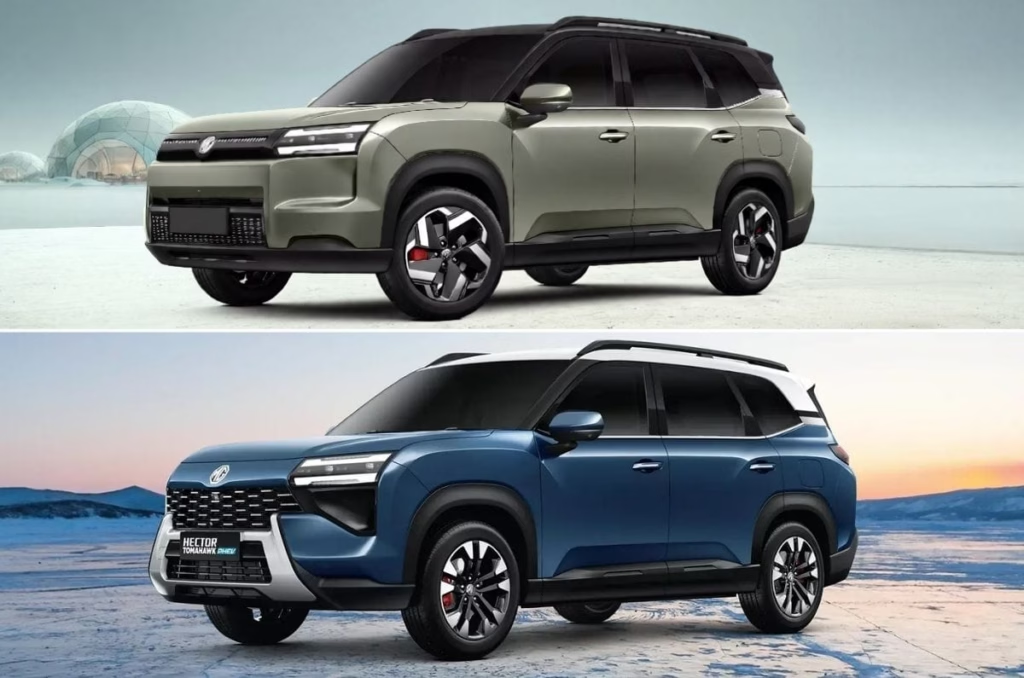
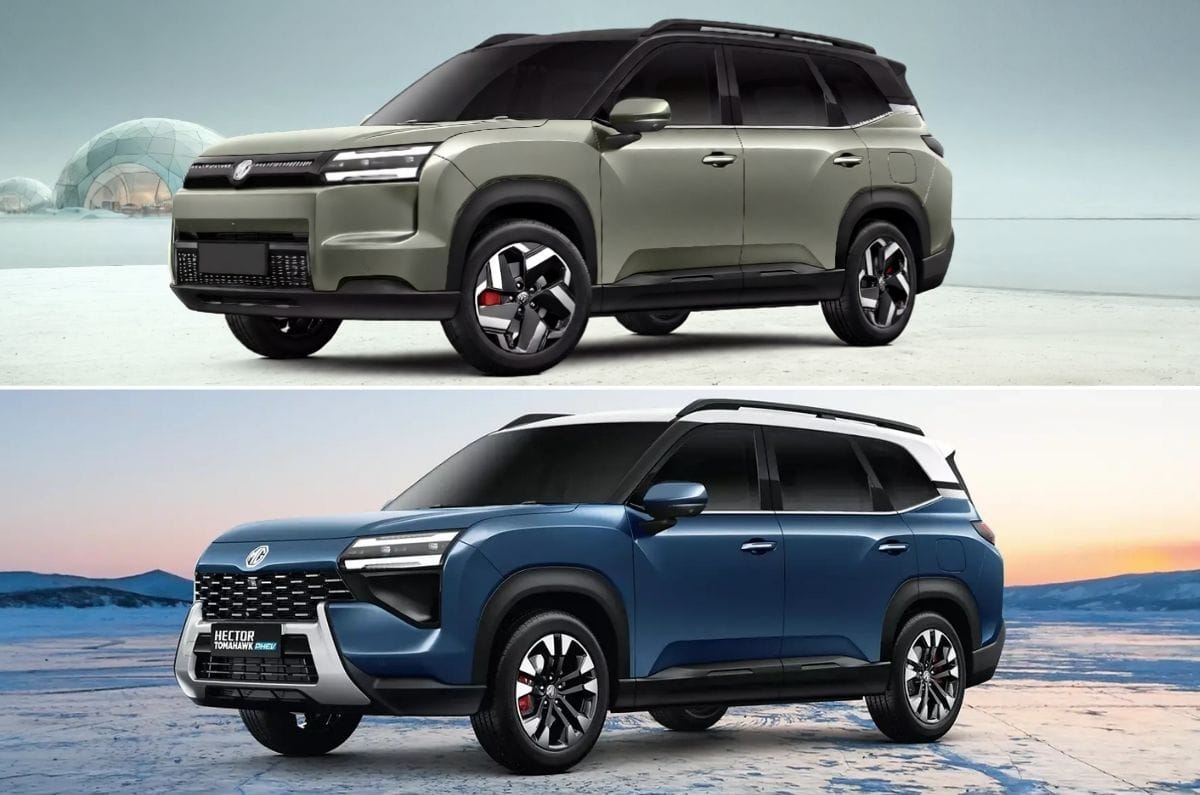
MG launched the Hector Tomahawk in India in both all-electric (EV) and plug-in hybrid (PHEV) versions, with prices starting from Rs 19.50 lakh and Rs 25.70 lakh, respectively. Both models are offered with a lot of new-age technology and have piqued the interest of enthusiasts. Here’s everything you need to know about the MG Hector Tomahawk EV and Hector Tomahawk PHEV.
1. What are the exterior differences between the EV and PHEV?
Both versions get different grilles, front bumpers, and alloy wheels
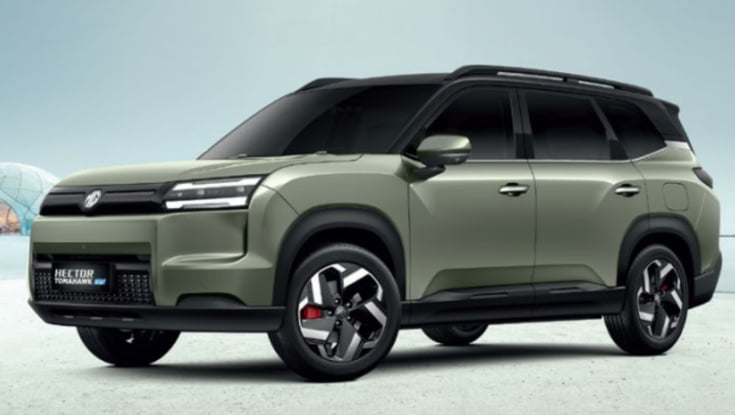
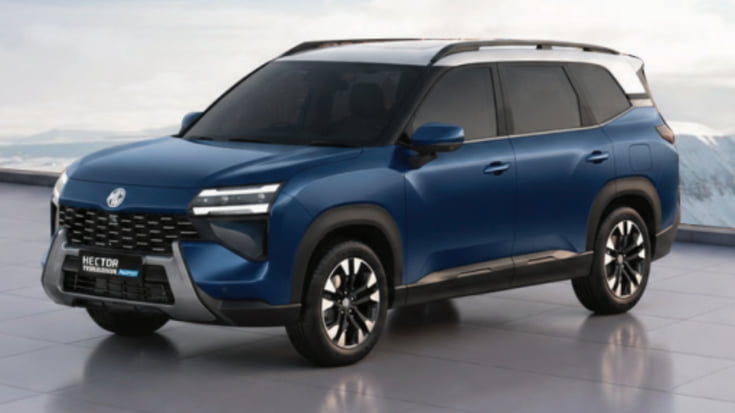
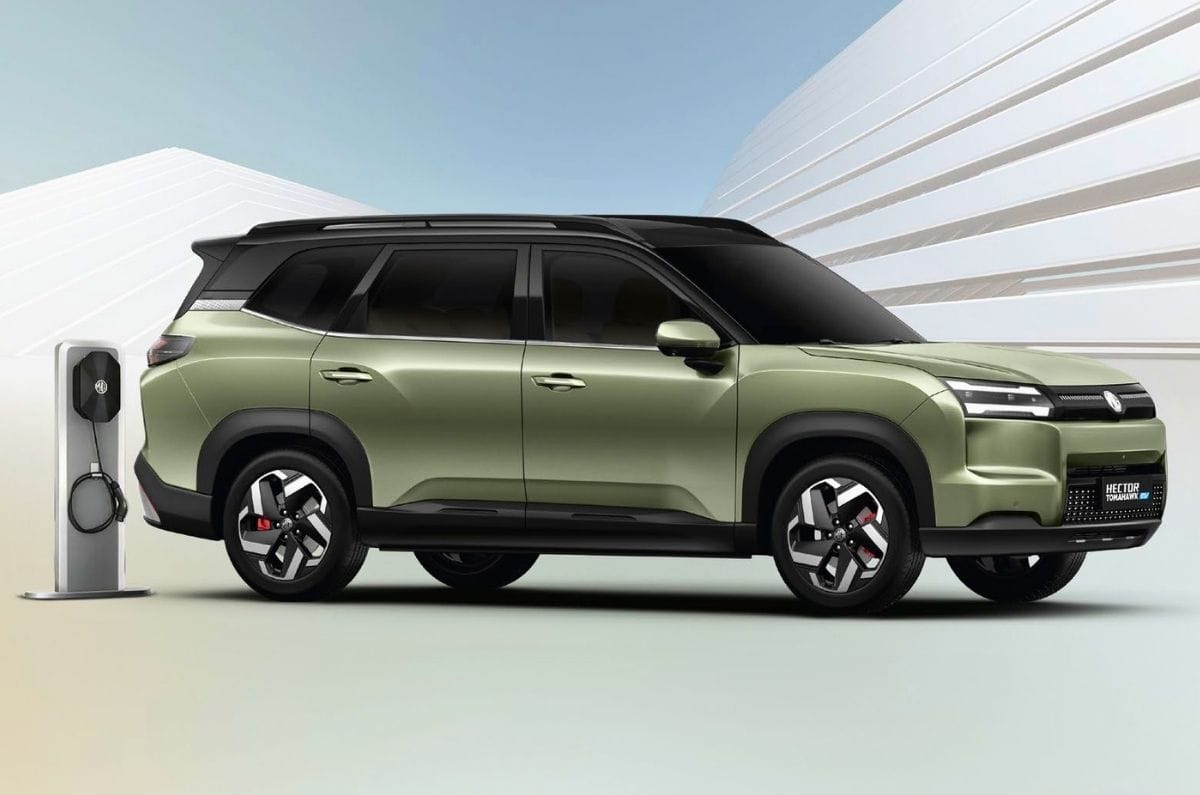
Both the Hector Tomahawk’s EV and PHEV versions have some design differences. While the EV gets a blanked-off gloss-black grille, the PHEV gets a functional grille with chrome inserts and black trims underneath the headlights. The front bumper design is also different, with the PHEV getting a silver bullbar-like element in the centre that the EV misses. The headlights and illuminated MG logo are, however, shared.
Not much is different in the side profile, except for the 18-inch alloy designs and red callipers on the top-spec Hector Tomahawk PHEV. If you opt for a dual-tone shade, the EV will have a black roof, while the PHEV will have a white roof. The rear design, however, is identical for both versions of the SUV.
2. What are the interior differences between the EV and PHEV?
Save for a luggage cover and different cabin themes, everything else is the same
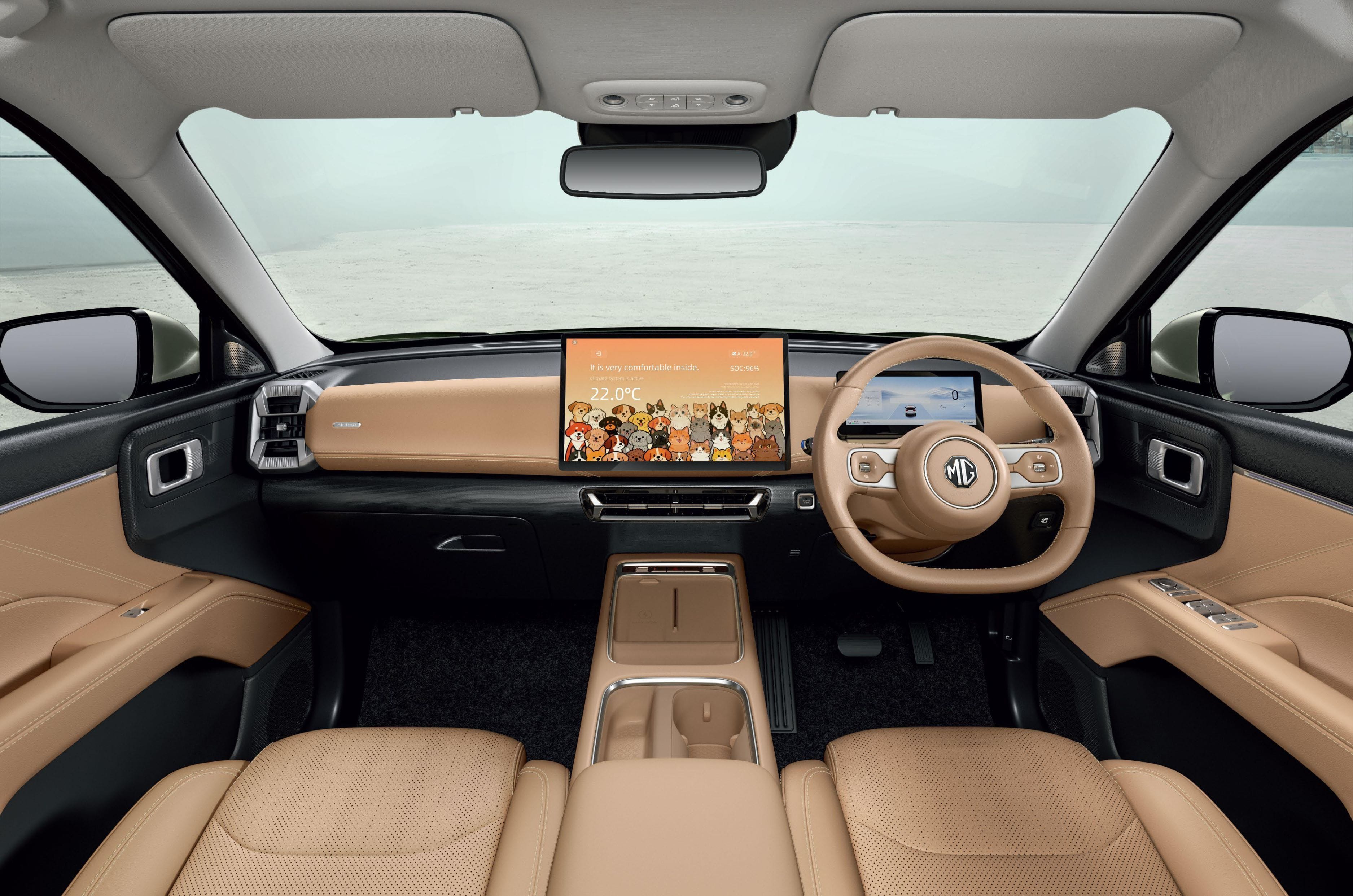
MG Hector Tomahawk EV gets a beige and black cabin theme.
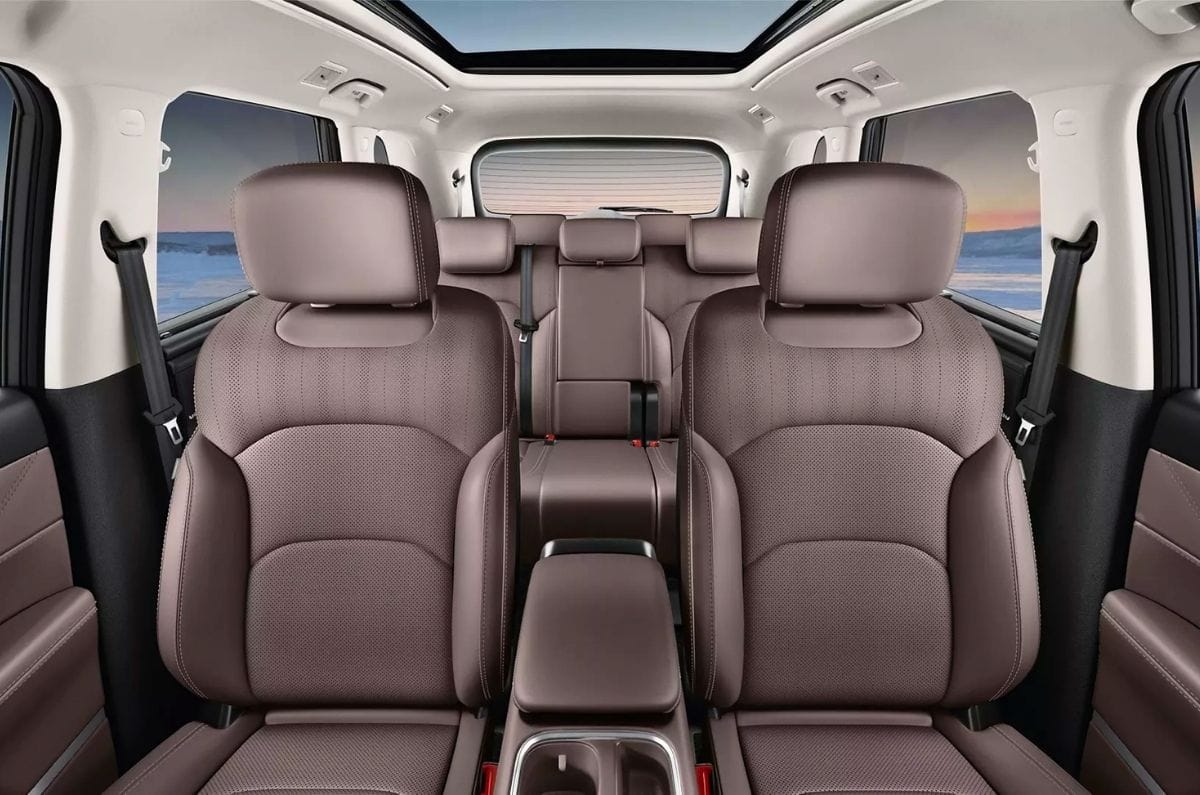
Save for a rolling luggage shade on the 5-seater variants of the EV, and a different cabin theme – brown and black on the EV and a darker brown and black on the PHEV – there is no visible difference. Everything else is the same, including the feature suite: a 15.6-inch touchscreen infotainment system, an 8.8-inch digital driver’s display, a 10-speaker Infinity sound system, a panoramic sunroof, powered and ventilated front seats with memory function for the driver’s seat, and a 50W fast wireless charger.
MG Hector Tomahawk PHEV gets a brown and black cabin theme.
The safety suite is also identical in both Hector Tomahawk versions, which includes 6 airbags, a 360-degree camera with an under-bonnet view, Level 2 advanced driver assistance systems (ADAS) and a tyre pressure monitoring system (TPMS).
3. What is the boot space on the MG Hector Tomahawk EV and PHEV?
EV and PHEV versions offer up to 610 litres and 192 litres of boot space, respectively
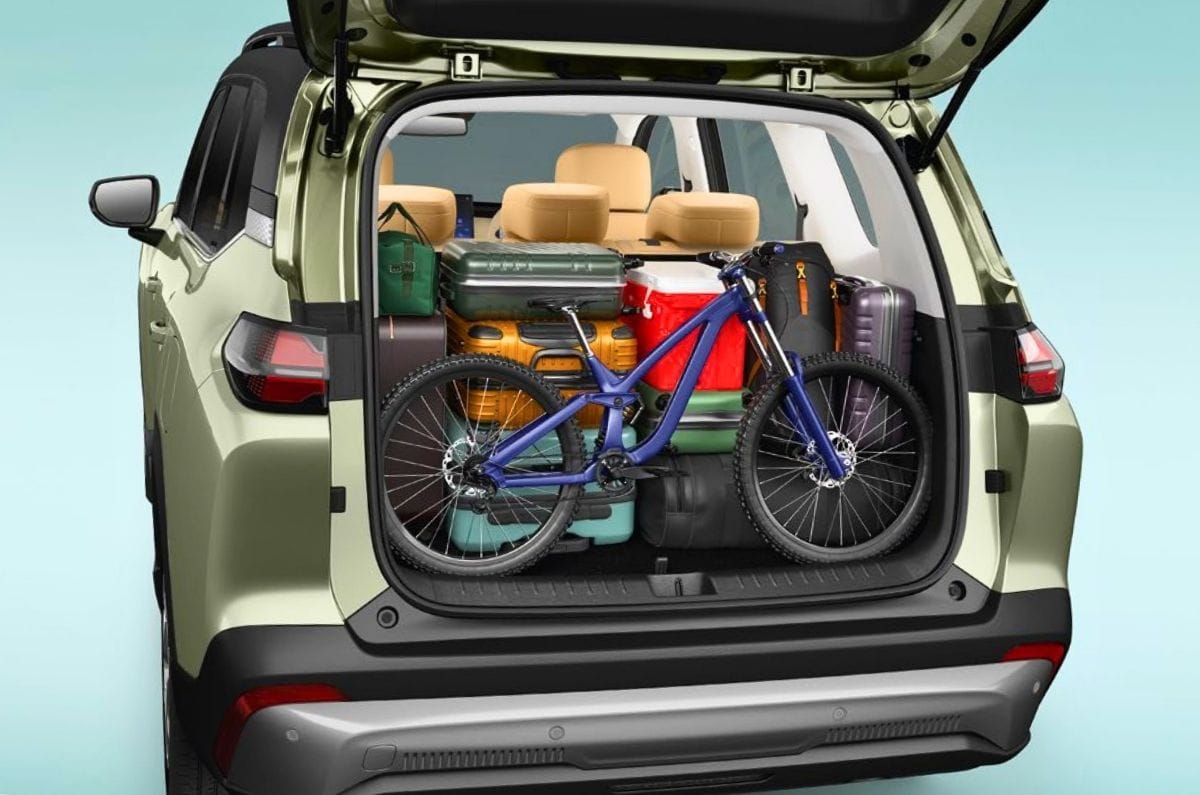
5-seater MG Hector Tomahawk EV’s boot space.
The MG Hector Tomahawk EV is offered in either a 5-seater or a 7-seater version. The 5-seater offers 610-litre boot space, with all rows up, which can be expanded to 1,053 litres by folding down the rear row. The 7-seater version offers a 192-litre boot space with all rows up, and 528 litres when the third row is folded.
The PHEV, offered only as a 7-seater, offers 192-litre boot space like the EV’s 7-seater version, expandable to 528 litres by folding the third row. Neither the EV nor the PHEV version of the Hector Tomahawk are offered with a frunk (storage space under the bonnet).
4. What are the powertrain specifications of the MG Hector Tomahawk PHEV and EV?
PHEV gets a 1.5L engine and 20.5kWh battery; EV offers a 69.2kWh battery pack
The MG Hector Tomahawk PHEV gets a 1.5-litre naturally aspirated petrol engine and a 20.5kWh battery pack, offering a combined output of 198hp and 230Nm. The front-wheel-drive (FWD) SUV has an all-electric range of around 115km and a total range including the petrol engine of around 1,100km.
The MG Hector Tomahawk EV, on the other hand, gets a 69.2kWh battery pack, mated to a front-axle-mounted electric motor producing 204hp and 310Nm. It has a claimed range of 517km.
5. Can the Hector Tomahawk PHEV be charged at a public EV charging station?
It supports 25kW DC fast charging
Yes, being a plug-in hybrid (PHEV), the MG Hector Tomahawk PHEV supports 25kW DC fast charging. This can replenish the battery from 30 to 80 percent in 35 minutes, like a typical EV. MG is also offering it with a 3.3kW home charger, which can recharge the battery pack from 10 to 100 percent in 7.5 hours.
6. Are the MG Tomahawk EV and PHEV more affordable with BaaS?
BaaS reduces the EV’s and PHEV’s initial prices by up to Rs 6.01 lakh and 3.91 lakh, respectively
MG Hector Tomahawk EV, PHEV BaaS vs non-BaaS prices (in Rs, lakh)
Without BaaS
With BaaS
Initial cost difference
EV
19.50 to 23.50
13.99 to 17.49*
Up to 6.01
PHEV
25.70 to 27.80
21.79 to 23.89^
3.91
*Battery subscription fee is Rs 4.9 per km per month
^Asks for a battery subscription fee of Rs 3.2 per km per month
The BaaS (Battery-as-a-Service) option reduces the upfront price of the MG Hector Tomahawk EV by Rs 6.01 lakh and the PHEV by Rs 3.91 lakh. However, you then pay a battery rental fee for every kilometre you drive: Rs 4.90 per km for the EV and Rs 3.20 per km for the PHEV. At these rates, the upfront savings from BaaS are effectively used up after around 1.22 lakh km. The break-even point is 1,22,653 km for the EV and 1,22,187 km for the PHEV.
In simple terms, if you expect to drive less than 1.22 lakh km over the entire ownership period, BaaS could be the more affordable option because of its lower initial cost. However, if you plan to drive more than 1.22 lakh km, buying the Hector Tomahawk with the battery included is likely to save you more money in the long run.
There is also another factor to consider. Under the BaaS plan, you do not own the battery, so your long-term costs depend on the rental agreement. If MG increases the per-kilometre fee or changes the contract in the future, your running costs could also increase. So, while BaaS would be more affordable for most buyers, purchasing the vehicle with the battery included may offer greater certainty in running cost calculations.
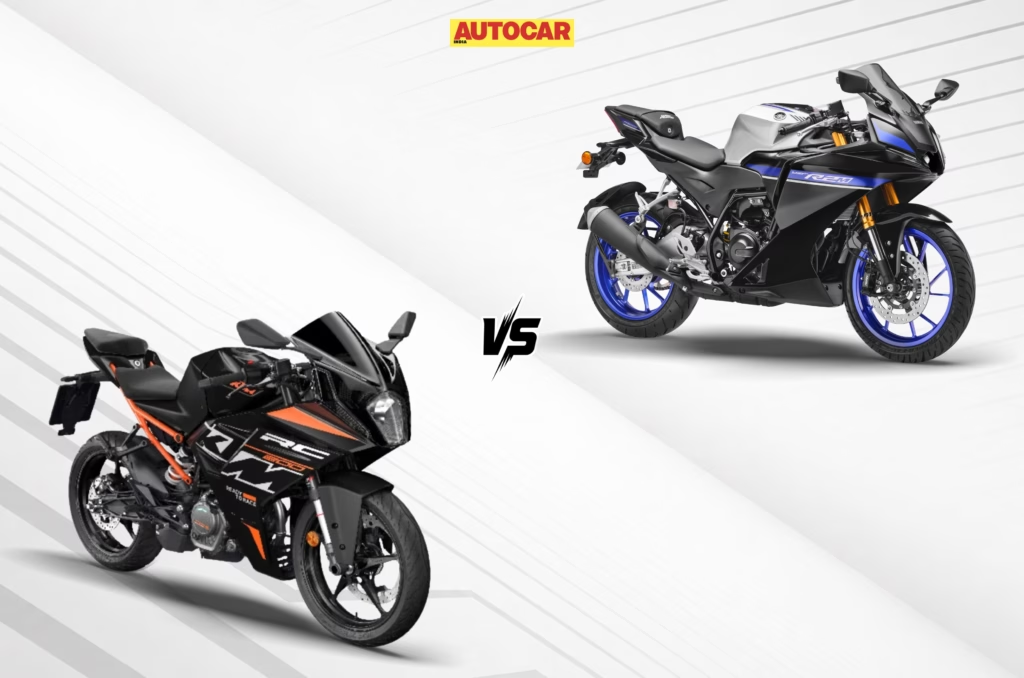
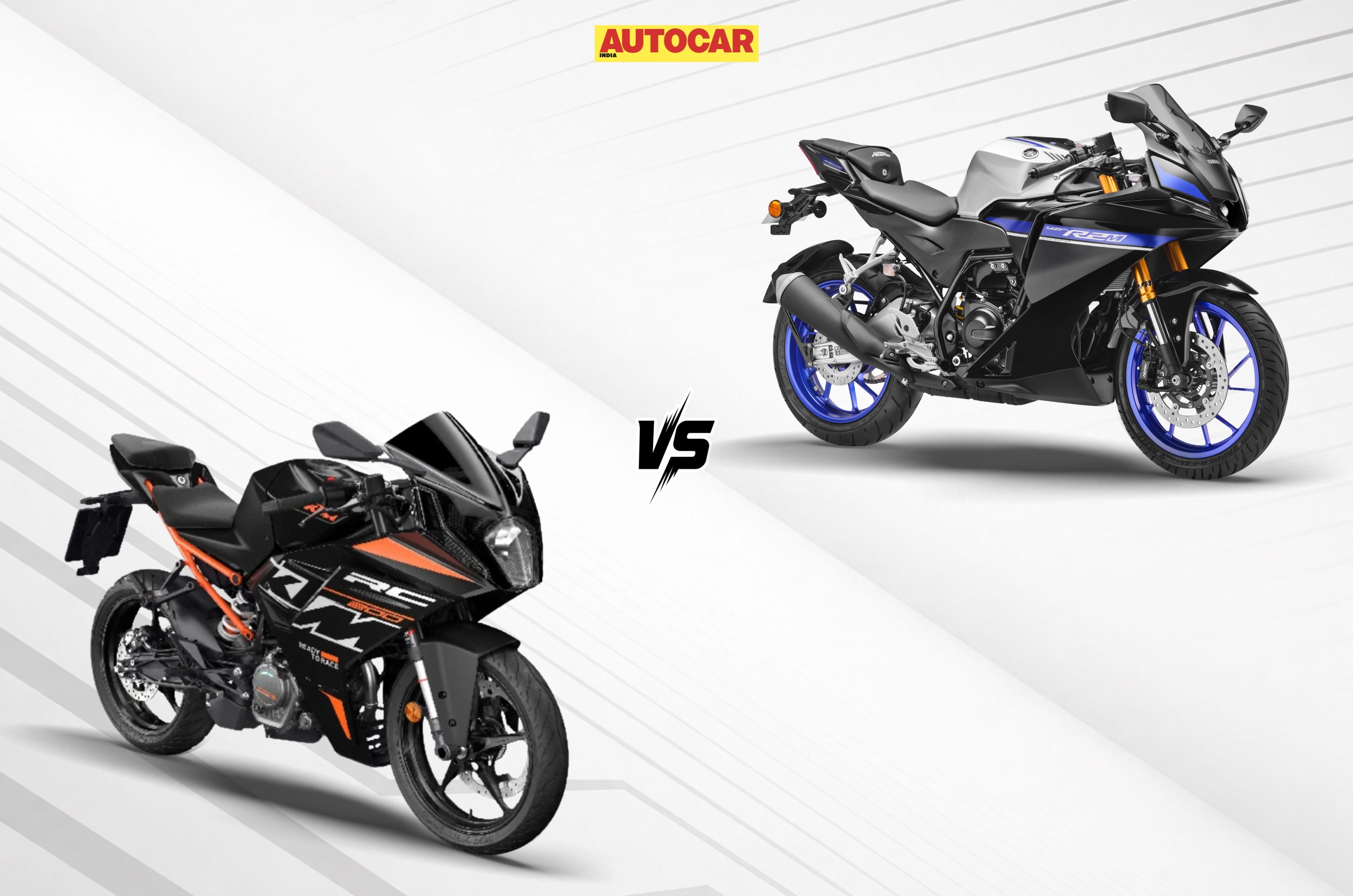
Yamaha has just launched the YZF-R2, making their supersport line-up become plural once again. Although they sound closer to each other, the established YZF-R15 and its new big brother are further apart than you might think. So how does Yamaha’s new entry on the 200cc class compare to the tried and tested KTM RC 200? Let’s find out.
All prices mentioned here are ex-showroom, Delhi.
Yamaha YZF-R2 vs KTM RC 200: Engine and output
The Yamaha makes marginally more power and torque
Yamaha YZF-R2
KTM RC 200
Engine
204cc single-cylinder, liquid-cooled
199.5cc single-cylinder, liquid-cooled
Power
26.5hp at 10,000rpm
25hp at 10,000rpm
Torque
19.1Nm at 8,000rpm
19.2Nm at 8,000rpm
Transmission
6-speed
6-speed
Power-to-weight ratio
176.76hp/tonne
156.25hp/tonne
From the get go, the Yamaha pulls ahead by making 1.5hp more power than the KTM with a 0.1Nm less torque; both bikes deliver peak power and torque at the exact same range in the revs. However, the R2’s biggest advantage is in its 149kg kerb weight, made evident in its noticeably higher power-to-weight ratio. More on that in the next section.
Yamaha YZF-R2 vs KTM RC 200: Dimensions and weight
Yamaha continues to increase the gap
Yamaha YZF-R2
KTM RC 200
Fuel tank capacity
12 litres
13.7 litres
Ground clearance
170mm
156mm
Kerb weight
149kg (base)
150kg (mid and top)
160kg
Seat height
810mm
835mm
Wheelbase
1,340mm
NA
As we said, Yamaha’s biggest advantage comes with its 149kg, a whopping 11kg less than the KTM. That gap only increases with other dimensions, well, except for the fuel tank capacity. The R2 has a smaller fuel tank, but the KTM’s 1.7-litre larger fuel tank only justifies about 1.25kg of its added heft. In return, the R2 gives you more usable seat height and ground clearance.
Yamaha YZF-R2 vs KTM RC 200: Tyres, brakes, and suspension
KTM has (almost) all the advantage
Yamaha YZF-R2
KTM RC 200
Tyres (F/R)
100/80-17/140/70R17
110/70R17/150/60R17
Brakes (F/R)
282mm front disc/220mm rear disc
320mm front disc/230mm rear disc
Suspension (F/R)
37mm USD fork/linked monoshock
43mm USD fork/monoshock
In the handling package, the KTM pulls its trump cards. It gets bigger tyres, brakes, as well as a larger front fork. Both brands use the tried and tested radially mounted caliper at the front, with a floating caliper handling the rear stopping duties. The R2 does offer preload adjustability on both ends on the top M variant. On the RC, that’s only available at the rear.
Yamaha YZF-R2 vs KTM RC 200: Features
Yamaha offers a host of extra features
Being the newer motorcycle, it’s not a surprise that the R2 has more features but Yamaha, almost uncharacteristically, have pulled out all the stops on this front. Do note that to get the full suite, you’d have to spring for the R2 M which is currently Rs 21,000 more expensive than the RC 200. If you do, you get three ride modes (Rain, Street, Sport), a 5-inch TFT instrument cluster, assist and slipper clutch, traction control, a bi-directional quickshifter, keyless system, adjustable footpegs, and adjustable levers. The first four are standard on all three variants, with the middle variant offering the quick shifter, and the M giving you the rest. There are other cosmetic differences between the three variants as well.
On the other side, the KTM gives you a 5-inch TFT cluster, the ability to turn off rear ABS, and… that’s it. To get even close to the R2’s feature set, you’d have to look at the bigger KTM Supersport, the RC 390. Both motorcycles have the ability to connect your smartphone to unlock functionalities like call alerts, music control, and turn-by-turn navigation.
Yamaha YZF-R2 vs KTM RC 200: Price
Yamaha offers more value than the KTM
Yamaha YZF-R2
KTM RC 200
Price
Rs 2.30 lakh (base)
Rs 2.39 lakh (middle)
Rs 2.53 lakh (top)
Rs 2.32 lakh
Yamaha has priced the R2’s base variant lower than the RC 200’s one and only variant. Even then, the R2 is ahead in terms of the features and the overall value. The KTM’s case only gets weaker from there. It’s worth mentioning here that the KTM RC series have not been updated to the third generation yet, which is perhaps why the feature set hasn’t caught up. Last we checked, the next major refresh for the RC series is at least a year away.
Only the day before I would be surprised with a passenger ride in a prototype of Bentley’s new electric SUV, I just so happened to be engaged in a conversation about why an EV would be so well suited to this brand in particular. Yes, as we’ve said in the past, EVs are perfect for luxury applications – smooth, silent and effortless as they are. But the other realisation we made was that Bentley, despite leaning into sportiness as one of its core brand pillars, has never been a slave to weight loss. Even its lightest car in 85 years – the new, stripped-down Supersports – is but one kilogram shy of two tonnes! And yet its cars have always managed to deliver the comfort expected of a super-luxury vehicle, and somehow also the poise and agility of a sports tourer. A tricky balance indeed.
Reining in 2.5-tonne-plus vehicles, then, isn’t so much a challenge for Bentley’s chassis engineers as it is standard operating procedure. And thus, when the time came to create the brand’s first EV – a five-metre SUV no less – weight management was the last thing on their minds. Being a luxury EV with the full technological might of the Volkswagen Group behind its development, it would be all too easy to just squeeze out a bunch of eye-watering performance figures and leave it at that. But Bentley engineers say that won’t necessarily be the case, and certainly not the focus. The focus, instead, was on making the Torcal walk the razor-thin line between sport and luxury that every one of their cars is required to.
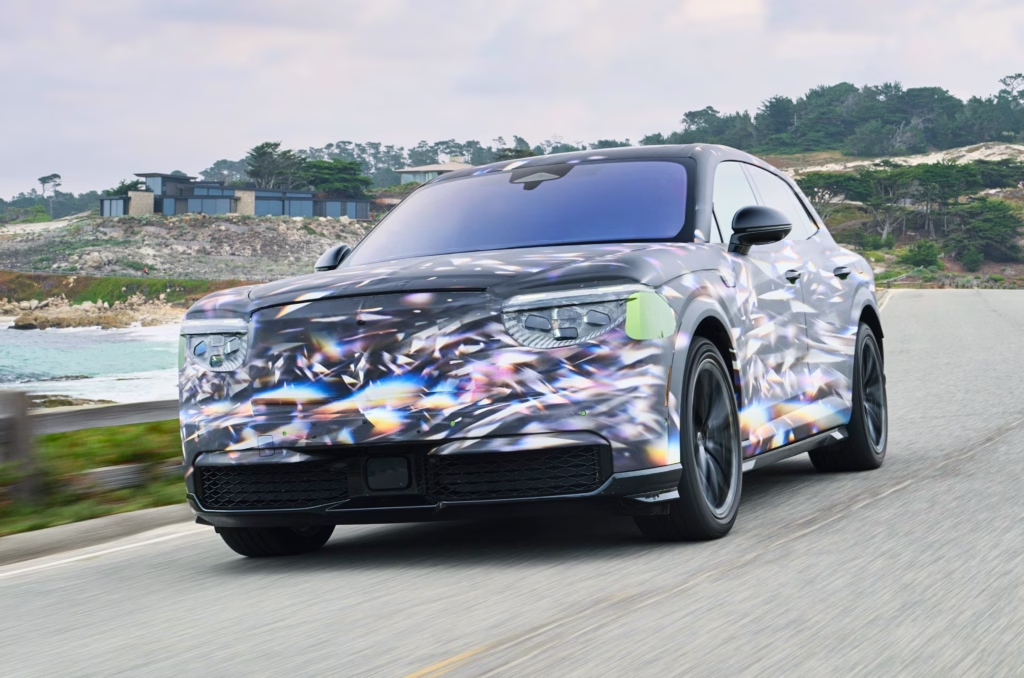
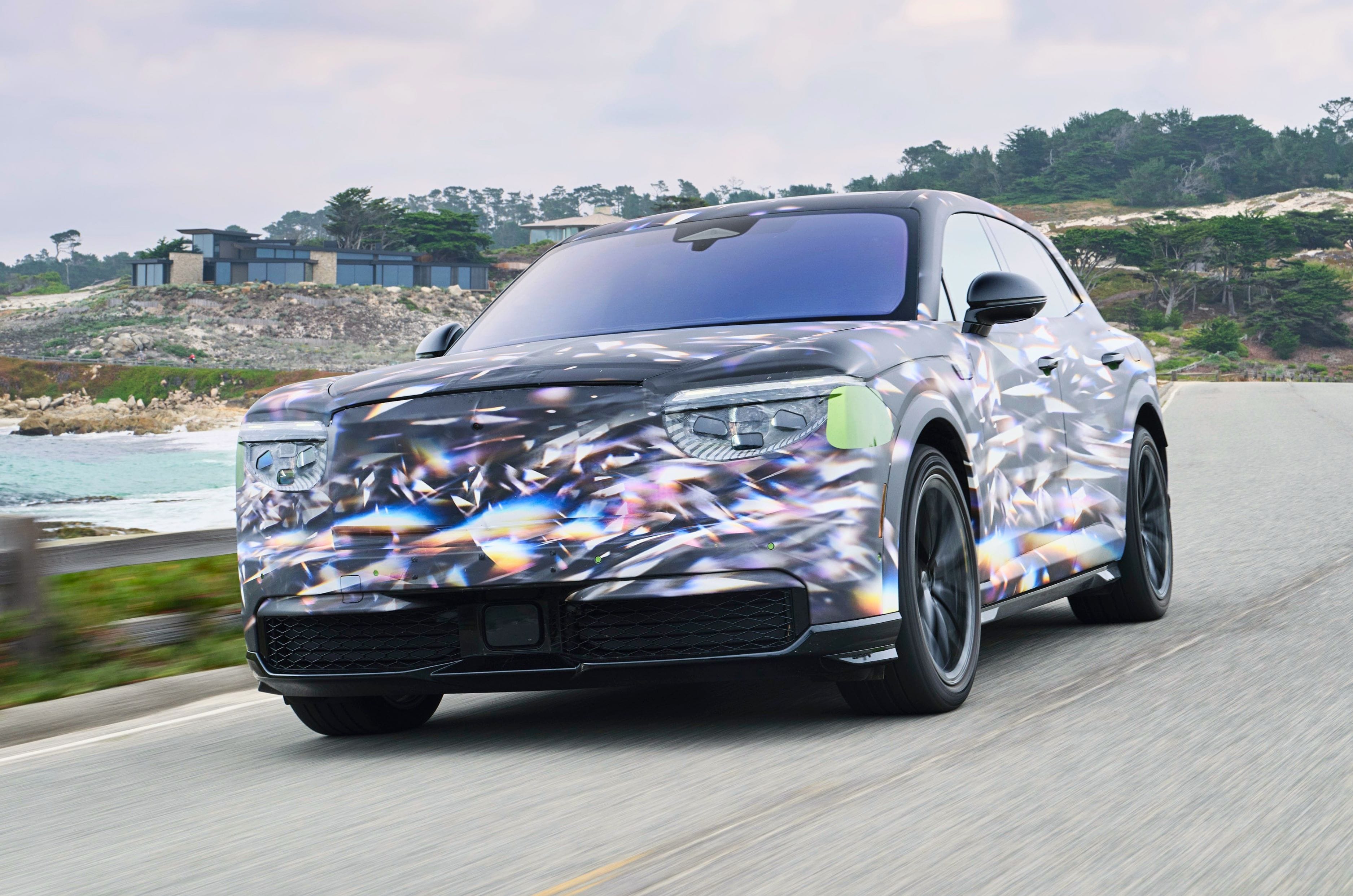
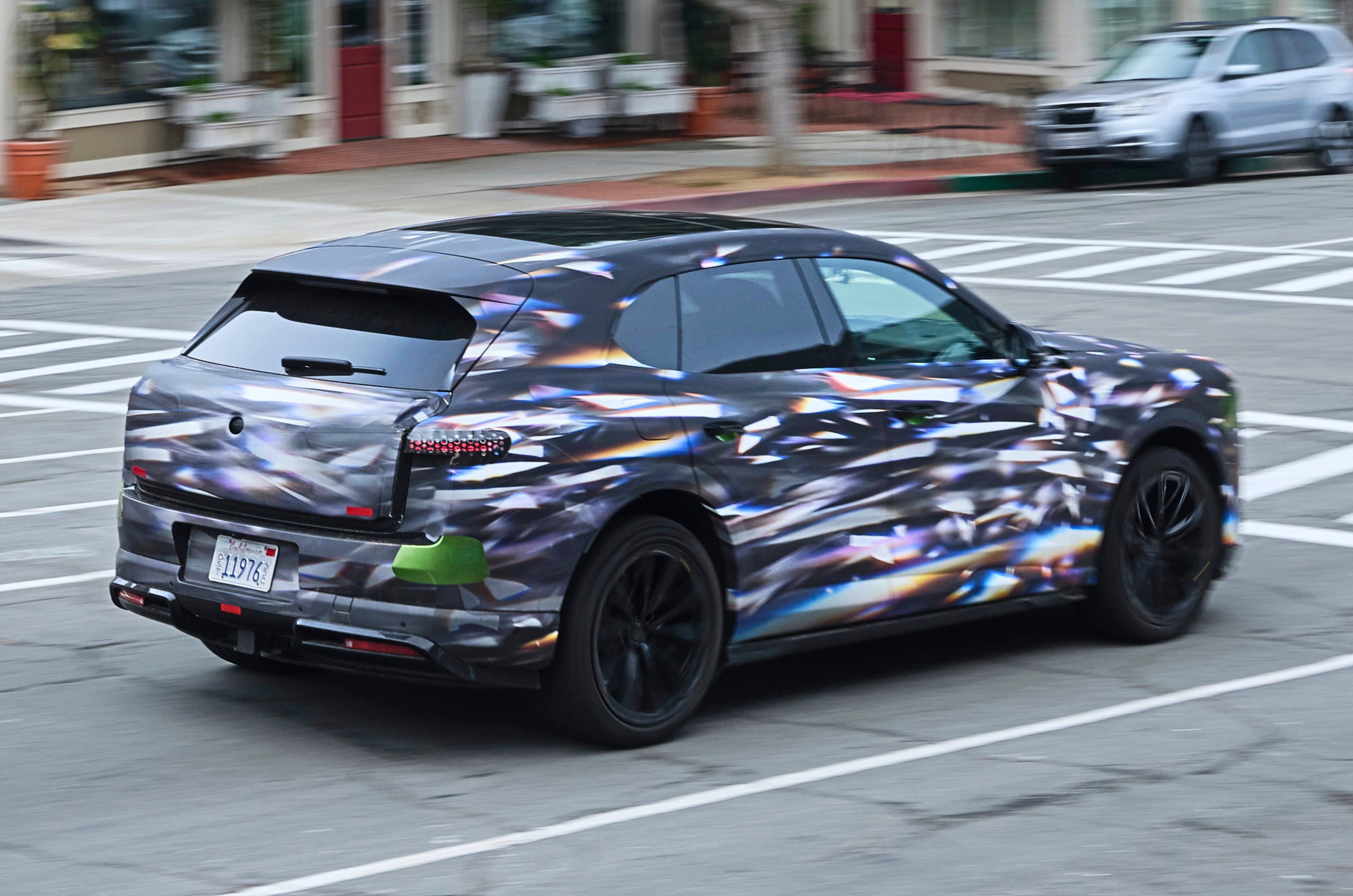
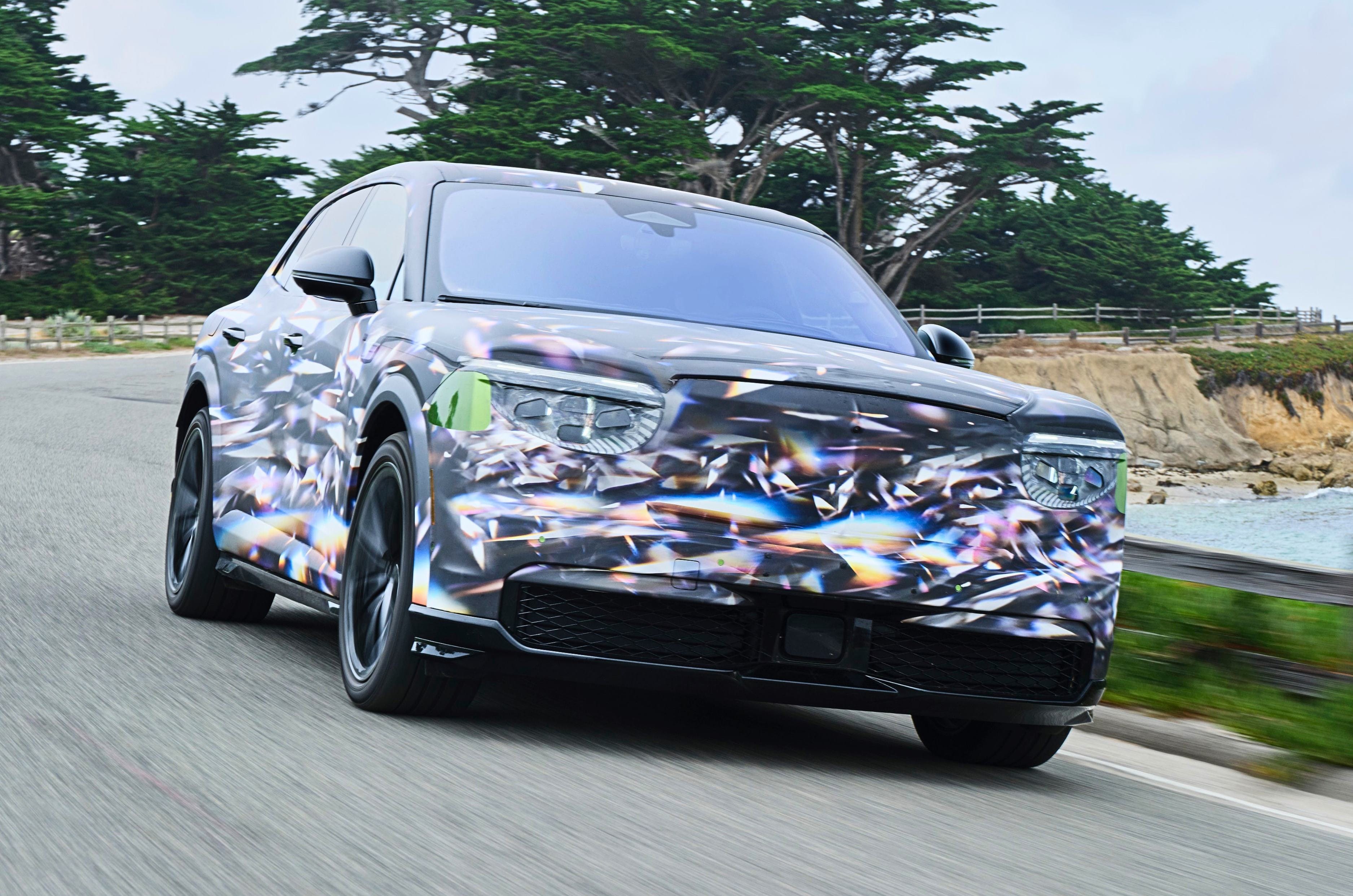
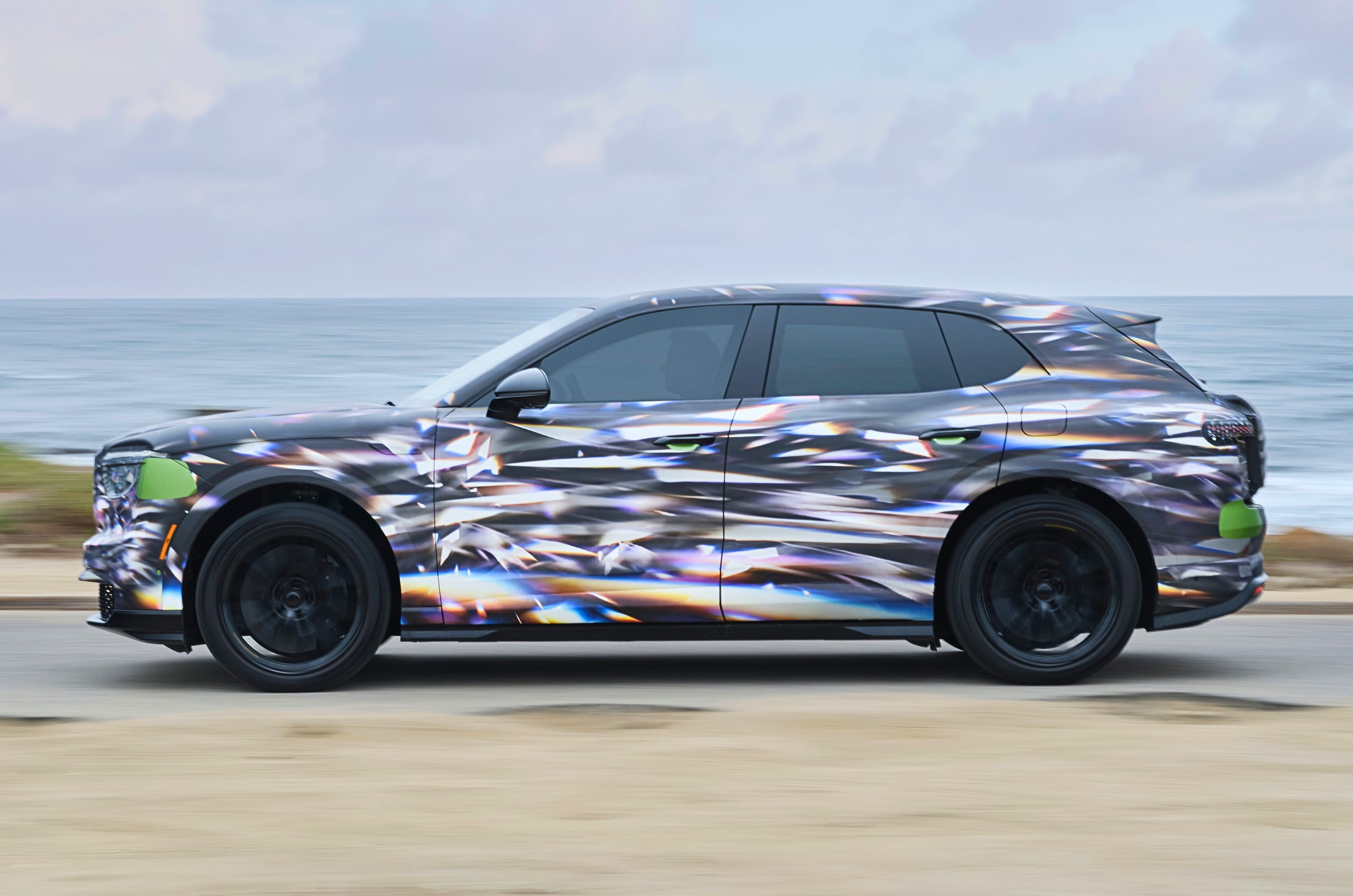
The Torcal prototype rolls silently into view at the driveway of our hotel in Monterey, California shrouded as it is in its crystalline camouflage – a motif we’ll revisit later. It hides the details well enough, but what’s clear is that this a tall and squared-off SUV, much like the Bentayga, and though aerodynamics will no doubt have been a consideration, that Bentley boldness is recognisable in its bluff front fascia. It’s actually a little smaller than a Bentayga, but the smaller front overhangs tell me they’re making good use of its wheelbase.
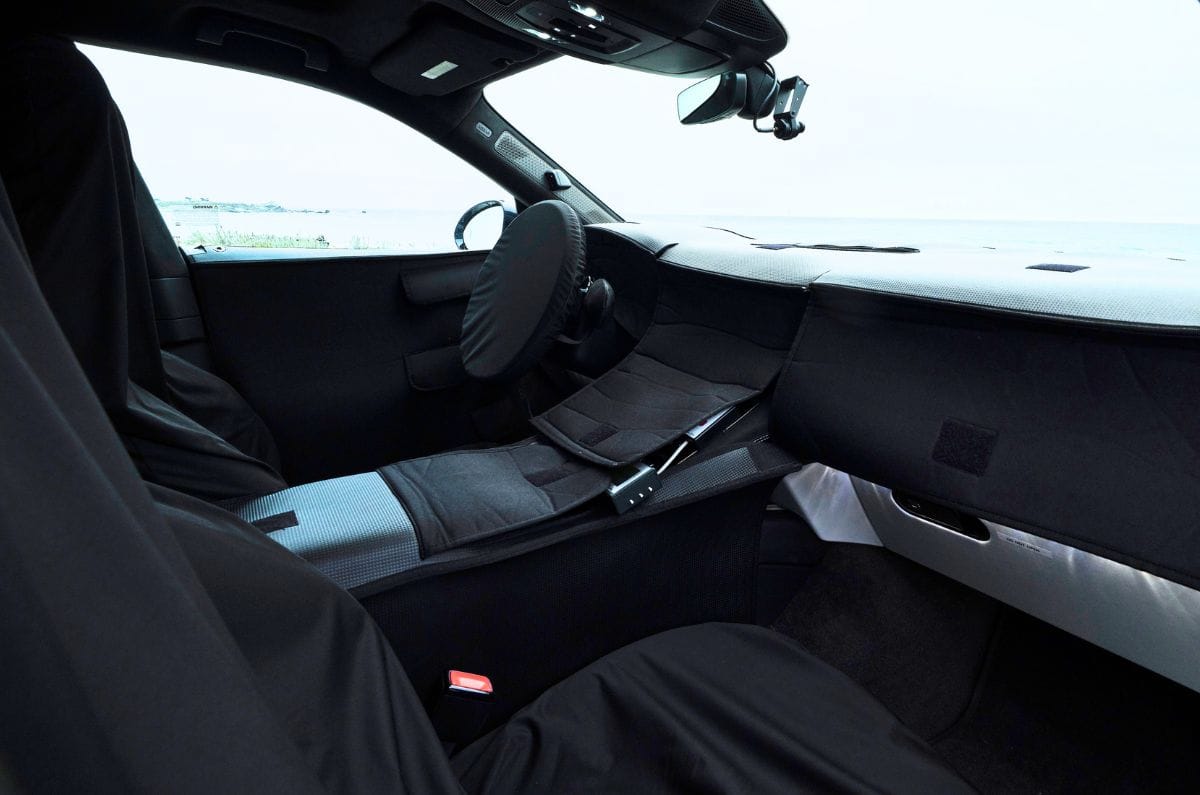
We’re ushered quickly into the cabin, which too is wrapped up from floor to headliner, and quickly given a brief before prying eyes can come in for a closer look. There’s stuff we’re told about that I can’t reveal today, but I’m hurriedly making notes all the same. But then Torcal product line director Martin Page presses the start button, and my brain does a somersault. “It’s… idling?” I mutter, as he cracks a smile from the driver’s seat.
Digital meets analogue
Yes, they’ve given the Torcal the sound of a V8, the most enduring engine layout the brand has used in its century of making cars. And while this is hardly the first EV to mimic an engine, there’s a mesmerising authenticity to it that I’ve never experienced from a synthetised setup before. I’d go as far as saying sounds better – more layered and full-bodied than the twin-turbo 4.0-litre you’ll find in the Continental range, and we’re still at a standstill. It’s uncanny.
As we move off, the sound swells, ebbs and flows with an almost flawed resonance that fills up the cabin. It’s not loud or overwhelming; but it’s ever present, though I’m told it can be switched off if not desired. I’m told the car is in ‘Bentley’ mode – the middle ground, as we know from existing models – and once on the move, the sound fades into the background.
The story behind the V8 sound is almost as fascinating as the sound itself. Any other brand would record one of its V8 engines, play the recording through the speakers and call it a day. But in keeping with Bentley’s history of doing things painstakingly by hand, they recorded the sound and got an orchestra to recreate it with live instruments. What I’m listening to is a mix of drums, viola and bass guitar – every beat and note fed into a machine and algorithmically meted back out in proportion with the torque demand. Moving up to Sport mode suitably increases the volume and even alters the pitch slightly, but what doesn’t change is the genuine feeling that somewhere up front, an old-school, hairy-chested V8 is thumping away to move us forward.
The crystal method
The over-engineering doesn’t stop there, however; Bentley’s handcrafted approach extends to the graphics of the Torcal – both physical and digital. The diamond motif has long been a part of the Bentley brand, and you’ll see it everywhere from its cars’ grille mesh patterns, to stitching, to upholstery quilting. Something catches my eye from under the sheet that covers the rear doors, which I carefully lift up to catch a sneak peek.
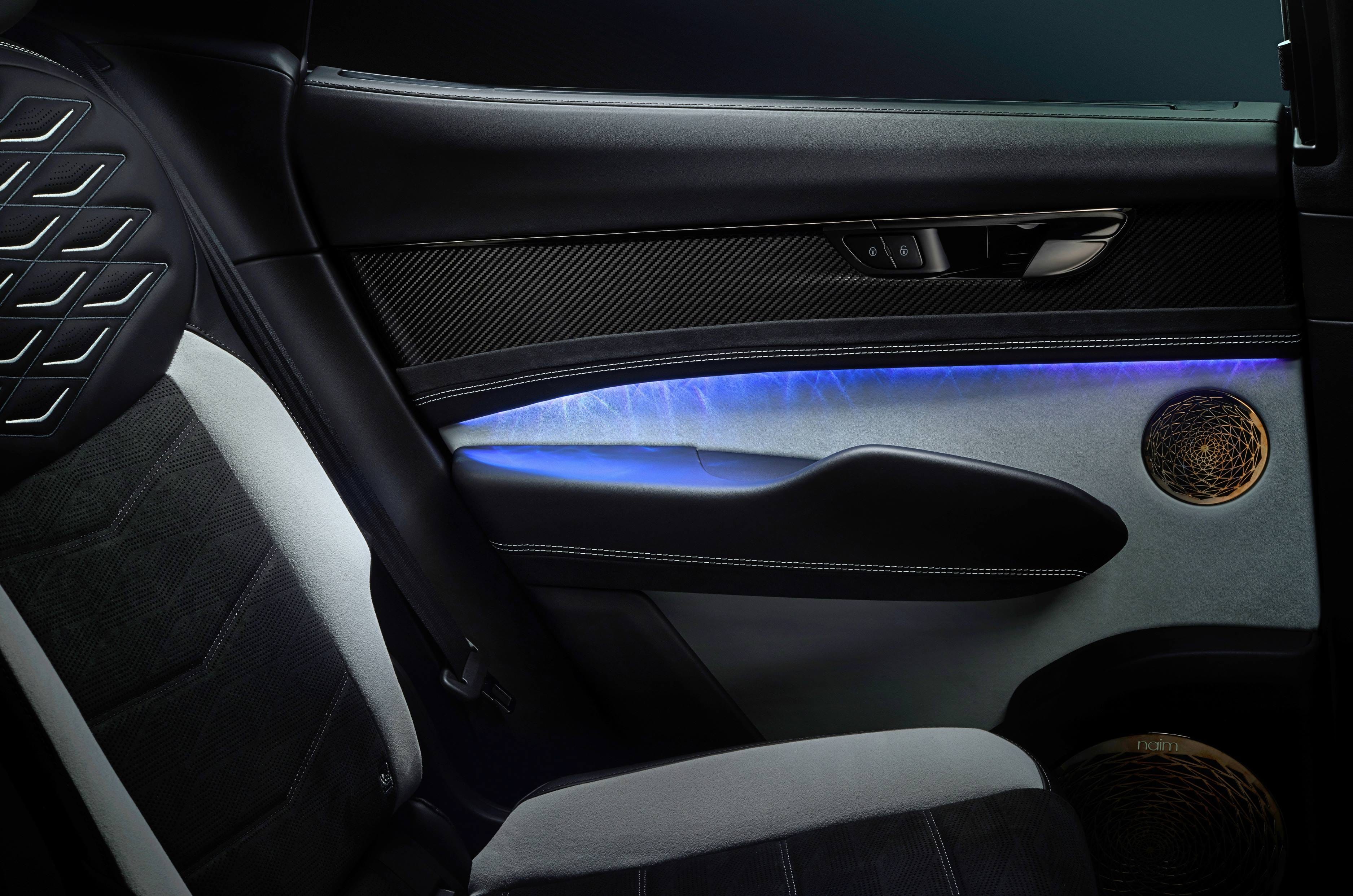
It’s ambient lighting, shimmering, moving as it cascades across a soft Merino wool door card. The idea was to simulate light flowing through crystal, and though it’s probably a simulated effect, it is incredibly convincing, and oddly relaxing to stare at. Curiously, it’s blue, and we’re in Sport mode, Bentley having chosen to buck the trend of equating ‘Sport’ with ‘red’.
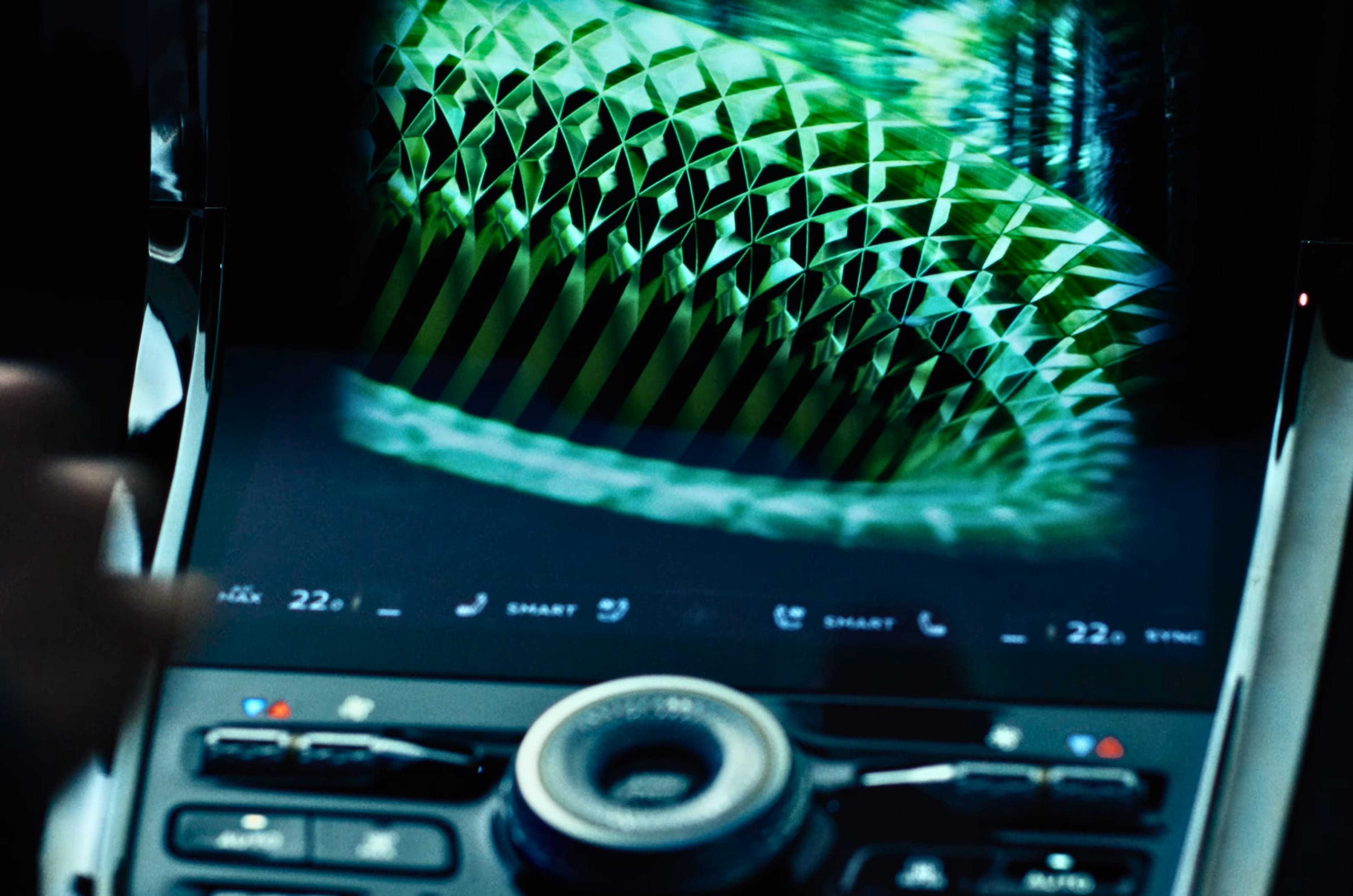
But as Martin cycles back and forth through the modes of the ‘Curation Engine’ – a luxurious way to say ‘drive mode selector’ – I notice something else. The graphics on the curved touchscreen – also with a crystalline theme – are slick and incredibly sharp, in a way I haven’t seen in any Bentley before. Credit to the new-gen PPE (Premium Platform Electric) and its E&E architecture the Torcal shares with the electric Cayenne, I suppose.
I then glance at the digital speedo, which shows a digital number encased in a ring of crystal, which again hides a fascinating story. This seemingly innocuous graphical element is not the result of Adobe After Effects or, god forbid, generative AI. Bentley commissioned Cumbria Crystal to make a cut crystal tube and then shone light through it from various angles. This was filmed and then programmed to play back in sync with the car’s speed, so what you’re seeing is high-res footage of real light passing through real glass, moving in a circle as the car goes faster. But what is luxury, if not unnecessary excess?
Effortless heft
My mind circles back to my conversation from the previous evening, however, as we approach the Freeway. Bentley hasn’t revealed power and torque figures yet, describing them only as ‘ample’, and that’s clear as we break off the on-ramp and merge into the swarm of American commuters hurrying to work. The seat-of-the-pants sensation is one of power that feels effortless, if not hurried, if that makes sense, which is in line with any of the V8 hybrid cars Bentley also sells.
Bentley also hasn’t revealed the kerb weight figure, but going by other EVs of this size and nature, my guess puts it well past 2.5 tonnes and closer to 2.7 or 2.8. Not that you can tell from inside, where there’s a composure that feels truest to the contemporary range of Bentley models. The Torcal uses two-chamber air suspension, adaptive dampers and active anti-roll bars to control its immense mass, and I suspect a bit of magic too, because here too, they’ve managed to find a balance. I noticed the prototype was riding on 22-inch wheels with supercar-like 315-section rear tyres, and road noise is kept incredibly well in check.
The ride is hefty but not harsh like some sports SUVs, comfortable but not floaty like some outright luxury SUVs. It stays steady on the Freeway, and as we get back to the narrower roads that snake around Pebble Beach, it stomps out imperfections with authority. As Martin takes the opportunity to lean it into some curvier bits of road, I sense a bit of give and roll, but not too much. I’m told they could have erased it entirely, but that would feel too unnatural.
And that sums up the Torcal nicely. It feels ‘natural’, and even from this short passenger ride, a great exercise in manufacturing analogue authenticity from what is a very digital set of tools. When advancing beyond the realm of mundane transportation and into more desirable applications – luxury, or performance, for instance, of which Bentleys have to do both – an EV has to be more convincing. So far, ballistic numbers have been that route for most, but there is an increasing effort to build tangible character into these cars that must be applauded. The Torcal feels like one of the best examples of this yet, and though far from the finished product, it’s a promising sign that Bentley is on the right track with its first EV.
Porsche is set to debut the Cayenne Electric in India on September 30. The electric SUV was launched in India earlier last year, with prices starting at Rs 1.76 crore (ex-showroom), and is available in Cayenne Electric and Cayenne Turbo Electric variants.
113kWh battery pack with claimed range of up to 642km
Optional 11kW wireless charging available
Up to 1,156hp in Turbo Electric; 0-100kph in 2.5sec
Adaptive air suspension offered as standard
Porsche Cayenne Electric: Battery and range
The Cayenne Electric is available with a 113kWh battery and dual electric motors with all-wheel drive. The standard model produces 408hp and 835Nm, while the Turbo Electric makes 1,156hp and 1,150Nm.
The electric SUV does 0-100kph in 4.8sec, has an electronically limited top speed of 230kph and a claimed range of 642km. The Turbo Electric cuts the 0-100kph time to 2.5sec, has a 260kph top speed and a claimed range of 623km. Both variants get adaptive air suspension as standard, while rear-axle steering is optional.
The Cayenne Electric can recover energy at a rate of up to 600kW through regenerative braking, depending on speed, temperature and battery charge level. Porsche says this is equivalent to Formula E levels of recuperation and claims that 97 percent of braking can be handled by the electric motors alone. The Cayenne Electric is also the first Porsche to be offered with an optional 11kW wireless charging system.
Porsche Cayenne Electric: Exterior
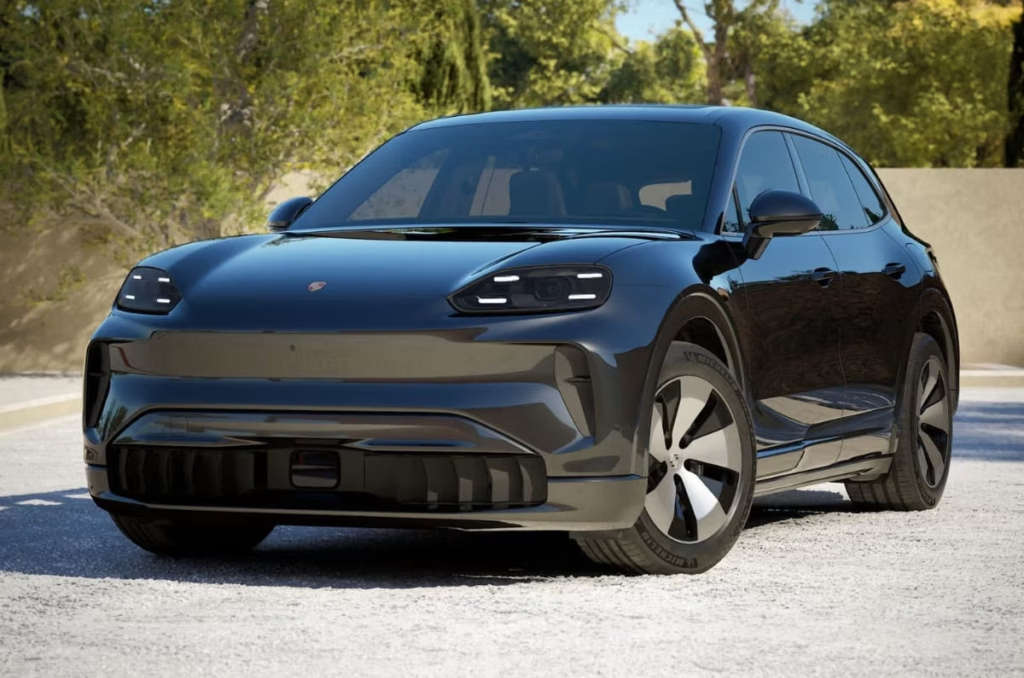
The Cayenne Electric retains the overall silhouette of the combustion-engined Cayenne but gets a revised front end. It has a blanked-off grille with air vents on either side of the bumper to cool the battery and electrical components, along with active aerodynamic vents lower down on the bumpers.
The SUV gets gloss-black lower cladding and 20- to 22-inch alloy wheel options. At the rear is a full-width LED light bar with illuminated Porsche lettering and a black bumper with horizontal elements. The Turbo Electric gets a body-coloured skid plate, while the standard version has an all-black finish.
At 4,985mm, the Cayenne Electric is 55mm longer than the combustion-engined Cayenne and has a 3,023mm wheelbase. It is 1,980mm wide and 1,674mm tall. Porsche quotes a 90-litre frunk and 781-litre boot, with the latter expanding to 1,588 litres with the powered rear seats folded.
Porsche Cayenne Electric: Interior and features
The Cayenne Electric gets a digital driver’s display and a 14.5-inch curved infotainment touchscreen, which is a first for a Porsche model in India. An optional 14.9-inch passenger display and augmented-reality head-up display are also available.
Other equipment includes eight-way electrically adjustable front seats, which can be upgraded to up to 18-way adjustable ones, four-zone automatic climate control, ventilated front seats, a panoramic sunroof and wireless phone charging. A 14-speaker Bose sound system is standard, while a 20-speaker Harman Kardon system is available as an option.
The Cayenne Electric will rival the Audi Q8 e-tron, BMW iX and Lotus Eletre in India.





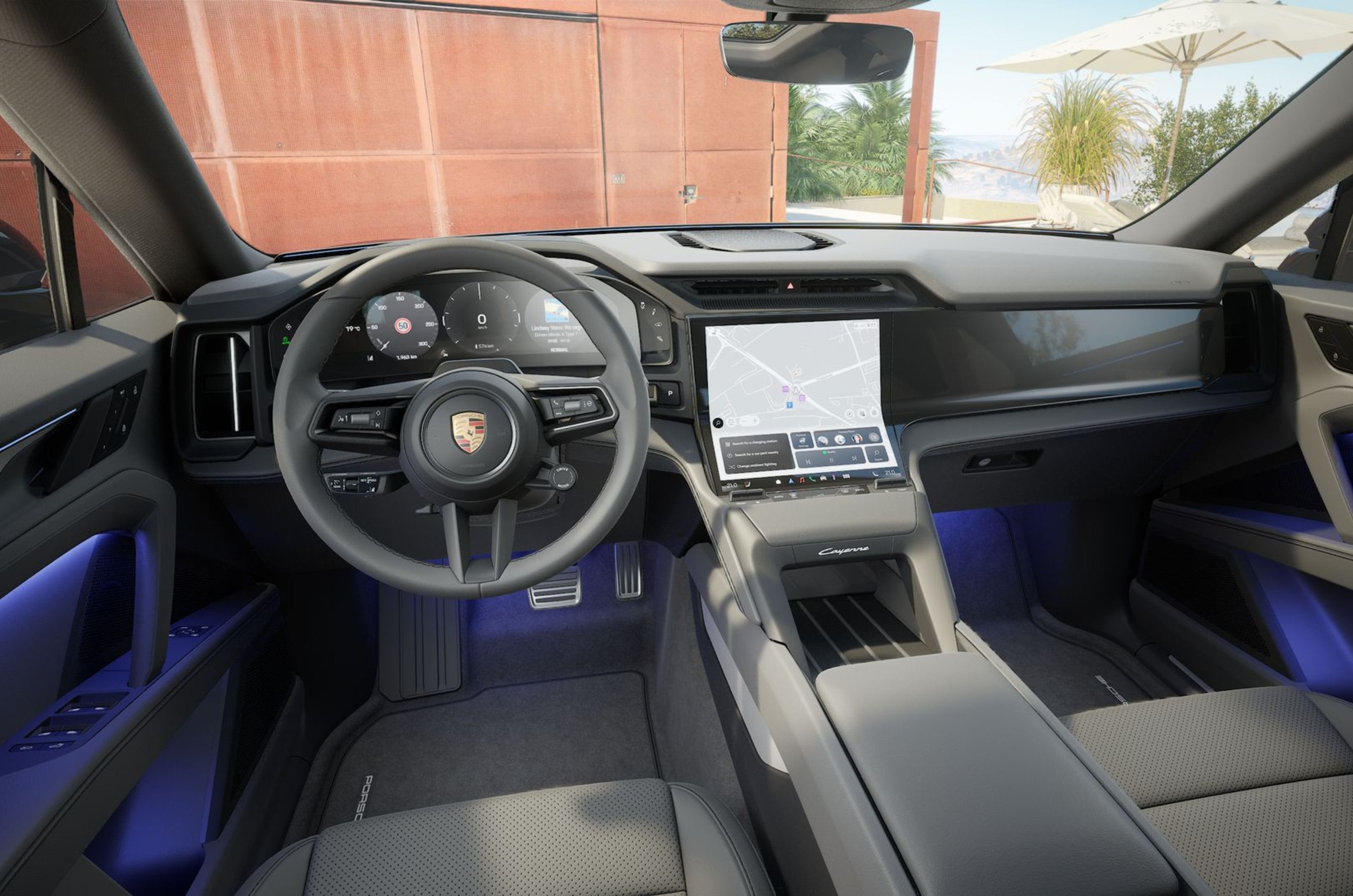 Inside, the Cayenne Electric gets a three-spoke steering wheel and digital driver’s display, similar to the ICE model. Porsche has also added a new 14.5-inch curved touchscreen infotainment system that flows into the centre console. An optional 14.9-inch passenger display is also available at an additional cost. Other features include 8-way electrically adjustable front seats, four-zone automatic climate control, ventilated front seats, a panoramic sunroof and wireless phone charging.