MG has launched the Hector Tomahawk PHEV as the first mass-market plug-in-hybrid (PHEV) car in India, priced from Rs 25.70 lakh (ex-showroom). It is offered in two trims: Exclusive and Essence, and like other MG cars, it is equipped with a plethora of modern-day features. If you are interested in the MG Hector Tomahawk PHEV, which variant should you choose? Let us find out.
MG Hector Tomahawk PHEV powertrain options and prices
Both Hector Tomahawk PHEV variants get the same 1.5L engine and 20.5kWh battery
The MG Hector Tomahawk PHEV is offered with a 1.5-litre naturally aspirated petrol engine producing 102hp and 125Nm. It gets a 20.5kWh battery pack powering an electric motor producing 201hp and 237Nm. The battery pack has an indicative claimed range of 115km, and combined with the petrol engine, it could have a total range of around 1,100km. Both the Exclusive and Essence variants are offered with the same powertrain.
*Rs 3.2 per km is charged as the battery rental fee for the battery-as-a-service (BaaS) scheme.
MG Hector Tomahawk PHEV variant-wise features
Exclusive
Price: Rs 25.70 lakh (or Rs 21.79 lakh + Rs 3.2 per km with BaaS)
Automatic LED projector headlights
LED taillights
LED DRLs
Rear LED fog lamps
Illuminated MG logo at the front
18-inch alloy wheels
ORVM-mounted turn indicators
Glass antenna
Roof rails
Rear spoiler
Chrome finish on window beltline and door handles
Black body cladding on side and wheel arches
Brown and grey interior
Blue ambient lighting
12.8-inch touchscreen infotainment system
6-speaker sound system
Wireless Android Auto and Apple CarPlay support
8.8-inch digital driver’s display
Panoramic sunroof
6-way powered driver’s seat
4-way powered co-driver’s seat
Ventilated front seats
Powered tailgate
50W wireless phone charger
Leatherette seat upholstery
Leatherette materials on steering wheel and door pads
Drive modes: Eco, Normal, Sports, Custom
Rain-sensing wipers
PM2.5 air filter
Push-button start/stop
Powered ORVMs
Steering-mounted audio controls
Tilt and telescopic adjustable steering column
Cruise control
2nd row features: 60:40 split, seat recline, one-touch tumble, centre armrest with cupholders
3rd row features: 50:50 split
USB Type-A and Type-C chargers in 1st and 2nd rows
All four power windows with one-touch up/down and anti-pinch functions
Rear wiper and washer
Pet mode, Nap mode and Camp mode
Connected car technology
6 airbags
360-degree camera with under-bonnet and wheel views
Digital rearview monitor
Reverse parking sensors
All four disc brakes
Electronic parking brake with auto hold
TPMS
Front and rear defogger
ISOFIX child seat anchors
Hill hold control
Traction control
ESP
ABS+EBD
Essence (features over Exclusive)
Price: Rs 27.80 lakh (or Rs 23.89 lakh + Rs 3.2 per km with BaaS)
15.6-inch touchscreen infotainment system
10-speaker Infinity sound system
Rear window sunshades
Driver’s seat memory and welcome/exit retract functions
V2L, V2V and V2H charging support
Level-2 ADAS
Auto-dimming IRVM
Front parking sensors
256-colour ambient lighting
Red brake callipers
Sequential turn indicators
Which MG Hector Tomahawk PHEV variant should you buy?
We recommend the entry-spec Essence variant, as it is offered with a lot of modern-day features like a 12.8-inch touchscreen infotainment system, a panoramic sunroof, a powered tailgate and a 360-degree camera. It also costs Rs 2.10 lakh less than the top-spec Essence, making it the more value-for-money Hector Tomahawk PHEV variant.
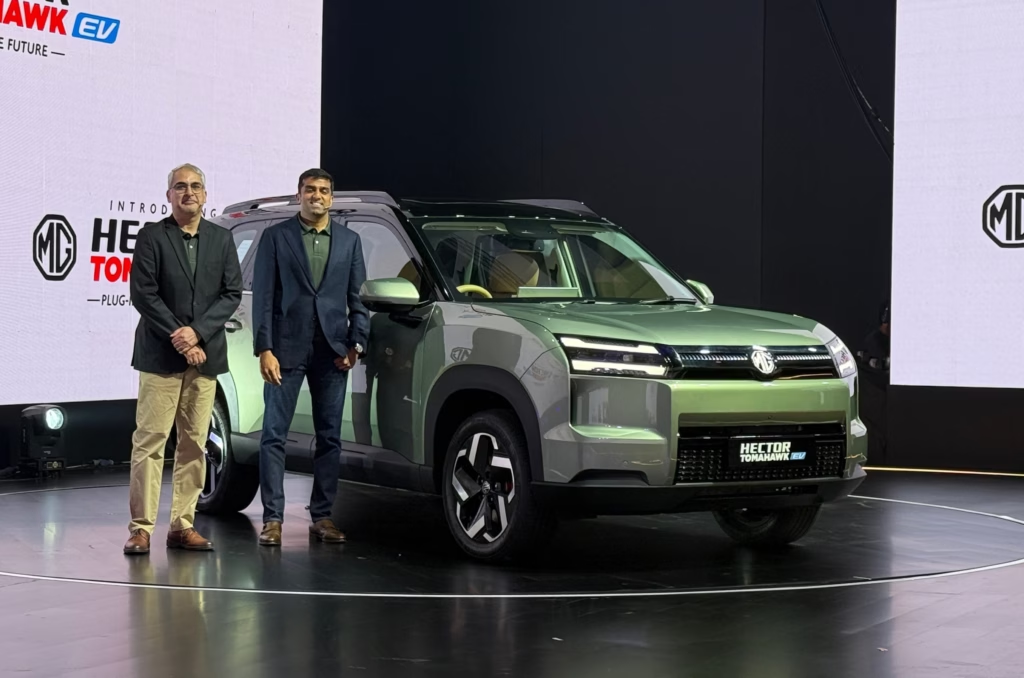
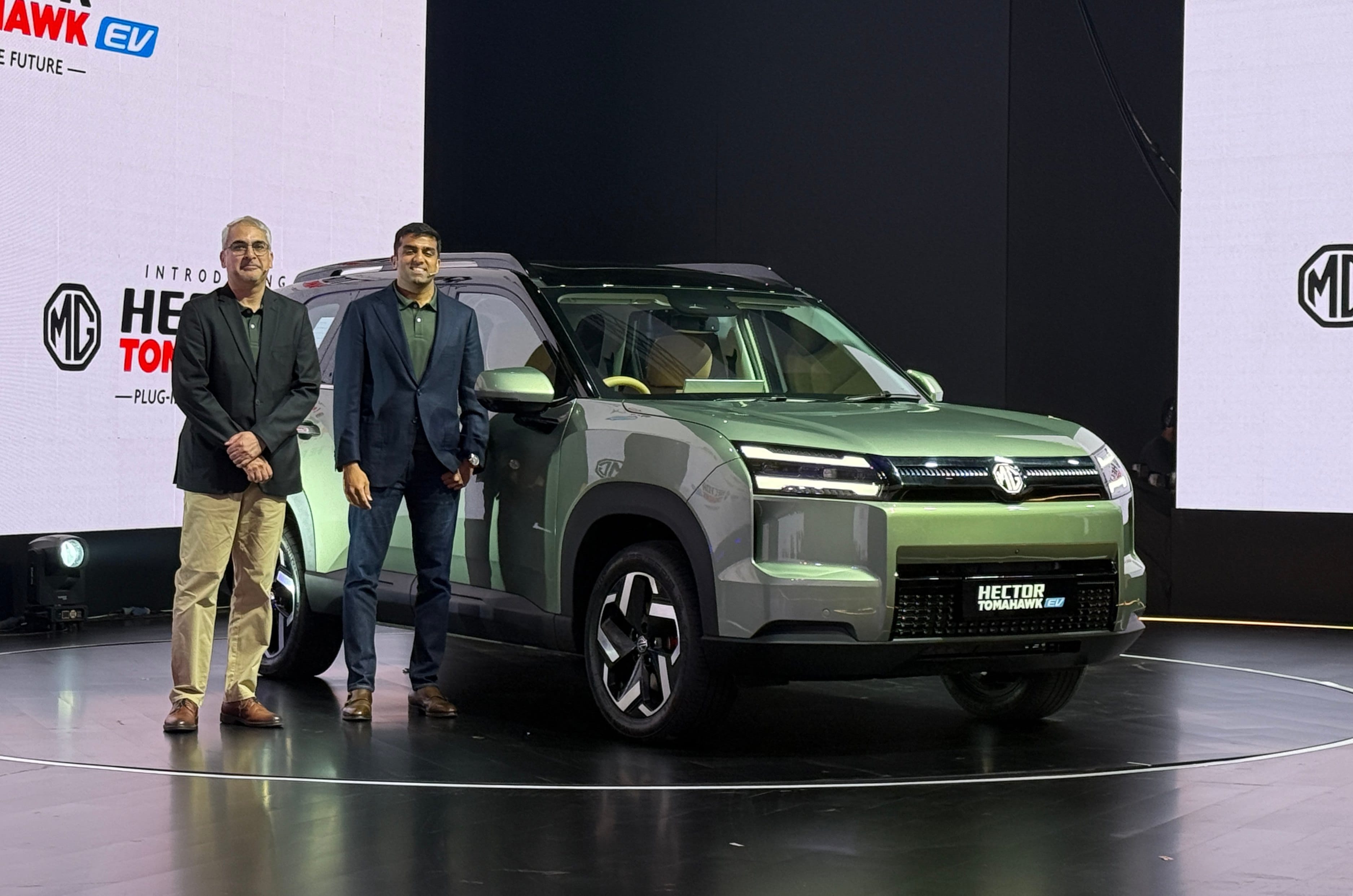
JSW MG Motor India has launched the Hector Tomahawk EV at a starting price of Rs 19.49 lakh (ex-showroom), while prices under its Battery-as-a-Service (BaaS) programme start at Rs 13.99 lakh. The electric SUV gets a 69.2kWh battery and is available in five and seven-seat configurations. The Tomahawk EV is the first MG model in India based on the brand’s ADAPT architecture.
Deliveries to commence in September
Gets a 15.6-inch touchscreen and 8.8-inch digital driver’s display
204hp electric motor develops 310Nm
90kW DC charging; 30-80 percent in 35 minutes
MG Hector Tomahawk EV: price and variants
Variant
Seating
Ex-showroom price
Excite
7-seat
Rs 19.49 lakh
Exclusive
7-seat
Rs 21.99 lakh
Essence
7-seat
Rs 23.49 lakh
Essence
5-seat
Rs 22.99 lakh
The Hector Tomahawk EV is priced from Rs 19.49 lakh to Rs 23.49 lakh (ex-showroom). The five-seat version is offered only in the Essence variant and is priced at Rs 22.99 lakh, while the seven-seat version is available in Excite, Exclusive and Essence trims.
MG is also offering the Hector Tomahawk EV under its Battery-as-a-Service (BaaS) programme, with prices starting at Rs 13.99 lakh. Buyers opting for BaaS pay a separate battery rental of Rs 4.90 per km. MG has not disclosed variant-wise BaaS prices.
The prices are introductory and applicable to limited units only.
In terms of rivals, the Hector Tomahawk EV will primarily face the Mahindra XEV 9S and Kia Carens Clavis EV, both of which are available with three-row seating. The Tomahawk EV’s five-seat version also broadens its competition to other electric SUVs in this price range.
MG Hector Tomahawk EV: exterior
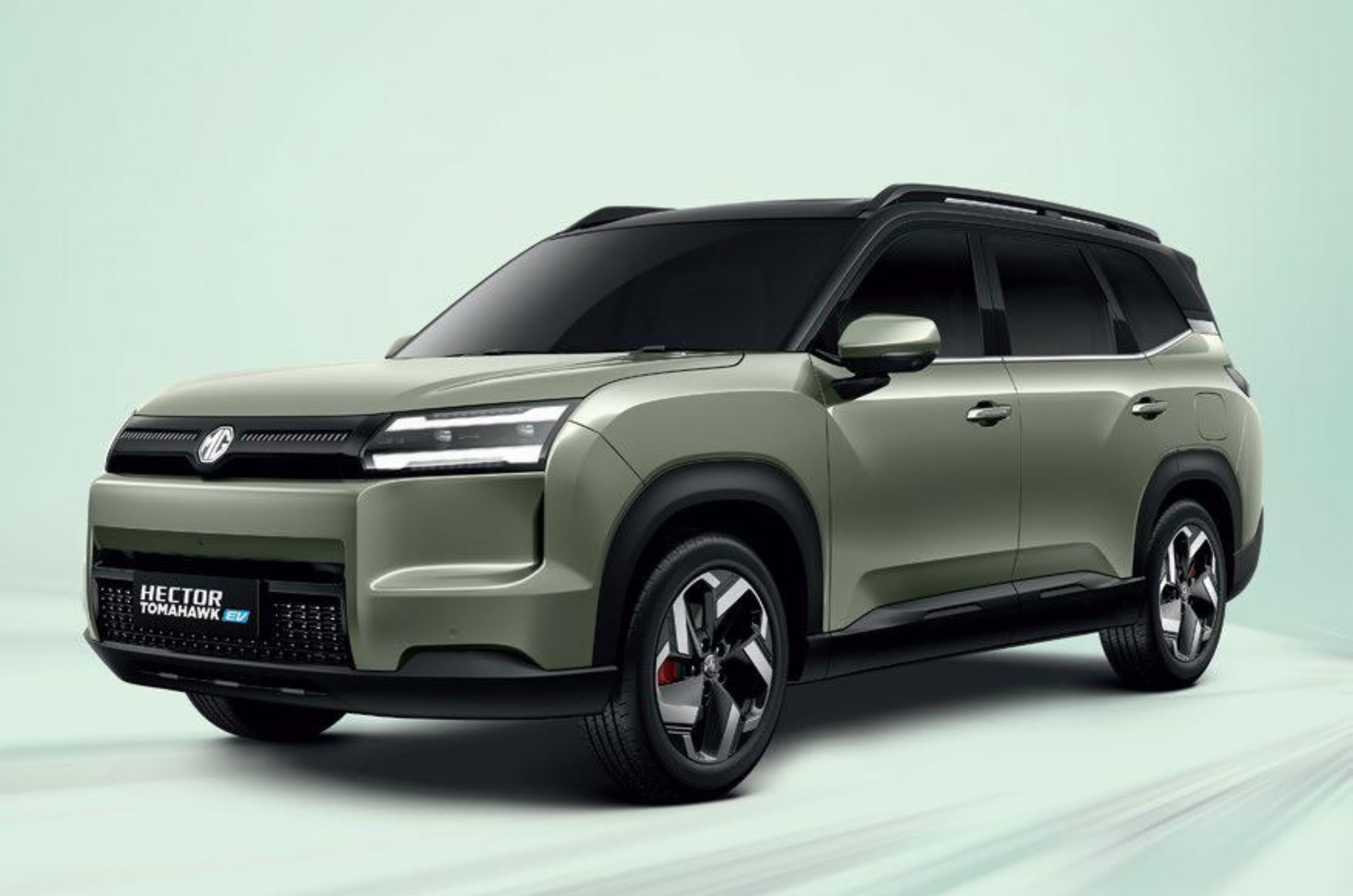
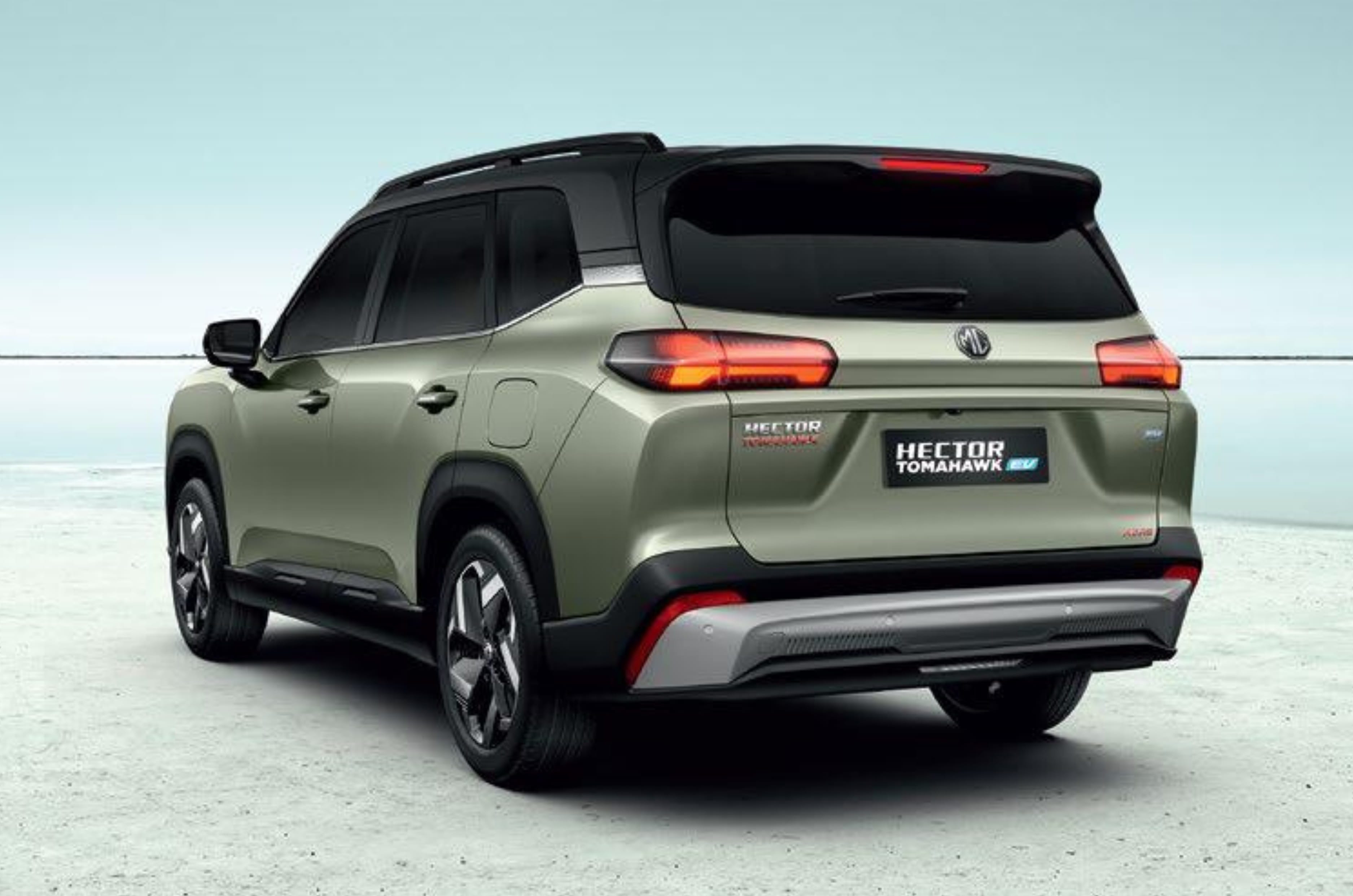
The Hector Tomahawk EV gets LED projector headlamps with LED daytime running lights with an illuminated MG logo positioned between them. The front bumper has a blacked out, closed-off lower front fascia, while the SUV rides on 18-inch dual-tone alloy wheels. It also gets roof rails, black cladding around the wheel arches and lower doors and an automatic powered tailgate.
At the rear, the Tomahawk EV features wraparound LED tail-lamps and a sculpted rear bumper. The SUV measures 4,745mm long, 1,850mm wide and 1,770mm tall, with a 2,810mm wheelbase and 230mm ground clearance. The Hector Tomahawk EV gets a 610-litre boot for the five-seat version, while the seven-seat version offers 192 litres with all three rows in use and 528 litres with the third row folded.
MG Hector Tomahawk EV: interior and features
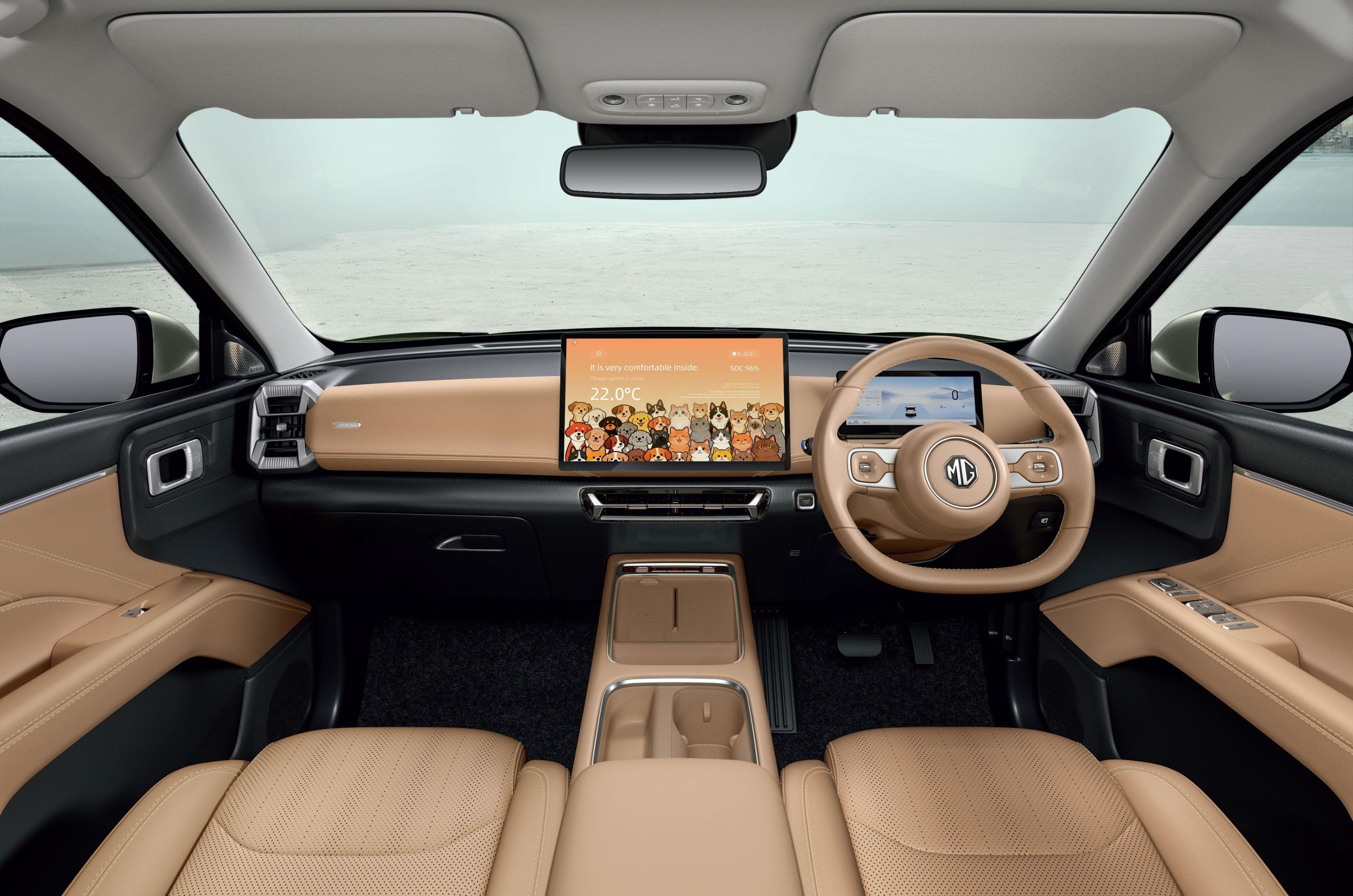
The Hector Tomahawk EV gets a 15.6-inch infotainment touchscreen, a 8.8-inch digital drivers display, wireless Apple CarPlay and Android Auto, wireless phone charging and gesture controls for functions such as the air-conditioning and audio system.
Other features include a panoramic sunroof, ventilated front seats, 256-colour ambient lighting, a 10-speaker Infinity sound system, a powered tailgate, connected car tech, rear window sunshades and a driver’s seat with memory and auto-retract functionality. The SUV also gets several cabin modes, including Nap, Camp, Energise, Pro Pet, Valet and Quiet modes.
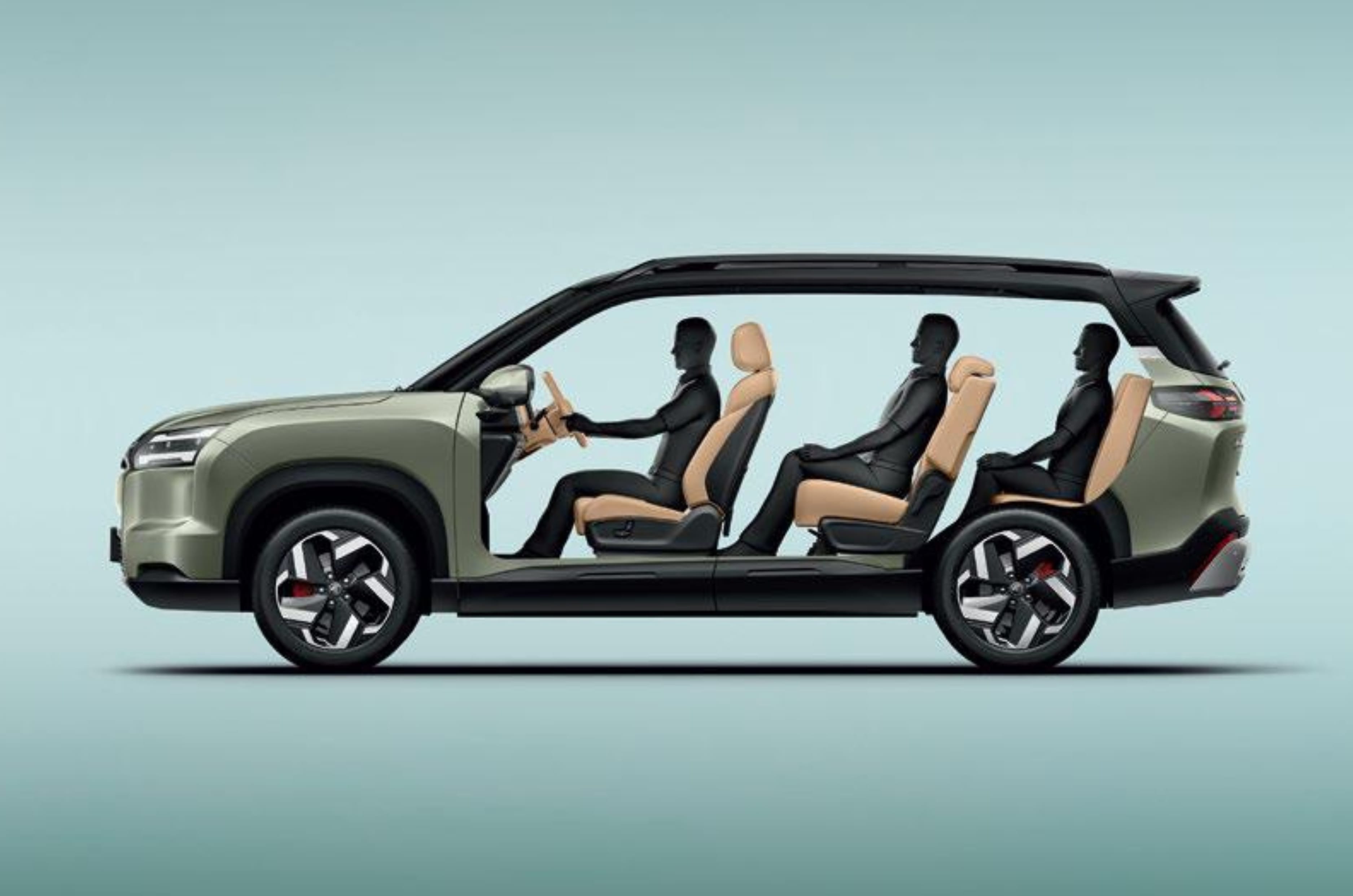
The Hector Tomahawk EV is available with five or seven seats. The five-seat version has 610 litres of boot space, which increases to 1,053 litres with the second row folded. The seven-seat version offers 192 litres with all three rows in use and 528 litres with the third row folded.
MG Hector Tomahawk EV: battery and range
The Tomahawk EV gets a 69.2kWh battery paired with a permanent-magnet synchronous motor producing 204hp and 310Nm. MG claims a 517km MIDC range and a 0-100kph time of 8.2sec.
The EV uses a CCS2 charging connection and supports DC fast charging at up to 90kW. MG claims a 30-80 percent charge in around 35 minutes using a 90kW DC charger. With a 7.4kW AC charger, a 10-100 percent charge takes around 12.5 hours. A portable charger that plugs into a 15A socket is also offered.
The Tomahawk EV also supports vehicle-to-load (V2L) and vehicle-to-vehicle (V2V) functions. MG says V2L can power compatible external devices and appliances, while V2V allows the SUV to charge another electric vehicle. It also claims the Tomahawk EV is India’s first vehicle-to-home (V2H) vehicle, allowing its battery to supply power to household appliances through two-way charging.
POCO के फैंस काफी समय से कंपनी की F9 सीरीज के लॉन्च का इंतजार कर रहे हैं। अब कंपनी ने आखिरकार पुष्टि कर दी है कि वह 1 सितंबर 2026 को POCO F9 सीरीज को दुनियाभर में लॉन्च करेगी। कंपनी ने यह भी बताया है कि वह POCO F9 Pro और POCO F9 Ultra को लॉन्च करने की तैयारी में है। माना जा रहा है कि ये दोनों फोन Redmi K100 सीरीज के रीब्रांडेड वर्जन हो सकते हैं, जिसे अभी सिर्फ चीन में लॉन्च किया गया है। यहां हम आपको आने वाले इन स्मार्टफोन्स के बारे में अब तक मिली सभी जानकारी बता रहे हैं।
Poco F9 सीरीज 1 सितंबर को होगी लॉन्च
Xiaomi के सब-ब्रांड POCO ने कंफर्म किया है कि Poco F9 Pro और Poco F9 Ultra को ग्लोबल मार्केट में 1 सितंबर को रात 8 बजे GMT (भारत में 2 सितंबर को रात 1:30 बजे) लॉन्च किया जाएगा। खास बात यह है कि कई लीक्स में दावा किया गया है कि कंपनी स्टैंडर्ड Poco F9 को लॉन्च नहीं करेगी।
Poco F9 सीरीज के कलर और स्पेसिफिकेशन्स
टीजर के मुताबिक, Poco F9 सीरीज को White और Dark Cherry कलर ऑप्शन में लॉन्च किया जाएगा, जो Redmi K100 सीरीज जैसा ही है। हैंडसेट के पीछे ‘Sound by Bose’ की ब्रांडिंग दिख रही है, जिससे पता चलता है कि इसकी ऑडियो ट्यूनिंग US कंपनी के साथ मिलकर की गई है।
स्पेसिफिकेशन की बात करें तो, Poco F9 Pro में 185Hz रिफ्रेश रेट वाला 6.59-इंच का QHD+ प्लास्टिक OLED डिस्प्ले होने की उम्मीद है। जबकि F9 Ultra में इससे भी बड़ी 6.85-इंच की स्क्रीन हो सकती है, जिसका रिजोल्यूशन 2608 × 1200 पिक्सल होगा।
दोनों फोन में Snapdragon 8 Elite Gen 5 चिपसेट दिया जा सकता है। इनमें 16GB तक RAM और 512GB तक स्टोरेज भी मिल सकता है।
हालांकि, Pro मॉडल के प्रोसेसर को लेकर कुछ अनिश्चितता है। कुछ रिपोर्ट्स का दावा है कि Poco F9 Pro में Snapdragon 8 Elite Gen 5 का एक खास वर्जन (binned version) इस्तेमाल हो सकता है, जिसे Snapdragon 8 Elite Gen 5 V कहा जा रहा है। बताया यह भी जा रहा है कि यही चिप चीन में Redmi K100 Pro में भी इस्तेमाल होगी।
कैमरे की बात करें तो, Poco F9 Pro में पीछे की तरफ ट्रिपल कैमरा सेटअप मिलने की उम्मीद है। इसमें OIS के साथ 50MP का मेन कैमरा, 8MP का अल्ट्रा-वाइड कैमरा और 3x ऑप्टिकल जूम व OIS वाला 50MP टेलीफोटो कैमरा दिया जा सकता है।
वहीं, Poco F9 Ultra में ज़्यादा बेहतर ज़ूम सेटअप मिल सकता है। इसमें Pro मॉडल जैसा ही 50MP का प्राइमरी कैमरा होने की उम्मीद है, साथ ही 50MP का अल्ट्रा-वाइड कैमरा और 5x ऑप्टिकल ज़ूम को सपोर्ट करने वाला एक और 50MP का टेलीफोटो सेंसर भी हो सकता है।
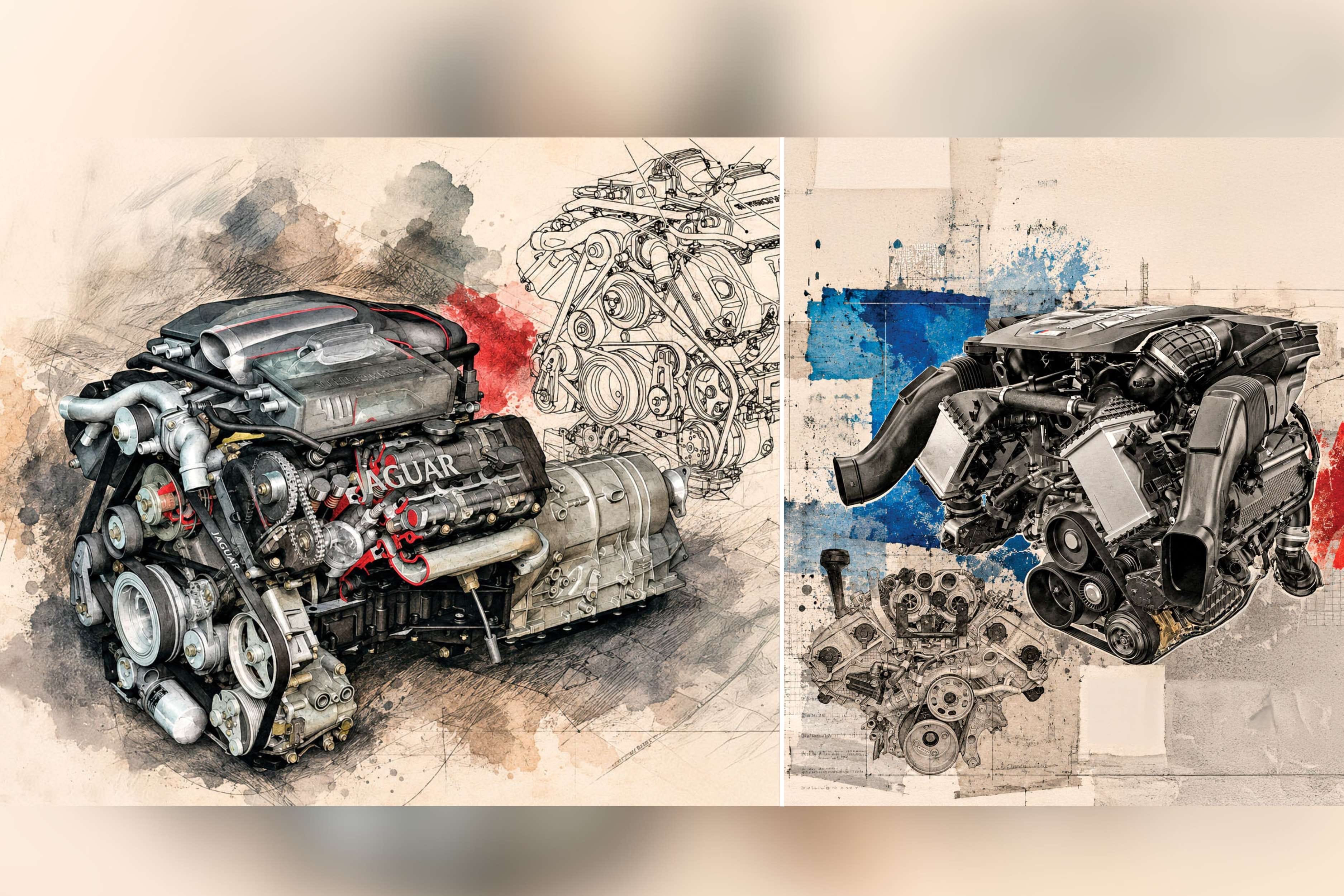
SUVs powered by V8 engines are becoming rarer by the day. Downsizing, electrification, ever‑tightening emissions regulations – the V8 is fading. Yet here we are in 2026, with Land Rover offering not one but two V8s. On the same model! Calls for a mini celebration, doesn’t it? And something of a journey of discovery. So how, and why, does the Defender come powered by two distinctly different V8s? Are they different enough to co-exist? Do their specifications tell a story? And are they fundamentally different from behind the wheel? Answers to these and more in this fascinating tale of two V8s.
Individual identity
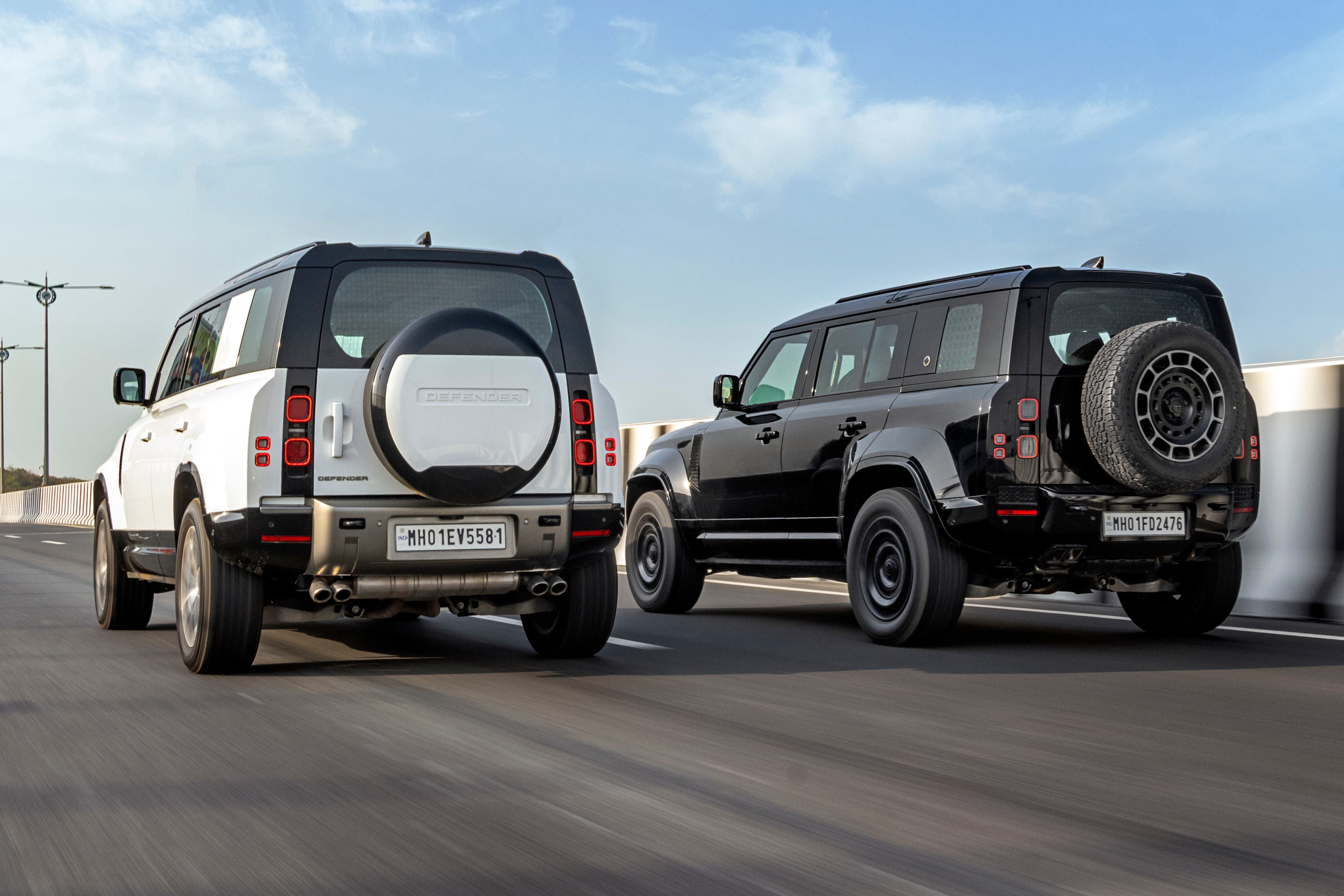
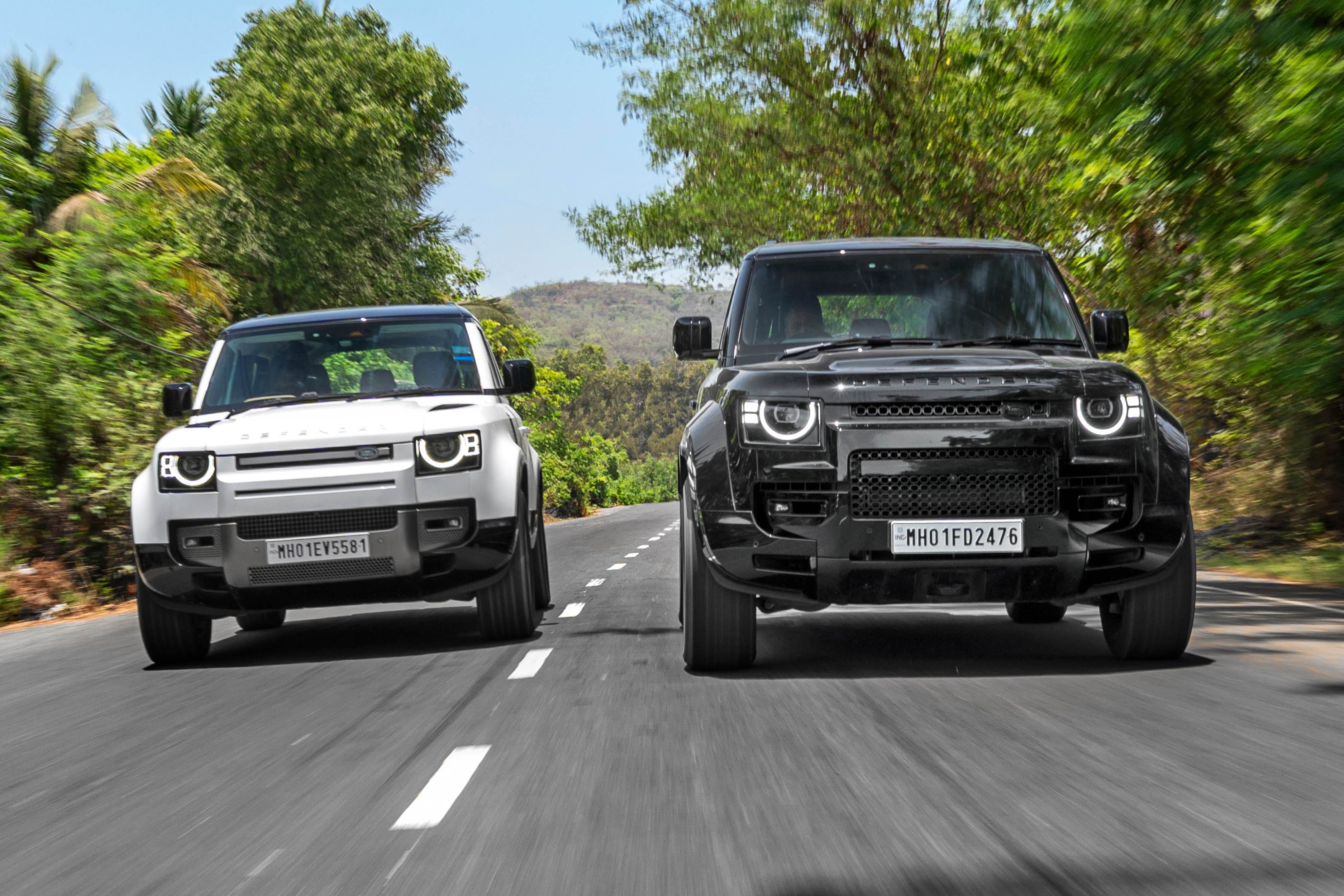
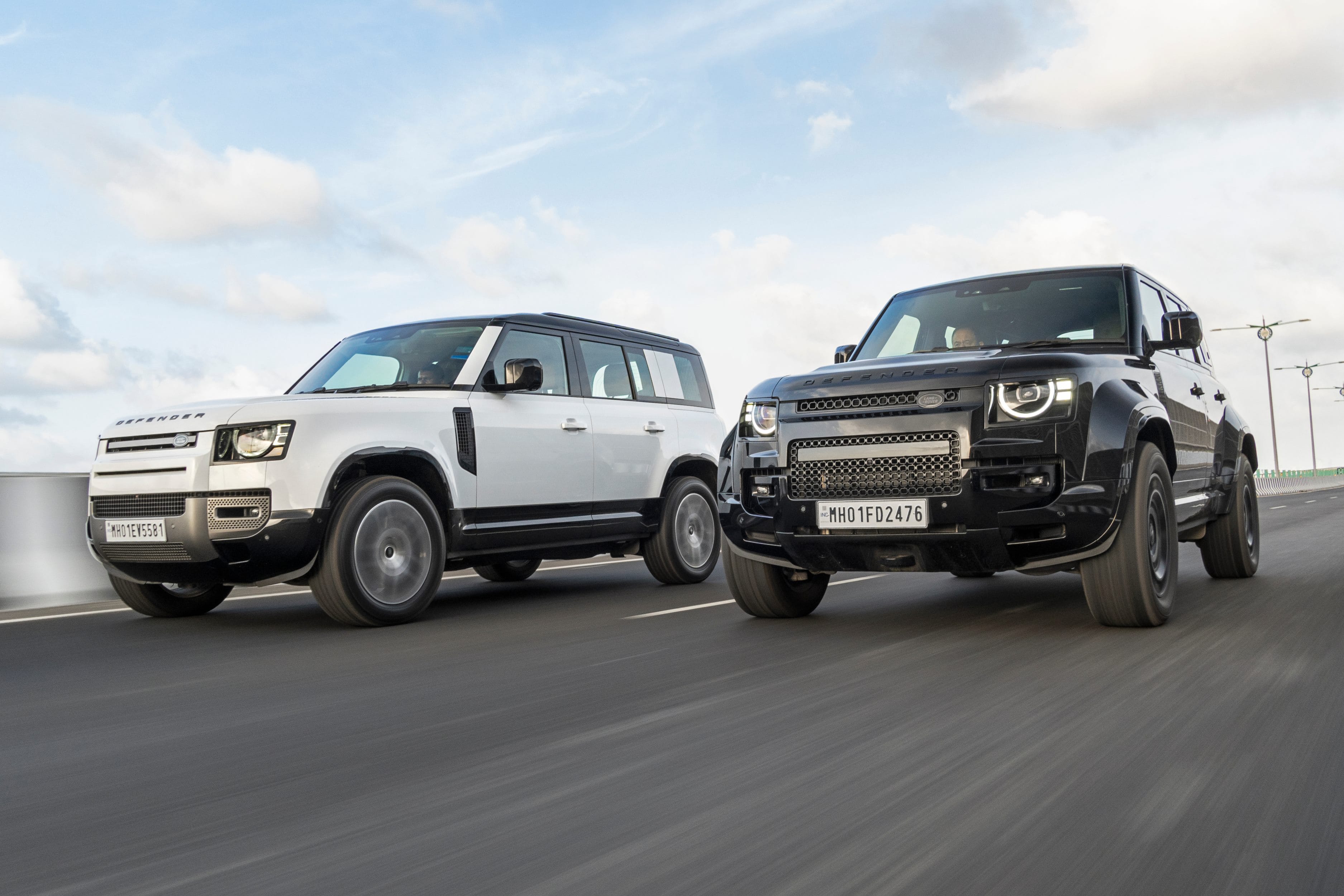
The Octa looks much more menacing than the regular Defender.
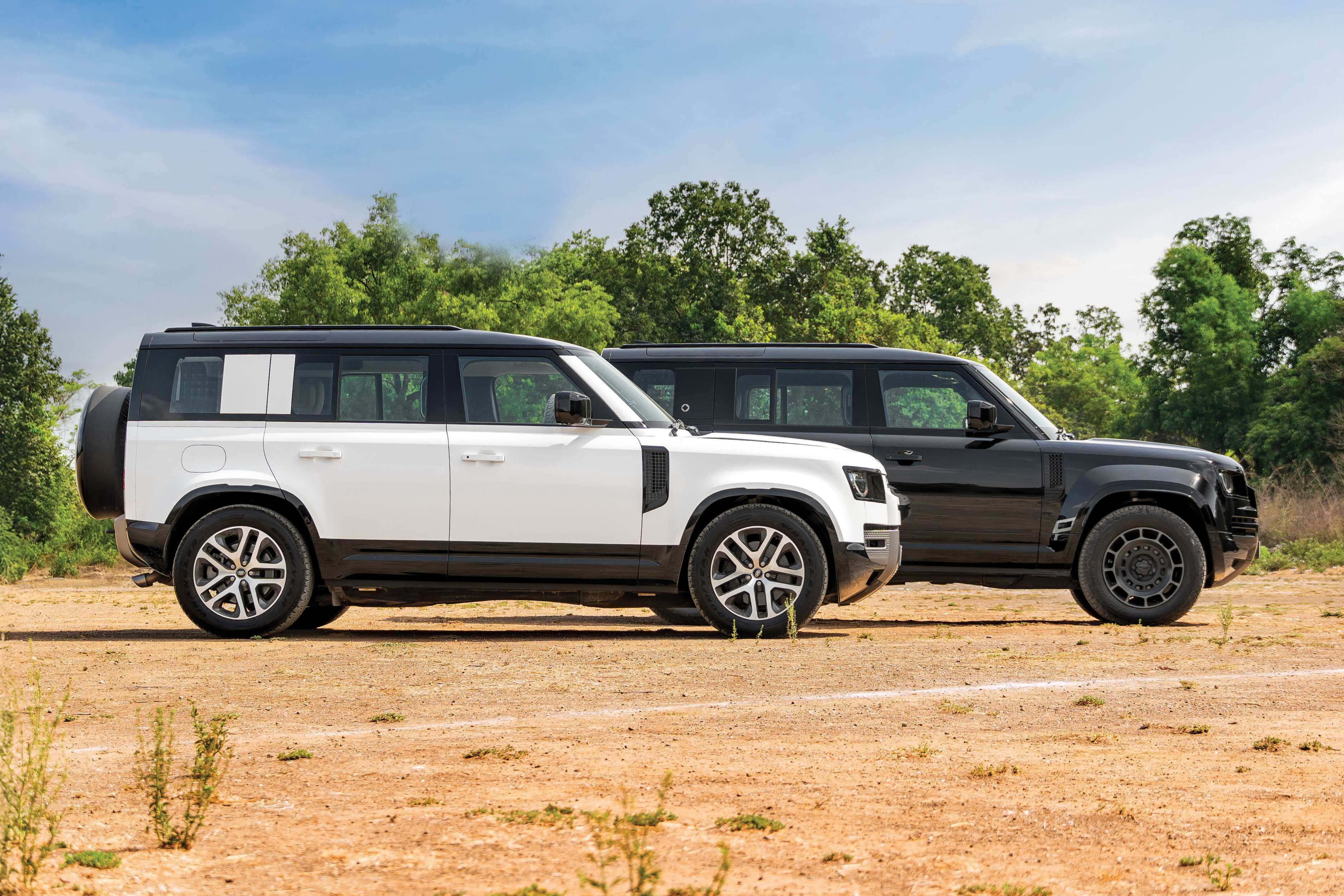
Job number one: telling them apart. Which is relatively easy when you have the two sitting cheek by jowl. But out on their own, with no reference and no back-and-forth visual comparison, it’s more difficult.
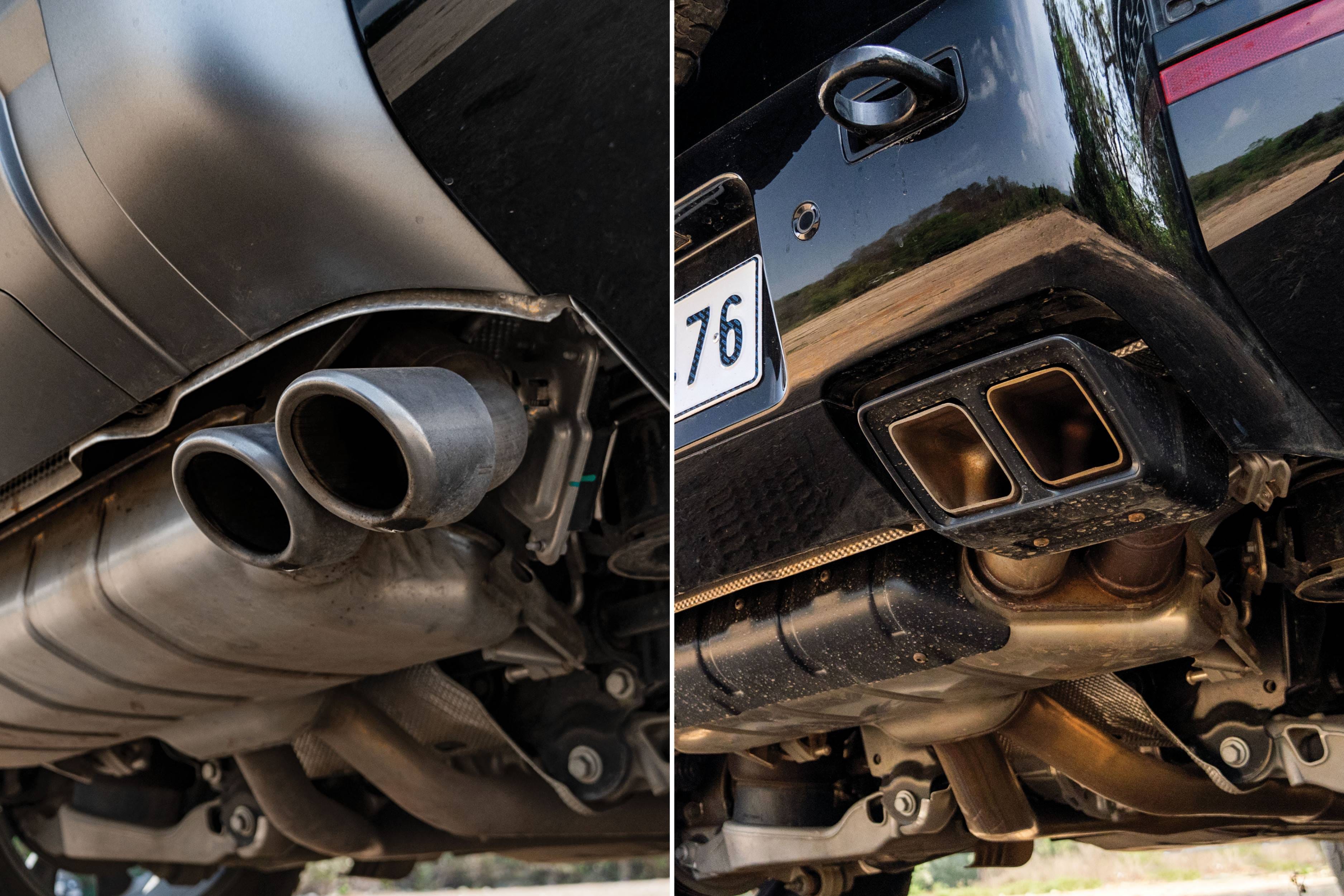
Now, most of us – at least those of us who admire the Defender – know the Octa. A bold move from Land Rover, it comes with BMW’s 4.4‑litre twin‑turbo S68 under the louvered bonnet. That, and its linked suspension, which make the Octa super stable over rough ground. Not only does it get the V8 from BMW’s sledgehammer M5, the Octa, like all good performance cars, wears its intent on the outside. A wider stance, flared wheel arches, square exhaust tips and a stance that screams ‘Defender on steroids’. Most of the visual enhancements are also functional, but it also looks wide-shouldered and bulked up without going over the top… a job well done. And then, of course, there is the Octa badge, both on the grille and behind the ‘C’ pillar.
L: The Defender V8 gets more traditional rounded exhausts; R: The Octa’s quad rectangular exhaust tips stand out.
The Defender V8, which gets Jaguar’s AJ133 engine, is much stealthier and less in your face. From the outside, it looks like a regular Defender. No V8 badge, no identifying features, nothing. In fact, look at it from the front or the side, and it’s almost impossible to tell. You can, however, tell from the rear. The horizontally placed quad round exhausts stick out at the rear and clearly tell you this is something special. Otherwise, this is a regular Defender – attractive and full of visual appeal, but not something that stands out as something special. Could this be the Defender’s best‑kept secret?
Supercharged slayer
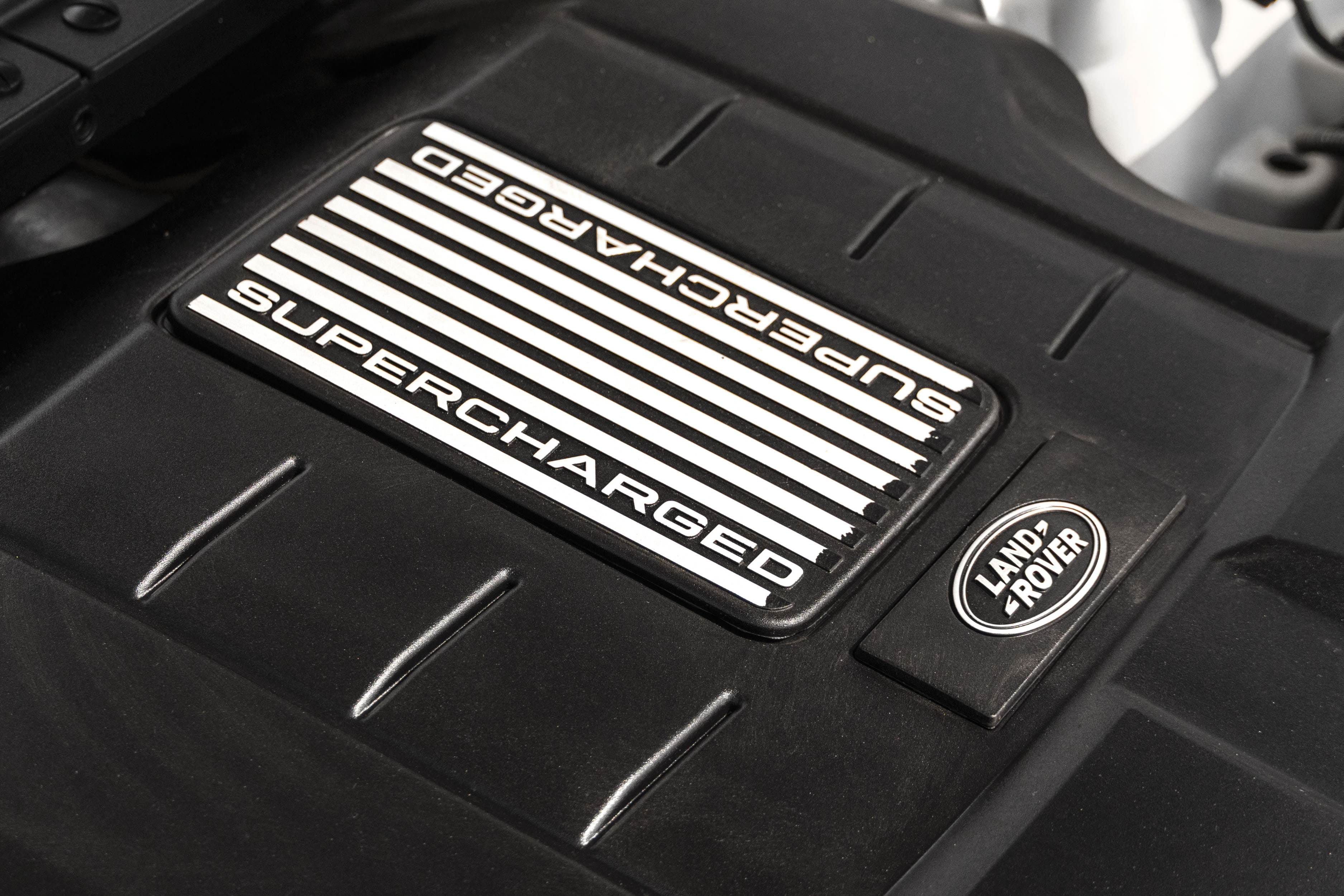
Defender V8 gets ‘supercharged’ written on the cover.
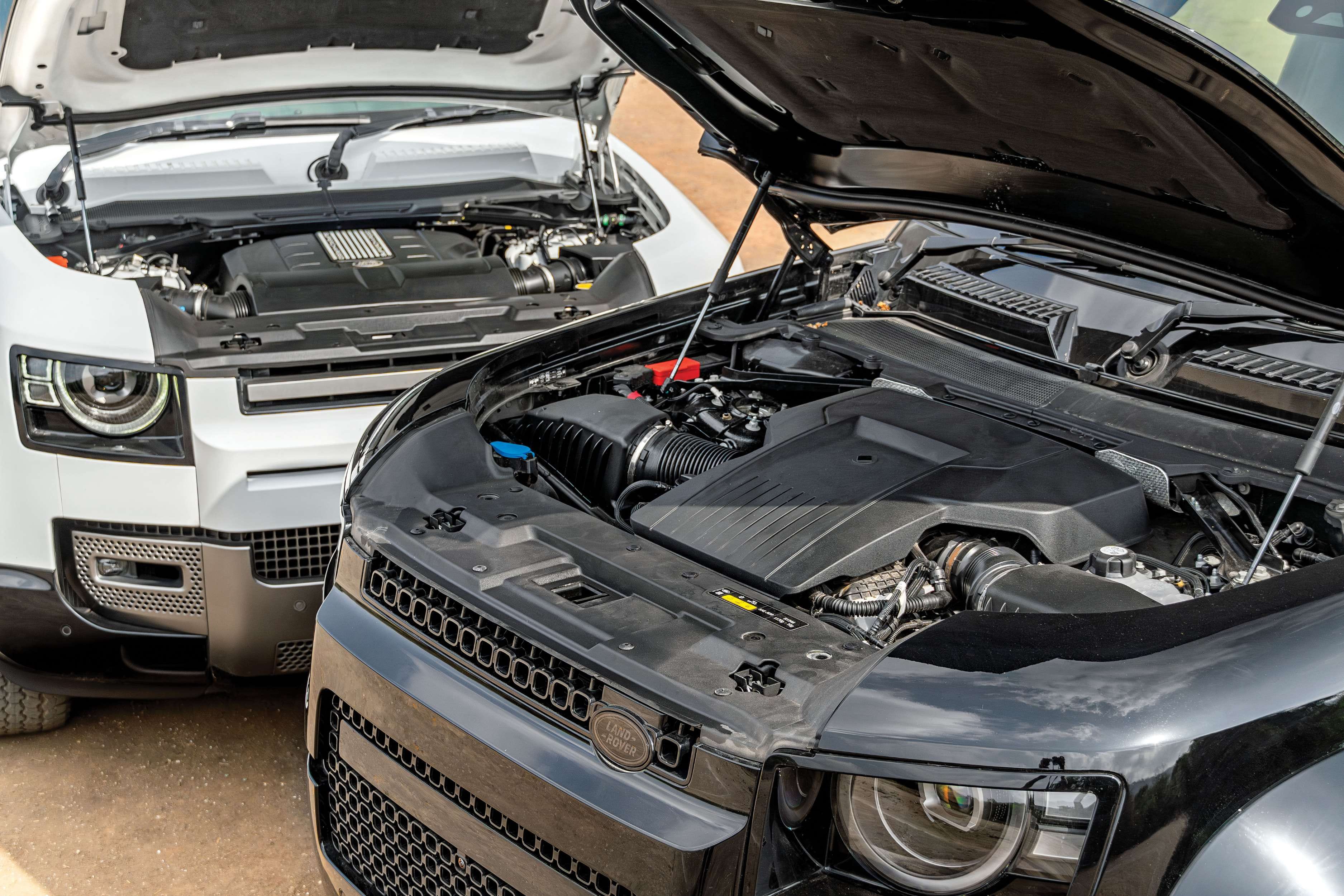
From behind the wheel, the differences are stark. The AJ133 engine is a familiar friend, earlier seen in many a Jaguar and Range Rover. In this Defender, it produces 425hp, with a large Roots-type supercharger adding some refined whine to the exhaust note. The sound that dominates, however, is a silky-smooth but unmistakable V8 ‘woofle’. Rev the engine even slightly, and a meaty growl emerges with crisp burbles on the overrun. It’s not AMG loud, nowhere near, or as raucous either, but the sound of the honey-smooth V8 is pure theatre and just gets me grinning. Why does it sound so clear and clean? There’s no turbo muffling the exhaust note, of course, and no turbo lag either. Which also explains the immediacy of the throttle responses.
In fact, tap the pedal even from idle, and the Defender V8 shoots forward, the crankshaft-driven supercharger pumping air into the engine instantly. This makes the Defender V8 feel light on its feet, and what’s even more charming is that it pulls cleanly in the mid-range, the engine spinning freely and enthusiastically towards the top. This is addictive, and long pulls to the redline are just so much fun. If you value thoroughbred engine characteristics over everything else, this engine will delight you.
Supercharger makes for instant low-end response from the AJ V8.
Now, putting so much performance into a dedicated off-roader may seem futile. But what Land Rover has done is make the Defender fundamentally sound. It’s not a ladder frame, for one, so when you drive around corners, it manages to do it in a neat and tidy manner. And that’s despite the additional weighty hardware like bulky differentials, stout driveshafts, and a robust transfer case, all needed for serious off-roading and not just slippery conditions.
So it comes as something of a surprise that the Defender V8, with its light steering and neat and tidy driving manners, can handle the performance without any fuss. It speaks volumes about how well Land Rover has engineered this platform and given it both loads of on-road capability as well as bona fide off-road chops.
The AJ-V8-powered Defender is not as effective a performance machine as the Octa.
Try and use all the performance all the time, and that feeling of composure slowly fades. You start feeling the bulk, you want more stability and confidence from the brakes, and the gearbox feels slow and laid back. And what’s this, no paddle shifters? Huh?
All pumped up
The Defender Octa amps it up to another level. Bold, brash and devastatingly effective when its full potential is unleashed, it is an all new type of animal. Initial impressions, however, immediately tell you the V8 is turbocharged. Squeeze the throttle, and the responses are initially laid back. This is especially true in comparison to the supercharged V8.
Both engines are brilliant, but both are also very distinct in the manner in which they make power.
Once past the initial softness in the throttle, however, it surges forward with relentless force, a flood of torque unleashed from the turbos spooling up. And that’s even if you haven’t pinned the throttle. A few more purposeful prods of the throttle, and the massive gulf in performance between the two Defenders is soon apparent. It’s not the 0-100kph or even the 0-150kph times, it’s just the massive surge you feel in raw thrust when you feed in the throttle.
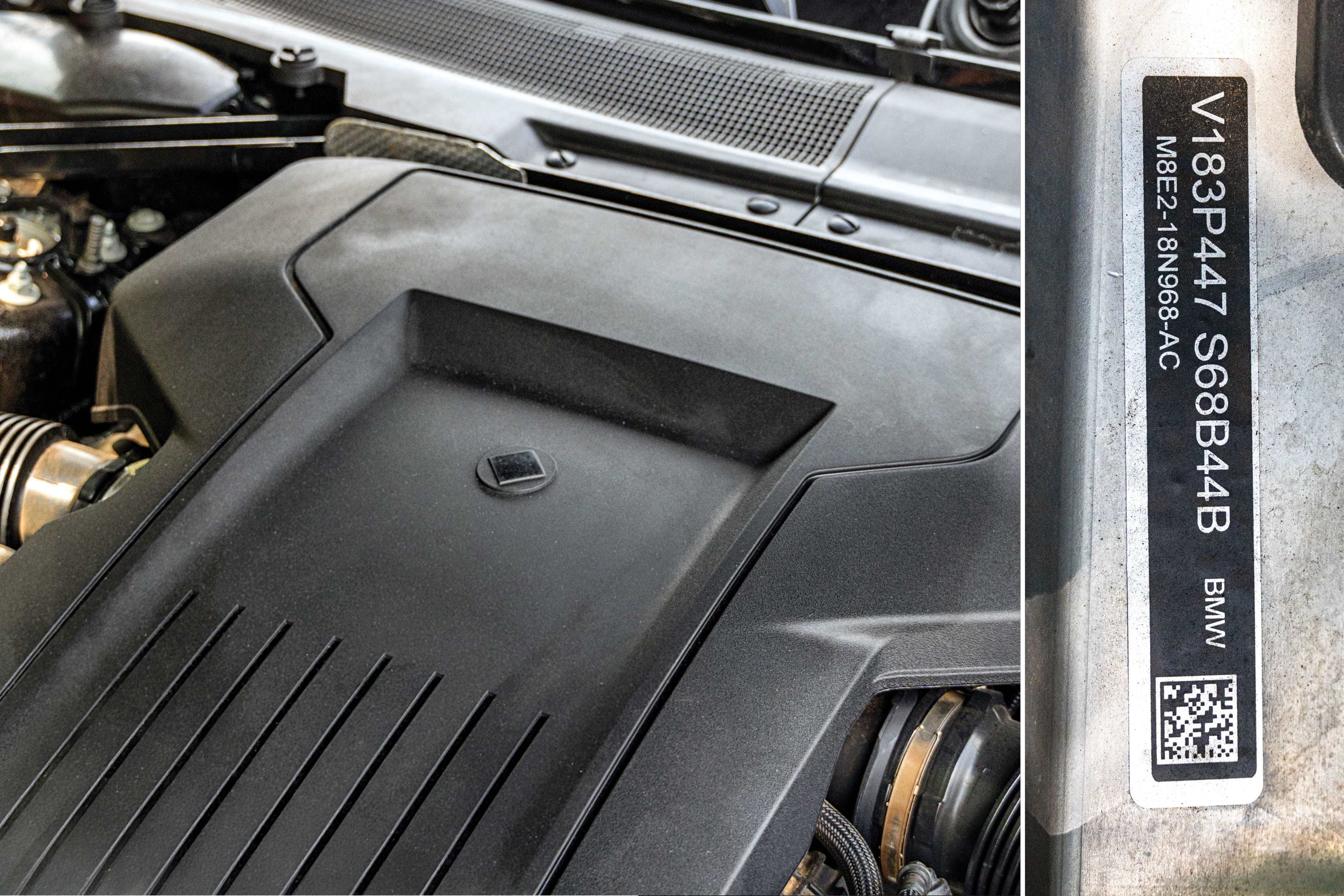
The BMW‑sourced 4.4‑litre twin‑turbo V8 is a technological powerhouse and one of the most technically complex engines around. With 635hp and up to 800Nm in launch mode, it transforms the Defender into something approaching a super off-roader. And where the Jaguar engine is all about response, this BMW one, in contrast, is all about mid‑range and top-end muscle. In fact, knock back a few gears on the quick gearbox, plant your foot, and the Defender Octa charges forward with such ferocity that you’ll question the need for anything faster.
Where the BMW engine also differs is in the soundtrack. At low revs, the turbos and cross-bank exhaust system muffle and mute the V8’s natural exuberance and growl. But while the engine sounds are muffled at low revs, they soon build into a deep, muscular roar as the revs climb. Clearly not as sweet or as sonorous as the Jaguar V8, but well in line with the heady performance the Octa delivers.
Octa badge (and BMW part number) tell the BMW V8-powered Defender apart.
The Octa also sits higher off the ground, thanks to its Tenneco‑Monroe 6D suspension system. This clever setup links all four dampers, acting like a virtual anti‑roll bar. The result is uncanny composure as the Octa just smothers broken roads. Drive over a poorly paved surface, and you initially feel there’s something not right. The layer of insulation between the road and you is so thick, you feel almost nothing. No big movements, no being tossed around, no big thuds. And then, what really is a game changer is that the Octa stays relatively flat when you hurl it into a corner, the tall SUV staying composed and relaxed while off-road-centric tyres howl away in protest. And it isn’t just well composed in corners, there’s very little pitching either, so you fly down poorly paved and broken sections like you are riding a hovercraft-like stable platform.
This technical marvel allows the two‑and‑a‑half‑tonne off‑roader to feel agile and secure, furthering the impression that the Octa is a Defender on steroids. Also of note, this genuinely feels like two SUVs in one – a real off-roader and the other a bona fide performance SUV that can carry real speed and put power down even on gravel, dirt tracks and unpaved sections.
Defenders of the faith
So why two V8s? The answer lies in the regulations. The AJ V8 cannot meet upcoming Euro 7 norms, but India doesn’t yet enforce equivalent standards. And that allows JLR to continue offering it here. The BMW V8 future‑proofs the Defender and has created an all-new type of performance off-roader with the Octa.
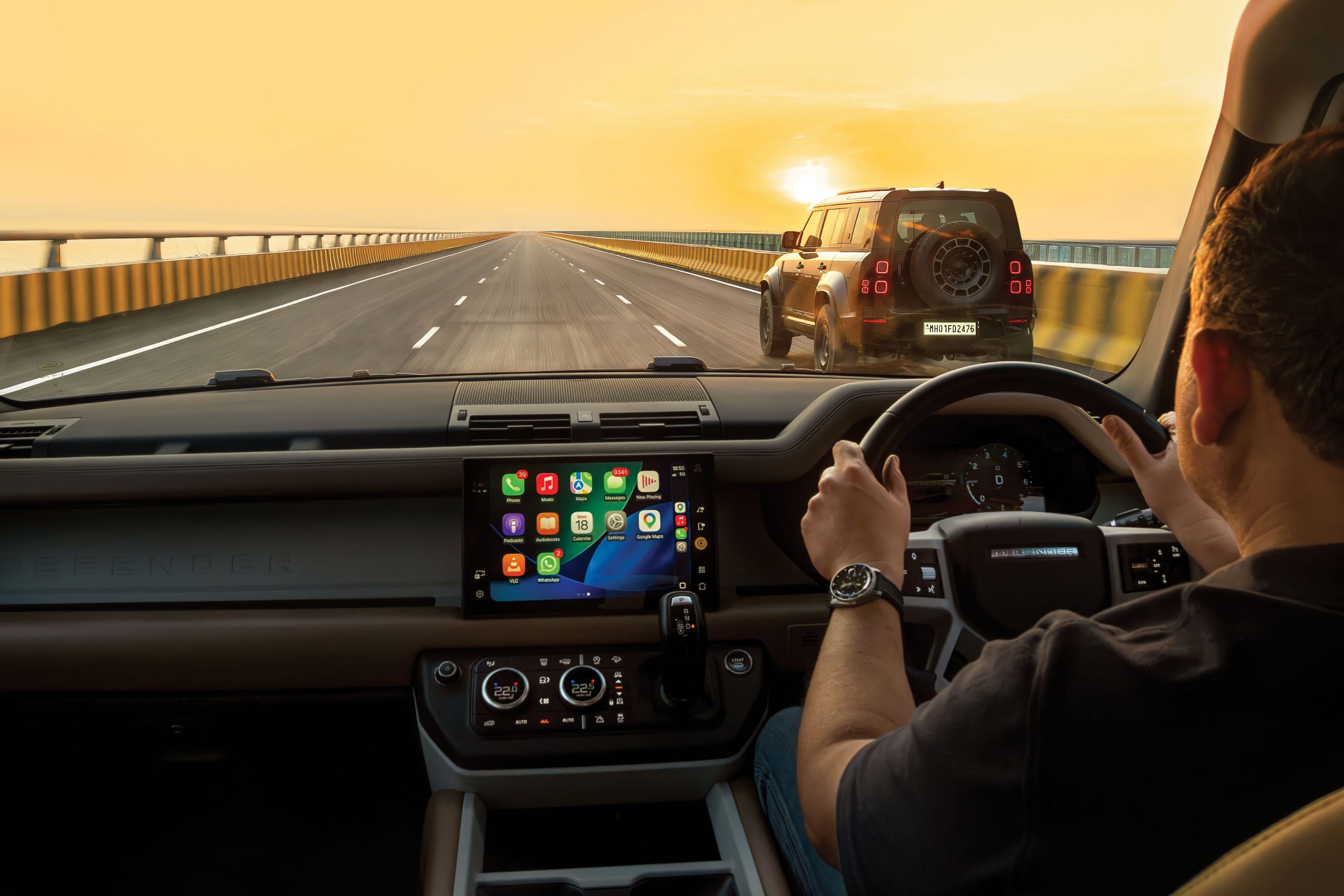
These performance off-roaders are so accomplished on road, they genuinely are multi-role SUVs.
It’s also a clever product strategy. The AJ V8-powered Defender starts at Rs 1.40 crore, offering V8 thrills at a much more affordable price. The more capable Defender Octa, on the other hand, starts at a much loftier Rs 2.62 crore. One has the traditional feel of a V8, smooth, refined and powerful; the other is a bona fide performance icon, with brutal power delivery and a massive ability to carry speed over just about any surface.
Two distinct flavours, two distinct price points, one model line.
The Defender’s dual‑V8 strategy is nothing short of remarkable. In a world where eight‑cylinders are disappearing, Land Rover offers buyers a choice between a supercharged and a turbocharged V8. Together, they make the Defender unique. And that makes this one of the most fascinating chapters in the Defender story. Take a bow, Land Rover.
Bits, bolts, and burbles
BMW’s S68 is an ‘M’ engine that displaces 4.4 litres. It uses an aluminium block and heads, and a cross-plane crankshaft. The bore and stroke dimensions (89mm × 88.3mm) are typically BMW – square. The engine revs to 7,200rpm, and the DOHC valvetrain gets an electrically actuated VANOS system for faster, more precise camshaft phasing. The hot vee twin-turbo layout is designed to reduce turbo lag, and the cross-bank exhaust manifold merges pulses to optimise turbine efficiency. This sacrifices some of the traditional V8 burble but sharpens response. To handle the extra loads, a high-capacity oil pump with an external oil cooler ensures consistent pressure under high lateral loads, while a multi-stage cooling circuit stabilises temperatures during track use. The S68 also integrates a 48V mild-hybrid system that provides a 9kW and 200Nm of torque fill.
Defender V8 fact file
110 P425*
Octa
Price
Rs 1.40 crore
Rs 2.62 crore
Kerb weight
2,434kg
2,585kg
Engine
5,000cc supercharged V8
4,395cc twin-turbo V8
Bore and stroke
92.5mm x 93.0mm
89mm x 88.3mm
Compression ratio
9.5
10.5
Power
425hp at 6600rpm
635hp at 7000rpm
Torque
550Nm from 1800-5000rpm
750Nm from 1800-5855rpm
Claimed 0-100kph time
5.8sec
4.0sec
Maximum speed
191kph
250kph
*The supercharged-V8 Defender variants are temporarily unavailable for purchase in India, but they’re expected to return soon.
The Jaguar AJ V8 is a family of aluminium V8s produced from 1996 onwards. Offered in naturally aspirated and supercharged forms, it was Jaguar’s flagship petrol engine, engineered to combine refinement with strong performance. Evolving through three generations, the aluminium block and heads kept weight down to around 205-215kg, and it used chain driven camshafts, later evolving to double roller chains for greater durability. Supercharged “R” variants like the one in the Defender pushed outputs to 450hp, giving cars like the XJR and XKR formidable pace at the time. By 2009, the Gen III AJ V8 expanded to 5.0 litres (94 × 92mm bore and stroke), introduced direct fuel injection, and raised compression to 11.5:1. Power on the supercharged versions could exceed 500hp, and this 450hp version, with a bit of digital massaging, could also be made to increase in power.
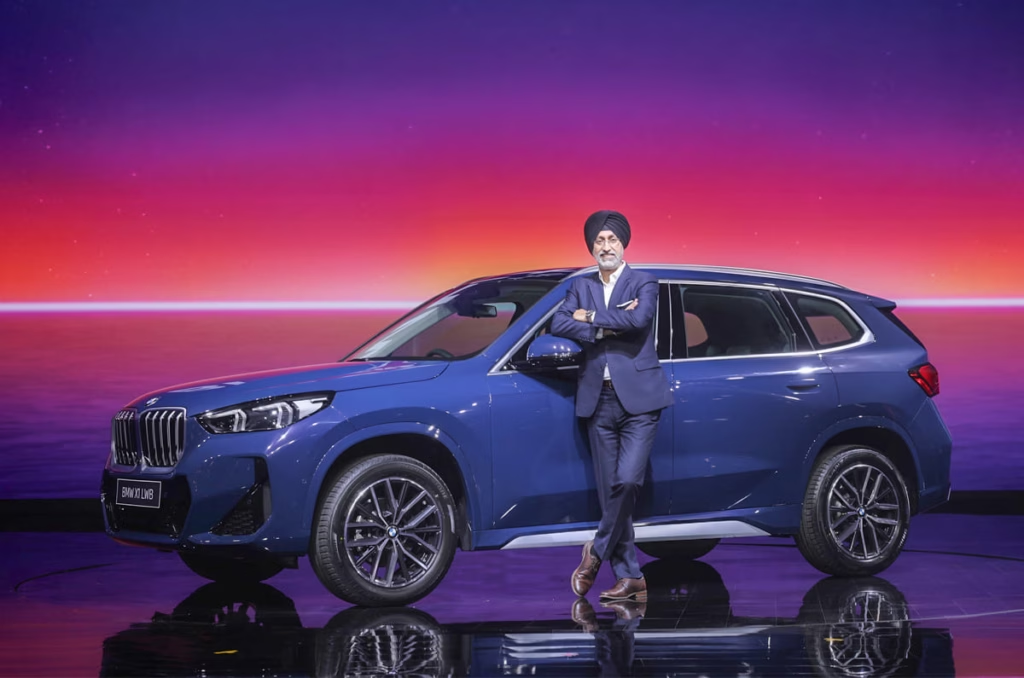
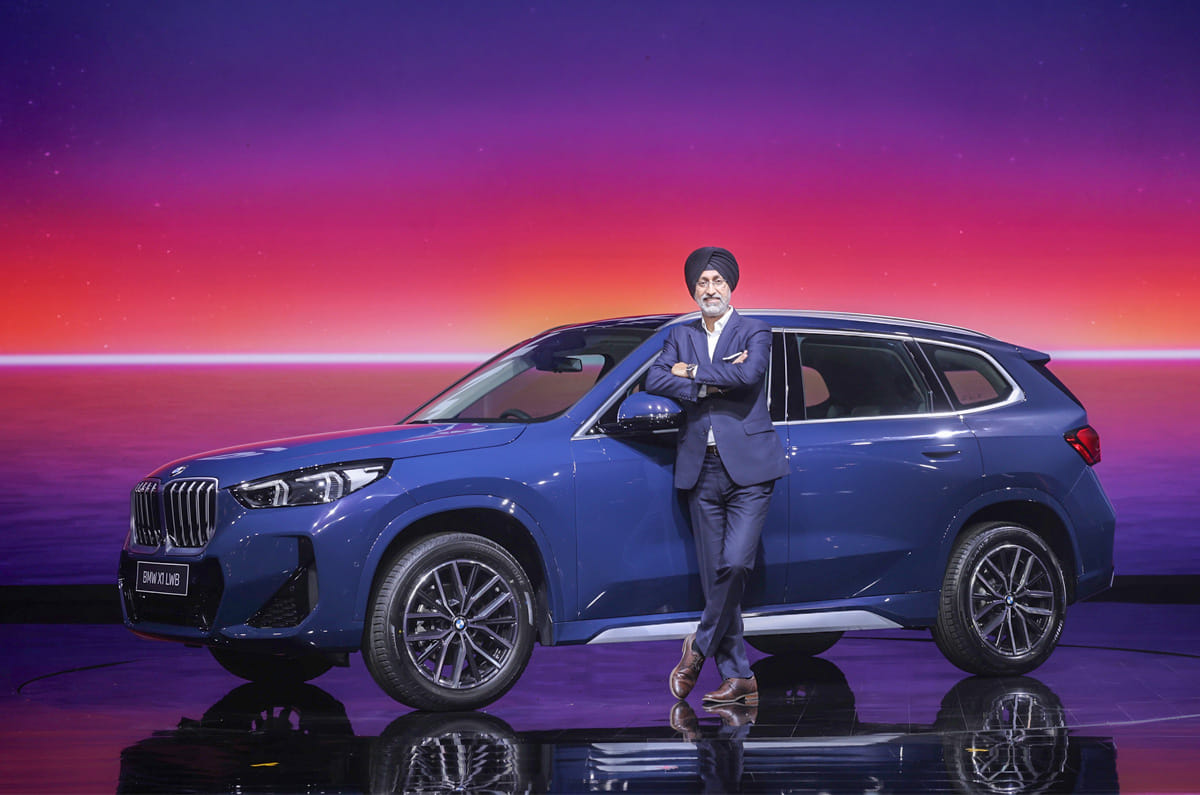
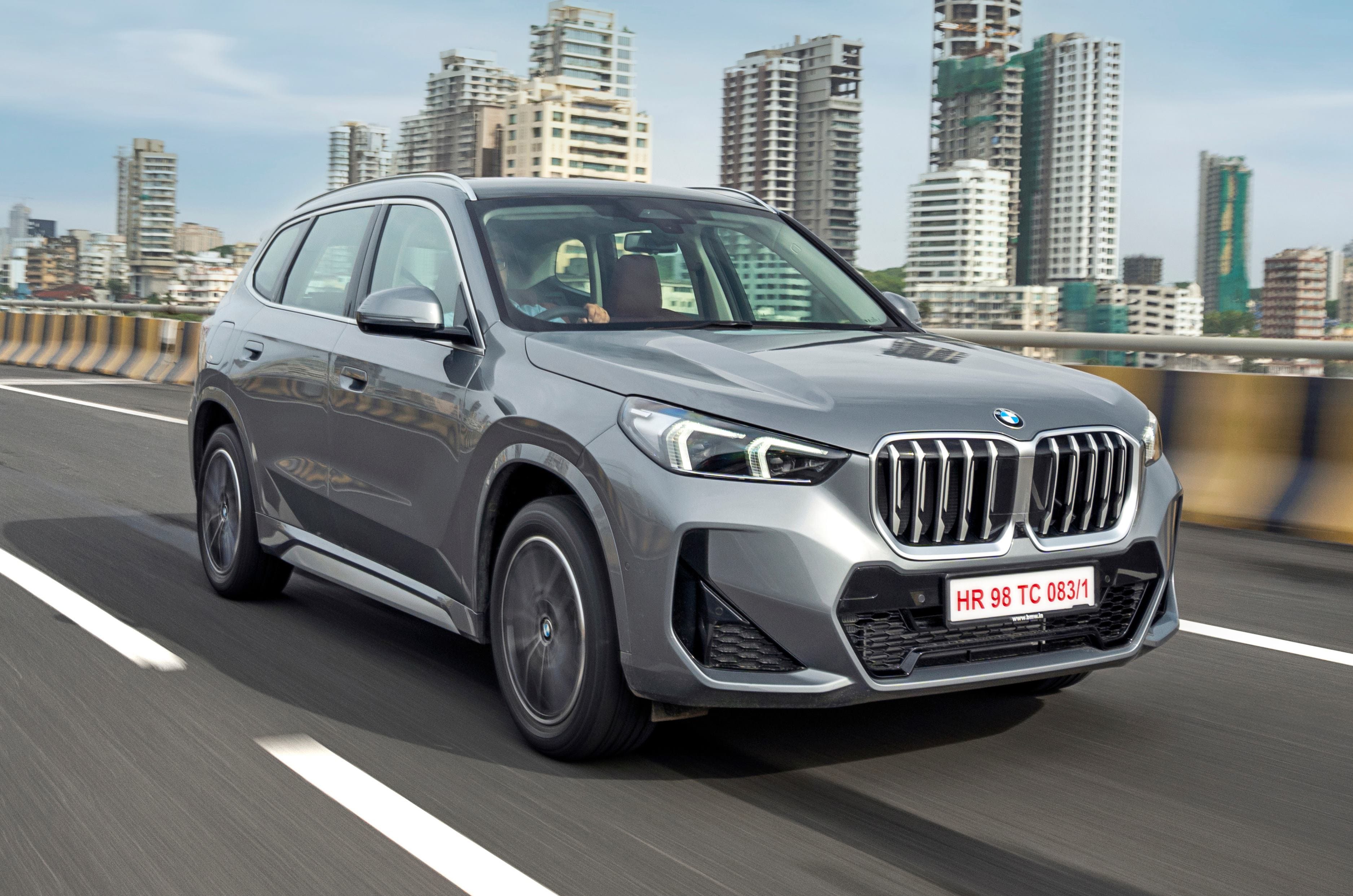
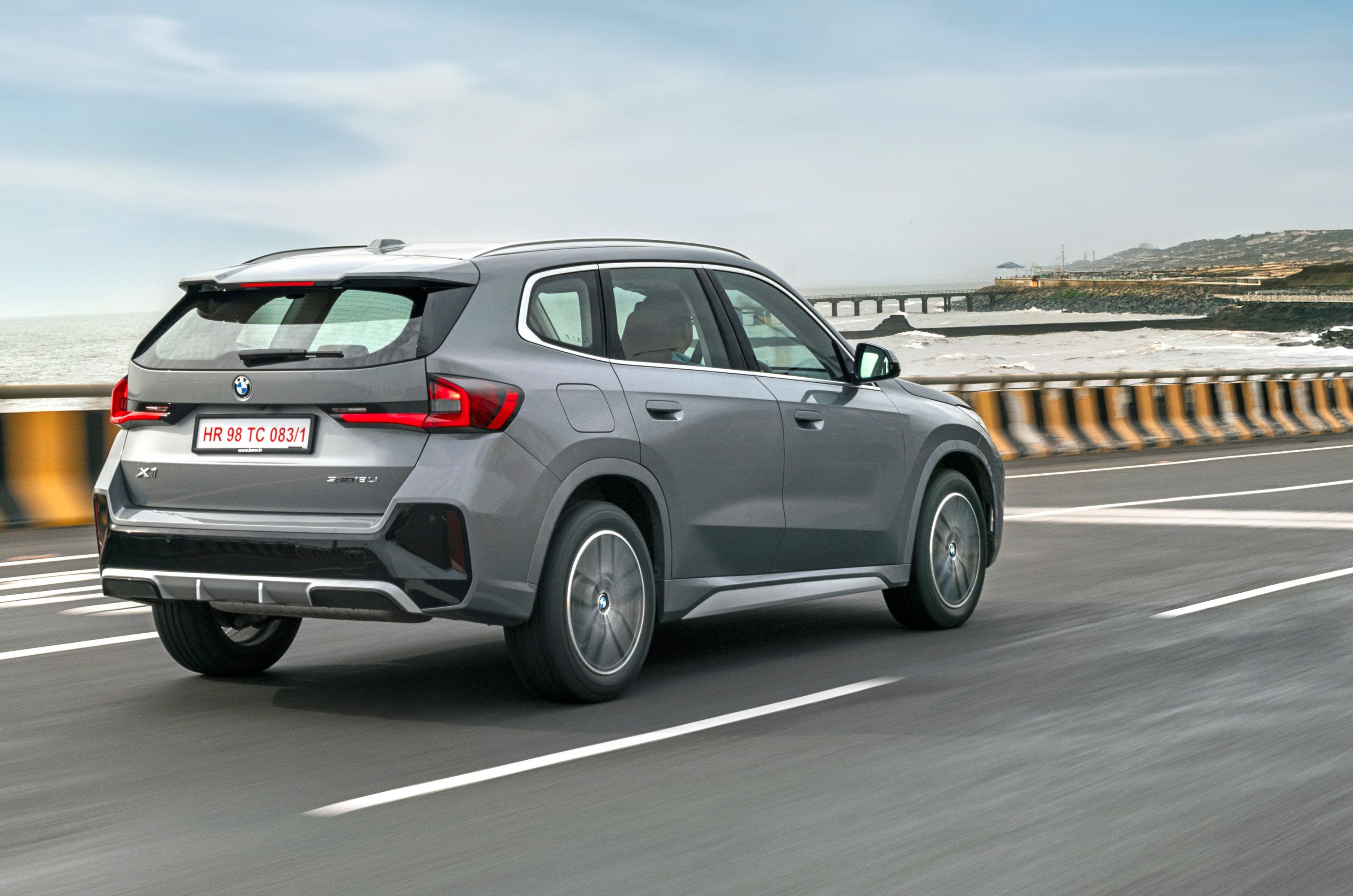
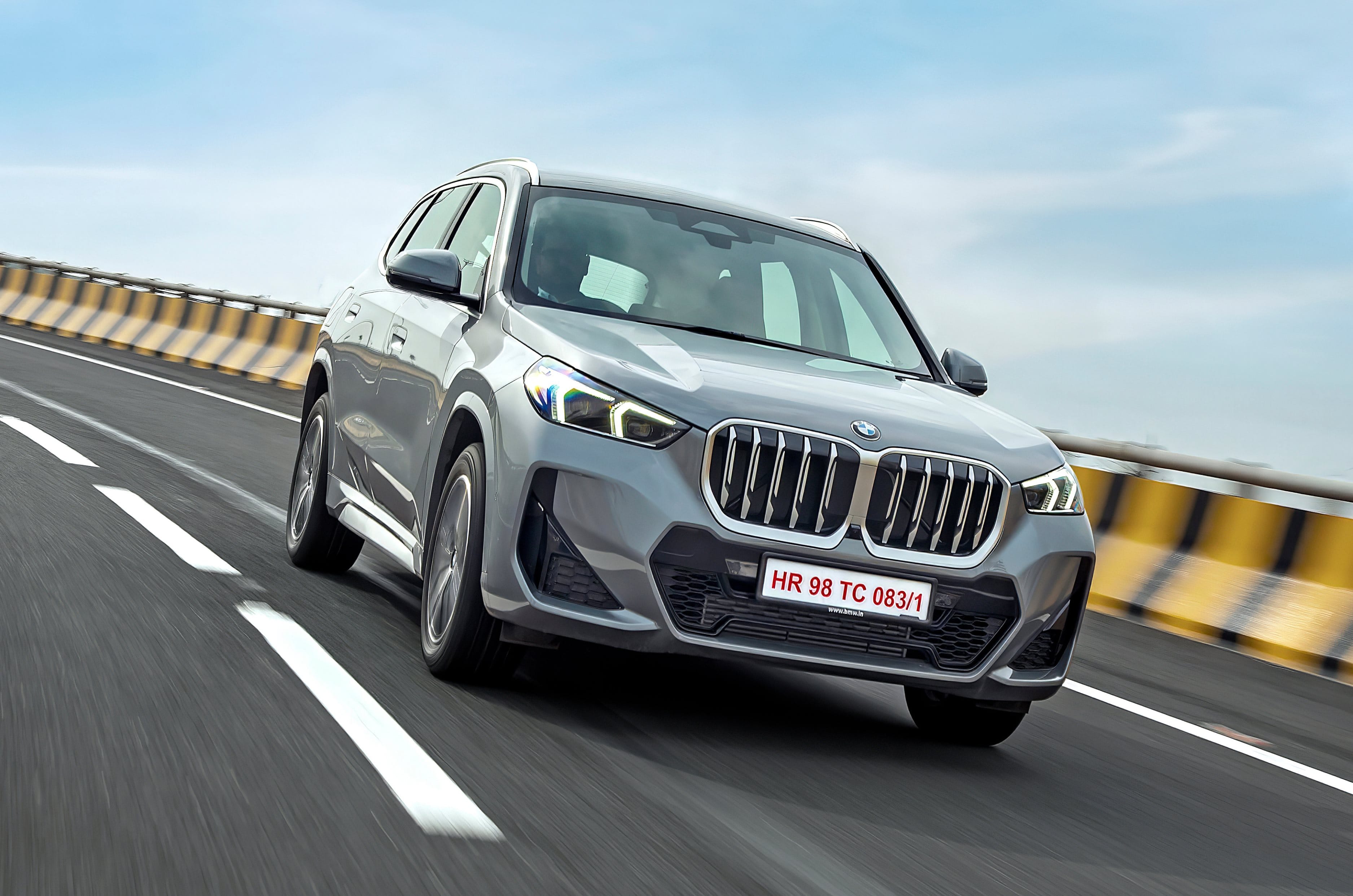
BMW has launched the long wheelbase X1 in India at a price of Rs 49.90 lakh (ex-showroom). This adds to the regular, short wheelbase X1 lineup that continues to be on sale with both petrol and diesel engines. The X1 LWB, however, is solely available with a petrol engine and comes with the M Sport styling package as standard. For reference, the standard wheelbase X1 petrol is priced at Rs 50.90 lakh, which means the X1 LWB is Rs 1 lakh more affordable than the latter.
X1 LWB solely available with a 156hp, 1.5-litre petrol engine
Gets a 108mm longer wheelbase than the regular X1
Comes with improved rear seating and revised suspension tuning
Here’s a look at the prices of the BMW X1 range in India:
Model
Price (ex-showroom)
X1 LWB sDrive 18Li
Rs 49.90 lakh
X1 sDrive 18i
Rs 50.90 lakh
iX1 eDrive LWB 20L
Rs 52.70 lakh
The new LWB model is now the most affordable variant in X1 lineup.
BMW X1 LWB exterior and interior details
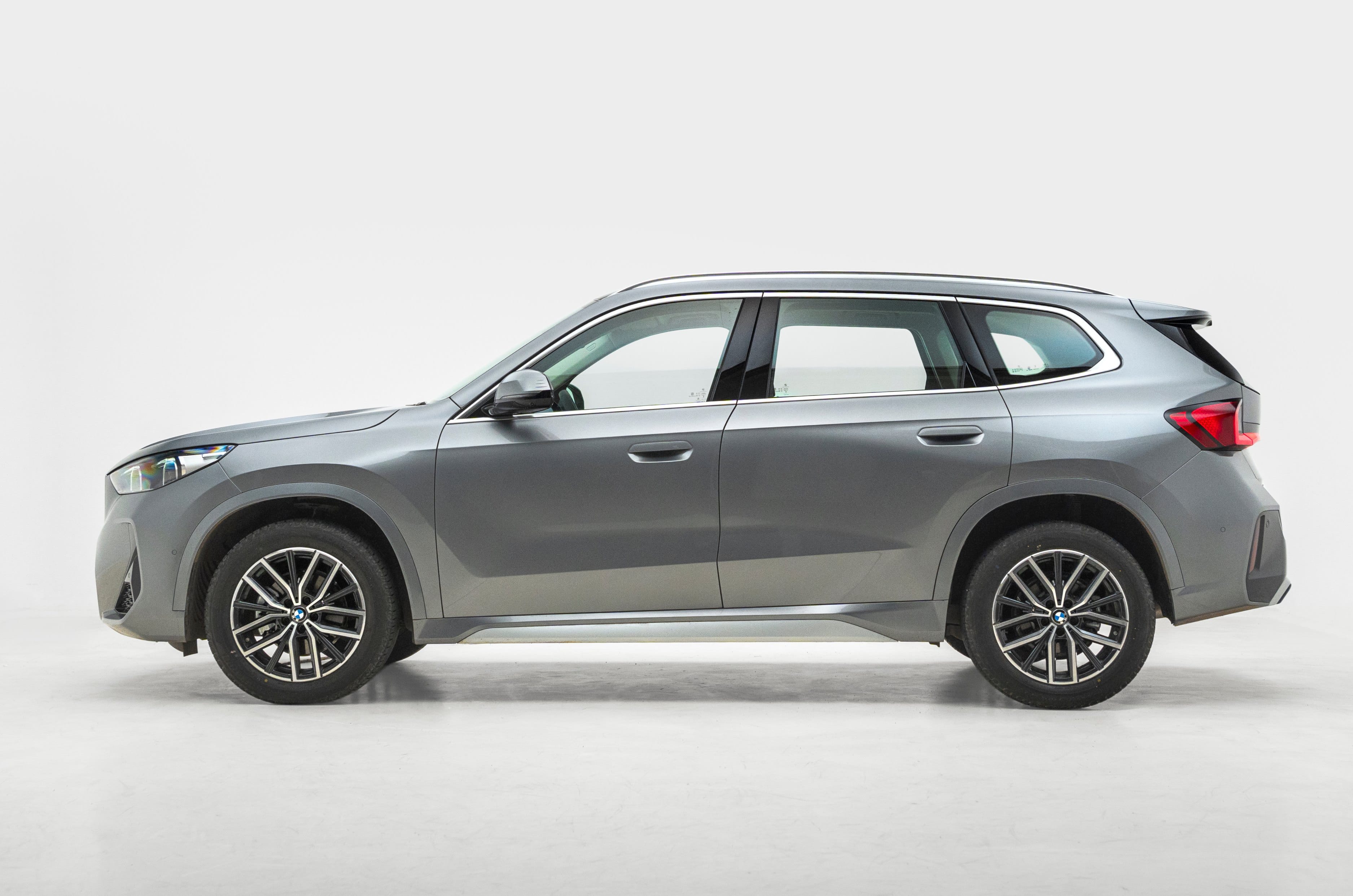
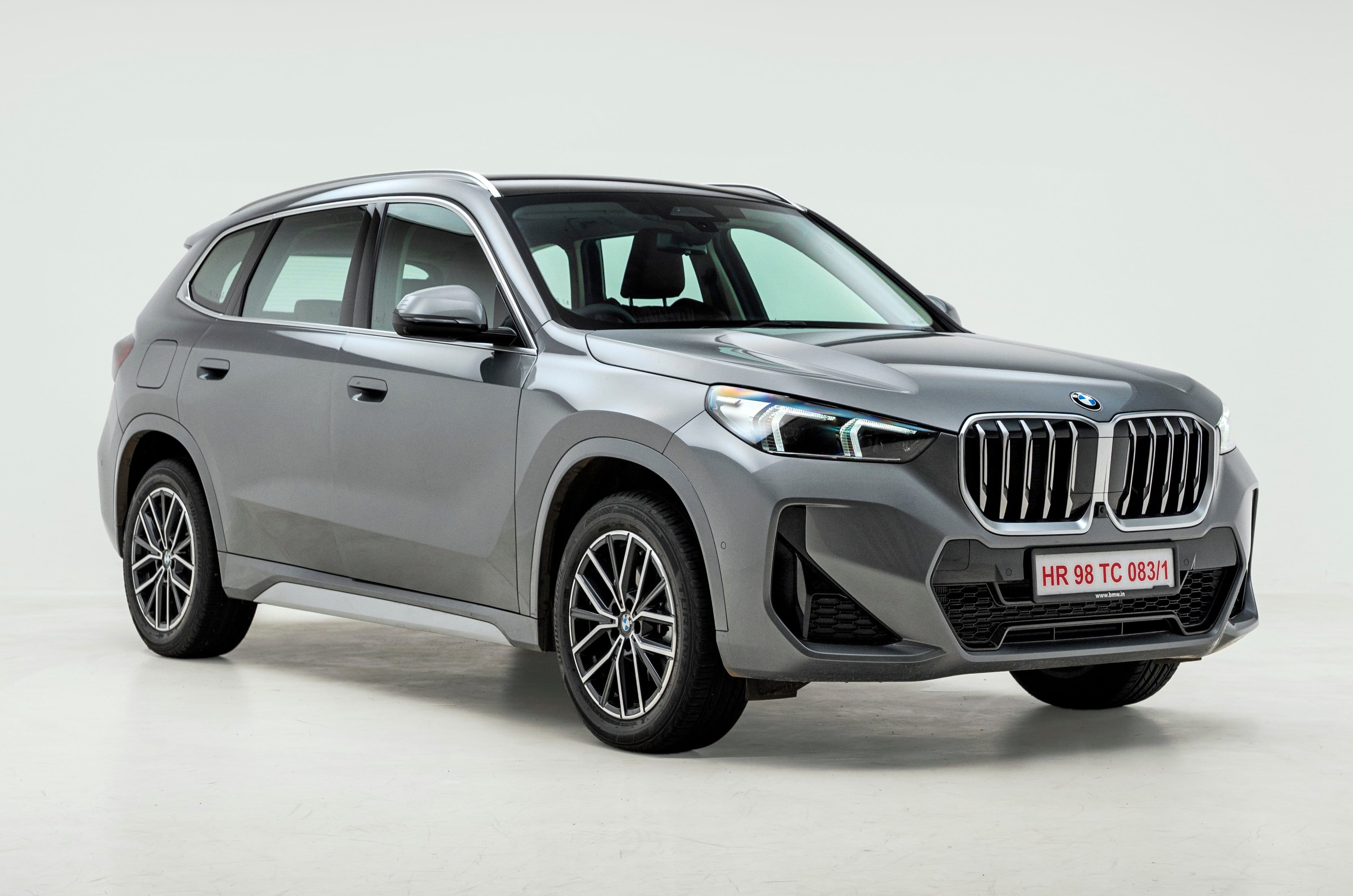
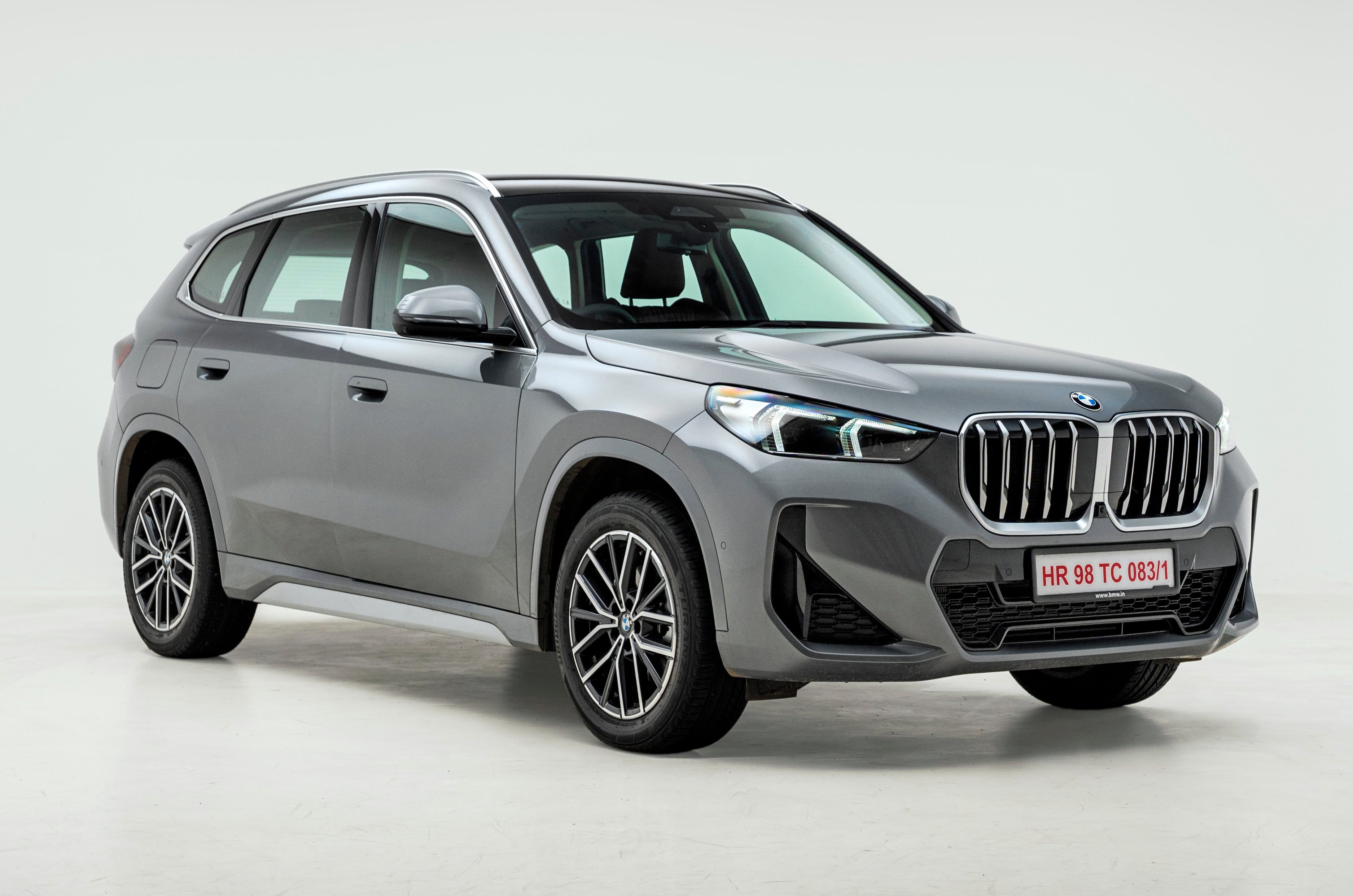
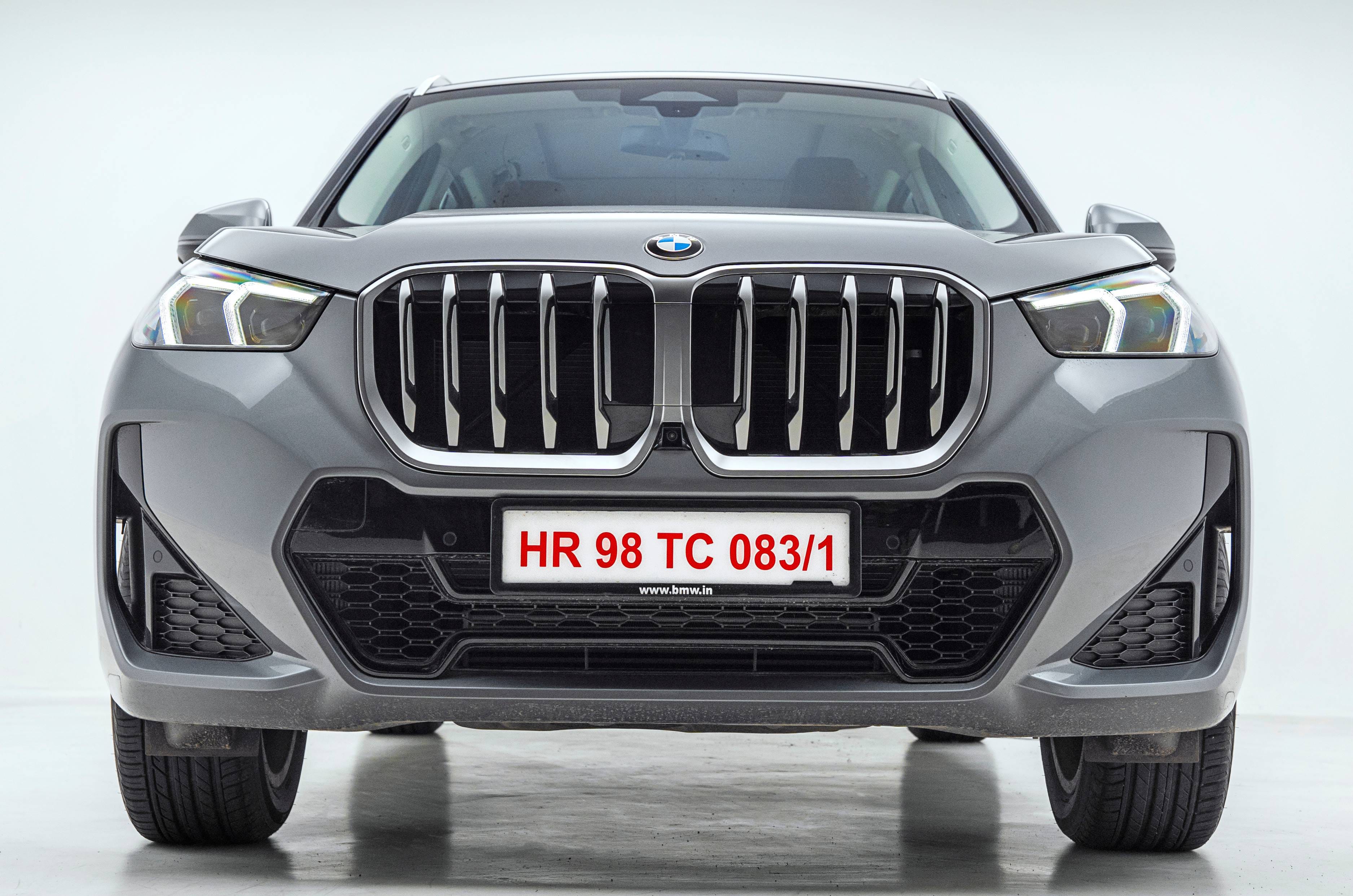
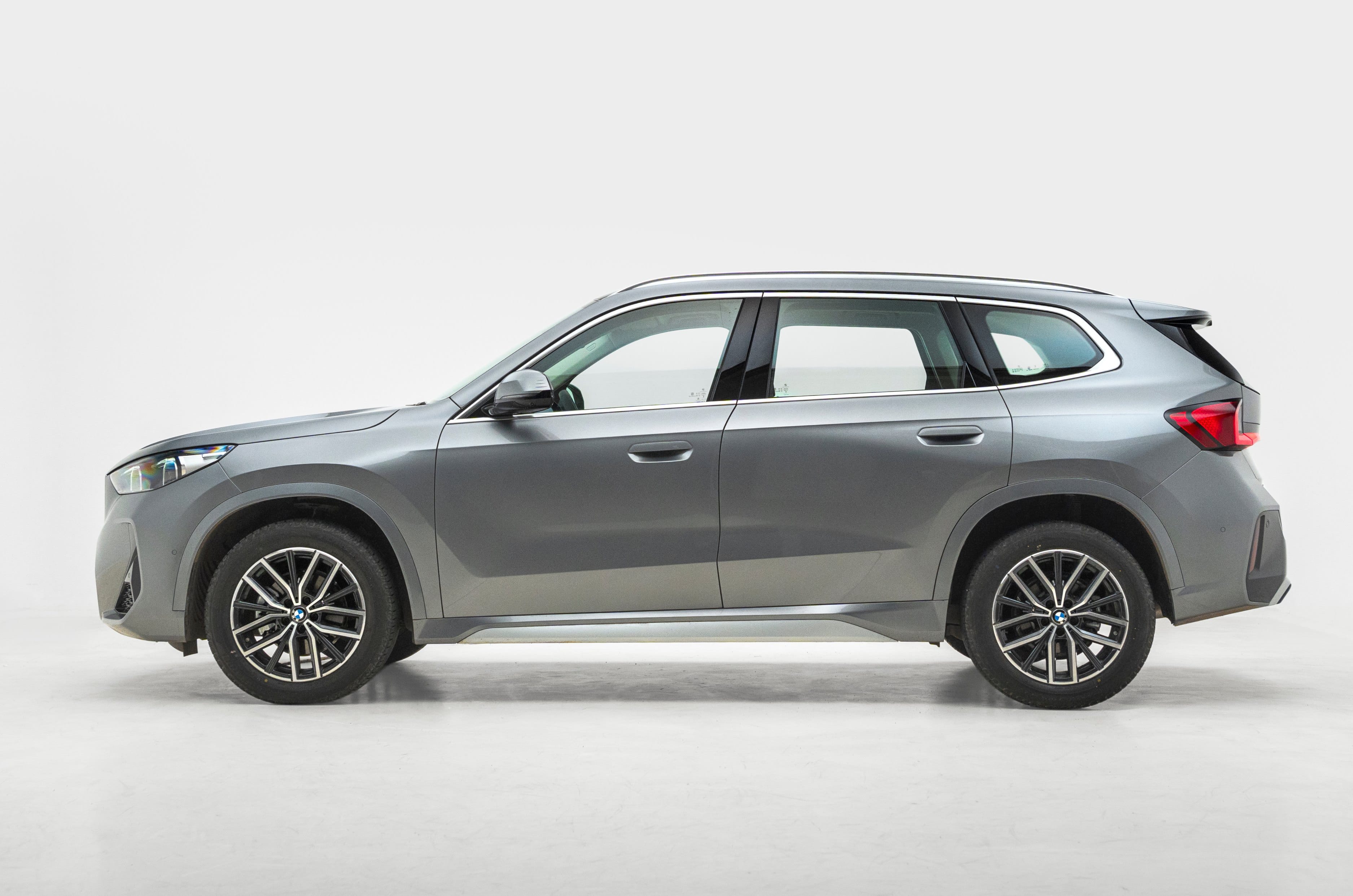
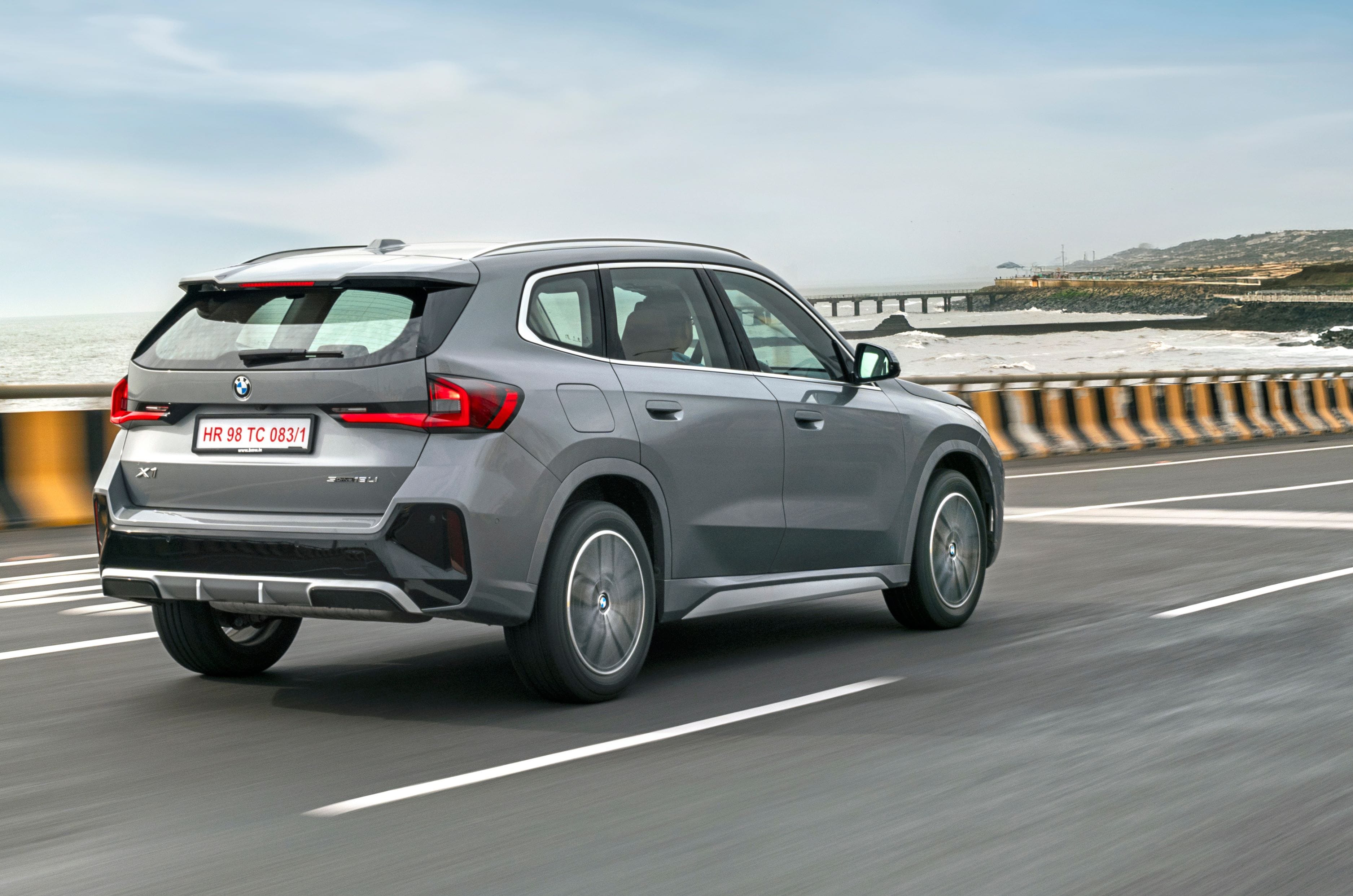
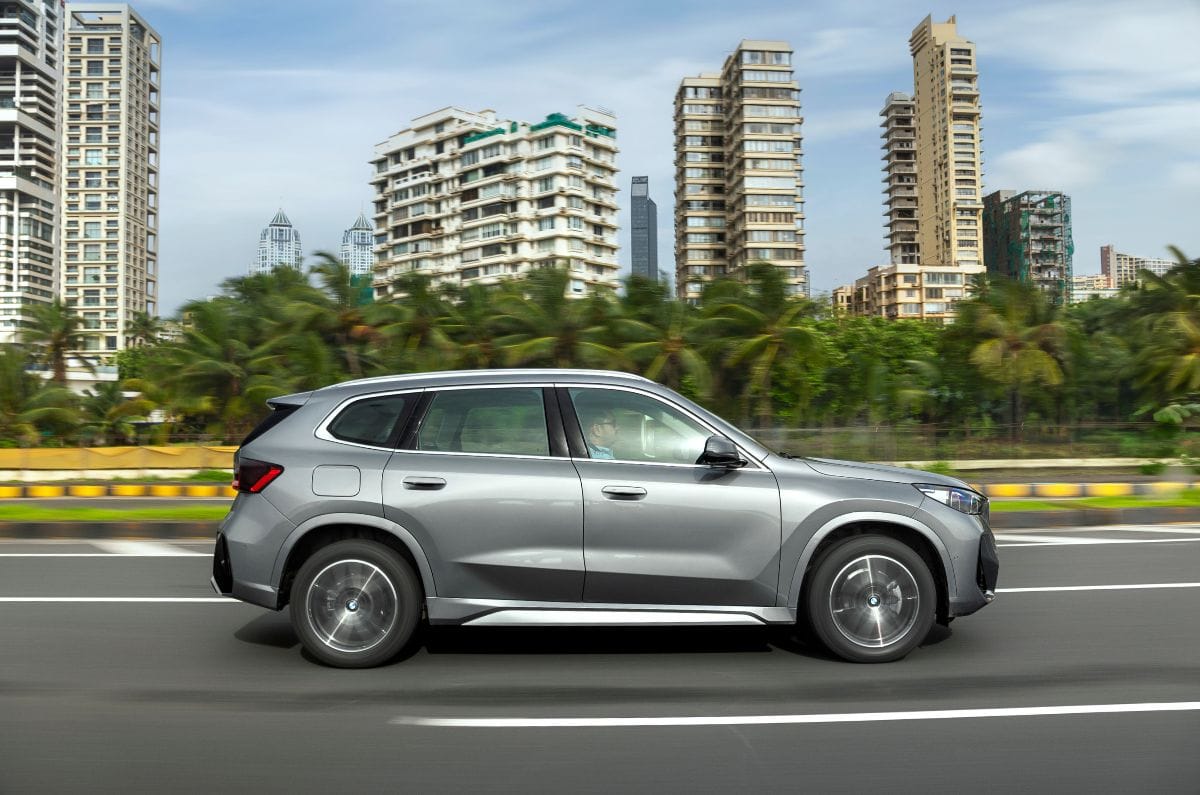
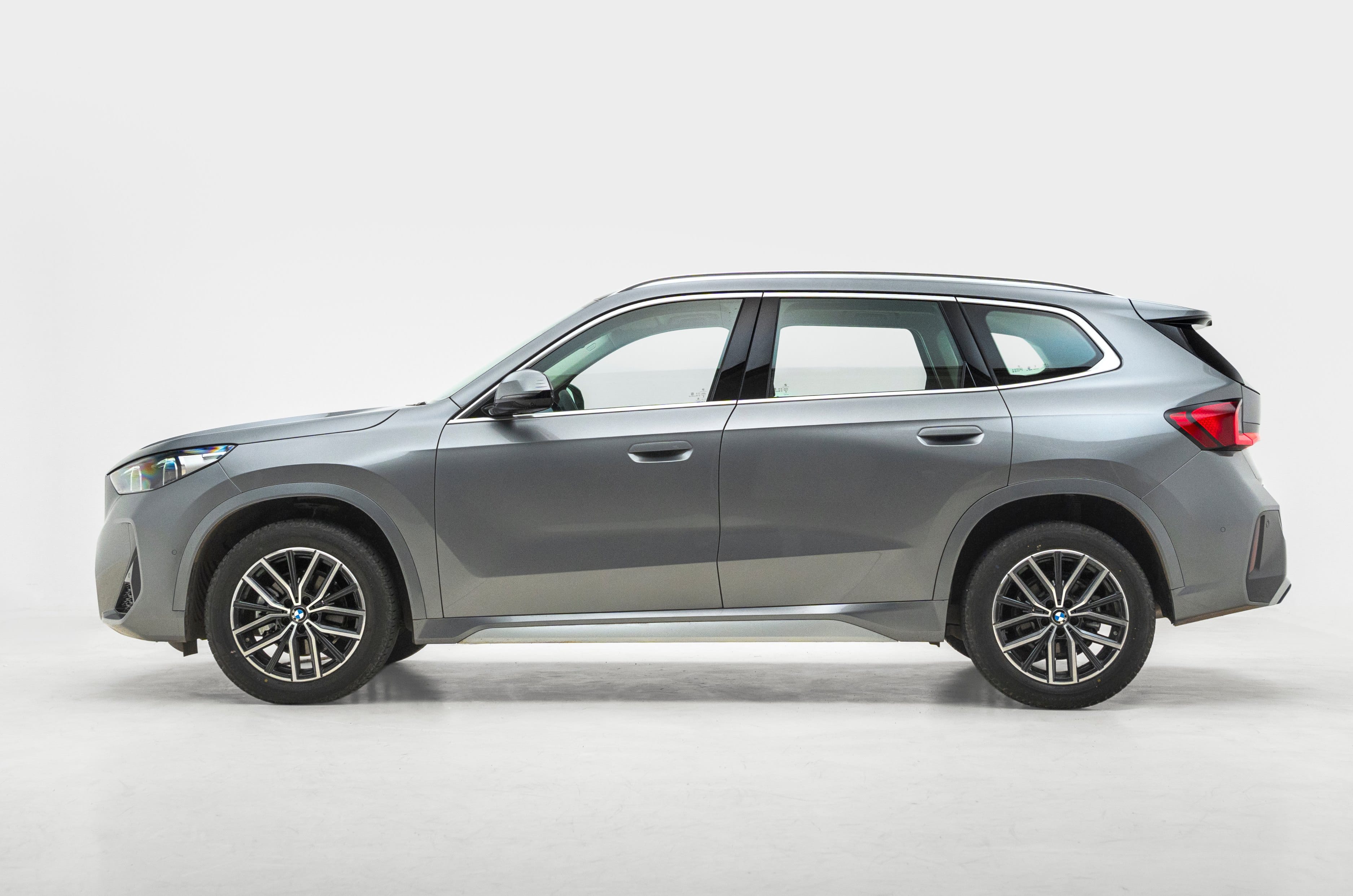
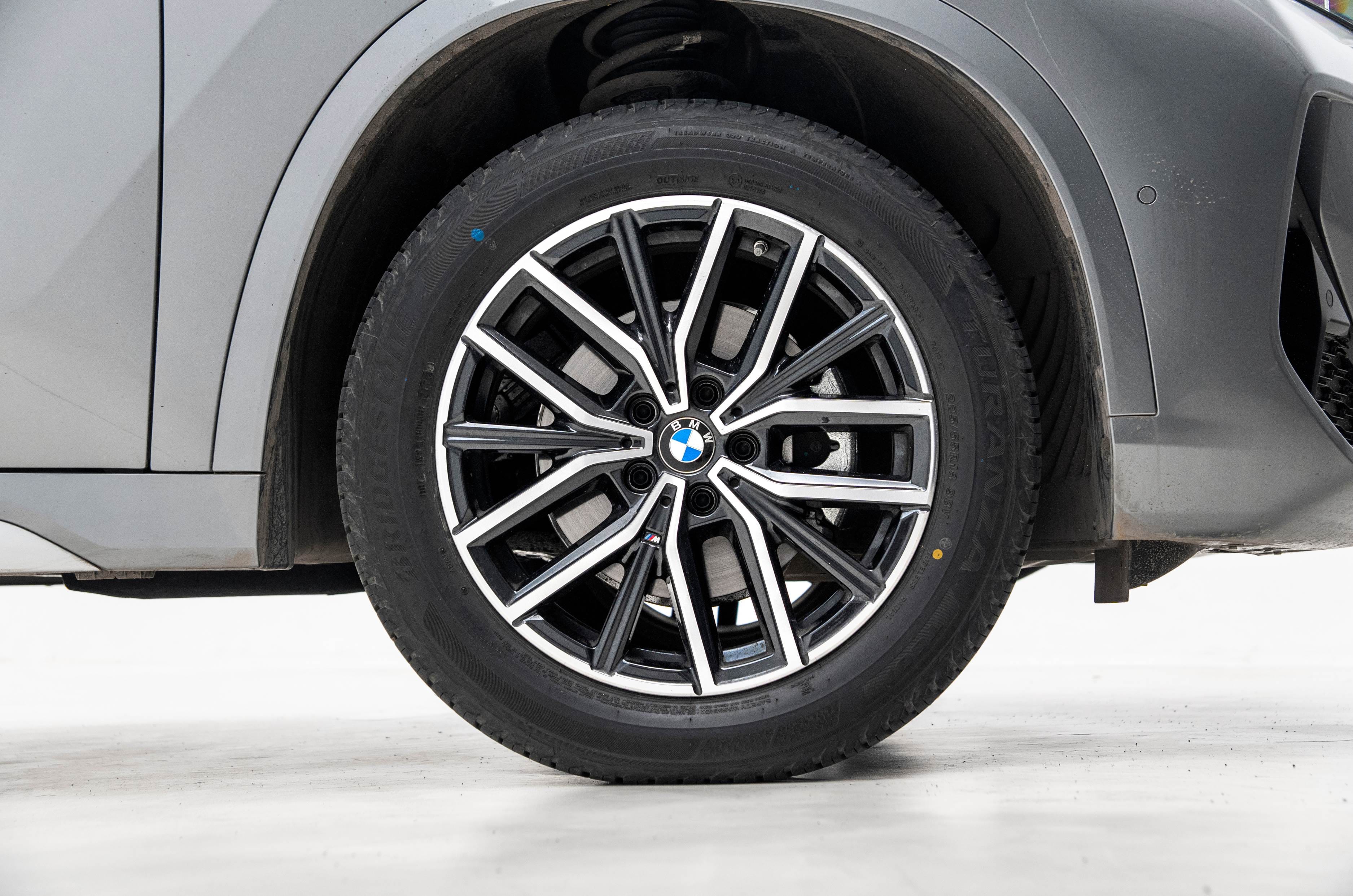
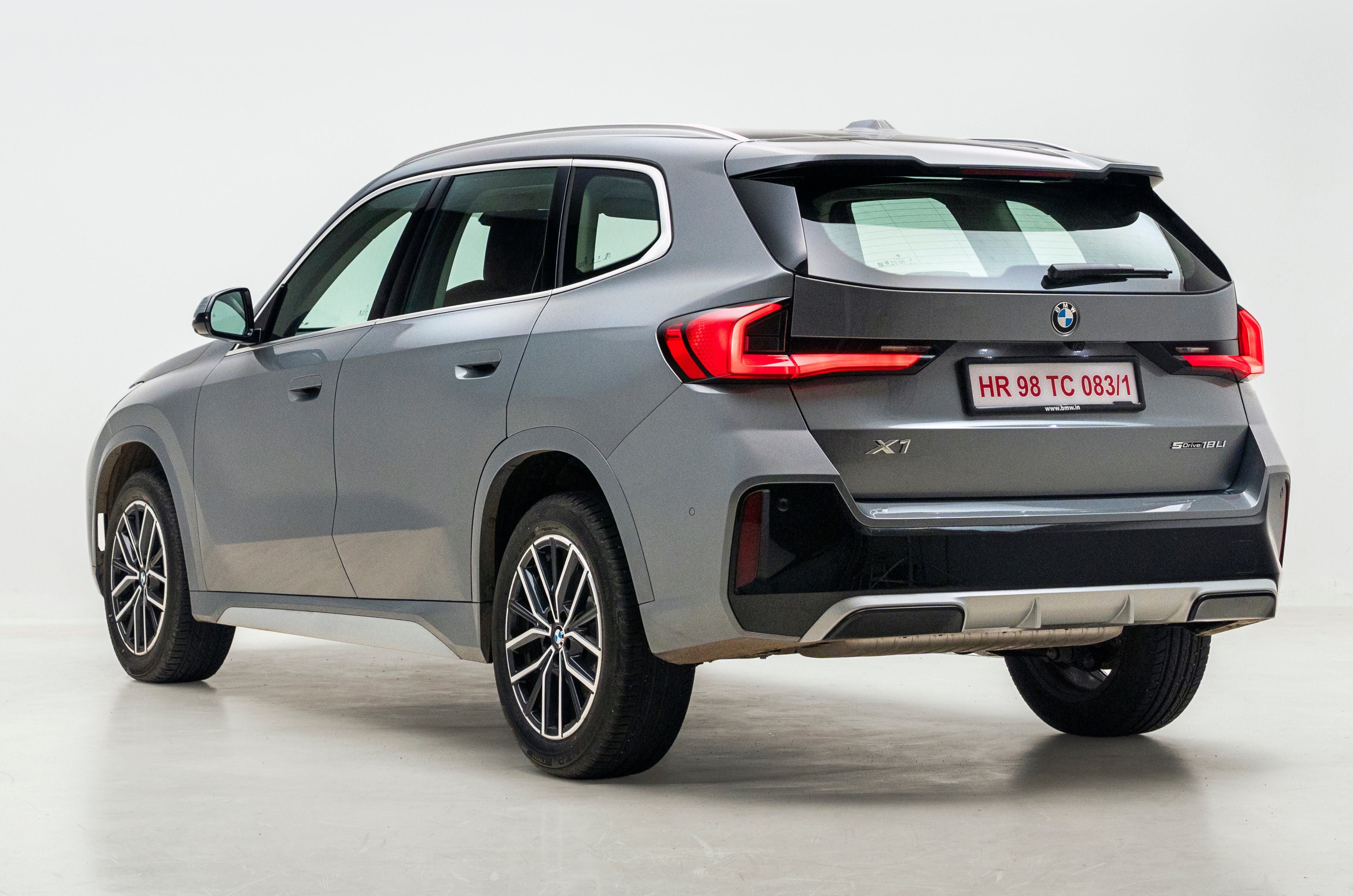
The biggest update on the X1 LWB compared to the standard X1 is that it is dimensionally larger than the latter. It is 116mm longer overall, with 108mm of that added length at the wheelbase alone. Elsewhere, it gets the same peeled-back headlamps, the same M Sport styling pack with sporty-looking bumpers and the same edgy tail-lights. Even the 18-inch alloys have been carried over from the short wheelbase model. The only little distinguishing element is a chrome surround for the large windows, which on the the standard X1 gets a blacked-out finish. A shadow package, however, is available as an optional extra. The X1 LWB is available in four colors – Night Dusk Blue, Skyscraper Grey, Carbon Black and Mineral White.
The wheelbase is longer by 108mm compared to the regular X1.
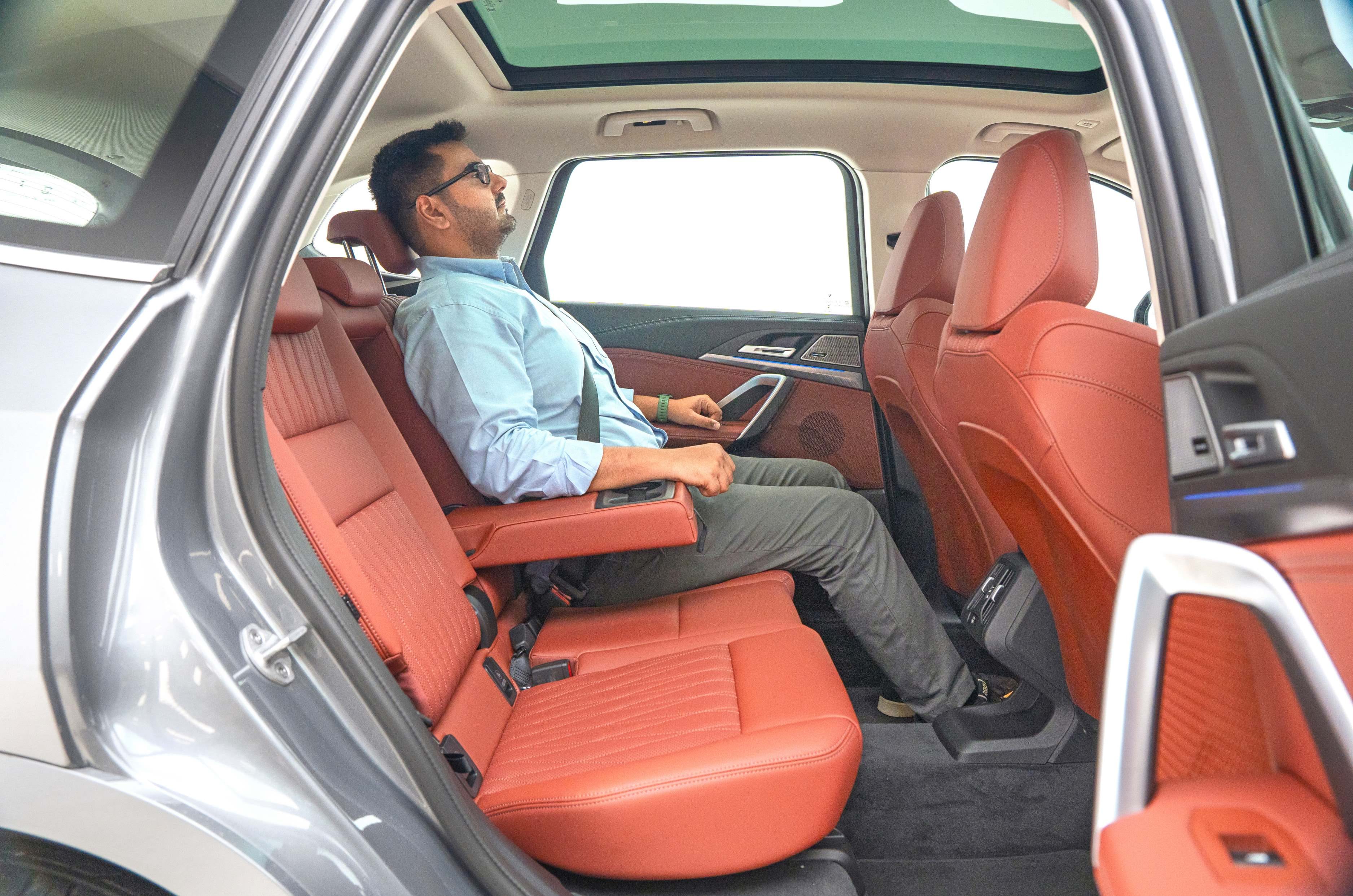
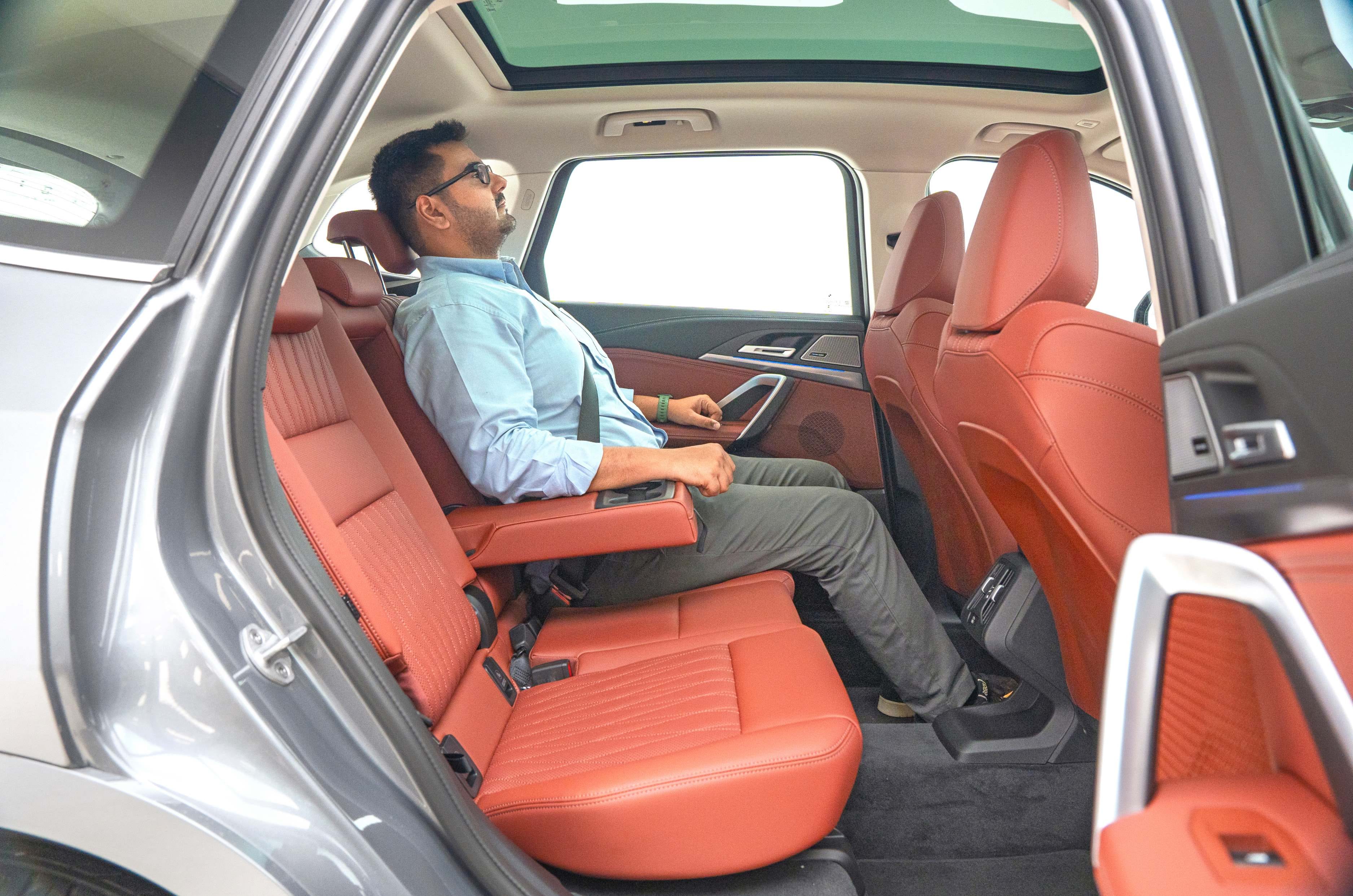
On the inside, apart from the obvious additional legroom for the rear seat passengers, the X1 LWB also gets a redone rear seat. There’s enhanced cushioning, while a 15mm longer seat base adds a bit more by way of thigh support. You also have the option to recline the backrest by a couple of degrees.
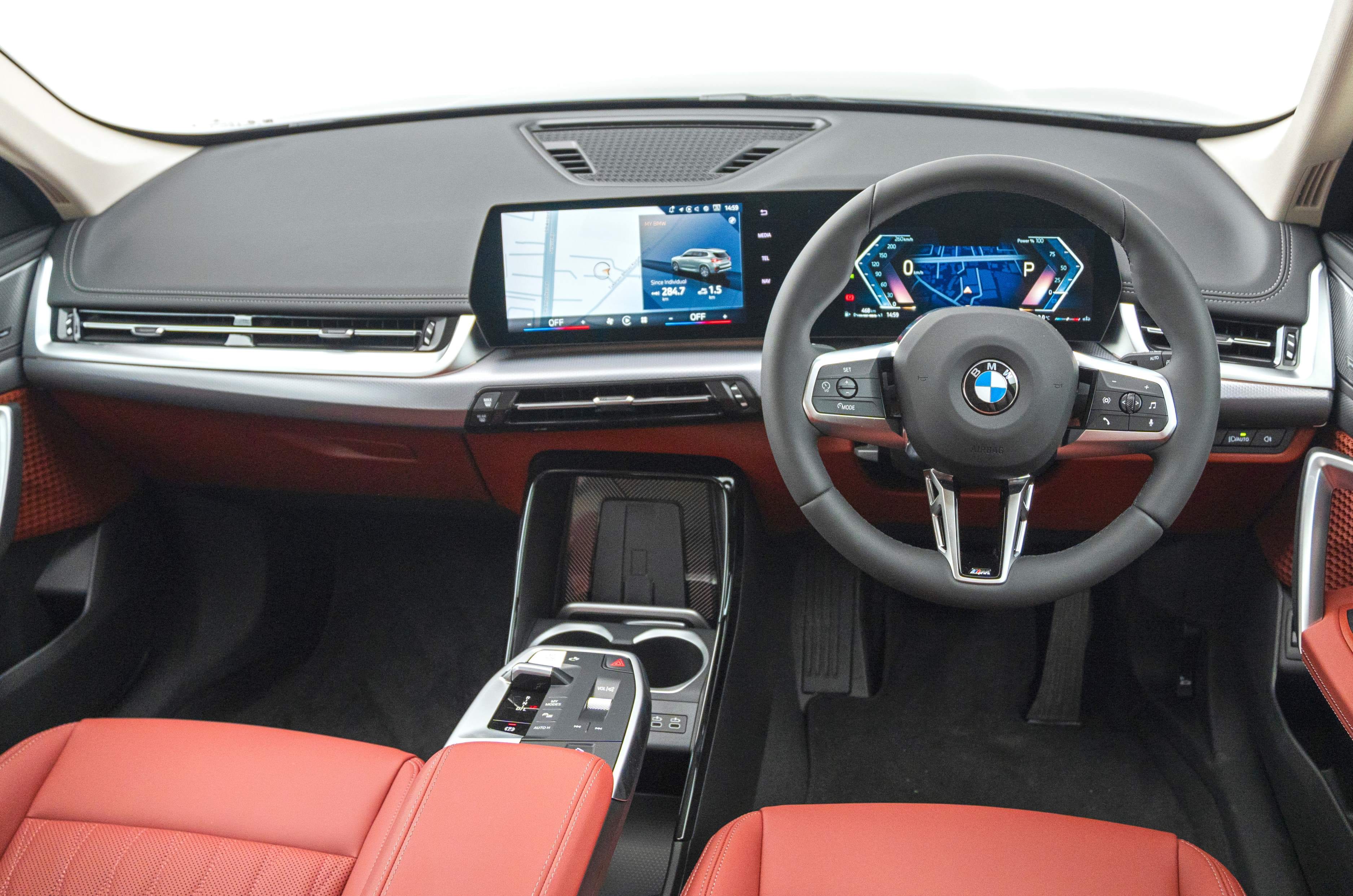
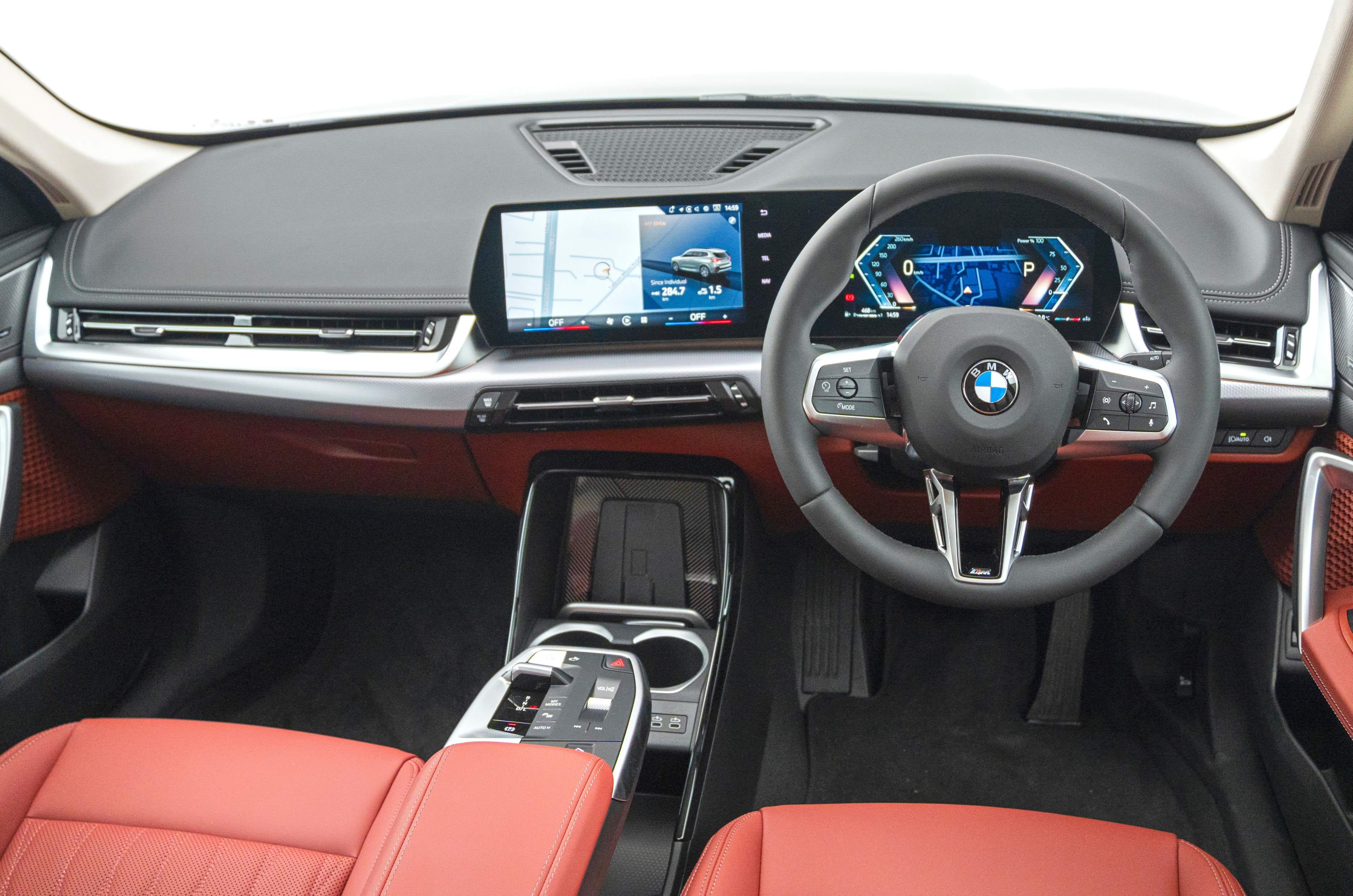
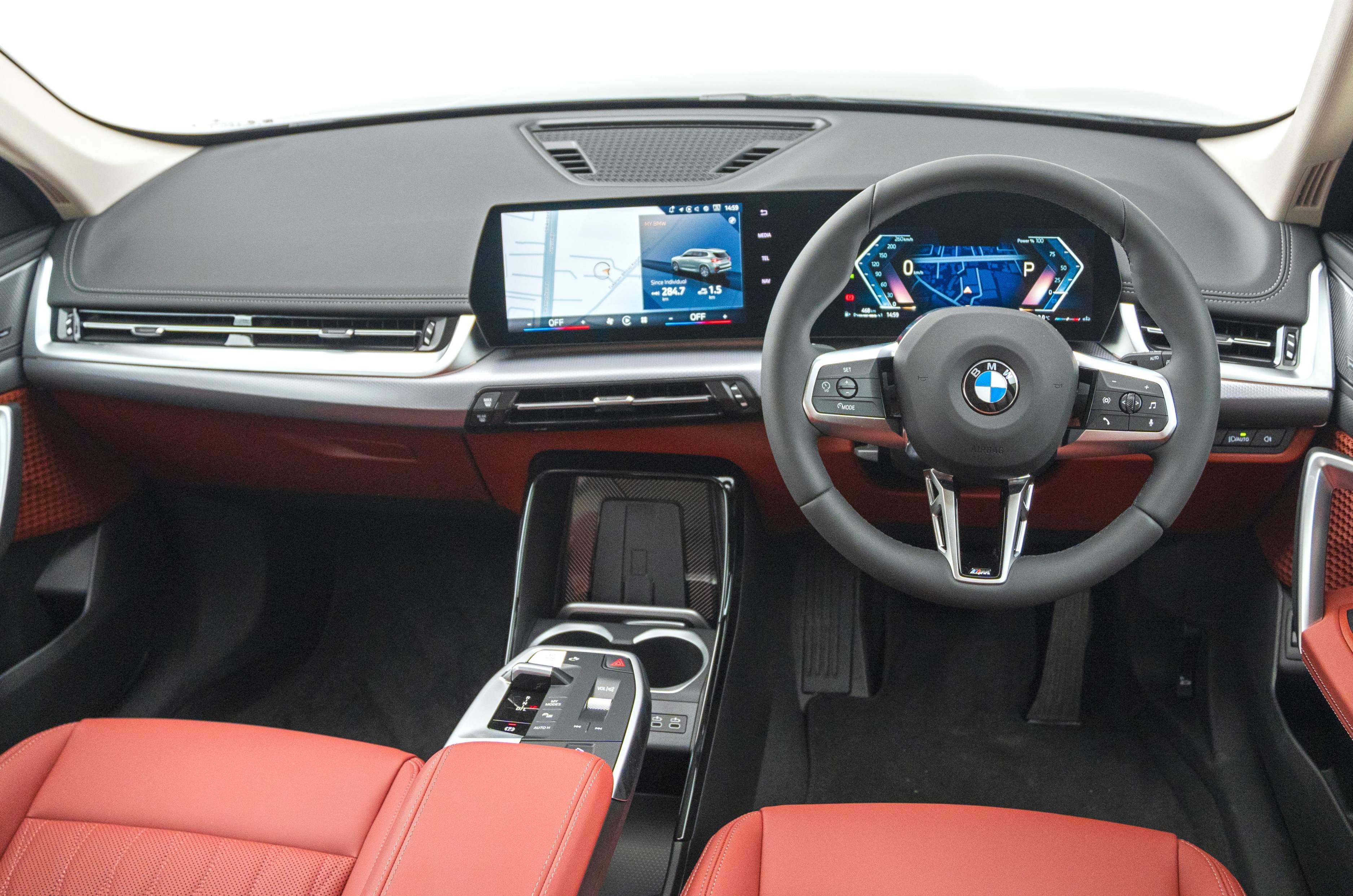
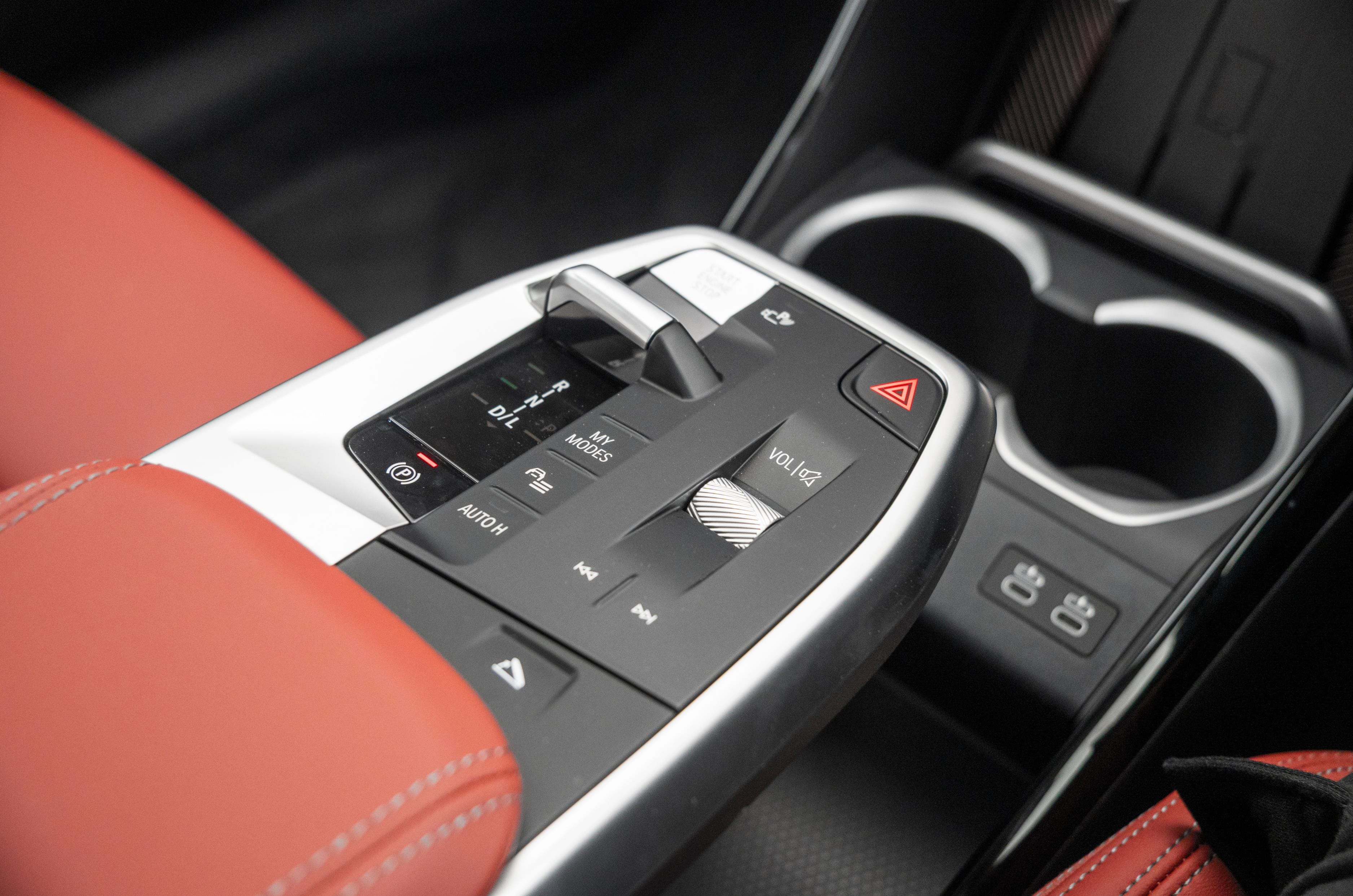
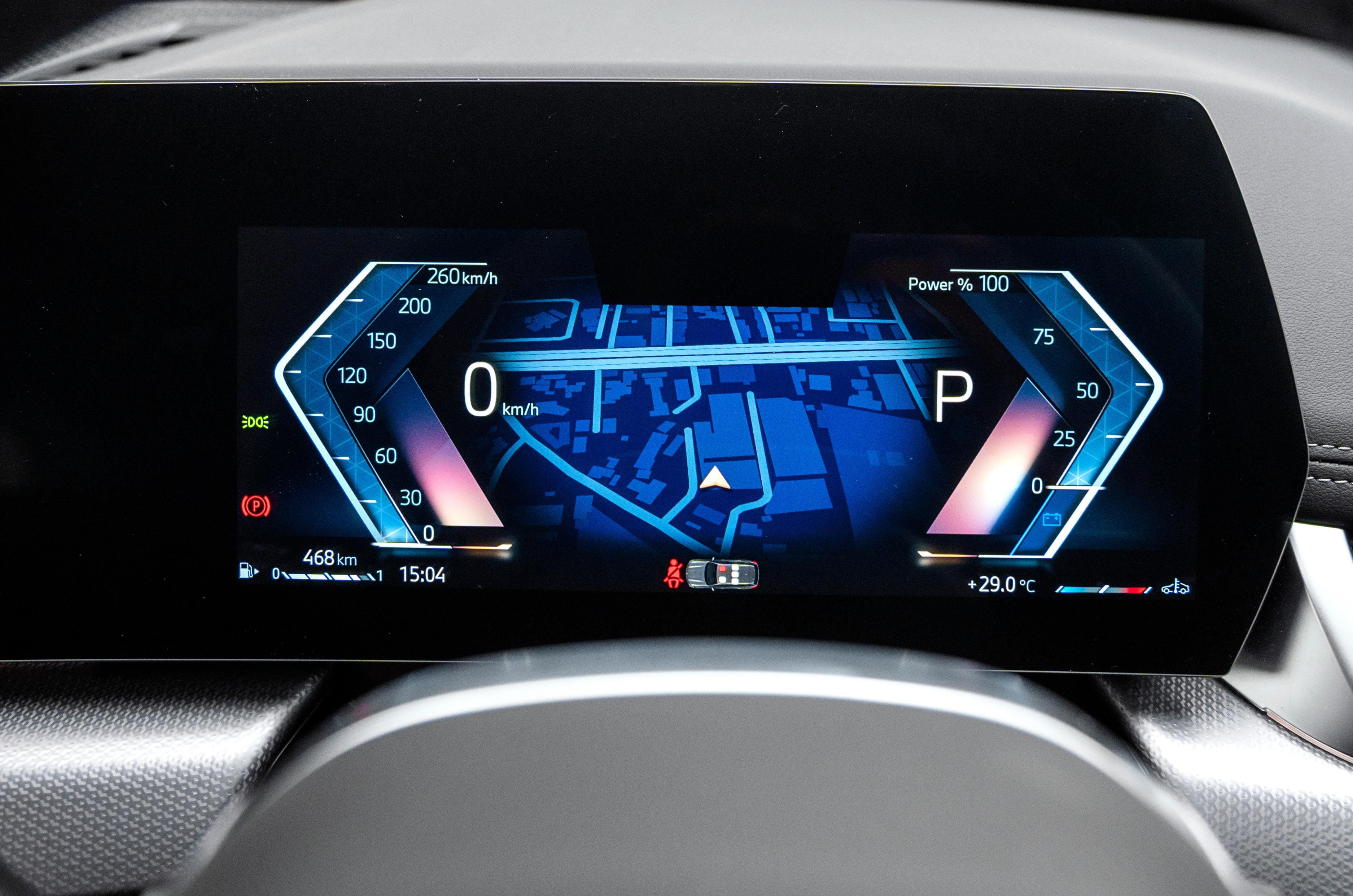
Up front, the X1 LWB is no different from the standard-wheelbase X1. The dashboard gets a 10.25-inch digital instrument cluster and a 10.7-inch touchscreen, asymmetric AC vents and also an upright wireless phone charging pad at the base of the dash. There’s also a floating centre console, which houses a few key buttons, such as for the gear selector, volume control and driving modes.
Dashboard remains unchanged from the regular X1.
You also get features like a adaptive LED headlamps, panoramic sunroof, 360-degree camera, powered front seat and a 12-speaker Harman Kardon sound system. It, however, misses out on ventilation and massage functions for the front seats, as well as dedicated climate zone for the rear passengers. The safety kit includes 8 airbags, ABS, ESC and Isofix child-seat mounts, among other features. The X1 LWB also packs a few ADAS functions such as auto emergency braking and lane departure warning and assist. Adaptive cruise control, however, is missing.
BMW X1 LWBpowertrain and specs
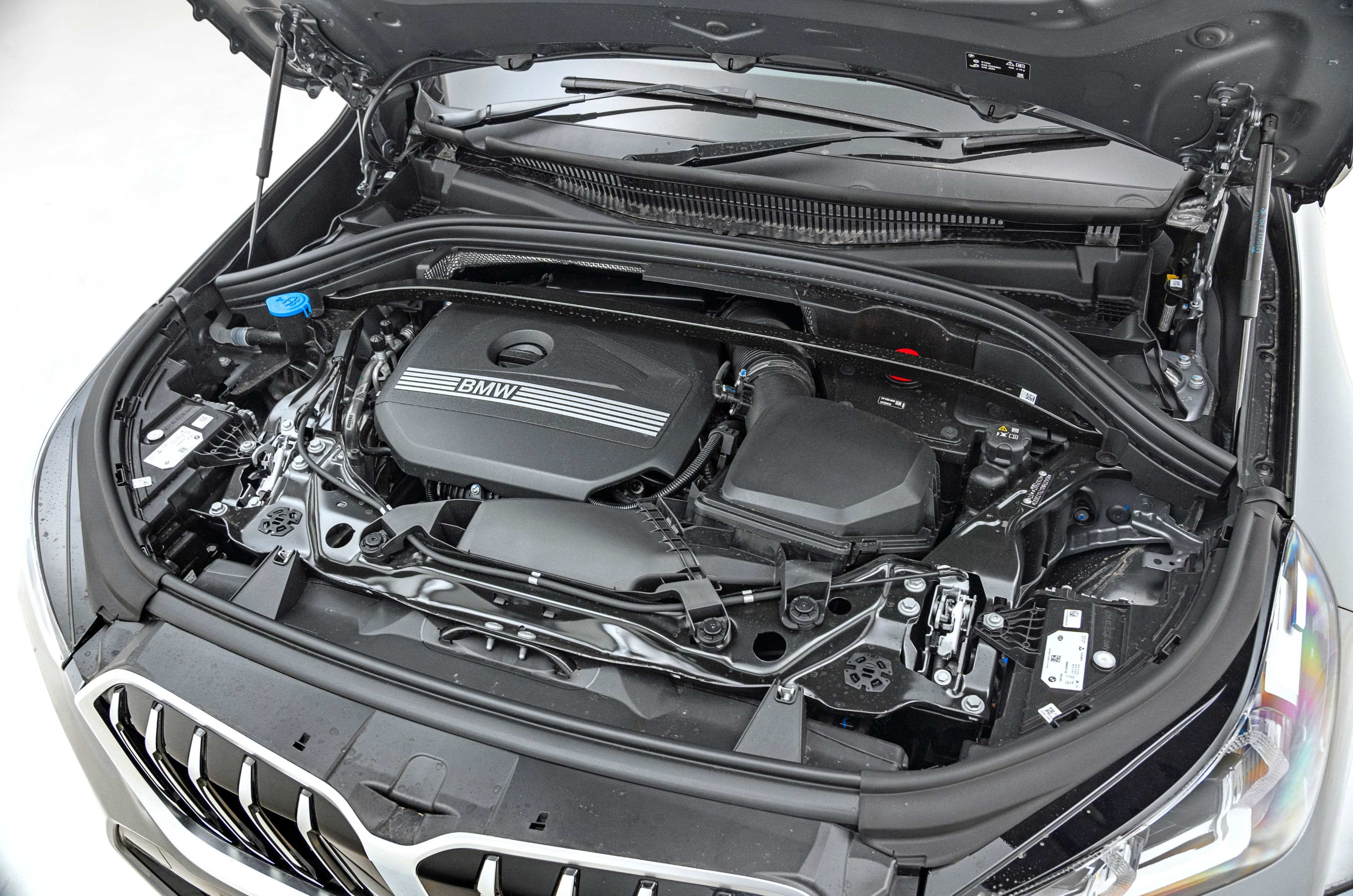
Under the hood, the X1 LWB just gets a sole engine option – a 1.5-litre 3-cylinder direct-injection turbo-petrol engine developing 156hp (up by 20hp over the X1) and 230Nm. This is routed to the front wheels via a 7-speed dual-clutch automatic, and in our testing, the X1 LWB achieved a 0-100kph time of 9.58 seconds. Unlike the standard X1, the LWB will not be offered with a diesel engine. BMW has also tweaked the X1 LWB’s suspension to deliver better ride comfort.
The X1, uniquely, is the only long-wheelbase model in its segment where it sees competition from the likes of the Mercedes-Benz GLA, Audi Q3 and Mini Countryman C. For reference, the standard wheelbase X1 is priced at Rs 50.90 lakh (ex-showroom).
BMW India is set to expand its entry-level SUV range with the X1 Long Wheelbase (LWB) on Friday, August 21. As the name suggests, the X1 LWB is an elongated version of the X1 and the ICE-powered equivalent to the iX1 LWB, which has been a hot seller for BMW here. Ahead of the X1 LWB’s India launch, here’s all you can expect from the stretched SUV.
What is the estimated price of the BMW X1 LWB?
The X1 LWB is anticipated to command a slight premium over the vanilla X1, which is priced in the Rs 50.9 lakh-52.9 lakh range. We expect pricing for the X1 LWB to land under Rs 55 lakh, which would represent good value considering the SUV has no direct rivals in the Indian market at the moment.
How much longer is the BMW X1 LWB over the standard X1?
Measuring 4,616mm long, the X1 LWB sees a 116mm bump in overall length compared to the regular X1 – 108mm of that added length has gone into the wheelbase. The X1 LWB is also 11mm taller at 1,641mm, while width remains identical to the X1. Elsewhere, the X1 LWB looks exactly the same as its shorter counterpart, with swept-back LED headlamps, large kidney grilles, 18-inch alloy wheels, a dual-ridge roof spoiler, sharp-looking LED tail-lamps, and an M Sport cosmetic package fitted as standard.
How is the rear seat comfort of the BMW X1 LWB?
Expectedly, the increased wheelbase of the X1 LWB yields significantly more horizontal space for rear-seat occupants – BMW claims 109mm of extra knee room. The rear seat base has also been extended by 15mm, and cushioning has been enhanced too. In our X1 LWB review, we noted that the lengthened seat base improves thigh support, and the seating position is very good as well.
You can recline the backrest by a couple of degrees for an even more relaxed angle. However, while the added legroom frees up a bit more space for the middle passenger, the high centre tunnel makes the X1 LWB’s rear bench best suited for two occupants only. Boot space is rated at 540 litres, which is larger than X1’s 476-litre bay.
Which features does the BMW X1 LWB get?
Aside from the bump in rear space, the X1 LWB’s interior is no different to that of the standard X1. This means you get features like a 10.7-inch infotainment touchscreen, a 10.25-inch digital driver’s display, a 12-speaker Harman Kardon sound system, wireless Apple CarPlay and Android Auto, powered front seats, a fixed panoramic glass roof, ambient lighting, a 360-degree camera, auto park assist, connected car tech, a digital key, ADAS, a wireless charging pad, and more.
Which engine options does the BMW X1 LWB offer?
The X1 LWB will launch solely in sDrive18Li guise, which refers to a 1.5-litre 3-cylinder direct-injection turbo-petrol engine developing 156hp (up 20hp over the X1) and 230Nm. This is routed to the front wheels via a 7-speed dual-clutch automatic, and in our testing, the X1 LWB achieved a 0-100kph time of 9.58 seconds. Unlike the standard X1, the LWB will not be offered with a diesel engine.
BMW has also tweaked the X1 LWB’s suspension to deliver better ride comfort. The setup is quiet in operation and feels absorbent, with a hint of firmness coming through only when you’re keenly paying attention.
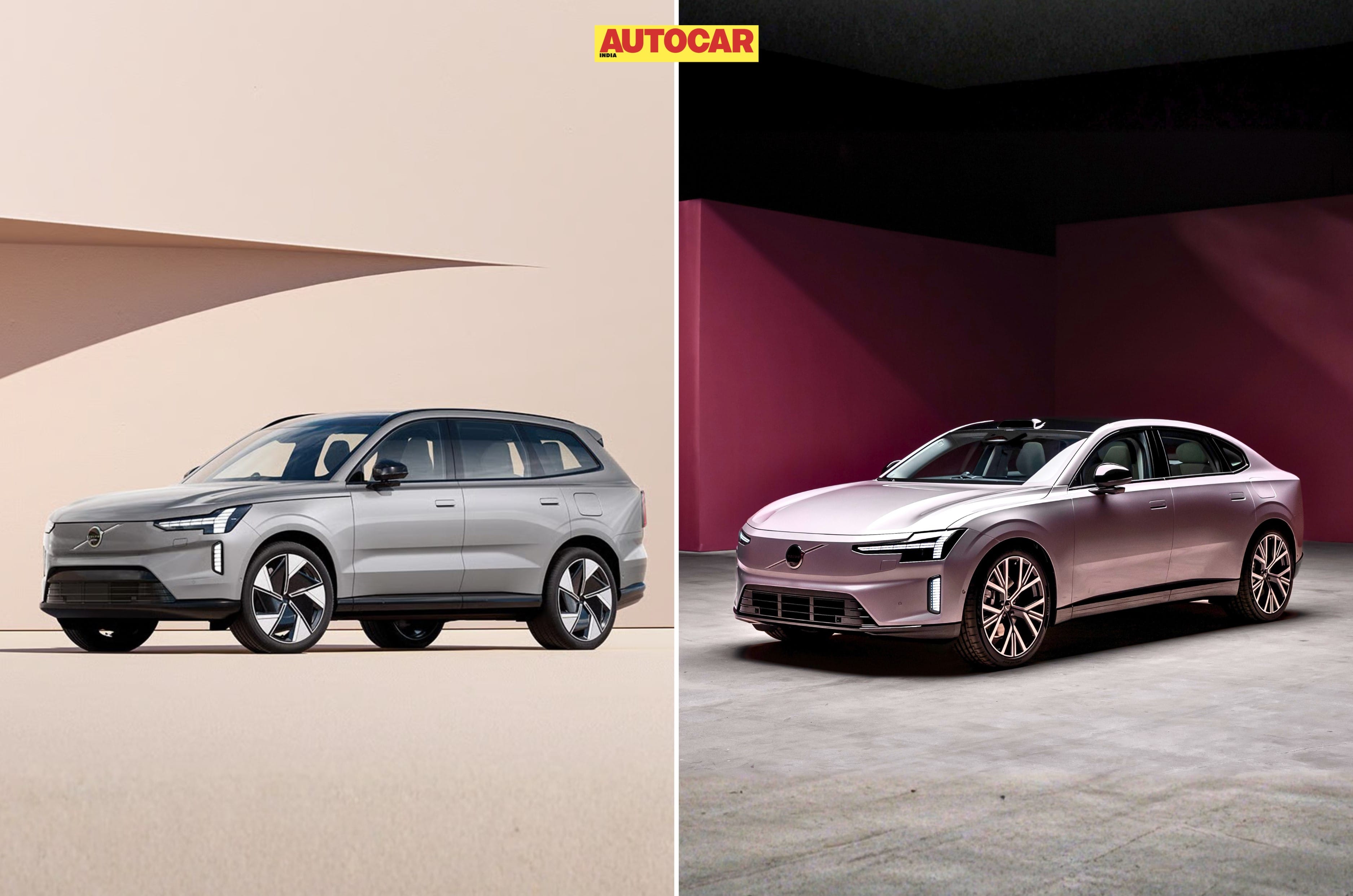
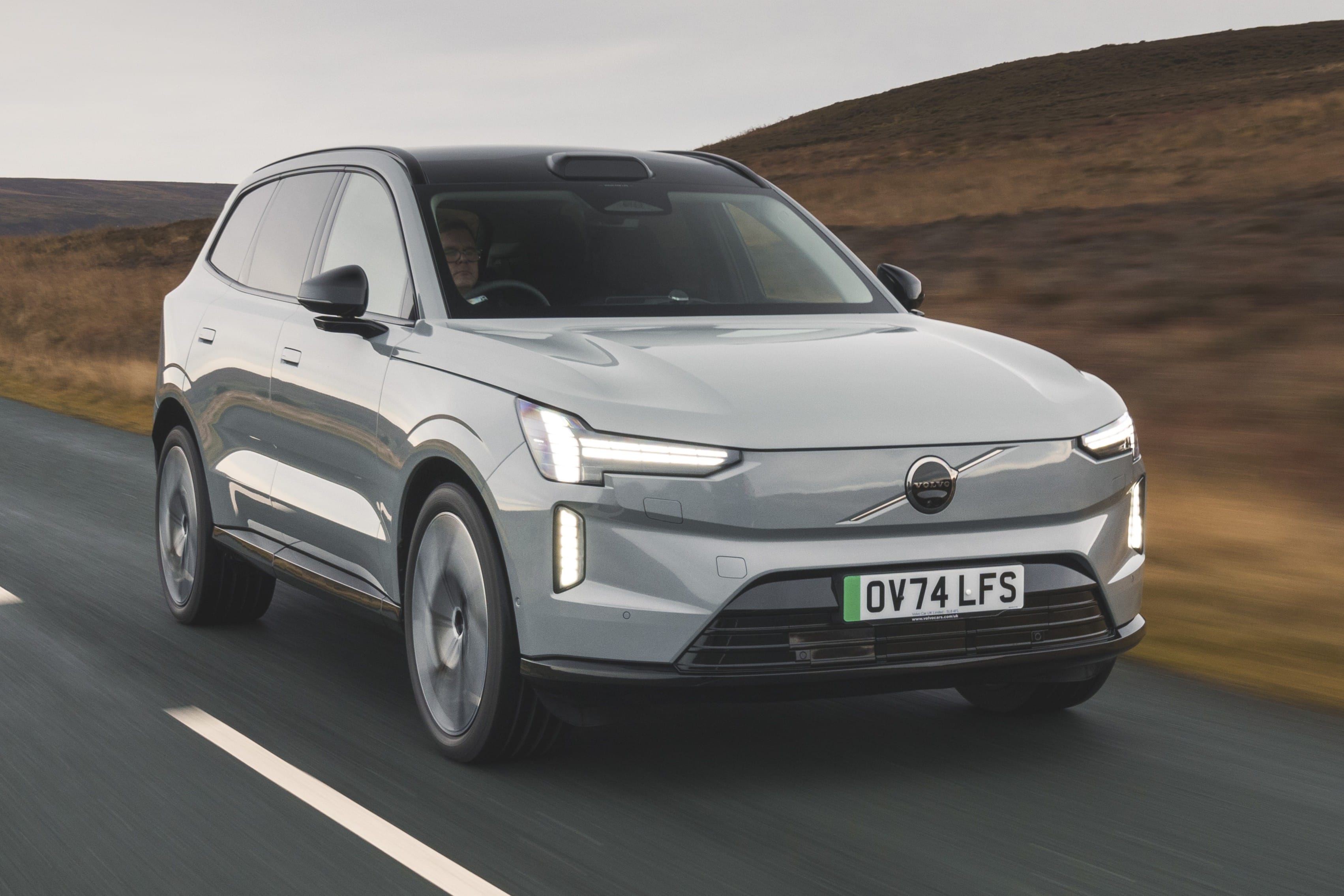
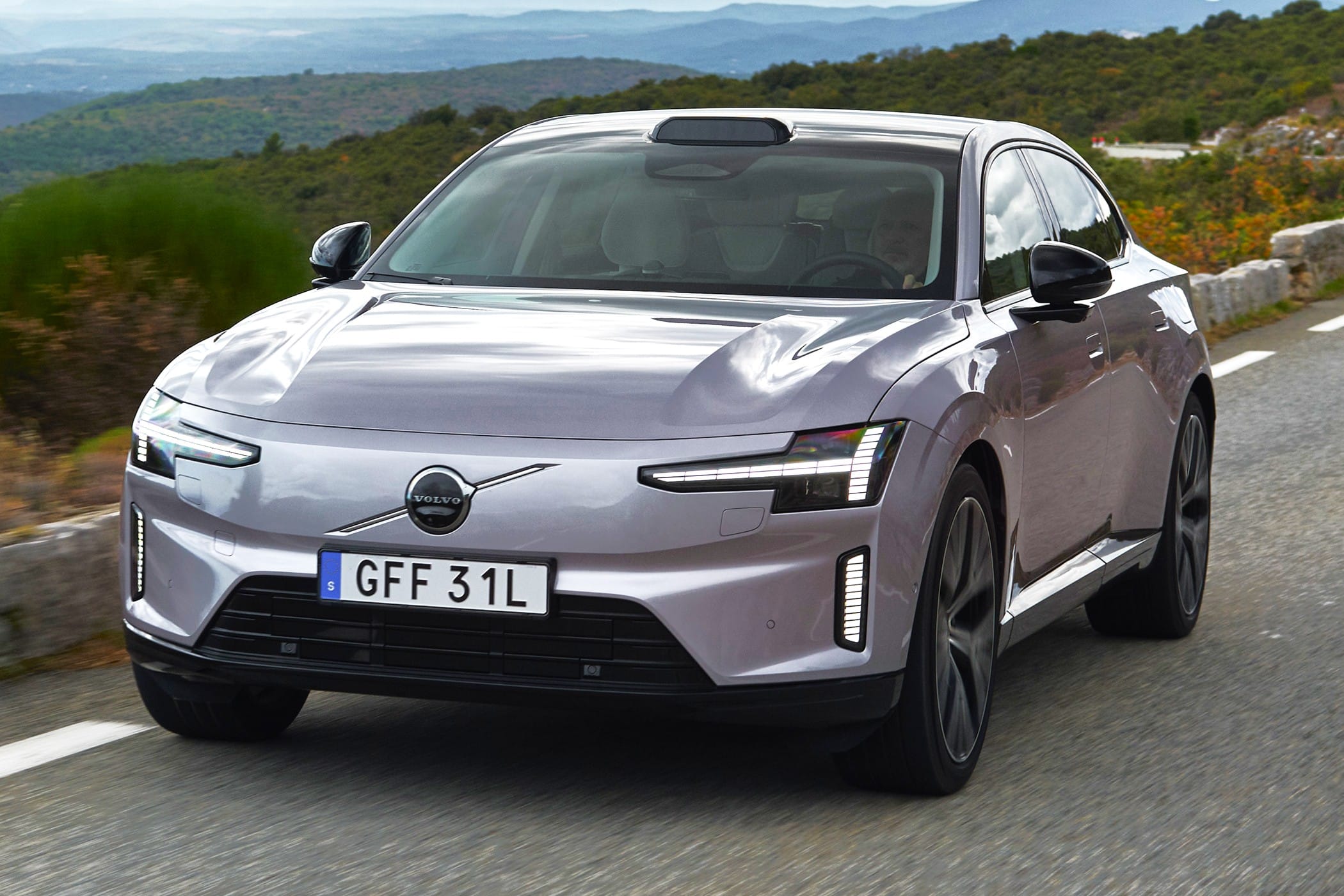
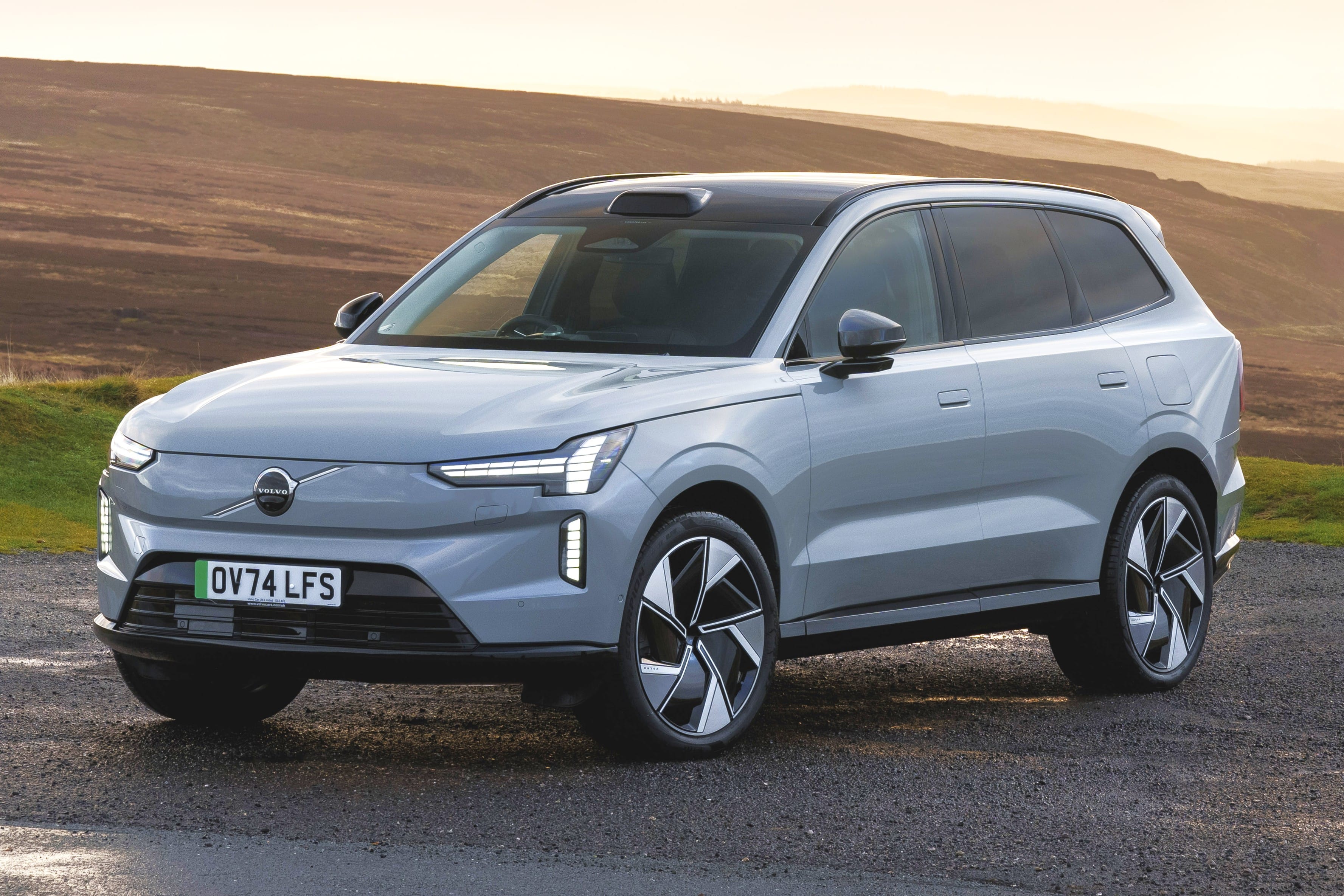
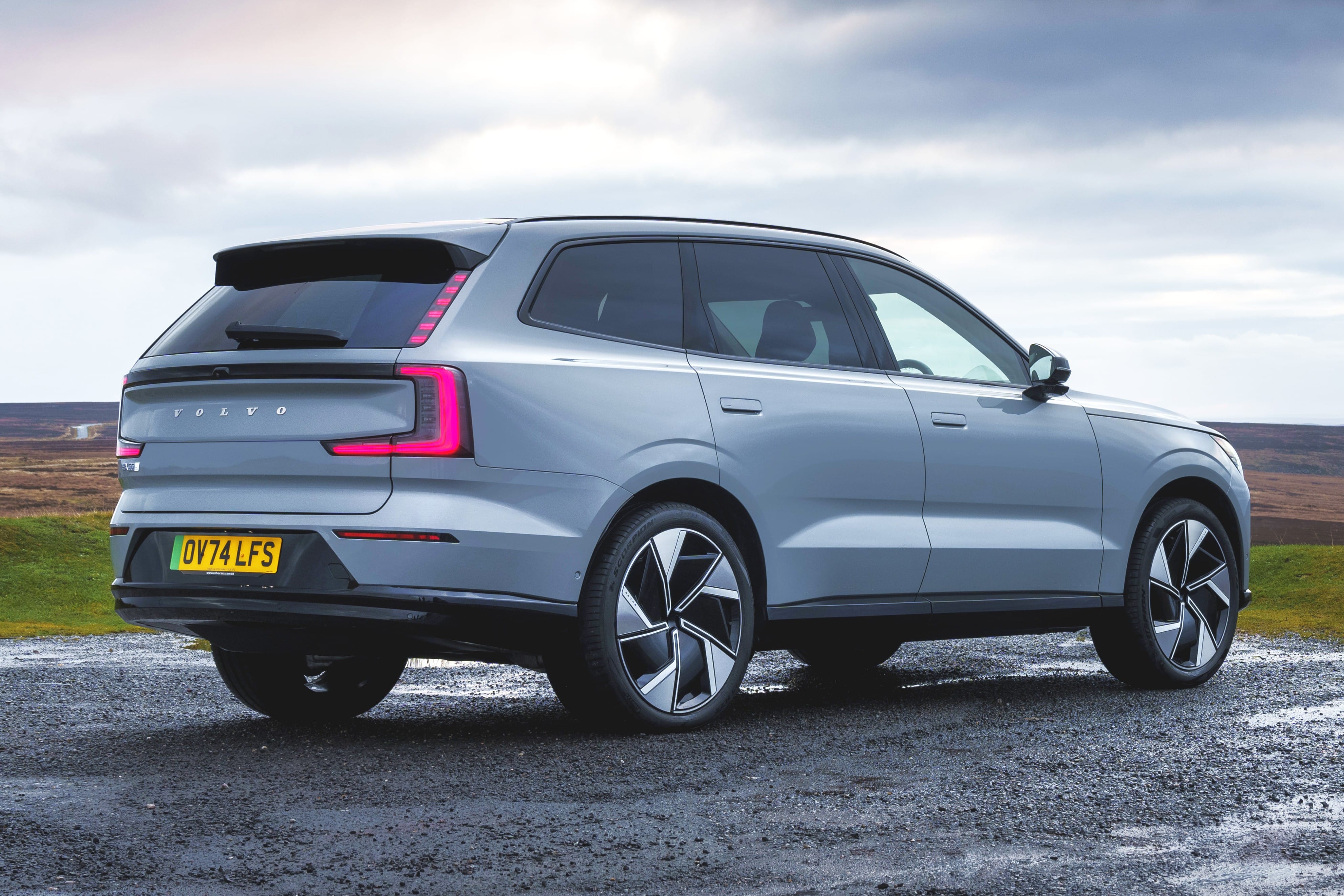
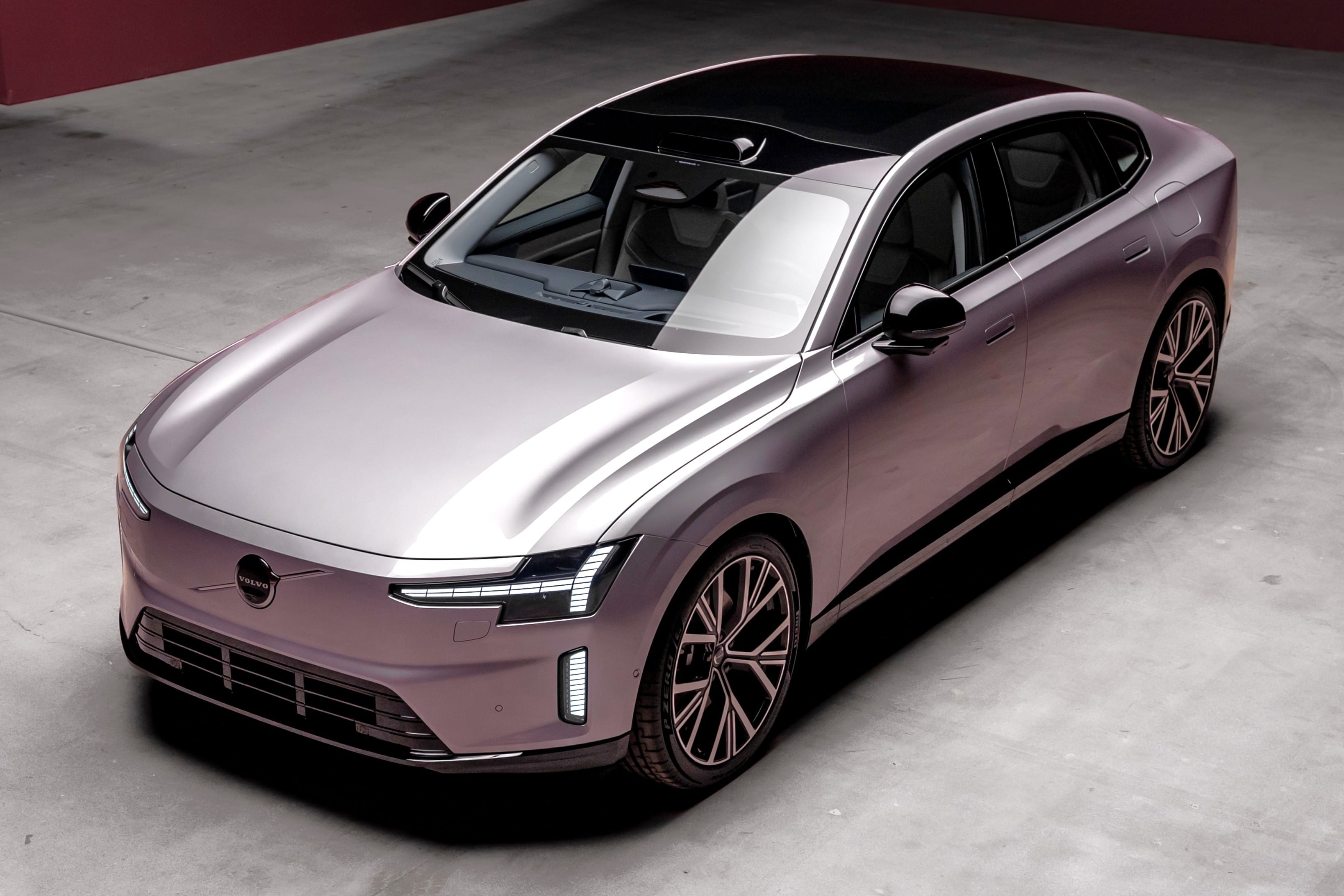
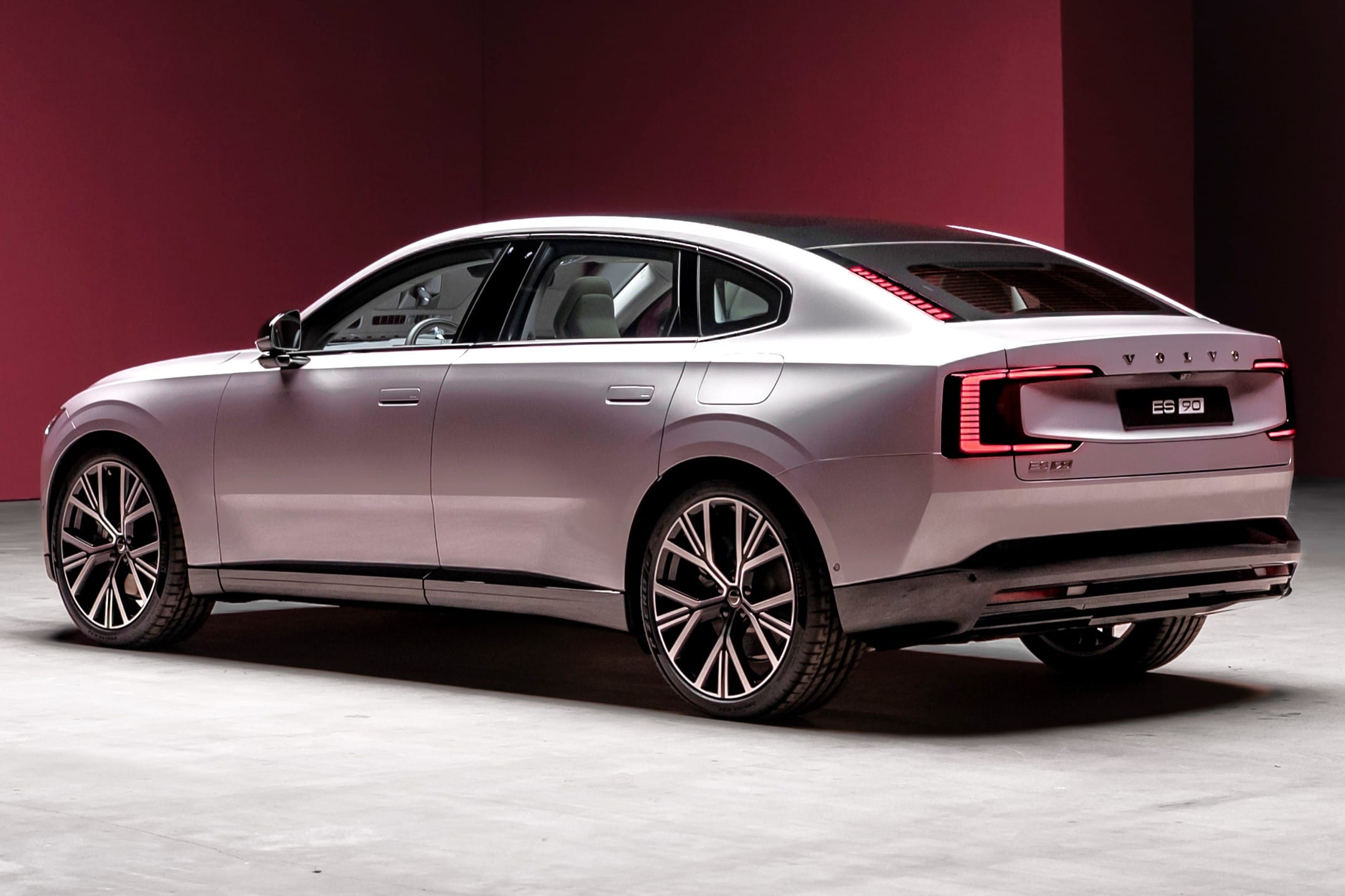
Volvo has confirmed that it will launch two new EVs, the EX90 SUV and the ES90 sedan, in India on October 12, 2026. The EX90 and ES90 will serve as Volvo’s flagship electric offerings for the Indian market. Notably, the ES90 will mark Volvo India’s return to the luxury sedan space, following the discontinuation of the S90 in June 2025. The EX90 is expected to rival the likes of the Mercedes-Benz EQS and Kia EV9, while the ES90 is likely to go up against the BMW i5.
Volvo EX90, ES90 battery and range
Identical 92kWh RWD and 106kWh AWD powertrains
The EX90 and ES90 are both underpinned by Volvo’s SPA2 platform, which features as 800V electrical architecture. In global markets, both EVs can be had in 92kWh (Single Motor) and 106kWh (Twin Motor) guises. In 92kWh spec, the EX90 and ES90 get a single rear-mounted motor (RWD) outputting 333hp and 480Nm. Meanwhile, the 106kWh battery option is split into Twin Motor and Twin Motor Performance variants, developing 456hp/670Nm and 680hp/870Nm, respectively.
For the EX90, 0-100kph comes up in a claimed 6.6 seconds for the 92kWh, 5.3 seconds for the 106kWh Twin Motor, and 4 seconds for the Twin Motor Performance. The ES90 Twin Motor is slightly slower from 0-100kph at 5.4 seconds, but mirrors the EX90 for the other variants.
As for WLTP range, the EX90 92kWh is rated at 565km, while the Twin Motor and Twin Motor Performance trims manage 608km and 602km, respectively. Meanwhile, the ES90’s WLTP range is certified at 664km for the 92kWh variant and 696km for the 106kWh versions.
Coming to charging speeds, both the EX90 and ES90 can utilise up to 350kW DC charging, and take 22 minutes for a 10-80 percent charge across all variants.
Volvo EX90, ES90 exterior design
Look quite different compared to the XC90 and S90
Measuring 5,037mm in length, 1,964mm in width, 1,744mm in height, and 2,985mm in wheelbase, the EX90 is dimensionally similar to the XC90, but sports a distinct design. Up front, the EX90 has sleeker T-shaped headlamps with pixel-like ‘Thor’s Hammer’ DRL signatures, below which sits a pair of slim vertically-arranged fog lamps. The Volvo badge is placed front and centre on the grille-less fascia, with a discreet air dam underneath. A LiDAR sensor can also be spotted on the leading edge of the roof.
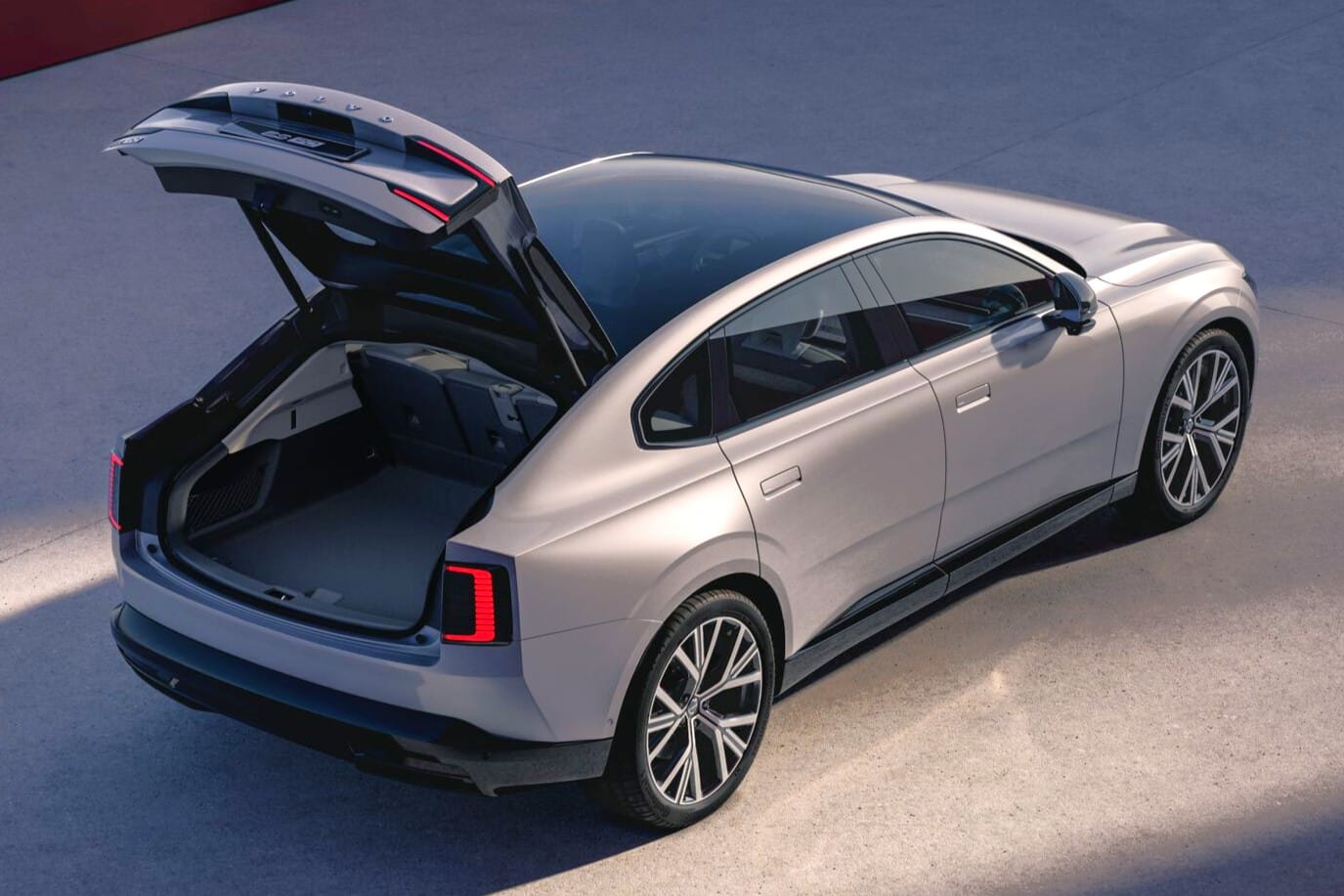
The side profile of the EX90 is cleanly-styled, with a prominent shoulder line and gently rising glass area, and there’s not much in the way of body cladding– Volvo claims a drag coefficient of 0.29Cd. 20-inch alloy wheels are fitted as standard, with 21- and 22-inchers optionally available. Over to the rear, the EX90 gets C-shaped LED tail-lamps with an additional vertical row of brake lights flanking the rear windscreen. Other styling elements of note include a sizable roof spoiler and a Volvo wordmark on the bootlid.
Coming to the ES90, it adopts very similar styling cues to the EX90, like the Thor’s Hammer DRLs, vertical fog lamps, grille-less fascia, brake lights around the rear windshield, Volvo wordmark on the bootlid, gloss black bumpers and skirts, and more. However, the ES90 sets itself apart with slightly reshaped headlamps and tail-lamps, different alloy wheel designs (sizes range from 20 to 22 inches), and of course, its sedan form factor.
Thanks to its more low-slung proportions, the ES90 sports a drag coefficient of 0.25, which makes it the most aerodynamic Volvo car to date.
Volvo EX90, ES90 interior and features
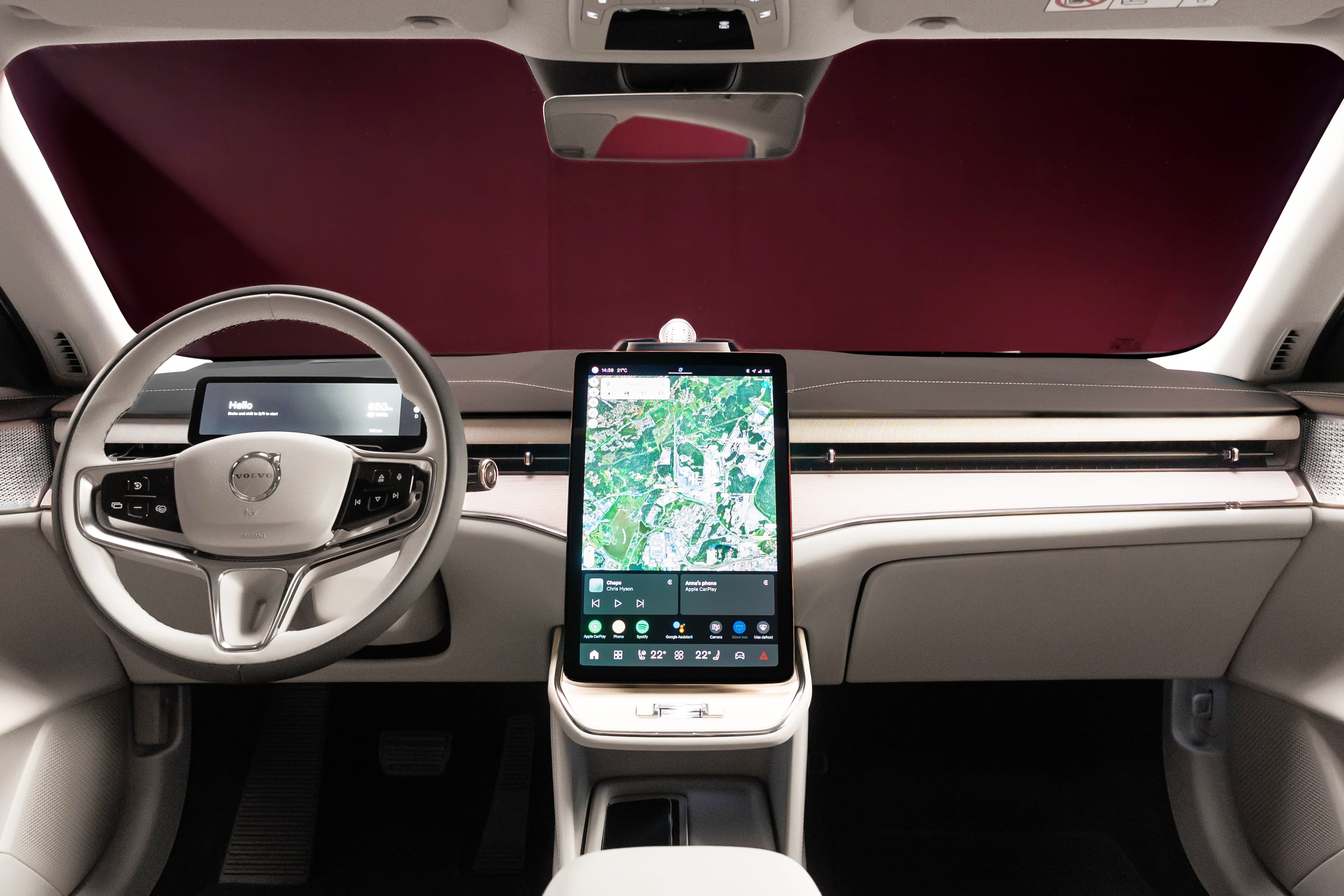
14.5-inch infotainment touchscreen sits front and centre on the dash
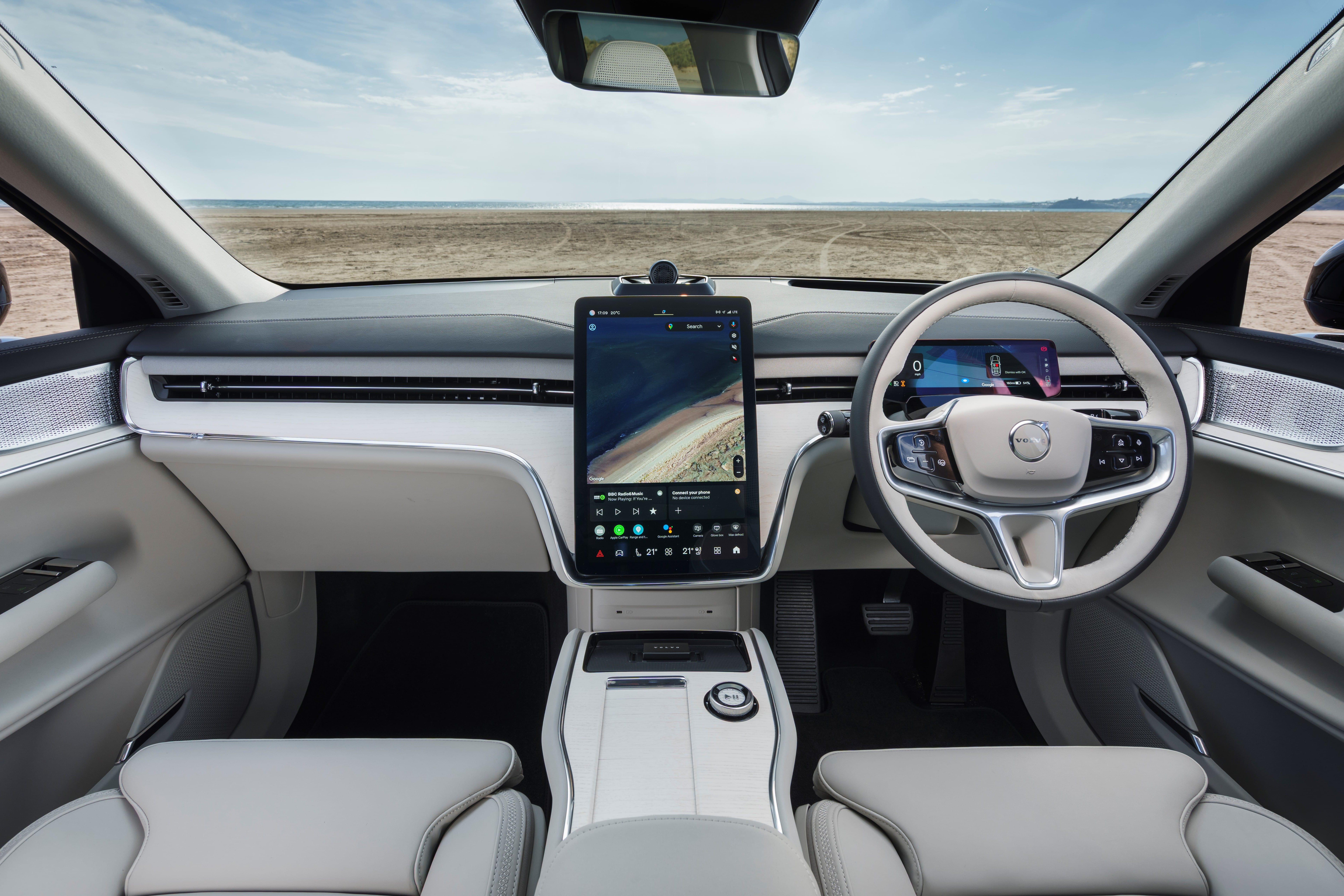
Inside, the EX90 and ES90 are very similar in terms of dashboard layout. Both get a minimalistic dashboard dominated by a 14.5-inch Google-based portrait touchscreen that incorporates much of the in-car functionality– physical controls are few and far between. There’s also a floating centre console, a three-spoke steering wheel with a neat layered design, a slim 9-inch digital driver’s display, and a 13.2-inch heads-up display.
The area between the portrait screen and centre console, however, differs between the two. The EX90 has a split design with a more open cubby, whereas the ES90 has a more enclosed storage space with two buttons underneath the touchscreen.
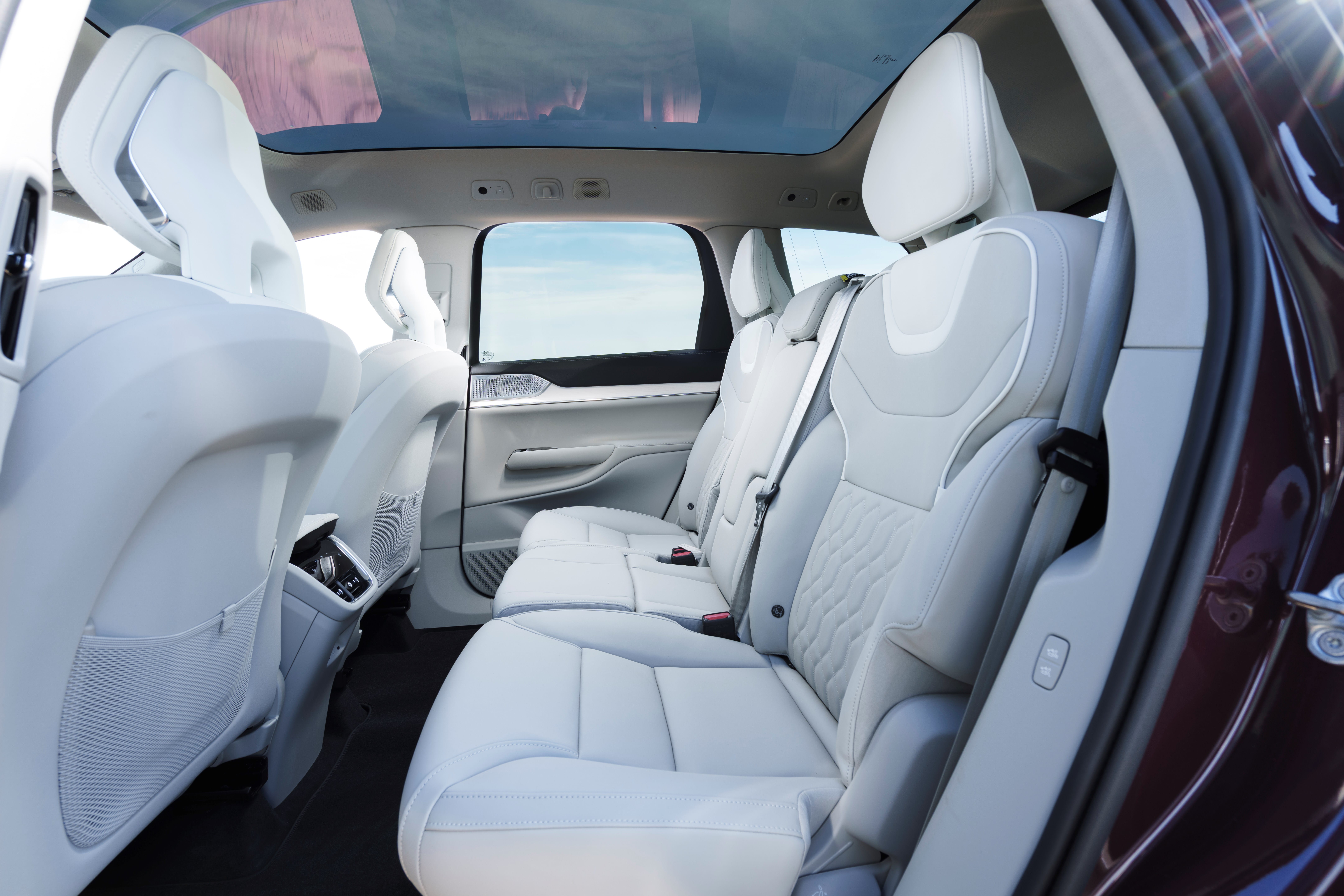
While the ES90 is a 5-seater, the EX90 is a 7-seater as standard, with certain variants offering a 6-seat configuration with captain’s chairs for the second row. In some markets, Volvo even offers a 4-seater version of the EX90 with a rear centre console that integrates a refrigerator, rivalling the likes of the Mercedes Maybach EQS SUV. Boot space is pegged at up to 384 litres with all three rows up for the EX90 and 424 litres for the ES90. The EX90 additionally gets a 45-litre frunk, while the ES90 features a 27-litre space.
As for creature comforts, both EVs pack a 5G connection to aid OTA updates, a digital key, ambient lighting, four-zone climate control, a cabin air purifier, a wireless charging pad, a 360-degree camera, powered front seats, a panoramic glass roof, a Bose sound system, connected car tech, auto park assist, Level-3 ADAS, V2L functionality, and lots more. The EX90 is touted to be Volvo’s safest car to date, holding 5-star crash safety ratings from Euro NCAP and NCAP. The ES90, however, is yet to be crash-tested by an NCAP agency.
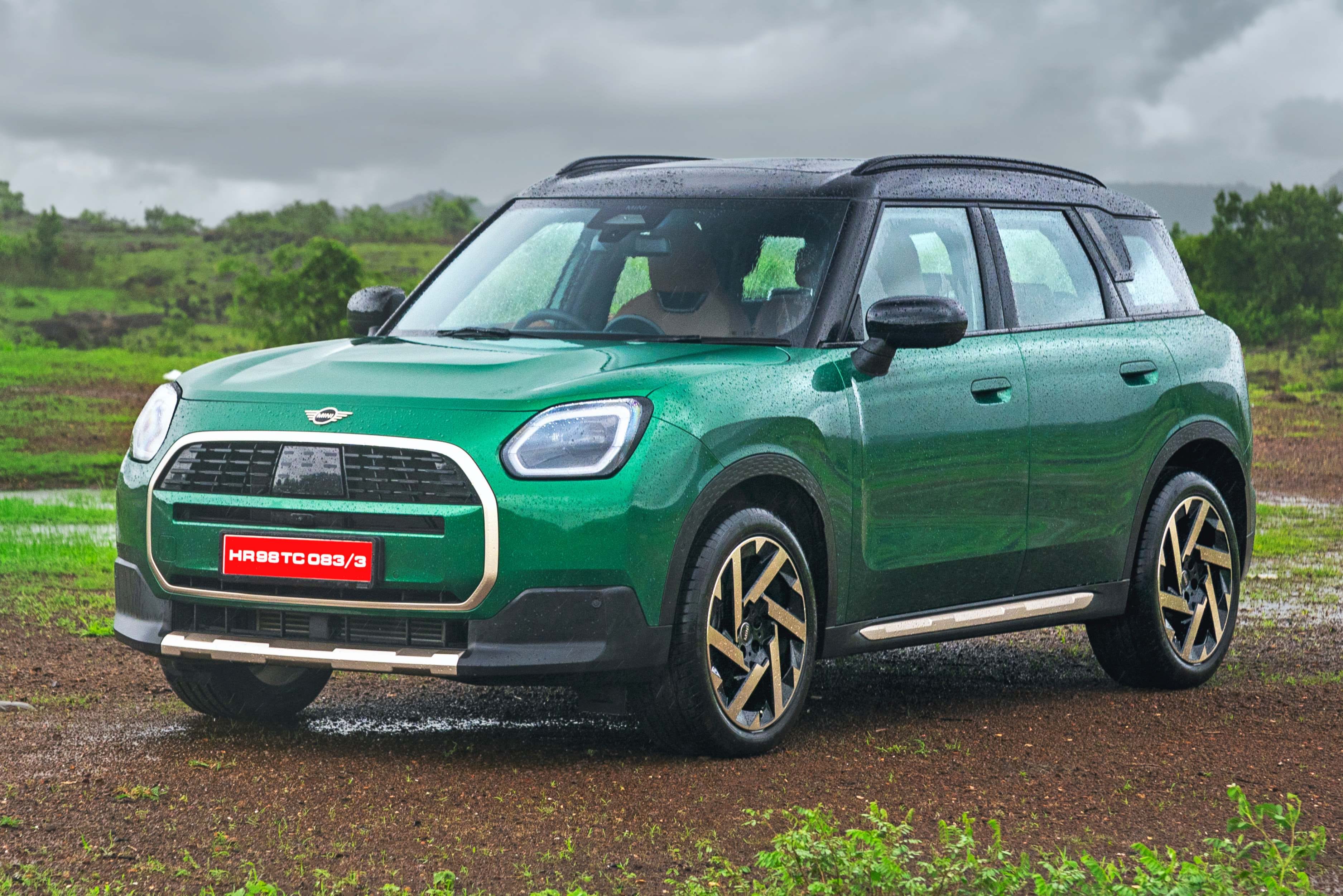
The third-generation Mini Countryman C is the most accessible version of the entry-level luxury SUV sold here, positioned below the JCW All4. Like any car, the Countryman C has its share of strengths and weaknesses. Here are three reasons to consider the Mini SUV, along with two reasons why you might want to look at the Mercedes-Benz GLA, Audi Q3 or BMW X1.
Funky yet premium look
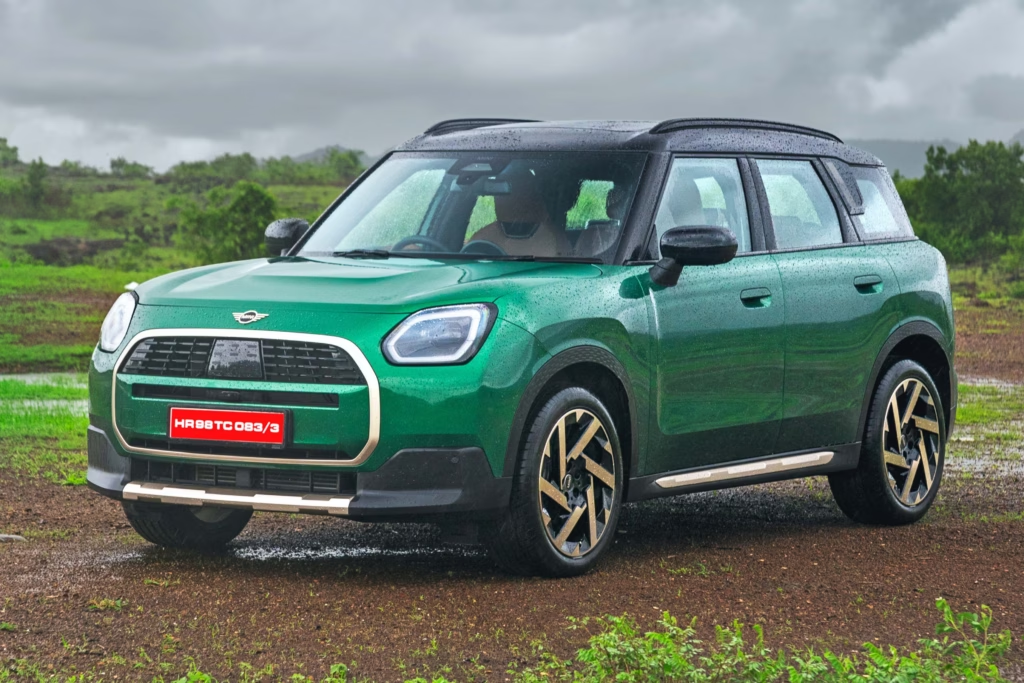
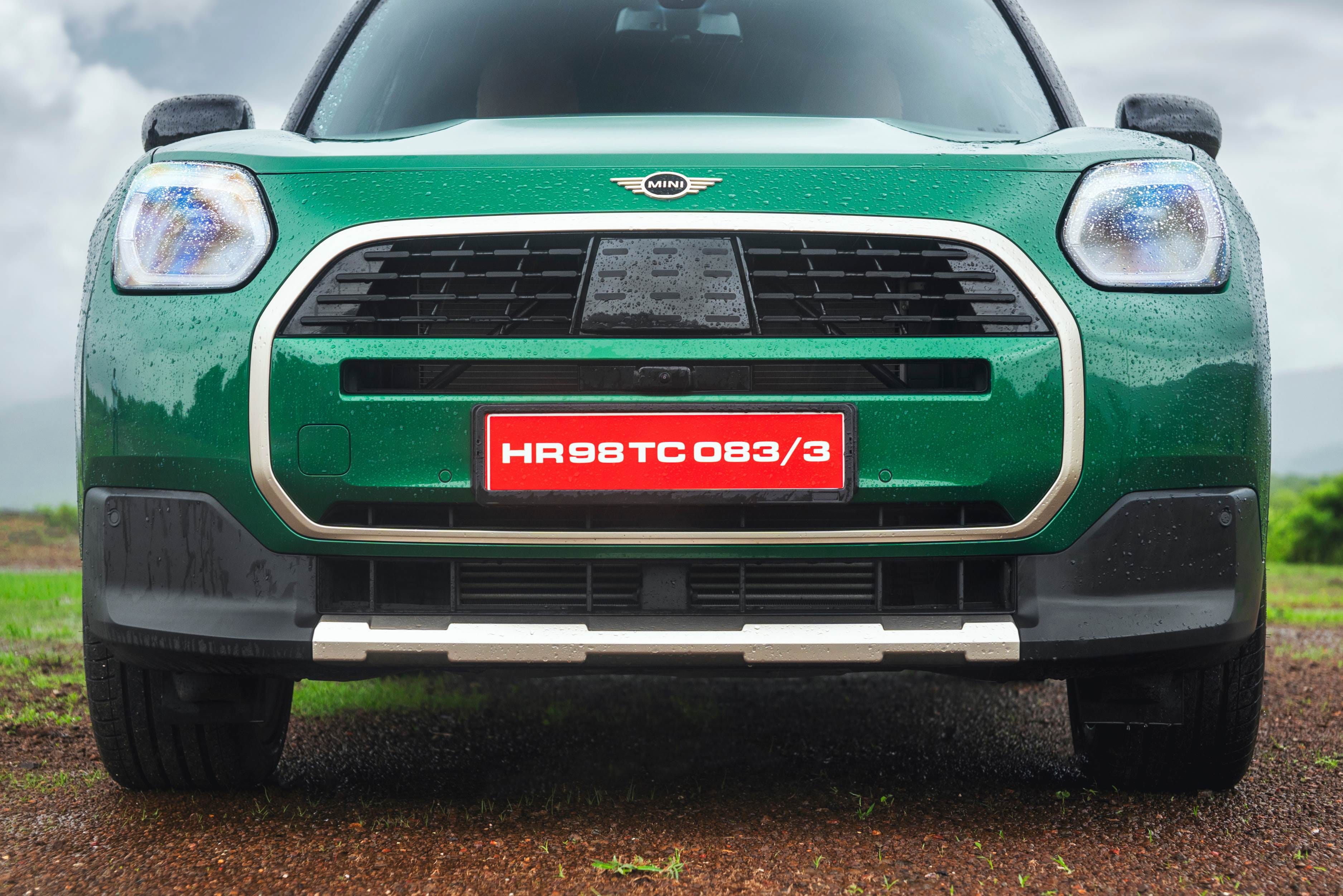
The new Countryman looks sharper, boxier and larger than before. It has grown in size and is now the tallest SUV in the segment while also offering the highest ground clearance. However, Mini has also made it look large, replacing the rounder styling of the earlier model with smaller, sharper and more angular details.
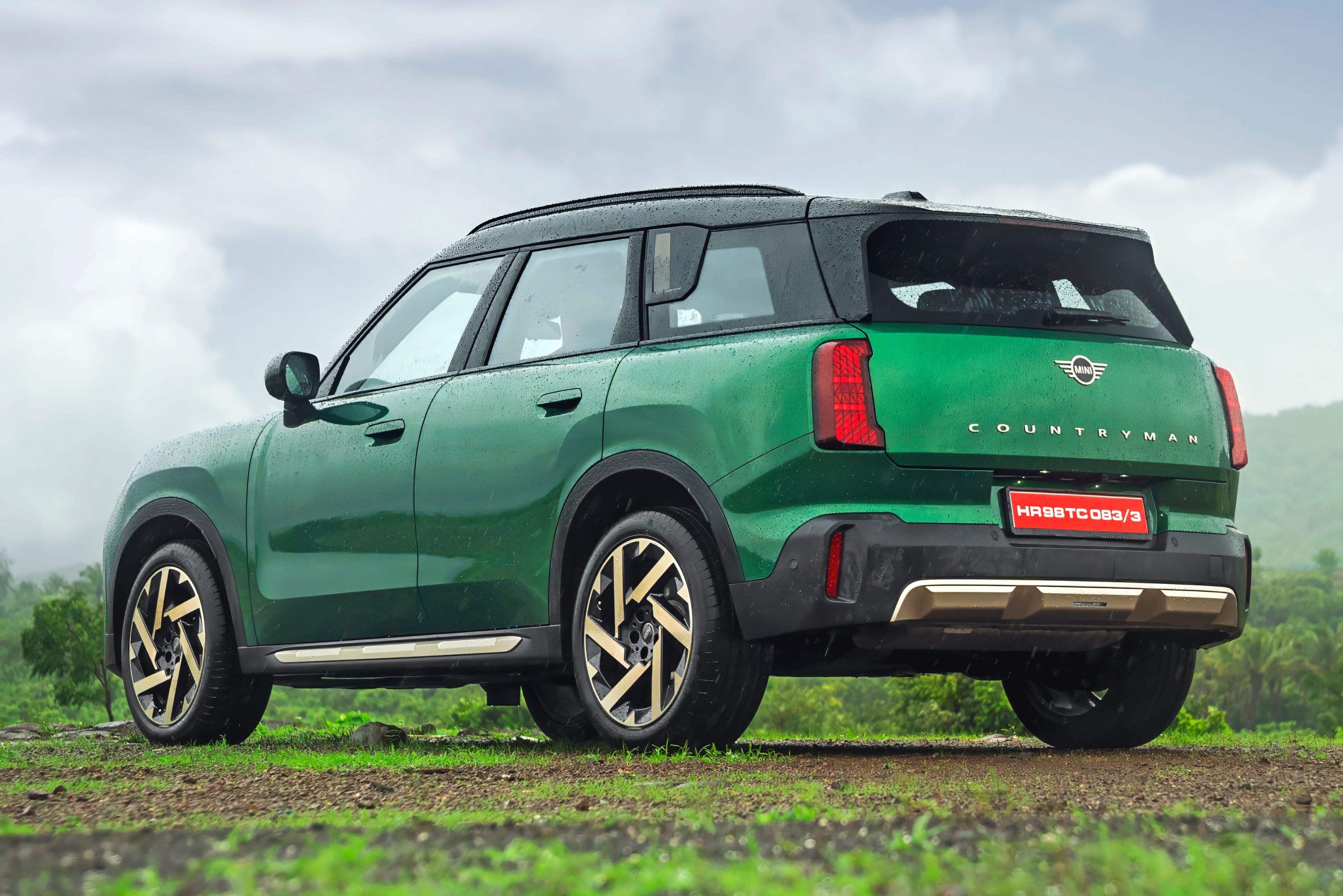
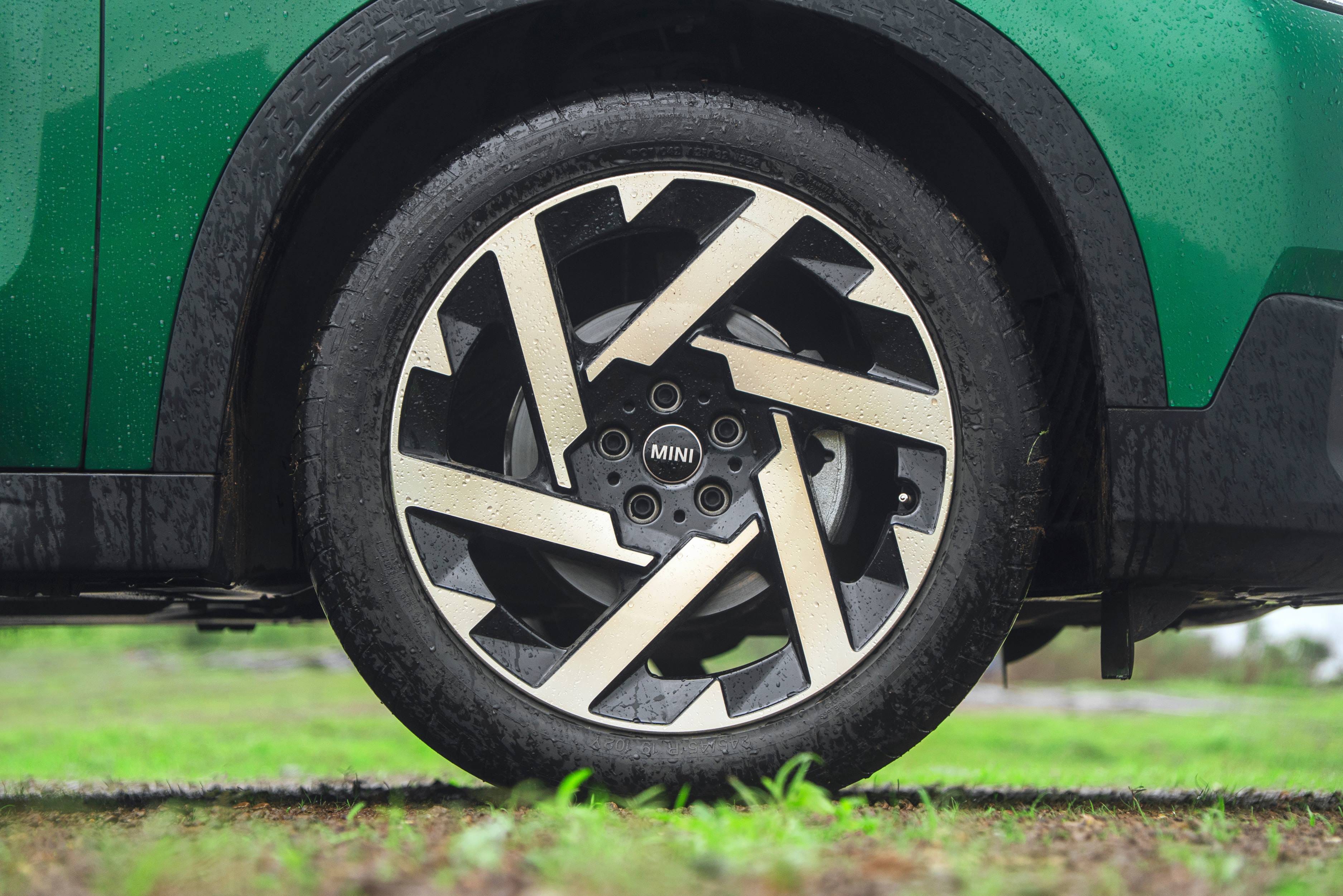
Even the headlights, grille and roofline now have a boxier design. From the rear, it is easily identifiable as a Mini, thanks to the contrast roof, ‘Countryman’ lettering on the tailgate and Union Jack-style tail-lamps. It also gets champagne-coloured accents, a contrast roof and large 19-inch dual-tone alloy wheels. There are five exterior colours to choose from, with more expressive shades than those usually seen on conventional luxury SUVs.
Loaded with features
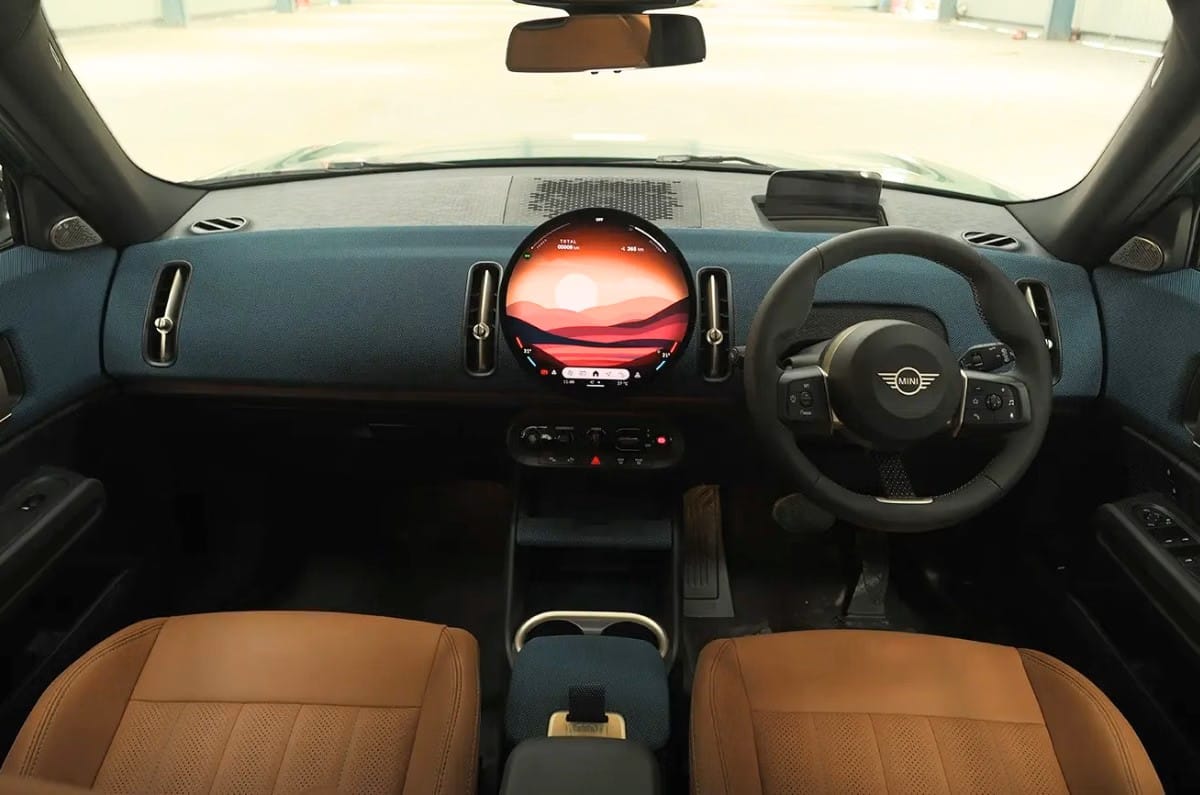
The Countryman C comes with a generous list of features, including wireless Apple CarPlay and Android Auto, powered front seats with memory and a massage function for the driver, a surround-view camera with auto park, a Harman Kardon sound system, a heated steering wheel, a panoramic sunroof, a head-up display, a voice assistant, wireless phone charging and a digital key.
Good space and practicality
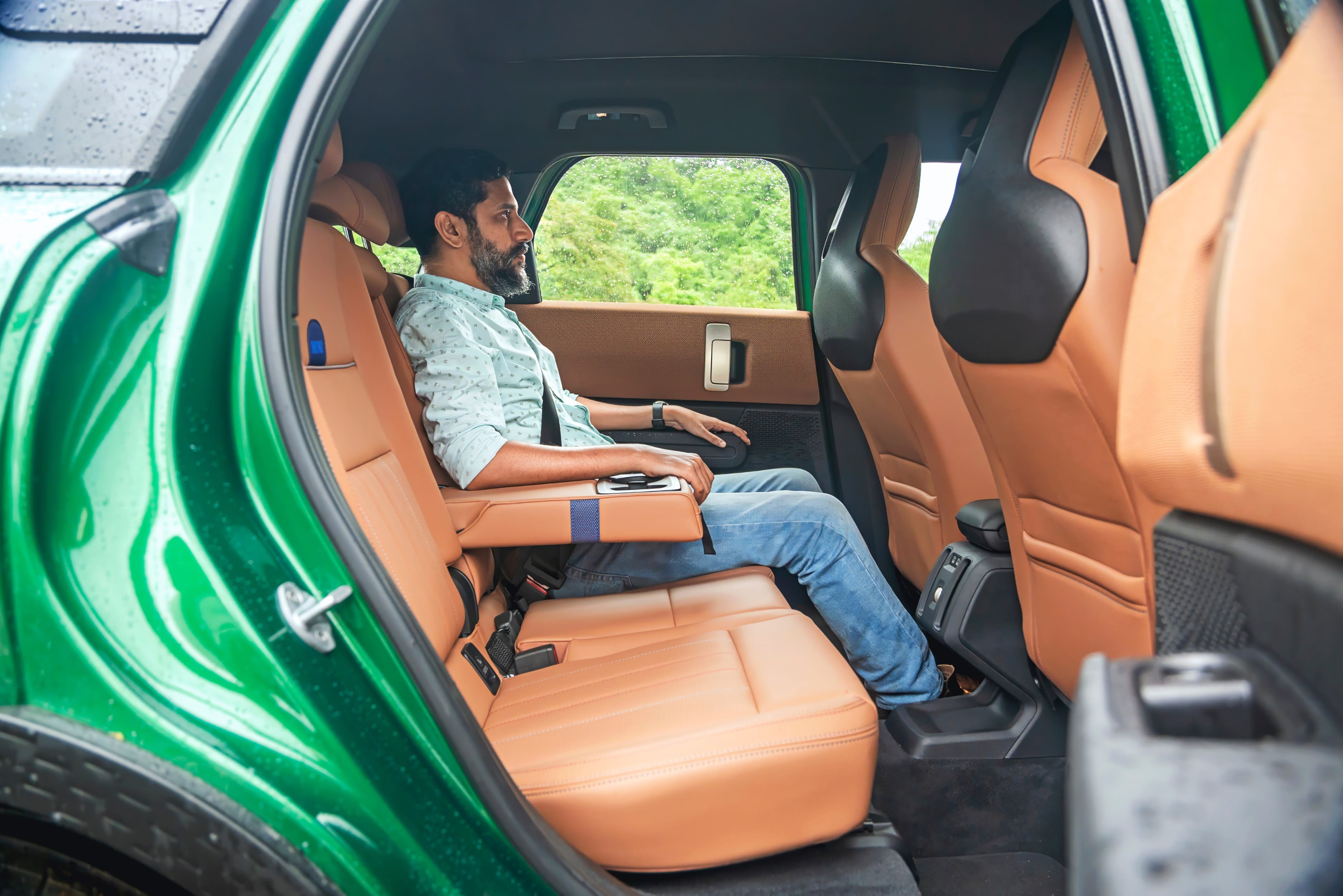
It feels roomier and more open than any previous Countryman, and it also has an advantage over some rivals in this area. Compared to the Countryman Electric, the Countryman C’s floor sits lower, making the seating position more comfortable. The large panoramic sunroof also makes the cabin feel brighter.
Boot space is another area where the Countryman C has an edge over the EV. Capacity has increased by 50 litres to 505 litres, and sliding the rear seats forward can free up even more space. It also comes with a space-saver spare wheel, which the EV does not get.
Practicality has also been well thought out, with an open centre console, a covered storage box and a sliding armrest. The front seats are large and comfortable, while the high seating position gives a good view outside.
Reasons to avoid the 2026 Mini Countryman C
Engine, gearbox clunky at low speeds
The Experience Modes are also mostly cosmetic. Only Green (Eco) and Go Kart (Sport) modes change drive performance. Eco makes the powertrain calmer, while Go Kart makes it more responsive. There is no option to adjust individual settings, and ESC is switched off by default in Go Kart mode, with no option to turn it back on.
There are no paddleshifters either or any other way to change gears manually. The gearbox is generally quick and easy to work with, but at very low speeds, the powertrain suffers from turbo lag and gearbox hesitation.
Large wheels hurt ride quality
Yes, the 19-inch wheels look great, but they do affect the ride. They crash hard through potholes and even over some steeper speed breakers. That said, the suspension keeps the SUV controlled around corners with limited body roll despite being tuned to be more comfortable and compliant than the previous Countryman.
A long-wheelbase BMW X1 isn’t a new idea. China has had an extended-length X1 for years, and we got it in India last year in the form of the all-electric iX1 LWB. The X1 LWB brings the formula to the ICE X1 range. BMW says the standard-wheelbase X1 will continue to sell, though we assume the LWB will be the only X1 down the road.
BMW X1 LWB Exterior Design and Engineering – 7/10
The X1 might be BMW’s smallest SUV, but it’s not particularly small anymore. It’s 116mm longer overall with 108mm of that added length at the wheelbase alone. Importantly, the longer wheelbase doesn’t look unusually long, and so the proportions work.
Lengthened body but well-proportioned design
In person, the X1 LWB doesn’t look vastly different to the standard wheelbase model. It’s got the same peeled back headlamps, same M Sport styling pack and same edgy tail lights. The 18-inch rims are shared with the other X1s, but a more exciting design and or a larger size would have done much for the look. A chrome surround for the large windows is a small detail distinction to the standard X1 that uses a black effect, while the conventional grille here serves as a distinguishing element to the iX1 that sports a closed-off grille.
18-inch wheels shared with regular X1; larger wheels would have done much for the look.
BMW X1 LWB Interior Space and Comfort – 8/10
Long wheelbase opens up huge space at the back
Thanks to wide opening rear doors and a large door aperture, getting into the back of the X1 LWB is very convenient. And once you’re inside, you’ll be amazed by the sense of space that you get there.
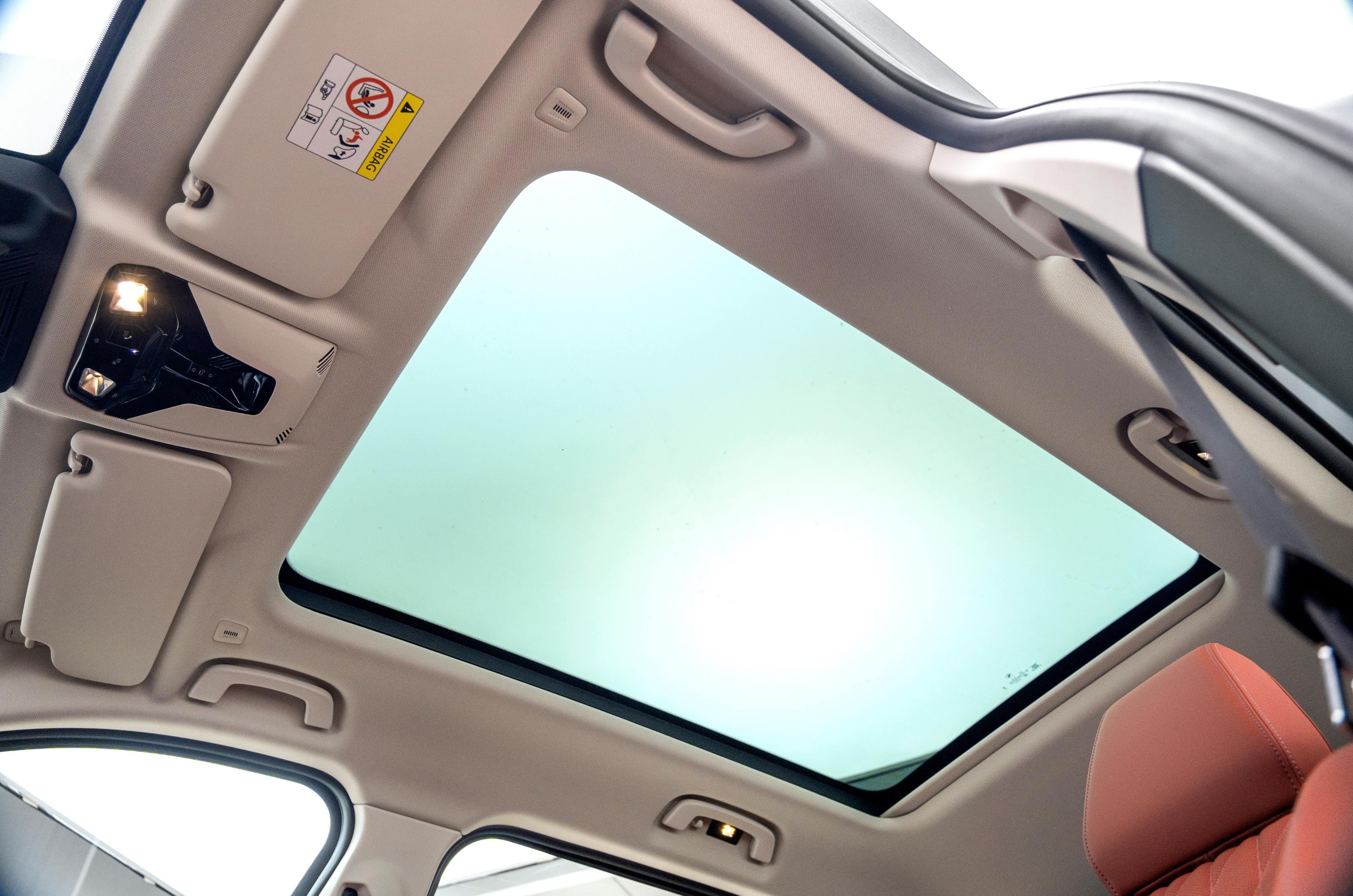
Even six footers will find legroom generous and helping the feeling of space is the large glasshouse. The panoramic glass roof (it doesn’t open) lets in lots of light and the rear windows are also large. Pity, they don’t get adjustable sunshades.
Rear seat gets a longer base and enhanced cushioning for better comfort.
Like the iX1 LWB, the X1 LWB also benefits from a redone rear seat. There’s enhanced cushioning while a 15mm longer seat base adds a bit more by way of thigh support. The seating position itself is very good, and if you want a more relaxed setting, you also have the option to recline the backrest by a couple of degrees. The extra leg room also makes the X1 LWB that little bit comfier for a middle passenger who will have more space to keep his or her feet on either side of the high centre tunnel. Still, the rear seat is best for two.
Dashboard is identical to the standard wheelbase X1.
Up front, the X1 LWB is no different to the standard wheelbase X1. The dash with its asymmetric AC vents looks youthful and what also adds some flavour to the X1’s cabin is the upright wireless phone charging pad at the base of the dash. There’s also a floating centre console, which houses a few key buttons, such as for the gear selector, volume control and driving modes. There’s some storage under the front centre armrest but oddly, the lid opens towards the passenger side.
Floating centre console gets a few physical controls and some storage underneath.
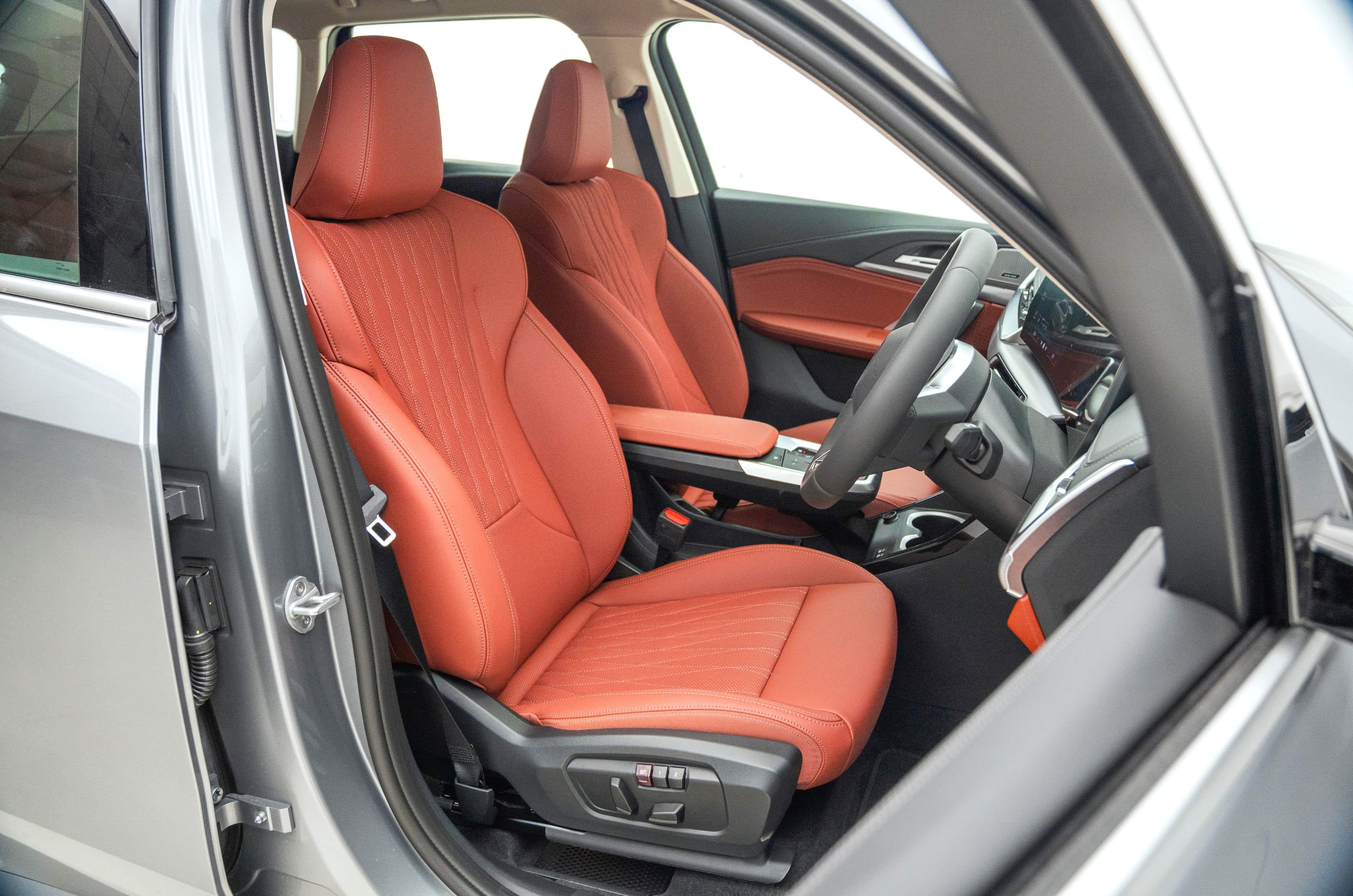
Upholstery choices include the brown you see here as well as a white on black theme which we suspect would be a pain to keep clean. The front seats themselves look sporty and also hold you really well, but unfortunately, the X1’s seat massage function has been dropped on the long wheelbase model. There’s also no seat ventilation function. An M Sport steering is standard but feels a bit too chunky in most hands, and also misses on paddleshifters.
Front seats are sporty, but they miss out on ventilation and massage functions.
In terms of quality, key touch points look and feel good. There are padded materials on the dash and the textured metal-like effect is nicely done. However, it’s not quite got the same attention to detail as pricier BMWs. The USB slots on the dash, for one, aren’t backlit, so you’ll fumble with wires in the dark. The ambient lighting, too, isn’t as vibrant as, say, in a Mercedes GLA. BMW says boot capacity stands at 540 litres and there is plenty of space for large bags. Packaged under the boot floor is a space-saver spare tyre.
BMW X1 LWB Features and Safety – 7/10
X1 LWB is available in a single M Sport trim
The X1 LWB sports BMW’s twin screen Curved Display. The 10.25-inch digital instrument cluster does give all the info you need, but the presentation with hexagonal themes isn’t appealing even after all these years. The 10.7-inch touchscreen has its highs and lows, too. It’s crisp and responsive, but packs in way too much, including the climate control settings. The menus, frankly, can feel overwhelming on the go. The crisp 360-degree camera does get our vote. A Reversing Assistant that retraces the path in and automatically backs out (up to 50m) is a handy function to get you out of tricky situations.
Instrument cluster offers lots of information, but the presentation with hexagonal themes isn’t appealing.
Interestingly, BMW offers a subscription service to unlock more advanced maps, customizable icons, and more screen themes and modes. Other features include a digital key, allowing you to share access with up to 18 friends and family members, while the 12-speaker Harman Kardon sound system is rather nice, too.
Headlining the list of comfort features is the panoramic glass roof, and there’s power adjust for both front seats. Rear seat passengers get dedicated rear AC vents but there’s no dedicated zone for the rear section of the cabin. A fold-down armrest and USB type C charging port are other functions at the back.
Panoramic glass roof lets in lots of light, but isn’t openable.
Safety kit includes 8 airbags, ABS, ESC and Isofix child seat mounts among other features. The X1 LWB also packs in a few ADAS functions such as auto emergency braking and lane departure warning and assist. Adaptive cruise control, however, is missed.
BMW X1 LWB Performance and Refinement – 7/10
1.5-litre, three-cylinder turbo-petrol is only engine on X1 LWB
BMW is launching the X1 LWB in S-Drive 18 Li form, which is a complicated way of saying that it’s powered by a 1.5-litre three-cylinder turbo petrol engine. Yes, you read that right. The engine is E25 compliant, but there’s no diesel option for the moment, and buzz is there won’t be one in the future either.
Performance is adequate but unexciting
The X1 LWB’s petrol engine makes 156hp and 230Nm and all the power goes to the front wheels only, via a seven-speed dual-clutch transmission. A fact to note, 156hp is the upgraded power figure. On the standard wheelbase X1, the engine makes 136 horsepower.
Unfortunately, the power bump doesn’t magically transform the X1 LWB into something sporty. In ordinary city driving, you really won’t have a problem with the performance on hand. There’s enough power for the urban grind. It’s just that when you pick up the pace, you’ll miss that reserve of power that you just expect in a luxury car.
Refinement is good but the engine thrums when extended
Sport mode does make the engine feel a bit more urgent, but it’s also in Sport mode that the engine can’t hide its three-cylinder-ness. When it’s time to overtake, for instance, and you press down on the accelerator pedal, there is a bit of a delay, then you hear the engine thrum, and that’s not a very BMW sound. Performance is also not very BMW. We managed a 0-100 kph time of 9.58 seconds.
Then again, the X1 LWB’s USP is the rear seat, and there will be buyers who rarely, if ever, take the wheel. If you’ve instructed your chauffeur to drive in an easygoing manner, you will note that engine noise is actually pretty well-contained.
BMW X1 LWB Mileage and Efficiency – 8/10
While we haven’t put the X1 LWB to the full test it should prove to be more efficient than rivals’ four-cylinder turbo-petrol units. Of course, it won’t be outright frugal because the X1 LWB is a substantial vehicle. We expect real-world fuel economy in the 7-10kpl band with the figure rising to 9-12kpl over highway drives.
BMW X1 LWB Ride Comfort and Handling – 8/10
Suspension has been tweaked for better comfort on the X1 LWB
The X1 LWB might be front-wheel drive only but there is a crispness to the way it changes direction. You will like the feel at the steering wheel and you get a good sense of connect too. Unfortunately, the handling isn’t supported by the engine. Long story short, this is not the BMW for keen drivers.
As for ride comfort, BMW has tweaked the suspension for the X1 LWB, and they’ve done a pretty good job of things. The suspension works quiet, it feels absorbent, and it’s only when you’re really paying attention that you’ll notice a distant firmness to the setup.
BMW X1 LWB price and verdict – 8/10
X1 LWB makes for a great backseat SUV
Prices for the X1 LWB will be announced on August 21. We expect BMW to keep pricing within the Rs 50-55 lakh (estimated, ex-showroom) band, which would make the X1 LWB a very enticing proposition.
Rear seat space is the highlight and immediately gives the BMW bragging rights over the Mercedes GLA and Audi Q3. Thing is, the X1 LWB’s appeal is almost too tied to the rear seat experience. The drive experience is just so-so. Performance is fine for the daily grind but the three cylinder unit does little to excite. If that’s not a deal breaker for you, the BMW X1 LWB is sure worth a long, hard look.
बारिश शुरू होते ही रात के समय मेंढकों की ‘टर्र-टर्र’ टर्राने की आवाजें ज्यादा सुनाई देने लगती हैं। बारिश के मौसम में उनकी आवाज इतनी तेज होती है कि ऐसा लगता है की वो हमारे आस-पास ही है। लेकिन ऐसा नहीं होता है बल्कि ये आवाज काफी दूर से आती है। बारिश का मौसम मेंढकों के लिए प्रजनन (रिप्रोडक्शन) का सही समय होता है। इसलिए वे साथी को अट्रैक्ट करने और अपनी मौजूदगी बताने के लिए ज्यादा आवाज करते हैं। इसी आवाज से मादा को सही साथी चुनने में मदद मिलती है। इसलिए बारिश के दिनों में तालाबों, गड्ढों और पानी जमा होने वाली जगहों के आसपास मेंढकों की टर्राने की आवाज ज्यादा सुनाई देती है। जानें इसके बारे में
मध्य प्रदेश के सागर के जूलॉजी विभाग के एक्सपर्ट डॉ. मनीष जैन के अनुसार, बारिश के मौसम में पानी जमा होने से मेंढकों की गतिविधियां बढ़ जाती हैं। तालाब और आसपास के इलाकों में पानी मिलने से उन्हें खाने, घूमने और प्रजनन (रिप्रोडक्शन) के लिए बेहतर माहौल मिलता है। इसी वजह से मॉनसून के दौरान मेंढक ज्यादा एक्टिव होकर बार-बार टर्राते हैं।
बारिश के मौसम में होते हैं ज्यादा एक्टिव
मेंढकों की आवाज का इस्तेमाल सिर्फ प्रजनन (रिप्रोडक्शन) या आपसी मुकाबले के लिए नहीं होता। एक्सपर्ट के अनुसार, कुछ आवाजें आसपास मौजूद दूसरे मेंढकों को खतरे की जानकारी देने के लिए भी होती हैं। ऐसे संकेत मिलने पर दूसरे मेंढक सतर्क हो जाते हैं और खतरा महसूस होने पर तुरंत प्रतिक्रिया दे सकते हैं। बारिश के दिनों में मेंढकों की आवाज सामान्य दिनों के मुकाबले ज्यादा तेज और साफ सुनाई देती है। मानसून में मेंढक पानी के आसपास अधिक एक्टिव रहते हैं। गीले वातावरण में उनकी आवाज दूर तक पहुंचती है, इसलिए कई बार ऐसा लगता है कि मेंढक पास ही टर्रा रहे हैं, जबकि वे काफी दूरी पर हो सकते हैं।
एक किलोमीटर दूर तक सुनाई देती है आवाज
मेंढक का आकार उसकी आवाज की पहुंच तय नहीं करता। बारिश की रातों में कुछ छोटे मेंढकों की टर्राने की आवाज भी करीब एक किलोमीटर दूर तक सुनाई दे सकती है। हालांकि, यह उनकी प्रजाति और आसपास के माहौल पर निर्भर करता है कि आवाज कितनी दूर तक पहुंचेगी। दुनिया में मेंढकों की हजारों प्रजातियां पाई जाती हैं, जिनका आकार, रंग और आवाज अलग-अलग होती है। बुंदेलखंड में भी कई तरह के मेंढक मिलते हैं, जो मानसून के दौरान अधिक सक्रिय नजर आते हैं।
बारिश के बाद पानी जमा होने से मेंढकों को प्रजनन (रिप्रोडक्शन) और सक्रिय रहने के लिए अनुकूल माहौल मिल जाता है। पानी के आसपास वे बड़ी संख्या में इकट्ठा होते हैं और एक-दूसरे से आवाज के जरिए संपर्क करते हैं, इसलिए बारिश के बाद उनकी टर्राने की आवाज अचानक बढ़ जाती है।