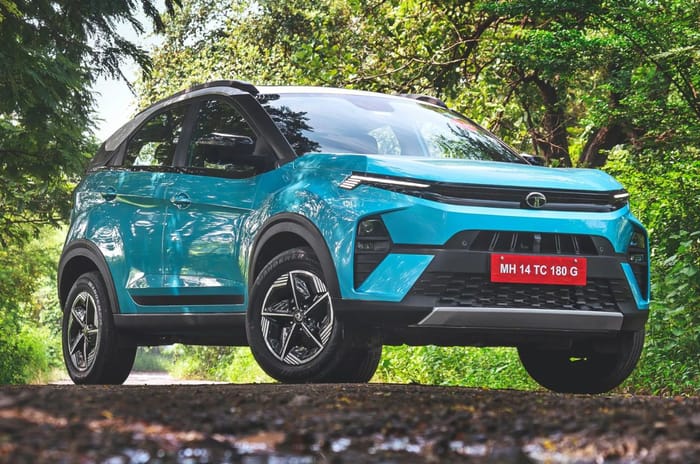
Tata EV Discounts August 2026: अगर आप अगस्त 2026 में नई इलेक्ट्रिक कार खरीदने का प्लान बना रहे हैं, तो Tata Motors की डीलरशिप पर इस महीने कई आकर्षक ऑफर्स मिल रहे हैं। कंपनी चुनिंदा EV मॉडल और वेरिएंट पर कैश डिस्काउंट, एक्सचेंज ऑफर, स्क्रैपेज बेनिफिट और लॉयल्टी इंसेंटिव दे रही है।
हालांकि, सभी इलेक्ट्रिक कारों पर एक जैसे फायदे नहीं मिलेंगे। अगस्त 2026 के ऑफर्स में Tigor EV और Sierra EV को शामिल नहीं किया गया है। वहीं, Tata Nexon EV पर इस महीने सबसे कम बेनिफिट मिल रहा है। कंपनी के ये ऑफर्स 31 अगस्त 2026 तक लागू रहेंगे। Tata Motors के अगस्त 2026 के ये ऑफर्स 31 अगस्त 2026 तक वैध हैं।
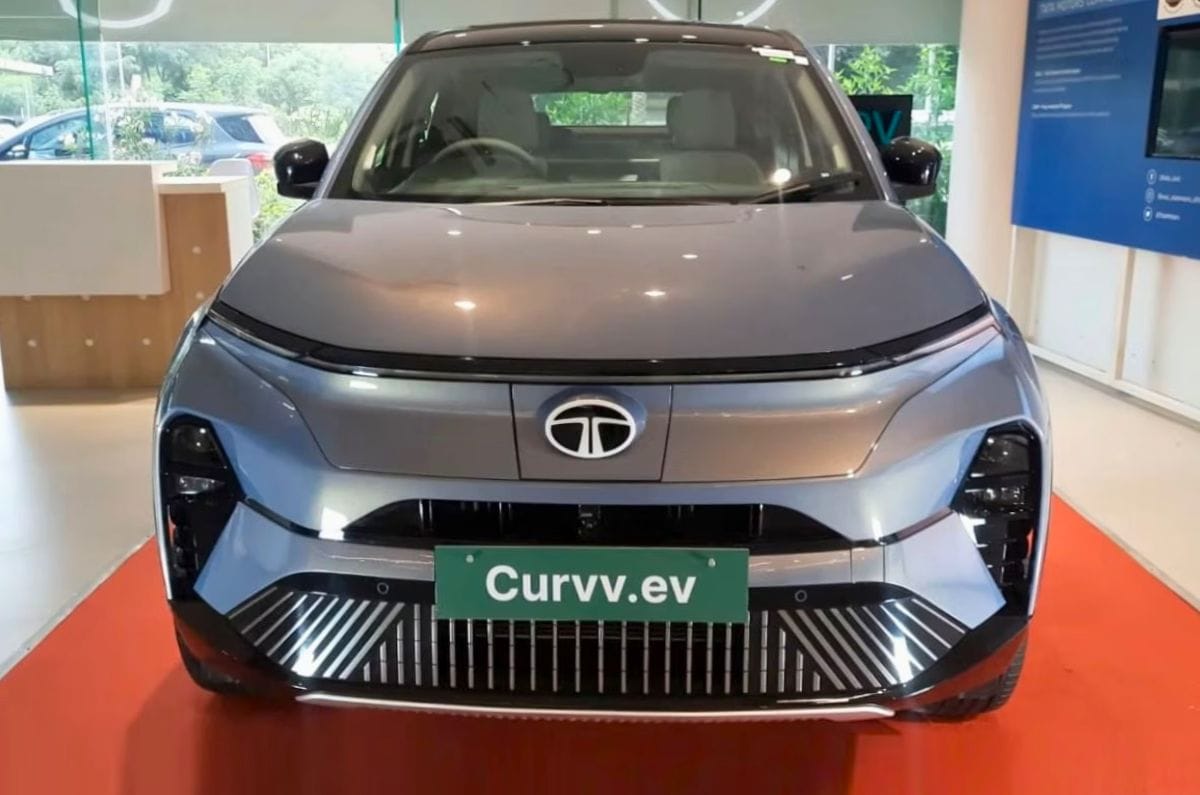
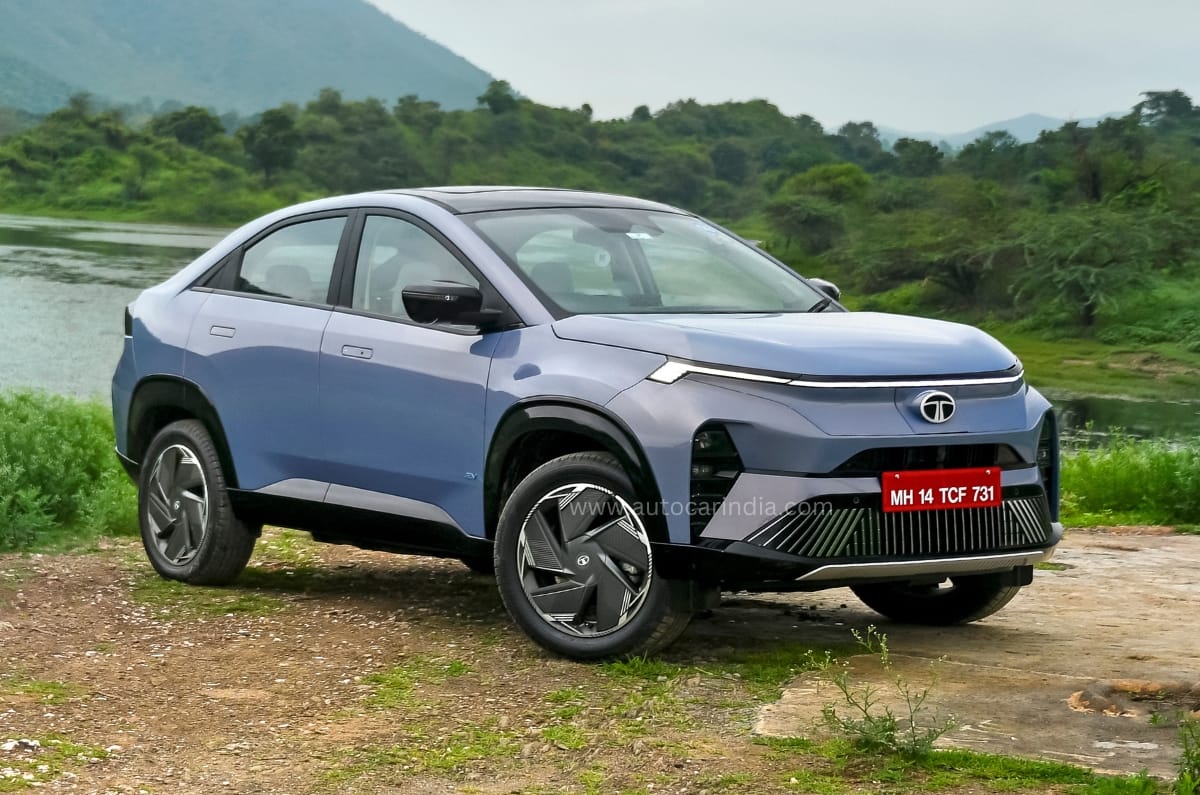
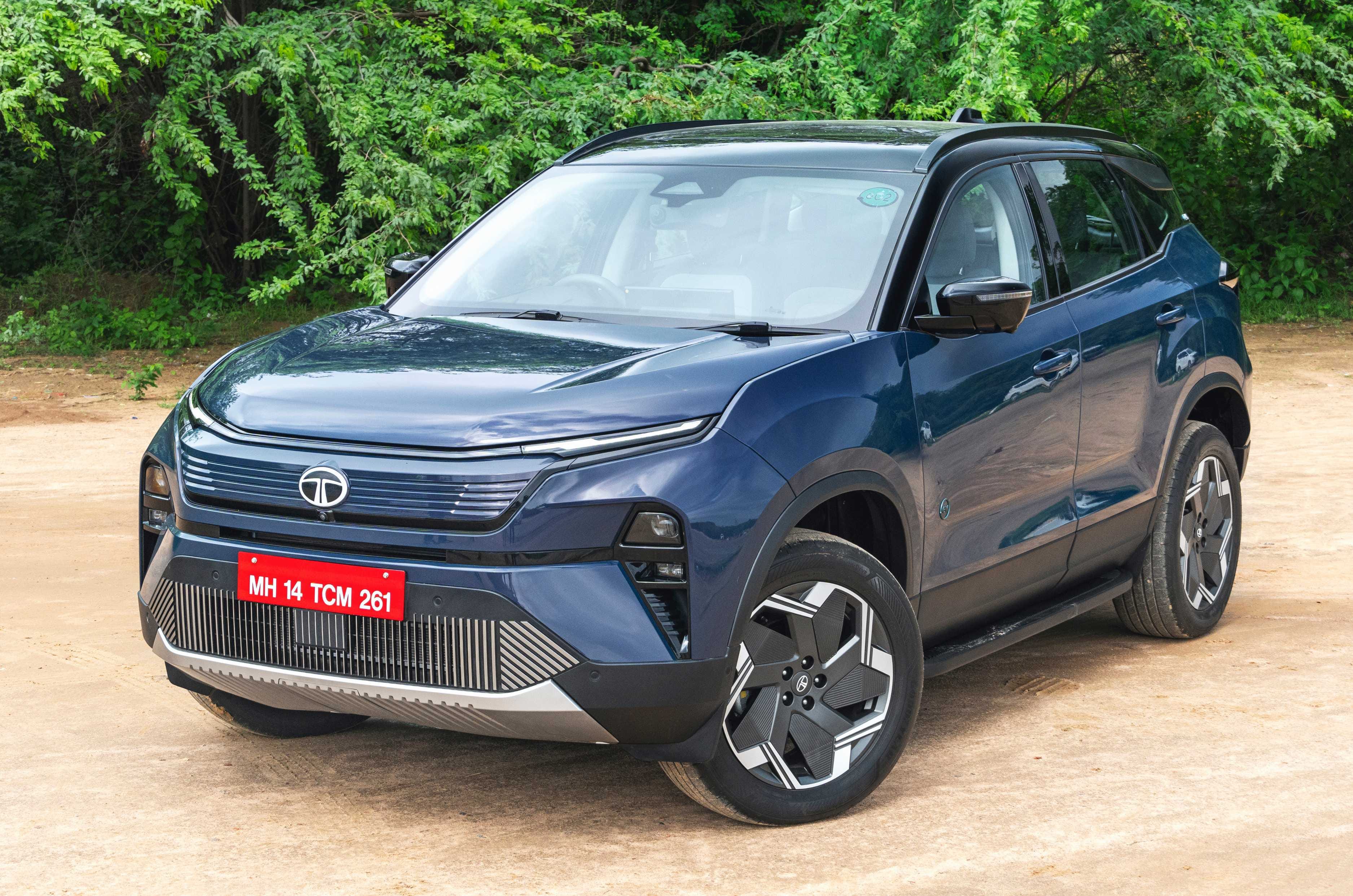
अगस्त 2026 में Tata Motors की इलेक्ट्रिक कारों में Curvv EV पर सबसे ज्यादा डिस्काउंट मिल रहा है। इसके कुछ वेरिएंट पर ग्राहकों को अधिकतम 3.35 रुपए लाख तक के बेनिफिट मिल सकते हैं। Tata Curvv EV के चुनिंदा वेरिएंट पर 30,000 रुपए का एक्सचेंज बेनिफिट या 35,000 रुपए का स्क्रैपेज इंसेंटिव दिया जा रहा है।
इसके अलावा, मौजूदा Tata ग्राहक अगर अपनी पुरानी Tata ICE (पेट्रोल/डीजल) या EV को बदलकर नई Curvv X Series खरीदते हैं, तो उन्हें 30,000 रुपए का लॉयल्टी बेनिफिट भी मिल सकता है। इस तरह Curvv EV के X वेरिएंट पर ग्राहक अधिकतम 65,000 रुपए तक के लाभ का फायदा उठा सकते हैं।
Non-X Curvv EV पर 3.35 लाख रुपए तक की बचत
अगर ग्राहक Tata Curvv EV का Non-X वेरिएंट खरीदते हैं, तो अधिकतम बेनिफिट 3.35 रुपए लाख तक पहुंच सकता है। इसमें:3 लाख रुपए कैश डिस्काउंट। 35,000 स्क्रैपेज इंसेंटिव शामिल हैं। Curvv EV Creative वेरिएंट पर 2.50 रुपए लाख का कैश डिस्काउंट दिया जा रहा है। अगर इसमें 35,000 रुपए का स्क्रैपेज इंसेंटिव शामिल किया जाए, तो कुल फायदा 2.85 लाख रुपए तक हो सकता है।
अगस्त 2026 में Tata Motors के EV ग्राहकों के लिए ऑफर्स मॉडल और वेरिएंट के आधार पर अलग-अलग हैं। कंपनी कैश डिस्काउंट के अलावा पुराने वाहन को एक्सचेंज करने, स्क्रैप करने और मौजूदा Tata ग्राहकों को लॉयल्टी बेनिफिट देने जैसे विकल्प दे रही है।
ध्यान रखें
इन ऑफर्स की वास्तविक राशि शहर, डीलरशिप, मॉडल, वेरिएंट और उपलब्ध स्टॉक के आधार पर अलग हो सकती है। इसलिए इलेक्ट्रिक कार खरीदने से पहले अपने नजदीकी Tata Motors डीलर से ऑफर की अंतिम राशि और नियमों की पुष्टि करना जरूरी है।
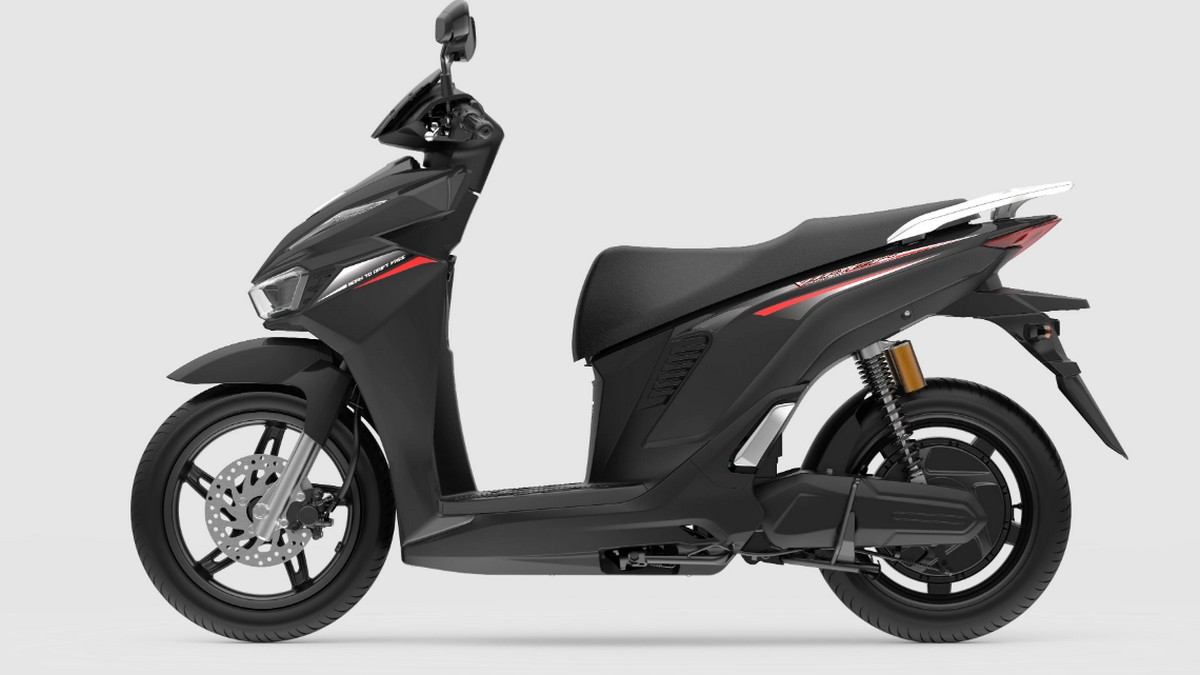
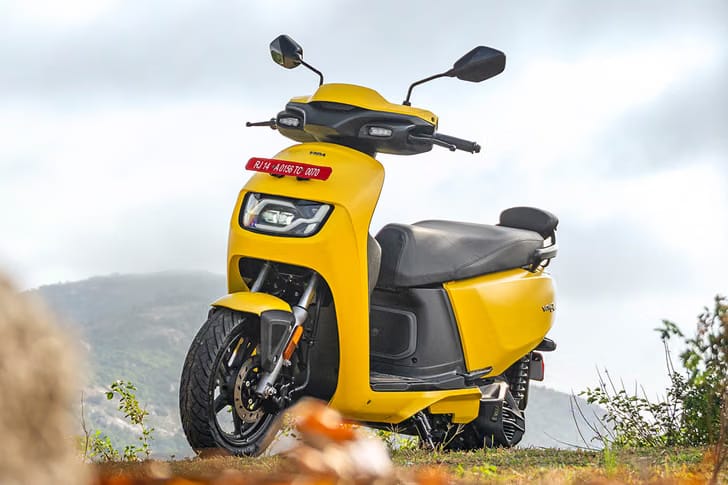
वियतनाम की बैटरी-इलेक्ट्रिक वाहन निर्माता कंपनी VinFast ने फिलीपींस में अपने इलेक्ट्रिक टू-व्हीलर कारोबार की आधिकारिक शुरुआत कर दी है। कंपनी ने अपने प्रोडक्ट पेश किए हैं। इसके साथ ही VinFast ने दक्षिण-पूर्व एशिया के प्रमुख बाजारों में से एक फिलीपींस में इलेक्ट्रिक स्कूटर को बढ़ावा देने की दिशा में बड़ा कदम उठाया है।
कंपनी ने भारत में Viper इलेक्ट्रिक स्कूटर और एक नई इलेक्ट्रिक मोटरसाइकिल के डिजाइन पेटेंट दाखिल किए हैं। भारत में इलेक्ट्रिक दोपहिया वाहनों की मांग लगातार बढ़ रही है। ऐसे में VinFast का नया पोर्टफोलियो Ola Electric, TVS Motor, Bajaj Auto और Ather Energy जैसी कंपनियों को सीधी चुनौती दे सकता है।
कंपनी का लक्ष्य पारंपरिक पेट्रोल मोटरसाइकिलों के मुकाबले इलेक्ट्रिक टू-व्हीलर्स को बढ़ावा देना है। हालांकि, इलेक्ट्रिक वाहनों को लेकर ग्राहकों की प्रमुख चिंताओं- कम रेंज, चार्जिंग की सुविधा और वाहनों की लंबी अवधि की विश्वसनीयता- को दूर करना VinFast के लिए बड़ी चुनौती होगी। इसी को ध्यान में रखते हुए कंपनी ग्राहकों के लिए जल्द ही पब्लिक टेस्ट राइड की सुविधा शुरू करने की तैयारी कर रही है।
अगस्त से शुरू होगा शोरूम विस्तार
VinFast अगस्त से फिलीपींस में अपने रिटेल नेटवर्क का तेजी से विस्तार करने की तैयारी में है। कंपनी शुरुआत में 21 रिटेल शोरूम खोल रही है, जबकि आने वाले समय में देशभर में 100 से ज्यादा अतिरिक्त लोकेशन शुरू करने की योजना है।
कंपनी का शुरुआती फोकस प्रमुख शहरी क्षेत्रों पर रहेगा। इनमें मेट्रो मनीला, मेट्रो सेबू और मेट्रो दावाओ शामिल हैं। इसके अलावा Cavite, Laguna, Batangas, Rizal और Bulacan जैसे घनी आबादी वाले उपनगरीय इलाकों में भी VinFast अपनी मौजूदगी बढ़ाएगी।
ग्राहक कंपनी के फिलीपींस पोर्टल के जरिए नजदीकी स्टोर की जानकारी हासिल करने के साथ इलेक्ट्रिक स्कूटर की टेस्ट राइड भी बुक कर सकेंगे।
30,000 बैटरी स्वैपिंग हब लगाने की योजना
VinFast की रणनीति में सबसे खास पहल उसका बैटरी स्वैपिंग नेटवर्क है। कंपनी स्थानीय इंफ्रास्ट्रक्चर ऑपरेटरों के साथ साझेदारी करके पूरे फिलीपींस में करीब 30,000 ऑटोमेटेड बैटरी-स्वैपिंग कैबिनेट लगाने की योजना बना रही है।
इस सिस्टम का उद्देश्य इलेक्ट्रिक स्कूटर को चार्ज करने में लगने वाले लंबे समय को कम करना है। यूजर की बैटरी खत्म होने पर उसे चार्ज करने के बजाय स्वैपिंग स्टेशन पर खाली बैटरी निकालकर पूरी तरह चार्ज बैटरी लगाई जा सकेगी। कंपनी के मुताबिक यह प्रक्रिया एक मिनट से भी कम समय में पूरी हो सकती है।
पब्लिक स्टेशन पर बैटरी स्वैप करने के लिए 35 फिलीपीन पेसो (P35) का फ्लैट सर्विस चार्ज रखा गया है। यह मॉडल रोजाना स्कूटर इस्तेमाल करने वाले शहरी यात्रियों और डिलीवरी या गिग वर्कर्स के लिए खर्च को अनुमानित और सुविधाजनक बनाने में मदद कर सकता है।
VinFast ने शुरुआत में तीन इलेक्ट्रिक स्कूटर मॉडल पेश किए हैं। इन सभी में 5,200 वॉट BLDC इन-व्हील मोटर आर्किटेक्चर दिया गया है। स्कूटर में सीट के नीचे दो बैटरी स्लॉट हैं, जिनमें 1.5 kWh की दो Lithium Iron Phosphate (LFP) बैटरियां लगाई जा सकती हैं।
मोटर और कंट्रोलर को IP67 रेटिंग मिली है। कंपनी के अनुसार इससे स्कूटर पानी और धूल से सुरक्षित रहता है और करीब आधा मीटर गहरे पानी में भी 30 मिनट तक संचालन किया जा सकता है। यह फीचर फिलीपींस जैसे भारी बारिश और जलभराव वाले शहरी इलाकों के लिए खास तौर पर उपयोगी हो सकता है।
कंपनी की नई रेंज में VinFast Evo को एंट्री-लेवल मॉडल के तौर पर पेश किया गया है। इसे शहरी यात्रियों को ध्यान में रखकर डिजाइन किया गया है और इसमें पारंपरिक स्कूटर के साथ आधुनिक यूरोपीय डिजाइन एलिमेंट्स का इस्तेमाल किया गया है। Evo की टॉप स्पीड 80 किलोमीटर प्रति घंटा है। डुअल बैटरी सेटअप के साथ यह सामान्य परिस्थितियों में 150 किलोमीटर तक की रेंज देने में सक्षम है।
बैटरी सब्सक्रिप्शन मॉडल के तहत इसकी शुरुआती कीमत 70,000 फिलीपीन पेसो (P70,000) रखी गई है, जो करीब 1,210 अमेरिकी डॉलर के बराबर है। सिंगल बैटरी के साथ स्कूटर की कीमत P82,700 और डुअल बैटरी पैकेज के साथ P95,400 है। VinFast का मानना है कि रिटेल नेटवर्क के विस्तार, टेस्ट राइड और बड़े बैटरी-स्वैपिंग इंफ्रास्ट्रक्चर के जरिए फिलीपींस में इलेक्ट्रिक टू-व्हीलर अपनाने की रफ्तार बढ़ाई जा सकती है।
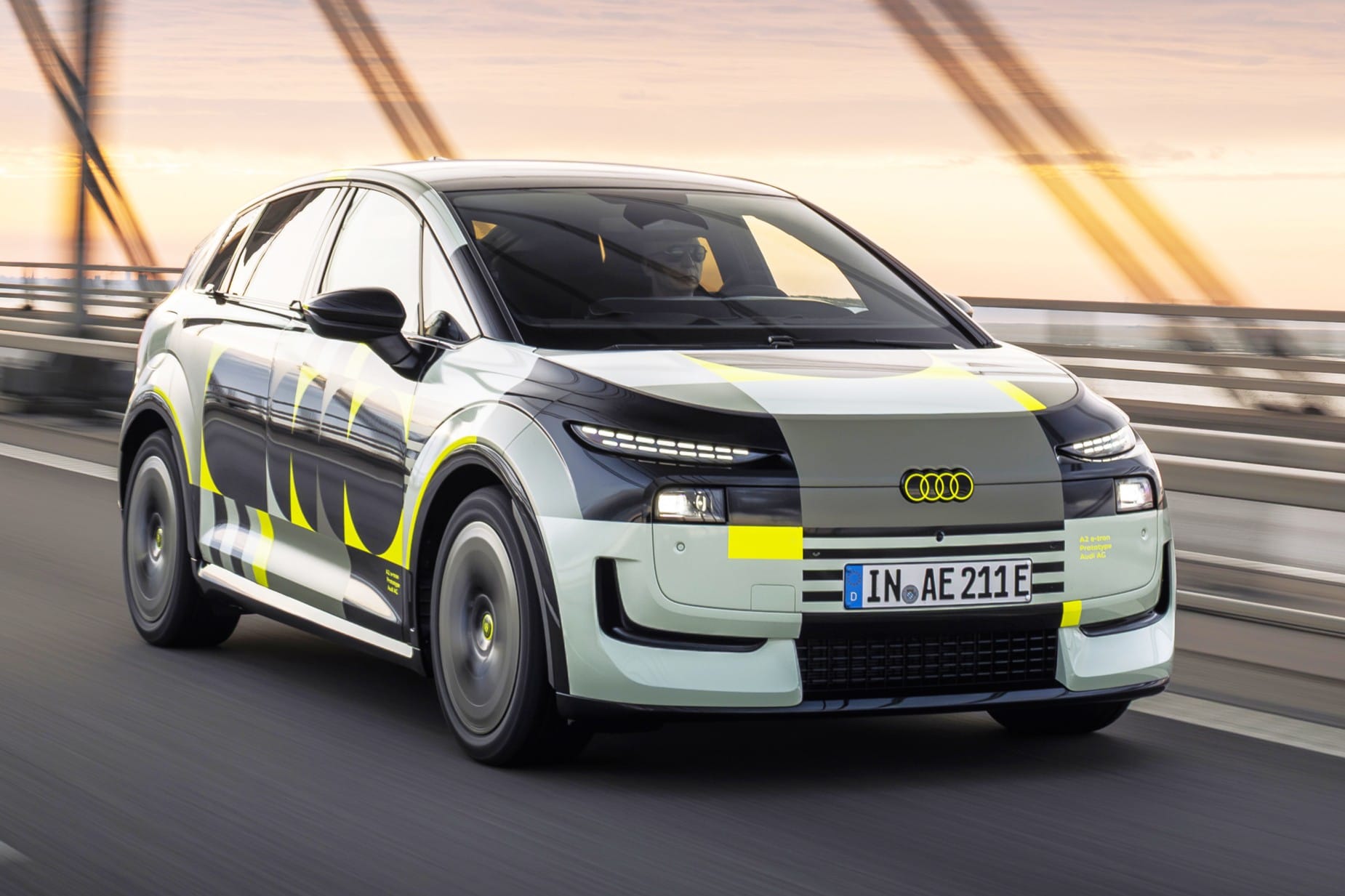
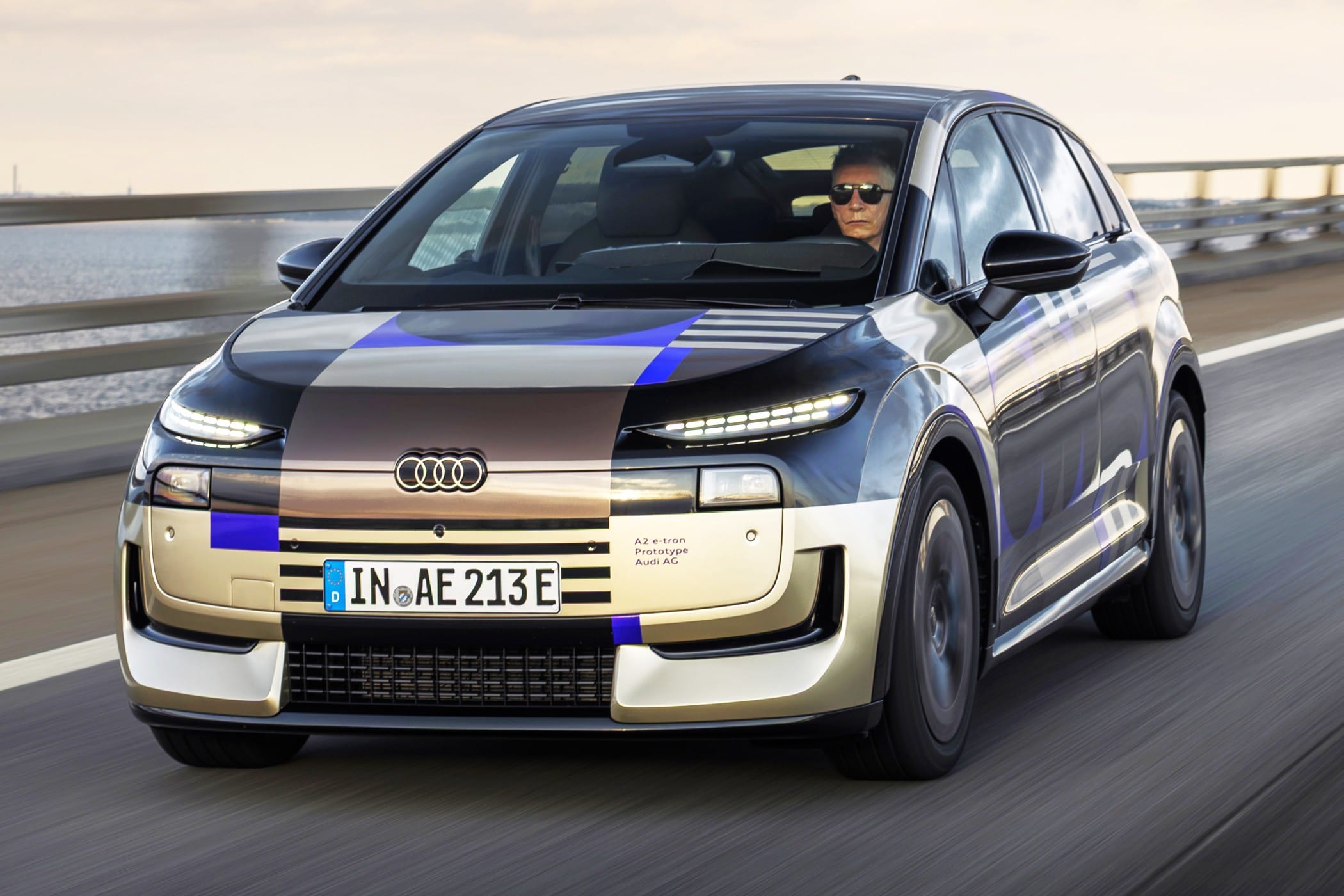
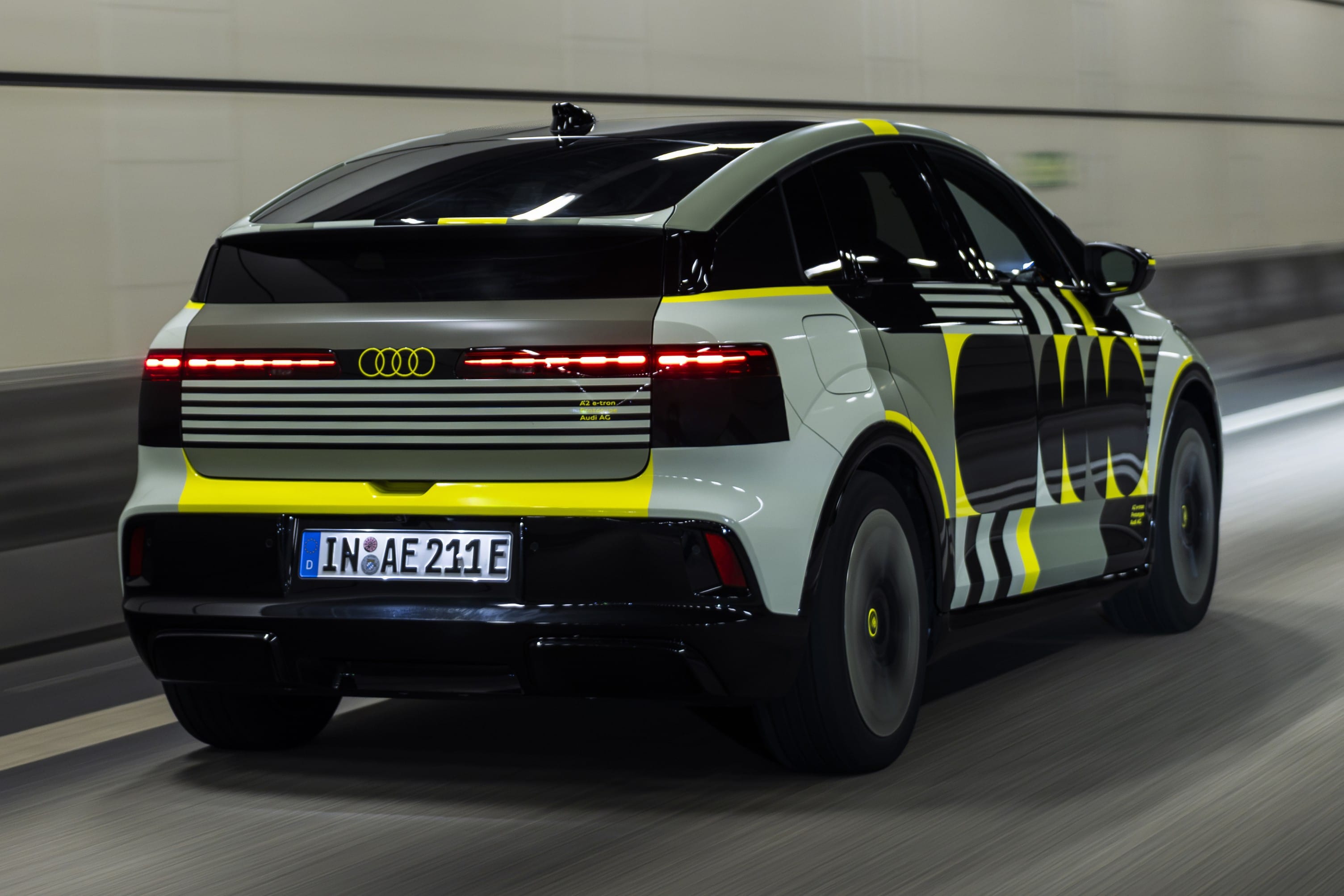
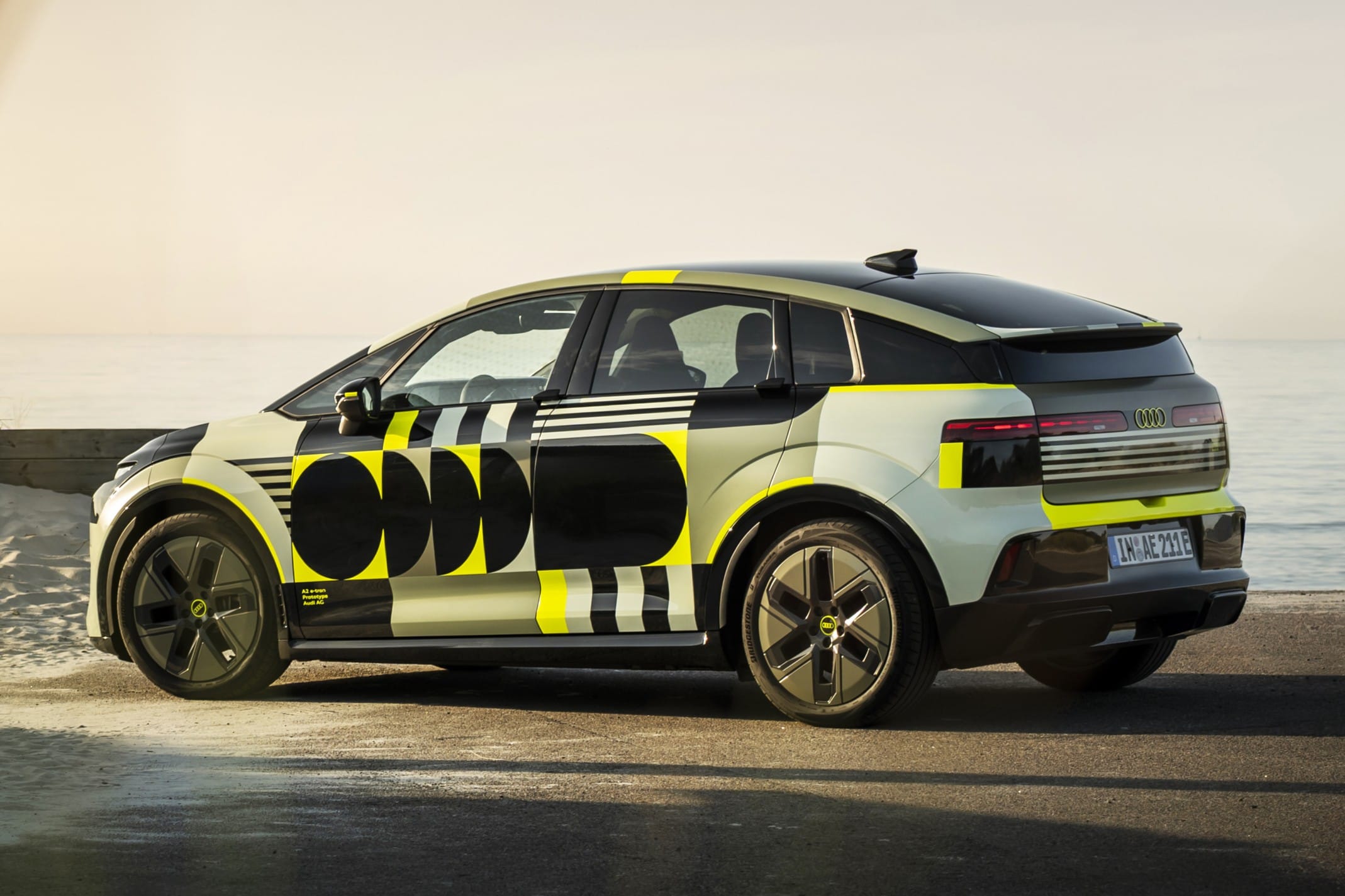
Audi has revealed fresh details and camouflaged prototype shots of the upcoming A2 e-tron, confirming that the electric hatchback will be the most efficient production car the brand has ever built. The A2 e-tron is expected to debut in full this fall, with European sales scheduled to begin in the end 2026 to early 2027 timeframe.
Reborn Audi A2 adopts the original’s efficiency-first ethos
Achieved 7.81km/kWh WLTP energy efficiency in preliminary testing
Equipped with the optional Efficiency Package, the A2 e-tron recorded a preliminary WLTP energy consumption figure of just 12.8kWh/100km (7.81km/kWh), making it the German carmaker’s most energy-efficient model to date. Notably, the original A2 (sold from 1999 to 2005) was built to deliver superb fuel economy, and its EV successor clearly adheres to the same efficiency-first principles.
Audi says the A2 e-tron achieves its impressive claimed efficiency via a combination of advanced aerodynamics, a highly optimised drivetrain, and a battery designed specifically for everyday use. The Efficiency Package lowers the A2 e-tron’s energy consumption by up to 0.9kWh/100km over the standard model.
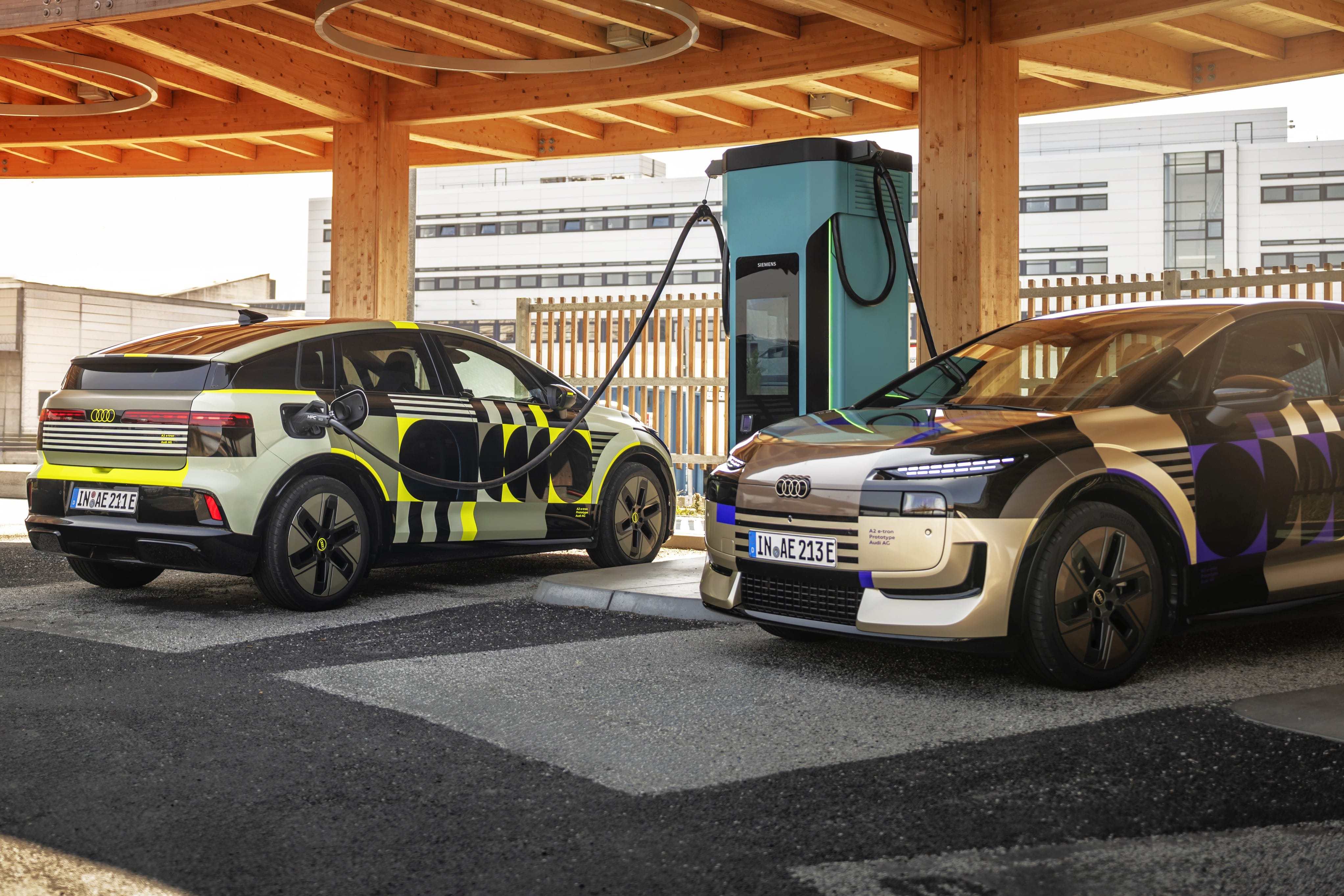
The A2 e-tron also boasts a drag coefficient of 0.24, the lowest of any compact Audi to date. To achieve this, Audi has equipped the A2 e-tron with a rounded fascia, a flowing roofline, a fully enclosed underbody, air curtains, wheel arch gap reducers, an upright rear end, and an active front cooling intake that remains closed during normal driving to minimise drag. The intake automatically opens during rapid charging, heavy acceleration, or high ambient temperatures to provide additional cooling for the battery and power electronics.
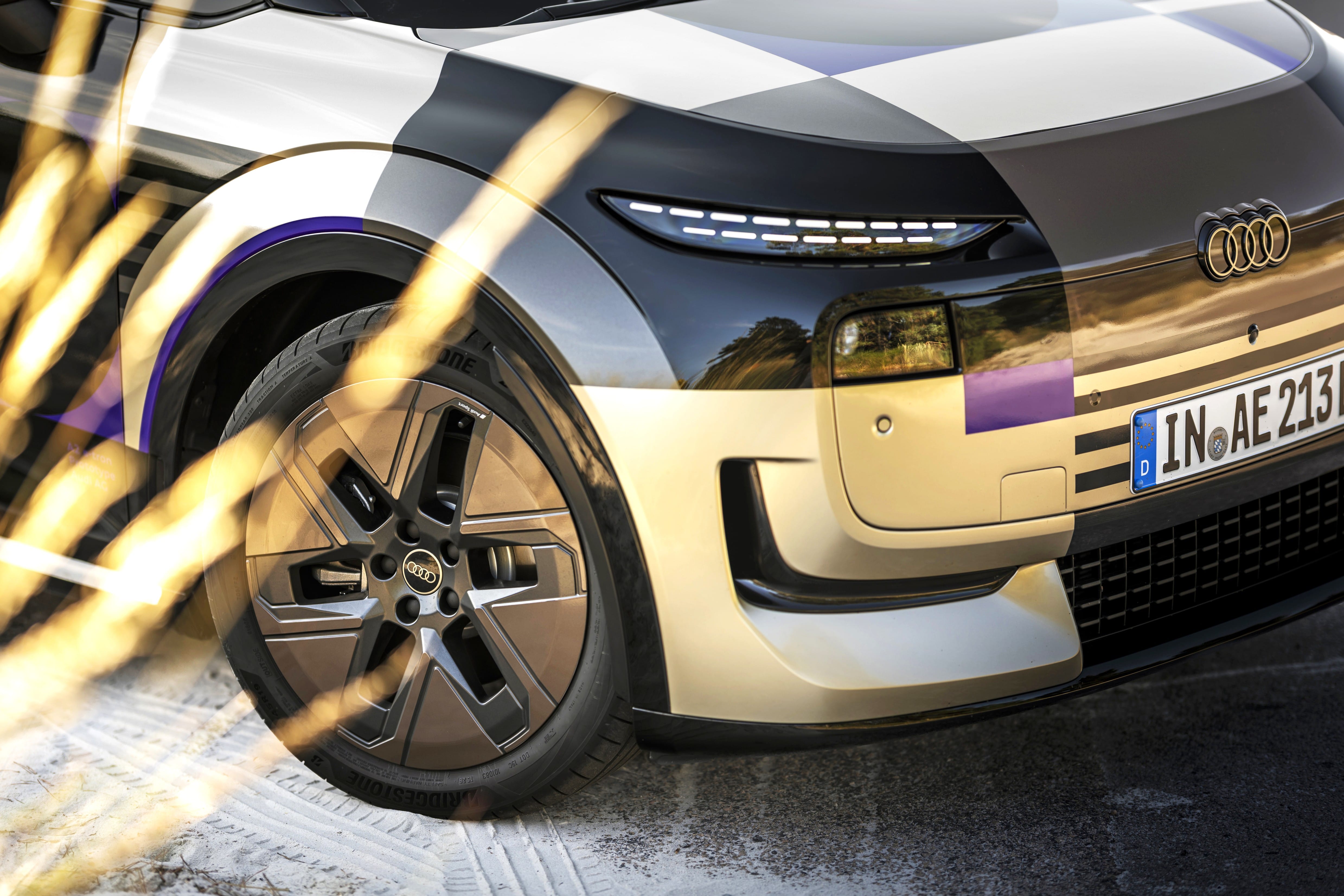
Other observable design highlights on the A2 e-tron prototype include a split-headlamp setup, L-shaped intakes up front, aero-optimised alloy wheels, wide rectangular tail-lamps, subtly flared fenders, and a silhouette that pays homage to the original A2 – the A2 e-tron actually looks quite similar to the Hyundai Ioniq 3 in profile.
Audi A2 e-tron to offer 61kWh battery in base spec
Estimated WLTP range of around 453km
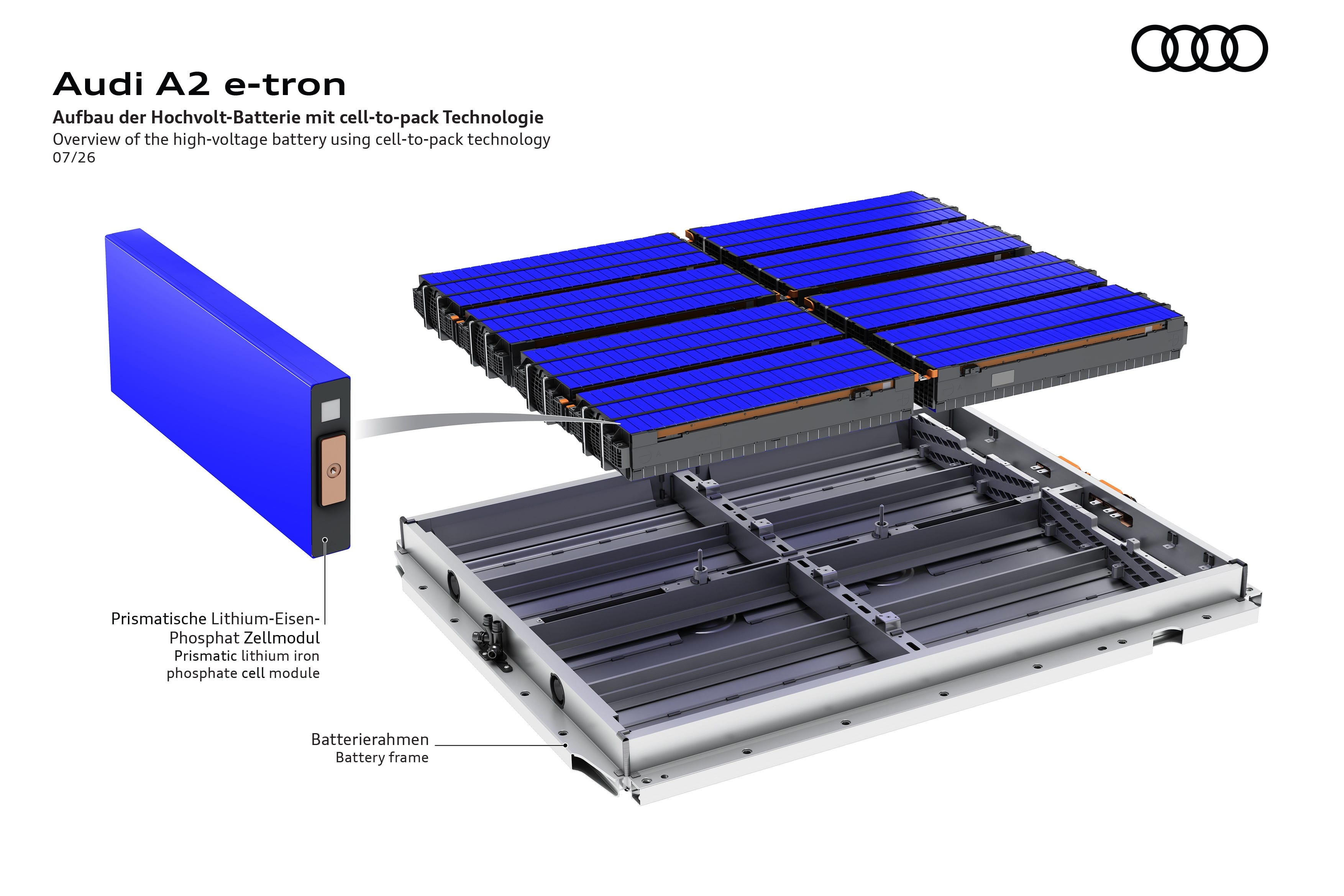
Entry-level versions of the A2 e-tron are confirmed to offer a 61kWh (58kWh usable) LFP battery that powers a rear-mounted 190hp electric motor dubbed APP350. Multiplying the usable battery capacity with the aforementioned 7.81km/kWh efficiency figure yields an indicative WLTP range of 453km.
The A2 e-tron’s battery uses a cell-to-pack design that improves packaging efficiency while eliminating conventional battery modules. It can even be routinely charged to 100 percent without the degradation concerns associated with other battery chemistries. A revised thermal management system also improves home wallbox charging efficiency to 89.6 percent.
According to Audi, the A2 e-tron’s electric drive system is around 10 percent more efficient than previous designs. Improvements include silicon carbide (SiC) power electronics, thinner motor laminations to reduce energy losses, revised stator windings, and a new low-friction transmission oil paired with a tall 10.2:1 gear ratio for improved highway efficiency.
The A2 e-tron will also support vehicle-to-load (V2L) functionality, allowing owners to power external appliances with up to 2.3kW of output, as well as a vehicle-to-home (V2H) feature that enables the vehicle to act as a home energy storage system when paired with compatible charging equipment.
While Audi has confirmed only the 140kW version of the A2 e-tron for now, more variants are expected to be part of the line-up. Since the A2 e-tron shares its underpinnings with the Volkswagen ID 3 Neo, which gets a 79kWh NMC battery option, the Audi hatchback could offer a similarly sized unit.
JSW MG Motor India will launch its new SUV on August 28. Expected to be called the Hector Hawk, it will be the first model based on the company’s new ADAPT platform and will be offered with both battery electric (EV) and plug-in hybrid (PHEV) powertrains.
EV version expected with a 69.2kWh battery pack
PHEV likely to offer up to 125km electric-only range
Likely to rival the Mahindra XEV 9S and XUV 7XO
JSW MG Hector Hawk: what to expect
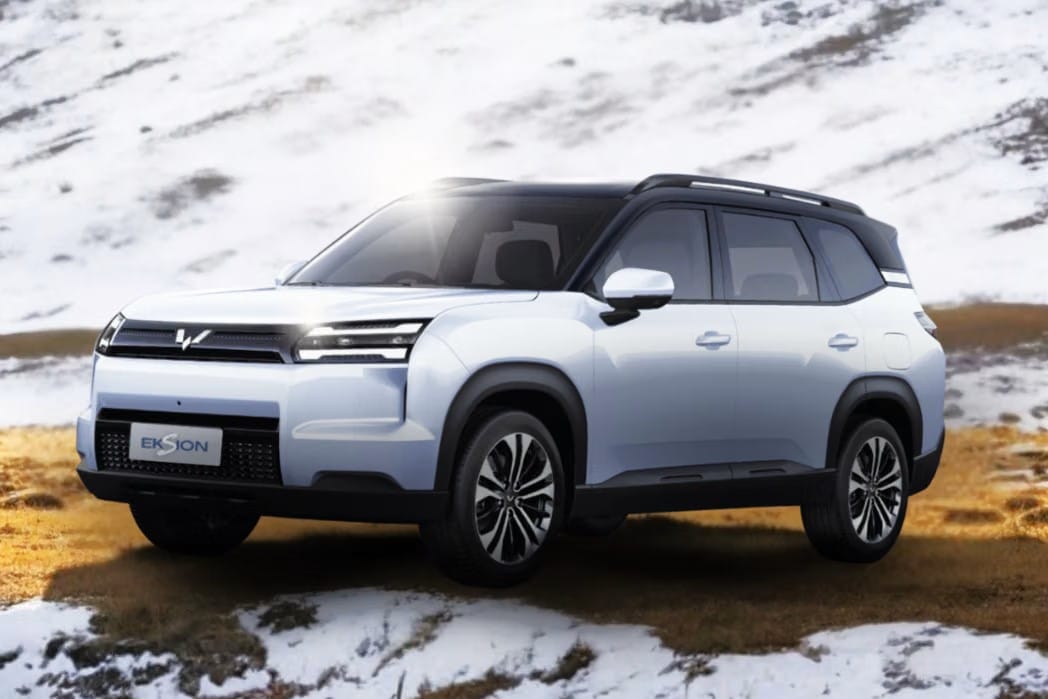
Wuling Starlight EV. Image used for representative purposes only.
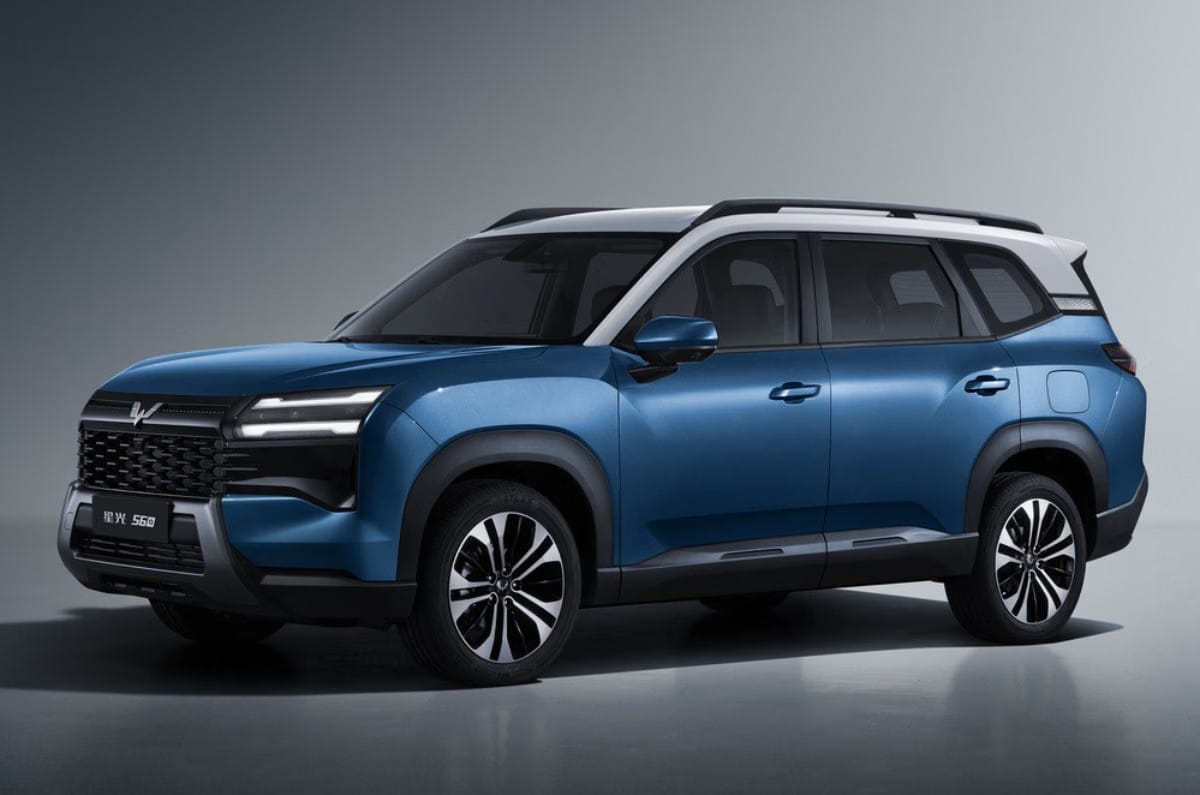
The Hector Hawk is based on the Wuling Starlight 560 sold in international markets which measures 4.7m in length, 1.85m in width and 1.7m in height. The car has been spied testing on our roads with spy shots revealing rectangular LED headlamps with LED daytime running lamps (DRLs) at the top and bottom, a blanked-off grille (expected to be the EV version), wraparound LED tail-lamps, a roof-mounted spoiler and a charging port on the left rear fender.
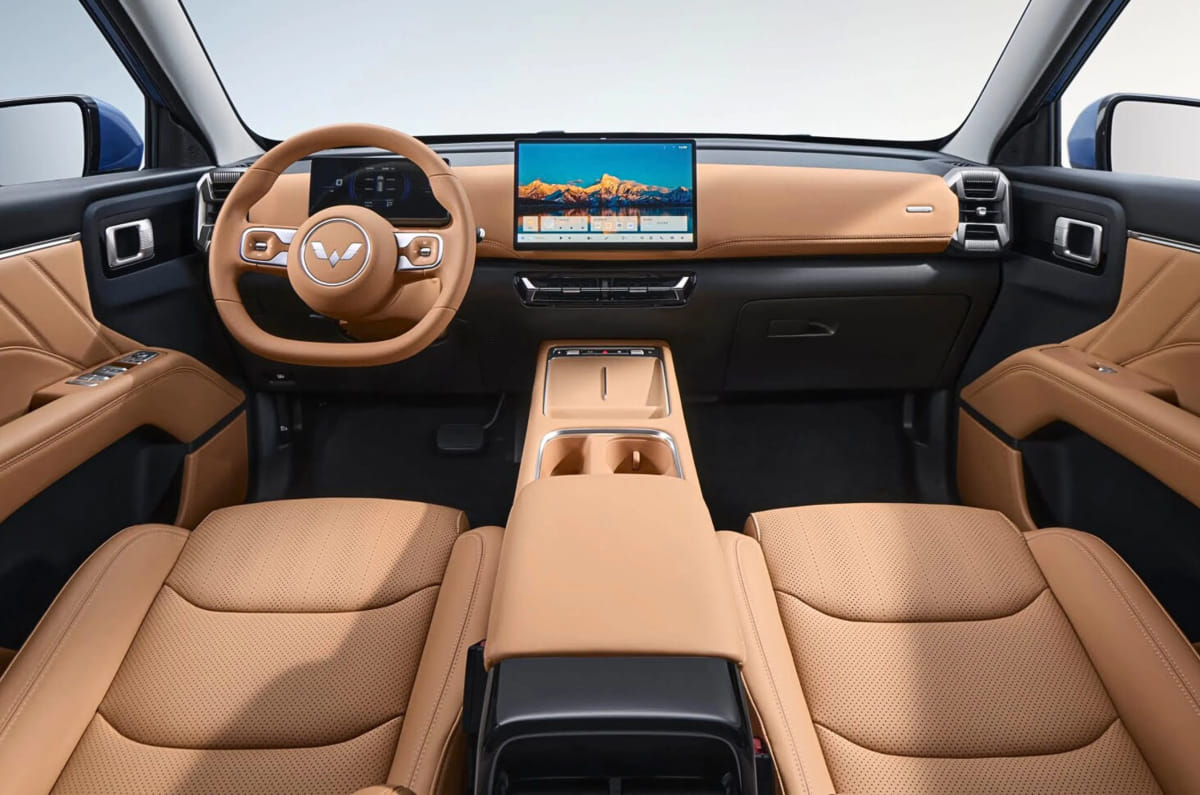
Wuling Starlight 560’s dashboard shown for representative purposes only.
Inside, the SUV is expected to feature a minimalist dashboard with an 8.8-inch digital instrument cluster and a 12.8-inch touchscreen infotainment system. Other expected features include a panoramic sunroof, powered and ventilated front seats, a 50W wireless phone charger, a 6-speaker sound system and automatic climate control with rear AC vents.
The safety suite could have 6 airbags as standard, a tyre-pressure monitoring system (TPMS), hill-hold assist, an electronic parking brake, a rear parking camera with sensors and advanced driver assistance systems (ADAS).
Powertrains and platform
Wuling Starlight PHEV. Image used for representative purposes only.
The EV version is expected to get a 69.2kWh battery pack paired with a 201hp, 310Nm front-mounted electric motor, offering a CLTC-claimed range of 530km. The PHEV version is expected to combine a 1.5-litre petrol engine with a 20.5kWh battery pack and an electric motor, offering a total output of 195hp and 230Nm and an all-electric range of 125km.
Strong hybrid powertrain based on ADAPT
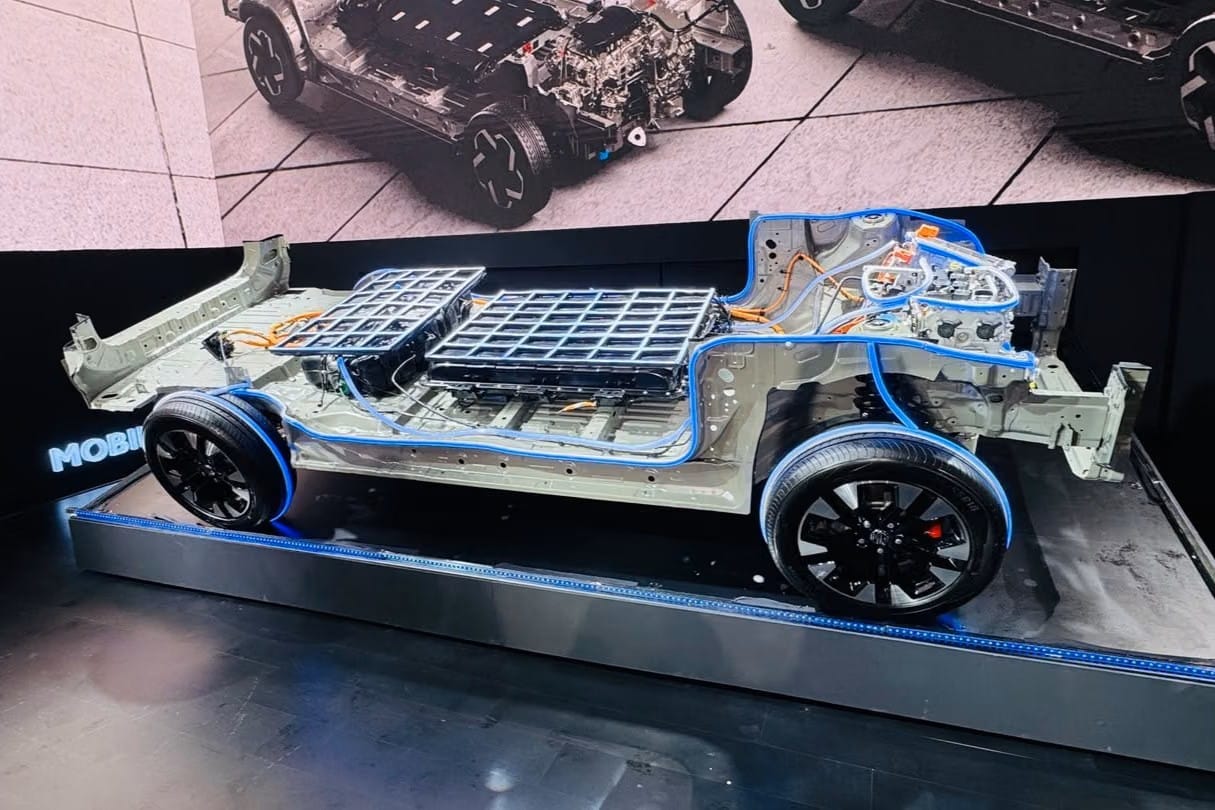
The Hector Hawk will be the first model in India based on MG’s ADAPT platform, which supports battery electric, plug-in hybrid, range-extender and strong-hybrid powertrains. JSW MG has confirmed that it will initially focus on EVs and PHEVs.
In MG’s India lineup, the Hector Hawk is expected to be positioned above the current Hector. The EV version is likely to rival the Mahindra XEV 9S, while the PHEV is expected to take on the Mahindra XUV 7XO and Tata Safari.
Hyundai has launched an assured buyback programme for its Creta Electric, offering customers 60 percent assured buyback value till 3-years or up to 45,000km. The Hyundai Creta Electric is the carmaker’s most accessible EV, priced between Rs 18.03 lakh and Rs 23.67 lakh, ex-showroom.
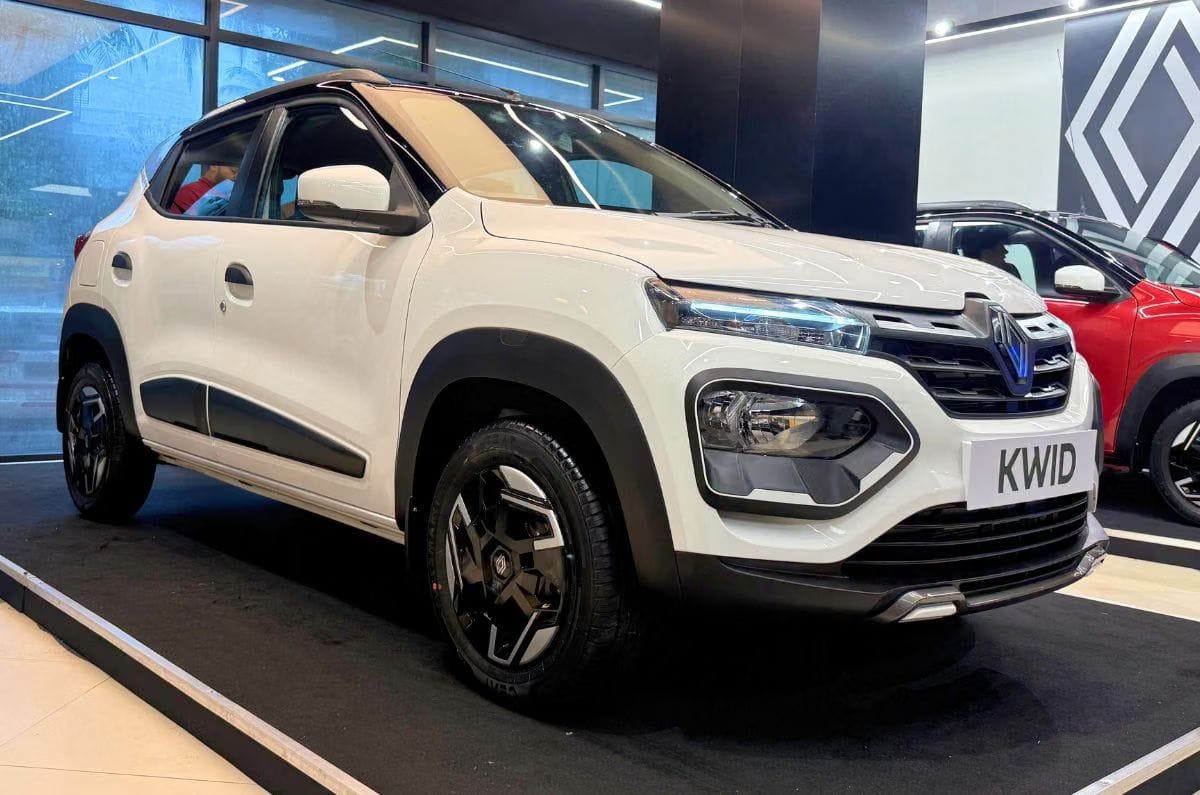
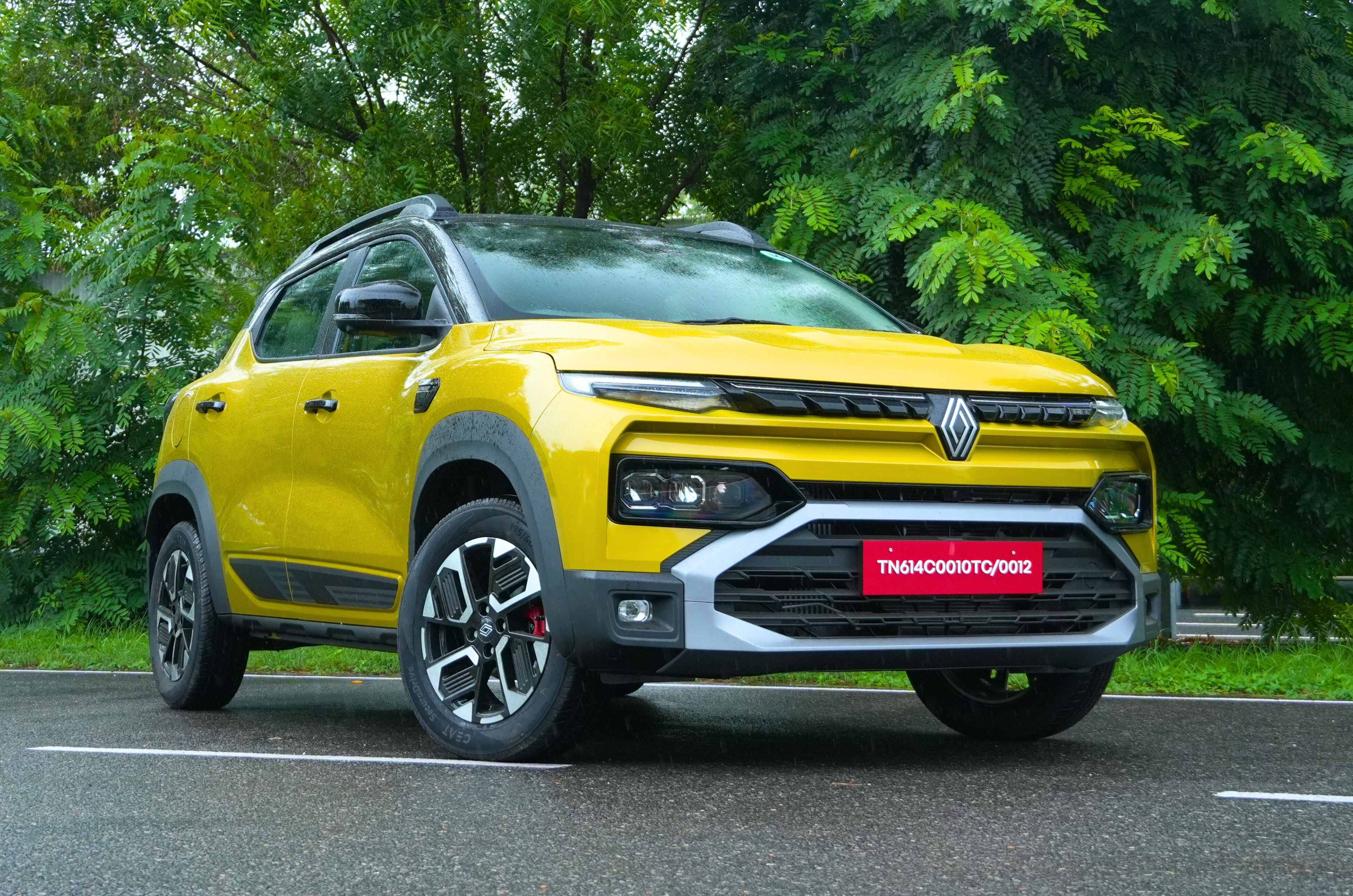
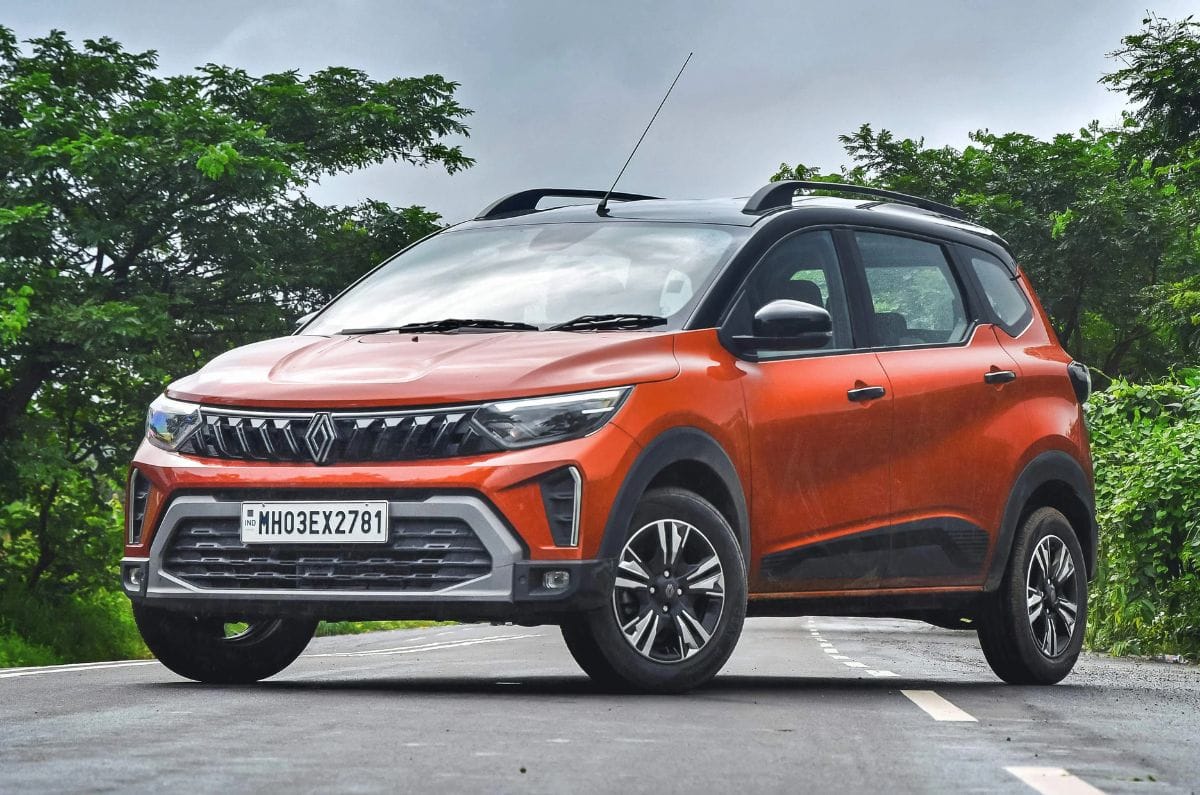
Renault has announced various discount schemes for customers in August 2026, including cash offers, exchange or scrappage incentives, and corporate benefits. All Renault models (except the Duster) are available this month with a discount. The benefits mentioned here are applicable for bookings made between August 1 and August 31, 2026.
Kiger gets highest discounts; Kwid gets the lowest
Kiger and Triber offered with loyalty and corporate benefits
Disclaimer: Offers/benefits may vary by city and are subject to stock availability. Buyers are advised to check with their local dealer for exact figures.
Renault Kiger offers in August 2026
Benefits up to Rs 68,000
Depending on the trim level, the 2026 Renault Kiger is being offered with benefits of up to Rs 68,000 across India (except Kerala and Gujarat). This includes a cash discount of Rs 20,000, exchange or scrappage benefits of up to Rs 25,000 and loyalty incentives worth up to Rs 18,000. There’s also a corporate discount of Rs 5,000.
For those residing in Kerala and Gujarat, the loyalty benefit and corporate discount remain the same but cash offers and exchange incentives can now be up to Rs 50,000 each. The price of the Renault Kiger is between Rs 5.81 lakh and Rs 10.40 lakh.
Renault Triber offers in August 2026
Benefits up to Rs 60,000
Apart from Kerala and Gujarat, the 2026 Renault Triber MPV is available with benefits amounting to Rs 60,000. Buyers will be offered a cash discount of Rs 15,000, scrappage incentives worth up to Rs 25,000 or an exchange offer of Rs 15,000, and a corporate discount of Rs 5,000.
While the scrappage and corporate offers are unchanged, residents of Kerala and Gujarat get cash discounts of up to Rs 30,000 and exchange benefits worth up to Rs 30,000. The 2026 Renault Triber is priced from Rs 5.81 lakh to Rs 8.53 lakh.
Renault Kwid offers in August 2026
Benefits up to Rs 40,000
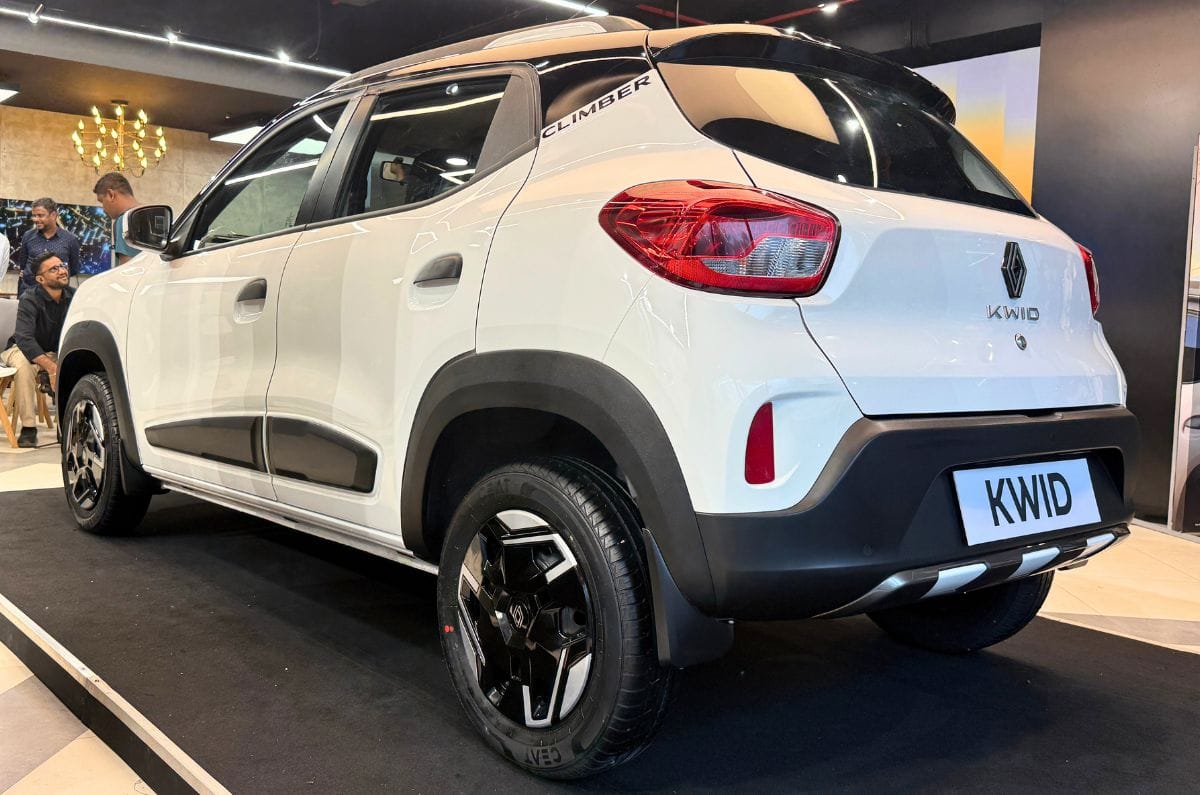
The 2026 Renault Kwid is being offered with a cash discount of up to Rs 15,000 and a scrappage incentive worth up to Rs 25,000 in most states in India. However, this offer is not applicable for buyers in Kerala, Assam, Karnataka, Odisha, Uttarakhand, Telangana, Chhattisgarh, Arunachal Pradesh and Andhra Pradesh. Buyers here can get the Kwid with cash discounts amounting to up to Rs 30,000, while the scrappage benefit remains unchanged. The 2026 Renault Kwid is priced between Rs 4.53 lakh and Rs 5.61 lakh.
Ather Energy is exploring whether to accelerate the second phase of its upcoming Aurangabad manufacturing facility as demand for electric scooters continues to outpace expectations, with the company saying its planned capacity could come under pressure if current growth trends persist.
The company’s co-founder and CEO, Tarun Mehta, said the company has begun considering an earlier rollout of Phase 2 after a sharp rise in demand in recent months. He added that the recently completed Rs 2,500-crore fund raise gives the company the flexibility to move ahead with the expansion without waiting for Phase 1 to mature.
EL platform based family scooter to launch on August 29
EL production to initially begin from Hosur, before shifting to Aurangabad
Ather’s electric bike still quite a ways away
Aurangabad Plant to Add 5 Lakh Units Annual Capacity
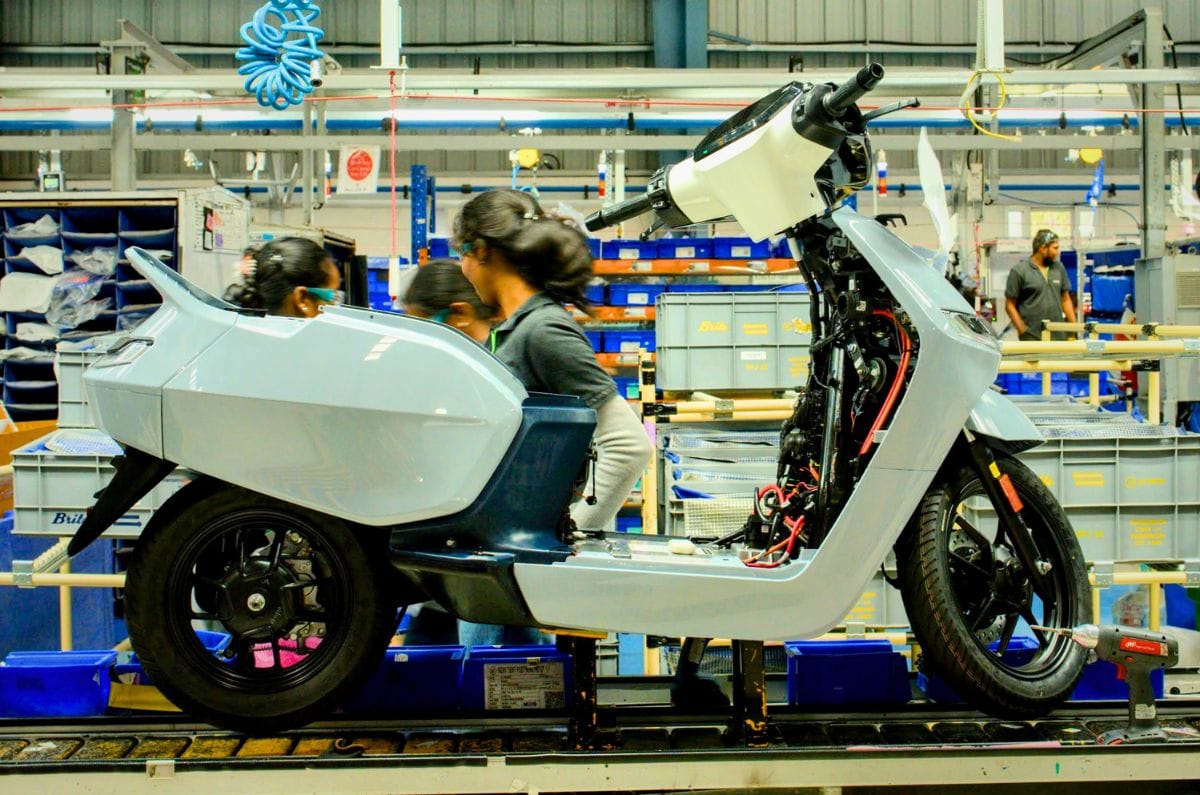
The comments come as Ather prepares to commission the first phase of its Aurangabad, or AURIC, manufacturing facility in a couple of months. The company currently manufactures electric scooters from its Hosur plant, which has an annual production capacity of 4.2 lakh units. Mehta said the facility is now operating at almost full utilisation following steady production ramp-up during the first quarter.
Once the Aurangabad plant comes live, it will add another 5 lakh units of annual capacity, taking Ather’s total manufacturing capacity to 9.2 lakh units a year. He added that the Aurangabad facility is progressing as planned, with the assembly line already installed, the paint shop under trial and warehouse and utility work nearing completion ahead of commercial operations later this year. However, Mehta said even that may prove insufficient if the current pace of demand continues.
“GoLive of Auric will take our total capacity up from 4.2 lakh units to 9.2 lakh units later this calendar year. But we believe demand is ramping up very fast. 9.2 lakh units per annum is only 77,000 units a month. We believe on current demand trajectories, even this may be tight in the coming quarters. Which is why I think we were lucky here when we took Aurangabad land. We took a larger land capacity and we had always planned for Auric phase two,” he said.
EV Demand Outpaces Supply
Demand has risen sharply over the past few months, according to the company, resulting in supply constraints across several markets. Mehta said dealer inventories have fallen from 14 days to just three days, while some dealerships have temporarily stopped accepting fresh pre-orders because waiting periods have stretched to around two months or more. The company estimates it could have retailed another 13,000 to 15,000 scooters every month if sufficient production capacity had been available.
“There are 50,000 pre-orders, despite the fact that in many states now, our dealers are no longer even accepting new pre-orders, because the waiting times are now hitting two months or even higher. The underlying demand we strongly believe is very, very high,” Mehta said. “We believe today that of the 30,000 units that we retail average in Q1, we could have probably sold an incremental 13,000 to 15,000 units extra every month.”
New EL Scooter Platform Set to Launch on August 29
Ather expects demand to receive another boost with the launch of its first new scooter based on its brand-new EL platform on August 29. Production of the vehicle has already begun at the Hosur plant, homologation has been completed and high-volume trials are underway.
Initially, production will continue from Hosur before gradually shifting to Aurangabad as the new facility ramps up. The company plans to scale manufacturing capacity for the EL platform to about 60,000 units a month across the two plants. The EL platform will underpin multiple future scooter models and forms part of Ather’s strategy to expand production and meet rising demand for electric scooters.
Ather electric bike still at least 2 years away
Even as it prepares to debut a fresh onslaught of new products based on its EL platform, Ather Energy has no plans to enter the electric motorcycle segment in the near term. According to Ather Energy co-founder and Chief Executive Officer Tarun Mehta, the company’s strategy is to first concentrate on rolling out products based on its new EL platform before entering the electric motorcycle space.
“At this point, we are focused on the EL platform and getting at least the first, maybe two products, maybe another product out on it in the next year,” Mehta said to investors. Ather had earlier said it is developing a dedicated motorcycle platform, codenamed Zenith, alongside its EL scooter architecture. The comments indicate that Ather is now taking a measured approach towards a segment that is still at an early stage of adoption.
“Motorcycles are starting to look interesting. But Ather may not be the pioneer this time. We may watch the market. We want to see how consumers respond, which segments show a willingness and an interest towards the segment before we make our maiden launch here,” Mehta said.
He added that an electric motorcycle from Ather is not expected anytime soon. “So this, I would say, more than a year away, for sure. Probably two years plus.” he said. The company’s strategy comes at a time when India’s electric two-wheeler market continues to be led by scooters, while electric motorcycles account for only a miniscule share of overall EV sales.
Royal Enfield has begun sales of its Flying Flea C6 electric motorcycle on a small scale, while startups including Ultraviolette, Revolt and Oben are expanding their presence. Other legacy players like Bajaj Auto and Hero MotoCorp are also developing their own electric motorcycle platforms, although a debut from either brand is still some time away. Ather, however, plans to observe how the market evolves before committing resources to the category.
Prospective EV buyers headed to a Tata Motors dealership will be offered a variety of benefits in August 2026. Depending on the model and variant, benefits available include cash discounts, exchange offers, plus scrappage and loyalty incentives. Tata’s August 2026 discounts do not include the Tigor EV and Sierra EV, while the Nexon EV gets the lowest benefits this month. The offers mentioned here will be valid till August 31, 2026.
Disclaimer: Offers/benefits may vary by city and are subject to stock availability. Buyers are advised to check with their local dealer for exact figures.
Curvv EV gets highest discounts; Nexon EV gets least
Tata is offering select variants of the Curvv EV with exchange benefits worth Rs 30,000 or scrappage incentives of Rs 35,000. Existing Tata customers opting for a new Curvv X series, switching from either an ICE (internal combustion engine) or EV (electric vehicle) model are also offered with loyalty benefits of Rs 30,000. In all, customers of the Curvv EV X variants can avail discounts up to Rs 65,000.
Those going for a non-X trim of the Tata Curvv EV can avail maximum benefits of up to Rs 3.35 lakh. This is made possible by a cash discount of Rs 3 lakh, plus scrappage incentives of Rs 35,000. These exchanges/scrappage schemes aside, buyers of the Curvv EV Creative trim will be offered with a cash discount of Rs 2.50 lakh – taking the overall discount to Rs 2.85 lakh.
Tata Harrier EV offers in August 2026
Benefits up to Rs 2.75 lakh
Buyers opting for the Adventure, Fearless+ or Empowered trims of the Harrier EV will be offered an exchange bonus of Rs 50,000 or a scrappage incentive worth Rs 75,000. There are loyalty benefits of Rs 50,000 for those moving from an existing Tata ICE model to a new Tata EV, with existing Tata EV owner moving to a new fully electric model being offered Rs 1 lakh.
Tata is also offering customers the ‘Freedom Offer’ this August. It discounts the price of the Harrier EV Adventure trim by an additional Rs 75,000 and by Rs 1 lakh for the Harrier EV’s Fearless+ and Empowered trims. In total, the former is available with benefits of up to Rs 2.50 lakh this August, while the other two can be had with discounts of up to Rs 2.75 lakh.
Tata Punch EV offers in August 2026
Benefits up to Rs 1.45 lakh
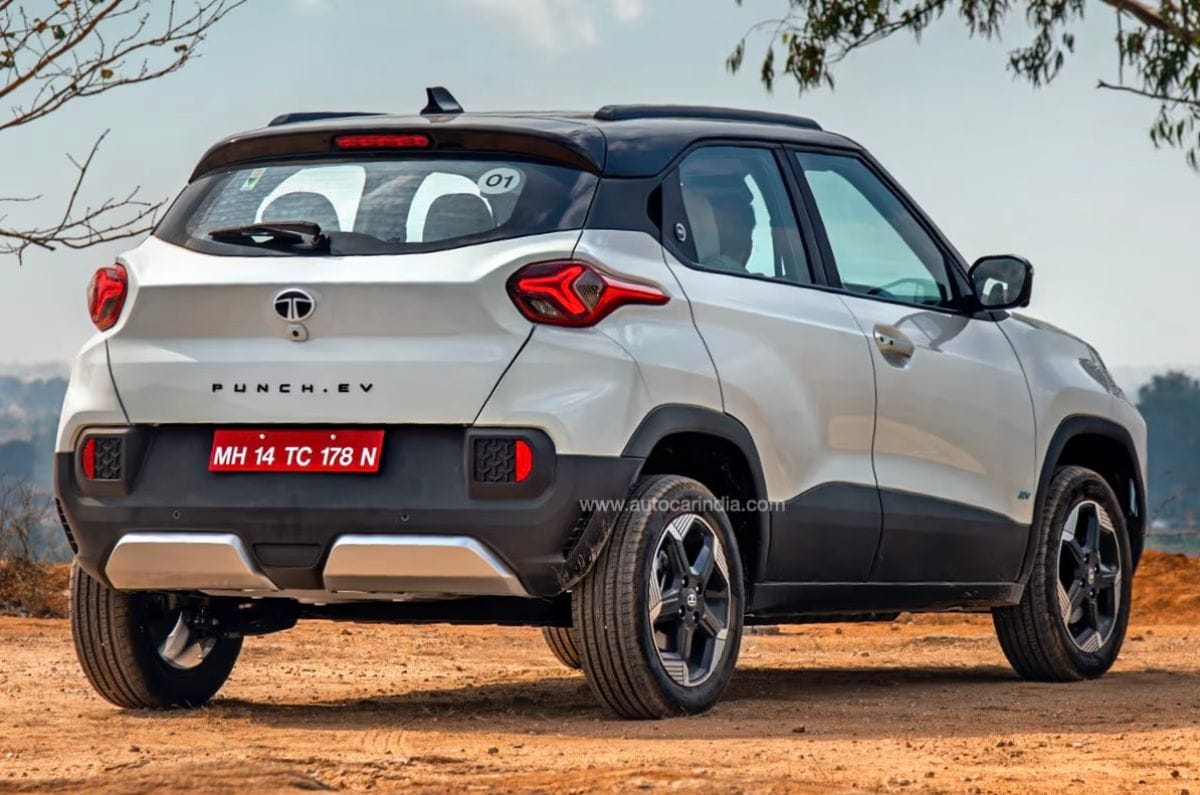
Select variants of the Punch EV Medium Range, Long Range, and Smart variants are available this August with an exchange bonus of Rs 30,000 or a scrappage benefit of Rs 35,000. Additionally, cash discounts on the Medium Range is Rs 90,000 and that on the Long Range is Rs 1.10 lakh – overall benefits for the Punch EV Medium Range and Long Range are Rs 1.25 lakh and Rs 1.45 lakh, respectively. Meanwhile, the Smart trim is available with a cash discount of Rs 60,000, with total discounts amounting to up to Rs 95,000.
Tata Tiago EV offers in August 2026
Benefits up to Rs 1.45 lakh
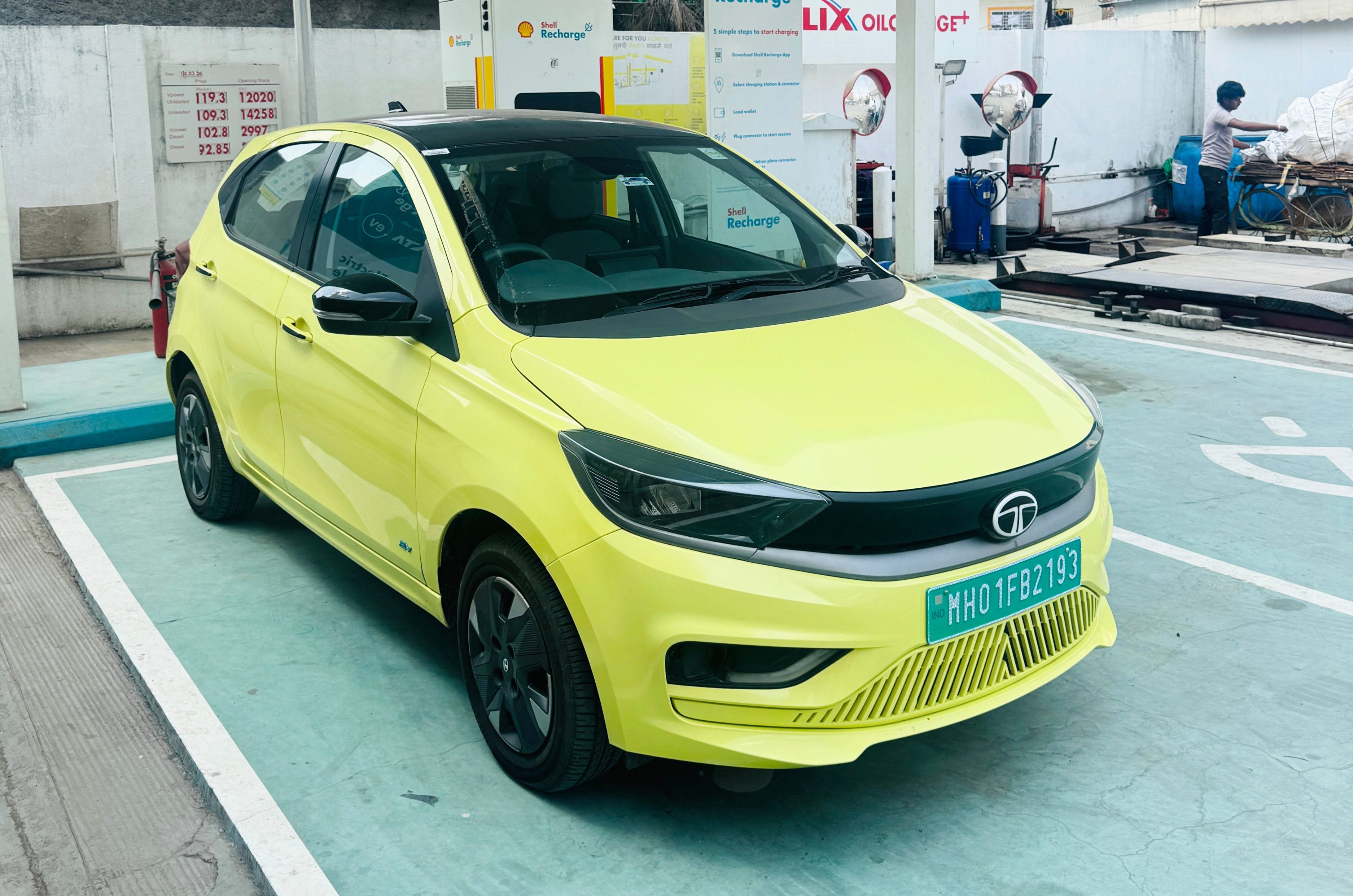
Like the Punch EV, the Tata Tiago EV is also available with August 2026 benefits amounting to up to Rs 1.45 lakh. However, this is only applicable to the LR (Long Range) XT variant of the old model – combining a cash discount of Rs 70,000 and the ‘Freedom Offer’ worth Rs 50,000. Customers can also avail an exchange benefit of Rs 20,000 or a scrappage bonus of Rs 25,000.
The exchange/scrappage benefits are offered with select trims of the Tiago EV MR (Medium Range) and LR (Long Range) variants, too. The former’s total benefits amount to Rs 65,000, whilst the latter’s is Rs 1.25 lakh.
Tata Nexon EV offers in August 2026
Benefits up to Rs 45,000
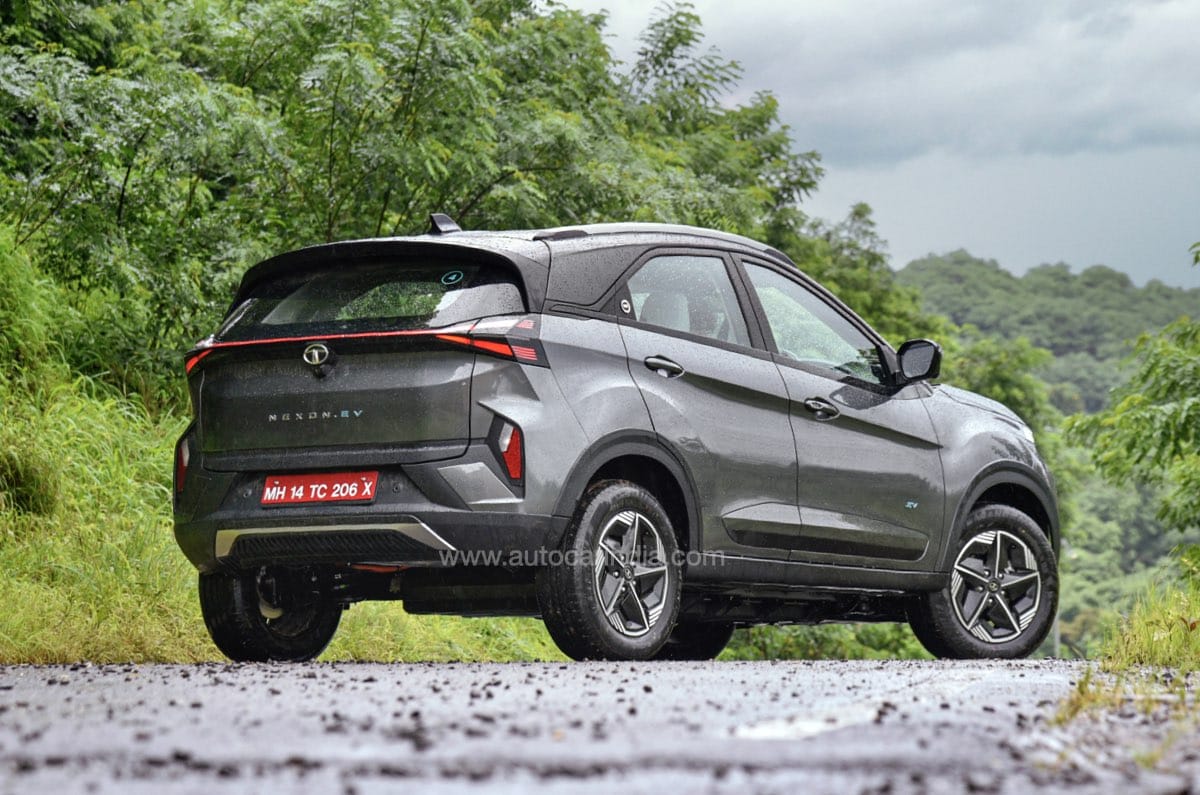
The Tata Nexon EV is available with benefits of up to Rs 45,000 in August 2026. This takes into account a cash discount of Rs 10,000, a scrappage scheme worth Rs 35,000, or an exchange bonus worth Rs 25,000.
Vida, Hero MotoCorp’s electric two-wheeler brand, has surpassed the 3 lakh retail sales milestone in the Indian market. As per the latest Vahan numbers, cumulative retail sales from November 2022 till August 1, 2026 are 300,458 units.
Vida sold its first 1 lakh units in around 33 months
Whereas, the 2 lakh to 3 lakh sales milestone took just 5 months
With its strong growth trajectory, Vida could garner over 2-lakh sales in a single year for the first time.
Vida’s BaaS has been a key sales driver
Vida currently has coverage across India with over 900 touchpoints
The surge in demand for the Vida e-scooters is seen in the strong growth, particularly over the past year. While the first 1 lakh units were sold in around 33 months, the run from 1 lakh to 2 lakh units took a little over seven months. Now the last 1 lakh units – from 2 lakh to 3 lakh – have taken just five months, reflecting the surging demand for Vida e-scooters this year. With July (22,883 units) being the new monthly high, beating the previous best of June (21,893 units) this year.
From 4 percent in CY2024 to 11 percent in CY2026 Year-to-date, Hero Vida has reaped strong gains in India’s booming e-2W market. Expect it to achieve total retail sales of around 2.25 lakh units this calendar year.
It’s been a noteworthy run for the world’s largest two-wheeler company in the EV space. Vida now stands at No. 4 in the e-2W market share after TVS Motor Co, Bajaj Auto and Ather Energy and is ahead of Ola Electric and Greaves Electric Mobility.
With strong sales tailwinds emanating from a growing number of ICE buyers transitioning to e-mobility due to the multiple price hikes in petrol in May 2026 as well as the upcoming festive season, it can be expected that Vida will maintain the same strong growth trajectory. This would mean Hero MotoCorp’s annual e-2W sales will cross the 2-lakh units milestone in a single calendar year for the first time in CY2026. Estimate them to be in the region of 2.25 lakh to 2.35 lakh units.
Another strategic sales driver for Vida has been the introduction of the Battery-As-a-Service (BaaS) ownership model which significantly reduces the upfront ownership cost, making electric mobility more affordable and accessible to a wider customer base, and has since been adopted by Ather Energy and TVS Motor among a host of other OEMs.
The company, which opened its first Experience Centre in November 2022, currently has coverage across India with over 900 touchpoints spanning 415 cities and 700-plus dealers. Hero MotoCorp enables Vida users to access charging at over 5,900 locations including the Ather Grid network owned by Ather Energy in which Hero MotoCorp is an early investor (with a 29.48 percent stake at present) and has recently invested an additional Rs 1,000 crore.
Manufacturing capacity expansion is also on the cards for Vida. In May this year, Hero MotoCorp revealed details of its planned capital expenditure of over Rs 1,500 crore in FY2027. Cognisant of the strong growth potential in its e-2W business, the company has outlined a strategic manufacturing expansion for its Vida brand. Having already ramped up capacity by 66 percent from 15,000 units per month to 25,000 units, the company has outlined plans for further expansion by doubling monthly capacity to 50,000 units at its plant in Chittoor in Andhra Pradesh to cater to growing demand.
While pretty basic in their operation, parking sensors alleviate the strain involved when space is at a premium. Once the dominion of premium models, front parking sensors have now found their way into more affordable ones. We have listed the top 10 cars that get parking sensors at the front as well, and that too at an ex-showroom price of under Rs 20 lakh.
10. Kia Carens Clavis EV
Prices start at Rs 18.04 lakh
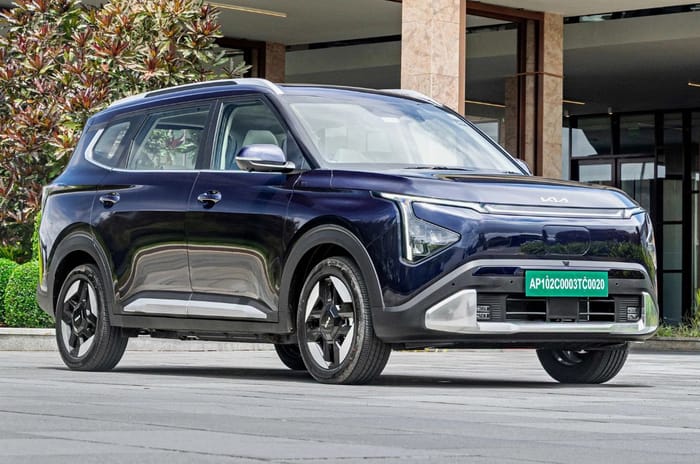
All variants of the 7-seat Kia Carens Clavis EV get front parking sensors. However, we are only considering the HTK+ and HTX E, since the rest are priced above Rs 20 lakh. These trims are offered with a 42kWh battery pack with an MIDC-claimed range of 404km. The single electric motor of the Clavis EV generates 133hp, while charging the battery from 10-80 percent takes 39 minutes when plugged into a 100kWh DC fast-charger.
Variants
Prices (Rs, lakh)
HTK+
18.04
HTX E
20.00
9. Maruti Suzuki Victoris
Prices start at Rs 15.39 lakh
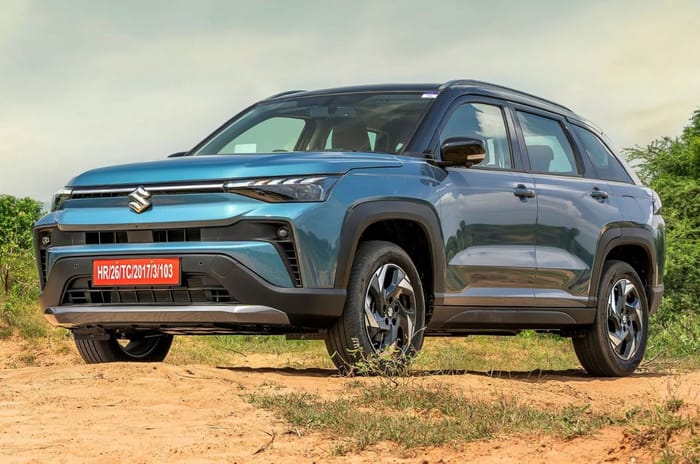
The Maruti Suzuki Victoris gets front parking sensors, but only on the ZXI Plus and the top-spec ZXI Plus (O), priced at Rs 19.99 lakh. These are available with manual and automatic transmissions, petrol and strong-hybrid options, and in front-wheel drive or all-wheel drive configurations. The naturally aspirated (NA) 1.5-litre engine of the Victoris manages 103hp, whereas the strong-hybrid’s powertrain achieves a combined output of 116hp.
Variant range
Price range (Rs, lakh)
ZXI Plus – ZXI Plus (O)
15.39 – 19.99
*Dual-tone options cost around Rs 14,500 more
8. Kia Carens Clavis
Prices start at Rs 15.28 lakh
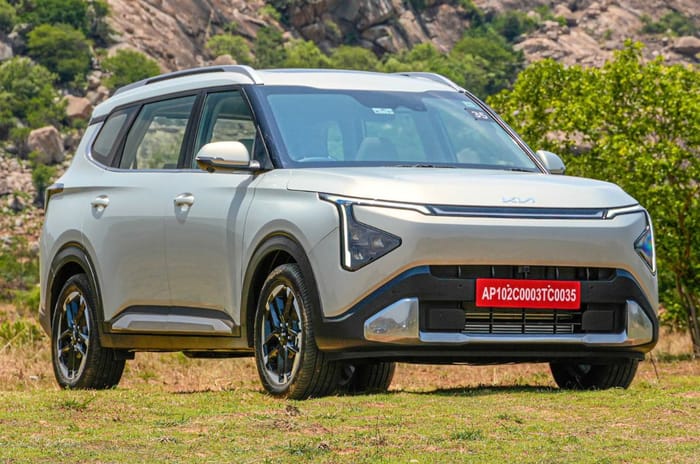
Front parking sensors are on the equipment list for the HTK+, HTK+ (O), HTX, GTX, and HTX (O) trims. The latter costs Rs 19.96 lakh, with higher trims breaching our stipulated Rs 20 lakh price cut-off. Like its EV sibling, the Carens Clavis is also a 7-seater. Kia is offering three 1.5-litre engines: a 115hp petrol, a 160hp turbo-petrol with direct injection, and a 116hp turbo-diesel. Transmissions include a 6-speed manual, a 6-speed torque converter automatic (AT) and a 7-speed dual-clutch automatic (DCT).
Variant range
Price range (Rs, lakh)
HTK+ – HTX (O)
15.28 – 19.96
7. Hyundai Venue
Prices start at Rs 14.65 lakh
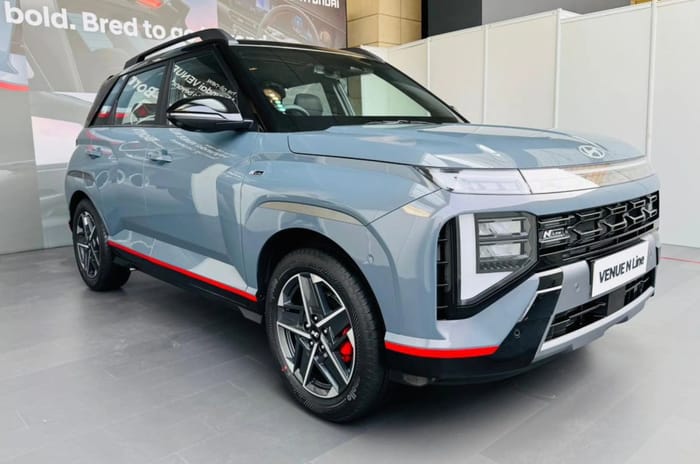
The second-gen Hyundai Venue adds front parking sensors to its already lengthy list of features. However, it is only the range-topping Venue HX10 and Venue N Line N10 variants of Hyundai’s compact SUV that get this nifty addition. The top-spec trim has a 1.5-litre turbo-diesel engine with 116hp, and costs Rs 15.65 lakh.
The HX10 also gets a 1.0-litre direct injection turbo-petrol with 120hp, which is shared with the N Line’s N10 trim. The diesel mill’s gearbox options are a 6-speed manual and a 6-speed torque converter automatic, whilst the petrol engine gets the manual and 7-speed DCT options.
Variants
Prices (Rs, lakh)
HX10 Turbo-Petrol (DCT)
14.65
HX10 Diesel (AT)
15.65
N Line N10 (DCT)
15.49
*Dual-tone options cost an additional Rs 18,000
6. Kia Seltos
Prices start at Rs 14.52 lakh
The entry-level HTE, HTE (O) and HTK trims of the Kia Seltos come equipped only with rear parking sensors. To get them on the front as well, you’ll need to step up to the HTK (O) at the bare minimum. Keeping our sub-20-lakh budget, the most expensive Seltos trims with front parking sensors are the GTX (A) and X-Line. Depending on the trim level, the Seltos can be had with one of three 1.5-litre engines and one of five gearboxes. For an in-depth look at those, click here.
Variant range
Price range (Rs, lakh)
HTK (O) – X-Line
14.52 – 20.00
5. Kia Sonet
Prices start at Rs 13.76 lakh
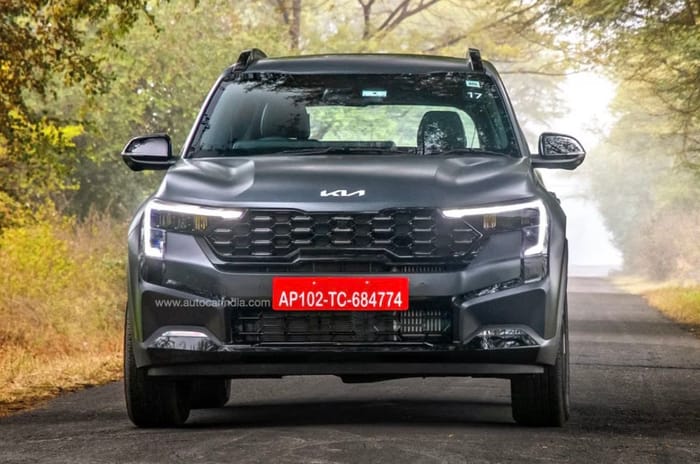
Only the top-two trims of the Kia Sonetget front parking sensors, and these are the GTX+ and X-Line. These trims are only available with the 120hp, 1.0-litre direct injection turbo-petrol engine and 116hp, 1.5-litre turbo-diesel mill. Transmission choices with these trims are a 7-speed DCT and 6-speed AT, respectively. For more information on the Kia Sonet, check out our detailed review.
Variant range
Price range (Rs, lakh)
GTX+ – X-Line
13.76 – 14.37
4. Hyundai Verna
Prices start at Rs 13.20 lakh
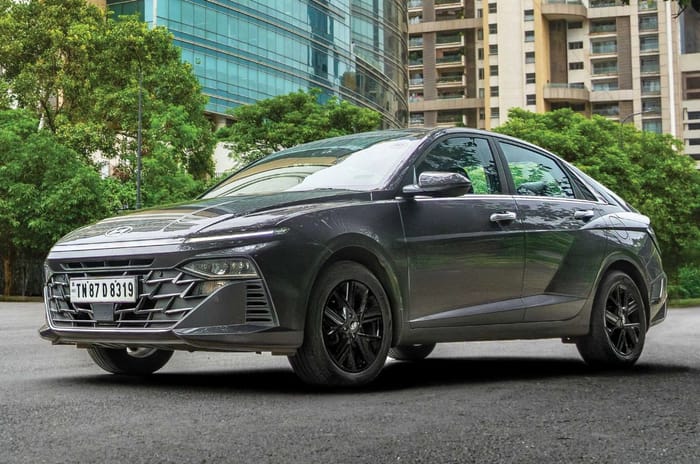
Buyers of the HX6, HX6+, HX8 and HX10 trims of the Hyundai Verna will benefit from having front parking sensors. The midsize sedan’s range-topping HX10 trim is priced at Rs 18.26 lakh. There are two 1.5-litre petrol mills; the naturally aspirated unit produces 115hp, with the direct injection turbo-petrol motor making 160hp. While both engines get a 6-speed manual as standard, the NA can be had with an IVT (Intelligent Variable Transmission). However, only the turbo-petrol variants get the 7-speed DCT.
Variant range
Price range (Rs, lakh)
HX6 – HX10
13.20 – 18.26
3. Mahindra XUV 3XO
Prices start at Rs 12.20 lakh
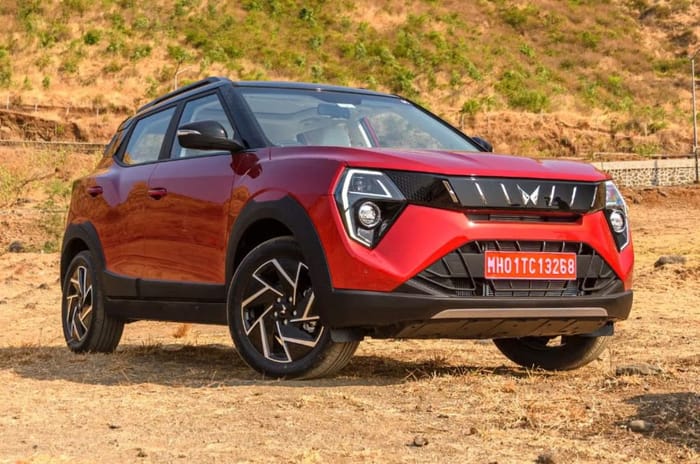
Only the AX7 and AX7 Luxury variants of the Mahindra XUV 3XO get front parking sensors, with the latter costing Rs 15.04 lakh. The sub-4-metre SUV gets a 1.2-litre MPFI (multi-point fuel injection) and 1.2-litre direct injection turbo-petrol engines producing 111hp and 131hp. A 1.5-litre turbo-diesel engine with 117hp is also available, mated to a 6-speed manual or a 6-speed AMT (automated manual transmission). The petrol versions get a 6-speed manual and a 6-speed torque converter automatic.
Variants
Prices (Rs, lakh)
AX7
12.20
AX7 Luxury
15.04
2. Tata Nexon
Prices start at Rs 11.40 lakh
The most affordable Tata Nexon variant with front parking sensors is the Creative + PS. Meanwhile, the most expensive Fearless + A PS costs Rs 13.70 lakh. Tata’s popular compact SUV is available with petrol, diesel and CNG options.
The petrol and CNG versions use a 1.2-litre turbocharged engine with up to 120hp, while the 1.5-litre diesel mill produces 115hp. The transmission choices encompass a 6-speed manual, a 6-speed AMT and a 7-speed DCT.
Variant range
Price range (Rs, lakh)
Creative + PS – Fearless + A PS
11.40 – 13.70
*Dark Edition costs around Rs 18,300 on top of the Dual Tone option
1. Renault Triber
Prices start at Rs 8.05 lakh
The most affordable car with front parking sensors is the Renault Triber. Only the top-end Emotion trim of this three-row MPV gets this feature, and the range tops out at Rs 8.53 lakh. The Triber is powered by a 1.0-litre three-cylinder petrol engine that produces 72hp and 96Nm. While there is only one engine option, buyers can choose between a 5-speed manual or a 5-speed AMT.