मौजूदा विश्व टेस्ट चैंपियनशिप चक्र में अभी भी 27 में से 15 सीरीज़ खेली जानी बाक़ी हैं। ऐसे में अगले कुछ महीनों में टेस्ट क्रिकेट केंद्र में रहेगा, क्योंकि टीमें 9 से 13 जून 2027 तक द ओवल में होने वाले फ़ाइनल में जगह बनाने की होड़ में जुटी होंगी।
पिछले दो डब्ल्यूटीसी चक्रों में चार फ़ाइनलिस्ट टीमों में से तीन ने 65 प्रतिशत से अधिक अंक प्रतिशत के साथ फ़ाइनल में जगह बनाई थी। एकमात्र अपवाद भारत था, जिसने 2023 में 58.8 फीसदी अंक प्रतिशत के साथ फ़ाइनल खेला था। 2025 में दोनों फ़ाइनलिस्ट टीमों के पास 67 से अधिक अंक प्रतिशत था।
भारत की स्थिति पर एक नजर:
टेस्ट
9
जीत
4
हार
4
ड्रॉ
1
अंक प्रतिशत
48.15
आगामी सीरीज़:
श्रीलंका (विदेशी धरती पर)
2 टेस्ट
न्यूज़ीलैंड (विदेशी धरती पर)
2 टेस्ट
ऑस्ट्रेलिया (घरेलू धरती पर)
5 टेस्ट
पिछले साल दक्षिण अफ़्रीका के ख़िलाफ़ घरेलू मैदान पर मिली 2-0 की हार ने भारत को मुश्किल स्थिति में डाल दिया है।60 अंक प्रतिशत तक पहुंचने के लिए भारत को बाक़ी नौ टेस्ट में 78 और अंक चाहिए। इसका मतलब है छह जीत और दो ड्रॉ (80 अंक) या सात जीत (84 अंक)। इनमें से पांच टेस्ट ऑस्ट्रेलिया के ख़िलाफ़ होंगे, जिसके विरुद्ध भारत ने 2008 से अब तक घरेलू मैदान पर पिछली पांच सीरीज़ में 12-2 का रिकॉर्ड बनाया है।
हालांकि हालिया घरेलू प्रदर्शन चिंताजनक रहा है। भारत को न्यूज़ीलैंड और दक्षिण अफ़्रीका के ख़िलाफ़ क्रमशः 3-0 और 2-0 से सीरीज़ गंवानी पड़ी थी। ऐसे में ऑस्ट्रेलिया के विरुद्ध बेहतर प्रदर्शन अनिवार्य होगा।
पिछले WTC चक्र में फ़ाइनलिस्ट टीमों का अंक प्रतिशत 69.44 (दक्षिण अफ़्रीका) और 67.54 (ऑस्ट्रेलिया) था। सात जीत और दो हार भारत को 62.96 प्रतिशत तक ले जाएंगी, जबकि आठ जीत और एक हार के साथ वह 68.52 प्रतिशत पर पहुंचेगा।यानी भारत के पास अब ग़लती की बहुत कम गुंजाइश बची है।
Here's the updated World Test Championship points table following the West Indies vs Pakistan Test series.
West Indies now sit at the bottom, with Pakistan just above them as the race to the WTC Final continues to heat up. #PAKvsWIpic.twitter.com/HlMy1MfIMN
न्यूजीलैंड अगर इंग्लैंड से 2-1 या 3-0 से टेस्ट सीरीज हार जाती तो भारत के फायदे की बात होती लेकिन न्यूजीलैंड ने इंग्लैंड को 2-1 से सीरीज हराकर भारत की स्थिति थोड़ी और मुश्किल कर दी है। फिलहाल मुकाबला 3 टीमों ऑस्ट्रेलिया, दक्षिण अफ्रीका और न्यूजीलैंड के बीच लग रहा है। भारत के लिए 9 में से जो 2 सबसे ज्यादा मुश्किल मुकाबले हैं वह न्यूजीलैंड के खिलाफ ही देखने को मिलेंगे। अन्य 7 में शायद भारत को उतनी मुश्किल ना हो क्योंकि श्रीलंका से भारत अभ्यास मैच जीता है और ऑस्ट्रेलिया भारतीय धरती पर बोर्डर गावस्कर ट्रॉफी खेलेगी।
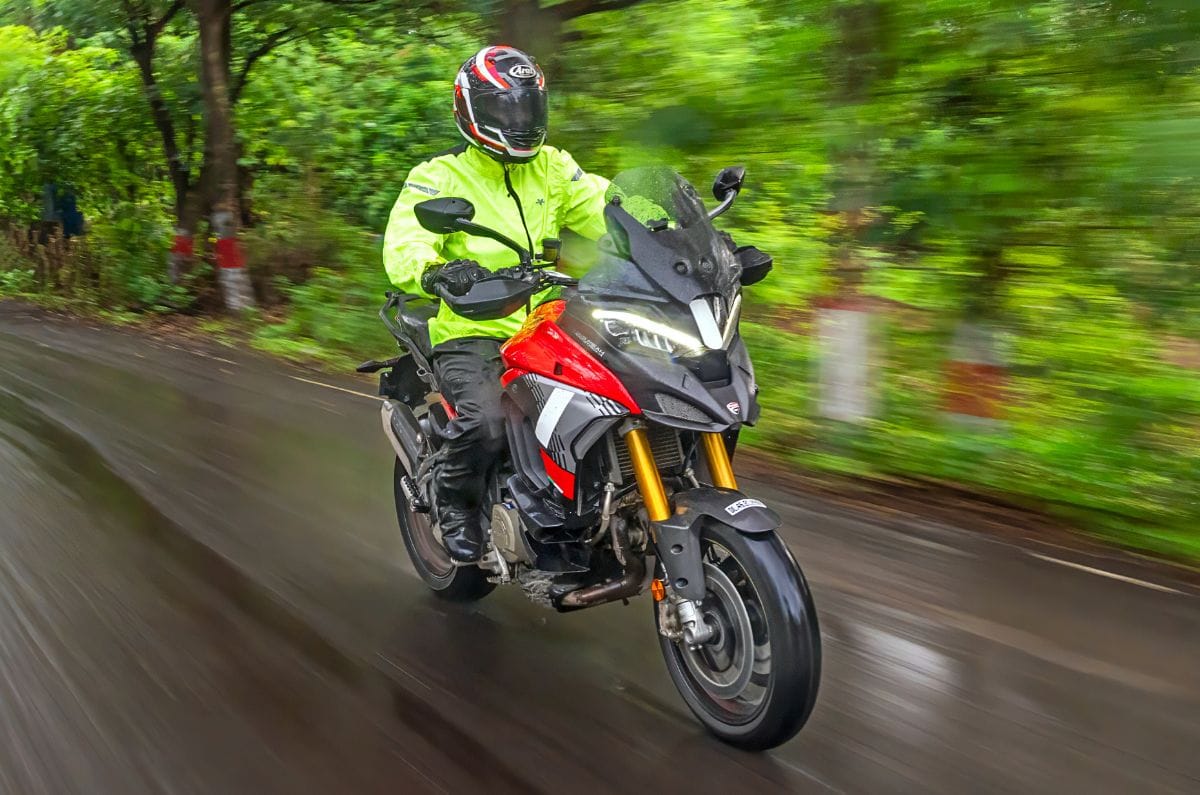
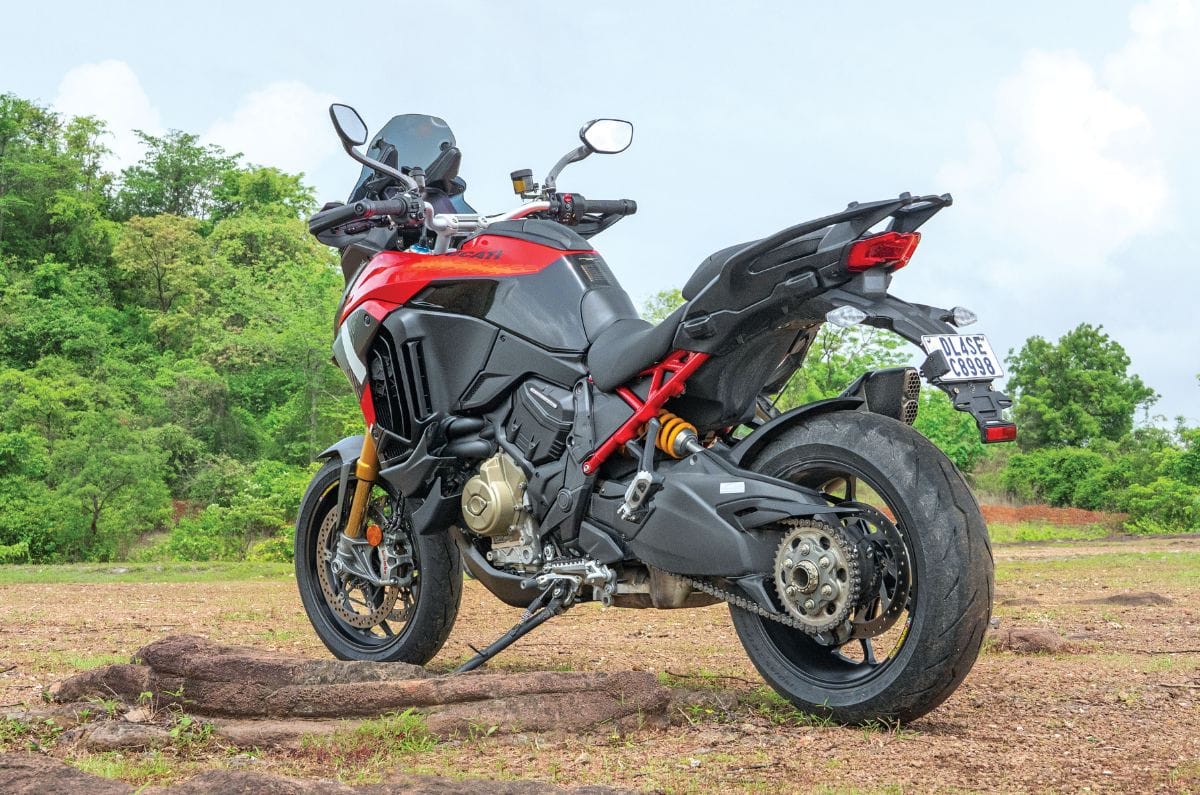
The DucatiMultistrada is one of the most successful modern motorcycles to have raced up the famed Pikes Peak hill climb, having taken 7 wins over the years. Motorcycle racing was banned at the Peak after Ducati star Carlin Dunne tragically lost his life in a crash just metres before the finish line in 2019, but Ducati still has a tribute to this race in the form of the Multistrada V4 Pikes Peak.
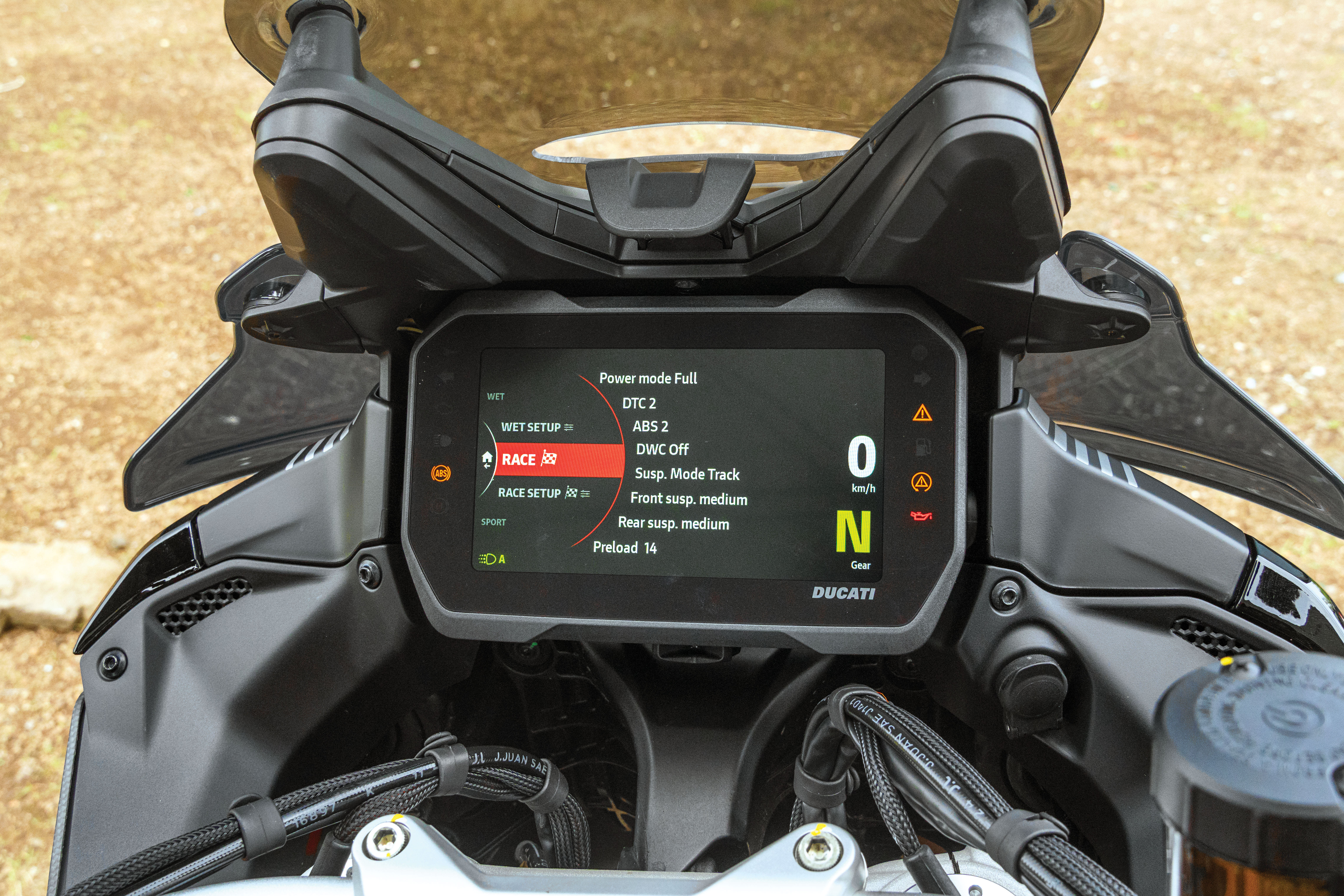
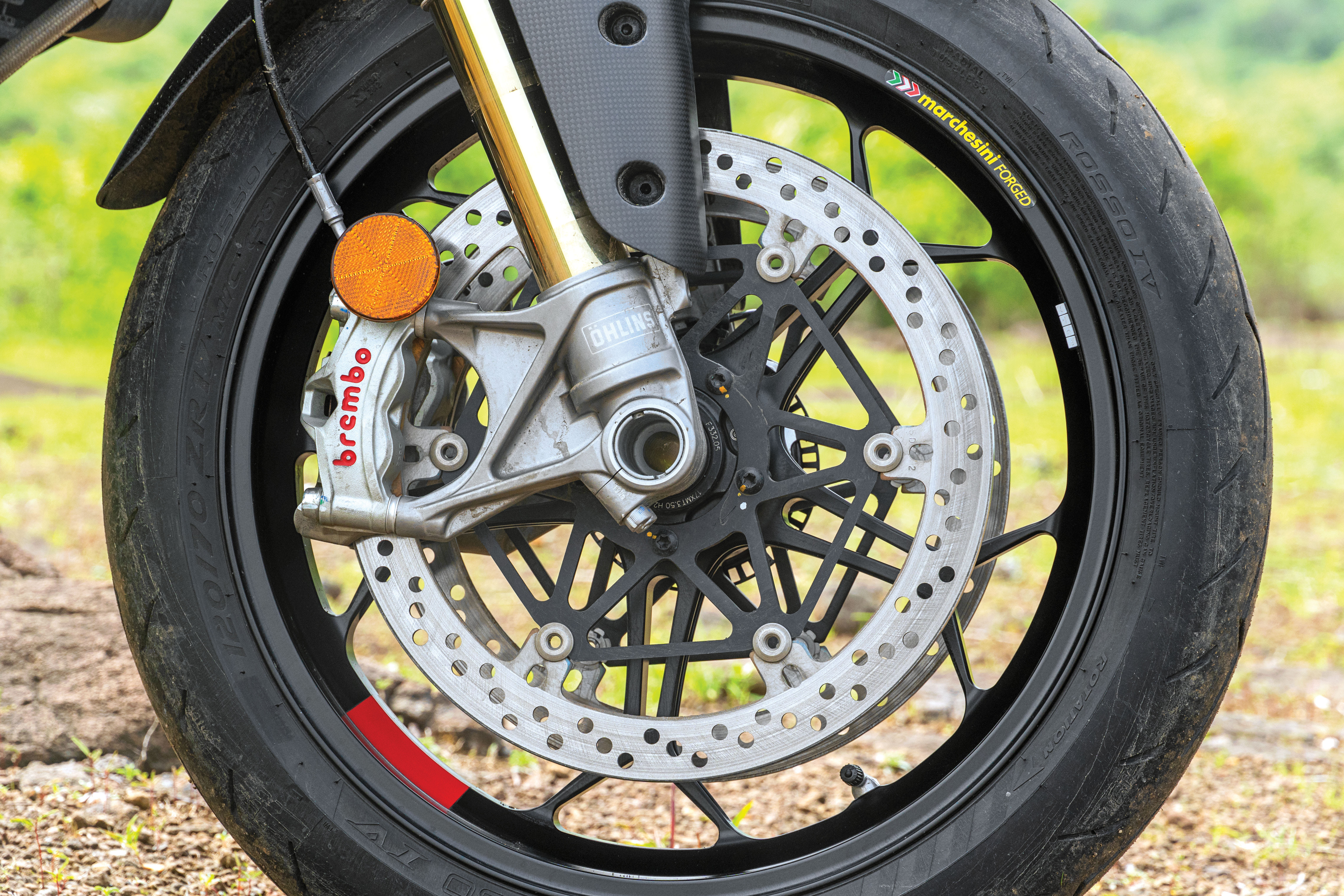
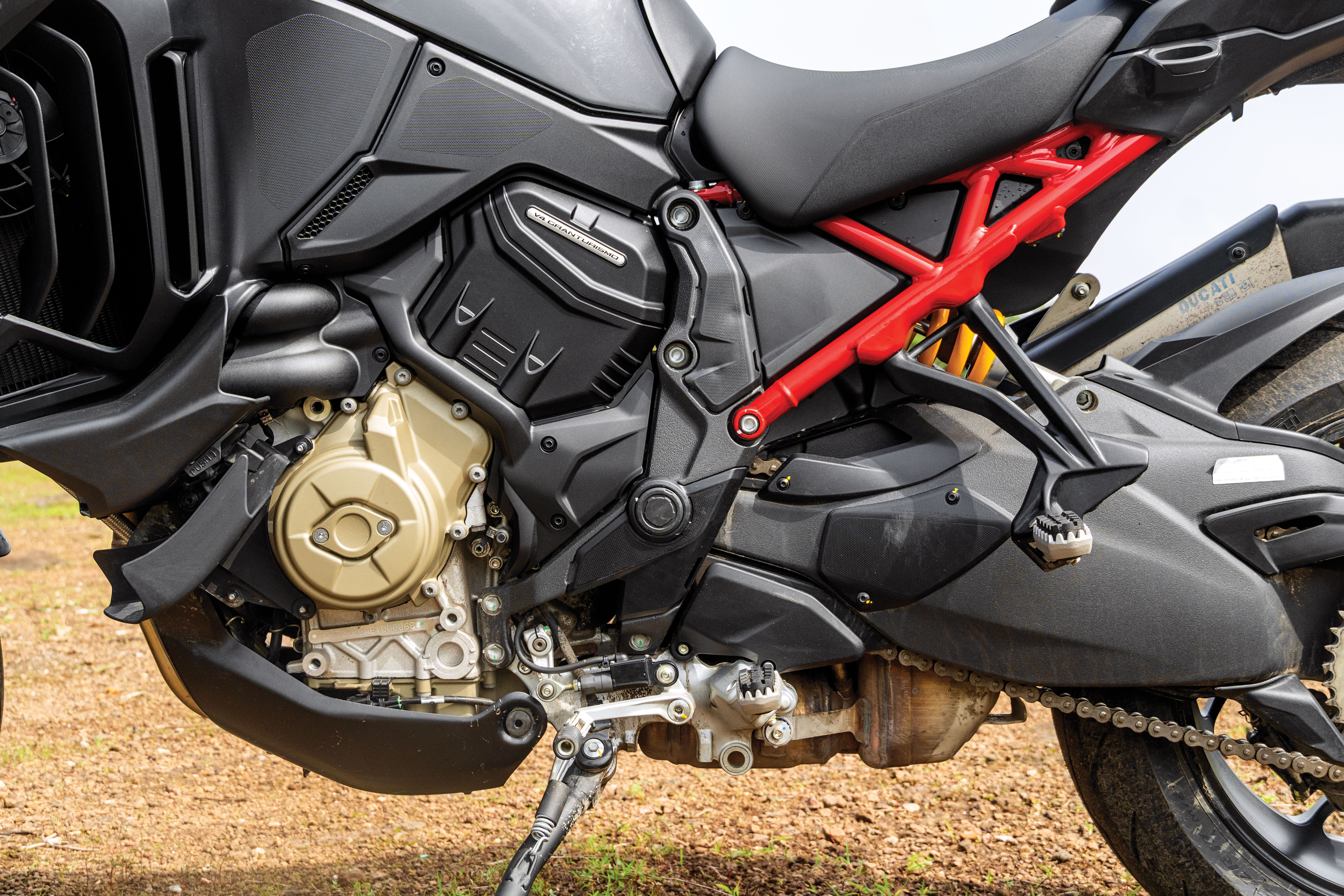
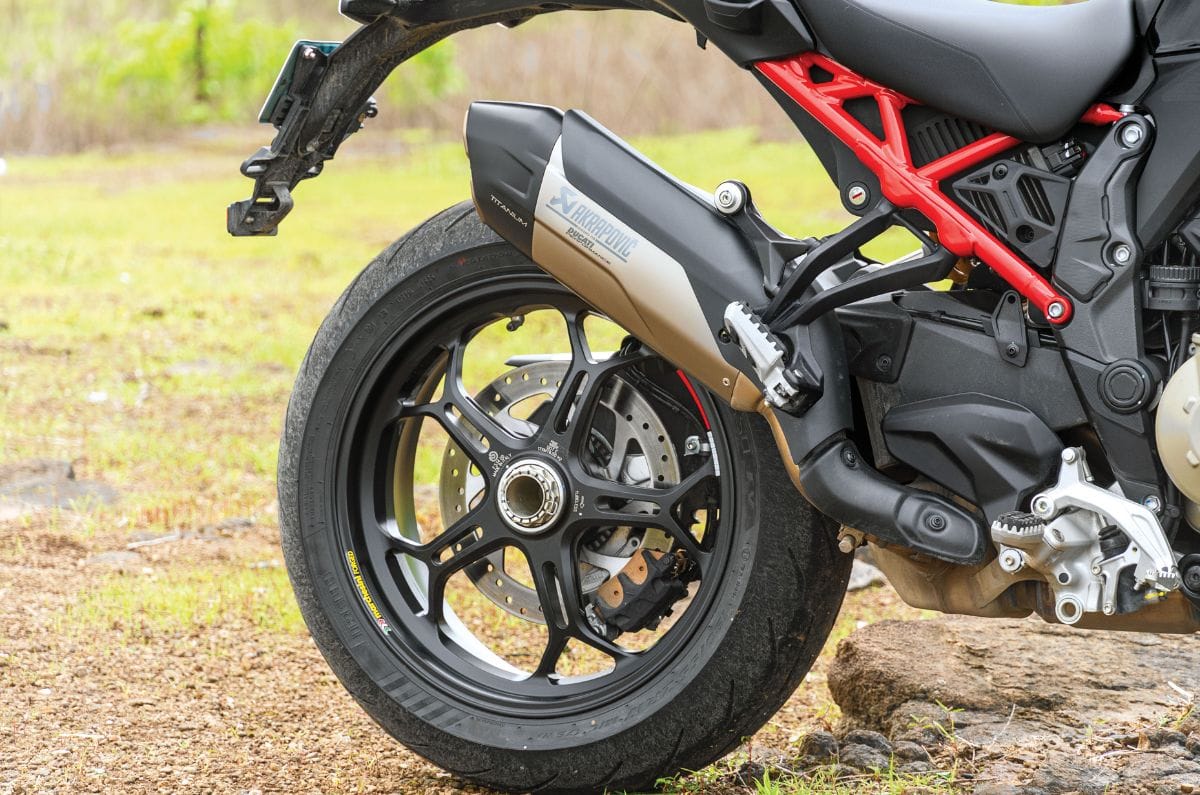
Effectively, this motorcycle goes back to the Multistrada’s roots of being a tall, sporty road-biased motorcycle. The primary sporty element comes in the shift from a 19-inch front on the standard Multistrada V4 to a 17-inch unit here. But there’s a whole lot more that you get for the (considerable) extra cash over the Multi V4 S than just a smaller front wheel. That includes a new Race Mode and Öhlins EC 2.0 semi-active suspension, just like you would have found on the previous-gen Panigale V4 S. It even gets a single-sided swingarm, forged aluminium wheels and a road-legal titanium Akrapovič end-can.
Multistrada V4 Comfort – 8/10
All of these changes are aimed at sharpening the Multi’s handling capabilities, which leaves the question – how much of an adventure bike is still in there? To find an answer, I pulled out Google Maps and picked a few random roads that I’d been eyeing over the years, but never had the opportunity to explore. The idea was to end up at the fabulous roads around Tahmini ghat, which is closer to Pune, and I’d chalked out a round-trip that came up to about 350km.
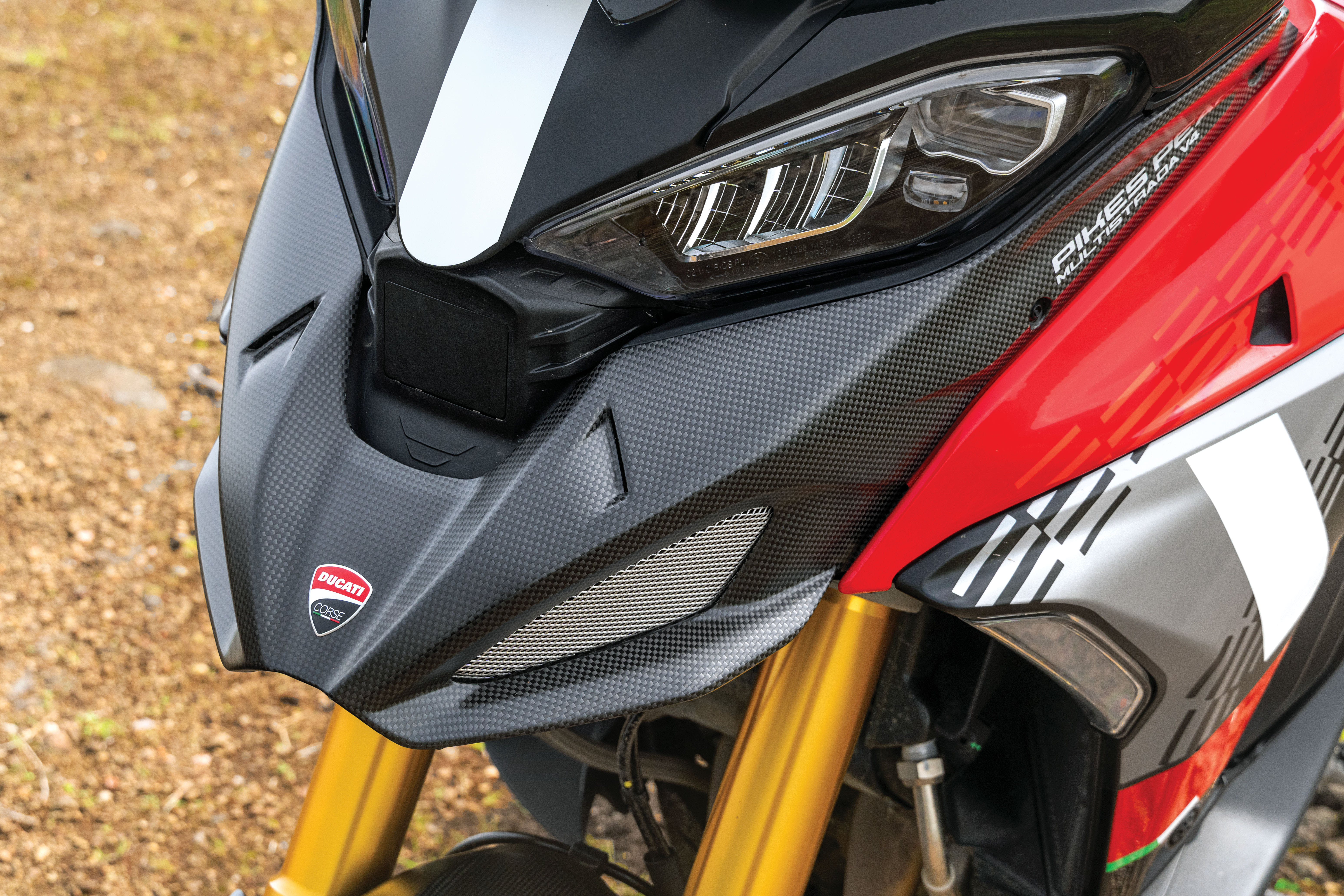
The Pikes Peak gets carbon parts, different ergos and reduced wind protection
The first quest would be the hour-long escape from the mayhem of Monday morning Mumbai. Ducatis are usually the worst bikes for being stuck in jammed traffic, but the V4-engined Multi is different. As with its lesser V4 siblings, the Pikes Peak uses twin radiators that are housed on the sides, and the bodywork neatly ducts the hot air blast away from the rider. Also, as with all Ducatis, the cooling system does a remarkable job of keeping the operating temperature below 106 degrees even when stationary.
Specifications
Values
Engine Displacement
1158 cc
Max Engine Power
170 hp @ 10,750 rpm
Max Engine Torque
124 Nm @ 9000 rpm
Number of Gears
6
So, unless you’re stuck in a nasty bad jam where the clutch can get painful, this bike is surprisingly pleasant to manage in traffic. Of course, that’s a fairly relative statement, considering that this is a big, tall, 240-plus-kilo motorcycle.
However, after an hour or so, there’s no escaping the heat radiating off the rear cylinder bank that’s right under your thighs. I noticed that this was an issue in 36-degree afternoon heat on the highway, but not so much when the temperatures dropped in the hilly regions around Lonavala. Despite this, the Multi was far happier when it broke free from the clutches of the city.
Multistrada V4 Performance and suspension setup – 9/10
What truly blew me away on the Pikes Peak was the sheer range of its ability to change character. Like with the other V4 models, this one also has many different riding modes, a boat-load of electronic assists and minutely adjustable electronic suspension modes. However, the difference between ‘full chill’ and ‘full attack’ mode on this bike is truly breathtaking. After a couple of hours of quick and perfectly pleasant highway riding, the Multi and I soon found ourselves staring at miles of completely broken rural roads without a soul on them.
There’s no way I’d ever want to bring a sporty Italian exotic to a place like this, but putting the engine into Low Power mode (115hp instead of 170hp) and diving deep into the suspension setting menus to slack off the damping and preload completely changed the bike.
Specifications
Values
Wheelbase
1595 mm
Seat height
840-860 mm
Kerb Weight
227 kg
Fuel Tank Size
22 L
With ADV seating comfort and the 170mm of suspension travel soaking in the terrain quite well, I had no concerns with simply riding through these non-stop broken road conditions. The bike was unbothered to the point that I could ride it at a gentle pace and enjoy the spectacular beauty of rural Maharashtra in the monsoon. However, I must also make it clear that while the Pikes Peak can tolerate this sort of punishment, it doesn’t thrive on it. Think of this as a surprisingly comfortable road-tourer rather than a true ADV.
Race-bred electronics and superbike-spec suspension are what make the Pikes Peak experience unique.
Multistrada V4 Ride and Handling – 10/10
A big Tiger or GS would have surely been more capable in these conditions, but the Pikes Peak would have simply blown away any ADV on the roads that came next. After ages of enduring gravel and shattered tarmac, we finally arrived at Tahmini to be greeted by some of the finest riding roads in the country.
It uses the standard V4 engine with conventional spring valves
A few button presses later, the Multi was now in Race mode, and the difference was startling. The bike suddenly felt tight, taut and taller, thanks to increased preload at the rear. This was no longer a cushy tourer and had suddenly turned into quite a fearsome beast that demanded respect. The raucous intake bark as the V4 engine snarled past 6,000rpm was almost as intoxicating as the way it built speed. While you could get the same sort of performance on a ‘normal’ Multi V4 that uses the same engine, the immense braking and incredible suspension composure of the Pikes Peak was something else.
Pikes Peak gets a single-sided swingarm, forged wheels and an Akrapovič end-can
I was now riding a sport bike, and it cornered and braked with such ferocity that it was easy to get carried away. I had to remind myself that this was a public road and we were going far too fast for good health! Slap on a sticky set of tyres, and this bike could genuinely embarrass a swarm of sport bike riders on the racetrack. After an awesomely exhilarating time on the ghat, there was no doubt that the Pikes Peak spirit is truly alive in this bike, and it most certainly isn’t just a branding exercise to charge a heap of money.
Multistrada V4 Price and Verdict – 8/10
Nevertheless, a heap of money is exactly what you have to pay to own this motorcycle. At Rs 36.9 lakh (ex-showroom), the Pikes Peak is exorbitantly expensive, and you still have to pay more for extras like heated grips, tyre pressure monitoring and keyless functionality for the fuel tank. At the end of the day, this is the connoisseur’s version of what is already a connoisseur’s adventure motorcycle. You’ve got to really want this particularly unique combination of all-road sport bike skills. After all, you can get either phenomenally capable super ADVs or proper super bikes for far less money.
The sheer range of its ability to change character is what is truly incredible.
I struggle to convince myself that it’s worth the price, but I’m also infinitely grateful that such a thing even exists and that we have the option to own one in India. If you’re among the precious few with the desire and funds to own such a bike, all I’d like to say is go for it!
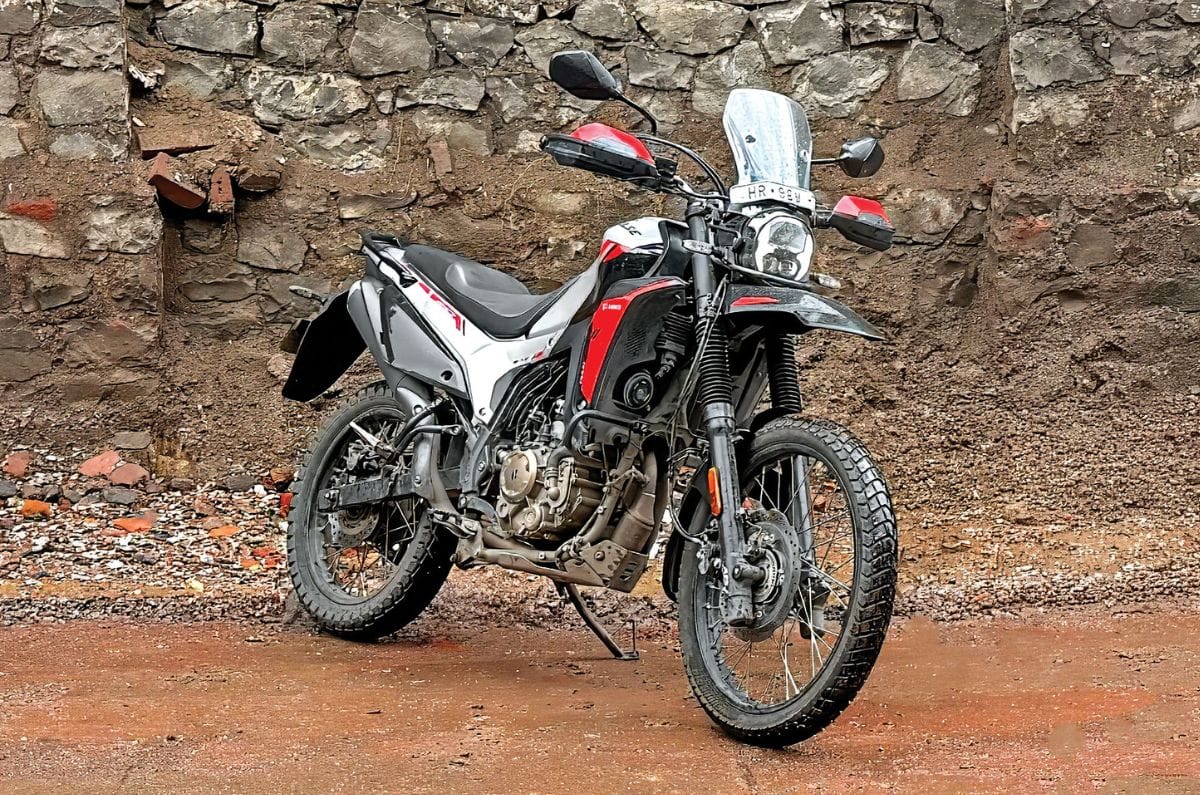
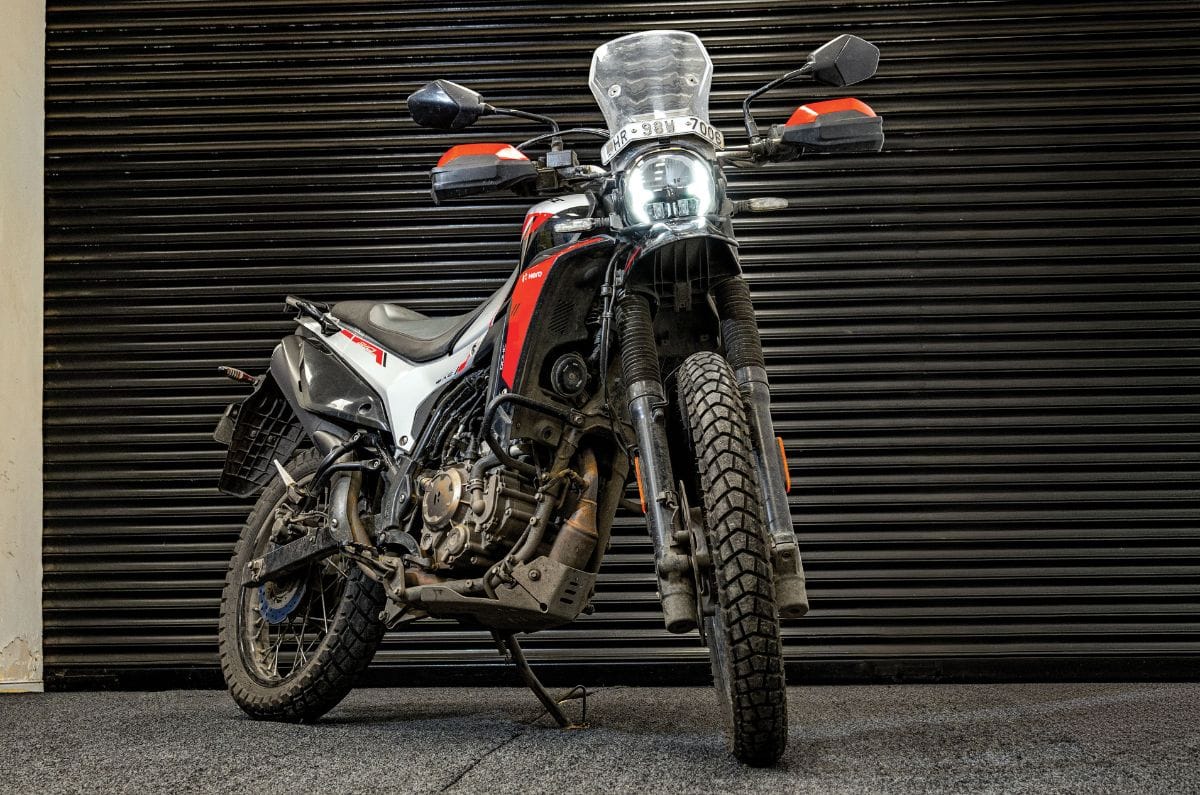
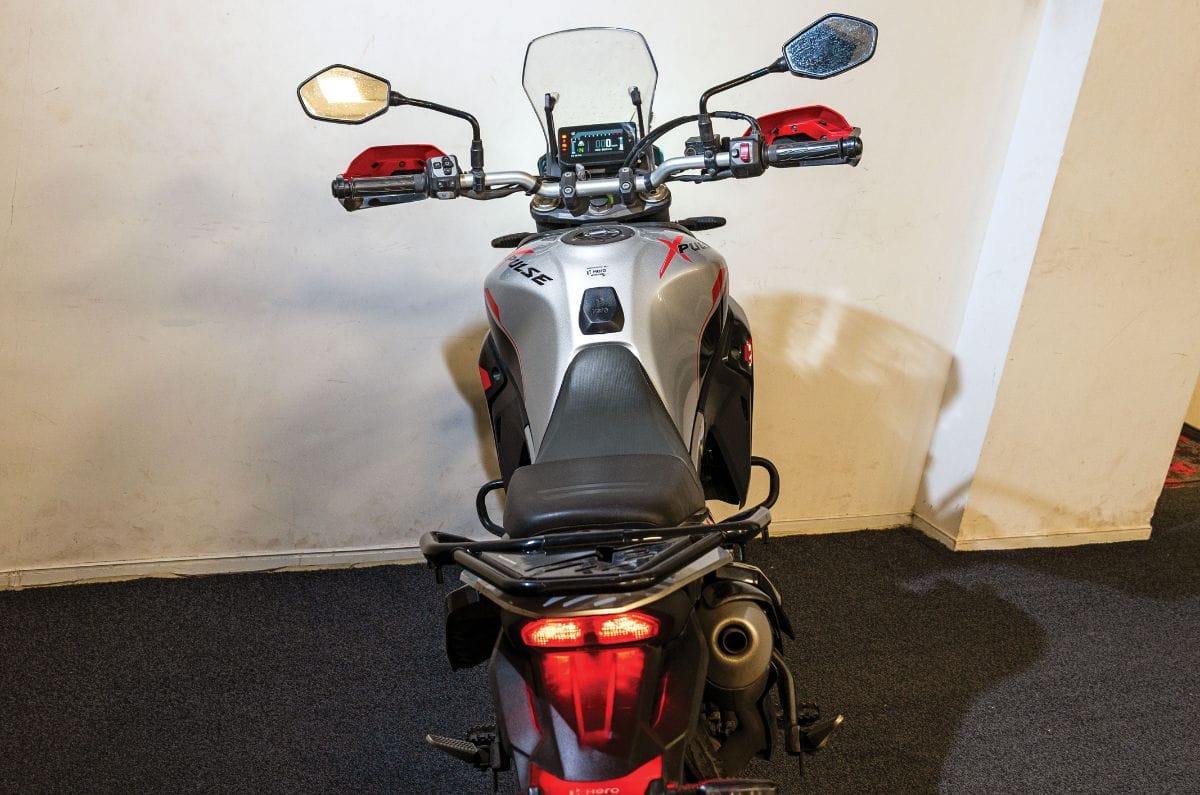
Ever since the Xpulse 210 was launched, I was fascinated by the balance it strikes between a dual-sport motorcycle and an adventure tourer. With its slim midsection, 21-inch front wheel, long-travel suspension and commanding riding position, it seemed like the ideal companion for our less-than-perfect roads. After spending over two months with the bike, I can confidently say it has lived up to those expectations. The odometer has now crossed the 5,600km mark, and the Xpulse continues to reinforce why it’s such a unique proposition.
The 21-inch front wheel and beak lend the Xpulse an imposing stance
There really isn’t another motorcycle at this price point that offers the same blend of everyday usability, touring ability and genuine off-road capability. Spend another Rs 30,000-40,000, and you’ll find yourself looking at the TVSApache RTX, which is a more touring-oriented adventure motorcycle. The Hero, meanwhile, stays true to its dual-sport roots, making it just as happy on broken roads and dirt trails as it is on the highway.
The Xpulse’s relatively narrow proportions make it an excellent commuter.
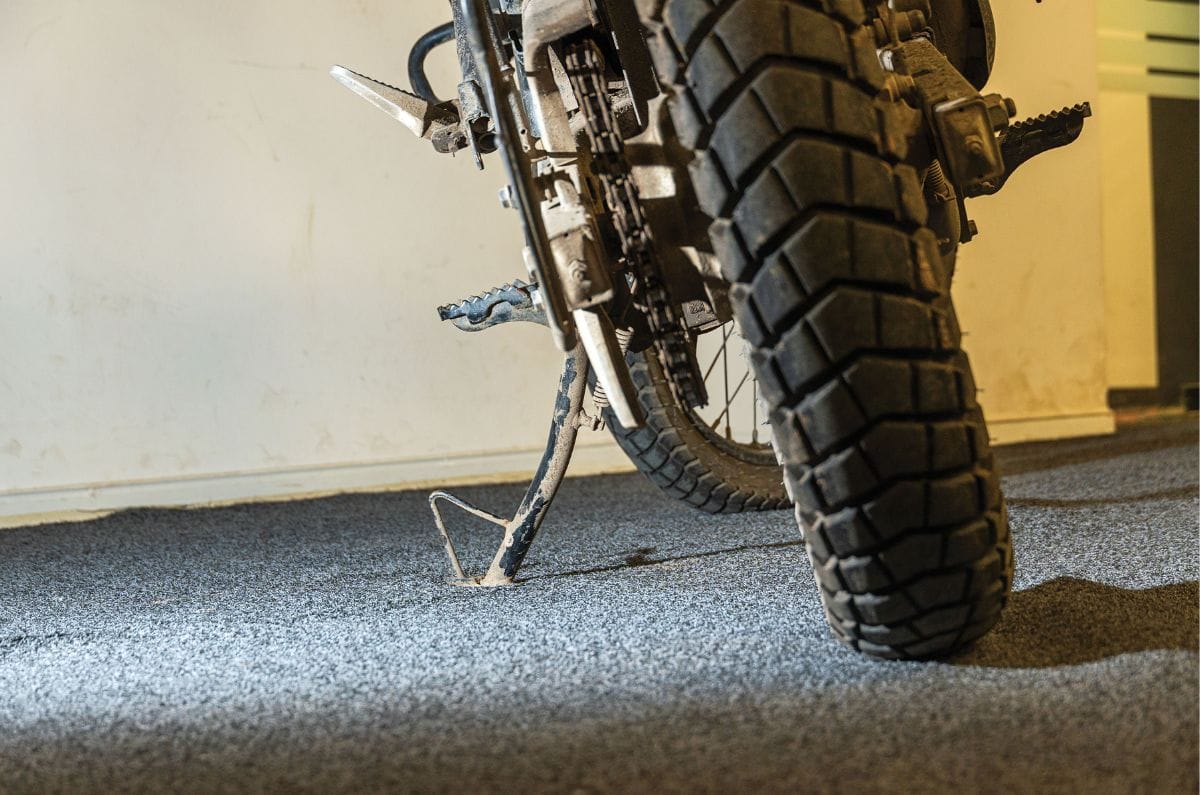
The suspension remains the bike’s standout feature. Mumbai’s cratered roads barely faze it, and the confidence to ride over almost anything without slowing to a crawl is what makes the Xpulse so easy to live with. It opens up new roads within the city that you earlier avoided. The high-mounted LED headlight and sculpted tank flowing into the relatively low seat give it a distinctive, imposing stance. Living with it hasn’t been entirely perfect. The Xpulse has a pronounced lean on its side stand, and the soft suspension causes the bike to settle and readjust as you get off, making parking feel less reassuring than it actually is.
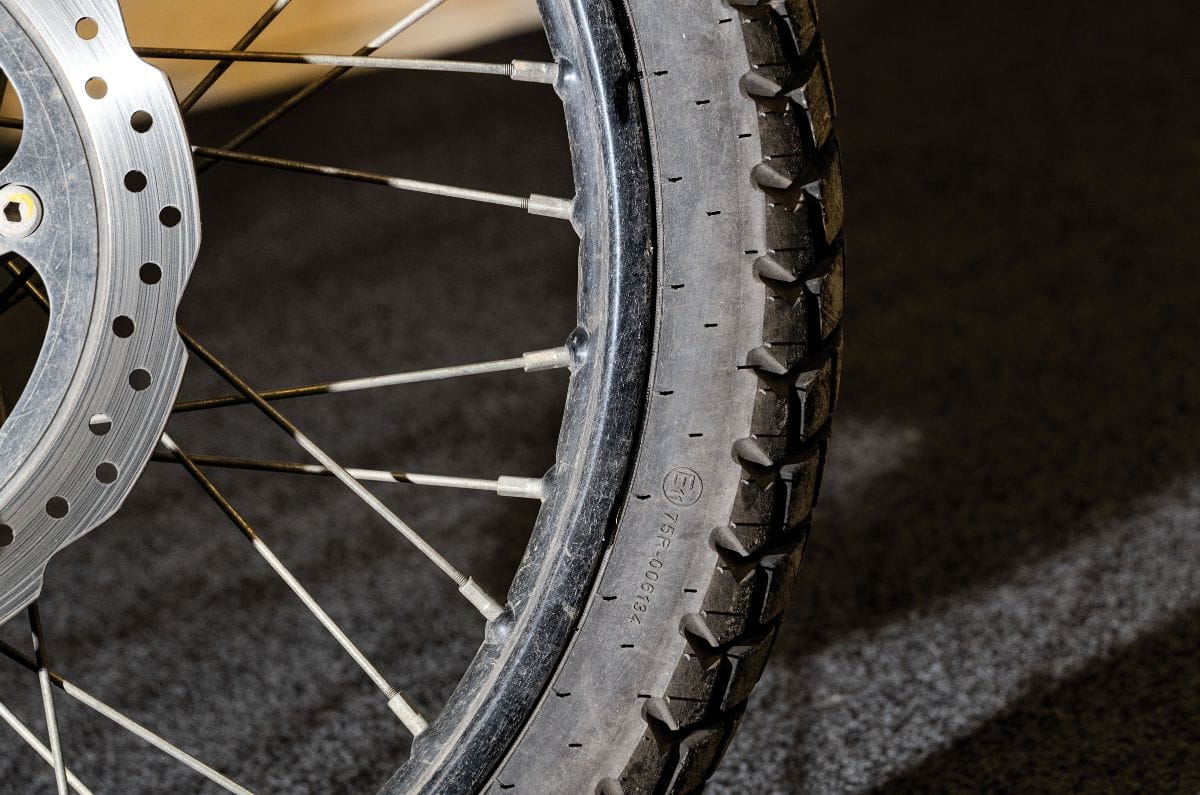
Tubed tyres are great off the road, but can pose an inconvenience if punctured.
The lack of a tubeless tyre option is another compromise. While tubed tyres make sense on a motorcycle designed to venture off-road, they can be a real inconvenience in everyday use. I learnt that the hard way when both the front and rear tyres punctured on the same day. Between pushing the bike to puncture shops, removing the wheels and getting everything back together, I lost well over three hours.
The brakes, too, continue to disappoint. We’d previously complained about the lack of bite and feel, and although the service centre bled the brakes and confirmed the pads didn’t require replacement, the improvement was only marginal. During the same visit, we also queried about the amount of heat being thrown onto the rider’s left leg was normal, but didn’t receive a satisfactory explanation.
It tends to lean excessively on its side stand, which isn’t quite reassuring.
As a motorcycle retailed through Hero’s premium Premia dealership network, the overall service experience and ambience still have plenty of headroom for improvement. Although the service cost was quite reasonable at Rs 2,214, of which, Rs 1,300 went towards oil, Rs 145 for the air filter and Rs 649 for the service charge.
Despite those shortcomings, the Xpulse 210 remains one of the easiest motorcycles to recommend. Few bikes at this price blend commuting fun, decent touring capability and genuine off-road chops as convincingly, and even after 5,500km, we all still find ourselves reaching for its keys.
Somewhere in the folds of the Western Ghats, where the Mumbai-Pune Expressway peels off from Lonavala into quieter country, a piece of land is being reshaped into what will, by this time next year, become Maharashtra’s first race track. Except to call it just a race track undersells the ambition entirely. What is rising here, on the grounds of the Nanoli Stud Farm, is a race resort, where cars are not just driven or raced, but lived with.
The Dhunjibhoy family has owned this land for decades, ever since the Nanoli Stud and Agricultural Farm was set up in the early 1990s. Khushroo Dhunjibhoy has spent a lifetime around shipping and thoroughbreds, and it is that same instinct for breeding something exceptional that he and his son, Zahir, have turned toward motorsport.
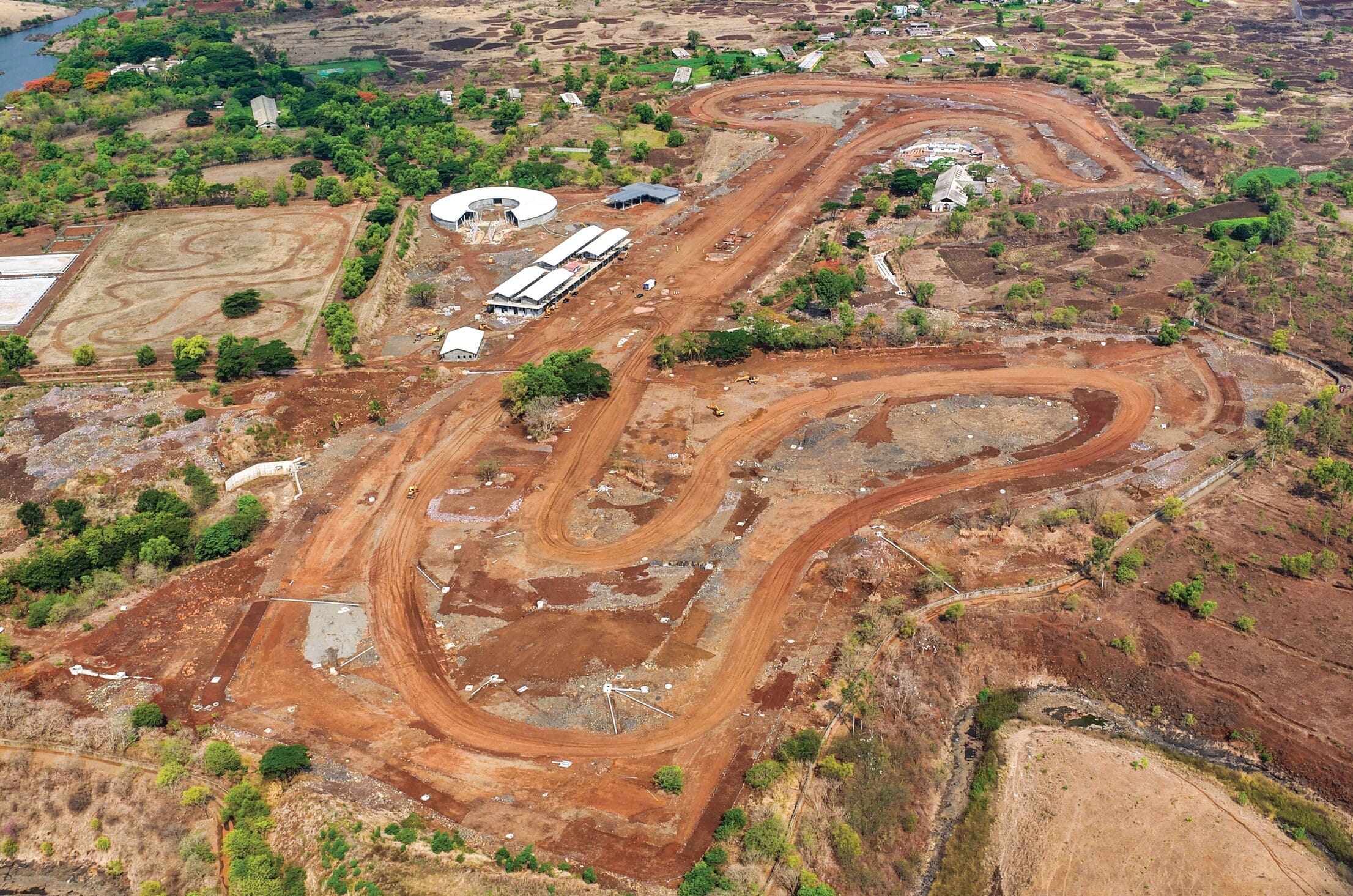
Aerial view of Nanoli before the tarmac is laid. This 3km circuit will be Maharashtra’s first and a haven for enthusiasts in western India.
Their plan is not a bare circuit with a pit lane bolted on. It is villas, high-end rooms and a clubhouse built into the same grounds as the horses. There will also be a 100-car garage with humidity control to protect exotic machinery from the heat, sun, dust and monsoons. The paddock and pit buildings will be state-of-the-art, with a hospitality deck that gives you a bird’s-eye view of nearly half the circuit. The circuit itself, designed to FIA Grade 3 specs by Driven International out of the UK, will eventually stretch close to three kilometres, with the option to split into shorter east and west configurations, depending on what the day calls for.
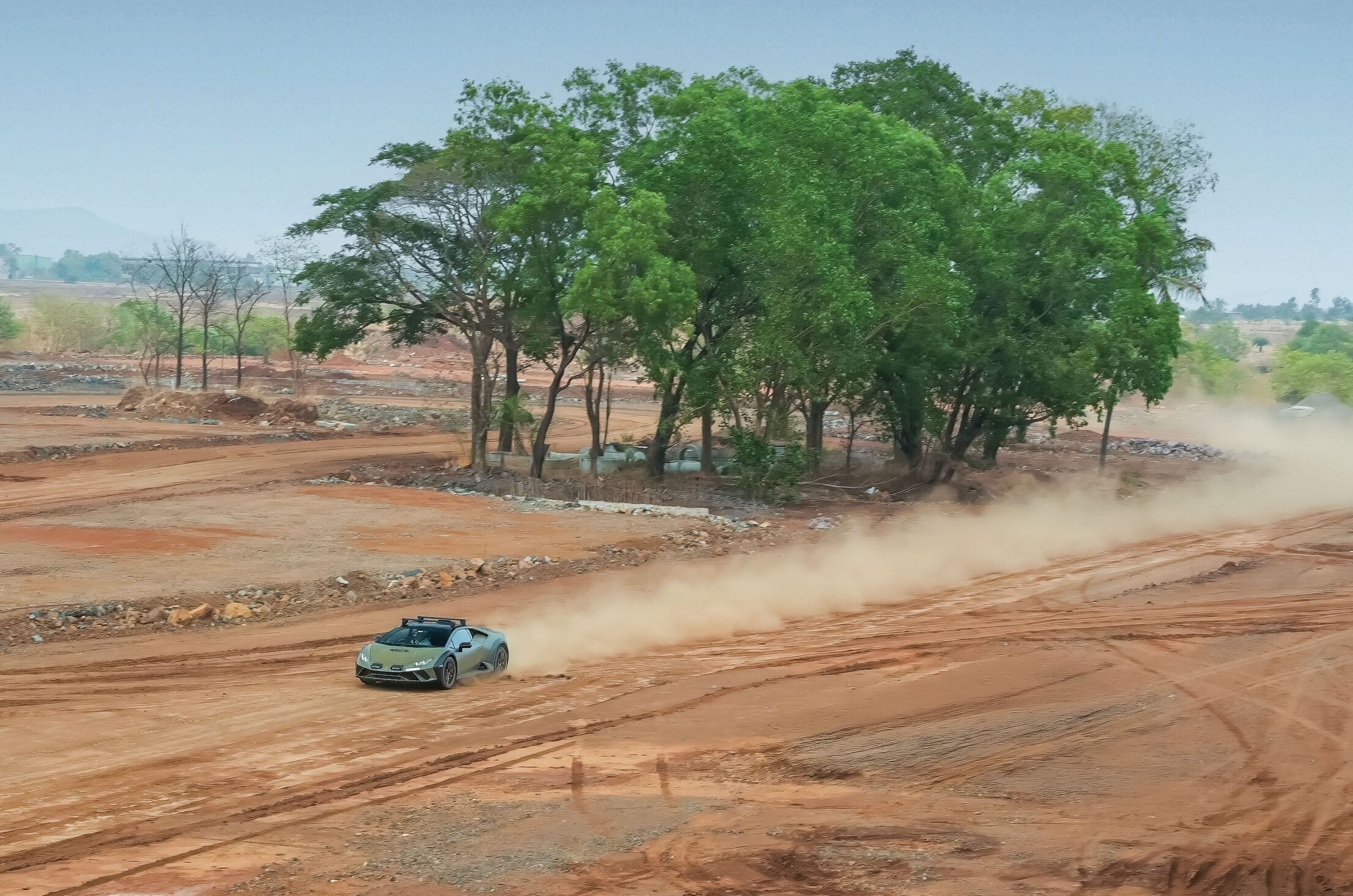
None of that exists yet in finished form. What does exist, right now, is the base layer. The dirt has been laid and compacted to a finish so smooth, it could pass for a rally special stage, which is roughly how we decided to treat it.
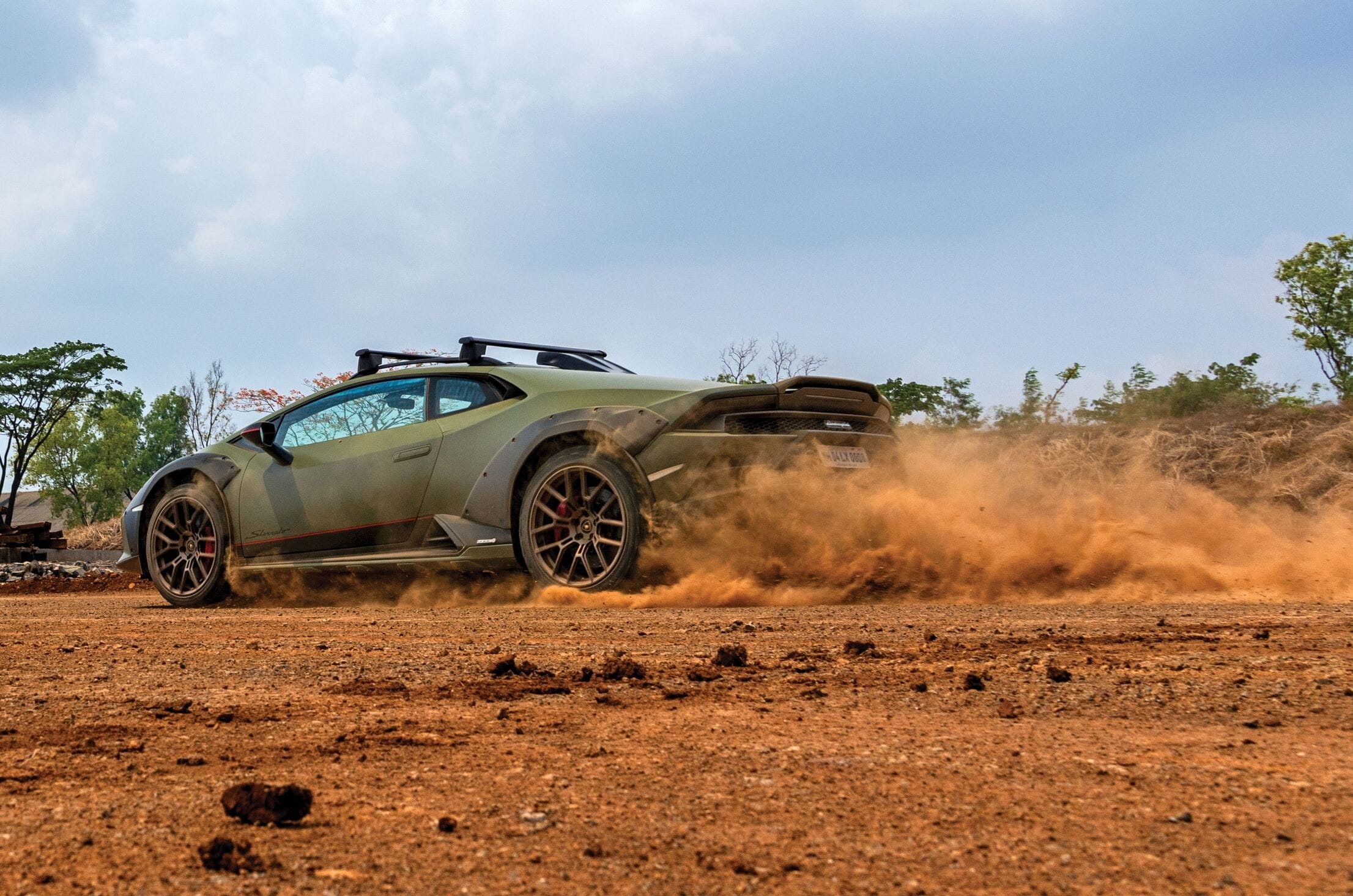
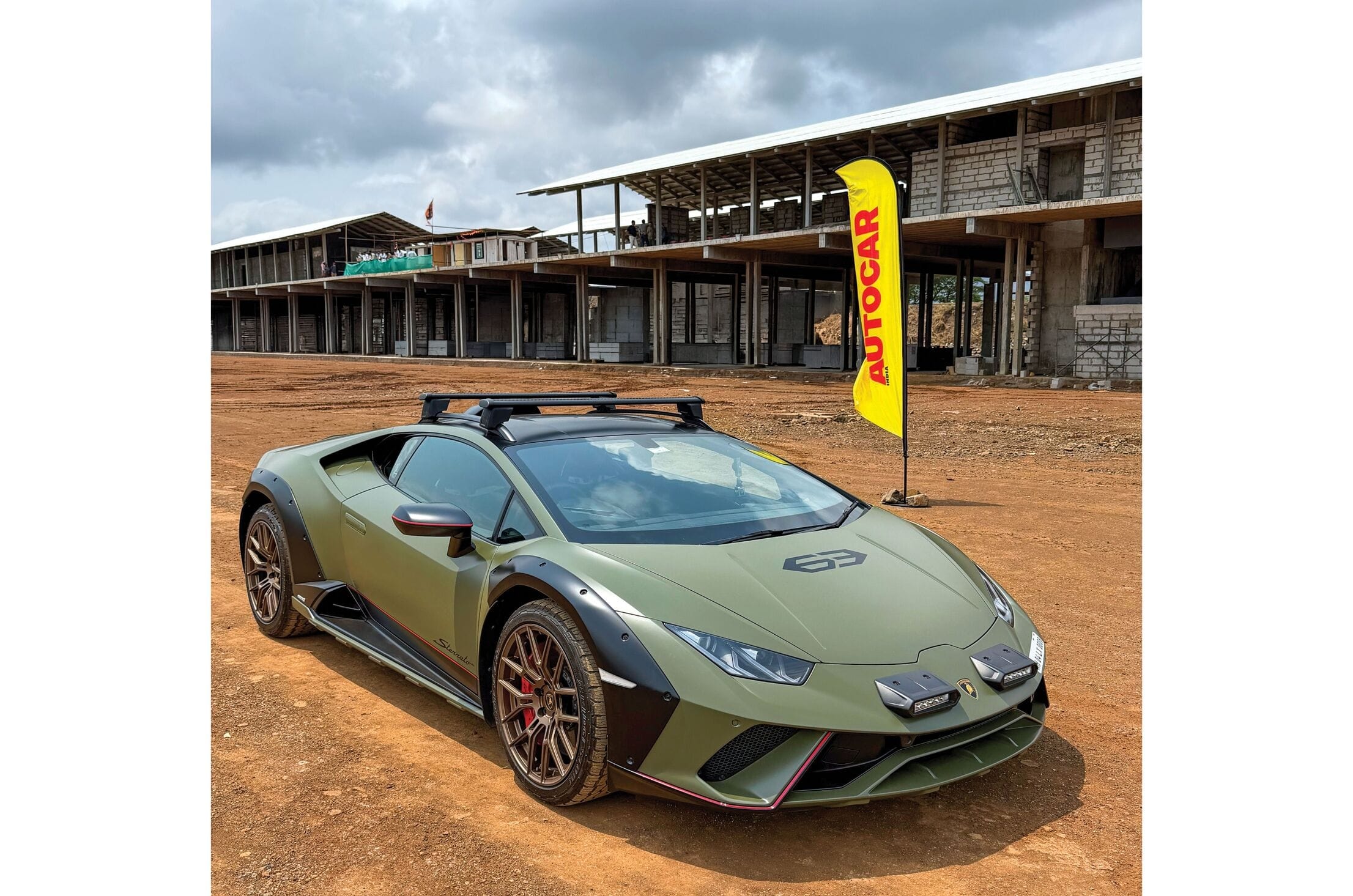
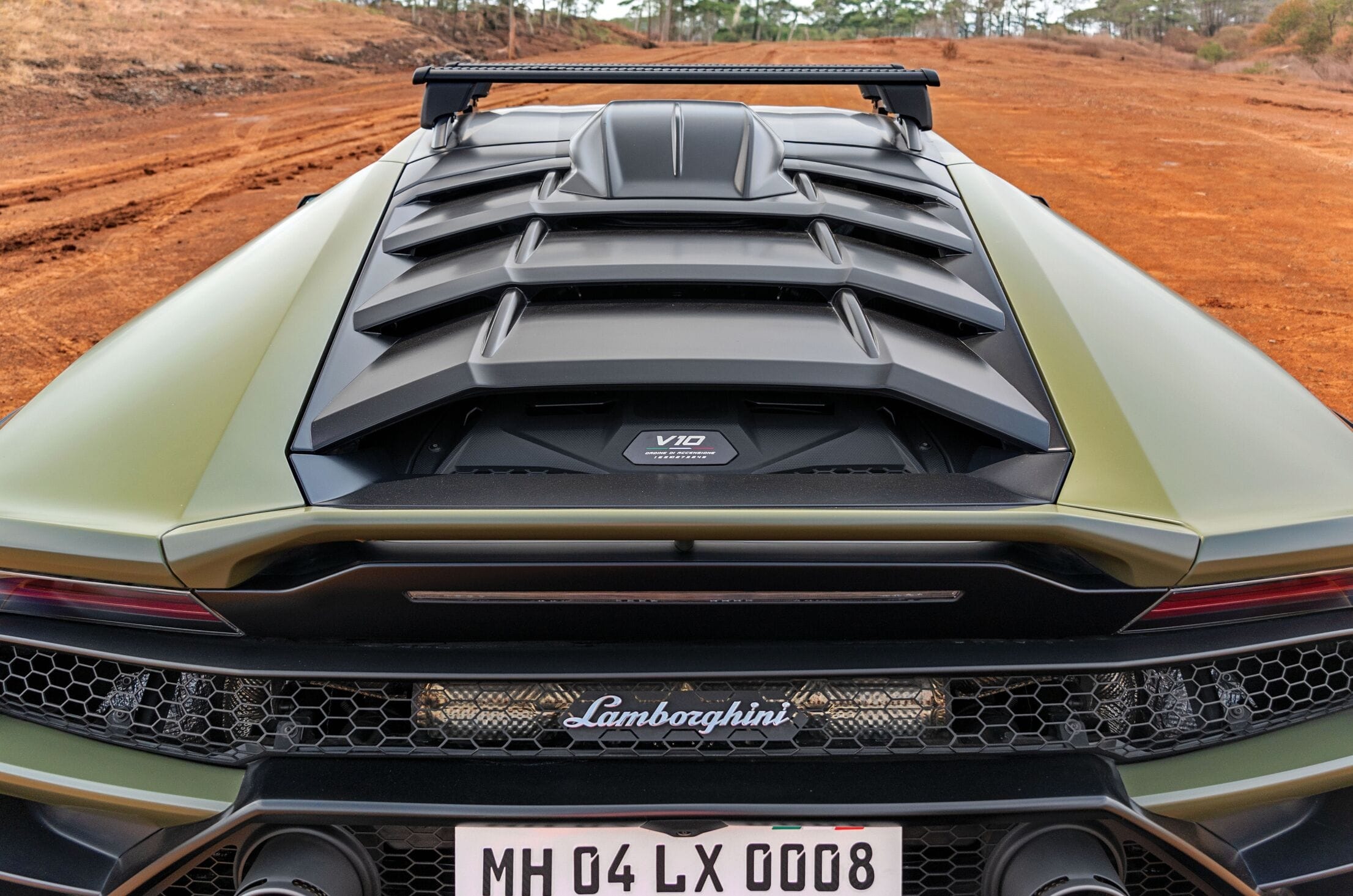
The obvious car for an afternoon like this would have been something with four-wheel drive and a reassuring amount of ground clearance. Something like an Urus or an RS Q8 – the kind of SUV that turns loose surfaces into a non-event. But ‘obvious’ has never made for a good story. So instead, we brought a Lamborghini Sterrato, which is, in essence, a Huracán that someone at Sant’Agata decided should grow up into a WRC car.
Before the tarmac arrives, the Sterrato enjoys Nanoli in its rawest form, with the future pit and hospitality complex taking shape behind it.
The Sterrato is not a styling exercise with some plastic cladding glued on. Lamborghini jacked the ride height by 44mm, fitted bespoke Bridgestone all-terrain rubber wrapped around 19-inch wheels, widened the front and rear tracks, and reworked the all-wheel-drive system and suspension geometry so the car can absorb a rutted surface without snapping its splitter off in the first hundred metres. Underneath sits the same naturally aspirated 5.2-litre V10 found in the rest of the Huracán range, here tuned to 610hp, still screaming to over 8,000rpm with no turbos to soften the theatre. Only 1,499 Sterratos were built before Lamborghini closed the production run, and of those, 15 made their way to India.
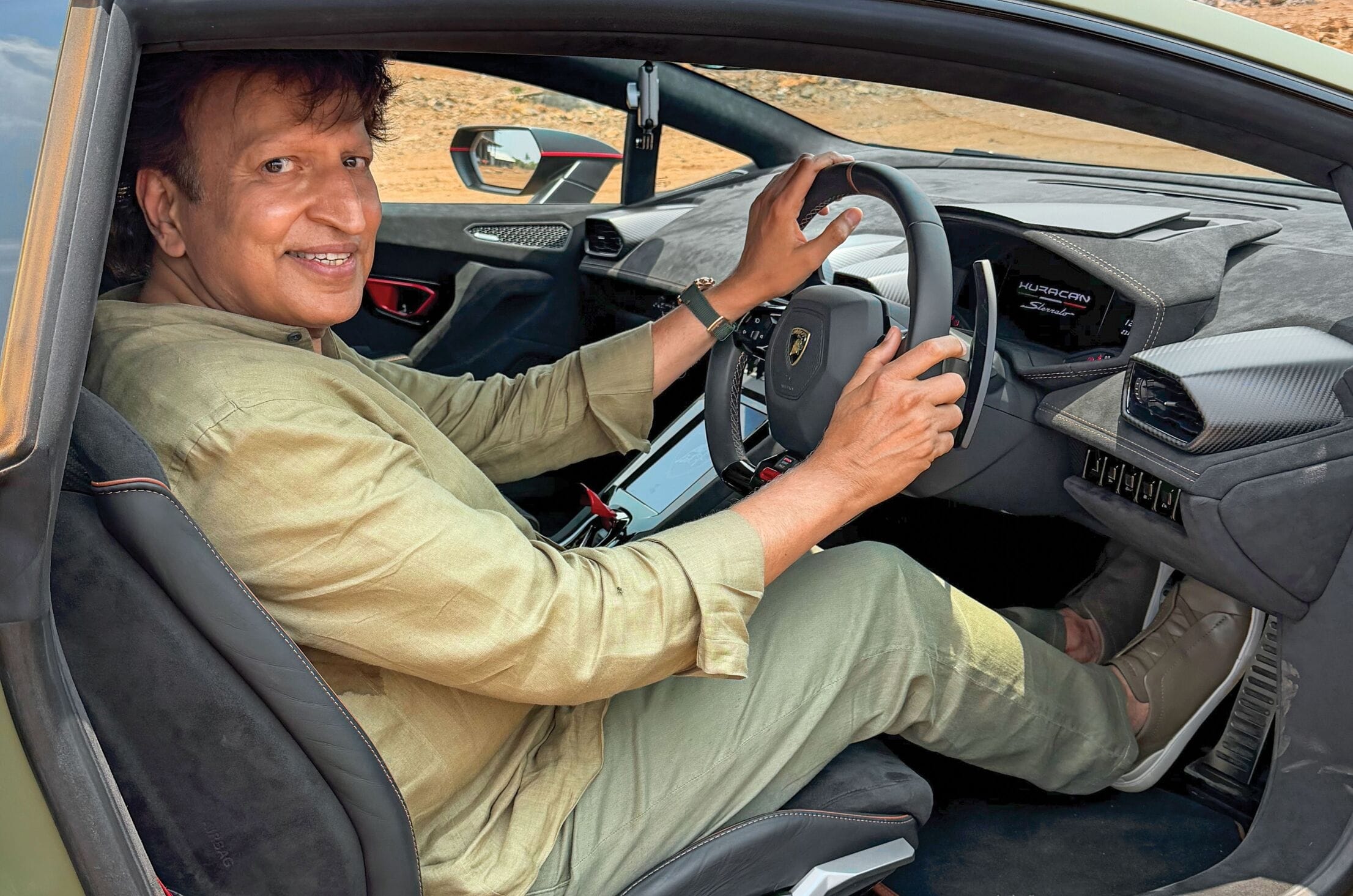
The example driven here belongs to Dinesh Thakkar, who was not only generous enough to hand over the key for a day, but also had the distinction of setting what can be considered the first recorded lap at Nanoli Speedway.
His time of 2m34.80sec won’t be the quickest, but it’s a significant milestone for a circuit that is yet to officially open.
Mechanically, the Sterrato retains the naturally aspirated 5.2-litre V10, producing 610hp and driving all four wheels through a dual-clutch transmission. On paper, it remains very much a Huracán. In practice, the changes in character are immediately evident.
On the compacted dirt, the first impression is one of adaptability. Turn-in is not as immediate as it would be on tarmac, but the front axle bites with a reassuring consistency. The real shift comes under power. Where a standard Huracán demands restraint, the Sterrato encourages exploration.
The recalibrated driving modes, particularly Rally mode, allow for controlled slip. The rear steps out progressively, and crucially, predictably. There is a fluidity to the way the car moves, a willingness to rotate that transforms the experience. It is less about outright speed and more about managing balance.
5.2-litre V10 a nod to the best of internal combustion.
The additional suspension travel plays a defining role. Over the subtle undulations of the track, the car remains composed, absorbing variations in the surface without unsettling the chassis. It allows you to commit earlier, carry speed through sections that would otherwise require caution, and rely on the car to work with the terrain rather than against it.
The V10 is natural aspiration at its best. It sounds absolutely brilliant; the sharp throttle response allows you to precisely meter every one of those 610 horses, and every tap of the throttle feels utterly engaging. Under the sonorous wail of the V10 is the muted rattle of gravel ricocheting off the underbody, giving the full effect of a WRC car.
For Thakkar, setting that first lap was less about outright pace and more about being part of something that will only happen once. Once the tarmac goes down, no one will ever again get to slide a supercar through Nanoli’s corners on loose dirt. That window closes the day the asphalt trucks arrive, which made every lap feel like it mattered a little more than it should have for what was, on paper, just a test session on an unfinished track.
Sterrato owner Dinesh Thakkar is all smiles after a memorable day.
What Nanoli represents, once finished, goes well beyond a fun afternoon for a few car nuts and a Lamborghini. Mumbai’s supercar owners have long had money and machinery with nowhere proper to use either. The city’s roads are hostile to anything with a low chin, and Pune offers little better. A circuit within striking distance of both cities, built to international standards and backed by a family that clearly does not believe in doing things by half measures, could genuinely change how western India’s car culture behaves. This is not simply about building a track. It is about creating an ecosystem. The members-only model ensures exclusivity, but also fosters a focused community. For enthusiasts in Mumbai and Pune, long constrained by infrastructure, this represents a fundamental shift. It’s a controlled environment where cars can be driven to the max without fear of speed cameras or speed breakers.
The tarmac will come soon enough, and Nanoli will become a proper circuit with lap times and lap records and all the polish that comes with a finished facility. But for one afternoon, before any of that, it was just a dirt track, a Sterrato V10, and the kind of first lap that only ever happens once.
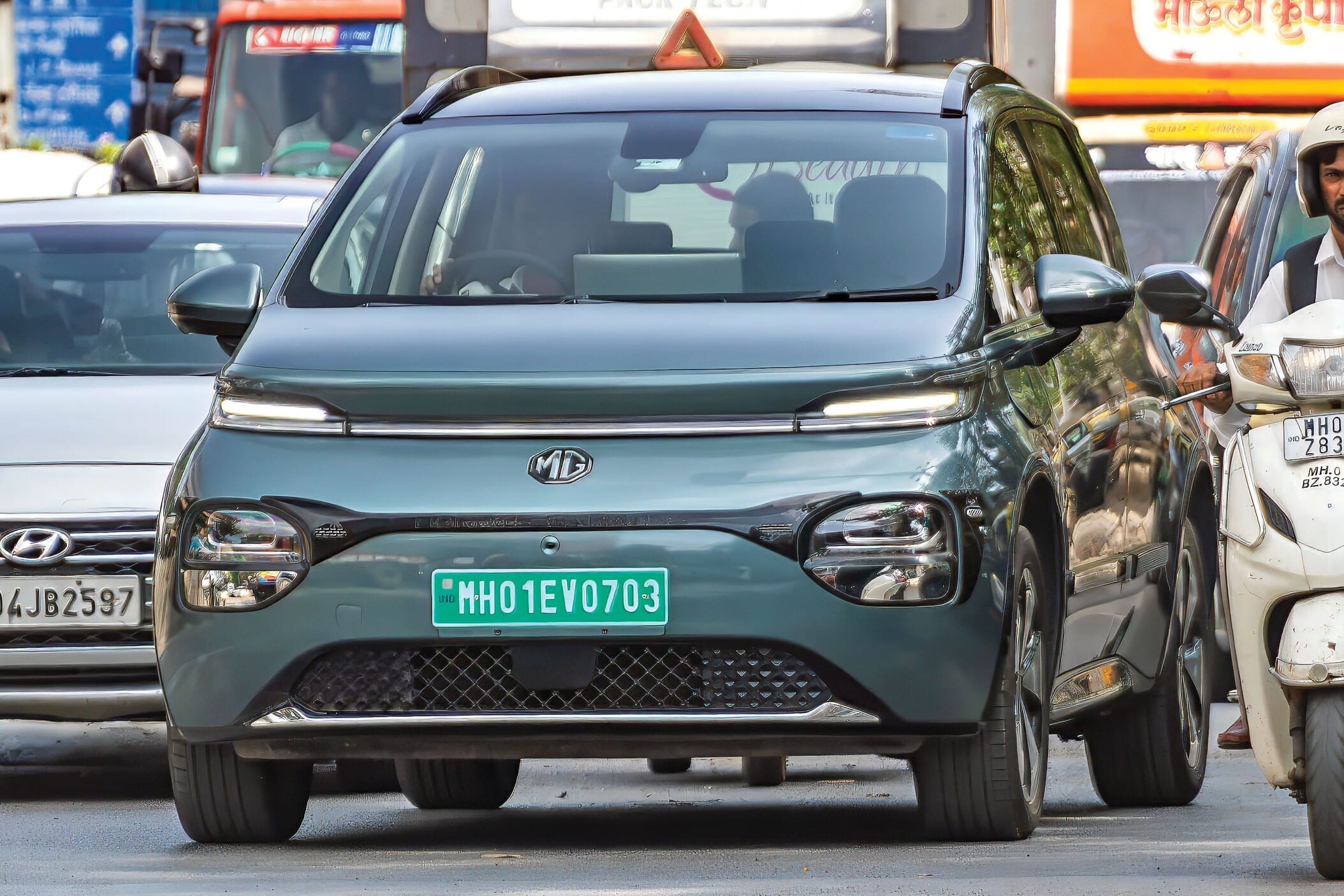
The more time I spend with our long-term MG Windsor EV, the easier it becomes to understand why it is India’s bestselling EV. It is one of those cars that slips effortlessly into daily life.
Its biggest strength is how easy it is to drive. The motor delivers power smoothly and predictably, making city commutes stress-free, while the regenerative braking is among the best-calibrated in the segment. Even in its strongest setting, it feels intuitive rather than abrupt. A proper single-pedal mode would have been welcome, but the Windsor remains one of the most user-friendly EVs around.
Smooth power delivery and well-calibrated regen make the Windsor one of the most user-friendly city cars.
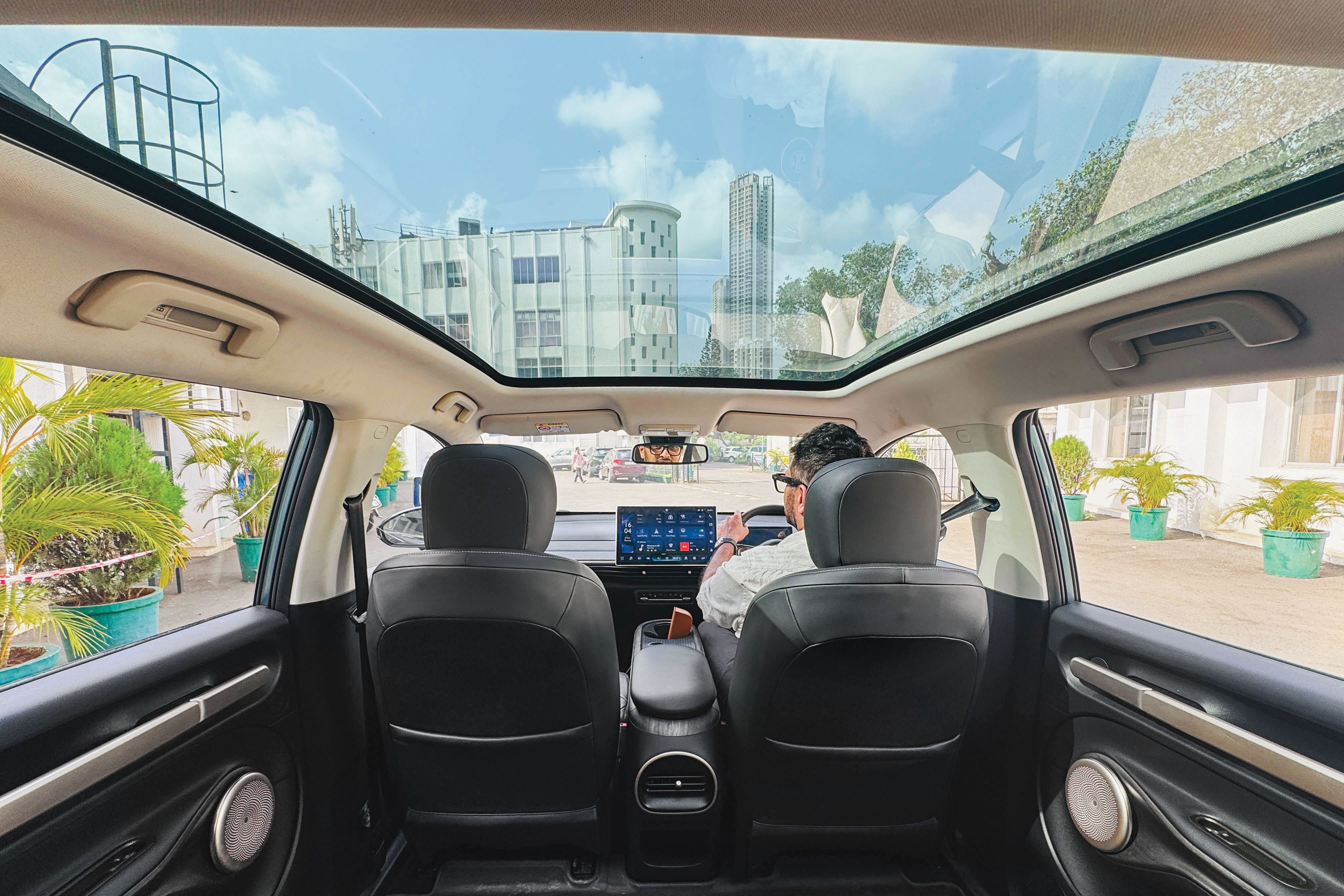
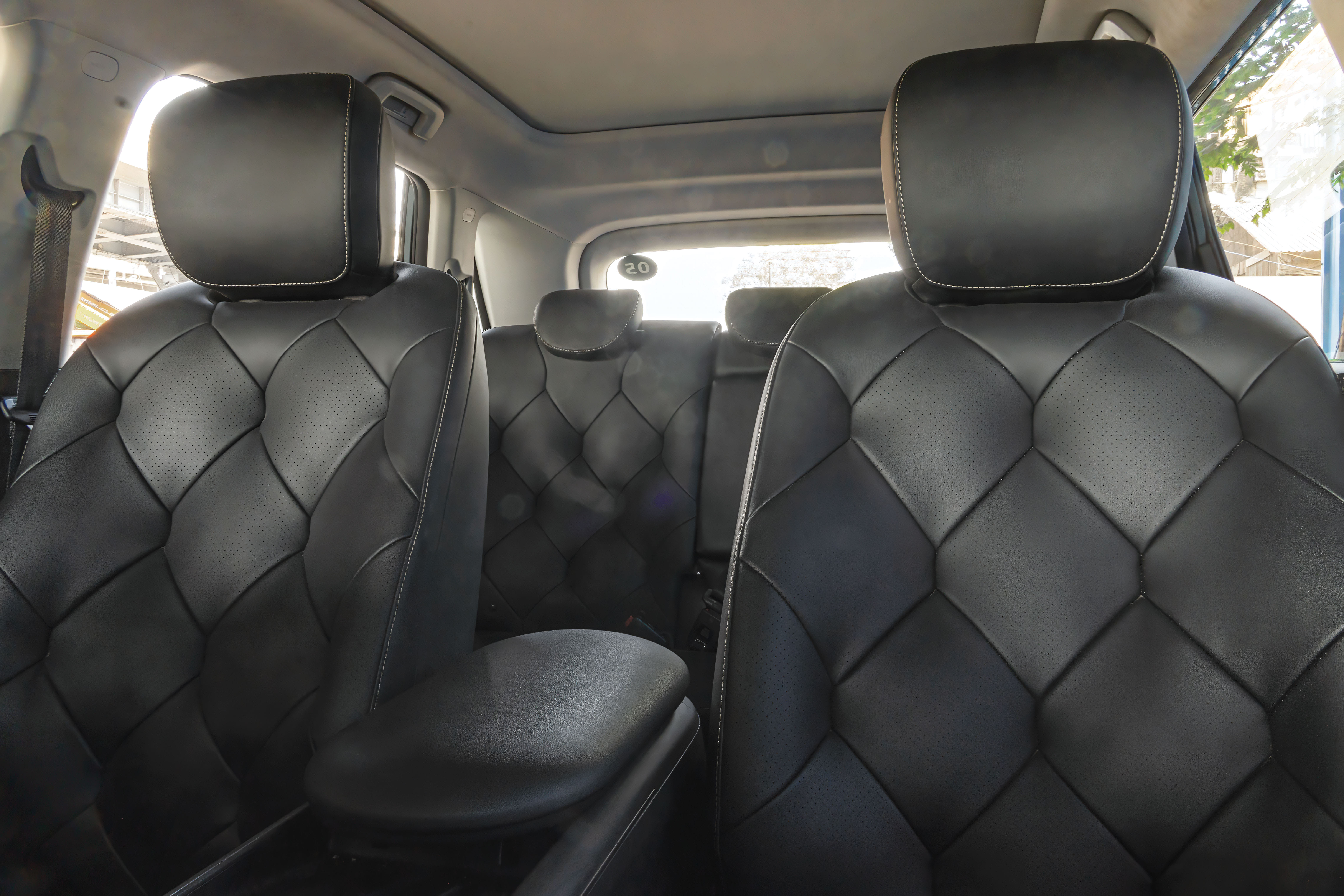
The spacious cabin continues to be a highlight. The combination of a cab-forward design, large windows and generous dimensions creates an airy feel, while rear-seat passengers enjoy excellent headroom and legroom. My family was genuinely surprised by the amount of space on offer, and while the heavily quilted seats look premium, slimmer occupants may find them uncomfortable over a longer drive.
The cab-forward design and generous glass area create a genuinely spacious and airy ambience.
Performance has also impressed. Whether in city traffic or on my regular Mumbai-to-Pune drives, the Windsor has never felt short of power. It cruises comfortably at highway speeds, has enough performance in reserve for overtakes, and offers sufficient real-world range to complete the journey without any charging stops.
Not everything is perfect, though. The large glass area can make the cabin heat up quickly when parked in the sun, and the black leatherette upholstery does little to help. Highway refinement could also be better, with noticeable road noise filtering into the cabin. The ride remains comfortable for the most part, but sharp bumps and expansion joints can occasionally catch it out.
Road noise becomes noticeable at high speeds, taking away an otherwise refined experience.
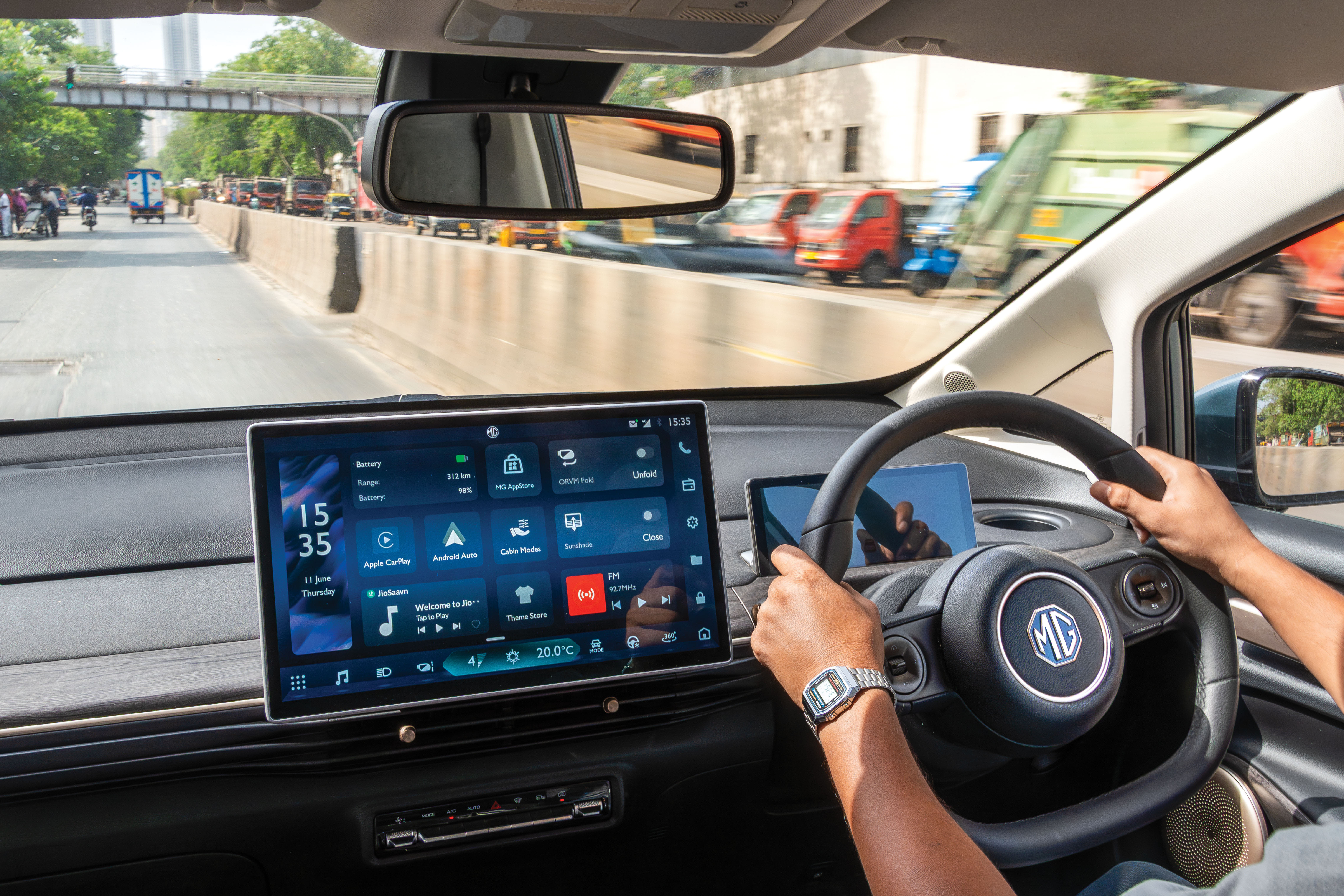
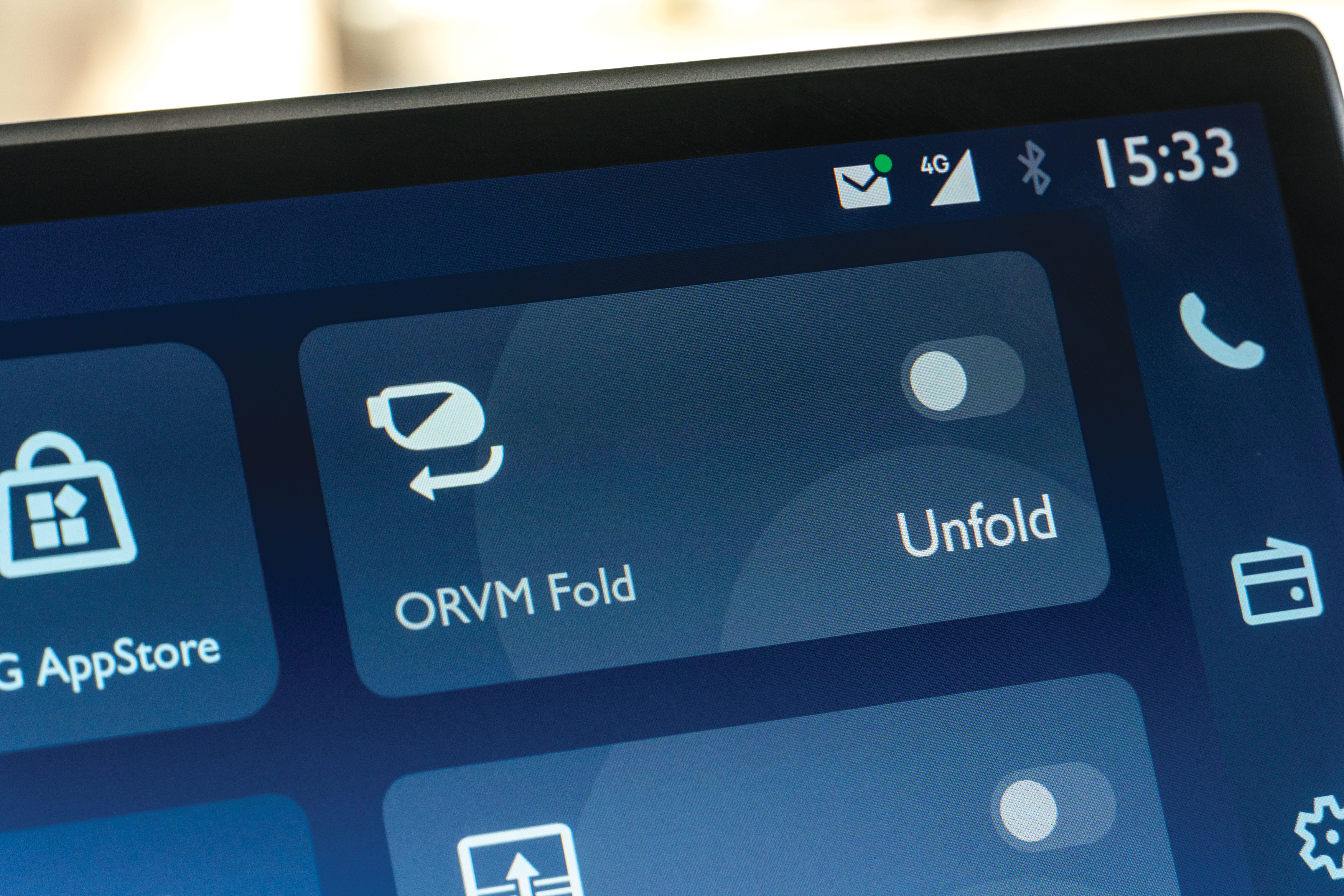
The touchscreen-based controls still require acclimatisation. While shortcuts on the steering wheel make tasks such as mirror adjustment easier over time, physical controls would have been more convenient. The 15-inch display also feels slightly too large, requiring a stretch to reach functions at the far end.
Touch mirror and sunshade controls are too bad; physical controls would be far more convenient.
Even so, the Windsor EV continues to impress as an all-round package. Its blend of space, ease of driving, performance and usable range explains exactly why it has resonated so strongly with Indian buyers and why I’m going to hang on to it for a while longer.
The Renault Duster impressed us at the first drive event with its muscular design, modern interior and ride and handling balance. We’ve now subjected all versions of the new Duster to our in-depth performance and efficiency testing to tell you how it stacks up against its established competition in the midsize SUV segment.
Renault Duster Exterior Design and Engineering – 9/10
Butch, muscular SUV has good road presence; India model based on RGMP platform
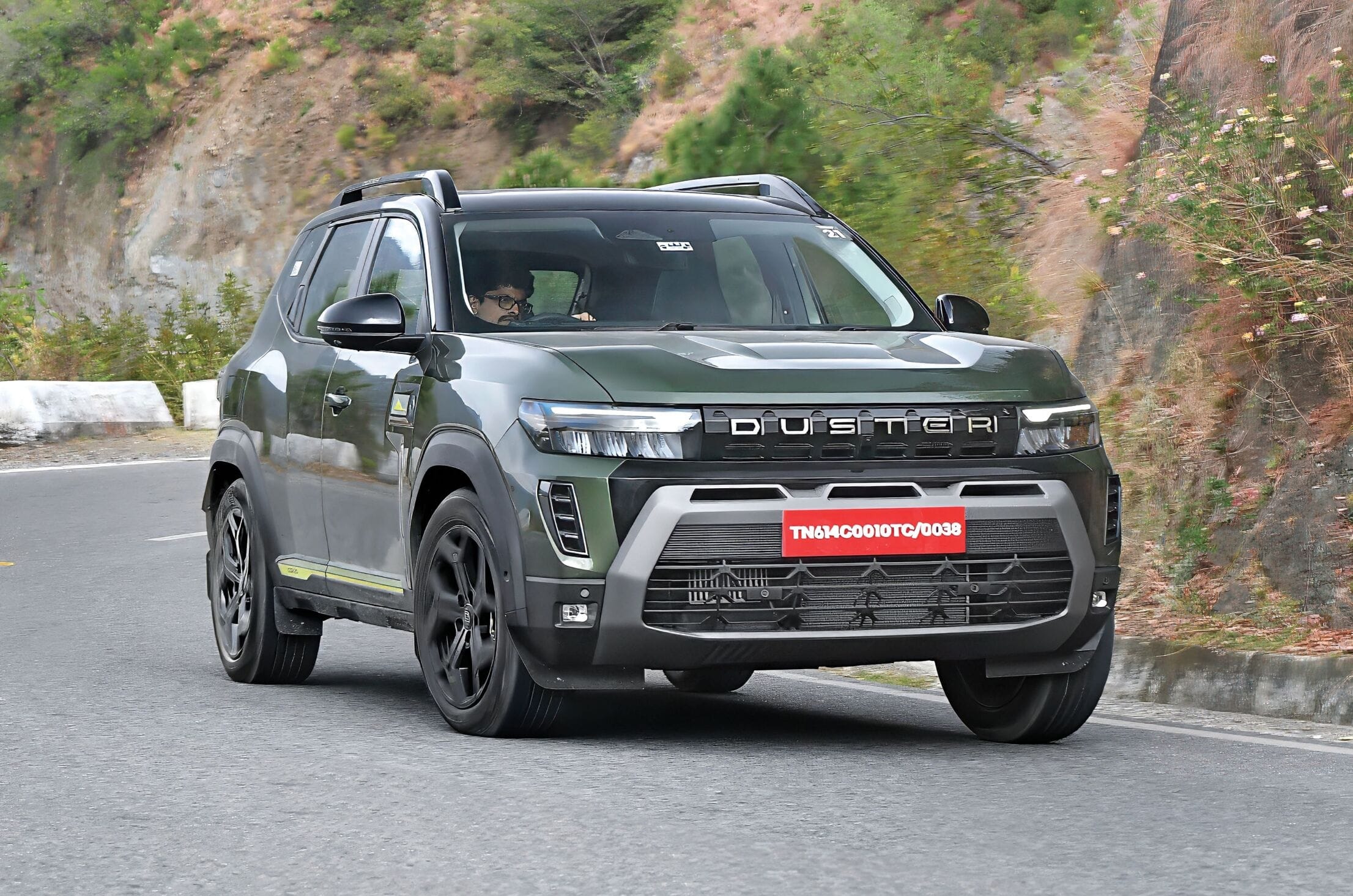
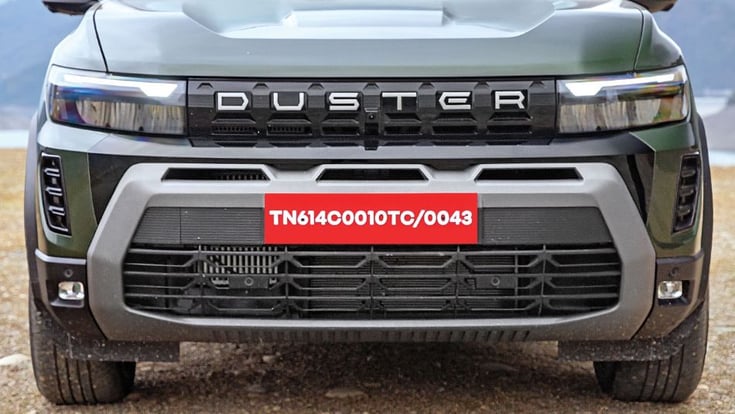
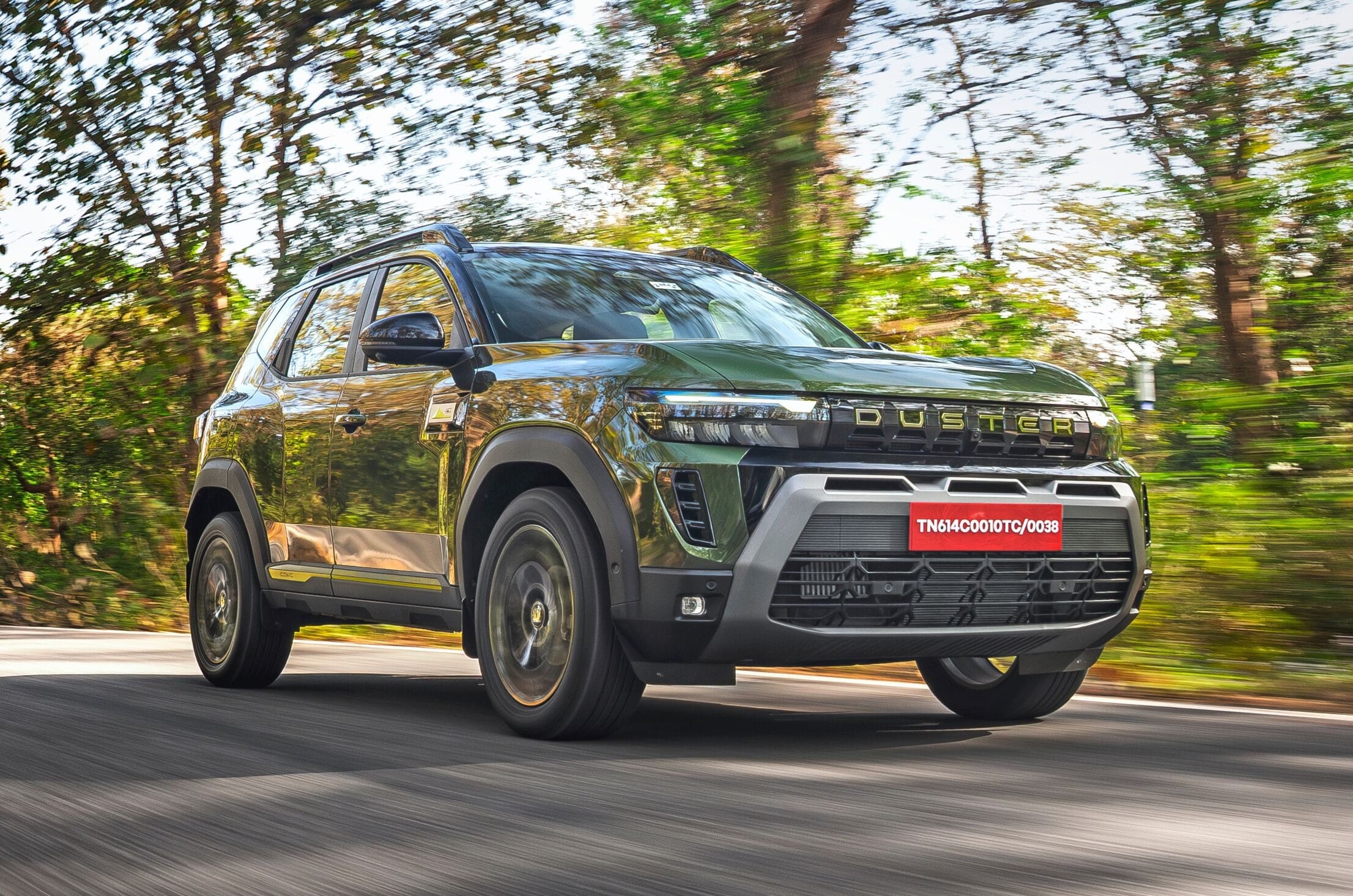
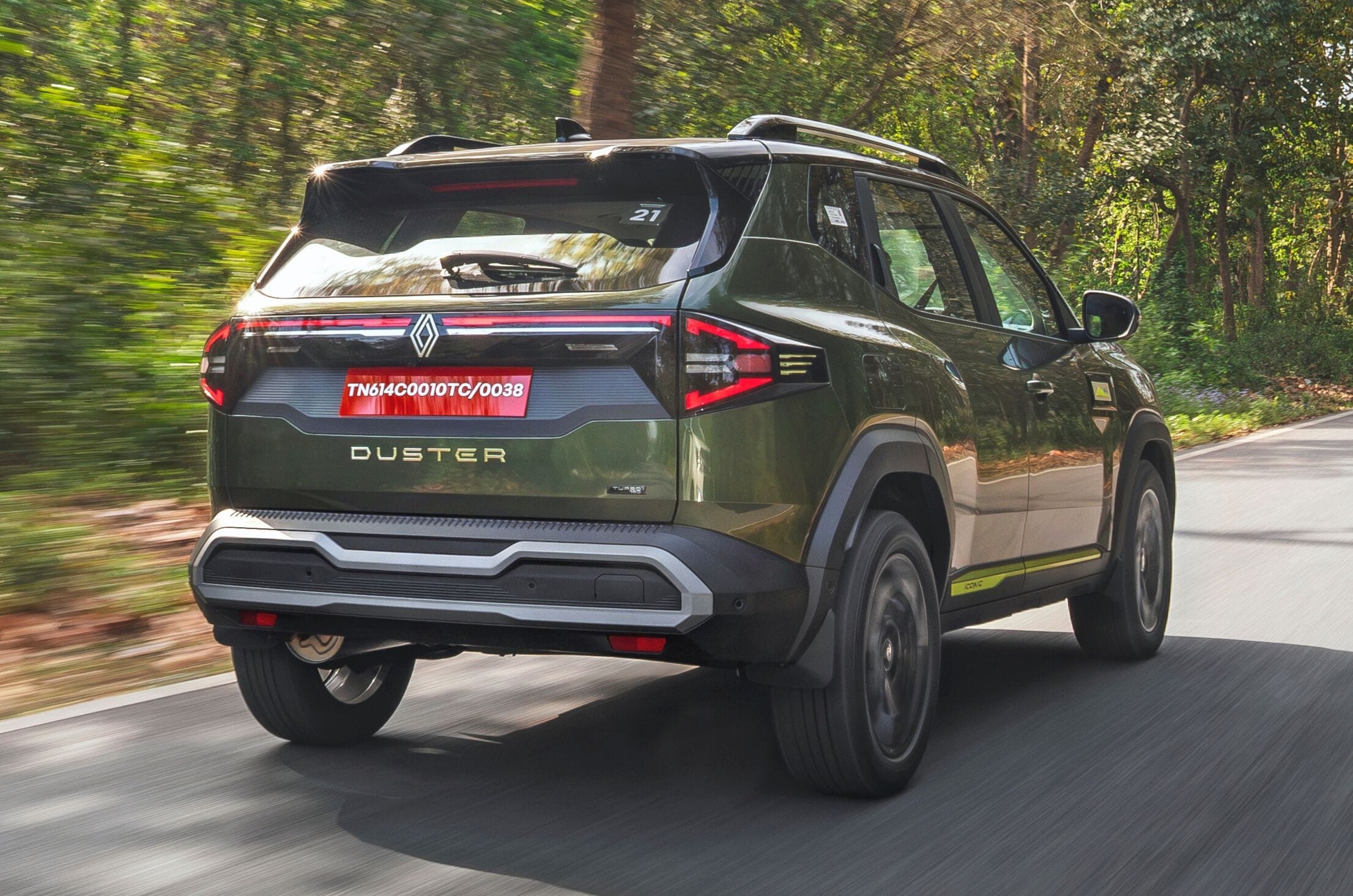
Renault has absolutely nailed the design of the new Duster. While it retains clear visual links to its predecessor, the styling feels thoroughly modern. Up front, large LED headlamps are paired with distinctive eyebrow-shaped DRLs that double as turn indicators, while the grille replaces the Renault logo with a prominent ‘Duster’ script, capitalising on the model’s strong brand recall. A protruding silver skid plate evokes memories of the original Duster, and pixel-style fog lamps, a sculpted bonnet and functional air curtains add further visual muscle.
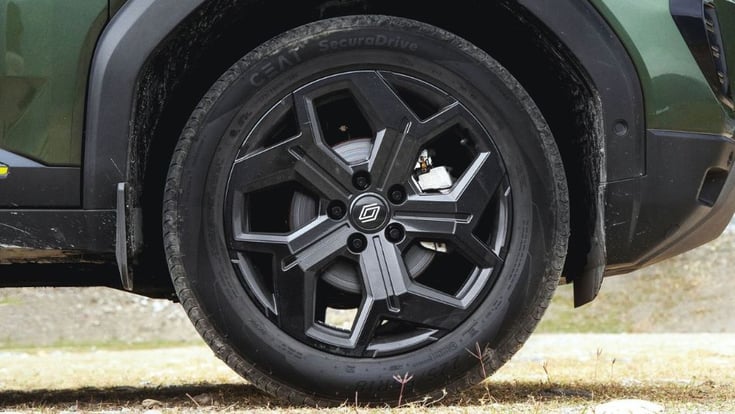
Left to right: Proudly wears the Duster badging on the nose; 18-inch alloys look proportionate.
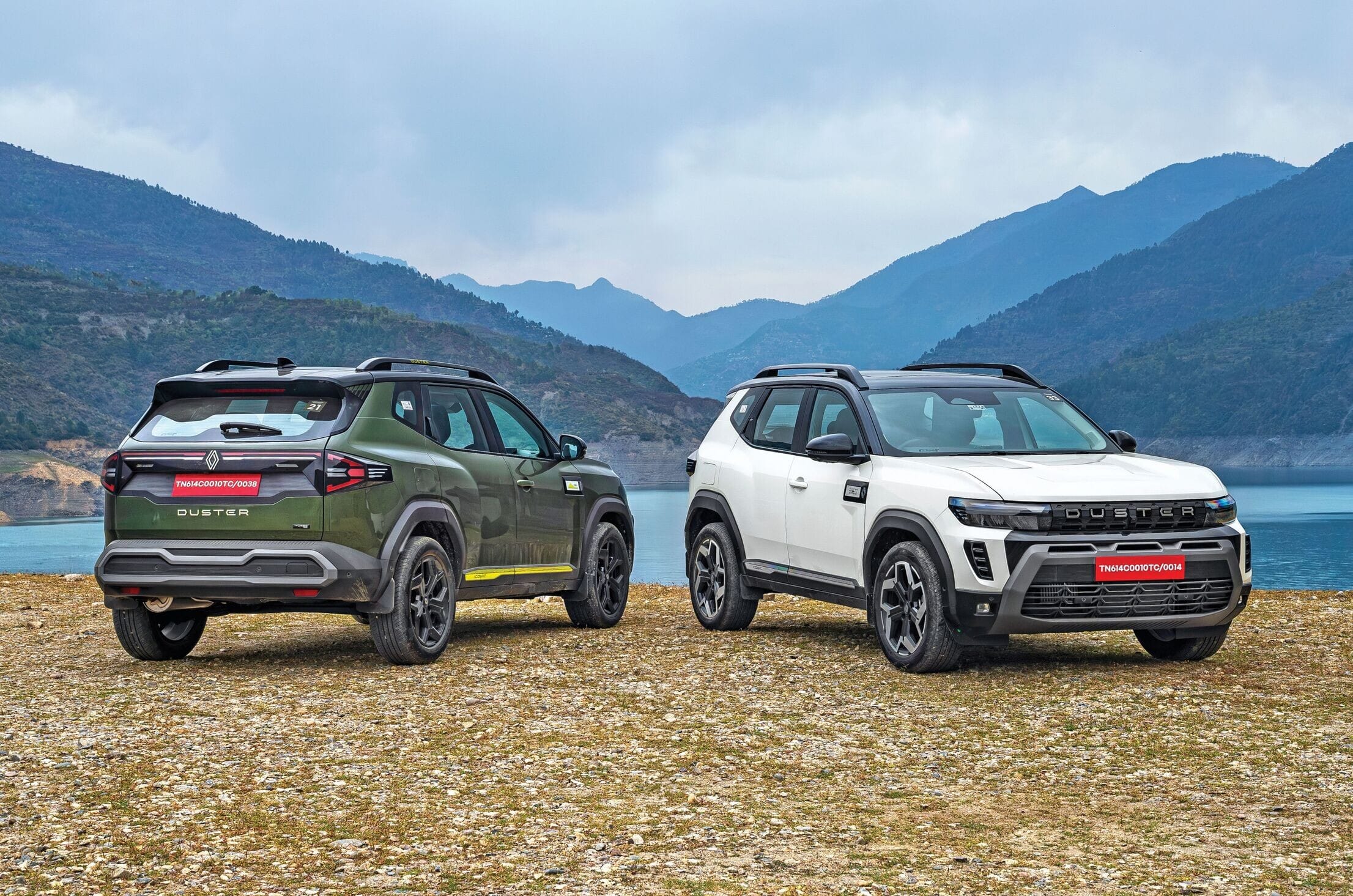
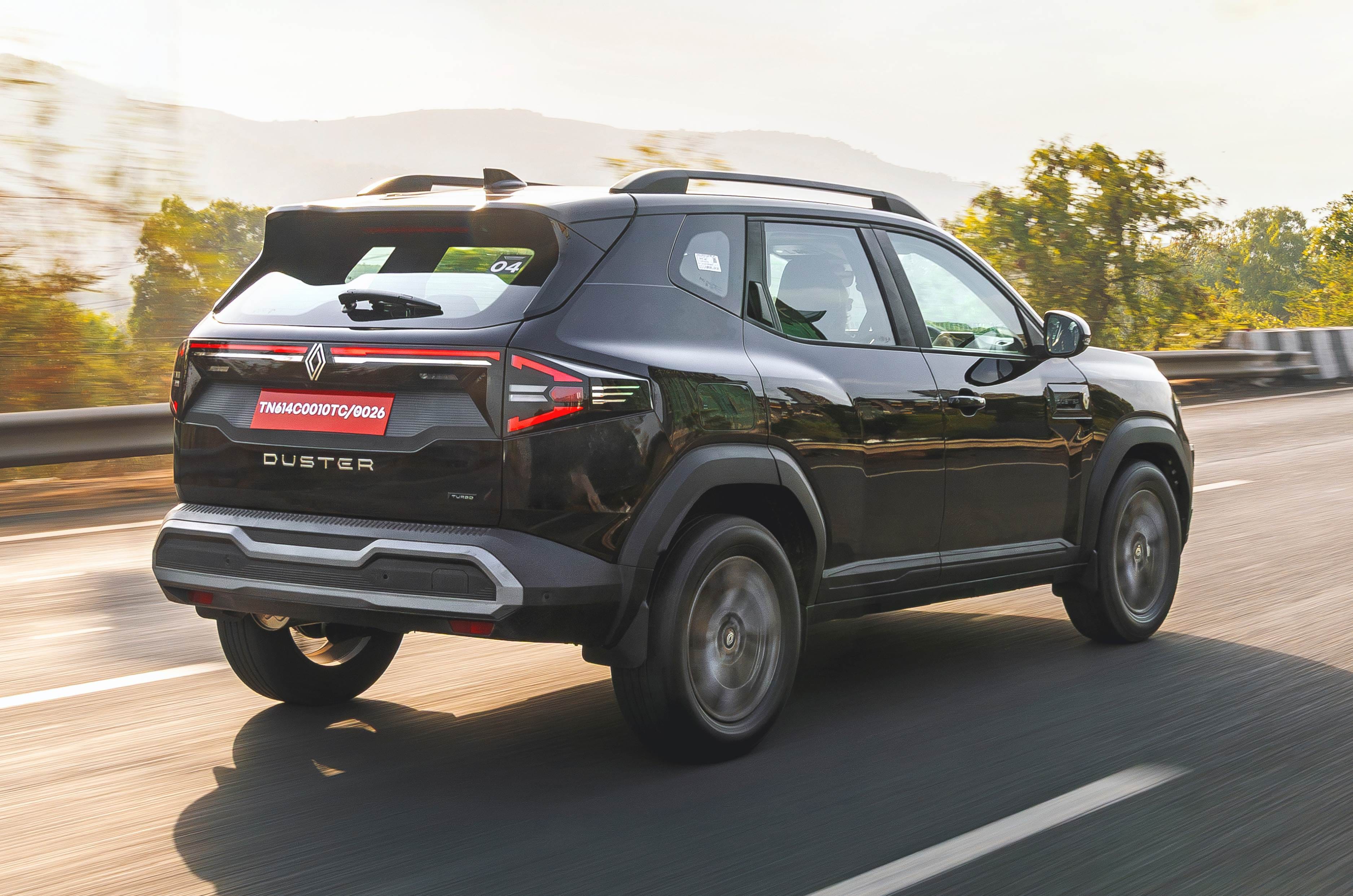
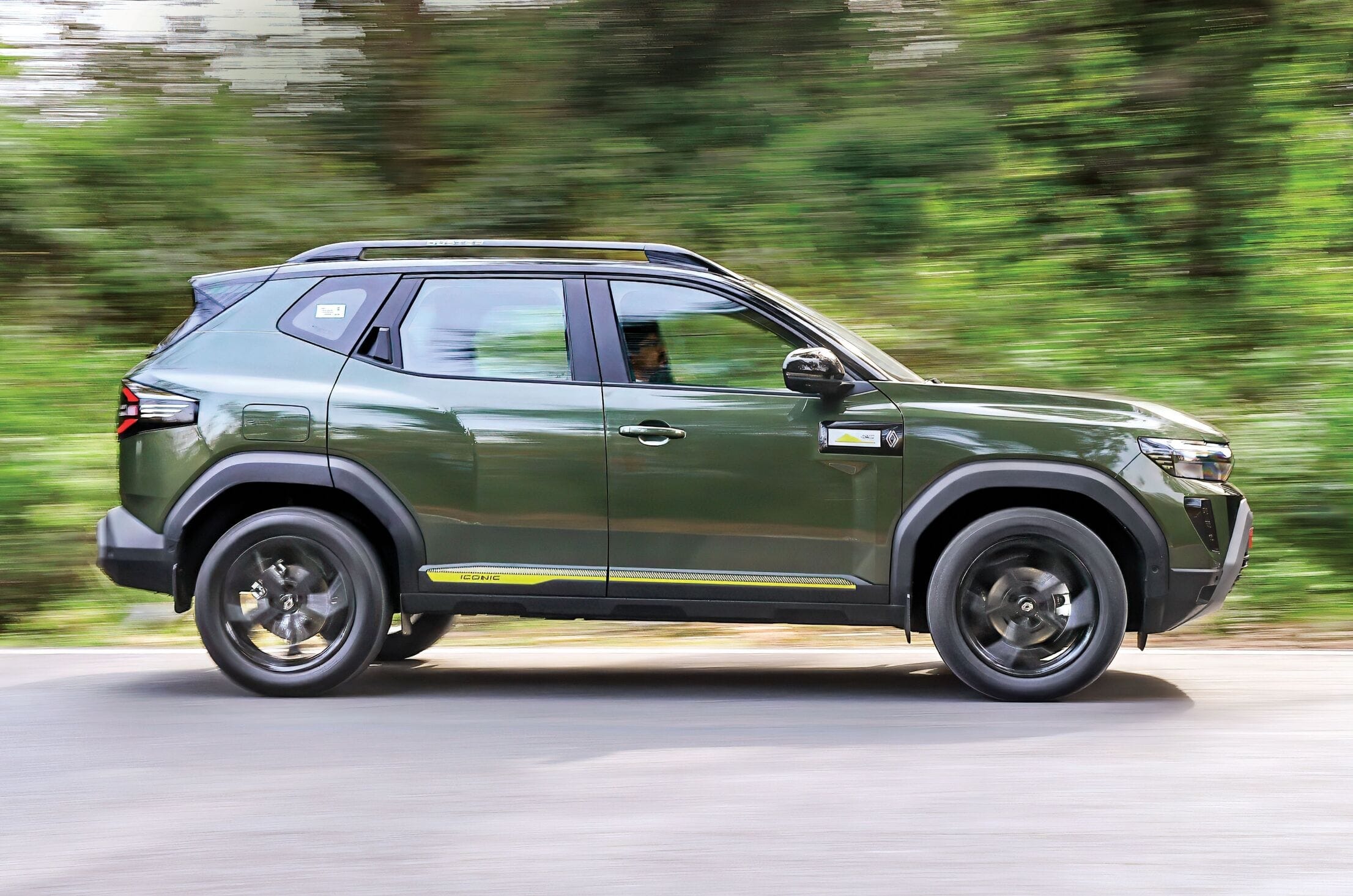
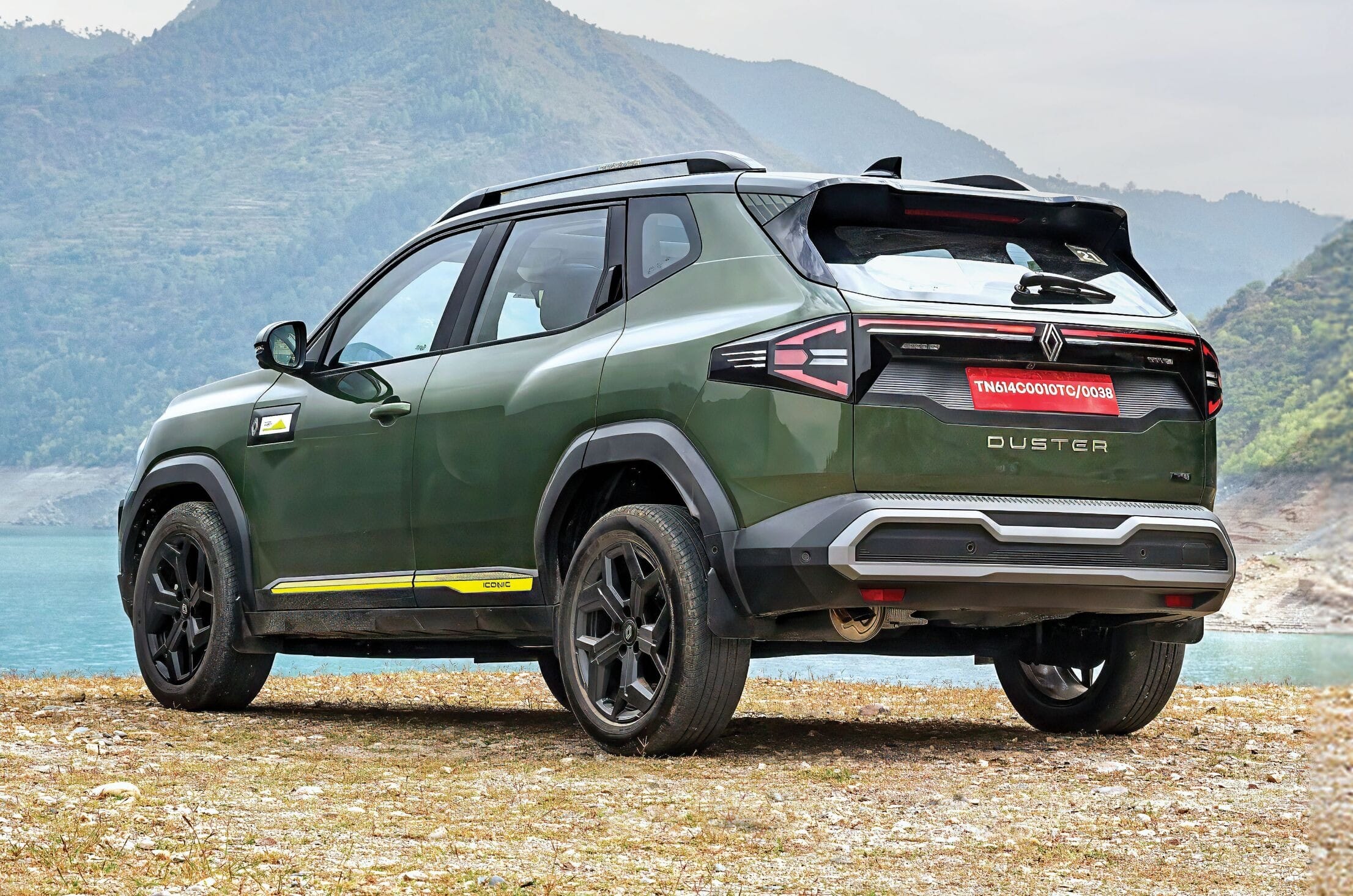
In profile, the Duster embraces a rugged SUV character with chunky black cladding, concealed rear door handles in the C-pillar and functional roof rails. It rides on striking 18-inch alloy wheels and offers 212mm of ground clearance. The rear design is relatively clean but features distinctive triangular tail-lamps connected by an LED light bar. A roof spoiler and contrasting silver insert in the bumper help enhance its stance. Overall, the Duster has considerable road presence. Colour options include Sunset Red, Pearl White, River Blue, Moonlight Silver, Stealth Black and Jade Mountain Green, while the Launch Edition adds neon-green accents and blacked-out alloys (pictured here).
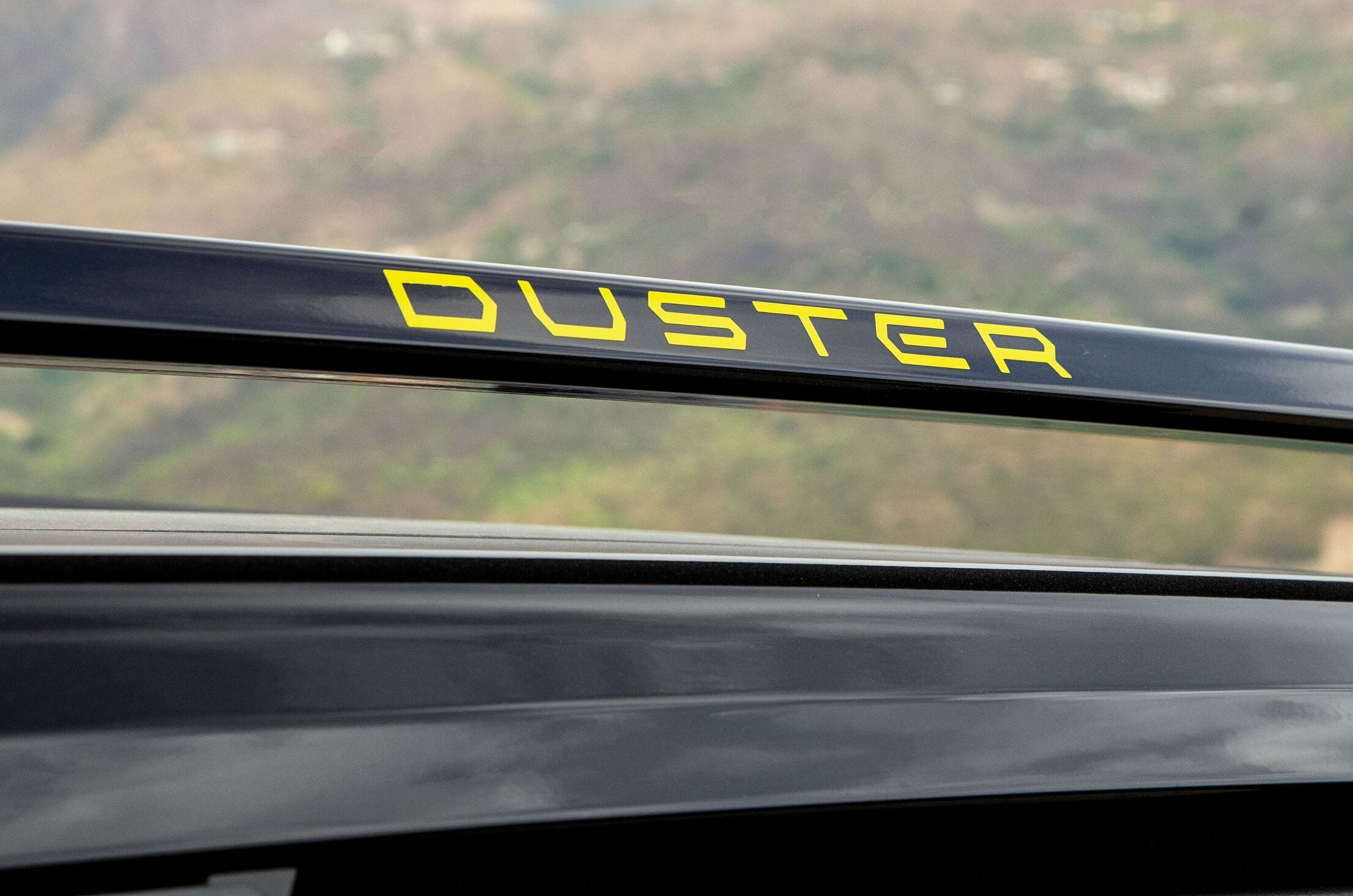
The roof rails are functional and have a rated 50 kg load-carrying capacity.
Meanwhile, the 1.0 range tops out at the mid-spec Techno trim, but Renault has done a very good job of not making it look like so. You still get the same butch and muscular styling, LED lights, roof rails and body cladding. The only prominent difference from the top trims is the alloy wheels, which are a size smaller at 17 inches and feature a slightly different design.
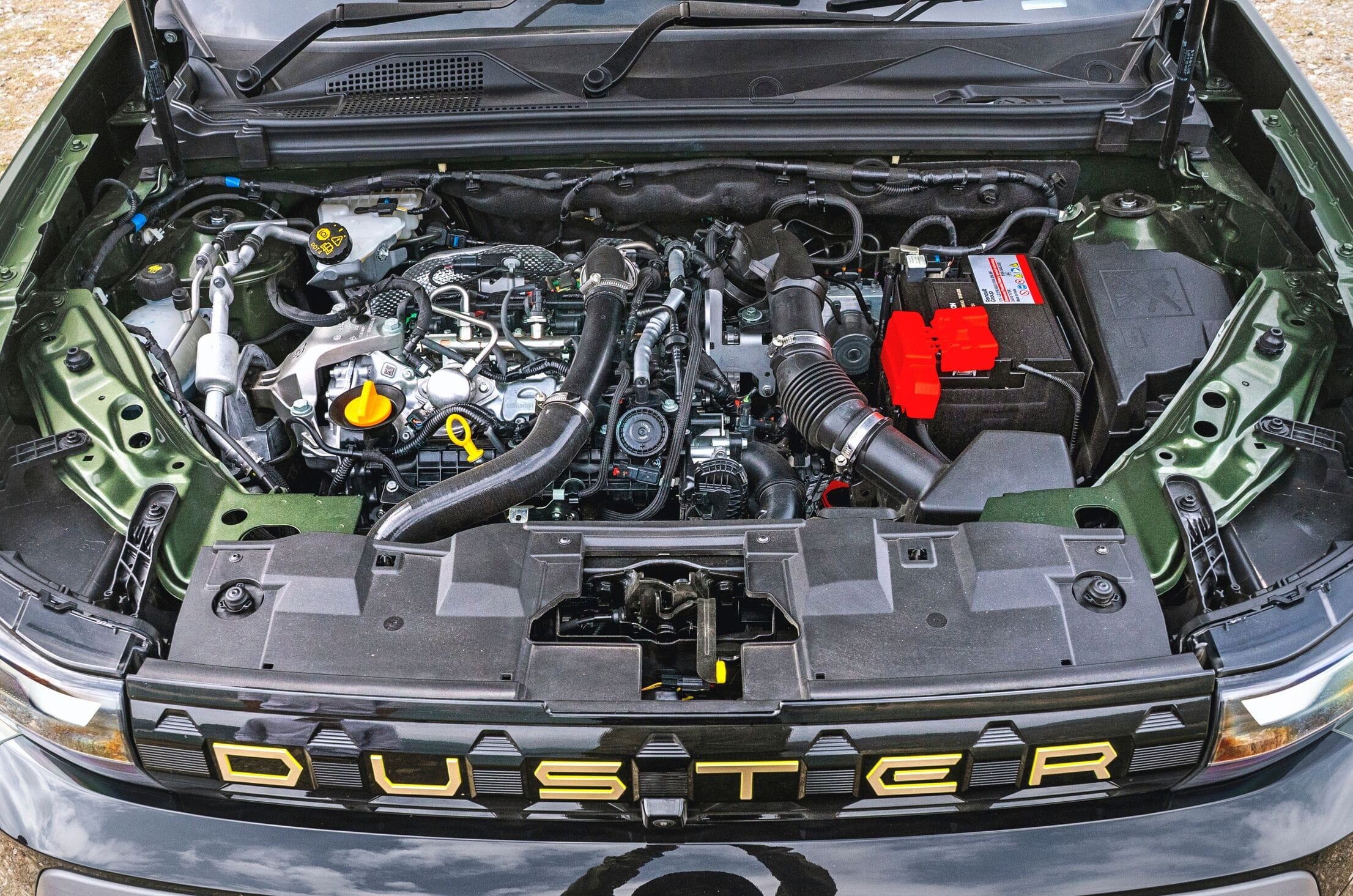
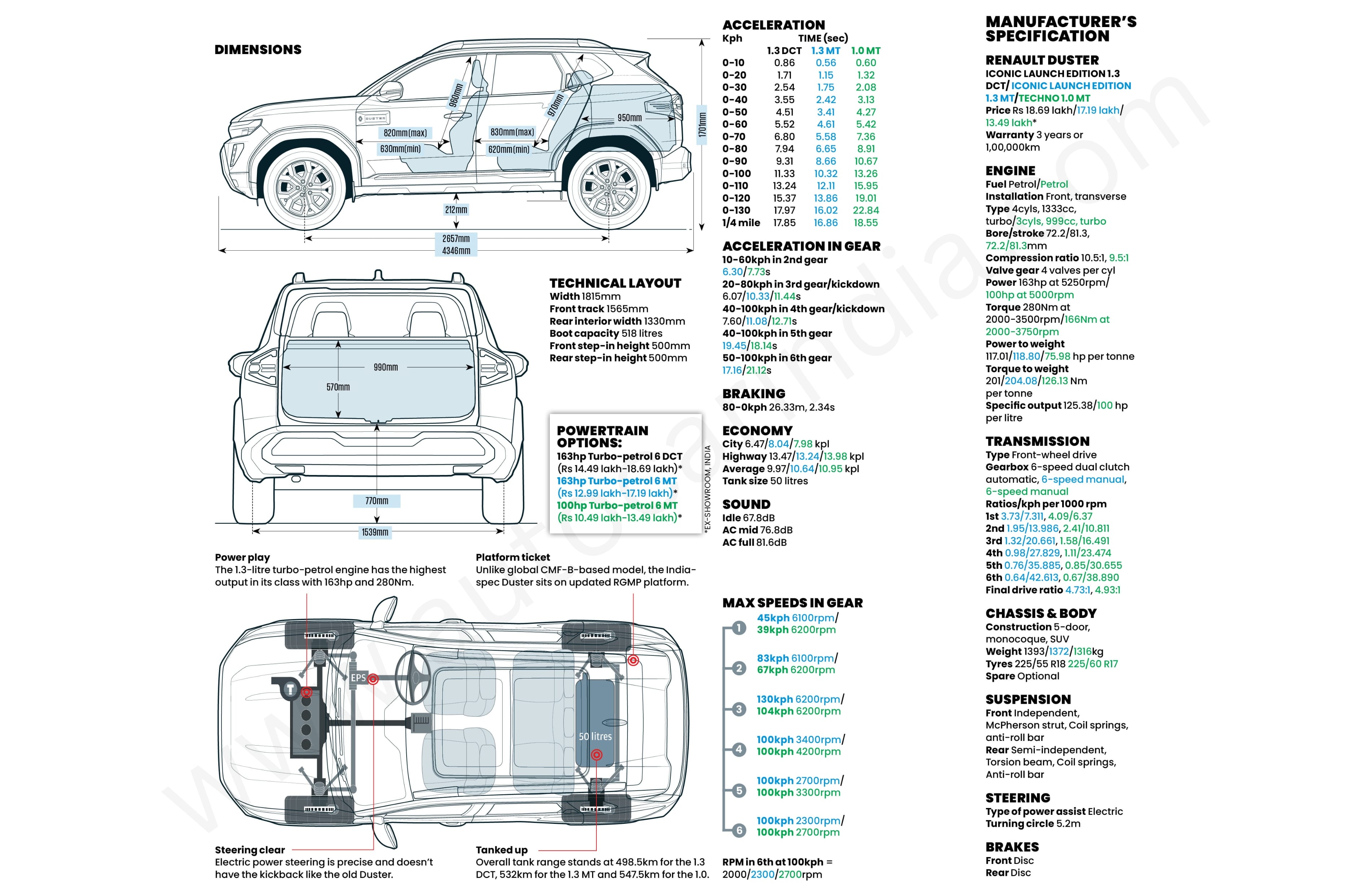
Unlike the global CMF-B-based model, the India-spec Duster sits on an updated RGMP platform.
Unlike the European-spec Duster, which uses the CMF-B platform, the India model sits on an updated version of it, which Renault calls the Global Modular Platform (RGMP). It features a Google co-developed electronic architecture, and the platform is designed to accommodate a wide range of body styles and powertrains, including hybrids, CNG and full-electric derivatives. Interestingly, the cabin is around 40mm taller due to the addition of a panoramic sunroof, which necessitated a higher roofline to preserve cabin headroom. Ground clearance is slightly higher too, making the India car 50mm taller overall than the international model. Measuring 4,343mm long, 1,813mm wide and 1,659mm tall, with a 2,657mm wheelbase, the Duster sits squarely in the midsize SUV segment.
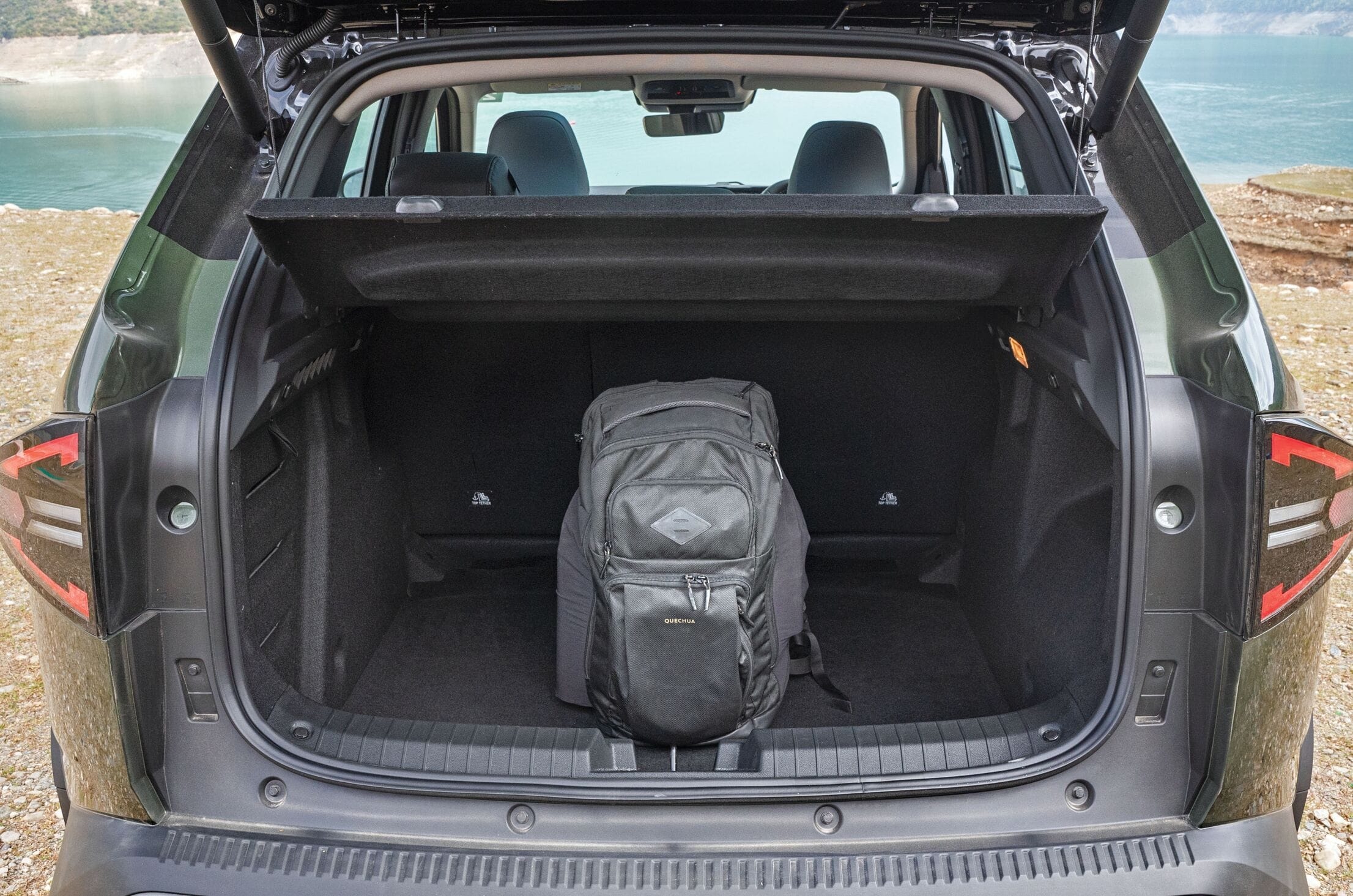
The Duster gets a segment-best 518-litre boot, though the loading lip is high.
The powered tailgate reveals a segment-leading 518-litre boot (700 litres up to the roof), although Renault only provides a puncture repair kit instead of a spare wheel as standard. Despite no AWD option, off-road credentials remain a key part of the Duster’s appeal, with 26.9-degree approach and 34.7-degree departure angles.
Renault Duster Interior Space, Comfort and Practicality – 8/10
Modern interior impresses with its design, but it isn’t as spacious as some rivals in the segment
Fit and finish of materials inside the cabin are good.
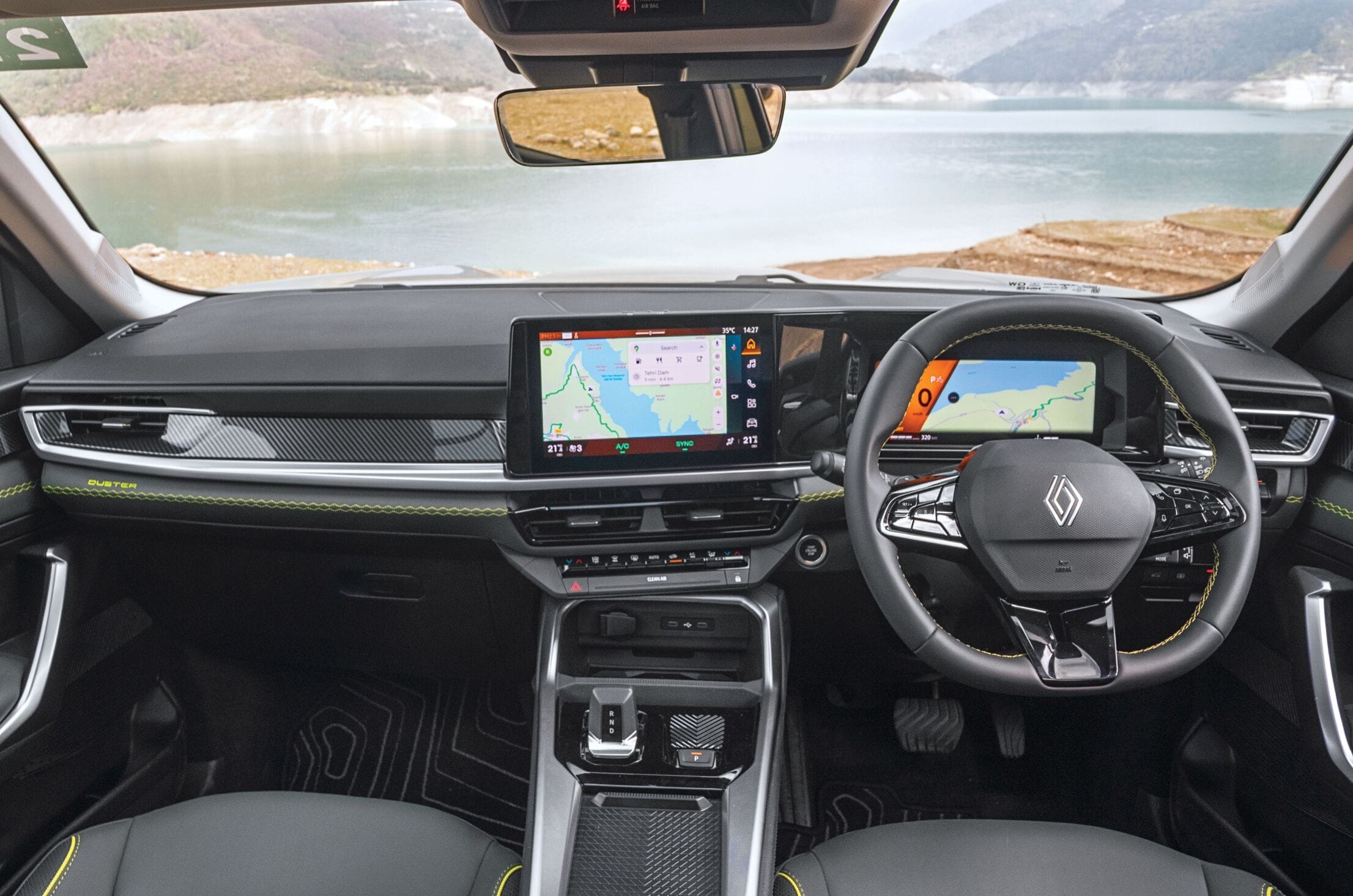
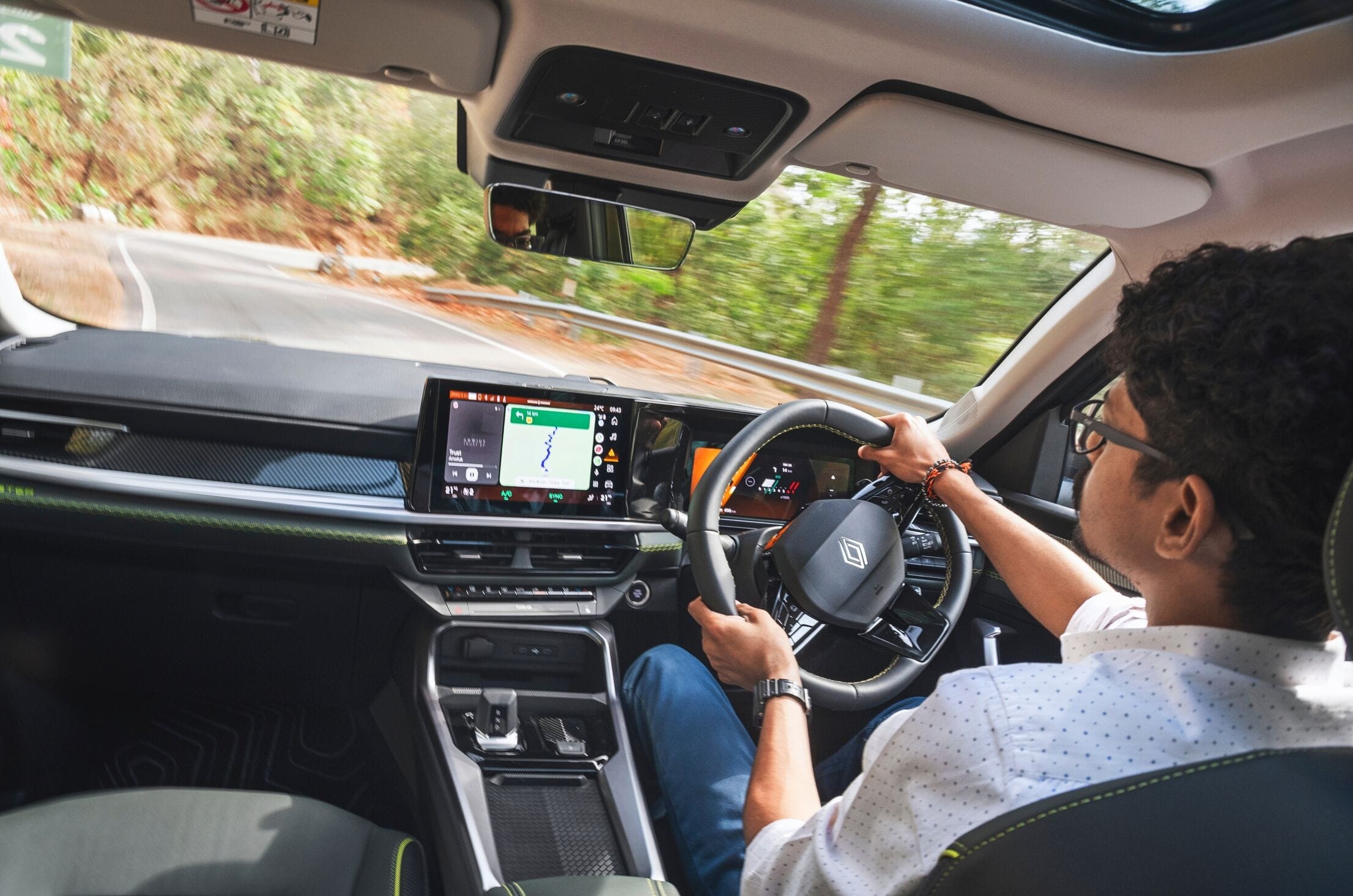
Inside, the dashboard features a twin-screen layout, with a mix of textured and soft-touch materials that lend the interior a premium feel. Silver accents, faux carbon-fibre trim and contrast green stitching add visual drama without making the cabin feel overly busy.
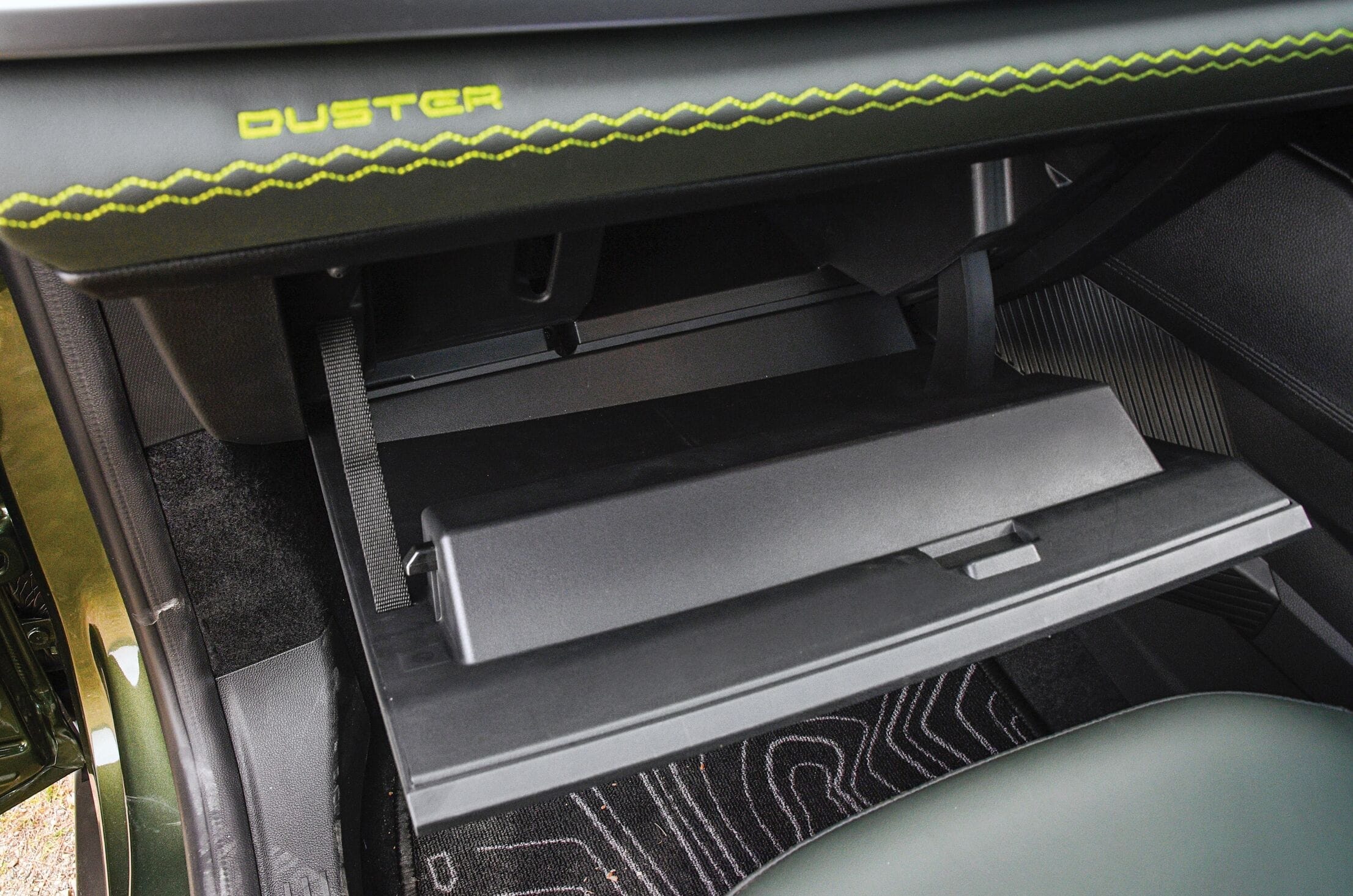
Glovebox is quite shallow and small on the whole.
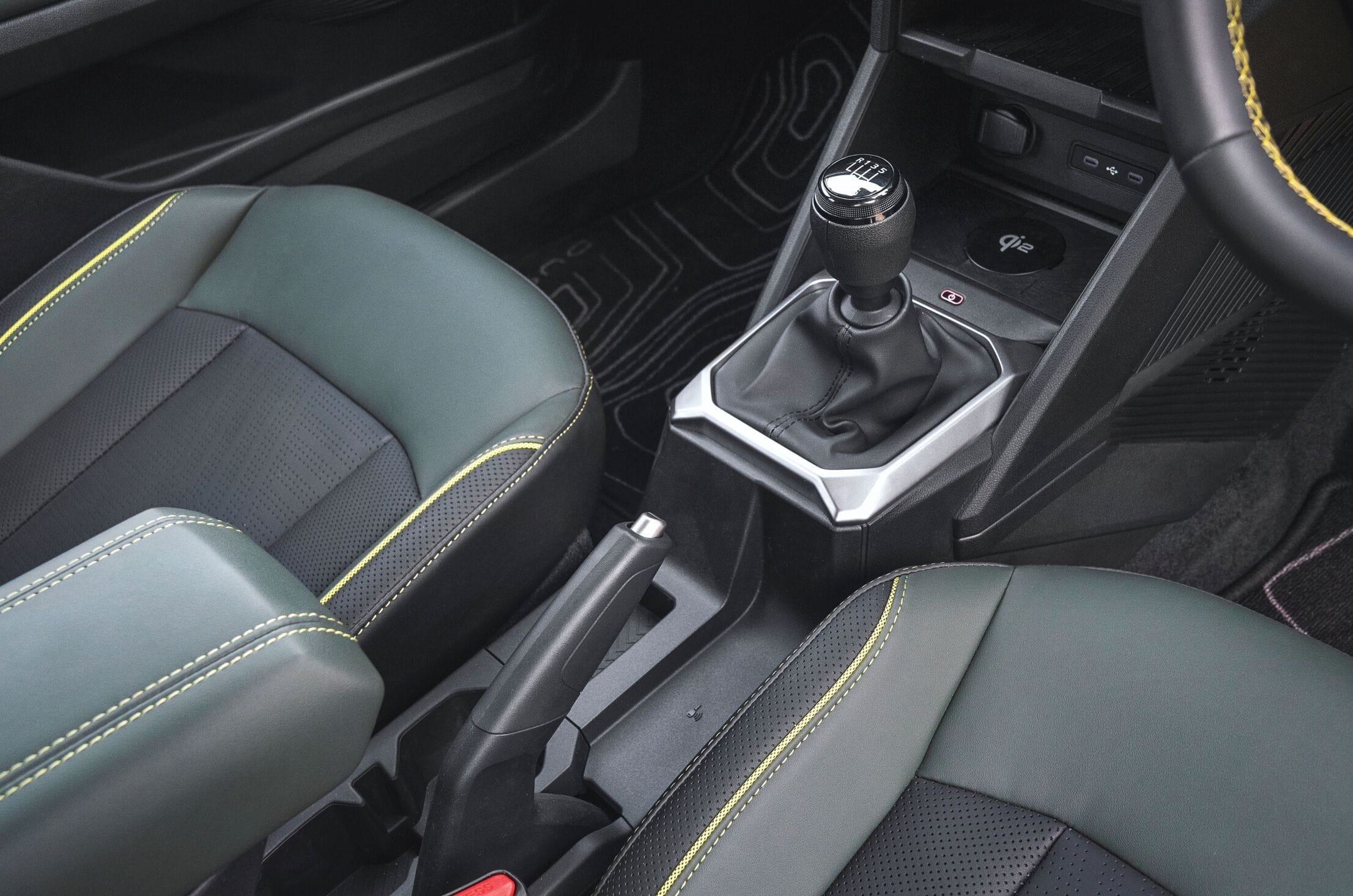
Crucially, Renault has resisted the temptation to digitise everything. The Duster strikes a sensible balance between touchscreen functions and physical controls, with a row of buttons and knobs for key functions, including the climate control system. Interestingly, the manual and automatic versions feature different centre console layouts. The automatic gets a raised console with a deep, cooled storage compartment, cup holders, a wireless charger and a stubby gear selector, while the manual features a lower-set console with a conventional handbrake and an additional storage shelf beneath the dashboard controls. The manual gear lever feels pleasingly tactile and well-engineered.
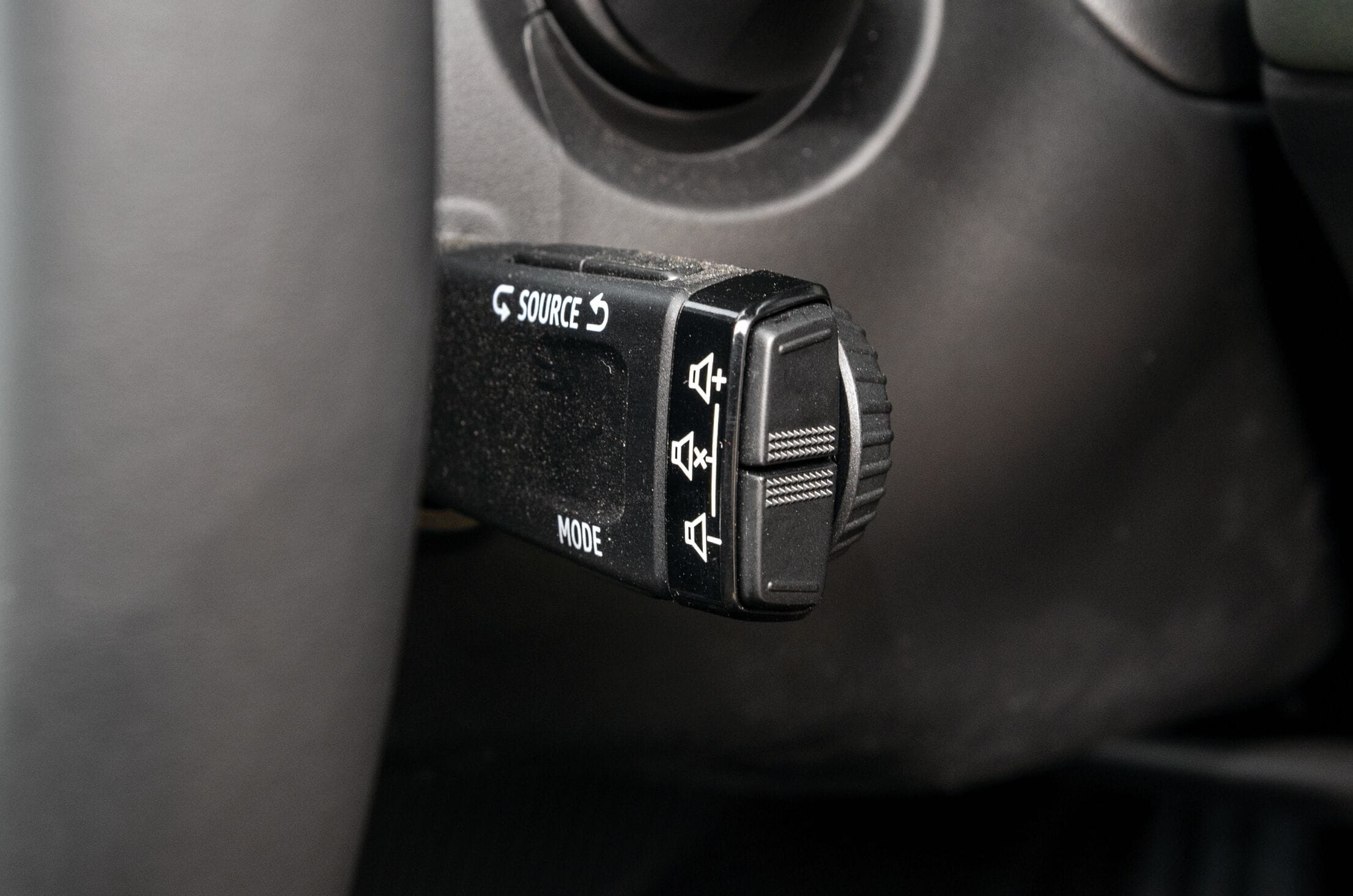
Audio controls are on a separate stalk behind the steering wheel; it takes some time getting used to.
Practicality is par for the course. The sliding front armrest incorporates a storage compartment, but the glovebox is on the smaller side, and the door pockets struggle to accommodate 1-litre bottles. The flat-bottom, flat-top steering wheel feels good to hold and houses controls for the instrument cluster and cruise control, while audio controls continue to sit on a separate stalk behind the wheel, a familiar Renault trait. What’s nice is that it features auto up/down for all windows from the base trim.
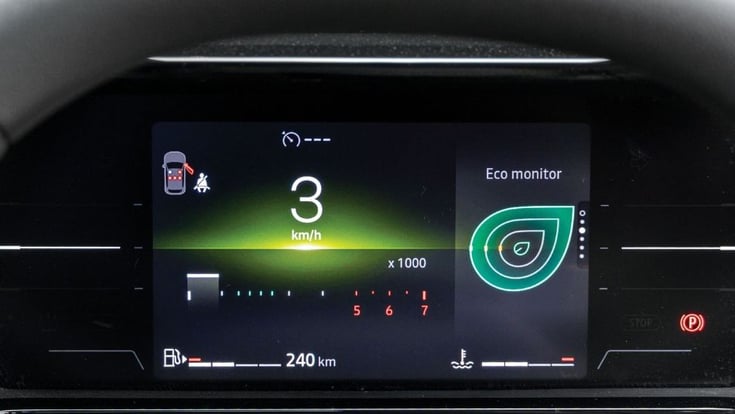
10.25-inch digital cluster has a split-screen function; some will miss classic round dials, though.
The digital instrument cluster is crisp, colourful and configurable, although some buyers will miss straightforward analogue dials. Less impressive is the key fob, shared with the Triber and Kiger, which feels very budget-oriented.
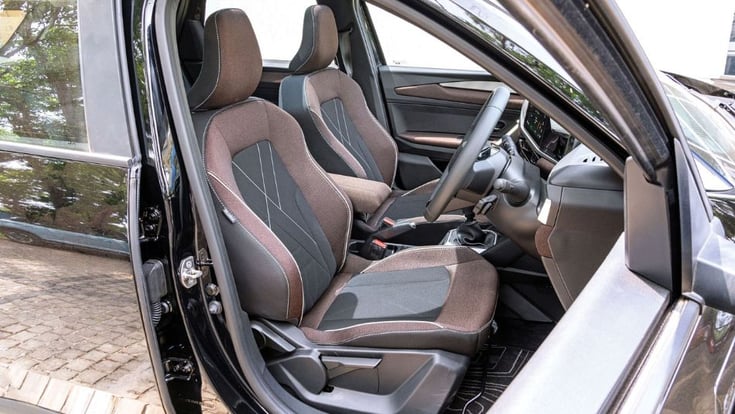
1.0 range gets a smaller 7-inch driver’s display and brown- black fabric seat upholstery.
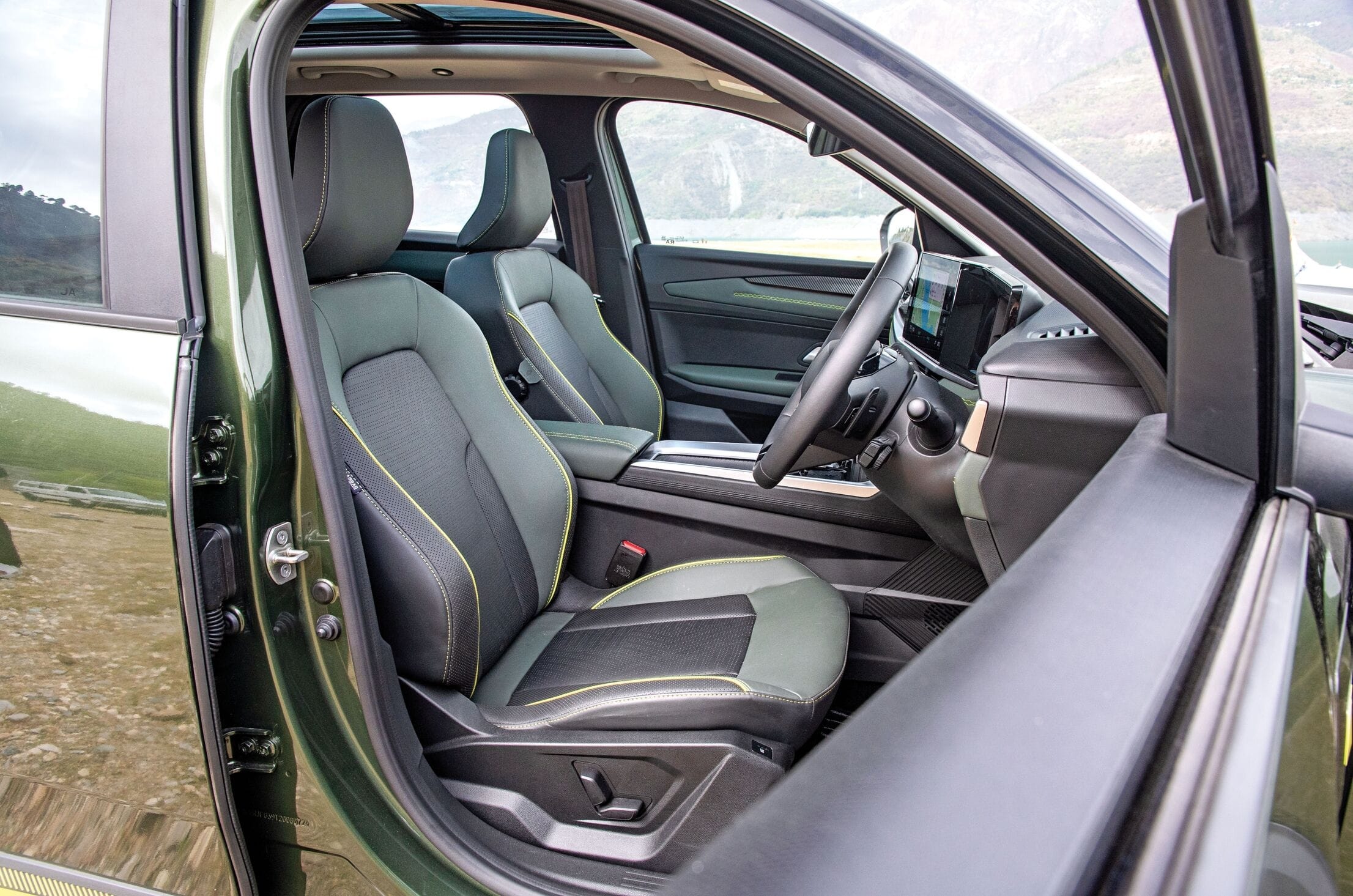
The dual-tone black-and-dark-green upholstery with neon-green stitching in the top-spec Iconic Launch Edition adds some character to the cabin. The Techno trim, meanwhile, which is where the 1.0 tops out, features brown-and-black seat upholstery with some different trim elements.
Front seats are well-padded, accommodating and ideal for long drives.
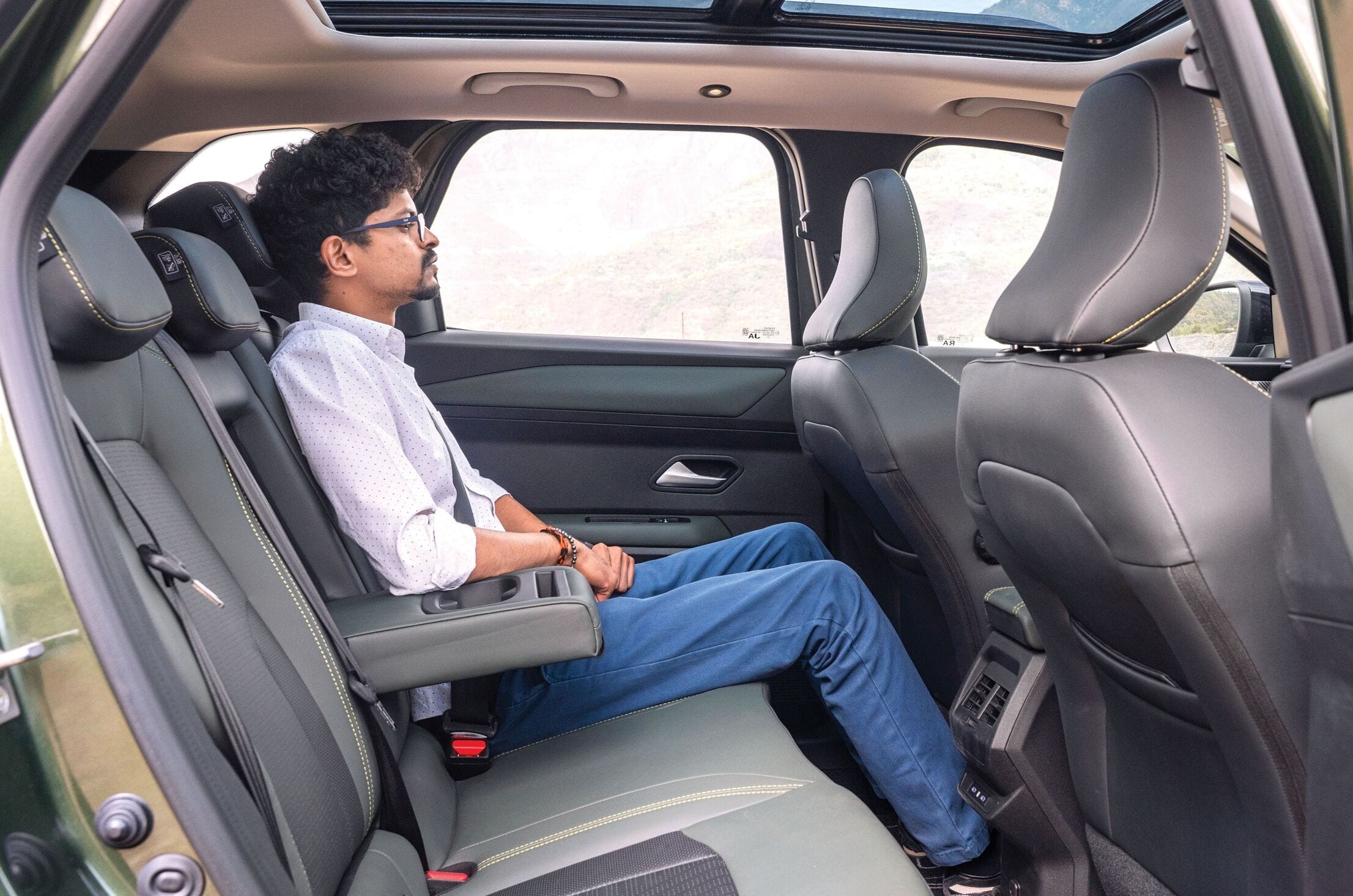
Up front, the seats are supportive and comfortable over long distances, and they feature electric adjustment and an effective ventilation function. Rear-seat comfort is good for two adults, with adequate knee room and good headroom. While a third passenger can be accommodated, limited shoulder room and the transmission tunnel make it a squeeze.
There’s good knee room and headroom on offer, but overall space is less than some rivals.
Rear occupants also get AC vents, charging ports and a centre armrest with cup holders. The large panoramic sunroof and expansive glass area help create an airy feel, although rear sun blinds are notably absent. One drawback is that the window line is considerably higher than before, meaning outward visibility isn’t quite as good as in the original Duster, which was renowned for its excellent all-round view out.
Renault Duster Features and Safety – 8/10
Top-spec comes very well-equipped, though features could’ve been better spread out
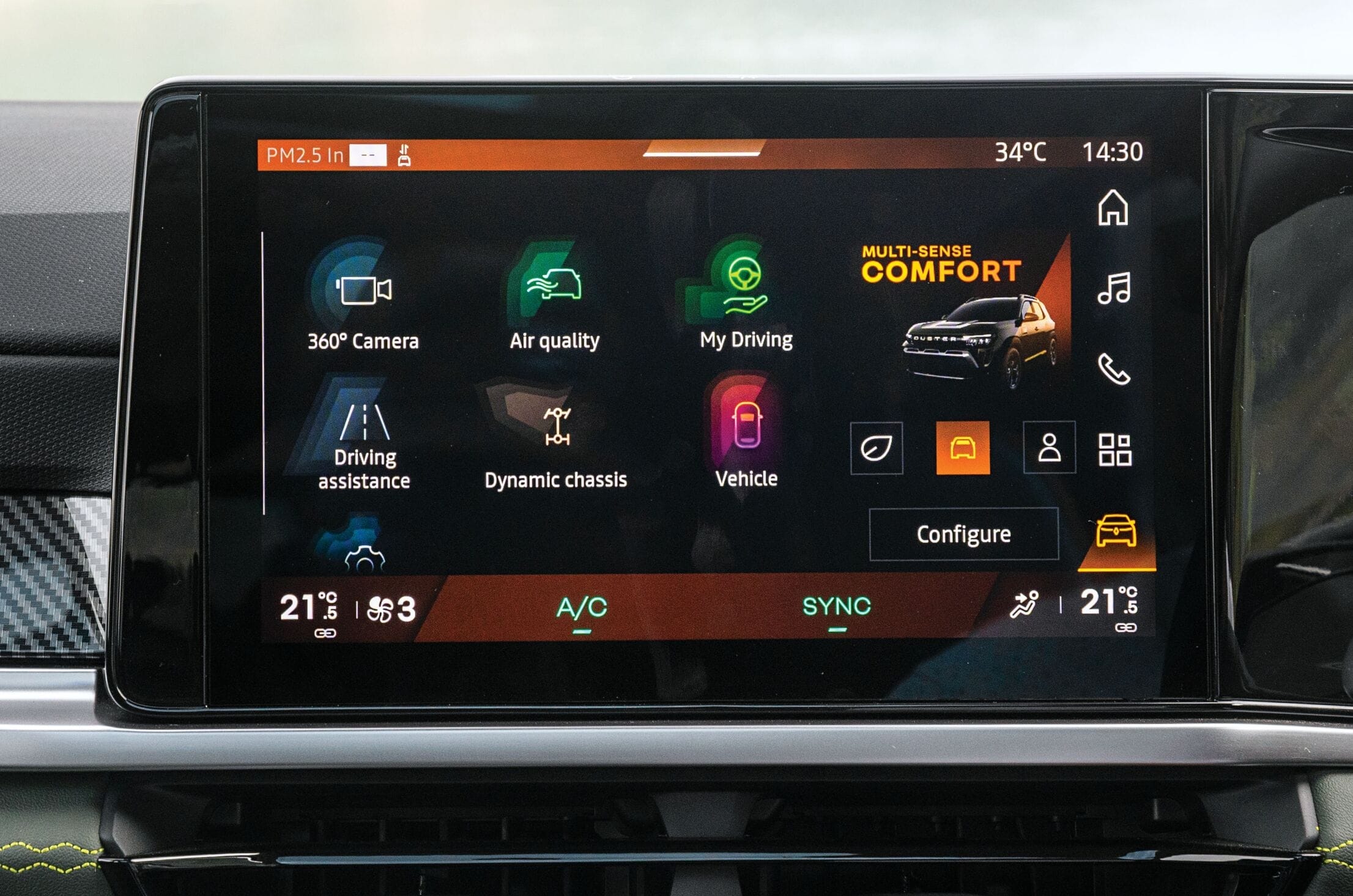
10.1-inch touchscreen is slick and high- resolution, but the UI isn’t as logical or straightforward as some rivals.
The Duster comes loaded with all the features expected of a midsize SUV. Its infotainment system supports wireless smartphone connectivity and impresses with crisp graphics and vibrant colours, matching the digital instrument cluster. However, the 10.1-inch touchscreen’s ratio makes it feel relatively slim.
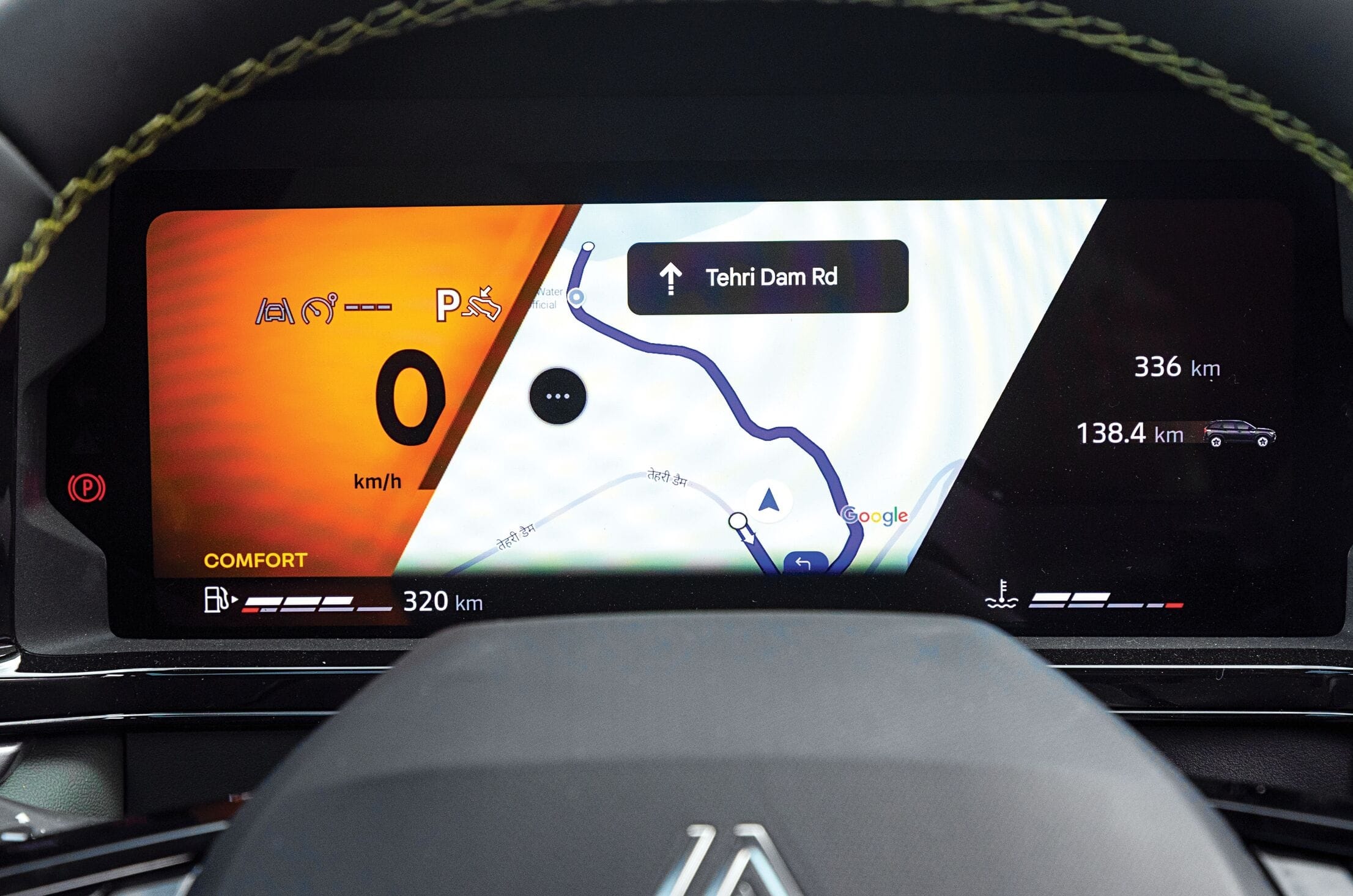
The standout feature is the integration of Google services – Google Maps, Google Assistant and the Google Play Store, which are built into the system, and work seamlessly. The interface is slick and responsive, though it isn’t very intuitive to use, lacking the straightforward layout and menu structure seen in some rivals.
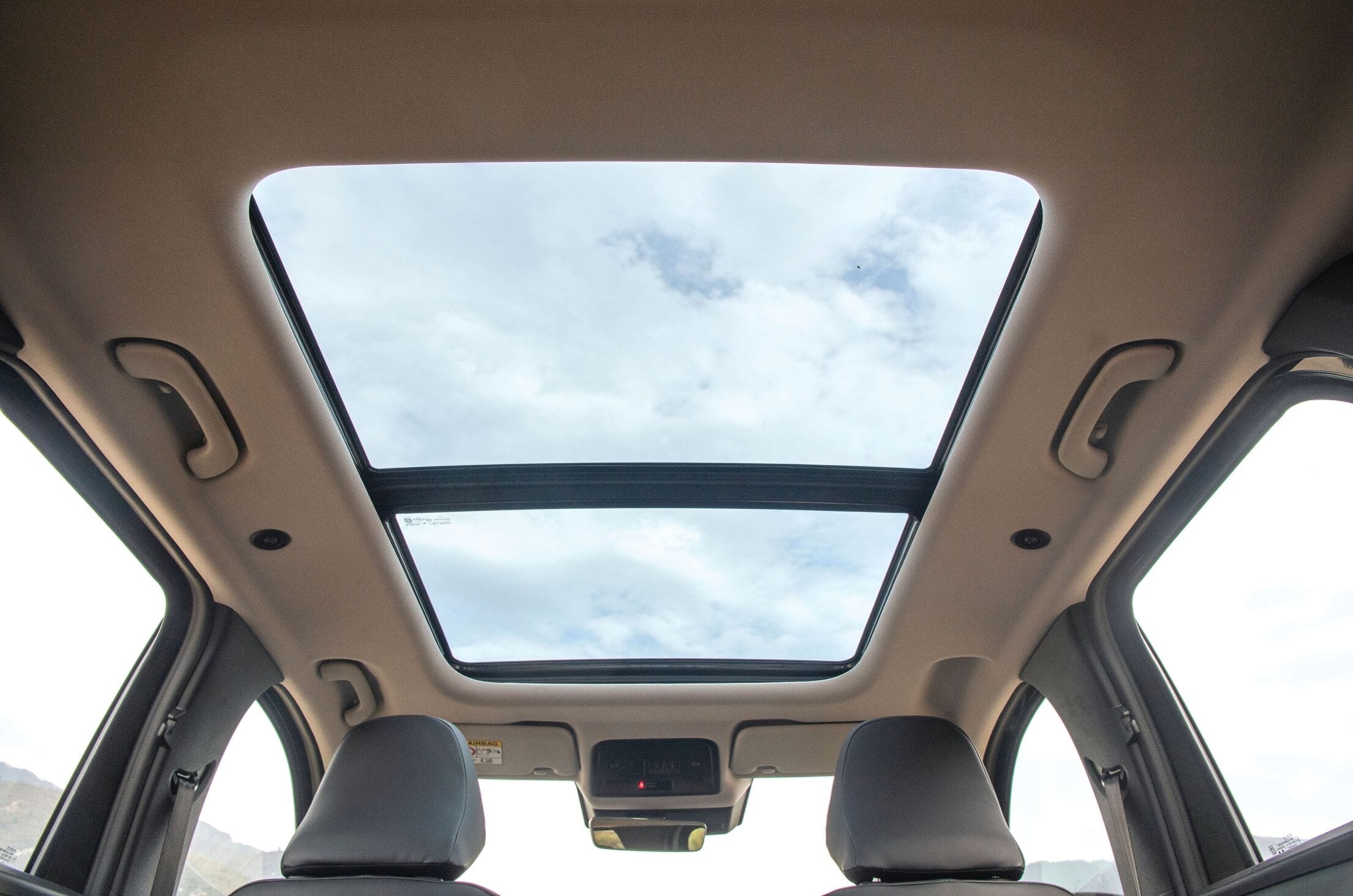
The large panoramic sunroof livens up the cabin without hampering headroom.
Equipment highlights include ventilated and powered front seats, a panoramic sunroof, wireless phone charging, a powered tailgate, dual-zone climate control, connected car technology, auto headlamps and wipers, and a 360-degree camera, although image quality could be sharper.
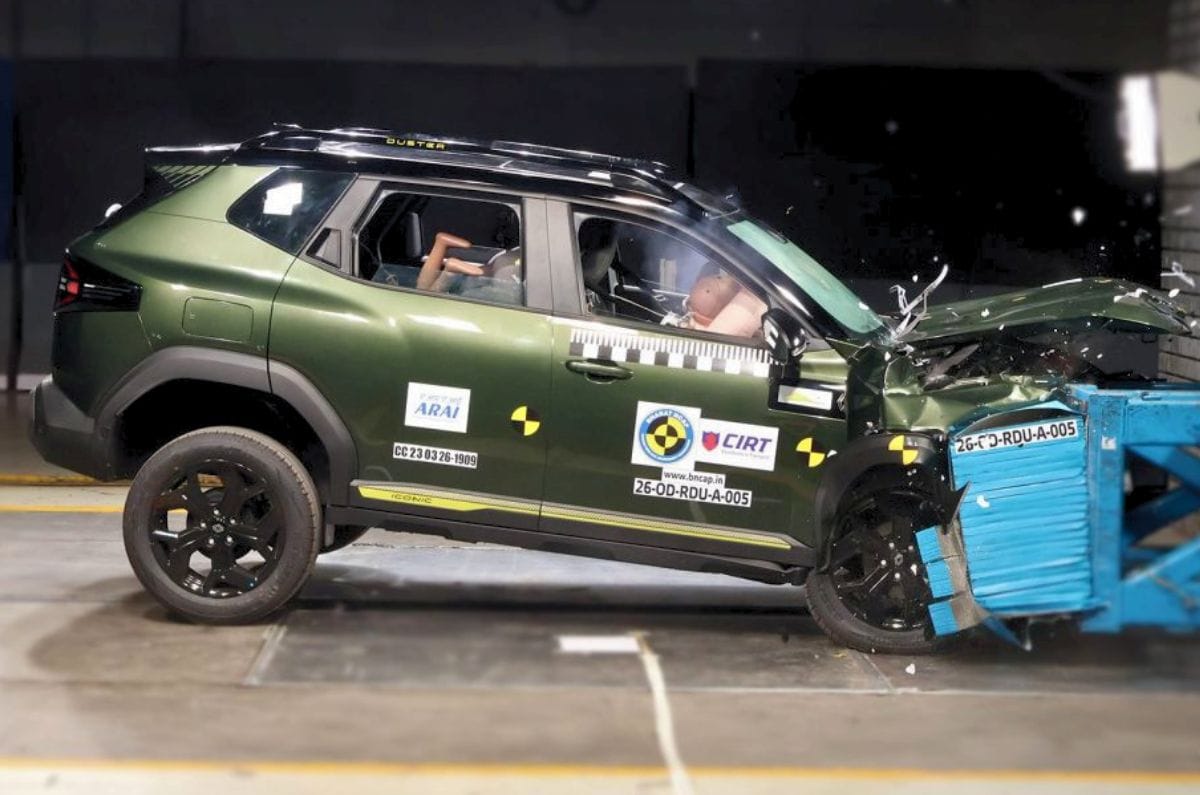
Safety equipment is comprehensive, with six airbags as standard, front and rear parking sensors, TPMS, an electronic parking brake on DCT variants, disc brakes all around, adjustable headrests and three-point seatbelts for all occupants. The Duster is also Renault India’s first model to feature Level 2 ADAS. During our drive, the system felt well calibrated and largely unobtrusive, though lane-keep assist was slightly overzealous. A dedicated button allows drivers to disable all ADAS functions without diving into touchscreen menus, which is a welcome touch. Commendably, Renault has also secured a full 5-star crash safety rating from Bharat NCAP for the SUV.
It scored 30.49/32 points for adult occupant protection and 45/49 points for child occupant protection.
Overall, the Duster is well equipped to compete with its rivals, though Renault could have distributed some premium features like ventilated seats more effectively across the range, particularly on mid-spec variants. As for the 1.0 range, the top-spec Techno is well specified with features like the same touchscreen, panoramic sunroof, powered tailgate and more.
Renault Duster equipment checklist
Auto LED headlamps
Yes
Alloy wheels
18-inch
Powered front seats
Yes
Ventilated seats
Yes
Panoramic sunroof
Yes
Ambient lighting
Yes
Touchscreen
10.1-inch
Android Auto/Apple CarPlay
Yes
Arkamys Kardon audio
Yes
ADAS
Level 2
Renault Duster Engine Refinement and Performance – 8/10
Both turbo-petrols are refined and have a strong midrange punch; DCT is the pick of the lot
The Duster range starts with a 1.0-litre three-cylinder turbo-petrol producing 100hp and 166Nm, paired exclusively with a 6-speed manual gearbox. Then there’s a 1.3-litre four-cylinder turbo-petrol with a segment-leading 163hp and 280Nm, available with either a 6-speed manual or a 6-speed DCT automatic. We’ve tested all three versions of the Duster on sale currently.
Renault Duster powertrain specs
1.0TP MT
1.3 TP MT
1.3TP DCT
Installation
Front, transverse
Front, transverse
Front, transverse
Type
3 cyls, 999cc, turbo-petrol
4 cyls, 1333cc, turbo-petrol
4 cyls, 1333cc, turbo-petrol
Bore/ stroke (mm)
72.2/81.3
72.2/81.3
72.2/81.3
Compression ratio
9.5:1
10.5:1
10.5:1
Valve gear
4 valves per cyl
4 valves per cyl
4 valves per cyl
Power (hp)
100 at 5000rpm
163 at 5250rpm
163 at 5250rpm
Torque (Nm)
166 at 2000-3750rpm
280 at 2000-3500rpm
280 at 2000-3500rpm
Power to weight (hp per tonne)
75.98
118.80
117.01
Torque to weight (Nm per tonne)
126.13
244.17
244.17
Specific output (hp per ltr)
100
125.38
125.38
Drive layout
Front-wheel drive
Front-wheel drive
Front-wheel drive
Gearbox
6-speed manual
6-speed manual
6-speed dual-clutch automatic
A strong-hybrid powertrain will join the line-up later this year. It combines a 109hp 1.8-litre petrol engine with a 49hp electric motor and a 20hp hybrid starter generator, drawing power from a 1.4kWh battery. Total system output stands at 160hp and 172Nm. Notably, unlike the original, the new Duster isn’t available with a diesel engine or an AWD option.
Both engines are refined and have a strong midrange, but aren’t very fuel-efficient.
The 1.3-litre engine is impressively refined, with virtually no vibrations at idle and excellent smoothness throughout the rev range. Cabin insulation is equally impressive, keeping engine noise largely out of the cabin unless you’re extending it towards the redline. You do hear quite a bit of the turbo’s blow-off sound though. There is some turbo lag, followed by a noticeable surge in performance at around 2,500rpm, after which the engine delivers a strong and eager mid range.
The 1.3-litre turbo-petrol engine has the highest output in its class with 163hp and 280Nm.
Thanks to its wet clutch, the DCT allows for some slip, given that the lubrication manages wear as well as heat build-up. Thus, shifts prioritise smoothness over outright speed, feeling more like a conventional torque-converter automatic in city driving. This makes it exceptionally easy to live with in traffic, while responsive paddle shifters add an extra layer of engagement on a spirited drive. We recorded a 0-100kph time of 11.3 seconds, which is decent for the segment. However, the tall gearing does blunt low-speed responses somewhat.
Enthusiasts will naturally gravitate towards the manual. Driven on winding and open roads, it feels engaging and rewarding, with a light clutch and a precise shift action. However, turbo lag is more noticeable here than in the DCT, particularly when accelerating from slow speeds. This does make city drives somewhat cumbersome. Combined with the tall gearing, it often requires an extra downshift to keep the engine in its sweet spot.
Manual versions get a lower-set centre console with a manual handbrake.
The manual posted a 0-100kph time of 10.3sec, making it a whole second quicker than the DCT. Both versions feature Comfort and Eco drive modes, although the addition of a Sport mode would have better suited the Duster’s otherwise enthusiastic character.
The 1.0 entry-level engine is a familiar unit that also powers the Kiger. However, Renault has made tweaks, with torque increasing to 166Nm, up by 6Nm over the Kiger, while a 6-speed manual gearbox replaces the compact SUV’s 5-speed unit. There’s no automatic option, though, which does limit its appeal.
The Duster shares its 1.0-litre engine with the smaller Kiger.
Like most three-cylinder engines, there’s a noticeable thrum and some vibrations at idle, but things smoothen out considerably once on the move. Being a small-capacity turbocharged motor, there is some lag low down in the rev range. However, once past 2,000rpm – where peak torque arrives – the engine feels responsive and pulls cleanly towards the redline. Performance is more adequate than exciting. Around town, it keeps pace with traffic comfortably, and part-throttle responses are respectable. On highways and steep inclines, however, you’ll need to work the gearbox to extract the best from the engine, particularly when overtaking.
The clutch is light, making it easy to use in traffic, while the 6-speed gearbox offers a precise shift action. It isn’t the slickest unit around, though, and enthusiastic drivers will notice that shifts require a bit more effort than expected.
Renault Duster acceleration times
Speed (kph)
1.0TP MT time (sec)
1.3TP MT time (sec)
1.3TP DCT time (sec
0-10
0.60
0.56
0.86
0-20
1.32
1.15
1.71
0-30
2.08
1.75
2.54
0-40
3.13
2.42
3.55
0-50
4.27
3.41
4.51
0-60
5.42
4.61
5.52
0-70
7.36
5.58
6.80
0-80
8.91
6.65
7.94
0-90
10.67
8.66
9.31
0-100
13.26
10.32
11.33
0-110
15.95
12.11
13.24
0-120
19.01
13.86
15.37
0-130
22.84
16.02
17.97
1/4 mile
18.55
16.86
17.85
20-80 (rolling)
11.44
10.33
6.07
40-100 (rolling)
12.71
11.08
7.60
Renault Duster Fuel Efficiency – 6/10
Small-capacity turbo engines mean efficiency isn’t great
Renault Duster tested fuel efficiency (kpl)
1.0TP MT
1.3TP MT
1.3TP DCT
City
7.98
8.04
6.47
Highway
13.98
13.24
13.47
Average
10.95
10.64
9.97
Tank size (ltr)
50
50
50
The Duster 1.0 has a claimed ARAI fuel efficiency of 19.41kpl. In our real-world tests, it returned 7.92kpl in the city and 13.98kpl out on the highway, for an average of 10.95kpl. It packs in an Eco drive mode and auto start/stop tech, which help boost its efficiency. However, the ambient temperature during our test reached a soaring 40degC, which meant the AC was working hard to keep the cabin at our preset 22degC and the auto start/stop would only shut off the car for a brief time at traffic lights, which affected the efficiency.
Overall tank range stands at 498.5km for the 1.3 DCT, 532km for the 1.3 MT and 547.5km for the 1.0.
The 1.3 MT is the second most fuel-efficient version from the Duster range, returning 8.04kpl in the city and 13.24kpl on the highway for an average of 10.64kpl. The 1.3 has better efficiency than the 1.0 in the city owing to its taller gearing, which requires less frequent shifts. Meanwhile, as you’d expect, it’s the 1.3 DCT that’s the least fuel-efficient. It managed 6.47kpl in the city and 13.47kpl on the highway, for an average of 9.97kpl. Like with the 1.0, high ambient temperatures played a role in affecting its efficiency as well. Still, compared to its rivals, the Duster’s real-world efficiency is on the lower side.
Renault Duster Ride Comfort and Handling – 9/10
Feels solid and composed over all surfaces and is engaging to drive
Renault Duster suspension, steering, and brakes
Front suspension
Independent, McPherson strut, Coil springs, anti-roll bar
Rear suspension
Semi-independent, Torsion beam, Coil springs, Anti-roll bar
Steering type
Rack and pinion
Type of power assist
Electric
Turning circle
5.2m
Front brakes
Disc
Rear brakes
Disc
Ride comfort was one of the original Duster’s defining strengths, and thankfully, that trait has carried over to the new model. There’s a distinctly European firmness to the suspension setup, particularly at lower speeds, but comfort isn’t compromised. The Duster absorbs rough patches, sharp edges and large potholes with impressive composure, preventing harsh impacts from filtering into the cabin. Unlike the older model, there’s also very little steering kickback over rough surfaces.
Electric power steering is precise and doesn’t have the kickback like the old Duster.
Contributing to this pliant ride are the relatively tall sidewalls of the 225/55 R18 tyres, which add an extra layer of cushioning. In fact, the 1.0 variants may even feel a touch plusher owing to their smaller 17-inch wheel size, though the difference is barely perceptible. At highway speeds, the Duster feels equally accomplished, remaining stable and reassuringly planted.
If you stall the manual, it will automatically restart when you press the clutch pedal.
Anti-roll bars are present at the front, and uncharacteristically, Renault has utilised one at the rear too, integrating it within the twist-beam axle. Handling is enjoyable through corners, and body control is commendable. However, there is some roll when pushed hard, and it doesn’t feel quite as agile or as tightly tied down as some other European rivals. The steering is light but accurate, with enough feedback to inspire confidence on a twisty road. Steering modes are available on the 1.3 that add useful weight for more enthusiastic driving.
Renault Duster braking performance
80-0kph
26.33mtr, 2.34s
Renault Duster Price and Verdict – 8/10
Builds on its legacy of rugged styling and engaging drive with a very modern and well-equipped cabin
Renault Duster price (Rs lakh)
Techno 1.0 MT
13.49
Iconic Launch Edition 1.3 MT AT
17.19
Iconic Launch Edition 1.3DCT
18.69
The new Renault Duster is a well-rounded package that is well equipped to take on the congested midsize SUV space. It’s not without its shortcomings, though, as it would have benefitted from a bit more rear-seat space, better real-world efficiency, and the option of a diesel would have widened its appeal.
Offered in five trims: Authentic, Evolution, Techno, Techno+, and Iconic.
That aside, it stays true to its predecessor by offering a tough and solid feel, outstanding ride comfort and an engaging drive experience, while moving the game forward. The cabin feels properly modern, with all the new-age features; it’s got punchy turbo-petrol engine options, and it’s got the rugged styling to match. There’s even a strong hybrid on the way. Bottom line is, the Duster feels fresh, desirable and a proper match for the heavy hitters in its segment.
पिछले कुछ वर्षों में दुनिया भर में जितनी चर्चा एआई (AI) यानी कृत्रिम बुद्धिमत्ता (Artificial Intelligence) को लेकर हुई है, शायद ही किसी और तकनीक पर हुई हो। लेकिन बीते कुछ महीनों से डेटा सेंटर का विषय अधिक चर्चा में है, जिस पर आज की यह एआई तकनीक और इसका भविष्य टिका हुआ है। दुनिया भर में एआई डेटा सेंटरों ने लोगों की चिंता बढ़ा दी है।
लोगों का दावा है कि ये डेटा सेंटर पर्यावरण के लिए खतरा बनकर उभर रहे हैं। बीते कुछ महीनों में अमेरिका और यूरोप के कई देशों में डेटा सेंटर के विरोध में स्थानीय लोगों ने प्रदर्शन किए हैं। हाल ही में अमेरिकी संसद में सांसद अलेक्जेंड्रिया ओकासियो-कोर्टेज़ ने जॉर्जिया प्रांत के एक डेटा सेंटर के कारण स्थानीय लोगों को होने वाली समस्याओं को उजागर किया है। आइए, आज इस विषय को विस्तार से समझते हैं।
क्या है डेटा सेंटर?
डेटा सेंटर को आप एक ऐसे विशाल ढांचे या इमारत के रूप में देख सकते हैं, जहाँ हजारों सर्वर या कंप्यूटर रखे होते हैं। आप जिस भी एआई टूल का इस्तेमाल करते हैं, उसके पीछे का पूरा दिमाग इन्हीं सर्वर्स को समझिए। जाहिर है, दिमाग चलाने के लिए ऊर्जा की आवश्यकता होती है। ठीक उसी प्रकार, ये सर्वर भी भारी मात्रा में बिजली की खपत करते हैं। आज तेजी से काम करने वाले आधुनिक सुपरकंप्यूटर, जिन पर एआई काम करता है, वे आपके सामान्य कंप्यूटर से कई गुना अधिक ऊर्जा का इस्तेमाल करते हैं। जिस एआई तकनीक का आज हम उपयोग कर रहे हैं या आगे करेंगे, उसके लिए एक-दो नहीं, बल्कि सैकड़ों और हजारों सर्वर्स की जरूरत होती है।
क्यों बढ़ रही है लोगों की चिंता?
ये कंप्यूटर न केवल अत्यधिक ऊर्जा का इस्तेमाल करते हैं, बल्कि काम करते समय गर्मी (Heat) के रूप में भारी ऊर्जा बाहर भी निकालते हैं। यह बिल्कुल वैसे ही है, जैसे कुछ समय इस्तेमाल करने के बाद आपका कंप्यूटर या स्मार्टफोन थोड़ा गर्म हो जाता है। इसे आप स्कूल या कॉलेज की कंप्यूटर लैब के उदाहरण से भी समझ सकते हैं।
कंप्यूटर लैब में जहाँ कई कंप्यूटर होते हैं, वहाँ उनसे निकलने वाली गर्मी इतनी अधिक हो सकती है कि वह कंप्यूटर के हार्डवेयर को नुकसान पहुँचा दे। इसीलिए कंप्यूटर लैब को हमेशा वातानुकूलित (Air Conditioned) रखा जाता है।
इसी प्रकार, बड़े डेटा सेंटरों में इतनी भीषण गर्मी पैदा होती है कि वह सर्वर्स के हार्डवेयर को जलाकर नष्ट कर सकती है। ऐसे में उन्हें ठंडा रखना बेहद जरूरी होता है। डेटा सेंटर के स्तर पर केवल एयर कंडीशनर (एसी) का इस्तेमाल करने से बिजली की खपत बहुत ज्यादा बढ़ जाती है। इसी कारण कई डेटा सेंटर कूलिंग (ठंडा करने) के लिए पानी का उपयोग करते हैं। सर्वर्स के रैक (जहाँ कई सारे सर्वर रखे होते हैं) के पास से पानी की पाइपलाइन गुजारी जाती है, जो गर्मी सोखती है और बाद में यह गर्म पानी भाप बनकर उड़ जाता है।
डेटा सेंटरों को लगातार ठंडा रखने की इस प्रक्रिया में पानी की भारी बर्बादी होती है। उदाहरण के लिए, गूगल के डेटा सेंटरों द्वारा वर्ष 2022 में उपभोग किया गया 5.6 बिलियन गैलन (लगभग 2,120 करोड़ लीटर) पानी, भारत के किसी मध्यम आकार के शहर के लगभग 4.3 लाख लोगों की पूरे साल की पानी की जरूरत के बराबर है।
ध्वनि प्रदूषण भी है एक बड़ी समस्या
डेटा सेंटरों में बिजली और पानी की यह बेलगाम खपत कई जगहों पर स्थानीय लोगों के लिए सिरदर्द बन चुकी है। लोगों का विरोध है कि उनके हक का पानी और बिजली इन डेटा सेंटरों को दी जा रही है। लेकिन परेशानी सिर्फ यहीं खत्म नहीं होती; डेटा सेंटरों से निकलने वाली तेज आवाज (ध्वनि) भी एक बड़ी समस्या है। स्थानीय लोगों का कहना है कि डेटा सेंटरों से लगातार एक कम आवृत्ति वाली (Low-Frequency) भारी आवाज निकलती रहती है, जिससे आसपास के घरों में कंपन महसूस होता है। 'अमेरिकन पब्लिक हेल्थ एसोसिएशन' ने भी माना है कि ऐसी लो-फ्रीक्वेंसी ध्वनि लगातार 24 घंटे सुनने के कारण हृदय रोग जैसी गंभीर बीमारियों का खतरा कई गुना बढ़ जाता है।
आज दुनिया भर में जहाँ एआई पर लोगों की निर्भरता लगातार बढ़ती जा रही है और टेक कंपनियाँ तथा सरकारें एआई की इस अंधी दौड़ में भाग रही हैं, ऐसे में डेटा सेंटरों को लेकर आम जनता की चिंता बढ़ना स्वाभाविक है। लोगों की शिकायत बिल्कुल जायज है कि सरकारें और बड़ी कंपनियाँ विकास की आड़ में पर्यावरण के नियमों को नजरअंदाज कर रही हैं।
Weekly Weather Forecast: देशभर में मानसून की रफ्तार तेज हो गई है। भारत मौसम विज्ञान विभाग (IMD) ने 11 से 17 जुलाई तक के लिए देशभर का साप्ताहिक मौसम पूर्वानुमान जारी किया है। इस दौरान पूर्वी, मध्य, पूर्वोत्तर और पश्चिमी भारत के कई राज्यों में भारी से अति भारी बारिश होने की संभावना है। कई इलाकों में 40-60 किमी/घंटा की रफ्तार से तेज हवाएं, गरज-चमक और बिजली गिरने की भी चेतावनी दी गई है। वहीं, आंध्र प्रदेश के तटीय क्षेत्रों में हीटवेव का अलर्ट भी जारी किया गया है।
इस दौरान पूर्वोत्तर और पूर्वी भारत में जहां मूसलाधार बारिश का संकट मंडरा रहा है। वहीं, मध्य भारत में तेज आंधी-तूफान का अलर्ट है। दूसरी ओर, दक्षिण के कुछ हिस्सों में अभी भी भीषण गर्मी और लू का प्रकोप जारी है।
आइए जानते हैं अगले कुछ दिनों में देश के अलग-अलग हिस्सों में कैसा रहेगा मौसम:-
मध्य भारत: मध्य प्रदेश-छत्तीसगढ़ में भारी बारिश का अलर्ट
IMD के अनुसार पूर्वी और पश्चिमी मध्य प्रदेश, विदर्भ और छत्तीसगढ़ में पूरे सप्ताह बारिश का दौर जारी रहेगा:-
14 से 17 जुलाई के बीच पूर्वी मध्य प्रदेश में भारी बारिश की संभावना।
11 से 15 जुलाई तक छत्तीसगढ़ में भारी बारिश का अलर्ट।
पूर्वी मध्य प्रदेश और विदर्भ में 40 से 60 किमी/घंटा की रफ्तार से तेज हवाएं, गरज-चमक और बिजली गिरने की आशंका।
पूर्वी भारत: बिहार, झारखंड, ओडिशा और बंगाल में मूसलाधार बारिश
पूर्वी भारत में मानसून पूरी तरह सक्रिय रहेगा।
बिहार में 13 से 15 जुलाई के दौरान भारी बारिश की संभावना।
11 और 12 जुलाई को बिहार के कुछ इलाकों में अति भारी बारिश हो सकती है।
झारखंड, गंगीय पश्चिम बंगाल और ओडिशा में भी कई दिनों तक भारी बारिश का अलर्ट।
कई स्थानों पर बिजली गिरने और तेज हवाओं की चेतावनी।
पूर्वोत्तर भारत: मेघालय में सबसे ज्यादा खतरा
अरुणाचल प्रदेश, असम, मेघालय, नागालैंड, मणिपुर, मिजोरम और त्रिपुरा में पूरे सप्ताह व्यापक बारिश का अनुमान है:-
11 जुलाई को मेघालय में अत्यधिक भारी बारिश की चेतावनी।
12 जुलाई को असम और मेघालय में अति भारी बारिश का अलर्ट।
पूरे सप्ताह कई राज्यों में भारी बारिश जारी रहने की संभावना।
पश्चिम भारत: कोंकण-गोवा और महाराष्ट्र में बरसेंगे बादल
कोंकण और गोवा में पूरे सप्ताह व्यापक बारिश।
गुजरात, सौराष्ट्र-कच्छ, मध्य महाराष्ट्र और मराठवाड़ा में भी लगातार हल्की से मध्यम बारिश का दौर।
दक्षिण भारत: बारिश भी, हीटवेव भी
केरल, तटीय कर्नाटक, तमिलनाडु, तेलंगाना और आंध्र प्रदेश में बारिश के आसार।
11 जुलाई को तमिलनाडु में तेज हवाओं और गरज-चमक की चेतावनी।
तटीय आंध्र प्रदेश और यनम में 11-12 जुलाई को हीटवेव का अलर्ट जारी।
कहां चलेगी तेज हवा?
IMD के मुताबिक, कई राज्यों में 40 से 60 किमी/घंटा की रफ्तार से तेज हवाएं चल सकती हैं:-
पूर्वी मध्य प्रदेश
विदर्भ
झारखंड
अंडमान-निकोबार
तमिलनाडु
ओडिशा
बीते 24 घंटे: कहां हुई सबसे ज्यादा बारिश?
पिछले 24 घंटों में देश के कई हिस्सों में जोरदार बारिश दर्ज की गई।
चेरापूंजी (मेघालय) – 19 सेमी
मौसिनराम (मेघालय) – 17 सेमी
नाहन (हिमाचल प्रदेश) – 16 सेमी
फतेहपुर (उत्तर प्रदेश) – 16 सेमी
कीर्तिनगर (उत्तराखंड) – 13 सेमी
बिक्रम (पटना, बिहार) – 10 सेमी
लोगों के लिए जरूरी सलाह
भारी बारिश वाले क्षेत्रों में अनावश्यक यात्रा से बचें।
नदी-नालों और जलभराव वाले इलाकों से दूरी बनाए रखें।
गरज-चमक के दौरान खुले मैदान और पेड़ों के नीचे खड़े न हों।
स्थानीय प्रशासन और IMD की एडवाइजरी का पालन करें।
इन राज्यों में आज ‘अत्यधिक भारी’ बारिश का अलर्ट, पूर्वोत्तर में आफत
पूर्वोत्तर भारत में मानसून का सबसे रौद्र रूप देखने को मिल सकता है। मौसम विभाग के अनुसार, 11 जुलाई को मेघालय में अलग-अलग स्थानों पर अत्यंत भारी बारिश (Extremely Heavy Rainfall) होने की आशंका है। इसके अलावा:-
असम और मेघालय में 12 जुलाई को बहुत भारी बारिश का अनुमान है। जबकि 13 से 17 जुलाई के बीच भी भारी बारिश जारी रहेगी।
अरुणाचल प्रदेश, नागालैंड, मणिपुर, मिजोरम और त्रिपुरा में 11 से 17 जुलाई के दौरान व्यापक रूप से भारी बारिश होने की संभावना है। इन सभी राज्यों में 15 जुलाई तक आंधी और बिजली गिरने का अलर्ट भी जारी किया गया है।
बिहार और पश्चिम बंगाल में भारी से बहुत भारी बारिश की चेतावनी
पूर्वी भारत के राज्यों के लिए भी मौसम विभाग ने चिंता जताई है:-
बिहार और उप-हिमालयी पश्चिम बंगाल व सिक्किम में 11 और 12 जुलाई को ‘बहुत भारी बारिश’ (Very Heavy Rainfall) होने के आसार हैं। बिहार में 13 से 15 जुलाई के बीच भी भारी बारिश का सिलसिला जारी रहेगा।
झारखंड में 12 से 14 जुलाई, गंगा तटीय पश्चिम बंगाल में 11-13 व 16-17 जुलाई और ओडिशा में 11 से 15 जुलाई के बीच भारी बारिश होने की संभावना है।
मध्य और पश्चिम भारत: आंधी-तूफान के साथ 60 किमी/घंटा की रफ्तार से चलेंगी हवाएं
मध्य भारत में बारिश के साथ-साथ तेज हवाओं का तांडव देखने को मिल सकता है।
पूर्वी मध्य प्रदेश (11-14 जुलाई) और विदर्भ (13-15 जुलाई) में आंधी-तूफान के साथ 40 से 50 किलोमीटर प्रति घंटा की रफ्तार से तेज हवाएं चल सकती हैं।
पश्चिम मध्य प्रदेश में 11 से 14 जुलाई के दौरान 30-40 किमी/घंटा (झोंके 50 किमी/घंटा तक) की रफ्तार से हवाएं चलेंगी।
छत्तीसगढ़ में 14 से 17 जुलाई के बीच व्यापक रूप से भारी बारिश होने की उम्मीद है। वहीं, कोंकण, गोवा और गुजरात के इलाकों में भी 17 जुलाई तक बारिश का दौर जारी रहेगा।
लू (Heat Wave) की चेतावनी
एक तरफ जहां देश के कई हिस्सों में पानी बरस रहा है। वहीं तटीय आंध्र प्रदेश और यनम के अलग-अलग इलाकों में 11 और 12 जुलाई को भीषण लू (Heat Wave) चलने की चेतावनी दी गई है।
DL Renewal: केंद्र सरकार उन ड्राइवरों के लिए ड्राइविंग टेस्ट अनिवार्य करने जा रही है जो अपने ड्राइविंग लाइसेंस का रिन्यूअल करवाना चाहते हैं और जिनका ट्रैफिक नियमों के उल्लंघन का इतिहास रहा है। सड़क परिवहन मंत्रालय ने मोटर एक्सीडेंट क्लेम ट्रिब्यूनल (MACTs) को यह अधिकार देने का भी प्रस्ताव दिया है कि वे सड़क दुर्घटना के पीड़ितों और उनके परिवारों को अंतरिम मुआवजा दे सकें, ताकि उन्हें अपने क्लेम के अंतिम निपटारे तक इंतजार न करना पड़े।
वहीं, राज्यों और मंत्रालयों के साथ लगभग दो साल तक चली बातचीत के बाद, मोटर वाहन अधिनियम में प्रस्तावित संशोधनों को पिछले हफ्ते रक्षा मंत्री राजनाथ सिंह की अध्यक्षता वाले मंत्रियों के अनौपचारिक समूह (iGoM) के सामने रखा गया था।
टाइम्स ऑफ इंडिया के मुताबिक, पैनल ने मंत्रालय को बिल को अंतिम रूप देने की मंजूरी दे दी है, जिसे संसद के आगामी मानसून सत्र में पेश किया जा सकता है।
क्या है इस प्रस्ताव का उद्देश्य?
बता दें कि इन प्रस्तावों का मकसद लापरवाह ड्राइवरों और बिना बीमा वाले वाहनों के इस्तेमाल पर रोक लगाना है। साथ ही, इनमें बीमा नियामक IRDAI द्वारा वाहन की उम्र और चालान इतिहास के आधार पर थर्ड-पार्टी प्रीमियम तय करने की पुरानी व्यवस्था को फिर से लागू करने की भी बात कही गई है। साल 2019 के संशोधन में यह अधिकार सड़क परिवहन मंत्रालय के पास था। सड़क हादसों में मौत या गंभीर चोट लगने पर मुआवजे से जुड़े संशोधन बहुत ही महत्वपूर्ण है।
हालांकि, अभी MACT कोई अंतरिम राहत नहीं दे सकता है। लेकिन मंत्रालय ने प्रस्ताव दिया है कि क्लेम्स ट्रिब्यूनल “ऐसी अंतरिम राहत दे सकता है जो उसे सही लगे”। यह भी प्रस्ताव है कि अगर कोई बीमा कंपनी या दोषी पक्ष क्लेम्स ट्रिब्यूनल के आदेश को चुनौती देता है, तो उसे 10 लाख रुपये या तय मुआवजे का 50% (जो भी कम हो) पहले जमा करना होगा। अभी यह रकम 25,000 रुपये या तय मुआवजे का 50% (जो भी कम हो) है।
वहीं, मंत्रालय ने हाई कोर्ट में अपील करने की सीमा को मौजूदा 1 लाख रुपये से बढ़ाकर 5 लाख रुपये करने का भी प्रस्ताव दिया है। वकील और सड़क सुरक्षा विशेषज्ञ अमरजीत सिंह ने कहा, “MACT ट्रिब्यूनल द्वारा अंतरिम मुआवजा देने की इजाजत देने का कदम स्वागत योग्य है, क्योंकि ऐसे मामलों के अंतिम निपटारे में अक्सर देरी होती है।”
विशेषज्ञों ने उस प्रस्ताव की भी तारीफ की है जिसके तहत बार-बार ट्रैफिक नियमों को तोड़ने वाले ड्राइवरों के लिए नए सिरे से ड्राइविंग टेस्ट देना जरूरी होगा। साथ ही, नियमों का उल्लंघन करने वाले ड्राइवरों पर सख्ती करते हुए, मंत्रालय ने यह भी प्रस्ताव दिया है कि अगर किसी का पुराना ड्राइविंग लाइसेंस (DL) रद्द किया जाता है, तो उसे तीन साल तक नया DL जारी नहीं किया जाएगा।
इसके अलावा, मंत्रालय ने नए DL या लाइसेंस रिन्यूअल के लिए मेडिकल सर्टिफिकेट की जरूरत वाली उम्र की सीमा को मौजूदा 40 साल से बढ़ाकर 60 साल करने का प्रस्ताव भी दिया है। दिल्ली के पूर्व डिप्टी ट्रांसपोर्ट कमिश्नर अनिल छिकारा ने कहा, “आसानी से जीने और आसानी से बिजनेस करने के नाम पर, हमें सड़कों को सुरक्षित बनाने के लिए जरूरी बुनियादी पैमानों से समझौता नहीं करना चाहिए।”
जानकारों का यह भी कहना है कि 6 साल से कम उम्र के बच्चे को साथ में ले जाते समय ट्रैफिक नियमों का उल्लंघन करने पर दोगुना जुर्माना लगाने का प्रस्ताव है। हालांकि, उनका मानना है कि इससे ट्रैफिक पुलिस को मनमानी करने का मौका मिल सकता है।
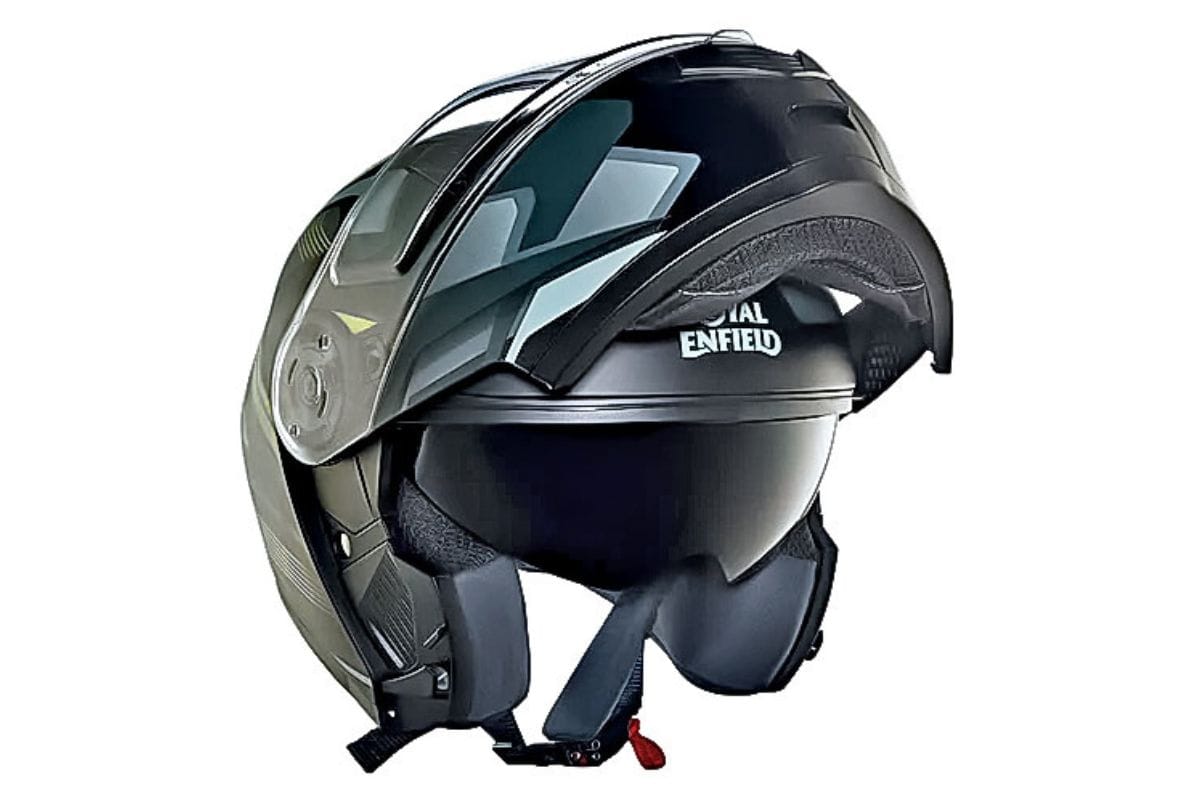
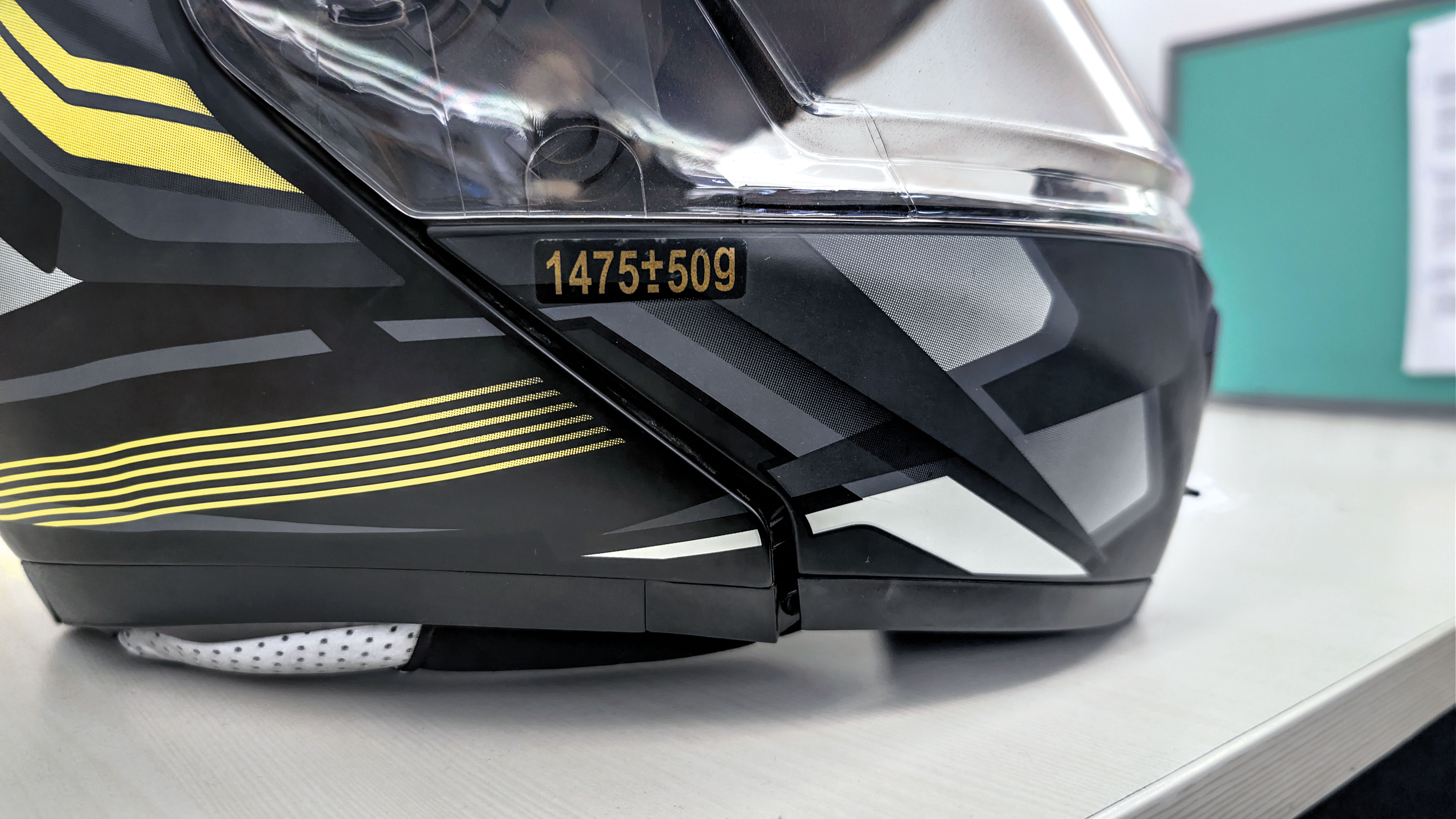
Switching from a half-face helmet to the Royal Enfield Lightwing modular lid was always going to be a step up, and the difference was immediately noticeable, especially in terms of weight. At approximately 1,475g, it’s significantly heavier. The first few rides made that clear, but a week into using it as my daily, the added weight faded into the background. In fact, it now feels like a fair trade-off for the added sense of security and build quality.
It also impresses with its solid construction. The shell feels sturdy, and the matte black and yellow finish has held up well despite being subjected to Mumbai’s harsh summer sun. There’s no fading or visible wear, which says a lot about its durability in real-world conditions. The inclusion of a ratchet strap instead of a double-d ring closure system might disappoint some, but it isn’t a deal-breaker in my books, although I’m primarily confined to the urban jungle.
Chin bar doesn’t sit flush upon closure; demands effort.
The integrated sun visor is genuinely useful in a city like Mumbai, where the sun is relentless. And the fact that it fits neatly over my spectacles makes it even more practical. For my usage – largely city commutes on my TVS Ntorq – I’ve often ridden with the helmet in its open-face configuration to cope with the heat.
That’s because using it as a full-face helmet in peak summer hasn’t been the most comfortable experience. While it does get adjustable vents, ventilation in Mumbai traffic compared to my previous half-face helmet is much lower, though that’s not entirely unexpected.
Comfort, however, is a strong suit. The inner padding is plush and sits well, even on longer rides. It’s easy to remove and clean, a big plus given the amount of sweat and dust helmets endure in daily use. There are a couple of niggles, though. The locking mechanism can be finicky, often requiring you to hold down the unlock button while shutting it, not ideal for something you use multiple times a day. Removing the visor is also easy, but getting it to lock back into place can test your patience. Wind noise is reasonably well contained up to about 70kph, but beyond that, I haven’t tested it enough to comment confidently on highway performance.
At Rs 4,500, this helmet is good value for what it offers. As a stylish, well-built modular helmet for primarily urban use, it largely delivers on expectations, with just a few compromises.
Written bySAGAR JUNEJA Where: store.royalenfield.com Price: Rs 4,500