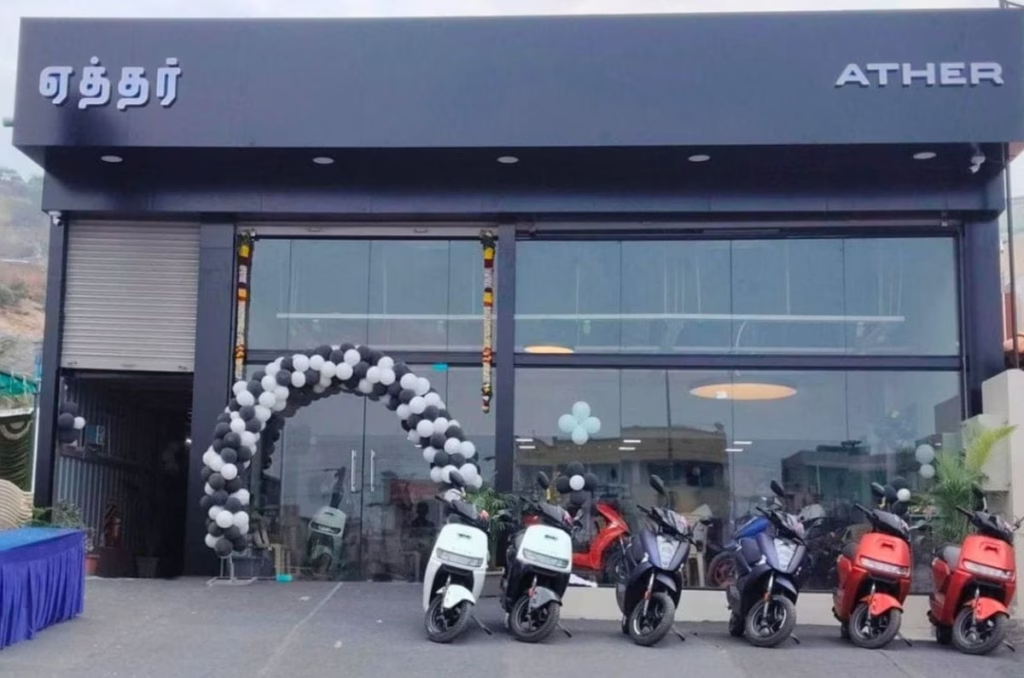
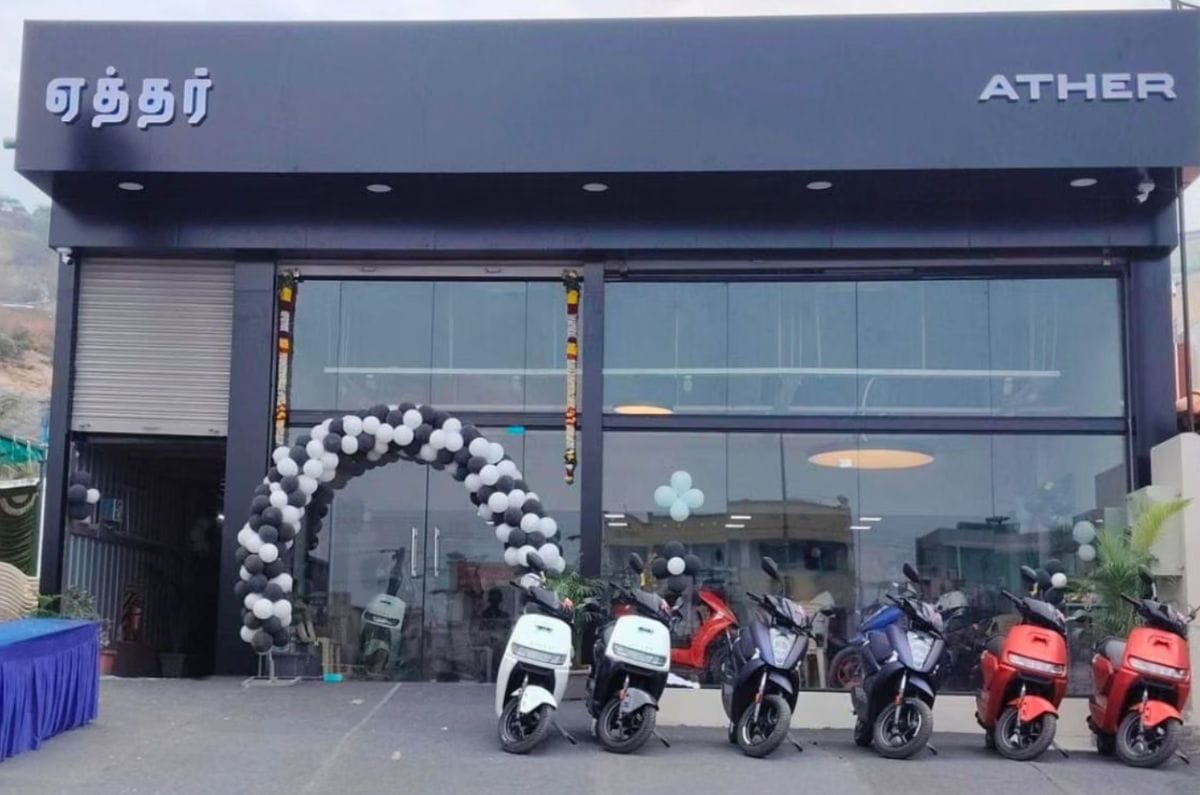
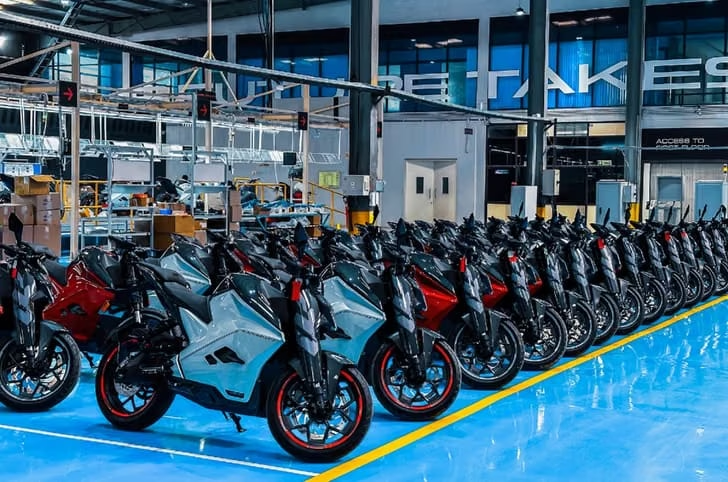
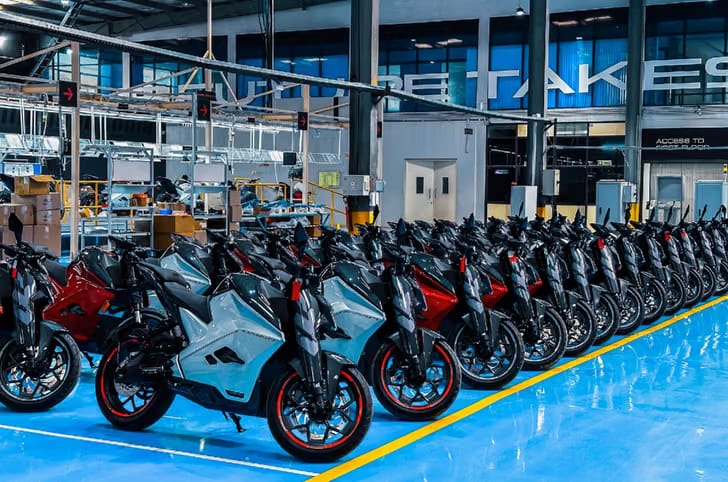
Ather is targeting to more than double its retail footprint to between 1,800 and 2,000 stores over the next two years as the EV maker rolls out its new family scooter Konarc and expands production capacity, according to a senior company official. The company currently sells the 450X and Rizta electric scooters, which are positioned in the premium and mass premium segments of the market across some 750 stores. The company plans to use its new EL platform to broaden its product range into the more affordable segment.
More scooters of different battery sizes expected from the EL platform
Ather EV motorcycle at least two years away
Production capacity to increase with the Aurangabad plant becoming operational
Number of retail stores and production to increase
More products expected from the Konarc’s EL platform
The newly unveiled Konarc will be available in two variants and six battery options at a starting ex-showroom price of Rs 99,999. The delivery of the first two battery options (S 125 and S 161) is set to commence in September 2026. “We are targeting 1,800 to 2,000 stores in the next 24 months,” Ather Energy’s Chief Business Officer Ravneet Phokela said. Phokela said the company expects the domestic market to remain its main focus for now, with exports only becoming important after a few years.
The EL platform, on which the Konarc is based, can produce different types of scooters, and it can also accommodate different battery sizes, wheel dimensions and dashboard designs. The company boasts that the platform helps launch more products while also reducing costs through changes like lower use of aluminium and simpler engineering. Ather has said it plans to launch multiple scooter products based on the platform first; and added that an Ather electric motorcycle is more than two years away.
Ather’s push into a wider range of scooters comes as the company looks to increase production capacity. Ather currently manufactures electric scooters at its Hosur plant, which has an annual production capacity of 4.20 lakh units. Its upcoming Aurangabad facility is expected to add another 5 lakh units of annual capacity when its first phase becomes operational later this year. The company said that it’s also considering whether to accelerate the second phase of the Aurangabad facility if demand continues to grow at its current pace.
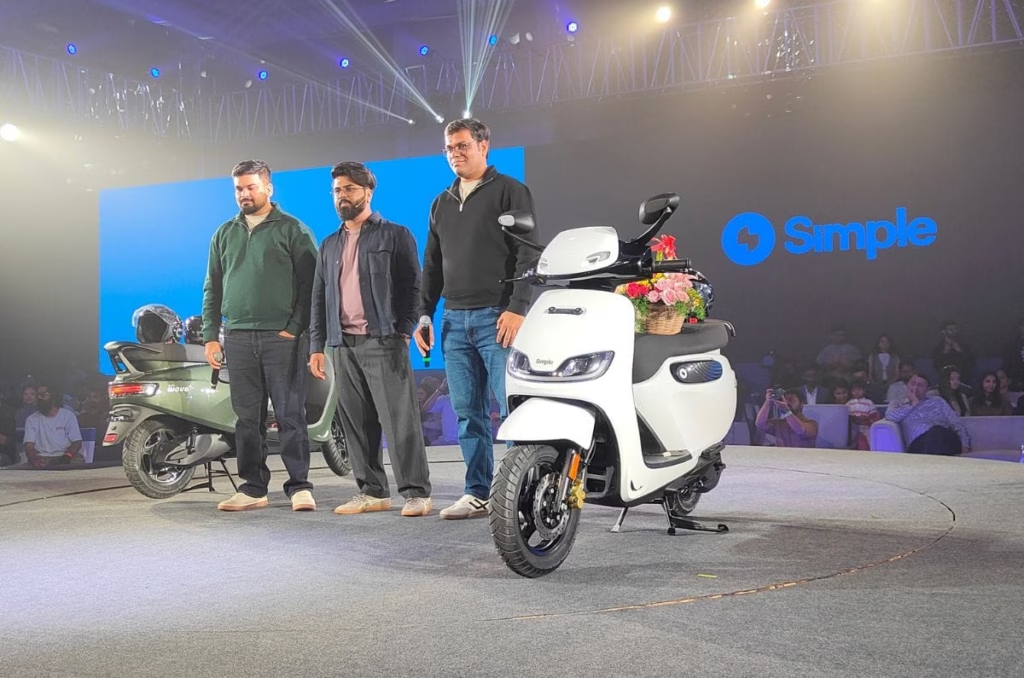
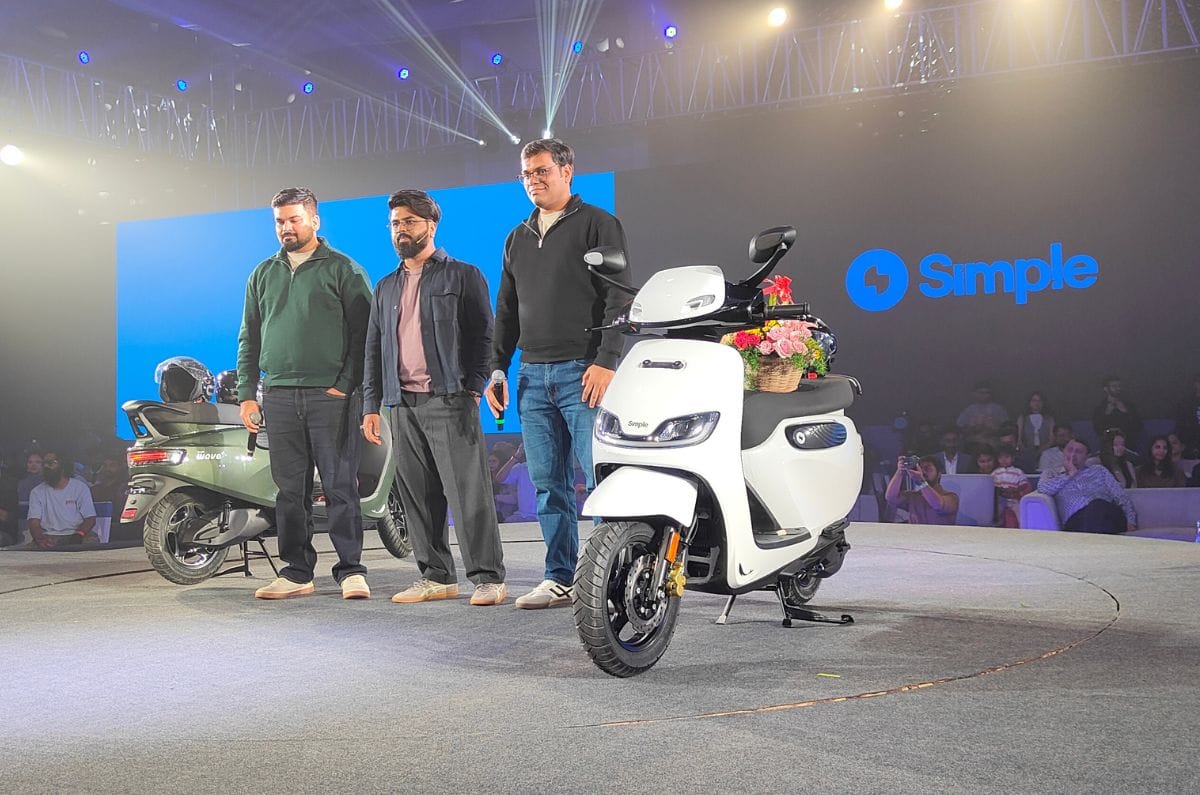
Simple, the Bengaluru based EV startup, has finally launched their family scooter Wave today. The scooter was first spotted testing back in March this year and was earlier referred to as Arrive during development. Simple is looking to position this as a mass market scooter compared to their sharp, performance focussed One and One S.
Simple Wave has four variants; six, if you count instrument cluster options
Lowest variant has a 2.2kWh battery, top variant has a 5kWh battery
Delivery starts from 25 September 2026
Simple Wave: What you should know
New and improved motor, battery, and design
The Wave is based on an updated platform of the brand’s One scooter range. The first update is to the suspension, with the Wave using a twin shock rear suspension (compared to the One’s monoshock) and a much longer seat. Speaking of which, the Wave has a whopping 920mm long seat, claimed to be the longest scooter seat in the country. The other headline is the 70L storage in the Wave. Of which, 63 litres come from the under seat compartment, three litres on the front apron cubby, and four litres from a quick access pocket on the left side of the rider’s seat (called Pill Storage). An identical pocket for the right side is offered as an accessory.
The Wave has four variants by battery capacity. The base WaveS is offered in two battery capacities, 2.2kWh and 2.7kWh with 110km and 132km of IDC range, respectively. The middle variant, Wave, has a 3.7kWh battery and 171km of IDC range, and the top Wave+ variant has a 5kWh battery and 243km of IDC range. Wave+ currently has the highest range in its segment. Compared to the One range, the powertrain has seen updates all over. The 6.4kW motor has been updated to third generation and so has the Battery Management System, with the overall size of the motor reduced by 15 percent.
For context, the One uses a 5kWh battery and an 8.8kW motor; the One S has a 3.7kWh battery and a 6.4kW motor. They offer up to 265km and 190km of claimed range, respectively. Do note that there’s also a One Ultra with a 6.5kWh battery and a motor with 8.8kW of power with a claimed 400km range, but the delivery dates for that have not been announced so far. The One Ultra is currently the most expensive scooter from Simple, priced at Rs 2.35 lakh (ex-showroom, Bengaluru).
The scooter’s design has also shifted to a sleeker silhouette, letting go of the One’s sharp and aggressive lines. Simple claims it’s inspired by water, as opposed to air for the One range. However, the Wave retains the 7-inch TFT instrument cluster. The Wave+ gets it as standard, whereas the lower variants offer an option between the TFT or an InfinityBlack LCD cluster. The WaveS variants get three ride modes (EcoX, Eco, and Ride) with a claimed top speed of 75kph. Wave and Wave+ variants add an additional Sports mode and increases the top speed to 90kph. The 2.2kWh variant is available in two colours, 2.7kWh variants in four, and the 3.7kWh and 5kWh variants in six colours.
First spotted on the test mule, the Wave swaps the rear disc from the One range for a more cost-effective rear drum brake but retains the Combined Braking System (CBS) across all four variants. However, the One scooters offer traction control as standard rider aid, with the Wave limiting it to — called GripSense now — on the higher variants. Dimensions-wise, compared to the One range, seat height has been lowered by 5mm to 775mm and ground clearance has been increased by 3mm to 175mm.
The Simple Wave has been priced starting at Rs 1.10 lakh (ex-showroom, Bengaluru). Simple has announced that deliveries commence from September 25. Prices for the higher variants hasn’t been revealed, and Simple hasn’t clarified if the delivery date applies to all the variants. With its pricing, the Simple Wave directly rivals other EV scooters like the new Ather Konarc, Bajaj Chetak, Hero Vida, and TVS iQube, with range as its biggest trump card over all of them.
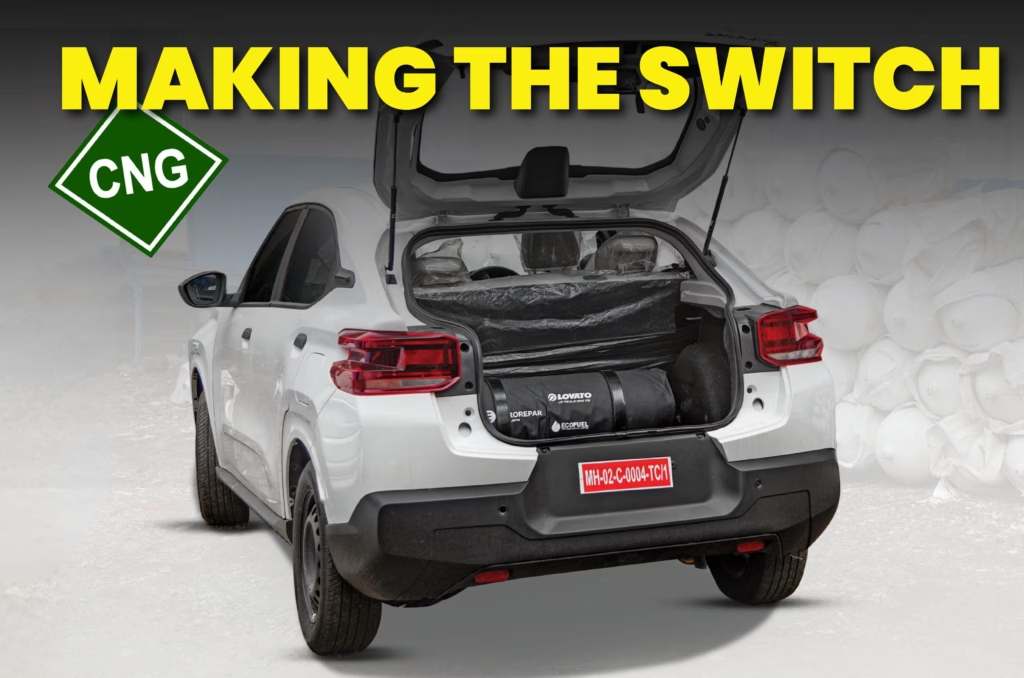
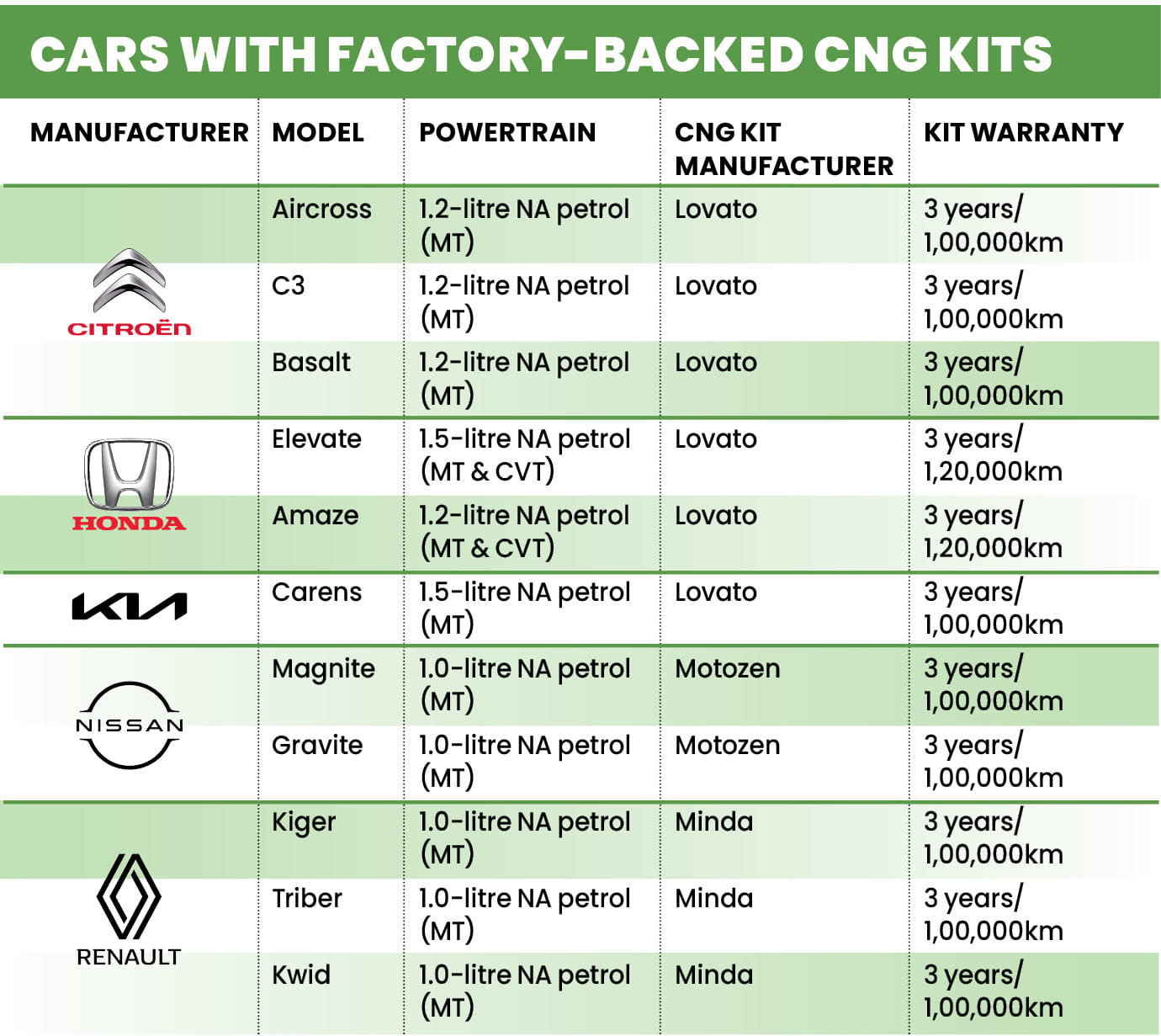
While aftermarket CNG conversions are not new, with the rise in fuel prices, there has been a noticeable spike in interest surrounding them. Although there are more factory-fitted CNG cars on the market than ever before, several models still do not give you the option. Not to mention, existing car owners are increasingly looking to convert their cars to CNG to reduce running costs.
Naturally, this increased interest brings up several questions about the technology, the installation, the legalities and more. We thus teamed up with Lovato CNG’s authorised distributor in Maharashtra, Blue Drive Traders, as well as Lets Go CNG and its authorised installer in Mumbai, M.S Motors, to answer questions about CNG conversions.
Know your CNG kit
There are three broad types of kits available on the market today. The oldest is the Venturi type, typically used for cars that are Bharat Stage 3-compatible and older. These use a Venturi mixer, similar to a carburettor, that mixes CNG with air before it is injected into the intake manifold. They are the most affordable, usually costing between Rs 30,000 and Rs 40,000, including installation and registration, but they are not the most efficient and bring a significant drop in performance. Since the cars they are compatible with are also reaching the end of their lifecycle, these kits are gradually being phased out.
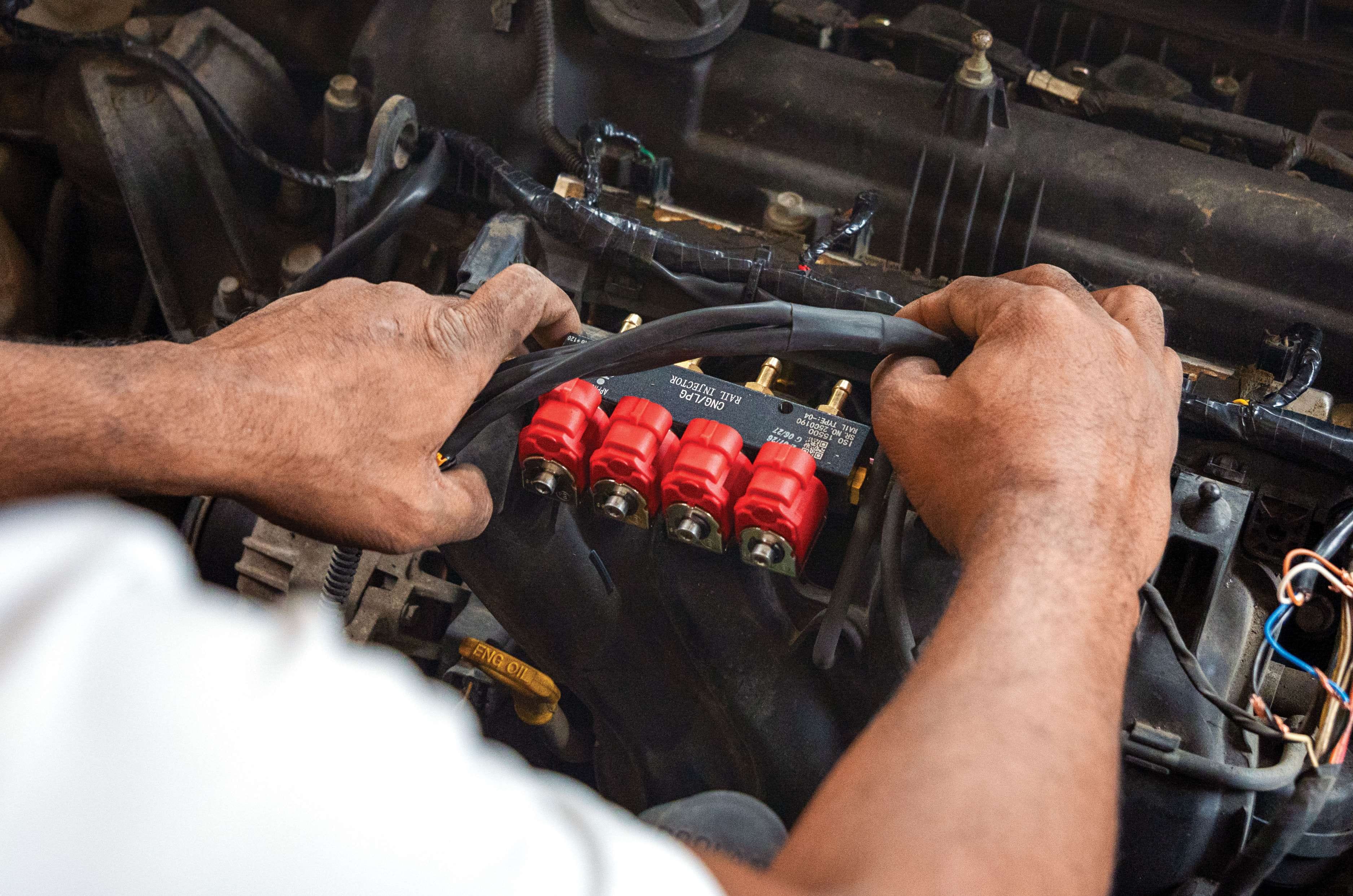
Modern naturally aspirated MPFI cars require a sequential type kit. These use individual injectors that inject CNG directly into the intake manifold and feature their own ECU that controls timing, volume and other parameters based on RPM and driver inputs. These are much more fuel-efficient, and the drop in performance is nominal in everyday driving conditions. Like the older Venturi kits, these too require the car to be started on petrol before switching over to CNG. However, they automate the process by making the switch once a certain engine temperature is reached. Prices vary depending on the manufacturer and the specifications of each kit, ranging from Rs 40,000-Rs 50,000 for older BS4 cars, to Rs 50,000-Rs 65,000 for smaller BS6 cars, stretching to Rs 70,000-Rs 75,000 for larger cars that require an eight-injector kit.
The newest type of kit to hit the market is the direct-injection kit, used for cars with direct petrol injection. Like sequential kits, these too inject CNG into the intake manifold. However, direct-injection engines cannot run purely on CNG. The fuel injectors in a DI engine sit within the combustion chamber, so to prevent them from overheating, a small amount of petrol still needs to be injected through them even when running on CNG. Therefore, a turbocharged direct-injection engine can only run on a maximum 80:20 ratio of CNG and petrol. As a result, fuel efficiency gains are not quite as high as with a naturally aspirated engine, and kit prices range from Rs 1 lakh to Rs 1.5 lakh, thus pushing the breakeven point further away.
What’s in the box?
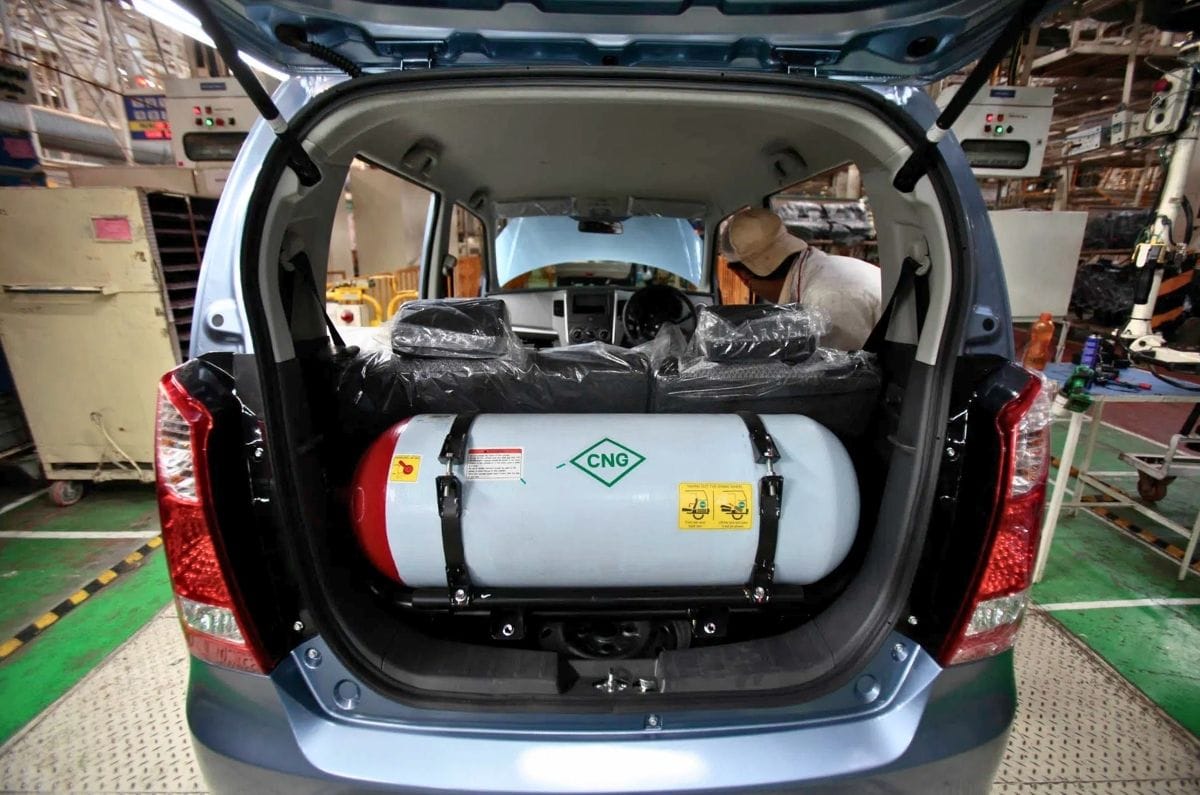
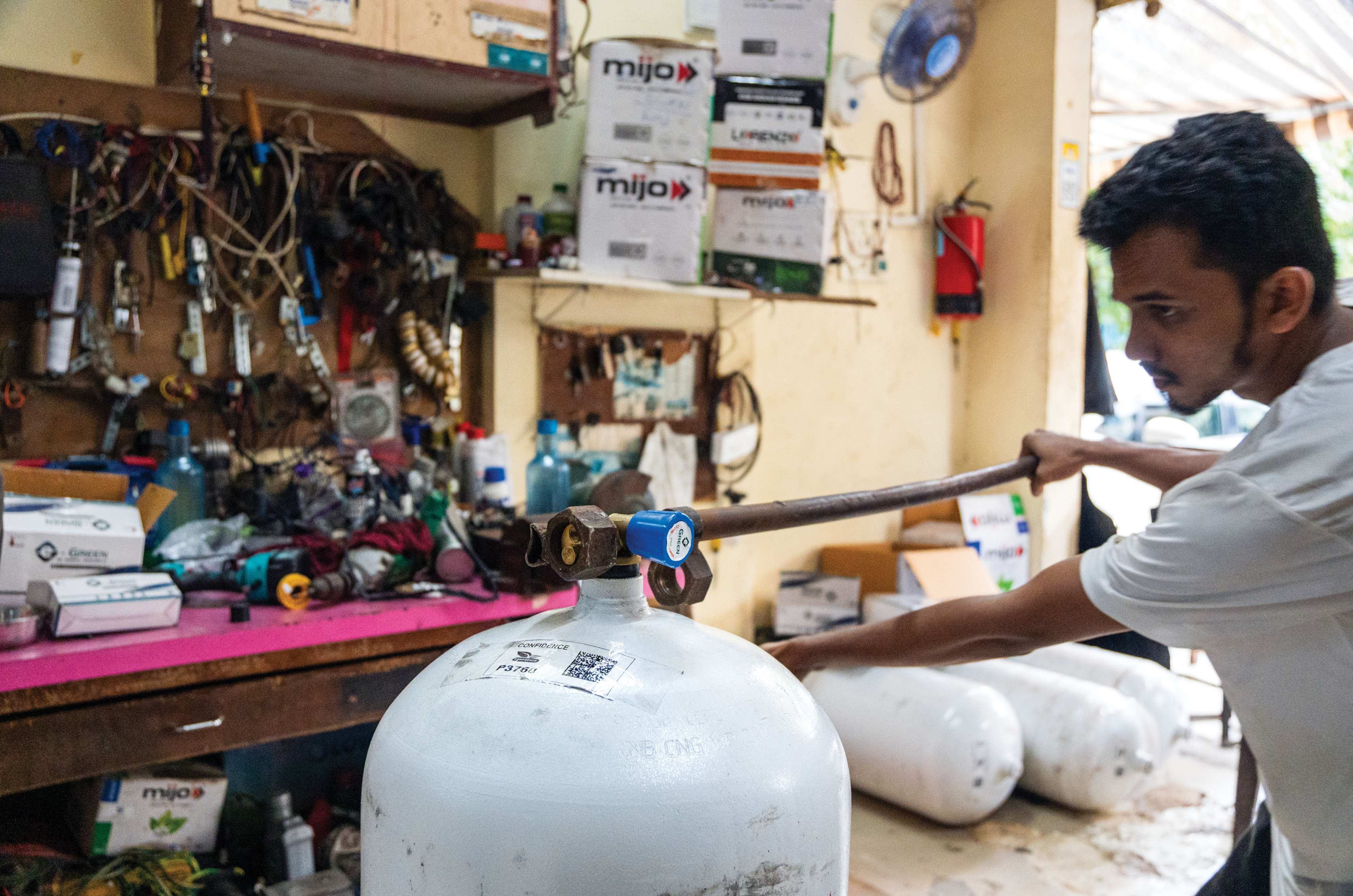
The largest and heaviest component of a typical CNG kit is the tank itself. Made from seamless steel, these can weigh close to 70kg empty, with volumetric capacities ranging from 60 to 65 litres. Metal-lined composite cylinders and carbon fibre-reinforced plastic cylinders are also now available, and while they are significantly lighter, they usually cost two or three times more. Attached to the tank is a valve with a manual shut-off.
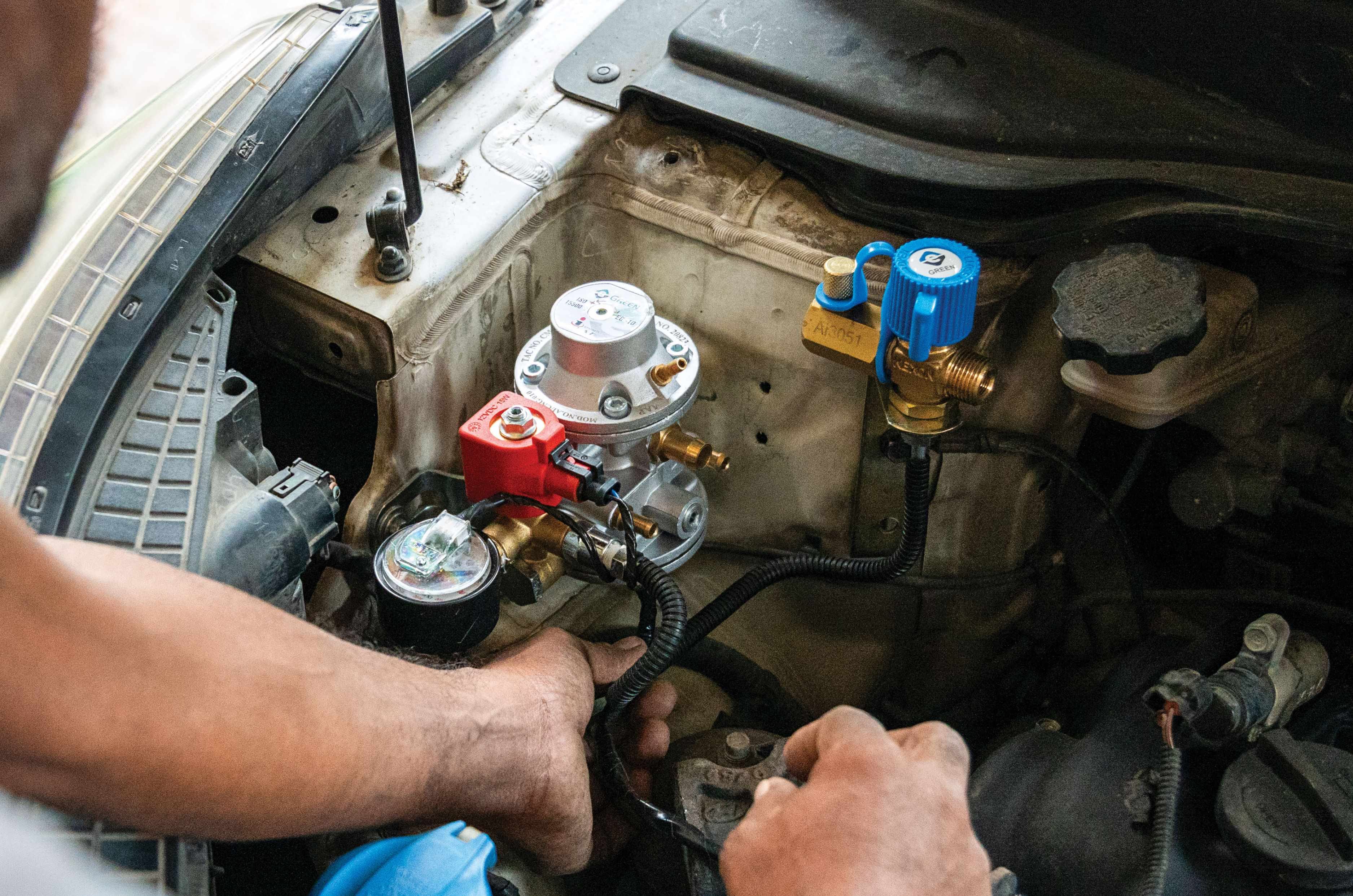
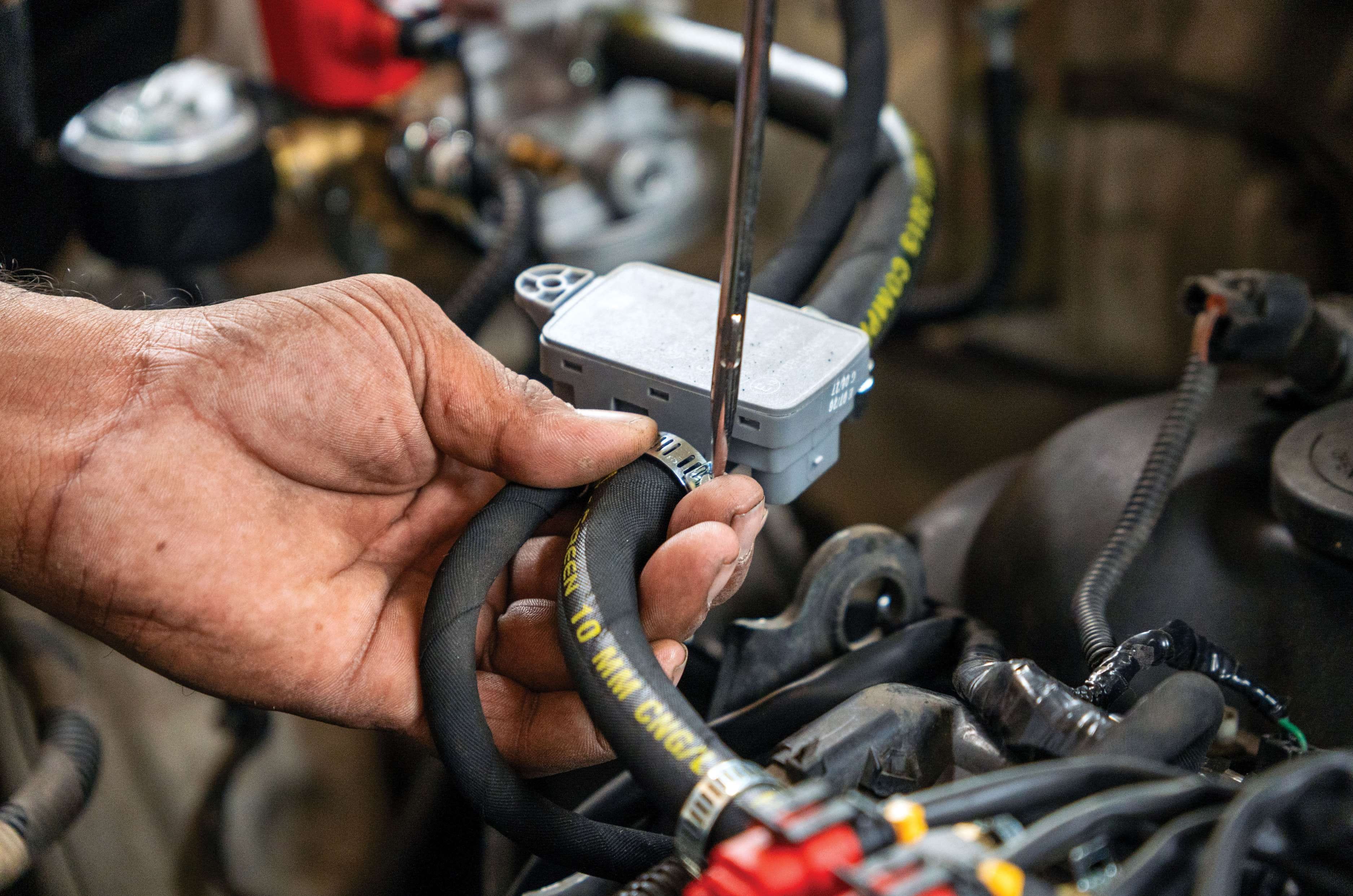
The filling valve, through which CNG is filled, can either be placed under the bonnet or beside the petrol filler cap, depending on the vehicle. Transporting the gas from the tank to the pressure reducer under the bonnet is high-pressure tubing made from carbon steel and coated in polymers. The reducer has a pressure gauge and lowers gas pressure from about 200bar in the tank to a manageable 2-3 bar. From here, the gas is routed to the injector rail that sits atop the engine, which further distributes it to nozzles drilled into the intake manifold via reinforced rubber hoses. Between the reducer and the injector rail sits a Manifold Absolute Pressure (MAP) sensor to measure the pressure as well as the temperature of the gas. There is also an optional filter to remove any impurities in the line.
Controlling the injector rail is an Electronic Control Unit (ECU) that uses signals from the MAP sensor and communicates with the car’s original ECU to dictate the amount of CNG being injected and the timing. Modern kits also come with a comprehensive wiring harness that can plug into the car’s original wiring via OBD connectors. Older pre-BS6 cars, however, may require some wire splicing. Optionally available is an Advancer, which advances ignition timing when running on CNG and negates some of the power loss, particularly on smaller-capacity engines. Some sedans and hatchbacks also require a rear coil spring spacer to compensate for the added weight of the tank in the boot.
How a CNG kit is installed
A professional CNG installation takes around 4 to 5 hours to complete. Here’s what happens behind the workshop doors.
Health check
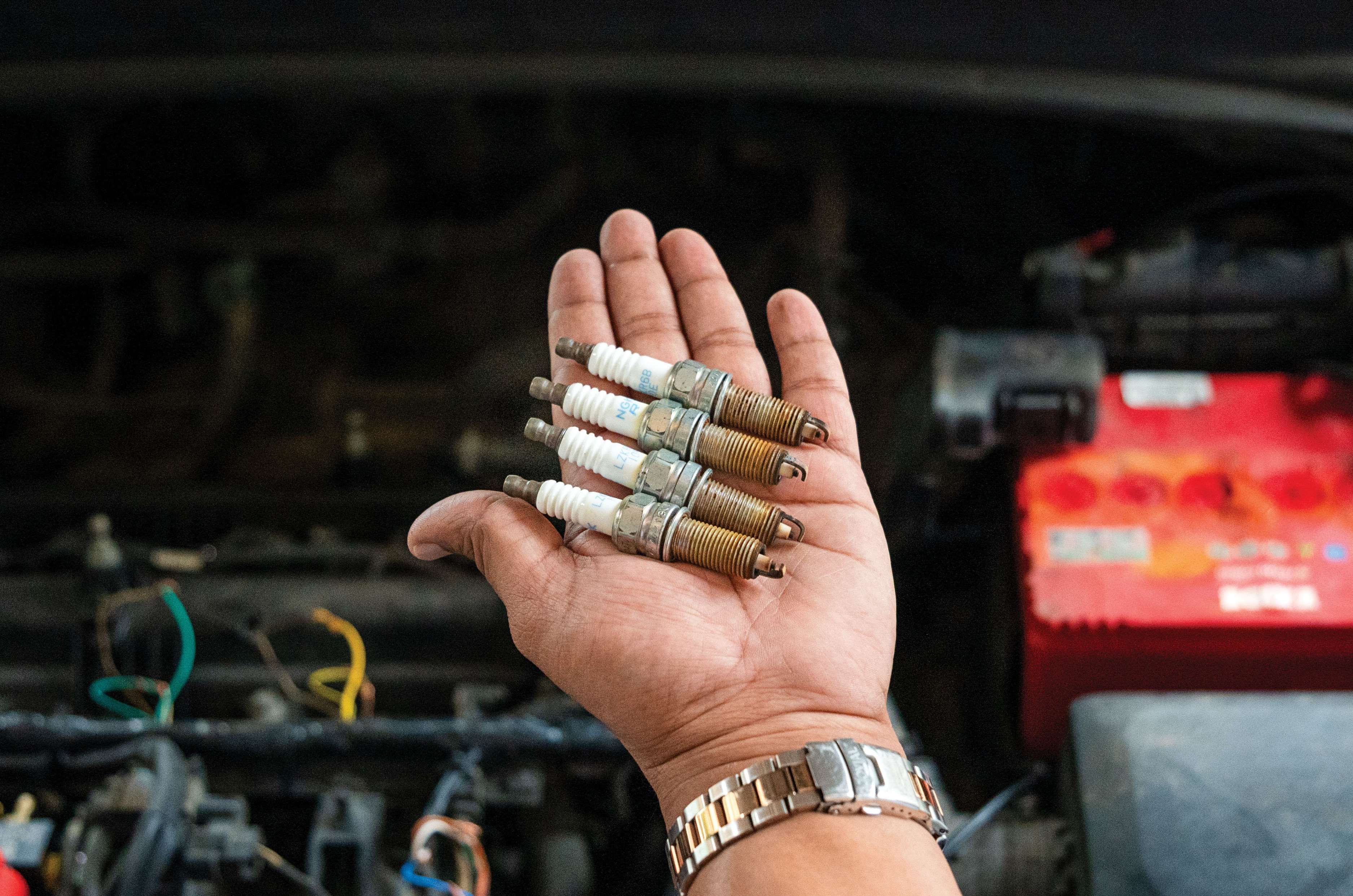
The engine is inspected to ensure it’s suitable for CNG conversion. A basic service is performed if required, with spark plugs and ignition coils replaced as needed and the throttle body cleaned.
Components positioned
The reducer and its pressure gauge are mocked up in the engine bay before mounting points are marked and drilled. The filler valve may be located alongside them or next to the petrol filler cap, depending on the vehicle.
Injectors installed
The CNG injector rail is mounted on its dedicated bracket close to the petrol injectors. This will send CNG to corresponding nozzles that are drilled and fitted into the vehicle’s plastic intake manifold.
ECU wired in
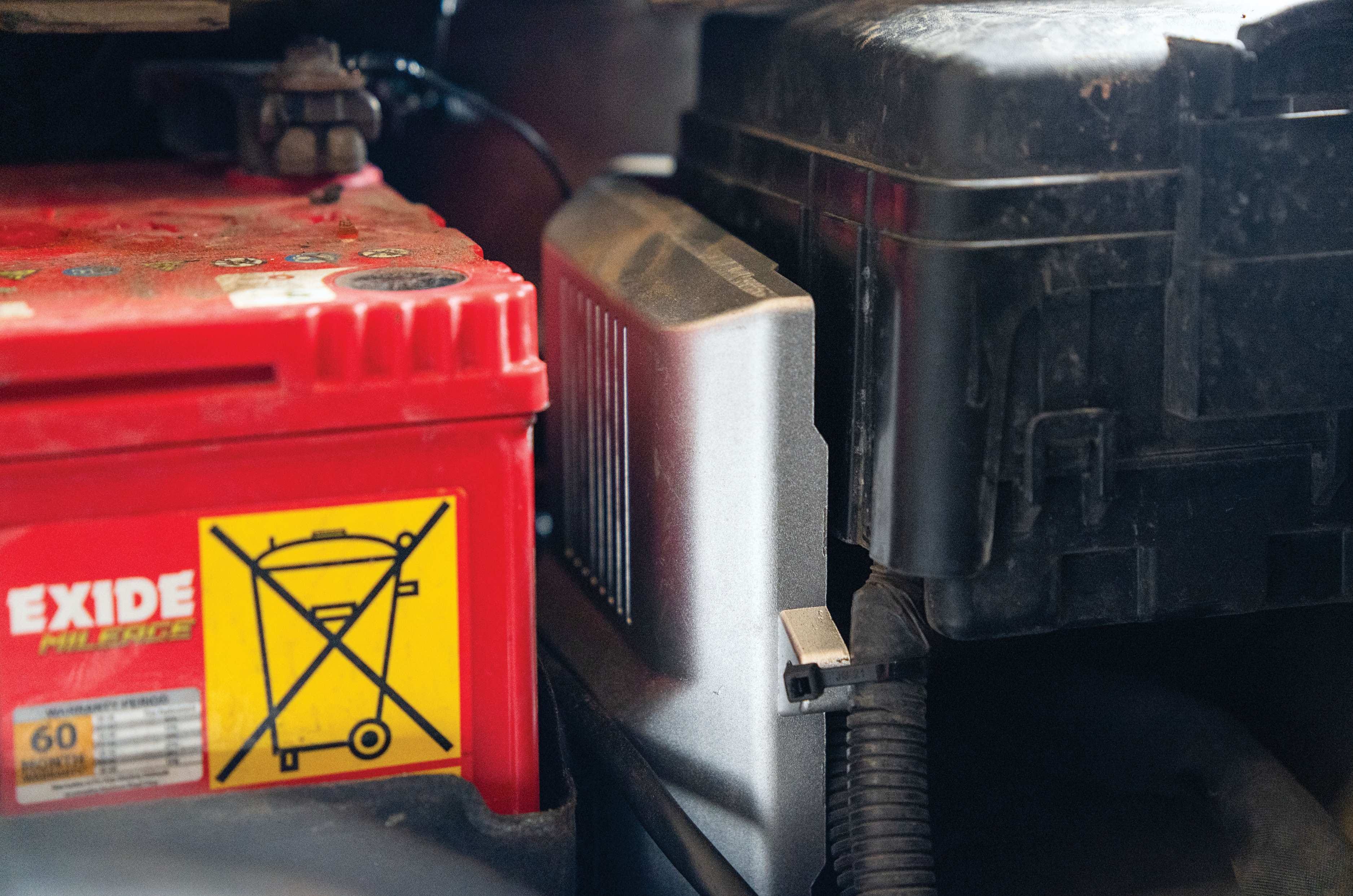
The CNG ECU is mounted alongside the factory ECU and connected to the vehicle’s wiring loom. The harness is neatly routed and secured away from heat and moving parts.
Plumbing completed
Reinforced rubber gas hoses are cut to length and connected between the reducer, injector rail and the intake manifold. A MAP sensor and a filter are also installed as part of the system.
Tank prepared
The CNG tank is temporarily mounted to a rig that holds it in place while the shut-off valve and associated fittings are installed before everything is torqued down.
Tank frame installed
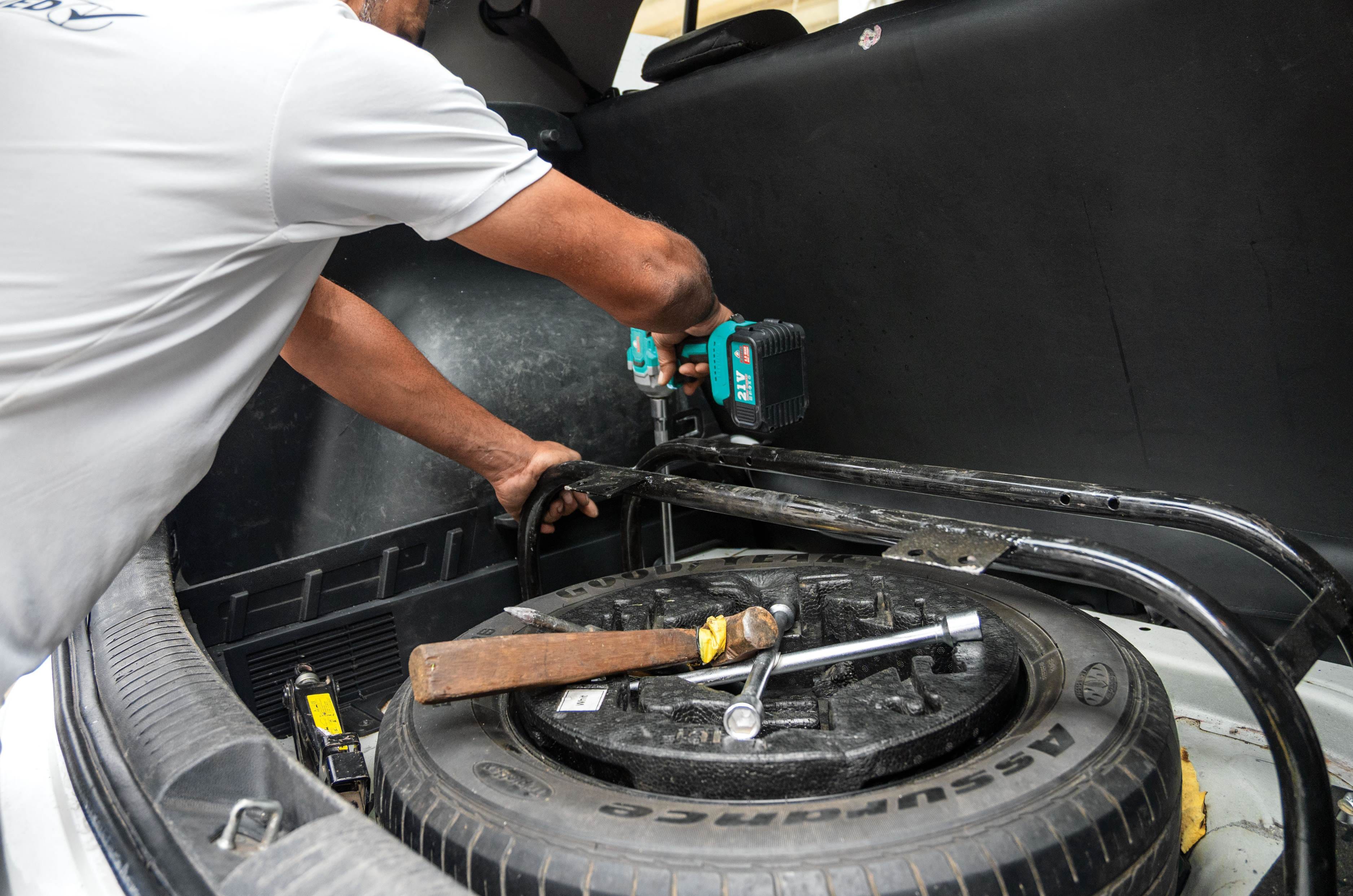
The mounting frame is positioned inside the boot, holes are drilled through the floor, and reinforced brackets securely bolt it to the vehicle’s structure.
Tank fitted
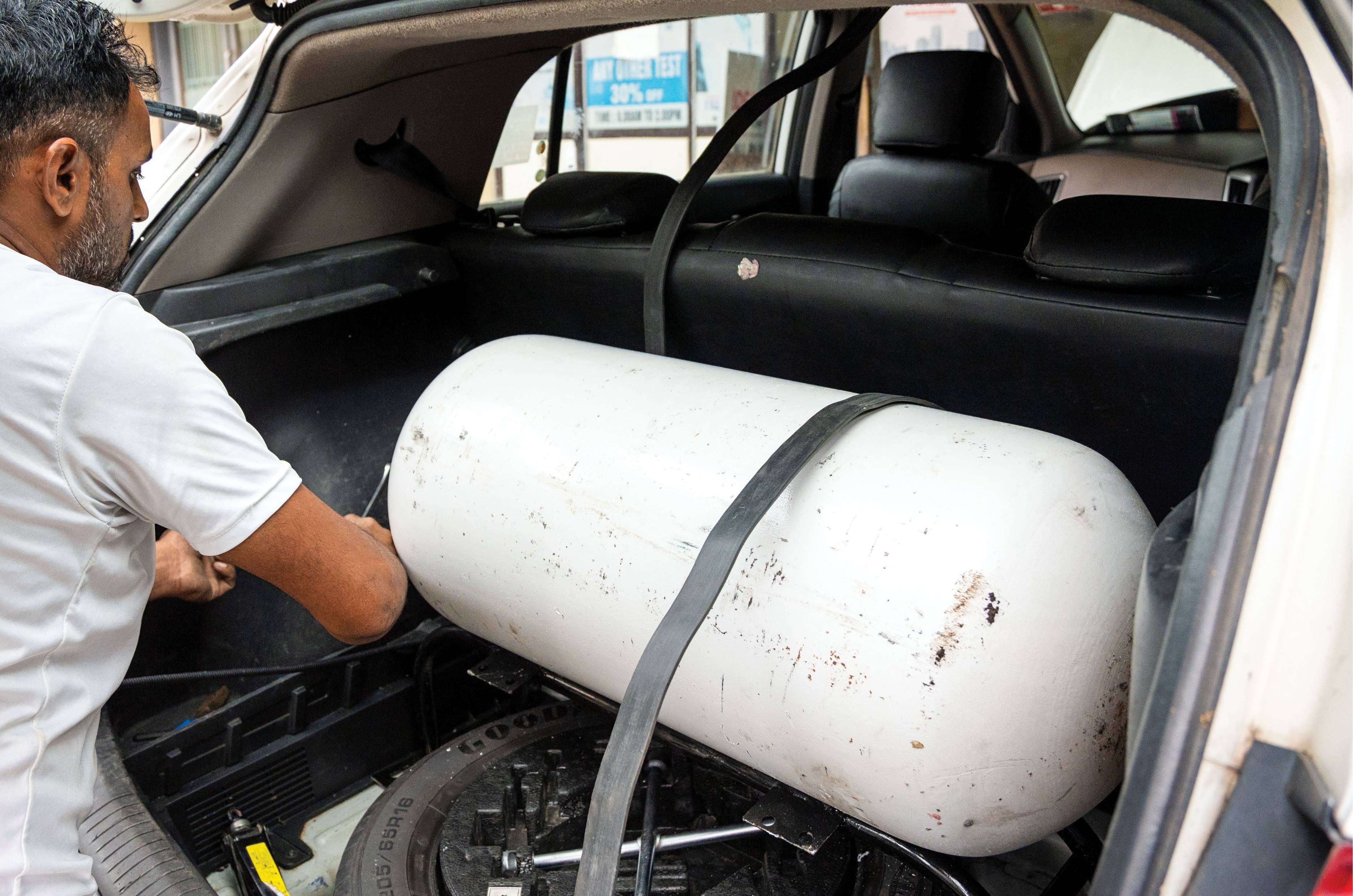
The CNG cylinder is secured to the frame using heavy-duty metal straps and bolts before being covered with a carpeted shroud for a neat factory-like finish.
High-pressure line routed
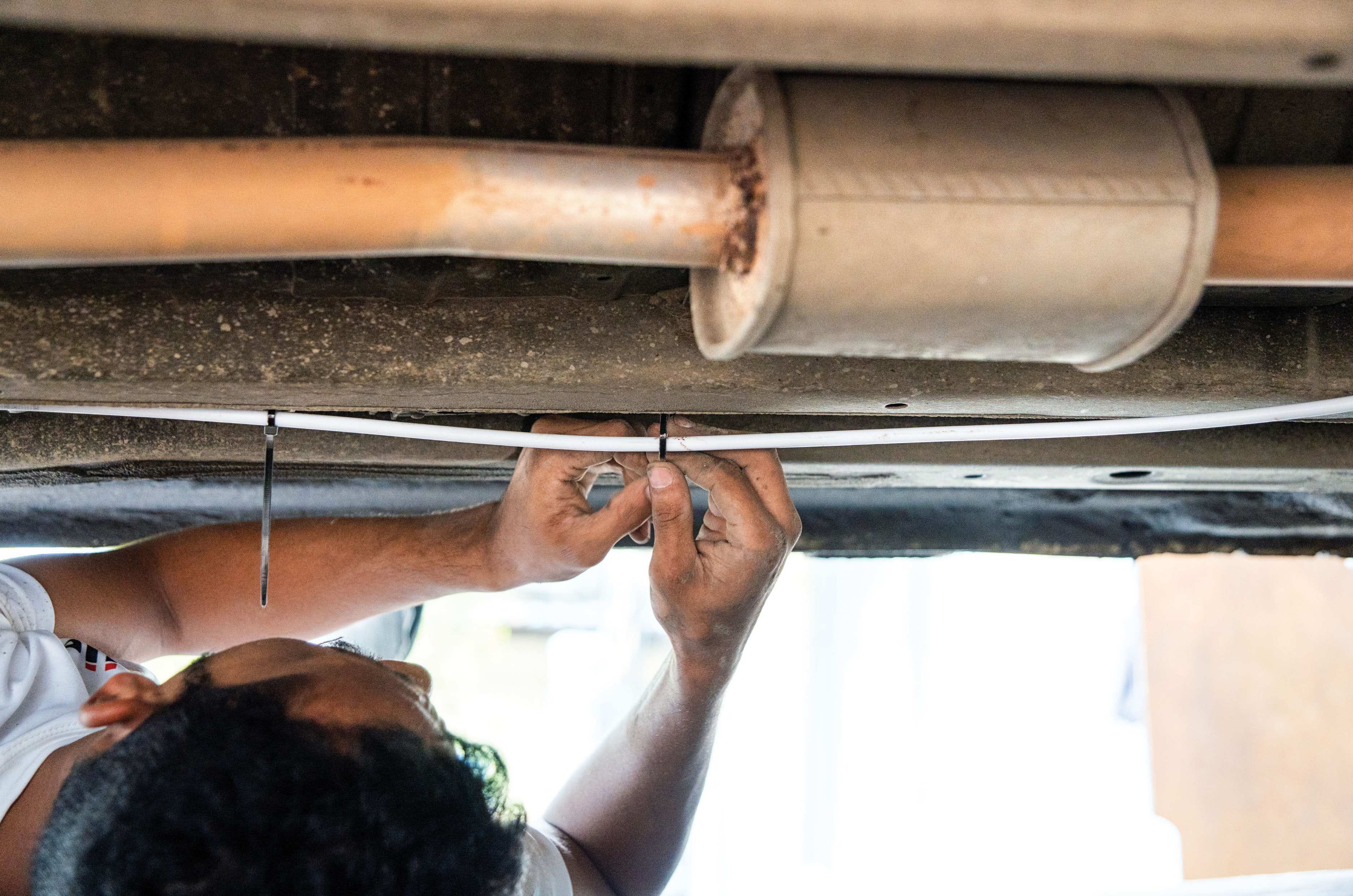
Polymer-coated steel high-pressure pipes are routed beneath the car, connecting the CNG filler valve, the tank and the reducer under the bonnet.
Electrical connections
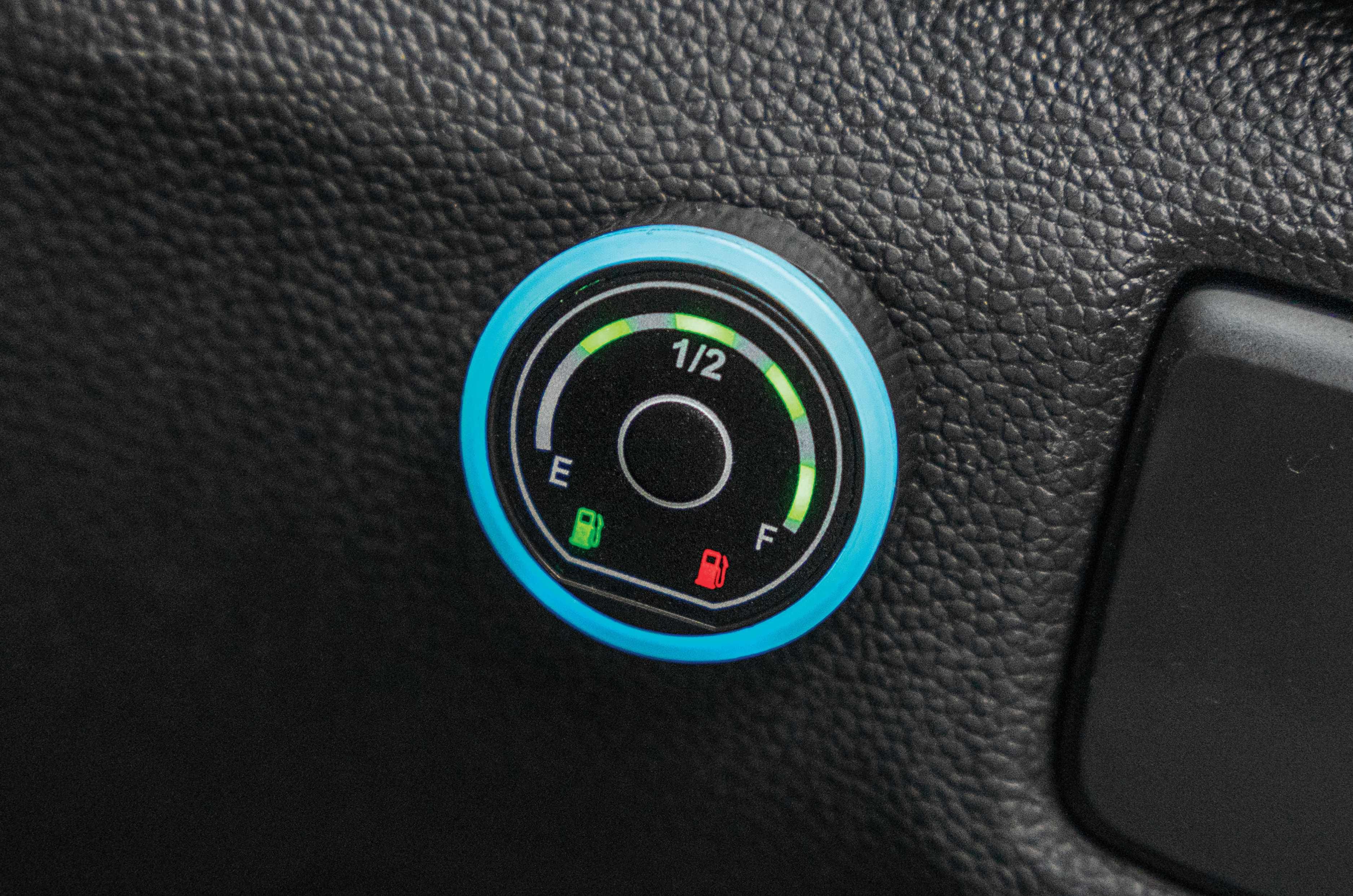
The remaining wiring is completed and a dashboard-mounted CNG switch is installed, allowing the driver to monitor fuel level and switch between petrol and CNG.
Leak test
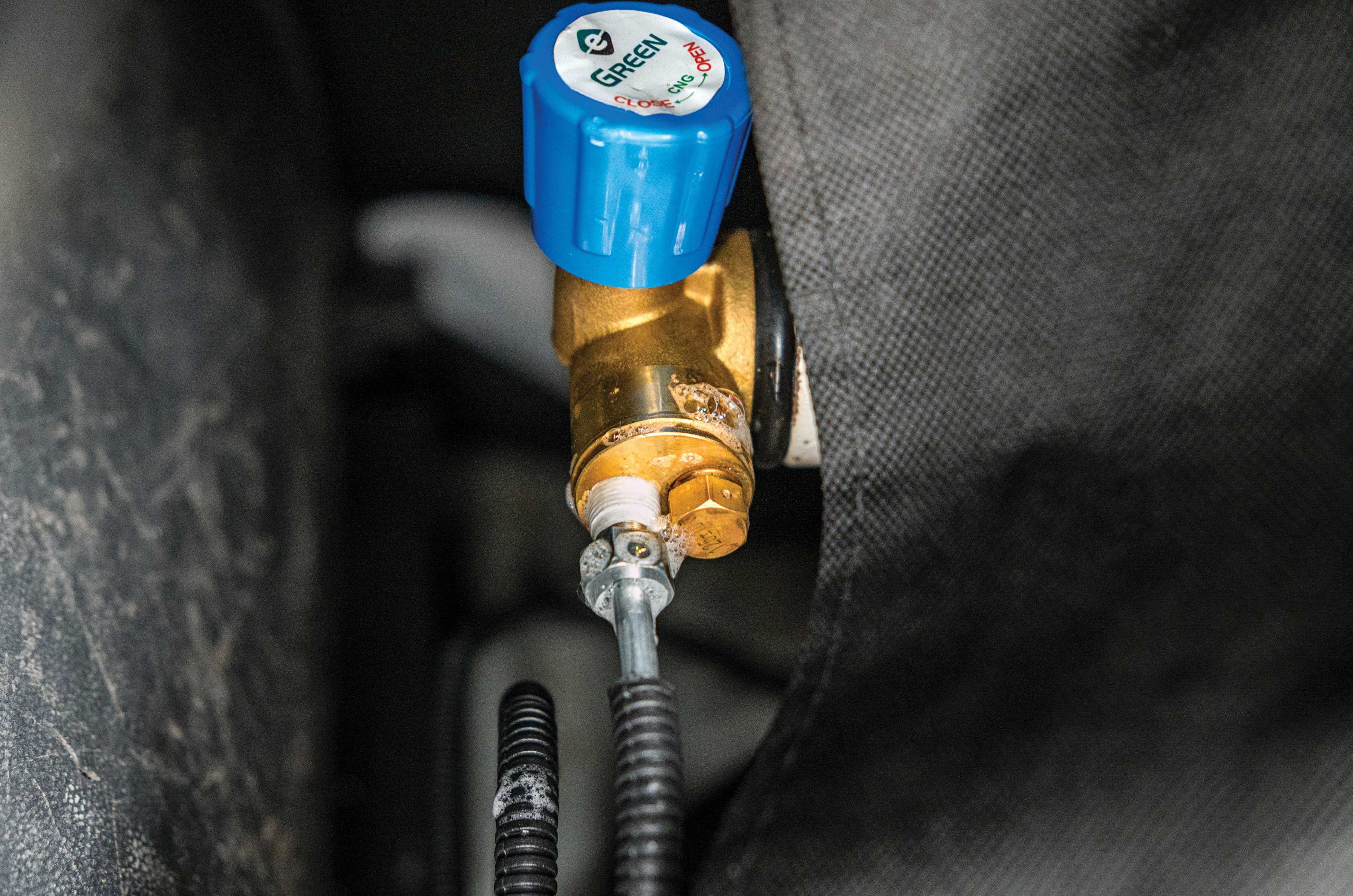
Around 2kg of CNG is added and every connection is checked using an electronic gas detector and good old-fashioned soap solution to ensure the entire system is leak-free.
Calibration and road test
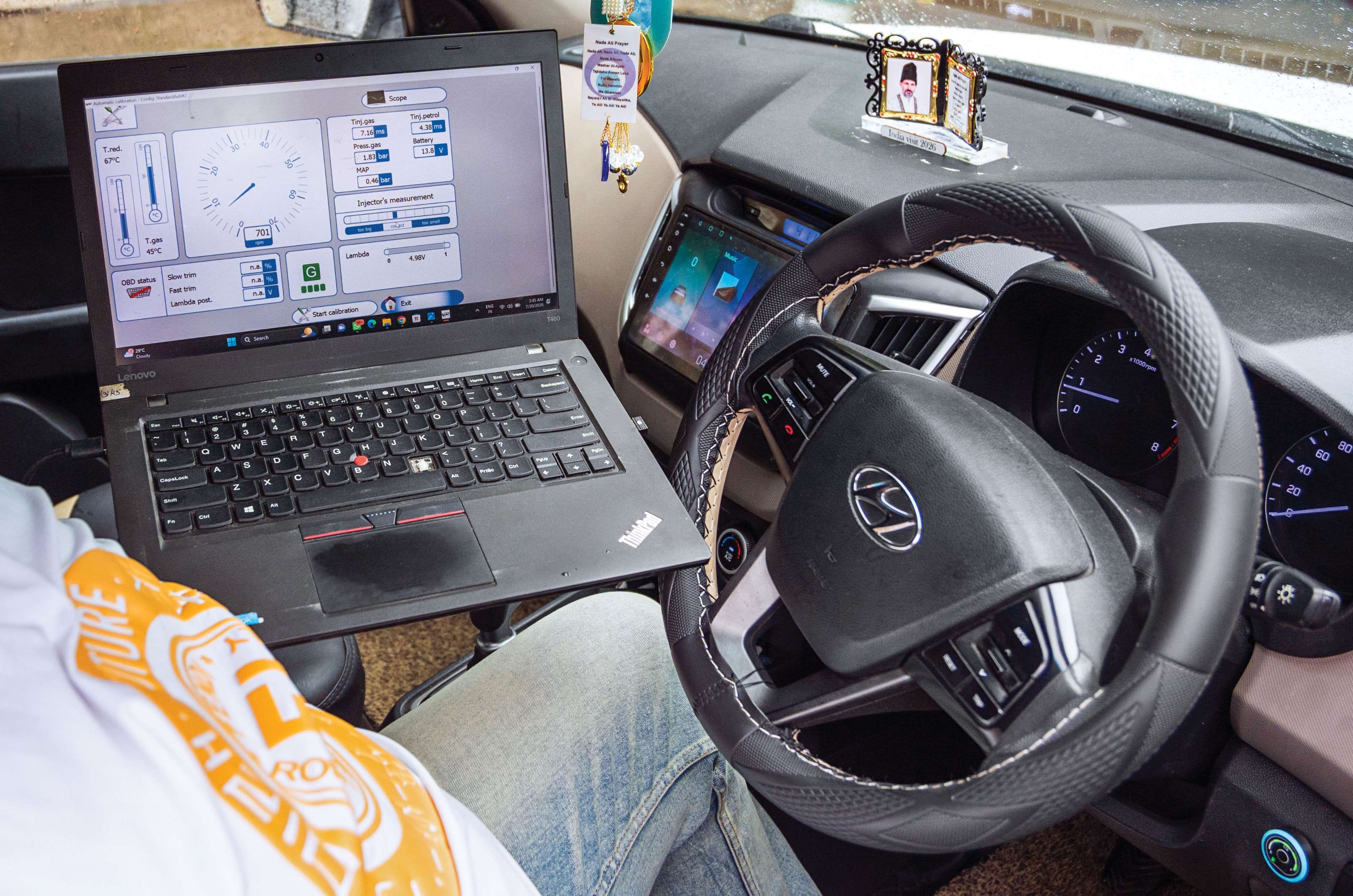
The system is calibrated using dedicated software to optimise fuel delivery and switchover settings. A final road test confirms performance before the vehicle is delivered to the customer.
Why go aftermarket?
On average, an aftermarket CNG installation costs around 25 to 30 percent less than the premium a factory-fitted CNG variant commands over its petrol counterpart. However, this alone is not enough to swing the scales in favour of the aftermarket due to the disadvantages we will get into later. The bigger advantage the aftermarket holds is the ability to convert models or variants that do not come with a CNG option. For instance, Maruti Suzuki only offers its factory-fitted CNG cars with a manual transmission, so if you want one with an automatic, an aftermarket CNG kit is your only option.
Similarly, popular SUVs like the Hyundai Creta and Kia Seltos are not available in CNG guise, which leads many owners to turn to the aftermarket. Owners of older cars, or those buying used cars, can also convert them to CNG for a fairly affordable price and enjoy significantly lower running costs. CNG is spark-ignited, thus only petrol cars can be converted to run on the gas. Since diesel cars use compression-ignition, they would need far too many modifications to make this possible. Strong hybrids are also not recommended for conversions, as here, the engine keeps switching on and off too often, which makes CNG calibration complex. Cars that are not in good mechanical shape should also not be converted to CNG, as the conversion can take a toll on the overall engine health.
For a car in generally good shape, aftermarket kits are proving to be reliable in the long run, provided they are well maintained. Most modern sequential kits from brands like Lovato and Mijo are also comparable in quality to OEM systems, and reputed, authorised installers are able to achieve near-OEM levels of fitment.
The catch
Fitting an aftermarket CNG kit – even if it is government-approved and fitted by an authorised installer – is grounds for the manufacturer warranty to be voided. While some brands may still honour warranty claims that are unrelated to the powertrain, it remains a grey area. Some dealer-fitted CNG kits do retain the factory warranty, while others provide a third-party warranty in its place.
Aftermarket installers have also begun offering third-party warranties in collaboration with insurance companies to provide coverage in place of the factory warranty. This, however, is in addition to the cost of the CNG kit. The kits themselves generally come with a warranty ranging from one to two years.
Packaging is also one area where the aftermarket trails OEMs. While Maruti, Tata and Hyundai are now offering underbody and dual-tank setups to retain a usable boot, the aftermarket still largely uses larger single tanks that take up more space.
Staying fit
As per law, any CNG tank – aftermarket or OEM fit – must be hydrotested every three years. For this, the tank must be removed from the vehicle and sent to a dedicated facility. While the process itself takes only a couple of hours, hydrotesting facilities are usually located outside major cities, adding transport time to the process. A hydrotest typically costs around Rs 3,000 per tank.
The CNG filter should also be replaced at the same three-year or 10,000km interval, whichever comes first. This typically costs under Rs 1,000 and is fairly straightforward. It is also recommended to drive on petrol at least 10 percent of the time to keep the fuel system healthy. Finally, it is important that the engine’s service schedule is strictly followed.
The legal bit
Aftermarket CNG installations are legal as long as the kit is government-approved, fitted by an approved installer and the registration certificate (RC) is updated accordingly. Most approved installers will handle the RC update at the Regional Transport Office (RTO) as part of the service. Once this is complete, the owner must also update the insurance provider.
The verdict
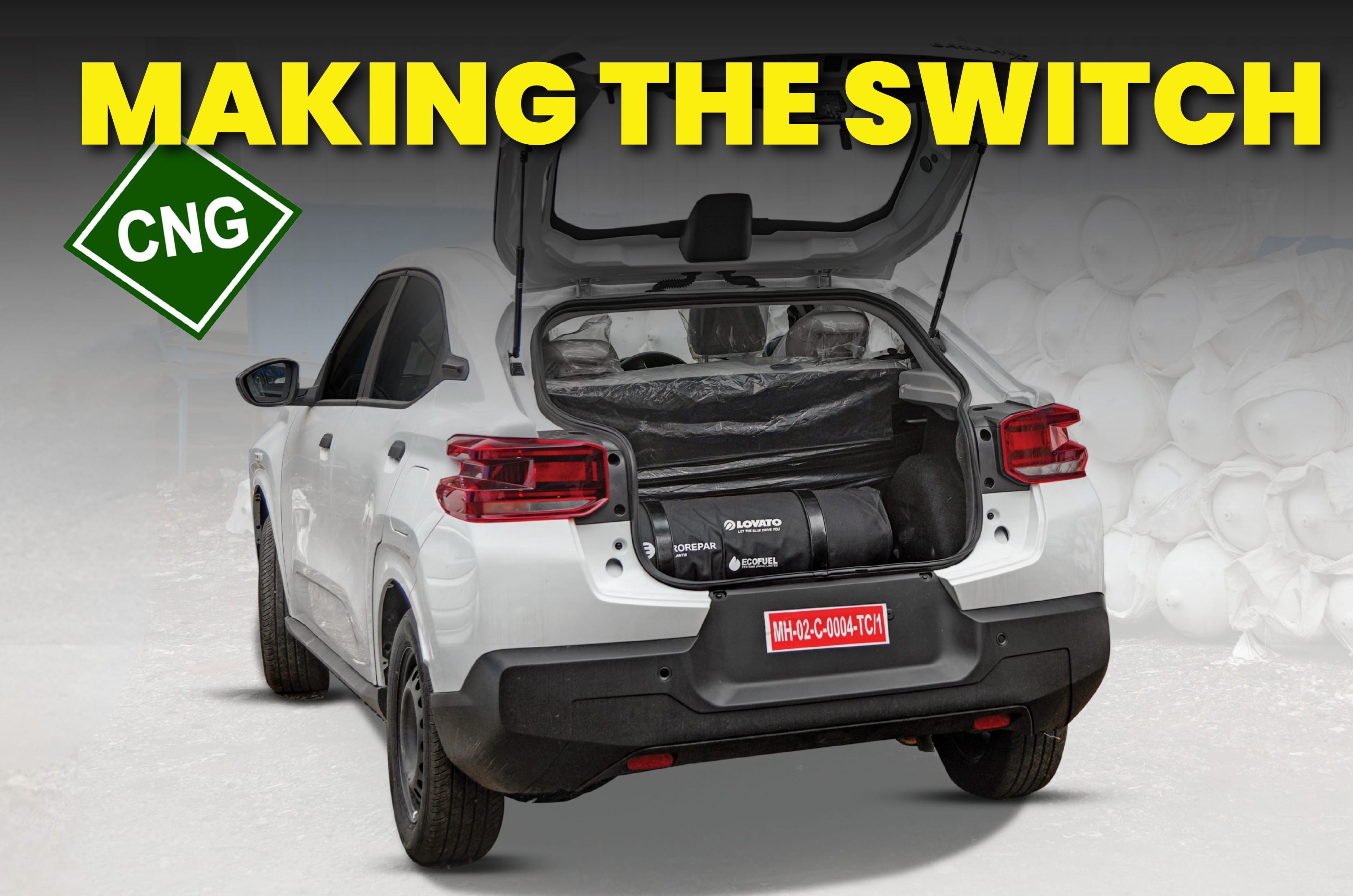
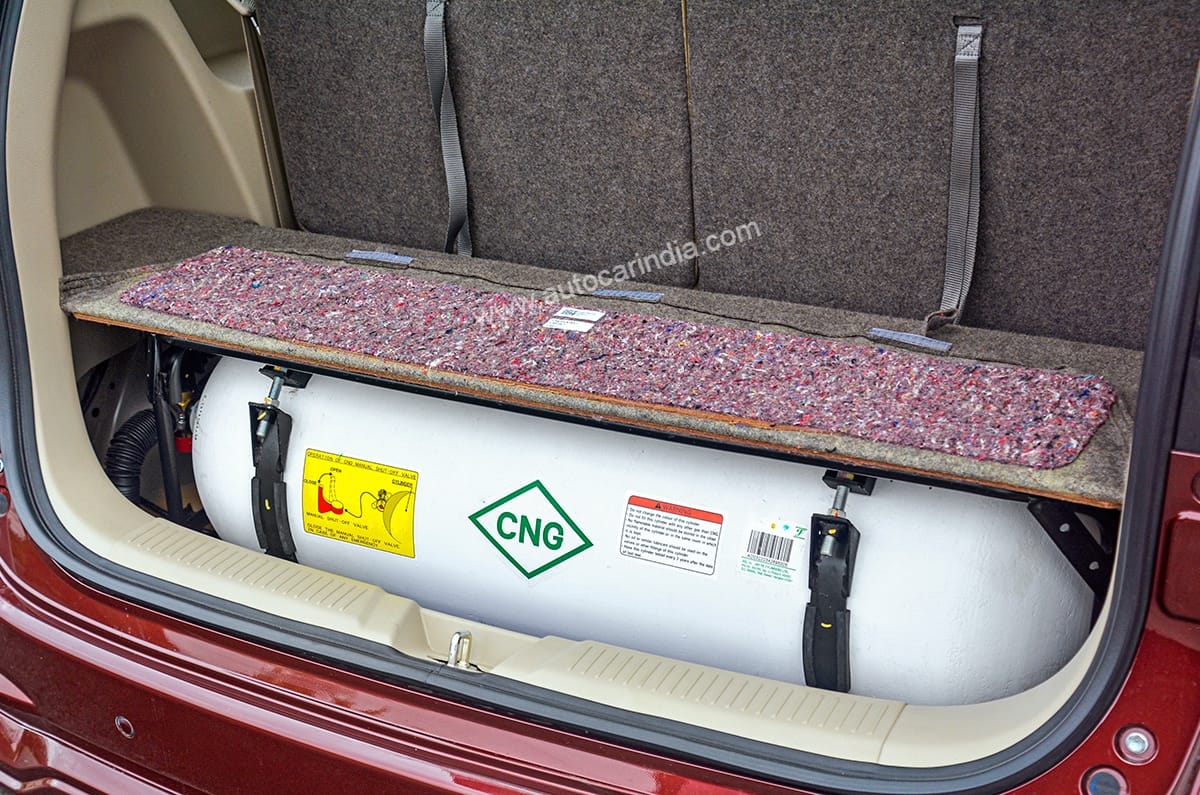
Maruti Ertiga’s factory-fitted CNG tank shown for representative purposes only.
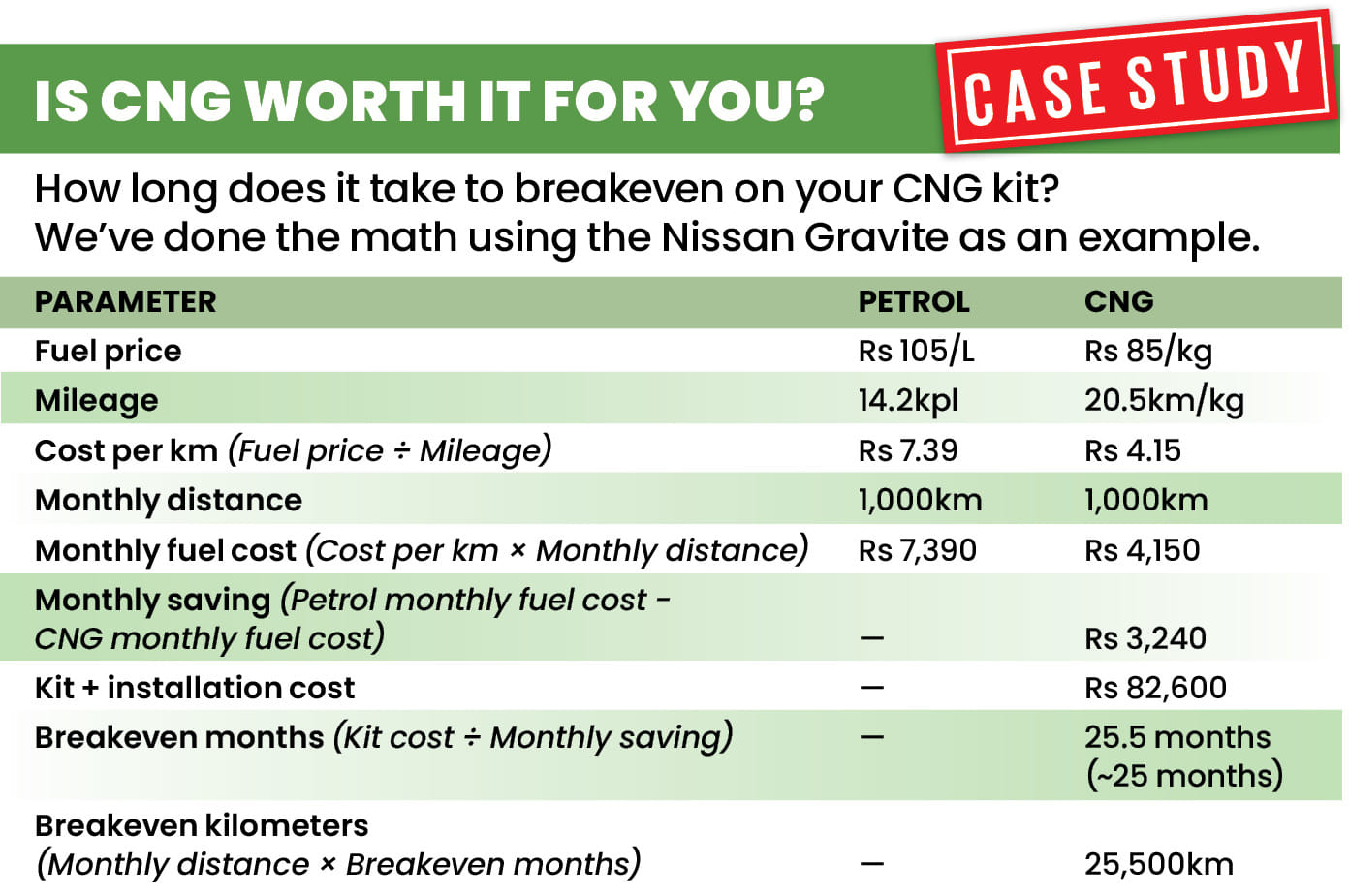
There is no denying the running cost advantage that CNG provides. However, when buying a brand-new car, a factory-fitted CNG version is still preferable to an aftermarket conversion simply because of the peace of mind. Once a car is out of warranty, though, a CNG conversion makes a great deal of sense. In most cases, the cost of the kit can be recouped within a couple of years, even with an average monthly running of around 1,500km.
However, the installer is just as important as the kit. Always opt for government-approved kits installed by approved installers with a strong reputation. Wherever possible, insist the installation is carried out without splicing into the original wiring and follow the recommended service schedule to ensure your car stays reliable.
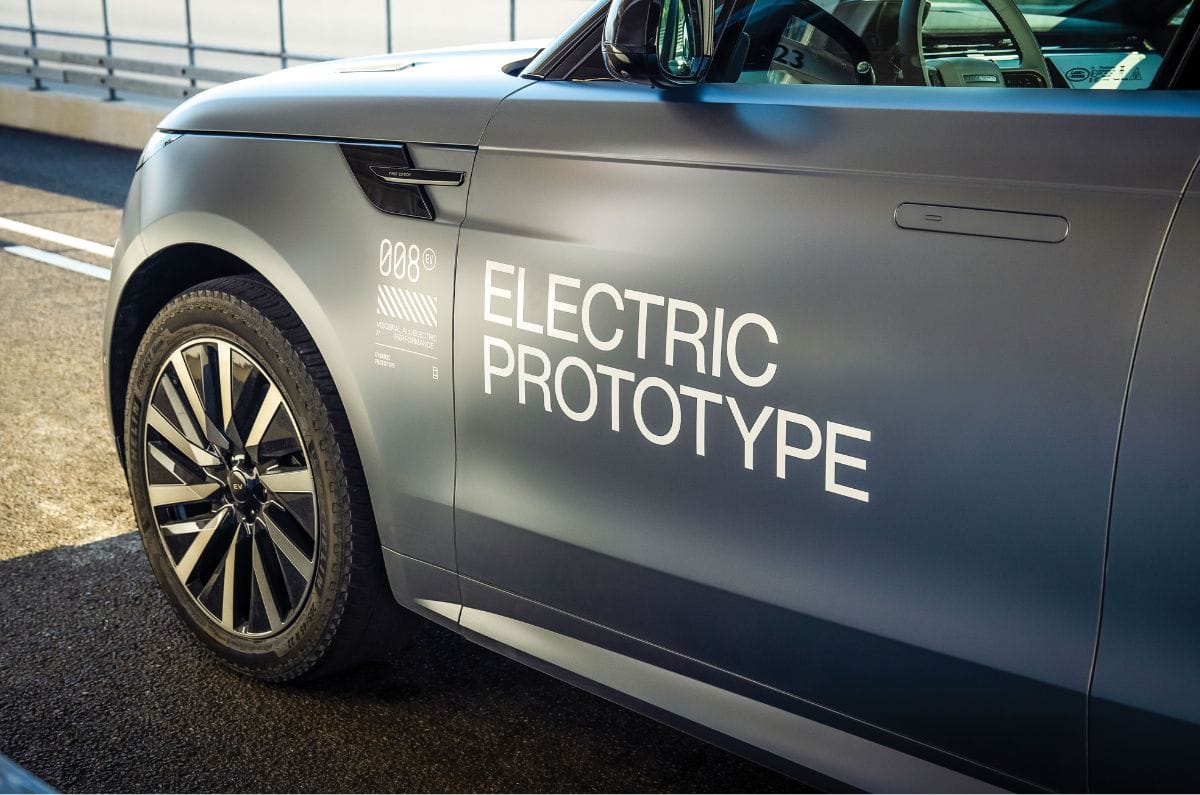
The Range Rover Sport EV has been a long time coming. After what feels like an eternity of teasers and test mules, the electric Range Rovers will finally be launched globally in September this year and should arrive in Indian showrooms around March 2027. Look at the car and you may wonder what took the company so long, because this appears to be just the regular Range Rover Sport. That, as it turns out, is entirely the point.
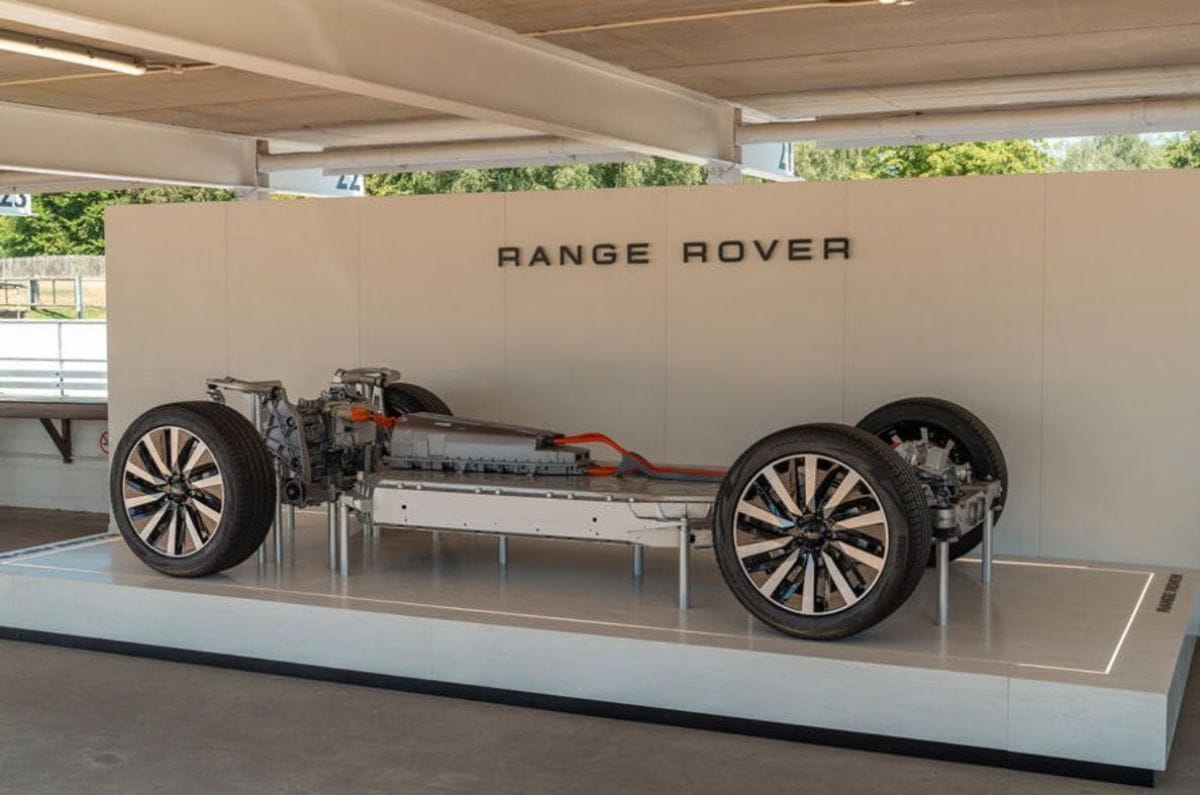
Under the familiar skin sit 300 patents’ worth of tech, a new 800V electrical architecture, two 326hp motors and a 118.5kWh battery, all validated over 60,000 hours of testing, the most for any Range Rover yet. The motors are Land Rover’s own design, developed in-house because nothing off the shelf could deliver the kind of instant, finely controlled torque the brand demanded for serious off-roading. The only real giveaways on the outside are a grille with narrower air slots and a new set of alloys with a more aero design, in keeping with the EV theme. Land Rover deliberately didn’t tamper with the styling because customers were clear – don’t change it, just make it better.
The new architecture, motors and battery have gone through 60,000 hours of testing.
So, is it better? A specially curated lap of the Goodwood circuit, complete with gravel stages and some party tricks, was our chance to find out.
Range Rover Sport Electric Prototype: performance, ride and handling
Set off, and the first impression is of eerie silence. All you can hear is the blower working overtime on a hot Goodwood day. Even when the tarmac ends and the gravel begins, the Sport EV feels like a magic carpet, gliding along on a pillow of velvet. The ride quality is absolutely exceptional, better even than the standard car’s, and that’s saying something.
When you want a quick turn of pace, the combined 550hp and 850Nm don’t leave you wanting. Engage launch control, and the Sport EV catapults forward hard enough to be a genuine shock, though the delivery is measured rather than manic. There is, however, a hint of torque steer from the front axle under hard acceleration, a slight tug at the wheel that reminds you how much force is being exerted. The brakes on our prototype also felt a bit grabby, with a sharp initial bite. Land Rover engineers admit this isn’t the final calibration and say production cars will have a more progressive pedal feel.
The Sport EV feels like a magic carpet, gliding along on a pillow of velvet.
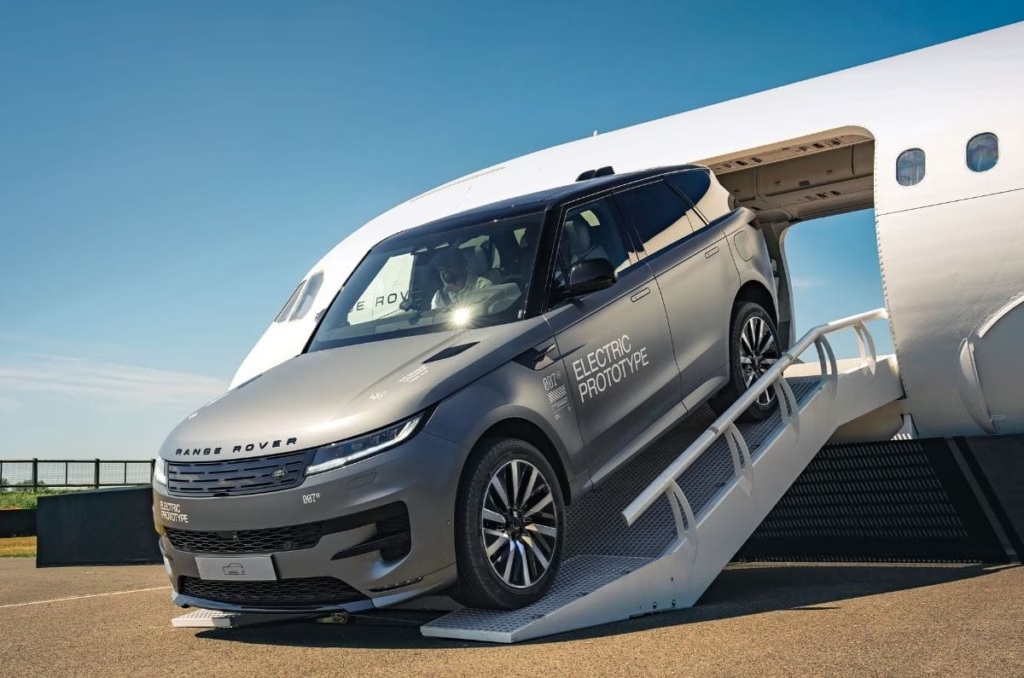
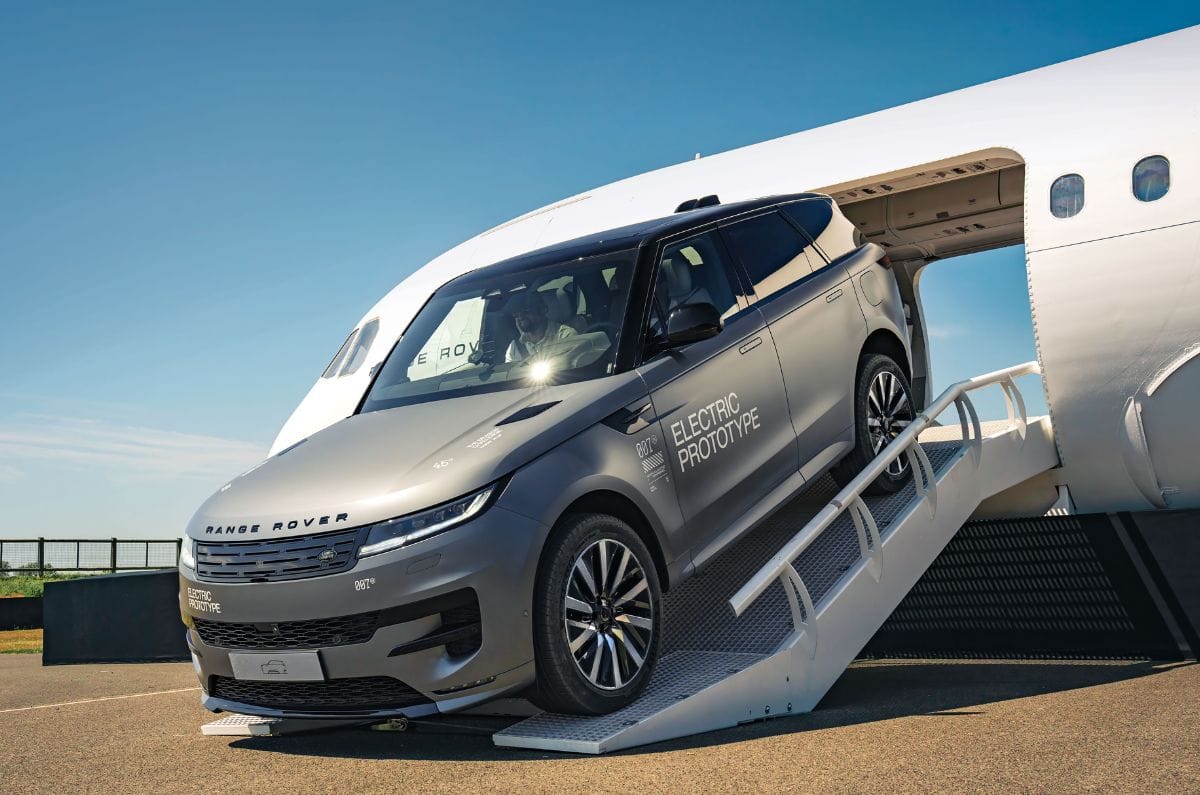
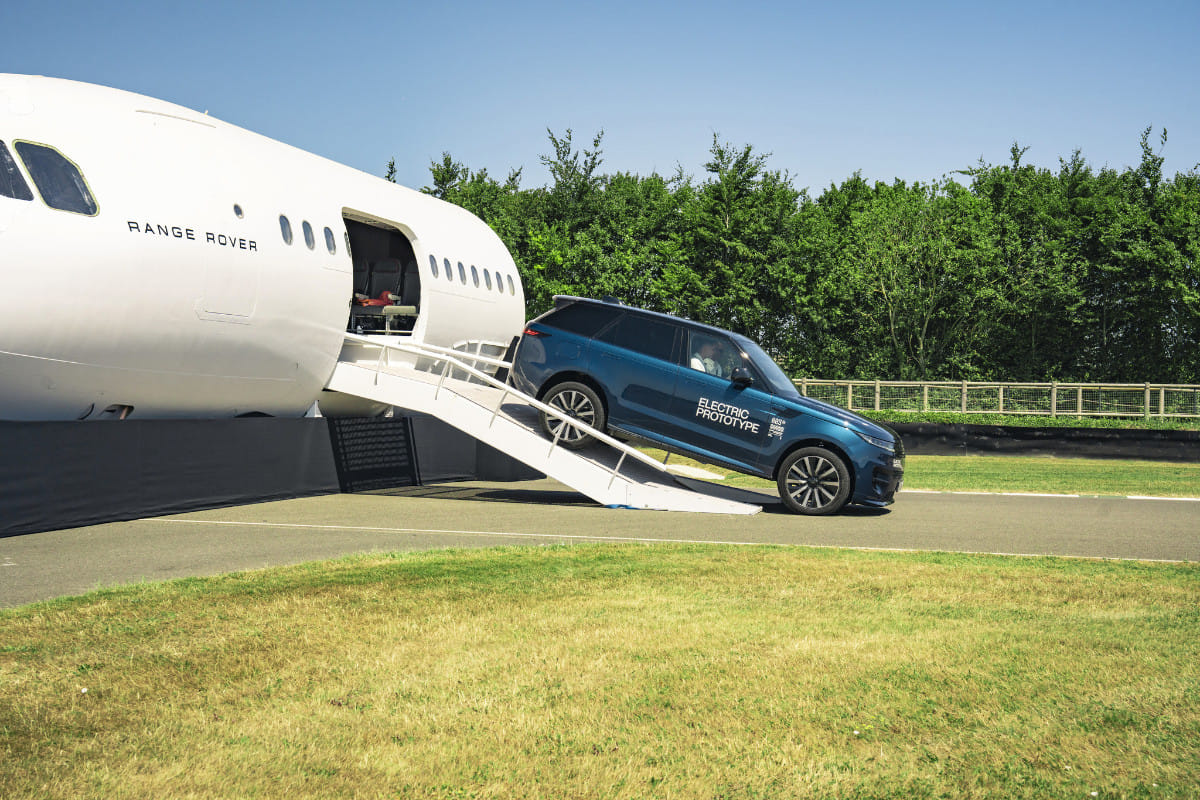
Then came the fun exercises, laid out to prove that this plush, polished and uber-refined Range Rover can do things no owner would ever dare attempt. The Sport EV climbed a staircase – a cheeky nod to the brand’s world record 999-step climb – and we even drove it through the fuselage of an Airbus. Silly? Absolutely. But it showcased what makes an electric drivetrain so effective off road. Torque arrives instantly from zero rpm and builds with perfect linearity, and because the electronics can meter out drive to each motor with such precision, there’s no need for the old hardware of locking diffs and low-range gearboxes. Raise the suspension to off-road height, let the cameras and hill descent control do their thing, and the car simply walks over obstacles. The single-pedal mode is something the engineers have finally nailed too, and it works seamlessly alongside hill descent control when needed.
The big surprise is how tidily this near 2.8-tonne SUV handles. Flick the wheel suddenly, and you can feel the mass move, but otherwise, it stays impressively planted through corners, helped by a centre of gravity that sits a significant 73mm lower than in the combustion car. Range Rovers have always had a top-heavy feel when pushed; this one doesn’t.
Questions remain. A real-world range of 531km is promised, but given the bluff shape and sheer size of this flagship EV, that figure could prove optimistic if driven briskly. Some owners may have liked the convenience of a frunk in their EV, which is absent, and packaging the rear motor has killed off any seven-seat option. Then again, these are misses most owners may not miss at all.
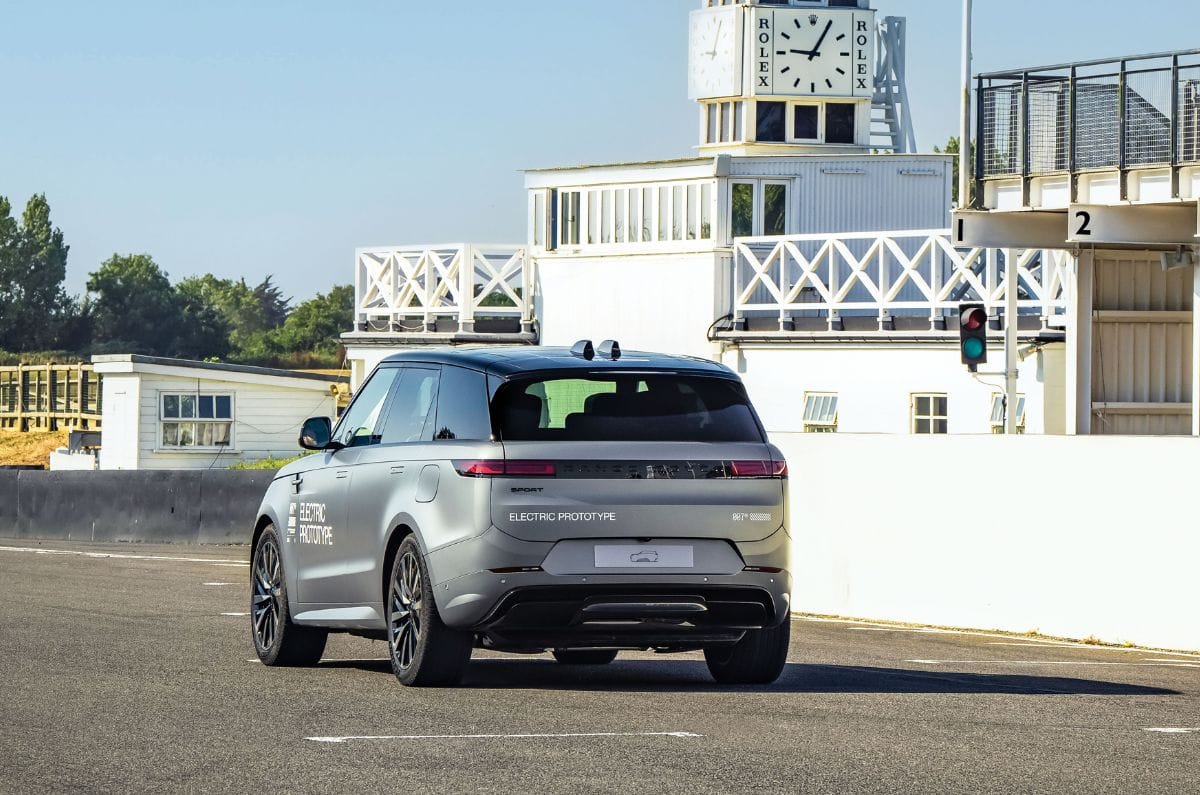
Prototype badging aside, there’s little to separate this from the combustion-engined Sport.
Pricing isn’t announced yet, but expect it to sit above the locally assembled combustion equivalents. More importantly, on this evidence, it will set a new benchmark for luxury for the brand. The electric Range Rover Sport doesn’t reinvent the formula, but it quietly perfects it.
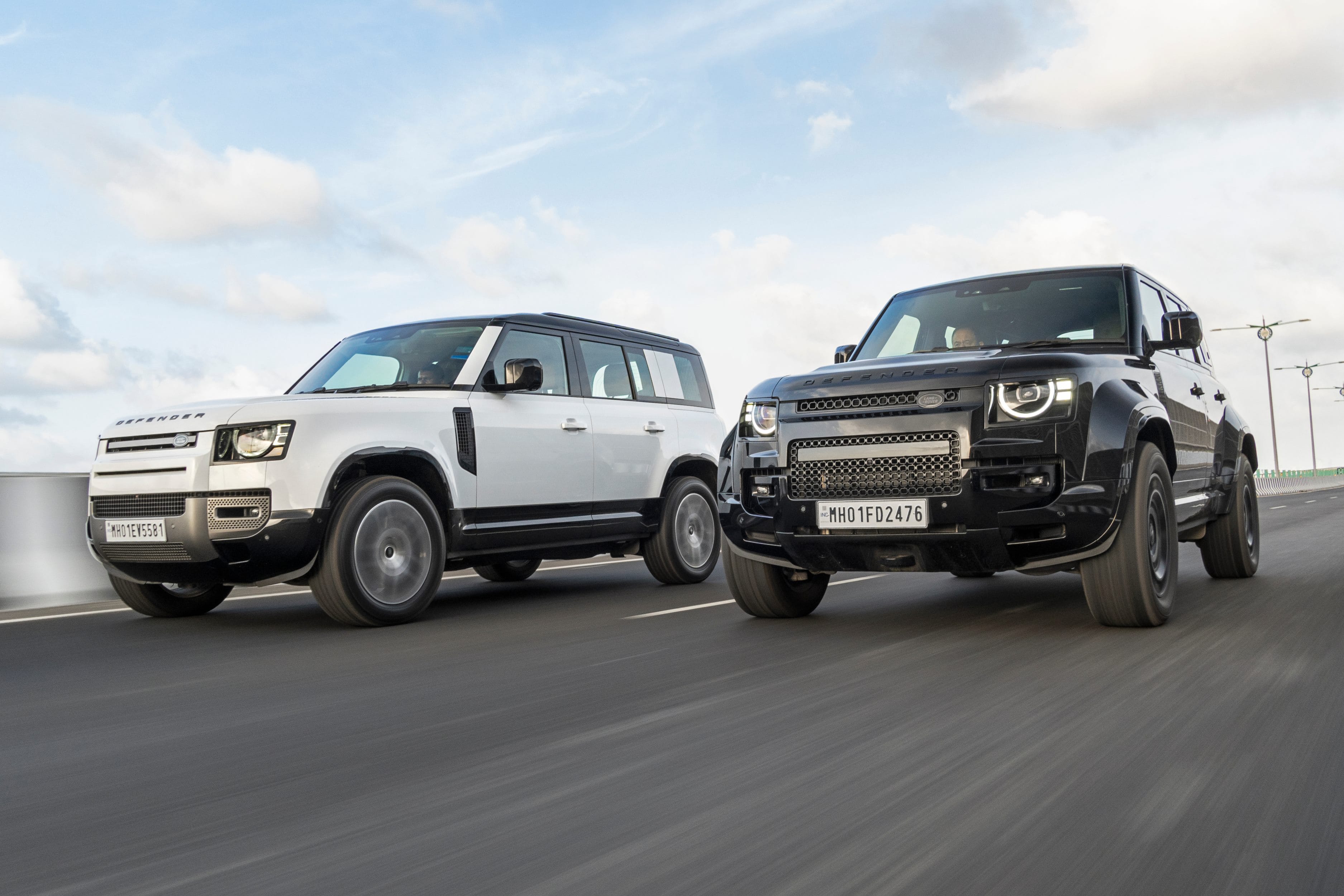
SUVs powered by V8 engines are becoming rarer by the day. Downsizing, electrification, ever‑tightening emissions regulations – the V8 is fading. Yet here we are in 2026, with Land Rover offering not one but two V8s. On the same model! Calls for a mini celebration, doesn’t it? And something of a journey of discovery. So how, and why, does the Defender come powered by two distinctly different V8s? Are they different enough to co-exist? Do their specifications tell a story? And are they fundamentally different from behind the wheel? Answers to these and more in this fascinating tale of two V8s.
Individual identity
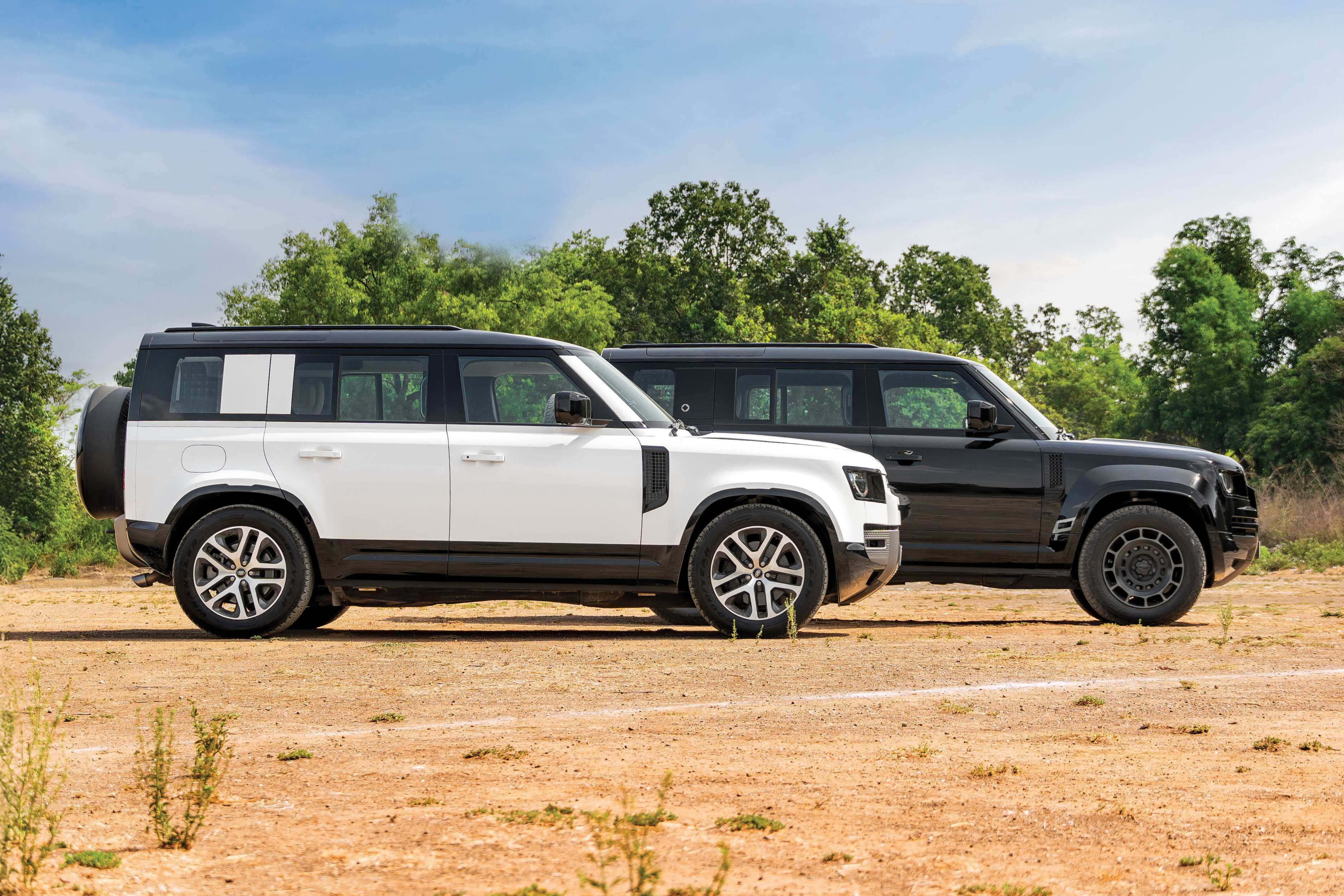
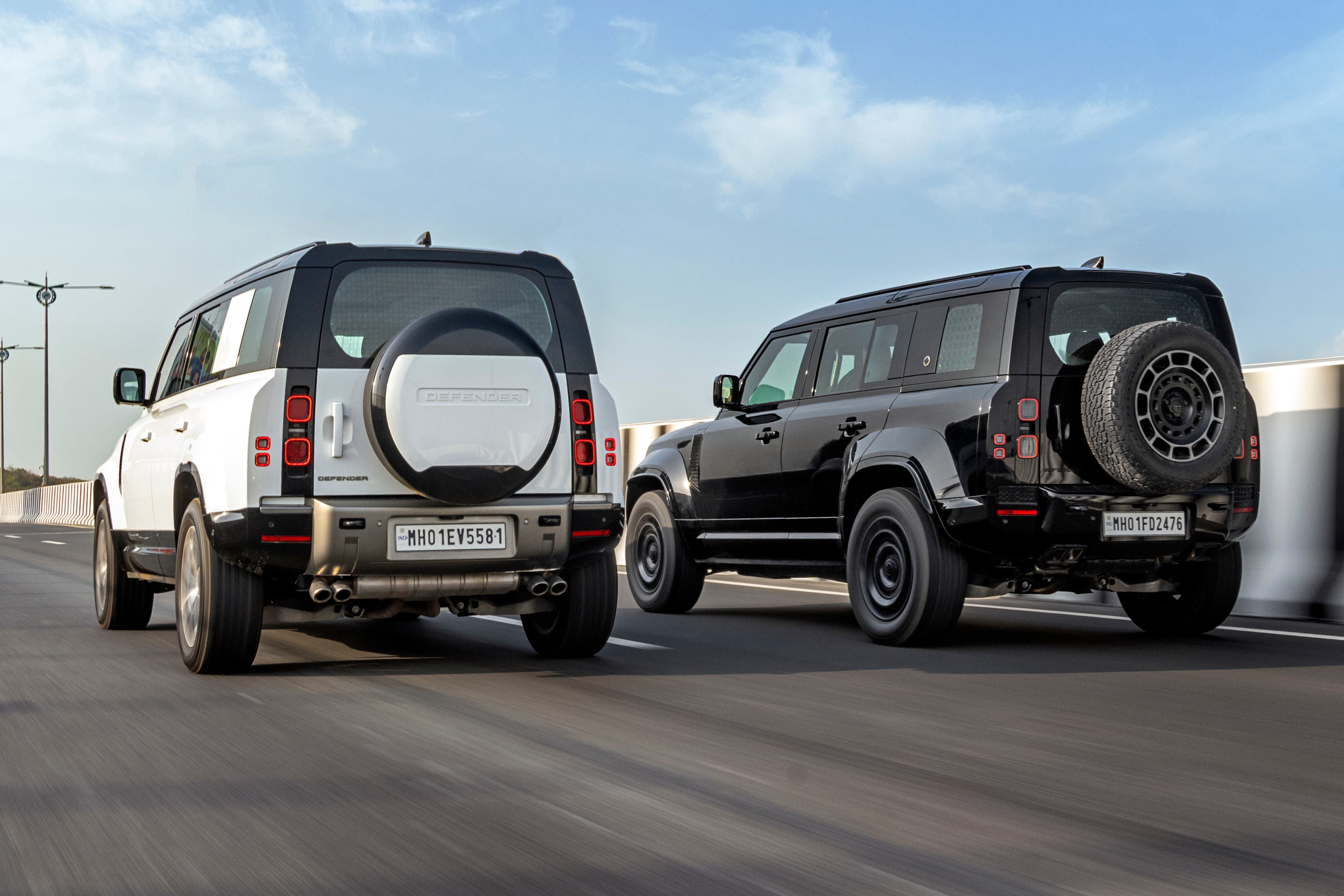
The Octa looks much more menacing than the regular Defender.
Job number one: telling them apart. Which is relatively easy when you have the two sitting cheek by jowl. But out on their own, with no reference and no back-and-forth visual comparison, it’s more difficult.
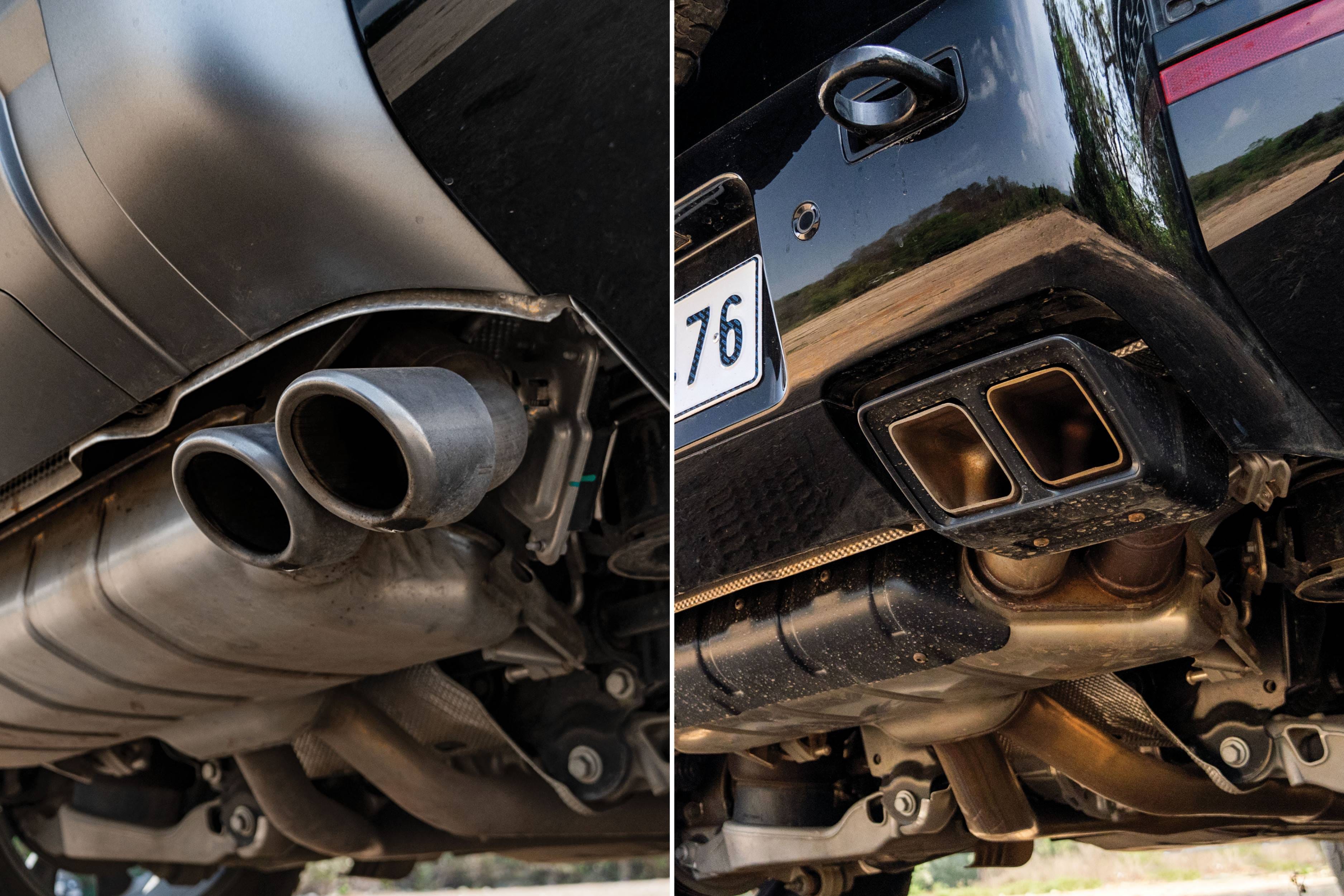
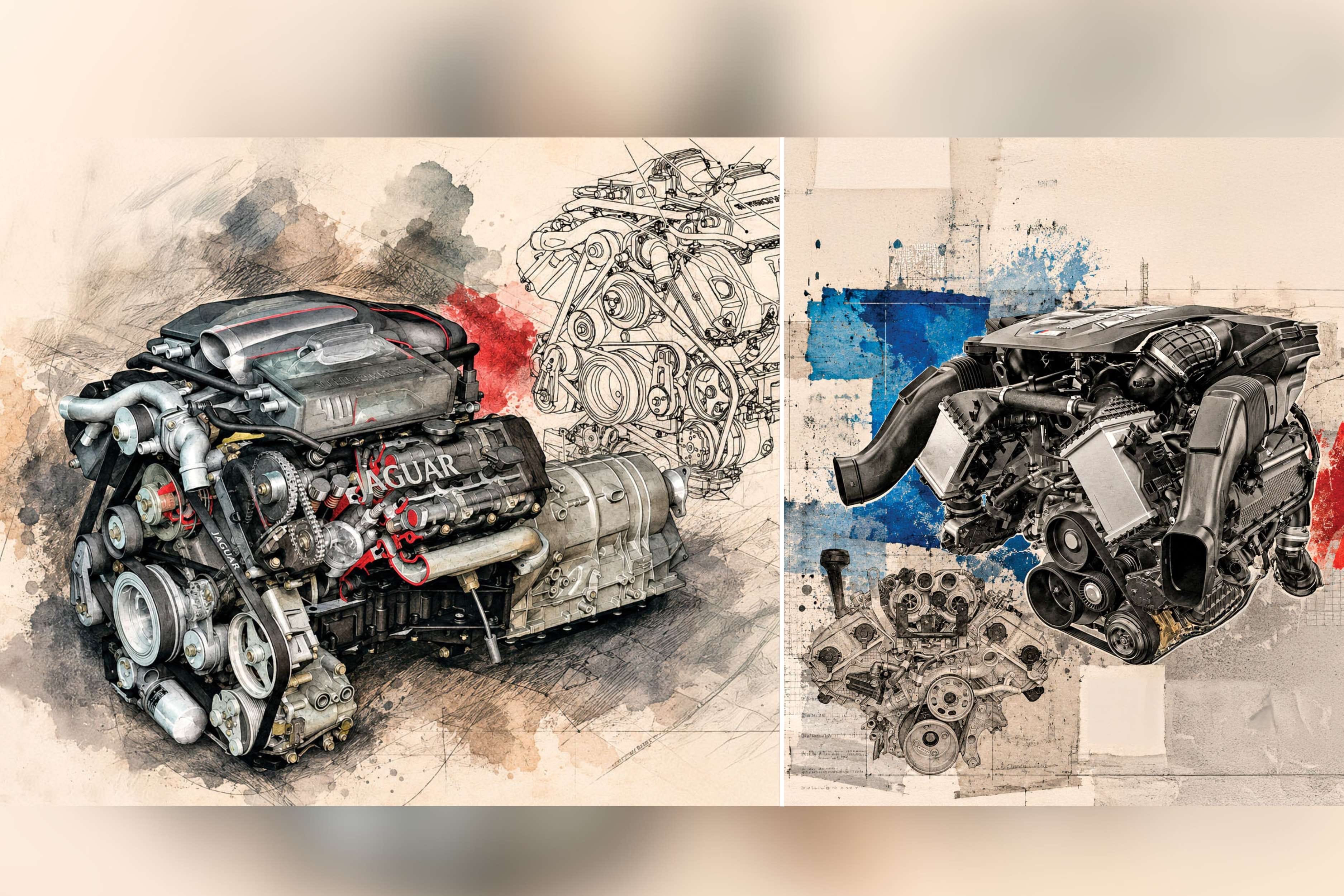
Now, most of us – at least those of us who admire the Defender – know the Octa. A bold move from Land Rover, it comes with BMW’s 4.4‑litre twin‑turbo S68 under the louvered bonnet. That, and its linked suspension, which make the Octa super stable over rough ground. Not only does it get the V8 from BMW’s sledgehammer M5, the Octa, like all good performance cars, wears its intent on the outside. A wider stance, flared wheel arches, square exhaust tips and a stance that screams ‘Defender on steroids’. Most of the visual enhancements are also functional, but it also looks wide-shouldered and bulked up without going over the top… a job well done. And then, of course, there is the Octa badge, both on the grille and behind the ‘C’ pillar.
L: The Defender V8 gets more traditional rounded exhausts; R: The Octa’s quad rectangular exhaust tips stand out.
The Defender V8, which gets Jaguar’s AJ133 engine, is much stealthier and less in your face. From the outside, it looks like a regular Defender. No V8 badge, no identifying features, nothing. In fact, look at it from the front or the side, and it’s almost impossible to tell. You can, however, tell from the rear. The horizontally placed quad round exhausts stick out at the rear and clearly tell you this is something special. Otherwise, this is a regular Defender – attractive and full of visual appeal, but not something that stands out as something special. Could this be the Defender’s best‑kept secret?
Supercharged slayer
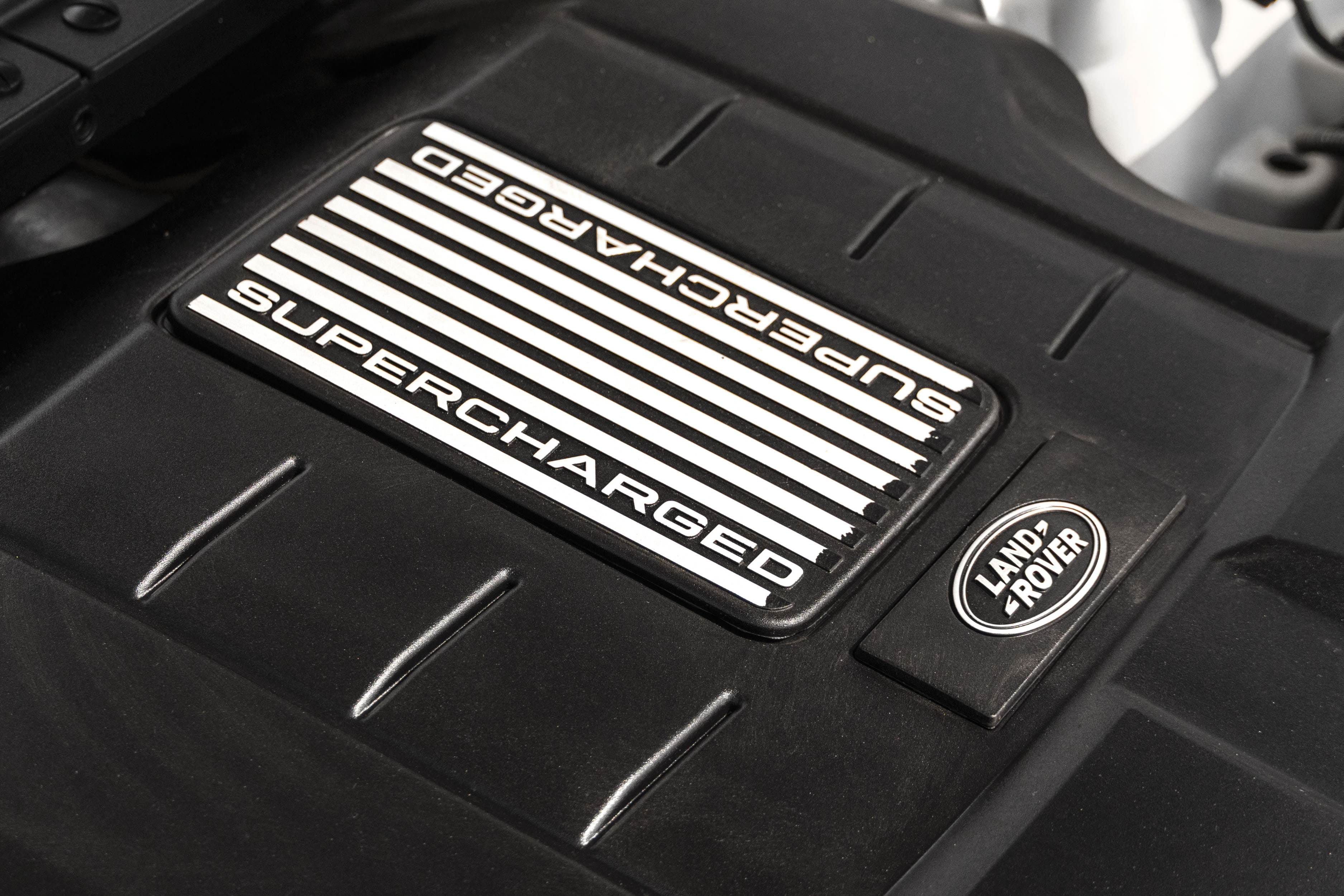
Defender V8 gets ‘supercharged’ written on the cover.
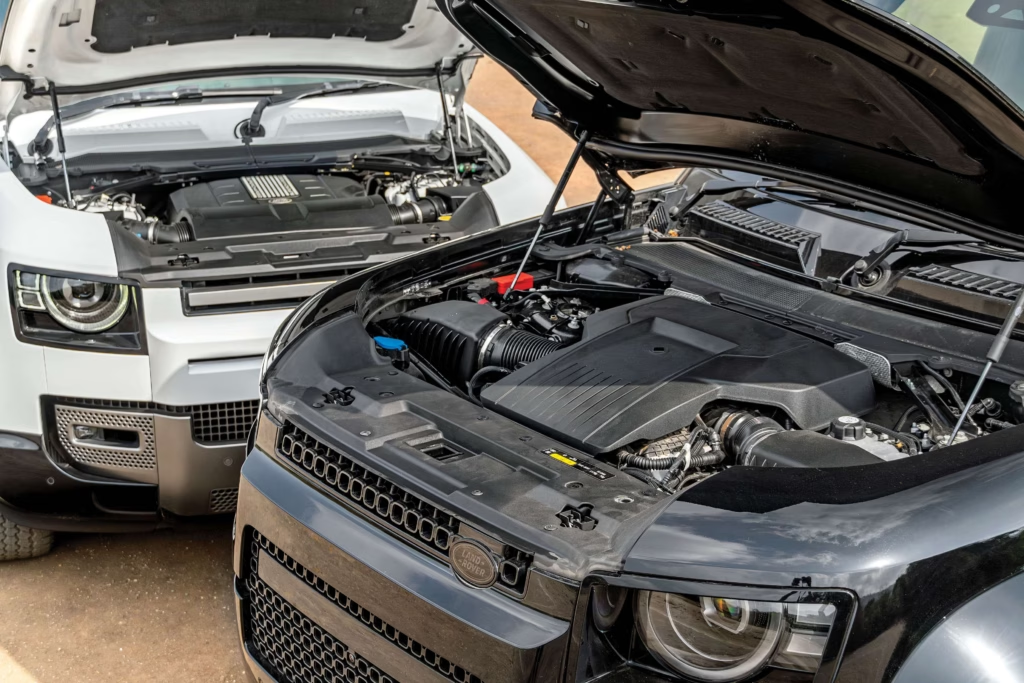
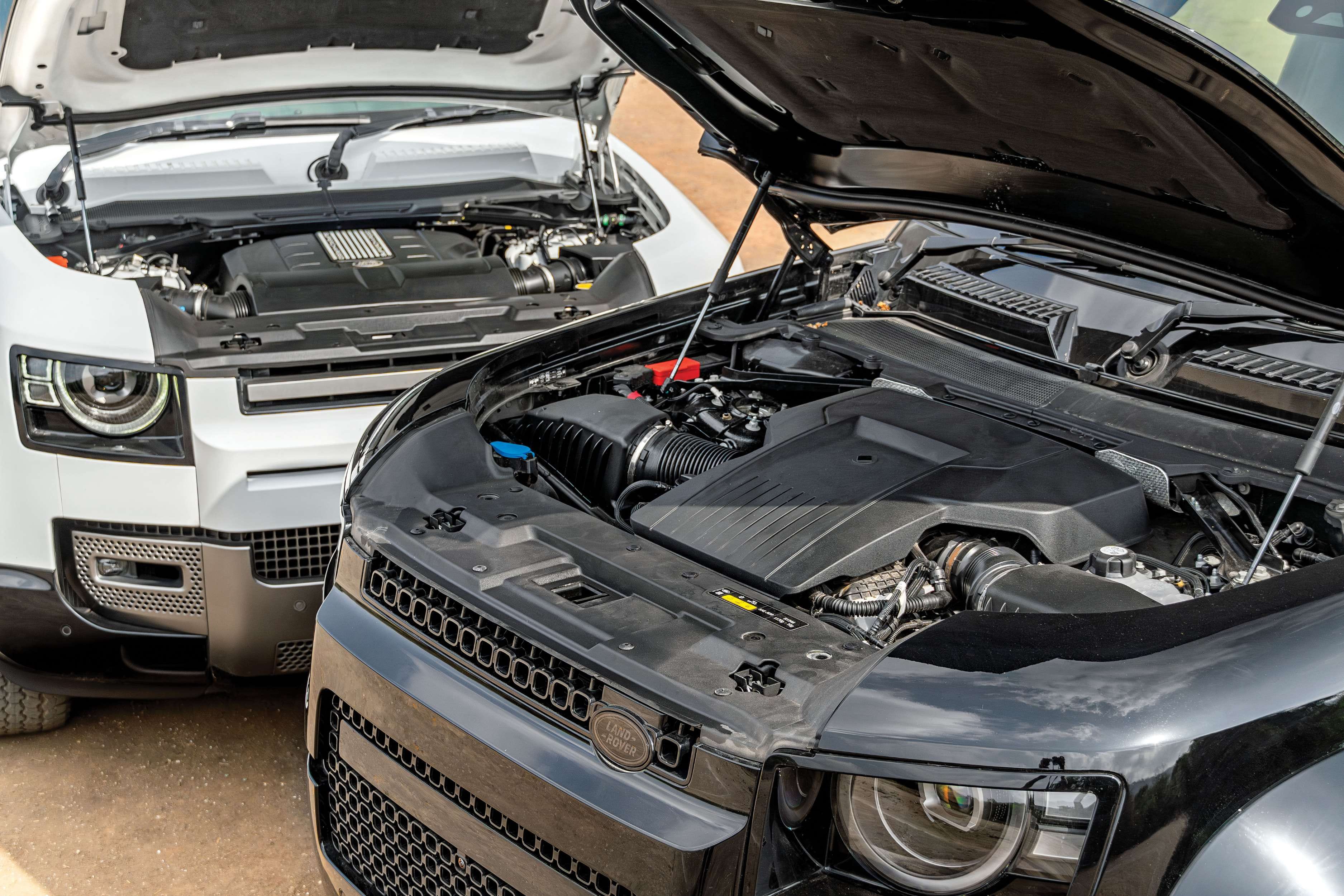
From behind the wheel, the differences are stark. The AJ133 engine is a familiar friend, earlier seen in many a Jaguar and Range Rover. In this Defender, it produces 425hp, with a large Roots-type supercharger adding some refined whine to the exhaust note. The sound that dominates, however, is a silky-smooth but unmistakable V8 ‘woofle’. Rev the engine even slightly, and a meaty growl emerges with crisp burbles on the overrun. It’s not AMG loud, nowhere near, or as raucous either, but the sound of the honey-smooth V8 is pure theatre and just gets me grinning. Why does it sound so clear and clean? There’s no turbo muffling the exhaust note, of course, and no turbo lag either. Which also explains the immediacy of the throttle responses.
In fact, tap the pedal even from idle, and the Defender V8 shoots forward, the crankshaft-driven supercharger pumping air into the engine instantly. This makes the Defender V8 feel light on its feet, and what’s even more charming is that it pulls cleanly in the mid-range, the engine spinning freely and enthusiastically towards the top. This is addictive, and long pulls to the redline are just so much fun. If you value thoroughbred engine characteristics over everything else, this engine will delight you.
Supercharger makes for instant low-end response from the AJ V8.
Now, putting so much performance into a dedicated off-roader may seem futile. But what Land Rover has done is make the Defender fundamentally sound. It’s not a ladder frame, for one, so when you drive around corners, it manages to do it in a neat and tidy manner. And that’s despite the additional weighty hardware like bulky differentials, stout driveshafts, and a robust transfer case, all needed for serious off-roading and not just slippery conditions.
So it comes as something of a surprise that the Defender V8, with its light steering and neat and tidy driving manners, can handle the performance without any fuss. It speaks volumes about how well Land Rover has engineered this platform and given it both loads of on-road capability as well as bona fide off-road chops.
The AJ-V8-powered Defender is not as effective a performance machine as the Octa.
Try and use all the performance all the time, and that feeling of composure slowly fades. You start feeling the bulk, you want more stability and confidence from the brakes, and the gearbox feels slow and laid back. And what’s this, no paddle shifters? Huh?
All pumped up
The Defender Octa amps it up to another level. Bold, brash and devastatingly effective when its full potential is unleashed, it is an all new type of animal. Initial impressions, however, immediately tell you the V8 is turbocharged. Squeeze the throttle, and the responses are initially laid back. This is especially true in comparison to the supercharged V8.
Both engines are brilliant, but both are also very distinct in the manner in which they make power.
Once past the initial softness in the throttle, however, it surges forward with relentless force, a flood of torque unleashed from the turbos spooling up. And that’s even if you haven’t pinned the throttle. A few more purposeful prods of the throttle, and the massive gulf in performance between the two Defenders is soon apparent. It’s not the 0-100kph or even the 0-150kph times, it’s just the massive surge you feel in raw thrust when you feed in the throttle.
The BMW‑sourced 4.4‑litre twin‑turbo V8 is a technological powerhouse and one of the most technically complex engines around. With 635hp and up to 800Nm in launch mode, it transforms the Defender into something approaching a super off-roader. And where the Jaguar engine is all about response, this BMW one, in contrast, is all about mid‑range and top-end muscle. In fact, knock back a few gears on the quick gearbox, plant your foot, and the Defender Octa charges forward with such ferocity that you’ll question the need for anything faster.
Where the BMW engine also differs is in the soundtrack. At low revs, the turbos and cross-bank exhaust system muffle and mute the V8’s natural exuberance and growl. But while the engine sounds are muffled at low revs, they soon build into a deep, muscular roar as the revs climb. Clearly not as sweet or as sonorous as the Jaguar V8, but well in line with the heady performance the Octa delivers.
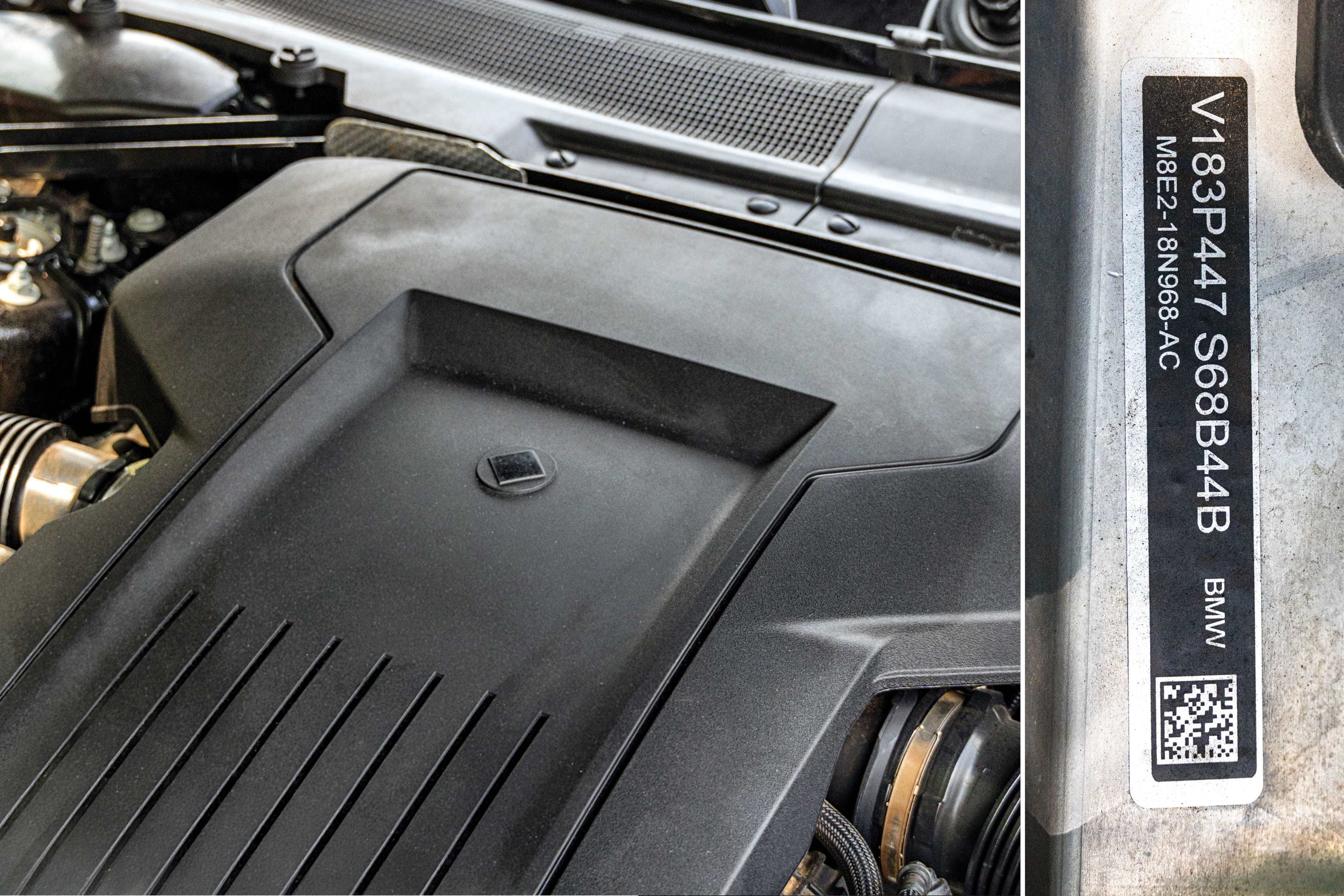
Octa badge (and BMW part number) tell the BMW V8-powered Defender apart.
The Octa also sits higher off the ground, thanks to its Tenneco‑Monroe 6D suspension system. This clever setup links all four dampers, acting like a virtual anti‑roll bar. The result is uncanny composure as the Octa just smothers broken roads. Drive over a poorly paved surface, and you initially feel there’s something not right. The layer of insulation between the road and you is so thick, you feel almost nothing. No big movements, no being tossed around, no big thuds. And then, what really is a game changer is that the Octa stays relatively flat when you hurl it into a corner, the tall SUV staying composed and relaxed while off-road-centric tyres howl away in protest. And it isn’t just well composed in corners, there’s very little pitching either, so you fly down poorly paved and broken sections like you are riding a hovercraft-like stable platform.
This technical marvel allows the two‑and‑a‑half‑tonne off‑roader to feel agile and secure, furthering the impression that the Octa is a Defender on steroids. Also of note, this genuinely feels like two SUVs in one – a real off-roader and the other a bona fide performance SUV that can carry real speed and put power down even on gravel, dirt tracks and unpaved sections.
Defenders of the faith
So why two V8s? The answer lies in the regulations. The AJ V8 cannot meet upcoming Euro 7 norms, but India doesn’t yet enforce equivalent standards. And that allows JLR to continue offering it here. The BMW V8 future‑proofs the Defender and has created an all-new type of performance off-roader with the Octa.
These performance off-roaders are so accomplished on road, they genuinely are multi-role SUVs.
It’s also a clever product strategy. The AJ V8-powered Defender starts at Rs 1.40 crore, offering V8 thrills at a much more affordable price. The more capable Defender Octa, on the other hand, starts at a much loftier Rs 2.62 crore. One has the traditional feel of a V8, smooth, refined and powerful; the other is a bona fide performance icon, with brutal power delivery and a massive ability to carry speed over just about any surface.
Two distinct flavours, two distinct price points, one model line.
The Defender’s dual‑V8 strategy is nothing short of remarkable. In a world where eight‑cylinders are disappearing, Land Rover offers buyers a choice between a supercharged and a turbocharged V8. Together, they make the Defender unique. And that makes this one of the most fascinating chapters in the Defender story. Take a bow, Land Rover.
Bits, bolts, and burbles
BMW’s S68 is an ‘M’ engine that displaces 4.4 litres. It uses an aluminium block and heads, and a cross-plane crankshaft. The bore and stroke dimensions (89mm × 88.3mm) are typically BMW – square. The engine revs to 7,200rpm, and the DOHC valvetrain gets an electrically actuated VANOS system for faster, more precise camshaft phasing. The hot vee twin-turbo layout is designed to reduce turbo lag, and the cross-bank exhaust manifold merges pulses to optimise turbine efficiency. This sacrifices some of the traditional V8 burble but sharpens response. To handle the extra loads, a high-capacity oil pump with an external oil cooler ensures consistent pressure under high lateral loads, while a multi-stage cooling circuit stabilises temperatures during track use. The S68 also integrates a 48V mild-hybrid system that provides a 9kW and 200Nm of torque fill.
Defender V8 fact file
110 P425*
Octa
Price
Rs 1.40 crore
Rs 2.62 crore
Kerb weight
2,434kg
2,585kg
Engine
5,000cc supercharged V8
4,395cc twin-turbo V8
Bore and stroke
92.5mm x 93.0mm
89mm x 88.3mm
Compression ratio
9.5
10.5
Power
425hp at 6600rpm
635hp at 7000rpm
Torque
550Nm from 1800-5000rpm
750Nm from 1800-5855rpm
Claimed 0-100kph time
5.8sec
4.0sec
Maximum speed
191kph
250kph
*The supercharged-V8 Defender variants are temporarily unavailable for purchase in India, but they’re expected to return soon.
The Jaguar AJ V8 is a family of aluminium V8s produced from 1996 onwards. Offered in naturally aspirated and supercharged forms, it was Jaguar’s flagship petrol engine, engineered to combine refinement with strong performance. Evolving through three generations, the aluminium block and heads kept weight down to around 205-215kg, and it used chain driven camshafts, later evolving to double roller chains for greater durability. Supercharged “R” variants like the one in the Defender pushed outputs to 450hp, giving cars like the XJR and XKR formidable pace at the time. By 2009, the Gen III AJ V8 expanded to 5.0 litres (94 × 92mm bore and stroke), introduced direct fuel injection, and raised compression to 11.5:1. Power on the supercharged versions could exceed 500hp, and this 450hp version, with a bit of digital massaging, could also be made to increase in power.
INDvsSL यशस्वी जायसवाल भले ही गॉल में चल रहे मौजूदा टेस्ट में कुछ खास नहीं कर पाए हों लेकिन उन्होंने भारतीय टीम को एक महत्वपूर्ण समय पर विकेट दिला दिया। पहली पारी में सोनल दिनुशा और निरोशन डिकवेला की शतकीय साझेदारी के कारण श्रीलंका ने फोलोऑन बचा लिया था।
लेकिन इस बार ऐसा नहीं हुआ यशस्वी जायसवाल ने दूसरी पारी के दौरान डिकवेला से बातचीत करनी शुरु कर दी। उन्होंने डिकवेला से कहा कि पहली पारी में तो बहुत अच्छे शॉट्स खेले थे इस पारी में भी दिखाओ। इस पर डिकवेला का जवाब था कि वह आईपीएल अनुबंध लेकर ही ऐसे शॉट्स खेलेंगे। इस पर यशस्वी जायसवाल ने कहा कि वह जरुर उनके लिए बात करेंगें। अगली ही गेंद पर डिकवेला ने कट शॉट खेला और कृष्णा की गेंद पर पंत ने उनका कैच लपक लिया। टीम ने यह विकेट जायसवाल के साथ मनाया।
Yashasvi Jaiswal unsettles Niroshan Dickwella, and on the very next delivery Prasidh Krishna dismisses him #INDvsSLpic.twitter.com/S99k8nanhH
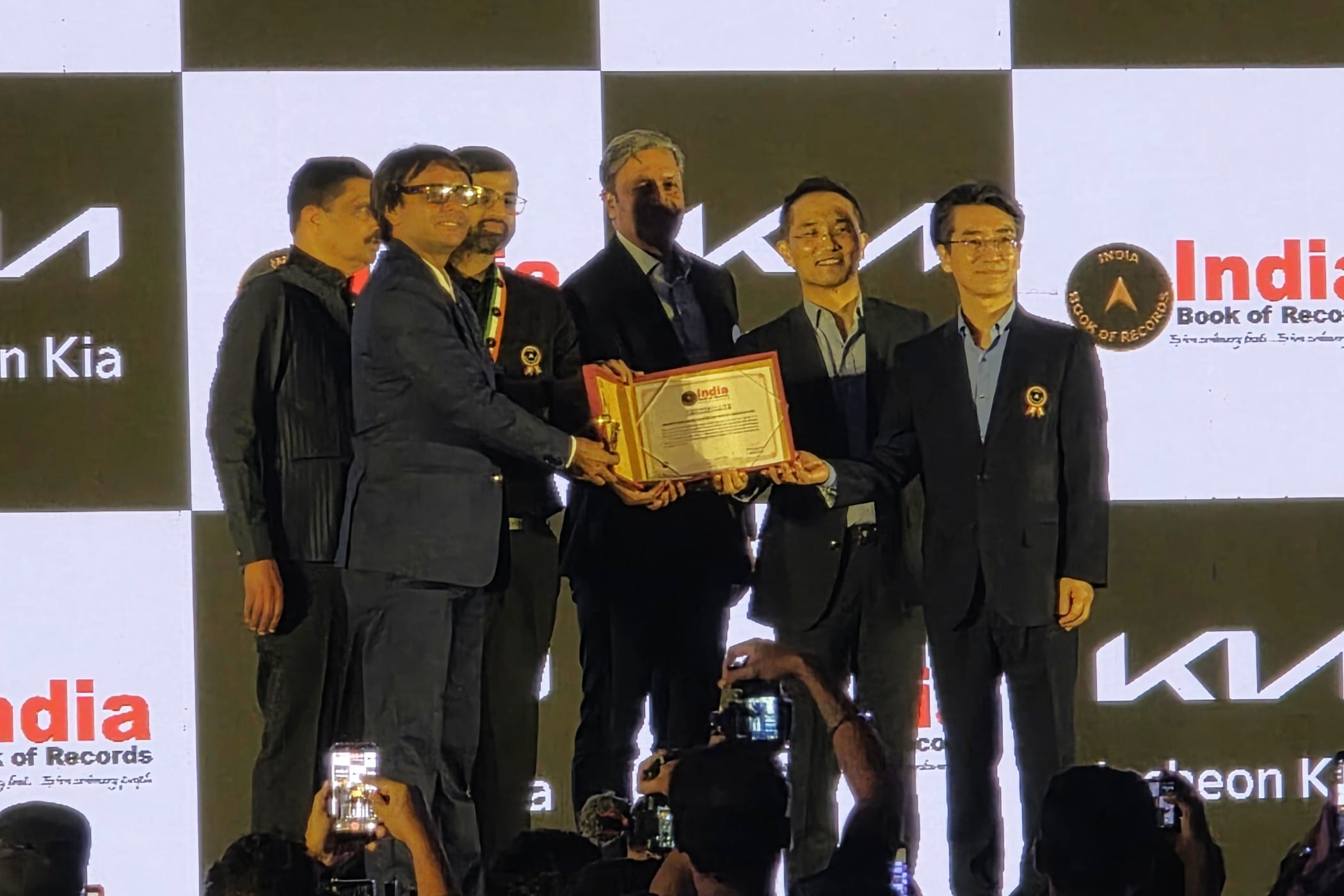
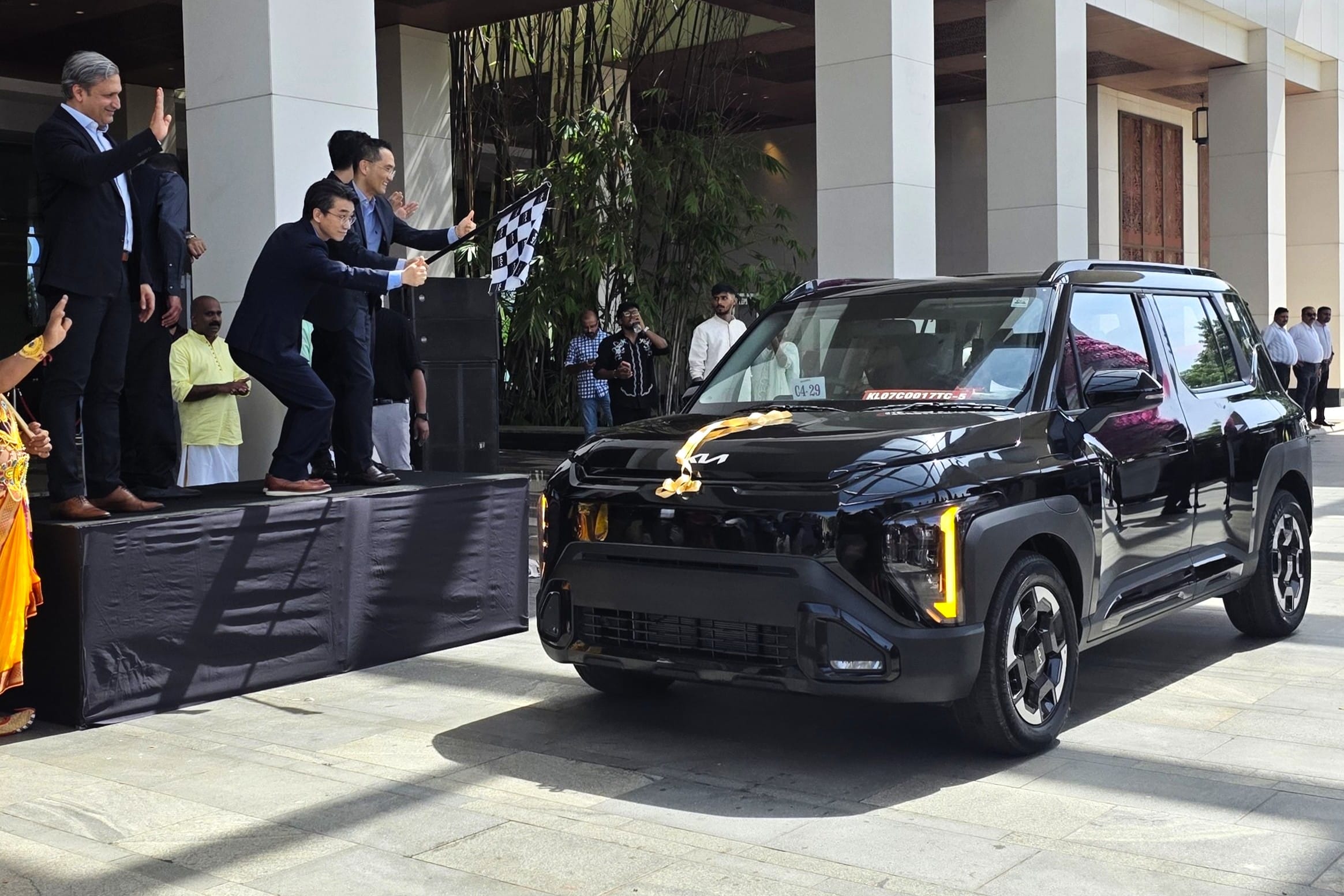
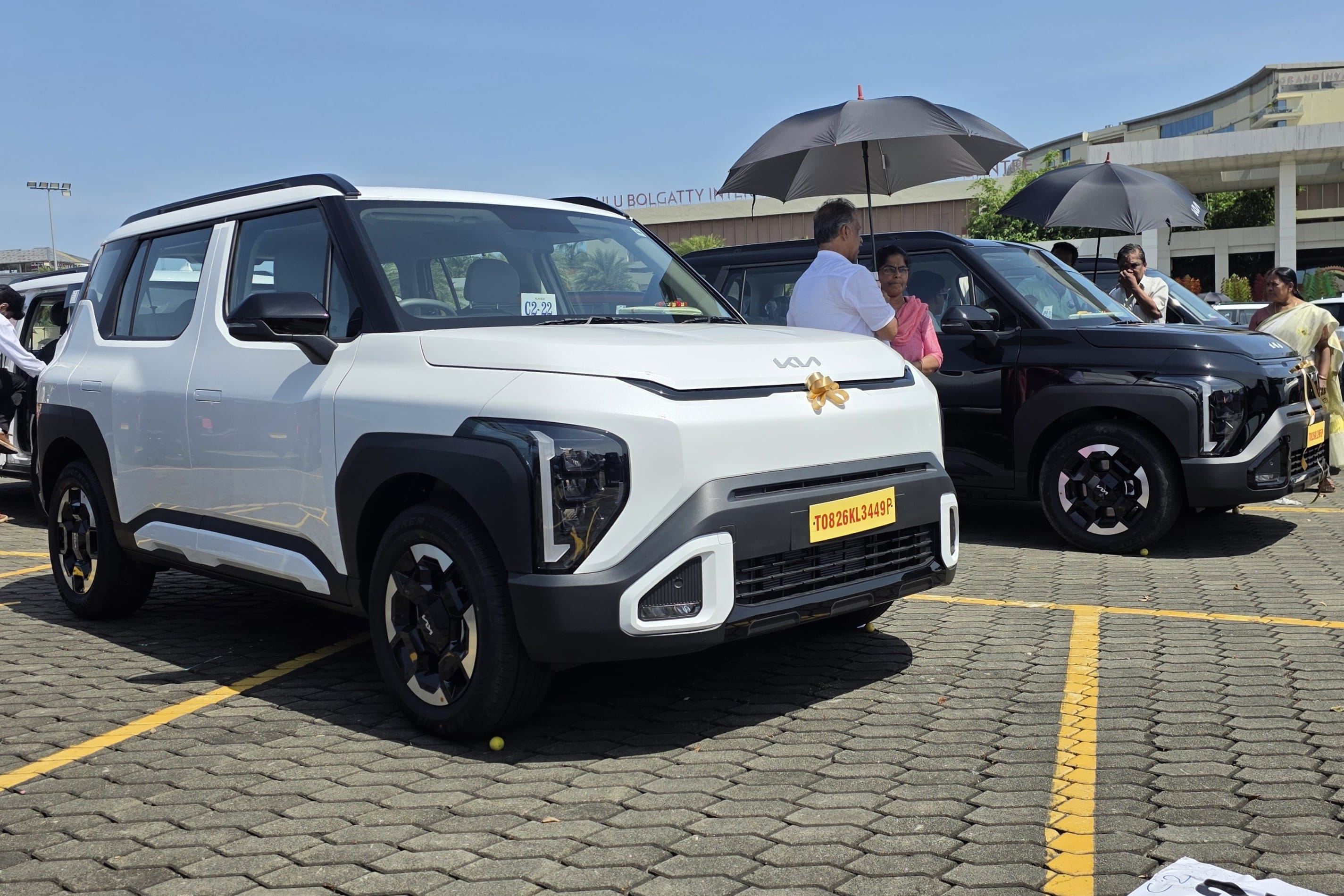
Kia India dealer partner Incheon Kia has set a new national record for the most electric cars of a single model delivered in a single day. 150 units of the recently launched Syros EV were handed over to customers by Incheon Kia in Kochi on August 17.
Incheon Kia sets a completely fresh record with the Syros EV
Coinciding with Malayalam New Year, Incheon Kia’s mega-delivery feat was certified by the India Book of Records. This is an entirely new record, as India Book of Records does not have any prior records for maximum single-model EVs delivered in a single day. The 150 cars formed the first batch of Kia Syros EVs delivered to customers in Kochi.
Following the deliveries, the Syros EVs were flagged off individually by senior Kia India executives, including MD and CEO Gwanggu Lee (pictured). Incheon Kia said it has received more than 650 bookings for the Syros EV, with 150 of those cars now delivered. The dealer is also closing on 50,000 sales since its inception seven years ago, with 10,000 sales projected for this year alone.
Kia Syros EV details
Launched on July 23, the Syros EV is Kia’s second mass-market electric model for the Indian market. The compact SUV is offered with 42kWh and 51.4kWh battery options, both of which are wired up to a 255Nm front-mounted motor producing 135hp and 171hp, respectively. In terms of MIDC-claimed range, the 42kWh battery manages 443km, while the 51.4kWh pack is rated at 526km. Pricing for the Syros EV starts at Rs 13.5 lakh and top off at Rs 30 lakh (ex-showroom), and it rivals the Tata Nexon EV and Mahindra XUV 3XO.
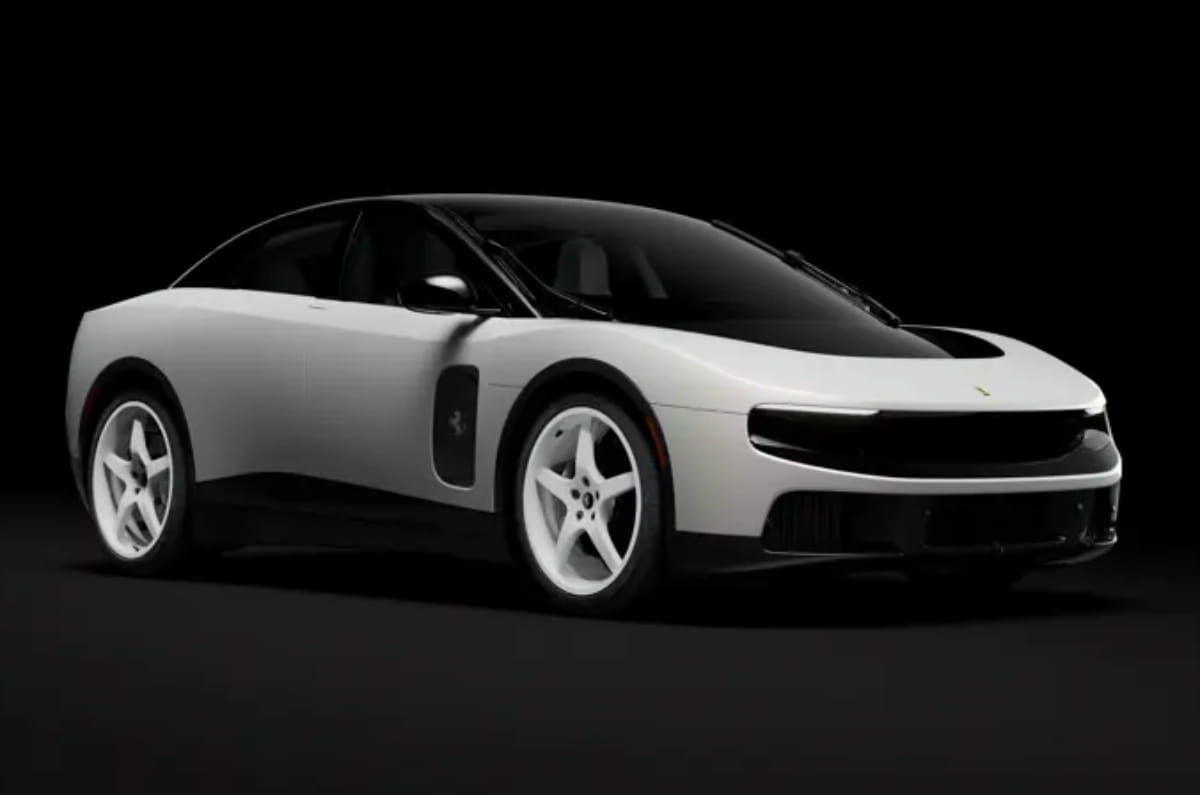
Ferrari’s first production Luce, known as ‘Chassis 0’, has been sold for USD 40 million (around Rs 382 crore) at the RM Sotheby’s Monterey auction. The sale sets a new record for the highest price paid for a new vehicle at auction, surpassing the USD 26 million raised by a one-off Daytona SP3 at the same event last year. The entire amount will go to the Ferrari Foundation after RM Sotheby’s waived the buyer’s premium. The buyer will take delivery in the first quarter of 2027 after the car returns to Maranello for final assembly.
Sets new record for highest-priced new car sold at auction
Entire proceeds donated to the Ferrari Foundation
‘Chassis 0’ sells for over 60 times the starting price of standard Luce
The Luce is Ferrari’s first production electric car and its first five-seat model. It uses a quad-motor all-wheel-drive powertrain producing 1,050hp and 990Nm, has a claimed top speed of 310kph and a claimed driving range of 530km. Ferrari has already confirmed that its planned 2026 allocation has been fully reserved.
Ferrari Luce ‘Chassis 0’: what makes it special?
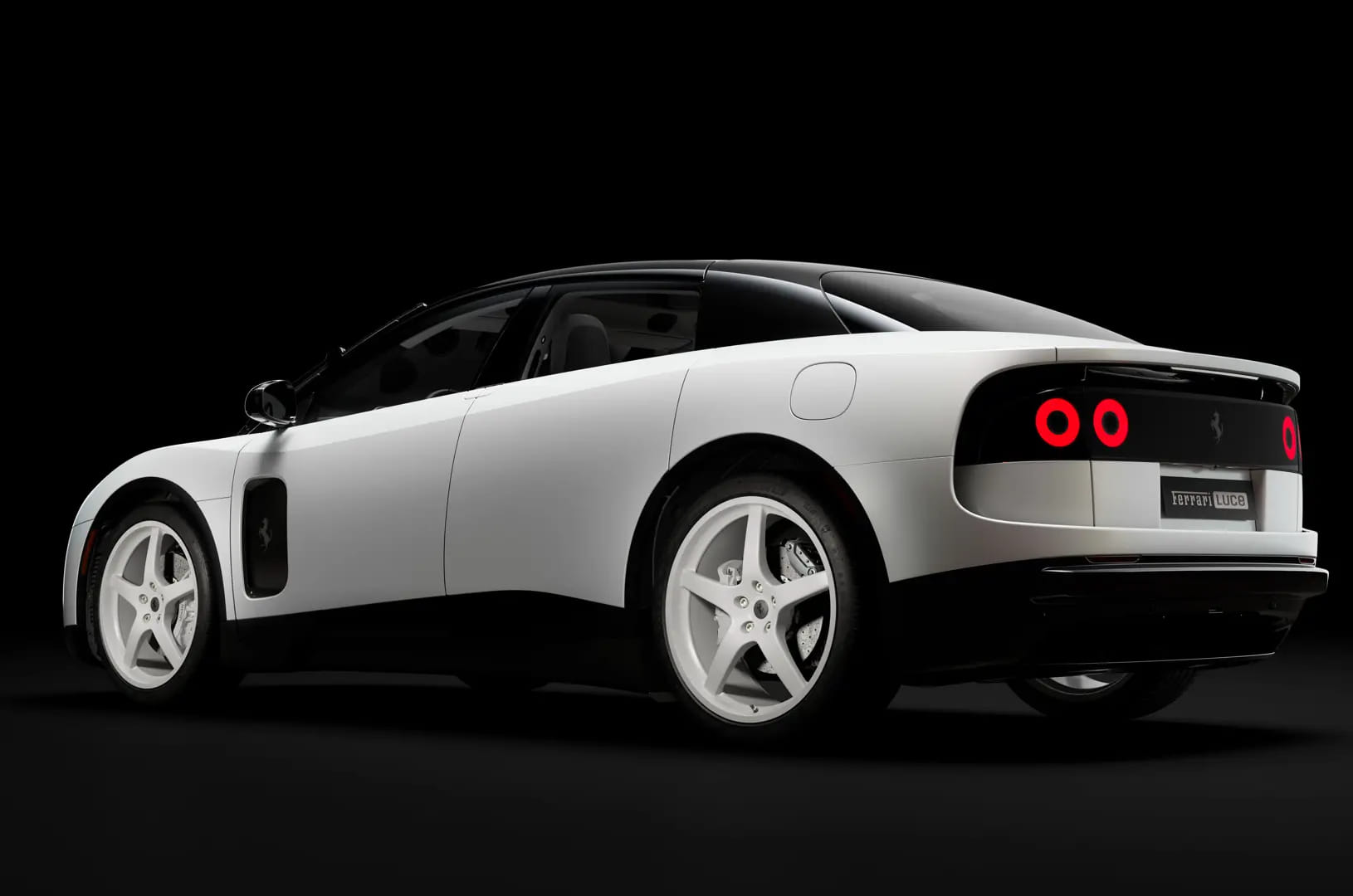
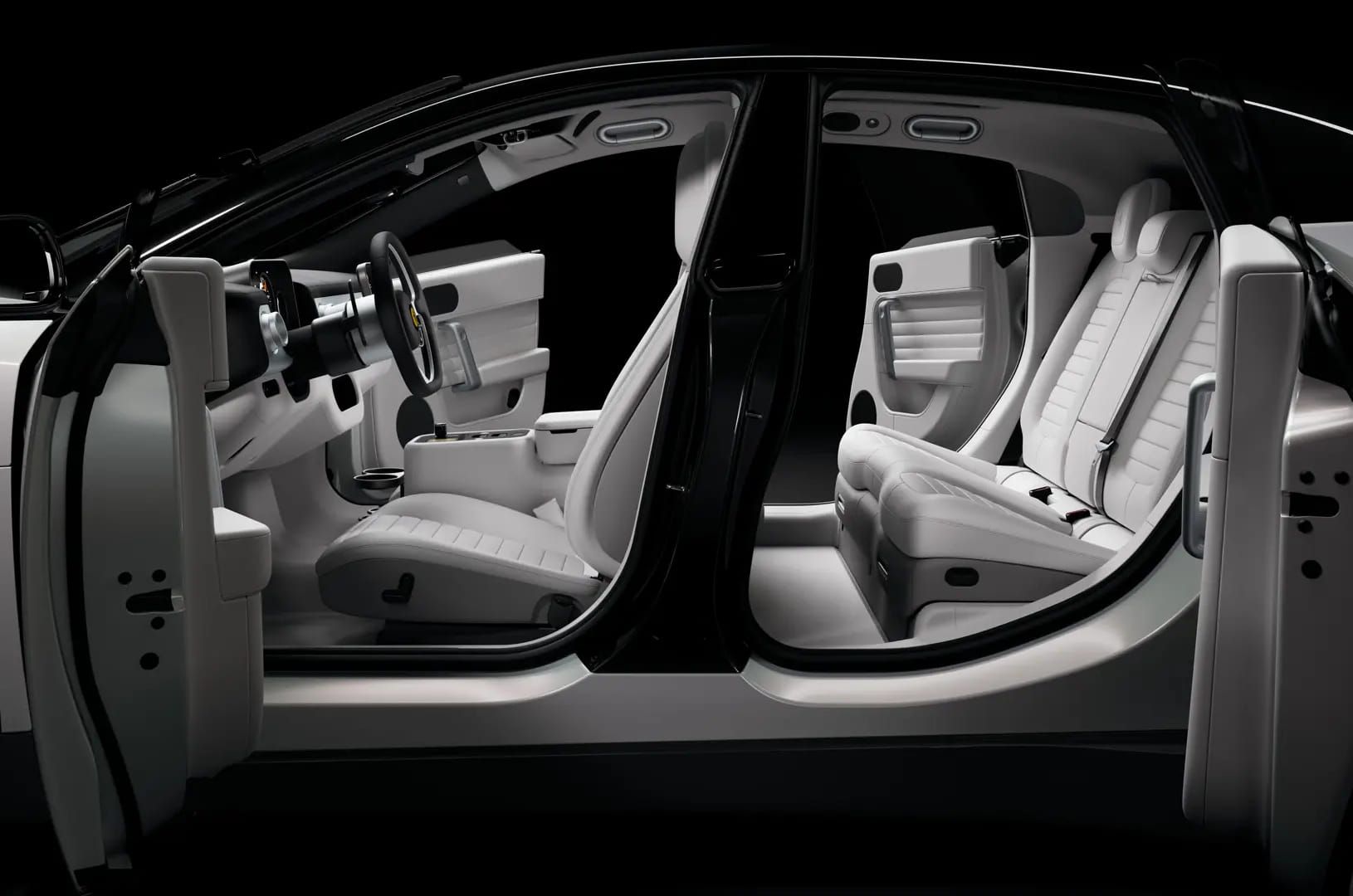
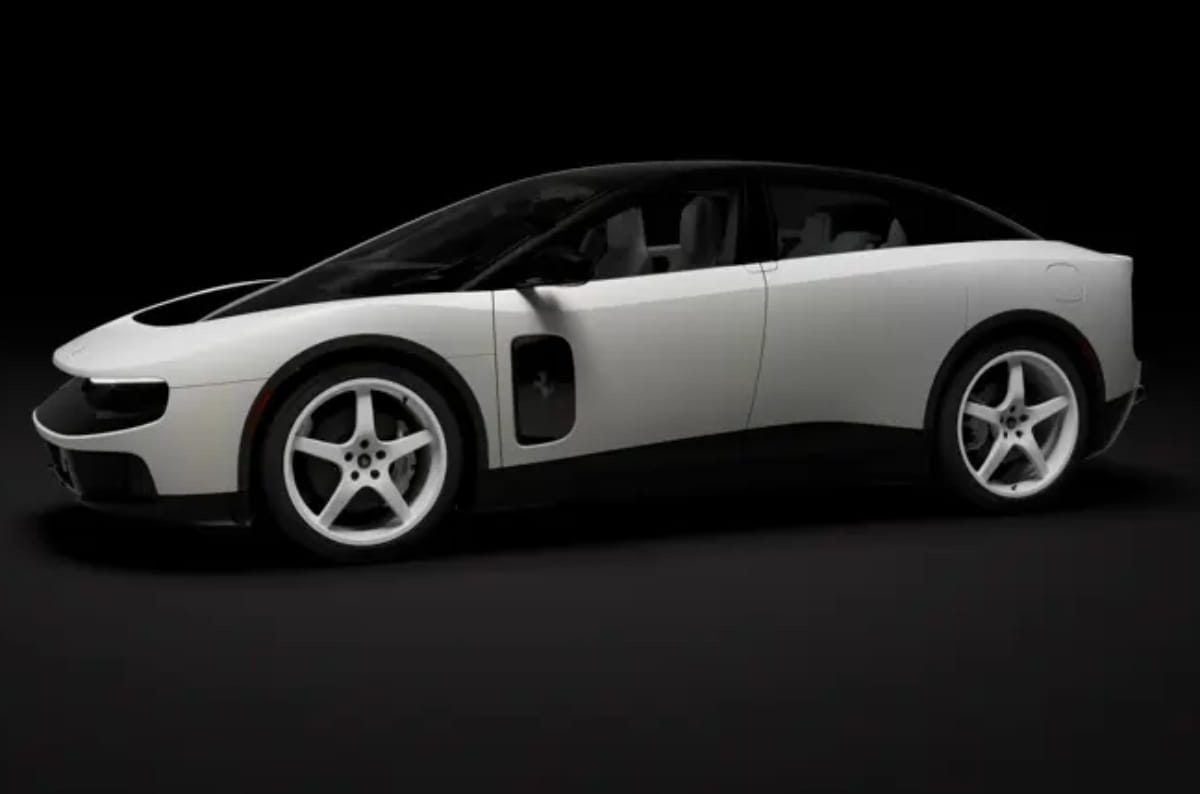
The car sold at auction is the first production example of Ferrari’s first all-electric model. Called ‘Chassis 0’, it has been created through Ferrari’s Tailor Made programme and features several bespoke elements that will not be offered on regular production cars.
Its exterior is finished in a unique Madreperla Semi-Gloss paint developed specifically for this car. Ferrari says the finish uses a special pigment that changes appearance depending on the angle and intensity of light. Other unique touches include white five-spoke alloy wheels, bespoke brake callipers and special Ferrari badging.
Inside, the cabin features Le Mans metallic leather in Perla, with Grigio Corvara trim replacing the standard black interior elements. The upholstery has been designed to reflect and diffuse light, matching the car’s overall theme.
Ferrari Luce ‘Chassis 0’:Auction and delivery
RM Sotheby’s auctioned the car without reserve and waived the buyer’s premium, meaning the full USD 40 million sale price will be donated to the Ferrari Foundation to support educational initiatives. The car will now return to Ferrari’s Maranello headquarters before being delivered to its owner in early 2027.
The final bid was far higher than the pre-sale estimate of just over USD 1.1 million and more than 60 times the Luce’s 550,000-euro (USD 640,000) starting price. The winning bidder was American billionaire investor and Ferrari collector Herbert A. Wertheim.
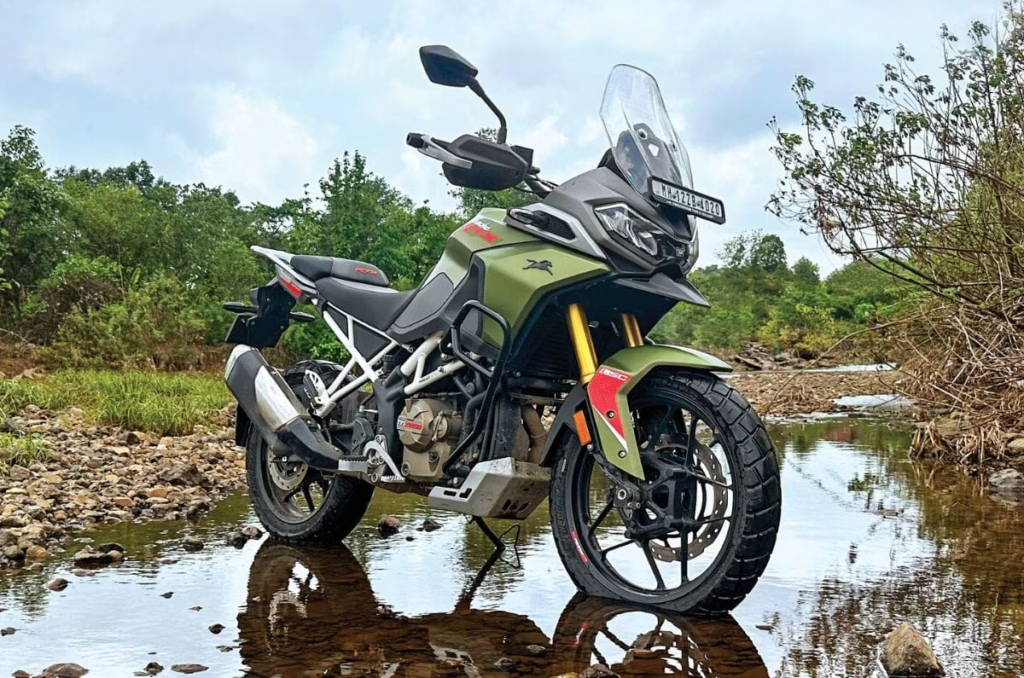
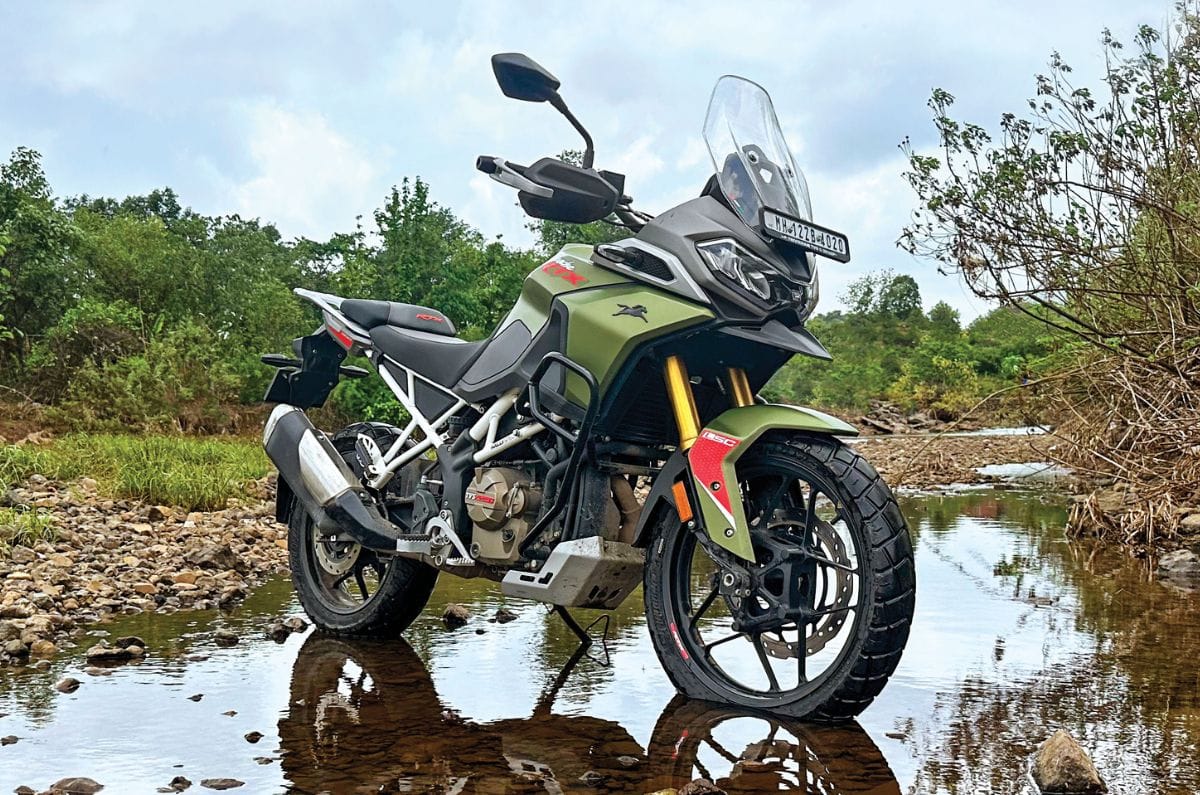
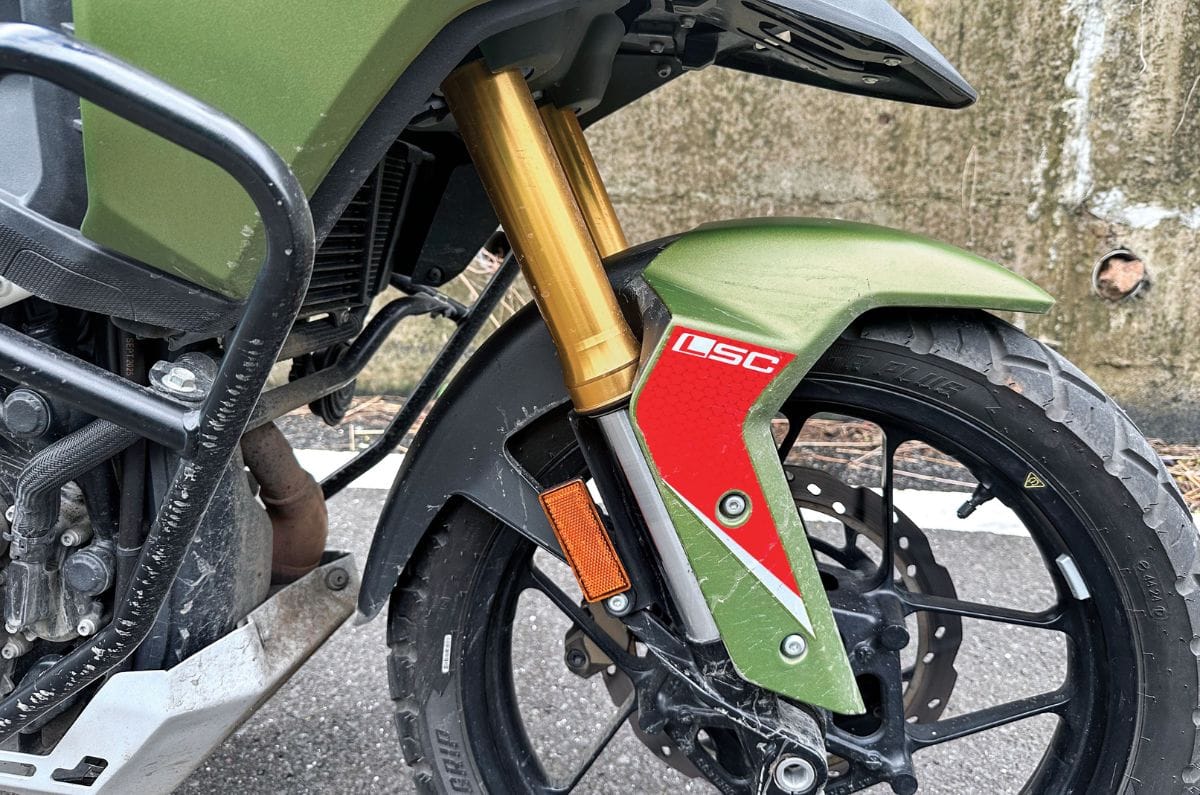
This is the second time, after the original RR 310 in 2017, that TVS has created enormous excitement over a brand-new premium bike and then struggled to deliver. The RTX 300’s massive waiting periods have been well documented now, and like many customers, we have also had to wait nearly a year after its launch to get a long-term test bike.
I hopped off the Xpulse 210 that I’ve been riding for months and onto the RTX, and the first impression was… dull. The engine seems to lack zing and excitement at lower revs, and it all felt very calm and controlled. At first, this was disappointing, and to be honest, I didn’t care for the bike much on that initial commute home. It was quick, comfy and effortless, but simply lacked spice or drama.
The adjustable Showa suspension does a great job of soaking up bad roads.
Having now spent a few weeks with the bike, my opinion has evolved. The bike still feels the same, but I have grown to like its demeanour. While it is a mild-mannered gentleman of a motorcycle that almost never encourages bad behaviour, it still gets me from point A to B at a quick pace and in very good comfort. While lacking in drama, the engine is superbly tractable and never threatens to stall at low revs in thick traffic. This efficient, almost Honda-like character is bolstered by a fabulous feel-good factor.
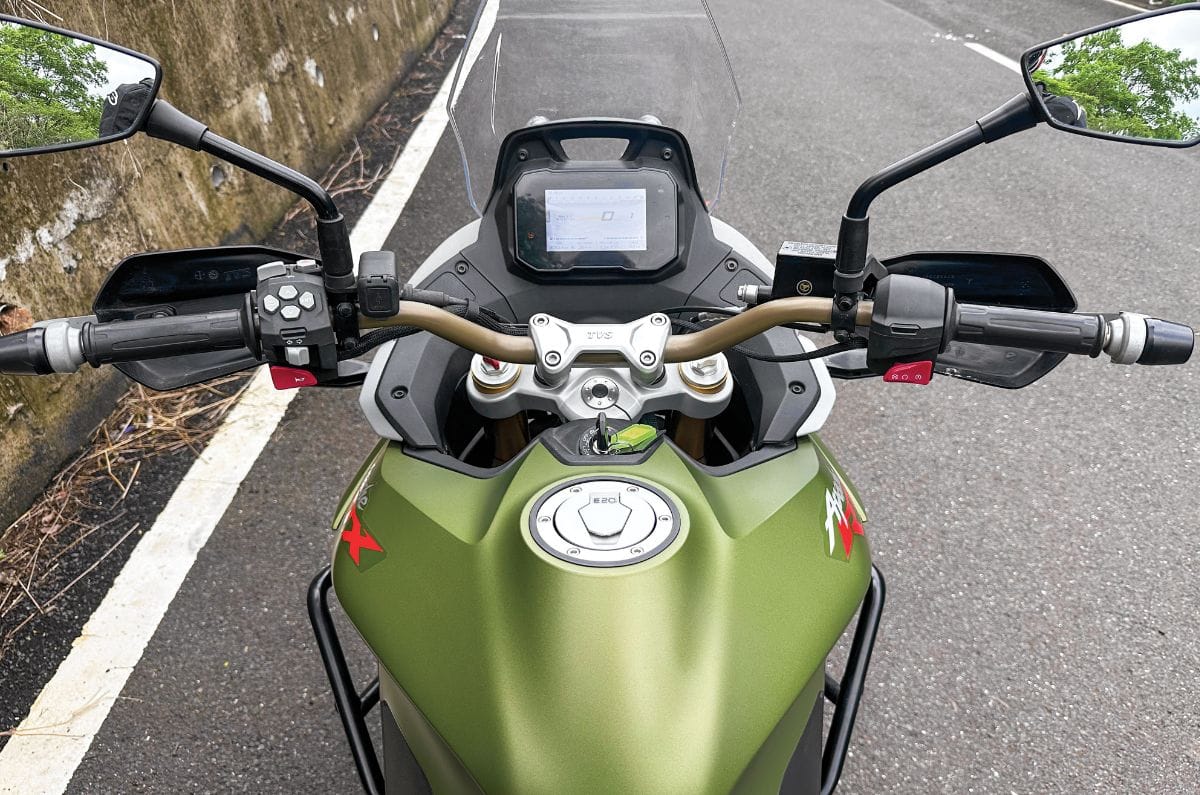
The look and size from the rider’s POV are of a much more expensive bike.
The rider’s point of view is fabulous, and the whole tank area, as well as the TFT and windscreen, feel like they were off a bike that cost three times the price. It even feels like a large motorcycle when you’re sitting on it, and TVS has achieved something truly special in how it can give you this experience at such a low price.
The quickshifter occasionally causes a short cut in power delivery.
On the topic of features, some of them have been highly appreciable, while others could stand to improve. As someone who doesn’t check tyre pressures as often as I should, the tyre pressure monitoring system has been great. I also love the fact that the bike remembers to keep the traction control and rear ABS off, and I don’t have to deactivate them on every ignition cycle. However, as we reported before, the engine does occasionally hesitate under acceleration at lower speeds, and this has to do with the quickshifter sensitivity. I’ve deactivated it for now, and doing so has solved the issue, but I do miss using it.
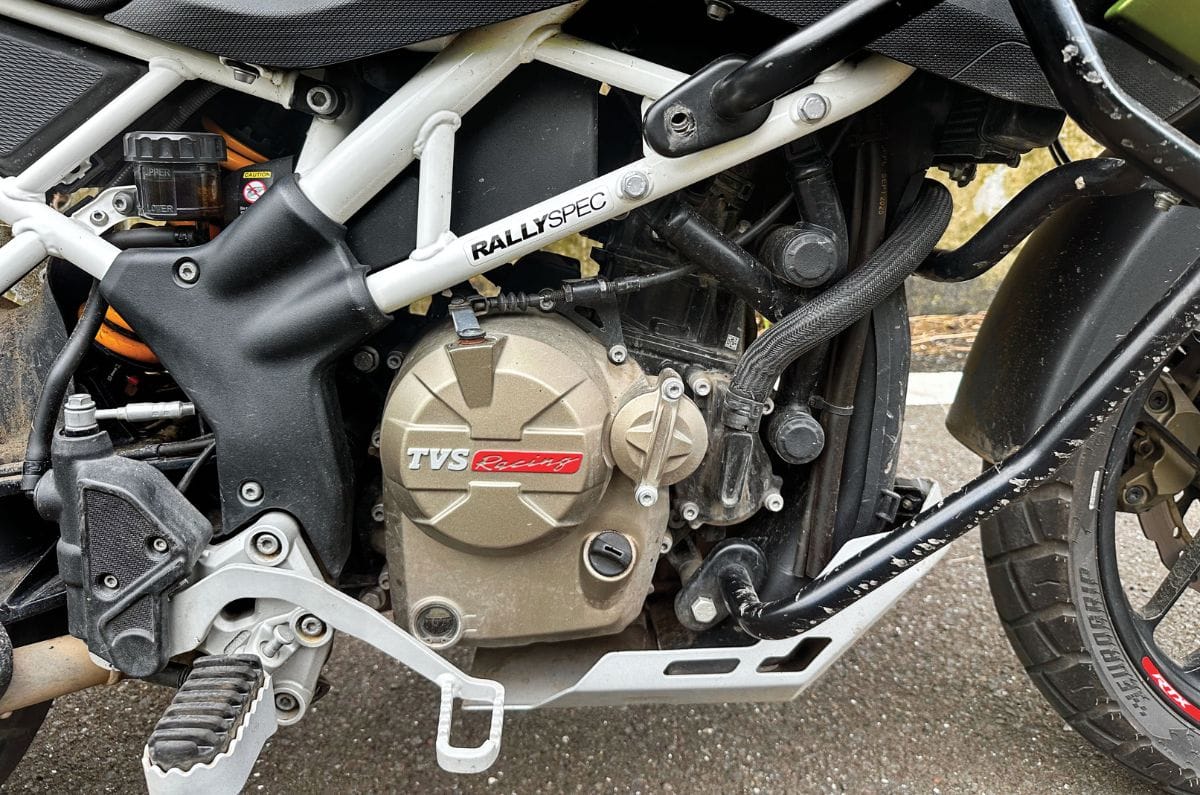
The motor is tractable and has good performance, but is a bit low on character.
Beyond that, the RTX is proving to be everything that we discovered in our initial reports. It has fantastic suspension comfort with a taut, but absorptive setup. The chassis is stable and communicative, and it gives you the confidence to ride over rough surfaces at speed without concern. Seating comfort is also fabulous, and while the engine may not blow your socks off, it certainly performs well and can easily cruise at triple digit speeds.
As for vibrations, they certainly exist but haven’t been bothersome so far. I’d like to spend more time with the bike, especially on the highway before sharing whether there are any situations where the vibrations become a pain. We’ll save that for the next report.
Since their inception, Ultraviolette Automotive has been focussed on the premium end of the EV two-wheeler market with their products prices from Rs 2.49 lakh to Rs 4.59 lakh, a challenge for high sales numbers. However, with the changing winds in the ICE world, Ultraviolette looks to have turned a corner for the better. With almost no direct competition, this shouldn’t be a surprise, but it’s noteworthy regardless.
Ultraviolette registers 406 percent increase in sales YoY
BaaS and more versatile X-47 model looks to have helped this
Ultraviolette has two more lower price models in the works
Largest EV motorcycle monthly sales in July 2026
Only behind Revolt and Oben
As per the retail sales data on the Vaahan portal, Ultraviolette Automotive has delivered 694 units in July 2026, a 406 percent increase compared to last year. Till July 2026, the brand has sold 3200 vehicles, the best since the brand was founded in 2023. Although the increase in sales numbers could be attributed to them offering more products, it’s hard not to consider this a sign of premium motorcycle buyers now trusting EV motorcycles more.
The brand is showing no signs of slowing down either. Already present in 40 locations across India, the brand intends to increase that number to 100 by the end of 2026. It’s worth mentioning that they had recently opened their first showroom in the North east, in Aizwal, Mizoram. The focussed efforts from the brand should help them finish the year on a high note, considering the upcoming festive season.
If we consider the sales numbers of other EV manufacturers who sell motorcycles, the brands ahead of Ultraviolette are Revolt Motors (6,876 units so far in 2026) and Oben Electric (3,347 units so far in 2026). However, it should be noted that Ultraviolette operates at a considerably higher premium level compared to these two brands. Other EV manufacturers who currently offer EV motorcycles in their lineup are Ola, KLB Komaki, Matter Motor Works, Okaya EV, Wardwizard Innovations, and the latest entrant Royal Enfield with their Flying Flea sub brand.
In addition to their current lineup of four motorcycles (F77 Mach 2, F77 Superstreet, X-47, and X-47 Desert Wing), Ultraviolette is also preparing to launch their first-ever scooter, the Tesseract, and an off-roader, the Shockwave. The Shockwave, starting at Rs 1.75 lakh, is aimed at eco-friendly and efficient city commutes and short weekend, adventure-focussed rides. The Tesseract on the other hand is expected to be priced at Rs 1.45 lakh with a claimed 261km IDC range and a top speed of 125kph. Deliveries for the Shockwave were previously supposed to start in Q2 2026 (we’re currently in Q3), and the Tesseract delivery has been delayed to Q1 of 2027.
What made this possible for Ultraviolette
The brand has upcoming challenges and opportunities
The two biggest factors that look to have helped the brand increase their numbers are the BaaS option from the brand for all their motorcycles and of course, the uncertainty surrounding ICE vehicles at the moment. The brand, however, is also looking to improve their existing international presence. Speaking to Autocar Professional, the CEO Narayan Subramaniam said “India is a key market but we were clear right at the start that we need to take this brand global. Europe is critical because it has amongst the most stringent certification processes. While the F-77 has been certified for sale in Europe, certification for the X-47 is at an advanced stage, and the bike should hit the European market this year as well. At present, we are in about 10 countries across Europe, including Germany, France, the UK, Spain, Portugal, the Netherlands, Belgium and Italy.”
With their current momentum and the upcoming favourable winds, the brand is looking to increase their numbers and subsequently their market share further. The only other player currently capable to take them head on, surprisingly, is Royal Enfield, who started selling their Flying Flea C6 in April 2026 with a Scrambler-like S6 on the way; but, their sales numbers are much lower with the brand selling a total of 124 units till July 2026. That said, the Flying Flea C6 is currently available only in Bengaluru.
Developments on the EV motorcycle space have been slow mainly because customers are expected to pay higher prices for a less capable machine for the money, especially compared to their ICE counterparts. The EV two-wheeler market has so far been carried forward by scooters. As such, EV motorcycles doing even a small fraction of the 13 million vehicle sales done by ICE two-wheelers should be phenomenal, and assuming Ultraviolette Automotive continues to make the right moves, it should remain a key name in the field.