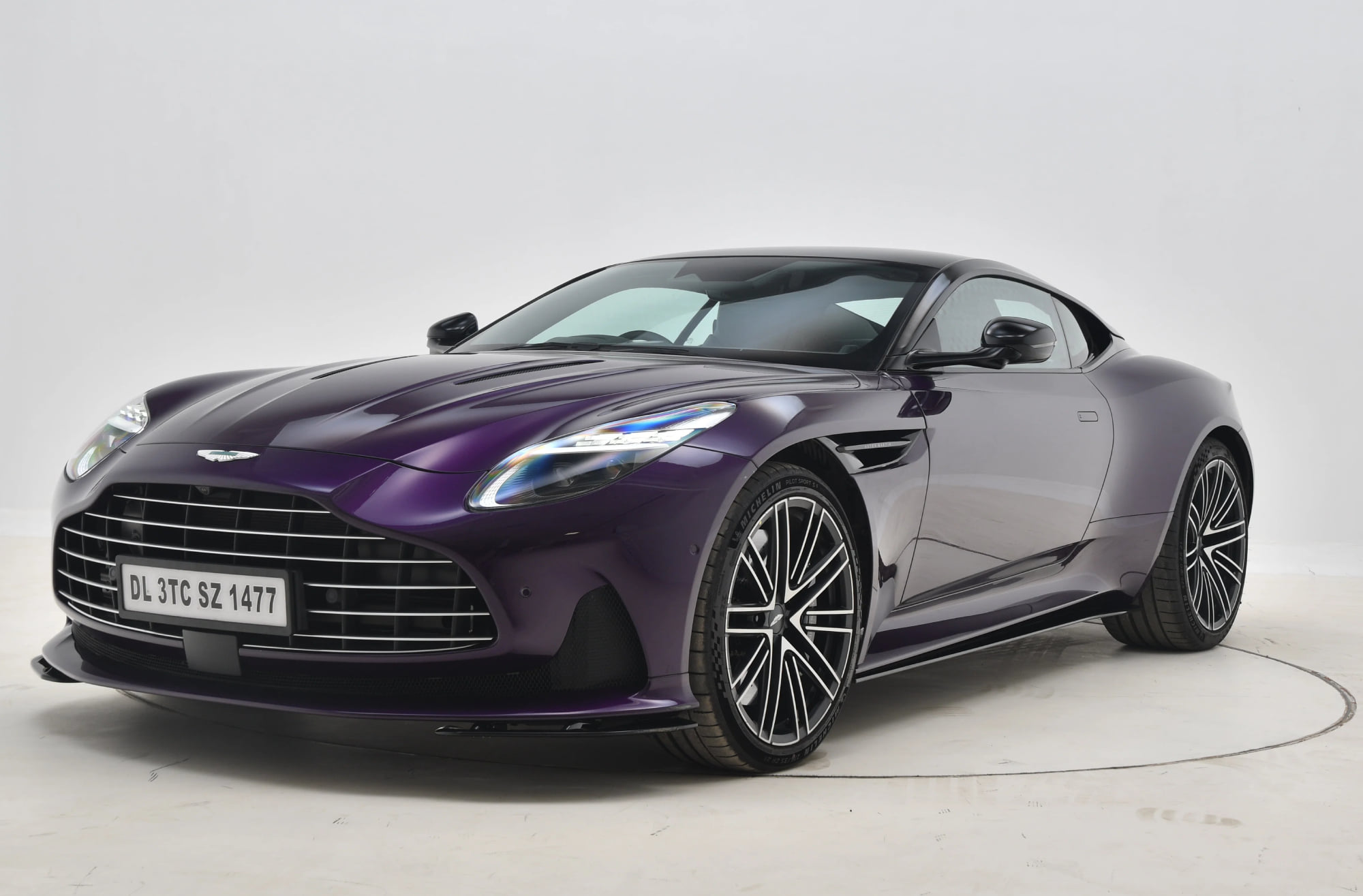
Aston Martin has delayed the launch of its first electric car to 2033 or later, with CEO Adrian Hallmark saying the company no longer has a fixed launch date. Speaking to our sister publication Autocar UK, Hallmark said, “We only need BEVs to be compliant for legislative reasons [in certain markets] just before 2035,” adding that the timing “could be 2035, it might be 2033”. He described Aston Martin as “not BEV deniers but BEV delayers”, and said the company will be “predominantly ICE-based” until 2035.
Aston Martin EV launch delayed again
Aston Martin’s EV plans have been pushed back several times. The company had previously targeted 2025, later moved the launch to 2026, and subsequently indicated that its first EV would arrive by 2030. The latest timeline moves it into the 2033-35 window.
Hallmark said the change reflects the pace at which EV demand and legislation are evolving. He said they are “changing way faster than any car company can cope with”, making it difficult for Aston Martin to set a firm launch date. “I’m not going to give an absolute date, because it’s imprecise. It could be 2035, it might be 2033, but it’s in that three-year-window. It’s not 2031,” Hallmark added.
The latest delay follows comments from executive chairman Lawrence Stroll in 2024 that EV demand at Aston Martin’s price point was lower than expected. At the time, the company had outlined plans for four EVs based on a dedicated architecture, spanning a GT, SUV, crossover and mid-engined supercar.
Lucid technology to underpin future EVs
Aston Martin has an agreement with Lucid for EV technology and has a partnership with current engine supplier Mercedes-Benz. Hallmark said the delay will give the company more time to assess how the technology develops before making major investments.
“Because we delayed, by the time we activate that deal, the technology that we will get is totally different to what we signed up the original contract for,” Hallmark said. He added that “looking at BEVs in the future, even if [we launch our first in] 2033, we’ve got three years where we can keep looking, keep thinking and keep evaluating different technologies and how they’re changing, and the markets and the legislation. And it’s only then that we would need to kick off investment. So today we’ve got very low-level investment, but it’s research and study, not even single-digit millions of investment.”
V8 and V12 engines to continue
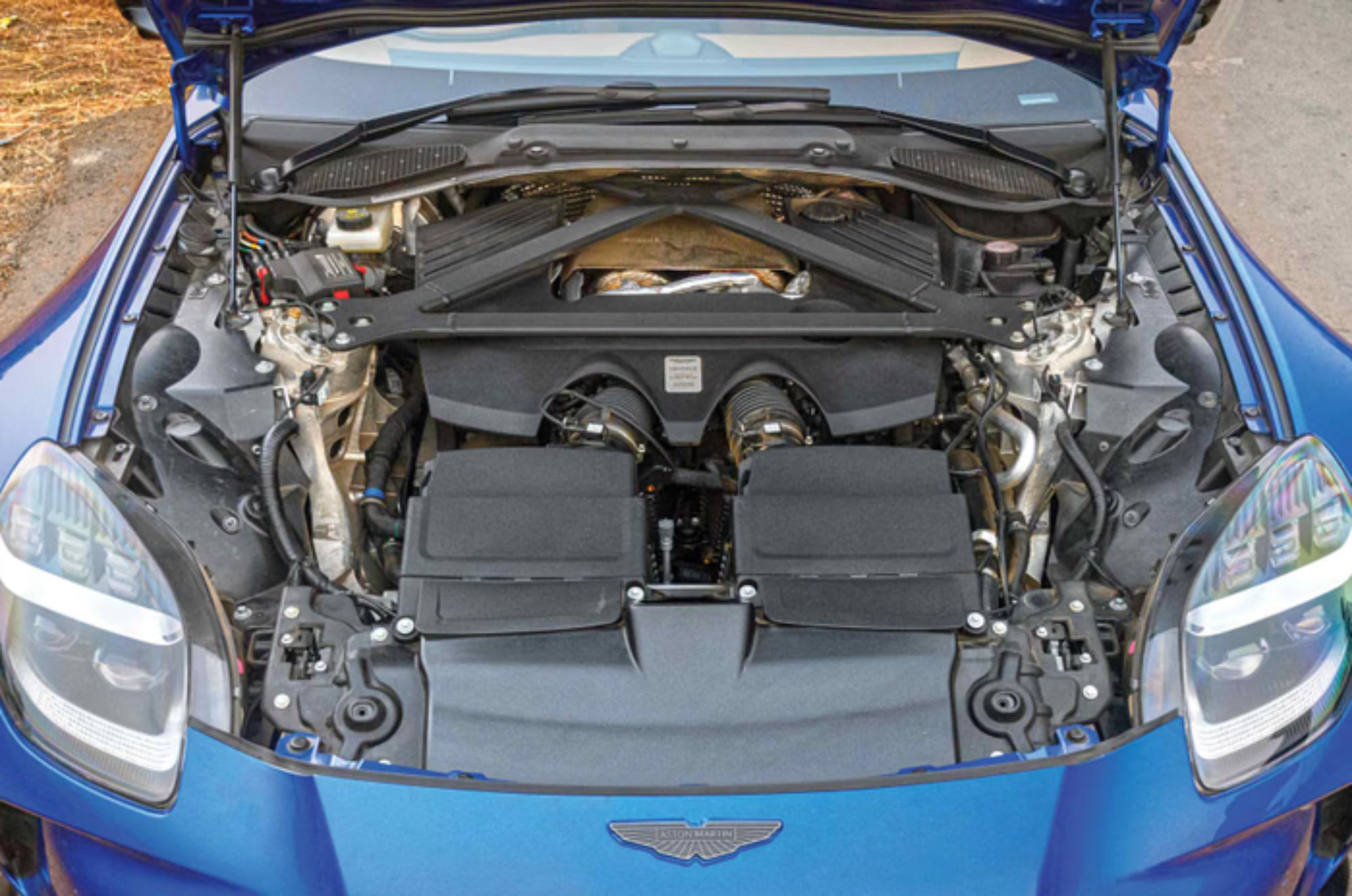
Aston Martin Vantage’s 665hp V8
Aston Martin plans to continue offering combustion-engined cars well into the 2030s. Hallmark said the company has a roadmap to keep both its V8 and V12 engines compliant through at least 2035. “We have a roadmap to keep the bigger and smaller engines alive and compliant all the way through to the end of that period,” Hallmark said.
This extends the approach outlined by Stroll in 2024, when he said Aston Martin would continue making combustion-engined cars for as long as regulations allowed. The company had also increased its investment in plug-in hybrid technology as its EV plans were pushed back. Stroll had said Aston Martin had “decided to invest very heavily in PHEVs” – technology, he said, that would “play out for a long while and we will have an extensive offering”.
However, the latest strategy is different from that earlier plan. Hallmark said Aston Martin will use hybridisation, but “probably not” plug-in hybrid systems because of their added weight. “There would be hybridisation,” Hallmark said. “Probably not plug-in, because we don’t need it; we don’t need the 200kg penalties.”
Hallmark said “between 2030 and 2035 everything will be replaced” in Aston Martin’s product line-up, adding that “the attributes, performance and quality of the vehicles will take them up a level”. He also confirmed that Aston Martin will continue with the Valhalla hypercar, hinting that “there might be a derivative of it that has a different roof”. The company is investing in the Valhalla platform for future low-volume special edition models, he said.
Rapide E never entered production
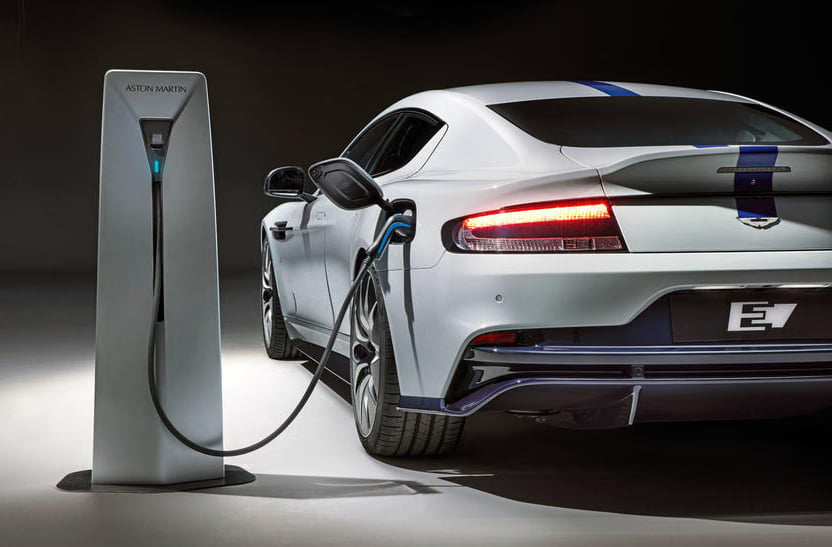
Aston Martin had planned to build 155 examples of the Rapide E, which was revealed as an electric four-door in 2019, but the production programme was cancelled before customer cars were built. The project was instead turned into an electrification research project, rather than being sold to customers. The Rapide E used an 800V battery and two electric motors with a combined target output of more than 610hp and 950Nm.
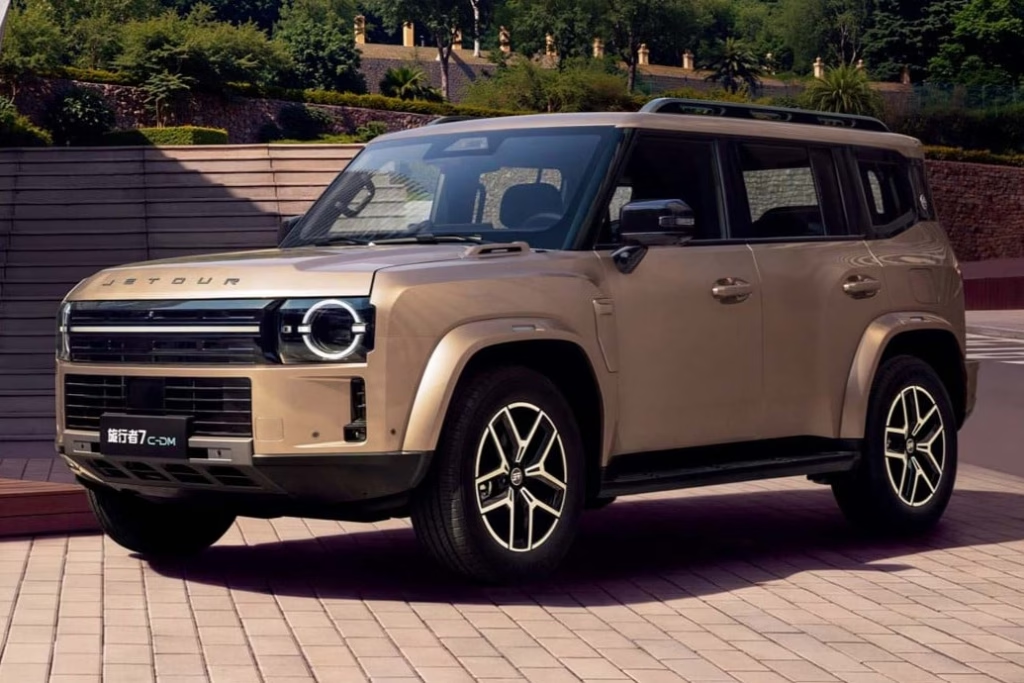
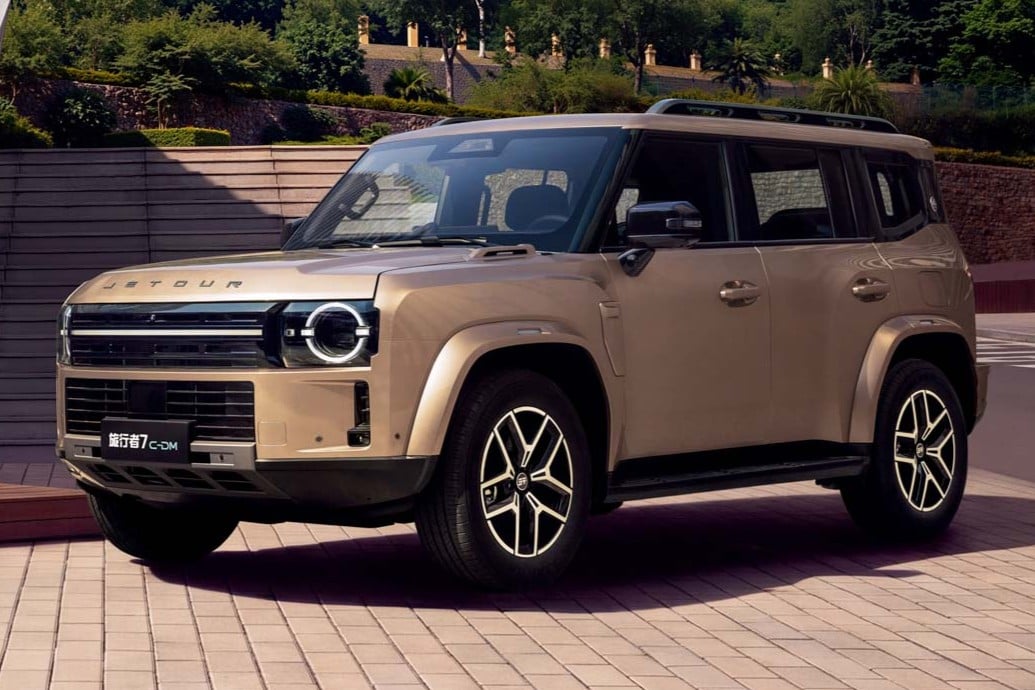
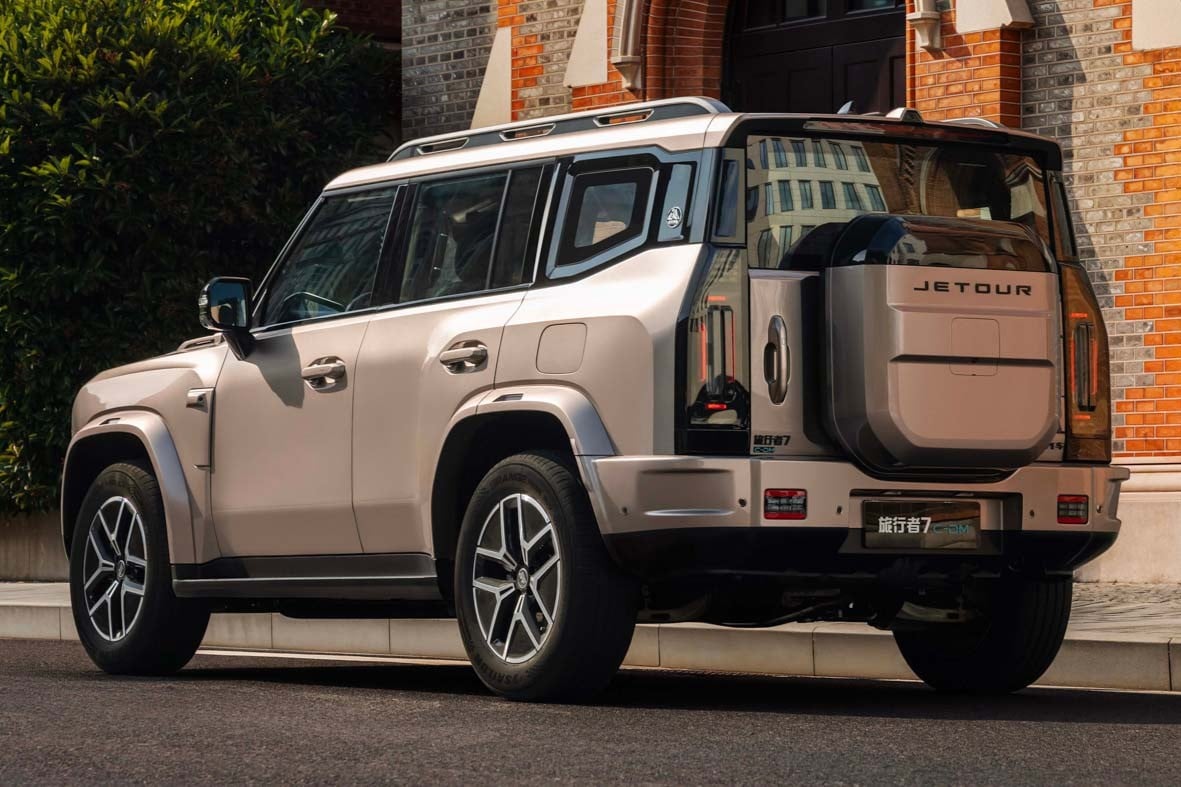
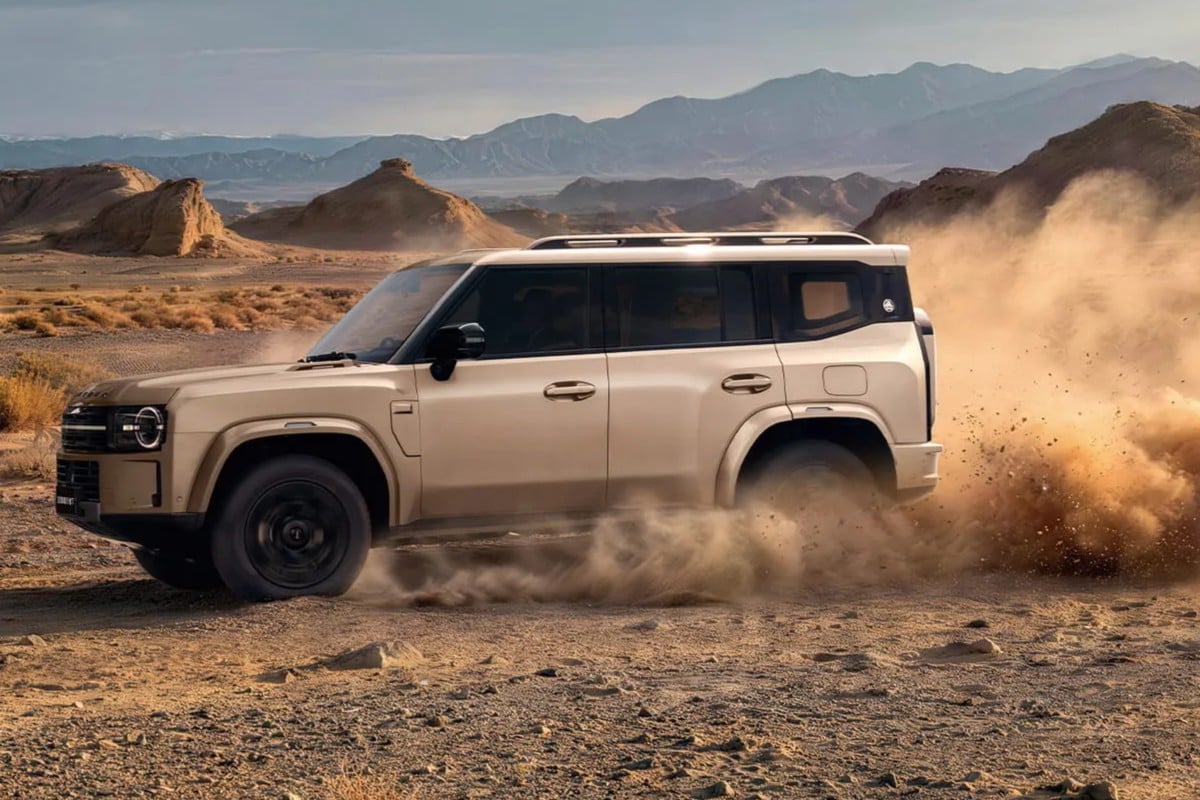
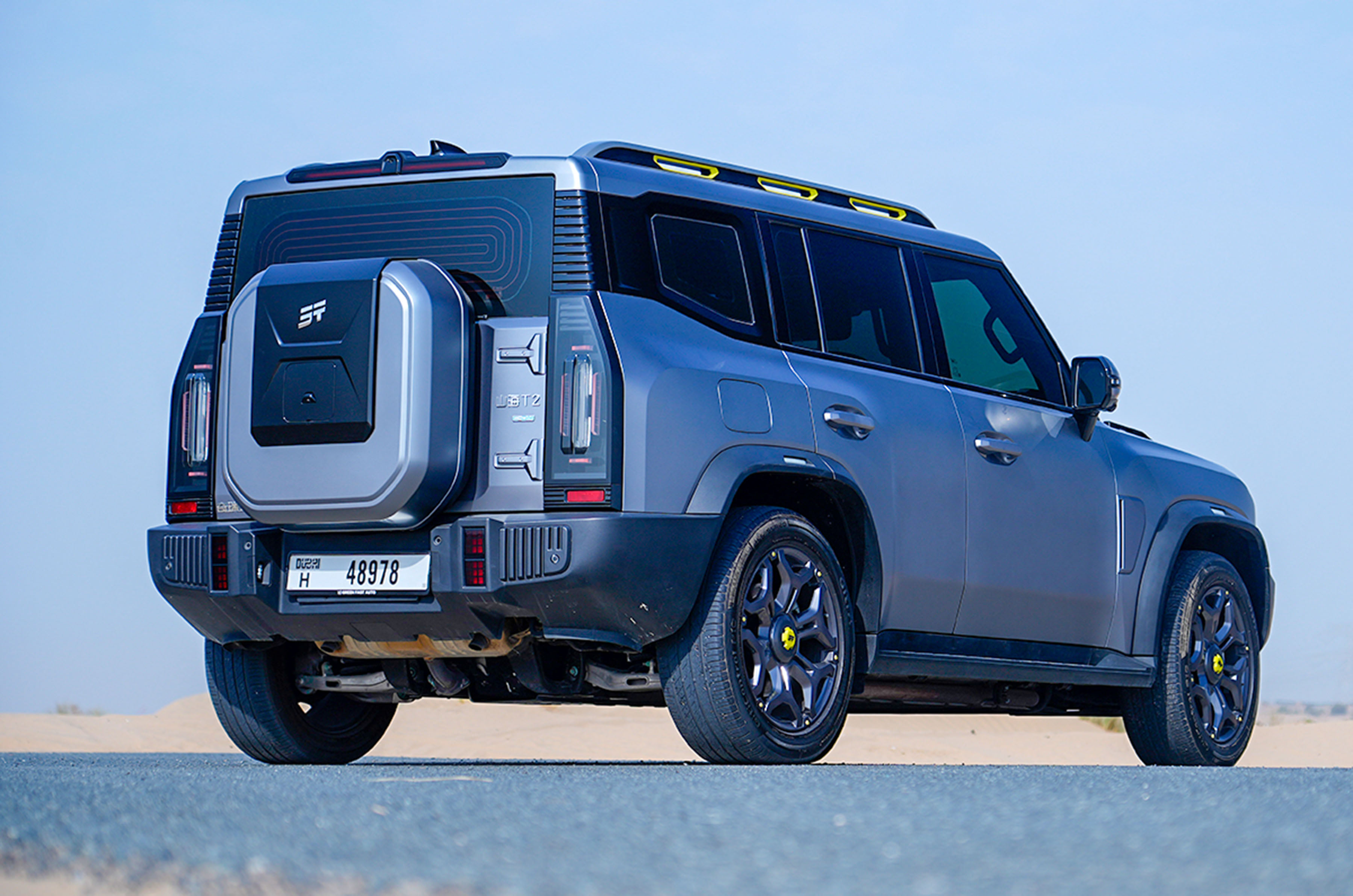
A facelifted version of the Jetour T2 has been launched in global markets. The Jetour T2 facelift was first unveiled in August at the Chengdu Motor Show in China, and gets some design revisions, more features, and powertrain tweaks. Interestingly, this updated iteration went on sale not long before the launch of the pre-facelift Jetour T2 under the JSW Combat name in India.
Jetour T2 facelift exterior design
The updated Jetour T2 retains the prior version’s boxy proportions, but with a few notable styling updates. Most of these are up front, such as circular DRLs in the headlamps, a new grille housing an LED strip, and a much cleaner front bumper. The Jetour wordmark has also been relocated from the grille to the leading edge of the bonnet.
Over to the side, the Jetour T2 facelift gets new alloy wheel designs, as well as body-coloured wheel arches. The rear end sees some revisions too, particularly a cleaner bumper design, an updated spare wheel cover with a Jetour wordmark, and a discreet roof spoiler.
Jetour T2 facelift interior and features
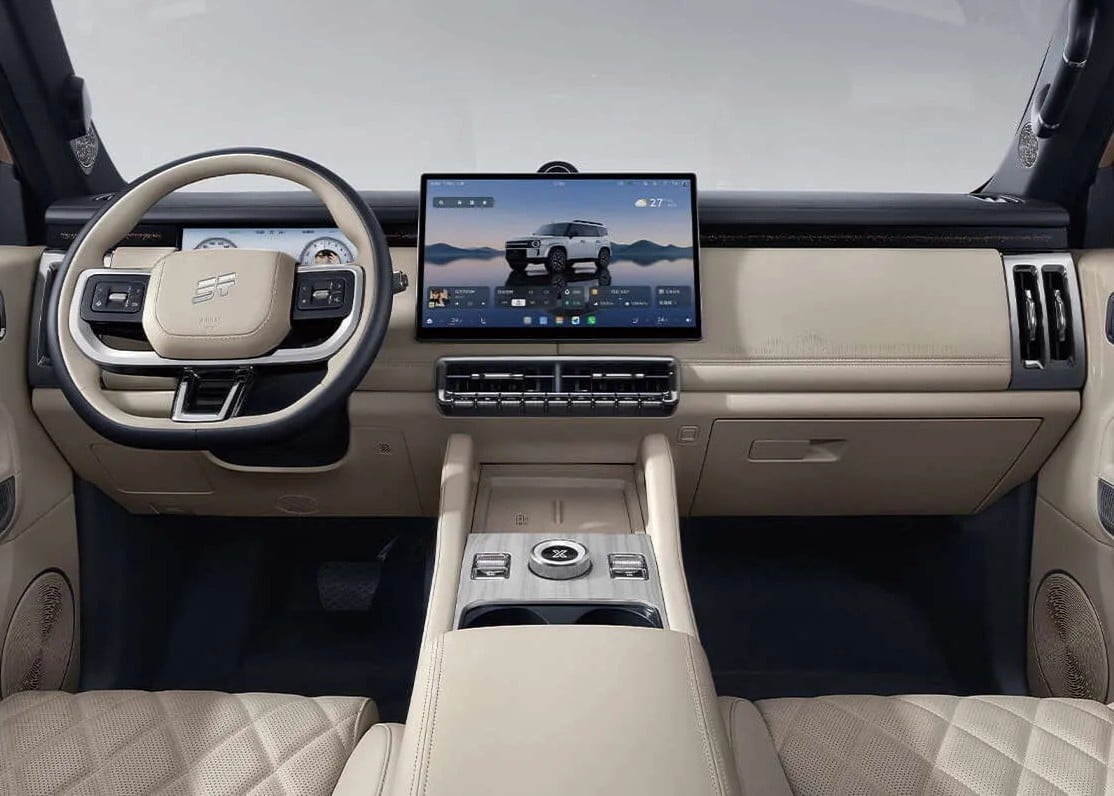
Inside, the Jetour T2 facelift takes on a more premium slant than its predecessor. The beige colour scheme lends the cabin an airier vibe, the seats are upholstered in quilted leatherette, and the dashboard looks to be fitted with leatherette trim – the open storage space in front of the co-driver looks to be closed-off in the facelifted model. There’s also a new three-spoke flat-bottomed steering wheel, and the AC vents have fresh designs too.
The 10.25-inch digital driver’s display and 15.6-inch infotainment touchscreen remain unchanged in size, but the latter is now powered by a stronger Qualcomm Snapdragon 8255 chip that allows for the integration of a new voice-controlled AI assistant. Other notable features include 10-way powered front seats with a massage function, dual wireless charging pads, a 23-speaker sound system, an ADAS suite, and 256-colour ambient lighting.
Jetour T2 facelift powertrains
The Jetour T2’s powertrain offerings vary widely by market, but looking at the China-spec model, the facelifted version continues to offer a 184hp 1.5-litre four-cylinder turbo-petrol engine in the base variant. This mill is paired with a 7-speed dual-clutch automatic that sends power to the front wheels. All other petrol variants of the facelifted Jetour T2, meanwhile, get a 254hp 2.0-litre turbo-petrol engine with the same 7-speed DCT and AWD. A big change here is that the top-spec petrol variant comes with an 8-speed automatic gearbox instead.
As for the plug-in hybrid (PHEV) variants of the Jetour T2 facelift, the 156hp 1.5-litre turbo-petrol engine has been retained, but the dual electric motors have been replaced by a single unit that develops 307hp and 330Nm. The 3-speed dedicated hybrid transmission (DHT) is now a 1-speed unit as well. These updates have been made in the interest of efficiency, as even with a slightly smaller 26.61kWh battery pack, the facelifted Jetour T2 PHEV manages a WLTP-certified 108km pure-electric range – up by 8km. There’s a larger 45.12kWh battery pack on offer too, which bumps the rated pure-electric range to 173km – an increase of 11km over the prior 43.24kWh unit.
Is the Jetour T2 facelift coming to India
As noted previously, the pre-facelift Jetour T2 PHEV is set to launch in India in the coming months as JSW Motors’s debut model, the Combat. Since JSW Motors has been extensively testing the pre-facelift Jetour T2, it’s quite unlikely that the facelifted version will make it here in the short term. As it stands, JSW Motors has yet to even communicate the launch date of the Combat, and recent media reports allege that the carmaker has pushed its debut from the festive season to mid-December.
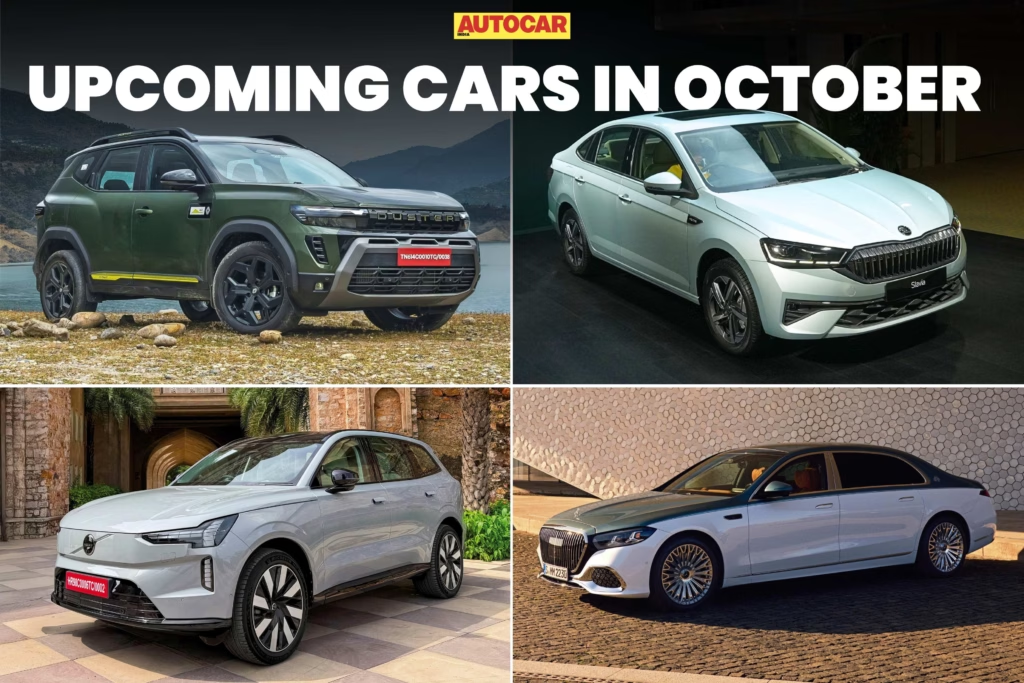
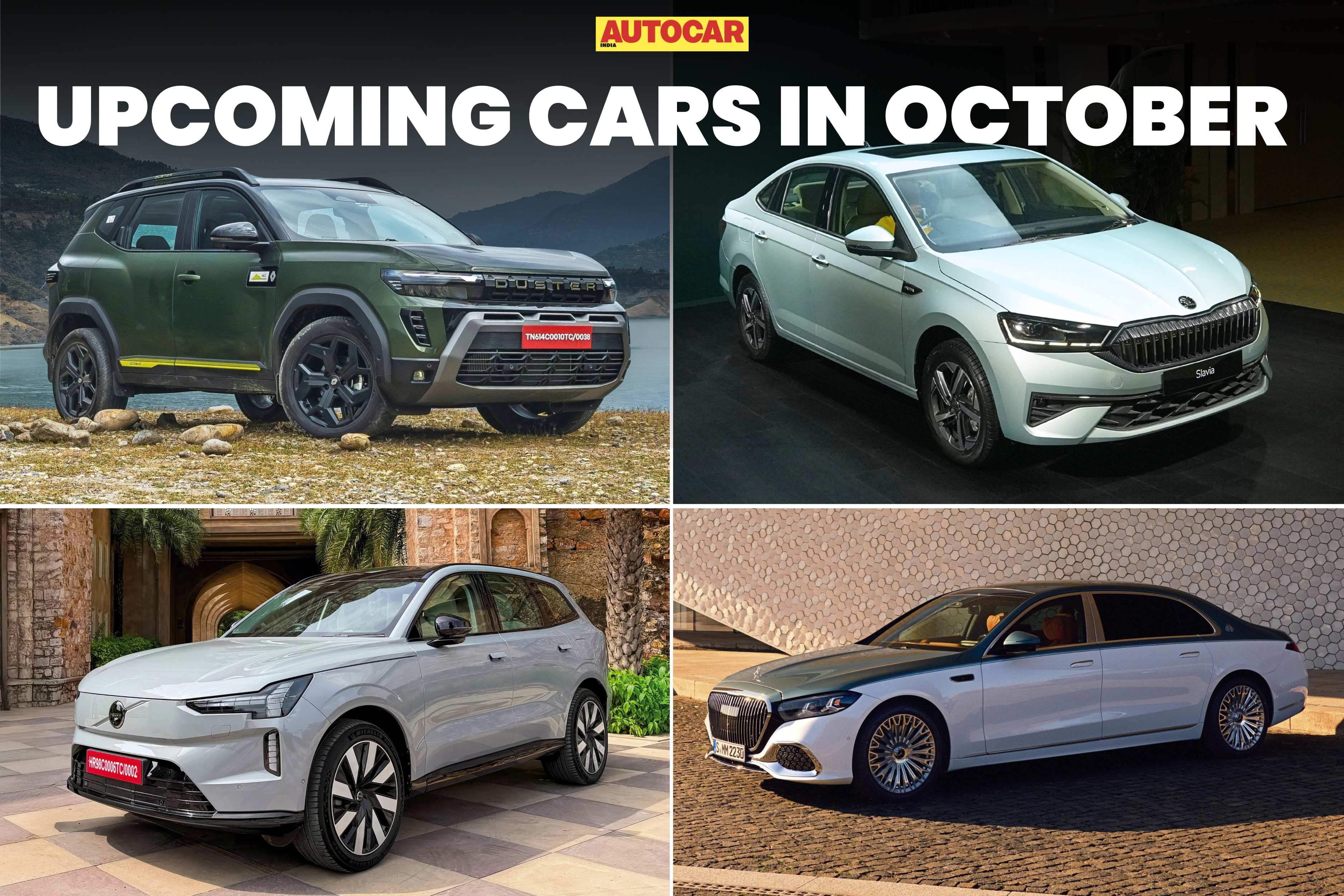
October marks the onset of the festive season in India, which means manufacturers line up a barrage of new car launches and debuts for prospective buyers to consider. It’s no different this year, with October 2026 looking quite stacked with fresh launches and debuts, especially during the first half of the month. Let’s delve into every new car that will either go on sale or debut in India next month.
Mercedes-Benz Maybach S-Class facelift
Launch: 5 October
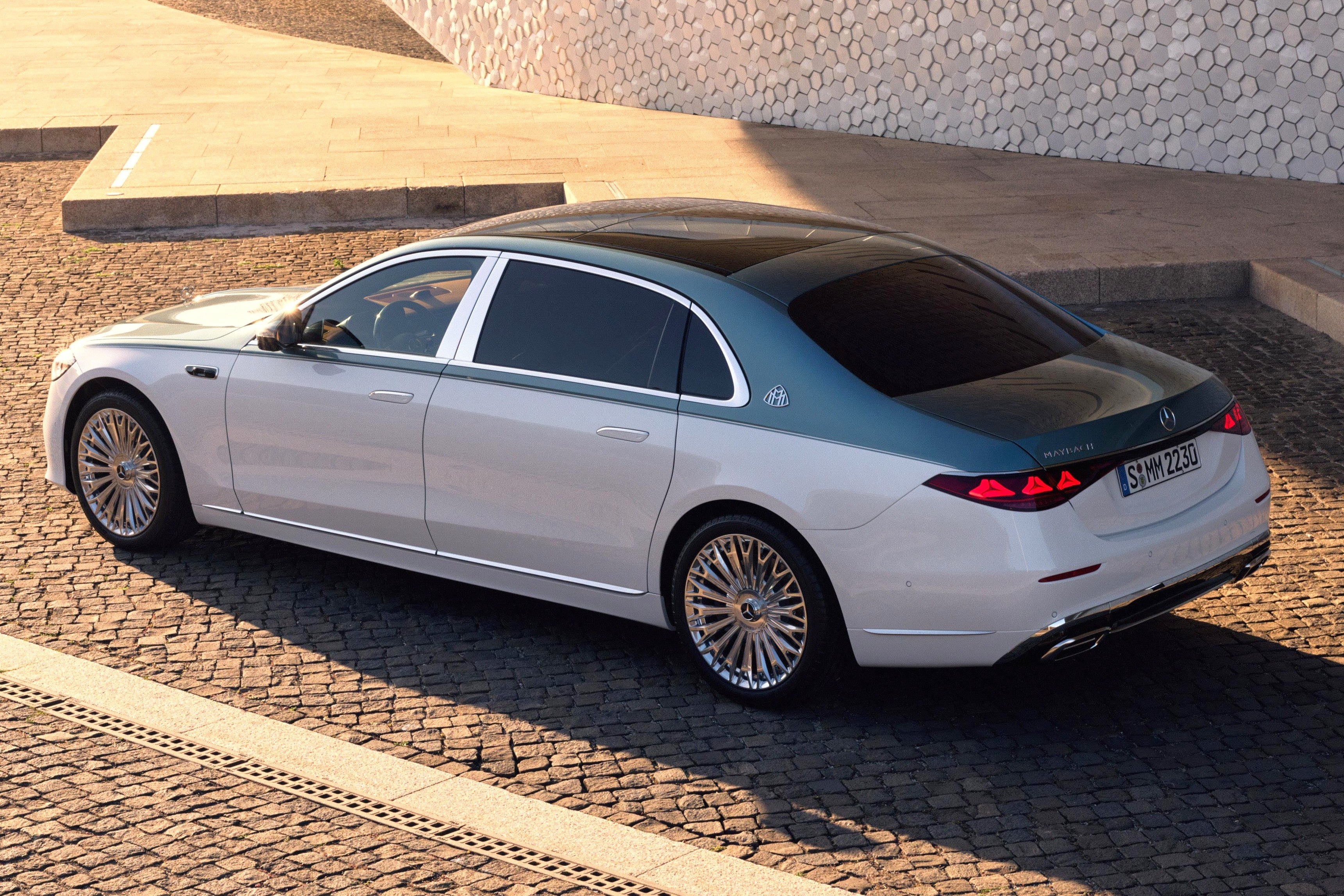
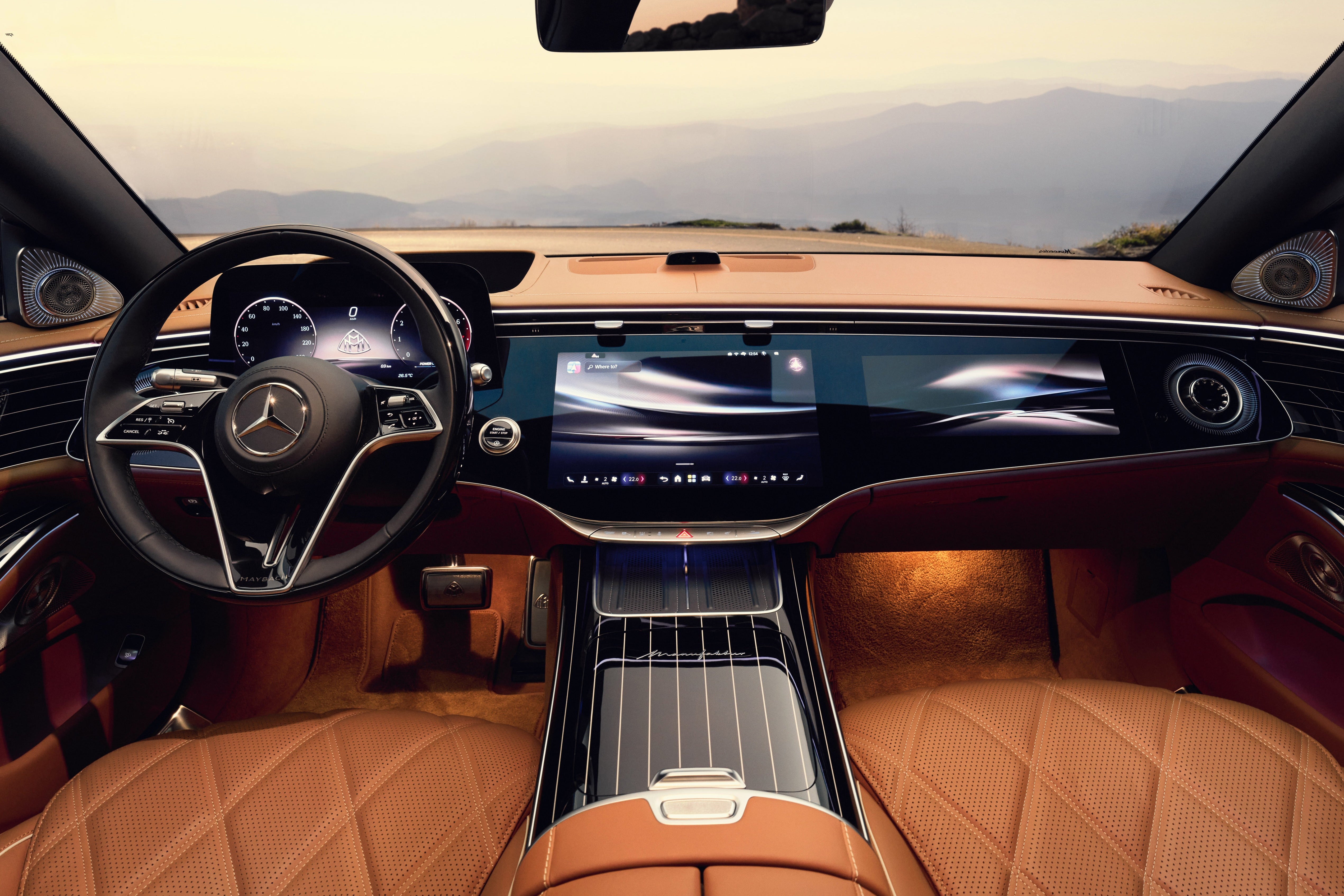
Following the launch of the 2026 S-Class facelift back in June, Mercedes-Benz India will bring the sedan’s longer and more luxurious Maybach derivative in October. Compared to its standard version, the Maybach S-Class facelift continues to be 180mm longer, but carries styling differentiators like a vertically-slatted grille adorned with a ‘Maybach’ wordmark, mildly revised bumpers, bespoke wheel designs, lots of Maybach logos peppered across the bodywork, and the signature dual-tone exterior finish.
Inside, the Maybach prominently retains the standard S-Class’s Superscreen setup, comprising a 12.3-inch digital driver’s display, a 14.4-inch central touchscreen, and a 12.3-inch passenger display. New upholstery choices include extended leather and a leather-free vegan option. The rear seats remain largely unchanged, offering up to 43 degrees of recline, along with heating, ventilation, and massage functions. Globally, the Maybach S-Class can be had with either a 4.0-litre twin-turbo mild-hybrid V8 (S 580), a 4.0-litre twin-turbo V8 plug-in hybrid (S 580e), or a 612hp 6.0-litre twin-turbo V12 (S 680). Mercedes-Benz India is likely to offer the updated Maybach S-Class in S 580 or S 580e spec.
Honda Elevate facelift
Launch: 6 October
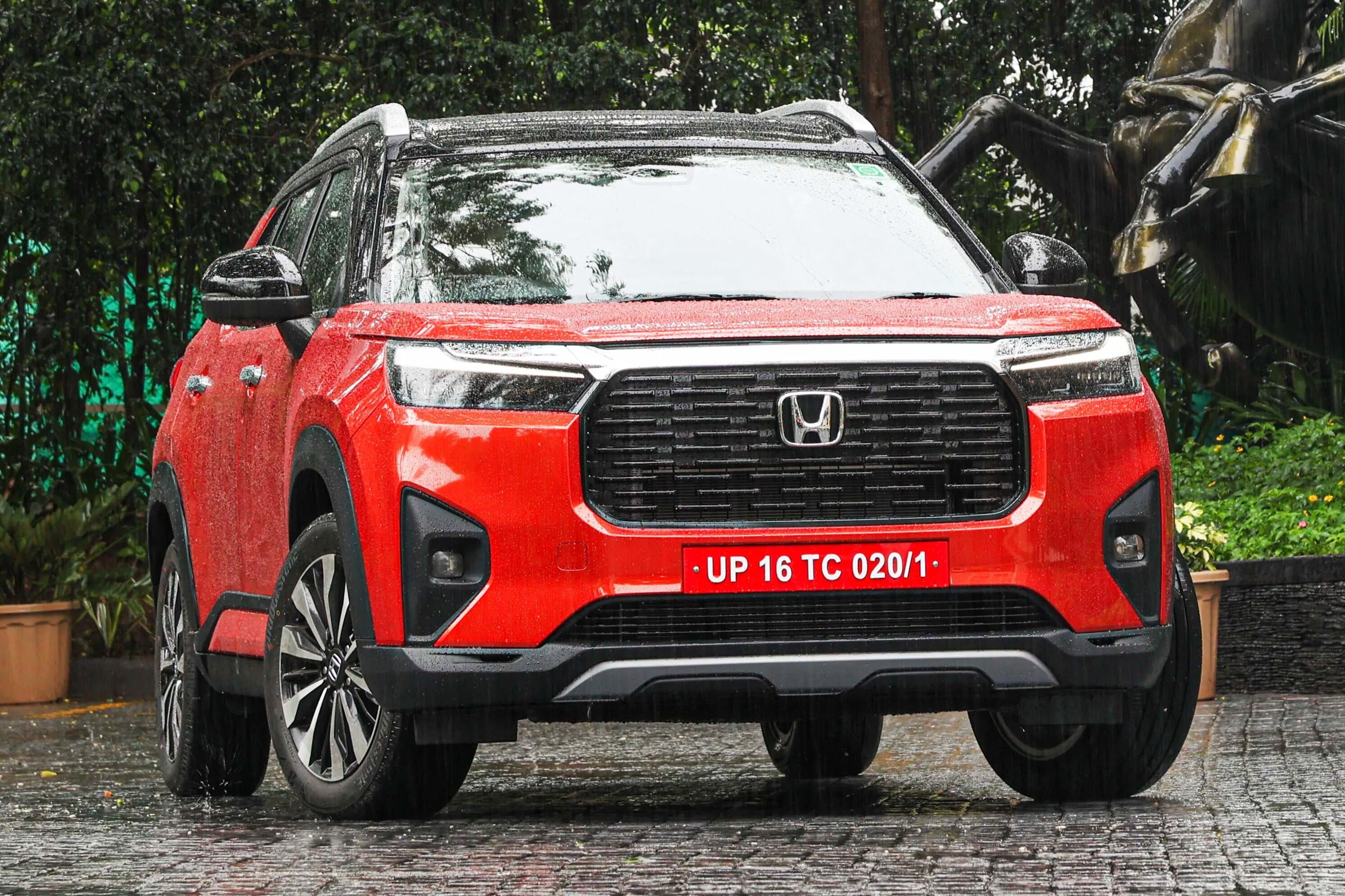
Current Honda Elevate. Image used for representation only.
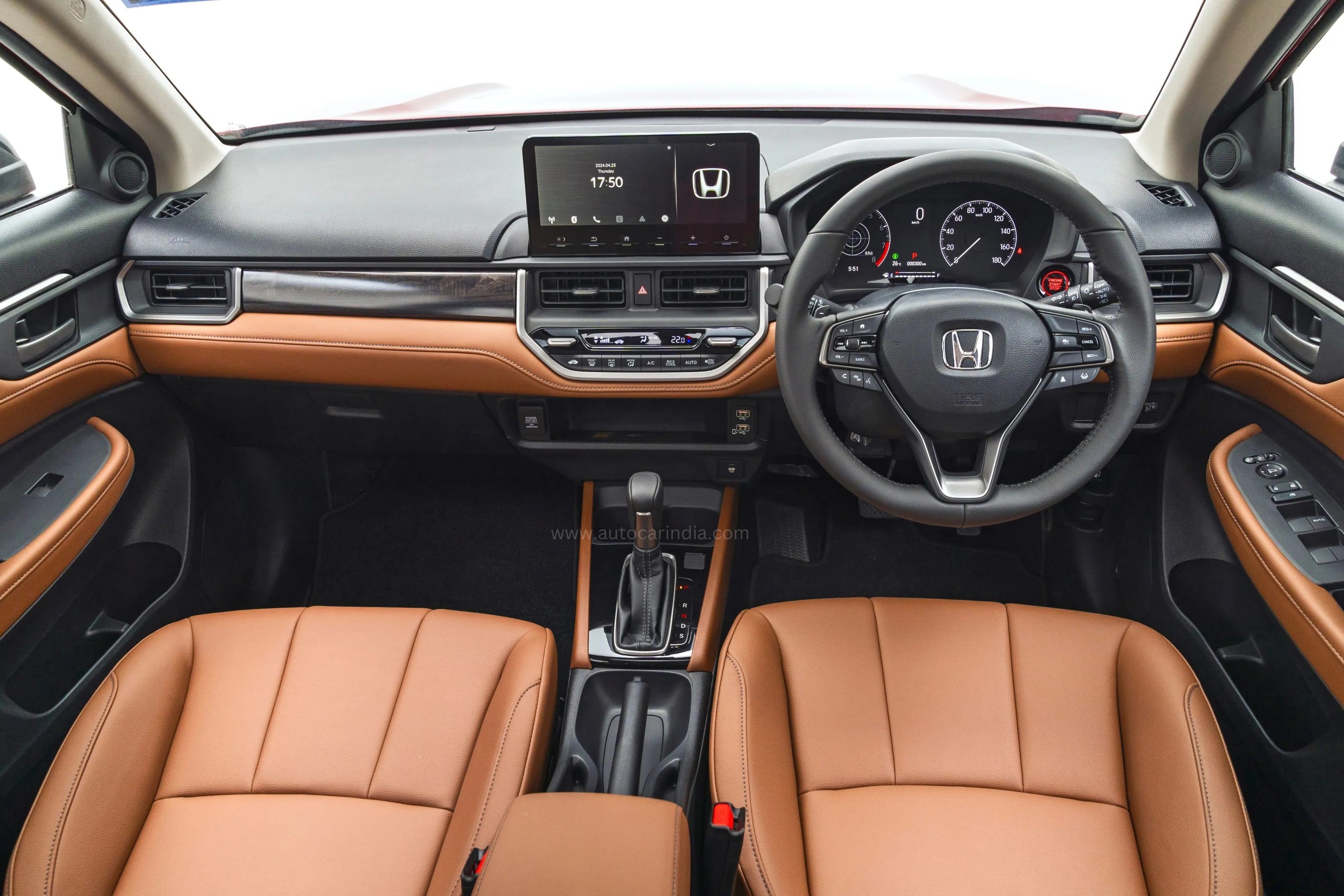
Following in the footsteps of the 2026 City facelift, Honda will launch an updated version of the Elevate SUV in October. Expect the Elevate facelift to sport revised styling cues, including the headlamps, tail-lamps, bumpers, grille, and wheels. The interior is anticipated to see changes like a larger infotainment touchscreen and revised colour schemes, along with feature upgrades like ventilated front seats, a 360-degree camera, ambient lighting, and more.
Current Honda Elevate interior. Image used for representation only.
The facelifted Elevate is likely to retain the current model’s 121hp 1.5-litre four-cylinder naturally aspirated petrol engine, and its 6-speed manual and CVT automatic gearbox options. It remains to be seen if Honda will additionally offer the Elevate facelift with the City e:HEV’s 126hp 1.5-litre four-cylinder petrol-hybrid powertrain, which is solely mated to an e-CVT automatic. A strong hybrid version of the Elevate would allow it to compete directly with established hybrid midsize SUVs like the Maruti Grand Vitara, Victoris, and Toyota Hyryder, as well as the upcoming Renault Duster hybrid – also slated for launch next month.
Skoda Slavia facelift
Launch: 6 October
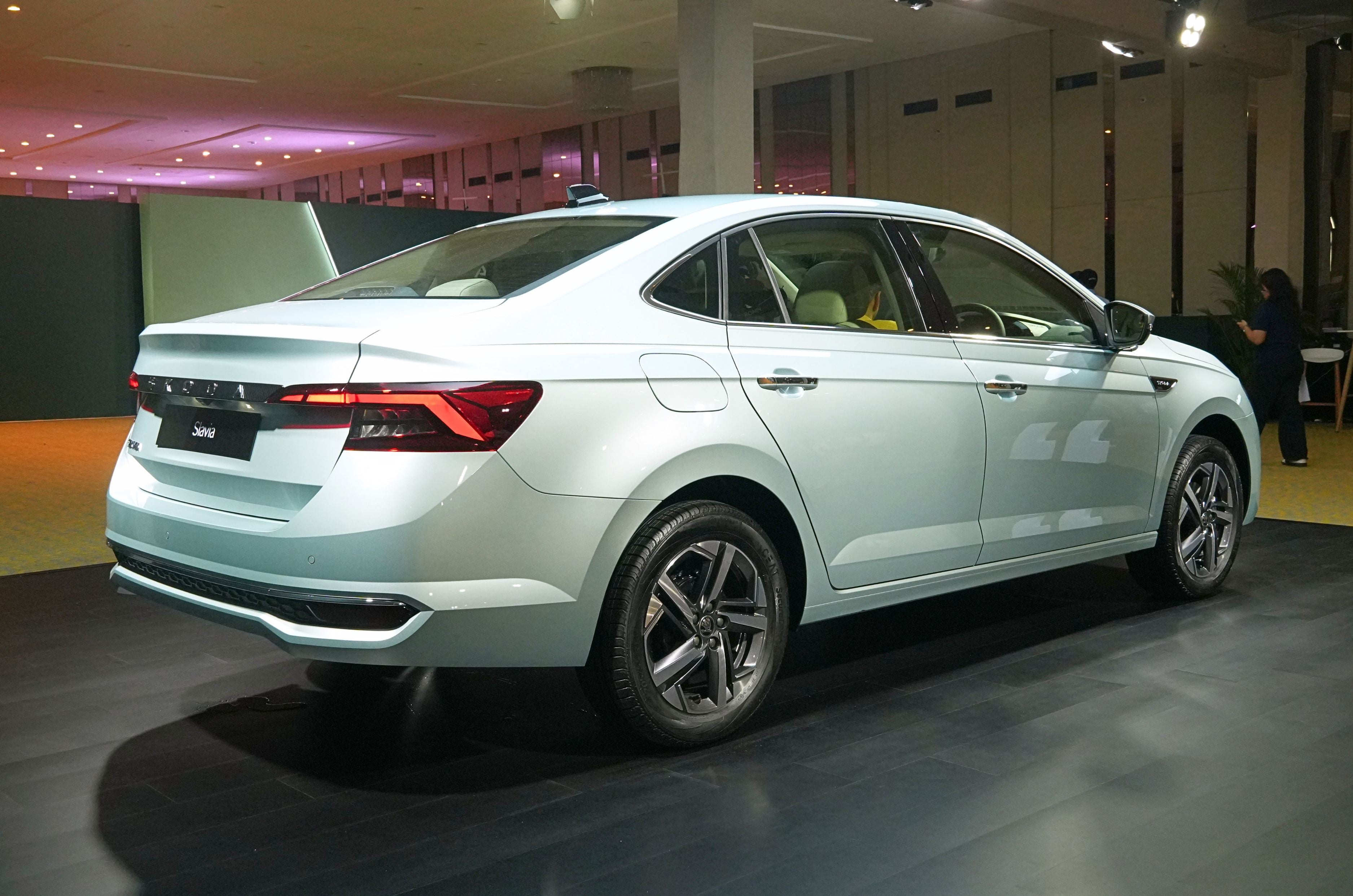
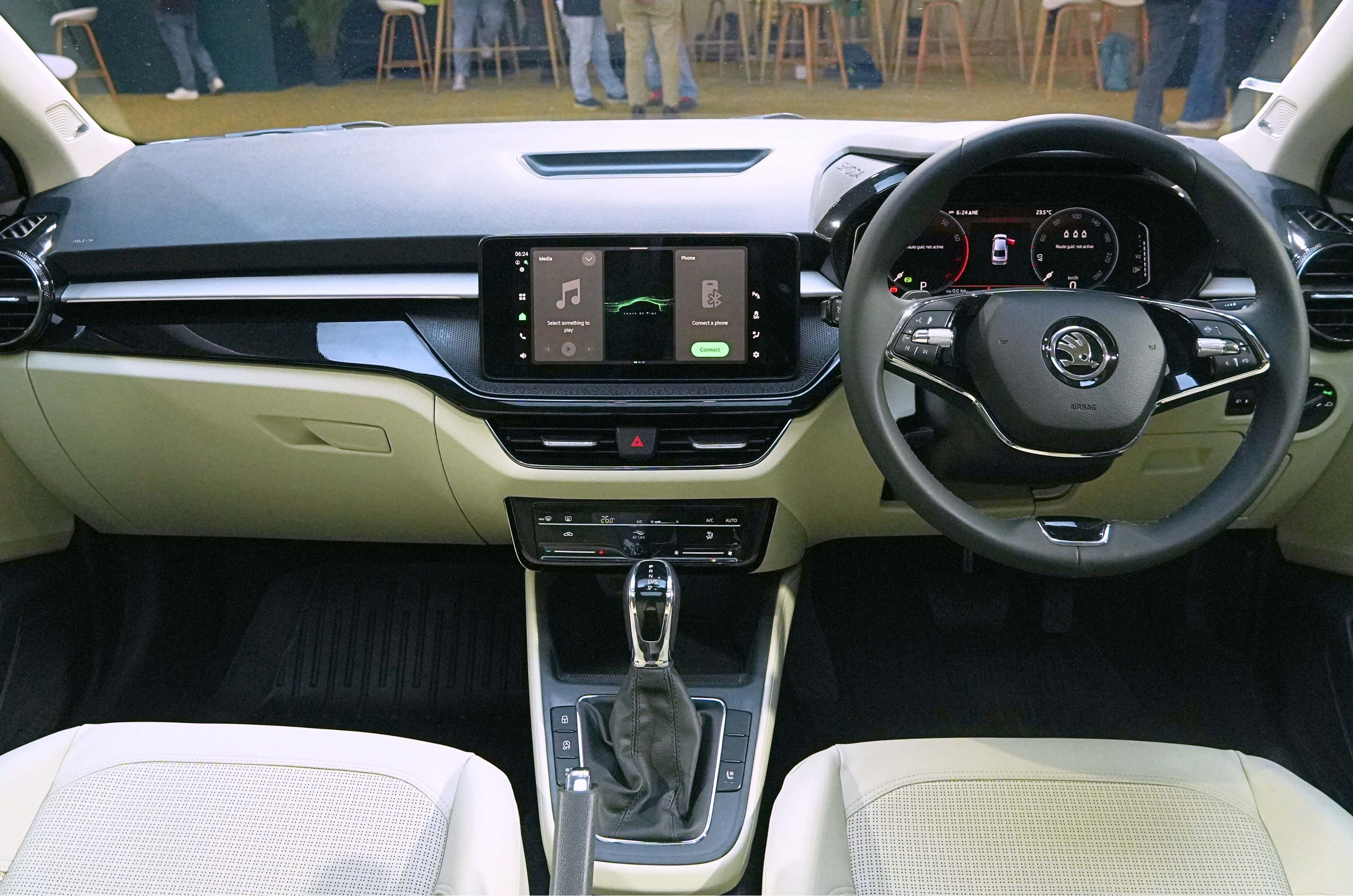
Having debuted back in August, the facelifted Skoda Slavia’s prices will be announced next month. The Slavia facelift brings a host of exterior tweaks, like new DRL signatures for the headlamps, an updated grille, redesigned bumpers, and fresh alloy wheels. Not much has changed on the inside, but there are new colour schemes on offer. Skoda has also added features like a 360-degree camera, a massage function for the outboard rear seats, a larger 10.25-inch digital driver’s display, a Google-based AI assistant, an upgraded variable-geometry AC compressor, and front parking sensors.
Under the bonnet, the Slavia facelift retains its 115hp 1.0-litre three-cylinder direct-injection turbo-petrol and 150hp 1.5-litre four-cylinder direct-injection turbo-petrol engines. The big change here is that the 6-speed torque converter automatic that was previously available for the 1.0 TSI has been swapped with an 8-speed unit, which should deliver better fuel efficiency on the highway. A 6-speed manual gearbox is also available for the 1.0 TSI, whereas the 1.5 TSI continues to be paired exclusively with a 7-speed dual-clutch automatic. The 1.5 TSI will be offered with rear disc brakes too – a much-requested upgrade.
Volvo ES90
Launch: 12 October
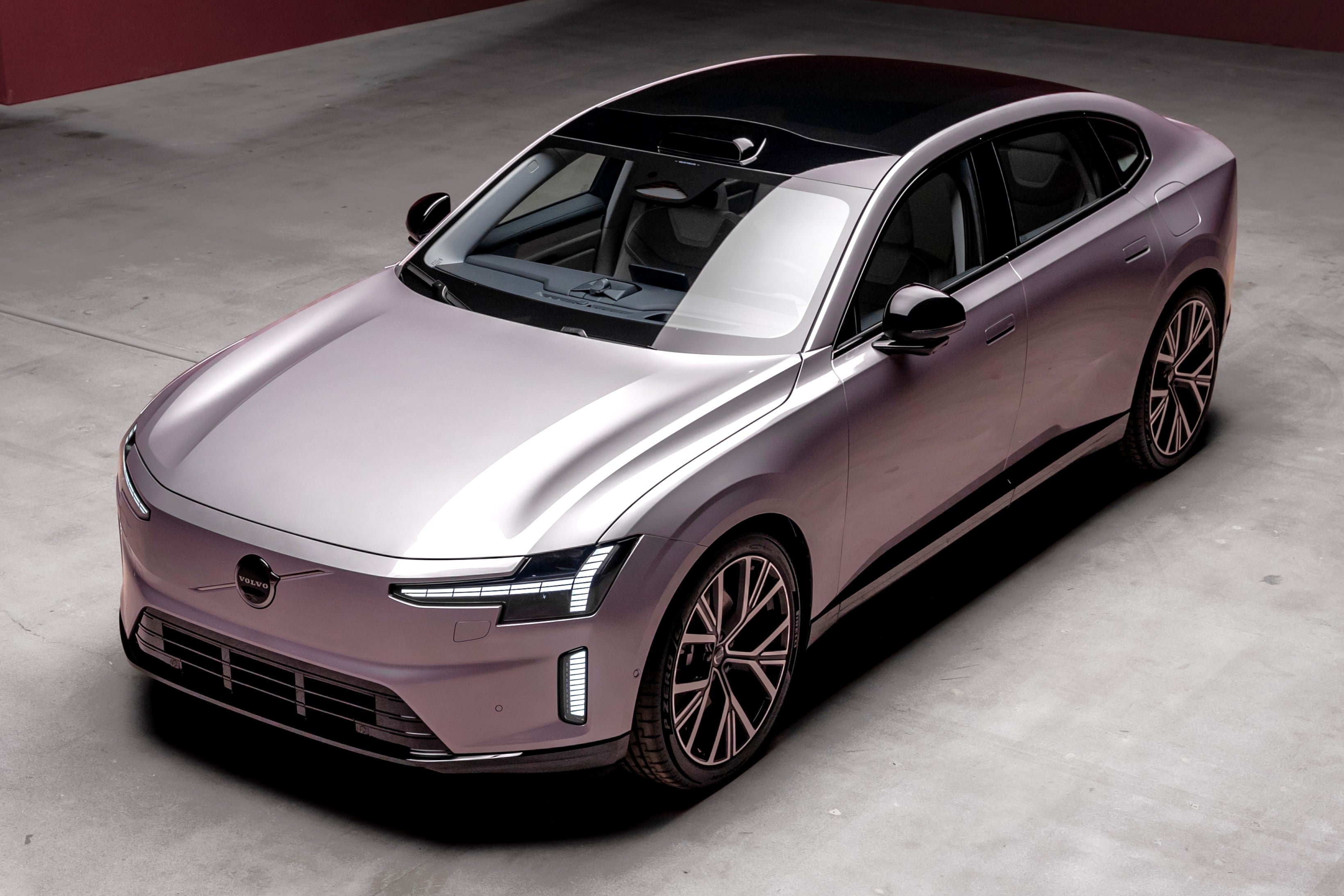
Volvo will return to the luxury sedan space next month with the launch of the all-electric ES90. It’s based on Volvo’s 800V SPA2 platform, and is likely to be offered with a 106kWh battery, dual-motor AWD setup in India. Combined output is pegged at 456hp and 670Nm, which is good for a claimed 0-100kph time of 5.3 seconds. As for WLTP range, the ES90 is rated at 696km, and the sedan can charge at up to 350kW DC, taking 22 minutes for a 10-80 percent top-up.
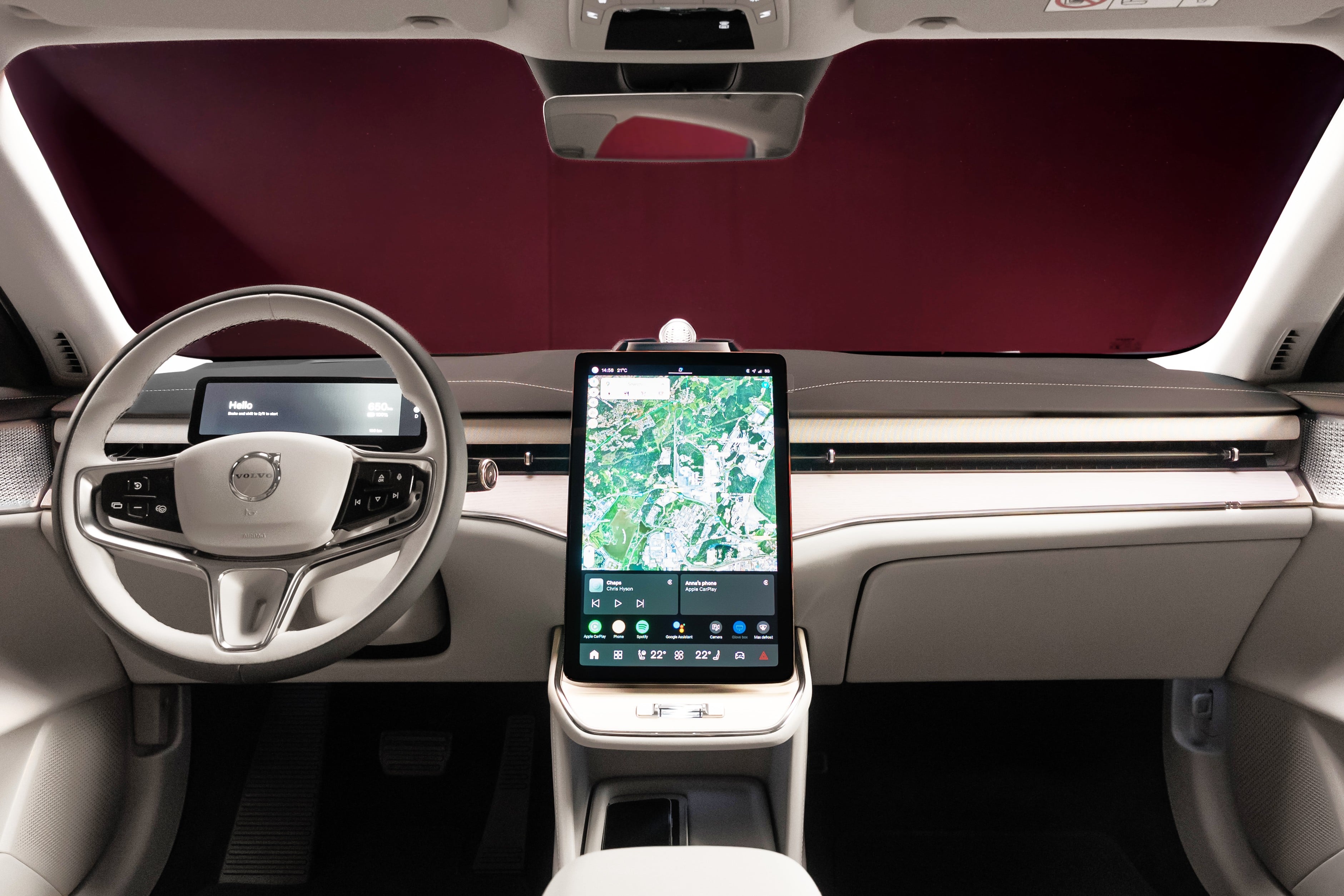
On the outside, the ES90 looks sleek and quietly aggressive, with T-shaped LED headlamps, vertically oriented front fog lamps, clean panelling, and C-shaped tail-lamps. Moreover, it has a drag coefficient of 0.25, making it the most aerodynamic Volvo car yet. Inside, the ES90 packs a 14.5-inch Google-based portrait touchscreen, a floating centre console, a three-spoke steering wheel, a slim 9-inch digital driver’s display, a 13.2-inch head-up display, a panoramic glass roof, four-zone climate control, powered front seats, Level 3 ADAS, and a Bose sound system.
Volvo EX90
Launch: 12 October
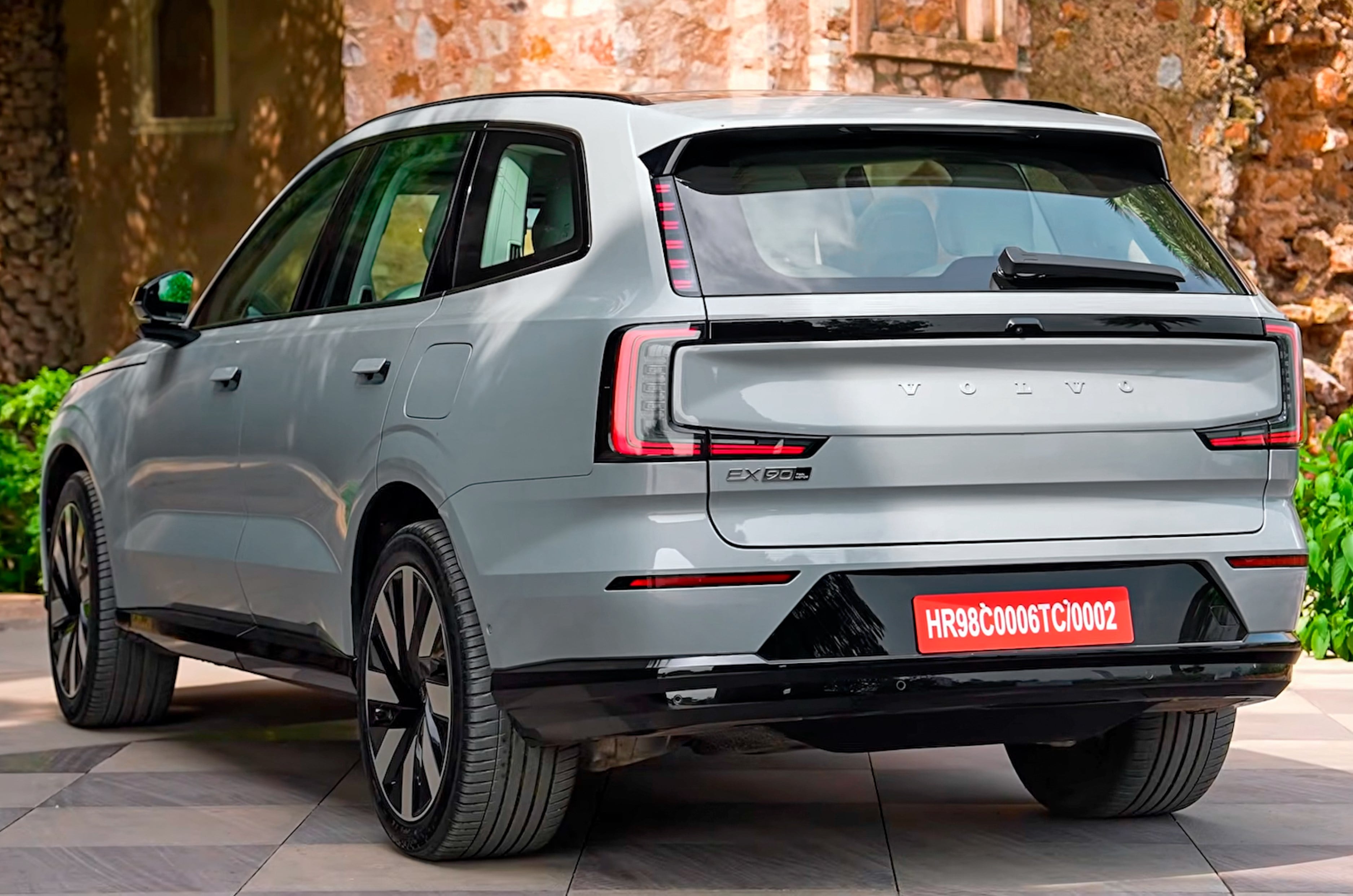
Alongside the ES90, Volvo will launch its SUV counterpart, the EX90. The electric SUV is also based on the SPA2 platform and is expected to offer the same 106kWh dual-motor AWD powertrain. Owing to its higher-riding stance, the EX90’s WLTP range is slightly lower at 625km, but the SUV impressively claims the same 5.3sec 0-100kph time.
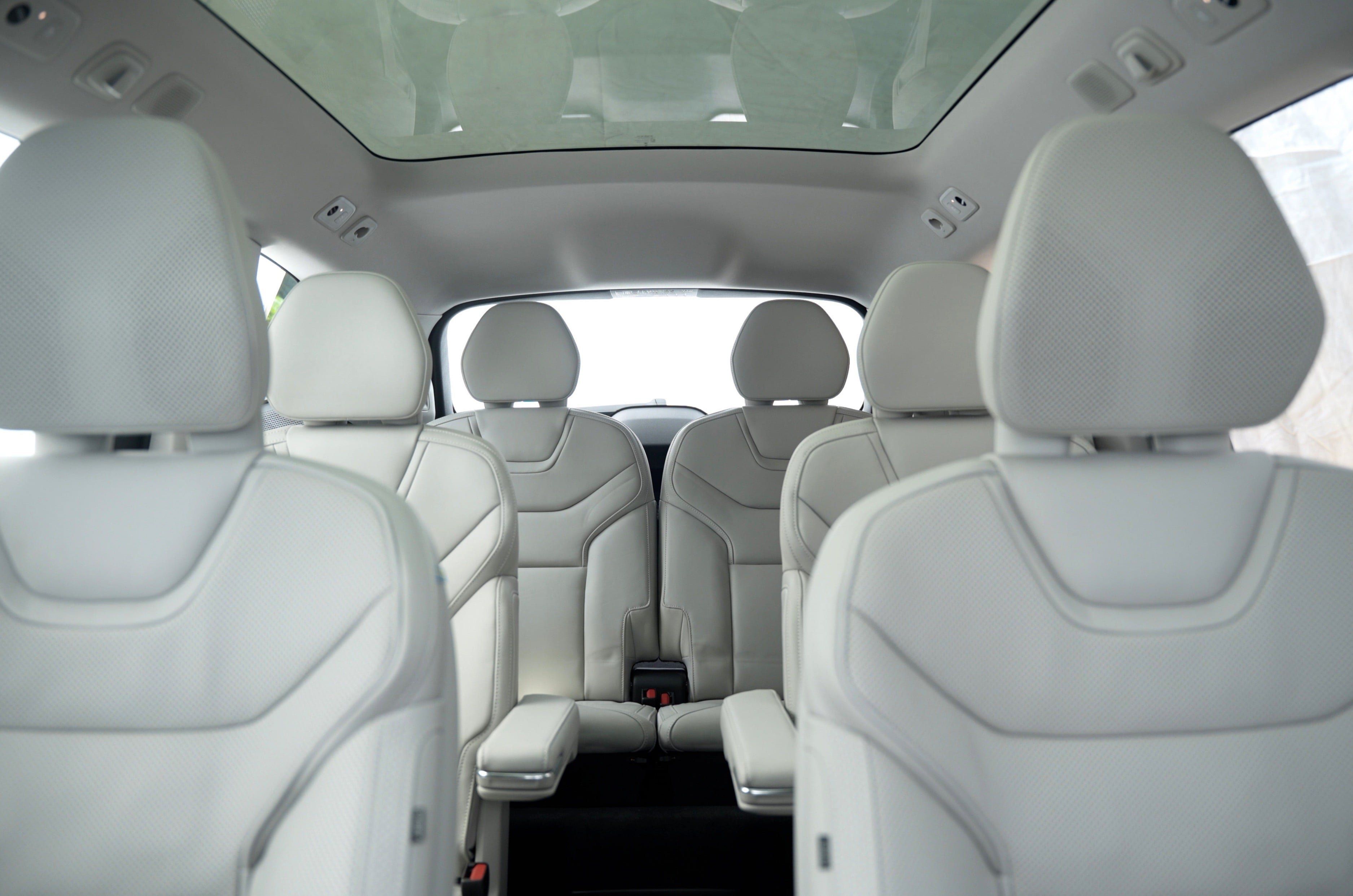
Even in terms of exterior design, the core elements are quite similar between the EX90 and ES90. The same holds true for the interior and equipment list as well, with the only major difference being that the EX90 can seat up to six occupants and gets second-row captain’s chairs.
Toyota Glanza facelift
Debut: 14 October
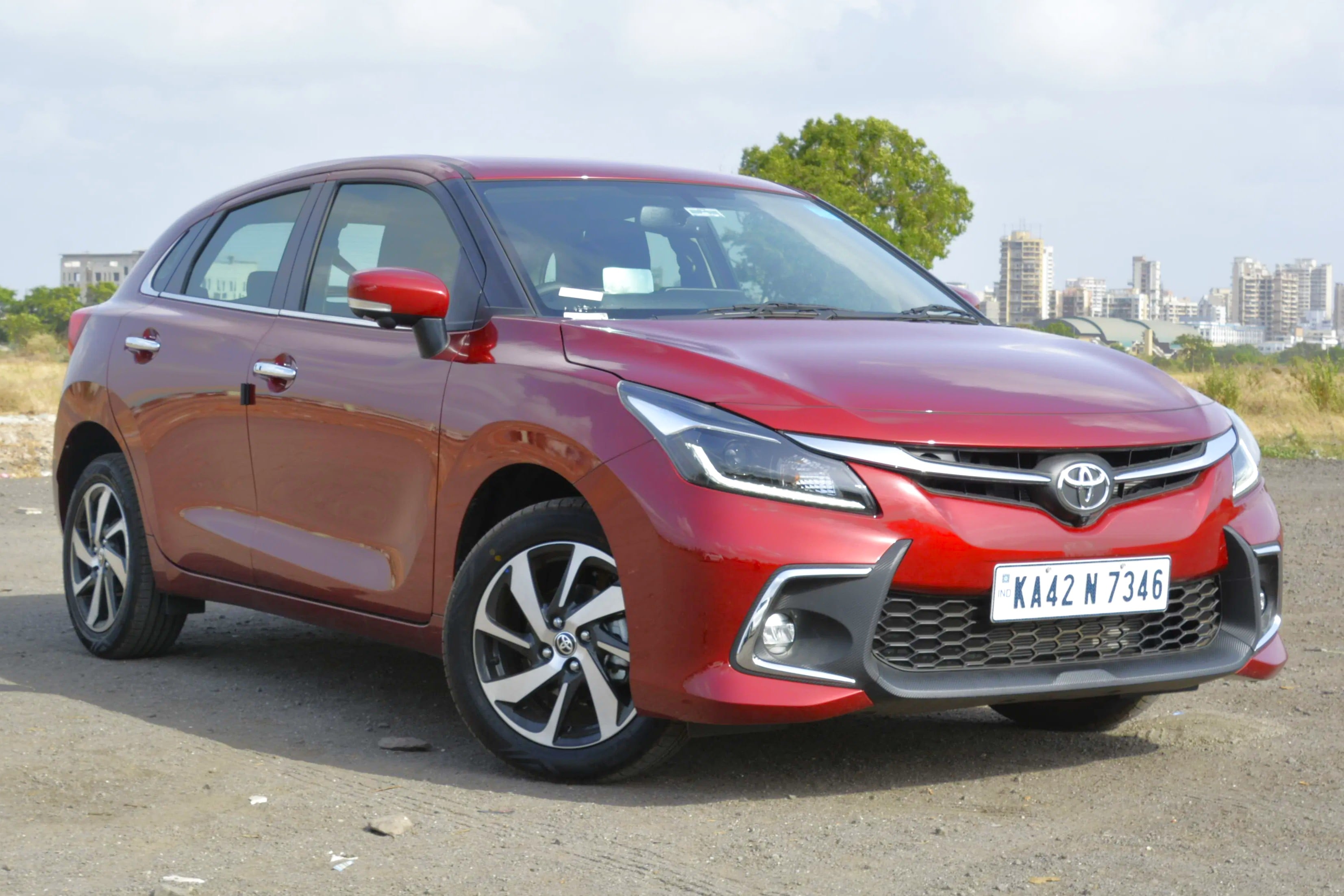
Current Toyota Glanza. Image used for representation only.
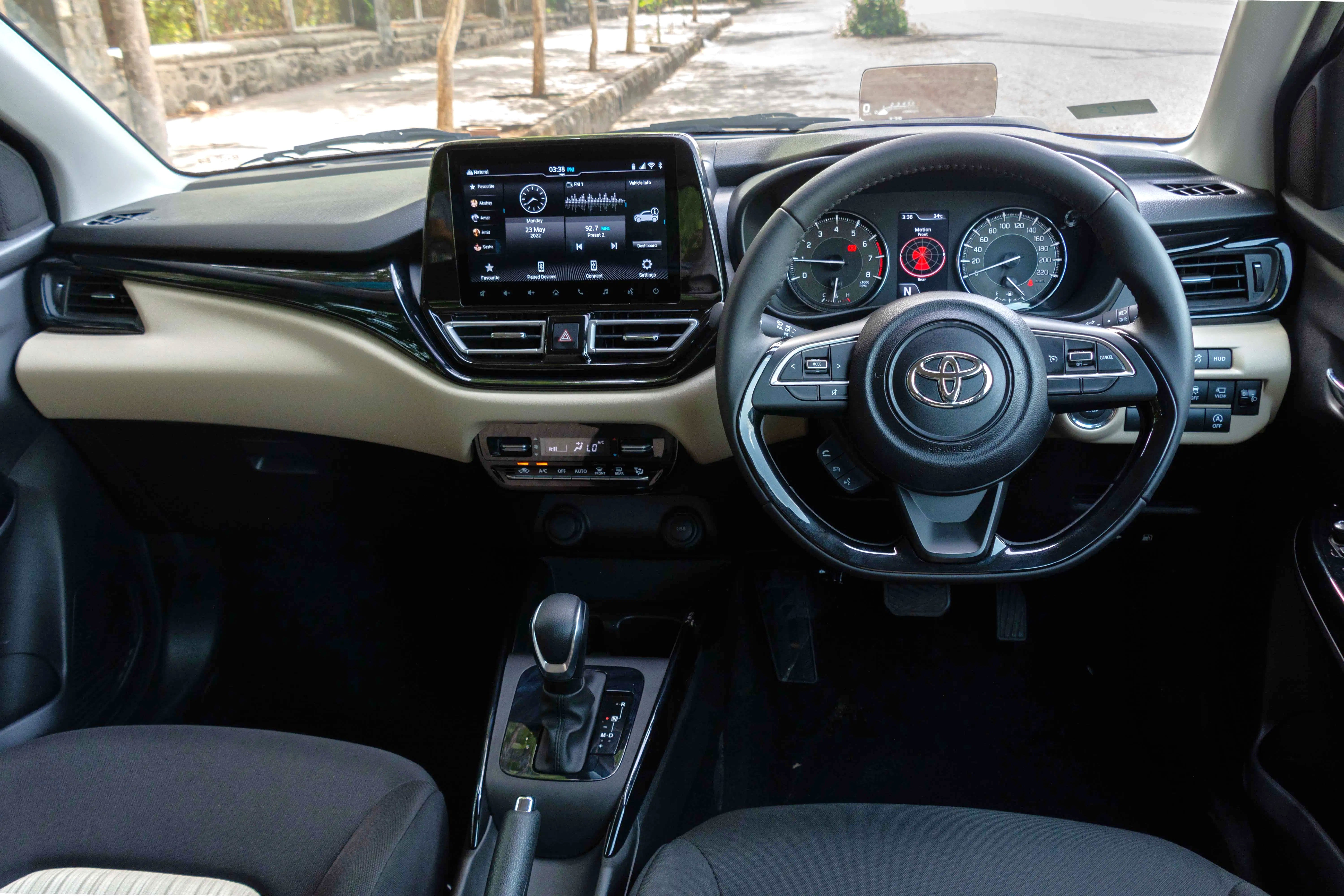
Just a month after the launch of the Baleno facelift, the updated form of its Toyota-badged counterpart, the Glanza, will be revealed. The Glanza facelift is likely to feature styling revisions similar to those of the updated Baleno, like a larger grille, redesigned bumpers, and new alloy wheel designs. Inside, the Toyota hatchback’s dashboard layout is expected to be largely unchanged, save for fresh seat upholstery. New creature comforts are likely to include Level 2 ADAS, a wireless charging pad, and ventilated front seats.
Current Toyota Glanza interior. Image used for representation only.
Under the bonnet, the Glanza facelift is anticipated to mirror the Baleno in dropping its current 90hp 1.2-litre four-cylinder K12N petrol engine in favour of the 83hp 1.2-litre three-cylinder Z12E mill. Like in the Baleno facelift, this engine is expected to be offered with either a 5-speed manual or 5-speed AMT in the updated Glanza, along with a 70hp CNG option.
Third-gen Audi Q3
Launch: 16 October
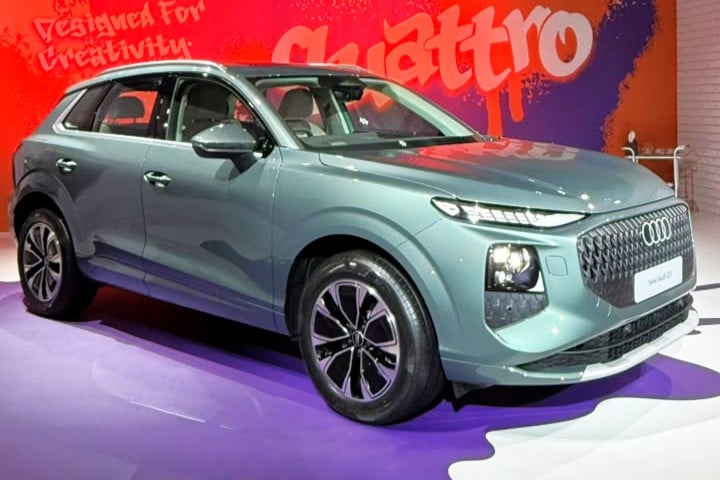
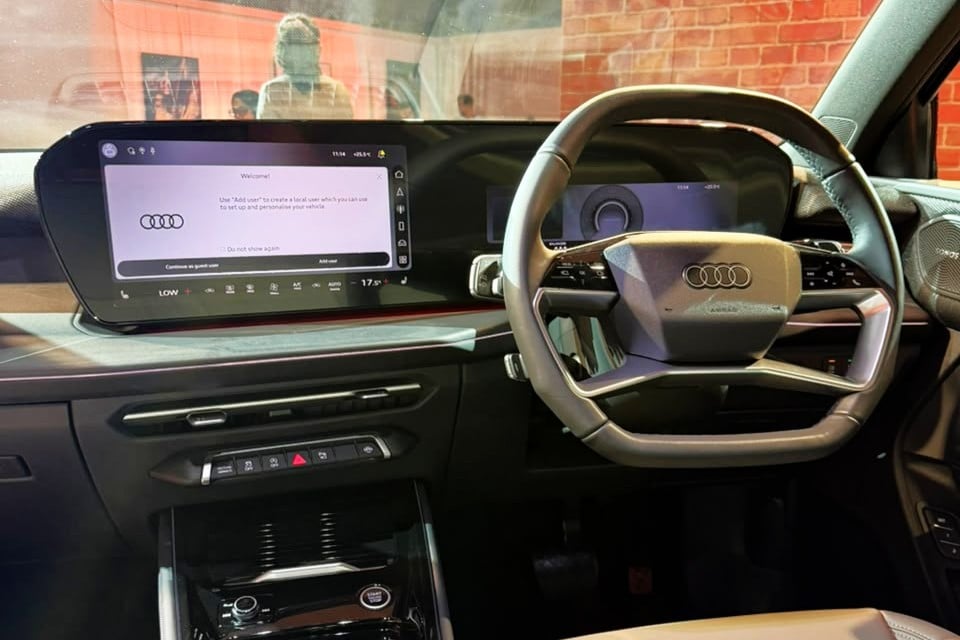
Audi India will launch the latest generation of its entry-level SUV, the Q3, next month. The India-spec third-gen Q3 was unveiled back in August, and will continue to rival the BMW X1 and Mercedes-Benz GLA. On the outside, the new Q3 is larger than its predecessor in every dimension and bears a sharper design language, which includes split LED headlamps, a wide grille, 18-inch alloy wheels, and a rear light bar with an illuminated Audi emblem.
The interior of the third-gen Q3 is more modern and feature-loaded too, offering a 12.8-inch touchscreen, an 11.9-inch digital driver’s display, a new squircle-shaped four-spoke steering wheel, ambient lighting, a Sonos sound system, a panoramic sunroof, ambient lighting, a 360-degree camera, dual-zone climate control, among others. Under the bonnet, the Q3 continues to get a 204hp 2.0-litre four-cylinder direct-injection turbo-petrol engine, mated to a 7-speed dual-clutch automatic and Audi’s Quattro AWD system. 0-100kph comes up in a claimed 7.1 seconds, and the top speed is rated at 229kph.
Renault Duster hybrid
Launch: 17 October
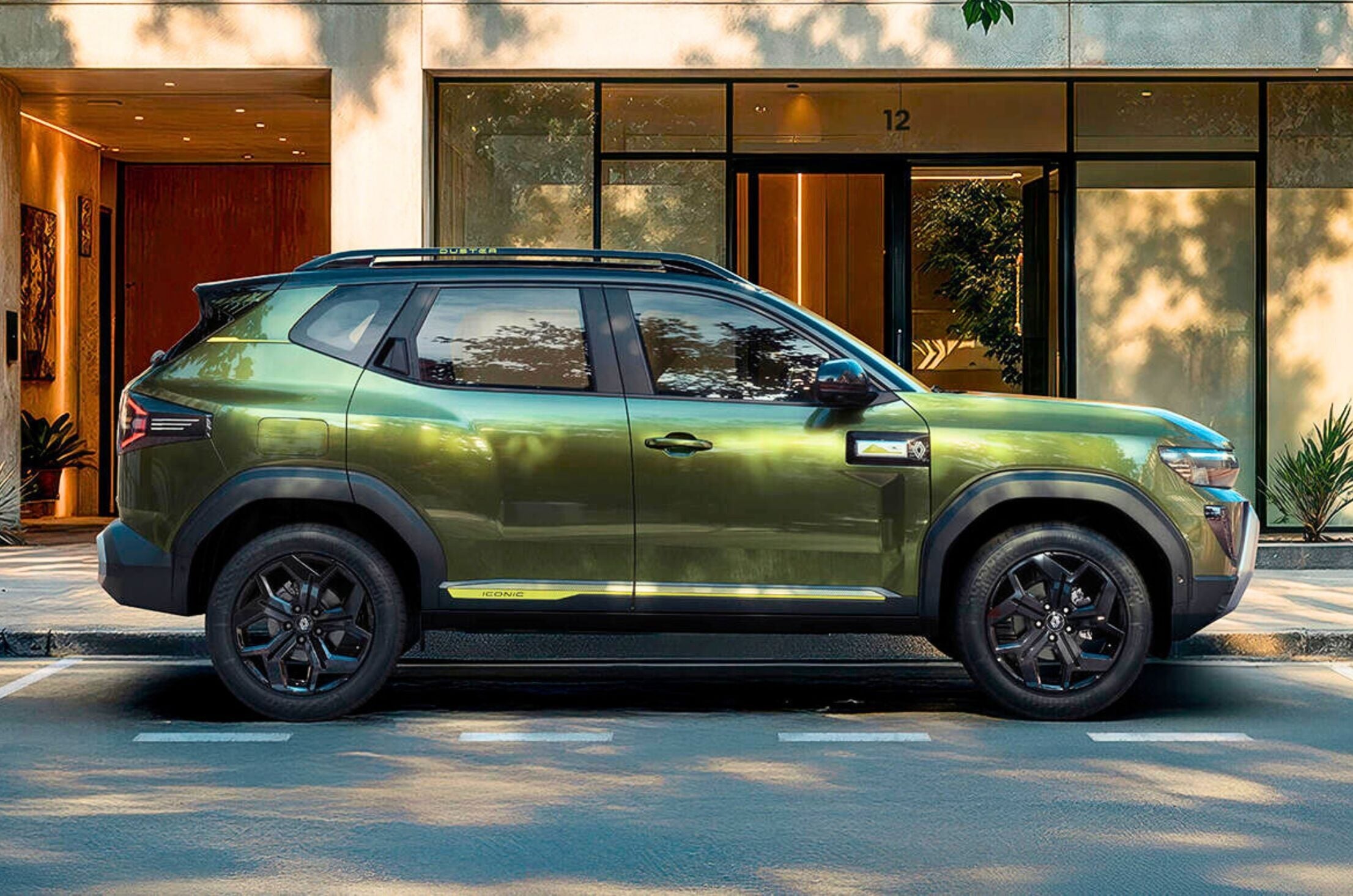
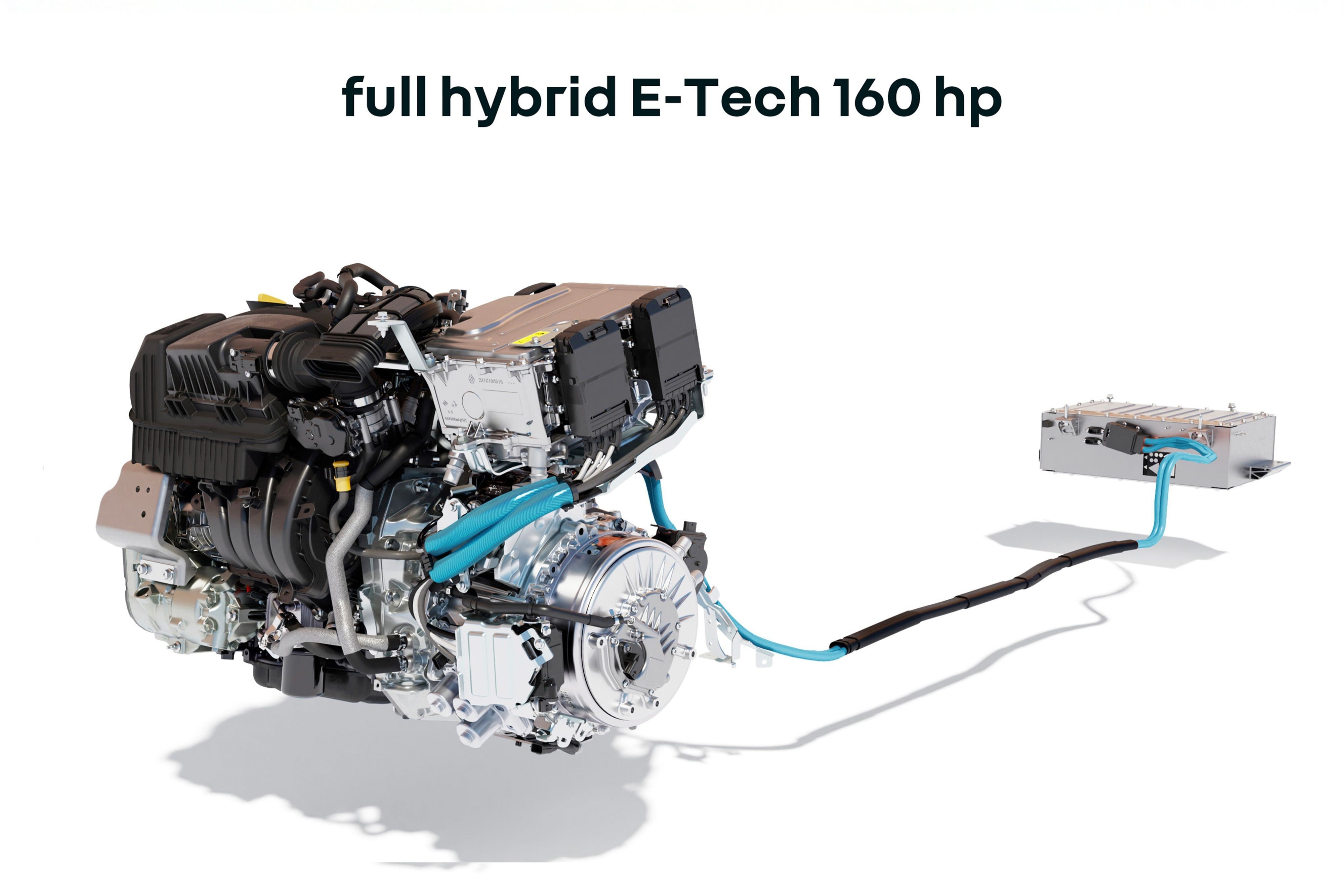
Since its launch earlier this year, the Renault Duster has been available with a couple of turbo-petrol engines only, but that will change come October 17. Renault will bolster the Duster’s line-up with a strong hybrid powertrain dubbed the E-Tech 160. It pairs a 1.8-litre four-cylinder naturally aspirated petrol engine with two electric motors and a 1.4kWh battery pack, developing a combined 160hp and 172Nm.
This setup will be paired with a segment-first 8-speed dedicated hybrid transmission (DHT) that uses fixed gear ratios, unlike the e-CVTs seen in hybrid SUV rivals like the Grand Vitara, Victoris, and Hyryder. The DHT should therefore enable a more natural driving feel to the Duster hybrid. Thanks to its 1.4kWh battery, the E-Tech 160 is also claimed to deliver 80 percent of urban driving in all-electric mode, which should help the Duster hybrid achieve great fuel efficiency.
Hyundai Bayon
Launch: Mid to late October
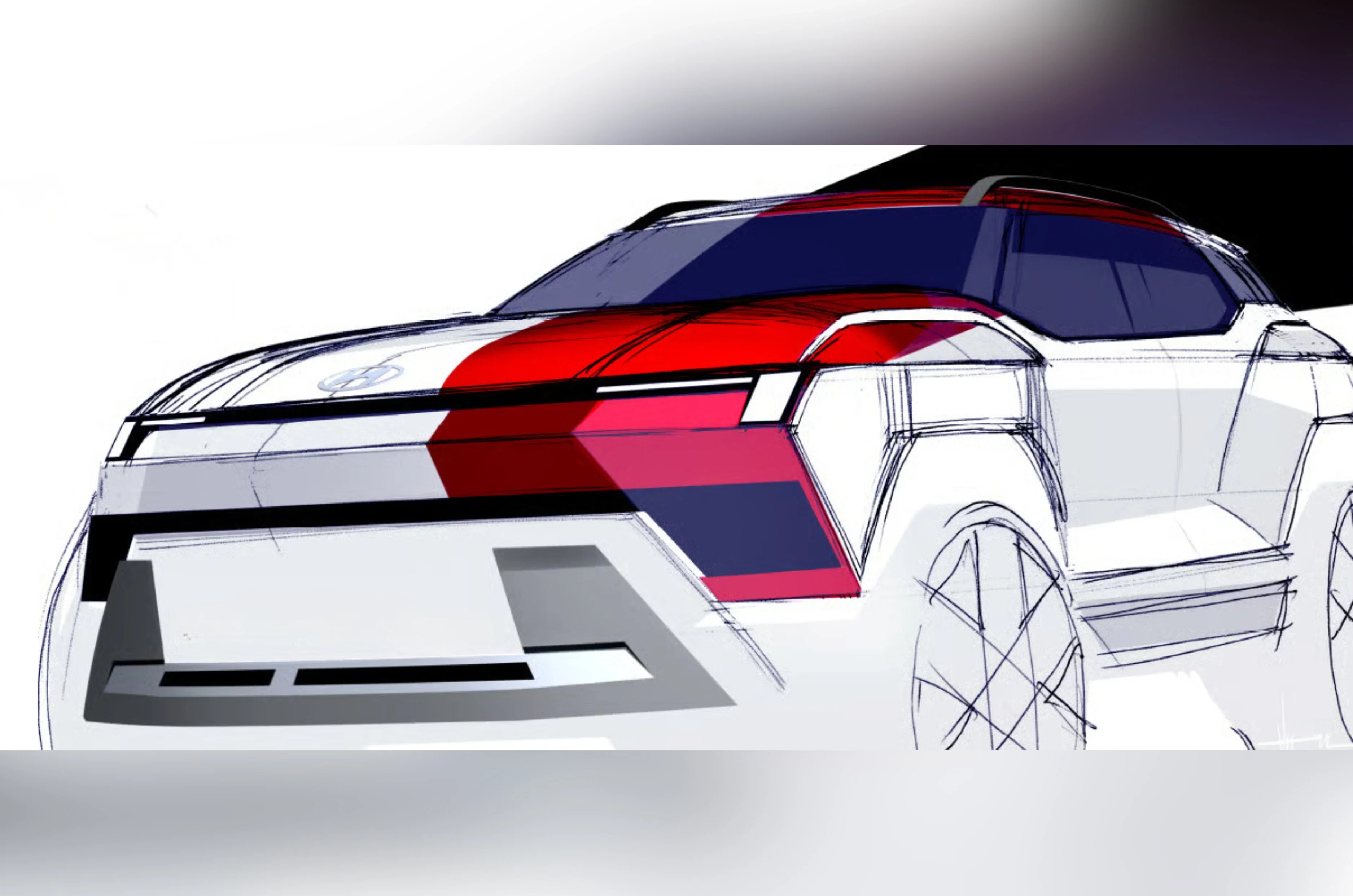
Hyundai’s second midsize SUV for India, the Bayon, is expected to be fully revealed and launched next month – bookings commenced on 23 September. The Bayon will slot between the Venue and Creta, offering the latter’s 1.5-litre naturally aspirated engine in petrol and CNG guises. Gearbox options are likely to include a 6-speed manual and CVT automatic. On the outside, the Bayon will feature Hyundai’s ‘Art of Steel’ design language, with styling cues like L-shaped front and rear LEDs, rakish proportions, an upward-sloping window line, and more. It’s also expected to be the first Hyundai car to come with an underbody CNG tank.
The interior of the Bayon is likely to offer a curved dual-screen setup, a three-spoke steering wheel bearing Hyundai’s four-dot motif, and a vertically oriented centre console – the dashboard layout will resemble that of the fourth-gen i20, which was revealed for the Brazilian market a few months ago.
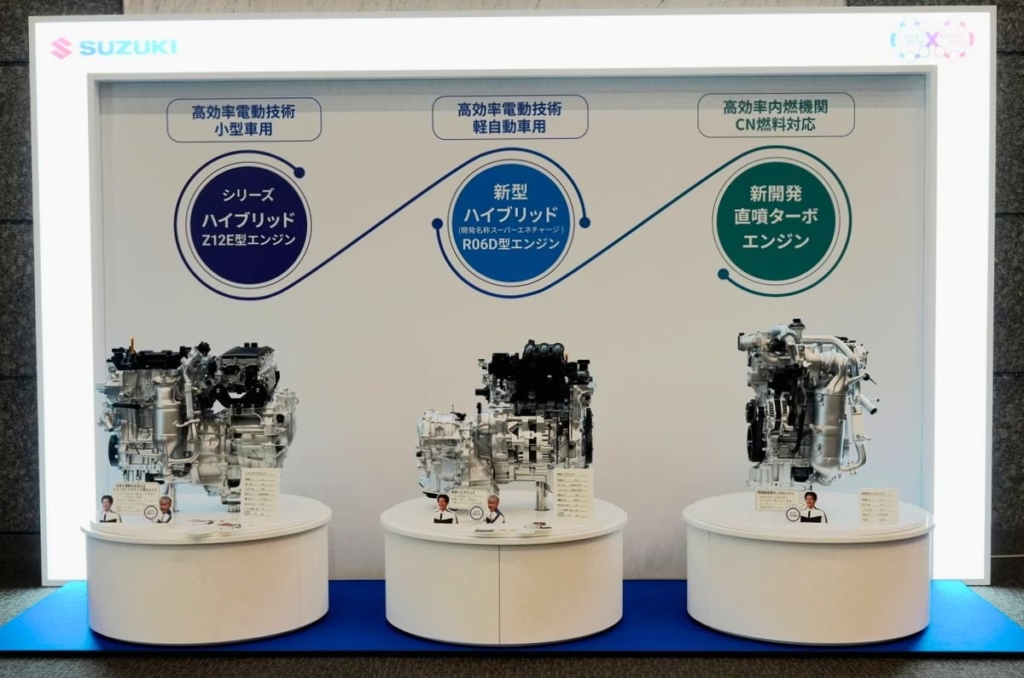
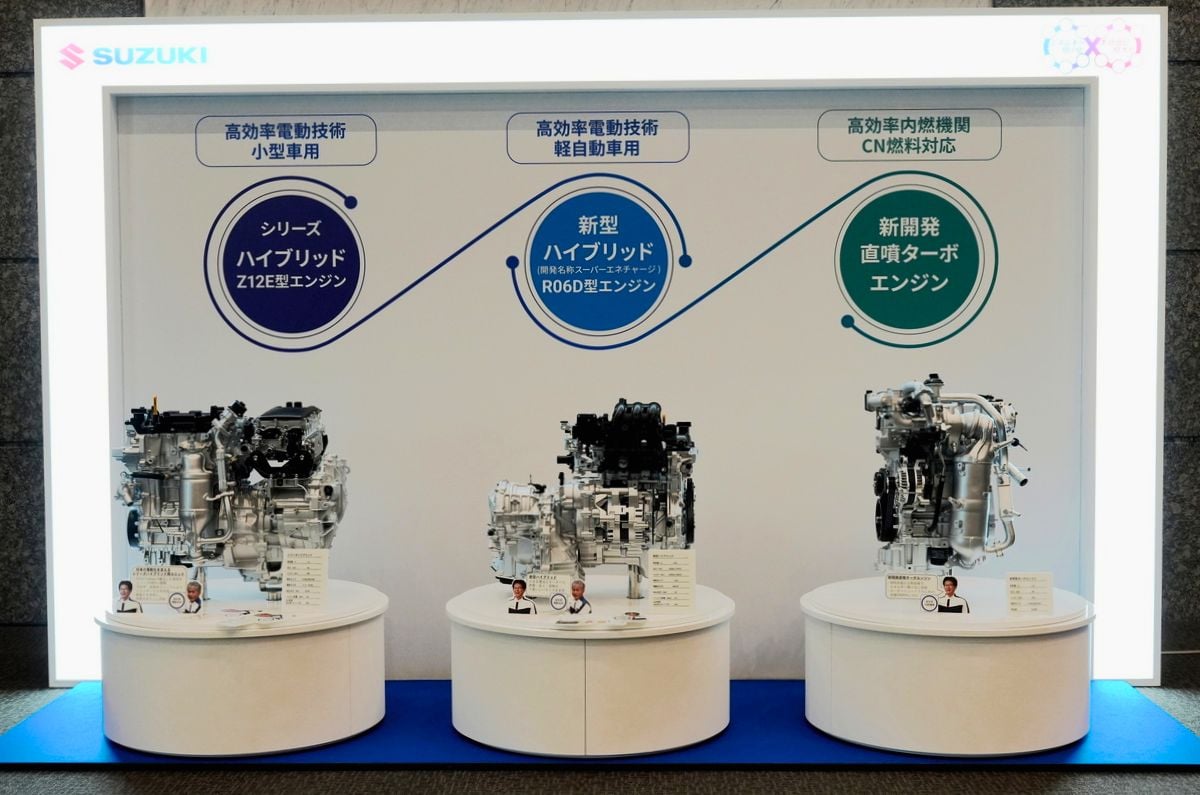
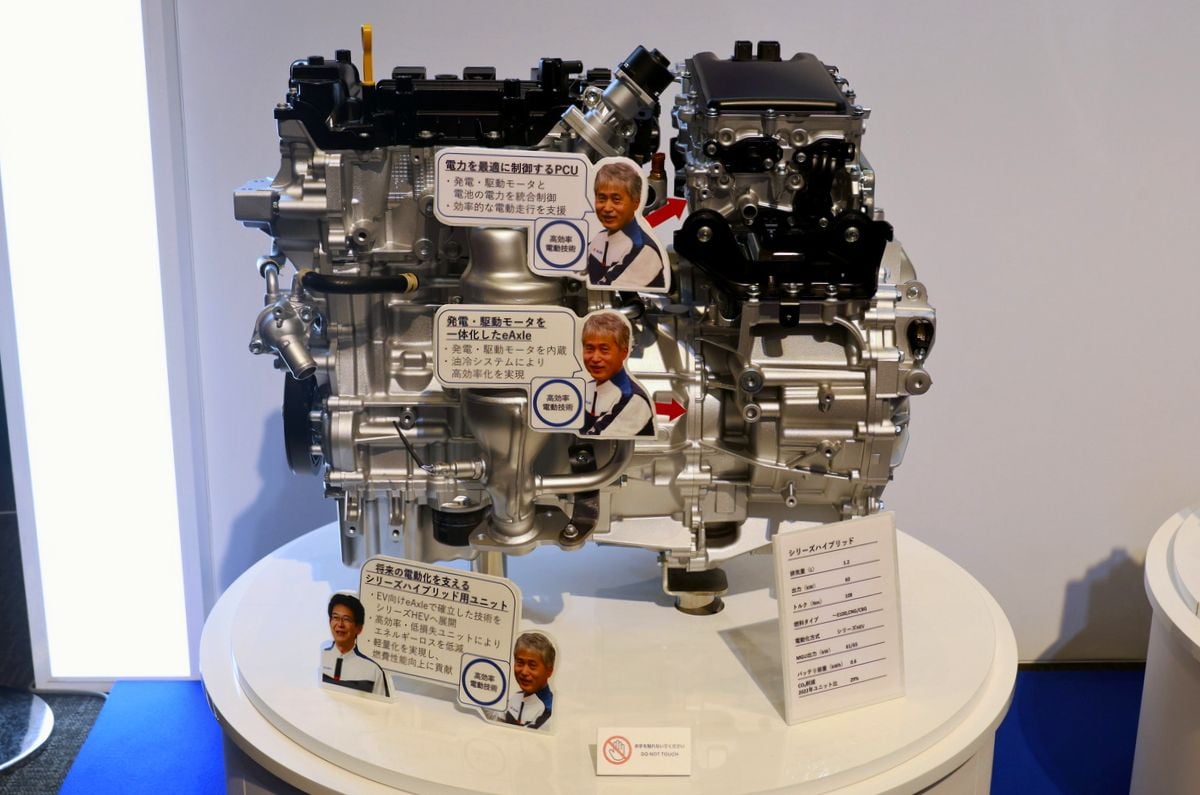
Suzuki recently revealed plans to develop a new direct-injection turbocharged (DITC) engine for growth markets, including India, as part of its ‘Technology Strategy 2026: Looking 10 Years Ahead’ roadmap. The manufacturer has also revealed specifications for a 1.2-litre 3-cylinder turbo-petrol engine prototype in Japan, which is being developed for compatibility with E100, CNG (compressed natural gas) and CBG (compressed biomethane gas). While not confirmed by the manufacturer, this engine is likely to eventually be offered in India.
1.2-litre turbo-petrol engine prototype produces up to 126hp and 230Nm
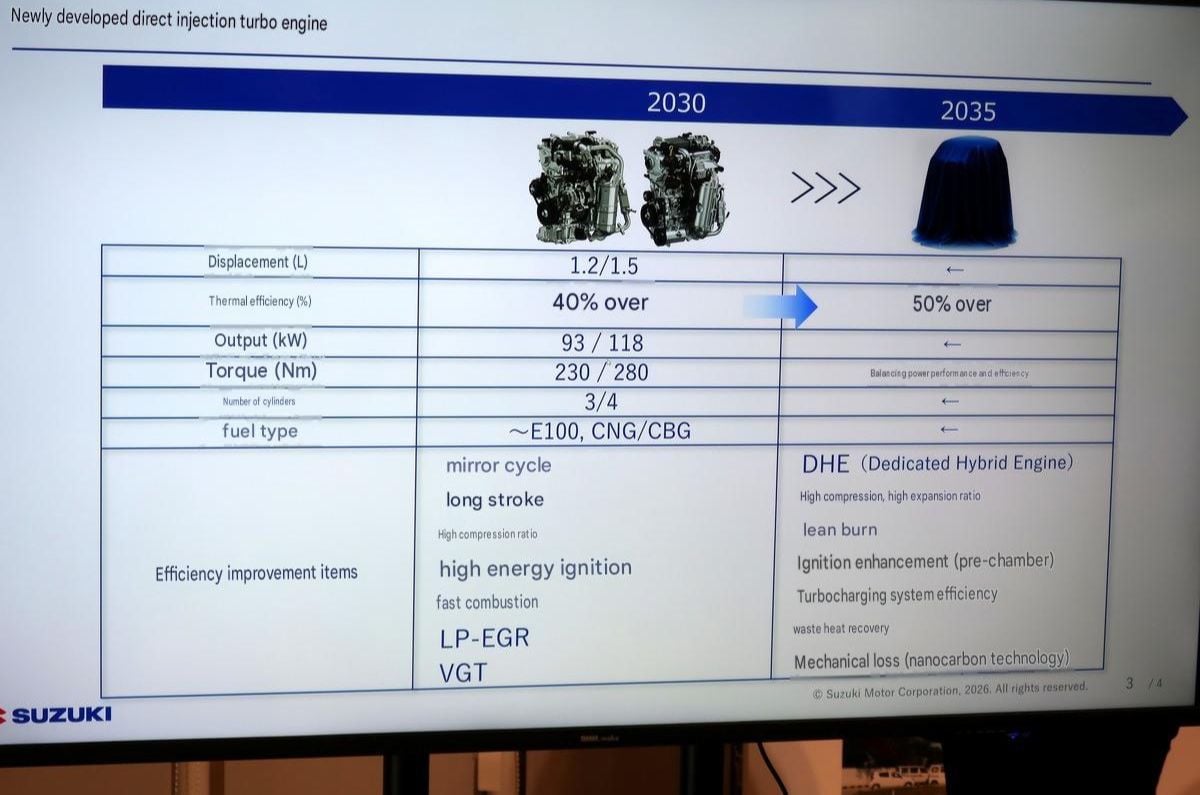
This engine is being developed to achieve up to 40 percent thermal fuel efficiency
Alongside the turbo-petrol engine, Suzuki has also showcased a series-hybrid powertrain based on the Z12E 3-cylinder engine and a smaller 0.66-litre engine for kei cars. Specifications of a 1.5-litre direct-injection turbo-petrol engine were also revealed.
Suzuki’s new engine prototypes: More details
1.2-litre 3-cylinder turbo-petrol engine is based on Z12E, as per a media report
Image source: Autocar Japan (text translated into English)
The showcased prototype is a 1.2-litre direct-injection turbo-petrol engine, aimed at producing up to 126hp and 230Nm, with thermal fuel efficiency targeted at up to 40 percent at launch and up to 50 percent by 2035. The engine is being developed for compatibility with E100 (100 percent ethanol), CNG and CBG.
According to a report by Japan’s MotorFan, the engine is based on Suzuki’s Z12E 3-cylinder unit and features a variable-geometry (VG) turbocharger and a water-cooled intercooler. The Z12E is offered in a naturally aspirated avatar in the Swift, Baleno and Dzire. While not confirmed by the manufacturer, the new turbocharged engine could eventually be offered in sub-4m cars in India.
Z12E engine to also form the basis of a series-hybrid powertrain
Suzuki is also developing the 1.2-litre Z12E 3-cylinder engine for use in a series-hybrid powertrain. In this setup, the engine generates electricity, while an electric motor drives the wheels. The system uses two motors – one for generating electricity and another for driving the wheels. In this application, the Z12E engine produces up to 82hp and 108Nm, while the generator motor has a maximum output of 83hp and the drive motor produces up to 88hp. The system uses a 0.6kWh battery.
Series hybrid system combining a 1.2L engine and two electric motors. (Image source: Autocar Japan)
Suzuki is also considering combining this series-hybrid system with its new 1.2-litre direct-injection turbo-petrol engine in a future plug-in hybrid setup. The proposed combination could deliver a total system output of up to 177hp.
1.5-litre turbo-petrol engine and a 0.66-litre engine (for kei cars) also in development
As per Autocar Japan, Suzuki is also developing a 1.5-litre 4-cylinder, aimed at producing up to 160hp and 280Nm. Like the smaller 1.2-litre engine, the 1.5-litre turbo-petrol engine is also being developed for compatibility with E100, CNG and CBG fuels.
Suzuki also showcased a smaller 0.66-litre 3-cylinder engine in Japan. The engine is being developed in both naturally aspirated and turbocharged forms for kei cars.
Notably, all the engines showcased by Suzuki are designed for transverse-mounted, front-wheel-drive (FWD) vehicles, with no mention of powertrains for longitudinally mounted, rear-wheel-drive (RWD) models such as the Jimny. However, powertrains for RWD models are also understood to be under development and could be revealed at a later date.
JSW Group is set to launch its own car brand and its debut model will be the Jetour T2-based JSW Combat. We drive the T2 in Dubai to tell you what to expect on the tough plug-in hybrid SUV.
JSW Group, one of India’s largest conglomerates, is preparing to significantly expand its automotive ambitions. Having already established a presence through JSW-MG Motor India, its joint venture with China’s SAIC, the company is now gearing up to enter the market with an all-new brand of its own, JSW Motor.
Rather than taking the conventional route of developing products from the ground up, JSW is leveraging global partnerships to fast-track its entry into the industry. Its first product for India will be a large plug-in hybrid SUV based on the Chery Jetour T2, which is expected to be assembled at JSW’s upcoming facility in Chhatrapati Sambhajinagar, and we hear it will be called the Combat.
With its rugged styling, imposing road presence and the promise of combining EV-like efficiency and long-distance touring ability, the SUV is expected to be positioned in the Rs 30-50 lakh segment and take on established players head-on.
Ahead of its India launch later this year, we got an early drive of the SUV to find out whether JSW Motor’s debut offering is ready for combat.
Jetour T2 Exterior Design and Engineering – 8/10
A handsome SUV that oozes character and rugged appeal.
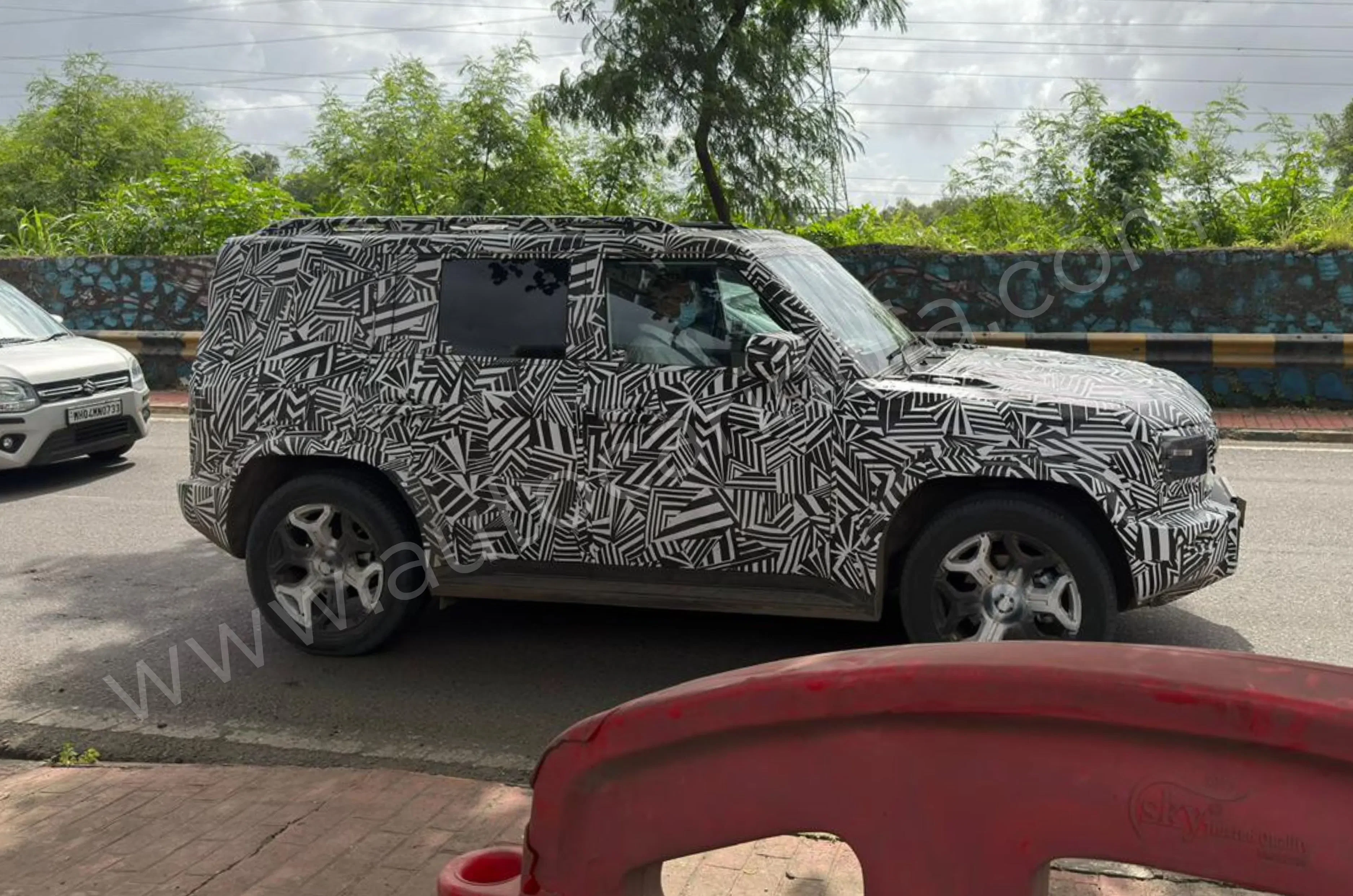
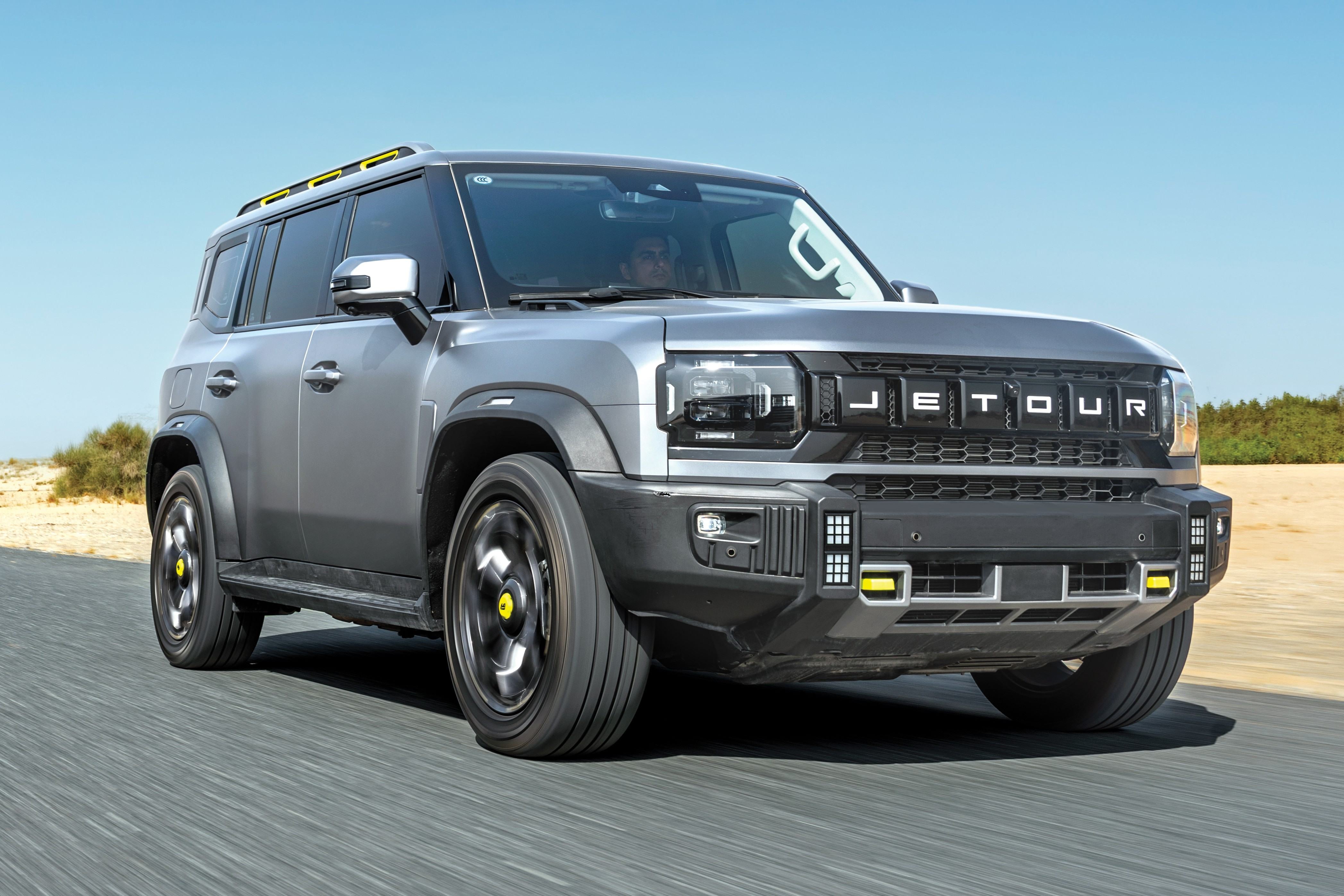
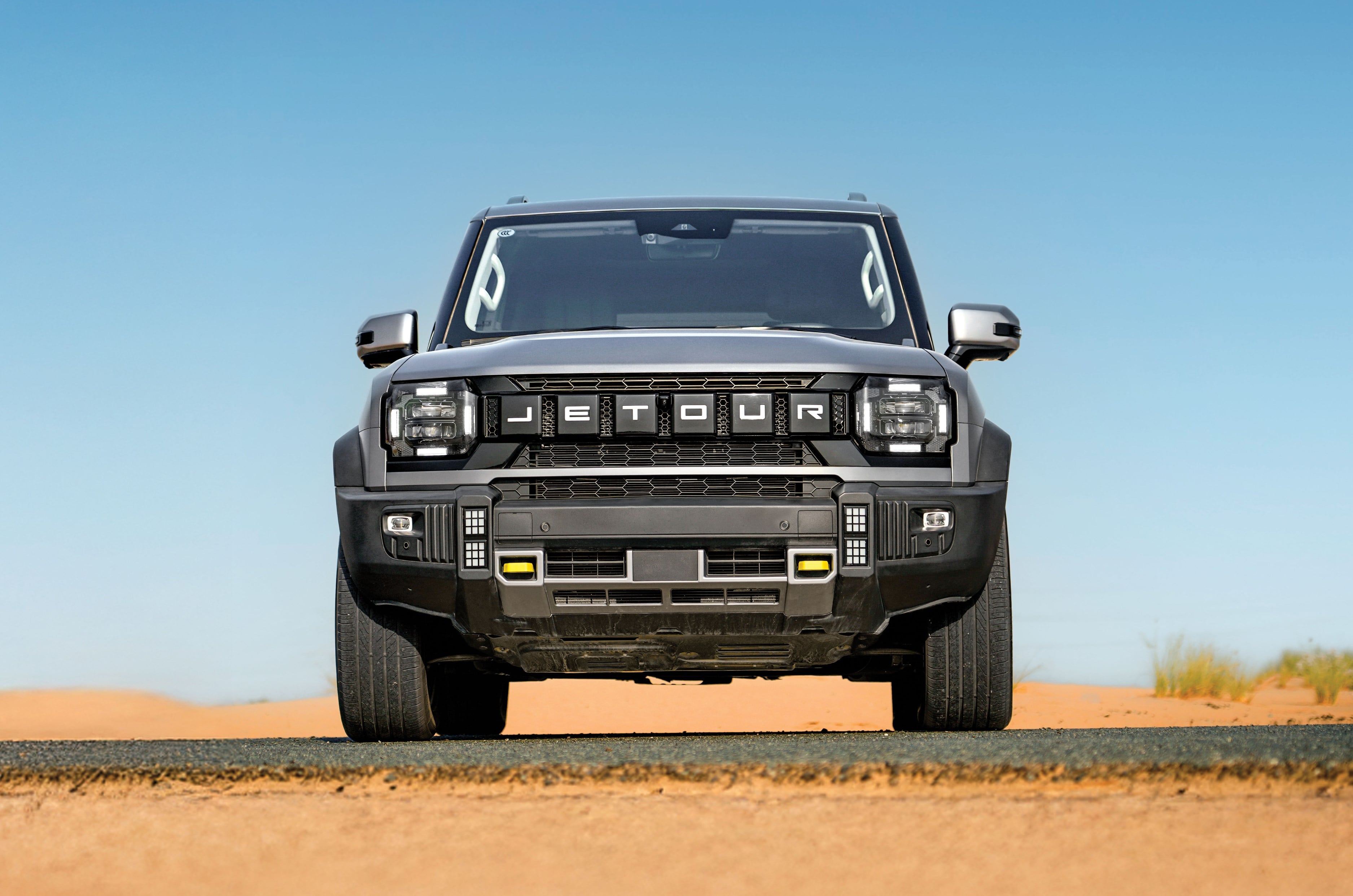
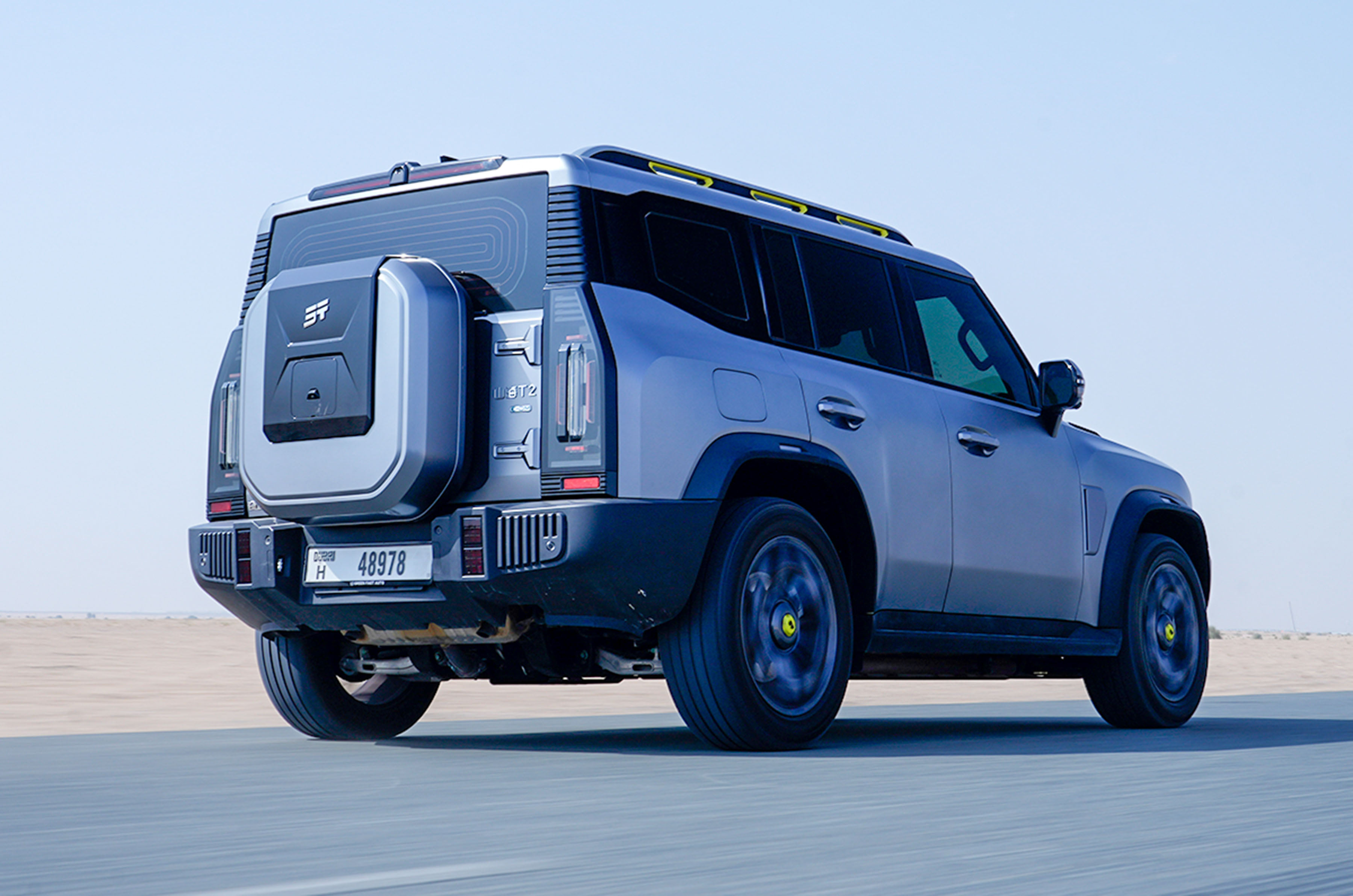
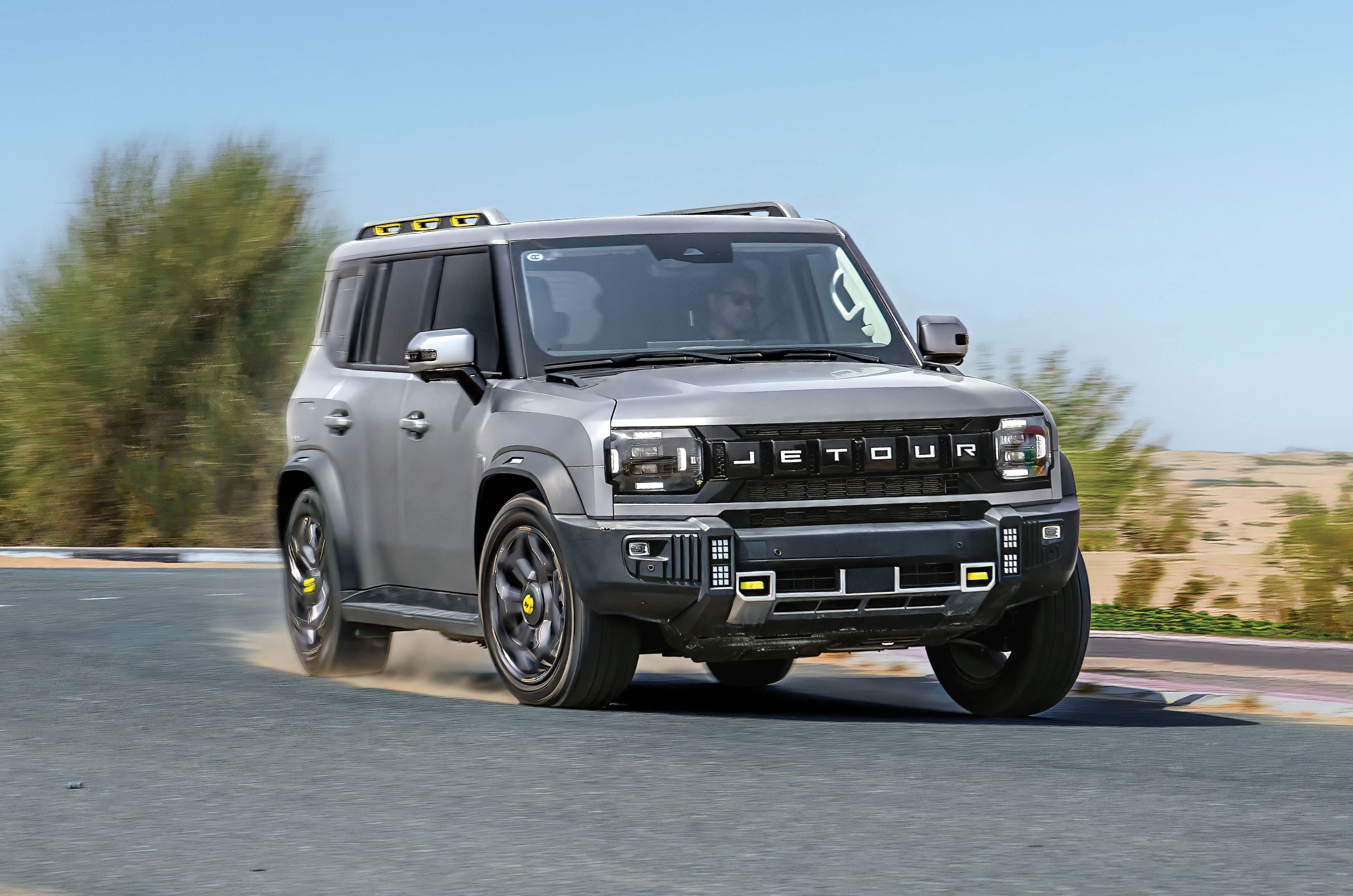
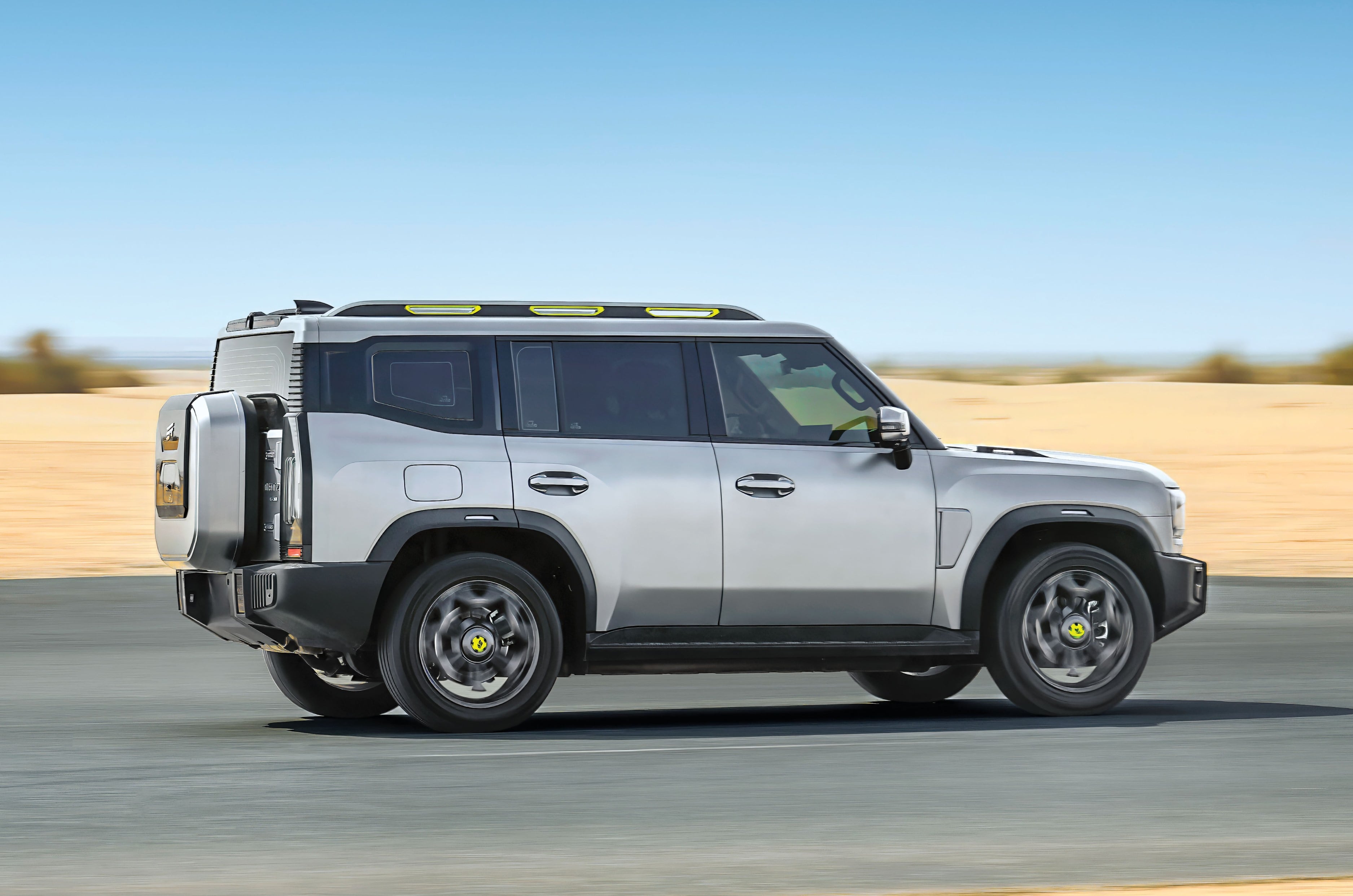
The Jetour T2 delivers on the SUV template to the T – flat bonnet, upright stance, raised ride height, chunky tyres, rugged body cladding, and, as the icing on the cake, a spare wheel mounted on the tailgate. It looks imposing and highly desirable, and while its silhouette bears a resemblance to the Defender, the T2 still manages to carve out a distinctive identity. JSW is likely to make a few changes to the headlamps, grille and bumpers to further differentiate the Combat, but the overall shape, clean surfacing and most of its defining design elements are expected to remain unchanged.
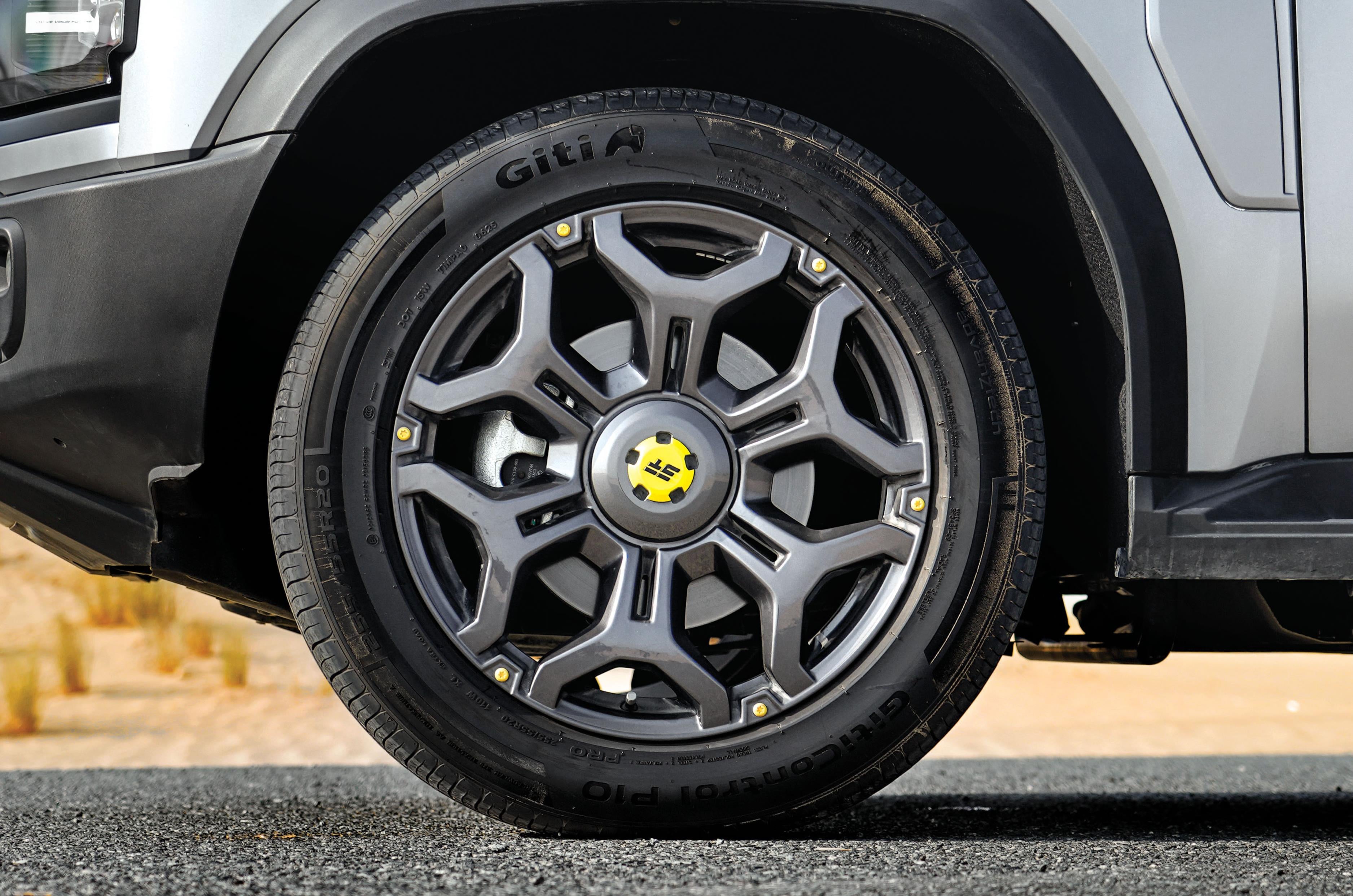
Attractive 20-inch wheels; 201mm of laden clearance.
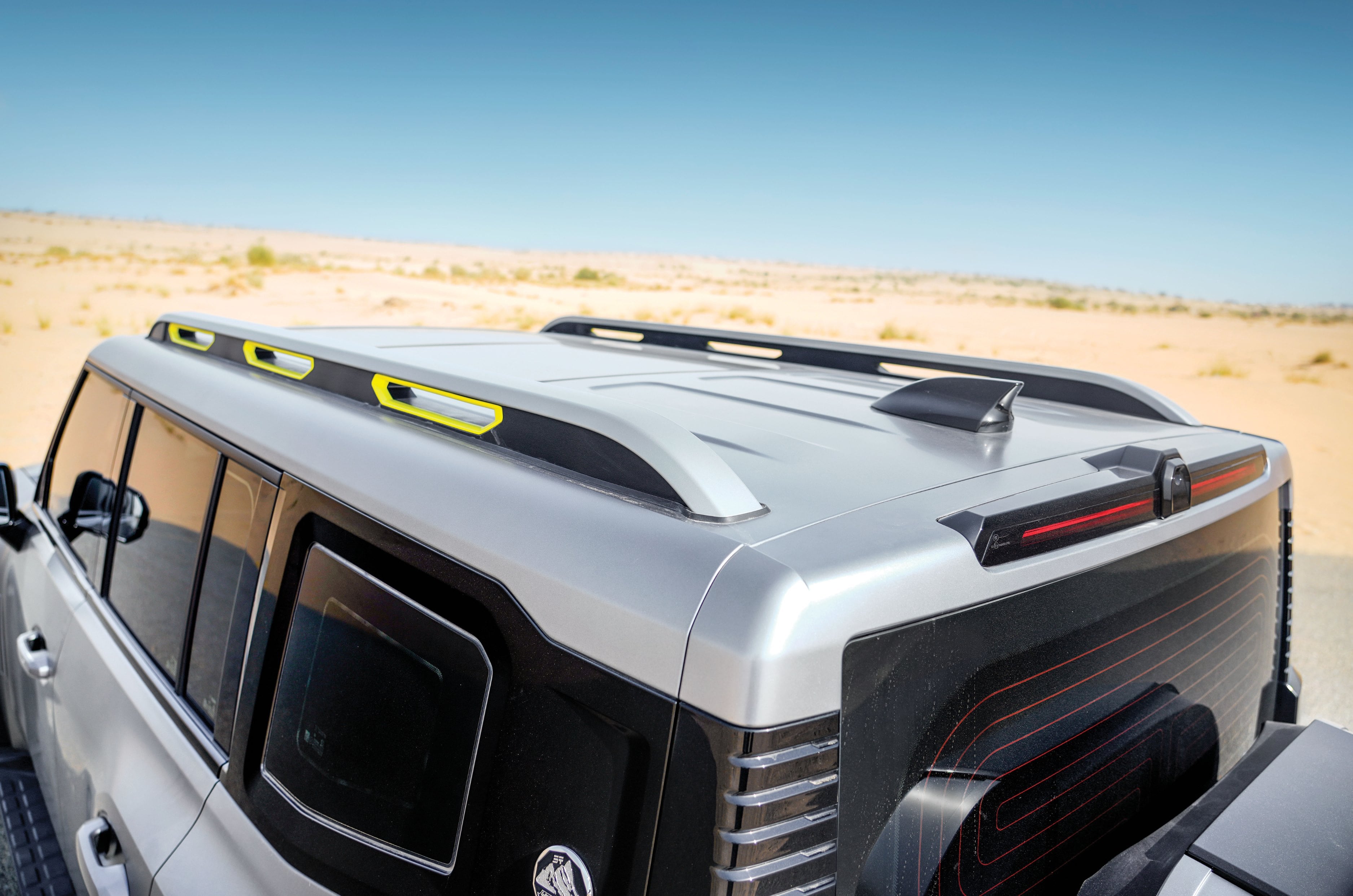
The massive 20-inch wheels suit the T2’s stance perfectly, and the clean bodywork, free of unnecessary cuts and creases, is particularly appealing. It also gets functional roof rails capable of carrying up to 100kg of luggage, while the side steps feel reassuringly sturdy and genuinely useful.
The T2’s space-saver spare wheel sits within a squircle-shaped cover, although accessing it involves a multi-step process that could prove frustrating if you ever need to change a tyre on a deserted road late at night.
Functional roof rails can take up to 100kg of load.
In terms of dimensions, it is longer (including the spare wheel), wider and taller than the Toyota Fortuner. Ground clearance, too, is an impressive 190mm in laden condition. However, don’t let its rugged appearance fool you – the version destined for India will remain front-wheel drive.
Jetour T2 Interior Space, Comfort, and Features – 8/10
Solidly built, well-designed cabin with some clever detailing and plenty of storage areas.
Climb aboard using the sturdy side step and handy grab handles, and the T2 immediately impresses with its sense of solidity. The cabin feels built to last, with numerous thoughtful design details lending it plenty of character. Nearly upright windows, a steeply raked windscreen and a dashboard pushed far forward create a tremendous sense of space, further amplified by the panoramic sunroof.
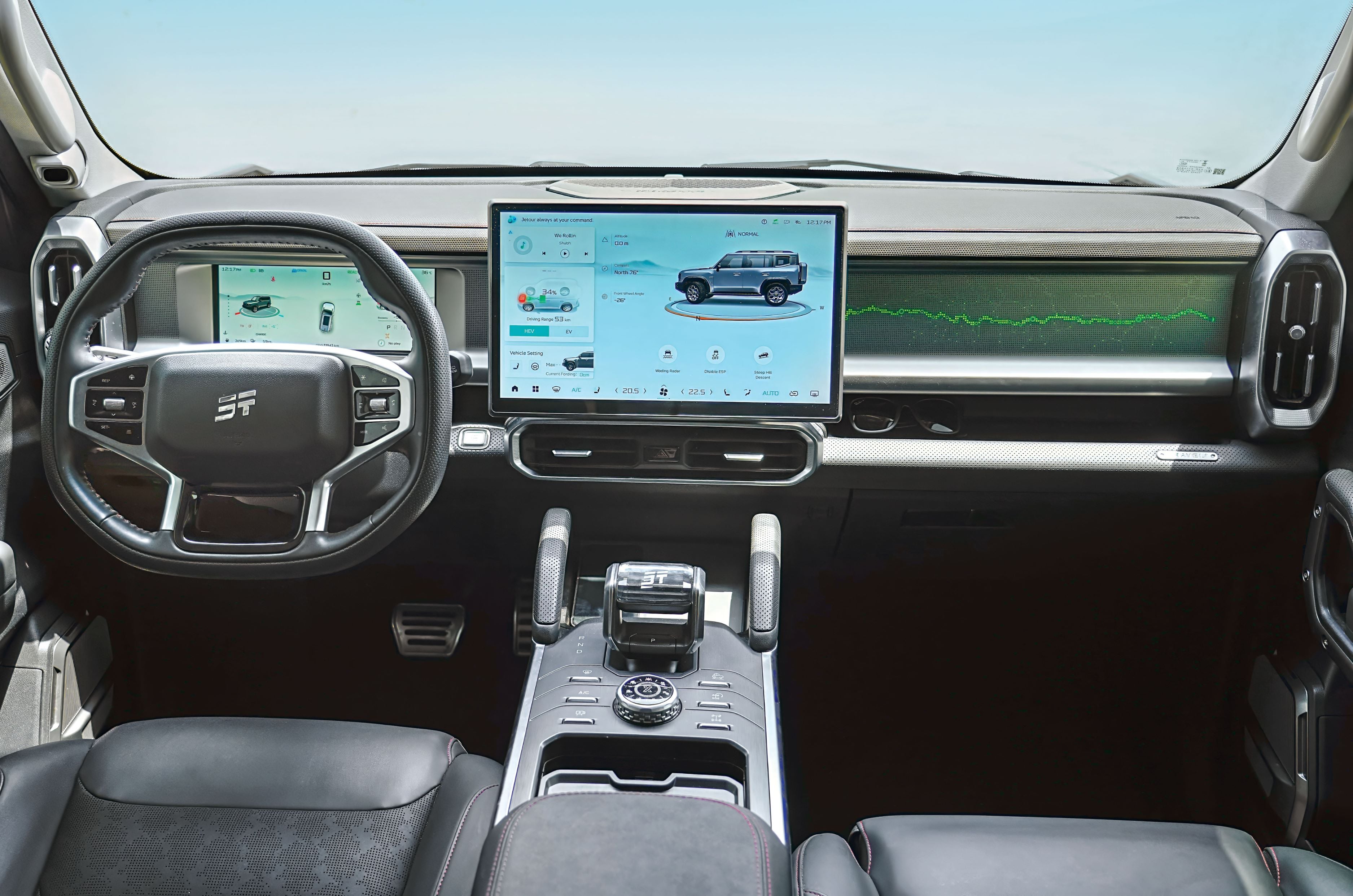
The dashboard itself has a distinctive design, with an illuminated pattern across the fascia adding a unique touch. Several layers are wrapped in dimpled leatherette padding, a theme that extends to the steering wheel and centre console.
Dominating the cabin is a massive 15.6-inch touchscreen that houses numerous vehicle functions, including mirror adjustment, climate control and seat ventilation/heating settings. Wireless Android Auto and Apple CarPlay are included, while the 12-speaker Sony audio system delivers impressive sound quality. Even the 540-degree camera system offers excellent image clarity. The downside is that the interface isn’t slick or responsive.
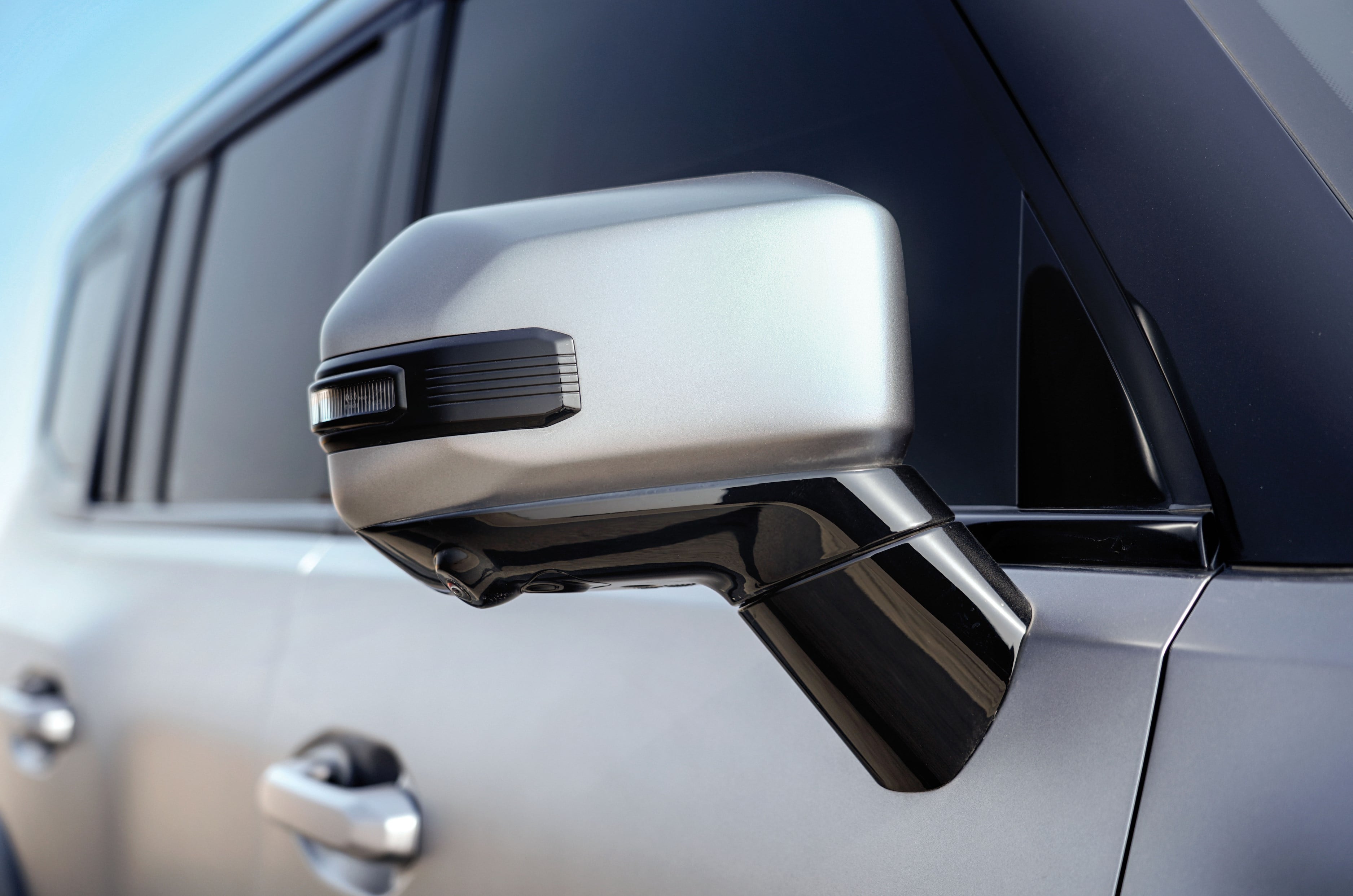
Chunky, door-mounted mirrors. Sadly, controls via touchscreen.
Ahead of the driver sits a 10.6-inch digital instrument cluster, a unit we’ve previously seen in some MG and BYD models. While it displays a wealth of information, the fonts and icons are rather small, making them difficult to read at a glance.
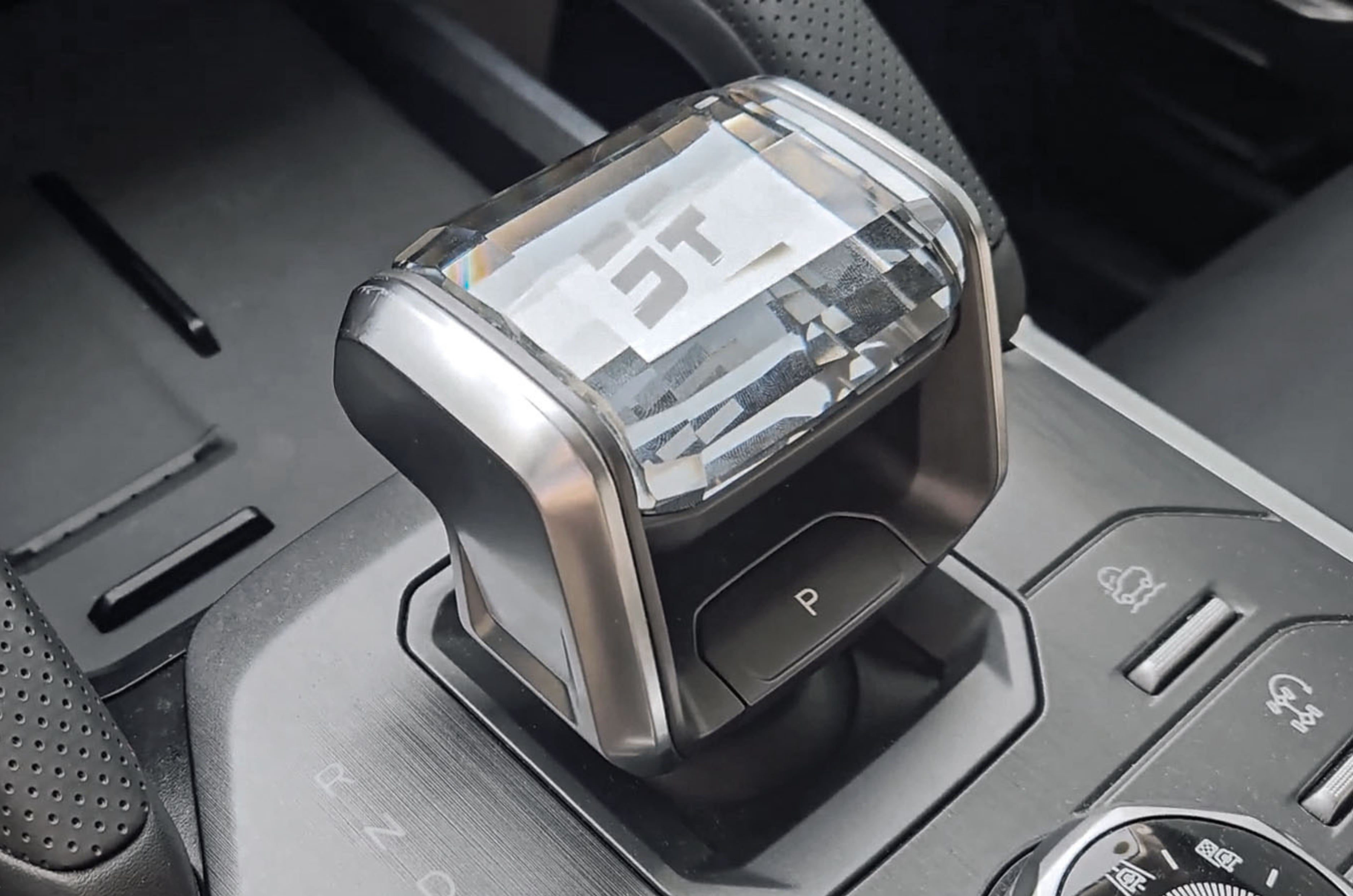
Material quality is generally impressive. The stalks and window switches feel robust and premium, while the jewel-like gear selector features an attractive diamond-cut effect. However, under harsh sunlight, it becomes highly reflective and can prove distracting. Reflections from the dashboard on the front windows are also noticeable.
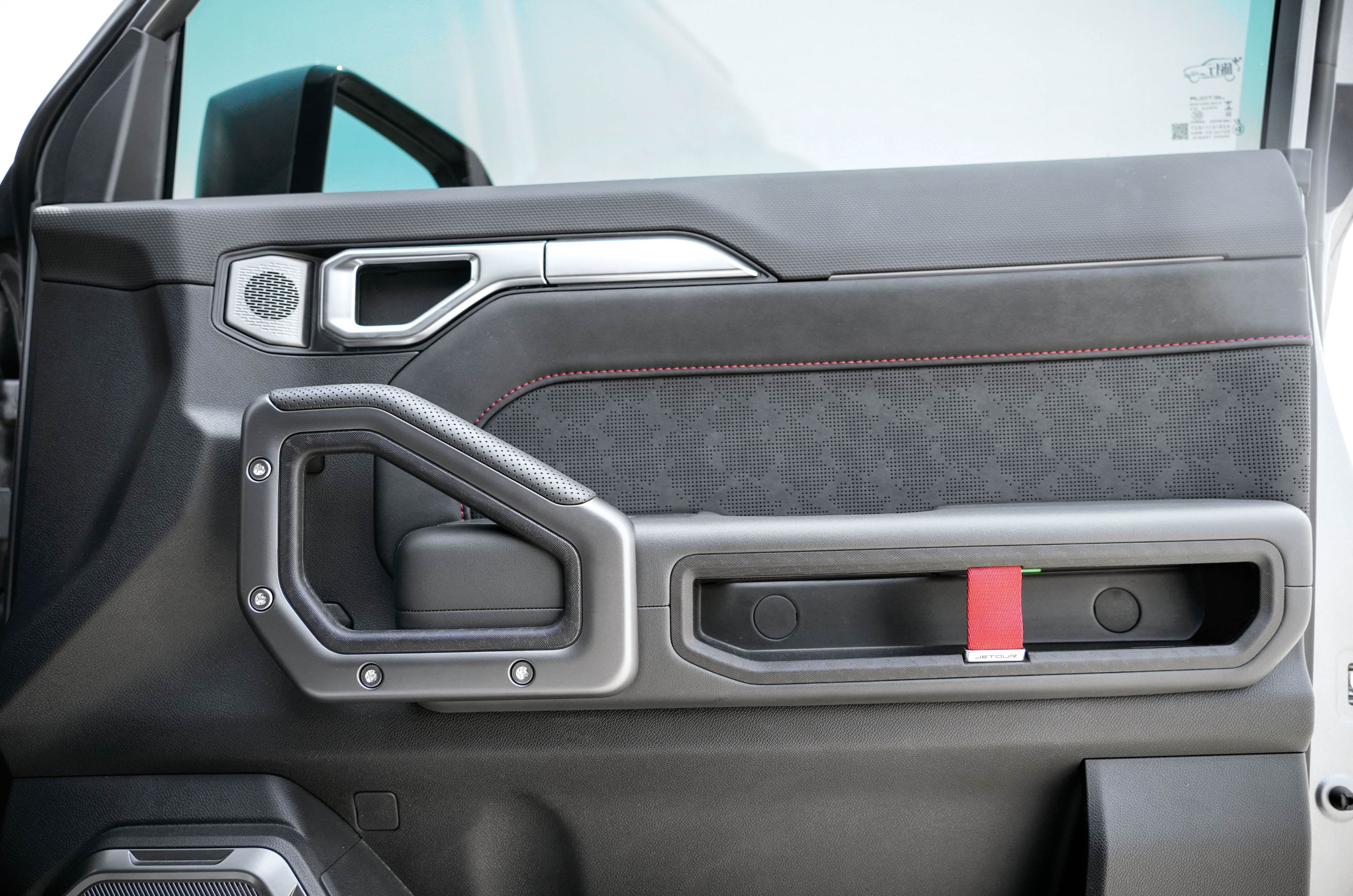
Rugged-looking door pads with nice detailing.
Notably, its dual-zone climate control struggled to cool its large cabin quickly despite the heavily tinted windows. While our test vehicle was a China-specific version, we hope the version we’re going to get in India has an upgraded air-con compressor. Its seat ventilation didn’t seem very effective either, even at its maximum setting.
Diamond-like chunky gear selector is illuminated.
The sculpted front seats, finished in black leatherette with contrasting red stitching, look suitably sporty. They provide excellent support, though the cushioning feels slightly overstuffed, and the absence of lumbar adjustment is disappointing.
Practicality is a strong point. There are large door bins, two phone storage areas (one incorporating a wireless charger), cupholders, a deep-cooled centre console, a large glovebox and even a hidden storage tray beneath the front seat.
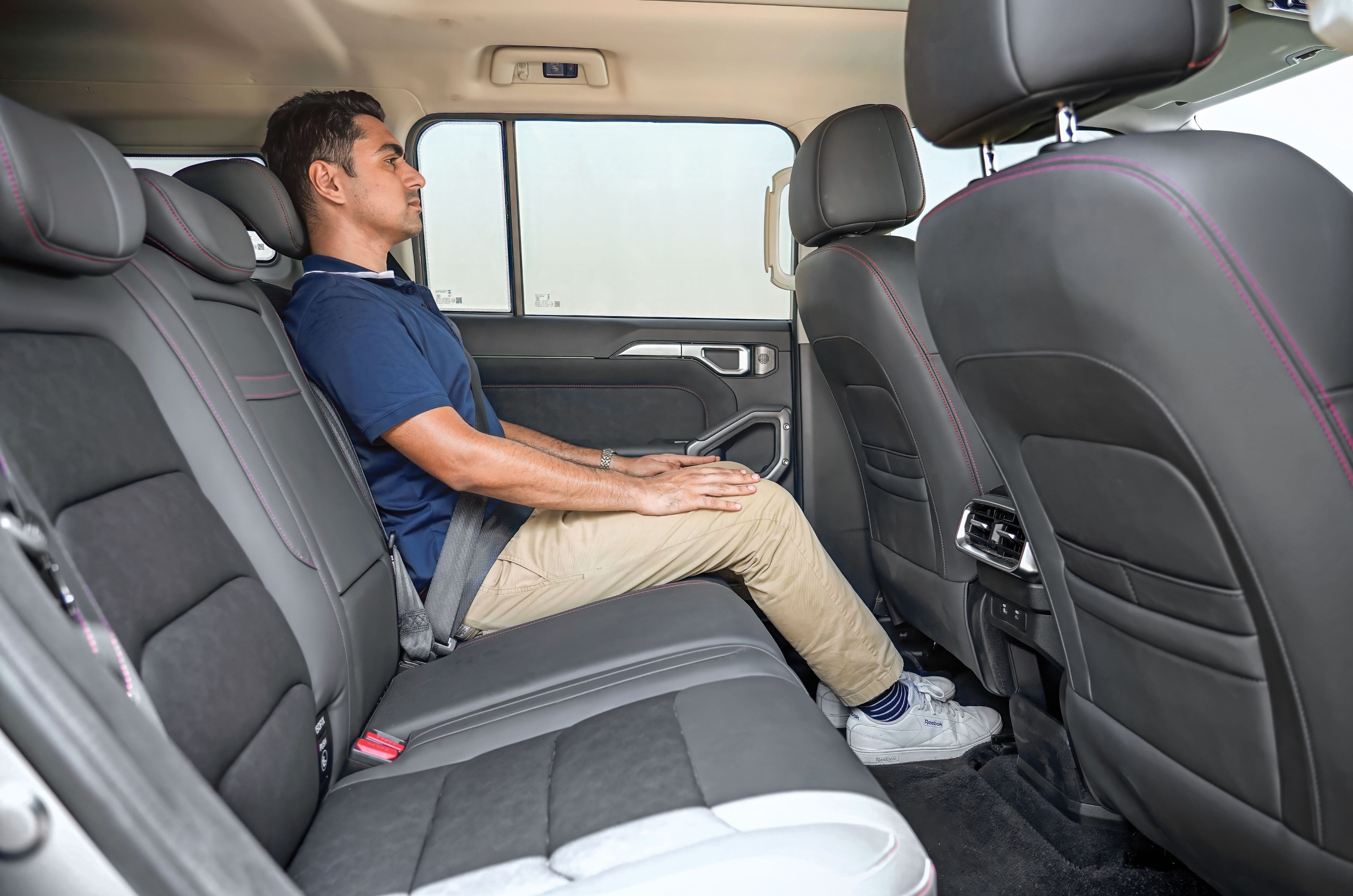
Albeit a bit low-set, rear seat is spacious. Flat floor, wide bench make it comfy for three adults.
The rear seat is equally spacious. A wide bench and completely flat floor make it comfortable for three adults, while the boxy cabin ensures generous headroom and overall space. The seat base is positioned slightly low, but comfort levels remain good.
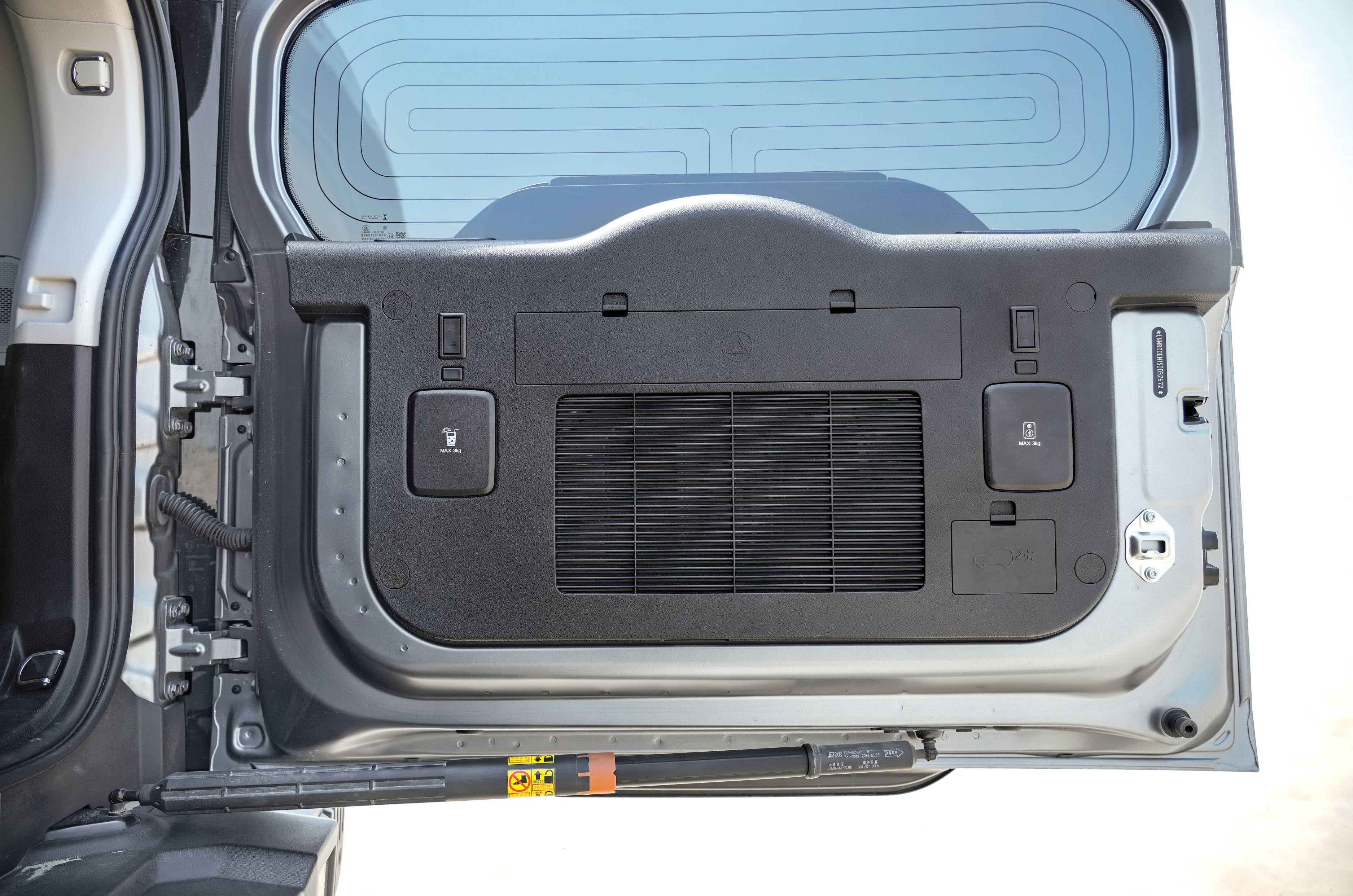
Cupholders, luggage hooks, bottle opener on its tailgate.
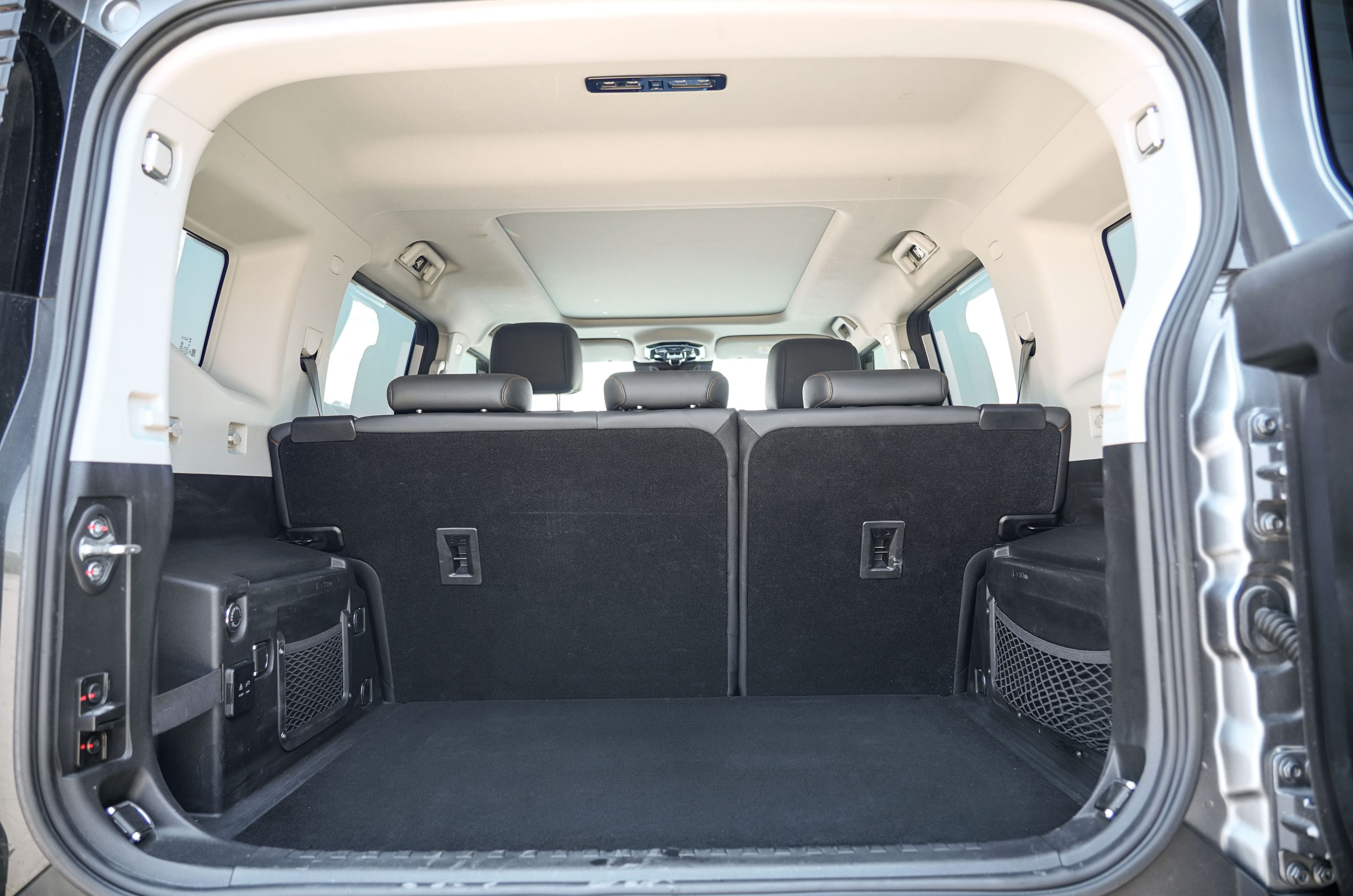
The side-hinged tailgate opens to reveal a cavernous 580-litre boot. Despite carrying the spare wheel, the tailgate itself requires surprisingly little effort to open. Thoughtful touches include a locking mechanism that prevents it from swinging shut unexpectedly, and there are cupholders, luggage hooks and even a bottle opener integrated into the inner panel. The boot area also features clever luggage nets and charging provisions, while a soft-close function further enhances convenience.
Humongous 580L boot. 60:40 rear seat split for added flexibility.
Besides the features already mentioned, it gets one-touch-down power windows, powered front seats with memory, LED lights all around, ambient lighting, a frameless inside mirror, autonomous emergency braking, lane-assist, adaptive cruise control, blind-spot monitoring, front and rear cross-traffic alert, six airbags, hill-start assist, hill descent control and ESP, to name a few more.
Jetour T2 Performance, Refinement and Efficiency- 8/10
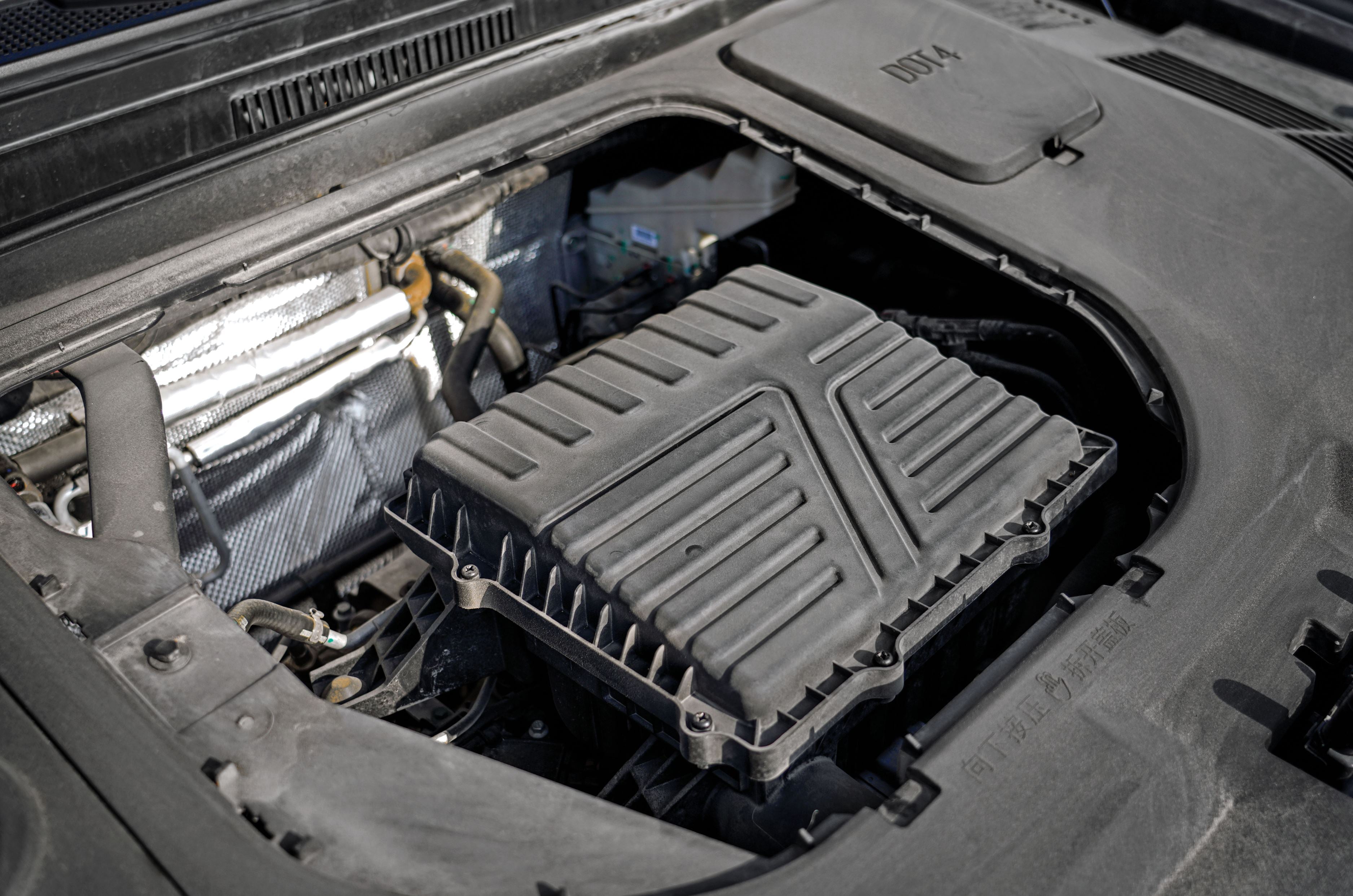
The T2 version we’re driving today is a plug-in hybrid, which combines a 156hp/220Nm 1.5-litre direct-injection turbo-petrol engine, a 43.24kWh LFP battery pack, and three electric motors. Together, the three motors produce 462hp and 700Nm of torque, with power sent to all four wheels. India will also see the plug-in tech, but in front-wheel-drive guise only, with two electric motors instead of three and a smaller 18.4kWh battery.
Powered by a 1.5 turbo along with 3 electric motors.
While the engineering sounds complex, the driving experience is refreshingly straightforward. The four-cylinder engine is refined, although when it operates primarily as a generator to charge the battery, a faint and distant hum does filter into the cabin.
The SUV can be driven either in pure EV mode or in hybrid mode. In EV mode, Jetour claims a range of up to 211km, and performance feels smooth and relaxed rather than outright brisk. Switch to hybrid mode, and the system automatically alternates between EV operation and combined petrol-electric drive, depending on throttle inputs, road conditions and battery charge levels, among other factors.
In this mode, performance feels remarkably effortless, with the T2 gathering speed with surprising urgency as speeds rise. Under full throttle, acceleration is initially measured up to around 40kph, after which there is a noticeable surge in performance as the powertrain delivers a much stronger pull.
Multiple drive modes are available, including Eco, Normal and Sport. In both Normal and Sport, we noticed the vehicle continuing to accelerate momentarily even after lifting off the throttle, which can feel unnerving. Throttle response in these modes is also a touch too aggressive. Eco mode offers a more natural and polished throttle calibration.
In our testing conducted in 40-degree heat, the T2 accelerated from 0-100kph in just 6.35 seconds in its sportiest setting – quick for its size. Flat out, it will reach a claimed top speed of 200kph.
The T2 also offers three levels of regenerative braking. Impressively, all three feel natural in operation, bringing the SUV down to a crawl smoothly and predictably. The brake pedal itself inspires confidence, with the transition between regenerative and friction braking being almost imperceptible.
Jetour T2 Ride Comfort and Handling – 6/10
Soft suspension and tall ride height mean driving dynamics aren’t anything to write home about.
The T2 rides on MacPherson struts at the front and a multi-link independent rear suspension setup. Its suspension tuning leans towards comfort, but this results in a degree of bounce over speed breakers and undulating surfaces.
The chunky, high-profile tyres do an excellent job of smothering smaller imperfections, while the 201mm laden ground clearance provides ample confidence over rough roads. At higher speeds, however, the ride never feels quite as settled or composed. One positive is that it remains well controlled under heavy braking, resisting excessive pitch.
Dynamic prowess is clearly not the priority here. The tall body exhibits a fair amount of roll, noticeable during quick lane changes. Push harder through a series of bends, and this two-tonner T2 understeers quite readily. Combined with its light and somewhat disconnected steering, it is clear that this SUV prefers a more relaxed driving style.
A light steering, smooth hybrid and excellent visibility make it surprisingly easy to drive.
Driven at a gentler pace, the T2 proves extremely easy to live with. The steering offers three weight settings, though it feels best in its lightest mode. Combined with excellent visibility and a smooth, responsive hybrid powertrain, it makes piloting this large SUV remarkably effortless.
Jetour T2 Should You Buy Now or Wait – 8/10
The Jetour T2 plug-in hybrid appears to have all the ingredients needed to establish the JSW brand in India and perhaps even challenge the Toyota Fortuner, despite offering only five seats. It is spacious and practical, it is expected to come loaded with technology and features, and its rugged styling gives it immense road presence and desirability.
The plug-in hybrid powertrain adds further unique appeal, offering the flexibility of pure EV driving and an impressive mileage figure with the hybrid tech. Better still, the system is smooth, refined and delivers strong performance.
It’s larger than a Fortuner, looks imposing, and stays true to the SUV formula.
Yes, it is not without flaws. The touchscreen experience and throttle calibration need refinement, the air-conditioning needs to be more effective, and the ride and handling would benefit from further fine-tuning for Indian conditions. These are areas we hope JSW addresses before launch.
On the whole then, the T2 is certainly ready for combat. Will it win, though, will also depend on JSW pulling off an aggressive pricing strategy and, importantly, backing it up with a reliable ownership and service experience too. That latter is why Toyota rules the roost. The battle lines, then, are drawn.
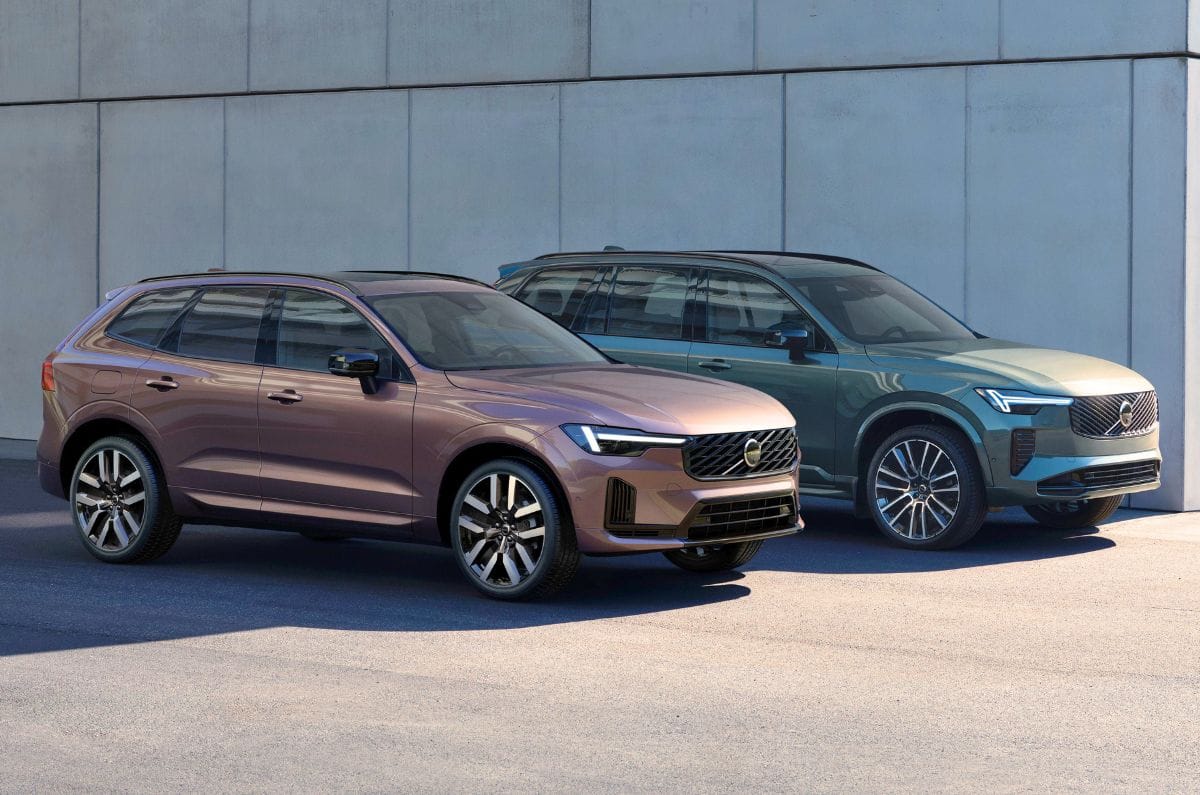
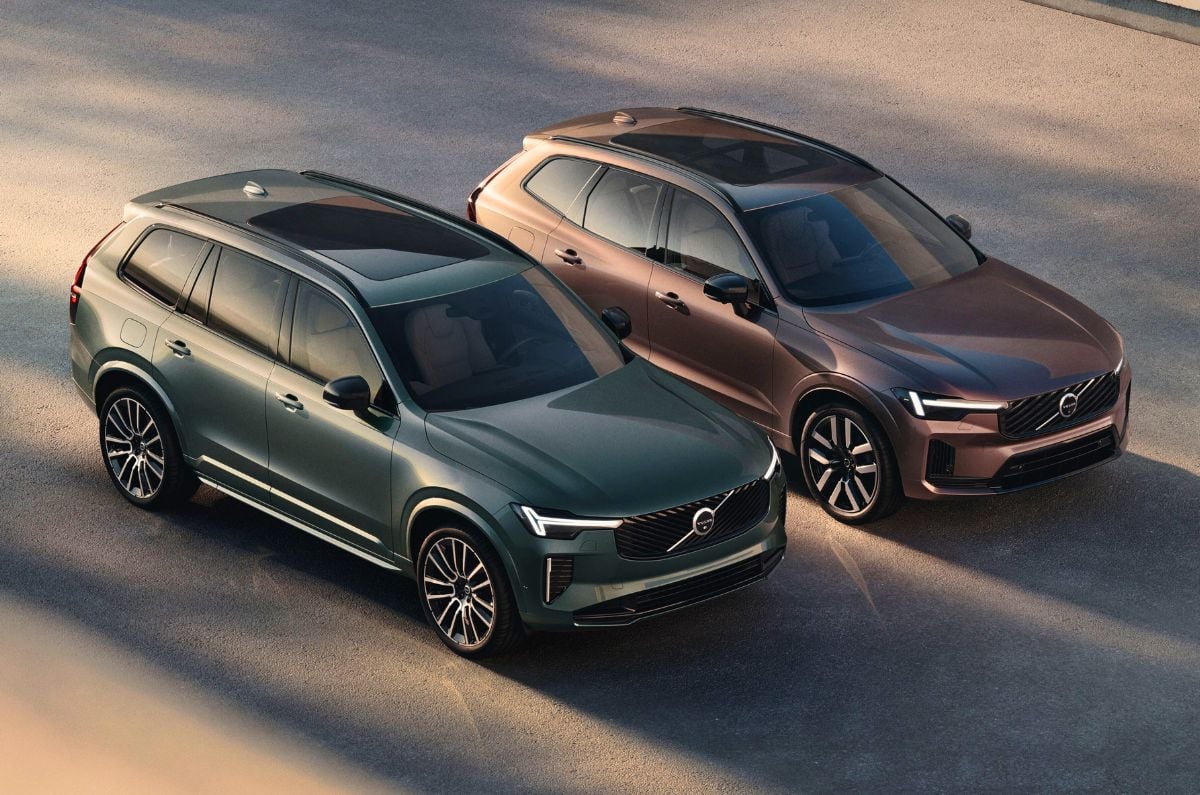
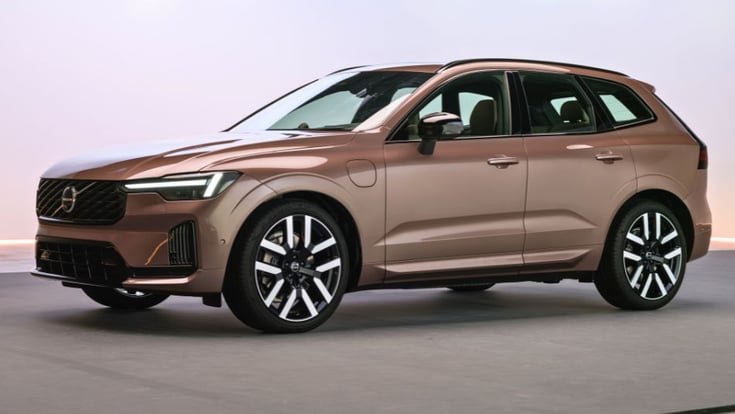
Volvo has revealed facelifts of the internationally available XC60 and XC90 plug-in hybrid (PHEV) variants with larger batteries and a higher claimed range, days after it updated the 40 Series (XC40, EX40 and EC40) with facelifts. The XC60’s exterior and interior design have been updated with new elements. The XC90, on the other hand, continues with a similar design and feature suite.
PHEV setup uses a larger 41.2kWh battery pack
Both SUVs use an updated infotainment user interface (UI)
XC60 gets updated lighting elements, alloys and bumpers
Volvo XC60, XC90 facelifts: What’s new?
Both PHEVs now get a larger 41.2kWh battery pack and a more potent e-motor
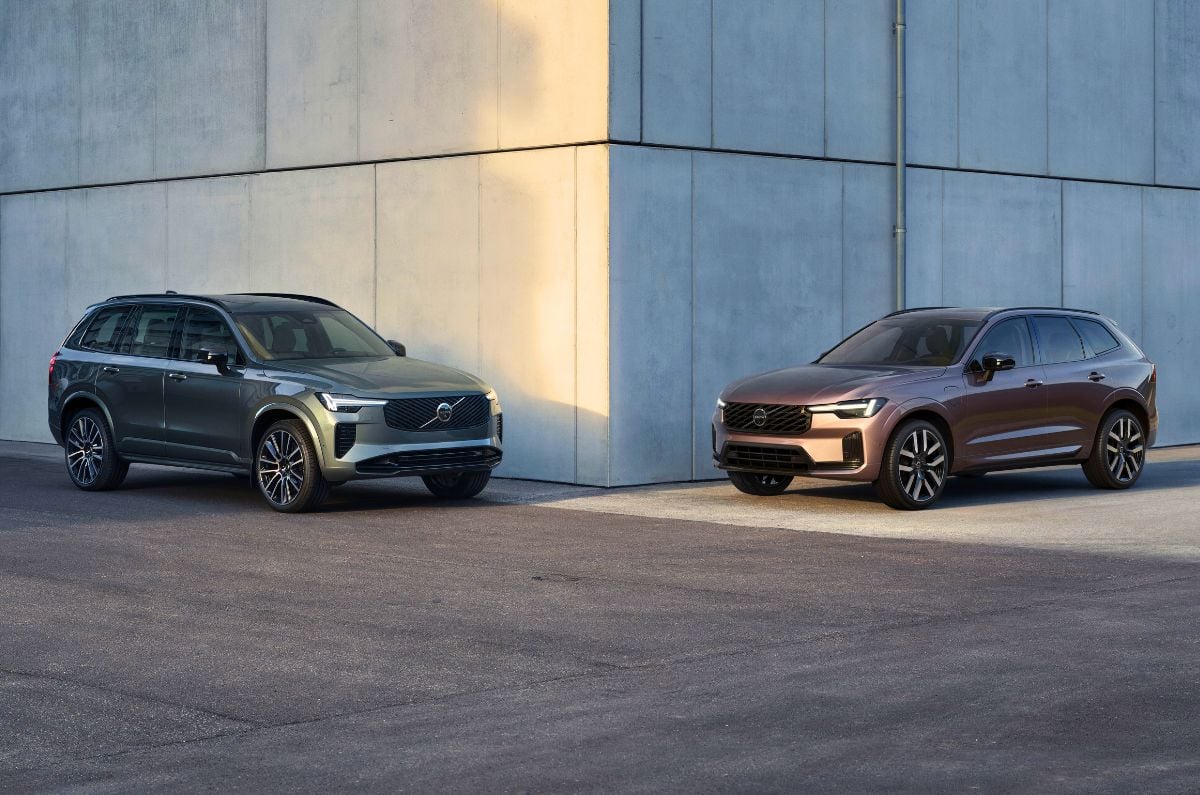
Updated international-spec Volvo XC90 (left) and XC60 (right).
Volvo has replaced the XC60 PHEV’s 19kWh battery with a larger 41.2kWh unit, increasing the WLTP-claimed all-electric range to up to 200km (up by 121km). The larger battery has, however, increased the SUV’s kerb weight to 2,197kg (up by 47km). The plug-in hybrid setup continues with the same 2.0-litre four-cylinder engine that powers the front wheels. Combined with the electric motors that drive the rear wheels, the updated all-wheel-drive XC60 PHEV makes up to 461hp and 759Nm (up by 55hp and 90Nm) and has a claimed 0-100kph run time of 4.8 seconds (down by 0.1 seconds).
The XC90 PHEV’s 19kWh battery pack has also been replaced with a larger 41.2kWh battery, taking up the all-electric WLTP-claimed range from 66km to 162km (up by 96km). The XC90 PHEV’s kerb weight has increased to 2,386kg (up by 36kg). Like the XC60, the XC90’s PHEV powertrain uses the same 2.0-litre four-cylinder engine sending power to the front wheels, while more powerful electric motors drive the rear wheels. The AWD SUV makes a combined output of 461hp and 751Nm (up by 55hp and 90Nm), and has a claimed 0-100kph run time of 5.2 seconds (down by 0.2 seconds).
In India, however, Volvo offers the XC60 and XC90 with a mild-hybrid 48V setup mated with the 2.0-litre 4-cylinder engine, which produces 250hp and 360Nm.
XC60 gets exterior design revisions and a more modern infotainment UI
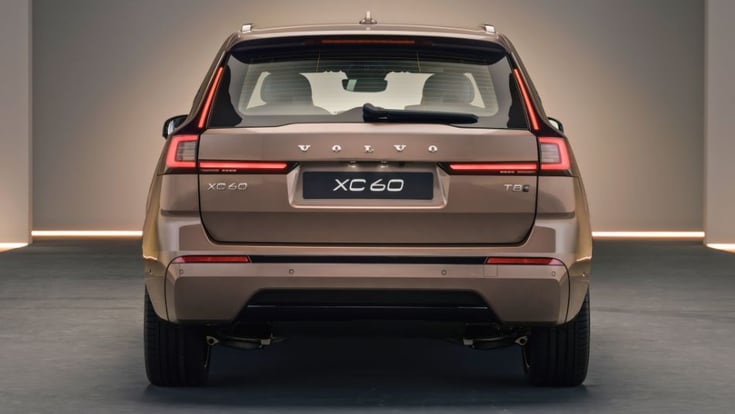
Volvo has also extensively updated the XC60’s fascia. It now features redesigned T-shaped ‘Thor’s Hammer’ LED DRLs, a new grille design and a revised front bumper with redesigned air intakes. The SUV also gets a fresh alloy-wheel design, with sizes ranging from 18 to 22 inches. At the rear, the taillights have been redesigned with a more minimalistic look, while the rear bumper has shed its aggressive creases in favour of a cleaner design.
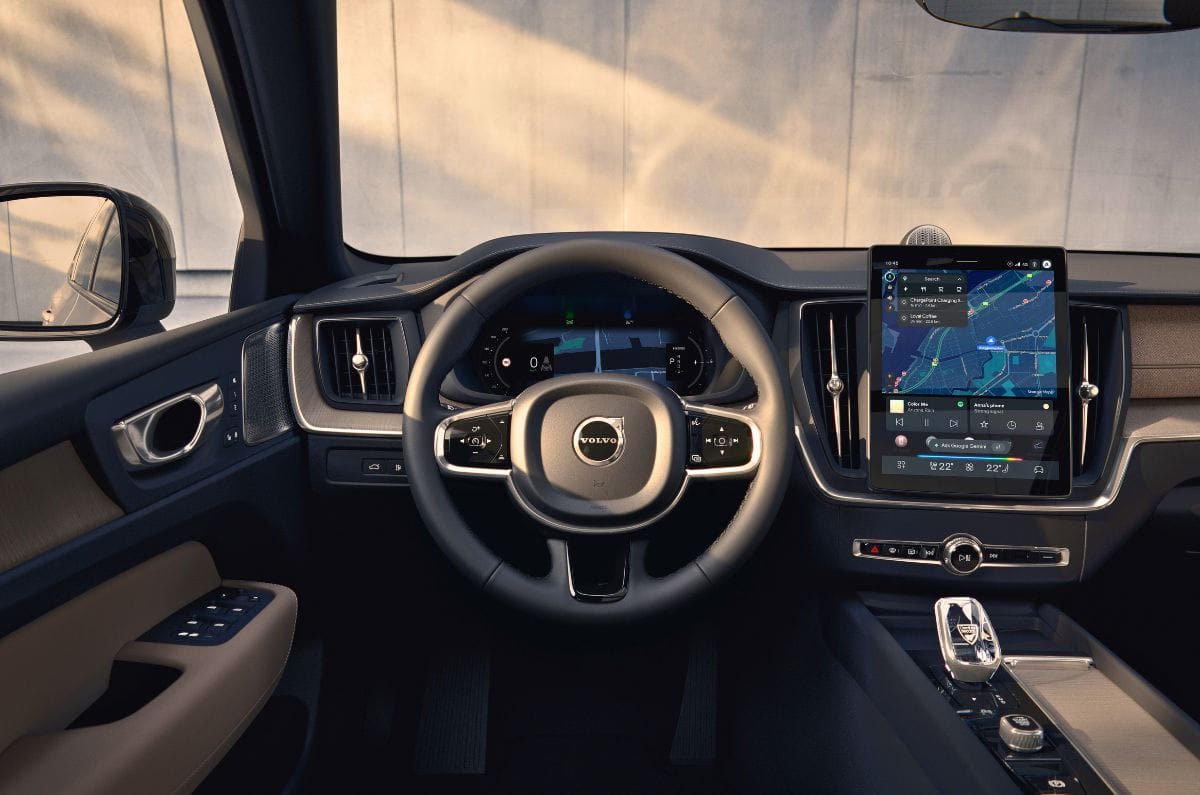
Updated international-spec Volvo XC60 dashboard.
Inside, the updated XC60 gets a slightly redesigned dashboard. The 11.2-inch infotainment screen no longer looks like an aftermarket addition and instead appears more integrated into the dashboard, thanks to the redesigned centre AC vents. The system also runs Volvo’s newer Car UX software. According to Volvo, the advanced driver assistance systems (ADAS) suite now features upgraded radar, cameras and sensors. The seat and upholstery design, however, remains unchanged.
The XC90 also gets Volvo’s new Car UX software for its 11.2-inch infotainment system. Apart from this update, there are no changes to the SUV’s interior or exterior.
Updated international-spec Volvo XC60 (left) and XC90 (right).
As mentioned earlier, Volvo does not sell the PHEV versions of the XC60 and XC90 in India. However, the other updates introduced on the international-spec models could make their way to the Indian versions as well in the coming times. If launched, the facelifts could command a slight premium over the current XC60 and XC90, which are priced at Rs 70.90 lakh and Rs 98.80 lakh, respectively.
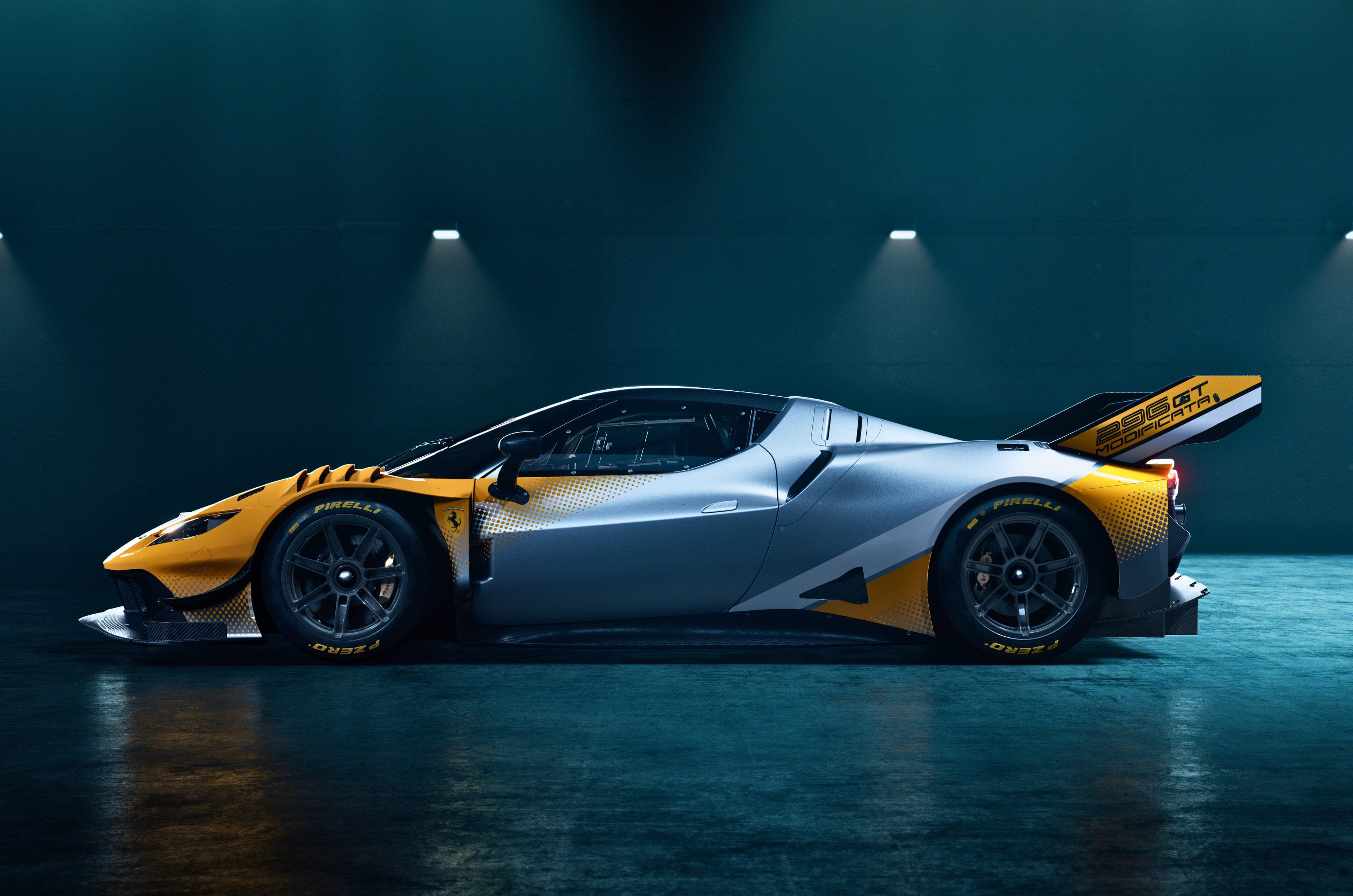
Ferrari has pulled the wraps off the 296 GT Modificata, a track-only special based on the 296 GT3 Evo race car. Touted as the most extreme version of the 296 yet, the Modificata takes the lessons learned from Ferrari’s GT3 racing programme and applies them to a machine that isn’t restricted by FIA or IMSA GT3 regulations.
It’s much the same formula as seen in the 488 GT Modificata and 499P Modificata. The 296 GT Modificata is being produced in “extremely limited numbers” for members of Ferrari’s Club Competizioni GT track experience programme. The membership includes two years, or 12 rounds, of participation in the customer racing series.
Ferrari 296 GT Modificata powertrain and performance
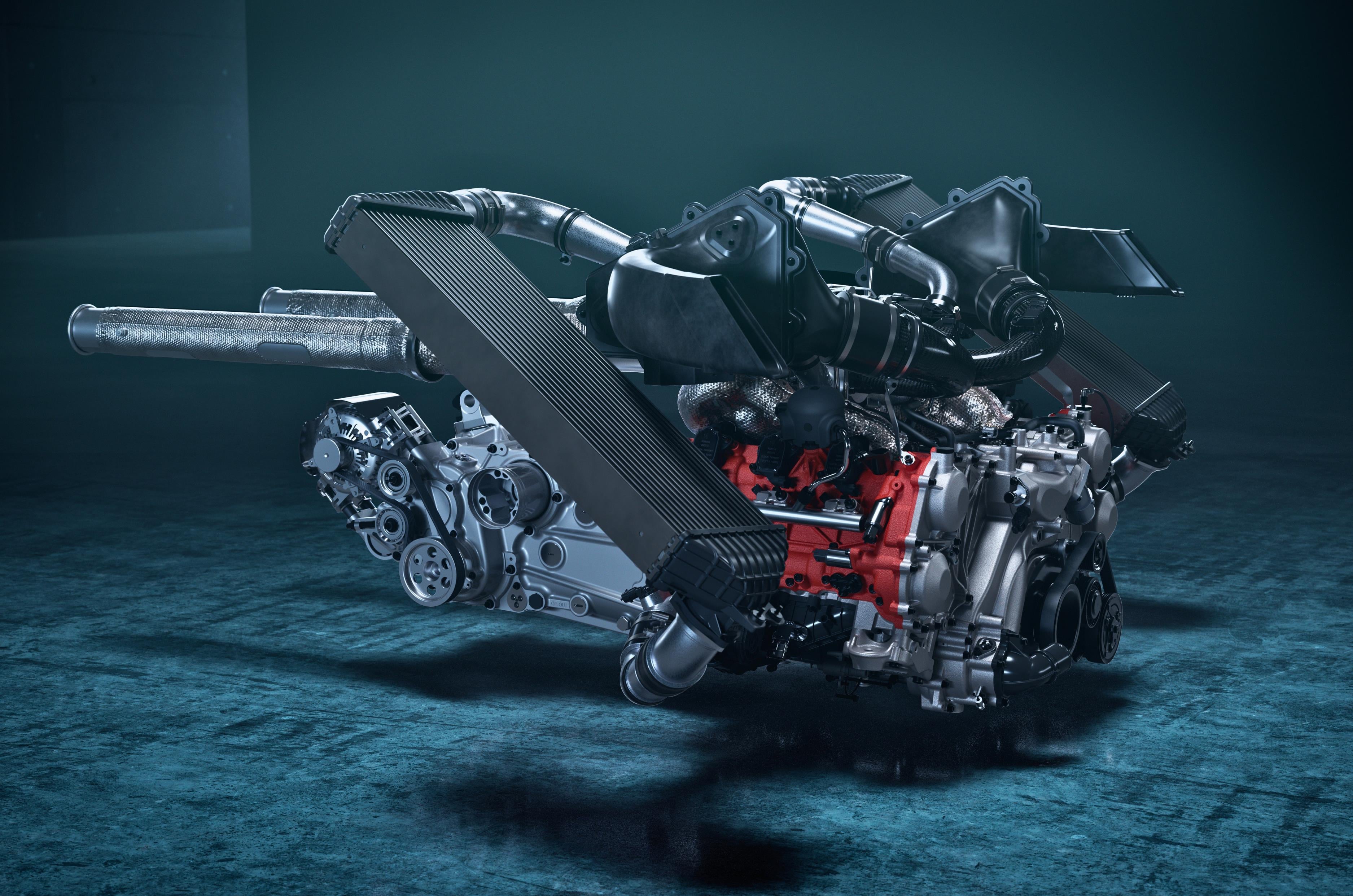
The 296 GT Modificata uses the GT3 Evo’s 3.0-litre twin-turbo V6, which doesn’t feature the plug-in hybrid system found in the road-going 296 GTB. Ferrari has upgraded the engine with new connecting rods and camshafts, along with revising the air intake, intercoolers, turbochargers, and exhaust system. These changes raise the engine’s redline from 8,000rpm to 8,500rpm, while total output increases to 730hp (130hp more than the 296 GT3 Evo) and 800Nm. The engine is mated to a 6-speed sequential gearbox with revised gear ratios.
Ferrari has upgraded the braking system with new front discs and additional cooling hardware designed to allow the brakes to be used more aggressively during extended track sessions. Speaking of which, Ferrari says the 296 GT Modificata can lap the Fiorano test track in 1 minute and 11 seconds – three seconds faster than the 296 GT3 Evo.
Ferrari 296 GT Modificata exterior
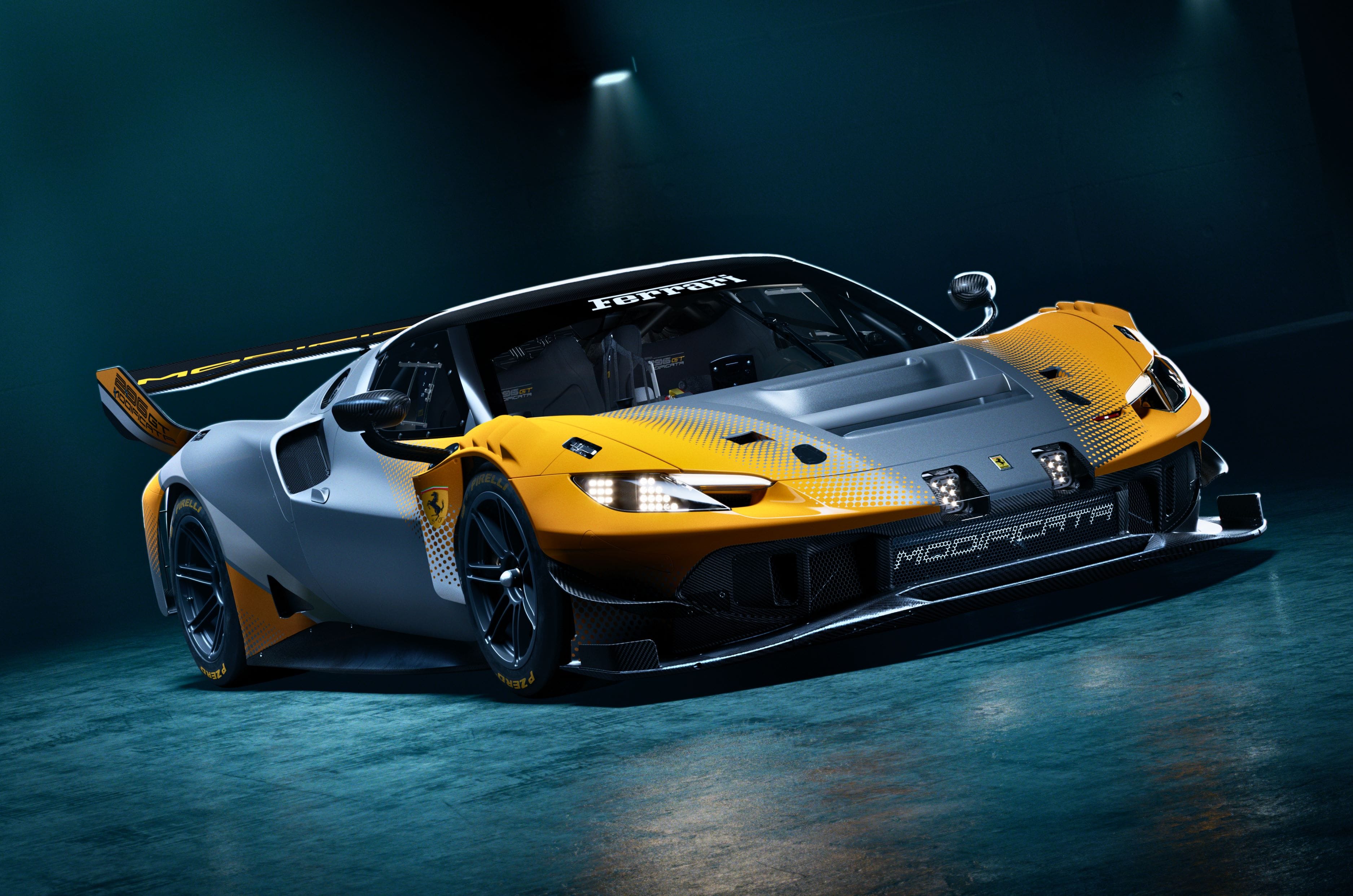
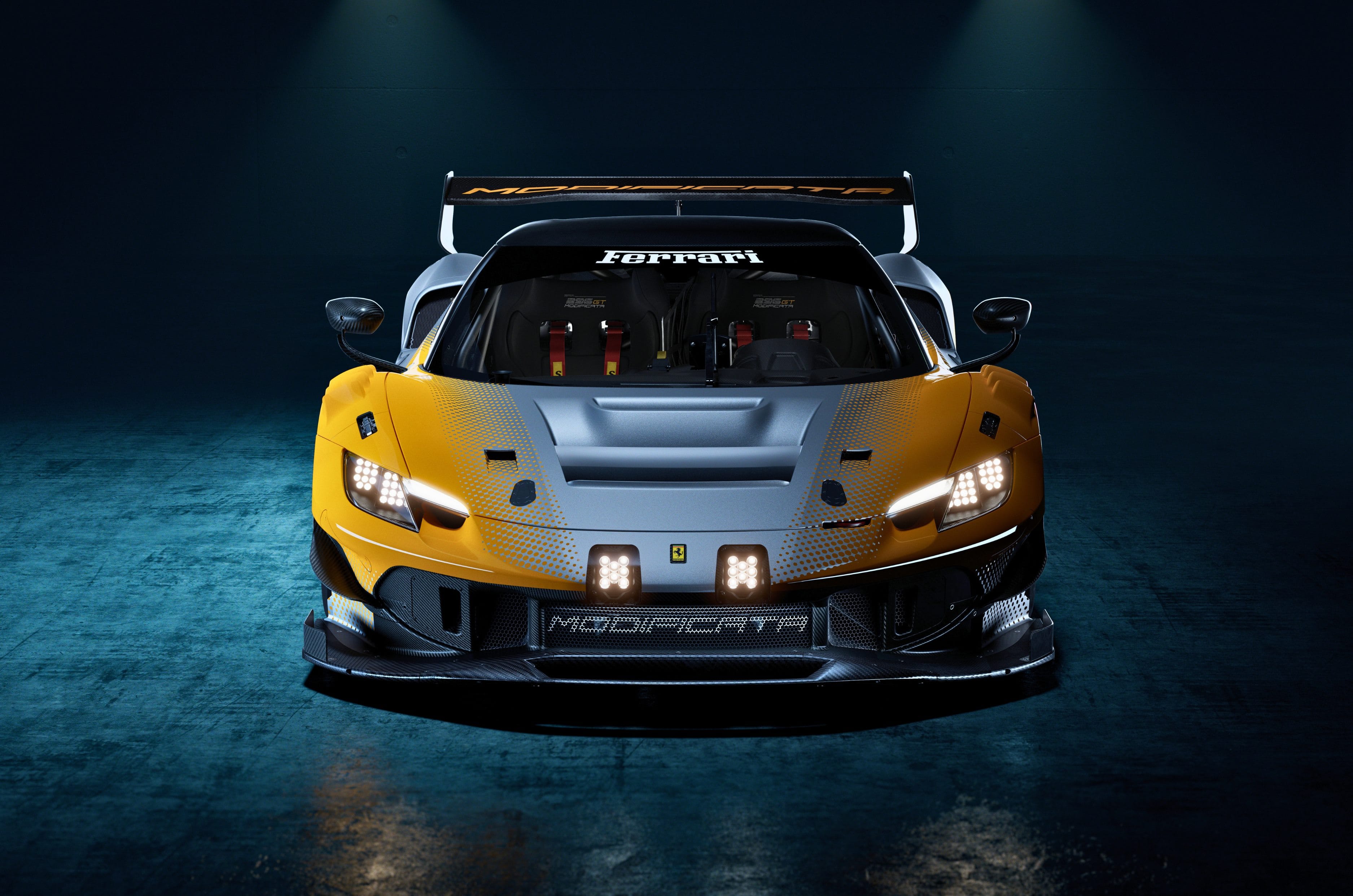
The 296 GT Modificata gets a heavily revised aerodynamic body kit, which includes a new front splitter, a redesigned engine cover, more heavily sculpted surfaces, and a large fixed rear wing. There are larger air intakes on the front to meet the engine’s increased cooling requirements, as well as ‘Modificata’ painted into the grille. Like with the 296 GT3 Evo, the Modificata sports fitments like driving lights, bumper canards, bonnet latches, front fender air ducts, and more.
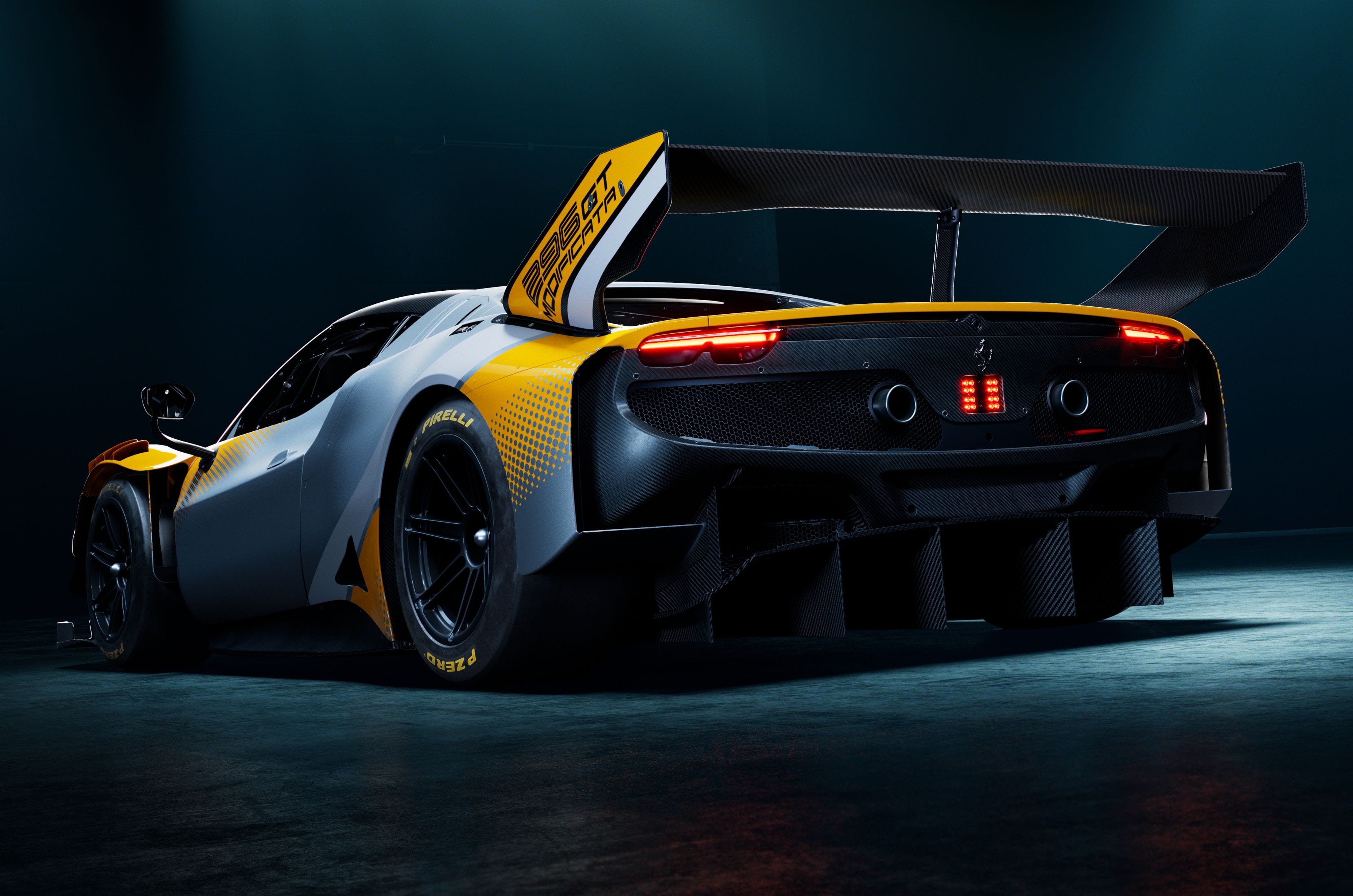
Over to the side, the 296 GT Modificata comes with 18-inch wheels shod in Pirelli P Zero rubber, while at the rear, it gets a thoroughly updated rear wing that includes a new centre pylon, a 5mm Gurney flap, and endplates. The exhaust tips are also of a completely new design for the 296 GT Modificata, while the massive rear diffuser is barely unchanged from the one on the GT3 Evo.
Ferrari 296 GT Modificata interior
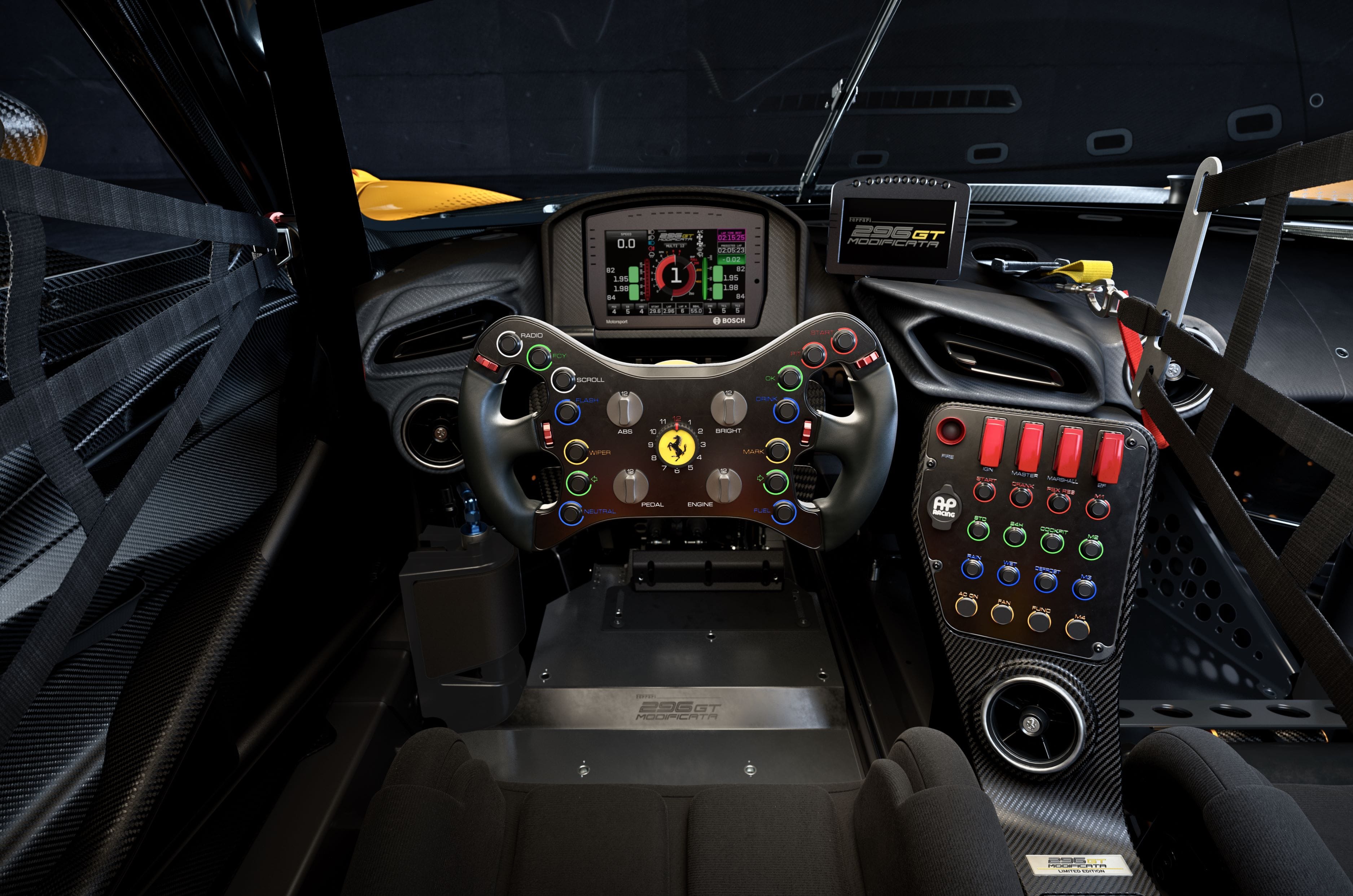
Inside, the 296 GT Modificata is expectedly designed around track use, so it features racing bucket seats with harnesses, a pared-back dashboard full of switches and buttons, and a motorsport-derived steering wheel. Unlike the single-seat GT3 Evo race car, the 296 GT Modificata has a two-seat layout, allowing owners to take a passenger or driving coach along. To help both occupants communicate, Ferrari has included an intercom system.
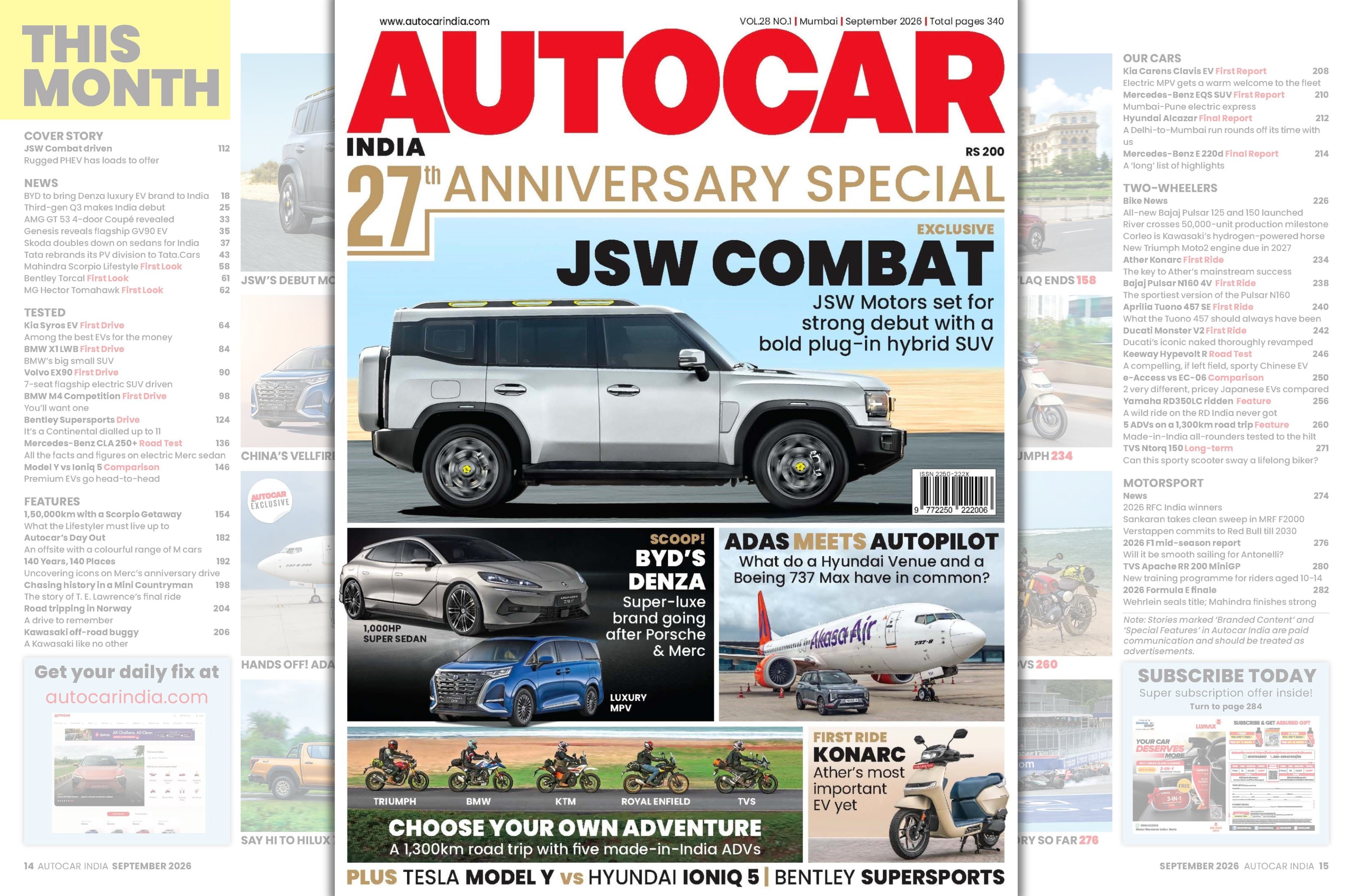
Autocar India turns 27, and rather than quietly celebrating with a cake, we’ve celebrated the way we know best: with scoops, exclusive drives and a frankly unreasonable amount of driving. In this issue, we bring you an exclusive drive of JSW’s new Combat SUV (you heard the name here first), a scoop on BYD’s Denza luxury push, and the last leg of the 20,000km Pune-to-Prague odyssey, alongside a serious collection of new cars and bikes. Oh, and there’s also a Boeing 737 Max aircraft involved. Because apparently cars weren’t complicated enough.
JSW Combat: Review
JSW’s first SUV is a rugged plug-in hybrid based on the Jetour T2. We get an early exclusive drive of the Combat and examine whether this newcomer really has what it takes to shake up the Rs 30-50 lakh SUV market.
BYD Denza: China’s Luxury Offensive
BYD is bringing Denza to India, with luxury EVs like the D9 MPV and Z9 GT aimed squarely at the established big boys. Having disrupted the mid-range EV market with BYD, it is now going after the high-end market with Denza.
ADAS Meets Autopilot: Hands Off!/Look ma, no hands!
What do a Hyundai Venue and a Boeing 737 Max have in common? Quite a lot, apparently. We climb into a full-flight simulator to understand how aircraft autopilot works and what it has in common with the increasingly sophisticated systems in our cars.
Skoda Kylaq: Pune to Prague, Part 2
The Silk Route may have been built for traders, but we’ve used it to find out just how far you can take a small SUV before it starts asking for a holiday. After 19,000km, 70 days and not a single puncture, our Skoda Kylaq finally reaches Prague.
Autocar’s Day Out: M-ployees of the Month
Most company off-sites involve a resort, a buffet and someone reluctantly joining a team-building exercise. Ours involved six BMW M cars, more than 3,000hp, a deserted concrete ground and a frankly irresponsible amount of tyre abuse. Four M4s and two M2s went head-to-head in slalom, football and drifting, and what began as a relaxing team outing rapidly descended into a war.
Tesla Model Y vs Hyundai Ioniq 5: Comparison
Two premium EVs, two very different ideas about what an electric car should be. The Model Y with its recently revised price, and the updated Ioniq 5 go head-to-head to see which makes the stronger case.
Bentley Supersports: Drive
Take a Continental GT and turn the dial towards something completely unnecessary. The result is Bentley’s Supersports, a rear-wheel-driven beast with considerably more intent. We drive it around Laguna Seca.
Mini Countryman C: First Drive
The Countryman has grown into a proper luxury SUV, with generous space, loads of kit and a new 1.5-litre turbo. At Rs 47.5 lakh, it’s the biggest and most grown-up Mini yet, and is ready to lock eyes with real luxury SUVs rather than merely be a fashion statement. But has it done that?
5 Ways to Adventure: Feature
Five made-in-India ADVs, 1,300km and one simple question: which is the best way to go exploring? We put the bikes through highway miles, trail riding and plenty of scenic detours to see how their different approaches to adventure stack up.
Ather Konarc: First Ride
Ather’s new Konarc brings the brand’s blend of quality and comfort to a wider audience, with prices starting at Rs 99,999. A compelling new step into the mainstream.
Suzuki e-Access vs Yamaha EC-06: Comparison
Japan finally answers India’s e-scooter boom, and the two takes couldn’t be more different – one built from scratch, the other born from an Indian startup partnership. Which one takes the crown?
The India-EU Free Trade Agreement (FTA), once signed and implemented, will allow European carmakers to import 1 lakh completely built-up (CBU) internal-combustion engine (ICE) and non-plug-in hybrid cars into India at concessional import duties in the first year, according to the tariff schedule under the deal. The quota will gradually rise to 1.6 lakh vehicles from the 10th year.
The negotiations concluded in January 2026. The agreement is yet to be signed and will require completion of the respective internal procedures before it can enter into force. It is expected to be signed by the end of this year and could come into effect from 2027.
First-year quota covers 1 lakh CBU cars
Import duty within quota starts at 30 percent
Quota rises to 1.6 lakh cars from 10th year
Lower duties for imported cars
In the first year, ICE and non-plug-in hybrid cars priced between 15,000 euros and 35,000 euros will attract a 35 percent import duty within the quota. Cars priced between 35,000 euros and 50,000 euros, as well as those above 50,000 euros, will attract a 30 percent duty. Cars priced below 15,000 euros will not receive a tariff concession in the first year.
The 1 lakh-unit quota will be divided across three price bands, with 34,000 units allocated to cars priced between 15,000 euros and 35,000 euros, and 33,000 units each for the 35,000-50,000 euro and above-50,000 euro categories.
The quota will increase to 1.075 lakh vehicles in the second year, 1.3 lakh in the fifth year and 1.6 lakh from the 10th year. The preferential duty across all three price bands will be 10 percent from the 10th year.
EVs and plug-in hybrids get separate quota
Pure electric and plug-in hybrid cars will not receive concessional access under this initial quota. Their preferential access will begin from the fifth year for vehicles priced above 20,000 euros.
A separate quota for battery-electric and plug-in hybrid CBUs will start at 20,000 vehicles in the fifth year and increase to 90,000 vehicles by the 14th year. The preferential duty will be 30 percent in the fifth year and will fall to 10 percent from the 10th year.
Cars imported outside the quota will continue to attract higher duties, ranging from 66-110 percent initially. These rates are scheduled to fall to 30-35 percent by the 10th year.
European carmakers could expand CBU imports
The lower duties could make it more viable for European manufacturers such as Volkswagen, Mercedes-Benz and BMW to bring more CBUs from Europe. The deal could particularly help them introduce a wider range of niche, performance and high-end models that are currently less viable to import at higher duties.
The FTA also provides reciprocal concessions for cars exported from India to the EU.