
Aftermarket CNG conversions decoded: installation, legality and costs

Aftermarket CNG conversions decoded: installation, legality and costs

While aftermarket CNG conversions are not new, with the rise in fuel prices, there has been a noticeable spike in interest surrounding them. Although there are more factory-fitted CNG cars on the market than ever before, several models still do not give you the option. Not to mention, existing car owners are increasingly looking to convert their cars to CNG to reduce running costs.

Naturally, this increased interest brings up several questions about the technology, the installation, the legalities and more. We thus teamed up with Lovato CNG’s authorised distributor in Maharashtra, Blue Drive Traders, as well as Lets Go CNG and its authorised installer in Mumbai, M.S Motors, to answer questions about CNG conversions.

Know your CNG kit

There are three broad types of kits available on the market today. The oldest is the Venturi type, typically used for cars that are Bharat Stage 3-compatible and older. These use a Venturi mixer, similar to a carburettor, that mixes CNG with air before it is injected into the intake manifold. They are the most affordable, usually costing between Rs 30,000 and Rs 40,000, including installation and registration, but they are not the most efficient and bring a significant drop in performance. Since the cars they are compatible with are also reaching the end of their lifecycle, these kits are gradually being phased out.
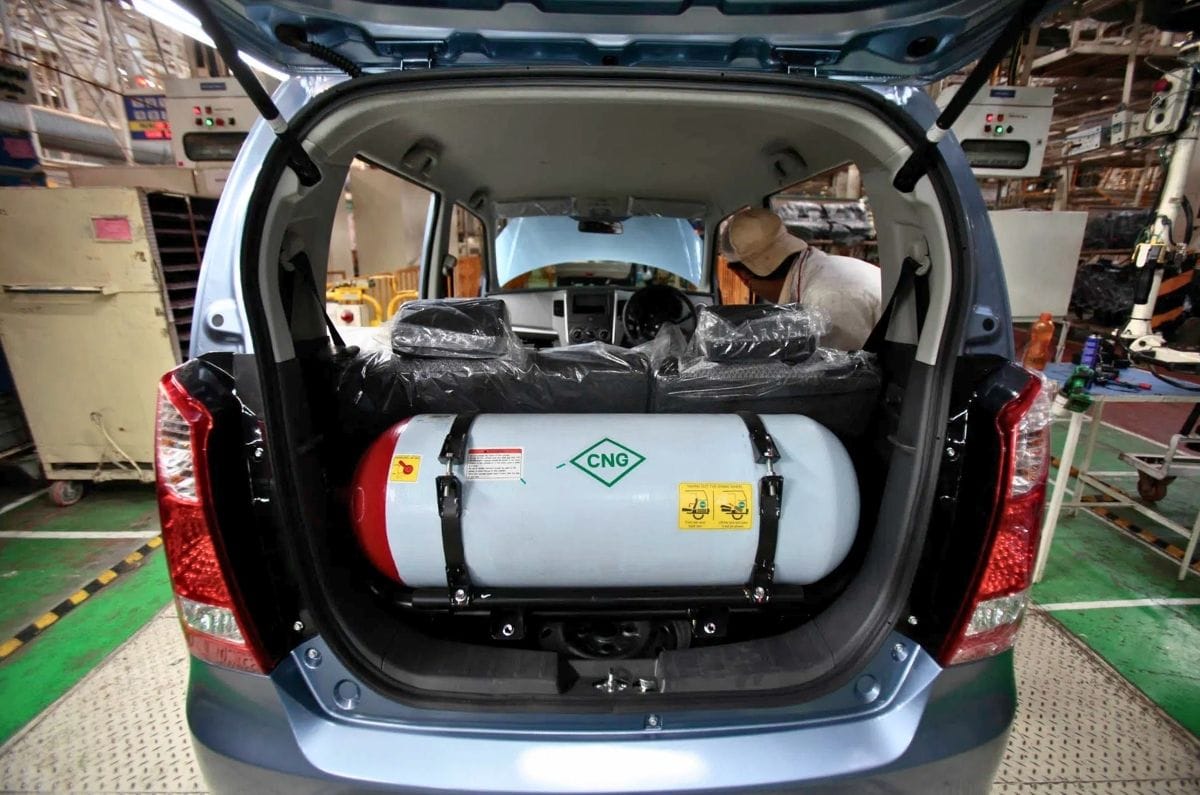
Modern naturally aspirated MPFI cars require a sequential type kit. These use individual injectors that inject CNG directly into the intake manifold and feature their own ECU that controls timing, volume and other parameters based on RPM and driver inputs. These are much more fuel-efficient, and the drop in performance is nominal in everyday driving conditions. Like the older Venturi kits, these too require the car to be started on petrol before switching over to CNG. However, they automate the process by making the switch once a certain engine temperature is reached. Prices vary depending on the manufacturer and the specifications of each kit, ranging from Rs 40,000-Rs 50,000 for older BS4 cars, to Rs 50,000-Rs 65,000 for smaller BS6 cars, stretching to Rs 70,000-Rs 75,000 for larger cars that require an eight-injector kit.

The newest type of kit to hit the market is the direct-injection kit, used for cars with direct petrol injection. Like sequential kits, these too inject CNG into the intake manifold. However, direct-injection engines cannot run purely on CNG. The fuel injectors in a DI engine sit within the combustion chamber, so to prevent them from overheating, a small amount of petrol still needs to be injected through them even when running on CNG. Therefore, a turbocharged direct-injection engine can only run on a maximum 80:20 ratio of CNG and petrol. As a result, fuel efficiency gains are not quite as high as with a naturally aspirated engine, and kit prices range from Rs 1 lakh to Rs 1.5 lakh, thus pushing the breakeven point further away.

What’s in the box?

The largest and heaviest component of a typical CNG kit is the tank itself. Made from seamless steel, these can weigh close to 70kg empty, with volumetric capacities ranging from 60 to 65 litres. Metal-lined composite cylinders and carbon fibre-reinforced plastic cylinders are also now available, and while they are significantly lighter, they usually cost two or three times more. Attached to the tank is a valve with a manual shut-off.
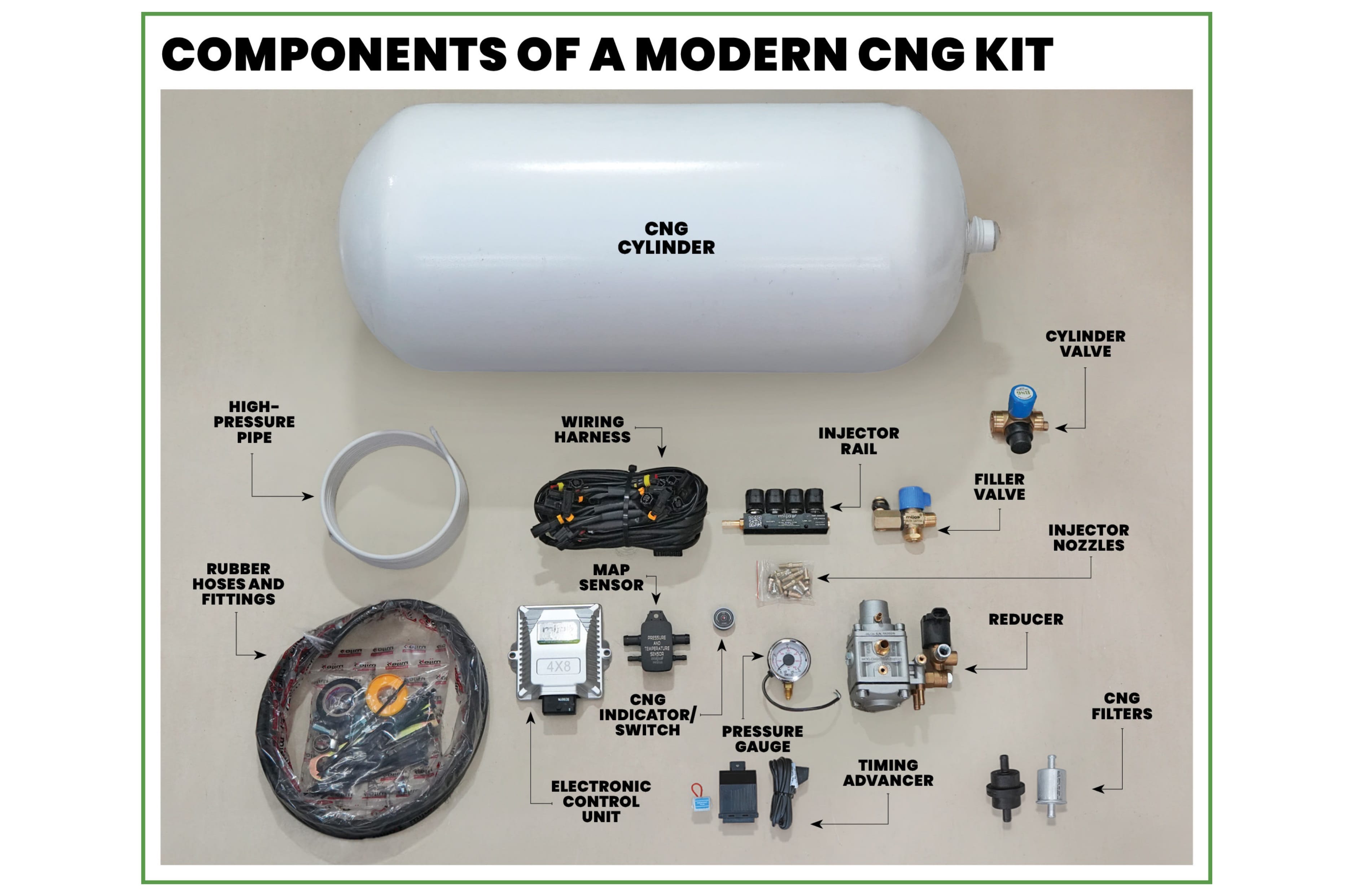
The filling valve, through which CNG is filled, can either be placed under the bonnet or beside the petrol filler cap, depending on the vehicle. Transporting the gas from the tank to the pressure reducer under the bonnet is high-pressure tubing made from carbon steel and coated in polymers. The reducer has a pressure gauge and lowers gas pressure from about 200bar in the tank to a manageable 2-3 bar. From here, the gas is routed to the injector rail that sits atop the engine, which further distributes it to nozzles drilled into the intake manifold via reinforced rubber hoses. Between the reducer and the injector rail sits a Manifold Absolute Pressure (MAP) sensor to measure the pressure as well as the temperature of the gas. There is also an optional filter to remove any impurities in the line.

Controlling the injector rail is an Electronic Control Unit (ECU) that uses signals from the MAP sensor and communicates with the car’s original ECU to dictate the amount of CNG being injected and the timing. Modern kits also come with a comprehensive wiring harness that can plug into the car’s original wiring via OBD connectors. Older pre-BS6 cars, however, may require some wire splicing. Optionally available is an Advancer, which advances ignition timing when running on CNG and negates some of the power loss, particularly on smaller-capacity engines. Some sedans and hatchbacks also require a rear coil spring spacer to compensate for the added weight of the tank in the boot.

How a CNG kit is installed

A professional CNG installation takes around 4 to 5 hours to complete. Here’s what happens behind the workshop doors.

Health check
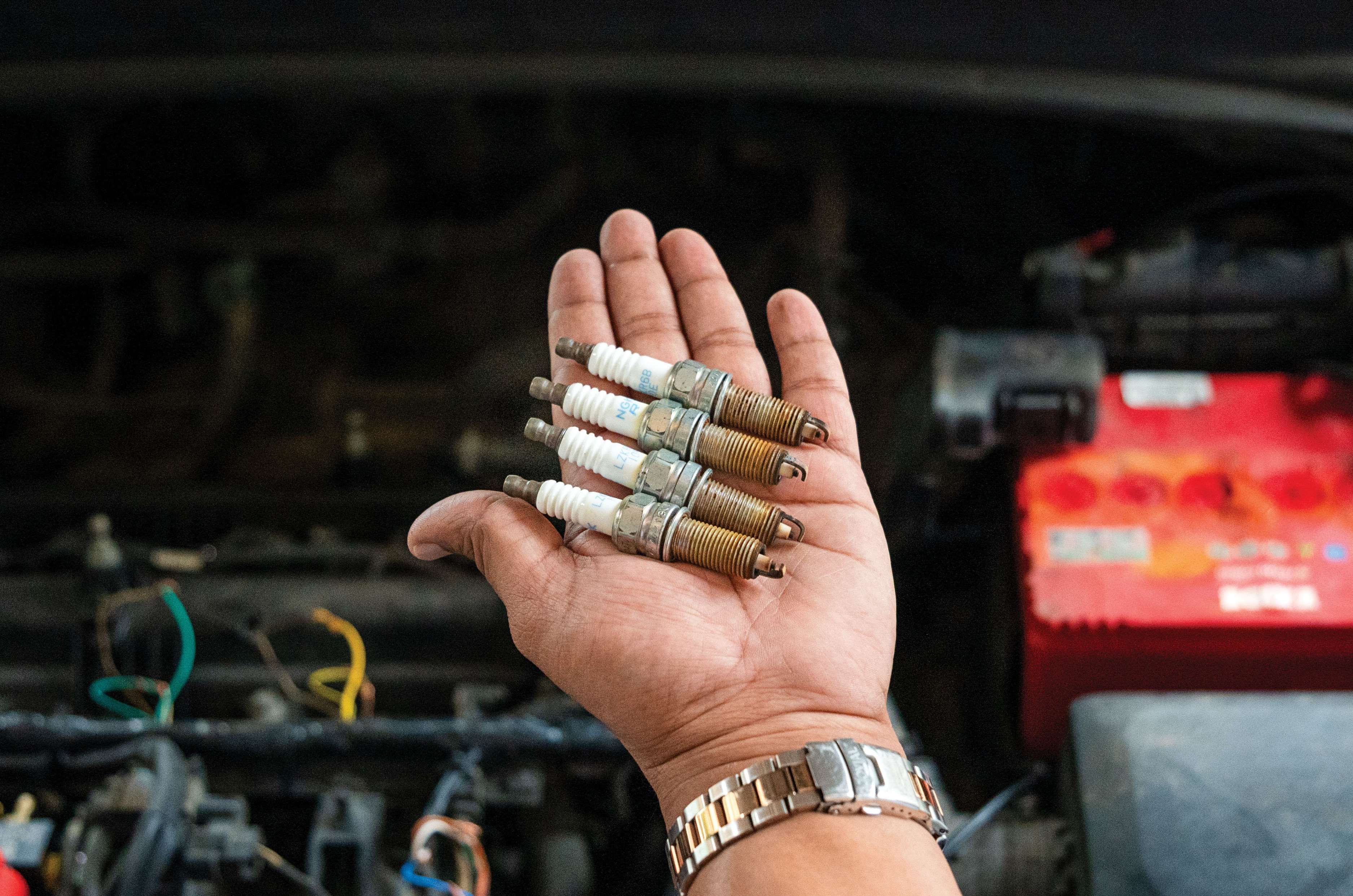
The engine is inspected to ensure it’s suitable for CNG conversion. A basic service is performed if required, with spark plugs and ignition coils replaced as needed and the throttle body cleaned.

Components positioned
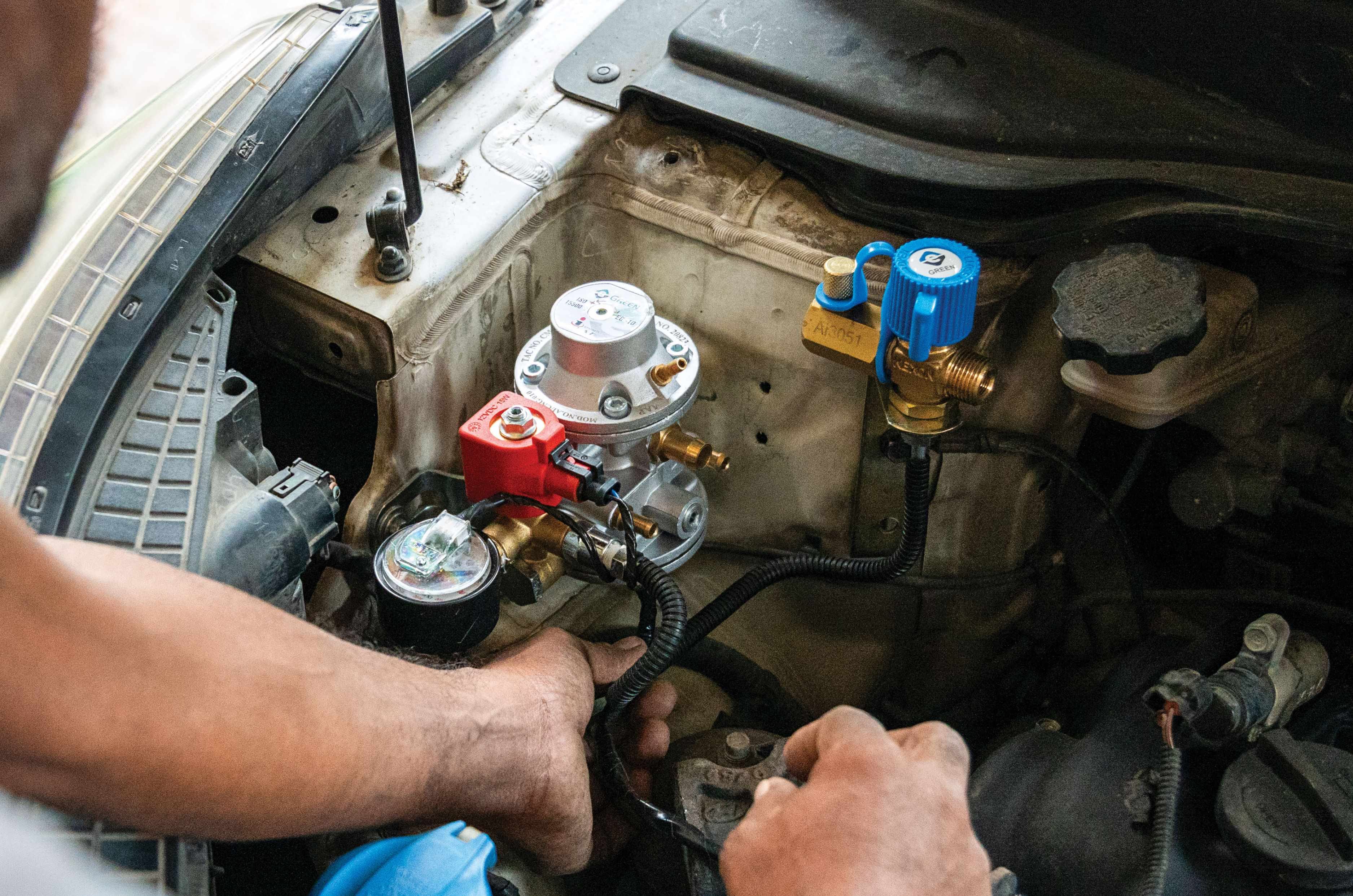
The reducer and its pressure gauge are mocked up in the engine bay before mounting points are marked and drilled. The filler valve may be located alongside them or next to the petrol filler cap, depending on the vehicle.

Injectors installed
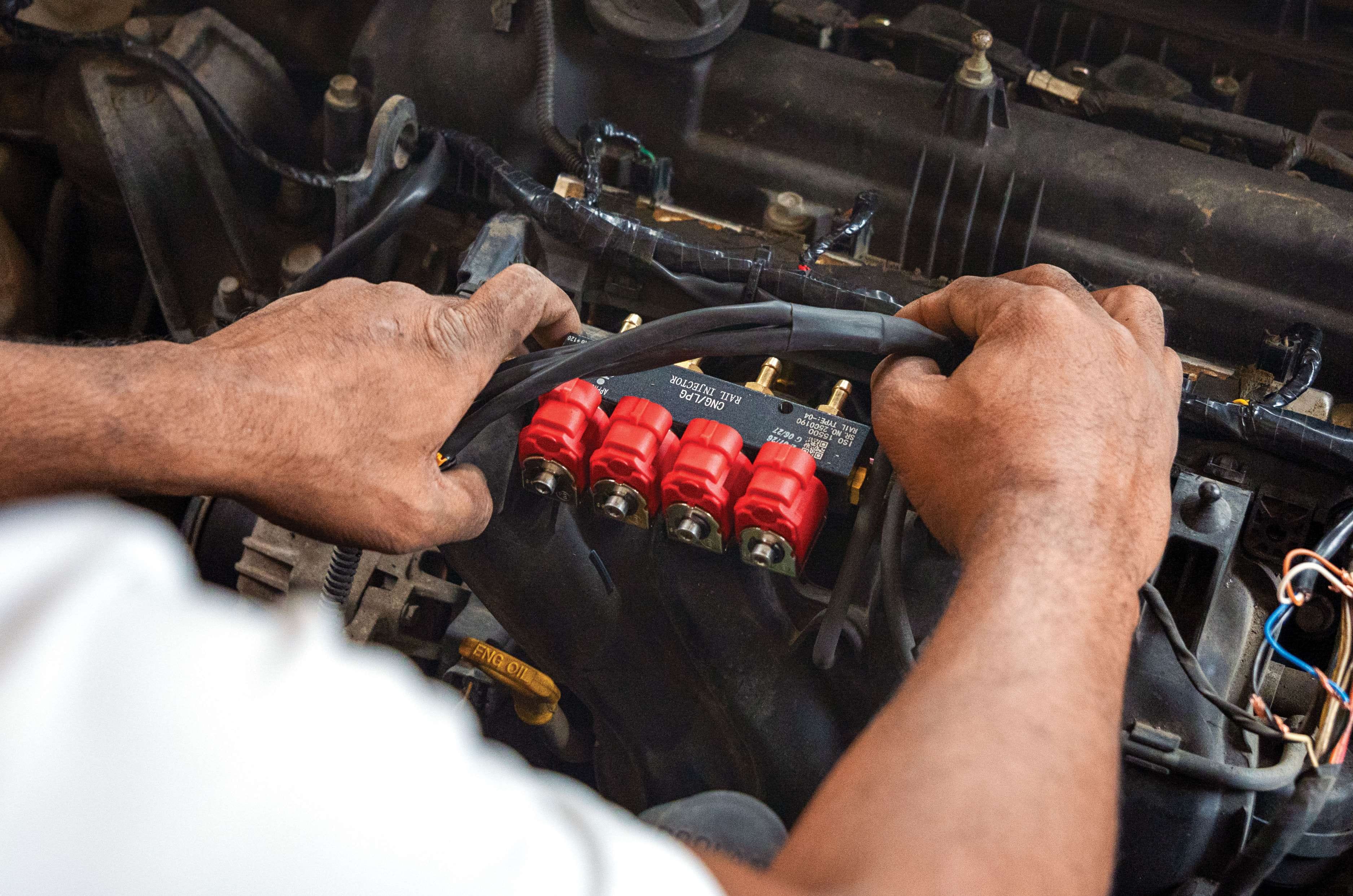
The CNG injector rail is mounted on its dedicated bracket close to the petrol injectors. This will send CNG to corresponding nozzles that are drilled and fitted into the vehicle’s plastic intake manifold.

ECU wired in
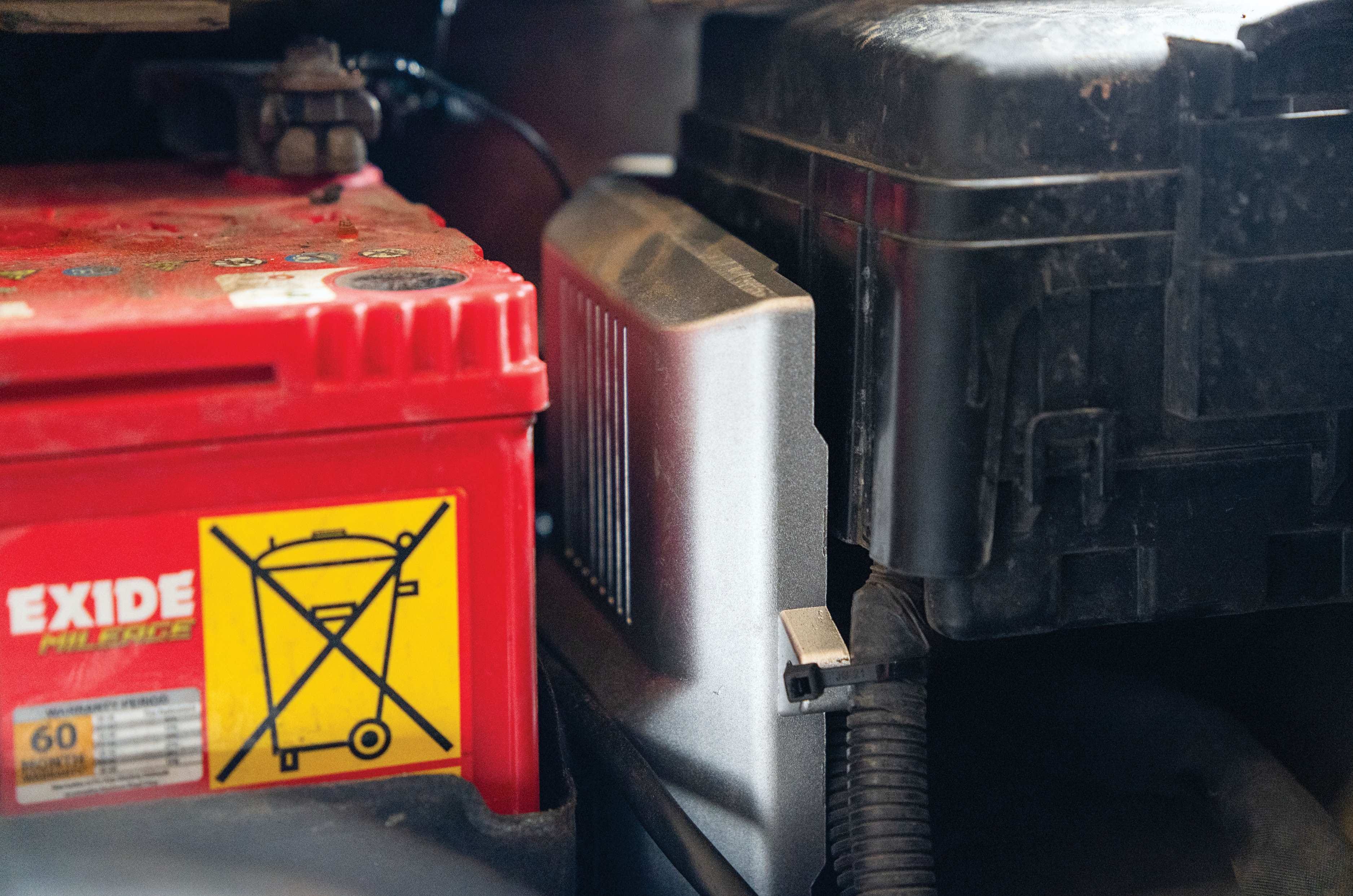
The CNG ECU is mounted alongside the factory ECU and connected to the vehicle’s wiring loom. The harness is neatly routed and secured away from heat and moving parts.

Plumbing completed
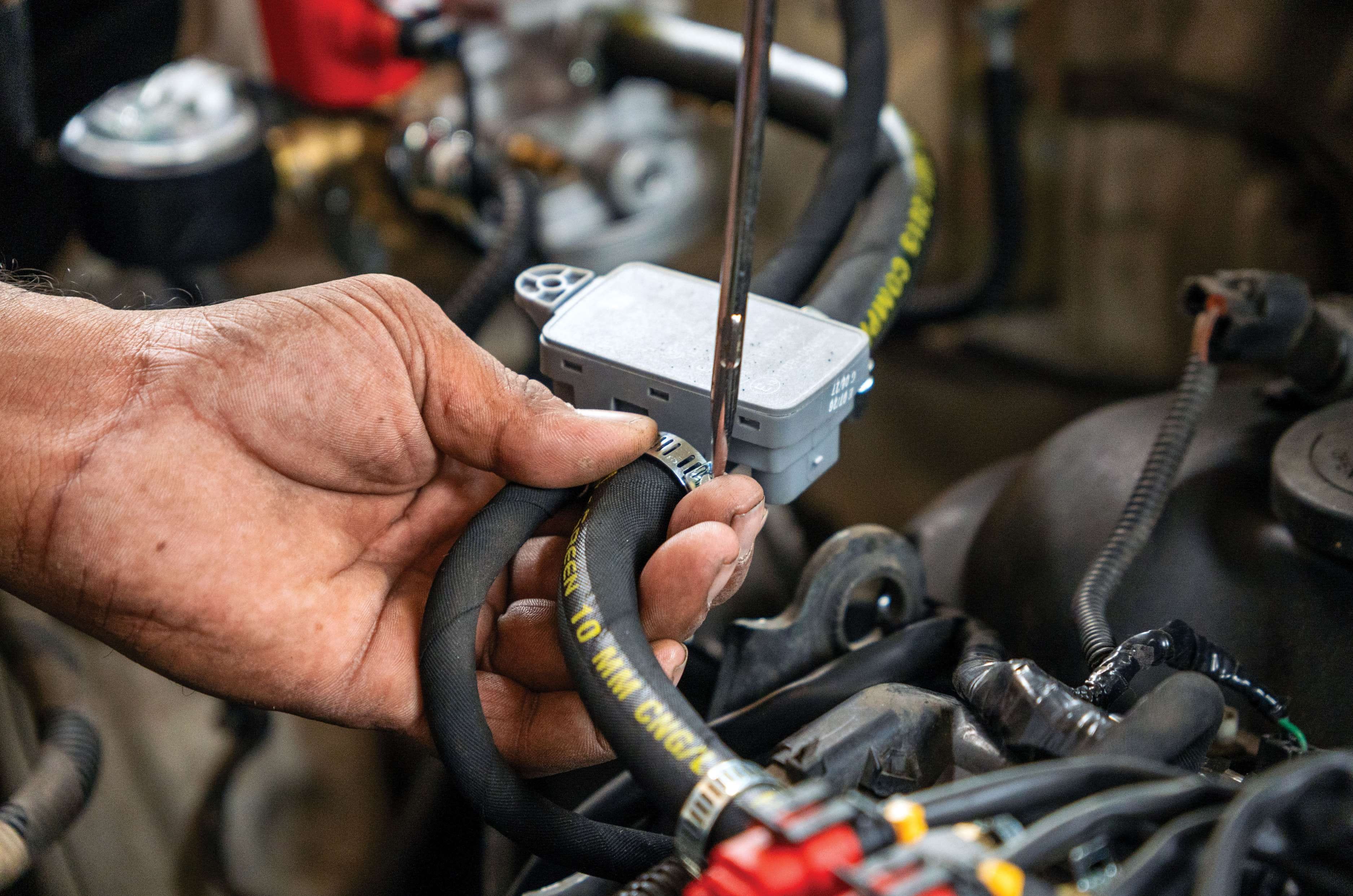
Reinforced rubber gas hoses are cut to length and connected between the reducer, injector rail and the intake manifold. A MAP sensor and a filter are also installed as part of the system.

Tank prepared
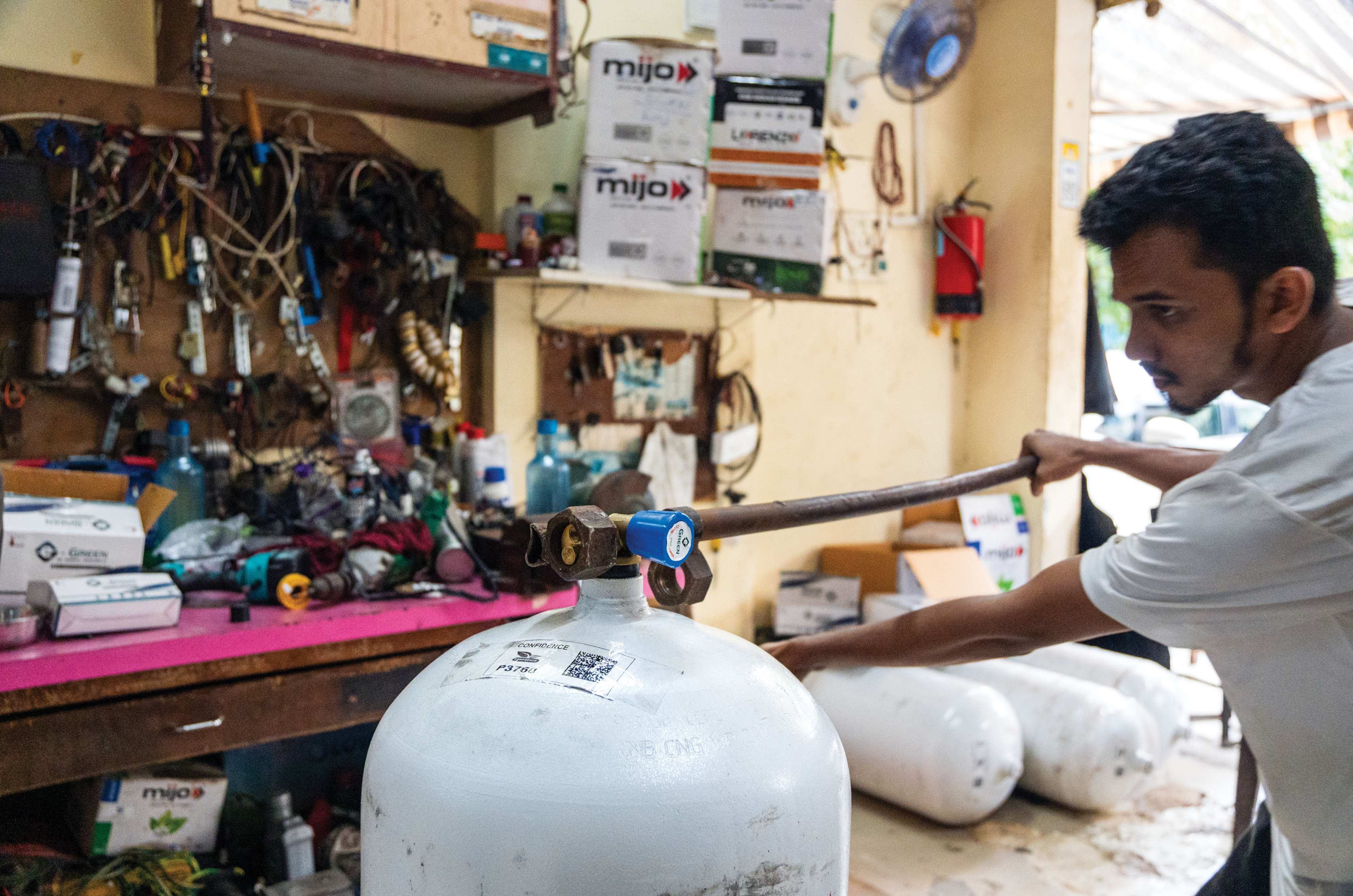
The CNG tank is temporarily mounted to a rig that holds it in place while the shut-off valve and associated fittings are installed before everything is torqued down.

Tank frame installed
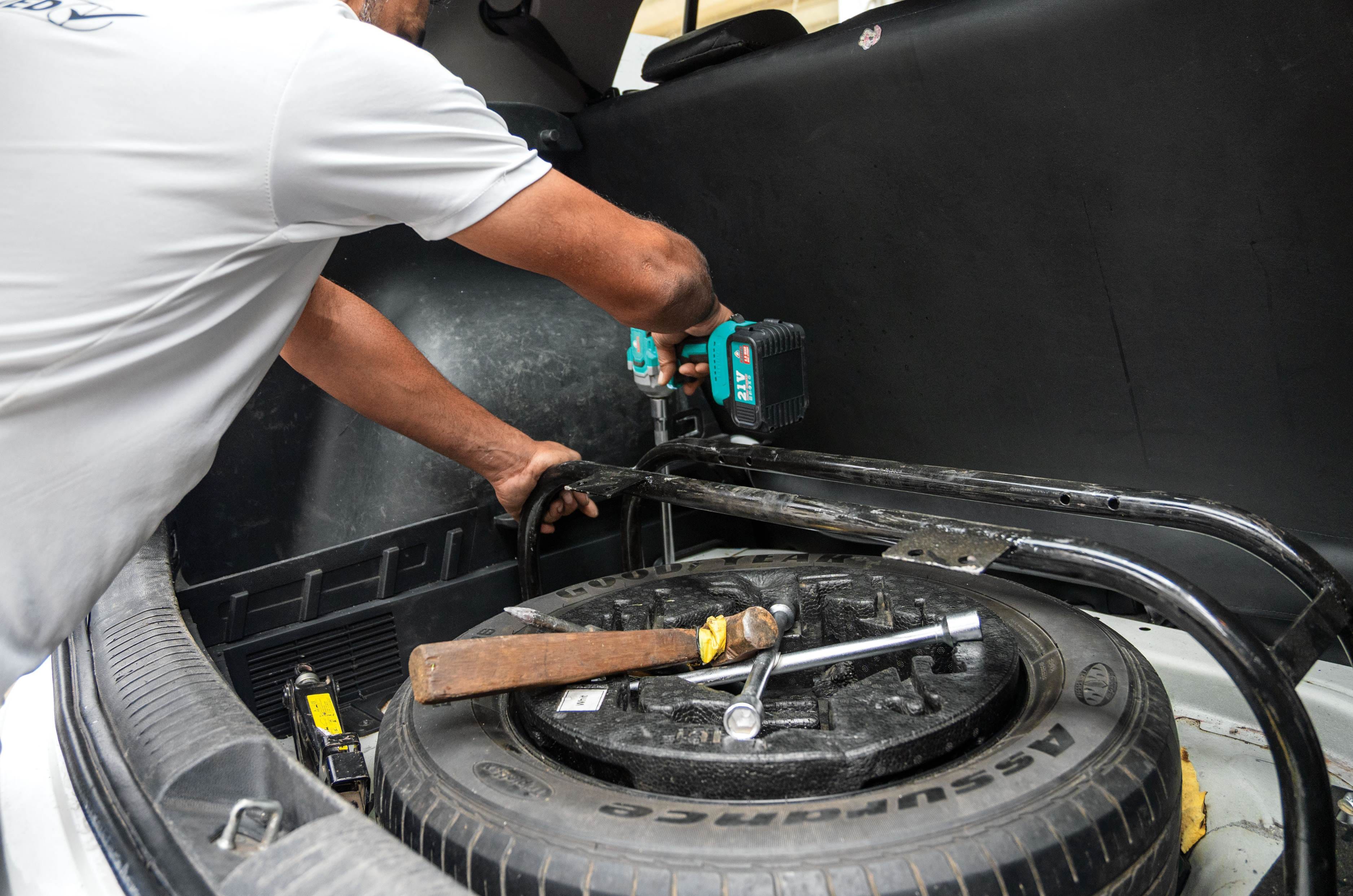
The mounting frame is positioned inside the boot, holes are drilled through the floor, and reinforced brackets securely bolt it to the vehicle’s structure.

Tank fitted
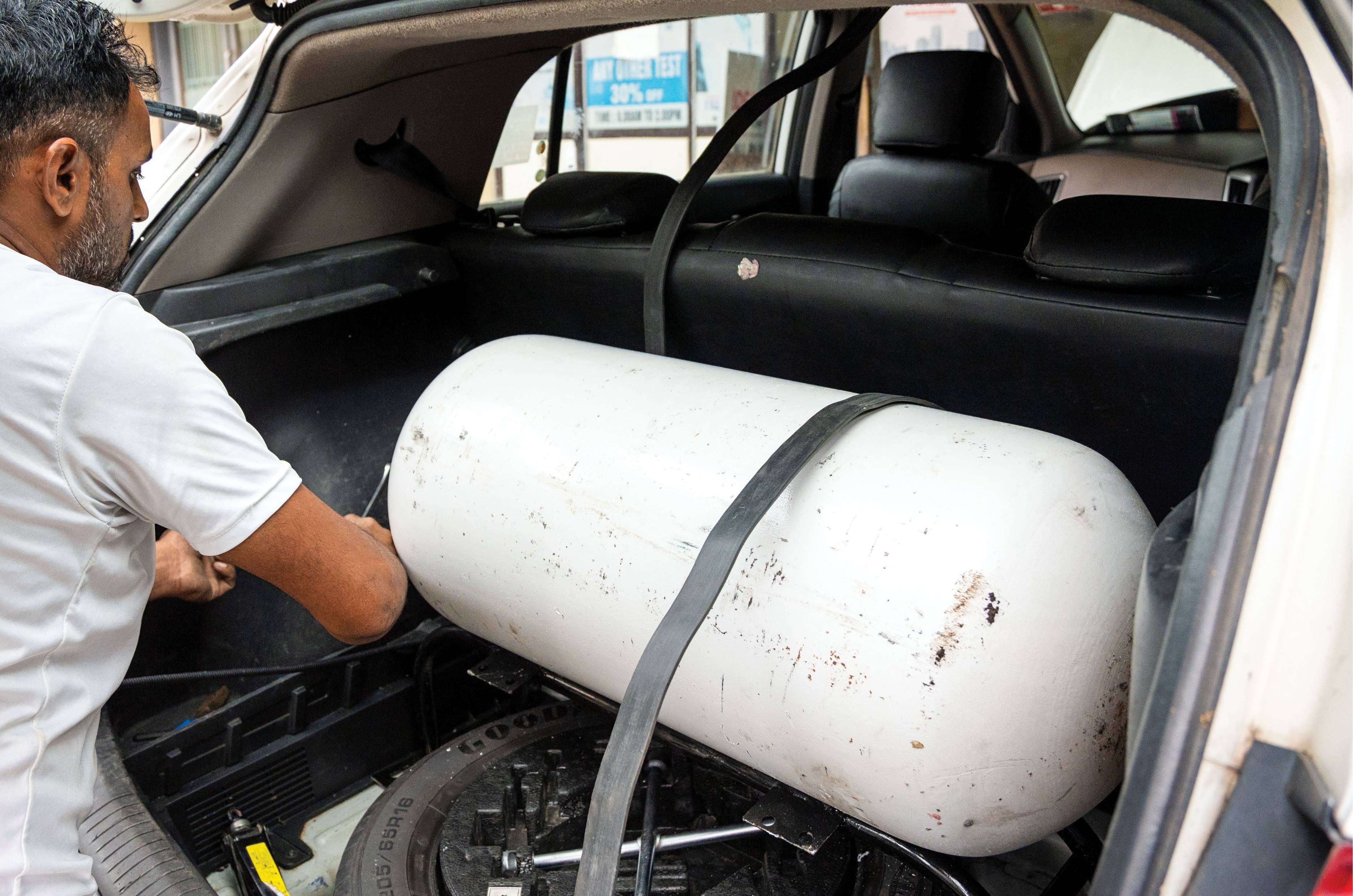
The CNG cylinder is secured to the frame using heavy-duty metal straps and bolts before being covered with a carpeted shroud for a neat factory-like finish.

High-pressure line routed
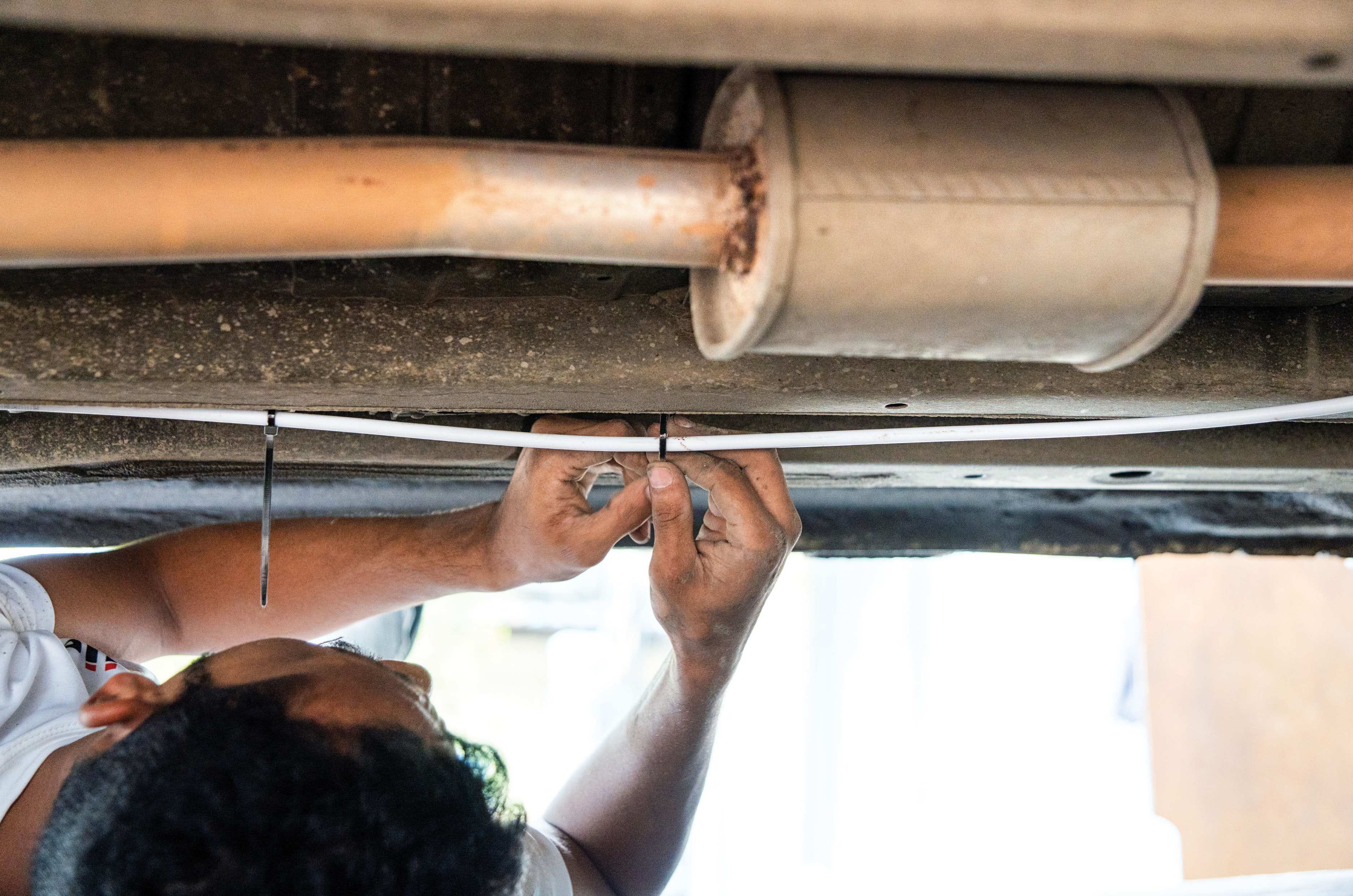
Polymer-coated steel high-pressure pipes are routed beneath the car, connecting the CNG filler valve, the tank and the reducer under the bonnet.

Electrical connections
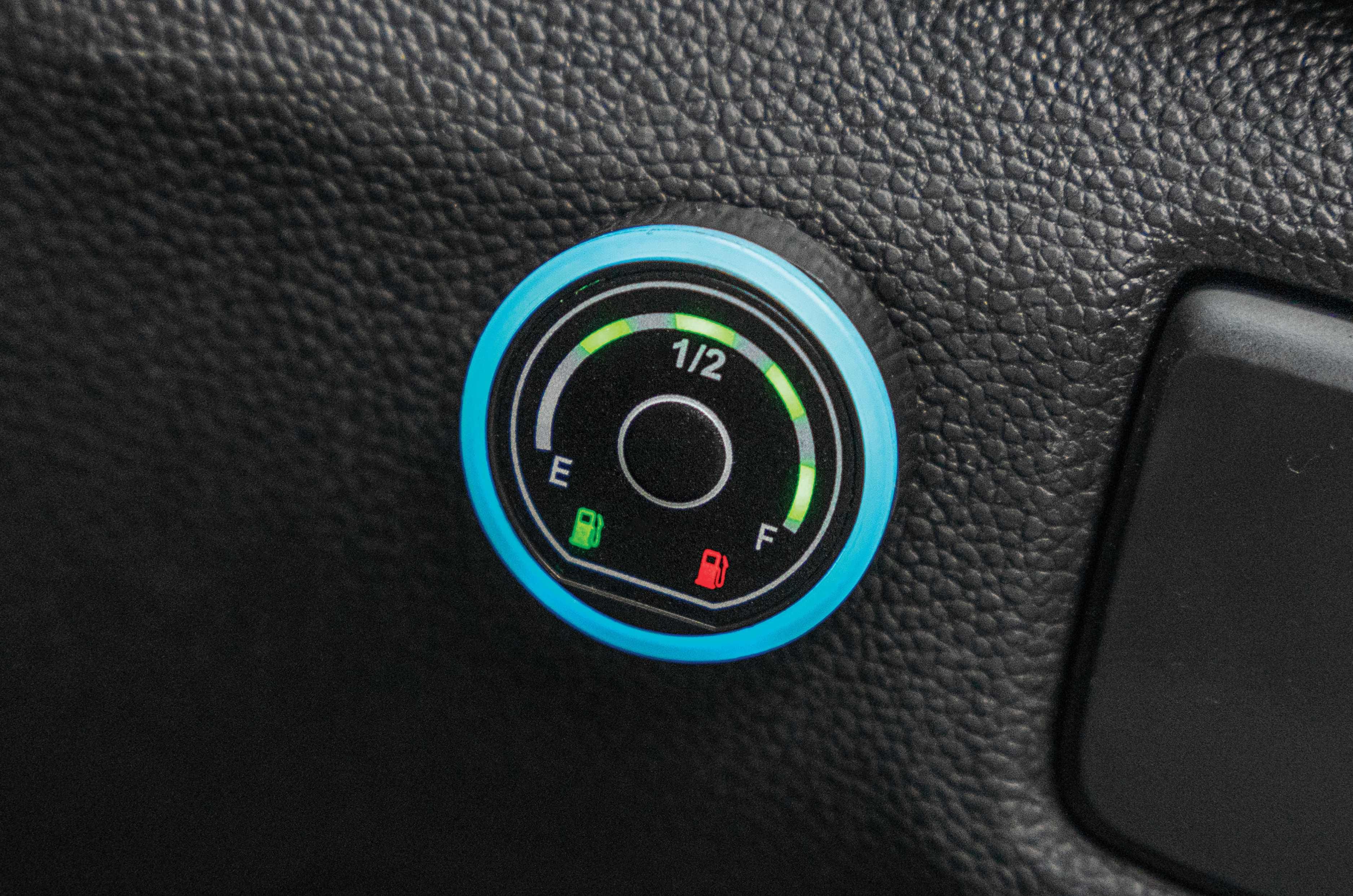
The remaining wiring is completed and a dashboard-mounted CNG switch is installed, allowing the driver to monitor fuel level and switch between petrol and CNG.

Leak test
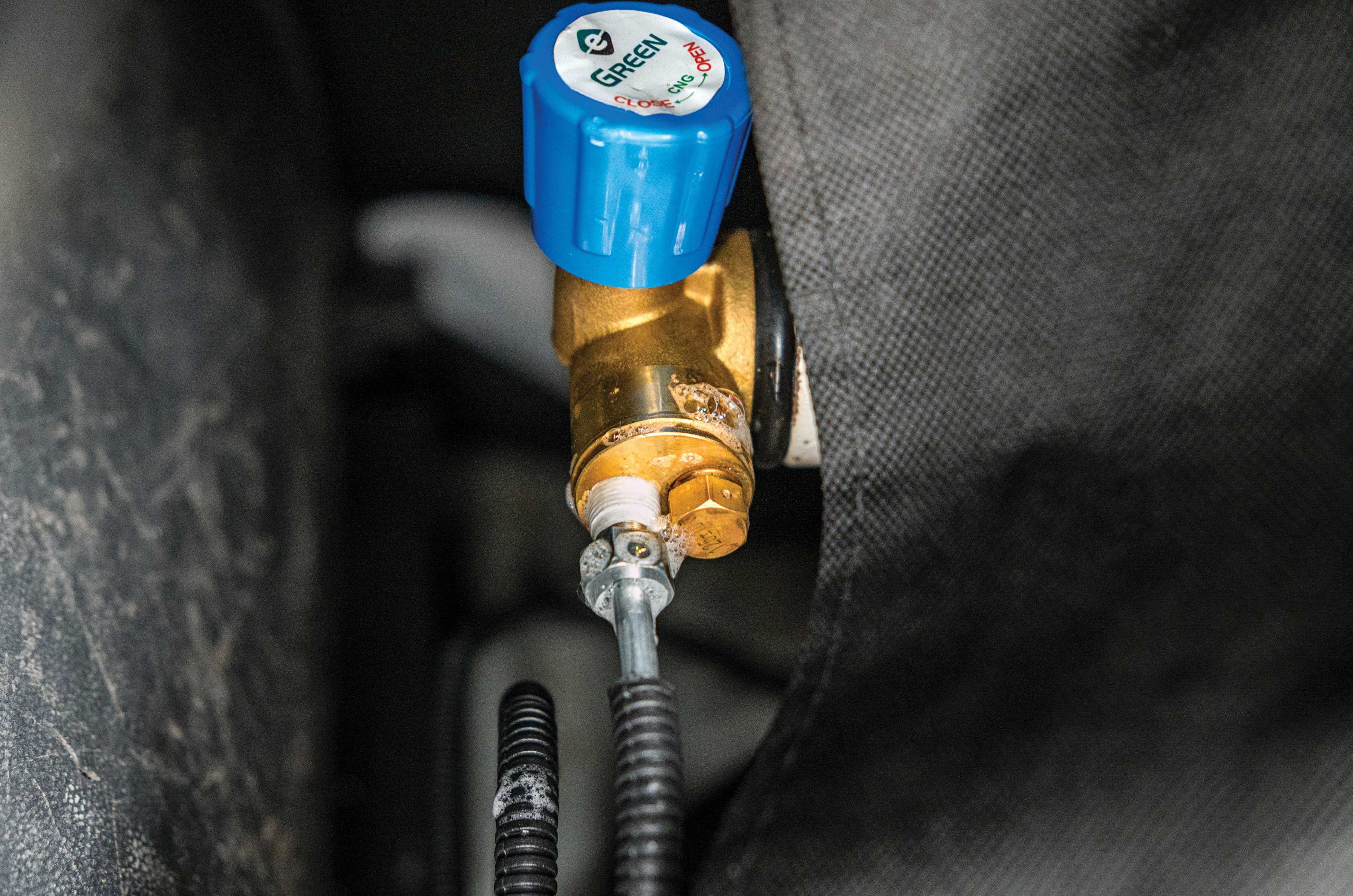
Around 2kg of CNG is added and every connection is checked using an electronic gas detector and good old-fashioned soap solution to ensure the entire system is leak-free.

Calibration and road test
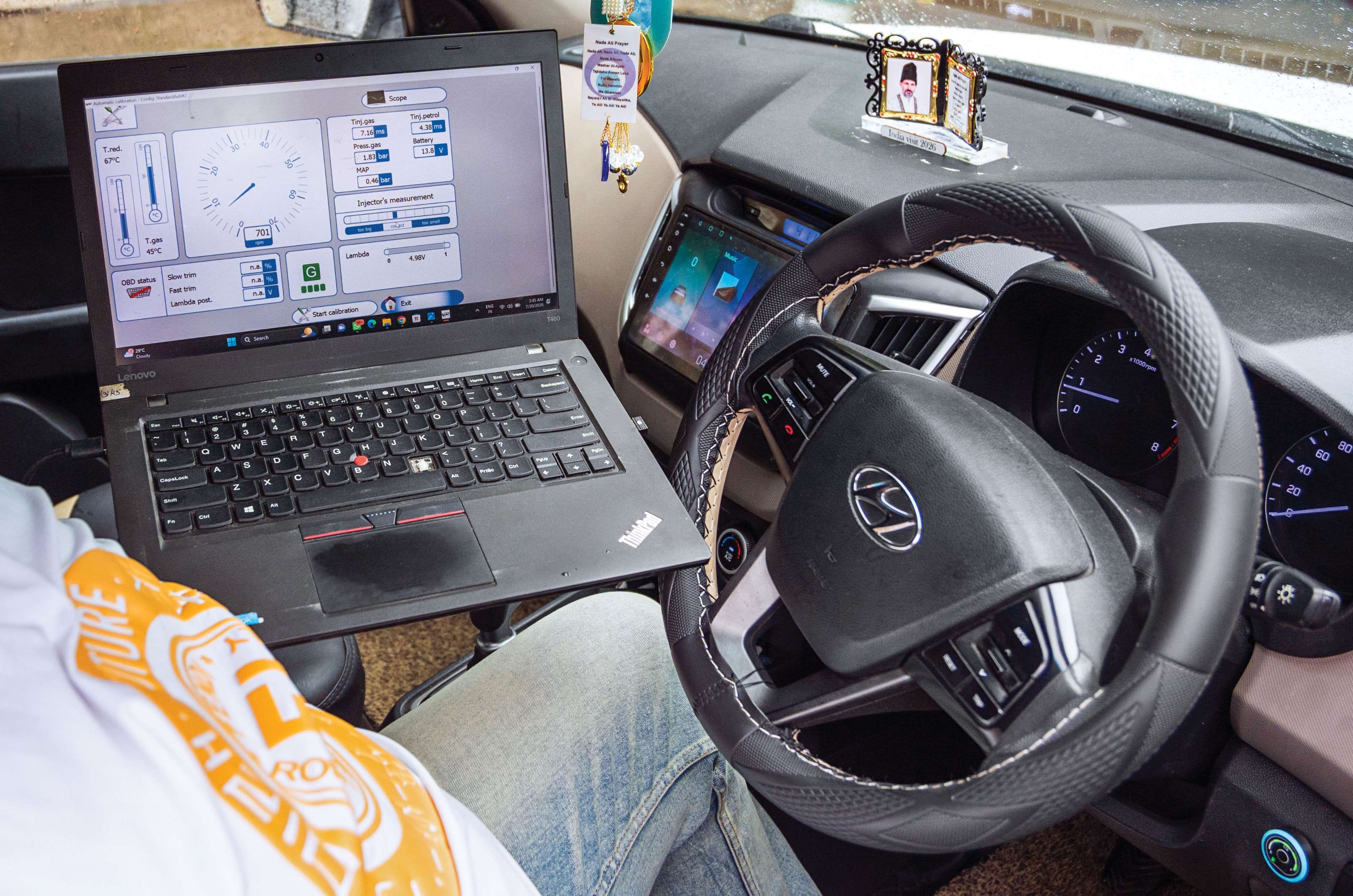
The system is calibrated using dedicated software to optimise fuel delivery and switchover settings. A final road test confirms performance before the vehicle is delivered to the customer.

Why go aftermarket?

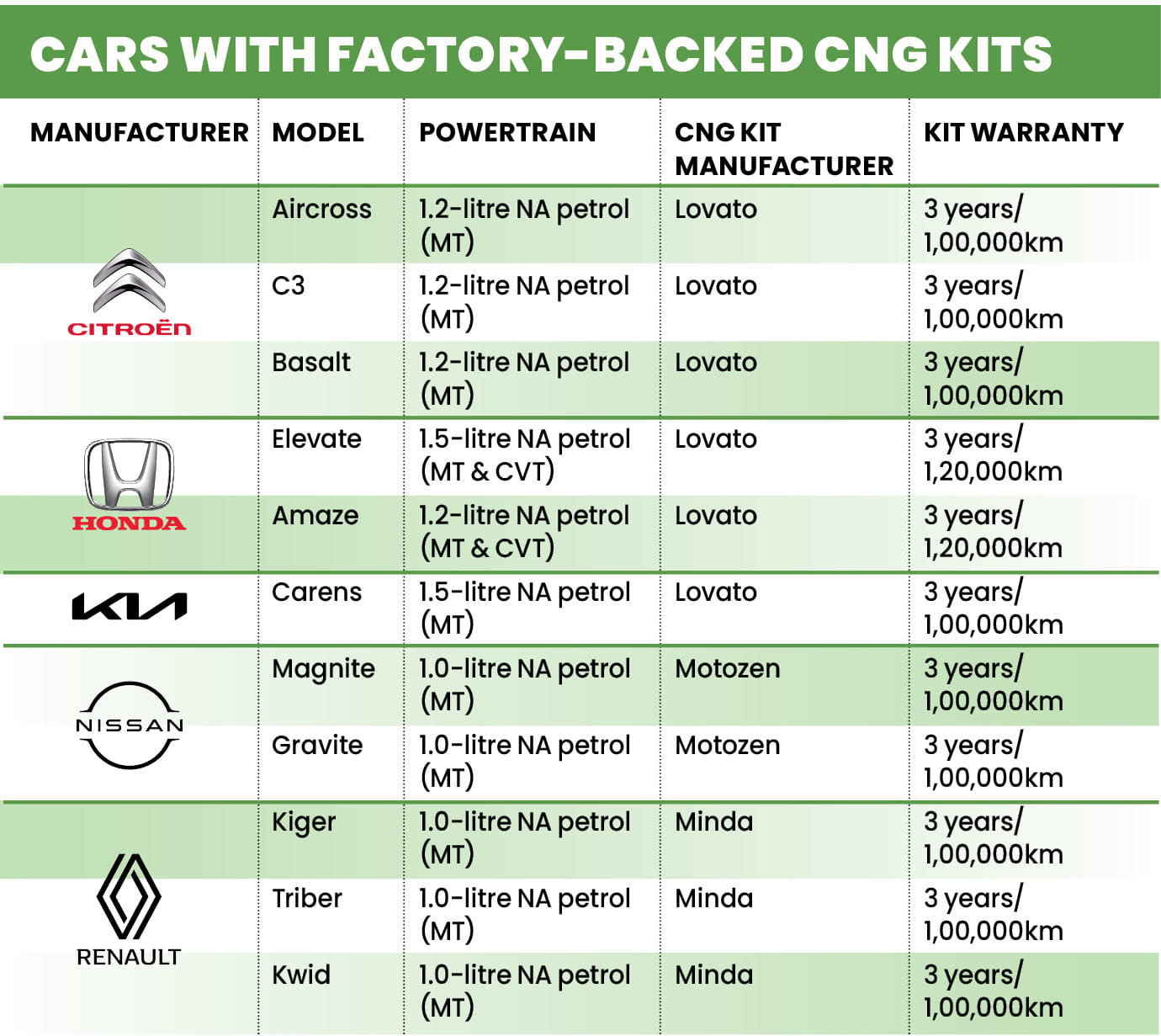
On average, an aftermarket CNG installation costs around 25 to 30 percent less than the premium a factory-fitted CNG variant commands over its petrol counterpart. However, this alone is not enough to swing the scales in favour of the aftermarket due to the disadvantages we will get into later. The bigger advantage the aftermarket holds is the ability to convert models or variants that do not come with a CNG option. For instance, Maruti Suzuki only offers its factory-fitted CNG cars with a manual transmission, so if you want one with an automatic, an aftermarket CNG kit is your only option.

Similarly, popular SUVs like the Hyundai Creta and Kia Seltos are not available in CNG guise, which leads many owners to turn to the aftermarket. Owners of older cars, or those buying used cars, can also convert them to CNG for a fairly affordable price and enjoy significantly lower running costs. CNG is spark-ignited, thus only petrol cars can be converted to run on the gas. Since diesel cars use compression-ignition, they would need far too many modifications to make this possible. Strong hybrids are also not recommended for conversions, as here, the engine keeps switching on and off too often, which makes CNG calibration complex. Cars that are not in good mechanical shape should also not be converted to CNG, as the conversion can take a toll on the overall engine health.

For a car in generally good shape, aftermarket kits are proving to be reliable in the long run, provided they are well maintained. Most modern sequential kits from brands like Lovato and Mijo are also comparable in quality to OEM systems, and reputed, authorised installers are able to achieve near-OEM levels of fitment.
The catch

Fitting an aftermarket CNG kit – even if it is government-approved and fitted by an authorised installer – is grounds for the manufacturer warranty to be voided. While some brands may still honour warranty claims that are unrelated to the powertrain, it remains a grey area. Some dealer-fitted CNG kits do retain the factory warranty, while others provide a third-party warranty in its place.

Aftermarket installers have also begun offering third-party warranties in collaboration with insurance companies to provide coverage in place of the factory warranty. This, however, is in addition to the cost of the CNG kit. The kits themselves generally come with a warranty ranging from one to two years.

Packaging is also one area where the aftermarket trails OEMs. While Maruti, Tata and Hyundai are now offering underbody and dual-tank setups to retain a usable boot, the aftermarket still largely uses larger single tanks that take up more space.
Staying fit

As per law, any CNG tank – aftermarket or OEM fit – must be hydrotested every three years. For this, the tank must be removed from the vehicle and sent to a dedicated facility. While the process itself takes only a couple of hours, hydrotesting facilities are usually located outside major cities, adding transport time to the process. A hydrotest typically costs around Rs 3,000 per tank.

The CNG filter should also be replaced at the same three-year or 10,000km interval, whichever comes first. This typically costs under Rs 1,000 and is fairly straightforward. It is also recommended to drive on petrol at least 10 percent of the time to keep the fuel system healthy. Finally, it is important that the engine’s service schedule is strictly followed.

The legal bit

Aftermarket CNG installations are legal as long as the kit is government-approved, fitted by an approved installer and the registration certificate (RC) is updated accordingly. Most approved installers will handle the RC update at the Regional Transport Office (RTO) as part of the service. Once this is complete, the owner must also update the insurance provider.

The verdict
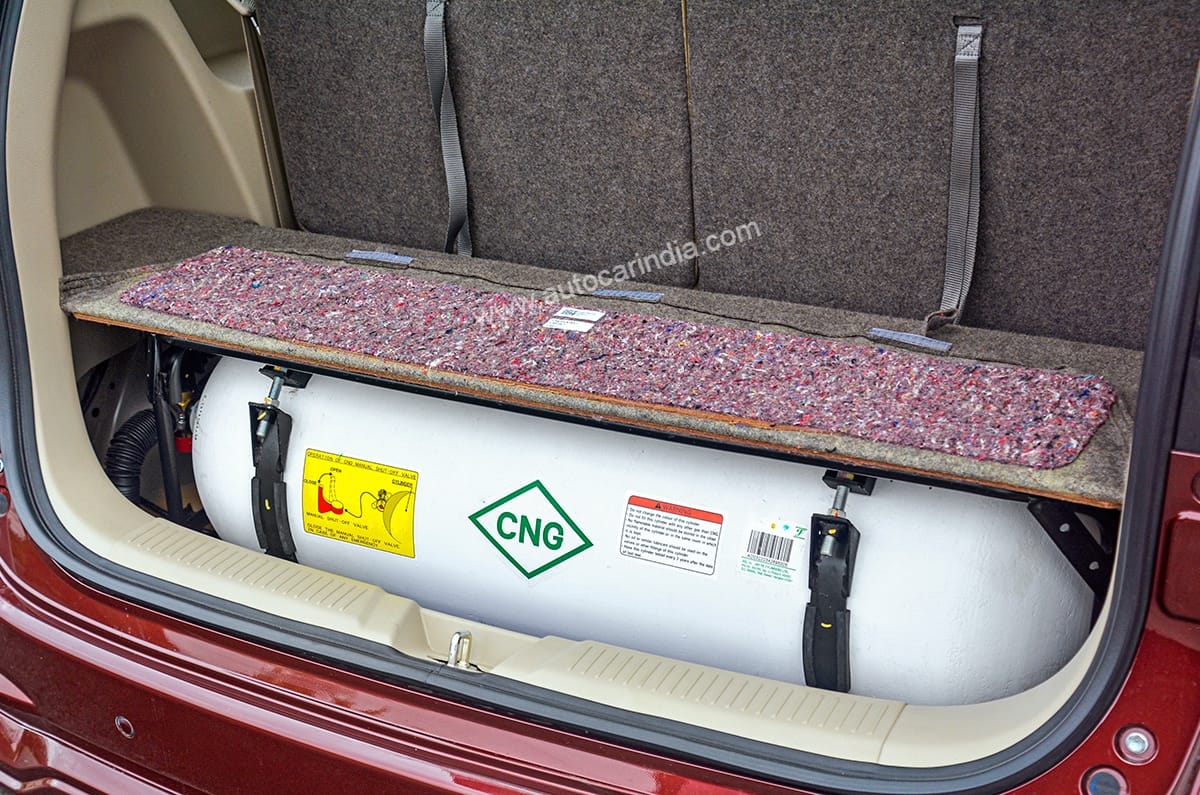
Maruti Ertiga’s factory-fitted CNG tank shown for representative purposes only. 

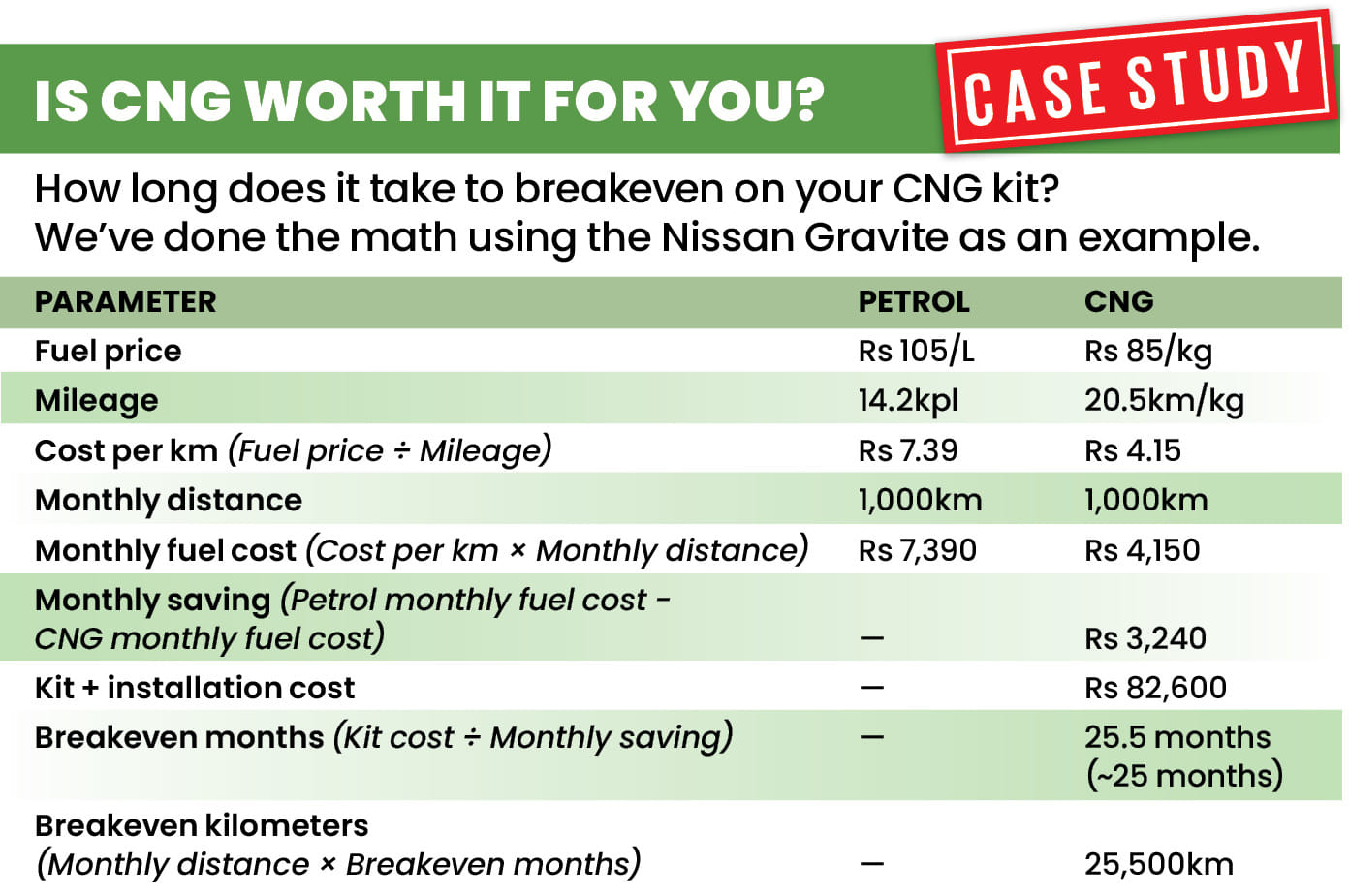
There is no denying the running cost advantage that CNG provides. However, when buying a brand-new car, a factory-fitted CNG version is still preferable to an aftermarket conversion simply because of the peace of mind. Once a car is out of warranty, though, a CNG conversion makes a great deal of sense. In most cases, the cost of the kit can be recouped within a couple of years, even with an average monthly running of around 1,500km.

However, the installer is just as important as the kit. Always opt for government-approved kits installed by approved installers with a strong reputation. Wherever possible, insist the installation is carried out without splicing into the original wiring and follow the recommended service schedule to ensure your car stays reliable.
सोना सस्ता होने वाला है! 15% से घटकर 6% हो सकती है इंपोर्ट ड्यूटी, जानिए कितनी गिरेंगी कीमतें

Gold Import Duty Cut Impact: भारतीय सर्राफा बाजार और सोना खरीदने वालों के लिए बड़ी खबर है। सरकार सोने पर लगने वाली कस्टम इंपोर्ट ड्यूटी को 15% से घटाकर 6% करने पर विचार कर रही है। अगर यह फैसला लागू होता है, तो देश में सोने की कीमतों में बड़ी गिरावट देखने को मिल सकती है।

गौरतलब है कि मई 2026 में सरकार ने विदेशी मुद्रा भंडार पर बढ़ते दबाव को देखते हुए सोने पर आयात शुल्क बढ़ाकर 15% कर दिया था। स्वास्तिका इन्वेस्टमार्ट के विश्लेषकों के अनुसार, इस ड्यूटी में कटौती का सीधा असर घरेलू बाजार में सोने के भाव, तस्करी और आगामी त्योहारी-शादियों के सीजन में ज्वेलरी की मांग पर पड़ेगा।

15% से 6% ड्यूटी हुई तो कितनी गिरेंगी कीमतें?

भारत अपनी सोने की जरूरतों को पूरा करने के लिए सालाना 700 से 800 टन सोना विदेशों से आयात करता है। जब इंपोर्ट ड्यूटी 15% होती है, तो यह घरेलू बाजार में सोने के लिए एक न्यूनतम मूल्य तय कर देती है।

अगर ड्यूटी 9% घटकर 6% पर आती है, तो अंतरराष्ट्रीय बाजार और भारतीय बाजार के बीच का अंतर काफी कम हो जाएगा। इससे स्थानीय सर्राफा बाजारों में सोने के लैंडेड कॉस्ट में सीधी कमी आएगी, जिसका फायदा सीधे रिटेल खरीदारों को मिलेगा।

दिल्ली में 24 कैरेट सोने की मौजूदा कीमत ₹1,63,890 प्रति 10 ग्राम पर अगर इंपोर्ट ड्यूटी 15% से घटकर 6% यानी 9% की सीधी कटौती होती है, तो इसके भाव में सीधे ₹14,750 की बड़ी गिरावट आएगी और यह घटकर लगभग ₹1,49,140 प्रति 10 ग्राम पर आ जाएगा। वहीं 22 कैरेट सोने का भाव ₹1,50,240 प्रति 10 ग्राम से ₹13,522 सस्ता होकर करीब ₹1,36,718 प्रति 10 ग्राम हो जाएगा।

(नोट: यह कटौती केवल सोने की बेस कीमत पर आधारित है, ज्वैलरी के कुल बिल में 3% जीएसटी और मेकिंग चार्ज के हिसाब से अतिरिक्त राहत भी मिलेगी।)

तस्करी पर लगेगी लगाम, वैध मार्केट को बढ़ावा

स्वास्तिका इन्वेस्टमार्ट की रिपोर्ट के अनुसार, हाई इंपोर्ट ड्यूटी (15%) का सबसे बड़ा नुकसान यह होता है कि इससे सोने की तस्करी और अवैध रास्तों से आने वाले सोने को बढ़ावा मिलता है। ड्यूटी 6% होने से वैध तरीके से आयात किए गए सोने और अवैध सोने के बीच का रेट गैप खत्म हो जाएगा। इससे बुलियन ट्रेडर्स और ज्वेलर्स औपचारिक चैनलों के जरिए सोना खरीदने के लिए प्रोत्साहित होंगे, जिससे सरकार के राजस्व संग्रह में भी सुधार होगा।

शादियों के सीजन में ज्वेलरी डिमांड में आएगा उछाल

भारतीय संस्कृति में शादी-ब्याह और त्योहारों के दौरान सोने की खरीदारी सबसे ज्यादा होती है। सोने के दाम घटने से मध्यम वर्गीय परिवारों और रिटेल खरीदारों का बजट सुधरेगा, जिससे ज्वेलरी की मांग में बड़ा उछाल देखने को मिल सकता है।

सर्राफा कारोबारी और रिटेल ज्वेलर्स नई आयात लागत के हिसाब से अपने मेकिंग चार्जेस और फाइनल रिटेल प्राइस में तेजी से बदलाव करेंगे। विशेषकर टियर-2 और टियर-3 शहरों में इसका असर सबसे तेज दिखेगा।

निवेशकों के लिए क्या है सलाह?

स्वास्तिका इन्वेस्टमार्ट के अनुसार, सोने में निवेश करने वाले रिटेल निवेशकों और ट्रेडर्स को इस नीतिगत बदलाव पर नजर रखनी चाहिए:

फिजिकल गोल्ड बनाम Gold ETF: ड्यूटी घटने से फिजिकल गोल्ड के प्रीमियम में कमी आएगी, जिससे Gold ETFs और गोल्ड फंड्स में निवेश करना अधिक फायदेमंद और सुरक्षित विकल्प बन सकता है।

ज्वेलरी और माइंडिंग स्टॉक्स: सोने के दाम घटने और बिक्री बढ़ने से प्रमुख ज्वेलरी कंपनियों और गोल्ड-लिंक्ड शेयरों के मार्जिन और प्रदर्शन में सुधार हो सकता है।

सरकार की ओर से आधिकारिक ऐलान होते ही सर्राफा बाजार में सोने की नई दरें लागू हो जाएंगी। अगर आप त्योहारी सीजन या शादियों के लिए सोने की खरीदारी या गोल्ड ETF में निवेश की योजना बना रहे हैं, तो ड्यूटी में संभावित कटौती के इस फैसले पर करीबी नजर बनाए रखना समझदारी होगी।

Disclaimer: यहां मुहैया जानकारी सिर्फ सूचना के लिए दी जा रही है। यहां बताना जरूरी है कि मार्केट में निवेश बाजार जोखिमों के अधीन है। निवेशक के तौर पर पैसा लगाने से पहले हमेशा एक्सपर्ट से सलाह लें। मनीकंट्रोल की तरफ से किसी को भी पैसा लगाने की यहां कभी भी सलाह नहीं दी जाती है।

Which variant of the Skoda Kylaq should you buy?

Which variant of the Skoda Kylaq should you buy?
Skoda Kylaq variants and features explained

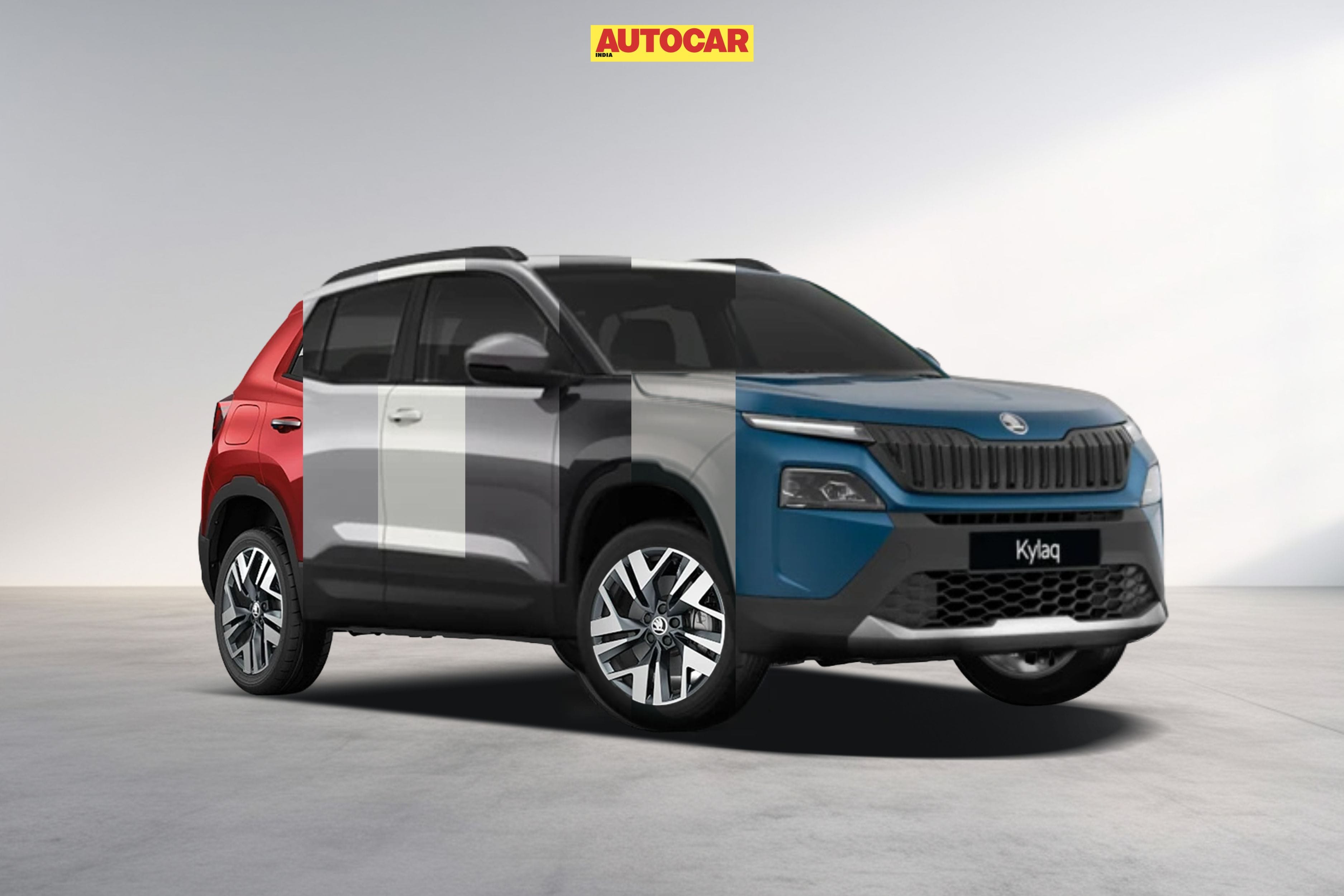
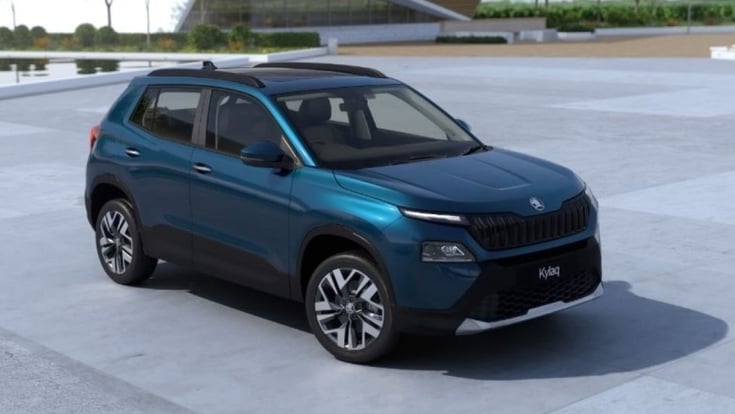
The Kylaq, Skoda’s most affordable offering in India, was introduced in 2024 and marked the brand’s return to the sub-4m space after years. Currently, the Kylaq is Skoda’s best-selling model in our market and has sold over 50,000 units since its launch as of February 2026. Here’s a breakdown of the powertrain options, comfort and convenience features, safety kit and exterior colours available on each trim of the Skoda SUV.

Skoda Kylaq variant-wise price and powertrain options

The base Classic trim misses out on an automatic transmission option

Skoda Kylaq ex-showroom price as of August 21, 2026 (Rs lakh)

Trim

MT

AT

Classic

7.59

Classic+

8.25

9.25

Signature

9.43

10.43

Signature+

10.77

11.77

Sportline

11.32

12.32

Prestige

11.75

12.75

Prestige+

11.99

12.99

The Skoda Kylaq has an ex-showroom price ranging from Rs 7.59 lakh to Rs 12.99 lakh. Except for the base Classic trim, the remaining trim levels offer both manual and automatic gearboxes. Powering the Kylaq is a 115hp, 178Nm, 1.0-litre direct-injection turbo-petrol engine that also does duty in the Kushaq and the Slavia. Transmission duties are handled by either a -speed manual or a 6-speed automatic gearbox. Notably, in Classic+ guise, the Kylaq is the most accessible car with a torque converter gearbox. 

Skoda claims a top speed of 188kph and that the manual version is capable of a 0-100kph sprint in 10.5 seconds. In our Kylaq real-world performance tests, the automatic version achieved a 0-100kph time of 11.69 seconds. Skoda also claims an ARAI-rated fuel economy of 19.68kpl for the manual and 19.05kpl for the automatic; our Kylaq real-world mileage tests saw the manual average 12.86kpl, while the automatic went 11.03km on a litre of petrol.

Skoda Kylaq variant-wise colour options

Offered in seven colours on the outside, two on the inside 

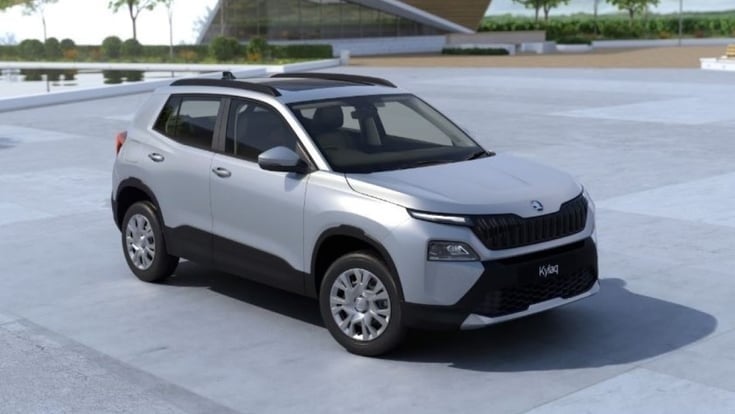
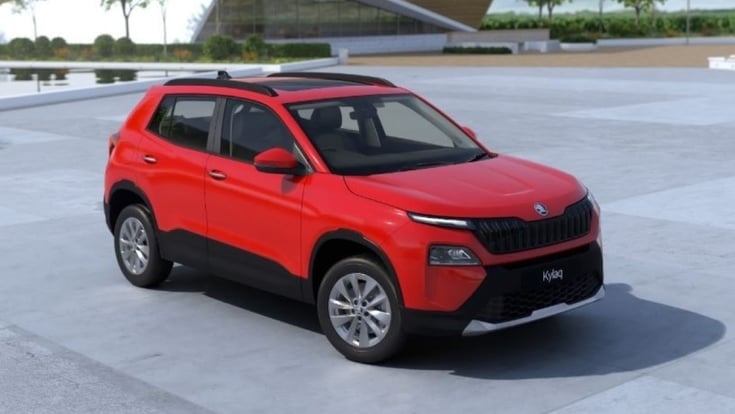
The compact SUV is offered in seven colours, namely, Candy White, Brilliant Silver, Cherry Red, Carbon Steel, Deep Black, Lava Blue, and Steel Grey. While all trims come in a monotone finish, select paint jobs on the Sportline come with a black roof. Additionally, the Sportline trim exclusively gets the Steel Grey colour option. The interior of the Skoda Kylaq gets a black and grey colour scheme as standard, but the Sportline has an all-black theme. Here’s a table comprising the available exterior colours on the Skoda Kylaq depending on the trim level chosen:

Colour 

Classic

Classic+

Signature

Signature+

Sportline 

Prestige

Prestige+ 

Candy White

Yes

Yes

Yes

Yes

Dual-tone

Yes

Yes

Brilliant Silver

Yes

Yes

Yes

Yes

Dual-tone

Yes

Yes

Cherry Red

Yes

Yes

Yes

Yes

Dual-tone

Yes

Yes

Carbon Steel

Yes

Yes

Yes

Yes

Yes

Yes

Deep Black

Yes

Yes

Yes

Yes

Yes

Yes

Lava Blue

Yes

Yes

Yes

Yes

Yes

Yes

Steel Grey

Dual-tone

Skoda Kylaq standard safety kit 

Gets six airbags, ABS, EBD, traction control and more.

As standard, the Skoda Kylaq comes equipped with six airbags, ABS, EBD, ESC, traction control, brake disc wiping, roll-over protection, central locking, rear parking sensor, and ISOFIX mounts. 

Skoda Kylaq variant-wise features

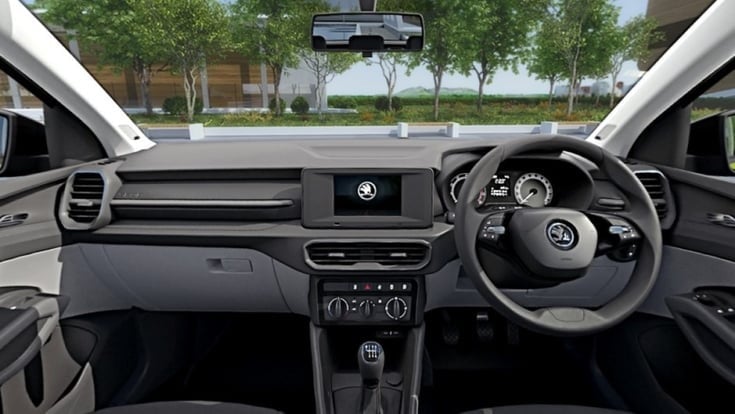
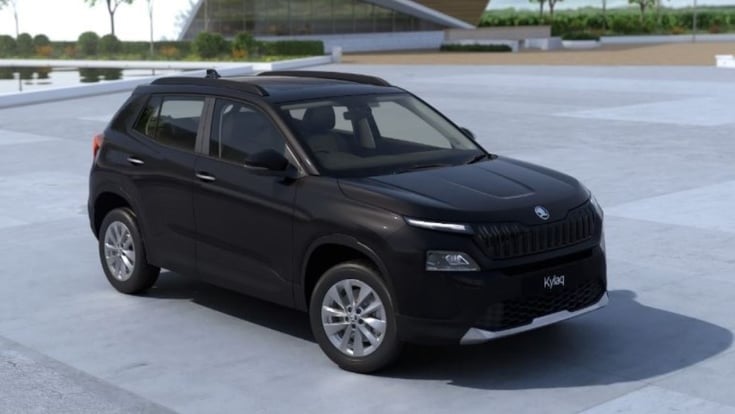
Skoda Kylaq Classic: Rs 7.59 lakh

Gearbox option – 6MT

Skoda Kylaq Classic trim exterior
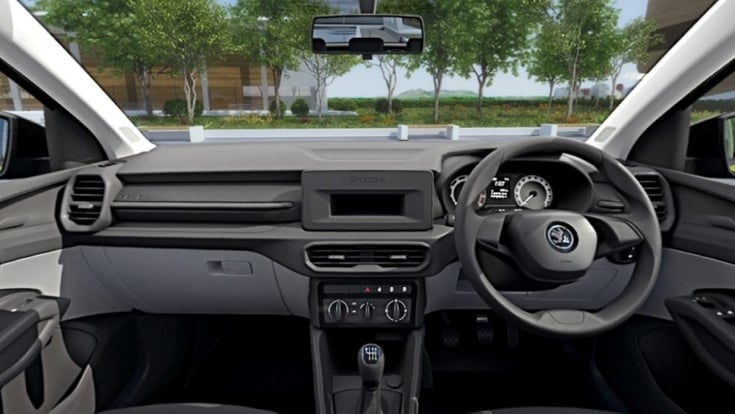
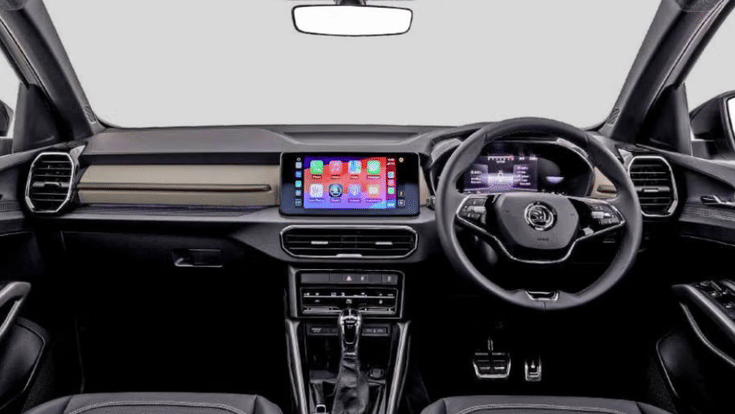
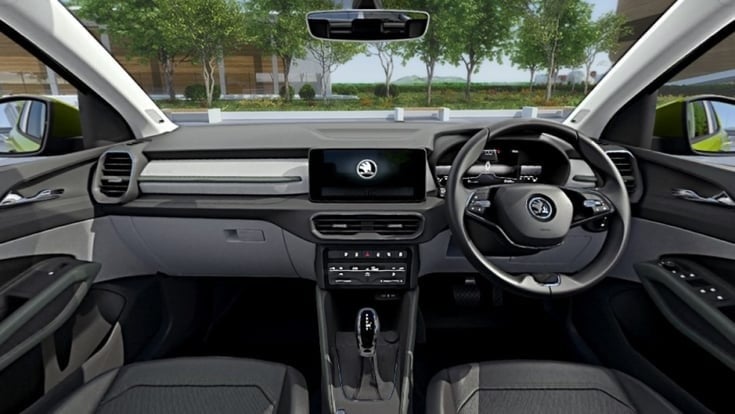
Skoda Kylaq Classic trim interior
 

Skoda Kylaq Classic trim

  • LED headlights with LED daytime running lamps (DRLs)
  • LED tail-lights
  • 16-inch steel wheels with covers
  • 15-inch spare wheel
  • Roof rails
  • Roof-mounted spoiler
  • Dual-tone dashboard
  • Manual day/night interior rearview mirror (IRVM)
  • Driver seat height adjust
  • Adjustable headrests for all passengers
  • Auto engine start-stop
  • Tilt and telescopic steering adjust
  • Powered wing mirrors
  • All power windows
  • Auto AC
  • Rear defogger
  • Analogue dials with a digital MID
  • Front centre armrest
  • 12V charging socket (front)
  • Fabric seats
  • Analogue dials with 3.5-inch MID
  • 2 tweeters
  • Front LED cabin lamps

Skoda Kylaq Classic+ – Rs 8.25 lakh-9.25 lakh

Gearbox options – 6MT, 6AT

Features over Classic

  • Single-pane sunroof
  • Cruise control
  • 4 speakers
  • Auto-dimming IRVM
  • Front and rear LED cabin lamps
  • Steering-mounted controls
  • Leatherette-wrapped gear lever (AT only)
  • Rear LED cabin lamps
  • One-touch up/down for driver-side window 

Skoda Kylaq Signature – Rs 9.43 lakh-10.43 lakh

Gearbox options – 6MT, 6AT

Skoda Kylaq Signature trim exterior
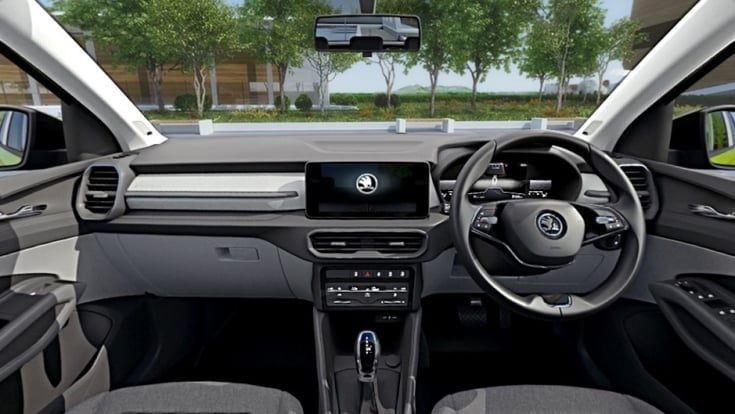
Skoda Kylaq Signature trim interior
 

Skoda Kylaq Signature trim

Features over Classic+
  • 16-inch silver alloy wheels
  • Black tailgate strip between the tail-lights
  • Tyre-pressure monitoring system (TPMS)
  • Paddle shifters (AT only)
  • 7-inch touchscreen infotainment system
  • Wired Android Auto and Apple CarPlay 
  • 2x USB Type-C ports (rear)
  • Auto-folding outside rearview mirrors (ORVMs)
  • Rear wiper and washer
  • Chrome garnish on AC vents and door handles
  • Rear AC vents
  • Sliding front centre armrest with storage space
  • Cooled glove box
  • Driver-side window one-touch up/down
  • Rain-sensing wipers (front)

Skoda Kylaq Signature+ – Rs 10.77 lakh-11.77 lakh

Gearbox options – 6MT, 6AT

Skoda Kylaq Signature+ trim exterior
Skoda Kylaq Signature+ trim interior
 

Skoda Kylaq Signature+ trim

Features over Signature
  • Shark-fin antenna
  • Chrome strip on outside door handles
  • Auto-folding ORVMs
  • Hill-hold assist
  • Rear parking camera with static guidelines
  • Auto headlights with follow-me-home function
  • Keyless entry and go
  • 10-inch touchscreen infotainment system
  • Wireless Android Auto and Apple CarPlay
  • 8-inch digital instrument cluster
  • Dash inserts
  • Leather-wrapped steering wheel
  • USB Type-C ports (front) 
  • 60:40 split-folding rear seats
  • Rear centre armrest with cup holders
  • Rear parcel tray
  • In-car connectivity suite

Skoda Kylaq Sportline – Rs 11.32 lakh to Rs 12.32 lakh

Gearbox options – 6MT, 6AT

Features over Signature+

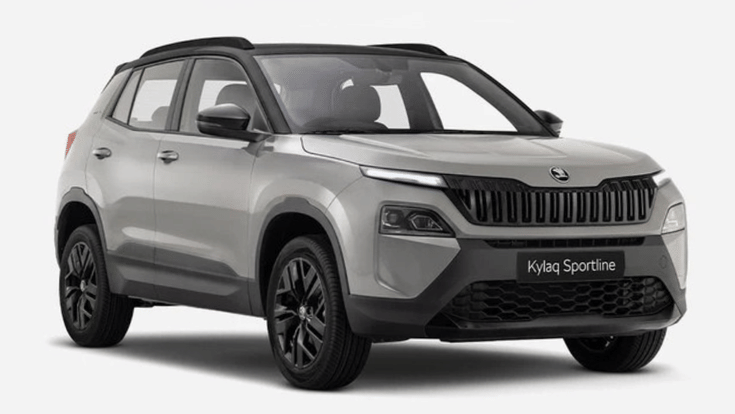
Skoda Kylaq Sportline
Skoda Kylaq Sportline interior
 

Skoda Kylaq Sportline trim


  • Black 17-inch alloy wheels
  • Rear spoiler with finlets 
  • Black ORVMs and branding 
  • Sportline badge on tailgate
  • Leatherette front armrest and door pads
  • White ambient lighting
  • Aluminium pedals 
  • Leatherette seat upholstery with Sportline inscription
  • LED projector headlamps 
  • LED fog lamps with cornering function
  • Wireless phone charger

Skoda Kylaq Prestige – Rs 11.75 lakh-12.75 lakh

Gearbox options – 6MT, 6AT

Skoda Kylaq Prestige trim exterior
Skoda Kylaq Prestige trim interior
 

Skoda Kylaq Prestige trim

Features over Signature+
  • Dual-tone 17-inch alloys
  • LED projector headlights
  • LED rear turn indicator and reverse lamp
  • Front LED fog lamps with static bending function
  • White ambient lighting
  • Leatherette upholstery on seats, front armrest and doors
  • Chrome parking brake tip
  • Ventilated front seats
  • Wireless phone charger
  • Anti-theft alarm

Skoda Kylaq Prestige+ – Rs 11.99 lakh-12.99 lakh

Gearbox options – 6MT, 6AT

Feature over Prestige

  • 6-way powered front seats

Which Skoda Kylaq variant should you consider?

The mid-spec Signature+ trim offers good value for money

Starting at Rs 10.77 lakh, the mid-spec Signature+ trim offers dual digital screens, a single-pane sunroof, a rear parking camera with sensors, auto AC with rear vents, all-LED lighting and 16-inch silver alloy wheels, making it a value-for-money offering. While you do miss out on features such as a wireless phone charger and powered and ventilated front seats, the premium you have to pay for these is not justifiable. Moreover, this trim is available with both manual and automatic gearbox options.
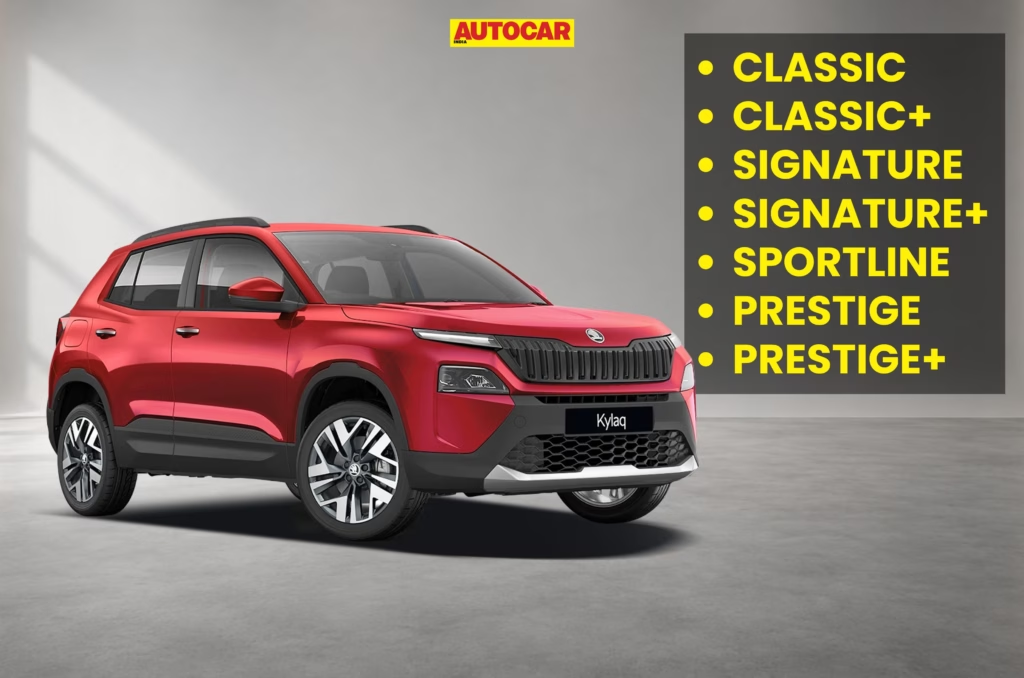
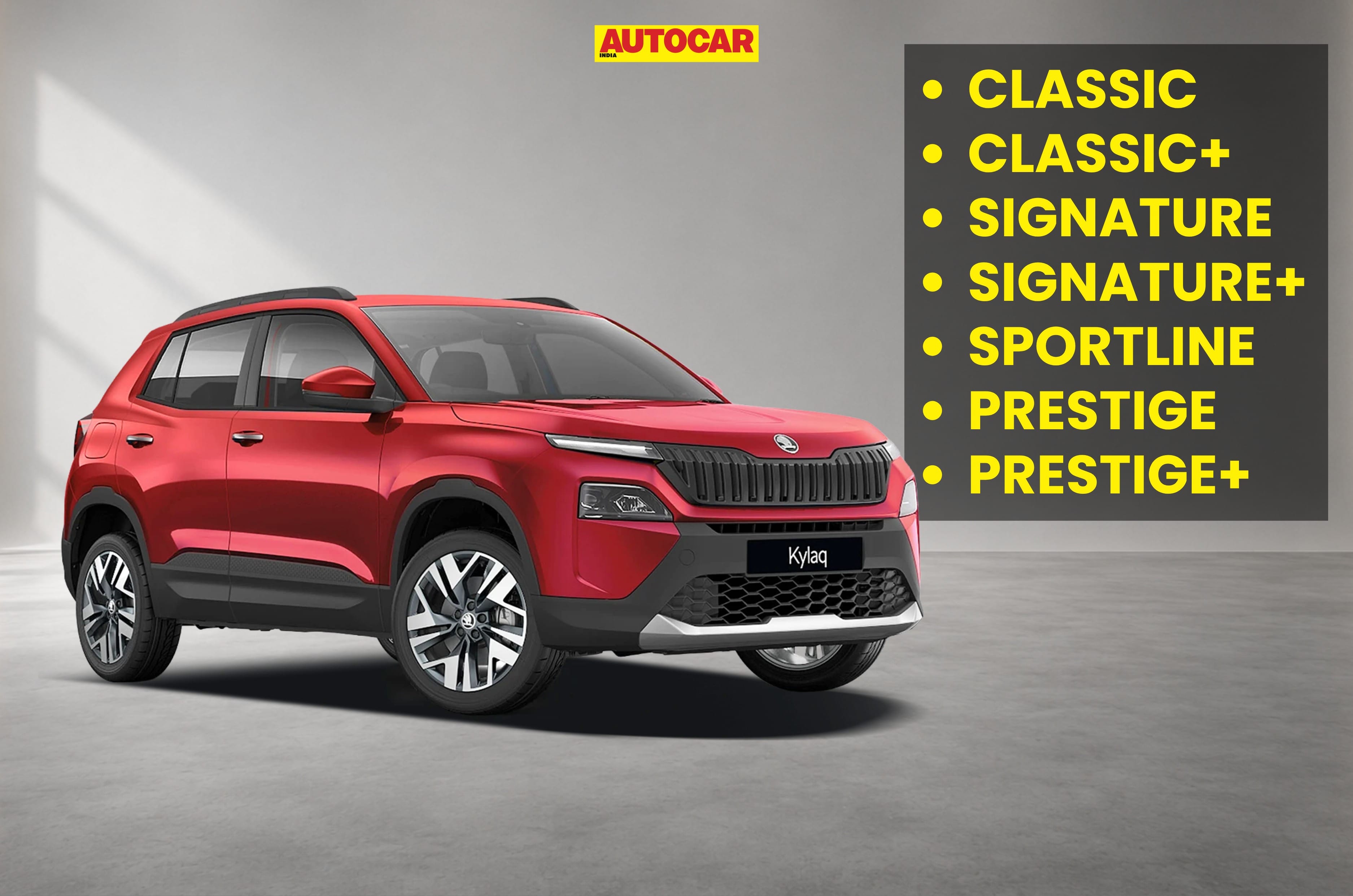
However, if you are on a budget, you can consider the lower Signature trim, which offers a smaller touchscreen with wired Android Auto and Apple CarPlay, rear wiper and washer, rear AC vents and a sunroof. This trim also comes in both manual and automatic variants, and priced at Rs 9.43 lakh and Rs 10.43 lakh, respectively, they still offer a lot of value.

Although the Classic+ trim is also well-equipped for its price, the lack of an infotainment system makes recommending it a bit more challenging. However, the 7-inch OEM infotainment system with wired smartphone connectivity, offered with the higher Signature trim, is available in the online classifieds marketplace under Rs 10,000. If you are open to retrofitting it at your authorised dealership, the Classic+ trim becomes the most value-for-money option on a strict budget. 

Prices are ex-showroom, India.

Sedan continues to be the quintessential car, says Skoda India brand director

Sedan continues to be the quintessential car, says Skoda India brand director
Skoda Slavia, Superb and Octavia revealed

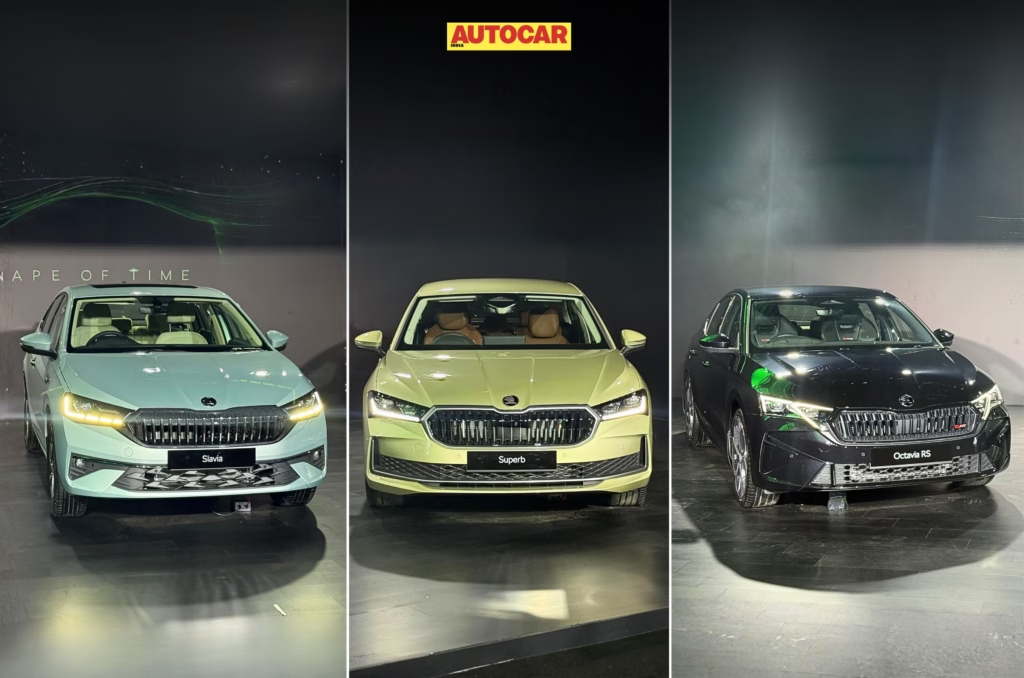
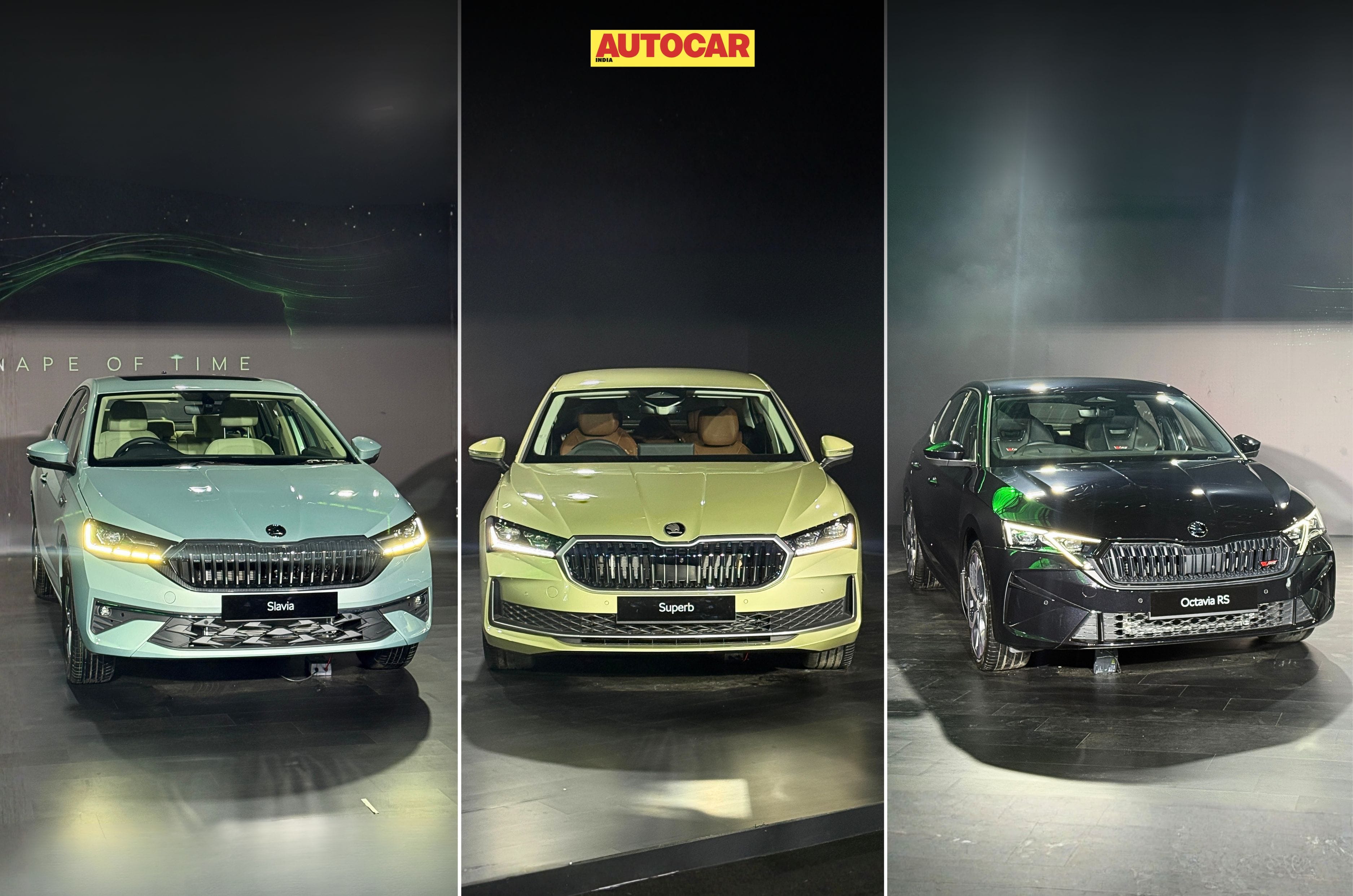
While it sells multiple SUV models, Skoda is the only mass-market automaker that has also remained steadfastly committed to the sedan body type. The Czech brand recently introduced three sedans all at the same event – something of a rarity in an otherwise SUV-dominated market. Skoda’s latest entrants in India include the Slavia facelift, the Superb diesel and the Octavia RS. While admitting to the market’s preference for SUVs over the last decade or so, Ashish Gupta, brand director at Skoda Auto India, also said, “If you look at it, sedans continue to be the quintessential car.”

  1. Gupta says the charm of sedans hasn’t gone away
  2. He cites a lack of focus in the segment by manufacturers
  3. SUV saturation expected to work in favour of sedans

The Czech automaker thinks sedans are here to stay

Gupta believes the sedan body type will continue to make sense for the brand

The Superb nameplate arrived 90 years ago, with the line-up eventually including models such as the Octavia, Rapid and Slavia. “It’s been a long legacy of sedans for Skoda, with the sedan body style defining our brand not only globally but also in India,” said Gupta. The Slavia has been a successful model for the Czech brand in India. “The premium sedan segment in India right now is at around 4,000 to 4,500 units per month, with the Slavia making up nearly 30 percent of all sales in the segment. We are the torchbearers of that segment, and the Slavia facelift will have its role in the company’s India portfolio while also appealing to a wider customer set,” he added.

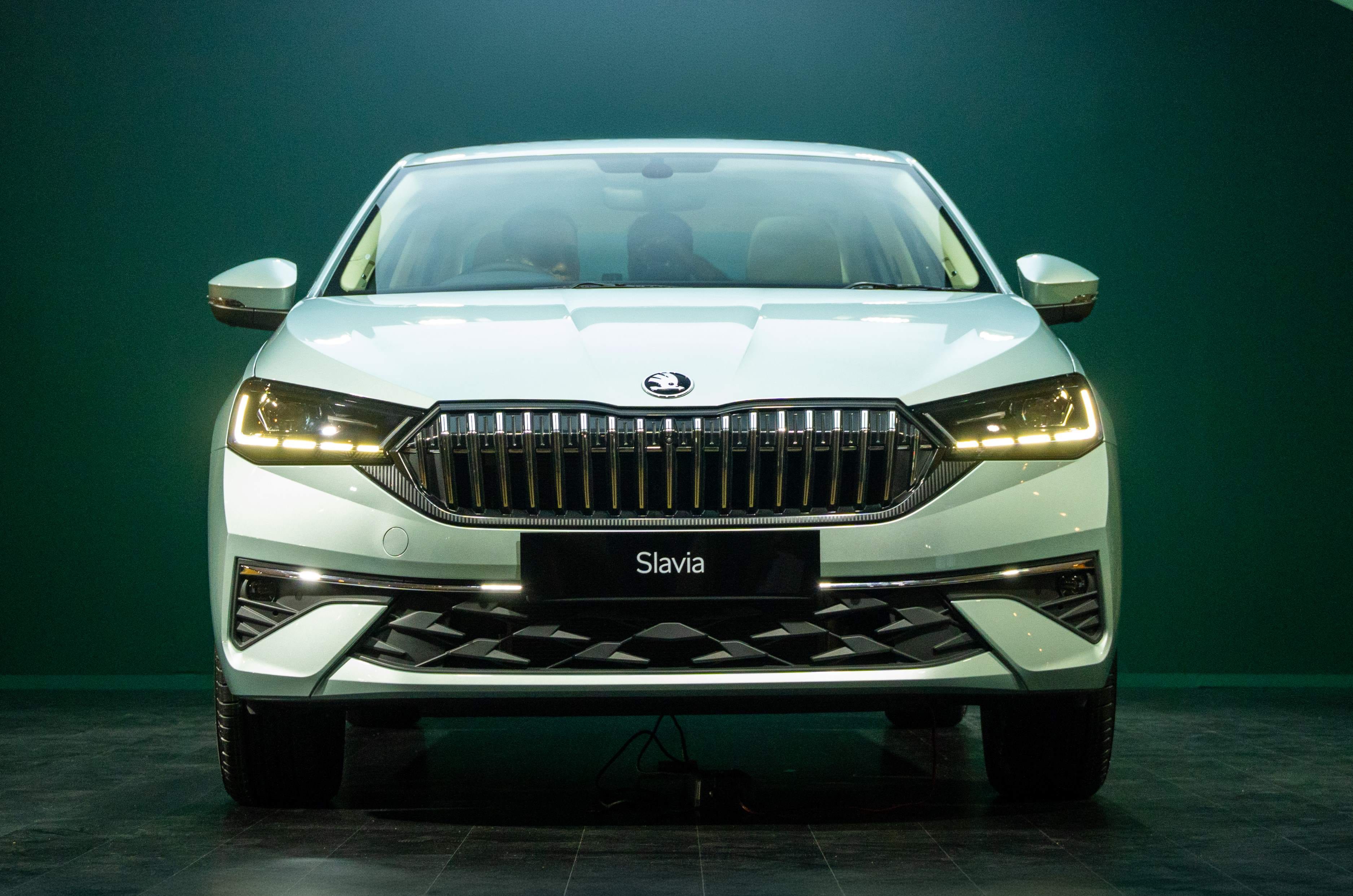
Skoda Slavia facelift front
The Slavia occupies the mass-market sedan segment in India.

According to Gupta, the Slavia offers buyers a blend of performance and understated elegance. “There are good reasons the charm of a sedan hasn’t gone away. There’s the superior driving dynamics and pure elegance that sedans exude. One would love to arrive at an event in a sedan, or go for a fun drive during the weekend. So I think sedans will continue to have their fans and people who would still want to own one.”

However, the brand director isn’t expecting the segment to make a strong comeback in the near future. “I think the sedan segment will continue to remain a smaller part of the market – that much is very clear,” he remarked while citing the current trend in the industry. “Most of the new product launches and introductions are happening in the SUV segment and other body styles.” He thinks the growth potential is primarily hindered by automakers ignoring sedans and instead doubling down on SUVs. “We, as manufacturers, should take the responsibility for this, as we have not focused on the sedan segment.”

Gupta was quick to point out that Skoda is one of the few automakers worldwide that maintains a focus on the sedan space as well. “Perhaps we are among the few brands who still have a large sedan portfolio, which continues to do well.”

SUV saturation to help revive the sedan

Gupta expects the market to eventually reach a saturation point when it comes to SUVs

According to Gupta, the market will eventually grow tired of the SUV body type, making the case for sedans even stronger. He added that first-time buyers have been contributing to the sales numbers of sedans, while more demand is expected to come from families who want to own more than one car. “Sooner or later, families wanting to have multiple cars would like to have differentiated kind of cars. So that is an opportunity for the sedan and one which will continue to evolve in India as the market matures,” he explained.

Skoda sedans in India

The brand’s sedan line-up in India includes three models

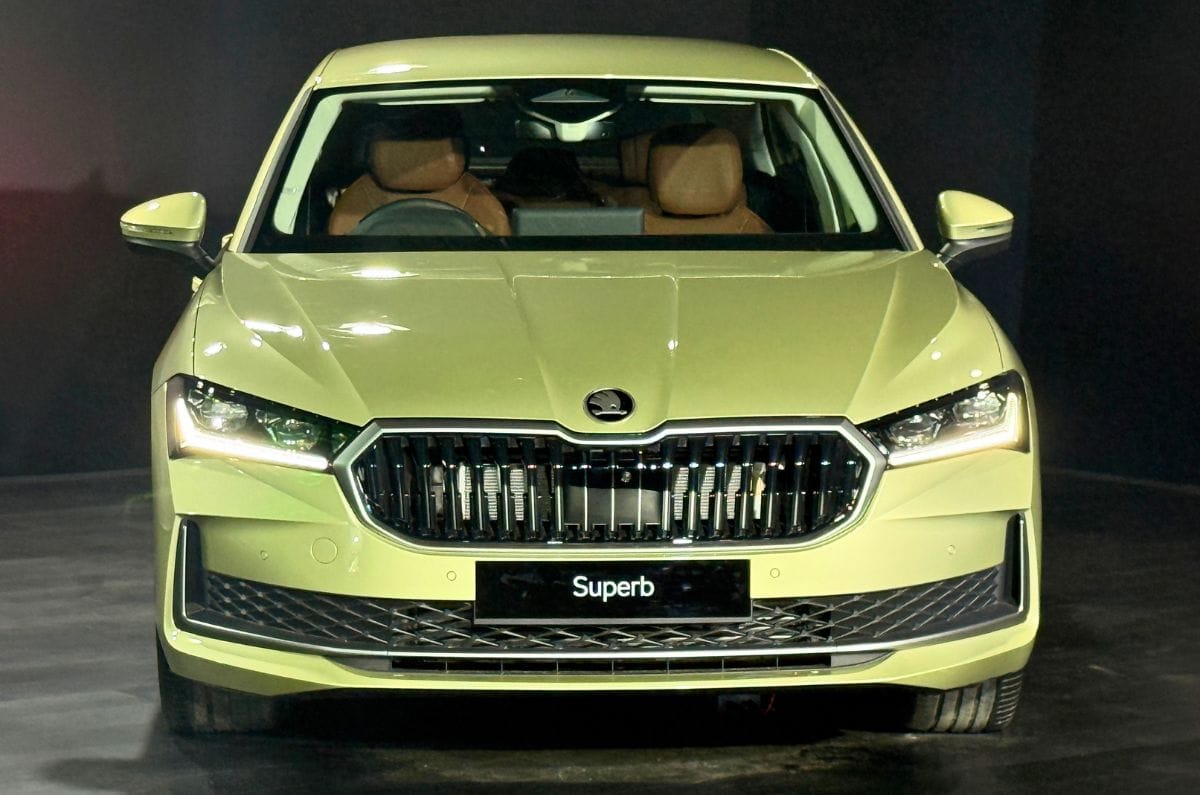
2027 Skoda Superb diesel front
The Superb is targeted at buyers who prioritise luxury over outright performance.

The Slavia remains the entry point into Skoda’s sedan portfolio in India and is the Volkswagen Virtus’s chief rival. However, VW only has this one sedan in its entire India portfolio. Meanwhile, Skoda is also planning to introduce a CNG option for the Slavia, which could interest buyers seeking premium features and lower running costs. Joining the line-up in 2027 will be the Superb diesel in its top-spec Laurin & Klement (L&K) trim – this will be Skoda’s first new diesel car in India since abandoning the powertrain type in 2020. The Superb occupies a space beneath the likes of the Mercedes-Benz C-Class and BMW 5 Series in India.

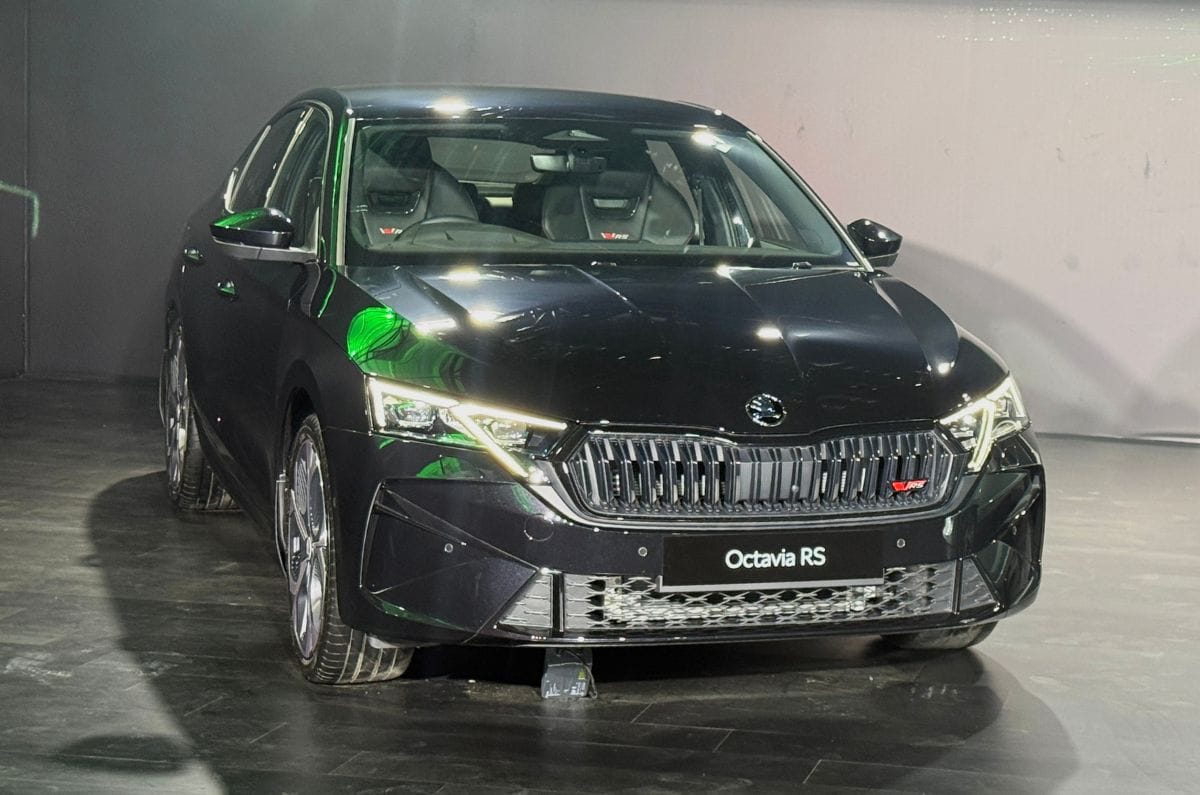
Skoda Octavia RS front quarter
The sportier Octavia RS will continue to be for the enthusiast.

The Octavia RS is also returning to India, with deliveries expected around the upcoming festive season. It’ll once again arrive as a full import and will be limited to just 50 units this time. With the previous 100 units allocated for India reportedly selling out in 20 minutes, the second batch is likely to find takers just as easily. Gupta said customers who had shown genuine interest in the Octavia RS will be given early access. In all, Skoda will be able to cater to mass-market sedan buyers with the Slavia, premium sedan buyers with the Superb and driving enthusiasts with the Octavia RS.

Skoda and the upcoming India-EU FTA

Then there’s the upcoming India-EU Free Trade Agreement (FTA), which will have an impact on fully imported models such as the Superb. “The FTA has kind of given us a good choice between what makes better sense for us and for the market as well. The whole idea is to start deliveries towards Q2 of next year. We are hopeful that by that time, the contours of the FTA will be decided, and we will have clarity on what kind of duty structure to apply to our imported models,” said Gupta. The proposed reduction in import duties could make bringing in more batches from Skoda’s global portfolio to India easier, though Gupta expects currency fluctuations to have an impact on the final price.

Also read

Skoda opens bookings for second batch of Octavia RS

Skoda Superb diesel revealed in India ahead of 2027 launch

Skoda India to bring EVs as limited imports next year

Skoda India to bring EVs as limited imports next year
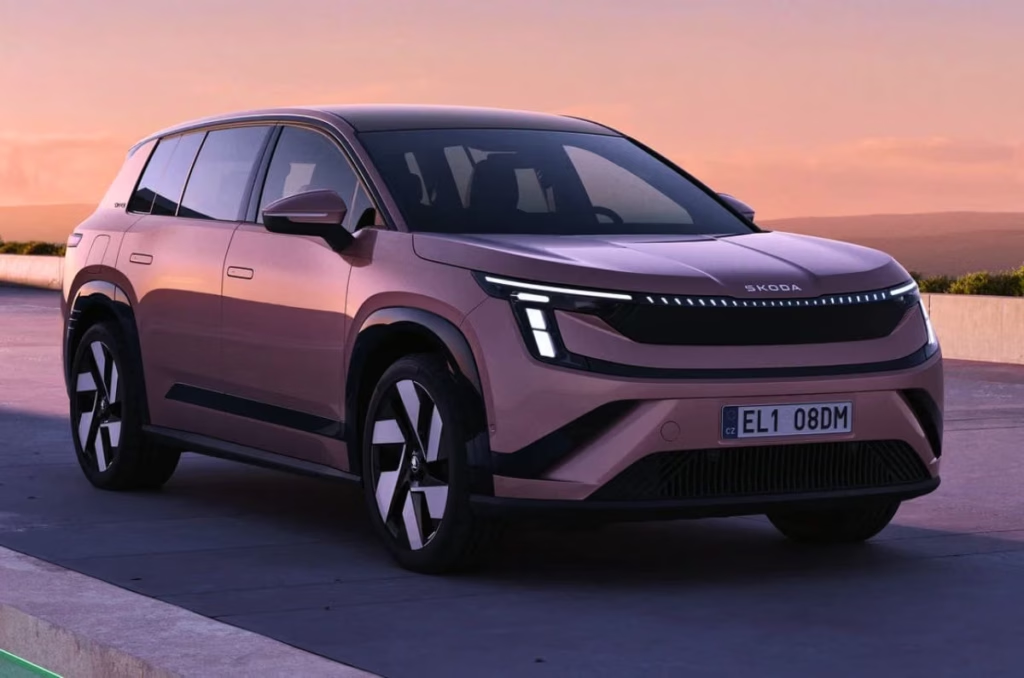
Skoda Peaq front quarter static

Skoda Auto India plans to bring electric vehicles from its global portfolio to India in limited volumes next year as the Czech automaker looks to establish its presence in the EV market. According to Ashish Gupta, Brand Director, Skoda Auto India, the company needs an electric vehicle in its portfolio not only to meet future regulatory requirements but also to remain relevant as EV adoption gathers pace in India.

Skoda India to bring EVs: Additional details 

“A lot of things are under discussion. So, for meeting the CAFÉ norms, there are a lot of opportunities available along with electrification, which has to be the cornerstone of meeting all compliance regulations. So that is something which we are aggressively working on,” Gupta told our sister publication, Autocar Professional.

Gupta added that the company needs an electric car in its portfolio since adoption has grown in the last 3 months owing to increasing fuel prices. While Skoda has yet to announce a specific locally manufactured EV for India, Gupta confirmed that the company plans to introduce EVs from its global line-up next year.

“It may not be a local EV, but yes, we just had two blockbuster launches globally of the Epiq and the Peaq. The Elroq is the best-selling EV in Europe. So these are opportunities available to us in limited batches,” he said. He added that in the current duty structure, it will not be possible to bring them at price points that will get volumes. “But definitely we need to urgently showcase our EV credentials and the proof point to India,” he added. 

This will allow Skoda to establish a presence in the EV market without immediately committing to the significant investment required to localise an electric model. With imported EVs still facing a challenging cost structure, Gupta said the initial objective would be to demonstrate the brand’s technology and capabilities rather than chase mass-market volumes. 

Skoda India’s hybrid ambitions take a slow gear 

Skoda’s approach to hybrids, meanwhile, appears less certain. Gupta said the company had previously viewed hybrids as a potentially stronger opportunity than EVs in India, but market data over the past two years has changed his assessment.

“Two years ago, I would have said I would take a bet on hybrid more than EV. But the tax structure has not helped anybody. In the last year, pure hybrids have stayed at 2% of the market. They have not gone beyond that. So, I am not sure whether hybrid is the right way to go. And what the last 6 months have also shown us is that people are more than willing to go for EVs now,” he said. 

The current trade and taxation structure also influences the company’s hesitation. Gupta said the India-EU Free Trade Agreement, while potentially creating opportunities for imported petrol and diesel models, does not provide similar benefits for EVs and hybrid electric vehicles. “I think from a global portfolio point of view, and if I want to bring the cars from the global portfolio with the contours of the FTA as they are, petrol and diesel will definitely be an opportunity. The diesel opportunity opens up; HEVs and electrics do not have any benefit, unfortunately,” he said. 

Gupta said the brand’s positioning in India is a bit above mass and below luxury. “That’s our natural positioning; that’s why customers buy us as well, and if we try to sell to cheap customers, they don’t buy us. If we try to sell to expensive customers, they don’t buy from us. So we have to stay true to our positioning and how customers see us,” he said. The immediate priority, Gupta adds, is to get EVs into the country as the company continues to assess which powertrains can deliver the right combination of regulatory compliance, customer demand and commercial viability.

With inputs from Ketan Thakkar

Porsche could axe the Taycan by 2030

Porsche could axe the Taycan by 2030
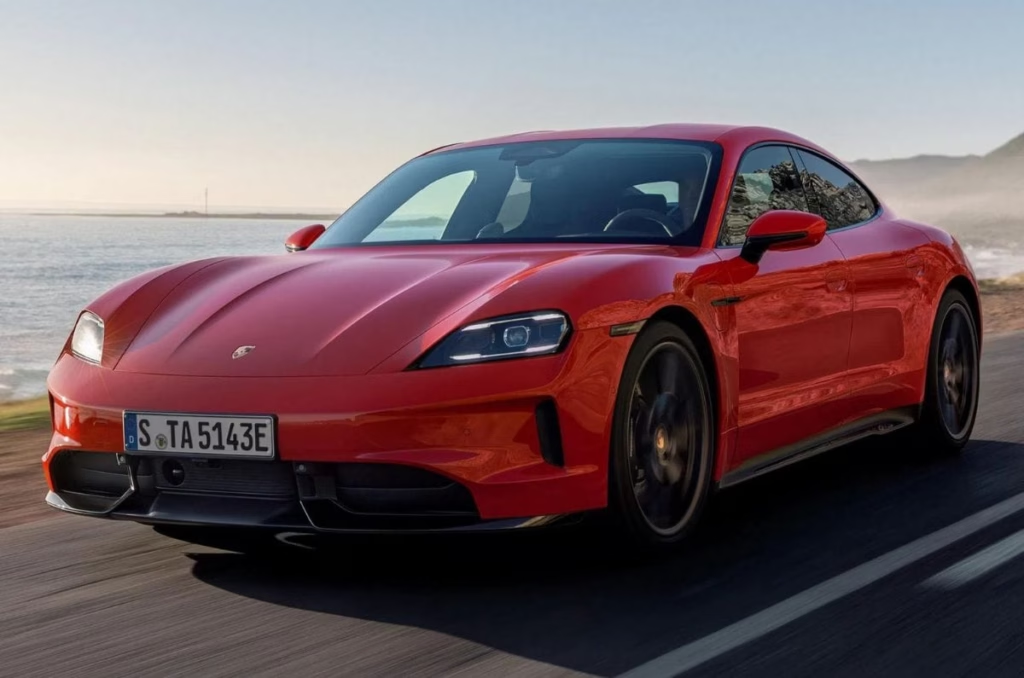
2027 Porsche Taycan front quarter

Porsche could axe the Taycan by 2030, reported German business magazine WirtschaftsWoche. This comes just a couple of months following the global unveiling of the 2027 Taycan, and about five months after Porsche’s plan to merge the Taycan and Panamera nameplates.

  • Plummeting demand cited as a major reason
  • Production of the Taycan has been halted several times

Porsche Taycan faces an uncertain future

Demand for the brand’s first fully electric car has been weak in recent years

After hitting a peak of 40,960 units in 2023, the whole of 2025 saw worldwide sales of the Taycan dropping by over 60 percent (at 16,339 units). Similarly dismal numbers have led Porsche to halt production of the Taycan several times over the years, Autocar UK highlighted. A phased ramp-down aside, Porsche’s plans with the Taycan also included an immediate cessation of its production, as per WirtschaftsWoche’s report.

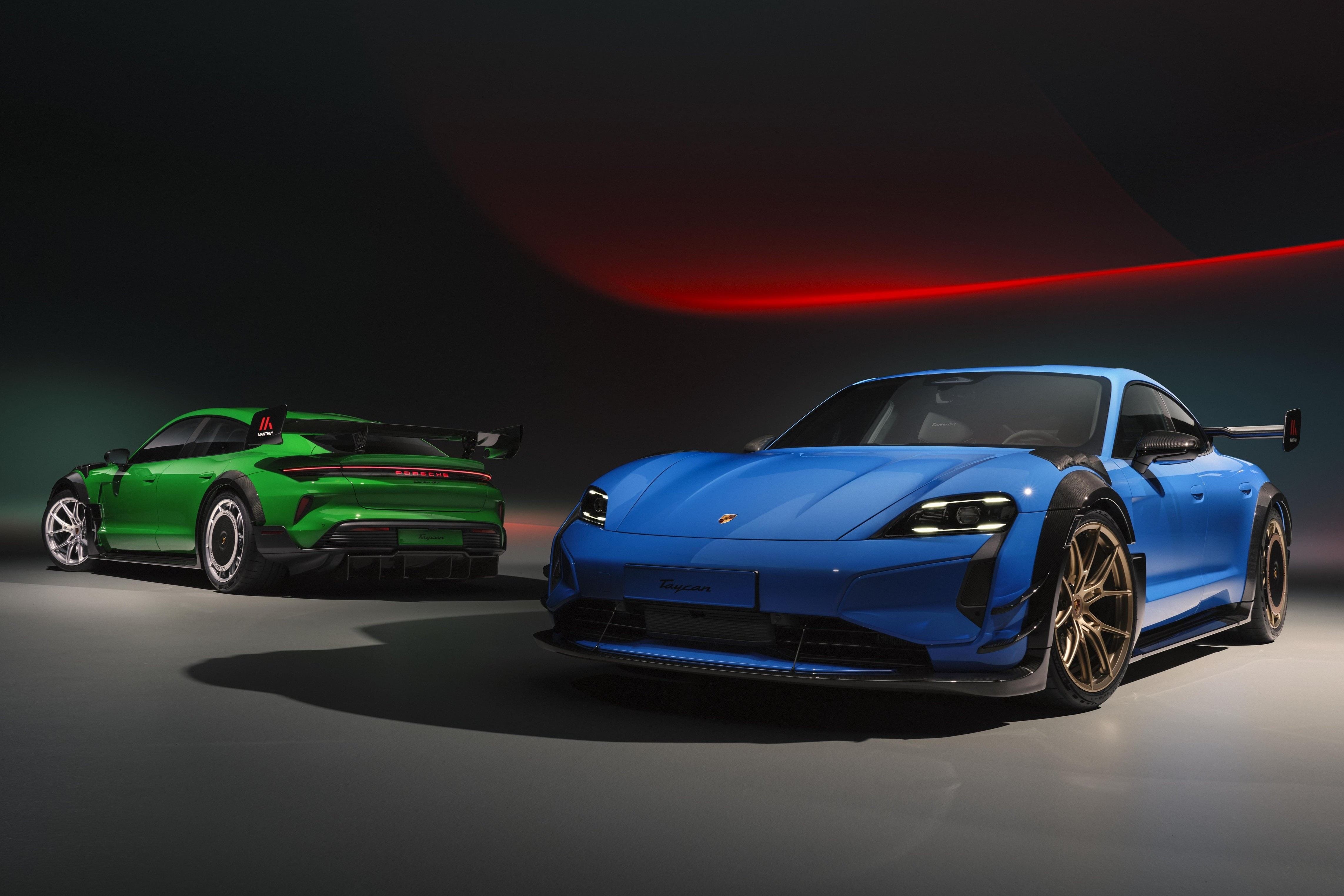
2027 Porsche Taycan with the Manthey kit
2027 Porsche Taycan with the Manthey kit shown for representational purposes only.

Even though the automaker is yet to officially sign on the paperwork, the German report claims that an understanding has been realised with Porsche’s Executive Board and General Works Council agreeing to proceed with a gradual discontinuation. In effect, this means that the Taycan is likely to be made at the automaker’s Stuttgart facility till its production comes to an end.

While the Taycan may bow out, Porsche is unlikely to give up on its aspirations for high-performance electric sedans. A successor is likely to join the Panamera line-up and likely be unified under a single nameplate, similar to what the brand has done before with the Macan and Cayenne line-up, Autocar UK explained. During his interview with the German newspaper Frankfurter Allgemeine Zeitung, Porsche CEO Dr. Michael Leiters, said, “In the short term, we are not planning to discontinue the Taycan. We have invested a lot in the model and want to observe how demand develops.”

Porsche’s production road map

The Leipzig facility handles production of Porsche’s combustion and fully electric models

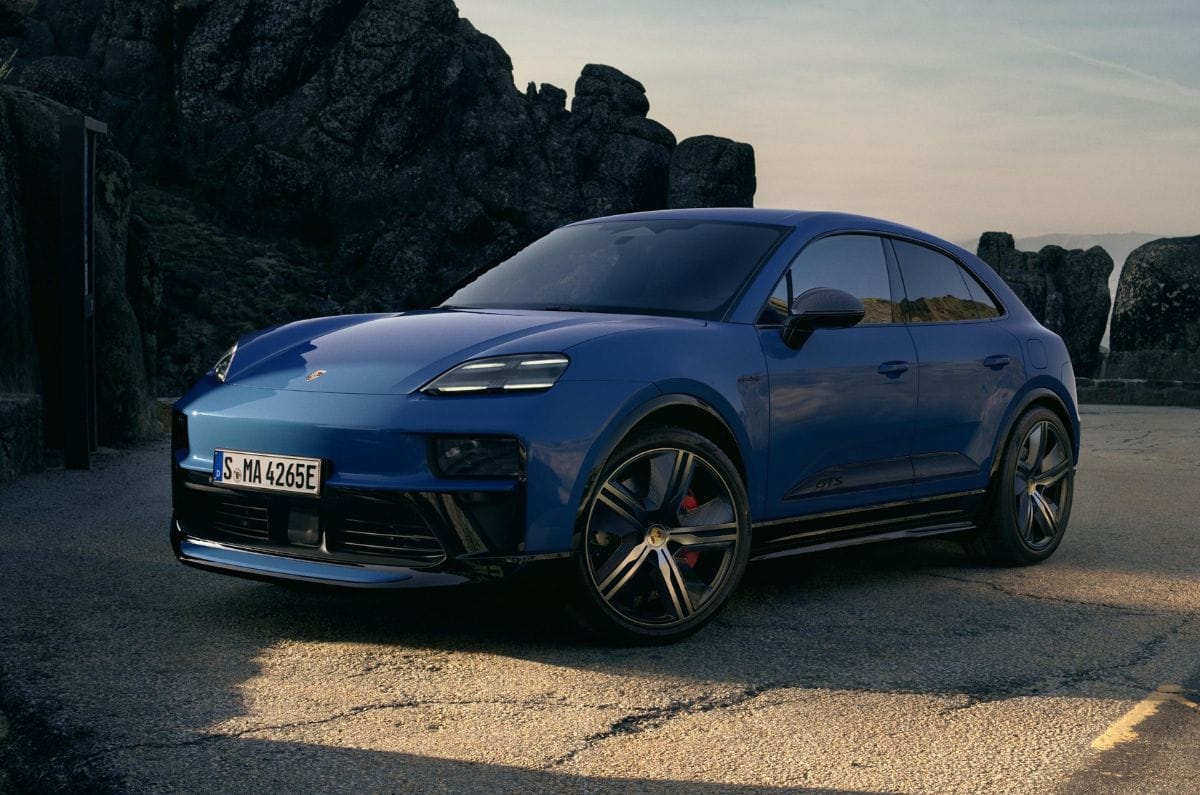
Porsche Macan GTS Electric
Like the Macan Electric, the Taycan’s successor could be produced at Porsche’s Leipzig facility.

Porsche’s Leipzig facility is where models such as the Panamera and Macan Electric are currently produced. However, its capacity isn’t being utilised as optimally as the automaker had once expected, according to Autocar UK. Meanwhile, WirtschaftsWoche’s insider sources claimed that Porsche was intending to move the Taycan’s production from the existing Stuttgart facility to the brand’s more accommodating establishment in Leipzig, whose production line can handle petrol, plug-in hybrid and fully electric models.

If Porsche wishes to consolidate and lower costs by benefiting from economies of scale, it could move the production of the expected Taycan successor to this facility. The German luxury marque has already written off EUR 1.8 billion owing to delays of this upcoming model’s platform development, according to Autocar UK.

Also read

Aston Martin Valen debuts as brand’s most powerful front-engined car

We see a drop in India due to PHEV import duty uncertainty: Lamborghini CEO

Bajaj, TVS drive 33 percent rise in India’s motorcycle exports

Bajaj, TVS drive 33 percent rise in India’s motorcycle exports

India exported 1.81 million motorcycles between April and July 2026, up 33 percent from the same period last year, according to SIAM data. Motorcycles accounted for 86 percent of India’s 2.10 million two-wheeler exports during this period.

  1. 1.81 million motorcycles exported between April and July
  2. Bajaj and TVS account for 76 percent of exports
  3. TVS exported over 85,898 more 125cc motorcycles than Bajaj

Bajaj, TVS lead India’s motorcycle exports

Bajaj Auto and TVS Motor Company together accounted for 1.38 million motorcycle exports, or 76 percent of the total. Much of the demand is concentrated in the 100-125cc segments, which accounted for 1.22 million units, or 68 percent of all motorcycle exports.

Bajaj Auto exported 8,54,991 motorcycles between April and July, up 48 percent year on year. Its 100-110cc exports nearly doubled to 378,941 units, while 110-125cc exports rose 36 percent to 229,677 units.

Africa has been a major growth driver for Bajaj, with the company reporting that its African retail volumes doubled in Q1 FY2027. The Boxer 125 Heavy Duty has been one of the key models behind this growth, particularly in Nigeria. Bajaj has also seen strong demand in Latin America, with Brazil retail volumes rising 50 percent in Q1.

TVS exports rise 31 percent

TVS Motor exported 529,041 motorcycles in the first four months of FY2027, up 31 percent. This was 35,509 units more than its domestic motorcycle sales during the same period.

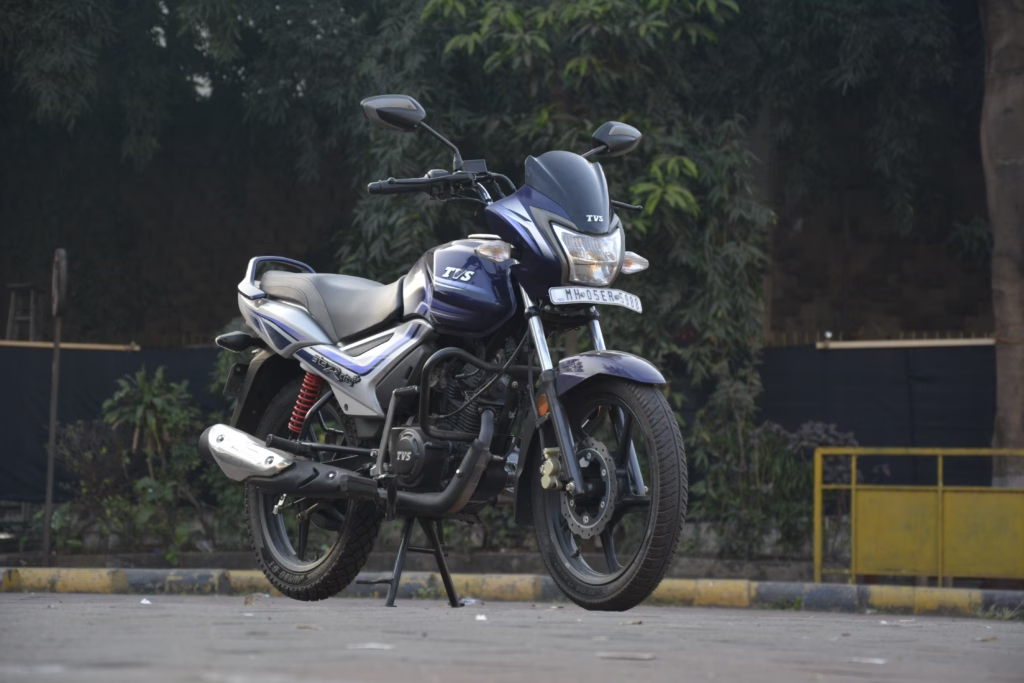
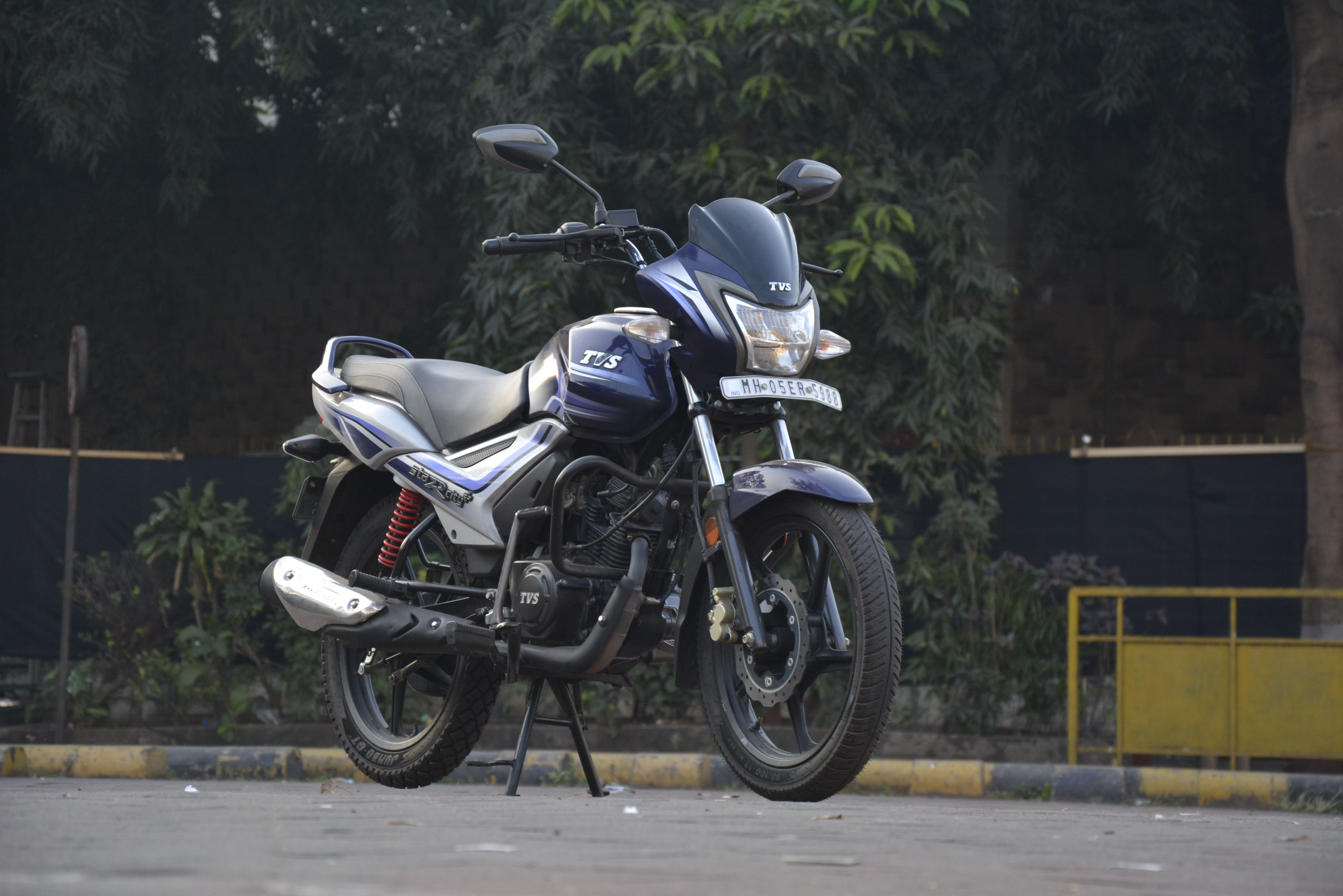
Its 100-110cc exports, comprising models such as the Sport and Star City, rose 54 percent to 156,308 units. The 125cc category grew 27 percent to 315,575 units, with the Star City 125, sold as the HLX 125 in overseas markets, being a major contributor. TVS exported 85,898 more 125cc motorcycles than Bajaj during the period.

India’s motorcycle exports could cross 5 million

India exported a record 4.47 million motorcycles in FY2026. The 1.81 million units shipped in the first four months of FY2027 already represent 40.5 percent of that figure.

At the current monthly run rate of around 4.53 lakh motorcycles, India could export approximately 5.44 million motorcycles in FY2027, taking annual exports beyond the 5-million mark for the first time.


We see a drop in India due to PHEV import duty uncertainty: Lamborghini CEO

We see a drop in India due to PHEV import duty uncertainty: Lamborghini CEO
We see a drop in India due to PHEV import duty uncertainty:  Lamborghini CEO

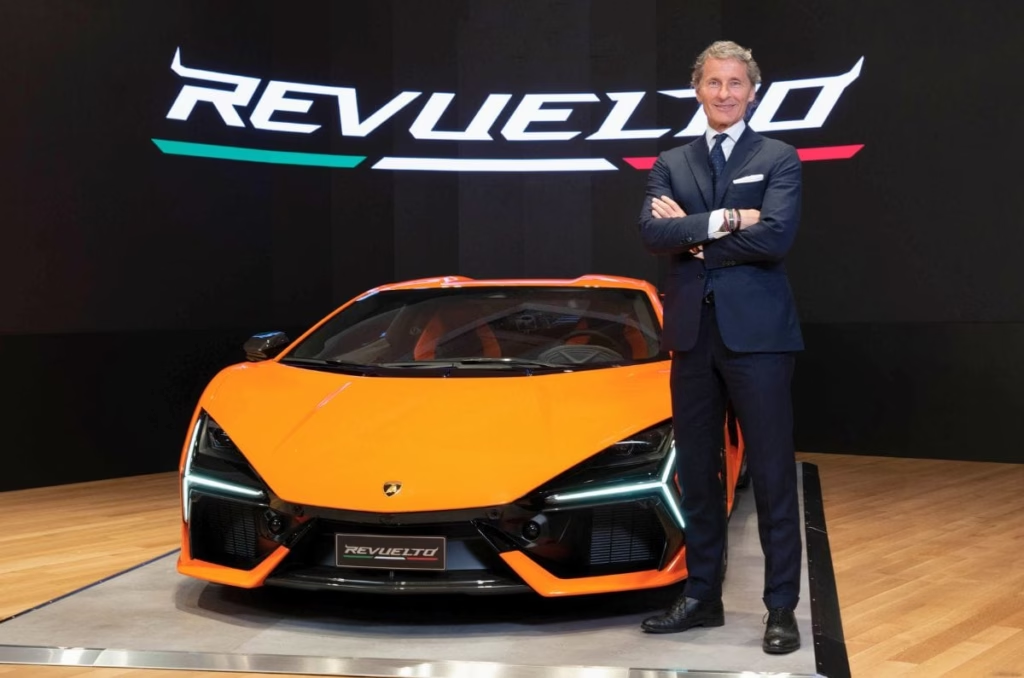
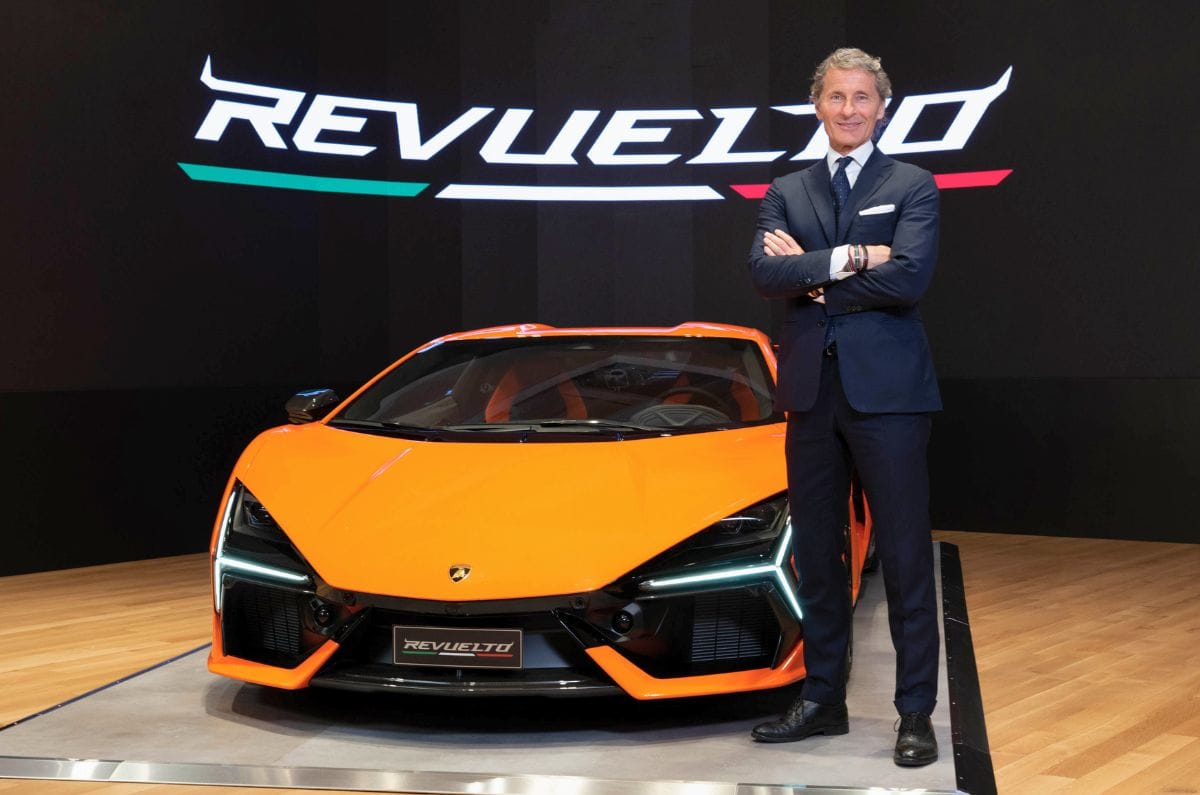
On the sidelines of the world premiere of the Lamborghini Revuelto SV, the brand’s president and CEO, Stephan Winkelmann, spoke to journalists about the new flagship hybrid supercar, the move away from EVs and even the Indian market.

India-EU FTA hybrid uncertainty could pose a problem 

A hot topic at the moment is the India-EU free trade agreement (FTA) soon to come into effect, which promises to make imported cars a whole lot more affordable. While that’s great news for most super-sportscar brands, it’s not so for Lamborghini, as the India-EU FTA offers no clarity about benefits for hybrid cars, which make up the Italian brand’s entire range.
“The decision was made, I think, at the beginning of the year to lower the import taxes, but not for PHEVs,” said Winkelmann, responding to a question from Autocar India. “So, we see a drop in the market due to the uncertainty which is created by this. And there is still not enough clarity.”

While other brands do have some pure-ICE models, the prices of which are already being reduced ahead of the FTA’s introduction, at present, hybrid and EV models continue to attract the full import duty as before. Having moved away from pure-ICE models entirely, Lamborghini unfortunately bears the full brunt, at least for now.

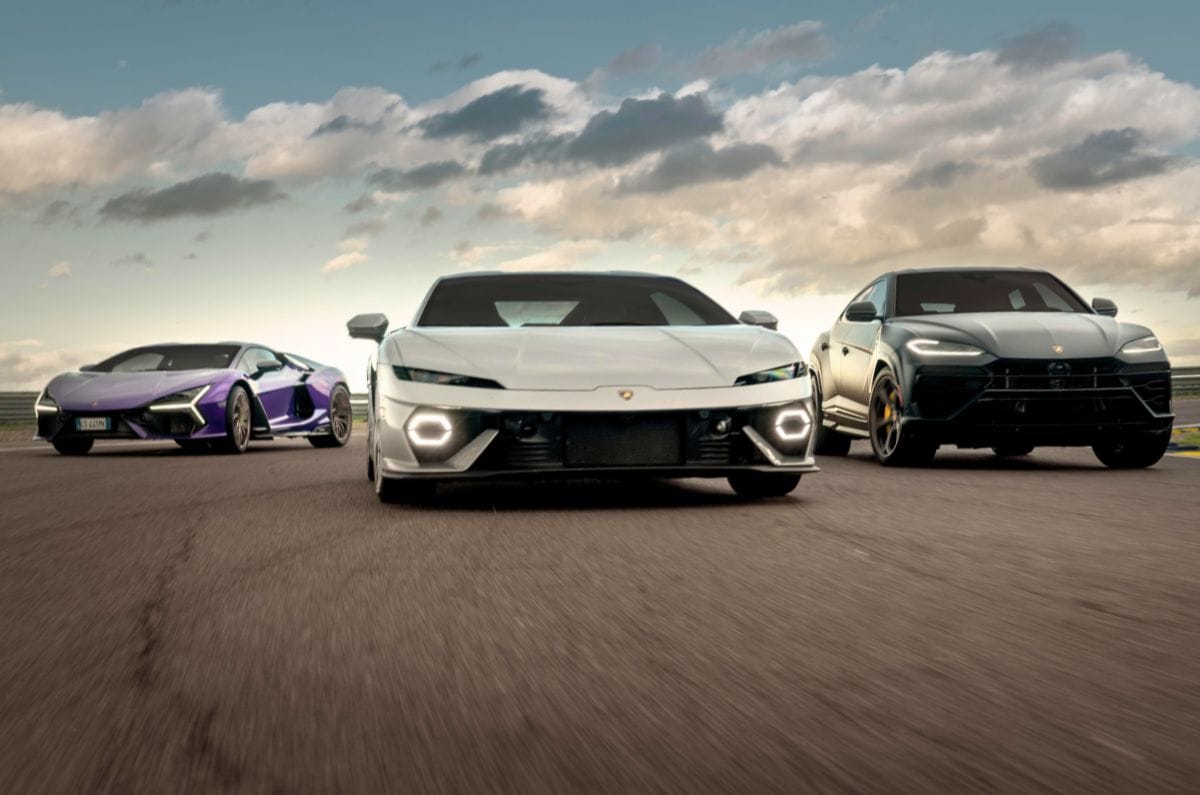
Lamborghini’s current line-up features only hybrid models. 

“I think this will come only in four years’ time. And this, for sure, is not helping the decision to buy a plug-in hybrid car, which is coming from [Lamborghini].”

Can ethanol-blended petrol work in Lamborghinis?

Regarding another hot topic in our country at the moment, Winkelmann responded to another question from Autocar India, suggesting that given the uncertainty around traditional fuels, blended biofuels were not off the table for Lamborghini.

“In Europe, we are extremely positive about it and are going to make a decision on biofuels soon,” he said, highlighting that any decision around the matter would have to start from its home region. “For us, this is a very important market, as you might know.” 

He was quick to point out that the quality of fuel is what’s most important for any of Lamborghini’s models and their high-performance plug-in hybrid powertrains. While ethanol blending does increase the RON (Research Octane Number) of the fuel, it also depends on the petrol it is being blended with, which varies from market to market.

“They already exist, those fuels, but it always depends on how good they are. If you have a low octane, then you cannot use them for our type of cars. You have to have a minimum of 95 octane, and this is sometimes, with the few fuels around the globe, not available,” he stated, reiterating that such a decision would have to be globally compatible. “I don’t know exactly how this is in India.”
Revuelto SV arrives before Revuelto Roadster

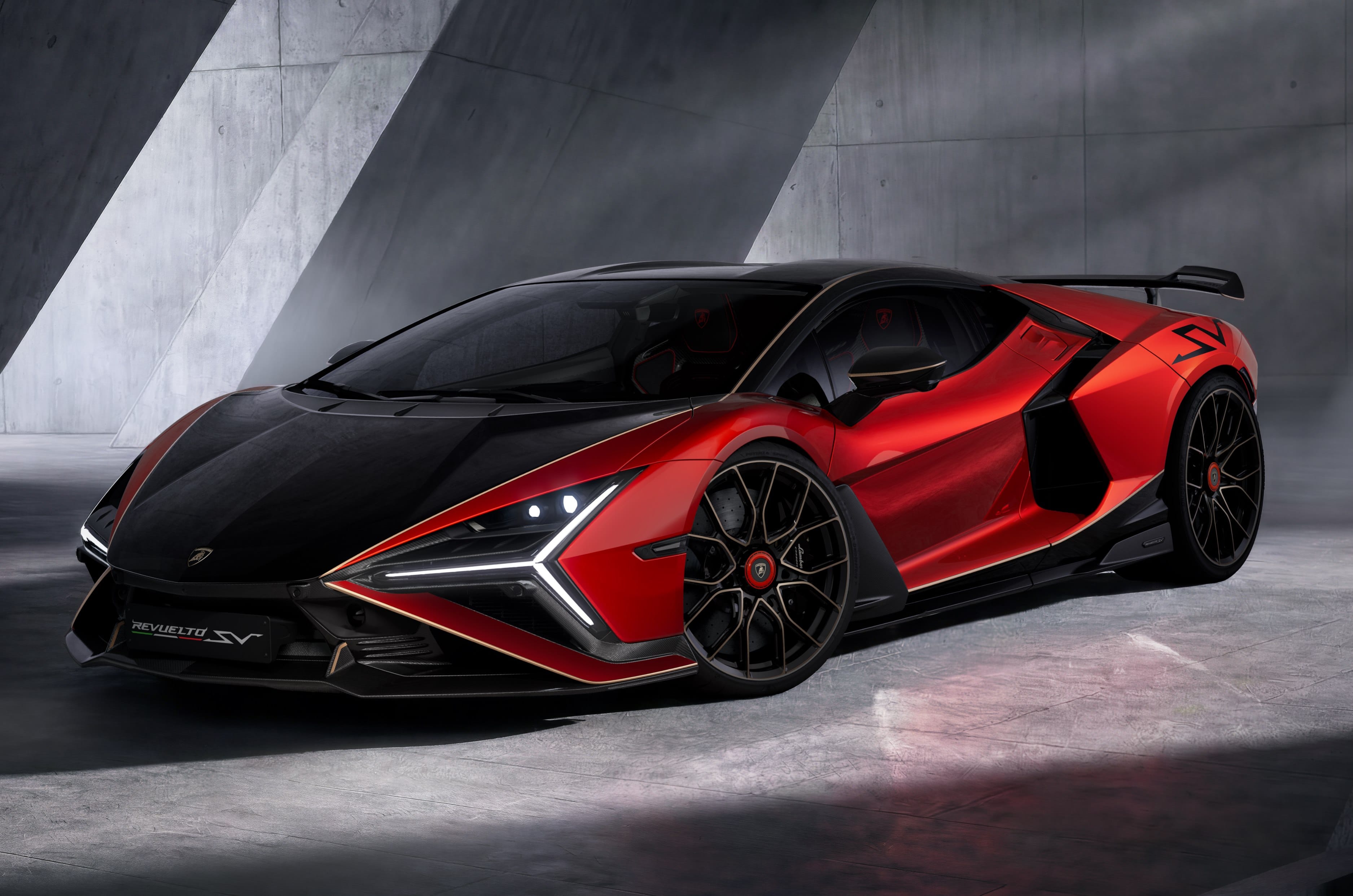
As for the main event, Lamborghini has just revealed the Revuelto SV, the hotter version of its flagship V12 PHEV supercar, limited to 1,963 units. With increased performance, redone suspension and far more advanced aerodynamics, its goal is to surpass the Revuelto to become the highest-performance Lamborghini of them all. SV models date all the way back to the Miura SV from 1971, but this is the first time an SV has been launched so soon after the standard model, arriving before even a convertible Roadster model.

“I have to tell you that the coupe was and is so successful that it was exceeding all our expectations, even the most positive ones,” Winkelmann said in response to Autocar India. “So, we decided to go immediately from Revuelto to Revuelto Superveloce. And the first feedbacks we are getting on the Superveloce are really outstanding.”
The additional 50hp is extracted from an upgraded battery and motor rather than from the V12 engine, which Lamborghini says was intentional, as it allowed for better control and faster distribution of the power.
“We use the battery to create more boost and a better distribution of power output than only with the internal combustion engine. Also, together with the torque vectoring, the feeling of driving a car at speed is very much improved in comparison with the [purely] internal combustion engine guise of the past generations,” Winkelmann said.

Lamborghini customers don’t want EVs 

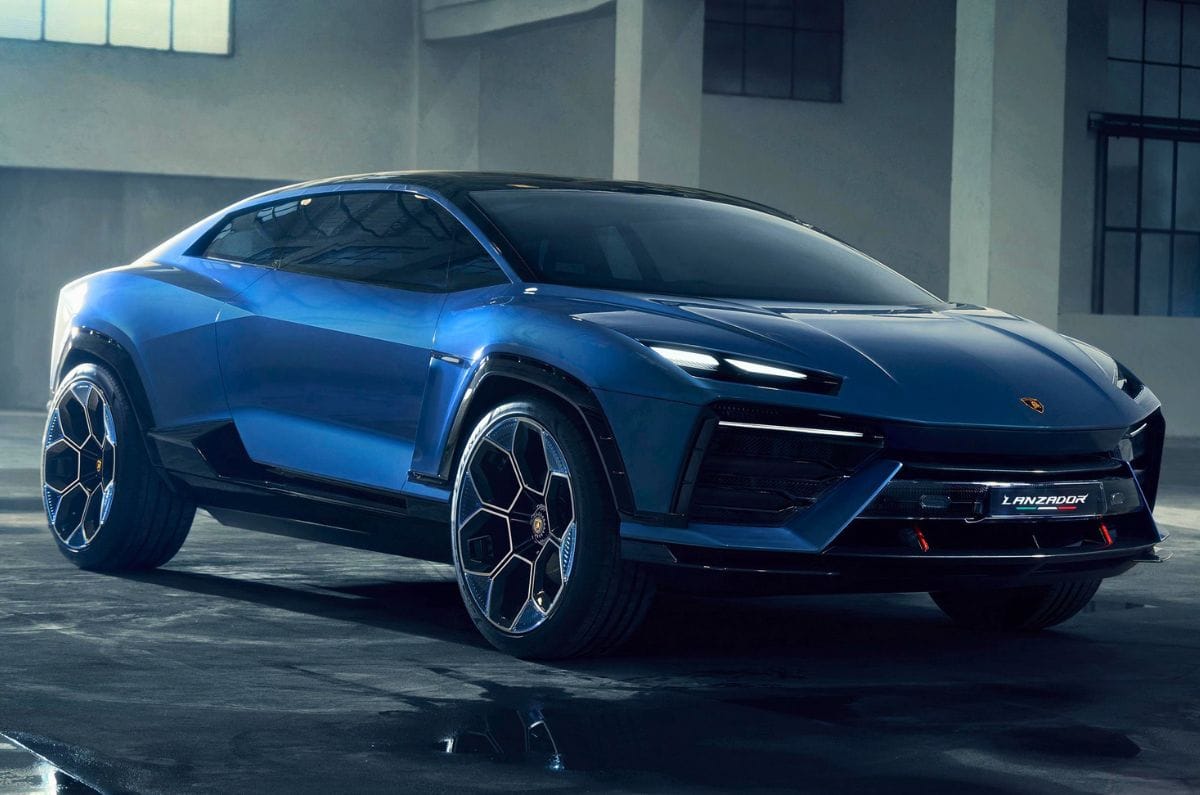
That said, the engine is essential. Not long before rival Ferrari unveiled its first EV, the Luce, Lamborghini announced its decision to delay its own first electric offering, the Lanzador, which was scheduled to launch before 2030. The Lanzador – also a low-slung four-seat crossover – will now get a hybrid powertrain instead, as an EV would simply not be emotional enough for Lamborghini customers.

 “Why? Because the customer behaviour towards what we were proposing at the beginning of this decade has changed; they are not adopting electric cars,” said Winkelmann. “I’m talking about our type of customers, because you don’t buy a Lamborghini because you need a Lamborghini or you need a car; you buy it because you want to fulfil your dreams. We are not selling mobility; we are selling emotions.”

He also stated that, Indian regulations aside, the brand’s all-PHEV line-up has proven to be a successful approach, at once helping meet prevailing and upcoming emissions regulations while also retaining the emotional appeal of an ICE engine that’s core to the brand.

“You have the sound, the vibration of an internal combustion engine, but you also have all the advantages of the new technology,” he said. “The combination of battery and internal combustion engine for us is not a transition period, but it’s really something which is here to stay.”

MG Hector Tomahawk EV spied undisguised ahead of August 26 launch

MG Hector Tomahawk EV spied undisguised ahead of August 26 launch
MG Hector Tomahawk EV

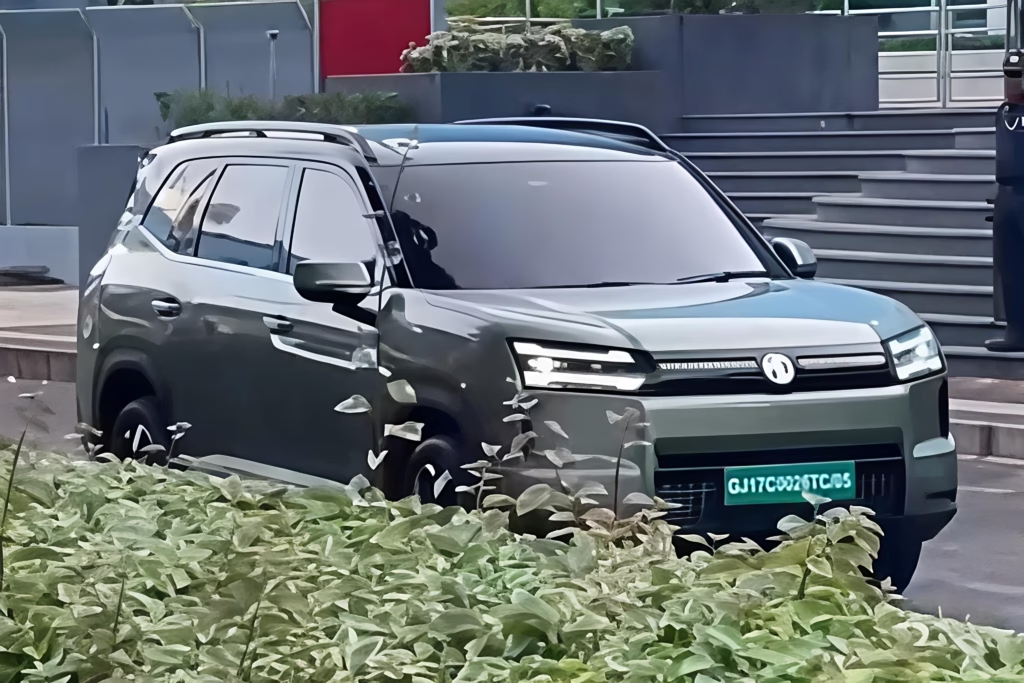
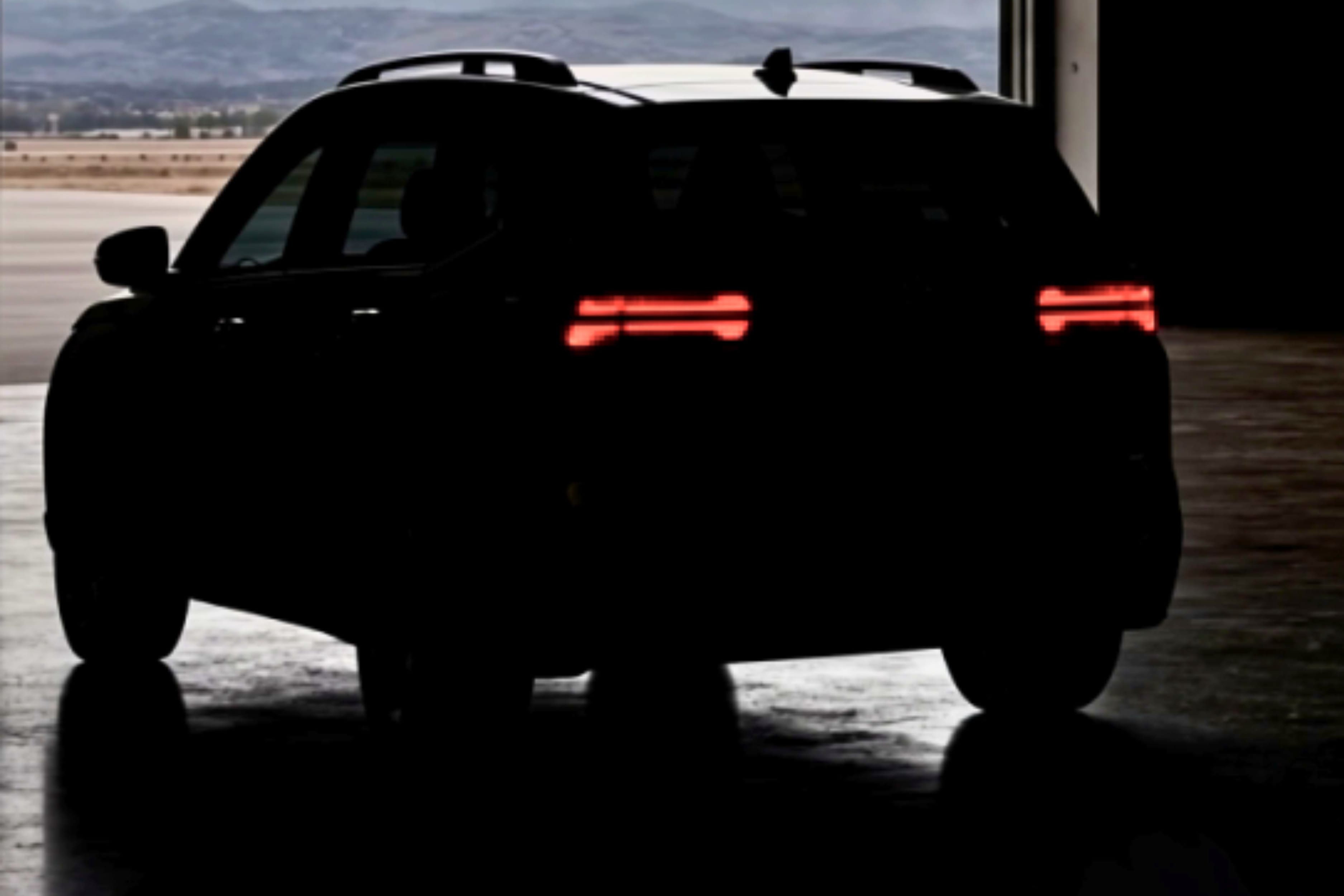
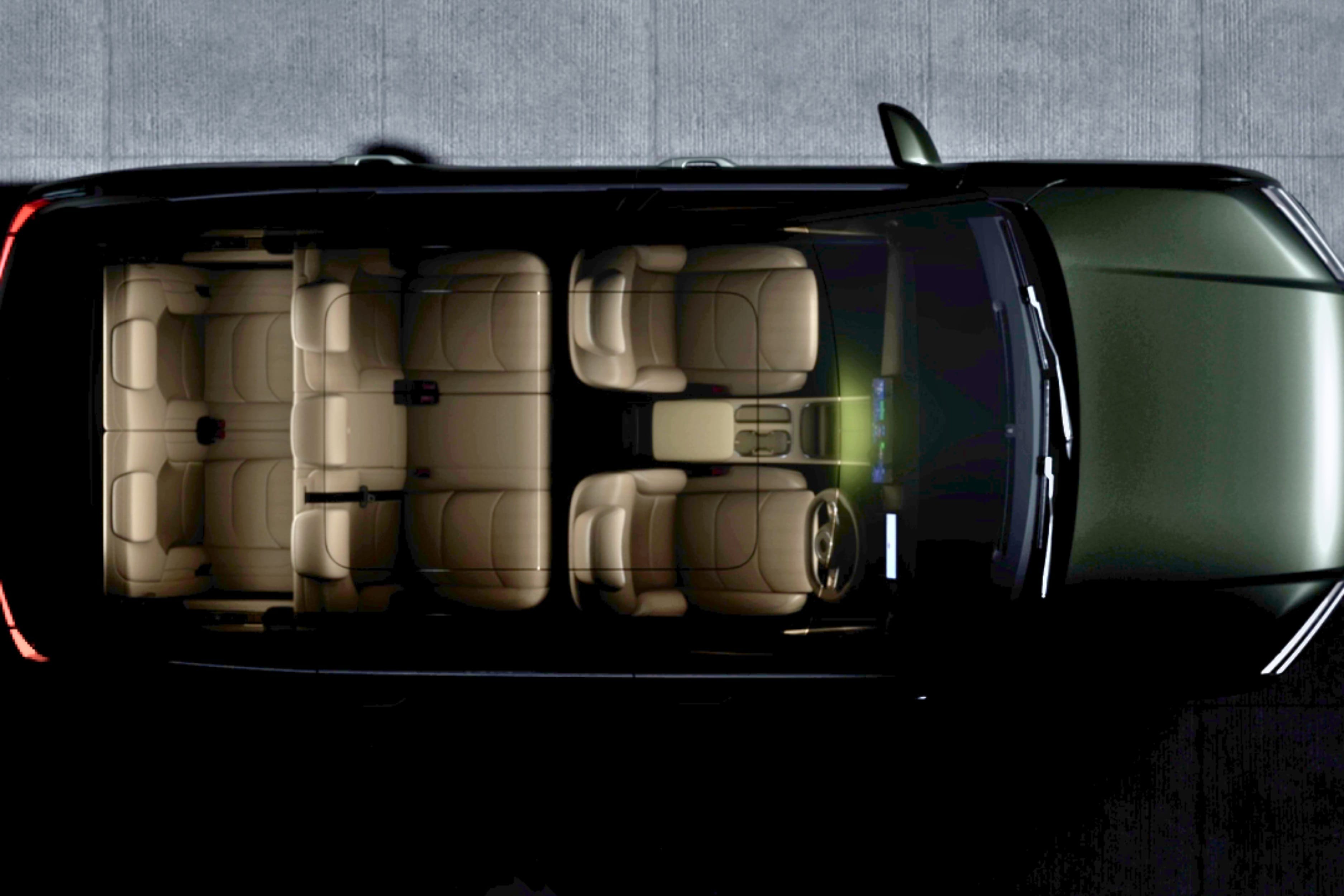
JSW MG’s upcoming Hector Tomahawk has been spied undisguised on our roads ahead of its launch. The new model will be the first in the brand’s portfolio to be underpinned by the ADAPT (Advanced Drive Architecture Platform Technology) platform. The carmaker has teased the SUV previously, giving a glimpse of its design details and its 7-seat capacity.

  1. Hector Tomahawk to slot above the Hector in MG’s portfolio. 
  2. Likely to be powered by a 69.2kWh battery pack.
  3. Expected to be priced between Rs 18 lakh and Rs 25 lakh.

JSW MG Hector Tomahawk EV: What was spied?

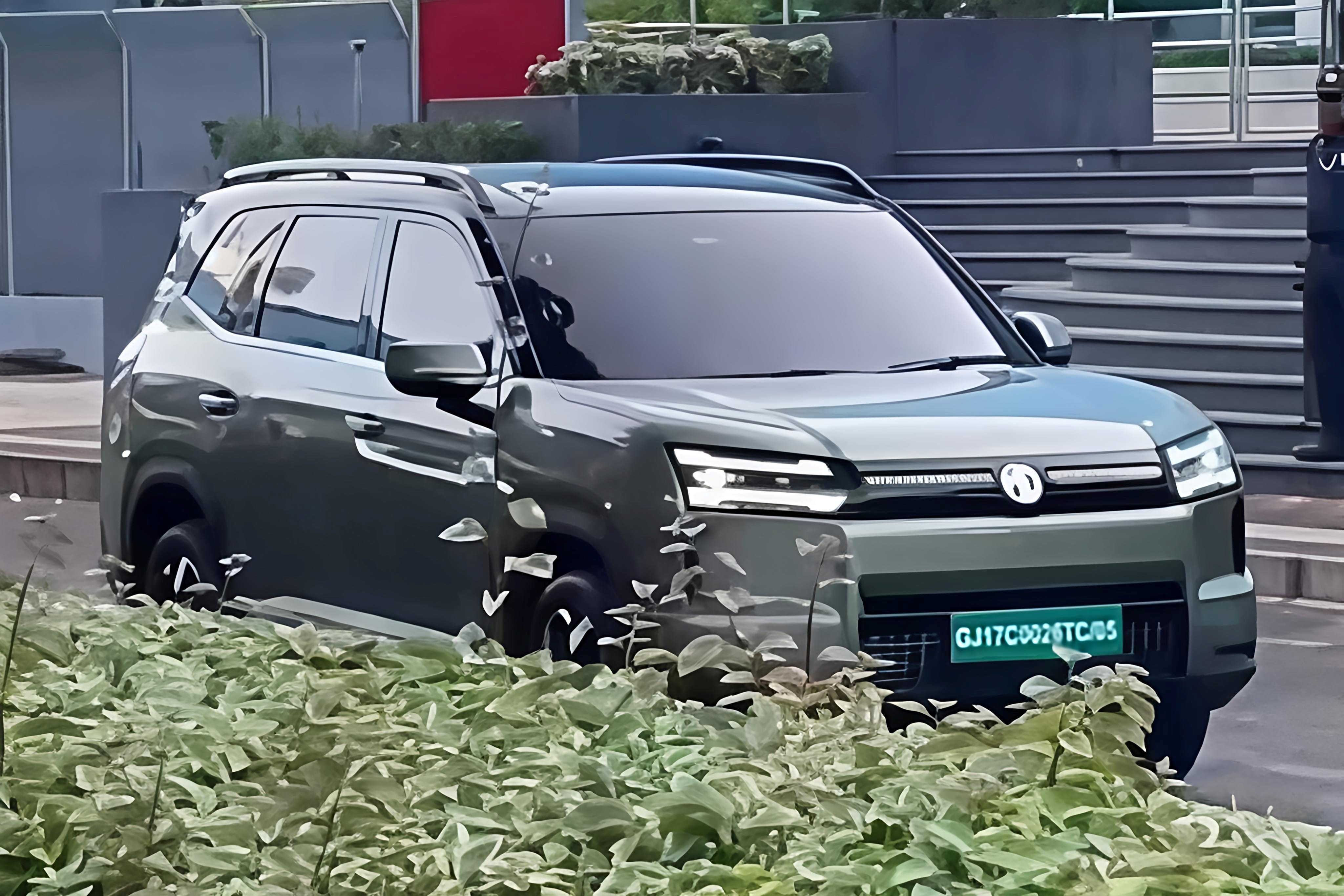
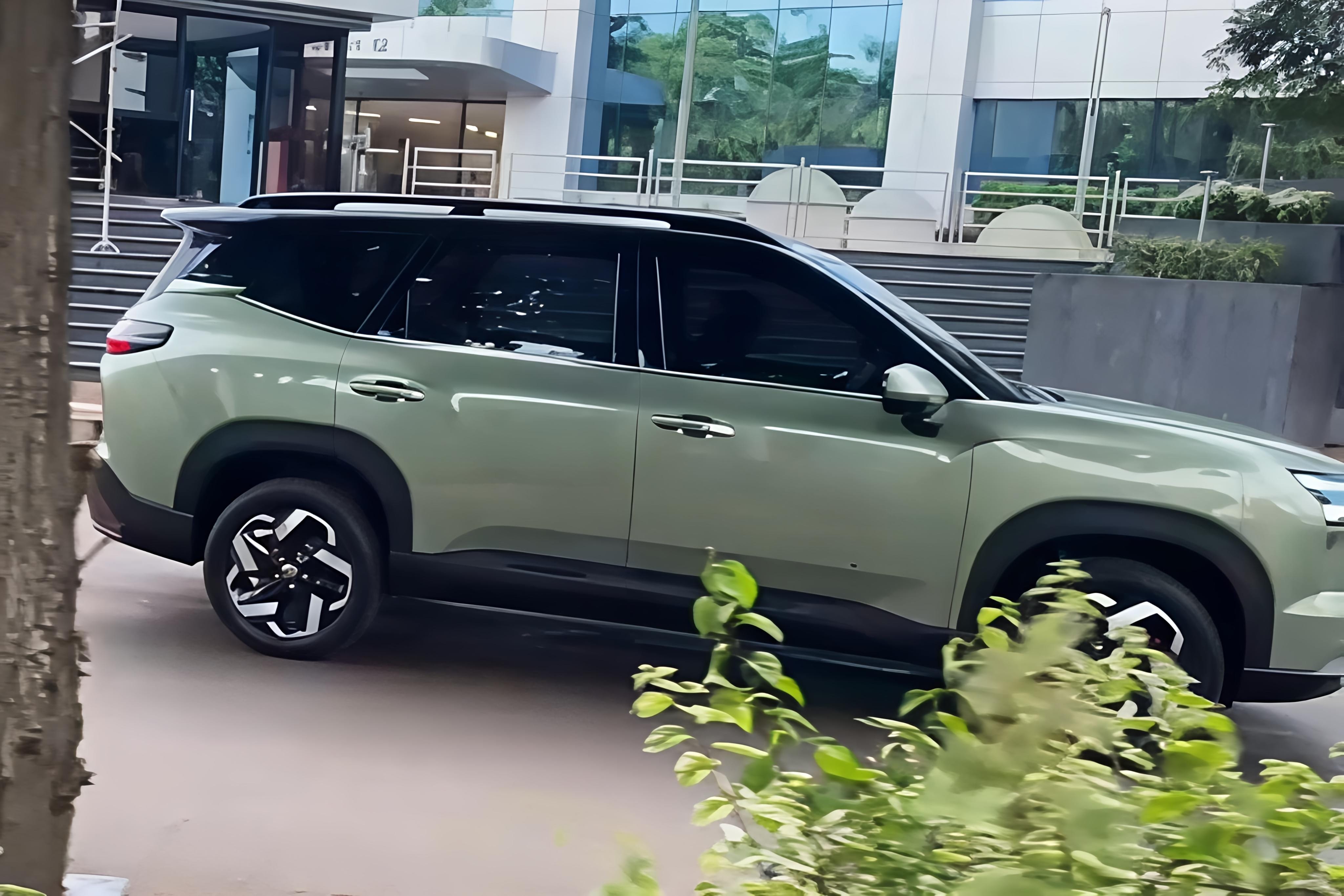
The undisguised test mule that was spied hinted at the Hector Tomahawk’s final design. The front end comes with LED headlamps with dual LED DRLs connected by a black trim that has two silver strips and the MG badge at the centre. Being an EV, it gets a blanked-off grille, with a rectangular air inlet lower down. The front bumper has a dual-tone design, with vertical air curtains on its sides. The bonnet has subtle ridges, while the car is finished in an olive green shade with a black roof and rails. 

In profile, the sides look clean with chrome door handles, and the window line, finished in chrome, gets an upward kink at the back. Additionally, there’s plenty of black cladding for the squared-off wheel arches and door sills extending toward the rear bumper. The large alloy wheels were spotted with a dual-tone design. While the rear end was not spotted, it will likely come with wraparound tail-lamps and a dual-tone finish for the bumper.  

JSW MG Hector Tomahawk EV: What to expect

The JSW MG Hector Tomahawk is based on the Wuling Eksion that’s sold in the Indonesian market. The former is expected to retain the latter’s dimensions of 4,745mm in length, 1,850mm in width, 1,755mm in height, and a wheelbase of 2,810mm.  A previous teaser of the model confirmed a beige colour theme for the Hector Tomahawk’s cabin. While the dashboard is yet to be revealed, it is expected to retain the Eksion’s minimalistic layout. This includes screens for the driver’s display and infotainment system, a two-spoke steering wheel and a centre console with cupholders and storage spaces. 

MG is yet to confirm the feature list it is expected to come with a powered tailgate, leatherette upholstery, powered and ventilated front seats, a 12.8-inch touch-infotainment head unit, an 8.8-inch digital driver’s display, a 50-watt wireless charger, automatic climate control with AC vents for the second and third rows, a 360-degree camera system, an electronic parking brake, six airbags, and an ADAS (Advanced Driver Assistance Systems) suite.

While exact powertrain specs of the Hector Tomahawk EV remain under wraps, the Eksion, for reference, is powered by a 69.2kWh LFP (Lithium Iron Phosphate) battery pack with a CLTC (China Light-Duty Vehicle Test Cycle) range of up to 530km. The battery is paired with a front-mounted motor delivering 201hp and 310Nm, and has a 160kph top speed.

As far as price is concerned, the MG Hector Tomahawk EV is expected to be priced between Rs 18 lakh and Rs 25 lakh. It will take on the likes of the Mahindra XEV 9S and the Kia Carens Clavis EV.

All prices are ex-showroom, India

What the Volkswagen Tera previews for new India-bound compact SUV

What the Volkswagen Tera previews for new India-bound compact SUV
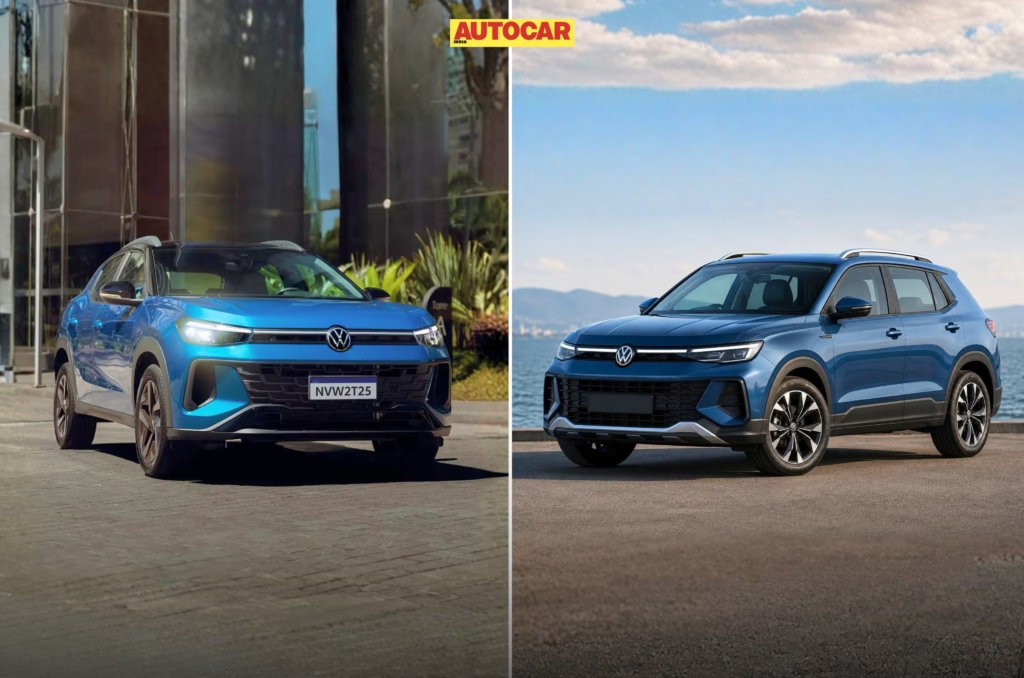
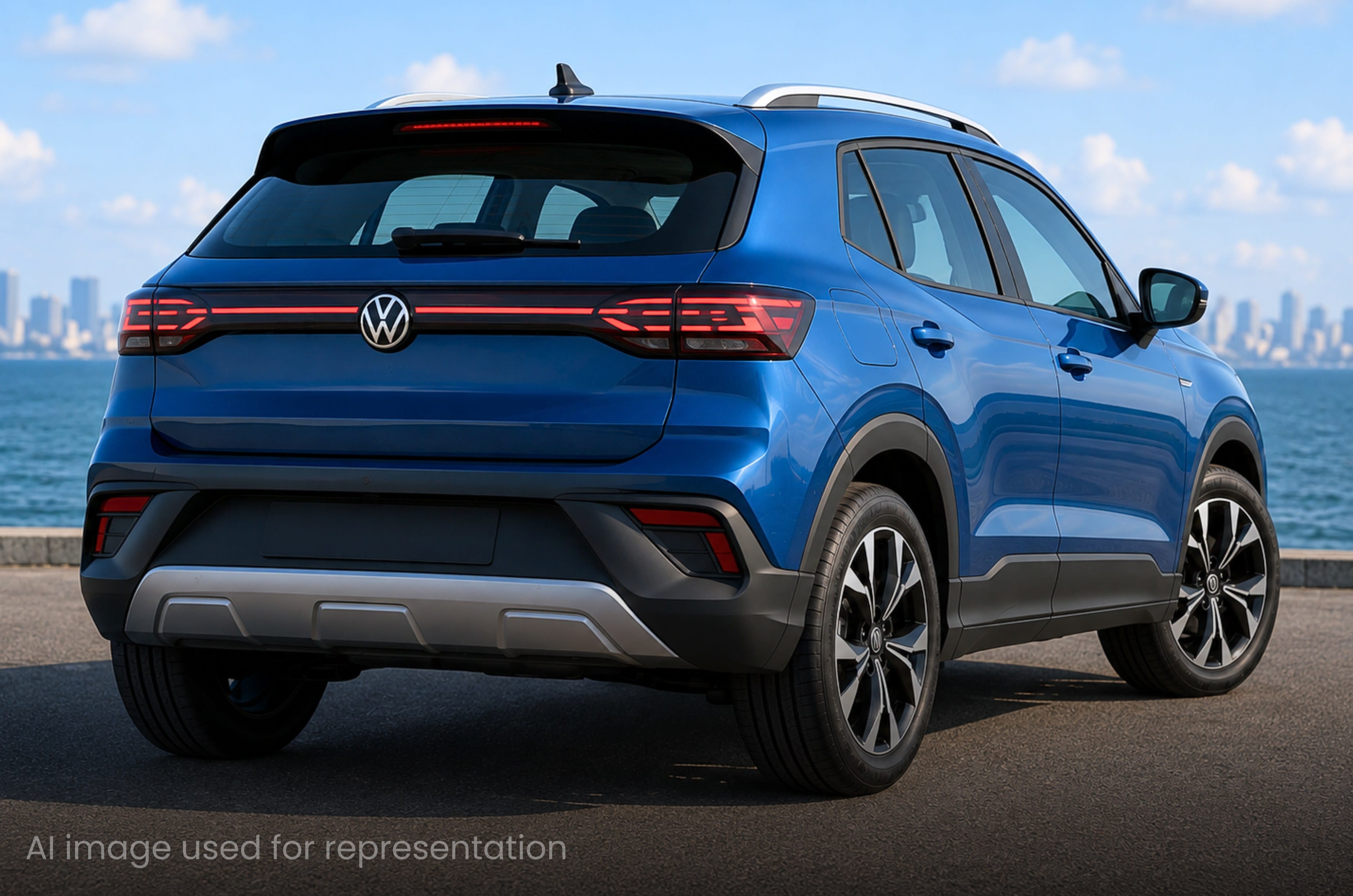
Volkswagen Tera and Volkswagen compact SUV

Volkswagen India has finally begun working on a new compact SUV, which will be a badge-engineered version of the Skoda Kylaq. This will mark its return to the sub-4m category four years after the Polo hatchback’s discontinuation in 2022. At the same time, the upcoming compact SUV is also expected to be the most affordable car in its portfolio in India when it arrives in 2027.

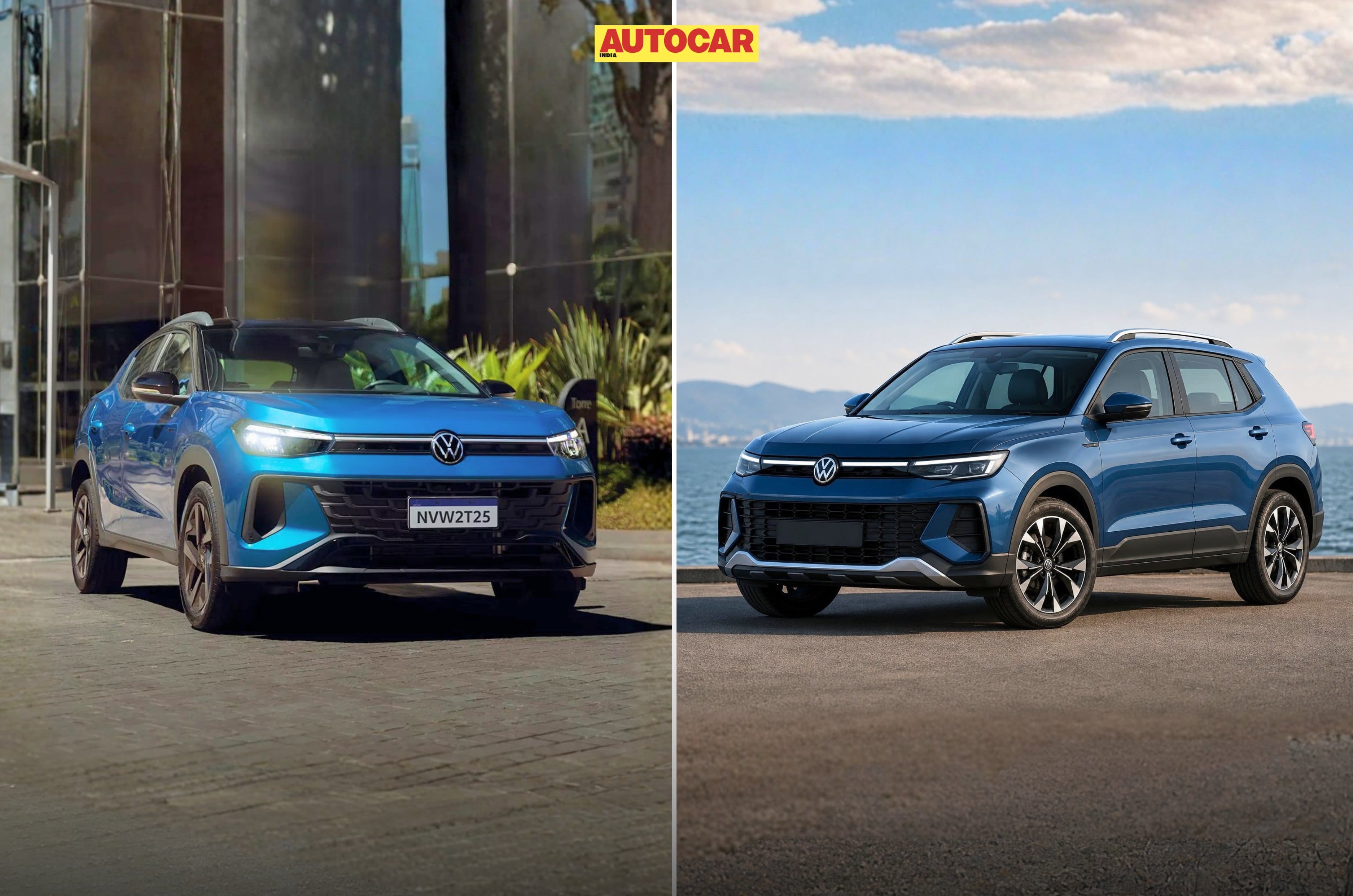
On the other hand, the carmaker already sells an entry-level SUV in the Brazilian market, called the Tera. It is closely related to the Skoda Kylaq and possibly hints at elements that are expected to arrive on VW’s upcoming compact SUV for India. 

Volkswagen compact SUV: Expected dimensions 

The Tera is 4,151mm long, 1,773mm wide, 1,504mm tall, and gets a 2,566mm long wheelbase. Interestingly, the Terra’s wheelbase is identical to that of the Skoda Kylaq. The India-bound VW compact SUV is expected to have the same wheelbase as the Kylaq, but compared to the Tera, it will be shorter in length to fit India’s sub-4m tax slab.

Volkswagen compact SUV: Expected platform and powertrain 

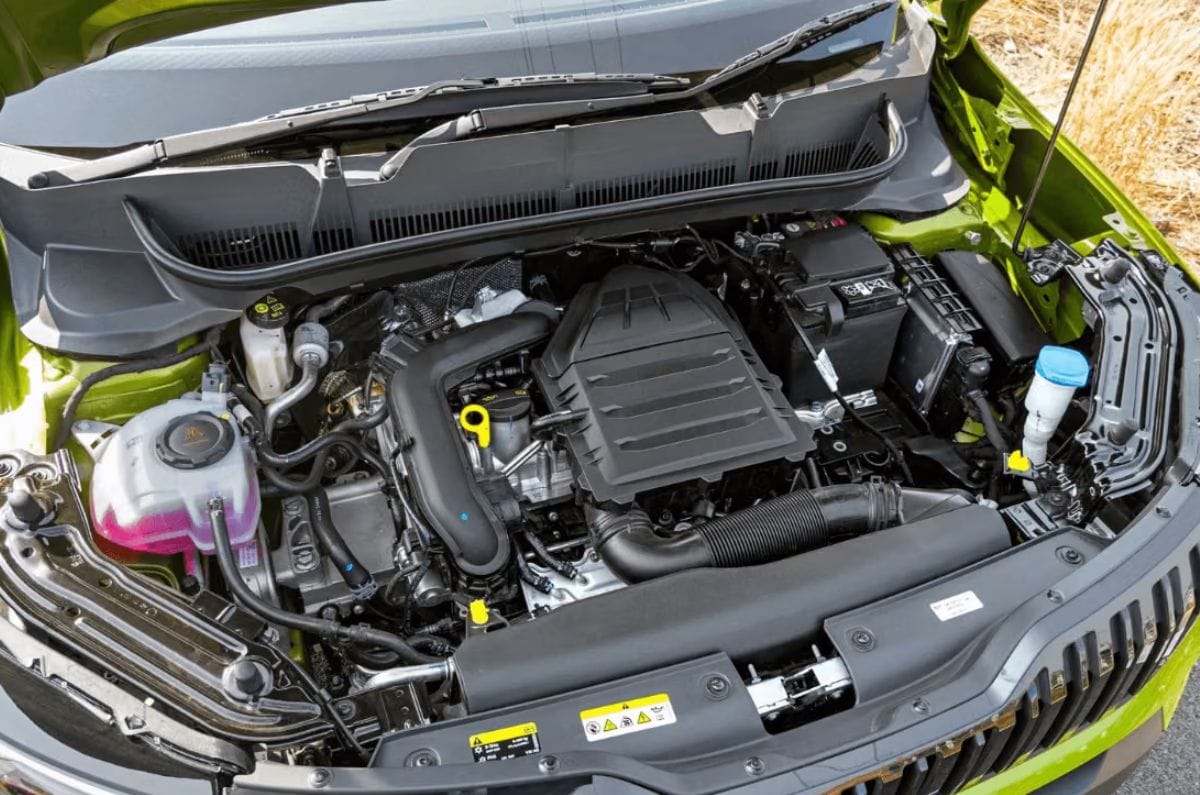
Skoda Kylaq 1.0-litre turbo-petrol engine used for representation.

The Volkswagen Tera sits on the brand’s MQB A0 architecture, while the VW Skoda 2.0 cars (Kushaq, Kylaq, Slavia, Virtus, Taigun) utilise the MQB A0 IN platform. The latter is a close variation of the former and will underpin VW’s upcoming compact SUV. 

On the powertrain front, the compact SUV will utilise the same 1.0-litre direct-injection turbo-petrol engine as the Tera, which develops 116hp and 165Nm of torque. But power figures are likely to be closer to the Kylaq’s 1.0-litre turbo-petrol, which produces 115hp and 178Nm of torque. In the case of the VW compact SUV, a manual gearbox would be offered as standard, but automatic versions would swap out the 6-speed AT for the new 8-speed that does duty in the Taigun.

Volkswagen compact SUV: Expected exterior design 

Styling-wise, the upcoming Volkswagen compact SUV is expected to adopt the Tera’s design but is likely to come with some India-specific changes. This could include slim LED headlamps connected by a thin DRL strip, a connected LED tail-lamp setup, cladding for the bumpers and door sills, and roof rails. Volkswagen could also bring illuminated logos, as seen on the Taigun and Tayron R Line. Alloy wheels are expected to have a dual-tone look. Potentially, the brand could spruce things up with GT versions with badges and cosmetic upgrades over standard versions. 

Volkswagen compact SUV: Expected interior design and features

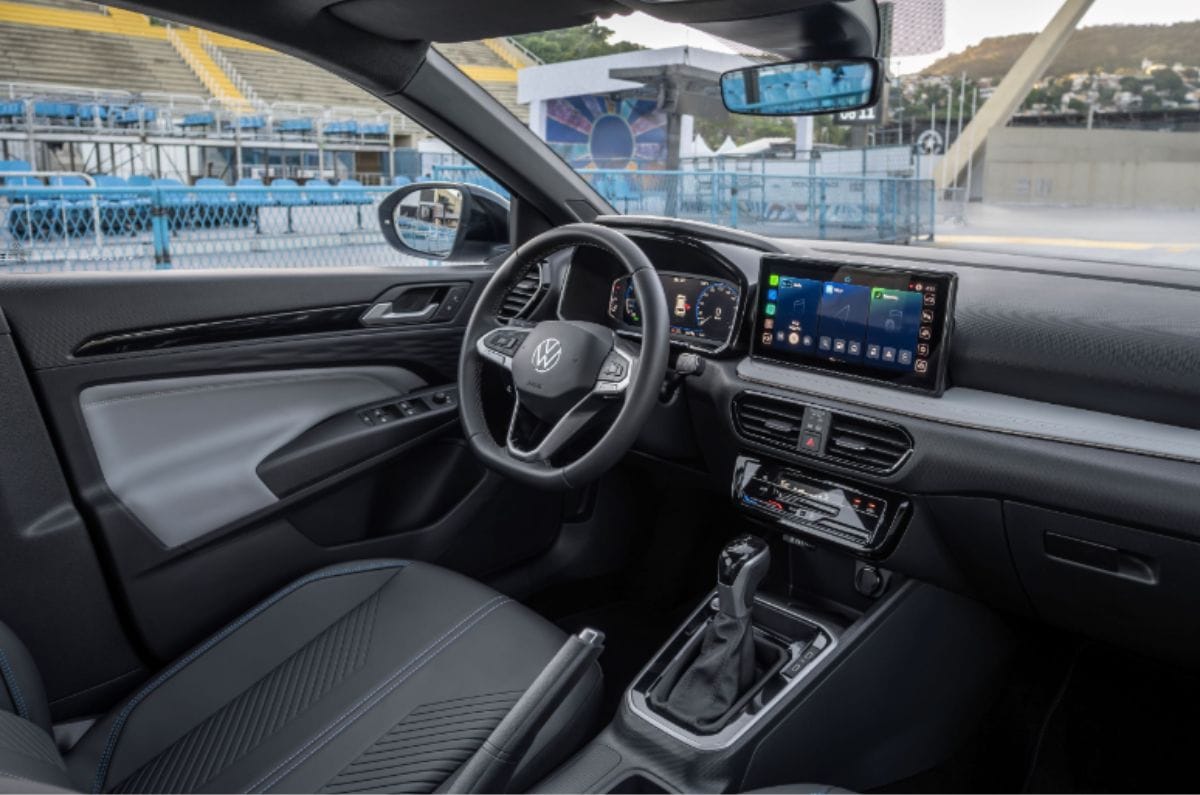
LHD VW Tera interior used for representation.

The Volkswagen Tera already has a lot of commonality with the India 2.0 cars, and some of these parts will likely be carried over to the upcoming compact SUV as well. This could include the flat-bottom three-spoke steering wheel, gear knob, centre console and HVAC control unit, the designs of which look similar to those on the Taigun. Additionally, it could also get a similar 10.25-inch digital driver’s display that’s seen on the Taigun. The Tera, however, is an LHD model, which will be reversed for the India-spec version. 

As for equipment, the Volkswagen compact SUV could likely mirror the Skoda Kylaq’s feature set. For reference, the latter gets a 10-inch infotainment system with wireless CarPlay and Android Auto, ambient lighting, a digital driver’s display, a single-pane sunroof, powered and ventilated front seats, automatic climate control and a wireless phone charger.