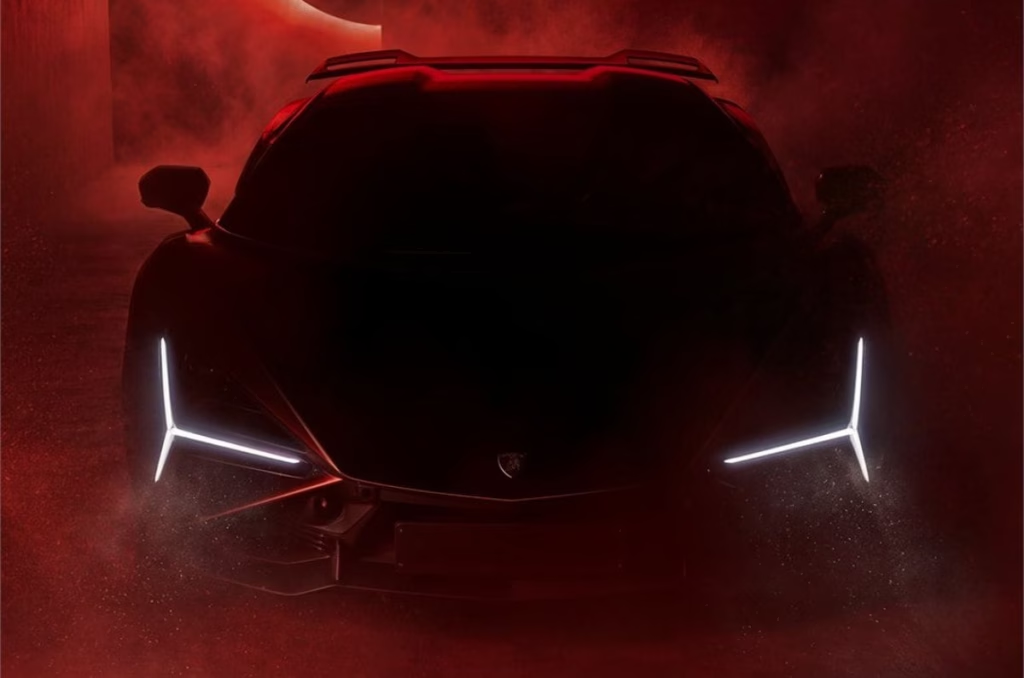
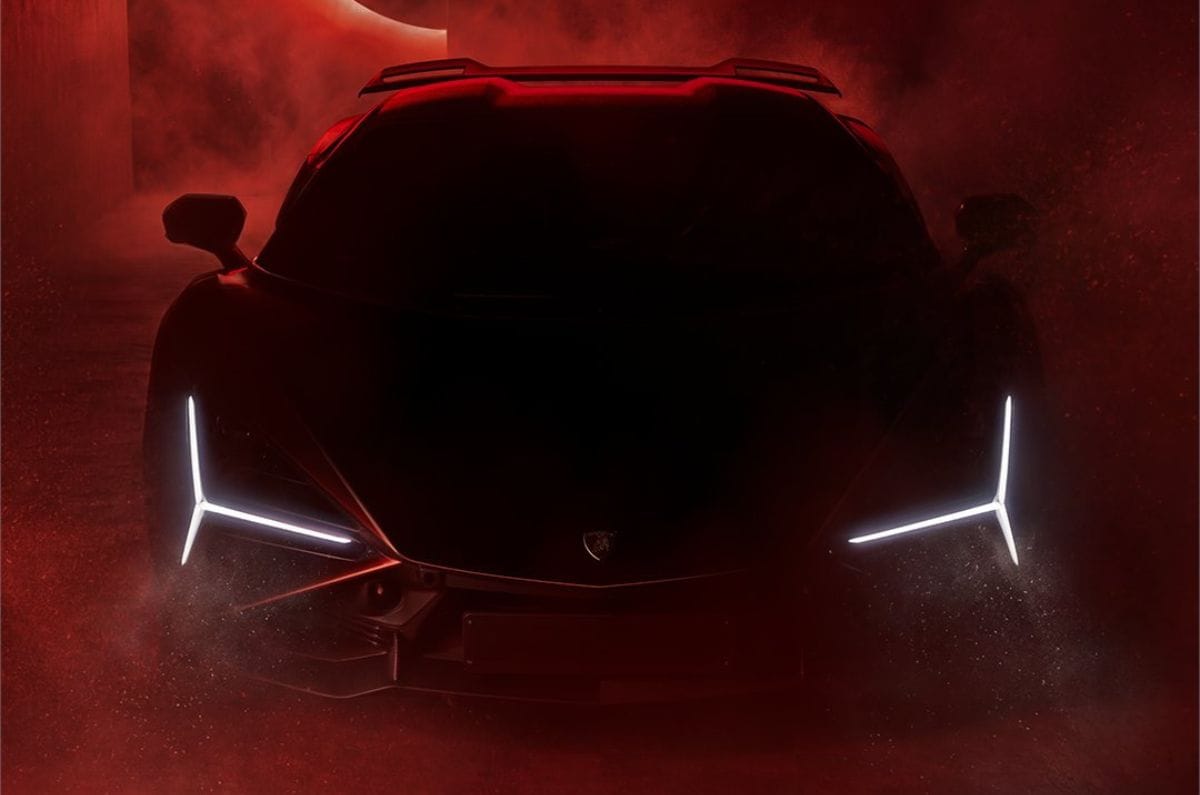
Lamborghini Revuelto SV teased ahead of global debut tomorrow

Lamborghini Revuelto SV teased ahead of global debut tomorrow
Lamborghini Revuelto SV teaser

Lamborghini has teased the upcoming Revuelto SV, which is due for its global debut on August 14, 2026, at the Monterey Car Week. This comes just a week after the brand released images of a camouflaged test mule of its V12 supercar belting around Hockenheimring in Germany. Upon its arrival, the Revuelto SV will become the latest in the line of Lamborghini’s SV line-up that includes the erstwhile Aventador SV. The ‘SV’ stands for Super Veloce, which roughly translates to ‘Super Speed’.

  • Exterior features more aggressive intakes and specialised aero
  • Interior to come with version-specific detailing and trim
  • Hybrid powertrain to offer more power

Lamborghini Revuelto SV: What we know so far

Exterior
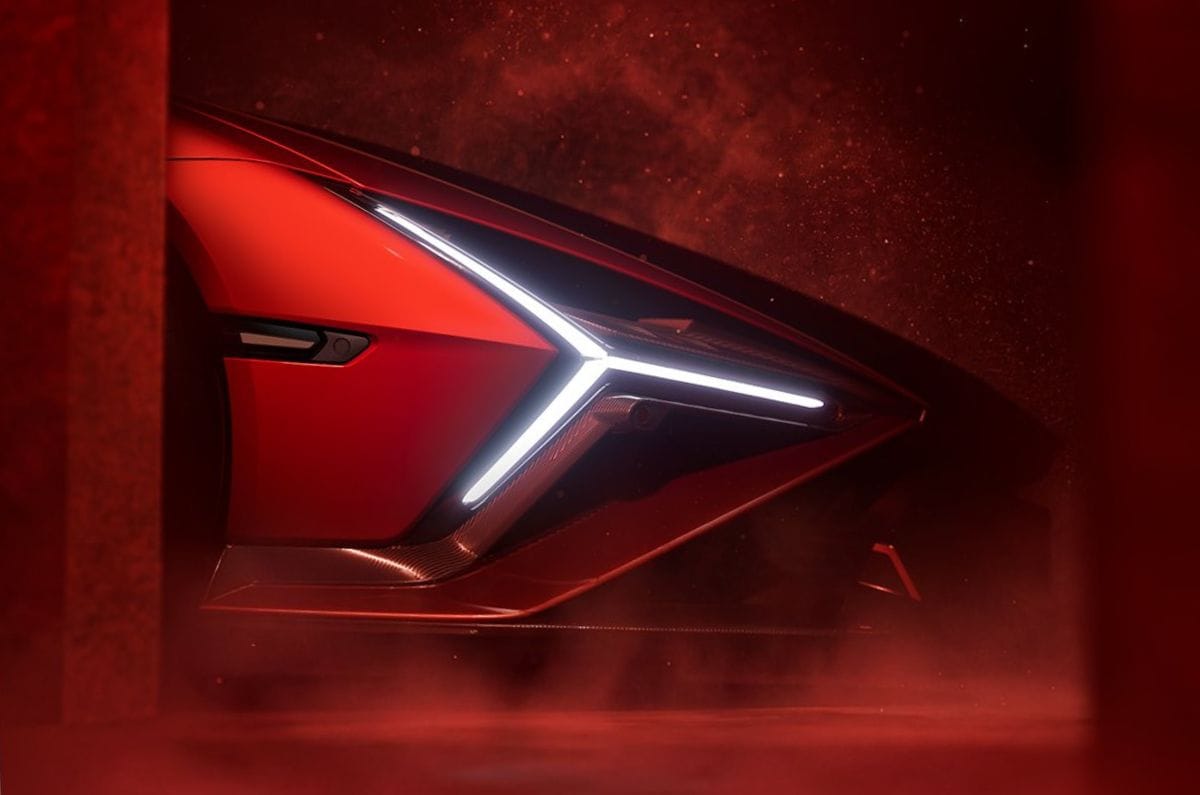
Lamborghini Revuelto SV teaser front bumper
Lamborghini’s latest teaser shows the front bumper of the Revuelto SV in greater detail.

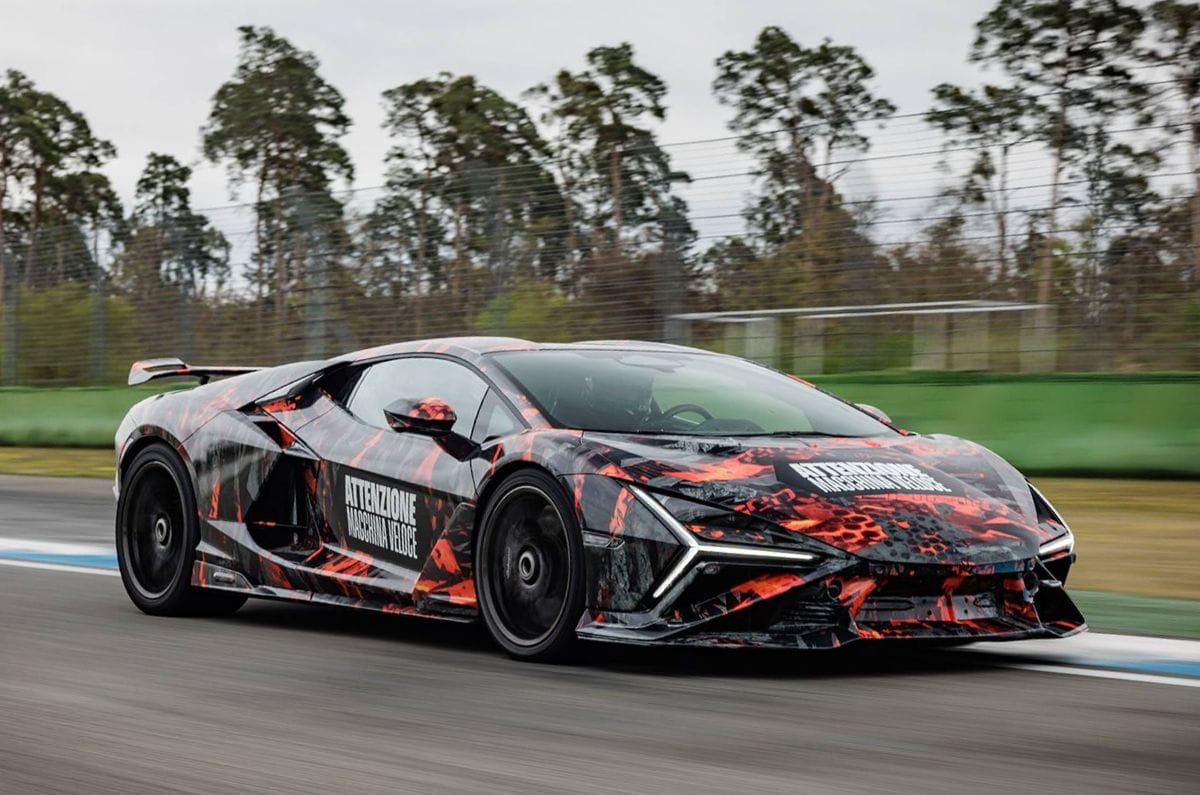
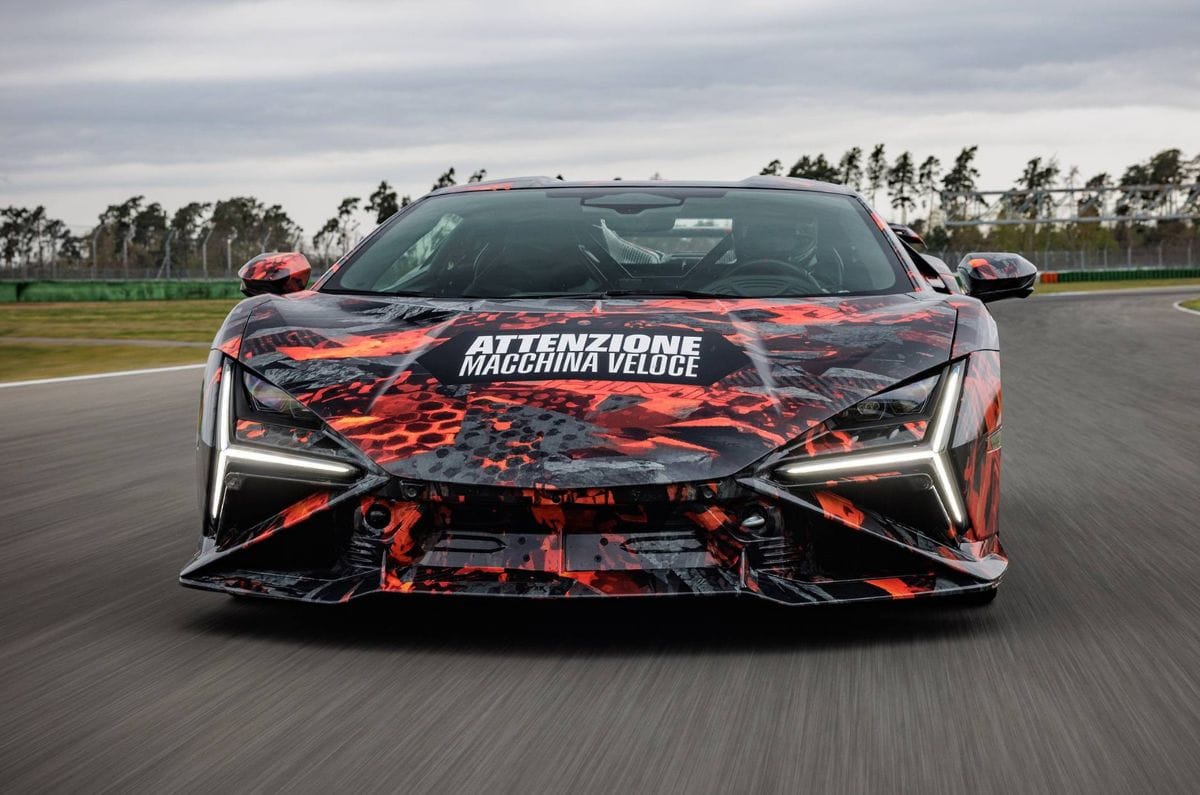
Much of the Revuelto SV’s performance enhancement measures on the outside over the standard model are quite discernible. The fascia looks even sportier as the heavily revised bumper features new carbon-fibre elements plus a larger and more aggressive front splitter and intakes.
Lamborghini Revuelto SV teaser front quarter
Test mule of the Lamborghini Revuelto SV at Hockenheimring, Germany.

Lamborghini has also added a large fixed wing at the back, while a specially designed underbody and active flaps are also likely additions to enhance the Revuelto SV’s aerodynamic performance on the track. Similarly, lightweight carbon-fibre wheels and race-spec brakes are expected to be part of the package as well, along with unique paint options and exterior detailing exclusive to the SV.

Interior

Lamborghini Revuelto SV teaser interior
Test mule of the Lamborghini Revuelto SV at Hockenheimring, Germany.

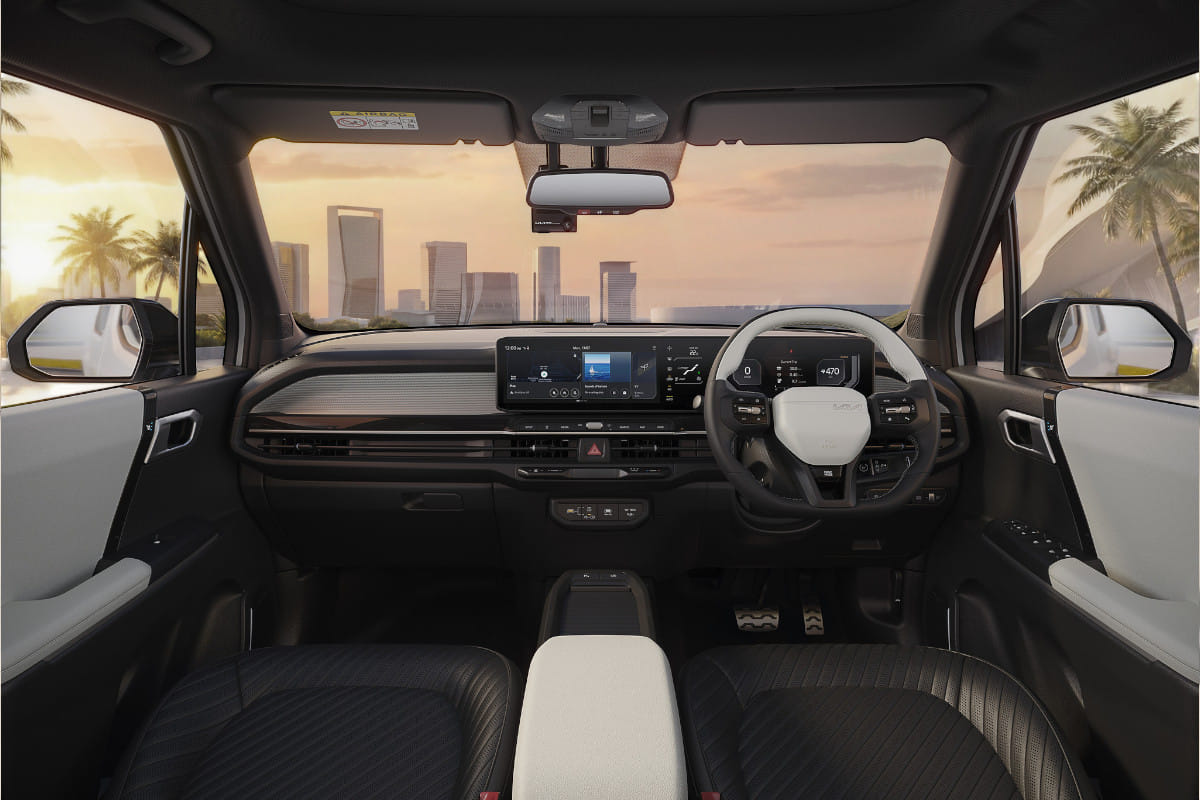
The first teaser campaign from the brand provides us a glimpse into the Lamborghini Revuelto SV’s interior. Noticeable in the interior image is a heavy-duty roll cage, exposed metal surfaces and a bare-bones rear-cabin section. Other details that are visible here include a leather & carbon fibre-trimmed steering wheel with a red centre marker and carbon-fibre shift paddles. The bucket seats are also likely to be carbon-fibre units, whilst the shrouding for the digital driver’s display uses the same weight-saving material. The Revuelto SV’s interior could feature plenty of Alcantara/suede, depending on how a customer specs it. One can also expect to see ‘SV’ branding and other edition-specific detailing on this interior.

Powertrain and performance

Powering the Lamborghini Revuelto SV will be the familiar 6.5-litre naturally aspirated V12, along with three electric motors and a compact lithium-ion battery pack. Lamborghini is likely to have reworked the 8-speed dual-clutch transmission for quicker shifts, and the combined output from the hybrid powertrain is expected to go up as well.
Lamborghini Revuelto SV teaser
Test mule of the Lamborghini Revuelto SV at Hockenheimring, Germany.

Lamborghini recently set a lap record of 1:41.6 at the Hockenheimring track, with the brand claiming this to be the fastest lap ever recorded at this facility by a production car. The standard Revuelto offers 1,015hp and 725Nm of torque, allowing it to hit a top speed of over 350kph and accelerate from 0-100kph in a claimed 2.5 seconds. The SV is likely to be even faster, with retuned suspension and sharper steering also expected for improved handling on the track.

Also read

JCB Hydromax hydrogen-powered car sets new land speed record of 653.90kph
Volkswagen Kylaq-based compact SUV confirmed for India

MG’s new 7-seat electric SUV to be called Hector Tomahawk

MG's new 7-seat electric SUV to be called Hector Tomahawk
MG Hector Tomahawk teased

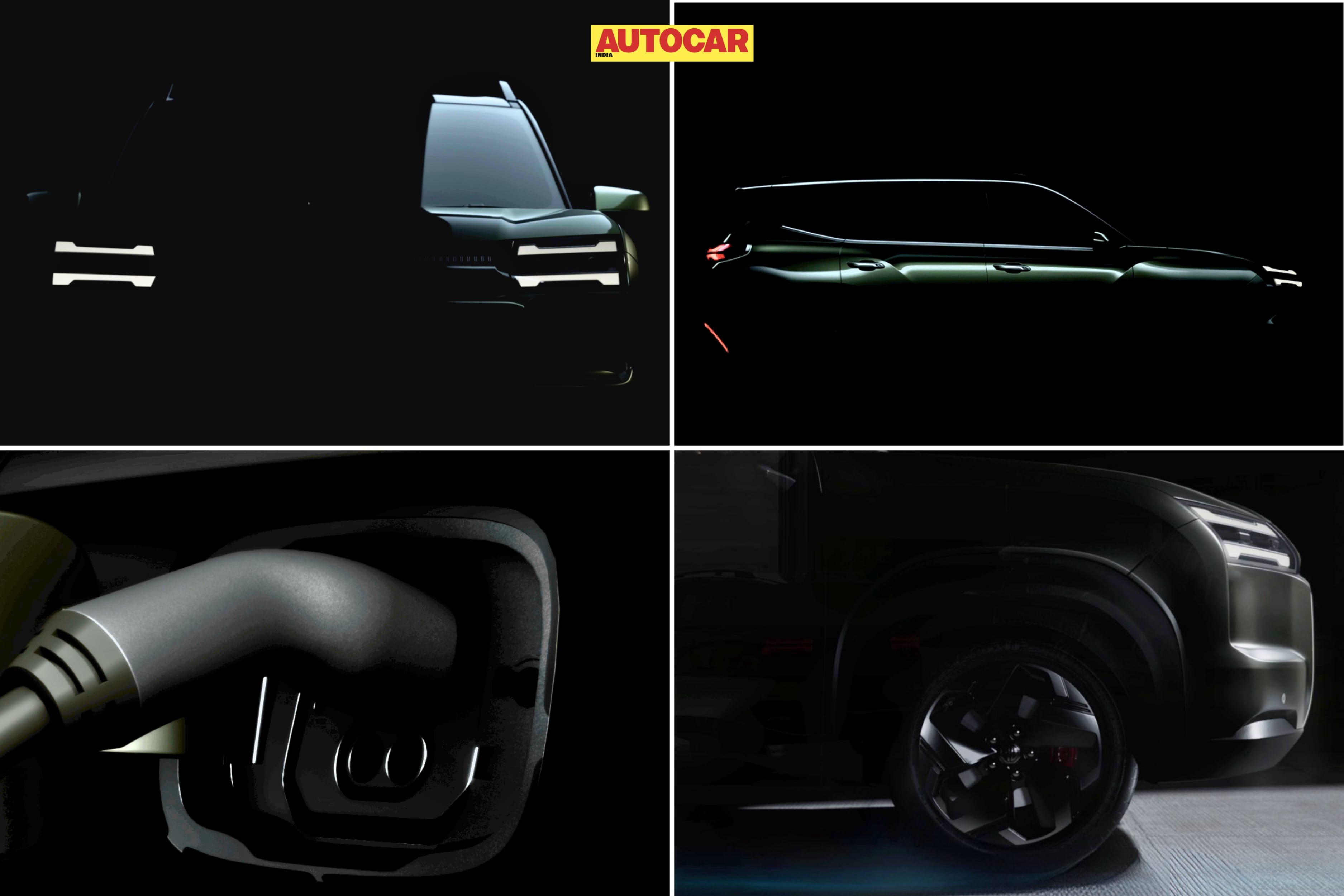
JSW MG has teased its upcoming new SUV for India, which is to be called the Hector Tomahawk, our sources have indicated. The official launch date is set for August 26, 2026. Sold as the Wuling Eksion in the Indonesian market, the upcoming Hector Tomahawk will sit atop JSW MG’s new ADAPT (Advanced Drive Architecture Platform Technology) platform. The Hector Tomahawk will be launched as a fully electric model first, and will be slotted above the Hector in the brand’s line-up in India.

  • Teaser confirms rectangular headlamps, signature LED DRLs, a panoramic sunroof and more
  • Will be offered in EV guise first; PHEV could arrive later
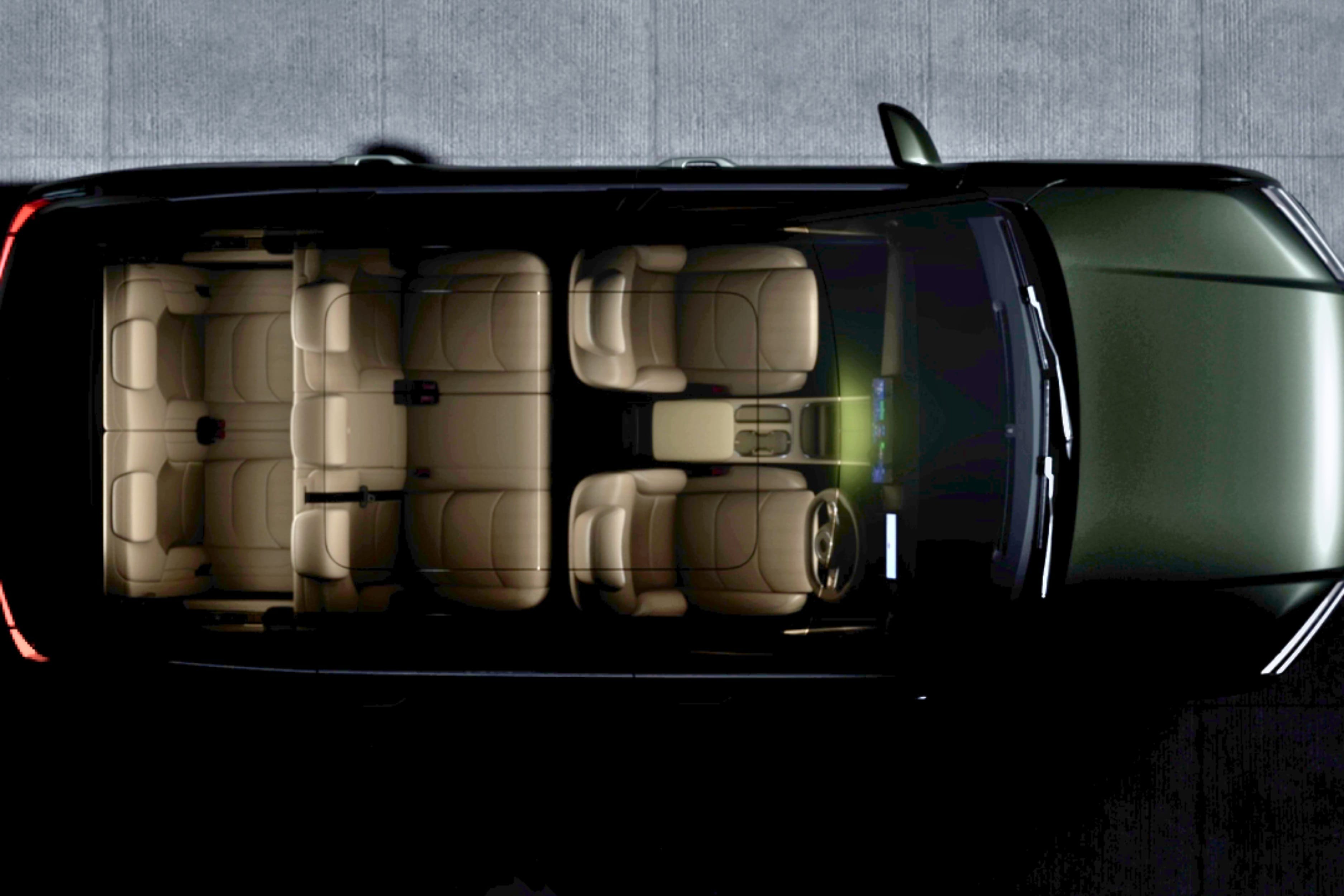
  • Seating for 7 occupants; bench-style second row

JSW MG Hector Tomahawk exterior design

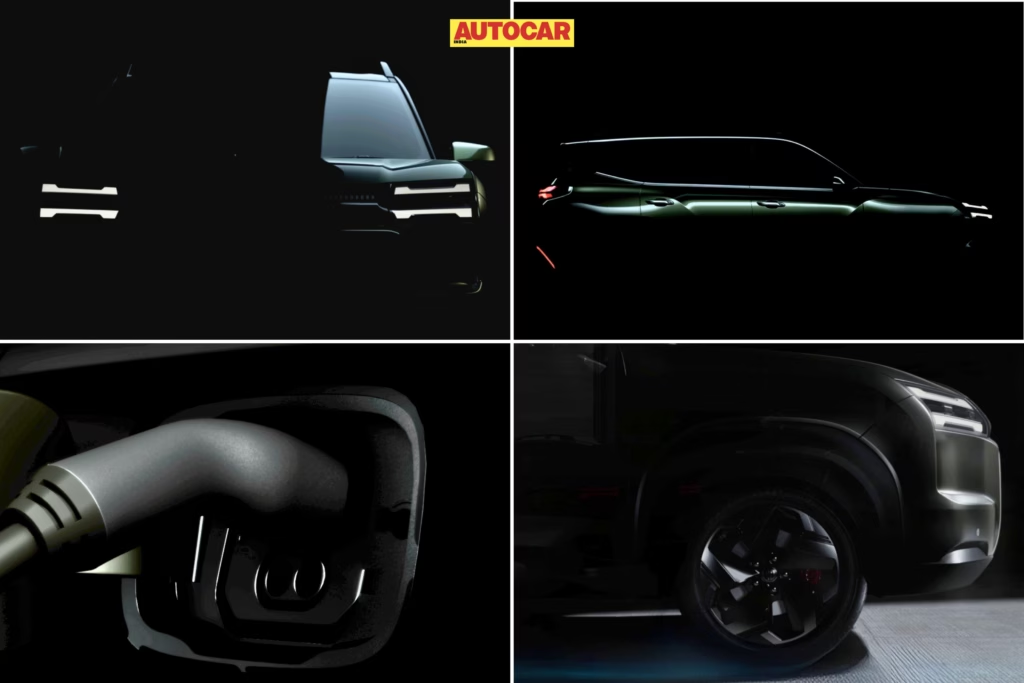
The teaser offers a few important design details on the outside of this upcoming MG SUV

MG_Hector_Tomahawk_Rear_Quarter_Static

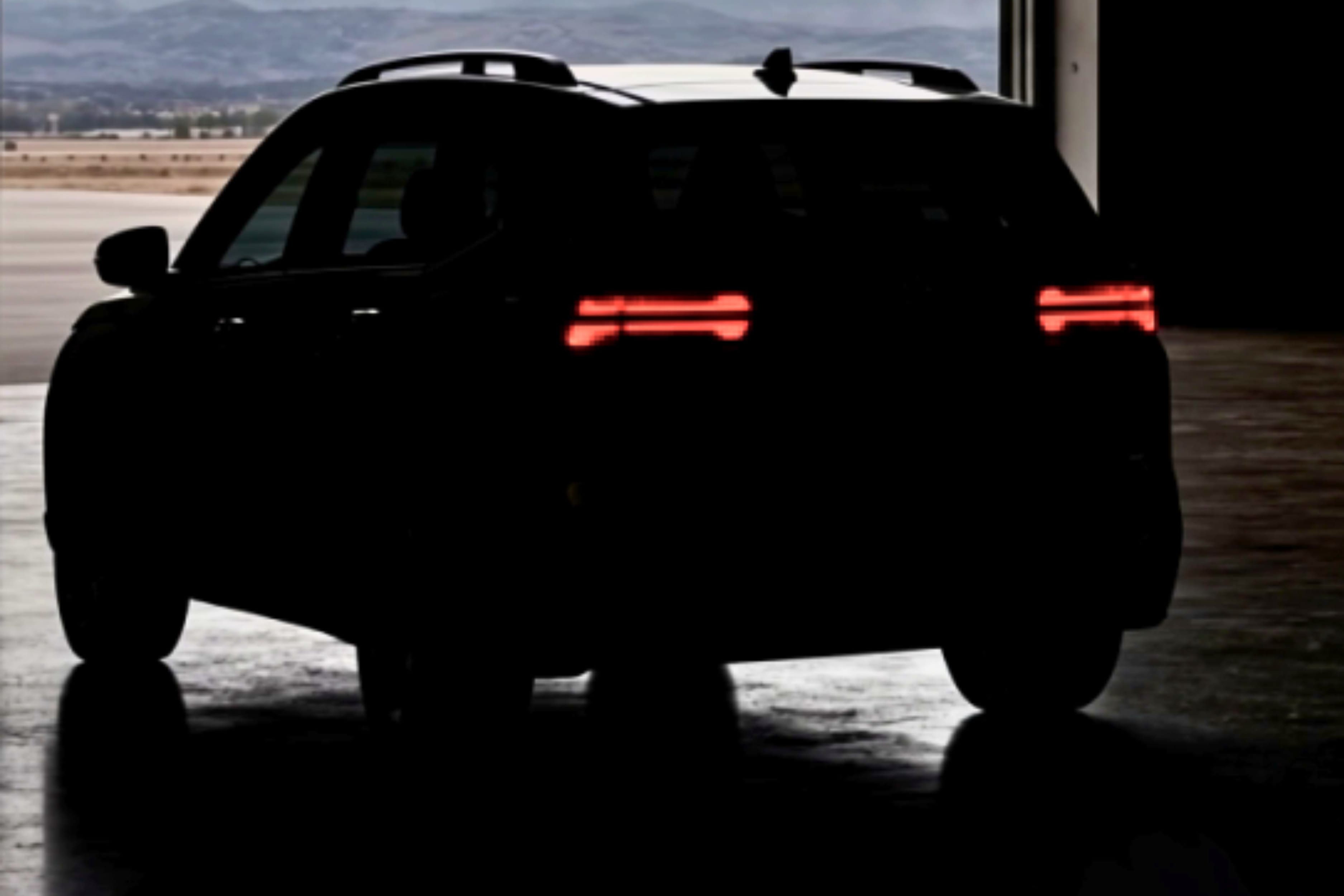
The official teaser confirms the rectangular LED headlamps first seen in spy shots. It also reveals details like the twin-element LED DRLs (daytime running lights) at the front and rear of the Hector Tomahawk. Observable details here also include the silver-finished alloy wheels, black plastic cladding under the doors, pronounced front fenders, pull-type door handles, prominent roof rails and wraparound LED tail-lamps. It’s clear from the teaser that the Hector Tomahawk sports chrome garnish along the windowline, plus a relatively flat roofline that leads to a roof spoiler.

In terms of dimensions, the JSW MG Hector Tomahawk is likely to have similar dimensions as the Wuling Eksion 7-seater that’s sold in Indonesia. For reference, the latter measures 4,745mm in length, 1,850mm in width, 1,755mm in height, and has a wheelbase of 2,9810mm. Its two-tone exterior colour options are likely to be offered in our market, too.

JSW MG Hector Tomahawk interior design and features

Apart from the exterior, the brand’s latest teaser also confirms a few details upcoming Hector Tomahawk’s interior. For starters, we now know that there will be 7 seats on offer, with a bench-style arrangement for the second row. The teaser also shows a beige colour theme for this cabin, along with a panoramic sunroof as part of the equipment that’ll be on offer. While more details are to be confirmed, the Hector Tomahawk EV could share much of the rest of its design and feature set with the Wuling Eksion. This means a minimalistic cabin with physical switchgear on and behind the two-spoke steering wheel, on the centre console and the doors.

MG Hector Tomahawk Seating

Depending on the trim level, the equipment on offer include a powered tailgate, leatherette upholstery, powered and ventilated front seats, a 12.8-inch touch-infotainment head unit, an 8.8-inch digital driver’s display, a 50-watt wireless charger, automatic climate control with AC vents for the second and third rows, a 360-degree camera system, an electronic parking brake, six airbags, and an ADAS (Advanced Driver Assistance Systems) suite, among others.

JSW MG Hector Tomahawk powertrain details

ADAPT platform supports battery-electric, plug-in hybrid, range-extender and strong-hybrid powertrains

While JSW MG is likely to reveal the Hector Tomahawk PHEV (plug-in hybrid) on August 26 as well, the brand’s teaser suggests that the ADAPT-based SUV will be introduced in its EV avatar first. The fully electric version of the Wuling Eksion EV that’s available in Indonesia is equipped with a single front-mounted electric motor that generates 201hp and 310Nm, allowing a claimed top speed of 160kph. It’s backed by a 69.2kWh LFP (Lithium Iron Phosphate) battery pack with a CLTC (China Light-Duty Vehicle Test Cycle) range of up to 530km.

The Hector Tomahawk PHEV is also likely to share its powertrain setup with its Eksion counterpart. For reference, the latter comes with a single electric motor that produces up to 195hp and 230Nm on its own, while the 1.5-litre naturally aspirated petrol engine puts out 105hp and 130Nm. There’s also a 20.5kWh battery pack in the equation, and the maximum all-electric range of the Eksion PHEV is a claimed 125km. JSW MG’s ADAPT platform is capable of supporting battery-electric, plug-in hybrid, range-extender and strong-hybrid powertrains.

Also read

Skoda Superb diesel India launch in 2027

Toyota Hyryder Aero Black Edition launched at Rs 15.19 lakh

Thangamayil Jewellery Share Price: Q1 मुनाफे में जबरदस्त उछाल के बाद भी शेयर में लगा 10% का लोअरसर्किट, आखिर क्या है इसकी वजह

Thangamayil Jewellery Share Price: ज्वैलरी रिटेलर थंगामयिल ज्वैलरी  (Thangamayil Jewellery) के शेयरों में 29 जुलाई को भारी गिरावट देखने को मिली। जून तिमाही में दमदार मुनाफे के बाद भी शेयर में आज 10 फीसदी का लोअरसर्किट लग गया है। ऐसा इसलिए हुआ क्योंकि निवेशकों ने कंपनी के मजबूत फाइनेंशियल परफॉर्मेंस के बजाय मौजूदा तिमाही के लिए कंपनी के सतर्क नजरिए पर ज्यादा ध्यान दिया, जिससे सेंटीमेंट पर असर पड़ा।

जून तिमाही के दौरान कंपनी ने रेवेन्यू और प्रॉफिटेबिलिटी दोनों में जबरदस्त ग्रोथ दिखाया है। हालांकि, मैनेजमेंट ने मांग में लगातार कमजोरी की ओर इशारा किया। इसके पीछे उन्होंने वेस्ट एशिया में युद्ध की अनिश्चितता, सोने पर ज्यादा इंपोर्ट ड्यूटी, रुपये की गिरती कीमतों को टहराया है। साथ ही सोने की कीमतें कम होने की उम्मीद में ग्राहकों द्वारा खरीदारी टालने का हवाला भी दिया है।

कैसे रहे तिमाही नतीजे

थंगामयिल ज्वैलरी  ने जून 2026 को खत्म हुई तिमाही के लिए ₹85 करोड़ का नेट प्रॉफिट दर्ज किया, जो पिछले साल की इसी अवधि के ₹45.7 करोड़ से 86% ज्यादा है। कंपनी का ऑपरेशन से रेवेन्यू सालाना आधार पर 71.2% बढ़कर ₹2,666.4 करोड़ हो गया, जबकि पिछले फाइनेंशियल ईयर की जून तिमाही में यह ₹1,558 करोड़ था।

ऑपरेटिंग परफॉर्मेंस भी मजबूत रही। EBITDA (ब्याज, टैक्स, डेप्रिसिएशन और अमॉर्टाइजेशन से पहले की कमाई) 66.2% बढ़कर ₹144.6 करोड़ हो गया, जो एक साल पहले ₹87 करोड़ था। हालांकि, EBITDA मार्जिन थोड़ा घटकर 5.4% रह गया, जबकि पिछले साल की इसी तिमाही में यह 5.6% था।

अच्छे फाइनेंशियल नतीजे दिखाने के बावजूद, कंपनी ने निकट भविष्य में मांग को लेकर सतर्क रुख दिखाया।

30 जून, 2026 को खत्म हुई तिमाही के दौरान सेम-स्टोर सेल्स (SSS) ग्रोथ 44.4% रही, जबकि तिमाही-दर-तिमाही आधार पर यह ग्रोथ 72.3% थी। थंगामयिल ज्वैलरी  ने कहा कि सोने की बिक्री की मात्रा (वॉल्यूम) अपेक्षाकृत कम रही, भले ही अंतरराष्ट्रीय स्तर पर सोने की कीमतें पिछली तिमाही (जब कीमतें काफी ऊंची थीं) की तुलना में कम थीं। कंपनी के अनुसार, मांग पर मुख्य रूप से 13 मई, 2026 से सोने पर आयात शुल्क (import duty) 6% से बढ़कर 15% होने और भारतीय रुपये की कीमत में काफी गिरावट का असर पड़ा। इन घटनाक्रमों के कारण कई ग्राहकों ने गहनों की खरीदारी टाल दी, क्योंकि उन्हें उम्मीद थी कि भविष्य में अमेरिकी डॉलर के हिसाब से अंतरराष्ट्रीय सोने की कीमतें कम हो सकती हैं।

कंपनी ने यह भी कहा कि पश्चिम एशिया में युद्ध से पैदा हुई अनिश्चितता का ग्राहकों की धारणा पर बुरा असर पड़ा। कंपनी ने बताया कि जिन इलाकों में वह काम करती है, वहां से आने वाले पैसे (remittances) में कमी के कारण विदेशों में रहने वाले भारतीयों (expatriates) द्वारा सोने की खरीदारी में सुस्ती आई, जिससे तिमाही-दर-तिमाही आधार पर बिक्री और कम हुई।

मैनेजमेंट ने संकेत दिया कि मौजूदा तिमाही में भी यह कमजोरी बनी हुई है। थंगामयिल ज्वैलरी  ने कहा कि वित्त वर्ष 2027 की दूसरी तिमाही (Q2 FY27) के पहले 28 दिनों में बिक्री में कोई खास सुधार नहीं दिखा। बिक्री में लगातार सुस्ती की वजह युद्ध को लेकर बनी अनिश्चितता और ग्राहकों की यह उम्मीद रही कि अंतरराष्ट्रीय सोने की कीमतों में थोड़ी गिरावट आएगी, जिसके चलते उन्होंने खरीदारी को और टाल दिया।

कंपनी को उम्मीद है कि जियोपॉलिटिकल हालात स्थिर होने और सोने की कीमतों को लेकर नजरिया बेहतर होने पर यह टली हुई मांग वापस आएगी। उसे उम्मीद है कि वित्त वर्ष 2027 की दूसरी छमाही में मांग में सुधार होगा।

स्टॉक का परफॉर्मेंस

हालांकि बुधवार के कारोबार में स्टॉक 10% के लोअर सर्किट पर पहुंच गया। थंगामयिल ज्वैलरी  के शेयरों में पिछले 1 महीने में 10%, 3 महीनों में 62% और पिछले 6 महीनों में 85% की बढ़त हुई है। एक साल के आधार पर, स्टॉक ने मल्टीबैगर रिटर्न दिया है और इसमें 249% की उछाल आई है, जबकि पिछले पांच वर्षों में इसने 1,370% का रिटर्न दिया है।

स्टॉक ने पिछले कारोबारी सत्र में 28 जुलाई को ₹7,429 का अपना 52-हफ्ते का उच्चतम स्तर छुआ, जबकि इसका 52-हफ्ते का निचला स्तर ₹1,774.35 पिछले साल जुलाई में दर्ज किया गया था।

Devyani International share Price: Q1 मुनाफे में 4 गुना की दमदार बढ़ोतरी, शेयर 9% भागा, मार्जिन में भी दिखा सुधार

(डिस्क्लेमर: मनीकंट्रोल.कॉम पर दिए गए विचार एक्सपर्ट के अपने निजी विचार होते हैं। वेबसाइट या मैनेजमेंट इसके लिए उत्तरदाई नहीं है। यूजर्स को मनी कंट्रोल की सलाह है कि कोई भी निवेश निर्णय लेने से पहले सार्टिफाइड एक्सपर्ट की सलाह लें।

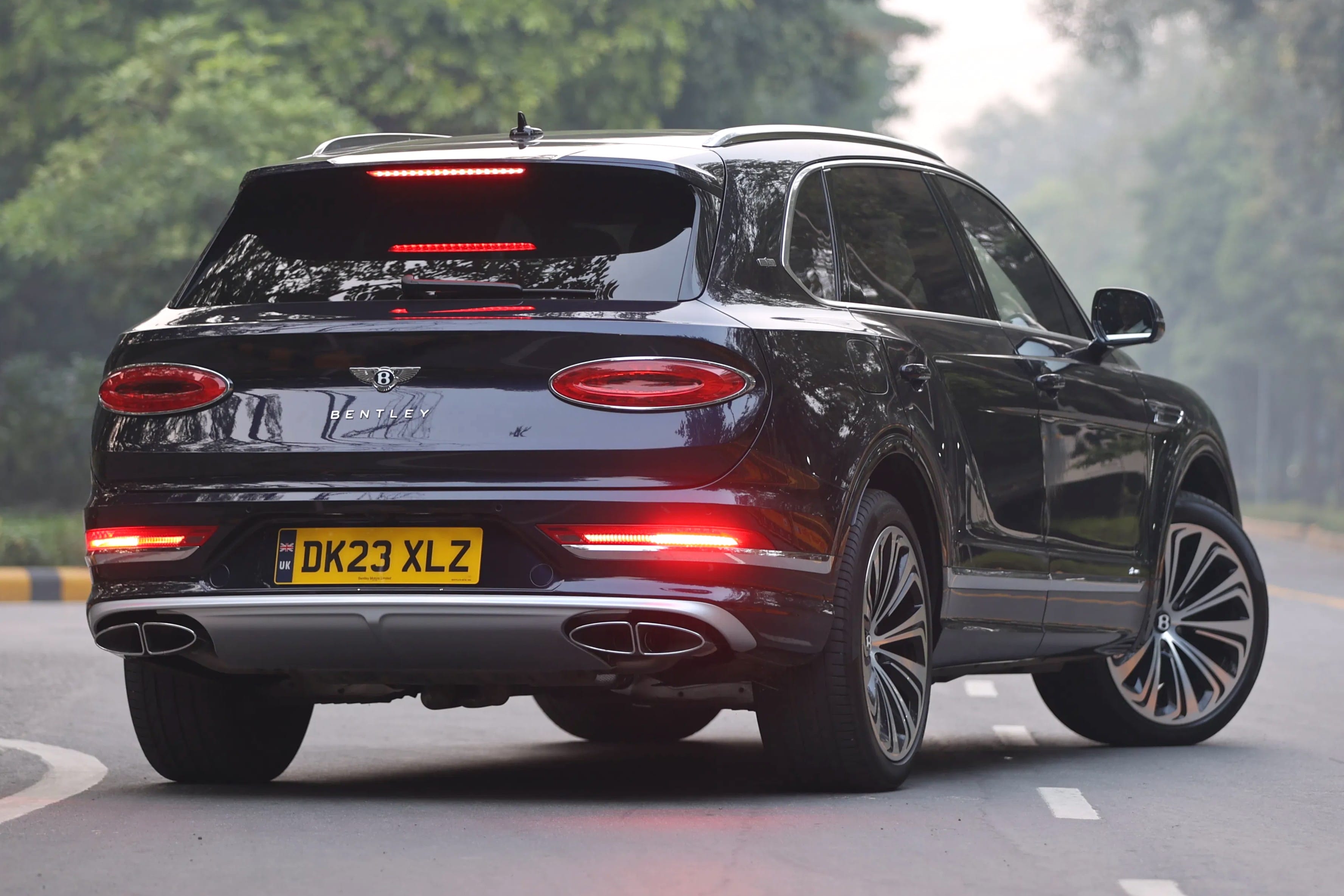
Bentley taking Bentayga orders at reduced prices after India-UK FTA

bentley bentayga ewb

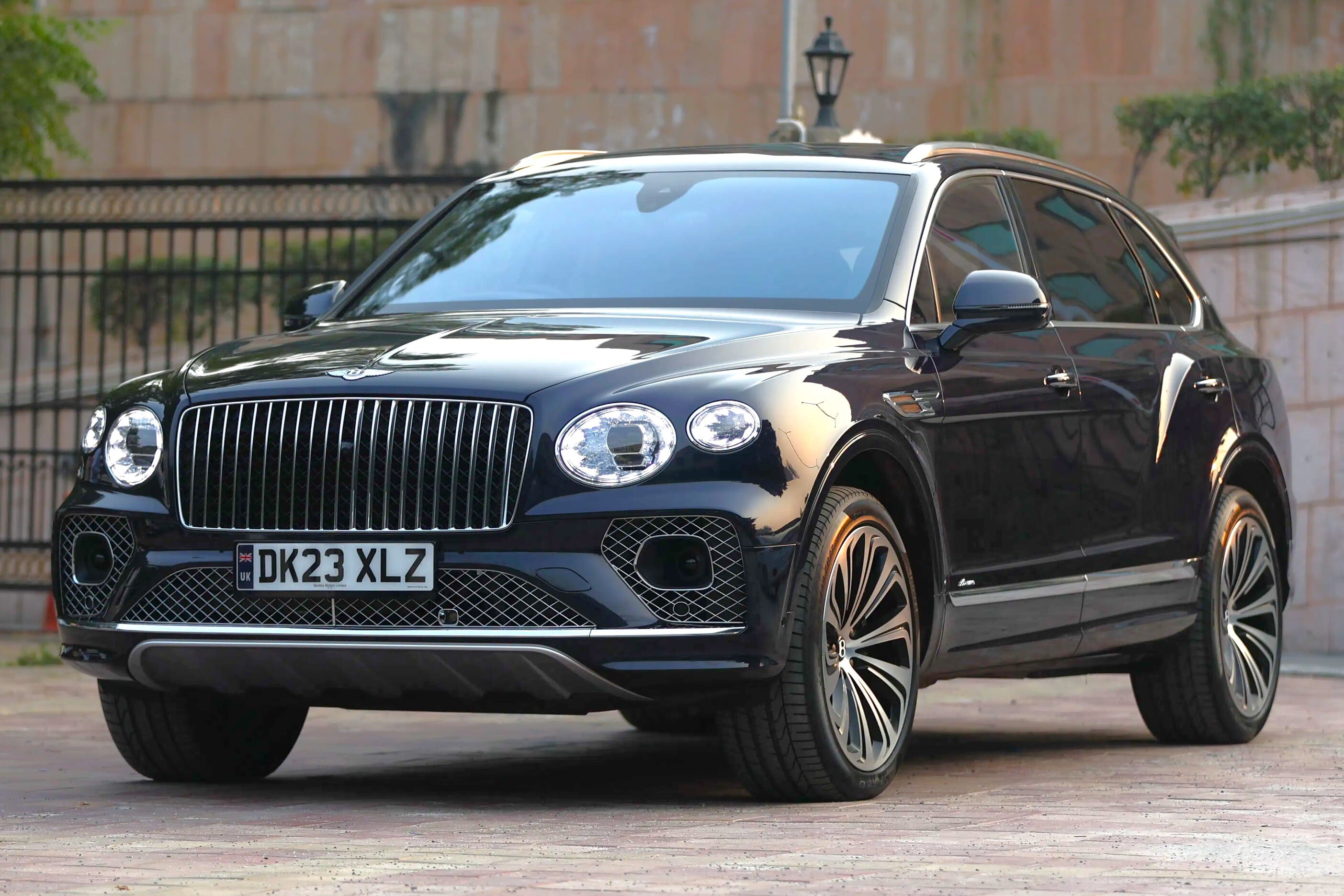
With the India-UK FTA now in effect, Bentley is accepting orders at reduced prices for the Bentayga EWB SUV, according our dealer sources. The Bentayga EWB is the only Bentley model in India to fulfill the criteria for immediate price drops under the terms of the India-UK FTA.

Bentayga EWB qualifies for slashed 30 percent import duty

Only for a limited number of units, though

The last recorded India price of the Bentley Bentayga EWB was Rs 5.9 crore, before options. Bentley India has not confirmed the exact price reduction, but according to the final terms of the India-UK FTA, import duty on British-made petrol vehicles with engines above 3,000cc will drop from 110 percent to 30 percent.

 Bentayga EWB price in India (Rs, crore)Import tariff
Pre-FTA5.90110 percent
Post-FTA3.65 (estimated)30 percent

Taking that into account, the new India price of the Bentley Bentayga EWB could be in the ballpark of Rs 3.65 crore, before options – a projected price reduction of around Rs 2.25 crore. It should be noted, though, that these slashed prices are applicable only for a quota of 10,000 imported units, which include diesel cars with engines above 2,500cc. The full 110 percent tariff applies to units imported beyond that quota.

PHEV-only Continental GT and Flying Spur won’t see FTA price reduction

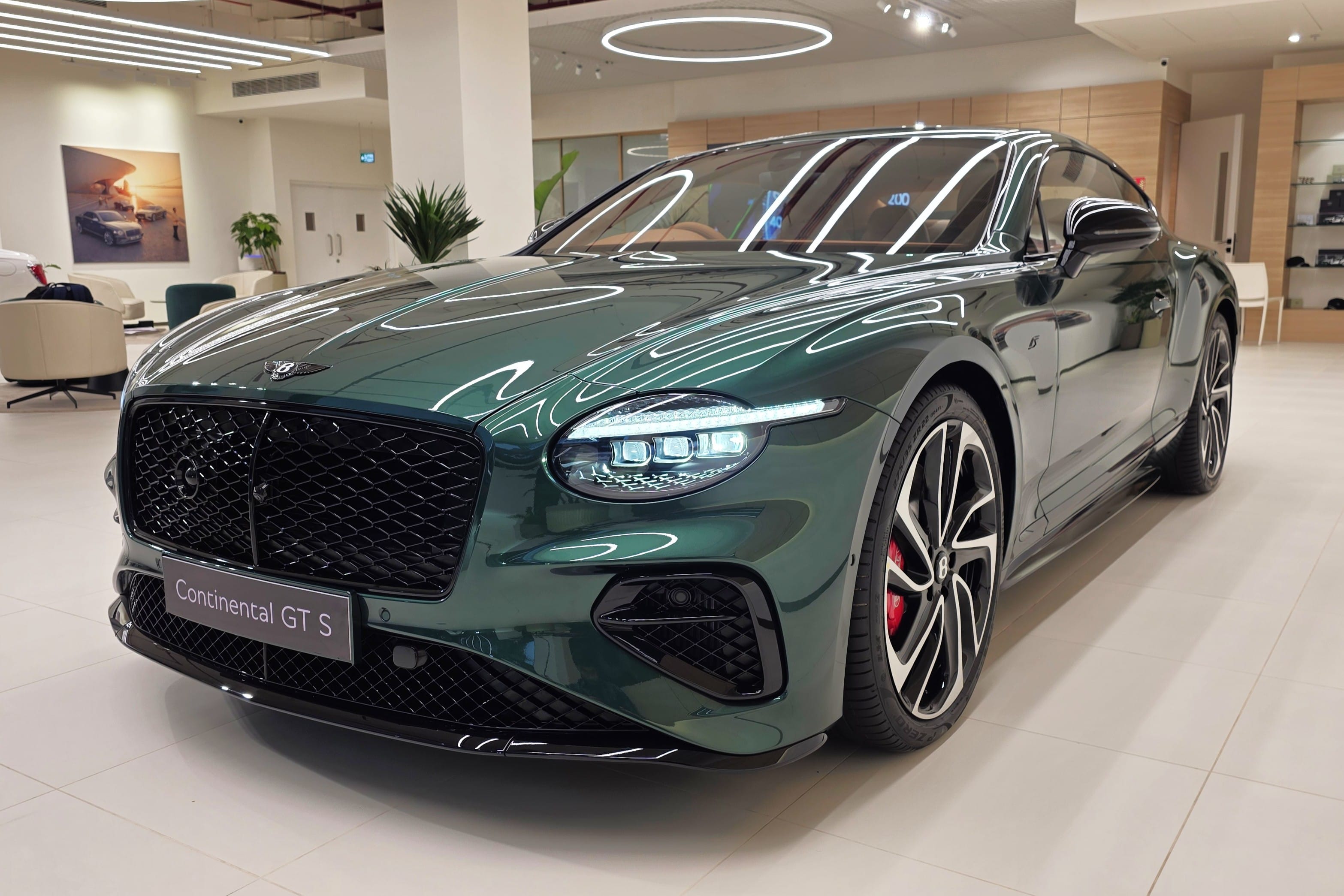
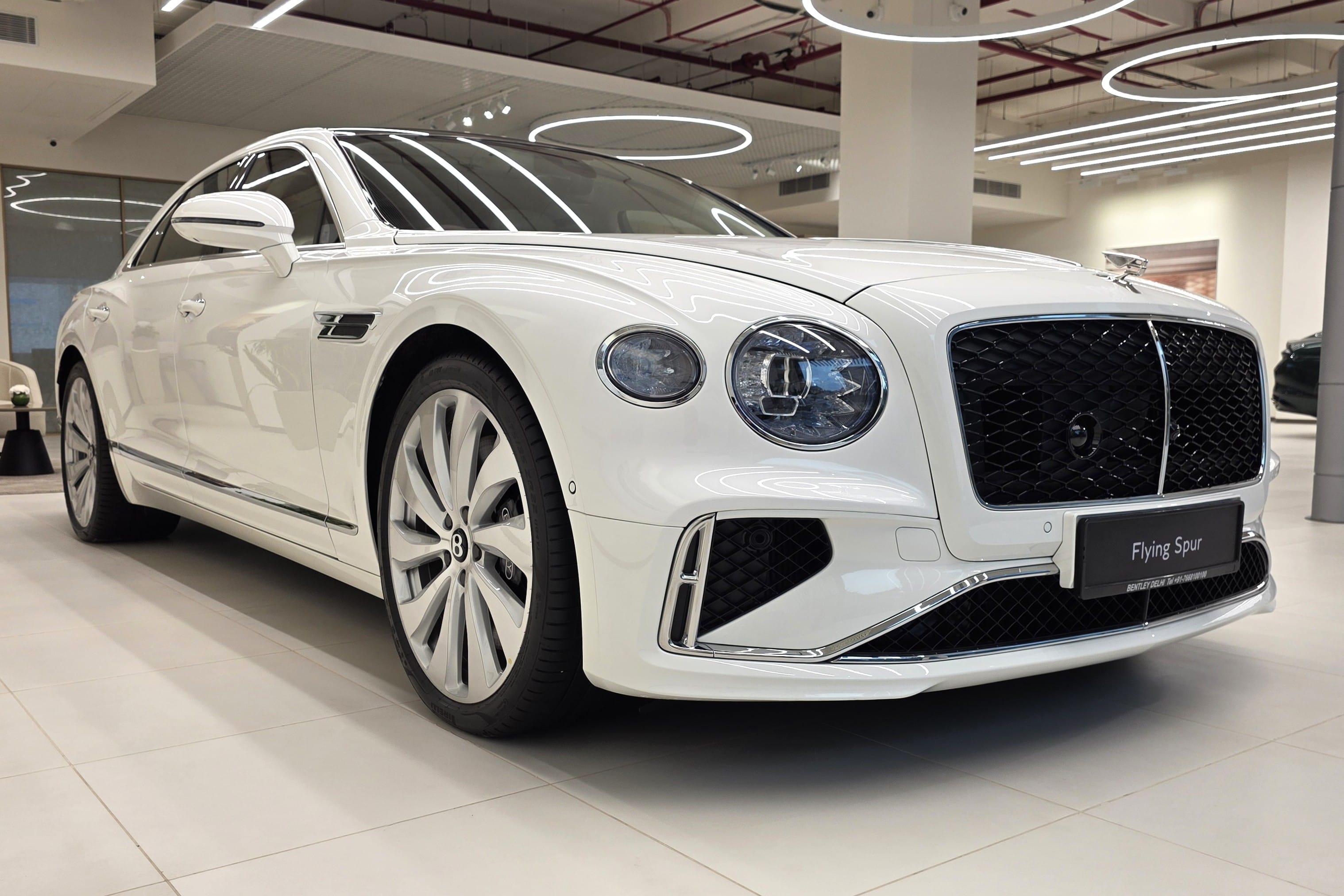
In India, the Bentayga EWB is powered by a 4.0-litre twin-turbo V8 with no electric assist whatsoever, making it the only pure-petrol Bentley available here. Other Bentley India offerings, namely the Continental GT and Flying Spur, come with V8 plug-in hybrid powertrains only.

Since the India-UK FTA disallows tariff cuts on British-made hybrids, EVs, and hydrogen-powered vehicles for the first five years after implementation, the Continental GT and Flying Spur don’t see any price reductions at the moment.

All prices are ex-showroom, India.

Honda unveils XR300L and XR300 Rally dual-sport motorcycles in India

Honda unveils XR300L and XR300 Rally dual-sport motorcycles in India

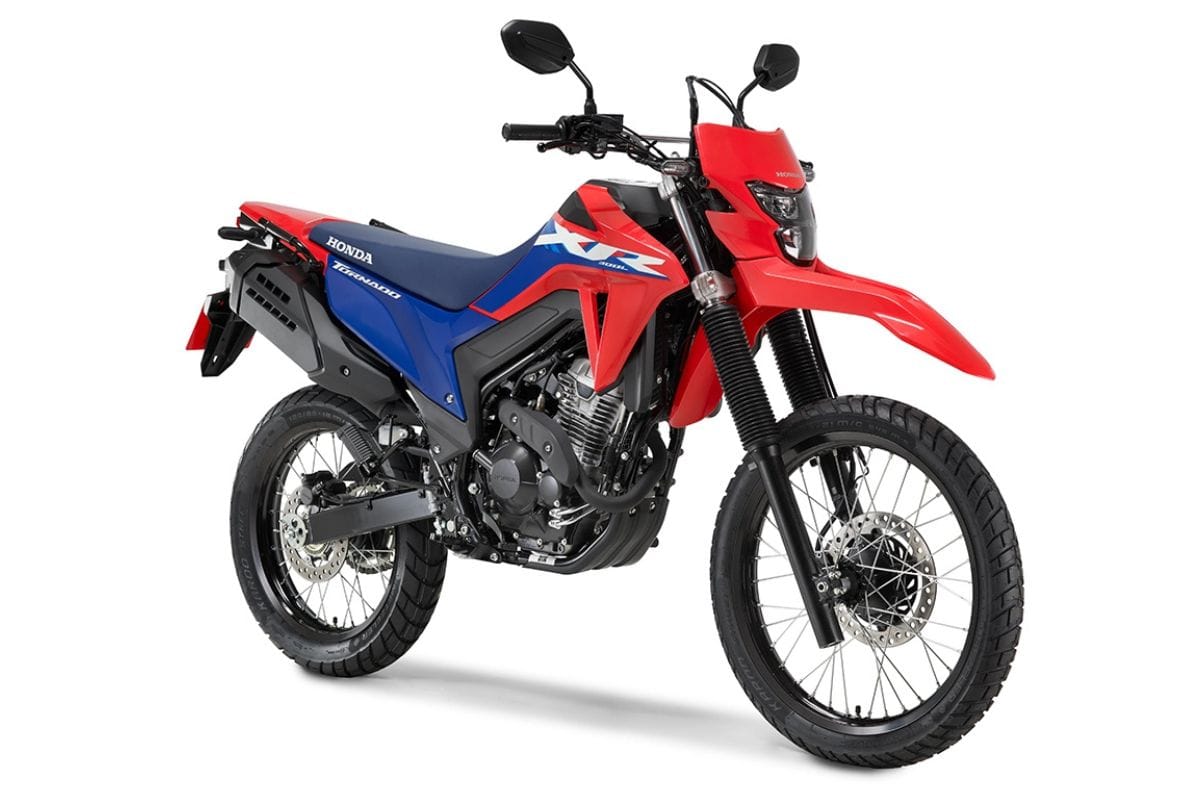
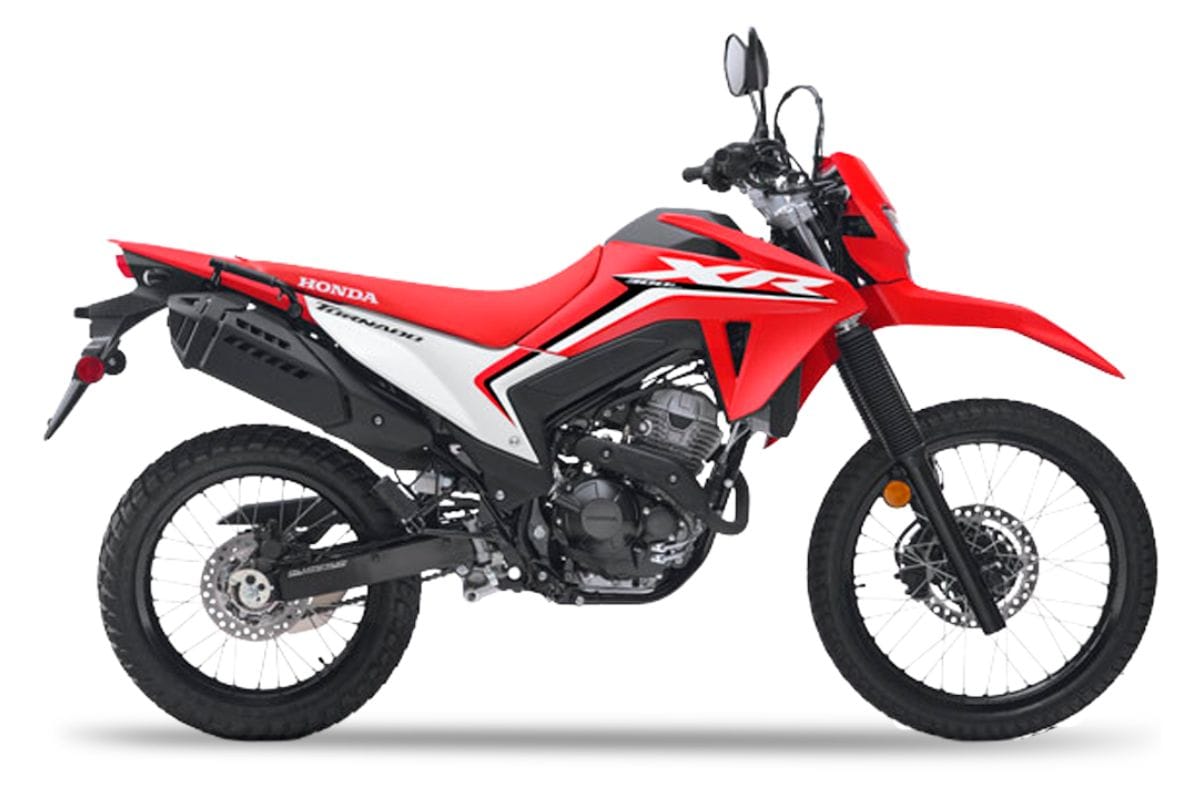
Honda has showcased two new small-capacity dual-sport motorcycles – the XR300L and XR300 Rally – that will be manufactured here in India. Interestingly, both motorcycles are powered by the same 293.5cc air/oil cooled single-cylinder engine that currently does duty in the CB300F.

  1. XR300L targets dual-sport and trail riding
  2. XR300 Rally adds touring-focused equipment and Honda RoadSync
  3. Both appear to share the CB300F’s 293.5cc engine

Honda XR300L unveiled: 

Honda says the XR300L has been developed as a lightweight dual-sport motorcycle intended to balance off-road capability with everyday usability. It is aimed at riders looking to tackle trails, gravel roads and other off-road terrain while remaining practical enough for daily commuting. Long-travel suspension, a gas-charged Pro-Link rear monoshock, switchable dual-channel ABS and Honda Selectable Torque Control (HSTC) are among its headline features. Honda says the XR300L is for the new riders that are looking to or have just started venturing into off-road riding. 

XR300 Rally unveiled:

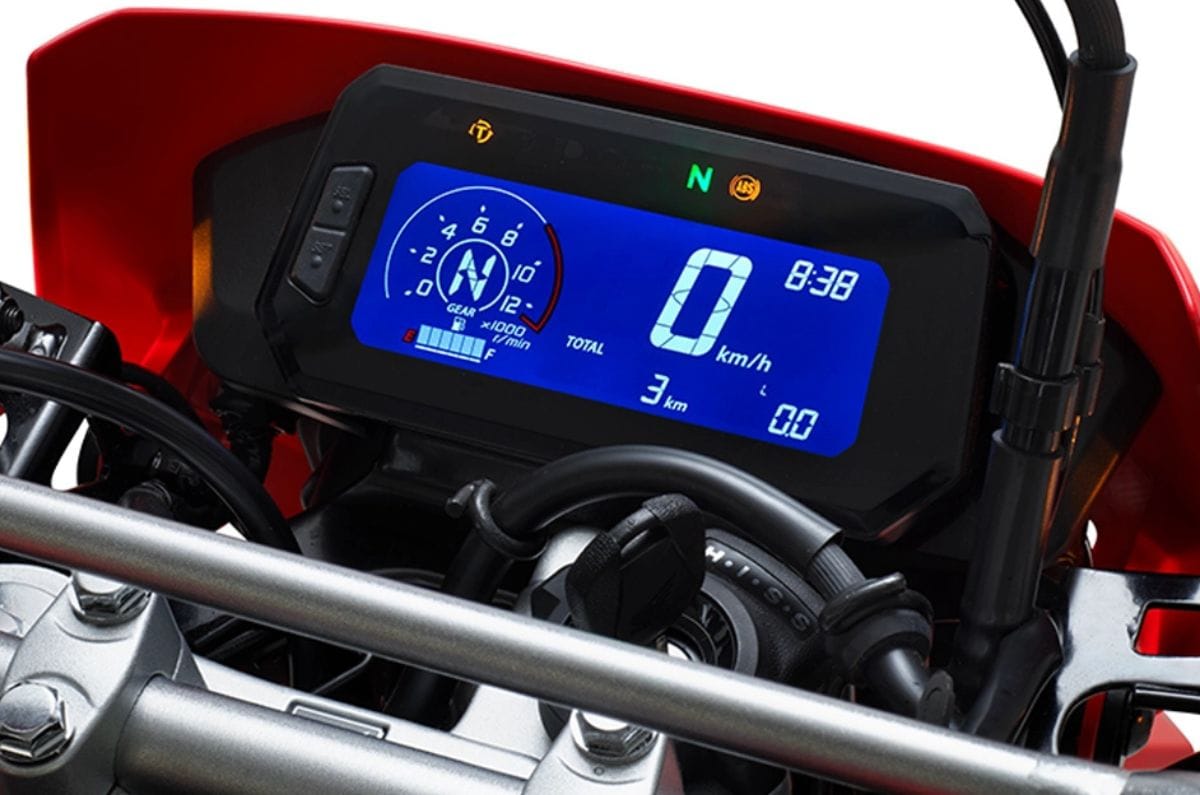
The more touring-oriented XR300 Rally builds on the same platform but adds equipment aimed at longer-distance mixed-terrain riding. Honda describes it as a motorcycle inspired by its Dakar-winning rally machines, with greater wind protection, touring comfort and rally-inspired styling. The Rally also gets Honda RoadSync smartphone connectivity.

Both motorcycles feature front and rear disc brakes with switchable dual-channel ABS, while the shared 293.5cc engine strongly suggests they are based on the CB300F platform. Honda has not disclosed output figures, but if the engine largely remains unchanged, it is likely to produce figures similar to the CB300F’s 24.5hp and 25.9Nm.

The arrival of these motorcycles would give Honda a proper entry into the growing lightweight adventure and dual-sport segment in India that has gained momentum in recent years. The XR300L would rival trail-focused offerings, while the XR300 Rally would cater to riders seeking an affordable adventure tourer with greater long-distance capability.

Honda XR300 duo launch details:

Honda has yet to announce launch timelines or market availability for either motorcycle and are expected to do so, later in the day. We will update this story when we have further details. 

3 reasons to buy the Nissan Tekton and 3 to avoid it

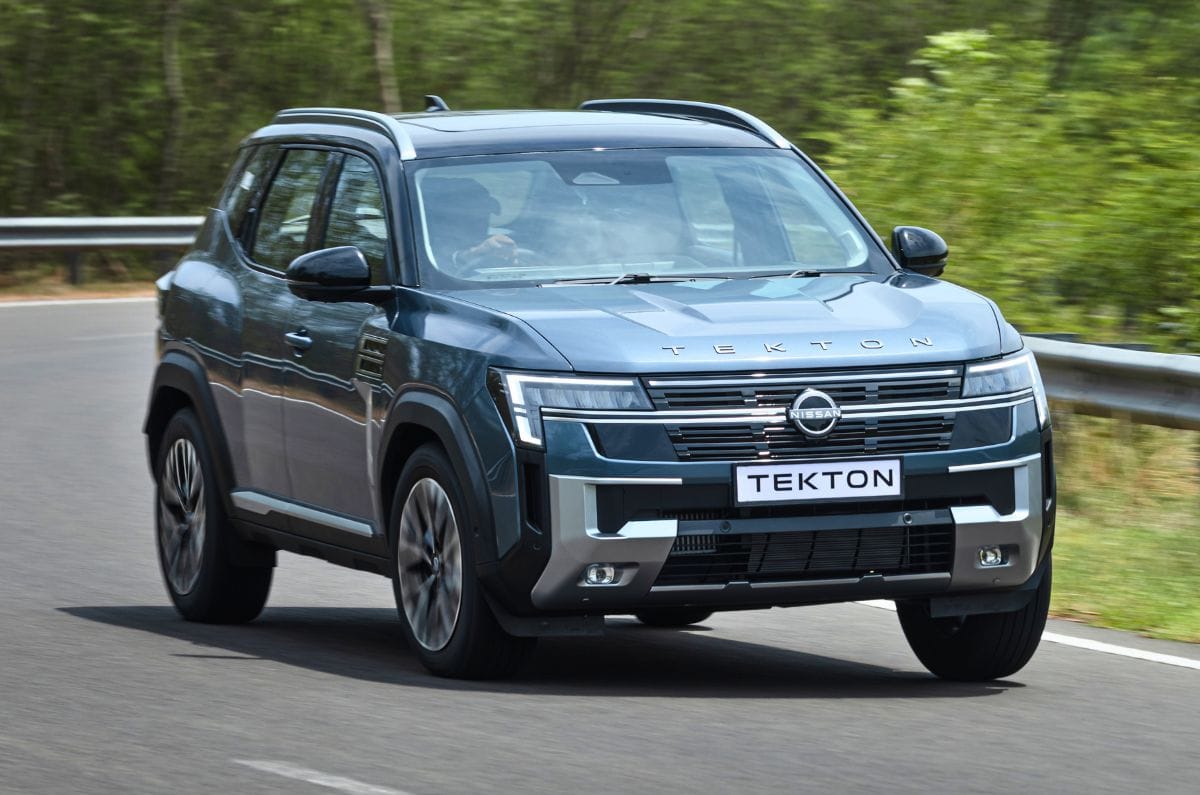
Nissan Tekton front three quarter

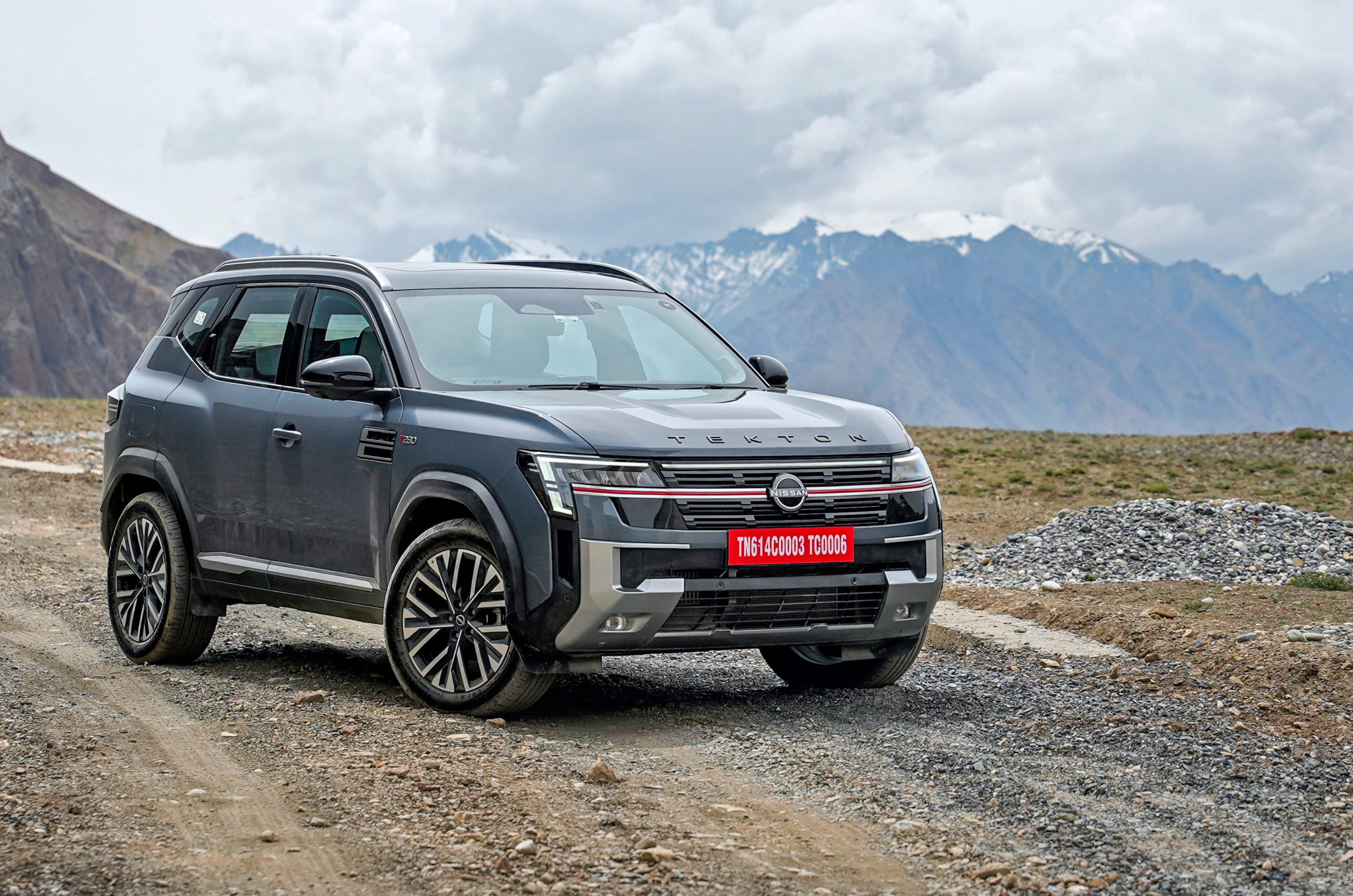
The Nissan Tekton joined the ever-ballooning midsize SUV segment in July 2026, becoming the third model in the Japanese brand’s India line-up. Priced between Rs 10.49 lakh and Rs 18.59 lakh (ex-showroom), the Tekton is Nissan’s flagship offering in the country. As a direct alternative to its platform sibling, the Renault Duster, does the Tekton offer compelling reasons for you to seriously consider it? Let’s find out.

Reasons to buy the Nissan Tekton

Polished dynamics

The Tekton strikes a great balance between ride and handling

Nissan Tekton front three quarter tracking

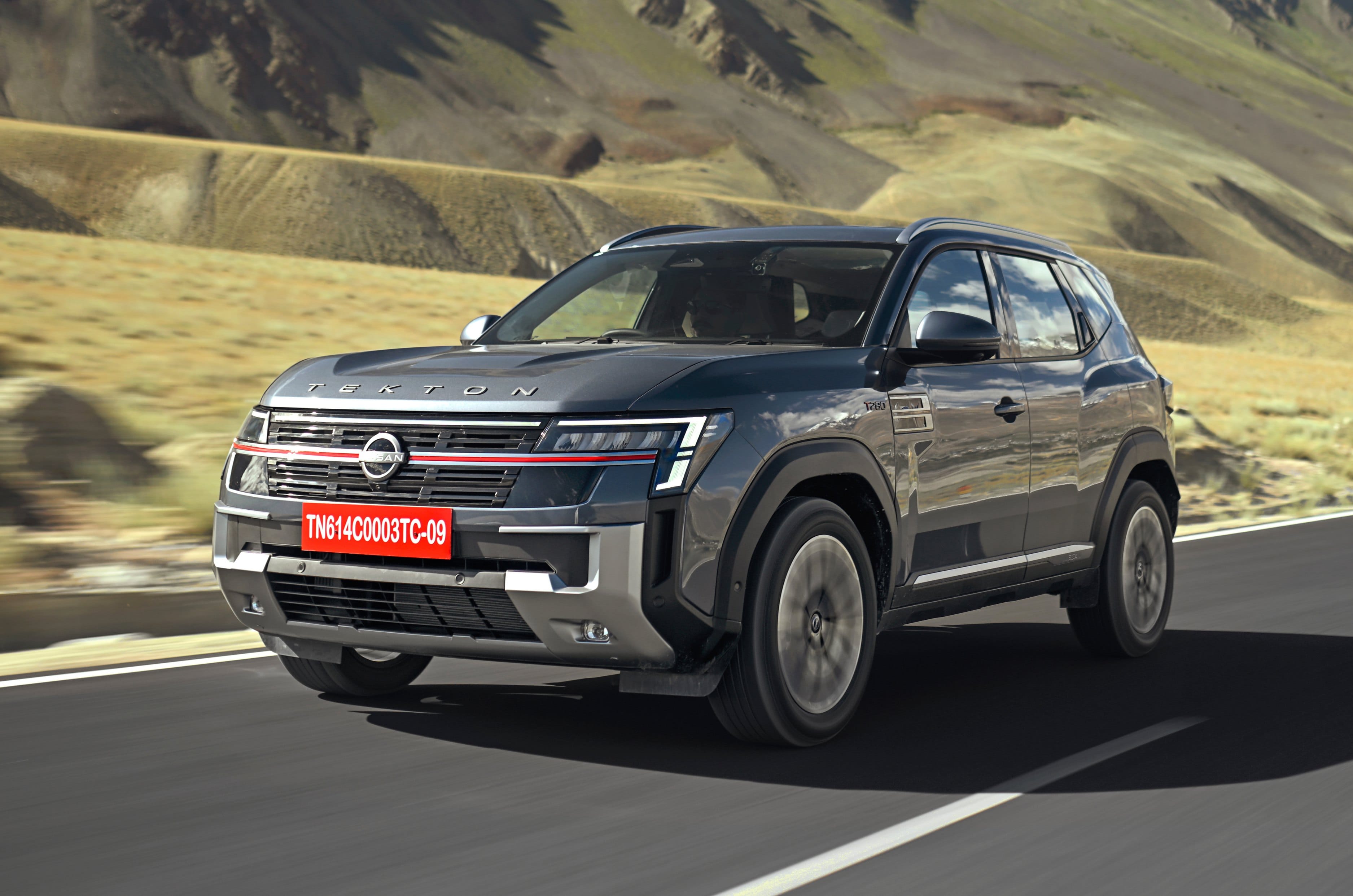
If you are someone who loves getting behind the wheel of your midsize SUV but doesn’t want the ride quality to be compromised, the Nissan Tekton is a worthy candidate. Even hitting large potholes does not unsettle this SUV, merely registering in your ears. The ride remains supple and forgiving, absorbing road imperfections without complaints. There’s also no underlying, uncomfortable firmness to the Tekton’s ride at city speeds either.

Nissan Tekton cornering

Once you get going, you realise that the Tekton likes changing directions – its eagerness to turn does not come at the cost of uncontained body roll. The ‘Light’ and ‘Heavy’ steering modes work as intended, making the wheel feelsome and precise. Then there are the brakes, which offer plenty of stopping power, while the pedal itself feels natural too. All of these factors inspire confidence and let you push the Tekton a bit more. 

Well-designed and tech-rich cabin

Stepping inside the Tekton reveals a premium-looking and well-equipped space

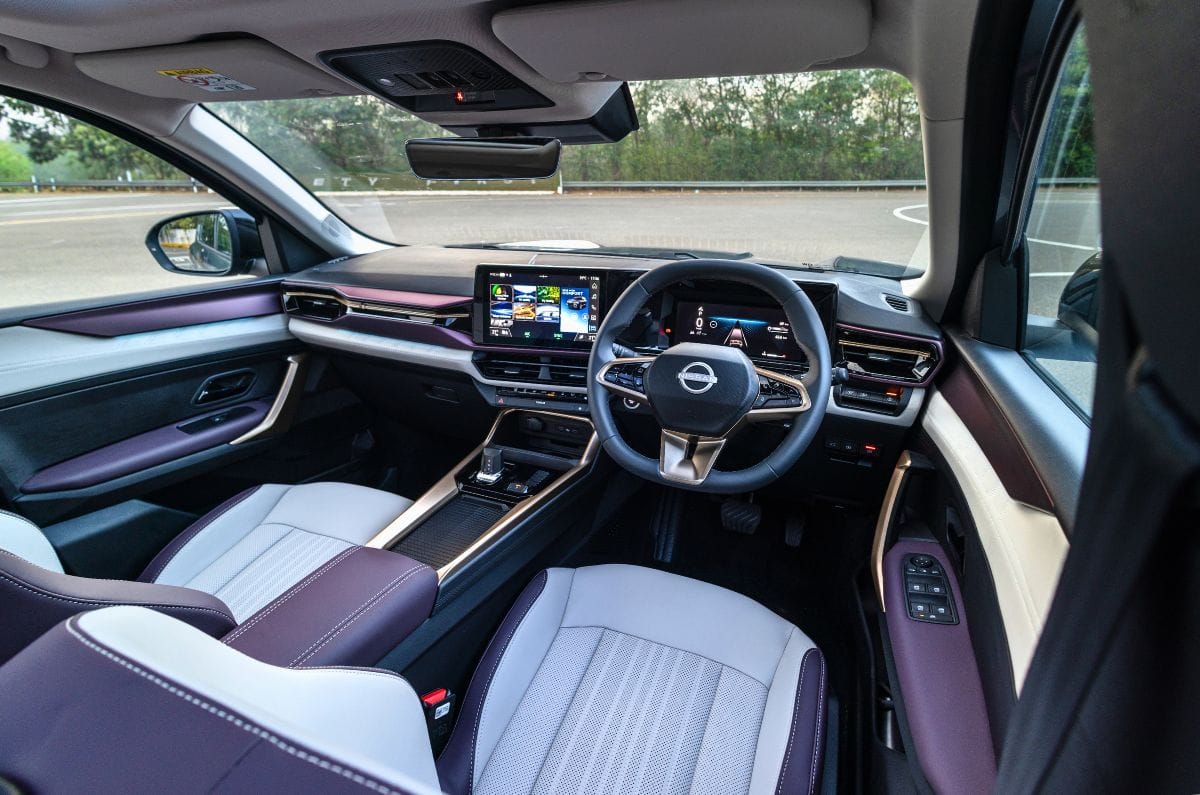
Nissan Tekton interiorCombined with the classy-looking leatherette padding on the dash and door pads, plus the burgundy, gold and light cream colour scheme, the interior of the top-spec Nissan Tekton looks upmarket. The driving position is great and provides excellent all-round visibility, while the seats themselves are comfy enough to be occupied even over long-distance drives.
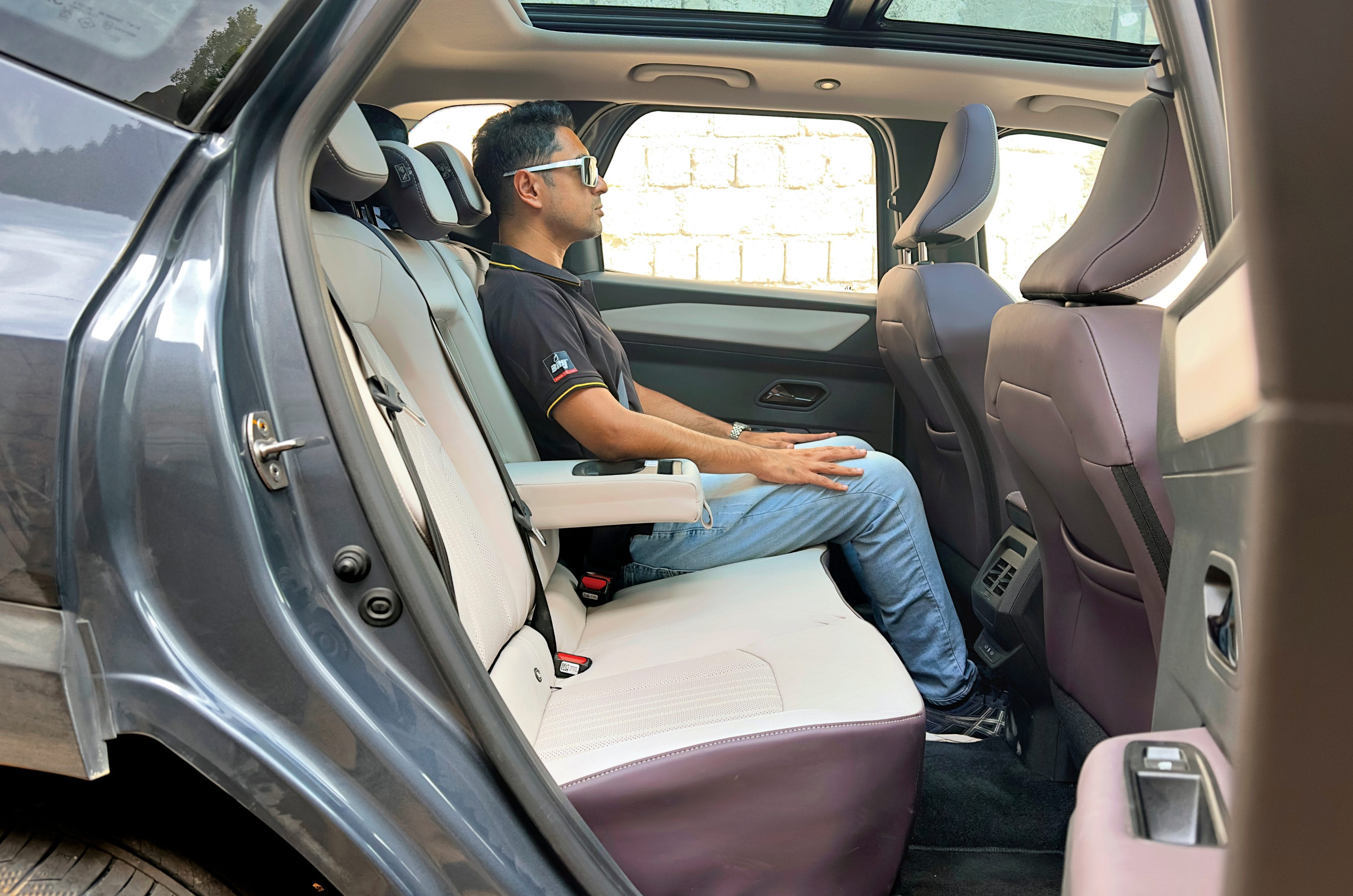
Nissan Tekton rear seats

Apart from good under-thigh support and backrest angle, the rear seats offer plenty of space under the front seats, allowing the outer two occupants to stretch out and get comfortable. Furthermore, those at the back have access to USB charging ports, a centre armrest with cup holders and AC vents, with higher variants also benefiting from a panoramic sunroof.

Nissan Tekton digital instrument cluster

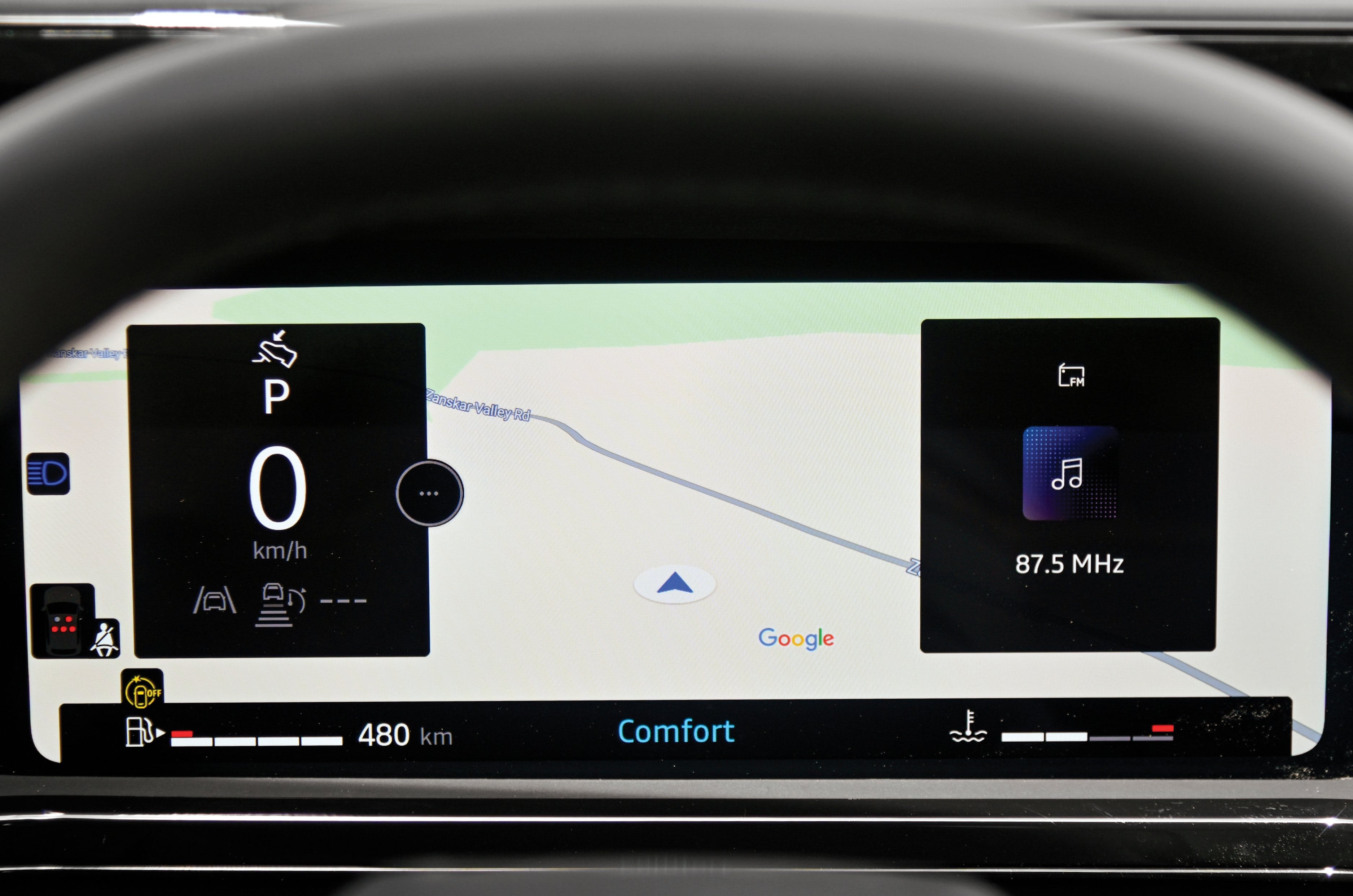
The well-designed digital instrument cluster with its multiple display modes is easy to figure out and use on the move. Coming in handy is tech such as powered front seats with ventilation, wireless Apple CarPlay and Android Auto, built-in Google apps and voice assistance, dual-zone climate control and Level 2 ADAS. Sorted ergonomics make reaching various switchgear and controls an easy affair. There are enough storage cubbies on offer, too.

Spacious boot

The Tekton’s boot can handle family outings or airport pickups

Nissan Tekton boot space

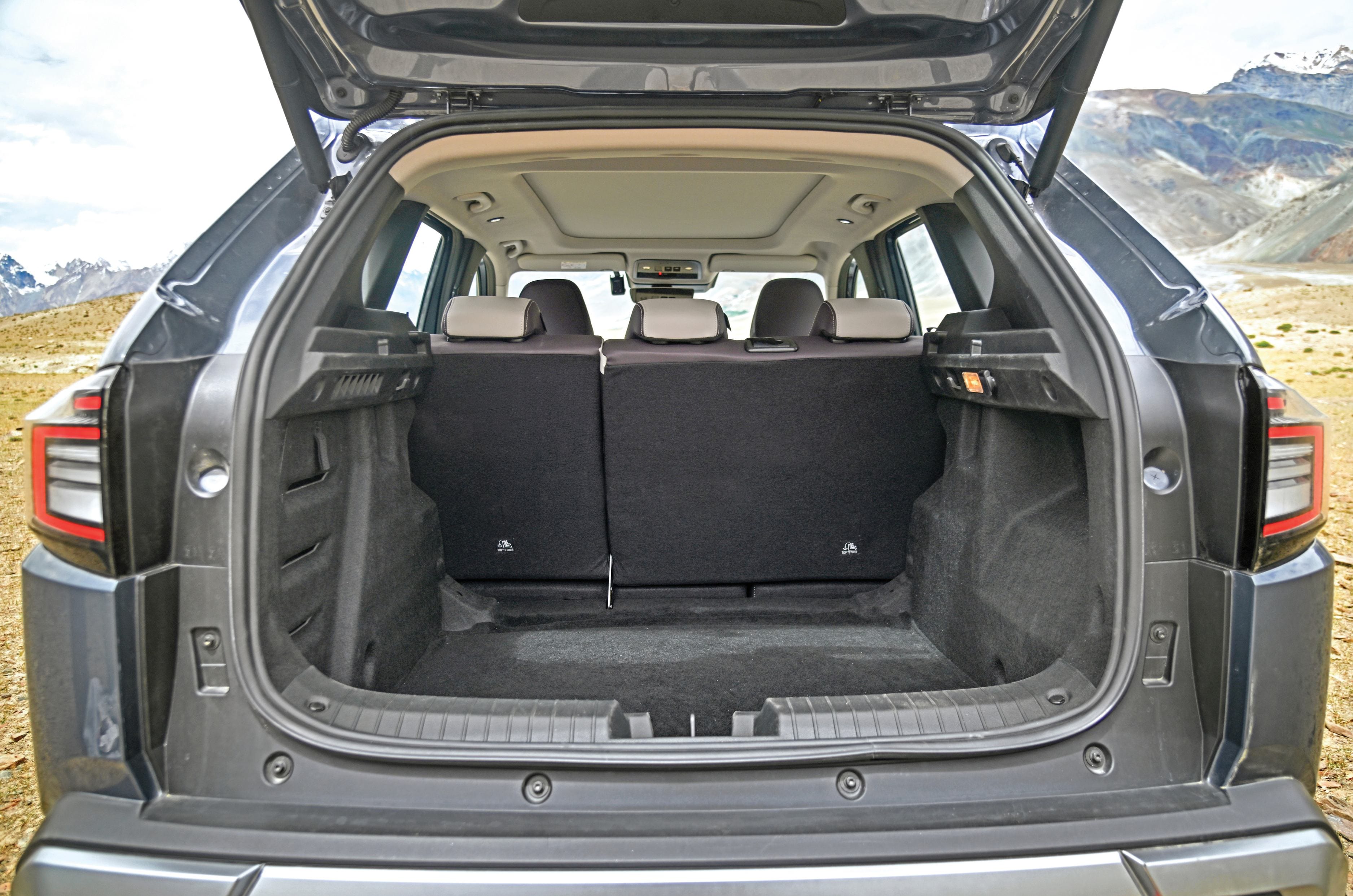
The square shape of the Nissan Tekton’s boot makes it easy to load cargo. Moreover, its 518-litre luggage capacity is the best in the segment – whether you are planning a long road trip or have to shuttle to and from the airport, space won’t be a constraining factor. What’s even more impressive here is that the Tekton’s boot also houses a full-size spare wheel. This alleviates concerns surrounding a flat tyre, should you encounter one.

Reasons not to buy the Nissan Tekton

Sub-par engine performance

Base engine isn’t apt enough, while the larger engine isn’t ideal either

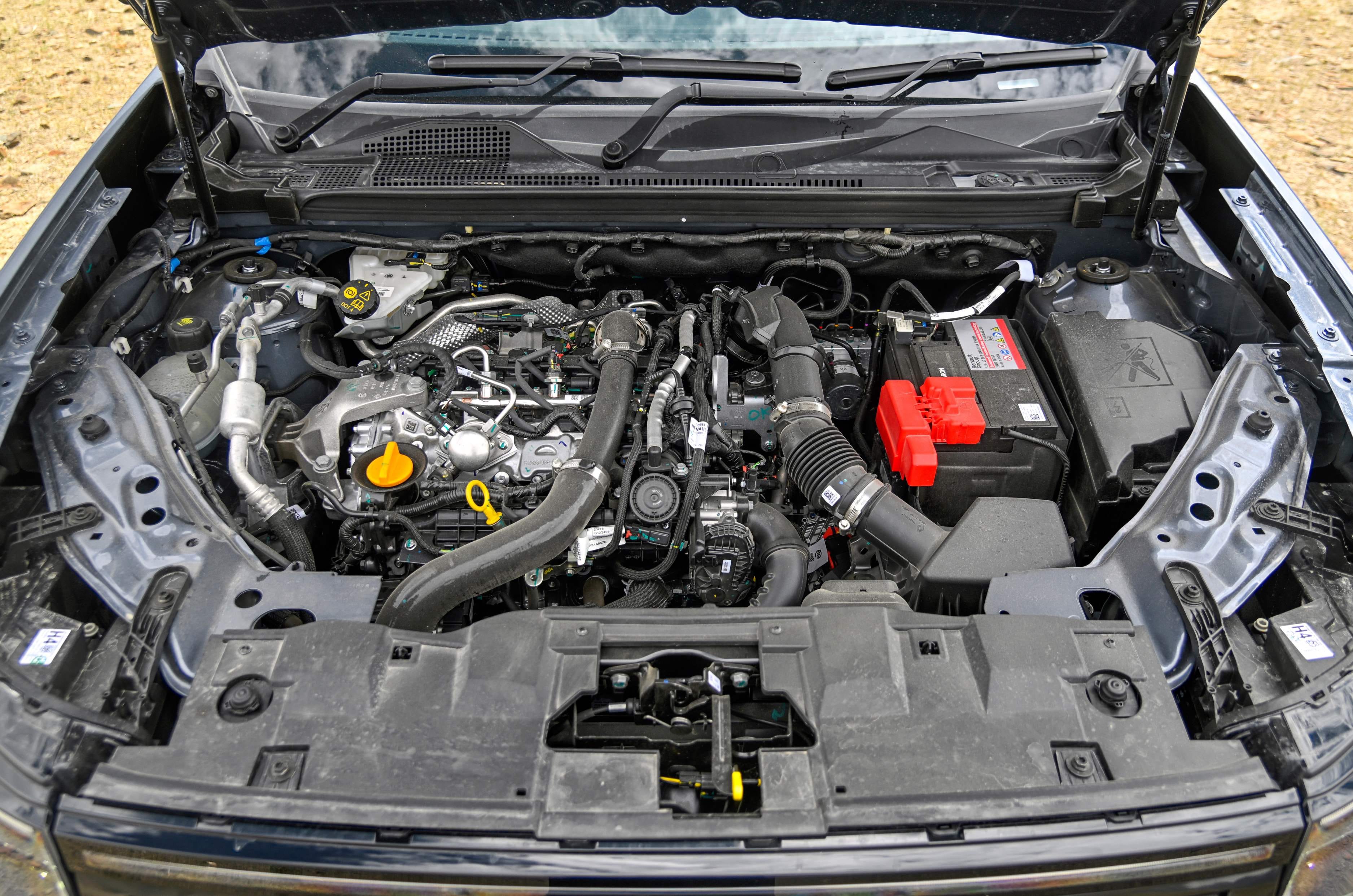
The base 100hp 1.0-litre turbo-petrol engine featuring multi-point fuel injection lacks grunt and isn’t particularly refined, with usable power only good enough for city commutes. The turbo lag is evident till you go past 3,000rpm, requiring the driver to shift gears regularly to keep the engine on the boil. The 6-speed manual transmission (MT) on duty gets shorter gearing to help matters, but you’ll need to slip the clutch to tackle steep inclines, which will be an inconvenience. The gear shifts aren’t as slick as those of a comparable Hyundai Creta or a Kia Seltos.

Nissan Tekton 1.3 engine

Moving up to the larger, 163hp 1.3-litre turbo-petrol engine with direct injection doesn’t alleviate all of the issues either. Despite this engine’s higher output than the smaller mill, its weak bottom end can leave the Tekton struggling to get up and go on steep inclines, especially with the engine stop-start function enabled. While it offers more refinement and performance, there’s still noticeable turbo lag below 2,500rpm.

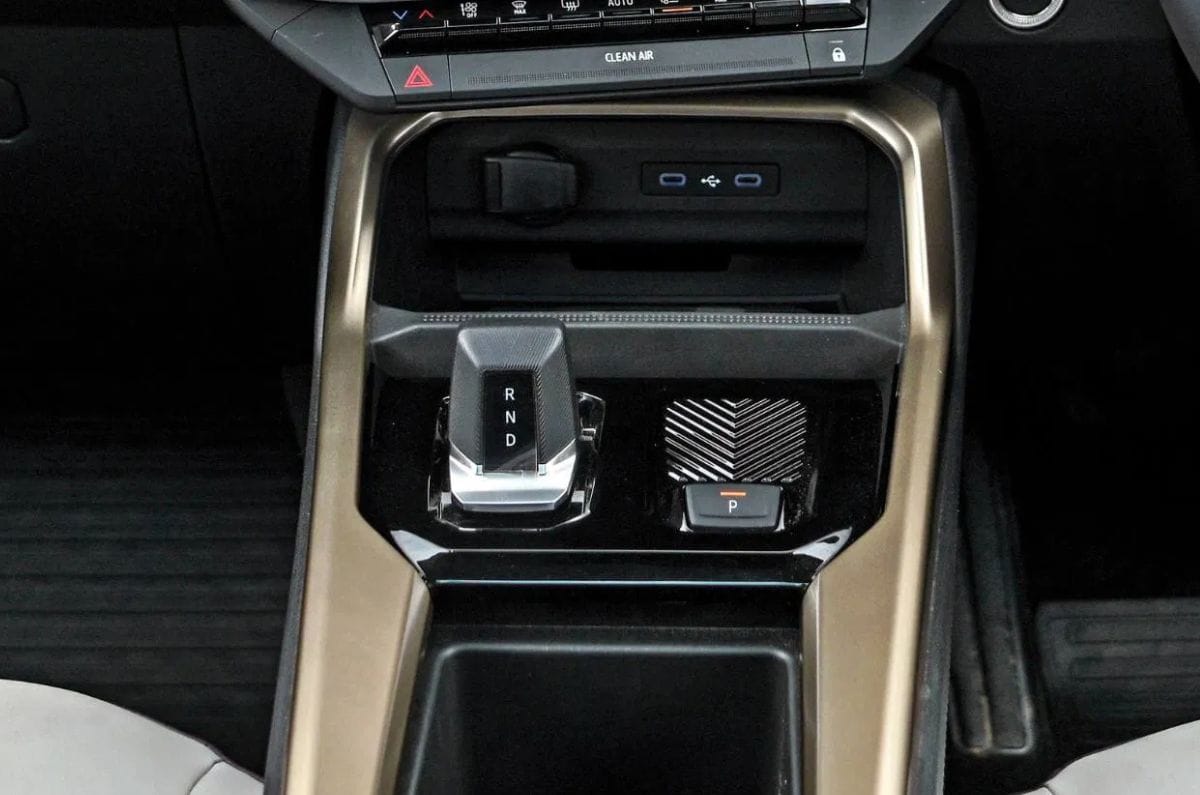
Nissan Tekton DCT gearbox

The 6-speed dual-clutch transmission (DCT) shifts between cogs smoothly, but its responses aren’t as quick as one might expect from the type. It upshifts early, perhaps in a bid to boost efficiency, but this makes it feel less responsive. This means you’ll have to take manual control by using the paddleshifters if you want to execute an overtake in a hurry. There’s also no Sport mode to quicken gear shifts – only Comfort and Eco modes are provided. While we are yet to put the Tekton through our rigorous performance tests, the performance on hand is unlikely to impress some buyers.

Lacklustre fuel economy

The Tekton will not be setting mileage benchmarks in the segment

Since the powertrain is mechanically identical to the Duster’s, the fuel economy of the Nissan Tekton in the real world is unlikely to impress. For reference, the Duster with the 1.0-litre engine and 6-speed MT returned 10.98kpl. Meanwhile, the 1.3-litre version recorded 10.47kpl and 10.64kpl with the DCT and MT gearboxes, respectively.

Some features lack execution

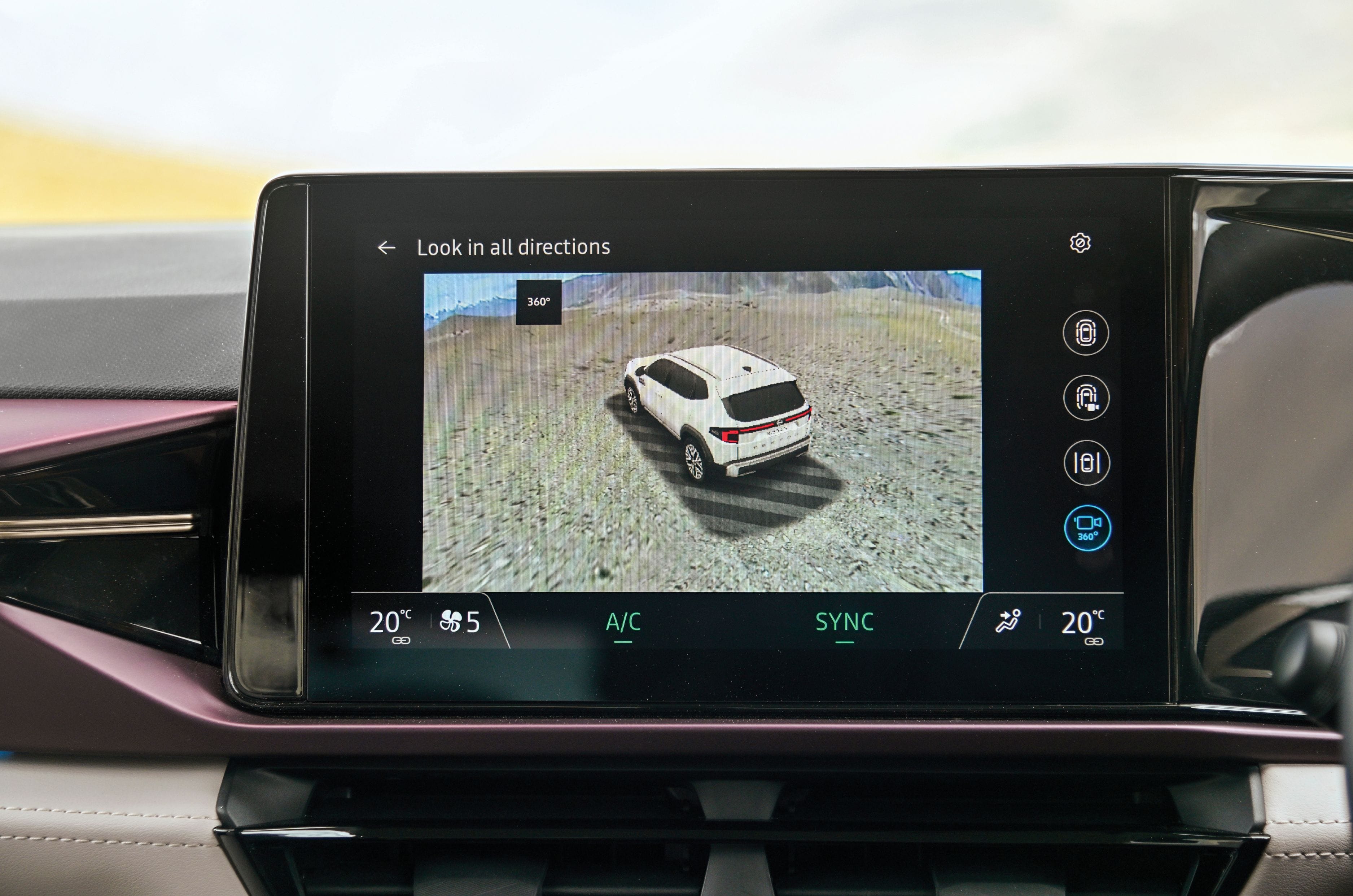
Nissan Tekton 360-degree camera

The Nissan Tekton has a few shortcomings when it comes to the quality of some of its features. The 360-degree camera system, for instance, is lacking in outright resolution, which hampers its usability under certain conditions. While the ADAS suite is comprehensive, the lane-keep assist isn’t good at keeping the SUV centred in a lane. Even the adaptive cruise control has its shortcomings – it doesn’t accelerate the Tekton back to its set speed once the traffic starts moving.

Also read

3 reasons to buy the Mahindra XUV 3XO and 2 to skip it

Tata Tiago vs Hyundai Grand i10 Nios performance compared

₹35,000 के बजट में खरीदें ये 8 धांसू गेमिंग स्मार्टफोन्स, BGMI से लेकर हाई-एंड गेम्स तक चलेंगे स्मूद

Best Gaming Phones Under 35000: गेमिंग स्मार्टफोन की मांग आज के समय में काफी बढ़ गई है, क्योंकि बाजार में कई हाई-एंड गेम्स उपलब्ध हैं। ऐसे में सही स्मार्टफोन का होना गेमिंग अनुभव को पूरी तरह बदल सकता है। हालांकि, 35,000 रुपये से कम कीमत वाले स्मार्टफोन सेगमेंट में पहले की तरह ज्यादा पावरफुल हार्डवेयर देखने को नहीं मिल रहा है। लेकिन इस प्राइस रेंज में अभी भी कुछ शानदार गेमिंग स्मार्टफोन मौजूद हैं, जो दमदार हार्डवेयर, बेहतर थर्मल मैनेजमेंट और लंबे समय तक गेम खेलने के लिए शानदार परफॉर्मेंस देते हैं।

अब आइए हम आपको 35,000 रुपये से कम कीमत में मिलने वाले उन 8 बेहतरीन गेमिंग स्मार्टफोन के बारे में बताते हैं जो, अलग-अलग यूजर्स की जरूरत और गेमिंग एक्सपीरियंस को ध्यान में रखकर पेश किए गए हैं।

2026 में ₹35,000 से कम कीमत वाले 8 बेहतरीन गेमिंग स्मार्टफोन:

  1. Poco X8 Pro 5G

Poco X8 Pro 5G एक बहुत अच्छा मिड-रेंज स्मार्टफोन है, जो अपनी कैटेगरी से कहीं बेहतर परफॉर्मेंस देता है और शानदार गेमिंग अनुभव प्रदान करता है। इसमें दमदार MediaTek Dimensity 8500-Ultra प्रोसेसर और तेज UFS 4.1 स्टोरेज है। साथ ही, इसमें 6,500mAh की बड़ी बैटरी दी गई है, जो यह सुनिश्चित करती है कि आप लंबे समय तक आसानी से गेमिंग कर सकें।

  1. Infinix GT 30 Pro 5G

अगला है Infinix GT 30 Pro 5G, जो एक शानदार मिड-रेंज गेमिंग स्मार्टफोन है। यह फोन अपने खास डिजाइन और गेमिंग-फोकस्ड फीचर्स की वजह से अलग पहचान बनाता है। इसके रियर पैनल पर बिल्ट-इन मैकेनिकल लाइट वेव्स, साइड में प्रेशर-सेंसिटिव GT ट्रिगर्स और बायपास चार्जिंग सपोर्ट मिलता है। इसके अलावा, फोन में 144Hz का फास्ट रिफ्रेश रेट डिस्प्ले दिया गया है, जो गेमिंग के दौरान स्मूद और इमर्सिव अनुभव प्रदान करता है।

  1. Oppo K13 Turbo Pro

Oppo K13 Turbo Pro एक और गेमिंग-फोकस्ड स्मार्टफोन है, जो अब लगभग ₹30,000 से ₹35,000 की बेहतरीन कीमत पर उपलब्ध है। इसमें दमदार Snapdragon 8s Gen 4 प्रोसेसर, एक एक्टिव कूलिंग फैन और 7000mAh की बड़ी बैटरी है, जो मिलकर एक शानदार गेमिंग अनुभव देते हैं।

  1. Realme P4 Pro

Realme P4 Pro एक बहुत ही शानदार मिड-रेंज स्मार्टफोन है। इसमें 6.8-इंच का AMOLED क्वाड-कर्व्ड डिस्प्ले है, जो 144Hz रिफ्रेश के साथ आता है और Snapdragon 7 Gen 4 प्रोसेसर पर चलता है। इस फोन में 7,000mAh की बड़ी बैटरी है। इसके अलावा, इस डिवाइस में Hyper Vision AI चिप सेटअप भी है, जो गेमिंग को स्मूद बनाता है और सपोर्टेड टाइटल्स के लिए 144fps का सपोर्ट भी देता है।

  1. Nothing Phone 3a Pro

Nothing Phone 3a Pro एक बेहतरीन ऑल-राउंडर फोन है, जो ज्यादातर कैजुअल और मॉडरेट गेमर्स के लिए भी सही है। Snapdragon 7s Gen 3 प्रोसेसर से चलने वाला यह फोन BGMI और Call of Duty Mobile जैसे पॉपुलर शूटिंग गेम्स को स्मूथ 90 fps पर चला सकता है। इस फोन की बैटरी लाइफ भी बहुत अच्छी है और इसका थर्मल मैनेजमेंट भी शानदार है।

  1. Samsung Galaxy A56

Samsung Galaxy A56, Samsung के सबसे अच्छे गेमिंग डिवाइस में से एक है, खासकर इस प्राइस रेंज में। इसमें Exynos 1580 प्रोसेसर और सुपर-स्मूथ 120Hz Super AMOLED डिस्प्ले दिया गया है। इस कॉम्बिनेशन की वजह से यह फोन PUBG, Brawl Stars और Minecraft जैसे गेम्स को आसानी से हैंडल कर सकता है। हालांकि, हाई-एंड गेम्स के लिए ग्राफिक सेटिंग्स में कुछ बदलाव करने पड़ सकते हैं।

  1. Vivo T5 Pro

हमारी लिस्ट में अगला स्मार्टफोन Vivo T5 Pro है, जो इस प्राइस रेंज में गेमिंग के लिए बहुत बढ़िया डिवाइस है। इसमें Snapdragon 7s Gen 4 प्रोसेसर और दमदार 9,020mAh की बैटरी दी गई है। इस कॉम्बिनेशन की वजह से आपको बार-बार चार्जिंग की चिंता किए बिना स्मूद गेमिंग का अनुभव मिलता है।

  1. OnePlus Nord CE 6

OnePlus Nord CE 6 एक और दमदार और टिकाऊ फोन है, जो गेमिंग के लिए भी बेहतरीन है। इसमें 8000mAh की बड़ी बैटरी है, जो पूरे दिन की गेमिंग के दौरान आसानी से चल जाती है। फोन में 6.78 इंच का 144Hz 1.5K AMOLED डिस्प्ले भी है। इसकी परफॉर्मेंस Snapdragon 7s Gen चिपसेट से मिलती है, जो तेज UFS 3.1 स्टोरेज के साथ मिलकर ज्यादातर गेमिंग टाइटल्स को बिना किसी रुकावट (लैग-फ्री) के और स्मूद फ्रेम रेट के साथ चलाता है।

यह भी पढ़ें: OnePlus N6x की लॉन्च डेट कन्फर्म, जानें डिजाइन, फीचर्स और कीमत से जुड़ी जानकारी

Aston Martin Dreadnought SUV image gallery

Aston Martin Dreadnought SUV front quarter static

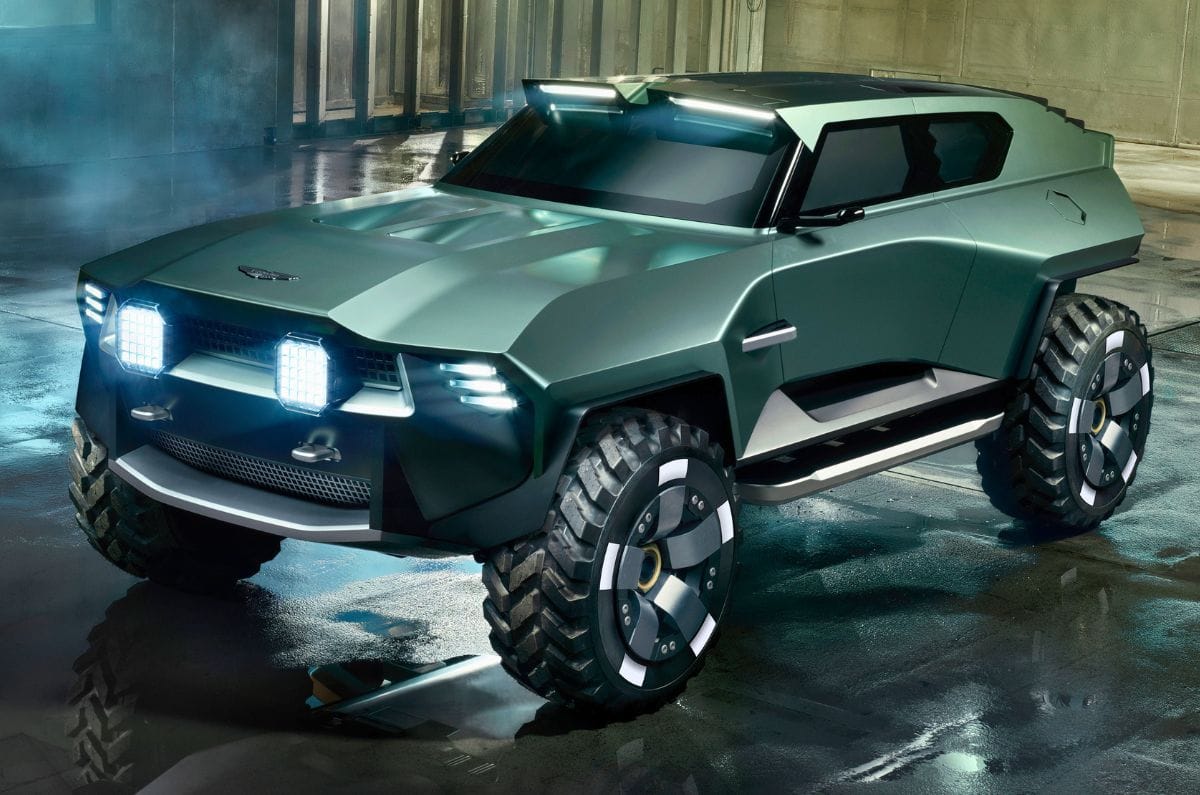
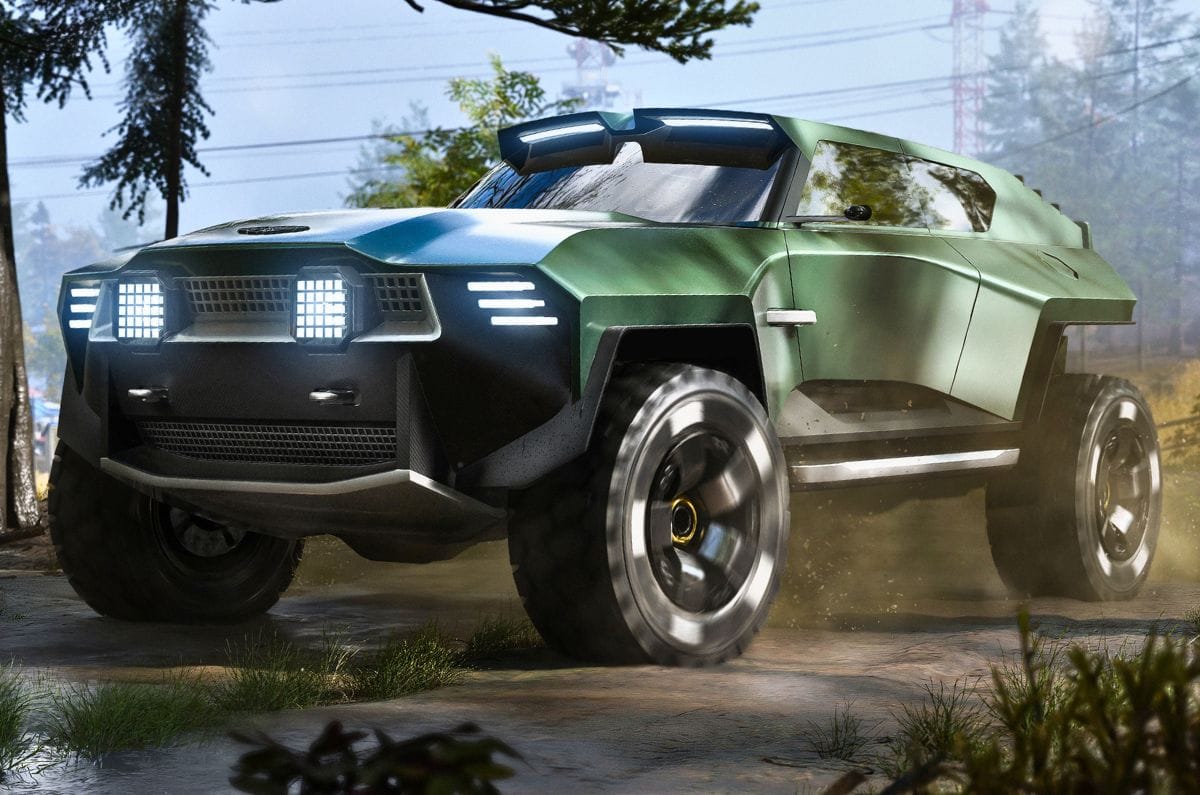
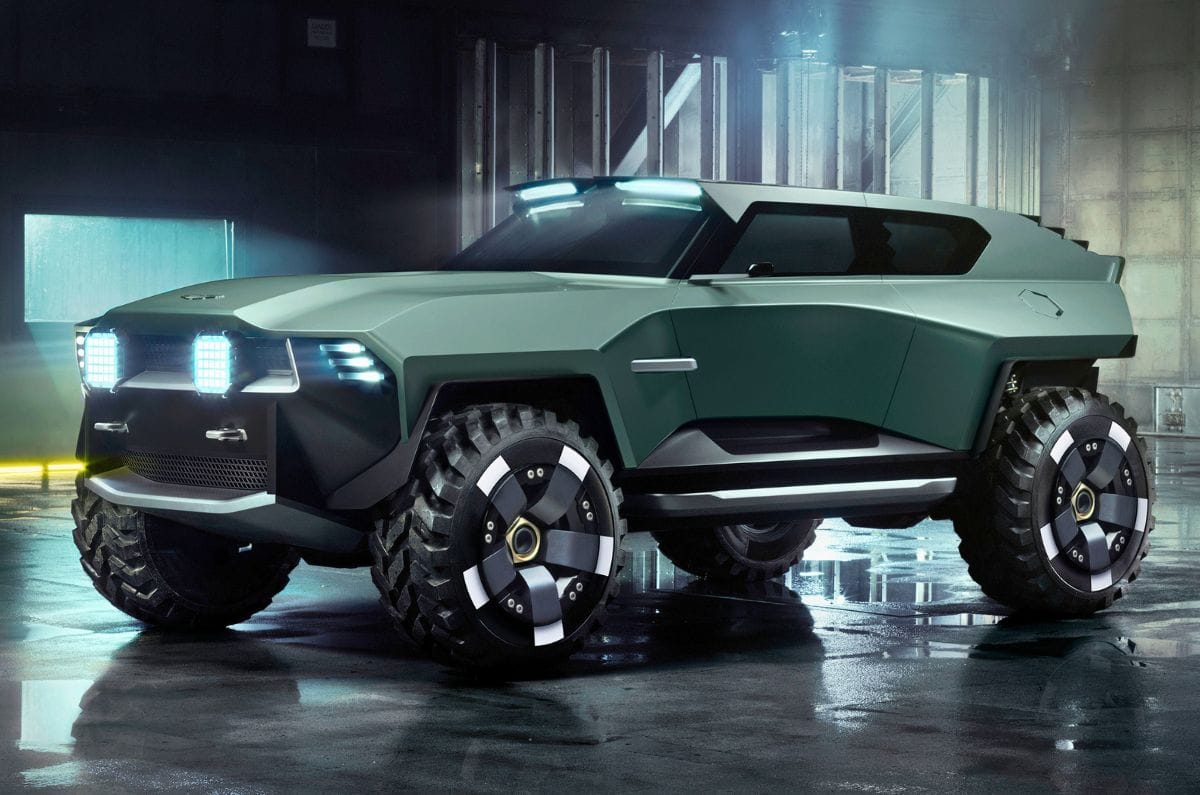
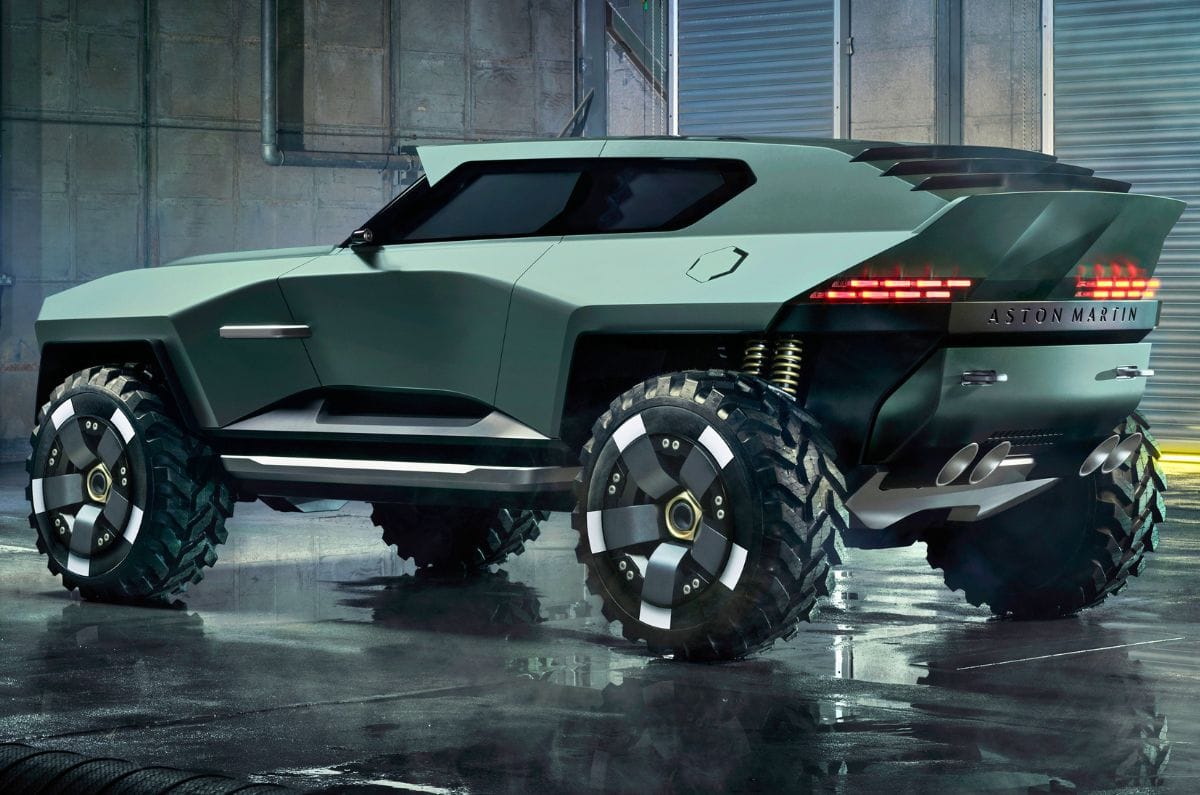
The Aston Martin Dreadnought SUV has been revealed as the British marque’s take on a 4×4 V12 SUV, but as a digital-only vehicle for the Call Of Duty: Modern Warfare 4 game. It will be available to be driven in the ‘DMZ’ and ‘Warzone’ modes when the game is launched on October 23. It has off-road-specific design elements inside and out, and its full-size model is being displayed to the public at the Fanatics Fest in New York till July 19. Aston Martin is yet to comment on whether the Aston Martin Dreadnought SUV will inspire a road-legal SUV. 

Aston Martin reveals military-spec V12 Dreadnought 4×4 SUV

Aston Martin Dreadnought SUV front quarter

Aston Martin has revealed the Dreadnought as a military-spec 4×4 SUV with a V12 mill. It is a virtual vehicle made for Call of Duty: Modern Warfare 4, created in collaboration with the game’s developers and publishers. The Aston Martin Dreadnought has off-road-specific design elements inside and out, and its full-size model is being displayed to the public at the Fanatics Fest in New York till July 19.

  1. Under five metres in length and 2.1 metres wide, as per Autocar UK
  2. Powered by the Vanquish GT’s 824bhp twin-turbo V12 mill
  3. Will be Available in ‘DMZ’ and ‘Warzone’ modes in the game

The name ‘Dreadnought’ is inspired by the British Royal Navy’s HMS Dreadnought battleship from the early 1900s and literally translates to “one who fears nothing”.

Aston Martin Dreadnought: Exterior design

The 2-door SUV has chunky off-road-spec tyres and Valour-like rear design elements

The Chiltern Green-hued Aston Martin Dreadnought has an imposing design that features a plethora of rugged elements, including “military-grade armour-plating”. 

At the front, it gets horizontally stacked LED headlights that give it a futuristic look. The grille features a pixel-shaped design for the mesh LED fog lamps. These squared elements are also present on the front bumper, which sports two silver tow hooks and a silver skid plate that adds contrast.

In profile, it features huge dual-tone alloy wheels clad with chunky off-road spec tyres. It gets squared-off wheel arches and aggressive creases in profile. This 2-door SUV features flush-type door handles and camera-based outside rearview mirrors (ORVMs). The lower section of the door features black-and-silver cladding, as well as silver sidesteps to climb into the tall SUV.

At the rear, it gets Valour-like aerodynamic fins on the rear windscreen, multiple LED taillights, and a black strip with Aston Martin lettering. It also gets a quad-exhaust setup, silver two hooks and a silver skid plate for a more rugged and aggressive look.

As per Autocar UK, the Dreadnought SUV measures “just under five metres in length and 2.1 metres wide”. 

All you need to know about the upcoming Kia Syros EV

Kia Syros EV front quarter static

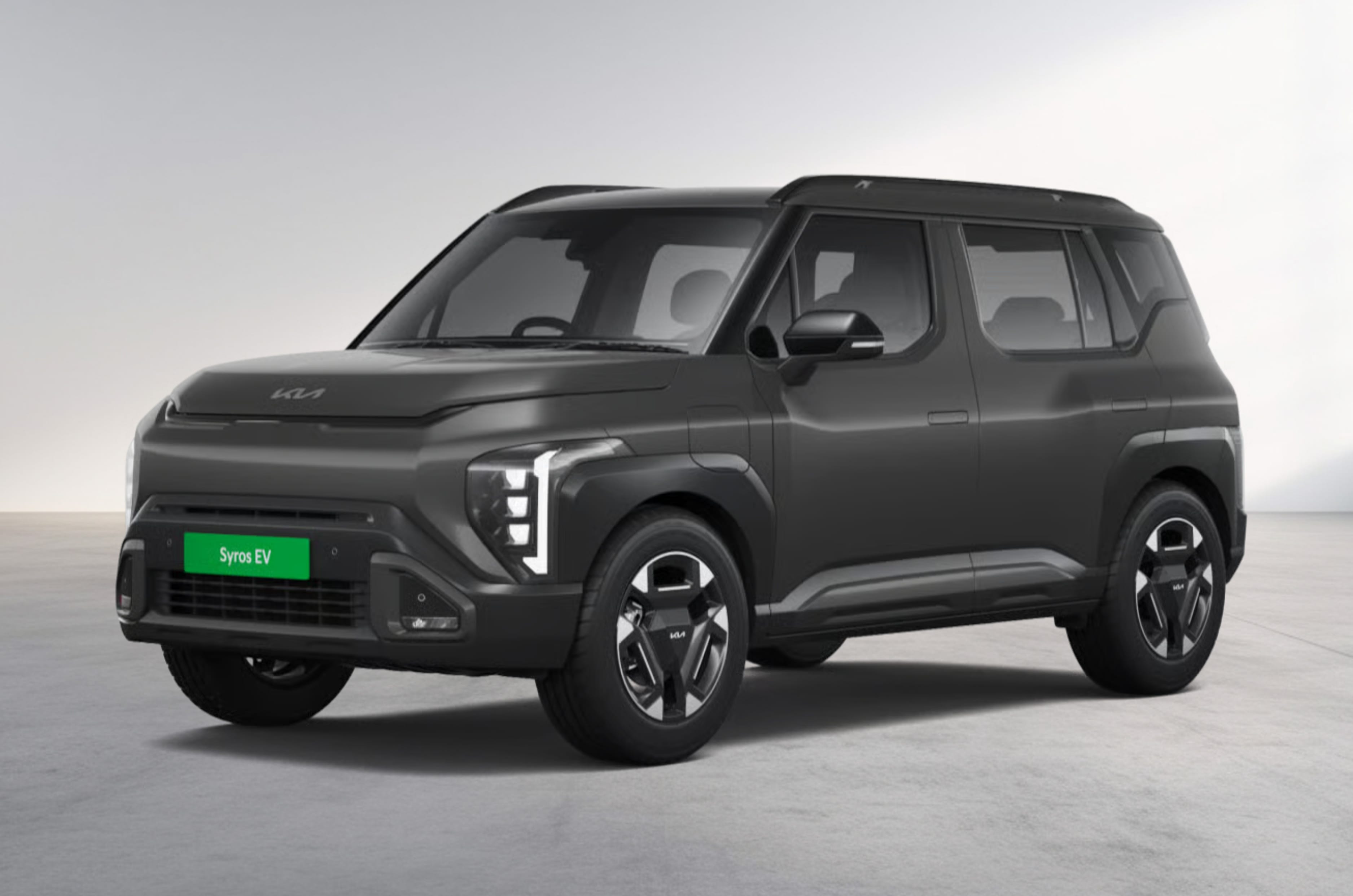
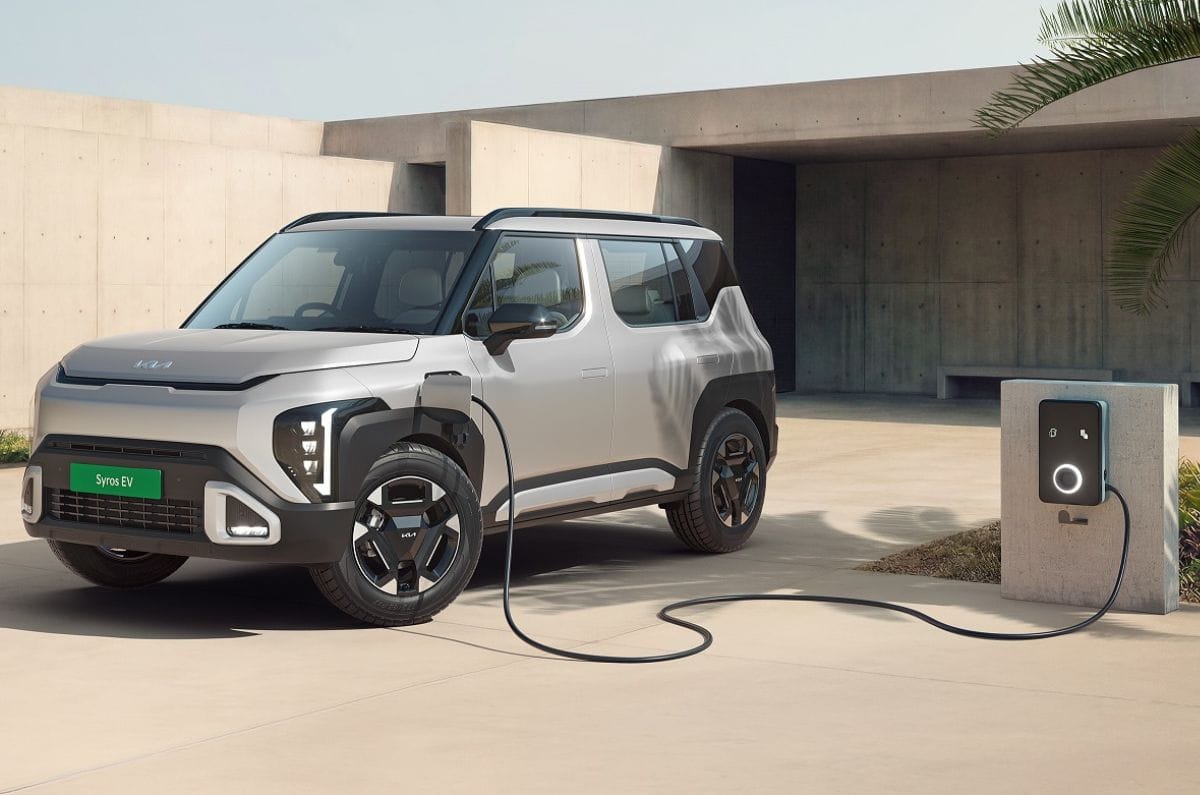
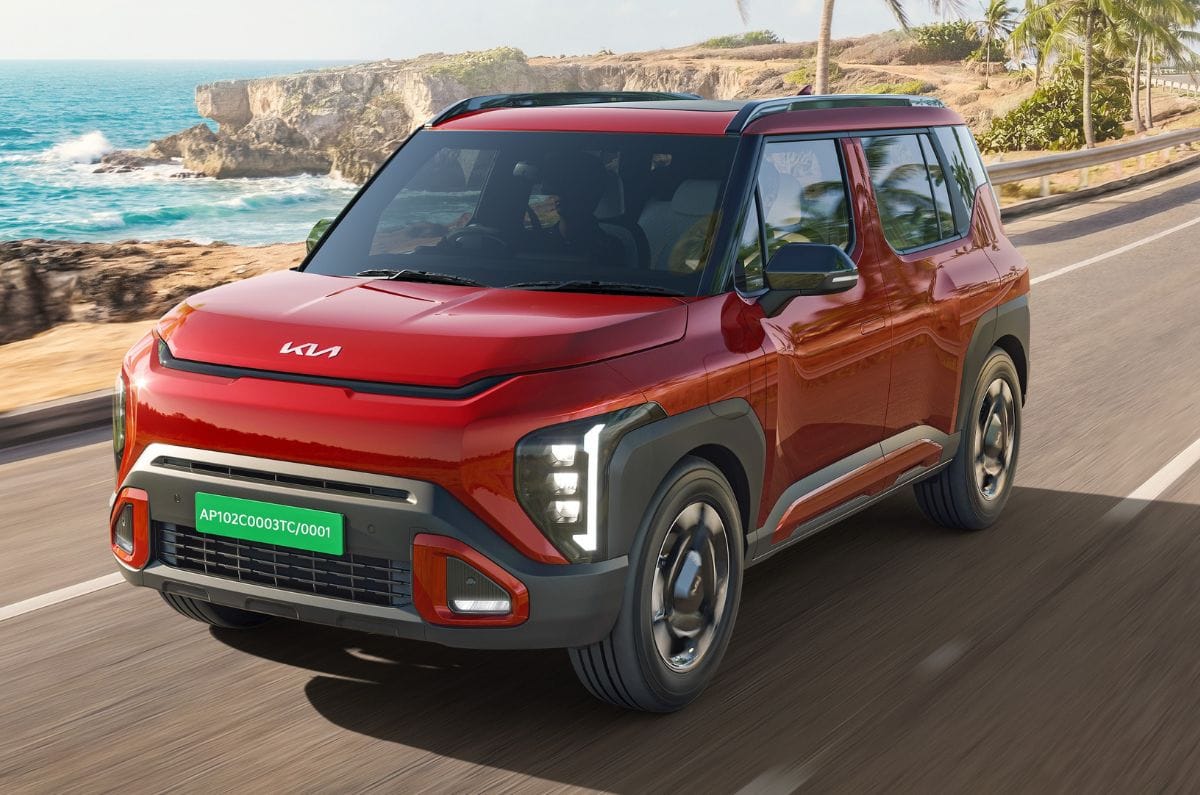
Kia is aiming at the growing compact electric SUV segment with the upcoming Syros EV, set to be its second mass-market electric model for India. The Syros EV utilises the same K1 platform as its ICE-powered counterpart. Bookings for the Syros EV are already open ahead of its launch, scheduled for the end of July 2026. In this article, we answer everything that you need to know about the Syros EV.

1. What battery pack options does the Kia Syros EV offer, and how much power does its motor produce?

The Kia Syros EV offers the same 42kWh and 51.4kWh battery packs that do duty in the Kia Carens Clavis EV and the Hyundai Creta Electric. Both are mated to a front-mounted motor. In the 42kWh guise, the motor delivers 135hp and 255Nm, but in the 51.4kWh guise, power is bumped to 171hp, while torque remains the same. The 51.4kWh battery pack and its 171hp motor make it the model with the largest battery pack and the most powerful motor in the class. Kia claims a 0-100kph sprint in 8.1 seconds with the 51.4kWh version.

2. What is the claimed range of the Kia Syros EV?

The ARAI-rated range is 443km for the 42kWh battery pack and 543km for the larger 51.4kWh unit. Not only does the Syros EV have a higher claimed range than the Clavis EV and the Creta Electric, but its 543km figure is also the highest in the compact electric SUV segment.

3. What charging speeds does the Kia Syros EV support, and how long does it take to charge?

The Kia Syros EV supports up to 11kW AC charging speeds, while DC charging is capped at 100kW. A 10-100 percent top-up for the 42kWh version takes 6 hours with the 7.4kW charger and 4 hours with the 11kW unit. In the 51.4kWh guise, the same takes 7 hours and 15 minutes with a 7.4kW charger and 4 hours and 50 minutes with an 11kW charger. Kia also claims that with a 100kW DC fast charger, both batteries can charge from 10 to 80 percent in 39 minutes.

4. How different is the Kia Syros EV from the ICE Syros on the outside and inside?

The Kia Syros EV may look largely similar to the ICE Syros, but it comes with a charging flap on the front fender, EV badging at the rear and a different set of alloy wheels that give it some distinction. Apart from these differences, it retains the overall tall-boy silhouette, front and rear bumper designs and lighting elements found on its combustion-powered counterpart.

Inside, the dashboard layout remains the same as the ICE Syros, but there are some revisions to the centre console, which is high-set and features storage spaces and retractable cup holders. Also, the drive select lever has shifted to the steering wheel column.

5. What features does the Kia Syros EV come with?

For starters, the Kia Syros EV retains its ICE counterpart’s unique sliding and reclining rear seat with a ventilation function for the seat base. It also gets features such as dual 12.3-inch screens, a 5-inch HVAC control screen, wireless Apple CarPlay and Android Auto, a wireless charging pad, an 8-speaker Harman Kardon sound system, a panoramic sunroof, 64-colour ambient lighting and rear sunshades.

6. What does the Kia Syros EV offer over the ICE-powered Syros?

Apart from having EV-specific features such as a 16-litre frunk, regenerative braking, a virtual engine sound system and vehicle-to-load (V2L) functionality, it gets Level 2 ADAS, automatic flush door handles, a 360-degree camera setup, a dual-camera dashcam, a digital key, puddle lamps, multi-colour ambient lighting and metal pedals over the ICE-powered Syros.

7. What is the expected price of the Kia Syros EV?

The Kia Syros EV is expected to be priced from Rs 15 lakh to Rs 20 lakh, ex-showroom. It will take on the Mahindra XUV 3XO EV and the segment-reigning Tata Nexon EV, among others.