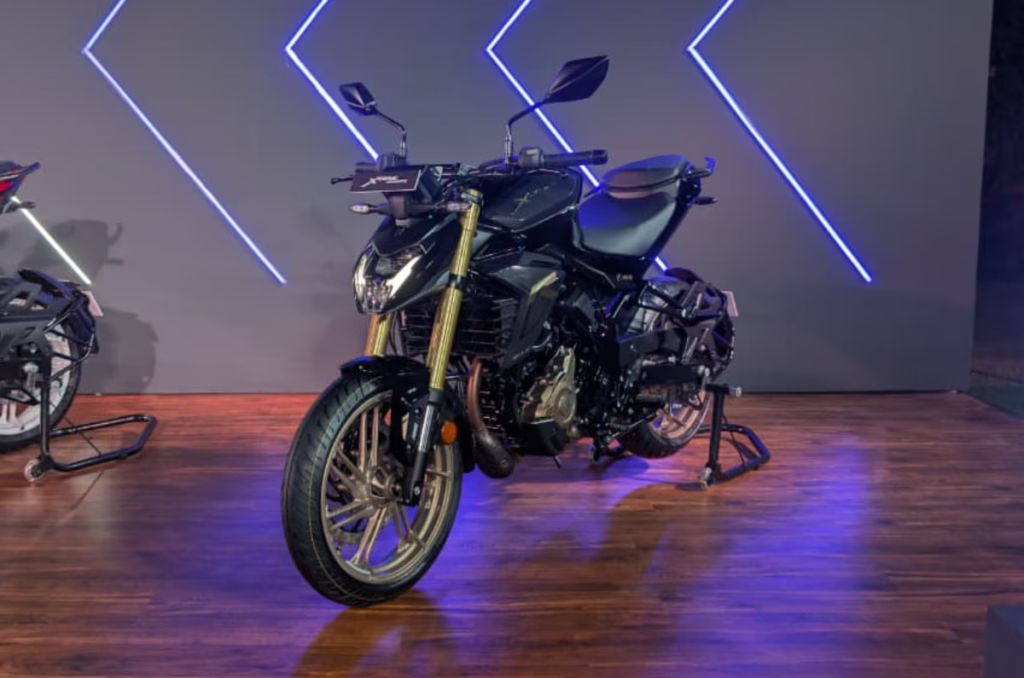
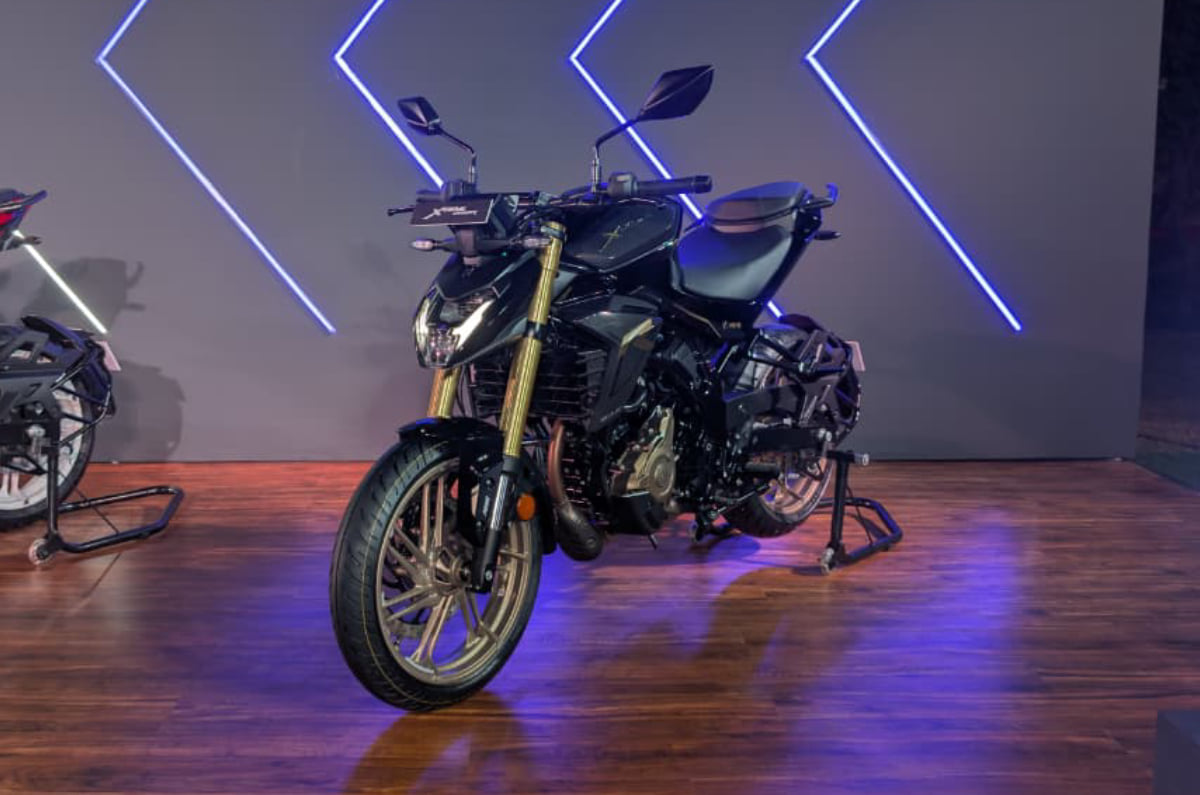
Hero MotoCorp has introduced a new Xtreme 250R Carbon variant with a substantial feature overhaul, adding multiple hardware and tech updates. Here are the five things you need to know about the bike.
1. What’s new on the updated Hero Xtreme 250R?
The Xtreme 250R Carbon features ride-by-wire, which unlocks four riding modes – Rain, Road, Sport and Track – along with traction control calibrated individually for each mode. A bi-directional quickshifter, cruise control and TPMS have also been added. In terms of tech, the LCD instrument cluster has been replaced by a 4.2-inch TFT screen borrowed from the Xpulse 210.
The rear suspension gets Frequency Selective Damping (FSD), a system that uses a secondary valve to automatically vary damping across two distinct profiles based on the speed and frequency of road inputs. It stiffens up to absorb high-frequency impacts, such as road chatter, and softens for longer, slower compressions, such as when going over a speed breaker.
2. What does the Hero Xtreme 250R engine have to offer?
The 249cc liquid-cooled, single-cylinder engine is carried over largely unchanged, producing 30hp at 9,250rpm and 25.3Nm at 7,500rpm. The latter represents a minor 0.3Nm increase over the outgoing bike, delivered 250rpm higher in the rev range.
3. Which is faster, the KTM 250 Duke or the Hero Xtreme 250R?
We found the Hero Xtreme 250R to be the quicker of the two during our tests. The KTM 250 Duke completed the 0-60kph run in 3.44 seconds and the 0-100kph run in 8.50 seconds. The Xtreme 250R, tested on the same day, completed the same runs in 3.15 seconds and 8.22 seconds, respectively.
It’s worth noting that these figures are for the standard Xtreme 250R. However, the engine remains largely unchanged, and Hero’s claimed 0-60kph time for the Carbon is identical to that of the standard model, so we expect the updated bike’s performance to be largely similar.
4. What is the price of the updated Hero Xtreme 250R Carbon?
The Hero Xtreme 250R Carbon is priced at Rs 1.98 lakh (ex-showroom, Delhi), a Rs 14,000 premium over the standard Xtreme 250R following an Rs 11,000 price hike for the standard model alongside the introduction of the Carbon variant. Despite the premium, the Carbon remains notably more affordable than the KTM 250 Duke, which costs Rs 2.28 lakh.
5. What colours is the new Xtreme 250R available in?
The Hero Xtreme 250R Carbon is offered in three colours: Carbon Red, Carbon Black and Carbon White. Along with the new colours, the Carbon variant also gets coloured wheels and exclusive graphics.
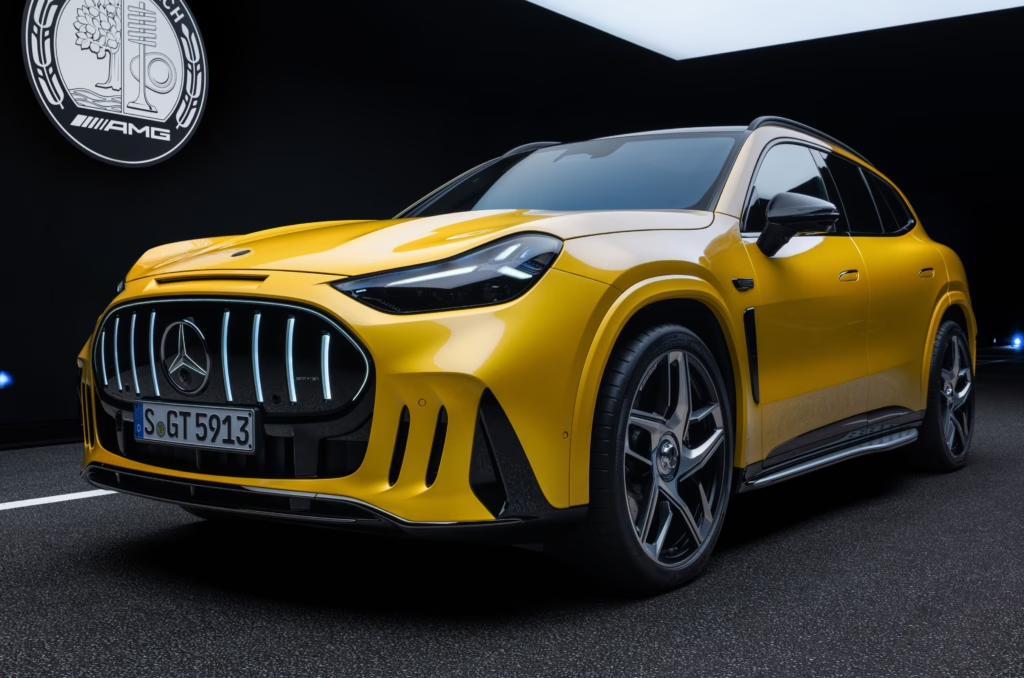
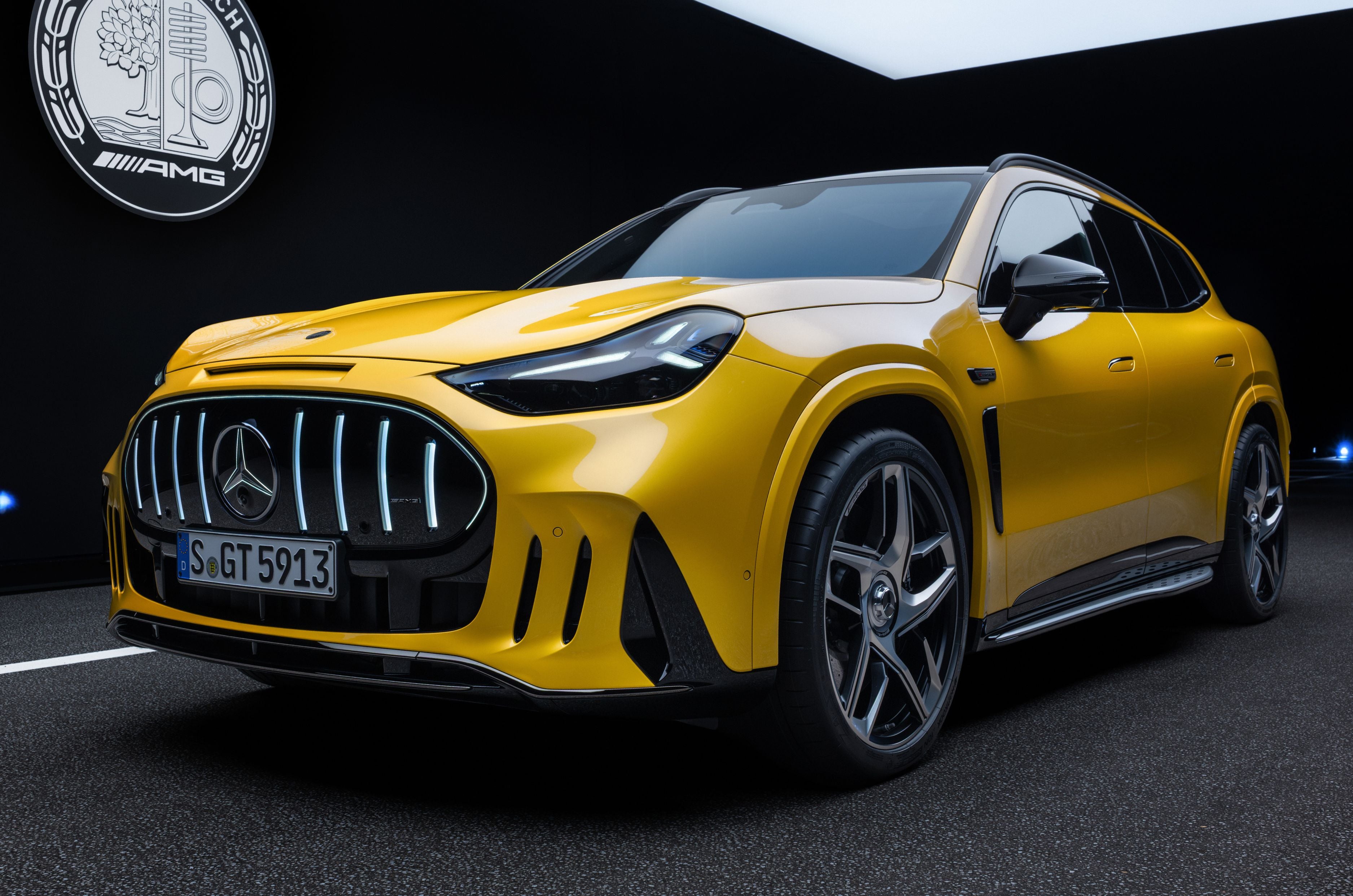
Mercedes-AMG has revealed the GT SUV, which the brand says is its first full-size SUV developed entirely in-house. The electric five-seater is built on the same underpinnings as the GT 4-Door Coupe. It will be offered in GT 53, GT 55 and GT 63 variants. The entry-level GT 53 will go on sale globally first, with the other two following in spring 2027. Mercedes-AMG claims a WLTP range of up to 700km and DC fast charging of up to 710kW. The brand is yet to reveal its India plans for the GT SUV.
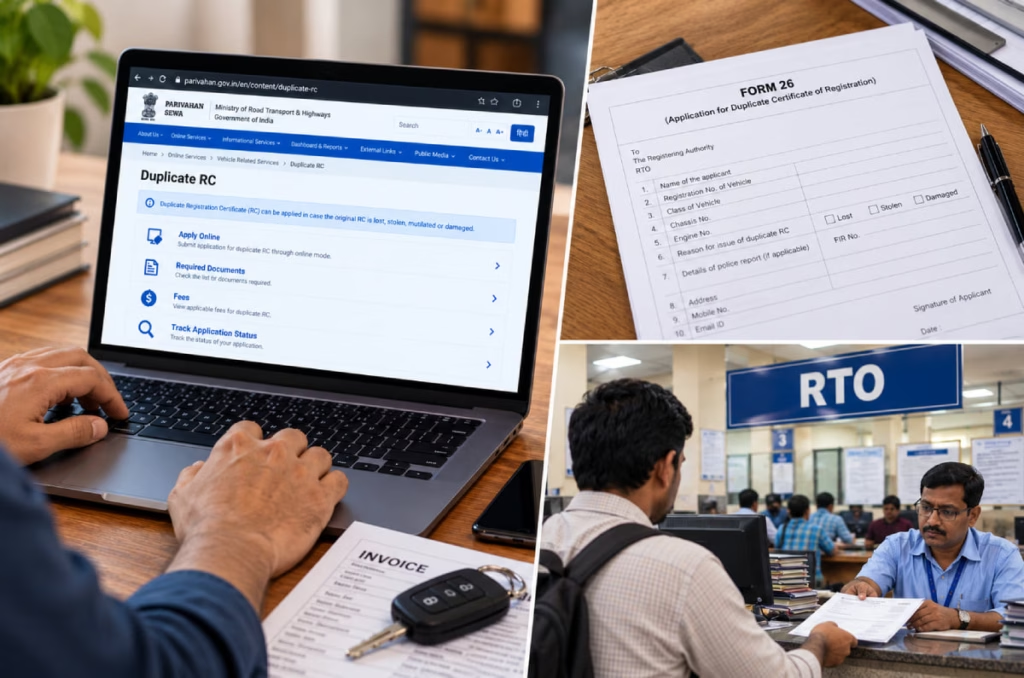
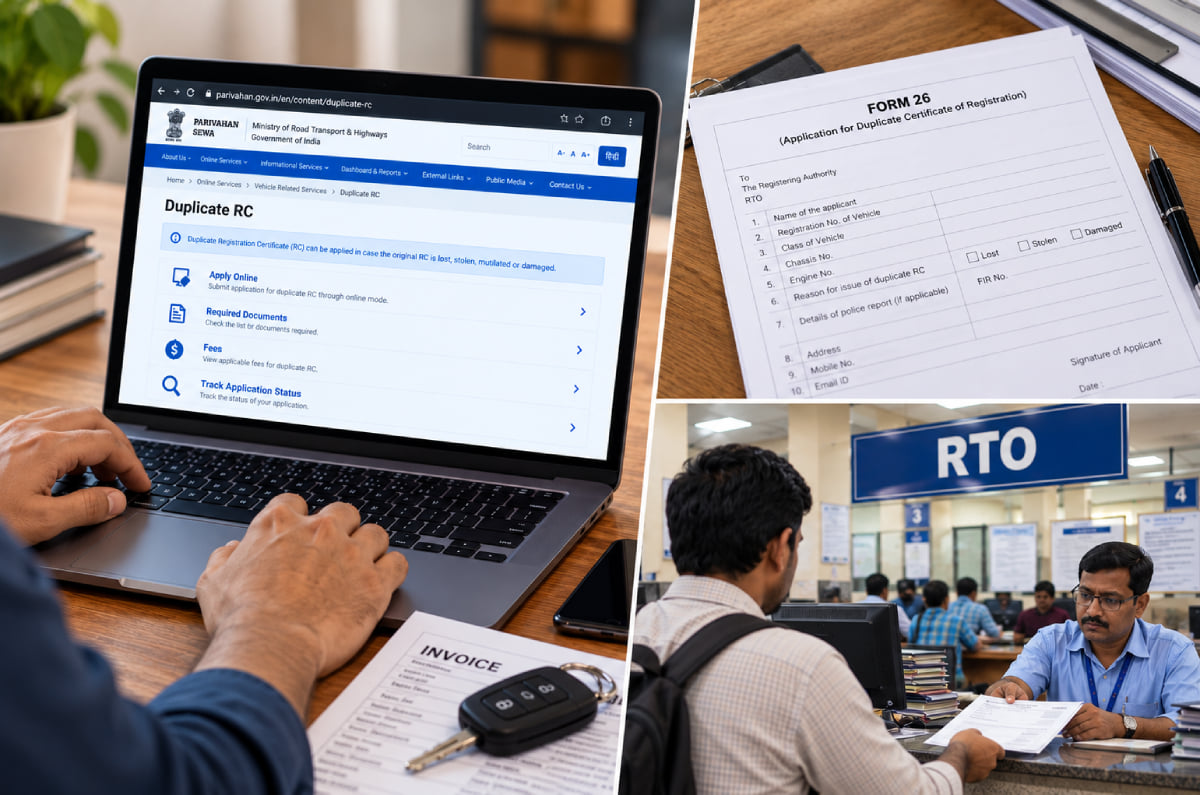
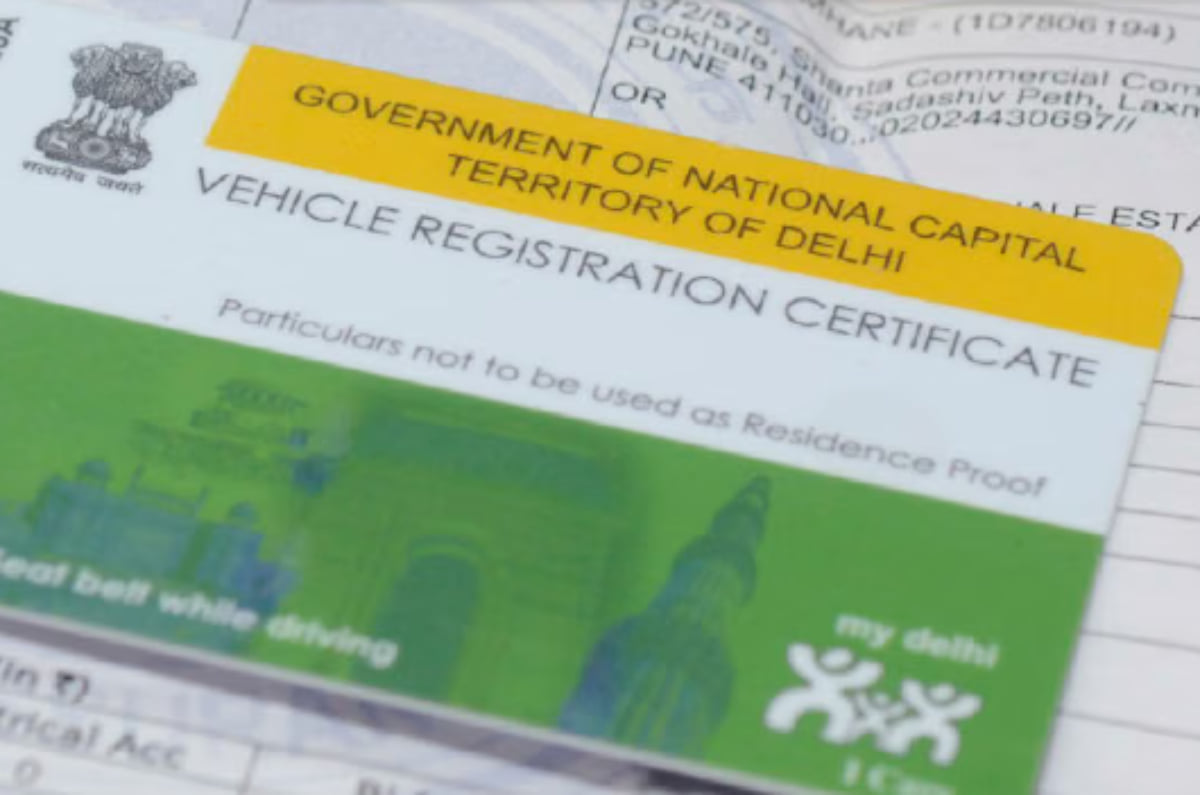
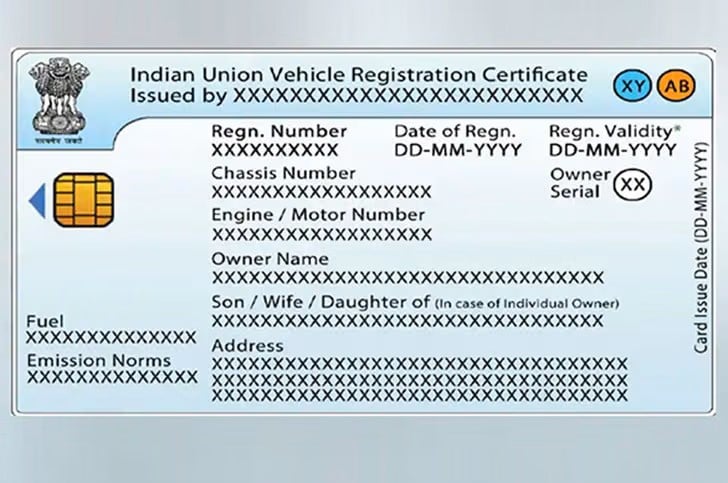
A vehicle’s Registration Certificate (RC) is an official document that records its registration with the Regional Transport Office (RTO). If the original RC is lost, stolen or damaged, owners can apply for a duplicate instead of registering the vehicle again.
The application can be started online through the government’s Parivahan Sewa portal. Depending on the state and RTO, applicants may also need to submit physical documents or visit the RTO for verification. Here’s how to apply for a duplicate RC and what to keep ready.
When do you need a duplicate RC?
You can apply for a duplicate RC if the original certificate has been lost, stolen or damaged to the point that its details are no longer legible. The duplicate replaces the existing certificate; it does not change the vehicle’s registration number.
If the original is damaged, keep it ready to surrender if the RTO requires it. If it is lost or stolen, report the incident to the police and retain the relevant report for the application.
A duplicate RC is different from an RC renewal, which is required when the registration expires.
What documents are required for a duplicate RC?
The main application form is Form 26, which is used to request a duplicate Registration Certificate. Depending on the circumstances and the requirements of the relevant RTO, applicants may need the following documents:
Form 26: The application for a duplicate RC.
Police report or FIR: For a lost or stolen RC, as applicable.
Valid motor insurance: Proof of current vehicle insurance.
Valid PUC certificate: The vehicle’s Pollution Under Control certificate.
Identity and address proof: Such as an Aadhaar card, PAN card or another accepted document.
Affidavit or declaration: If required by the registering authority.
Chassis number imprint: A pencil impression may be required.
Financier’s NOC: If the vehicle is under an active loan or has a hypothecation entry on its RC.
Disclamer: Requirements can vary by state, RTO and vehicle category. Check the applicable document list before submitting the application.
How to apply for a duplicate RC online
Owners can start the application through the Parivahan Sewa portal. The steps may differ slightly depending on the state and the services available for the vehicle.
Step 1: Visit the Parivahan Sewa portal
Go to parivahan.gov.in and open the vehicle-related services section. Select the state in which the vehicle is registered.
Step 2: Enter the vehicle details
Open the relevant vehicle services page and enter the vehicle’s registration number. The portal may ask for the last five digits of the chassis number and OTP verification.
Step 3: Select the duplicate RC service
Choose ‘Duplicate RC’ or the corresponding duplicate Registration Certificate service from the available options.
Step 4: Fill in the application
Enter the requested details and check that the vehicle and owner information is correct. Provide the reason for requesting a duplicate, where prompted.
Step 5: Submit the documents
Upload the required documents if the portal provides that option. Keep the police report or FIR ready for a lost or stolen RC, along with the insurance and PUC certificates and any other documents requested by the RTO.
Step 6: Pay the applicable fee
Review the fee displayed on the portal and complete the payment. Save the receipt and application number for future reference.
Step 7: Complete verification, if required
Depending on the state’s process, the RTO may require physical document submission or an appointment for verification. Follow the instructions shown after submitting the application.
Step 8: Track the application
Use the application number or the relevant status service on Parivahan to check the progress of the request. Once approved, the duplicate RC is processed according to the applicable procedure.
Can you apply for a duplicate RC offline?
Yes. You can apply for a duplicate RC through the RTO where the vehicle is registered. Submit Form 26 along with the required documents, pay the applicable fee and retain the acknowledgement receipt. The RTO may ask for additional documents or verification, depending on the vehicle and the reason for the application.
How much does a duplicate RC cost?
The fee depends on the vehicle category and the applicable charges. Additional amounts may apply for smart card issuance and other services.
The Parivahan portal displays the payable amount during the application process. Check the amount shown for your vehicle and confirm any additional charges with the relevant RTO before making the payment.
How long does it take to get a duplicate RC?
The processing time depends on the RTO, document verification and whether a physical visit is required. Applicants can track the request online using the application number and follow up with the registering authority if there is a delay.
Can you drive if your physical RC is lost?
If your physical RC is lost, a virtual RC available through DigiLocker or the mParivahan app is recognised as a valid document under government rules. You should still apply for a duplicate if the original has been lost, stolen or damaged beyond use.
A police report or application acknowledgement alone does not replace the RC.
What happens if you find the original RC after getting a duplicate?
Once a duplicate RC has been issued, the original should no longer be used. If you find it later, surrender it to the registering authority. The duplicate replaces the original certificate, but the vehicle’s registration number remains unchanged.
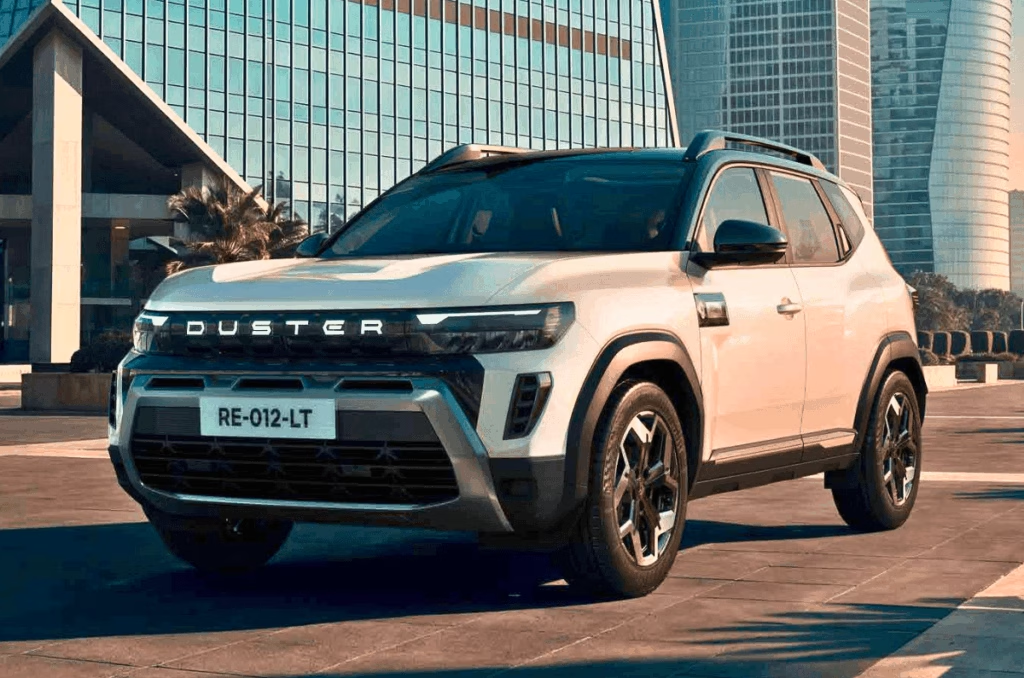
The Renault Duster is priced from Rs 10.49 lakh to Rs 19.49 lakh, ex-showroom. It recently added a hybrid powertrain, which is sold alongside the existing turbo-petrol engine options. The Duster is now available in seven trims: Authentic, Evolution, Adventure, Techno, Techno+, Iconic and Emotion.
If you want to know how much you need to pay to for the Renault Duster, here are its on-road prices across major Indian cities.
New Renault Duster turbo-petrol on-road prices in major Indian cities (in Rs lakh)
Trim
Mumbai
Delhi
Kolkata
Bengaluru
Chandigarh
Authentic 1.0 MT
12.38
12.17
12.17
12.91
11.75
Evolution 1.0 MT
13.80
13.57
13.57
14.38
13.10
Evolution 1.3 MT
15.33
15.07
15.07
15.98
14.55
Evolution 1.3 DCT
17.10
16.81
16.81
17.83
16.23
Adventure 1.0 MT
15.33
15.07
15.07
15.98
14.55
Adventure 1.3 MT
16.51
16.23
16.23
17.21
15.67
Adventure 1.3 DCT
18.17
17.86
17.86
18.94
17.24
Techno+ 1.3 MT
18.05
17.74
17.74
18.81
17.13
Techno+ 1.3 DCT
19.70
19.37
19.37
20.53
18.70
Iconic 1.3 MT
20.05
19.71
19.71
20.90
19.03
Iconic 1.3 DCT
21.82
21.45
21.45
22.75
20.71
New Renault Duster hybrid on-road prices in major Indian cities (in Rs lakh)
Trim
Mumbai
Delhi
Kolkata
Bengaluru
Chandigarh
Evolution 1.8 AT
20.05
19.71
19.71
20.90
19.03
Techno 1.8 AT
22.41
22.03
22.03
23.36
21.27
Emotion 1.8 AT
20.05
22.61
22.61
23.98
21.83
Note: On-road prices may vary based on city-specific registration charges and other cost components, including insurance, FASTag and RTO fees. Please check with your nearest Honda dealership for exact figures.
Among the major cities listed, the new Renault Duster’s on-road prices are the highest in Bengaluru and the lowest in Chandigarh. The entry-level Authentic 1.0 MT costs Rs 12.91 lakh in Bengaluru and Rs 11.75 lakh in Chandigarh, a difference of Rs 1.16 lakh. For the top-spec Iconic 1.3 DCT, the prices are Rs 22.75 lakh and Rs 20.71 lakh, respectively, a gap of Rs 2.04 lakh.
Speaking of the Duster hybrid’s on-road prices, they are also the highest in Bengaluru and lowest in Chandigarh. The most accessible variant, Evolution 1.8 AT, costs Rs 19.03 lakh in Chandigarh, while the top-spec Emotion 1.8 AT costs Rs 23.98 lakh in Bengaluru, a difference of Rs 4.95 lakh.
Prices mentioned above are as on October 18, 2026.
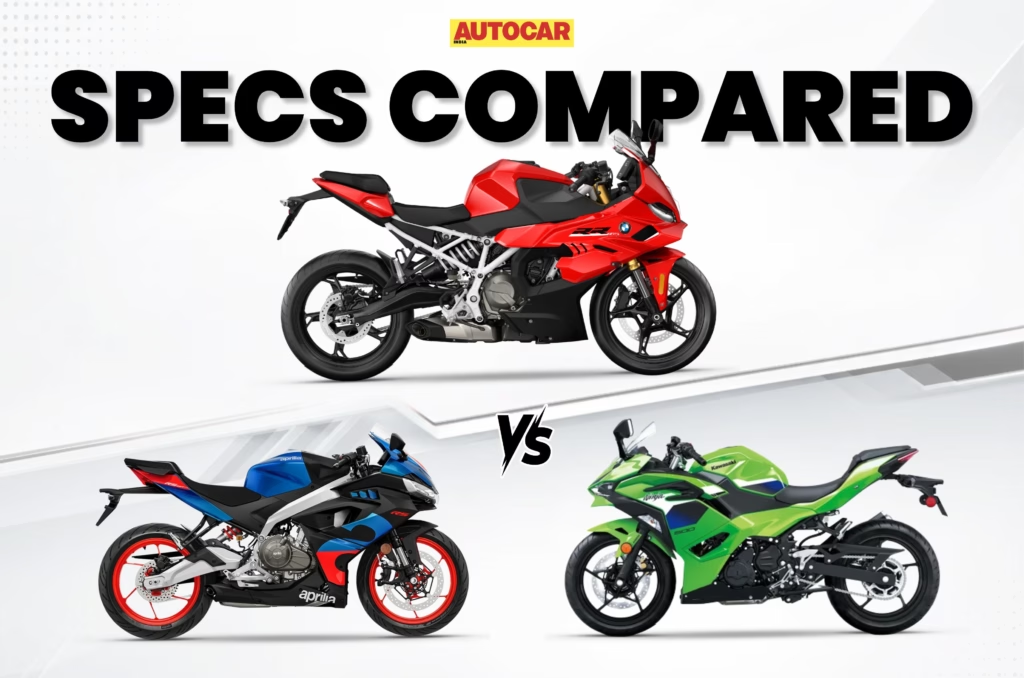
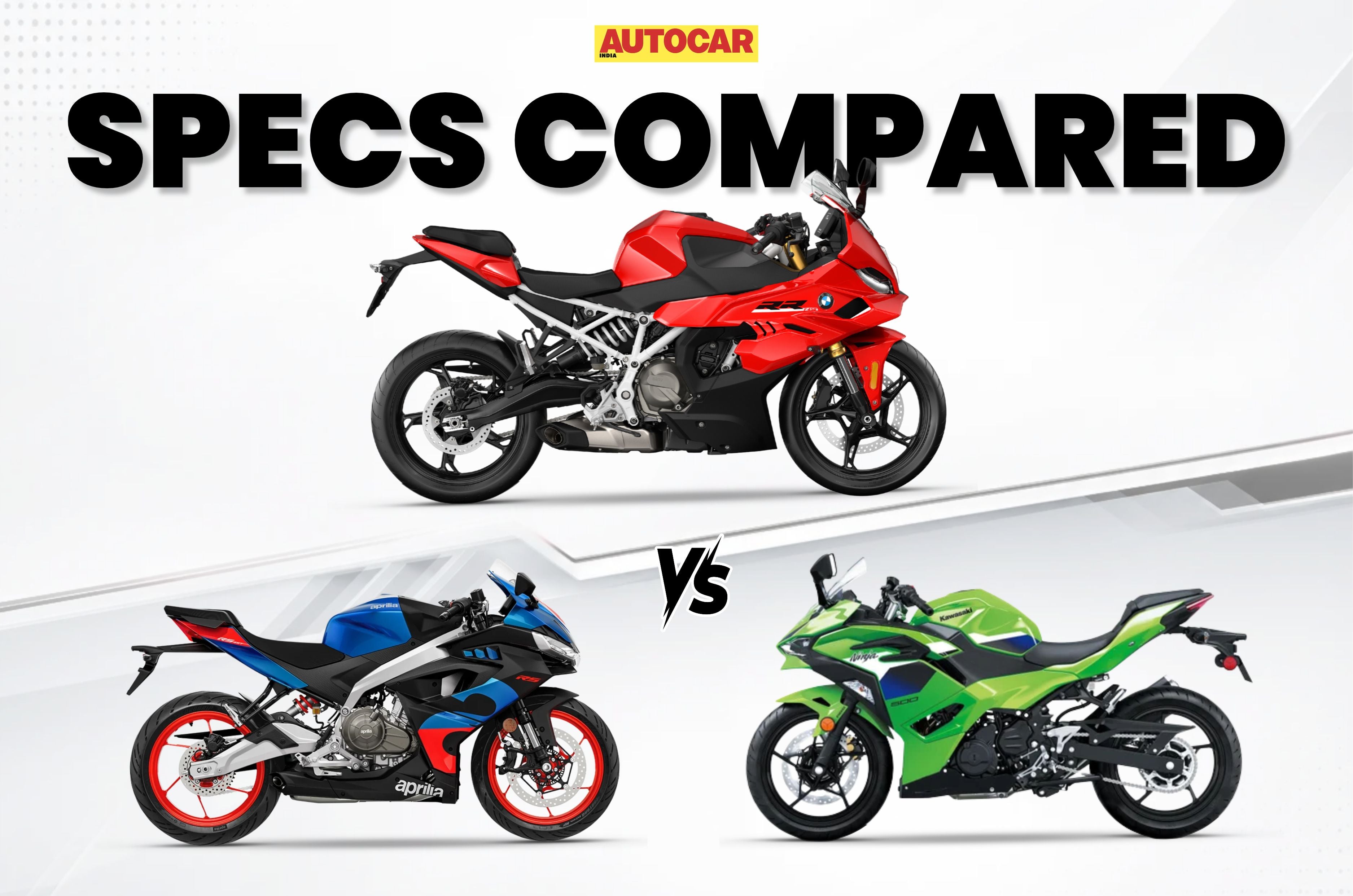
The recently revealed F 450 RR is the new supersport motorcycle in BMW’s lineup. As a fully-faired supersport with a parallel-twin engine, it finds itself in the same segment as the Aprilia RS 457 and the Kawasaki Ninja 500, Here is how these superbikes stack up against each other.
BMW F 450 RR vs Aprilia RS 457 vs Kawasaki Ninja 500: Engine and output
The F 450 RR is the most powerful in its segment
BMW F450 RR
Aprilia RS 457
Kawasaki Ninja 500
Engine
420cc, twin-cylinder, liquid-cooled
457cc, twin-cylinder, liquid-cooled
451cc, twin-cylinder, liquid-cooled
Power
48hp at 8,750rpm
47.6hp at 9,400rpm
45.41hp at 9,000rpm
Torque
43Nm at 6,750rpm
43.5Nm at 6,700rpm
42.6Nm at 6,000rpm
Gearbox
6-speed
6-speed
6-speed
Power-to-weight ratio
270hp/tonne
272hp/tonne
252hp/tonne
BMW didn’t make any changes to the powertrain for the F 450 RR, it uses the same 420cc parallel twin-cylinder liquid-cooled engine that makes 48hp at 8,750rpm and 43Nm of torque at 6,750rpm that debuted in the F 450 GS. In contrast the Aprilia RS 457’s parallel-twin 457cc engine makes 47.6hp and 43.5Nm. The BMW has a marginally more powerful engine on paper, but we’ll be able to comment on real world performance against its rivals only once we’ve ridden the bike.
BMW F 450 RR vs Aprilia RS 457 vs Kawasaki Ninja 500: Dimension and weight
The Ninja 500 offers the more accessible saddle
BMW F 450 RR
Aprilia RS 457
Kawasaki Ninja 500
Fuel tank capacity
14 litres
13 litres
14 litres
Ground Clearance
NA
NA
145mm
Kerb weight
178kg
175kg
176kg
Seat Height
790mm
800mm
785mm
Wheelbase
1405mm
NA
1375mm
Here, the Kawasaki is one step ahead by offering the lowest seat height as standard, making it more accessible for shorter riders. BMW offers an optional low rider seat, which reduces seat height by 15mm (775mm) and a high sport rider seat, that raises seat height by 20mm (810mm). As standard Aprilia has the tallest saddle in the segment. Neither Aprilia nor BMW share ground clearance numbers, and Aprilia doesn’t list RS 457’s wheelbase either. Kawasaki has a 30mm shorter wheelbase compared to the BMW.
BMW F 450 RR vs Aprilia RS 457 vs Kawasaki Ninja 500: Tyres, brakes and suspension
BMW and Aprilia offers adjustable suspension
BMW F 450 RR
Aprilia RS 457
Kawasaki Ninja 500
Tyre (F, R)
110/70R17, 150/60R17
110/70R17, 150/60R17
110/70R17, 150/60R17
Brakes (F/R)
310mm disc/ 240mm disc (dual-channel ABS)
320mm disc/
220mm disc (dual-channel ABS)
310mm disc
220mm disc (dual-channel ABS)
Suspension (F/R)
USD fork/ Monoshock
USD fork/ Monoshock
Telescopic fork / Monoshock
While all three motorcycles ride on 17-inch alloy wheels wrapped in 110-section front and 150-section rear tyres, their suspension and braking hardware take different approaches. The F 450 RR has a 43mm USD fork at the front (with optional adjustable rebound and compression damping) and a monoshock with adjustable preload and rebound damping at the rear. The RS 457 gets a 41mm preload-adjustable USD fork, whereas the Ninja 500 uses a 41mm telescopic fork, and both bikes feature a preload-adjustable monoshock.
The BMW and the Aprilia have a more sophisticated braking setup compared to the Kawasaki. BMW uses a 310mm front disc and Aprilia uses a 320mm front disc, both are paired with a radially mounted caliper, whereas the Kawasaki uses a 310mm disc with axially mounted caliper. All three bikes are equipped with dual-channel ABS as standard.
BMW F 450 RR vs Aprilia RS 457 vs Kawasaki Ninja 500: Features
F 450 RR is loaded with tech
The F 450 RR has a clear edge when it comes to features and electronics, offering optional Easy Ride Clutch (ERC), configurable ride modes and a bidirectional quickshifter on higher variants. While offering a comprehensive electronic suite of rider aids, comprising three riding modes, lean sensitive ABS and traction control, and heated grips as standard. It also gets a 6.5-inch TFT display with smartphone connectivity and turn-by-turn navigation.
The Aprilia RS 457 follows with its electronic suite of rider aids, comprising three riding modes, three levels of traction control and an optional bidirectional quickshifter. It also gets a 5-inch TFT display with Bluetooth connectivity and turn-by-turn navigation.
The Ninja 500, in contrast, takes a simpler approach. The India-spec motorcycle comes with an LCD instrument cluster, LED lighting, dual-channel ABS and an assist-and-slipper clutch as standard but lacks electronic rider aids such as traction control, riding modes and a quickshifter.
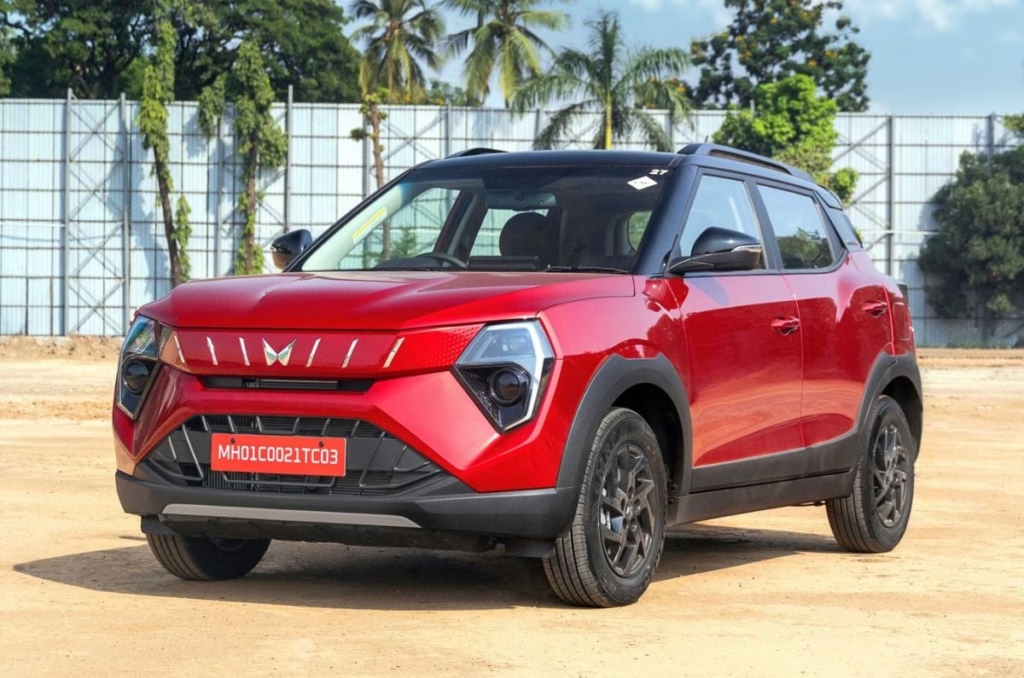
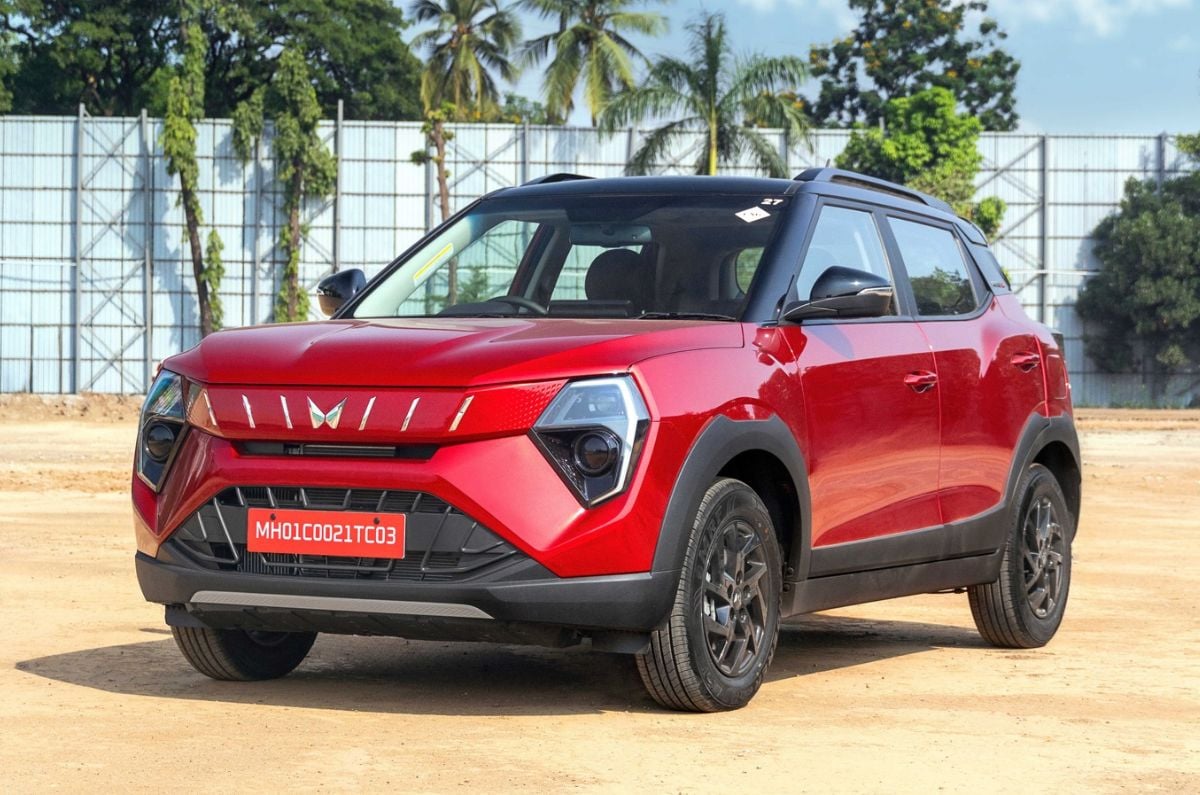
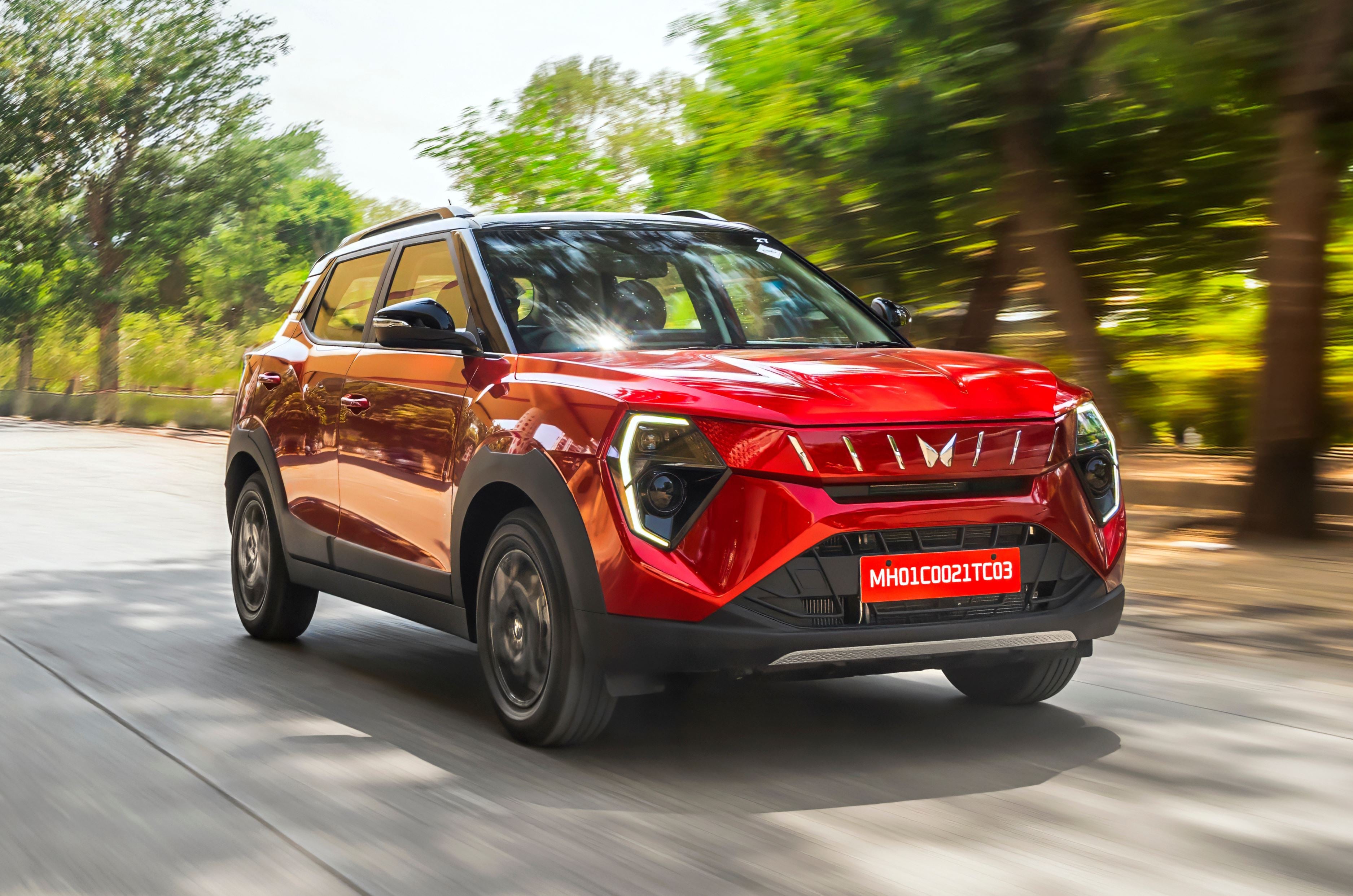
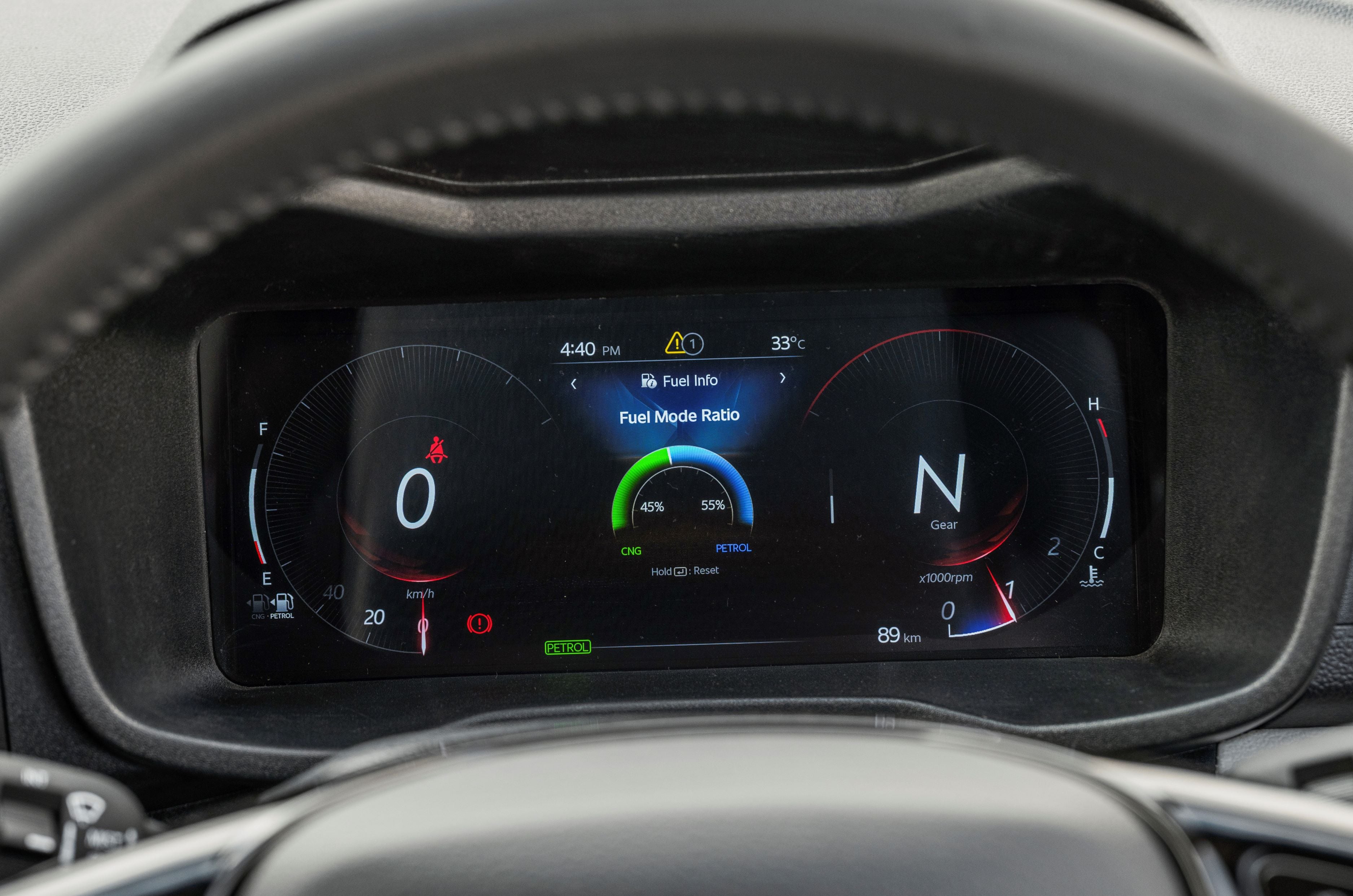
The Mahindra XUV 3XO ZNG takes on the Tata Nexon iCNG and the Maruti Brezza CNG in the CNG compact SUV space. Priced from Rs 9.99 lakh to Rs 12.27 lakh (ex-showroom), it carries a premium of Rs 1 lakh to Rs 1.2 lakh over the corresponding petrol versions. Before signing on the dotted line, here are the key strengths and weaknesses of this Mahindra SUV.
Reasons to buy the Mahindra XUV 3XO CNG
Strong performance on CNG
The XUV 3XO CNG loses none of its power when running on gas
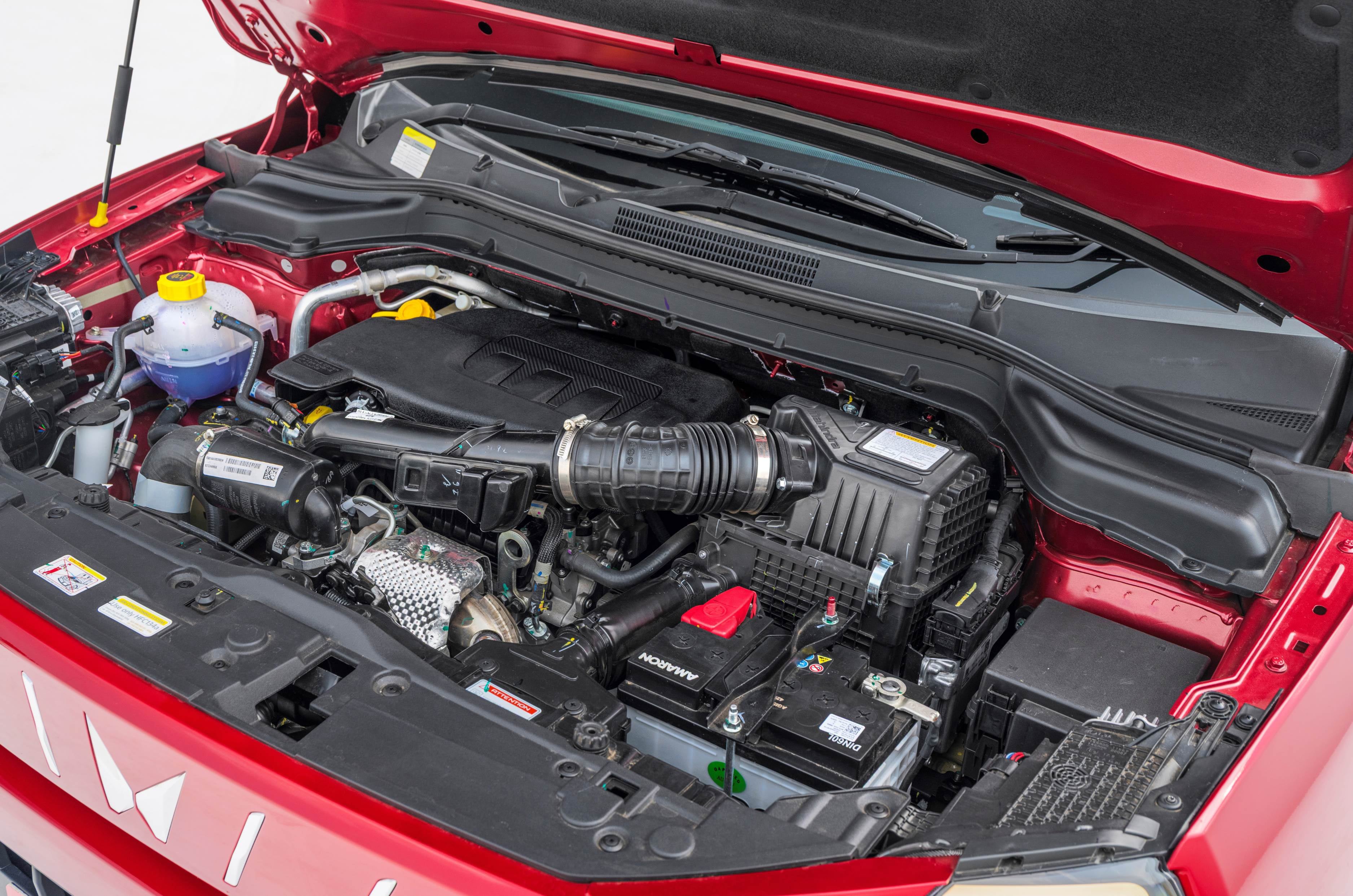
The 1.2-litre MPFI (multi-point fuel-injected) turbo-petrol engine of the XUV 3XO CNG is the same unit found in the lower and mid-spec petrol trims. Here it develops 111hp and 200Nm in both petrol and CNG modes. While there’s some turbo lag below 2,000rpm, the engine pulls eagerly once it crosses that mark. This unit is also notable for its refinement and tractability, rarely requiring one to drop down to first gear, for going over speed breakers, for example.
Switching between petrol and CNG is seamless as well, and few would be able to tell which fuel the XUV 3XO ZNG is running on. While we’re yet to test it, Mahindra claims a mileage of 24.7km/kg for this compact SUV, translating to a theoretical range of 247km on CNG.
Comfy ride and tidy handling
Mahindra has retuned the suspension to accommodate the extra heft of the CNG kit
The CNG hardware adds around 100kg to the XUV 3XO’s kerb weight, with the majority of it being over the rear axle. Mahindra has reworked the suspension to compensate for this heft. The result is a slightly firm ride but one that deals with bad roads quite well.
Adding to the overall comfort here are the 16-inch wheels wrapped with high-profile tyres. These manage to cushion the cabin from sharp bumps. The XUV 3XO CNG rides better than most cars in its segment. What’s good is that this ride comfort doesn’t come at the cost of sloppy handling. In fact, this Mahindra SUV feels tight and planted around corners. The steering is direct and doesn’t require much effort, with drivers being offered three steering modes for flexibility.
Upmarket cabin
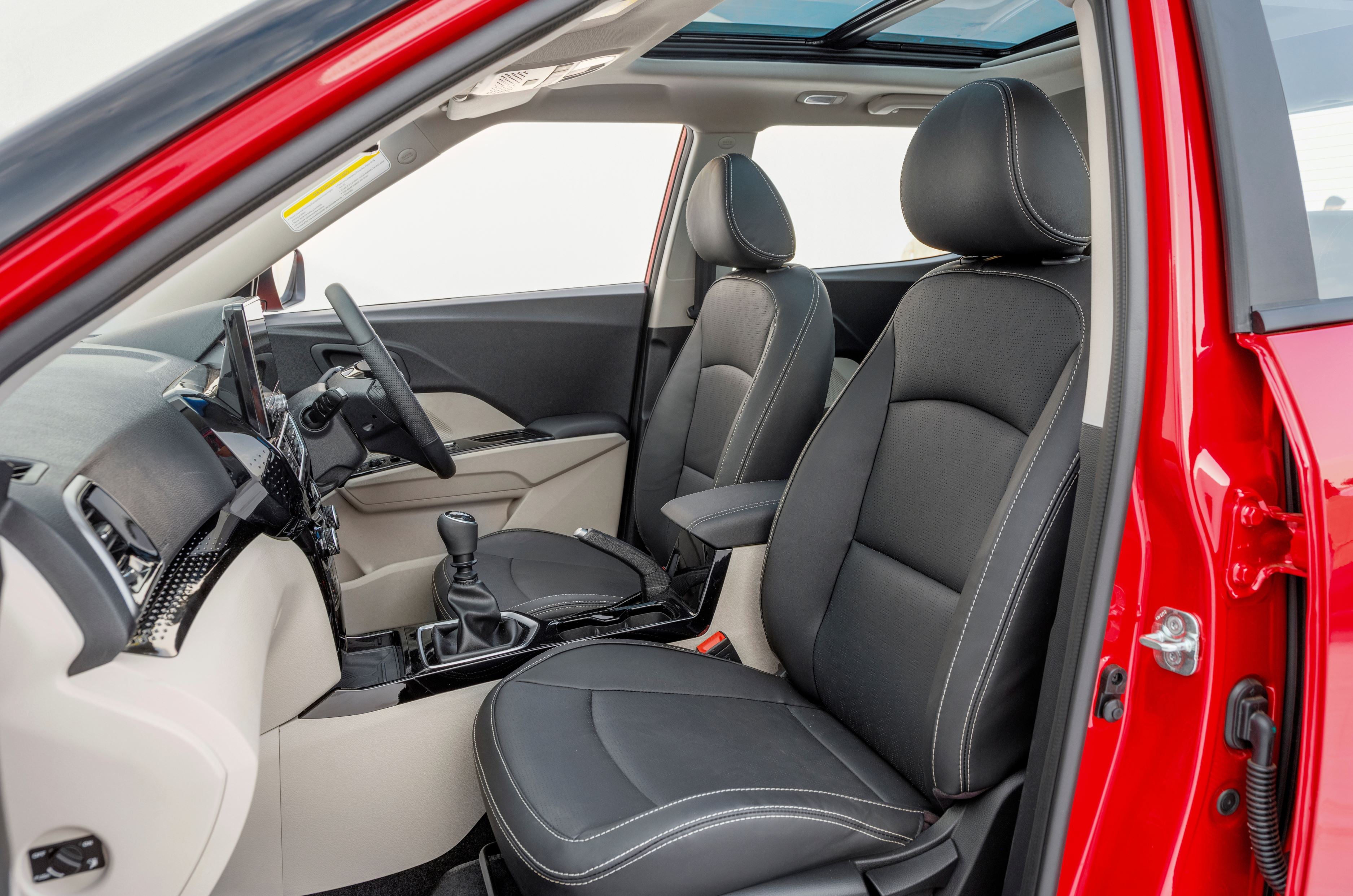
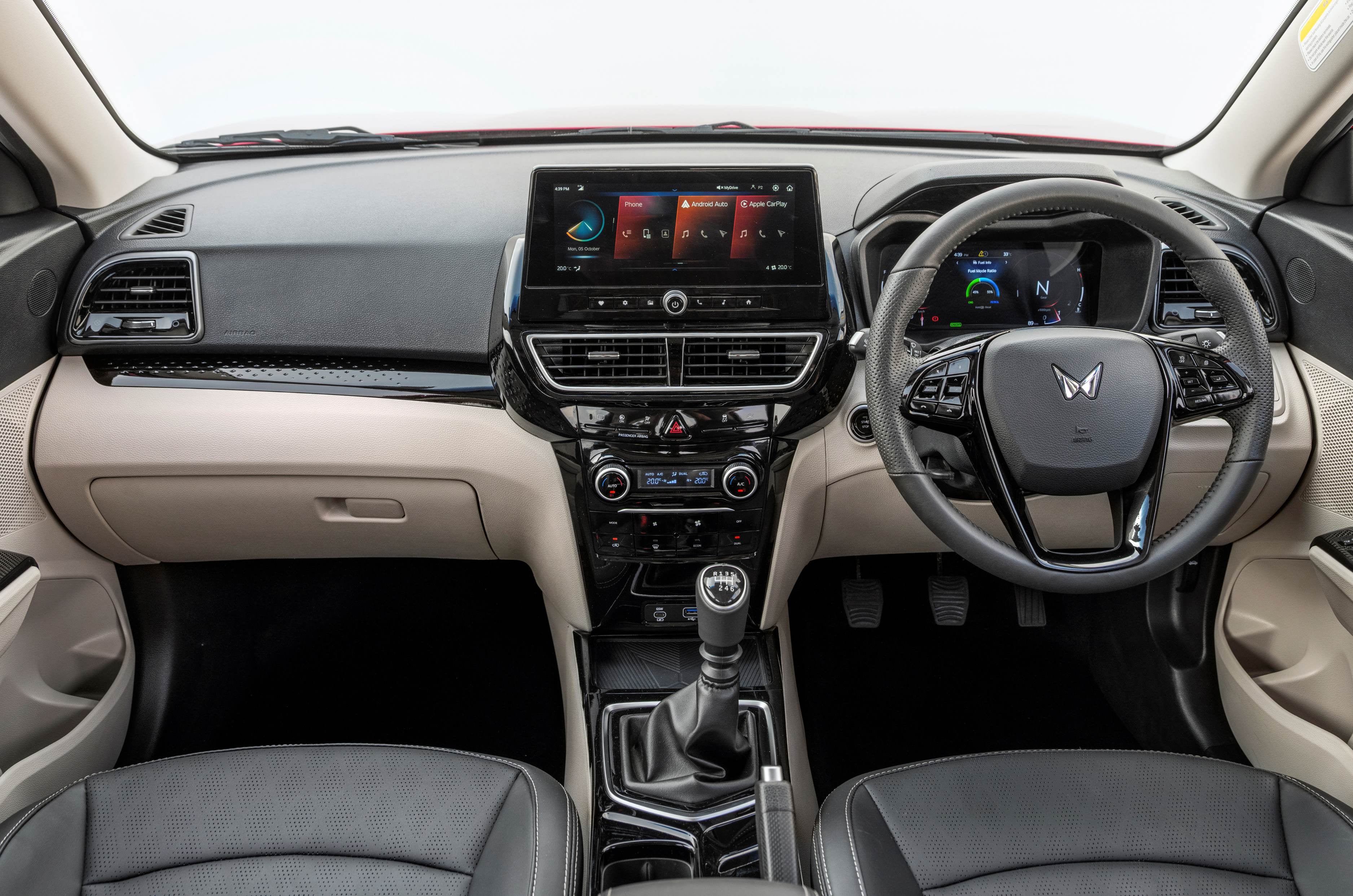
This cabin is just as plush as that of the petrol and diesel versions
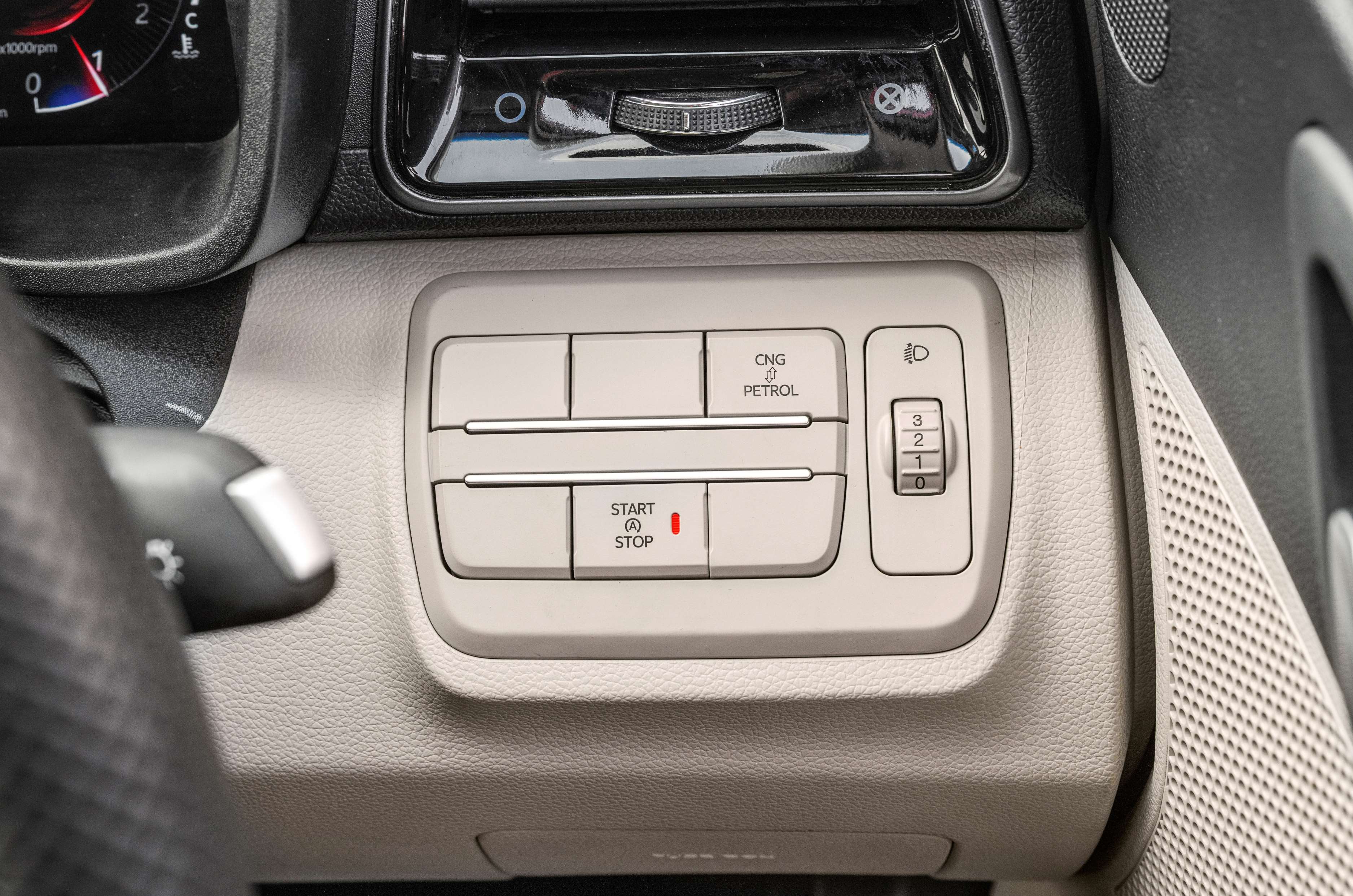
A CNG switch next to the steering wheel aside, the cabin of the XUV 3XO CNG is identical to that of non-CNG versions. While it can’t be had in equally top-end trim levels, the CNG version is available with a dual-tone dashboard, gloss black accents and leatherette upholstery. Overall, there’s a feeling of good build that’s backed by a sense of premiumness. Meanwhile, the rear seat is quite roomy for the class and can accommodate three adults without much fuss.
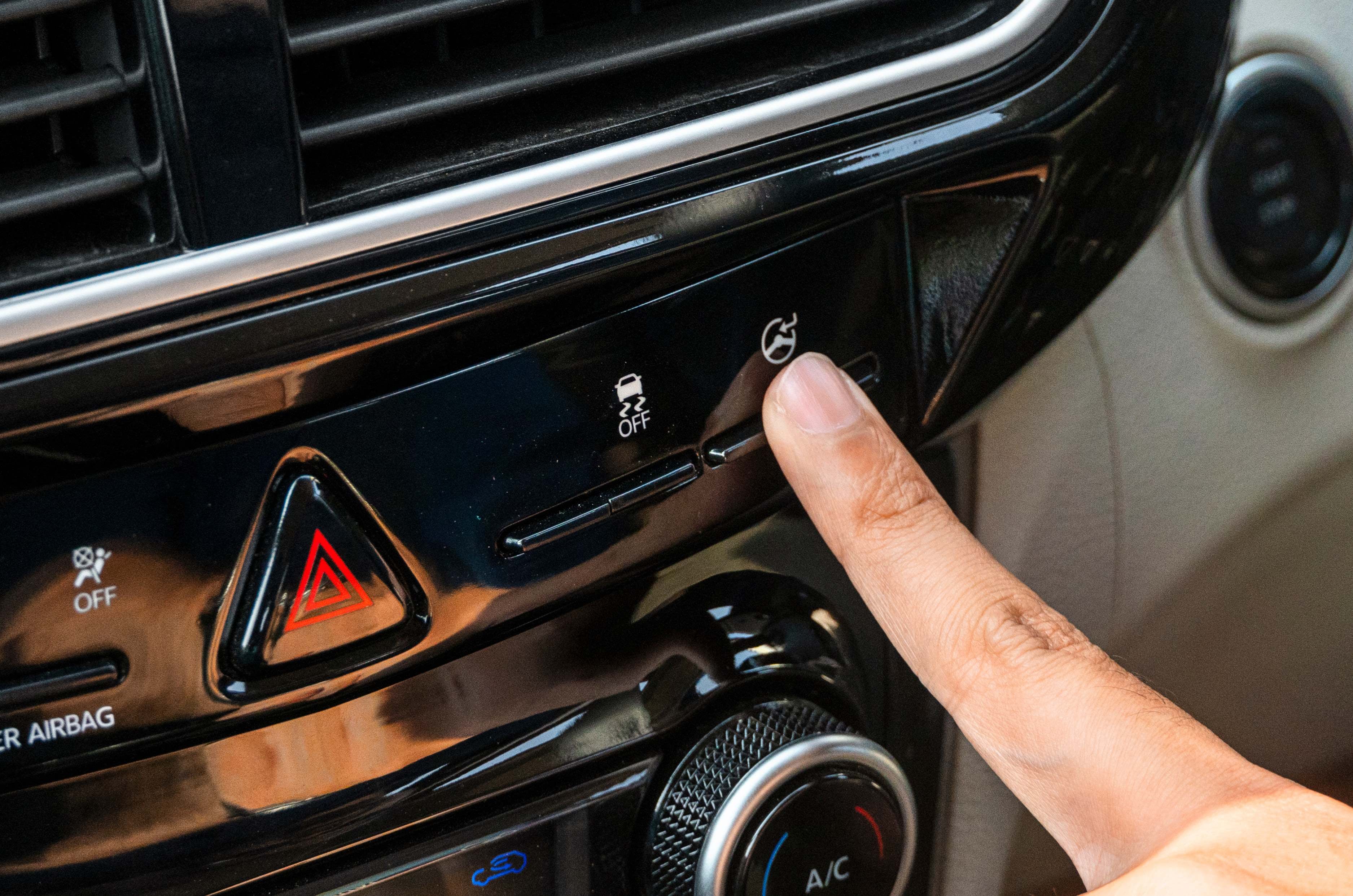
The top-spec RevX A trim gets twin 10.25-inch screens, a panoramic sunroof and a 6-speaker audio system with Dolby Atmos. Mahindra says the CNG version is engineered to match the five-star Bharat NCAP safety rating of other combustion-powered XUV 3XO versions. Standard safety features here include 6 airbags, stability control, ISOFIX anchors and a reversing camera.
Reasons not to buy the Mahindra XUV 3XO CNG
Small boot
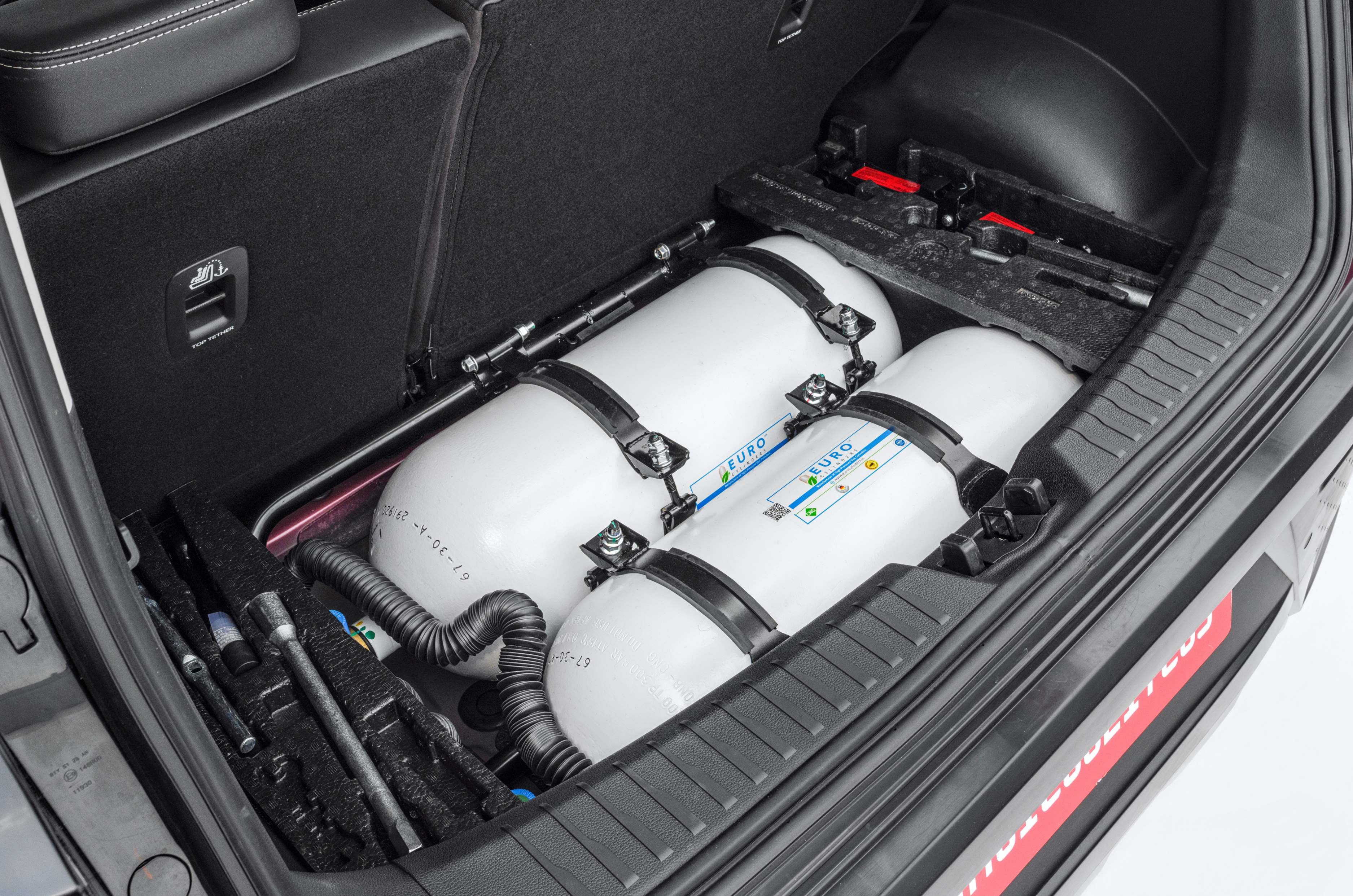
The twin-tank setup eats into what was already a small boot
The 295-litre boot of the XUV 3XO was already the most compact in the segment. Despite moving the spare wheel under the car’s body and fitting the twin cylinders beneath the boot floor, the XUV 3XO CNG’s boot is even more compromised – offering just 270 litres of cargo space. It’s only its width that allows up to four cabin-sized bags to be stored.
Cabin niggles
The XUV 3XO CNG’s interior isn’t devoid of ergonomic flaws
While the black leatherette seats look sporty, they don’t get a ventilation function. This means that, on a bright sunny day, they will heat up quite quickly. If you’ve a larger build, the front seats of the XUV 3XO CNG will feel lacking in space. Adding to the ergonomic niggles is the steering wheel, which cannot be adjusted for reach, making it harder to find a comfortable driving position. Lastly, not only is the XUV 3XO CNG’s driver footwell cramped, there’s also no dead pedal.
Limited options
Customers get only mid-spec trim levels with the CNG version
The CNG version of the Mahindra XUV 3XO is sold in just four trim levels, all of which are mid-spec options within the broader line-up. This limitation becomes obvious given the lack of a 360-degree camera, ventilated front seats, or a wireless charging pad – these are available in the Nexon iCNG. There are no fog lamps, either. Another limitation is that the CNG version only comes with a 6-speed manual, which has long throws and a fair amount of clutch pedal travel.
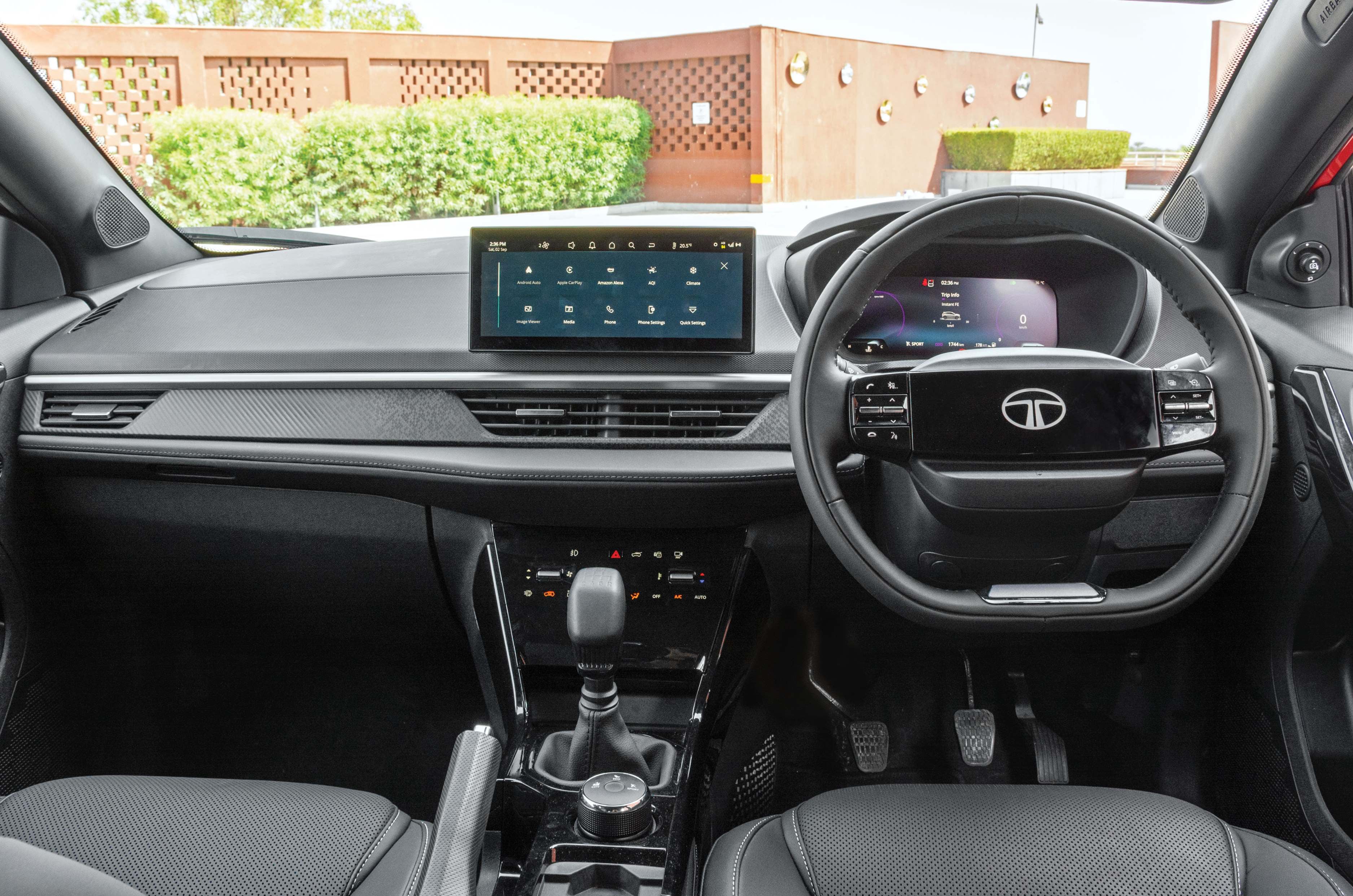
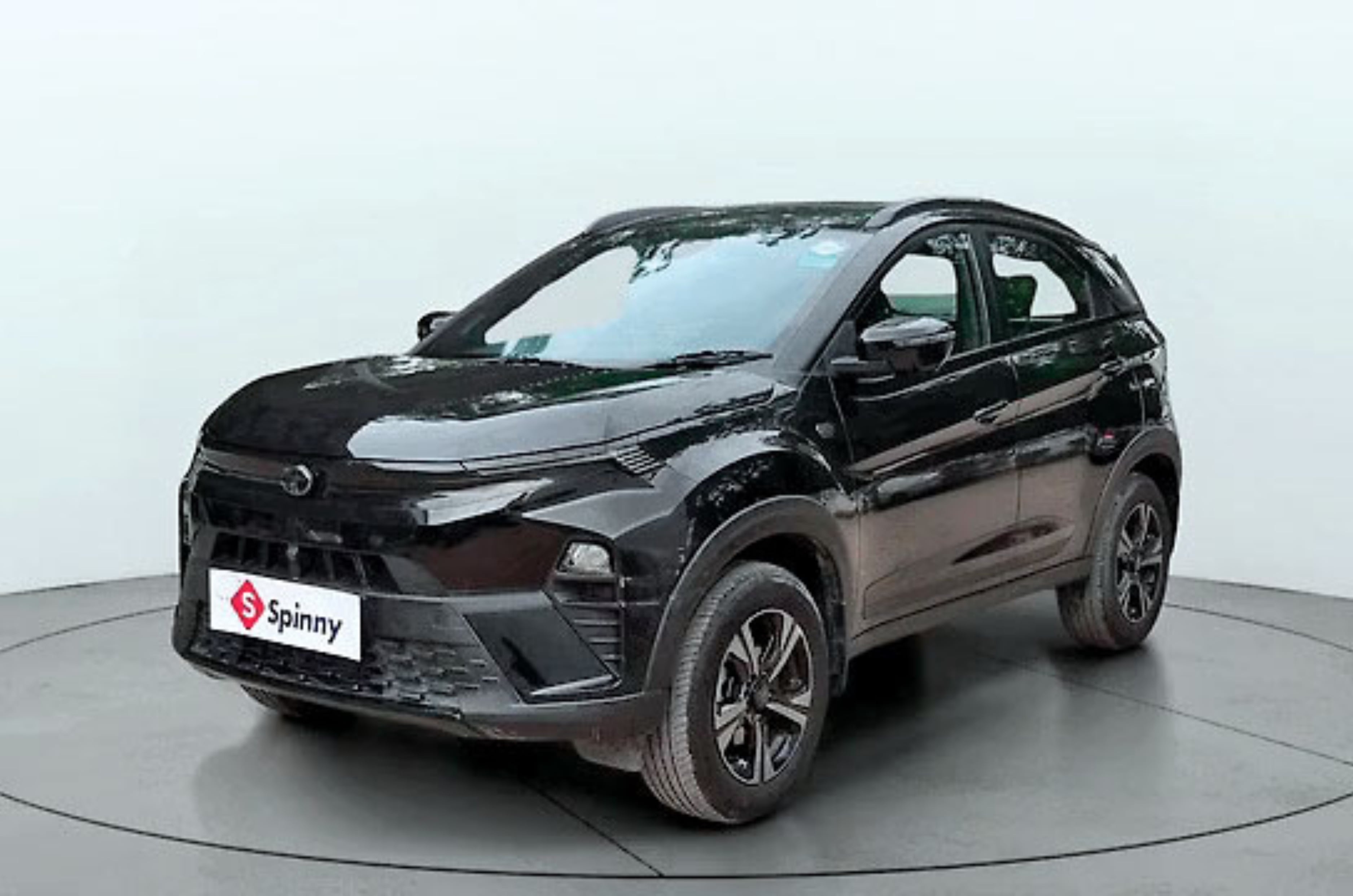
The Tata Nexon received a comprehensive facelift in September 2023, bringing a sharper exterior, a redesigned interior and more technology. It retained its compact SUV dimensions while offering a wide powertrain choice, along with manual and automatic gearbox options for both petrol and diesel. With its generous equipment, practical cabin and SUV-like stance, the facelifted Nexon makes a compelling case as a used buy.
The 2023 Nexon was a significant styling departure from its predecessor, featuring slim sequential LED DRLs and headlamps positioned lower in the bumper. Revised bumpers, a new grille, connected LED tail-lights and redesigned alloy wheels gave it a more modern appearance. The cabin also received a thorough redesign, including a two-spoke steering wheel, a digital instrument cluster and a new touch panel for the HVAC controls. But, it retained its strengths of a spacious and practical cabin, a solid feature set and well-sorted ride and handling.
Petrol, diesel and CNG options; MT, AMT and DCT gearboxes
Under the bonnet, the Nexon continued with its 1.2-litre turbo-petrol and 1.5-litre diesel engines. The petrol engine produces 120hp and 170Nm, while the diesel makes 115hp and 260Nm. Gearbox options included a 5-speed manual, 6-speed manual, 6-speed AMT and 7-speed dual-clutch automatic, depending on the engine and variant. A CNG version was added to the line-up later, which featured the same 1.2-litre petrol engine and came with a 6-speed manual only. The CNG came with Tata’s innovative twin tank setup under the boot floor, which meant a usable cargo space and spare tyre were retained.
The petrol engine is suitable for everyday urban driving, while the diesel’s higher torque makes it better suited to buyers for highway use. The automatics, of course, are the choice for someone looking for an easier driving experience. The CNG makes sense for high running.
Tata Nexon variants and features
10.25-inch touchscreen, 360-degree camera, ventilated seats and more
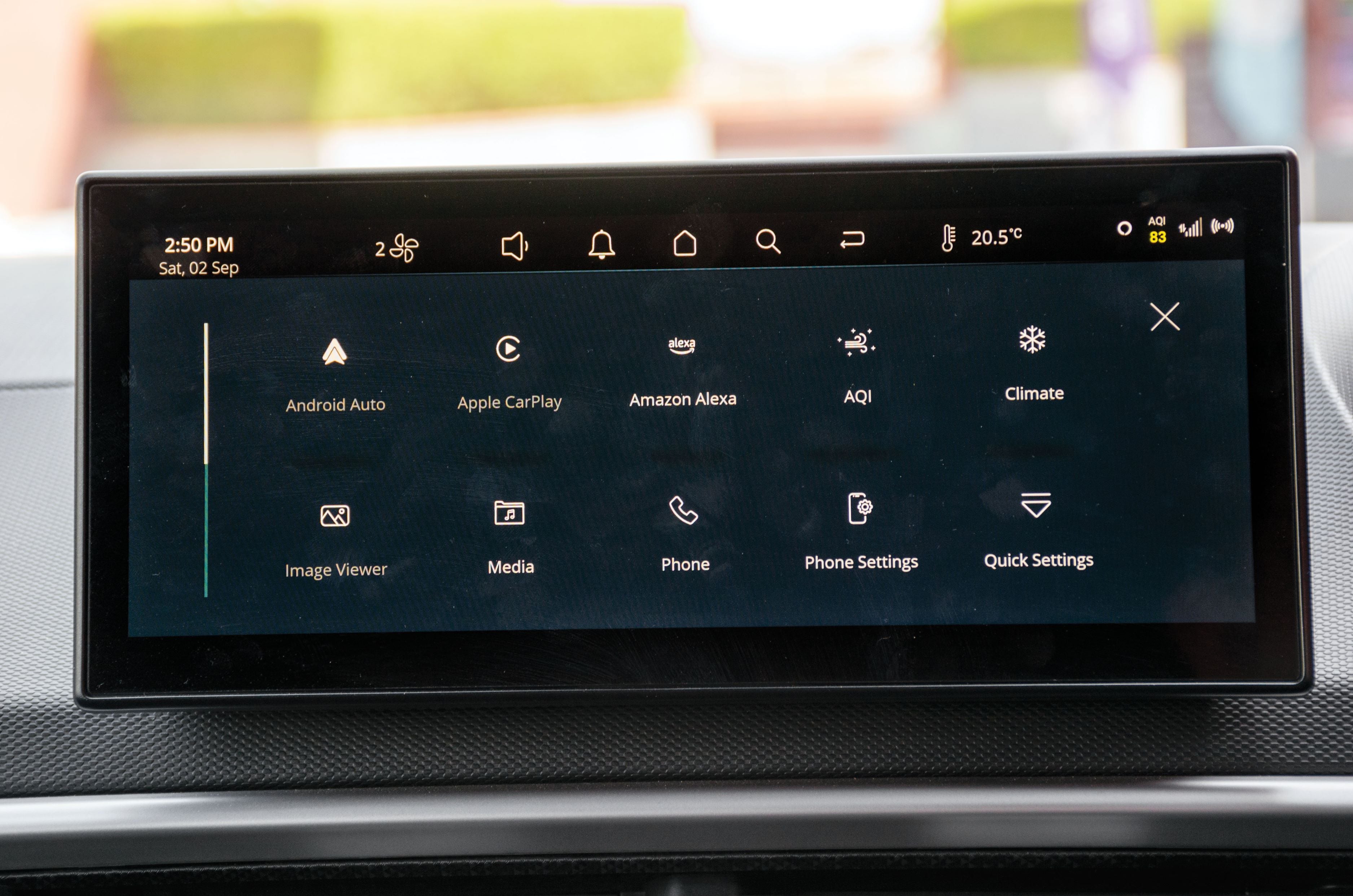
The 2023 Nexon was offered in Smart, Pure, Creative and Fearless trim levels at launch, with equipment varying by variant. Top-spec versions featured a 10.25-inch touchscreen infotainment, a 10.25-inch digital cluster, wireless Android Auto and Apple CarPlay, connected-car tech, a 360-degree parking camera, ventilated front seats, cruise control, leatherette upholstery and a sunroof. Safety equipment included six airbags, electronic stability control and ISOFIX child-seat mounts. The Nexon has also received a five-star Global NCAP crash safety rating under the enhanced 2022 protocol.
As is always the case with Tata products, the Nexon line-up has been regularly updated with the addition/deletion of certain variants, special editions and new features like a panoramic sunroof and Level 2 ADAS tech. With such a widespread line-up, choosing the right one can be tricky. Pick based on your budget and the non-negotiable features you’d want. As it is, even the mid-spec trims come well equipped and have more than the basics covered.
Tata Nexon reliability and aftersales
Tatas are not known to be very reliable, but with the Nexon’s long run, bugs have been ironed out, and these Nexons have proven to be a generally reliable package. Spare parts are easily available, and you’re backed up by Tata’s wide service network throughout the country, though their service quality varies.
What to look out for in a used Tata Nexon
Electronic glitches
The 2023 Nexon introduced a larger touchscreen, a digital cluster, a 360-degree camera and LED lights. Before buying, test the touchscreen thoroughly, connect your phone and check that the 360-degree camera works as intended. Make sure the cluster has no warning messages or glitches and that the LED lights work correctly. Some owners have faced issues with these.
Suspension wear
Nexons that have spent considerable time on poor roads can develop wear in suspension components. Drive it over speed breakers and uneven surfaces, listening for knocking sounds or excessive crashing, as these are signs of worn-out suspension components.
Auto gearbox health
During a test drive, check for excessive juddering, hesitation, delayed engagement or unusual noises, particularly in slow-moving traffic, as these could be signs of potential trouble with the auto gearboxes.
Used Tata Nexon service history and warranty check
Look for a Nexon that comes with a detailed service history or one that has an extended warranty package, as that will give you additional peace of mind since you are buying a pre-owned example.
Second-hand Tata Nexon price and resale value
Rs 7 lakh-11 lakh
The price of a used 2023 Tata Nexon will depend on its engine, gearbox, variant, kilometres driven, ownership history and condition. Petrol manual examples will be the most affordable, while the diesel and CNG versions tend to be the more expensive ones. However, refrain from spending too much more than Rs 11 lakh, as you’d rather be better off buying a brand-new one.
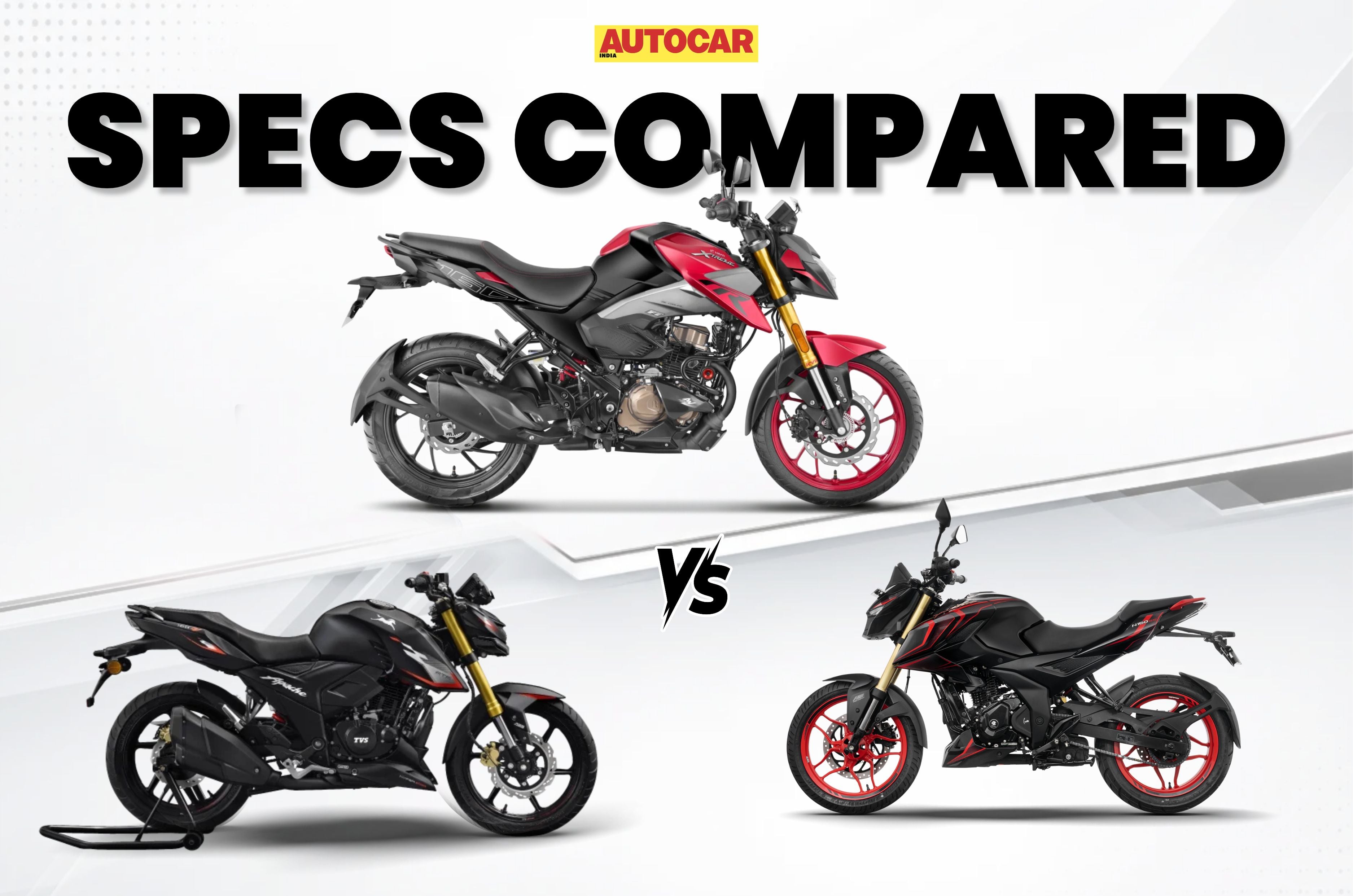
The 160cc segment was kickstarted and subsequently dominated by the TVS Apache RTR 160 and now, the RTR 160 4V is the manufacturer’s best-selling Apache, with the RTR 160 (2V) following in its footsteps. Bajaj has been attacking this duo with a trident of motorcycles, the N160, classic 150, and the NS160. In this fight, Hero’s offering the Xtreme 160R has taken a backseat all this while, but Hero’s looking to get in the front with the newly updated version of its street-naked motorcycle. Does it, really? Let’s see.
Hero Xtreme 160R 4V Carbon vs Rivals: Engine and output
Bajaj has the biggest engine with the most power
Hero Xtreme 160R 4V Carbon
TVS Apache RTR 160 4V
Bajaj Pulsar N160 SS
Engine
163.2cc, single-cylinder, oil-cooled
159.7cc, single-cylinder, oil-cooled
164.9cc, single-cylinder, oil-cooled
Power
17.1hp at 8,750rpm
17.6hp at 8,650rpm
18.5hp at 9,500rpm
Torque
14.6Nm at 6,500rpm
14.7Nm at 7,500rpm
14.4Nm at 8,000rpm
Transmission
5-speed
5-speed
5-speed
Power-to-weight ratio
114.77hp/tonne
120.21hp/tonne
122.52hp/tonne
Hero left the 163.2cc engine almost completely untouched, only raising the peak power output by a meagre 0.2hp compared to earlier. Bajaj’s upgrade to the N160 was more comprehensive than Hero and TVS, even though the other two motorcycles are chronologically newer. Said update has thus helped the N160 SS maintain the highest horsepower of the trio, though it comes in third with respect to torque.
However, the torque race is a very close one and thus unlikely to matter in real-world conditions. The noteworthy jump in power also helps Bajaj maintain a higher power-to-weight ratio, despite being the heaviest of the three motorcycles.
Hero Xtreme 160R 4V Carbon vs rivals: Dimensions and weight
Pulsar is the heaviest, but makes up for it
Hero Xtreme 160R 4V
TVS Apache RTR 160 4V
Bajaj Pulsar N160 SS
Fuel tank capacity
12 litres
12 litres
14 litres
Ground clearance
165mm
180mm
165mm
Kerb weight
149kg
146kg
151kg
Seat height
805mm
790mm
795mm
Wheelbase
1,329mm
1,357mm
1,348mm
None of these motorcycles received a generational change to the platform so the numbers largely remain the same as earlier. Starting off with the Xtreme 160R 4V, Hero has given it some additional features which has made it 1.5kg heavier than the previous Combat Edition and the seat height is a negligible 5mm taller too.
TVS added exactly two new features to the Apache so it remains exactly where it was before and is the motorcycle with the lowest seat height, while having the most amount of ground clearance. The Pulsar N160 is the heaviest of the lot, but also has two additional litres of fuel tank capacity, which is a factor in the additional weight. In this class, that translates to – at the very least – 80km of real-world range so that’s not a small advantage to the Bajaj.
Hero Xtreme 160R 4V Carbon vs Rivals: Tyres, brakes and suspension
Hero has a smaller rear brake and TVS has a narrower front tyre
Hero Xtreme 160R 4V
TVS Apache RTR 160 4V
Bajaj Pulsar N160 SS
Tyres (F, R)
100/80-17, 130/70R17
90/90-17, 130/70R17
100/80-17, 130/70R17
Brakes (F, R)
276mm disc, 220mm disc, dual-channel ABS
270mm disc, 240mm disc, dual-channel ABS
300mm disc, 230mm disc, dual-channel ABS
Suspension (F, R)
37mm USD fork, monoshock
37mm USD fork, monoshock
37mm USD fork, monoshock
Things continue to even out in this section but Bajaj makes a statement with the largest front disc rotor, which is actually from a class above. All three offer dual-channel ABS as standard on the top variants, and all have a lower variant with right-side-up (RSU) telescopic fork and single-channel ABS. Hero is the only manufacturer to offer a KYB, who is a suspension specialist, built fork but also has given the Xtreme 160R the smallest rear disc. TVS technically does have the smallest tyre of the three, but it’s not alarmingly small to imply handling issues.
Hero Xtreme 160R 4V Carbon vs Rivals: Features
Hero’s redemption attempt
This is the area Hero has caught up the most to the other two, after design. Though the Combat Edition added quite a bit to make the Xtreme 160R last year, the fight now feels even across the board, which is a great thing for you and me as consumers.
On the top Carbon variant, you get a 4.2-inch TFT display that goes toe-to-toe with the other two on this list. Xtreme 160R is the only motorcycle in this segment to give you cruise control and TVS, despite technically being the oldest platform of the lot, gives a tough fight to the other two. In terms of outright feature-set, the Bajaj still offers a higher number of features, such as an additional ride mode, document storage on the display and the likes, but TVS and Hero fight valiantly. The Hero still misses out on features such as, a slip-and-assist clutch, a dedicated mode to make low speed riding easier (Crawl mode on Bajaj, GTT on TVS) and Google Maps mirroring. So, if you’re looking for the most feature-loaded Hero, take a gander at the Xtreme 250R, which also got updated with quite a bit of features and is sitting in the segment above.
Hero Xtreme 160R 4V Carbon vs Rivals: Price
Carefully treading the affordable-line
Hero Xtreme 160R 4V
TVS Apache RTR 160 4V
Bajaj Pulsar N160 SS
Price (ex-showroom)
Rs 1.27-1.41 lakh
Rs 1.20-1.42 lakh
Rs 1.22-1.43 lakh
Hero is currently the most expensive of the three, especially if you’re looking to get the base variant; beyond that, digging further into the price difference will be splitting hairs, so look at the other sections to see if they help you make a choice. That being said, the 160cc segment in India is one of, if not, the most competitive one so whichever one you choose, you’re unlikely to make a truly bad one. See which motorcycle catches your eye the fastest and pulls your heart strings the hardest after the test ride, and you’ll probably know what you’re bringing home.
If you’re determined to live in the xtreme, er, extreme, Hero is currently taking bookings for the all-new Xtreme 160R 4V, whereas the other two motorcycles are already available in their respective showrooms. Unlike its bigger brother, the 160R 4V will be available in all Hero showrooms across the country – which is quite a large network. Deliveries for it are expected to begin in November.
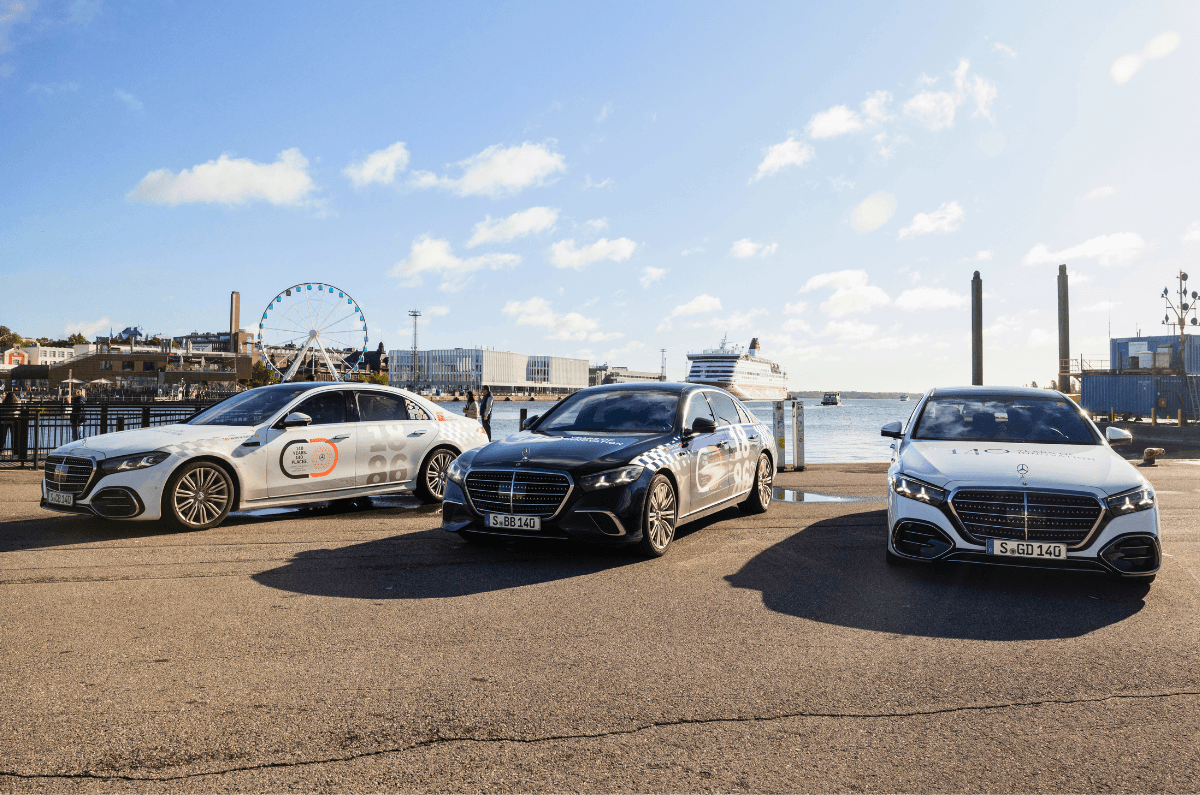
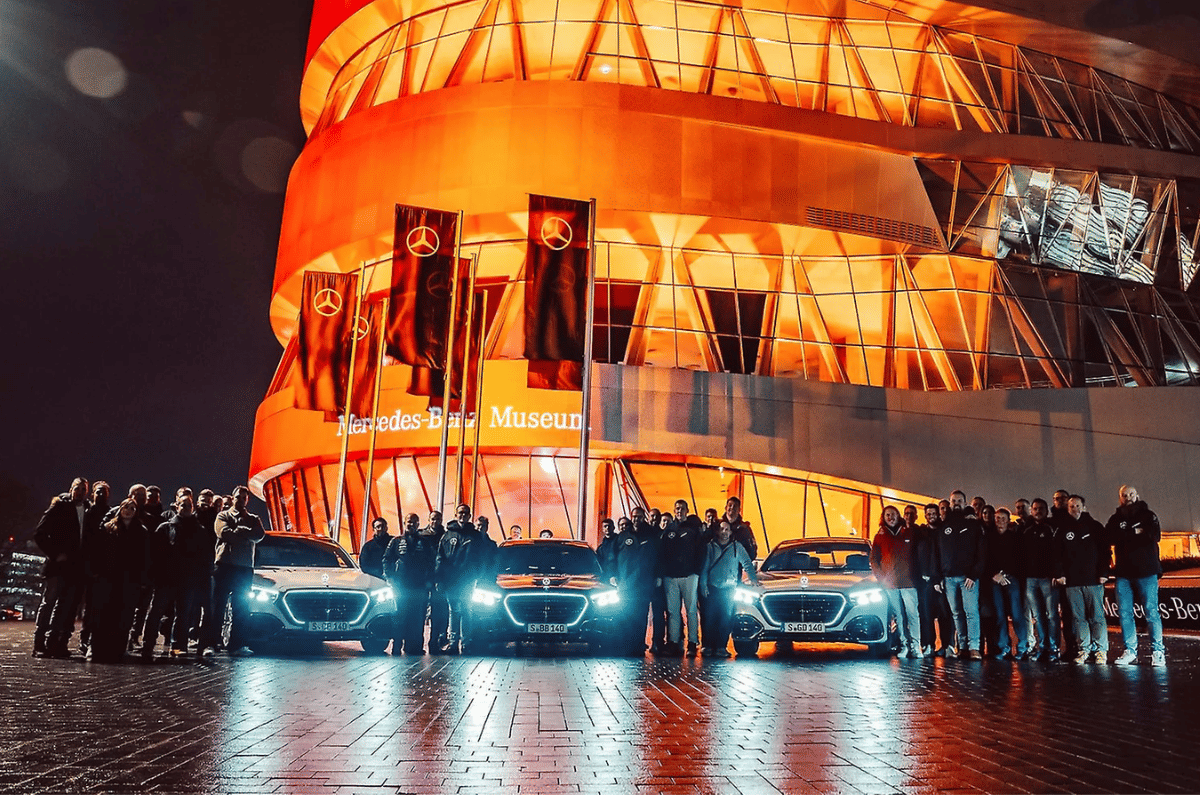
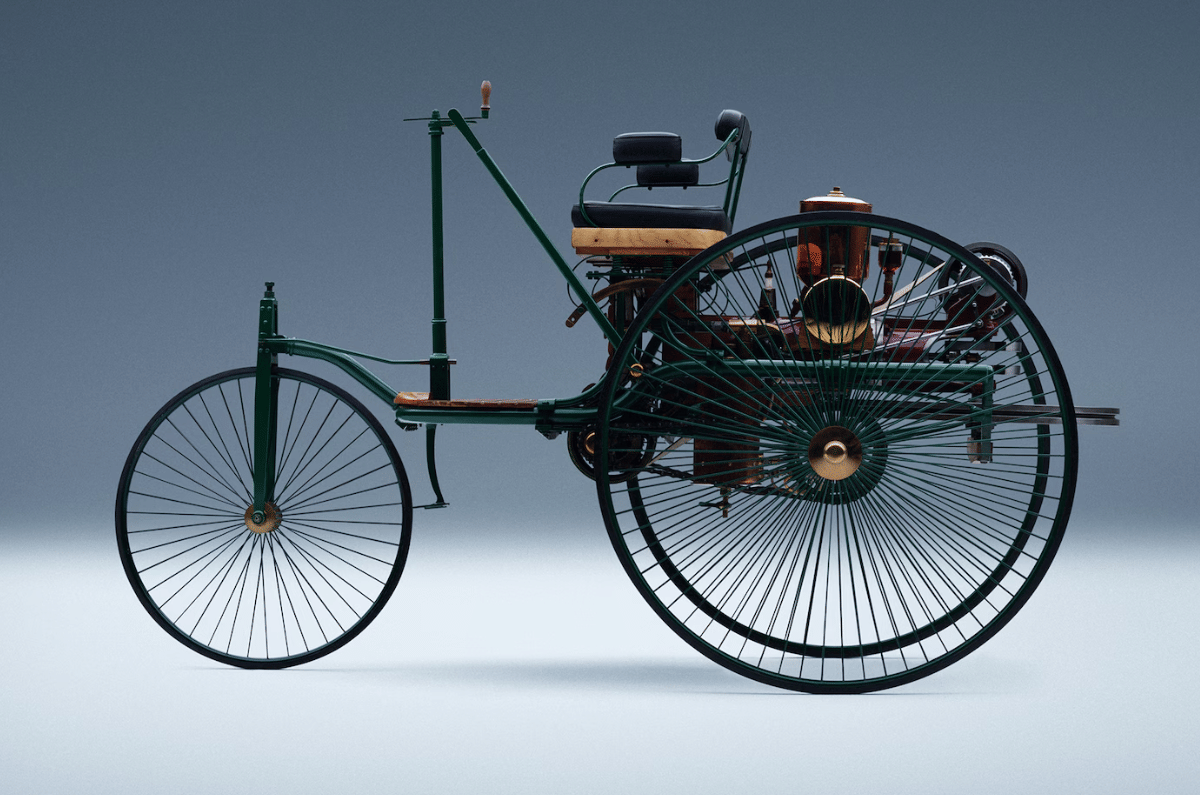
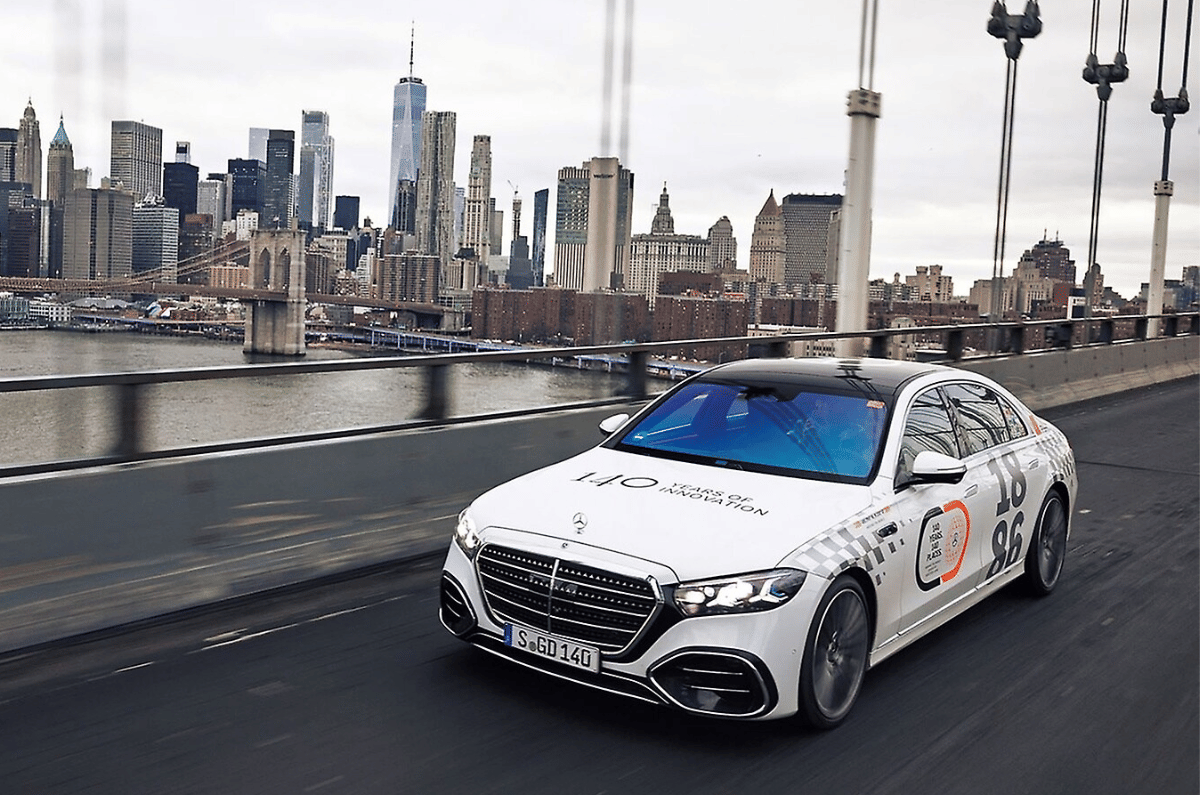
Mercedes-Benz has concluded its ‘140 Years. 140 Places.’ global tour, organised to commemorate 140 years since Carl Benz filed the patent for his Motorwagen in 1886. Three S-Class sedans returned to the Mercedes-Benz Museum in Stuttgart, Germany, on October 17, after covering more than 65,000km across 55 countries and six continents over nearly nine months. Approximately 20,000 guests attended the homecoming event, which also featured the global debut of the new Mercedes-AMG GT SUV.
Mercedes-Benz 140 Years, 140 Places: All you need to know
Tour marks 140 years since Carl Benz’s Patent-Motorwagen
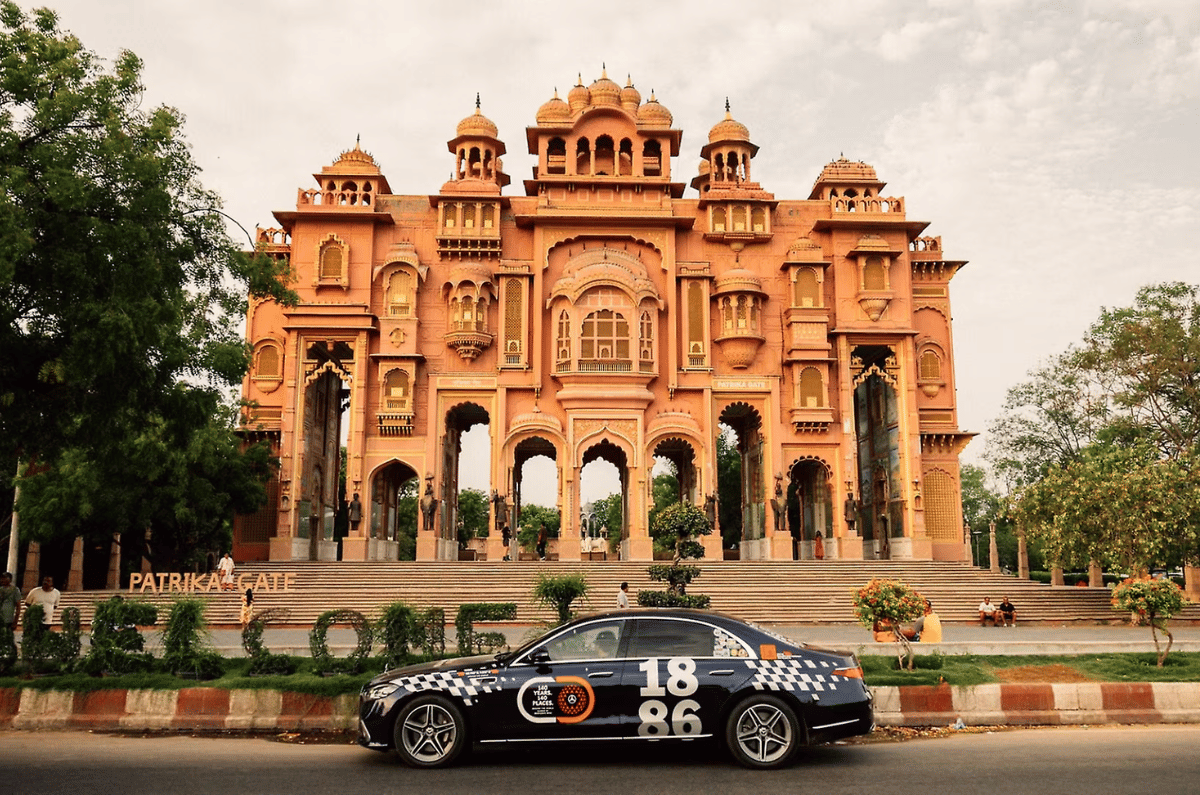
The expedition began in Stuttgart on January 29, 2026, with three S-Class sedans named Bertha, Carl and Gottlieb. The tour visited more than 140 locations across six continents, crossing 67 national borders and 13 climate zones.
The route covered cities including New York, Tokyo, Mumbai, Nairobi and Sao Paulo. The cars returned to Stuttgart in a convoy of 140 historic and current vehicles, including a replica of the 1886 Benz Patent-Motorwagen, the Mercedes-Benz 300 SLR Uhlenhaut Coupé, a Ponton 220 S, the C 111 experimental vehicle, and the electric G-Class and C-Class.
Mercedes-Benz says tour tested S-Class under challenging conditions
Mercedes-Benz said the expedition provided insights into the S-Class under real-world conditions beyond those covered by its regular development testing in extreme temperatures and simulation chambers.
During the India leg, the cars travelled to Umling La, at approximately 5,800 metres above sea level, and encountered monsoon conditions and flooded roads. In Kenya, Tanzania and Zambia, the route included unpaved and uneven surfaces. Mercedes-Benz said the journey also exposed the cars to temperatures varying by more than 50deg C across desert and tropical climates.
Autocar India participated in the India Leg
We also participated in the India leg of the expedition, driving the pre-production S-Class sedans through Udaipur and Ahmedabad. The drive provided an opportunity to experience the updated luxury sedan’s performance, ride comfort and technology.
Anniversary activities continue through December
Mercedes-Benz will continue its ‘140 Years of Innovation’ anniversary programme through the end of 2026. Mercedes-Benz plans further studios in international cities following launches in Copenhagen, Los Angeles, Sydney and Delhi.
In December, the company will convert the approximately 145-metre-long glass facade of its dealership at Donnersbergerbrucke in Munich into an oversized Advent calendar. Mercedes-Benz is also planning a coffee-table book documenting the expedition, its stops, and its encounters along the route.