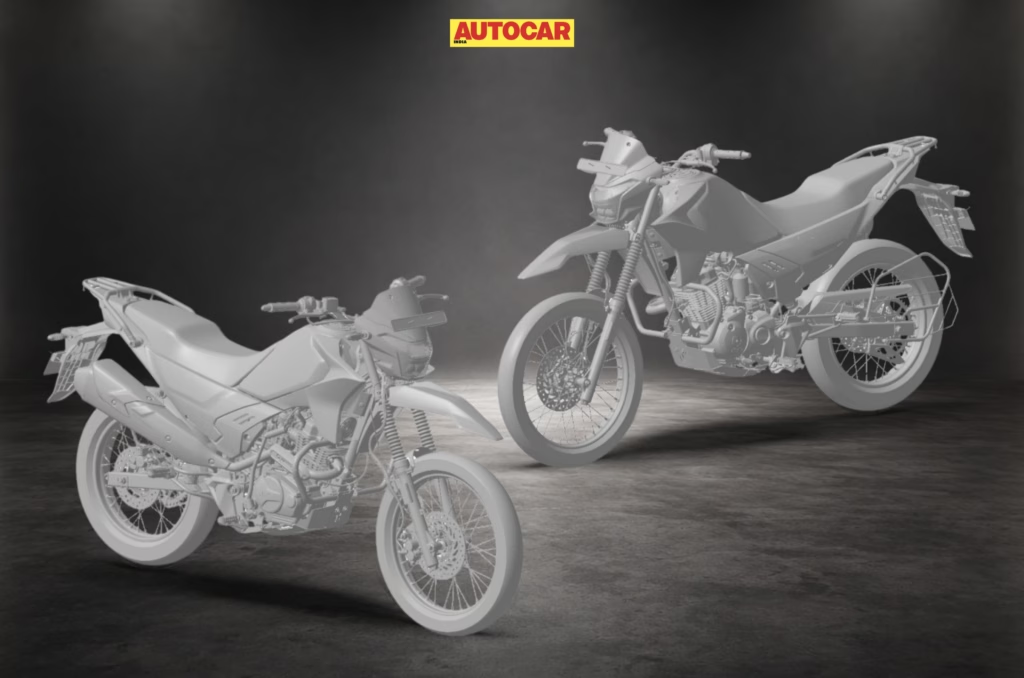
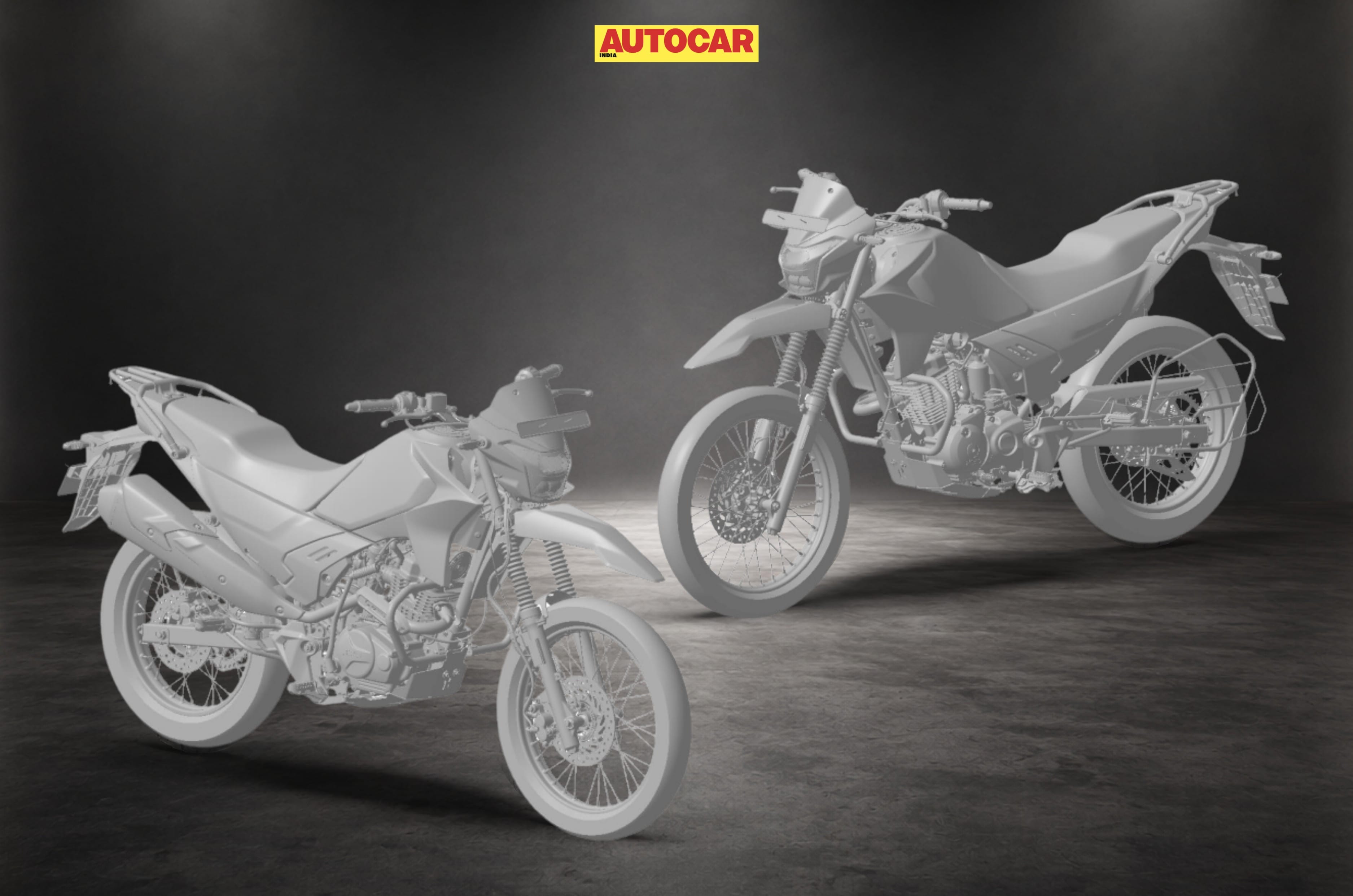
Hero MotoCorp has filed a design patent for a new dual-sport motorcycle, with some details indicating that the model could enter a segment the brand last played in with the Impulse.
Air-cooled engine with kickstarter visible in the patent drawings
Carburettor suggests it could also be for export markets
Disc brakes at both ends with what looks like long-travel suspension
New Hero dual-sport motorcycle: What the patent reveals
Design cues drawn from existing Hero models across different segments
The new motorcycle in the patent filing has an air-cooled engine with no oil-cooler, suggesting that it will likely be a smaller-capacity powerplant displacing somewhere in the 150-200cc range, well below the liquid-cooled Xpulse 421 that’s currently under development. The images also reveal that the engine will feature a kickstarter, but it’s safe to assume that an electric starter will also be present. If this is indeed a small-capacity engine as we suspect, the Impulse moniker could even be in contention for a revival.
While this means the new model could sit close to the existing XPulse 200 4V and XPulse 210, the overall profile appears slimmer, and the potentially smaller engine could also make it lighter and easier to handle.
The overall silhouette and tank shrouds also bear a closer resemblance to the old Impulse than to the current XPulse range. Lighting elements seem to be drawn from existing Hero models – the tail lamp resembles the unit on the Xtreme 125R and XPulse 210, while the headlight is similar to the Xtreme 160R and now-discontinued Passion Pro 110 XTEC unit. Other visible elements include a raised front mudguard and a high-mounted exhaust, a telescopic fork and monoshock suspension setup, and disc brakes at both ends.
However, there is one aspect that is a little puzzling. In the images, we can see what looks like a fuel tap on the left side of the engine and a choke knob on the left handlebar – both indicating a carburetted setup. It’s highly unlikely that it would comply with our country’s emission norms, so the bike in this specific form could be intended for export markets where carburetted engines are still permitted.
That said, other details suggest a different version of the bike seen here could make it to India. Regulatory requirements like the front number plate and a saree guard are both visible, suggesting Hero could also be designing the bike with the local market in mind.
There’s little other information right now, but we’ll update this story as we learn more. A patent filing also doesn’t necessarily mean that the bike will go on sale in the near future. In terms of confirmed upcoming products from the brand, we can expect the production-ready Xpulse 421 to make its official debut at EICMA 2026.
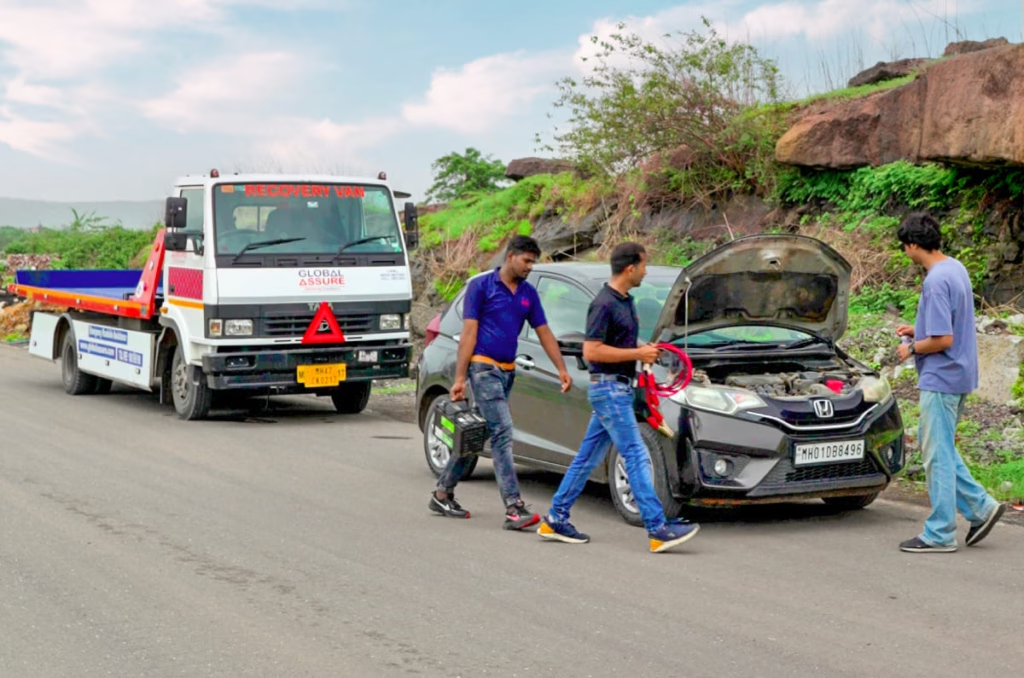
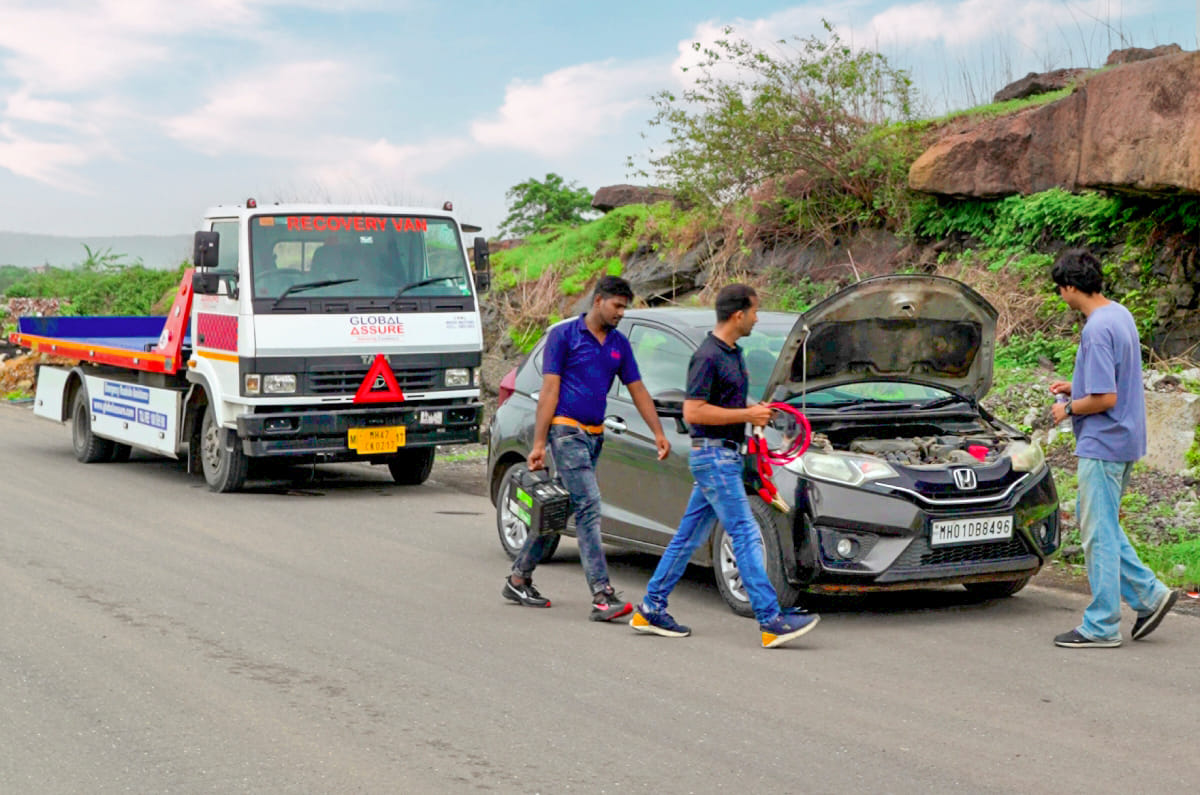
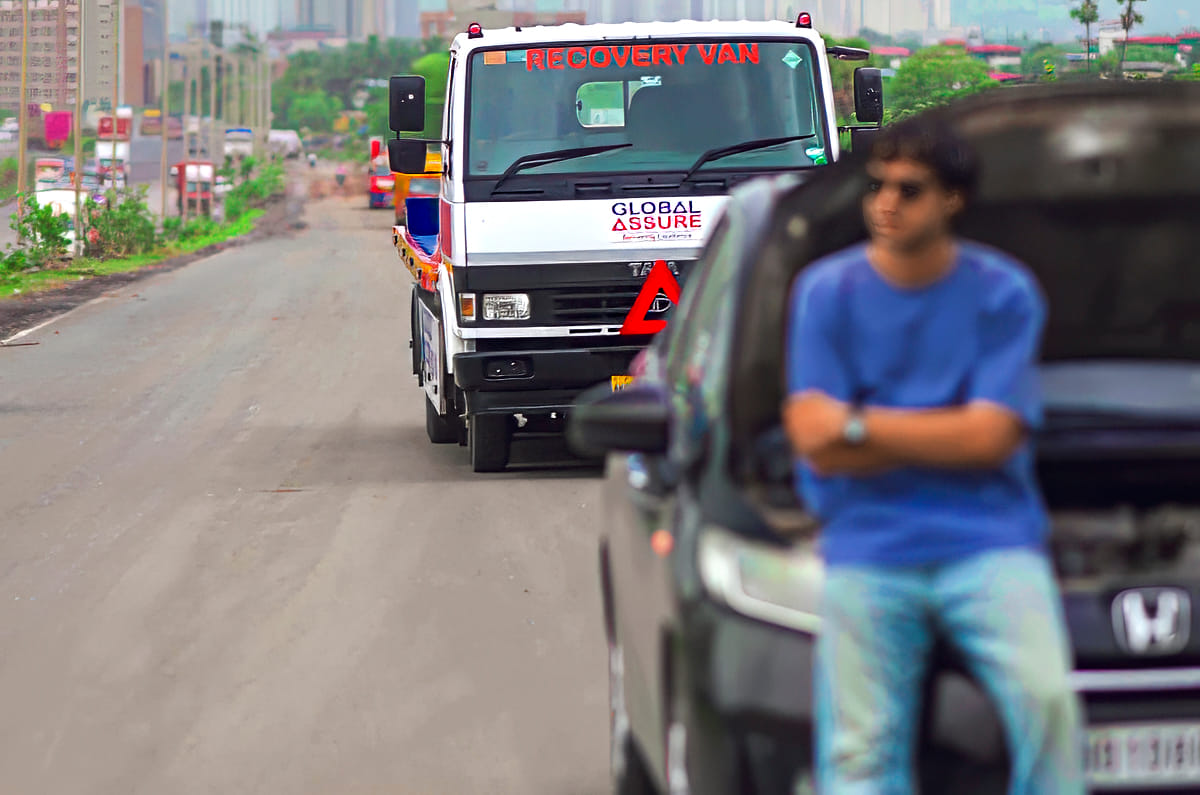
A car breaking down is inconvenient at the best of times. But on a busy commute, during a road trip or when you’re already running late, the problem isn’t simply that the car has stopped moving. It’s everything that comes next: finding help, waiting for it to arrive and wondering how long you’ll be stranded.
That’s where roadside assistance can make a real difference. And with its 30-Minute Service Assurance, Global Assure is putting a sharper focus on one of the biggest pain points of a breakdown: the wait.
Response Time
A flat tyre or drained battery might be relatively straightforward to address, but being stuck on the roadside can quickly become stressful. Plans get disrupted, schedules slip, and every additional minute spent waiting adds to the frustration.
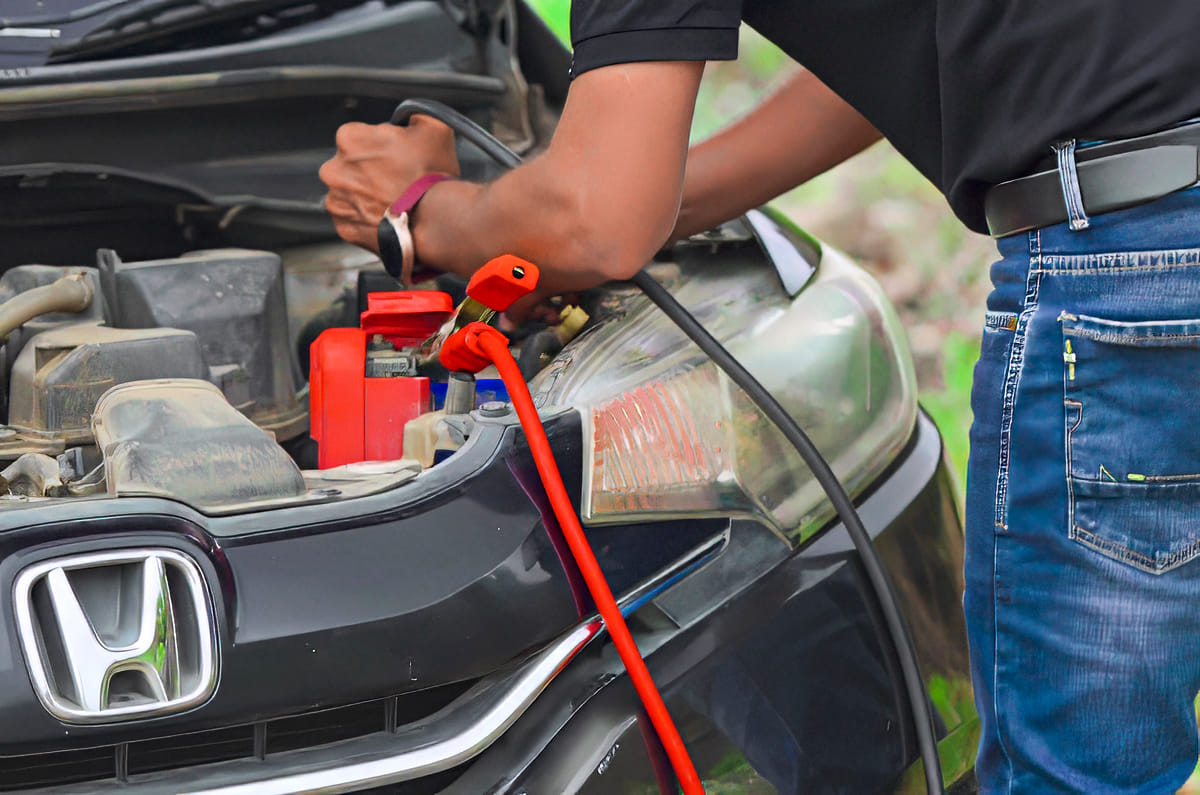
Global Assure’s approach is built around reducing that uncertainty. Once roadside assistance is called, its own fleet of trained technicians is deployed, with the appropriate equipment to assess and address the problem. Its 30-Minute Service Assurance is supported by strengthened field operations, an expanded service footprint and real-time service tracking capabilities. The service is currently available in 15 cities including Delhi, Mumbai, Bengaluru, Chennai, Kolkata, Hyderabad, Jaipur, Lucknow, Vadodara, Ahmedabad, Indore, Pune, Surat, Dehradun, and Chandigarh.
30-Minute Service Assurance
The advantage of having dedicated technicians and service vehicles is that assistance isn’t simply about arranging a third party and hoping for the best. The aim is to get the right help to the vehicle and start resolving the problem as quickly as possible. Depending on the situation, this can include assistance for a flat tyre and drained battery, as well as fuel assistance, towing and vehicle recovery. Global Assure also offers support for EV-related breakdowns, recognising that the roadside assistance landscape needs to evolve alongside the changing vehicle market.
On Time, Everytime
The 30-Minute Service Assurance is ultimately about putting a tangible number against response time. For someone stranded at the roadside, knowing that help is expected within 30 minutes can make the experience considerably less uncertain. It also changes the role of roadside assistance. Rather than being something you think about only after a breakdown, it becomes part of the ownership experience. It’s like a safety net that is designed to help you get back on the move with minimal disruption.
Back On The Move
No roadside assistance can prevent a breakdown from happening. What it can do is reduce the impact when one happens. By combining its own trained technician fleet with a 30-minute service assurance, strengthened field operations, real-time service tracking and support across a range of common roadside emergencies, Global Assure is looking beyond simply fixing a stranded vehicle. The objective is to give motorists something just as valuable: their time back.
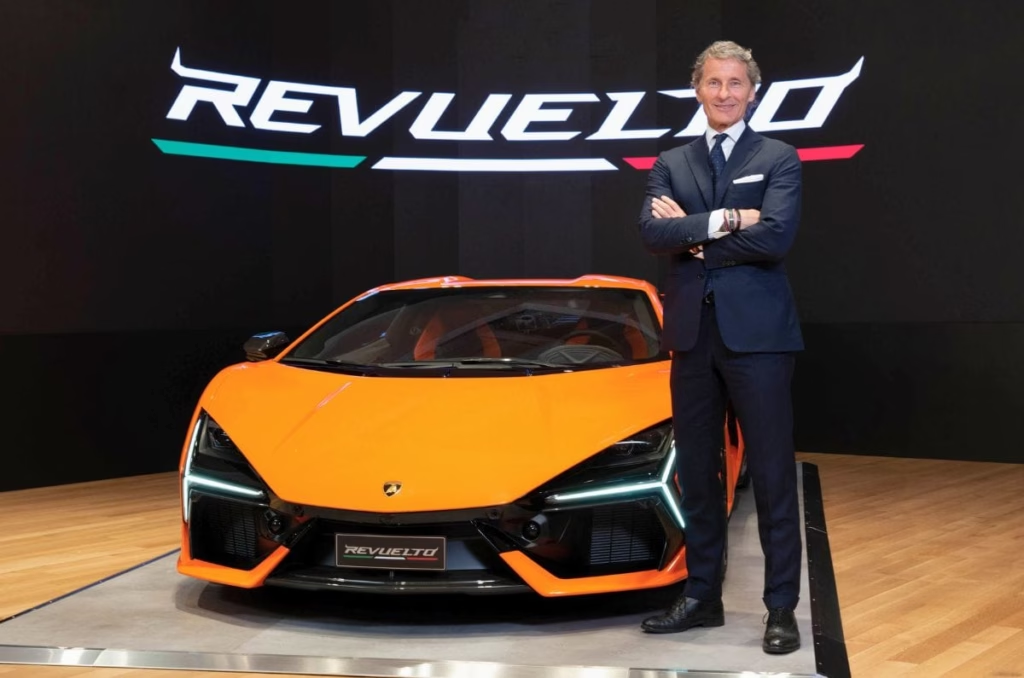
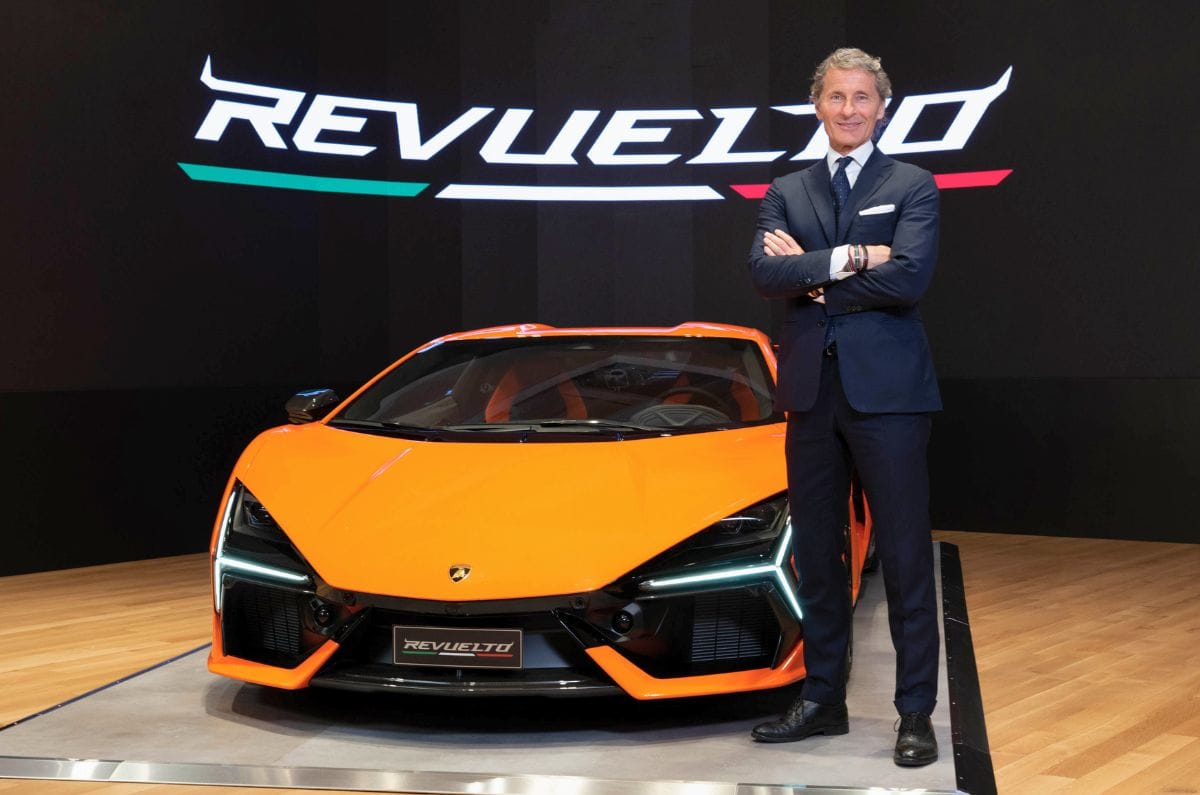
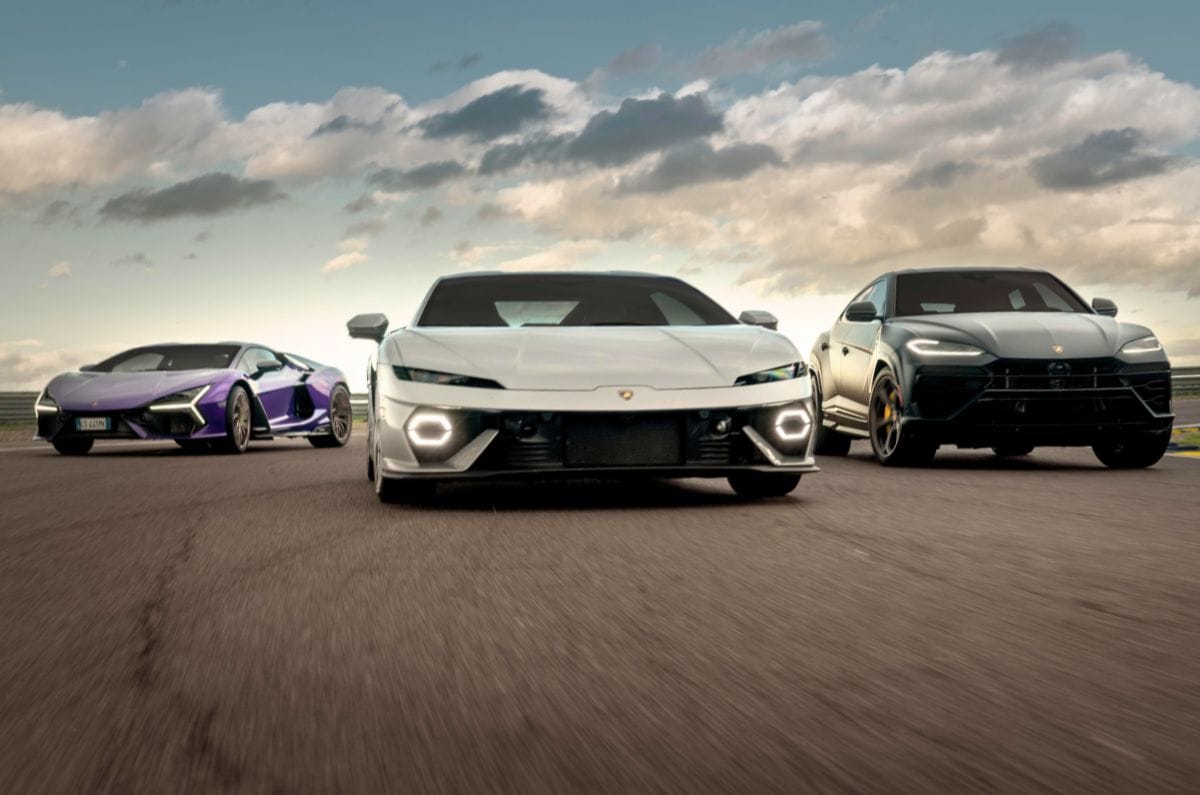
On the sidelines of the world premiere of the Lamborghini Revuelto SV, the brand’s president and CEO, Stephan Winkelmann, spoke to journalists about the new flagship hybrid supercar, the move away from EVs and even the Indian market.
India-EU FTA hybrid uncertainty could pose a problem
A hot topic at the moment is the India-EU free trade agreement (FTA) soon to come into effect, which promises to make imported cars a whole lot more affordable. While that’s great news for most super-sportscar brands, it’s not so for Lamborghini, as the India-EU FTA offers no clarity about benefits for hybrid cars, which make up the Italian brand’s entire range.
“The decision was made, I think, at the beginning of the year to lower the import taxes, but not for PHEVs,” said Winkelmann, responding to a question from Autocar India. “So, we see a drop in the market due to the uncertainty which is created by this. And there is still not enough clarity.”
While other brands do have some pure-ICE models, the prices of which are already being reduced ahead of the FTA’s introduction, at present, hybrid and EV models continue to attract the full import duty as before. Having moved away from pure-ICE models entirely, Lamborghini unfortunately bears the full brunt, at least for now.
Lamborghini’s current line-up features only hybrid models.
“I think this will come only in four years’ time. And this, for sure, is not helping the decision to buy a plug-in hybrid car, which is coming from [Lamborghini].”
Can ethanol-blended petrol work in Lamborghinis?
Regarding another hot topic in our country at the moment, Winkelmann responded to another question from Autocar India, suggesting that given the uncertainty around traditional fuels, blended biofuels were not off the table for Lamborghini.
“In Europe, we are extremely positive about it and are going to make a decision on biofuels soon,” he said, highlighting that any decision around the matter would have to start from its home region. “For us, this is a very important market, as you might know.”
He was quick to point out that the quality of fuel is what’s most important for any of Lamborghini’s models and their high-performance plug-in hybrid powertrains. While ethanol blending does increase the RON (Research Octane Number) of the fuel, it also depends on the petrol it is being blended with, which varies from market to market.
“They already exist, those fuels, but it always depends on how good they are. If you have a low octane, then you cannot use them for our type of cars. You have to have a minimum of 95 octane, and this is sometimes, with the few fuels around the globe, not available,” he stated, reiterating that such a decision would have to be globally compatible. “I don’t know exactly how this is in India.”
Revuelto SV arrives before Revuelto Roadster
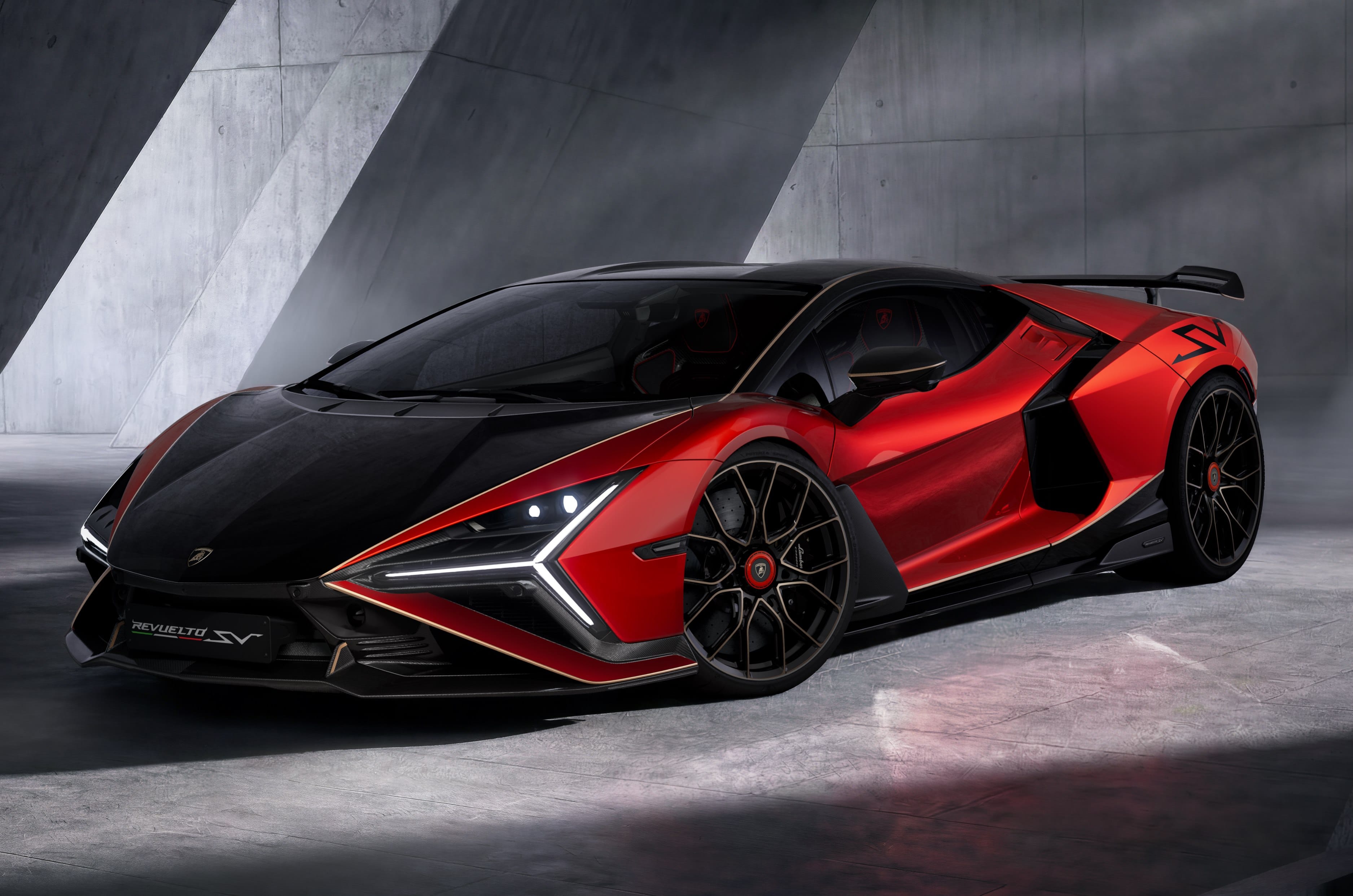
As for the main event, Lamborghini has just revealed the Revuelto SV, the hotter version of its flagship V12 PHEV supercar, limited to 1,963 units. With increased performance, redone suspension and far more advanced aerodynamics, its goal is to surpass the Revuelto to become the highest-performance Lamborghini of them all. SV models date all the way back to the Miura SV from 1971, but this is the first time an SV has been launched so soon after the standard model, arriving before even a convertible Roadster model.
“I have to tell you that the coupe was and is so successful that it was exceeding all our expectations, even the most positive ones,” Winkelmann said in response to Autocar India. “So, we decided to go immediately from Revuelto to Revuelto Superveloce. And the first feedbacks we are getting on the Superveloce are really outstanding.”
The additional 50hp is extracted from an upgraded battery and motor rather than from the V12 engine, which Lamborghini says was intentional, as it allowed for better control and faster distribution of the power.
“We use the battery to create more boost and a better distribution of power output than only with the internal combustion engine. Also, together with the torque vectoring, the feeling of driving a car at speed is very much improved in comparison with the [purely] internal combustion engine guise of the past generations,” Winkelmann said.
Lamborghini customers don’t want EVs
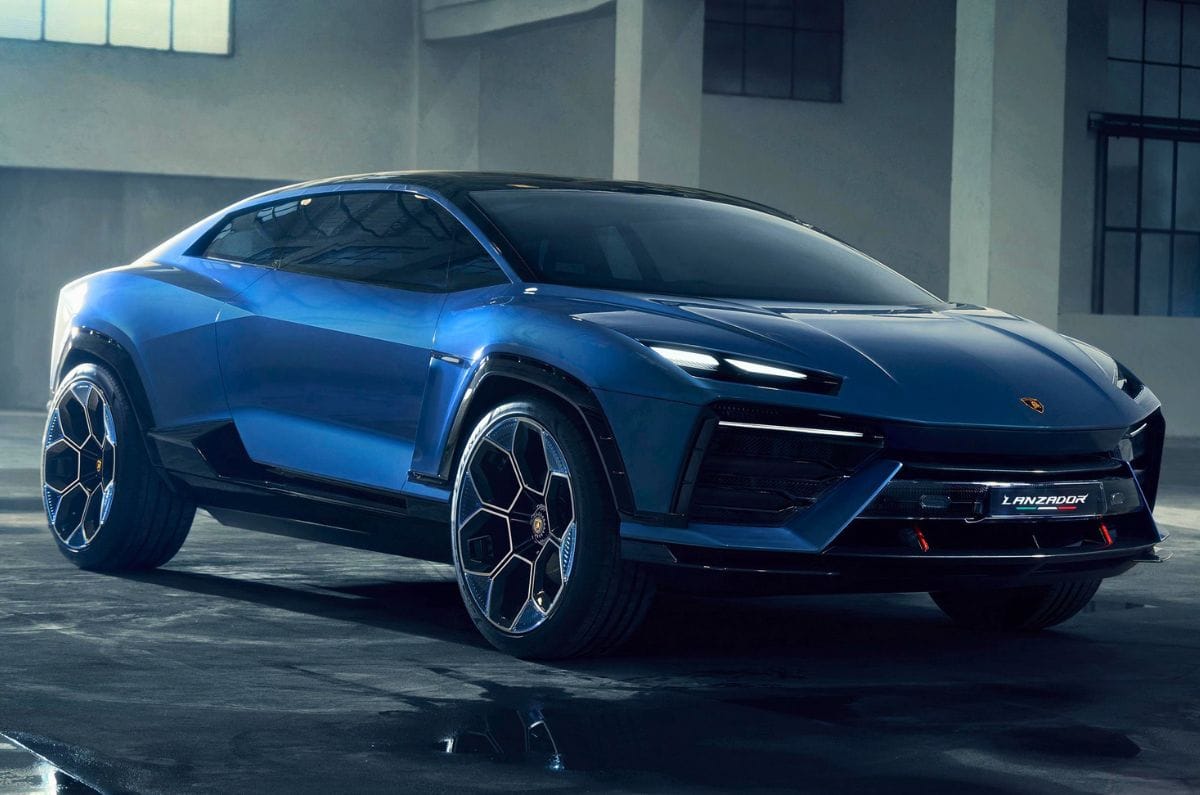
That said, the engine is essential. Not long before rival Ferrari unveiled its first EV, the Luce, Lamborghini announced its decision to delay its own first electric offering, the Lanzador, which was scheduled to launch before 2030. The Lanzador – also a low-slung four-seat crossover – will now get a hybrid powertrain instead, as an EV would simply not be emotional enough for Lamborghini customers.
“Why? Because the customer behaviour towards what we were proposing at the beginning of this decade has changed; they are not adopting electric cars,” said Winkelmann. “I’m talking about our type of customers, because you don’t buy a Lamborghini because you need a Lamborghini or you need a car; you buy it because you want to fulfil your dreams. We are not selling mobility; we are selling emotions.”
He also stated that, Indian regulations aside, the brand’s all-PHEV line-up has proven to be a successful approach, at once helping meet prevailing and upcoming emissions regulations while also retaining the emotional appeal of an ICE engine that’s core to the brand.
“You have the sound, the vibration of an internal combustion engine, but you also have all the advantages of the new technology,” he said. “The combination of battery and internal combustion engine for us is not a transition period, but it’s really something which is here to stay.”
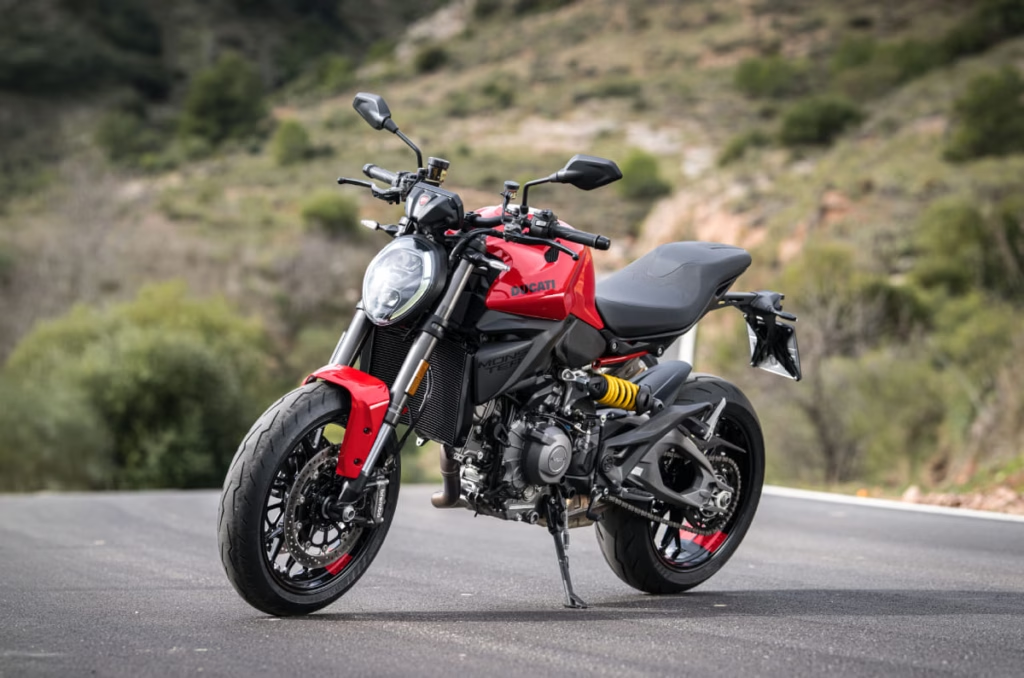
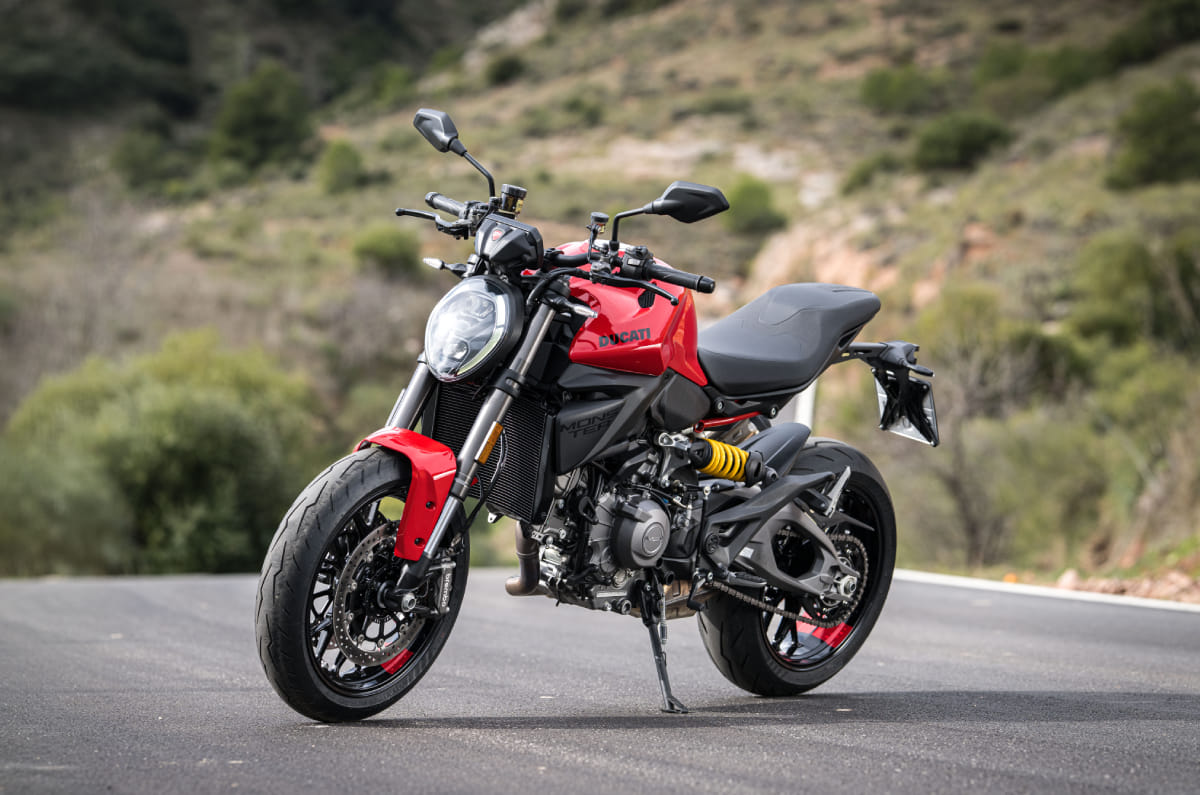
The Ducati Monster V2 is the most significant update to the Monster nameplate in several years. It brings a new engine shared with the Panigale V2, Streetfighter V2 and Multistrada V2 families, a new monocoque chassis, and some major design changes, including the return of the muscular big-tank look that defined earlier-generation Monsters. Here are answers to some of the most commonly asked questions about it.
What is the price of the Ducati Monster V2 in India
The Ducati Monster V2 is available in two variants – Monster and Monster+ – across three colour options. The Monster starts at Rs 13.99 lakh for Ducati Red and Rs 14.23 lakh for Iceberg White and Sport Livery. The Monster+ adds a headlight cowl and passenger seat cover over the standard model, and is priced at Rs 14.34 lakh for Ducati Red and Rs 14.45 lakh for Iceberg White and Sport Livery. All prices ex-showroom, India.
What engine does the Ducati Monster V2 use?
The Ducati Monster V2 is powered by a new 890cc, liquid-cooled V-twin engine producing 111hp at 9,000rpm and 91.1Nm at 7,250rpm – the same engine used in the Panigale V2, Streetfighter V2 and Multistrada V2. The engine features variable valve timing, which Ducati says allows 80 percent of peak torque to be available between 4,000 and 9,000rpm.
What features does the Ducati Monster V2 have?
The Monster V2 comes with a 5-inch TFT display, full-LED lighting, a bidirectional quickshifter, dynamic and self-cancelling indicators, and a comprehensive electronics package including ride modes, power modes, traction control, wheelie control, engine brake control and cornering ABS. Cruise control, TPMS, turn-by-turn navigation and heated grips are available as accessories.
What is the seat height and weight of the Ducati Monster V2?
The Ducati Monster V2 has a seat height of 815mm, and the seat is also narrower, making it easier to get your feet on the ground. For riders who need more accessibility, Ducati offers a 795mm low seat as an accessory, and an even lower 775mm seat that requires a lowering suspension kit. Wet weight without fuel is 175kg.
How does the Ducati Monster V2 compare to the older Monster 937?
The most significant change is the engine. The 890cc V2 replaces the 937cc unit and delivers identical peak power of 111hp, but torque drops slightly by 2Nm to 91.1Nm and now arrives 750rpm later in the rev range. The new monocoque chassis replaces the previous aluminium frame and helps shed 4kg from the kerb weight. The design returns to the bigger, more muscular tank look associated with older-generation Monsters, while the TFT display grows from 4.3 inches to 5 inches and the quickshifter has been updated.
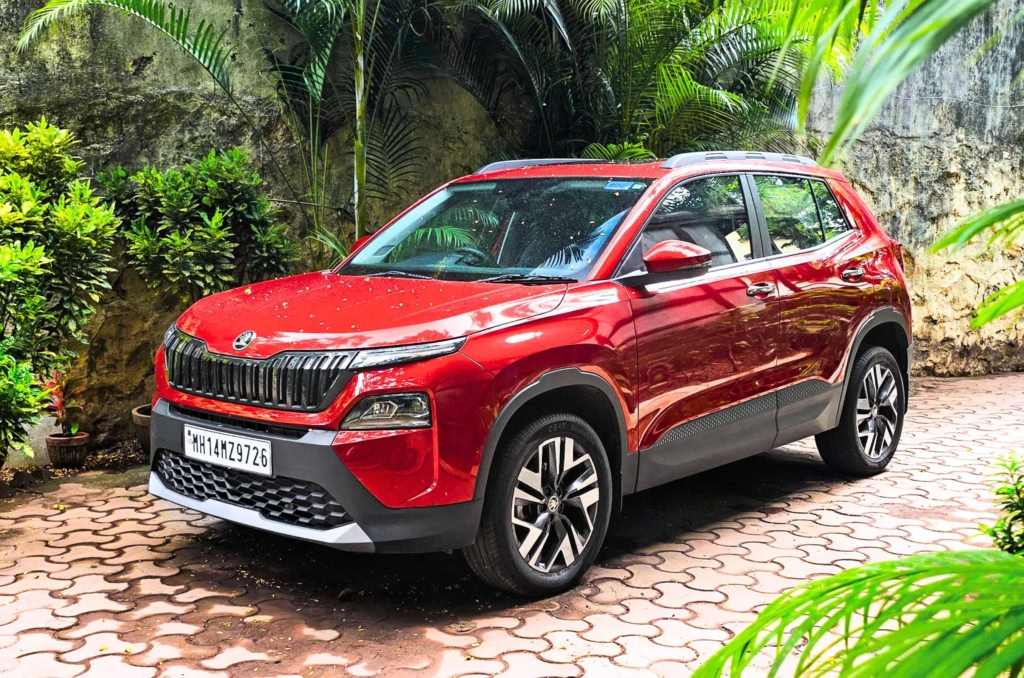
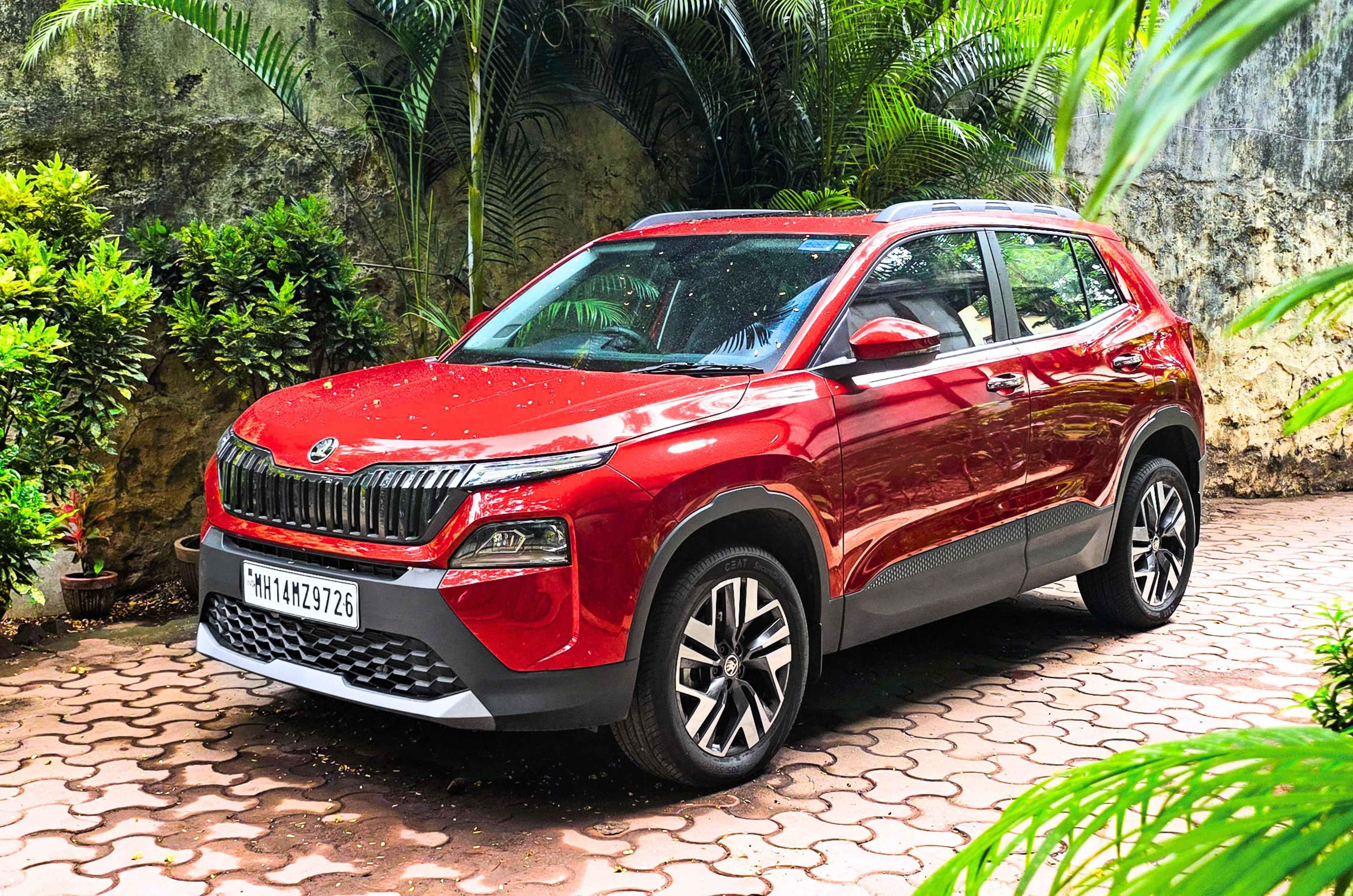
You could argue there was no better long-term test for the Skoda Kylaq than being driven 19,351 kilometres from India to Czechia. However, for those of us who can’t go on a two-month-long adventure full of culture, cuisine and continent-crossing, here’s what it’s been like trudging through Mumbai traffic for the last few weeks.
I’ve been fascinated by the Kylaq since its launch in early 2025, and apart from a few quick peeks at it when it came in for other shoots, I had never really driven one before this. So, now that it’s finally joined the Autocar India fleet, I’ve been more than happy to take it on for its first couple of weeks. And just as a proposition alone, I’m amazed that Group partner Volkswagen didn’t immediately jump on this idea and do a compact SUV in parallel. Guess we’ll just have to wait until 2027.
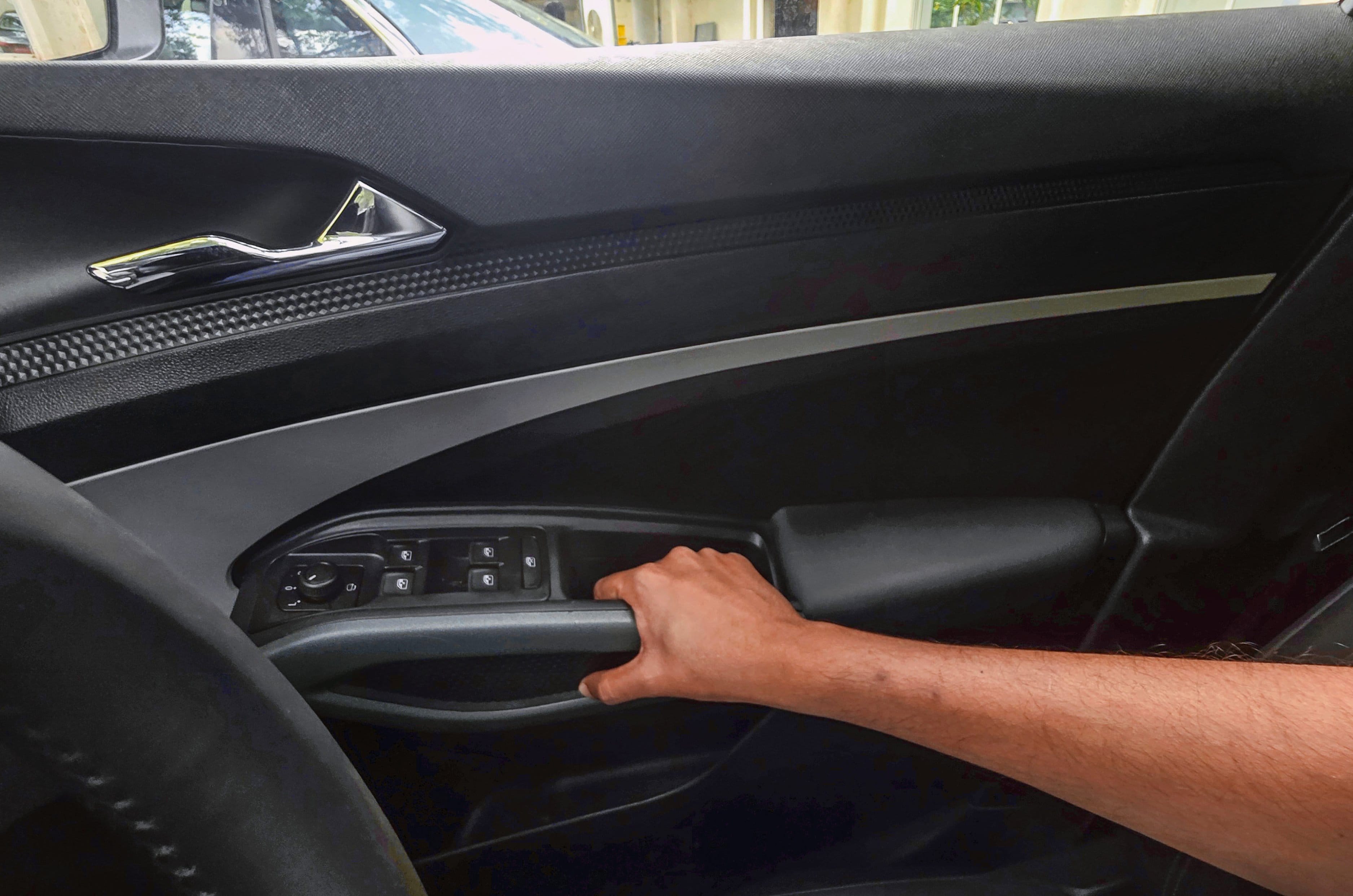
Feels reassuringly solid, from the door shut to the driving dynamics.
The formula is simple enough – a Kushaq, but slightly smaller and using only the lesser 1.0-litre engine. But the more time I spend in here, the more I wonder if there’s any need for a Kushaq 1.0 TSI at all – this thing offers pretty much everything it does. At no moment does it feel lesser in any way – same step up into the cabin, same solid slam on door shut, same high-set driving position. And features? Apart from the Kushaq’s newly added panoramic sunroof, bigger driver’s display and rear massaging seats, it has everything else!
Severe turbo lag followed by sudden burst of power frustrating in stop-go traffic.
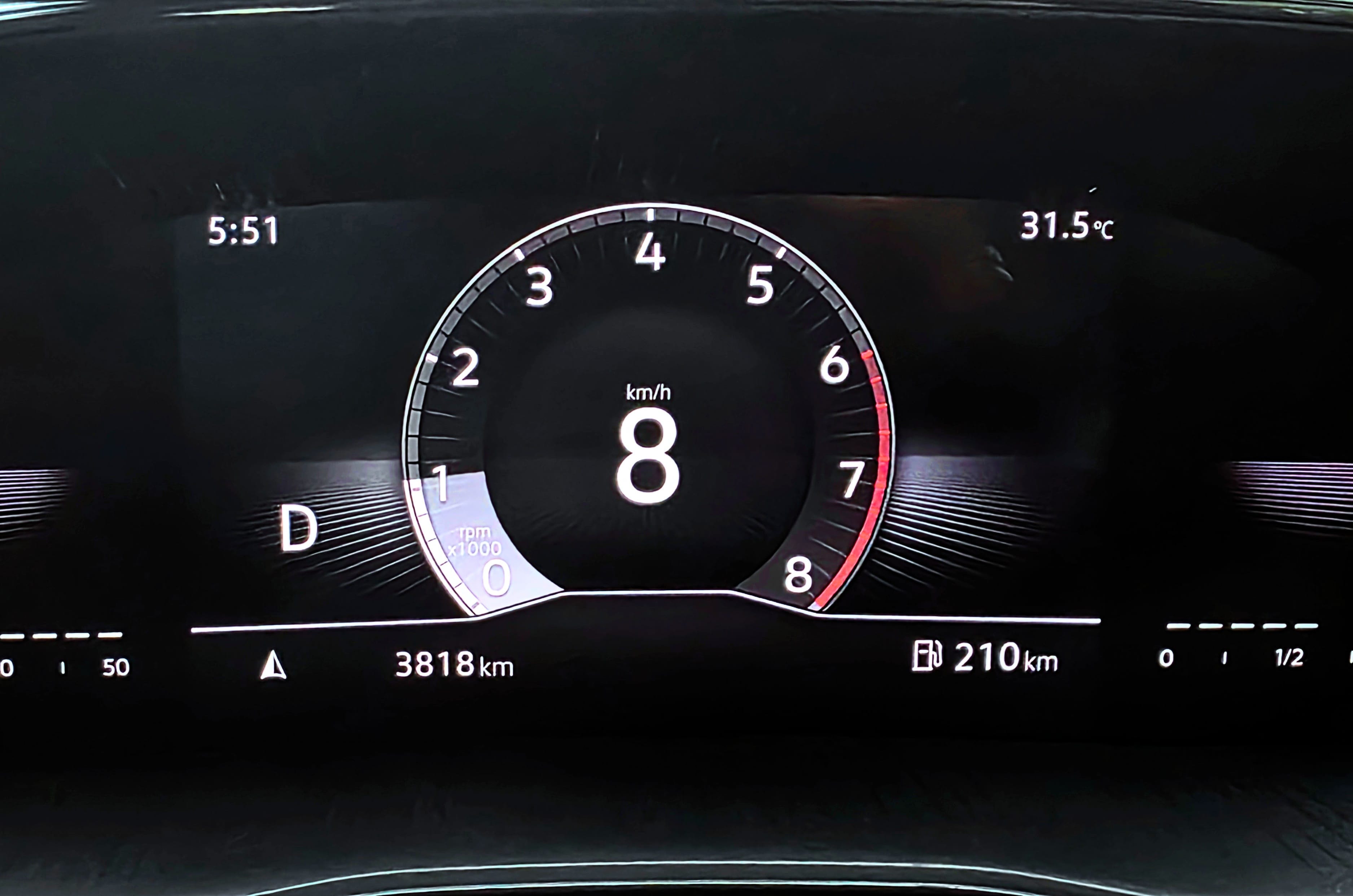
There are two mechanical changes that I hope make their way to the Kylaq soon, though. The first is the 8-speed gearbox, which should help mask one of this car’s shortcomings – turbo lag. The older 6-speed AT in our Kylaq may be smooth while you’re on the move, but at crawling speeds, where I spend most of my time, it can never figure out if it needs to be in first or second, and sometimes changes its mind at the worst possible moment. If it chooses first, it will lurch you forward aggressively, but if it chooses second, it traps you in the dreaded lag zone. Off boost, this 999cc engine feels overwhelmed by the Kylaq’s 1,255kg.
Single-digit fuel economy unexpected, unacceptable in a compact car.
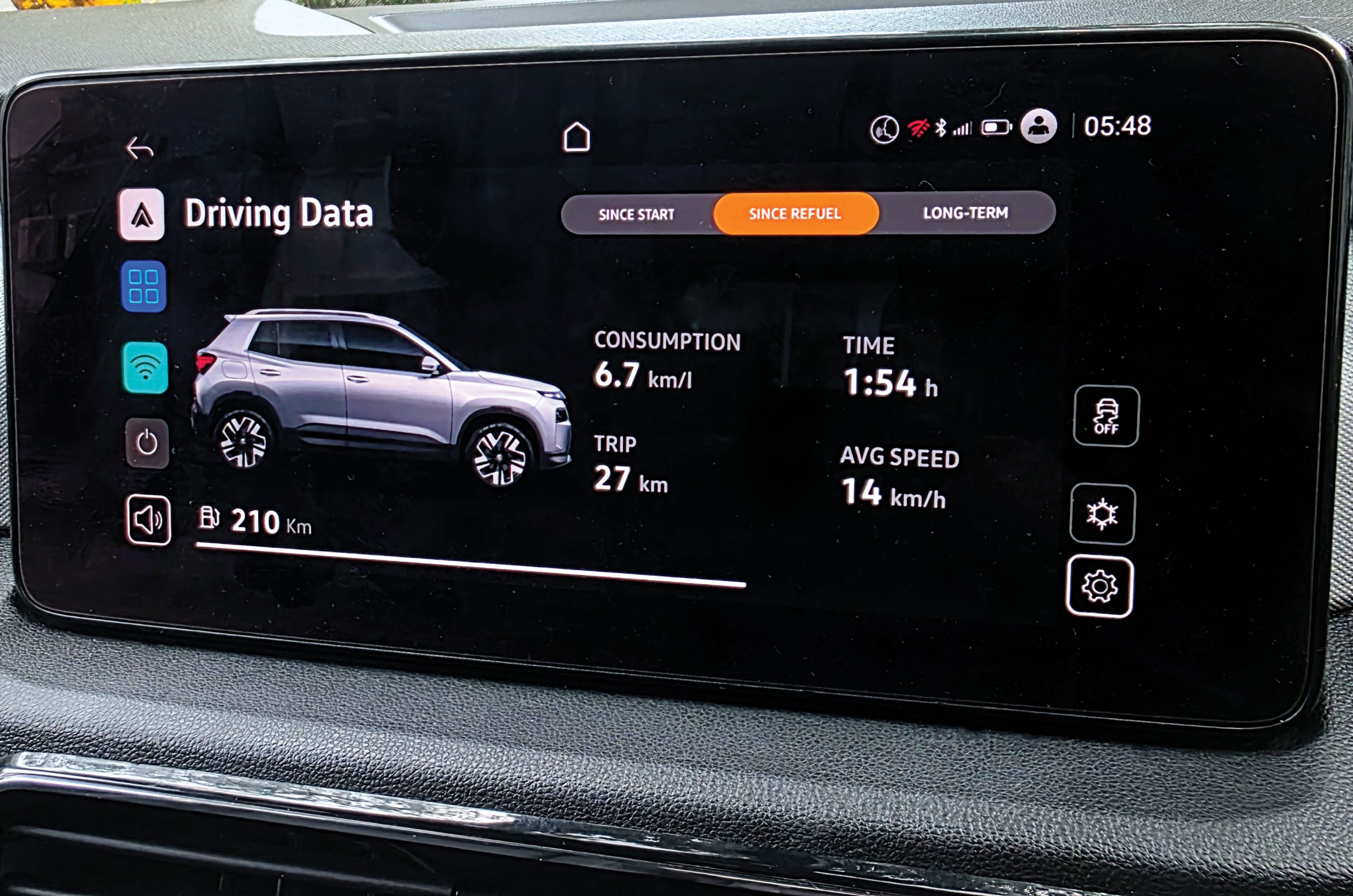
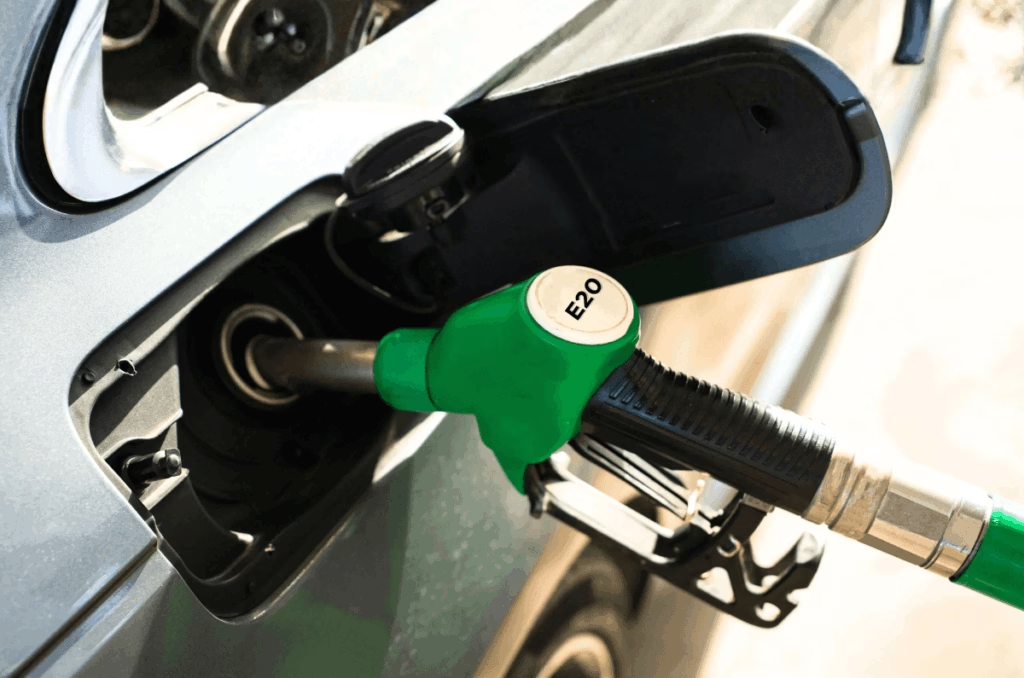
Frustratingly jerky movement aside, where this indecisiveness has really hurt more is my wallet. The constant shifting, switching on and off boost and general inconsistent progress have hit the fuel economy very hard, and I struggle to get past 8kpl on my admittedly slow daily commute. Some of it might be down to the sudden advent of E20 fuel, but eight kilometres per litre in a compact car is criminal. I used to average 10kpl in our 1.5-litre TSI DSG Slavia a few years ago, and the team has been getting more out of our 2.0-litre TSI VW Tayron. So, it’s really down to an overstressed engine and a clumsy gearbox.
The other mechanical change is far less of a problem, and that’s the AC. While this still uses the fixed-geometry compressor from the original Kushaq, it’s a smaller car, so cooling the cabin is rarely an issue, and I drove it through at least one week of our awful heat wave. The thing is, you can feel it’s working overtime to keep the cabin cool, and when set to auto mode, the fan stays on full blast for most of my journey. I often find myself turning it down to have a conversation or enjoy my music.
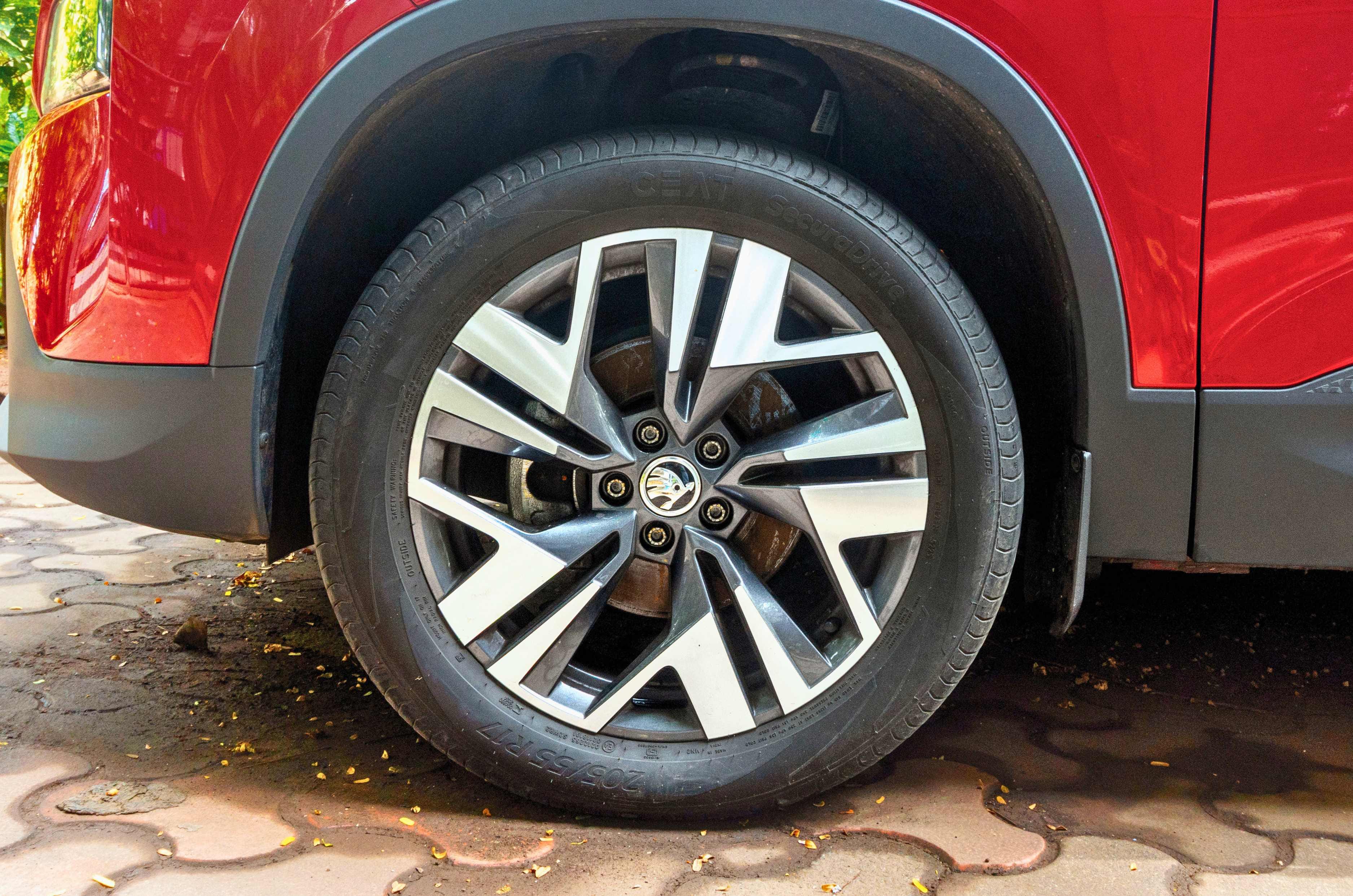
Large, shiny 17-inch alloy wheels do well to enhance Kylaq’s road presence.
These two niggles aside, it’s a very pleasing experience, as you might expect from a slightly smaller Kushaq. There’s a certain toughness to it you don’t find in cars from this segment that almost encourages you to seek out potholes and slam through them. There’s a similar firmness to the ride, but I actually like that; it suits my driving style better than something overly soft and rolly. And I’m also willing to forgive a lot for how good those 17-inch wheels look; a bold choice when most of the segment is still running 16s.
I’ll delve more into the interior, tech and other things in a future update, but in this short first experience, I can see how the Kylaq made it to Prague so comfortably and without incident. It’s compact only in size and is a uniquely European addition to the compact SUV segment.
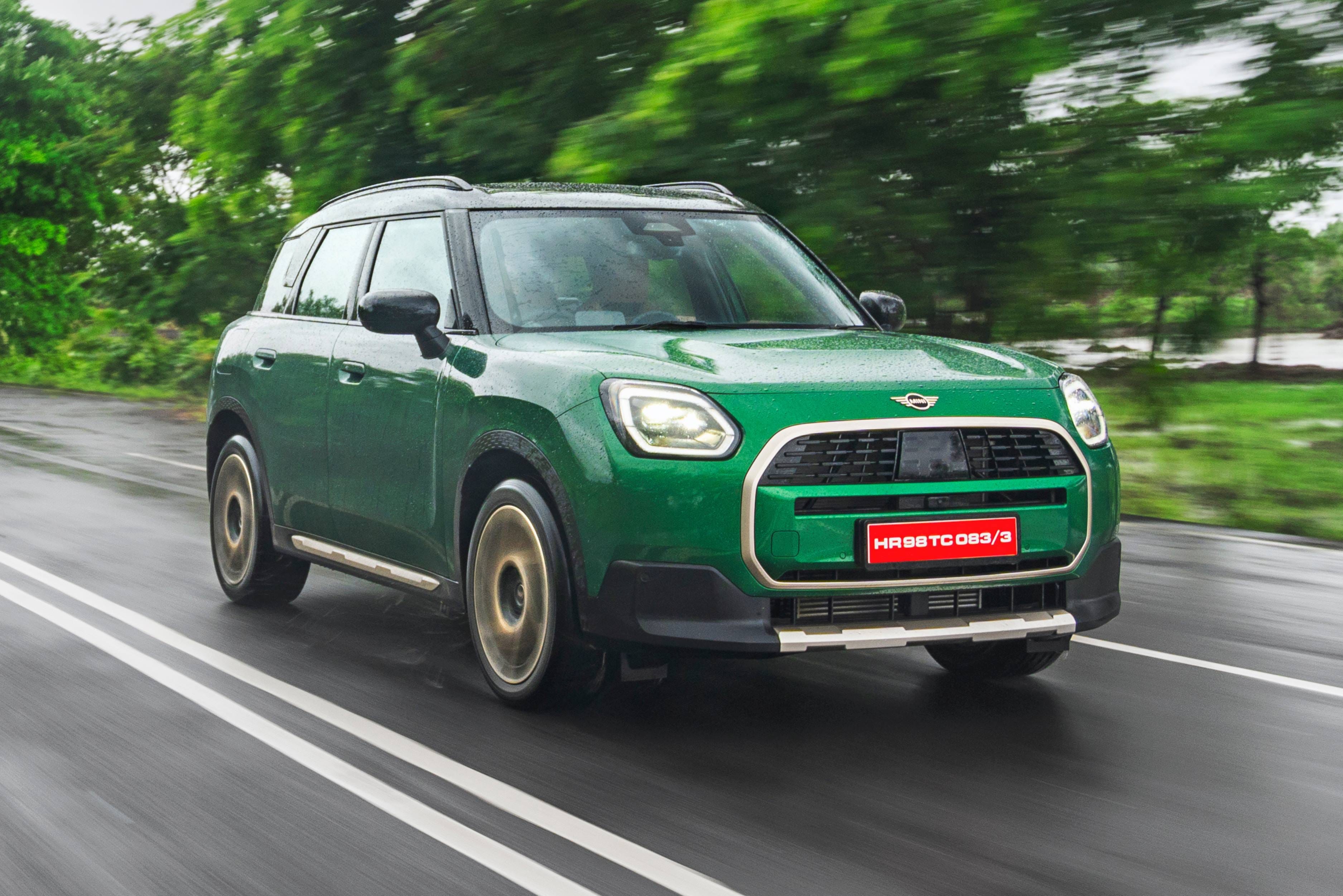
It’s all too easy to start every review of the Mini Countryman with some variation of the phrase ‘the Mini that’s not so mini’, because that’s always been true. The SUV of the Mini range, by definition, is always going to fit that description; the difference this time is that Mini itself is onboard with the idea. Where previously it was always marketed as a Mini first and an SUV second, this time the script has been flipped. No longer content with being a niche offering for the fashion forward, they want this to be your family car, or more specifically your first luxury SUV. You’ll see how the vehicle attempts to achieve that in the paragraphs ahead, but the intent is clear with the price of this locally assembled third-generation ‘U25’ Countryman C, which at Rs 47 lakh (ex-showroom), is bang on par with ‘conventional’ entry luxury SUVs, like the Mercedes-Benz GLA, Audi Q3 and even its own cousin, the BMW X1.
2026 Mini Countryman C Exterior Design and Engineering – 9/10
Clearly prioritises practicality more this time, but retains that Mini charm.
Looks sharper, boxier and visibly larger than before.
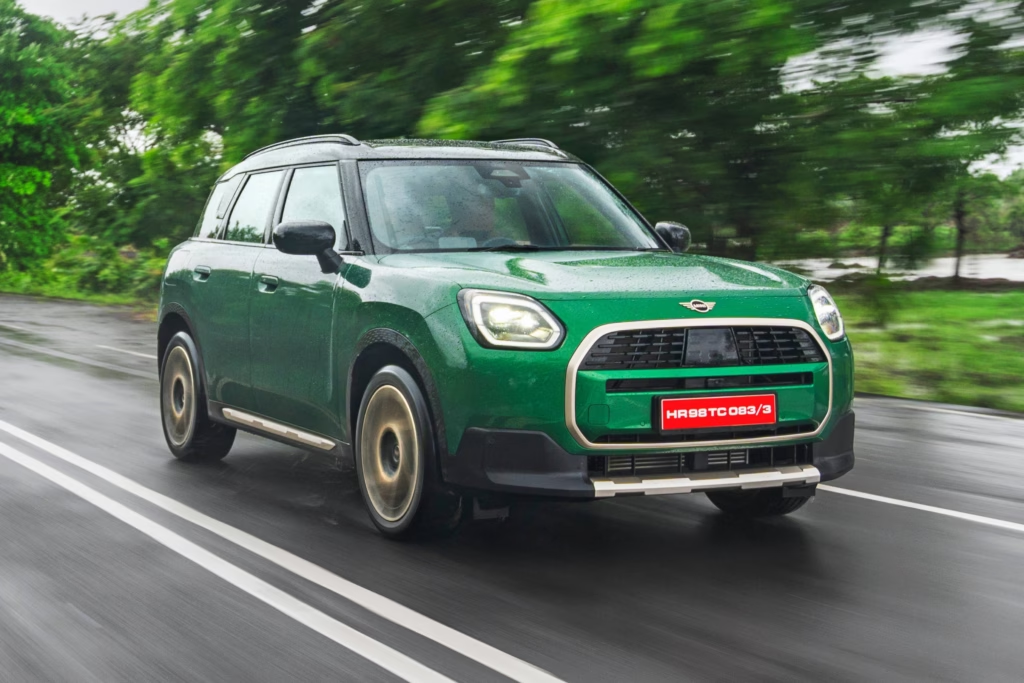
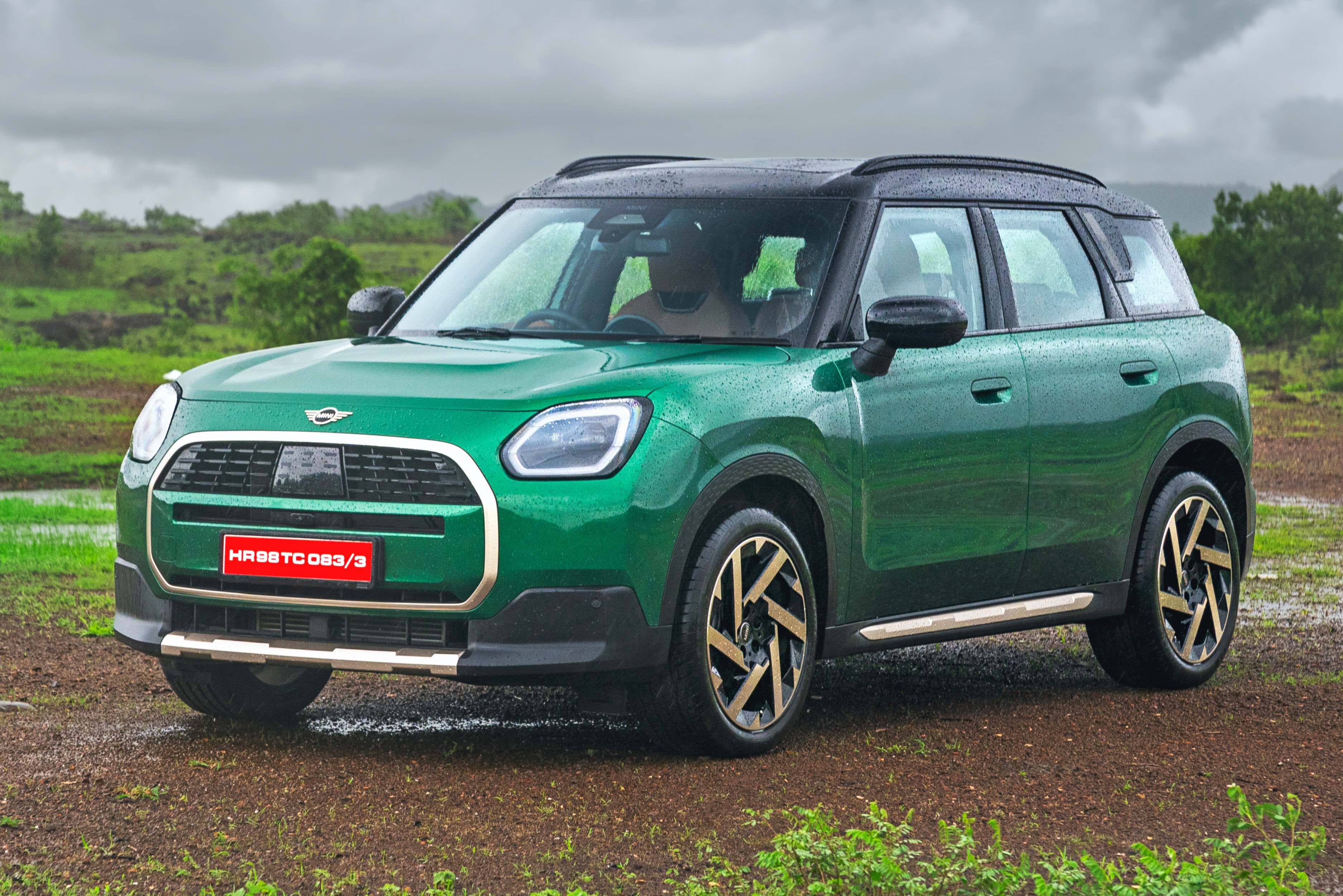
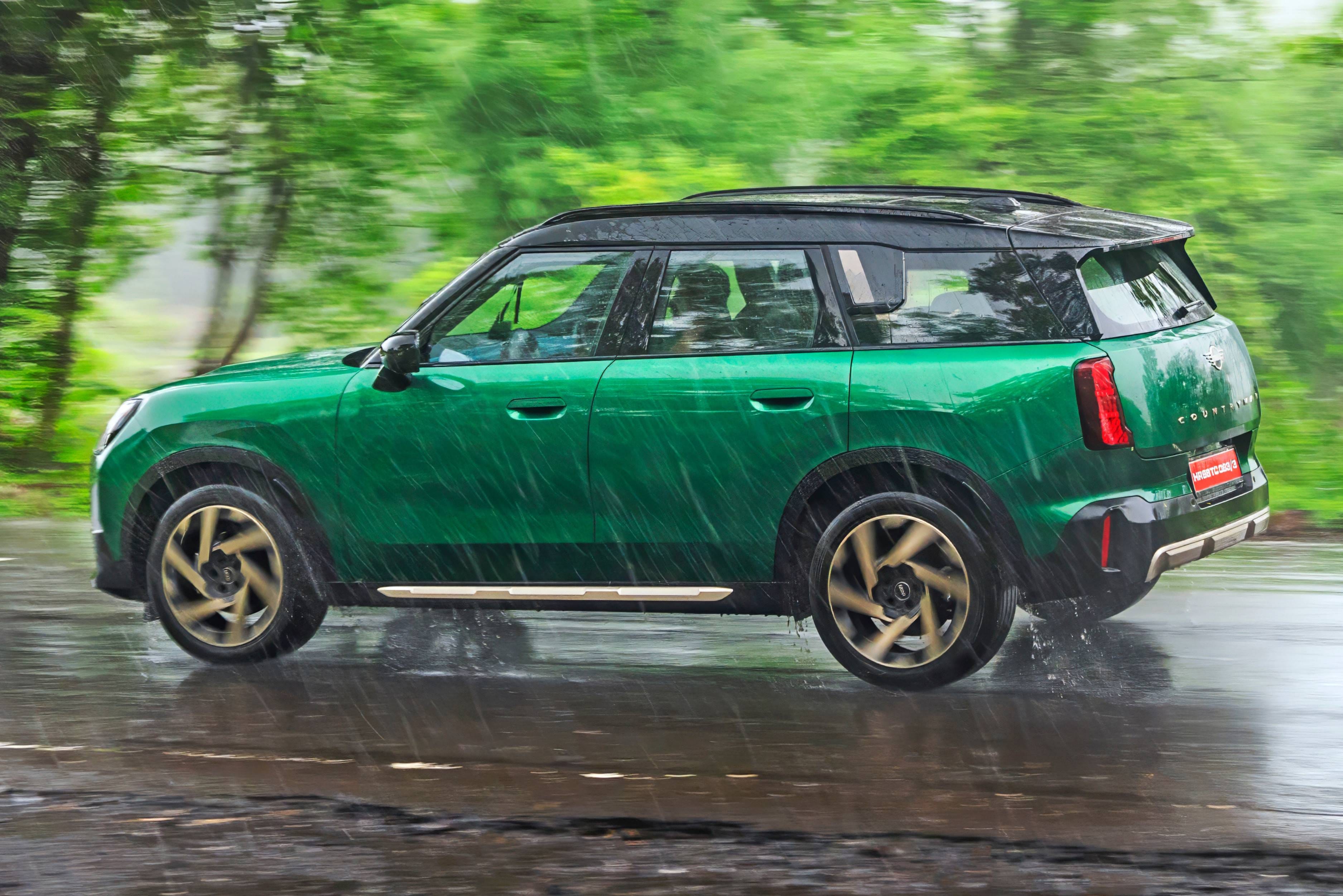
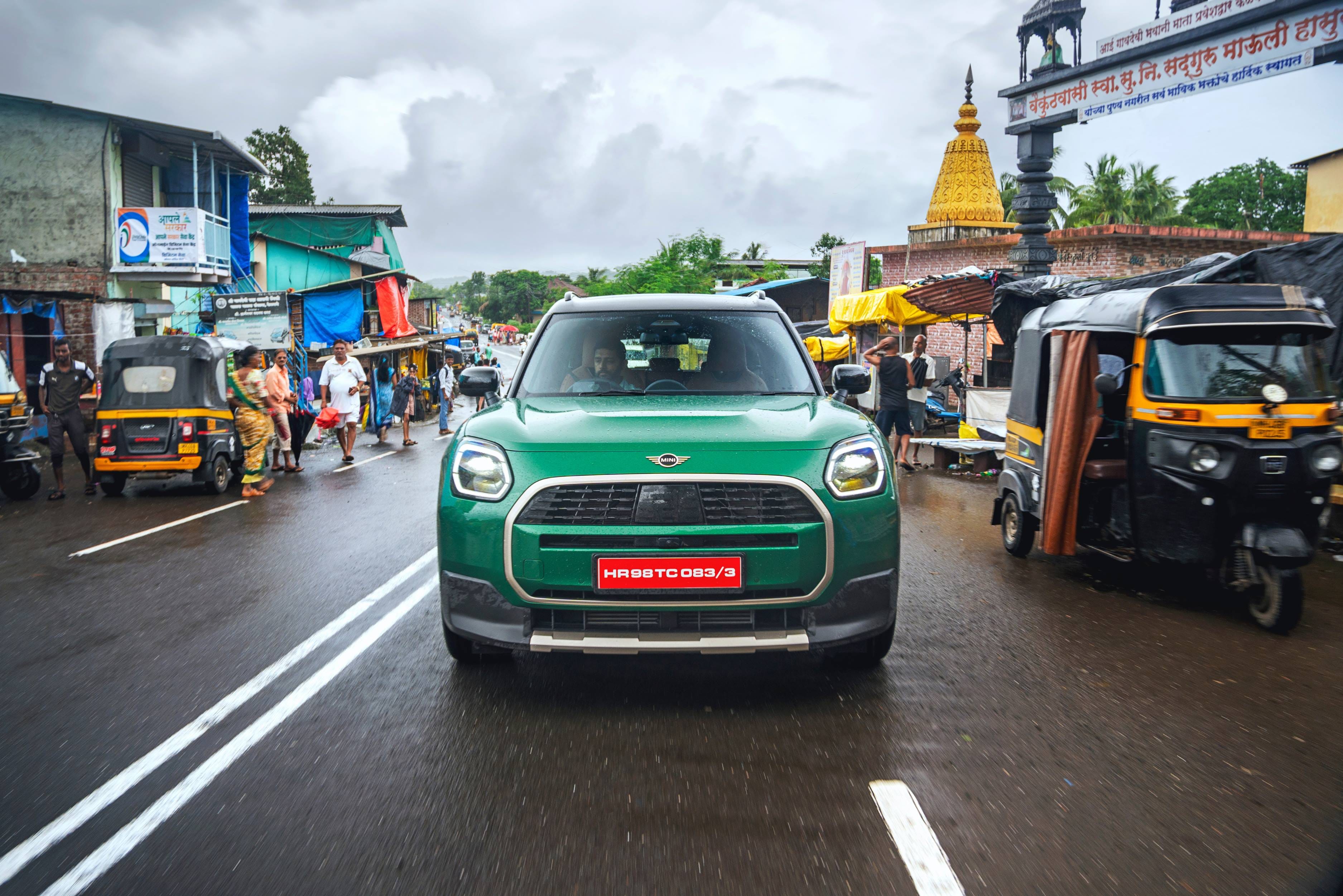
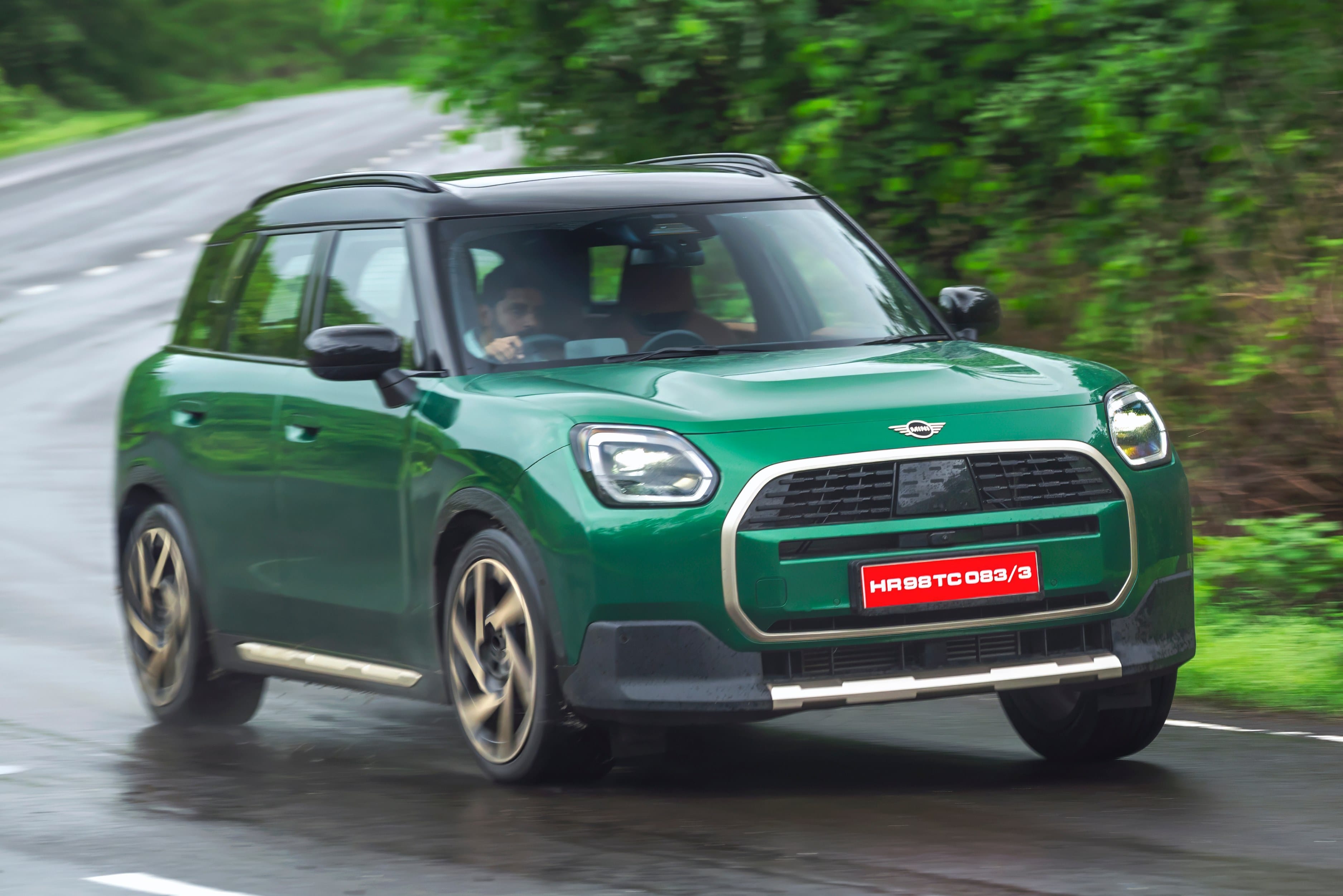
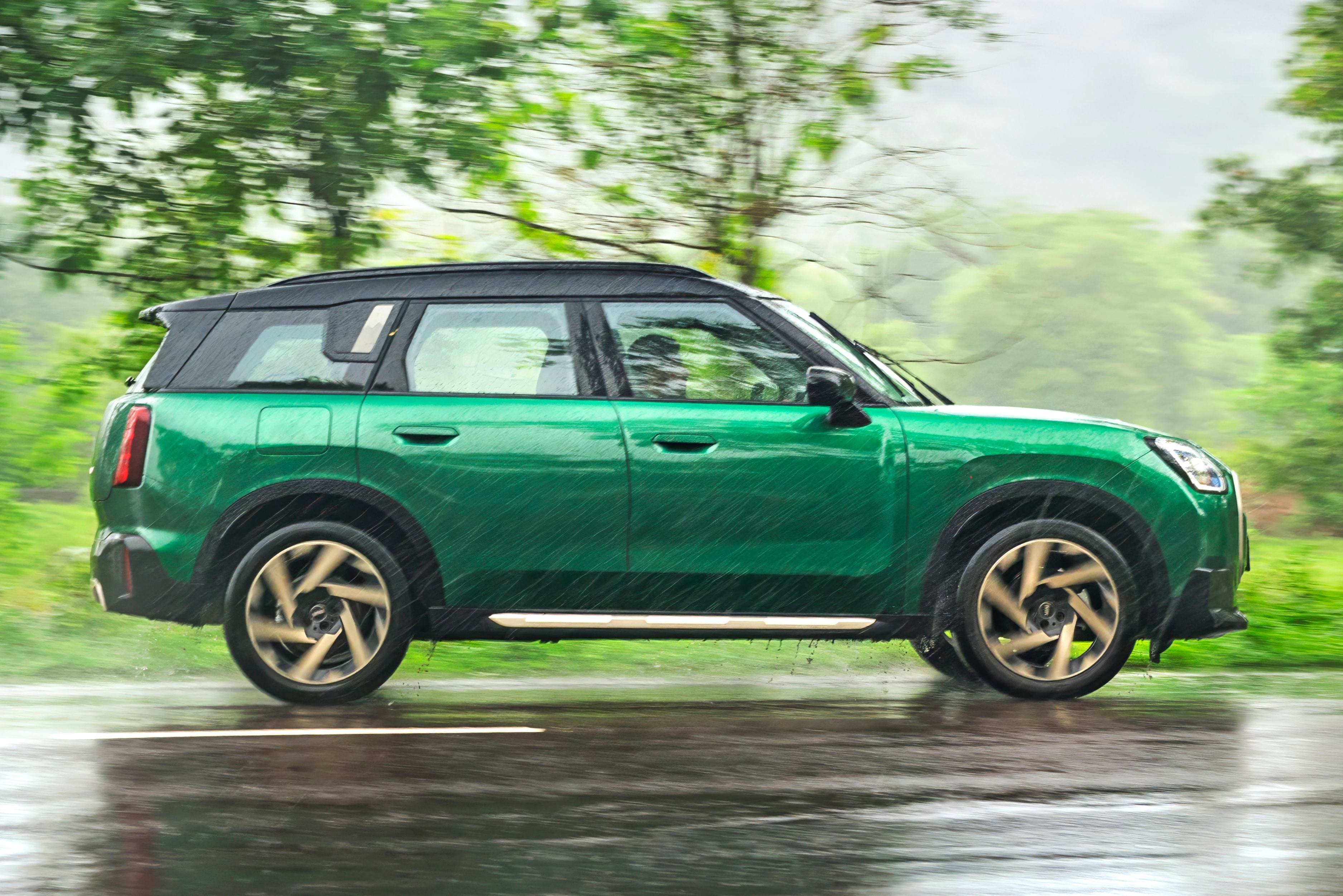
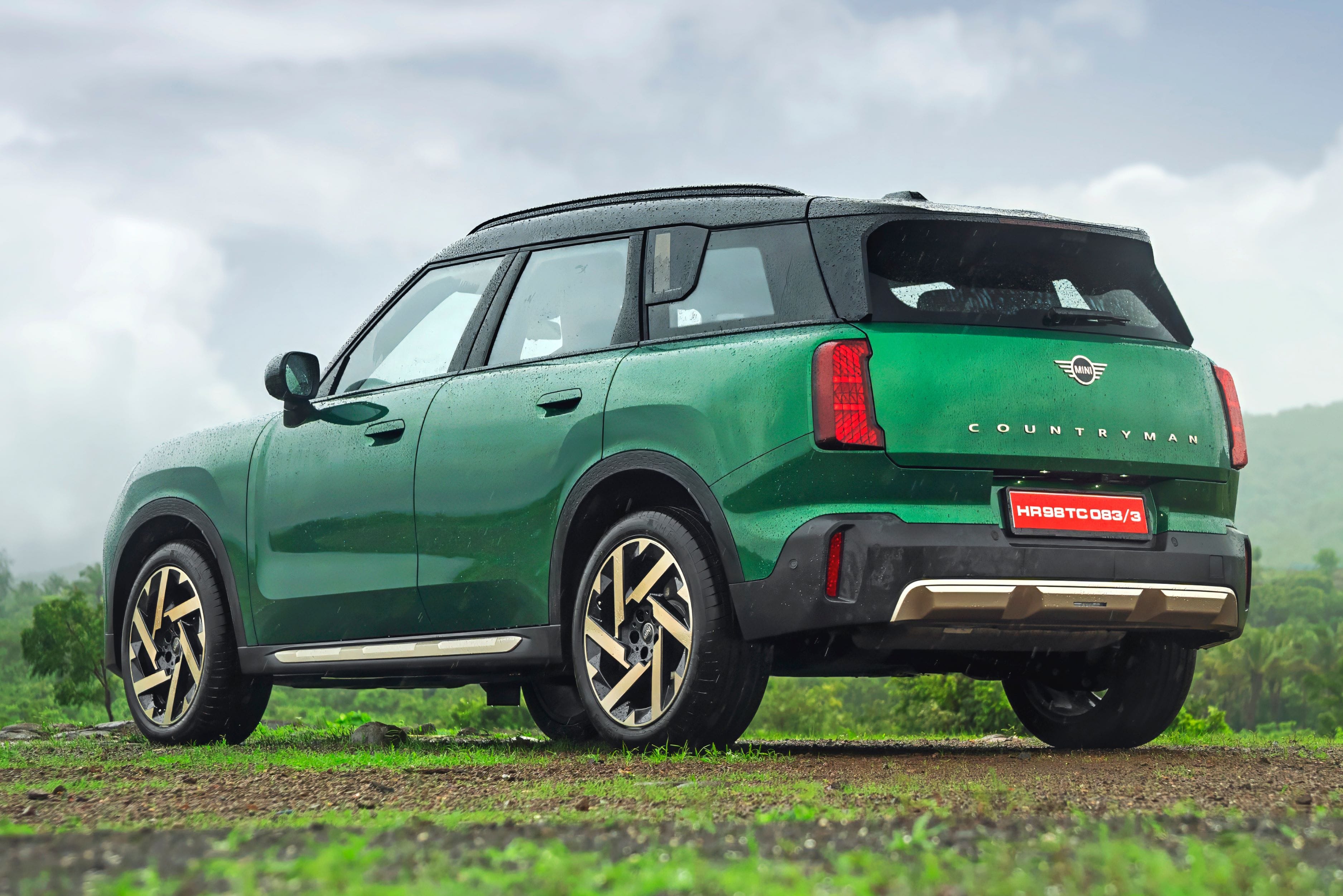
As with every successive generation, the new Countryman has grown (it’s now the tallest SUV in the class, with the highest ground clearance), but this time it has deliberately been made to ‘look’ large as well. Gone are the cartoonish and bulbous features of previous models, and in their place are smaller, sharper, more angular elements. The headlamps, grille and even the roofline have a boxier look, and this points to the greater space inside. It’s more recognisable as a Mini from the rear, where the familiar cues of a contrast roof, ‘Countryman’ lettering on the tailgate and Union Jack tail-lamps are easy to spot.
We’ve seen this look already in the Countryman Electric, and all that’s changed here is the grille that isn’t closed off. We’ve also already seen it on the CBU-imported Countryman JCW All4, which, apart from its more powerful engine and AWD, gets a sportier body kit.
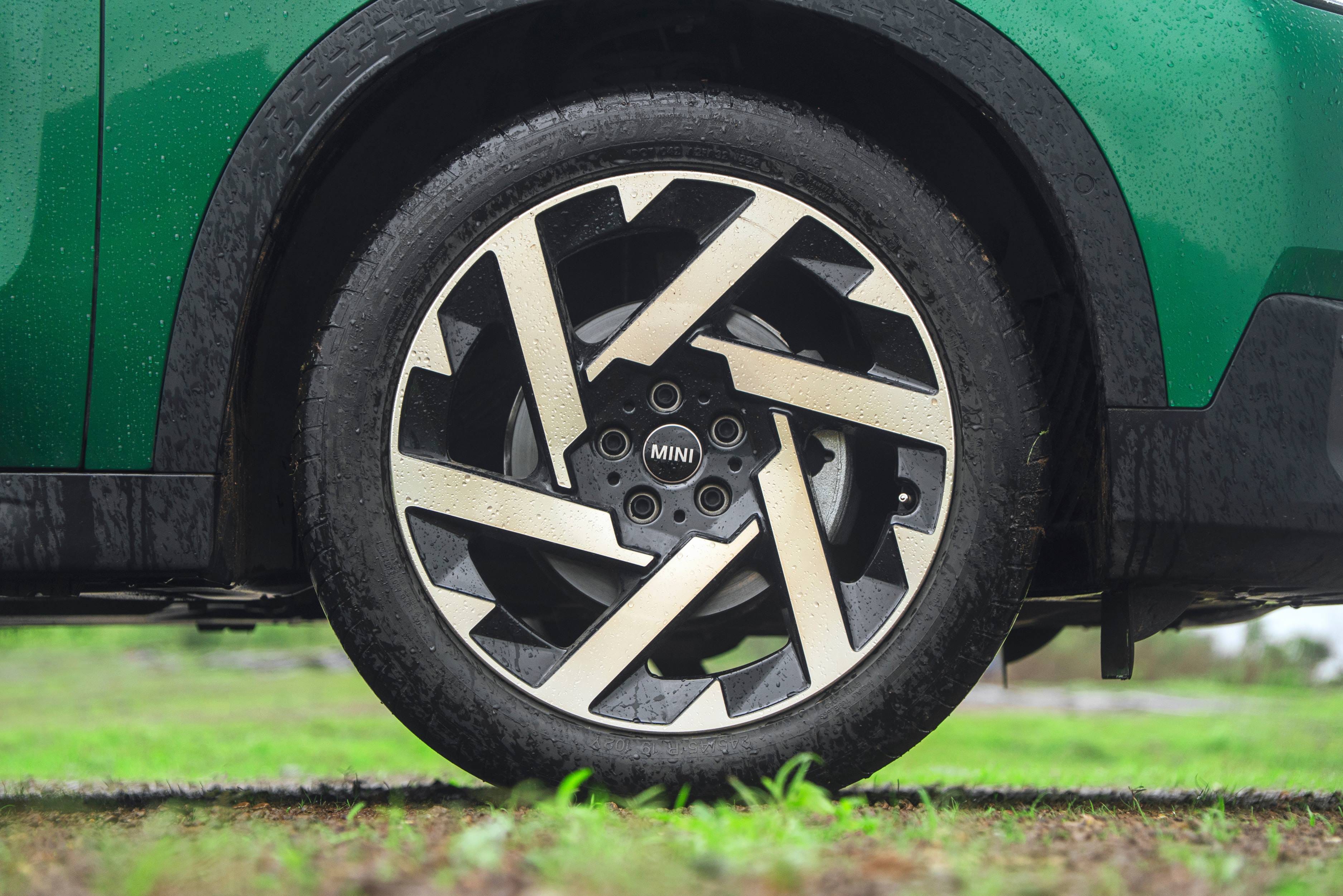
19-inch alloys look great, but they hurt ride quality.
This one being a locally assembled model, however, it’s available in a single, fully loaded ‘Favoured’ spec with no optional extras, save for some accessories. It looks the business, however, with champagne-coloured accents all around, the contrast roof as well as huge 19-inch dual-tone alloy wheels. You get a choice of five colours, but Mini has been sure to pick more extroverted options than conventional luxury SUVs – British Racing Green is still the most popular Mini colour bought in India.
2026 Mini Countryman C Interior Space and Comfort – 8/10
Genuinely usable space and practicality make it feasible as a luxury SUV.
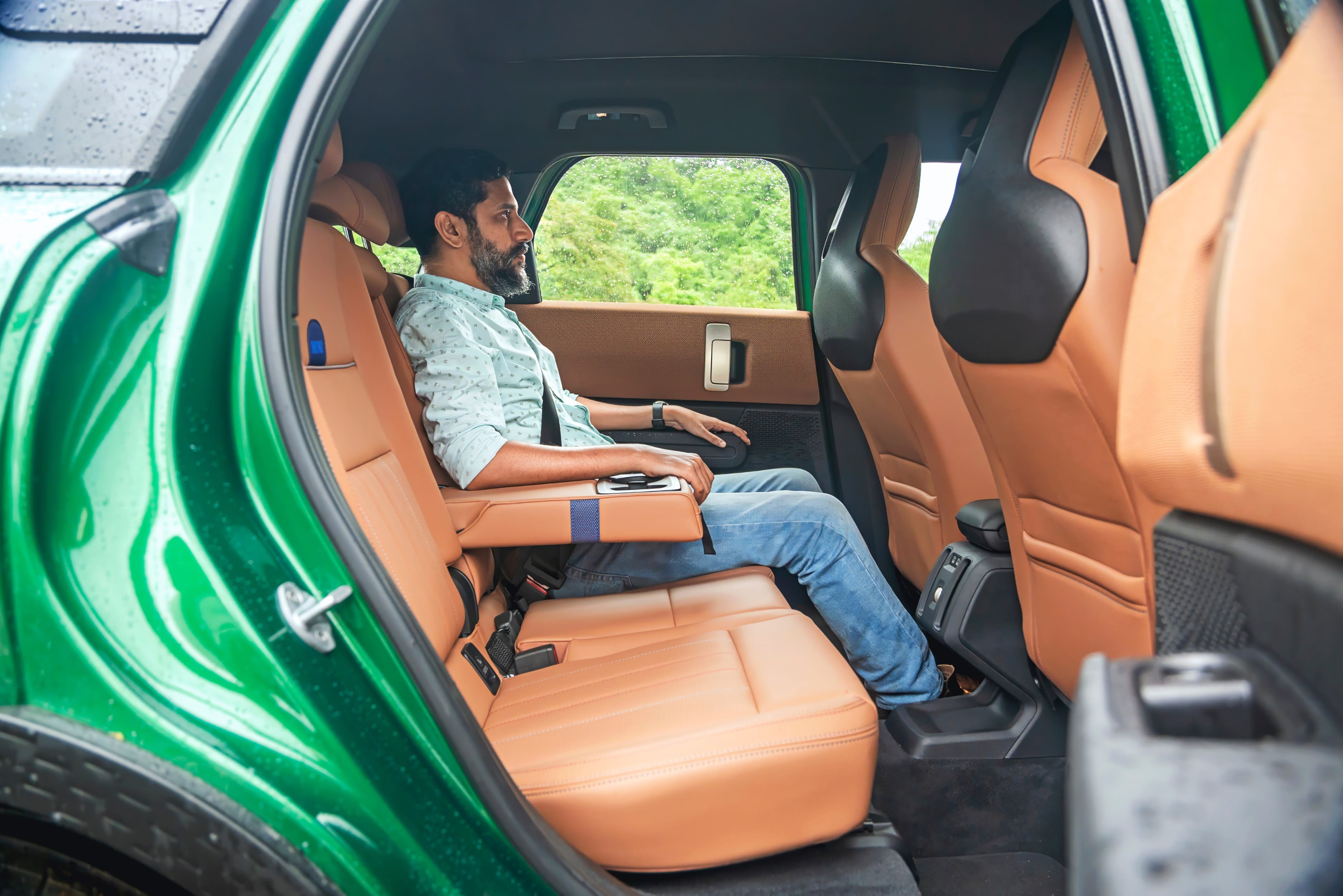
Generous headroom and legroom at the rear, though thigh support is not the best.
The results of the grown dimensions are immediately obvious in the greater interior space. It feels larger and airier than any Countryman before it, and betters some rivals in this regard. Without the battery of the EV, the floor is lower, giving a comfier seating position, though rear-seat thigh support is still not the best. And though the huge panoramic sunroof lets some light in, we wish the windows were a touch larger. Still, this can realistically be used as a chauffeur-driven car now.
The other area where it delivers more than the EV is the boot, whose volume has gone up by 50 litres to 505 litres. You can free up some more by sliding the rear seat forward on rails, and what’s more, they’ve even included a space-saver spare tyre, which you don’t get in the EV.
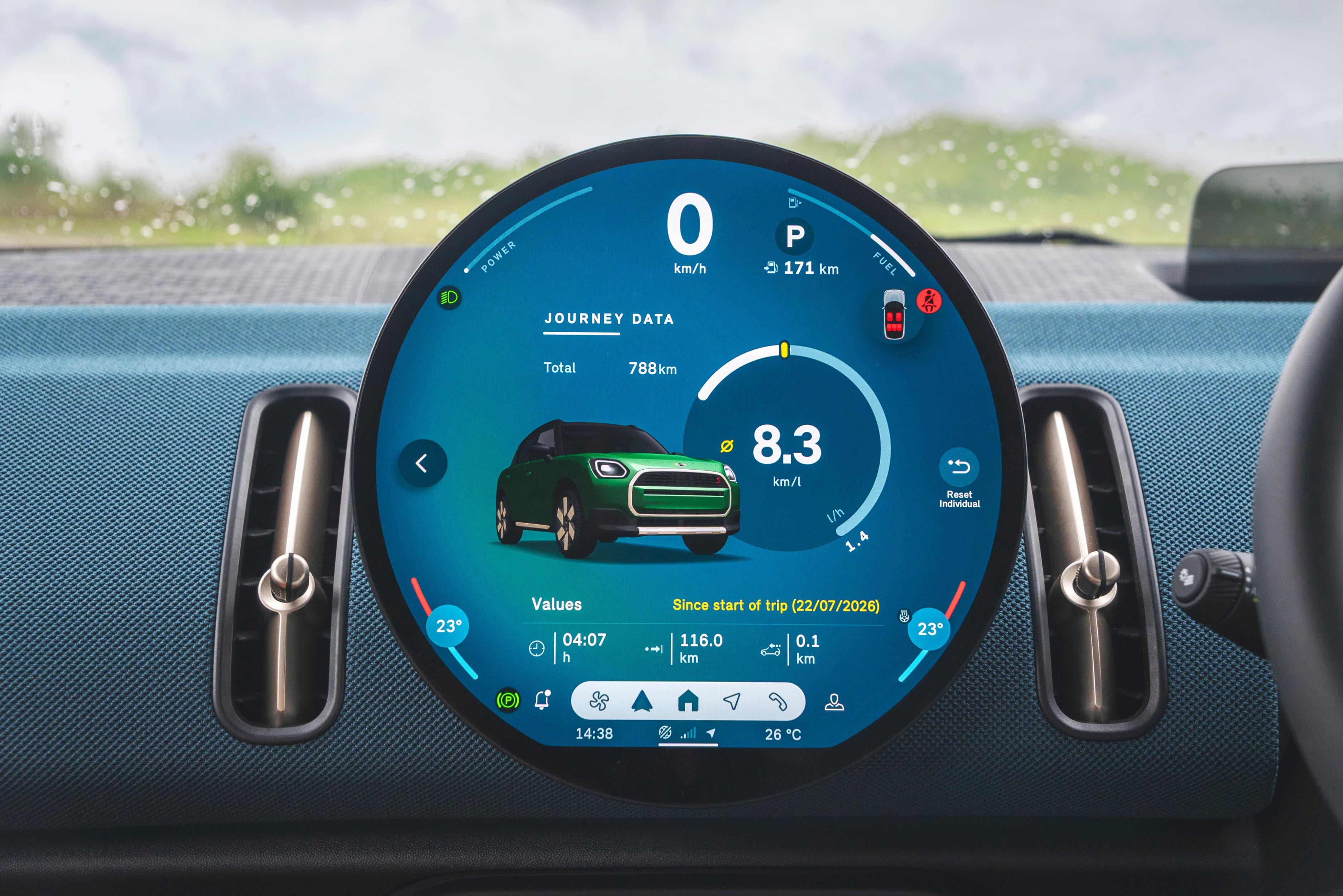
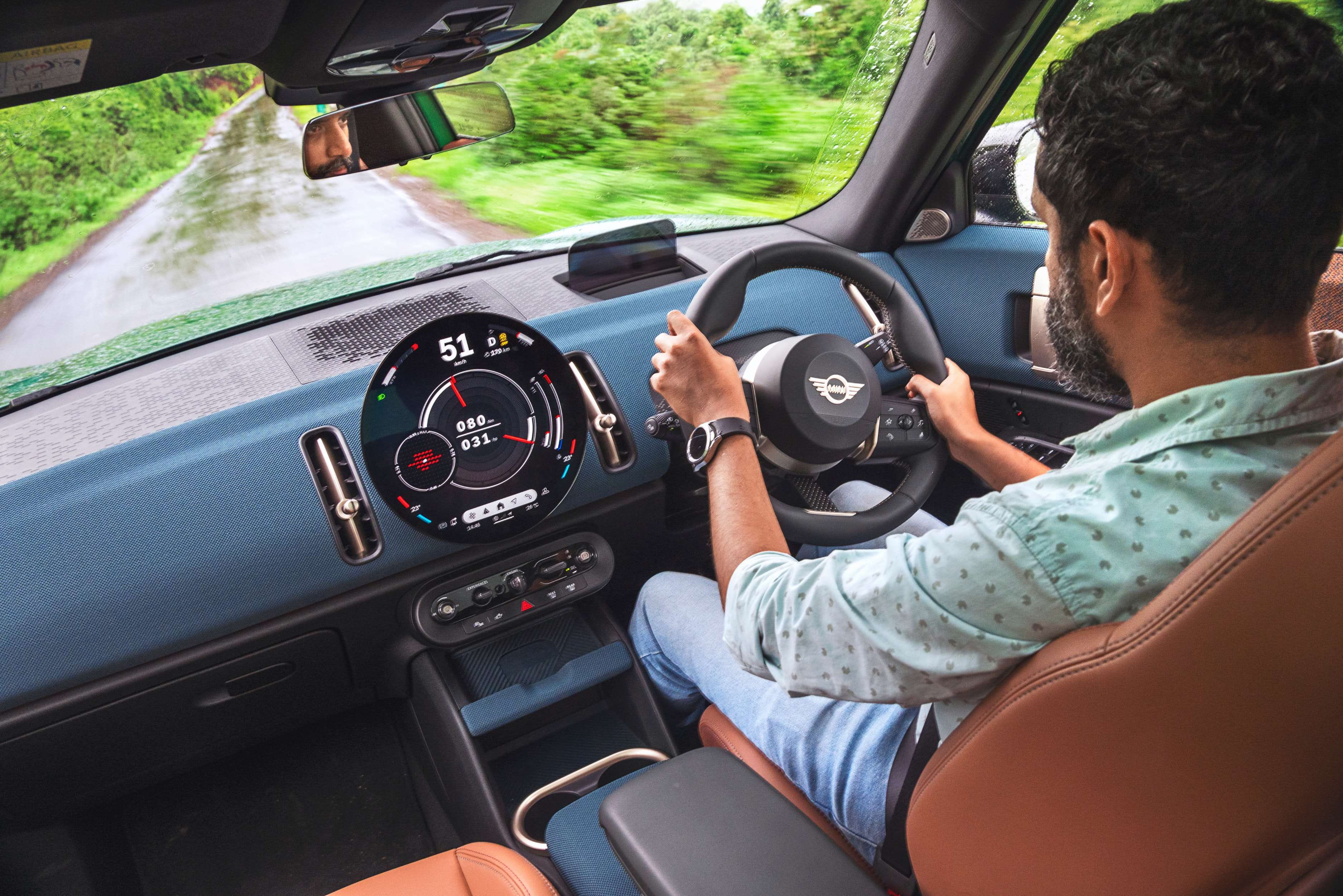
In the front seat, there’s no mistaking this for anything but a Mini, thanks to the clean dashboard with a big circular touchscreen at the centre. While this does function as the speedometer, a nod to the original Mini, there is also a flip-up HUD, which presents the info in your line of sight.
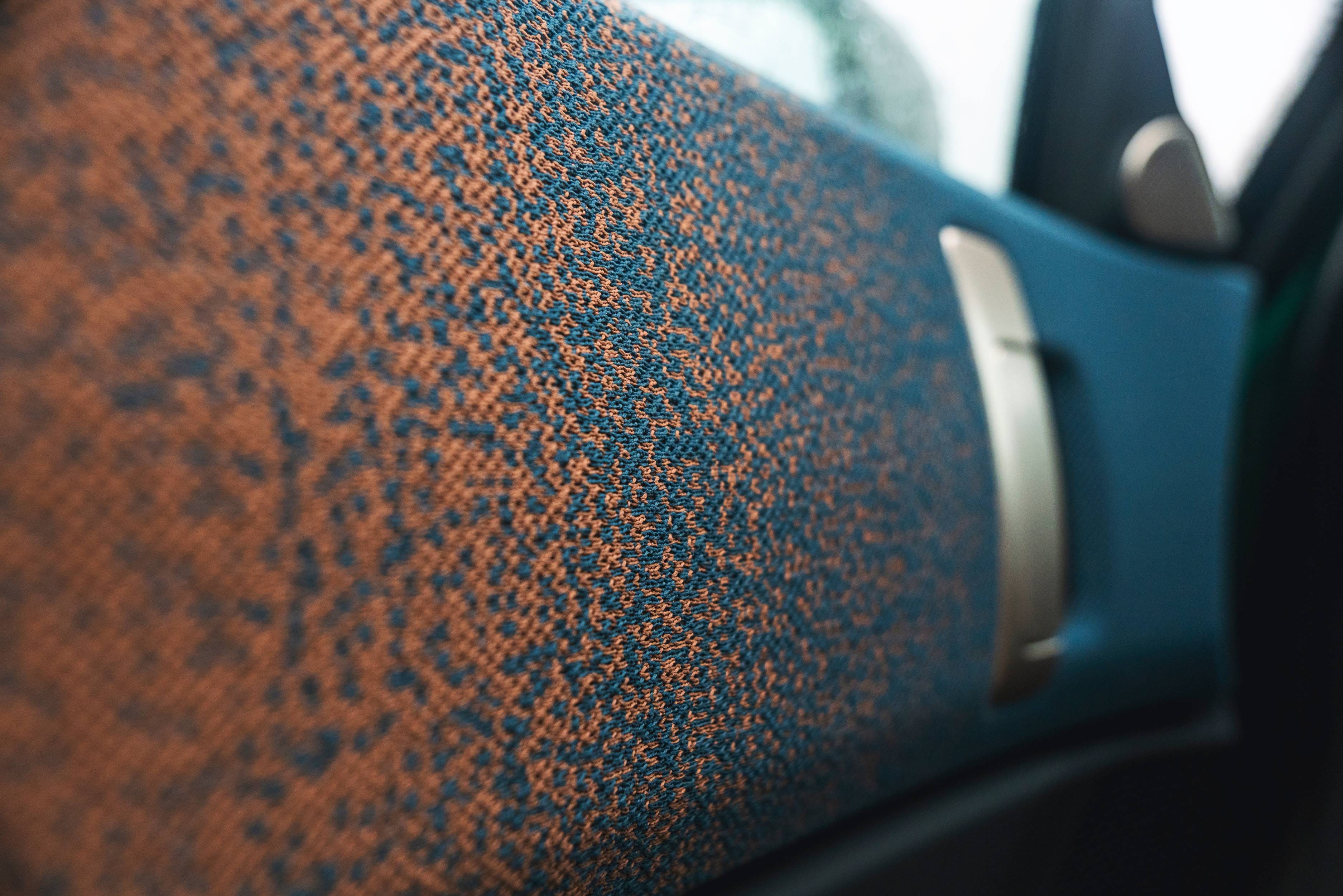
Knitted fabric on the door cards and dashboard lends the cabin an upmarket feel.
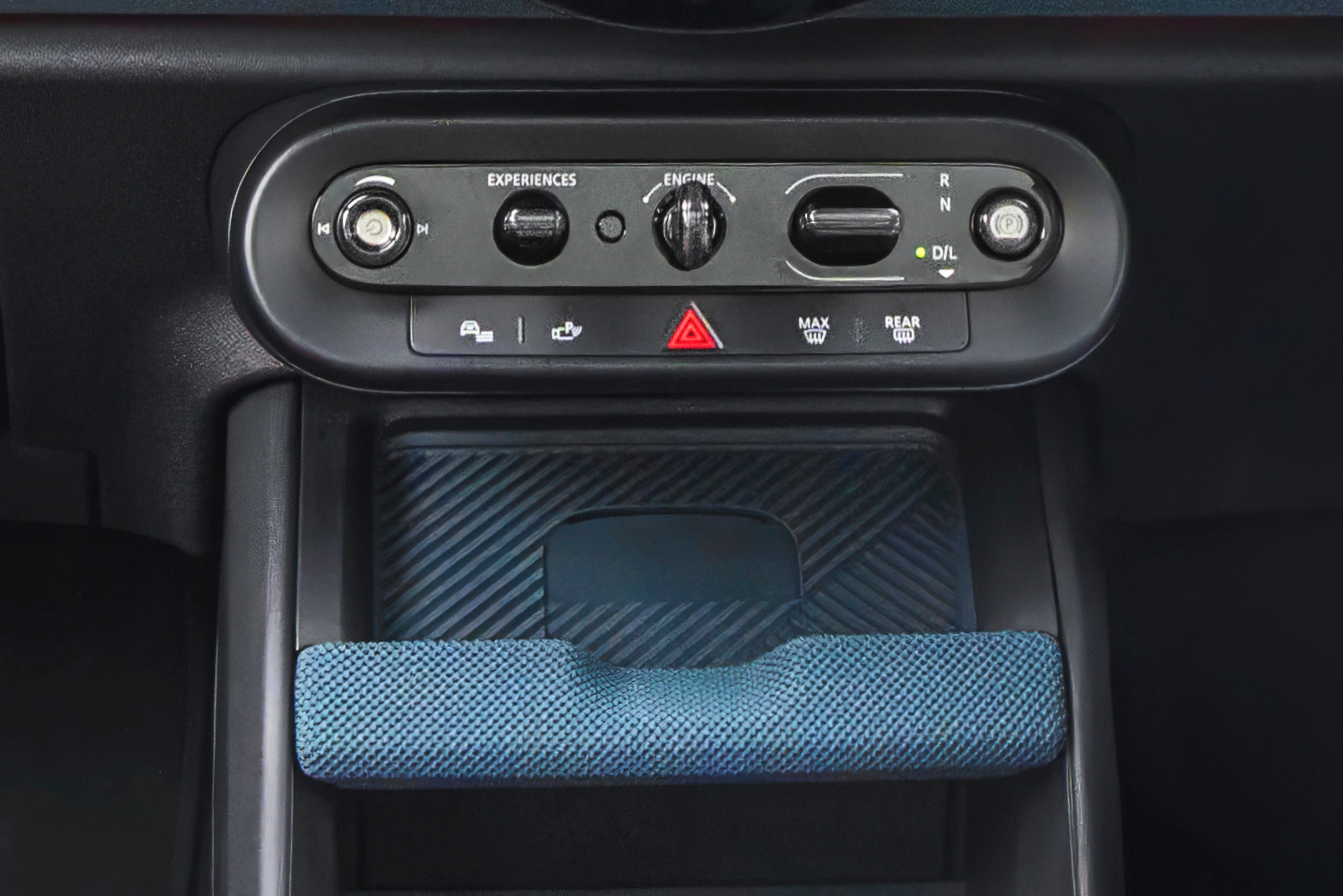
The dash is trimmed in an upmarket-feeling knitted fabric, which then extends onto the door cards, where it blends from blue to brown in colour. There are plenty of uniquely Mini touches, like slim, vertical AC vents, a row of toggle switches to start the car and change modes, more champagne gold trim and vertical inside door handles. But there is also more BMW switchgear than ever before, which, though high quality, looks a bit ordinary.
Storage space and ergonomics are well thought out, with an open centre console, a neat covered storage box and a sliding armrest. The front seats, meanwhile, are large and accommodating and give a commanding view outward.
2026 Mini Countryman C Features and Safety – 8/10
Generously kitted out with lots of standard equipment, on par with rivals.
Edge-to-edge circular screen is responsive, high-res and full of cutesy graphics.
As mentioned before, there is only one variant of the Countryman C, with a fixed features list and no optional add-ons. It’s a generous spec that features more than what some rivals offer, including wireless Apple CarPlay and Android Auto, powered front seats with memory and massage function for the driver, surround camera with auto park function, a Harman/Kardon audio system, heated steering wheel, panoramic sunroof, 13.7-inch diameter OLED touchscreen, heads-up display, voice assistant, wireless phone charging and a digital key system, to name a few.
As seen on all current-generation Minis, the dish-like circular touchscreen is a work of art. Where the previous generation housed a rectangular touchscreen within the circle, the new one is an edge-to-edge circular screen. It’s responsive, bright, high of resolution and full of Mini-typical cutesy graphics. Even the audio cues aren’t like normal cars, with cute ethereal chimes replacing boring warning beeps. There aren’t drive modes but Experience Modes (more on these later), which not only change the colour of the ambient lighting, but the screen display and can even activate certain features, like the seat massage.
Hard buttons only for few functions such as media controls and Experience Modes
However, once the novelty fades, you start to realise this circular design isn’t great ergonomically. While there, thankfully, are hard buttons for music volume and track control, as well as dri- sorry, Experience Modes, AC controls and all other functions are on the screen. With no bezel or edge to rest your hand on, and small, rounded graphics to tap, it is quite tricky to perform basic functions on the move. And as it’s based on BMW’s current i-Drive system, there are far too many sub-menus to go through.
2026 Mini Countryman C Performance and Refinement – 7/10
Downsized turbo-petrol engine lacks the zest associated with a Mini.
Performance feels merely adequate from the 156hp, 1.5-litre turbo-petrol engine.
This car shares its UKL1 architecture with the BMW X1, as well as its 1.5-litre three-cylinder direct-injection turbo-petrol engine. As in the BMW, it produces 156hp and 240Nm, sent to the front wheels via a 7-speed dual-clutch automatic gearbox, and as in the BMW, it feels merely adequate. While easier to digest in the X1, which has long since transitioned from ‘Ultimate Driving Machine’ to comfy family cruiser, the Mini’s go-kart intentions are still on display, and the expectation for more performance is higher.
Like in modern BMWs, the Experience Modes are mostly cosmetic, with only Green (Eco) and Go Kart (Sport) altering drive performance. Expectedly, the former dulls things down, while the latter primes the engine and gearbox to be more reactive, and they work as expected. There is, however, no scope to set individual parameters in any mode; for instance, ESC is off by default in Go Kart mode and you can’t turn it back on.
Gearbox is intuitive and quick, but there’s no manual control whatsover.
Also missed are paddle shifters, or in fact any means of shifting manually, though the gearbox is quite intuitive and quick to shift for the most part. It’s only at crawling speeds where this powertrain falls into the triple-whammy trap of turbo lag, gearbox hesitation and no off-boost power that’s typical of downsized engines. Things improve drastically in the mid-range, where the Countryman C feels most comfortable.
The engine also remains pretty refined for the most part, and it’s only if you absolutely stretch it out that you’re made aware it’s a three-cylinder unit.
2026 Mini Countryman C Mileage and Range – 8/10
Decent for a reasonably large turbocharged petrol luxury SUV.
Fuel economy is officially rated at 15.92kpl.
The advantage of the sizing-down is, of course, fuel economy, which will no doubt be better than with a larger 2.0-litre engine. It’s officially rated at 15.92kpl, which is not bad for a turbo petrol luxury SUV, and you realise that it’s because it’s not too heavy – clocking in at around 1,700kg. Other factors helping this include a quick-acting engine stop/start system and a good drag coefficient of just 0.26. Expect a real-world average comfortably in the two digits. And like all new BMW cars, this one is E25 compliant.
2026 Mini Countryman C Ride Comfort and Handling – 7/10
Still fun, but drives like a big car now; large wheels hurt ride quality.
Handling is a noticeable departure from the Go Kart feel that’s typified all modern Minis.
More so even than the powertrain, the Go Kart feel that’s typified all modern Minis comes from the chassis setup and handling, and this new Countryman represents the first noticeable departure. But that’s not necessarily a bad thing, and is in keeping with its new, more grown-up luxury-SUV persona.
The steering is much lighter and not as tightly wound as before, for a start, and that means despite the increased size, the Countryman is even easier to manoeuvre. What you lose in the process is some urgency in direction changes and some agility, but you don’t mind that thanks to the aforementioned benefits.
It feels reassuring and has great road-holding at highway speeds,
The good news is the suspension setup still allows it to handle corners tidily and with not too much body roll. And this despite being slackened off quite a bit to be noticeably comfier and more compliant than the previous Countryman. It also has great road-holding at high speeds and feels far more reassuring at highway speeds, and the overall sensation is that you’re commandeering a proper SUV rather than a high-riding hatchback. The only spoilsport here are the 19-inch wheels; while they look great, they crash hard through potholes and even over some steeper speed breakers.
2026 Mini Countryman C Price and Verdict – 8/10
Competitive pricing and big space make it a credible rival to other entry luxury SUVs.
The Mini Countryman C is priced at Rs 47.5 lakh (ex-showroom, India) which is incredibly competitive. It ducks under both, the Mercedes GLA and BMW X1, with only the entry-level version of the Audi Q3 being slightly cheaper. The best part is that, where previous locally assembled Countrymans (Countrymen?) felt stripped down compared to their CBU counterparts, here you get a well turned out and generously equipped luxury SUV that doesn’t leave you wanting.
It’s clear that Mini is on a war footing to break into the mainstream, and that’s something it certainly can’t do with its hatchbacks, which remain fun to drive and upmarket, but ultimately niche fashion statements. The Countryman C delivers on space, features, luxury and comfort that’s more than a match for others in the segment, and despite a slightly underwhelming engine, adds some much-needed pizzazz to the ranks of entry level luxury SUVs.
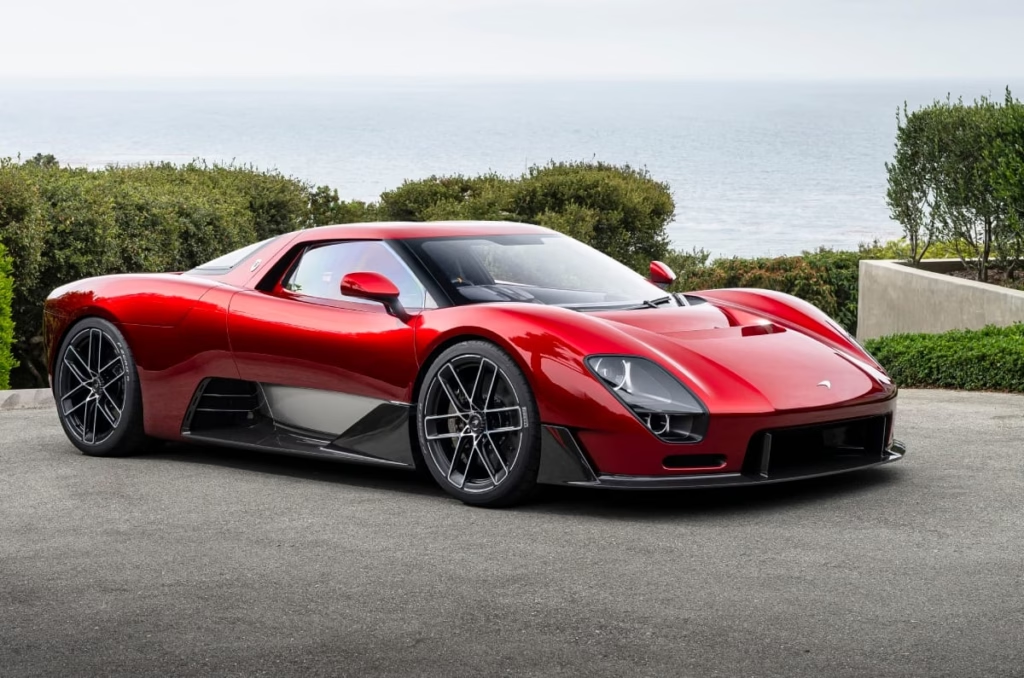
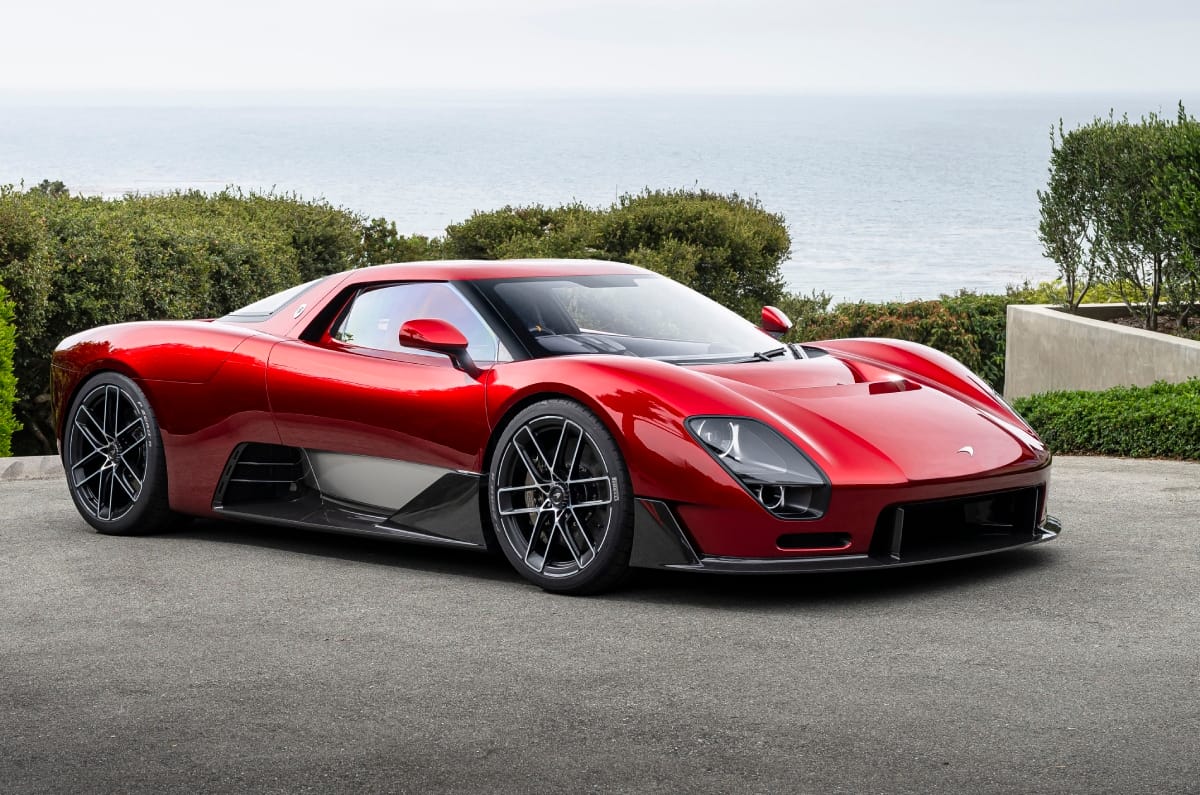
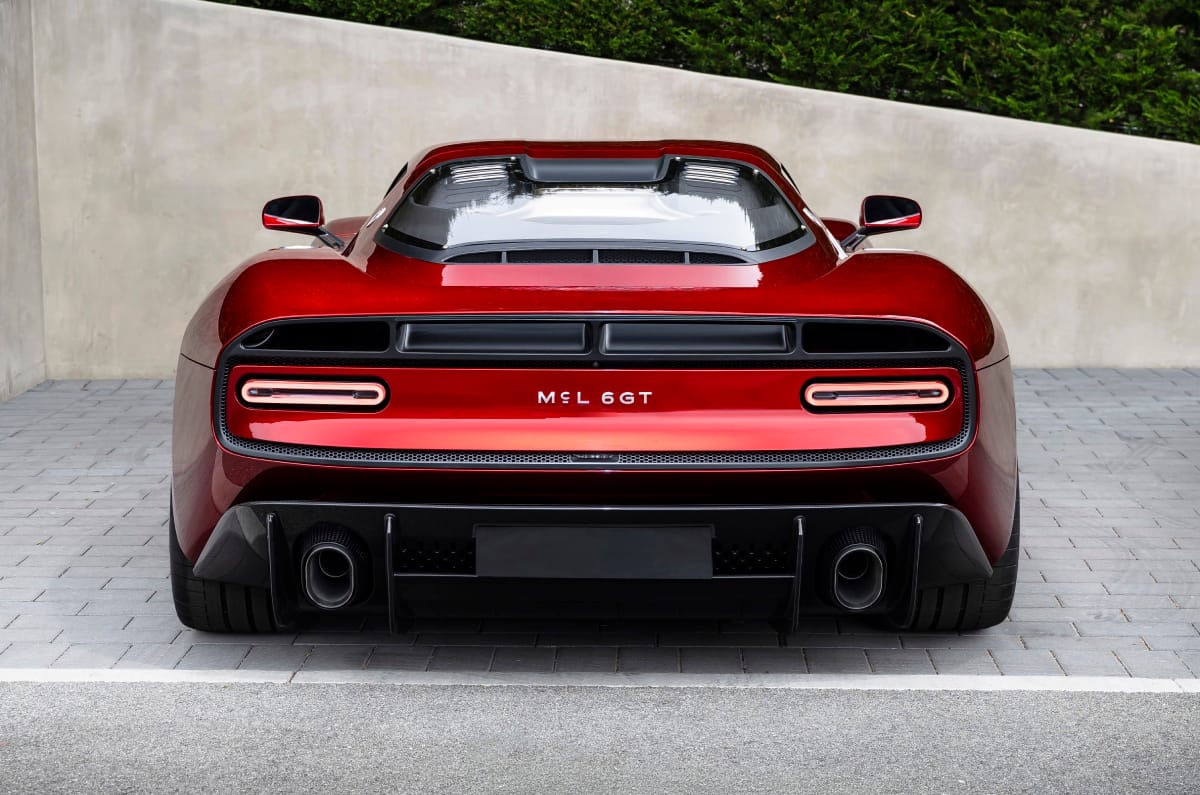
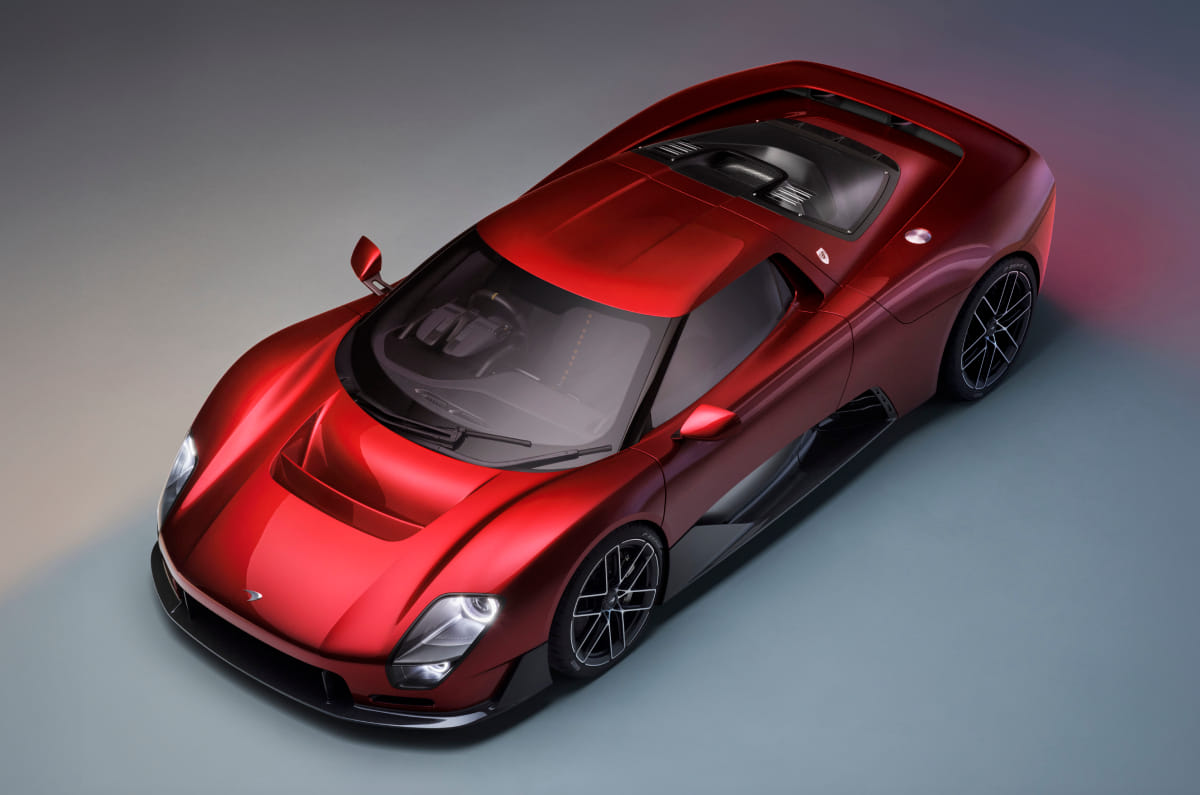
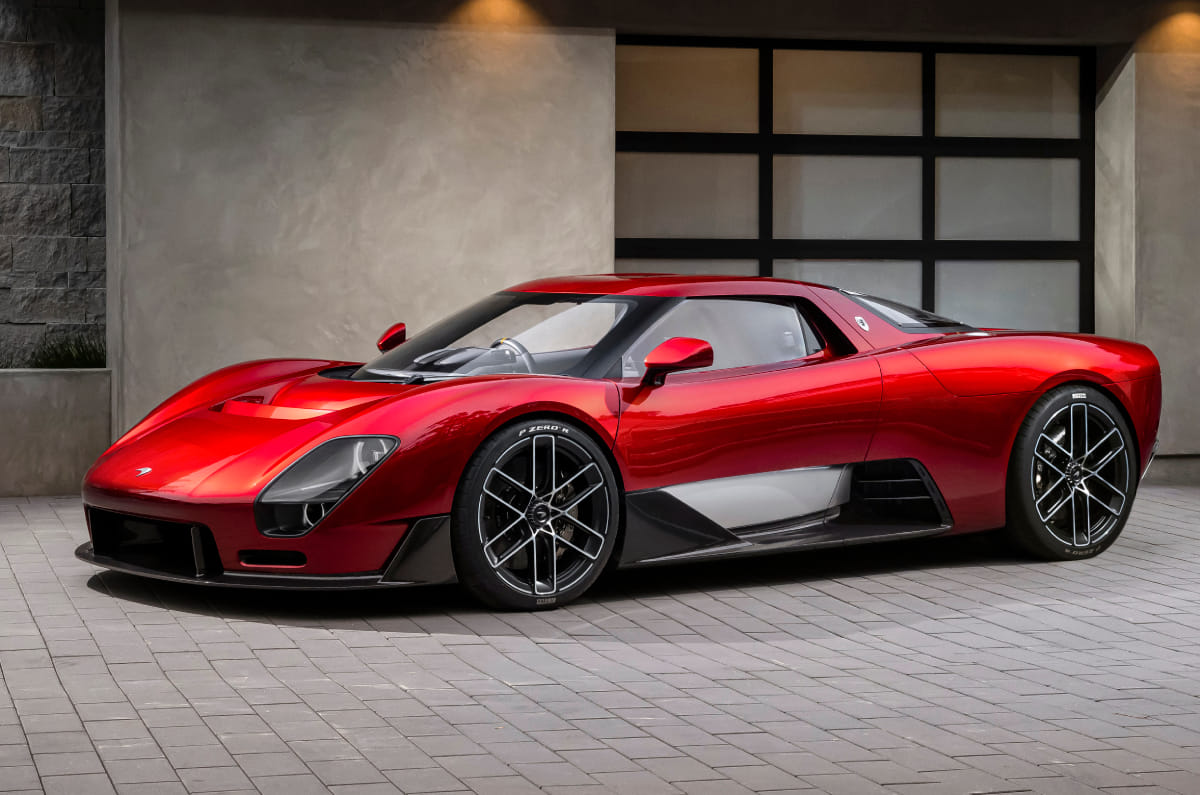
McLaren has revealed the McL 6GT concept at the 2026 Monterey Car Week. Inspired by Bruce McLaren’s unfinished M6GT road car project from the late 1960s, it previews a production model due in 2028 and becomes the first McLaren since the F1 to feature a manual transmission.
First manual McLaren since the F1 launched in 1992
Inspired by Bruce McLaren’s original M6GT road car
Production version confirmed for launch in 2028
McLaren McL 6GT exterior
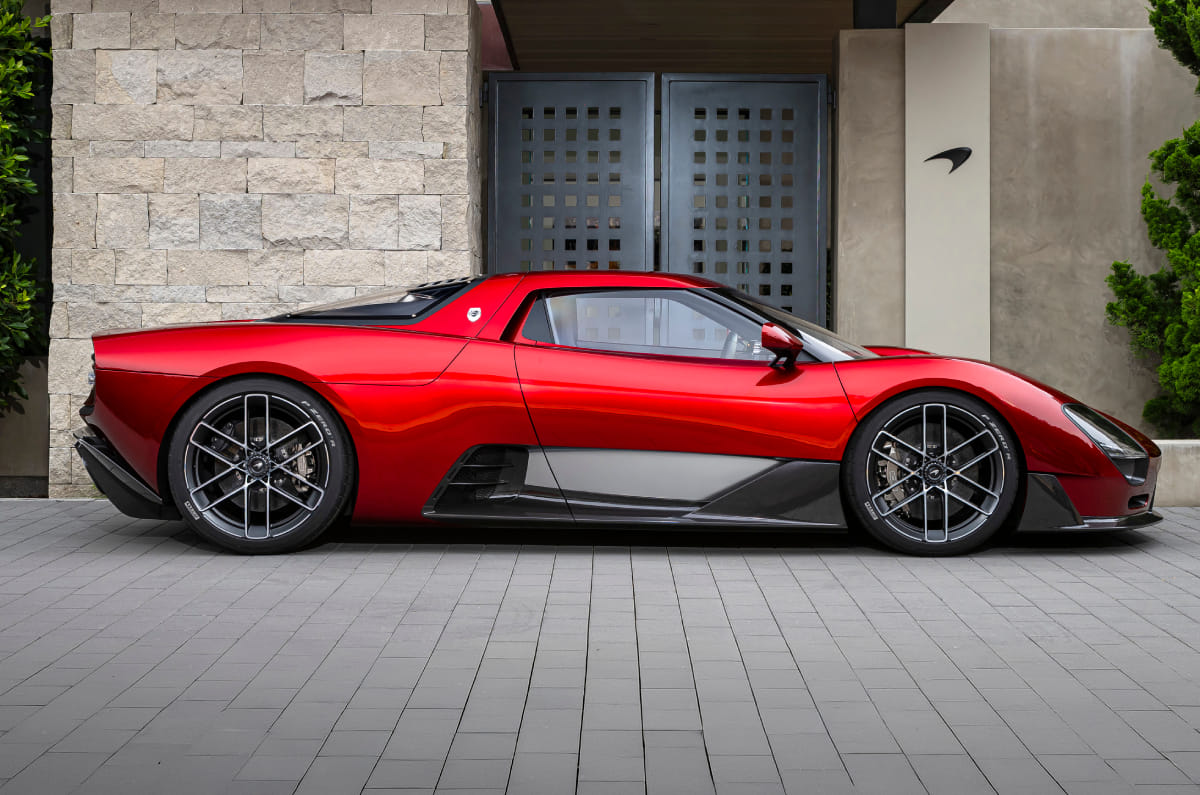
The McL 6GT takes inspiration from the original M6GT, the road-going version of the M6A Can-Am race car that Bruce McLaren had intended to build before the project was abandoned. The concept combines classic proportions with a contemporary design, featuring a low nose, wide stance, clean surfacing and a Kammback-style rear. McLaren says the car has been developed to honour the original M6GT while previewing a future low-volume production model.
The concept is built around a carbon-fibre monocoque with carbon-fibre body panels. Other design details include a new “Racing Loop” tail-light signature, Bruce McLaren’s signature on the engine cover and the historic Speedy Kiwi emblem engraved into the fuel filler cap.
McLaren McL 6GT interior
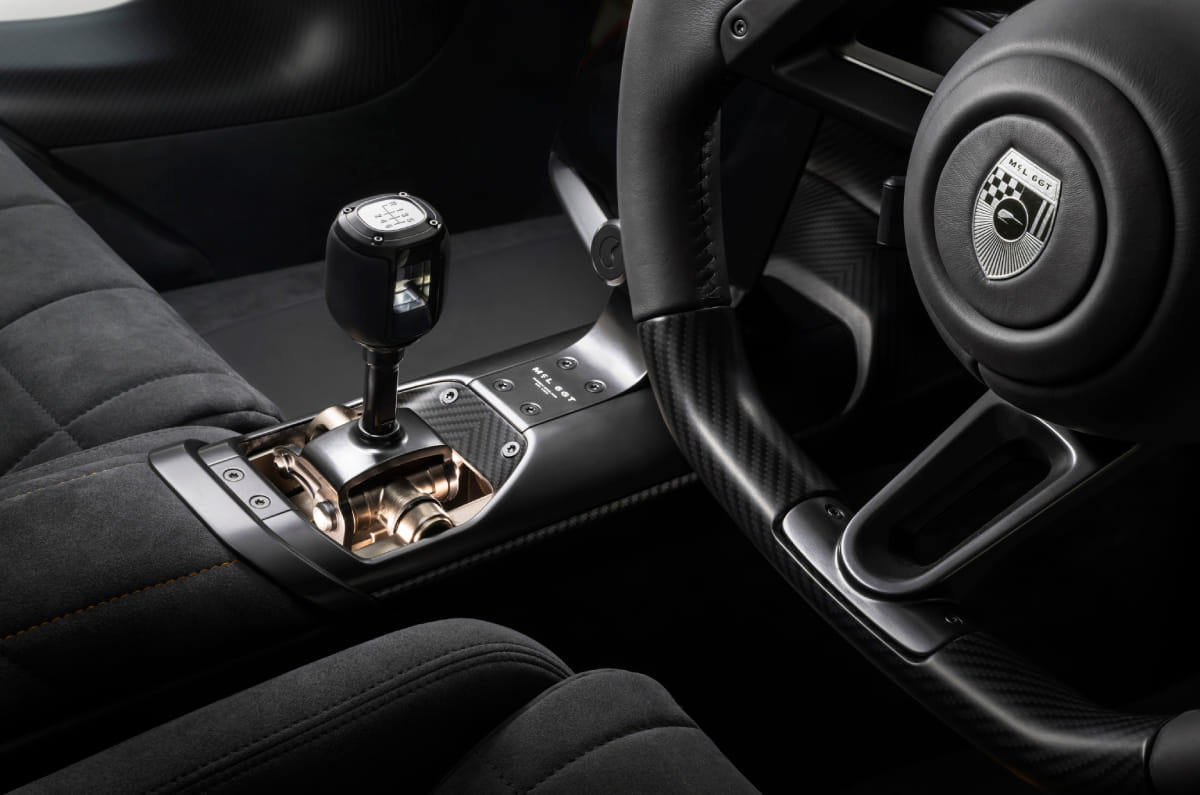
The cabin combines modern technology with design cues inspired by the original M6GT. It features a digital instrument display, machined aluminium controls, exposed carbon-fibre trim and upholstery patterned after the quilted seats of Bruce McLaren’s road car. Physical switchgear has been retained throughout, while the manual gear lever incorporates a three-dimensional Speedy Kiwi emblem. McLaren says the interior has been designed to prioritise driver engagement while maintaining the simplicity of the original M6GT.
McLaren McL 6GT powertrain
Power comes from a rear-mounted V8 petrol engine paired with a manual transmission, driving the rear wheels. It is the first McLaren road car to offer a manual gearbox since the F1, which was introduced in 1992. The company has not disclosed engine output, displacement or performance figures.
McLaren says the McL 6GT has been engineered to deliver a more mechanical driving experience, with hydraulic steering, traditional controls and a manual gearshift forming the core of the driving experience.
McLaren McL 6GT production
McLaren has confirmed that the McL 6GT will enter production in 2028 as a low-volume model positioned outside the brand’s core product range. It joins the company’s growing line-up of limited-production models inspired by its history, although pricing and production numbers have not yet been announced.
Earlier this month, several media reports said the Society of Indian Automobile Manufacturers (SIAM) had urged the government to introduce mandatory chloride limits in fuel standards after high levels of chloride and moisture were found in E20 petrol. SIAM later withdrew the communication, saying some of the figures mentioned in it needed further verification.
The government has been trying to address growing concerns around E20 with support from the industry. Oil marketing companies (OMCs) have rejected claims of widespread E20 fuel contamination after conducting tests across the country. Brands such as Toyota, Maruti Suzuki and Hero MotoCorp have also publicly backed the E20 programme.
However, separate communications between industry executives investigated by Reuters show that earlier, Maruti Suzuki, Tata Motors and Mahindra had privately raised concerns about contamination in E20. The data compiled by these carmakers was the most extensive fuel testing since E20 was officially rolled out nationwide last year. Their emails reveal that the carmakers were concerned about contaminants such as chloride and moisture in the fuel, which they said were affecting vehicles, even as they publicly supported the government’s E20 rollout.
Data flags high chloride contamination, moisture content
The data reviewed by Reuters shows that the three automobile manufacturers had carried out detailed testing by collecting more than 250 fuel samples from petrol pumps across 21 states and Union Territories over a year. The tests found high chloride levels in many samples from 18 states, along with high moisture content. Interestingly, the emails reviewed by Reuters did not raise any concerns about the authenticity of the data.
State
Number of samples
Chloride (ppm)
Uttar Pradesh
36
1.2-175
Maharashtra
31
10-357
Delhi/NCR
28
1.4-420
Tamil Nadu
27
1.3-24.0
Kerala
24
1.0-2.2
Punjab
20
1.9-110
Karnataka
15
1- 2.2
Rajasthan
14
6.0-570
Madhya Pradesh
11
4.1-550
Source: SIAM via Reuters.
The data showed chloride levels of 6 to 570 parts per million (ppm) in Rajasthan, 1.4 to 420ppm in New Delhi and 10 to 357ppm in Maharashtra. The government’s permissible limit is 3ppm.
High chloride levels in the fuel can corrode vehicle components, while high moisture content can cause a vehicle to stop working immediately after refuelling, SIAM had stated earlier. In group emails exchanged between Maruti, Tata, Mahindra and SIAM, a senior Maruti executive raised concerns about the high chloride readings and said the matter had even been privately discussed with the Ministry of Petroleum on July 26.
Moisture levels found 333 percent above limit
Additionally, the same data showed moisture levels of up to 13,000ppm in Andhra Pradesh and 12,500ppm in Uttar Pradesh, against the government’s permissible limit of 3,000ppm. The exact cause of the contamination is not known. However, SIAM said in its now-withdrawn letter that it had seen an increase in chloride levels since E20 was introduced and asked the government to direct OMCs to identify the root cause.
When asked about the private emails, SIAM told Reuters that the data was meant only for internal circulation, discussion and validation, and had been collected by a very small number of automakers. SIAM added that the communication was withdrawn because the testing basis and sample size were not enough to support firm conclusions and that it had been sent accidentally. The organisation stated further that it plans to conduct a proper scientific study.
As for the high moisture levels, SIAM’s letter said the cause could be poor maintenance of underground storage tanks and pipelines at petrol pumps.
Carmakers raise concerns over vehicle failures
In a July 26 email, a senior Maruti official said that current fuel injectors can tolerate a maximum chloride level of 1ppm, and keeping it below 1ppm in E20 would be in accordance with international standards and discussions with the petroleum ministry. Same is in line with discussion held with the petroleum ministry, he stated.
Meanwhile, a senior Mahindra official wrote that organic chloride was responsible for the rapid vehicle failures in recent times and could damage engines just within 200km. The executive said that most cases reported immediately after refuelling were due to organic chloride and added that Mahindra had “strong evidences” from fuel samples collected at retail outlets. Mahindra later said the conclusions drawn from its executive’s emails were “completely baseless and incorrect”. The company said the industry data was limited and preliminary and that it did not see any issues with E20.
What does the government say?
The Ministry of Petroleum and Natural Gas did not respond to requests for comment made by Reuters. Petroleum Minister Hardeep Singh Puri said on Friday that OMCs had started “rigorous testing” at retail outlets to check for contamination two weeks before SIAM’s letter was received. According to Puri, only four cases of contamination had been found. OMCs, as mentioned earlier, said that their extensive testing had found no reason for alarm over fuel contamination.
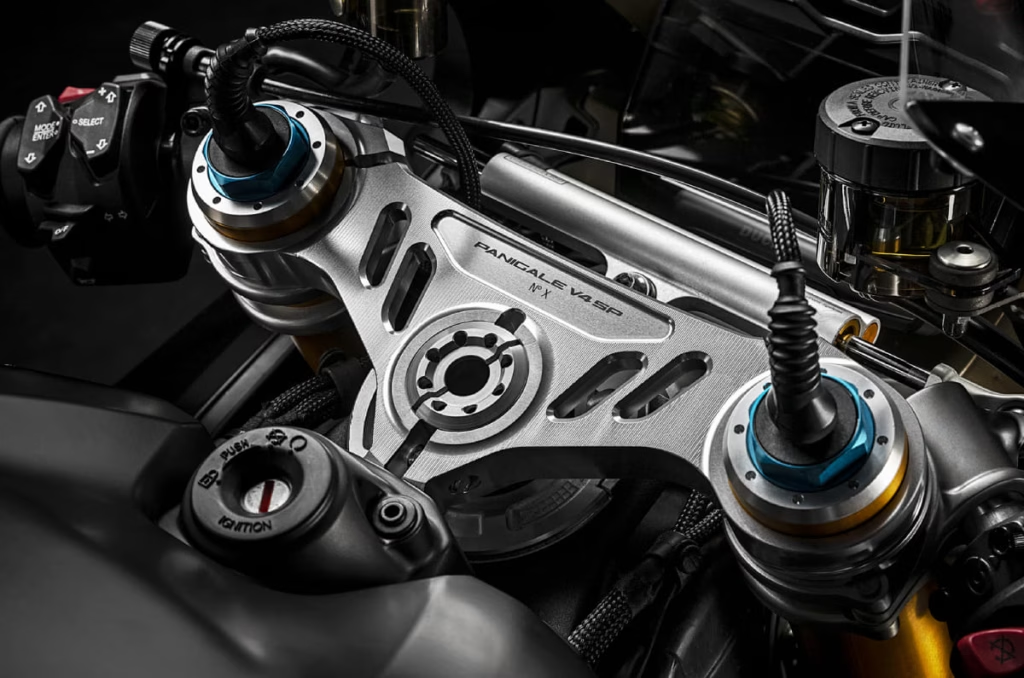
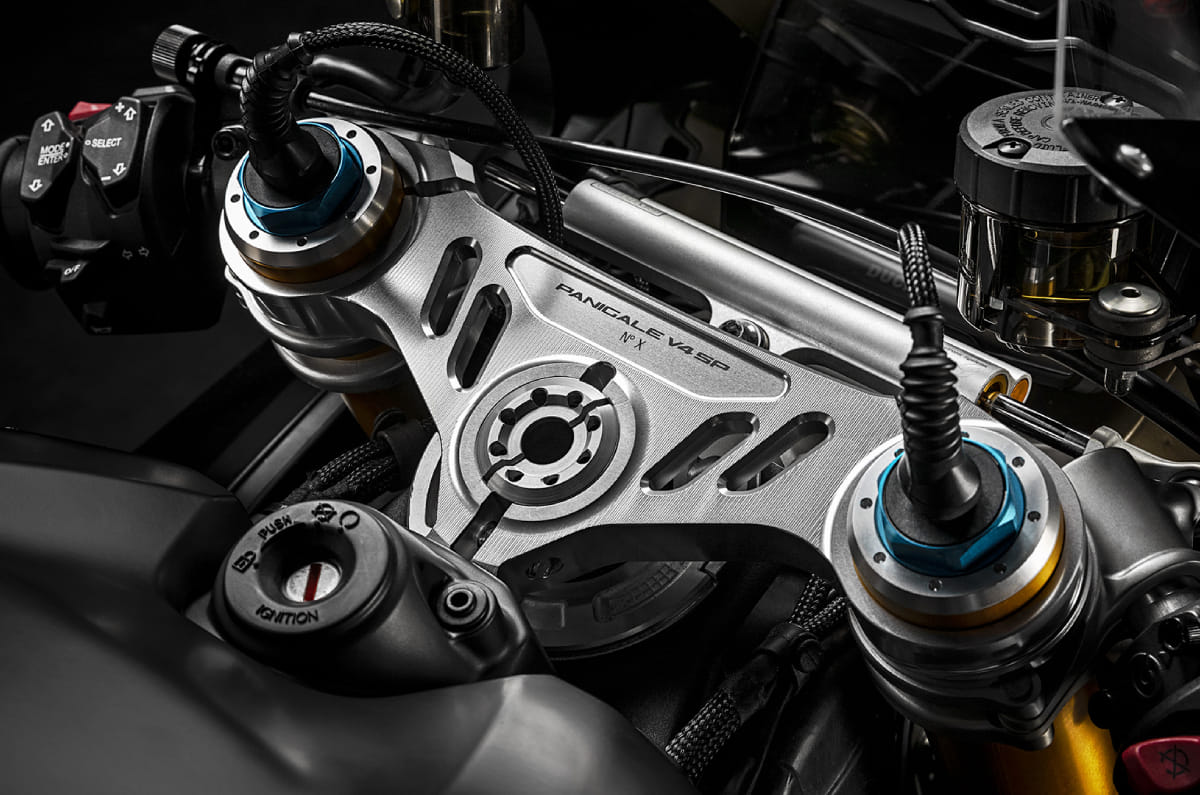
A 2027 Ducati Panigale V4 SP has been confirmed via a California Air Resources Board (CARB) certification in the US. According to reports, the filing was originally submitted for the 2027 Panigale V4 line-up in March, but Ducati updated it in July to add an SP variant to the certification.
2027 Ducati Panigale V4 SP confirmed via US emission certification
Will use the same 1,103cc engine as the standard 2027 Panigale V4
Expected to add a dry clutch, carbon-fibre wheels and upgraded Brembo brakes
2027 Ducati Panigale V4 SP: What to expect
The previous-generation Panigale V4 was available in both SP and SP2 variants
The SP nameplate – which stands for Sport Production – has, in recent history, typically represented the top-of-the-line version of a production Ducati. The brand introduced a Panigale V4 SP for the 2021 model year, followed by an SP2 for 2022. Both were positioned above the standard Panigale V4 S but below the track-homologated V4 R.
Based on that precedent, we could see the 2027 Panigale V4 SP offer similar upgrades to those seen on its predecessors – a dry clutch replacing the standard hydraulic unit, carbon-fibre wheels, a lightweight chain, adjustable billet-aluminium footpegs, a brushed-aluminium fuel tank and upgraded Brembo braking hardware. The engine will likely be shared with the rest of the road-going 2027 Panigale V4 line-up, and we’ll have to wait to see if output figures change with the SP badge. Notably, that wasn’t the case with the last generation. For reference, the 1,103cc V4 in the standard bike produces 216hp and 120.9Nm.
Currently, the global Panigale V4 line-up includes the standard V4, the V4 S, the track-homologated V4 R and the V4 S 100 limited-run model as part of the Centenario collection. All except the latter are also available in India. Ducati has been prompt in making most of its global models available in our market, so when the V4 SP does go into production, we could expect it to launch here as well. It will likely command a premium over the Rs 39.79 lakh (ex-showroom, India) price of the V4 S.
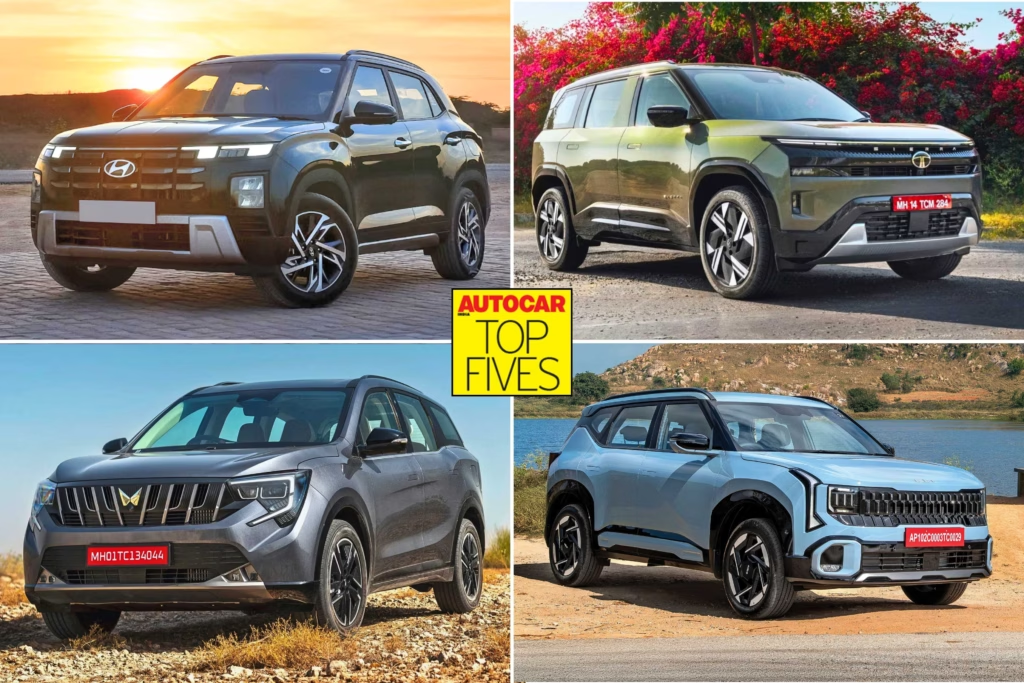
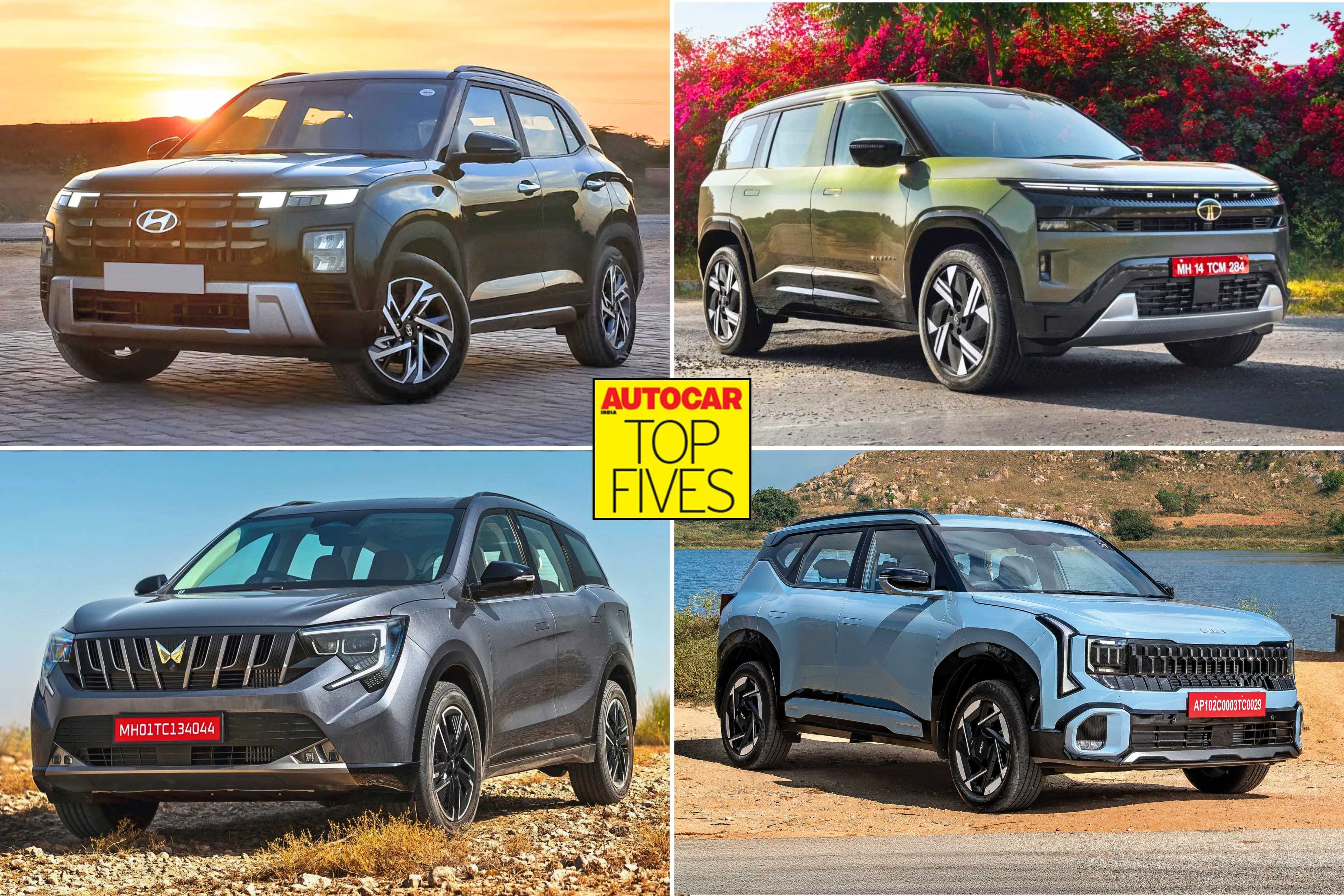
SUVs are best had with diesel engines, but given our policies and the disapprobation surrounding this fuel, most carmakers have entirely withdrawn themselves from offering diesel engines. What’s interesting is that where diesel is still on offer, it continues to make up a sizeable portion of that segment, meaning that demand is still healthy but customers only have a handful of options to choose from. So, if you are in the market looking for a diesel-automatic SUV, here we have compiled a list of the five best diesel-AT midsize SUVs available within a budget of Rs 25 lakh.
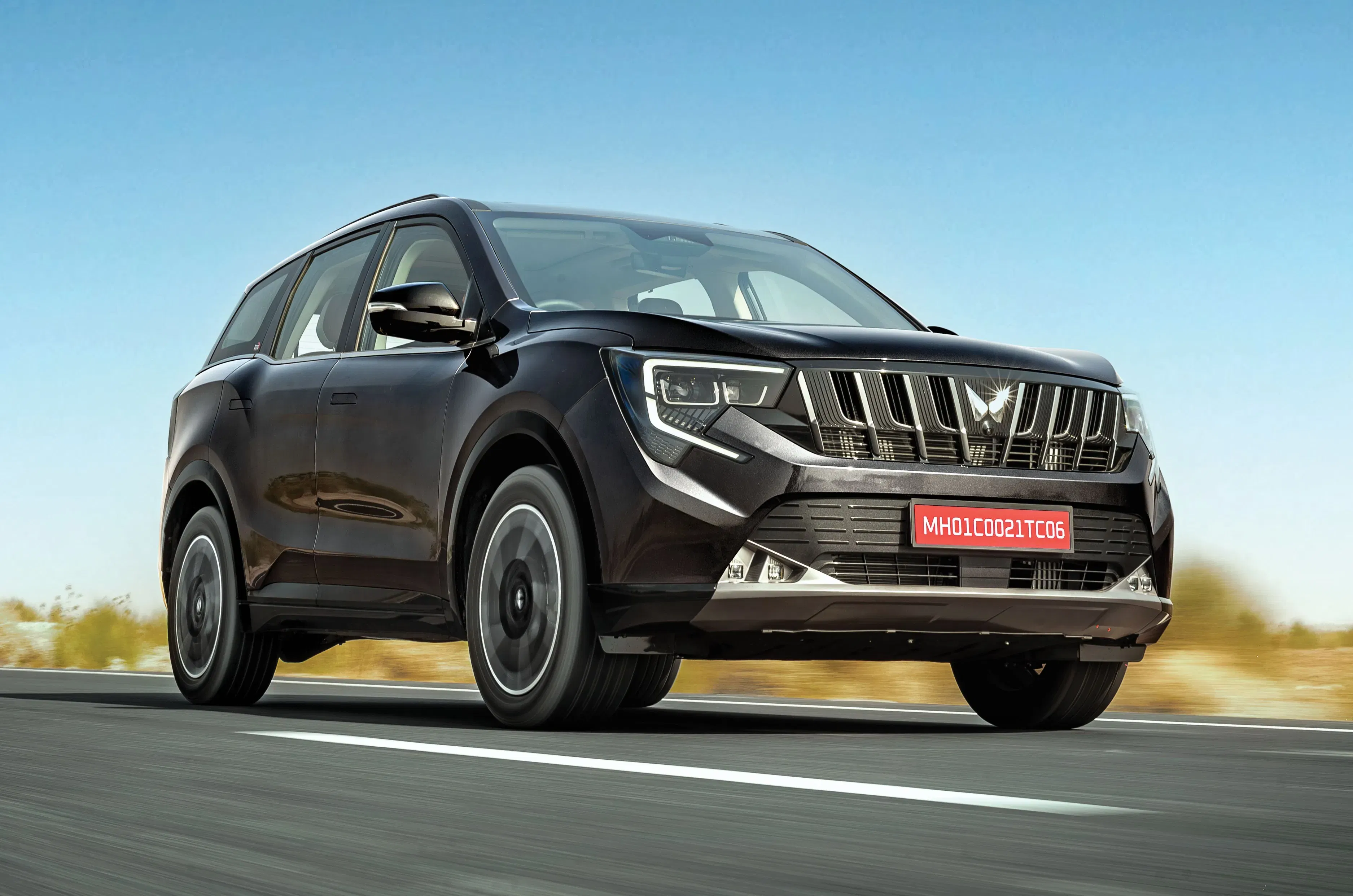
Mahindra XUV 7XO
Price: Rs 15.29 lakh – Rs 25.79 lakh
Mahindra is almost synonymous with large diesel SUVs and the XUV 7X0’s 185hp, 2.2-litre diesel is a benchmark for refinement and performance. It’s the most powerful SUV here, and the 6-speed torque converter automatic gearbox that’s offered with this engine is smooth, too. A premium and spacious interior with generous levels of equipment and a sorted ride and handling balance are some of XUV 7XO’s other strengths. The third-row isn’t particularly spacious, but it at least offers the flexibility of one.
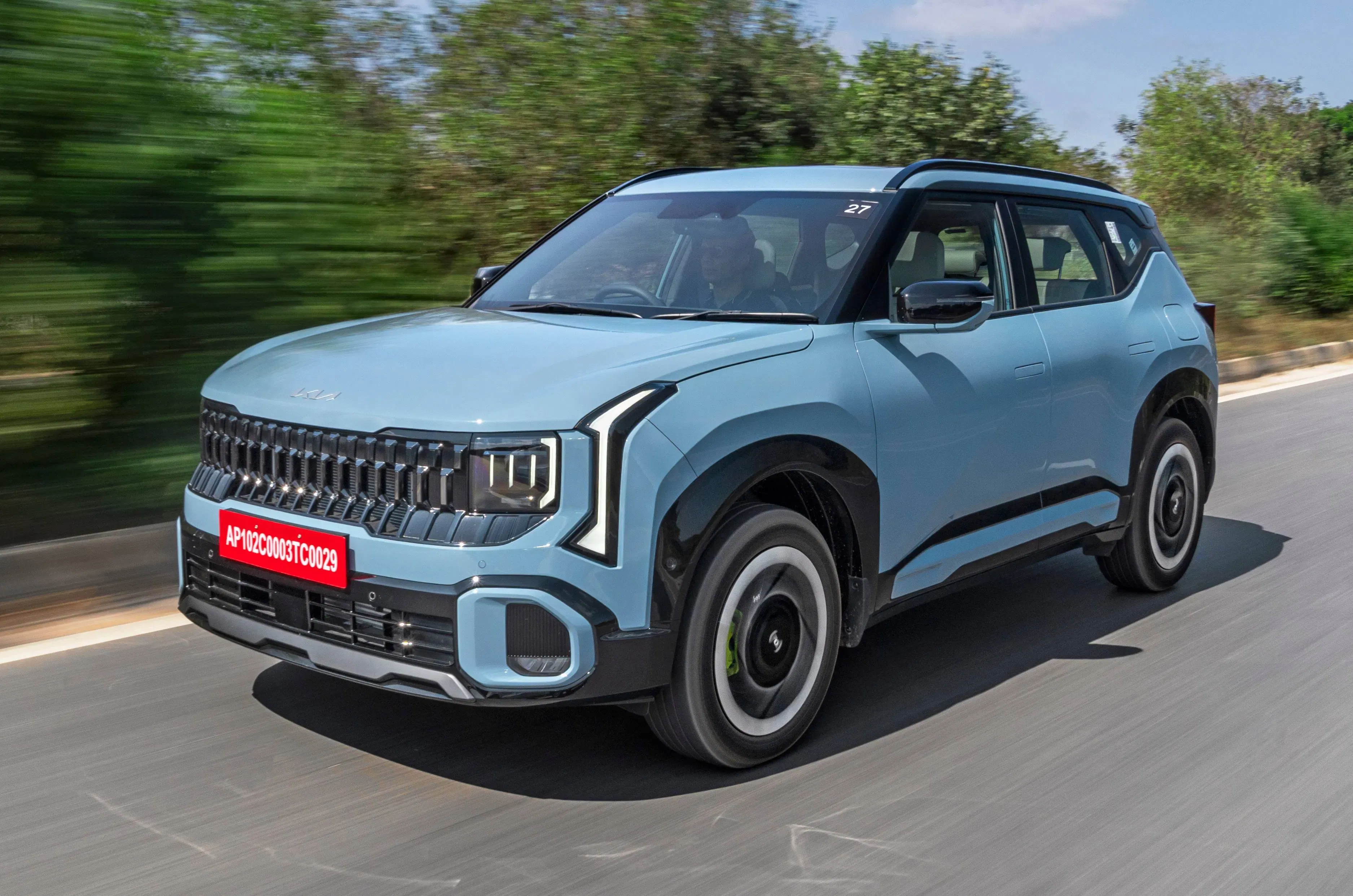
Kia Seltos
Price: Rs 15.32 lakh – Rs 21.82 lakh
Although much lesser in capacity and power output than the XUV 7X0, the Seltos’s 116hp, 1.5-litre diesel also stands out for smoothness and refinement. With linear power delivery and max torque coming in at just 1500rpm, it makes for a comfortable cruiser. However, it lacks that outright diesel punch and urgency, even in Sport mode. The gearbox, while smooth, is also a slow shifter, even via the paddles. The Seltos, too, is a very spacious and premium on the inside, and arguably has the best UI/UX for the infotainment system.
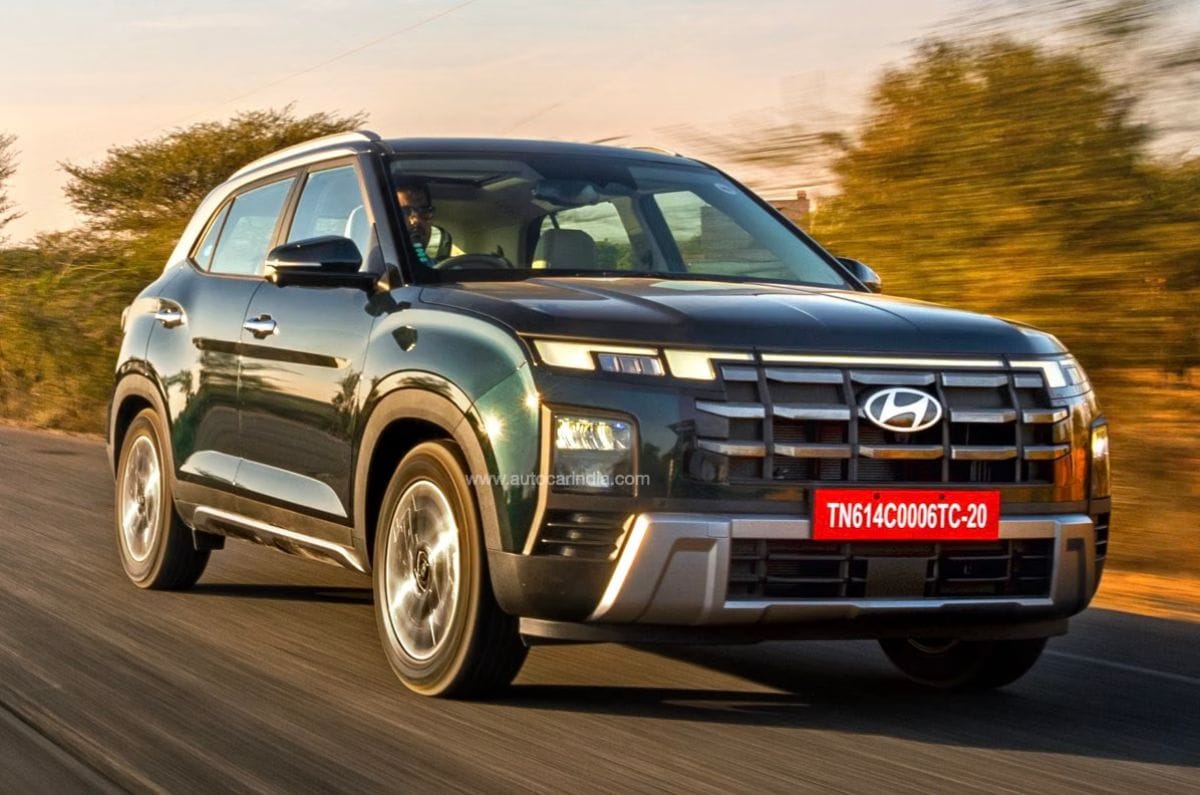
Hyundai Creta
Price: Rs 16.08 lakh – Rs 20.11 lakh
The Creta uses the same 116hp, 1.5-litre diesel engine as the Seltos, so the smooth and refined character of the engine applies here as well. However, being an older generation model and slightly smaller than the new Seltos, it doesn’t feel lack lustre in terms of performance. It’s also quite efficient, making the diesel-auto one of the best powertrain choices on the Creta. Otherwise, too, the Creta remains one of the most competent offerings in the segmentfaring well on space, features and premium-ness despite its relative age compared to its rivals.
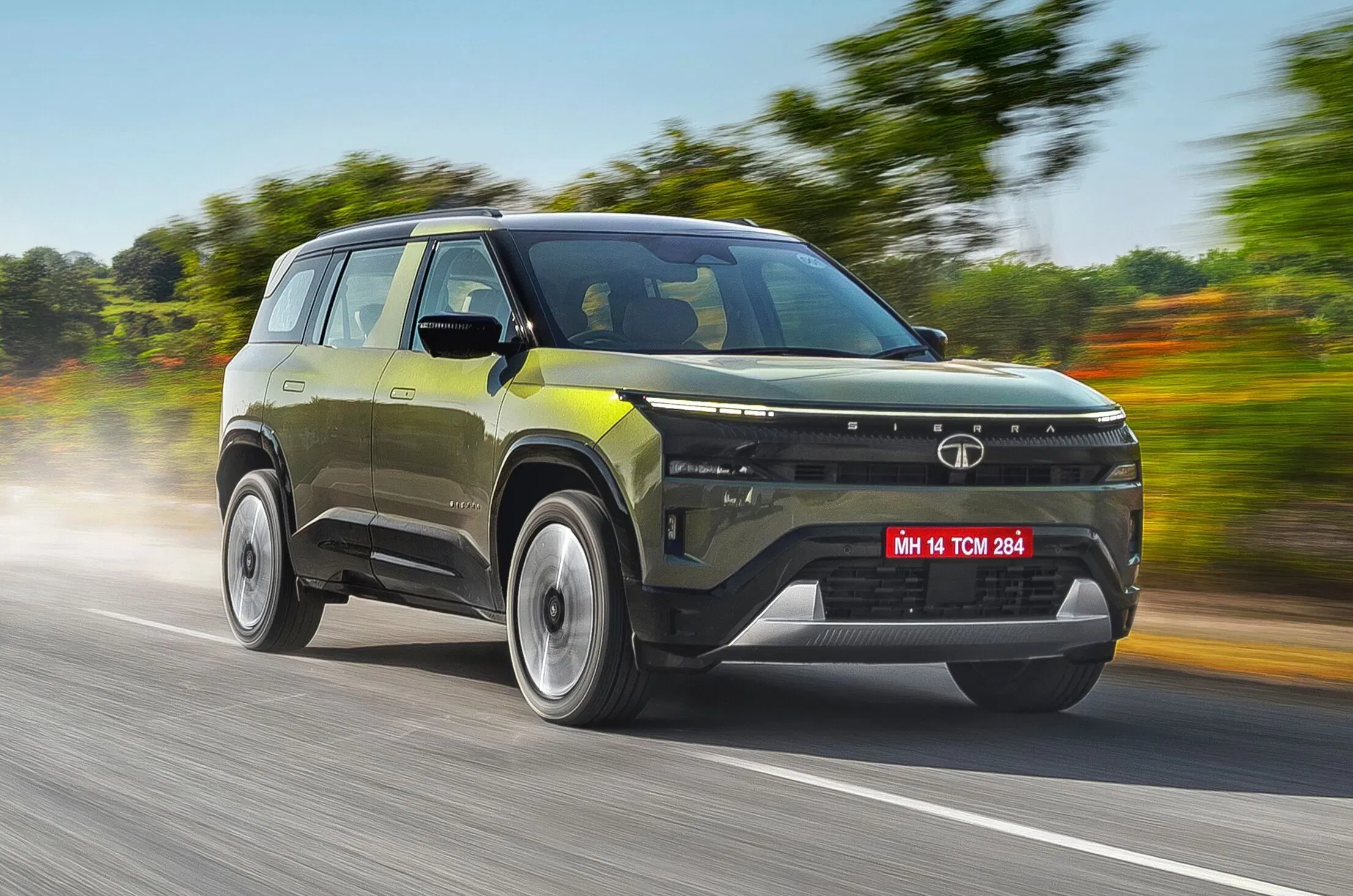
Tata Sierra
Price: Rs 15.99 lakh – Rs 21.29 lakh
The Sierra uses the same 1.5-litre diesel engine that’s offered on the Curvv and the Nexon, but it has been up-tuned to produce 118hp and 280Nm. This 1.5 unit doesn’t have the midrange punch associated with diesels; instead, it builds power linearly. It also isn’t particularly refined as you can feel vibrations at all times, which makes it known to you that you are, in fact, driving a diesel. The torque-converter auto, however, is a smooth unit that keeps the engine in the meat of the powerband. Elsewhere, the Sierra impresses with its space, features and well-judged ride and handling balance.
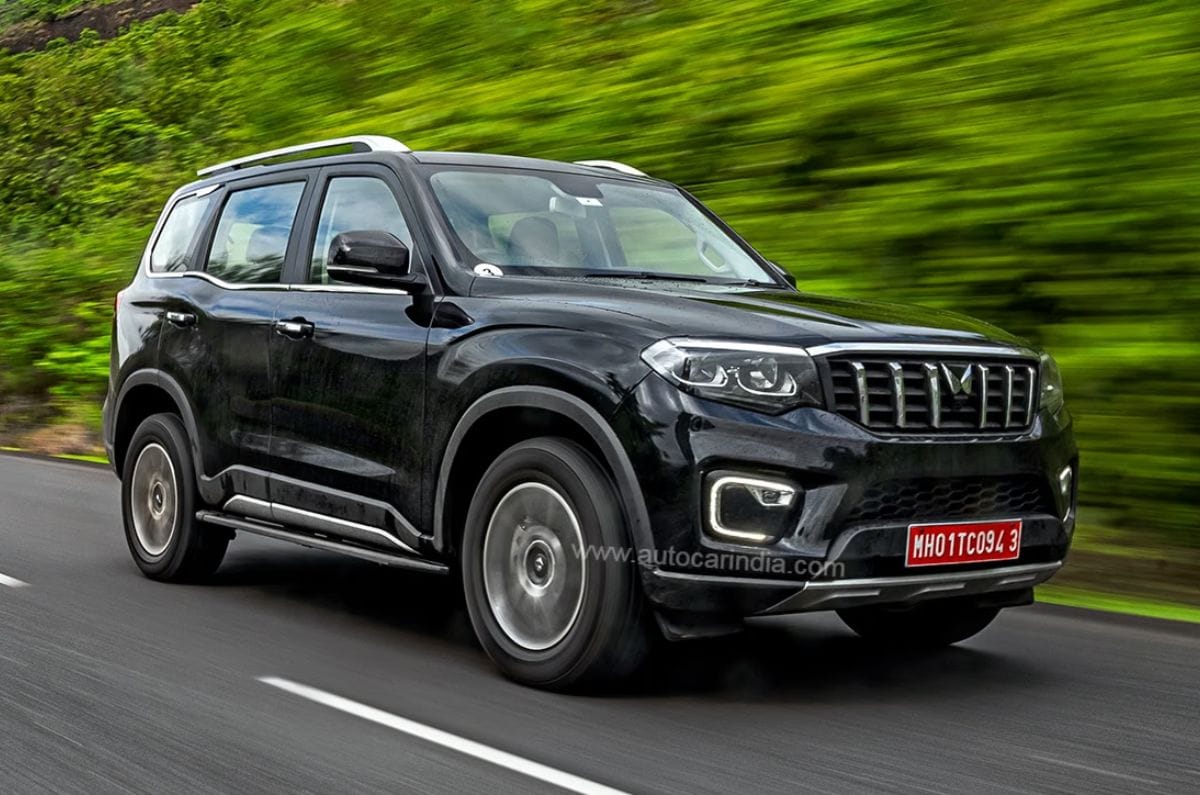
Mahindra Scorpio N
Price: Rs 14.19 lakh – Rs 25.49 lakh
The Scorpio N uses the same 2.2-litre diesel engine as the XUV 7XO, but in a slightly different state of tune, producing 175hp and 370Nm (400Nm in 4×4 guise) here. Given the Scorpio N’s hardy underpinnings and rugged nature, the diesel engine makes for a great fit on this SUV, thanks to its strong reserves of torque. The 6-speed AT gearbox isn’t particularly quick shifting or sporty, but it is smooth. The Scorpio N is also the only SUV on this list to come with an optional 4×4 system, and you’d be surprised by how capable it is off the tarmac. It also has a premium interior and is well-specced with features, but third-row is quite limited on space.