Ducati Monster old vs new: Price and differences explained

Ducati Monster old vs new: Price and differences explained

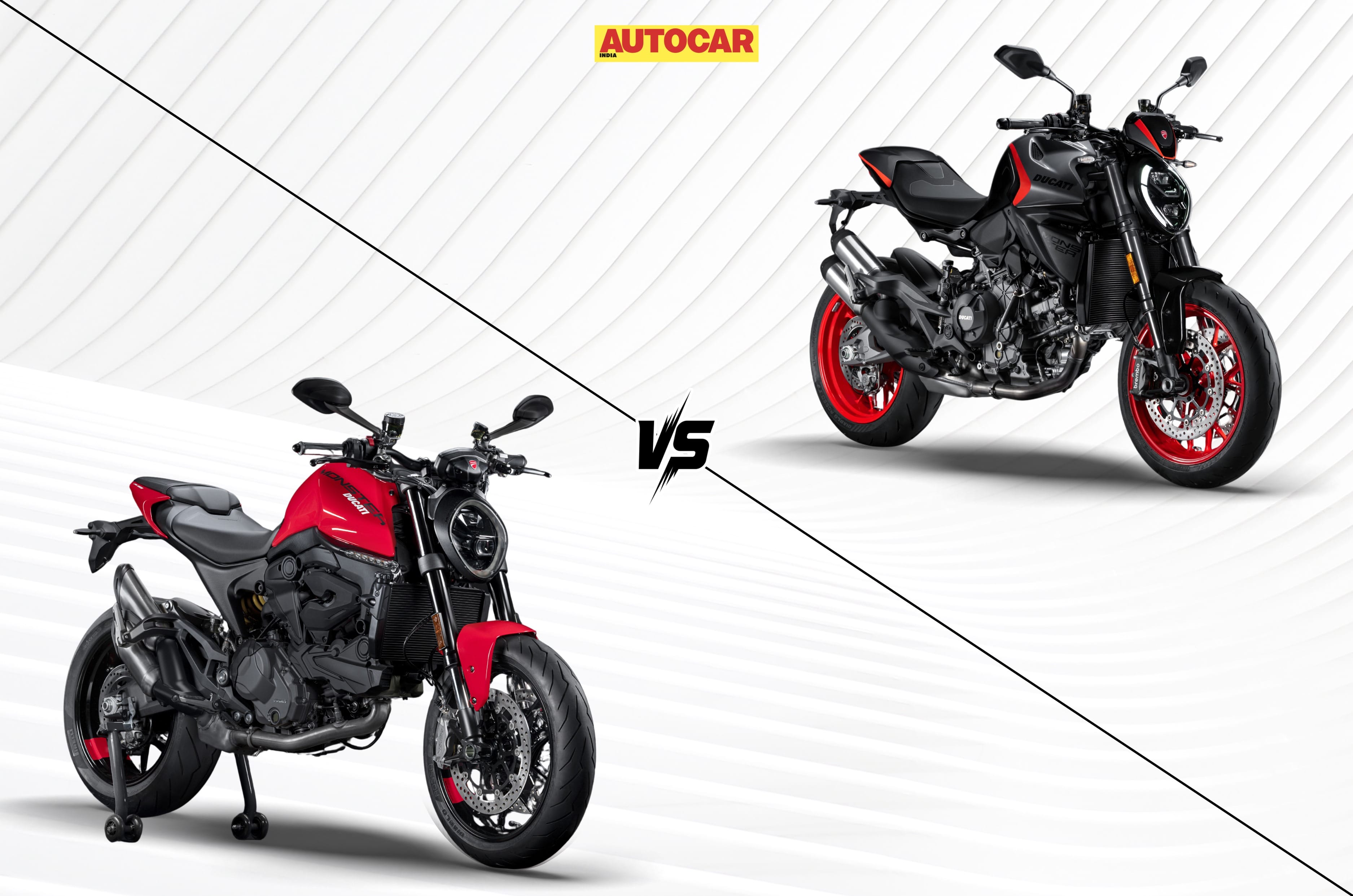
Besides the new 890cc V-twin engine, Ducati has also changed a bunch of things under the skin that make the new Monster a significantly different motorcycle to the one it replaces. For the sake of simplicity, for the remainder of this article, Monster old refers to the previous MY2024 937cc Monster and Monster new is the current MY2026 890cc Monster V2. Let’s go through the changes and also see what remains unchanged on the Monster V2.

Ducati Monster old vs new: Engine and chassis

Biggest changes from the older Monster
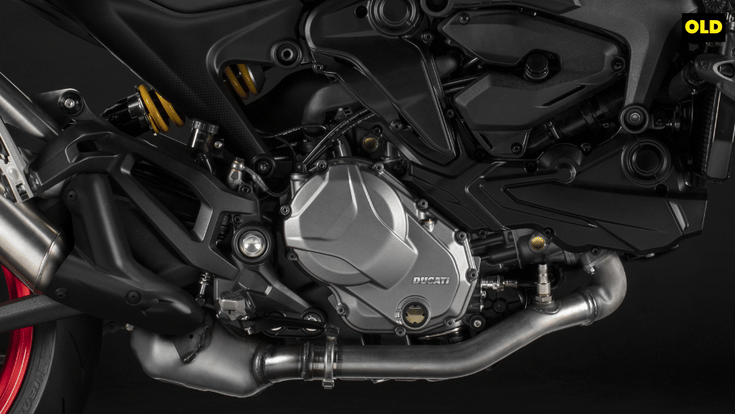
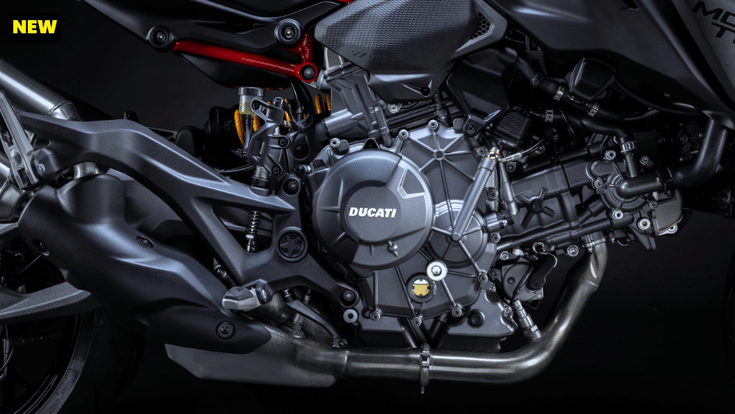
Ducati Monster Old engine
Ducati Monster V2 engine


This is the headlining change and for a good reason. Ducati went from the previous 937cc V-twin engine to a new 890cc V-twin engine that’s also available on the Multistrada V2, Panigale V2, and Streetfighter V2. Despite getting smaller, the engine delivers the same power as before and it does it 250rpm earlier in the rev range. Torque, however, sees a 2Nm reduction and it’s now delivered 750rpm later in the rev range than before. The other big change is the new monocoque chassis replacing the previous one’s aluminium one. Ducati only reports wet weight without fuel, so the power-to-weight ratio here uses wet weight numbers with 90 percent fuel.
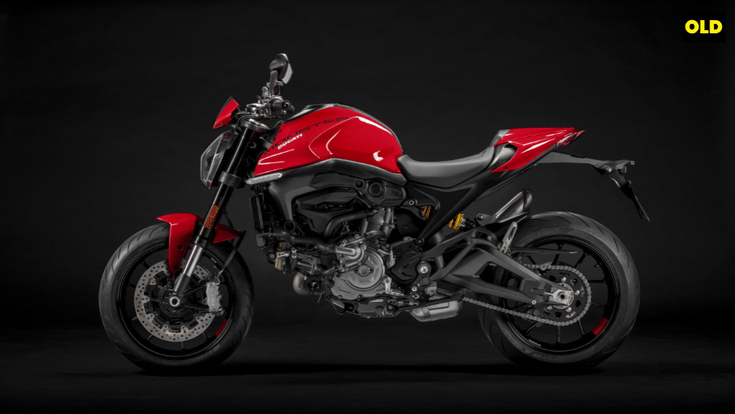
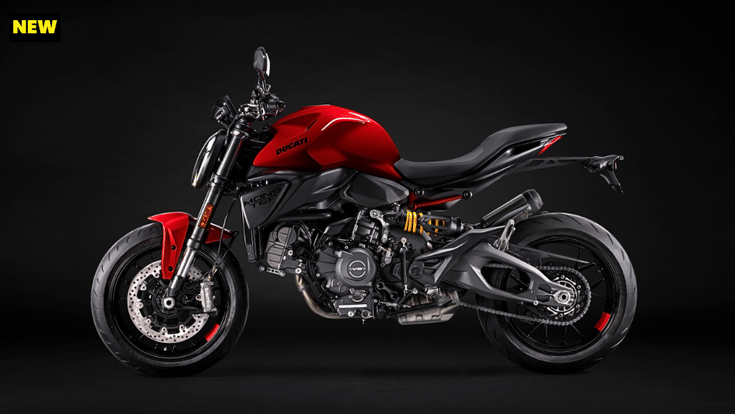
Ducati Monster old left side profile
Ducati Monster new left side profile


Ducati Monster V2

Ducati Monster MY24

Engine

890cc, V-twin, liquid-cooled

937cc, V-twin, liquid-cooled

Power

111hp at 9,000rpm

111hp at 9,250rpm

Torque

91.1Nm at 7,250rpm

93Nm at 6,500rpm

Gearbox

6-speed

6-speed

Power-to-weight ratio

601.63hp/tonne

589.64hp/tonne

Ducati Monster old vs new: Design and weight

Monster V2 is lighter and more accessible than before
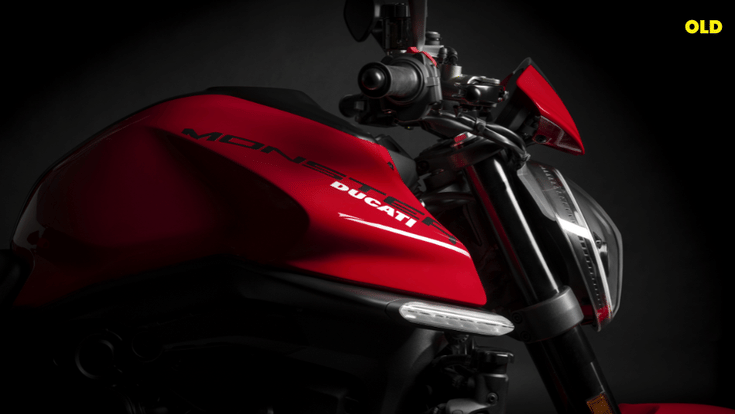
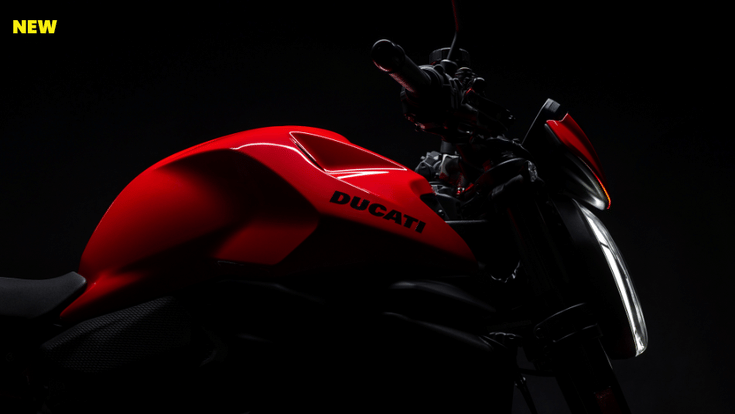
Ducati Monster Old tank
Ducati Monster V2 tank


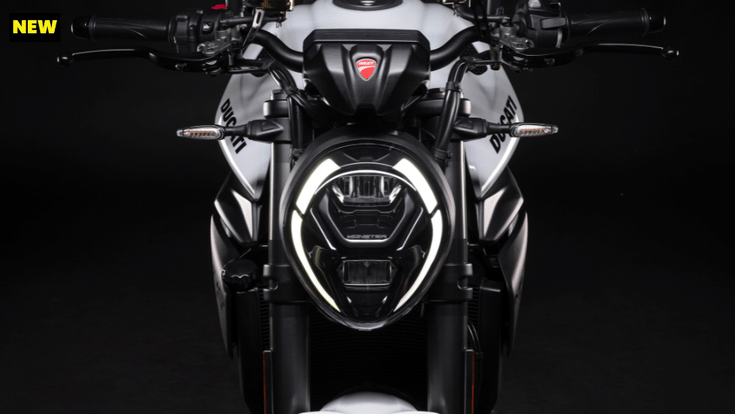
The obvious difference between the Monster V2 and the previous model is the ‘bison-back tank’ as Ducati calls it, but we’ll just call it a return to the big-tank design legacy of the Monsters of yesteryear. Tank capacity however remains the same at 14 litres. The seat height on the Monster V2 has also been dropped to 815mm (compared to 820mm earlier) and it’s narrower than before. Other exterior changes include a different alloy design, a slightly different headlight. The wet weight (without fuel) has also dropped from 179kg to 175kg. Other than this, the Monster V2 continues with the same tyre and rim sizes as the previous one at 120/70R17 for the front and 180/55R17 for the rear. The Monster V2 gets the new Pirelli Rosso IV tyres, whereas the earlier model came with Rosso III.

Ducati Monster old vs new: Rider aids

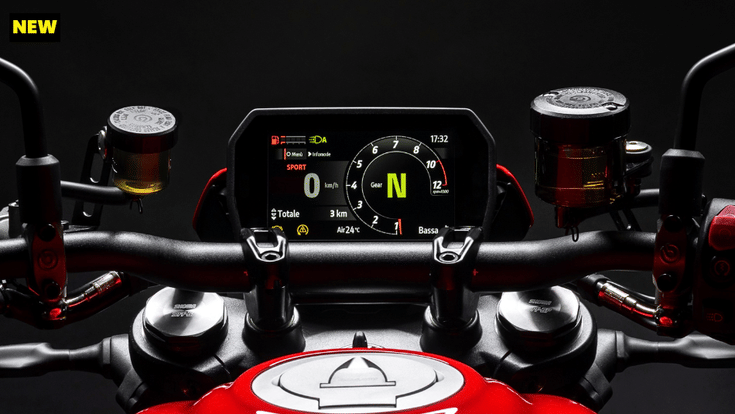
TFT instrument cluster has grown
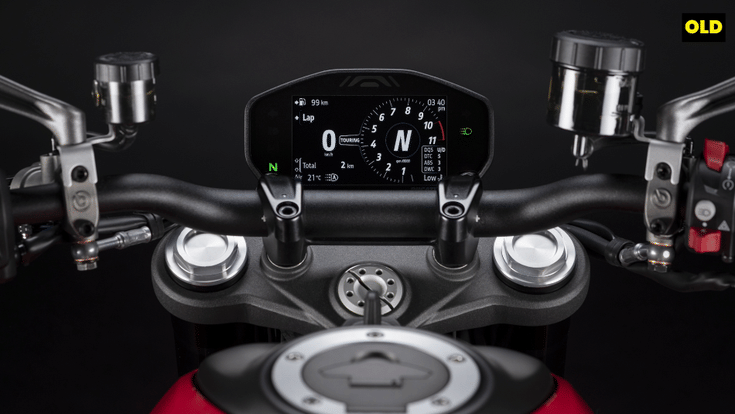
Ducati Monster TFT Old
Ducati Monster TFT new


The new Monster retains all the electronic aids present in the previous one such as ride modes (Sport, Road and Wet), power modes (Low, Medium, and High), traction control, and wheelie control. However, the bi-directional quickshifter has been updated for the V2 and the TFT instrument cluster has also grown in size from 4.3-inch to 5-inch.

Ducati Monster old vs new: Colour schemes

One new colour on the V2
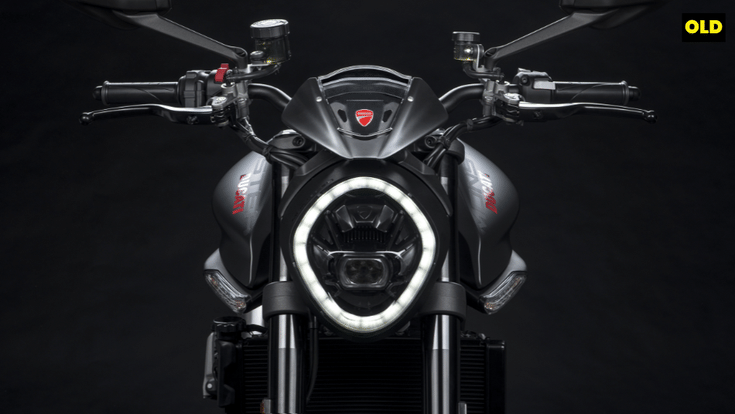
Ducati Monster old headlight
Ducati Monster V2 new


There aren’t too many differences between the old and the new Monster in terms of the colours but Ducati has now discontinued the ‘Aviator Grey’ colour and has switched the Racing Red wheels to the ‘Iceberg White’ colour. The Monster V2 gets a third colour option called ‘Sport Livery’.

Ducati Monster old vs new: Price

Rs 15,000 more expensive than before
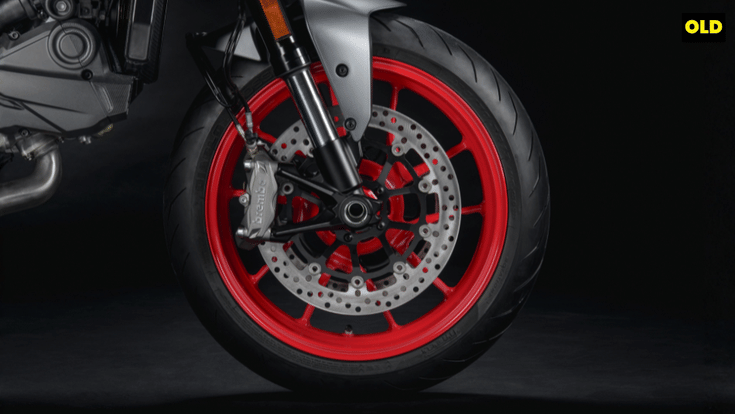
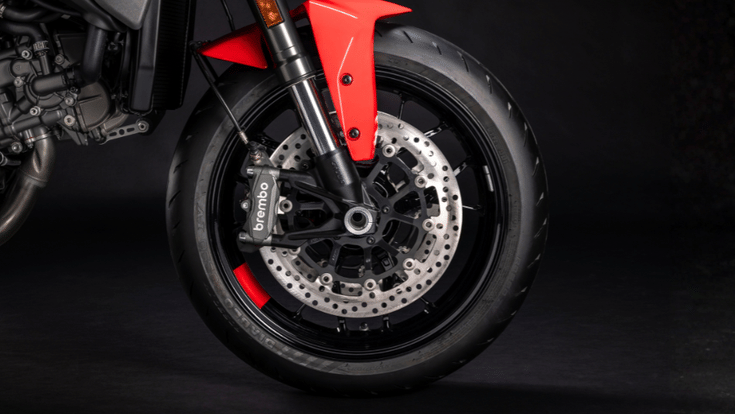
Ducati Monster Old front wheel
Ducati Monster V2 front wheel


With all the new changes, the Monster V2 now starts at Rs 13.99 lakh (ex-showroom) which is a Rs 15,000 increase over the previous model. This price is applicable to the base ‘Ducati Red’ colour with the ‘Iceberg White’ and ‘Sport Livery’ options each costing Rs 14.23 lakh. We also have the Monster+ V2 which adds headlight cowl and passenger seat cover and starts at Rs 14.34 lakh (Ducati Red) and goes up to Rs 14.45 lakh (Iceberg White, Sport Livery)
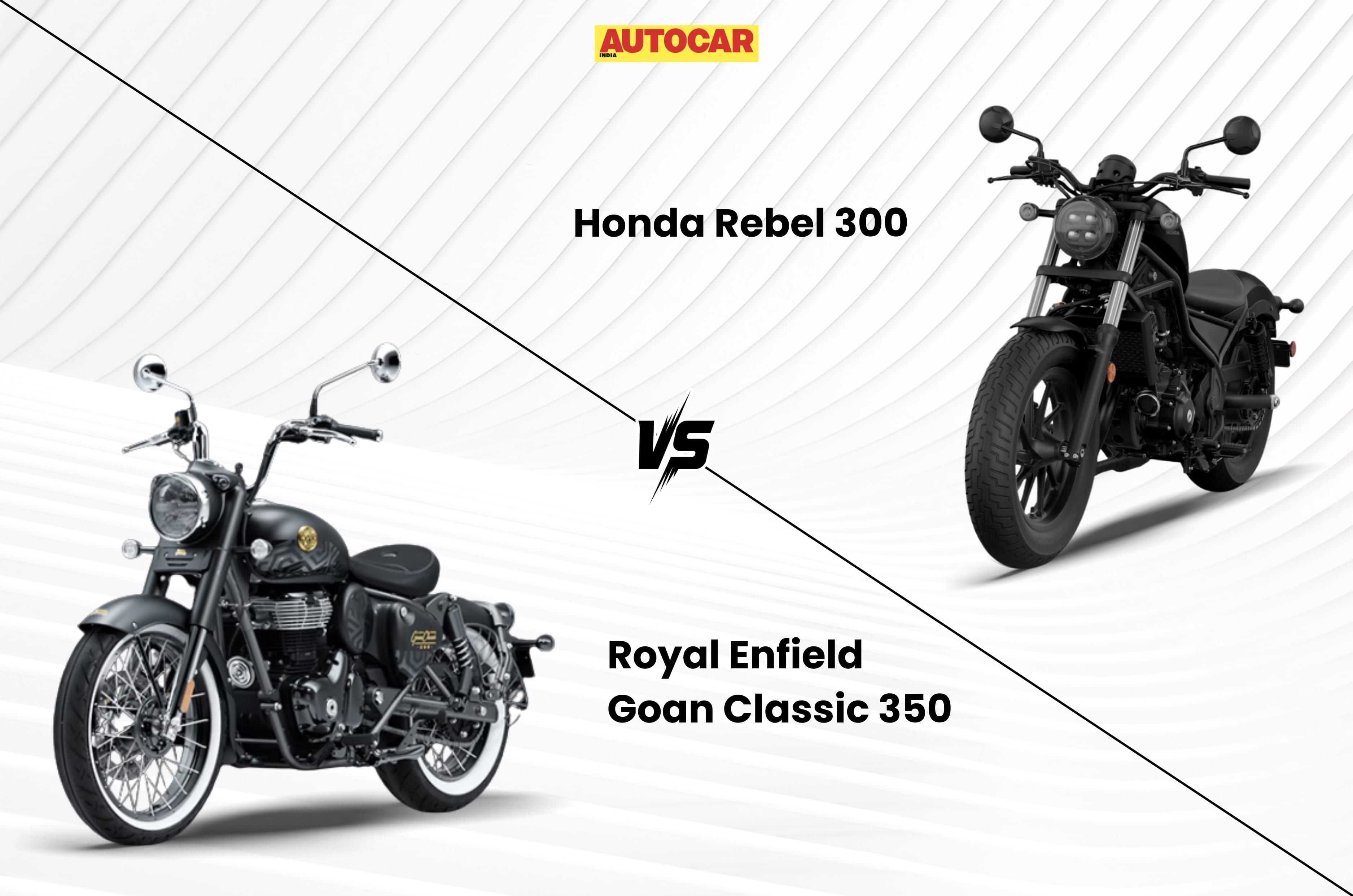
 

Honda Rebel 300 vs Royal Enfield Goan Classic 350: Specification comparison

Honda Rebel 300 vs Royal Enfield Goan Classic 350: Specification comparison

Honda Rebel 300 was one of the ten products announced for India by the company on their July 2026 mega reveal. Currently, its direct competitor in the segment will be the Royal Enfield Goan Classic 350. Unlike Royal Enfield, Honda seems to be taking a more modern approach to it’s bobber motorcycle with a more modern design and small but meaningful tech implementations. Even though we don’t have the official price or a launch date for the Rebel 300, we know enough details about it to see how it stacks up against the Goan Classic 350 on paper.

Honda Rebel 300 vs Royal Enfield Goan Classic 350: Engine and output

Modern vs neo-retro


Honda Rebel 300

Royal Enfield Goan Classic 350

Engine

286cc, single-cylinder, liquid-cooled

349cc, single-cylinder, air-cooled

Power

30hp

19.9hp

Torque

27.5Nm

27Nm

Transmission

6-speed

5-speed

Power-to-weight ratio

174.42hp/tonne

101.02hp/tonne

The fundamental differences between the two motorcycles start right from their engines. The Goan Classic 350 uses its extremely popular J-series 349cc single-cylinder engine powering five different Royal Enfield motorcycles at the moment. Honda is using a 286cc single-cylinder engine that was last seen in India on the CB300R. Do note that the Rebel 300 is expected to be offered in India in both ‘normal’ and E-Clutch versions (that negates the need to use the clutch to change gears). While both the motorcycles offer the same torque, it is the Honda that offers more power.

Honda Rebel 300 vs Royal Enfield Goan Classic 350: Dimensions and weight


Honda Rebel 300

Royal Enfield Goan Classic 350

Fuel tank capacity

11 litres

13 litres

Ground clearance

NA

170mm

Kerb weight

171.9kg

197kg

Seat height

691mm

750mm

Wheelbase

1491mm

1400mm

Honda is lighter, lower, and longer

The Goan Classic 350 is the heavier one of these two motorcycles, by a mile. However, Royal Enfield has earned a reputation for its hefty footprints so this shouldn’t come as a surprise to most. For what it’s worth, the Royal Enfield does get a 2-litre larger fuel tank compared to the Honda, but the latter, in addition to being lighter, also gets a much lower seat height and a longer wheelbase. At the time of publishing, we do not have the ground clearance for the Rebel 300.

Honda Rebel 300 vs Royal Enfield Goan Classic 350: Tyres, brakes, and suspension

Rebel 300 has bigger tyres but smaller rim at front


Honda Rebel 300

Royal Enfield Goan Classic 350

Tyres (F, R)

130/90-16, 150/80-16

100/90-19, 130/90-16

Brakes (F, R)

296mm disc, 240mm disc, dual-channel ABS

300mm disc, 270mm disc, dual-channel ABS

Suspension (F, R)

Telescopic fork, dual shock

Telescopic fork, dual shock

Honda Rebel 300 vs Royal Enfield Goan Classic 350: Features

Honda takes the lead

As is expected of retros, both motorcycles offer a lean list of features, but Honda has the slight edge. Both motorcycles offer dual-channel ABS as standard, but Honda is expected to give the Rebel 300 a full TFT instrument cluster in India, replacing the negative LCD cluster in the international model. Royal Enfield does give their tripper navigation pod as standard on the Goan Classic 350. One feature that Royal Enfield can’t match, however, is Honda’s E-Clutch system. This system on the Rebel 300 essentially negates the need to engage the clutch to change gears which makes it similar to—but not the same as— a bi-directional quickshifter. At this point, it’s worth mentioning that Royal Enfield has started updating its 350cc line-up with a slipper clutch, but the Goan Classic 350 is yet to get it.

Honda Rebel 300 vs Royal Enfield Goan Classic 350: Price

At the time of publishing, we don’t know the official price for the Honda Rebel 300, but we have been led to believe that it’ll be priced at Rs 2.10-2.20 lakh (ex-showroom) when it’s expected to launch in November 2026; which puts it right against the Goan Classic 350 that currently costs Rs 2.25 lakh (ex-showroom). Even though their paths cross, these two motorcycles shouldn’t confuse many, especially once both are available for test rides.

Tata Sierra vs Kia Seltos diesel AT performance comparison

Tata Sierra vs Kia Seltos diesel AT performance comparison

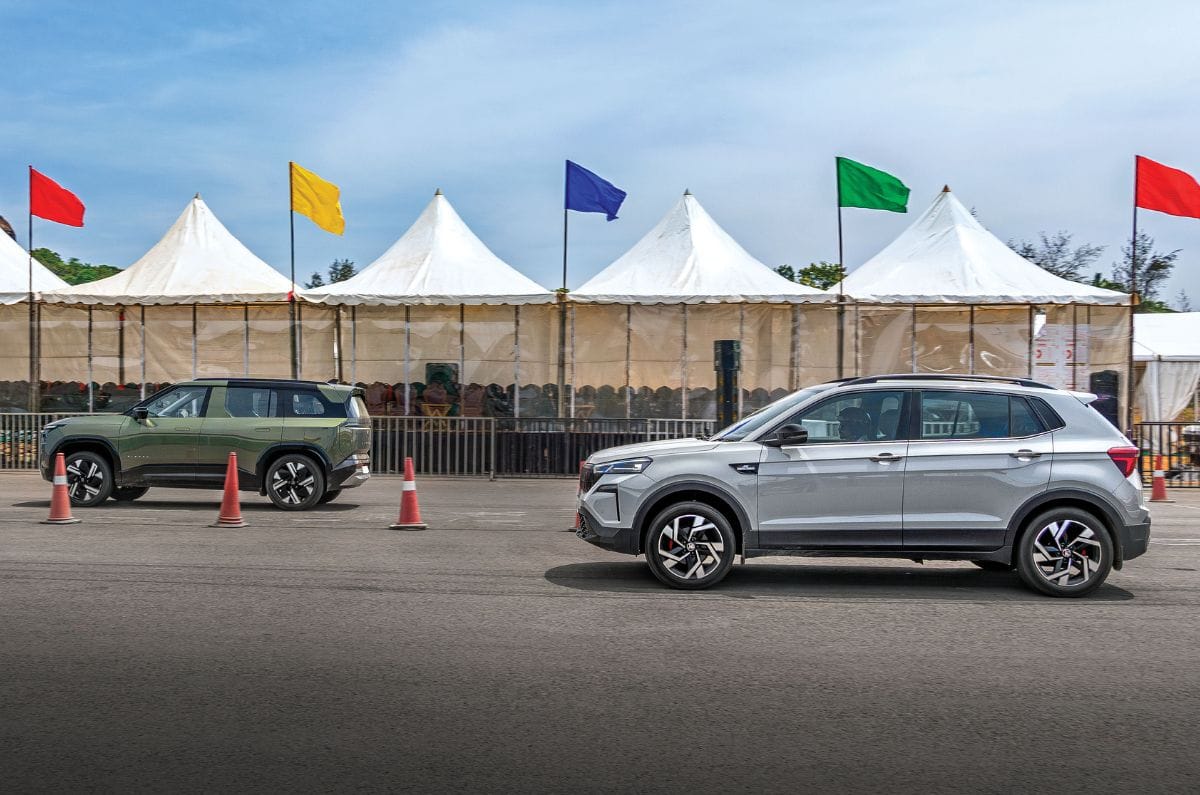
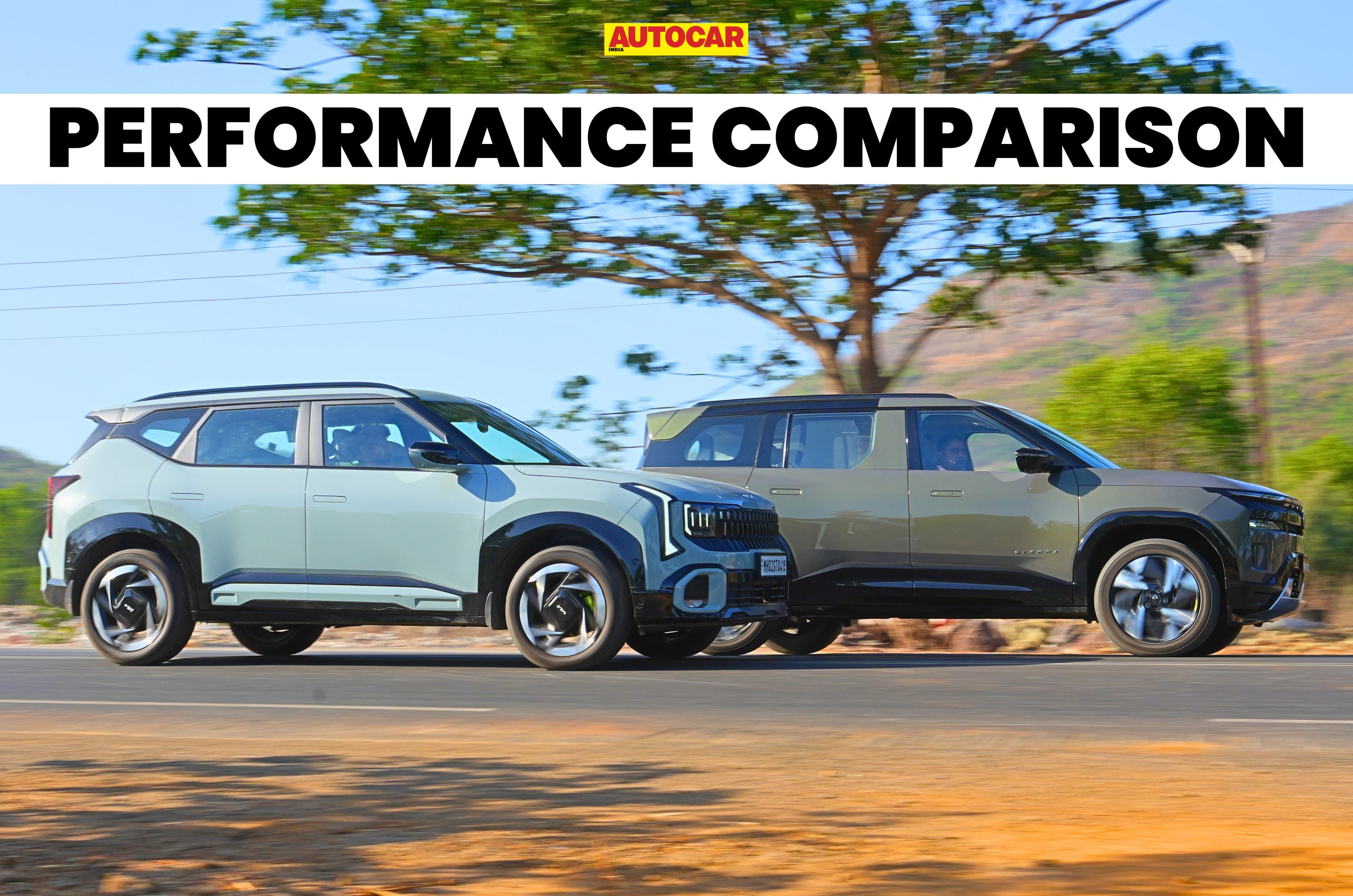
The Tata Sierra and Kia Seltos are among the few mid-size SUVs available with a diesel engine option. We have already compared their fuel efficiency figures, but this time we are looking at how the two perform in terms of acceleration. It should be noted that the Seltos diesel AT was tested in slightly wet conditions at a temperature of 27deg C. Here is how the two SUVs compare.

Tata Sierra vs Kia Seltos diesel AT: Specifications

SUVSierraSeltos
Cylinder count44
Displacement1497cc1493cc
Power118hp at 4000rpm 116hp at 4000rpm
Torque280Nm at 1500-2750rpm250Nm at 1500-2750rpm
Automatic transmission6-speed torque converter6-speed torque converter
Tyre size19 inch18 inch

The Tata Sierra and Kia Seltos use four-cylinder diesel engines with nearly the same displacement, at 1,497cc and 1,493cc, respectively. The Sierra makes 118hp, which is 2hp more than the Seltos’ 116hp. Its bigger advantage is torque, with 280Nm compared with 250Nm for the Seltos. Notably, the Sierra AT diesel makes 20Nm more torque than the manual version.

Both SUVs get a six-speed torque-converter automatic gearbox and are also equipped with a variable-geometry turbocharger, which helps improve power delivery and reduce turbo lag. In terms of wheel size, the Sierra gets 19-inch tyres, while the Seltos is equipped with 18-inch units.

Tata Sierra vs Kia Seltos diesel AT: 0-100kph sprint

SUVSierraSeltos
20kph (s)1.441.36
40kph (s)3.533.11
60kph (s)5.935.81
80kph (s)9.319
100kph (s)13.3713.17

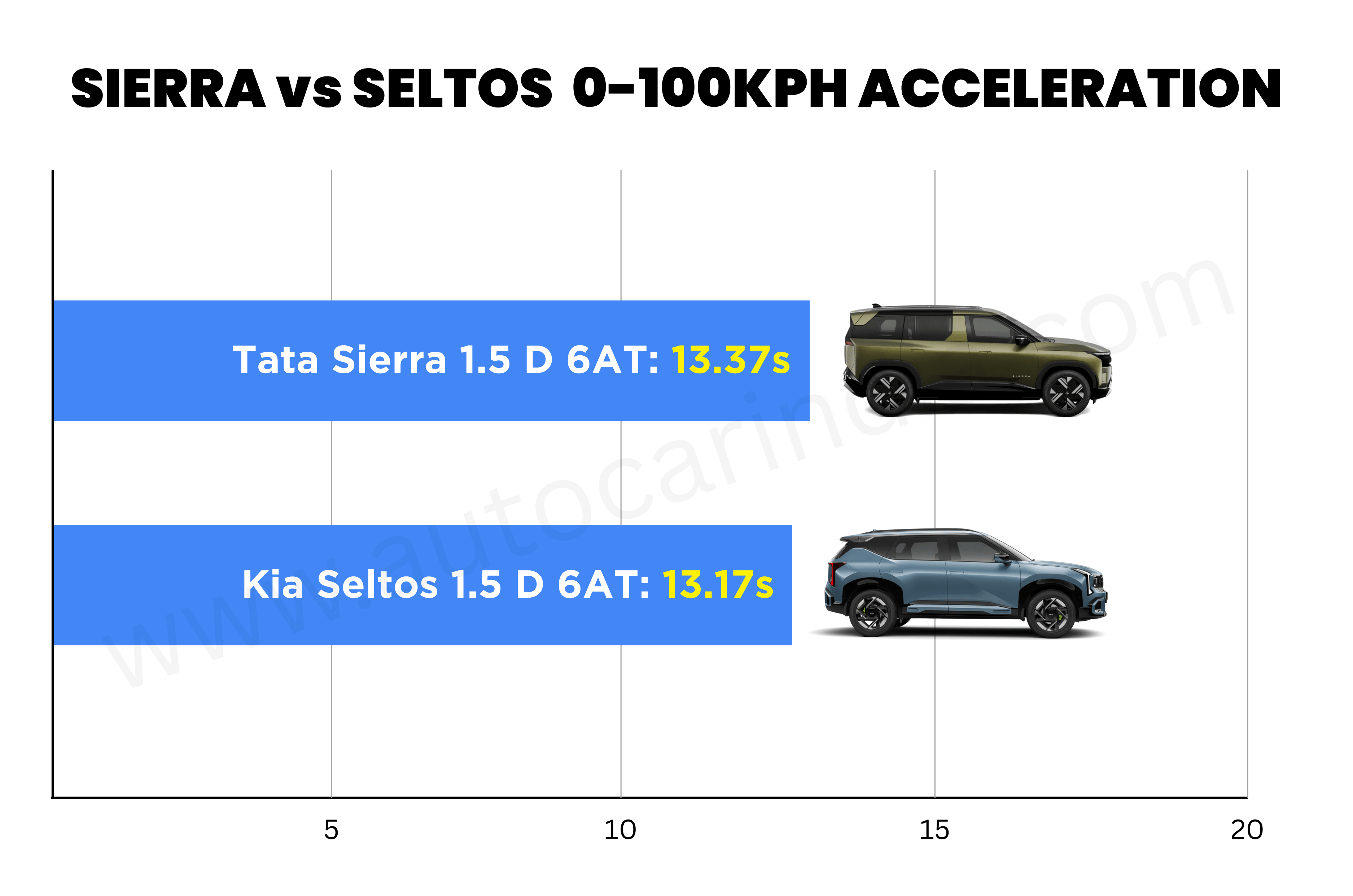
In our tests, the Kia Seltos is quicker than the Tata Sierra in accelerating from a standstill to the 100kph mark. From 0-20kph, the Seltos takes 1.36 seconds, 0.08 seconds quicker than the Sierra’s 1.44 seconds figure. The gap increases to 0.42 seconds at 40kph, with the Seltos taking 3.11 seconds versus 3.53 seconds for the Sierra.

Tata Sierra vs Kia Seltos diesel AT 0-100kph sprint

At 60kph, the Seltos takes 5.81 seconds, just 0.12 seconds quicker than the Sierra’s 5.93 seconds. The difference is even smaller at 80kph, where the Seltos takes 9 seconds compared with 9.31 seconds for the Tata SUV. At 100kph, the Kia SUV completes the run in 13.17 seconds, while the Sierra takes 13.37 seconds, making it 0.20 seconds quicker.

Tata Sierra vs Kia Seltos diesel AT: Rolling acceleration

In the 20-80kph run, with the cars in third gear and using kickdown, the Seltos is quicker than the Sierra. It takes 7.72 seconds to complete the run, compared with 7.97 seconds for the Sierra, giving it a 0.25 second advantage.

The result reverses in the 40-100kph fourth-gear kickdown test. Here, the Sierra takes 9.42 seconds, making it 0.62 seconds quicker than the Seltos, which completes the run in 10.04 seconds.

Tata Sierra vs Kia Seltos diesel AT: Prices

SUVSierraSeltos
Price range (Rs lakh)15.99-21.2915.32-21.82

The Kia Seltos has a lower starting price at Rs 15.32 lakh, compared with Rs 15.99 lakh for the Tata Sierra, making it Rs 67,000 cheaper at the base end. However, the Sierra has a lower top-spec price of Rs 21.29 lakh, while the Seltos goes up to Rs 21.82 lakh, making the Sierra Rs 53,000 cheaper at the top end.

Autocar India’s performance testing standards

Before we conduct our performance tests, we check and maintain tyre pressures based on the manufacturer’s recommendations and ensure the car has a full tank of fuel. The car is then tested in a controlled environment with two people on board, and the data is collected via highly accurate GPS-based timing equipment.

Ex-showroom prices are as of August 11, 2026.

Indian Motorcycle unveils Chief Vintage Sturgis Edition limited to 125 units

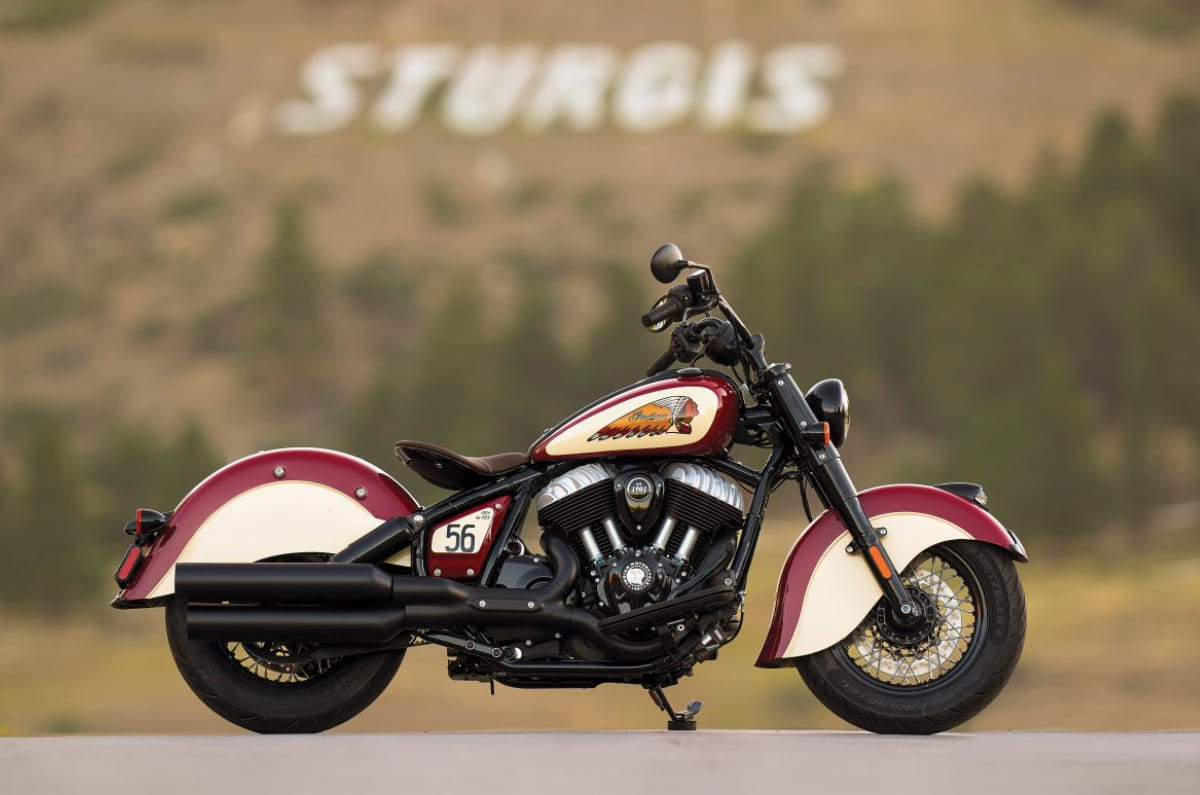
Indian Chief Vintage Sturgis Edition

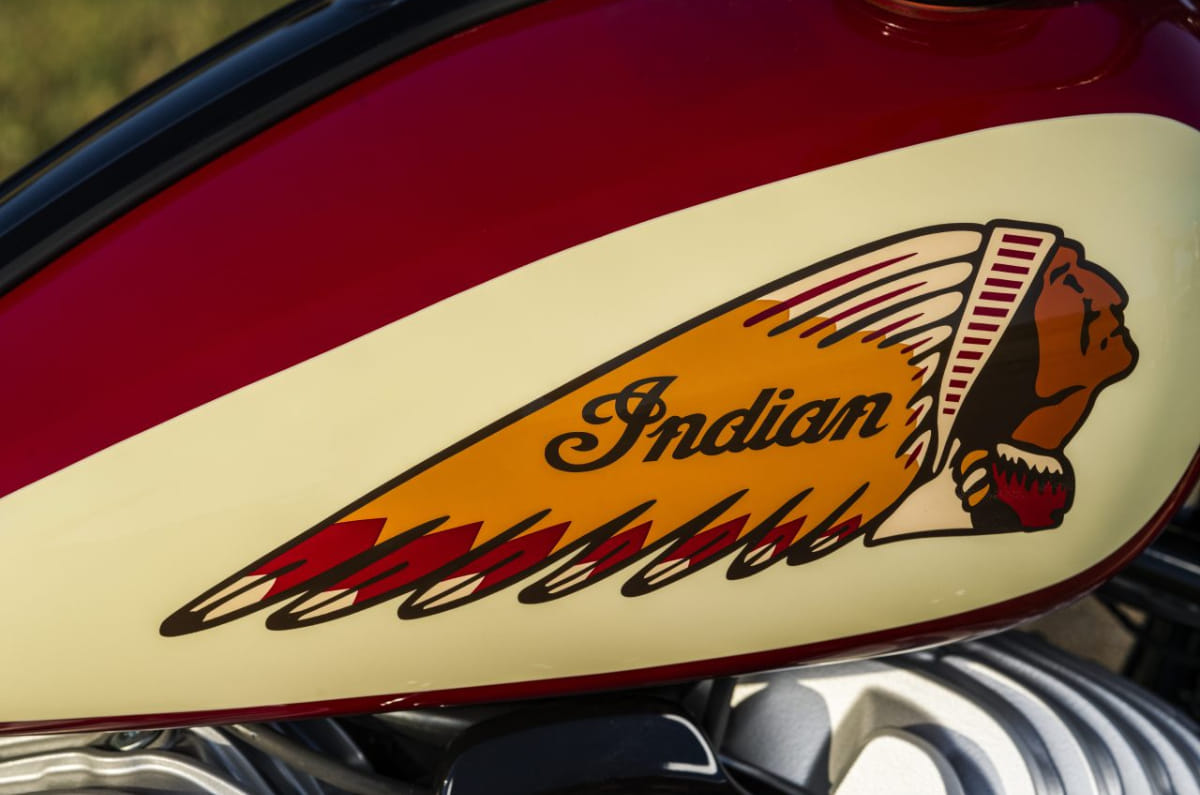
Indian Motorcycle has unveiled the Chief Vintage Sturgis Edition at the 86th annual Sturgis Motorcycle Rally – a limited-edition model commemorating the origins of what has become the world’s largest motorcycle rally. Just 125 units will be produced, with a small number available in select markets outside North America.

  1. Limited to just 125 units worldwide
  2. Commemorates the 1938 origins of the Sturgis Rally
  3. Powered by the Thunderstroke 116 V-twin

Indian Chief Vintage Sturgis Edition details

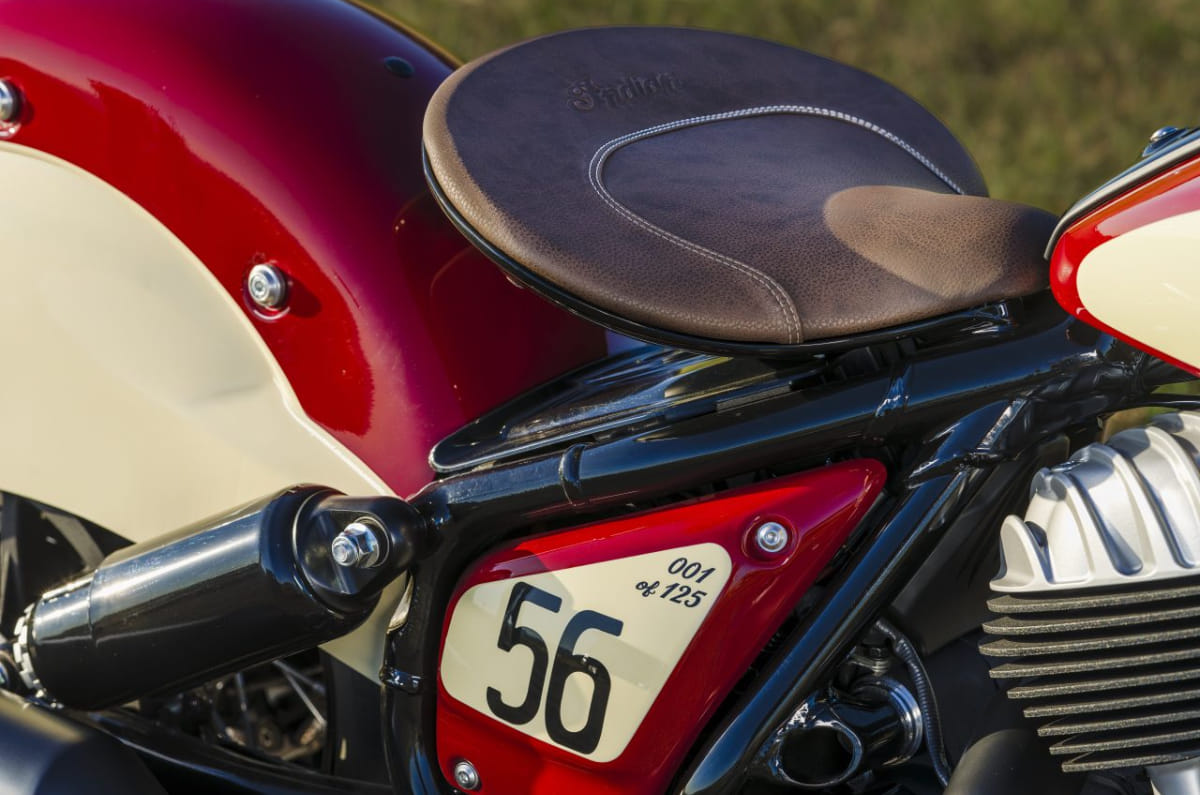
Painted number 56 on the side plate pays tribute to the hand-painted race numbers used at the original 1938 gathering.

The Sturgis Edition is built around the standard Chief Vintage platform and is powered by the air-cooled Thunderstroke 116 V-twin. In typical Indian Motorcycle fashion, the manufacturer has not revealed peak power figures, but has confirmed a peak torque output of 156Nm. Design elements such as the valanced fenders, wire-spoke wheels, solo seat and old-school handlebars have been carried over. Other notable touches include painted cylinder heads and pushrod tubes, along with black-finished cylinders that the brand says are reminiscent of Indian Motorcycle models from the 1940s.

The most distinctive visual element is the exclusive two-tone red and cream paint scheme, paired with a multi-coloured Indian Motorcycle headdress logo on the fuel tank inspired by the brand’s 1930s motorcycles. A painted number 56 on the side plate is a nod to the hand-painted race numbers used by riders at the very first Sturgis gathering. Each of the 125 motorcycles will also feature a serialised badge.

The inaugural Sturgis gathering was organised in 1938 by a local Indian Motorcycle dealer and a motorcycle club. Just nine riders took part, with around 200 spectators in attendance. Today, the event has grown into the world’s largest motorcycle rally, drawing hundreds of thousands of riders and visitors each year, and this limited-edition model serves as a tribute to those beginnings.

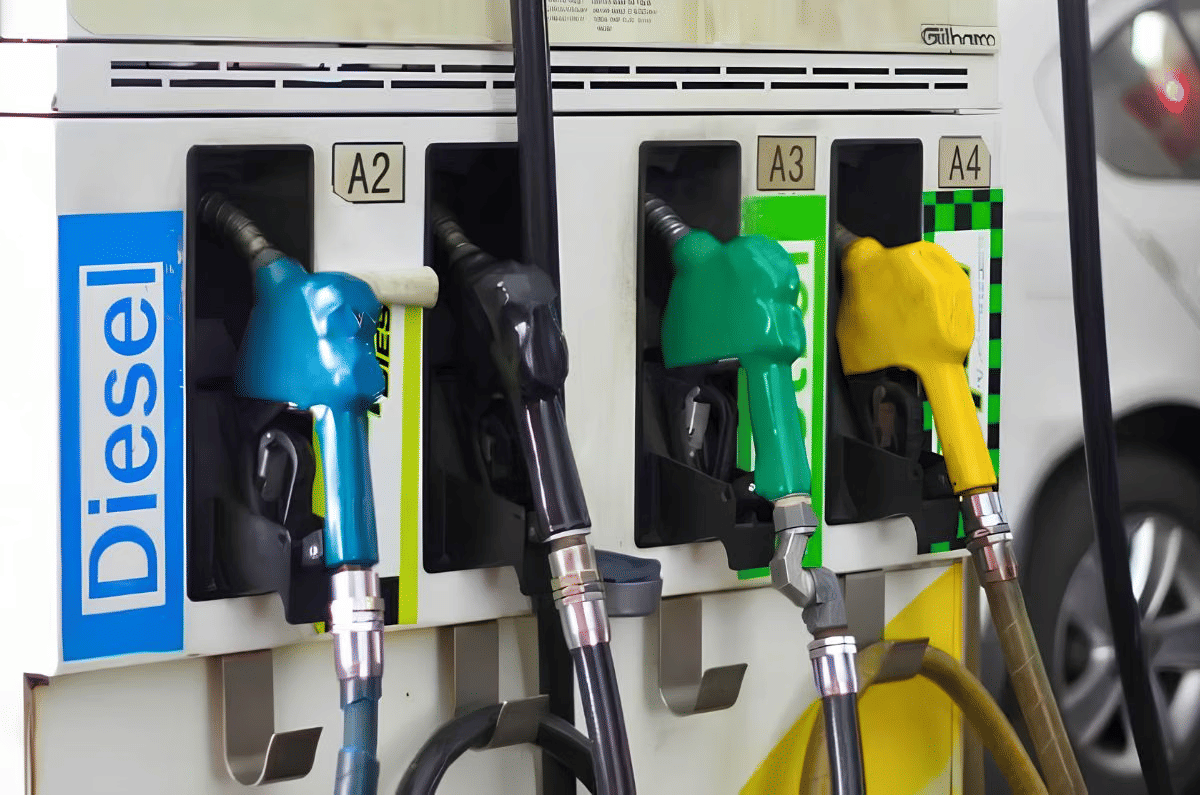
Ethanol-blended diesel ruled out as it fails safety specifications

Ethanol-blended diesel ruled out as it fails safety specifications

The government has ruled out blending ethanol with diesel, as it sharply lowers the fuel’s flash point (the temperature at which its vapours can ignite) and fails to meet the required safety standards. Public-sector oil marketing companies (OMCs) tested ethanol-diesel blends at their research and development centres, in association with accredited laboratories and automobile manufacturers, Minister of State for Petroleum and Natural Gas Suresh Gopi said. 

This comes after the government seeks to blend ethanol with other fuels beyond petrol. Currently, E20 and E85 fuels, which contain 20 percent and 85 percent ethanol respectively, are available in the country.

Issues in ethanol-diesel blending

Speaking of flash points, ethanol has a flash point of just 12 to 13deg C, compared with the minimum 35deg C requirement for diesel. This puts the two fuels in different petroleum safety classes, making both their storage and transportation difficult. Even with proprietary binders, OEMs have generally been reluctant to go beyond a 5 percent ethanol blend before combustion issues emerged.

For years, blending ethanol with diesel has been a challenge as the chemistry refuses to cooperate. Ethanol is a two-carbon alcohol with a polar structure, meaning it doesn’t like to mix with the oily consistency of diesel. As a result, ethanol and diesel can separate when stored together unless chemical binders are used. These binders, however, can be expensive.

Sierra vs Seltos vs Duster vs Kushaq: quarter mile drag race

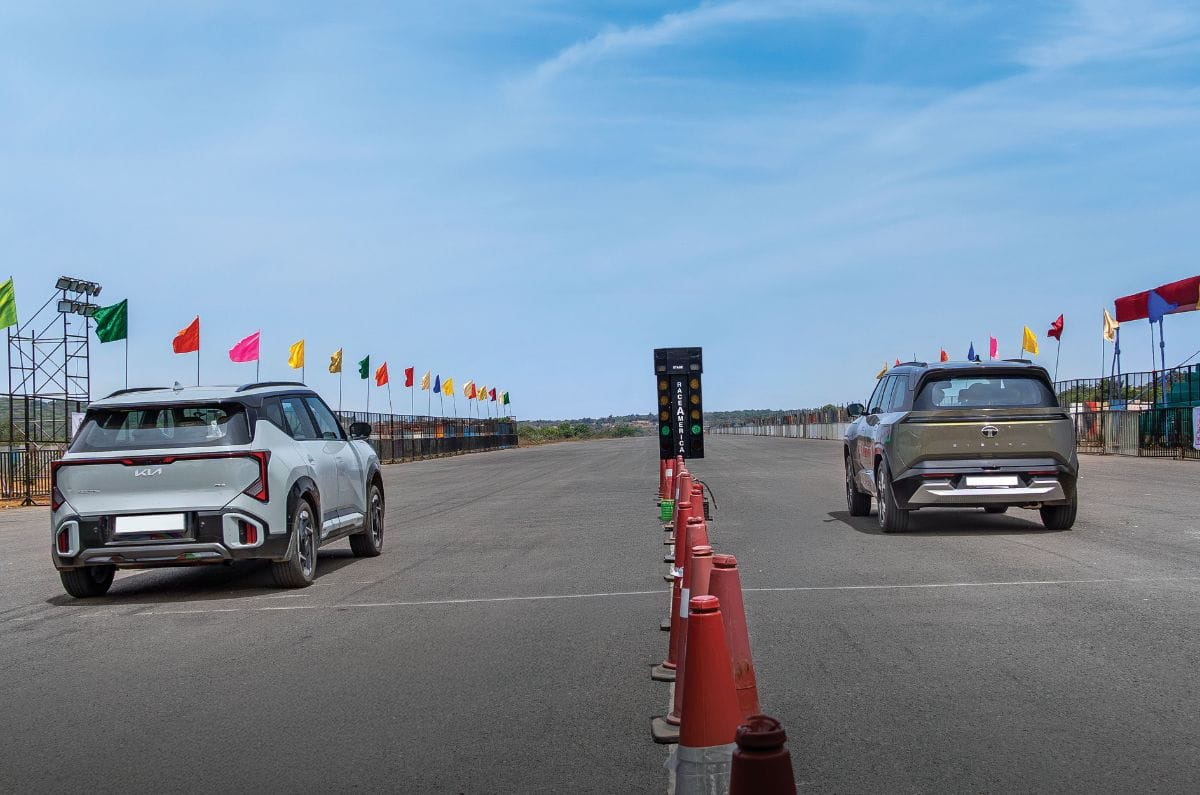
Kushaq vs Sierra drag race

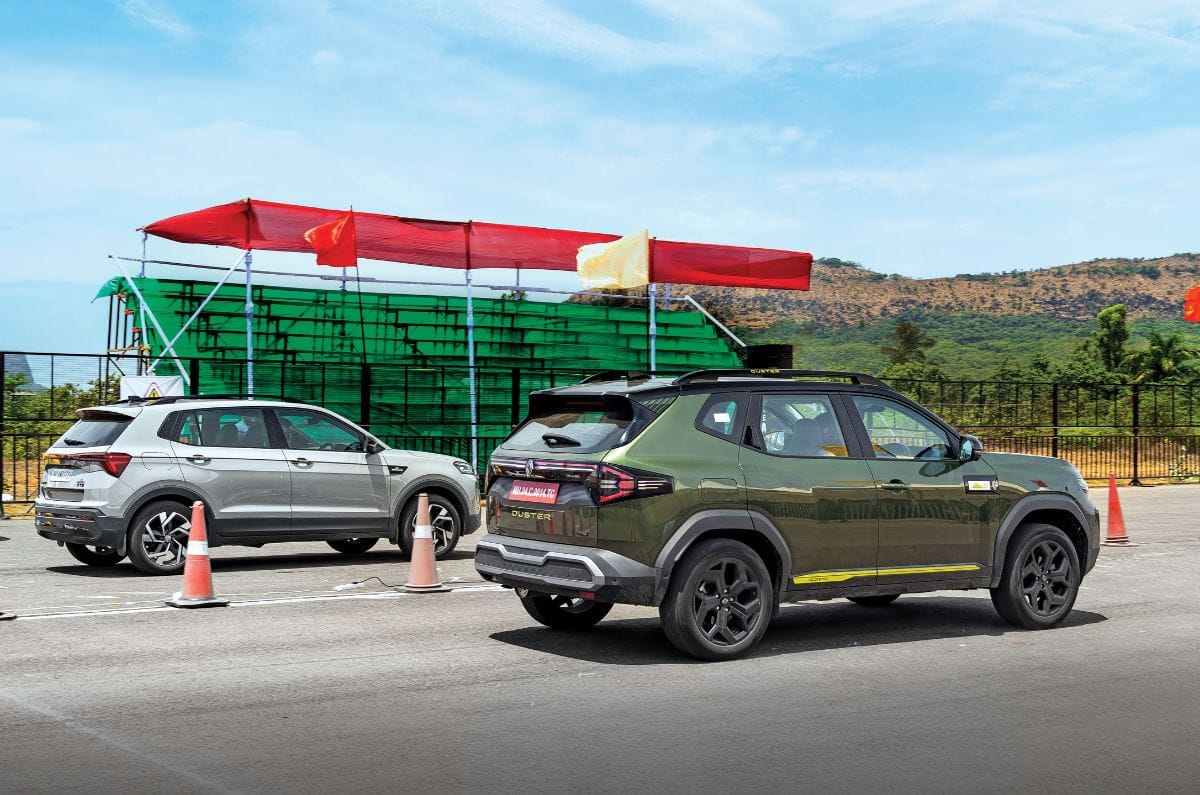
There’s no simpler way to compare one car’s performance to another than with a head-to-head quarter-mile race. In this edition of Autocar India’s quarter-mile racing series, we’ve brought together some of the newest midsize SUVs in the market, including the Tata Sierra, Kia Seltos and the Renault Duster. Let’s find out which of this new crop of midsize SUVs is the quickest down the drag strip. 

Race 1: Tata Sierra vs Kia Seltos 

SUVSeltosSierra
Engine1482cc, 4-cylinder 1498cc, 4-cylinder 
Power160hp at 5500rpm160hp at 5000rpm
Torque253Nm at 1500-3500rpm255Nm at 1750-4000rpm
Transmission7-speed dual-clutch6-speed torque converter
Kerb weight 1467kg1552kg

Our first pairing is between the Tata Sierra and the Kia Seltos, both of which are powered by 1.5-litre turbo-petrol engines, but with different gearboxes. 

These two new midsize SUVs are neck-and-neck on paper, with both featuring 160hp turbo-petrol engines, similar torque outputs and similar weight. However, the torque-converter-equipped Sierra launches much stronger than the Seltos, whose dual-clutch automatic is conservative off the line. The Kia Seltos does begin to claw back lost ground, but a little too late. The Sierra manages to win by a slender margin of about two tenths of a second. Race 2 is even closer, with a gap of just over a tenth, but the result stays the same.  

Sierra vs Seltos drag race times 
 Sierra Seltos
Race 116.92 sec17.11 sec
Race 2 17.07 sec17.19 sec 

Race 2: Skoda Kushaq vs Renault Duster 

SUVKushaq Duster 
Engine1498cc, 4-cylinder 1333cc, 4-cylinder 
Power150hp at 5000-6000rpm163hp at 5,250rpm
Torque250Nm at 1600-3500rpm280Nm at 2,000-3,500rpm
Transmission7-speed dual-clutch6-speed dual-clutch
Kerb weight 1322kg 1363kg

Our next pairing is between the Skoda Kushaq and the Renault Duster. The Kushaq uses a 1.5-litre turbo-petrol engine, while the Duster uses a smaller but more powerful 1.3-litre unit. Both engines come mated to a DCT gearbox. 

The Duster has the advantage on paper with more power, and it backs it up by winning Race 1 by two tenths. The Renault’s wet-clutch DCT allows a better launch than the Skoda’s dry-clutch unit, but the Skoda’s snappier shifts and stronger top end mean it is catching up. Race 2 starts off with the Skoda getting a better launch, and as such, it goes on to beat the Renault by nearly four tenths. Race 3 is closer than Race 2, but the result stays the same, with the Kushaq coming out on top yet again. 

Kushaq vs Duster drag race times 
 Kushaq  Duster
Race 117.77 sec17.65 sec
Race 2 17.05 sec17.69 sec
Race 317.28 sec17.67 sec

Race 3: Tata Sierra vs Skoda Kushaq 

SUVSierraKushaq 
Engine1498cc, 4-cylinder 1498cc, 4-cylinder 
Power160hp at 5000rpm150hp at 5000-6000rpm
Torque255Nm at 1750-4000rpm250Nm at 1600-3500rpm
Transmission6-speed torque converter7-speed dual-clutch
Kerb weight 1552kg1322kg

Finally, we bring together the winners from the first two rounds to determine the fastest midsize SUV you can buy today.

The Sierra has the numbers on its side, but the Kushaq does tend to punch above its weight. As was the case in the earlier races, the Skoda proves tricky to launch off the line, while the Tata Sierra jumps ahead. From there on, the Kushaq does start to reel in the Sierra, but it’s just not enough. The Tata Sierra wins Race 1 by just about a tenth. Race 2 is equally close, with the gap being a minuscule 0.2 seconds, and the Sierra manages to win again. 

Sierra vs Seltos drag race times 
 Sierra Kushaq
Race 117.18 sec 17.28 sec
Race 2 17.02 sec17.21 sec 

Autocar India’s testing standards

Before we conduct our performance tests, we check and maintain tyre pressures based on the manufacturer’s recommendation and ensure the car has a full tank of fuel. The car is then tested in a controlled environment, and the data is collected via highly accurate GPS-based timing equipment.

Ducati Monster V2 vs Triumph Street Triple 765 RS: Price and spec comparison

Ducati Monster V2 vs Triumph Street Triple 765 RS: Price and spec comparison

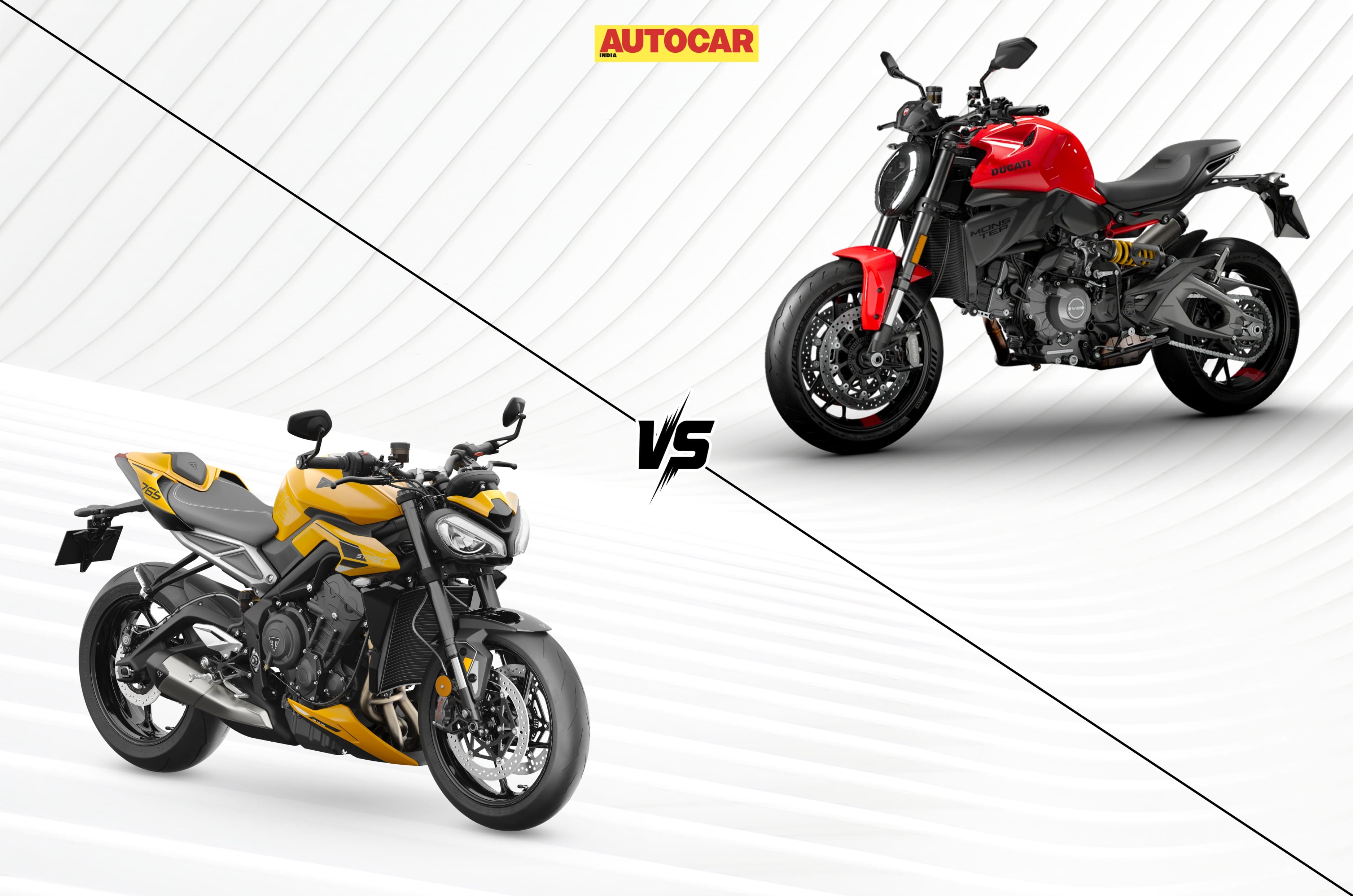
Ducati has just updated the Monster with a slew of changes. Amongst the many updates are an updated, smaller 890cc engine, a new monocoque chassis, and 4kg lesser weight with the price starting at Rs 13.99 lakh. Till now, the most popular option in this price segment has been Triumph’s Street Triple 765 RS, coming in at Rs 12.92 lakh. Let’s see how the updates have shaped up the Monster V2.

Ducati Monster V2 vs Triumph Street Triple 765 RS: Engine and output

More power for Triumph, more torque for Ducati


Ducati Monster V2

Triumph Street Triple 765 RS

Engine

890cc, V-twin-cylinder, liquid-cooled

765cc, inline three-cylinder, liquid-cooled

Power

111hp at 9,000rpm

130hp at 12,000rpm

Torque

91.1Nm at 7,250rpm

80Nm at 9500rpm

Gearbox

6-speed

6-speed

Power-to-weight ratio

634.29hp/tonne

691.49hp/tonne

The headlining change for the new Monster is the previous version’s 937cc V-twin engine being replaced with a 890cc V-twin engine, also seen in the likes of the Multistrada V2, Panigale V2, and the Streetfighter V2. Despite being smaller, this engine makes similar power and slightly lower torque (2Nm less, to be exact). Triumph, however, remains the most powerful engine in the segment with a class-leading 130hp. However, the reputed three-cylinder engine does have lesser torque than the Monster’s twin-cylinder. The Triumph also delivers both power and torque later in the rev range.

Ducati Monster V2 vs Triumph Street Triple 765 RS: Weight and dimensions

Ducati only discloses wet weight with no fuel


Ducati Monster V2

Triumph Street Triple 765 RS

Fuel tank capacity

14 litres

15 litres

Ground clearance

NA

NA

Wet weight

175kg (without fuel)

188kg

Seat height

815mm

836mm

Wheelbase

1492mm

1399mm

Ducati’s new updates to the Monster V2 includes a lower, narrower 815mm seat height (with 795mm and 775mm seats available as accessories; the latter requires a low suspension kit). Owing to various improvements throughout, it’s 4kg lighter than the outgoing model. The Triumph, by default, has a 21mm taller seat height. Although Triumph does offer lower seats as accessories, a 808mm one and a 798mm one; the latter requires a shorter rear suspension. At first glance, it might appear that the Ducati is significantly lighter than the Triumph, but do note that Ducati India only reports wet weight without fuel, whereas Triumph reports wet weight with fuel. With 90 percent fuel, the Monster should weigh closer to 185.3kg. However, neither company mentions the ground clearance numbers on their Indian website.

Ducati Monster V2 vs Triumph Street Triple 765 RS: Tyres, brakes, and suspension

The Ducati offers a larger brake rotor on both ends


Ducati Monster V2

Triumph Street Triple 765 RS

Tyres (F, R)

120/80R17, 180/55R17

120/80R17, 180/55R17

Brakes (F, R)

Dual 320mm front disc, single 245mm rear disc, cornering sensitive dual-channel ABS

Dual 310mm front disc, single 220mm rear disc, cornering sensitive dual-channel ABS

Suspension (F, R)

43mm USD fork, monoshock

41mm USD fork, monoshock

Both the motorcycles share the exact same tyre sizes. The Ducati offers a larger brake rotor on both ends, although both companies offer cornering ABS as standard. Things get a bit more interesting with the suspension. The Ducati offers the larger diameter front fork but its system isn’t quite as adjustable as the Triumph. Triumph suspension can be adjusted for preload, rebound, and compression on both ends, whereas the Ducati only offers rear preload adjustment. Point to be noted that the Street Triple RS is a track-focussed version whereas the Monster is meant for balanced usage. To that end, it is the Ducati that has the longer travel on both front (130mm vs 115mm) and rear (145mm vs 131.2mm). Differences in rake and trail are negligible for their intended purpose.

Ducati Monster V2 vs Triumph Street Triple 765 RS: Features

Par for the segment

Both the companies offer most of the features expected in this segment, but Ducati does go the extra mile by offering wheelie control and a bi-directional quickshifter as standard. As is also the norm in this segment, both motorcycles are ready for numerous accessory fitments such as cruise control and TPMS, with Ducati once again offering more electronic rider aids than Triumph.

Ducati Monster V2 vs Triumph Street Triple 765 RS: Price

Triumph is cheaper by a lakh

Model

Ducati Monster V2

Street Triple RS


Rs 13.99 lakh – Rs 14.45 lakh

Rs 12.92 lakh

Ducati has priced the new Monster at Rs 13.99 lakh (ex-showroom), a Rs 15,000 increase over the old Monster. Triumph on the other hand asks for Rs 12.92 lakh (ex-showroom). Do note that the Street Triple R—the road-focussed version—costs Rs 10.86 lakh (ex-showroom), which is significantly more affordable than the Monster. Both the motorcycles are distinctive enough with their design and equipment to make choosing one over the other simpler.


Kia Seltos vs Tata Sierra diesel automatic: Real world mileage compared

Kia Seltos vs Tata Sierra diesel automatic real world mileage comparison

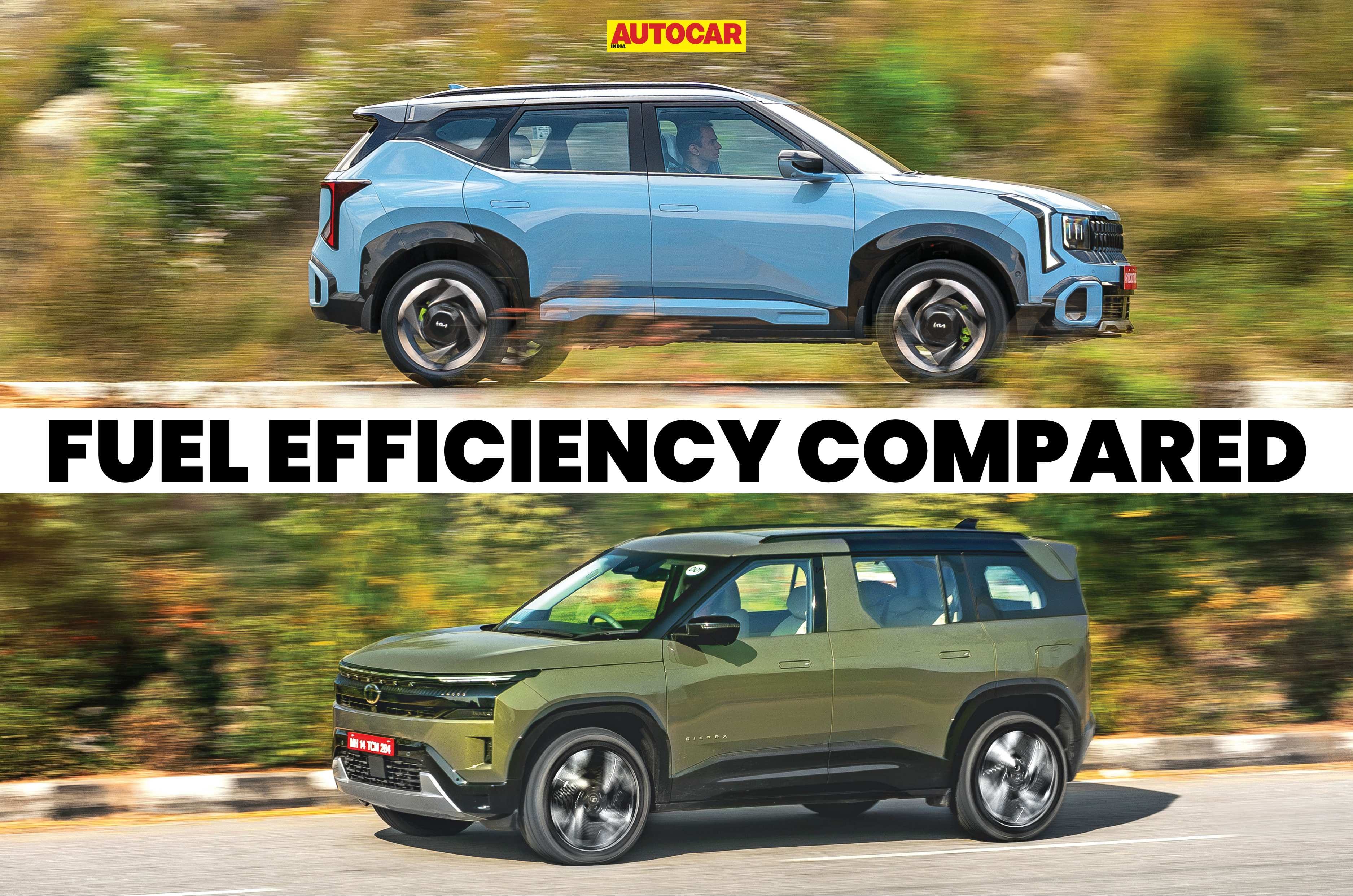
Alongside the Hyundai Creta, the only SUVs in this segment offering a diesel engine mated to a torque-converter automatic transmission (AT) are the Kia Seltos and the Tata Sierra. Where the all-new Sierra was introduced in November 2025, the second-gen Seltos entered the fray in January 2026. The Sierra diesel-AT version is limited to five trim options, but its Seltos counterpart is available in eleven. So, which one of these 5-seater midsize SUVs offers higher fuel economy?

Explore full specs, features and a price breakdown in our Seltos vs Sierra comparison.

Kia Seltos vs Tata Sierra diesel automatic: Specifications

The Sierra offers more power, but it is also heavier than the Seltos

Kia Seltos vs Tata Sierra diesel automatic: Specifications


Kia Seltos

Tata Sierra

Engine

4 cyl, diesel

4 cyl, diesel

Displacement (cc)

1493

1497

Power (hp)

116 (4,000rpm)

118 (4,000rpm)

Torque (Nm)

250 (1,500-2,750rpm)

280 (1,500-2,750rpm)

Gearbox

6-speed AT

6-speed AT

Fuel tank (litres)

47

50

Even though their turbocharged engines are of similar sizes, it’s the Tata Sierra’s unit that produces 2hp and 30Nm more. Moreover, the power and torque figures of these cars are achieved over the same engine RPM range. Compared to the Seltos, the Sierra diesel comes with a slightly larger fuel tank (by 3 litres), whilst the gearboxes on both are 6-speed torque-converter automatic units. Both cars are equipped with a variable-geometry turbocharger, thus improving power delivery and reducing turbo lag.

Kia Seltos vs Tata Sierra diesel automatic: Real-world fuel efficiency

Despite featuring an ‘Eco’ mode and weighing less, the Seltos fared slightly worse than the Sierra

Kia Seltos vs Tata Sierra diesel automatic real world mileage comparison chart

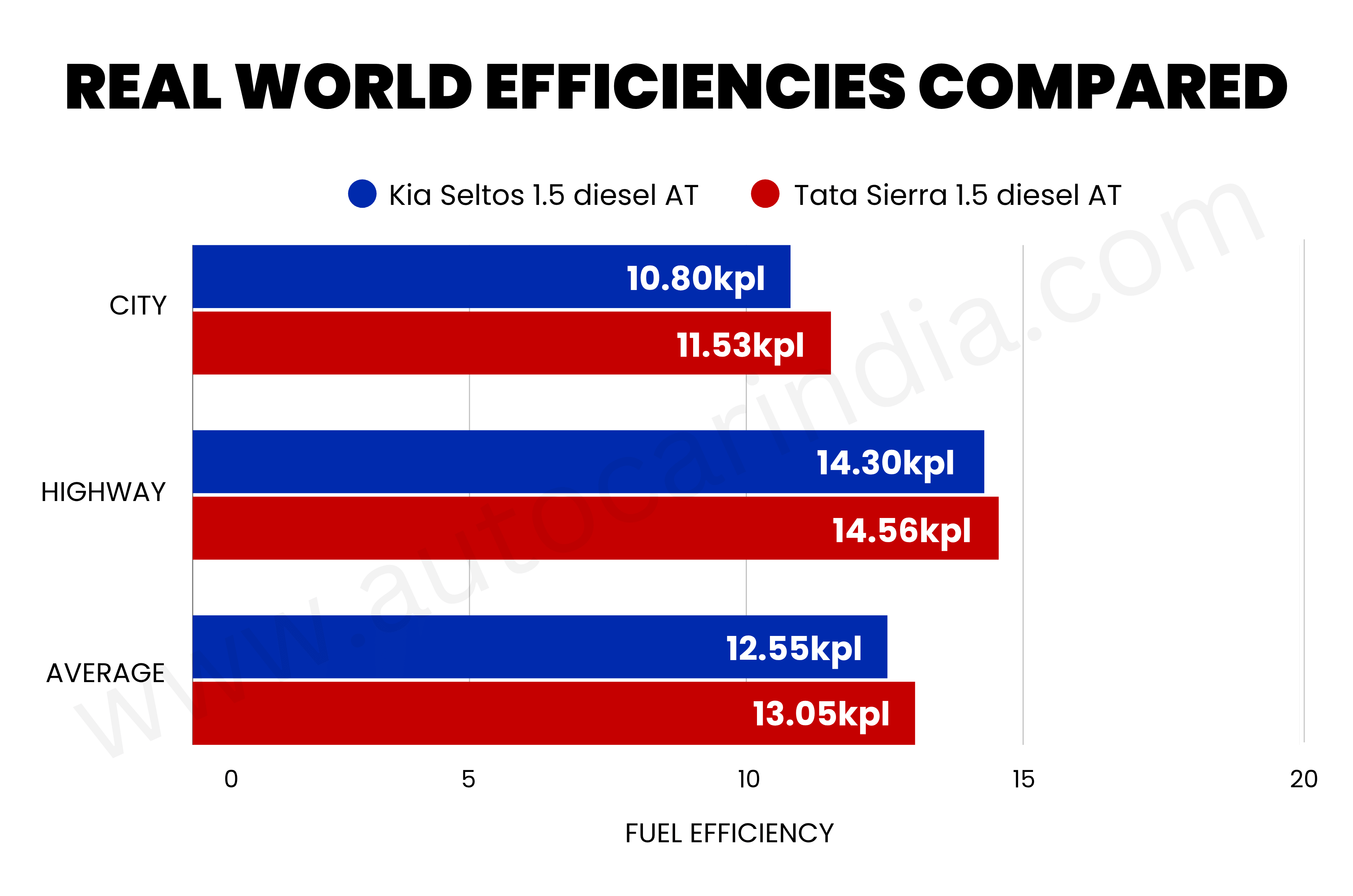
During our real-world fuel economy test, the Seltos diesel managed an average that was 0.5kpl worse than the Sierra. It was also 0.73kpl thirstier in the city, whilst consuming 0.26kpl more fuel than its Tata rival out on the highway. Despite being heavier than a comparable diesel-automatic trim of the Seltos, the relatively lower engine RPM of the Sierra when cruising at 100kph helps its efficiency. For reference, the Seltos’ diesel engine was spinning much faster at 100kph, at 2,100 RPM. Neither SUV gets an automatic engine stop-start system to reduce fuel burn further, but the Seltos does come with an Eco drive mode.

Kia Seltos vs Tata Sierra diesel automatic: Prices

Kia Seltos vs Tata Sierra diesel automatic prices


Kia Seltos

Tata Sierra

Price range (in Rs, lakh)

15.32-21.82

15.99-21.29

The most affordable trim of the Kia Seltos diesel with the torque-converter automatic gearbox costs Rs 67,000 less than its equivalent Tata Sierra. At the top-end of the spectrum, the latter has a price advantage of Rs 53,000.

Autocar India’s fuel efficiency testing

Before our real-world fuel efficiency tests, we fill our test cars’ tanks to the brim and maintain tyre pressures based on the manufacturer’s recommendations. These cars are driven in fixed city and highway loops in and around Navi Mumbai, and we maintain certain average speeds. Throughout the tests, there is only one person in each car, running the air conditioner and other electricals, such as the audio system, indicators and wipers, when required, just like a regular user would. Periodic driver swaps further neutralise variations in driver patterns. At the end of each cycle, we calculate efficiency by filling the tanks to full again.

Prices are ex-showroom, India.

Also read

Nissan Gravite CNG real world fuel economy tested, explained

Maruti Brezza vs Tata Nexon real world CNG mileage comparison

OMCs reject E20 fuel contamination claims after nationwide testing

Fuel station

State-run oil marketing companies (OMCs) – Indian Oil, Bharat Petroleum (BPCL) and Hindustan Petroleum (HPCL), have rejected recent claims of widespread contamination in E20 petrol, saying a nationwide testing exercise found no evidence to support reports of elevated chloride and moisture levels. The companies said fuel samples collected across the supply chain recorded chloride levels within the prescribed limits, while enhanced checks have also found no signs of water ingress in underground fuel storage tanks.

  1. OMCs say chloride levels remained between 0-3ppm
  2. Testing covered refineries, ethanol plants, depots and retail outlets
  3. Two retail outlets temporarily suspended after isolated findings

This statement comes less than a week after reports citing an internal communication from the Society of Indian Automobile Manufacturers (SIAM) alleged elevated chloride and moisture contamination in E20 petrol, raising concerns over possible damage to fuel system components. SIAM, however, subsequently withdrew the communication, saying media reports had “selectively” quoted excerpts from the document and that some of the figures cited required further authentication through additional data collection and consultation with its member OEMs.

OMCs say testing found no widespread contamination

The oil companies said samples collected from refineries, ethanol distilleries, storage depots, tanker trucks and retail fuel stations recorded chloride levels between 0ppm and 3ppm, well below the several-hundred-ppm figures reported earlier. They added that claims of chloride contamination of up to 500ppm could not be validated.

According to the companies, testing included more than 100 petrol samples from refineries, ethanol supplied by 80 distilleries, more than 80 samples from terminals and over 160 samples from retail outlets, all of which returned chloride readings within the 0-3ppm range. The ethanol testing was carried out jointly by the OMCs and the Centre for High Technology, the petroleum ministry’s technical arm.

Two fuel stations flagged during testing

The OMCs said two retail outlets recorded elevated chloride levels during the exercise. Fuel supplies at both stations were suspended, investigated and restored only after corrective measures were implemented.

Moisture checks expanded across fuel stations

On the issue of moisture contamination, the companies said around 90,000 fuel stations have begun mandatory inspections of underground storage tanks, with checks carried out eight to twelve times a day. According to the OMCs, no water intrusion has been detected so far.

The companies added that mobile fuel testing laboratories have been deployed, with results independently verified by fuel laboratories. Test data is also being published on the Centre for High Technology’s website and will continue to be updated as additional samples are analysed.

Nissan Gravite CNG real world fuel economy tested, explained

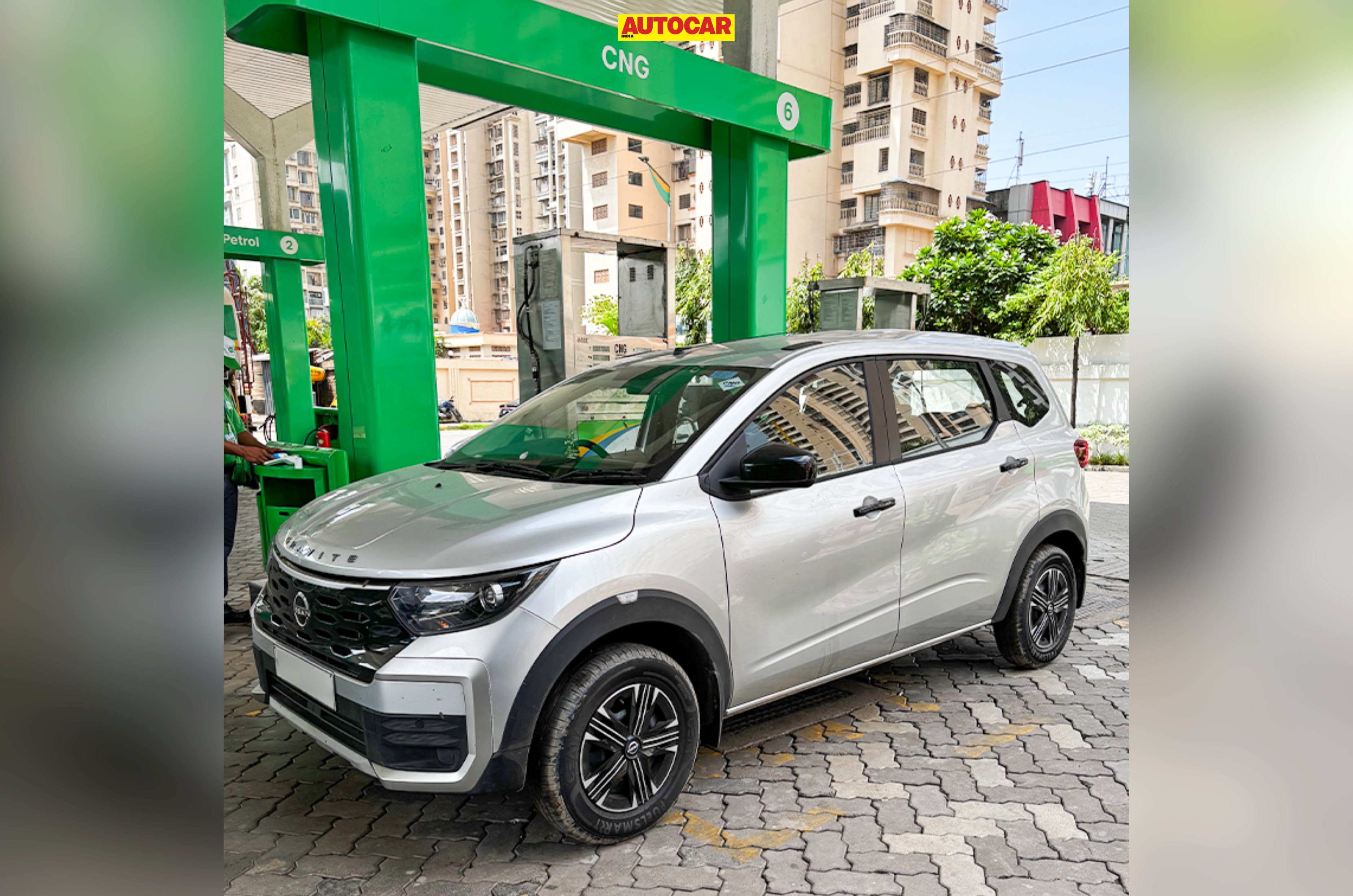
Nissan Gravite CNG

The Nissan Gravite, launched in February, 2026, is among the most affordable three-row MPVs sold in the country. In May, Nissan started offering the Gravite with a dealer-level CNG kit. Manufactured by Motozen, the kit is government and ICAT approved, and is available at an additional cost of Rs. 83,000. 

We’ve now put the Gravite CNG through our real-world fuel-efficiency tests to see how it performs.

  1. CNG kit available at an introductory price of Rs. 83,000.
  2. Spare wheel is mounted underneath the boot floor.
  3. 3-year/1,00,000km third-party warranty offered on CNG components.

It is powered by the same 1.0-litre, three-cylinder petrol engine (BR10) as seen in the Renault Triber, paired to a 5-speed gearbox. It produces 72hp and 96Nm of torque in petrol mode, however, Nissan is yet to reveal the claimed efficiency and the engine’s output when run on CNG. The twin CNG tanks are stacked vertically in the boot one above the other, each with a 25-litre capacity.

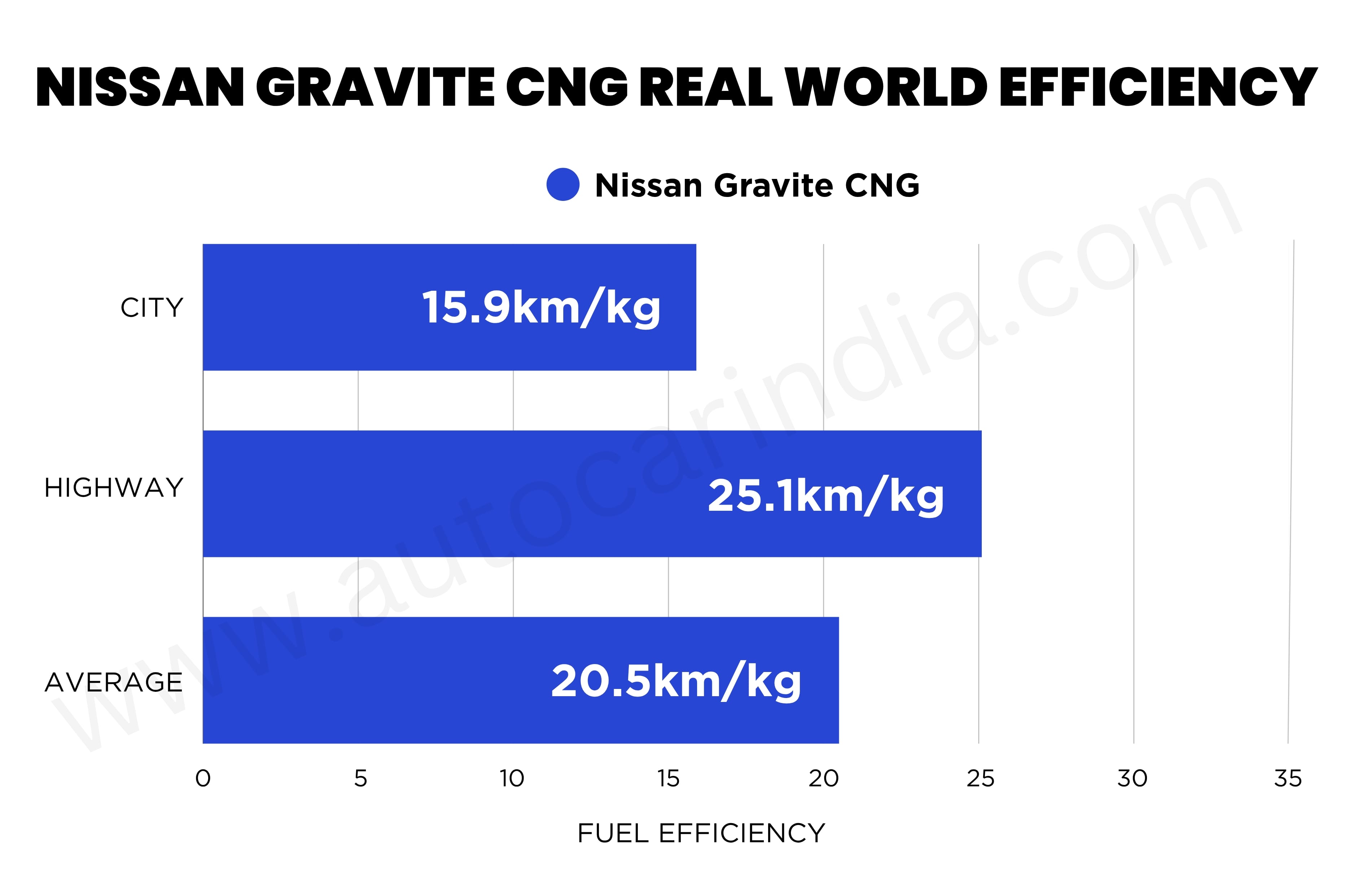
In our tests, the Gravite CNG delivered 15.9km/kg in the city and 25.1km/kg on the highway, for an overall average efficiency of 20.5km/kg.

When refilled from empty, we managed to fill  7.7kg of CNG, although this can vary depending on the pump pressure and ambient temperature. Based on our average overall efficiency of 20.5km/kg, one can expect a real-world range of 150-160km on a full tank of CNG.

Autocar India’s fuel-efficiency testing

Since CNG tanks are more difficult to fill consistently due to variables such as ambient temperature and pump pressure, we did not use our standard tankful-to-tankful methodology. Instead, for our real-world tests, we emptied the CNG tank and refilled it with 2kg of CNG. We then drove the vehicle in city conditions until the gas was exhausted. The same process was repeated for the highway run. Throughout both tests, the Gravite was driven exclusively in CNG mode.

Before our real-world fuel efficiency tests, we maintain tyre pressures based on the manufacturer’s recommendations. These cars are driven in fixed city and highway loops in and around Navi Mumbai, and we maintain certain average speeds. Throughout the tests, there is only one person in each car, and the aircon is set to fan speed 2 with temperature dialed to the lowest position. We operate other electricals, such as the audio system, indicators and wipers, just like a regular user would. Periodic driver swaps further neutralise variations in driver patterns.