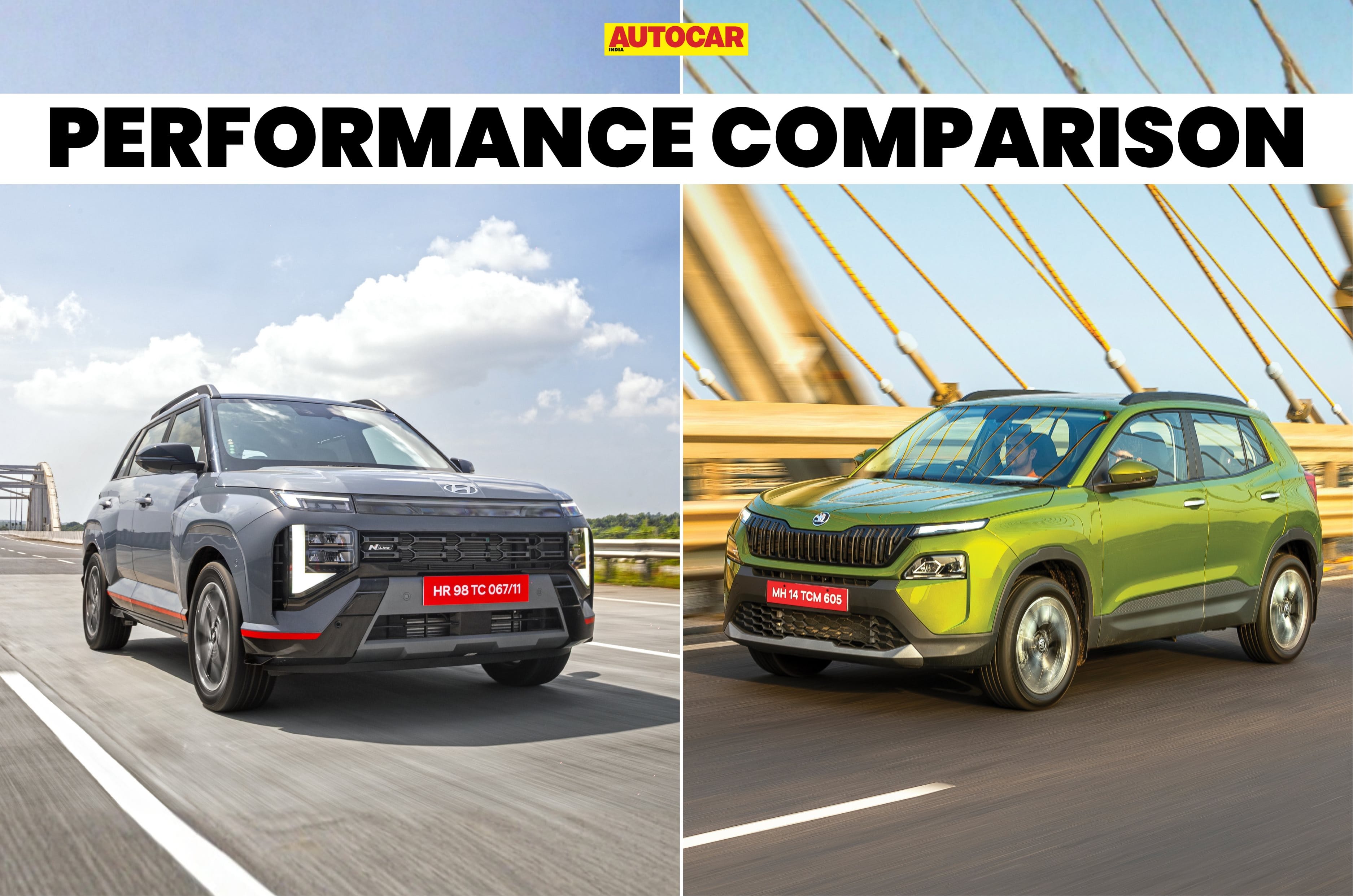
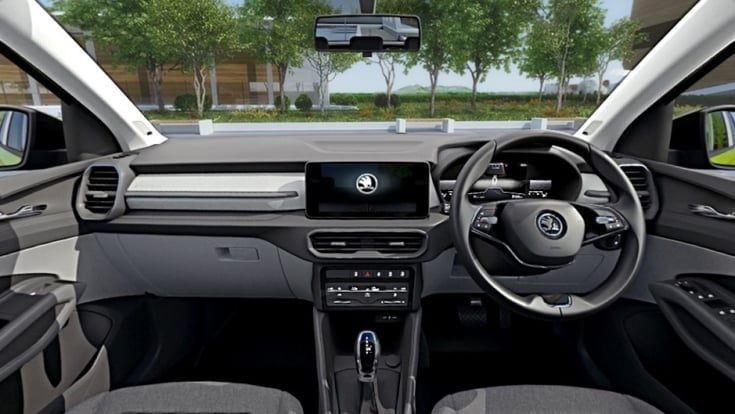
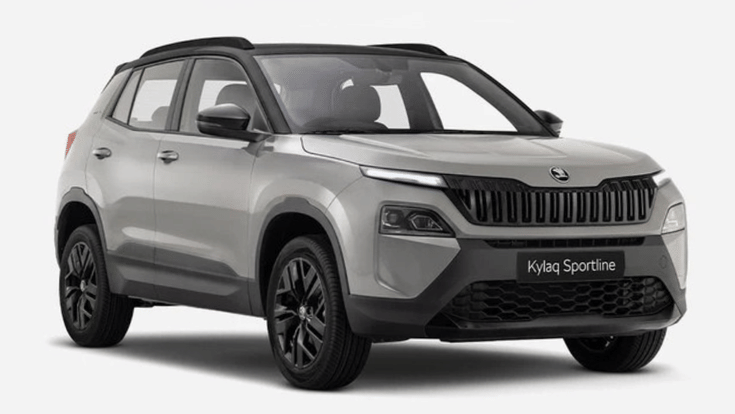
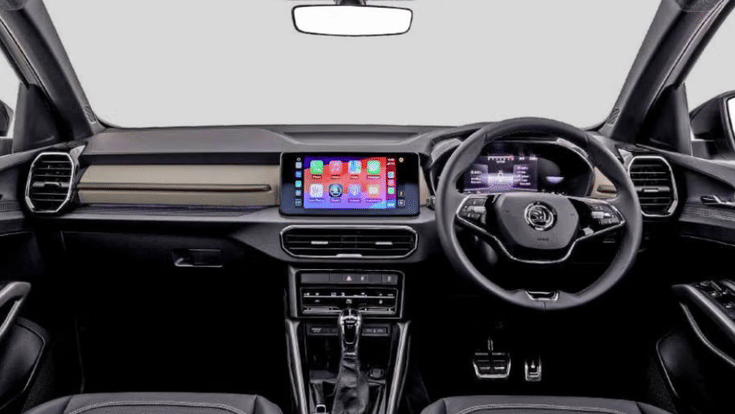
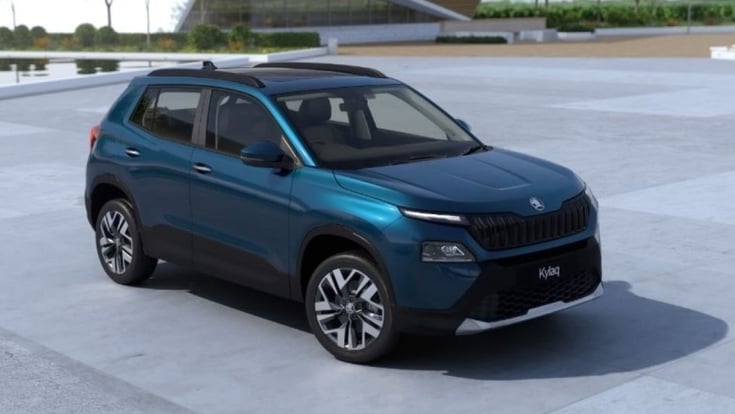
For buyers seeking a fun-to-drive compact SUV, the Hyundai Venue N Line and Skoda Kylaq are among the best options of the segment. Both come with direct-injection turbo-petrol engines and snappy automatic transmissions, but which of them is faster in the real world? We put the Venue N Line and Kylaq through our instrumented performance tests to find out.
Hyundai Venue N Line vs Skoda Kylaq specifications
Venue N Line
Kylaq
Engine
1.0-litre, turbo-petrol
1.0-litre, turbo-petrol
Cylinder count
3
3
Power (hp)
120
115
Torque (Nm)
172
178
Gearbox
7-speed DCT
6-speed AT
Drive layout
FWD
FWD
The Venue N Line and Kylaq are powered by 1.0-litre three-cylinder direct-injection turbo-petrol engines. While the Venue N Line makes 5hp more, the Kylaq outputs 6Nm more torque. Another major differentiator between the two are their automatic gearboxes. The Venue N Line comes with a 7-speed dual-clutch transmission, whereas the Kylaq features a 6-speed torque converter.
Hyundai Venue N Line vs Skoda Kylaq 0-100kph times
Venue N Line DCT
Kylaq AT
10kph (sec)
0.91
0.74
20kph (sec)
1.69
1.47
30kph (sec)
2.44
2.27
40kph (sec)
3.35
2.97
50kph (sec)
4.40
4.18
60kph (sec)
5.50
5.13
70kph (sec)
6.71
6.34
80kph (sec)
8.18
7.97
90kph (sec)
9.88
9.83
100kph (sec)
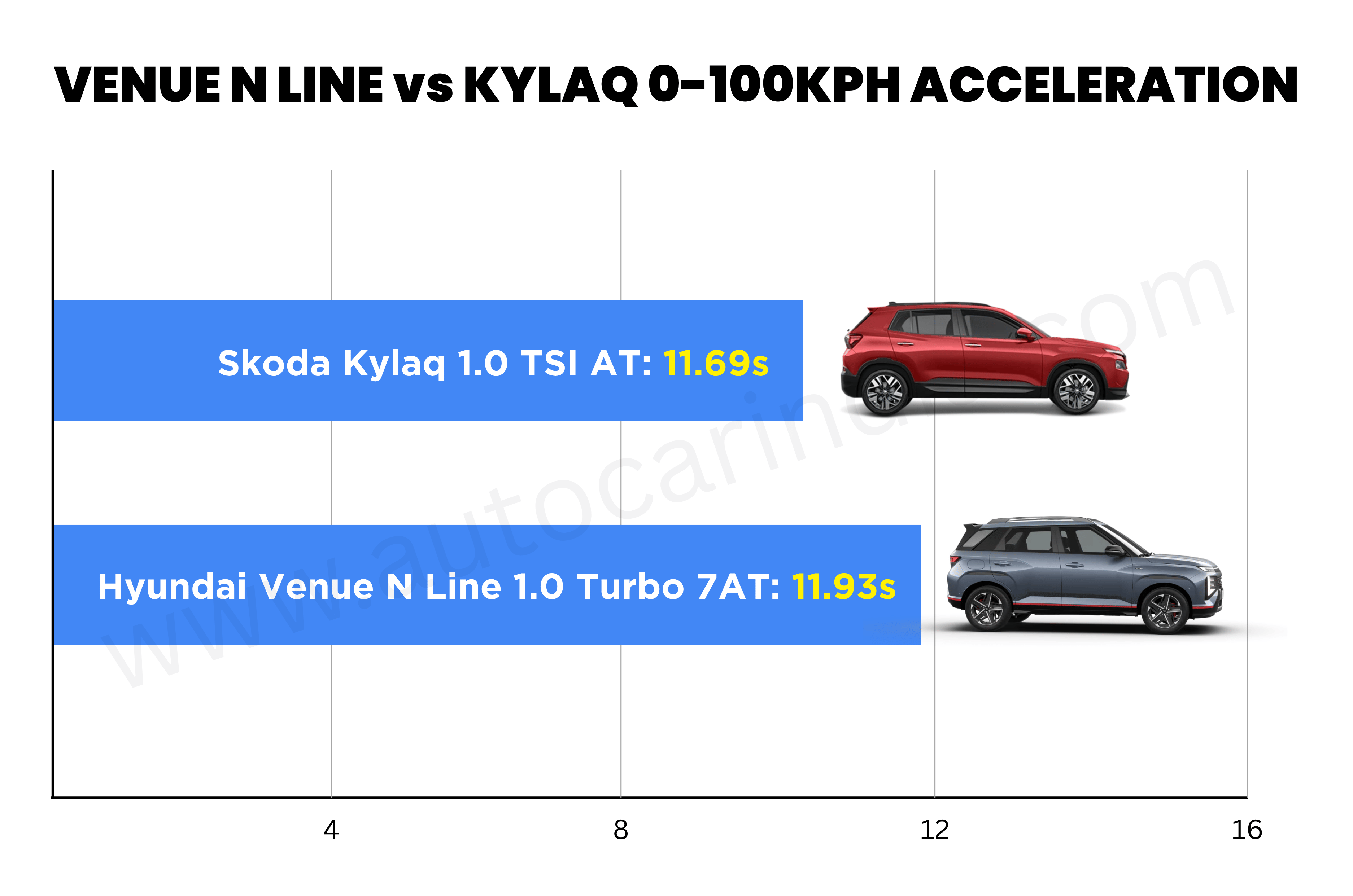
11.93
11.69
Accelerating from a standstill, the Kylaq edged ahead of the Venue N Line as Hyundai DCTs don’t allow for aggressive launches. The Skoda stayed in first place throughout the test, but the gap between the two SUVs varied quite a bit at every speed, with a maximum of 0.38 seconds at 40kph and a minimum of 0.05 seconds at 90kph.
Hyundai Venue N Line vs Skoda Kylaq rolling acceleration test
20-80kph kickdown test
Venue N Line DCT
Kylaq AT
30kph (sec)
0.59
0.78
40kph (sec)
1.47
1.57
50kph (sec)
2.57
2.65
60kph (sec)
3.54
3.75
70kph (sec)
4.74
4.98
80kph (sec)
6.21
6.38
In the 20-80kph kickdown sprint, the Venue N Line’s snappy DCT helped it secure a victory. The Hyundai SUV maintained its lead at all speeds, with the Kylaq coming the closest to it at the 50kph mark – a delta of just 0.08 seconds – before falling behind again and ultimately finishing 0.17 seconds slower than the Venue N Line.
40-100kph kickdown test
Venue N Line DCT
Kylaq AT
50kph (sec)
1.10
1.14
60kph (sec)
2.35
2.24
70kph (sec)
3.50
3.53
80kph (sec)
4.91
5.15
90kph (sec)
6.56
6.86
100kph (sec)
8.34
8.72
The 40-100kph kickdown test was more interesting. The Venue N Line was marginally quicker to 50kph, but the Kylaq managed to pull ahead by the 60kph mark. Then, the Venue N Line was back in first place at 70kph, where it stayed up until 100kph.
Hyundai Venue N Line vs Skoda Kylaq turbo-petrol automatic prices
Price (Rs, lakh)
Venue N Line DCT
11.56-15.49*
Kylaq AT
9.25-12.99
*Excluding premiums for dual-tone finishes and cosmetic packages.
At the base level, the Venue N Line DCT is Rs 2.5 lakh more expensive than the Kylaq AT, and their top-spec versions feature an identical price difference too. Both compact SUVs trade punches in terms of real-world performance, so the Kylaq’s substantially lower pricing makes it a better deal. That said, the N Line’s turbo-petrol DCT powertrain is available for the standard Venue too, priced at Rs 10.92 lakh-14.65 lakh. Setting aside the racier styling elements, the N Line is no different to the vanilla Venue, so you can save a considerable amount if you don’t need the sportiness.
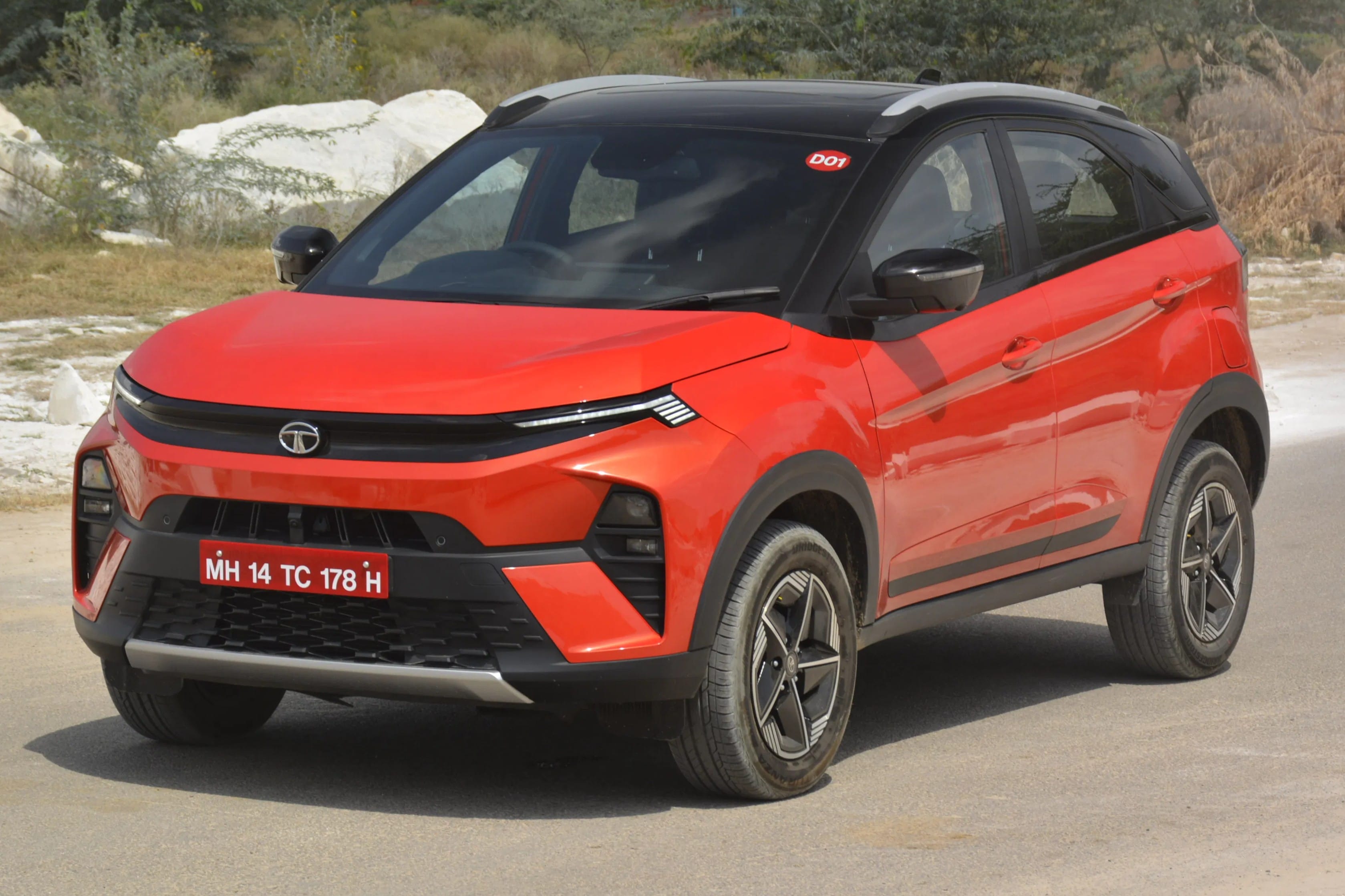
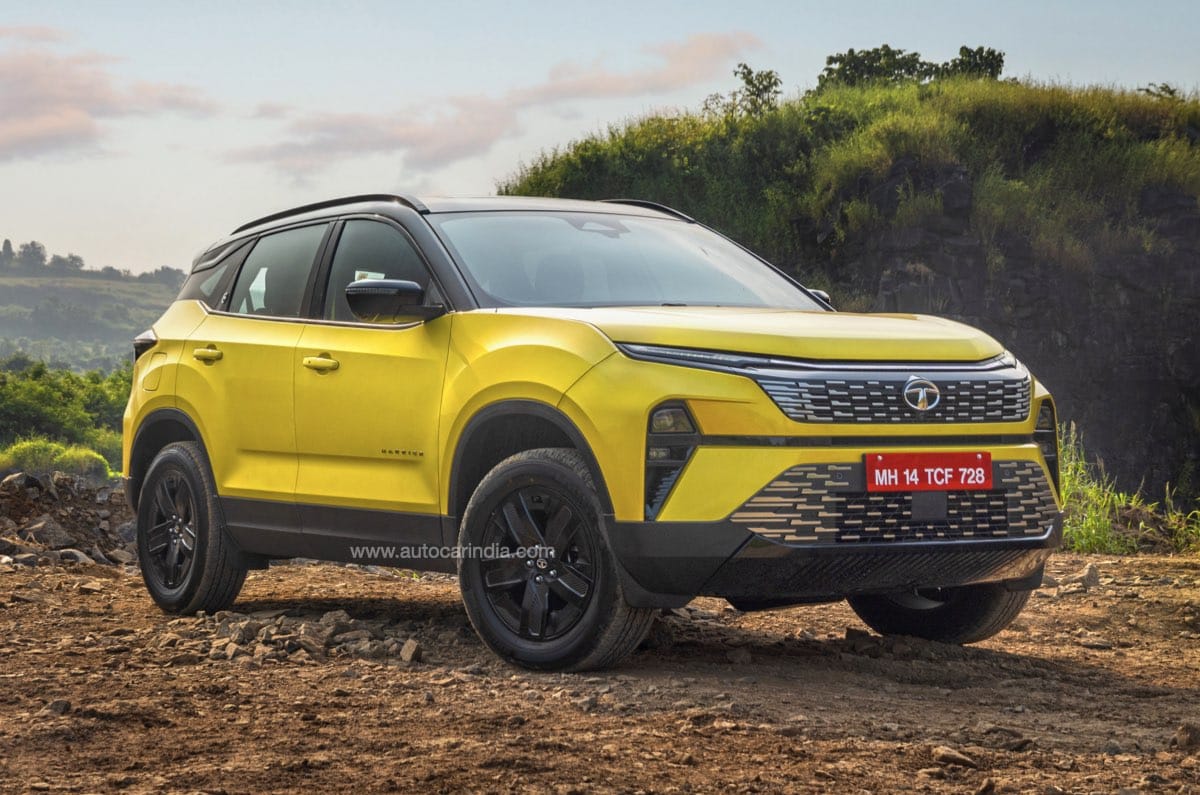
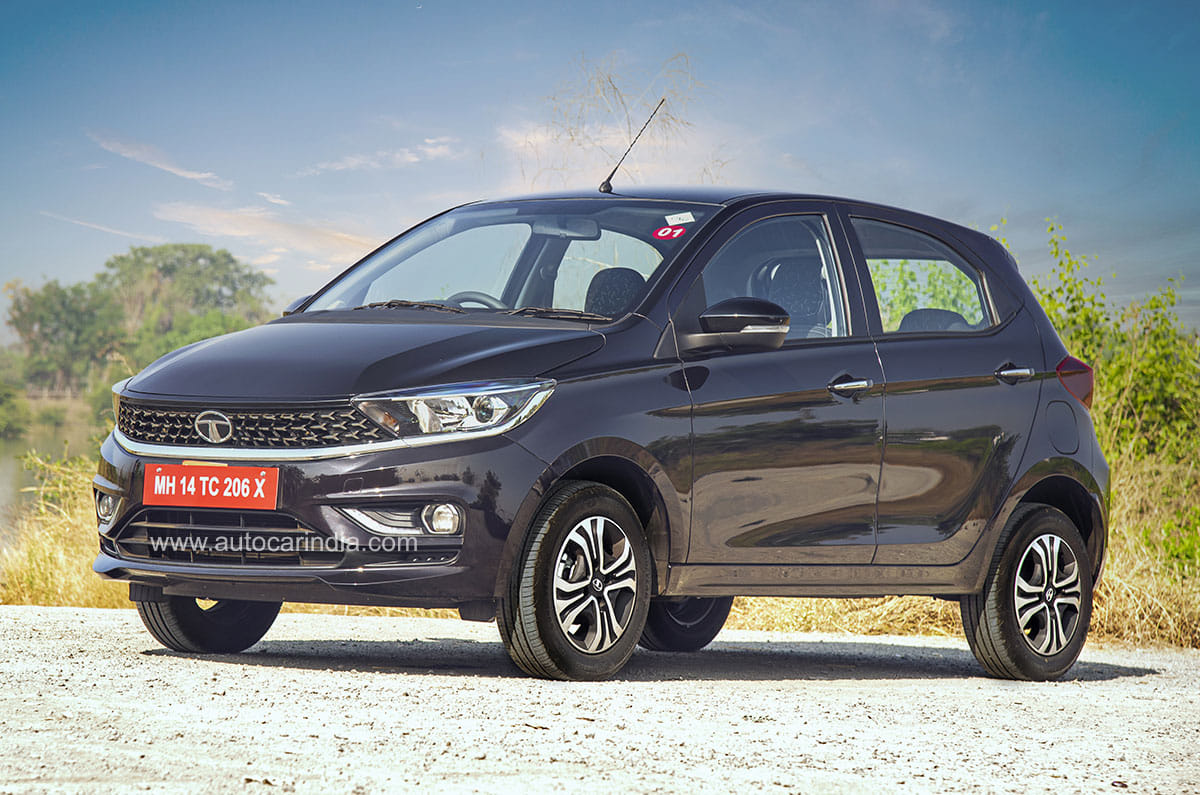
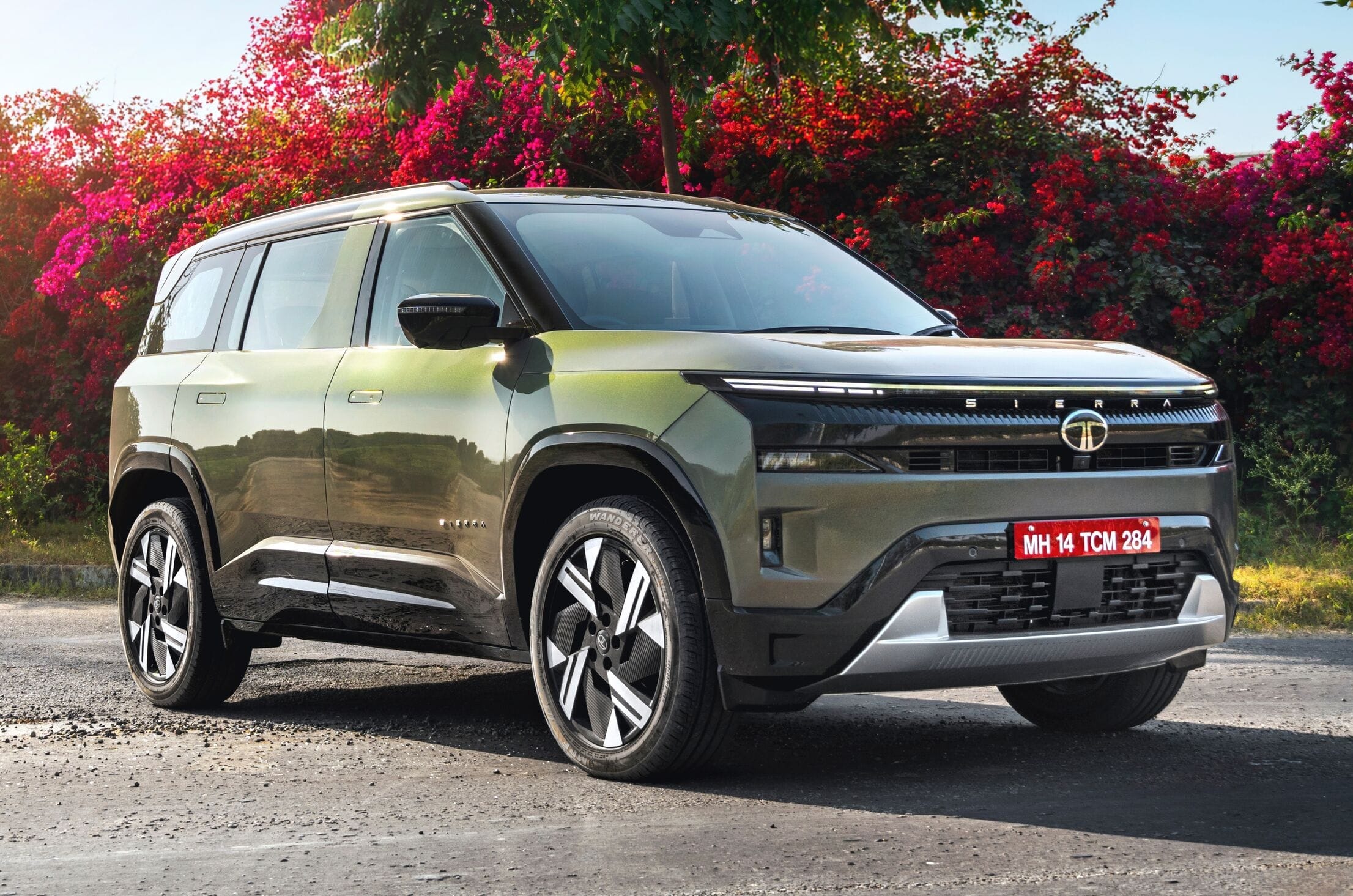
Tata Motors has revealed offers on its combustion-powered cars for September 2026. The highest benefits are available on the Curvv, followed by the Nexon. There are offers on the Altroz, Harrier, Sierra, Sierra, Tigor, and pre-2026 Tiago stock available at some dealerships. These offers will provide some relief from the price hike introduced by the carmaker earlier this month.
Note: These offers, applicable until September 30, may vary by city, dealership and stock availability. Please check with your nearest Tata dealership for the exact figures.
Tata Curvv offers in September 2026
Up to Rs 1.25 lakh
Just like last month, The Tata Curvv is available with offers of up to Rs 1.25 lakh in September. These include a discount of Rs 30,000, a scrappage benefit of Rs 45,000 and a loyalty benefit of Rs 50,000. Tata recently rejigged the Curvv’s variant line-up by introducing more features in entry-level and mid-spec trims.
Tata Nexon offers in September 2026
Up to Rs 75,000
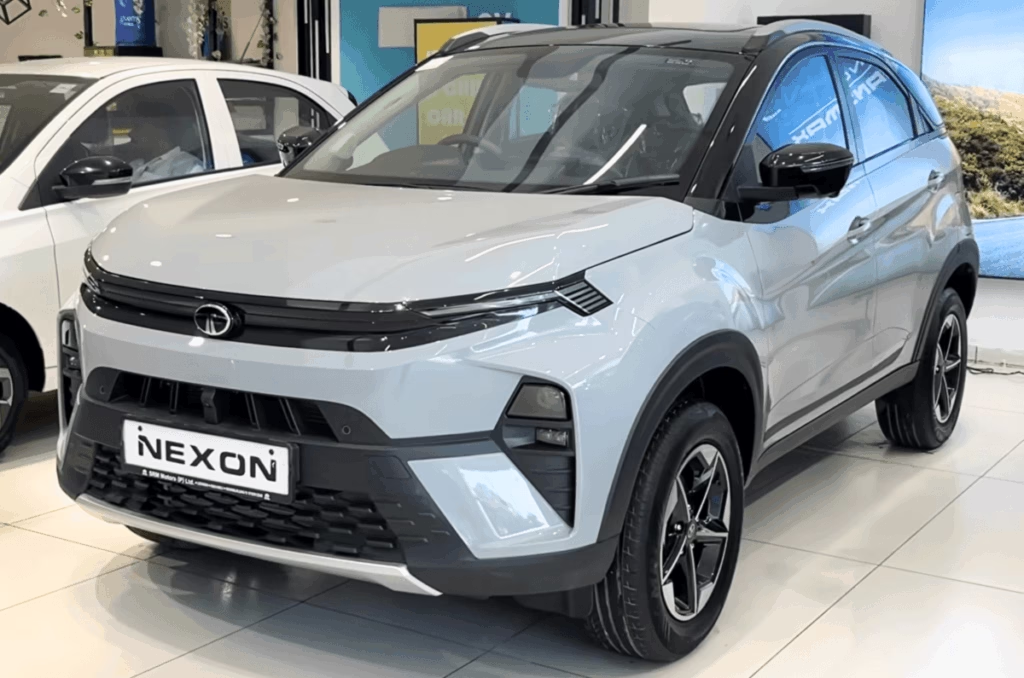
Next, the Tata Nexon is available with offers of up to Rs 75,000. For petrol-manual trims – Smart+, Smart+S, Pure, Pure S, Pure+, Pure+ S and Pure+ PS – the offers include a discount of Rs 10,000, an intervention offer of Rs 45,000 and a scrappage benefit of Rs 20,000. Other petrol trims of the compact SUV get up to Rs 55,000, comprising a discount of Rs 10,000, intervention offer of Rs 25,000 and scrappage benefit of Rs 20,000.
The Nexon CNG gets offers of up to Rs 60,000, including a discount of Rs 10,000, intervention offer of Rs 25,000 and scrappage benefit of Rs 25,000. Meanwhile, the diesel version gets a scrappage benefit of Rs 20,000.
Tata Altroz offers in September 2026
Up to Rs 55,000
The Tata Altroz gets offers of up to Rs 55,000. Petrol trims, excluding Smart, get up to Rs 35,000, including a discount of Rs 15,000 and a scrappage benefit of Rs 20,000. Its CNG version gets up to Rs 55,000, comprising a discount of Rs 15,000, an intervention offer of Rs 20,000 and a scrappage benefit of Rs 20,000. The Altroz diesel gets up to Rs 35,000, including a discount of Rs 15,000 and a scrappage benefit of Rs 20,000.
Tata Harrier offers in September 2026
Up to Rs 45,000
The Tata Harrier diesel gets offers of up to Rs 45,000, including a discount of Rs 10,000 and a scrappage benefit of Rs 35,000. There is no discount on the Harrier turbo-petrol trims.
Tata Safari offers in September 2026
Up to Rs 45,000
Like the Harrier, the Tata Safari diesel also gets offers of up to Rs 45,000 in September. It gets the same discount and scrappage benefits. Also, there is no discount on the Safari turbo-petrol trims.
Pre-2026 Tata Tiago offers in September 2026
Up to Rs 35,000
Pre-2026 Tata Tiago models get offers of up to Rs 35,000. Petrol trims, excluding XE, get a discount of Rs 15,000, an intervention offer of Rs 5,000 and a scrappage benefit of Rs 15,000. The pre-2026 CNG version, also excluding the XE trim, gets the same offers.
Tata Tigor offers in September 2026
Up to Rs 30,000
The Tata Tigor gets offers of up to Rs 30,000. These include a discount of Rs 15,000 and a scrappage benefit of Rs 15,000.
Tata Sierra offers in September 2026
Up to Rs 30,000
Lastly, the Tata Sierra gets offers of up to Rs 30,000 in September 2026. For both the diesel and petrol versions, buyers can avail of a Rs 30,000 benefit through a discount, scrappage or loyalty benefit.
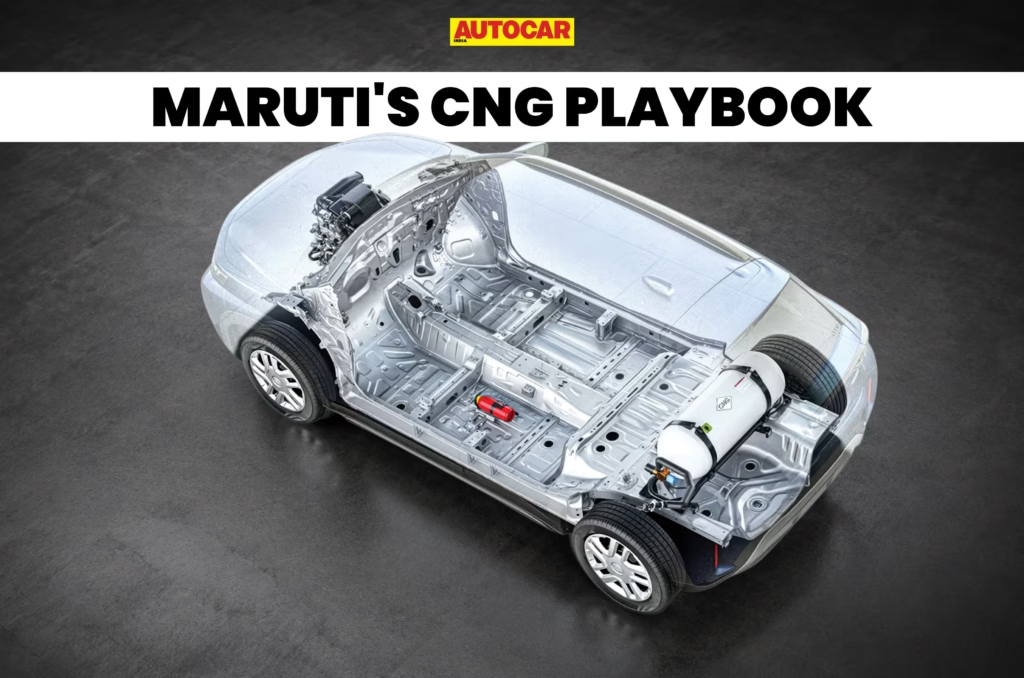
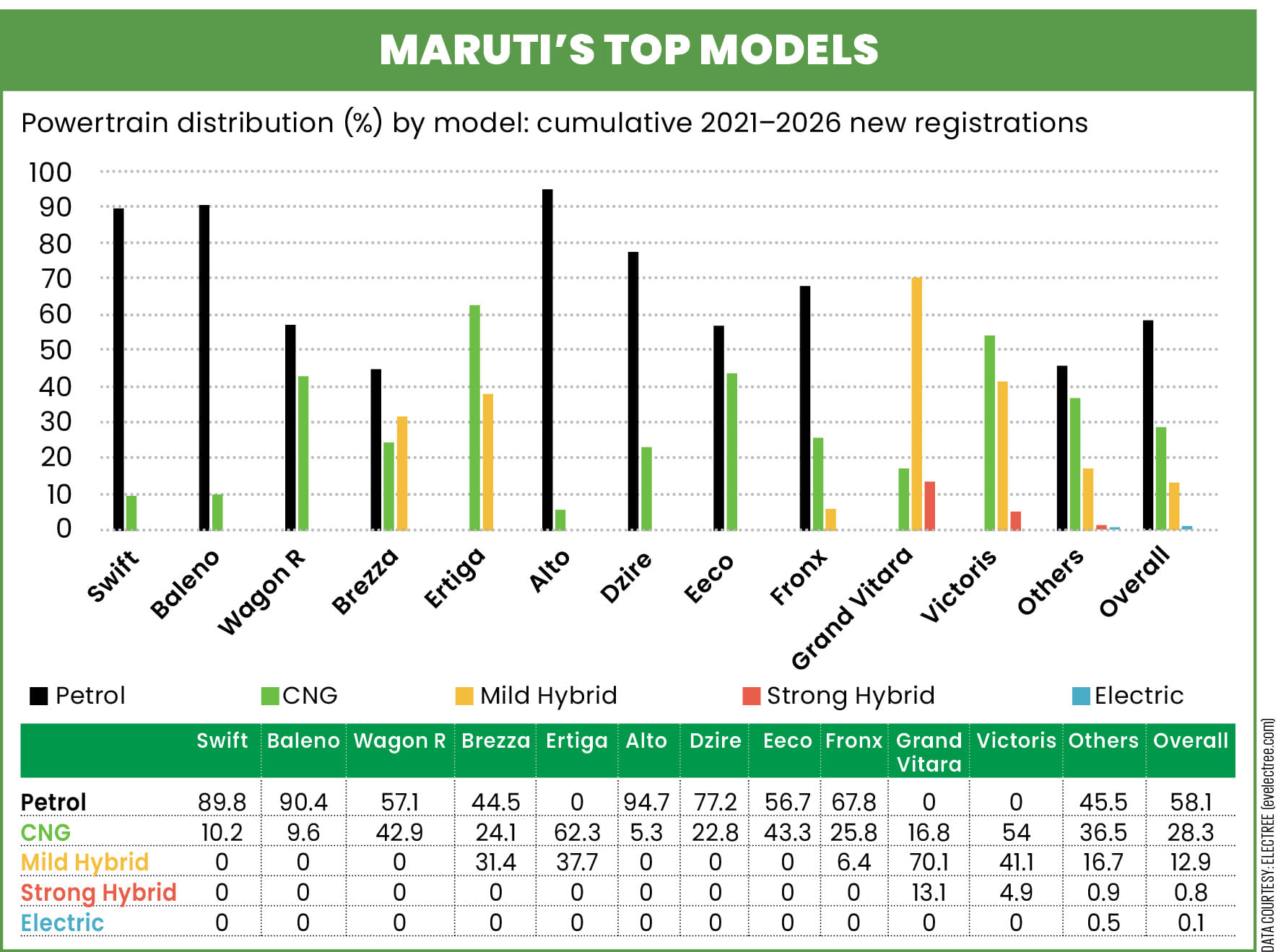
When Maruti Suzuki introduced its first factory-fitted CNG models in 2010, the fuel had little acceptance among private buyers. Availability was largely restricted to Delhi-NCR, Mumbai-Pune and Gujarat, while the filling network was small and uneven. CNG penetration remained at just 1-2 percent until 2016-17, but Maruti continued to improve the technology and expand its range. It began with affordable cars such as the Alto and Eeco before taking CNG to the WagonR, Swift, Baleno, Dzire and Ertiga. Today, its portfolio includes SUVs such as the Brezza, Fronx, Grand Vitara and Victoris.
Fixing what buyers disliked
In the late 1990s, buyers who wanted a CNG car usually had to convert a petrol model using an aftermarket kit. Most kits were imported, often from Italy or Argentina, and a conversion cost around Rs 30,000-32,000.
As demand grew, some dealers began tying up with local retrofitters. But when these cars developed problems, owners often returned to Maruti workshops even though the company had not supplied or installed the kit. Poorly fitted systems raised concerns about gas leaks and vehicle fires. An aftermarket conversion could also invalidate the manufacturer’s warranty, while the engine and fuel system were not always designed to cope with CNG.
Performance was another weakness. Early conversions resulted in a noticeable drop in power. Some owners would switch to petrol before overtaking or climbing steep roads and returned to CNG once the additional performance was no longer needed.
Factory-fitted systems addressed many of these problems. Engines, valve seats, fuel lines and mounting points were designed to work with CNG. Better calibration reduced the performance loss, while the car retained its manufacturer warranty and could be serviced through Maruti’s dealer network.
The financial case was already strong. Around 2010, CNG cost roughly Rs 20-21 per kg, compared with about Rs 48 per litre for petrol and Rs 38 for diesel. A factory-fitted system added around Rs 45,000-54,000 to the price of the car, but offered better engineering, safety and warranty protection than an aftermarket conversion.
Even so, CNG did not take off immediately. Diesel was widely available, delivered better performance and offered low running costs. In 2013, diesel accounted for around 38 percent of India’s passenger vehicle market, making it the easier choice for many high-mileage users.
The network caught up
India had around 1,200 CNG stations in 2016-17. By March 2026, the network had expanded to about 8,900 stations across roughly 350 cities. This made CNG practical beyond its traditional strongholds. Petrol prices also rose sharply after 2020, crossing Rs 100 per litre in several cities and strengthening the case for switching to a cheaper fuel.
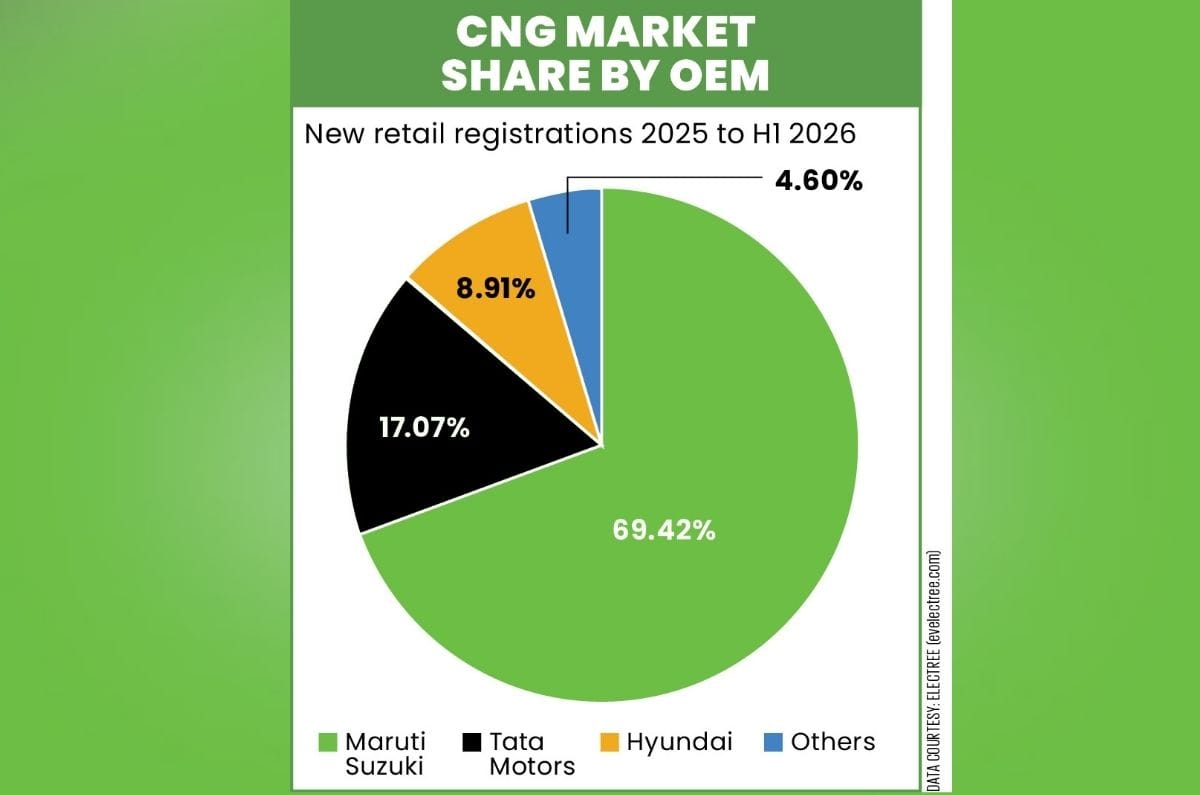
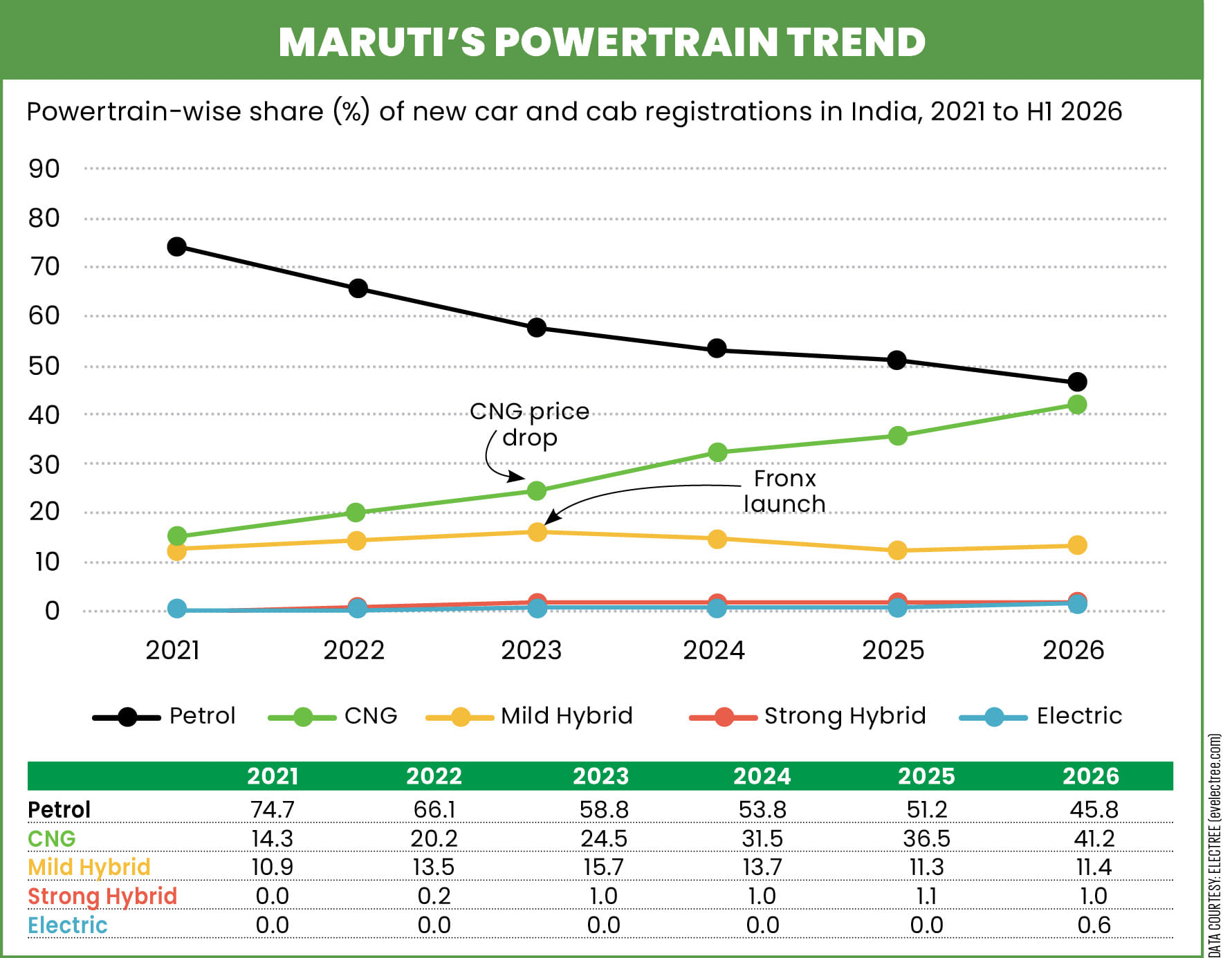
By then, Maruti had already addressed many of the product-related concerns and could respond with a broad factory-fitted portfolio. CNG’s share of Maruti’s new registrations, including private cars and cabs, increased from 14.3 percent in 2021 to 41.2 percent in the first half of 2026. Petrol’s share fell from 76.5 percent to 45.9 percent over the same period. The sharpest jump came between 2023 and 2024, when CNG’s share rose from 24.6 percent to 32 percent.
Commercial vehicles remain important. Cabs account for around 10 percent of Maruti’s cumulative registrations, but contribute more than a quarter of its CNG volumes. However, private buyers now account for the larger part of demand.
“Earlier, if a customer was opting for CNG, the perception was that he was just a very value-conscious customer,” says Maruti Suzuki’s senior executive officer, sales and marketing, Partho Banerjee. “Now, especially with underbody CNG, the profile of customers has changed. They are not only looking for mileage, they also want an aspirational product that feels no different to drive from gasoline.”
CNG moves beyond small cars
The WagonR remains the quintessential CNG hatchback. Its CNG share has risen from 42.5 percent in 2021 to 49.1 percent in the first half of 2026. Nearly every second WagonR buyer now chooses it. CNG is also gaining ground in models that were once overwhelmingly petrol-powered. Its share in the Swift has increased from 1.9 percent to 18 percent, while the Baleno has moved from 2.1 percent to 14.5 percent.
The Dzire has seen an even sharper change. CNG accounted for just 1.7 percent of its registrations in 2021. Its share reached 33.6 percent in H1 2026.
Adoption is strongest in vehicles that cover longer distances or carry more passengers. CNG’s share of the Ertiga has risen from 39.3 percent to 73.6 percent, while the Eeco has moved from 31 percent to 55.2 percent. Big shifts are now also taking place in the SUV segment, where buyers care as much about design, features and luggage space as they do about mileage.
CNG accounts for 43.4 percent of Brezza registrations, compared with 23.7 percent for its Smart Hybrid powertrain in H1 2026. The Fronx has seen its CNG share rise from 10.9 percent at launch in 2023 to 35.4 percent in the first half of 2026. In the case of the Grand Vitara, it has increased from zero to 23.9 percent.
The Victoris has moved even faster. CNG accounted for 55.2 percent of its registrations in the first half of 2026. Its strong response shows that midsize SUV buyers will accept the fuel when it does not compromise the overall ownership experience.
Better packaging removes a key compromise
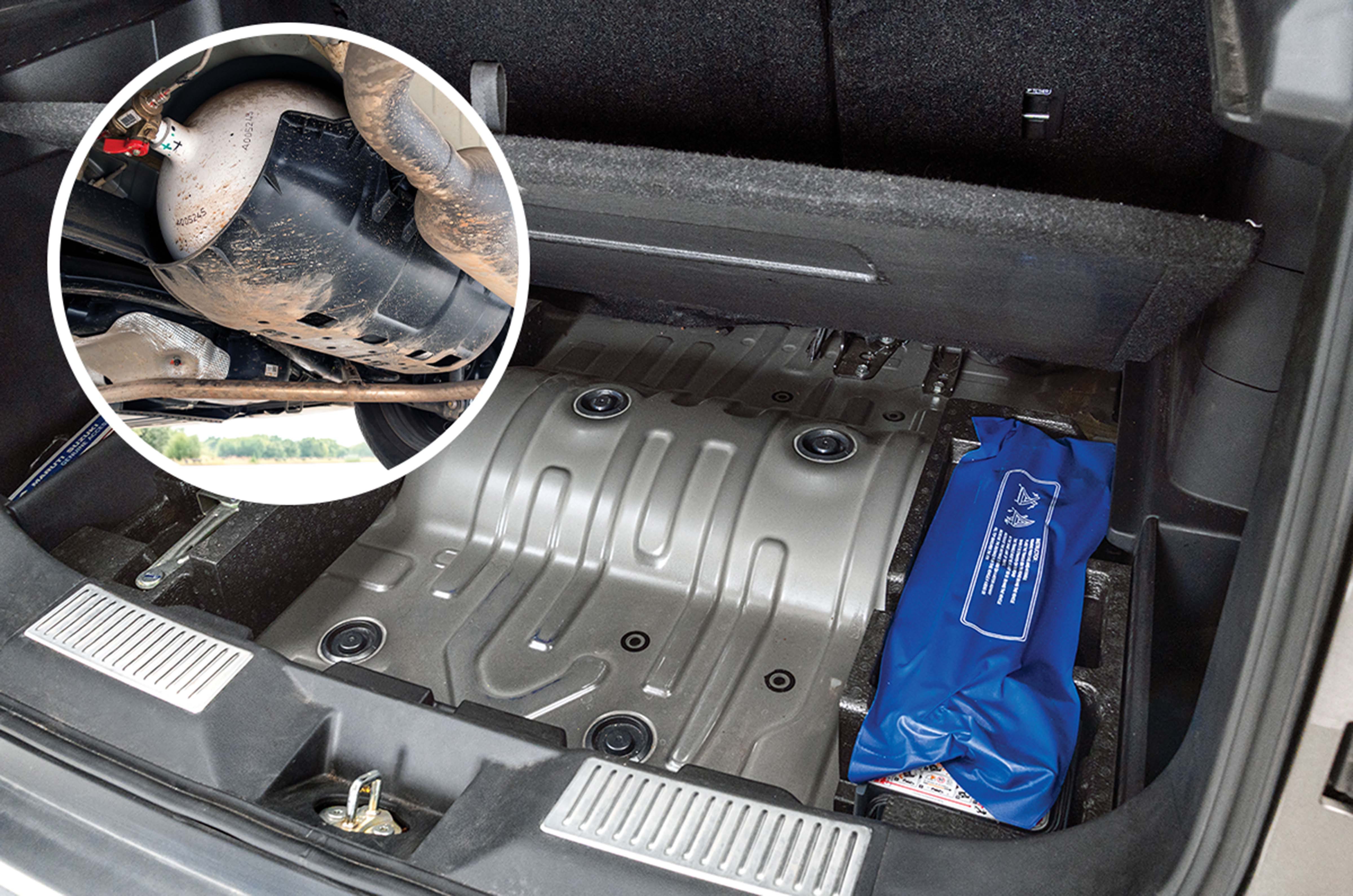
A large cylinder placed across the luggage compartment has long been one of CNG’s biggest drawbacks. Dual-cylinder systems that divide the gas storage between two smaller cylinders positioned lower in the boot, or placing an underbody tank, create a flatter and more usable luggage area.
Maruti’s latest CNG development is the underbody tank on the Victoris and Brezza.
Central to Maruti’s next CNG push is the underbody CNG setup. The newly launched CNG Brezza opts for this setup – just like in the Victoris – where the tank is placed beneath the floor. It does negate the ability to have the spare tyre, but luggage space remains useable with a boot that is pretty much free of intrusions.
“If I don’t compromise on my driving experience, and I don’t lose boot space, and on top of that I reduce my total cost of ownership, then it is ticking all the boxes. Why would I not go for it?” says Banerjee.
Filling the gap left by diesel
Maruti’s exit from diesel in 2020 left a gap for buyers seeking low running costs without moving to an EV. CNG has become the answer. It cannot match a diesel engine’s torque or effortless highway performance, but it can cost substantially less to run than petrol, particularly for buyers covering high monthly distances. The vehicle can also switch to petrol when CNG is unavailable.
CNG will not replace diesel in every situation. Drivers who regularly travel on highways, carry heavy loads or value strong mid-range performance may still prefer diesel where it remains available. But for largely urban use, CNG now delivers much of the economic advantage that once made diesel attractive. The market has moved beyond mileage.
CNG has reached around 20 percent penetration without requiring buyers to completely change the way they use a car. There is no home charger to install, and the vehicle can run on petrol when the gas runs out. But the next stage will require more than savings. Buyers moving onto larger and more expensive vehicles will expect performance, equipment, luggage space and convenience alongside lower running costs.
“Quality, reliability and mileage are now hygiene,” says Banerjee. “You need to give all of that anyway and then still meet their lifestyle expectations.”
With the Victoris establishing CNG in the midsize SUV market and the Brezza addressing the compact SUV space, Maruti is now taking the fuel deeper into India’s largest vehicle segment, and it says there’s more to come.
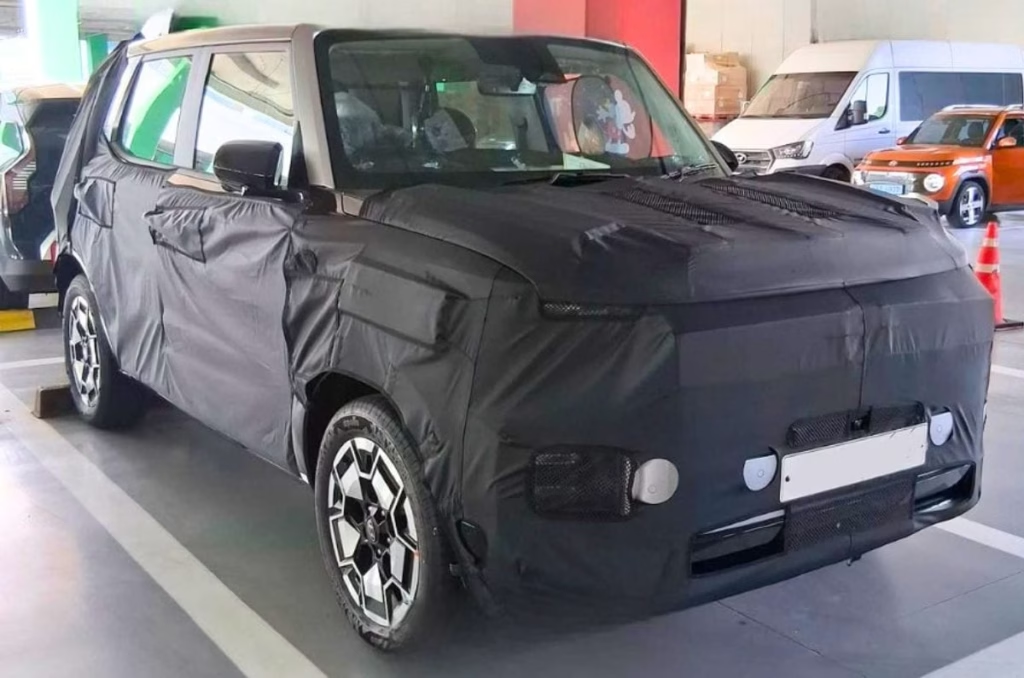
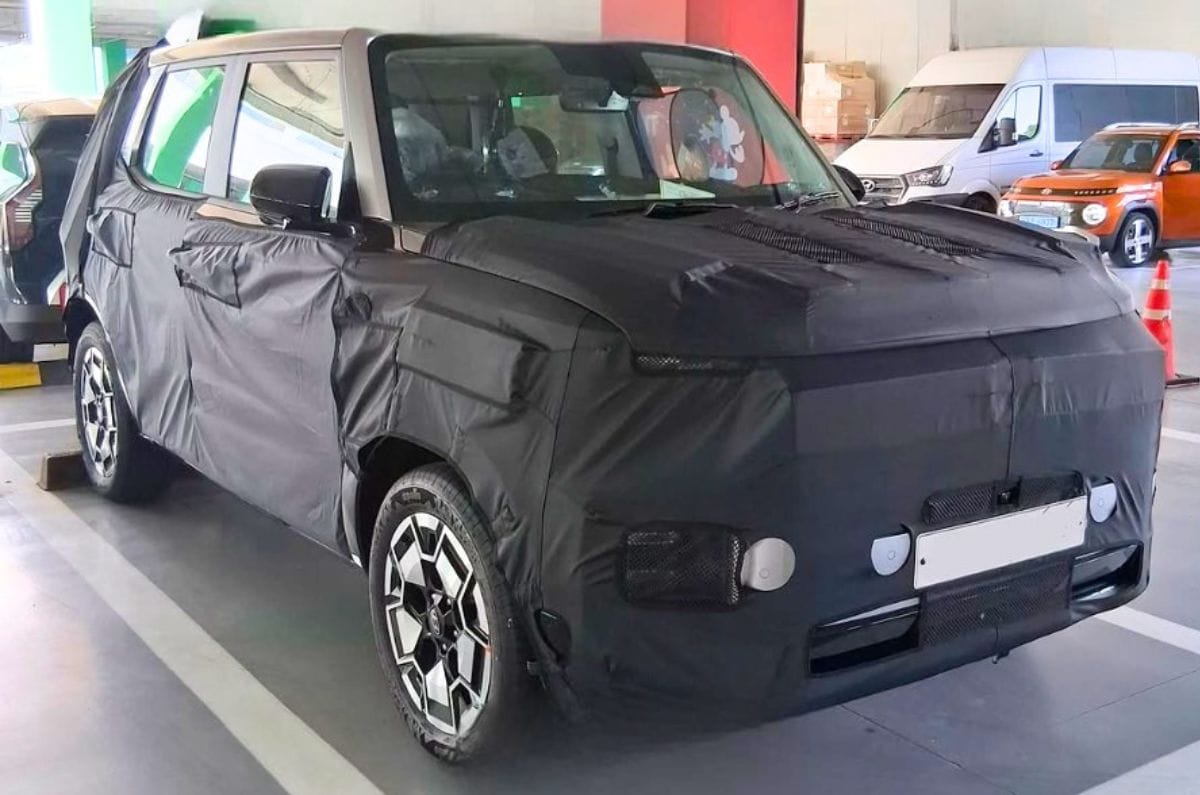
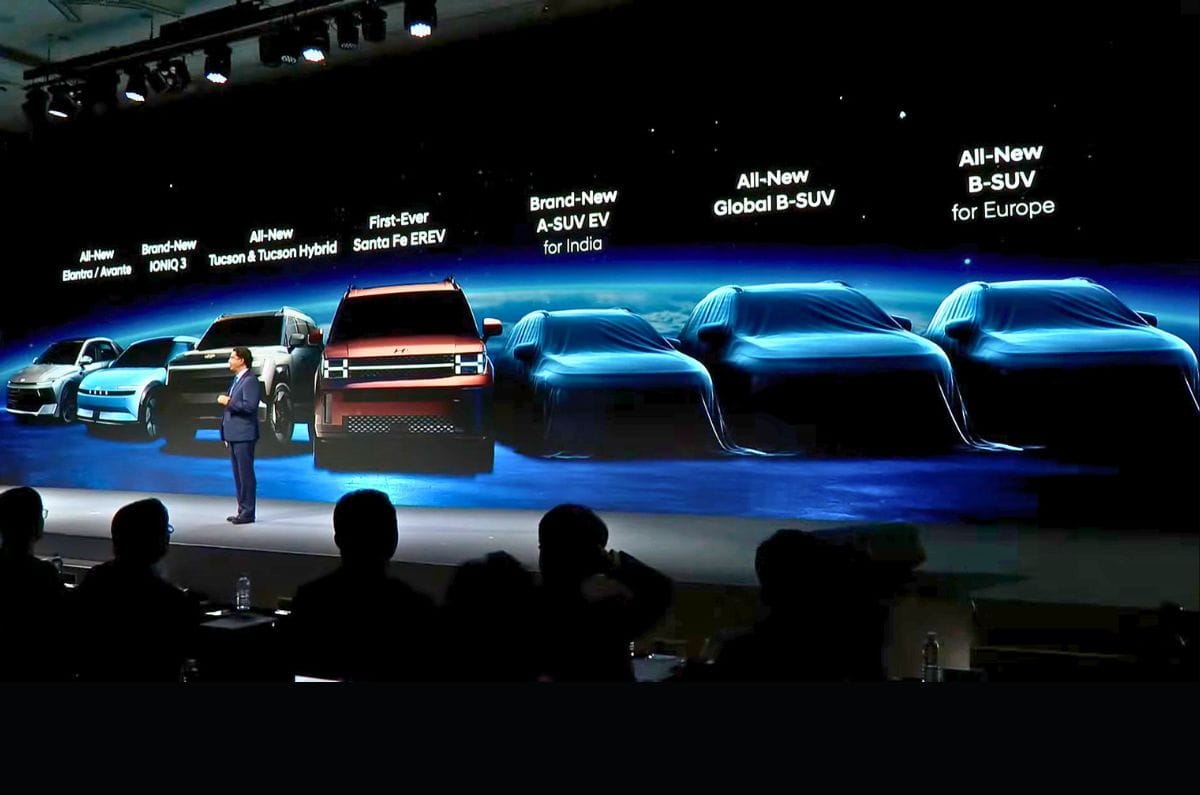
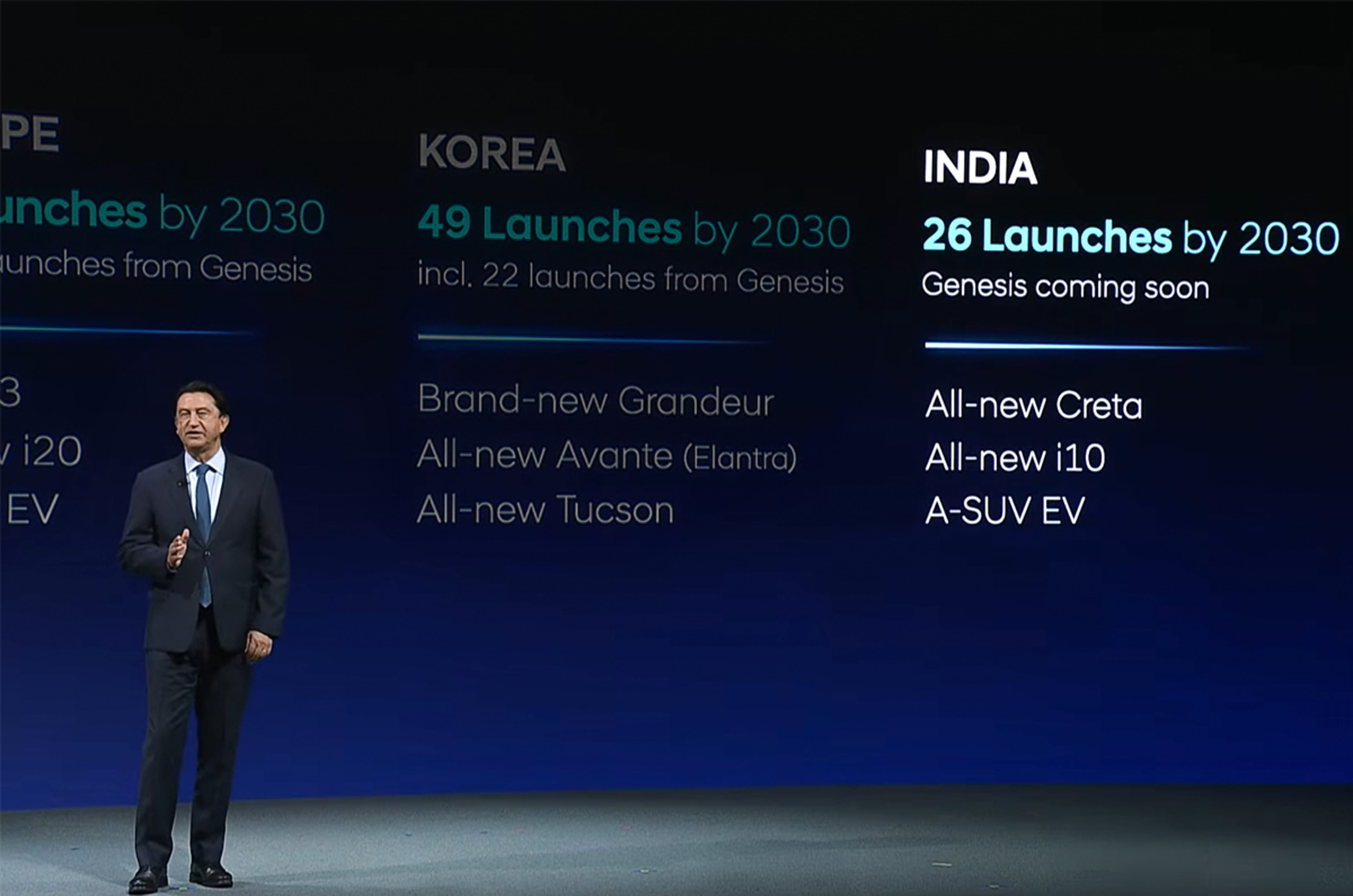
Hyundai has announced a new compact electric SUV for India at its 2026 CEO Investor Day. The new EV will be designed and manufactured in India and is slated to debut in the country by the last quarter of FY 2027 (by March 2027). Jose Munoz, President and CEO of Hyundai Motor Company, said, “A brand-new compact SUV is coming, designed and localised in India.”
A ‘next-gen infotainment’ and Level-2 ADAS are confirmed features
Will be built on the E-GMP (K) platform and manufactured in Tamil Nadu
Will compete with the Tata Nexon EV and Mahindra XUV 3XO EV
Upcoming Hyundai compact EV: All we know so far
It will be built on the E-GMP (K) platform and will be a rival to the Nexon EV
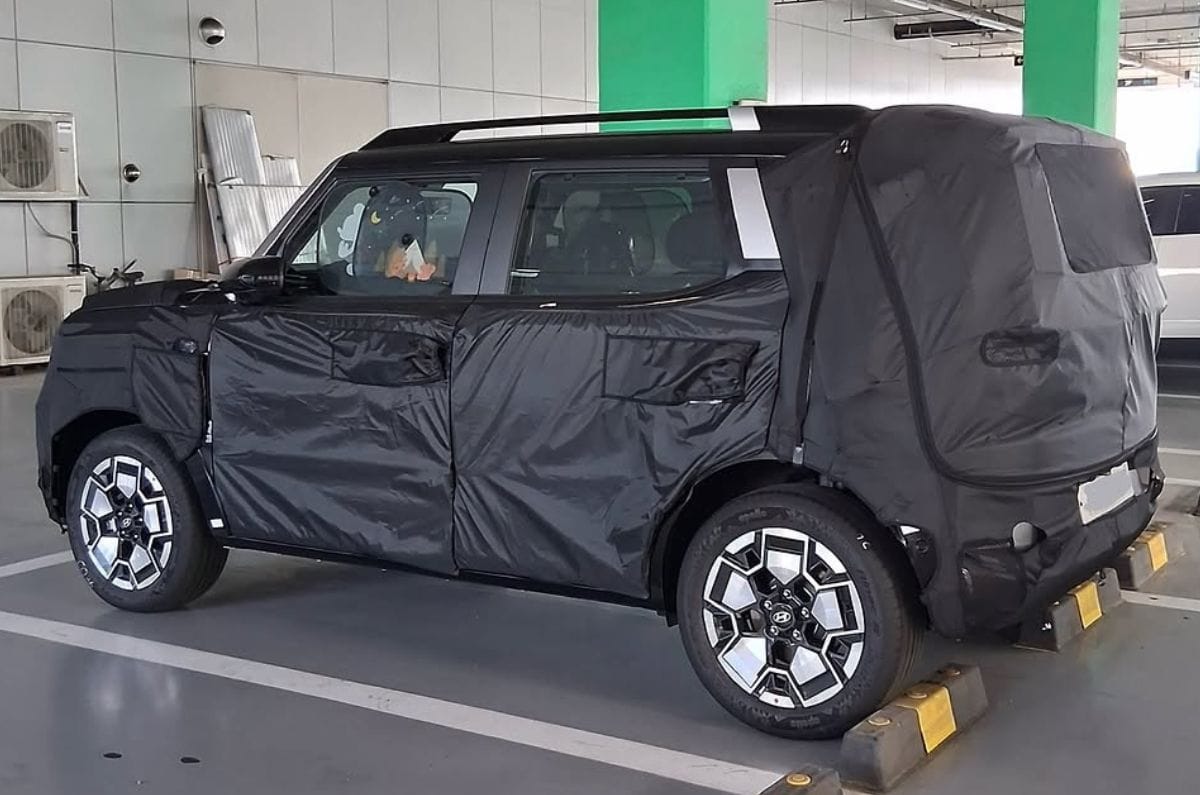
The upcoming EV, codenamed HE1i, was first announced at Hyundai’s Investor Day 2025. Later, we got to know it will be a born-electric vehicle built on the E-GMP (K) platform, which also underpins the Inster EV offered abroad. It will be manufactured at Hyundai’s Sriperumbudur facility in Tamil Nadu.
The HE1i EV will use localised Exide-sourced batteries and will be offered in two versions: standard range and long range, the exact specifications of which are unknown. For context, the Euro-spec Inster is offered with a 42kWh battery with 300km WLTP-claimed range and a long-range 49kWh battery with 355km claimed range.
Image source: @joonsun_erin on Instagram
The new compact EV is confirmed to have a “next-generation infotainment system”, which could be the Pleos Connect infotainment system also expected on the upcoming third-generation Creta, and “Level 2 assisted driving technology”.
The upcoming Hyundai compact EV will be positioned as a rival to the Tata Nexon EV, Mahindra XUV 3XO EV and Kia Syros EV. Being a localised offering, it could have a lower price tag than the Syros EV, which is currently the most expensive option in the segment.
Hyundai expects electrified vehicles to account for 50 percent of India sales by 2030. Currently, it sells two EVs in the country: the Creta Electric and Ioniq 5, and the upcoming compact eSUV will give the carmaker a share in the more accessible segment of India’s EV market.
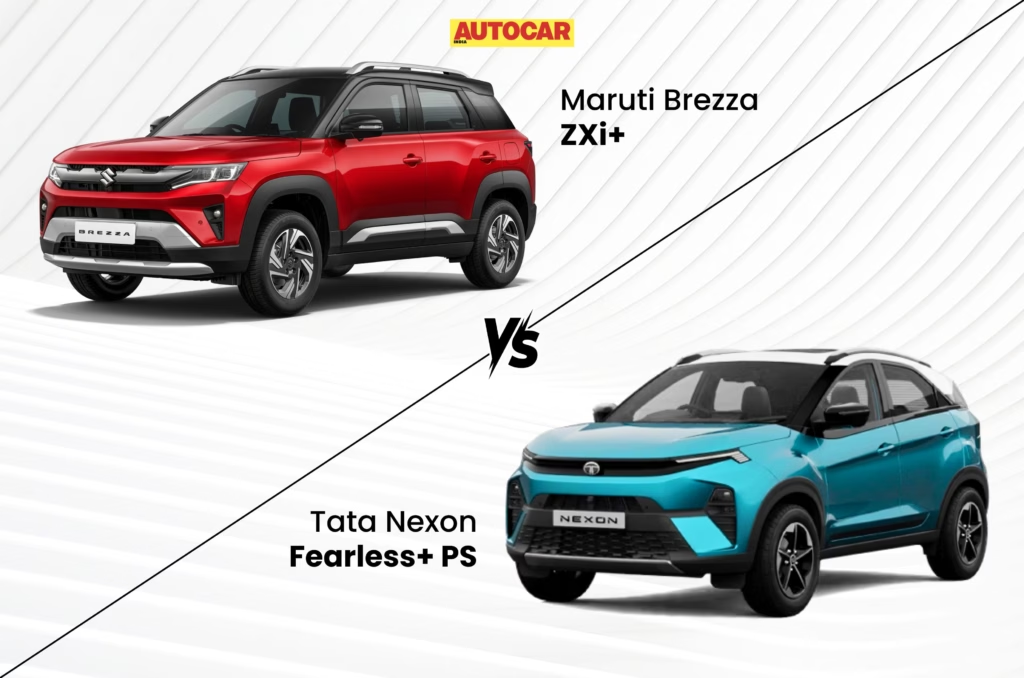
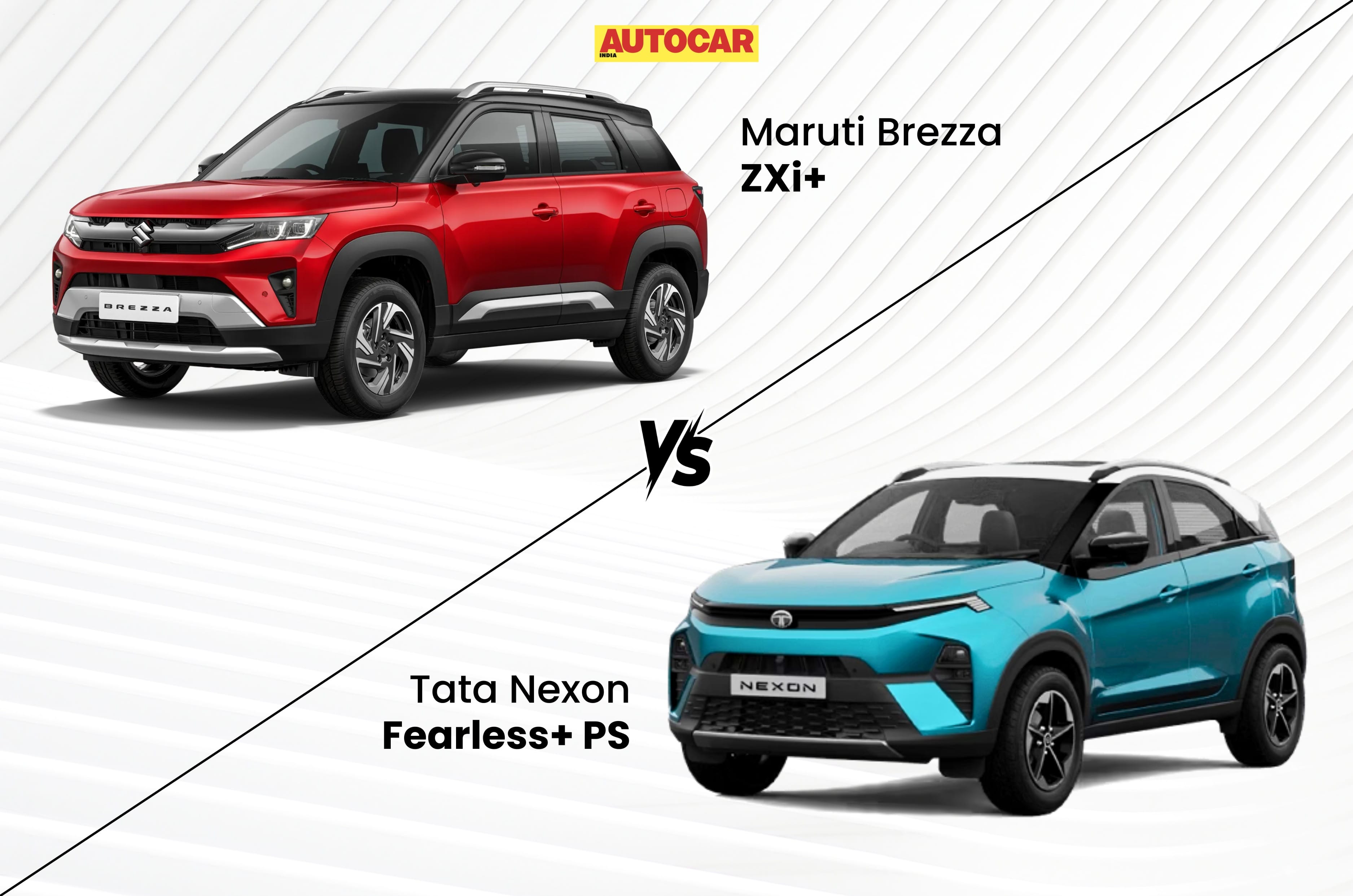
The Maruti Brezza and Tata Nexon are among the bestselling compact SUVs in the Indian market. While the former received a comprehensive update that introduced cosmetic changes, more features and a powerful new turbo-petrol engine, the latter continues to attract consumers with a wide choice of powertrains. If you are looking to buy a compact SUV, we compare the Brezza’s top-spec ZXi+ trim and the Nexon Fearless+ PS to find out which offers better value for money.
Explore full specs, features and a price breakdown in our Brezza vs Nexon comparison.
Maruti Brezza vs Tata Nexon: Dimensions
Brezza is taller, while Nexon has a bigger boot
Maruti Brezza vs Tata Nexon: Dimensions
Maruti Brezza
Tata Nexon
Difference
Length (mm)
3,995
3,995
–
Width (mm)
1,790
1,804
-14
Height (mm)
1,685
1,620
+65
Wheelbase (mm)
2,500
2,498
+2
Ground clearance (mm)
198
208
-10
Boot space (litres)
328
382
-54
Only the length of both models is identical. Beyond that, the Brezza is taller and has a slightly longer wheelbase than the Nexon. On the other hand, the Nexon is wider, rides higher off the ground and has a larger boot.
The Brezza ZXi+ is available only with the naturally aspirated petrol automatic and turbo-petrol manual powertrains. On the other hand, the Nexon Fearless+ PS offers a wide range of options: a turbo-petrol manual and automatic, a diesel manual and automatic, and a CNG manual. As for their turbo-petrol engines, the torque is identical, but the Nexon’s larger mill delivers more power.
Maruti Brezza vs Tata Nexon: Exterior features
Nexon offers some feel-good features like welcome/goodbye animations
Maruti Brezza vs Tata Nexon: Exterior features
Maruti Brezza
Tata Nexon
Headlights
LED projector
LED projector
Tail-lights
LED
Connected LED
Welcome/goodbye animations
No
Yes
Sequential turn indicators
No
Yes
Daytime running lamps (DRLs)
Yes
Yes
Fog lamps
LED
LED
Wheels
16-inch
16-inch
Outside rearview mirrors (ORVMs)
Electrically adjustable, auto-folding
Electrically adjustable, auto-folding
Roof rails
Yes
Yes
Rear wiper, washer
Yes
Yes
Colour options
Monotone and dual-tone
Dual-tone
Both the Brezza and Nexon are similarly equipped on the exterior, with LED light setups, DRLs, fog lamps, electrically adjustable and auto-folding ORVMs and 16-inch alloy wheels. However, the Nexon gets some fancier features such as welcome/goodbye animations for the light setups, along with sequential turn indicators. As for colour options, the Nexon is limited to dual-tone schemes, whereas the Brezza offers monotone options as well.
Maruti Brezza vs Tata Nexon: Interior features
Brezza not as well equipped as Nexon
Maruti Brezza vs Tata Nexon: Interior features
Maruti Brezza
Tata Nexon
Instrument cluster
Analogue dials with MID
10.25-inch display
Infotainment screen
10.1-inch
10.25-inch
Head-up display
Yes
No
Android Auto, Apple CarPlay
Wireless
Wireless
Sunroof
Single-pane
Panoramic
Audio system
6-speaker Arkamys Surround Sense
9-speaker JBL
Climate control
Automatic
Automatic
Rear AC vents
Yes
Yes
Driver seat adjustment
Manual
Manual
Front seat ventilation
Yes
Yes
Seat upholstery
Leatherette
Leatherette
Wireless phone charger
Yes
Yes
Air purifier
Yes
Yes
Connected car tech
Yes
Yes
Rear centre armrest
Yes
Yes
Rear sunshade
No
Yes
Ambient lighting
64-colour
No
60:40 split folding seat
Yes
Yes
Apart from multi-colour ambient lighting and a head-up display, the Brezza’s overall interior equipment falls short of the Nexon’s. The latter comes packed with features such as a digital driver’s display as opposed to analogue dials on the former, a panoramic sunroof, a slightly larger infotainment screen, more speakers and rear window sunshades.
Maruti Brezza vs Tata Nexon: Driving tech
Brezza misses out on drive modes
Maruti Brezza vs Tata Nexon: Driving tech
Maruti Brezza
Tata Nexon
Drive modes
No
Eco, City and Sport
Paddleshifters
Yes
Yes
Cruise control
Yes
Yes
While paddleshifters and cruise control are available on both models, drive modes are offered only with the Nexon.
Maruti Brezza vs Tata Nexon: Safety features
Brezza comes equipped with more advanced safety tech
Maruti Brezza vs Tata Nexon: Safety features
Maruti Brezza
Tata Nexon
BNCAP rating
5 stars
5 stars
Blind-spot warning
Yes
No
Safe-exit warning
Yes
No
Rear cross-traffic alert
Yes
No
Airbags
6
6
Camera setup
360-degree
360-degree
Parking sensors
Front and rear
Front and rear
Disc brakes
Front only
Front only
Tyre-pressure monitoring system
Yes
Yes
Interior rearview mirror (IRVM)
Auto-dimming
Auto-dimming
Hill-hold assist
Yes
Yes
ESC
Yes
Yes
Both the Brezza and Nexon have achieved a 5-star BNCAP crash-safety rating and are equally matched in terms of offering a basic safety kit, along with features such as a 360-degree camera and front parking sensor. But only the former comes with advanced safety systems such as rear cross-traffic alert and blind-spot and safe-exit warnings.
Maruti Brezza vs Tata Nexon: Price and verdict
Brezza’s more affordable, but Nexon’s powertrain range is hard to ignore
Maruti Brezza vs Tata Nexon: Prices
Maruti Brezza
Tata Nexon
NA petrol AT
13.54
–
Turbo petrol MT
11.16
12.34
Turbo petrol AT
–
12.55
Turbo diesel MT
–
13.45
Turbo diesel AMT
–
14.10
CNG MT
–
13.30
Comparing only the turbo-petrol manual powertrain, which is common to both, the Brezza is Rs 1.18 lakh more affordable than the Nexon. Notably, the Brezza ZXi+ NA petrol automatic costs almost a lakh rupees more than the Nexon Fearless+ PS turbo-petrol automatic. This is due to the higher tax on the 1.5-litre unit powering the Brezza. Moreover, the Nexon has a Fearless+ A PS trim that sits above the Fearless+ PS trim and brings Level 2 ADAS, but it is limited to the turbo-petrol automatic.
When it comes to choosing between the two, we’d recommend the Tata Nexon. Though the Brezza’s ZXi+ trim starts at a more affordable price point and is backed by Maruti’s widespread and hassle-free service experience, the Nexon’s multiple powertrain options are simply hard to ignore. Additionally, the Tata comes with more bells and whistles than the Maruti, and that’s why it’s our pick.
The Kia Sonet and Toyota Taisor are among the several compact SUVs you can buy with a turbo-petrol automatic powertrain. Both come with identically sized engines, but are quite different in the power output and gearbox departments. We put the Sonet and Taisor through our instrumented real-world performance testing to see which compact SUV comes out on top.
Kia Sonet vs Toyota Taisor turbo-petrol automatic: Specifications
Sonet
Taisor
Engine
998cc, 3 cyl, turbo-petrol
998cc, 3 cyl, turbo-petrol
Fuel injection system
Direct
Direct
Power (hp)
120
100
Torque (Nm)
172
147.6
Gearbox
7-speed DCT
6-speed AT
Kerb weight (kg)
1,210*
1,060
Drive layout
FWD
FWD
Power-to-weight
99.2hp per tonne*
94.4hp per tonne
Torque-to-weight
142.1Nm per tonne*
139.2Nm per tonne
*Estimated figures or based on estimated figures.
As noted above, both the Sonet and Taisor come with 1.0-litre 3-cylinder direct-injection turbo-petrol engines. However, the Sonet is considerably more powerful than the Taisor. The Sonet also pairs its engine with a 7-speed dual-clutch automatic, while the Taisor comes with a 6-speed torque converter. A DCT is usually favoured for performance on account of its quick shifts, whereas torque converters swap cogs slightly slower but smoother thanks to their fluid coupling. That said, the Taisor is lighter than the Sonet.
Kia Sonet vs Toyota Taisor turbo-petrol automatic: 0-100kph sprint
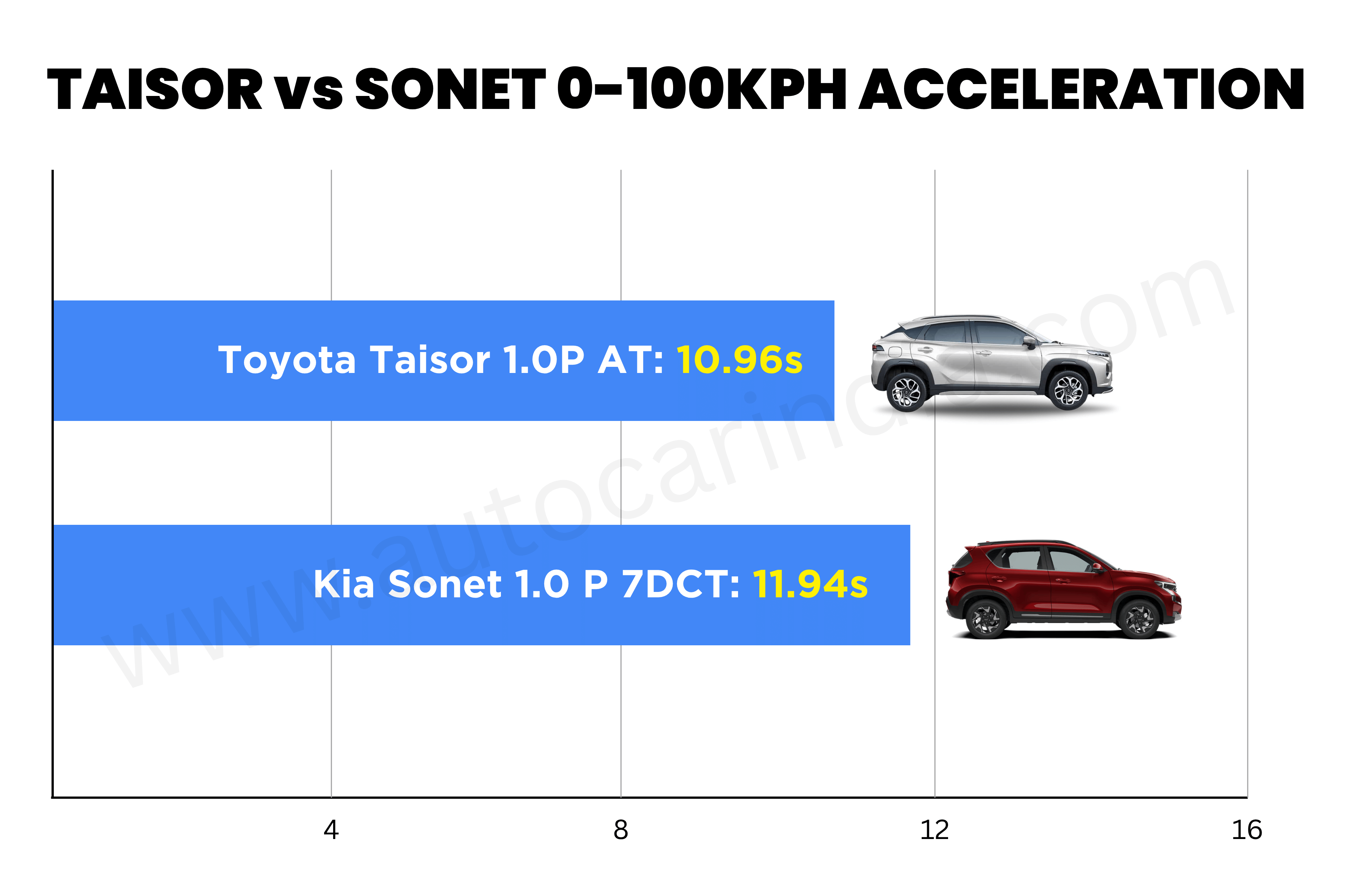
Despite the Sonet’s power advantage and quicker-shifting DCT, the Taisor is quicker from standstill to 100kph. Specifically, the Toyota SUV completed the sprint nearly a full second before the Sonet did. Evidently, the Taisor’s lower kerb weight looks to have offset its power deficit compared to the Sonet.
Kia Sonet vs Toyota Taisor turbo-petrol automatic: Rolling acceleration
20-80kph acceleration times (in kickdown)
Speed from 20kph
Sonet
Taisor
30kph (seconds)
0.81
1.00
40kph (seconds)
1.86
1.89
50kph (seconds)
3.03
2.58
60kph (seconds)
4.14
3.35
70kph (seconds)
5.89
4.54
80kph (seconds)
7.43
6.48
In the 20-80kph kickdown test, the Sonet is off to a stronger start than the Taisor. After the 40kph mark, however, the Taisor pulls ahead and keeps expanding its lead, which stands at almost a full second by the end of the run.
40-100kph acceleration times (in kickdown)
Speed from 40kph
Sonet
Taisor
50kph (seconds)
1.13
1.02
60kph (seconds)
2.45
2.11
70kph (seconds)
4.21
3.34
80kph (seconds)
5.75
4.85
90kph (seconds)
7.50
6.58
100kph (seconds)
9.80
8.40
Unlike the 20-80kph test, the Sonet was slower than the Taisor at every speed in the 40-100kph kickdown sprint. By the end, the Taisor was ahead of the small Kia by 1.4 seconds – the largest gap recorded in all three of our tests for these compact SUVs. Per our testing, then, the Toyota Taisor is clearly faster than the Kia Sonet across the board.
Prices for the Sonet turbo-petrol DCT start at Rs 10 lakh and top off at Rs 13.8 lakh, whereas the Taisor turbo-petrol AT is priced from Rs 11.86 lakh to Rs 12.78 lakh.
Autocar India’s performance testing standards
Before we conduct our performance tests, we check and maintain tyre pressures based on the manufacturer’s recommendations and ensure the car has a full tank of fuel. The car is then tested in a controlled environment with two people on board, and the data is collected via highly accurate GPS-based timing equipment.
Volkswagen is preparing for a much bigger push in India, with the company reviewing its broader product, powertrain and investment plans. While a locally produced compact SUV has already been confirmed for launch next year and is expected to drive volumes, the brand is also looking at the India-EU free trade agreement (FTA) as an opportunity to bring select niche models from its global portfolio here.
“FTA has been announced in Europe. It is a huge opportunity to bring a certain sort of niche models to widen the portfolio for the consumer to offer some exciting models every now and then, which is great,” Member of the Board of Management of Volkswagen AG and CEO of Volkswagen Brand Thomas Schafer told us. He did not reveal which models could be on the cards, but said the company is taking a long-term view and will study market conditions over the next few months before making a decision.
VW’s renewed focus for India
Schafer’s India visit comes as Volkswagen reviews its global business strategy amid geopolitical tensions, changing trade policies and a growing move towards regional manufacturing. “So, globally, we see almost like a decoupling. You have a geopolitical situation and the old business model where everything’s focused on Europe, and then you export to other markets is long gone. At the same time, you have a very different dynamic in China than in the US, which is putting import duties on Europe under certain attacks. So, in that game, you have to change your business model; you have to adapt it. And that’s what we’re busy doing,” he added.
This shift could benefit India. Along with the growing domestic market, Volkswagen sees India as an important hub for engineering, IT and R&D. “We will focus a lot on India going forward. Not only because the market is exciting and growing and creating more opportunity for the future, but also the sort of knowledge base that you have here in India,” he said.
Volkswagen also sees exports as an important way to build scale out of India. The company already exports vehicles made in the country to more than 40 markets, with Mexico being one of the major markets that imports vehicles from India. “So, exports are an important part of our business, and we will always strengthen that going forward,” he said. For the upcoming compact SUV, export potential could also help boost volumes and strengthen the business case.
More powertrains can be offered at the right time
Volkswagen’s current portfolio comprises cars powered by turbo-petrol engines, even as CNG and diesel remain in demand and EVs are gaining momentum. “So, what is clear is, in the long run, there will be strong electrification, especially also in India…You see it accelerating, probably driven by the conflict in the Middle East and the oil situation,” he said.
At the same time, he clarified that be it flex-fuel, CNG, diesel or EV, the brand has the technology already on sale in certain parts of the world. “We have flex-fuel, super strong in South America for years; we have CNG, diesel and EVs, it’s all there…When it’s the right time to localise it, we will localise it,” Schafer said.
The challenge, he said, is deciding when and how to use each powertrain technology. “The dynamics in India and the market shift have been quite significant even in the last couple of months. So, to be honest, we haven’t concluded our planning on that, but the good thing is that we have it and we can deploy it if and when it is the right situation,” he stated. Volkswagen is also evaluating its next-generation models and newer platforms, but these plans are still under consideration.
Cost remains a major hurdle for VW in India
Cost has been one of Volkswagen’s biggest challenges in India. Schafer said the company has spent the past few years working on two key areas: ensuring that its products retain the core characteristics of the Volkswagen brand while simultaneously reducing the cost base. “We worked over the last four years very focused on the cars that we bring to the market now are through and through Volkswagen in terms of quality, brand fit. And, yes, our cost base is traditionally high because we are very much focused on Europe and especially Germany,” he added.
India, he said, will play an important role in Volkswagen’s efforts to reduce costs, especially through more cost-effective development and manufacturing. “Part of the programs that’s been in the media over the last, especially two years, has been reducing our cost base, developing more in more cost-efficient places like in India very much, but also shifting production from high-cost locations into lower-cost locations,” he said.
Volkswagen is now working on its next set of products, investment plans and powertrain options for India. With India becoming an increasingly important part of its global strategy, there is plenty to look forward to from the brand in the coming years.
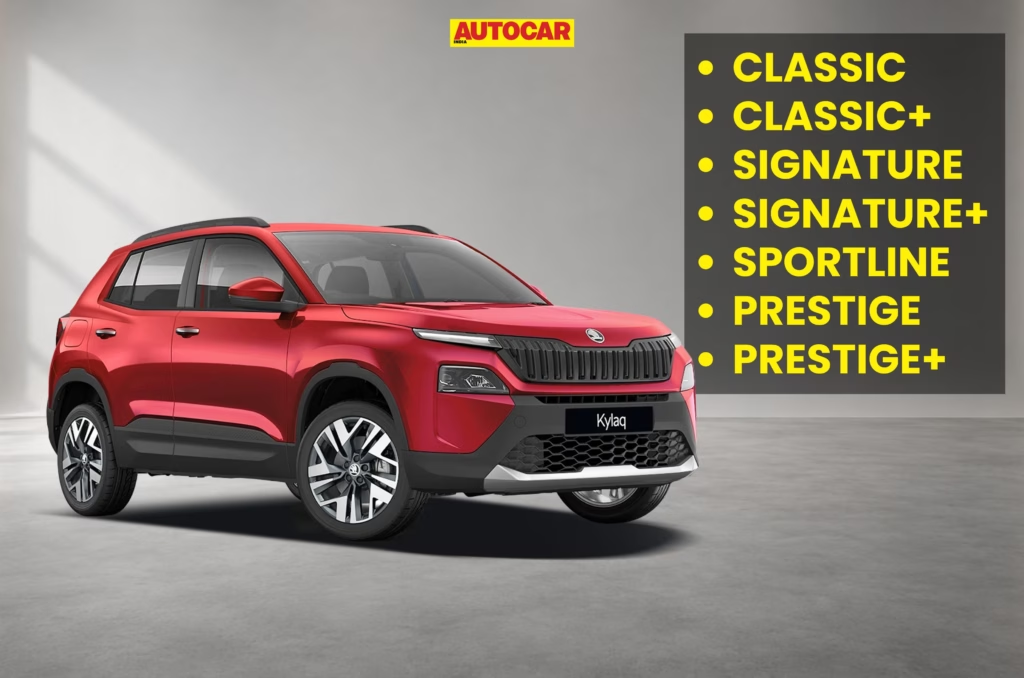
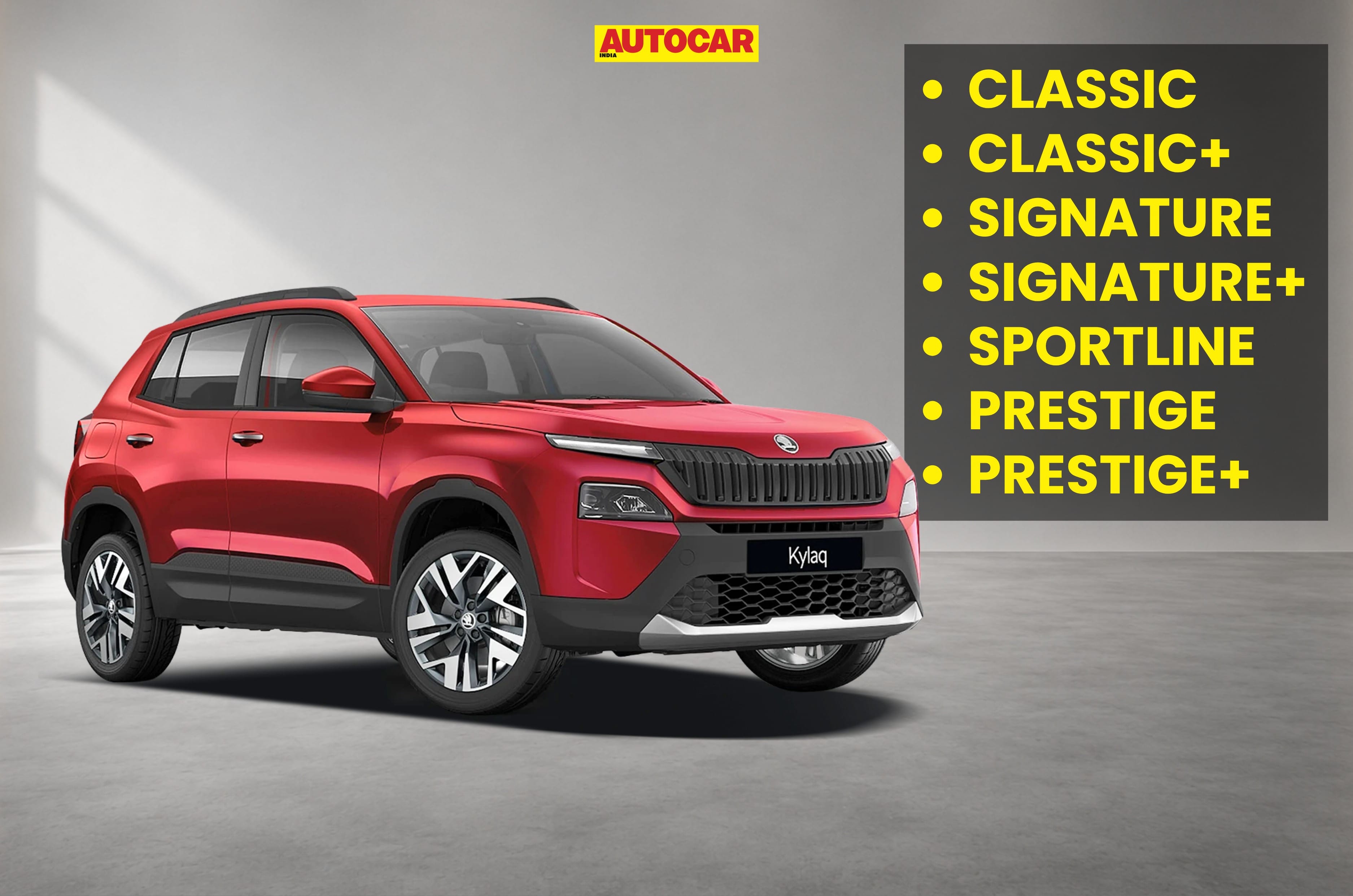
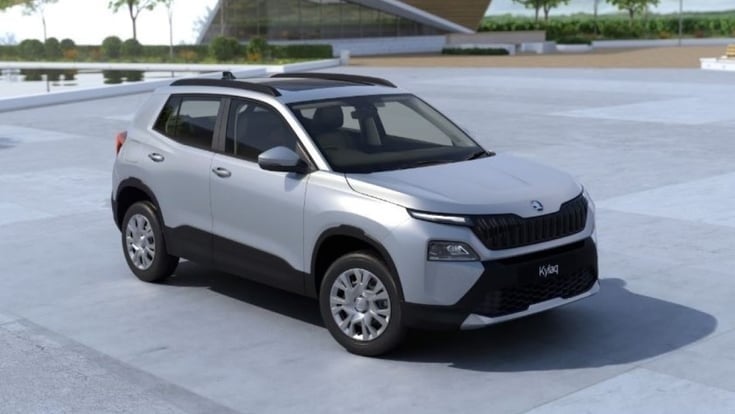
The Kylaq, Skoda’s most affordable offering in India, was introduced in 2024 and marked the brand’s return to the sub-4m space after years. Currently, the Kylaq is Skoda’s best-selling model in our market and has sold over 50,000 units since its launch as of February 2026. Here’s a breakdown of the powertrain options, comfort and convenience features, safety kit and exterior colours available on each trim of the Skoda SUV.
Skoda Kylaq variant-wise price and powertrain options
The base Classic trim misses out on an automatic transmission option
Skoda Kylaq ex-showroom price as of August 21, 2026 (Rs lakh)
Trim
MT
AT
Classic
7.59
–
Classic+
8.25
9.25
Signature
9.43
10.43
Signature+
10.77
11.77
Sportline
11.32
12.32
Prestige
11.75
12.75
Prestige+
11.99
12.99
The Skoda Kylaq has an ex-showroom price ranging from Rs 7.59 lakh to Rs 12.99 lakh. Except for the base Classic trim, the remaining trim levels offer both manual and automatic gearboxes. Powering the Kylaq is a 115hp, 178Nm, 1.0-litre direct-injection turbo-petrol engine that also does duty in the Kushaq and the Slavia. Transmission duties are handled by either a -speed manual or a 6-speed automatic gearbox. Notably, in Classic+ guise, the Kylaq is the most accessible car with a torque converter gearbox.
Skoda claims a top speed of 188kph and that the manual version is capable of a 0-100kph sprint in 10.5 seconds. In our Kylaq real-world performance tests, the automatic version achieved a 0-100kph time of 11.69 seconds. Skoda also claims an ARAI-rated fuel economy of 19.68kpl for the manual and 19.05kpl for the automatic; our Kylaq real-world mileage tests saw the manual average 12.86kpl, while the automatic went 11.03km on a litre of petrol.
Skoda Kylaq variant-wise colour options
Offered in seven colours on the outside, two on the inside
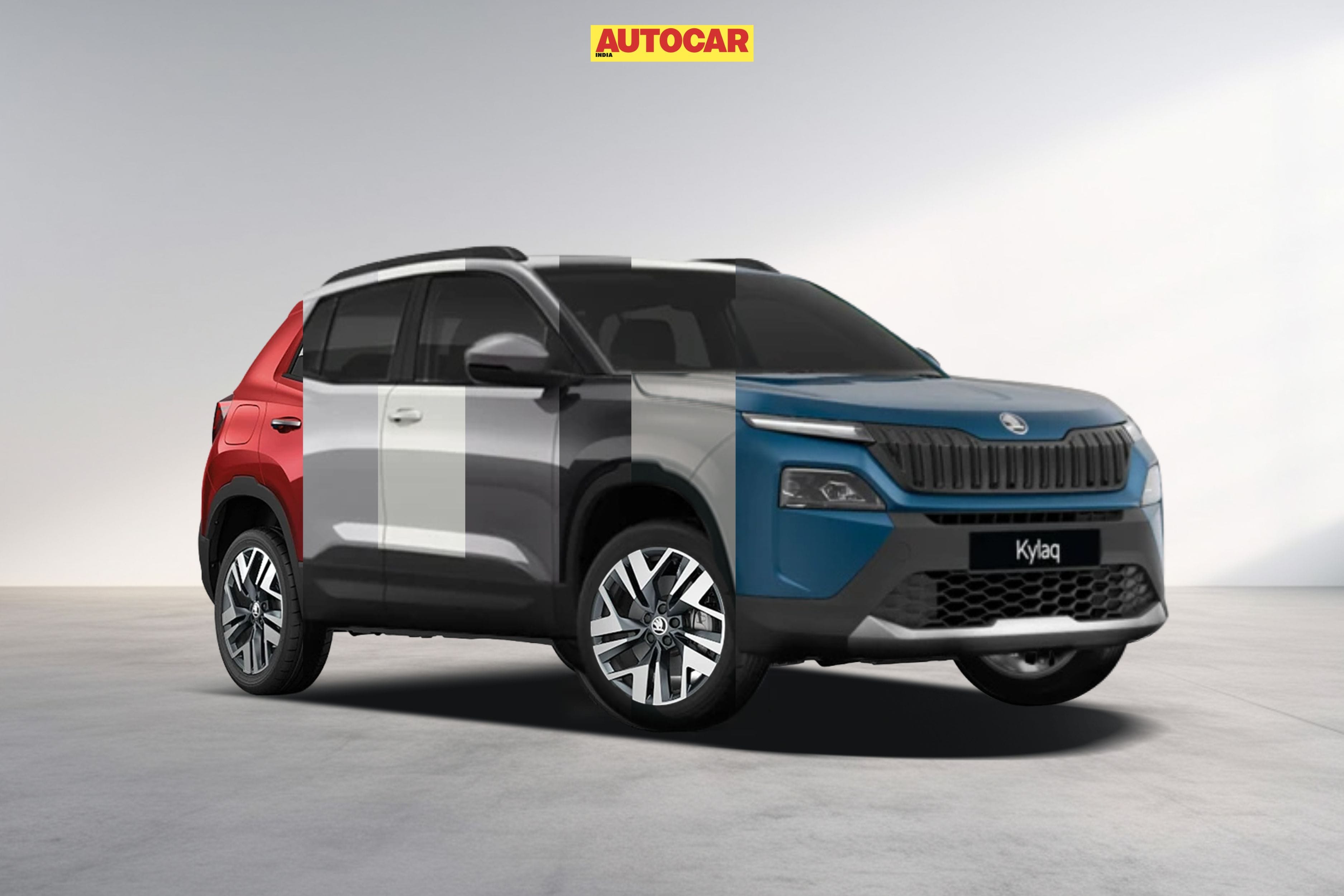
The compact SUV is offered in seven colours, namely, Candy White, Brilliant Silver, Cherry Red, Carbon Steel, Deep Black, Lava Blue, and Steel Grey. While all trims come in a monotone finish, select paint jobs on the Sportline come with a black roof. Additionally, the Sportline trim exclusively gets the Steel Grey colour option. The interior of the Skoda Kylaq gets a black and grey colour scheme as standard, but the Sportline has an all-black theme. Here’s a table comprising the available exterior colours on the Skoda Kylaq depending on the trim level chosen:
Colour
Classic
Classic+
Signature
Signature+
Sportline
Prestige
Prestige+
Candy White
Yes
Yes
Yes
Yes
Dual-tone
Yes
Yes
Brilliant Silver
Yes
Yes
Yes
Yes
Dual-tone
Yes
Yes
Cherry Red
Yes
Yes
Yes
Yes
Dual-tone
Yes
Yes
Carbon Steel
Yes
Yes
Yes
Yes
–
Yes
Yes
Deep Black
–
Yes
Yes
Yes
Yes
Yes
Yes
Lava Blue
–
Yes
Yes
Yes
Yes
Yes
Yes
Steel Grey
–
–
–
–
Dual-tone
–
–
Skoda Kylaq standard safety kit
Gets six airbags, ABS, EBD, traction control and more.
As standard, the Skoda Kylaq comes equipped with six airbags, ABS, EBD, ESC, traction control, brake disc wiping, roll-over protection, central locking, rear parking sensor, and ISOFIX mounts.
Skoda Kylaqvariant-wise features
Skoda Kylaq Classic: Rs 7.59 lakh
Gearbox option – 6MT
Skoda Kylaq Classic trim
LED headlights with LED daytime running lamps (DRLs)
Leatherette seat upholstery with Sportline inscription
LED projector headlamps
LED fog lamps with cornering function
Wireless phone charger
Skoda Kylaq Prestige – Rs 11.75 lakh-12.75 lakh
Gearbox options – 6MT, 6AT
Skoda Kylaq Prestige trim
Features over Signature+
Dual-tone 17-inch alloys
LED projector headlights
LED rear turn indicator and reverse lamp
Front LED fog lamps with static bending function
White ambient lighting
Leatherette upholstery on seats, front armrest and doors
Chrome parking brake tip
Ventilated front seats
Wireless phone charger
Anti-theft alarm
Skoda Kylaq Prestige+ – Rs 11.99 lakh-12.99 lakh
Gearbox options – 6MT, 6AT
Feature over Prestige
6-way powered front seats
Which Skoda Kylaq variant should you consider?
The mid-spec Signature+ trim offers good value for money
Starting at Rs 10.77 lakh, the mid-spec Signature+ trim offers dual digital screens, a single-pane sunroof, a rear parking camera with sensors, auto AC with rear vents, all-LED lighting and 16-inch silver alloy wheels, making it a value-for-money offering. While you do miss out on features such as a wireless phone charger and powered and ventilated front seats, the premium you have to pay for these is not justifiable. Moreover, this trim is available with both manual and automatic gearbox options.
However, if you are on a budget, you can consider the lower Signature trim, which offers a smaller touchscreen with wired Android Auto and Apple CarPlay, rear wiper and washer, rear AC vents and a sunroof. This trim also comes in both manual and automatic variants, and priced at Rs 9.43 lakh and Rs 10.43 lakh, respectively, they still offer a lot of value.
Although the Classic+ trim is also well-equipped for its price, the lack of an infotainment system makes recommending it a bit more challenging. However, the 7-inch OEM infotainment system with wired smartphone connectivity, offered with the higher Signature trim, is available in the online classifieds marketplace under Rs 10,000. If you are open to retrofitting it at your authorised dealership, the Classic+ trim becomes the most value-for-money option on a strict budget.
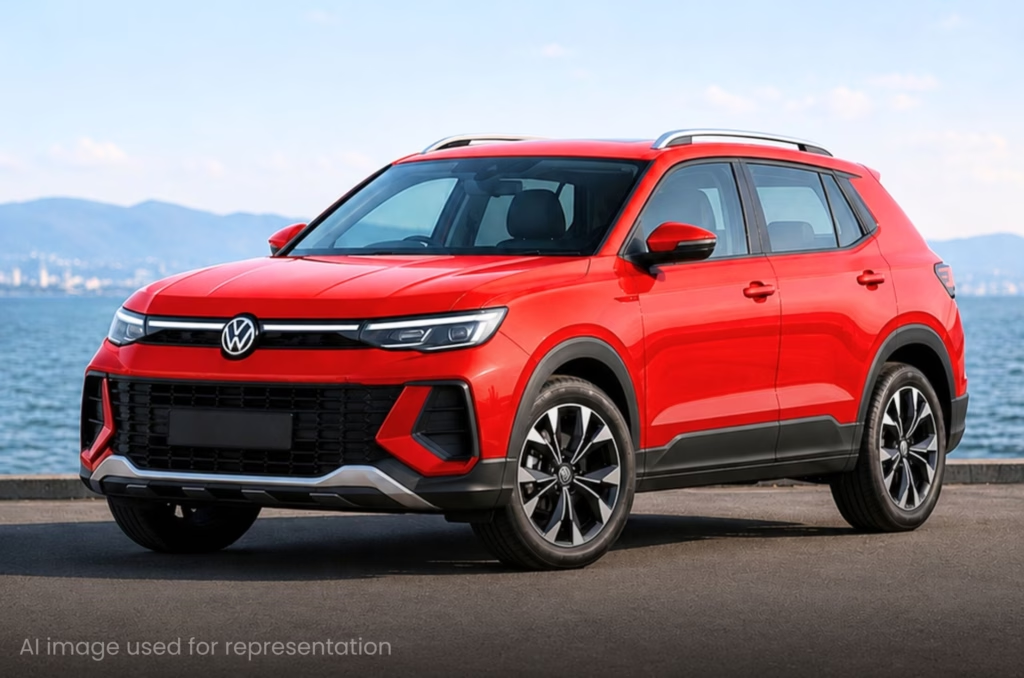
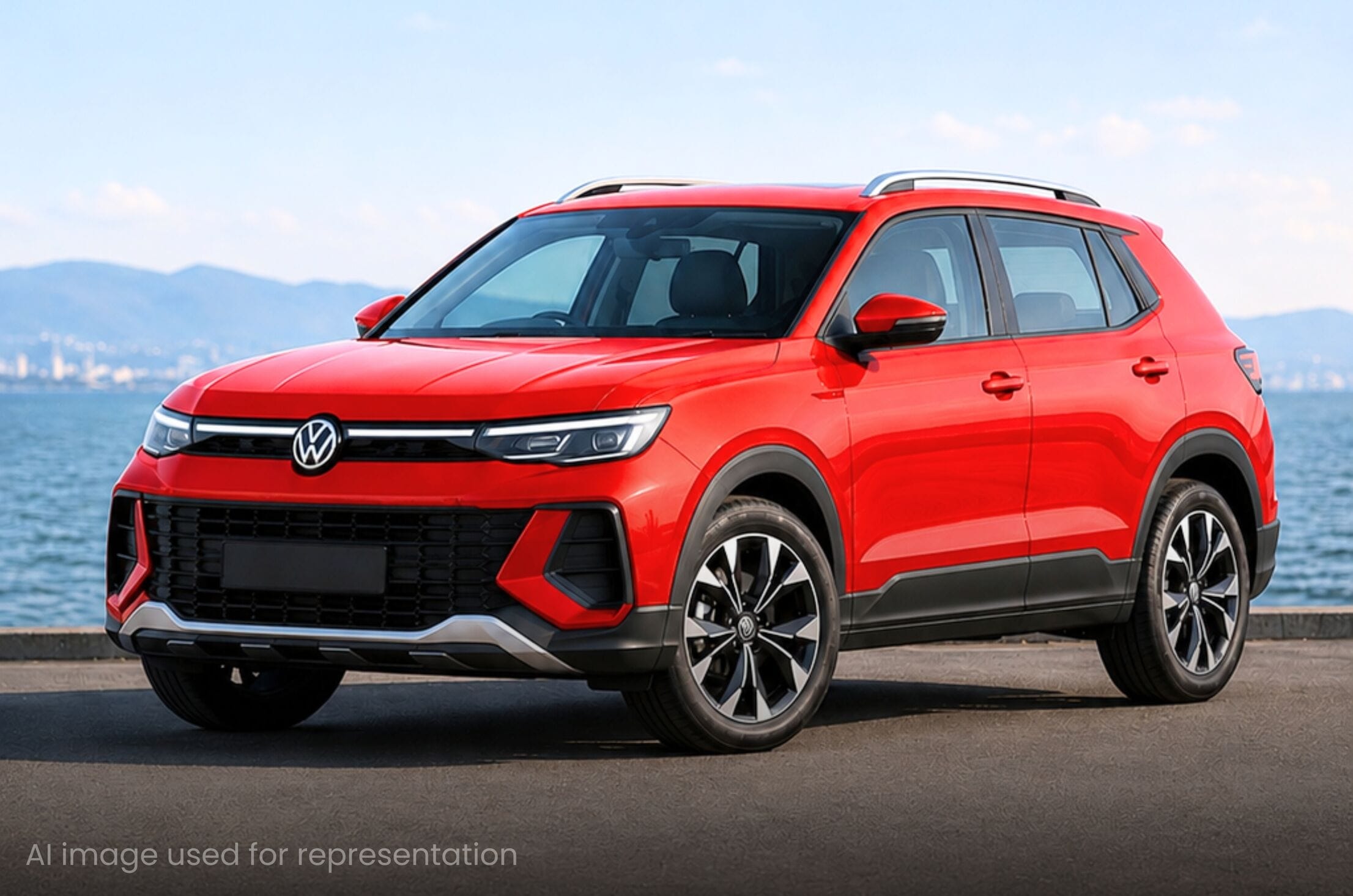
Volkswagen has officially confirmed a compact SUV (under four metres) for India, set for launch in 2027. This comes just over a week after we exclusively reported that the carmaker had secured global approval for the project. This also paves the way for VW’s re-entry into the high-volume sub-four-metre vehicle market in India, which it had exited following the discontinuation of the Ameo compact sedan and Polo hatchback.