Vivo X Fold 6: भारत में फोल्डेबल स्मार्टफोन का मार्केट और ज्यादा कॉम्पिटिटिव होता जा रहा है, क्योंकि Apple भी iPhone Duo के साथ इस सेगमेंट में एंट्री कर ली है। हालांकि, मार्केट में पहले से ही Samsung Galaxy Z Fold 8 Ultra, Galaxy Z Fold 8 और Google Pixel 11 Pro Fold मौजूद हैं। लेकिन अब, Vivo भी अपना नया फोल्डेबल फोन भारत में लाने की तैयारी में है। ऐसे में आने वाले दिनों में फोल्डेबल फोन के बाजार में मुकाबला और दिलचस्प हो सकता है।
रिपोर्ट्स के मुताबिक, प्रीमियम फोल्डेबल सेगमेंट में Google, Apple और Samsung को टक्कर देने के लिए चीनी टेक कंपनी अगले महीने भारत में अपना लेटेस्ट बुक-स्टाइल फोल्डेबल, Vivo X Fold 6 लॉन्च कर सकती है।
टिपस्टर अभिषेक यादव की X पोस्ट के अनुसार, Fold X 5 का सक्सेसर 6 अक्टूबर को लॉन्च हो सकता है। हालांकि, कंपनी ने अभी तक भारत में लॉन्च की तारीख की आधिकारिक पुष्टि नहीं की है, लेकिन रिपोर्ट्स बताती हैं कि ग्लोबल लॉन्च 1 अक्टूबर को हो सकता है और उसके कुछ दिनों बाद भारत में लॉन्च किया जा सकता है।
बता दें कि Vivo ने पहले ही कन्फर्म कर दिया था कि X Fold 6 को चुनिंदा ग्लोबल मार्केट में लॉन्च किया जाएगा।
उम्मीद की जा रही है कि भारत में आने वाला मॉडल दो स्टोरेज कॉन्फिगरेशन में उपलब्ध होगा। इनमें 12GB RAM के साथ 256GB स्टोरेज और 12GB RAM के साथ 512GB स्टोरेज शामिल हो सकते हैं। साथ ही, यह भी कहा जा रहा है कि यह फोन Prism Black और Nebula Teal कलर ऑप्शन में आएगा।
फिलहाल, ये जानकारी लीक पर आधारित है और जब तक Vivo कोई आधिकारिक घोषणा नहीं करता, तब तक इसे कन्फर्म नहीं माना जाना चाहिए।
Vivo X Fold 6 के स्पेसिफिकेशन्स
Vivo X Fold 6 को चीन में पहले ही लॉन्च किया जा चुका है, जिससे हमें भारत में आने वाले मॉडल के बारे में अच्छी जानकारी मिल जाती है। इस फोल्डेबल फोन में 8.02-इंच का AMOLED इनर डिस्प्ले और 6.51-इंच का कवर डिस्प्ले है, और दोनों ही स्क्रीन 120Hz रिफ्रेश रेट को सपोर्ट करती हैं।
फोन के अंदर MediaTek Dimensity 9500 Super चिपसेट दिया गया है। इसमें 7,000mAh की बड़ी बैटरी भी है, जो 80W वायर्ड चार्जिंग और 40W वायरलेस चार्जिंग को सपोर्ट करती है।
कैमरे की बात करें तो, Vivo X Fold 6 में Zeiss ट्यूनिंग वाला ट्रिपल रियर कैमरा सेटअप दिया गया है। इसका मेन कैमरा 200MP का है। फोन में प्रीमियम बिल्ड के साथ IP59 रेटिंग मिलने की भी उम्मीद है।
रिपोर्ट्स के मुताबिक, Vivo X Fold 6 ऐसे सेगमेंट में आएगा जहां Apple और Samsung के पास पहले से ही बेहतरीन प्रीमियम फोल्डेबल फोन मौजूद हैं। Apple के iPhone Duo में 7.6-इंच का फोल्डेबल डिस्प्ले है, जबकि Samsung के Galaxy Z Fold 8 Ultra में 8-इंच का इंटरनल डिस्प्ले है।
फिलहाल, Vivo ने अभी तक भारत में इसकी कीमत के बारे में कोई जानकारी नहीं दी है। लेकिन चीन में X Fold 6 की शुरुआती कीमत CNY 7,999 है, जबकि पिछला Vivo X Fold 5 भारत में ₹1,59,999 में लॉन्च हुआ था। लीक हुई जानकारी के अनुसार, उम्मीद है कि Vivo का नया फोल्डेबल फोन भारत में ₹1,79,999 की शुरुआती कीमत पर लॉन्च हो सकता है।
Flipkart Big Billion Days Sale 2026: फेस्टिव सीजन आते ही ऑनलाइन शॉपिंग प्लेटफॉर्म पर सेल का इंतजार भी शुरू हो जाता है। अगर आप इस बार नया स्मार्टफोन खरीदने का प्लान बना रहे हैं, तो Flipkart Big Billion Days Sale 2026 आपके लिए खास हो सकती है। Flipkart ने अभी से इस सेल में मिलने वाले स्मार्टफोन ऑफर्स की झलक दिखानी शुरू कर दी है। कंपनी ने कुछ लोकप्रिय फोन की इफेक्टिव कीमतें भी सामने रख दी हैं।
इस लिस्ट में Apple iPhone 17, Google Pixel 11 और Pixel 10a जैसे स्मार्टफोन शामिल हैं। Flipkart के मुताबिक, सेल में iPhone 17 की इफेक्टिव कीमत 77,999 रुपये होगी। वहीं, Google Pixel 11 को 69,999 रुपये और Pixel 10a को 39,999 रुपये की इफेक्टिव कीमत में खरीदा जा सकेगा।
iPhone 17 की Big Billion Days में कीमत
Flipkart की Big Billion Days Sale 2026 के दौरान iPhone 17 की प्रभावी कीमत ₹77,999 होगी। यह ऑफर योग्य ग्राहकों के लिए उपलब्ध होगा और Flipkart की लागू शर्तों और नियमों के मुताबिक होगा। अभी Apple भारत में iPhone 17 के 256GB वेरिएंट को ₹99,900 में बेच रहा है। यानी सेल के दौरान इसकी इफेक्टिव कीमत मौजूदा कीमत से काफी कम होगी। वहीं, Google Pixel 11 की इफेक्टिव कीमत 69,999 रुपये होगी। इसके अलावा, Google Pixel 10a को 39,999 रुपये की इफेक्टिव कीमत में खरीदा जा सकेगा।
Flipkart ने और भी स्मार्टफोन के बारे में जानकारी दी
iPhone 17 और Google Pixel मॉडल के अलावा, Flipkart ने अपनी आने वाली सेल के ऑफर में कई अन्य स्मार्टफोन और उनकी प्रभावी कीमतों का भी जिक्र किया है। इनमें शामिल हैं:
Moto G06 Power 13,999 रुपये में
Oppo K14 5G 23,499 रुपये में
Nova 2 Power 5G 15,999 रुपये में
Motorola Signature 57,499 रुपये में
Motorola Edge 70 Max 51,999 रुपये में
Motorola Edge 70 Fusion 29,999 रुपये में
डिस्काउंट मिलने वाले स्मार्टफोन्स की लिस्ट
Realme P4 5G, Poco M8X 5G, Boltt EVO 4G, Samsung Galaxy F07, Motorola Edge 70 Pro+ 5G, Moto G37, Tecno Spark 50, Oppo K14x 5G, Vivo T5x 5G
ई-कॉमर्स कंपनी सेल शुरू होने के करीब आने पर स्मार्टफोन्स से जुड़े और भी ऑफर्स और उनकी कीमतों की जानकारी जारी कर सकती है। बता दें कि Flipkart की ‘Big Billion Days Sale 2026’ आधिकारिक तौर पर 9 अक्टूबर को शुरू होगी, जबकि योग्य ग्राहकों के लिए अर्ली एक्सेस 8 अक्टूबर की आधी रात से शुरू हो जाएगा।
जानकारी के मुताबिक, Apple ने सितंबर 2025 में भारत में iPhone 17 का 256GB मॉडल ₹82,900 में लॉन्च किया था।
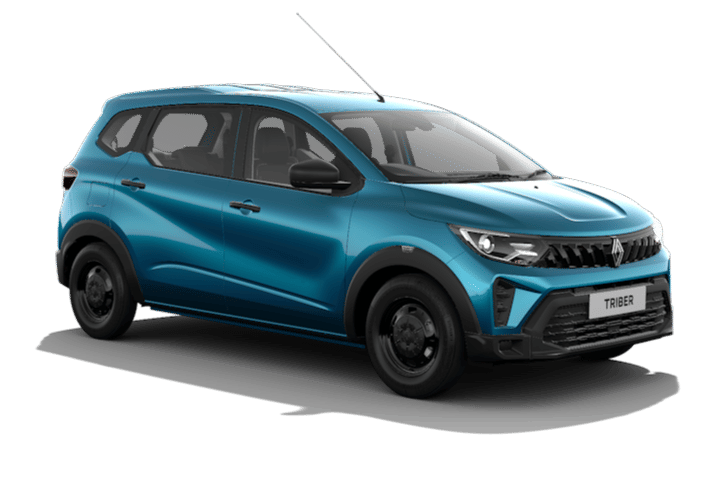
The Renault Triber facelift was launched in India in 2025, bringing a bevy of exterior and interior updates, along with a new variant nomenclature. The Triber comes in four trim levels, available with both naturally aspirated and turbo-petrol engine options. Let’s have a look at the prices, powertrains, colours and features available with each variant of the Triber.
Renault Triber price list and powertrains
Trim
MT
AMT
Authentic
5.80
–
Evolution
6.73
–
Evolution Turbo
7.84
–
Techno
7.44
–
Techno Turbo
8.53
–
Emotion*
8.05
8.52
Emotion Turbo*
8.99
–
*Dual-tone paint option available at an additional cost of Rs 21,000.
The naturally aspirated 1.0-litre three-cylinder petrol engine produces 72hp and 96Nm and is paired with a five-speed manual or, in the top-spec Emotion, a five-speed AMT. The 1.0-litre turbo-petrol produces 100hp and 180Nm and is available only with a five-speed manual.
Renault Triber colour options
Nine colour options, three of which are dual-tone
Renault Triber variant-wise colours
Authentic
Evolution
Techno
Emotion
Ice Cool White
Yes
Yes
Yes
Yes
Stealth Black
Yes
Yes
Yes
Yes
Moonlight Silver
Yes
Yes
Yes
Yes
Shadow Grey
No
Yes
Yes
Yes
Zanskar Blue
No
Yes
Yes
Yes
Amber Terracotta
No
No
Yes
Yes
Ice Cool White with black roof
No
No
No
Yes
Shadow Grey with black roof
No
No
No
Yes
Amber Terracotta with black roof
No
No
No
Yes
The Triber colour options include six monotone shades. There are three dual-tone finishes, but these are available only with the range-topping Triber Emotion trim and command a Rs 21,000 premium. The entry-level Triber Authentic comes only in three colours – Ice Cool White, Stealth Black and Moonlight Silver. In addition to those, the mid-spec Triber Evolution is available in Shadow Grey and Zanskar Blue. Lastly, the one below the top Triber Techno also gets the option of an Amber Terracotta colour.
LED daytime running lamps (DRLs), projector headlights, fog lamps
Dual-tone wheel covers
Smart access card
Cooled lower glove box
Push-button start/stop
Wireless Android Auto and Apple CarPlay
Wireless charging pad
7-inch TFT digital instrument cluster
Automatic climate control
Third row 12V socket
Auto headlights with follow me home function
Rain-sensing wipers
Cruise control (MT only)
Front parking sensors
Which Renault Triber variant should you consider buying?
Techno Turbo offers the best balance of features and performance
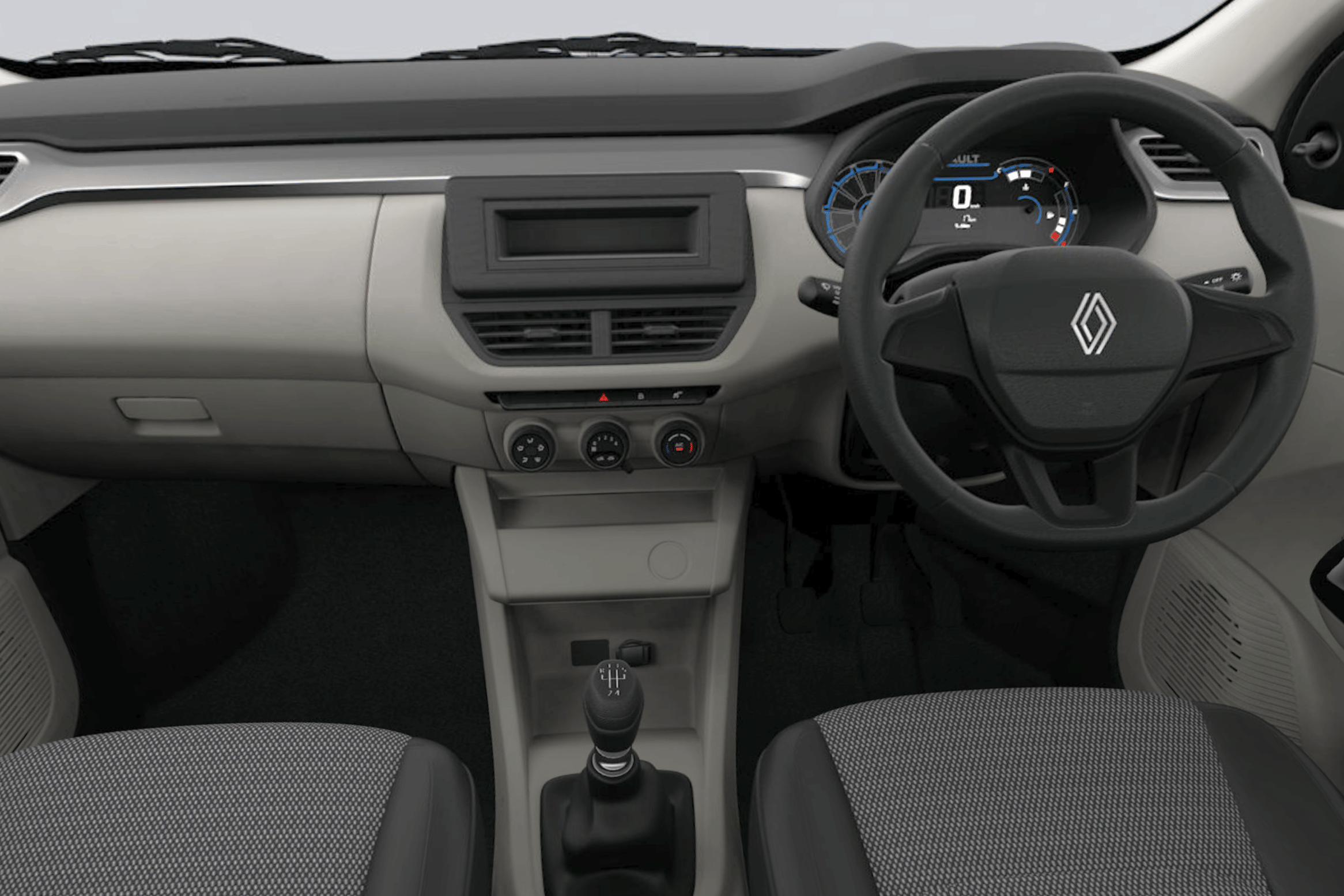
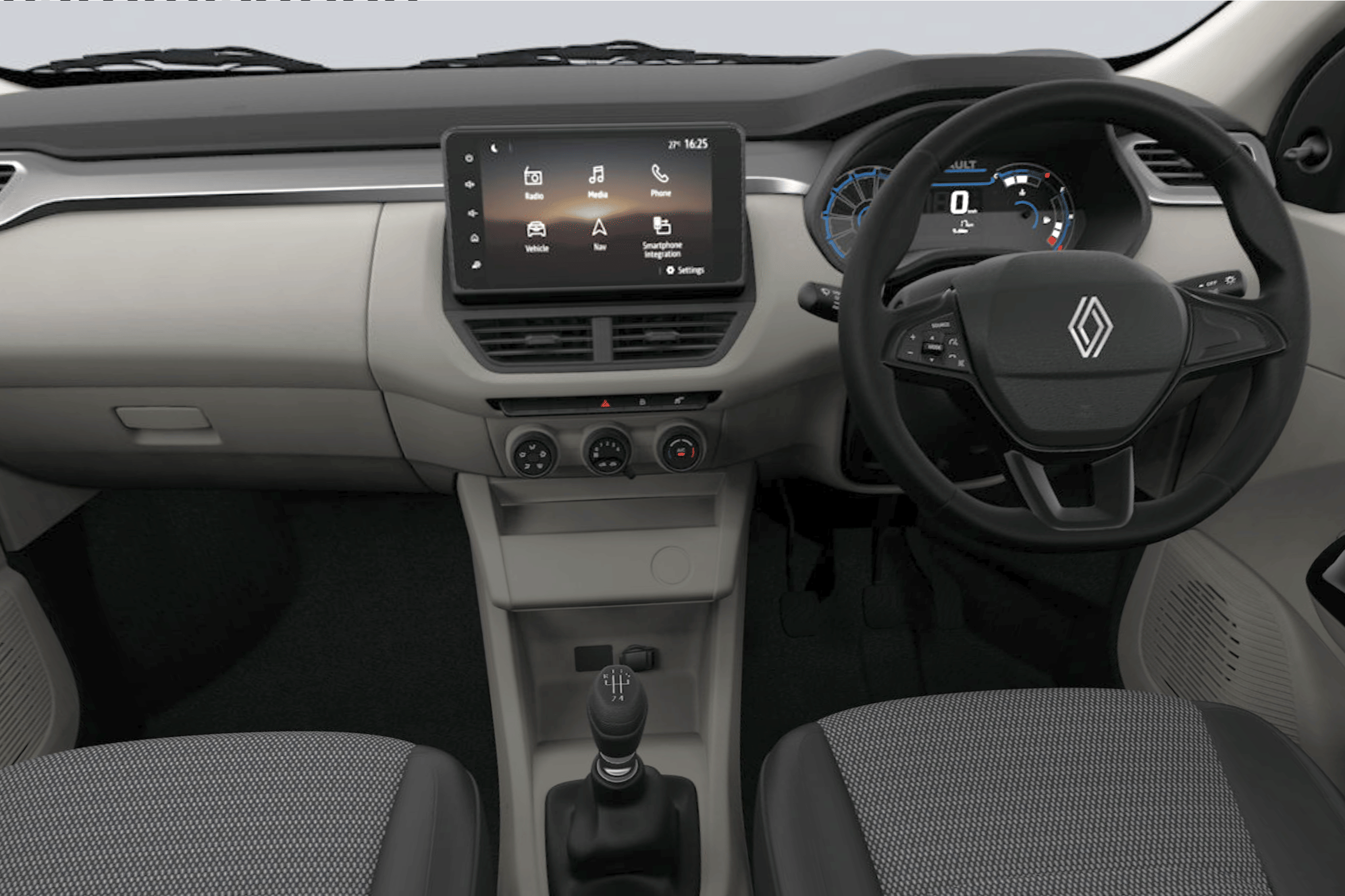
With the 2026 update, Renault has moved several features down to the Triber’s lower variants. The Techno gets equipment including six airbags, an 8-inch touchscreen, steering-mounted controls, a rear-view camera, height adjustment and an armrest for the driver’s seat, electrically foldable ORVMs, a rear wiper and defogger, and two front tweeters.
The Techno Turbo, priced at Rs 8.53 lakh, also gets the new 100hp, 180Nm turbo-petrol engine, paired with a five-speed manual gearbox. It costs Rs 1.09 lakh more than the naturally aspirated Techno, with the extra cost going towards the more powerful engine. For buyers who want the turbo engine, the Techno Turbo offers the key equipment without the additional cost of the top-spec Emotion.
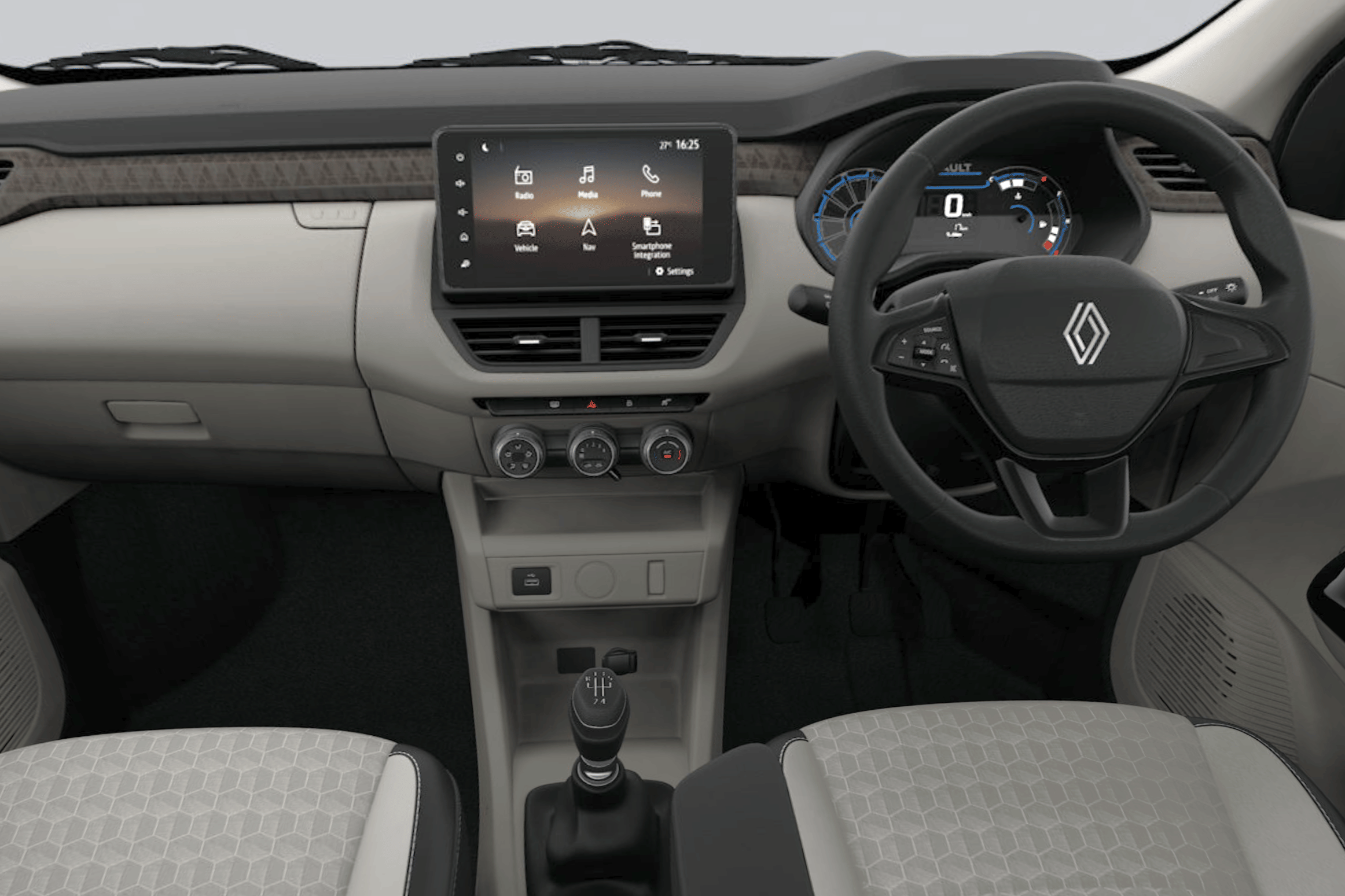
The Emotion adds features such as automatic climate control, wireless Android Auto and Apple CarPlay, wireless charging, automatic headlights, rain-sensing wipers, cruise control and front parking sensors. It is also the only variant available with the naturally aspirated engine and an AMT.
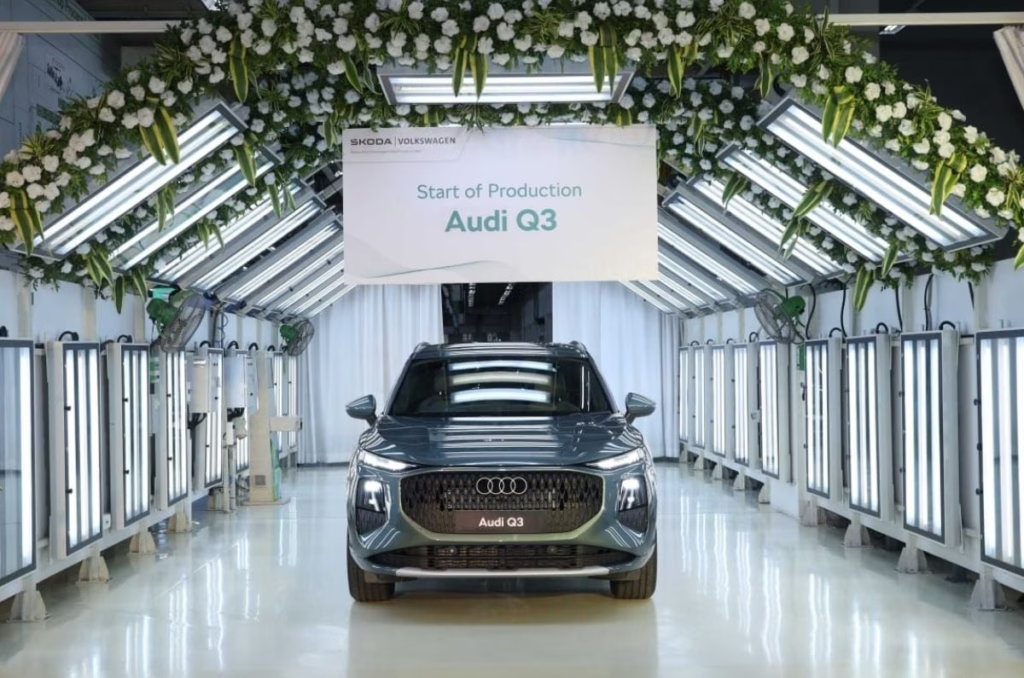
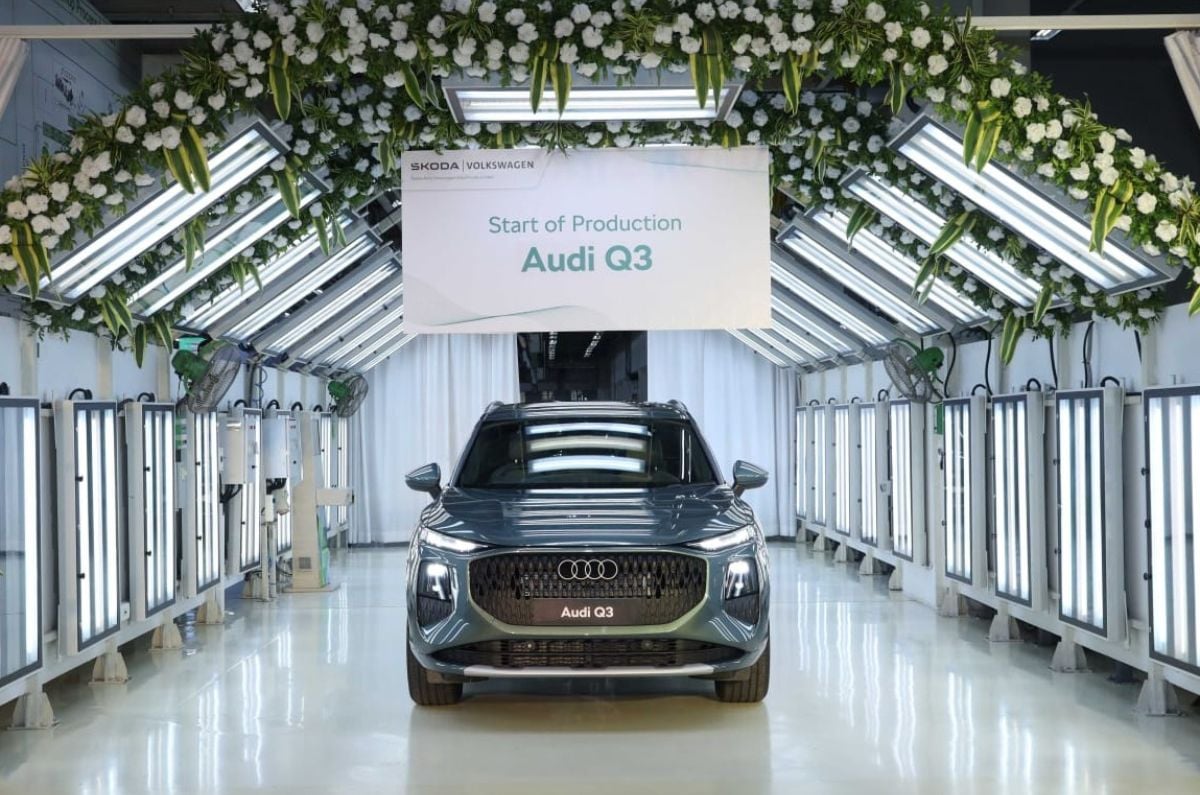
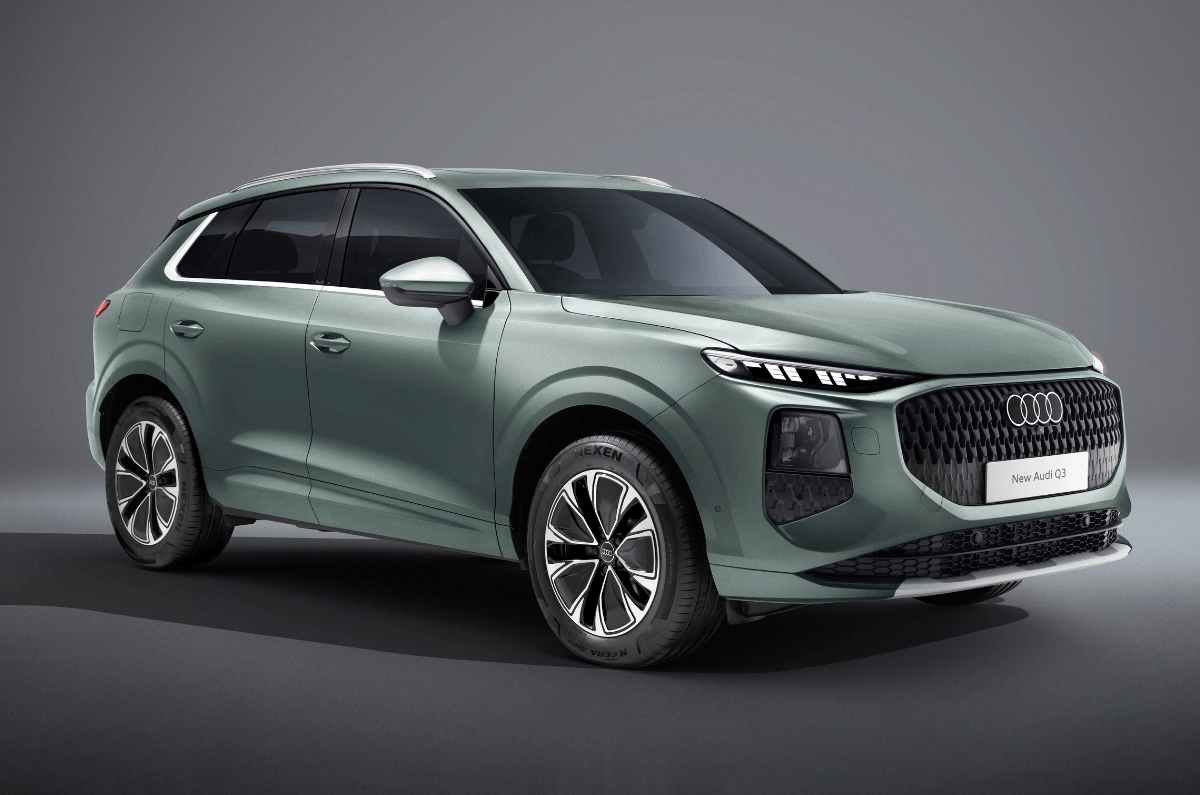
Audi has commenced local assembly of the third-gen Q3. The entry-level luxury SUV will be locally assembled at the brand’s facility in Chhatrapati Sambhajinagar, Maharashtra. Pre-bookings for the new Q3 have already begun for an amount of Rs 1 lakh. The new Q3 will launch on October 16, 2026.
Powered by a 2.0-litre direct-injection turbo-petrol engine.
Expected to arrive with a price tag ranging between Rs 55 lakh and Rs 60 lakh.
Audi Q3: All you need to know
Looks sportier and comes packed with tech
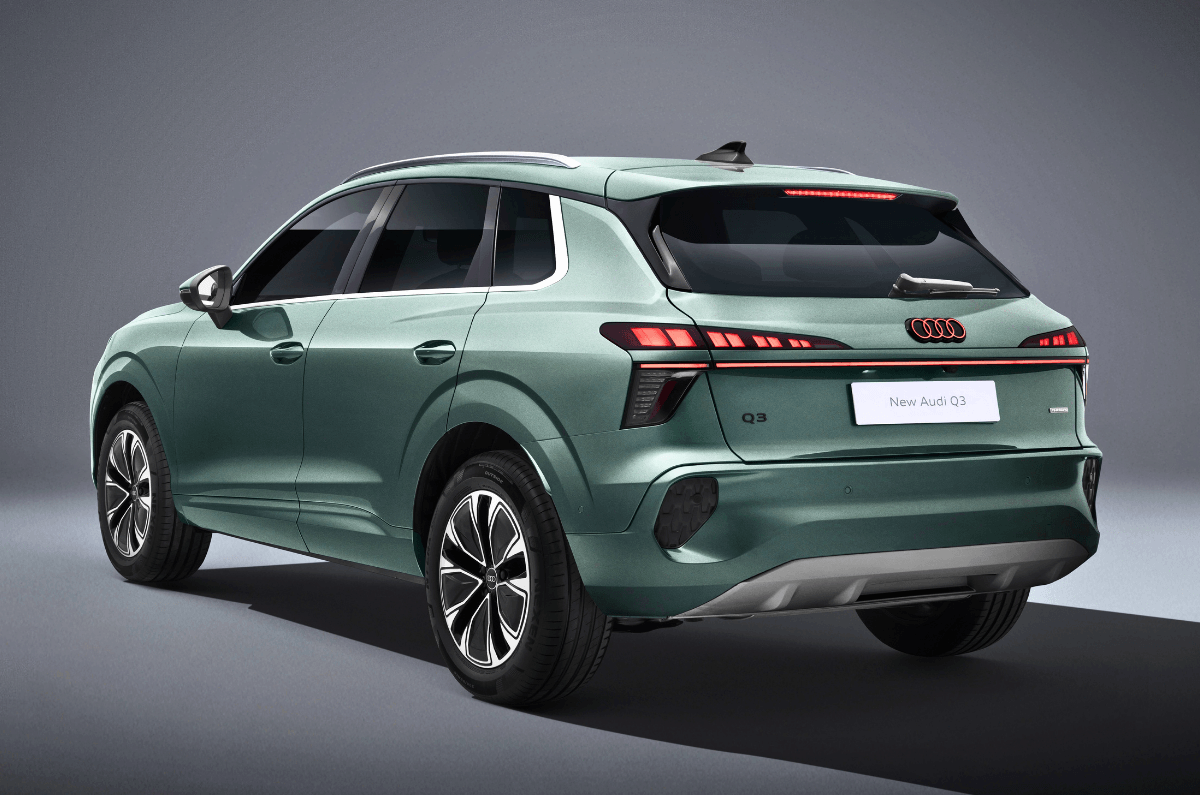
The new-gen Q3’s exterior marks a huge departure from its predecessor’s understated design. There’s a split-headlamp setup at the front, with DRLs that can be configured with multiple signatures, a larger grille, and vertically stacked headlamps on either side of the bumper. In profile, the Q3 gets body-coloured cladding, 18-inch alloys and a chrome window line.
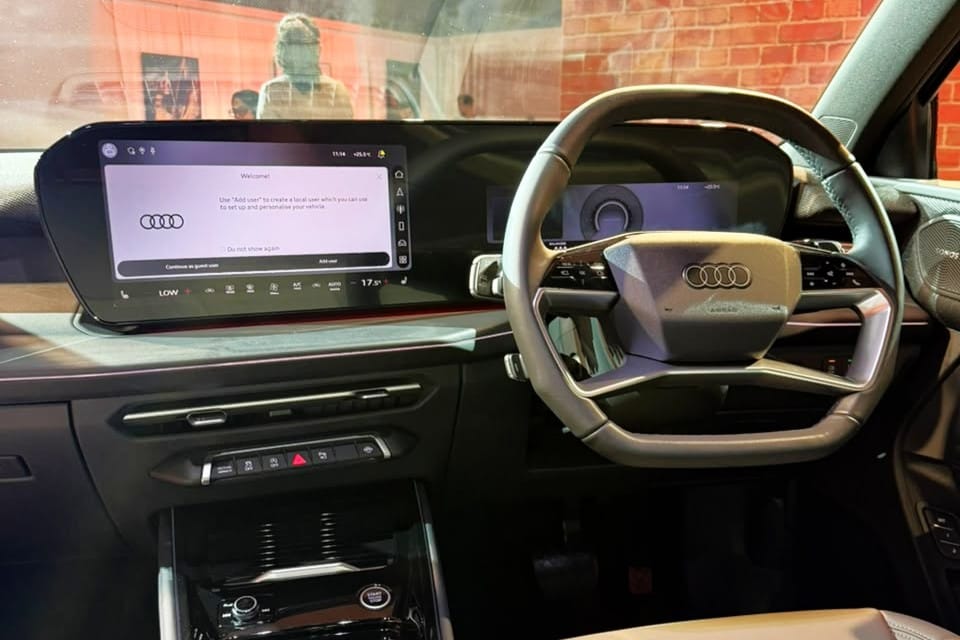
Inside, there’s a revamped cabin with the dashboard dominated by a dual-screen setup for the 12.8-inch infotainment and 11.9-inch digital driver’s display. Additionally, there’s a new design for the steering wheel, leather-upholstered seats with a two-tone finish, and a high-set centre console that comprises a wireless phone charger and cupholders. Features include a Sonos sound system, a panoramic sunroof, wireless Apple CarPlay and Android Auto, dual-zone climate control, configurable ambient lighting, a 360-degree camera setup, and a powered bootlid.
Powering the Audi Q3 will be a 2.0-litre direct-injection turbo-petrol engine that’s expected to produce 204hp and 320Nm. Transmission duties are handled by a 7-speed DCT, and you also get Audi’s Quattro AWD layout. Expect the Audi Q3’s ex-showroom price to be in the range of Rs 55 lakh to Rs 60 lakh. It will take on rivals like the Mercedes-Benz GLA, BMW X1, and the Mini Countryman C.
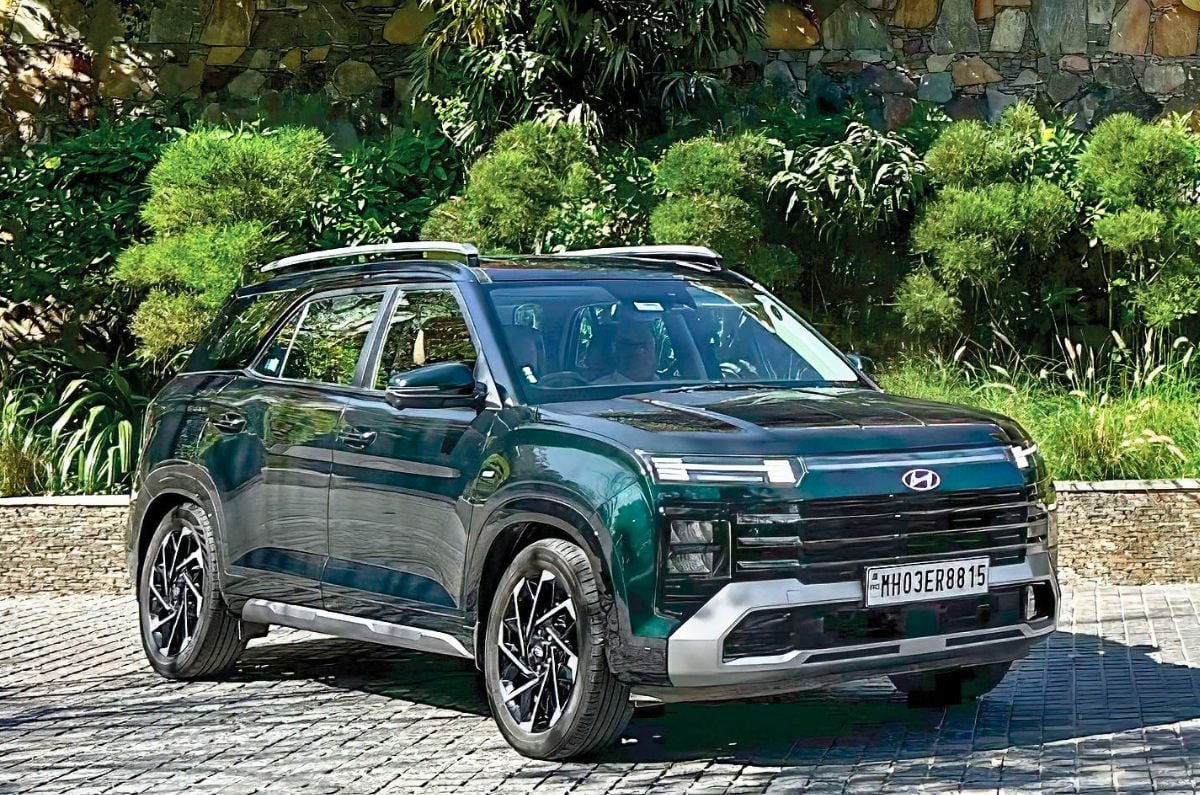
Our long-term Alcazar has done all sorts of jobs since it joined the fleet. City runs, airport pickups, the odd weekend getaway. But nothing quite like what it was asked to do recently. It had to play support car for our camera crew shooting a feature on the Delhi-Mumbai Expressway, and that meant a 2,700km round trip between Mumbai and Delhi with barely a day’s rest in between.
I wasn’t driving the entire way myself, and the Alcazar was only handed over to me in Delhi by one of our drivers. His enthusiasm to ask me if we needed him to drive it back to Mumbai was a testament of how impressed he really was with the Alcazar.
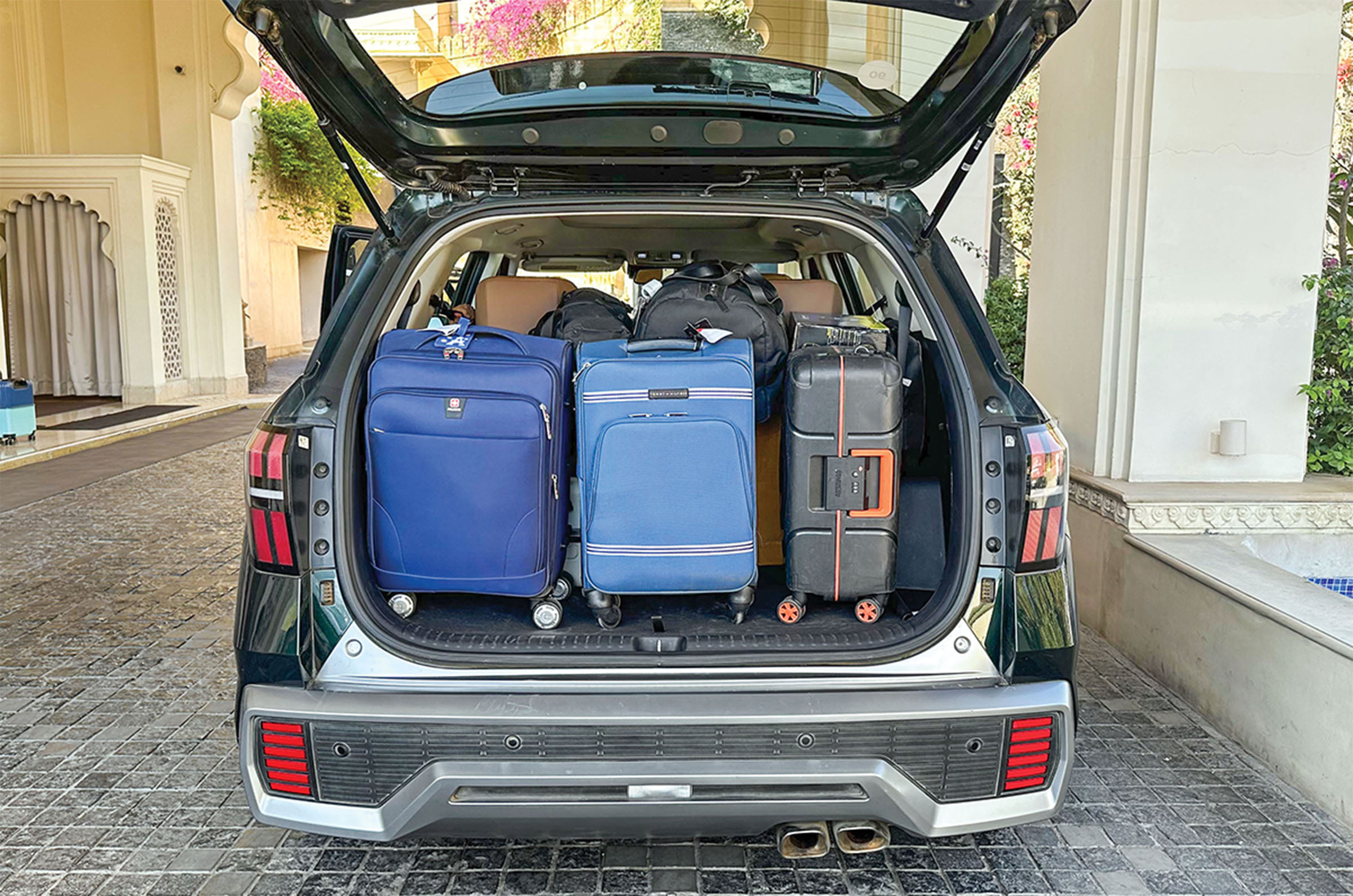
Folded third row frees up a lot of space for luggage.
The brief was simple. The Alcazar had to carry three crew members and all their camera gear along with all our luggage. This is exactly the kind of job our Alcazar has proven good at before, and it didn’t disappoint this time either. With the third row folded flat, the boot swallowed almost everything.
The captain seats in the second row turned out to be a real boon, especially for the camera crew – super comfy during a long day of shooting. The foldable tray table was handy for the laptop to copy and work on footage, and the fact that it was steady enough says a lot about the good build quality.
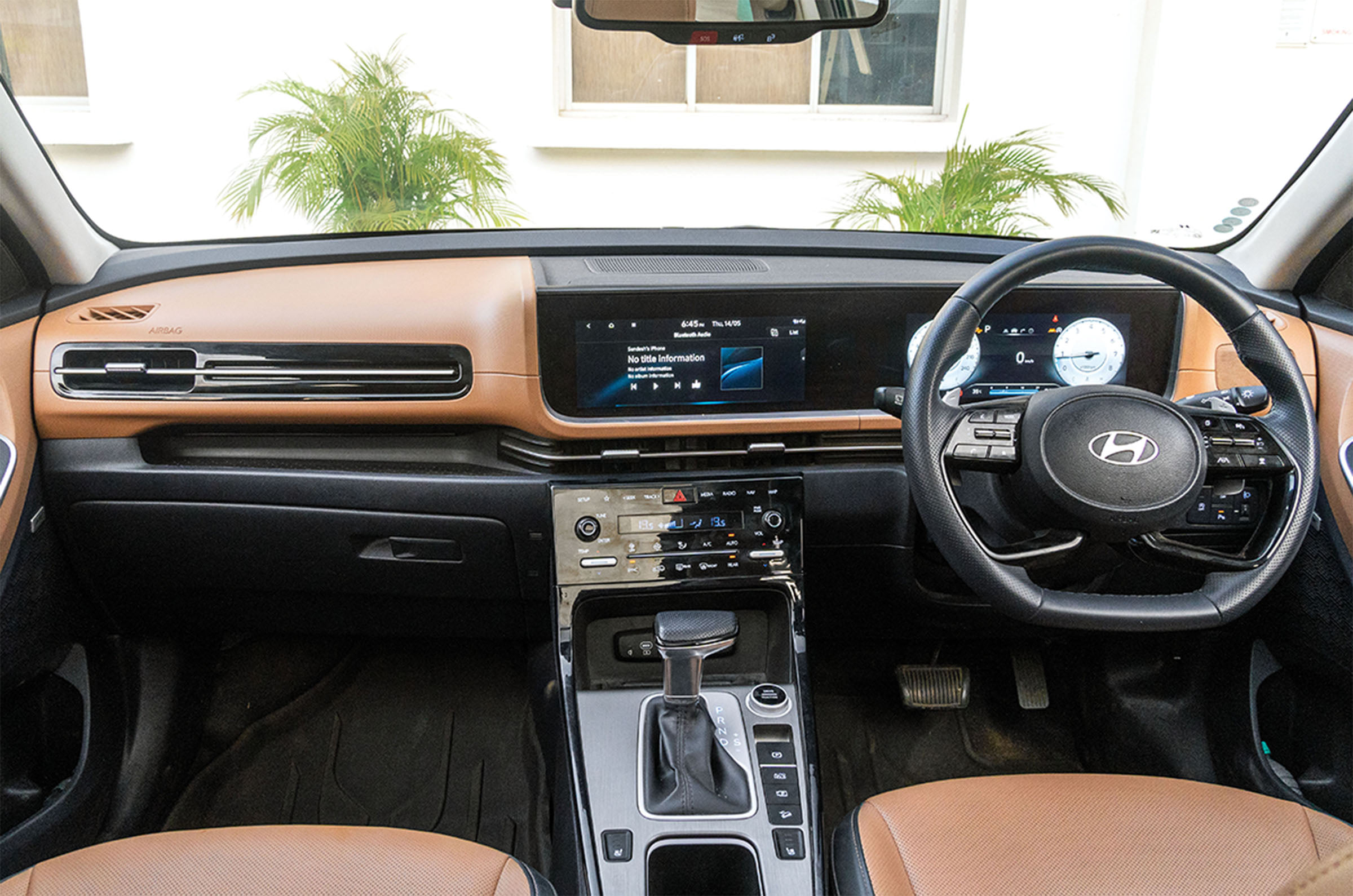
Design is simple yet ergonomic. Dark-coloured interiors help it look clean.
The Delhi-Mumbai Expressway is where this car was always going to shine, and it did. Long, arrow-straight sections let the 1.5-litre turbo-petrol settle into an easy cruise. At 100kph in top gear, the engine barely feels stressed, and wind noise is well contained for a car this size. We clocked long hours driving in a single day on the way back, stopping only for fuel and food, and nobody complained of fatigue by the end of it.
The DCT, which I’ve spoken of before, is jerky in bumper-to-bumper traffic, but was not an issue here. Once you’re past 40kph and holding a steady throttle, it’s smooth and quick to respond. It’s really only the crawl through Mumbai and Delhi outskirts where its low-speed hesitation showed up.
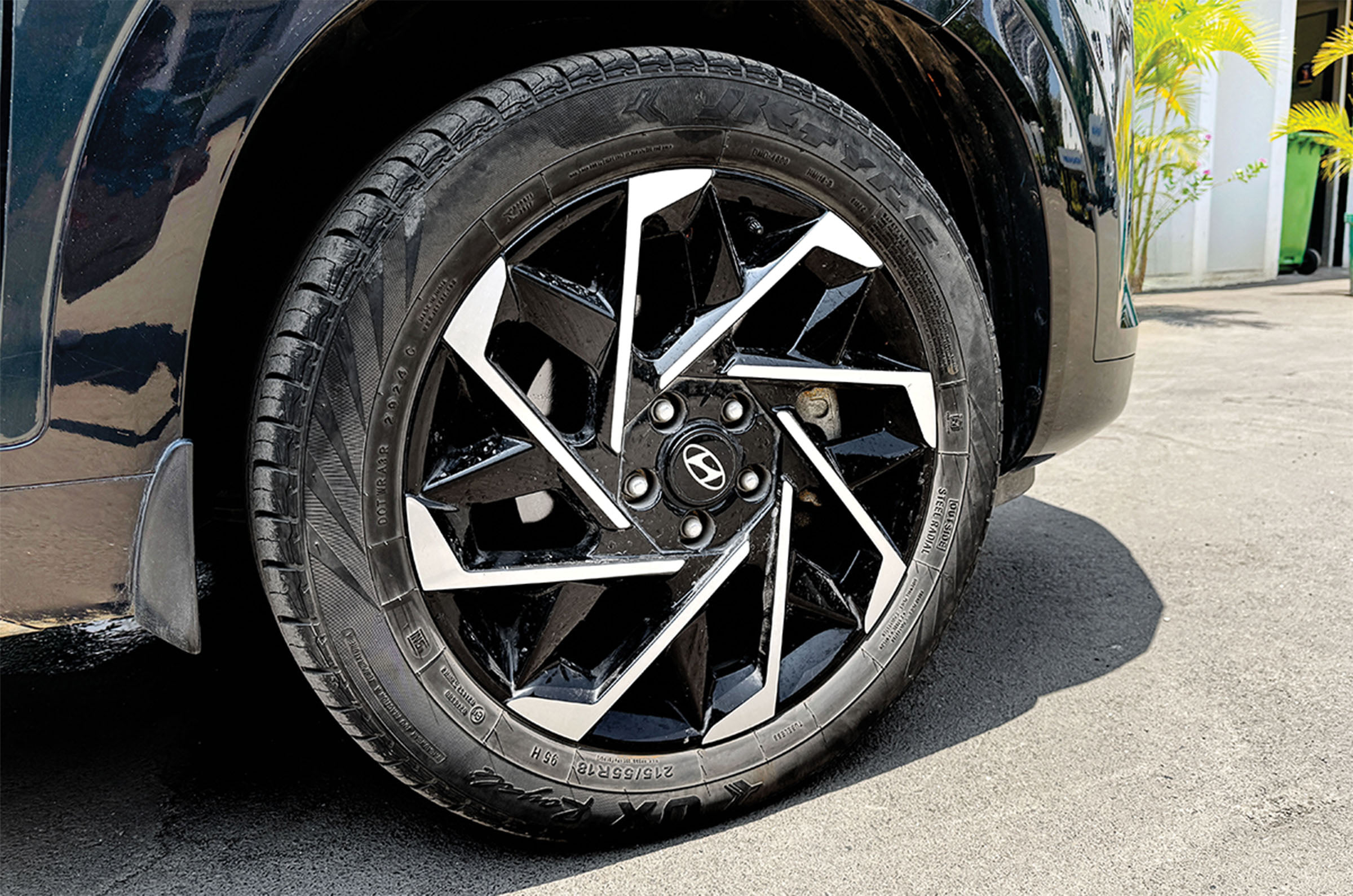
Large 18-inch wheels look stylish, but they don’t help the Alcazar’s ride quality.
The return leg we took had some patchy sections in Maharashtra, where the NE4 Expressway ends and connects to the old Golden Quadrilateral section of the highway. The Alcazar’s ride, tuned more for comfort on good surfaces, felt busy over broken patches. Nothing alarming, but the ride did feel slightly firmer than I expected from a car this size.
This stretch also penalised fuel efficiency. Loaded up with gear, four adults, and running the air conditioning at full blast through most of the drive, the trip computer settled at 12.8kmpl. That’s respectable for a heavy petrol SUV doing this kind of duty, but it’s definitely not the frugal numbers our diesel Alcazar managed, doing the same duty on the Kashmir-to-Kanyakumari run a few years back.
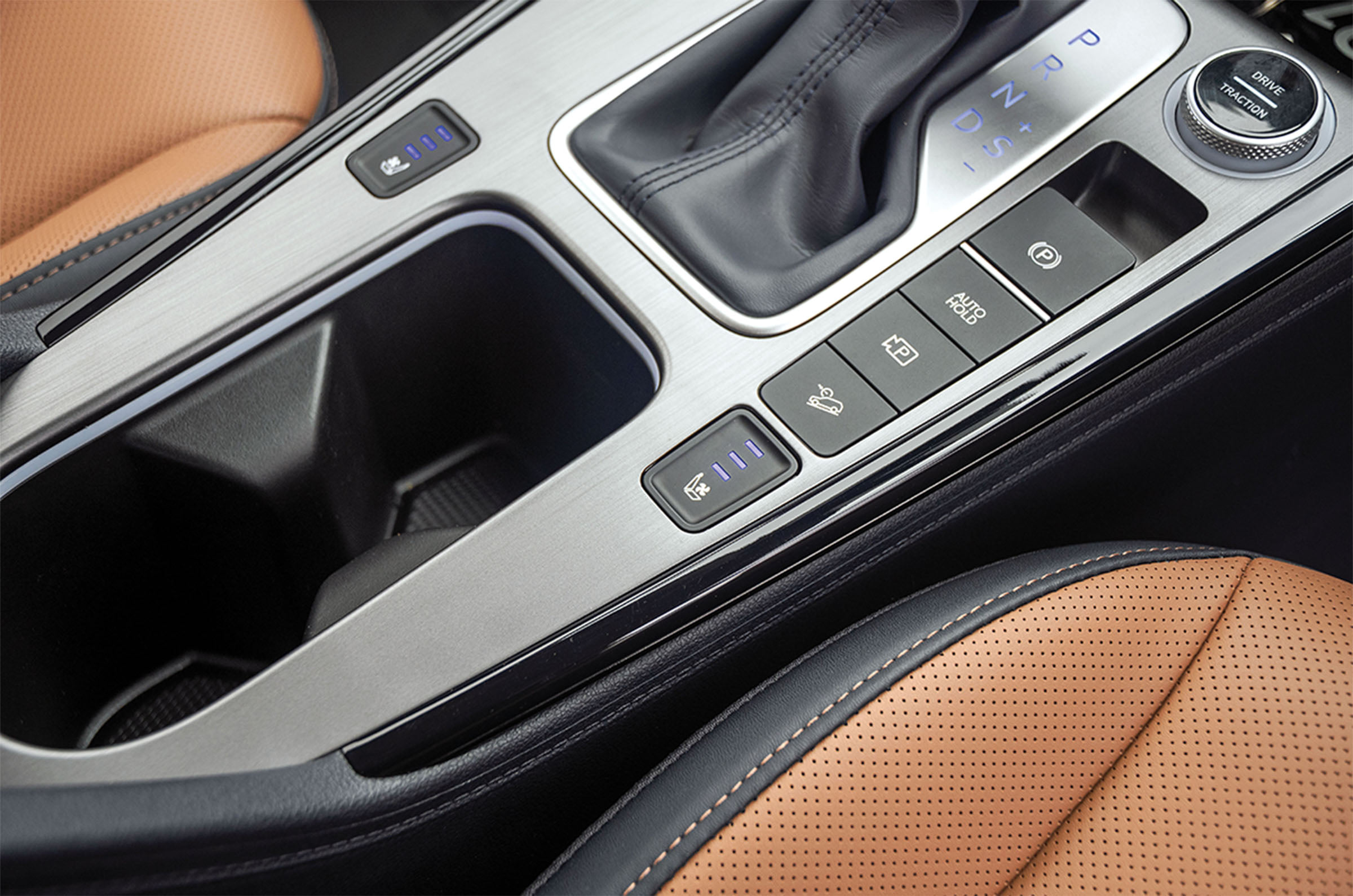
Ventilated driver and passenger seats are a boon on a hot, sunny afternoon.
A few other bits we did appreciate. The ventilated seats made the long hours of driving through the heat a lot more comfortable. The adaptive cruise control also was genuinely useful on the Expressway stretch, taking a lot of the fatigue out of long, straight sections. The absence of wireless Android Auto or Apple CarPlay was an irritant, as it meant connecting to the Infotainment using the cable and having a fully charged phone constantly plugged in for a long period of time.
Another observation on this trip: the plasticky bits on the dashboard picked up a fair bit of dust, especially with four people living out of the car for five days. To be honest, though, the camera crew kept the windows rolled down for a fair amount of time shooting. Thankfully, nothing a wipe down couldn’t fix.
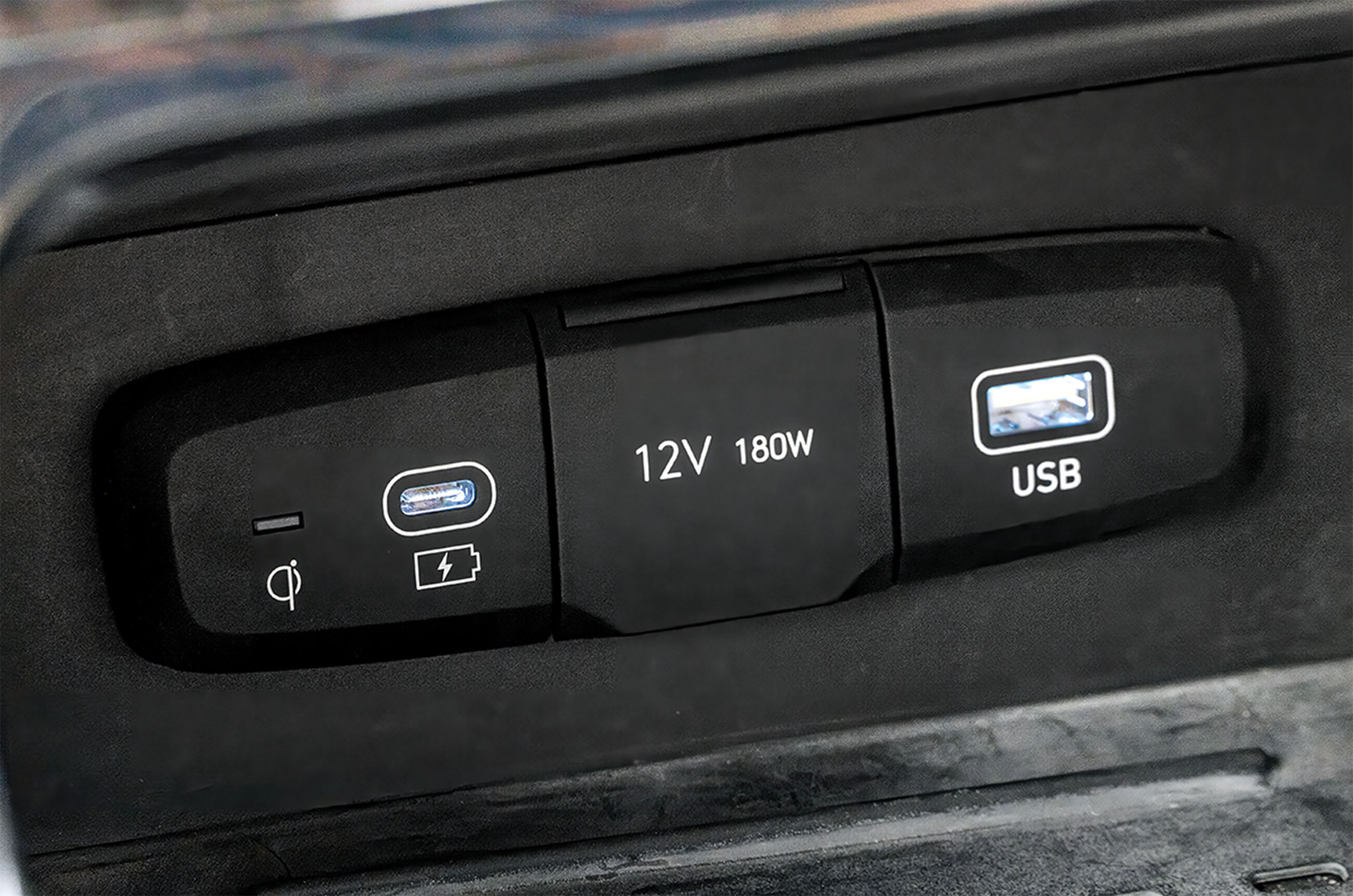
Type-A USB for smartphone interface needed. Type-C only works for charging.
At the end of it all, the Alcazar clocked close to 2,750km in five days absolutely fuss-free. No warning lights, no rattles that weren’t there before. It’s exactly the kind of trip that reminds you why a car like this earns its place in our long-term fleet. Not glamorous, not the fastest thing on the road, but dependable when you need it most. As it happens, this Mumbai-Delhi-Mumbai run turned out to be its last big assignment with us. With this report, our time with the Alcazar comes to a close, and it’s headed back to Hyundai. It leaves the fleet the same way it arrived, quietly capable, and it’s fitting that its final outing was spent doing what it always did best, hauling people and gear over long distances without a fuss.
Hyundai Alcazar Petrol DCT Signature 6-seater test data
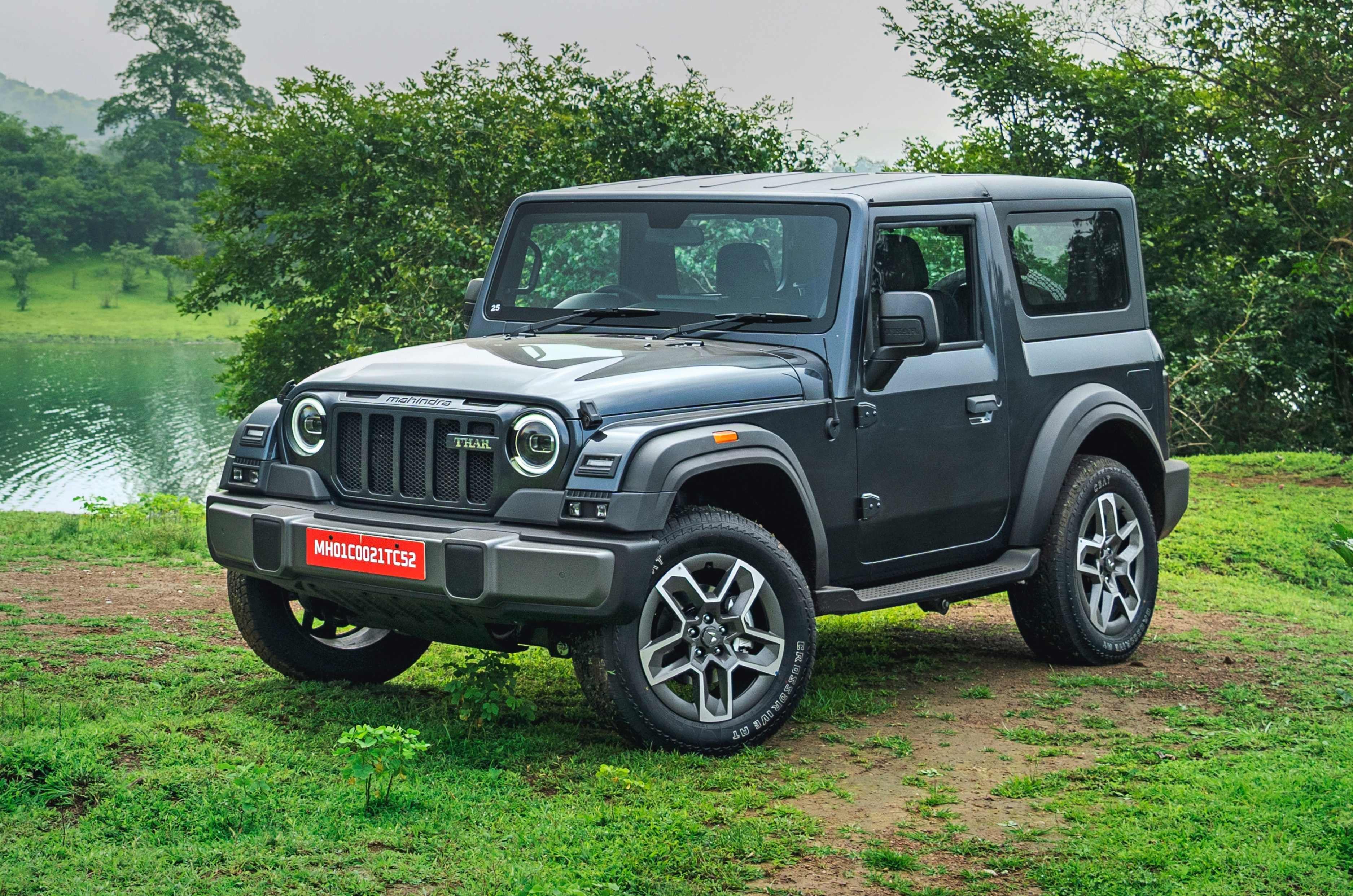
Not too long after a significant update, Mahindra has given the Thar yet another shot in the arm. The Thar OG now gets a whole new set of upgrades to the design, interior and, mainly, under the skin. A new suspension, new steering and added features are all part of the aim to make it more liveable and urban-friendly while retaining the Thar’s butch and bullyish character. Have they succeeded?
Mahindra Thar OG exterior design and engineering – 9/10
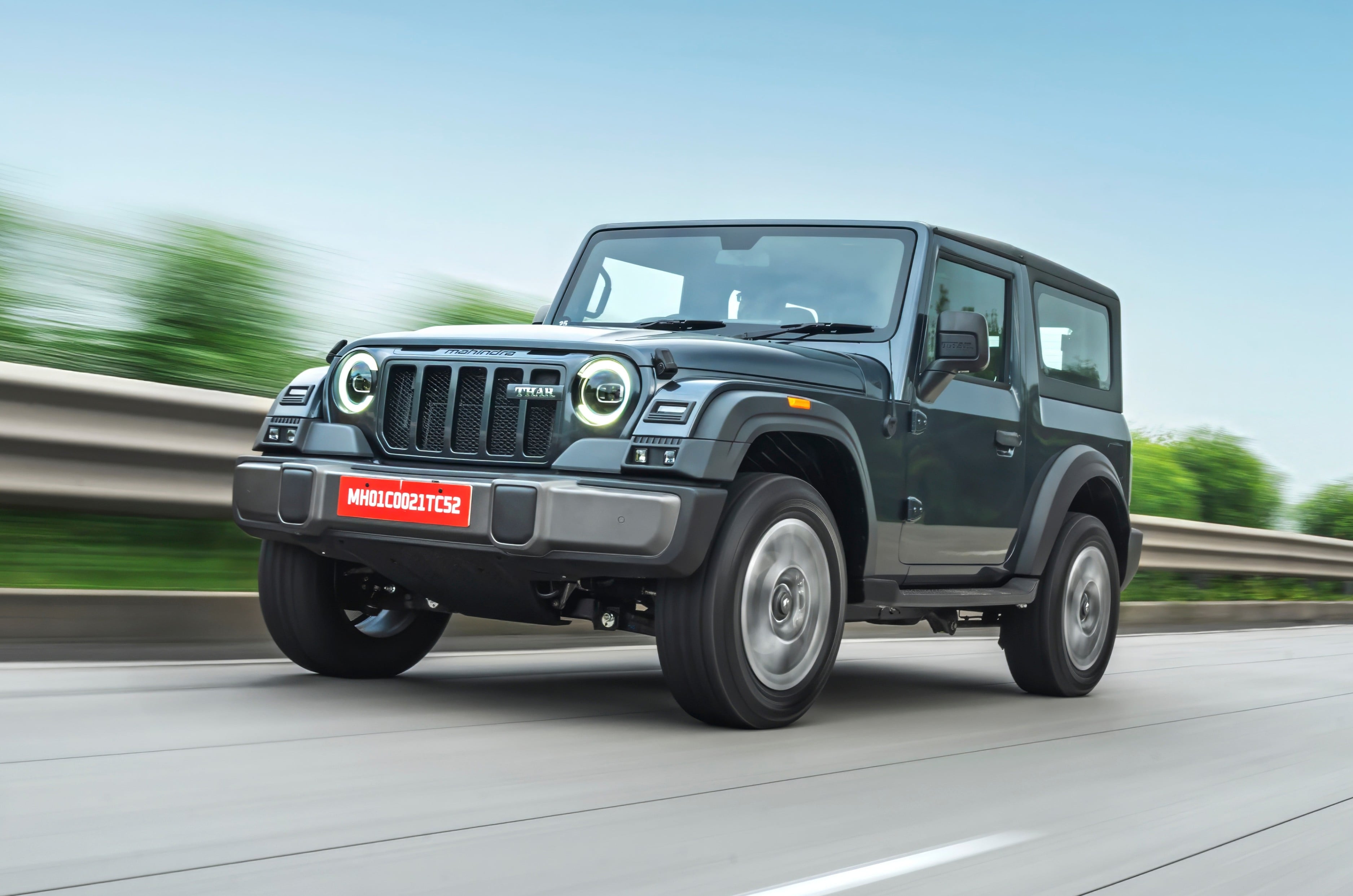
Design updates have retained the classic Thar look and road presence.
The design is why the Thar stands out, so Mahindra has not done much to change its character. However, it now gets some modern touches. At the front, the halogens are replaced with LED headlamps with C-shaped LED DRLs, along with LED fog lamps. The grille has been redesigned, with the Thar logo forged into it, and so has the front bumper. Look closer, and you will also see front parking sensors now, while the track has been widened for more stability.
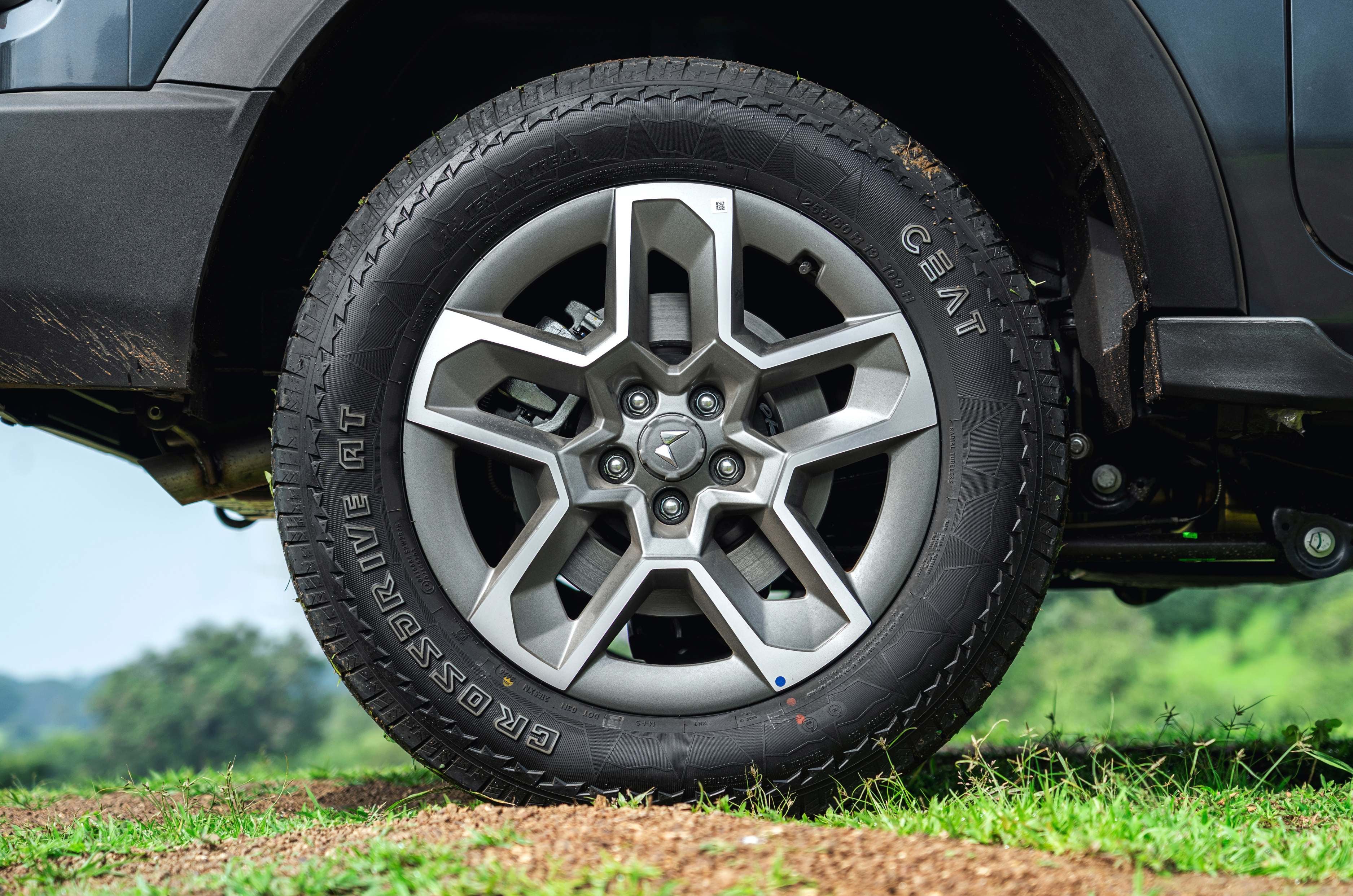
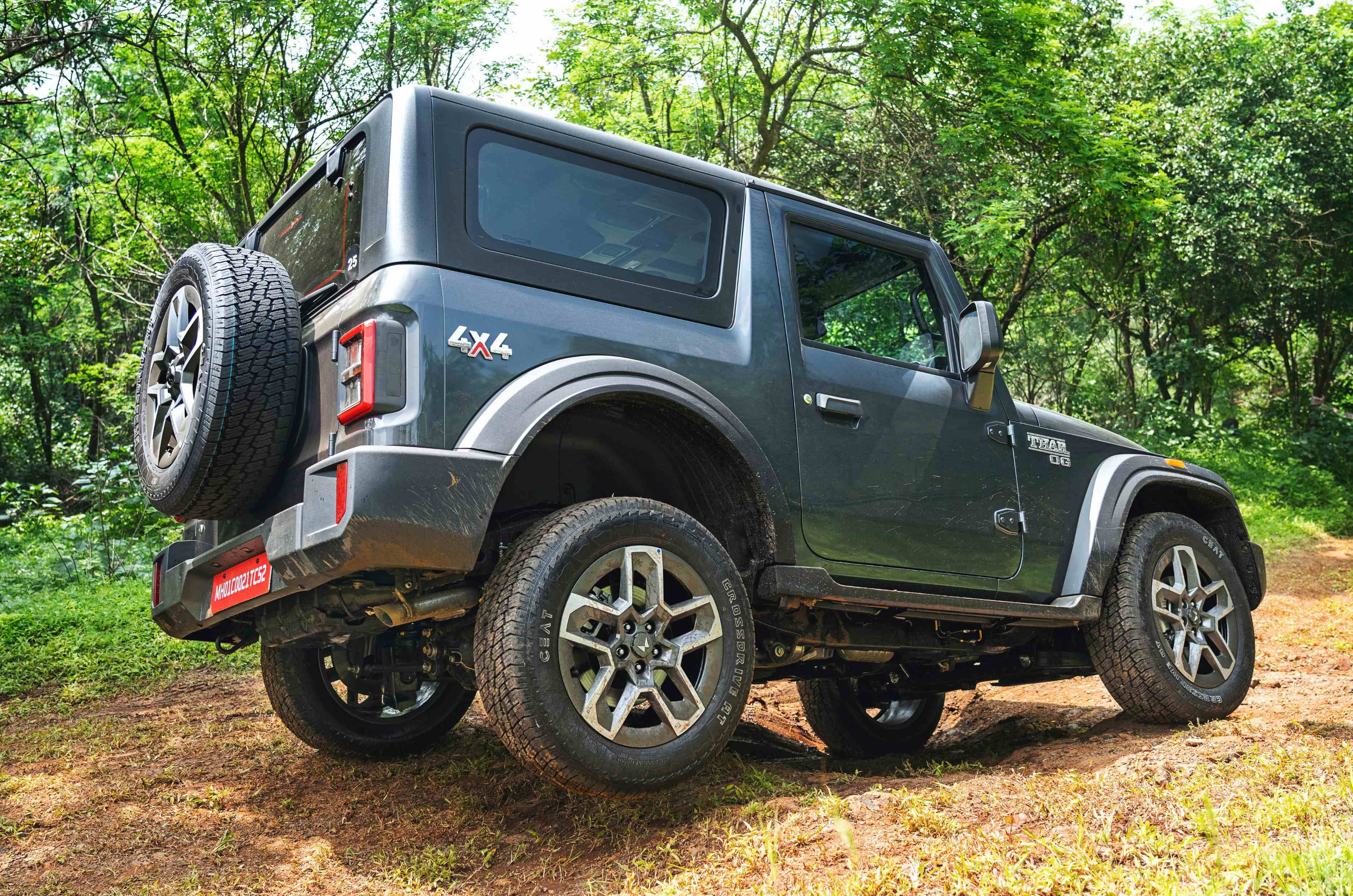
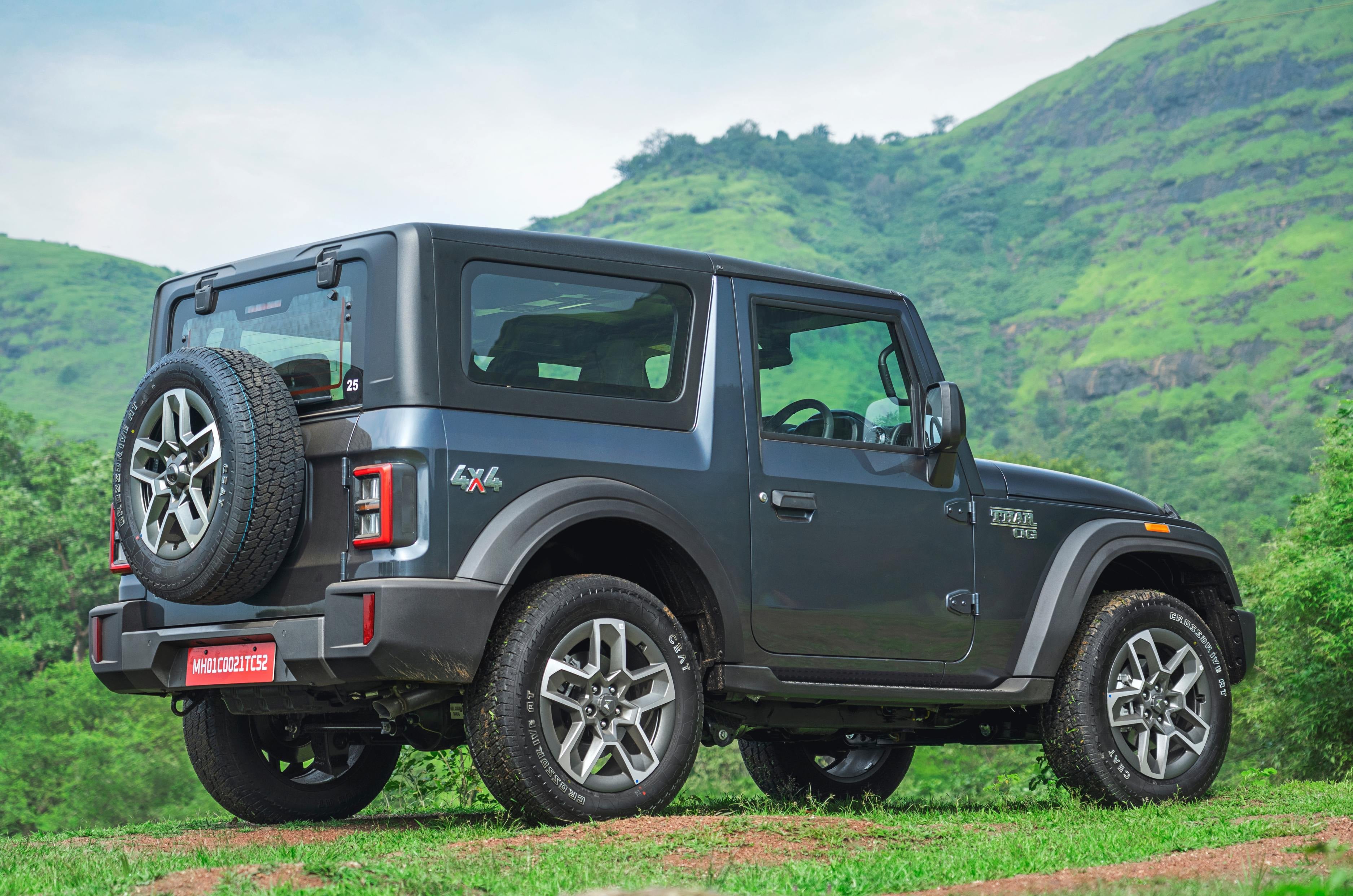
19-inch alloy wheels with AT tyres add to the toughness.
What you don’t see is the new platform the Thar sits on. The OG is now based on the Gen 4 chassis, dubbed M-Glyde, which also serves the Roxx. The side profile flaunts new 19-inch wheels with AT tyres, the Thar OG badge and a new design for the cladding.
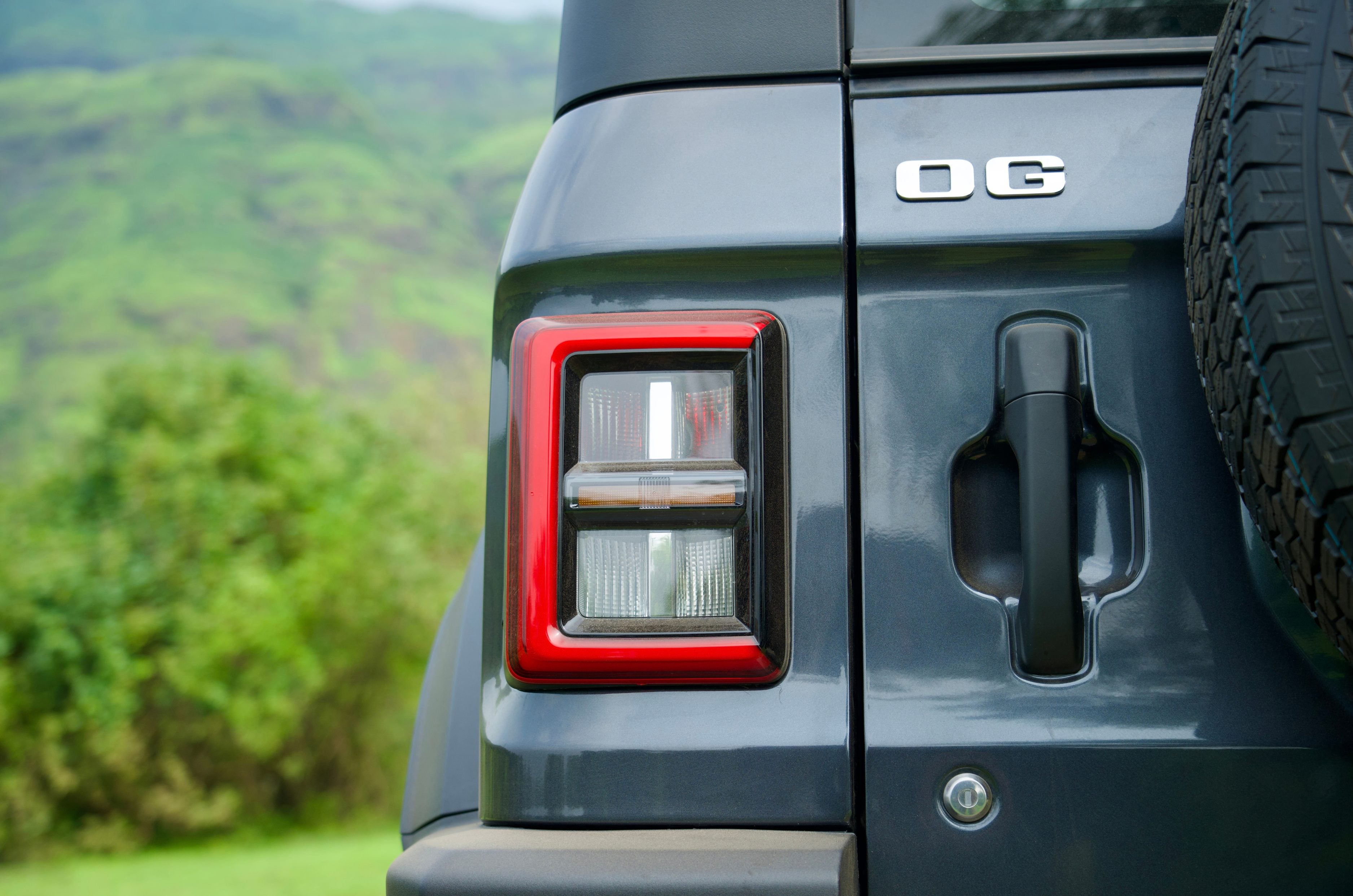
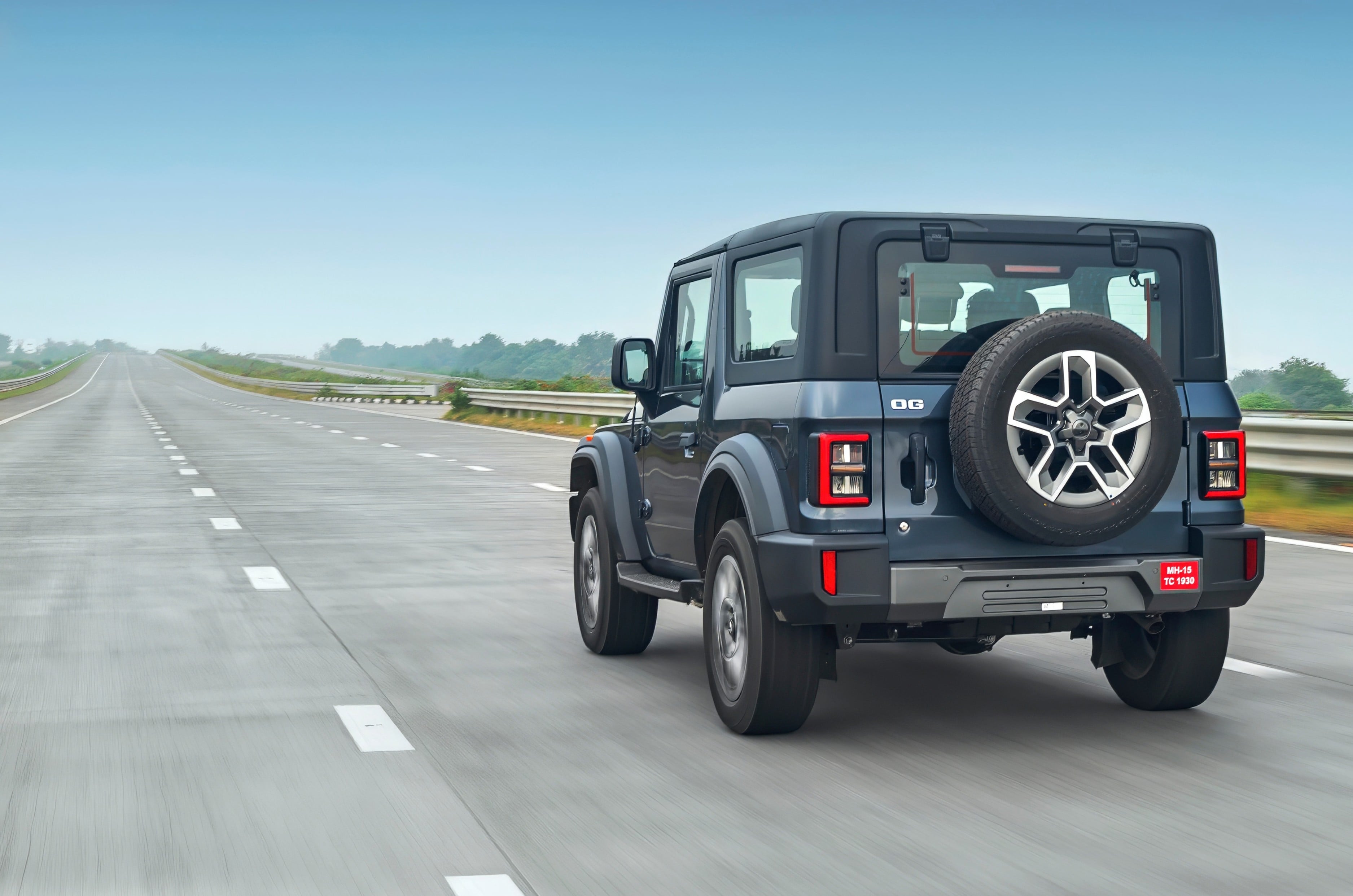
LED taillamps are similar to the Thar Roxx.
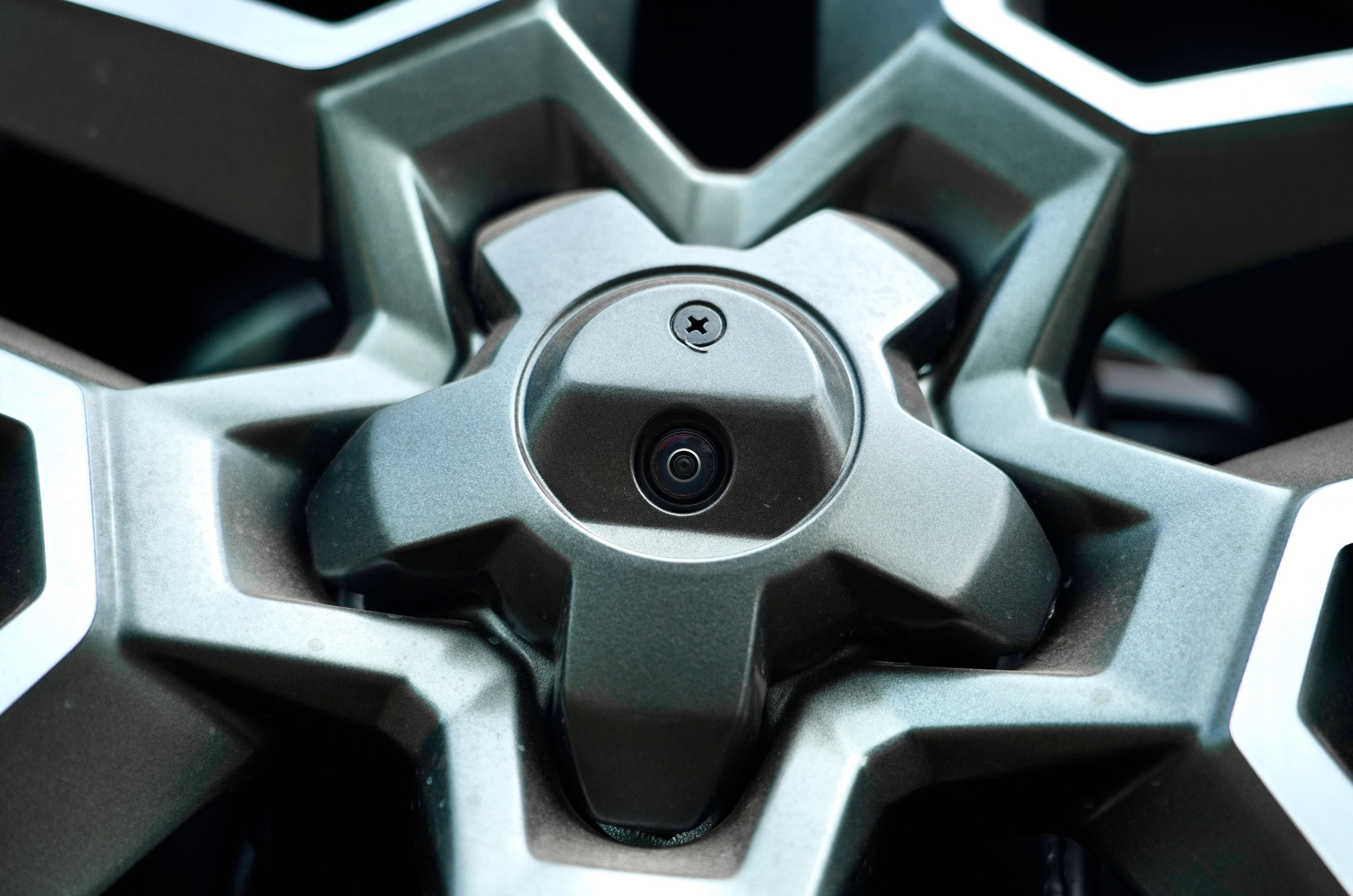
The rear continues with the LED treatment, with C-shaped taillamps, a new bumper and another OG logo. A closer look reveals a rear camera in the centre of the spare wheel.
The reversing camera is tucked in the centre of the spare wheel.
Overall, the imposing, butch design remains, with new modern touches.
Mahindra Thar OG interior space and comfort – 6/10
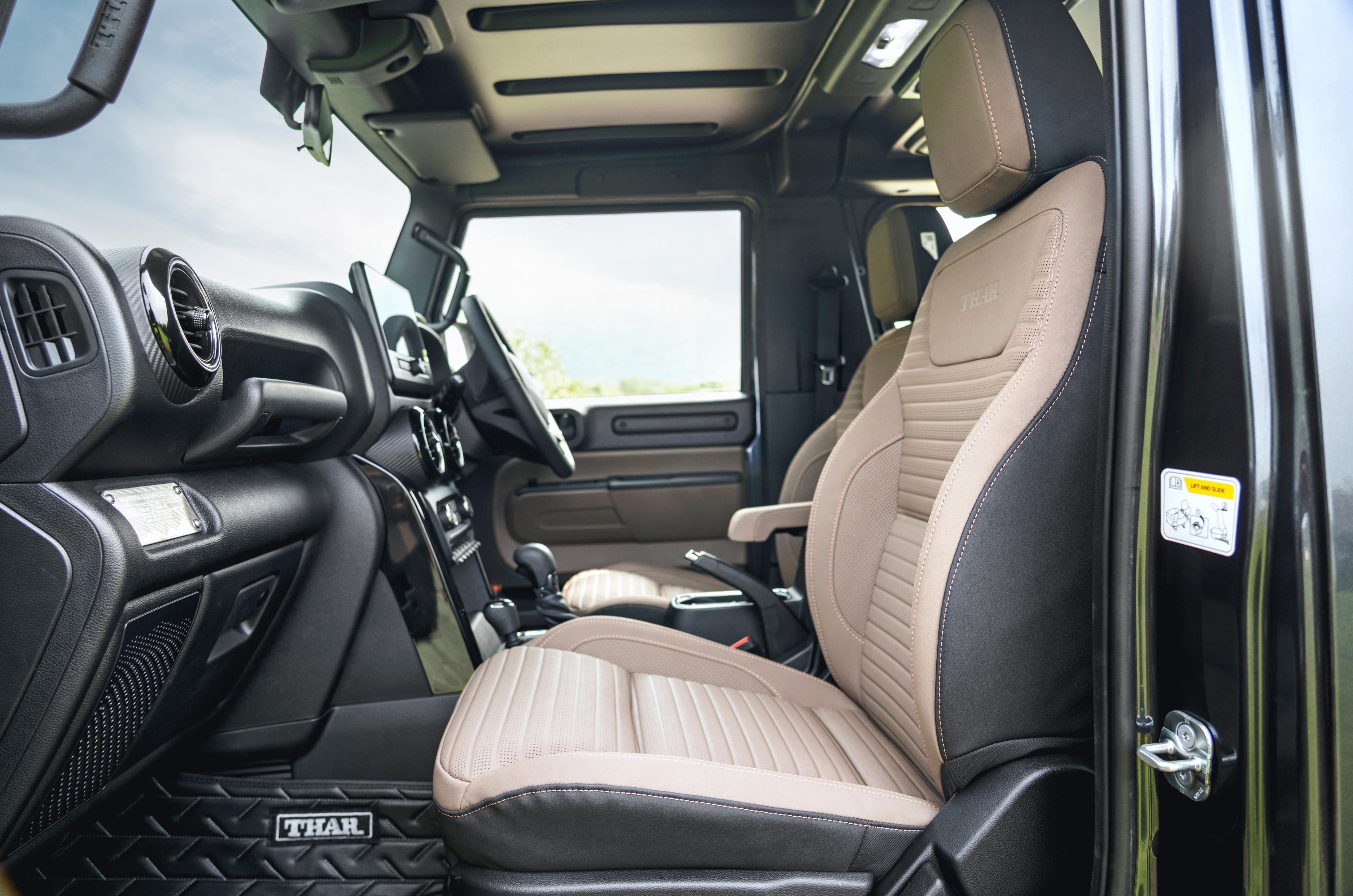
Top-spec ZXT trim gets leatherette upholstery in a new shade.
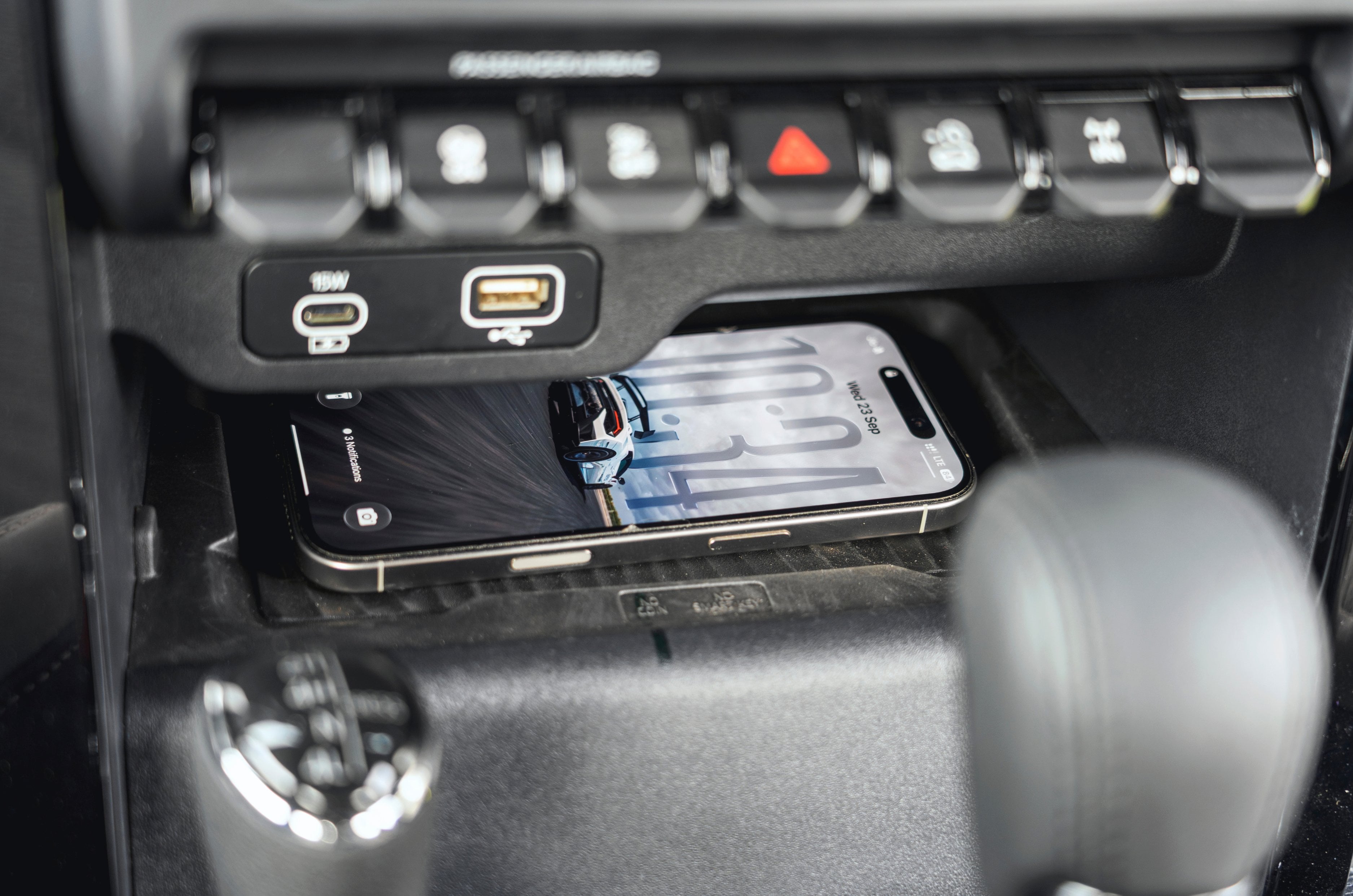
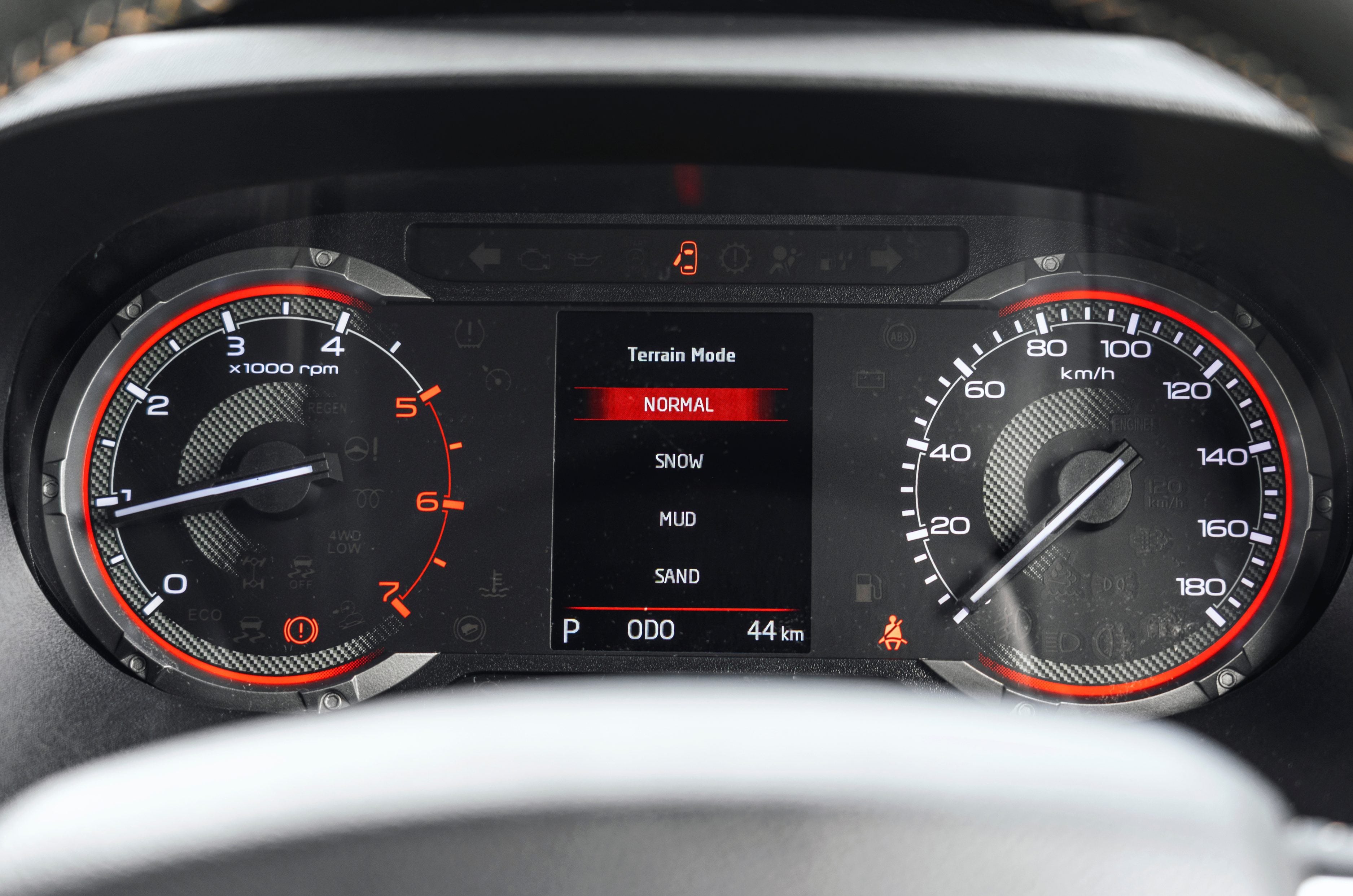
Compared to the exterior, the changes on the inside are a lot more subtle. The new top-spec ZXT trim gets leatherette upholstery finished in a shade of brown, which looks premium with the exposed stitching. There is a new wireless charger and two new switches on the centre console: one for the terrain modes and the other to engage the electronic locking differential.
Gets a new wireless phone charger and different switchgear.
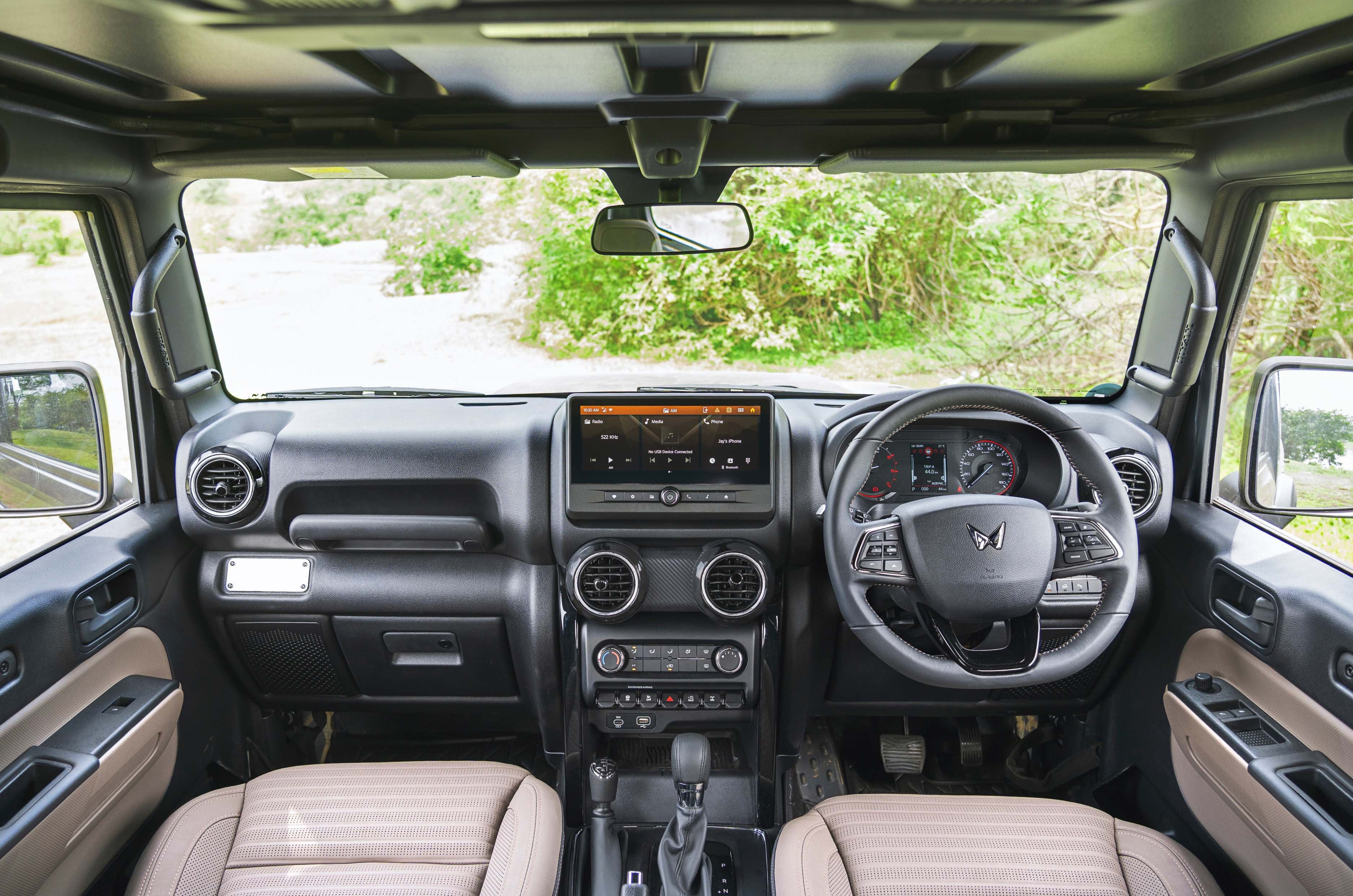
The Thar received a facelift around a year ago, when the cabin was brought up to date with a new steering wheel, touchscreen and dashboard, and these features have been carried over to the OG. The seats are broad and comfy but miss out on ventilation. The two dummy buttons on the centre console will hopefully be used for this feature soon.
Dashboard design is unchanged from the 2025 facelift.
The steering wheel is also the same as before, as is the analogue instrument cluster with an MID in the centre. The plastics, however, feel low-rent, especially when you consider the rivals in the same price bracket.
Just enough room in the rear seat; gets AC vents now.
At the rear, space remains as it was, and it is exclusively a two-seater. However, the addition of AC vents, a USB-C port and soft-plastic armrests with cupholders has enhanced comfort. The backrest can recline, and short drives should be easy once you settle in.
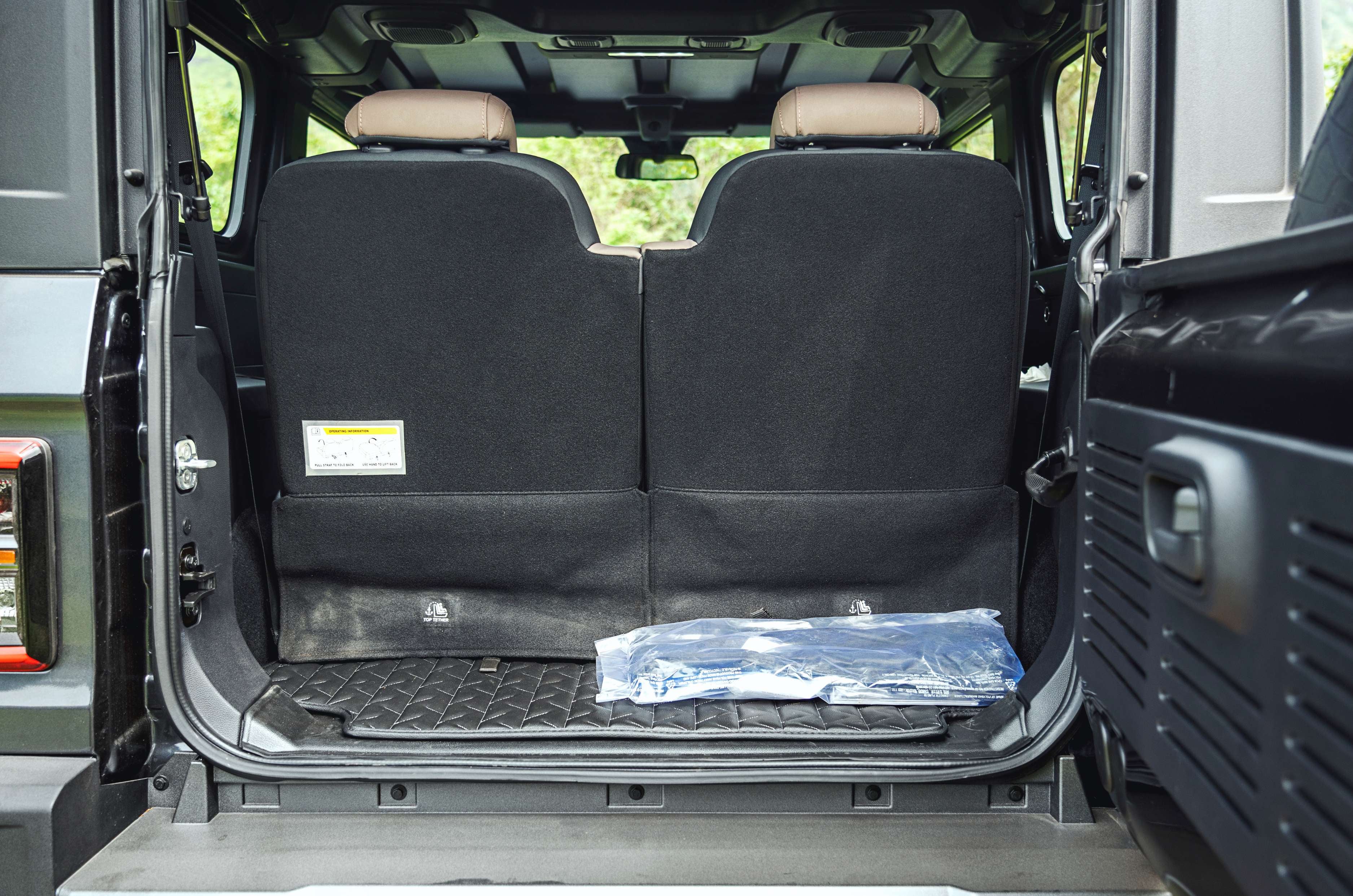
Boot space is still not adequate for long trips or airport runs without folding the second row.
The boot space remains a weak point too, with barely any room for an airport run. Large suitcases will require folding down the second row.
Mahindra Thar OG features and safety – 7/10
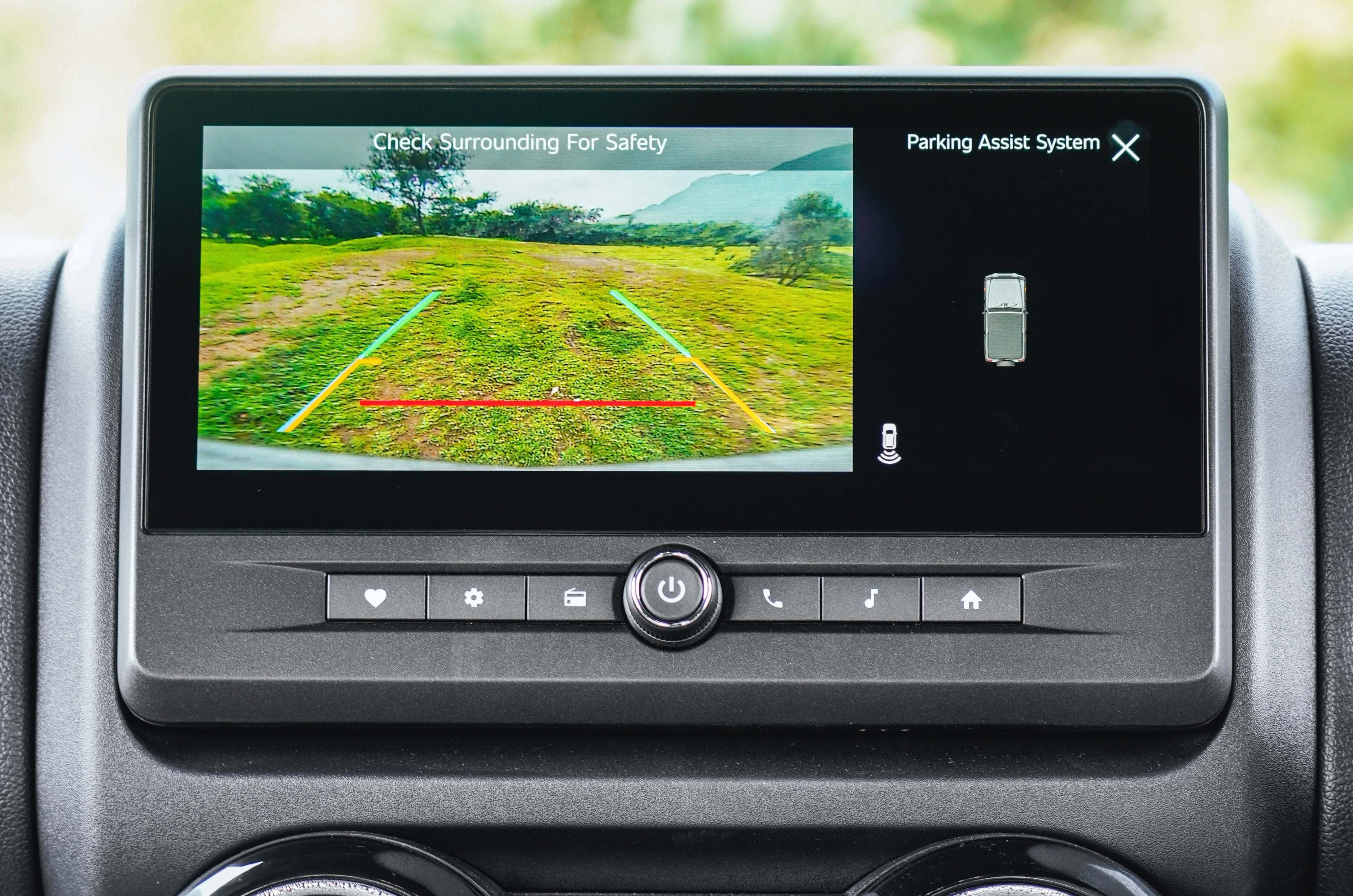
Not the best clarity and misses a 360-degree view, which is essential for off-roading.
The Thar OG isn’t on par with rival mid-size SUVs but does get the essentials this time around. There are grab handles, manual AC controls, a USB-A port for Apple CarPlay since it isn’t wireless, and a USB-C port for charging. Android Auto gets wireless connectivity.
Crucially, the ZXT trim gets six airbags now, with the launch of the new HPTS airbags, which stand for Head, Pelvis, Thorax and Shoulder. There are front parking sensors with a reversing camera now, although, given the Thar’s off-road bias, a 360-degree camera would have been a lot more useful. The ESP also gets a retune for better response, and then there are the big mechanical updates under the skin.
Mahindra Thar OG performance and refinement – 8/10
The bump in power and torque makes it better at highway cruising.
Powering the Thar OG is the same powertrain lineup as before, but with a bump in power and torque for the turbo-petrol engine and the bigger diesel. We had the 2.2-litre diesel engine on test with the six-speed automatic gearbox. The engine now produces 152hp and 330Nm, which is 18hp and 30Nm more than the outgoing unit.
To be honest, the jump in performance is not evident initially, as Mahindra engines have always had a good off-the-line response. Where the power comes in is in the second half of the rev band. Highway cruising at triple-digit speeds is a bit more effortless now, but you wouldn’t enjoy rushing the Thar. Sedate cruising is what it does best.
Highway stability is better now, but over an uneven stretch it still tosses you around.
What Mahindra has also improved is NVH, and the cabin is a bit more muted now. You still hear the diesel drone past 2,500rpm, but overall sound damping has been improved.
The gearbox, too, likes to pace itself, and quick overtakes come at the cost of engine noise. The shifts are smooth but relaxed, and even in manual mode, you don’t get much better response. Enthusiastic driving is not something the Thar enjoys, contrary to the infamous videos circulating online.
Mahindra Thar OG ride comfort and handling – 7/10
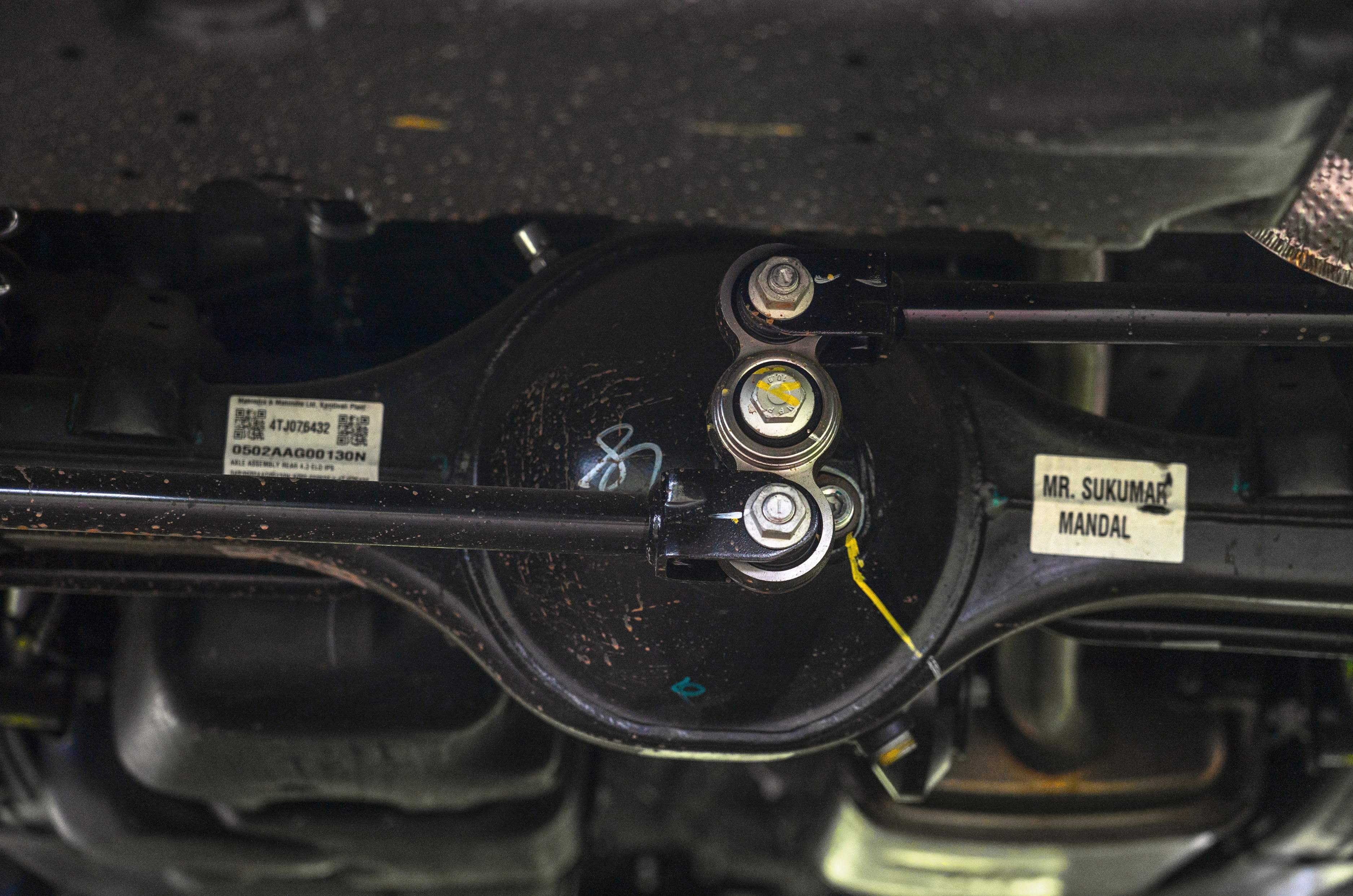
Rear pentalink suspension with Watts linkage for added stability and comfort.
The biggest advances to the Thar OG have taken place under the body. The stiffer Gen 4 chassis is paired with a new Pentalink suspension at the rear, with a Watts linkage and DAVINCI dampers. Frequency-dependent damping, however, is only available on the top-spec trim. But has that improved the Thar on the road? The simple answer is yes.
The Watts linkage is responsible for adding stability at the rear. Imagine you’re pushing a shopping trolley. If one wheel suddenly moves sideways while you hit a bump, the trolley gets wobbly. The Watts linkage basically tells the axle: “You can go up and down, but please stay in the middle.” The effect is less bouncing over uneven highways and bad patches.
The electronic locking differential is now convenient to use, making the Thar just as capable as before.
Then there is the DAVINCI damping that was seen on the XUV 7XO. The thuds coming from sharp, low-speed bumps are now not as harsh and, while it will still toss you around, if you hit a bad bump, it won’t unsettle the car. To add even more comfort with the bigger 19-inch wheels, the ZXT trim also gets frequency-dependent dampers along with the DAVINCI setup. Over a rough patch, you can tell they are working full-time to keep the cabin unfazed.
New gen 4 platform seen on the Roxx now underpins the 3-door Thar.
Now, as sophisticated as all of this is, the Thar OG is still a hardcore body-on-frame SUV at the end of the day. The new tech has certainly improved its on-road manners, but if you want a plush, supple ride, the Thar won’t cut it. A long drive will now be more comfortable, but you will still get knocked awake from your snooze.
Terrain modes work with ESP, throttle control and steering input for maximum assistance while off-roading.
The new EPS, however, has made a huge difference. The amount of effort needed to steer and turn the Thar is no longer a game of might. Under 20kph, the steering is light enough to twirl with just one finger, but as the speed rises, it gains heft so as not to feel uncomfortably light at speed. So, there is no need to wrangle with the steering to make a three-point turn anymore.
Also new and exclusive to the ZXT trim are rear disc brakes, which have added to the stopping power. The bite is stronger, and the Thar feels a lot more confident when slowing down now.
Mahindra Thar OG price and verdict – 8/10
The Thar OG is improved in all areas without sacrificing its character.
With a starting price of Rs 10.32 lakh, the Thar OG is rather tempting. However, for most of the new bells and whistles, you will have to opt for the top-spec ZXT trim, which starts at Rs 13.99 lakh for the 1.5-litre engine with RWD. The diesel-AT version we drove will set you back Rs 18.99 lakh, so you need to be sure of what you want. The Thar OG is mighty capable, has a lot of character and is a lot better in every area than before. But as an everyday car, you’d still want some more practicality, creature comforts and refinement. However, if you are someone who likes to off-road or even just take the long way home with little regard for plushness, there is nothing like the Thar OG under Rs 65 lakh.
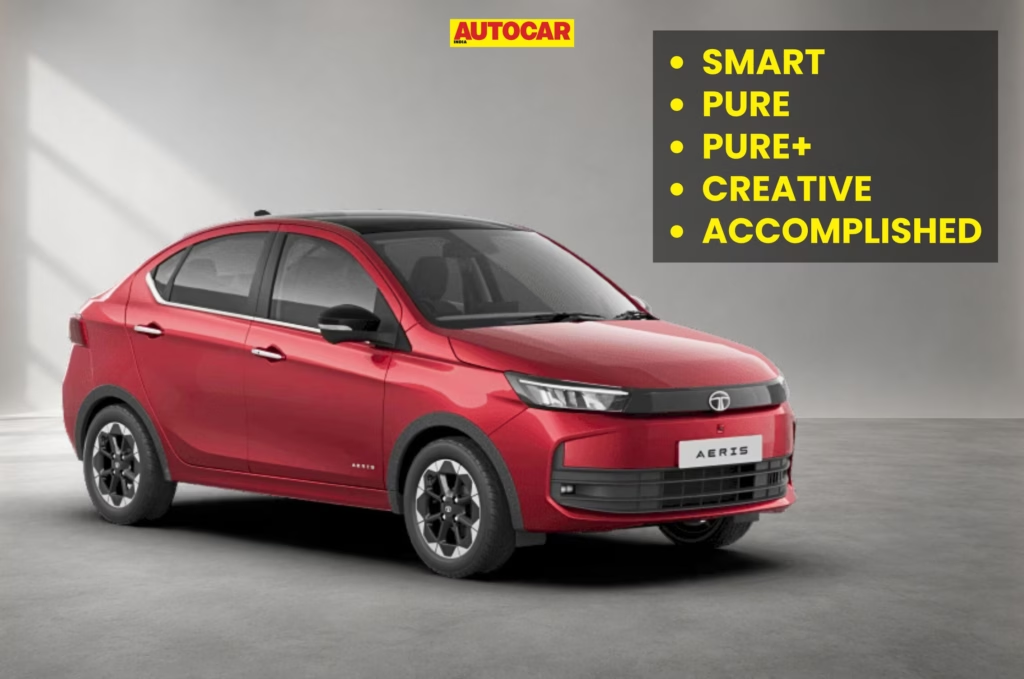
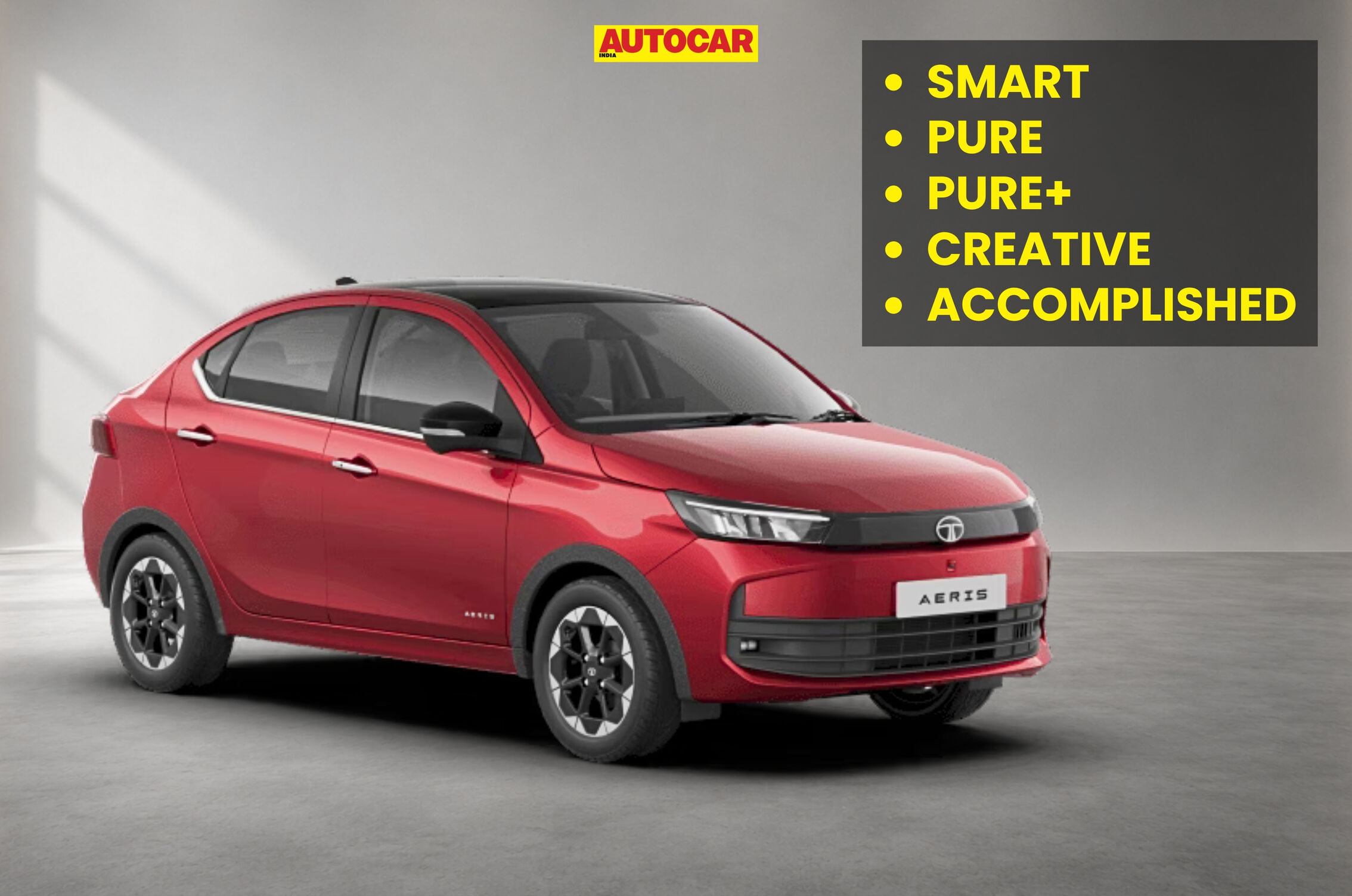
The Tata Aeris has replaced the Tigor as the manufacturer’s compact sedan offering. Priced from Rs 5.29 lakh, it is available in five trims: Smart, Pure, Pure+, Creative and Accomplished. These variants can be had with either a petrol or CNG engine, paired with a 5-speed manual or AMT. So, which Aeris variant should you choose? Let’s find out.
Tata Aeris powertrain options and prices
Available in 5 trims, offered with a petrol and a CNG engine option
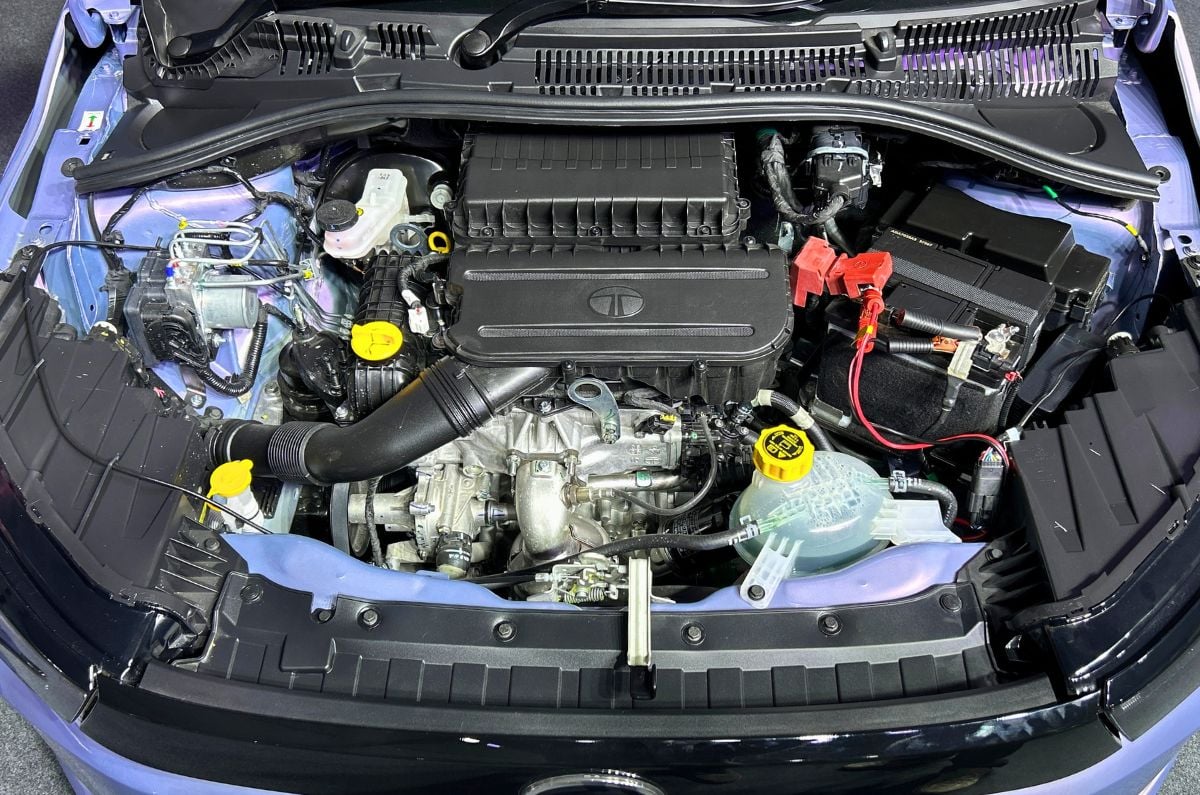
The Tata Aeris gets a 1.2-litre three-cylinder Revotron petrol engine that produces 86hp and 113Nm. The CNG version uses the same 1.2-litre engine but produces 75.5hp and 96.5Nm in CNG mode. Both powertrains are offered with a 5-speed manual and a 5-speed AMT. The CNG version also gets a twin-cylinder setup, with the two CNG cylinders positioned beneath the boot floor for usable luggage space.
Tata Aeris variant-wise ex-showroom price list (in Rs, lakh)
Petrol MT
Petrol AMT
CNG MT
CNG AMT
Smart
5.29
–
6.29
–
Pure
6.14
6.69
7.14
7.69
Pure+
6.74
7.29
7.74
8.29
Creative
7.49
8.04
8.49
9.04
Accomplished
8.19
8.74
9.19
9.74
Tata Aeris colour options
Offered in 6 hues, available with a body-coloured or black roof
The Tata Aeris is offered in six exterior colours: Dandeli Drizzle, Dune Glow, Nitro Crimson, Pure Grey, Daytona Grey and Pristine White. These colours are offered in a dual-tone option with a black roof in the one-below-top Creative and top-spec Accomplished trims.
Price: Rs 6.14 lakh to Rs 7.69 lakh, Powertrain: Petrol MT/AMT, CNG MT/AMT
Features over Pure
8-inch infotainment touchscreen
Wireless Android Auto and Apple CarPlay
4-speaker sound system
Reverse parking camera
Rear AC vents
65W front USB Type-C charging
Cruise control
Front and rear centre armrest
Tyre pressure monitoring system (TPMS)
Shark-fin antenna
Hill hold control
15-inch stylised steel wheels on petrol variants
14-inch stylised steel wheels on CNG variants
Creative
Price: Rs 7.49 lakh to Rs 9.04 lakh, Powertrain: Petrol MT/AMT, CNG MT/AMT
Features over Pure+
Auto LED headlights and LED DRLs
Auto-folding ORVMs
LED fog lamps
LED taillights
15-inch alloy wheels on petrol variants
10.25-inch infotainment touchscreen
Connected car technology
360-degree camera
Automatic climate control
Cooled glovebox
Rain-sensing wipers
Dual-tone roof
Accomplished
Price: Rs 8.19 lakh to Rs 9.74 lakh, Powertrain: Petrol MT/AMT, CNG MT/AMT
Features over Creative
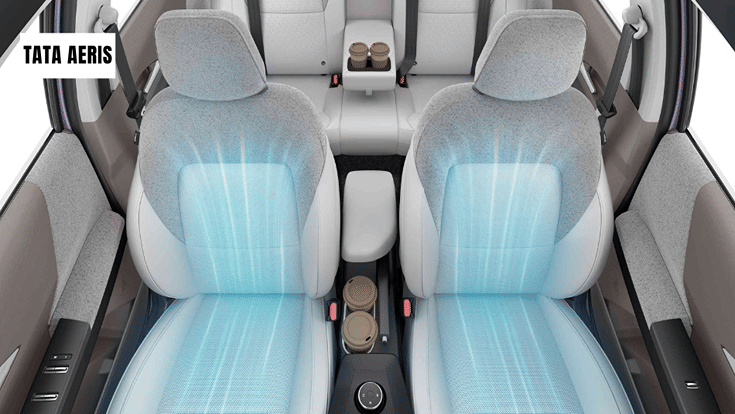
Ventilated front seats
Wireless phone charger
2 tweeters
Leatherette upholstery on seat and armrests
65W rear USB Type-C charger
Dashcam recorder via 360-degree camera feed
Chrome door handles and waistline detailing
Magazine pockets
Which variant of the Tata Aeris should you buy?
Creative trim offers a good balance, but Pure+ trim is suitable for budget buyers
The Tata Aeris Creative offers a good balance between price and features, and its misses over the Accomplished are not significant, especially considering the price difference. If you want a well-equipped Aeris without spending on the top-spec trim, the Creative is the variant to go for. If you are on a budget, the Pure+ is a suitable alternative.
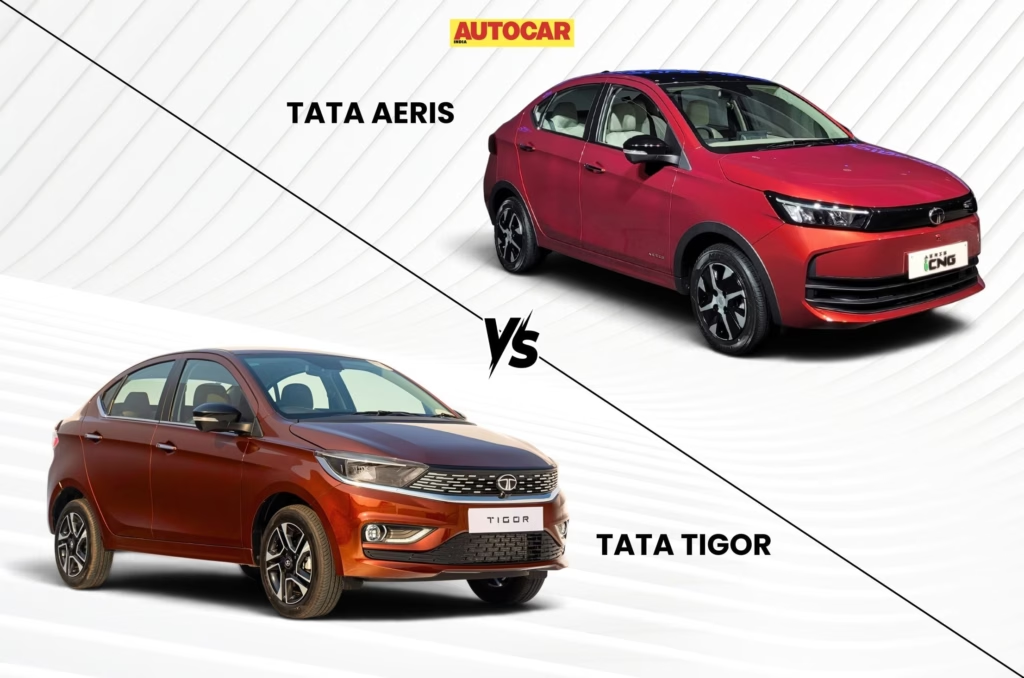
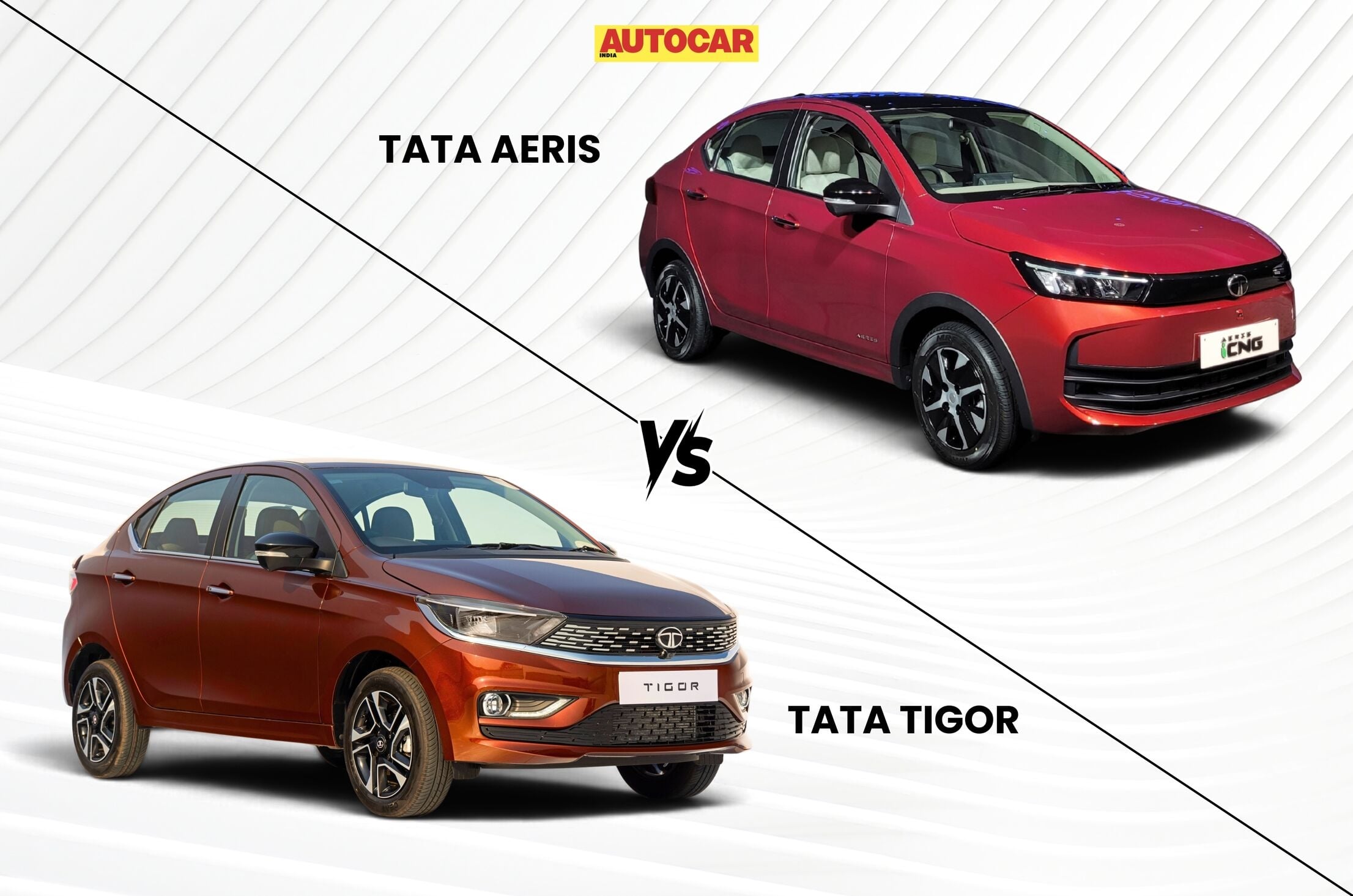
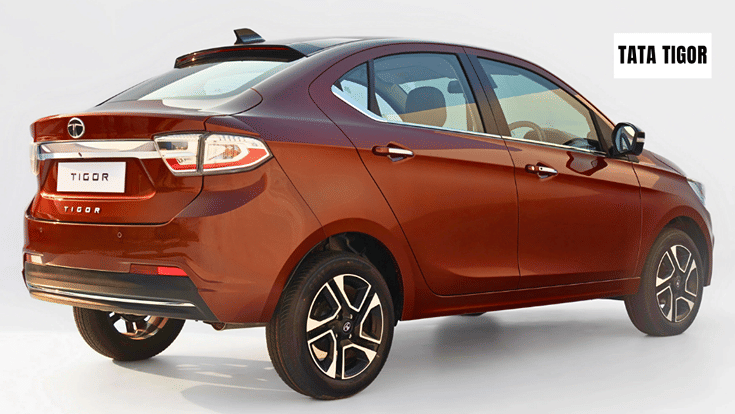
Tata has launched the Aeris as the facelifted version of the Tigor, priced from Rs 5.29 lakh to Rs 9.74 lakh (ex-showroom). It features a sleeker exterior with new LED lighting elements and redesigned bumpers, while the cabin gets a revamped dashboard and fresh features. Here’s a look at how the new Aeris compares with the outgoing Tigor, including the key similarities and differences.
Tata Aeris vs Tigor: Exterior design
Gets a more aggressive face with sleeker headlights and fog lamps
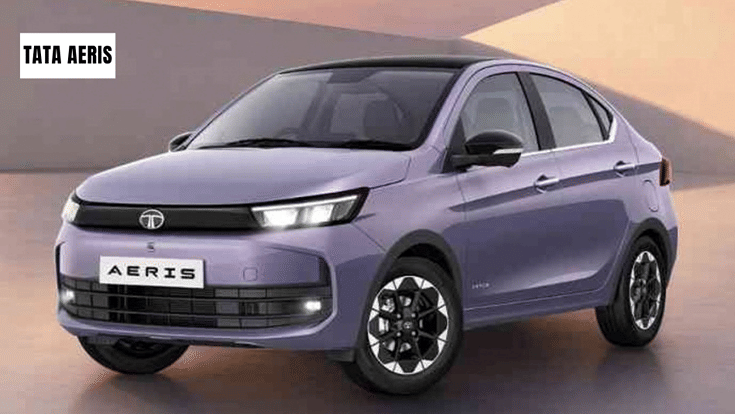
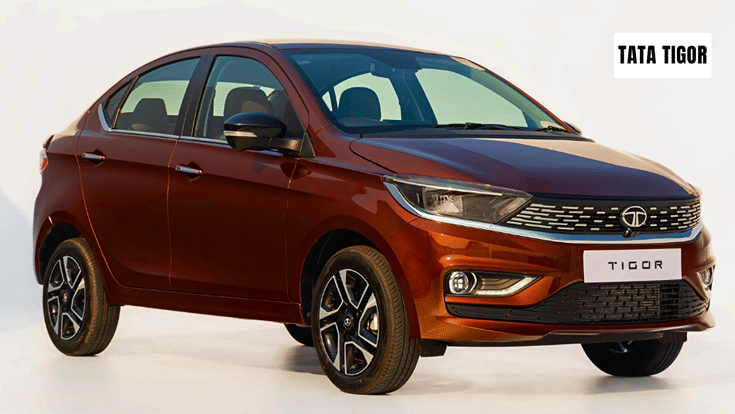
The Tata Aeris features a more aggressive design inspired by the Tiago hatchback, much like the pre-facelift versions of both Tata models. It gets sleeker LED headlights with eyebrow-shaped DRLs, along with a slimmer and simpler grille that does away with the chrome trims seen on the Tigor. The bumper has also been redesigned with larger air intakes and sleeker LED fog lamps, giving it a more minimal look compared with the Tigor’s circular halogen units.
Aeris gets redesigned alloy wheels and new badges on front doors
In profile, the Tata Aeris remains largely unchanged from the Tigor, with the only notable updates being the redesigned 15-inch alloy wheels and new Aeris badges on the front doors. Both sedans feature black outside rearview mirrors (ORVMs), chrome door handles and a chrome strip along the window line.
Sleeker LED taillights and a simpler bumper are offered with the Aeris
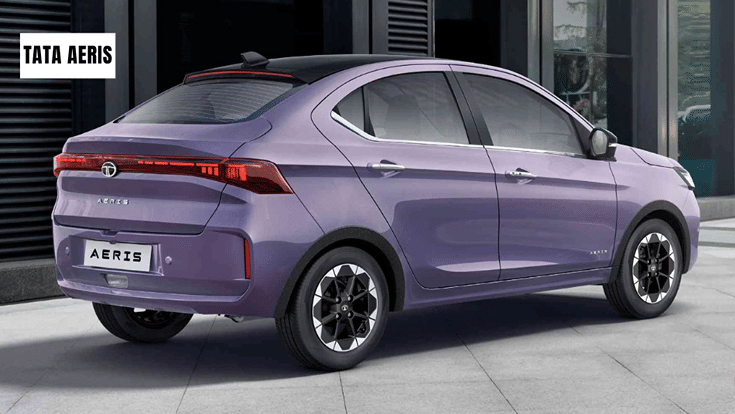
The Aeris retains the Tigor’s coupe-like tapering roofline, but gets a few updates that give it a more modern look. These include sleeker LED taillights connected by a red plastic trim and a revised bumper with a centrally positioned reverse parking light. The high-mounted stop lamp continues to span the width of the rear windscreen.
Tata Aeris vs Tigor: Interior design and features
Gets a new cabin theme and a minimalistic dashboard
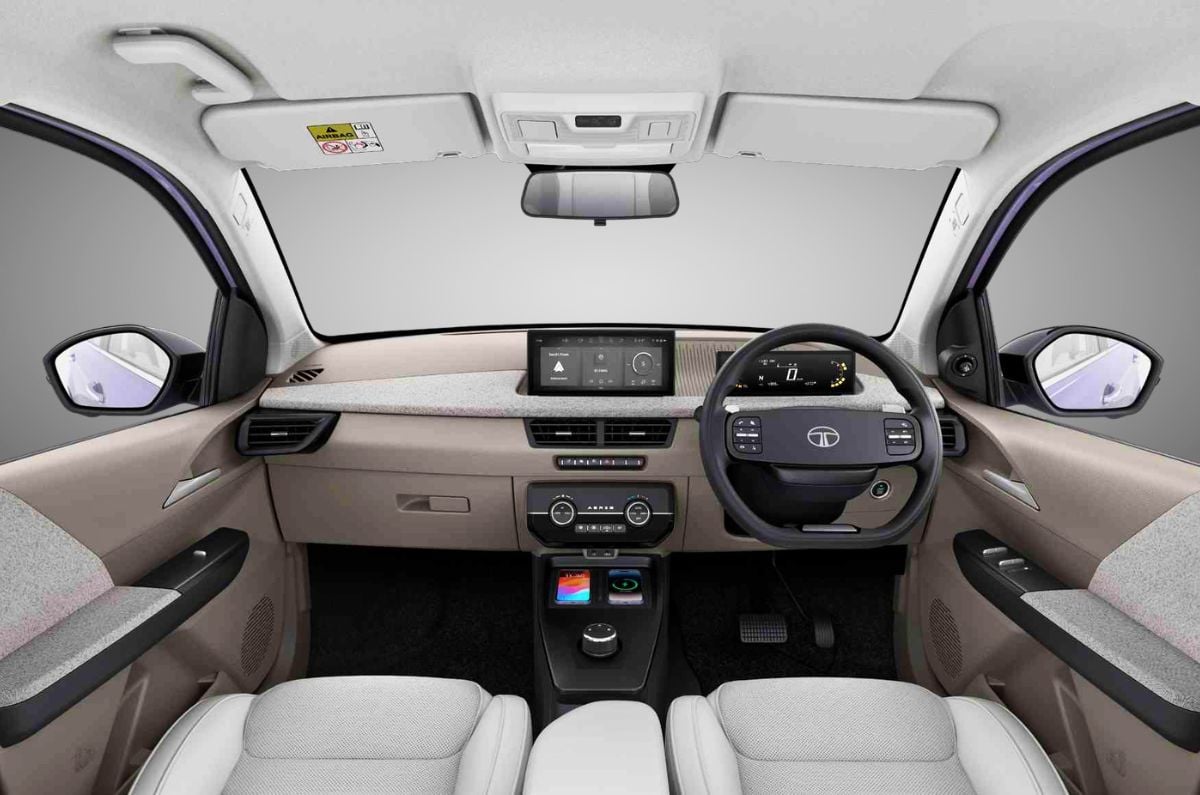
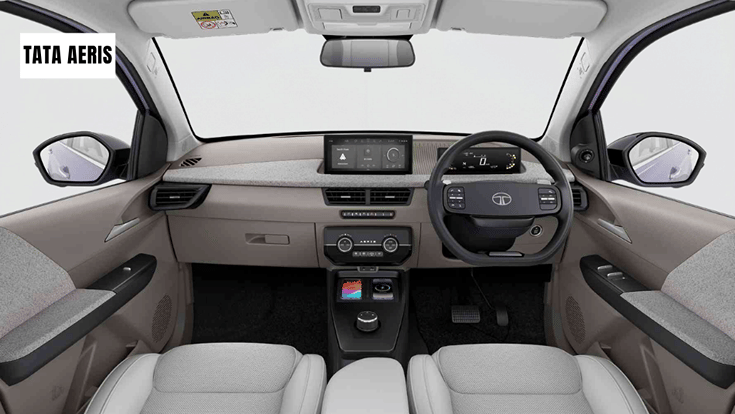
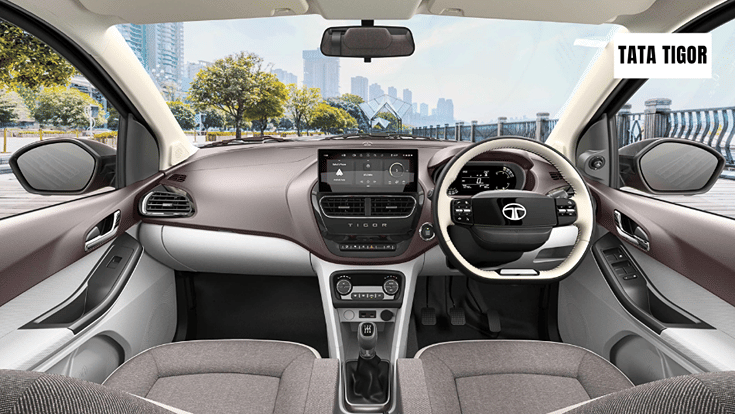
The Tata Aeris gets a new cabin theme with a more minimalistic dashboard design. It continues with the free-standing 10.25-inch touchscreen infotainment system, but now features a new free-standing semi-digital driver’s display. The 2-spoke steering wheel is carried over, but now gets a non-illuminated Tata logo on the horn pad.
The climate control panel remains unchanged from the Tigor, while the centre console has been redesigned to accommodate two smartphones, with one slot incorporating a wireless charging pad. The door armrests have also been revised, while the individual centre armrests have been replaced by a chunkier single unit with storage space underneath. On AMT variants, a rotary drive selector replaces the traditional gear selector stalk.
New features make the Aeris a more modern offering
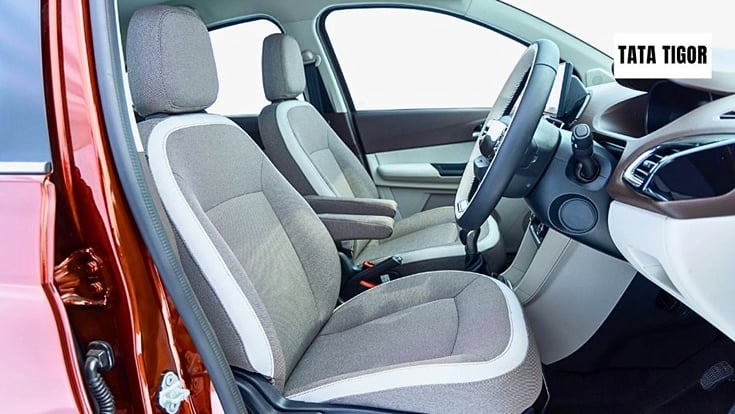
The seats in the Tata Aeris get revised cushions and leatherette upholstery, while the front seats are now ventilated. However, the 6-speaker sound system is a downgrade from the Tigor’s 8-speaker unit. Other features, including automatic climate control, wireless Android Auto and Apple CarPlay, a cooled glovebox and rear AC vents, continue to be offered.
In terms of safety, the Aeris gets six airbags as standard, compared with the Tigor’s standard dual-airbag setup. Its 360-degree camera can also be used as a dashcam, while hill hold assist, ISOFIX child-seat anchorages and rear parking sensors are carried over from the Tigor.
Tata Aeris vs Tigor: Powertrain options
No changes have been made to the powertrain department
There are no changes to the powertrain, with the Tata Aeris continuing with the 1.2-litre, 3-cylinder naturally aspirated engine, available with either petrol or CNG. The petrol version produces 86hp and 113Nm, while the CNG version makes 76hp and 97Nm. Both powertrain options are paired with either a 5-speed manual or a 5-speed AMT.
As before, the CNG version gets two cylinders mounted inside the boot, reducing boot space to 227 litres, which is 192 litres less than the petrol version.
The Tata Aeris is priced from Rs 5.29 lakh to Rs 9.74 lakh, compared to the older Tigor’s Rs 5.70 lakh to Rs 9.10 lakh range. The Aeris locks horns with the Maruti Dzire, Honda Amaze and Hyundai Aura.
हर कोई सितंबर में लॉन्च हुए Apple iPhone 18 Pro लाइनअप और iPhone Duo के बारे में बात कर रहा है। फिर भी, ज्यादातर लोगों को लॉन्च के समय iPhone 18 बेस वेरिएंट की कमी महसूस हुई। अब, iPhone 18 से जुड़ी लीक और अफवाहें भी दिन-ब-दिन बढ़ रही हैं, जिससे हमें साफ अंदाजा हो रहा है कि इस डिवाइस में क्या-क्या देखने को मिल सकता है। आइए, अब इस डिवाइस के बारे में लीक, अनुमानों और अफवाहों से जुड़ी हर जरूरी बात जानते हैं।
iPhone 18 का कैमरा, स्पेसिफिकेशन्स और दूसरे फीचर्स
Apple iPhone 18 में 6.3-इंच का LTPO Super Retina XDR OLED डिस्प्ले हो सकता है, जिसमें 120Hz रिफ्रेश रेट और 3000 निट्स की पीक ब्राइटनेस मिलेगी। इसके अलावा, इस डिवाइस में Apple A20 प्रोसेसर के साथ 8GB RAM और 256GB इंटरनल स्टोरेज होगी। यह फोन iOS 27 ऑपरेटिंग सिस्टम पर चलेगा और इसमें Siri AI होगा, जो यूजर्स के अनुभव को और भी बेहतर और प्रोडक्टिव बनाएगा। फोन में 4000mAh की बैटरी दि जा सकती है, जो 25W MagSafe चार्जिंग को सपोर्ट करेगा।
कैमरे की बात करें तो iPhone 18 में डुअल रियर कैमरा सेटअप हो सकता है, जिसमें 48MP का प्राइमरी कैमरा और 48MP का अल्ट्रा-वाइड-एंगल कैमरा शामिल होगा। पूरी उम्मीद है कि कैमरे में कई नए AI फीचर्स भी दिए जाएंगे। वहीं सेल्फी और वीडियो कॉल के लिए, फोन में 24MP का फ्रंट कैमरा हो सकता है, जो बिना किसी डिटेल को छोड़े शानदार सेल्फी लेगा।
Apple iPhone 18 की भारत में कीमत और लॉन्च डेट
Apple iPhone 18 के 8GB RAM और 256GB स्टोरेज वाले वेरिएंट की भारत में कीमत करीब 85,900 रुपये हो सकती है। फिलहाल फोन की लॉन्च डेट को लेकर कोई आधिकारिक जानकारी सामने नहीं आई है। हालांकि, उम्मीद है कि Apple iPhone 18 को करीब 13 मार्च 2027 को लॉन्च किया जा सकता है।
iPhone 17 Pro Max खरीदने का सपना अगर सिर्फ इसकी भारी कीमत की वजह से टल रहा है, तो आपके लिए अच्छी खबर है। दरअसल, Reliance Digital पर Apple के इस प्रीमियम फोन पर ऐसा ऑफर मिल रहा है, जिससे इसके 256GB मॉडल की कीमत 71,990 रुपये हो जाती है। खास बात यह है कि इस डील में डिस्काउंट के साथ पुराने फोन का एक्सचेंज, एक्सचेंज बोनस और बैंक कैशबैक भी शामिल है।
वहीं, इस दमदार ऑफर के बाद फोन की कीमत 1,49,900 रुपये की MRP से 77,910 रुपये कम हो जाती है। हालांकि, आपको यह फोन वास्तव में कितने रुपये में पड़ेगा, यह आपके एक्सचेंज वैल्यू और बैंक ऑफर की पात्रता पर निर्भर करेगा।
iPhone 17 Pro Max की कीमत और ऑफर की पूरी डिटेल
iPhone 17 Pro Max 256GB की MRP ₹1,49,900 है। Reliance Digital स्टोर पर ₹9,910 का डिस्काउंट दे रहा है, जिससे इसकी कीमत घटकर ₹1,39,990 हो जाती है।
iPhone 17 Pro Max के 256GB मॉडल की MRP 1,49,900 रुपये है। Reliance Digital इस फोन पर 9,910 रुपये का इन-स्टोर डिस्काउंट दे रहा है, जिसके बाद इस फोन की कीमत घटकर 1,39,990 रुपये रह जाती है।
इसके बाद ग्राहक अपने पुराने स्मार्टफोन को एक्सचेंज करके अधिकतम 55,000 रुपये तक की एक्सचेंज वैल्यू पा सकते हैं। इसके अलावा Reliance Digital की तरफ से 10,000 रुपये का एक्सचेंज बोनस भी दिया जा रहा है।
इस ऑफर में ₹3,000 का बैंक कैशबैक भी शामिल है, जिससे iPhone 17 Pro Max 256GB की असल कीमत घटकर ₹71,990 हो जाती है।
ऑफर की जानकारी
रकम
iPhone 17 Pro Max 256GB की MRP
₹1,49,900
इन-स्टोर डिस्काउंट
₹9,910
डिस्काउंट के बाद कीमत
₹1,39,990
अधिकतम एक्सचेंज वैल्यू
₹55,000
एक्सचेंज बोनस
₹10,000
बैंक कैशबैक
₹3,000
ऑफर के बाद प्रभावी कीमत
₹71,990
वहीं, ग्राहकों को ₹77,910 का ज्यादा से ज्यादा असरदार डिस्काउंट तब मिलता है जब उन्हें पूरे ₹55,000 की एक्सचेंज वैल्यू, ₹10,000 का एक्सचेंज बोनस और ₹3,000 का बैंक कैशबैक मिलता है।
71,990 रुपये में iPhone 17 Pro Max कैसे खरीदें?
इस ऑफर का फायदा उठाने के लिए ग्राहकों को Reliance Digital से iPhone 17 Pro Max 256GB खरीदना होगा। इसके साथ अपना पुराना और ऑफर के लिए योग्य स्मार्टफोन एक्सचेंज करना होगा।
पुराने फोन की एक्सचेंज वैल्यू उसके मॉडल और कंडीशन के आधार पर तय होगी। इस पर अधिकतम 55,000 रुपये तक की एक्सचेंज वैल्यू मिल सकती है। इसके अलावा, योग्य एक्सचेंज पर Reliance Digital की तरफ से 10,000 रुपये का एक्सचेंज बोनस भी दिया जाएगा।
इसके अलावा, ग्राहक 3,000 रुपये का बैंक कैशबैक भी पा सकते हैं। हालांकि, इसके लिए संबंधित बैंक की शर्तों और ऑफर की पात्रता पूरी करनी होगी।
इस तरह 71,990 रुपये की प्रभावी कीमत पाने के लिए ग्राहक को अधिकतम 55,000 रुपये की एक्सचेंज वैल्यू, 10,000 रुपये का एक्सचेंज बोनस और 3,000 रुपये का बैंक कैशबैक मिलना जरूरी है। अगर पुराने फोन की एक्सचेंज वैल्यू कम मिलती है, तो iPhone 17 Pro Max की फाइनल कीमत भी उसी हिसाब से बढ़ जाएगी।
iPhone 17 Pro पर भी मिल रहा ऑफर
Reliance Digital iPhone 17 Pro 256GB पर भी यही ऑफर दे रहा है। इस मॉडल की MRP 1,34,900 रुपये है। कंपनी की ओर से 9,910 रुपये का इन-स्टोर डिस्काउंट दिया जा रहा है, जिसके बाद फोन की कीमत घटकर 1,24,990 रुपये हो जाती है।
इसके बाद ग्राहक पुराने फोन को एक्सचेंज करके 55,000 रुपये तक की एक्सचेंज वैल्यू पा सकते हैं। इसके अलावा 10,000 रुपये का एक्सचेंज बोनस और 3,000 रुपये का बैंक कैशबैक भी मिल रहा है। इन सभी ऑफर्स को मिलाने के बाद iPhone 17 Pro 256GB की प्रभावी कीमत 56,990 रुपये रह जाती है।
मॉडल
MRP
इन-स्टोर डिस्काउंट
एक्सचेंज वैल्यू
एक्सचेंज बोनस
बैंक कैशबैक
प्रभावी कीमत
iPhone 17 Pro 256GB
₹1,34,900
₹9,910
₹55,000 तक
₹10,000
₹3,000
₹56,990
iPhone 17 Pro Max 256GB
₹1,49,900
₹9,910
₹55,000 तक
₹10,000
₹3,000
₹71,990
यह ऑफर Reliance Digital ने X पर शेयर किया है और यह रिटेलर की लागू शर्तों के अधीन है। पुराने फोन की एक्सचेंज वैल्यू और बैंक कैशबैक के लिए पात्रता ग्राहक के डिवाइस और पेमेंट मेथड के आधार पर अलग-अलग हो सकती है।