
What to expect from the BMW 7 Series, i7 facelift ahead of launch

BMW 7 series

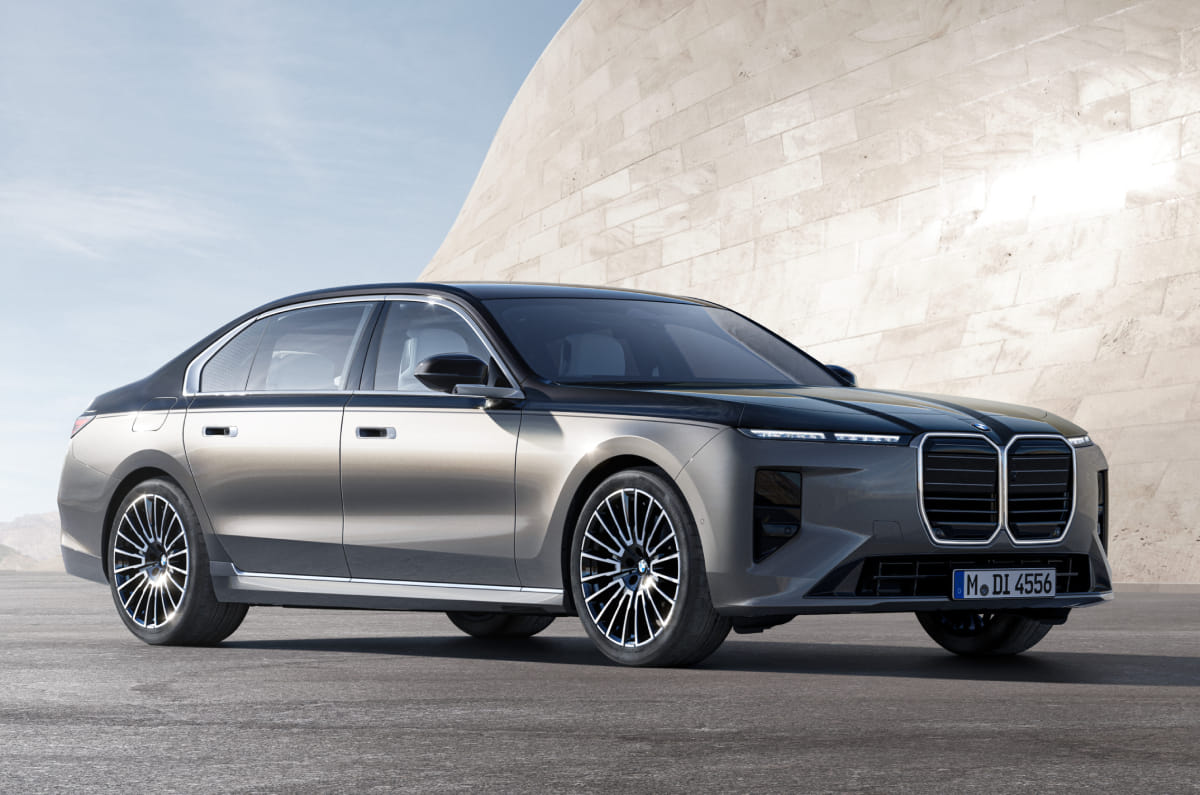
BMW’s flagship 7 Series and i7 luxury sedans are set to receive a mid-lifecycle facelift in India with refreshed styling, a comprehensively redesigned cabin, and upgraded petrol, diesel and electric powertrains. This mid-cycle update also introduces interior elements from BMW’s upcoming Neue Klasse models, including the new Panoramic iDrive display and rhomboidal infotainment touchscreen. With bookings now open ahead of their launch, here’s everything you need to know.

1. What will the BMW 7 Series and i7 facelift look like?

Sharper styling with subtle design revisions
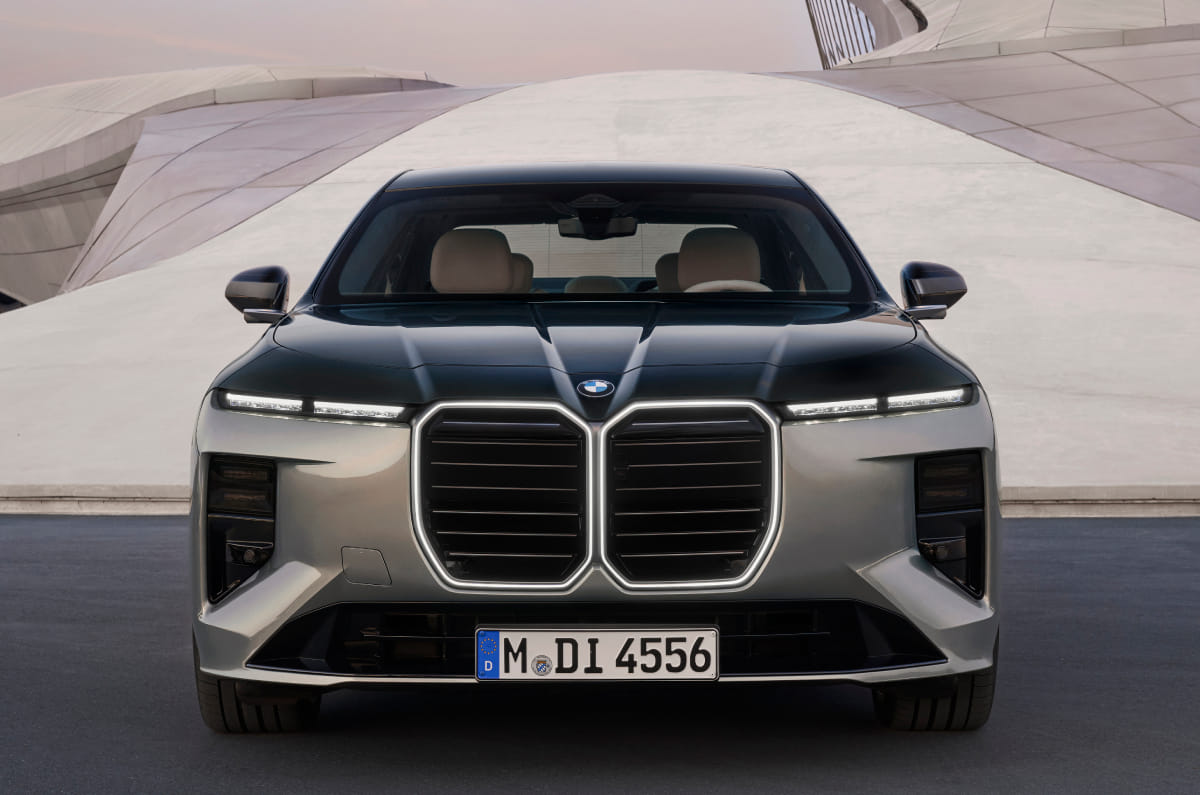
The facelift retains the overall silhouette of the current 7 Series but introduces several styling changes. Up front, it gets a redesigned illuminated kidney grille and revised split LED headlamps. The slim upper lighting elements house the daytime running lights, while the main headlamp units sit lower down in the bumper.
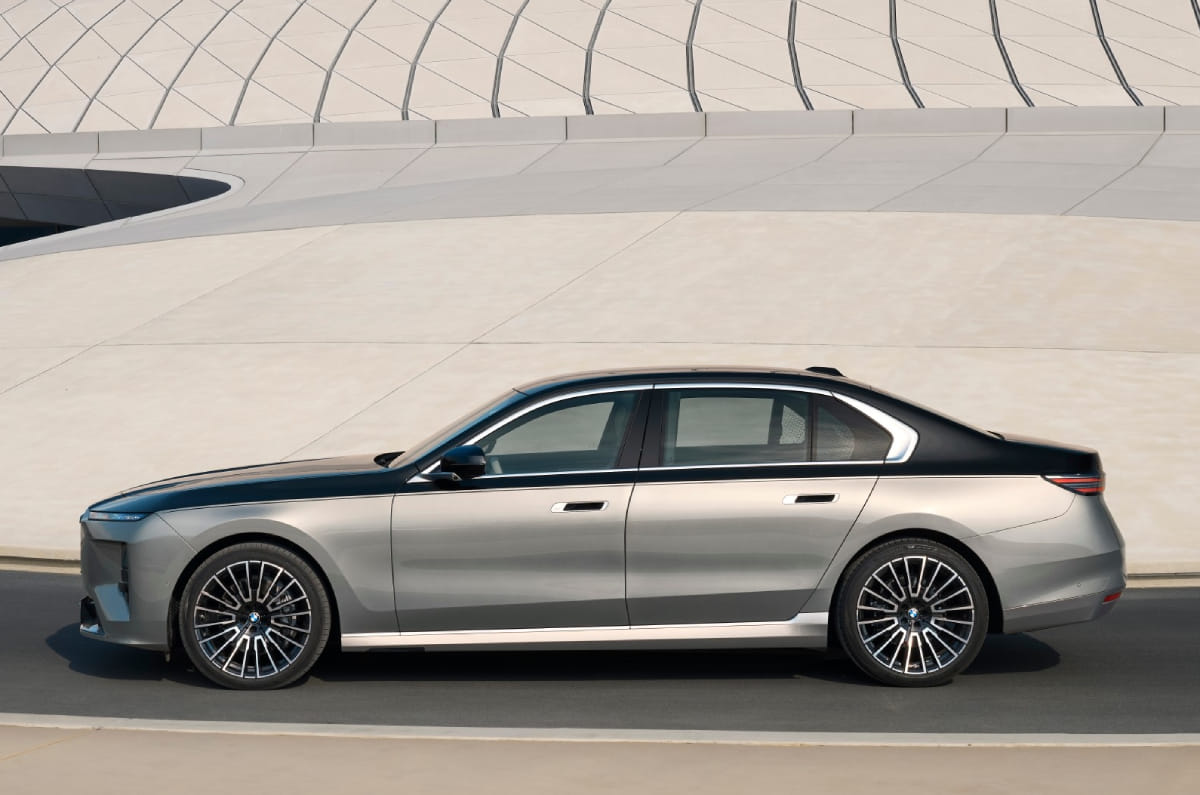
Viewed from the side, the 7 Series continues its clean and elegant design. It retains flush-fitting door handles that blend neatly into the bodywork. BMW has also introduced a new alloy-wheel design with the facelift. Another interesting detail is the embossed ‘7’ on the B-pillar, which becomes visible when both doors on the same side are opened. 
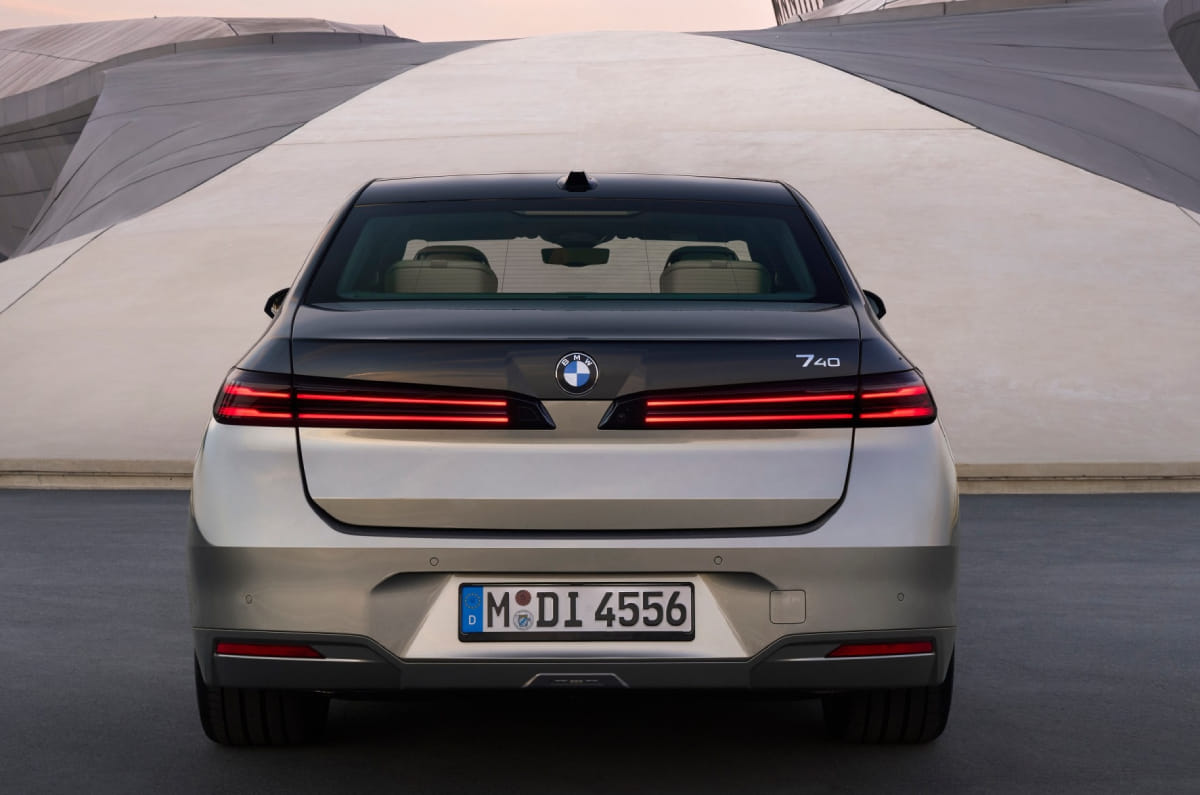
At the rear, slimmer tail-lamps extend further into the tailgate and feature smoked lenses with chrome detailing, while the bumper has been redesigned with a diffuser-style insert.

2. What’s new in the interior of the BMW 7 Series and i7 facelift?

Redesigned dashboard with BMW’s latest Panoramic iDrive
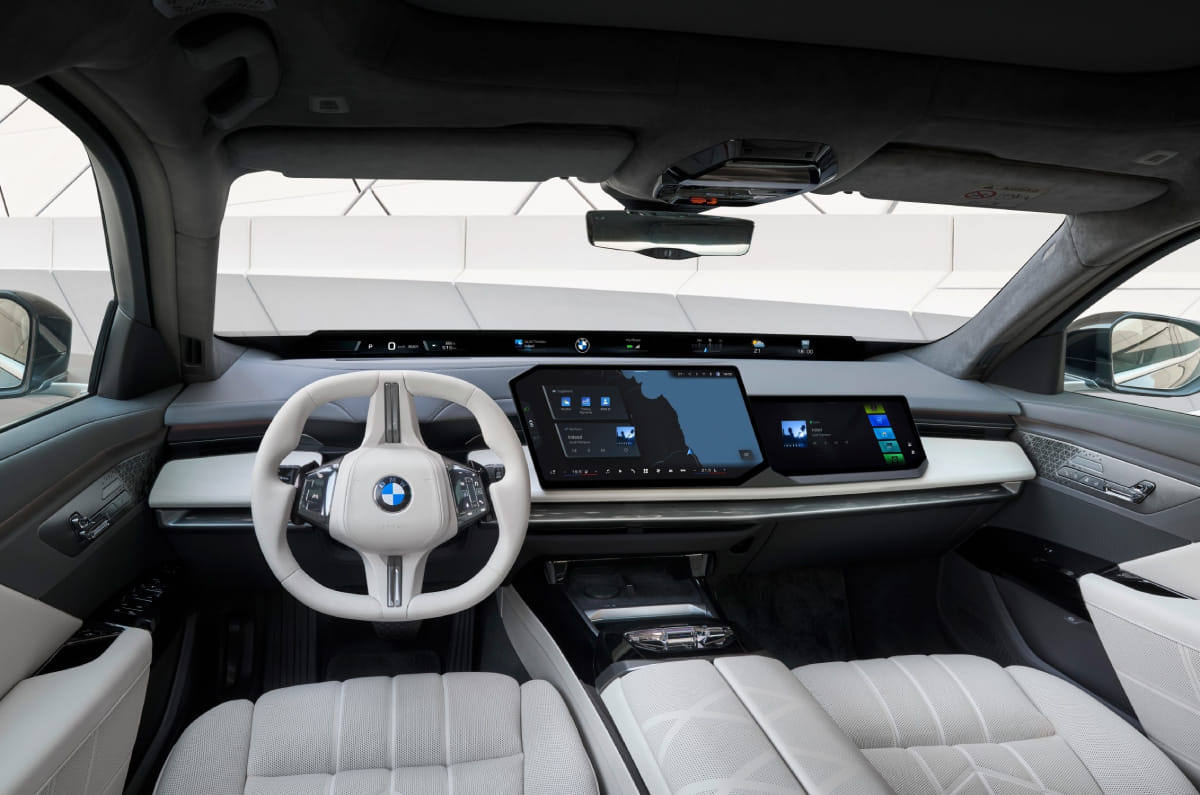
The biggest changes are inside. The facelift introduces BMW’s new Panoramic iDrive, replacing the conventional digital instrument cluster with a full-width projection display at the base of the windscreen. It works alongside a new 17.9-inch central touchscreen and a 14.6-inch front passenger display, both running the latest BMW Operating System X which supports over-the-air updates, wireless Apple CarPlay and Android Auto, and features improved voice controls. 

BMW has also introduced a new four-spoke steering wheel and a redesigned ambient lighting system that spans the width of the dashboard, extends to the rear speaker grilles and features additional lighting behind the front seats.

As standard, the seats come with electric adjustment, heating, ventilation, massage, lumbar support and heated armrests. The front passenger seat can also slide fully forward to create additional legroom for the passenger seated behind. 
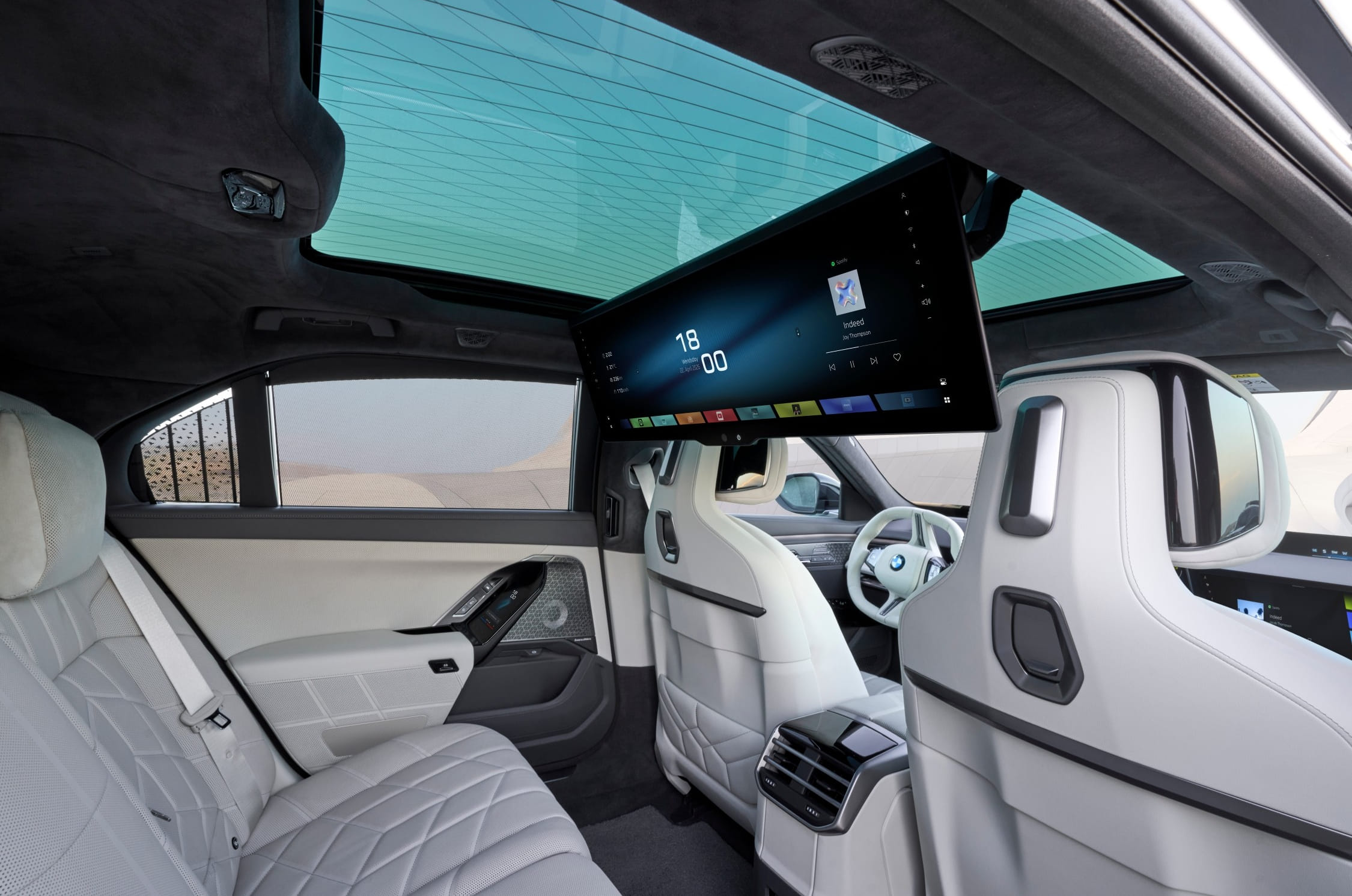
Rear-seat entertainment has also been upgraded. The Theatre Screen, optional in international markets, is now a 31.3-inch 8K touchscreen that supports video calls, streaming and gaming. The displays integrated into the rear doors have also been updated, allowing passengers to reposition the Theatre Screen, adjust its viewing angle and control other cabin functions. BMW has also revised the automatic doors with better-positioned open and close buttons.

3. Which powertrain options will the BMW 7 Series and i7 Lci get?

Petrol, diesel and electric powertrains receive updates
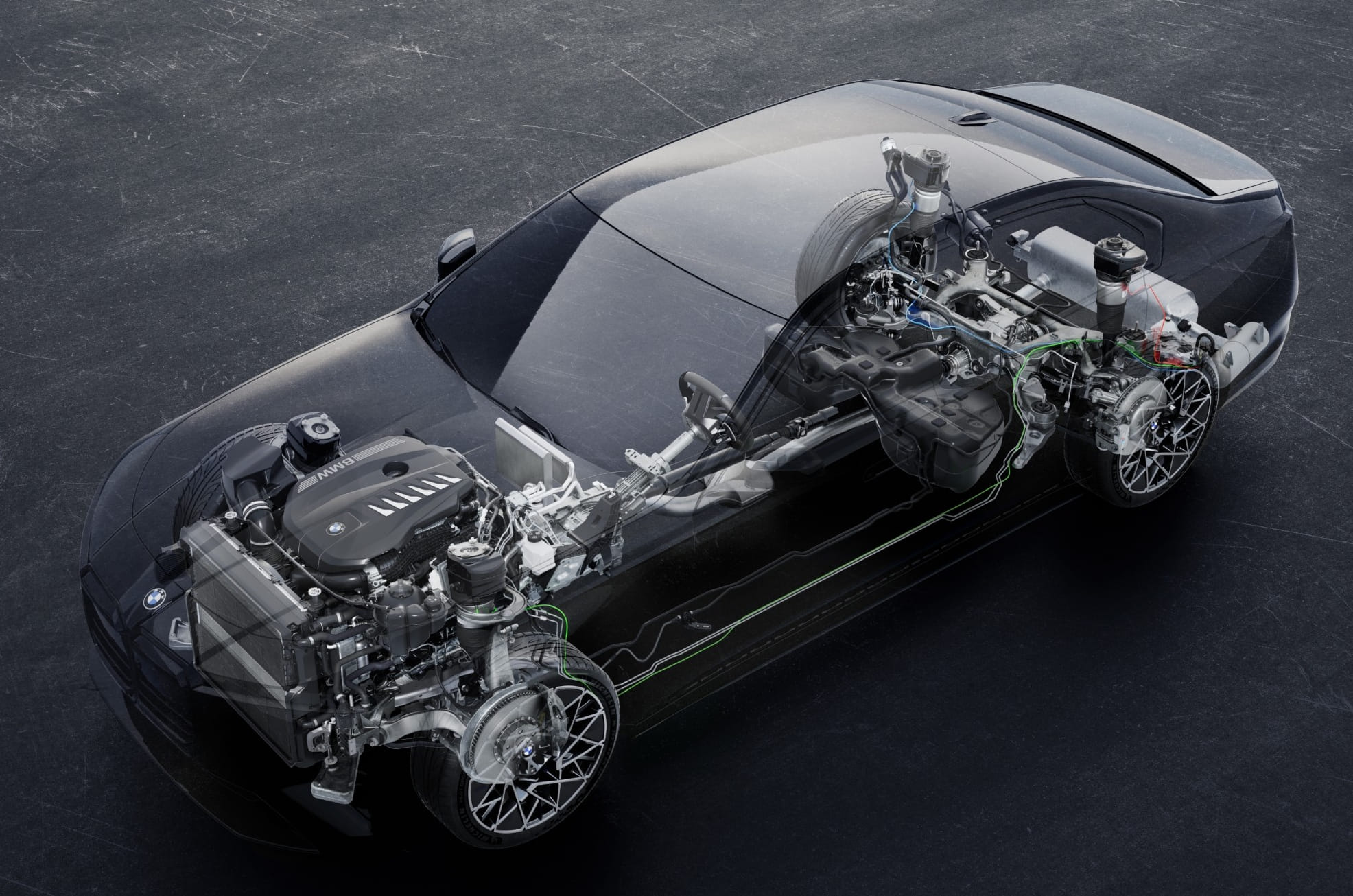
The facelifted 7 Series continues with 3.0-litre inline-six petrol and diesel mild-hybrid engines, both paired with an 8-speed automatic gearbox and all-wheel drive.  The 740i develops 400hp and 580Nm, up by 19hp and 60Nm, while the 740d now makes 313hp and 670Nm, an increase of 27hp and 20Nm over the outgoing model. 

The all-electric i7 also receives updates. The i7 xDrive50 replaces the earlier eDrive50 and now gets dual-motor all-wheel drive along with a larger 112.4kWh battery, replacing the earlier 101.7kWh unit. Output rises to 455hp and 660Nm. The range-topping i7 M70 xDrive also benefits from the larger battery, with outputs increasing to 680hp (from 650hp) and up to 1,100Nm (from 1,015Nm).

4. Will BMW launch the plug-in hybrid 7 Series in India

Yet to be confirmed
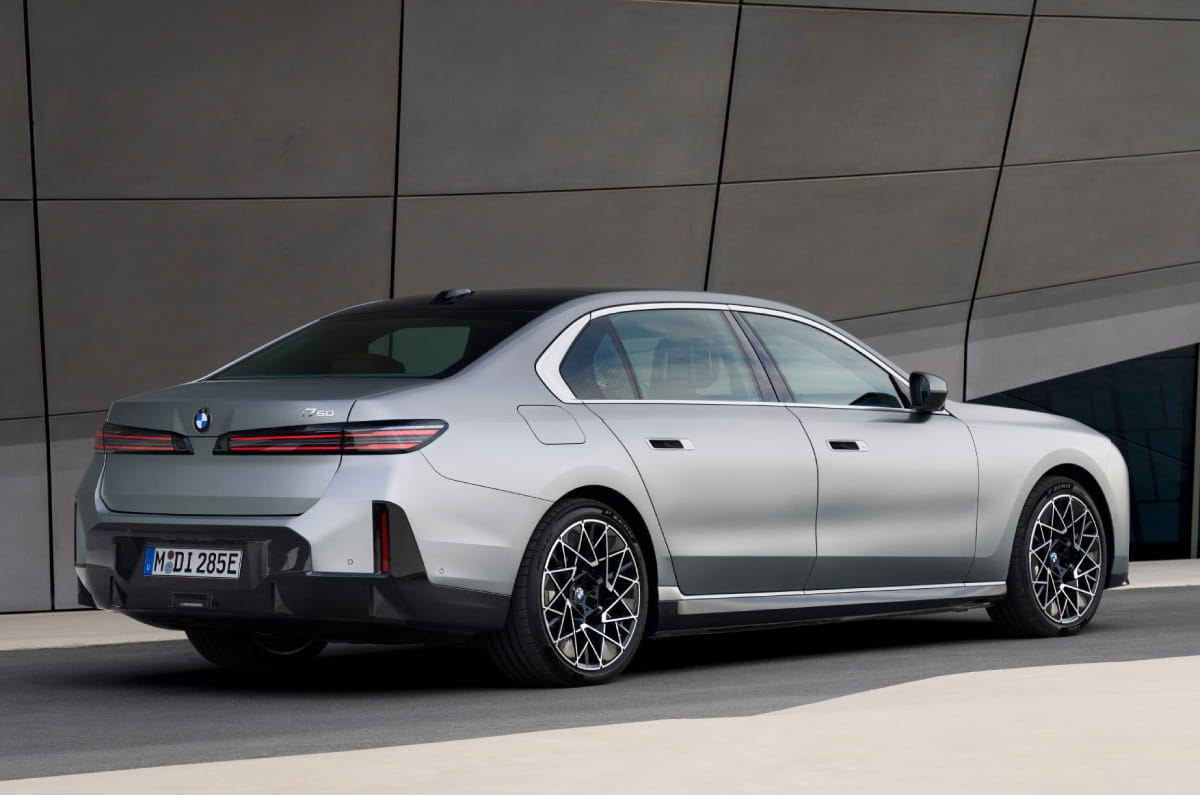
BMW i7 60 xDrive

Internationally, the 7 Series facelift is also available with plug-in hybrid powertrains, including the 750e xDrive and M760e xDrive. It remains to be seen whether BMW will introduce either variant in India, especially since its key rival, the new Mercedes-Benz S-Class, is already available with a plug-in hybrid powertrain.

5. How much will the BMW 7 Series and i7 facelift cost?

Prices expected to increase slightly
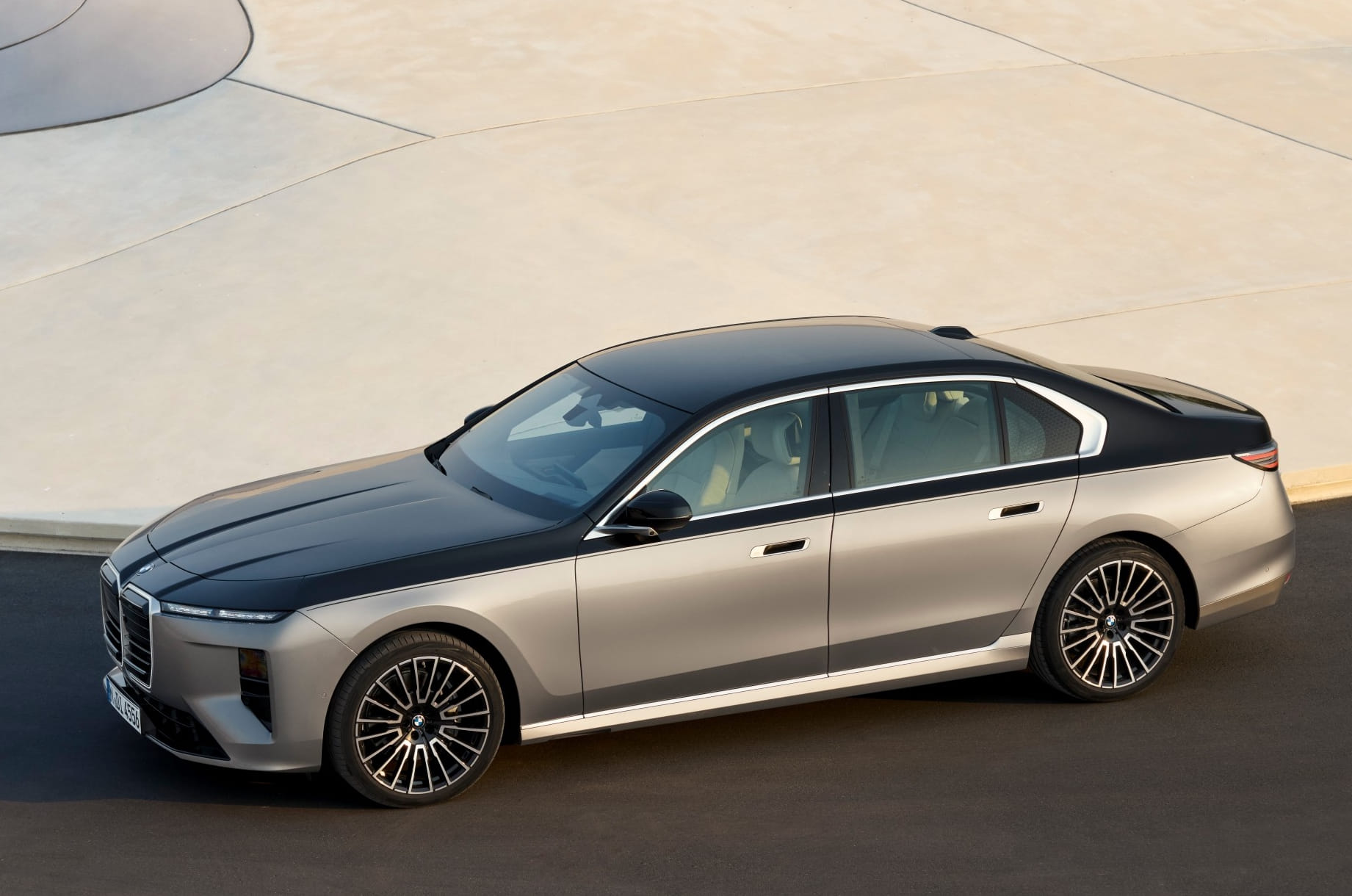
The current BMW 7 Series is priced at Rs 1.85 crore (ex-showroom) for both the petrol and diesel variants, while the i7 is priced between Rs 2.10 crore and Rs 2.58 crore. Given the additional technology, revised styling and powertrain upgrades, BMW is expected to increase prices slightly for both models.

6. Which cars will the BMW 7 Series and i7 facelift rival?

The 7 Series ‘LCI’ facelift will continue to rival the Mercedes-Benz S-Class in the flagship luxury sedan segment. Meanwhile, the i7 will compete with electric luxury sedans in the same price bracket.

7. When will the BMW 7 Series and i7 facelift launch in India

Bookings are now open
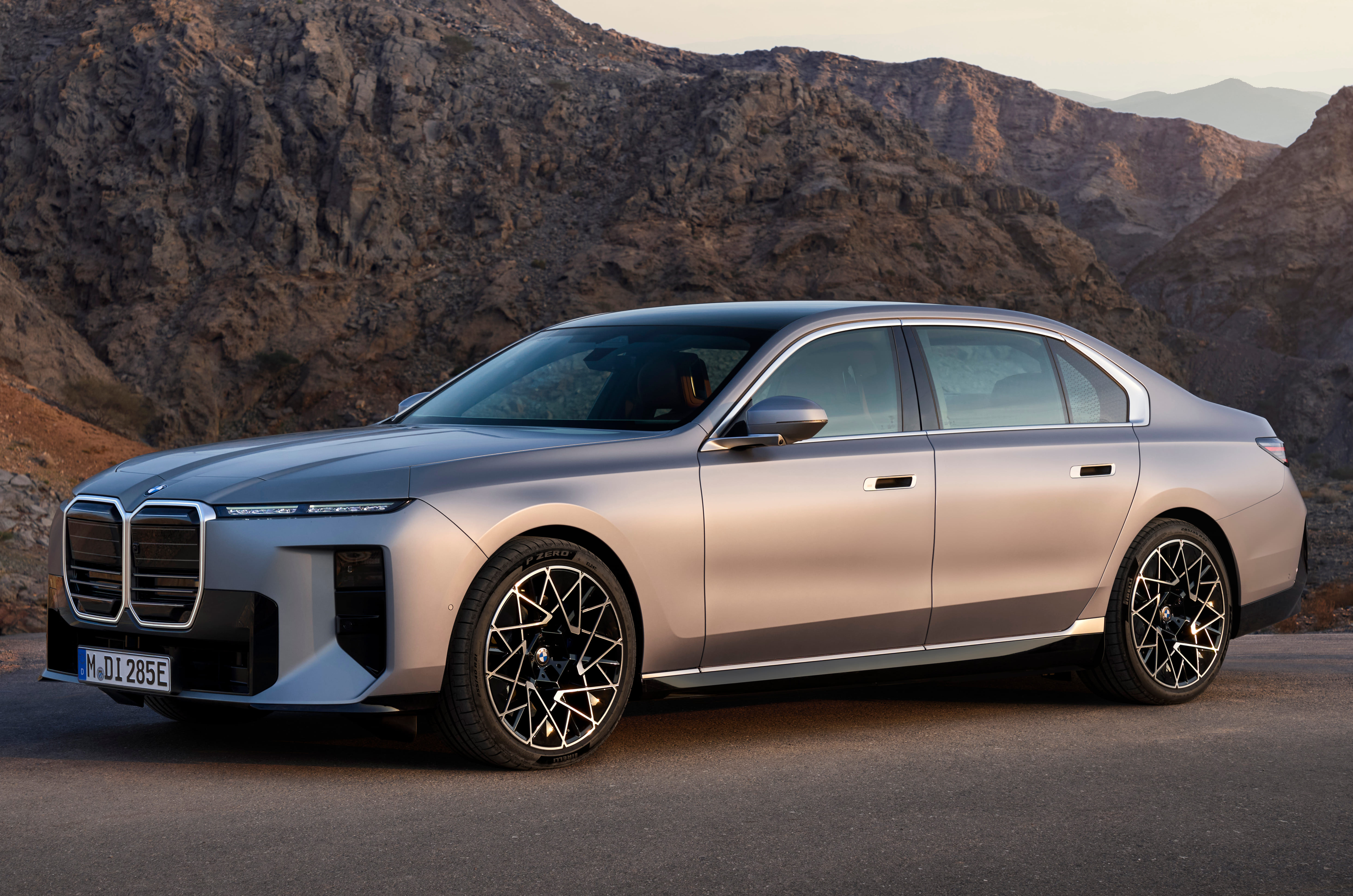
BMW i7 60 xDrive

BMW has started accepting bookings for the 7 Series and i7 facelift through its dealerships across India, with customers also able to register their interest via the BMW India website. The company is yet to announce an official launch date, although the refreshed luxury sedans are expected to arrive in the coming months.

International-spec BMW 7 Series shown for representative purposes only.

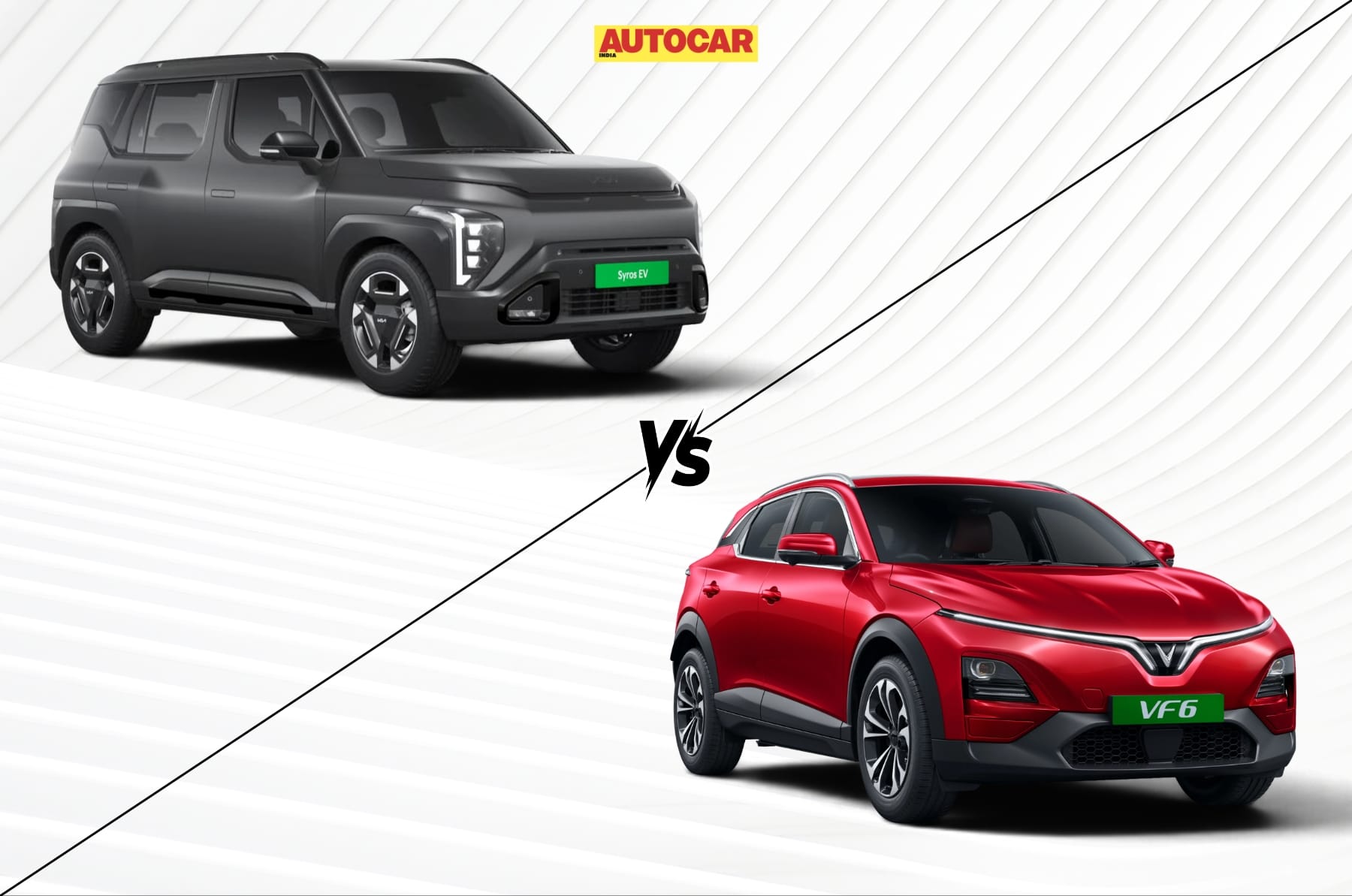
Kia Syros EV vs Vinfast VF6: Whose top trim offers more value?

Kia Syros EV vs Vinfast VF6

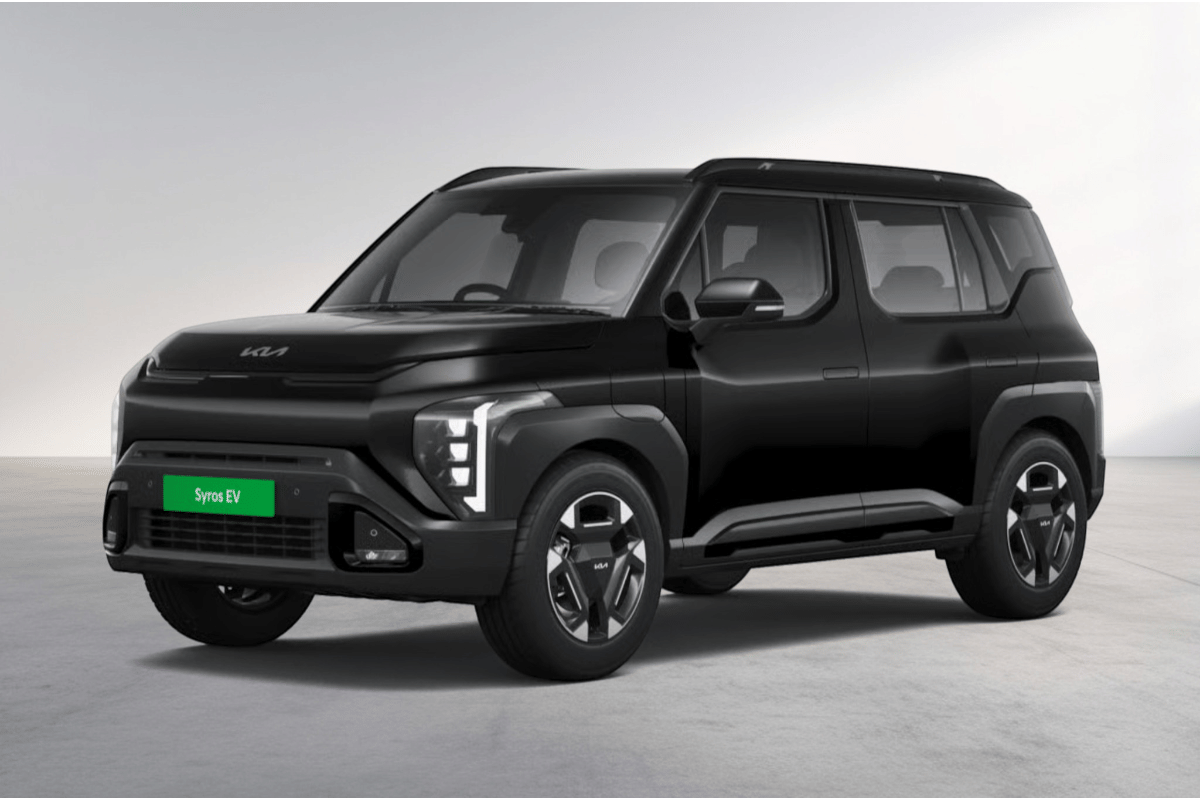
The Kia Syros EV and Vinfast VF6 are the most affordable electric vehicles from their respective brands. The premium Kia offering is sold in the compact SUV space, one below the VF6’s midsize SUV segment. So, can it match or even outdo the larger VF6 when it comes to specifications and features? We compare the Kia Syros EV X-Line ER and Vinfast VF6 Wind Infinity top-spec variants to find out.

Kia Syros EV X-Line ER vs Vinfast VF6 Wind Infinity: Dimensions


Syros EV

VF6

Length (mm)

3,995

4,241

Width (mm)

1,805

1,834

Height (mm)

1,670

1,615

Wheelbase (mm)

2,550

2,730

Ground clearance (mm)

197

190

Frunk (L)

16

No

Boot space (L)

390-465

423

Wheel size (in)

17

18

Clearly, the Vinfast VF6 is the larger SUV between the two. It is 246mm longer, 29mm wider and has a 180mm longer wheelbase than the Kia Syros EV. However, the Syros is 55mm taller and offers a 7mm higher ground clearance. It also gets a 16-litre frunk, a feature missing on the VF6. In terms of luggage space, the VF6 offers 423 litres of boot space, but the Syros EV can hold up to 465 litres when its sliding rear seats are pushed forward, although capacity drops to 390 litres with the seats in their rearmost position. The VF6 also rides on larger 18-inch alloy wheels, compared to the 17-inch units on the Syros EV.

Kia Syros EV X-Line ER vs Vinfast VF6 Wind Infinity: Powertrains


Syros EV

VF6

Battery size (kWh)

51.4

59.6

Electric motor setup

Single motor

Single motor

Drive layout

FWD

FWD

Power (hp)

171

204

Torque (Nm)

255

310

Claimed 0-100kph time (s)

8.1

8.9

ARAI range (km)

526

463

The two SUVs use a single-motor, front-wheel-drive setup, but the VF6 has the bigger 59.6kWh battery pack, compared to the Syros EV’s 51.4kWh unit. It also produces 33hp more power and 55Nm more torque. Despite this, the Syros EV is quicker, with a claimed 0-100kph time of 8.1 seconds, compared to the VF6’s 8.9 seconds. It also has a clear advantage in terms of claimed driving range, offering 526km on a single charge, which is 63km more than the VF6’s 463km, despite having a smaller battery pack.

Kia Syros EV X-Line ER vs Vinfast VF6 Wind Infinity: Charging speeds


Syros EV

VF6

AC charging (10-100 percent)

4.5 hrs (11kW unit)

Time not specified (7.2kW unit) 

DC fast charging (10-70 percent)

25 mins (100kW unit)

DC fast charging (10-80 percent)

39 mins (100kW unit)

Both the Syros EV and VF6 support 100kW DC fast charging. However, Kia claims a 39-minute charging time for a 10-80 percent top-up, while Vinfast’s claimed 25-minute figure is for the slightly lower 10-70 percent charging window. On the AC charging front, the Syros EV supports charging speeds of up to 11kW, taking 4.5 hours to charge from 10 to 100 percent. The VF6, meanwhile, supports up to a 7.2kW AC charger, although Vinfast has not yet revealed its charging time.

Kia Syros EV X-Line ER vs Vinfast VF6 Wind Infinity: Exterior features


Syros EV

VF6

Headlamps

LED

LED projector

Front fog lamps

LED

No

LED tail-lamps

Yes

Yes

Powered ORVMs

Yes

Yes

Alloy wheels

Yes

Yes

Flush door handles

Yes

No

Body cladding

Yes

Yes

Rear spoiler

Yes

Yes

Not a lot separates them when it comes to exterior features, with both offering LED tail-lamps, powered ORVMs, alloy wheels, body cladding and a rear spoiler. However, the VF6 comes with LED projector headlamps, while the Syros EV gets LEDs with reflectors. Another differentiation is that the Syros EV gets flush-fitting door handles, whereas the VF6 is equipped with conventional pull-type door handles.

Kia Syros EV X-Line ER vs Vinfast VF6 Wind Infinity: Interior features


Syros EV

VF6

Infotainment screen (in)

12.3

12.9

Digital driver’s display (in)

12.3

No

Climate control display (in)

5

No

Sunroof

Panoramic, openable

Panoramic, fixed

Wireless charger

Yes

Yes

Driver’s seat powered adjustment

4-way

8-way

Ventilated front seats

Yes

Yes

USB ports

2 Type C (f/r), including 1 100W (f)

2 Type A (f/r), 1 90W Type C (r)

Rear AC vents

Yes

Yes

Rear seat base ventilation

Yes

No

Climate control

Single zone

Dual zone

All window one touch up/down

Yes

Yes

Ambient lighting

Yes

Footwell only

Sound system

8-speaker Harmon Kardon

8 speakers

Apple CarPlay and Android Auto

Wireless

Wireless

Connected car tech

Yes

Yes

Rear sunshades

Yes

No

Rear centre armrest

Yes

Yes

Sliding, reclining rear seats

Yes

No

Speaking of interior features, both are well equipped and offer a wireless phone charger, ventilated front seats, connected car technology, one-touch up/down function for all windows, wireless Apple CarPlay and Android Auto and an 8-speaker sound system. The VF6 gets a slightly larger 12.9-inch infotainment screen, an 8-way power-adjustable driver’s seat and dual-zone climate control.

The Syros EV, meanwhile, stands out with a 12.3-inch digital driver’s display, a 5-inch climate control display, an openable panoramic sunroof, rear sunshades, rear seat base ventilation, and sliding and reclining rear seats. It also gets USB Type-C ports throughout the cabin, while the VF6 has Type-A ports at the front and rear, and only a single 90W Type-C port for rear passengers. Additionally, the Syros EV features a premium Harman Kardon sound system and more comprehensive ambient lighting (dashboard, doors and footwell area), whereas the VF6 offers just footwell lighting.

Kia Syros EV X-Line ER vs Vinfast VF6 Wind Infinity: Driving features


Syros EV

VF6

Drive modes

Eco, Normal, Sport

Eco, Normal, Sport

Household-style interior 3-pin socket

Yes

No

Regen braking

Yes

Yes

Paddleshifters for regen

Yes

No

Adaptive cruise control

Yes

Yes

Differences here are less, save for the Syros EV’s household-style 3-pin power socket to power certain electrical devices, along with steering-mounted paddle shifters to adjust the level of regenerative braking. Regen levels can be adjusted via the touchscreen on the VF6, but an internal V2L charging socket is absent here. Drive modes and adaptive cruise control are offered by both models.

Kia Syros EV X-Line ER vs Vinfast VF6 Wind Infinity: Safety features


Syros EV

VF6

Bharat NCAP rating

Yet to be tested

5 stars

Airbags

6

7

ABS with EBD

Yes

Yes

Electronic stability program

Yes

Yes

Hill-start assist

Yes

Yes

Tyre pressure monitoring system

Yes

Yes

360-degree camera

Yes

Yes

Front parking sensors

Yes

Yes

Electronic parking brake

Yes

Yes

Rain-sensing wipers

No

Yes

Auto-dimming IRVM

Yes

Yes

Isofix child seat anchors

Yes

Yes

Rear wiper, defogger

Yes

Yes

Disc brakes

Front, rear

Front, rear

Level 2 ADAS

Yes

Yes

Again, not much separates the them when it comes to safety kit. Both offer ABS with EBD, electronic stability control, hill-start assist, TPMS, a 360-degree camera, front parking sensors, an electronic parking brake, an auto-dimming IRVM, ISOFIX child seat anchors, front and rear disc brakes, and Level 2 ADAS. 

The VF6, however, gets seven airbags, one more than the Syros EV’s six, along with rain-sensing wipers. It has also secured a full 5-star Bharat NCAP safety rating. The Syros EV’s Bharat NCAP crash test rating, meanwhile, is yet to be revealed at the time of writing, but it is likely to score a 5-star rating like its ICE counterpart.

Kia Syros EV X-Line ER vs Vinfast VF6 Wind Infinity: Prices and verdict


Syros EV

VF6

Price (in Rs lakh)

20

19.99

There’s no doubt that both the Kia Syros EV and Vinfast VF6 are feature-rich electric SUVs. However, despite being positioned a segment below the VF6, the Syros EV makes a strong case for itself with its overall package. It offers several features aimed at pampering the rear seat passengers, including sliding and reclining seats with ventilation (seat base only), sunshades and an openable panoramic sunroof. While it has a smaller footprint than the VF6, we found in our review that the Syros EV still offers a spacious cabin, helped by its boxy design and good interior packaging.

The Syros EV also has an advantage when it comes to claimed driving range. Despite using a smaller battery pack, it offers a higher single charge range, an important factor for most EV buyers. While both SUVs are priced very close to each other at the top-end, the Syros EV is clearly on the expensive side for its segment. However, the overall package goes a long way towards justifying its price. Buyers can also reduce the upfront cost by quite a lot by opting for the battery as a service (BaaS) scheme with the electric Syros, though this option is not available with the VF6.

Another advantage for the Syros EV is Kia’s wider sales and service network across the country, along with its stronger brand recognition among buyers. Vinfast, on the other hand, is still new to the market, with a relatively limited sales and service network. This could also play an important role in the overall ownership experience.

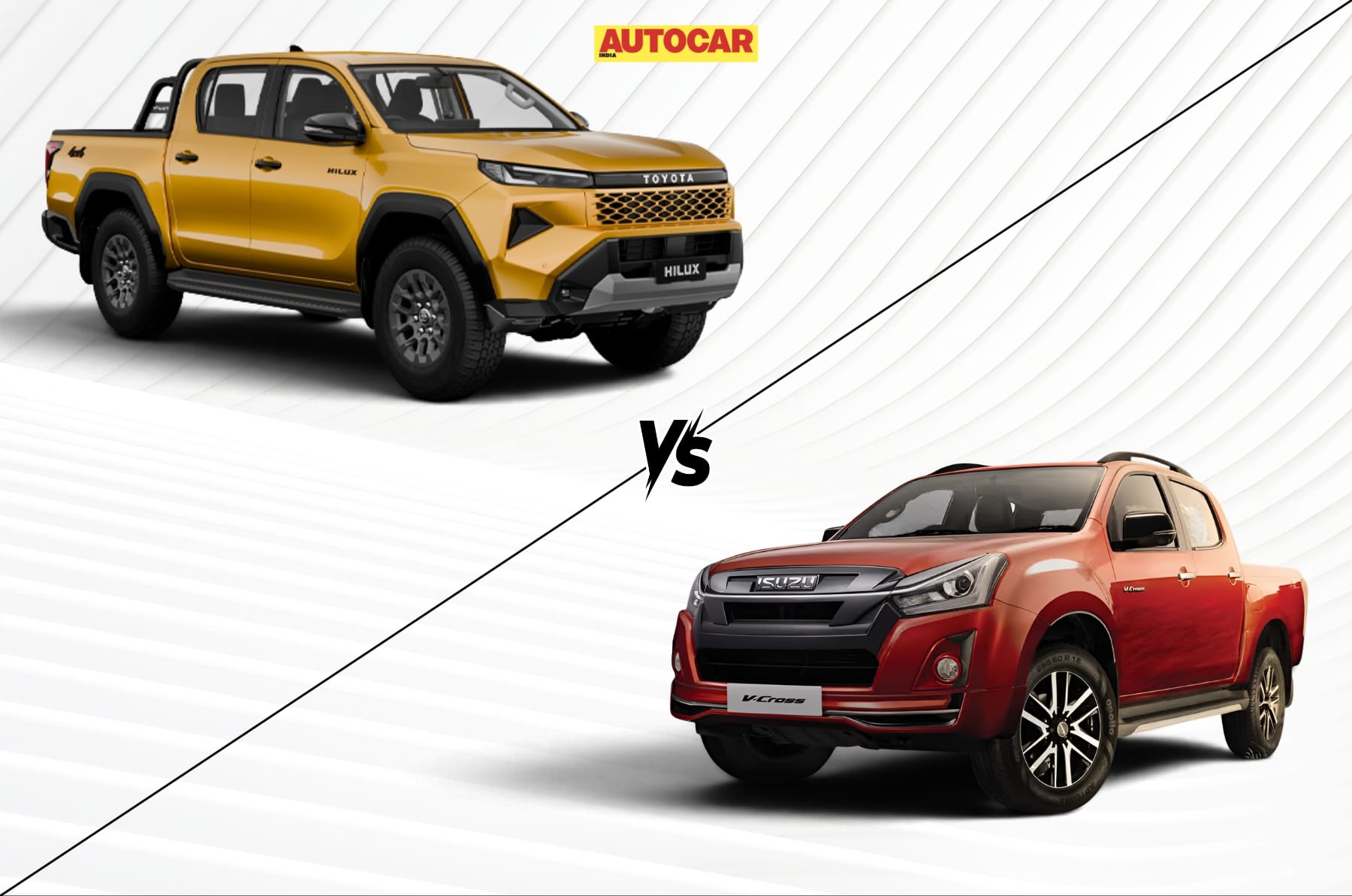
Toyota Hilux vs Isuzu D-Max V-Cross: Specifications, features and price compared

Toyota Hilux vs Isuzu D-Max V-Cross

Toyota has introduced the ninth-generation Hilux with a revamped exterior and interior, along with revisions to its powertrain offering and features. In February 2026, its only other competitor, the Isuzu V-Cross, also debuted with a comprehensive update of its own. Being the only two lifestyle pickup trucks on the market, how do these fare when we compare their on-paper specifications side to side? For this comparison, we’ve chosen the Hilux’s VX 4X4 and the V-Cross’ 4WD Prestige Premium variant.

Explore full specs, features, and a price breakdown in our Hilux vs V-Cross comparison. 

Toyota Hilux vs Isuzu D-Max V-Cross: Dimensions

Hilux is longer, but the V-Cross is wider and taller 

Toyota Hilux vs Isuzu D-Max V-Cross: Dimensions


Toyota Hilux

Isuzu D-Max V-Cross

Difference

Length (mm)

5,320

5,295

+25

Width (mm)

1,855

1,860

-5

Height (mm)

1,815

1,855

-35

Wheelbase

3,085

3,095

-10

Wheel size (inch)

17

18


It’s only in length where the Hilux pips the V-Cross by 25mm. But the latter is 5mm wider, 35mm taller, and has a 10mm longer wheelbase. Dimensionwise, it’s the V-Cross that takes the lead overall.

Toyota Hilux vs Isuzu D-Max V-Cross: Specifications 

Hilux’s larger engine develops much more power 

Toyota Hilux vs Isuzu D-Max V-Cross: Specifications 


Toyota Hilux

Isuzu D-Max V-Cross

Engine 

Turbo-diesel

Turbo-diesel

Displacement (cc)

2,755

1,898

No of cylinders 

4

4

Power (hp)

204

163

Torque (Nm)

500

360

Gearbox

6AT

6AT

Drive layout 

4WD

4WD

Fuel tank (litres)

80 

55

Suspension setup

Front: Double Wishbone 

Rear: Leaf Spring

Front: Double Wishbone 

Rear: Leaf Spring 

Both the Hilux and V-Cross come powered solely by a turbo-diesel engine. While the former gets a large 2.8-litre unit, the latter comes with a 1.9-litre diesel engine. As far as outputs are concerned, the Hilux churns out 41hp and 140Nm more power and torque, respectively. Additionally, the Hilux gets a 25-litre larger fuel tank as well. What’s common on both pickups is a 6-speed automatic transmission, AWD layout and similar suspension setups.

Toyota Hilux vs Isuzu D-Max V-Cross: Driving tech 

Drive and terrain modes found only on the Hilux 

Toyota Hilux vs Isuzu D-Max V-Cross: Driving features


Toyota Hilux 

Isuzu D-Max V-Cross

4WD with low range  

Yes

Yes

Differential lock 

Electronic

Electronic

Terrain modes

Yes

No

Drive modes 

Eco, Normal, Sport

No

Cruise control

Manual

Manual

With 4WD on board, both the Hilux and V-Cross come with a low range transfer case and an electronic differential lock. However, it’s the Hilux that comes with the ability to fine-tune your drive experience further with drive and terrain modes.

Toyota Hilux vs Isuzu D-Max V-Cross: Exterior Features 

While the Hilux gets all-LED lighting, V-Cross gets roof rails

Toyota Hilux vs Isuzu D-Max V-Cross: Exterior Features 


Toyota Hilux

Isuzu D-Max V-Cross

Headlights

Auto LED

Auto projector LED

Front fog lamps

LED

Halogen

Tail-lights

LED

Halogen

DRLs

Yes

Yes

Rear fog lamp

LED

No

Door handles

Gloss black 

Chrome 

Powered and foldable ORVMs

Yes

Yes

Roof rails

No

Yes

Side steps

Yes

Yes

Step for load bed access

Yes

No 

Gas strut for tailgate 

Yes

No

Colour

Monotone 

Monotone

With the updated exterior, the Hilux gains all-LED light setups. But the V-Cross, on the other hand, sports projector-LED headlamps, halogen fog lamps and tail-lamps, and misses out on a rear fog lamp. Moreover, the Hilux is the only one here with a dedicated step to access the trunk and gas struts for the tailgate. However, the V-Cross comes with roof rails and wheels a size larger than the Hilux.

Toyota Hilux vs Isuzu D-Max V-Cross: Interior Features 

Hilux loaded with more tech, but V-Cross gets more convenience features

Toyota Hilux vs Isuzu D-Max V-Cross: Interior Features 


Toyota Hilux

Isuzu D-Max V-Cross

Infotainment display

12.3-inch

10.3-inch

Driver’s display

7-inch

Analogue dials with MID

Android Auto, Apple CarPlay

Wireless

Wireless

Speakers

8 speakers

8 speakers

Climate control

Manual

Automatic

Seat upholstery

Fabric 

Leatherette

Wireless phone charger

Yes

No

Driver’s seat adjust

6-way manual 

6-way powered

Rear seat folding

60:40 split

60:40 split

Front centre armrest

Yes

Yes

Rear centre armrest

Yes

Yes

Push-button start/stop

Yes

Yes

USB ports

Type-C

Type-A and Type-C

Connected car tech

Yes

No

On the equipment front, the Hilux brings a larger infotainment screen, digital driver’s display, a wireless phone charger and connected-car tech over the V-Cross. But it misses out on convenience features like automatic climate control and a powered driver seat that’s found on the latter. 

Toyota Hilux vs Isuzu D-Max V-Cross: Safety features

Hilux offers an additional airbag and front parking sensors 

Toyota Hilux vs Isuzu D-Max V-Cross: Safety features


Toyota Hilux

Isuzu D-Max V-Cross

Airbags

7

6

Camera setup

360-degree

360-degree

Parking sensors

Front and rear 

Rear only

ISOFIX anchorages

Yes

Yes

Disc brakes

Front only

Front only

TPMS

Yes

Yes

IRVM

Day/Night

Day/Night

Hill start assist

Yes

Yes

Hill descent control

Yes

Yes

ESC

Yes

Yes

Safety-feature-wise, the Hilux and V-Cross come well-equipped with a 360-degree camera, front disc brakes, ISOFIX mounts, day/night IRVM, hill start assist, hill descent control, and ESC. But the Hilux nudges ahead with an additional airbag and front parking sensors.

Toyota Hilux vs Isuzu D-Max V-Cross: Price and verdict 

Hilux top-end pricier by Rs 6.41 lakh 

Toyota Hilux vs Isuzu D-Max V-Cross: Price


Toyota Hilux

Isuzu D-Max V-Cross

Price (Rs Lakh)

36.69

30.28

Taking top-of-the-line variants into consideration, the Hilux is dearer than the V-Cross by over 6 lakh. For most buyers, that difference is hard to ignore, which is why the D-Max V-Cross comes across as the better value pick. Overall, the V-Cross is a substantial package with a sufficiently powerful diesel engine, 4WD, and a decent feature list. But if you want more power, driving features, safety, a much larger fuel tank, and better screens, then the Hilux is the one to go for. Additionally, Toyota’s bulletproof reliability and widespread service reach are major draws in favour of the Hilux. 

All prices are ex-showroom, India

iPhone 18 Pro की कीमत लीक! मिलेगा 48MP कैमरा और A20 Pro चिप, जानें फीचर्स की पूरी डिटेल

Apple इस साल सितंबर में iPhone 18 Pro को लॉन्च करने की तैयारी में है। इसके साथ कंपनी iPhone 18 Pro Max और अपना पहला फोल्डेबल फोन iPhone Ultra भी पेश कर सकती है। इस फोन को लेकर पिछले काफी समय से इंटरनेट पर कई लीक सामने आ रहे हैं। अब एक नई रिपोर्ट में iPhone 18 Pro और Pro Max की संभावित कीमत का खुलासा हुआ है।

MacRumors की एक रिपोर्ट के अनुसार, GF Securities के एनालिस्ट जेफ पु का कहना है कि iPhone 18 Pro और iPhone 18 Pro Max की कीमत उनके पिछले मॉडल की तुलना में लगभग 250 डॉलर और 300 डॉलर तक ज्यादा हो सकती है।

अगर इस हिसाब से देखें, तो iPhone 18 Pro भारत में ₹1,58,900 से ₹1,63,900 की कीमत रेंज में आ सकता है। वहीं, iPhone 18 Pro Max भारत में ₹1,73,700 से ₹1,78,900 के बीच मिल सकता है। हालांकि, Apple ने अभी तक आधिकारिक तौर पर कुछ भी कन्फर्म नहीं किया है, इसलिए पाठकों को सलाह दी जाती है कि वे फोन की कीमत और अन्य जानकारी पर पूरी तरह भरोसा न करें।

iPhone 18 Pro के स्पेसिफिकेशन्स और कैमरा

Apple iPhone 18 Pro में 6.3-इंच का OLED डिस्प्ले हो सकता है, जो 120Hz रिफ्रेश रेट के साथ आएगा। फोन में 2nm प्रोसेस पर बना Apple A20 Pro चिपसेट दिया जा सकता है। लीक से पता चलता है कि यह चिपसेट परफॉर्मेंस में 15% तेज होगा और लगभग 30% बेहतर एनर्जी एफिशिएंसी देगा। इसके अलावा, इस हैंडसेट में MagSafe वायरलेस चार्जिंग सपोर्ट के साथ 5100mAh की बैटरी भी मिल सकती है।

रिपोर्ट के मुताबिक, iPhone 18 Pro का डिजाइन शायद इसके पिछले मॉडल जैसा ही होगा। कई अफवाहों से पता चला है कि यह फोन एक नए darker Cherry tone में भी आएगा, जो Cosmic Orange iPhone 17 की लोकप्रियता को दोहराने की कोशिश करेगा।

कैमरे की बात करें तो, Apple iPhone 18 Pro में ट्रिपल रियर कैमरा सेटअप हो सकता है, जिसमें 48MP का प्राइमरी शूटर, 48MP का अल्ट्रा-वाइड-एंगल सेंसर और 48MP का टेलीफोटो सेंसर शामिल होगा। वहीं, इसके फ्रंट में सेल्फी और वीडियो कॉल के लिए 18MP का कैमरा हो सकता है।

यह भी पढ़ें: OnePlus का नया बजट फोन लॉन्च! 7000mAh बैटरी, 120Hz डिस्प्ले से होगा लैस, जानें कीमत

Samsung Galaxy F70 Pro 5G की एंट्री जल्द! 6000mAh बैटरी, 50MP कैमरा और Snapdragon चिप से होगा लैस

Samsung Galaxy F70 Pro 5G: अब आखिरकार यह आधिकारिक तौर पर कन्फर्म हो गया है कि Samsung Galaxy F70 Pro भारतीय बाजार में लॉन्च किया जाएगा। Samsung ने इस फोन को टीज करना शुरू कर दिया है और Flipkart पर इसके लिए एक खास माइक्रोसाइट भी लाइव हो चुकी है, जिससे फोन के डिजाइन और उपलब्धता के बारे में संकेत मिलते हैं। Flipkart माइक्रोसाइट से पता चलता है कि इसे जल्द ही भारतीय बाजार में पेश किया जाएगा। इसके अलावा, यह भी कहा गया है कि फोन से जुड़ी और जानकारी 31 जुलाई, 2026 को सामने आएगी। साथ ही, यह भी कहा जा रहा है कि इस स्मार्टफोन की कीमत लगभग 30,000 रुपये होगी।

माइक्रोसाइट पर Galaxy F70 Pro 5G को ग्रीन कलर ऑप्शन में दिखाया गया है, और उम्मीद की जा रही है कि लॉन्च के समय और भी कलर ऑप्शन देखने को मिल सकते हैं। डिजाइन की बात करें तो, फोन में पीछे की तरफ एक फ्लैट पैनल दिया जा सकता है और ऊपर-बाएं कोने में एक पिल-शेप का कैमरा आइलैंड मिलेगा। इस आइलैंड में तीन सेंसर होंगे और कैमरा आइलैंड के बगल में LED फ्लैश लगा होगा। वहीं, फोन के दाईं तरफ वॉल्यूम रॉकर और पावर बटन दिए गए हैं।

Samsung Galaxy F70 Pro: कैमरा और स्पेसिफिकेशन्स

Samsung Galaxy F70 Pro में 6.7-इंच का Super AMOLED डिस्प्ले हो सकता है, जो 120Hz रिफ्रेश रेट के साथ आएगा। परफॉर्मेंस के लिए फोन में Qualcomm Snapdragon 6 Gen 3 प्रोसेसर दिया जा सकता है। इसके अलावा, यह डिवाइस बेस वेरिएंट में 6GB RAM और 128GB इंटरनल स्टोरेज के साथ आ सकता है। सॉफ्टवेयर की बात करें तो यह फोन Android 16 ऑपरेटिंग सिस्टम पर बेस्ड होगा, जिसके ऊपर कंपनी का Samsung One UI 8.5 स्किन मिल सकता है।

बैटरी के मामले में यह फोन काफी दमदार हो सकता है। इसमें 6000mAh की बड़ी बैटरी दी जा सकती है, जो 45W फास्ट चार्जिंग सपोर्ट के साथ आएगी। इसके अलावा, फोन में IP64 रेटिंग मिलने की भी उम्मीद है, जो इसे धूल और पानी से कुछ हद तक सुरक्षित बनाएगी।

कैमरे की बात करें तो, Samsung Galaxy F70 Pro में डुअल रियर कैमरा सेटअप हो सकता है, जिसमें ऑप्टिकल इमेज स्टेबिलाइजेशन (OIS) वाला 50MP का प्राइमरी कैमरा और लगभग 5MP का सेकेंडरी कैमरा शामिल हो सकता है। वहीं, सेल्फी और वीडियो कॉल के लिए, इस स्मार्टफोन में 12MP का फ्रंट कैमरा भी दिया जा सकता है।

यह भी पढ़ें: iPhone 18 Pro Max Leak: 2nm A20 Pro चिप से लेकर 48MP कैमरा तक, जानें Apple के नए फ्लैगशिप की खासियतें

iPhone 18 Pro Max Leak: 2nm A20 Pro चिप से लेकर 48MP कैमरा तक, जानें Apple के नए फ्लैगशिप की खासियतें

iPhone 18 Pro Max Leak: Apple की अपकमिंग iPhone 18 सीरीज को लेकर लगातार नए लीक सामने आ रहे हैं। बताया जा रहा है कि इस सीरीज का सबसे महंगा और प्रीमियम मॉडल iPhone 18 Pro Max हो सकता है। रिपोर्ट्स के मुताबिक, कंपनी इसमें कई बड़े बदलाव कर सकती है, जिसमें नया 2nm प्रोसेसर, बेहतर कैमरा सिस्टम और शानदार डिस्प्ले शामिल हो सकते हैं। अब आइए जानते हैं कि Apple के इस आने वाले फ्लैगशिप फोन में हमें क्या-क्या देखने को मिल सकता है।

iPhone 18 Pro Max: अनुमानित स्पेसिफिकेशन्स और कैमरे

iPhone 18 Pro Max में 6.9-इंच की Super Retina XDR OLED डिस्प्ले हो सकती है, जिसमें 120Hz रिफ्रेश रेट और 3000 निट्स की पीक ब्राइटनेस मिलेगी। इस डिवाइस से जुड़ी हालिया अफवाहों के अनुसार, Apple इसमें कुछ FaceID कंपोनेंट्स को डिस्प्ले के नीचे लगा सकता है।

लीक्स के मुताबिक, इस फोन में Apple के सिक्स-कोर ग्राफ़िक्स प्रोसेसिंग यूनिट (GPU) के साथ 2nm प्रोसेस पर आधारित Apple A20 Pro चिपसेट हो सकता है। इसके अलावा, फोन में 5400mAh की बैटरी और 25W वायरलेस MagSafe चार्जिंग सपोर्ट भी मिल सकता है।

इस फोन के बारे में कई रिपोर्ट्स से यह भी पता चला है कि यह TSMC की वेफर-लेवल मल्टी-चिप मॉड्यूल (WMCM) पैकेजिंग टेक्नोलॉजी पर आधारित होगा, जिससे RAM और प्रोसेसर एक-दूसरे के ज्यादा करीब होंगे और परफॉर्मेंस और स्पीड बेहतर होगी।

कैमरे की बात करें तो, Apple iPhone 18 Pro Max में ट्रिपल रियर कैमरा सेटअप हो सकता है, जिसमें 48MP का प्राइमरी कैमरा, 48MP का अल्ट्रा-वाइड-एंगल कैमरा और 48MP का पेरिस्कोप टेलीफोटो कैमरा शामिल होगा। वहीं, सेल्फी और वीडियो कॉल के लिए फोन के फ्रंट में 24MP का कैमरा हो सकता है।

भारत में Apple iPhone 18 Pro Max की कीमत और लॉन्च डेट

Apple iPhone 18 को सितंबर 2026 में iPhone Fold और iPhone 18 Pro के साथ लॉन्च किया जाएगा। अफवाहों के अनुसार, यह लॉन्च 8 सितंबर से 14 सितंबर के बीच हो सकता है। अब अगर कीमत की बात करें तो, लीक से पता चलता है कि, 12GB RAM और 256GB इंटरनल स्टोरेज वाला वेरिएंट बाजार में ₹1,48,900 की कीमत पर उपलब्ध होगा।

यह भी पढे़ं: लॉन्च से पहले iQOO Z11 की भारत में कीमत और स्पेसिफिकेशन्स लीक, मिलेगा 144Hz OLED डिस्प्ले और 8000mAh बैटरी

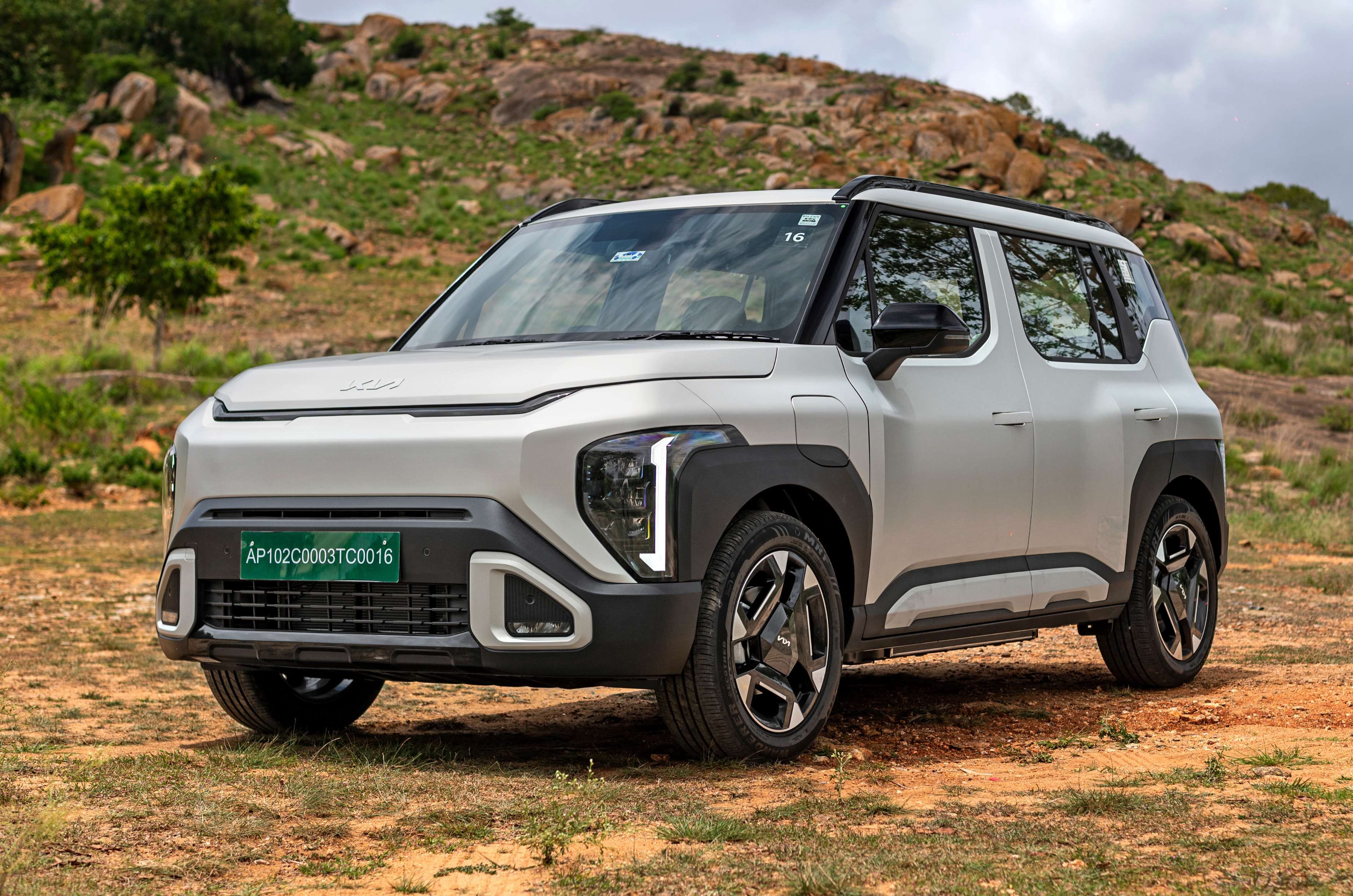
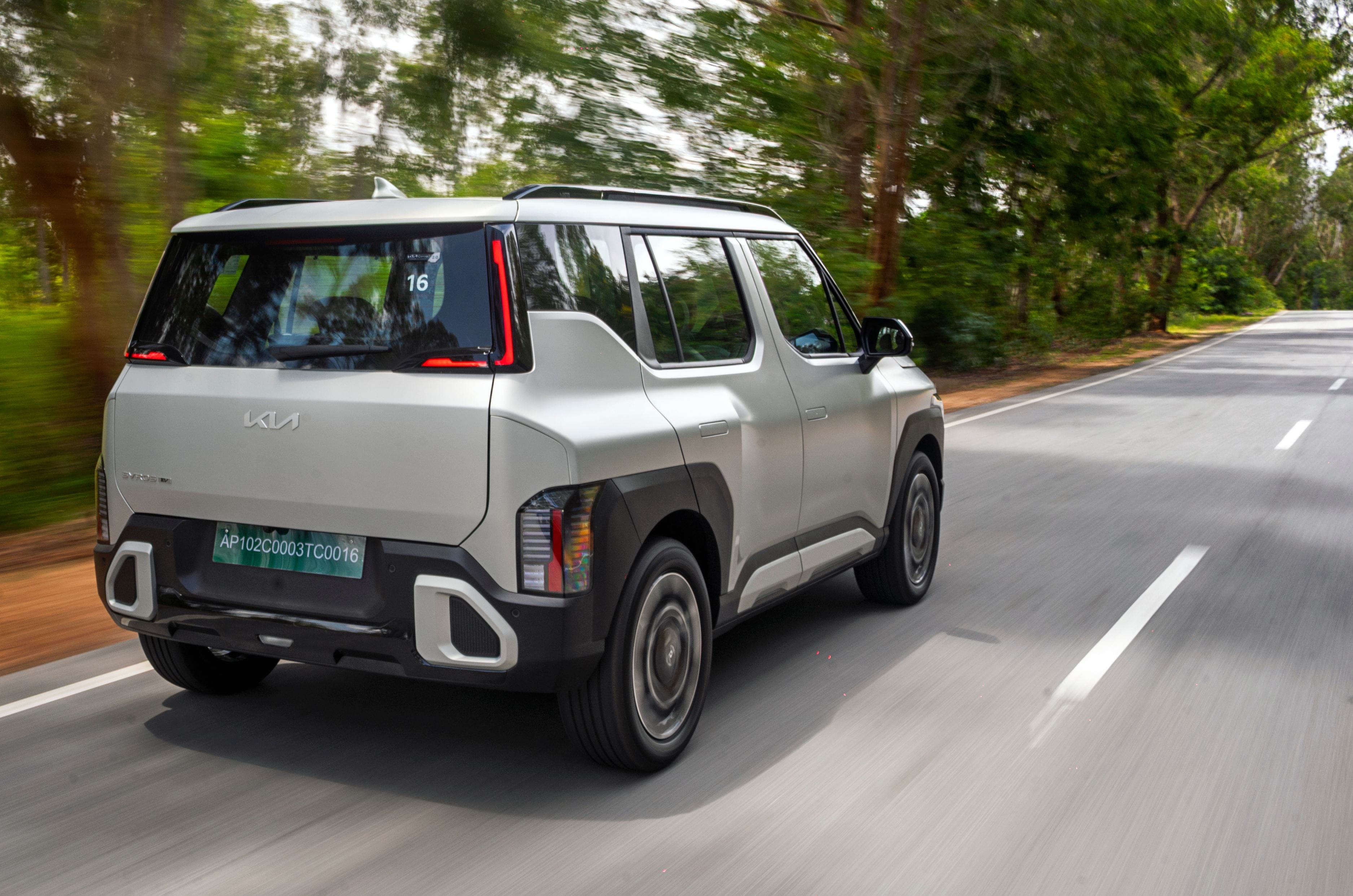
3 reasons to buy the Kia Syros EV and 2 not to

Kia Syros EV

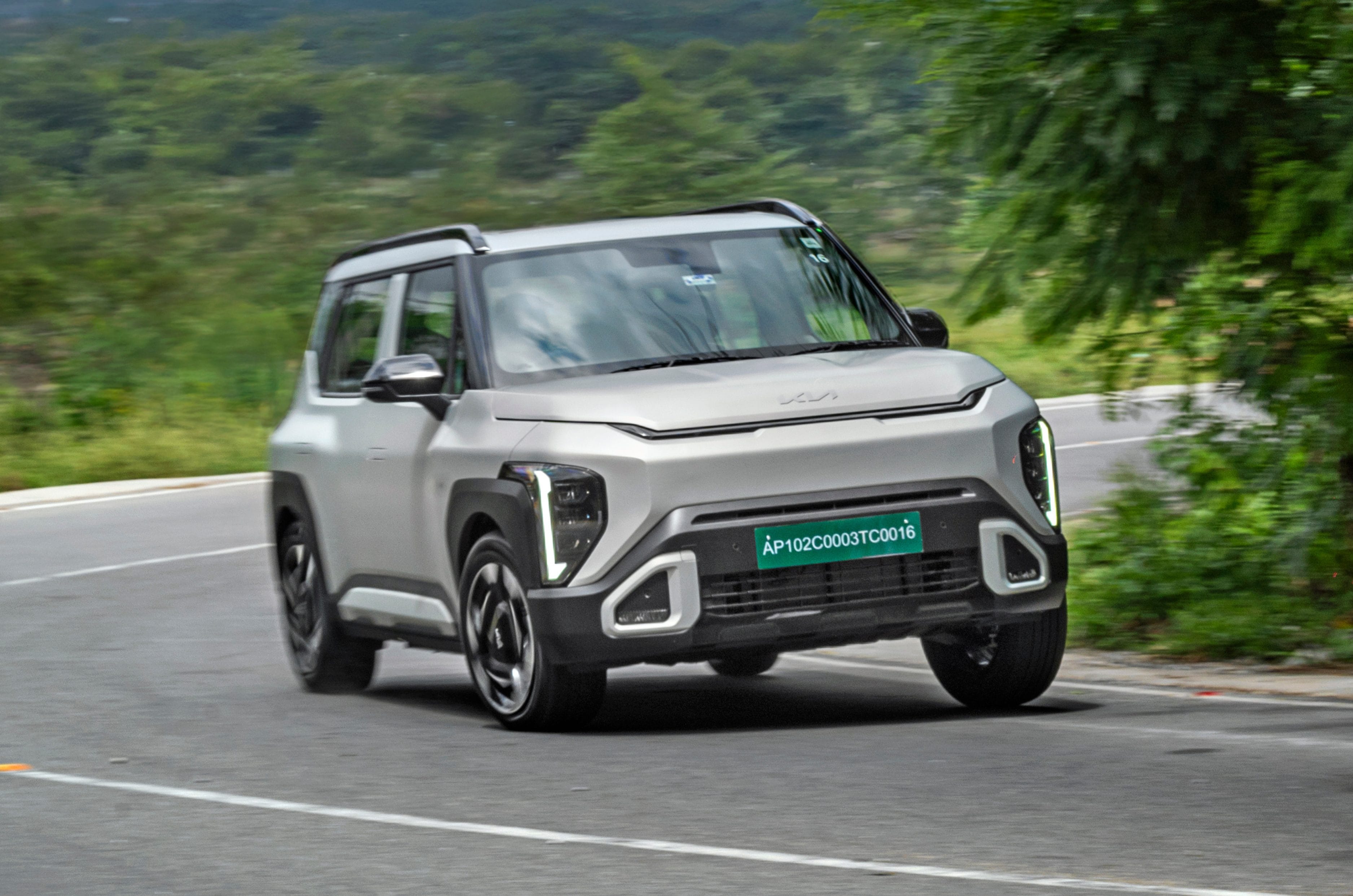
After the Carens Clavis EV, the Kia Syros EV is the carmaker’s second mass-market zero-emission vehicle in India. The electric Syros rivals the Mahindra XUV 3XO EV and the Tata Nexon EV, and we recently got behind the wheel to find out what it does well and where it falls short. If you are planning to bring this Kia EV home, here are three reasons to consider it and two reasons why you may want to think again.

Pros

Impressive performance and range

First, let’s discuss some numbers. The Kia Syros EV is offered with two battery pack options: 42kWh and 51.4kWh. Both power a front axle-mounted electric motor, producing 135hp with the smaller battery and 171hp with the larger unit. Torque remains the same at 255Nm for both versions.

Kia Syros EV performance

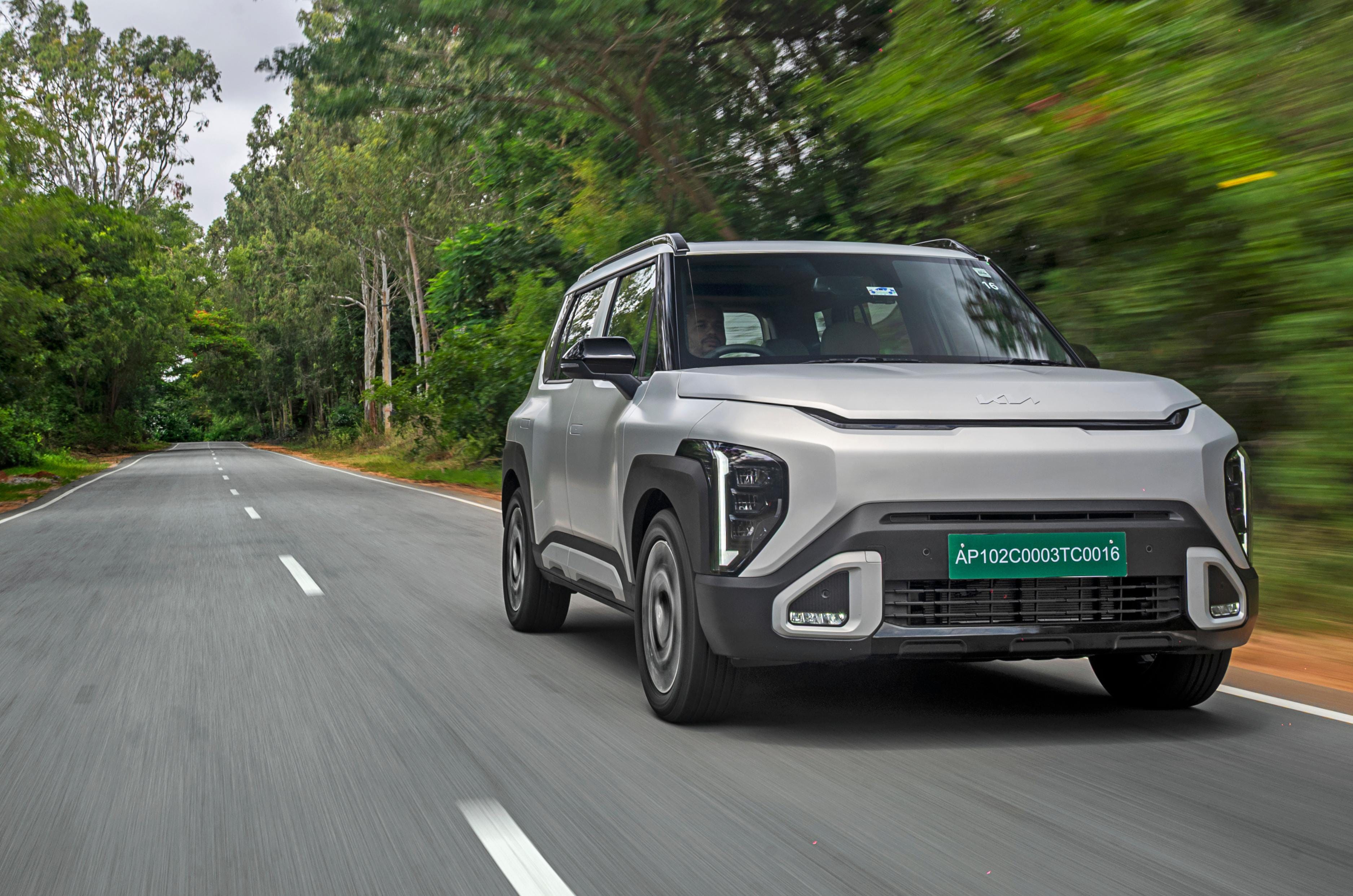
We drove the 51.4kWh version, which Kia claims can sprint from 0-100kph in 8.1 seconds. In our experience, performance was brisk. The EV comes with Eco, Normal and Sport drive modes, and throttle response becomes a little sharper as you move through them. Initial response across modes is linear, though there is a strong shove as you press the throttle further. Even in Eco and Normal, overtaking is effortless, and there is rarely a need to switch to Sport for a quick pass.

Kia Syros EV performance

The MIDC range is 526km for the 51.4kWh battery pack and 443km for the 42kWh unit. While our short drive wasn’t enough to verify these figures, the larger battery should comfortably deliver around 400km of real-world range on a single charge.

Spacious and practical cabin

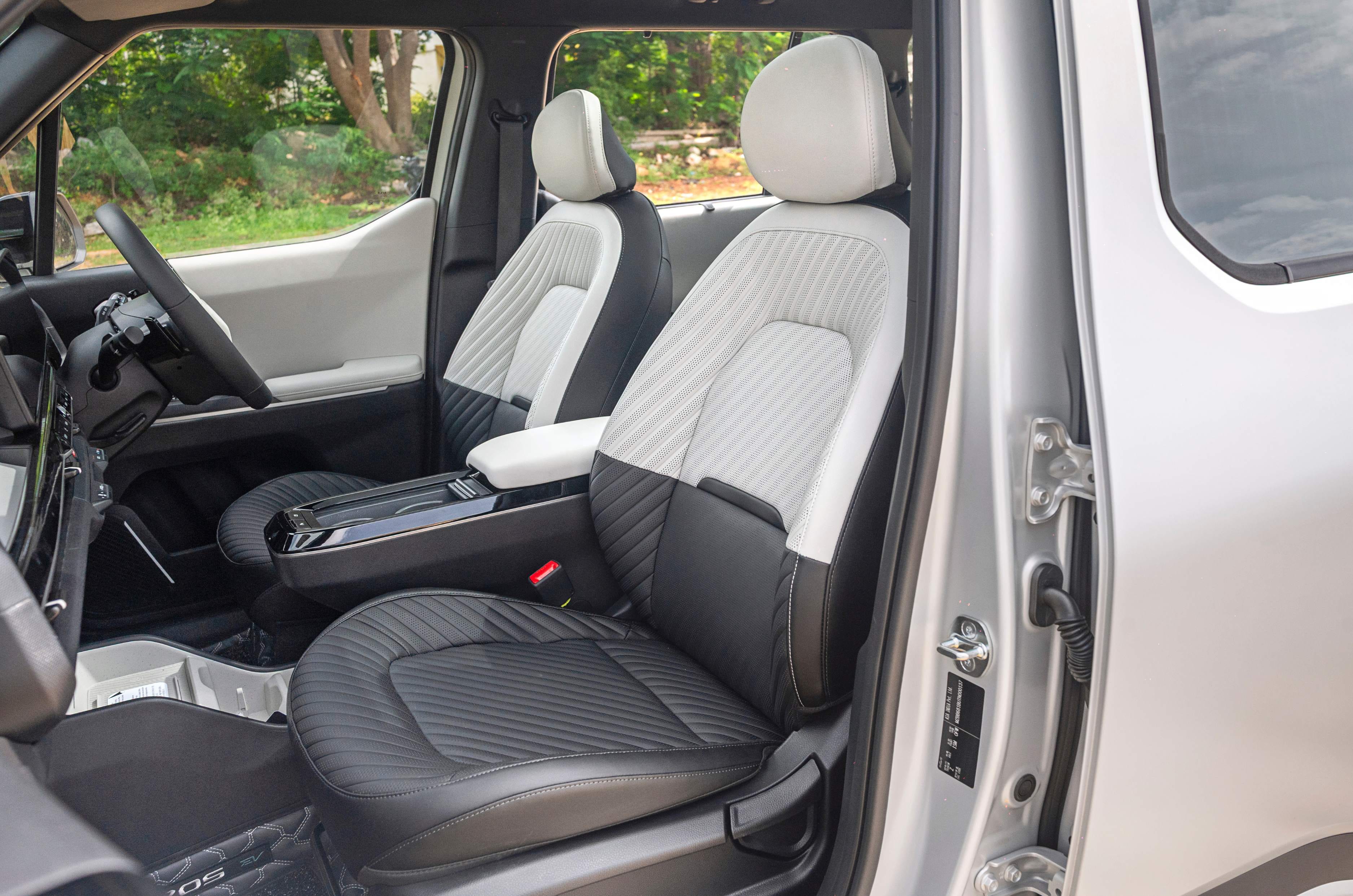
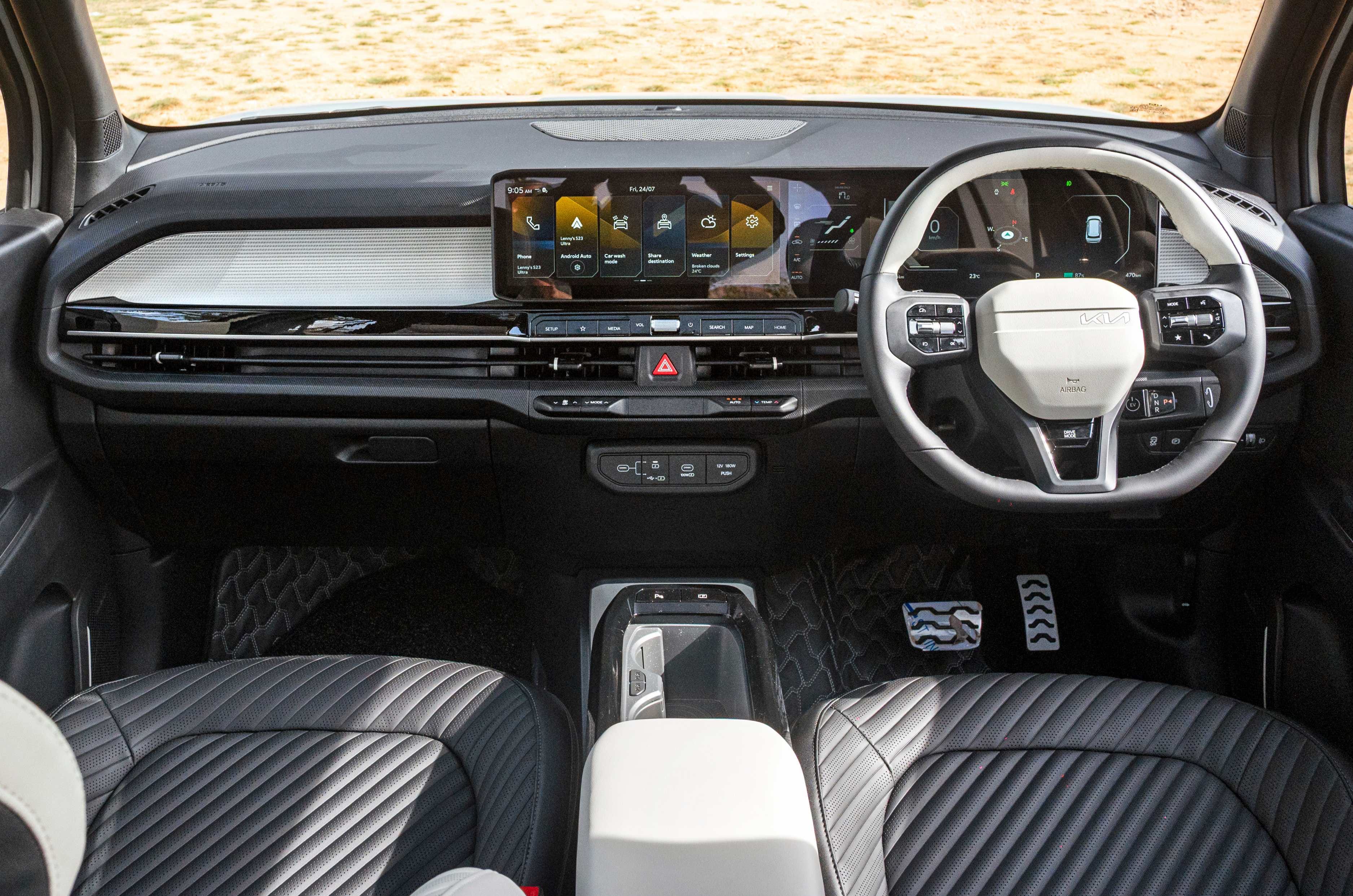
Like the ICE version, the Syros EV offers plenty of space for passengers. Since the drive selector is placed on the steering column, Kia has redesigned the centre console to create more storage space. Its upper section gets a small storage area below the armrest and two cup holders with a sliding cover. The console’s lower section offers a larger storage space for a bag, another cup holder and a wireless phone charger. Also, the front door pockets are large enough to hold a couple of bottles and an umbrella.

Kia Syros EV seats

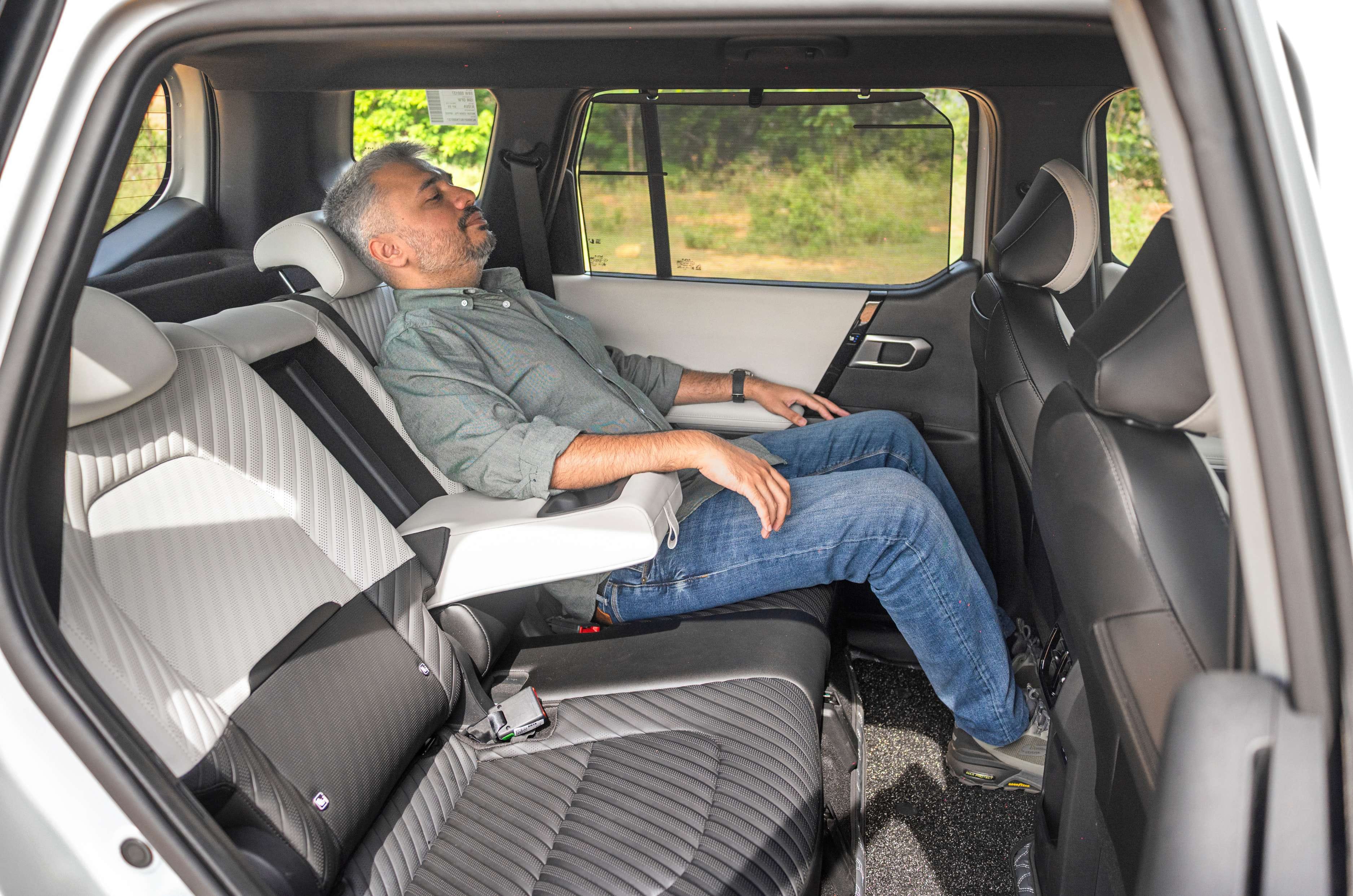
The front seats are comfortable and supportive, and the rear-seat space continues to be one of the compact SUV’s biggest strengths, with plenty of room all around. The battery pack raises the floor slightly, but sliding the rear bench backwards makes it much more comfortable. The EV’s flat floor is another advantage, and rear-seat ventilation (for the base) has been carried over from the ICE version.

Kia Syros EV seats

The boot space remains unchanged at 390 litres with the rear seat pushed back and 465 litres with it slid forward. Rear seats can also be folded to carry larger items, and being an EV, it also offers a 16-litre frunk (front boot).

Feature-packed

Kia Syros EV dashboard

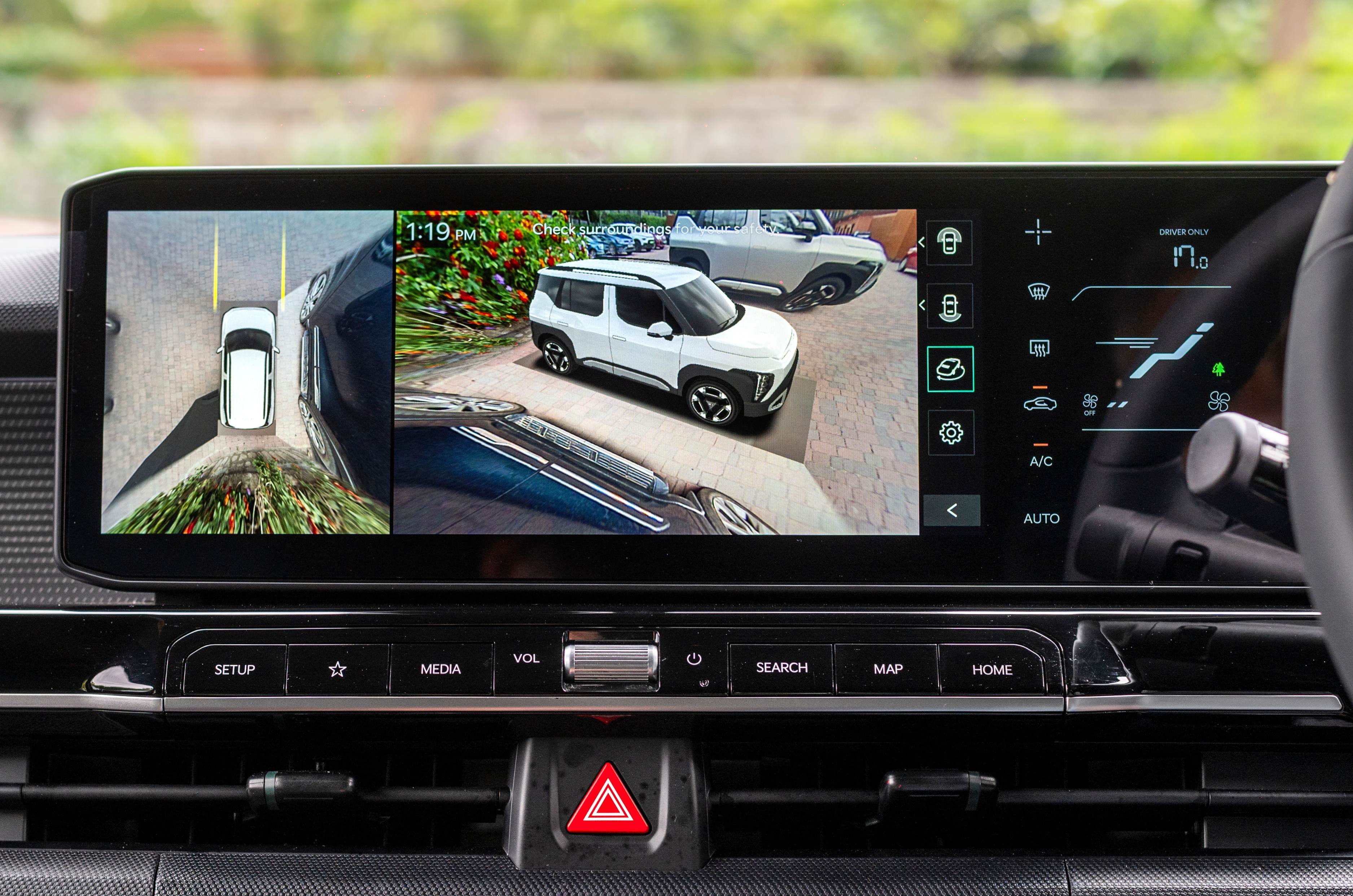
The EV gets Kia’s Trinity Panoramic Display, which includes two 12.3-inch screens for infotainment and the driver’s display, along with a 5-inch screen for the climate control. Wireless Android Auto and Apple CarPlay are offered, while the top trims also feature an eight-speaker Harman Kardon sound system. To pamper occupants at the back, AC vents and sunblinds are standard across the range. The household-style three-pin socket in the back seat is exclusive to the top-spec X-Line trim.

As for safety, the Syros EV comes with six airbags, all-wheel disc brakes, tyre-pressure monitoring and Isofix child-seat mounts as standard. The X-Line trim also gets a 360-degree camera and an ADAS (advanced driver assistance systems) suite with features such as adaptive cruise control with stop-and-go, lane-keep assist, forward and rear collision avoidance and a blind-spot camera. Notably, the ICE version no longer gets ADAS.

At the time of writing, the Syros EV has not yet received an official crash-safety rating. However, since the ICE version has already earned a 5-star Bharat NCAP crash-safety rating, the EV is expected to achieve a similar result.

Cons

Body roll through the corners

Kia Syros EV in the corners

The ride on the Syros EV is slightly more absorbent than the ICE version, although there is still an underlying firmness. This helps keep the car stable, but because it is tall and narrow, there is noticeable body roll around the corners.

Pricey at the top end

The Kia Syros EV is priced from Rs 13.5 lakh for the 42kWh version, while the 51.4kWh Extended Range starts at Rs 17 lakh. The fully loaded X-Line trim is priced at Rs 20 lakh. At this price, it competes with the Tata Nexon EV (Rs 12.49 lakh-17.49 lakh) and Mahindra XUV 3XO EV (Rs 13.89 lakh-14.69 lakh) compact SUVs, as well as larger EVs such as the MG Windsor EV (Rs 14.7 lakh-19 lakh) and Maruti e Vitara (Rs 15.99 lakh-19.99 lakh).

Kia Syros EV X-Line
Top-spec Kia Syros X-Line.

The 42kWh version does offer strong value for money, but the larger 51.4kWh Extended Range version is a tougher sell. It costs noticeably more than its direct rivals and even overlaps with higher-battery versions of the MG Windsor EV and Maruti e Vitara. While the Syros EV has several strengths, many buyers may want a bigger SUV for similar money. Kia’s Battery-as-a-Service (BaaS) scheme lowers the upfront purchase cost, but similar plans are also available with the MG and Maruti EVs.

Ex-showroom prices mentioned above are as of July 30, 2026.

Anti Paper Leak Bill 2026 : पेपर लीक विरोधी बिल पास होने पर इंस्टाग्राम पर PM मोदी का संदेश, पेपर लीक गैंग पर होगी सख्त कार्रवाई

pm modi paper leak

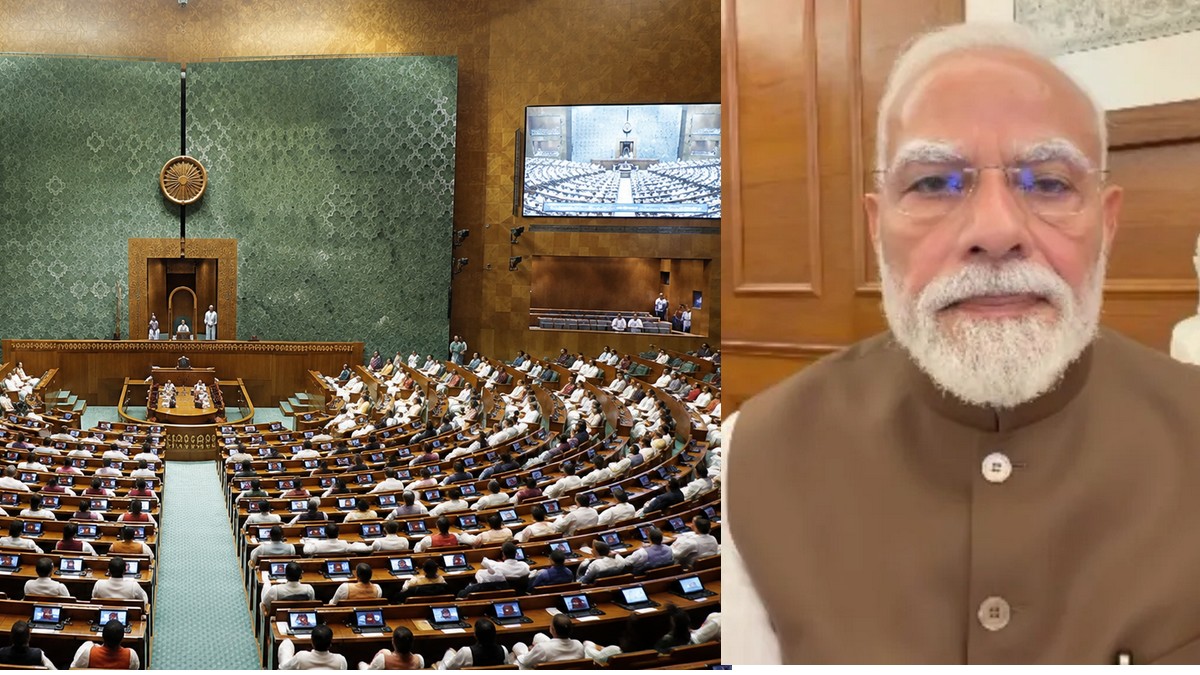
संसद में पेपर लीक विरोधी विधेयक पारित होने का स्वागत करते हुए प्रधानमंत्री नरेंद्र मोदी ने गुरुवार को कहा कि सरकार देश की परीक्षा व्यवस्था को और अधिक मजबूत बनाएगी। उन्होंने दोहराया कि पेपर लीक गिरोहों के खिलाफ सख्त कार्रवाई करने के लिए सरकार पूरी तरह प्रतिबद्ध है। प्रधानमंत्री नरेंद्र मोदी ने अपने इंस्टाग्राम अकाउंट्स पर जारी एक वीडियो संदेश में कहा कि पेपर लीक विरोधी विधेयक का संसद से पारित होना भारत के लिए एक ऐतिहासिक क्षण है।

ALSO READ: Priyanka Gandhi Remark : प्रियंका गांधी की 'गौमूत्र एक्सपर्ट' टिप्पणी पर 214 शिक्षाविदों का खुला पत्र, IIT मद्रास निदेशक के समर्थन में उठी आवाज

उन्होंने कहा कि परीक्षा प्रणाली को और मजबूत करने के लिए आने वाले समय में कई और कदम उठाए जाएंगे। उन्होंने देशवासियों से विकसित भारत के सपने को साकार करने के लिए मिलकर आगे बढ़ने का आह्वान किया। पीएम मोदी ने कहा कि दशकों से केंद्र और राज्य की अलग-अलग सरकारें पेपर लीक की घटनाओं से निपटती रही हैं। ऐसे में परीक्षा व्यवस्था में सुधार करना जरूरी हो गया था। उन्होंने कहा कि पेपर लीक जैसी घटनाओं से निपटने के लिए सख्त कानून की आवश्यकता थी।


प्रधानमंत्री ने अपने करीब 2 मिनट 26 सेकंड के वीडियो में कहा कि सरकार ने संसद में विधेयक पेश किया था और उनके वादे के मुताबिक दोनों सदनों में बड़ी संख्या में सांसदों ने इस पर विस्तार से चर्चा की। अब दोनों सदनों ने सख्त प्रावधानों वाले इस विधेयक को पारित कर दिया है।


पीएम मोदी ने कहा कि विश्वसनीय परीक्षा व्यवस्था की दिशा में यह एक महत्वपूर्ण कदम है और यह काम आगे भी जारी रहेगा। उन्होंने कहा कि सरकार ऐसी स्थिति को लंबे समय तक बने नहीं रहने देगी। प्रधानमंत्री ने देशवासियों से विकसित भारत के लक्ष्य को हासिल करने के लिए कंधे से कंधा मिलाकर आगे बढ़ने की अपील की।

राज्यसभा में ध्वनिमत से पास हुआ बिल

'Public Examination (Prevention of Unfair Means) Amendment Bill, 2026' को गुरुवार को राज्यसभा में ध्वनिमत से पारित कर दिया गया। इस दौरान कई विपक्षी दलों ने सदन से वॉकआउट किया। इससे पहले बुधवार को लोकसभा ने इस विधेयक को मंजूरी दी थी। अब विधेयक को राष्ट्रपति द्रौपदी मुर्मू की मंजूरी के लिए भेजा जाएगा।

ALSO READ: सस्ते Electric Scooters की होने वाली है इंट्री, Ather से Honda तक मचेगी हलचल

पेपर लीक पर 5 से 10 साल तक की सजा


संशोधन विधेयक में पेपर लीक या परीक्षा में अनुचित साधनों के इस्तेमाल में शामिल लोगों के लिए कड़े प्रावधान किए गए हैं। ऐसे मामलों में दोषी पाए जाने पर कम से कम 5 साल और अधिकतम 10 साल तक की जेल और 50 लाख रुपए तक का जुर्माना लगाया जा सकता है। वहीं, संगठित अपराध के मामलों में कम से कम 7 साल की सजा का प्रावधान किया गया है। इसके अलावा ऐसे मामलों में कम से कम 10 करोड़ रुपए का जुर्माना लगाया जा सकता है।

ALSO READ: iPhone 18 Pro Max vs Pixel 11 Pro XL: अगस्त में Google और सितंबर में Apple की टक्कर, जानें कौन होगा सबसे दमदार?

यह विधेयक ऐसे समय में पारित हुआ है जब देश में प्रतियोगी परीक्षाओं में कथित अनियमितताओं और पेपर लीक को लेकर लगातार सवाल उठ रहे हैं। सरकार का दावा है कि नए कड़े प्रावधान परीक्षा प्रणाली में पारदर्शिता और विश्वसनीयता बढ़ाने में महत्वपूर्ण भूमिका निभाएंगे।

पीएम मोदी ने राष्ट्रपति द्रौपदी मुर्मू से की मुलाकात, किन मुद्दों पर हुई चर्चा

प्रधानमंत्री नरेंद्र मोदी ने गुरुवार को राष्ट्रपति द्रौपदी मुर्मू से मुलाकात की। प्रधानमंत्री ने राष्ट्रपति भवन पहुंचकर राष्ट्रपति से भेंट की। राष्ट्रपति कार्यालय ने सोशल मीडिया प्लेटफॉर्म ‘एक्स’ पर मुलाकात की तस्वीरें शेयर कीं।

राष्ट्रपति कार्यालय ने पोस्ट में कहा कि प्रधानमंत्री नरेंद्र मोदी ने राष्ट्रपति द्रौपदी मुर्मू से राष्ट्रपति भवन में मुलाकात की। 

प्रधानमंत्री और राष्ट्रपति की यह मुलाकात ऐसे समय हुई है, जब राष्ट्रपति द्रौपदी मुर्मू एक सप्ताह के सफल विदेश दौरे के बाद रविवार को भारत लौटी हैं। इस दौरान उन्होंने मोल्दोवा, नॉर्थ मैसेडोनिया और रोमानिया का दौरा किया था।  राष्ट्रपति के इस दौरे को भारत के इन यूरोपीय देशों के साथ द्विपक्षीय संबंधों को मजबूत करने की दिशा में महत्वपूर्ण माना गया।

Priyanka Gandhi Remark : प्रियंका गांधी की ‘गौमूत्र एक्सपर्ट’ टिप्पणी पर 214 शिक्षाविदों का खुला पत्र, IIT मद्रास निदेशक के समर्थन में उठी आवाज

priyanka gandhi

कांग्रेस सांसद प्रियंका गांधी वाड्रा (Priyanka Gandhi) की IIT मद्रास के निदेशक प्रोफेसर वी. कामकोटि को लेकर की गई कथित ‘गौमूत्र एक्सपर्ट’ टिप्पणी पर 200 से अधिक शिक्षाविदों ने कड़ी आपत्ति जताई है। 214 शिक्षाविदों के हस्ताक्षर वाले एक खुले पत्र में प्रियंका गांधी की टिप्पणी की आलोचना करते हुए इसे एक प्रतिष्ठित वैज्ञानिक और शिक्षाविद के प्रति अनुचित बताया गया है।

ALSO READ: 2 सितंबर को सस्ते Electric Scooter की धमाकेदार एंट्री, तहलका मचा देंगे फीचर्स

यह विवाद उस समय सामने आया जब वायनाड से कांग्रेस सांसद प्रियंका गांधी ने प्रधानमंत्री नरेंद्र मोदी की ओर से परीक्षा सुधारों के लिए गठित टास्क फोर्स में IIT मद्रास के निदेशक वी. कामकोटि को शामिल किए जाने पर सवाल उठाए थे।

ALSO READ: जेन-जी को 'गटर जनरेशन' कहकर घिरीं कंगना रनौत, CJP ने दिया करारा जवाब

परीक्षा सुधारों के लिए गठित टास्क फोर्स में शामिल हैं वी. कामकोटि


परीक्षा व्यवस्था में सुधार के लिए गठित टास्क फोर्स की अध्यक्षता Infosys के सह-संस्थापक नंदन नीलेकणि कर रहे हैं। इसमें पूर्व ISRO चेयरमैन एस. सोमनाथ, पूर्व IB निदेशक तपन डेका, IIT मद्रास के निदेशक वी. कामकोटि, पूर्व शिक्षा सचिव अनिता करवाल और लॉजिस्टिक्स विशेषज्ञ अमृत लाल मीणा शामिल हैं। यह टास्क फोर्स NEET-UG पेपर लीक और अन्य परीक्षा अनियमितताओं को लेकर हुए विरोध-प्रदर्शनों के बाद सरकार की ओर से घोषित कई उपायों में से एक है। इन घटनाक्रमों के बीच धर्मेंद्र प्रधान ने शिक्षा मंत्री के पद से इस्तीफा दिया था।


214 शिक्षाविदों ने खुले पत्र में क्या कहा?


214 शिक्षाविदों द्वारा हस्ताक्षरित खुले पत्र में प्रियंका गांधी की टिप्पणी पर निराशा जताई गई है। पत्र में कहा गया है कि IIT मद्रास के निदेशक प्रोफेसर वी. कामकोटि को ‘गौमूत्र एक्सपर्ट’ बताना, चाहे व्यंग्य के तौर पर कहा गया हो या राजनीतिक बयानबाजी के रूप में, गंभीर सवाल खड़े करता है।


पत्र पर हस्ताक्षर करने वाले शिक्षाविदों ने प्रोफेसर कामकोटि को देश के प्रमुख तकनीकी विशेषज्ञों में से एक बताया है। पत्र में कहा गया कि इतिहास बताता है कि कई ऐसे विचार जिन्हें कभी असंभव माना गया था, बाद में वैज्ञानिक रूप से सही साबित हुए, जबकि कई व्यापक रूप से स्वीकार की गई धारणाओं को बाद में खारिज कर दिया गया।


खुले पत्र पर हस्ताक्षर करने वालों में National Informatics Centre (NIC) के पूर्व महानिदेशक डॉ. सीएसआर प्रभु, हैदराबाद विश्वविद्यालय के पूर्व कुलपति डॉ. अप्पा राव पोडिले, जवाहरलाल नेहरू विश्वविद्यालय की कुलपति डॉ. शांतिश्री धुलिपुड़ी पंडित, मुंबई विश्वविद्यालय के कुलपति डॉ. आरडी कुलकर्णी और IIT धारवाड़ के निदेशक डॉ. वीआर देसाई समेत कई शिक्षाविद शामिल हैं।


लोकसभा में प्रियंका गांधी ने क्या कहा था?

लोकसभा में एंटी-पेपर लीक बिल पर चर्चा के दौरान प्रियंका गांधी ने परीक्षा सुधार टास्क फोर्स में प्रोफेसर वी. कामकोटि की भूमिका पर सवाल उठाया था। उन्होंने सदन में टास्क फोर्स के सदस्यों का उल्लेख करते हुए कहा था कि इसमें एक पूर्व IB प्रमुख, एक IT कंपनी के मालिक और एक ‘गौमूत्र एक्सपर्ट’ हैं।


उनकी इस टिप्पणी के बाद भारतीय जनता पार्टी की ओर से तीखी प्रतिक्रिया सामने आई। बीजेपी नेता अनुराग ठाकुर ने प्रियंका गांधी की टिप्पणी पर दुख जताते हुए कहा कि उन्होंने देश के प्रमुख वैज्ञानिकों और प्रोफेसरों में से एक को निशाना बनाया है। ठाकुर ने प्रियंका गांधी की सदन में बोलने की शैली पर भी सवाल उठाए और आरोप लगाया कि वह गंभीर मुद्दों पर बात करते समय मुस्कुराकर और मासूम चेहरा बनाकर लोगों को गुमराह करने की कोशिश करती हैं।

ALSO READ: iPhone 18 Pro Max vs Pixel 11 Pro XL: अगस्त में Google और सितंबर में Apple की टक्कर, जानें कौन होगा सबसे दमदार?

बयान को लेकर राजनीतिक विवाद तेज

प्रियंका गांधी की टिप्पणी के बाद अब 214 शिक्षाविदों के खुले पत्र ने इस मुद्दे को नया मोड़ दे दिया है। शिक्षाविदों ने प्रोफेसर कामकोटि के वैज्ञानिक और तकनीकी योगदान का उल्लेख करते हुए सार्वजनिक बहस में व्यक्तियों के प्रति सम्मानजनक भाषा के इस्तेमाल की आवश्यकता पर जोर दिया है। वहीं, इस मुद्दे को लेकर कांग्रेस और बीजेपी के बीच राजनीतिक बयानबाजी भी तेज हो गई है। परीक्षा सुधारों और NEET-UG से जुड़े विवाद के बीच टास्क फोर्स में शामिल विशेषज्ञों को लेकर राजनीतिक बहस आगे भी जारी रहने की संभावना है।

PM Modi के खिलाफ अभद्र टिप्पणी मामले में नोएडा में मुकदमा दर्ज, युवती और परिजन फरार, केस दिल्ली ट्रांसफर

cjp jantar mantar protest

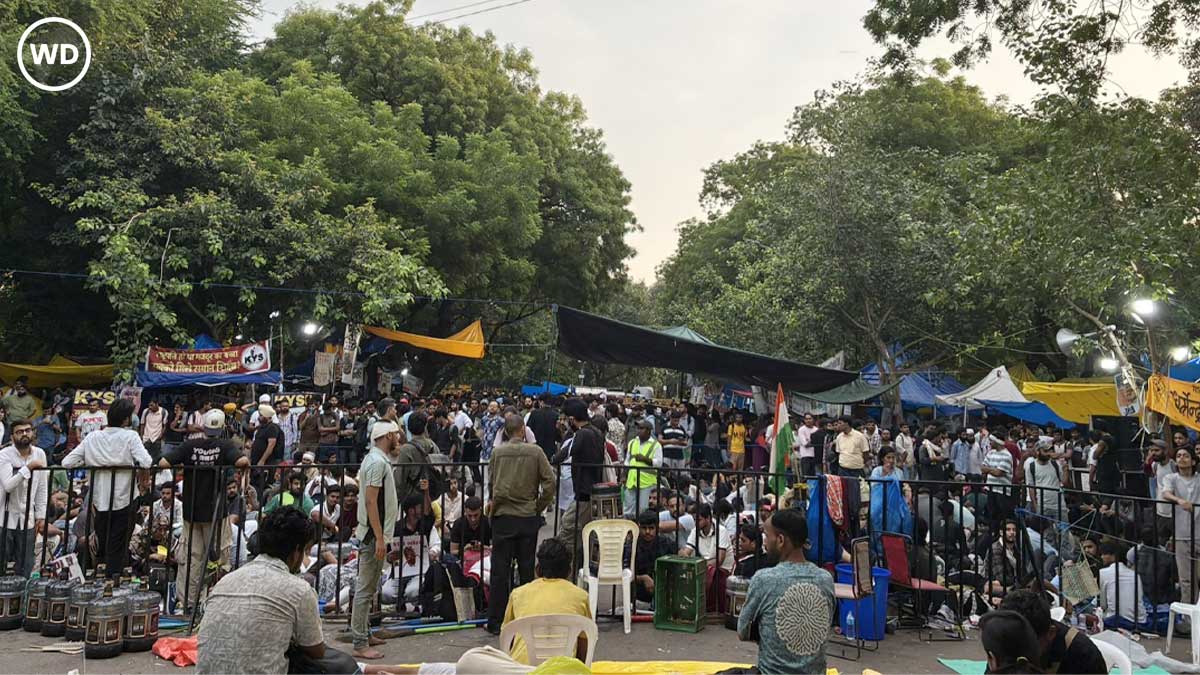
प्रधानमंत्री नरेंद्र मोदी के खिलाफ सार्वजनिक प्रदर्शन के दौरान कथित तौर पर अभद्र और आपत्तिजनक टिप्पणी करने के मामले में नोएडा के एक्सप्रेसवे थाने में मुकदमा दर्ज कराया गया है। शिकायतकर्ता के अनुसार, यह टिप्पणी 23 जुलाई को दिल्ली के जंतर-मंतर पर होने वाले प्रदर्शन के दौरान की गई थी। पुलिस ने शिकायत के आधार पर मामला दर्ज करने के बाद केस को दिल्ली ट्रांसफर कर दिया है। अब मामले की जांच दिल्ली पुलिस करेगी।


शिकायतकर्ता स्मृति सिंह ने पुलिस को बताया कि वह गाजियाबाद के वसुंधरा की रहने वाली हैं और सुप्रीम कोर्ट में अधिवक्ता हैं। उनके मुताबिक, 23 जुलाई को उनके संज्ञान में आया कि दिल्ली के जंतर-मंतर पर आयोजित प्रदर्शन के दौरान एक युवती ने देश के प्रधानमंत्री के खिलाफ सार्वजनिक रूप से कथित तौर पर अभद्र और आपत्तिजनक भाषा का इस्तेमाल किया।

ALSO READ: अयोध्या राम मंदिर चोरी के 81 लाख कैसे बरामद हुए? चंपत राय की चिट्‍ठी से खुला बड़ा राज

शिकायतकर्ता ने आरोप लगाया कि युवती की टिप्पणी से संवैधानिक पद की गरिमा को ठेस पहुंची और जानबूझकर लोक शांति भंग करने का प्रयास किया गया।


नोएडा की सोसाइटी में रहती है युवती

शिकायतकर्ता के मुताबिक, कथित टिप्पणी करने वाली युवती की पहचान नोएडा के सेक्टर-168 स्थित लोट्स जिंग सोसाइटी निवासी रुचिका सिंह के रूप में हुई है। पुलिस के अनुसार, वह मूल रूप से फरीदाबाद के ऊंचागांव की रहने वाली बताई गई है। जानकारी के मुताबिक, युवती ब्यूटी पार्लर संचालित करती है और इसी साल जनवरी में उसने नोएडा में फ्लैट खरीदा था।

ALSO READ: सस्ते Electric Scooters की होने वाली है इंट्री, Ather से Honda तक मचेगी हलचल

घटना के बाद से युवती और परिजन घर पर नहीं मिले

पुलिस के अनुसार, घटना के बाद से युवती और उसके परिजन कथित तौर पर अपने आवास पर नहीं मिले हैं। पुलिस उनकी तलाश कर रही है और मामले से जुड़े तथ्यों की जांच की जा रही है।

BNS की इन धाराओं में दर्ज हुआ मामला

ALSO READ: iPhone 18 Pro Max vs Pixel 11 Pro XL: अगस्त में Google और सितंबर में Apple की टक्कर, जानें कौन होगा सबसे दमदार?

पुलिस ने बताया कि शिकायत के आधार पर भारतीय न्याय संहिता (BNS) की धारा 352, 353(1) और 356(1) के तहत शून्य अपराध संख्या (Zero FIR) दर्ज की गई है। इसके बाद केस को दिल्ली ट्रांसफर कर दिया गया है, क्योंकि कथित घटना दिल्ली के जंतर-मंतर से संबंधित है। अब मामले की आगे की विवेचना दिल्ली पुलिस द्वारा की जाएगी। फिलहाल पुलिस युवती की तलाश के साथ-साथ वायरल वीडियो और शिकायत में लगाए गए आरोपों से जुड़े तथ्यों की भी जांच कर रही है। मामले में आगे की कार्रवाई जांच के निष्कर्षों के आधार पर की जाएगी।