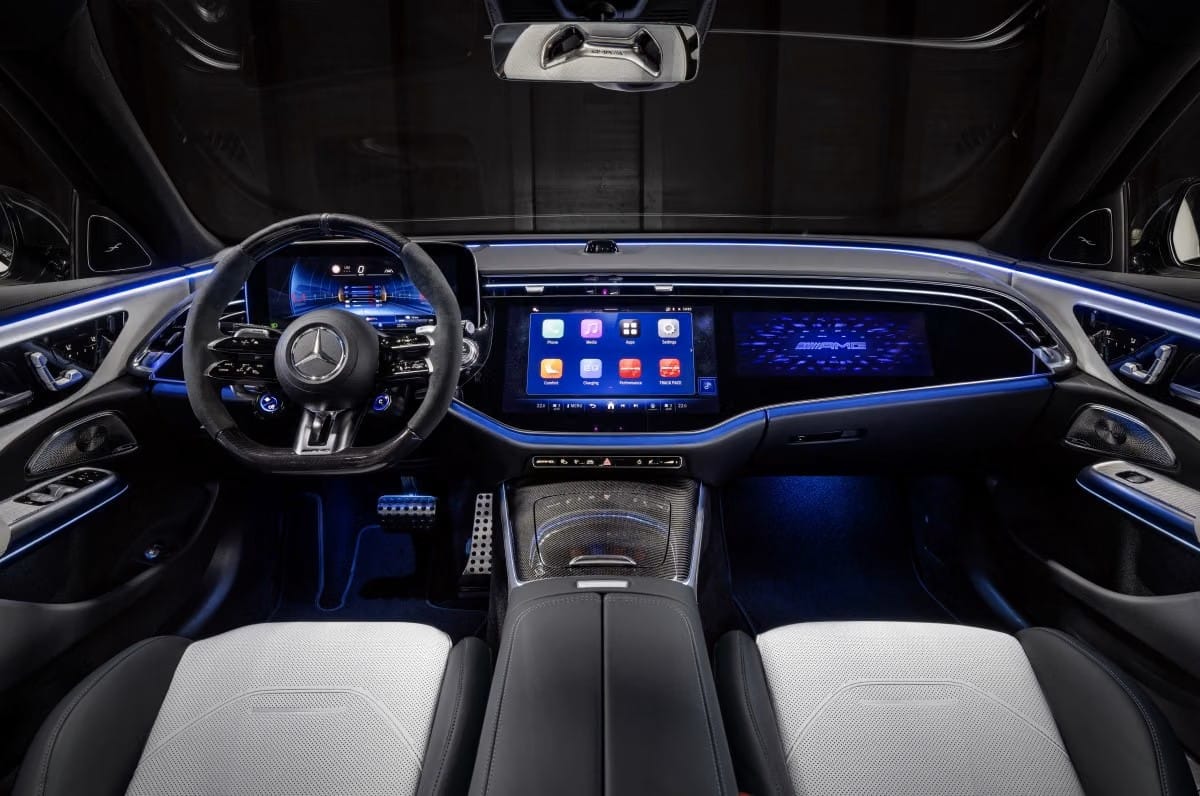
The 2026 Maruti Suzuki Brezza facelift receives updated exterior styling, a revised interior, new convenience and safety features, and a broader powertrain line-up. Buyers can choose from petrol, turbo-petrol and factory-fitted CNG powertrains across four trims – LXi, VXi, ZXi and ZXi+. Here’s a detailed look at what each variant offers and which one you should consider buying.
The Brezza facelift is priced at a at a starting price of Rs 7.40 lakh and is available with three powertrain options spread across the four-variant line-up. The new 1.0-litre Boosterjet direct injection turbo-petrol engine is offered across all four trims with a 6-speed manual gearbox. The 1.5-litre K15C petrol engine is available with a 6-speed manual on the LXi, VXi and ZXi, while the 6-speed automatic can be had from the VXi onwards, including the range-topping ZXi+. Buyers looking for a factory-fitted CNG option can choose between the LXi, VXi and ZXi variants, as the top-spec ZXi+ is offered only with petrol power.
2026 Maruti Suzuki Brezza facelift colour options
The Brezza facelift is available in nine exterior colours, including monotone and dual-tone finishes. Dual-tone paint schemes are limited to higher variants, while colour availability varies depending on the trim. The ZXi and ZXi+ also get additional premium paint options and dual-tone combinations.
2026 Maruti Suzuki Brezza facelift variant-wise features
LXi
Powertrains: 1.0 Boosterjet 6MT, 1.5 Petrol 6MT, 1.5 CNG 6MT
Six airbags
Electronic Stability Program (ESP)
Hill Hold Assist
Rear parking sensors
ISOFIX child seat mounts
Three-point seatbelts for all occupants
Tyre repair kit
Tilt-adjust steering
Keyless entry
Driver-side auto up/down power window
Rear AC vents
Electrically adjustable ORVMs
Halogen projector headlamps
LED tail-lamps
Roof spoiler
Shark-fin antenna
16-inch steel wheels with wheel covers
Fabric upholstery
Manual day/night IRVM
Rear defogger (Boosterjet only)
Height-adjustable driver’s seat (Boosterjet only)
Auto climate control (Boosterjet only)
VXi
Features over LXi
Powertrains: 1.0 Boosterjet 6MT, 1.5 Petrol 6MT/6AT, 1.5 CNG 6MT
7-inch touchscreen infotainment system
Wireless Android Auto and Apple CarPlay
ARKAMYS sound system
Steering-mounted audio and Bluetooth controls
Suzuki voice assistant
Remote infotainment app
Reverse parking camera (Boosterjet)
Automatic climate control
Height-adjustable driver’s seat
Rear defogger
16-inch alloy wheels (Boosterjet)
Electrically foldable ORVMs (Boosterjet)
ZXi
Features over VXi
Powertrains: 1.0 Boosterjet 6MT, 1.5 Petrol 6MT/6AT, 1.5 CNG 6MT
Electric sunroof
Push-button start
LED projector headlamps
Auto headlamps (Boosterjet)
Chrome front grille
60:40 split-folding rear seat
Roof rails
Rear centre armrest
Parcel tray
Wireless charger
Rear centre armrest with cupholder
Ambient lighting
Rear wiper and washer (Boosterjet)
Cruise control (Boosterjet)
Tweeters (Boosterjet)
Front parking sensors (Boosterjet)
Blind Spot Warning (Boosterjet)
Rear Cross Traffic Alert (Boosterjet)
Tyre Pressure Monitoring System (Boosterjet)
ZXi+
Features over ZXi
Powertrains: 1.0 Boosterjet 6MT, 1.5 Petrol 6AT
10.1-inch touchscreen infotainment system
ARKAMYS Surround Sense audio system
Connected car technology (Suzuki Connect)
Front centre armrest with storage
Front sliding armrest
LED fog lamps
LED DRLs
Cooled glovebox
Auto-folding ORVMs
Auto-dimming IRVM
360-degree camera
In-built navigation with live traffic updates
Rear USB ports (Type-A and Type-C)
Internet connectivity
Cruise control
Alexa Auto voice assistant
Over-the-air app updates
PM2.5 cabin air filter with AQI display
Ventilated front seats
Leatherette upholstery
64-colour ambient lighting
16-inch diamond-cut alloy wheels
Leather-wrapped steering wheel
Blind Spot Warning
Rear Cross Traffic Alert
Which 2026 Maruti Suzuki Brezza facelift variant should you buy?
The ZXi is the sweet spot in the Brezza facelift range. It gets many of the features buyers in this segment are likely to appreciate, including an electric sunroof, LED projector headlamps, wireless charger, push-button start and ambient lighting, while remaining available with all three mainstream powertrains – the 1.5-litre petrol manual, 1.5-litre petrol automatic and factory-fitted CNG. This makes it the most well-rounded variant for most buyers.
If you’re planning to buy the new 1.0-litre Boosterjet turbo-petrol, the ZXi again stands out. In addition to the features mentioned above, it adds equipment such as cruise control, front parking sensors, Blind Spot Warning, Rear Cross Traffic Alert and a tyre pressure monitoring system, making it the best-balanced turbo variant in the Brezza range.
The ZXi+ is best suited to buyers who specifically want the larger 10.1-inch touchscreen, Suzuki Connect connected car technology, ventilated front seats, leatherette upholstery, 360-degree camera and premium cabin features. While it offers the most comprehensive equipment list in the Brezza range, the additional convenience features may not justify the price premium for every buyer.
The Honda ZR-V is the carmaker’s first hybrid SUV in India and its being brought here via the CBU route from Japan as a brand builder or a halo product. It’s also the first of a few global products being launched in India, so it gives us an idea of what we can expect from Honda in the coming years. Honda says the ZR-V is a “Sports Hybrid” meaning it prioritizes performance and fuel efficiency in equal parts, which is why the company gave us a chance to briefly experience it at the Buddh International Circuit.
Honda ZR-V Exterior Design and Engineering – 8/10
Hybrid powertrain is smooth, seamless, zippy and promises to be efficient as well
The Honda ZR-V is a strong hybrid SUV that features a 2.0-litre, four-cylinder, direct injection, petrol engine that runs on the more efficient Atkinson cycle and it works in tandem with two, permanent magnet synchronous electric motors. The powertrain produces a max combined output of 184hp and 315Nm which is channeled to the front wheels only via an eCVT transmission. The SUV has a claimed 0-100kph time of 7.9 seconds and an electronically limited top speed of 172kph. Internationally, the ZR-V is also offered with an all-wheel-drive (AWD) setup and a 1.5-litre turbo-petrol engine producing 180hp and 240Nm but that is currently not on the cards for India.
It’s responsive off the line and feels composed at high speeds
The strong hybrid powertrain feels smooth and zippy right from the get-go. What’s great is that it makes all the 315Nm of torque from standstill, so it feels quick right from launch and you’re never left wanting more. Power delivery is smooth and linear and it’s also keen to respond to part-throttle inputs. The powertrain is also very refined with barely any engine, road or tyre noise filtering through.
At low speeds with light throttle inputs, the ZR-V will stay in pure EV mode as long as the battery has enough charge. Unlike some other strong hybrids however, you can’t manually choose EV mode. Push the accelerator harder and the engine will come on, with the SUV moving to the hybrid drive mode. In this mode, the electric motor is still powering the wheels with the engine acting as a generator to keep the battery topped up. Then there’s the engine drive mode, which is specifically used at high speeds. Here, it’s the engine powering the wheels with the electric motor assisting.
However, there are drive modes that you can change – Eco, Normal and Sport – and these don’t have an effect on the output or how the powertrain works but just the response. There’s paddleshifters too, for cycling between the regenerative braking modes and they do work effectively. As for the friction brakes, the ZR-V comes with discs all around and they felt predictable and confidence-inspiring out on track.
Honda ZR-V Mileage and Efficiency – 8/10
Honda claims the ZR-V will do an impressive 22.80kpl. Considering it’s a hybrid, real-world efficiency should be close to the claimed but we’ll have to reserve judgement till we actually subject the SUV to our fuel efficiency tests.
Honda ZR-V Ride Comfort and Handling – 7/10
Considering we drove it on BIC’s smooth tarmac surface and only for a few laps, giving a definitive verdict on its ride comfort is difficult. As for high speed composure, the SUV felt stable.
In terms of handling, the ZR-V felt enjoyable to drive around the corners. Handling on the whole was stable and predictable, thanks to a well-weighted and precise steering. A slalom course also demonstrated its tidy body control and it felt eager to change directions.
Honda ZR-V Exterior Design and Engineering – 7/10
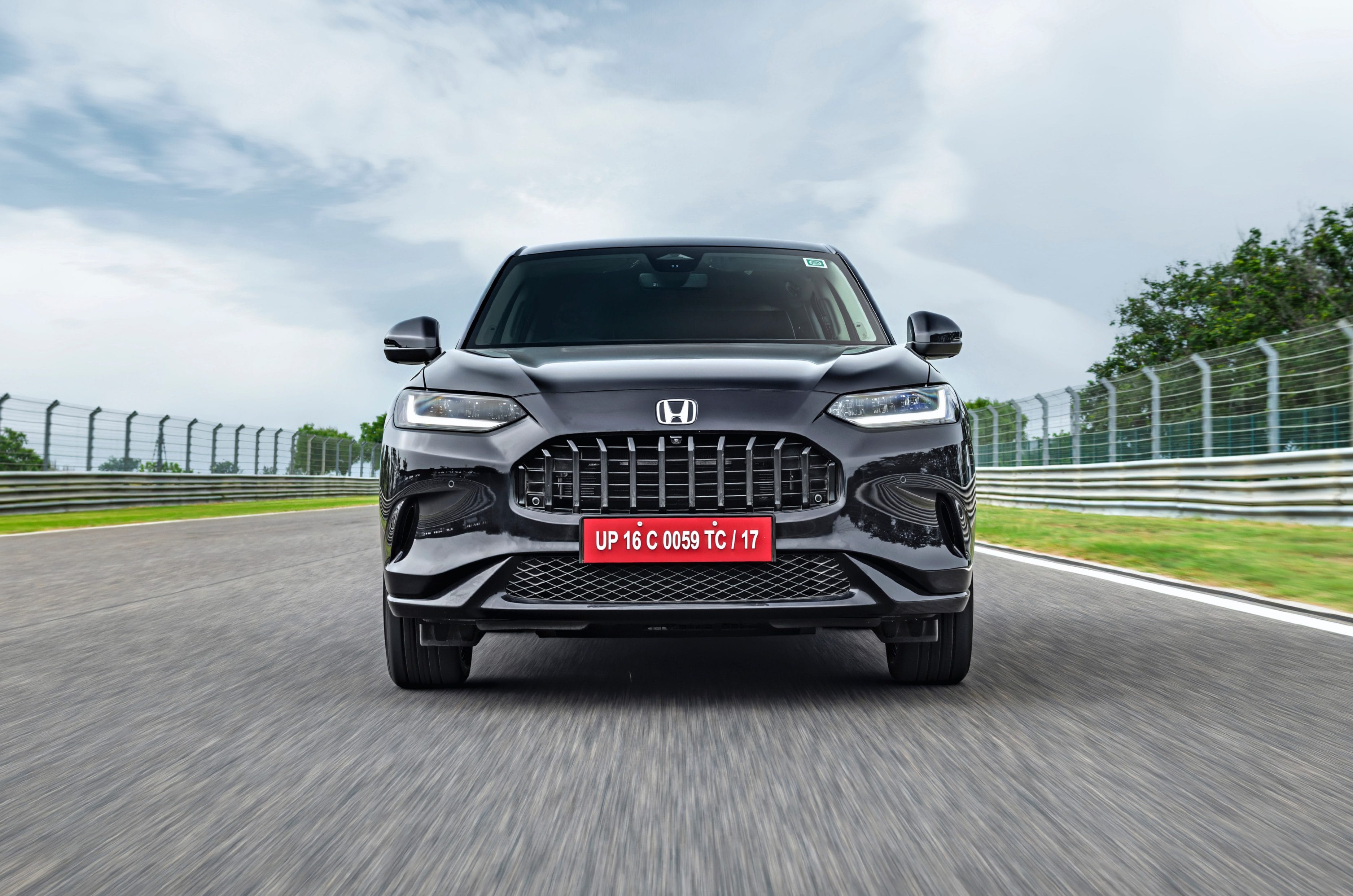
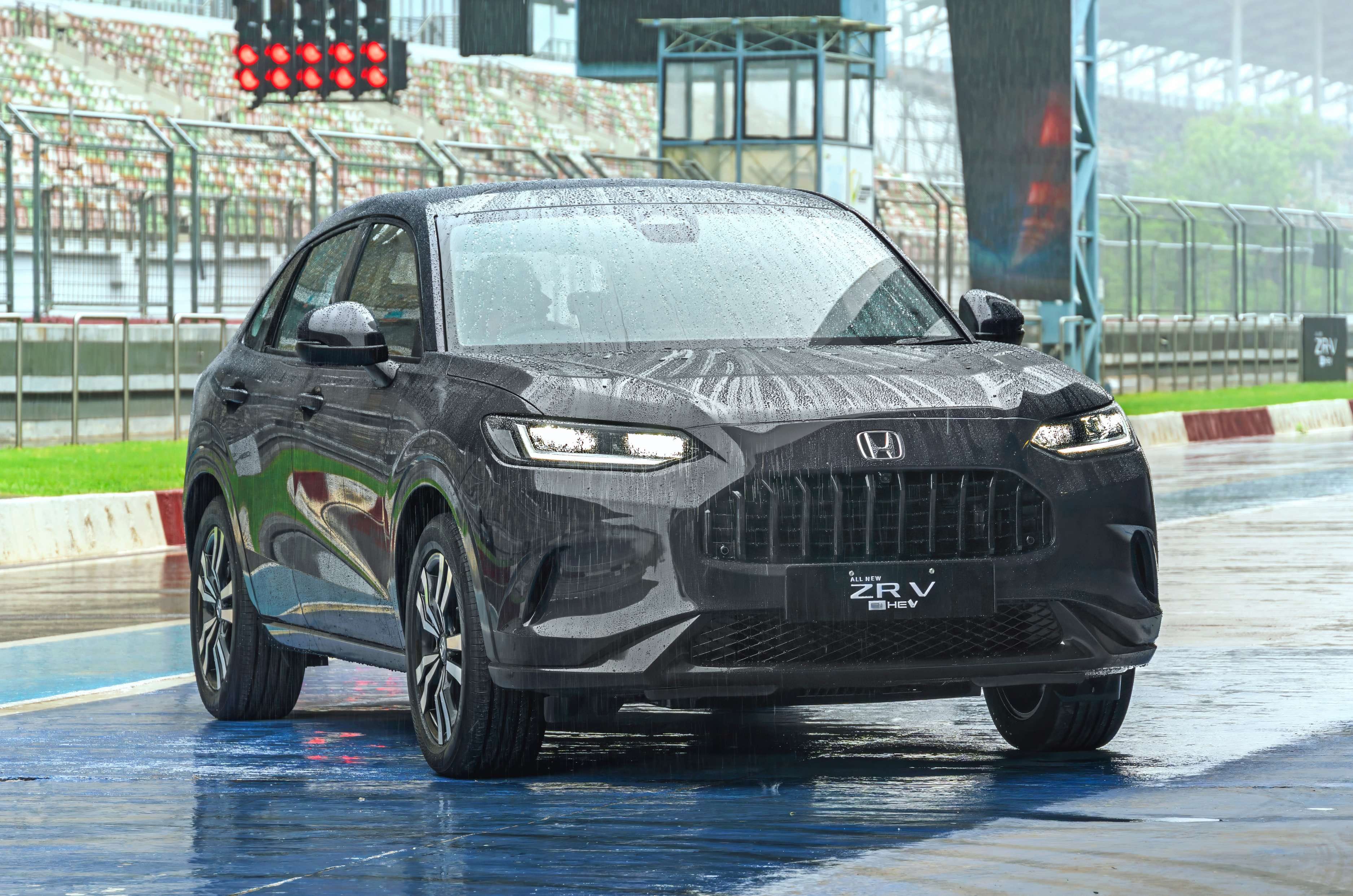
Unlike most SUVs which have a squared-off and upright stance, the Honda ZR-V has a sleek, crossover-like design, with rounded-off and clean surfaces. Up front, it gets slim LED headlights with L-shaped daytime running lamps (DRLs), a black grille with vertical slates and a bumper that houses functional air vents on either side.
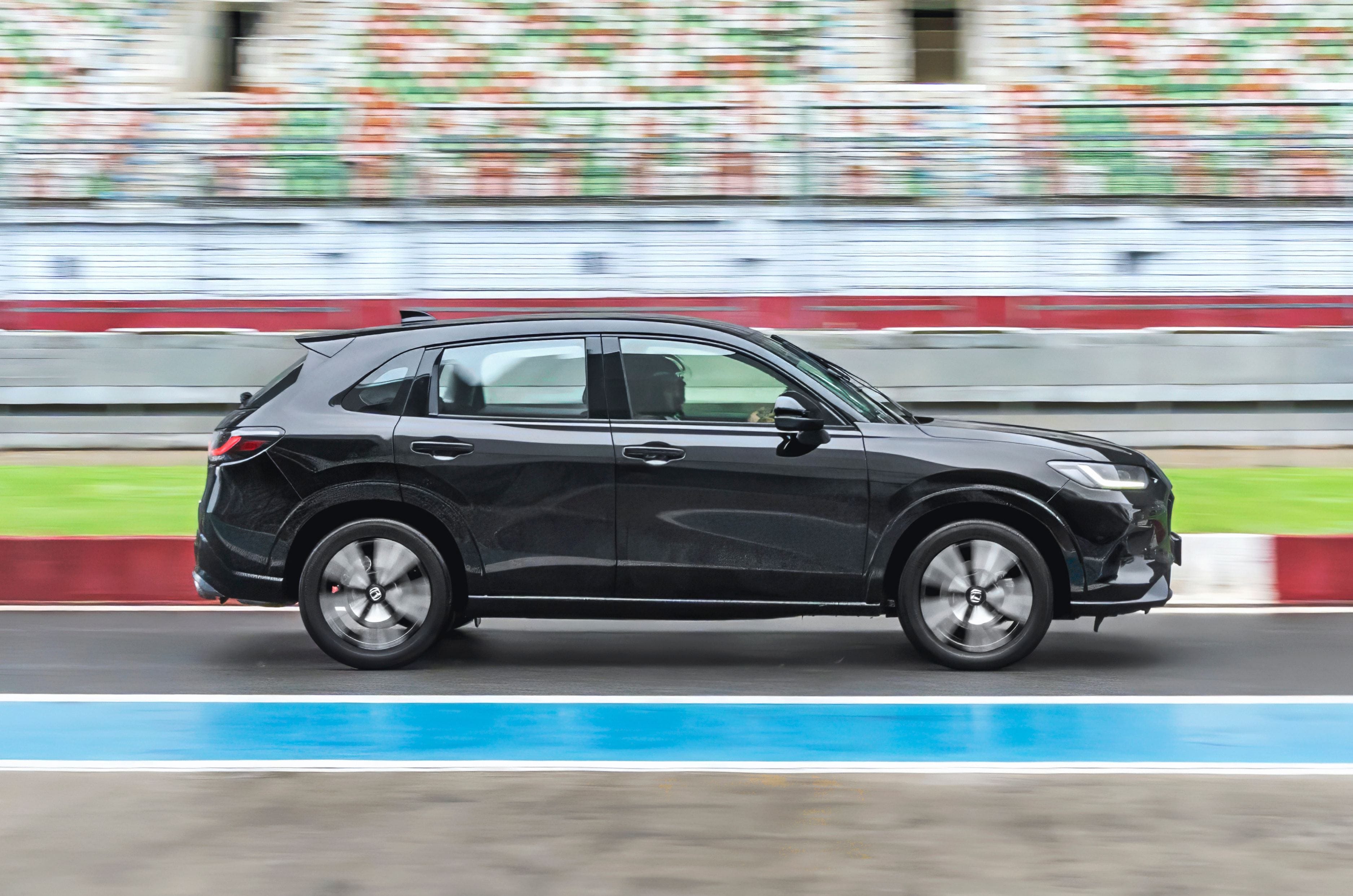
ZR-V’s styling is more like a crossover than an upright SUV.
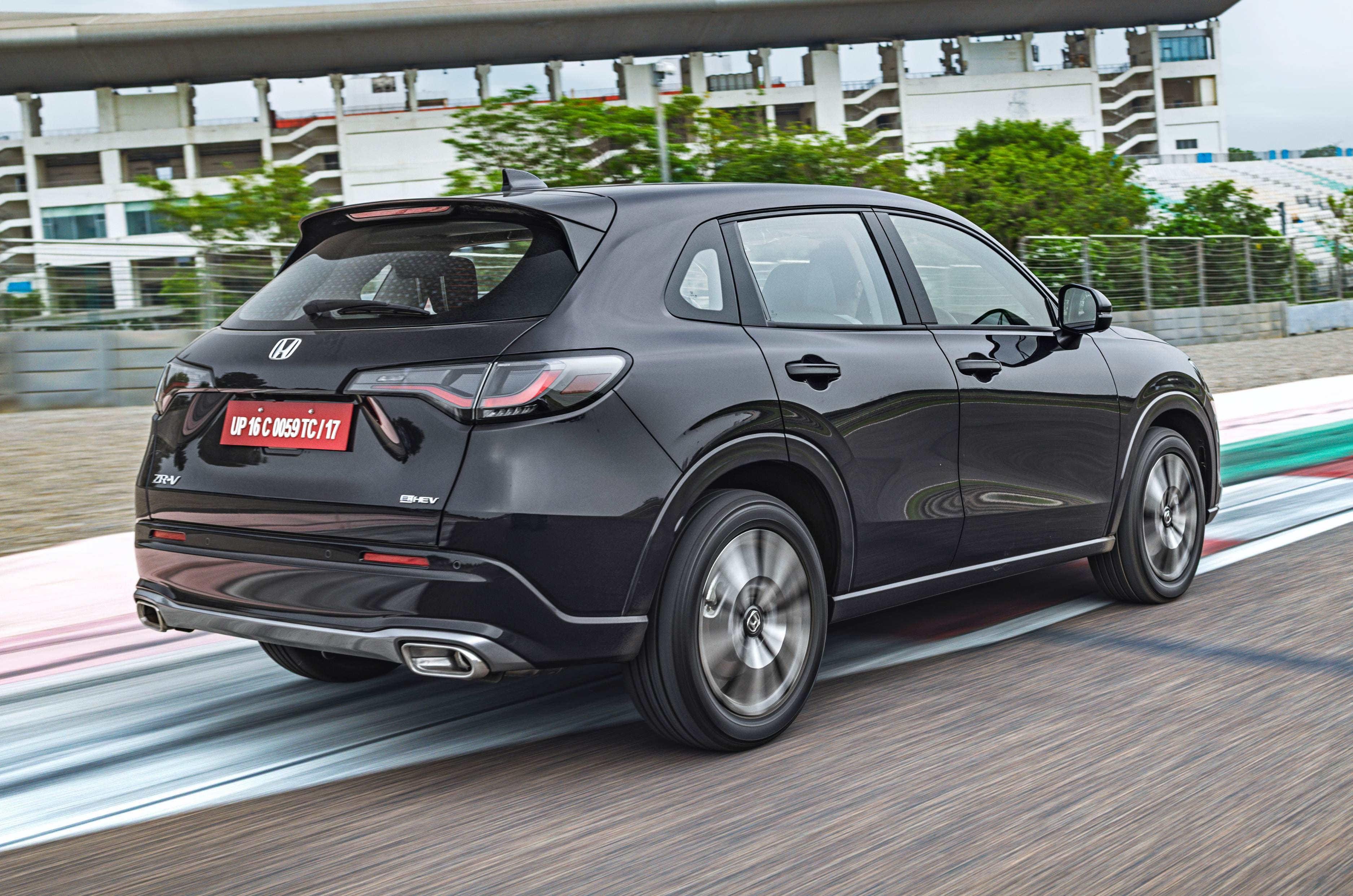
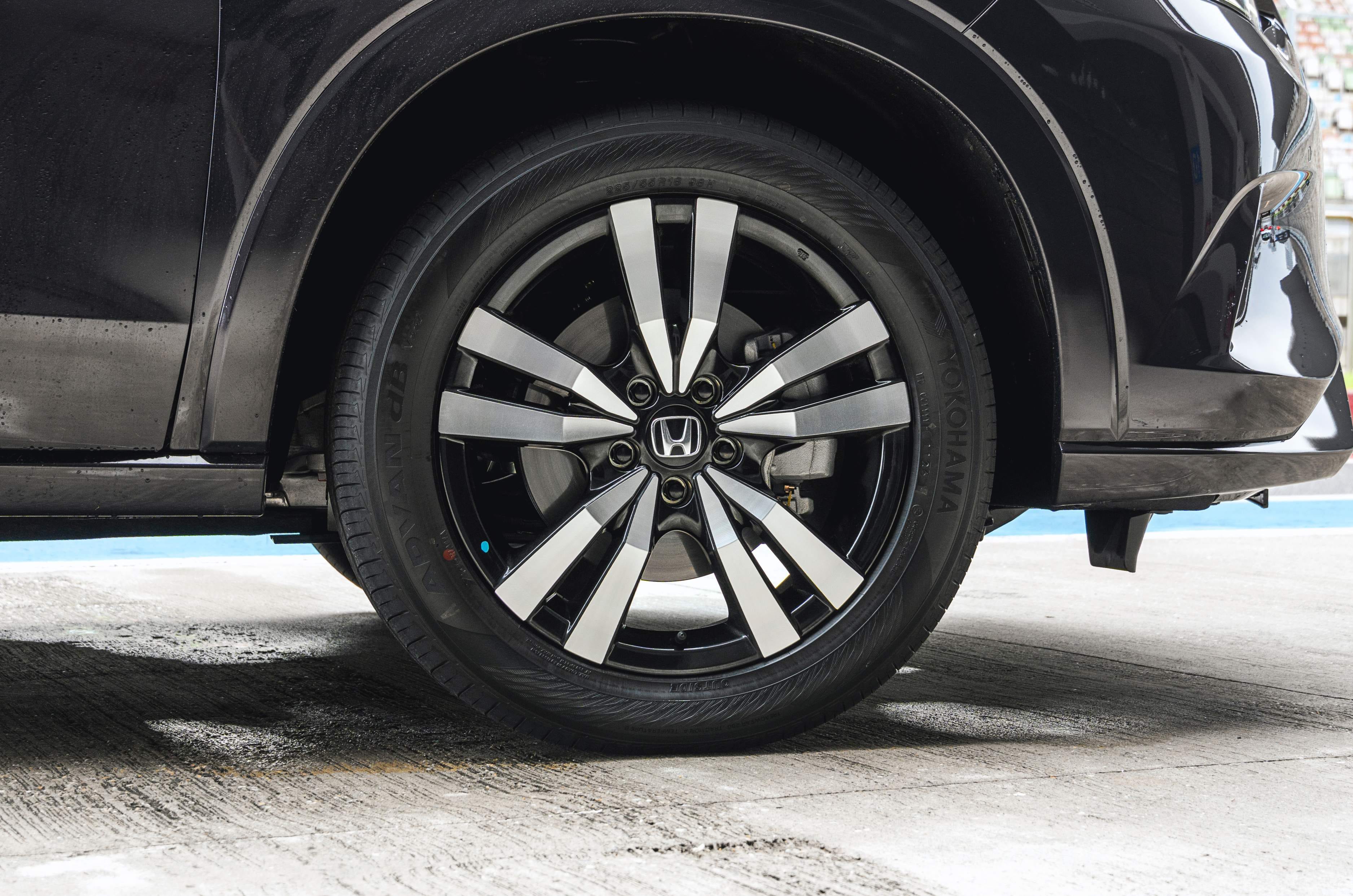
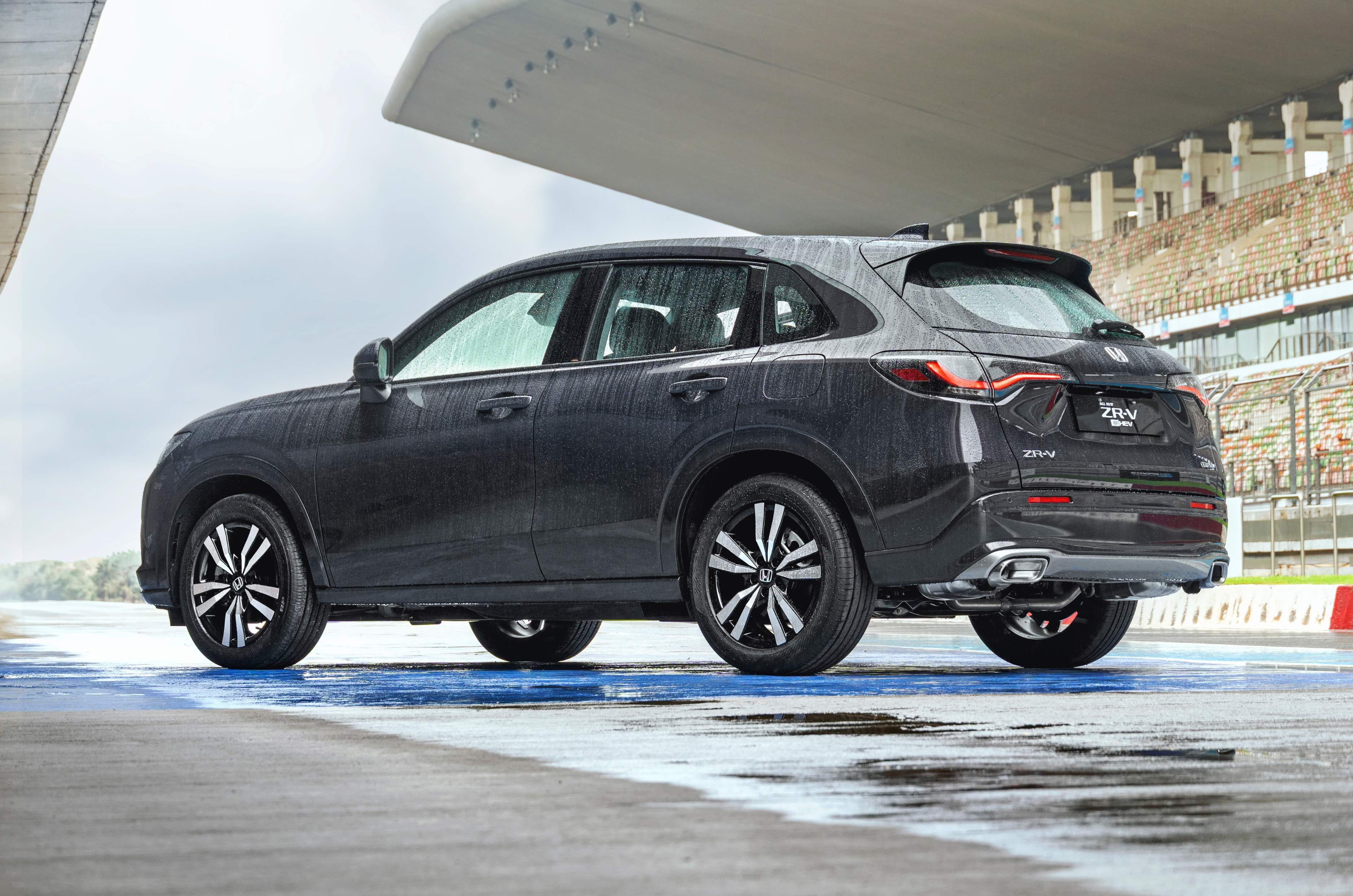
Along the sides, there’s stylish 18-inch alloy wheels with a dual-tone finish, body-coloured cladding around the wheel arches and a tapering roofline at the rear. Unlike most SUVs today, the ZR-V doesn’t get connected tail-lights, instead you get clear-lens taillamps with LED elements. Then there’s a roof-mounted spoiler element and lower down in the bumper, you get dual exhausts.
18-inch alloys get an attractive dual-tone finish.
On the whole, the ZR-V styling comes across as subtle and not striking. And given its dimensions of just over 4.5m in length and 1.8m in width, it doesn’t quite have the presence of its rivals. And it also doesn’t help that Honda is only offering four colours, all of which are subdued.
Honda ZR-V Interior Space and Comfort – 7/10
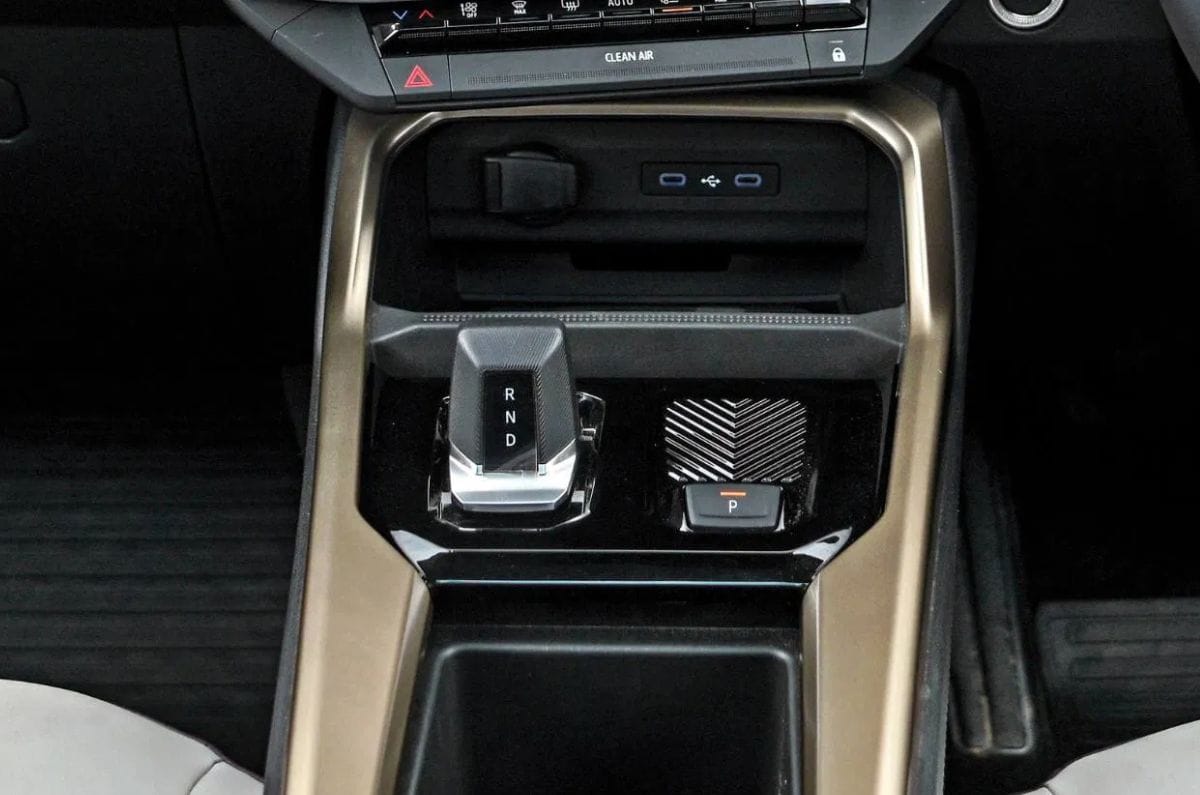
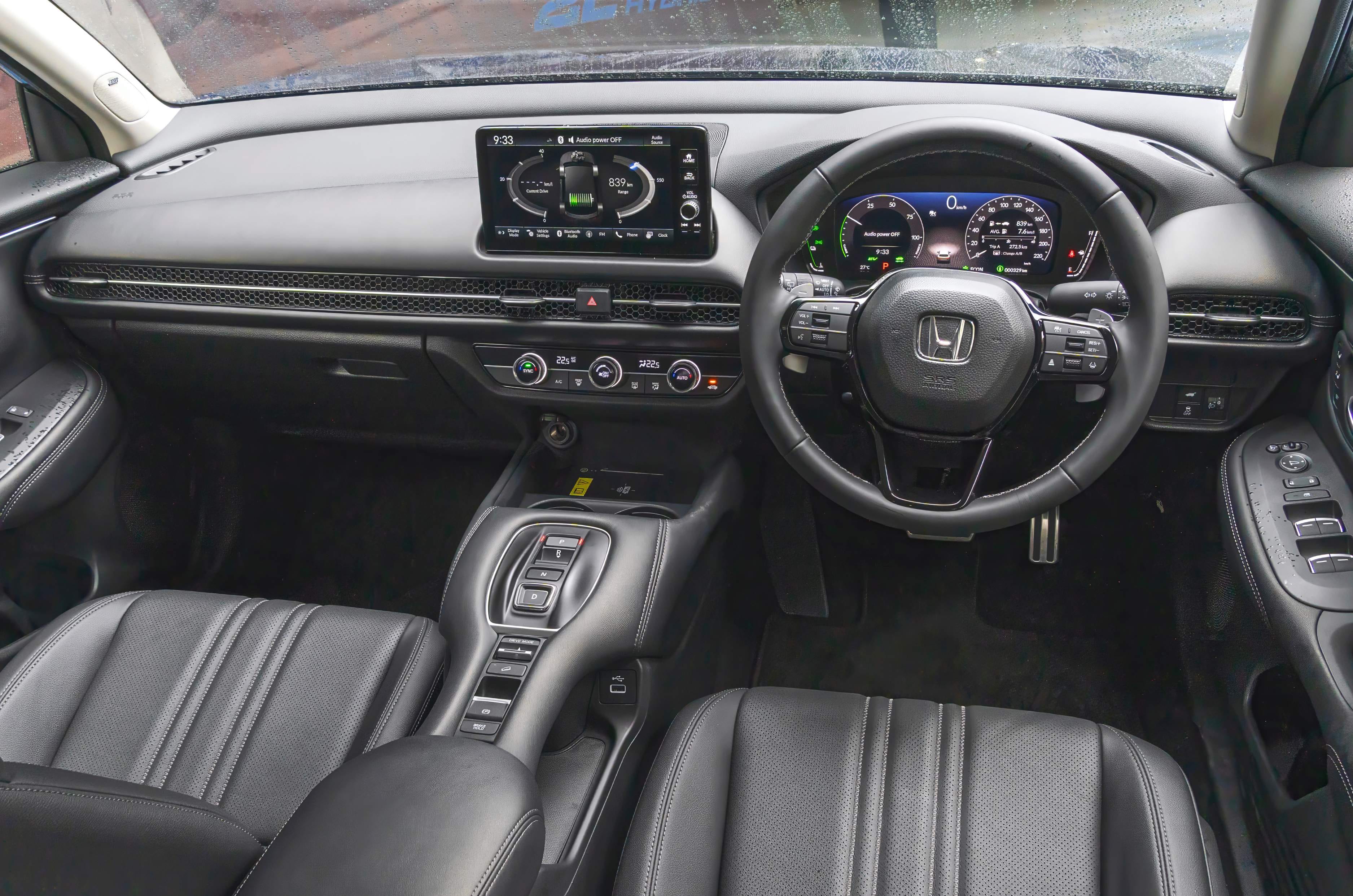
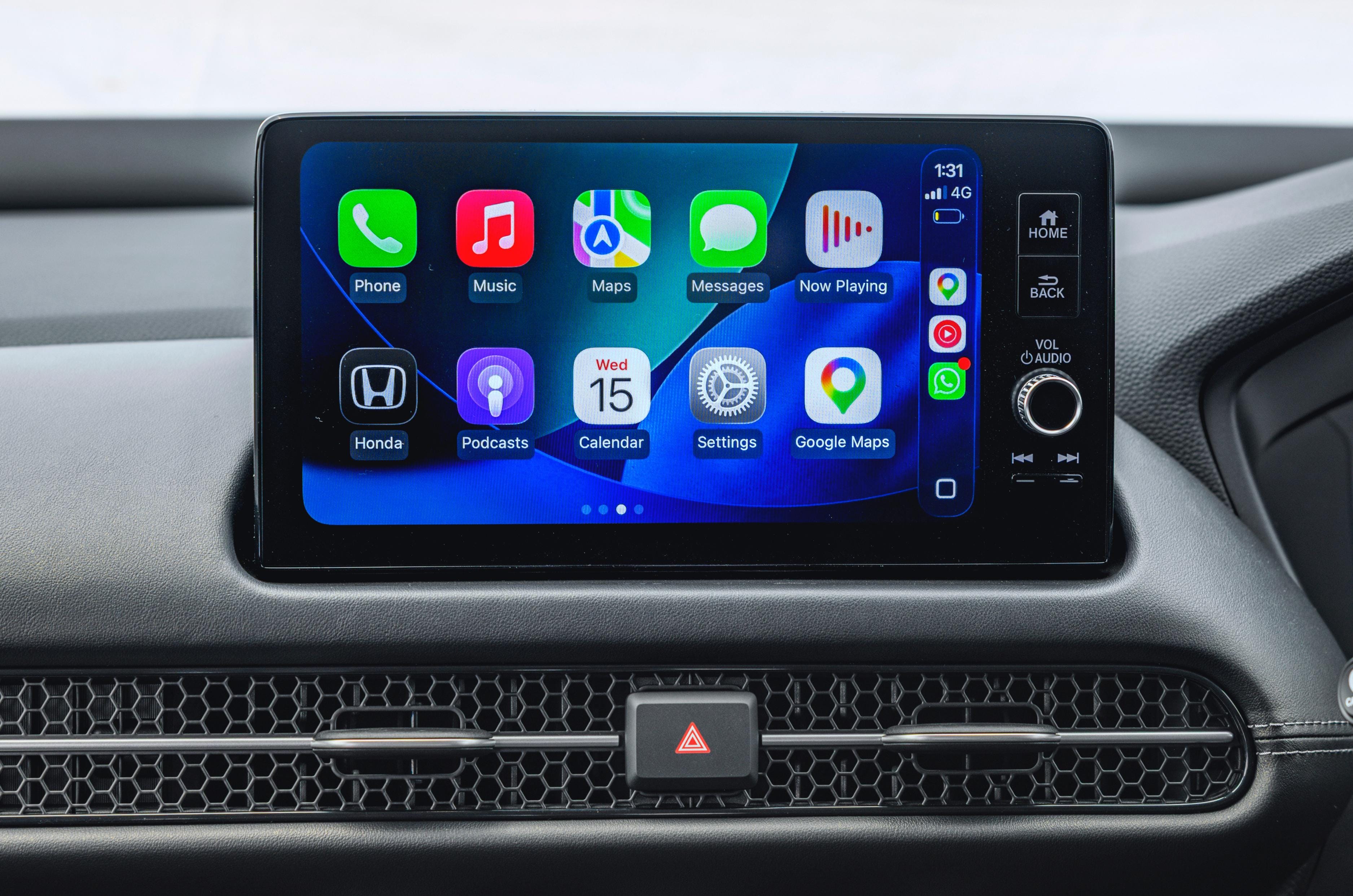
The interior of the ZR-V is typically Honda, which means its practical, comfy and well-finished. There’s plenty of soft touch materials around and I like that the dashboard is low-set which enables a great view out. A 9-inch touchscreen sits on top of the dash, and though it’s nice that it gets physical controls, the size and the UI leaves more to be desired by today’s standards. There’s a honeycomb grille that runs the width of the dash, separated by a silver trim piece which does look premium. Lower down you get similar physical AC controls like on the Honda City with rotary knobs that are satisfying to operate. There’s more buttons on the centre console too, for the drive modes, parking brake and in place of a traditional drive selector.
Cabin is practical and well-finished with plenty of soft-touch materials around
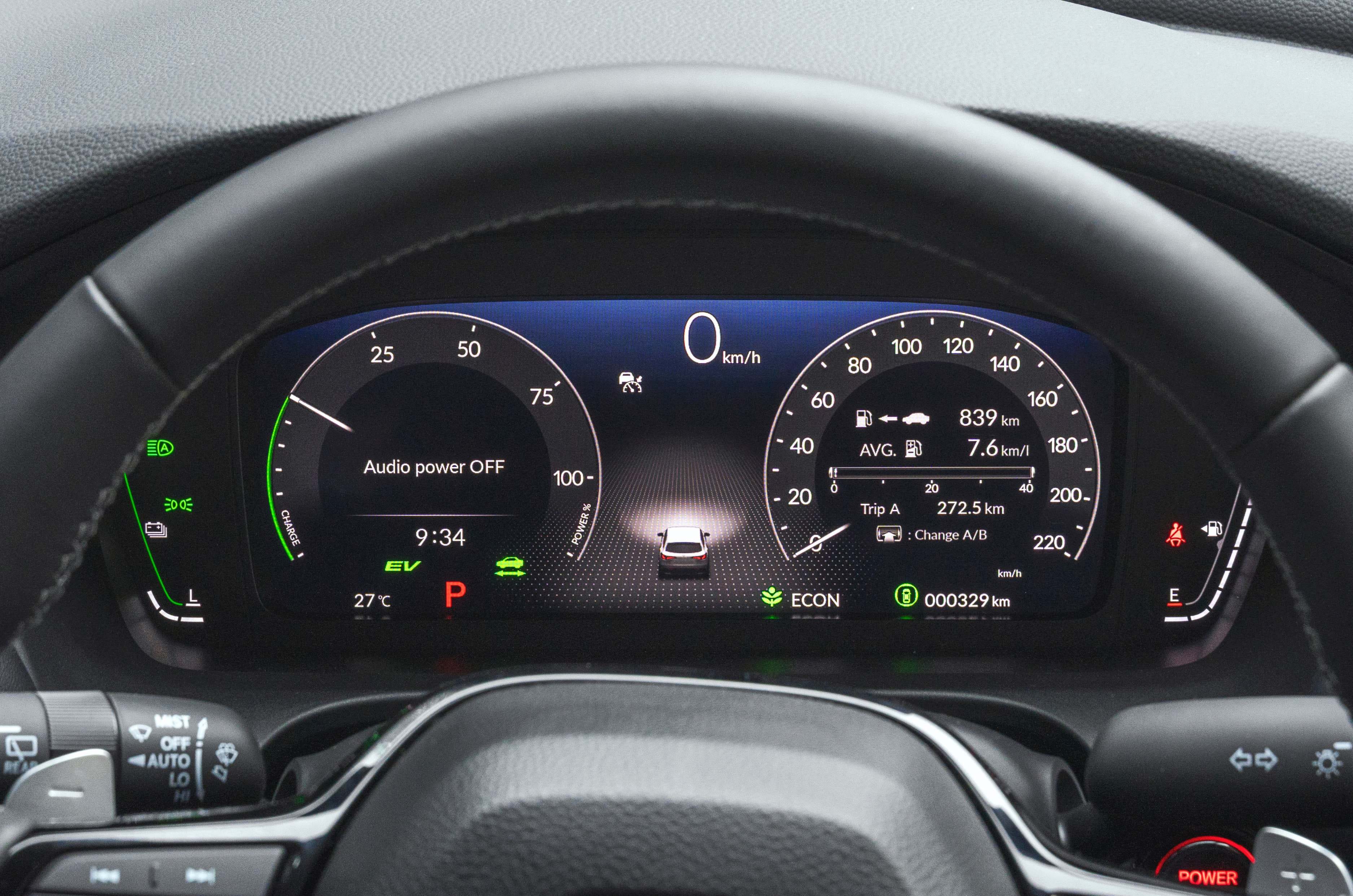
Then you get a well-executed, fully digital instrument cluster that’s customisable and shows you all sorts of driving data, the charge status and a flow chart of the powertrain. The front seats are well-padded, comfortable and feel premium too. Storage spaces are also well thought out, with a decent sized glove box and door bins, storage under the centre armrest and in the centre console.
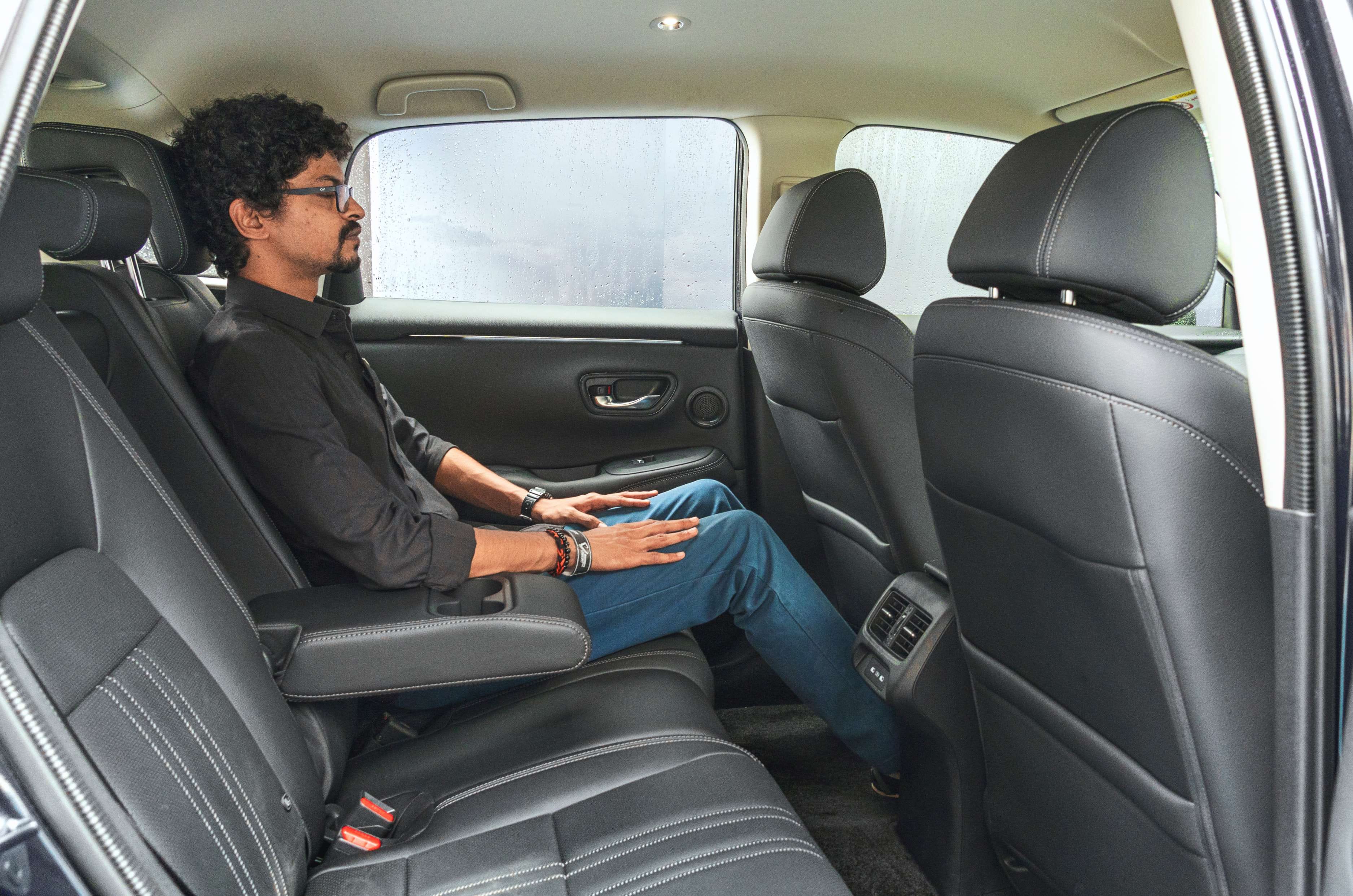
Rear is comfy and spacious enough but low seat results in a bit of a knees-up seating position; also misses sun blinds.
Getting into the rear is quite easy thanks to the low set seat, even though the sill is on the higher side. Once in, you’ll find it a comfy place to be with enough space for three passengers and plenty of legroom. However, the low set seat results in a slightly knees-up seating position, there are no sunblinds and the tapering roofline means people over 6 feet will find the headroom to be tight. As for features here, there’s dedicated AC vents, type C charging ports, a fold-down armrest with cupholders and three-point seatbelts and adjustable headrests for all three passengers.
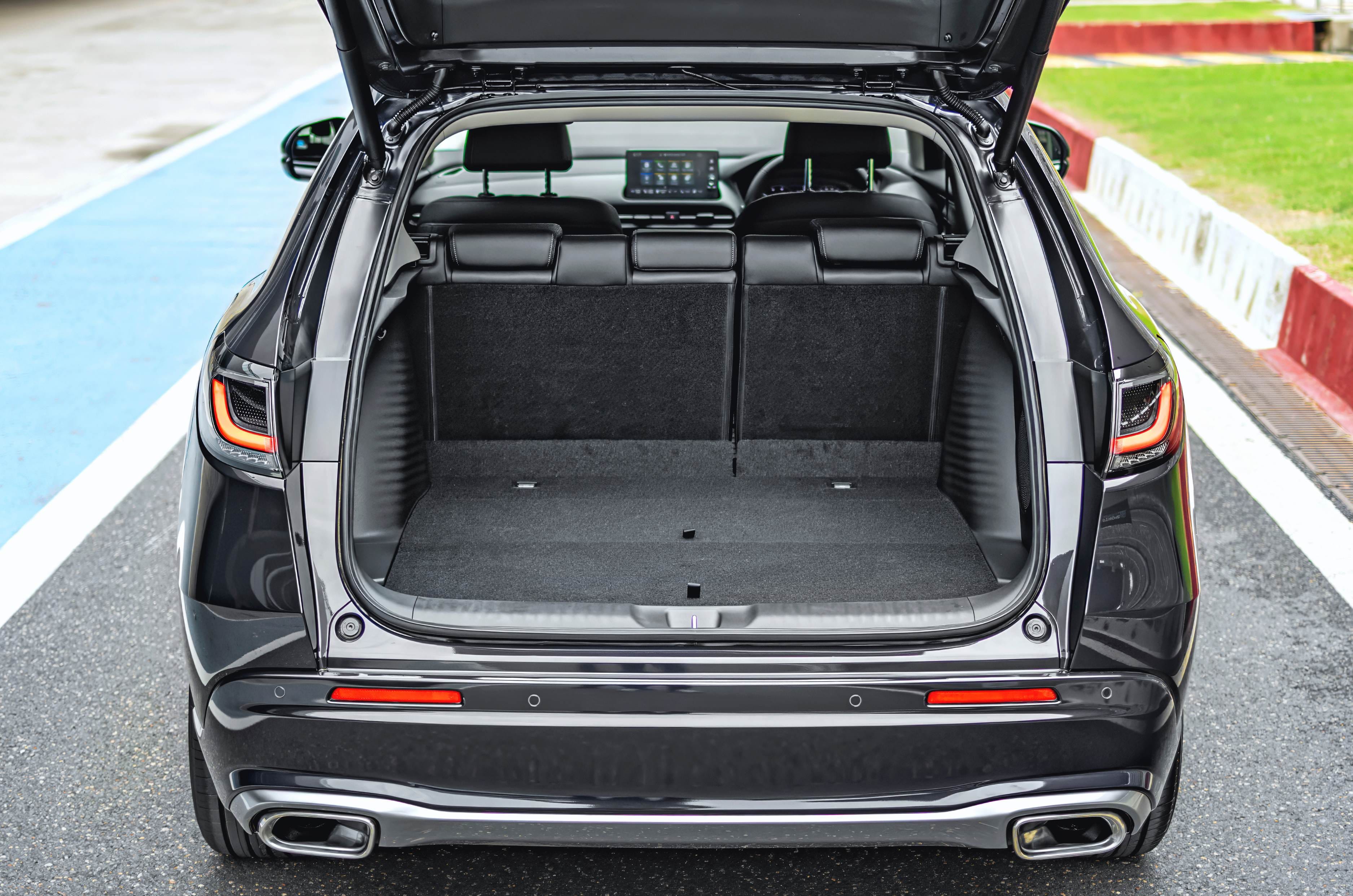
The boot is large too and the loading lip isn’t that high. With the rear seats folded down in a 60:40 split, you can fit in 1313 litres of cargo. There’s no underboot storage though as that’s taken up by the hybrid battery and there’s no spare tyre either.
Honda ZR-V Features and Safety – 6/10
As for features, the ZR-V gets a 10.25-inch digital cluster, a 9-inch touchscreen with Android Auto and Apple CarPlay, a 12-speaker Bose audio system, dual-zone climate control, leatherette upholstery, 8-way powered driver’s seat with memory, 4-way powered front passenger seat, wireless charger, electric tailgate with gesture, electric parking brake and ambient lighting. However, some important features like a panoramic sunroof and heated, ventilated and massaging front seats are missing, all of which could have been offered at the expected price point.
9-inch screen is small by today’s standards but its bright and features physical controls
As for the safety kit, you get a 360-degree parking camera (it is quite low res though), 8 airbags, tyre pressure monitor, hill-start and hill-descent assist, traction control and ISOFIX child seat mounts. It even packs in Level 2 ADAS tech which brings in autonomous emergency braking, lane keep assist, blind spot monitor, adaptive cruise control and more. On the whole though, the ZR-V is under equipped for its expected price.
10.25-inch digital cluster is crisp and shows plenty of info.
Honda ZR-V Value for Money – 5/10
So that’s a brief drive impression of the Honda ZR-V for you. We’ll have to reserve our definitive verdict till we get to experience the SUV out in the real-world and subject it to our performance and fuel efficiency tests.
The ZR-v is being brought as a CBU import from its home market in Japan
The Honda ZR-V has its downsides like the missing features, its relatively compact footprint and lack of road presence and being a full import it’s going to be expensive as well, around the Rs 45 lakh mark. But it has a practical, comfy and well-finished interior and comes with a smooth and seamless hybrid powertrain that is quick and promises to be efficient as well. As such, the Honda ZR-V is going to be a niche product, so it remains to be seen as to how many takers would it find in our market.
ई-कॉमर्स प्लेटफॉर्म Flipkart और उसपर मौजूद सेलर से जुड़े एक केस में उपभोक्ता अदालत ने सख्त रुख अपनाया है। आईफोन का ऑर्डर देने वाले एक ग्राहक को फोन की जगह बियर्ड ग्रोथ ऑयल डिलिवर करने के मामले में अदालत ने ई-कॉमर्स प्लेटफॉर्म और सेलर को ग्राहक को 1.11 लाख रुपये से अधिक की रकम लौटाने के साथ-साथ 70000 हजार रुपये का मुआवजा और मुकदमे का खर्च देने का आदेश दिया है। पीटीआई की रिपोर्ट के मुताबिक जिला उपभोक्ता विवाद निवारण आयोग, अतिरिक्त डीसीएफ, मुंबई ने इस महीने की शुरुआत में दिए अपने आदेश में स्पष्ट कहा कि बिना किसी प्रभावी राहत के ग्राहक की शिकायतों को बार-बार बंद करना अनुचित व्यापार व्यवहार है।
क्या है पूरा मामला?
मुंबई के पवई इलाके के रहने वाले शिकायतकर्ता ने 22 अप्रैल 2023 को फ्लिपकार्ट के जरिए नो-कॉस्ट ईएमआई स्कीम पर 111793 रुपये में Apple iPhone 14 Pro (128 GB) खरीदा था। अलग से ऑर्डर किया गया चार्जर और कवर तो बायर को डिलीवर हो गया लेकिन अगले दिन डिलीवर हुए मुख्य पैकेज में महंगे स्मार्टफोन की जगह बियर्ड ग्रोथ ऑयल (दाढ़ी बढ़ाने वाला तेल) और पैकिंग सामग्री निकली। शिकायतकर्ता ने अप्रैल से मई 2023 के बीच फ्लिपकार्ट के कस्टमर सपोर्ट से बार-बार संपर्क किया और सभी जरूरी दस्तावेज जमा किए लेकिन कंपनी इस मुद्दे को सुलझाने में नाकाम रही। इसके बजाय कोई रिफंड या रिप्लेसमेंट दिए बिना शिकायत को बार-बार रिजॉल्व्ड मार्क करके बंद कर दिया गया।
उपभोक्ता आयोग ने क्या सुनाया फैसला?
उपभोक्ता आयोग ने कहा कि ऑनलाइन प्लेटफॉर्म के जरिए आवश्यक भुगतान करके ऑर्डर दिया गया था। इसलिए फ्लिपकार्ट की यह जिम्मेदारी थी कि वह यह सुनिश्चित करे कि उपभोक्ता को वही उत्पाद मिले जो उसने ऑर्डर किया है और उपभोक्ता की शिकायतों के निवारण के लिए एक प्रभावी तंत्र प्रदान करे। फोरम ने कहा कि एक ई-कॉमर्स संस्था बिक्री को सुगम बनाने के बाद खुद को सौदे से अलग नहीं कर सकती, विशेष रूप से तब जब उपभोक्ता तुरंत रिपोर्ट करता है कि पूरी तरह से अलग उत्पाद डिलीवर किया गया है।
शिकायत की जांच करने, गलत तरीके से डिलीवर किए गए पार्सल को वापस लेने, रिप्लेसमेंट या रिफंड देने में विफलता और राहत दिए बिना शिकायत को बार-बार बंद करना स्पष्ट रूप से सेवा में कमी और अनुचित व्यापार व्यवहार है। कोर्ट ने पाया कि सेलर इंटरनेशनल वैल्यू रिटेल प्राइवेट लिमिटेड भी बार-बार अनुरोध के बावजूद उत्पाद डिलीवर करने और शिकायत को ठीक करने में विफल रहा। इसलिए प्लेटफॉर्म और सेलर दोनों संयुक्त और अलग-अलग रूप से ग्राहक को हुए नुकसान और असुविधा के लिए जिम्मेदार हैं।
कितना देना होगा मुआवजा?
उपभोक्ता फोरम ने फ्लिपकार्ट और सेलर को 45 दिनों के भीतर भुगतान करने का निर्देश दिया है। मूल राशि 111793 रुपये का रिफंड जिस पर 22 अप्रैल 2023 से वास्तविक भुगतान तक 9 प्रतिशत प्रति वर्ष की दर से ब्याज देना होगा। मानसिक पीड़ा और उत्पीड़न के मुआवजे के रूप में ₹50000, अदालती कार्यवाही के खर्च के रूप में ₹20,000 शिकायतकर्ता को रिफंड करने पड़ेंगे।
Apple India को मिली राहत
मामले में एक पक्ष ऐपल इंडिया ने भी लिखित बयान दाखिल कर तर्क दिया था कि शिकायत कानून या तथ्यों के आधार पर पोषणीय नहीं है और इसे खारिज किया जाना चाहिए। ऐपल इंडिया ने कहा कि वह स्वतंत्र डीलरों और रीसेलर्स के माध्यम से ऐपल ब्रांडेड उत्पादों को बेचने के व्यवसाय में लगी हुई है और ग्राहकों के प्रति ऐसे स्वतंत्र विक्रेताओं के दायित्वों पर उसका कोई नियंत्रण नहीं है। आयोग ने उनके तर्क को स्वीकार करते हुए ऐपल इंडिया के खिलाफ शिकायत को खारिज कर दिया। आयोग ने नोट किया कि विवाद केवल एक गलत उत्पाद की डिलीवरी से संबंधित था और निर्माता को पैकेजिंग, डिस्पैच या सेवा में कथित कमी से जोड़ने वाला कोई सबूत नहीं था।
Top Stock Picks : शुक्रवार को दोपहर के कारोबार में सेंसेक्स और निफ्टी में गिरावट देखने को मिल रही है। अलग-अलग सेक्टर में बड़े पैमाने पर बिकवाली के कारण बेंचमार्क इंडेक्स पर दबाव बना हुआ। फिलहाल सेंसेक्स 571.57 अंक या 0.75 प्रतिशत गिरकर 75,819.82 पर और निफ्टी 163.20 अंक या 0.68 प्रतिशत गिरकर 23,706.40 पर कारोबार कर रहा है। निफ्टी मिडकैप और स्मॉलकैप इंडेक्स में भी 0.5% की गिरावट दर्ज देखने को मिल रही है।
ऐसे में टेक्नो फंडा नजरिए के साथ बाजार पर बात करते हुए जेएम फाइनेंशियल्स (JM Financial Services) के PMS के मैनेजिंग डायरेक्टर आशीष चतुरमोहता ने कहा कि पिछले कुछ दिनों से बाजार में काफी अनसर्टेनिटी देखने को मिल रही है। क्रूड ने फिर से 100 डॉलर का लेवल हासिल कर लिया है। इसके अलावा ग्लोबल मार्केट में एआई डेटा सेंटर रिलेटेड पूरी थीम में अच्छी-खासी बिकवाली देखने को मिली है। ताइवान, कोरिया और यूएस जैसे मार्केट में एआई पर भारी कैपेक्स के चलते दबाव बना है। इस भारी कैपेक्स के चलते Apple जैसे शेयरों की रेवेन्यू विजिबिलिटी काफी कम नजर आ रही है। इसके चलते बाजार में काफी अनिश्चितता देखने को मिल रही है।
इस बीच अगर पश्चिम एशिया का संकट और बढ़ता है तो दुनिया के सभी बाजारों पर इसका असर देखने को मिलेगा। अपने बाजार की बात करें तो निफ्टी ने बहुत दिनों तक अपने 200 डे मूविंग एवरेज को मेंटेन करने की कोशिश की। बैंकिंग सेक्टर में भी हमे ड्रॉप देखने को मिल रहा है। निफ्टी तो ऑलरेडी 200 डे मूविंग एवरेज को क्रॉस ही नहीं कर पा रहा है। ऐसे में बाजार में थोड़ा सा अनसर्टेनिटी का माहौल है। इसको ध्यान में रखते हुए बाजार में वेट एंड वॉच की अप्रोच मेंटेन रखने की सलाह होगी। निफ्टी के 23500- 23400 के पिछले कुछ सपोर्ट बने हुए हैं। अगर ये सपोर्ट टूटते होते हैं तो और कमजोरी आने की संभावना से इंकार नहीं किया जा सकता। ऐसे में हमें थोड़ी वेट एंड वॉच की अप्रोच रखनी चाहिए। इंडेक्स में लॉन्ग और शॉर्ट दोनों ही साइड में कोई जल्दबाजी करने से बचें।
अपने पसंदीदा शेयरों पर बात करते हुए आशीष चतुरमोहता ने कहा कि उनकी सबसे पहली पसंद हैं हॉस्पिटल स्टॉक्स। इस समय हॉस्पिटल इंडस्ट्री में बहुत बड़ा कंसोलिडेशन चल रहा है। बड़े हॉस्पिटल लगातार छोटे हॉस्पिटल्स को बहुत कम और रीजनेबल वैल्यूएशन पर एक्वायर कर रहे हैं। कहीं ना कहीं इन हॉस्पिटल्स की तीन क्रिटिकल चीजें इंप्रूव हो रही है। इनका एवरेज लेंथ ऑफ स्टे कम हो रहा है। इनके मिक्स हायर मार्जिन साइड में शिफ्ट हो रहे हैं । तीसरी बात यह है कि इनकी ऑक्युपैंसी रेट्स बढ़ रही है। कुल मिलाकर कहें तो आगे हॉस्पिटल सेगमेंट काफी अच्छा प्रदर्शन करेगा। यहां पर लार्ज हॉस्पिटल में अपोलो हॉस्पिटल और मैक्स हॉस्पिटल जैसे स्टॉक काफी अच्छे लग रहे हैं।
अगर मिड एंड स्मॉल सेगमेंट में देखें तो एस्टरडीएम (Aster DM) और पार्क मेडी जैसी कंपनियां काफी इंटरेस्टिंग नजर आ रही हैं। इसके अलावा फार्मा जुड़े कुछ दूसरे शेयर भी अच्छे लग रह हैं। हालांकि, जेरिक साइड पर हमें कुछ अनसर्टेनिटी नजर आ रही है। लेकिन हम अगर इस सेक्टर के स्पेशियलिटी सीडीएमओ और सीआरडीएमओ स्पेस की बात करें तो हमें लगता है यह एरिया टैरिफ से जुड़ी अनसर्टेनिटी से काफी सेफ है। इसके चलते हमें लगता है कि किसी गिरावट में नवीन फ्लोरीन, बायोकॉन और लॉरस लैब जैसे स्टॉक्स में खरीदारी की जा सकती है।
तीसरी थीम डिफेंस स्पेस से है। इस सेक्टर पर सरकार का लगातार फोकस बना हुआ है। डिफेंस कंपनियों का ऑर्डर इनफ्लो काफी स्ट्रांग है। ये कंपनियां डिजाइनिंग और मैन्युफैक्चरिंग दोनों साइड पर काफी फोकस कर रही हैं। इस बात को देखते हुए एरोस्पेस इंजीनियरिंग और डिफेंस एक ऐसा बास्केट होगा जिसमें गिरावट पर खरीदारी की जानी चाहिए।
डिस्क्लेमर: मनीकंट्रोल.कॉम पर दिए गए विचार एक्सपर्ट के अपने निजी विचार होते हैं। वेबसाइट या मैनेजमेंट इसके लिए उत्तरदाई नहीं है। यूजर्स को मनी कंट्रोल की सलाह है कि कोई भी निवेश निर्णय लेने से पहले सर्टिफाइड एक्सपर्ट की सलाह लें।
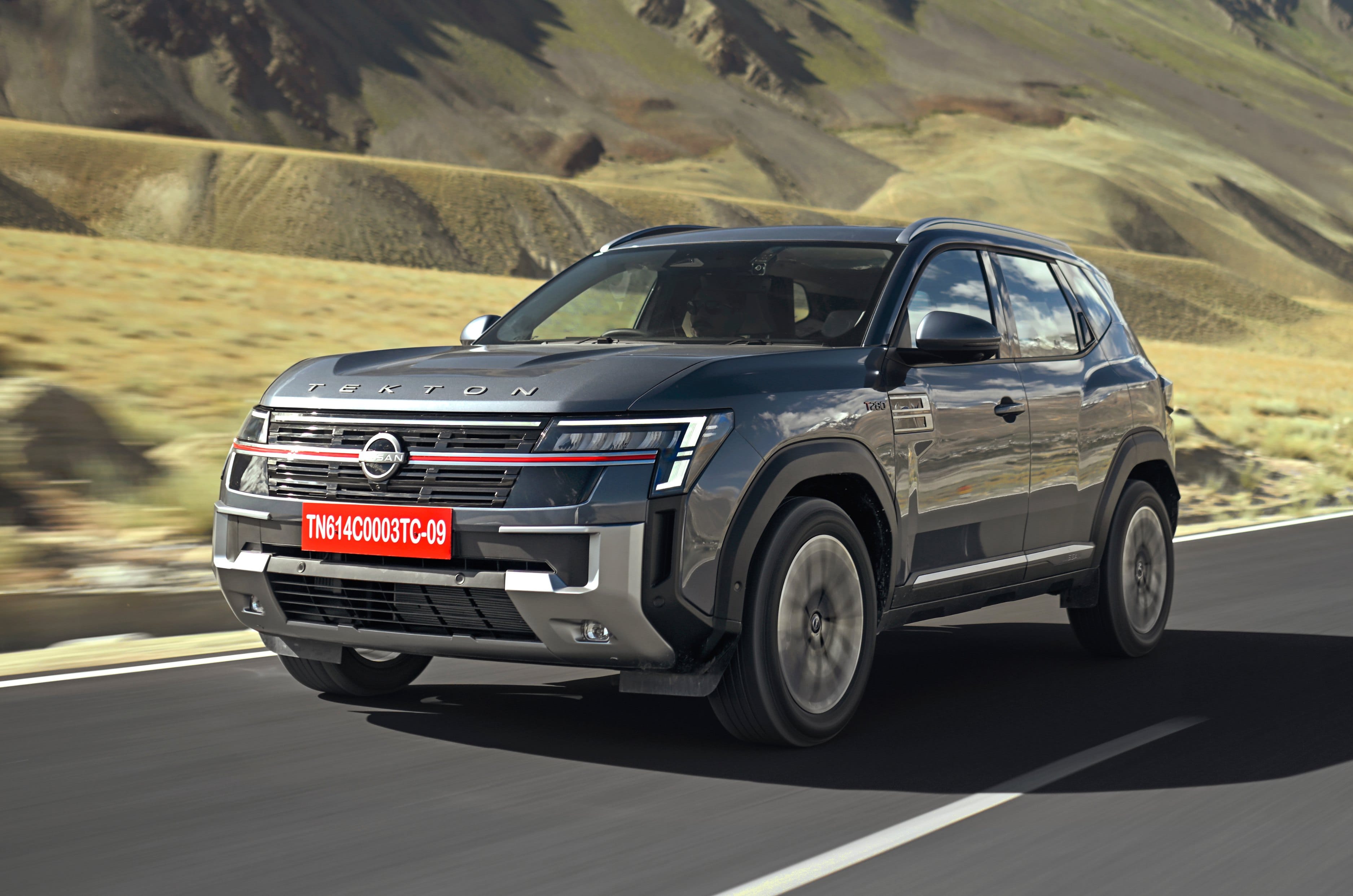
The Nissan Tekton joined the ever-ballooning midsize SUV segment in July 2026, becoming the third model in the Japanese brand’s India line-up. Priced between Rs 10.49 lakh and Rs 18.59 lakh (ex-showroom), the Tekton is Nissan’s flagship offering in the country. As a direct alternative to its platform sibling, the Renault Duster, does the Tekton offer compelling reasons for you to seriously consider it? Let’s find out.
Reasons to buy the Nissan Tekton
Polished dynamics
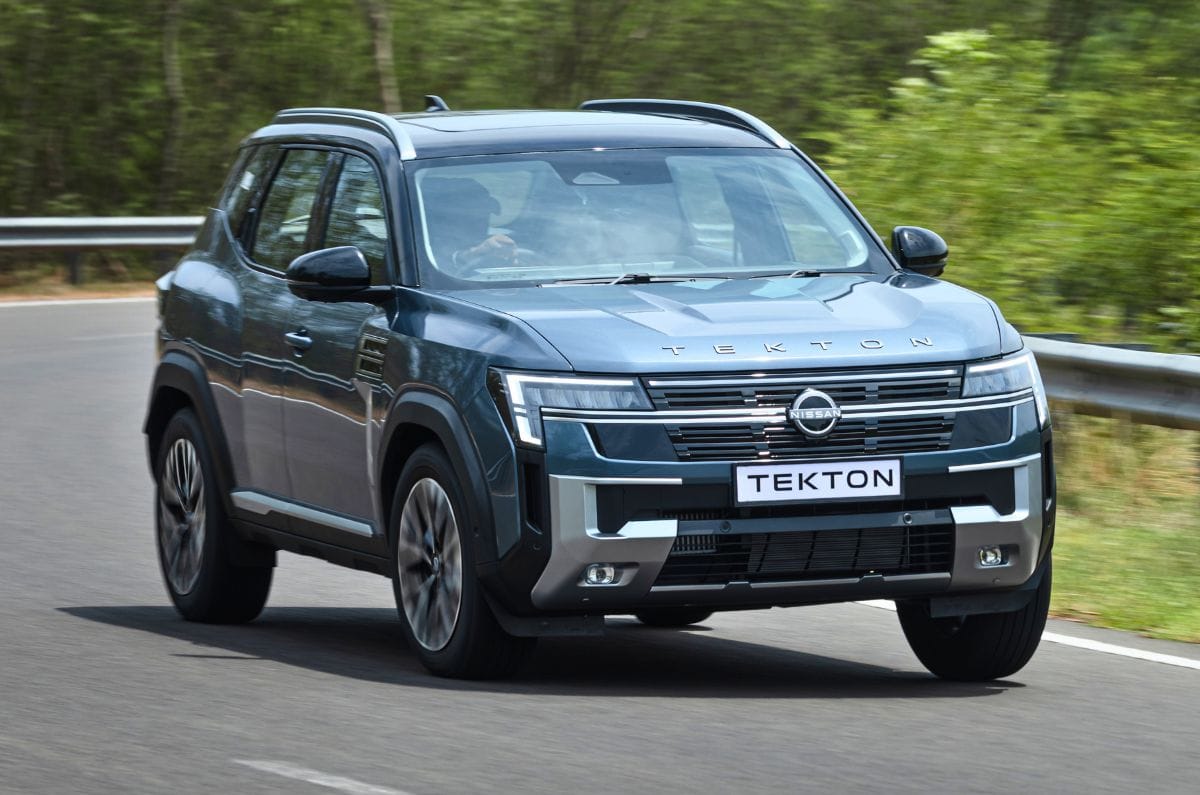
The Tekton strikes a great balance between ride and handling
If you are someone who loves getting behind the wheel of your midsize SUV but doesn’t want the ride quality to be compromised, the Nissan Tekton is a worthy candidate. Even hitting large potholes does not unsettle this SUV, merely registering in your ears. The ride remains supple and forgiving, absorbing road imperfections without complaints. There’s also no underlying, uncomfortable firmness to the Tekton’s ride at city speeds either.
Once you get going, you realise that the Tekton likes changing directions – its eagerness to turn does not come at the cost of uncontained body roll. The ‘Light’ and ‘Heavy’ steering modes work as intended, making the wheel feelsome and precise. Then there are the brakes, which offer plenty of stopping power, while the pedal itself feels natural too. All of these factors inspire confidence and let you push the Tekton a bit more.
Well-designed and tech-rich cabin
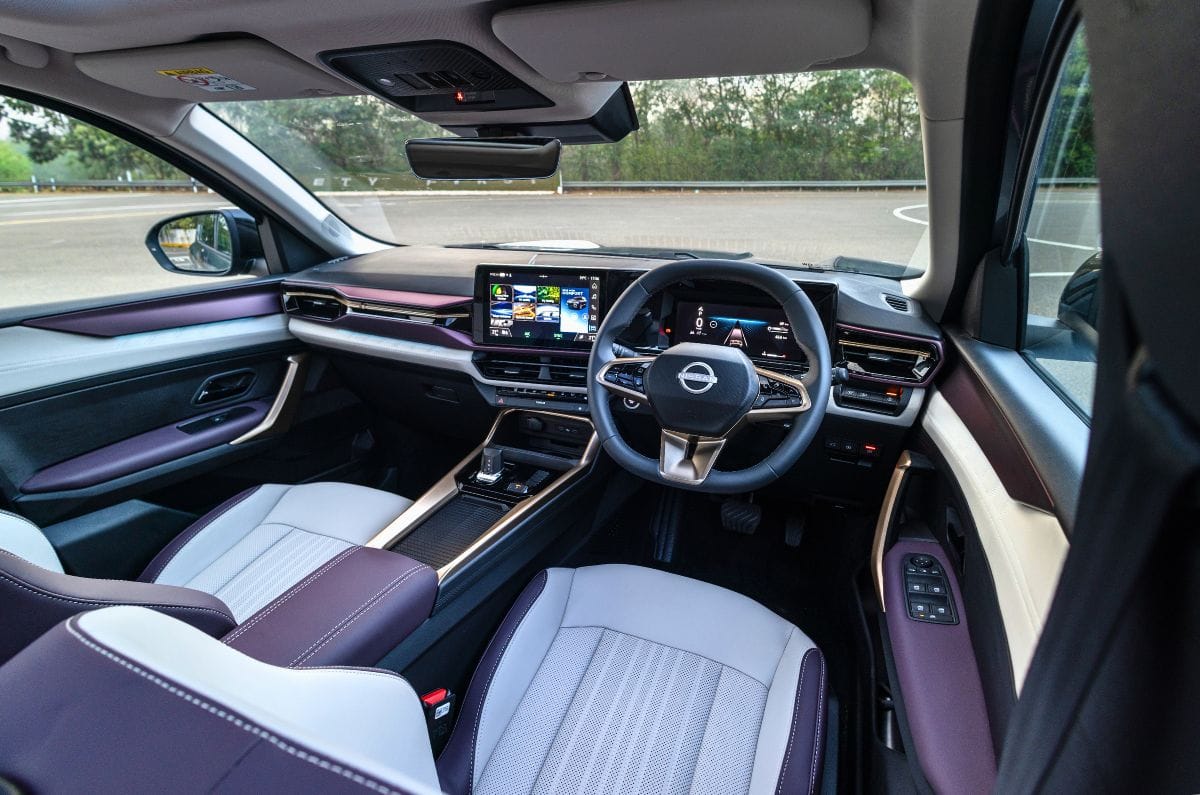
Stepping inside the Tekton reveals a premium-looking and well-equipped space
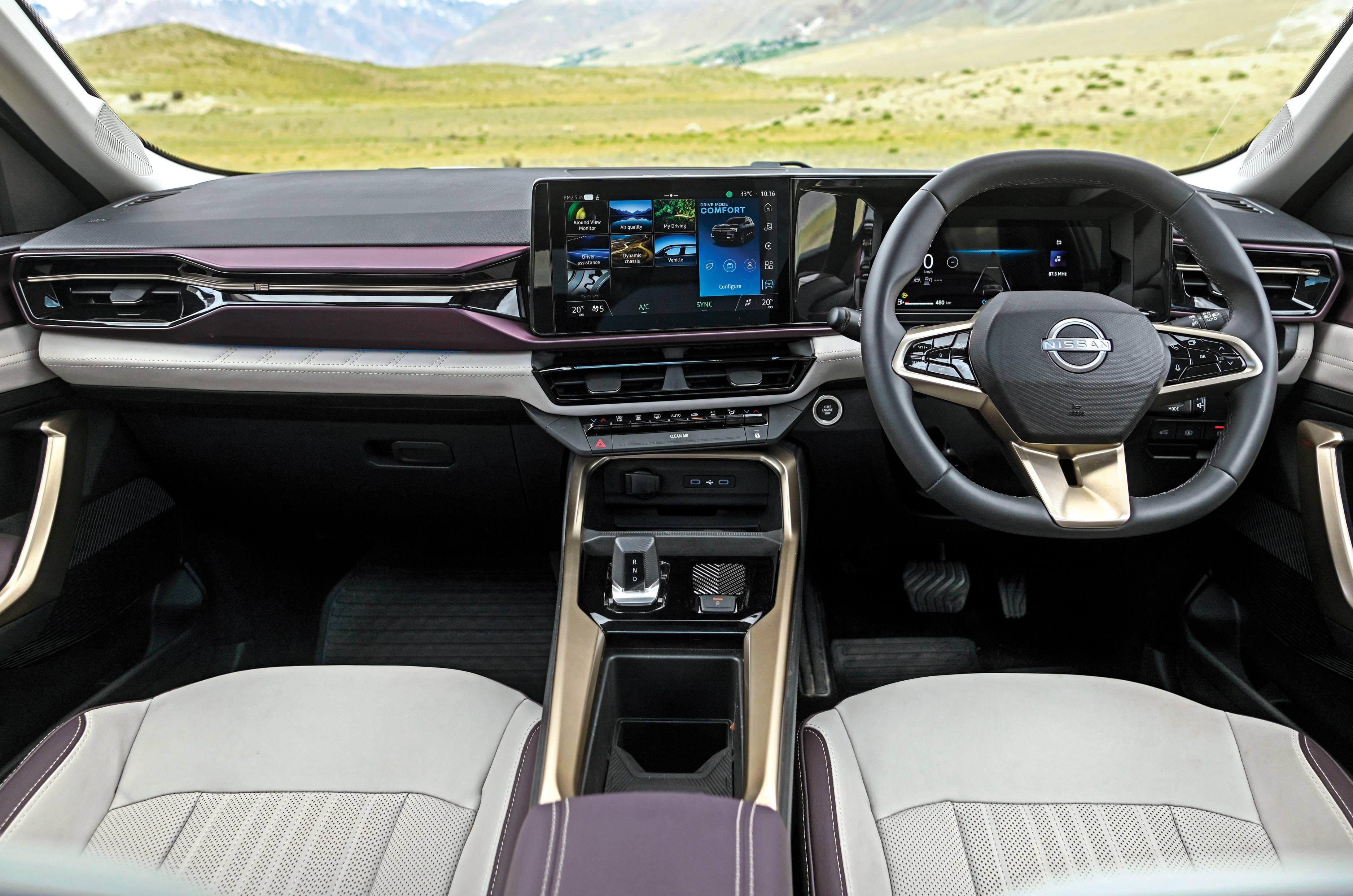
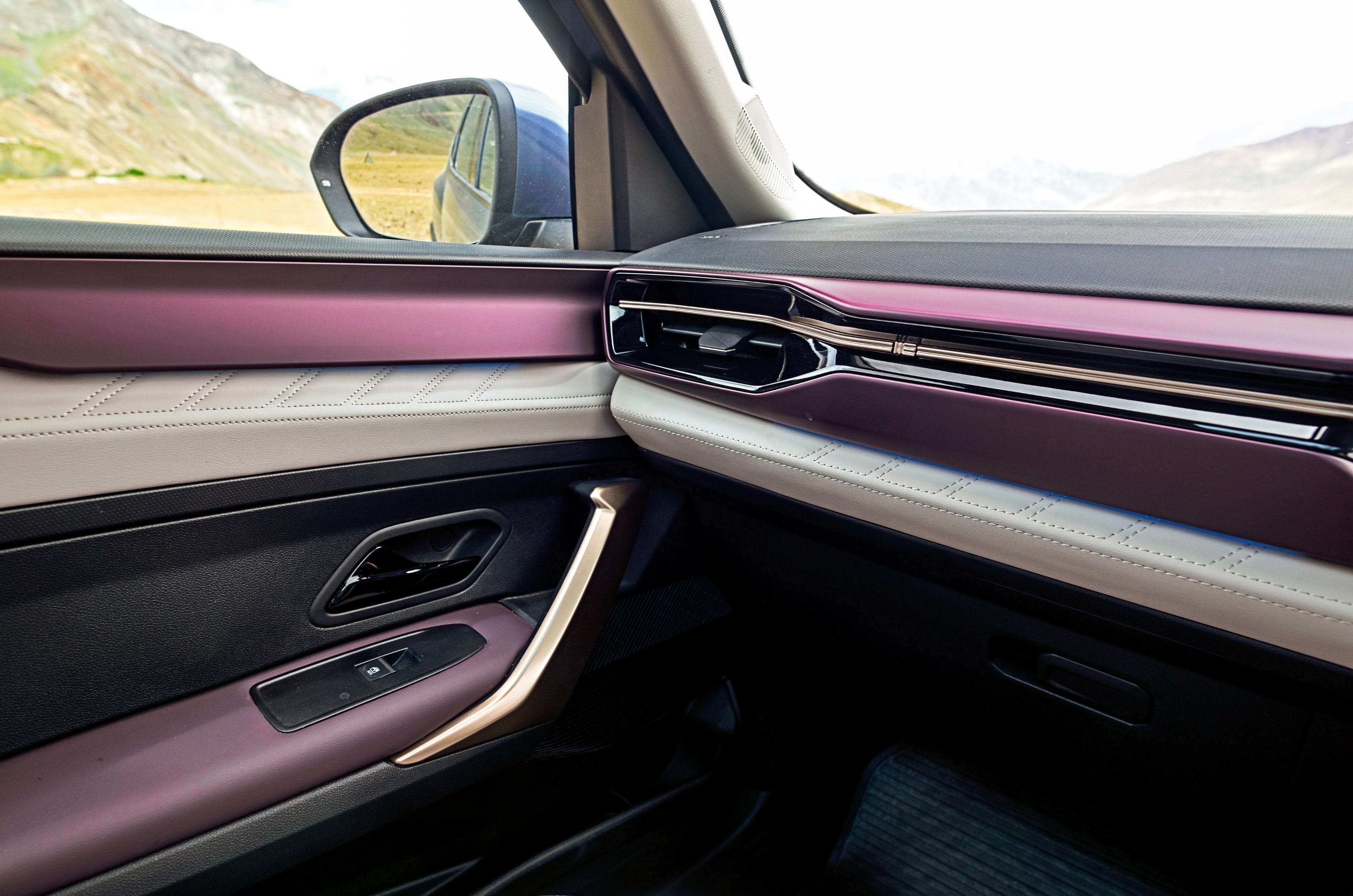
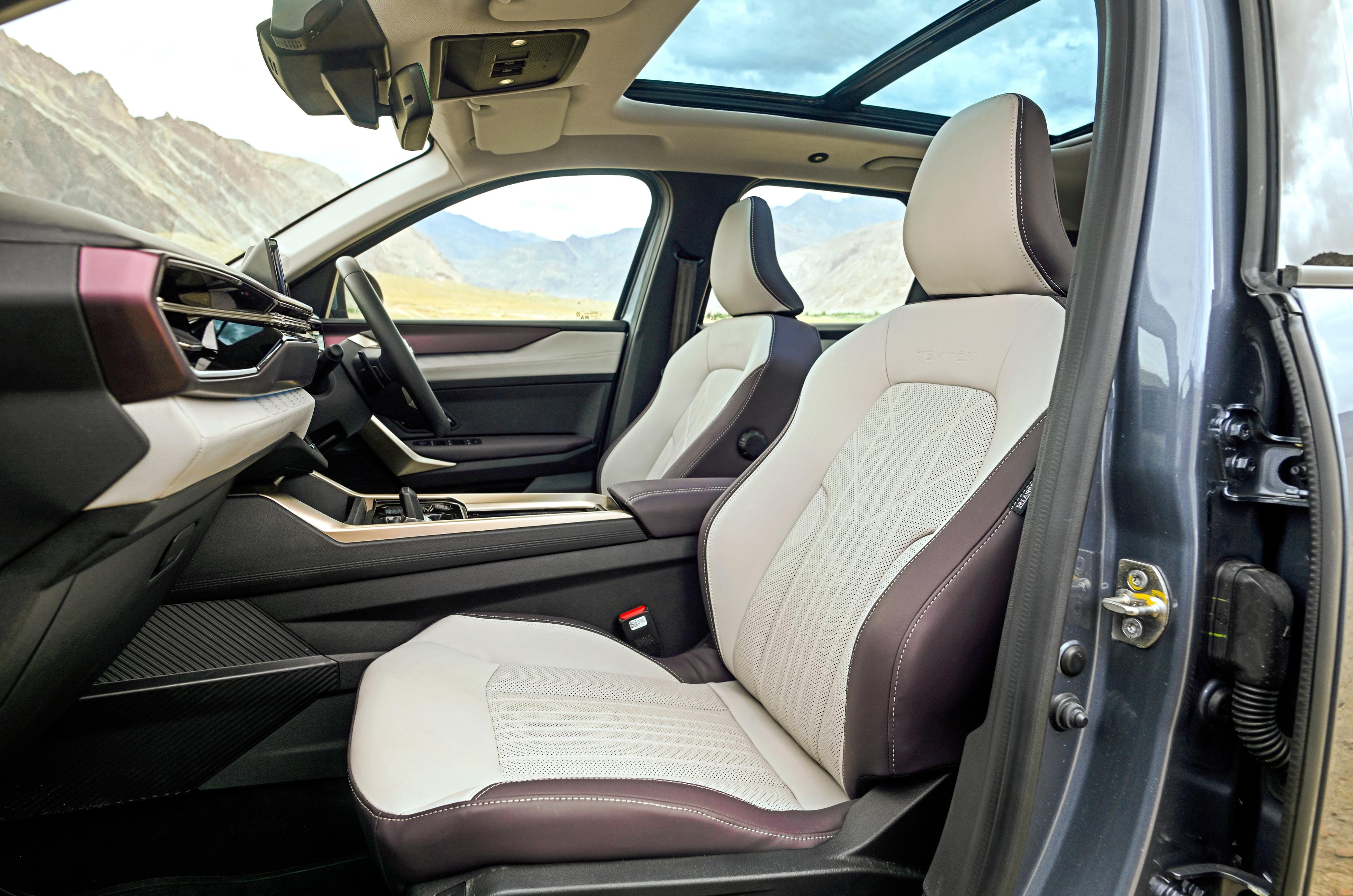
Combined with the classy-looking leatherette padding on the dash and door pads, plus the burgundy, gold and light cream colour scheme, the interior of the top-spec Nissan Tekton looks upmarket. The driving position is great and provides excellent all-round visibility, while the seats themselves are comfy enough to be occupied even over long-distance drives.
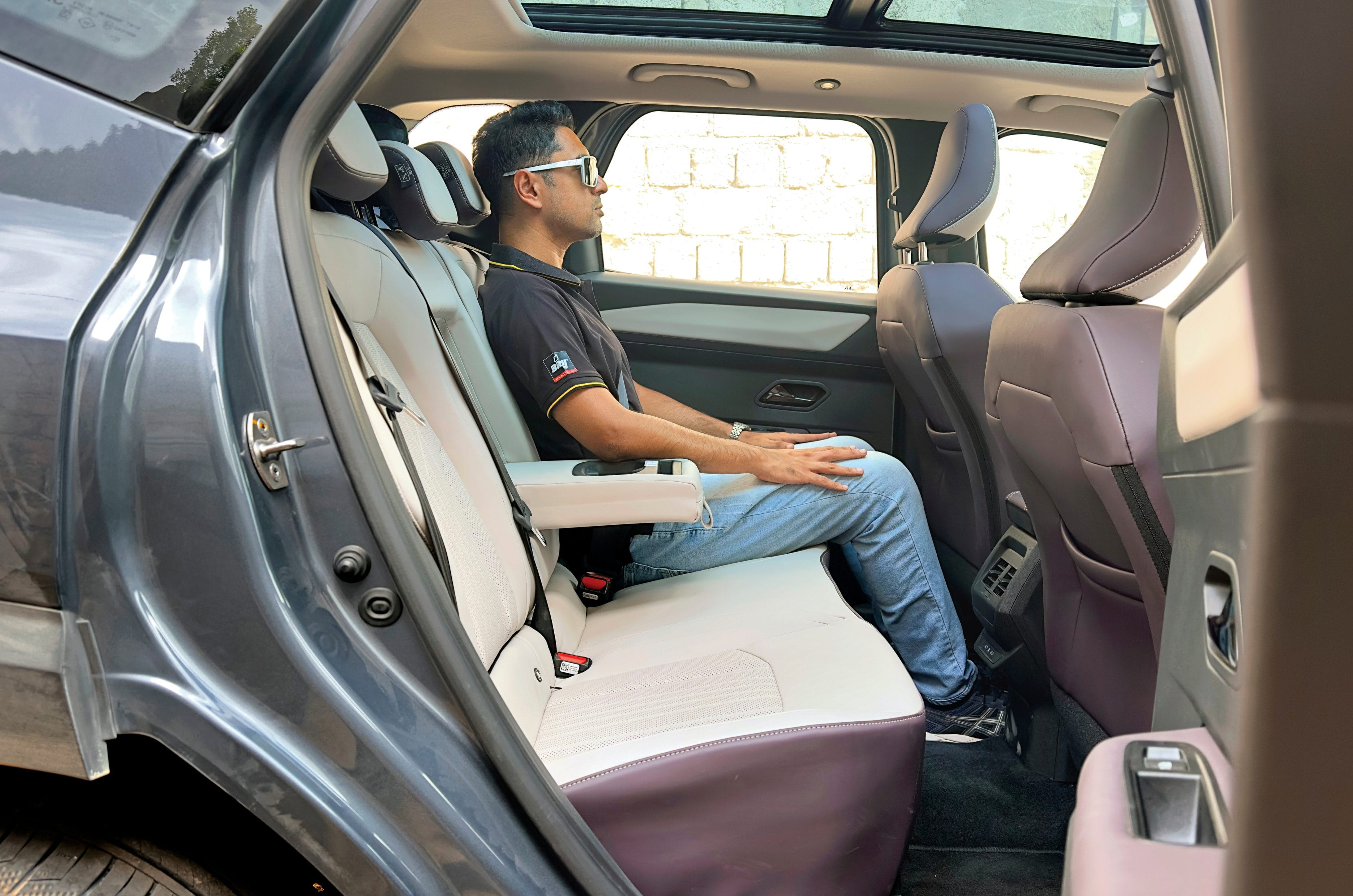
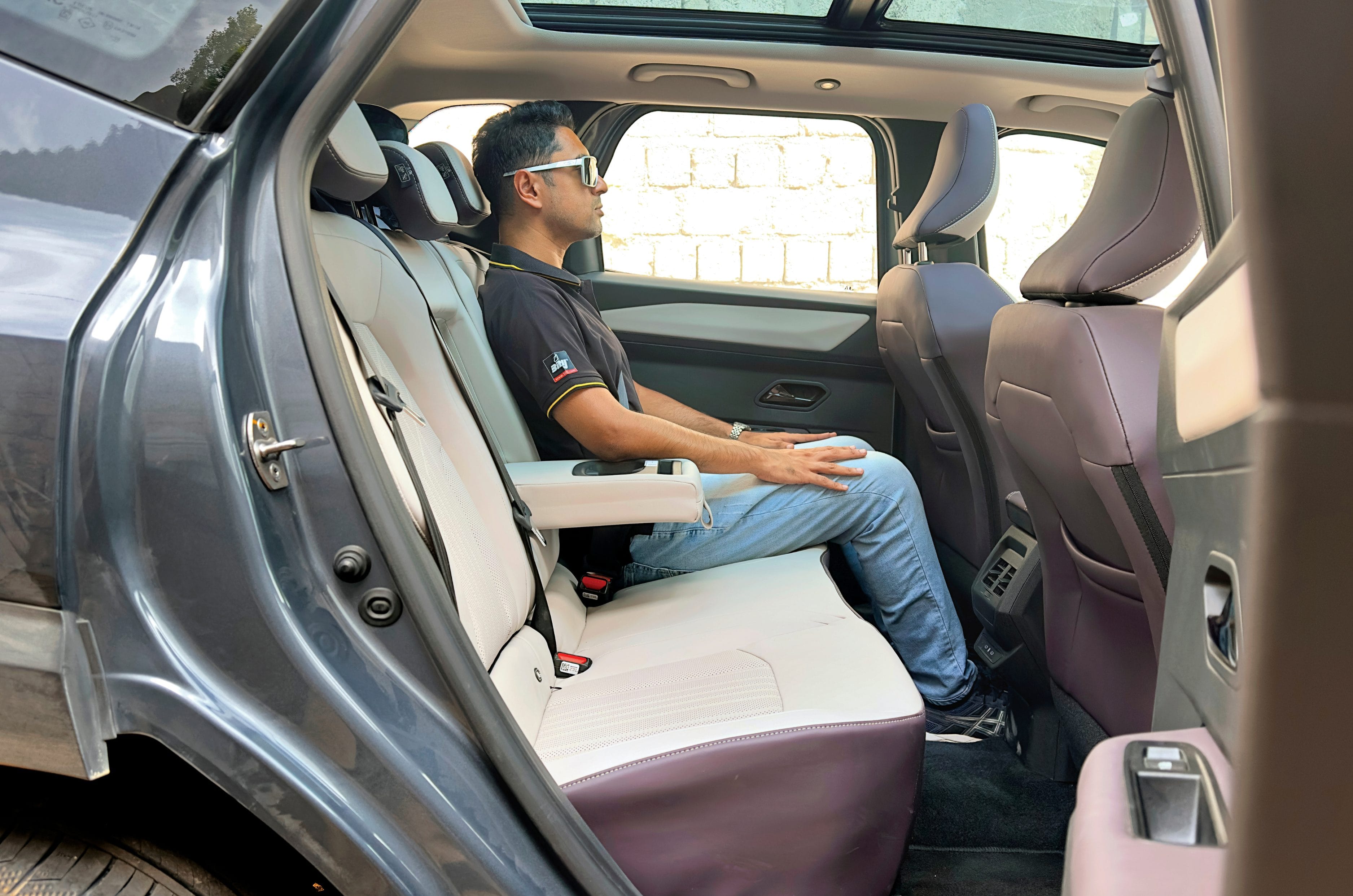
Apart from good under-thigh support and backrest angle, the rear seats offer plenty of space under the front seats, allowing the outer two occupants to stretch out and get comfortable. Furthermore, those at the back have access to USB charging ports, a centre armrest with cup holders and AC vents, with higher variants also benefiting from a panoramic sunroof.
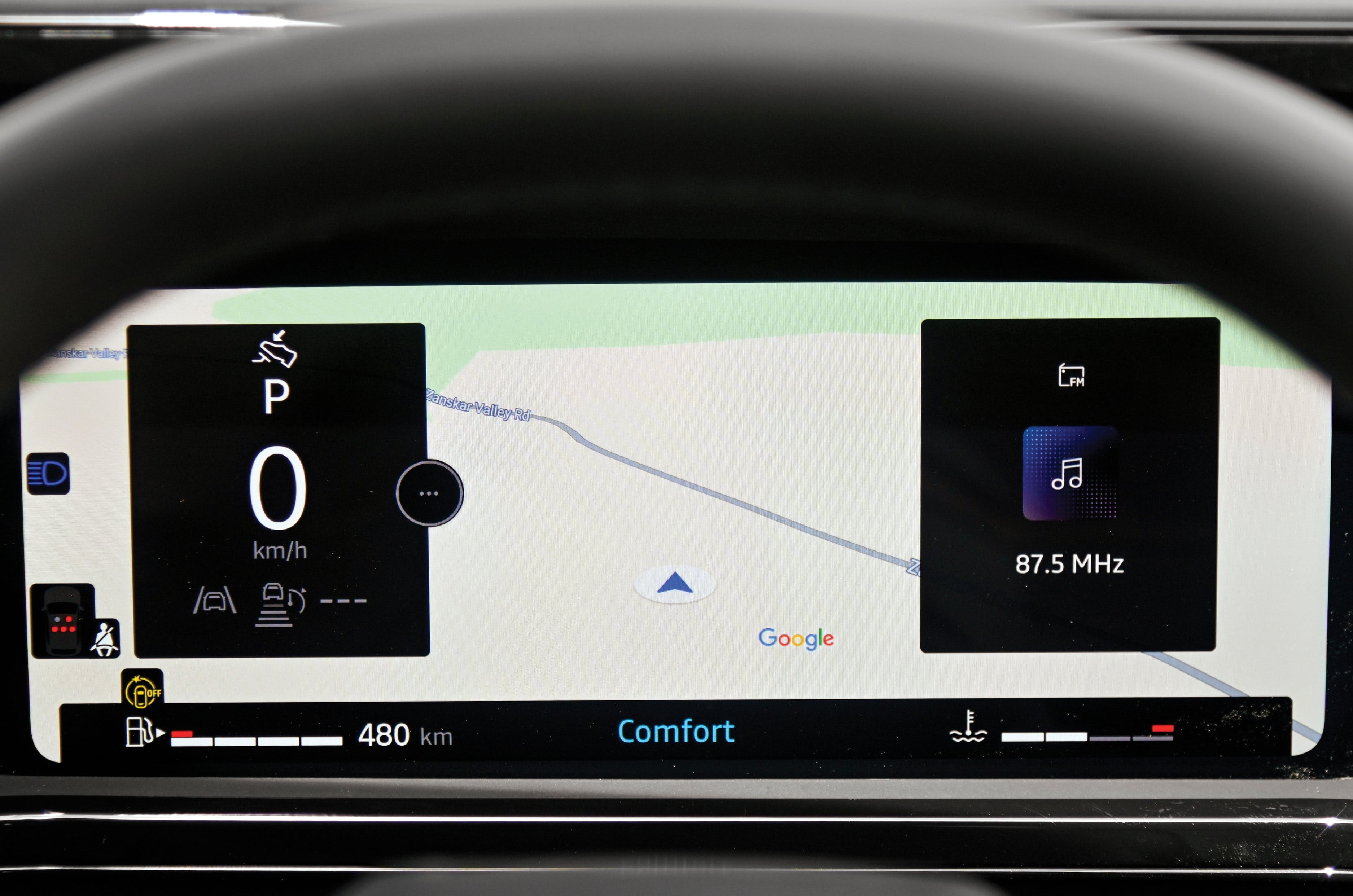
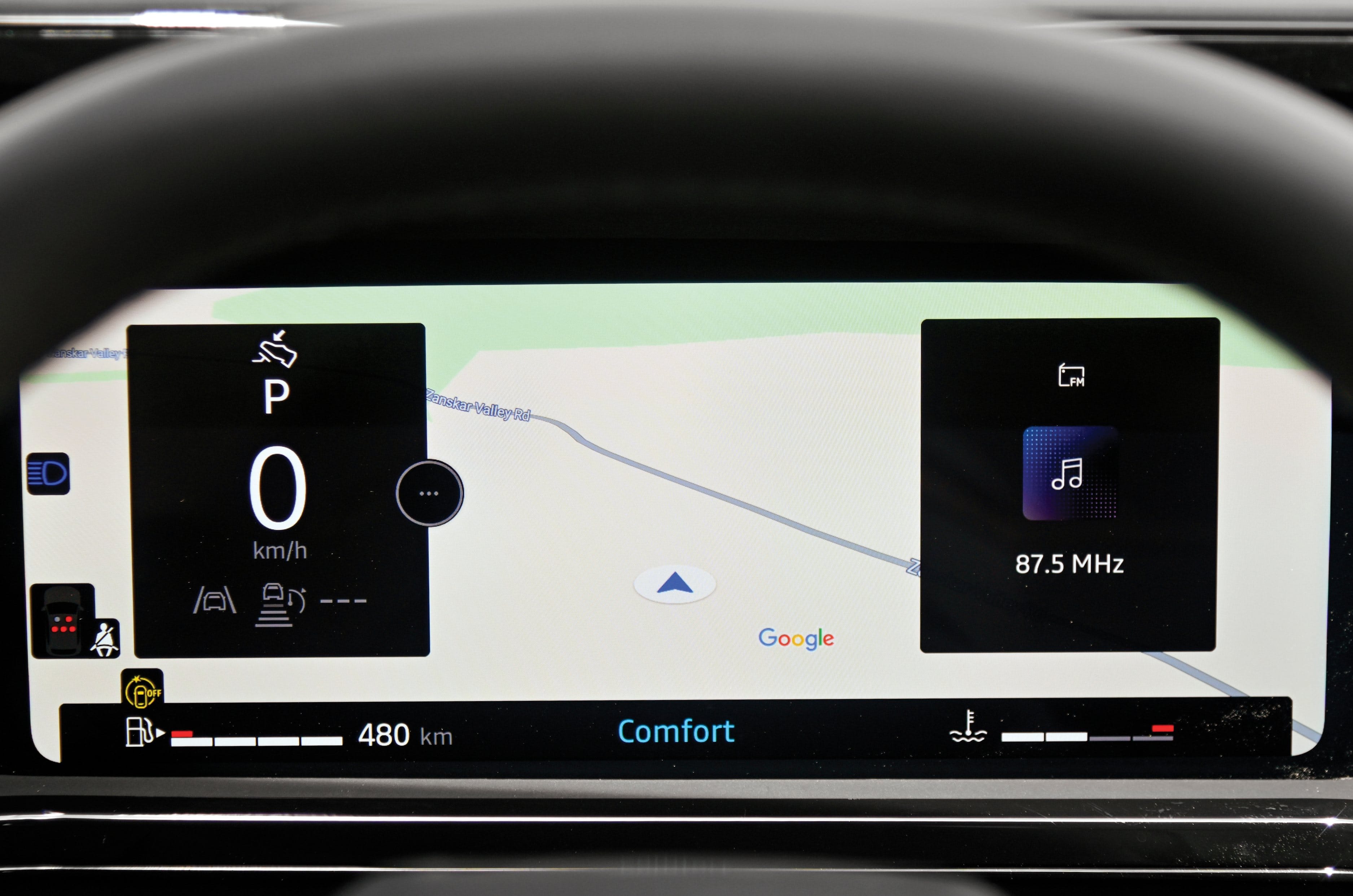
The well-designed digital instrument cluster with its multiple display modes is easy to figure out and use on the move. Coming in handy is tech such as powered front seats with ventilation, wireless Apple CarPlay and Android Auto, built-in Google apps and voice assistance, dual-zone climate control and Level 2 ADAS. Sorted ergonomics make reaching various switchgear and controls an easy affair. There are enough storage cubbies on offer, too.
Spacious boot
The Tekton’s boot can handle family outings or airport pickups
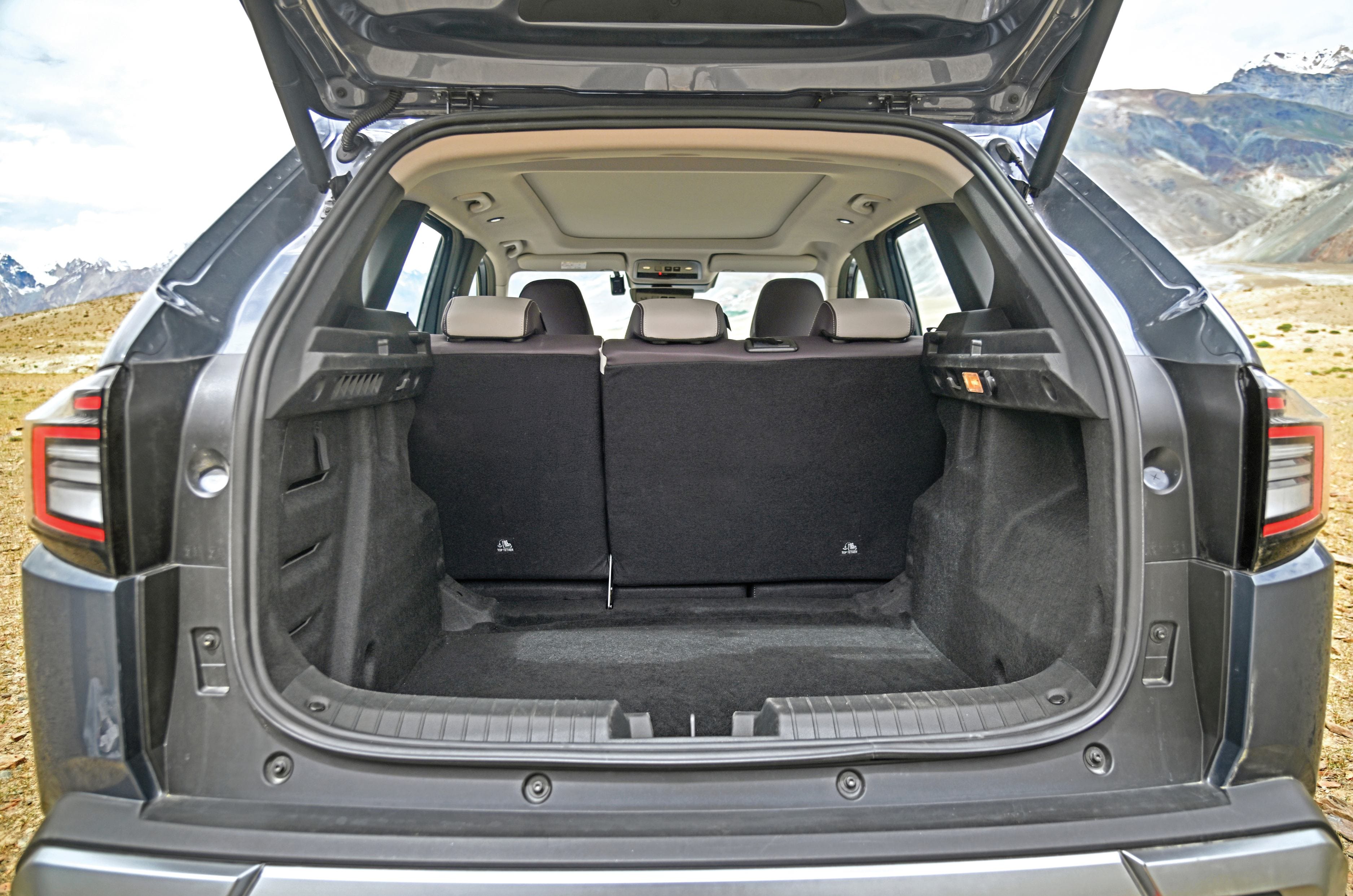
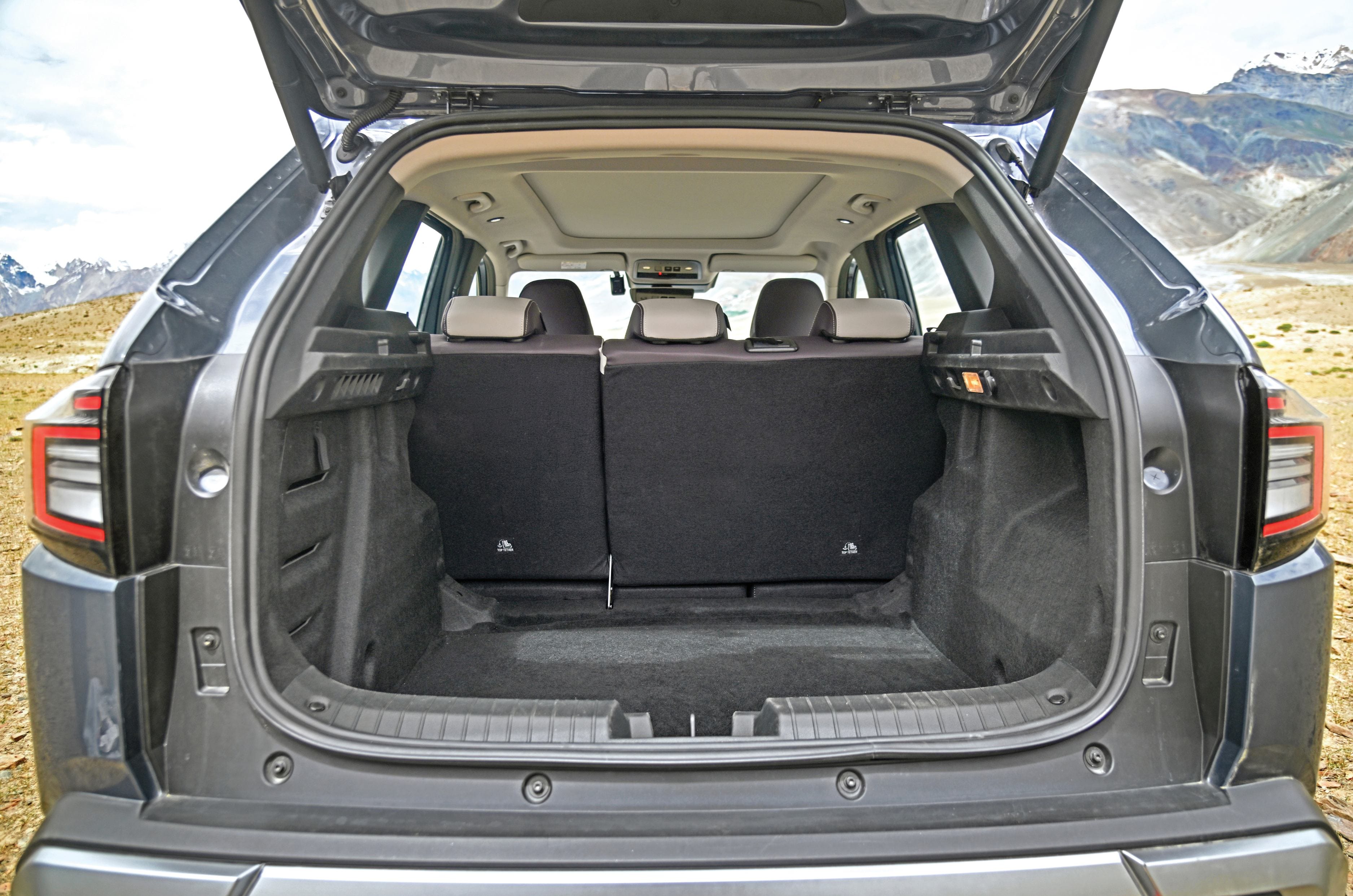
The square shape of the Nissan Tekton’s boot makes it easy to load cargo. Moreover, its 518-litre luggage capacity is the best in the segment – whether you are planning a long road trip or have to shuttle to and from the airport, space won’t be a constraining factor. What’s even more impressive here is that the Tekton’s boot also houses a full-size spare wheel. This alleviates concerns surrounding a flat tyre, should you encounter one.
Reasons not to buy the Nissan Tekton
Sub-par engine performance
Base engine isn’t apt enough, while the larger engine isn’t ideal either
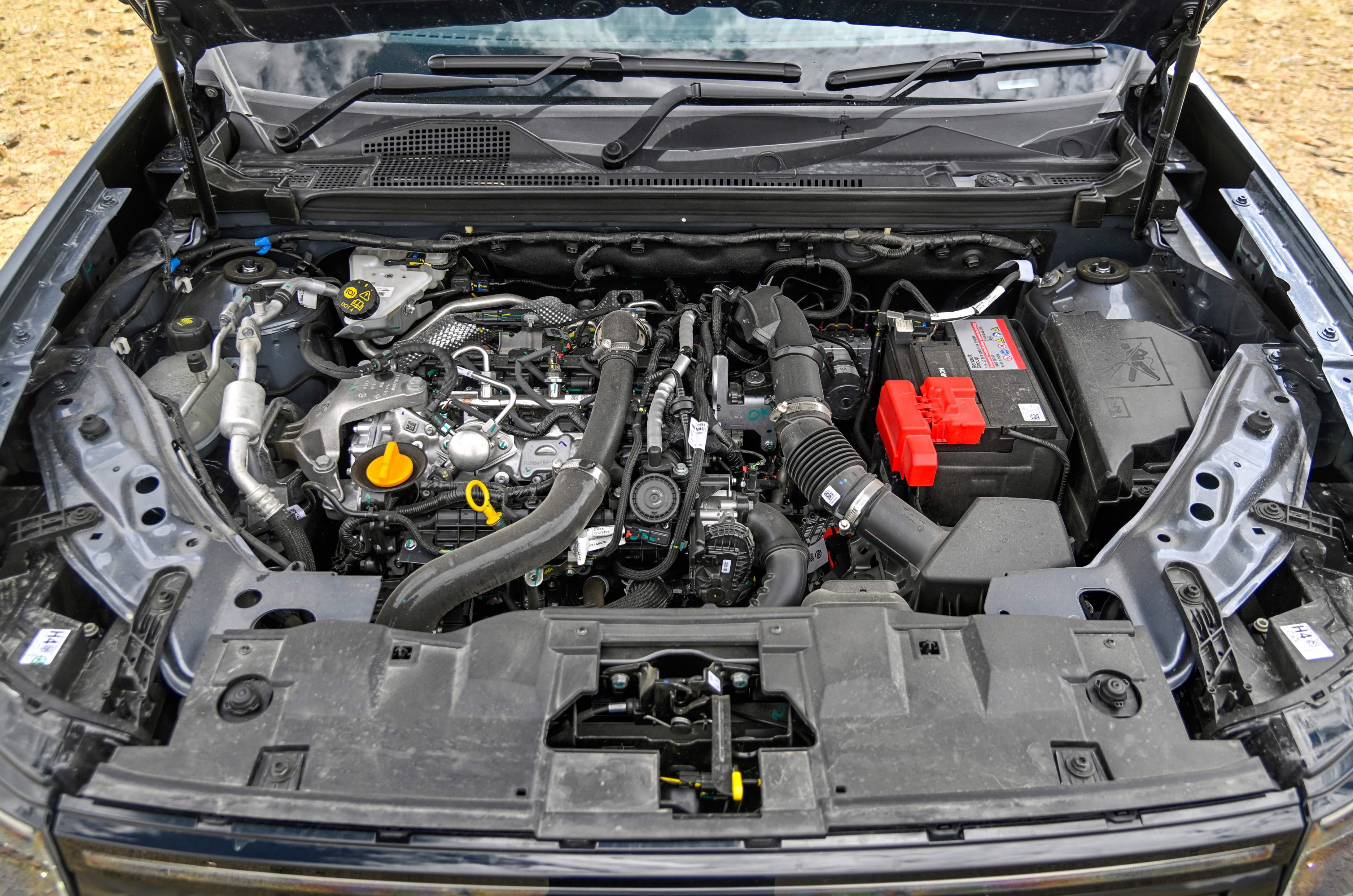
The base 100hp 1.0-litre turbo-petrol engine featuring multi-point fuel injection lacks grunt and isn’t particularly refined, with usable power only good enough for city commutes. The turbo lag is evident till you go past 3,000rpm, requiring the driver to shift gears regularly to keep the engine on the boil. The 6-speed manual transmission (MT) on duty gets shorter gearing to help matters, but you’ll need to slip the clutch to tackle steep inclines, which will be an inconvenience. The gear shifts aren’t as slick as those of a comparable Hyundai Creta or a Kia Seltos.
Moving up to the larger, 163hp 1.3-litre turbo-petrol engine with direct injection doesn’t alleviate all of the issues either. Despite this engine’s higher output than the smaller mill, its weak bottom end can leave the Tekton struggling to get up and go on steep inclines, especially with the engine stop-start function enabled. While it offers more refinement and performance, there’s still noticeable turbo lag below 2,500rpm.
The 6-speed dual-clutch transmission (DCT) shifts between cogs smoothly, but its responses aren’t as quick as one might expect from the type. It upshifts early, perhaps in a bid to boost efficiency, but this makes it feel less responsive. This means you’ll have to take manual control by using the paddleshifters if you want to execute an overtake in a hurry. There’s also no Sport mode to quicken gear shifts – only Comfort and Eco modes are provided. While we are yet to put the Tekton through our rigorous performance tests, the performance on hand is unlikely to impress some buyers.
Lacklustre fuel economy
The Tekton will not be setting mileage benchmarks in the segment
Since the powertrain is mechanically identical to the Duster’s, the fuel economy of the Nissan Tekton in the real world is unlikely to impress. For reference, the Duster with the 1.0-litre engine and 6-speed MT returned 10.98kpl. Meanwhile, the 1.3-litre version recorded 10.47kpl and 10.64kpl with the DCT and MT gearboxes, respectively.
Some features lack execution
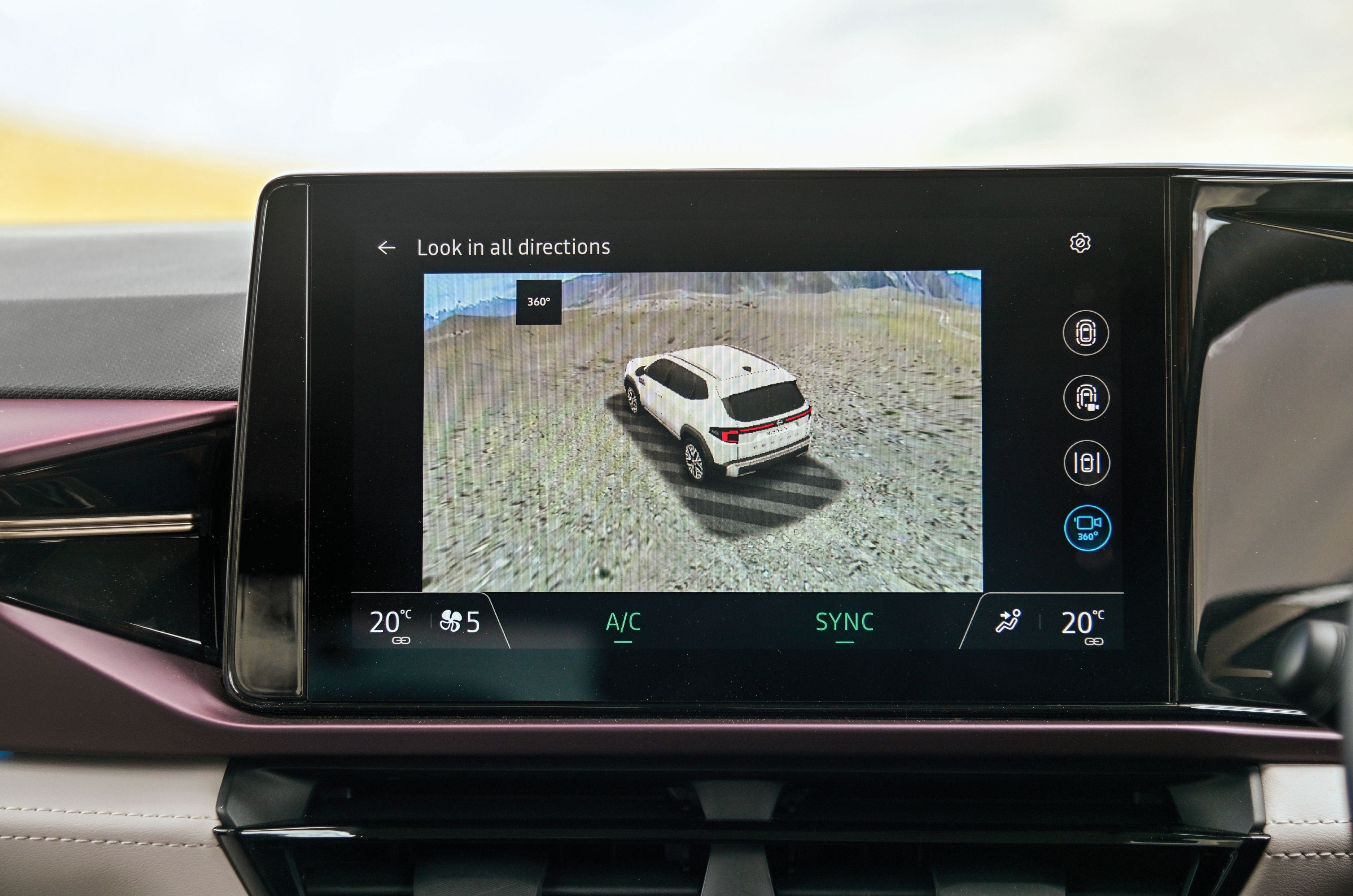
The Nissan Tekton has a few shortcomings when it comes to the quality of some of its features. The 360-degree camera system, for instance, is lacking in outright resolution, which hampers its usability under certain conditions. While the ADAS suite is comprehensive, the lane-keep assist isn’t good at keeping the SUV centred in a lane. Even the adaptive cruise control has its shortcomings – it doesn’t accelerate the Tekton back to its set speed once the traffic starts moving.
Kia Syros EV Launch: अगर आप इलेक्ट्रिक कार खरीदने की सोच रहे हैं, तो Kia आपके लिए एक नया और किफायती विकल्प लेकर आया है। दरअसल, कंपनी ने अपनी नई Syros EV को भारत में लॉन्च कर दिया है, जो न सिर्फ Kia की सबसे सस्ती इलेक्ट्रिक कार है, बल्कि इसे Battery-as-a-Service (BaaS) मॉडल के साथ भी खरीदा जा सकता है। बता दें कि इस मॉडल की शुरुआती कीमत 7.99 लाख रुपये रखी गई है, जबकि बैटरी की कीमत अलग से फाइनेंस की जाएगी, जिसके लिए ग्राहकों को 3.3 रुपये प्रति किलोमीटर की EMI देनी होगी। इसके अलावा, इस इलेक्ट्रिक SUV की डिलीवरी 30 जुलाई से शुरू होगी।
Kia Syros EV कंपनी की अब तक की सबसे किफायती इलेक्ट्रिक कार है। यह Carens Clavis EV के बाद Kia का दूसरा मास-मार्केट इलेक्ट्रिक मॉडल है। इसकी शुरुआती कीमत 13.49 लाख रुपये (एक्स-शोरूम) है, जबकि टॉप-स्पेक X-Line ER वेरिएंट की कीमत 19.99 लाख रुपये (एक्स-शोरूम) तक जाती है।
कंपनी ने Syros EV को अपने मजबूत K1 प्लेटफॉर्म पर तैयार किया है। यह इलेक्ट्रिक SUV ग्राहकों को दो बैटरी पैक विकल्पों के साथ मिलेगी—42 kWh और 51.4 kWh। इन बैटरी ऑप्शन के साथ Kia का लक्ष्य ज्यादा से ज्यादा ग्राहकों को इलेक्ट्रिक मोबिलिटी की ओर आकर्षित करना है।
छोटे बैटरी पैक वाला वेरिएंट ARAI-सर्टिफाइड MIDC फुल-साइकिल रेंज में 443 किलोमीटर तक चल सकता है। वहीं, बड़े 51.4 kWh बैटरी पैक वाले मॉडल की रेंज 526 किलोमीटर तक बताई गई है। इसके साथ ही Kia Syros EV अपने सेगमेंट की पहली ऐसी इलेक्ट्रिक SUV बन गई है, जिसने 500 किलोमीटर से ज्यादा की प्रमाणित रेंज का आंकड़ा पार किया है।
इसकी बड़ी बैटरी एक इलेक्ट्रिक मोटर को पावर देती है, जो 171 PS (लगभग 169 bhp) की पावर जेनरेट करती है, जिससे यह SUV 0 से 100 km/h की रफ्तार 8.1 सेकंड में पकड़ लेती है।
Syros EV में 100 kW DC फास्ट चार्जिंग की भी सुविधा है, जिससे बैटरी 39 मिनट में 10% से 80% तक चार्ज हो सकती है। इसमें 10.8 kW का ऑनबोर्ड AC चार्जर भी मिलता है।
फीचर लिस्ट
Syros EV का डिजाइन ICE-पावर्ड Syros जैसा ही है, लेकिन इसमें कुछ खास EV स्टाइलिंग एलिमेंट्स दिए गए हैं। इसके अलावा, इनमें Kia की क्लोज्ड-ऑफ Digital Tiger Face ग्रिल, Ice Cube LED हेडलैंप, Star Map LED DRLs और टेल लैंप, फ्लश-फिटिंग डोर हैंडल्स और 17-इंच के डुअल-टोन एयरो अलॉय व्हील शामिल हैं।
इंटीरियर की बात करें तो, इसके अंदर 30-इंच का पैनोरमिक डिस्प्ले है, जिसमें 12.3-इंच का टचस्क्रीन इंफोटेनमेंट सिस्टम, 12.3-इंच का डिजिटल इंस्ट्रूमेंट क्लस्टर और 5-इंच का क्लाइमेट कंट्रोल इंटरफेस शामिल है।
Kia Syros EV के अन्य फीचर्स में डुअल-पेन पैनोरमिक सनरूफ, एम्बिएंट लाइटिंग, फोर-वे पावर ड्राइवर सीट, स्लाइडिंग और रिक्लाइनिंग रियर सीट, वेंटिलेटेड फ्रंट और रियर सीट, आठ-स्पीकर वाला Harman Kardon ऑडियो सिस्टम, वायरलेस Android Auto और Apple CarPlay, वायरलेस फोन चार्जर, 16-लीटर का फ्रंक (फ्रंट ट्रंक), स्मार्ट डैशकैम, 360-डिग्री कैमरा और 16 ऑटोनॉमस फंक्शन वाला लेवल 2 ADAS शामिल हैं।
सेफ्टी फीचर्स
Kia Syros EV में यात्रियों की सुरक्षा का भी खास ध्यान रखा गया है। इसमें 6 एयरबैग, इलेक्ट्रॉनिक स्टेबिलिटी कंट्रोल (ESC), हिल-स्टार्ट असिस्ट, ऑटो होल्ड के साथ इलेक्ट्रॉनिक पार्किंग ब्रेक, टायर प्रेशर मॉनिटरिंग सिस्टम (TPMS), ISOFIX चाइल्ड सीट एंकर जैसे सेफ्टी फीचर्स दिए गए हैं।
इसके अलावा, इसमें ब्लाइंड व्यू मॉनिटर और आगे, पीछे व साइड पार्किंग सेंसर भी मिलते हैं, जो ड्राइविंग के दौरान सुरक्षा और सुविधा को बेहतर बनाते हैं।
Syros EV की कीमतें (एक्स-शोरूम):
Battery Pack
Variant
Price
42 kWh
HTK
₹13.49 lakh
42 kWh
HTK+
₹14.99 lakh
42 kWh
HTX
₹15.99 lakh
51.4 kWh (Extended Range)
HTK+ ER
₹16.99 lakh
51.4 kWh (Extended Range)
HTX ER
₹17.99 lakh
51.4 kWh (Extended Range)
HTX+ ER
₹19.49 lakh
51.4 kWh (Extended Range)
X-Line ER
₹19.99 lakh
ओनरशिप के फायदे
Kia ने Syros EV के साथ ग्राहकों के लिए कई खास फायदे भी पेश किए हैं। कंपनी पहले मालिक को हाई-वोल्टेज बैटरी पर 15 साल की अनलिमिटेड किलोमीटर वारंटी दे रही है। इसके अलावा, कंपनी ने अश्योर्ड बायबैक प्रोग्राम भी शुरू किया है, जिसके तहत तीन साल बाद कार की रीसेल वैल्यू 80% तक मिल सकती है।
वहीं, ग्राहकों को बेहतर चार्जिंग सुविधा देने के लिए Kia के K-Charge नेटवर्क के जरिए 20,300 से ज्यादा चार्जिंग पॉइंट्स तक पहुंच मिलेगी।
For our first drive of the all-new Tekton, Nissan organized an elaborate 700km plus test drive from Chandigarh to Leh, tackling everything from crowded city traffic and fast highways to mountain passes and broken roads. The aim was to find out whether Nissan’s new midsize SUV has what it takes to take on the Hyundai Creta, Kia Seltos and Maruti Victoris in the real world.
Nissan Tekton Exterior Design and Engineering – 9/10
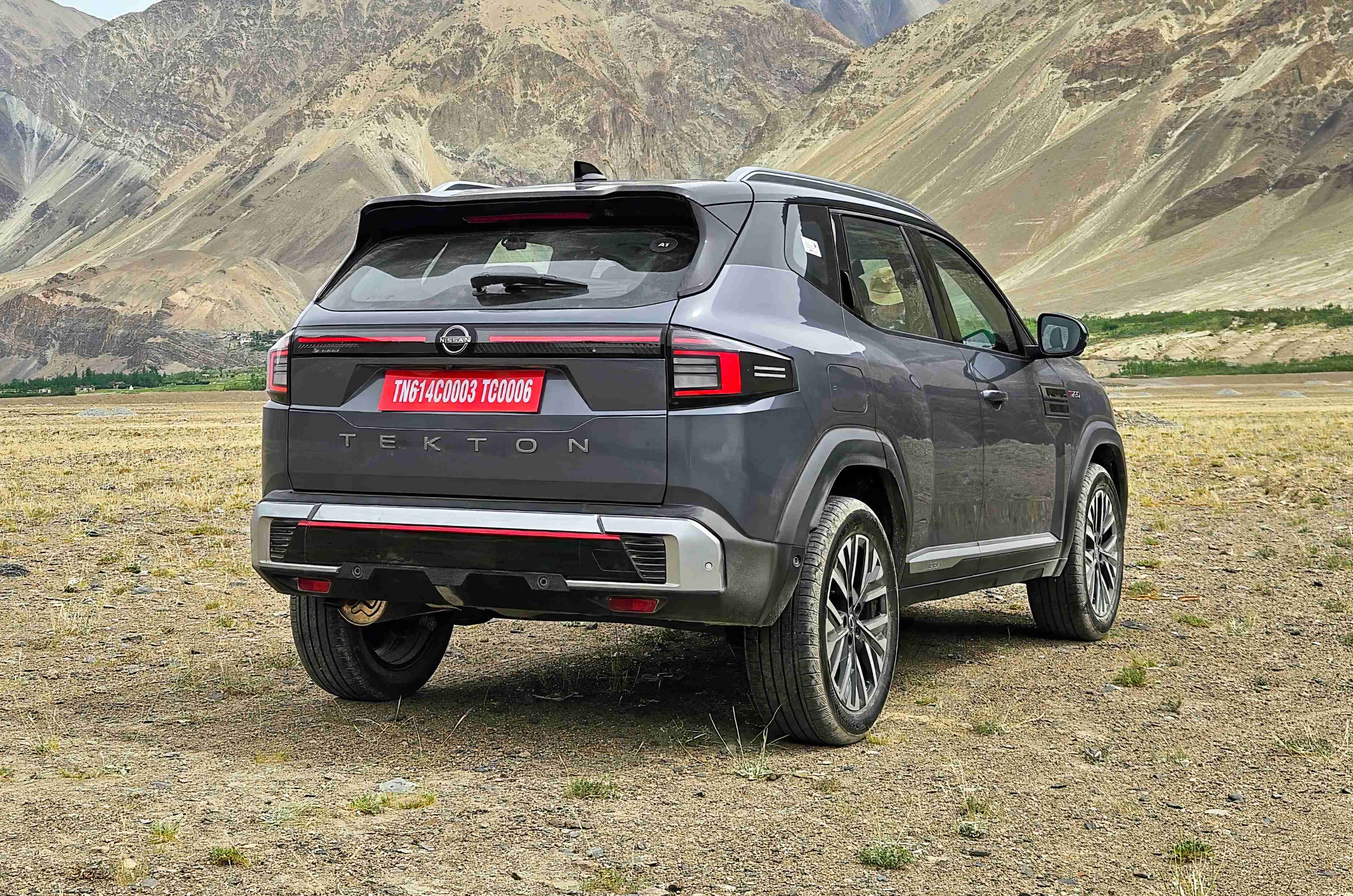
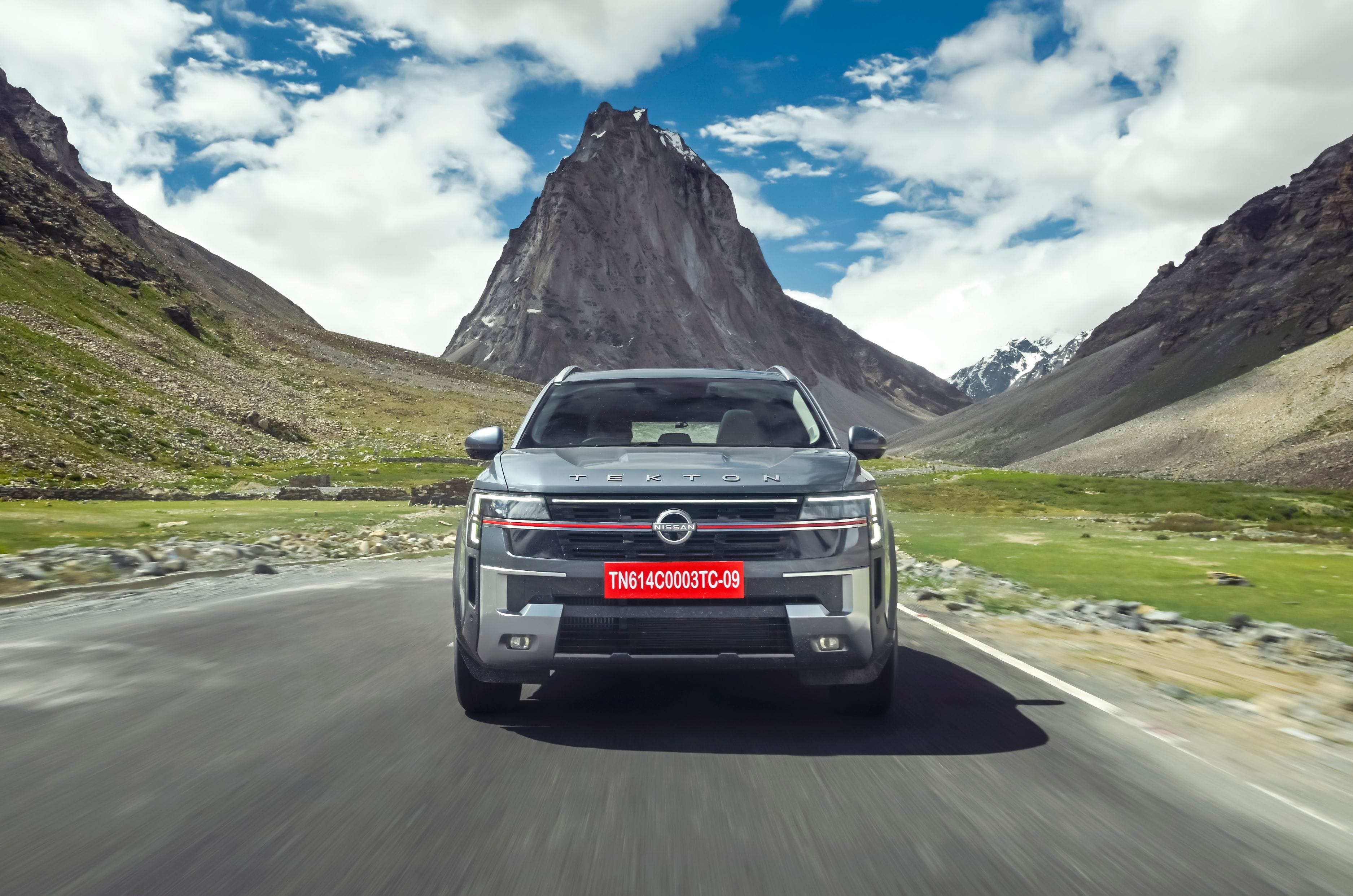
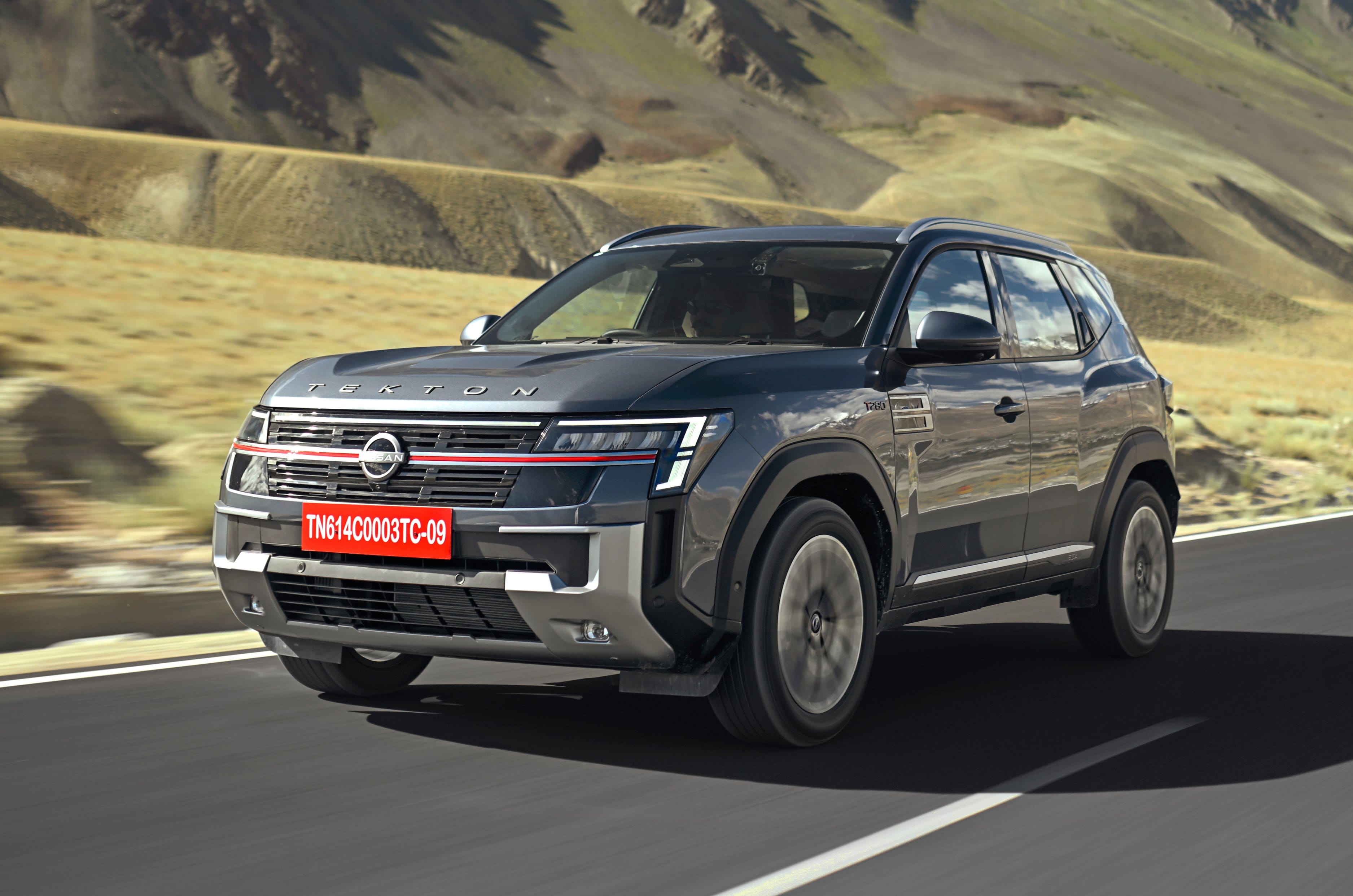
The Tekton is, in essence, a badge-engineered Renault Duster. It is built at the same plant, on the same assembly line, and shares its platform, powertrains and several components with its French sibling. Nissan, however, has worked hard to give it a distinct identity, drawing inspiration from its flagship Patrol SUV.
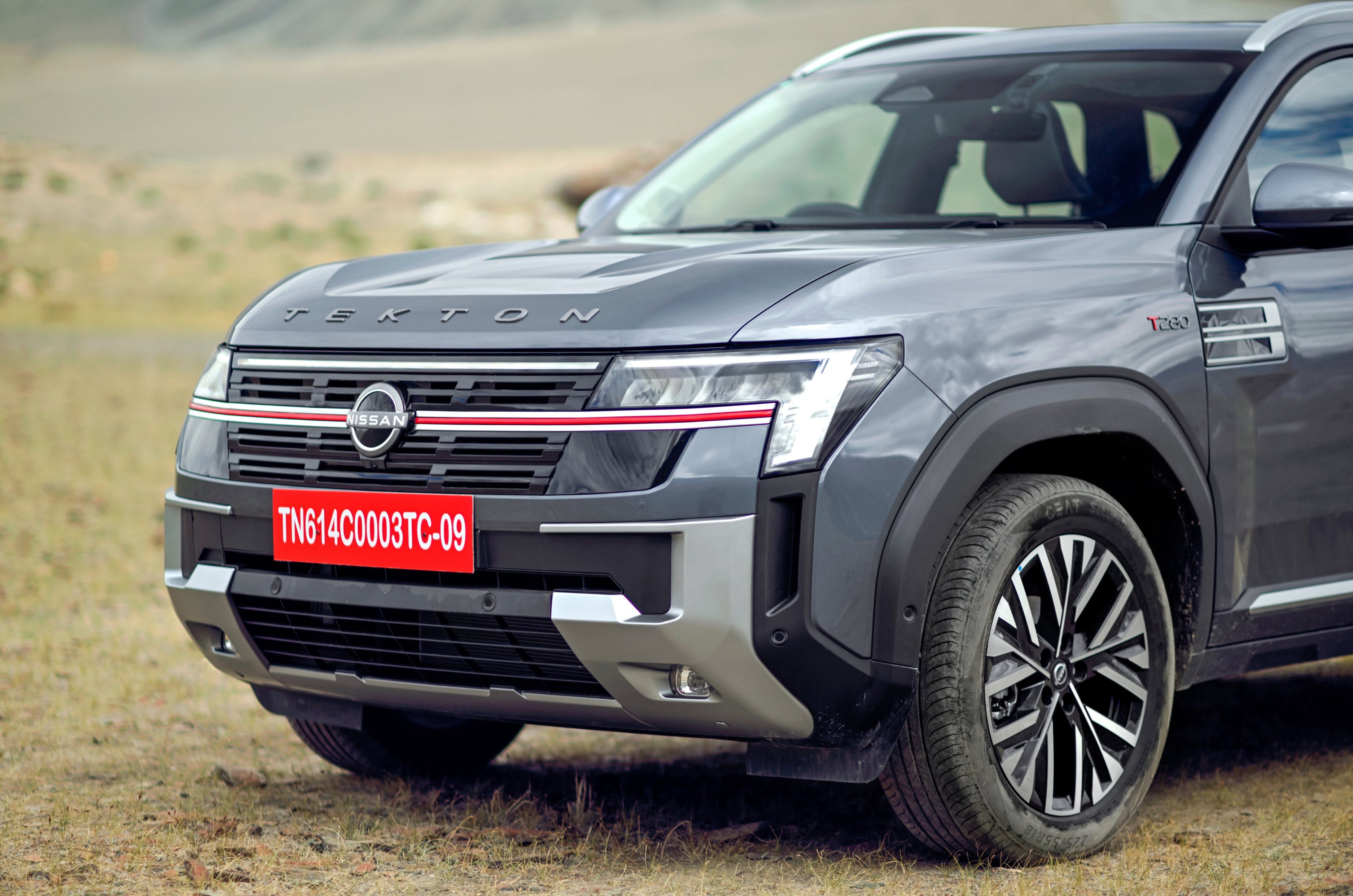
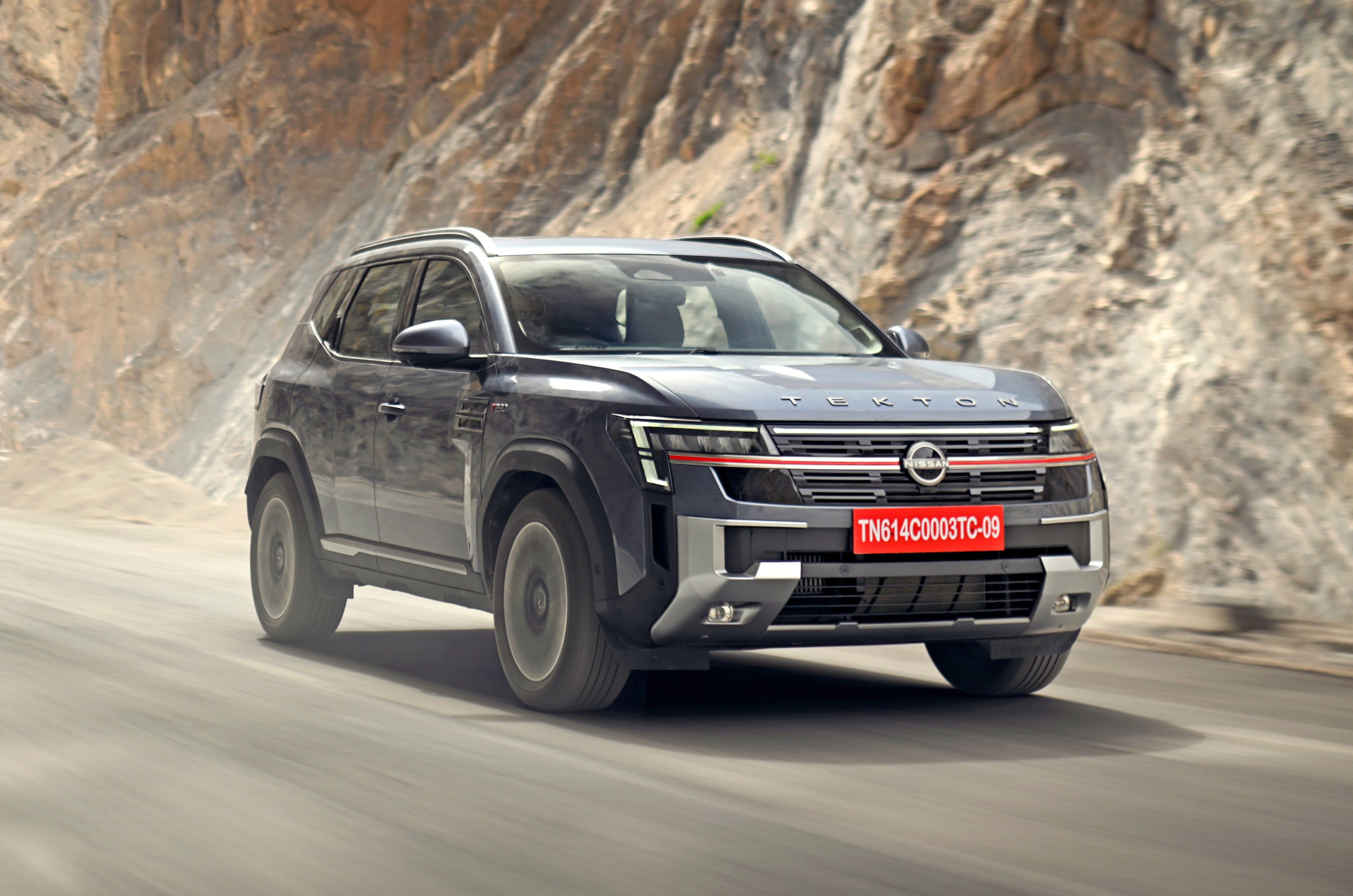
1.3 turbo variants can be identified by the red strip on the grille and T280 badge.
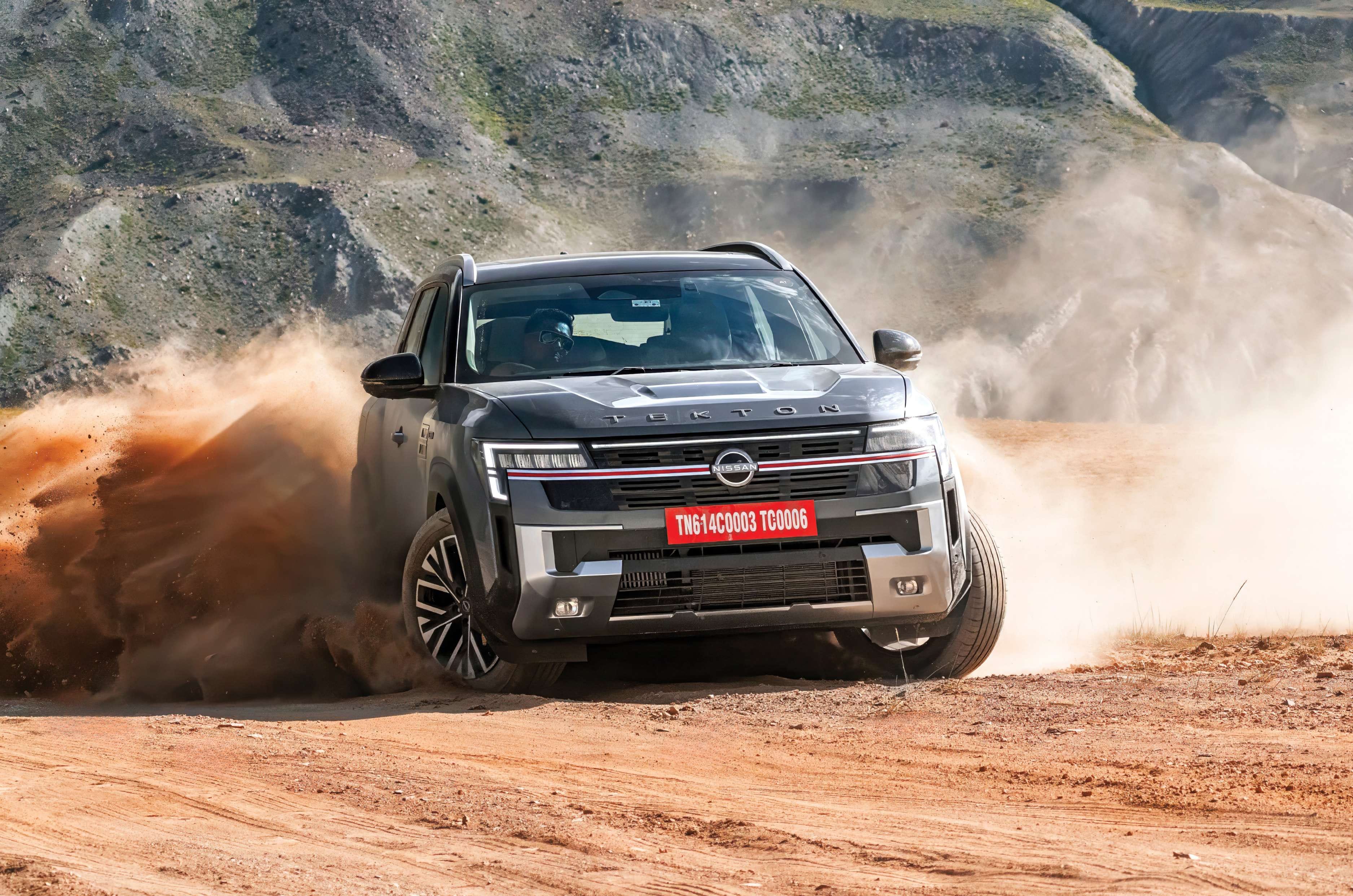
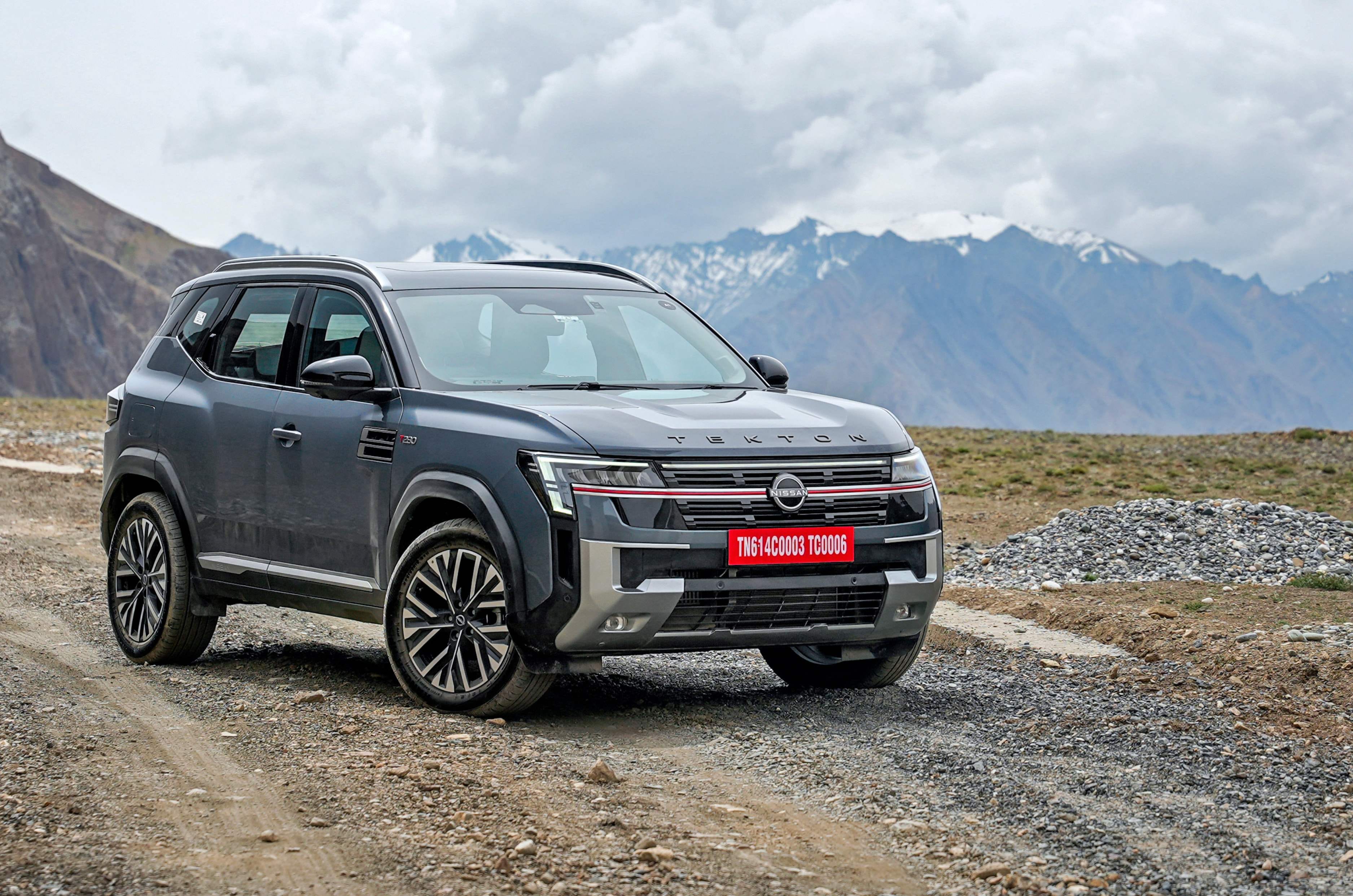
The front end is undoubtedly the highlight. The grille, connected light bar and red accents on the 1.3-litre turbo variants lend it a bold and distinctive look. It even gets functional bumper air scoops and fog lamps, the latter being an increasingly rare feature in this segment. The sculpted bonnet adds plenty of visual muscle, while the side profile is enhanced by attractive 18-inch alloy wheels wrapped in chunky, high-profile tyres.
Practicality extends beyond appearances. Ground clearance stands at an impressive 212mm, making the Tekton well suited to rough terrain. The T280 badge on the front fender denotes the 280Nm produced by the 1.3-litre turbo-petrol engine, while a unique applique depicting the Himalayas adds a touch of character. Its pillar-mounted rear door handles link ties to Nissan SUVs of yore like the Pathfinder and X-Terra.
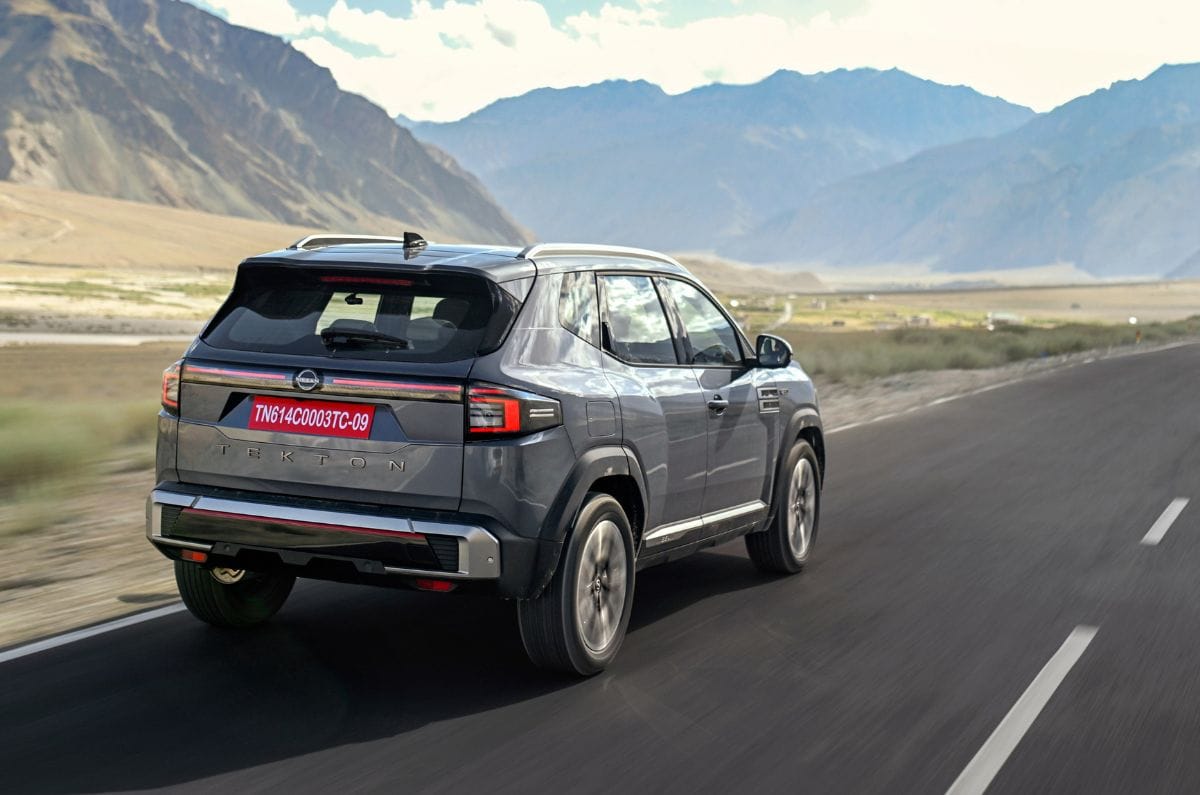
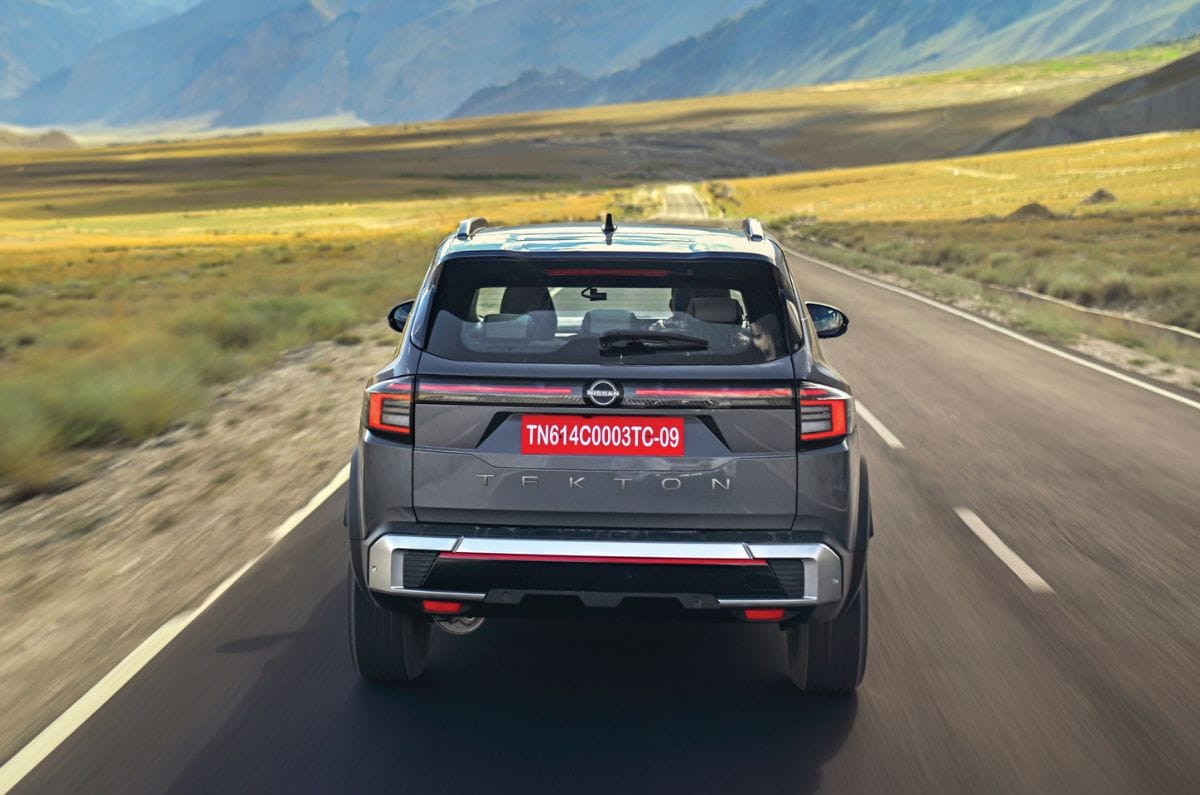
The execution of its tail-lamp design is spot on, looking most similar to the Patrol.
At the rear, the tail-lamp design bears the strongest resemblance to the Patrol and is executed rather well. While the Tekton isn’t the largest SUV in its class, it strikes a pleasing balance between road presence and urban friendliness. We suspect its styling is likely to be one of its biggest selling points.
Nissan Tekton Interior Space and Comfort – 8/10
Inside, Nissan has done a commendable job differentiating the cabin from the Renault Duster. The layout remains familiar, but the padded leatherette on the dash and doorpads look classy and along with the burgundy, gold and light cream colour scheme lends the interior a more premium ambience. There are also subtle Nissan-specific touches on the dash fascia, including an Easter egg inspired by Japanese numerals represented by 2 vertical lines (Ni) and three horizontal lines (san).
Neatly dressed-up interior look and feel quite upmarket.
The driving position is excellent. Visibility is strong, the bonnet is clearly visible from the driver’s seat, and most controls fall easily to hand. Ergonomics are largely spot-on, though taller drivers who prefer a high seating position may find the large plastic panel near the A-pillar slightly intrusive.
Burgandy, gold and light cream colour scheme, along with the soft leatherette paddings enhance the cabin’s premium feel.
One area where the Tekton needs improvement is air conditioning performance. Even at the lowest temperature setting, the cabin takes time to cool down. Thankfully, the ventilated front seats are highly effective and help offset this weakness. The seats themselves deserve praise for their excellent support and long-distance comfort. The digital instrument cluster is clear and easy to read, offering multiple display layouts, including a full-map view. Unlike the Duster’s less intuitive tachometer display, the Nissan gets a more conventional and user-friendly setup. Physical controls for climate functions, audio settings and ADAS shortcuts are particularly welcome in an era increasingly dominated by fiddly touch panels.
Powered front seats are supportive and have a very effective ventilation function.
Storage solutions are generally well thought out. The cooled wireless charging pad prevents phones from overheating, while USB-C ports and a 12V socket are provided. However, 1-litre bottles cannot be stored vertically in the front door bins; although they can be placed vertically in the rear door bins. Useful storage spaces include deep cupholders and a large central armrest console. The glovebox is generous, though part of it is compromised by the fuse box, just as in the older-gen Duster.
Cabin space is adequate for four adults; seats are very comfy.
Accessing the rear seat requires a bit of effort due to the high step-in and narrow opening, but once seated, comfort levels are impressive. The seat backrest is well angled, under-thigh support is good, and there’s plenty of room beneath the front seats to stretch out. The rear bench is best suited to two adults rather than three, although all occupants get individual headrests and three point seatbelts.
Rear-seat amenities include seatback pockets, rear AC vents, two USB charging ports, a centre armrest and a phone holder. The panoramic sunroof adds a real sense of occasion, especially on scenic drives through the mountains. That said a boss mode for the electrically adjustable front passenger seat and rear sunshades aren’t available.
Cavernous 518-litre boot is ideal for road trips; gets a spare wheel too.
Open the electrically operated tailgate and you’re greeted by a massive 518-litre boot. It comfortably swallows luggage and is the largest in its class, making it ideal for long-distance touring. There’s a full-size spare tyre too.
Nissan Tekton Features and Safety – 9/10
The Tekton is otherwise generously equipped with kit like panoramic sunroof, powered and ventilated front seats, 10.25-inch instrument cluster, 10.1-inch touchscreen which not only gets wireless Android Auto and Apple CarPlay, but it also gets native Google integration including Gemini voice assistant, among other notable features. The only real disappointment is the below par quality of the 360-degree camera system.
With in-built Google, screen works well; 360-degree camera quality is below par.
Safety credentials are strong. Along with a comprehensive ADAS suite, the Tekton has secured a five-star Bharat NCAP rating, just like its Renault sibling. The lane-keep assist didn’t seem to keep the vehicle properly centred within the lane, and it tended to weave between the lane markings.
The adaptive cruise control system also performed well, maintaining safe distances and slowing progressively with traffic. Its acceleration back to the set speed, however, feels somewhat slow regardless of drive mode.
10.25-inch instrument cluster is well executed; gets a full map view too.
Nissan Tekton Performance and Refinement – 7/10
The entry-level powertrain is a 1.0-litre turbo-petrol shared with the Magnite. With some updates though that has taken torque higher to 166Nm – up from 160Nm, while power remains the same at 100hp. It is paired exclusively with a six-speed manual gearbox.
To compensate for the Tekton’s weight and performance demands, Nissan has equipped this version with shorter gearing than the 1.3-litre variants. Around town, it feels perfectly adequate, but the small-capacity turbo engine suffers from noticeable turbo lag. Steep inclines often require clutch slip to get moving, and enthusiastic driving demands frequent gear changes to keep the engine in its power band. Peak boost arrives beyond 3,000rpm, while the gearbox itself lacks the slickness of some Korean and Japanese rivals.
If you love to drive, this is one of those cars that you’re surely going to like.
The 1.3-litre turbo-petrol is significantly more appealing. Refinement levels are better, performance is considerably stronger, and overtaking requires much less planning. Turbo lag is reduced compared to the 1.0-litre, though it hasn’t been eliminated entirely. On steep gradients and under stop-start conditions, the engine occasionally struggles to build revs quickly enough, exposing a weak bottom-end response.
Once past 2,500rpm, however, the turbo wakes up and the Tekton gathers speed with enthusiasm. The engine also produces an appealing turbo whoosh at higher revs, though some may find it intrusive.
Enthusiasts are likely to yearn for a bit more responsiveness from both the engines.
This engine comes with a manual as well as a six-speed wet-clutch dual-clutch automatic transmission, which is the one we drove. Shifts are impressively smooth and seamless, but responses are slower than expected. The gearbox’s tendency to upshift early can make the Tekton feel less responsive than it actually is, often prompting the use of the paddle shifters for quick overtakes.
There are two drive modes – Comfort and Eco – though enthusiasts will miss the absence of a Sport mode. Fortunately, manual mode allows greater control over the transmission and proved particularly enjoyable on mountain roads. In city traffic, however, the combination works well, with smooth low-speed behaviour and a well-calibrated creep function.
Even though we didn’t get a chance to test the Tekton for outright performance and fuel efficiency, we have extensively tested its Renault sibling, and the numbers aren’t particularly impressive. Expectedly, the Duster’s performance testing revealed that the 1.3-litre manual is the quickest variant to 100kph (10.32 sec), , while the 1.3 DCT’s reluctance to allow aggressive launches affects its outright acceleration times (11.33 sec). The 1.0-litre (13.26 sec) delivers acceleration comparable to the naturally aspirated 1.5-litre engines found in the Creta and Seltos.
Nissan Tekton Mileage and Efficiency – 6/10
Once again, taking the Duster’s figures for refence, average real-world fuel efficiency is quite weak too with the 1.0 version (10.98kpl) faring only slightly better than the 1.3 versions (10.47kpl for DCT, 10.64kpl for MT). Like the Duster, all variants of the Tekton get an Eco mode as well as an auto engine stop-start function to keep a check on fuel consumption.
Nissan Tekton Ride Comfort and Handling – 9/10
As with the Renault Duster, Nissan has absolutely nailed the ride-and-handling balance. Unlike many European cars, the Tekton does not feel overly firm at low speeds. Instead, it delivers a supple, absorbent ride that shrugs off poor road surfaces with ease. Even sharp potholes generate more noise than impact inside the cabin.
Unlike some rivals, its low speed ride doesn’t have the typical underlying firmness.
Handling is equally impressive. The Tekton changes direction eagerly and inspires confidence, making it genuinely enjoyable to drive. Its electronic power steering offers Light and Heavy modes, though the lighter setting strikes the better balance between ease and precision. The steering feel is among the best in the segment.
Braking performance is another strong point. Throughout our drive to Leh, the brakes consistently inspired confidence, delivering strong stopping power and natural pedal feel.
Nissan Tekton Value for Money – 8/10
Priced between Rs 10.50 lakh and Rs 18.5 lakh, the Tekton commands a premium of Rs 10,000-50,000 over an equivalent Renault Duster. The range consists of 12 variants: six powered by the 1.0-litre turbo petrol, two by the 1.3-litre manual and four by the 1.3-litre auto, indicating Nissan’s focus on the smaller engine.
The biggest drawbacks of the powertrains though are the lack of outright punch and responsiveness, as well as fuel efficiency that may not satisfy high-mileage users. Neither Renault nor Nissan offers a diesel option, and while the Duster is expected to receive a hybrid powertrain, Nissan has ruled out one for now.
However after 700km behind the wheel, the Nissan Tekton leaves an overall positive impression. It is handsome, well equipped and comfortable, with a premium-feeling cabin and class leading 518-litre boot. The rear seat may not be the most spacious in the segment, but it comfortably accommodates four adults, while its ride-and-handling balance ranks among the very best in class. The Tekton then is a thoroughly competent midsize SUV. And in a segment packed with strong contenders, this one too deserves serious consideration.
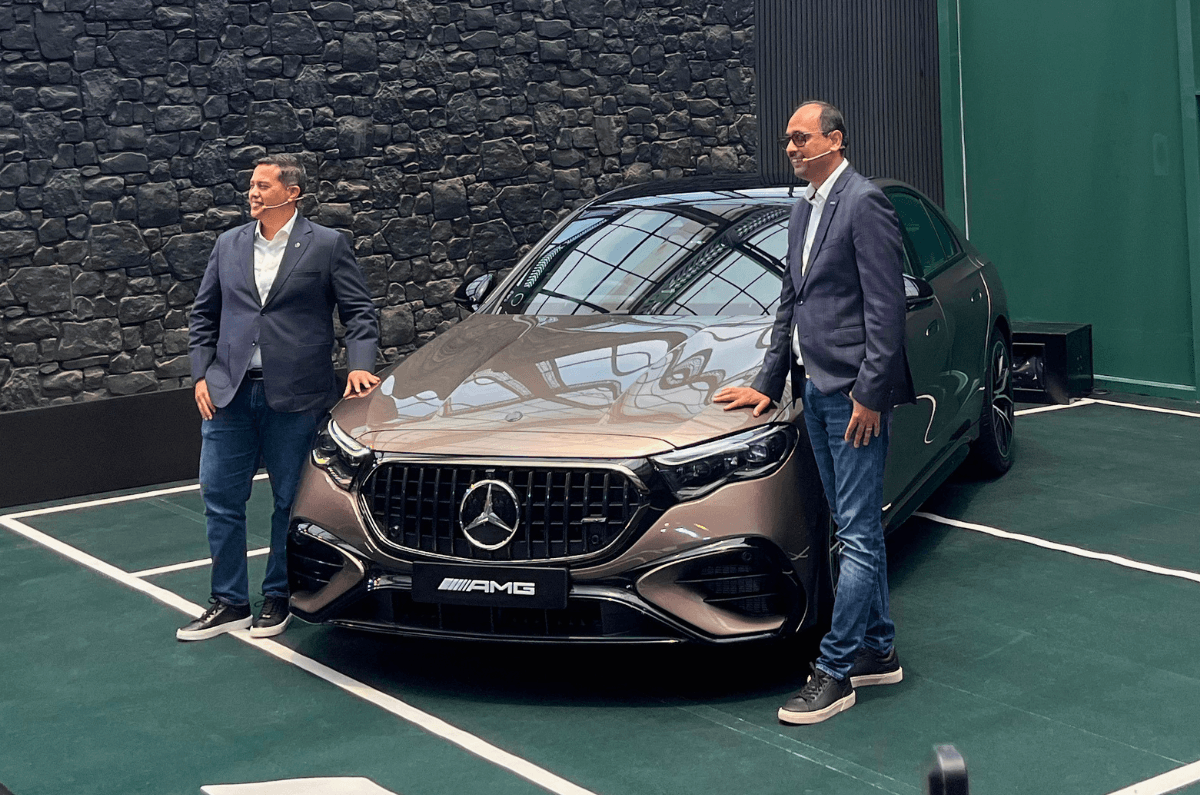
Mercedes-Benz has launched the 2026 AMG E 53 Performance Edition at Rs 1.45 crore, ex-showroom, in India. The carmaker has also introduced the AMG E 53 Racing Edition, priced at Rs 1.48 crore. The performance-focused AMG version of the E-Class was globally revealed in 2024, and it packs both powertrain and mechanical upgrades, along with design tweaks, over the standard sedan.
2026 Mercedes-AMG E 53 powertrain
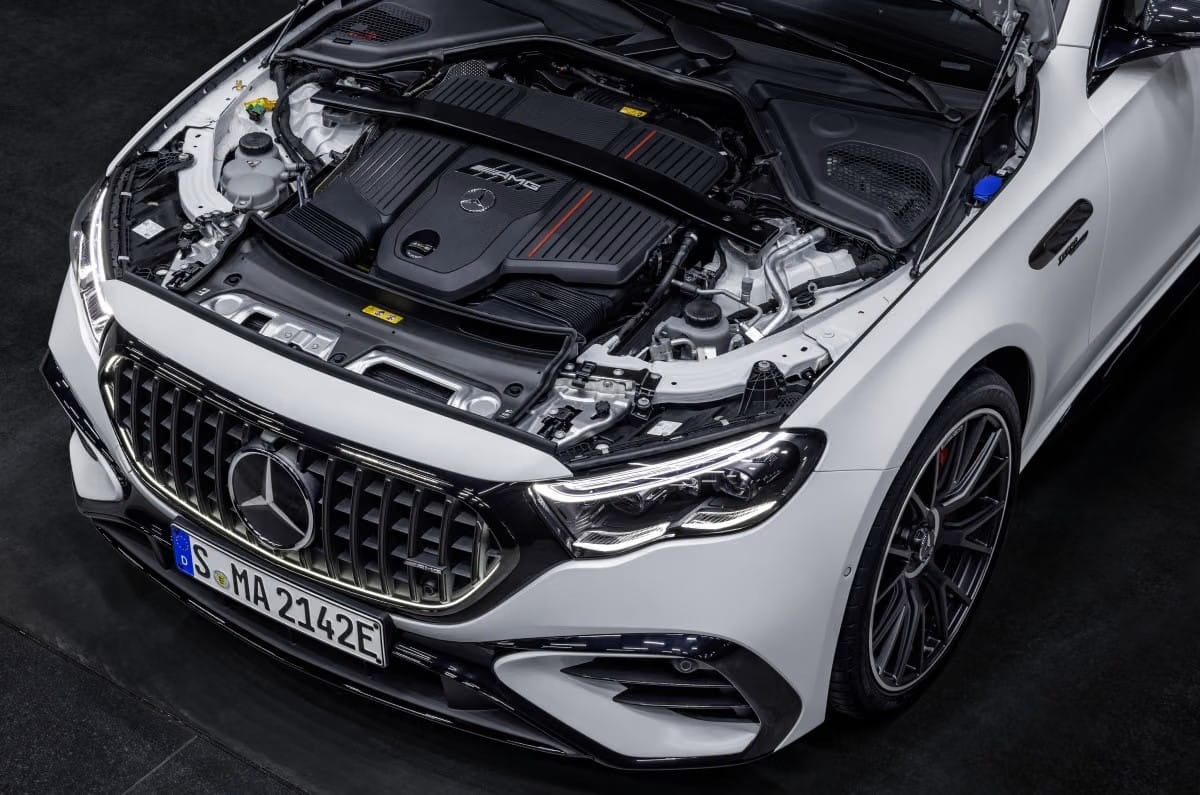
The AMG E 53 has a 3-litre in-line six turbo-petrol engine mated to a 9-speed automatic gearbox, which sends drive to all four wheels via the brand’s 4Matic+ AWD system. Being a plug-in hybrid, it also gets an electric motor paired with a battery pack (21.2kWh usable capacity). Together, this setup produces 585hp and 750Nm, and the 0-100kph sprint is done in 4 seconds. Top speed is rated at 250kph. The E 53 Racing Edition comes with AMG Driver’s Package as standard, which increases the maximum speed to 280kph.
Speaking of charging, the 400V lithium-ion battery takes 20 minutes for a 10-80 percent top-up with a 60kW DC unit. Meanwhile, a 0-100 percent charge takes 2.25 hours with an 11kW AC unit. Mercedes claims an electric-only range of 100km.
Mechanical upgrades over the standard E-Class include an electronic rear limited-slip differential, a high-performance braking system, air suspension and rear-axle steering.
2026 Mercedes-AMG E 53 exterior highlights
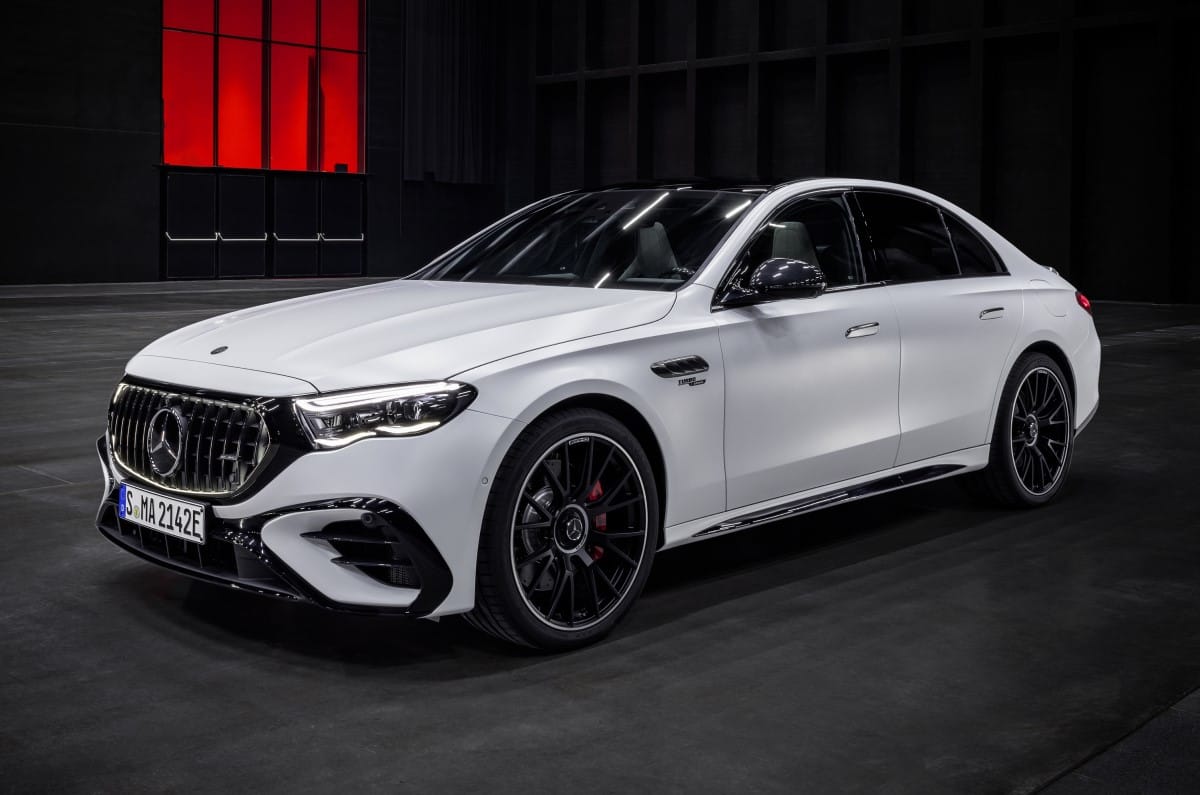
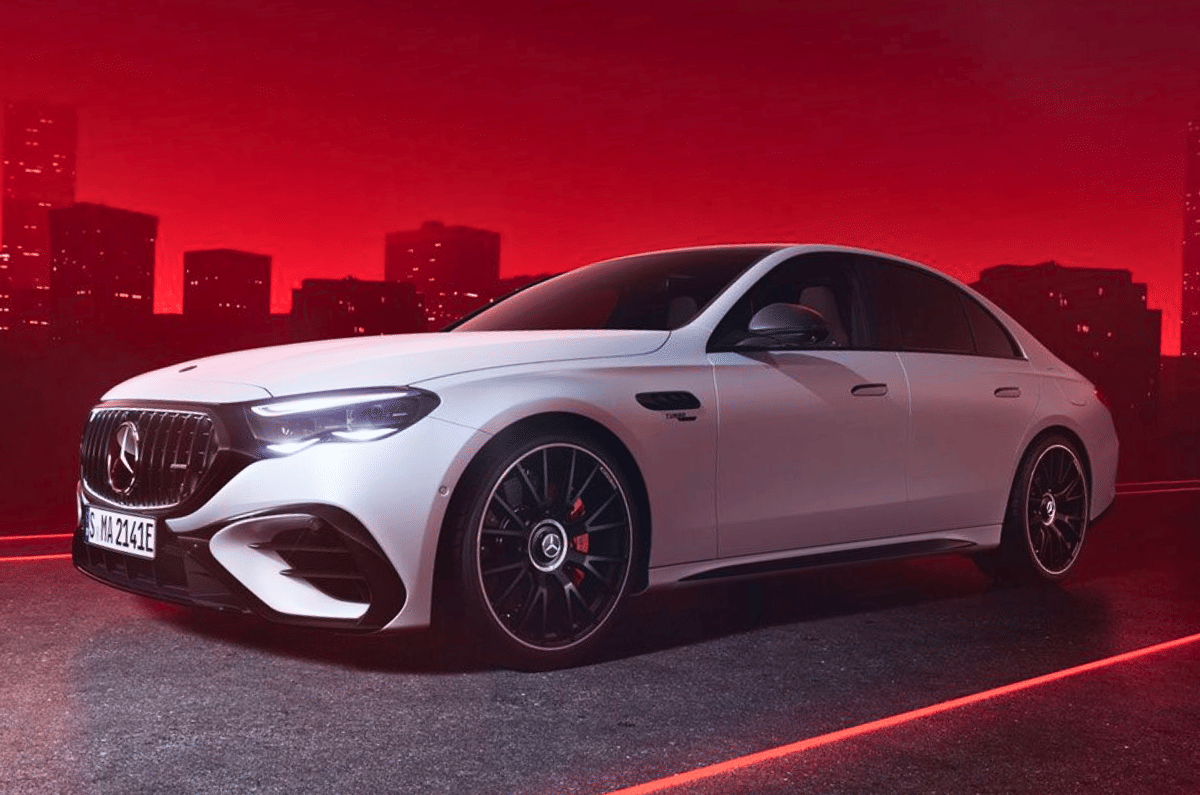
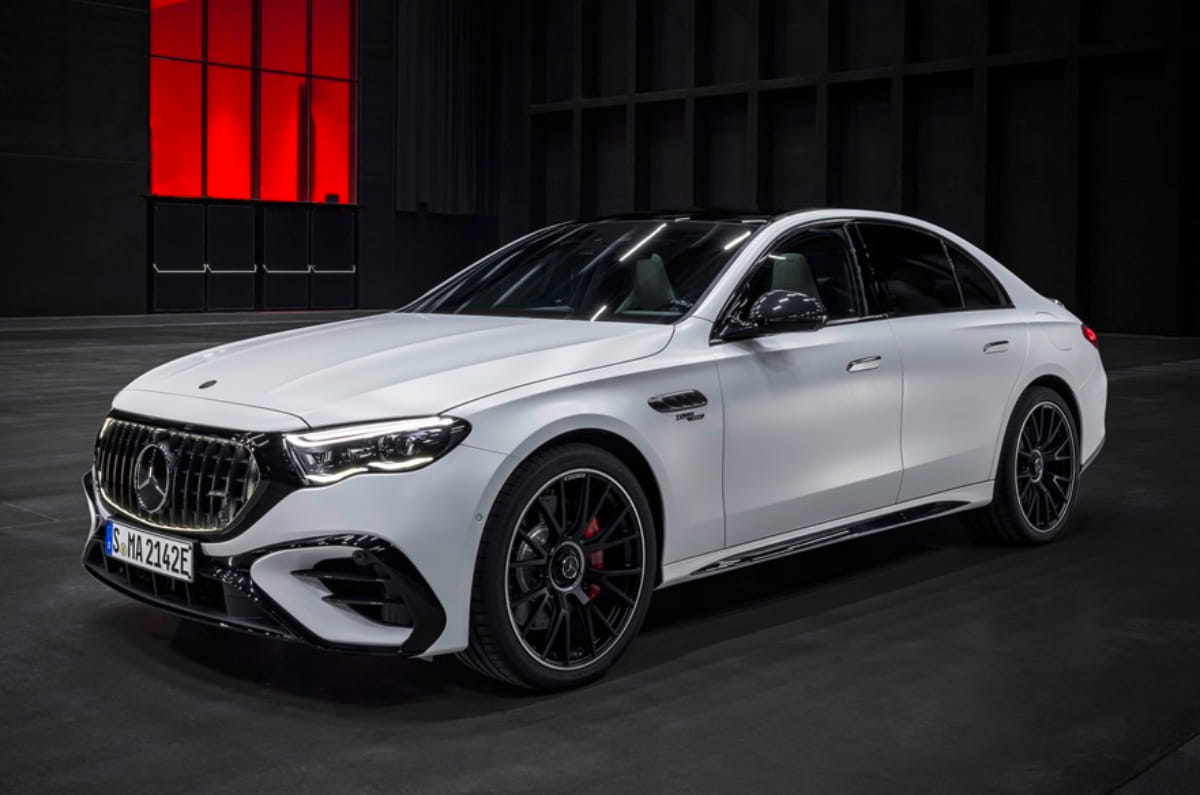
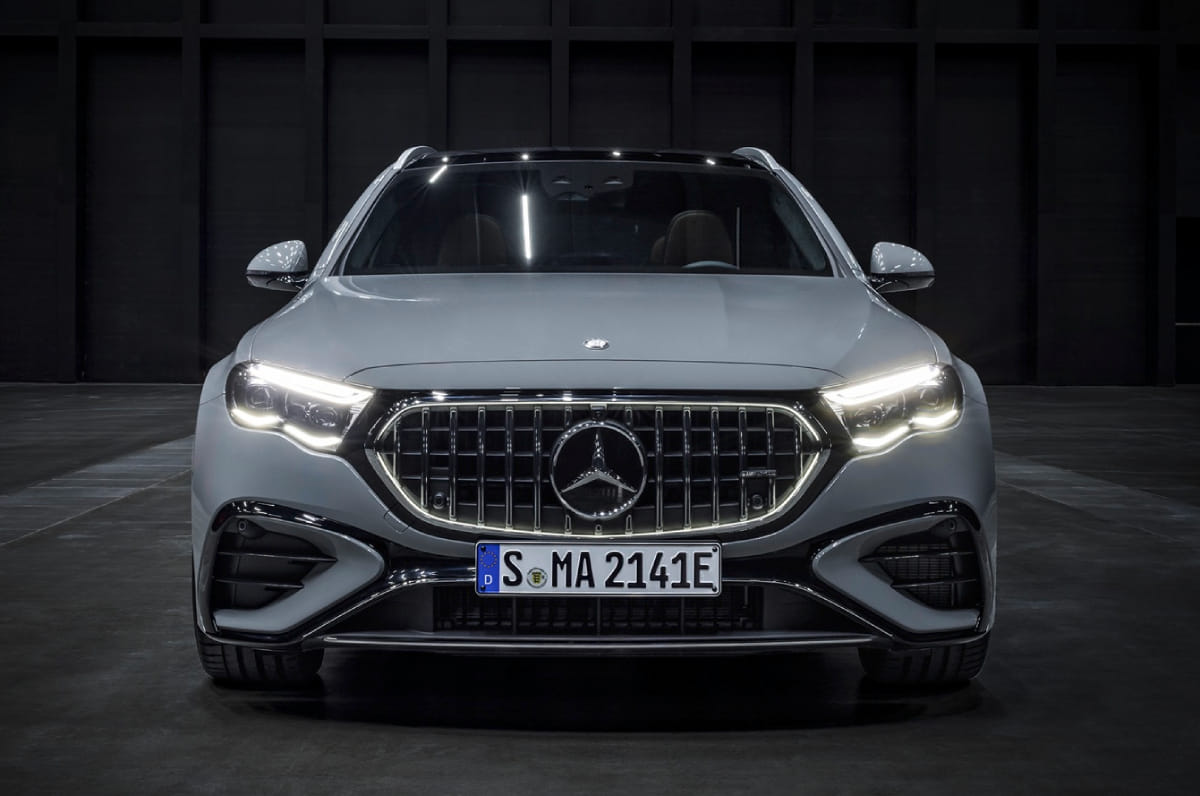
The Mercedes-AMG E 53 gets several design changes that set it apart from the standard E-Class. At the front, it features an AMG-specific grille with vertical slats, a redesigned bumper with larger air intakes, and front fenders widened by 11mm on each side to accommodate the wider front track.
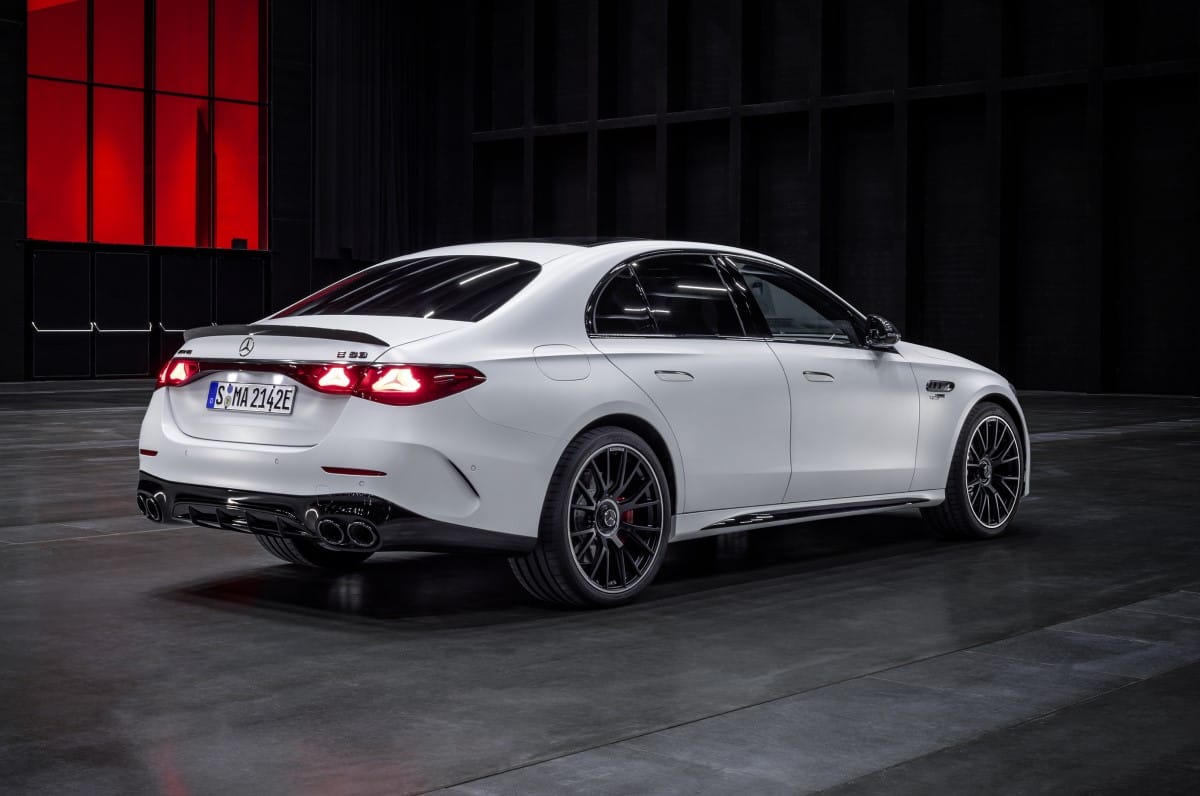
In profile, the E 53 gets flush-fitting door handles, AMG-specific side skirts, and sporty 20-inch alloy wheels, behind which are red-coloured brake callipers. At the rear, it features a boot-lid spoiler, and a rear bumper with a diffuser and quad round exhaust tips.
2026 Mercedes-AMG E 53 interior features
Inside, the AMG E 53 features a 12.3-inch digital driver’s display and a 14.4-inch touchscreen. Other features include a Burmester sound system, a panoramic sunroof, ambient lights, a wireless charger, wireless Android Auto and Apple CarPlay, drive modes, a 360-degree camera setup, multiple airbags and more.
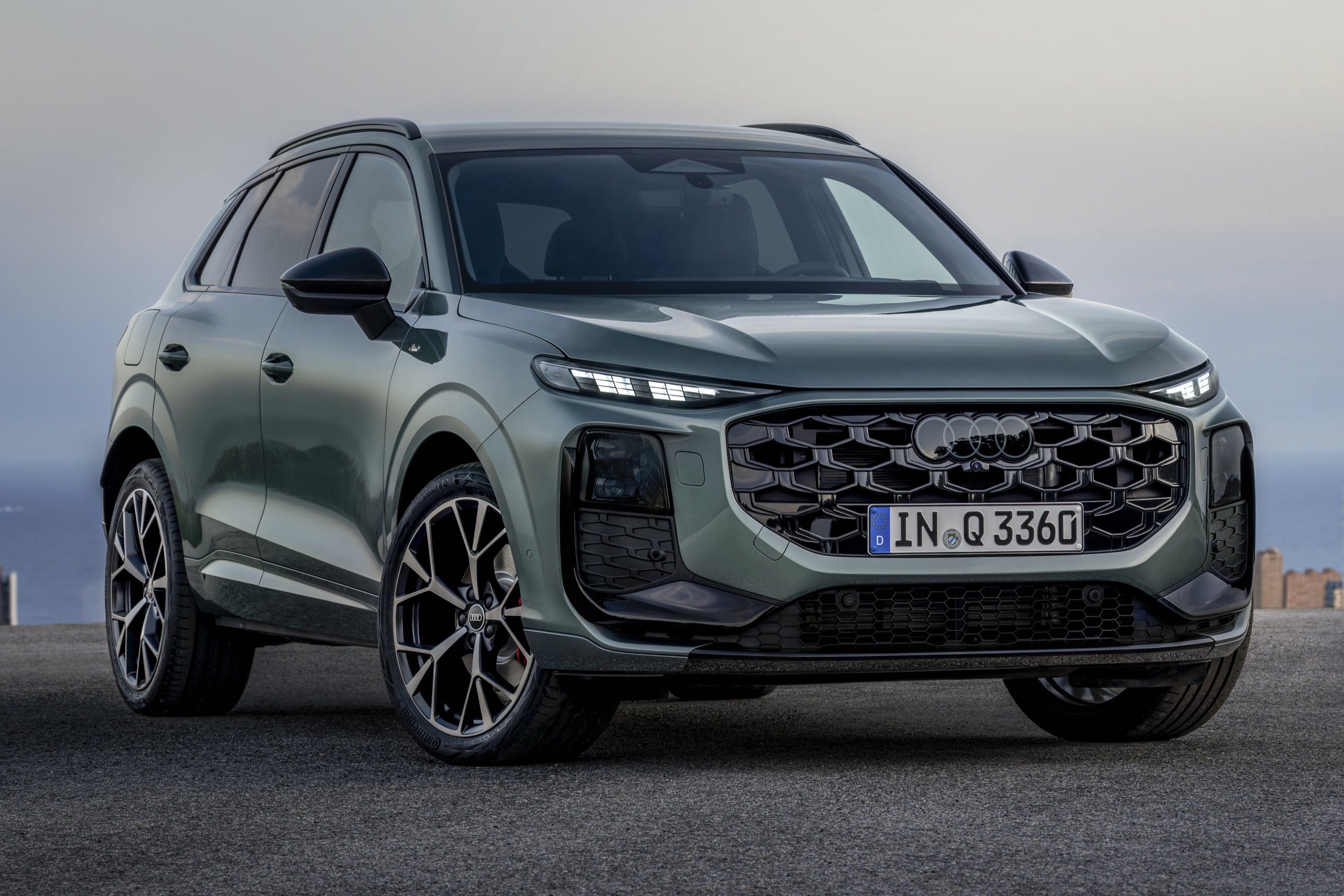
After four years of being on sale, Audi India is slated to replace the second-generation Q3 in India. Our dealer sources have indicated that the third-generation Q3 will launch in October 2026. In the months leading up to its debut, Audi’s entry-level luxury SUV has been spied on our roads.
Third-generation Audi Q3 exterior details
Gets a more aggressive look in comparison to the previous-gen
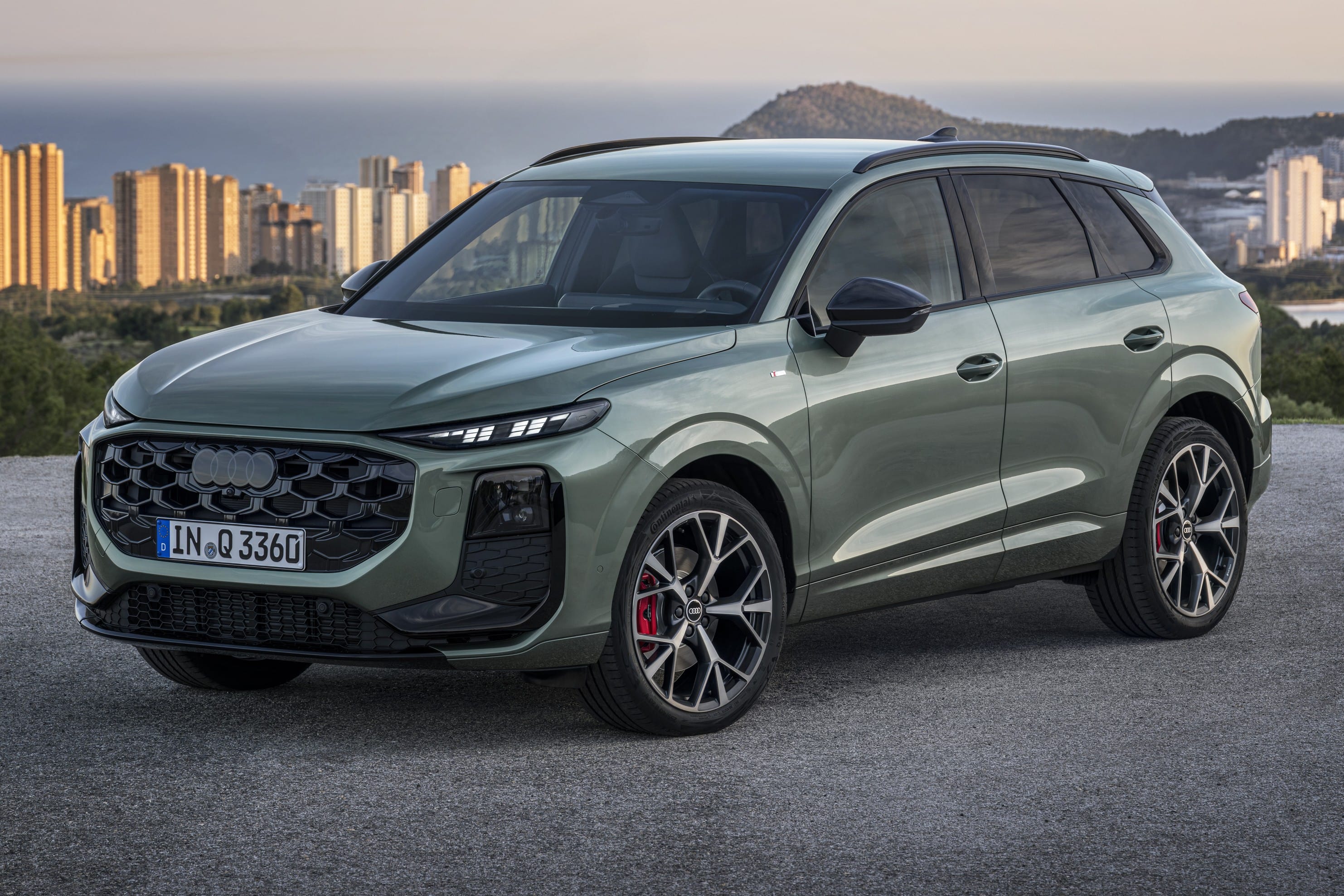
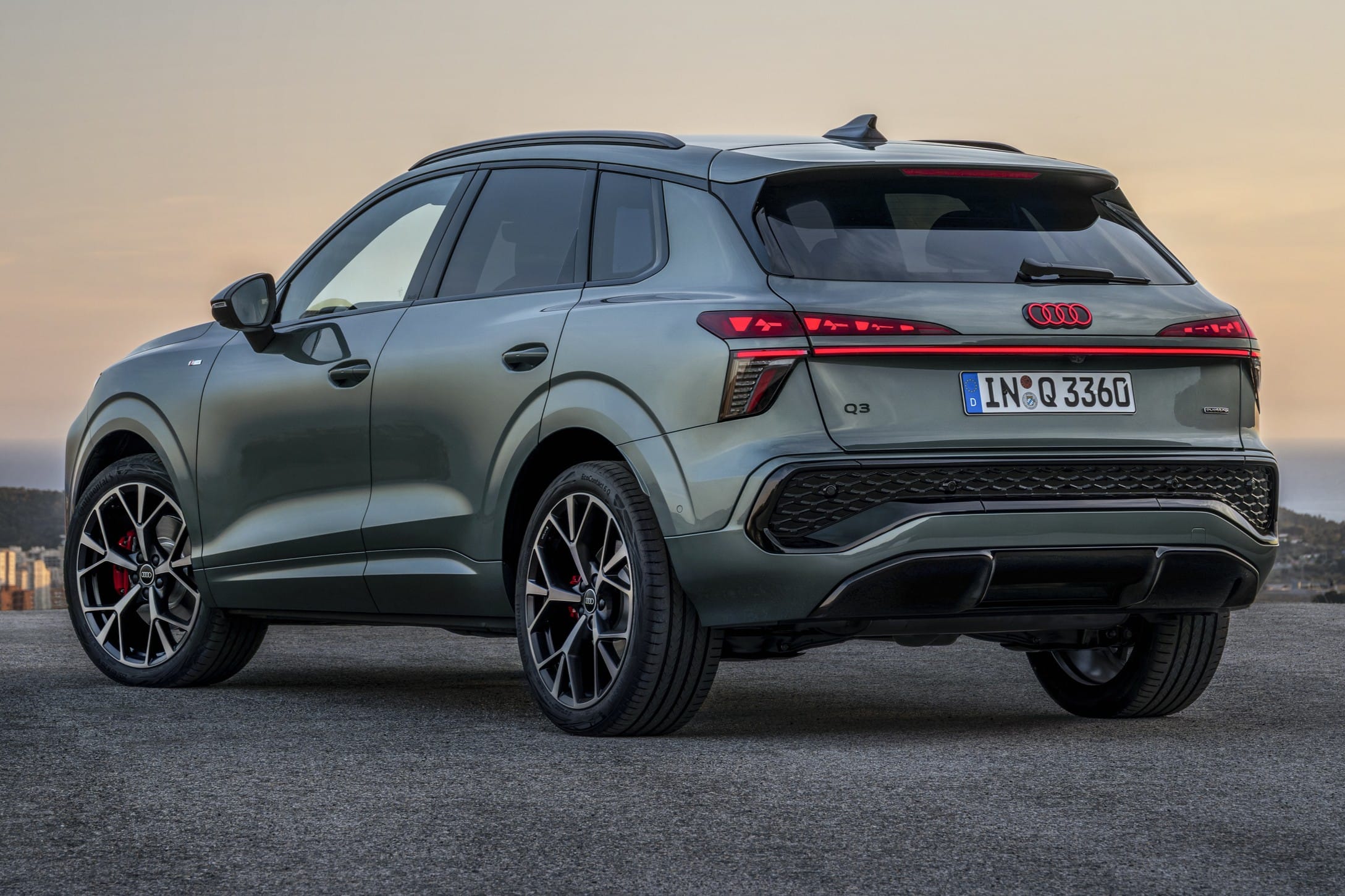
While the previous-gen Q3’s design took an understated approach, the new-gen goes for a flamboyant look. The imposing front-end has a split headlamp design, with slim LED DRLs with four configurable light signatures and vertically stacked LED headlamps. The grille is larger than before, featuring a hexagonal pattern and a 2D Audi logo. The bumper gets a dual-tone look with black surrounds for the headlamps, and there are wide air intakes with a honeycomb pattern.
In profile, the Q3 gets a clean design with subtle moulding for the lower side of the doors, and creases over the wheel arches. You also get a split-lamp design for the back, with the main units having a striking design with optional OLED illumination. Additionally, you also get a thin light bar, and the Audi logo is illuminated. Though the global-spec Q3 gets wheel sizes ranging from 18 to 20 inches, expect the India-spec version to have 18-inch rims.
The third-gen Q3 sits on the latest version of the VW Group’s MQB platform. The global-spec version is 4,531mm long, 1,859mm wide, 1,601mm tall, and gets a 2,681mm wheelbase. Compared to the previous generation, it is 96mm longer, 10mm wider, and 6mm shorter, while the wheelbase is 1mm longer.
Third-generation Audi Q3 interior and features
Comes with a driver-focused cabin and updated tech
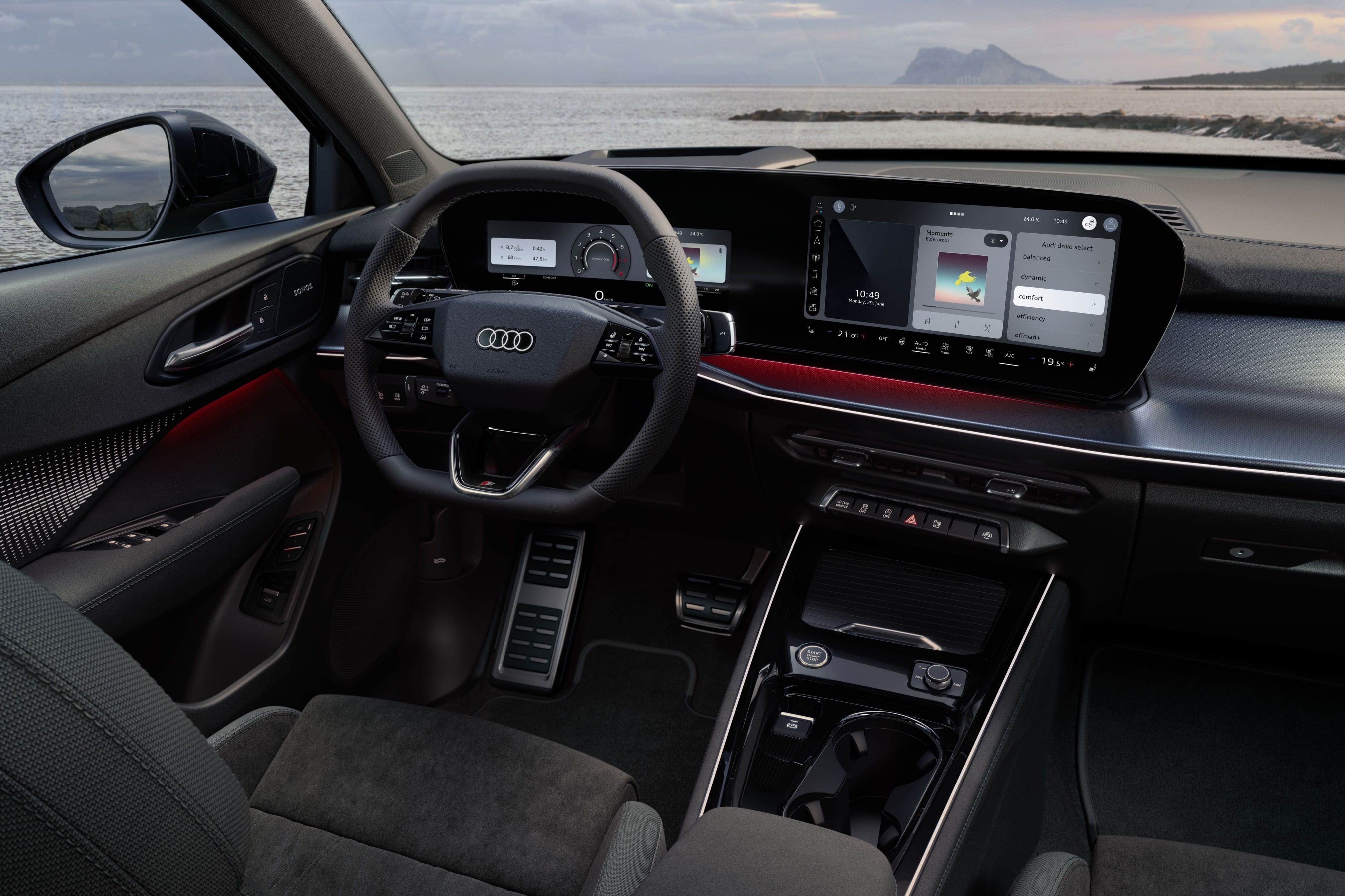
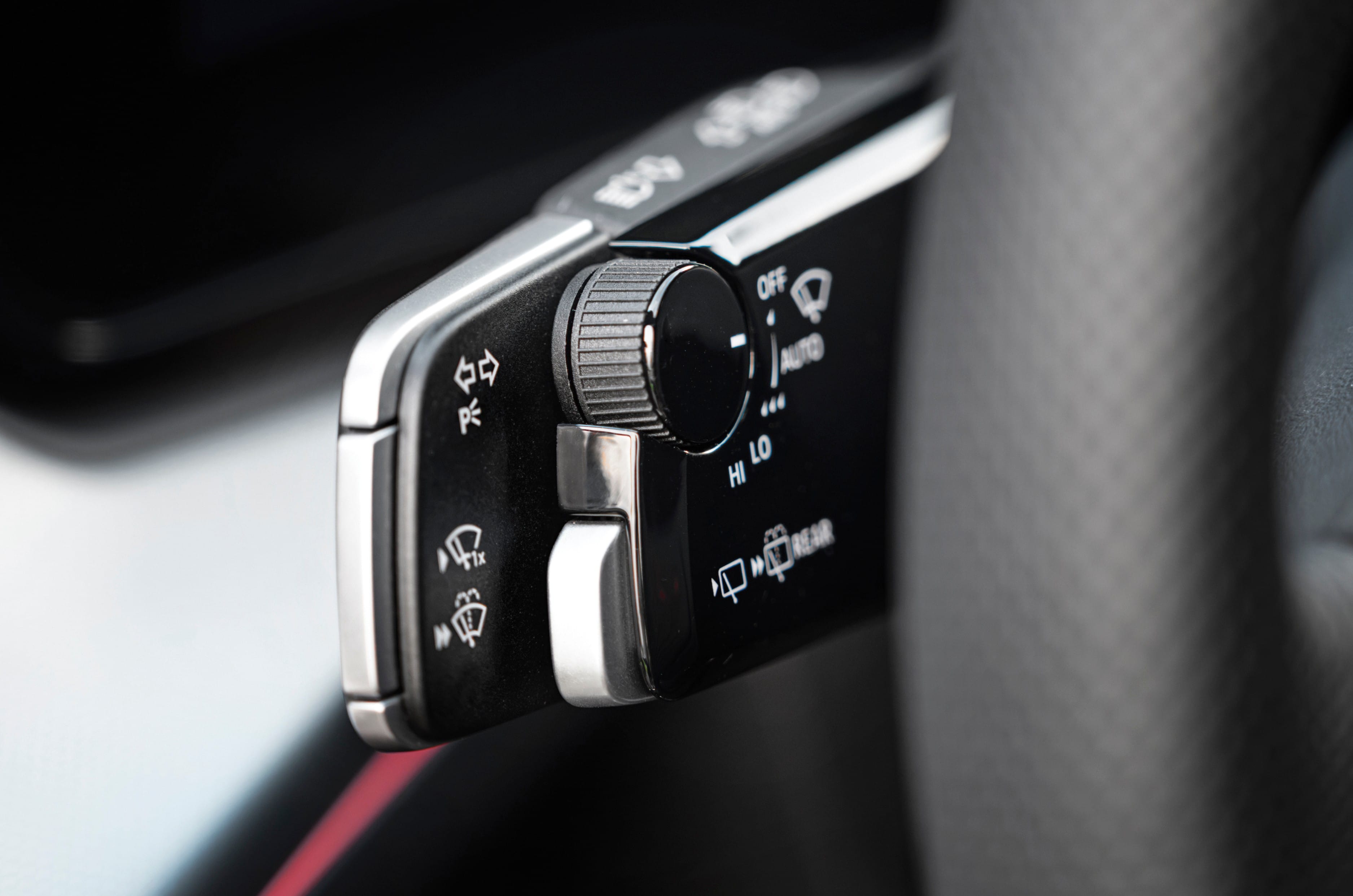
Like the exterior, the interior is also a departure from the current version, with the dashboard angled toward the driver. You get a curved dual-screen setup dominating the dashboard, a new sporty-looking three-spoke flat-bottom steering wheel, and the gear lever has moved from the centre console to the steering column. A unique touch is that controls for the lights, wipers and indicators are combined into a single stalk. However, like most manufacturers, Audi has reduced the number of physical buttons. While the global-spec Q3 gets a black theme for the interior and offers a choice of black or beige seats, it remains to be seen how the India-spec version’s interior would be specced.
As for equipment, the Audi Q3 is expected to have a 11.9-inch digital driver’s display, a 12.8-inch infotainment system with Apple CarPlay and Android Auto, configurable ambient lighting, 3-zone climate control, a panoramic sunroof, a powered driver’s seat, and cooled front seats. The safety kit could include an ADAS suite and a 360-degree camera, along with essentials like 7 airbags, ABS, and ESC.
Third-generation Audi Q3 expected powertrains
Likely to be powered by a single petrol engine
The Q3 is expected to arrive with petrol-only powertrains as its previous generation. It will likely utilise an updated version of the current 2.0-litre TSI unit, churning out 14hp more power at 204hp and 320Nm. A 7-speed DCT handles transmission duties, while you get Quattro AWD as standard.
Third-generation Audi Q3 expected price and rivals
To likely be priced from Rs 50 lakh onward
Expect the new-gen Q3 to be pricier than the previous version. The second-gen that’s currently sold in India has an ex-showroom price of Rs 43.67 lakh to Rs 53 lakh. It will take on the likes of the Mercedes-Benz GLA and the BMW X1. We even had the opportunity to drive the third-gen Q3 in global-spec guise.
Mercedes-Benz is set to expand its India line-up with the launch of the new AMG E 53 performance sedan on July 23. This AMG version of the Mercedes E-Class was unveiled globally in March 2024 and is now finally headed to India, more than two years later. Here’s everything you need to know about the new Mercedes-AMG E 53.
What is the expected price of the new Mercedes-AMG E 53?
The 2026 Mercedes-AMG E53 price is expected to be around the Rs 2.2 crore (ex-showroom) mark. If that holds, the E 53 will carry a premium of about Rs 29 lakh over the AMG C 63 S E sedan, which costs Rs 1.91 crore.
Is the new Mercedes-AMG E 53 a PHEV?
While the previous E 53 that was on sale in the country came with a 48V mild-hybrid system, the new version is a plug-in hybrid electric vehicle (PHEV). The 2026 performance sedan continues to use a 3.0-litre turbo-petrol straight-six engine, but pairs it with an electric motor integrated into the 9-speed automatic gearbox. Combined, this setup produces 585hp and 750Nm. Drive is sent to all four wheels via the brand’s 4Matic+ AWD system.
With the optional AMG Dynamic Plus package, power increases to 612hp (when Race Start is activated). In this mode, the E 53 can sprint from 0-100kph in 3.8 seconds and reach a top speed of 280kph. It also gets a 21.2kWh lithium-ion battery, offering a claimed electric-only range of over 100km. The 400V battery supports AC charging speeds of up to 11kW. In some markets, an optional 60kW DC fast charger is also on offer, which can charge the battery from 10 to 80 percent in about 20 minutes.
How is the Mercedes-AMG E 53 mechanically different to the regular E-Class?
The E 53 gets several AMG-specific chassis upgrades, including extra bracing at the front and rear axles, an 11mm wider front track, and adaptive suspension with Comfort, Sport, and Sport+ mode settings. Its braking system has also been tuned to work better with the hybrid system’s energy recuperation.
Does the new Mercedes-AMG E 53 look any different from the regular E-Class inside and out?
The Mercedes-AMG E 53 gets a sportier look than the standard E-Class. Up front, it features an AMG-spec grille with illumination, a redesigned bumper with larger air intakes, and front fenders widened by 11mm on each side. Even the design for the wheels stands out. At the rear, it gets a boot-lid spoiler, and a redesigned bumper with a blacked-out diffuser and four round exhaust tips. Inside, the E 53 gets AMG-spec seats (with powered adjustment at the front) and AMG steering wheel.
What features will the new Mercedes-AMG E 53 offer?
It gets a 12.3-inch digital driver’s display and a 14.4-inch touchscreen. In international markets, buyers can also opt for the brand’s Superscreen, which adds a separate display for the front passenger. It remains to be seen if Mercedes offers the Superscreen with the E 53 in India. Other features include Burmester sound system, panoramic sunroof, ambient lights, wireless charger, wireless Android Auto and Apple CarPlay, drive modes, 360-degree camera, multiple airbags and more.
Whom will the new Mercedes-AMG E 53 rival in India
Upon launch, the new Mercedes-AMG E 53 will see competition from models like the BMW M5 and the Porsche Panamera. The M5 is priced at Rs 2.11 crore, ex-showroom, while the Panamera starts at Rs 1.79 crore before options.



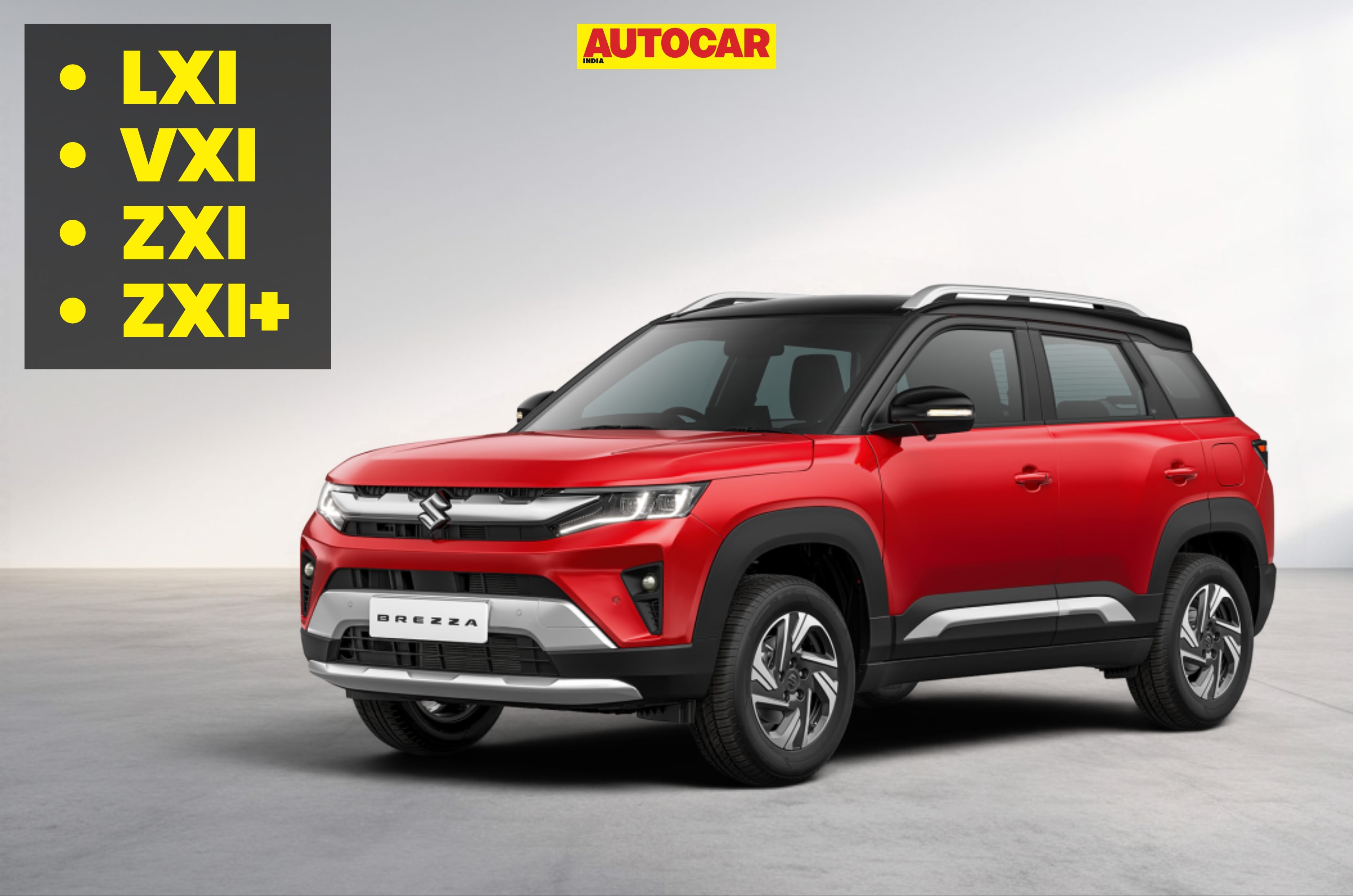

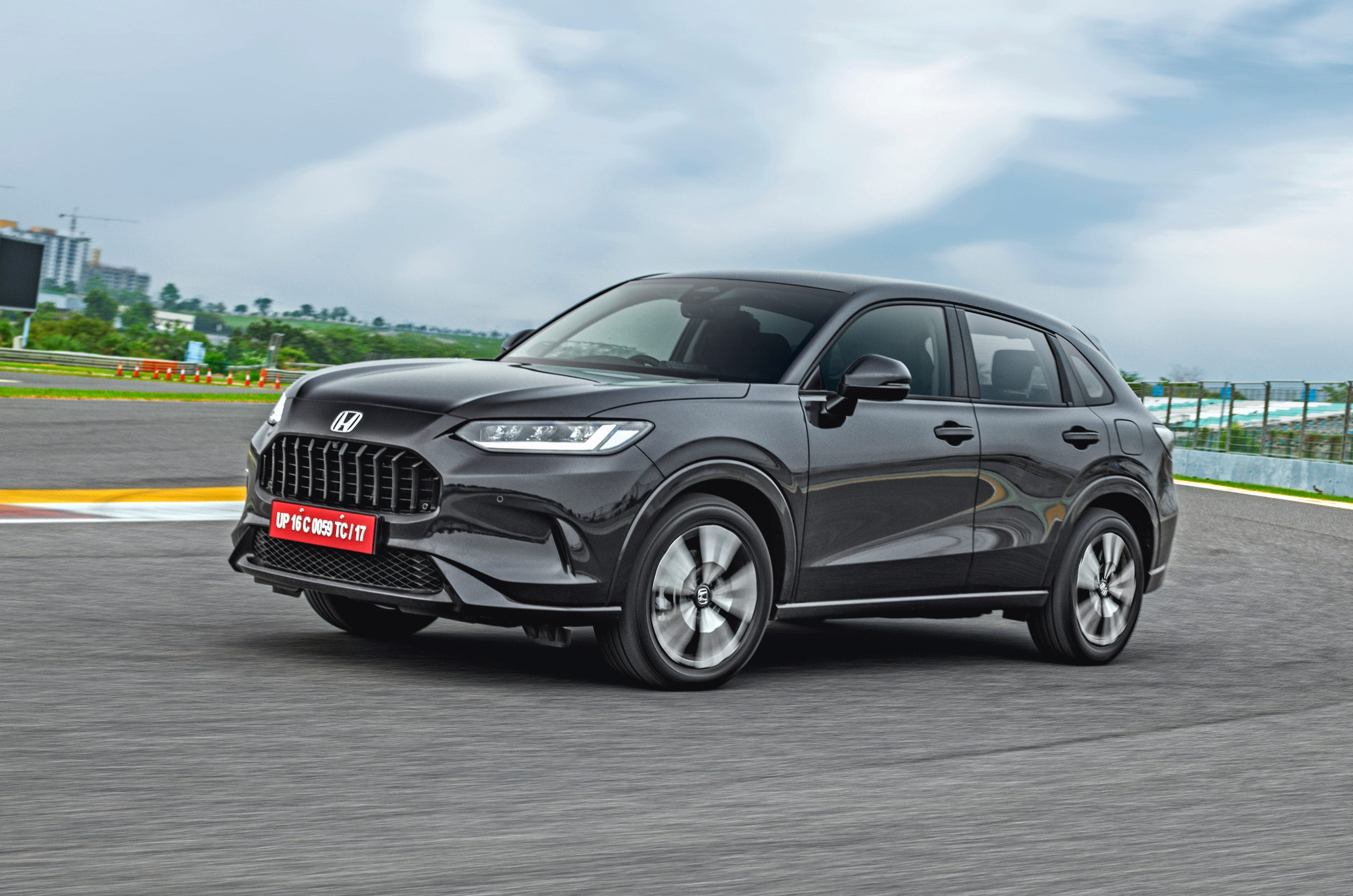
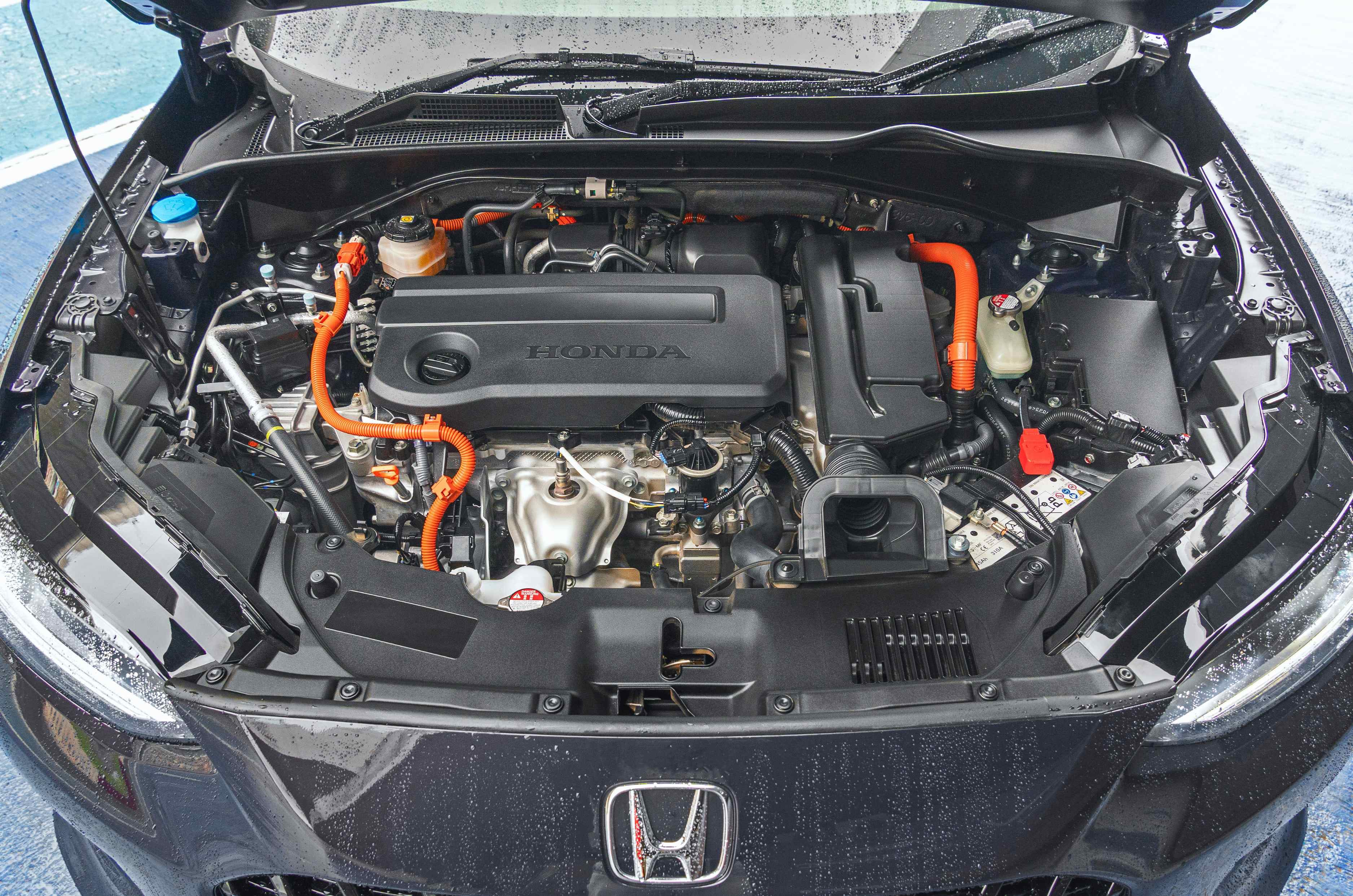

 Combined with the classy-looking leatherette padding on the dash and door pads, plus the burgundy, gold and light cream colour scheme, the interior of the top-spec Nissan Tekton looks upmarket. The driving position is great and provides excellent all-round visibility, while the seats themselves are comfy enough to be occupied even over long-distance drives.