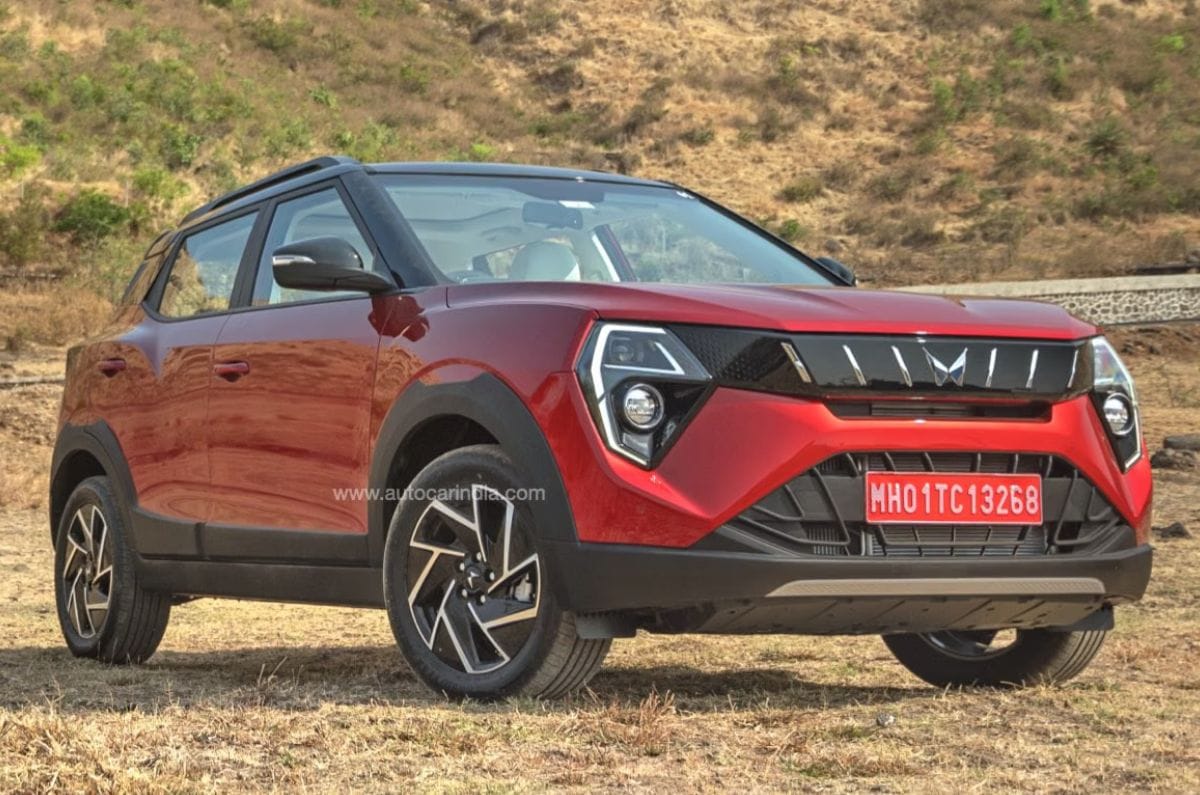
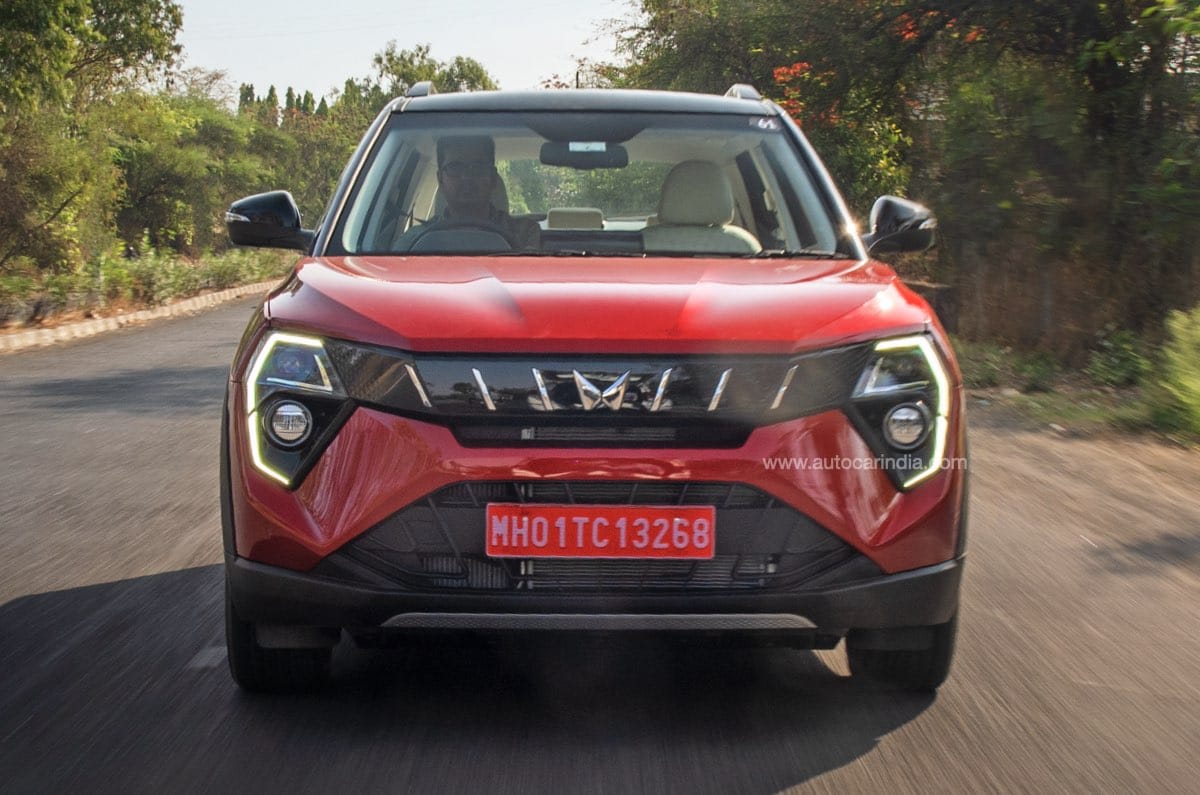
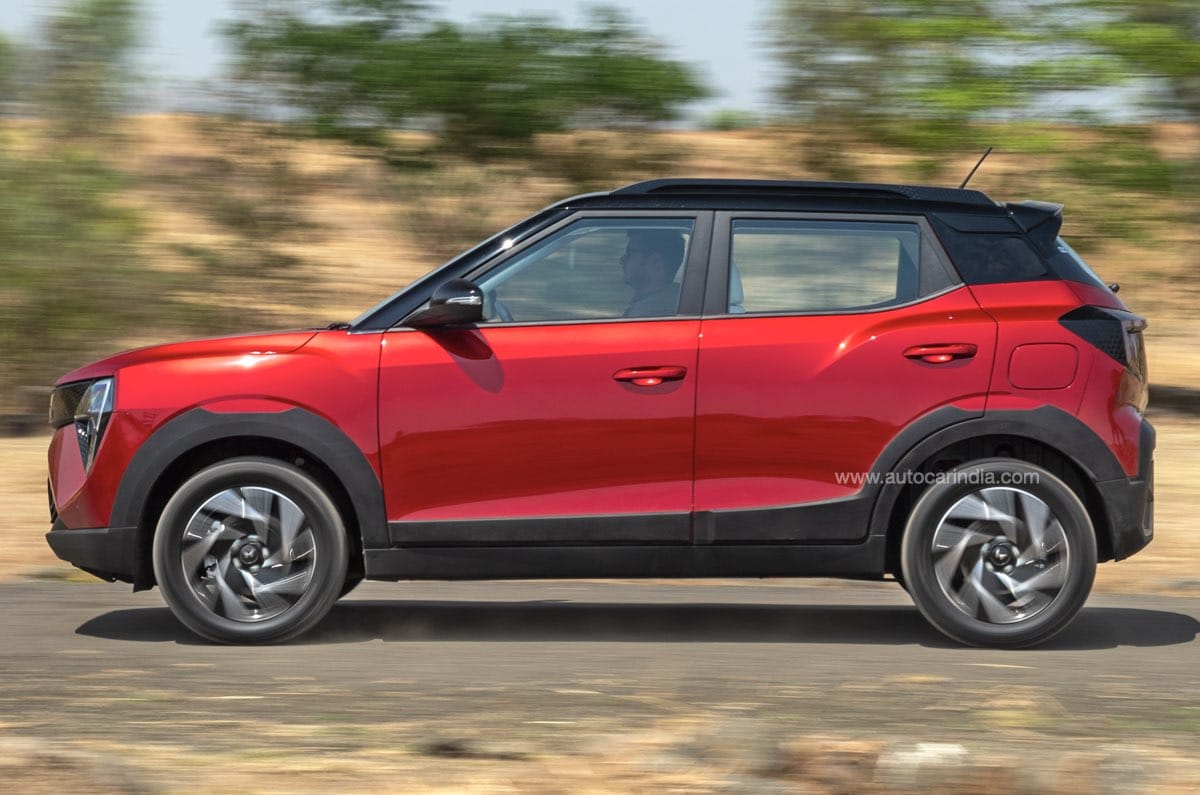
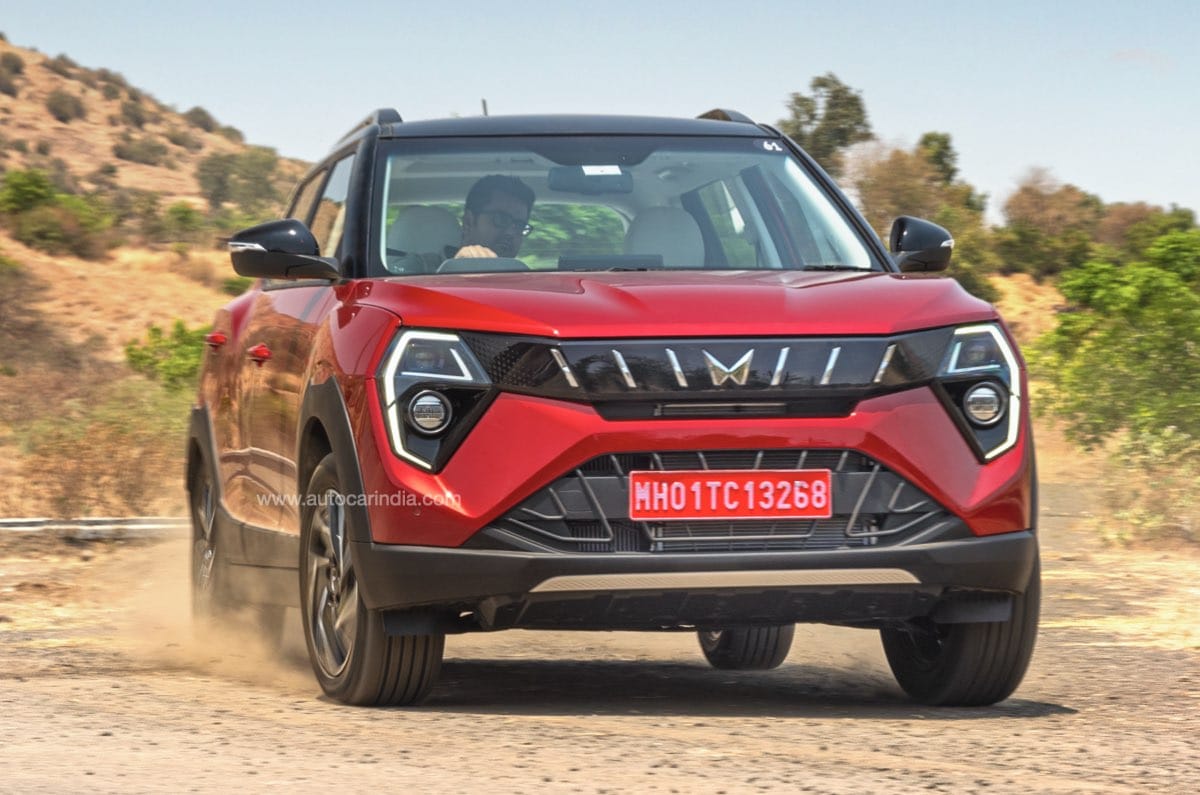
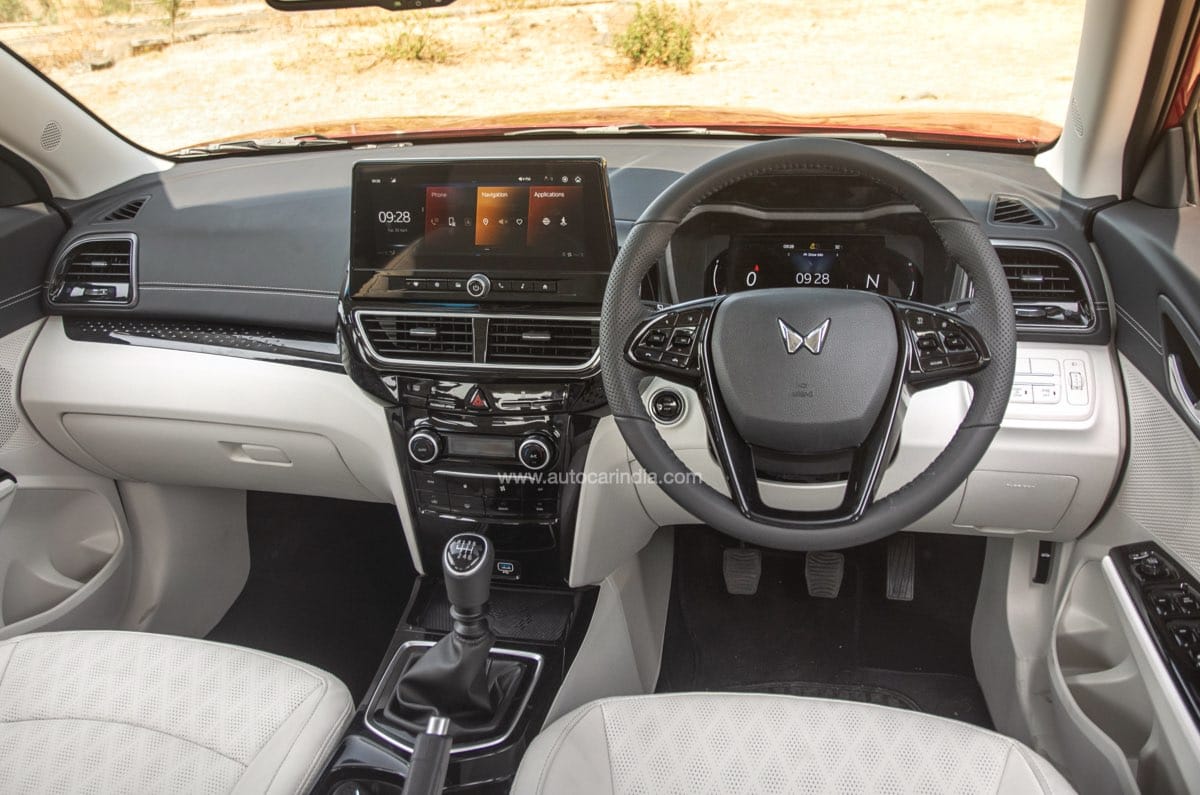
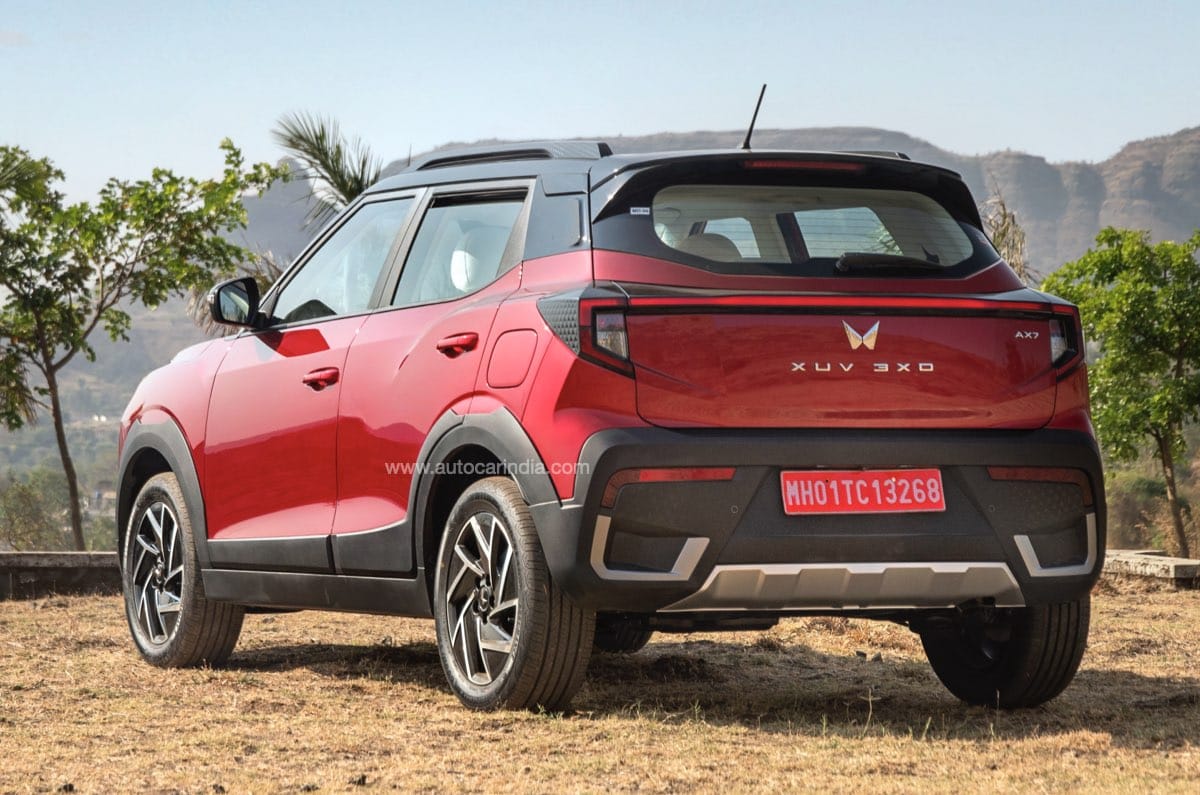
In the crowded compact SUV segment, the XUV 3XO is among the few models that offers petrol and diesel engine options plus a variety of transmission choices. Mahindra brought the XUV 3XO to market in 2024 as a successor to the XUV300, and it’s the home-grown automaker’s smallest SUV. If you’re interested in buying the Mahindra XUV 3XO which, for reference, is priced between Rs 7.79 lakh and Rs 15.04 lakh (ex-showroom), here are its key pros and cons you must consider.
Reasons to buy the Mahindra XUV 3XO
Punchy powerplants
The direct-injection turbo-petrol and turbo-diesel engines allow strong performance
The XUV 3XO’s 1.2-litre direct-injection turbo-petrol engine pushes out 131hp and up to 250Nm of torque. Despite being a three-cylinder engine, this ‘mStallion’ unit is noticeably refined and provides power with eagerness. This eagerness can be a bit tricky to manage at low speeds, but the Zip, Zap and Zoom drive modes come in handy to help fine-tune the driving experience. The mid-range power delivery of this petrol engine is good, too. Then there’s the Aisin-sourced 6-speed torque converter automatic gearbox, which operates smoothly and shifts in a timely manner.
For those who prefer an oil burner, there’s the 1.5-litre four-cylinder turbo-diesel engine. It produces 117hp and 300Nm of torque – the latter being the highest in the segment. There’s also no hint of turbocharger lag even at low speeds. While refinement is just about decent, this diesel unit’s ample power is spread well throughout the rev range. This, along with a 6-speed AMT (automated manual transmission) gearbox, makes long-distance cruising on the highway a relaxing experience. Meanwhile, the base engine option of the XUV 3XO is an 115hp, 1.2-litree three-cylinder turbo-petrol engine with multi-point fuel injection.
Gifted handler
The XUV 3XO can handle paved and unpaved surfaces without breaking a sweat
The Mahindra XUV 3XO not only has pace on its side, its confidence-inspiring brakes mean that it’s also adept at dropping anchors at a moment’s notice. The XUV 3XO’s suspension is a bit firm, but it still manages to take on bad roads with verve – there’s a feeling of toughness to this SUV that inspires confidence no matter the surface condition.
The suspension also provides enough travel and there’s no issue with ground clearance either. This sense of surefootedness comes to the fore when you tackle corners, and even though the steering isn’t that precise, there’s plenty of grip on offer.
Premium interior, lengthy equipment list
Although rivals have caught on, the XUV 3XO’s interior is modern and well-equipped
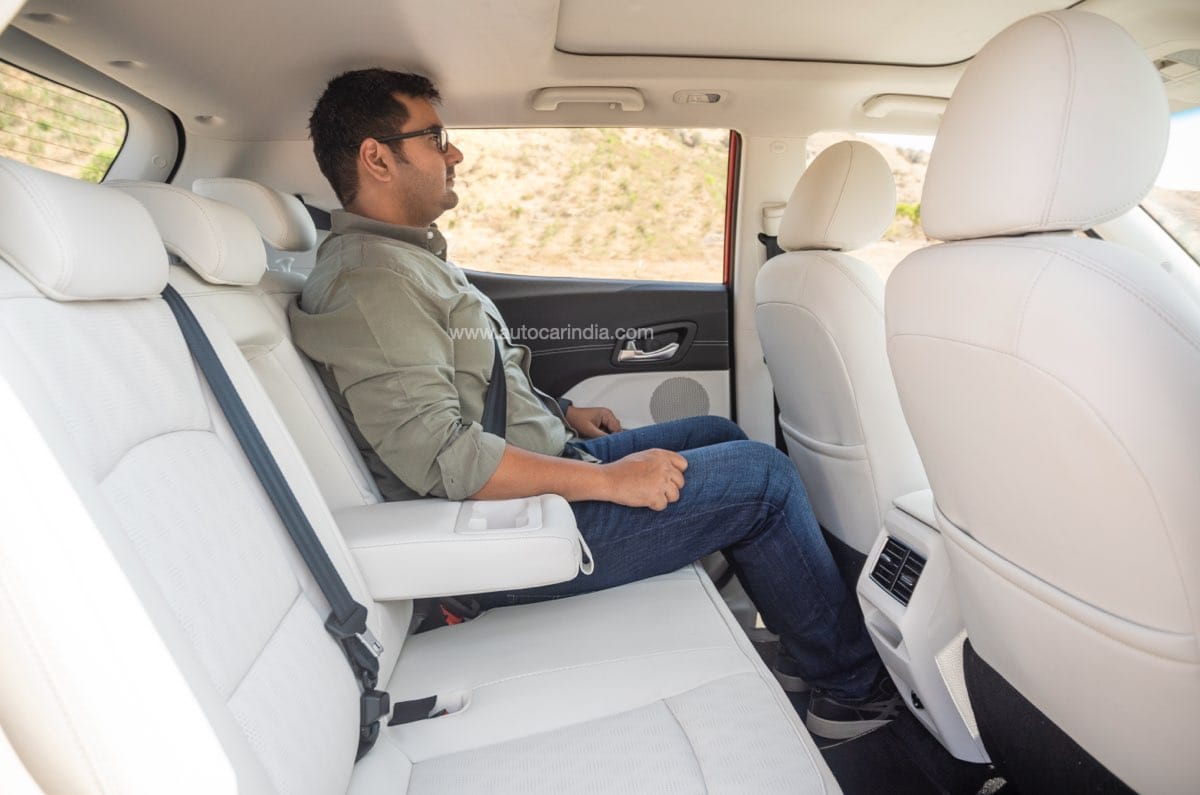
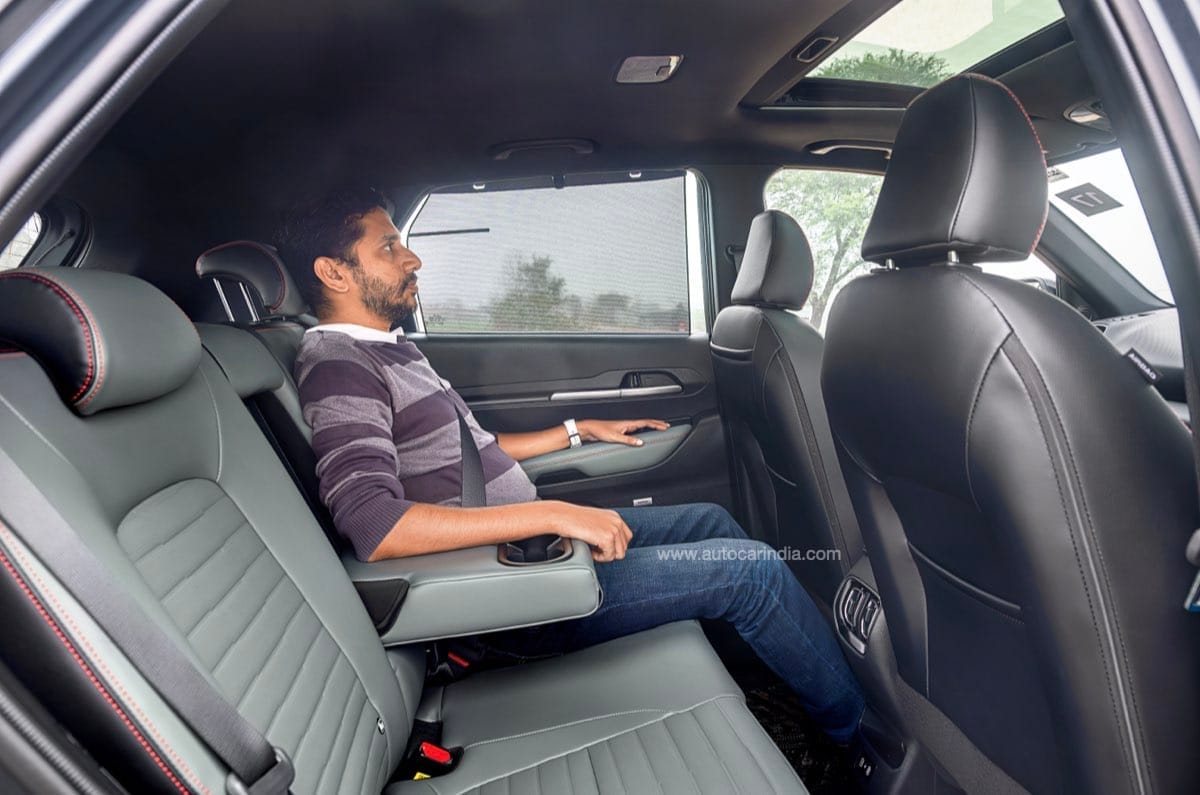
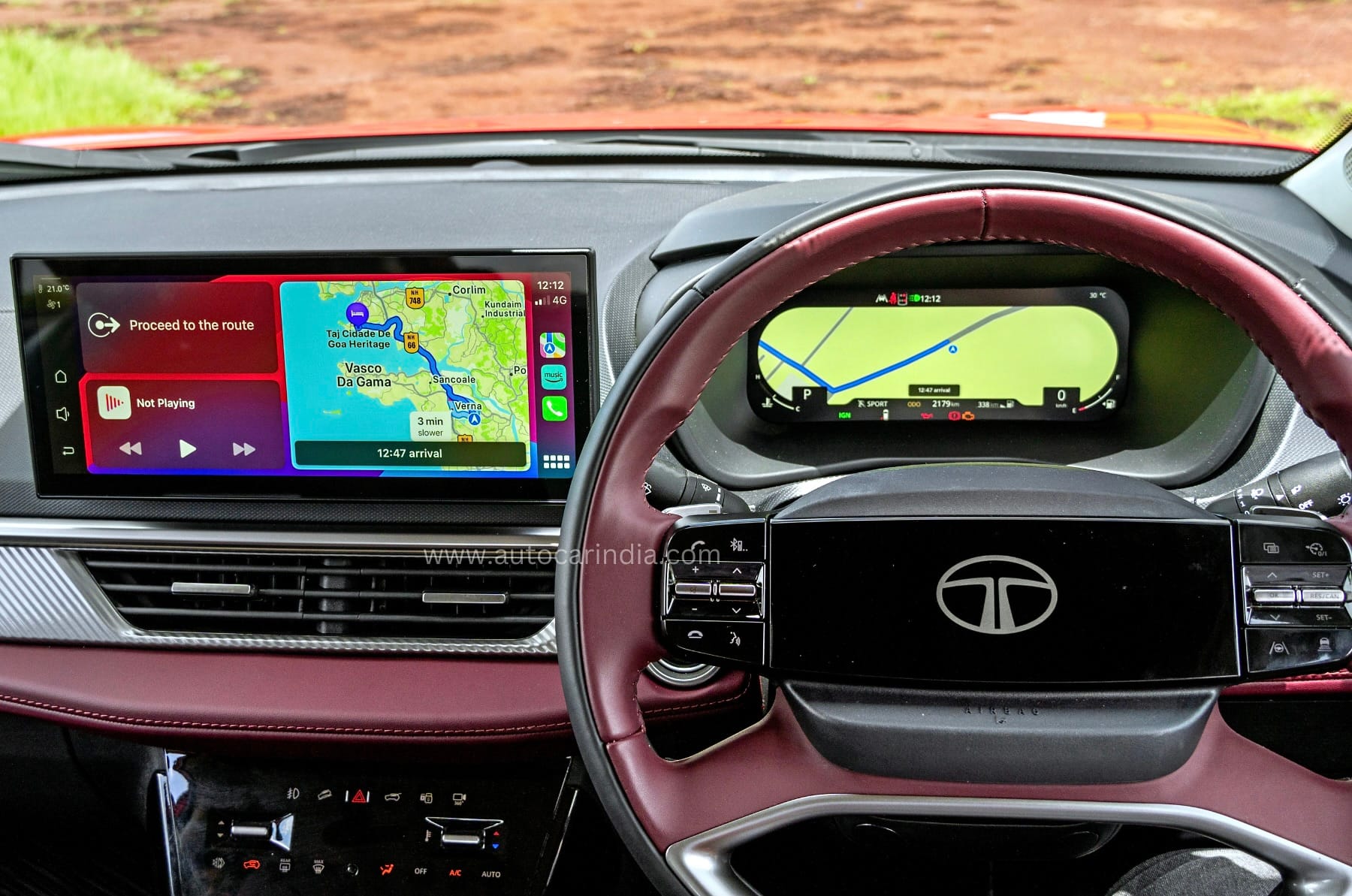
The dual-tone interior theme of the Mahindra XUV 3XO looks premium and sports soft-touch materials as well. The perforated leather-wrapped steering wheel feels upmarket to hold, while other touchpoints such as the steering-mounted stalks and power-window switches on the doors feel just as nice to use. Where he front seats can feel narrow for some, the rear ones are spacious and comfortable even if you choose to carry three adults there.
The rear seats are well-padded, whilst kneeroom and footroom aren’t lacking either. Adding to the convenience at the back are the AC vents, a centre armrest with cupholders, and two charging ports. Features included on higher variants are a 65W fast charger at the front, wireless Android Auto and Apple CarPlay, a wireless charging tray, dual-zone automatic climate control, a Harman Kardon premium audio system, Dolby Atmos, a panoramic sunroof, a cooled glovebox, 360-degreem camera, an electric parking brake with auto hold, and a Level 2 ADAS (Advanced Driver Assistance Systems) suite.
Reasons to not buy the Mahindra XUV 3XO
Limited cargo space
This isn’t the SUV for you if you haul loads of luggage regularly
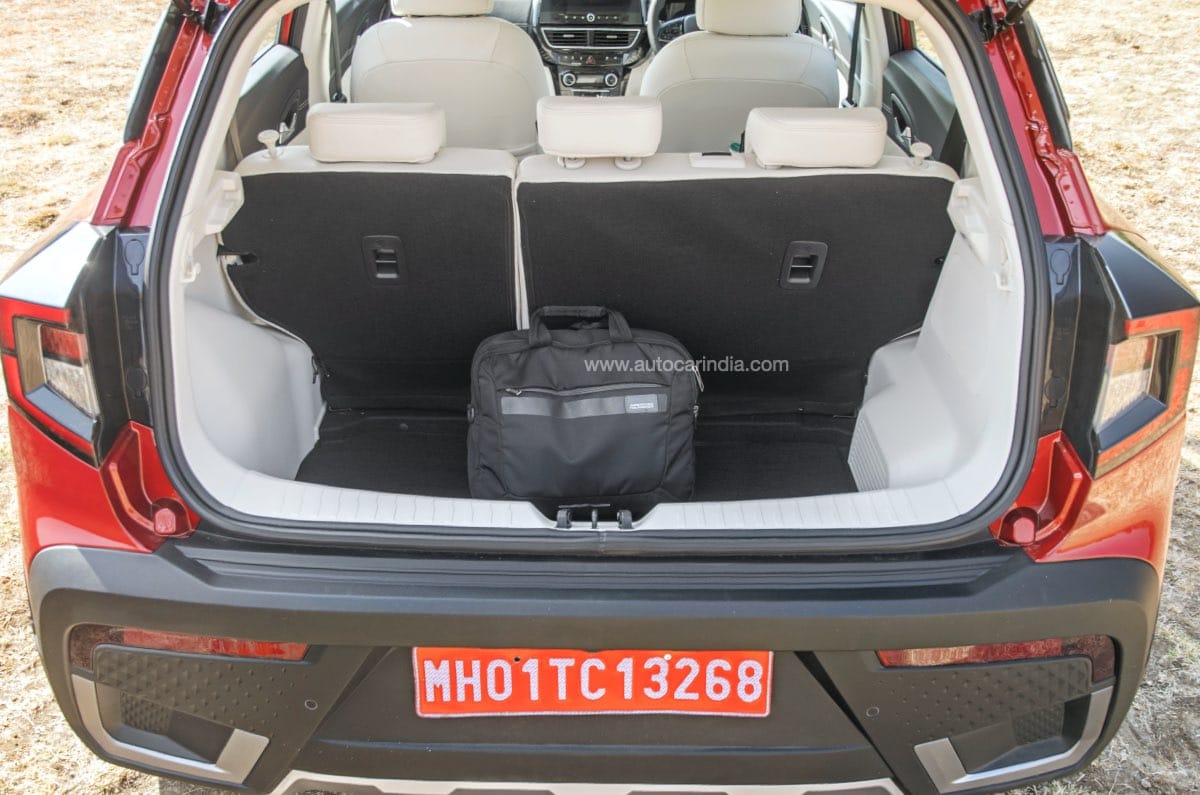
Users can find hauling luggage in or out of the XUV 3XO’s boot tiresome because of the low boot floor and high loading lip. And while there’s 295 litres of cargo space, this is far lower than what most rivals offer in this segment. The lack of a parcel shelf also means that any items you do store in this boot will remain visible to those peeking in.
Pricey top variants
The XUV 3XO is one of the most expensive cars in the segment
The Mahindra XUV 3XO’s top variants are some of the most expensive offerings in the compact SUV segment. And while the Hyundai Venue’s range-topping variants are pricier still, they pack even more features and the car itself is newer than the XUV 3XO.
Apple के अगले जनरेशन के फ्लैगशिप iPhone अब लॉन्च के करीब हैं और क्यूपर्टिनो की यह टेक कंपनी अपने सालाना सितंबर इवेंट में iPhone 18 Pro, iPhone 18 Pro Max और काफी चर्चा में रहे iPhone Fold को लॉन्च करने के लिए पूरी तरह तैयार है। हालांकि, इनका डिजाइन आपको पहले जैसा ही लग सकता है, लेकिन रिपोर्ट्स बताती हैं कि Apple परफॉर्मेंस, कैमरा, बैटरी लाइफ और कनेक्टिविटी के मामले में कुछ हार्डवेयर अपग्रेड की तैयारी कर रहा है। अब आइए जानते हैं iPhone 18 Pro के हालिया लीक से जुड़ी सभी जरूरी जानकारी के बारे में।
Apple iPhone 18 Pro के स्पेसिफिकेशन्स, डिजाइन और कैमरा
कई रिपोर्ट्स के मुताबिक, Apple इस बार Dynamic Island को पहले से छोटा कर सकता है। इसके लिए कंपनी Face ID सिस्टम के कुछ हिस्सों को डिस्प्ले के नीचे दे सकती है। अगर ऐसा होता है, तो यूजर्स को Face ID की सुविधा पहले की तरह मिलेगी, लेकिन स्क्रीन पर देखने के लिए ज्यादा स्पेस मिलेगा।
Apple के नए A20 Pro चिपसेट से परफॉर्मेंस में भी जबरदस्त बढ़ोतरी होने की उम्मीद है। बताया जा रहा है कि यह प्रोसेसर TSMC की 2nm प्रोसेस पर बनाया जा रहा है, जिससे iPhone पहले के मुकाबले ज्यादा तेज चलेगा और कम बैटरी खर्च करते हुए बेहतर परफॉर्मेंस देगा।
फोटोग्राफी की बात करें तो, iPhone 18 Pro के कैमरे में पिछले कई सालों का सबसे बड़ा बदलाव देखने को मिल सकता है। लीक्स के मुताबिक, इसमें 48MP Fusion कैमरा मिलेगा, जो वेरिएबल अपर्चर फीचर के साथ आ सकता है। यानी कैमरा अपने आप जरूरत के हिसाब से सेंसर तक पहुंचने वाली रोशनी को कम या ज्यादा कर सकेगा। इससे कम रोशनी में बेहतर फोटो, शानदार पोर्ट्रेट शॉट्स और बेहतर डेप्थ इफेक्ट मिलने की उम्मीद है।
रिपोर्ट्स में यह भी कहा गया है कि iPhone बनाने वाली कंपनी Camera Control बटन को आसान बना सकती है। इसके लिए कंपनी इसमें से टच-सेंसिटिव जेस्चर और हैप्टिक फीडबैक को हटाकर सिर्फ प्रेशर-सेंसिटिव (दबाव से काम करने वाले) कंट्रोल का इस्तेमाल कर सकती है। इससे कैमरे को कंट्रोल करना पहले से ज्यादा आसान हो सकता है।
कनेक्टिविटी के मामले में भी iPhone 18 Pro में कई नए अपग्रेड देखने को मिल सकते हैं। खबरों के मुताबिक, Apple इसमें अपना नया N2 वायरलेस चिप दे सकता है। वहीं, फोन में 6.3 इंच की डिस्प्ले पहले की तरह मिल सकती है, लेकिन इसमें बेहतर LTPO+ टेक्नोलॉजी होगी, जिससे बैटरी की खपत कम होगी और बैटरी बैकअप बेहतर मिलेगा।
फोन के डिजाइन को लेकर मिली-जुली खबरें हैं। Weibo पर जानकारी देने वाले ‘Fixed Focus Digital’ का दावा है कि iPhone 18 Pro और iPhone 18 Pro Max अपने पिछले मॉडल के मुकाबले लगभग 2mm मोटे हो सकते हैं, जिससे इनकी कुल मोटाई लगभग 10.75mm हो जाएगी। हालांकि, Macworld की रिपोर्ट के मुताबिक, फोन की बॉडी की मोटाई 8.75mm ही रह सकती है और सिर्फ कैमरा बंप बड़ा हो सकता है। इसलिए, फाइनल डिजाइन को लेकर अभी भी कुछ नहीं कहा जा सकता है।
Apple iPhone 18 Pro की कीमत और लॉन्च डेट (अनुमानित)
ब्लूमबर्ग के मार्क गुरमन के अनुसार, Apple का सालाना iPhone लॉन्च इवेंट 9 सितंबर, 2026 को होने की उम्मीद है और इसकी बिक्री 18 सितंबर से शुरू हो सकती है। रिपोर्ट्स से यह भी पता चलता है कि इस साल खरीदारों को ज्यादा कीमत चुकानी पड़ सकती है, क्योंकि टिम कुक की अगुवाई वाली कंपनी Pro मॉडल की कीमतों में लगभग 10,000 रुपये की बढ़ोतरी कर सकती है।
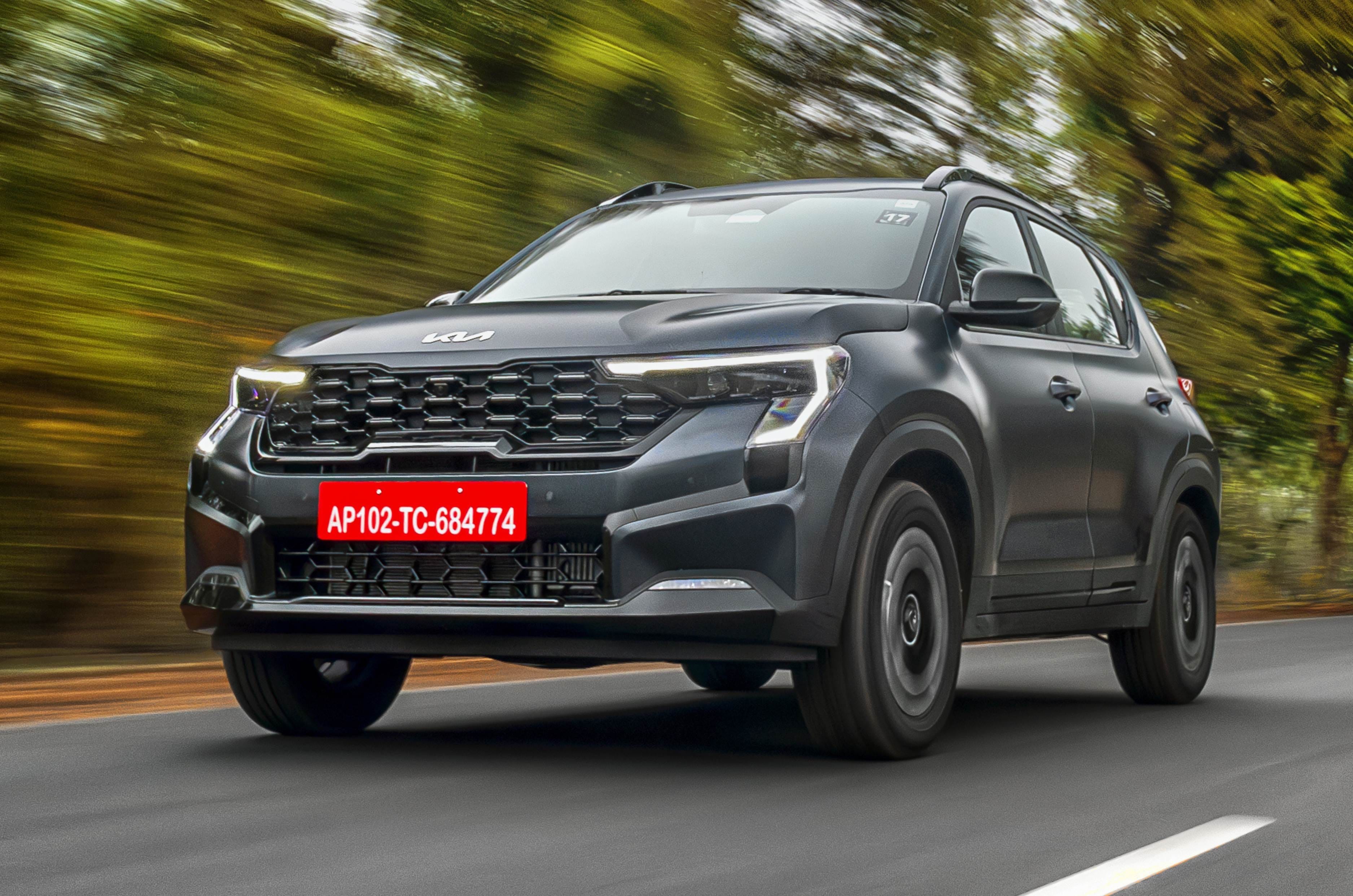
First introduced in 2020, the Sonet was Kia’s second model for India. As the Korean carmaker’s answer to the compact SUV segment, the Sonet is aimed at buyers looking for a stylish and feature-rich option. The Sonet last received a comprehensive facelift in 2024 that introduced a fresh exterior and new features. If you’re interested in the Sonet, below are reasons to consider buying one and reasons why it may not be the car for you.
Reasons to buy
Well-built cabin
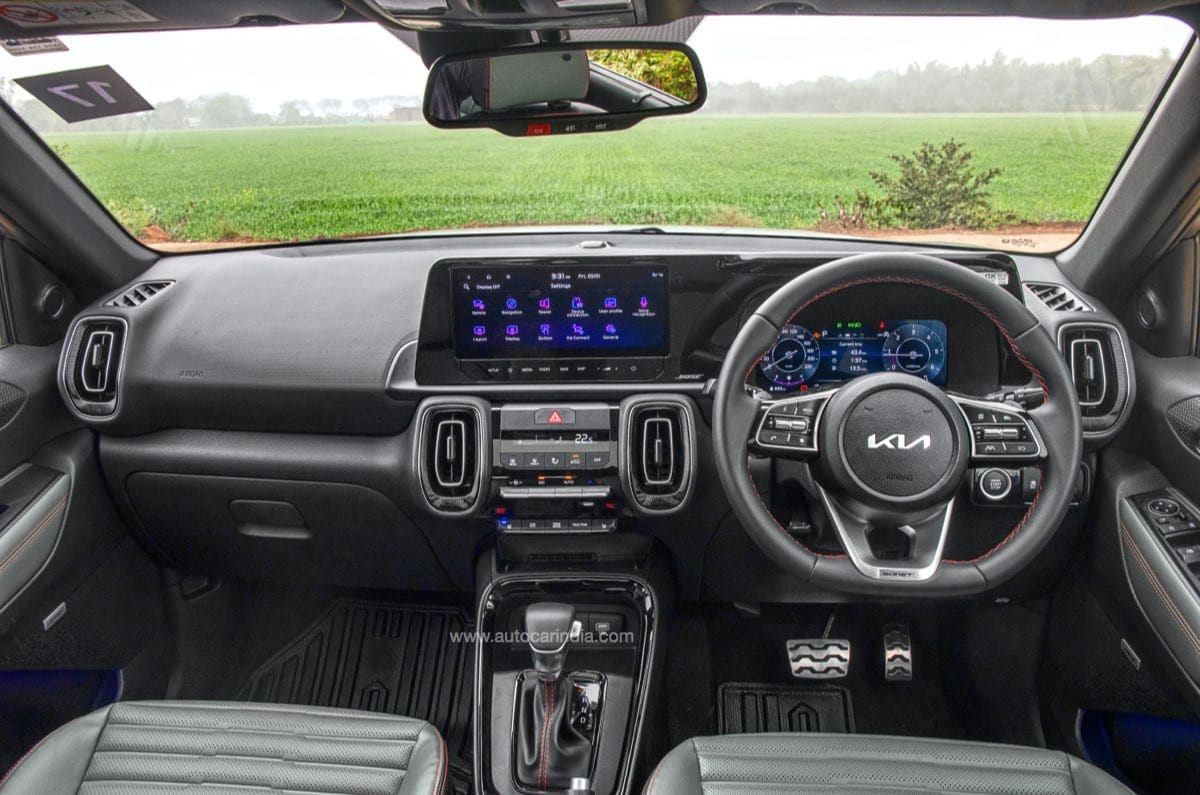
The cabin of the Sonet is a great place to be in. Irrespective of the trim level, you’ll get a cabin that’s well put together. Fit and finish in most sections of the interior is great for the price and class. The dashboard trim has a textured finish, the physical buttons have tactile feedback, and the chunky steering wheel with well-crafted buttons feels good to hold. Depending on the trim level, the Sonet offers five interior and seat finish colours.
Feature list
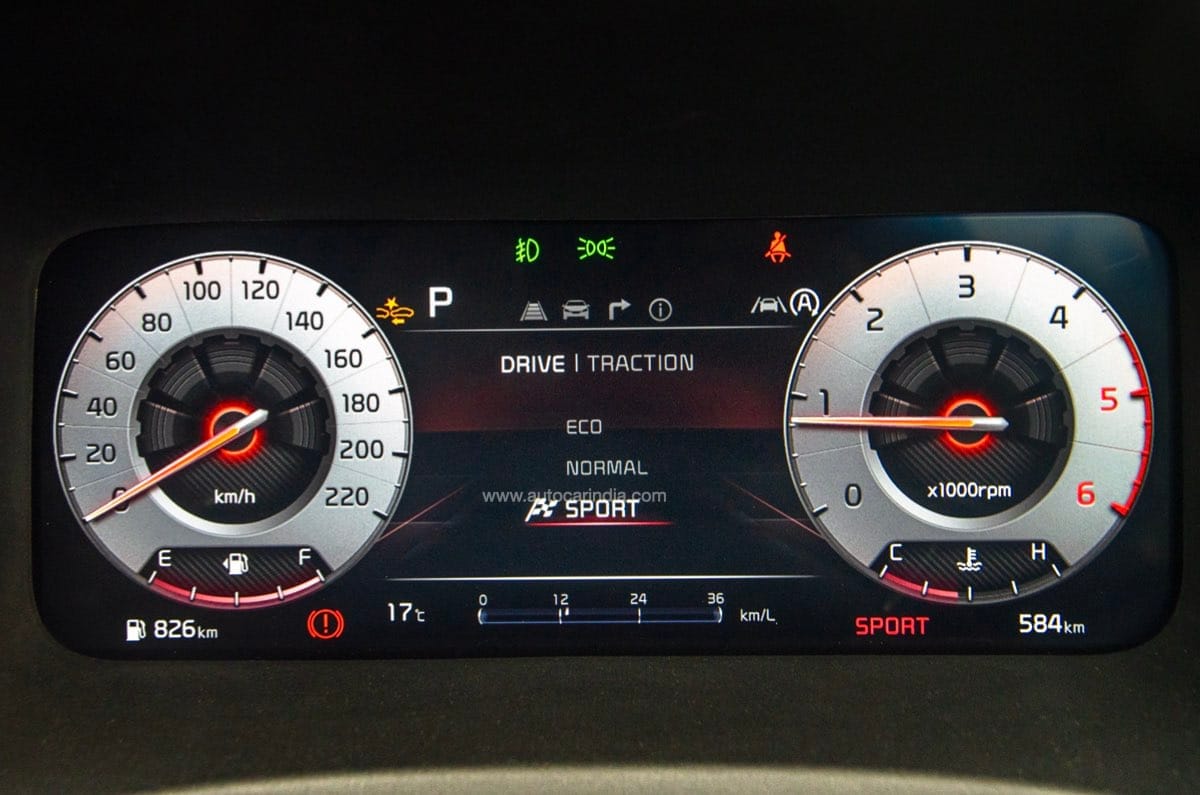
In the features department, the Sonet is among the better-equipped SUVs in the segment. Top-spec versions come packed with features like dual 10.25-inch screens for the digital driver’s display and infotainment display, Apple CarPlay and Android Auto, front seat ventilation, powered driver seat, single-pane sunroof, traction modes, drive modes, air purifier, Bose audio system, and a wireless phone charger. On the safety front, the Sonet comes with level 1 ADAS, a 360-degree camera, front parking sensors and a blind-view monitor.
Wide range of powertrains
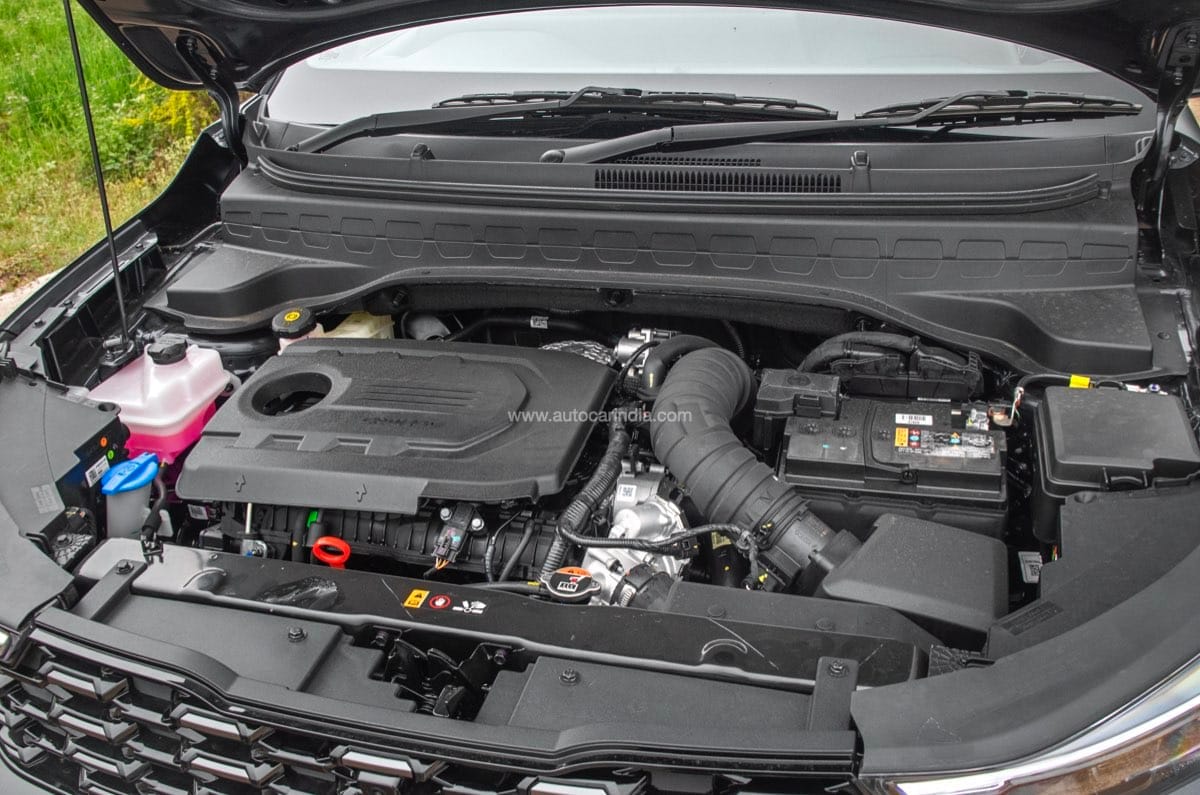
The Sonet has one of the most diverse powertrain ranges in its class. Three engine options are on offer, including an 88hp 115Nm, 1.2-litre naturally aspirated (NA) petrol engine, a 120hp, 172Nm 1.0-litre turbo-petrol engine, and a 115hp 250Nm, 1.5-litre diesel engine. A 6-speed manual is standard on both the turbo-petrol and diesel engines, while the former also offers a 7-speed DCT, and the latter can also be paired to a 6-speed torque converter automatic. The naturally aspirated petrol engine is solely mated with a 5-speed manual gearbox.
Reasons to not buy
Rear seat space
If space at the back is a top priority for you, the Sonet may not be the compact SUV of choice. The seat backs are a little too inclined, while knee room and foot room are on the lower side. Taller passengers especially will find the rear seat cramped. It does, however, try to compensate with creature comforts like retractable sunshades, rear AC vents, Type-C ports, and an armrest.
Lumpy ride comfort
Overall, the ride comfort of the Kia Sonet lacks the plushness that one expects. The suspension is inherently firm, and it fails to filter through smaller road imperfections, leading to a busy ride. Sharp potholes make their presence known prominently in the cabin. Additionally, its small wheelbase also contributes to a choppy ride setup.
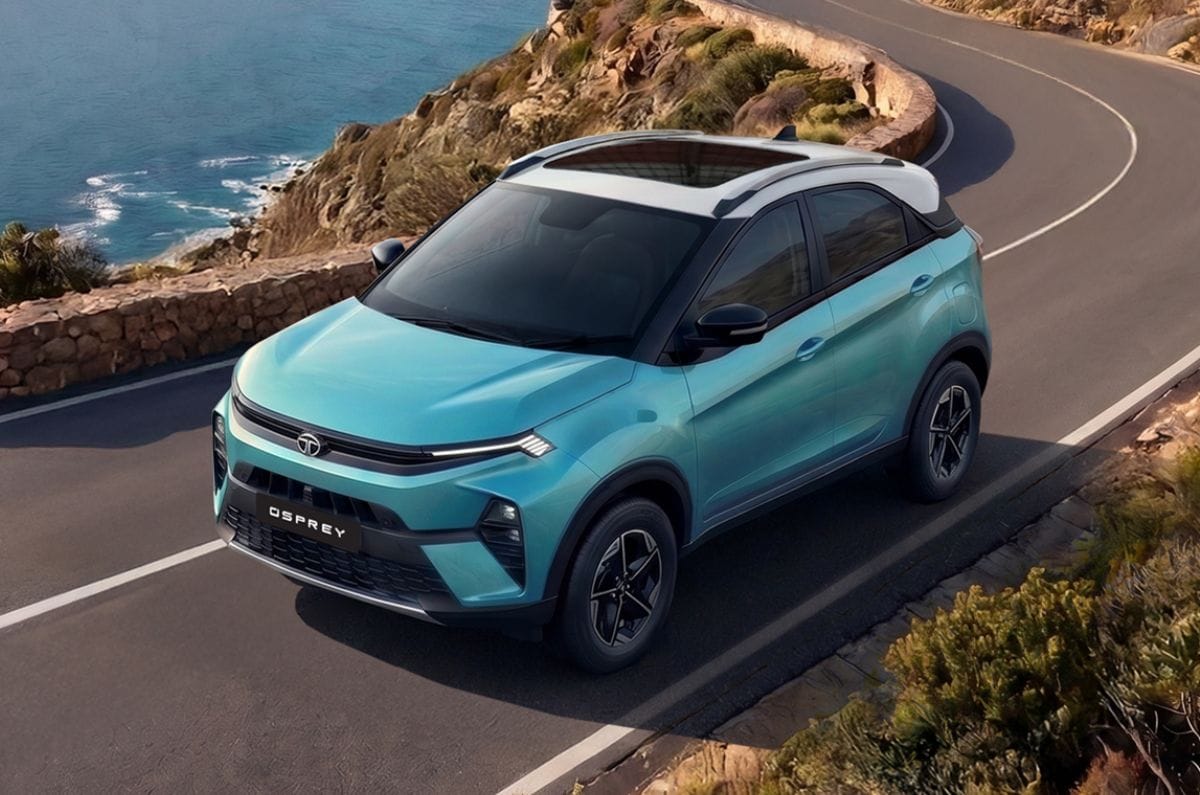
Tata Motors will be launching the Nexon in South Africa as the Osprey, sometime between July and September 2026. The Tata Osprey, known in India as the Nexon, will join the automaker’s South African portfolio that currently includes the combustion-powered Tiago, Punch, Curvv and Harrier. According to the Indian brand, the name has been inspired by a bird of prey that’s commonly found in several parts of South Africa.
South Africa-spec Nexon named after a bird of prey
Fifth Tata model in South Africa
All we know about the upcoming Tata Osprey
Tata Motors South Africa hasn’t given out much details on the upcoming Osprey’s. However, similar to the Nexon sold in India, the Tata Osprey will also be sold with a five-star NCAP safety rating. “South African customers increasingly demand vehicles that combine contemporary styling, technology, practicality and safety along with excellent value for money and the Tata Osprey delivers on all fronts,” said Jeff Allison, General Manager, Marketing and Product for Tata Motors Passenger Vehicles South Africa.
The powertrain options of the upcoming Osprey are undisclosed as of now. However, the combustion-powered Tata Nexon in India is offered with a 120hp 1.2-litre three-cylinder turbo-petrol engine and an 115hp 1.5-litre four-cylinder diesel mill. Depending on the trim level, gearbox options include a 5-speed manual, 6-speed manual, 5-speed AMT (automated manual transmission), or a 6-speed DCT (dual-clutch automatic transmission). No word if the brand is planning to launch the fully electric version of the Osprey.
On the features front, the Osprey could be available with dual 10.25-inch displays, automatic climate control, wireless Apple CarPlay & Android Auto, wireless charging, a panoramic sunroof, a JBL audio system and an ADAS (Advanced Driver Assistance Systems) suite. Considering the Nexon costs less than the Curvv in India, this is likely to be the case for the upcoming Osprey in the South African market as well. After re-entering the South African market in August 2025, Tata Motors has witnessed growth and customer demand in the country, the Indian automaker stated. “The introduction of the Tata Osprey marks another important milestone in our journey,” mentioned Allison.
The Renault Duster impressed us at the first drive event with its muscular design, modern interior and ride and handling balance. We’ve now subjected all versions of the new Duster to our in-depth performance and efficiency testing to tell you how it stacks up against its established competition in the midsize SUV segment.
Renault Duster Exterior Design and Engineering – 9/10
Butch, muscular SUV has good road presence; India model based on RGMP platform
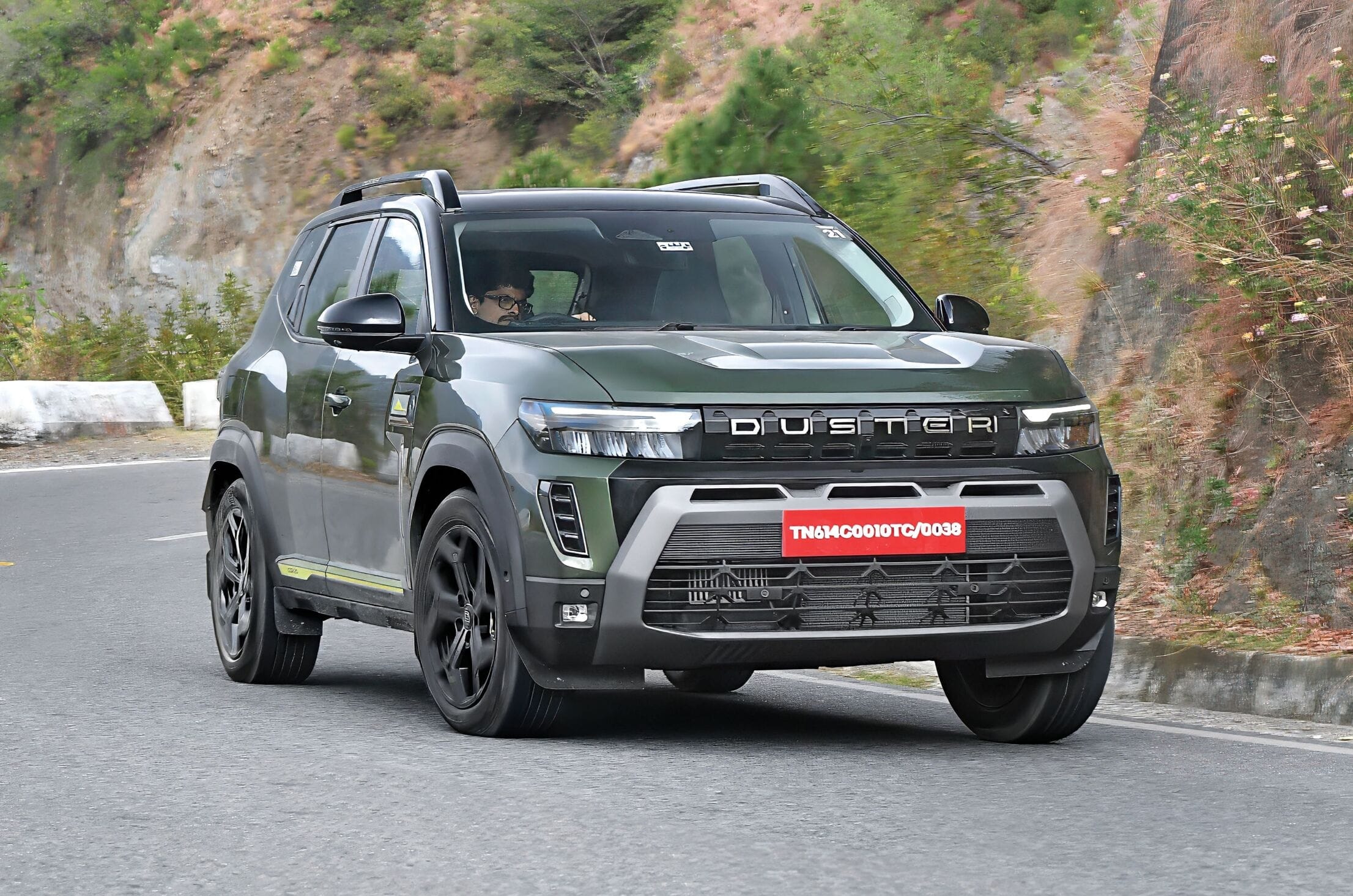
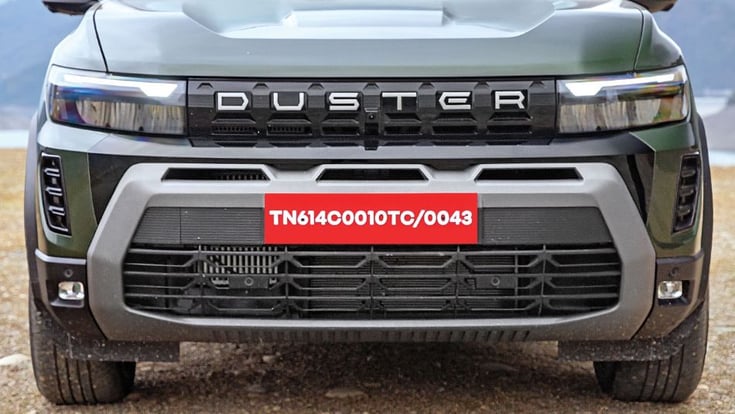
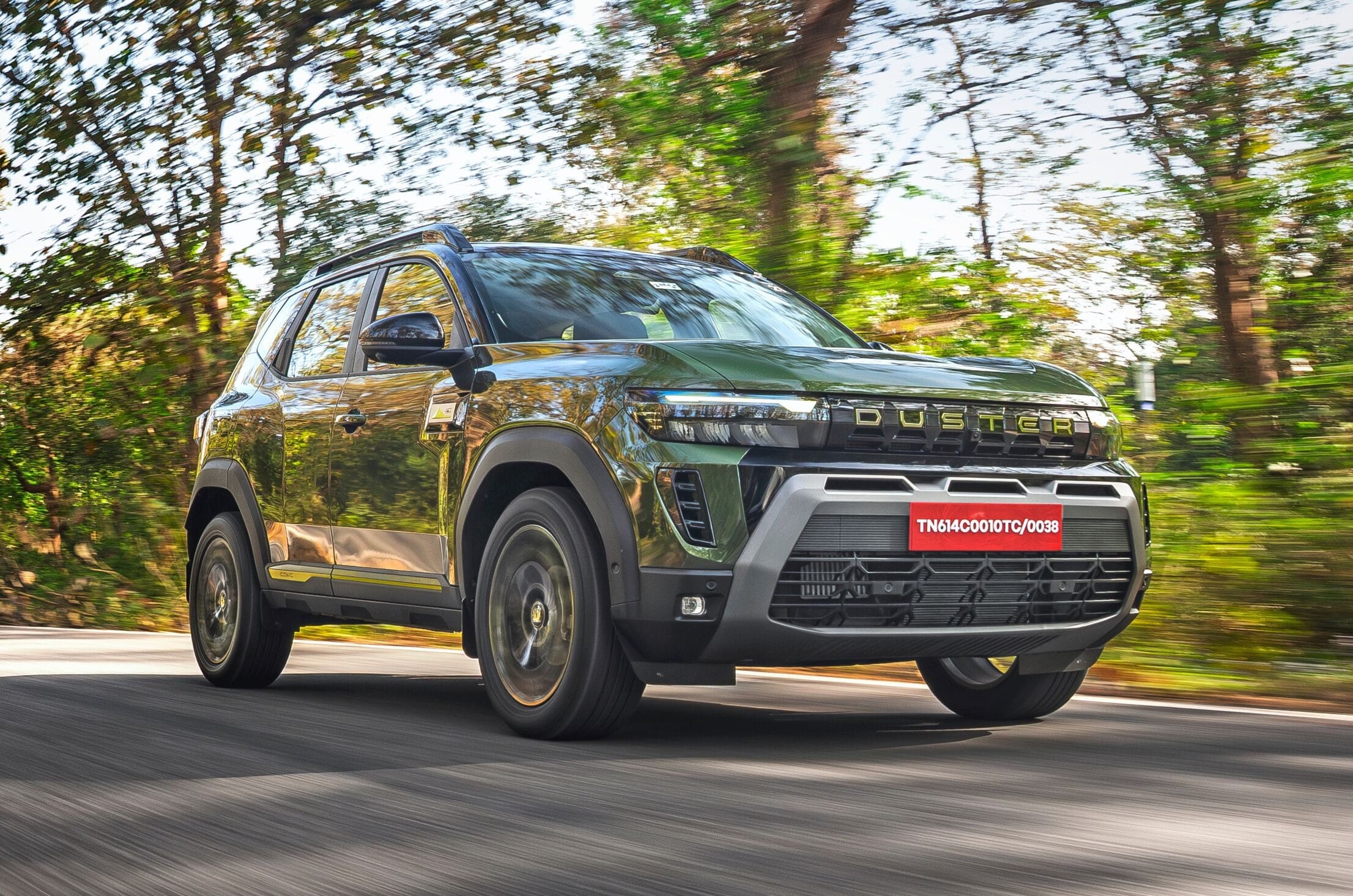
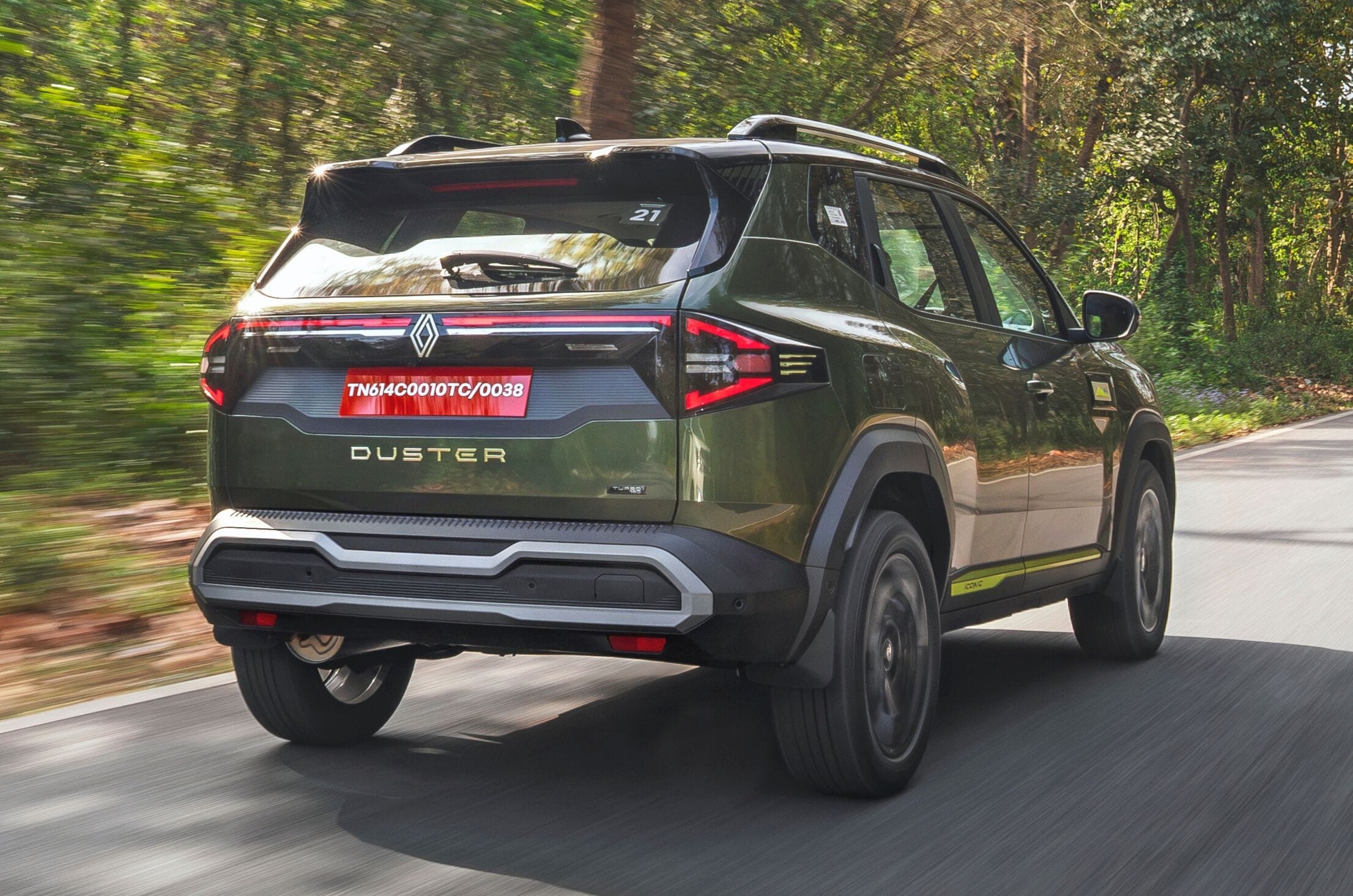
Renault has absolutely nailed the design of the new Duster. While it retains clear visual links to its predecessor, the styling feels thoroughly modern. Up front, large LED headlamps are paired with distinctive eyebrow-shaped DRLs that double as turn indicators, while the grille replaces the Renault logo with a prominent ‘Duster’ script, capitalising on the model’s strong brand recall. A protruding silver skid plate evokes memories of the original Duster, and pixel-style fog lamps, a sculpted bonnet and functional air curtains add further visual muscle.
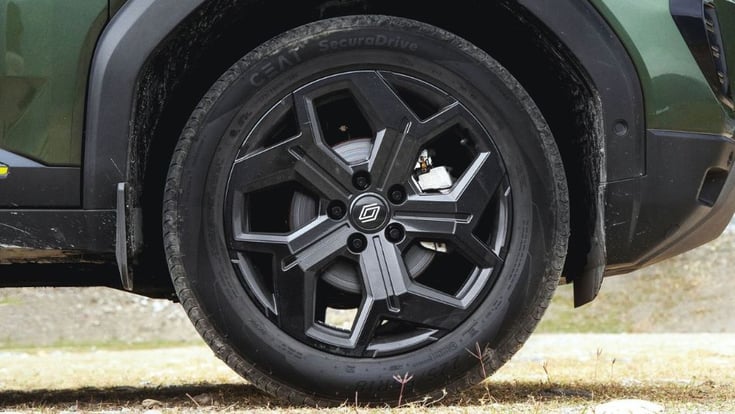
Left to right: Proudly wears the Duster badging on the nose; 18-inch alloys look proportionate.
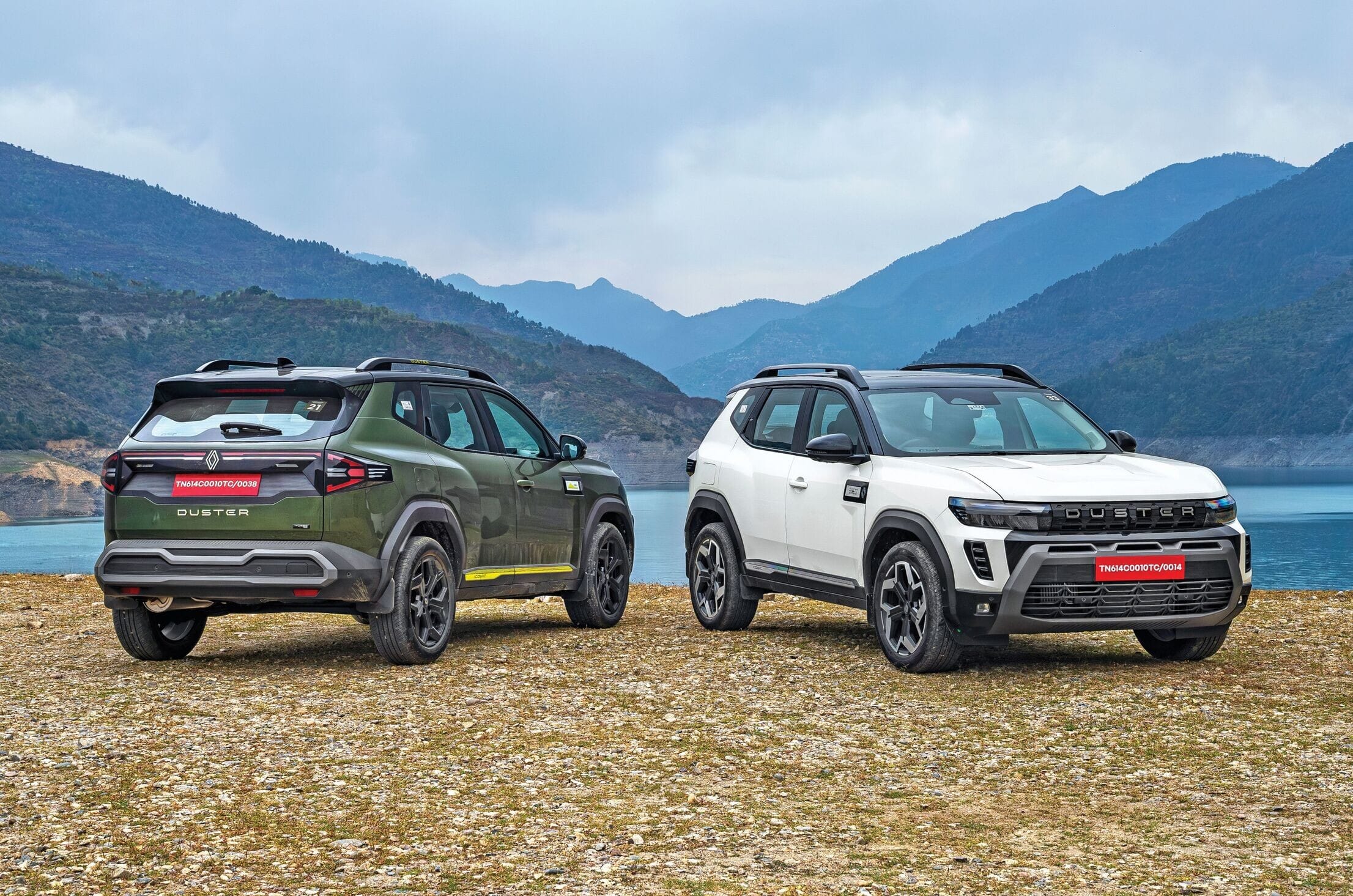
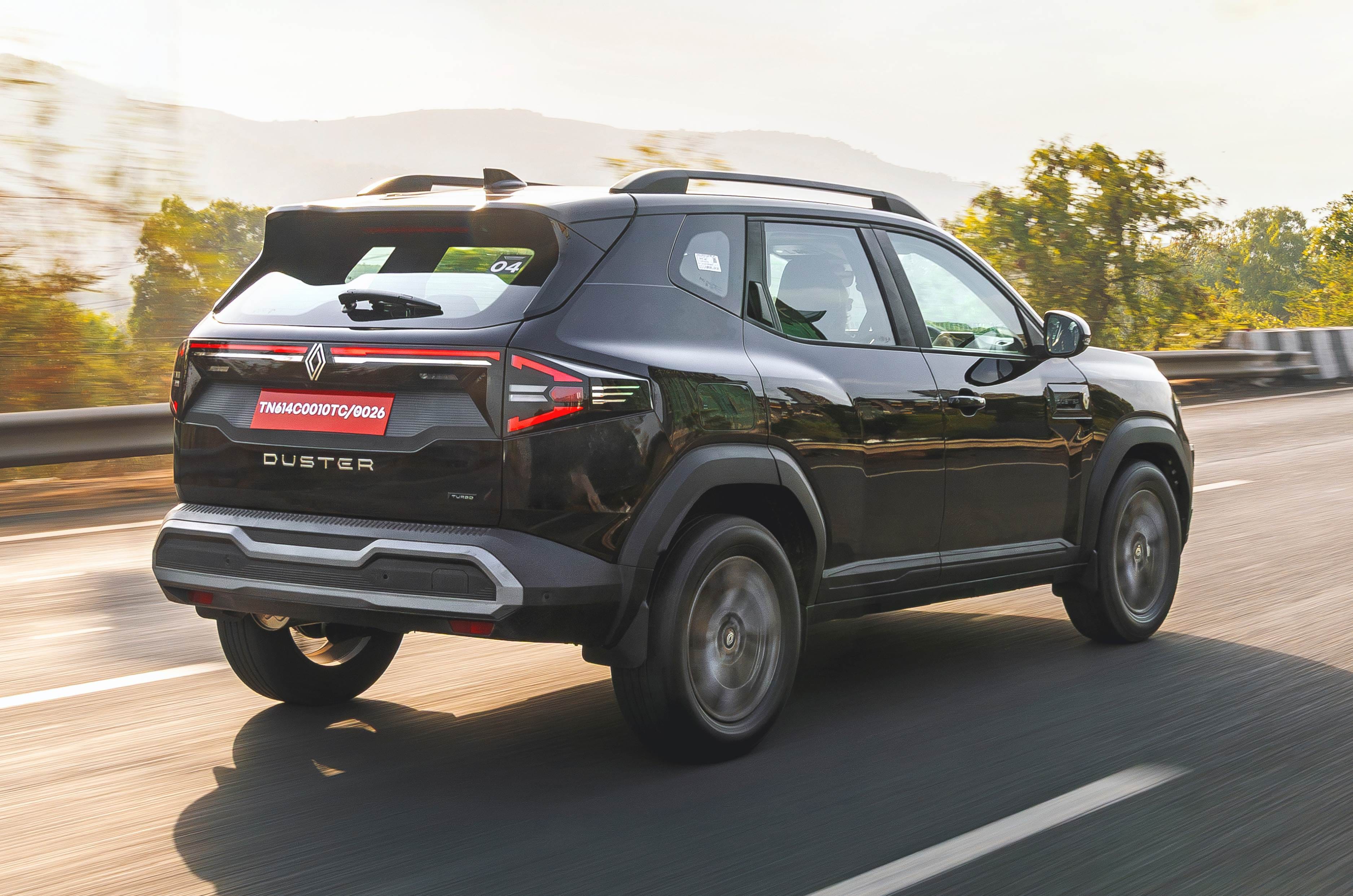
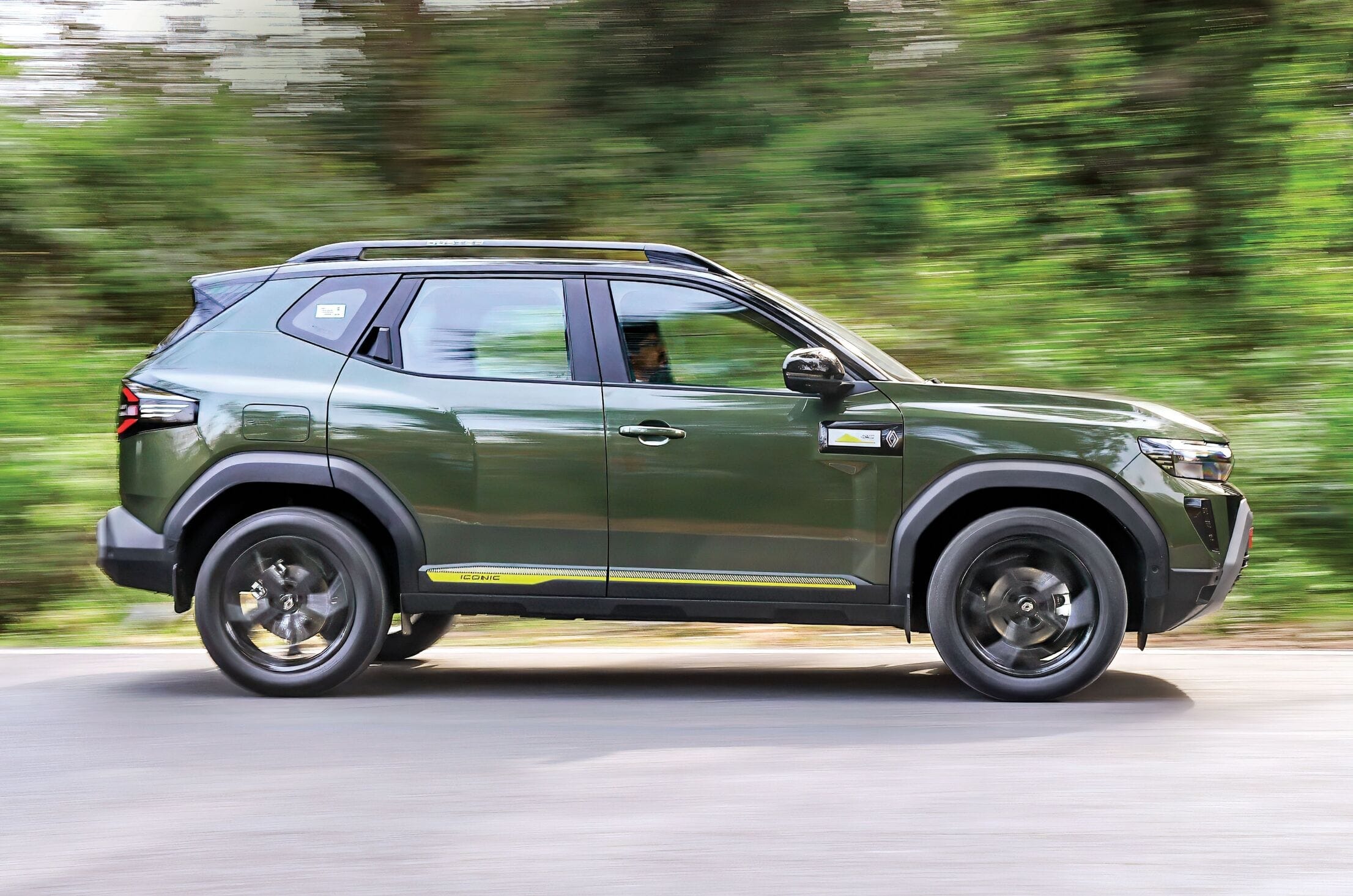
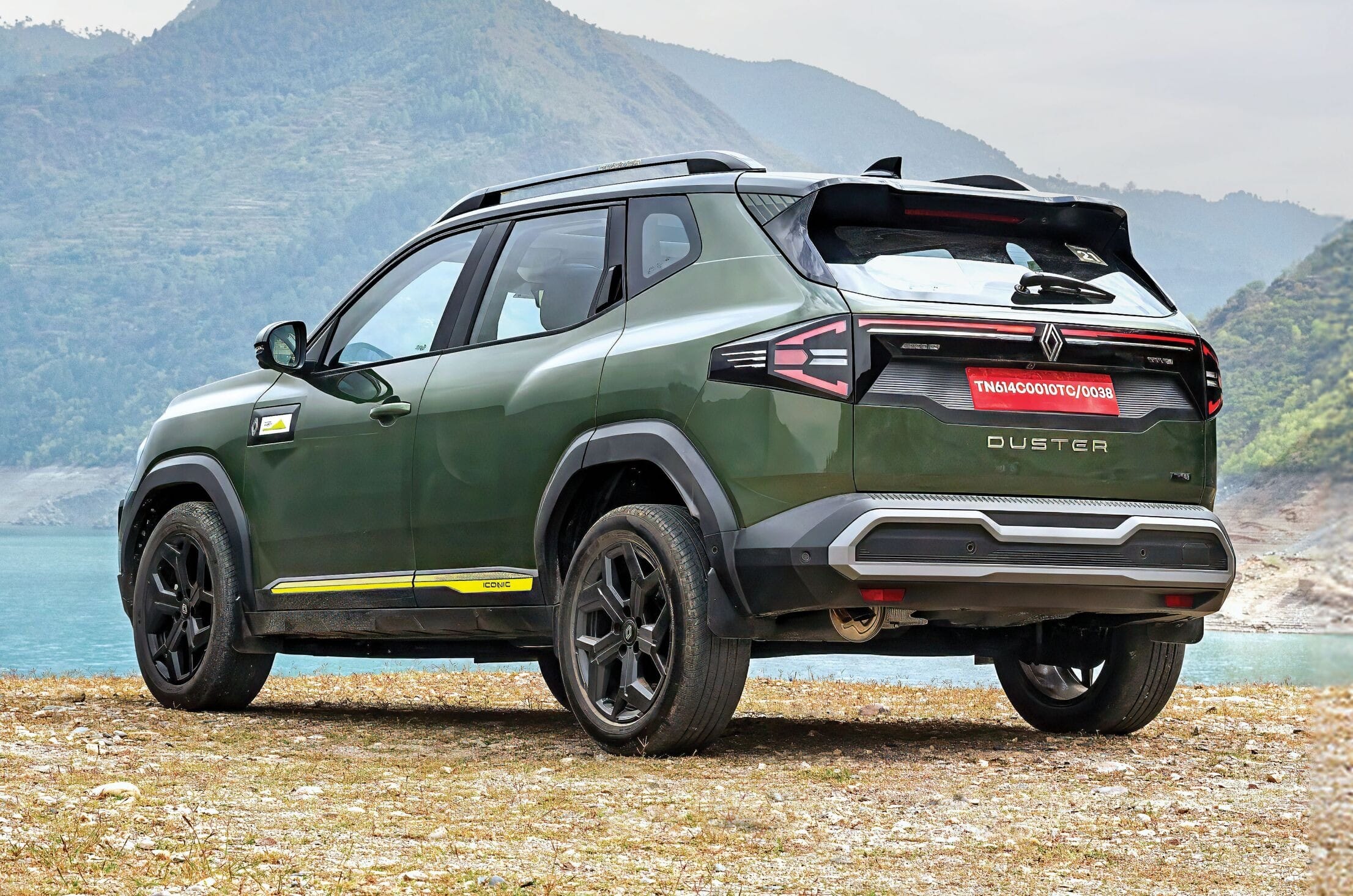
In profile, the Duster embraces a rugged SUV character with chunky black cladding, concealed rear door handles in the C-pillar and functional roof rails. It rides on striking 18-inch alloy wheels and offers 212mm of ground clearance. The rear design is relatively clean but features distinctive triangular tail-lamps connected by an LED light bar. A roof spoiler and contrasting silver insert in the bumper help enhance its stance. Overall, the Duster has considerable road presence. Colour options include Sunset Red, Pearl White, River Blue, Moonlight Silver, Stealth Black and Jade Mountain Green, while the Launch Edition adds neon-green accents and blacked-out alloys (pictured here).
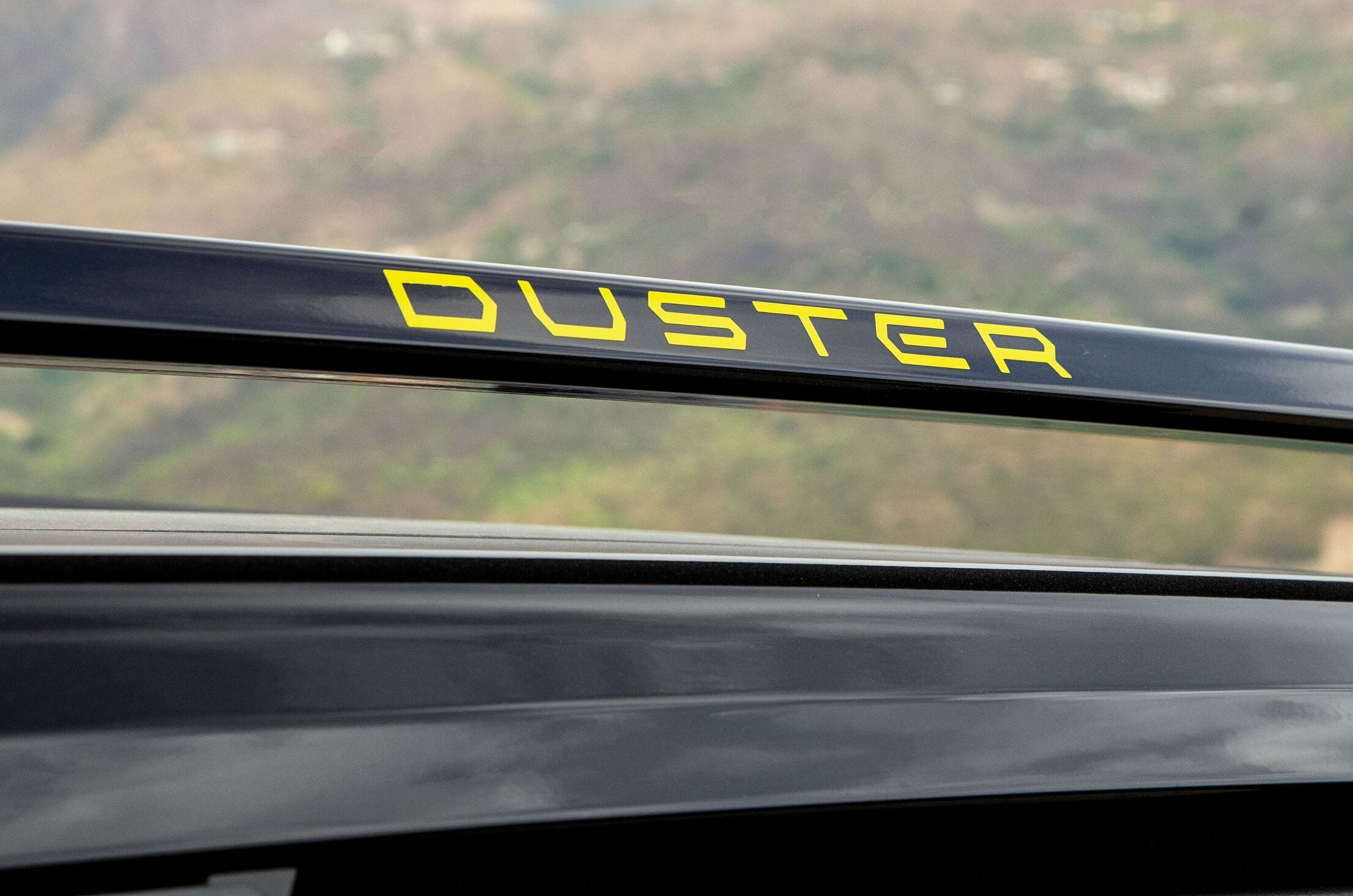
The roof rails are functional and have a rated 50 kg load-carrying capacity.
Meanwhile, the 1.0 range tops out at the mid-spec Techno trim, but Renault has done a very good job of not making it look like so. You still get the same butch and muscular styling, LED lights, roof rails and body cladding. The only prominent difference from the top trims is the alloy wheels, which are a size smaller at 17 inches and feature a slightly different design.
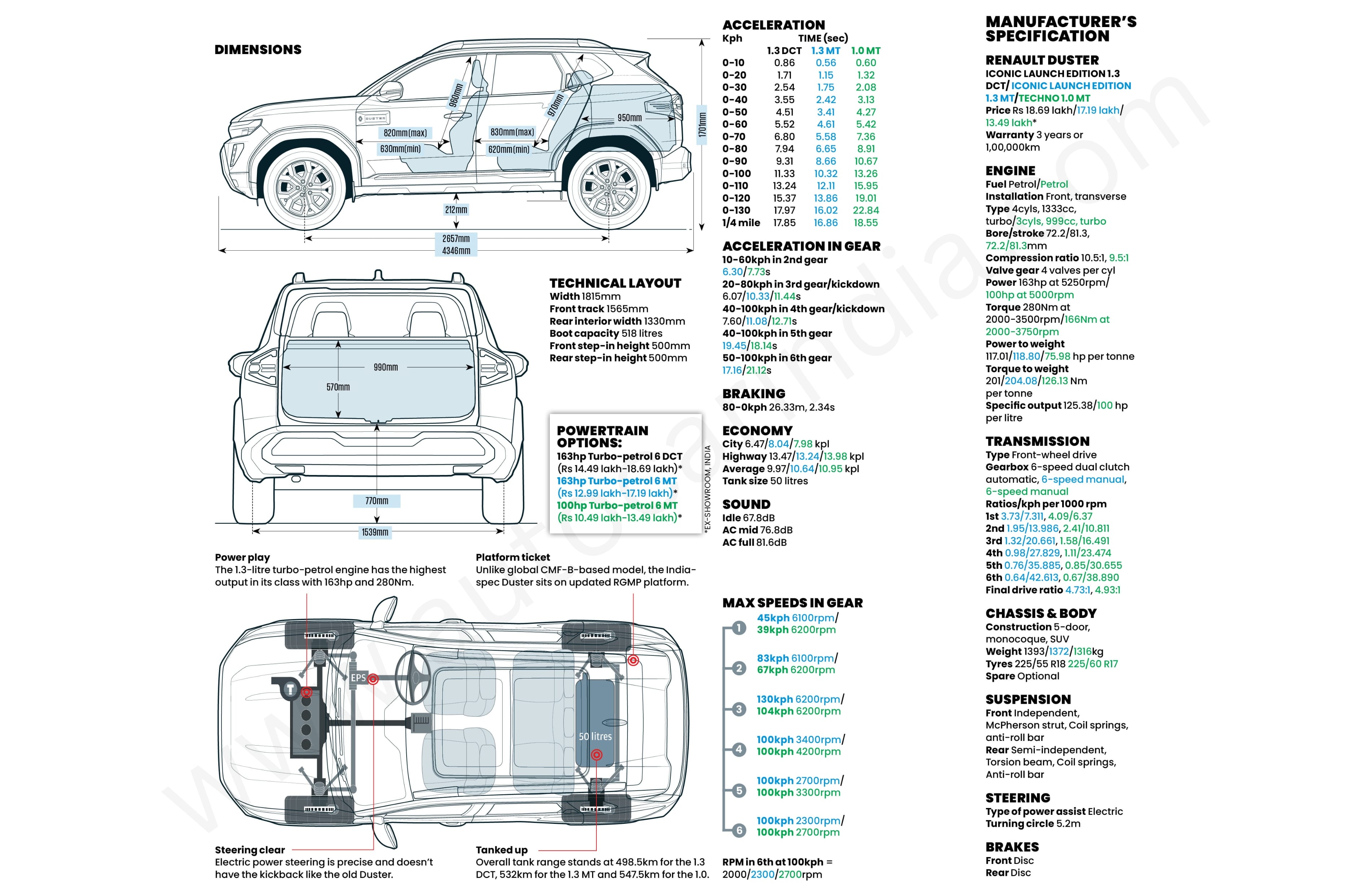
Unlike the global CMF-B-based model, the India-spec Duster sits on an updated RGMP platform.
Unlike the European-spec Duster, which uses the CMF-B platform, the India model sits on an updated version of it, which Renault calls the Global Modular Platform (RGMP). It features a Google co-developed electronic architecture, and the platform is designed to accommodate a wide range of body styles and powertrains, including hybrids, CNG and full-electric derivatives. Interestingly, the cabin is around 40mm taller due to the addition of a panoramic sunroof, which necessitated a higher roofline to preserve cabin headroom. Ground clearance is slightly higher too, making the India car 50mm taller overall than the international model. Measuring 4,343mm long, 1,813mm wide and 1,659mm tall, with a 2,657mm wheelbase, the Duster sits squarely in the midsize SUV segment.
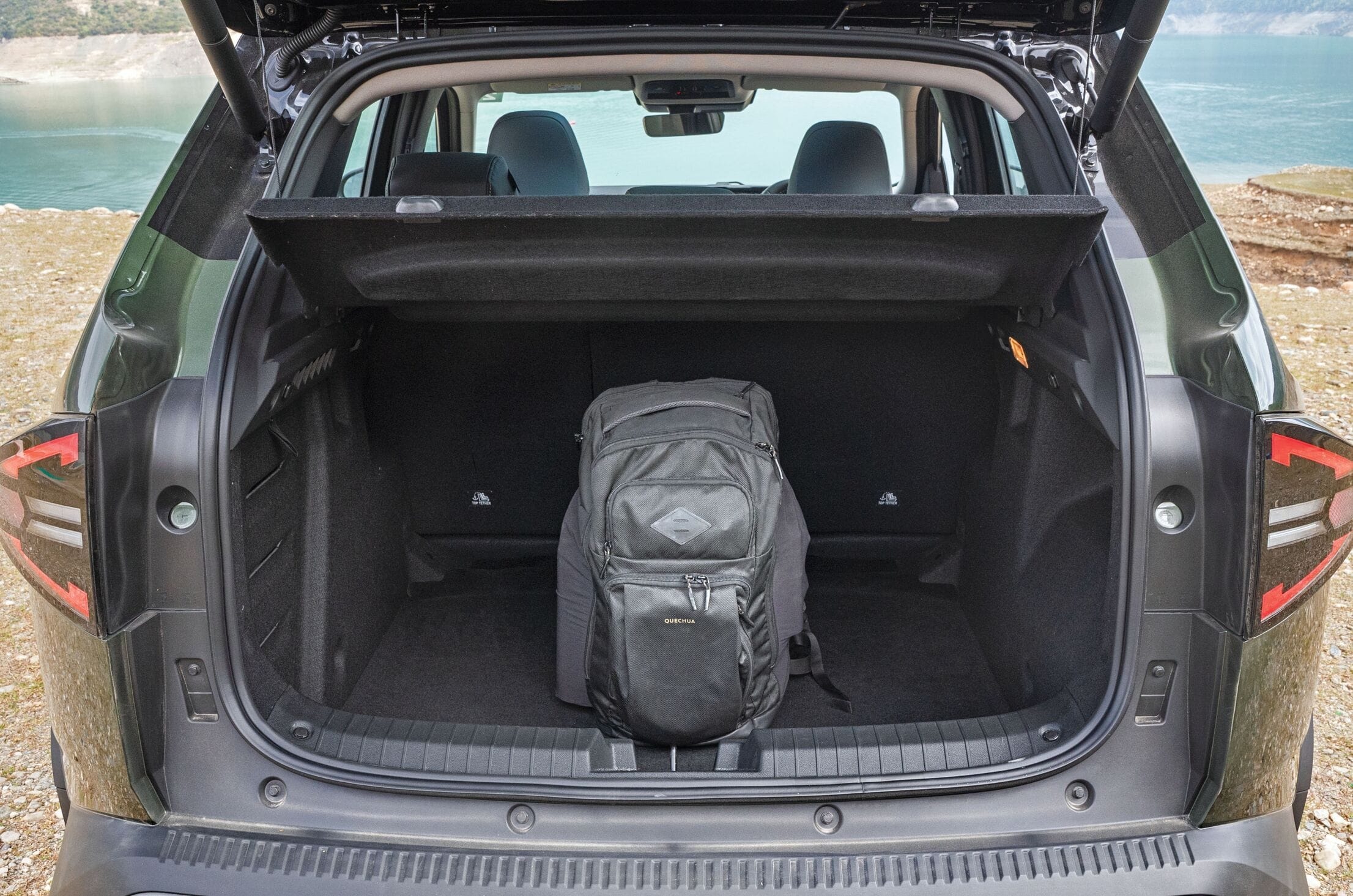
The Duster gets a segment-best 518-litre boot, though the loading lip is high.
The powered tailgate reveals a segment-leading 518-litre boot (700 litres up to the roof), although Renault only provides a puncture repair kit instead of a spare wheel as standard. Despite no AWD option, off-road credentials remain a key part of the Duster’s appeal, with 26.9-degree approach and 34.7-degree departure angles.
Renault Duster Interior Space, Comfort and Practicality – 8/10
Modern interior impresses with its design, but it isn’t as spacious as some rivals in the segment
Fit and finish of materials inside the cabin are good.
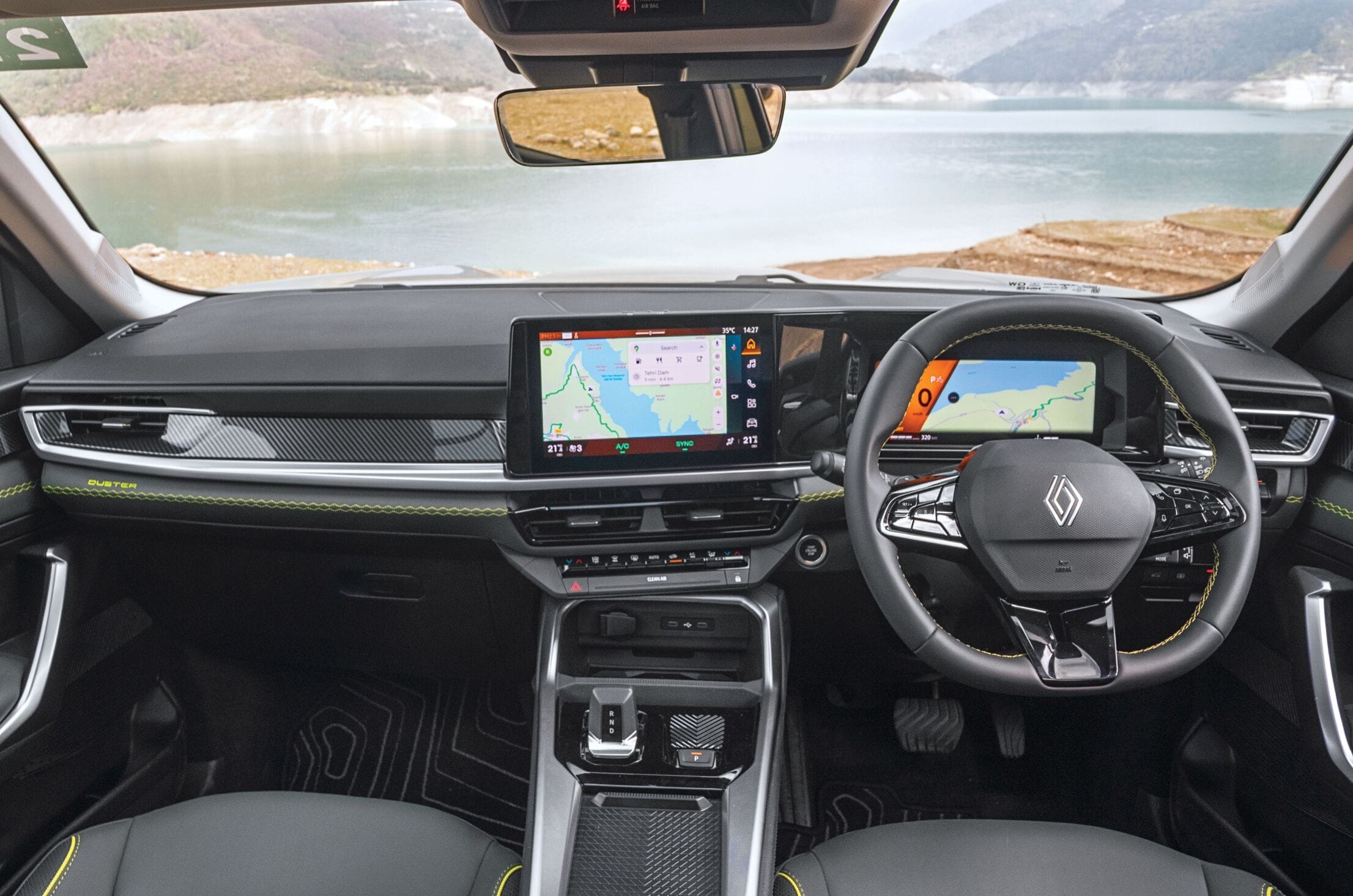
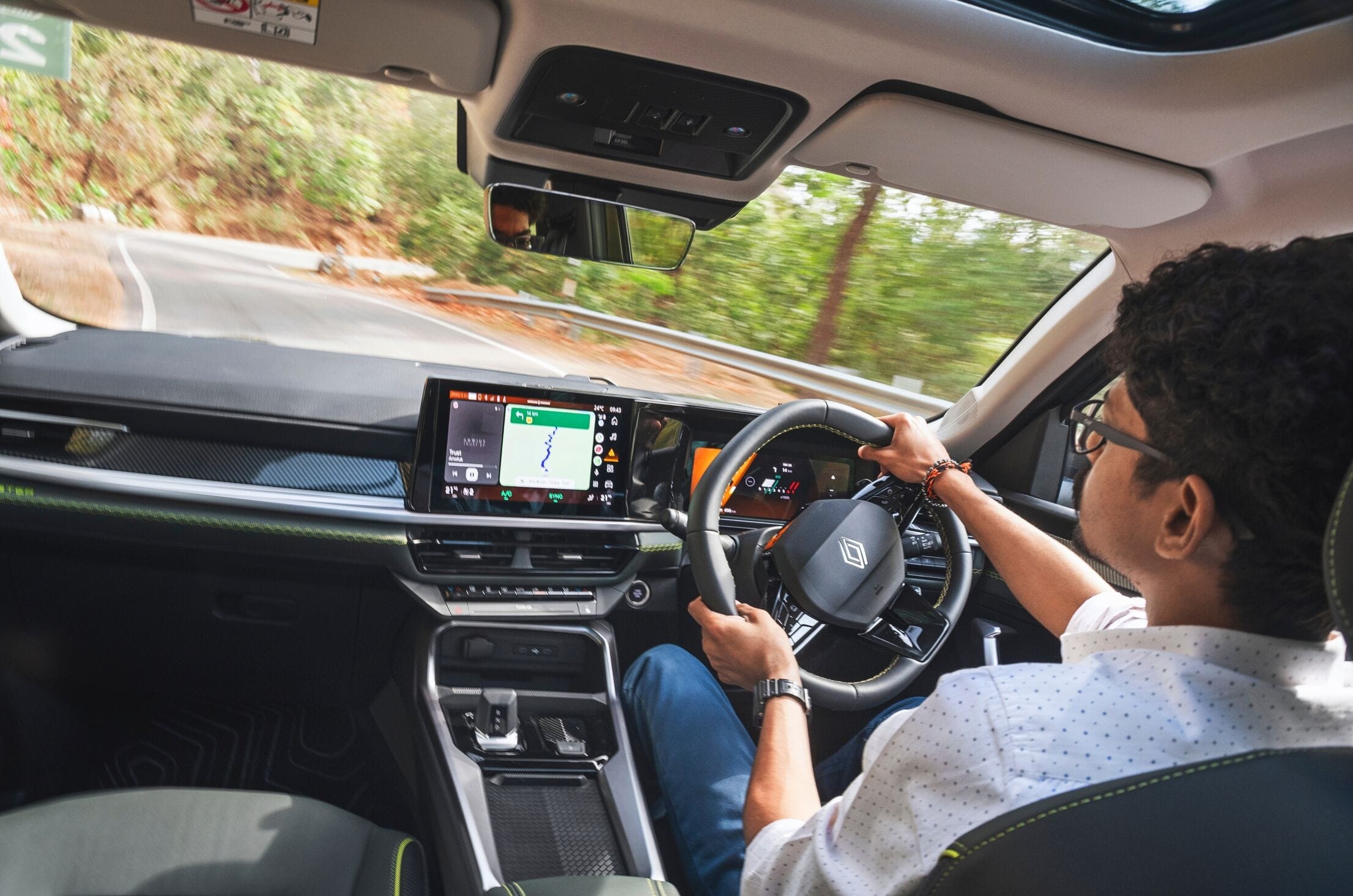
Inside, the dashboard features a twin-screen layout, with a mix of textured and soft-touch materials that lend the interior a premium feel. Silver accents, faux carbon-fibre trim and contrast green stitching add visual drama without making the cabin feel overly busy.
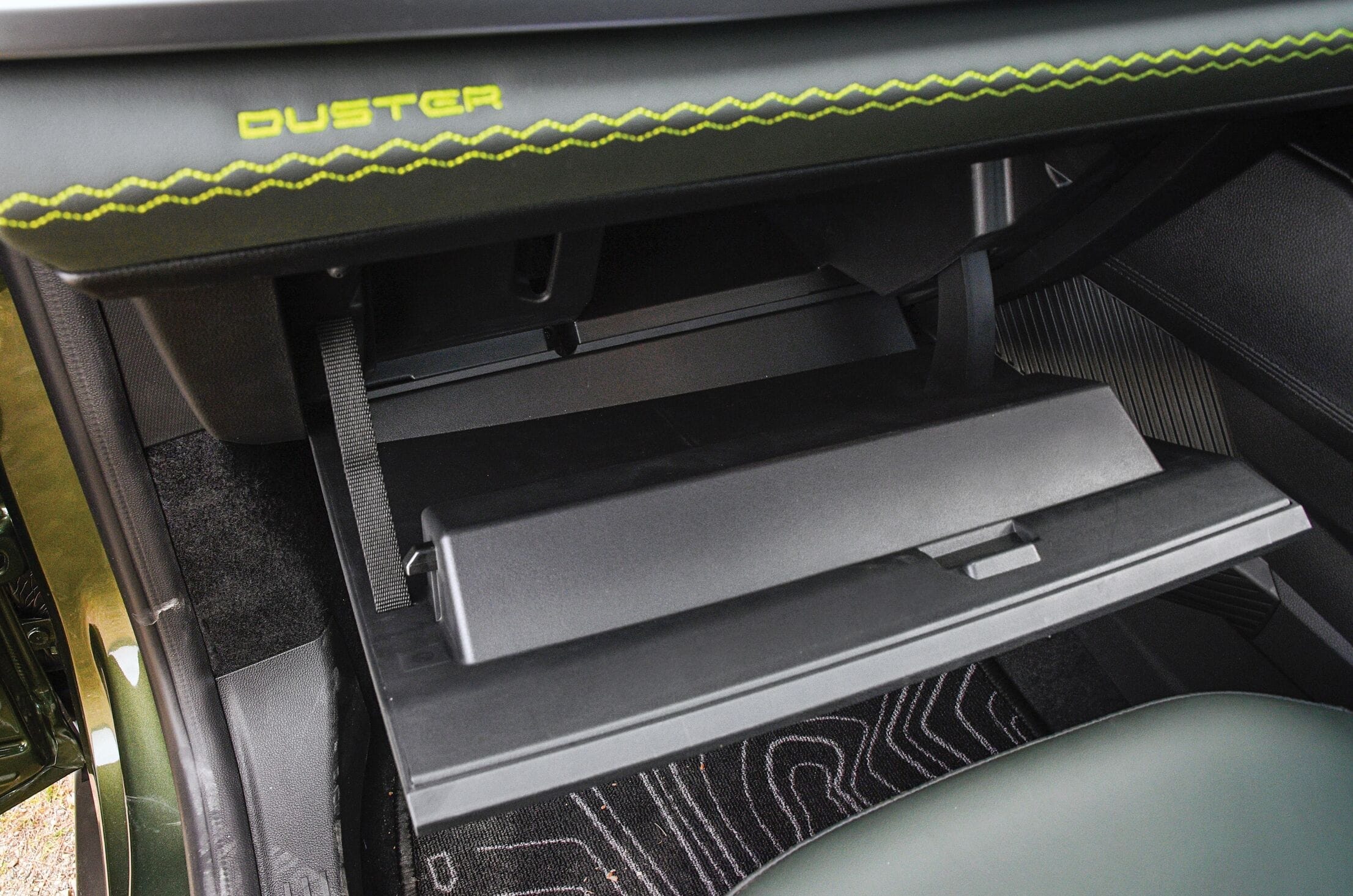
Glovebox is quite shallow and small on the whole.
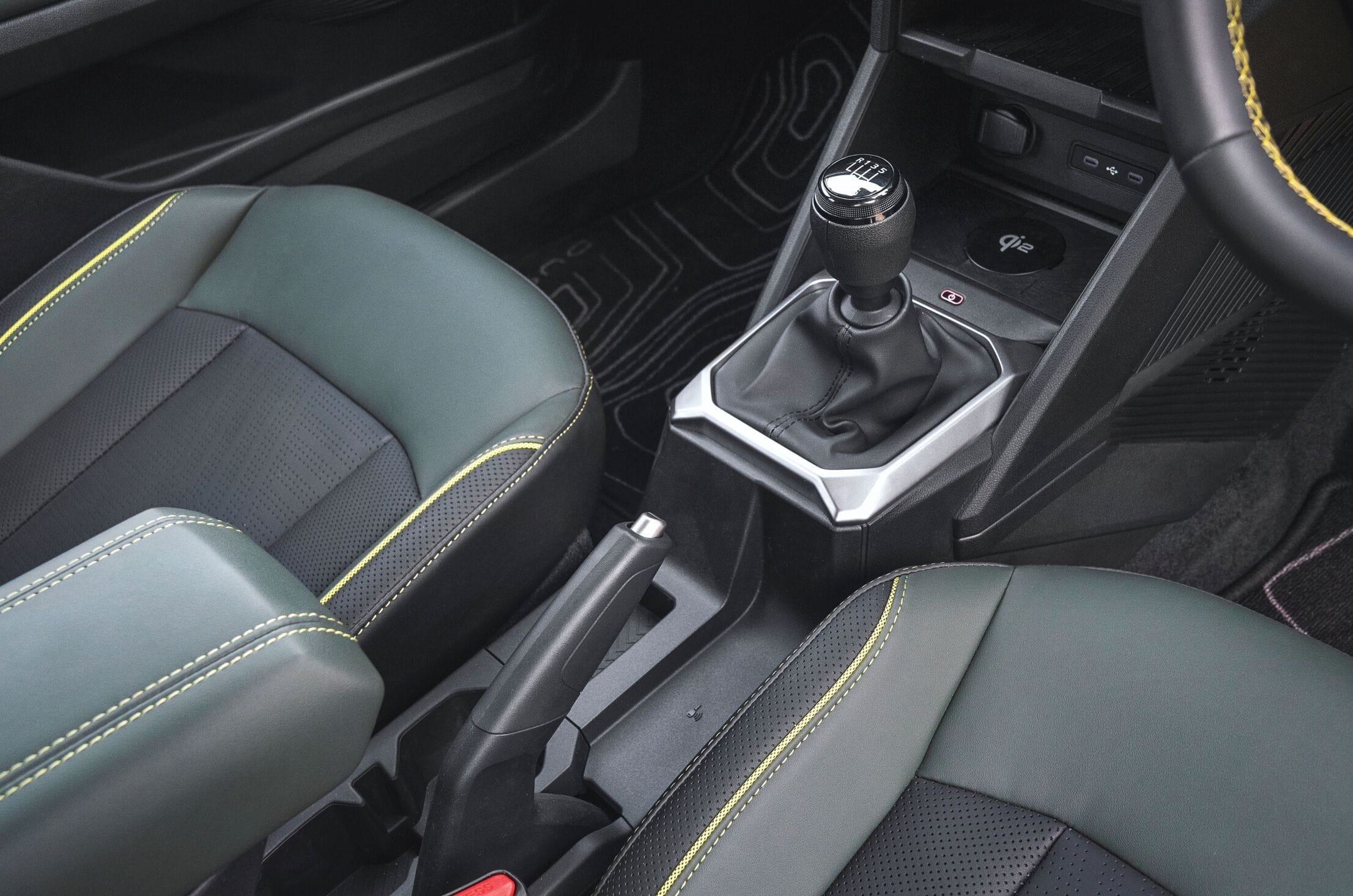
Crucially, Renault has resisted the temptation to digitise everything. The Duster strikes a sensible balance between touchscreen functions and physical controls, with a row of buttons and knobs for key functions, including the climate control system. Interestingly, the manual and automatic versions feature different centre console layouts. The automatic gets a raised console with a deep, cooled storage compartment, cup holders, a wireless charger and a stubby gear selector, while the manual features a lower-set console with a conventional handbrake and an additional storage shelf beneath the dashboard controls. The manual gear lever feels pleasingly tactile and well-engineered.
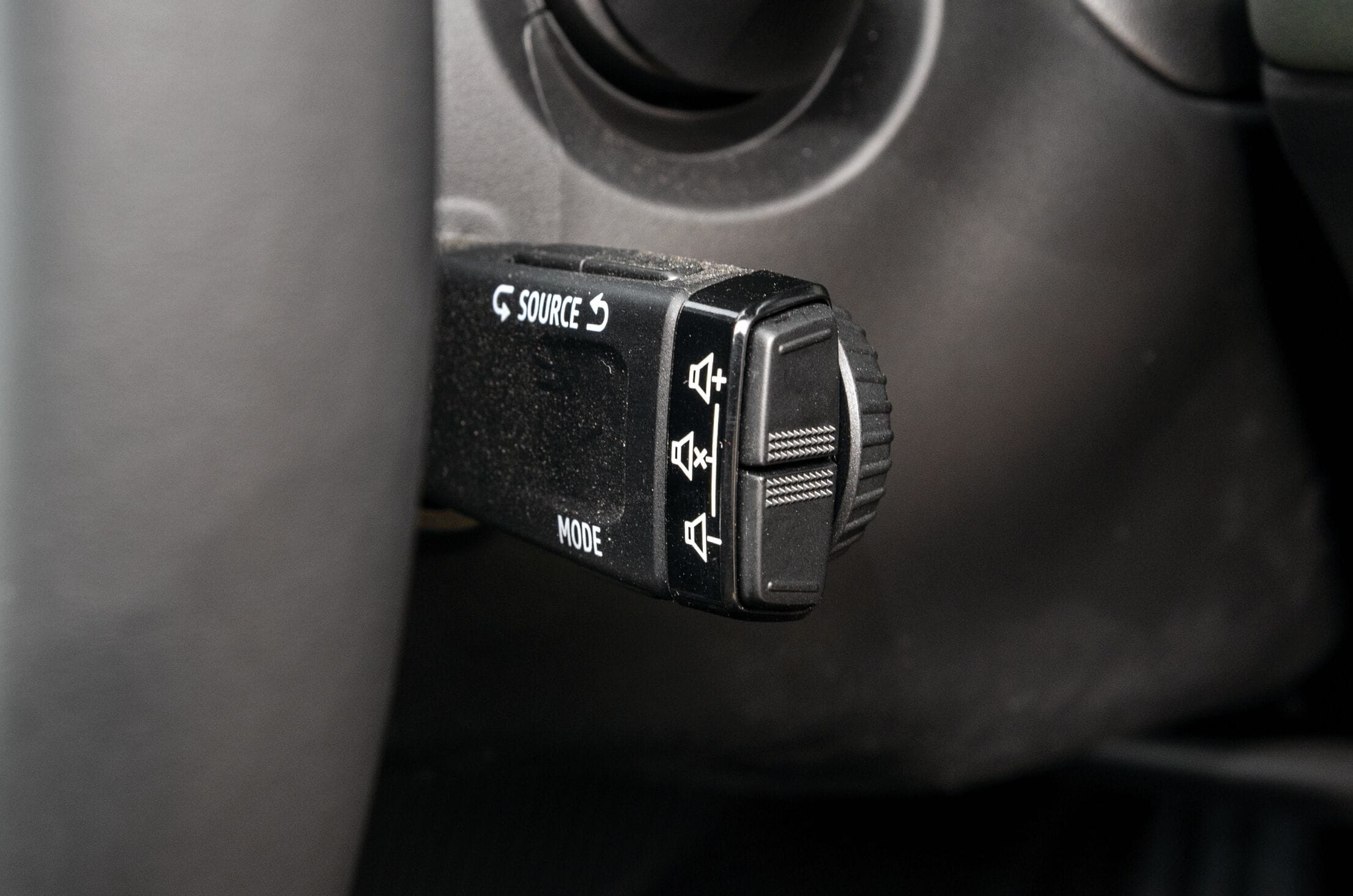
Audio controls are on a separate stalk behind the steering wheel; it takes some time getting used to.
Practicality is par for the course. The sliding front armrest incorporates a storage compartment, but the glovebox is on the smaller side, and the door pockets struggle to accommodate 1-litre bottles. The flat-bottom, flat-top steering wheel feels good to hold and houses controls for the instrument cluster and cruise control, while audio controls continue to sit on a separate stalk behind the wheel, a familiar Renault trait. What’s nice is that it features auto up/down for all windows from the base trim.
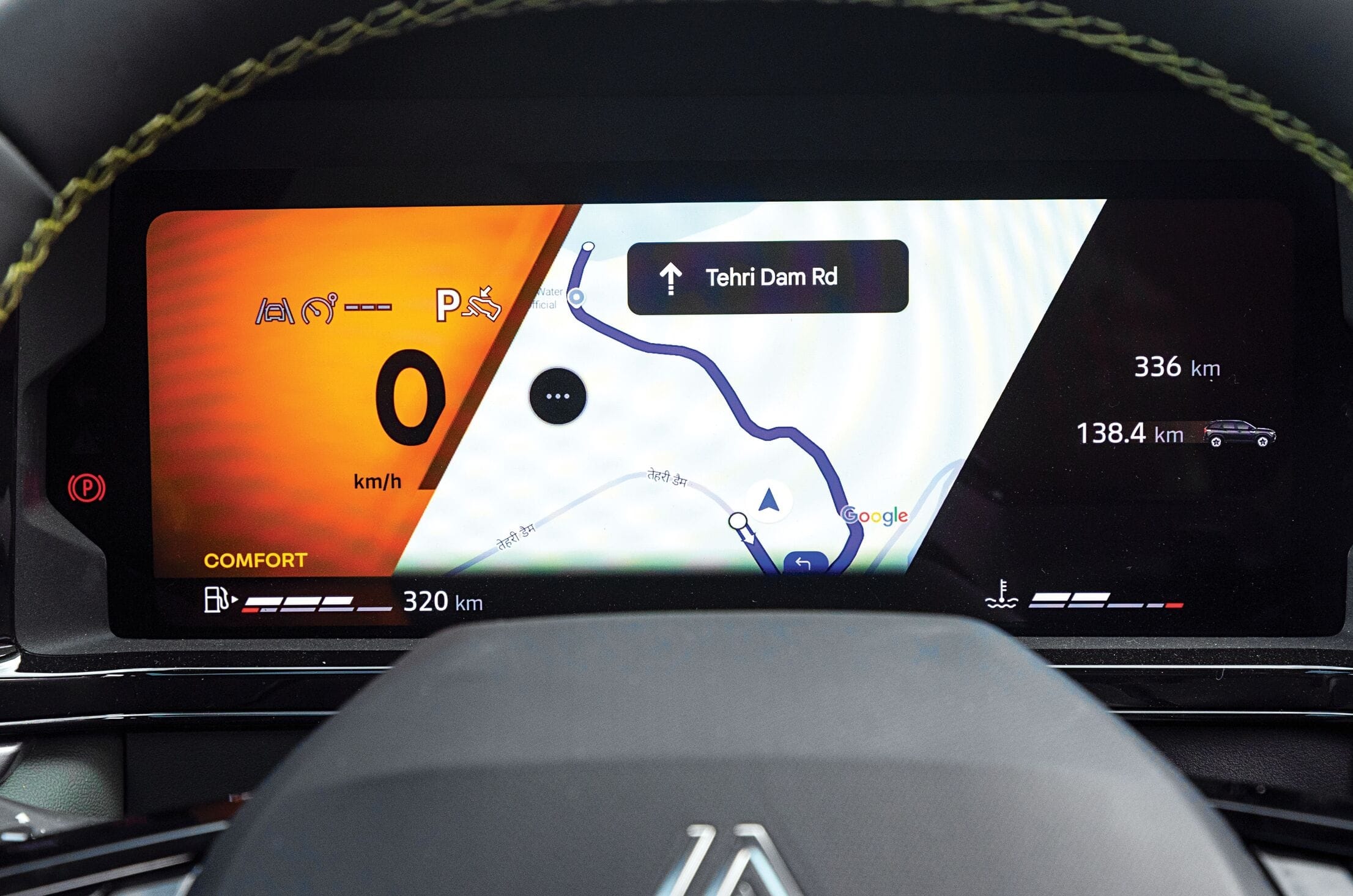
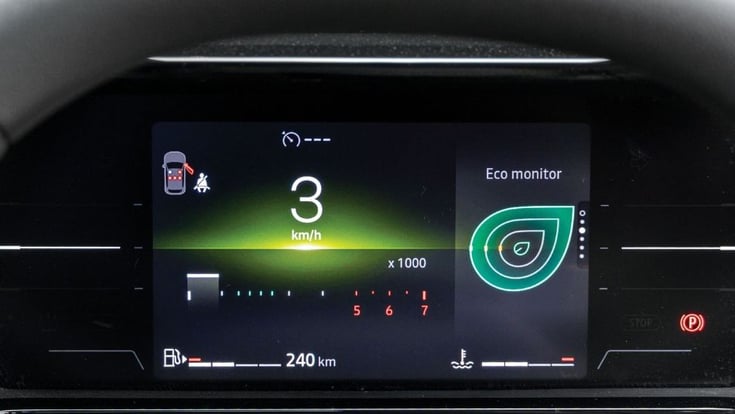
10.25-inch digital cluster has a split-screen function; some will miss classic round dials, though.
The digital instrument cluster is crisp, colourful and configurable, although some buyers will miss straightforward analogue dials. Less impressive is the key fob, shared with the Triber and Kiger, which feels very budget-oriented.
1.0 range gets a smaller 7-inch driver’s display and brown- black fabric seat upholstery.
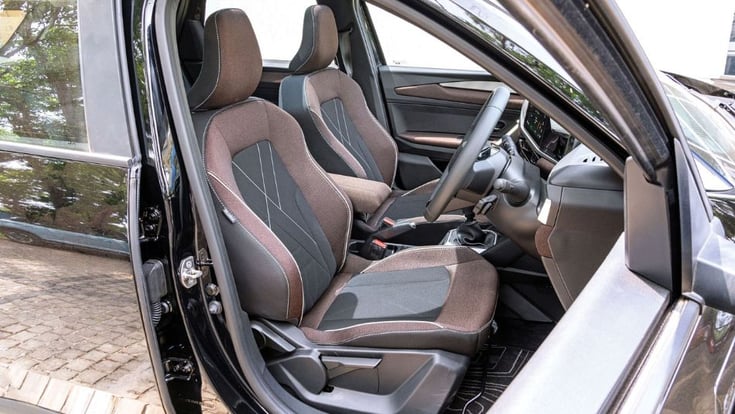
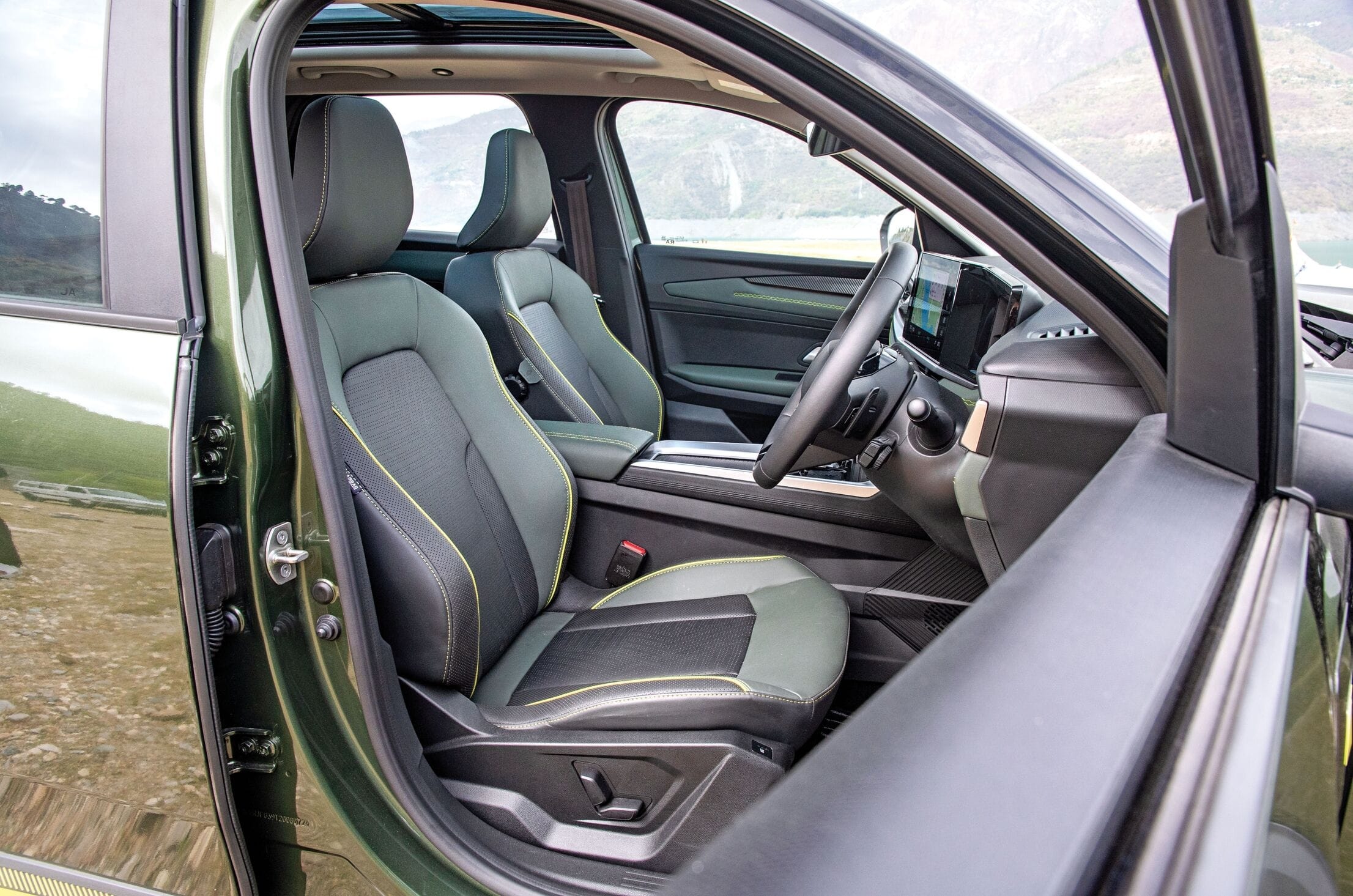
The dual-tone black-and-dark-green upholstery with neon-green stitching in the top-spec Iconic Launch Edition adds some character to the cabin. The Techno trim, meanwhile, which is where the 1.0 tops out, features brown-and-black seat upholstery with some different trim elements.
Front seats are well-padded, accommodating and ideal for long drives.
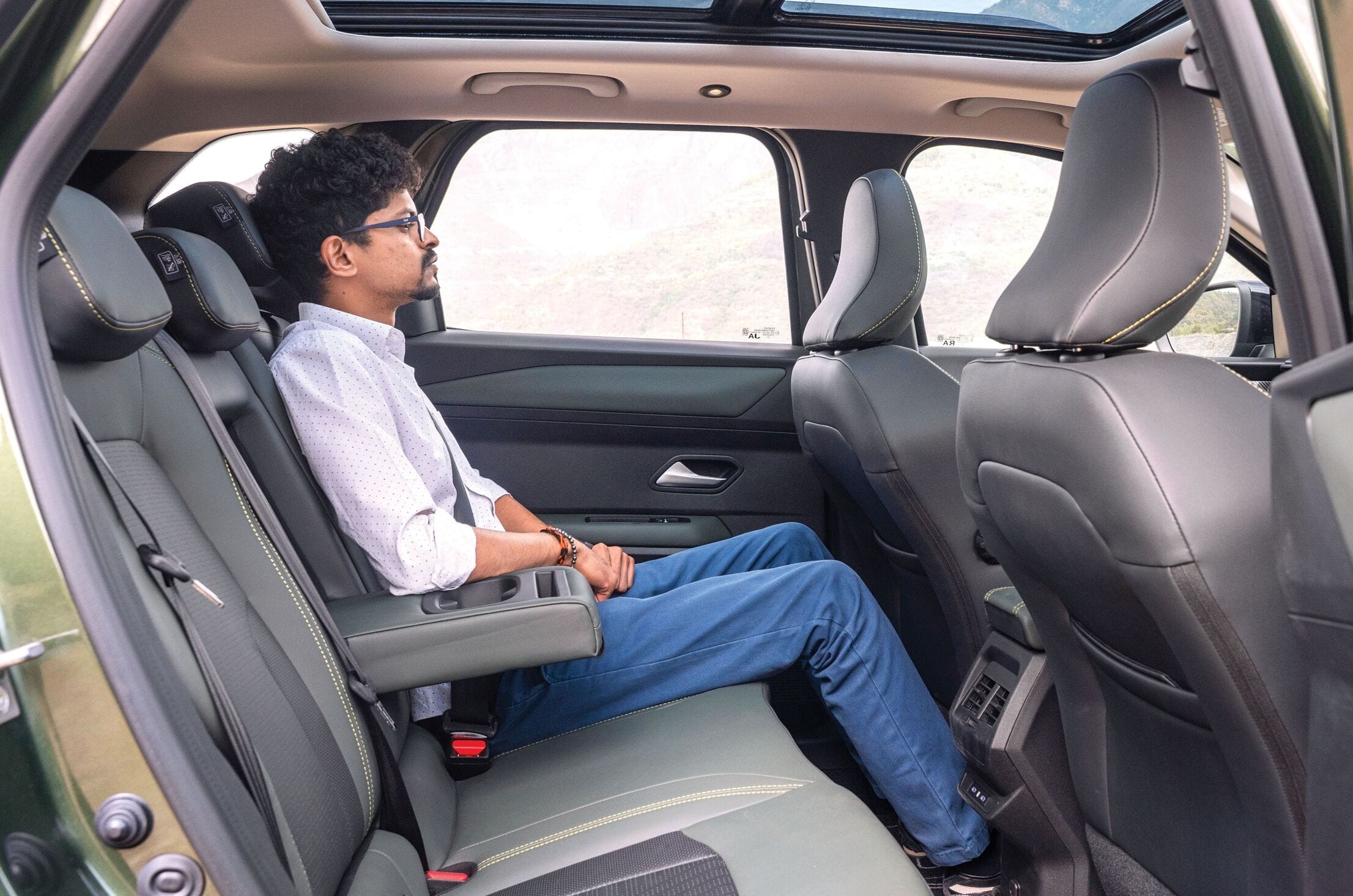
Up front, the seats are supportive and comfortable over long distances, and they feature electric adjustment and an effective ventilation function. Rear-seat comfort is good for two adults, with adequate knee room and good headroom. While a third passenger can be accommodated, limited shoulder room and the transmission tunnel make it a squeeze.
There’s good knee room and headroom on offer, but overall space is less than some rivals.
Rear occupants also get AC vents, charging ports and a centre armrest with cup holders. The large panoramic sunroof and expansive glass area help create an airy feel, although rear sun blinds are notably absent. One drawback is that the window line is considerably higher than before, meaning outward visibility isn’t quite as good as in the original Duster, which was renowned for its excellent all-round view out.
Renault Duster Features and Safety – 8/10
Top-spec comes very well-equipped, though features could’ve been better spread out
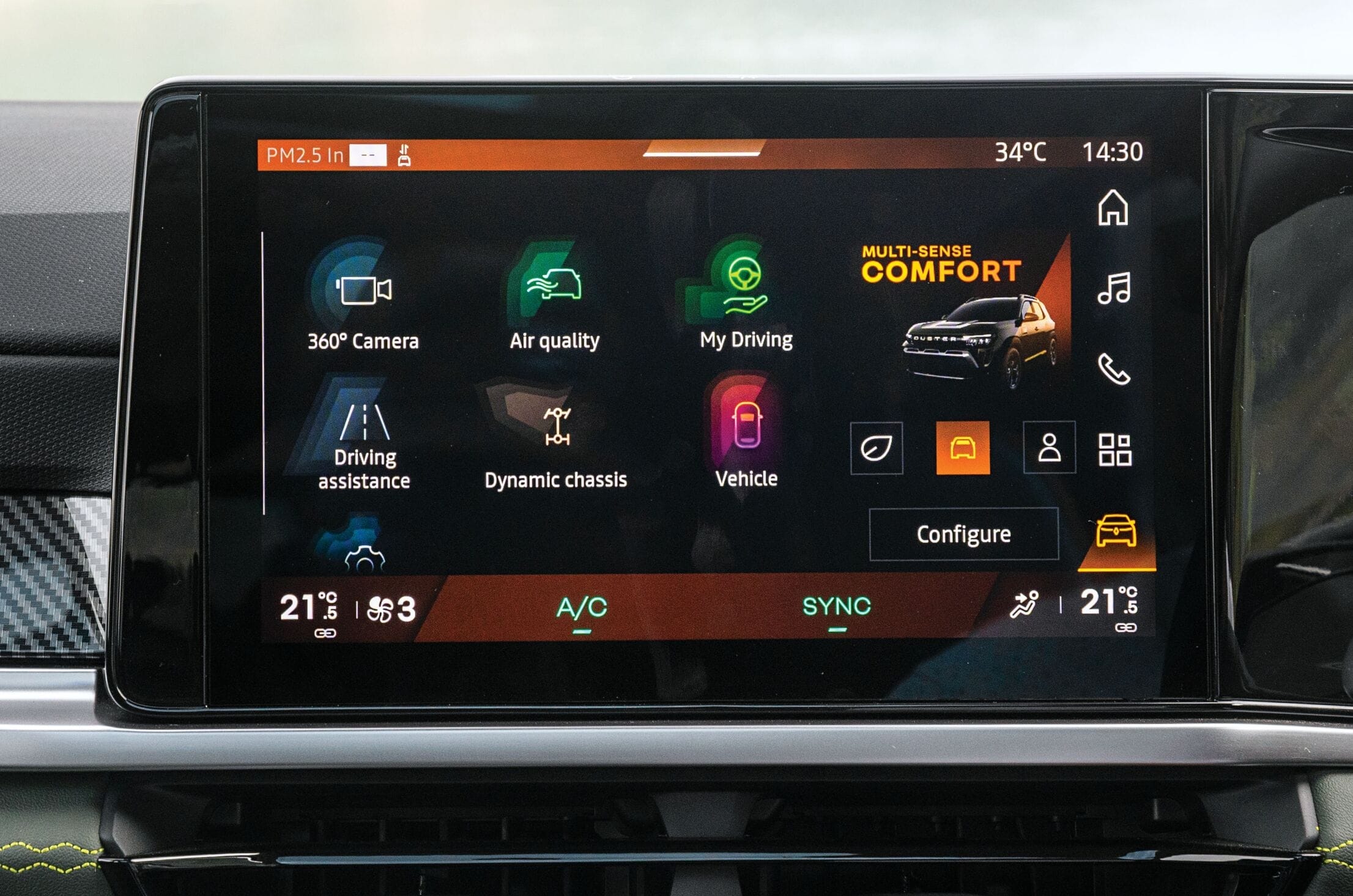
10.1-inch touchscreen is slick and high- resolution, but the UI isn’t as logical or straightforward as some rivals.
The Duster comes loaded with all the features expected of a midsize SUV. Its infotainment system supports wireless smartphone connectivity and impresses with crisp graphics and vibrant colours, matching the digital instrument cluster. However, the 10.1-inch touchscreen’s ratio makes it feel relatively slim.
The standout feature is the integration of Google services – Google Maps, Google Assistant and the Google Play Store, which are built into the system, and work seamlessly. The interface is slick and responsive, though it isn’t very intuitive to use, lacking the straightforward layout and menu structure seen in some rivals.
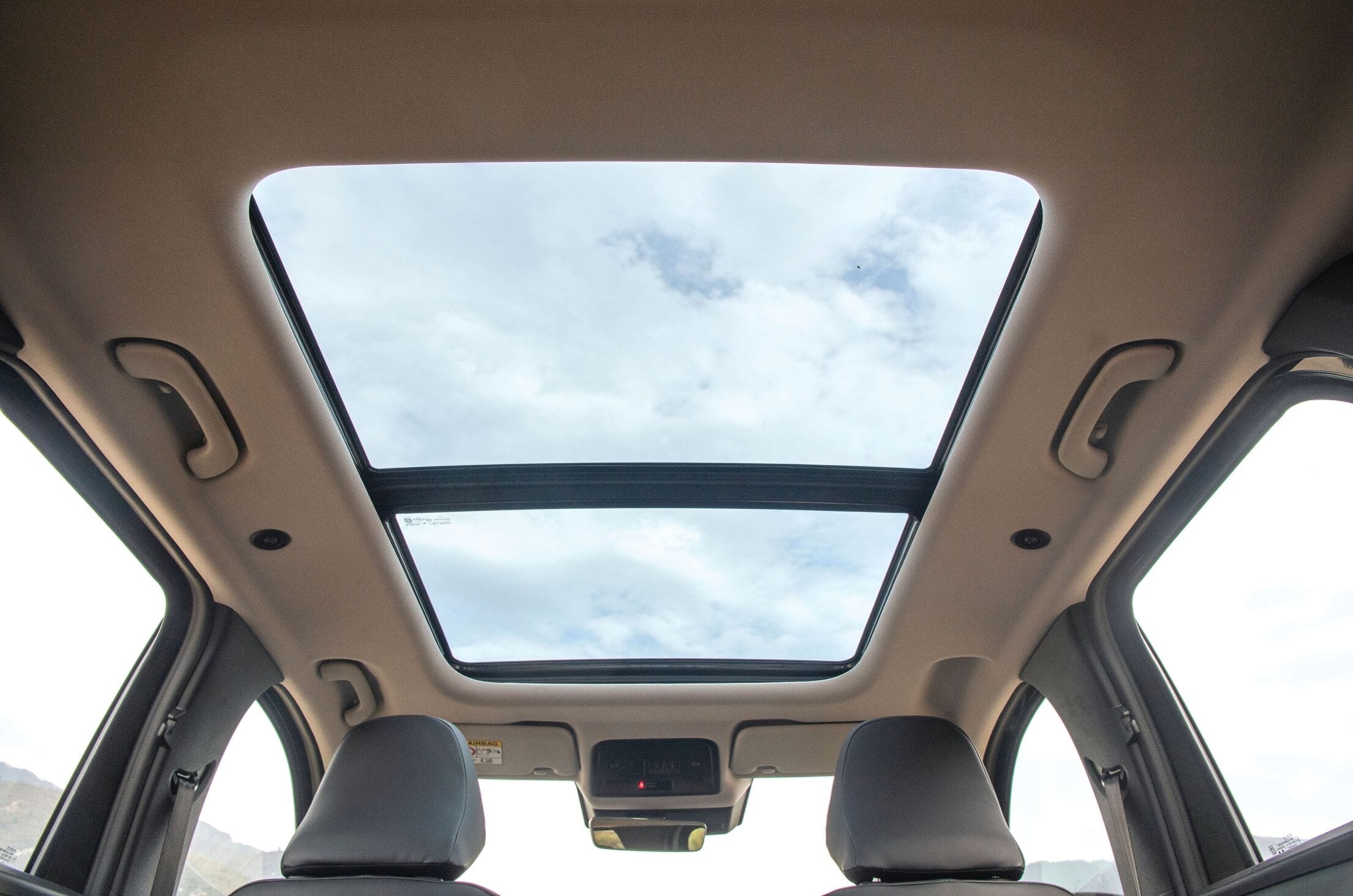
The large panoramic sunroof livens up the cabin without hampering headroom.
Equipment highlights include ventilated and powered front seats, a panoramic sunroof, wireless phone charging, a powered tailgate, dual-zone climate control, connected car technology, auto headlamps and wipers, and a 360-degree camera, although image quality could be sharper.
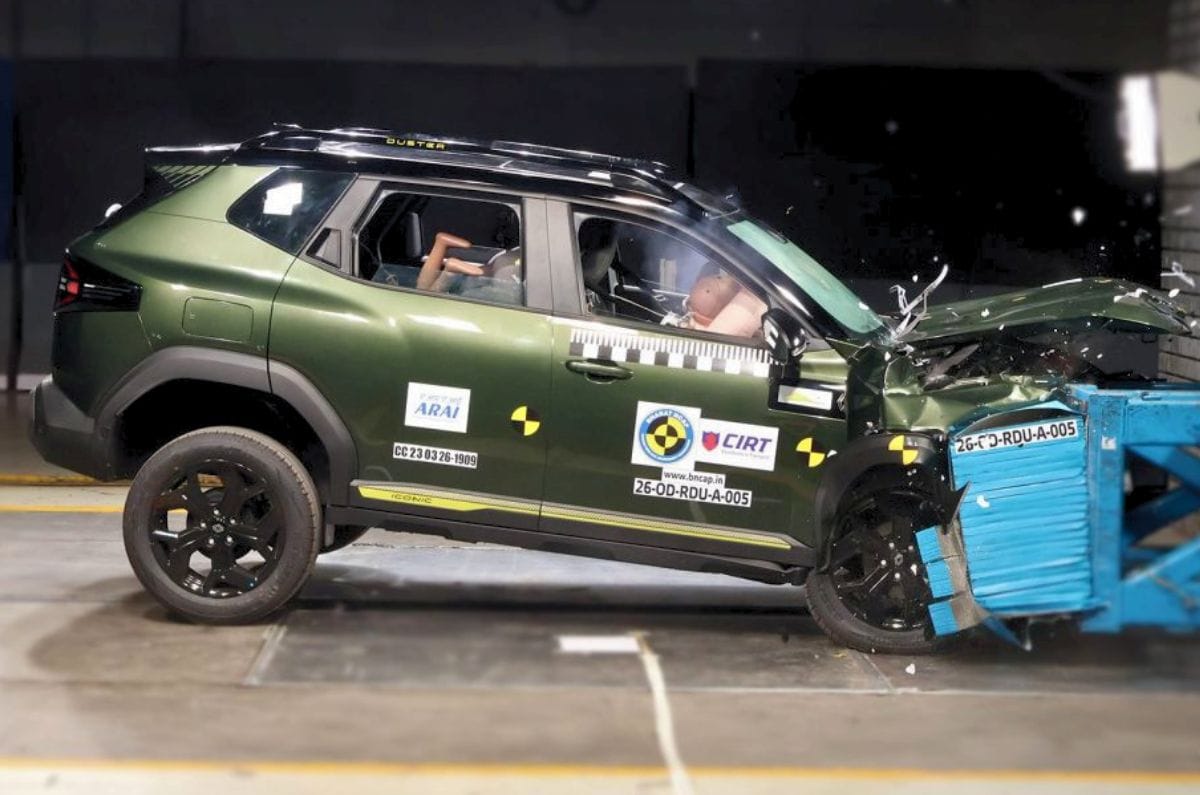
Safety equipment is comprehensive, with six airbags as standard, front and rear parking sensors, TPMS, an electronic parking brake on DCT variants, disc brakes all around, adjustable headrests and three-point seatbelts for all occupants. The Duster is also Renault India’s first model to feature Level 2 ADAS. During our drive, the system felt well calibrated and largely unobtrusive, though lane-keep assist was slightly overzealous. A dedicated button allows drivers to disable all ADAS functions without diving into touchscreen menus, which is a welcome touch. Commendably, Renault has also secured a full 5-star crash safety rating from Bharat NCAP for the SUV.
It scored 30.49/32 points for adult occupant protection and 45/49 points for child occupant protection.
Overall, the Duster is well equipped to compete with its rivals, though Renault could have distributed some premium features like ventilated seats more effectively across the range, particularly on mid-spec variants. As for the 1.0 range, the top-spec Techno is well specified with features like the same touchscreen, panoramic sunroof, powered tailgate and more.
Renault Duster equipment checklist
Auto LED headlamps
Yes
Alloy wheels
18-inch
Powered front seats
Yes
Ventilated seats
Yes
Panoramic sunroof
Yes
Ambient lighting
Yes
Touchscreen
10.1-inch
Android Auto/Apple CarPlay
Yes
Arkamys Kardon audio
Yes
ADAS
Level 2
Renault Duster Engine Refinement and Performance – 8/10
Both turbo-petrols are refined and have a strong midrange punch; DCT is the pick of the lot
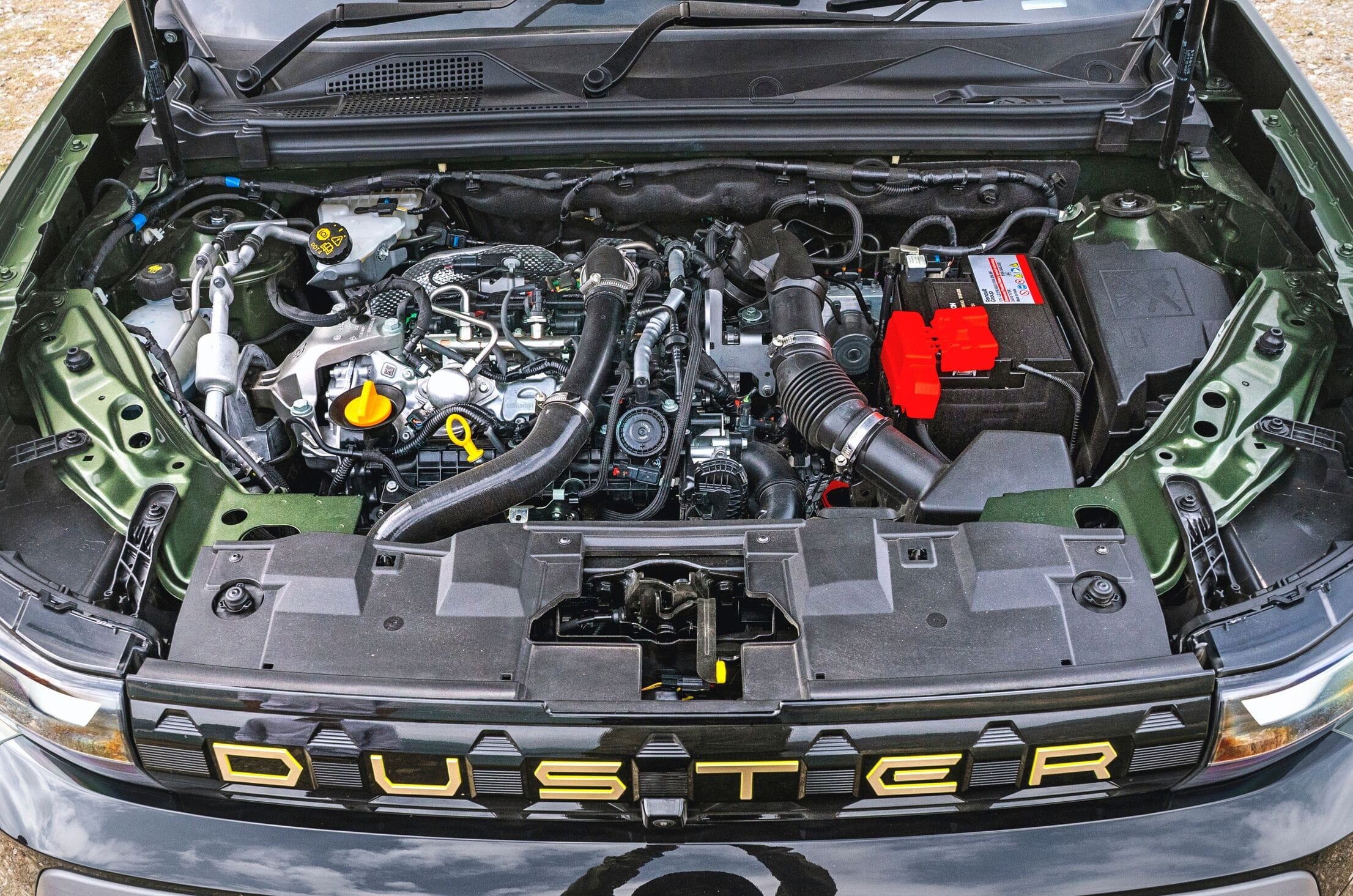
The Duster range starts with a 1.0-litre three-cylinder turbo-petrol producing 100hp and 166Nm, paired exclusively with a 6-speed manual gearbox. Then there’s a 1.3-litre four-cylinder turbo-petrol with a segment-leading 163hp and 280Nm, available with either a 6-speed manual or a 6-speed DCT automatic. We’ve tested all three versions of the Duster on sale currently.
Renault Duster powertrain specs
1.0TP MT
1.3 TP MT
1.3TP DCT
Installation
Front, transverse
Front, transverse
Front, transverse
Type
3 cyls, 999cc, turbo-petrol
4 cyls, 1333cc, turbo-petrol
4 cyls, 1333cc, turbo-petrol
Bore/ stroke (mm)
72.2/81.3
72.2/81.3
72.2/81.3
Compression ratio
9.5:1
10.5:1
10.5:1
Valve gear
4 valves per cyl
4 valves per cyl
4 valves per cyl
Power (hp)
100 at 5000rpm
163 at 5250rpm
163 at 5250rpm
Torque (Nm)
166 at 2000-3750rpm
280 at 2000-3500rpm
280 at 2000-3500rpm
Power to weight (hp per tonne)
75.98
118.80
117.01
Torque to weight (Nm per tonne)
126.13
244.17
244.17
Specific output (hp per ltr)
100
125.38
125.38
Drive layout
Front-wheel drive
Front-wheel drive
Front-wheel drive
Gearbox
6-speed manual
6-speed manual
6-speed dual-clutch automatic
A strong-hybrid powertrain will join the line-up later this year. It combines a 109hp 1.8-litre petrol engine with a 49hp electric motor and a 20hp hybrid starter generator, drawing power from a 1.4kWh battery. Total system output stands at 160hp and 172Nm. Notably, unlike the original, the new Duster isn’t available with a diesel engine or an AWD option.
Both engines are refined and have a strong midrange, but aren’t very fuel-efficient.
The 1.3-litre engine is impressively refined, with virtually no vibrations at idle and excellent smoothness throughout the rev range. Cabin insulation is equally impressive, keeping engine noise largely out of the cabin unless you’re extending it towards the redline. You do hear quite a bit of the turbo’s blow-off sound though. There is some turbo lag, followed by a noticeable surge in performance at around 2,500rpm, after which the engine delivers a strong and eager mid range.
The 1.3-litre turbo-petrol engine has the highest output in its class with 163hp and 280Nm.
Thanks to its wet clutch, the DCT allows for some slip, given that the lubrication manages wear as well as heat build-up. Thus, shifts prioritise smoothness over outright speed, feeling more like a conventional torque-converter automatic in city driving. This makes it exceptionally easy to live with in traffic, while responsive paddle shifters add an extra layer of engagement on a spirited drive. We recorded a 0-100kph time of 11.3 seconds, which is decent for the segment. However, the tall gearing does blunt low-speed responses somewhat.
Enthusiasts will naturally gravitate towards the manual. Driven on winding and open roads, it feels engaging and rewarding, with a light clutch and a precise shift action. However, turbo lag is more noticeable here than in the DCT, particularly when accelerating from slow speeds. This does make city drives somewhat cumbersome. Combined with the tall gearing, it often requires an extra downshift to keep the engine in its sweet spot.
Manual versions get a lower-set centre console with a manual handbrake.
The manual posted a 0-100kph time of 10.3sec, making it a whole second quicker than the DCT. Both versions feature Comfort and Eco drive modes, although the addition of a Sport mode would have better suited the Duster’s otherwise enthusiastic character.
The 1.0 entry-level engine is a familiar unit that also powers the Kiger. However, Renault has made tweaks, with torque increasing to 166Nm, up by 6Nm over the Kiger, while a 6-speed manual gearbox replaces the compact SUV’s 5-speed unit. There’s no automatic option, though, which does limit its appeal.
The Duster shares its 1.0-litre engine with the smaller Kiger.
Like most three-cylinder engines, there’s a noticeable thrum and some vibrations at idle, but things smoothen out considerably once on the move. Being a small-capacity turbocharged motor, there is some lag low down in the rev range. However, once past 2,000rpm – where peak torque arrives – the engine feels responsive and pulls cleanly towards the redline. Performance is more adequate than exciting. Around town, it keeps pace with traffic comfortably, and part-throttle responses are respectable. On highways and steep inclines, however, you’ll need to work the gearbox to extract the best from the engine, particularly when overtaking.
The clutch is light, making it easy to use in traffic, while the 6-speed gearbox offers a precise shift action. It isn’t the slickest unit around, though, and enthusiastic drivers will notice that shifts require a bit more effort than expected.
Renault Duster acceleration times
Speed (kph)
1.0TP MT time (sec)
1.3TP MT time (sec)
1.3TP DCT time (sec
0-10
0.60
0.56
0.86
0-20
1.32
1.15
1.71
0-30
2.08
1.75
2.54
0-40
3.13
2.42
3.55
0-50
4.27
3.41
4.51
0-60
5.42
4.61
5.52
0-70
7.36
5.58
6.80
0-80
8.91
6.65
7.94
0-90
10.67
8.66
9.31
0-100
13.26
10.32
11.33
0-110
15.95
12.11
13.24
0-120
19.01
13.86
15.37
0-130
22.84
16.02
17.97
1/4 mile
18.55
16.86
17.85
20-80 (rolling)
11.44
10.33
6.07
40-100 (rolling)
12.71
11.08
7.60
Renault Duster Fuel Efficiency – 6/10
Small-capacity turbo engines mean efficiency isn’t great
Renault Duster tested fuel efficiency (kpl)
1.0TP MT
1.3TP MT
1.3TP DCT
City
7.98
8.04
6.47
Highway
13.98
13.24
13.47
Average
10.95
10.64
9.97
Tank size (ltr)
50
50
50
The Duster 1.0 has a claimed ARAI fuel efficiency of 19.41kpl. In our real-world tests, it returned 7.92kpl in the city and 13.98kpl out on the highway, for an average of 10.95kpl. It packs in an Eco drive mode and auto start/stop tech, which help boost its efficiency. However, the ambient temperature during our test reached a soaring 40degC, which meant the AC was working hard to keep the cabin at our preset 22degC and the auto start/stop would only shut off the car for a brief time at traffic lights, which affected the efficiency.
Overall tank range stands at 498.5km for the 1.3 DCT, 532km for the 1.3 MT and 547.5km for the 1.0.
The 1.3 MT is the second most fuel-efficient version from the Duster range, returning 8.04kpl in the city and 13.24kpl on the highway for an average of 10.64kpl. The 1.3 has better efficiency than the 1.0 in the city owing to its taller gearing, which requires less frequent shifts. Meanwhile, as you’d expect, it’s the 1.3 DCT that’s the least fuel-efficient. It managed 6.47kpl in the city and 13.47kpl on the highway, for an average of 9.97kpl. Like with the 1.0, high ambient temperatures played a role in affecting its efficiency as well. Still, compared to its rivals, the Duster’s real-world efficiency is on the lower side.
Renault Duster Ride Comfort and Handling – 9/10
Feels solid and composed over all surfaces and is engaging to drive
Renault Duster suspension, steering, and brakes
Front suspension
Independent, McPherson strut, Coil springs, anti-roll bar
Rear suspension
Semi-independent, Torsion beam, Coil springs, Anti-roll bar
Steering type
Rack and pinion
Type of power assist
Electric
Turning circle
5.2m
Front brakes
Disc
Rear brakes
Disc
Ride comfort was one of the original Duster’s defining strengths, and thankfully, that trait has carried over to the new model. There’s a distinctly European firmness to the suspension setup, particularly at lower speeds, but comfort isn’t compromised. The Duster absorbs rough patches, sharp edges and large potholes with impressive composure, preventing harsh impacts from filtering into the cabin. Unlike the older model, there’s also very little steering kickback over rough surfaces.
Electric power steering is precise and doesn’t have the kickback like the old Duster.
Contributing to this pliant ride are the relatively tall sidewalls of the 225/55 R18 tyres, which add an extra layer of cushioning. In fact, the 1.0 variants may even feel a touch plusher owing to their smaller 17-inch wheel size, though the difference is barely perceptible. At highway speeds, the Duster feels equally accomplished, remaining stable and reassuringly planted.
If you stall the manual, it will automatically restart when you press the clutch pedal.
Anti-roll bars are present at the front, and uncharacteristically, Renault has utilised one at the rear too, integrating it within the twist-beam axle. Handling is enjoyable through corners, and body control is commendable. However, there is some roll when pushed hard, and it doesn’t feel quite as agile or as tightly tied down as some other European rivals. The steering is light but accurate, with enough feedback to inspire confidence on a twisty road. Steering modes are available on the 1.3 that add useful weight for more enthusiastic driving.
Renault Duster braking performance
80-0kph
26.33mtr, 2.34s
Renault Duster Price and Verdict – 8/10
Builds on its legacy of rugged styling and engaging drive with a very modern and well-equipped cabin
Renault Duster price (Rs lakh)
Techno 1.0 MT
13.49
Iconic Launch Edition 1.3 MT AT
17.19
Iconic Launch Edition 1.3DCT
18.69
The new Renault Duster is a well-rounded package that is well equipped to take on the congested midsize SUV space. It’s not without its shortcomings, though, as it would have benefitted from a bit more rear-seat space, better real-world efficiency, and the option of a diesel would have widened its appeal.
Offered in five trims: Authentic, Evolution, Techno, Techno+, and Iconic.
That aside, it stays true to its predecessor by offering a tough and solid feel, outstanding ride comfort and an engaging drive experience, while moving the game forward. The cabin feels properly modern, with all the new-age features; it’s got punchy turbo-petrol engine options, and it’s got the rugged styling to match. There’s even a strong hybrid on the way. Bottom line is, the Duster feels fresh, desirable and a proper match for the heavy hitters in its segment.
शुक्रवार को iPhone मेकर एपल (Apple) ने चिपमेकर एनवीडिया (Nvidia) को पीछे छोड़कर दुनिया की मोस्ट वैल्यूएबल कंपनी का दर्जा हासिल कर लिया। रॉयटर्स के मुताबिक, Apple की वैल्यूएशन 4.88 लाख करोड़ डॉलर रही, शेयर स्थिर रहे। वहीं Nvidia की वैल्यूएशन, शेयरों में 3.5% की गिरावट के बाद लगभग 4.86 लाख करोड़ डॉलर थी। रैंकिंग में यह बदलाव दिखाता है कि निवेशक अब AI यानि कि आर्टिफीशियल इंटेलीजेंस के दौर में सबसे ज्यादा फायदा उठाने वाली कंपनियों से आगे बढ़कर भी सोच रहे हैं।
Apple ने पिछले साल अप्रैल के बाद पहली बार यह पोजिशन हासिल की है। Nvidia लगभग एक साल से दुनिया की मोस्ट वैल्यूएबल कंपनी बनी हुई थी। इसने जून 2025 में माइक्रोसॉफ्ट को पीछे छोड़कर यह टॉप रैंक हासिल की थी। Nvidia अक्टूबर 2025 में 5 लाख करोड़ डॉलर की मार्केट वैल्यूएशन को पार करने वाली दुनिया की पहली कंपनी बनी। इस उपलब्धि ने कंपनी को एक ऐसे मुकाम पर पहुंचा दिया, जो उसके प्रतिस्पर्धियों की पहुंच से बहुत दूर था।
स्थायी नहीं है ये रैंकिंग
Apple से पीछे छूट जाने का मतलब यह नहीं है कि कंपनियों की रैंकिंग में कोई स्थायी बदलाव आ गया है। Nvidia AI से जुड़े खर्चों का बड़ा फायदा उठा रही है। अगर लोगों की सोच बदलती है, तो यह फिर से टॉप पर आ सकती है। इसके अलावा, Apple खुद भी एक मुश्किल स्थिति में है। कंपनी ने बढ़ती लागत की भरपाई के लिए डिवाइसेज की कीमतें बढ़ाई हैं। इस रणनीति का मांग पर बुरा असर पड़ सकता है।
इस साल जून महीने में Apple ने दुनिया भर में MacBooks और iPads की कीमतें 25% तक बढ़ा दीं। CNBC के मुताबिक, Apple के शेयरों में इस साल अब तक लगभग 22-23% की तेजी देखने को मिली है। वहीं Nvidia के शेयर करीब 7% बढ़े हैं।
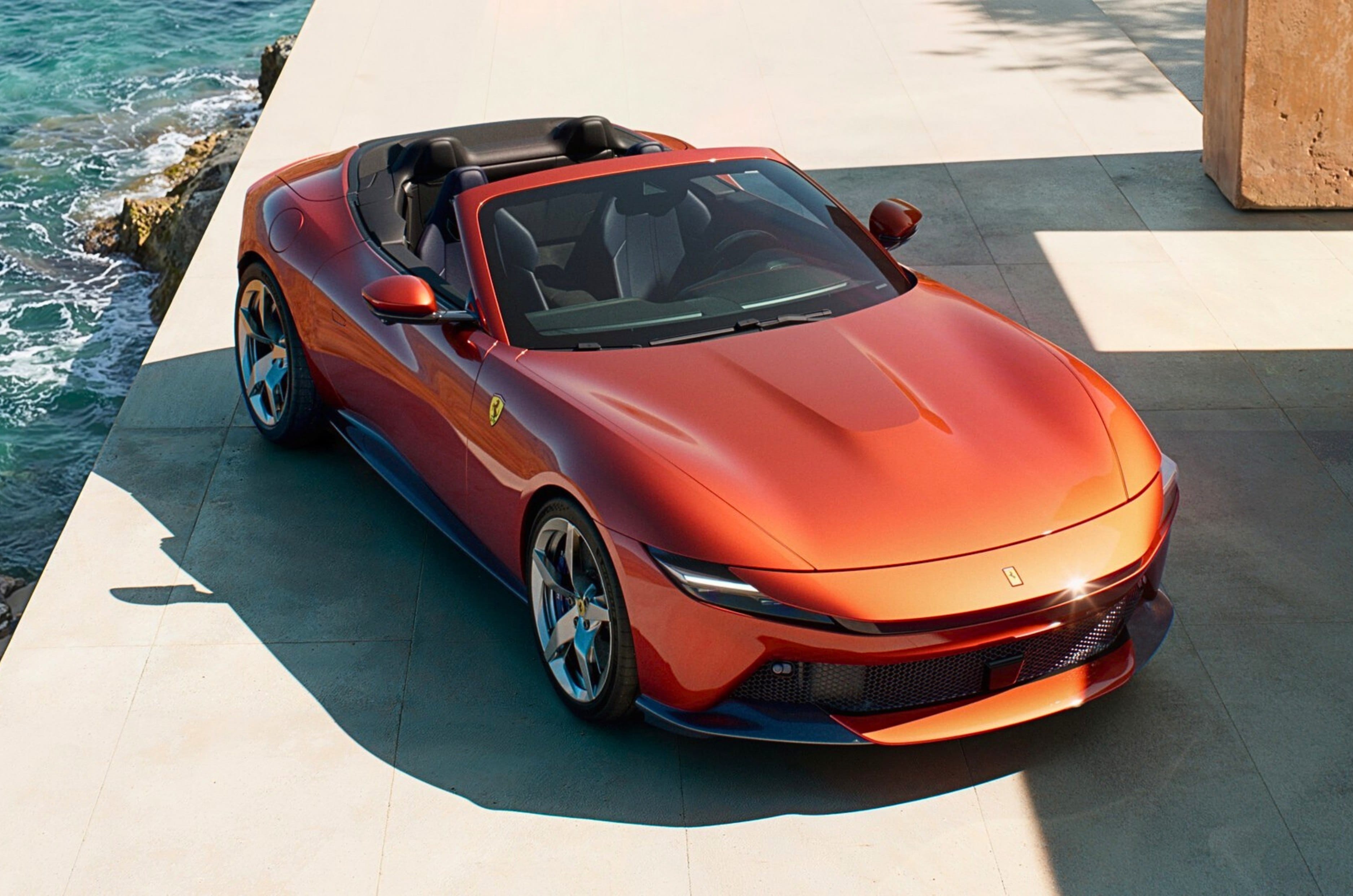
Ferrari India ने अपनी नई Amalfi Spider की बुकिंग लेना शुरू कर दिया है। यह कार कंपनी की Amalfi Grand Tourer का कन्वर्टिबल वर्जन है। मार्च में ग्लोबल लॉन्च के ठीक चार महीने बाद आ रही इस कार की कीमत, ऑप्शन जोड़ने से पहले 4.6 करोड़ रुपये है। Ferrari Amalfi Spider में वही 3.9 लीटर ट्विन-टर्बो V8 इंजन दिया गया है, जो इसके कूपे मॉडल में मिलता है। यह इंजन 640 hp की पावर और 760 Nm का टॉर्क देता है। इसमें पावर को पीछे के पहियों तक पहुंचाने के लिए 8-स्पीड डुअल-क्लच गियरबॉक्स दिया गया है।
भारतीय ग्राहकों के लिए यह कार एक लग्जरी और परफॉर्मेंस का उदाहरण ज्यादा है, क्योंकि इसकी कीमत ज्यादातर लग्जरी कार खरीदारों के बजट से काफी ऊपर है। हालांकि, इससे यह जरूर पता चलता है कि Ferrari भारत को एक महत्वपूर्ण बाजार मान रही है और यहां ग्लोबल लॉन्च के करीब ही अपनी कारें पेश कर रही है।
कीमत और पोजिशनिंग
Amalfi Spider, Amalfi Grand Tourer का कन्वर्टिबल वर्जन है और जाहिर है कि इसकी कीमत इसके हार्ड-टॉप मॉडल से ज्यादा है। इसकी कीमत Amalfi Coupe से ₹52 लाख ज्यादा है, जो अभी ₹4.08 करोड़ में मिल रही है। खरीदारों को इस कार में लंबी दूरी के सफर में आराम और दमदार परफॉर्मेंस दोनों का शानदार अनुभव मिलेगा। इसके अलावा, ओपन-टॉप ड्राइविंग का मजा और अपनी पसंद के मुताबिक कार को कस्टमाइज कराने का विकल्प भी मिलेगा।
इंजन, परफॉर्मेंस
Amalfi Spider में जाना-पहचाना 3.9-लीटर ट्विन-टर्बो V8 इंजन लगा है, जो 640 hp की पावर और 760 Nm का टॉर्क देता है। यह पावर 8-स्पीड डुअल-क्लच ऑटोमैटिक गियरबॉक्स के जरिए सिर्फ पिछले पहियों तक पहुंचती है। Ferrari का दावा है कि यह कार 0 से 100 kmph की रफ्तार सिर्फ 3.3 सेकंड में पकड़ लेती है और इसकी टॉप स्पीड 320 kmph है। हालांकि, कन्वर्टिबल डिजाइन की वजह से यह कार Coupe मॉडल से 86 kg भारी है, लेकिन इसके बावजूद इसकी परफॉर्मेंस लगभग Amalfi Coupe जैसी ही दमदार बनी हुई है।
डिजाइन
दिखने में, Spider Coupe के स्लीक आकार जैसा ही है, लेकिन इसमें सबसे बड़ा फर्क इसकी फोल्ड होने वाली फैब्रिक रूफ है। यह रूफ 60 kmph तक की रफ्तार पर 13.5 सेकंड में खुल या बंद हो जाती है और यह चार कलर ऑप्शन में उपलब्ध है।
Ferrari का दावा है कि Amalfi Spider की पांच-लेयर (Five-Layer) फैब्रिक रूफ इस तरह तैयार की गई है कि कार के अंदर शोर, वाइब्रेशन और झटके लगभग हार्ड-टॉप मॉडल जितनी ही कम महसूस होती हैं। इसके अलावा, पीछे की सीटों के पीछे खास विंड डिफ्लेक्टर लगाए गए हैं, जो खुली छत के साथ ड्राइविंग के दौरान हवा के शोर को कम करने में मदद करते हैं। इससे लंबी यात्रा भी ज्यादा आरामदायक बनती है। Ferrari ने इस कार के लिए Rosso Tramonto नाम का एक एक्सक्लूसिव एक्सटीरियर (बाहरी) शेड भी पेश किया है, जिससे Amalfi Spider की पहचान बाकी मॉडलों से अलग नजर आती है।
इंटीरियर और फीचर्स
Ferrari Amalfi Spider का इंटीरियर काफी हद तक Amalfi Coupe जैसा ही है। इसमें 2+2 सीटिंग लेआउट दिया गया है, यानी आगे दो और पीछे दो सीटें मिलती हैं। कार का केबिन पूरी तरह ड्राइवर को ध्यान में रखकर डिजाइन किया गया है।
फीचर्स की बात करें तो इसमें 10.25 इंच का टचस्क्रीन इंफोटेनमेंट सिस्टम, 8.8 इंच का पैसेंजर डिस्प्ले और 15.6 इंच का डिजिटल ड्राइवर डिस्प्ले मिलता है। इसके अलावा, कार में पावर्ड स्पोर्ट्स सीट्स, तीन-स्पोक स्टीयरिंग व्हील (जिस पर कई फिजिकल कंट्रोल दिए गए हैं), स्टाइलिश AC वेंट्स और एल्यूमिनियम फिनिश सेंटर टनल दी गई है, जो इसे ‘ग्रैंड टूरर’ होने का अहसास कराते हैं।
टेक्नोलॉजी और आराम के मामले में, Amalfi Spider में वायरलेस Apple CarPlay और Android Auto, कनेक्टेड कार फीचर्स, ADAS, एडेप्टिव क्रूज कंट्रोल, ऑटोमैटिक क्लाइमेट कंट्रोल और वायरलेस चार्जिंग पैड जैसे फीचर्स मिलते हैं। रूफ बंद होने पर इसका बूट स्पेस 255 लीटर और रूफ हटने पर 172 लीटर होता है, जो कन्वर्टिबल सुपरकार के हिसाब से काफी प्रैक्टिकल है।
Ferrari इस कार में सीटों की अपहोल्स्ट्री, इंटीरियर ट्रिम और कलर स्कीम को अपनी पसंद के अनुसार कस्टमाइज कराने का विकल्प भी देती है, जिससे ग्राहक अपनी पसंद के मुताबिक एक अलग और खास Amalfi Spider तैयार कर सकते हैं।
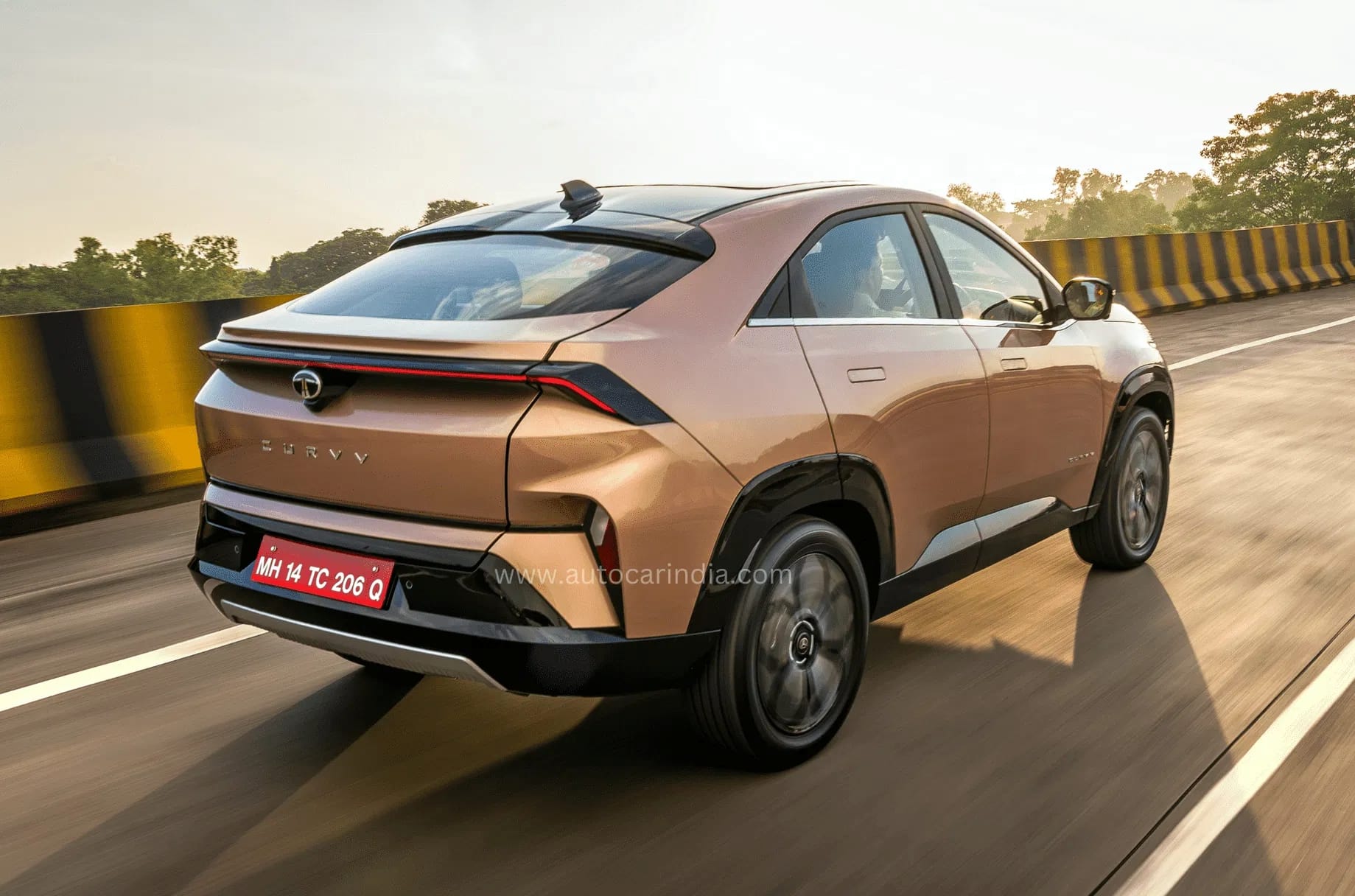
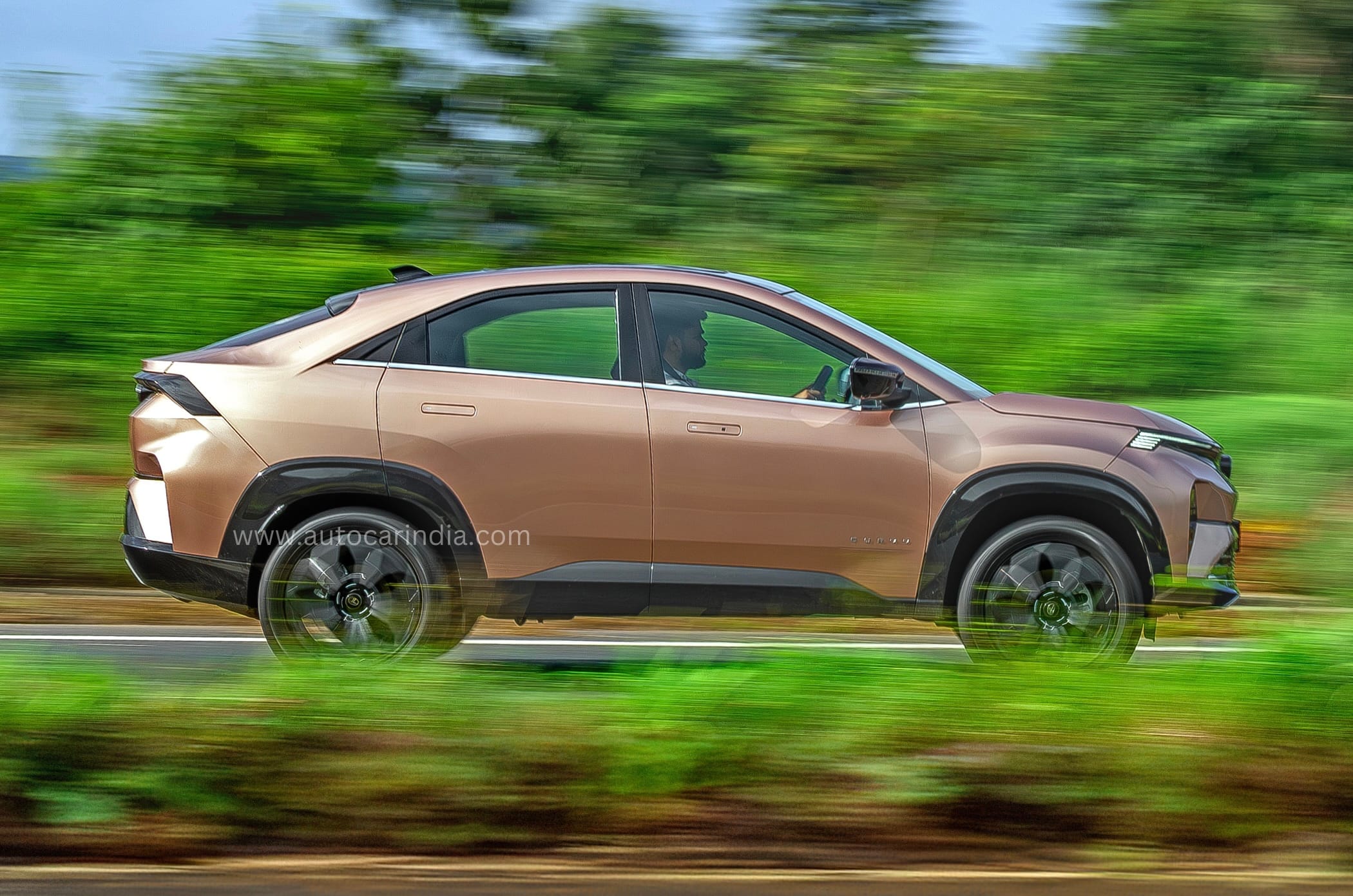
Tata introduced the Curvv as its unique take on the midsize SUV space in 2024. Currently, it is one of the two coupe-SUV models in this heavily contested segment. Built on Tata’s ATLAS platform, the Curvv slots between the compact Nexon and the newer, traditional-looking Sierra in the brand’s SUV line-up. If you’re interested in the Curvv, below are the reasons to consider it, as well as reasons to look elsewhere.
Reasons to buy
Good ride and handling balance
Like other Tata models, which are known to have a good balance of ride and handling, the Curvv is no different. It feels tough and takes on broken road patches with ease. Low-speed ride may feel a bit stiff, but it smooths out as you increase speed. Where the Curvv does feel at home is at highway speeds, with composed and mature road manners. Body roll when cornering is also kept well in check, and the steering is precise.
Diverse powertrain offering
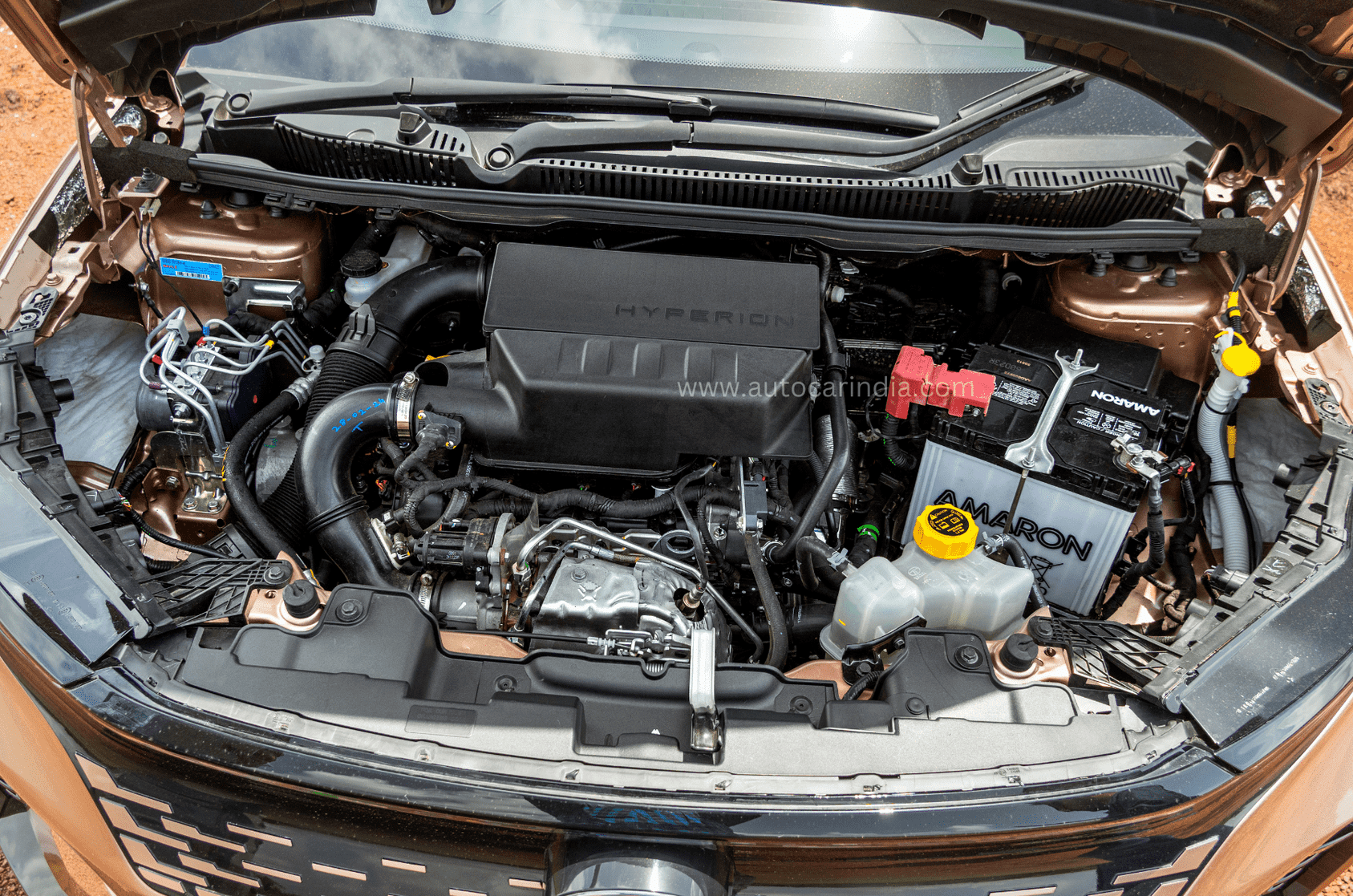
In the mid-size SUV segment, the Curvv is one of the models with a quite diverse powertrain lineup. This includes a 120hp, 170Nm, 1.2-litre turbo-petrol, a 118hp, 260Nm, 1.5-litre diesel, and a 125hp 225Nm 1.2-litre direct-injection turbo-petrol engine. While some SUVs offer only a manual or an automatic gearbox with a particular engine, Tata offers the flexibility of both options, with each of its engines paired to either a 6-speed manual or a 7-speed DCT.
Well-equipped feature list
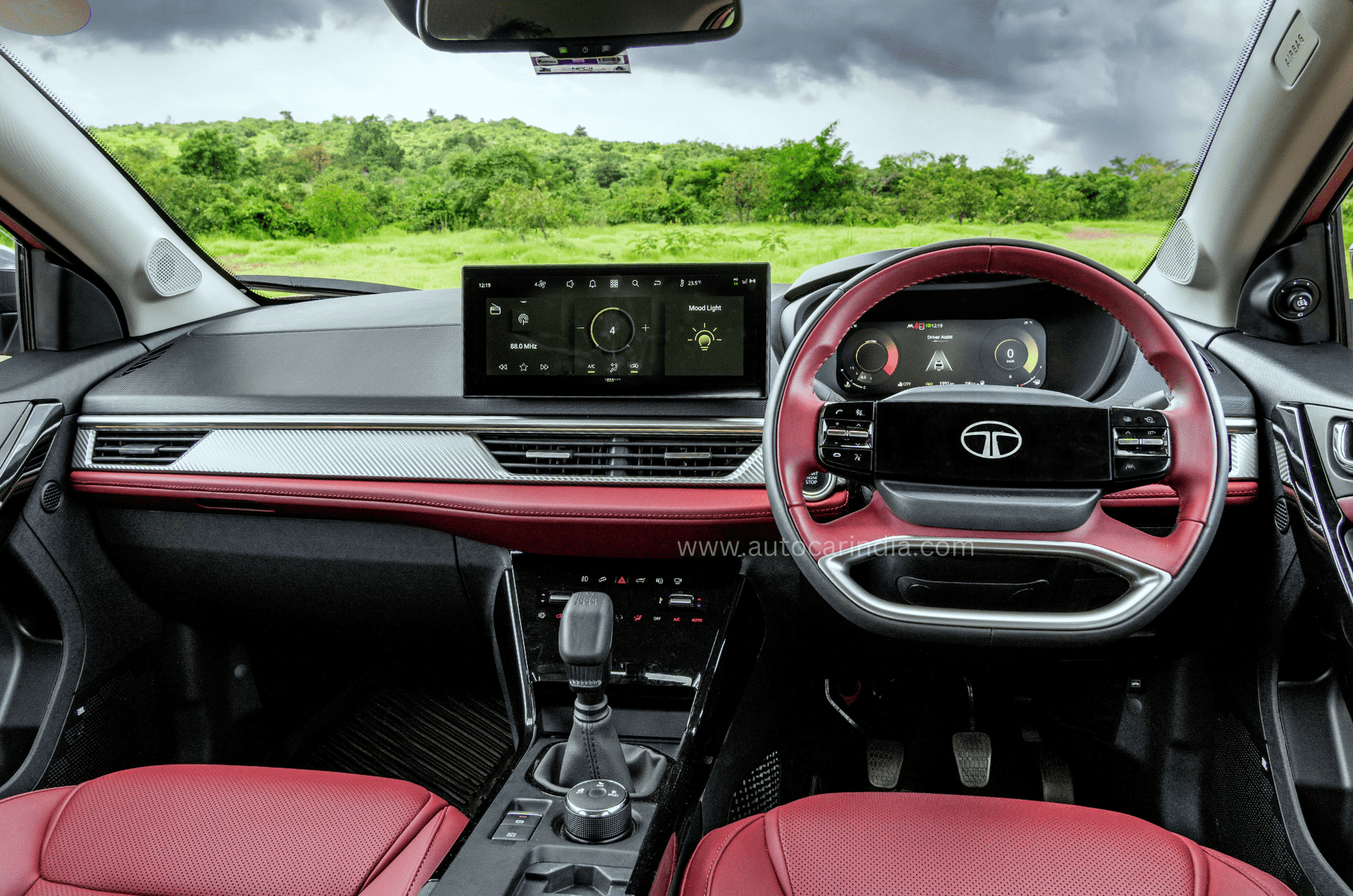
Tata has packed the Curvv with a long list of features. Not only does the Curvv come with tech like a 12.3-inch infotainment display, 10.25-inch digital driver’s display, wireless Apple CarPlay and Android Auto, air purifier, a wireless phone charger, 9-speaker JBL sound system, but it also gets comfort features like a powered driver seat, front seat ventilation, passive ventilation for the rear seats, a panoramic sunroof, rear window sunshades, dual-zone air conditioning, and more. It’s well-equipped on the safety front as well, with level 2 ADAS, a 360-degree camera, blind-spot detection and an auto-dimming IRVM on board.
Large boot space
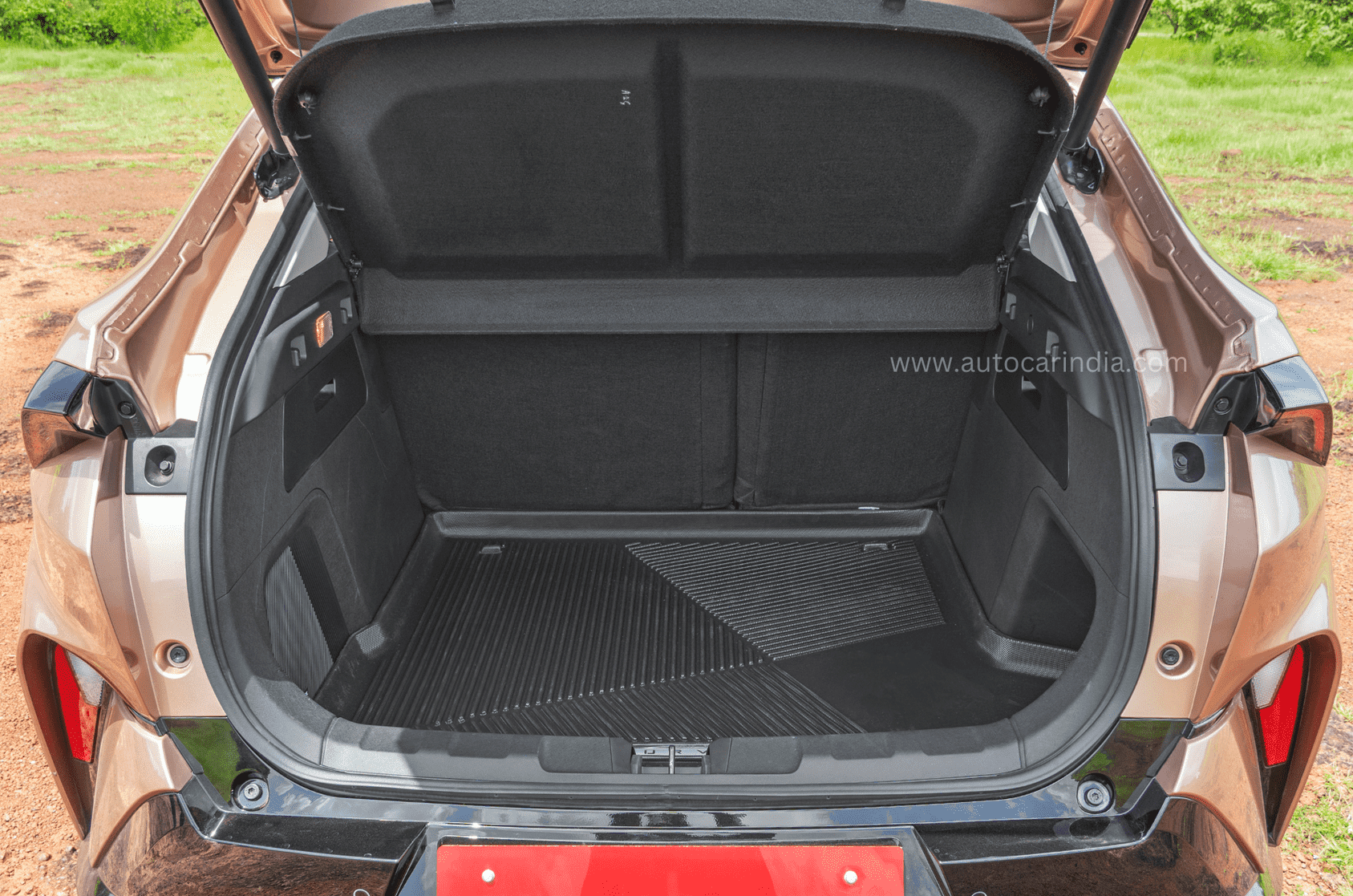
The Curvv is among the models in its class with a large boot space. With a capacity of 500-litres, there’s plenty of room for your luggage needs, and it can also be expanded further by the 60:40 split-folding rear seat.
Reasons to skip
Limited rear headroom
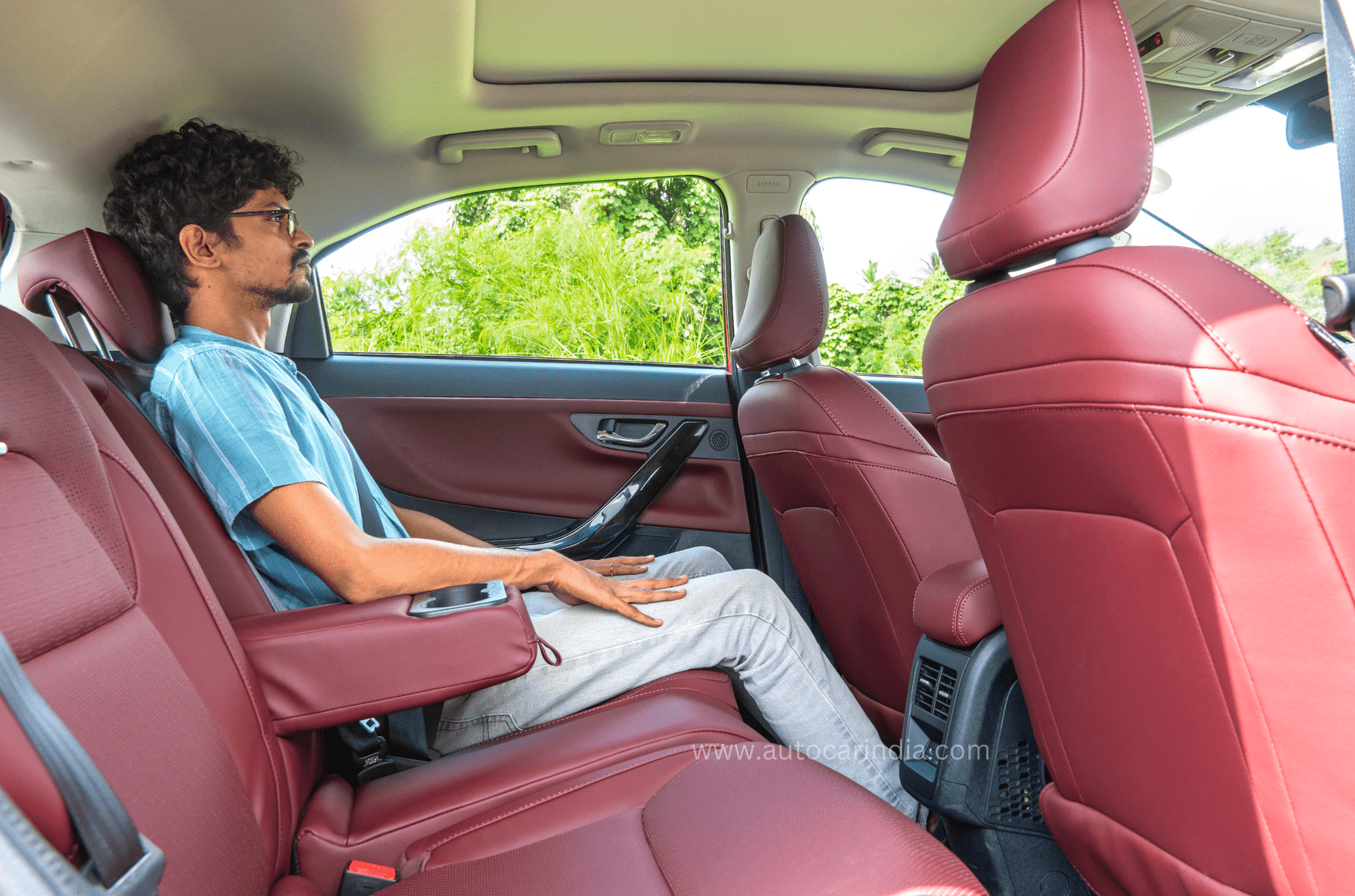
While passengers at the back have adequate legroom, the Curvvs coupe-SUV roofline limits headroom. Though the seat can recline and the headliner is scooped out to help ease things, taller passengers will still find the headroom tight. Additionally, the middle rear seat misses a dedicated headrest, hindering overall comfort.
Inconsistent fit and finish, ergonomic cabin flaws
While the quality of materials is acceptable, certain areas of the cabin aren’t finished to a T, which is a common issue with Tata models. While there are cupholders at the front, they’re placed in the glovebox, which makes them unusable. Surprisingly, the front centre console does not get cup holders. Additionally, the 12V socket is hard to reach, as it’s placed in a recessed space ahead of the gear lever; the front centre armrest is too small and doesn’t slide, while the storage space below it is suitable only for small items.
Snappy clutch (manual gearbox)
While shifting gears with the manual gearbox is smooth enough, the snappy behaviour of the clutch pedal and long gear throws take away from overall driver involvement. Furthermore, the gear lever is odd to look at and hold.
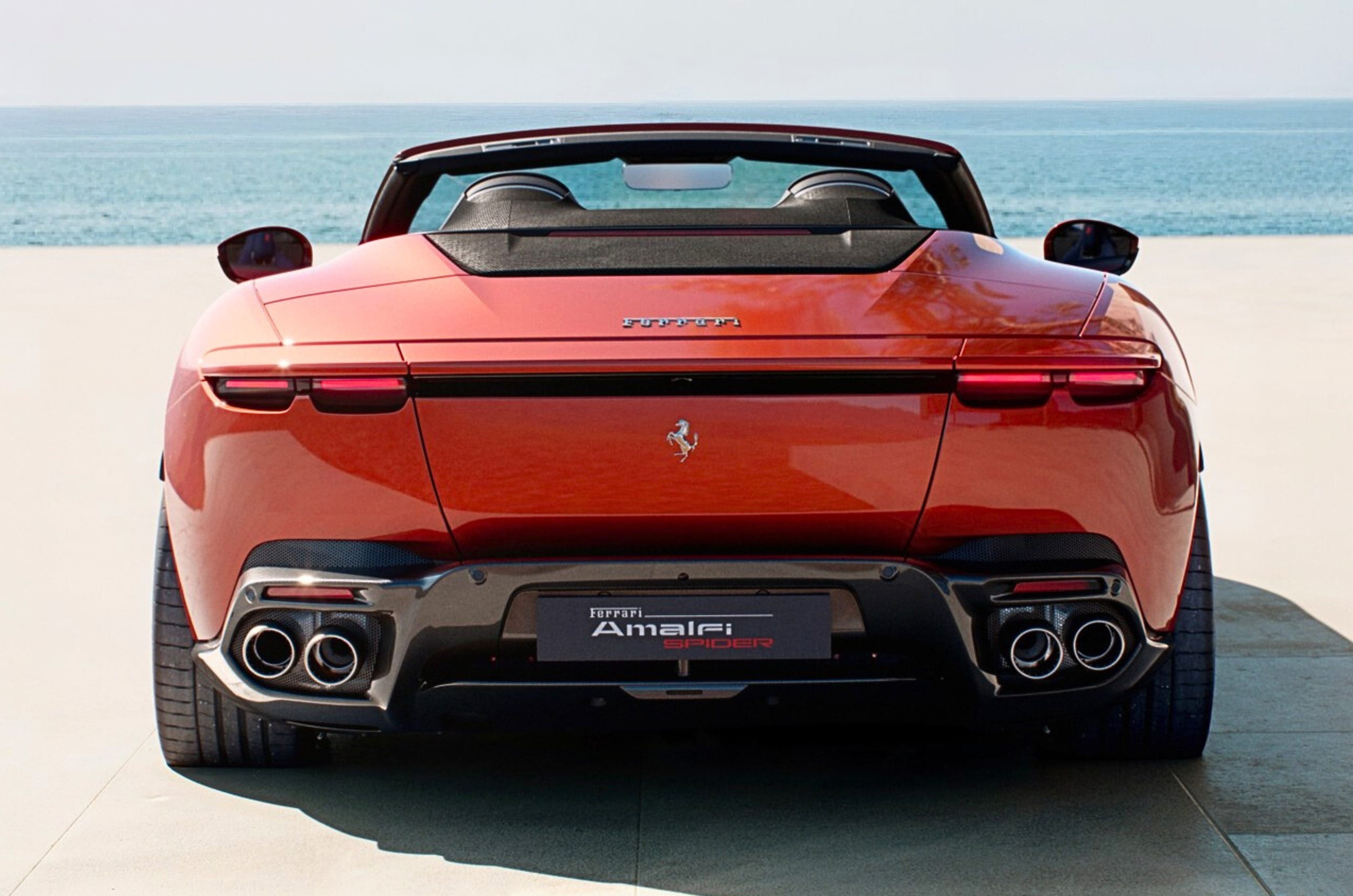
Ferrari India has begun accepting orders for the Amalfi Spider, priced at Rs 4.6 crore, before options. As the name suggests, the Amalfi Spider is the convertible derivative of the Ferrari Amalfi grand tourer, and it’s available in India just a few months after its global debut in March 2026.
Compared to its coupe counterpart, which is currently priced at Rs 4.08 crore (before options), the Amalfi Spider commands a premium of Rs 52 lakh.
Ferrari Amalfi Spider powertrain and performance
Retains coupe’s 640hp twin-turbo V8
The Amalfi Spider is powered by the same 3.9-litre twin-turbo V8 as its coupe sibling, developing 640hp and 760Nm. This is funnelled solely to the rear wheels via an 8-speed dual-clutch automatic. Ferrari claims a 0-100kph time of 3.3 seconds and a top speed of 320kph – despite its drop-top form factor and 86kg heavier kerb weight, the Amalfi Spider is impressively similar to the coupe in terms of claimed performance.
Ferrari Amalfi Spider exterior and interior
Fabric roof can be operated at up to 60kph
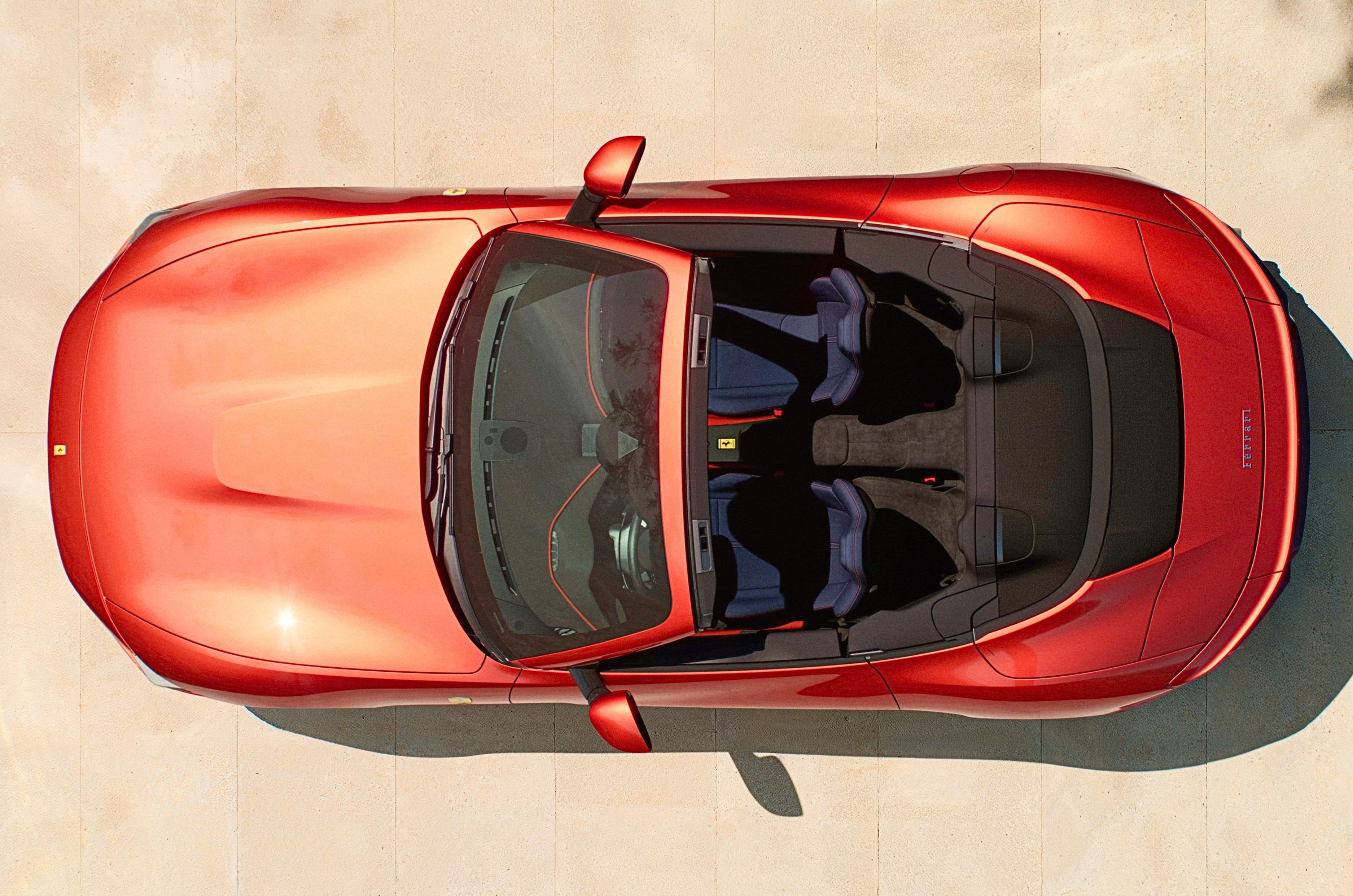
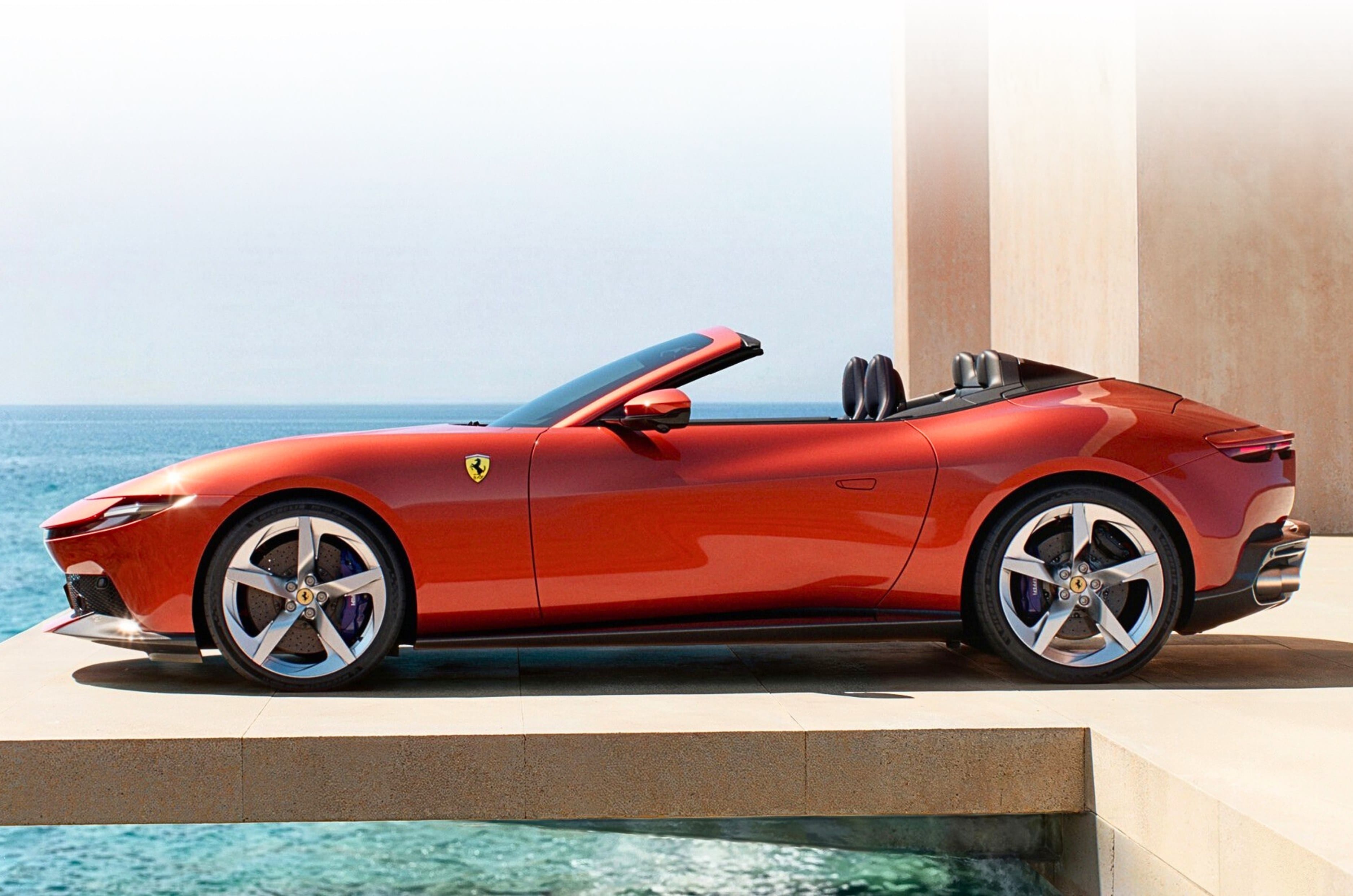
Expectedly, the Amalfi Spider looks identical to its coupe counterpart, with the only major visual differentiator being its folding fabric roof, which opens in 13.5 seconds at speeds of up to 60kph. Buyers can choose one of four colours for the roof, and the five-layer material it uses is said to maintain NVH levels comparable to those of a hard-top Ferrari.
Ferrari has also added wind deflectors to the Amalfi Spider’s rear-seat backrests to keep wind noise under control, and the convertible can be had in an exclusive Rosso Tramonto colour option too.
Mirrors the interior layout of the coupe
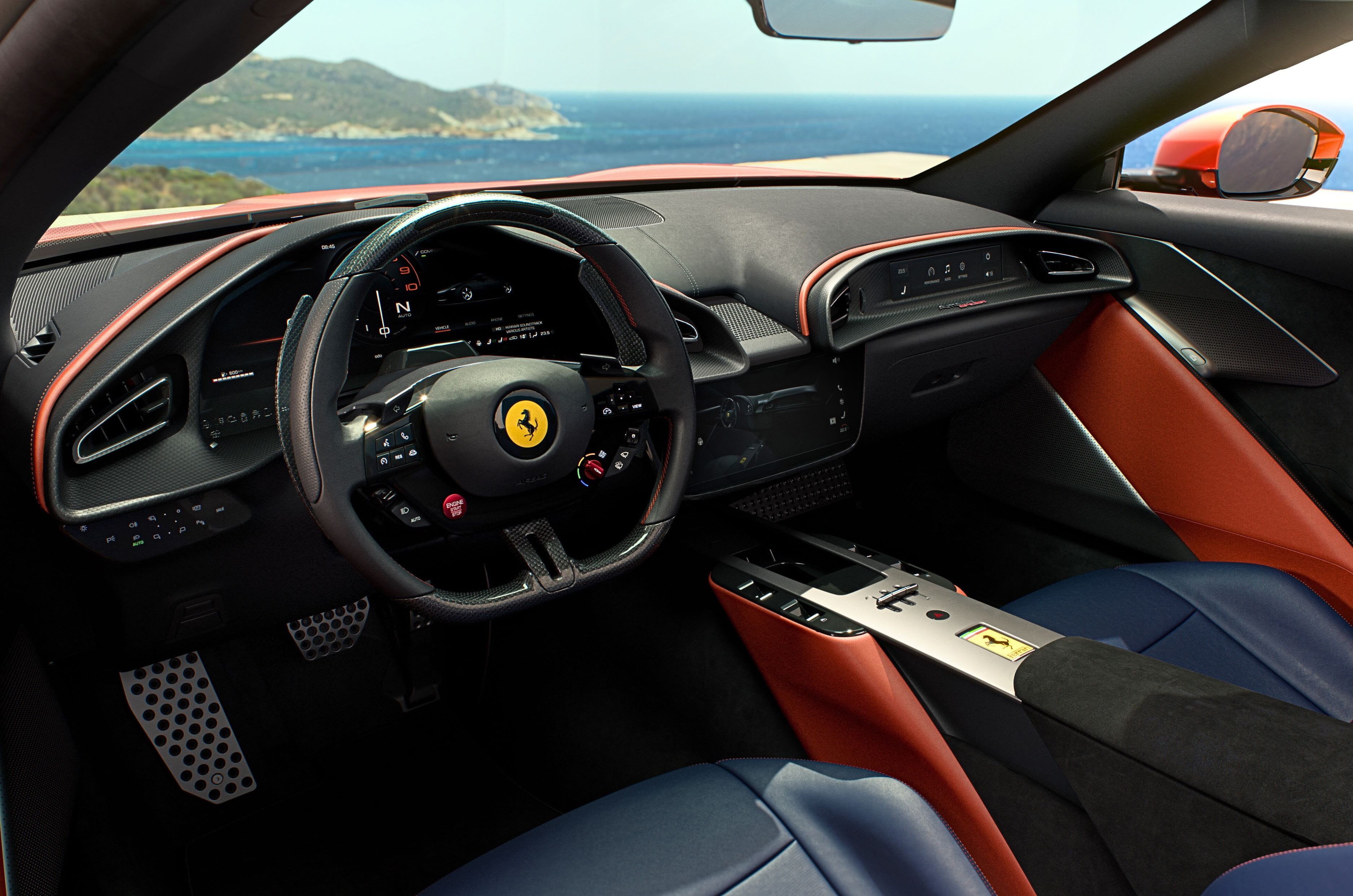
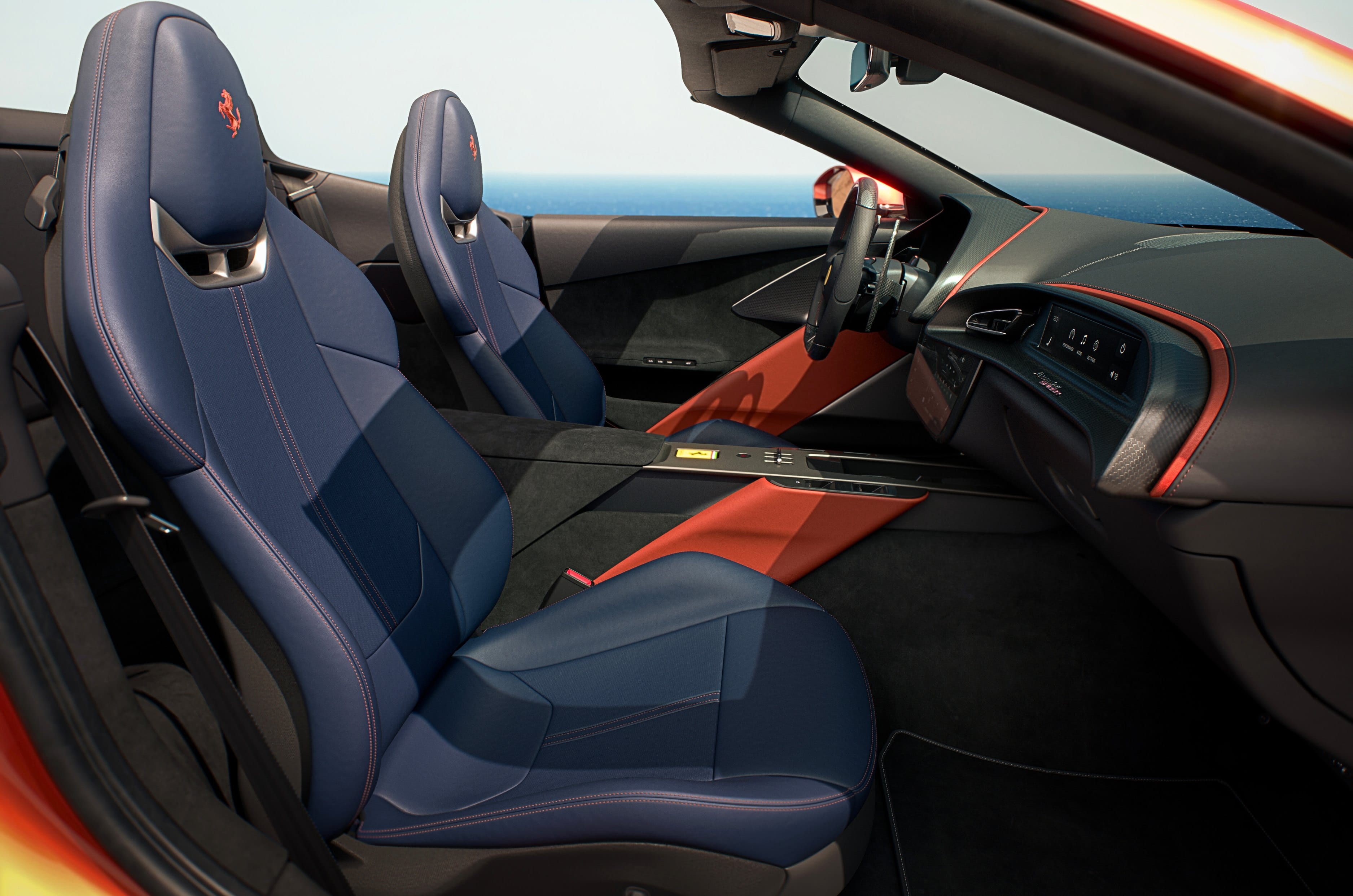
The interior layout of the Amalfi Spider is the same as that of the coupe too, with highlights like a 2+2 seating layout, a 10.25-inch central infotainment touchscreen, an 8.8-inch passenger display, a 15.6-inch digital driver’s display, powered sports seats, a three-spoke steering wheel with lots of physical controls, curved AC vents, and an aluminium-milled centre tunnel.
In terms of creature comforts, the Amalfi Spider packs wireless Apple CarPlay and Android Auto, ADAS, connected car tech, adaptive cruise control, automatic climate control, a wireless charging pad, and more. Buyers can also spec the Amalfi Spider’s upholstery, trim pieces, and colour schemes to their individual tastes thanks to a plethora of personalisation options too. As for boot space, the Amalfi Spider is rated at 255 litres with the roof closed, and 172 litres with the roof stowed.
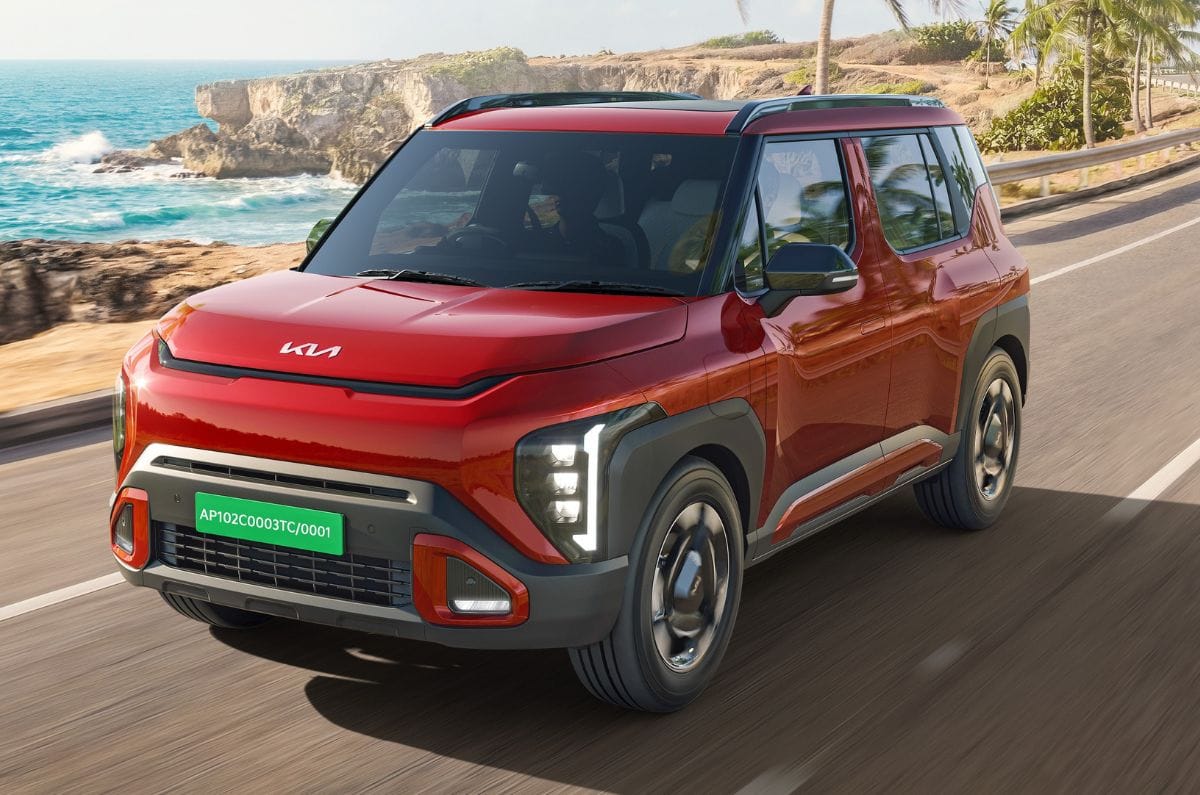
Kia is aiming at the growing compact electric SUV segment with the upcoming Syros EV, set to be its second mass-market electric model for India. The Syros EV utilises the same K1 platform as its ICE-powered counterpart. Bookings for the Syros EV are already open ahead of its launch, scheduled for the end of July 2026. In this article, we answer everything that you need to know about the Syros EV.
1. What battery pack options does the Kia Syros EV offer, and how much power does its motor produce?
The Kia Syros EV offers the same 42kWh and 51.4kWh battery packs that do duty in the Kia Carens Clavis EV and the Hyundai Creta Electric. Both are mated to a front-mounted motor. In the 42kWh guise, the motor delivers 135hp and 255Nm, but in the 51.4kWh guise, power is bumped to 171hp, while torque remains the same. The 51.4kWh battery pack and its 171hp motor make it the model with the largest battery pack and the most powerful motor in the class. Kia claims a 0-100kph sprint in 8.1 seconds with the 51.4kWh version.
2. What is the claimed range of the Kia Syros EV?
The ARAI-rated range is 443km for the 42kWh battery pack and 543km for the larger 51.4kWh unit. Not only does the Syros EV have a higher claimed range than the Clavis EV and the Creta Electric, but its 543km figure is also the highest in the compact electric SUV segment.
3. What charging speeds does the Kia Syros EV support, and how long does it take to charge?
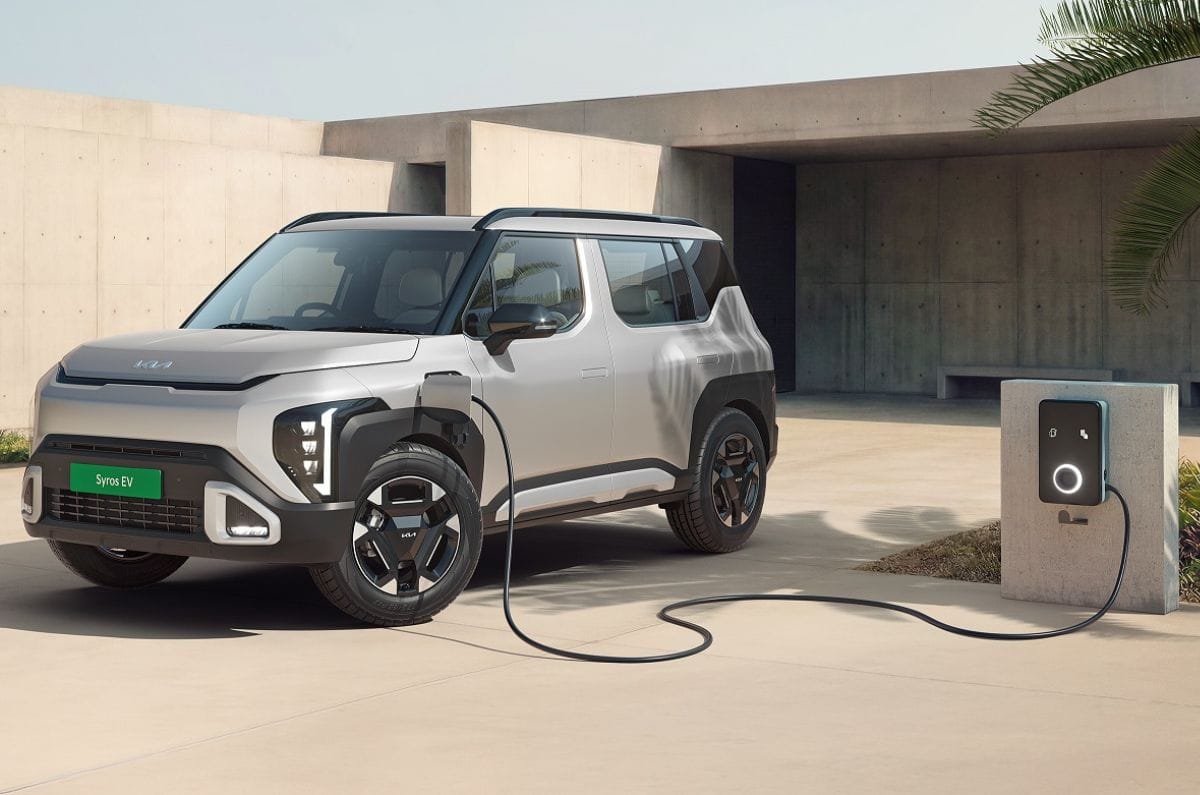
The Kia Syros EV supports up to 11kW AC charging speeds, while DC charging is capped at 100kW. A 10-100 percent top-up for the 42kWh version takes 6 hours with the 7.4kW charger and 4 hours with the 11kW unit. In the 51.4kWh guise, the same takes 7 hours and 15 minutes with a 7.4kW charger and 4 hours and 50 minutes with an 11kW charger. Kia also claims that with a 100kW DC fast charger, both batteries can charge from 10 to 80 percent in 39 minutes.
4. How different is the Kia Syros EV from the ICE Syros on the outside and inside?
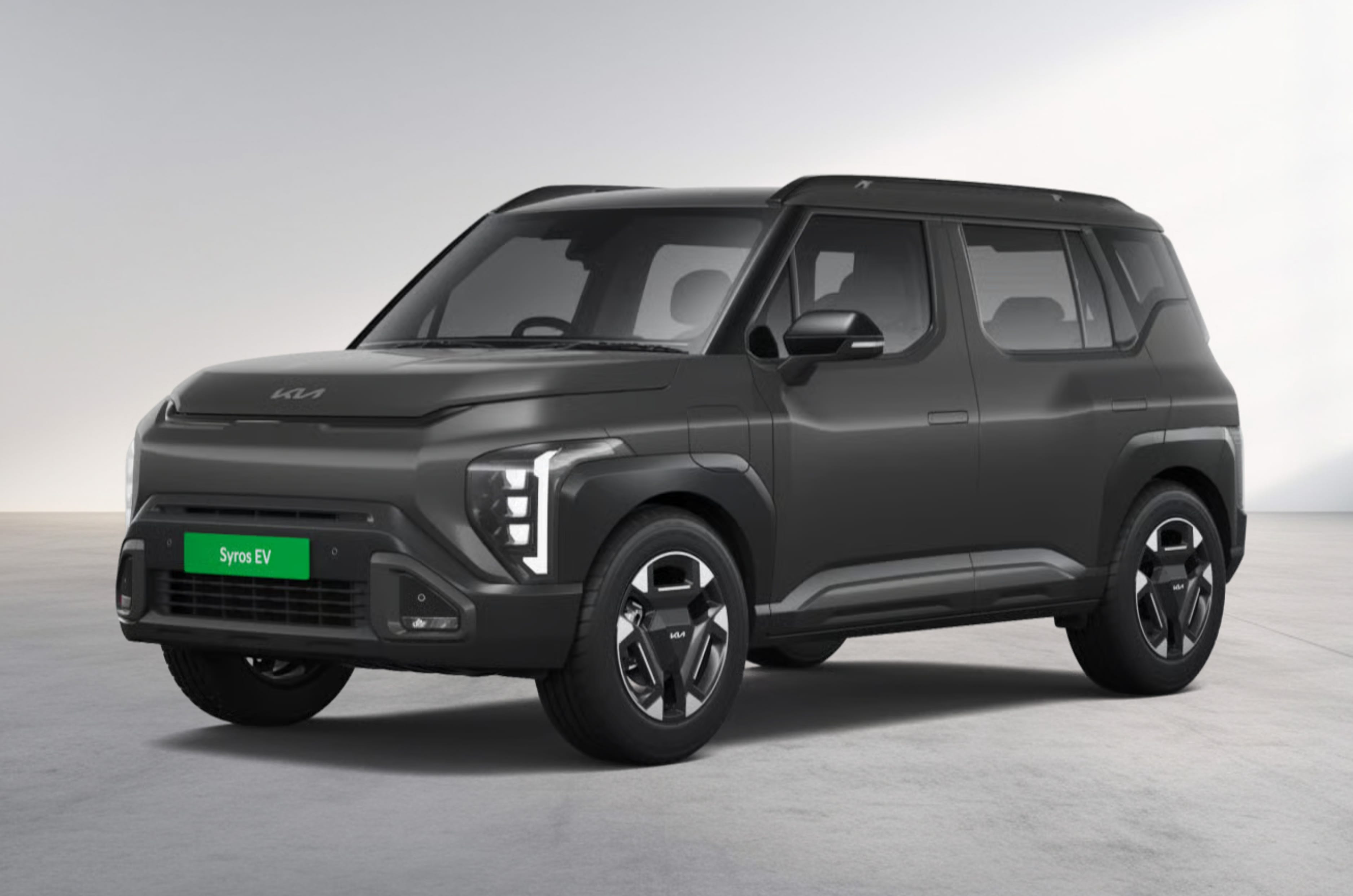
The Kia Syros EV may look largely similar to the ICE Syros, but it comes with a charging flap on the front fender, EV badging at the rear and a different set of alloy wheels that give it some distinction. Apart from these differences, it retains the overall tall-boy silhouette, front and rear bumper designs and lighting elements found on its combustion-powered counterpart.
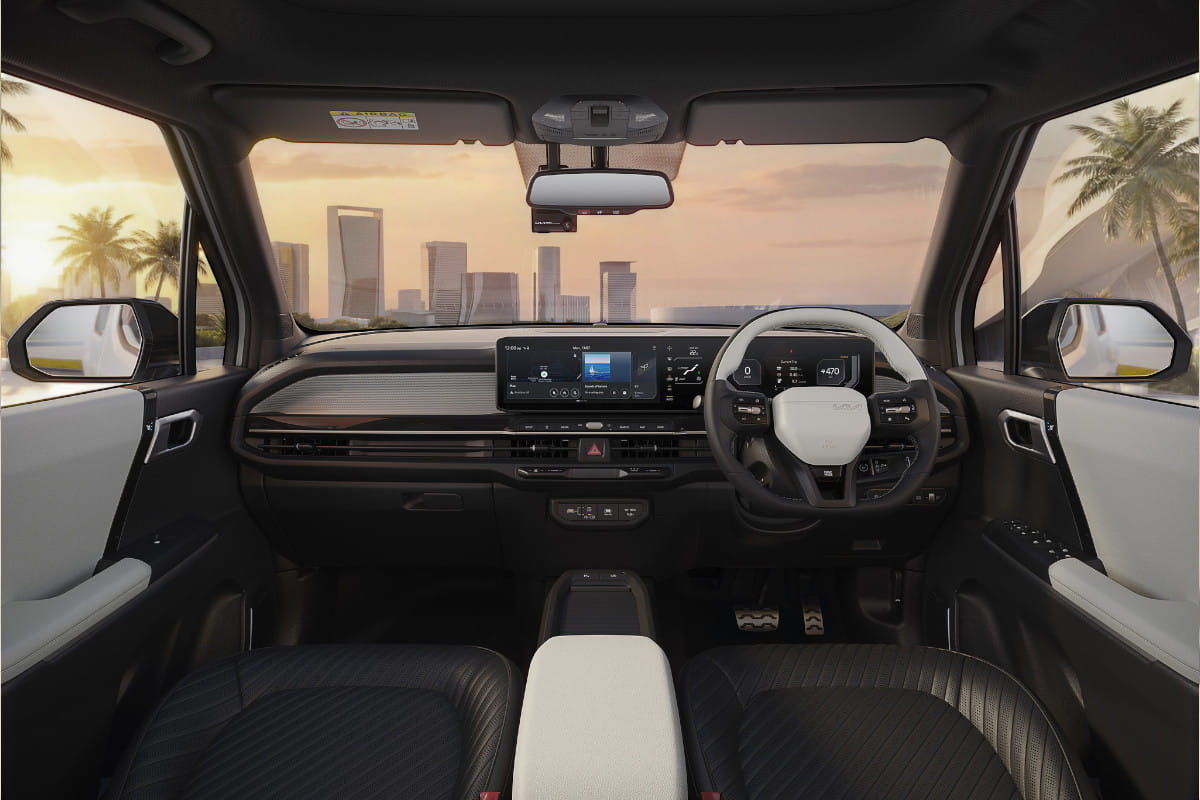
Inside, the dashboard layout remains the same as the ICE Syros, but there are some revisions to the centre console, which is high-set and features storage spaces and retractable cup holders. Also, the drive select lever has shifted to the steering wheel column.
5. What features does the Kia Syros EV come with?
For starters, the Kia Syros EV retains its ICE counterpart’s unique sliding and reclining rear seat with a ventilation function for the seat base. It also gets features such as dual 12.3-inch screens, a 5-inch HVAC control screen, wireless Apple CarPlay and Android Auto, a wireless charging pad, an 8-speaker Harman Kardon sound system, a panoramic sunroof, 64-colour ambient lighting and rear sunshades.
6. What does the Kia Syros EV offer over the ICE-powered Syros?
Apart from having EV-specific features such as a 16-litre frunk, regenerative braking, a virtual engine sound system and vehicle-to-load (V2L) functionality, it gets Level 2 ADAS, automatic flush door handles, a 360-degree camera setup, a dual-camera dashcam, a digital key, puddle lamps, multi-colour ambient lighting and metal pedals over the ICE-powered Syros.
7. What is the expected price of the Kia Syros EV?
The Kia Syros EV is expected to be priced from Rs 15 lakh to Rs 20 lakh, ex-showroom. It will take on the Mahindra XUV 3XO EV and the segment-reigning Tata Nexon EV, among others.