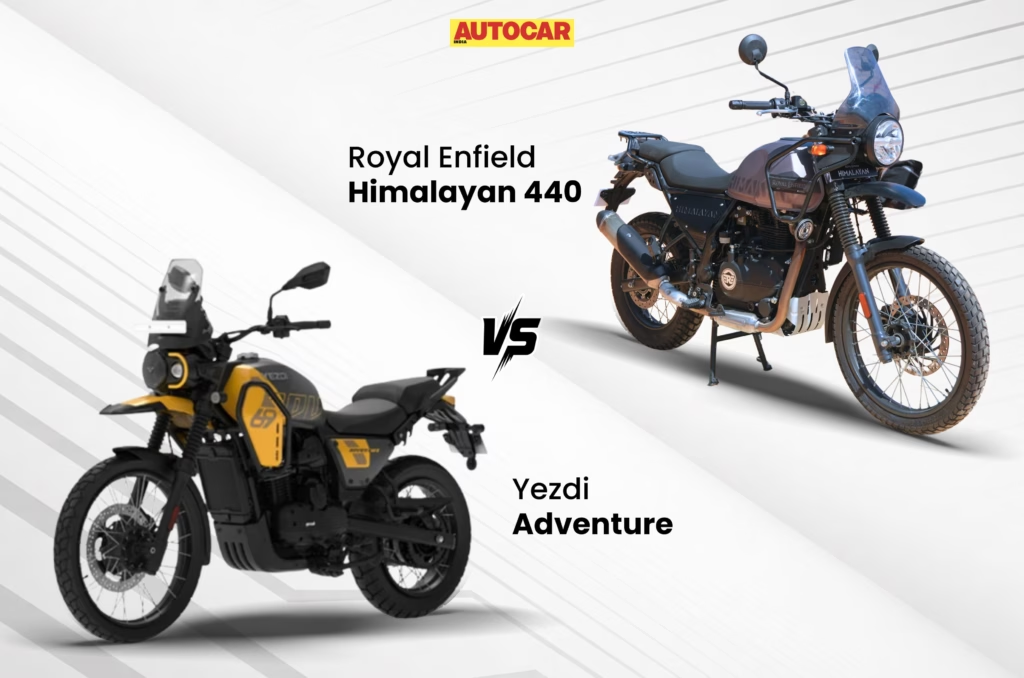
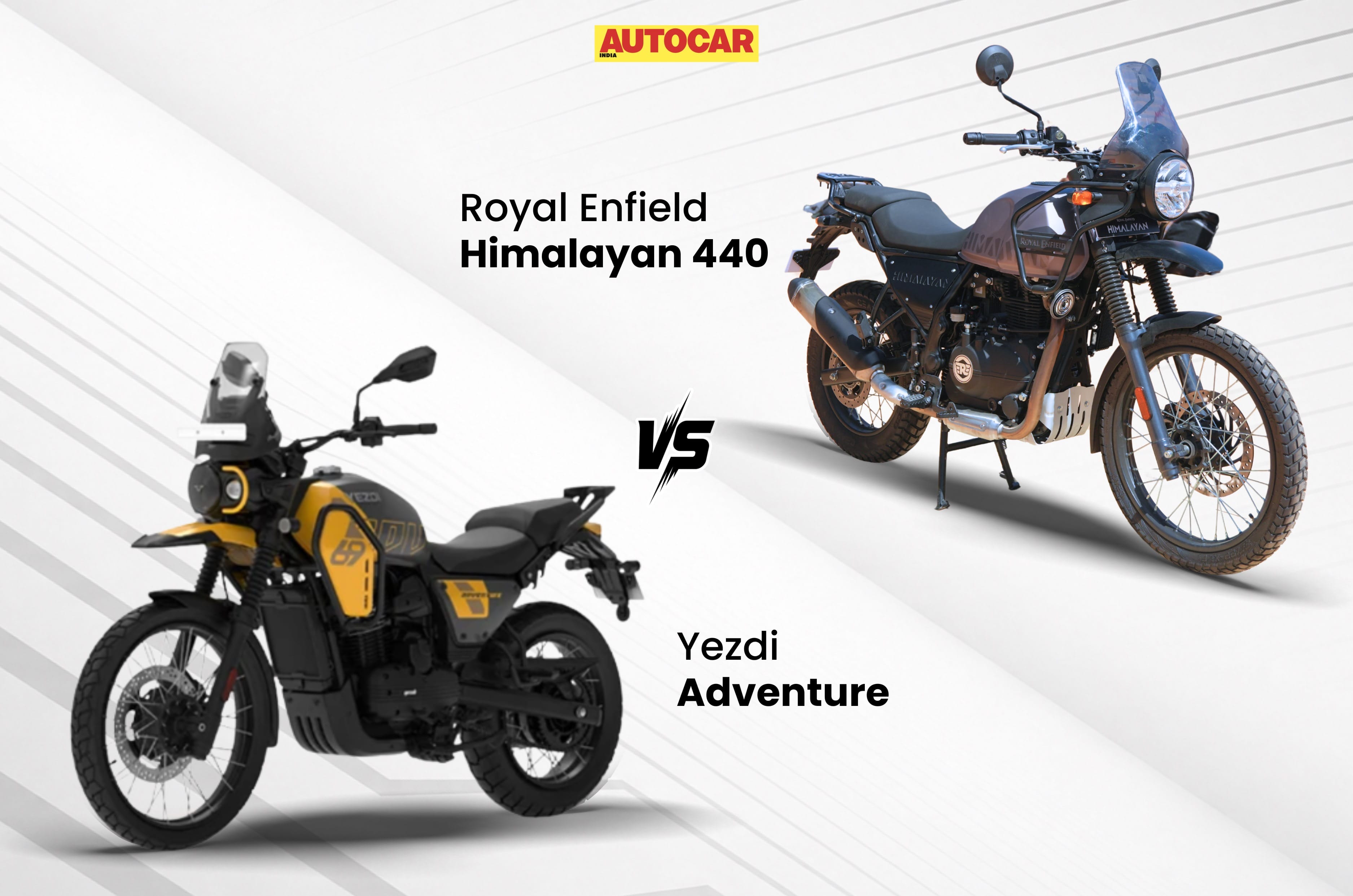
The Royal Enfield Himalayan 440 is back, wearing familiar clothes but a new, improved heart. Debuted first on the Scram 440, the upsized 443cc engine now makes 1.4hp more power and 2Nm of torque over the erstwhile Himalayan 411. Throw in an additional sixth gear and the Himalayan should now be a better tourer than before. But wait, how does this revived ADV compare to its direct rival, the Yezdi Adventure? Let’s find out.
Royal Enfield Himalayan 440 vs Yezdi Adventure: Engine and output
Yezdi makes more power with a liquid-cooled engine
Royal Enfield Himalayan 440
Yezdi Adventure
Engine
443cc single-cylinder, air- and oil-cooled
334cc single-cylinder, liquid-cooled
Power
25.4hp at 6,250rpm
29.6hp at 8,000rpm
Torque
34Nm at 4,000rpm
29.8Nm at 5,800rpm
Transmission
6-speed
6-speed
Power-to-weight ratio
127.64hp/tonne
158.29hp/tonne
On paper, the Yezdi Adventure displaces 109cc less than the Himalayan 440, but the Yezdi starts off strong—quite literally—with more power at a higher redline than the Himalayan 440. Its engine is also liquid-cooled compared to the Himalayan’s air- and oil-cooled mill. Both the motorcycles have six gears, so highway travel shouldn’t be a chore on either.
Royal Enfield Himalayan 440 vs Yezdi Adventure: Dimensions and weight
Himalayan 440 is more accessible
Royal Enfield Himalayan 440
Yezdi Adventure
Fuel tank
15 litres
15.5 litres
Ground clearance
220mm
220mm
Seat height
800mm
815mm
Kerb weight
199kg
187kg
Wheelbase
1460mm
1465mm
Things become a bit more even in this section. Both motorcycles share similar ground clearance numbers, but the Himalayan is more accessible with a 15mm lower saddle height. Yezdi reports 187kg for the Adventure but that’s dry weight. So, with 90 percent fuel, it should weigh just as much, if not more than the Himalayan’s 199kg.
Royal Enfield Himalayan 440 vs Yezdi Adventure: Tyres, brakes and suspension
Both models are (almost) on par
Royal Enfield Himalayan 440
Yezdi Adventure
Tyres (F,R)
90/90-21, 120/90-17
90/90-21, 130/80-17
Brakes (F,R)
300mm front disc, 240mm rear disc
320mm front disc, 240mm rear disc
Suspension (F,R)
Telescopic fork, linkage monoshock
Telescopic fork, linkage monoshock
Once again, the numbers look real similar on this front. The Yezdi Adventure has a slightly larger rear tyre and a slightly larger front disc brake. Speaking of tyres, although both models come with wire spoked rims as standard, the Yezdi Adventure offers cross spoke, tubeless rims as an optional Rs 20,000 add-on; available to the middle and top variants. Over on the Royal Enfield side though, such an upgrade isn’t possible at the moment. Royal Enfield doesn’t offer tubeless rims to the Himalayan 440, even as an accessory; they haven’t confirmed if the Himalayan 450’s tubeless rims can be retrofitted to it either. Suspension is another area where both motorcycles are neck-and-neck with them sharing the same kind of setups on paper, down to the travel.
Royal Enfield Himalayan 440 vs Yezdi Adventure: Features
Yezdi gets more rider aids
The Yezdi offers a more comprehensive feature package compared to the Royal Enfield. The Adventure gives you traction control, adjustable wind shield and instrument cluster, three ride modes (Road, Rain, Off-road); all of which are missing on the Himalayan 440. On the other hand, the Royal Enfield comes with a tripper pod as standard for turn-by-turn navigation, a USB type-C port, and LED headlight and taillight. But if rider aids are what you’re after, the Yezdi has more of them.
Royal Enfield Himalayan 440 vs Yezdi Adventure: Price
Yezdi offers more value for money
Royal Enfield Himalayan 440
Yezdi Adventure
Price (ex-showroom, Tamilnadu)
Rs 2.29 lakh
Rs 2.09 – 2.16 lakh
Royal Enfield has kept things straightforward with the Himalayan 440 just offering one variant in three colours. All of them share the same price as well. Yezdi offers three variants of the Adventure in four total colours, separated only by the colour choices. Like we had mentioned earlier, you can add cross spoked tubeless wheels to its middle and top variants for Rs 20,000 extra. To conclude, on paper, the Yezdi Adventure puts up quite the fight to the Royal Enfield Himalayan 440 but real-world experiences may vary. It would be prudent to decide between the two after taking test rides.
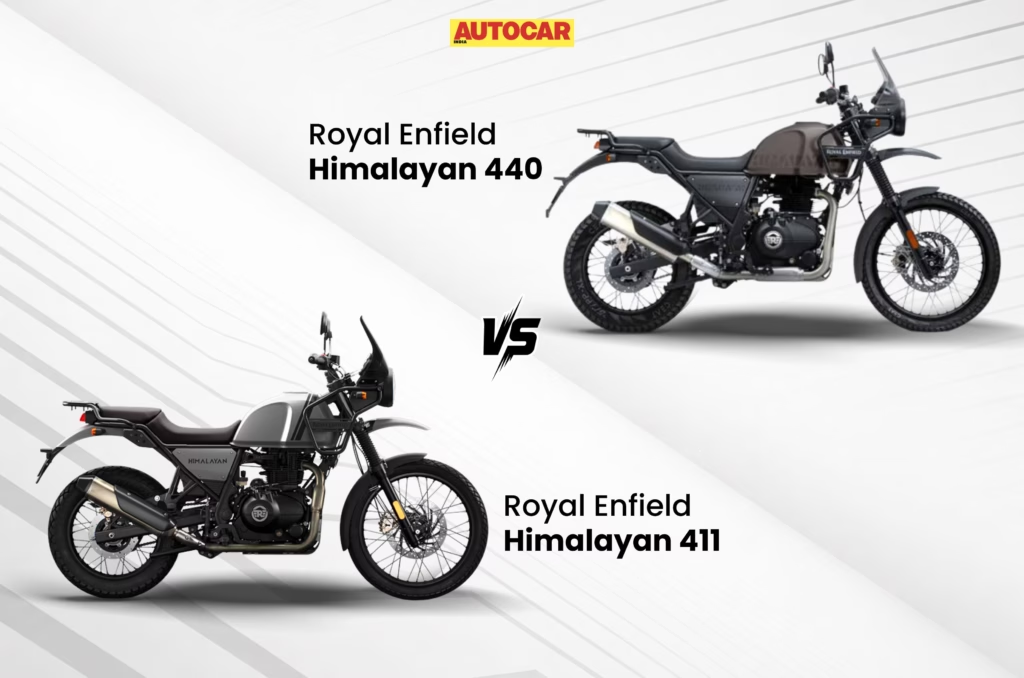
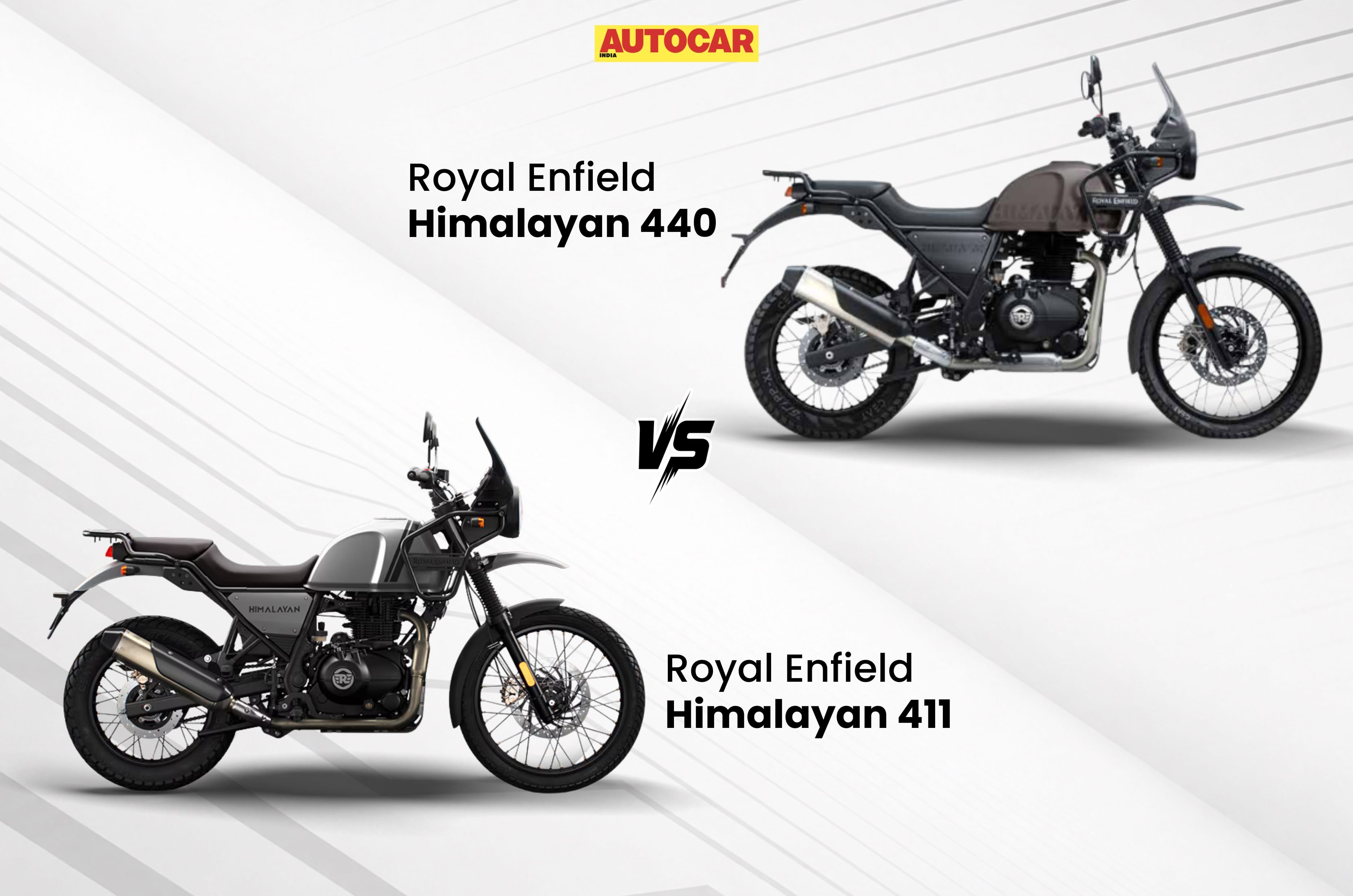
The Royal Enfield Himalayan 411 was discontinued in late 2023, when the significantly more sophisticated Himalayan 450 took its place. However, the added technological complexity also meant that the 450 was considerably more expensive than the bike it replaced, leaving many riders longing for the 411’s simpler, more straightforward character. The new Himalayan 440 is Royal Enfield’s answer to that demand. While it retains the same DNA as the original Himalayan, it brings a number of meaningful updates nearly a decade after the first-generation bike made its debut.
New Himalayan 440 vs Old Himalayan 411: What stays the same?
The core philosophy and most of the cycle parts carry over unchanged
The Himalayan 440 retains its split-cradle frame architecture from the 411, along with the same 21-inch front and 17-inch rear spoked wheel combination. Suspension travel is also unchanged, with 200mm at the front and 180mm at the rear, as is the 220mm ground clearance and the 800mm seat height. In character and purpose, these are the same motorcycle.
New Himalayan 440 vs Old Himalayan 411: Engine and gearbox
The new Himalayan uses the same engine as the Scram 440
The most significant change on the Himalayan is to do with the powertrain, with the bike now using the same powerplant as the Scram 440. The original Himalayan was powered by a 411cc, air/oil-cooled, single-cylinder unit producing 24hp at 6,500rpm and 32Nm at 4,000rpm. The 443cc unit on the new bike makes 25.4hp at 6,250rpm and 34Nm at 4,000rpm – 1.4hp and 2Nm more.
This new engine is paired with a 6-speed gearbox, unlike the 411, which used a 5-speed unit, with revised ratios throughout. The additional gear should make highway cruising more relaxed and touring more comfortable over long distances.
New Himalayan 440 vs Old Himalayan 411: Braking
Gets improved braking hardware and dual-channel switchable ABS
On paper, the braking hardware on the Himalayan 440 seems identical to what the 411 had to offer, with a 300mm disc at the front, 240mm rear disc, and dual-channel ABS. However, Royal Enfield mentions that the hardware now comprises new two-piston Bybre floating calipers with larger pistons, delivering improved braking performance. The dual-channel ABS system is switchable, so you can disengage the rear ABS.
New Himalayan 440 vs Old Himalayan 411: Features and equipment
Gets LED headlight and Tripper navigation among other features
The 440 gets a new LED headlight, and the digital-analogue instrument cluster setup has been updated. It loses the tachometer from the original but gets the brand’s Tripper navigation pod for turn-by-turn navigation. Another notable addition includes a USB Type-C charging port. The Himalayan has always been about long-distance adventure travel and unsurprisingly, the brand is offering a long list of accessories that you can add to the bike, including protection like engine and knuckle guards, as well as luggage like a top box and official panniers.
New Himalayan 440 vs Old Himalayan 411: Price
The Himalayan 440 is priced at Rs 2.29 lakh, making it a substantial Rs 79,000 more affordable than the Himalayan 450’s starting price. In fact, when the Himalayan 411 was discontinued in 2023, it was priced between Rs 2.15 lakh and Rs 2.30 lakh. That makes the new 440’s pricing even more impressive as three years on, it costs virtually the same as its predecessor while offering a more powerful engine, better brakes and several other practical upgrades.
Europe Travel Budget: भारत के कई लोगों के लिए यूरोप घूमना काफी महंगा हो सकता है, खासकर तब जब ट्रिप में कई देशों की यात्रा करनी हो और सफर करीब एक महीने तक चले। लेकिन क्या आपने कभी सोचा है कि 30 दिनों तक यूरोप घूमने में असल में कुल कितना खर्च आता है? बता दें कि एक भारतीय कपल ने अपनी पूरी ट्रिप का खर्च शेयर किया है, जिसमें बताया गया है कि उन्होंने रहने की जगह, फ्लाइट, खाने, ट्रांसपोर्ट और एक्टिविटीज पर कितना खर्च किया।
मुस्कान मित्तल और आशीष गुप्ता ने अपनी एक महीने की ट्रिप के दौरान 8 देशों की सैर की। उनकी यात्रा में फ्रांस, बेल्जियम, नीदरलैंड, प्राग, ऑस्ट्रिया, इटली, वेटिकन सिटी और स्विट्जरलैंड शामिल थे।
इंस्टाग्राम पर शेयर किया वीडियो
अपने जॉइंट इंस्टाग्राम अकाउंट पर शेयर किए गए एक वीडियो में, इस कपल ने बताया कि उन्होंने अपना ट्रैवल बजट कैसे बांटा और यह भी बताया कि ट्रिप के किस हिस्से में उनका सबसे ज्यादा खर्च हुआ।
8 देशों की यात्रा करते समय, हर जगह ठहरने की जगह का खर्च तेजी से बढ़ सकता है। इस कपल के लिए, रहने-सहने का खर्च ही सबसे बड़ा खर्च साबित हुआ।
वे Airbnb और होटलों में रुके; ज्यादातर जगहें शहर के सेंटर में या बड़े रेलवे स्टेशनों के पास थीं। मुस्कान ने कहा, “औसतन, हमने हर रात के लिए 10,000 रुपये खर्च किए।”
यूरोप तक पहुंचने की फ्लाइट भी कपल के ट्रिप बजट का एक बड़ा हिस्सा थी। उन्होंने फ्लाइट पर प्रति व्यक्ति ₹50,000 खर्च किए। सीधी फ्लाइट लेने के बजाय, उन्होंने मिडिल ईस्ट से होकर जाने वाली कनेक्टिंग फ्लाइट बुक कीं। दो लोगों के लिए, उनकी कुल फ्लाइट का खर्च लगभग ₹1 लाख आया।
यात्रा में 8 देश शामिल थे, इसलिए शहरों के बीच घूमना भी ट्रिप का एक अहम हिस्सा था। कपल ने बताया कि उन्होंने एक महीने का ‘यूरेल ग्लोबल पास’ इस्तेमाल किया, जिसमें उनके रूट की लगभग सभी ट्रेन यात्राएं शामिल थीं और इसकी कीमत ₹58,000 थी। उन्होंने कार रेंटल और मेट्रो पर भी ₹28,000 खर्च किए।
खाने-पीने का खर्च भी एक ऐसी चीज थी जिसके लिए कपल को अपनी 30 दिन की यात्रा के दौरान प्लानिंग करनी पड़ी। उन्होंने दोनों के खाने पर रोजाना लगभग ₹5,000 खर्च किए। उन्होंने बताया, “हम दिन में एक बार बाहर खाना खाते थे, लेकिन खाने का खर्च कंट्रोल में रखने के लिए साथ में ‘रेडी-टू-ईट’ खाना भी रखते थे और अक्सर ग्रोसरी स्टोर से सामान खरीदते थे।”
यूरोप घूमना सिर्फ एक शहर से दूसरे शहर जाने तक ही सीमित नहीं है। ट्रिप के दौरान कई टूरिस्ट प्लेस, अलग-अलग एक्सपीरियंस और एक्टिविटीज पर भी खर्च होता है। इस कपल ने अपनी 30 दिनों की यात्रा के दौरान एक्टिविटीज पर प्रति व्यक्ति 85,000 रुपये खर्च किए।
कपल ने अपने बजट में वीजा और ट्रैवल इंश्योरेंस का खर्च भी शामिल किया था। इन खर्चों पर उन्होंने प्रति व्यक्ति ₹15,000 खर्च किए। उन्होंने अन्य खर्चों के लिए भी प्रति व्यक्ति ₹10,000 से ₹15,000 अलग रखे थे।
रहने, फ्लाइट, ट्रांसपोर्ट, खाने-पीने, घूमने-फिरने की एक्टिविटीज, वीजा, इंश्योरेंस और अन्य खर्चों को मिलाकर, इस कपल ने बताया कि दो लोगों के लिए उनकी एक महीने की यूरोप बैकपैकिंग ट्रिप का कुल खर्च लगभग 9.5 लाख रुपये आया।
इस कपल के खर्चों के ब्योरे को देखकर दूसरे यूजर्स ने भी बताया कि उन्होंने अपनी यूरोप की छुट्टियों पर कितना खर्च किया था।
एक यूजर ने कमेंट किया, “हमने 10 दिनों के लिए 8 लाख रुपये खर्च किए।” एक और यूजर ने कहा, “यह तो काफी सही है।”
हालांकि, एक यूजर को यह रकम कम लगी। उसने कहा, “मुझे लगता है कि यह सस्ता है। हमारे मामले में, 2 लोगों की ट्रिप का खर्च रोजाना लगभग 800-900 यूरो आता है, जिसमें हवाई जहाज़ का किराया शामिल नहीं है।”
डिस्क्लेमर: यह रिपोर्ट सोशल मीडिया पर शेयर किए गए यूजर-जनरेटेड कंटेंट पर आधारित है। Moneycontrol ने इन दावों की स्वतंत्र रूप से पुष्टि नहीं की है और न ही इनका समर्थन करता है।
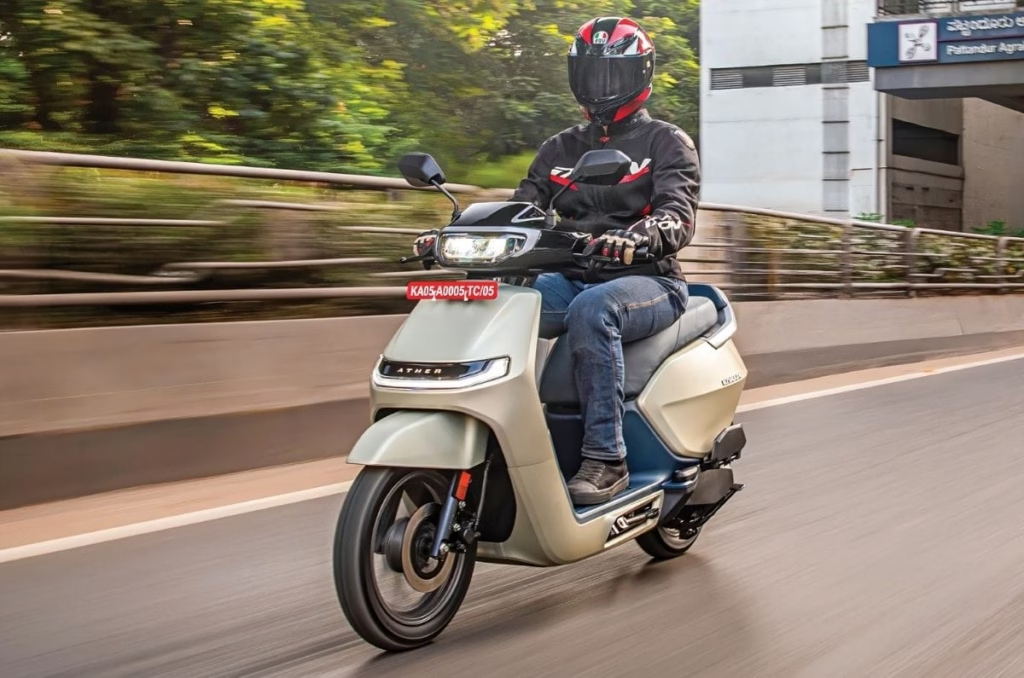
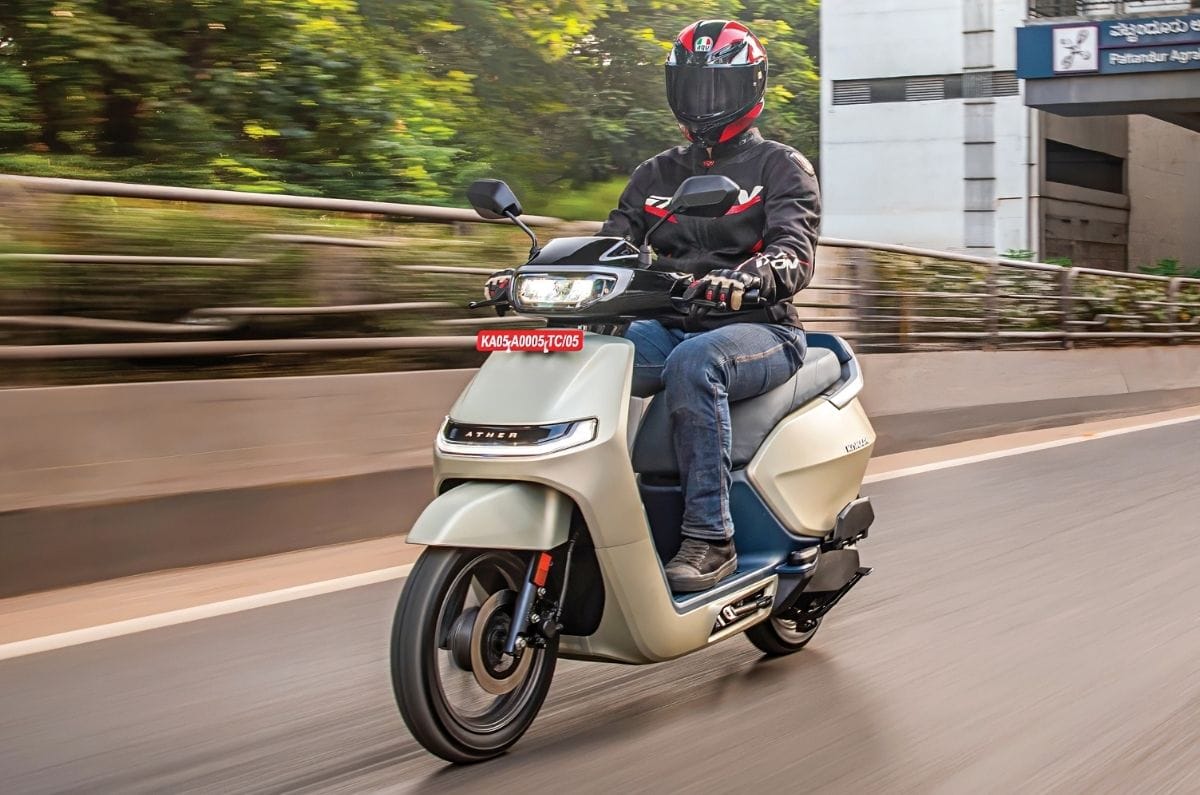
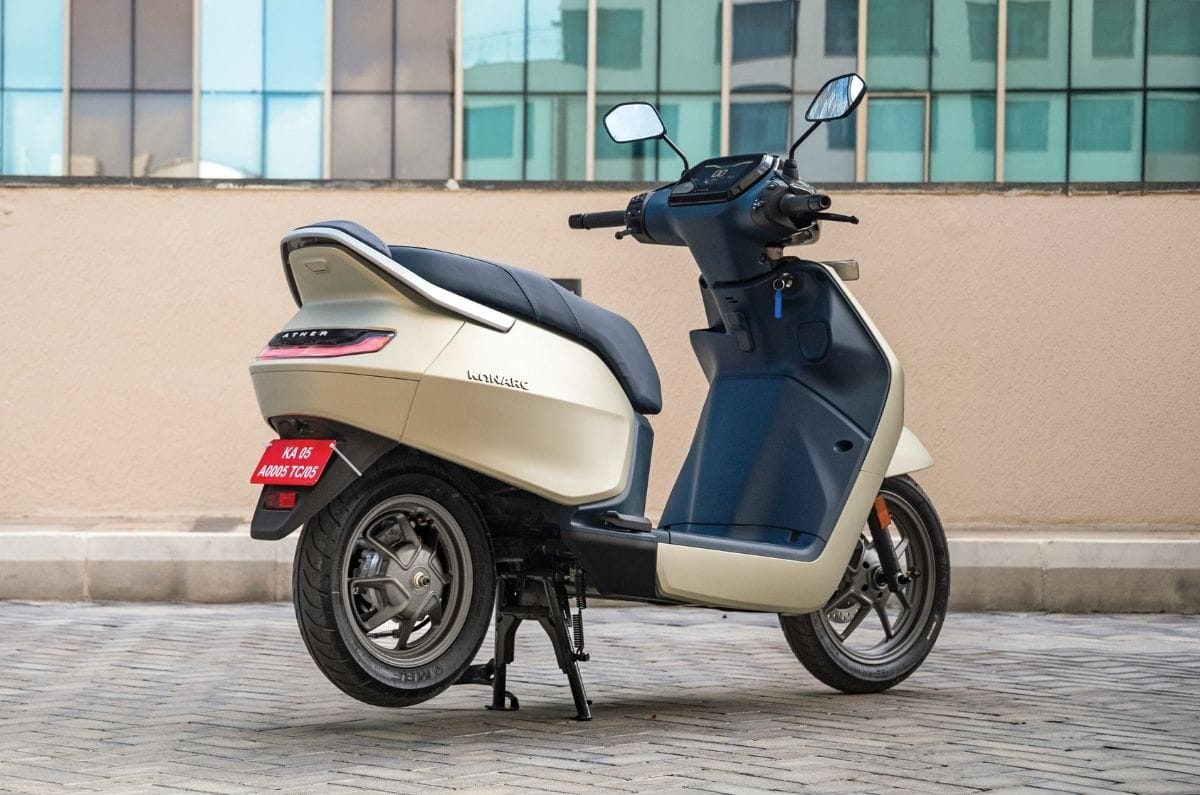
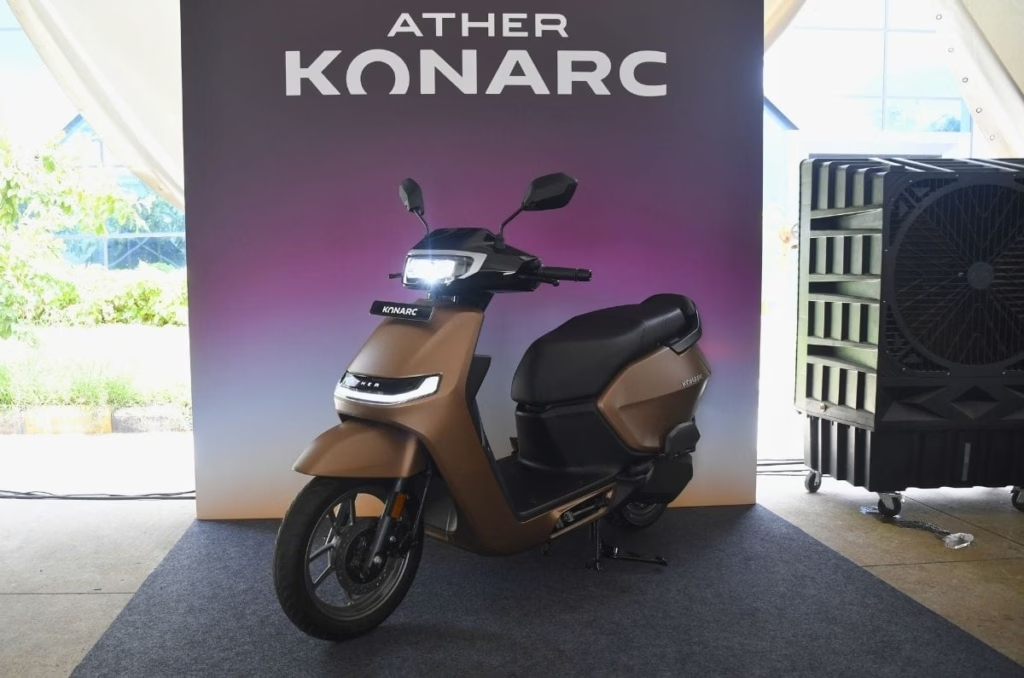
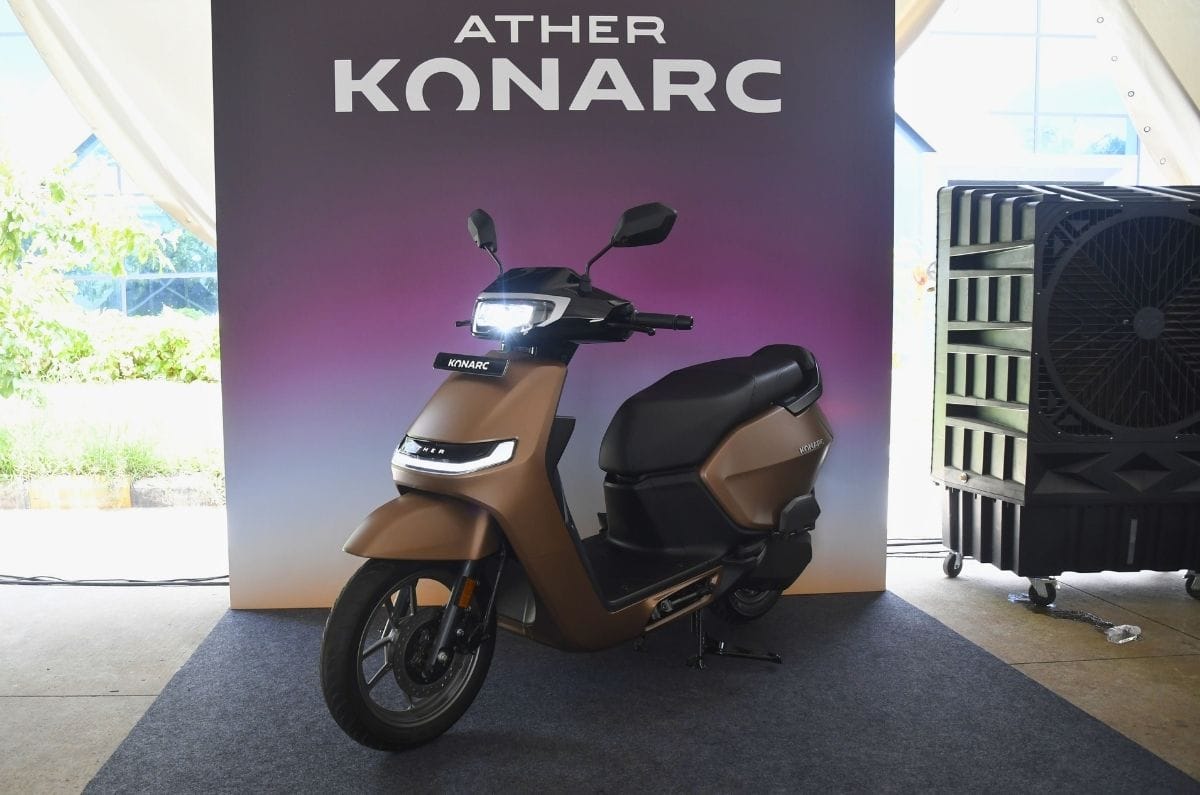
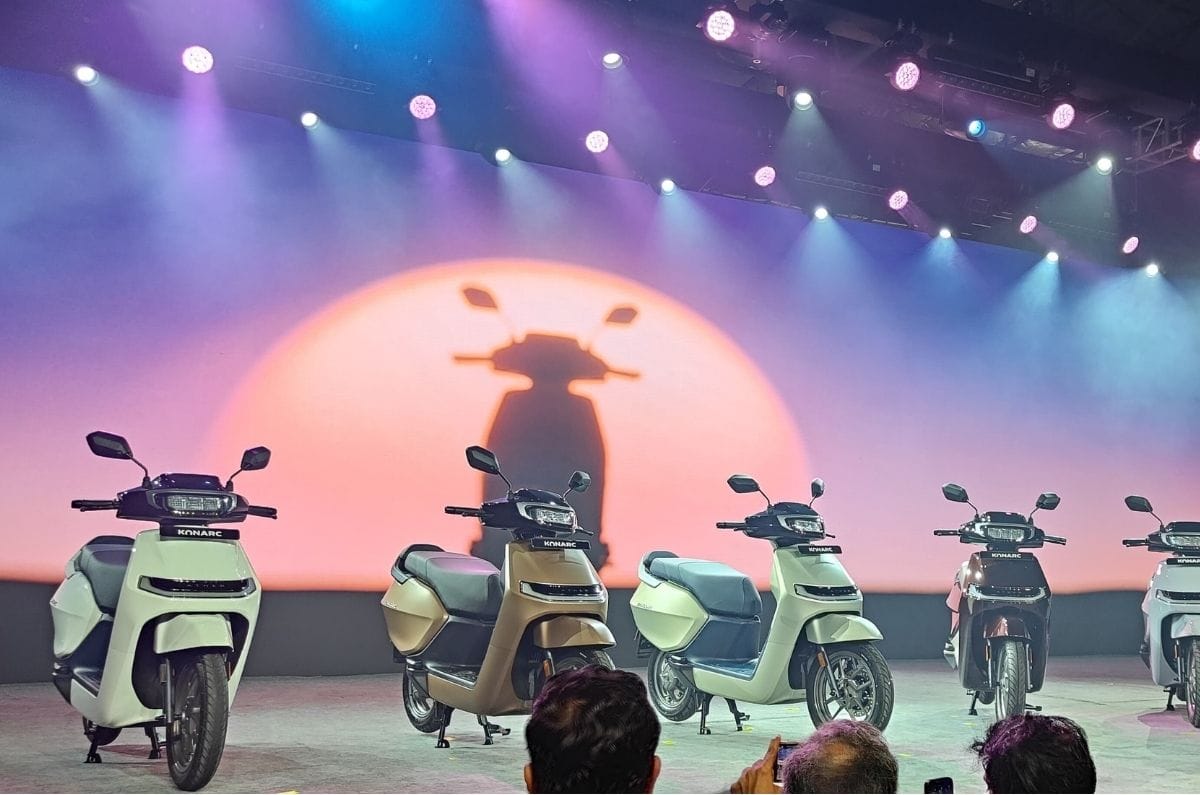
It’s not a stretch to say that the Konarc is the most important product from Ather yet, because the company hopes this new EV will help it unlock segments and markets hitherto untouched by it. The question then is, will the Konarc live up to the lofty expectations placed on its shoulders?
Konarc Design and Quality – 9/10
Straightforward design with high quality finish
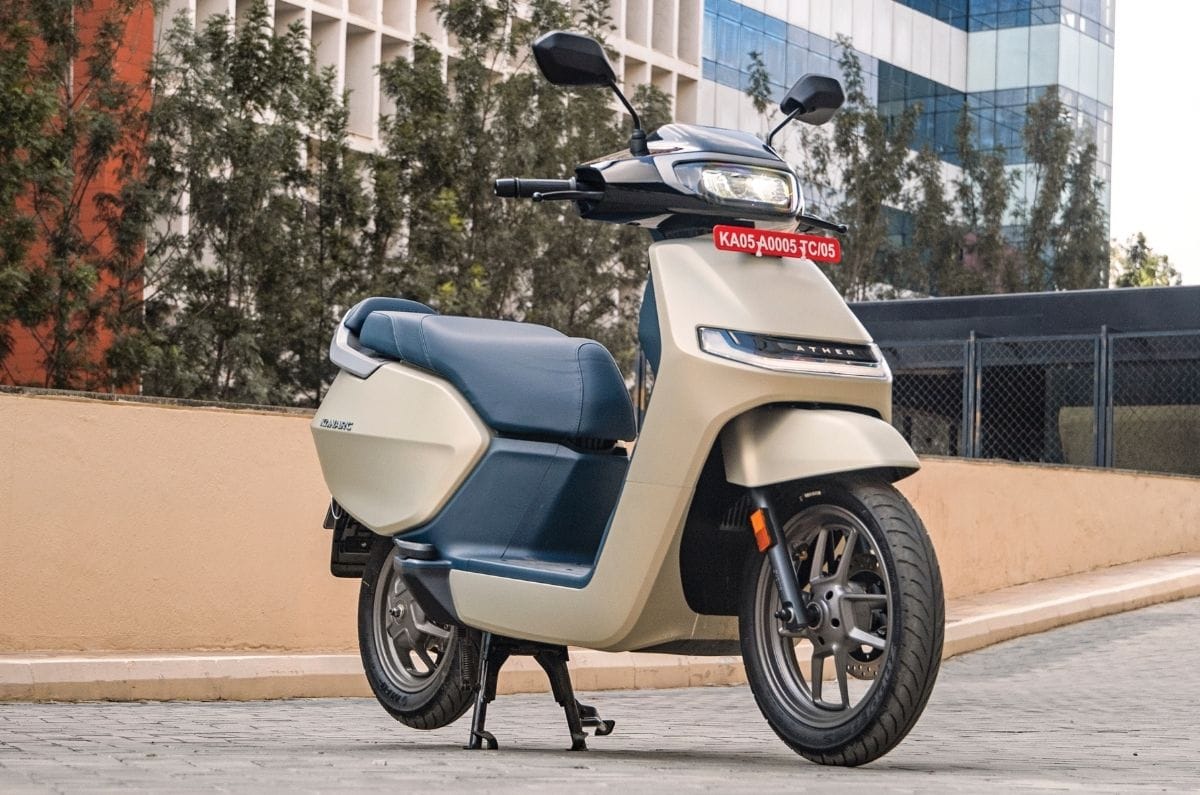
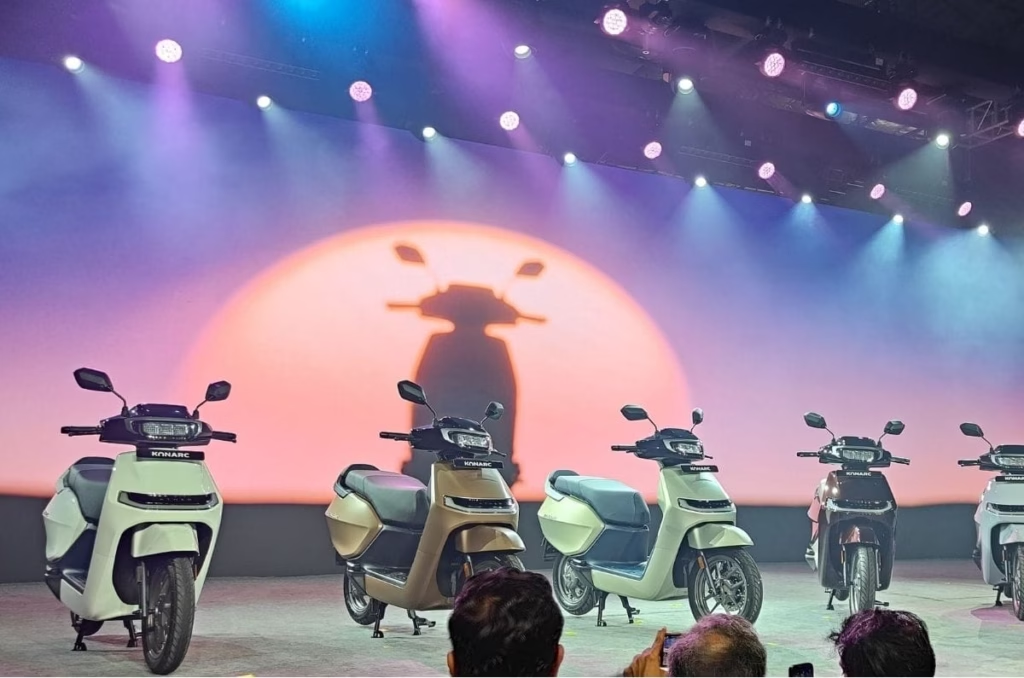
The Konarc S is offered in four classy yet inoffensive colours
Striking looks aren’t a trait family scooters are known for and Ather wanted to play it very safe with the Konarc to bring in buyers that typically shop for ‘decent-looking’ scooters. While it does look a bit plain, it will still not completely meld into the ocean of humdrum two-wheelers on the road. Further reinforcing its family scooter aspirations are a quartet of very classy, yet inoffensive colours.
Another aspect that the Konarc’s prospective customers will appreciate is its excellent finish and quality levels all across – a typical Ather trait.
Konarc Ride and Handling – 9/10
Excellent ride and seating comfort, planted and surefooted handler
One big reason Ather moved to the new EL platform is that its earlier platform was never built for outright comfort and practicality. In this application, the main focus was to maximise comfort for both rider and pillion. The use of a 14-in front wheel and suspension with 90mm/100mm (F/R) of travel are two key factors in providing lovely ride comfort here.
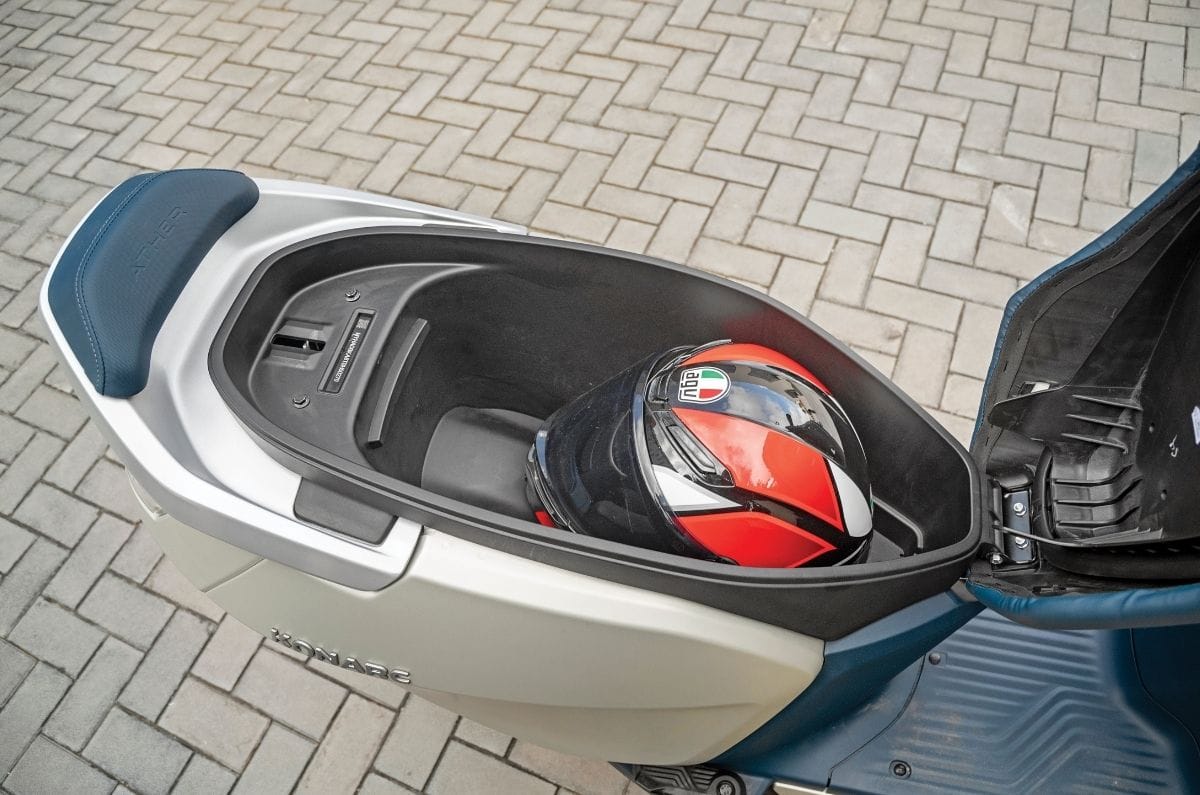
31L boot is deep enough to fit a premium helmet
Point the Konarc towards most bumps and it will round them off without getting unsettled while isolating you from the shock to a great extent. In the scooter space, this is one of the most comfortable options available. Ofcourse, this is still a scooter and really big bumps will filter through – don’t expect motorcycle-like comfort.
Specifications
Values
Wheelbase
1352 mm
Kerb Weight
126.5 kg
Chassis type
Monocoque Full – Steel Body Construction
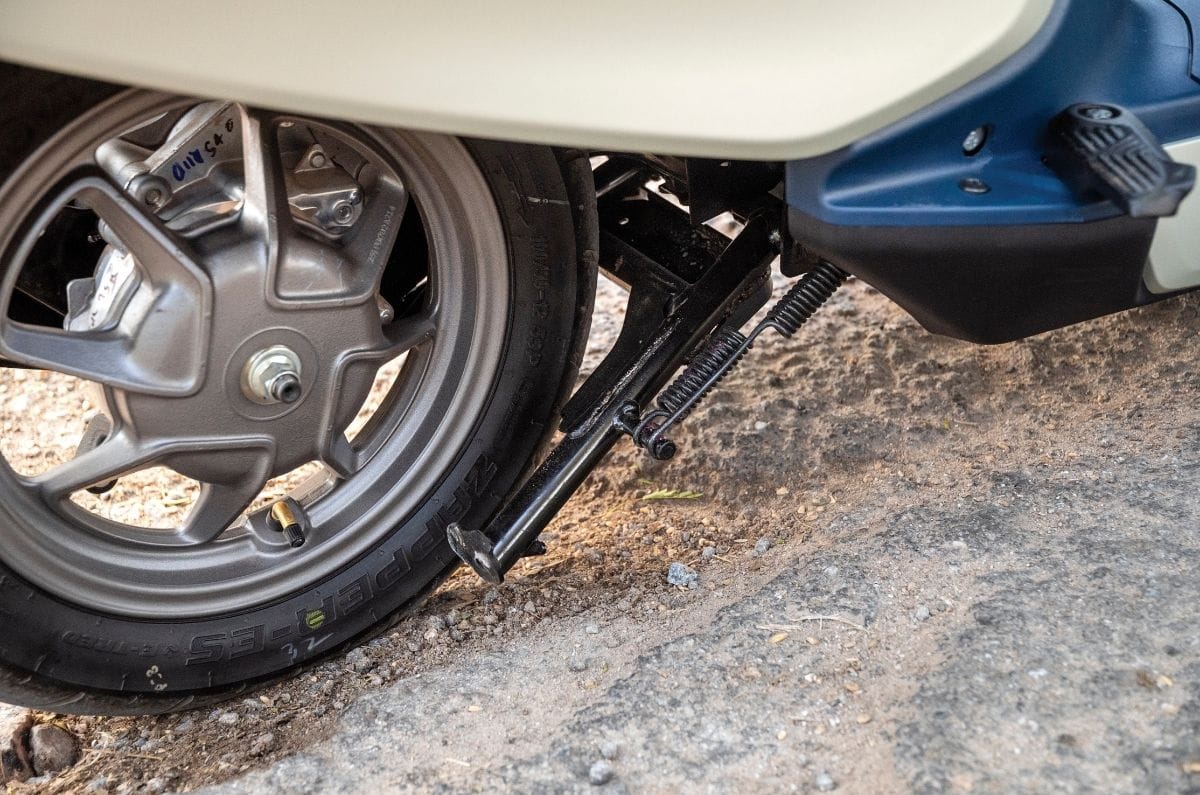
Something that a typical family scooter buyer values is a centre stand and the Konarc becomes the first Ather to offer it. Like other family scooters, the Konarc’s chassis is geared towards stability and ease of use. Despite the larger 14-in wheel and long 1352mm wheelbase, it felt very straightforward to ride. Its low 770mm seat height will help shorter folks get their feet down comfortably although its wide floorboard will have an impact here.
Main stand can touch down in deep ruts
A spacious seat with a padded backrest means two full-size riders will fit comfortably on the Konarc. Another nice feature is that the front end doesn’t get flighty even with a heavy pillion onboard, despite no preload adjustability on the monoshock. The only ergonomic miss is that riders taller than 5’10 will find their knees touching the handlebar during full-lock turns.
Specifications
Values
Wheel Size
Front – 14 inch, Rear – 12 inch
Front Tyre Size
90/90-14
Rear Tyre Size
100/90-12
Brake type
Front – Disc, Rear – Drum
Front Brake Size
220 mm
Rear Brake Size
130 mm
Front Suspension Type
Telescopic Fork, 90mm travel
Rear Suspension Type
Dual Hydraulic Coil Spring, 100mm travel
Konarc Performance – 8/10
Has enough performance, new motor has very silent running
Not only is the Konarc a big leap ahead in terms of comfort, its riding experience is also well-suited to city commuting. A big part of that is down to the comfort but its new swingarm-mounted motor also contributes here. Unlike the Rizta and 450 which used a rather noisy and relatively more maintenance intensive belt final drive, this motor is whisper quiet. It also directly powers the rear wheel without a chain or belt, reducing the number of components in the powertrain.
Specifications
Values
Fuel Type/ Propulsion
Electric
Motor Type
PMSM
Max Motor Power
4.7 kW
Max Motor Torque
16 Nm
EV Battery Capacity
2.7 kWh
With 4.7kW and 16Nm of torque on tap, the Konarc’s performance is best described as sufficient, but only in the top Power mode. Here, the scooter is capable of negotiating its way through big city traffic reasonably quickly. Switching to Eco / SmartEco dulls acceleration significantly and unless you’re running out of juice or you live in a small town, this level of performance will feel out of place.
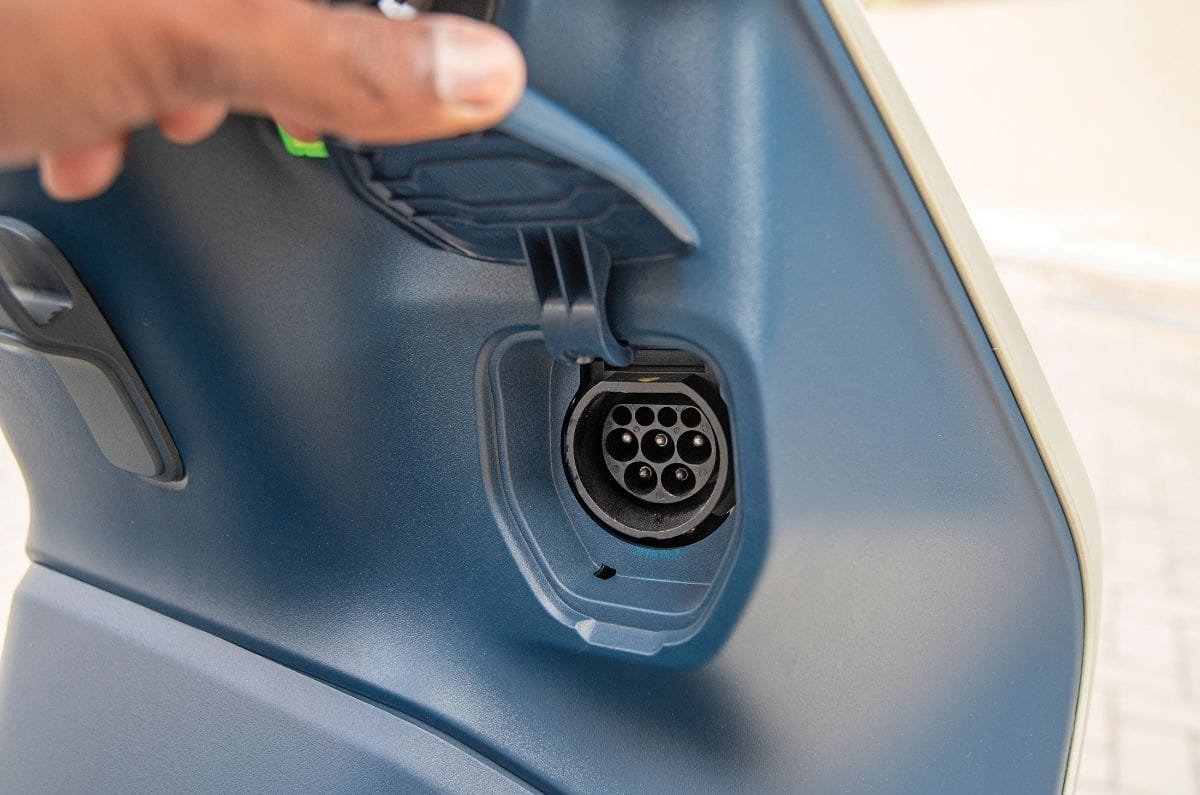
450W onboard charger integrated into motor controller means you only need to carry a small cable around
Except for the bottom 2.1, all S variants come with a front disc brake, a rear drum and CBS. This setup is capable of bringing the Konarc to a halt quickly and safely with almost no hiccups. The one concern with the combined braking system was that the front could lock up when braking on sandy, gravelly loose surfaces using the rear brake lever exclusively. Only the Z variants launching next year come with Ather’s AeBS (Advanced Electronic Braking System) which uses the regen system to shorten braking distances.
Konarc Features – 8/10
S variants are decently equipped but Z gets all the feel-good ones
And that is a good segue into the way Ather has distributed features across the S and Z. The keyless ignition system, automatic seat opening, AeBS, Magic Twist regen braking, traction control, the colour TFT display and all the smart functions enabled by it are reserved only for the Z. Common to all Konarcs is the 31L underseat storage area, which can easily swallow an imported full-face helmet with room to spare.
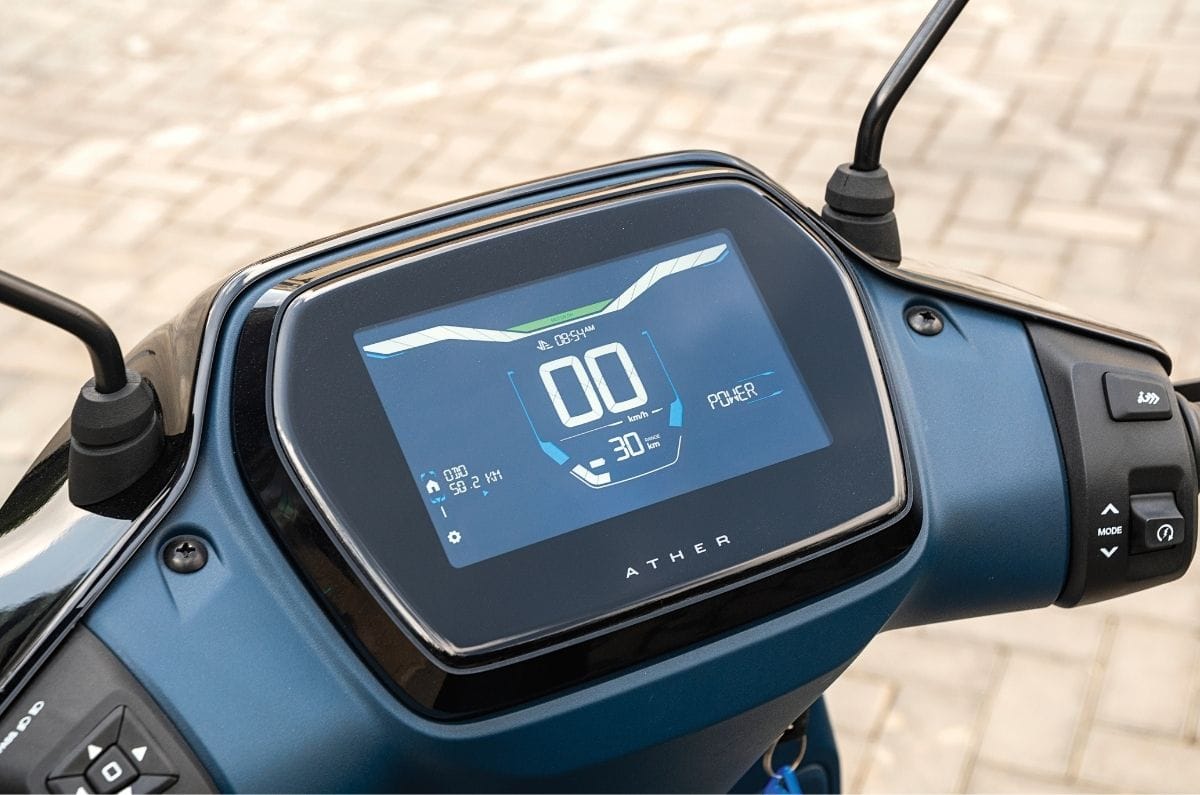
7-inch dash informative and legible but not full colour
What three S variants (except the most affordable one) get is the 7-in simple TFT dash with Bluetooth connectivity, hill hold assist, reverse, several app-based functions, a 450W onboard charger and Airwalk. Airwalk is basically the Konarc’s motor sending a tiny amount of power to the rear wheel when you’re pushing it around to help make your life easier – this is truly effective and makes the 129kg Konarc feel far lighter than it is when moving it around. While the S has a good number of features, when you bring pricing into the equation, it stings a little.
Same charging port for both onboard & portable chargers
Konarc Price and Verdict – 8/10
Not a cutthroat price but this is still a polished and competitive scooter
The two S variants which are on sale right now, S 125 and S 161, are priced at Rs 1.22 lakh and Rs 1.45 lakh, respectively – near identical pricing to the Rizta S. Like the Rizta, you have to pay extra for the Ather StackPro which unlocks many of the smart electronic features.
The base S 2.1 (Rs 99,999) misses out on niceties like the disc brake and backrest and comes with rudimentary tech and a basic 4.2-in display. In that sense, the Konarc isn’t really pushing the envelope when it comes to an alluring price.
Variant
Price (ex-showroom)
Konarc S 100
Rs 1 lakh
Konarc S 125
Rs 1.22 lakh
Konarc S 161
Rs 1.45 lakh
However, as a scooter, the Konarc is a well-thought out product that nails comfort, promises enough performance, predictable range and lower maintenance costs. Ather claims a 10,000km / 1 year service interval and lower service charges owing to fewer parts and quicker turnaround times.
It may not have made as stellar an impression as it could have with more aggressive pricing, but nonetheless the Konarc definitely has what it takes to elevate Ather to a higher echelon in the market.
Ather has launched the Konarc electric scooter in India at its Annual community day, with prices starting at Rs 1 lakh (ex-showroom, Bengaluru). It is available in three variants – S 100, S 125 and S 161 – with the numbers corresponding to their respective IDC range figures.
The Konarc is aimed at delivering improved ride comfort and stability, with 90mm of front and 100mm of rear suspension travel. It has a 1,352mm wheelbase, the longest of any Ather scooter, along with a 14-inch front wheel and 12-inch rear wheel. The S 100 gets drum brakes at both ends, while the S 125 and S 161 get a 220mm front disc and 130mm rear drum.
The S 100 gets a 2.1kWh battery and produces 4kW and 16Nm, while the S 125 and S 161 use 2.7kWh and 3.5kWh batteries, respectively, and produce 4.7kW and 16Nm. All three have a claimed top speed of 70kph. While their TrueRange figures are 80km, 100km and 130km, respectively.
The Konarc offers 31 litres of underseat storage, along with an 18W USB Type-C port and an underseat lamp. The S 100 gets a 4.2-inch DeepView display, while the higher variants get a 7-inch DeepView display. Other features include Park Assist reverse, which uses the motor to help manoeuvre the scooter backwards, and AutoHold, which holds the scooter stationary when stopped.
The Konarc S 100 is priced at Rs 1 lakh, while the S 125 costs Rs 1.22 lakh and the S 161 is priced at Rs 1.45 lakh. Ather has also revealed Konarc Z variants with 125km and 161km IDC range figures, although their prices are yet to be announce
Ather has launched the Konarc electric scooter in India at its Annual community day, with prices starting at Rs 1 lakh (ex-showroom, Bengaluru). It is available in three variants – S 100, S 125 and S 161 – with the numbers corresponding to their respective IDC range figures. A 200km version is also in the pipeline, while a feature-loaded Z variant with a 125km IDC range will also join the line-up.
New AEBS braking system and MagicKey boot access headline the technology package.
100mm rear suspension travel and a 1,352mm wheelbase are aimed at improving ride comfort and stability.
Up to 200km IDC range, 31-litre boot and 1.35kW combined charging add to its practicality.
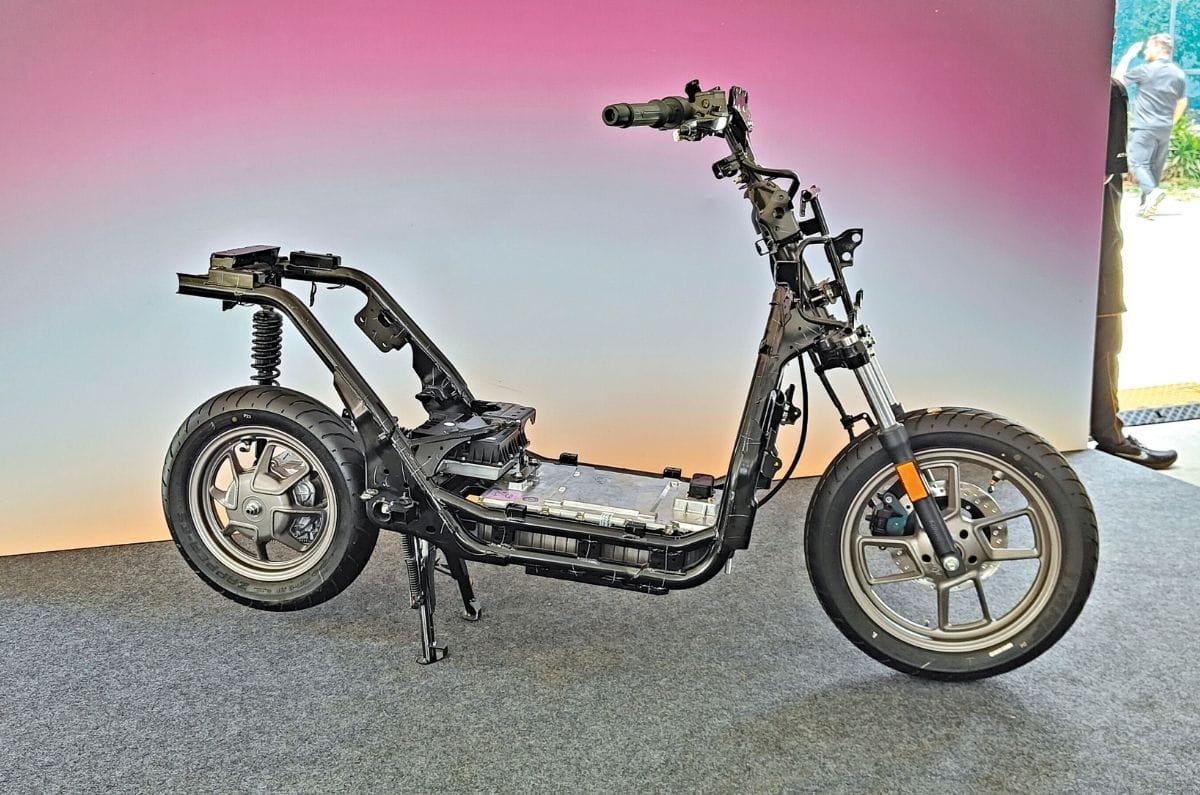
Ather Konarc is based on the EL-platform
The Konarc is aimed at delivering improved ride comfort and stability, with 90mm of front and 100mm of rear suspension travel. It has a 1,352mm wheelbase, the longest of any Ather scooter, along with a 14-inch front wheel and 12-inch rear wheel. The S 100 gets drum brakes at both ends, while the S 125 and S 161 get a 220mm front disc and 130mm rear drum.
Ather Konarc Battery and range information
The S 100 gets a 2.1kWh battery and produces 4kW and 16Nm, while the S 125 and S 161 use 2.7kWh and 3.5kWh batteries, respectively, and produce 4.7kW and 16Nm. All three have a claimed top speed of 70kph. While their TrueRange figures are 80km, 100km and 130km, respectively.
The Konarc comes with a 450W onboard charger as standard. Ather says this can be combined with a 900W off-board charger, giving a total charging capacity of 1.35kW. The claimed home charging time from 0-80 percent with the standard charger is 4 hours for the S 100, 4hr 30min for the S 125 and 5hr 40min for the S 161. With the combined charger, these times fall to two hours, 2hr 25min and 3hr 10min, respectively. The charging speed is claimed at 13km in 10 minutes for the S 100 and 15km in 10 minutes for the S 125 and S 161.
Ather described EL as a scalable platform capable of underpinning different scooter formats while sharing major components. Developed using 26 lakh kilometres of field data, it features a new chassis, powertrain and electronics architecture. Ather says reducing the component count could make assembly 15 percent faster and periodic servicing up to twice as quick. The company also demonstrated the platform’s serviceability on stage, with trained technicians dismantling and reassembling the Konarc’s battery and motor in around three minutes, highlighting the potential to significantly reduce workshop time for major component replacement jobs.
The Konarc offers 31 litres of underseat storage, along with an 18W USB Type-C port and an underseat lamp. The S 100 gets a 4.2-inch DeepView display, while the higher variants get a 7-inch DeepView display. Other features include Park Assist reverse, which uses the motor to help manoeuvre the scooter backwards, and AutoHold, which holds the scooter stationary when stopped.
Ather Konarc features
The Konarc Z gets some of Ather’s more significant new technology, including Advanced Electronic Braking System (AEBS). The system uses electronic control to improve braking performance, with Ather saying it reduces stopping distances and minimises rear-wheel lock-ups. It is intended to offer greater braking control, particularly during hard braking.
The Z also gets MagicKey, which allows the rider to unlock the scooter’s boot through the Ather app rather than using a physical key. On the Konarc Z 161, MagicKey works with the boot’s AutoPop function, allowing the boot to open automatically.
Other Z-specific technology includes Google Maps and WhatsApp on the dashboard, while cricket scores can also be displayed when the scooter is stationary. The Konarc gets Ather Connect with features such as theft and tow alerts, ride statistics, Find My Scooter and remote charging-status monitoring. OTA updates are also supported.
The Konarc uses a PMSM motor with IP67 protection, while its battery is also IP67-rated and housed in an aluminium casing. The S 100 weighs 126.5kg, while the S 161 weighs 129kg.
Ather Konarc Price and warranty details
The Konarc also introduces longer service intervals, with periodic maintenance scheduled once every 10,000km or one year, whichever comes first. The Konarc S 100 is priced at Rs 1 lakh, while the S 125 costs Rs 1.22 lakh and the S 161 is priced at Rs 1.45 lakh. Ather has also revealed Konarc Z variants with 125km and 161km IDC range figures, although their prices are yet to be announce
When Maruti Suzuki introduced its first factory-fitted CNG models in 2010, the fuel had little acceptance among private buyers. Availability was largely restricted to Delhi-NCR, Mumbai-Pune and Gujarat, while the filling network was small and uneven. CNG penetration remained at just 1-2 percent until 2016-17, but Maruti continued to improve the technology and expand its range. It began with affordable cars such as the Alto and Eeco before taking CNG to the WagonR, Swift, Baleno, Dzire and Ertiga. Today, its portfolio includes SUVs such as the Brezza, Fronx, Grand Vitara and Victoris.
Fixing what buyers disliked
In the late 1990s, buyers who wanted a CNG car usually had to convert a petrol model using an aftermarket kit. Most kits were imported, often from Italy or Argentina, and a conversion cost around Rs 30,000-32,000.
As demand grew, some dealers began tying up with local retrofitters. But when these cars developed problems, owners often returned to Maruti workshops even though the company had not supplied or installed the kit. Poorly fitted systems raised concerns about gas leaks and vehicle fires. An aftermarket conversion could also invalidate the manufacturer’s warranty, while the engine and fuel system were not always designed to cope with CNG.
Performance was another weakness. Early conversions resulted in a noticeable drop in power. Some owners would switch to petrol before overtaking or climbing steep roads and returned to CNG once the additional performance was no longer needed.
Factory-fitted systems addressed many of these problems. Engines, valve seats, fuel lines and mounting points were designed to work with CNG. Better calibration reduced the performance loss, while the car retained its manufacturer warranty and could be serviced through Maruti’s dealer network.
The financial case was already strong. Around 2010, CNG cost roughly Rs 20-21 per kg, compared with about Rs 48 per litre for petrol and Rs 38 for diesel. A factory-fitted system added around Rs 45,000-54,000 to the price of the car, but offered better engineering, safety and warranty protection than an aftermarket conversion.
Even so, CNG did not take off immediately. Diesel was widely available, delivered better performance and offered low running costs. In 2013, diesel accounted for around 38 percent of India’s passenger vehicle market, making it the easier choice for many high-mileage users.
The network caught up
India had around 1,200 CNG stations in 2016-17. By March 2026, the network had expanded to about 8,900 stations across roughly 350 cities. This made CNG practical beyond its traditional strongholds. Petrol prices also rose sharply after 2020, crossing Rs 100 per litre in several cities and strengthening the case for switching to a cheaper fuel.
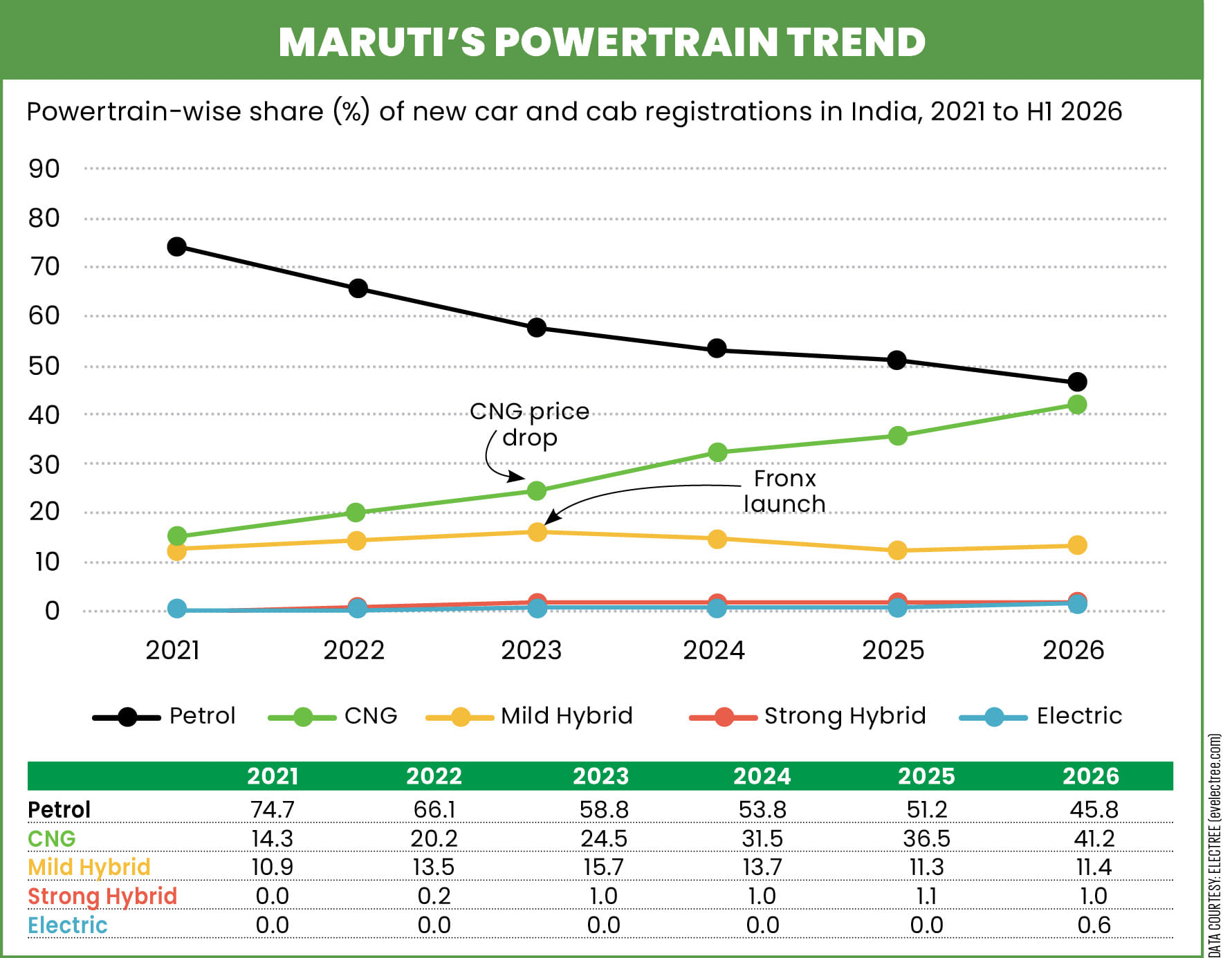
By then, Maruti had already addressed many of the product-related concerns and could respond with a broad factory-fitted portfolio. CNG’s share of Maruti’s new registrations, including private cars and cabs, increased from 14.3 percent in 2021 to 41.2 percent in the first half of 2026. Petrol’s share fell from 76.5 percent to 45.9 percent over the same period. The sharpest jump came between 2023 and 2024, when CNG’s share rose from 24.6 percent to 32 percent.
Commercial vehicles remain important. Cabs account for around 10 percent of Maruti’s cumulative registrations, but contribute more than a quarter of its CNG volumes. However, private buyers now account for the larger part of demand.
“Earlier, if a customer was opting for CNG, the perception was that he was just a very value-conscious customer,” says Maruti Suzuki’s senior executive officer, sales and marketing, Partho Banerjee. “Now, especially with underbody CNG, the profile of customers has changed. They are not only looking for mileage, they also want an aspirational product that feels no different to drive from gasoline.”
CNG moves beyond small cars
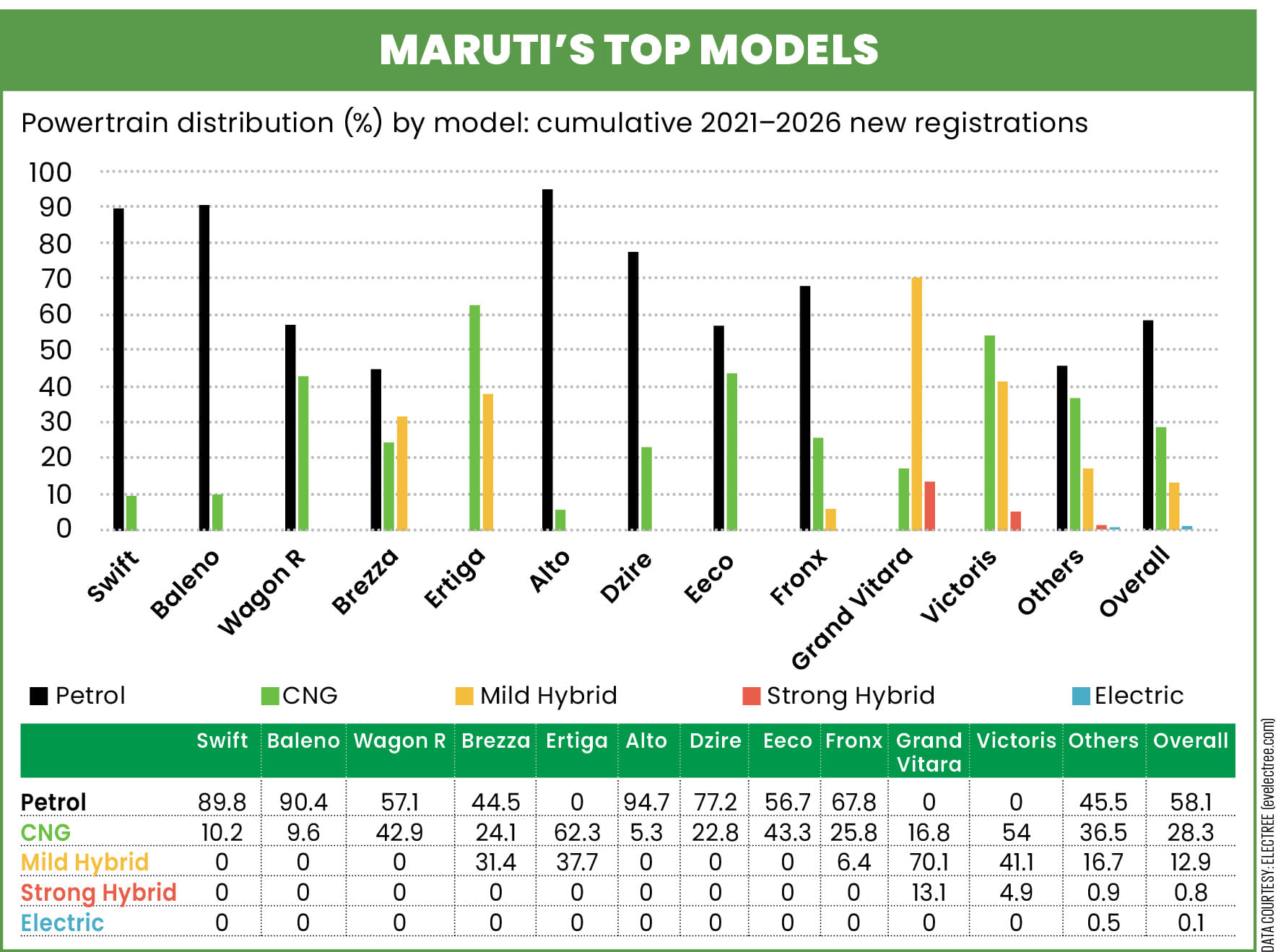
The WagonR remains the quintessential CNG hatchback. Its CNG share has risen from 42.5 percent in 2021 to 49.1 percent in the first half of 2026. Nearly every second WagonR buyer now chooses it. CNG is also gaining ground in models that were once overwhelmingly petrol-powered. Its share in the Swift has increased from 1.9 percent to 18 percent, while the Baleno has moved from 2.1 percent to 14.5 percent.
The Dzire has seen an even sharper change. CNG accounted for just 1.7 percent of its registrations in 2021. Its share reached 33.6 percent in H1 2026.
Adoption is strongest in vehicles that cover longer distances or carry more passengers. CNG’s share of the Ertiga has risen from 39.3 percent to 73.6 percent, while the Eeco has moved from 31 percent to 55.2 percent. Big shifts are now also taking place in the SUV segment, where buyers care as much about design, features and luggage space as they do about mileage.
CNG accounts for 43.4 percent of Brezza registrations, compared with 23.7 percent for its Smart Hybrid powertrain in H1 2026. The Fronx has seen its CNG share rise from 10.9 percent at launch in 2023 to 35.4 percent in the first half of 2026. In the case of the Grand Vitara, it has increased from zero to 23.9 percent.
The Victoris has moved even faster. CNG accounted for 55.2 percent of its registrations in the first half of 2026. Its strong response shows that midsize SUV buyers will accept the fuel when it does not compromise the overall ownership experience.
Better packaging removes a key compromise
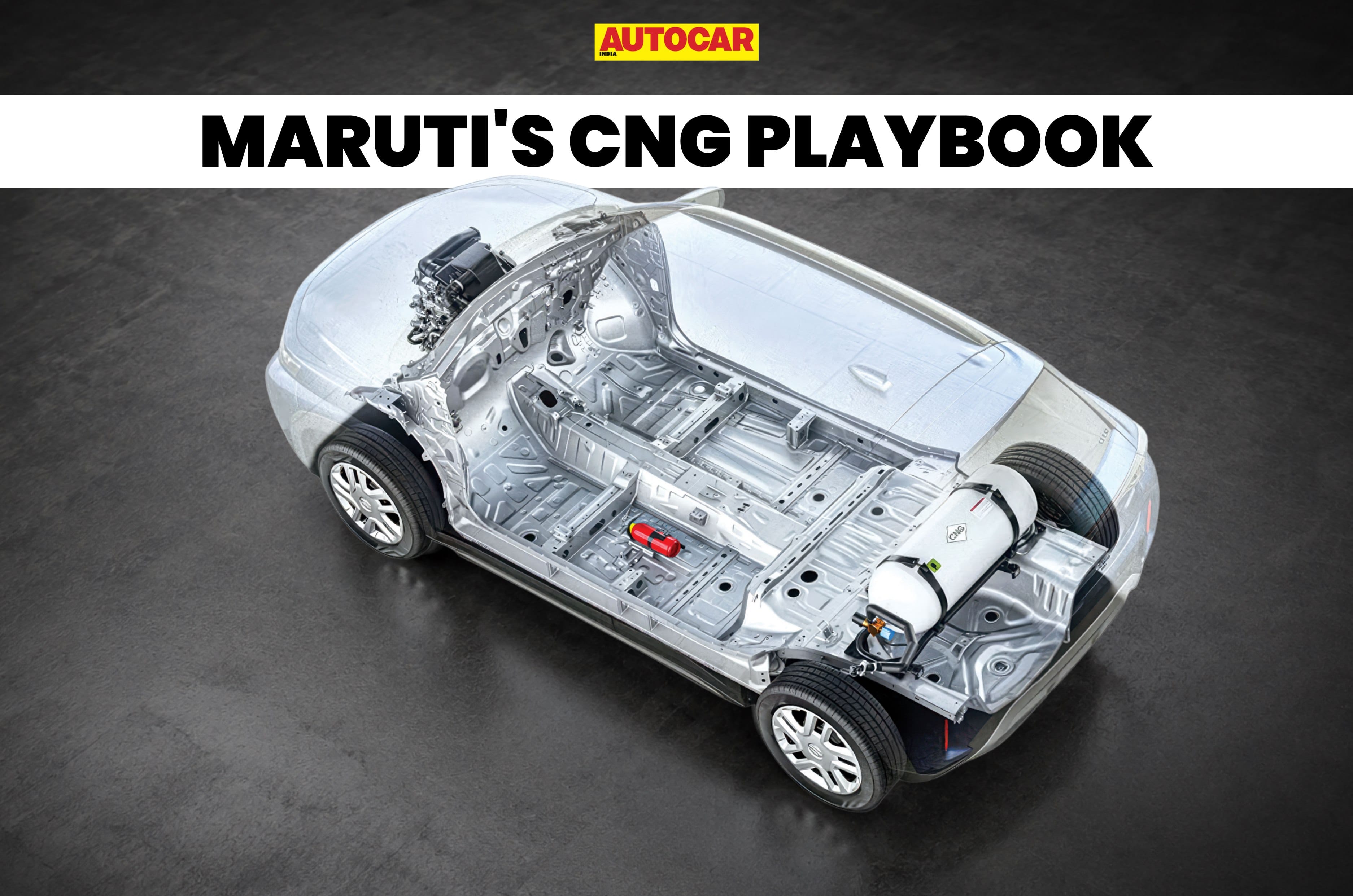
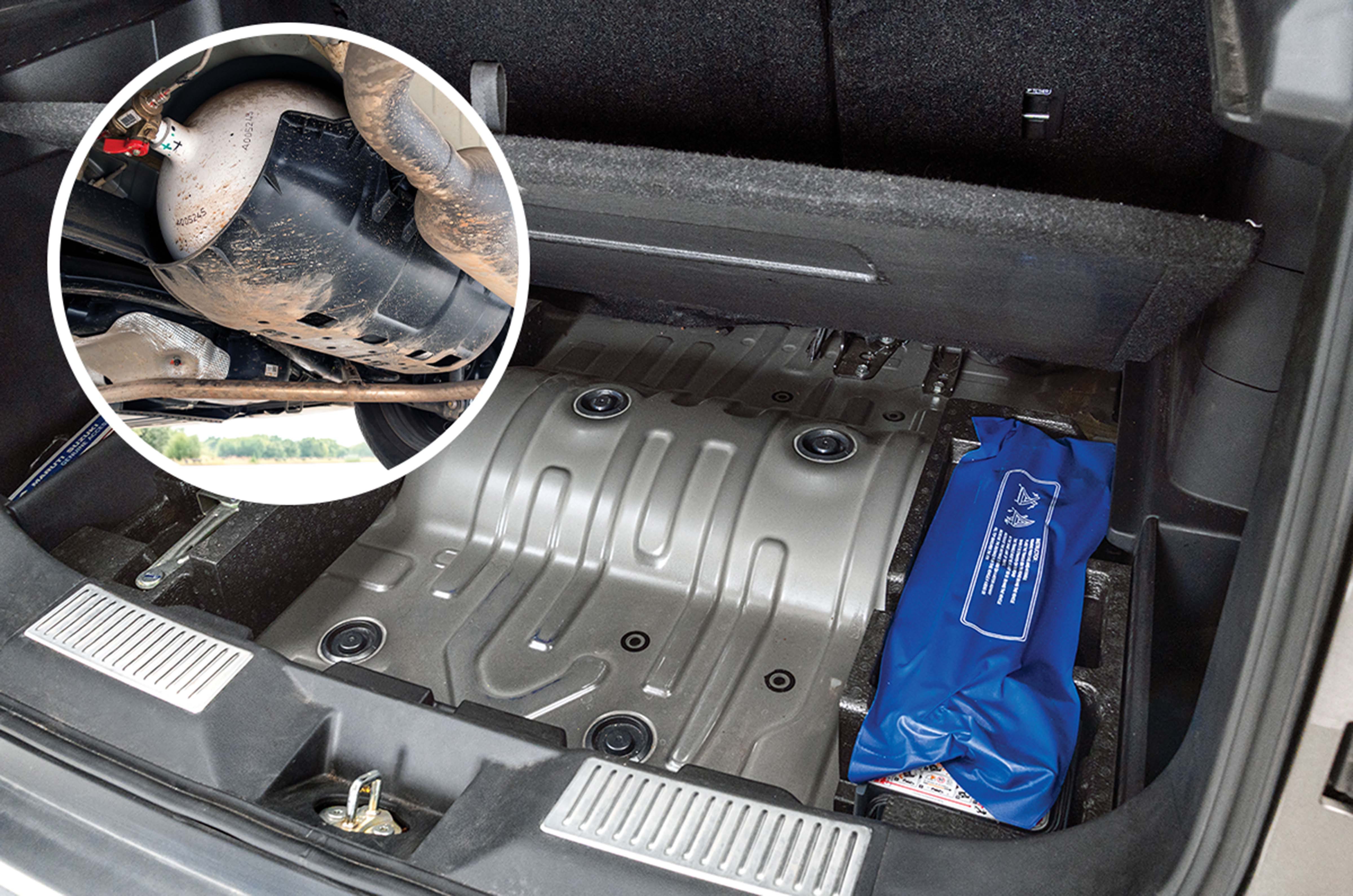
A large cylinder placed across the luggage compartment has long been one of CNG’s biggest drawbacks. Dual-cylinder systems that divide the gas storage between two smaller cylinders positioned lower in the boot, or placing an underbody tank, create a flatter and more usable luggage area.
Maruti’s latest CNG development is the underbody tank on the Victoris and Brezza.
Central to Maruti’s next CNG push is the underbody CNG setup. The newly launched CNG Brezza opts for this setup – just like in the Victoris – where the tank is placed beneath the floor. It does negate the ability to have the spare tyre, but luggage space remains useable with a boot that is pretty much free of intrusions.
“If I don’t compromise on my driving experience, and I don’t lose boot space, and on top of that I reduce my total cost of ownership, then it is ticking all the boxes. Why would I not go for it?” says Banerjee.
Filling the gap left by diesel
Maruti’s exit from diesel in 2020 left a gap for buyers seeking low running costs without moving to an EV. CNG has become the answer. It cannot match a diesel engine’s torque or effortless highway performance, but it can cost substantially less to run than petrol, particularly for buyers covering high monthly distances. The vehicle can also switch to petrol when CNG is unavailable.
CNG will not replace diesel in every situation. Drivers who regularly travel on highways, carry heavy loads or value strong mid-range performance may still prefer diesel where it remains available. But for largely urban use, CNG now delivers much of the economic advantage that once made diesel attractive. The market has moved beyond mileage.
CNG has reached around 20 percent penetration without requiring buyers to completely change the way they use a car. There is no home charger to install, and the vehicle can run on petrol when the gas runs out. But the next stage will require more than savings. Buyers moving onto larger and more expensive vehicles will expect performance, equipment, luggage space and convenience alongside lower running costs.
“Quality, reliability and mileage are now hygiene,” says Banerjee. “You need to give all of that anyway and then still meet their lifestyle expectations.”
With the Victoris establishing CNG in the midsize SUV market and the Brezza addressing the compact SUV space, Maruti is now taking the fuel deeper into India’s largest vehicle segment, and it says there’s more to come.
रक्षाबंधन पर्व पर योगी सरकार की ओर से महिलाओं और बहनों को दी गई निशुल्क बस यात्रा की सुविधा का पहले दिन बड़ी संख्या में यात्रियों ने लाभ उठाया। 27 अगस्त से शुरू हुई निशुल्क बस यात्रा में उत्तर प्रदेश राज्य सड़क परिवहन निगम की बसों में 6.03 लाख से अधिक महिलाओं ने सफर किया। वहीं, महिलाओं के साथ सफर करने वाले 3.22 लाख से अधिक सहयात्रियों को भी निशुल्क यात्रा का लाभ मिला। इस तरह पहले दिन कुल 9.26 लाख से अधिक यात्रियों ने बिना किराया दिए सफर किया। परिवहन निगम के मुताबिक इस निशुल्क यात्रा की कुल कीमत 9.06 करोड़ रुपये से अधिक आंकी गई है।
यूपीएसआरटीसी प्रधान प्रबंधक (संचालन) अनिल कुमार ने कहा कि रक्षाबंधन पर महिलाओं को किसी तरह की परेशानी न हो और उन्हें सुगम व सुरक्षित यात्रा उपलब्ध कराई जा सके, इसके लिए परिवहन निगम के अधिकारी और कर्मचारी भी युद्ध स्तर पर जुटे हुए हैं। सरकार और विभाग प्रमुख की तरफ से मिले निर्देशों के क्रम में यात्रियों की बढ़ी संख्या को देखते हुए जरूरत के अनुसार अतिरिक्त बसों को भी सड़कों पर उतारा गया है। बसों के संचालन, यात्रियों की सुविधा और व्यवस्था पर निगम की ओर से लगातार निगरानी रखी जा रही है।
इन पांच क्षेत्रों में अब तक सबसे ज्यादा निशुल्क सेवा का लाभ लिया
पहले दिन महिलाओं और उनके साथ सफर करने वाले सहयात्रियों की कुल संख्या के लिहाज से मुरादाबाद क्षेत्र सबसे आगे रहा, जहां 62,586 महिलाओं और 32,203 सहयात्रियों समेत कुल 94,789 यात्रियों ने निशुल्क यात्रा की। इसके बाद हरदोई में 82,920, गोरखपुर में 68,152, लखनऊ में 64,590 और बरेली में 58,309 यात्रियों ने इस सुविधा का लाभ उठाया। इन पांच क्षेत्रों में ही कुल करीब 3.69 लाख यात्रियों ने निशुल्क सफर किया।
यात्रियों ने की सरकार के कदम की सराहना
रक्षाबंधन पर निशुल्क यात्रा की सुविधा मिलने से महिलाओं के साथ उनके सहयात्रियों में भी खुशी का माहौल रहा। यात्रियों का कहना है कि त्योहार पर बड़ी संख्या में लोगों को अपने घर जाने की जरूरत होती है। ऐसे में निशुल्क बस यात्रा से परिवारों पर पड़ने वाला आर्थिक बोझ कम हुआ है। महिलाओं के साथ सहयात्री भी योगी सरकार की इस पहल की सराहना कर रहे हैं। साथ ही अतिरिक्त बसों के संचालन से भीड़ के बीच घर पहुंचने में सुविधा मिलने की बात यात्रियों ने कही।
परिवहन निगम कर रहा निरीक्षण
निशुल्क यात्रा का लाभ पात्र यात्रियों तक पहुंचे और पूरी प्रक्रिया में पारदर्शिता बनी रहे, इसके लिए परिवहन निगम की टीमें विभिन्न क्षेत्रों में औचक निरीक्षण भी करेंगी। इससे बसों में निशुल्क यात्रा की व्यवस्था की निगरानी के साथ यात्रियों को उपलब्ध कराई जा रही सुविधाओं का भी जायजा लिया जाएगा।
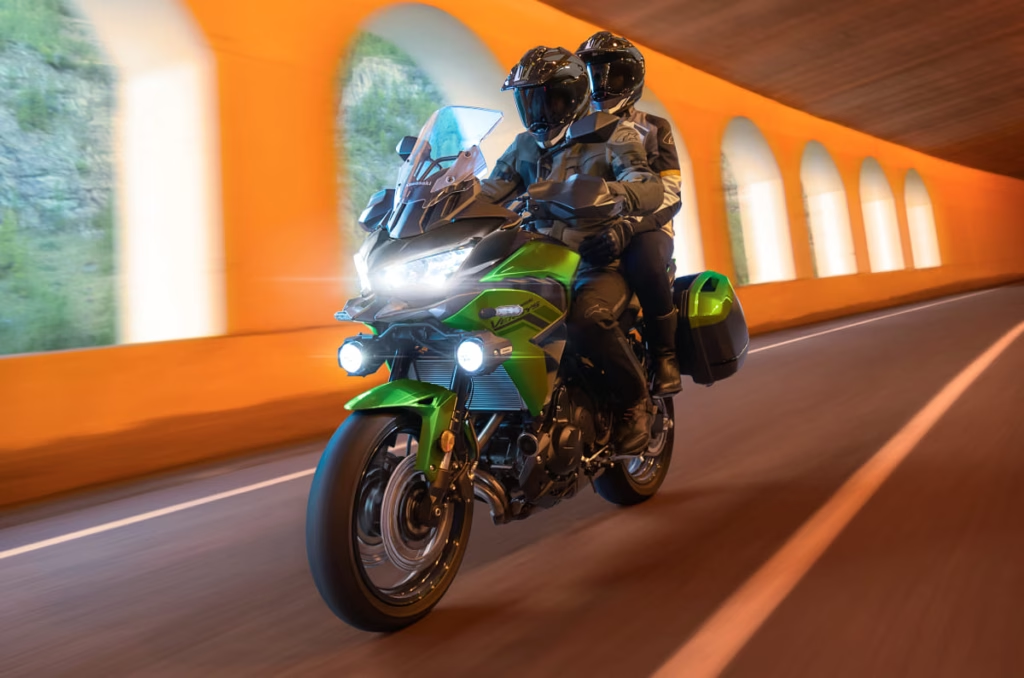
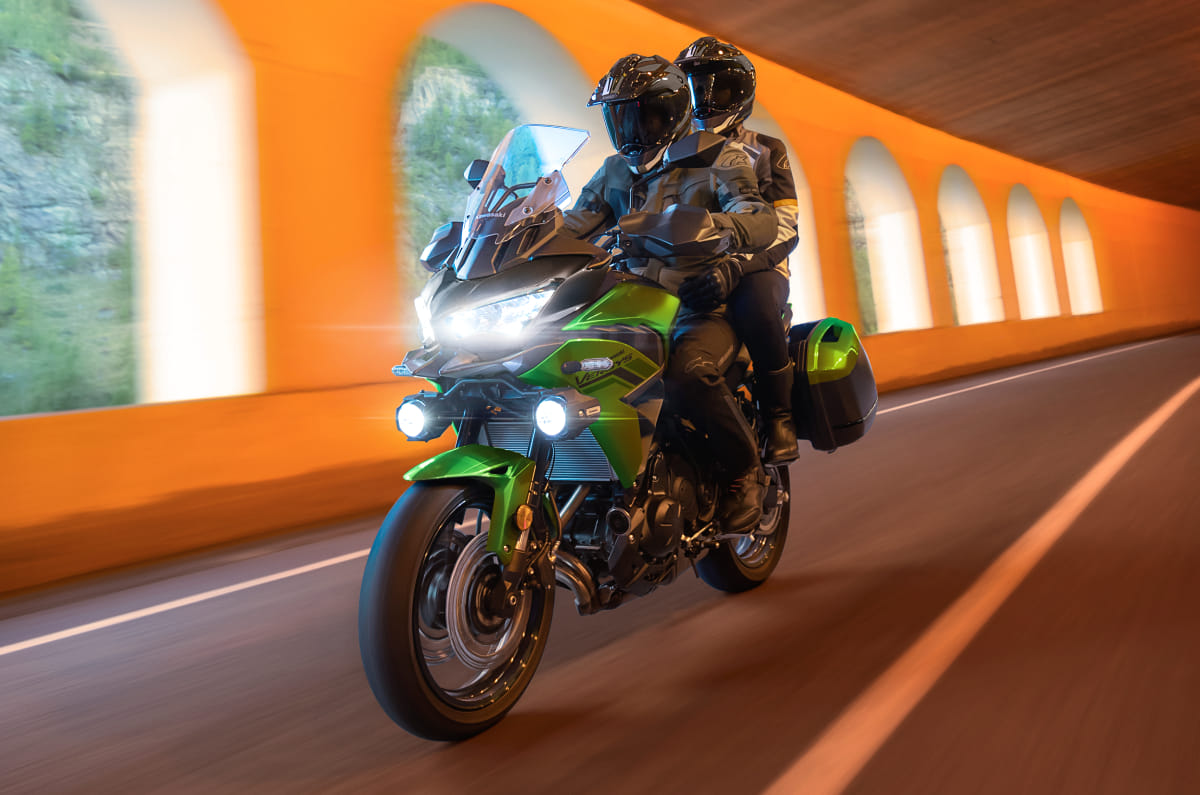
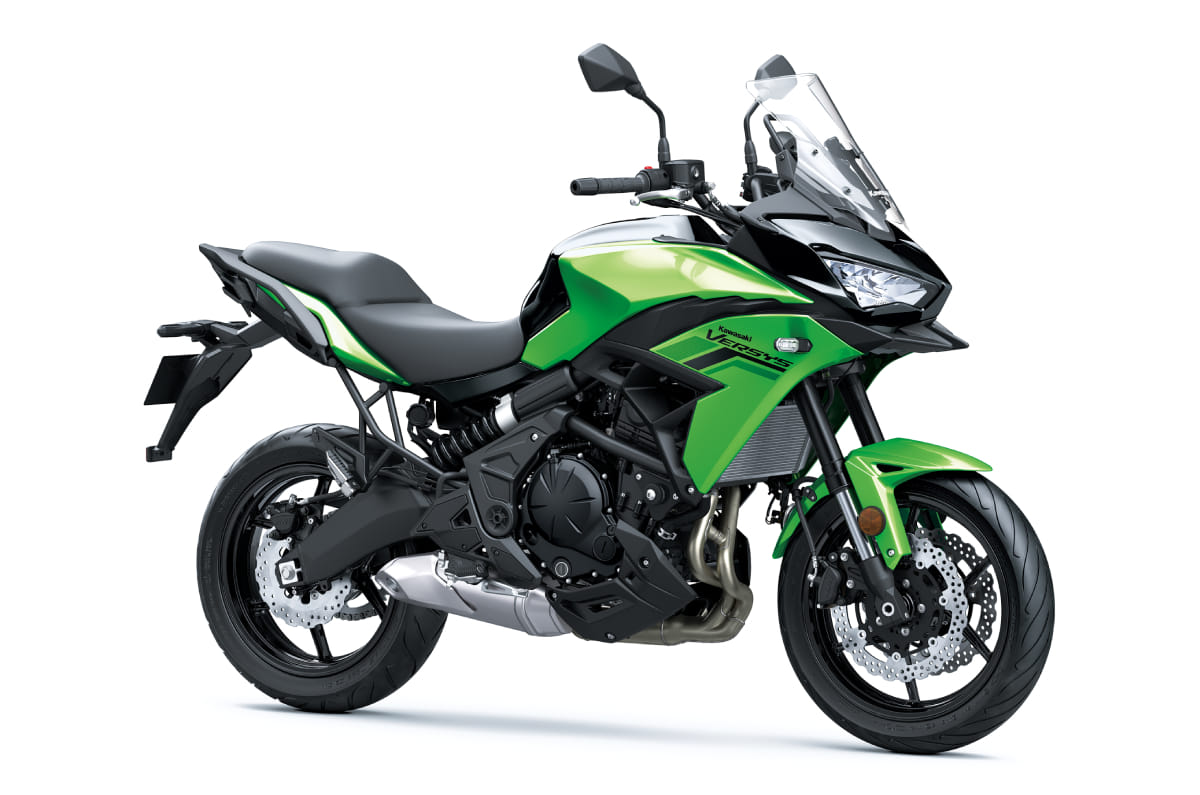
Kawasaki has launched the MY27 Versys 650 at Rs 8.63 lakh (ex-showroom), with deliveries likely to have already begun, as the brand had said they would start by the end of August.
Available in a single Candy Lime Green colour option
649cc parallel-twin makes 67hp and 61Nm
2027 Kawasaki Versys 650 details
Mechanically unchanged from the MY26 model
The update over the outgoing MY26 model is limited to a new Candy Lime Green colour option (the only colour available on the MY27), with no changes to the mechanical package, feature set or pricing.
The MY27 carries over the full package of last year’s bike, with power coming from a 649cc liquid-cooled parallel-twin producing 67hp at 8,500rpm and 61Nm at 7,000rpm, paired with a 6-speed gearbox and an assist-and-slipper clutch.
The chassis uses a tubular diamond frame with a 41mm telescopic front fork offering 150mm of travel and a rear monoshock with remote preload adjustability and 145mm of travel. Features include an adjustable windscreen, 4.3-inch TFT display with smartphone connectivity, traction control and full LED lighting.
With its big 21-litre fuel tank brimmed, the bike weighs 220kg. The seat height is set at a fairly tall 845mm, and the Versys 650 has a healthy 170mm of ground clearance, which should help it tackle most Indian road surfaces. Priced at Rs 8.63 lakh, the Kawasaki Versys 650 sits in a niche of its own in the Indian market with its closest competition being the Honda NX500 (Rs 7.44 lakh).
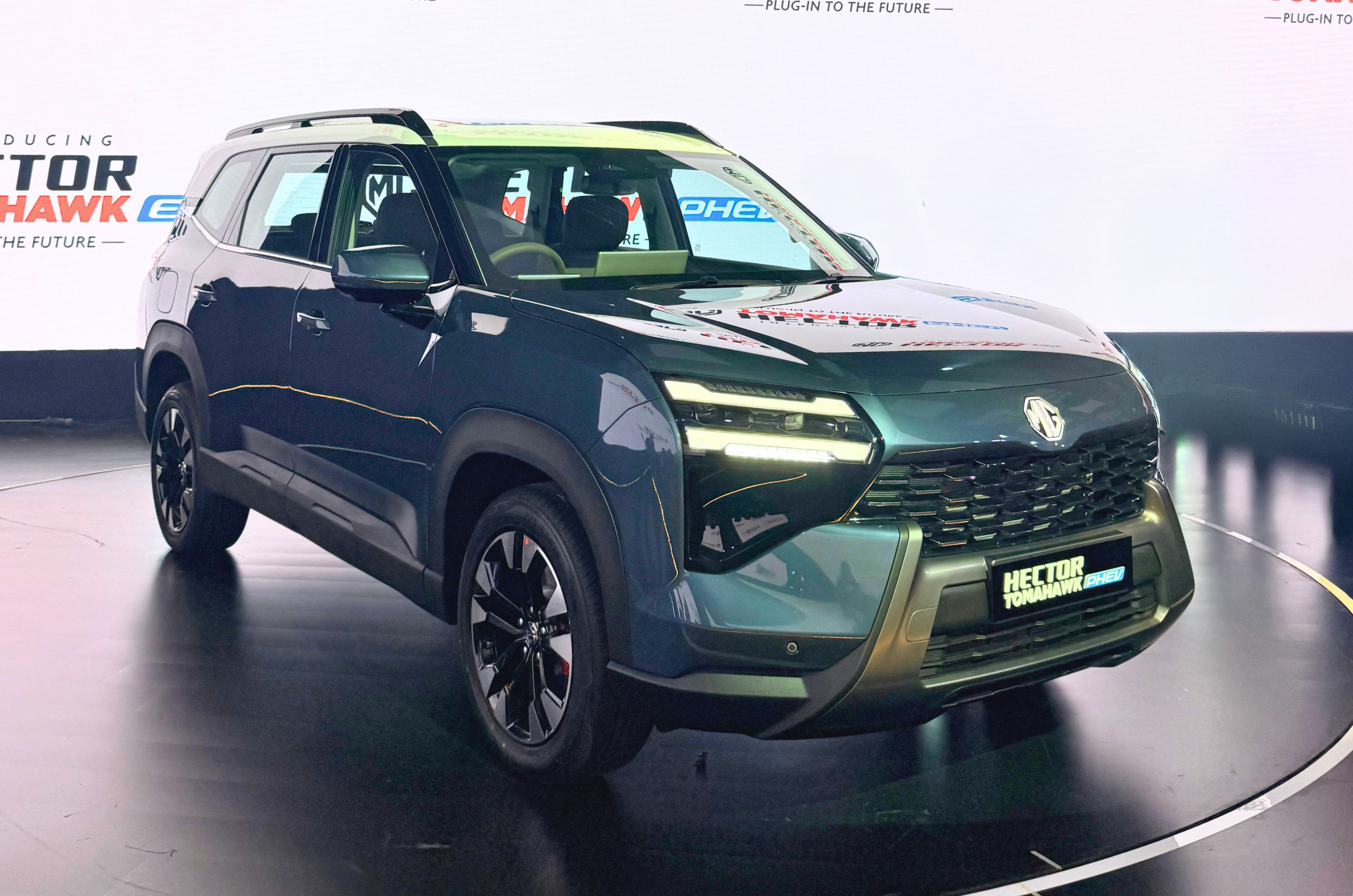
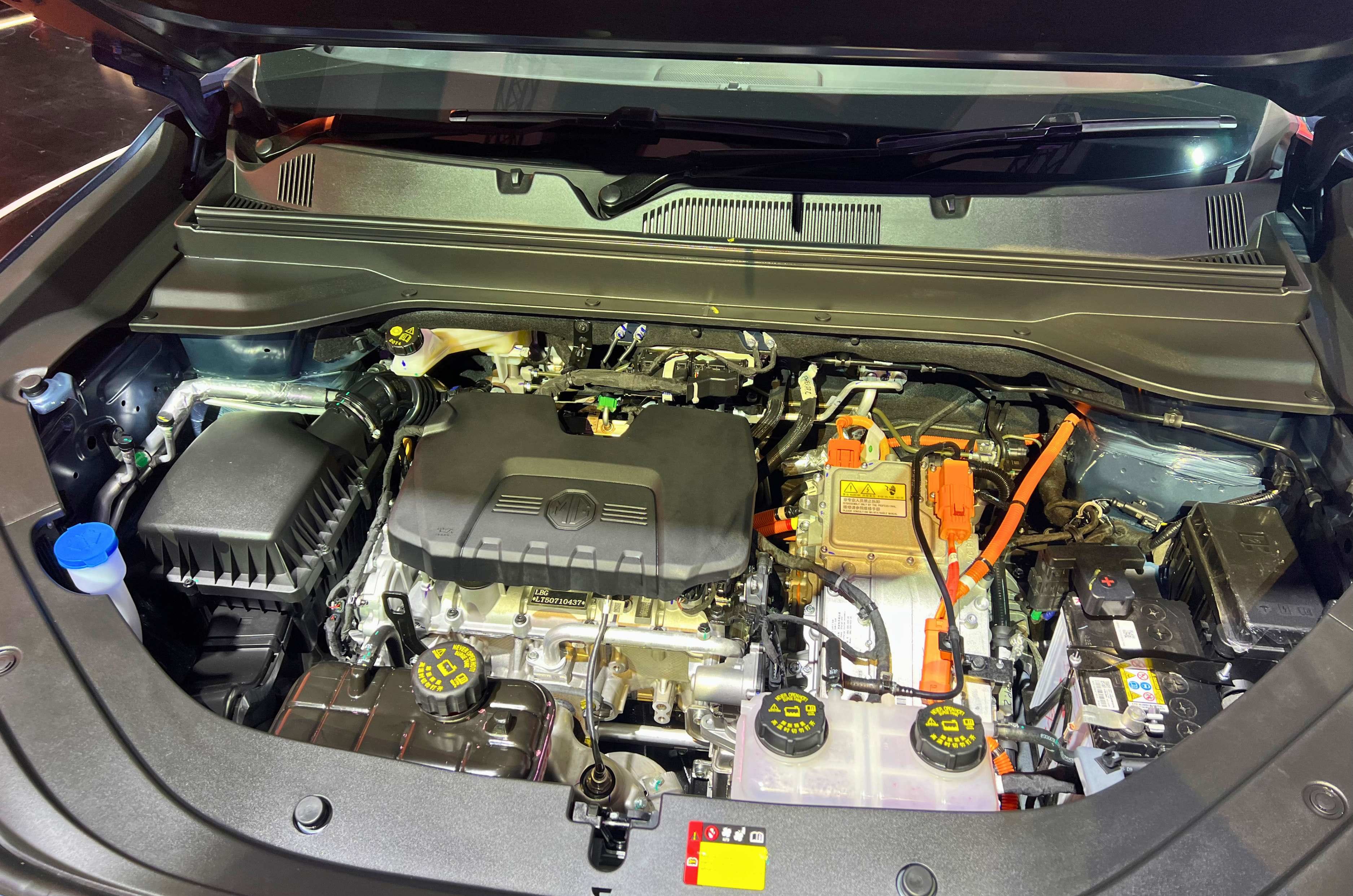
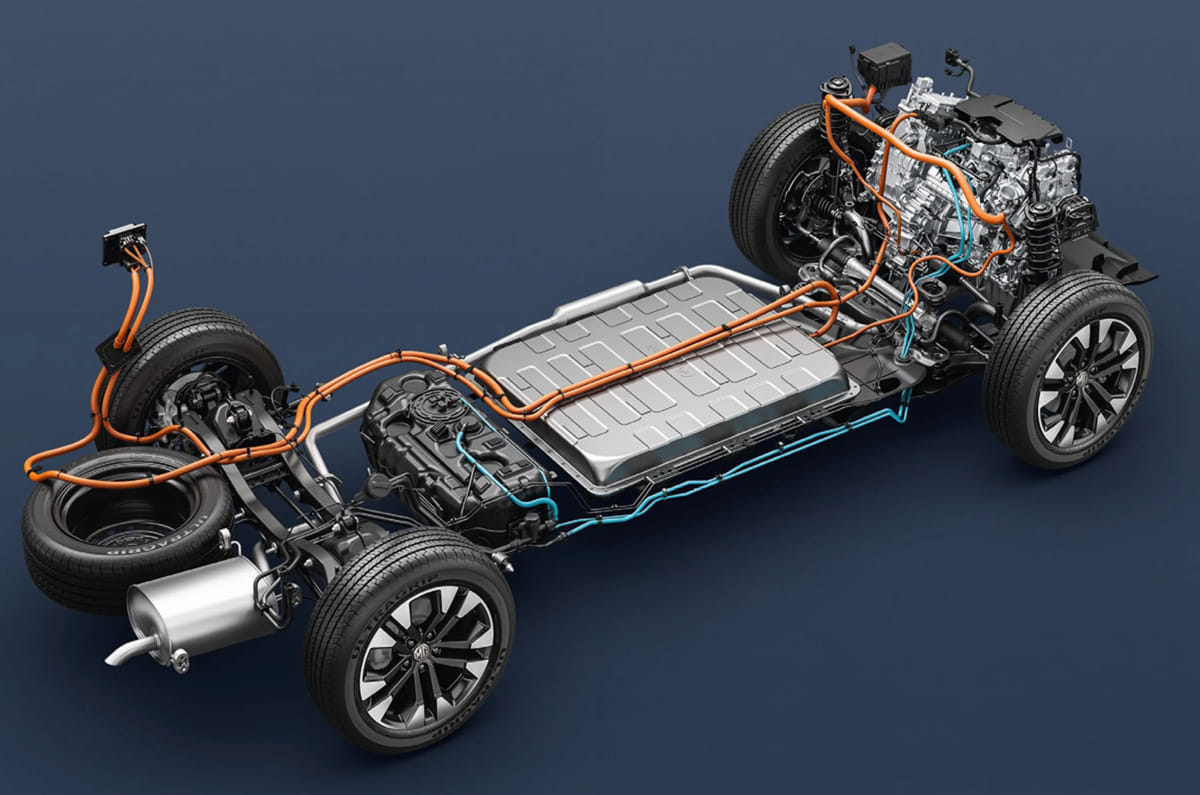
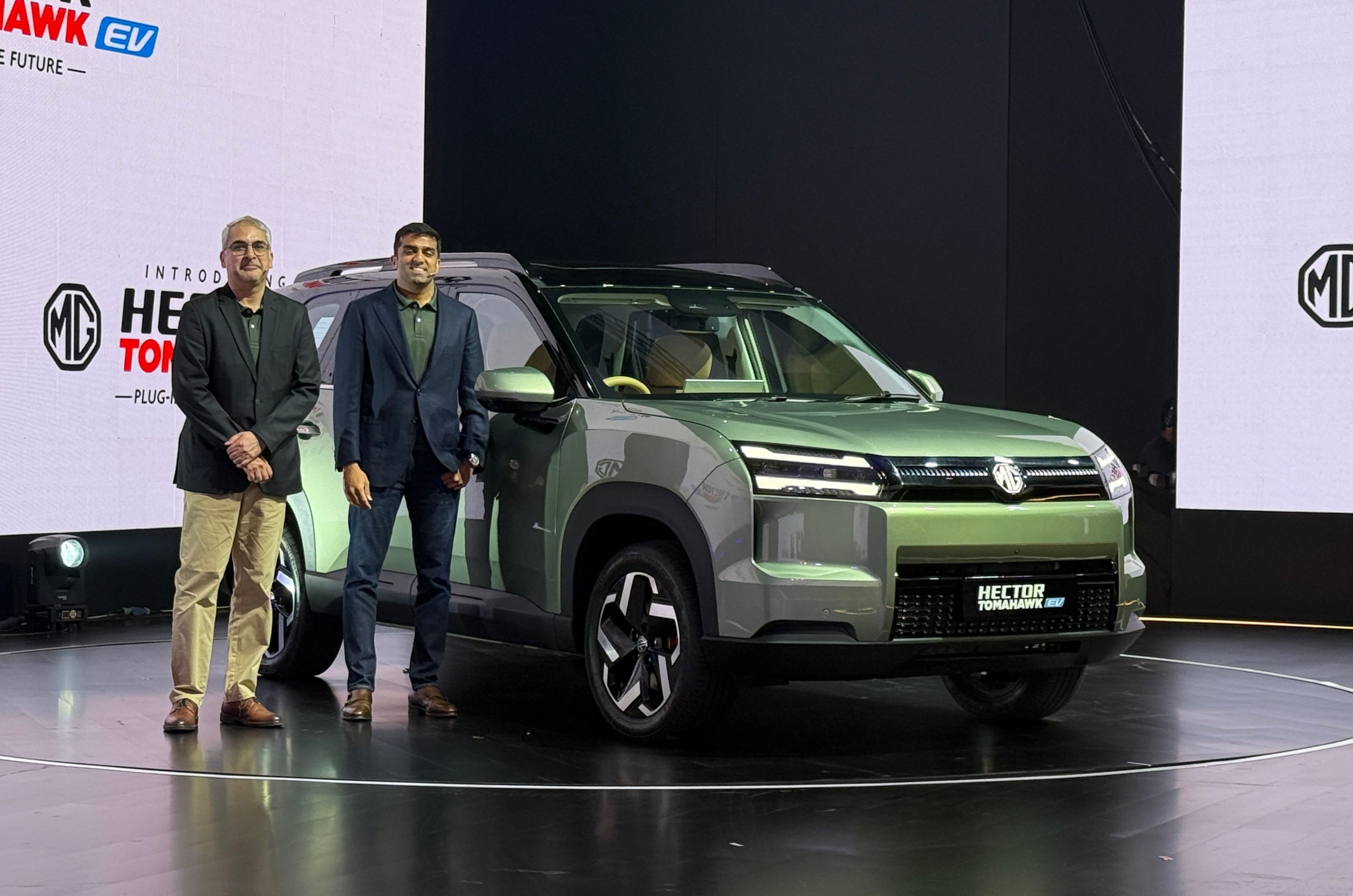
JSW MG Motor is betting on plug-in hybrid technology to attract buyers of executive diesel SUVs, with the Hector Tomahawk PHEV forming the centrepiece of its strategy. The company believes the powertrain can offer the lower running costs of electric driving without the range concerns associated with a pure EV. The seven-seat Tomahawk PHEV offers more than 115km of electric-only driving and a combined range of over 1,100km.
MG claims Rs 3,000-4,000 running cost per 1,000km, versus Rs 10,000-12,000 for diesel
JSW MG targets the executive SUV market that sells 50,000 units a month
Company aims for 5,000-6,000 Tomahawk sales per month
JSW MG eyes executive diesel SUV market
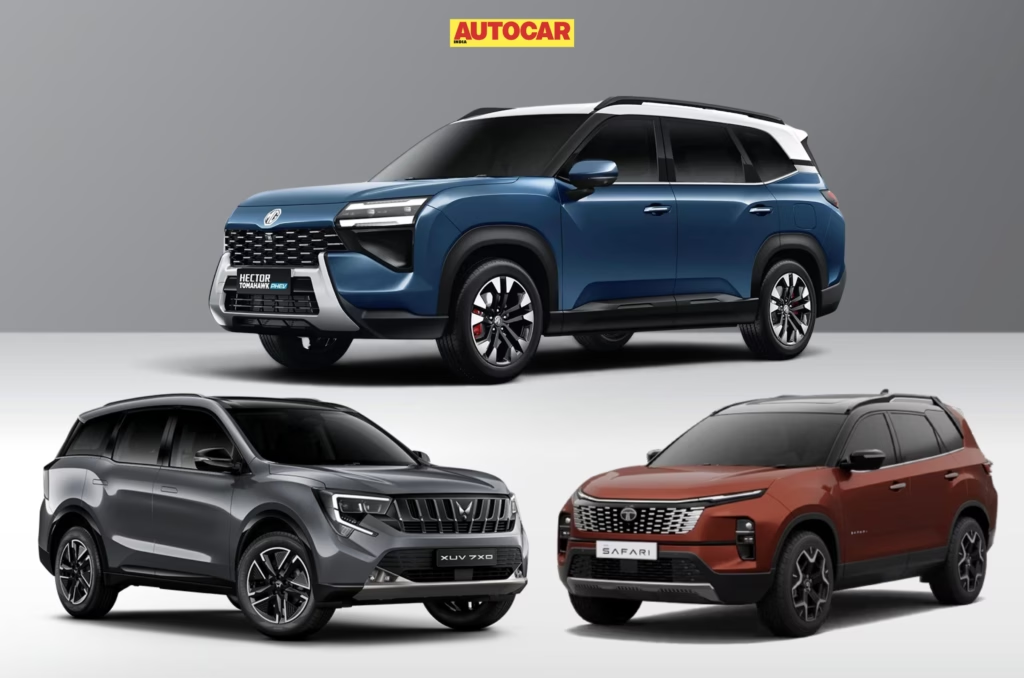
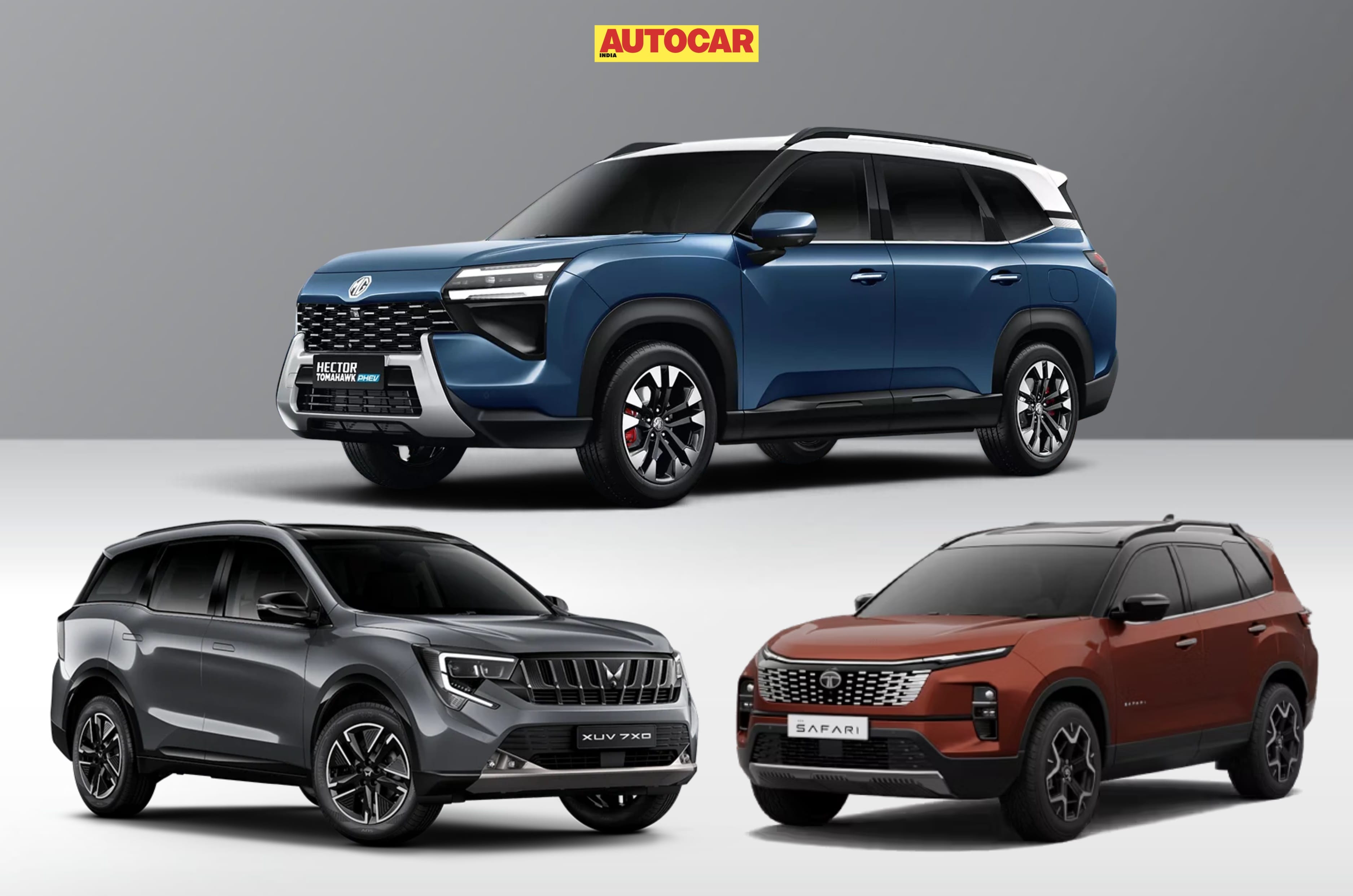
JSW MG says that the executive SUV market in India accounts for around 50,000 units a month, with diesel SUVs contributing about 40,000 units and EVs around 10,000. The diesel segment includes models such as the Mahindra XUV 7XO, Tata Safari and Tata Harrier, while the EV segment includes the Mahindra XEV 9S, Tata Harrier EV and Kia Carens Clavis EV.
“If you look at the diesel C-sized market, that is about 40,000 units. The C-sized EV market is about 10,000. So, the total potential is 50,000,” says Anurag Mehrotra, Managing Director, JSW MG Motor India.
The Hector Tomahawk PHEV is priced Rs 1.5 lakh-2 lakh higher than the top diesel automatic variants of the Mahindra XUV 7XO, Tata Safari and Tata Harrier. JSW MG expects to justify this premium through lower operating costs and the overall product package.
The Tomahawk PHEV has no direct mass-market PHEV rival in India and will instead target diesel SUV buyers. According to surveys cited by Mehrotra, owners in this segment typically cover 18,000-20,000km a year, with many combining daily commutes with regular outstation travel.
“They want the fuel efficiency of a diesel because they are travelling longer distances,” says Mehrotra. “For them, there has not been a new-energy choice. The plug-in hybrid takes away the range issue completely, but still gives you the unit economics of an EV.”
Vinay Raina, Chief Commercial Officer, JSW MG Motor India, says many of these customers choose diesel because it suits their usage rather than because of a fixed preference for the fuel. “The Indian consumer is willing to experiment,” he says.
MG Hector Tomahawk PHEV running costs
JSW MG estimates that covering 1,000km in the PHEV could cost Rs 3,000-4,000, compared with Rs 10,000-12,000 in a diesel SUV. This calculation assumes regular charging and substantial use of the electric mode. “The plug-in hybrid will be close to a third of the cost of running a diesel,” Mehrotra says.
The company says the PHEV can return around 22kpl when used mainly as a hybrid, while its claimed 30-50kpl figure assumes regular charging and that most daily travel is completed using electric power. These figures include kilometres covered on electricity and therefore cannot be directly compared with the fuel economy of a diesel SUV. Charging costs also need to be included when calculating the overall running cost.
This also means the claimed savings will depend on how the vehicle is used. Owners who regularly charge at home and complete much of their daily driving on battery power should use less petrol, while those who rarely charge will rely more on the engine and lose much on the projected savings.
JSW MG targets 5,000-6,000 Tomahawks a month
JSW MG is targeting monthly sales of 5,000-6,000 units for the Tomahawk range, which includes the EV and PHEV. The company has not specified how that volume will be split between the two powertrains. At the targeted volume, JSW MG estimates the range would account for around 10-12 percent of the 50,000-unit monthly executive SUV opportunity it has identified.
The Tomahawk EV and PHEV are based on the company’s ADAPT architecture, which is designed to support multiple powertrain types. JSW MG currently has achieved around 45 percent localization in the Tomahawk and plans to increase this to approximately 70 percent by next year, with the investment already approved by its board.