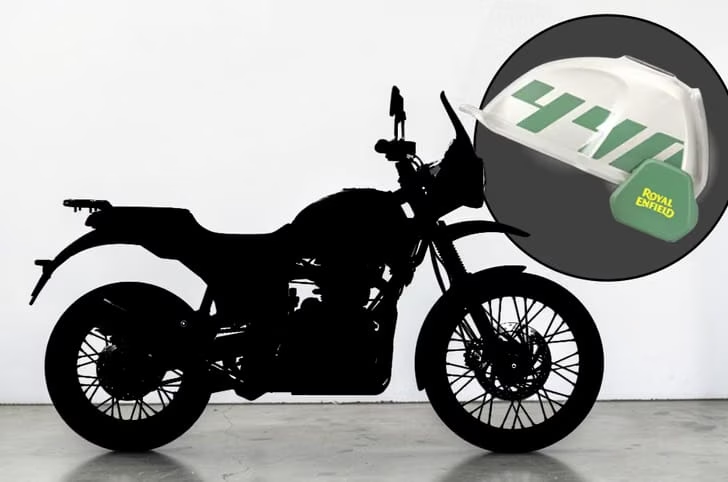
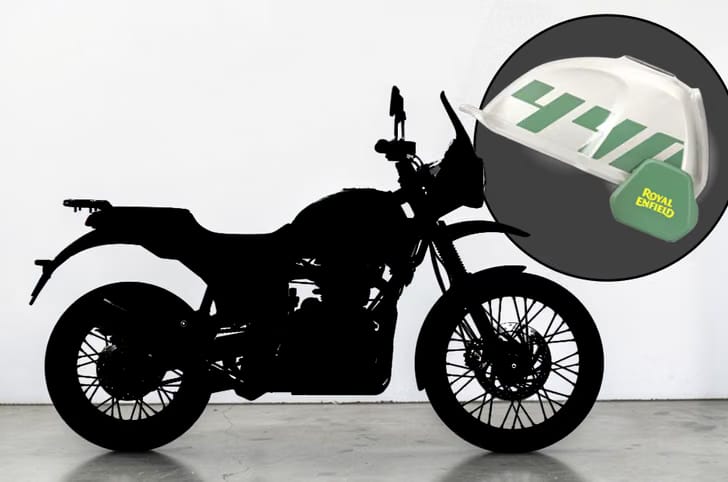
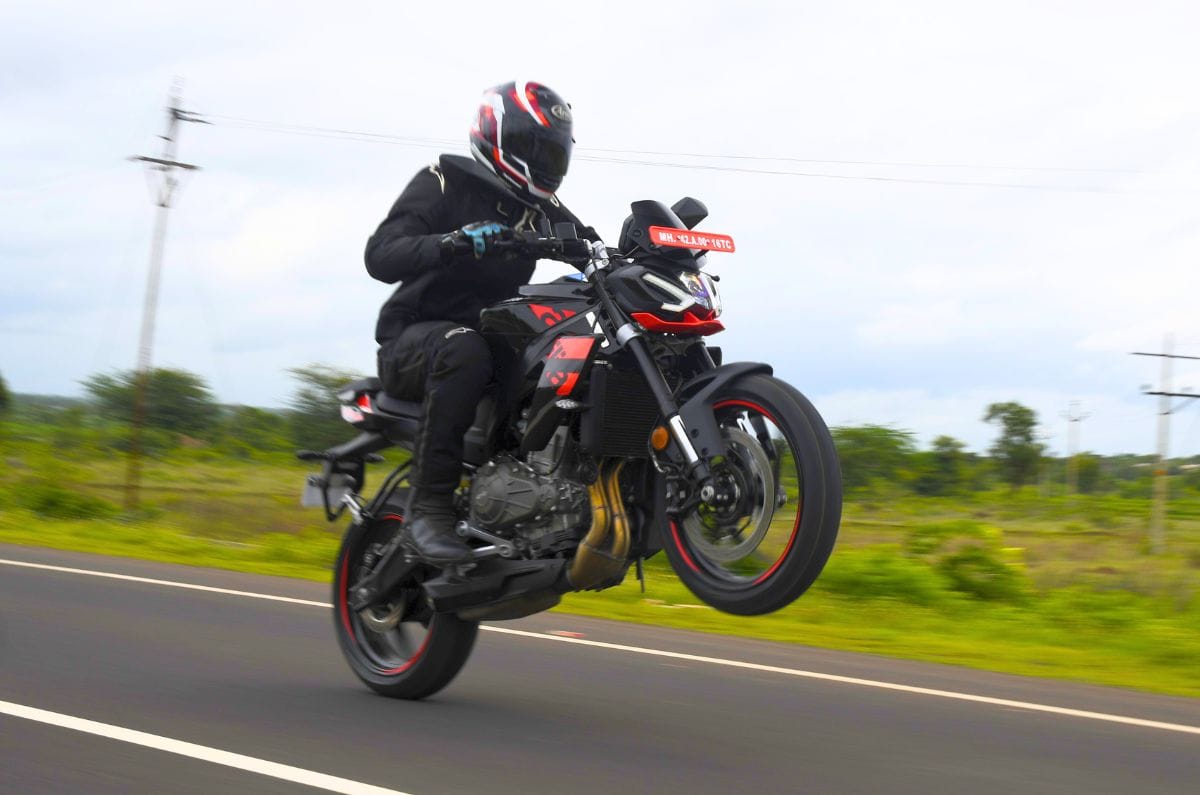
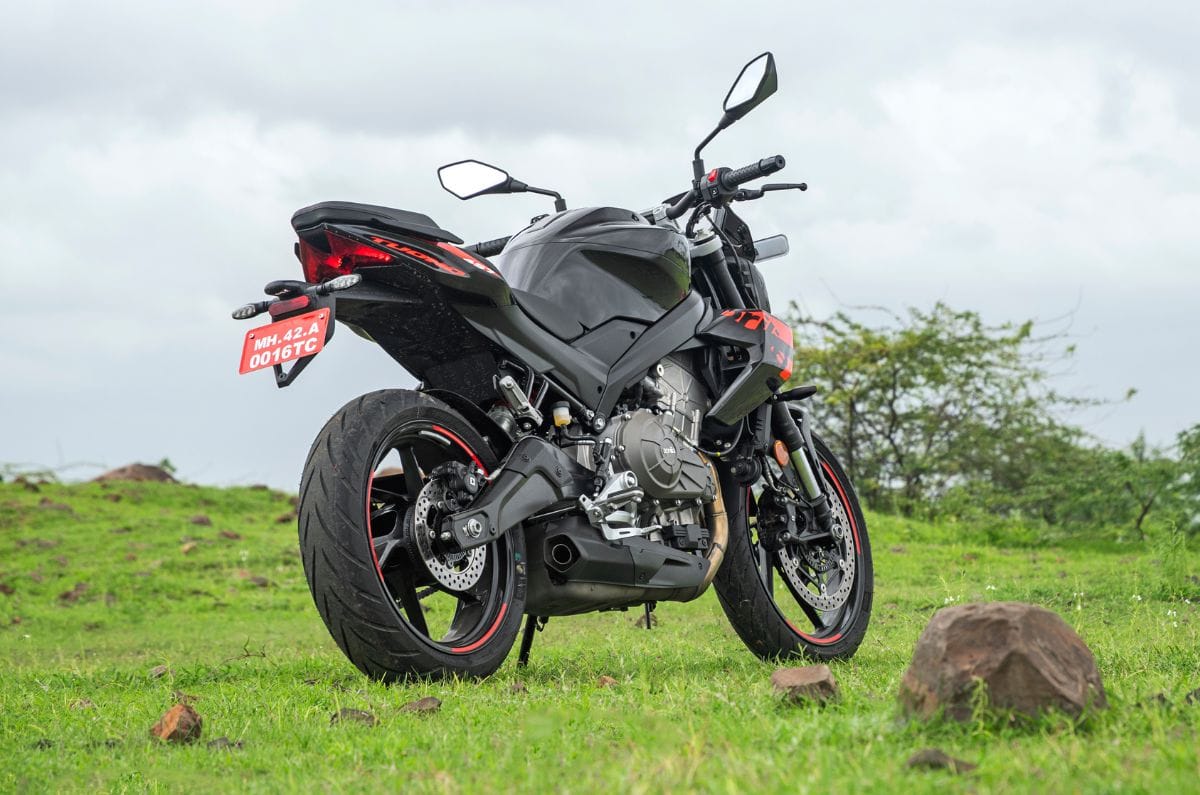
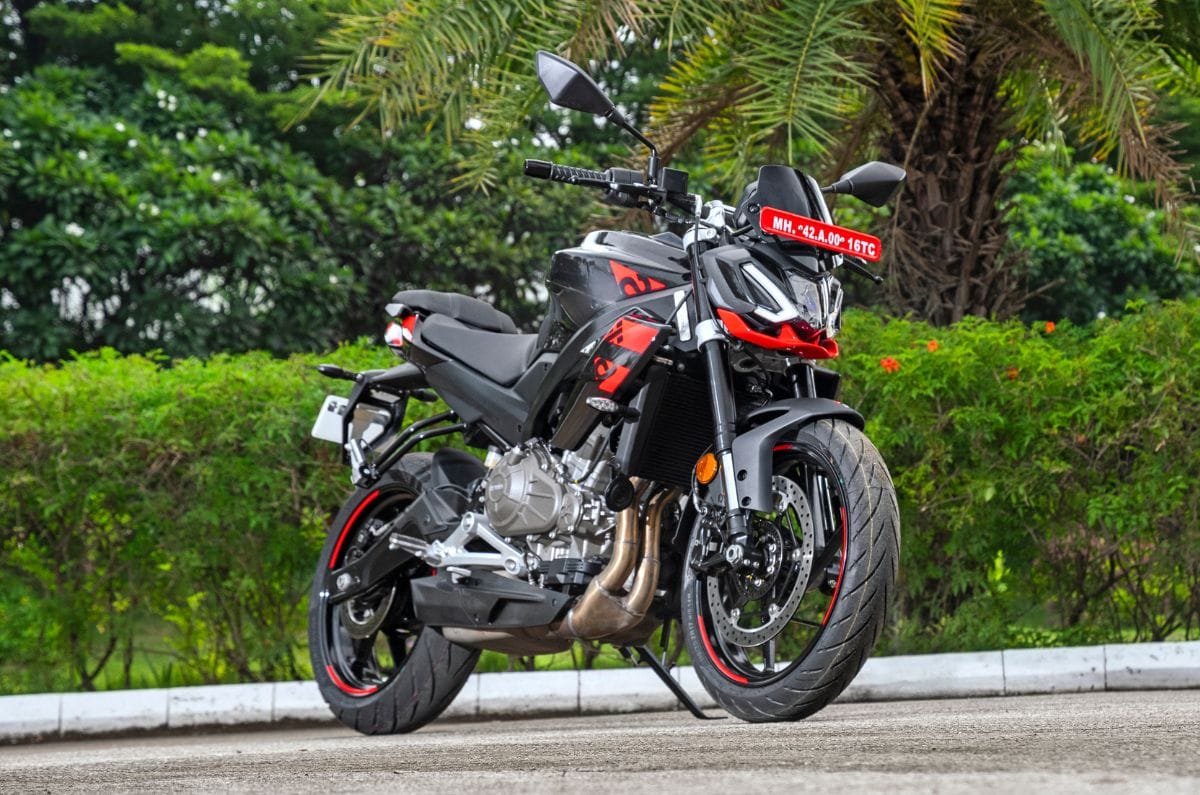
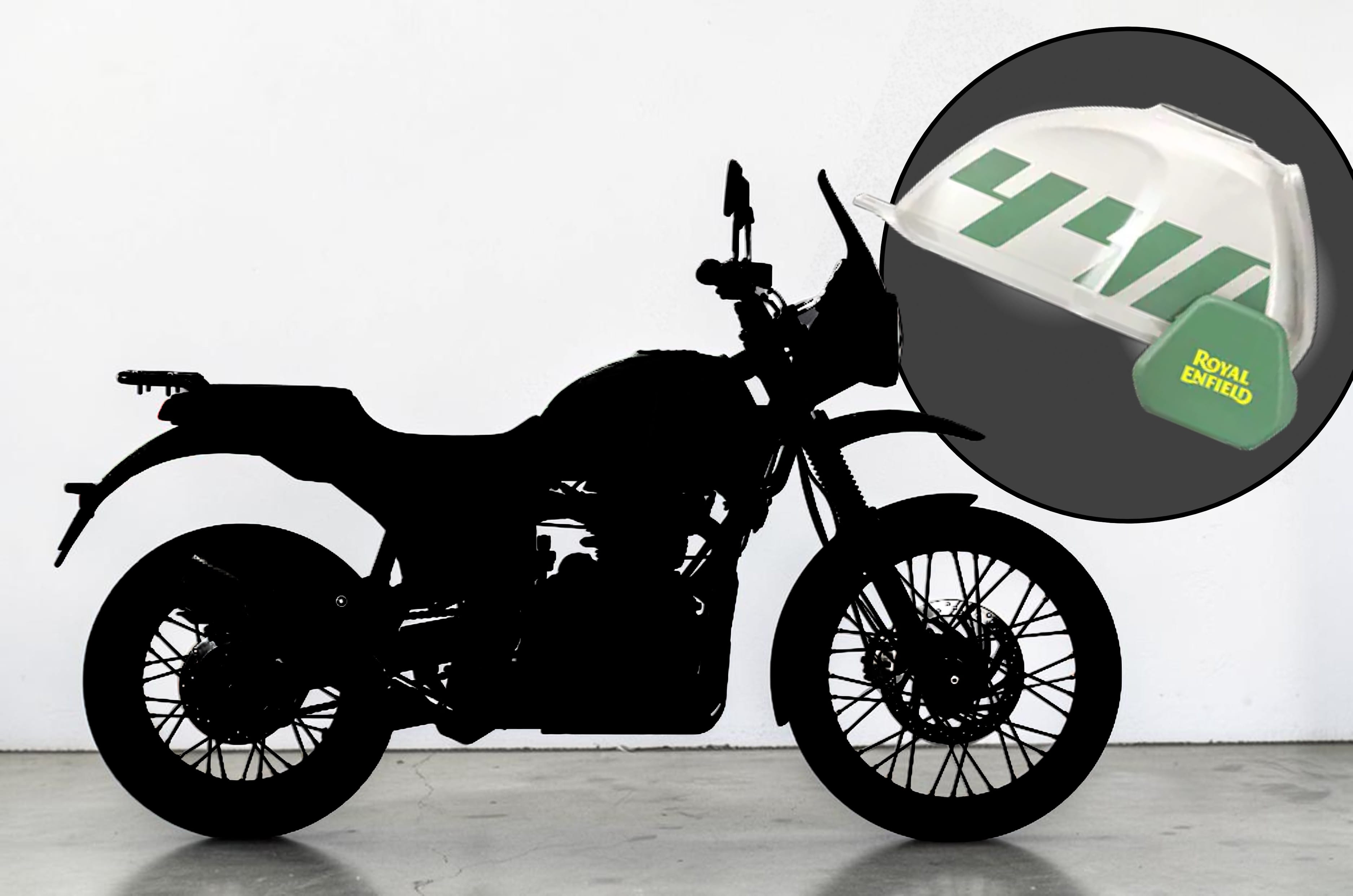
Royal Enfield has confirmed that the Himalayan 440 will launch on September 4. We’d first reported back in April that Royal Enfield was working on the Himalayan 440, and learnt last week that a launch was imminent. The bike is expected to fill the gap between the Scram 440 and the Himalayan 450, offering a more accessible, less technologically complex alternative to the latter.
Based on the Scram 440’s LS440 engine
Expected to get a 21-inch front wheel and increased suspension travel
Royal Enfield Himalayan 440: What we know so far
The 21-inch front wheel and spoked rims will be the main differentiators over the Scram 440
The Himalayan 440 will be built on the same foundation as the updated Scram 440, using the LS440 engine. On the Scram, it produces 25.4hp at 6,250rpm and 34Nm at 4,000rpm, which is marginally higher than the 411’s 24.5hp and 32Nm, thanks to a 3mm larger bore. No mechanical changes to the engine are expected, mirroring how the Himalayan 411 and Scram 411 shared identical powerplants.
The most significant difference over the Scram 440 will be the wheel setup. The Scram 440 uses a 19-inch front and 17-inch rear wheel combination suited to road use, while the Himalayan 440 is expected to return to the 411’s off-road-oriented 21-inch front wheel, likely with tubed wire-spoke rims. Suspension travel is also expected to step up to 200mm at the front, like on the Himalayan 411, from the 190mm on the Scram.
The Himalayan 440 is not expected to be as technologically complex as the Himalayan 450, which brought a TFT display, turn-by-turn navigation, a USD front fork and a 6-speed gearbox with a slipper clutch to the lineup. Instead, the 440 is expected to cater to buyers who prefer the simpler, more familiar character of the 411.
Currently, the Scram 440 is priced from Rs 2.25 lakh to Rs 2.32 lakh, while the Himalayan 450 costs Rs 3.08 lakh to Rs 3.40 lakh. Somewhere between those two models is where the Royal Enfield Himalayan 440 is likely to be positioned.
MACH Travel Q1 Results: मुंबई की मैक ट्रैवल सॉल्यूशंस लिमिटेड ने वित्त वर्ष 2027 की पहली तिमाही के नतीजे जारी किए हैं। कंपनी का प्रदर्शन काफी मजबूत रहा। रेवेन्यू में जबरदस्त बढ़ोतरी हुई। मुनाफे में भी तेज उछाल आया।
MACH Travel Solutions को पहले MACH Conference & Events Ltd के नाम से जाना जाता था। कंपनी का कहना है कि अब सिर्फ MICE कारोबार तक सीमित नहीं रहना चाहती। उसका फोकस टेक्नोलॉजी आधारित और अलग-अलग तरह की ट्रैवल सेवाओं वाला प्लेटफॉर्म बनाने पर है।
मुनाफा 307% बढ़ा
कंपनी का टैक्स के बाद मुनाफा यानी PAT भी तेजी से बढ़ा। यह सालाना आधार पर 307% बढ़कर ₹6.17 करोड़ हो गया। वित्त वर्ष 2026 की पहली तिमाही में कंपनी का PAT ₹1.52 करोड़ था।
अन्य आय समेत EBITDA ₹8.92 करोड़ रहा। EBITDA मार्जिन 6.09% रहा। कंपनी ने बताया कि कारोबार के विस्तार और नए ग्रोथ वर्टिकल में निवेश से ऑपरेशनल प्रदर्शन को मदद मिली।
रेवेन्यू 538% बढ़कर ₹144 करोड़
जून 2026 को खत्म हुई तिमाही में कंपनी का ऑपरेशंस से रेवेन्यू ₹144.33 करोड़ रहा। एक साल पहले की समान तिमाही में यह ₹22.62 करोड़ था।
इस तरह रेवेन्यू में सालाना आधार पर करीब 538% की बढ़ोतरी हुई। कंपनी के मुताबिक, इसका फायदा उसके अलग-अलग बिजनेस वर्टिकल से मिला। तिमाही के दौरान कॉरपोरेट ट्रैवल, MICE, B2B, लेजर और सरकारी व संस्थागत प्रोजेक्ट्स से कारोबार को सपोर्ट मिला।
GMV ₹252 करोड़ रहा
MACH Travel Solutions ने इस तिमाही से पहली बार ग्रॉस मर्चेंडाइज वैल्यू यानी GMV का आंकड़ा देना शुरू किया है। Q1 FY27 में कंपनी का GMV करीब ₹252 करोड़ रहा। यह कंपनी के अलग-अलग बिजनेस में हुए कुल ट्रैवल ट्रांजैक्शन का पैमाना बताता है।
कंपनी का कहना है कि GMV का आंकड़ा शेयरधारकों और निवेशकों को कारोबार के वास्तविक पैमाने को समझने में मदद करेगा।
MICE से आगे बढ़ रही कंपनी
MACH Travel Solutions का कारोबार पहले मुख्य रूप से MICE (Meetings, Incentives, Conferences and Exhibitions) पर केंद्रित था। अब कंपनी अपने कारोबार को दूसरे क्षेत्रों में भी फैला रही है। कॉरपोरेट ट्रैवल, B2B, लेजर और सरकारी व संस्थागत प्रोजेक्ट्स इसके नए ग्रोथ इंजन बन रहे हैं। कंपनी का कहना है कि इससे कारोबार के लिए ज्यादा व्यापक आधार तैयार हो रहा है।
कंपनी ने तिमाही में बड़े घरेलू और अंतरराष्ट्रीय प्रोजेक्ट्स पर काम जारी रखा। साथ ही अपनी ऑपरेशनल पहुंच और टेक्नोलॉजी आधारित ट्रैवल मैनेजमेंट क्षमताओं को भी मजबूत किया।
पिछले निवेश का असर दिखने लगा
MACH Travel Solutions के चेयरमैन और मैनेजिंग डायरेक्टर अमित भाटिया ने कहा कि Q1 FY27 कंपनी के लिए अहम पड़ाव है। उन्होंने कहा कि कंपनी अब MICE-केंद्रित कारोबार से आगे बढ़कर कई ग्रोथ इंजन वाले टेक्नोलॉजी-इनेबल्ड ट्रैवल प्लेटफॉर्म की ओर बढ़ रही है।
कंपनी को आने वाली तिमाहियों के लिए भी मजबूत बिजनेस पाइपलाइन की उम्मीद है। इससे कॉरपोरेट ट्रैवल, MICE, B2B, लेजर और सरकारी प्रोजेक्ट्स से ग्रोथ जारी रहने की संभावना है।
मैक ट्रैवल सॉल्यूशंस का शेयर बुधवार को 1.76% बढ़कर 171 रुपये पर बंद हुआ। पिछले 1 साल में स्टॉक 28.57% चढ़ा है।
Disclaimer: यहां मुहैया जानकारी सिर्फ सूचना के लिए दी जा रही है। यहां बताना जरूरी है कि मार्केट में निवेश बाजार जोखिमों के अधीन है। निवेशक के तौर पर पैसा लगाने से पहले हमेशा एक्सपर्ट से सलाह लें। मनीकंट्रोल की तरफ से किसी को भी पैसा लगाने की यहां कभी भी सलाह नहीं दी जाती है।
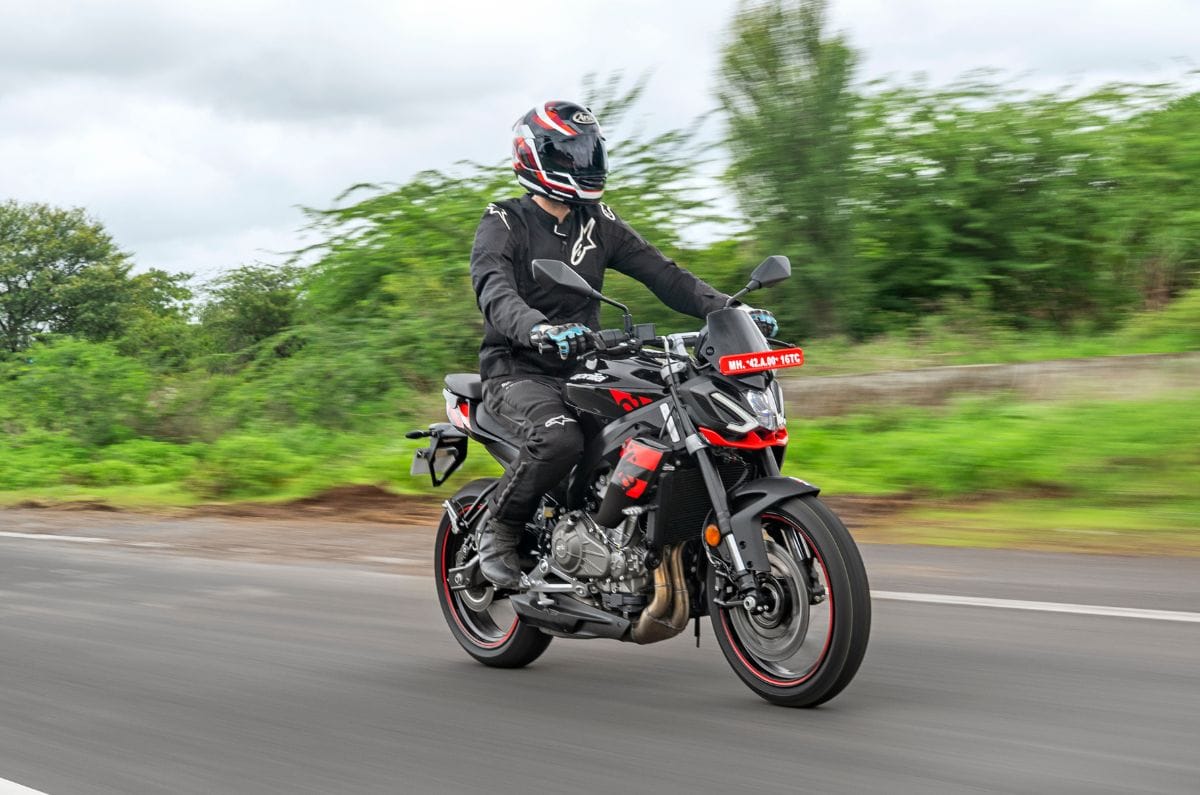
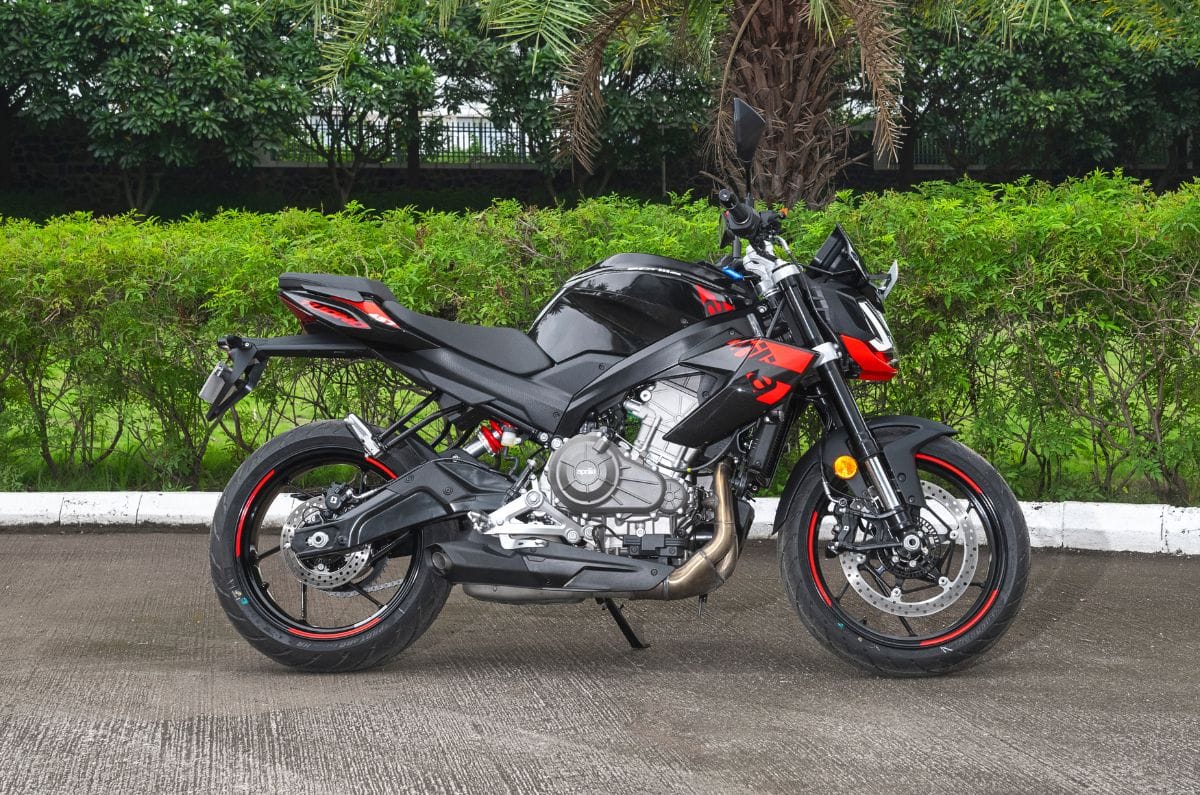
When you hear the words Special Edition, the natural assumption is that this is the special version of a normal bike. Aprilia thinks otherwise, and unlike what the name suggests, the new Special Edition is the only Tuono 457 you can buy in India today.
Tuono 457 Special Edition Comfort – 7/10
The changes are all aimed at making the Tuono a little easier to live with. When first launched, the Tuono was quite literally the naked version of the racy RS 457 with the only differences being in how it looked and the fact that it had a flat handlebar instead of clip-ons. The result was a high capable bike but one that was unforgiving in terms of comfort.
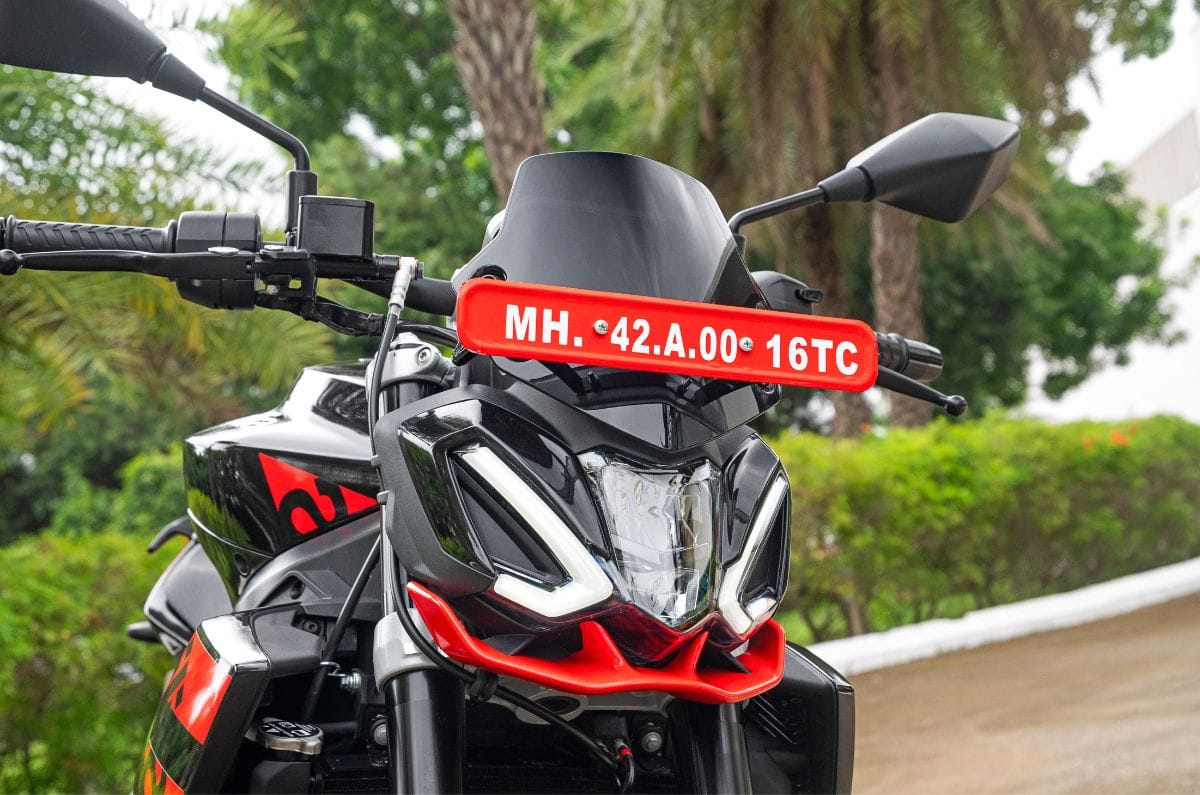
Fly screen is now standard fit
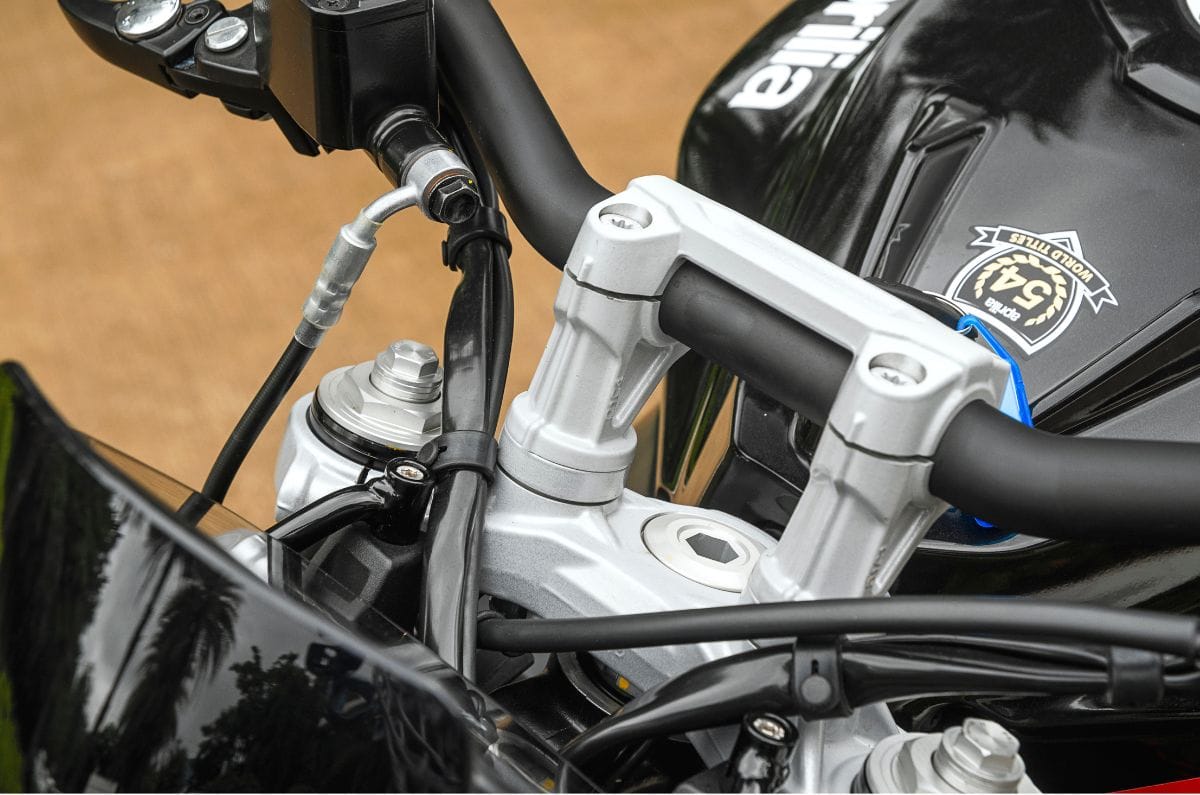
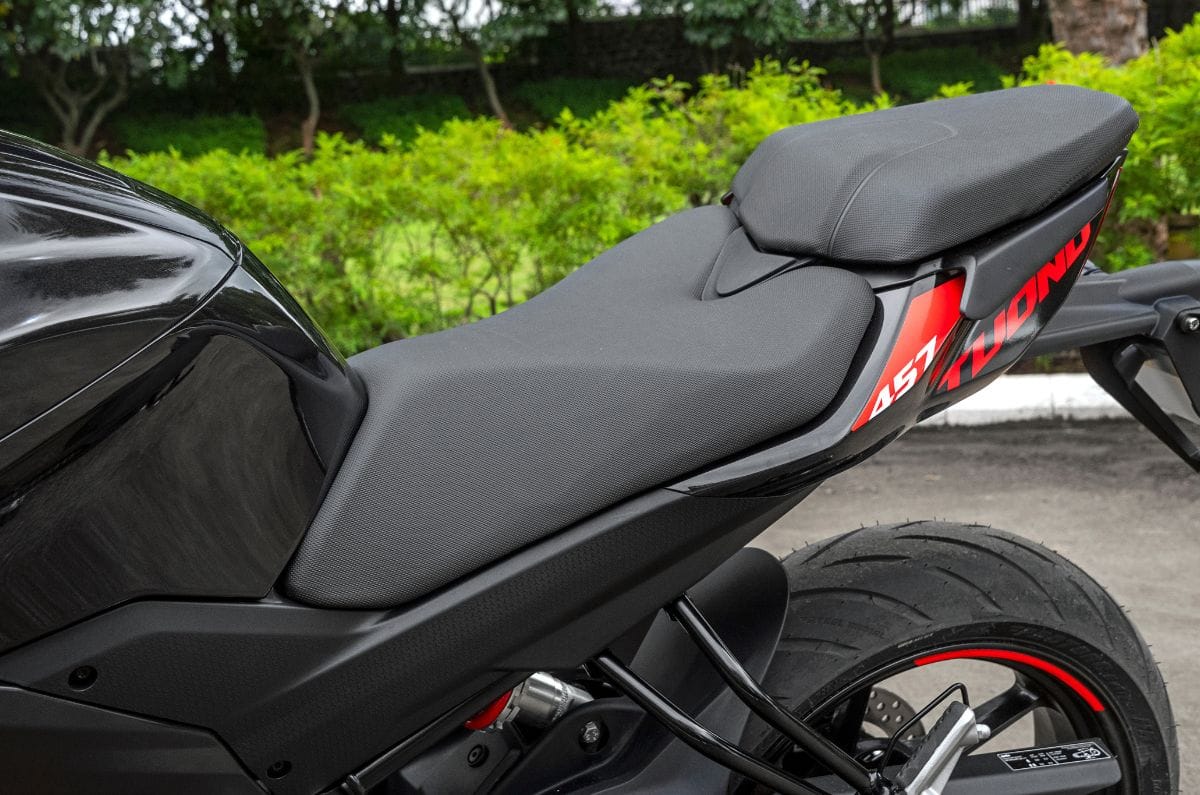
The Special Edition aims to make the Tuono more inviting with tweaks made to the riding position as well as the suspension. The handlebar is the same, but a new riser raises it by about 10mm. While the Tuono used to have the same seats as the RS 457, the rider seat now has additional padding which again raises the seat height by about 10mm.
Same handlebar as before but with taller risers
These two changes may sound marginal, but they have a noticeable effect. At 6’1”, I used to find the Tuono uncomfortably cramped, with my knees feeling locked in place by the tank and the handlebar aggressively low. The new setup improves things and while this is still a compact riding position with high-set footpegs, it’s not punishingly so – I do appreciate the difference it makes to comfort after an hour of riding.
Tuono 457 Special Edition Suspension and Handling – 9/10
Monoshock, adjustable preload, 130 mm wheel travel
Front Tyre Size
110/70 – 17
Rear Tyre Size
150/60 – 17
Brake type
Front – Disc, Rear – Disc
The other change comes in the form of retuned suspension with a focus on comfort. Wheel travel is unchanged, but the compression/rebound damping and spring rates have been reduced a little at the front while the rear gets reduced spring rates as well as a little less compression damping – rebound damping is similar to before. Aprilia stresses that while the suspension is softer, it will not bottom out under hard riding conditions.
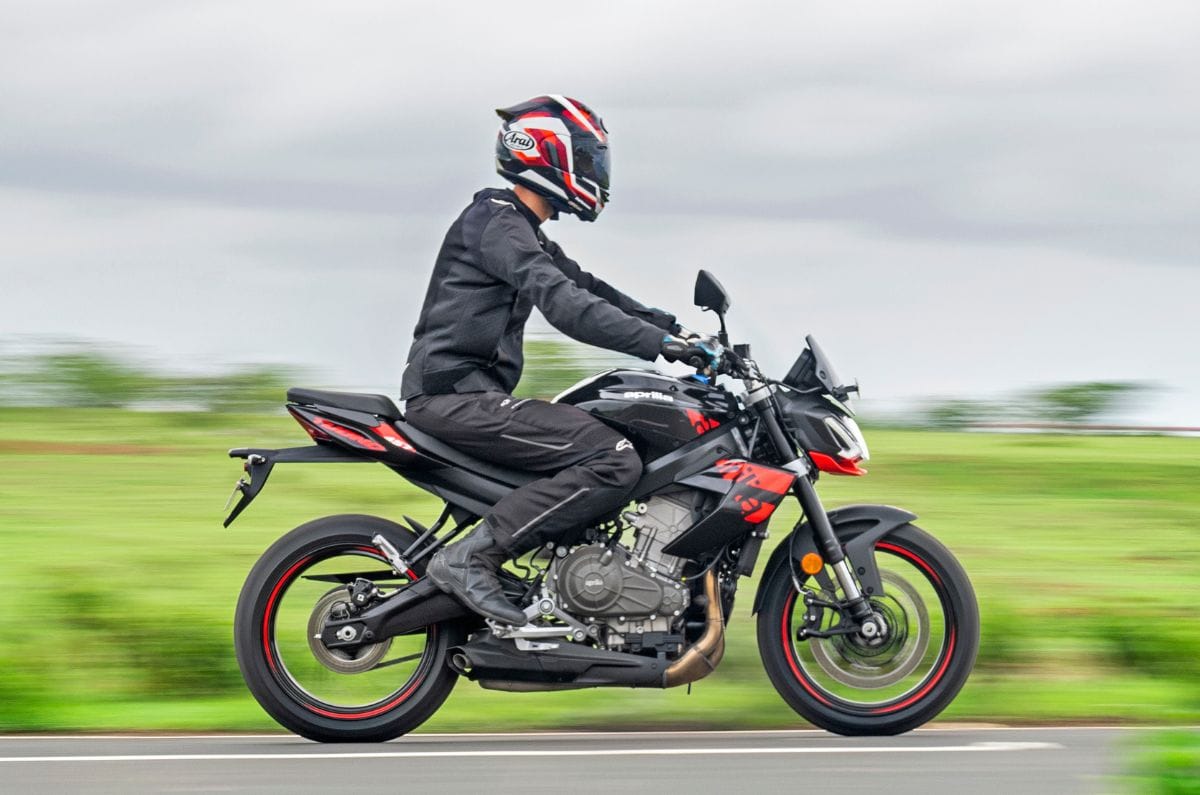
The riding position is still sporty but now noticeably more comfortable
Specifications
Values
Fuel Tank Size
12.7 L
Kerb Weight
175 kg
From what I could tell, the bike does feel a little softer and more absorptive in the initial travel, but we faced an unusual difficulty in making a clear verdict – the roads around Baramati where we were riding it were shockingly good! You could tell that this was still a very agile and reactive motorcycle with a taut feel. I’m quite confident that its superb handling skills are still intact and the only difference may be seen when being pushed to the limit at the race track – something we look forward to evaluating soon. At the same time, I don’t expect this to be a plush and comfortable bike over Mumbai’s bumpy concrete roads, but it should be a little less harsh than before.
Rider seat gets more padding for better comfort
The other changes on the Tuono are largely visual. It now gets a fly screen as standard which adds to the look but doesn’t transform its wind protection capabilities in any significant way. There’s also a new adjustable brake lever and a smart shade of black that I think makes the Tuono 457 a better looking bike.
Tuono 457 Special Edition Engine and performance – 9/10
The 457cc twin cylinder engine has strong performance and makes a great sound
Specifications
Values
Engine Displacement
457 cc
Max Engine Power
47.6 hp @ 9400 rpm
Max Engine Torque
43.5 Nm @ 6700 rpm
Number of Gears
6
The rest remains the same, including the absolutely delectable 457cc parallel twin engine that makes a superb sound and has solid punch. The engine doesn’t have a great top end, but the mid range is strong enough to pull clutch up wheelies in second gear in a way that no other locally manufactured bike can match. Highway speeds are smooth and effortless and the bike can sit at 130 or higher without stress. This really would make for a great engine in a Tuareg 457 ADV whenever that finally becomes a reality. The company also seems to be ironing out the significant reliability concerns that plagued the first RS 457 models and the number of customer complaints has reduced.
Suspension is now a little softer while the braking set up is the same
Braking hardware is the same as well and it is good enough for road use. It’s only under repeated hard braking conditions that you will want to upgrade to better brake pads at the very least. The one missing feature is a bi-directional quickshifter which can be bought for an additional Rs 21,000.
Tuono 457 Special Edition Price and Conclusion – 8/10
The Aprilia Tuono 457’s Rs 4 lakh ex-showroom price is suddenly a lot more appealing than it used to be. That’s not because Aprilia lowered it in any way, but simply because they haven’t raised it after the GST rate hike. While its chief rival the KTM 390 Duke used to cost around Rs 1 lakh less, that difference is now just Rs 50,000 and that suddenly puts the Tuono in a new light.
It is still a more expensive bike – both to buy and run – and the dealer network is far more limited as well. However, as far as riding thrills go, no rival comes close to the ‘scaled down big bike’ feel this bike offers and with these changes, it makes for a much more appealing package at this price.
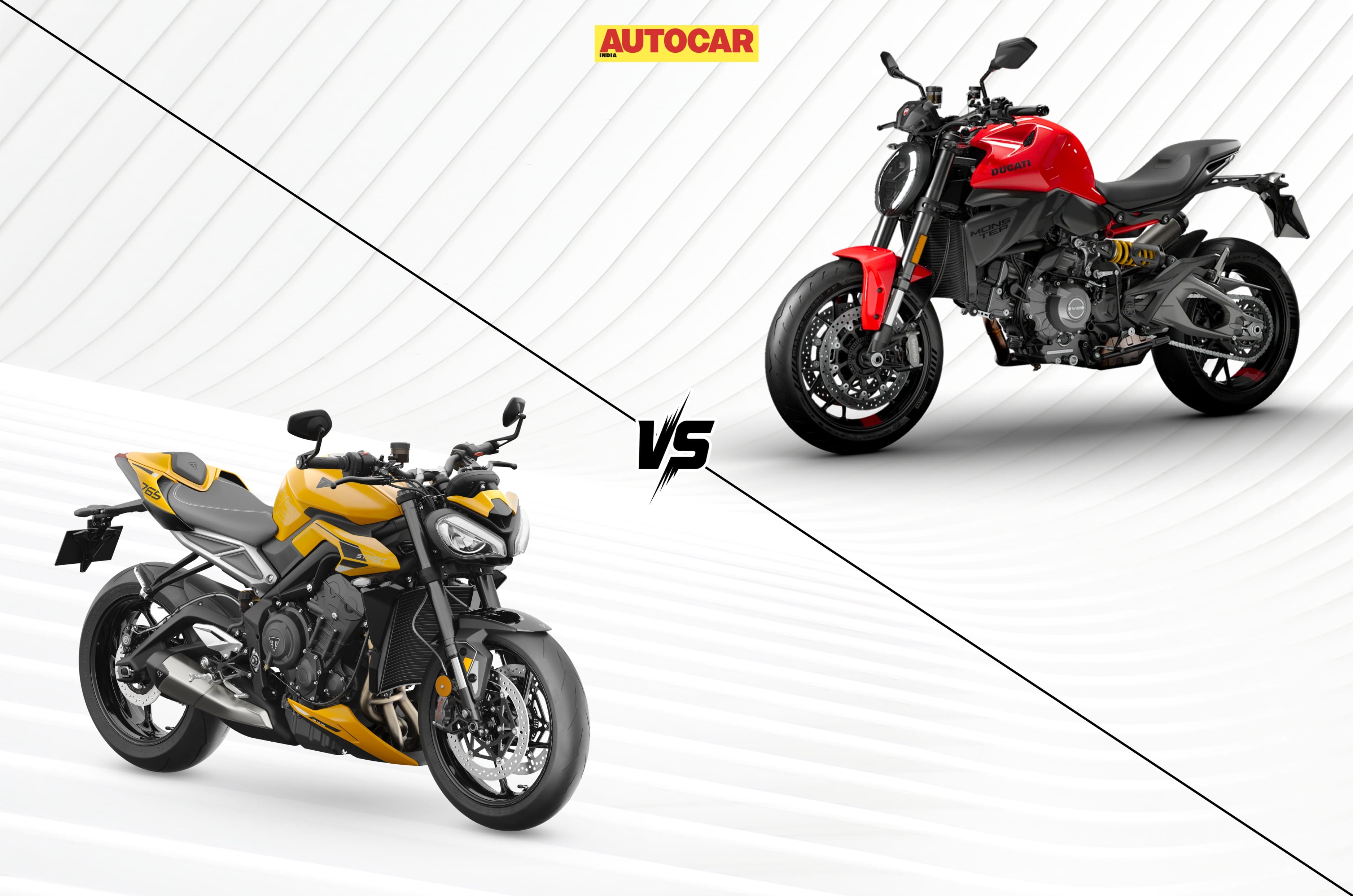
Ducati has just updated the Monster with a slew of changes. Amongst the many updates are an updated, smaller 890cc engine, a new monocoque chassis, and 4kg lesser weight with the price starting at Rs 13.99 lakh. Till now, the most popular option in this price segment has been Triumph’s Street Triple 765 RS, coming in at Rs 12.92 lakh. Let’s see how the updates have shaped up the Monster V2.
Ducati Monster V2 vs Triumph Street Triple 765 RS: Engine and output
More power for Triumph, more torque for Ducati
Ducati Monster V2
Triumph Street Triple 765 RS
Engine
890cc, V-twin-cylinder, liquid-cooled
765cc, inline three-cylinder, liquid-cooled
Power
111hp at 9,000rpm
130hp at 12,000rpm
Torque
91.1Nm at 7,250rpm
80Nm at 9500rpm
Gearbox
6-speed
6-speed
Power-to-weight ratio
634.29hp/tonne
691.49hp/tonne
The headlining change for the new Monster is the previous version’s 937cc V-twin engine being replaced with a 890cc V-twin engine, also seen in the likes of the Multistrada V2, Panigale V2, and the Streetfighter V2. Despite being smaller, this engine makes similar power and slightly lower torque (2Nm less, to be exact). Triumph, however, remains the most powerful engine in the segment with a class-leading 130hp. However, the reputed three-cylinder engine does have lesser torque than the Monster’s twin-cylinder. The Triumph also delivers both power and torque later in the rev range.
Ducati Monster V2 vs Triumph Street Triple 765 RS: Weight and dimensions
Ducati only discloses wet weight with no fuel
Ducati Monster V2
Triumph Street Triple 765 RS
Fuel tank capacity
14 litres
15 litres
Ground clearance
NA
NA
Wet weight
175kg (without fuel)
188kg
Seat height
815mm
836mm
Wheelbase
1492mm
1399mm
Ducati’s new updates to the Monster V2 includes a lower, narrower 815mm seat height (with 795mm and 775mm seats available as accessories; the latter requires a low suspension kit). Owing to various improvements throughout, it’s 4kg lighter than the outgoing model. The Triumph, by default, has a 21mm taller seat height. Although Triumph does offer lower seats as accessories, a 808mm one and a 798mm one; the latter requires a shorter rear suspension. At first glance, it might appear that the Ducati is significantly lighter than the Triumph, but do note that Ducati India only reports wet weight without fuel, whereas Triumph reports wet weight with fuel. With 90 percent fuel, the Monster should weigh closer to 185.3kg. However, neither company mentions the ground clearance numbers on their Indian website.
Ducati Monster V2 vs Triumph Street Triple 765 RS: Tyres, brakes, and suspension
The Ducati offers a larger brake rotor on both ends
Ducati Monster V2
Triumph Street Triple 765 RS
Tyres (F, R)
120/80R17, 180/55R17
120/80R17, 180/55R17
Brakes (F, R)
Dual 320mm front disc, single 245mm rear disc, cornering sensitive dual-channel ABS
Dual 310mm front disc, single 220mm rear disc, cornering sensitive dual-channel ABS
Suspension (F, R)
43mm USD fork, monoshock
41mm USD fork, monoshock
Both the motorcycles share the exact same tyre sizes. The Ducati offers a larger brake rotor on both ends, although both companies offer cornering ABS as standard. Things get a bit more interesting with the suspension. The Ducati offers the larger diameter front fork but its system isn’t quite as adjustable as the Triumph. Triumph suspension can be adjusted for preload, rebound, and compression on both ends, whereas the Ducati only offers rear preload adjustment. Point to be noted that the Street Triple RS is a track-focussed version whereas the Monster is meant for balanced usage. To that end, it is the Ducati that has the longer travel on both front (130mm vs 115mm) and rear (145mm vs 131.2mm). Differences in rake and trail are negligible for their intended purpose.
Ducati Monster V2 vs Triumph Street Triple 765 RS: Features
Par for the segment
Both the companies offer most of the features expected in this segment, but Ducati does go the extra mile by offering wheelie control and a bi-directional quickshifter as standard. As is also the norm in this segment, both motorcycles are ready for numerous accessory fitments such as cruise control and TPMS, with Ducati once again offering more electronic rider aids than Triumph.
Ducati Monster V2 vs Triumph Street Triple 765 RS: Price
Triumph is cheaper by a lakh
Model
Ducati Monster V2
Street Triple RS
Rs 13.99 lakh – Rs 14.45 lakh
Rs 12.92 lakh
Ducati has priced the new Monster at Rs 13.99 lakh (ex-showroom), a Rs 15,000 increase over the old Monster. Triumph on the other hand asks for Rs 12.92 lakh (ex-showroom). Do note that the Street Triple R—the road-focussed version—costs Rs 10.86 lakh (ex-showroom), which is significantly more affordable than the Monster. Both the motorcycles are distinctive enough with their design and equipment to make choosing one over the other simpler.
निफ्टी 50 में एक बड़ा बदलाव होने वाला है। इस इंडेक्स में स्टॉक्स एक्सचेंज BSE को दिग्गज आईटी कंपनी Wipro की जगह शामिल किया जाएगा। यह बदलाव 30 सितंबर से लागू होगा। इसके साथ ही बेंगलुरु की आईटी कंपनी Wipro का भारत के प्रमुख बेंचमार्क इंडेक्स से करीब तीन दशक पुराना सफर खत्म हो जाएगा।
Wipro असल में Nifty 50 की शुरुआत से ही इसका हिस्सा रही है। हालांकि, अप्रैल से सितंबर 2013 के बीच कंपनी इस इंडेक्स से बाहर रही थी। उस समय Wipro के नॉन-आईटी कारोबार के डीमर्जर की वजह से यह बदलाव हुआ था। इसके बाद कंपनी लगातार Nifty 50 में बनी रही।
Wipro से पैसा निकलने का अनुमान
Nuvama के अनुमान के मुताबिक, Wipro के Nifty 50 से बाहर होने पर इंडेक्स को ट्रैक करने वाले फंड करीब 246 मिलियन डॉलर यानी लगभग 2,000 करोड़ रुपये की बिकवाली कर सकते हैं। दूसरी ओर, BSE के इंडेक्स में शामिल होने से करीब 741 मिलियन डॉलर का निवेश आने का अनुमान है।
BSE के लिए यह बदलाव काफी अहम है। पिछले पांच साल में कंपनी के शेयर में 2,600% से ज्यादा की तेजी आई है। ट्रेडिंग वॉल्यूम, डेरिवेटिव्स कारोबार और बाजार में निवेशकों की बढ़ती भागीदारी से कंपनी को फायदा मिला है।
Nifty 500 में भी बदलाव
Nifty 50 में बदलाव के साथ NSE ने दूसरे प्रमुख इंडेक्स में भी बदलाव किए हैं। Nifty 500 से 3M India, Aditya Birla Fashion and Retail, Aditya Birla Lifestyle Brands, Bayer Cropscience, Blue Dart Express, Chalet Hotels, Go Digit General Insurance, Indegene, Jubilant Pharmova, Latent View Analytics, Sonata Software और Travel Food Services जैसी कंपनियां बाहर होंगी।
वहीं, Nifty 500 में Aether Industries, Avanti Feeds, Azad Engineering, Black Box, Brookfield India REIT, Embassy Office Parks REIT, Fractal Analytics, INOX India, Kirloskar Brothers, MTAR Technologies, Sansera Engineering, Sterlite Technologies और Vedanta Aluminium समेत कई कंपनियां शामिल होंगी।
Disclaimer: यहां मुहैया जानकारी सिर्फ सूचना के लिए दी जा रही है। यहां बताना जरूरी है कि मार्केट में निवेश बाजार जोखिमों के अधीन है। निवेशक के तौर पर पैसा लगाने से पहले हमेशा एक्सपर्ट से सलाह लें। मनीकंट्रोल की तरफ से किसी को भी पैसा लगाने की यहां कभी भी सलाह नहीं दी जाती है।
बिहार के पश्चिम चंपारण में रेलवे क्रॉसिंग से जुड़ा एक वीडियो इन दिनों सोशल मीडिया पर चर्चा में है। वजह है वहां दिखाई देने वाला एक ऐसा नजारा, जिसकी शायद ही किसी ने उम्मीद की होगी। जहां आमतौर पर लोग ट्रेन के गुजरने तक इंतजार करते हैं, वहीं इस घटना में एक परिवार अचानक ट्रेन की तरफ बढ़ता नजर आया। देखते ही देखते परिवार के चार सदस्य ट्रेन के करीब पहुंचे और उसमें सवार हो गए। मौके पर मौजूद लोगों के लिए यह पूरा घटनाक्रम काफी हैरान करने वाला था। किसी ने इस पल को कैमरे में कैद कर लिया और बाद में वीडियो सोशल मीडिया पर शेयर कर दिया।
वीडियो सामने आने के बाद लोग तरह-तरह के सवाल पूछ रहे हैं और इस असामान्य घटना को लेकर अपनी प्रतिक्रियाएं दे रहे हैं। खास बात यह है कि पूरा मामला किसी रेलवे प्लेटफॉर्म पर नहीं, बल्कि रेलवे क्रॉसिंग के पास हुआ।
क्रॉसिंग पर इंतजार कर रहा था परिवार
बताया जा रहा है कि यह घटना 8 अगस्त को कुमारबाग रेलवे स्टेशन के पास हुई। वीडियो में रेलवे क्रॉसिंग बंद दिखाई दे रही है और दूसरी तरफ कई वाहन ट्रेन के निकलने का इंतजार कर रहे हैं। इसी दौरान चार लोगों का एक परिवार क्रॉसिंग के पास खड़ा नजर आता है। वीडियो रिकॉर्ड करने वाले शख्स ने दावा किया कि परिवार काफी देर से वहीं मौजूद था और करीब एक घंटे से ट्रेन का इंतजार कर रहा था।
फोन के बाद कुछ ऐसा हुआ कि सब चौंक गए
वीडियो में परिवार के एक सदस्य को फोन पर बातचीत करते हुए भी देखा गया। रिकॉर्डिंग करने वाले व्यक्ति को लगा कि शायद वह किसी परिचित से बात कर रहा था और उसी संपर्क के जरिए ट्रेन को वहां रुकवाने की व्यवस्था की गई। कुछ ही देर बाद मुजफ्फरनगर-नरकटियागंज DEMU ट्रेन वहां पहुंची। ट्रेन पहले धीमी हुई और फिर रेलवे क्रॉसिंग के पास पूरी तरह रुक गई। बस फिर क्या था, परिवार के चारों सदस्य तुरंत ट्रेन के एक कोच के दरवाजे की तरफ बढ़े और उसमें चढ़ गए।
गेटमैन भी देखता रह गया पूरा नजारा
वीडियो में रेलवे क्रॉसिंग पर मौजूद गेटमैन भी इस पूरी घटना को देखते हुए दिखाई देता है। ट्रेन के रुकते ही परिवार के लोगों का तेजी से कोच में चढ़ना वहां मौजूद लोगों के लिए भी असामान्य दृश्य था। वीडियो बनाने वाले शख्स ने इसी बात को लेकर रेलवे की व्यवस्था पर सवाल उठाए और पूछा कि क्या इस तरह रेलवे क्रॉसिंग पर ट्रेन रोककर यात्रियों को सवार करने की अनुमति है।
‘ट्रेन को टेंपो बना दिया’
वीडियो वायरल होने के बाद सोशल मीडिया यूजर्स ने भी जमकर प्रतिक्रिया दी। कुछ लोगों ने घटना पर हैरानी जताई, तो कुछ ने पूरे मामले पर मजेदार अंदाज में टिप्पणी की। एक यूजर ने लिखा, “ट्रेन को टेंपो बना दिया।” वहीं दूसरे ने बिहार का जिक्र करते हुए कहा कि यहां कुछ भी हो सकता है। कुछ यूजर्स ने सीधे लोको पायलट की भूमिका पर सवाल उठाते हुए कार्रवाई की मांग की। एक कमेंट में तो लोको पायलट को निलंबित करने तक की बात कही गई।
रेलवे से जांच की मांग
मामले को लेकर कुछ सोशल मीडिया यूजर्स ने रेलवे और संबंधित अधिकारियों को टैग करते हुए जांच की मांग की। एक यूजर ने रेल मंत्रालय से सवाल किया कि आखिर सड़क वाले रेलवे क्रॉसिंग पर ट्रेन को यात्रियों के चढ़ने के लिए कैसे रोका गया। एक अन्य व्यक्ति ने जिम्मेदार कर्मचारियों के खिलाफ कार्रवाई की मांग करते हुए कहा कि इस तरह आम लोगों का समय बर्बाद करना उचित नहीं है।
फिलहाल वायरल वीडियो में दिखाई दे रहे घटनाक्रम की वजह पूरी तरह स्पष्ट नहीं है। यह भी आधिकारिक तौर पर सामने नहीं आया है कि ट्रेन वहां किस कारण रुकी थी और परिवार के सदस्यों को चढ़ने की अनुमति किस परिस्थिति में मिली। हालांकि, इस वीडियो ने रेलवे क्रॉसिंग पर ट्रेन के अचानक रुकने और यात्रियों के इस तरह सवार होने को लेकर कई सवाल जरूर खड़े कर दिए हैं। सोशल मीडिया पर लोग अब पूरे मामले की जांच और स्पष्ट जानकारी की मांग कर रहे हैं।
A new BMW M model appears to be in the works for 2027 with emissions filings with the US Environmental Protection Agency (EPA) and the California Air Resources Board (CARB) having independently certified a model listed as the BMW M 1000 RS. The nomenclature suggests that the upcoming model could be a sport-touring derivative of the M 1000 RR.
US EPA and CARB certifications independently confirm a 2027 BMW M 1000 RS
Expected to use the same 999cc inline-four as the M 1000 RR
Likely to feature a sport-touring setup
What to expect from the BMW M 1000 RS
Spy images have revealed that BMW is also likely working on an M 1300 GS
In both the EPA and CARB filings, the M 1000 RS appears alongside the M 1000 RR under the same emissions certification, suggesting it will share the same 999cc inline-four engine. The CARB data for the 2027 M 1000 RR points to the same 205hp at 13,000rpm and 113Nm as the current model.
What distinguishes the RS from the RR is likely to be its intent rather than its engine. BMW has traditionally used the ‘RS’ (Reise und Sport, German for ‘Travel and Sport’) suffix on its sport-touring motorcycles, such as the R 1300 RS, which uses a 1,300cc boxer twin. An M 1000 RS would therefore represent an entirely new product, becoming the first RS model to use an inline-four platform.
Currently, BMW’s global M motorcycle lineup comprises the M 1000 RR, M 1000 XR and M 1000 R, the last of which was recently launched in India at Rs 33.50 lakh. Spy images of what appears to be an M 1300 GS have also surfaced online in recent days, suggesting the M 1000 RS may not be the only all-new M model planned for 2027. BMW is also known to be developing the next-generation S 1000 RR, and a design patent for the motorcycle was filed in India last month.
BMW seems to have several major product unveilings in the pipeline, and with the emissions certifications covering the 2027 model year, an official reveal at EICMA this November appears likely.
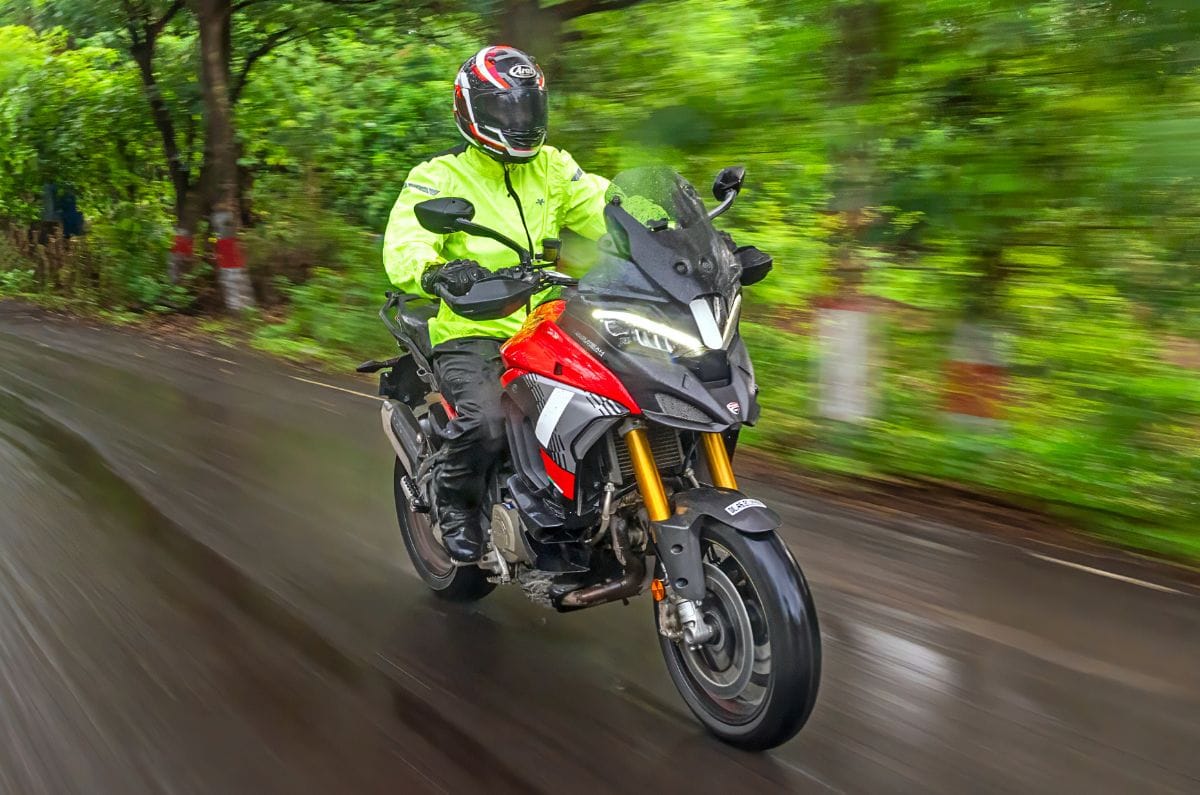
The DucatiMultistrada is one of the most successful modern motorcycles to have raced up the famed Pikes Peak hill climb, having taken 7 wins over the years. Motorcycle racing was banned at the Peak after Ducati star Carlin Dunne tragically lost his life in a crash just metres before the finish line in 2019, but Ducati still has a tribute to this race in the form of the Multistrada V4 Pikes Peak.
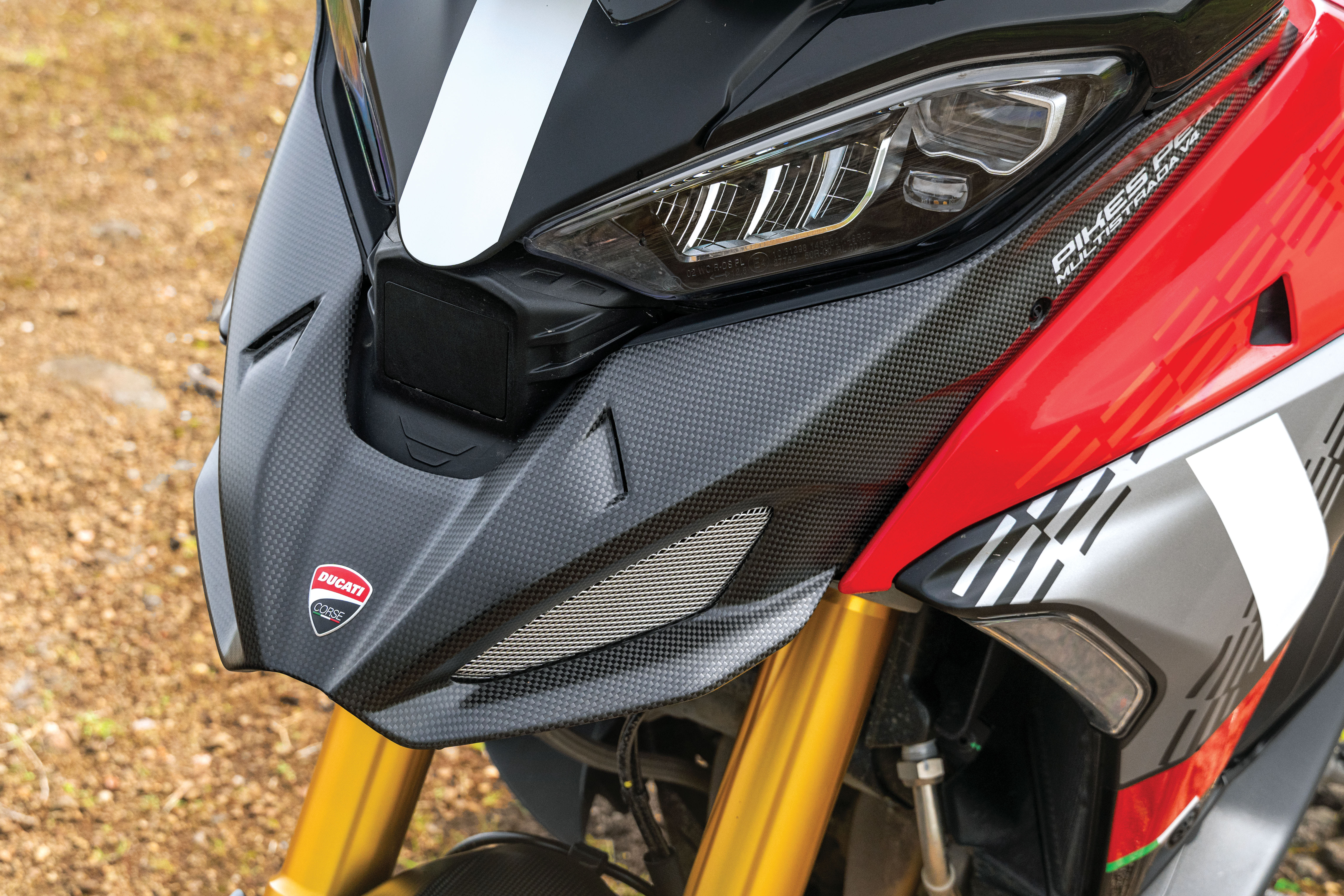
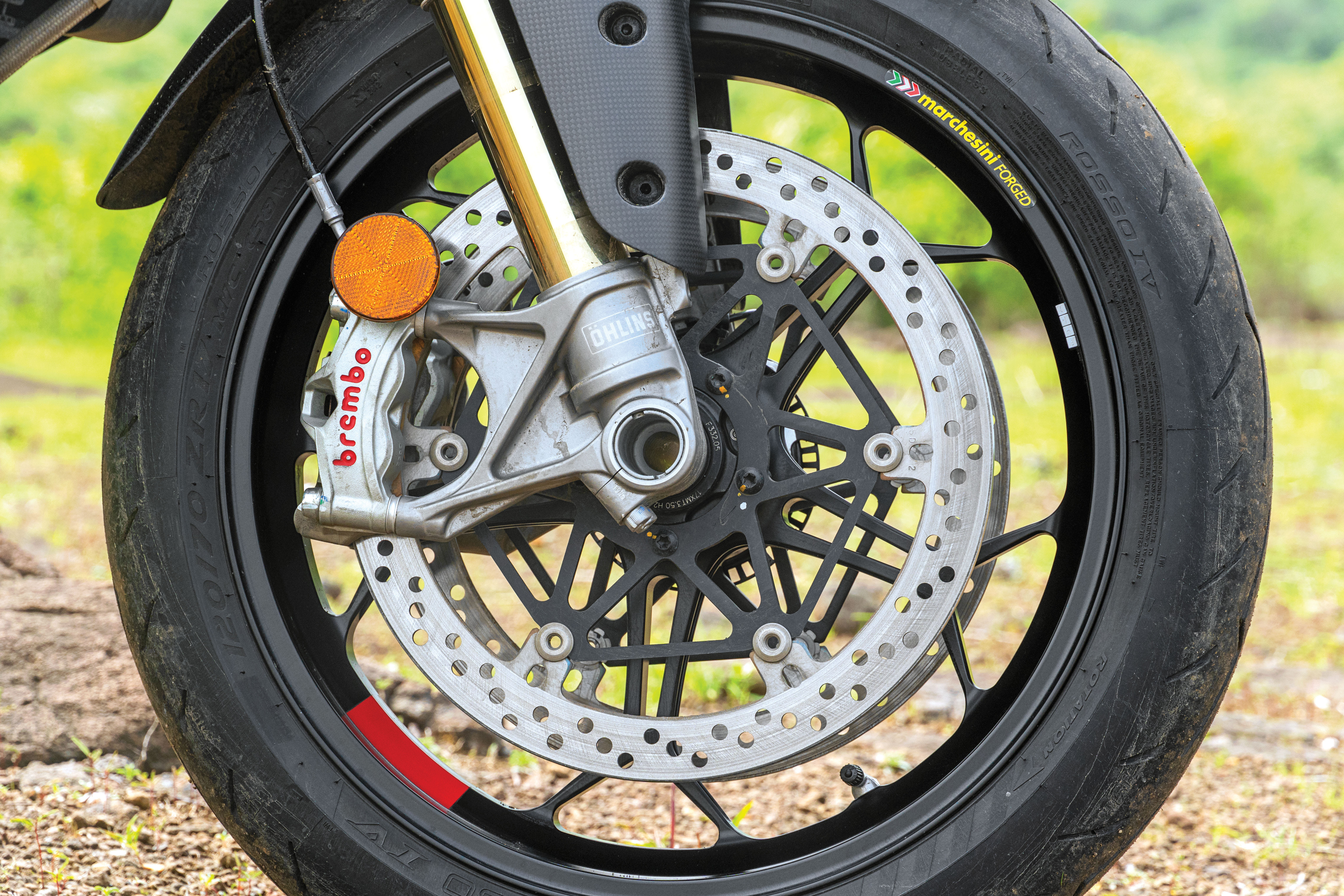
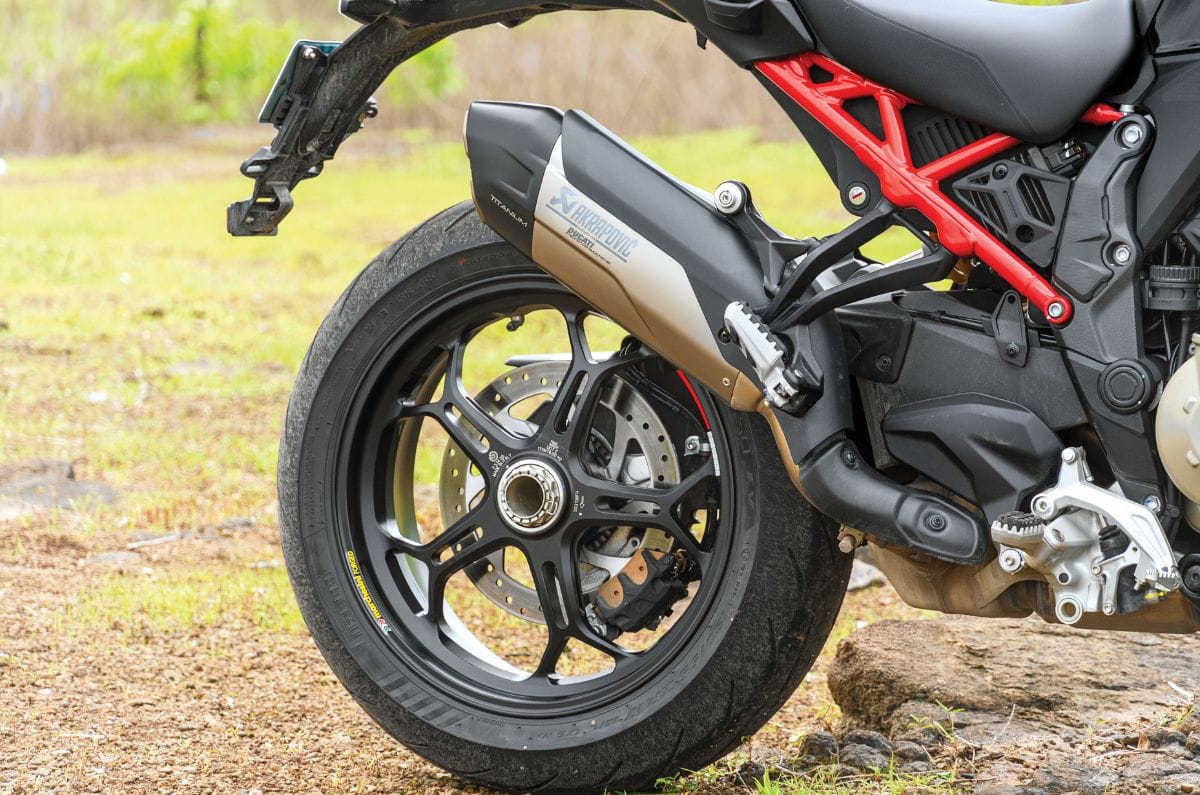
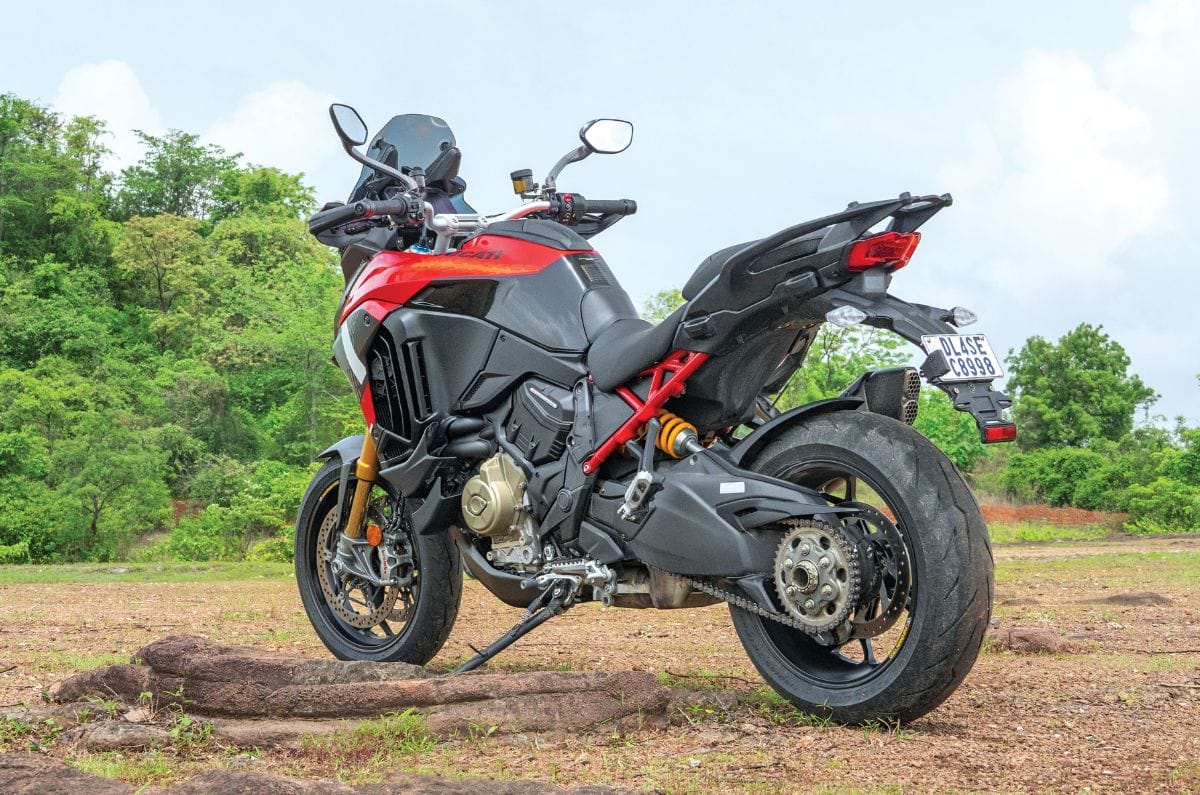
Effectively, this motorcycle goes back to the Multistrada’s roots of being a tall, sporty road-biased motorcycle. The primary sporty element comes in the shift from a 19-inch front on the standard Multistrada V4 to a 17-inch unit here. But there’s a whole lot more that you get for the (considerable) extra cash over the Multi V4 S than just a smaller front wheel. That includes a new Race Mode and Öhlins EC 2.0 semi-active suspension, just like you would have found on the previous-gen Panigale V4 S. It even gets a single-sided swingarm, forged aluminium wheels and a road-legal titanium Akrapovič end-can.
Multistrada V4 Comfort – 8/10
All of these changes are aimed at sharpening the Multi’s handling capabilities, which leaves the question – how much of an adventure bike is still in there? To find an answer, I pulled out Google Maps and picked a few random roads that I’d been eyeing over the years, but never had the opportunity to explore. The idea was to end up at the fabulous roads around Tahmini ghat, which is closer to Pune, and I’d chalked out a round-trip that came up to about 350km.
The Pikes Peak gets carbon parts, different ergos and reduced wind protection
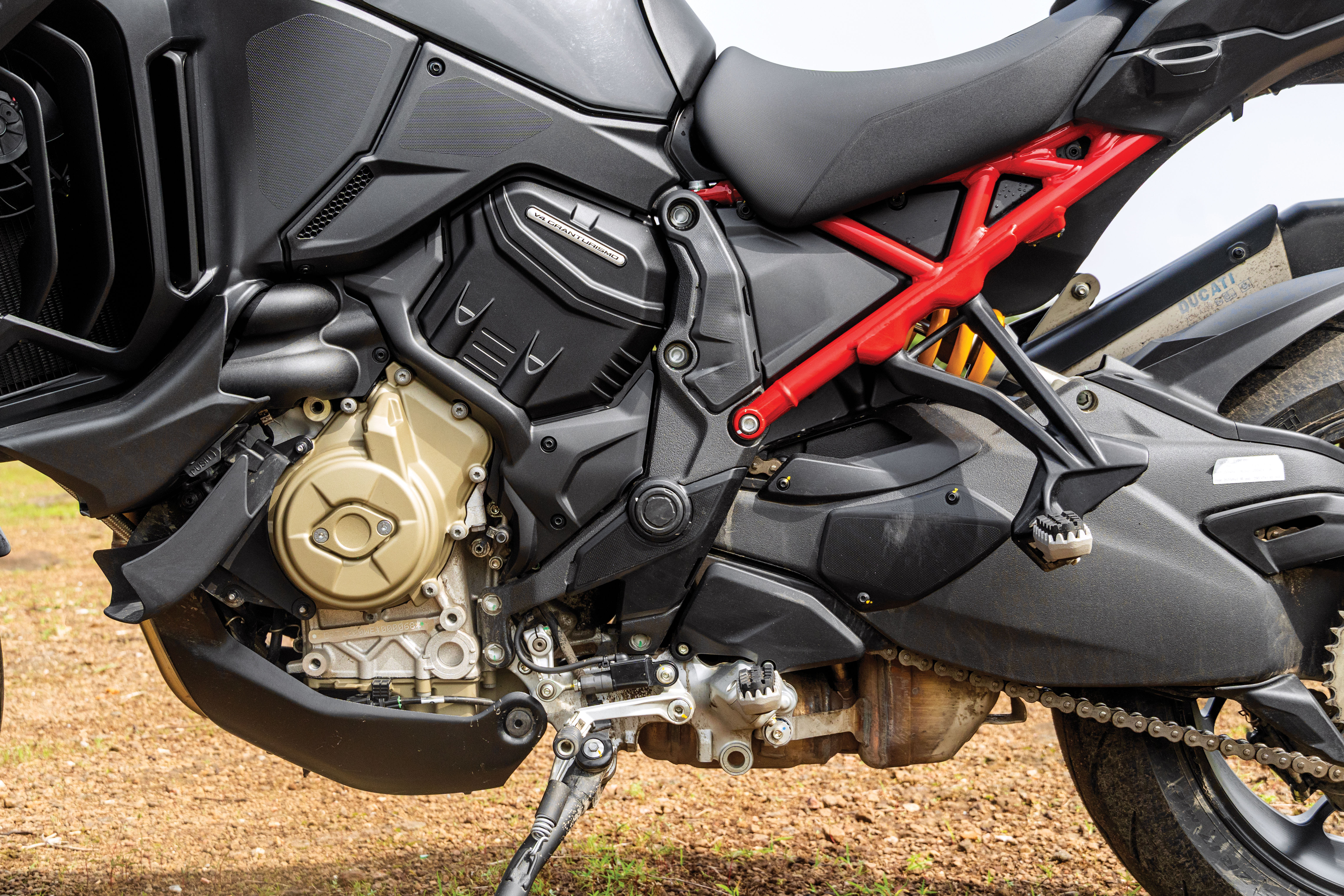
The first quest would be the hour-long escape from the mayhem of Monday morning Mumbai. Ducatis are usually the worst bikes for being stuck in jammed traffic, but the V4-engined Multi is different. As with its lesser V4 siblings, the Pikes Peak uses twin radiators that are housed on the sides, and the bodywork neatly ducts the hot air blast away from the rider. Also, as with all Ducatis, the cooling system does a remarkable job of keeping the operating temperature below 106 degrees even when stationary.
Specifications
Values
Engine Displacement
1158 cc
Max Engine Power
170 hp @ 10,750 rpm
Max Engine Torque
124 Nm @ 9000 rpm
Number of Gears
6
So, unless you’re stuck in a nasty bad jam where the clutch can get painful, this bike is surprisingly pleasant to manage in traffic. Of course, that’s a fairly relative statement, considering that this is a big, tall, 240-plus-kilo motorcycle.
However, after an hour or so, there’s no escaping the heat radiating off the rear cylinder bank that’s right under your thighs. I noticed that this was an issue in 36-degree afternoon heat on the highway, but not so much when the temperatures dropped in the hilly regions around Lonavala. Despite this, the Multi was far happier when it broke free from the clutches of the city.
Multistrada V4 Performance and suspension setup – 9/10
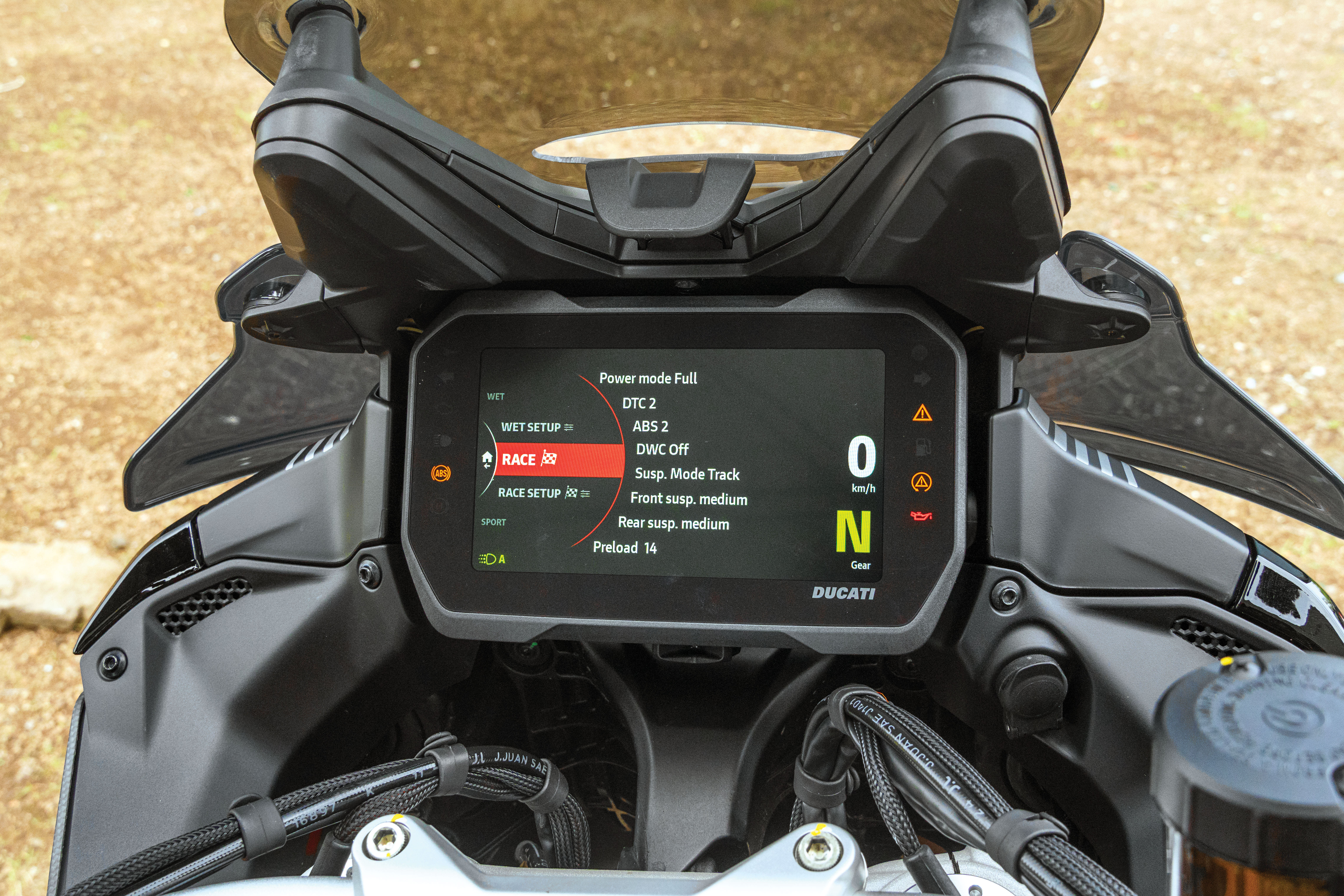
What truly blew me away on the Pikes Peak was the sheer range of its ability to change character. Like with the other V4 models, this one also has many different riding modes, a boat-load of electronic assists and minutely adjustable electronic suspension modes. However, the difference between ‘full chill’ and ‘full attack’ mode on this bike is truly breathtaking. After a couple of hours of quick and perfectly pleasant highway riding, the Multi and I soon found ourselves staring at miles of completely broken rural roads without a soul on them.
There’s no way I’d ever want to bring a sporty Italian exotic to a place like this, but putting the engine into Low Power mode (115hp instead of 170hp) and diving deep into the suspension setting menus to slack off the damping and preload completely changed the bike.
Specifications
Values
Wheelbase
1595 mm
Seat height
840-860 mm
Kerb Weight
227 kg
Fuel Tank Size
22 L
With ADV seating comfort and the 170mm of suspension travel soaking in the terrain quite well, I had no concerns with simply riding through these non-stop broken road conditions. The bike was unbothered to the point that I could ride it at a gentle pace and enjoy the spectacular beauty of rural Maharashtra in the monsoon. However, I must also make it clear that while the Pikes Peak can tolerate this sort of punishment, it doesn’t thrive on it. Think of this as a surprisingly comfortable road-tourer rather than a true ADV.
Race-bred electronics and superbike-spec suspension are what make the Pikes Peak experience unique.
Multistrada V4 Ride and Handling – 10/10
A big Tiger or GS would have surely been more capable in these conditions, but the Pikes Peak would have simply blown away any ADV on the roads that came next. After ages of enduring gravel and shattered tarmac, we finally arrived at Tahmini to be greeted by some of the finest riding roads in the country.
It uses the standard V4 engine with conventional spring valves
A few button presses later, the Multi was now in Race mode, and the difference was startling. The bike suddenly felt tight, taut and taller, thanks to increased preload at the rear. This was no longer a cushy tourer and had suddenly turned into quite a fearsome beast that demanded respect. The raucous intake bark as the V4 engine snarled past 6,000rpm was almost as intoxicating as the way it built speed. While you could get the same sort of performance on a ‘normal’ Multi V4 that uses the same engine, the immense braking and incredible suspension composure of the Pikes Peak was something else.
Pikes Peak gets a single-sided swingarm, forged wheels and an Akrapovič end-can
I was now riding a sport bike, and it cornered and braked with such ferocity that it was easy to get carried away. I had to remind myself that this was a public road and we were going far too fast for good health! Slap on a sticky set of tyres, and this bike could genuinely embarrass a swarm of sport bike riders on the racetrack. After an awesomely exhilarating time on the ghat, there was no doubt that the Pikes Peak spirit is truly alive in this bike, and it most certainly isn’t just a branding exercise to charge a heap of money.
Multistrada V4 Price and Verdict – 8/10
Nevertheless, a heap of money is exactly what you have to pay to own this motorcycle. At Rs 36.9 lakh (ex-showroom), the Pikes Peak is exorbitantly expensive, and you still have to pay more for extras like heated grips, tyre pressure monitoring and keyless functionality for the fuel tank. At the end of the day, this is the connoisseur’s version of what is already a connoisseur’s adventure motorcycle. You’ve got to really want this particularly unique combination of all-road sport bike skills. After all, you can get either phenomenally capable super ADVs or proper super bikes for far less money.
The sheer range of its ability to change character is what is truly incredible.
I struggle to convince myself that it’s worth the price, but I’m also infinitely grateful that such a thing even exists and that we have the option to own one in India. If you’re among the precious few with the desire and funds to own such a bike, all I’d like to say is go for it!
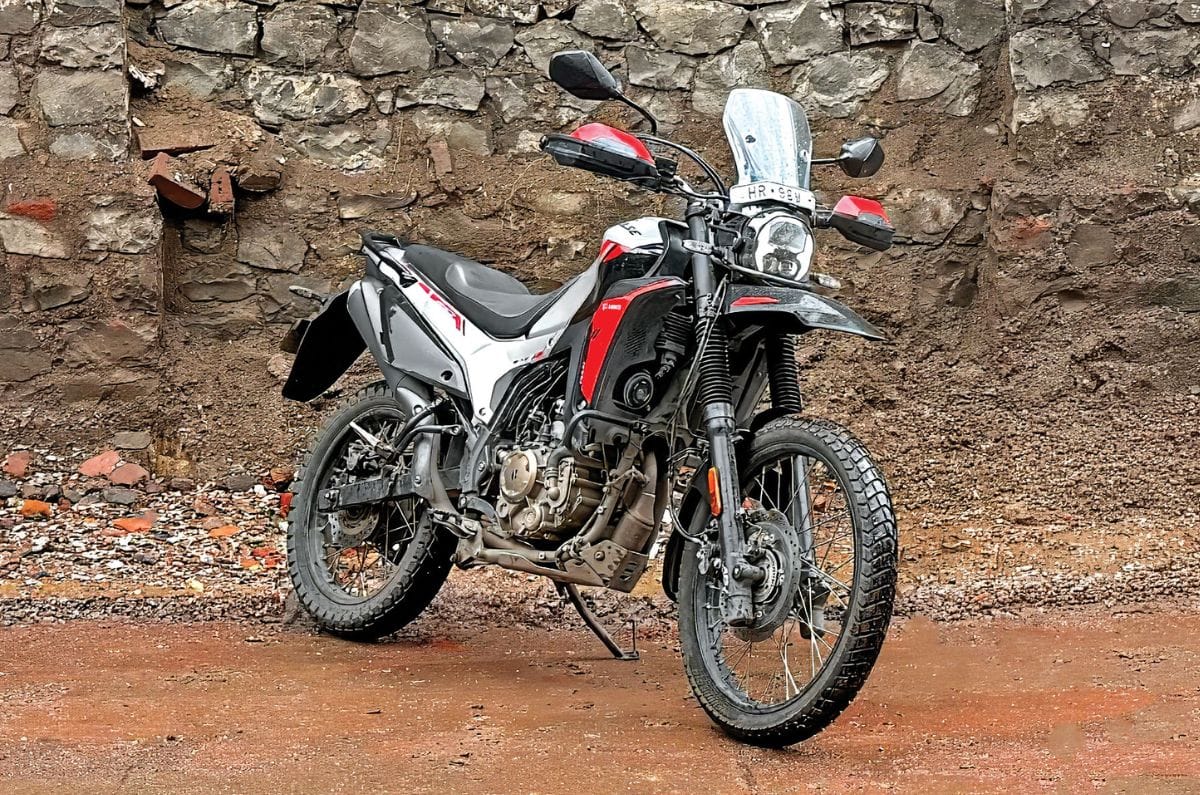
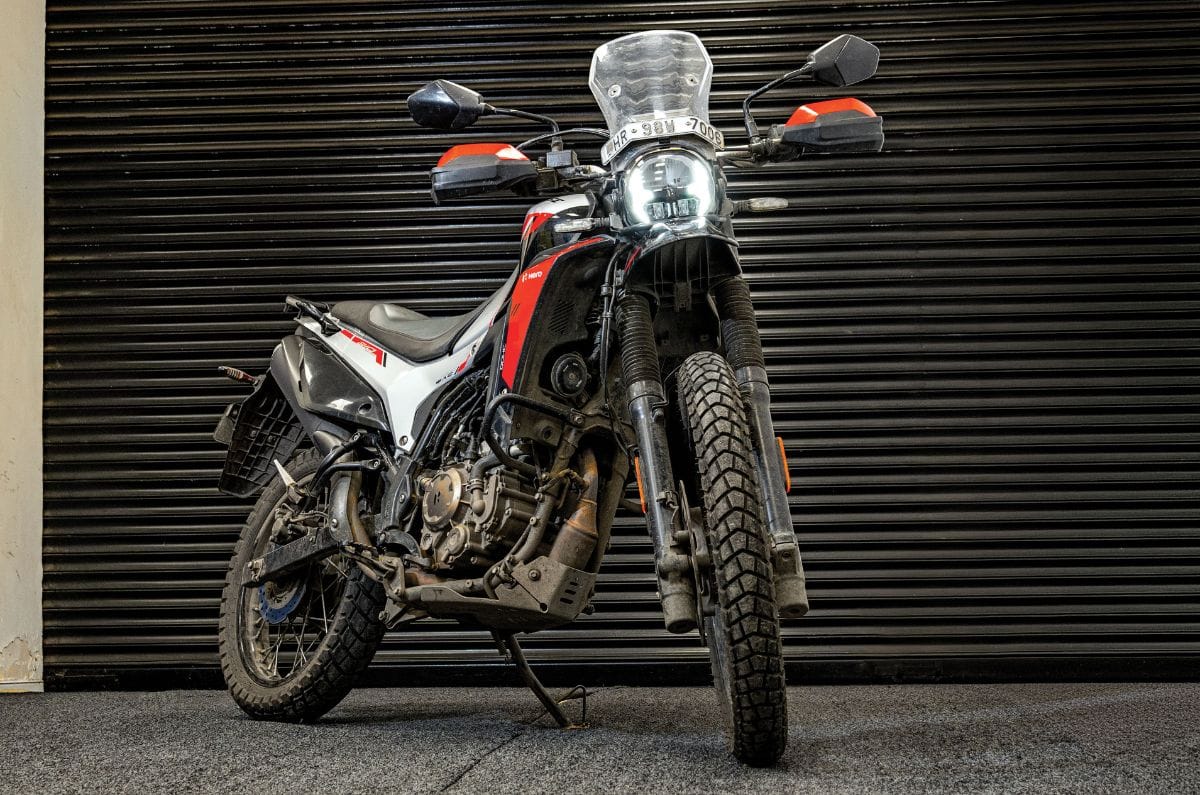
Ever since the Xpulse 210 was launched, I was fascinated by the balance it strikes between a dual-sport motorcycle and an adventure tourer. With its slim midsection, 21-inch front wheel, long-travel suspension and commanding riding position, it seemed like the ideal companion for our less-than-perfect roads. After spending over two months with the bike, I can confidently say it has lived up to those expectations. The odometer has now crossed the 5,600km mark, and the Xpulse continues to reinforce why it’s such a unique proposition.
The 21-inch front wheel and beak lend the Xpulse an imposing stance
There really isn’t another motorcycle at this price point that offers the same blend of everyday usability, touring ability and genuine off-road capability. Spend another Rs 30,000-40,000, and you’ll find yourself looking at the TVSApache RTX, which is a more touring-oriented adventure motorcycle. The Hero, meanwhile, stays true to its dual-sport roots, making it just as happy on broken roads and dirt trails as it is on the highway.
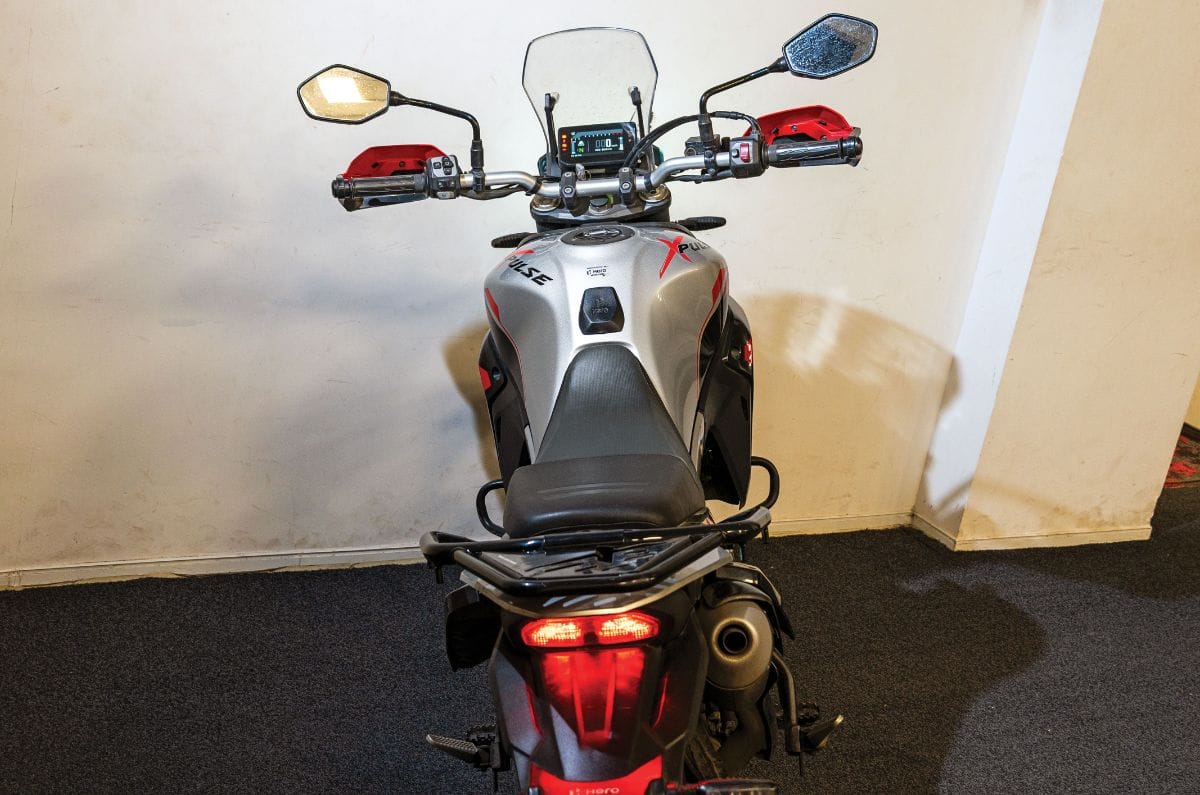
The Xpulse’s relatively narrow proportions make it an excellent commuter.
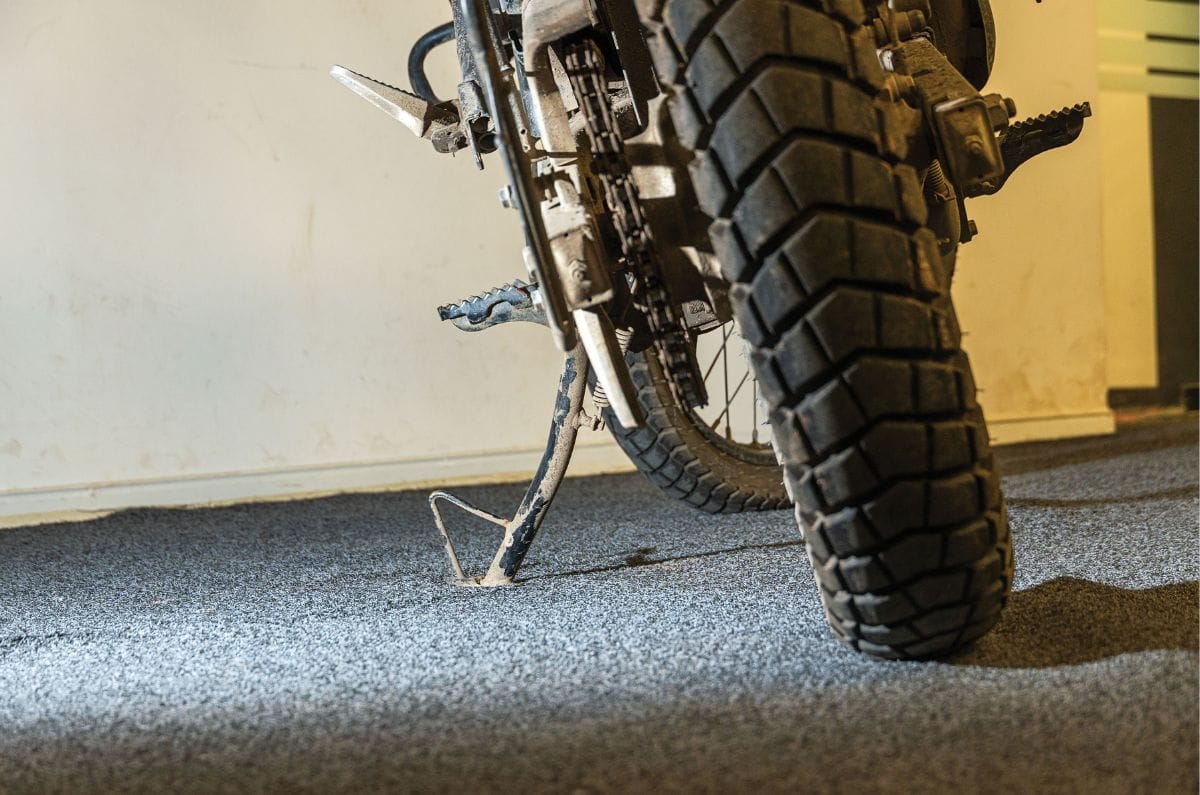
The suspension remains the bike’s standout feature. Mumbai’s cratered roads barely faze it, and the confidence to ride over almost anything without slowing to a crawl is what makes the Xpulse so easy to live with. It opens up new roads within the city that you earlier avoided. The high-mounted LED headlight and sculpted tank flowing into the relatively low seat give it a distinctive, imposing stance. Living with it hasn’t been entirely perfect. The Xpulse has a pronounced lean on its side stand, and the soft suspension causes the bike to settle and readjust as you get off, making parking feel less reassuring than it actually is.
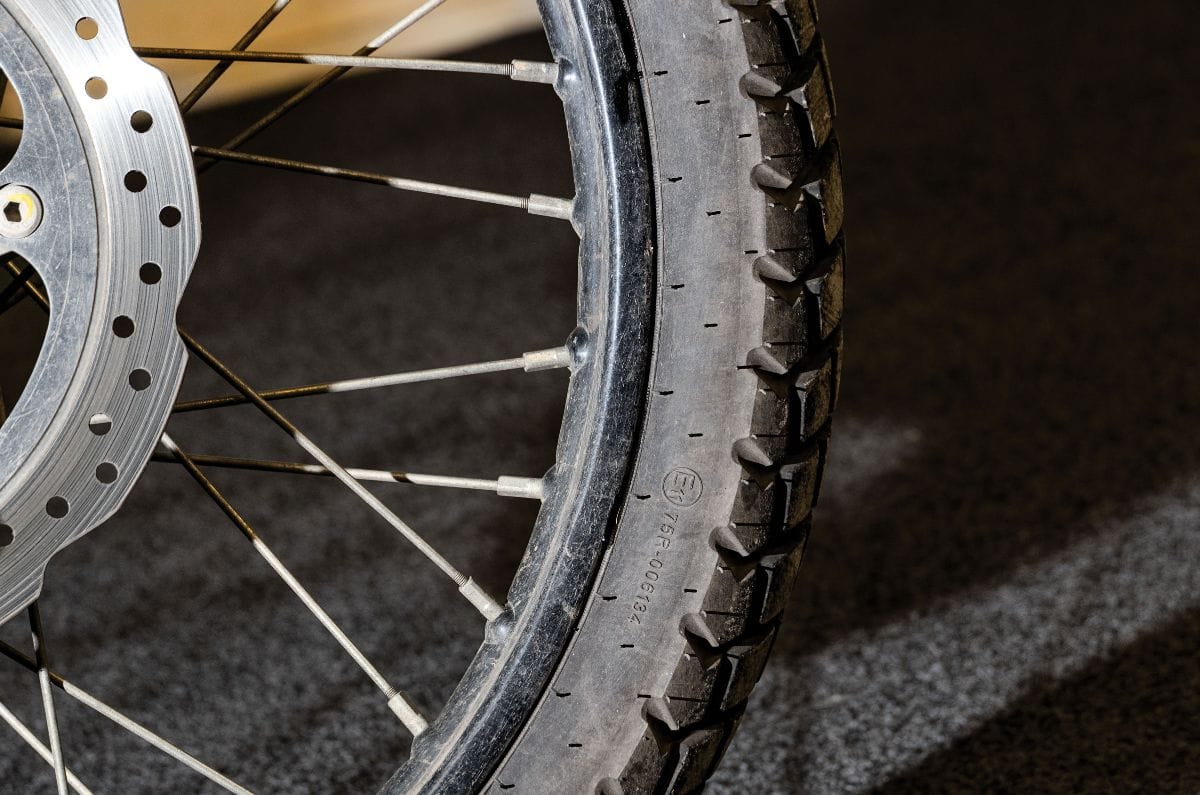
Tubed tyres are great off the road, but can pose an inconvenience if punctured.
The lack of a tubeless tyre option is another compromise. While tubed tyres make sense on a motorcycle designed to venture off-road, they can be a real inconvenience in everyday use. I learnt that the hard way when both the front and rear tyres punctured on the same day. Between pushing the bike to puncture shops, removing the wheels and getting everything back together, I lost well over three hours.
The brakes, too, continue to disappoint. We’d previously complained about the lack of bite and feel, and although the service centre bled the brakes and confirmed the pads didn’t require replacement, the improvement was only marginal. During the same visit, we also queried about the amount of heat being thrown onto the rider’s left leg was normal, but didn’t receive a satisfactory explanation.
It tends to lean excessively on its side stand, which isn’t quite reassuring.
As a motorcycle retailed through Hero’s premium Premia dealership network, the overall service experience and ambience still have plenty of headroom for improvement. Although the service cost was quite reasonable at Rs 2,214, of which, Rs 1,300 went towards oil, Rs 145 for the air filter and Rs 649 for the service charge.
Despite those shortcomings, the Xpulse 210 remains one of the easiest motorcycles to recommend. Few bikes at this price blend commuting fun, decent touring capability and genuine off-road chops as convincingly, and even after 5,500km, we all still find ourselves reaching for its keys.
Back in April 2026, Autocar India exclusively revealed that Royal Enfield is working on a Himalayan 440, based on the updated Scram 440 but with the Himalayan 411’s looks. We now have a supposed launch timeline which is in September 2026. The Scram 440 was a miniscule improvement on paper from the Scram 411, but a noticeably better product. We can expect the same with the Himalayan 440 as well.
Launch expected in September 2026
Will share most mechanicals with the Scram 440/Himalayan 411
Unlikely to be as tech-forward as the Guerrilla/Himalayan 450
Why a Himalayan 440?
For fans of the Himalayan 411 who haven’t quite taken to the Himalayan 450
The Himalayan (450) was an improvement over the 411 by all counts. It had a more powerful, modern engine, and features like a TFT instrument cluster, turn-by-turn navigation, and USD front fork; most of which were a first for Royal Enfield. However, many of the Himalayan 411 fans felt that it was more complicated than their beloved ADV.
Although the Scram 440’s sales figures aren’t openly available, Royal Enfield clearly believes that there’s financial sense in making a Himalayan 440. To recap, the Scram 440’s LS440 engine makes 25.4hp at 6,250rpm and 34Nm at 4,000rpm; a marginal improvement over the LS411’s 24.5hp at 6,500rpm and 32Nm at 4,250rpm, thanks to a 3mm larger bore. We don’t expect any changes to the engine on the Himalayan 440, considering the Himalayan 411 and Scram 411 shared identical engines.
Big difference between Scram and Himalayan will be the wheel setup
And possibly 10mm longer suspension travel too
The major difference between the Himalayan 440 and the Scram 440 should be the wheel setup. The Scram, being a road-focused motorcycle, uses a 19-inch front wheel with a 17-inch rear wheel. The 411 debuted with tubed spoke wheels, with alloy, tubeless wheels later coming in with the Scram 440. The Himalayan being off-road-oriented, the front wheel is expected to be a 21-inch unit and it will likely stick to the spoked rims with tubed tyres. The other difference is the suspension travel. The Himalayan 411’s front wheel had 200mm of travel, which dropped to 190mm for the Scrams. We’d expect that to be 200mm again on the Himalayan 440.
Besides that, the Himalayan 440 should be similar if not identical to the Scram 440. Which likely means that it won’t have the new, slightly cumbersome switchgear, a 6-speed gearbox without a slipper clutch, and the tripper pod. Compared to the current Himalayan’s 825mm seat height, the 440’s is expected to be more accessible, around 800mm, which was the 411’s seat height. Currently we don’t have the prices, but the Scram 440 retails for Rs 2.32 lakh (ex-showroom, Chennai) for the top variant, while the Himalayan 450’s top variant costs Rs 3.39 lakh (ex-showroom, Chennai). This gives the Himalayan 440 a nice middleground to slot into, but we will know for sure closer to September 2026.