एक दिव्यांग महिला 25 KM दूर से एक अधिकारी के लिए पेन लेकर पहुंचीं।
ये पेन सिर्फ एक तोहफा नहीं, बल्कि उस अधिकारी के लिए सम्मान और आभार था, जिसने उनकी तकलीफ सुनी।
जब हर दरवाजा खटखटाने के बाद भी उन्हें मदद नहीं मिली, तब एक अधिकारी ने उनकी उम्मीद नहीं टूटने दी।
Public Service का असली मतलब समझाती है ये छोटी-सी, दिल छू लेने वाली कहानी।
जानिए दिव्यांग महिला और SP श्रद्धा का ये भावुक किस्सा और इसे जरूर शेयर करें।
IPS Shraddha Pandey inspiring story, disabled woman travels 25 km to meet IPS officer, Neetu Dwivedi water problem solved#thebetterindia#goodnews#positivestories#indianews#thebetterindiahindi#hindi
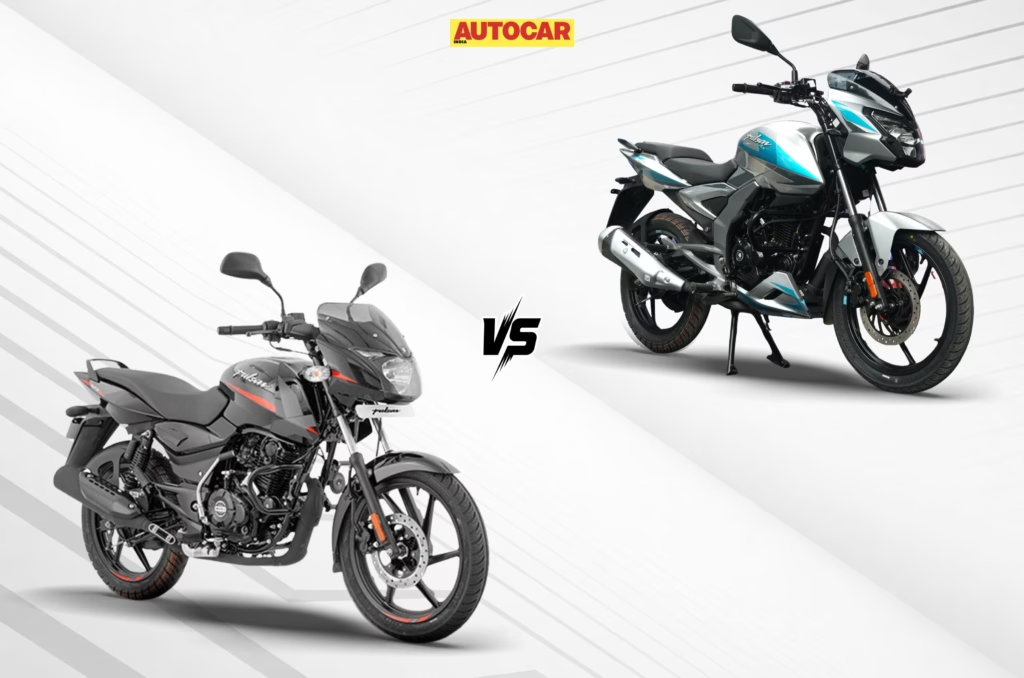
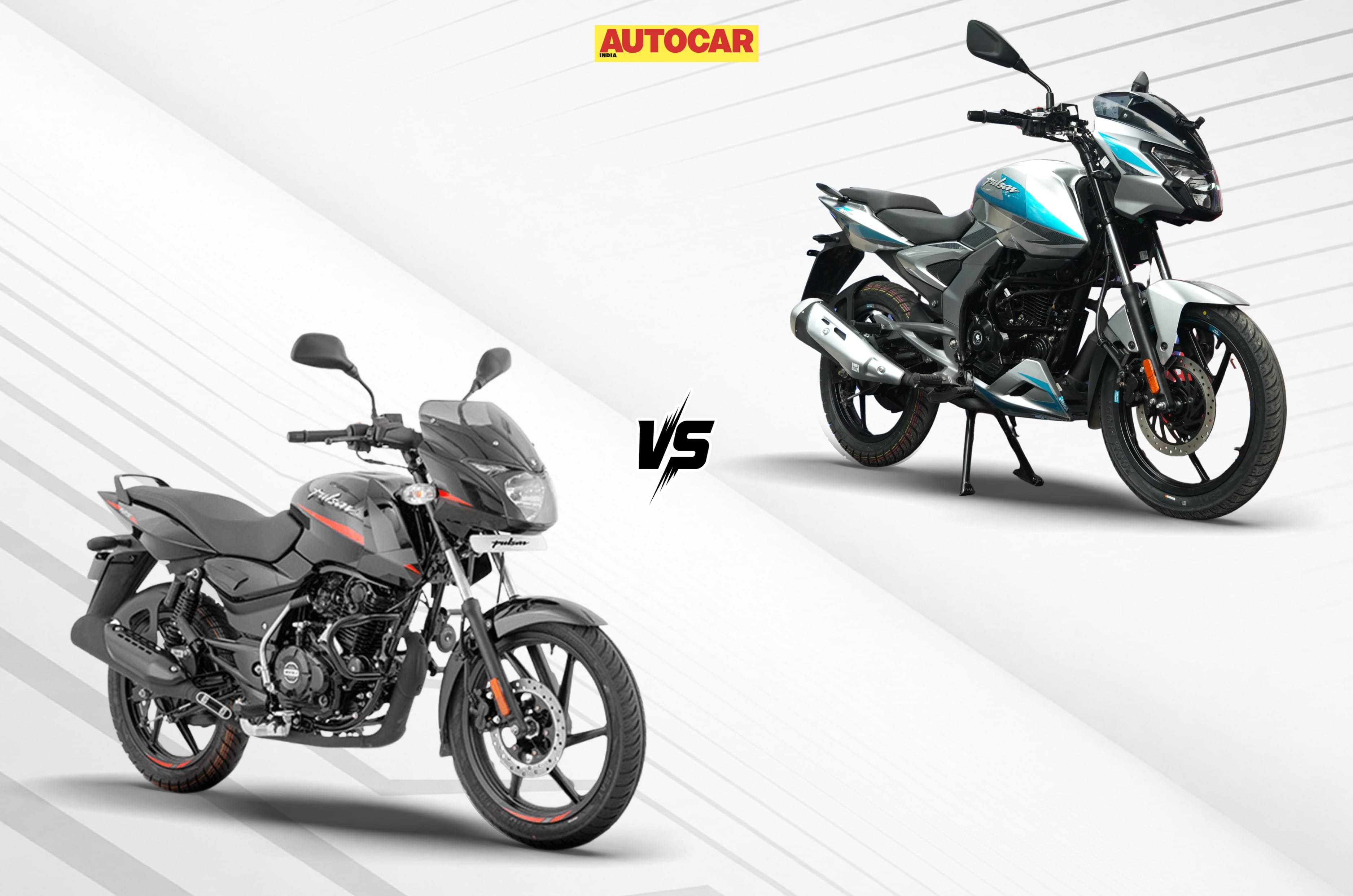
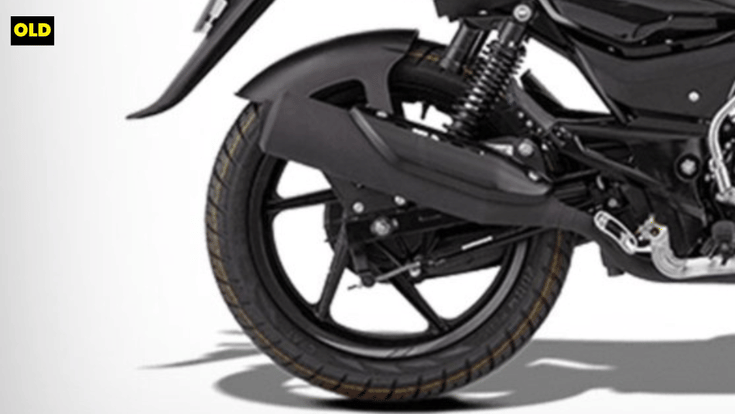
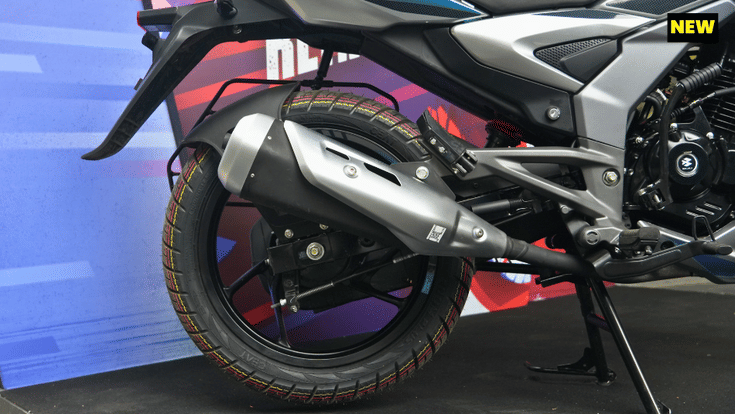
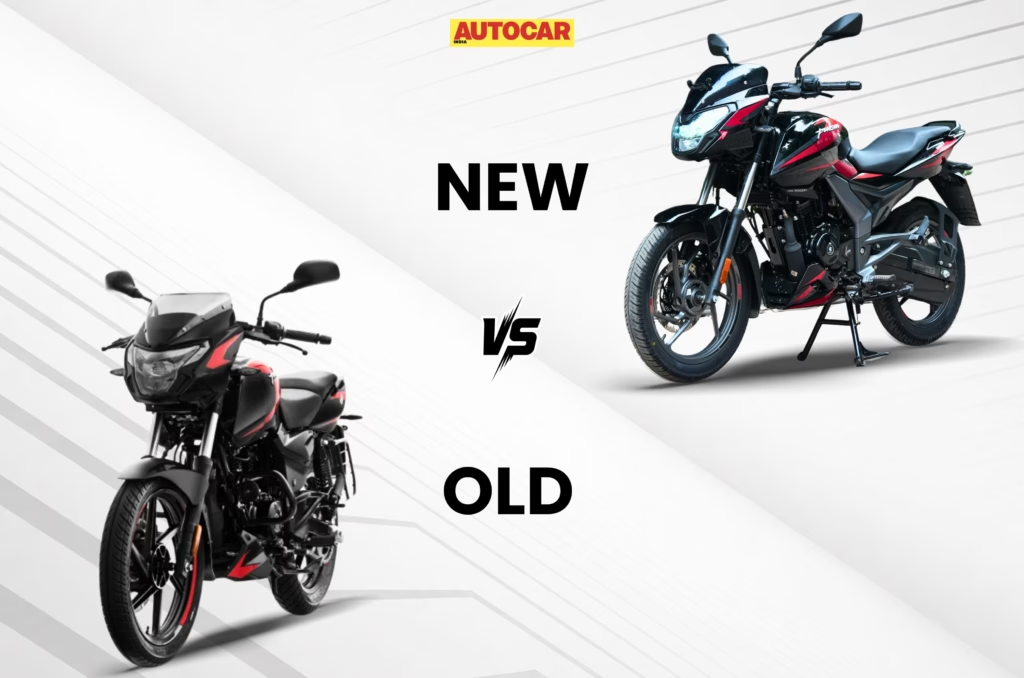
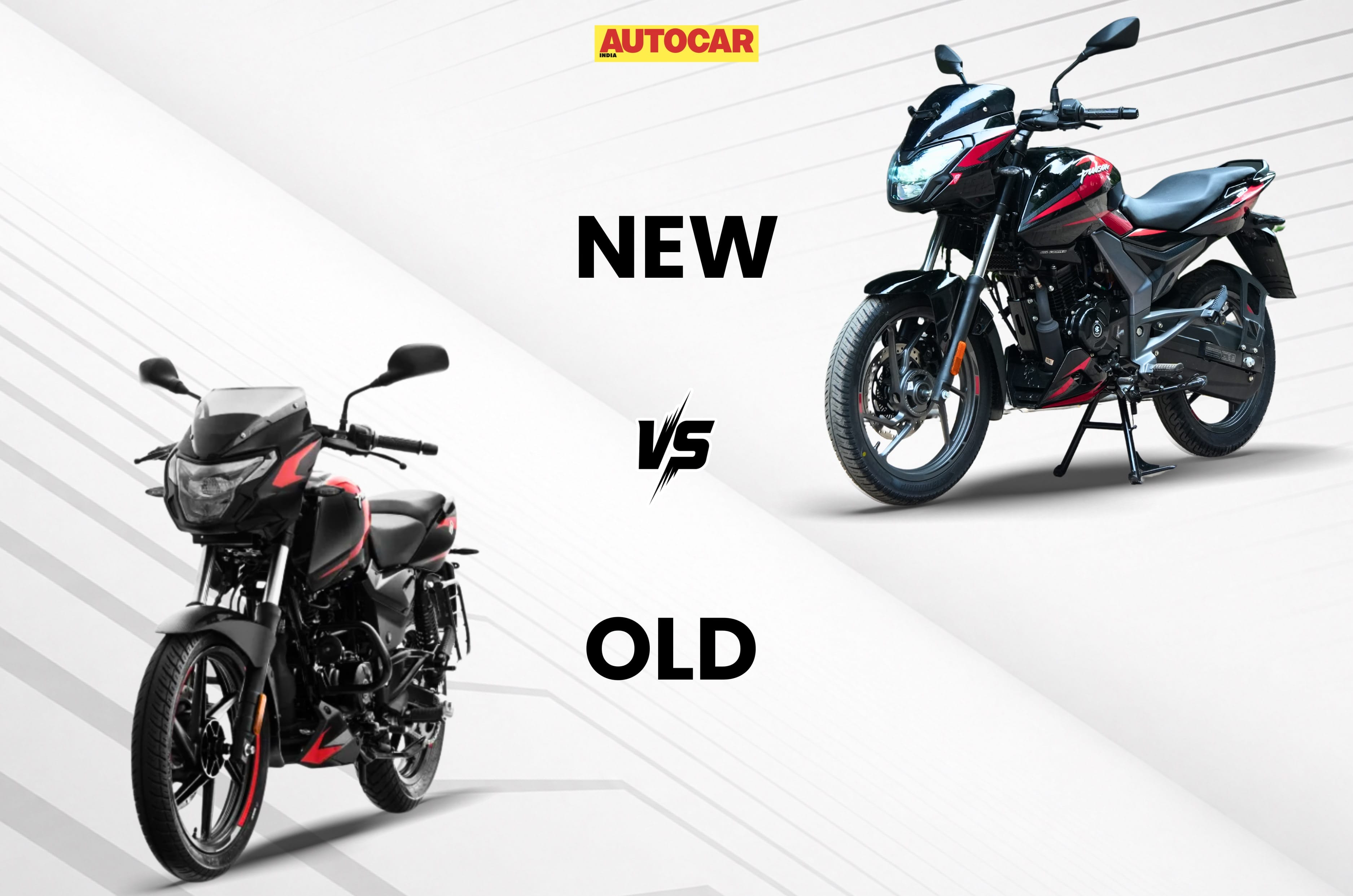
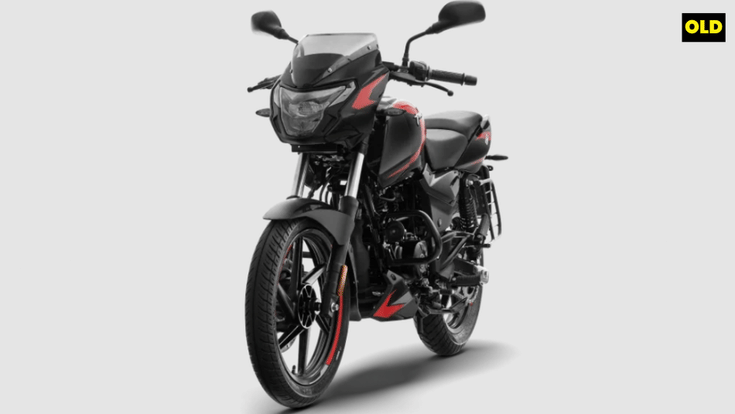
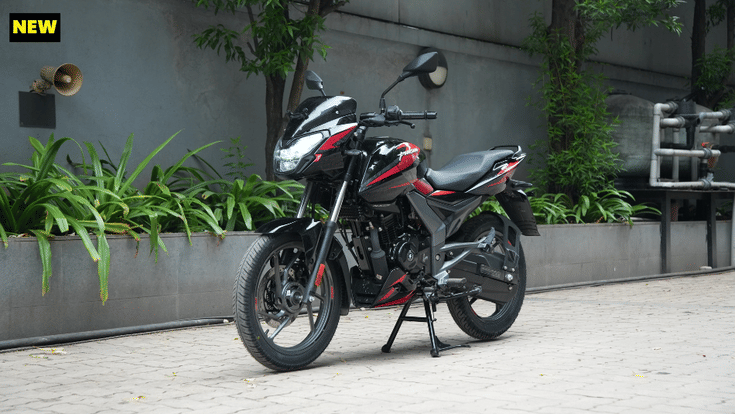
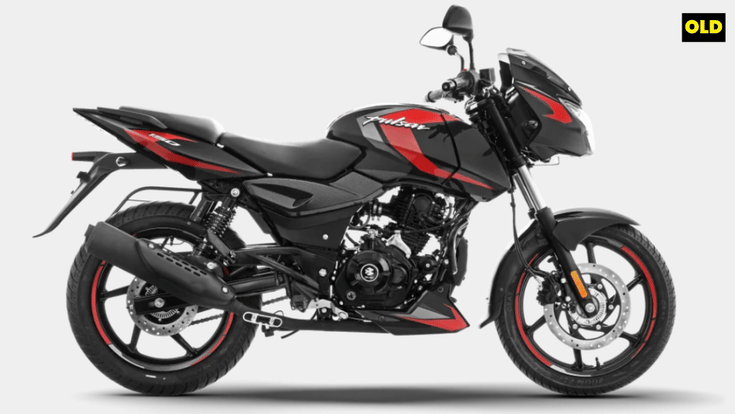
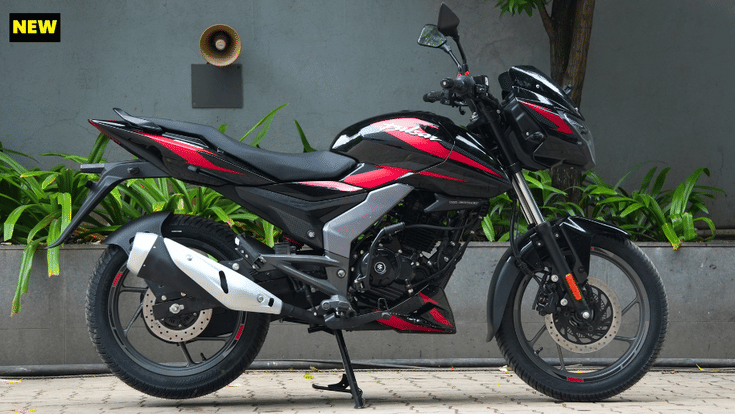
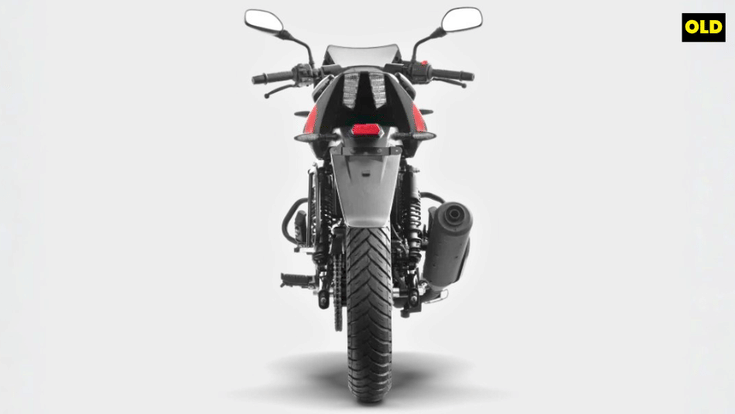
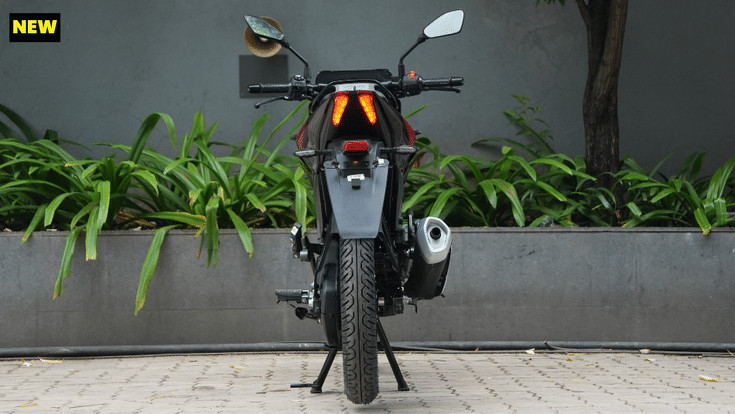
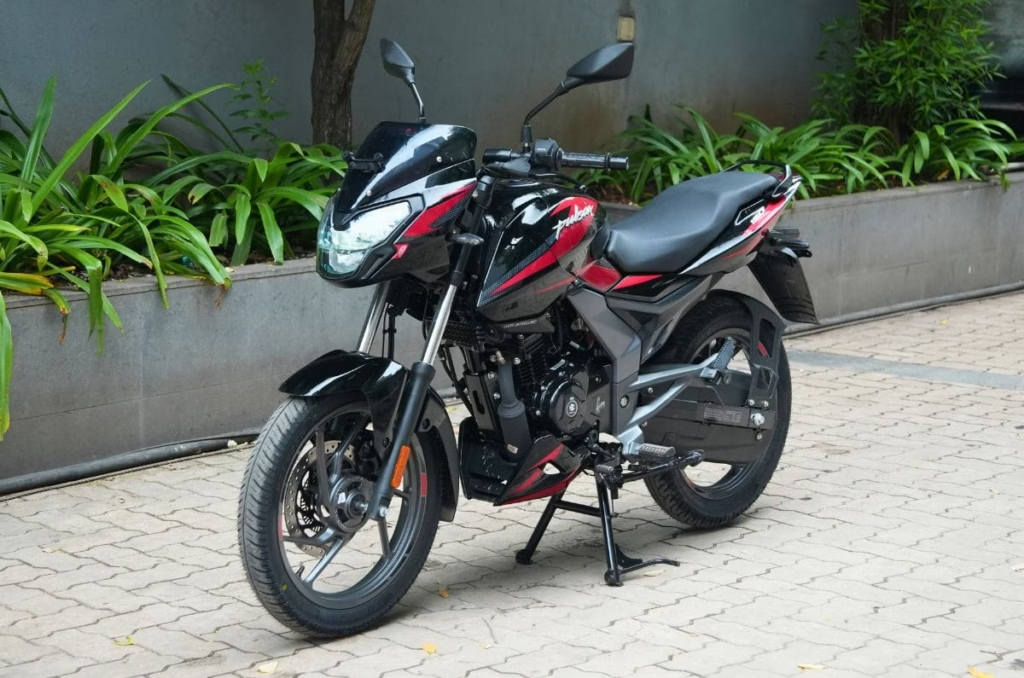
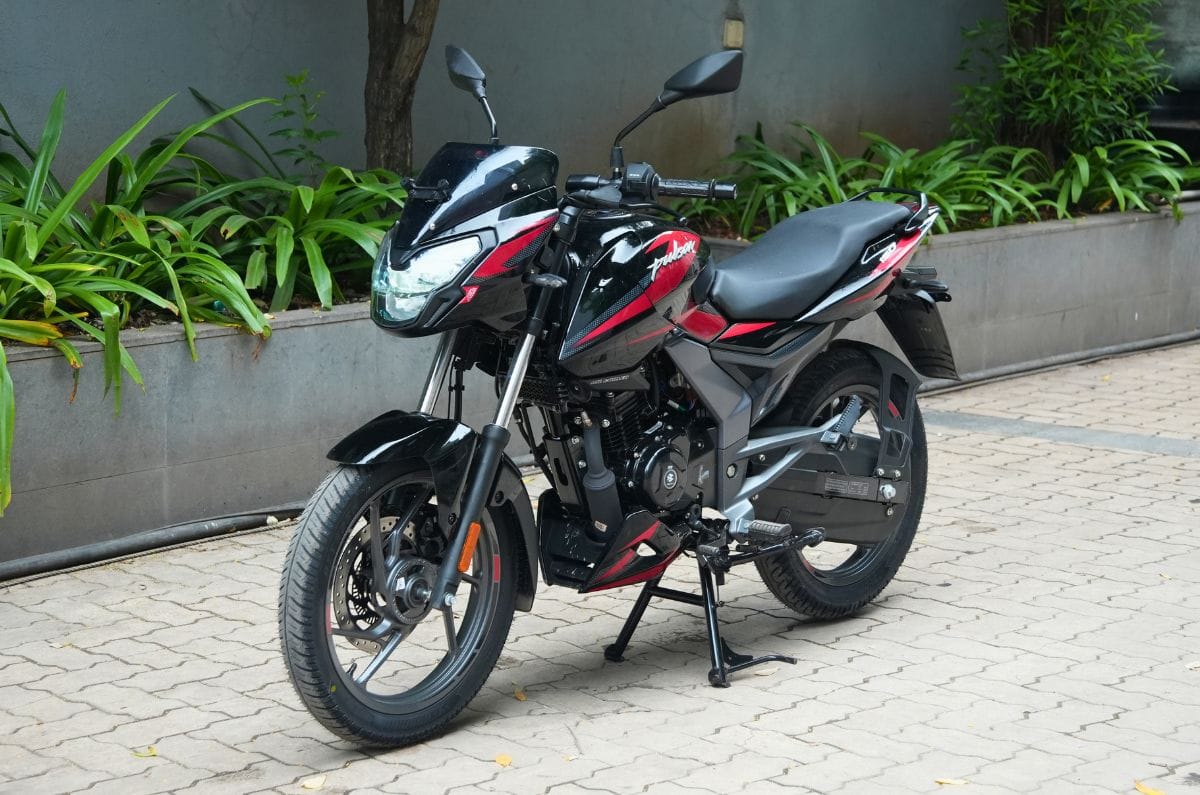
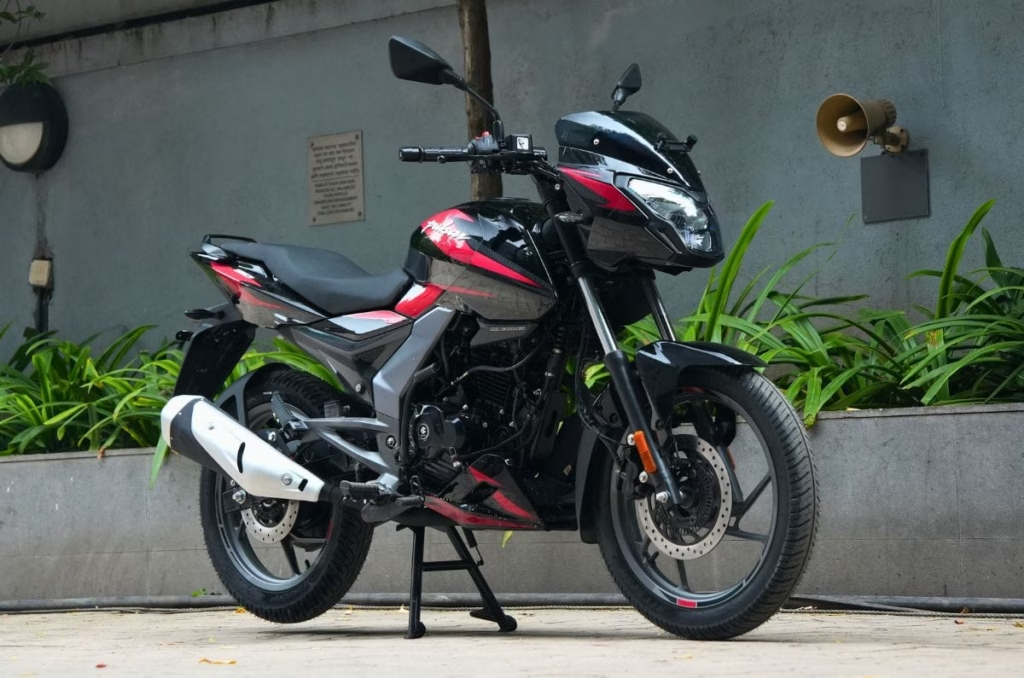
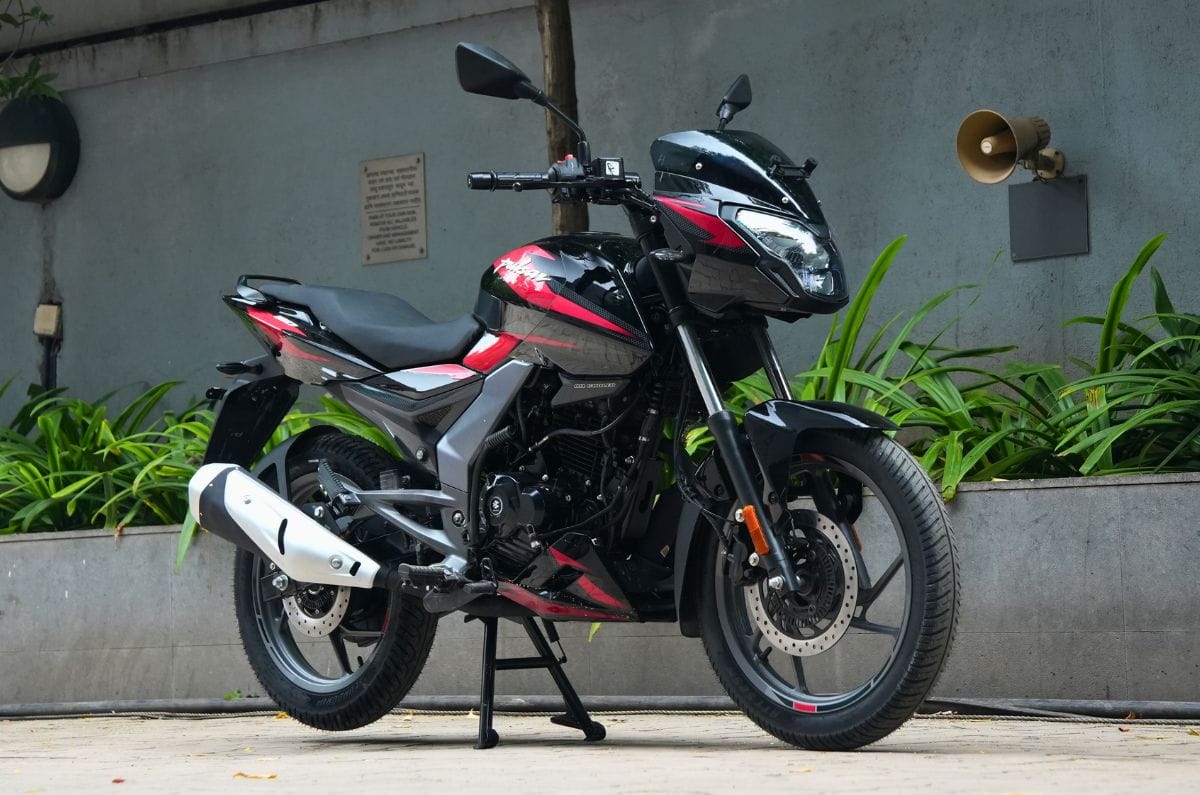
With the discontinuation of the N125 in India, the Pulsar 125 had gained attention back as the entry-level Pulsar model and Bajaj has just revamped it from the ground-up. Some of the obvious upgrades are to the engine, frame, and suspension. However, with the line-up expanding to four variants from two earlier, what exactly sets the new Pulsar 125 apart from the old? Let’s find out.
Note: At the time of writing, Bajaj hasn’t shared the exact dimensions and kerb weight for the new Pulsar 125 so this comparison skips that. We’ll update the story once we get those details.
Bajaj Pulsar 125 New vs Old: Engine
More power and torque at the same points in the rev range
New Bajaj Pulsar 125
Old Bajaj Pulsar 125
Engine
124.58cc single-cylinder, air-cooled
124.38cc single-cylinder, air-cooled
Power
12.1hp at 8,500rpm
11.8hp at 8,500rpm
Torque
11.4Nm at 6,500rpm
10.8Nm at 6,500rpm
Transmission
5-speed
5-speed
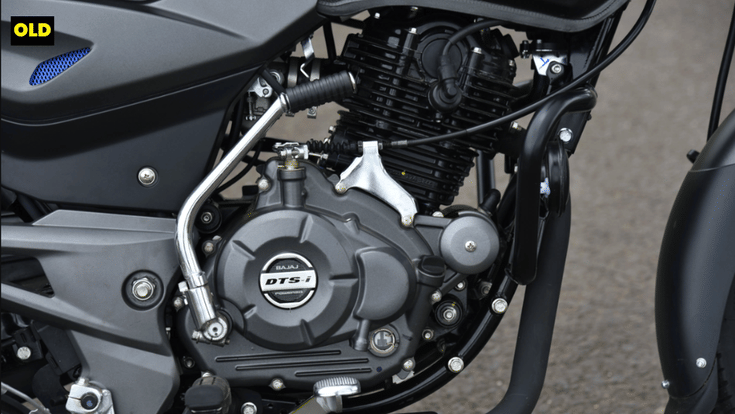
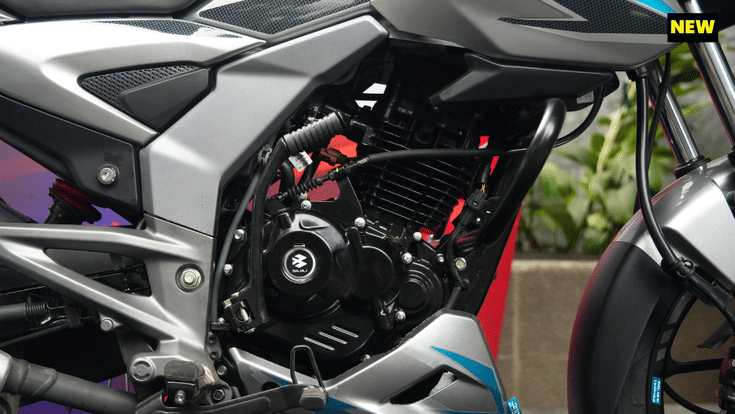
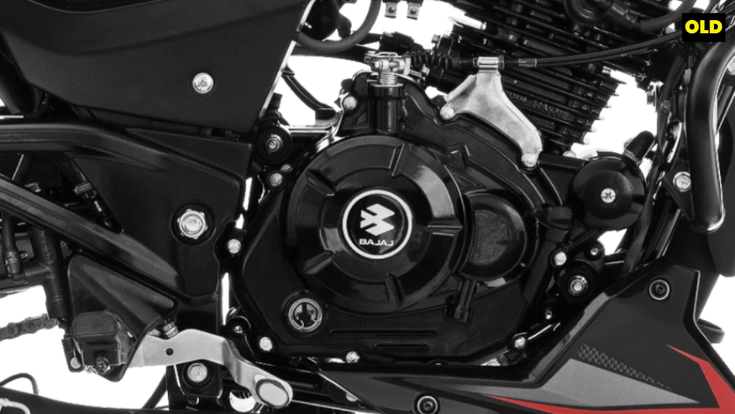
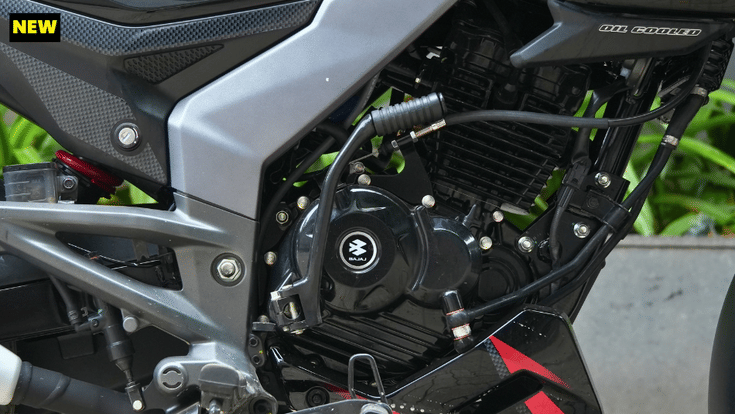
Similar to the all-new Pulsar 150, the new Pulsar 125’s engine also looks similar to the outgoing one at first glance, but that’s not the case. The cubic capacity on the new engine has increased by two-tenths and Bajaj has extracted marginally more power and torque delivered at similar rpm as before. Bajaj also claims that 80 percent of the torque is available from 3,000rpm onwards. On paper, it’s easy to dismiss this improvement as minuscule, but it bodes well with Bajaj’s placement of the 125 as an easy city commuter.
Unlike the new Pulsar 150’s oil-cooled engine, the 125 sticks to an air-cooled unit. Transmission also remains 5-speed, but Bajaj claims an upgraded gearbox for low end tractability. The power-to-weight ratio has supposedly improved, and Bajaj says acceleration has as well, but we’ll have to wait until we put the bike through our tests to confirm so.
Bajaj Pulsar 125 New vs Old: Chassis, headlight, and suspension
Chassis and suspension see major changes
Keeping in line with the all-new theme, Bajaj has also changed the chassis and the suspension setup on the new Pulsar 125. The existing dual-cradle frame has been swapped for a single-cradle or diamond frame with the engine now acting as a stressed member. Bajaj says the change enables the Pulsar 125 to have greater stiffness, enabling better handling and stability.
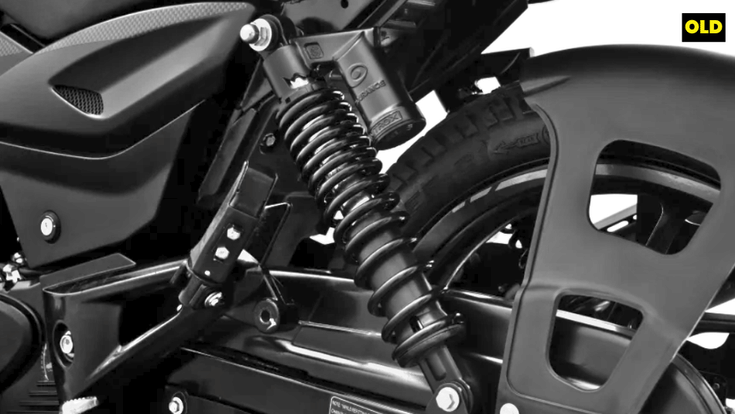
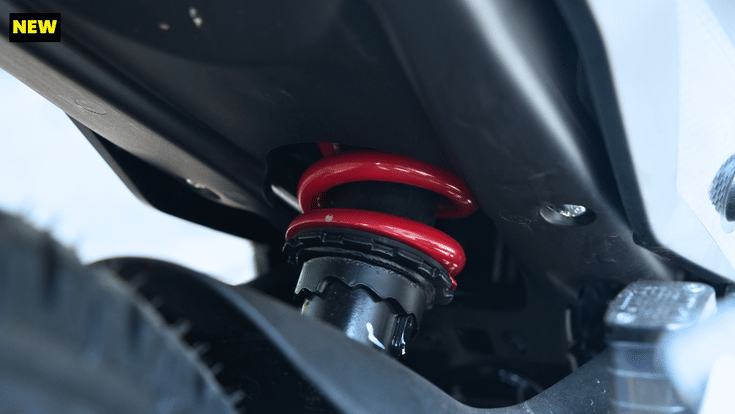
Though the fork is still a right side up (RSU) telescopic unit, the new Pulsar 125 upgrades the diameter by 1mm to 31mm, but with a 10mm shorter 125mm travel. The rear suspension has also seen improvements with the familiar twin-shock setup being swapped for a monoshock unit and the travel has been increased by 8mm to 110mm. Bajaj attributes greater stability in straight lines and corners on the new Pulsar 125 to the brand-new monoshock setup.
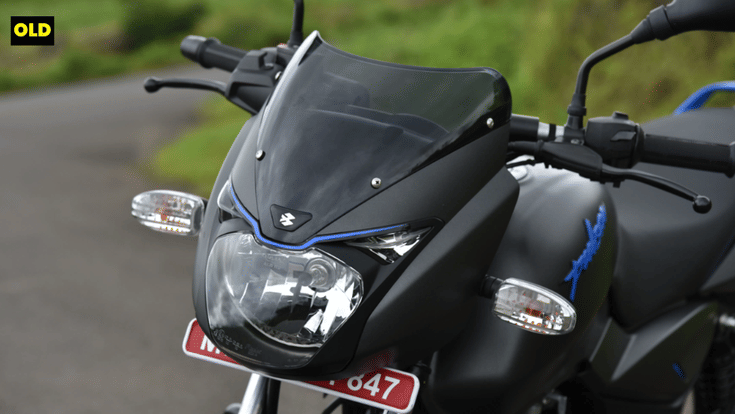
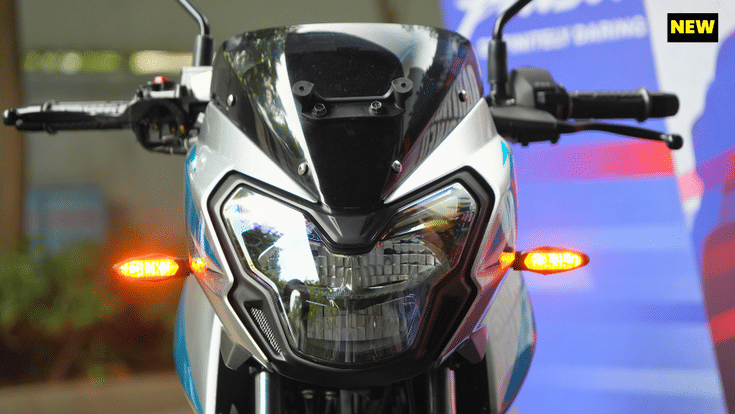
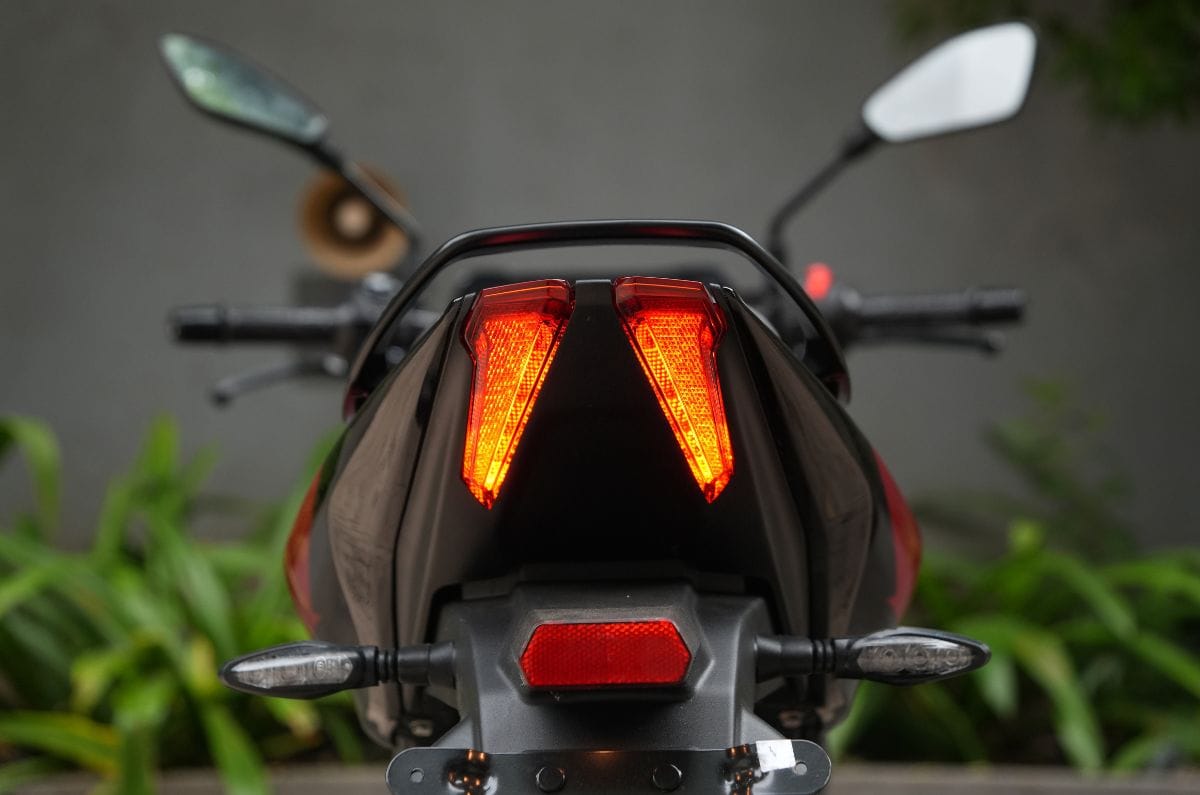
The lighting setup has also been changed, although by a tiny amount. While the headlight and taillight continue to be LED across the board, Bajaj has slightly redesigned the fairing on the new Pulsar 125. Out of the four variants, the LED indicators and hazard lights are only available on the top three variants; only the top-most variant gets a belly pan as standard.
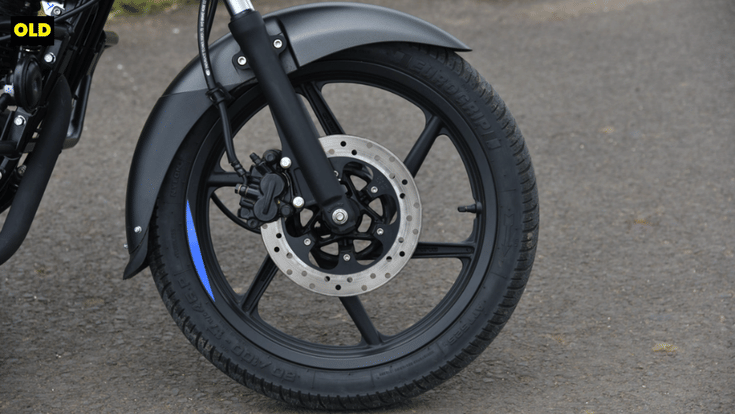
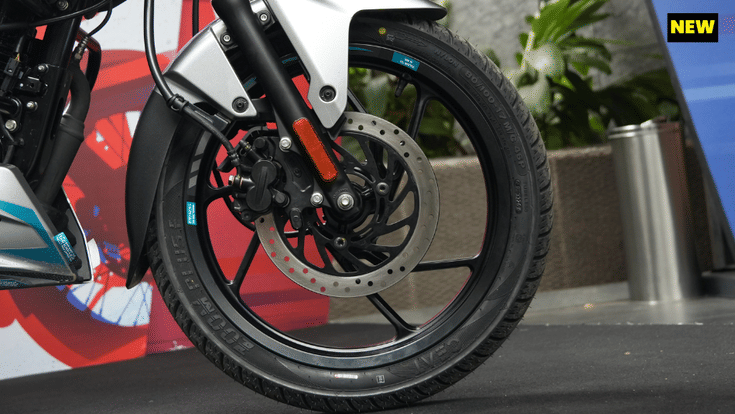
While the tyre sizes remain unchanged on the new Pulsar 125, Bajaj has increased the front disc size on the top three variants. ABS in any form continues to be missing, with the motorcycle offering Combined Braking System (CBS) as standard instead.
Bajaj Pulsar 125 New vs Old: Features
TFT Cluster and ride modes are major upgrades
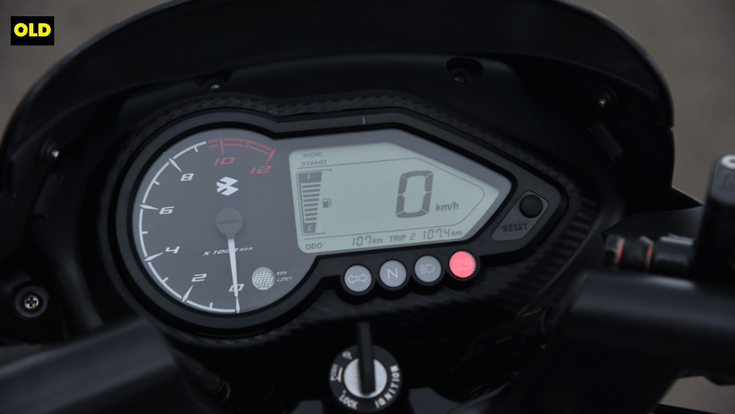
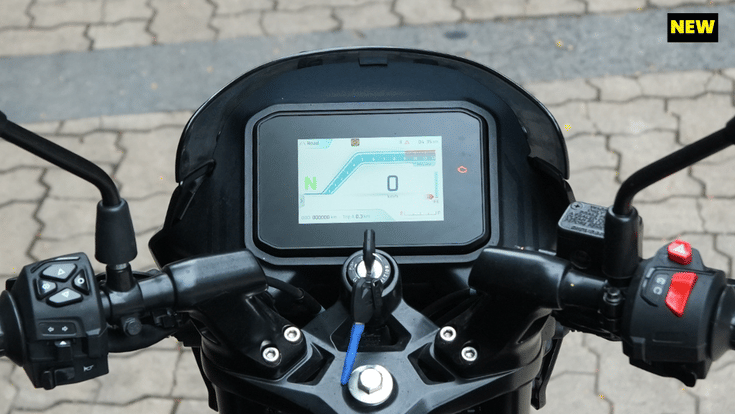
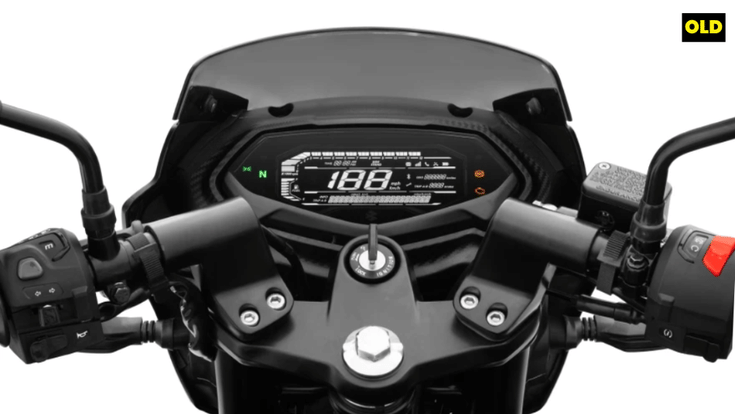
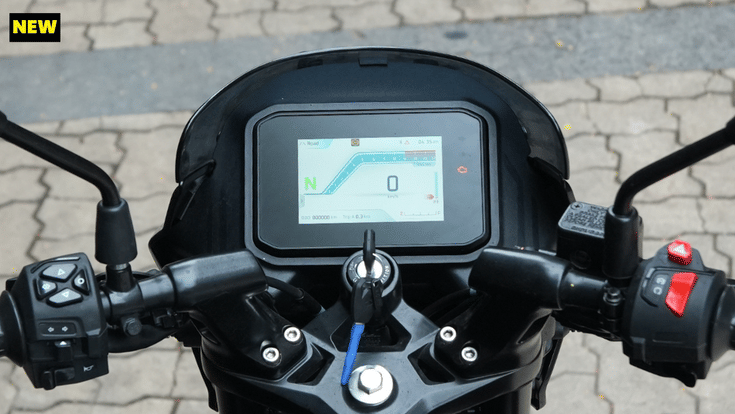
The biggest feature addition to the new Pulsar 125 starts with what you’ll see on every ride, the instrument cluster. The base variant now gets a 5-inch LCD cluster, the mid and top variants getting a 5-inch TFT cluster. Connected features like music control and call and SMS alerts are common to all four variants—thanks to the standard Bluetooth—though WiFi is limited to the top variant. Thanks to WiFi, the top variant alone gets Google Maps mirroring for navigation, whereas the others have turn-by-turn navigation.
The TFT cluster can also store important documents like licence and RC for quick access. To charge up your devices on the go, the new Pulsar 125 gives you a USB type-C port, an upgrade to the previous version’s USB type-A port. However, it’s a paid extra on the base variant. What’s standard on all variants are the three ride modes, Road, Rain, and Sport. In order to make city riding easier still, the new Pulsar 125 also gets crawl tech and ISG (Integrated Starter Generator). The former makes stop-and-go traffic easier to handle; whereas the latter, available on the top three variants, gives you silent start and a stop-start system to conserve fuel.
Bajaj Pulsar 125 New vs Old: Price
New 125’s noticeably more expensive
New Bajaj Pulsar 125
Old Bajaj Pulsar 125
Price (ex-showroom, Delhi)
Rs 92,900 – Rs 1.04 lakh
Rs 81,556 – Rs 94,518
With all the new changes and features, the new Pulsar 125 starts at Rs 92,900 for the base variant and goes up to Rs 1.04 lakh for the top variant, cracking the one lakh mark. That’s a steep increase over the outgoing model’s price range. The new Pulsar 125 does make forward strides in almost every area, but we’ll have to wait until we ride the bike to comment on whether the changes justify the unmissable premium.
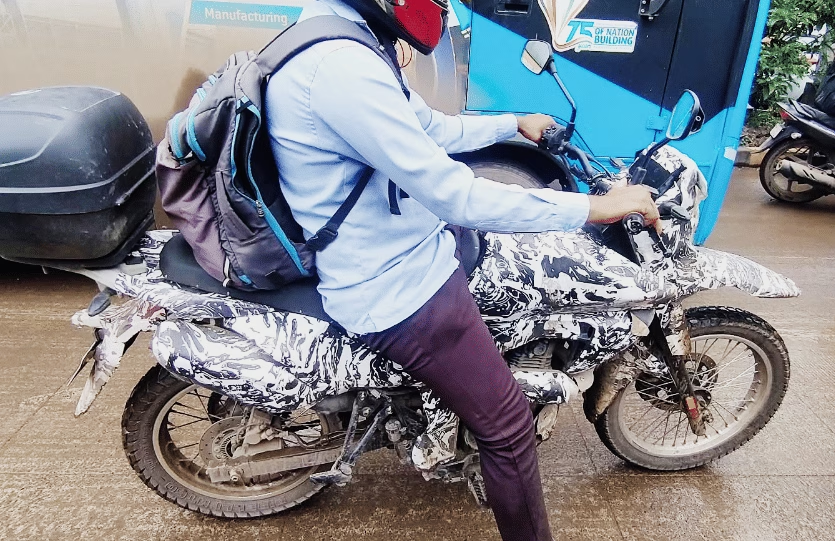
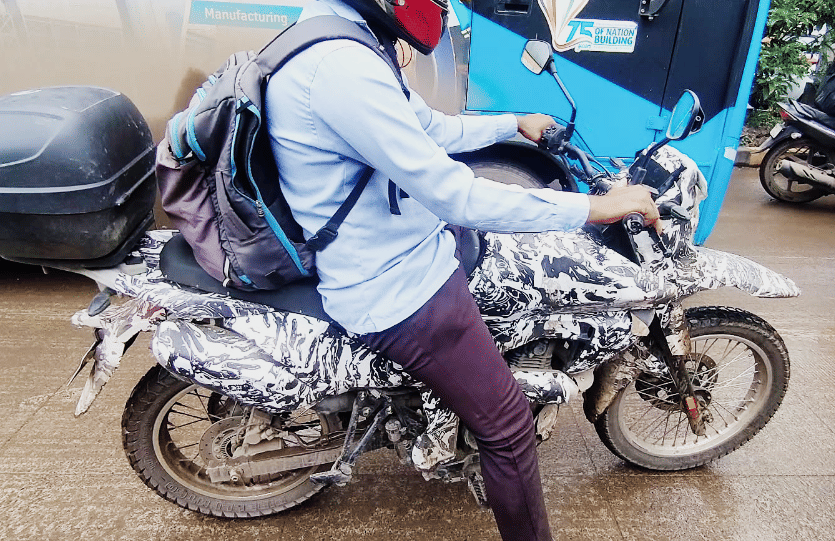
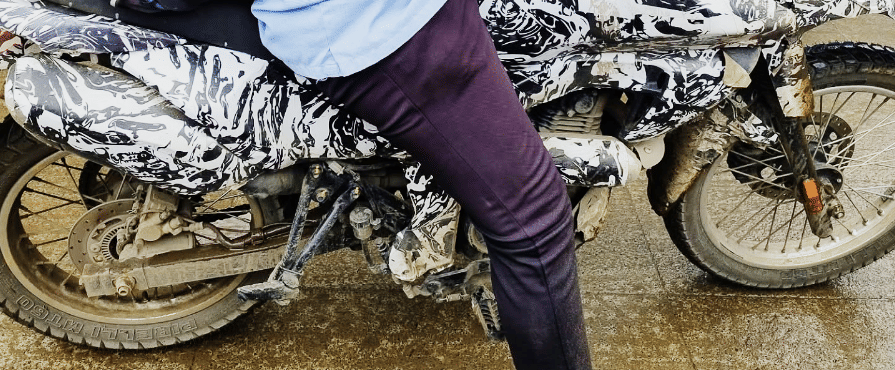
Appears to have a 19 front-17 rear tubed spoke wheels
Spotted testing with Pirelli MT60 tyres
Most likely to launch in LatAm markets first
Proper dual-sport design
With an up-swept exhaust and a tall stance
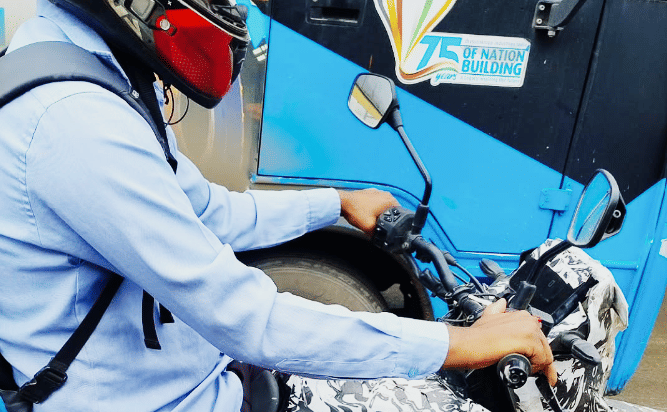
This image gives us a detailed look at a few important things on the motorcycle. We can see a TFT instrument cluster that appears similar to the unit that debuted on the Pulsar N160 S and SS, supporting Google Maps mirroring on the latter. The next detail we can see is the multi-functional switch cube on the left side of the handlebar, presumably to access and navigate through the features the motorcycle will offer. For perspective, some of the brand’s more recent launches like the N160 SS come with modern day features like ride-by-wire which enables rider aids like three ride modes, traction control, and a new crawl function to make riding in traffic easier, and we could see those features on this upcoming dual sport as well.
Being an adventure motorcycle, it understandably has long travel suspension, although exact details are unknown at the moment. The other noteworthy thing is that the motorcycle appears to sport Pirelli MT 60 tyres, but it’ll likely wear different tyres in India to keep the prices affordable. Engine details are still unknown, but as we’d reported earlier it’ll likely be sub-300cc.
The Indian off-road motorcycle market has popular choices like the Hero Xpulse 210 and the Kawasaki KLX230, as well as the KTM 390 Enduro R in the 400cc class. We also have the upcoming Honda XR300 L and XR300 Rally. In an interview with Brazilian media, Bajaj’s Executive Director for the country, Waldyr Ferreira hinted at a launch in the local market towards the end of the year. The timeline for an Indian launch hasn’t been confirmed so far.
After what seems like a long, drawn-out process, Bajaj has finally launched the all-new classic Pulsar 150 and Pulsar 125. The new Pulsar 150 brings a lot to the line, with a new engine and frame, along with a whole lot of new features. However, it has also lost some of the features from the previous Pulsar 150 it replaces. Let’s see what those are, in detail. At the end, you can decide if the proverbial “old is gold” applies to the Pulsar 150 too.
Note: At the time of writing, Bajaj hasn’t shared the exact dimensions and kerb weight for the new Pulsar 150, so this comparison skips that part. We’ll update this once we get the details from Bajaj.
Bajaj Pulsar 150 new vs old: Engine changes
Same power but more torque than before
New Bajaj Pulsar 150
Old Bajaj Pulsar 150
Engine
149.5cc, single-cylinder, oil-cooled
149.5cc, single-cylinder, air-cooled
Power
14hp at 8,000rpm
14hp at 8,500rpm
Torque
14.1Nm at 6,500rpm
13.2Nm at 6,500rpm
Transmission
5-speed
5-speed
Both models have a 149.5cc engine, but they are anything but the same. The old one, for example, was an air-cooled unit, but the new engine upgrades to oil cooling. And while the power figure remains the same, it’s delivered 500rpm earlier. Torque, on the other hand, has increased.
Considering that the cubic capacity itself remains unchanged, this is a commendable improvement from Bajaj. The company also claims an improved 0-60kph timing owing to an improved power-to-weight ratio. However, we don’t know by how much that has improved.
Bajaj Pulsar 150 new vs old: Chassis, headlight and suspension
The older Pulsar had a bigger fork
Keeping in line with the all-new theme, Bajaj has also changed the chassis and the suspension setup on the new Pulsar 150. The dual-cradle frame has been swapped for a simpler single-cradle or diamond frame, with the engine now acting as a stressed member. Bajaj says the change gives the Pulsar 150 greater stiffness, enabling better handling and stability.
The fork on the new Pulsar 150 remains a right-side-up (RSU) telescopic unit. However, the previous top variant of the Pulsar 150, Split Seat, had a larger 37mm fork with 130mm of travel. The base variant had a 31mm fork with an even longer 135mm of travel. The new Pulsar 150 swaps both for an in-between 33mm-diameter fork and a shorter 125mm travel. While the reduced travel is unlikely to compromise the bike’s functionality by a noticeable amount, it’s worth mentioning nevertheless. The rear suspension, on the other hand, has seen improvements across the board. The familiar twin-shock setup has been chucked for a brand-new monoshock unit, and the travel has been increased by 8mm to 110mm. Bajaj claims the change gives the Pulsar 150 greater straight-line and cornering stability.
The lighting setup on the Pulsar has also changed. While the headlight and tail-light continue to be LED across the board, Bajaj has slightly redesigned the fairing on the new Pulsar 150. The LED indicators that were previously standard, though, are now only available on the top two variants. The new Pulsar 150 also has hazard lights but only on the top two variants. These two variants get the belly pan as standard, too.
Bajaj Pulsar 150 new vs old: Wheels, tyres and brakes
Moving on to the tyres, the top variant of the outgoing Pulsar 150 had larger tyres at both the front and rear. The new one, however, standardises the base variant’s tyre sizes for all three variants. The same goes for the front brakes. Both old and new Pulsar 150s stick to having single-channel ABS as standard. If you need dual-channel ABS, you would have to upgrade to the Pulsar N160’s top variant.
Bajaj Pulsar 150 New vs Old: Features
Host of new features on the new Pulsar 150
This is the one area where the new Pulsar 150 unabashedly moves things forward. The previous Pulsar 150’s base variant had a semi-digital instrument cluster, and the top variant had the negative LCD instrument cluster. Both are gone now, with a new 5-inch LCD cluster taking their place on the base variant and the mid and top variants getting a 5-inch TFT cluster. All three variants come with Bluetooth as standard, while the top variant even adds WiFi support. All three get connected features such as music control and call and SMS alerts.
However, only the TFT cluster can store important documents like the licence and RC for quick access. Additionally, the top variant exclusively gets Google Maps mirroring for navigation, whereas the other two stick to turn-by-turn navigation. If you are worried that the navigation will drain your phone’s battery, the new Pulsar 150 also gives you a USB Type-C port, an upgrade from the previous version’s USB Type-A port, but only on the top two variants.
The Pulsar 150 has three ride modes – Road, Rain and Sport – with crawl tech and an integrated starter generator (ISG) adding to the convenience. ISG is once again exclusive to the top two variants. Crawl tech makes navigating stop-and-go traffic easier, whereas ISG gives you a silent start and a stop-start system to help conserve fuel.
Bajaj Pulsar 150 New vs Old: Price
Costlier by at least Rs 4,000
New Bajaj Pulsar 150
Old Bajaj Pulsar 150
Price range (in Rs)
1.15 lakh-1.23 lakh
1.11 lakh-1.18 lakh
With all the new changes and features, the new Pulsar 150 starts at Rs 1.15 lakh for the base variant and goes up to Rs 1.23 lakh for the top variant. For context, the old Pulsar 150’s price ranged between Rs 1.11 lakh and Rs 1.18 lakh. While the new Pulsar 150 gives you more features, it also lacks some things compared to the older model. Deciding whether it’s really an upgrade therefore requires a test ride, as the real-world experience is hard to conclude based on the spec sheet alone.
After months of anticipation and teasing, Bajaj has finally revealed an all-new Pulsar 150 today with almost all the parts of the motorcycle receiving substantial upgrades while retaining the classic Pulsar silhouette.
Starting with the 149.5cc, single-cylinder, air/oil-cooled engine which at first glance looks similar to the existing one, with the same 14hp power. However, the engine has two major changes. The peak power is now delivered at 8,000rpm, 500rpm earlier than the existing engine. And peak torque has gone up to 14.1Nm; 0.9Nm more than before, though it is delivered at the same 6,500rpm.
The next big change is that the rear suspension is now a monoshock, as opposed to the conventional twin-shocks setup. The front continues with a right side up (RSU) telescopic fork with 33mm diameter with 125mm of travel and the rear suspension travel is 110mm. Stopping duties are handled by a 260mm front disc and a 230mm rear disc (130mm rear drum on the base variant).
the fairing on the new one has been redesigned for a more aggressive look with the top two variants getting all-LED lighting as standard. Bajaj has priced the base SD Single Seat variant at Rs 1.15 lakh with the fully loaded, TD Split Seat variant costing Rs 1.23 lakh.
After months of anticipation and teasing, Bajaj has finally revealed an all-new Pulsar 150 today with almost all the parts of the motorcycle receiving substantial upgrades while retaining the classic Pulsar silhouette. There are three variants now, SD Single Seat, TD Single Seat, TD Split Seat. The latter two variants get a 5-inch TFT instrument cluster and an Integrated Starter Generator (ISG). All three models also get a crawl mode to make navigating traffic easier.
Gets three variants, top variant gets Google Maps mirroring
New gearbox with easier lower end tractability
ISG and crawl modes to make low speed riding even easier
Gets meaningful updates everywhere
With a bunch of new features
Starting with the 149.5cc, single-cylinder, air/oil-cooled engine which at first glance looks similar to the existing one, with the same 14hp power. However, the engine has two major changes. The peak power is now delivered at 8,000rpm, 500rpm earlier than the existing engine. And peak torque has gone up to 14.1Nm; 0.9Nm more than before, though it is delivered at the same 6,500rpm. Bajaj has also given the motorcycle a new gearbox with specific focus on low speed tractability. The frame too sees an upgrade with a new single-cradle frame replacing the dual-cradle frame. The engine now acts as a stressed member of the engine, which Bajaj says improves overall ride and stability.
The next big change is that the rear suspension is now a monoshock, as opposed to the conventional twin-shocks setup. The front continues with a right side up (RSU) telescopic fork with 33mm diameter with 125mm of travel and the rear suspension travel is 110mm. Stopping duties are handled by a 260mm front disc and a 230mm rear disc (130mm rear drum on the base variant). All three variants get single-channel ABS as standard. Rounding off the ride package are the tubeless 80/100-17 tyres at the front and 100/90-17 at the rear.
On the features front, the classic Pulsar now gets a brand-new 5-inch LCD cluster with the top two variants stepping that up to a 5-inch TFT instrument cluster. The cluster also gets other features like call and SMS alerts and an option to store your vehicle documents for quick access. However, the top variant gets WiFi support which enables Google Maps mirroring, a feature first seen on the Pulsar N160 SS. There are also three ride modes and a crawl mode. Both of which were also first seen on the Pulsar N160 S and SS. The existing model had a USB type-A port for charging with the new one swapping that for a modern, type-C port on all three variants.
Bajaj has also equipped the top two variants with ISG, which has a stop-start system that can automatically turn the motorcycle off during traffic stops, to conserve fuel, and also enables silent starts. There are minor upgrades to the lighting department as well. Though the class B LED headlight itself is shared with the outgoing Pulsar 150 that received an update last year. the fairing on the new one has been redesigned for a more aggressive look with the top two variants getting all-LED lighting as standard. Bajaj has priced the base SD Single Seat variant at Rs 1.15 lakh with the fully loaded, TD Split Seat variant costing Rs 1.23 lakh.
In the analogue age, I planned road trips with paper maps, fluorescent highlighters and dog-eared guidebooks. Lately, however, Uncle Claude and Aunty Gemini have lured me into the world of artificial intelligence. When I asked them to suggest an adventurous drive through south Utah, they both recommended similar itineraries. It was like asking the chef at a dhaba to surprise me with something unusual and being served butter chicken instead. Zion, Bryce Canyon and Arches. Three magnificent National Parks connected by smooth highways and comfortable hotels.
Our search engine for Utah beyond the tourist trail. No signal required.
This route hits Utah’s greatest highlights, featuring soaring cliffs, towering hoodoos and delicate sandstone arches. However, the parks are often so busy that sedans circle overflowing car parks, rather like sharks patiently circling a lifeboat. I wanted roads that filtered out sedans and coaches, demanded preparation and delivered adventure, where the SUV became part of the journey rather than mere transport.
So, I turned my back on the algorithm and went analogue. While ordering the DeLorme Utah Atlas, Amazon suggested Freda J. Ryland’s Utah’s Best Kept Secrets, promising another Utah of mesas, switchbacks, unspoiled canyons, lonely dirt roads beyond the cellular umbrella and skies dark enough to make galaxies glow.
Her book was fuel for wanderlust; an invitation into a hidden Utah for those willing to stray off the tarmac. Though its typesetting suggested a clandestine hand-operated press during the Quit India movement, its content was pure gold. Paired with the DeLorme atlas and offline Gaia GPS, the trio was as dependable as egg, bacon and toast. Freda chose the destination, the atlas found the route, and Gaia confirmed where we were. What followed often felt like driving into a fairy tale.
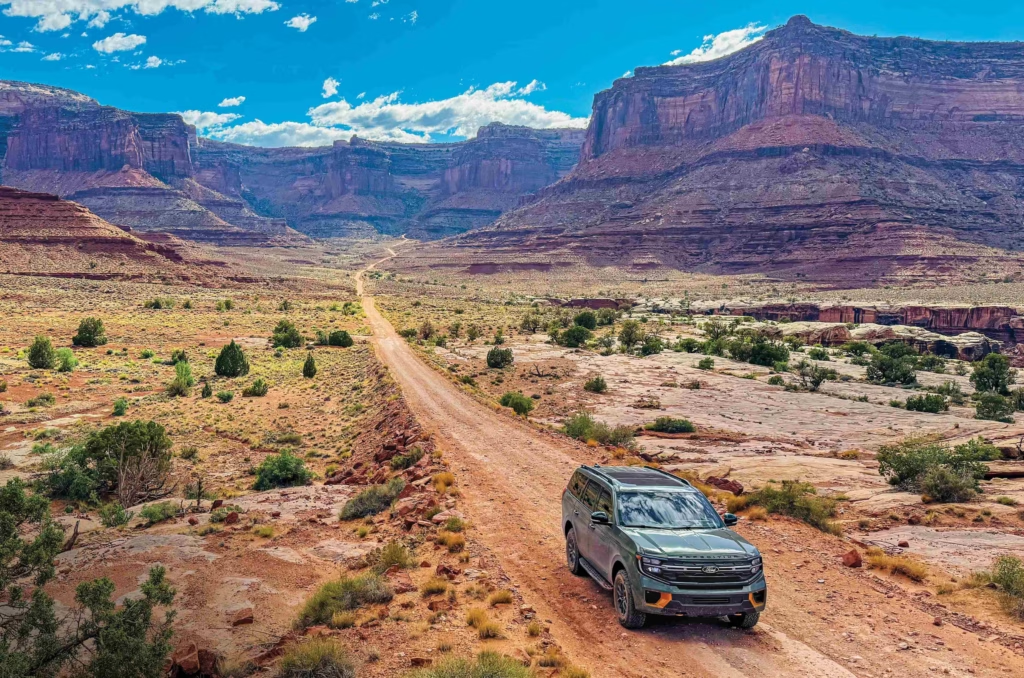
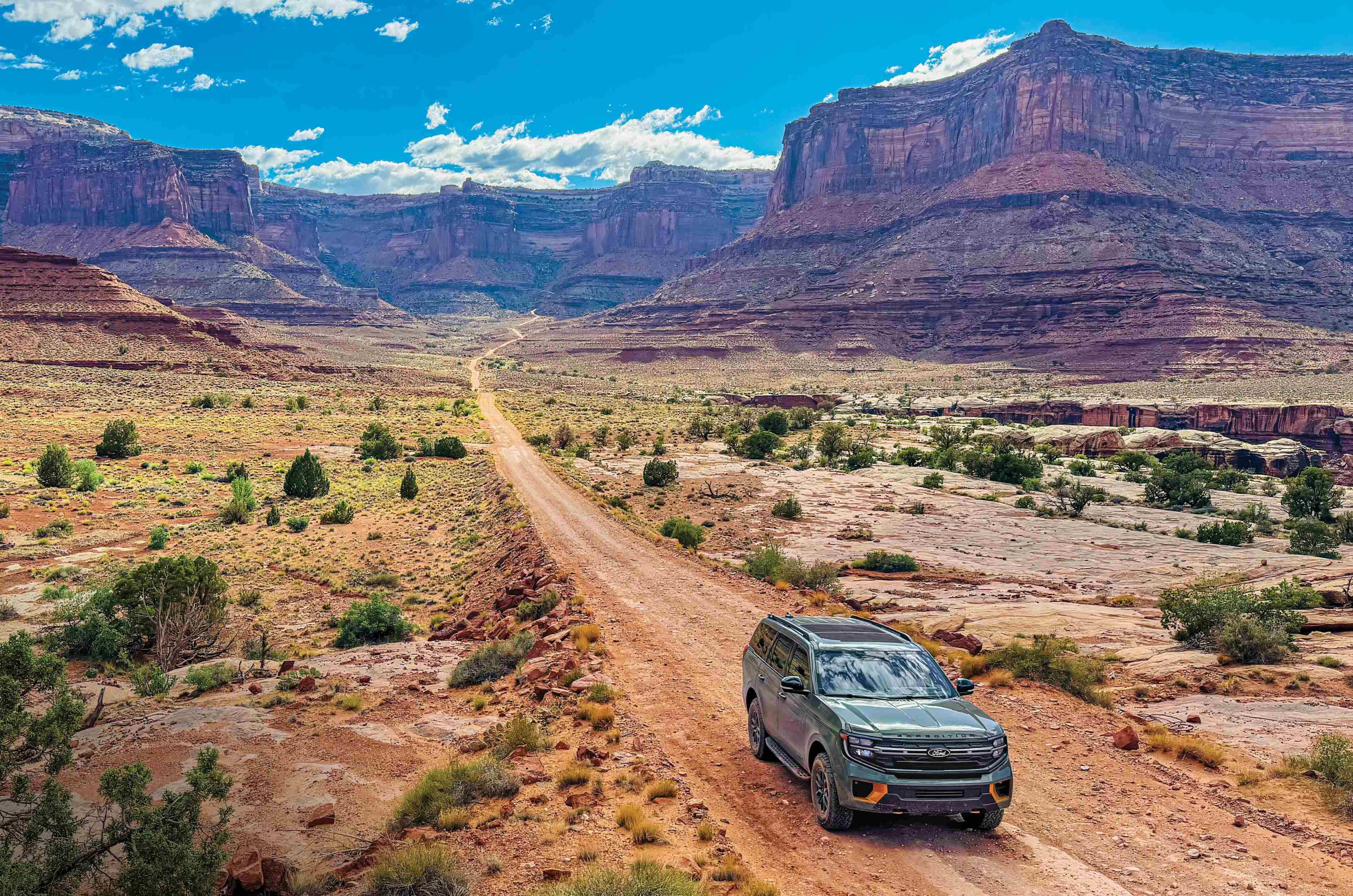
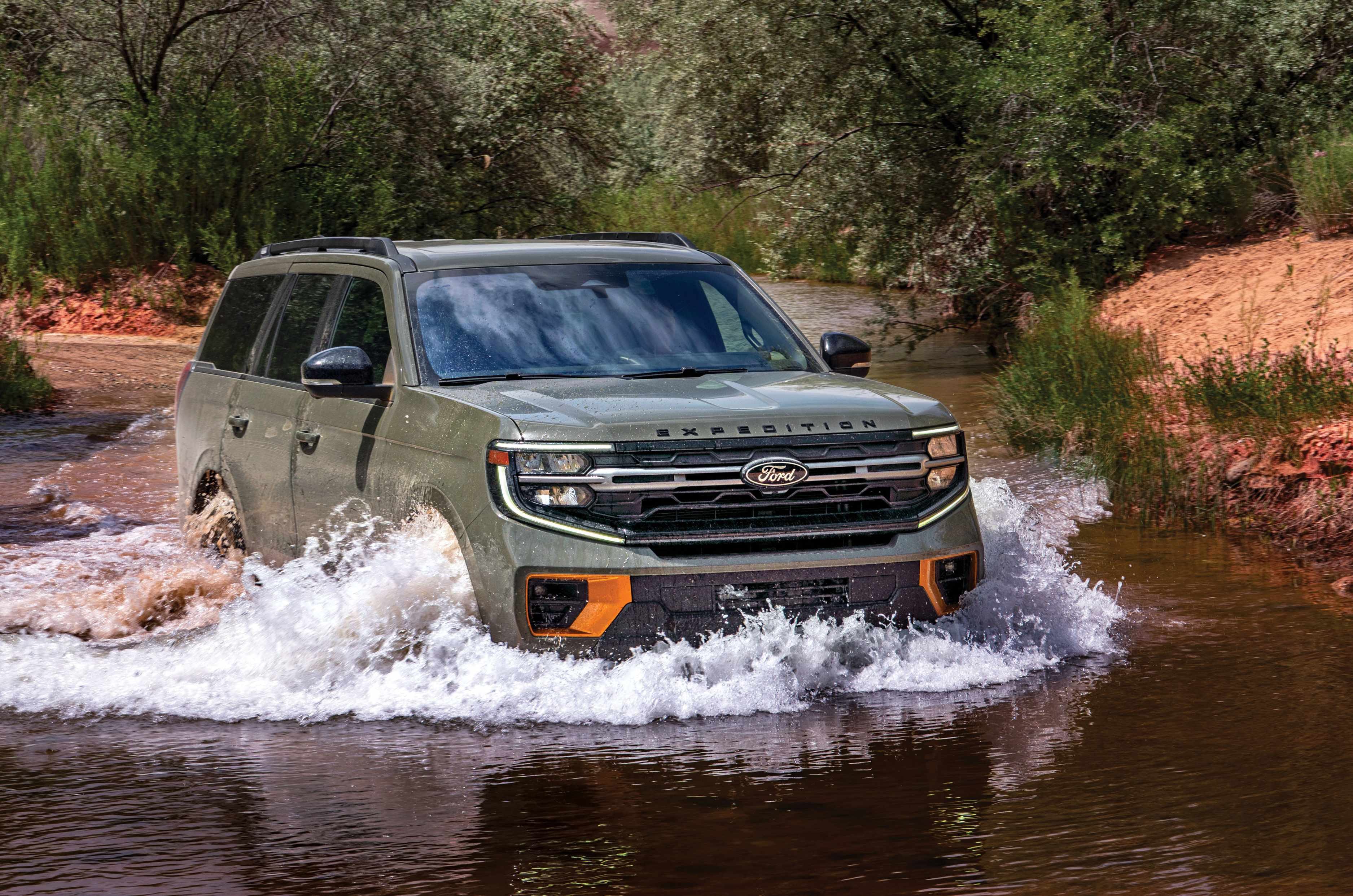
Off-grid Utah demands a dependable 4×4. The Tremor waded rivers, shrugged off loose gravel, tenacious clay and steep gradients, and kept going long after the tarmac lost interest.
None of it would have happened without the Ford Expedition Tremor, our fairy godmother. A tad tubby at over two tonnes, it came with a locking rear differential instead of a magic wand. The twin-turbocharged 3.5-litre EcoBoost V6 dispatched highway miles effortlessly. Once the tarmac disappeared, the Tremor earned its keep, shrugging off clay, loose rock, river crossings and deeply rutted tracks with nonchalant competence.
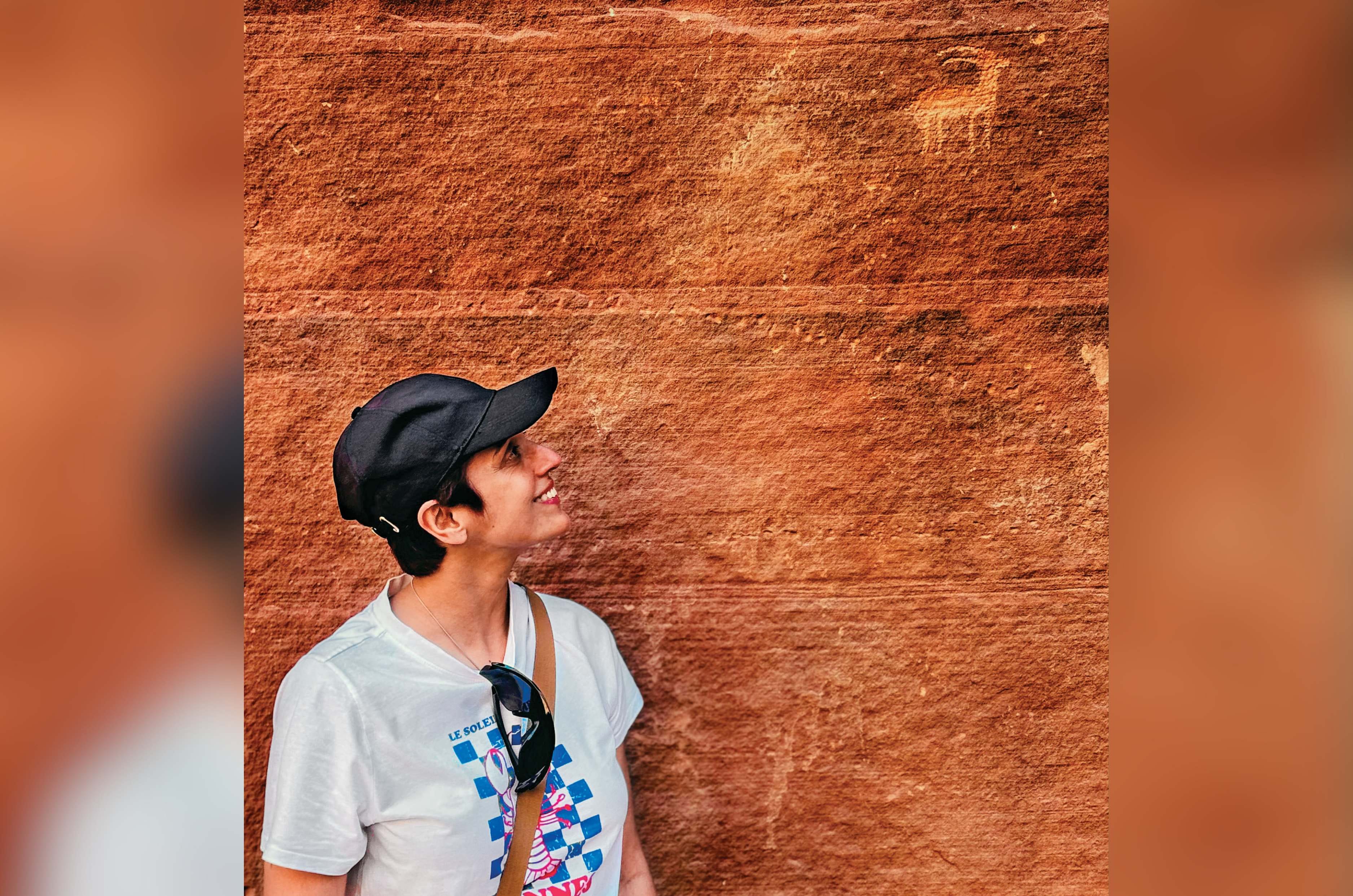
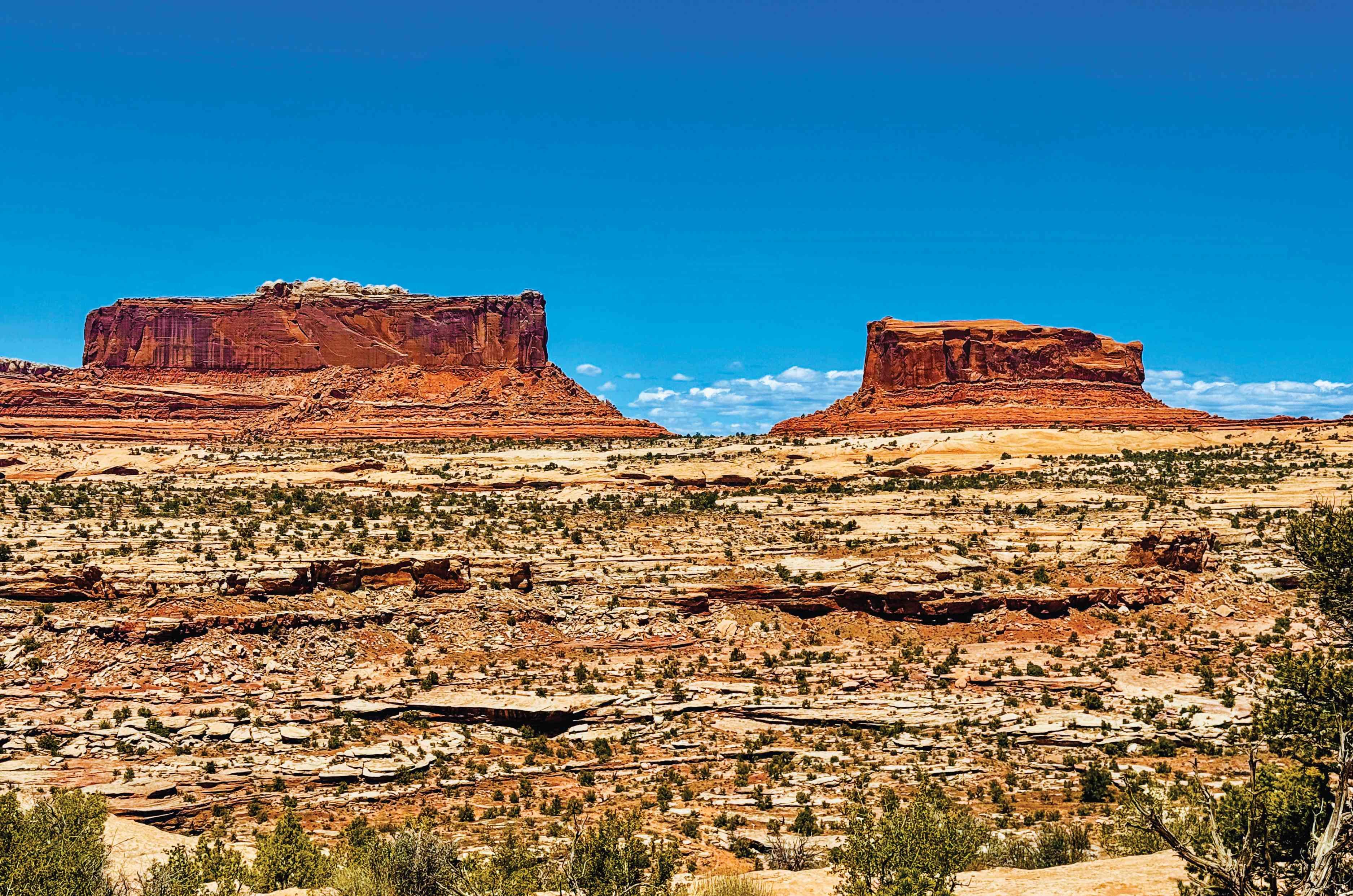
Follow her gaze. A long-gone artist still finds an audience a thousand years on. Utah is peppered with petroglyphs.
We forayed deeper into Utah’s wild, unadulterated beauty, beyond the tourist grid. To secret trails and solitude, to dinosaur tracks in ancient rock and to petroglyphs spanning two millennia, many still a mystery. I couldn’t help wondering if some ancient scribbling was simply the 2 BC equivalent of ‘Vinod loves Veronica’.
The first road to justify Freda’s confidence was Utah Scenic Byway 12, climbing out of Escalante towards Boulder through the folded canyons of Grand Staircase-Escalante National Monument, among the last regions in the contiguous US to be properly surveyed. Past Calf Creek, the road narrowed onto a hogback, a ribbon of blacktop along a ridge, with the ground dropping hundreds of feet on both sides. Red rock canyons fell open left and right, and for a few minutes it felt like driving along the spine of the Earth.
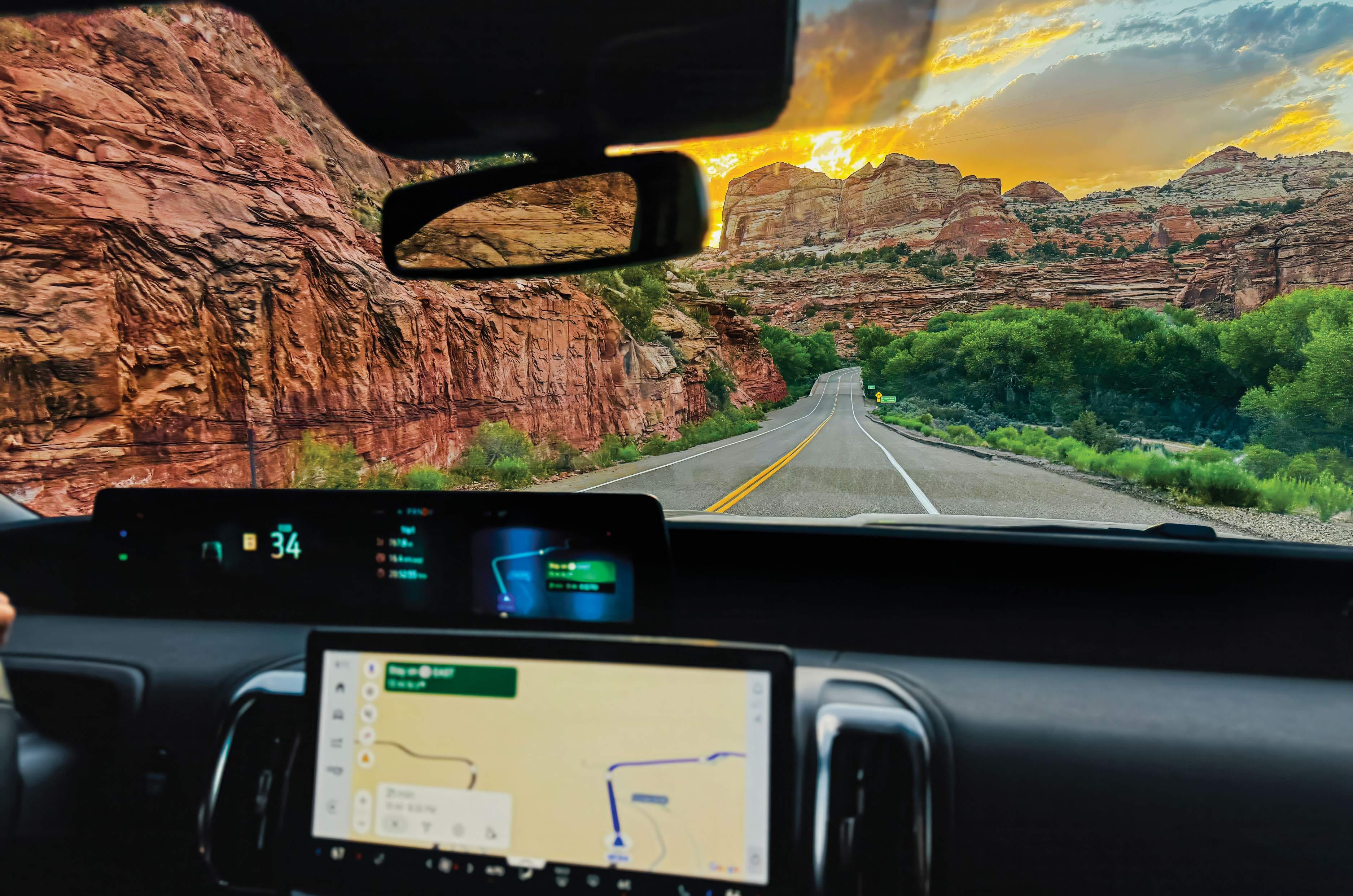
The windscreen became Utah’s widescreen, live streaming breathtaking views with hardly a break. This is Scenic Byway 12 between Escalante and Boulder.
At Boulder, we turned onto the Burr Trail, first beaten into the landscape by cattleman John Burr in the mid 1800s. Soon the road slipped past Long Canyon, colloquially called Singing Canyon because its towering, tapering walls possess the sort of acoustics that could make a bathroom baritone believe he had missed his calling. I sang a few notes and was astonished when the sandstone tuned my discordant tone to the smoothness of Sinatra.
Then the scenery became rather more serious. In 1948, the Atomic Energy Commission arrived looking for uranium, widening the trail and blasting switchbacks that tumble nearly 800 feet in less than a mile into the Waterpocket Fold, a colossal wrinkle in the earth running nearly a hundred miles across southern Utah, its tilted rock exposed in great bands of colour. We descended towards Ticaboo as the Fold surrendered to open desert.
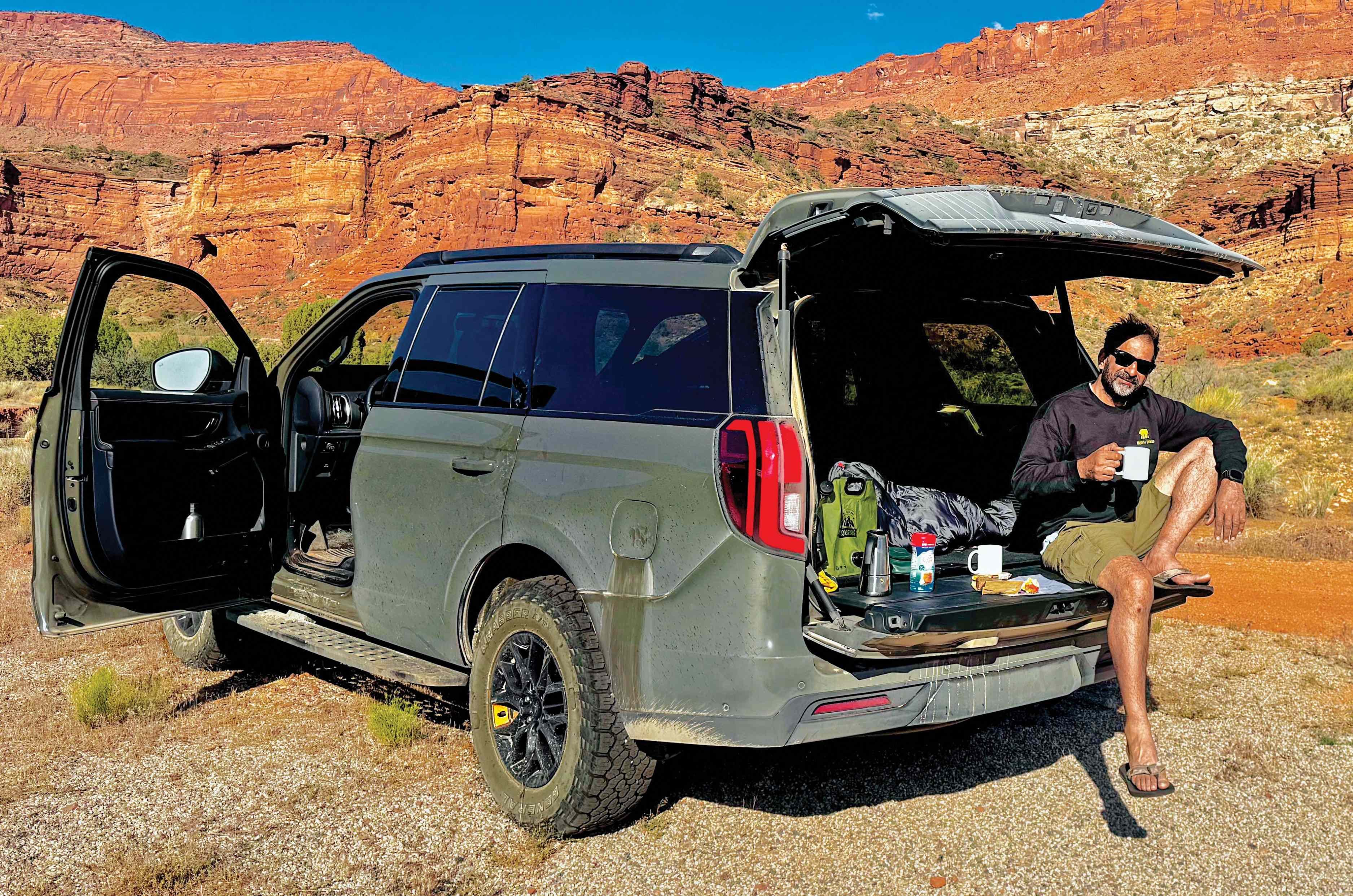
Morning coffee on the tailgate. The Expedition’s roomy interiors meant we could pull up and spend the night wherever we fancied.
We were hoping to camp at Muley Point, but we hadn’t accounted for Utah waylaying us with stupendous scenery, another slot canyon or lonely butte persuading us to stop every few miles. Around sunset, Muley Point was still hours away, so we turned into a secluded canyon and spent the night there, one of the trip’s happiest failures. We dropped the two rear seat rows into a flatbed, laid out a mattress, and slept under a sunroof full of stars and the Milky Way. We had camped at the base of the Henry Mountains, so remote that surveyors called them the Unknown Mountains until 1869.
The next morning, we pushed on to Muley Point through Bears Ears National Monument, named for a pair of buttes that really do resemble a bear’s ears poking above the treeline. An unmarked turn led to Muley Point, where the land simply stops a thousand feet above the San Juan River’s looping canyons, with views stretching to Monument Valley.
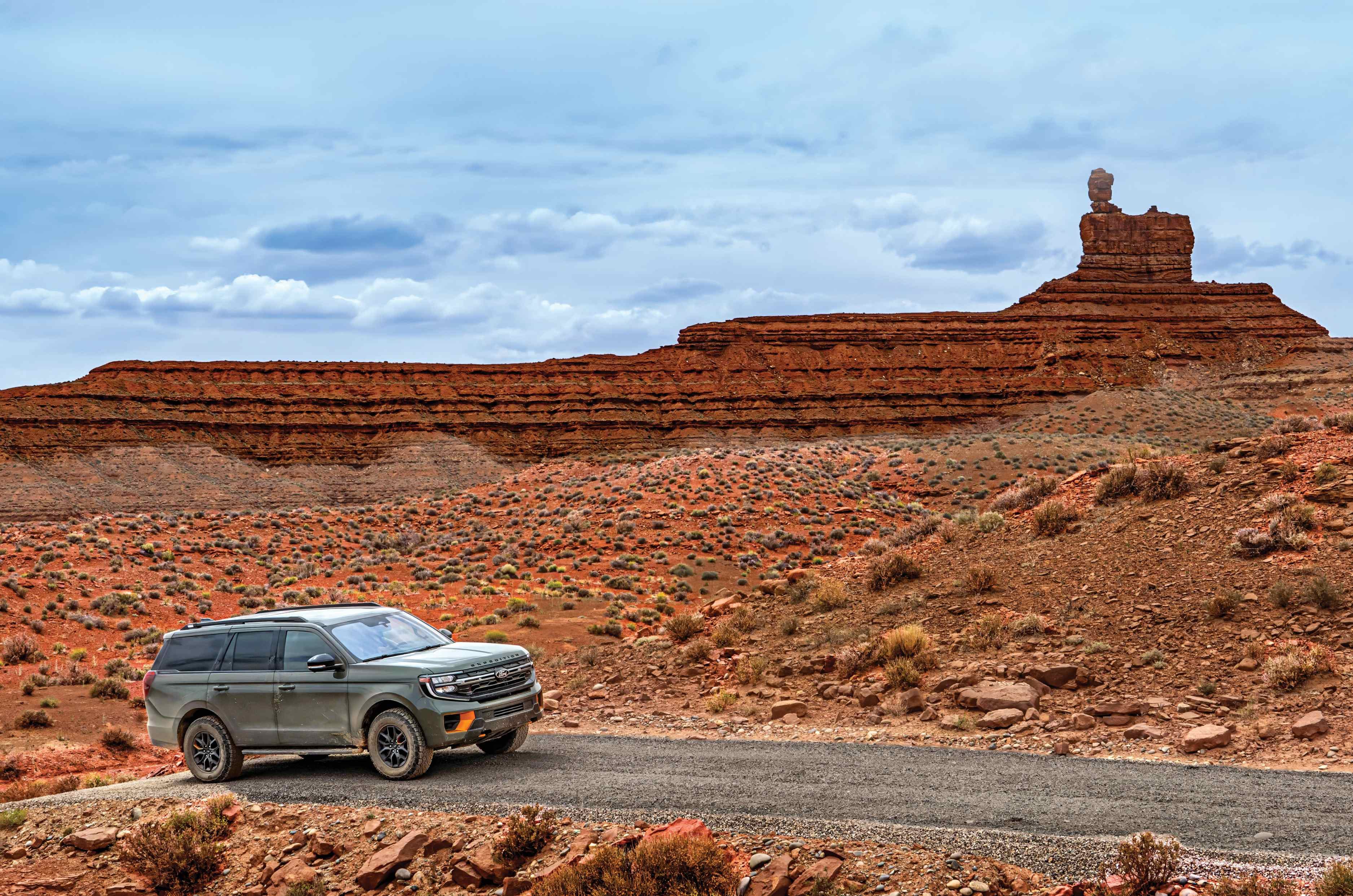
Look at the rocks above the Expedition. See anything? Someone did, and named it Lady in the Bathtub. Now try unseeing it. Welcome to the Valley of the Gods, where mesas and buttes come with wonderfully imaginative names.
Our next destination was the Valley of the Gods, the guidebook’s hidden Monument Valley twin. But first came the Moki Dugway, three miles of unpaved switchbacks blasted into Cedar Mesa in 1958 for trucks hauling uranium ore, dropping 1,100 feet at an 11 percent grade. The Tremor accepted the challenge with the calm assurance of a seasoned mountain guide.
At the bottom, a short detour brought us to Goosenecks State Park, where the San Juan River travels almost six miles in meanders to advance barely a mile and a half as the crow flies. From there, we turned into the Valley of the Gods, a dirt road meandering between sandstone monuments, nature’s own sculptures, with eccentric names. One was the Lady in the Bathtub. Had I not known the name, I might have seen only a rock. But once told, there she was, sitting bolt upright at one end of an enormous bath, her hair piled high and her back rather primly straight.
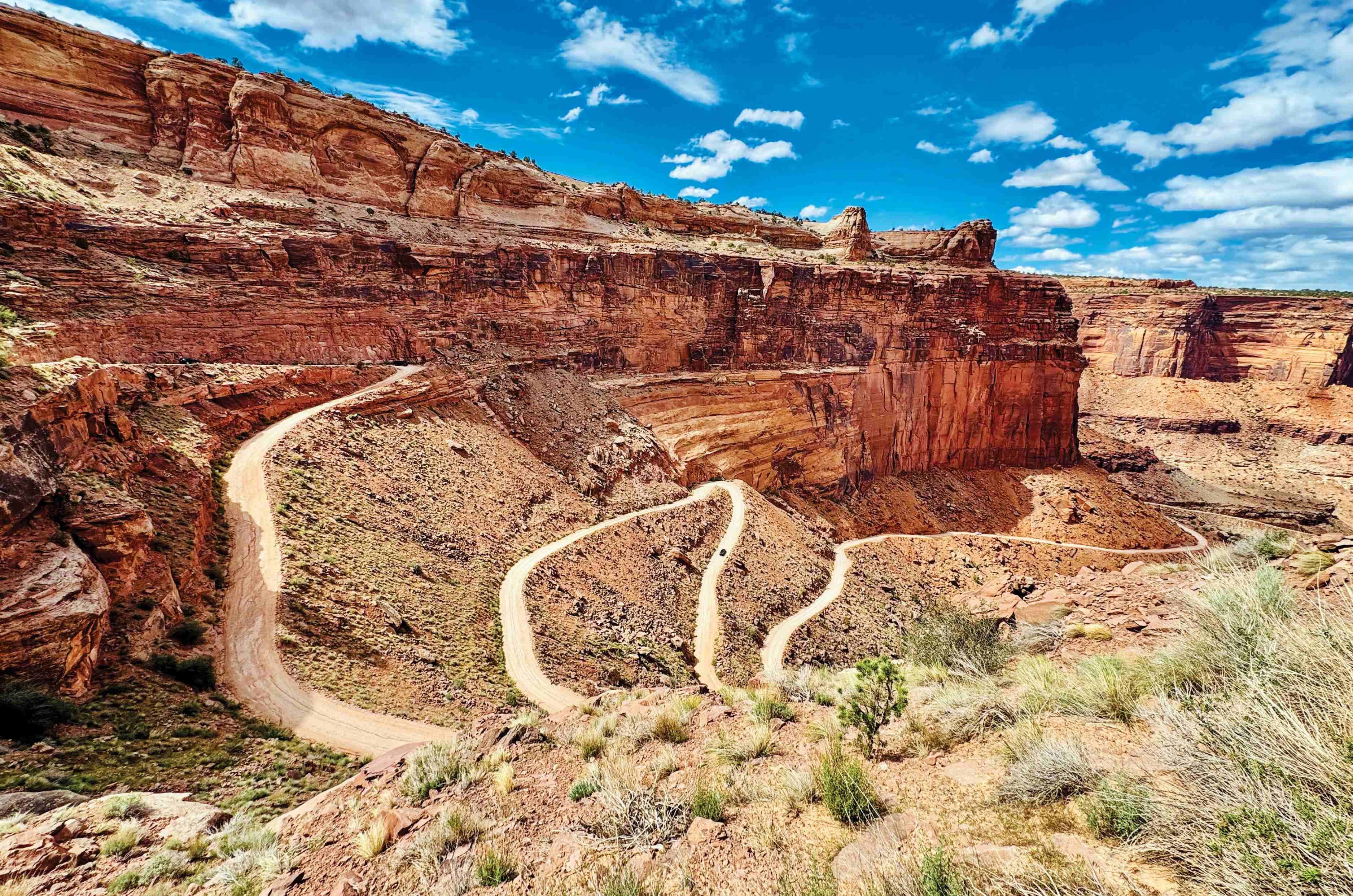
The Shafer Trail looked less like a road and more like a cartographer’s casual squiggle joining the top and bottom of a sandstone cliff. Then we drove it.
We slept another night in the car at the base of Rooster Butte, then rolled into urban Moab, our base for exploring the Needles and Island in the Sky districts of Canyonlands National Park, including the strange geological puzzle of Upheaval Dome. The highlight, though, was driving the Shafer Trail.
From the top, it was hard to believe vehicles drove down what looked like a pencil sketch etched onto a sandstone cliff. The trail began as a foot route, widened for cattle by rancher John “Sog” Shafer, then again in the 1950s for the uranium trucks that shaped the Burr Trail and Moki Dugway.
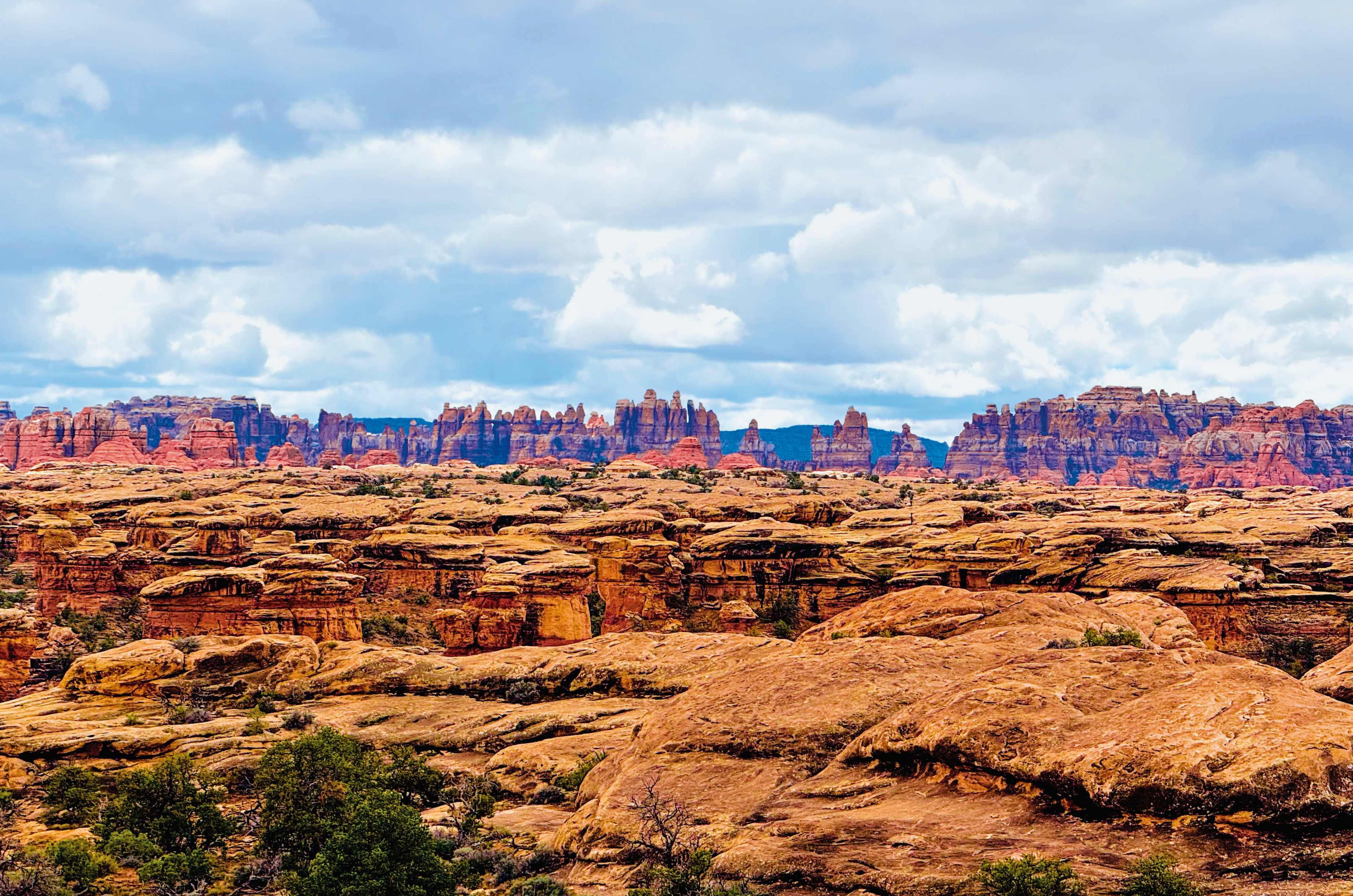
The Needles, Canyonlands – a forest of red and white banded sandstone spires, stained by iron and carved improbably thin by water patiently working through every crack.
The Expedition tipped over the edge, and we were committed. The Tremor crept down in low range, engine barely above idle, brakes doing quiet, constant work as gravel skittered from under the tyres. Every switchback flung the door mirror out over open air, nothing but red rock and sky where the road should have been, and my stomach dropped a beat before the front wheels found the turn. The cabin stayed eerily composed, no lurch, no scrabble for grip, while everything outside the glass insisted we should be afraid. At the bottom, the Colorado River came into view, and I exhaled properly for the first time in twenty minutes.
The warning isn’t for broken roads, but for deep clay bogs that require the torque and traction of a 4×4 to escape.
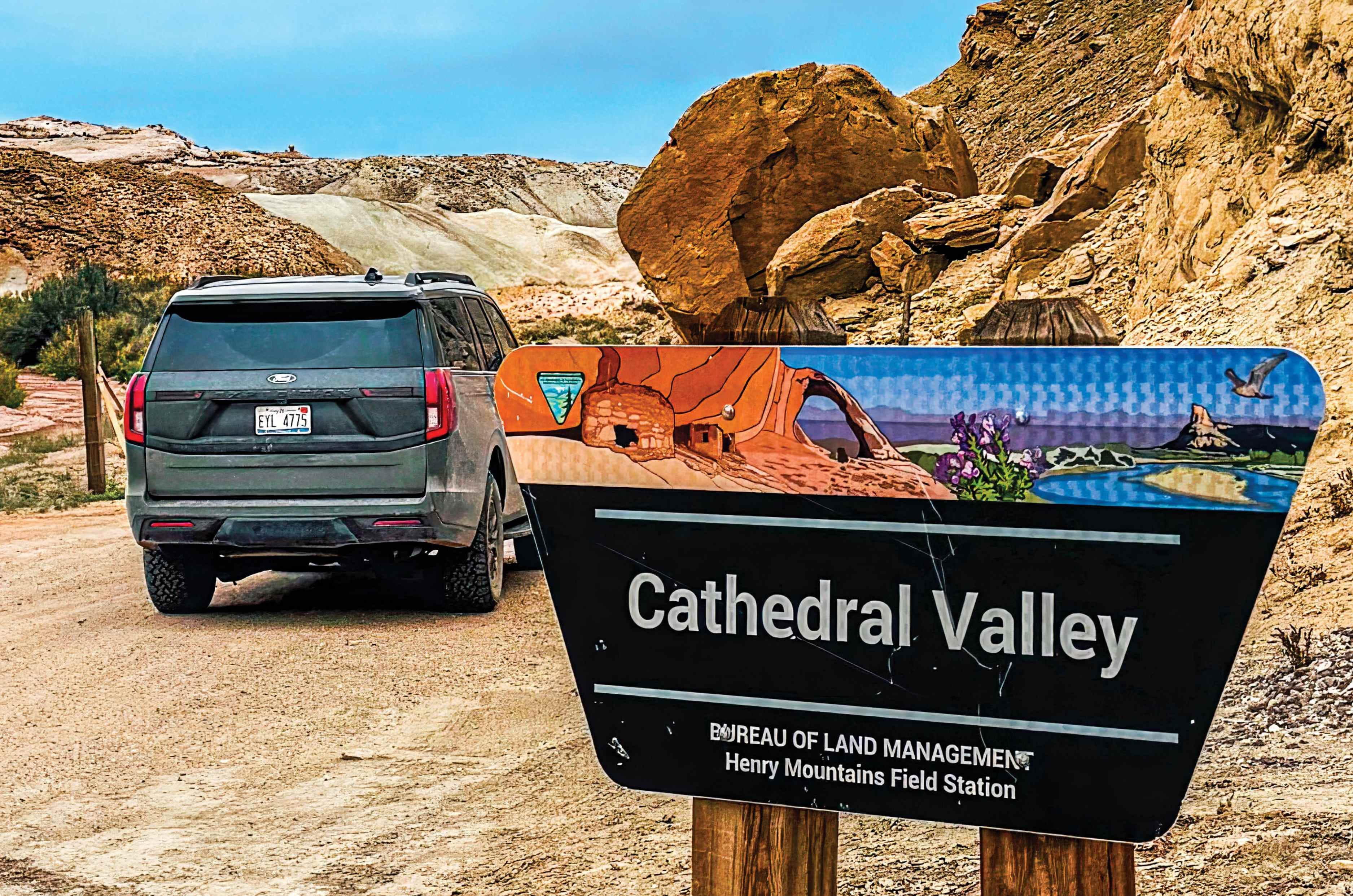
The final road I want to tell you about is the 80-mile loop through Cathedral Valley. According to Ms Ryland, this was Capitol Reef at its most remote – towering monoliths, strange badlands and perfect seclusion. At the entrance, a sign minced no words: ‘Road Impassable for Most Vehicles. Travel at Your Own Risk’.
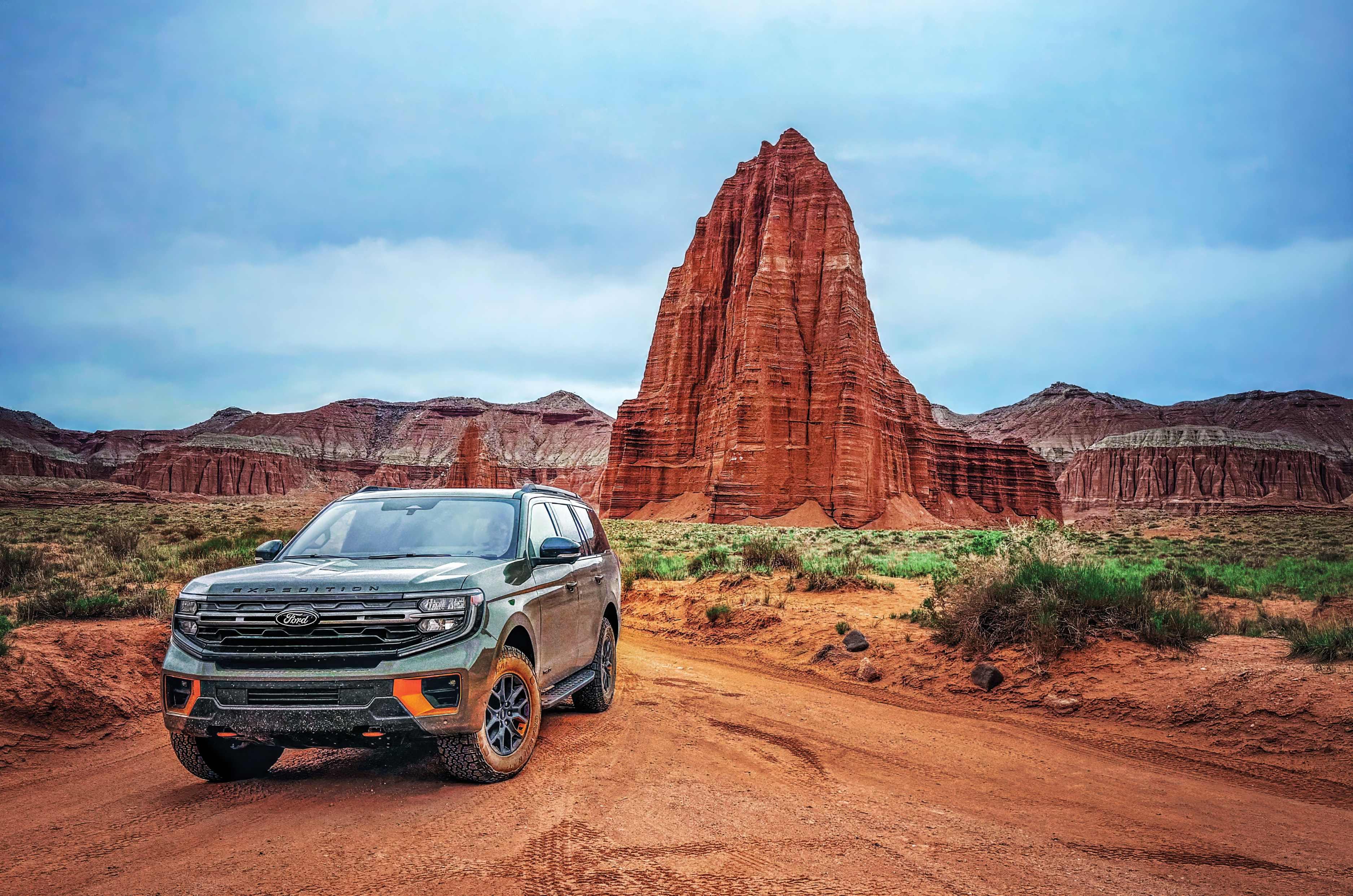
The dirt road climbs through the Bentonite Hills, bands of grey, purple and blue-green clay laid down eighty million years ago in an ancient inland sea, eroded into slopes that look lunar. Beyond them, the land opens onto a high bench where the Temples of the Sun and Moon stand, solitary honey-coloured monoliths like remnants of cathedrals of a long-lost civilisation.
What struck me most, standing before the Temple of the Sun, was how closely its silhouette echoed the thirteenth-century Temple of the Sun I knew well – still standing tall in Konark, Orissa. That was shaped by human hands wielding hammers and chisels, whereas this one by wind and water.
In the Cathedral Valley at The Temple of the Sun. Eighty million years in the making; no chisel required.
Most visitors run the Cathedral Valley Loop clockwise, meeting the Fremont River crossing at the start. We’d gone the other way, so it arrived at the very end, just short of Highway 24. Torrid brown water gushed across our path. Not crossing would mean backtracking 80 miles.
I waded in first to check for stone underfoot rather than clay, reading whether the current had strong opinions about being crossed. Satisfied, I waved the Tremor forward, and my partner drove it straight through, water climbing the doors. Then crossed again to pick me up, and once more just for fun, proof this was a vehicle built to encourage this kind of tomfoolery.
After Cathedral Valley, the long drive back to ordinary life began, the odometer past 1,300 miles. Looking back on those twelve days, I’m glad I chose the path not well trodden, as Robert Frost once suggested, in a digital age where it’s easiest to let the machines pick the route.
A badly printed, albeit meticulously researched book, an atlas, and a Ford that never once flinched had taken us somewhere far better than any algorithm would have dared suggest. Rather than a destination ticked off, Utah became one truly experienced, and that made all the difference.
The essentials
Self-sufficiency matters: A little preparation separates adventure from discomfort.
Water: Carry more than you think you need. We kept 20 litres in the Expedition.
Provisions: Stock up on energy bars, trail mix, fruit, chocolate, canned food, instant noodles, jerky and coffee. A camping stove is invaluable for hot meals in the middle of nowhere.
Fuel: Fill up whenever you can. Distances are vast and stations scarce.
Navigation: Download offline maps and carry a paper atlas. The DeLorme Utah Atlas and Gaia GPS worked well.
Clothing: Hot days, cold nights. Pack a warm layer and a sleeping bag.
Footwear: Sturdy hiking shoes.
Sun protection: A wide-brimmed hat, sunglasses, sunscreen and lip balm.
Vehicle: A high-clearance 4WD.
In-car essentials: First-aid kit, head torch, tyre gauge, air compressor and puncture repair kit.
Allow extra time. Utah ambushes you with one view after another, and the best memories happen at unplanned stops.
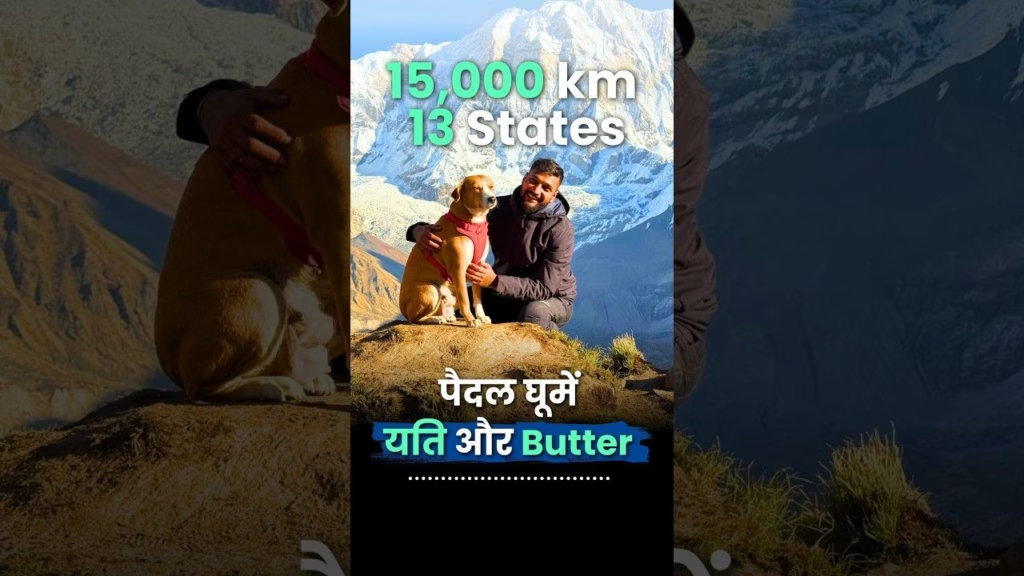
ऋषिकेश से केदारनाथ तक पैदल चलने से शुरू हुआ यति का सफर, आज 15,000 किलोमीटर और 13 राज्यों तक पहुंच चुका है। लेकिन इस लंबी यात्रा में यति को सबसे खूबसूरत चीज़ किसी मंज़िल पर नहीं, बल्कि राजस्थान की सड़क पर मिली— एक छोटी-सी पपी, जिसका नाम उन्होंने रखा बटर। :feet::heart:
आज दोनों ने साथ में पहाड़, जंगल, रेगिस्तान और नदियों के किनारे न जाने कितने रास्ते पार किए हैं। यति आगे बढ़ते हैं, तो बटर साथ चलती है। वो आगे निकल जाए, तो पीछे मुड़कर यति का इंतज़ार करती है।
कई बार सफर आसान बनाने के लिए लोग बेज़ुबानों को पीछे छोड़ देते हैं। लेकिन @theunfoldingplay ने आसान रास्ता नहीं, बटर को चुना। देखिए, कैसे सड़क पर मिली एक छोटी-सी बटर, यति की सबसे लंबी यात्रा की हमेशा की साथी बन गई
@theunfoldingplay
वो सड़क पर मिली और बन गई हर सफर की साथी | Yati Gaur| Delhi | Travel Vlog | Walking India
Hero MotoCorp has filed a design patent for a new dual-sport motorcycle, with some details indicating that the model could enter a segment the brand last played in with the Impulse.
Air-cooled engine with kickstarter visible in the patent drawings
Carburettor suggests it could also be for export markets
Disc brakes at both ends with what looks like long-travel suspension
New Hero dual-sport motorcycle: What the patent reveals
Design cues drawn from existing Hero models across different segments
The new motorcycle in the patent filing has an air-cooled engine with no oil-cooler, suggesting that it will likely be a smaller-capacity powerplant displacing somewhere in the 150-200cc range, well below the liquid-cooled Xpulse 421 that’s currently under development. The images also reveal that the engine will feature a kickstarter, but it’s safe to assume that an electric starter will also be present. If this is indeed a small-capacity engine as we suspect, the Impulse moniker could even be in contention for a revival.
While this means the new model could sit close to the existing XPulse 200 4V and XPulse 210, the overall profile appears slimmer, and the potentially smaller engine could also make it lighter and easier to handle.
The overall silhouette and tank shrouds also bear a closer resemblance to the old Impulse than to the current XPulse range. Lighting elements seem to be drawn from existing Hero models – the tail lamp resembles the unit on the Xtreme 125R and XPulse 210, while the headlight is similar to the Xtreme 160R and now-discontinued Passion Pro 110 XTEC unit. Other visible elements include a raised front mudguard and a high-mounted exhaust, a telescopic fork and monoshock suspension setup, and disc brakes at both ends.
However, there is one aspect that is a little puzzling. In the images, we can see what looks like a fuel tap on the left side of the engine and a choke knob on the left handlebar – both indicating a carburetted setup. It’s highly unlikely that it would comply with our country’s emission norms, so the bike in this specific form could be intended for export markets where carburetted engines are still permitted.
That said, other details suggest a different version of the bike seen here could make it to India. Regulatory requirements like the front number plate and a saree guard are both visible, suggesting Hero could also be designing the bike with the local market in mind.
There’s little other information right now, but we’ll update this story as we learn more. A patent filing also doesn’t necessarily mean that the bike will go on sale in the near future. In terms of confirmed upcoming products from the brand, we can expect the production-ready Xpulse 421 to make its official debut at EICMA 2026.
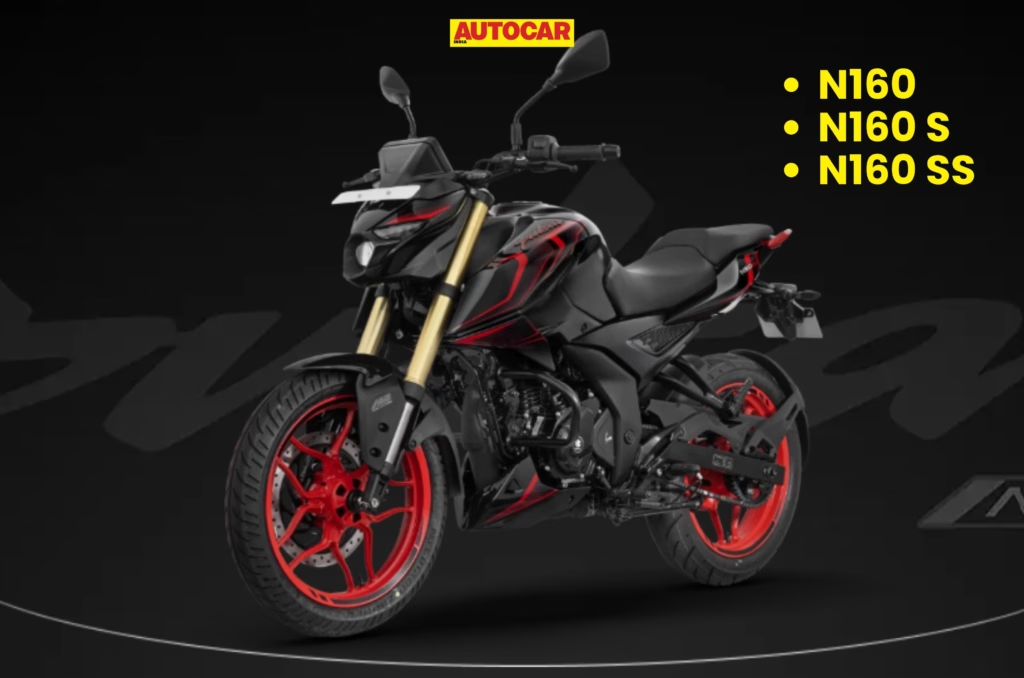
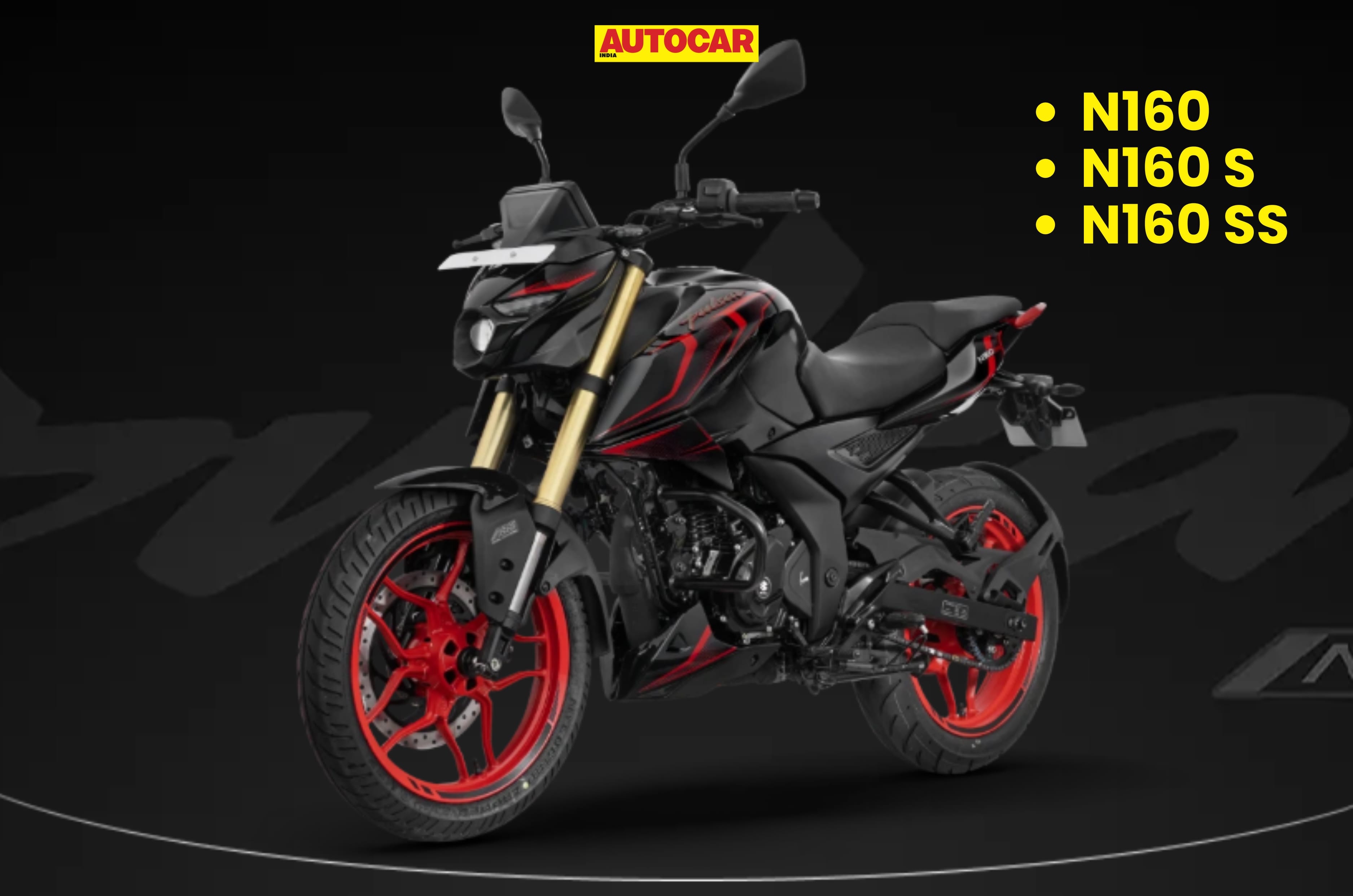
With the introduction of the new Pulsar N160 S and N160 SS, Bajaj now offers their most affordable ‘N’ series model in a total of five variants. The two-valve 164.9cc air-cooled engine, which makes 16hp and 14.65Nm, is available in three variants. And the new four-valve 164.5cc oil-cooled engine that makes 18.5hp and 14.4Nm is available in two variants. According to the Bajaj website, the frame, assist and slipper clutch, Bluetooth, all-LED lighting and a USB-C port are standard across all five variants.
They all look largely the same and have a price difference of about Rs 20,000 between the absolute base and the absolute top. What exactly do you gain (or, in one case, lose) by upgrading? Let’s see. All prices mentioned here are ex-showroom, Delhi.
Pulsar N160
The Pulsar N160 is available in three variants, all of which get a USD fork and are differentiated by braking and seating configuration – single disc with single seat (Rs 1.22 lakh), twin disc with single seat (Rs 1.25 lakh) and twin disc with split seat (Rs 1.31 lakh). The mid-spec variant adds a rear disc brake and rear lift-off protection (RLP) over the base model. The top-spec variant steps up further with dual-channel ABS, traction control, a larger 300mm front disc (versus 280mm on the other two), 10mm more rear monoshock travel and LED DRLs inside the headlight.
Pulsar N160 S
The S is the base variant of the new four-valve engine. It gains a bigger front 37mm USD fork, ride-by-wire throttle, crawl tech, more advanced ride modes, and a new, bigger 5-inch LCD instrument cluster. However, compared to the top variant of the older N160, the S lacks traction control, LED DRLs, gets a smaller 280mm front disc brake, and goes back to single-channel ABS for Rs 1.33 lakh. Considering what you lose in the S for Rs 2,000 extra over the previous top variant, this is certainly not an easy choice to make.
Pulsar N160 SS
Next is the SS, which brings back traction control, the 300mm front disc, dual-channel ABS, and LED DRLs. It also swaps the S’s 5-inch LCD cluster for a TFT one with Wi-Fi support. The Wi-Fi module enables Google Maps mirroring support on the SS, which is a segment-first feature according to Bajaj. The other feature exclusive to the SS is the rear radial tyre that’s otherwise similar in size to the rest. The top variant costs Rs 1.42 lakh, a Rs 9,000 increase over the S and a Rs 11,000 increase over the top variant with the 2V engine.