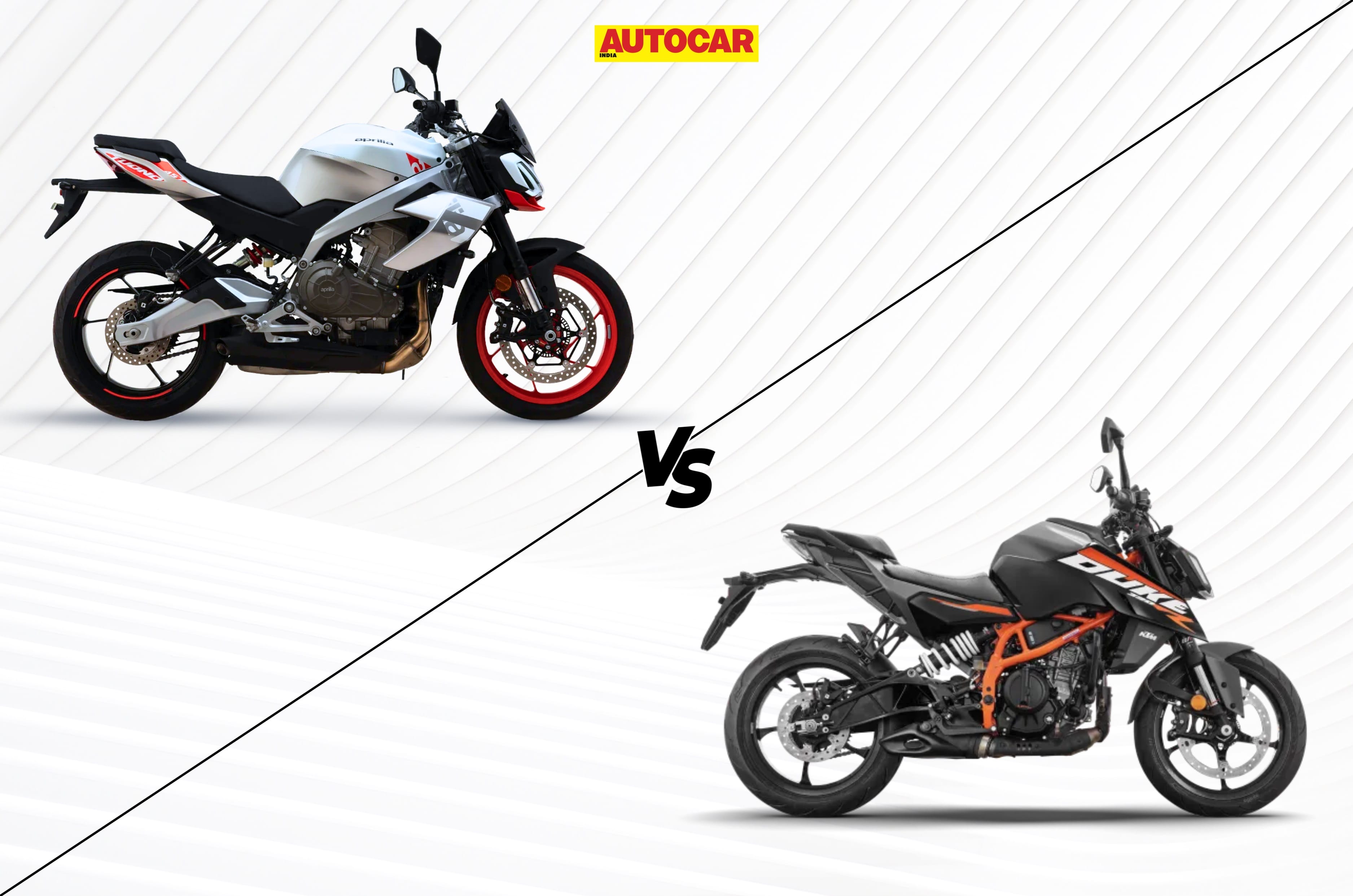
At the time of the Aprilia Tuono 457’s original launch, this comparison looked like a slam dunk in favour of the KTM 390 Duke (now the KTM 390 Duke R). It was less expensive, offered more features and was markedly more comfortable to ride. However, Aprilia has now updated the Tuono 457, and there’s a new, confusing “Special Edition” moniker. With the KTM being more expensive now, let’s see how these two European – but manufactured here in Maharashtra – sport-nakeds stack up on paper.
Aprilia Tuono 457 Special Edition vs KTM 390 Duke R: Engine and output
Tuono was and remains more powerful than Duke
Aprilia Tuono 457 Special Edition
KTM 390 Duke R
Engine
457cc, twin-cylinder, liquid cooled
398.63cc, single-cylinder, liquid cooled
Power
47.6hp
46hp
Torque
43.5Nm
39Nm
Gearbox
6-speed
6-speed
Power-to-weight ratio
272hp/tonne
273.3hp/tonne
Aprilia didn’t make any changes to the powertrain side of things for the Special edition, so the Tuono retains its parallel twin-cylinder 457cc engine that makes 47.6hp of power and 43.5Nm of torque. Contrast this against the Duke R’s single-cylinder 399cc engine making 45.3hp of power and 39Nm of torque, and the Tuono’s gain in power might look marginal on paper, its engine is markedly smoother across the rev range whereas the KTM’s engine gets smoother after 6,000rpm.
Aprilia Tuono 457 Special Edition vs KTM 390 Duke R: Dimensions and weight
Aprilia Tuono 457 Special Edition
KTM 390 Duke R
Fuel tank capacity
13 litres
15 litres
Ground clearance
NA
183mm
Kerb weight
175kg
168.3kg
Seat height
800mm
800mm
Wheelbase
NA
NA
Aprilia India’s website has not been updated at the time of publishing to reflect the complete details of the Tuono 457 Special Edition so these numbers are for the ‘regular’ Tuono. As such, some changes in kerb weight and seat height are likely. Neither Aprilia nor KTM shares wheelbase numbers in India, and Aprilia also doesn’t list the ground clearance for the Tuono. The KTM does get the larger fuel tank of the two which could mean marginally longer tank-to-tank distance for the 390 Duke R.
Aprilia Tuono 457 Special Edition vs KTM 390 Duke R: Tyres, brakes, and suspension
Tuono’s likely to have improved its front and rear suspensions
USD forks with 150mm travel, Monoshock with 150mm travel
When the Tuono 457 was launched, the suspension was said to be too firm for Indian conditions. With the Special Edition, Aprilia tells us that both the front and rear suspensions have been reworked, with softer compression and rebound damping with spring preload to the front USD forks, and softer compression damping with spring preload to the rear mono shock. Front and rear preload is adjustable for further fine tuning. The KTM retains its impressive suspension and it offers even more adjustability (compression and rebound at the front, preload and rebound at the rear) with more travel on both ends.
Aprilia Tuono 457 Special Edition vs KTM 390 Duke R: Features
KTM’s stronghold. Remains that way!
This was a marked advantage for the KTM, especially when it was almost a lakh cheaper than the Aprilia. Even with the prices increased now, the Duke R still offers more features than the Tuono 457 Special Edition; the only model trumping the 390 Duke R on value being the 390 Duke with the 350cc engine. In addition to matching the Tuono with dual-channel ABS, full LED lighting, riding modes, TFT cluster, and traction control the KTM offers bi-directional quickshifter as standard (available as an accessory for the Tuono), cornering ABS, and cruise control. Another small difference is that the KTM’s brake and clutch levers are adjustable whereas Aprilia has made only the brake lever adjustable with the Tuono 457 Special Edition. So, if rider aids had convinced you to side with KTM, Aprilia’s Special Edition is unfortunately unlikely to change your mind.
Overall though, Aprilia has aimed to address almost all the initial complaints with this Special Edition model. Apart from the changes discussed above, the Tuono 457 Special Edition also gets a taller handlebar, a revised seat with a different profile, and a windscreen as standard.
Aprilia Tuono 457 Special Edition vs KTM 390 Duke R: Price
Aprilia Tuono 457 Special Edition costs Rs 55,000 more than the KTM 390 Duke R
Aprilia Tuono 457 Special Edition
KTM 390 Duke R
Price
Rs 3.45 lakh
Rs 4 lakh
With all of these updates, Aprilia has launched the Tuono 457 Special Edition at Rs 4 lakh (ex-showroom, Maharashtra), an increase of Rs 2,000 over the ‘regular’ Tuono it replaces in India. The KTM 390 Duke R on the other hand costs Rs 3.45 lakh (ex-showroom, Maharashtra), thanks to the new GST slabs. Because of GST, we also have a 390 Duke with a 350cc engine at Rs 2.84 lakh (ex-showroom, Maharashtra). The Duke (without the R) shares all the electronic features with the Duke R, except for the slight reduction in power and torque figures. As things stand, the Aprilia Tuono 457 Special Edition costs Rs 55,000 more than the KTM 390 Duke R; and Rs 1.16 lakh more than the KTM 390 Duke.
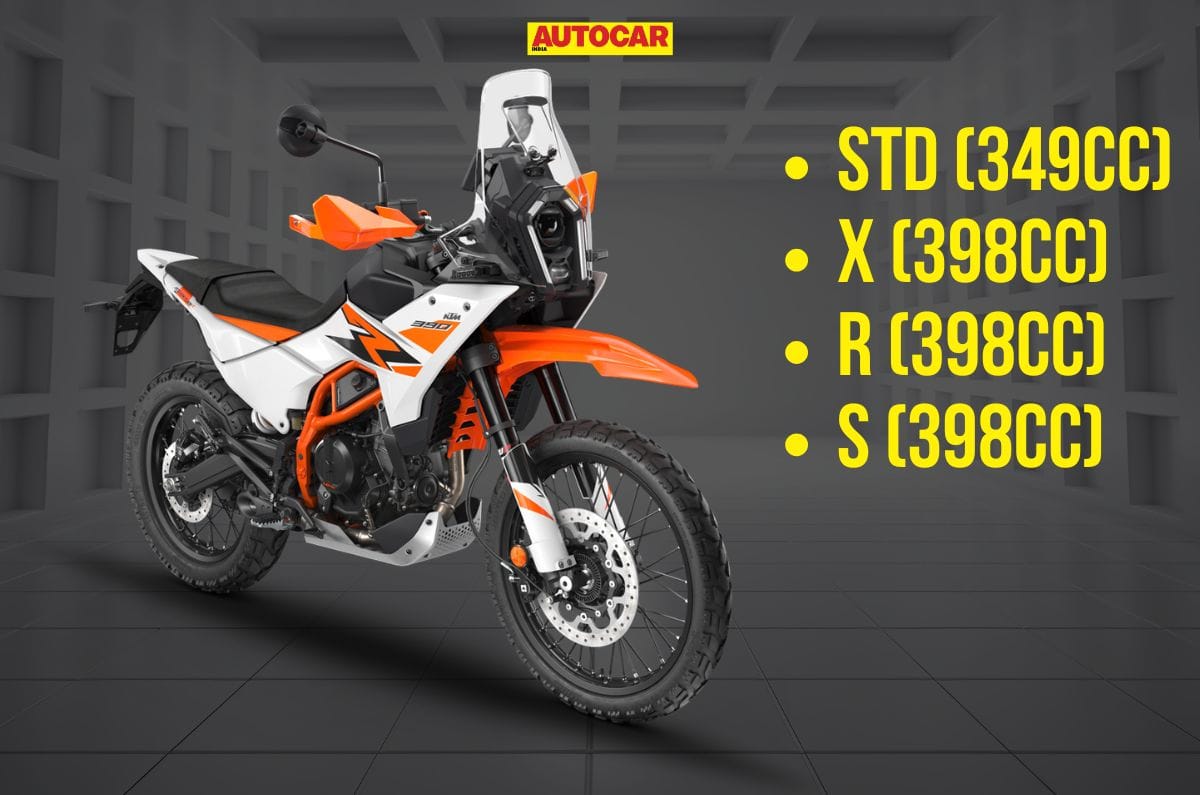
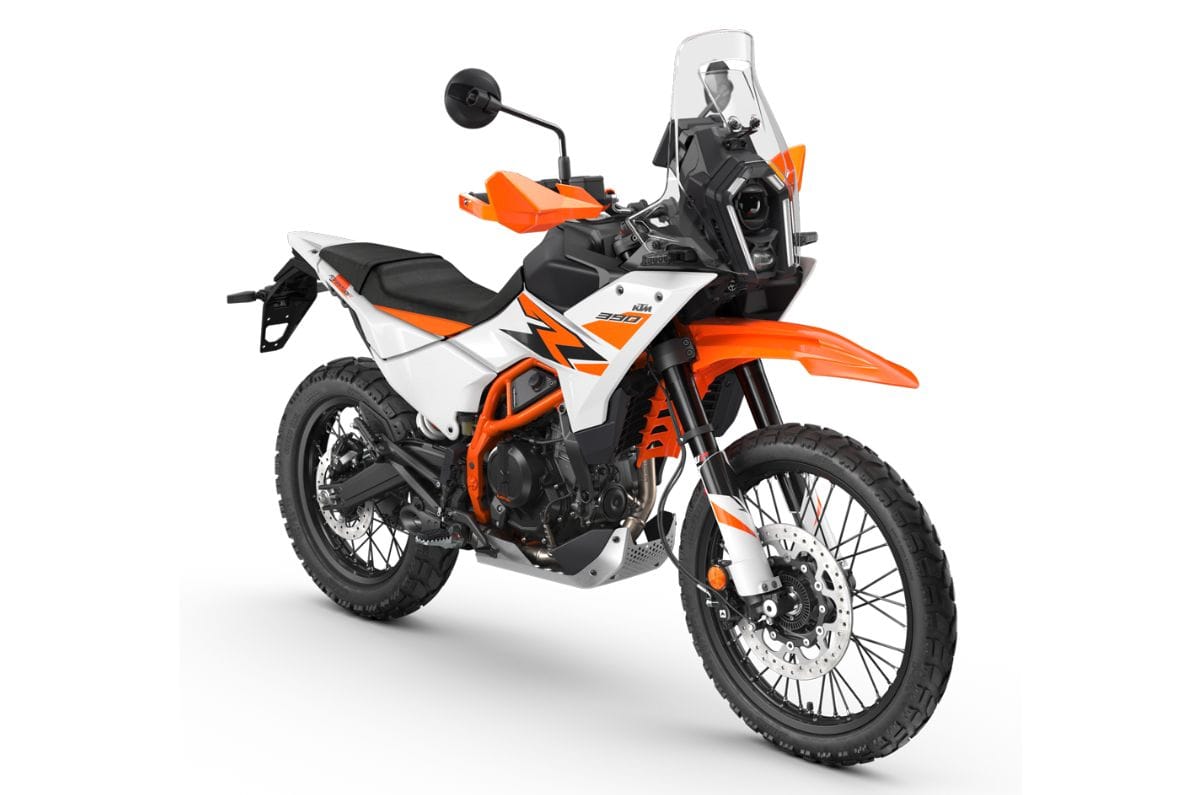
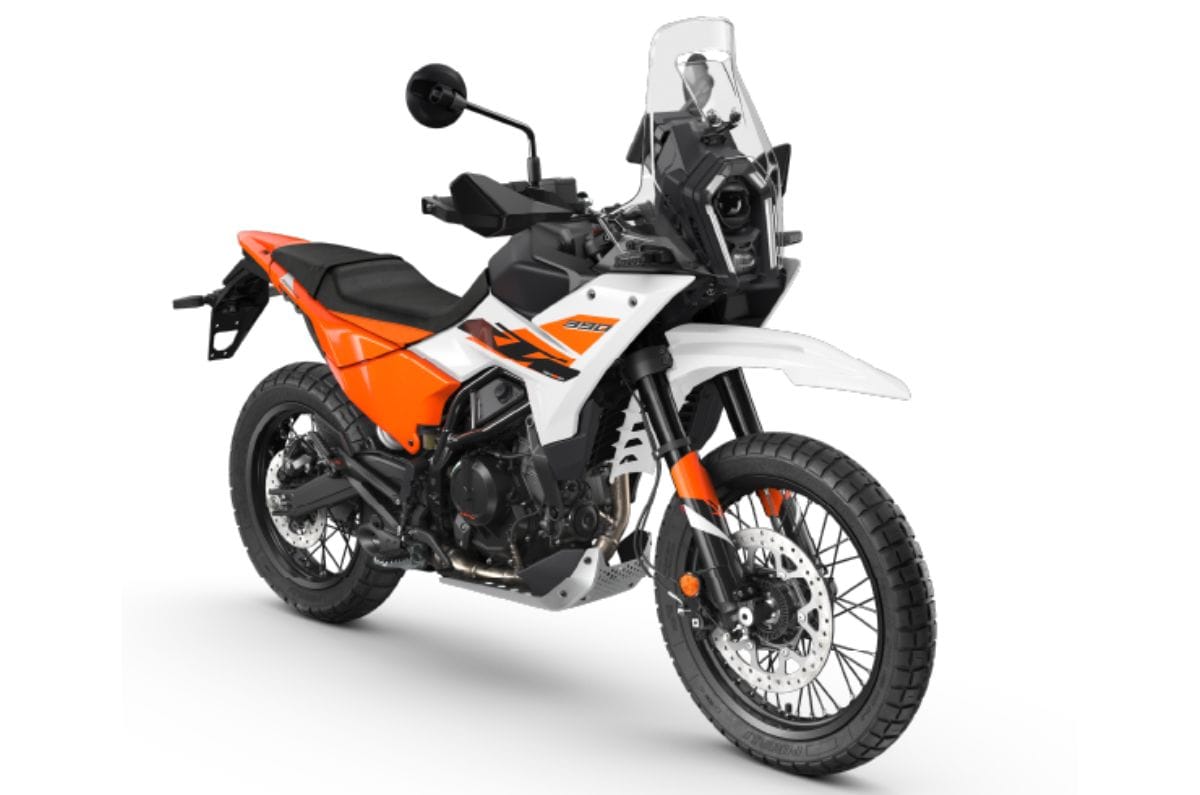
With the launch of the 350cc KTM 390 Adventure, there are now four 390 Adventure models on sale in India, which can make things confusing for someone considering this bike. Here, we’ll explain in detail what each variant costs and brings to the table.
All prices ex-showroom, Delhi
KTM 390 Adventure variant breakdown
Standard
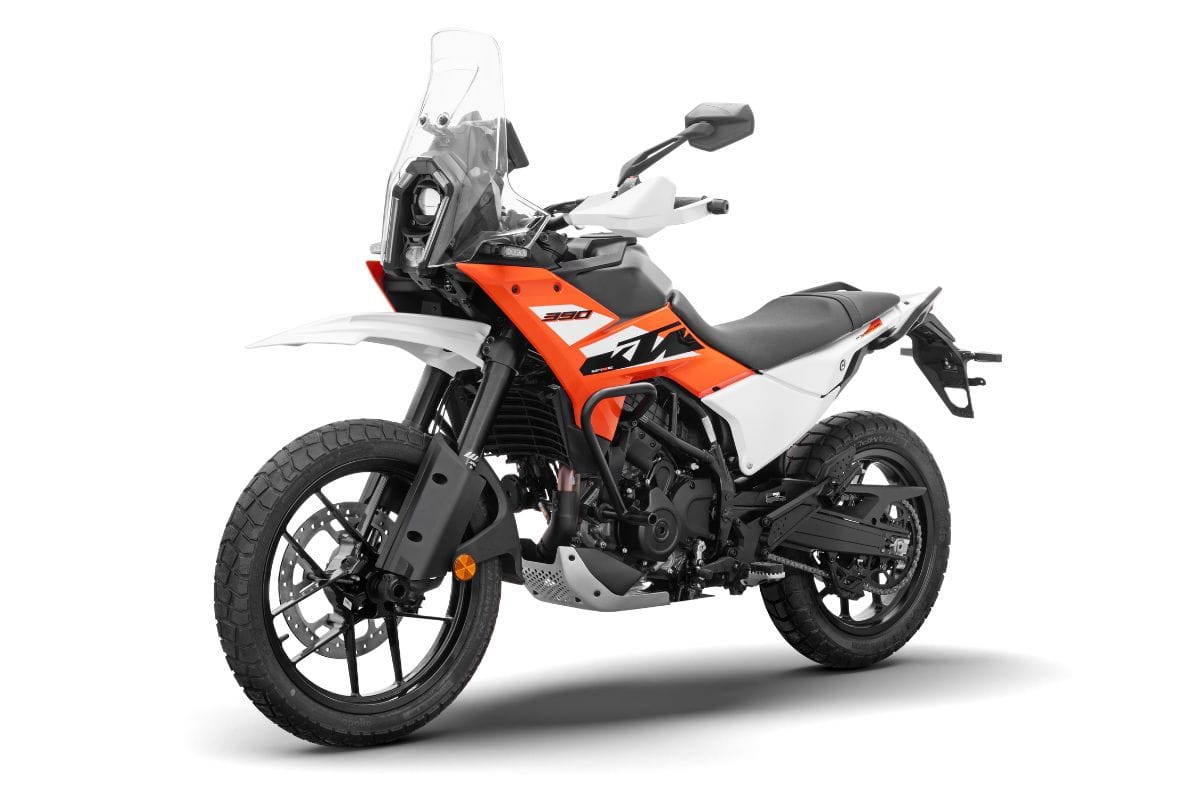
There are a great many differences between the four variants in the KTM 390 Adventure lineup but a lot of parts are common as well. For example, they all have the same main frame, subframe, bodywork and styling with just different colours and graphics.
Where the base 390 Adventure differs from all the other variants is that it is the only one to use a downsized 349cc engine – via a shorter stroke – making 41.5hp and 33.5Nm of torque. It has the same 200mm/205mm (F/R) of suspension travel (non-adjustable except for rear preload), 19/17-in (F/R) alloy wheels and TFT display as well as electronics as the higher models.
As a consequence of the lower 18 percent GST levied on it, the base 390 Adventure costs Rs 2.87 lakh.
X
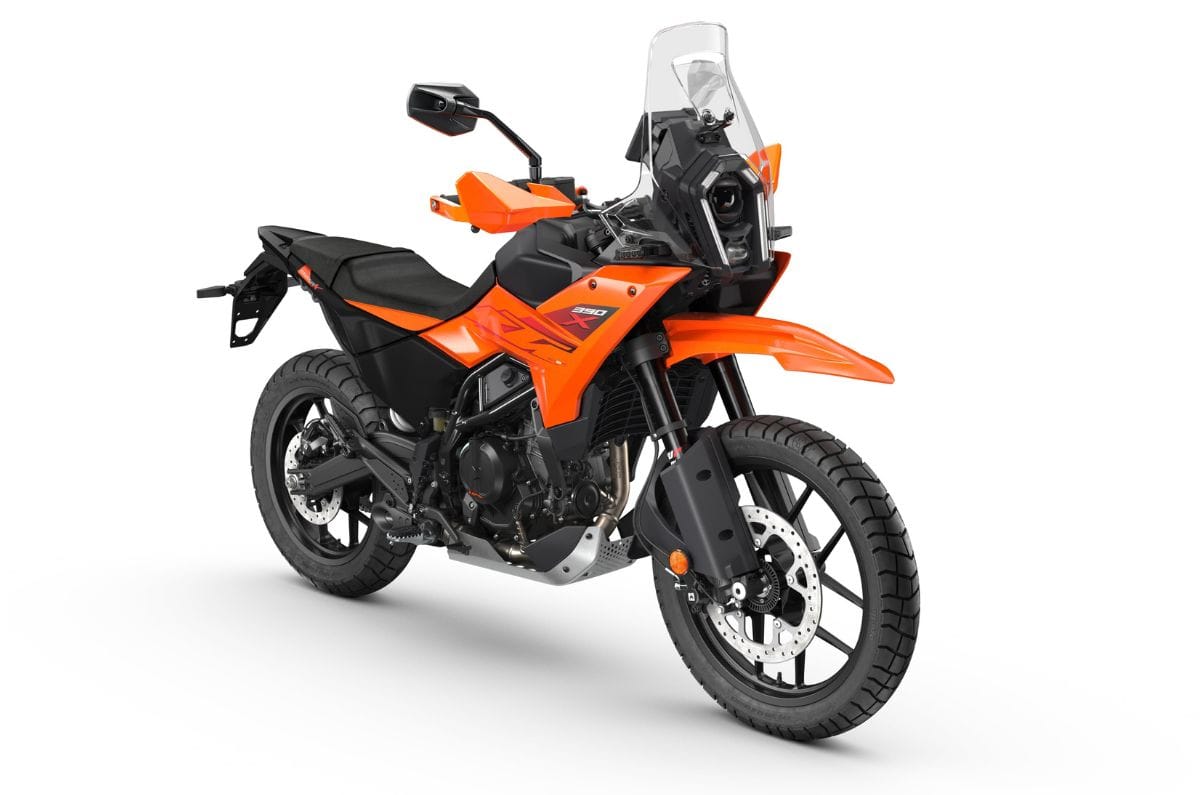
The 390 Adventure X – and the R and S variants – is powered by the full-fat 398cc engine making 46hp/39Nm of torque. Its chassis, feature-set, design and key specifications are identical to the base 390 Adventure except for two slightly different paint schemes. However, the X costs Rs 3.50 lakh, which is a substantial Rs 61,000 more expensive than the variant below it and except for the slightly lower output, the two are identical.
R
The R is the most off-road focused variant in the 390 Adventure lineup and is the only one to use long-travel suspension with 230mm of travel at both ends. As a result, it has a super tall 880mm seat height although you also get a towering 272mm of ground clearance here.
It is also the only variant to use 21/18-in (F/R) tubed wire spoke wheels shod with Mitas dual-purpose tyres. At Rs 3.86 lakh, the 390 Adventure R is priced Rs 36,000 higher than the X below it.
S
The range topping variant in the 390 Adventure family is the S which uses adjustable suspension with 200/205mm of travel (F/R) and has 21/17-in wire-spoke wheels, but these ones permit tubeless tyres. It has a seat height of 830mm and a ground clearance figure of 237mm, both of which are lower than the R which helps make the S a more road-friendly machine. With the recent hike in price, the 399cc KTM 390 Adventure S now breaches the Rs 4 lakh mark and is now priced at Rs 4.05 lakh, up from the earlier Rs 3.97 lakh mark.
भारतीय क्रिकेट टीम कल रात श्रीलंका की राजधानी कोलंबो में पहुंच गई। टीम को 7 तारीख से अभ्यास मैच खेलना है जो 4 से 3 दिन का हो गया है। संभवत श्रीलंका क्रिकेट बोर्ड ना ही वह खिलाड़ी सामने लाएगा जो टेस्ट मैचों में खेलेंगे और ना ही पिच वैसी बनाएगा जो पहले टेस्ट में बनाई जाएगी। इस कारण भारत को अपने अभ्यास सत्रों पर विश्वास दिखाना होगा।
टीम के दल में जो बल्लेबाज चयनित हुआ था वह टीम के साथ नहीं था। यह बल्लेबाज टेस्ट टीम का शीर्ष क्रम का बल्लेबाज है।सांई सुदर्शन अभी बैंगलोर स्थित सेंटर ऑफ एक्सीलेंस में अपने स्वास्थ सुधार की अंतिम प्रक्रिया में है और टीम को उम्मीद है कि अभ्यास मैच से पहले वह टीम से जुड़ जाएंगे।
इससे पहले जब खबर आई कि जसप्रीत बुमराह चोट के कारण पूरे श्रीलंका दौरे से ही बाहर हो गए हैं तो बैंगलूरू स्थित सैंटर ऑफ एक्सिलेंस पर भारतीय क्रिकेट फैंस सवाल उठाने लग गए।
तेज गेंदबाज हर्षित राणा और ऑलराउंडर नीतीश रेड्डी चोटिल होने के कारण श्रीलंका के खिलाफ श्रृंखला में नहीं खेल पाएंगे। ऑलराउंडर वाशिंगटन सुंदर भी मांसपेशियों में खिंचाव के कारण पहले टेस्ट मैच से बाहर हो गए हैं जबकि तेज गेंदबाज आकाशदीप अभी तक पीठ की दर्द से नहीं उबर पाए हैं।
लेकिन भारत की चिंता चोटों से ज्यादा स्पिन की मुफीद पिचें है।कभी भारत की ताकत मानी जाने वाली स्पिन गेंदबाजी टेस्ट क्रिकेट में भारत की कमजोरी बनकर उभरी है। भारत ने अपने घर में पहले न्यूजीलैंड और फिर दक्षिण अफ्रीका से बिना कोई टेस्ट जीते सीरीज गंवानी पड़ी थी। इस सीरीज में 85 प्रतिशत विकेट स्पिन गेंदबाजों के थे।
श्रीलंका में भी भारत को स्पिन के मुफीद पिचें पेश की जाएंगी। हालांकि यह हो सकता है कि पहले ही दिन से पिच टर्न ना ले जैसा भारत में देखते हैं लेकिन भारत इस सीरीज को 2-0 से जीतने के लिए कितना गंभीर है इसका अंदाजा इस ही बात से लगाया जा सकता है कि भारत के सभी नेट गेंदबाज स्पिनर हैं और अलग विविधता के हैं।
टीम में 4 स्पिनरों को जगह दी है और शीर्ष तेज गेंदबाजी क्रम अनुभवी है।टीम में कुलदीप यादव, रविंद्र जड़ेजा, अफगानिस्तान के खिलाफ ड्रीम डेब्यू करने वाले मानव सुथार और इस सीरीज में डेब्यू करने वाले स्पिन ऑलराउंडर सारांश जैन को मौका मिला है।
विश्व टेस्ट चैंपियनशित चक्र 2025-27 को देखते हुए अब भारत की टीम ज्यादा जोखिम नहीं ले सकती। टीम इंडिया के लिए बचे हुए 9 मैचों में से 7 जीतने आवश्यक है।
भारतीय टीम इस प्रकार है: शुभमन गिल (कप्तान), केएल राहुल (उपकप्तान), यशस्वी जायसवाल, ऋषभ पंत (विकेटकीपर), ध्रुव जुरेल (विकेटकीपर),रविंद्र जडेजा , कुलदीप यादव, मानव सुथार, मोहम्मद सिराज, प्रसिद्ध कृष्णा, गुरनूर बराड़, देवदत्त पडिक्कल, सारांश जैन।
भारतीय टीम ने आज श्रीलंका के लिए उड़ान भरी क्योंकि टीम को 15 अगस्त से शुरु हो रही 2 टेस्ट मैचों की सीरीज खेलनी है। लेकिन टीम के दल में जो बल्लेबाज चयनित हुआ था वह टीम के साथ नहीं था। यह बल्लेबाज टेस्ट टीम का शीर्ष क्रम का बल्लेबाज है।
श्रीलंका दौरे पर जाने से पहले सांइ सुदर्शन चोटिल हो गए और टीम बस में नहीं दिखे। मीडिया सूत्रों के हवाले से खबर है कि सांई सुदर्शन भी श्रीलंका के खिलाफ होने वाली दो टेस्ट मैचों की सीरीज के लिए फिट नहीं है। हालांकि उनकी चोट पर स्पष्टता अभी नहीं आई है। लेकिन अगर यह खबर सच है तो भारतीय टीम के लिए अच्छी खबर नहीं है क्योंकि वह बाएं हाथ के बल्लेबाज है और स्पिन गेंदबाजी अच्छा खेलते हैं।
इससे पहले रविवार को जब खबर आई कि जसप्रीत बुमराह चोट के कारण पूरे श्रीलंका दौरे से ही बाहर हो गए हैं तो बैंगलूरू स्थित सैंटर ऑफ एक्सिलेंस पर भारतीय क्रिकेट फैंस सवाल उठाने लग गए।
तेज गेंदबाज हर्षित राणा और ऑलराउंडर नीतीश रेड्डी चोटिल होने के कारण श्रीलंका के खिलाफ श्रृंखला में नहीं खेल पाएंगे। ऑलराउंडर वाशिंगटन सुंदर भी मांसपेशियों में खिंचाव के कारण पहले टेस्ट मैच से बाहर हो गए हैं जबकि तेज गेंदबाज आकाशदीप अभी तक पीठ की दर्द से नहीं उबर पाए हैं।
श्रीलंका में स्पिन की मुफीद पिचें भारत का इंतजार करेंगी ऐसे में जसप्रीत बुमराह को ऐसी पिच पर आराम देने की सलाह रविचंद्रन अश्विन ने दी थी। लेकिन विश्व टेस्ट चैंपियनशित चक्र 2025-27 को देखते हुए अब भारत की टीम ज्यादा जोखिम नहीं ले सकती। टीम इंडिया के लिए बचे हुए 9 मैचों में से 7 जीतने आवश्यक है।
REPORTS
Sai Sudharsan is unlikely to travel with the Indian team today, as he is yet to regain 100% fitness. Meanwhile, Team India is scheduled to arrive in Colombo today.
भारतीय टीम इस प्रकार है: शुभमन गिल (कप्तान), केएल राहुल (उपकप्तान), यशस्वी जायसवाल, ऋषभ पंत (विकेटकीपर), ध्रुव जुरेल (विकेटकीपर),रविंद्र जडेजा , कुलदीप यादव, मानव सुथार, मोहम्मद सिराज, प्रसिद्ध कृष्णा, गुरनूर बराड़, देवदत्त पडिक्कल, सारांश जैन
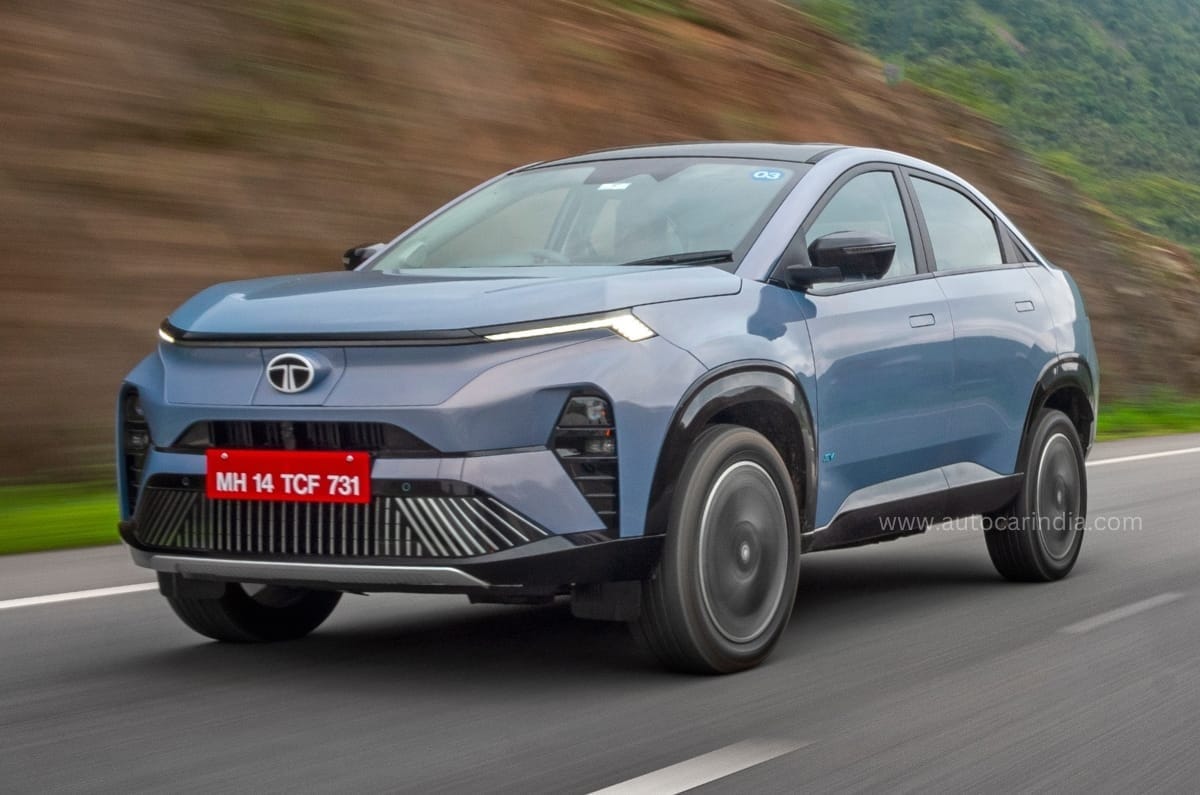
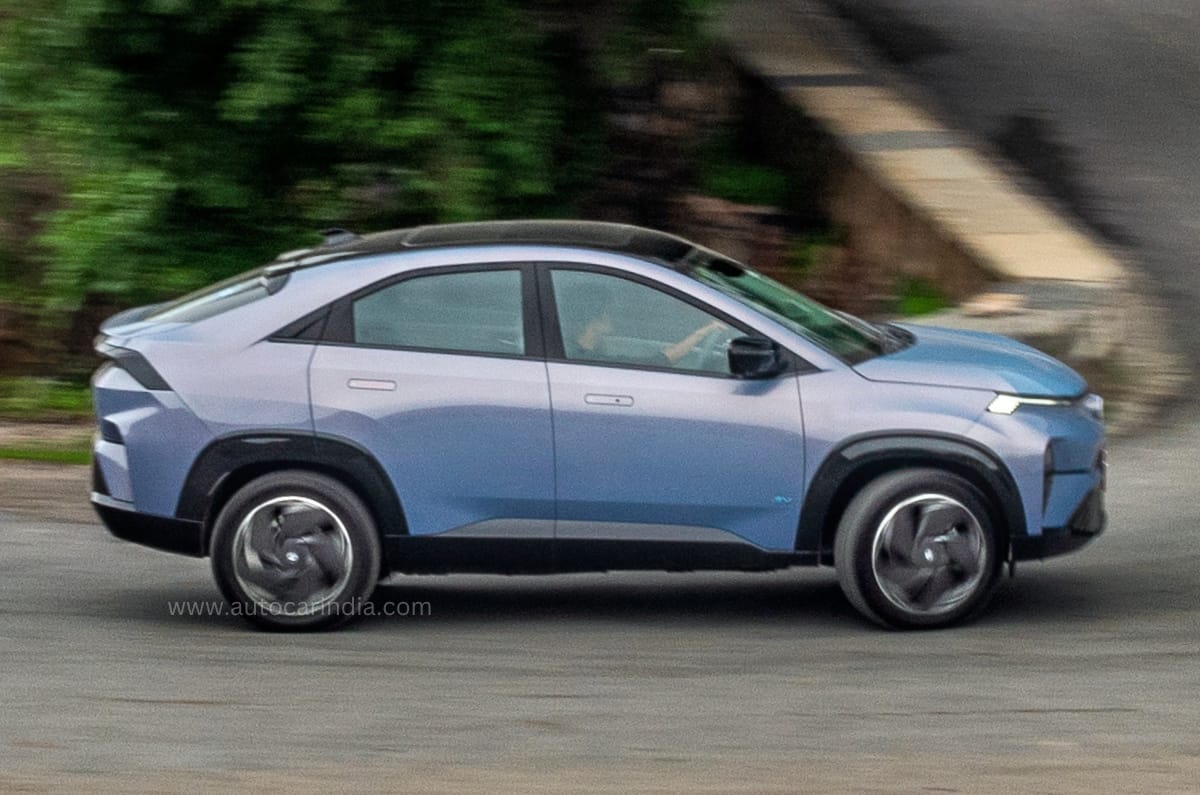
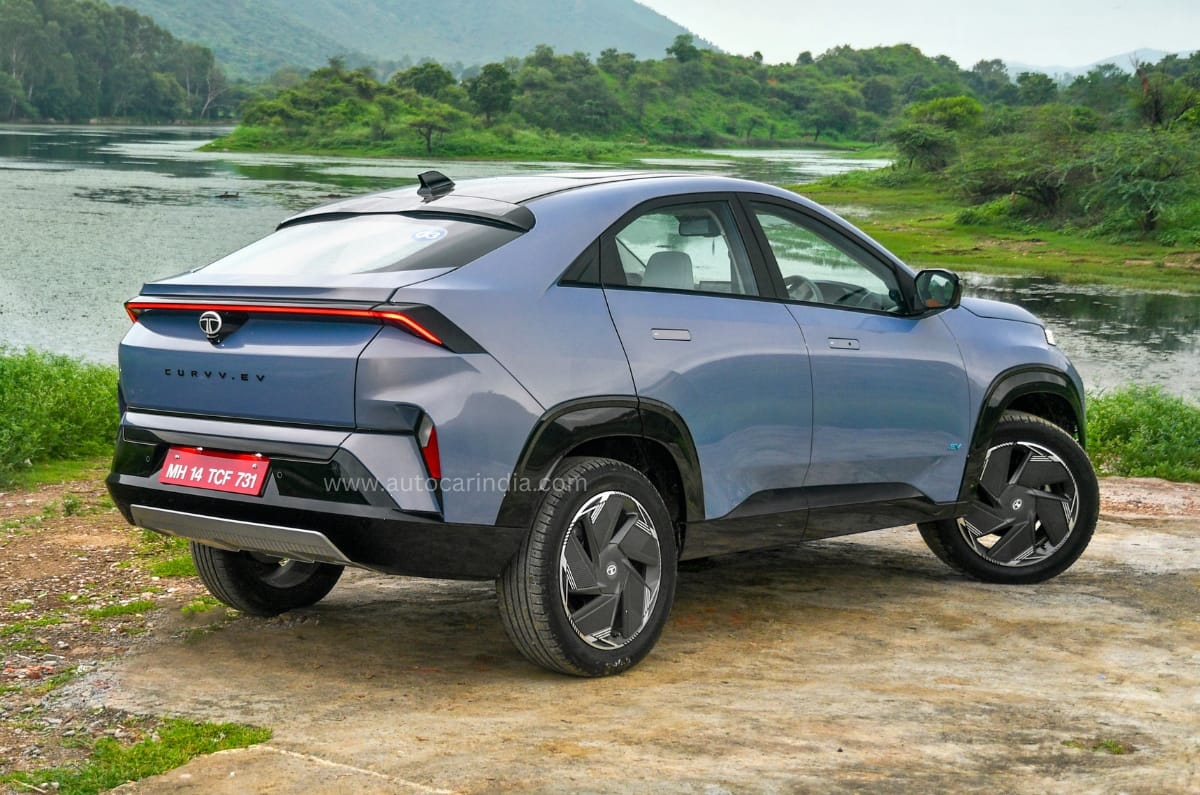
Tata launched the Curvv EV in 2024 as a distinct-looking coupe-SUV in the heavily contested midsize class. In the manufacturer’s lineup, it sits between the smaller Nexon EV and larger Sierra EV, and along with the different looks, it also offers a feature-loaded cabin, spacious cabin, a large battery pack and a powerful electric motor. If you’re interested in the Curvv EV, here are the reasons to consider it, and some reasons to think otherwise.
Reasons to buy
Offers good performance without compromising on range
The Tata Curvv EV is offered with a 55kWh battery pack and produces 167hp and 215Nm from its front-axle-mounted (FWD) electric motor. It gets three drive modes: Eco, City and Sport, which alter the throttle response based on the chosen mode. The Curvv EV is the most energetic in Sport mode, offering full torque reserve at the tap of the accelerator pedal, unlike the other two modes where torque output is restricted to around 70 percent. Tata claims a 0-100kph time of 8.6 seconds for the Curvv, but in our real-world tests, it completed the 0-100kph sprint in 9.25 seconds in Sport mode. The fact that the Tata Curvv EV did a 0-100kph run in 11.6 seconds with the most docile Eco mode shows its quick acceleration.
However, quick acceleration does not come at the expense of efficiency, as in our real-world tests, we found that the Curvv EV’s 55kWh variant offered an economy of 6.64km/kWh, translating to a total range of 365km, which allows for intracity travel.
Offers a lot of comfort and convenience features
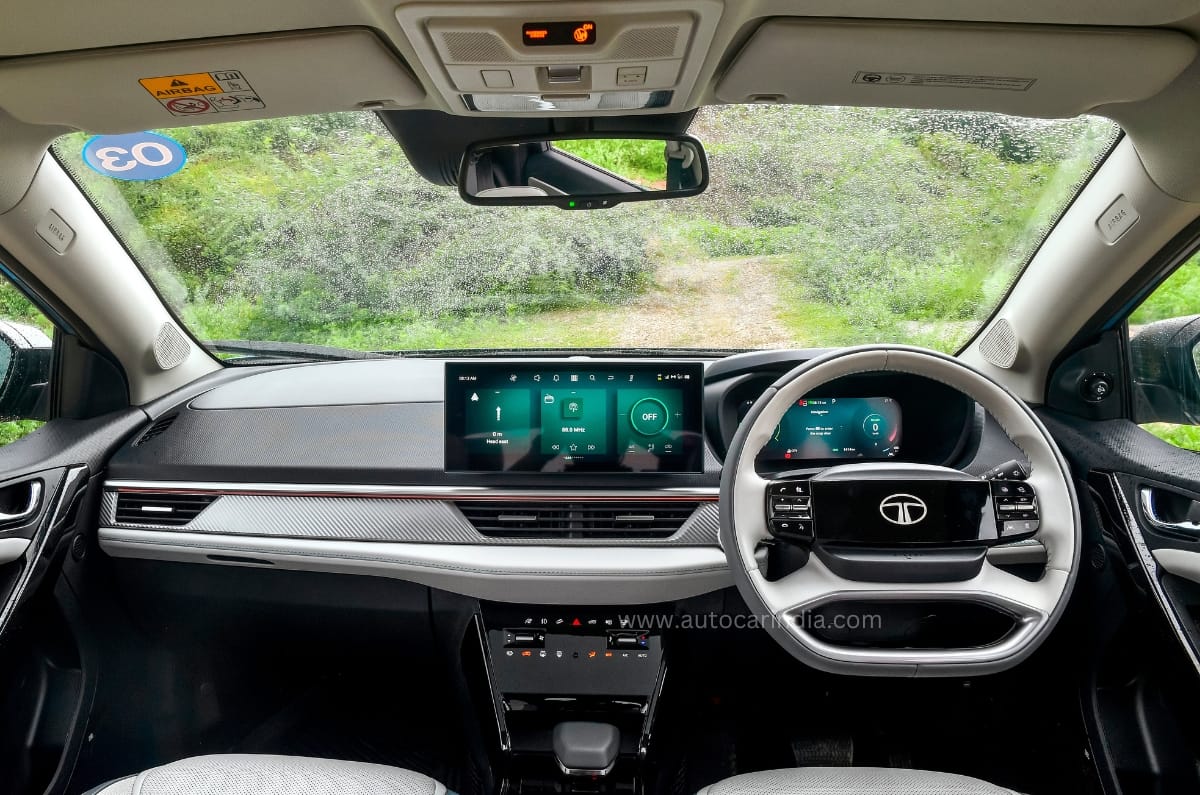
Like other Tata EV offerings, the Curvv EV is also loaded with features to its gills. It gets a 12.3-inch touchscreen infotainment system and a 10.25-inch digital driver’s display, the latter of which can be configured to show navigation. However, when using turn indicators, it shows the blind spot monitor feed instead of the navigation. This can be avoided if the blind spot monitor display is configured to display on the touchscreen. Both screens are crisp and have menus, but it is easy to get used to them. The infotainment system is offered with Tata’s arcade.ev app suite, which includes streaming services and games that can be used when the Curvv EV is charging.
Other features include a panoramic sunroof, configurable ambient lighting, an electric tailgate with gesture control, a 9-speaker JBL sound system, a wireless phone charger with cooling vents, powered and ventilated front seats, and Level-2 advanced driver assistance systems (ADAS).
It is a value-for-money offering in its class
With prices ranging from Rs 16.99 lakh to Rs 19.19 lakh, the Tata Curvv EV is on par with the petrol/diesel midsize SUVs, and undercuts rivals like the Hyundai Creta Electric, Mahindra BE 6, and Tata Sierra. At this price, it is offered with concept-car-like looks, a spacious interior, a feature-loaded cabin, a large battery and a potent electric motor, making it one of the most value-for-money offerings in its class.
Reasons to skip
Taller passengers may feel uncomfortable on the rear seats
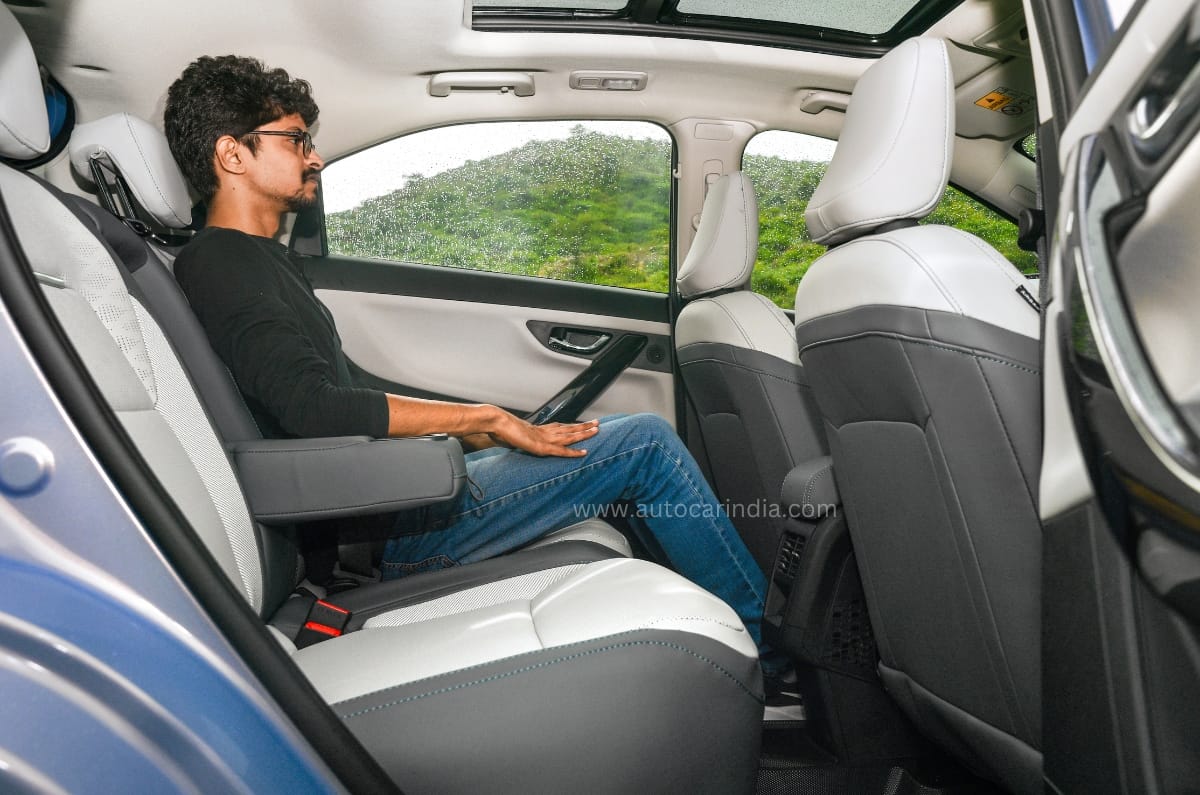
The coupe-SUV design of the Curvv EV eats up the headroom on the rear seats, which will be uncomfortable for taller passengers, especially if they are taller than 6 feet. Such passengers will also find the under-thigh support underwhelming, as they have to sit in a knees-up position due to the battery cells placed under the floor. However, legroom is in plenty and will be appreciated by passengers of all sizes.
It suffers from some ergonomic issues
The Curvv EV shares much of its dashboard design with the Nexon EV, and hence, does not get proper cupholders for the front passengers. The cupholders are placed inside the glovebox, which does not make them usable, especially on the move. The phone charging ports are placed ahead of the drive selector knob and are hard to reach. The storage space under the front centre armrest is also small. However, the fit and finish inside the cabin is decent for the Curvv EV’s price.
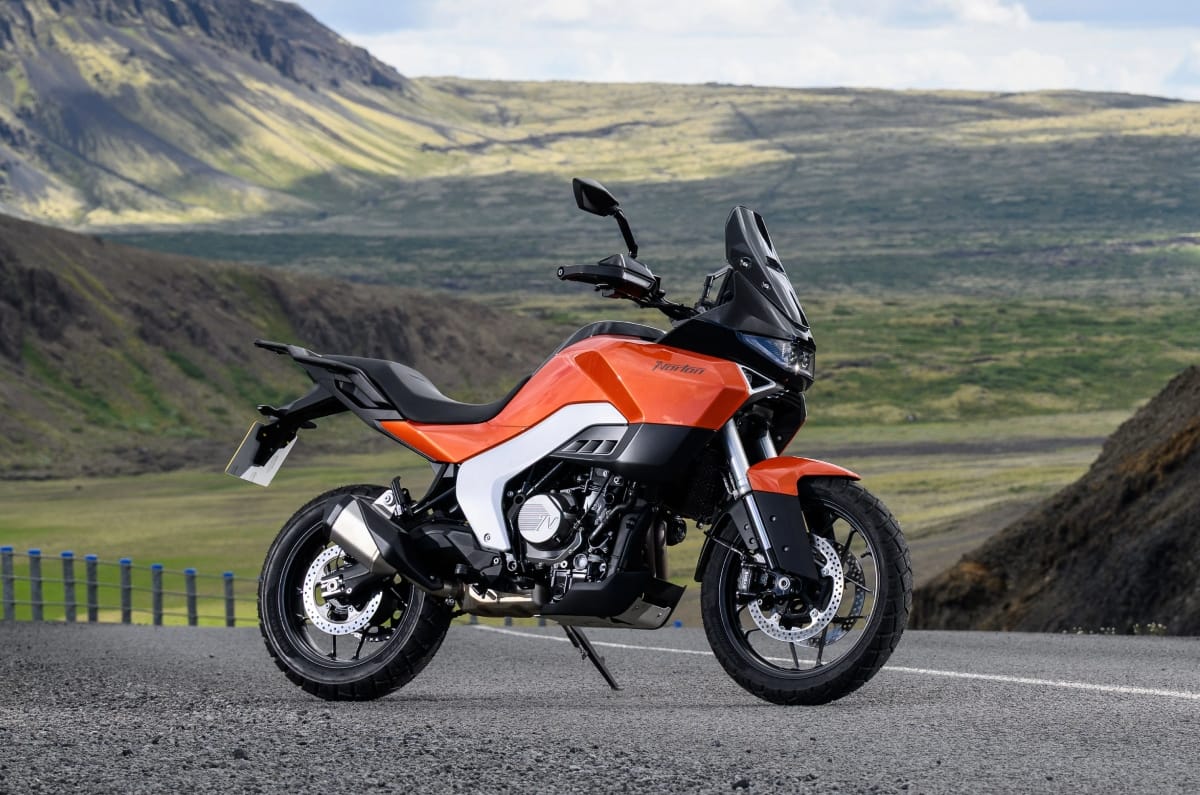
The Norton Atlas and Atlas GT are the upcoming adventure motorcycles, built at TVS Motor Company’s Hosur facility ahead of an expected India launch later this year. Both share the same 585cc liquid-cooled parallel-twin producing 69hp and 57.5Nm, with a bidirectional quickshifter and slipper clutch as standard, and both get a Bosch six-axis IMU, lean-sensitive cornering electronics and an 8-inch TFT display.
The Atlas is the more adventure-oriented of the two, with 180mm of suspension travel, a 19-inch front wheel and 220mm of ground clearance, while the Atlas GT takes a road-focused approach with 140mm of travel and 17-inch wheels at both ends. Both are available in a higher-spec Apex variant with additional electronic and hardware upgrades. The Atlas and Atlas GT will be available in four colour options: Trophy Silver, Matrix Black, Sinopia Orange, Verona Green.
Somewhere in the folds of the Western Ghats, where the Mumbai-Pune Expressway peels off from Lonavala into quieter country, a piece of land is being reshaped into what will, by this time next year, become Maharashtra’s first race track. Except to call it just a race track undersells the ambition entirely. What is rising here, on the grounds of the Nanoli Stud Farm, is a race resort, where cars are not just driven or raced, but lived with.
The Dhunjibhoy family has owned this land for decades, ever since the Nanoli Stud and Agricultural Farm was set up in the early 1990s. Khushroo Dhunjibhoy has spent a lifetime around shipping and thoroughbreds, and it is that same instinct for breeding something exceptional that he and his son, Zahir, have turned toward motorsport.
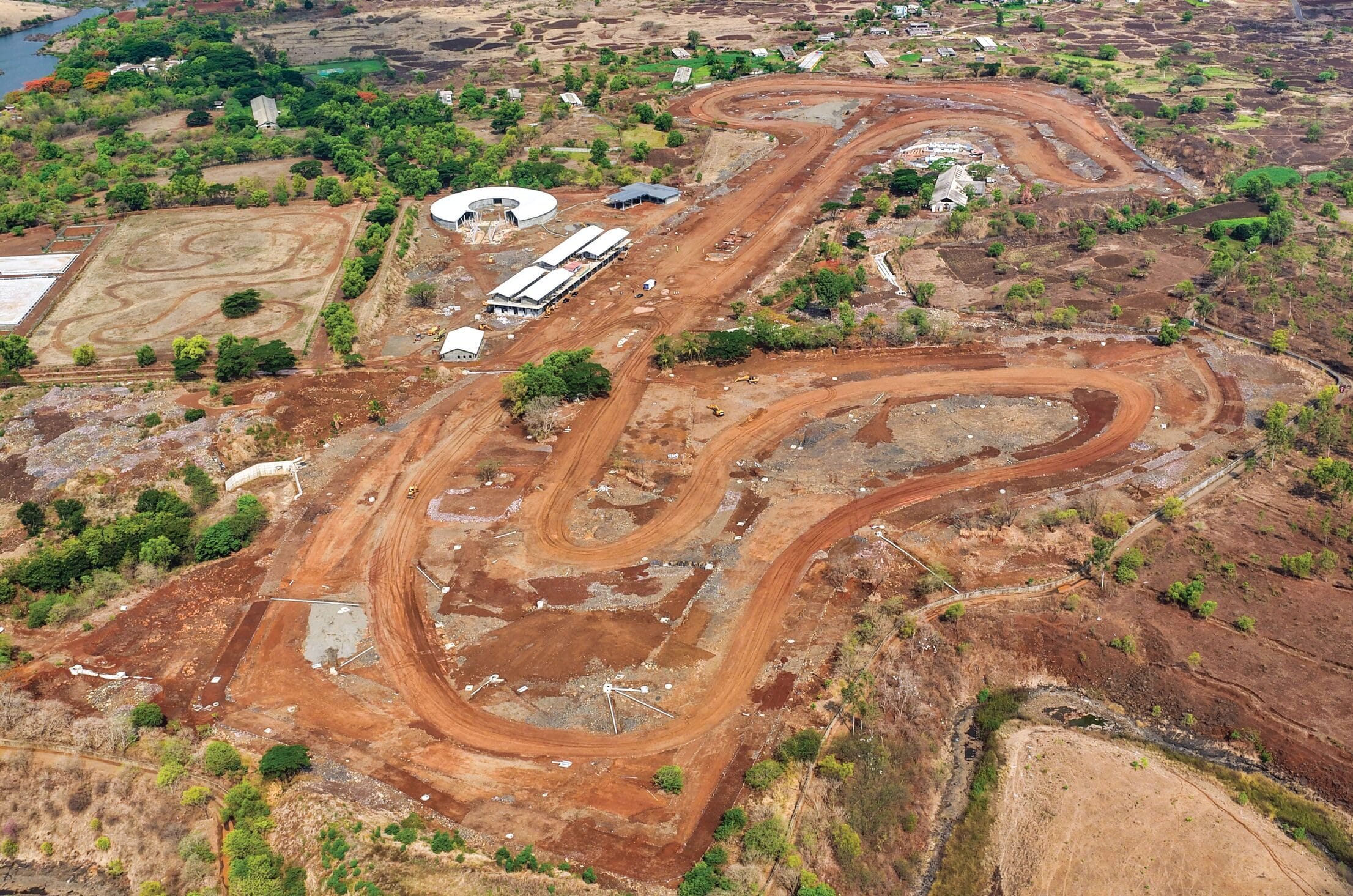
Aerial view of Nanoli before the tarmac is laid. This 3km circuit will be Maharashtra’s first and a haven for enthusiasts in western India.
Their plan is not a bare circuit with a pit lane bolted on. It is villas, high-end rooms and a clubhouse built into the same grounds as the horses. There will also be a 100-car garage with humidity control to protect exotic machinery from the heat, sun, dust and monsoons. The paddock and pit buildings will be state-of-the-art, with a hospitality deck that gives you a bird’s-eye view of nearly half the circuit. The circuit itself, designed to FIA Grade 3 specs by Driven International out of the UK, will eventually stretch close to three kilometres, with the option to split into shorter east and west configurations, depending on what the day calls for.
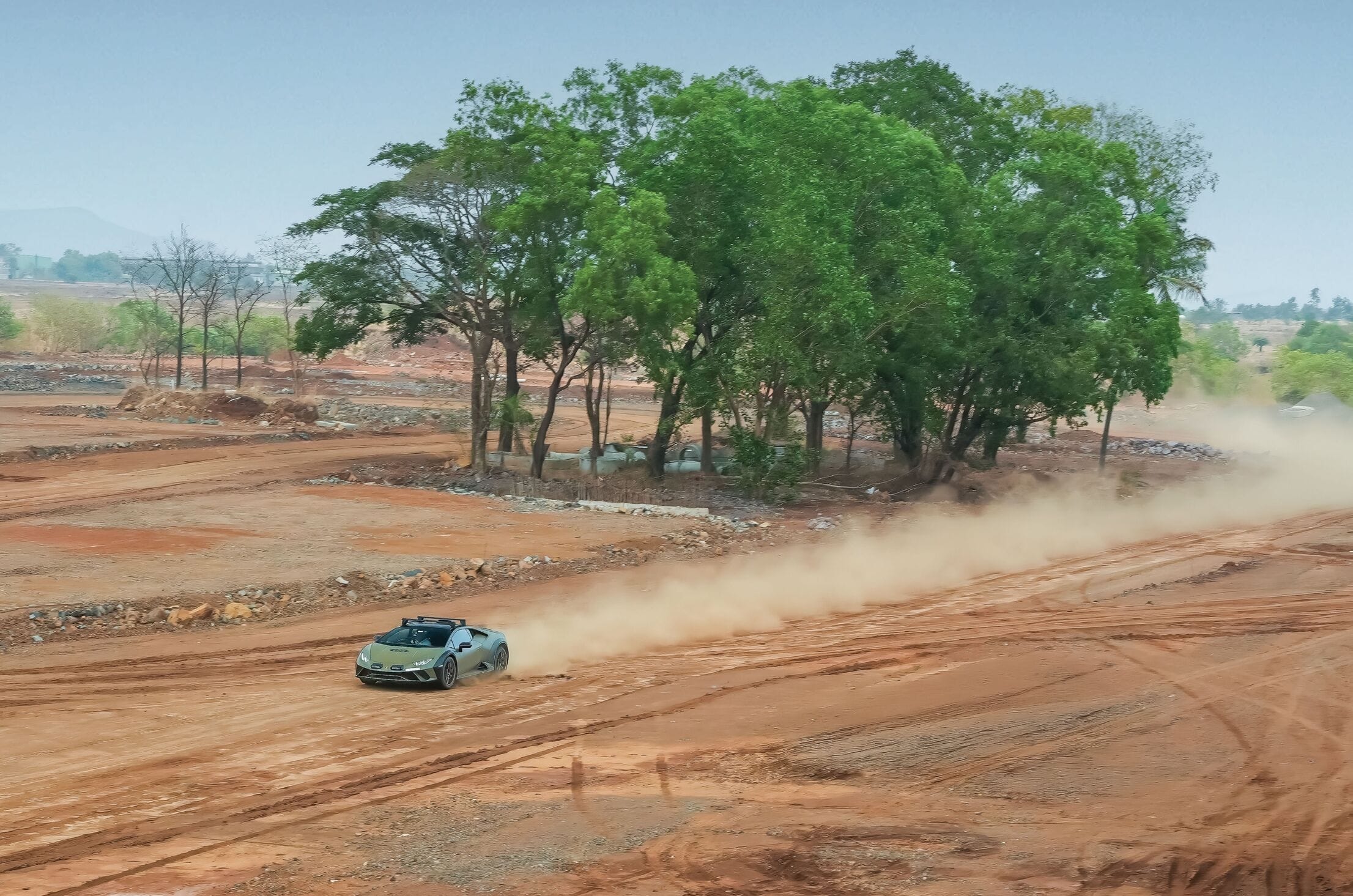
None of that exists yet in finished form. What does exist, right now, is the base layer. The dirt has been laid and compacted to a finish so smooth, it could pass for a rally special stage, which is roughly how we decided to treat it.
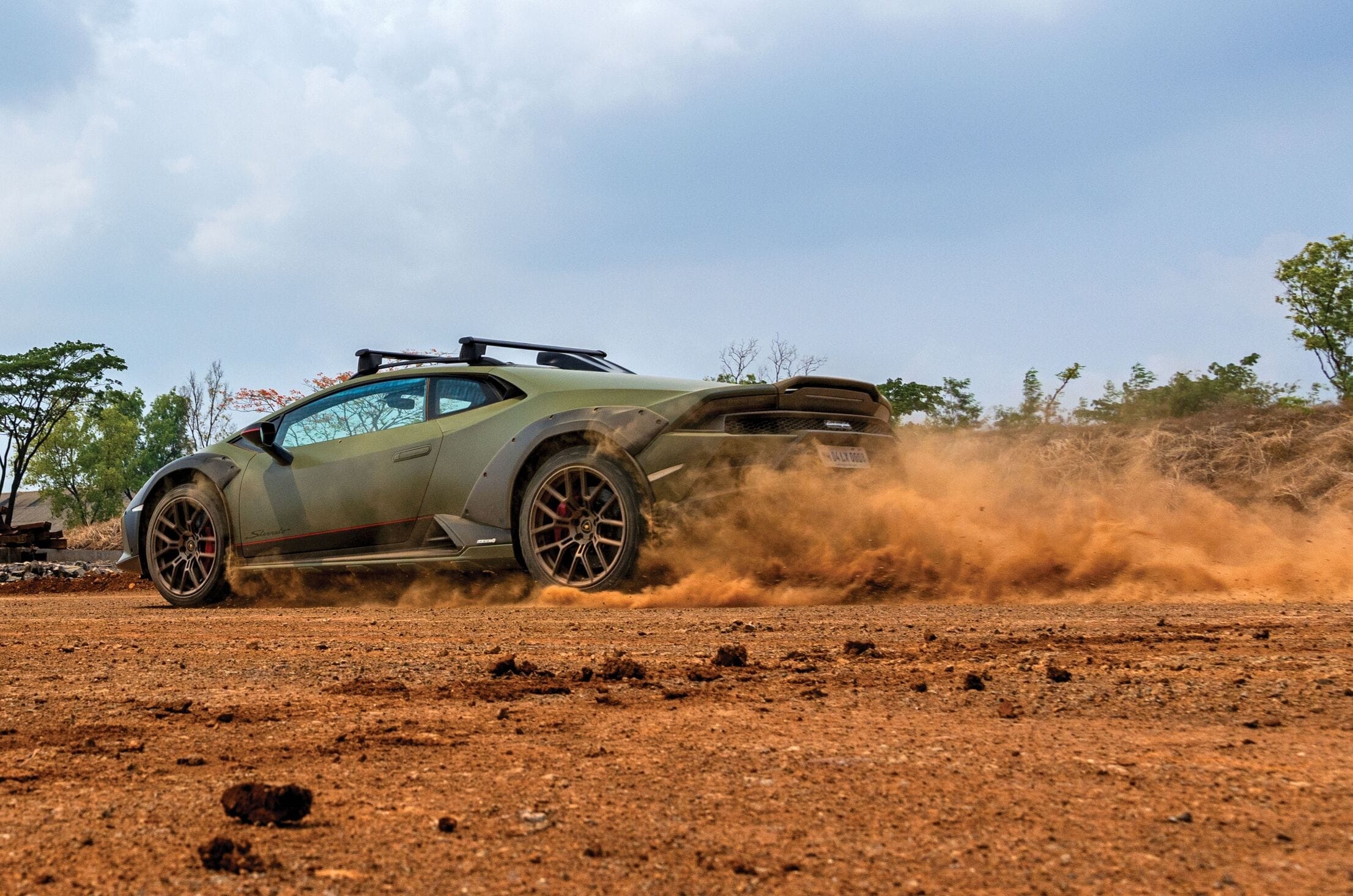
The obvious car for an afternoon like this would have been something with four-wheel drive and a reassuring amount of ground clearance. Something like an Urus or an RS Q8 – the kind of SUV that turns loose surfaces into a non-event. But ‘obvious’ has never made for a good story. So instead, we brought a Lamborghini Sterrato, which is, in essence, a Huracán that someone at Sant’Agata decided should grow up into a WRC car.
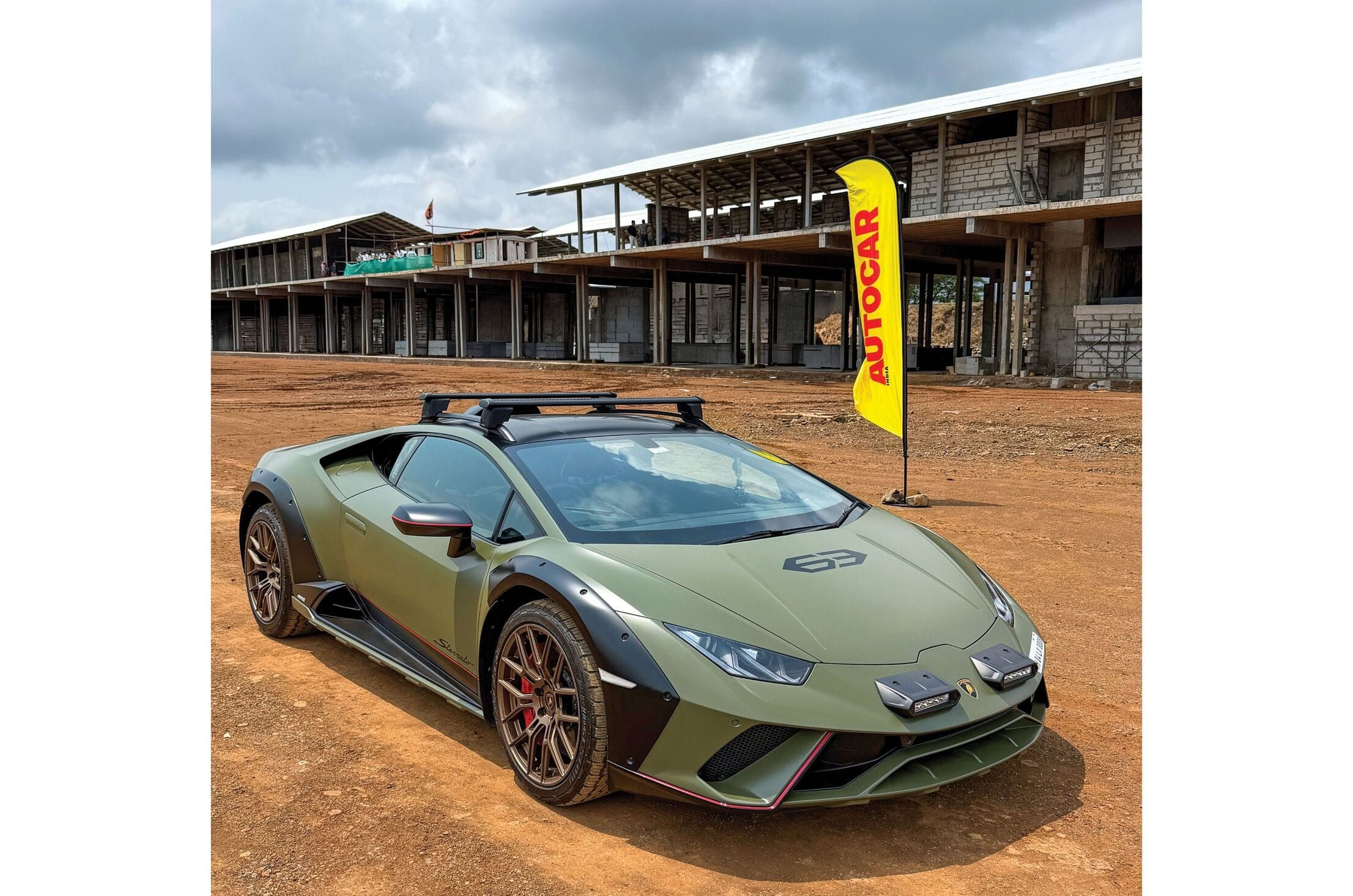
Before the tarmac arrives, the Sterrato enjoys Nanoli in its rawest form, with the future pit and hospitality complex taking shape behind it.
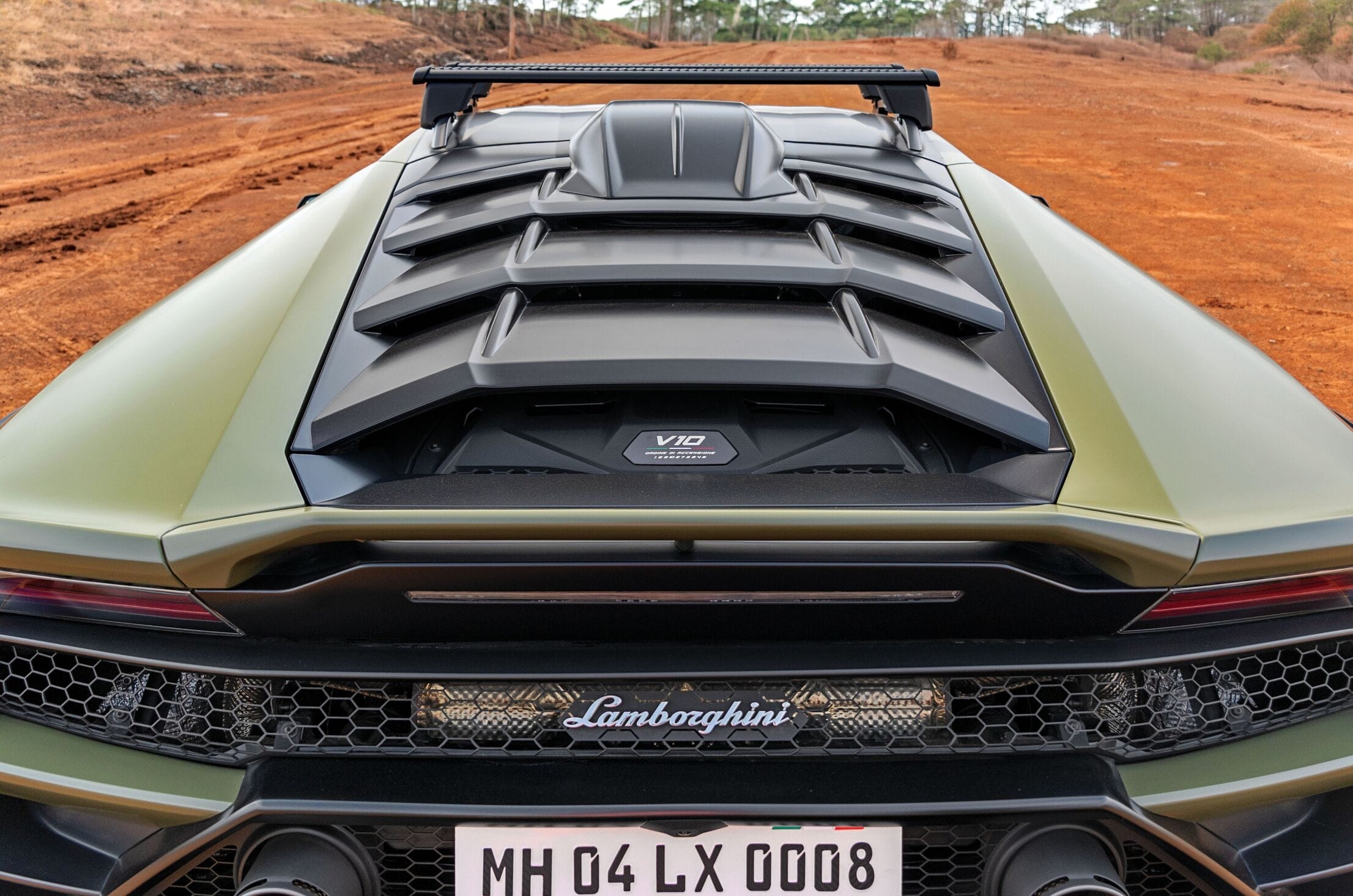
The Sterrato is not a styling exercise with some plastic cladding glued on. Lamborghini jacked the ride height by 44mm, fitted bespoke Bridgestone all-terrain rubber wrapped around 19-inch wheels, widened the front and rear tracks, and reworked the all-wheel-drive system and suspension geometry so the car can absorb a rutted surface without snapping its splitter off in the first hundred metres. Underneath sits the same naturally aspirated 5.2-litre V10 found in the rest of the Huracán range, here tuned to 610hp, still screaming to over 8,000rpm with no turbos to soften the theatre. Only 1,499 Sterratos were built before Lamborghini closed the production run, and of those, 15 made their way to India.
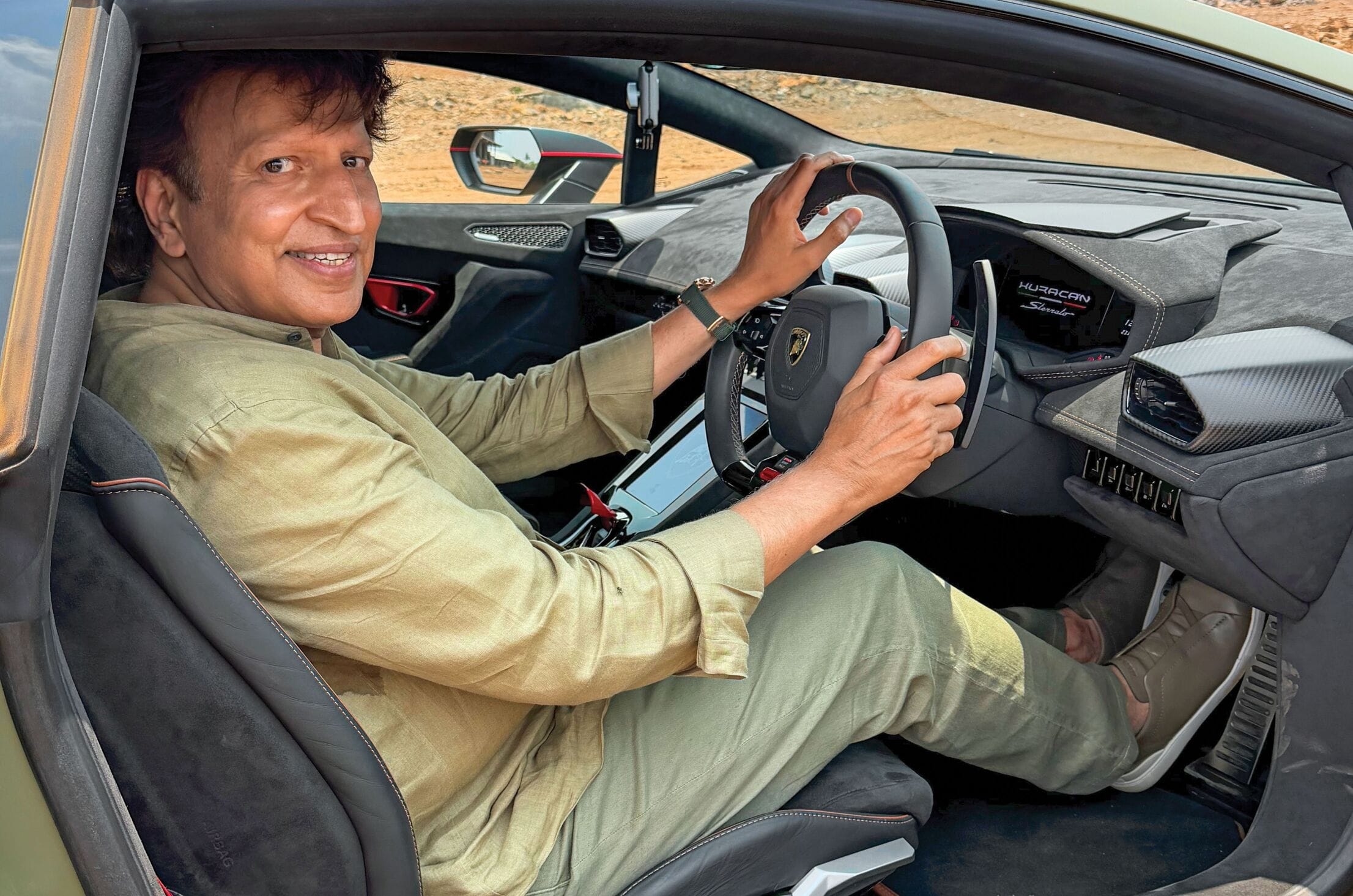
The example driven here belongs to Dinesh Thakkar, who was not only generous enough to hand over the key for a day, but also had the distinction of setting what can be considered the first recorded lap at Nanoli Speedway.
His time of 2m34.80sec won’t be the quickest, but it’s a significant milestone for a circuit that is yet to officially open.
Mechanically, the Sterrato retains the naturally aspirated 5.2-litre V10, producing 610hp and driving all four wheels through a dual-clutch transmission. On paper, it remains very much a Huracán. In practice, the changes in character are immediately evident.
On the compacted dirt, the first impression is one of adaptability. Turn-in is not as immediate as it would be on tarmac, but the front axle bites with a reassuring consistency. The real shift comes under power. Where a standard Huracán demands restraint, the Sterrato encourages exploration.
The recalibrated driving modes, particularly Rally mode, allow for controlled slip. The rear steps out progressively, and crucially, predictably. There is a fluidity to the way the car moves, a willingness to rotate that transforms the experience. It is less about outright speed and more about managing balance.
5.2-litre V10 a nod to the best of internal combustion.
The additional suspension travel plays a defining role. Over the subtle undulations of the track, the car remains composed, absorbing variations in the surface without unsettling the chassis. It allows you to commit earlier, carry speed through sections that would otherwise require caution, and rely on the car to work with the terrain rather than against it.
The V10 is natural aspiration at its best. It sounds absolutely brilliant; the sharp throttle response allows you to precisely meter every one of those 610 horses, and every tap of the throttle feels utterly engaging. Under the sonorous wail of the V10 is the muted rattle of gravel ricocheting off the underbody, giving the full effect of a WRC car.
For Thakkar, setting that first lap was less about outright pace and more about being part of something that will only happen once. Once the tarmac goes down, no one will ever again get to slide a supercar through Nanoli’s corners on loose dirt. That window closes the day the asphalt trucks arrive, which made every lap feel like it mattered a little more than it should have for what was, on paper, just a test session on an unfinished track.
Sterrato owner Dinesh Thakkar is all smiles after a memorable day.
What Nanoli represents, once finished, goes well beyond a fun afternoon for a few car nuts and a Lamborghini. Mumbai’s supercar owners have long had money and machinery with nowhere proper to use either. The city’s roads are hostile to anything with a low chin, and Pune offers little better. A circuit within striking distance of both cities, built to international standards and backed by a family that clearly does not believe in doing things by half measures, could genuinely change how western India’s car culture behaves. This is not simply about building a track. It is about creating an ecosystem. The members-only model ensures exclusivity, but also fosters a focused community. For enthusiasts in Mumbai and Pune, long constrained by infrastructure, this represents a fundamental shift. It’s a controlled environment where cars can be driven to the max without fear of speed cameras or speed breakers.
The tarmac will come soon enough, and Nanoli will become a proper circuit with lap times and lap records and all the polish that comes with a finished facility. But for one afternoon, before any of that, it was just a dirt track, a Sterrato V10, and the kind of first lap that only ever happens once.
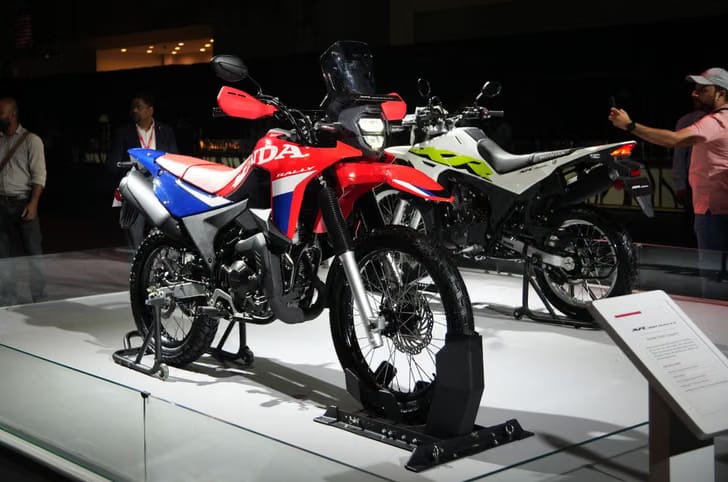
Honda has been steadily expanding its premium motorcycle portfolio in India and recently unveiled multiple new models across different segments. The brand is expected to launch the XR300 L and XR300 Rally in the Indian market in November 2026, marking the brand’s entry into the entry-level dual-sport and adventure motorcycle segment.
Honda XR300 L and XR300 Rally are expected to launch in India in November 2026.
XR300 L expected price: Rs 2.00 lakh and Rs 2.10 lakh (ex-showroom).
The Honda XR300 L is expected to be priced between Rs 2.00 lakh and Rs 2.10 lakh (ex-showroom), while the more adventure-focused XR300 Rally could carry an expected price tag of Rs 2.20 lakh to Rs 2.30 lakh (ex-showroom).
While Honda has not officially confirmed the launch timeline or pricing, the two motorcycles are expected to cater to riders looking for capable yet accessible machines. The XR300 L gets a more traditional dual-sport setup, whereas the XR300 Rally features rally-inspired styling, a larger windscreen and Honda RoadSync smartphone connectivity.
The shared 293.5cc engine in these bikes indicates that both motorcycles are likely underpinned by the CB300F platform. Although Honda has not disclosed performance figures, the engine is expected to deliver approximately 24.5hp and 25.9Nm, in line with the CB300F.
Key features include long-travel suspension, a gas-charged Pro-Link rear monoshock, switchable dual-channel ABS and Honda Selectable Torque Control (HSTC). With their expected pricing, the two motorcycles could make a big impact on the adventure and dual sport motorcycle segments.
More details and specifications can be expected closer to the anticipated launch later this year.
विदेश जाकर अच्छी नौकरी, ज्यादा कमाई और बेहतर जीवन जीने का सपना कई भारतीय देखते हैं। वहीं सोशल मीडिया पर विदेश की चमक-दमक और शानदार लाइफस्टाइल देखकर ऐसा लगता है कि वहां सब कुछ कितना आसान है। लेकिन सच्चाई हमेशा ऐसी नहीं होती है। हाल ही में सोशल मीडिया पर पेरिस में रहने वाले एक भारतीय युवक का वीडियो तेजी से वायरल हो रहा है। इस वीडियो में युवक ने बताया कि, विदेश में रहने का फैसला सोच-समझकर लेना चाहिए। सोशल मीडिया पर दिखने वाली चमक-दमक देखकर कोई बड़ा फैसला न लें, बल्कि हर पहलू को समझने के बाद ही विदेश जाने का निर्णय करें।
विदेश में बसने वाले लोगों को दी सलाह
इंस्टाग्राम पर शेयर किए गए एक वीडियो में तनिष्क लोहान ने बताया कि विदेश जाने की सोच रखने वाले कई भारतीय युवाओं को अक्सर एक जैसी सलाह दी जाती है। उन्होंने कहा, “लोग कहते हैं कि कुछ साल के लिए भारत छोड़ दो। अमेरिका, ऑस्ट्रेलिया या किसी भी दूसरे देश चले जाओ। वहां पार्ट-टाइम नौकरी करके हर महीने 2 से 3 हजार यूरो कमा सकते हो। फिर जब फुल-टाइम नौकरी मिल जाएगी, तो जिंदगी पूरी तरह सेट हो जाएगी।”
लोहान ने कहा कि, इस तरह की बातें सुनकर कई लोग विदेश जाने का फैसला कर लेते हैं, लेकिन उन्हें पूरी सच्चाई नहीं बताई जाती। उन्होंने आगे कहा, “अगर आप भी ऐसी बातें सुनकर प्रेरित हो रहे हैं और विदेश आने की सोच रहे हैं, तो पहले इसकी असली हकीकत भी जान लें।”
परिवार से दूर रहना पड़ता है
तनिष्क लोहान ने बताया कि विदेश में पढ़ाई करने का खर्च सिर्फ कॉलेज की फीस और हवाई टिकट तक सीमित नहीं होता। उनके अनुसार, कई छात्र पढ़ाई के लिए 50 से 60 लाख रुपये या उससे भी अधिक का एजुकेशन लोन लेते हैं। वहीं, कुछ परिवार अपने बच्चों का सपना पूरा करने के लिए अपनी जमा-पूंजी खर्च कर देते हैं या अपनी संपत्ति तक बेच देते हैं। उनके मुताबिक, विदेश जाने से पहले इन आर्थिक जिम्मेदारियों को अच्छी तरह समझना बेहद जरूरी है। लोहान ने कहा कि, विदेश में बसने की सबसे बड़ी चुनौती सिर्फ पैसों की नहीं, बल्कि इमोशनल भी होती है। दूसरे देश में रहने का मतलब परिवार, रिश्तेदारों और दोस्तों से दूर रहना होता है।
नए माहौल में ढलना आसान नहीं होता
इसके साथ ही नई भाषा, अलग संस्कृति और नए माहौल में खुद को ढालते हुए करियर की शुरुआत भी करनी पड़ती है। लोहान ने कहा कि, विदेश में पढ़ाई के साथ पार्ट-टाइम नौकरी करना, पढ़ाई और काम के बीच बैलेंस बनाए रखना, अच्छी फुल-टाइम नौकरी हासिल करना और नए माहौल में खुद को ढालना आसान नहीं होता। इन सबके लिए समय, धैर्य और लगातार मेहनत करनी पड़ती है। उनका कहना है कि इन चुनौतियों पर अक्सर खुलकर बात नहीं होती।
उन्होंने कहा, “अगर आप विदेश आते हैं, तो यहां अपने लिए एक बेहतर जिंदगी बना सकते हैं। लेकिन इसके लिए आपको धैर्य, मेहनत और लगातार कोशिश करनी होगी। हर दिन खुद को यह भरोसा दिलाना होगा कि आप कड़ी मेहनत करेंगे और अपने लक्ष्य को जरूर हासिल करेंगे।” उन्होंने ये भी कहा कि, विदेश की जिंदगी सिर्फ घूमने-फिरने और छुट्टियां मनाने तक सीमित नहीं होती। उन्होंने कहा, “अच्छे पल भी आते हैं, लेकिन उनसे पहले आपको बहुत मेहनत करनी पड़ती है।”
सोशल मीडिया पर लोगों ने दिया रिएक्शन
इस वीडियो को सोशल मीडिया पर लोगों की मिली-जुली लेकिन पॉजिटिव रिएक्शन मिले हैं। कई यूजर्स ने कहा कि यह वीडियो विदेश में रहने की सिर्फ सफलता की कहानियां नहीं, बल्कि वहां की असली चुनौतियों को भी सामने रखता है। एक यूजर ने लिखा, “बहुत शानदार बात कही दोस्त।” वहीं दूसरे ने कहा, “अक्सर लोग सिर्फ एक ही पहलू बताते हैं कि विदेश जाना चाहिए या नहीं जाना चाहिए। लेकिन इस वीडियो ने पूरी तस्वीर दिखाने की कोशिश की है।”
एक अन्य यूजर ने कमेंट किया, “मेहनत किए बिना कहीं भी सफलता नहीं मिलती। अगर कम्फर्ट जोन में रहकर ही सब कुछ पाना है, तो फिर विदेश जाने का सोचने का क्या मतलब?” कई अन्य लोगों ने भी माना कि विदेश में बेहतर अवसर जरूर मिल सकते हैं, लेकिन वहां सफल होने के लिए धैर्य और लगातार मेहनत सबसे ज़्यादा जरूरी होती है।
The Mercedes-AMG E53 Hybrid 4MATIC+ arrives at a time when performance cars are being asked to do more than simply go fast. It has to deliver the pace and character expected of an AMG while embracing electrification to meet increasingly stringent emissions norms and changing buyer expectations. The result is a plug-in hybrid performance sedan that combines a 3.0-litre turbo-petrol inline-six engine with an electric motor for a formidable system output of 585hp, while also offering enough electric-only range for mundane daily drives.
But this isn’t just an E-Class with a bigger battery and more power. The E53 gets AMG-specific chassis hardware, all-wheel drive, rear-wheel steering and a suite of performance-focused electronics designed to counter the added weight. Can this electrified AMG still deliver the thrills enthusiasts expect while remaining a genuinely usable luxury sedan every day?
Mercedes-AMG E53 Exterior Design and Engineering
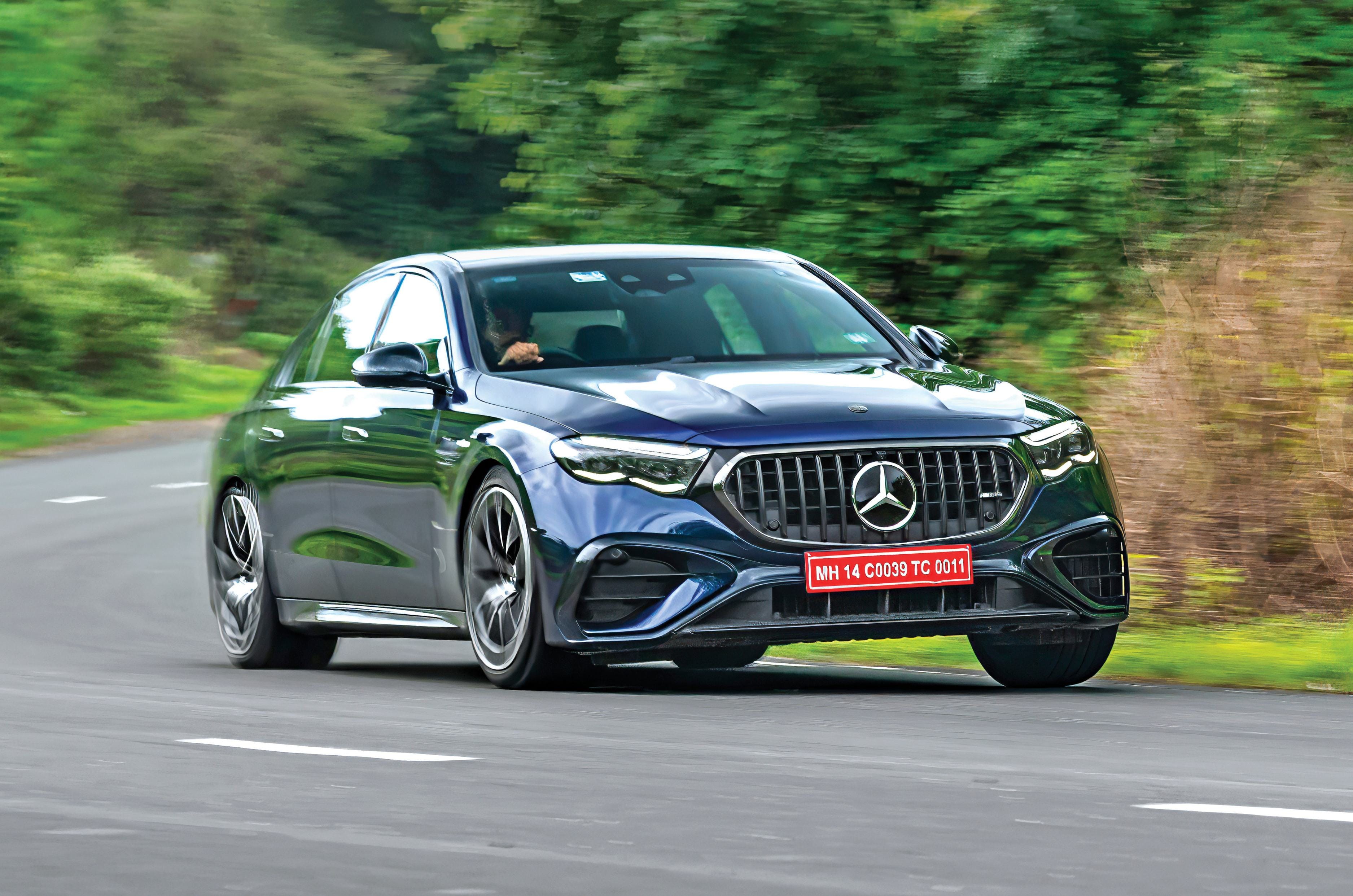
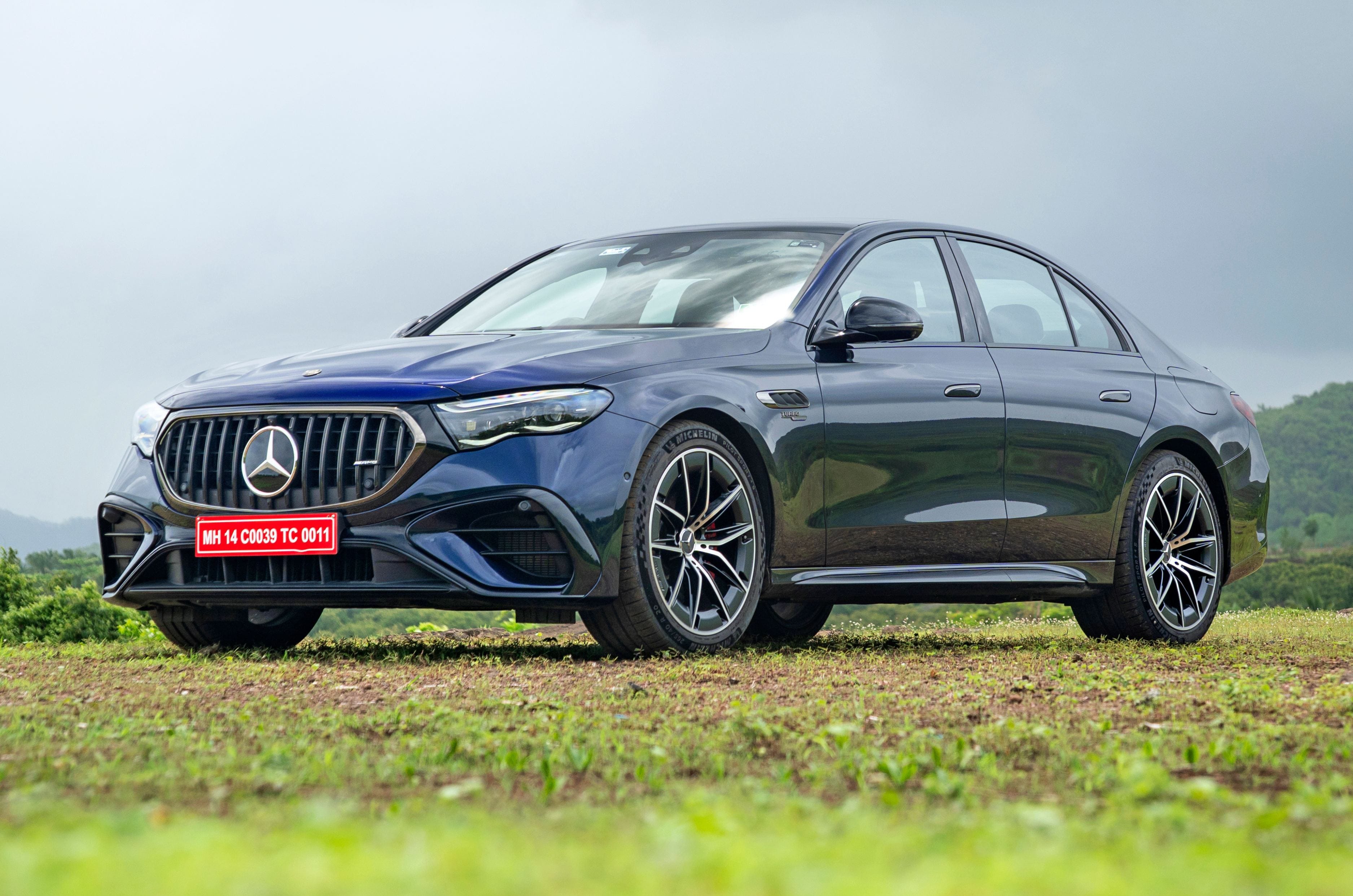
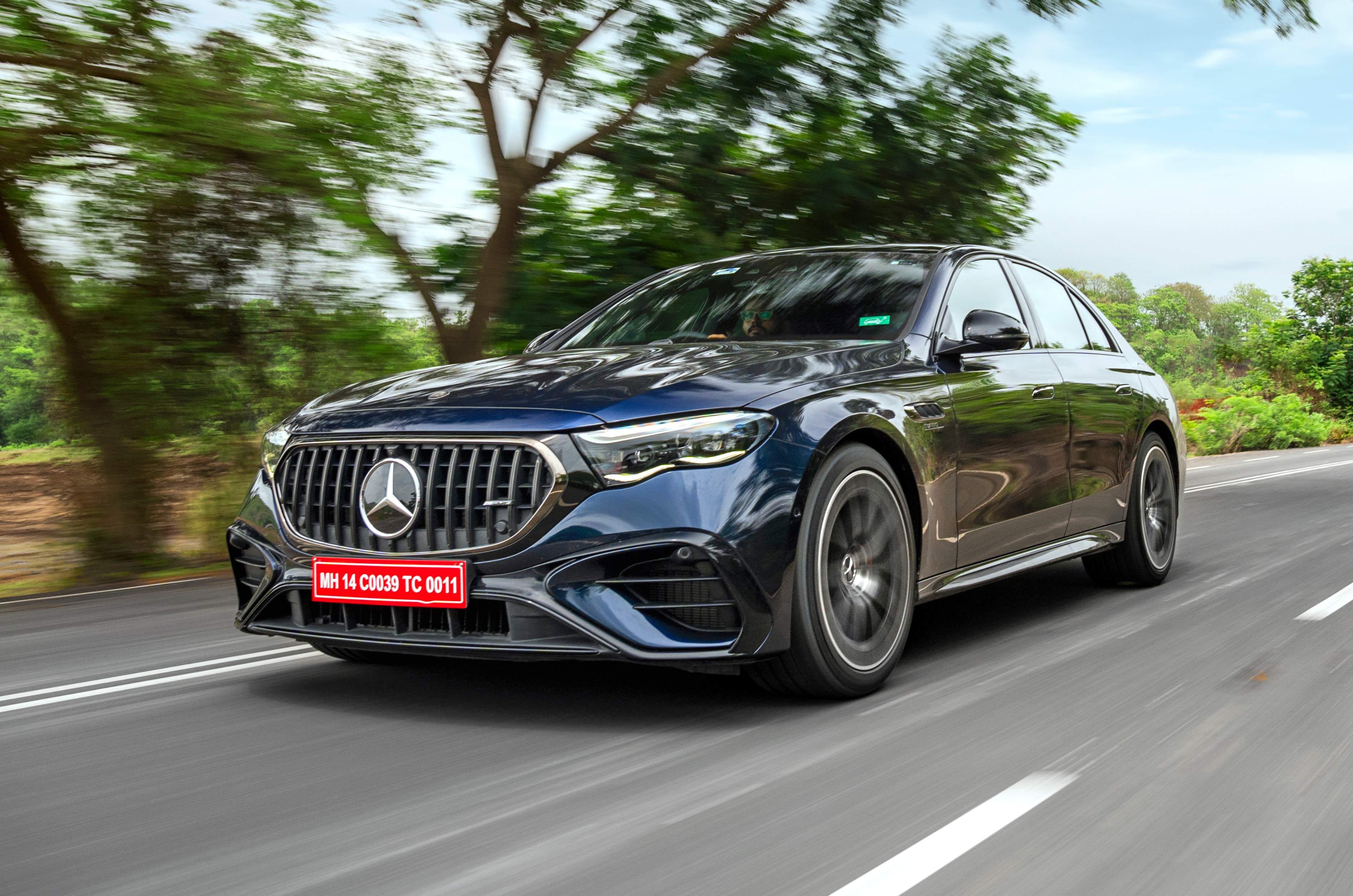
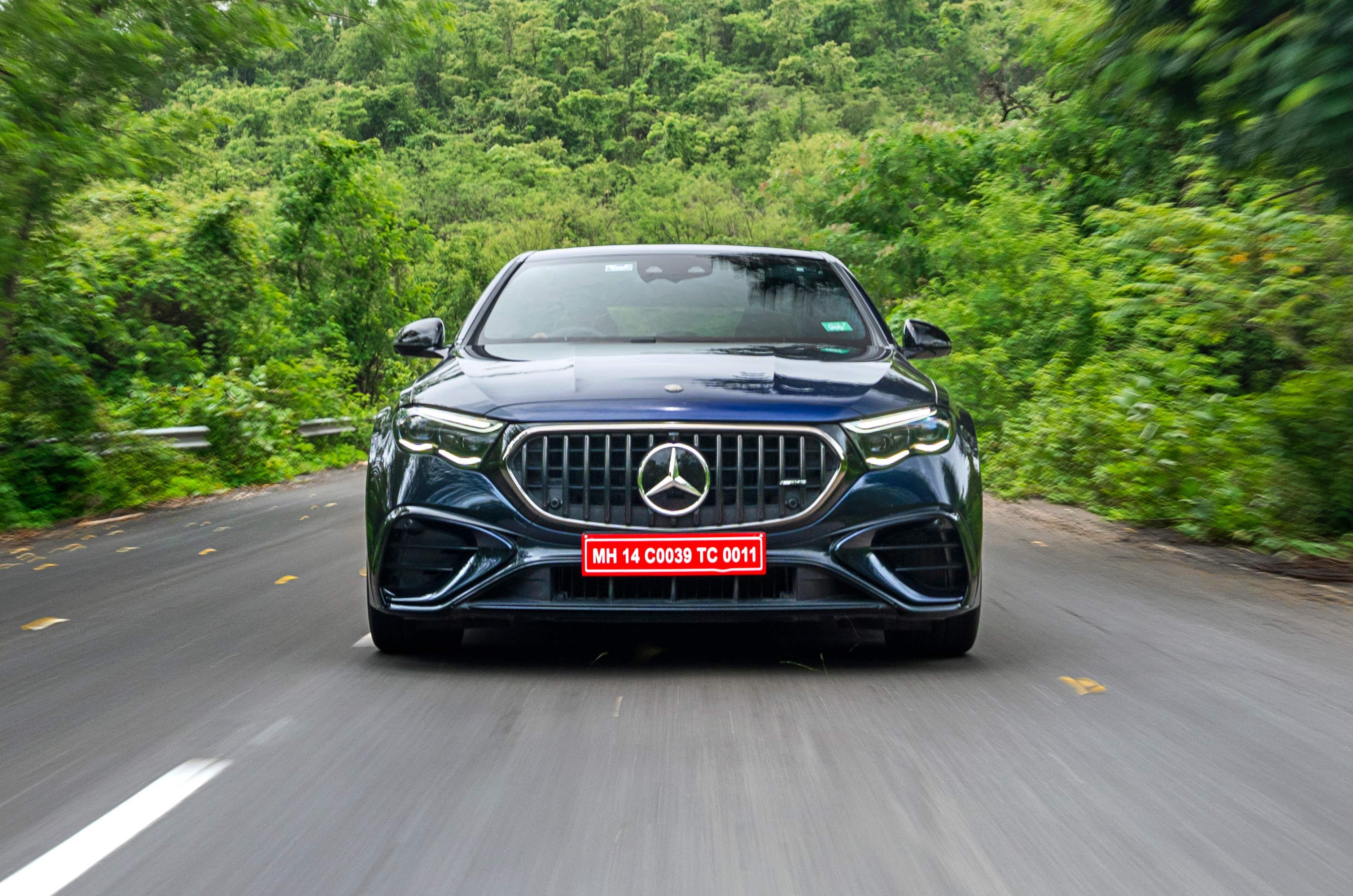
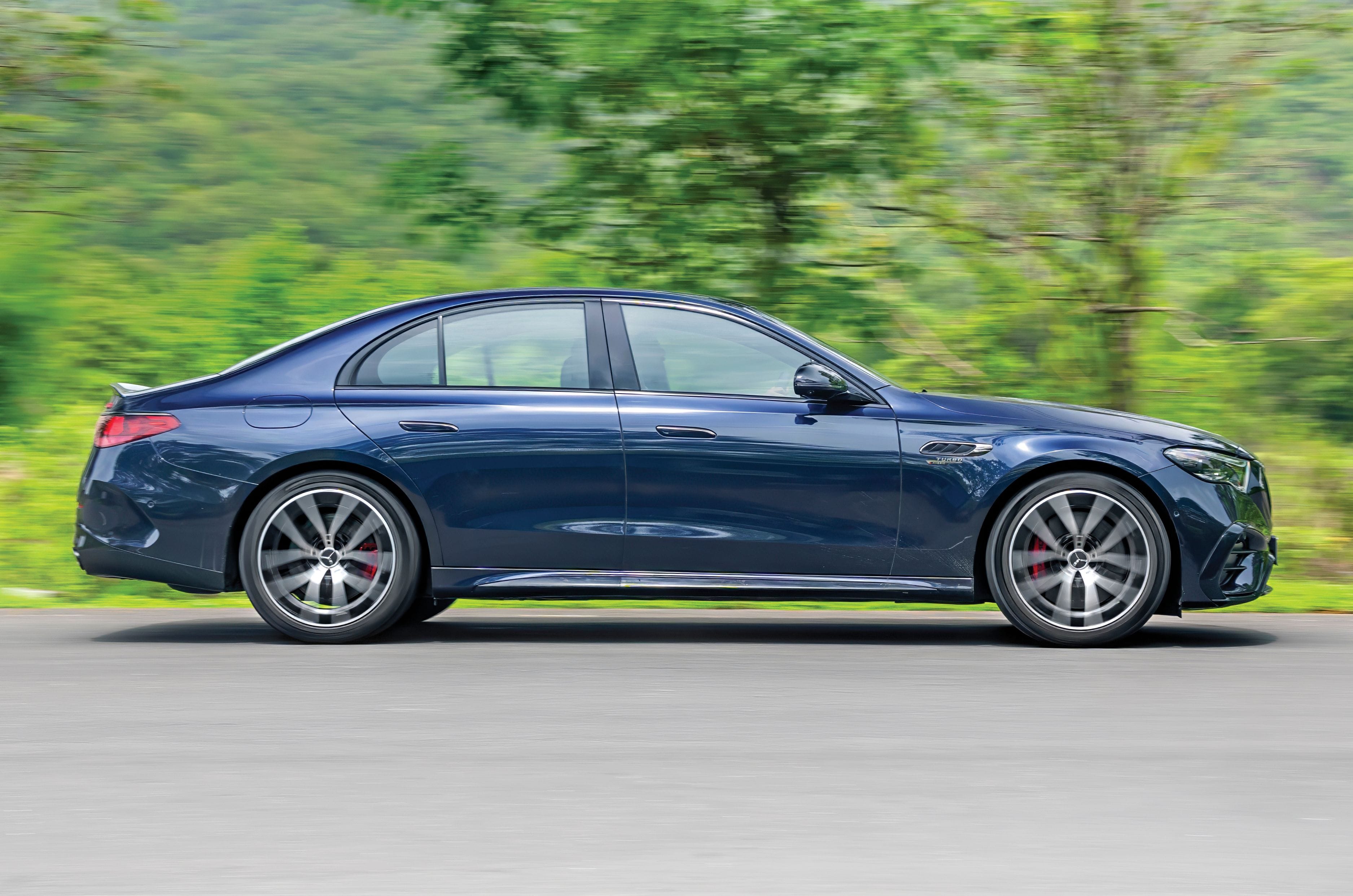
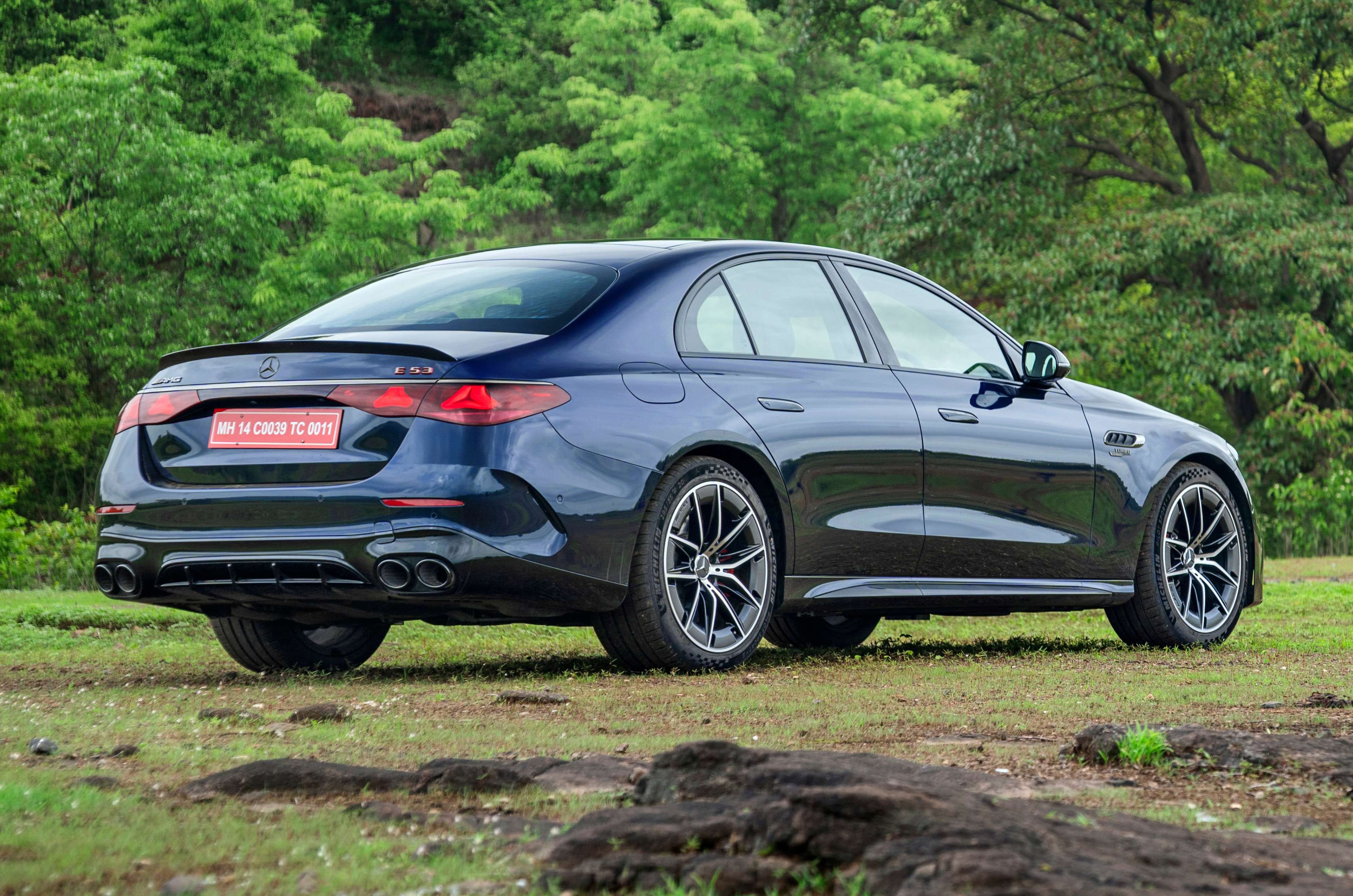
Expectedly, the E 53 has put on quite a bit of muscle. The front bumper is sportier, with large air dams. The Panamericana grille gets illuminated surrounds and is wide enough to gulp massive amounts of air to cool the engine, while the power lines on the bonnet add more intent to its character.
The E53 has good amount of muscle with aggressive bumpers, big grille and power lines
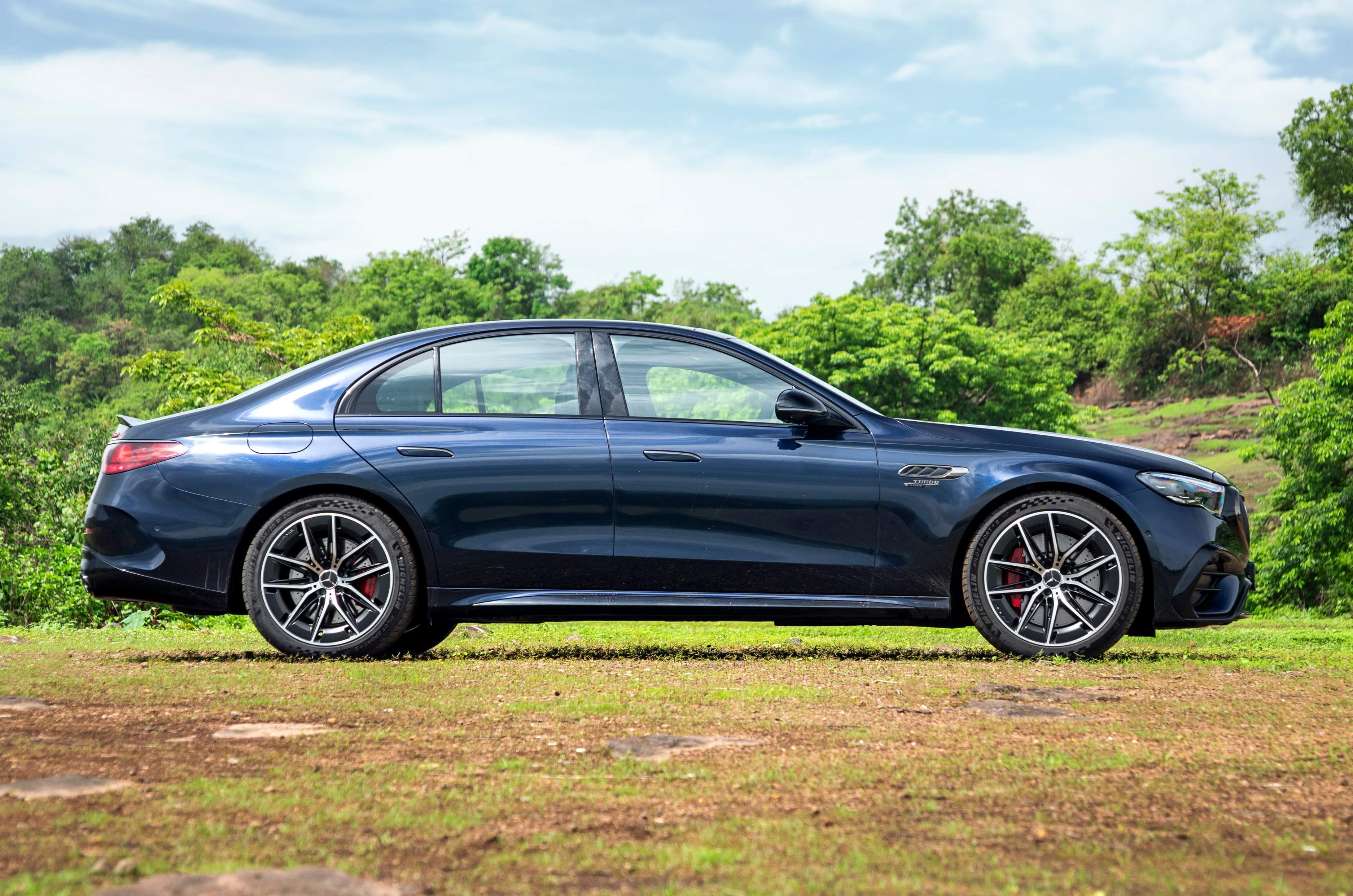
The profile flaunts flared wheel arches, larger 20-inch wheels (the last-gen E 53 featured 19-inchers) and, like before, a standard wheelbase, giving it sportier proportions than the long-wheelbase E-Class.
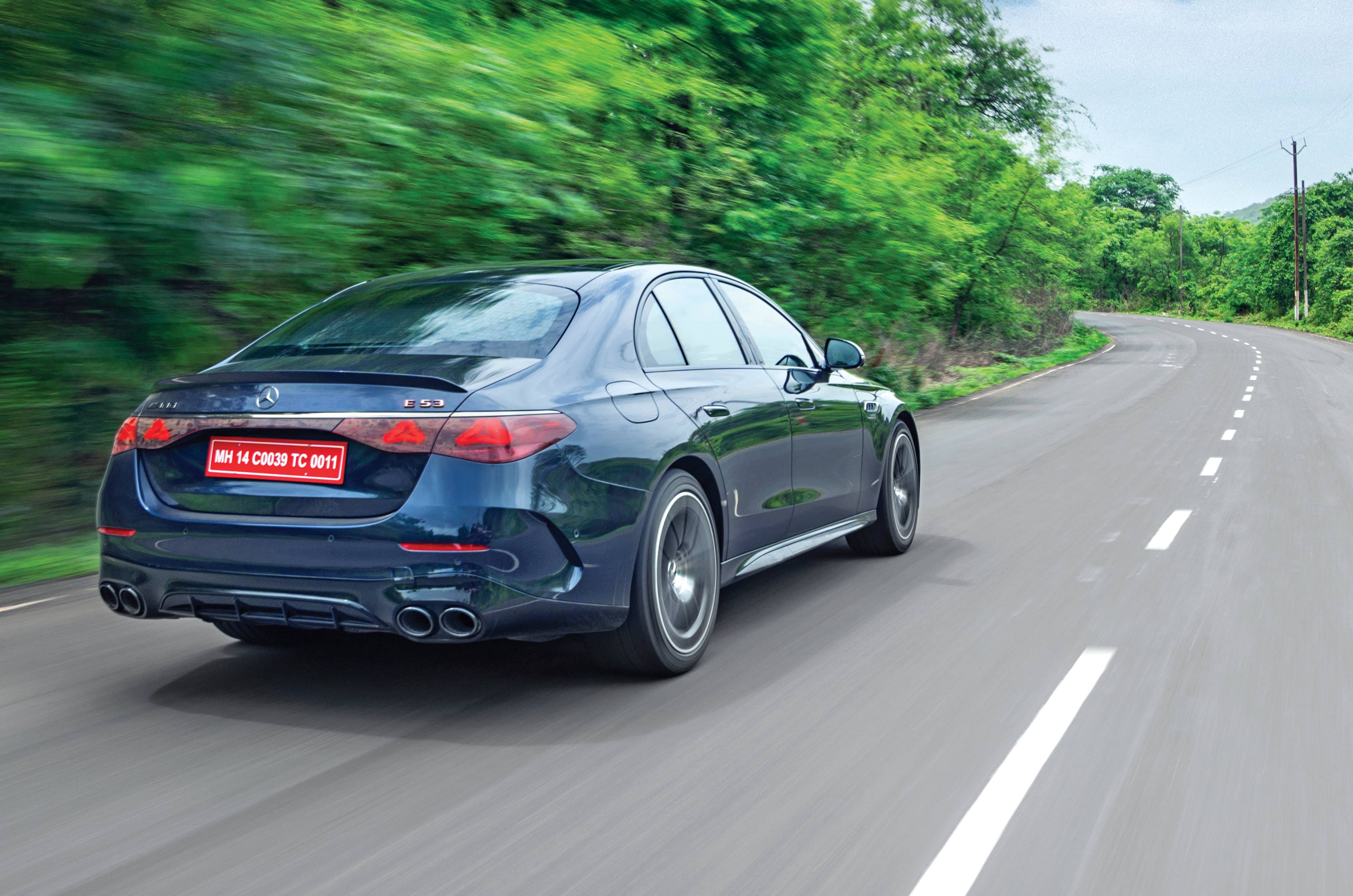
At the rear, there’s an E 53 badge with red highlights, a quad-exhaust setup that isn’t actually connected to the exhaust pipes, a diffuser and a ducktail spoiler that’s large enough to be noticed but won’t do much for downforce.
Not being a long wheelbase gives it perfect proportions
Overall, it’s a handsome-looking car with just the right amount of restraint. However, if you’re looking for a bit more visual drama, you’ll have to pay extra for the MANUFAKTUR paint finishes, as the standard colour palette is more E-Class than AMG.
Mercedes-AMG E53 Interior Space and Comfort
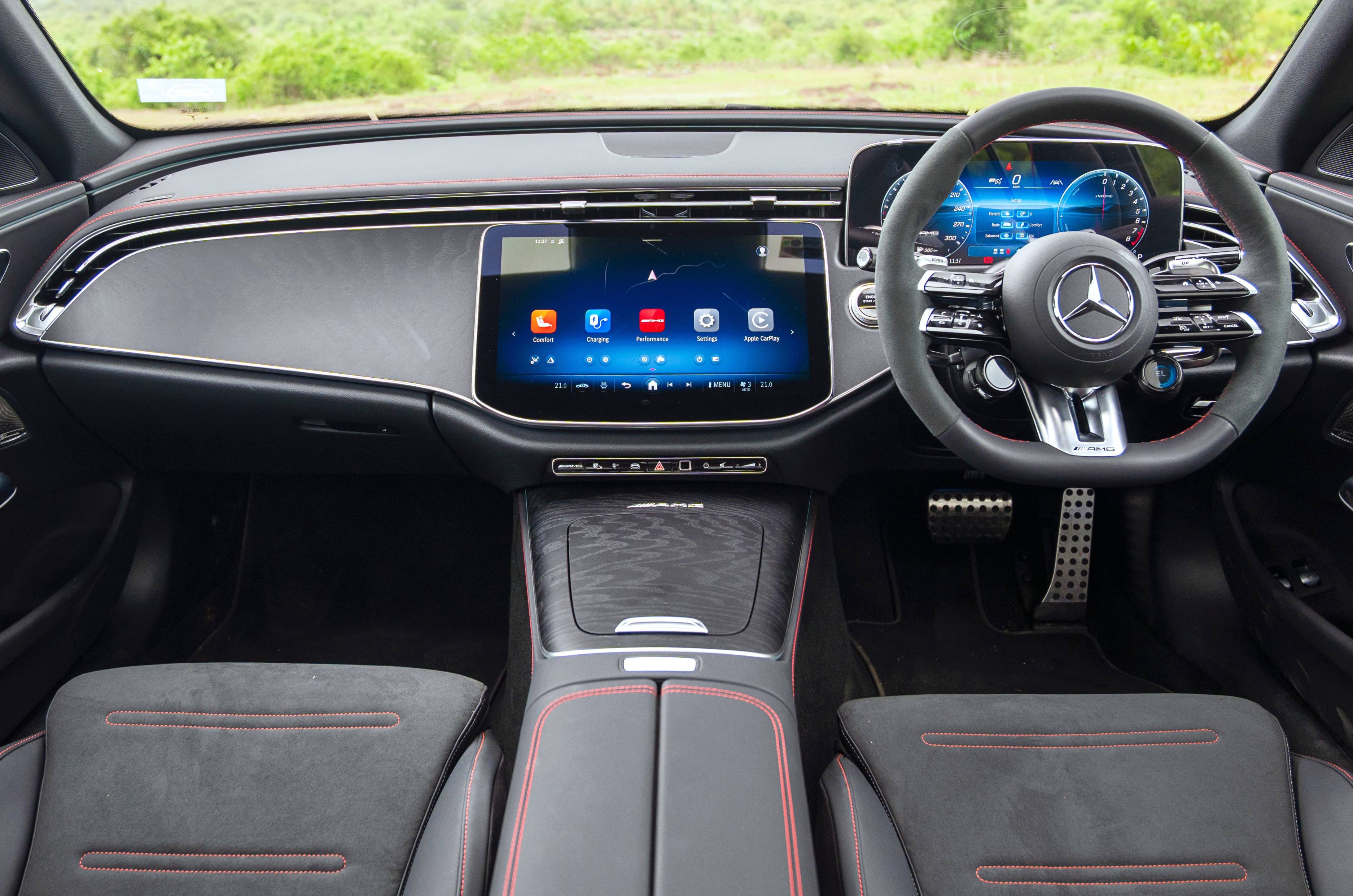
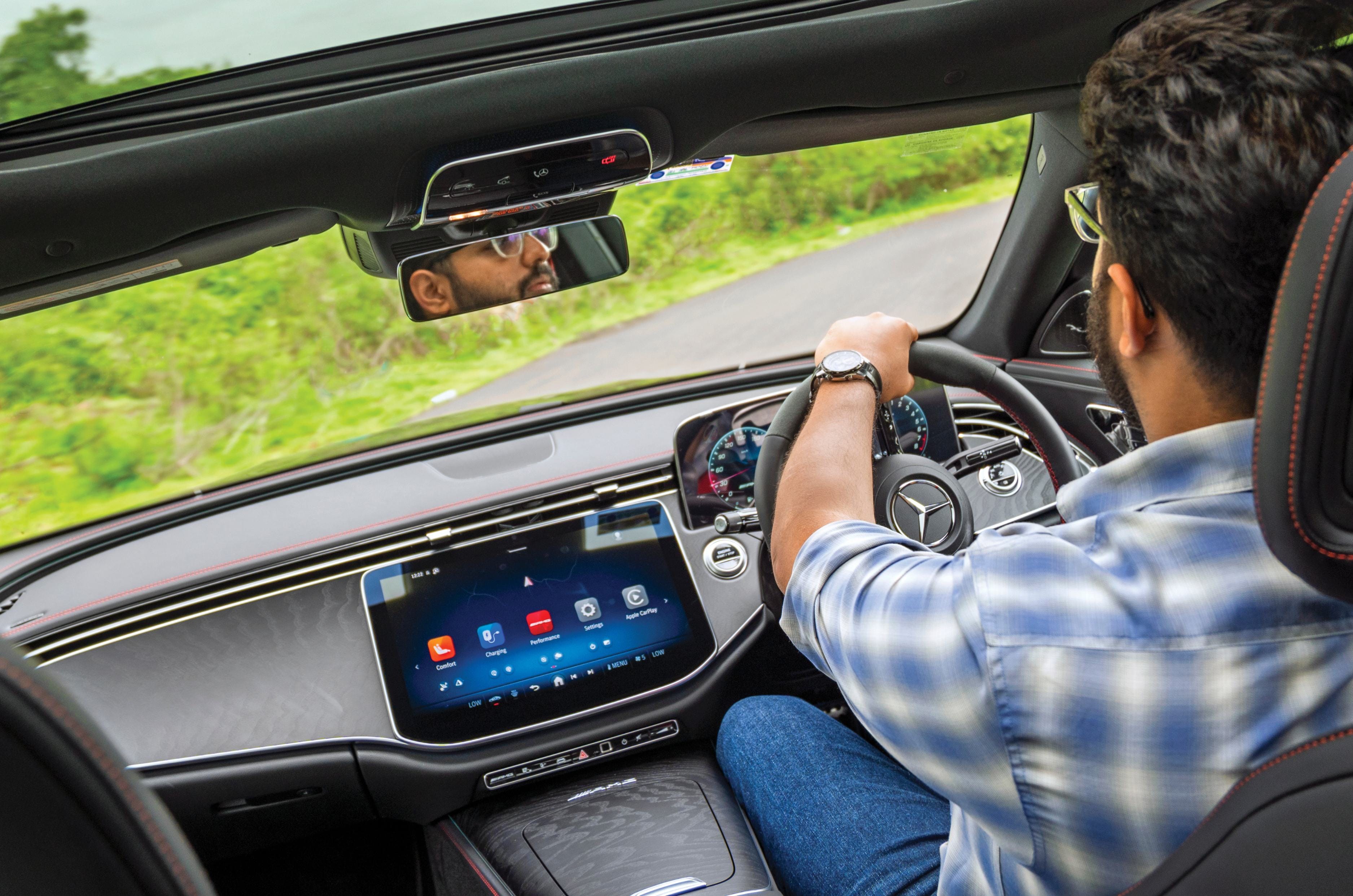
Inside, the E 53 strikes an appealing balance between luxury and sportiness. Instead of carbon-fibre or piano-black trim, Mercedes has used open-pore wood that feels rich and tactile. A large central MBUX touchscreen dominates the dashboard, while the passenger display found on the standard E is absent – not particularly bothersome given how good the main screen is.
Red and black upholstery looks racy while open pore wood adds luxe factor
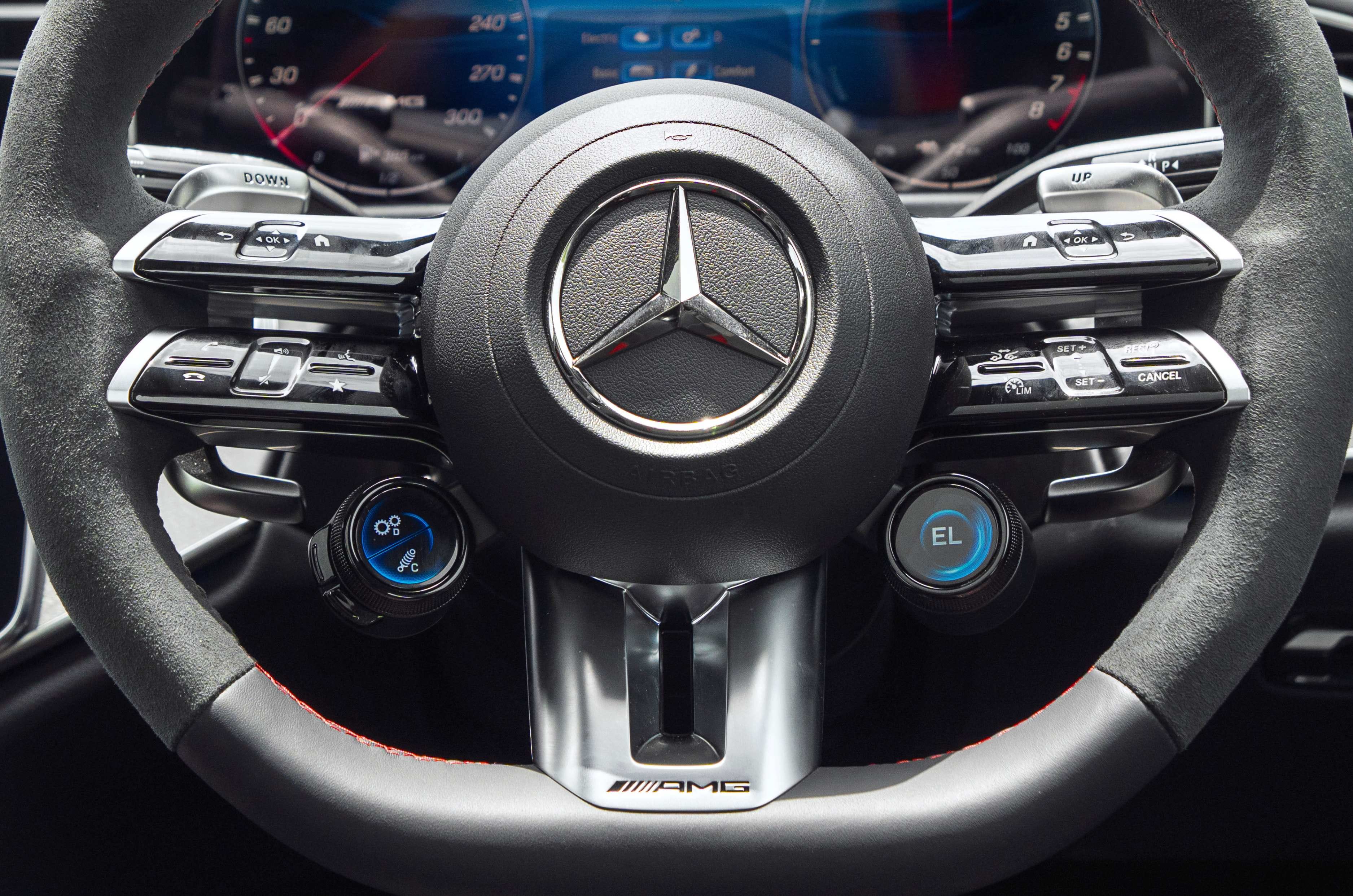
The AMG sports seats offer plenty of support and adjustment, although ventilated and massage functions are missing. Likewise, the chunky AMG steering wheel feels superb in hand but is cluttered with touch-sensitive controls that remain frustrating to use.
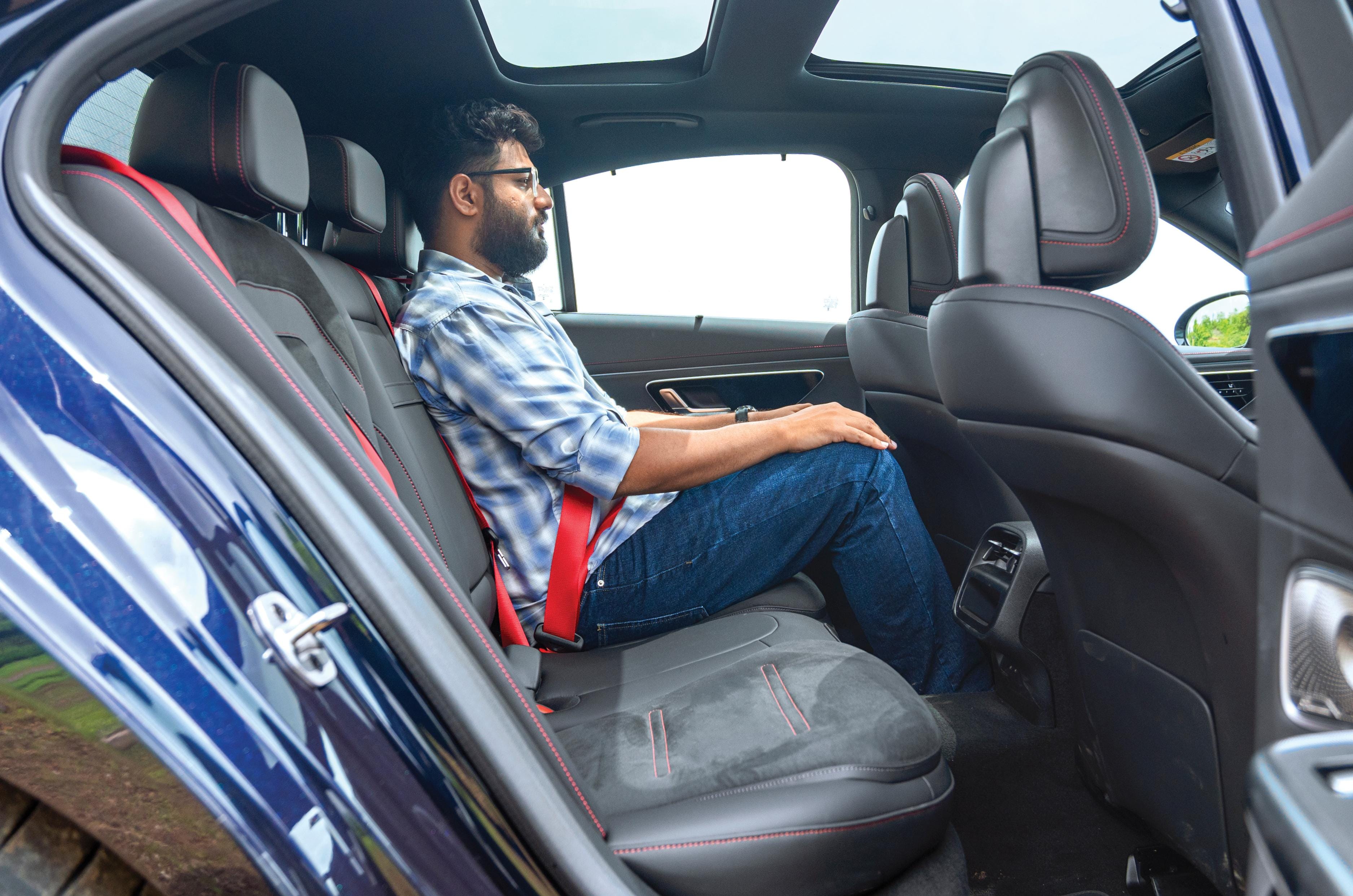
Rear-seat space is naturally tighter than the long-wheelbase E-Class, but there’s still enough room for two adults to travel comfortably. Manual sunblinds and a panoramic sunroof add to the ambience, although the large transmission tunnel makes this a strict four-seater.
There’s good space in the rear despite this not being a long wheelbase
The boot, however, sees the biggest compromise. At 370 litres, it’s 170 litres smaller than the standard E-Class because the battery sits beneath the floor. There’s no spare wheel either, with its space instead occupied by the charging cable and puncture repair kit.
Mercedes-AMG E53 Features and Safety
The E 53 is a well-equipped sedan despite missing features such as ventilated seats. The centre screen is the brains of the operation and, unfortunately, many of the controls are routed through it, making them difficult to operate on the move.
We’ve praised the MBUX infotainment system for its clear interface and high-resolution display, but usability isn’t its strongest suit. The large screen makes it difficult to accurately select the desired function while driving.
Too many controls on the steering is distracting
The E 53 gets a comprehensive suite of driver assistance systems, including Lane Keep Assist, Automatic Emergency Braking, Rear Cross Traffic Alert and Blind Spot Monitoring. Thankfully, these systems can also be switched off manually if required.
The 360-degree camera is crisp and high-resolution, while the 17-speaker Burmester 4D audio system delivers an exceptional listening experience. As impressive as the sound system is, however, it ultimately plays second fiddle to the performance on offer.
Mercedes-AMG E53 Performance and Refinement
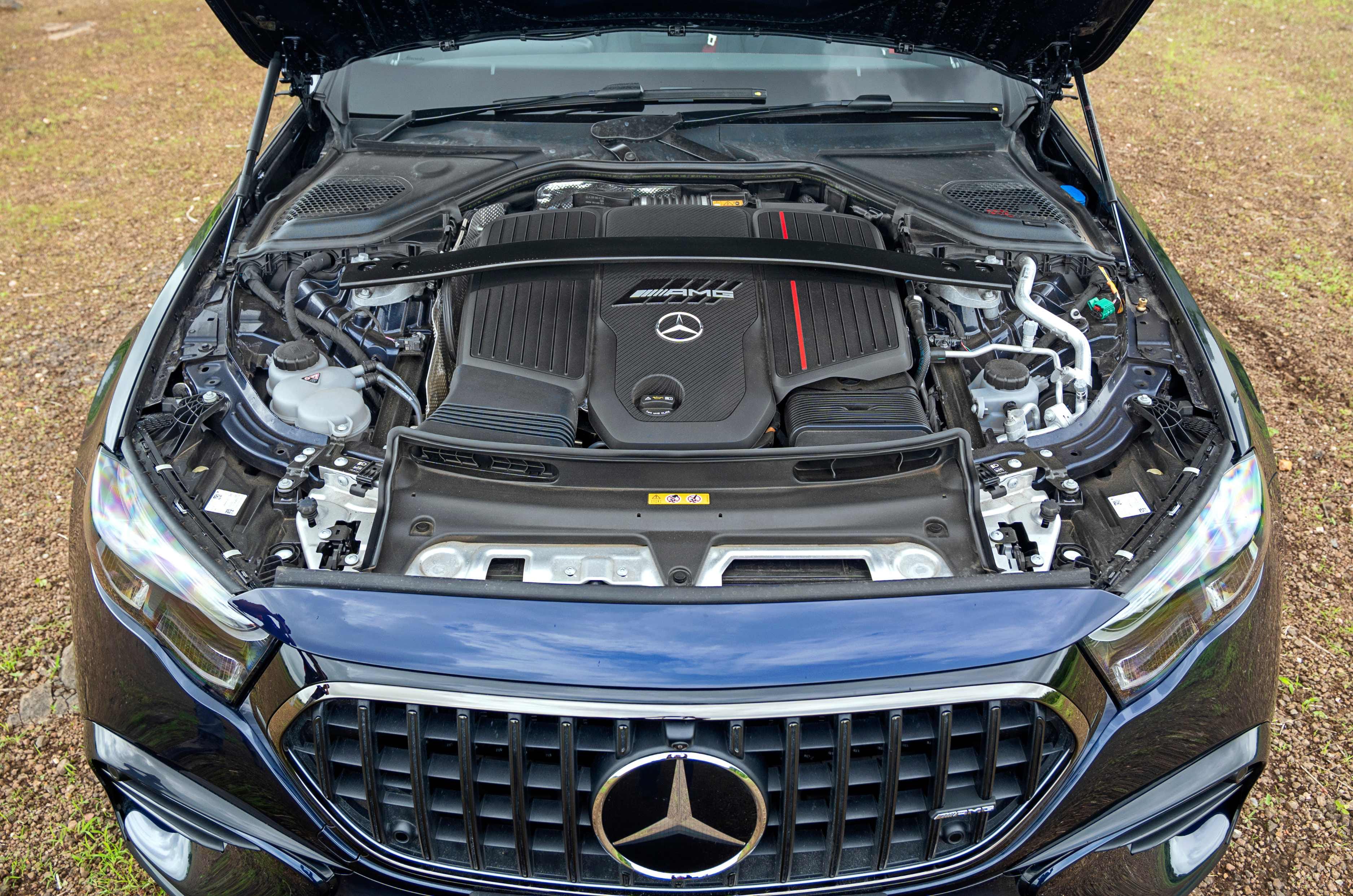
Like before, the new E 53 is powered by a 3.0-litre turbo-petrol straight-six engine. This time, however, it gets support from a 28.6kWh battery pack and an electric motor, taking the combined output to 585hp and 750Nm.
585hp six-cylinder engine makes 150hp more than before
Unlike the bigger PHEV AMGs, the E 53 isn’t an ‘E PERFORMANCE’ model, which means the electric motor is mounted within the gearbox housing rather than integrated into the rear axle. Power is sent to all four wheels via the familiar 9-speed automatic transmission, and the E 53 gets a host of drive modes that are noticeably different from one another.
‘Individual’ lets you tailor the engine, gearbox and suspension to your liking. ‘Battery Hold’ prevents the car from using the battery charge, saving it for when you truly need it. ‘EL’ is the full-electric mode, provided there’s sufficient charge in the battery. ‘Comfort’ offers a more relaxed setup, ‘Sport’ sharpens the responses, and ‘Sport+’ is the most aggressive setting.
Naturally, Sport+ is the mode you’ll spend most of your time in if you want the E 53 to feel like a proper AMG. The exhaust note, the urgency of the power delivery and the firmer suspension all come together beautifully. With the engine and electric motor working at full tilt, straight-line performance is genuinely rapid. Acceleration is smooth yet thrilling, as the engine piles on speed rapidly without the neck-snapping brutality of a powerful EV. Power delivery is strong and linear across the rev range, and the gearbox complements the aggressive character of Sport+ perfectly. 0-100kph takes just 4 secs with the ‘Race Start’ which is essentially launch control included in the AMG Dynamic Plus package as power jumps up to 612hp.
For greater driver involvement, you can also engage ‘M’ mode, which gives you full manual control of the gearbox. It will happily bounce off the limiter without automatically upshifting until you pull a paddle.
The exhaust note is a bit of a mixed bag. It’s genuine, but it’s also channelled into the cabin through the speakers and a subwoofer in the boot. It’s not the ideal solution because, outside the car, the engine and exhaust produce a genuinely enjoyable snarl. Still, in an era of synthesised, computer-generated soundtracks, a real exhaust note—even if it’s amplified through the speakers—is worth appreciation.
Switch to Comfort mode and the E 53 adopts an entirely different character. It’s calm, refined and smooth, with gentler power delivery that’s well suited to long-distance cruising.
Where the powertrain disappoints is in city traffic and slow stop-start driving. The gearbox is simply too eager and, even in Comfort mode, it feels a bit like walking an overexcited Rottweiler. It’s constantly trying to surge forward and grab the next gear before you’ve asked it to. The constant shuffling through the lower gears results in unnecessary jerks that spoil the experience.
The solution is to engage EL mode. It’s almost as if it was designed specifically for this scenario. In EL, the E 53 feels smooth and effortless. There’s very little noise apart from the drone generated by the Michelin Pilot Sport 4S tyres, which can be quite rumbly, especially on concrete surfaces.
Braking is less convincing, however. Despite massive 390mm front discs and regenerative braking, the pedal never delivers a natural or consistent feel. Stopping power is strong, but the spongy, inconsistent pedal detracts from an otherwise polished driving experience.
Mercedes-AMG E53 Mileage and Efficiency
One of the biggest talking points of the new E 53 isn’t its staggering performance, but the fact that it can deliver it without constantly visiting a fuel station. This plug-in hybrid marks a significant shift in AMG’s philosophy, combining electrification with a silky-smooth six-cylinder engine to create a performance sedan that’s as comfortable commuting as it is attacking a mountain road.
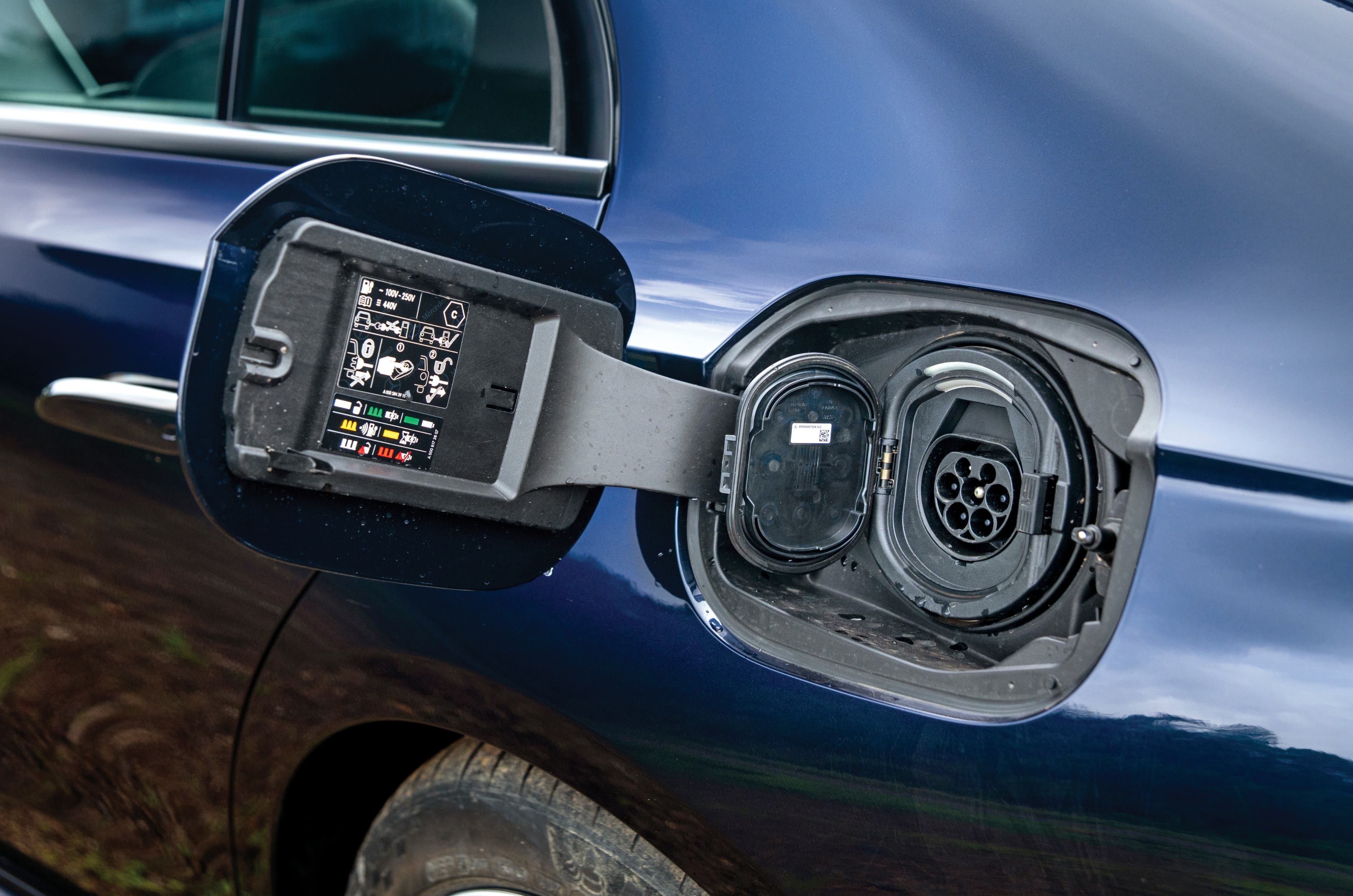
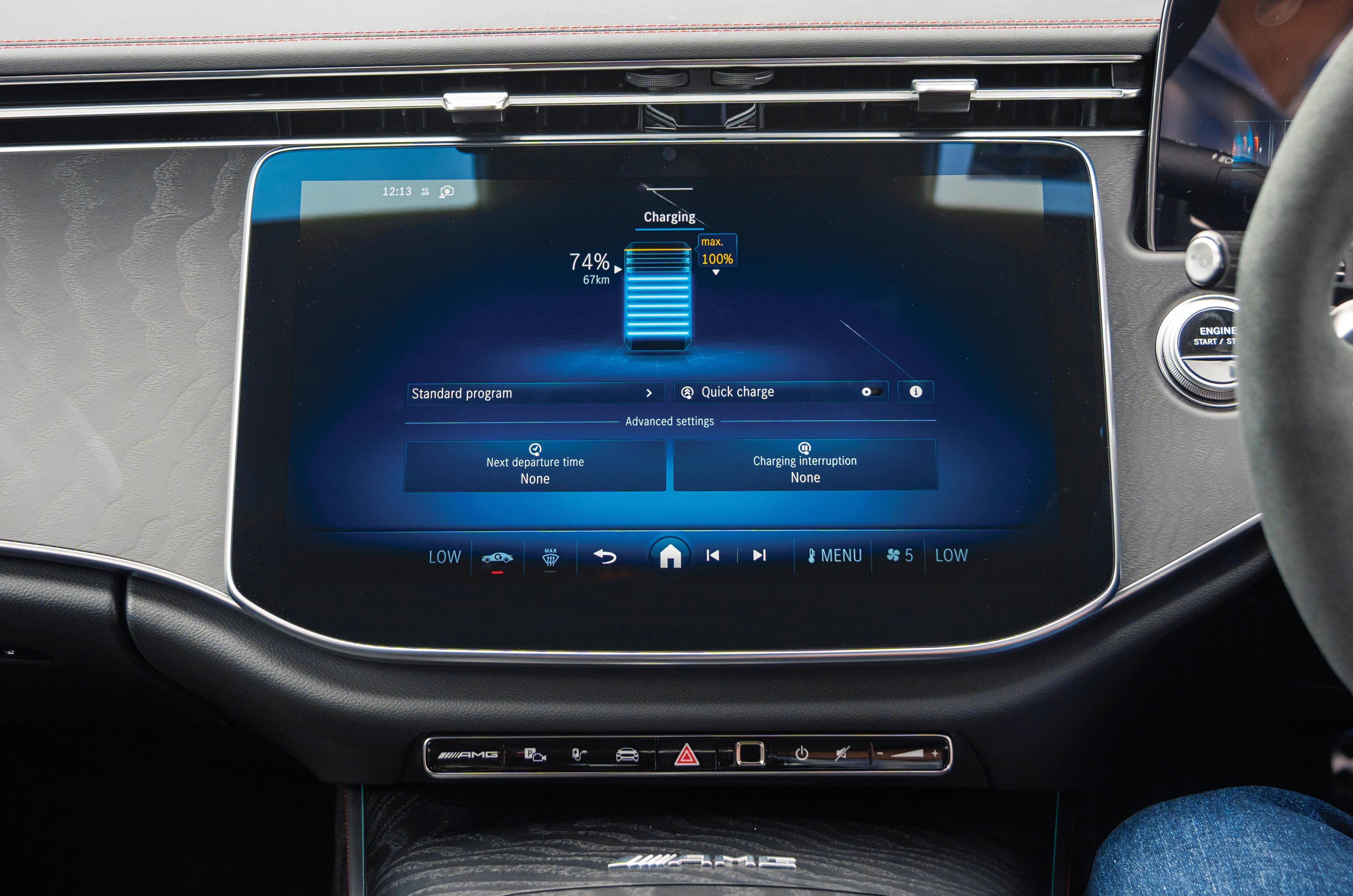
Charging via an 11kW AC charger will replenish the battery in 2.25 hrs; No DC charging option
The headline figure is a claimed electric-only range of up to 100km, courtesy a 28.6kWh battery pack. You can expect 75-90km on electric power alone making it entirely possible to complete daily urban commutes without firing up the engine.
Once the battery begins to deplete, the turbocharged 3.0-litre inline-six takes centre stage. Even then, the hybrid system continues to contribute through regenerative braking and electric assistance, ensuring the E 53 feels responsive while reducing fuel consumption compared to a conventional performance sedan. Mercedes has also equipped the car with four regenerative braking modes, allowing drivers to maximise energy recovery or opt for a more natural driving experience. For owners with access to home or workplace charging, fuel stops could become surprisingly infrequent. Charging is equally convenient, with the 11kW AC onboard charger replenishing the battery in around three hours.
28.6kWh battery allows for an electric-only range of 100km
Mercedes-AMG E53 Ride Comfort and Handling
For those who enjoy being behind the wheel, the E 53 delivers in abundance. Despite carrying the additional weight of a sizable battery pack, it feels remarkably composed. In Sport and Sport+, the car tightens up noticeably. Body roll is kept firmly in check, the dampers become more alert, and the steering gains welcome heft. What impresses most is how well the chassis disguises its mass. The battery may add considerable weight, but it’s mounted low in the car, lowering the centre of gravity and lending the E 53 impressive stability through fast corners.
The rear-biased 4MATIC+ all-wheel-drive system plays a major role here. The rear wheels can turn up to 2.5 degrees, which isn’t a huge amount, as you’ll still find yourself making the occasional three-point turn. Above 60kph, however, they turn in the same direction as the front wheels, adding another layer of stability through corners.
It is over 400kg heavier than the last-gen model but you just can’t feel it from behind the wheel
The Michelin Pilot Sport 4S tyres aren’t the quietest, but they allow the driver to deploy the combined output with confidence, even when exiting slower bends. Turn-in is crisp, and while the steering isn’t overflowing with feedback, it’s accurate enough to place the car confidently on a winding road.
At low speeds, the adaptive AMG Ride Control suspension does an admirable job of filtering out broken tarmac, expansion joints and sharp-edged potholes. It isn’t perfect, though. Compared with the last-generation E 53, which rode on smaller 19-inch wheels with taller-profile tyres, the new car’s 20-inch wheels have sacrificed a degree of ride compliance. As a result, the low-profile tyres transmit the occasional thud over particularly nasty potholes.
The adaptive dampers mated with the active engine mounts offer terrific stability
Ultimately, the Mercedes-AMG E 53 Hybrid 4MATIC+ isn’t as razor-sharp as a dedicated sports sedan, nor is it as pillowy as the standard E-Class. Instead, it strikes an impressive middle ground, blending everyday comfort with genuine driver engagement. It’s a car that feels just as at home soaking up kilometres on the expressway as it does carving through a series of fast, flowing corners.
Mercedes-AMG E53 Value for Money
Prices start at Rs 1.45 crore for the Performance Edition and Rs 1.48 crore for the Racing Edition. In this price range, there isn’t a direct rival to the E 53. The BMW M5 is both more powerful and considerably more expensive, while the BMW M4 is effectively rivalled by the Mercedes-AMG CLE 53 as a two-door coupe. The Audi RS5, meanwhile, hasn’t been launched in India yet.
The E 53 succeeds because it doesn’t try to be everything at once. It delivers the pace, handling and character expected of an AMG while introducing meaningful electric-only capability that genuinely enhances everyday usability. The brakes may lack the natural feel you’d expect from a performance sedan, and the gearbox can feel over-eager in slow-moving traffic, but these shortcomings do little to overshadow what is otherwise a remarkably accomplished package.
Fast, engaging and surprisingly efficient, the new E53 Hybrid is one of the most complete performance sedans on sale today. More importantly, it proves that electrification doesn’t have to dilute the AMG experience—it can make it even more usable.