OnePlus 16 जल्द ही चीनी मार्केट में लॉन्च होने वाला है और कंपनी ने एक-एक करके फोन की जरूरी जानकारी देनी शुरू कर दी है। हाल ही में यह कन्फर्म हुआ है कि यह डिवाइस तीन कलर ऑप्शन में आएगा: Tomorrow’s Starlight, Martian Masterpiece और Dark Forest। Tomorrow’s Starlight वेरिएंट में ‘इंटरस्टेलर लाइटनिंग इफेक्ट’ होगा, जिसमें नोटिफिकेशन और दूसरी चीजों के लिए पिछले पैनल में लाइटिंग एलिमेंट्स लगे होंगे। इसके अलावा, लीक और अफवाहों से भी इस डिवाइस के बारे में कई बातें पता चली हैं, और उनकी पूरी लिस्ट यहां दी गई है।
OnePlus 16 का कैमरा और स्पेसिफिकेशन्स
OnePlus 16 में 6.78-इंच का BOE X4 OLED डिस्प्ले हो सकता है, जिसमें 165Hz रिफ्रेश रेट और Gorilla Glass Victus 2 प्रोटेक्शन मिलेगी। इसमें Snapdragon 8 Elite Gen 6 Pro चिपसेट होगा, साथ ही 16GB तक RAM और 1TB इंटरनल स्टोरेज भी मिलेगी। यह भी कहा जा रहा है कि इस डिवाइस में 9000mAh की बैटरी होगी, जो 100W वायर्ड और 50W वायरलेस फास्ट चार्जिंग को सपोर्ट करेगी।
सॉफ्टवेयर के मामले में यह फोन चीन में Android 17 पर आधारित ColorOS 17 के साथ आ सकता है। इसमें गेमिंग पर फोकस करने वाली टेक्नोलॉजी भी शामिल होगी, जैसे कि हाई रिफ्रेश रेट, E-sports ट्रिपल चिप और Wind Chaser Gaming Core। उम्मीद है कि इस डिवाइस में कुछ ऐसे बेहतरीन AI फीचर्स भी मिलेंगे जो अब तक किसी OnePlus फोन में नहीं देखे गए हैं। कैमरे की बात करें तो, अफवाहें हैं कि OnePlus 16 में ट्रिपल रियर कैमरा सेटअप होगा, जिसमें 200MP का मेन कैमरा, 50MP का पेरिस्कोप टेलीफोटो कैमरा और 50MP का अल्ट्रा-वाइड-एंगल कैमरा शामिल होगा, ताकि अलग-अलग लाइटिंग कंडीशन में बेहतरीन तस्वीरें ली जा सकें। सेल्फी लेने और वीडियो कॉल करने के लिए, फोन में 50MP का फ्रंट कैमरा भी होगा। डिवाइस से जुड़ी बाकी सभी जानकारी अभी सामने नहीं आई है। उम्मीद है कि आने वाले दिनों में इसके बारे में और जानकारी मिलेगी।
कैमरे की बात करें तो, अफवाहें हैं कि OnePlus 16 में ट्रिपल रियर कैमरा सेटअप होगा, जिसमें 200MP का मेन कैमरा, 50MP का पेरिस्कोप टेलीफोटो कैमरा और 50MP का अल्ट्रा-वाइड-एंगल कैमरा शामिल होगा, ताकि अलग-अलग लाइटिंग कंडीशन में बेहतरीन तस्वीरें ली जा सकें। वहीं, सेल्फी और वीडियो कॉल करने के लिए, फोन में 50MP का फ्रंट कैमरा भी होगा।
फिलहाल, डिवाइस से जुड़ी बाकी सभी जानकारी अभी सामने नहीं आई है। उम्मीद है कि आने वाले दिनों में इसके बारे में और जानकारी मिलेगी।
अगर आप कम बजट में बड़ी बैटरी और दमदार डिस्प्ले वाला स्मार्टफोन तलाश रहे हैं, तो यह आर्टिकल आपके काम की हो सकती है। दरअसल, Lava ने अपना लेटेस्ट फोन Lava Virat Curve 5G को आज भारत में लॉन्च कर दिया है। यह फोन तीन कलर ऑप्शन में खरीदा जा सकता है। जिसमें 6,000mAh की बैटरी और पीछे की तरफ एक छोटा डिस्प्ले है, जिससे यूजर्स कस्टम टेक्स्ट और इमोजी सेट कर सकते हैं और फोन को अनलॉक किए बिना जरूरी नोटिफिकेशन देख सकते हैं। इसके अलावा, इस फोन में MediaTek Dimensity 7100 चिपसेट, 120Hz रिफ्रेश रेट वाला 6.67-इंच का डिस्प्ले और 50MP का रियर कैमरा सेटअप है।
भारत में Lava Virat Curve 5G की कीमत
Lava Virat Curve 5G की कीमत भारत में 6GB RAM + 128GB स्टोरेज वेरिएंट के लिए 23,999 रुपये रखी गई है। बैंक डिस्काउंट का फायदा लेने के बाद इस फोन को 19,999 रुपये की कीमत में खरीदा जा सकता है।
बता दें कि इस फोन को Ellora Slate, Heritage Indigo और Makrana Ivory जैसे तीन कलर ऑप्शन में लॉन्च किया गया है। इसकी बिक्री 28 सितंबर से Flipkart के जरिए शुरू होगी।
Lava Virat Curve 5G के स्पेसिफिकेशन्स
Lava Virat Curve 5G में 6.67-इंच का फुल-HD+ (1,080×2,400 पिक्सल) 3D कर्व्ड AMOLED डिस्प्ले है, जिसका रिफ्रेश रेट 120Hz, पिक्सल डेंसिटी 394ppi, DCI-P3 कलर गैमट 100 प्रतिशत और पीक ब्राइटनेस 1,100 निट्स तक है। वहीं, इसके पिछले हिस्से पर एक छोटा डिस्प्ले भी है जो वॉल्यूम लेवल, बैटरी प्रतिशत, इमोजी, समय और अन्य नोटिफिकेशन दिखाता है। इसके अलावा, यह फोन Android 16 पर चलता है और कंपनी दो साल के OS अपग्रेड और तीन साल के सिक्योरिटी अपडेट देने का वादा कर रही है।
इस फोन में 6nm MediaTek Dimensity 7100 प्रोसेसर है, जिसके साथ 6GB LPDDR5 RAM और 128GB UFS 2.2 स्टोरेज मिलती है। यह हैंडसेट अतिरिक्त 6GB वर्चुअल RAM को भी सपोर्ट करता है।
परफॉर्मेंस के लिए फोन में 6nm MediaTek Dimensity 7100 प्रोसेसर दिया गया है, जिसके साथ 6GB LPDDR5 RAM और 128GB UFS 2.2 स्टोरेज मिलती है। यह हैंडसेट 6GB वर्चुअल RAM को भी सपोर्ट करता है।
कैमरे की बात करें तो, इस फोन में EIS के साथ 50MP का Sony IMX752 प्राइमरी कैमरा है। वहीं, सेल्फी और वीडियो चैट के लिए, इसमें स्क्रीन फ्लैश के साथ 13MP का फ्रंट कैमरा दिया गया है।
इसके अलावा, Lava Virat Curve 5G में IR ब्लास्टर, जायरोस्कोप, एक्सेलेरोमीटर, प्रॉक्सिमिटी और एम्बिएंट लाइट सेंसर जैसे सेंसर दिए गए हैं। साथ ही इस फोन को MIL-STD-810H मिलिट्री-ग्रेड सर्टिफिकेशन और धूल व पानी से बचाव के लिए IP64 रेटिंग मिली है। सिक्योरिटी के लिए इसमें इन-डिस्प्ले फिंगरप्रिंट सेंसर है और यह फेस अनलॉक फीचर को भी सपोर्ट करता है।
बैटरी की बात करें तो, इस फोन में 6,000mAh की बैटरी दी गई है, जो 45W चार्जिंग सपोर्ट के साथ आती है। इसके अलावा, इस हैंडसेट के साथ बॉक्स में 33W का चार्जर भी मिलता है। कंपनी का दावा है कि यह फोन एक बार चार्ज करने पर 55 घंटे तक का टॉक टाइम, 720 घंटे का स्टैंडबाय टाइम और 660 मिनट का YouTube प्लेबैक देता है। इसका साइज 162.26×73.51×8.55mm और वजन 184g है।
JSW Group, one of India’s largest conglomerates, is preparing to significantly expand its automotive ambitions. Having already established a presence through JSW-MG Motor India, its joint venture with China’s SAIC, the company is now gearing up to enter the market with an all-new brand of its own, JSW Motor.
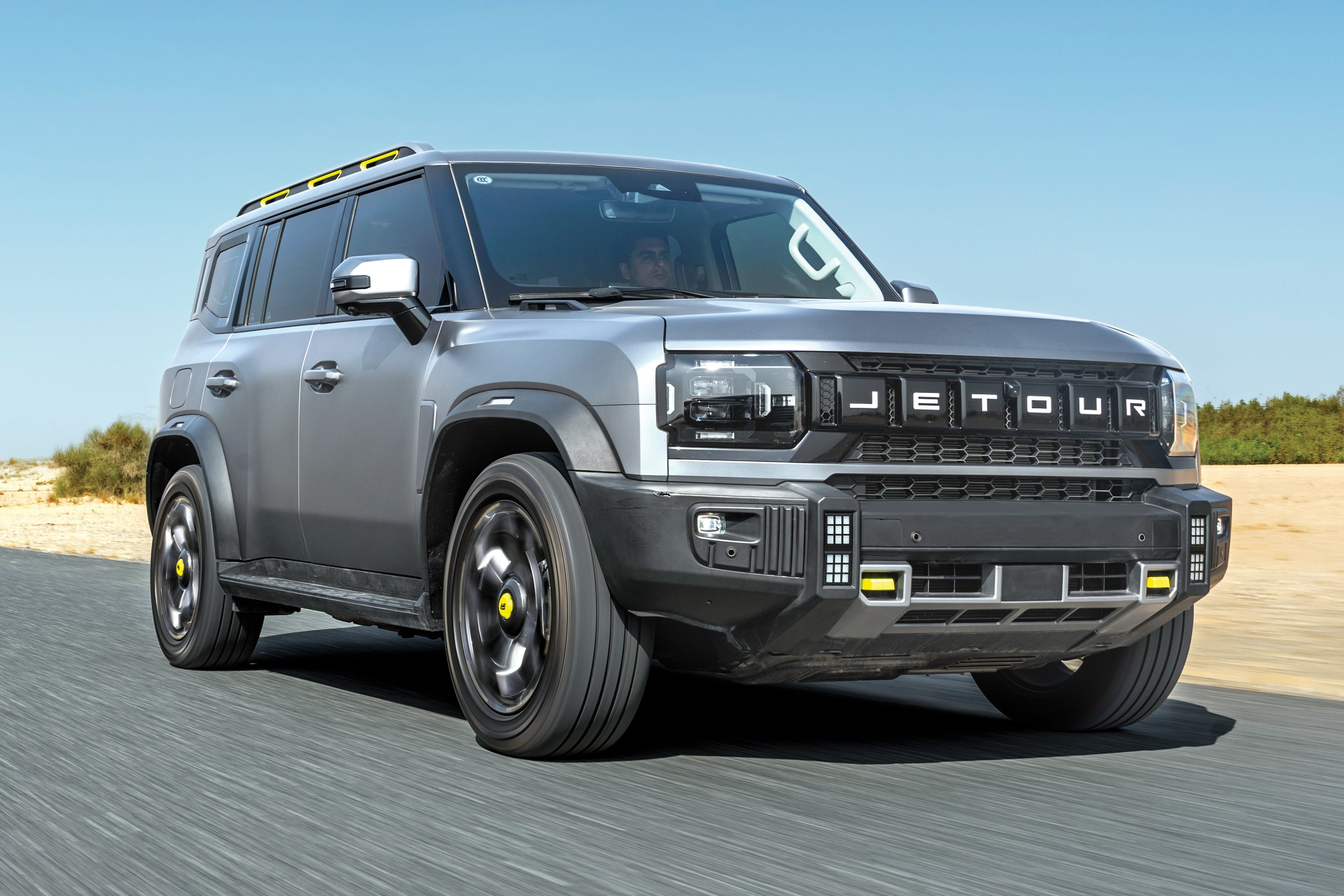
Rather than taking the conventional route of developing products from the ground up, JSW is leveraging global partnerships to fast-track its entry into the industry. Its first product for India will be a large plug-in hybrid SUV based on the Chery Jetour T2, which is expected to be assembled at JSW’s upcoming facility in Chhatrapati Sambhajinagar, and we hear it will be called the Combat.
With its rugged styling, imposing road presence and the promise of combining EV-like efficiency and long-distance touring ability, the SUV is expected to be positioned in the Rs 30-50 lakh segment and take on established players head-on.
Ahead of its India launch later this year, we got an early drive of the SUV to find out whether JSW Motor’s debut offering is ready for combat.
Jetour T2 Exterior Design and Engineering – 8/10
A handsome SUV that oozes character and rugged appeal.
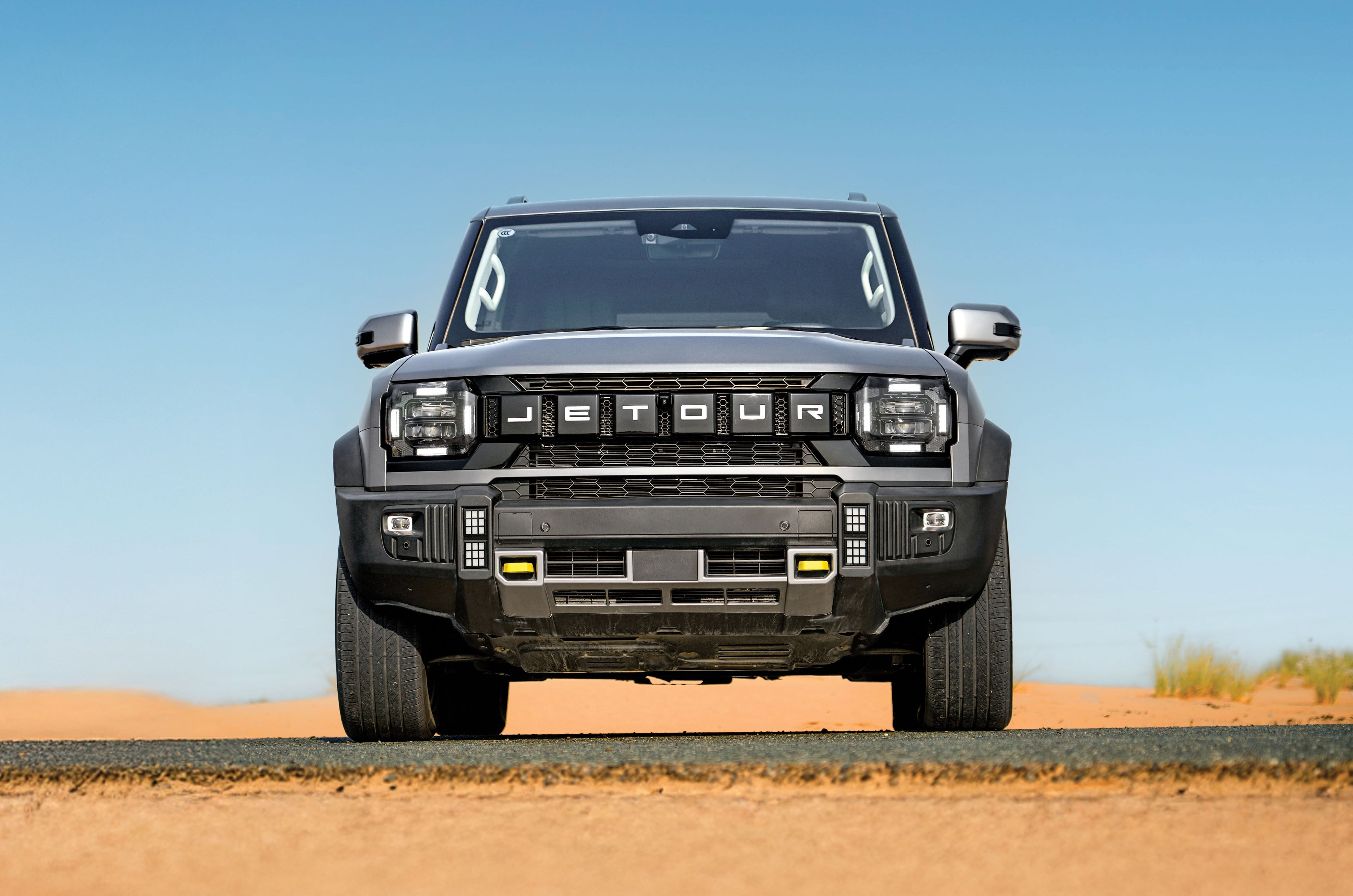
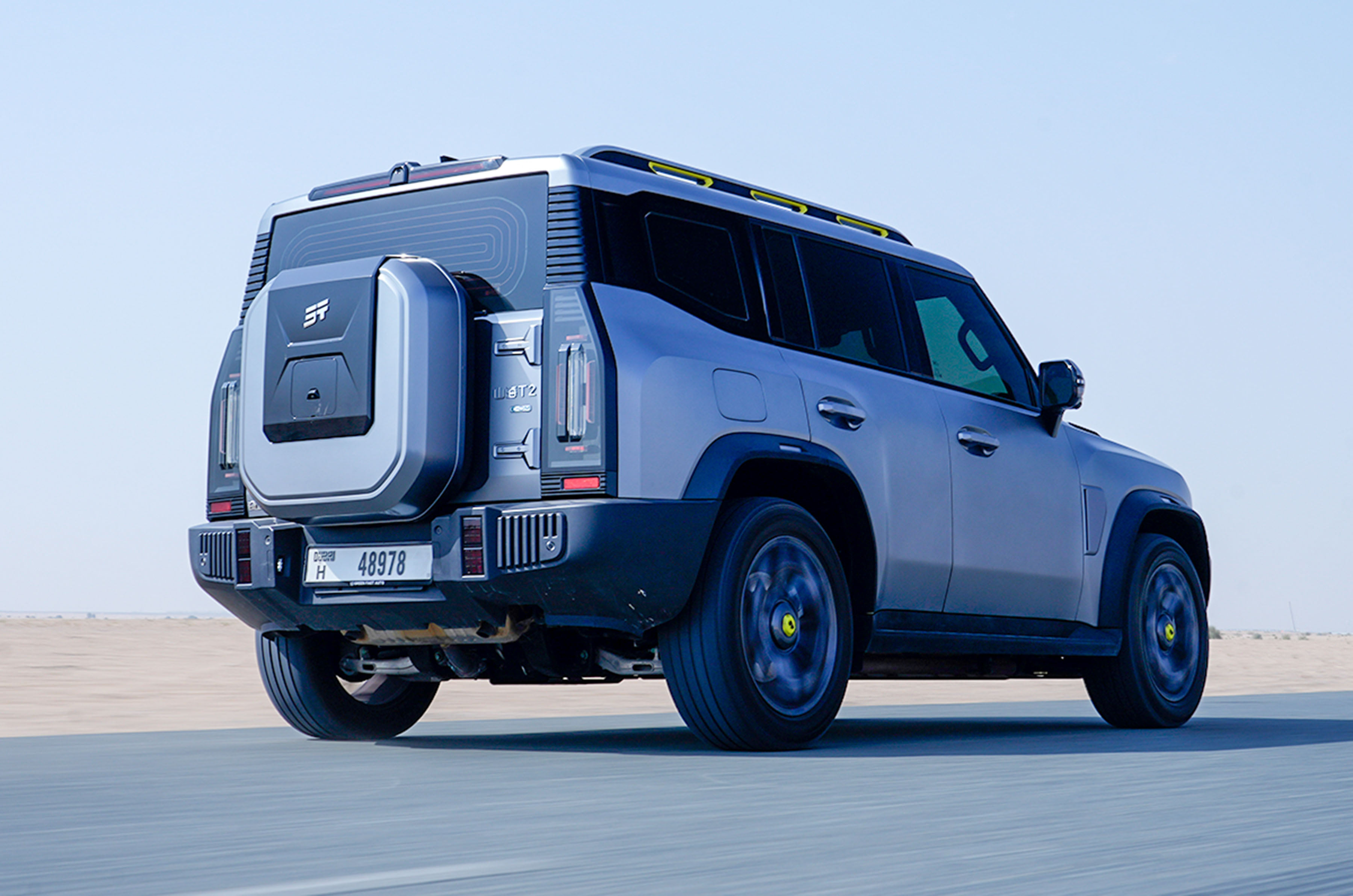
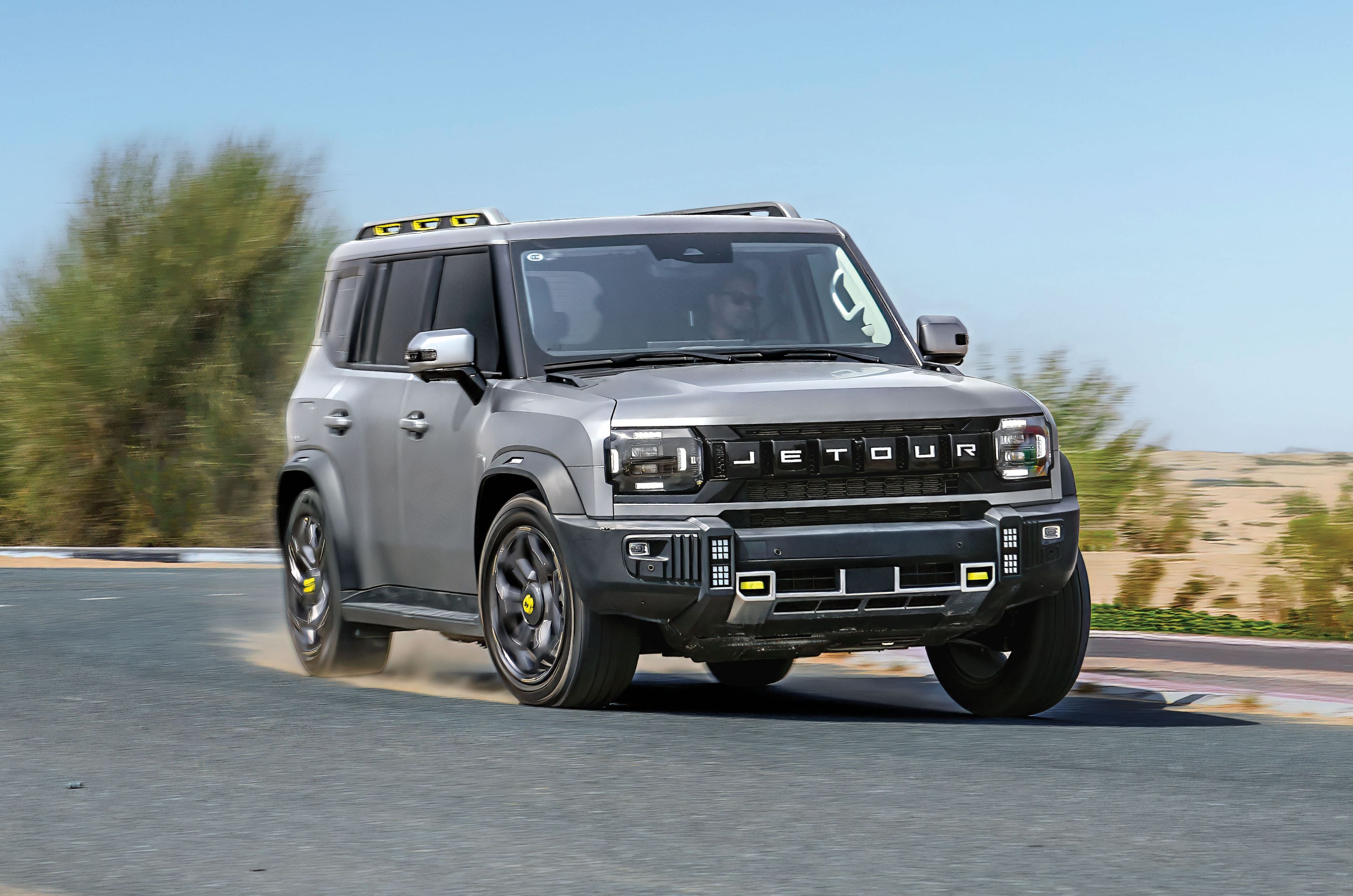
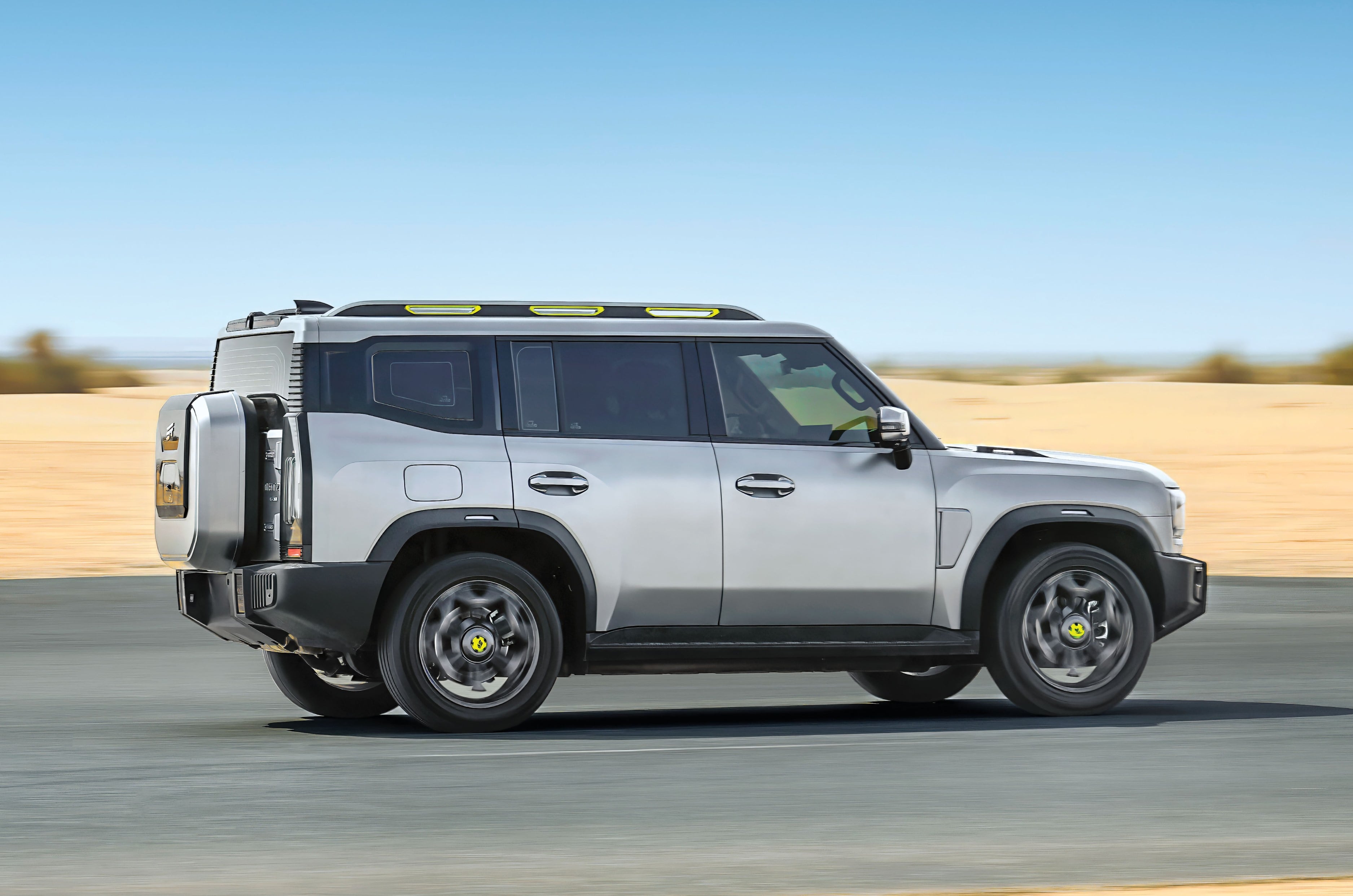
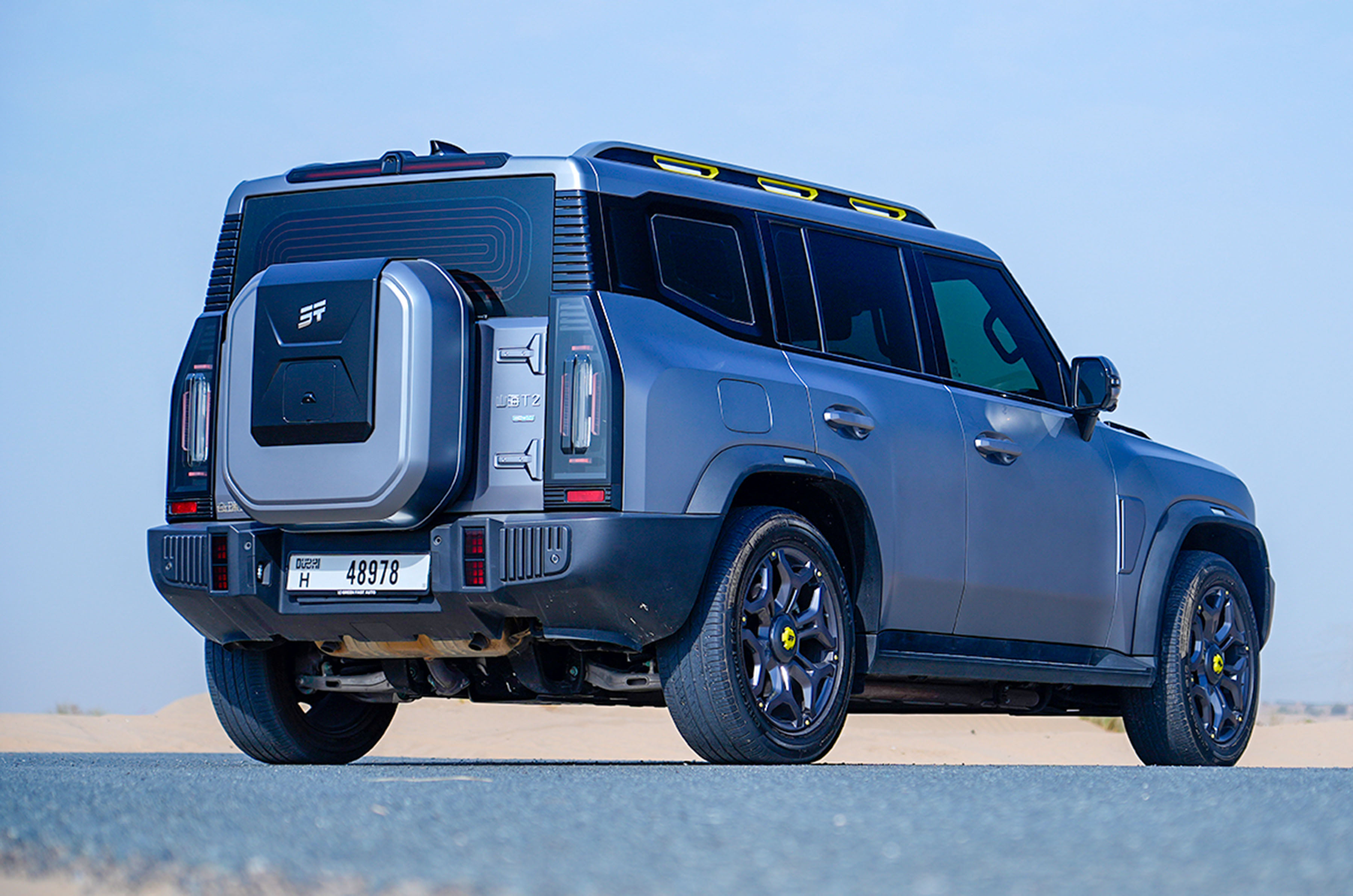
The Jetour T2 delivers on the SUV template to the T – flat bonnet, upright stance, raised ride height, chunky tyres, rugged body cladding, and, as the icing on the cake, a spare wheel mounted on the tailgate. It looks imposing and highly desirable, and while its silhouette bears a resemblance to the Defender, the T2 still manages to carve out a distinctive identity. JSW is likely to make a few changes to the headlamps, grille and bumpers to further differentiate the Combat, but the overall shape, clean surfacing and most of its defining design elements are expected to remain unchanged.
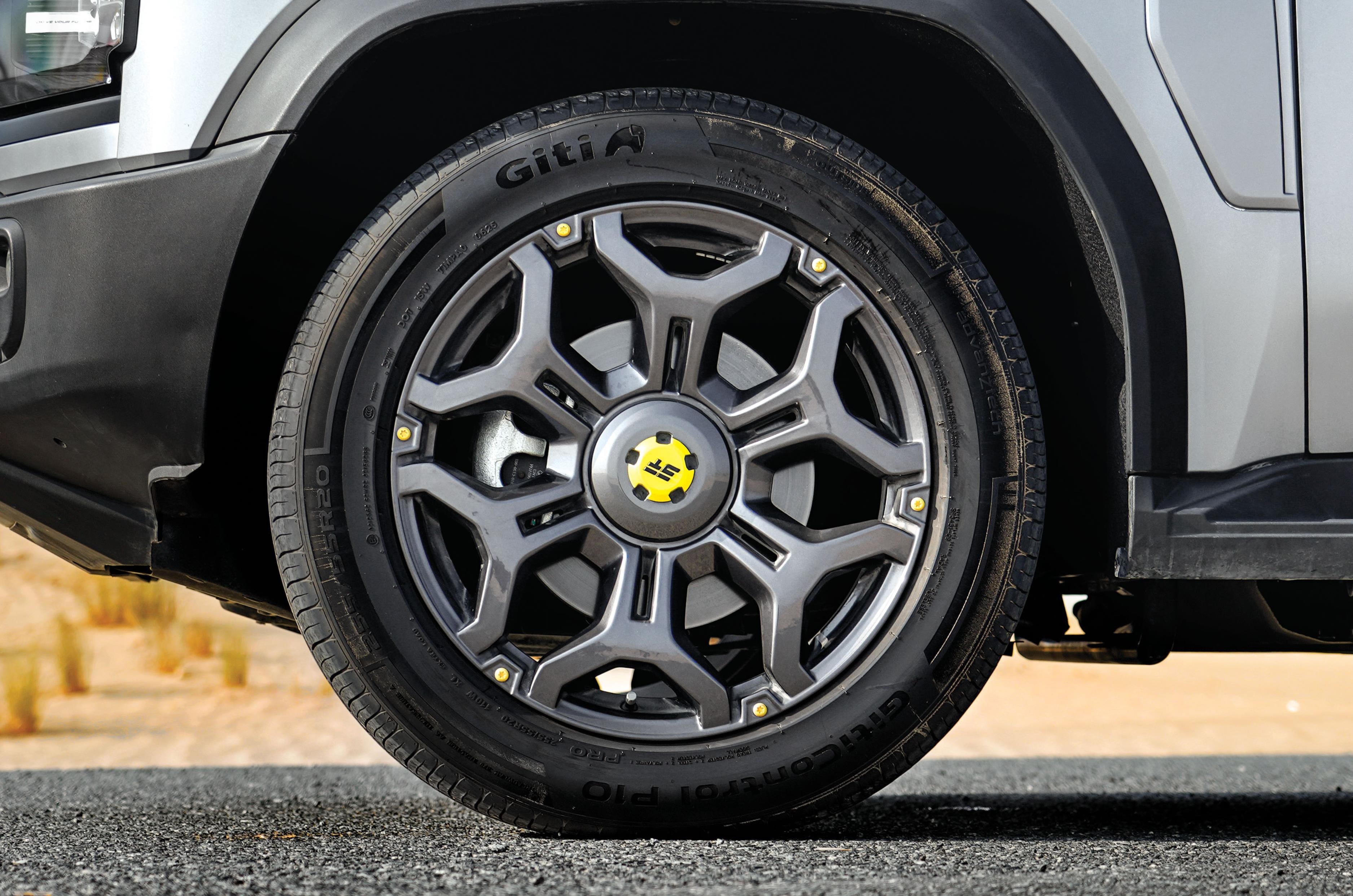
Attractive 20-inch wheels; 201mm of laden clearance.
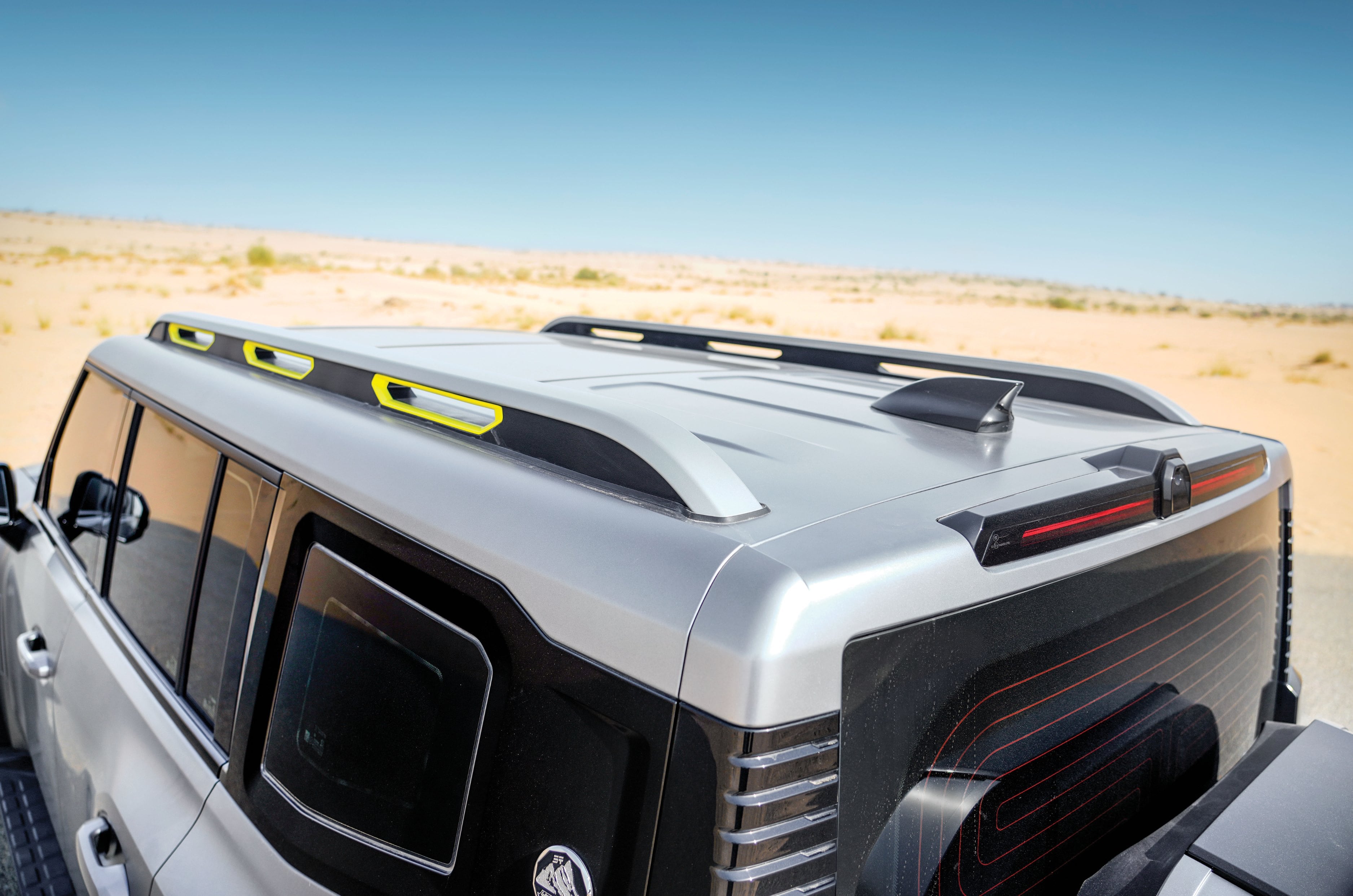
The massive 20-inch wheels suit the T2’s stance perfectly, and the clean bodywork, free of unnecessary cuts and creases, is particularly appealing. It also gets functional roof rails capable of carrying up to 100kg of luggage, while the side steps feel reassuringly sturdy and genuinely useful.
The T2’s space-saver spare wheel sits within a squircle-shaped cover, although accessing it involves a multi-step process that could prove frustrating if you ever need to change a tyre on a deserted road late at night.
Functional roof rails can take up to 100kg of load.
In terms of dimensions, it is longer (including the spare wheel), wider and taller than the Toyota Fortuner. Ground clearance, too, is an impressive 190mm in laden condition. However, don’t let its rugged appearance fool you – the version destined for India will remain front-wheel drive.
Jetour T2 Interior Space, Comfort, and Features – 8/10
Solidly built, well-designed cabin with some clever detailing and plenty of storage areas.
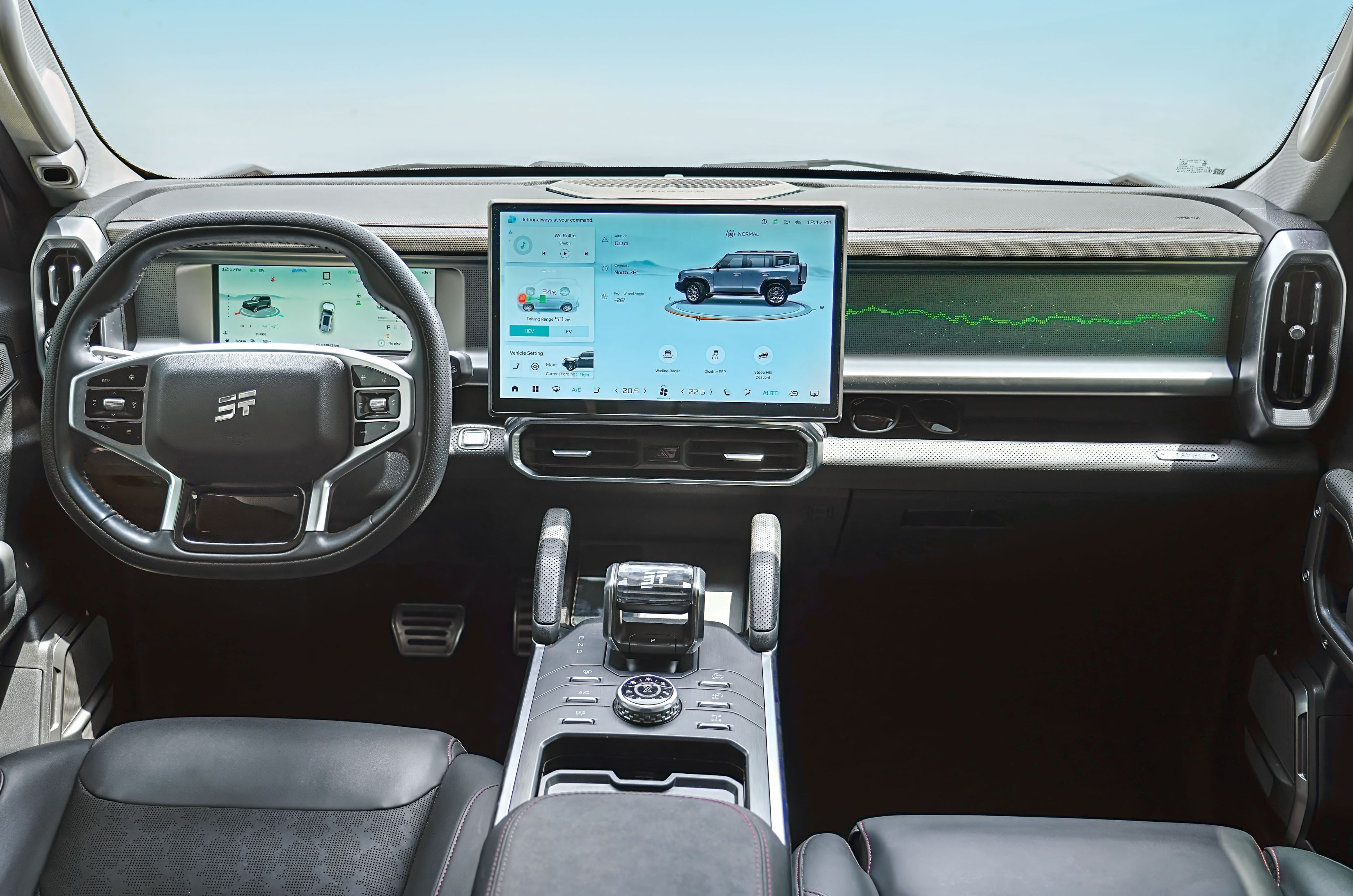
Climb aboard using the sturdy side step and handy grab handles, and the T2 immediately impresses with its sense of solidity. The cabin feels built to last, with numerous thoughtful design details lending it plenty of character. Nearly upright windows, a steeply raked windscreen and a dashboard pushed far forward create a tremendous sense of space, further amplified by the panoramic sunroof.
The dashboard itself has a distinctive design, with an illuminated pattern across the fascia adding a unique touch. Several layers are wrapped in dimpled leatherette padding, a theme that extends to the steering wheel and centre console.
Dominating the cabin is a massive 15.6-inch touchscreen that houses numerous vehicle functions, including mirror adjustment, climate control and seat ventilation/heating settings. Wireless Android Auto and Apple CarPlay are included, while the 12-speaker Sony audio system delivers impressive sound quality. Even the 540-degree camera system offers excellent image clarity. The downside is that the interface isn’t slick or responsive.
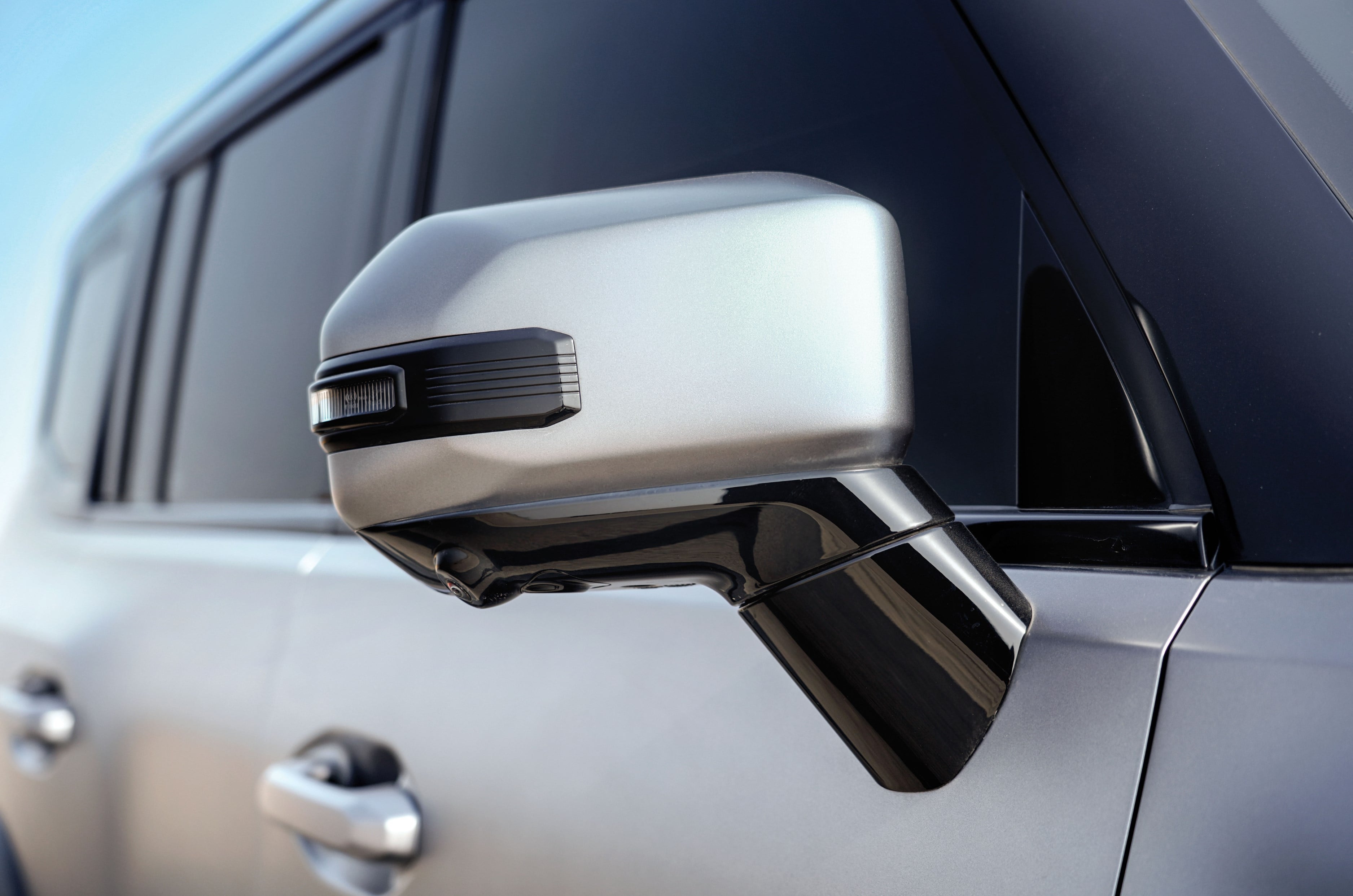
Chunky, door-mounted mirrors. Sadly, controls via touchscreen.
Ahead of the driver sits a 10.6-inch digital instrument cluster, a unit we’ve previously seen in some MG and BYD models. While it displays a wealth of information, the fonts and icons are rather small, making them difficult to read at a glance.
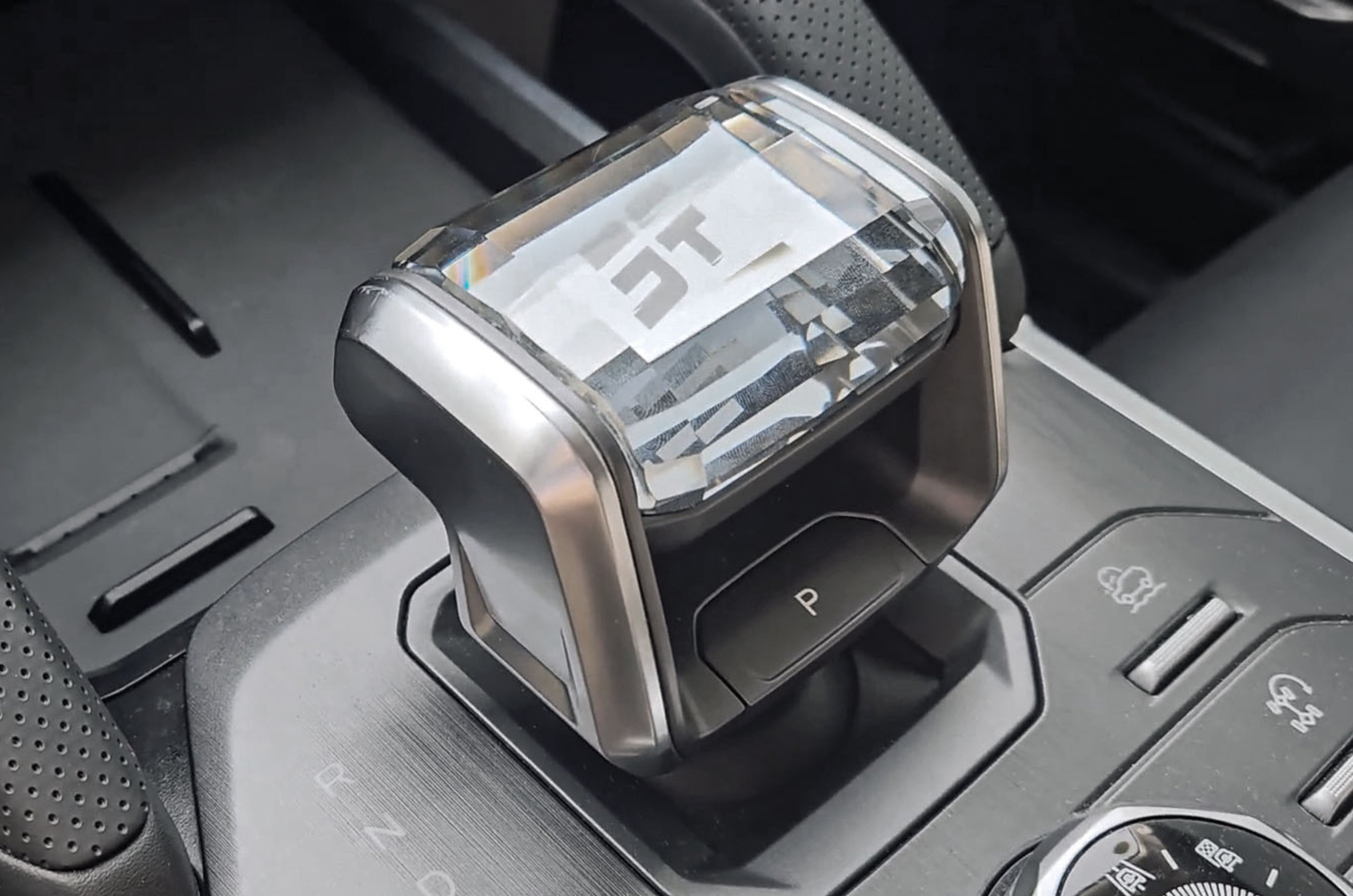
Material quality is generally impressive. The stalks and window switches feel robust and premium, while the jewel-like gear selector features an attractive diamond-cut effect. However, under harsh sunlight, it becomes highly reflective and can prove distracting. Reflections from the dashboard on the front windows are also noticeable.
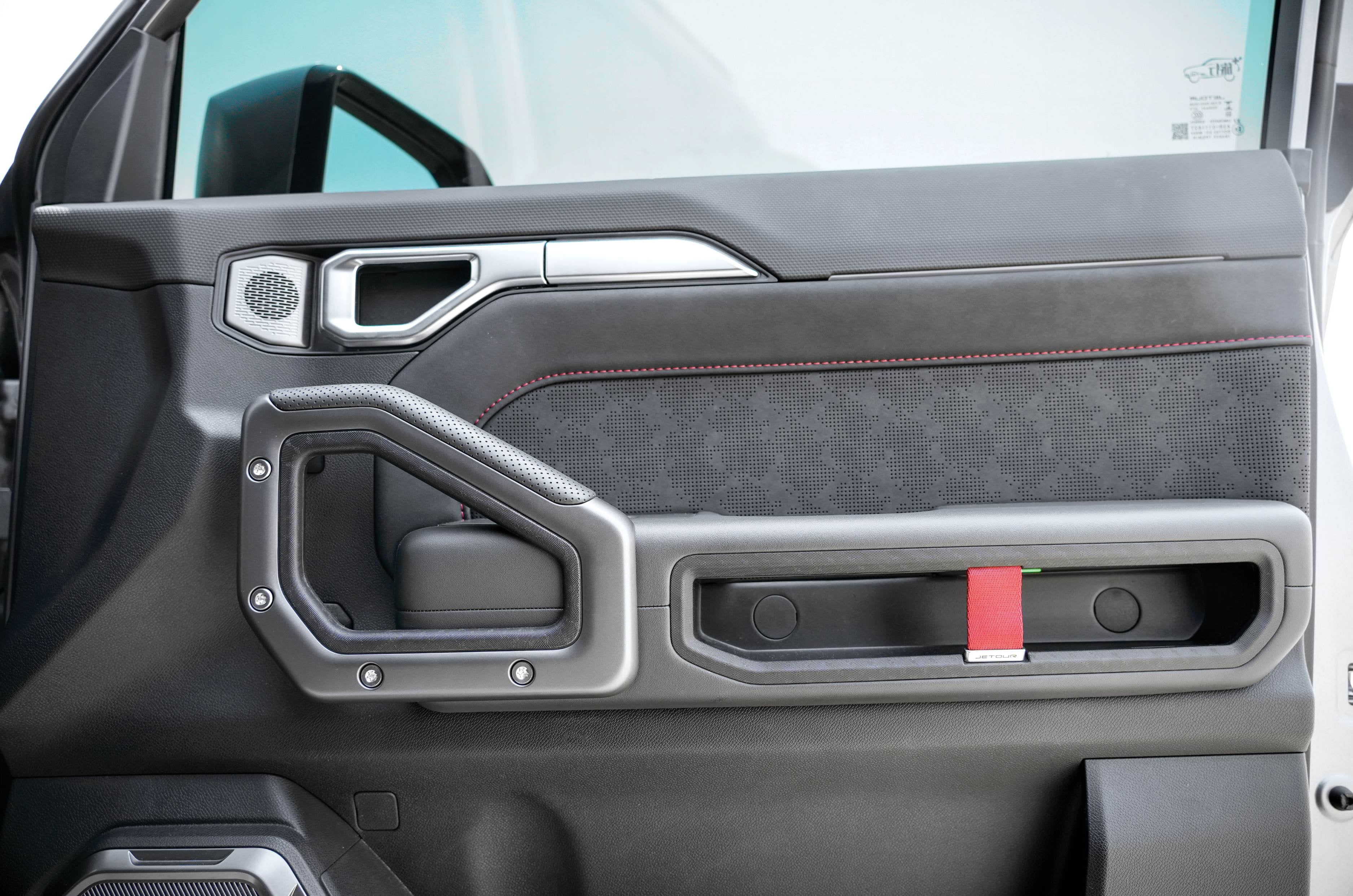
Rugged-looking door pads with nice detailing.
Notably, its dual-zone climate control struggled to cool its large cabin quickly despite the heavily tinted windows. While our test vehicle was a China-specific version, we hope the version we’re going to get in India has an upgraded air-con compressor. Its seat ventilation didn’t seem very effective either, even at its maximum setting.
Diamond-like chunky gear selector is illuminated.
The sculpted front seats, finished in black leatherette with contrasting red stitching, look suitably sporty. They provide excellent support, though the cushioning feels slightly overstuffed, and the absence of lumbar adjustment is disappointing.
Practicality is a strong point. There are large door bins, two phone storage areas (one incorporating a wireless charger), cupholders, a deep-cooled centre console, a large glovebox and even a hidden storage tray beneath the front seat.
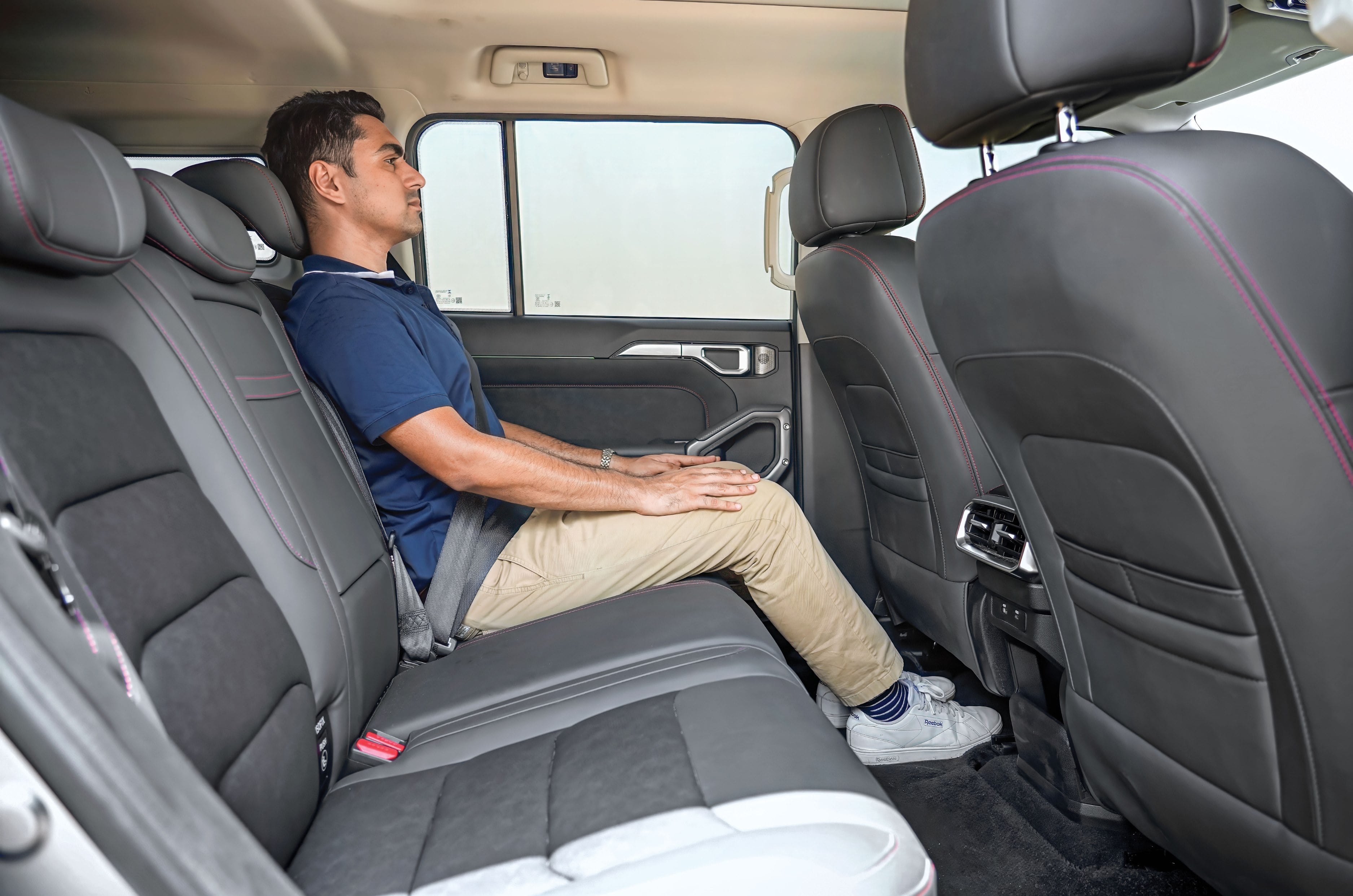
Albeit a bit low-set, rear seat is spacious. Flat floor, wide bench make it comfy for three adults.
The rear seat is equally spacious. A wide bench and completely flat floor make it comfortable for three adults, while the boxy cabin ensures generous headroom and overall space. The seat base is positioned slightly low, but comfort levels remain good.
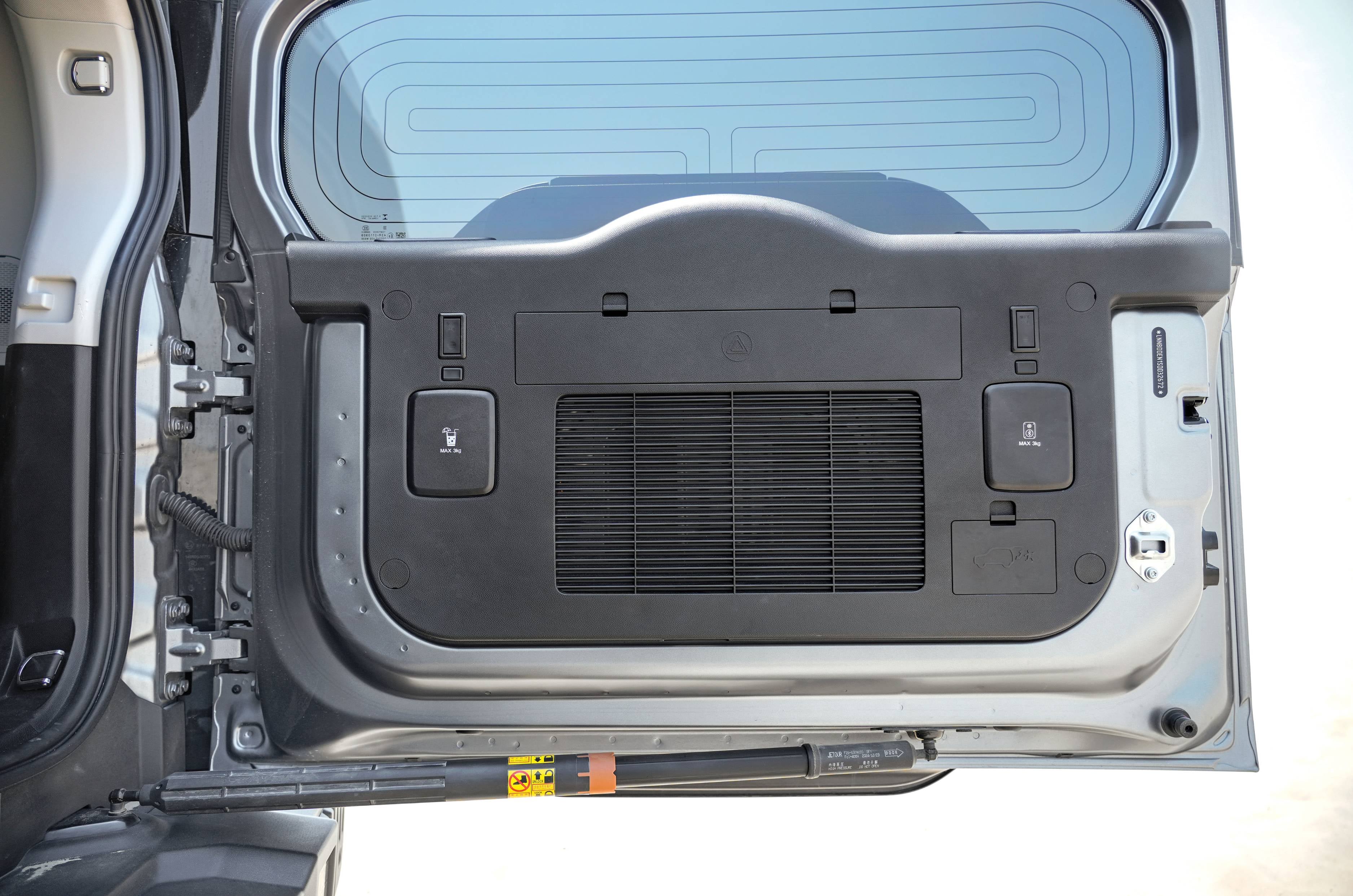
Cupholders, luggage hooks, bottle opener on its tailgate.
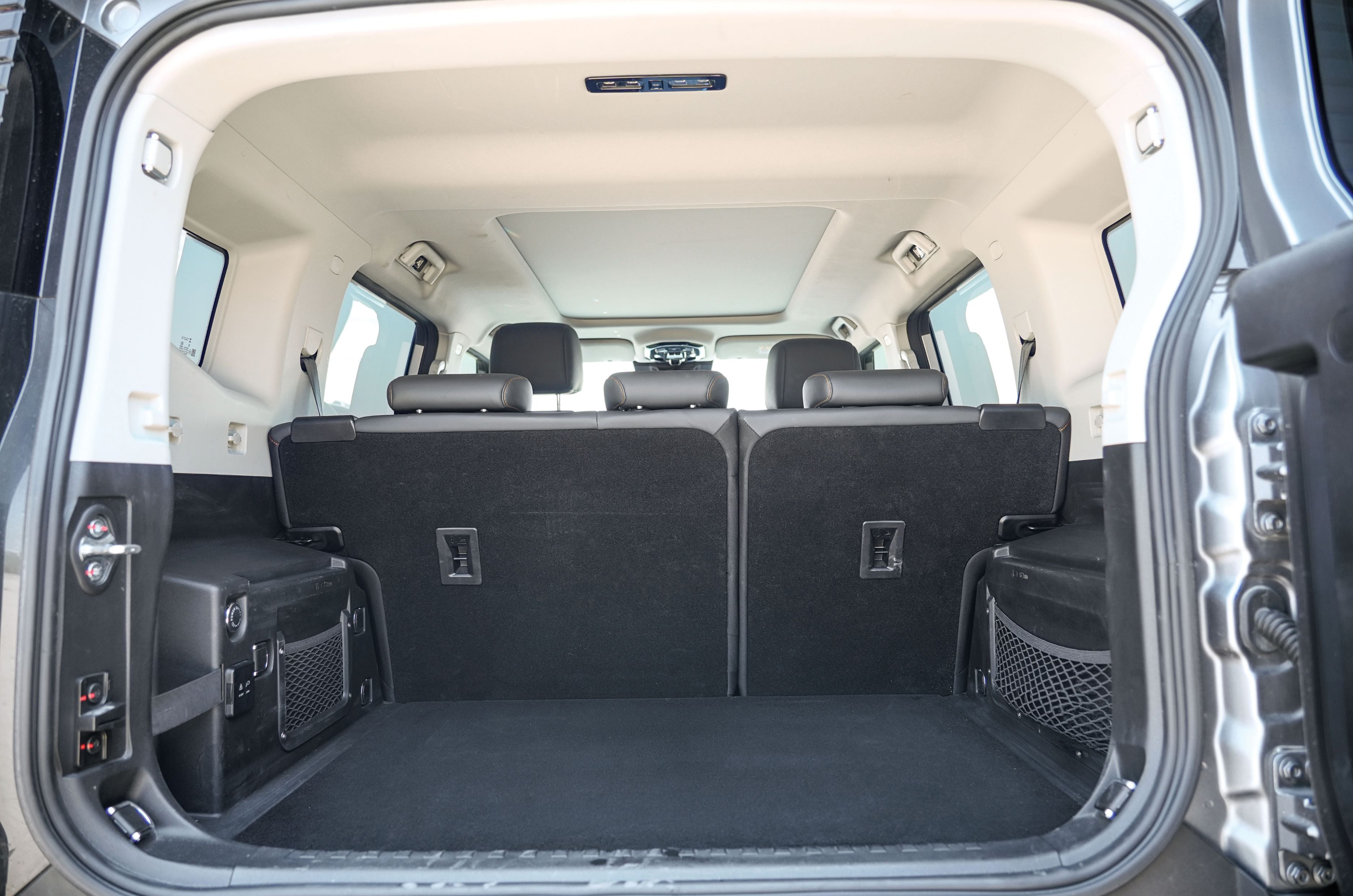
The side-hinged tailgate opens to reveal a cavernous 580-litre boot. Despite carrying the spare wheel, the tailgate itself requires surprisingly little effort to open. Thoughtful touches include a locking mechanism that prevents it from swinging shut unexpectedly, and there are cupholders, luggage hooks and even a bottle opener integrated into the inner panel. The boot area also features clever luggage nets and charging provisions, while a soft-close function further enhances convenience.
Humongous 580L boot. 60:40 rear seat split for added flexibility.
Besides the features already mentioned, it gets one-touch-down power windows, powered front seats with memory, LED lights all around, ambient lighting, a frameless inside mirror, autonomous emergency braking, lane-assist, adaptive cruise control, blind-spot monitoring, front and rear cross-traffic alert, six airbags, hill-start assist, hill descent control and ESP, to name a few more.
Jetour T2 Performance, Refinement and Efficiency- 8/10
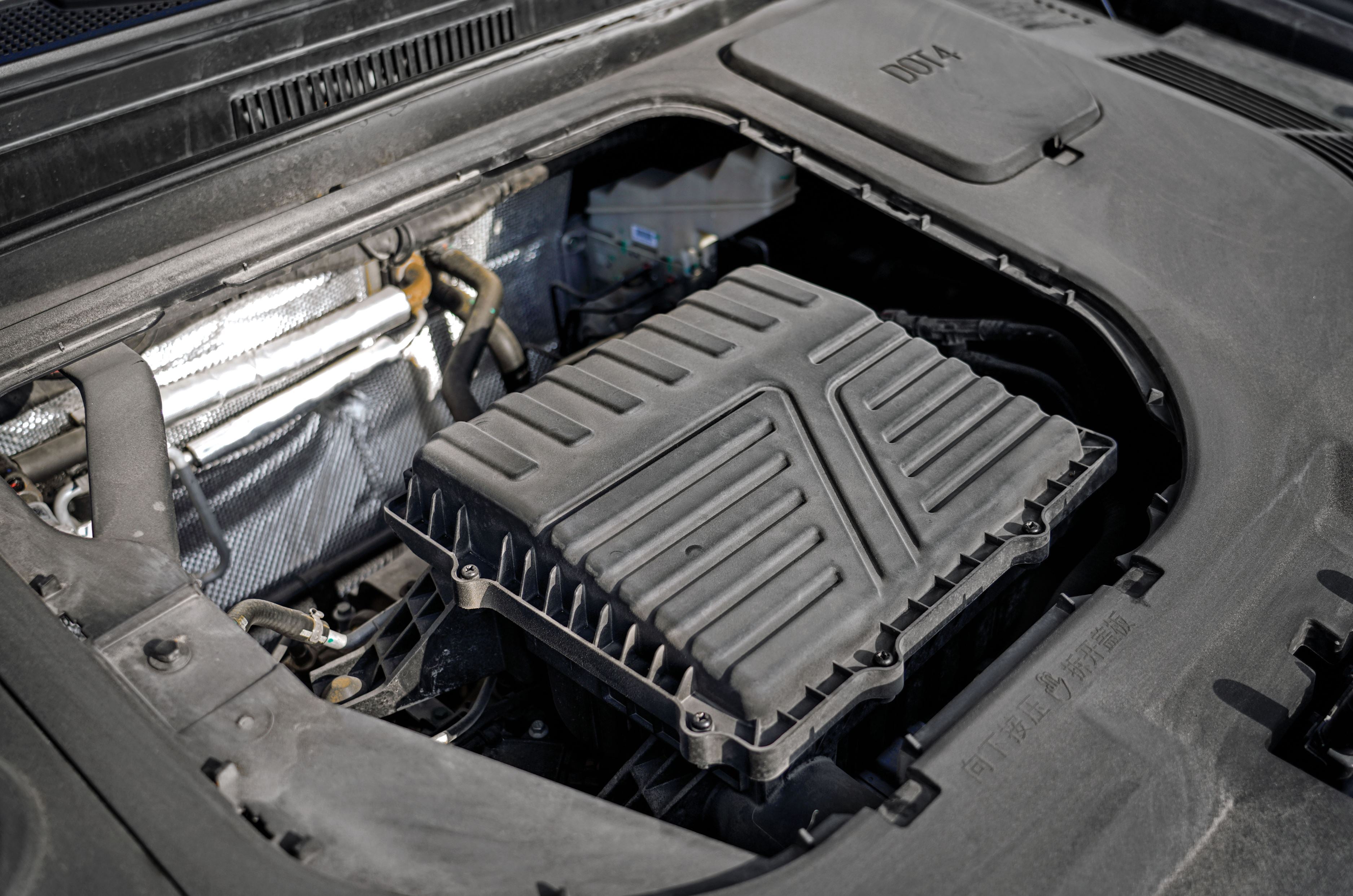
The T2 version we’re driving today is a plug-in hybrid, which combines a 156hp/220Nm 1.5-litre direct-injection turbo-petrol engine, a 43.24kWh LFP battery pack, and three electric motors. Together, the three motors produce 462hp and 700Nm of torque, with power sent to all four wheels. India will also see the plug-in tech, but in front-wheel-drive guise only, with two electric motors instead of three and a smaller 18.4kWh battery.
Powered by a 1.5 turbo along with 3 electric motors.
While the engineering sounds complex, the driving experience is refreshingly straightforward. The four-cylinder engine is refined, although when it operates primarily as a generator to charge the battery, a faint and distant hum does filter into the cabin.
The SUV can be driven either in pure EV mode or in hybrid mode. In EV mode, Jetour claims a range of up to 211km, and performance feels smooth and relaxed rather than outright brisk. Switch to hybrid mode, and the system automatically alternates between EV operation and combined petrol-electric drive, depending on throttle inputs, road conditions and battery charge levels, among other factors.
In this mode, performance feels remarkably effortless, with the T2 gathering speed with surprising urgency as speeds rise. Under full throttle, acceleration is initially measured up to around 40kph, after which there is a noticeable surge in performance as the powertrain delivers a much stronger pull.
Multiple drive modes are available, including Eco, Normal and Sport. In both Normal and Sport, we noticed the vehicle continuing to accelerate momentarily even after lifting off the throttle, which can feel unnerving. Throttle response in these modes is also a touch too aggressive. Eco mode offers a more natural and polished throttle calibration.
In our testing conducted in 40-degree heat, the T2 accelerated from 0-100kph in just 6.35 seconds in its sportiest setting – quick for its size. Flat out, it will reach a claimed top speed of 200kph.
The T2 also offers three levels of regenerative braking. Impressively, all three feel natural in operation, bringing the SUV down to a crawl smoothly and predictably. The brake pedal itself inspires confidence, with the transition between regenerative and friction braking being almost imperceptible.
Jetour T2 Ride Comfort and Handling – 6/10
Soft suspension and tall ride height mean driving dynamics aren’t anything to write home about.
The T2 rides on MacPherson struts at the front and a multi-link independent rear suspension setup. Its suspension tuning leans towards comfort, but this results in a degree of bounce over speed breakers and undulating surfaces.
The chunky, high-profile tyres do an excellent job of smothering smaller imperfections, while the 201mm laden ground clearance provides ample confidence over rough roads. At higher speeds, however, the ride never feels quite as settled or composed. One positive is that it remains well controlled under heavy braking, resisting excessive pitch.
Dynamic prowess is clearly not the priority here. The tall body exhibits a fair amount of roll, noticeable during quick lane changes. Push harder through a series of bends, and this two-tonner T2 understeers quite readily. Combined with its light and somewhat disconnected steering, it is clear that this SUV prefers a more relaxed driving style.
A light steering, smooth hybrid and excellent visibility make it surprisingly easy to drive.
Driven at a gentler pace, the T2 proves extremely easy to live with. The steering offers three weight settings, though it feels best in its lightest mode. Combined with excellent visibility and a smooth, responsive hybrid powertrain, it makes piloting this large SUV remarkably effortless.
Jetour T2 Should You Buy Now or Wait – 8/10
The Jetour T2 plug-in hybrid appears to have all the ingredients needed to establish the JSW brand in India and perhaps even challenge the Toyota Fortuner, despite offering only five seats. It is spacious and practical, it is expected to come loaded with technology and features, and its rugged styling gives it immense road presence and desirability.
The plug-in hybrid powertrain adds further unique appeal, offering the flexibility of pure EV driving and an impressive mileage figure with the hybrid tech. Better still, the system is smooth, refined and delivers strong performance.
It’s larger than a Fortuner, looks imposing, and stays true to the SUV formula.
Yes, it is not without flaws. The touchscreen experience and throttle calibration need refinement, the air-conditioning needs to be more effective, and the ride and handling would benefit from further fine-tuning for Indian conditions. These are areas we hope JSW addresses before launch.
On the whole then, the T2 is certainly ready for combat. Will it win, though, will also depend on JSW pulling off an aggressive pricing strategy and, importantly, backing it up with a reliable ownership and service experience too. That latter is why Toyota rules the roost. The battle lines, then, are drawn.
The Hector Tomahawk EV (alongside the PHEV) is the first MG model based on the brand’s new ADAPT platform, and costs from Rs 19.49 lakh to Rs 22.99 lakh (ex-showroom). The MG Hector Tomahawk EV is priced more competitively than the Hyundai Creta Electric while also seating up to seven occupants. There’s also the Kia Clavis EV, which costs about the same as the Tomahawk, but that’s an MPV. All that said, let’s start with the positives of this MG SUV first.
Reasons to buy the MG Hector Tomahawk EV
Spacious and premium interiors
Three rows of seats and an accommodating boot make this a practical family hauler
The cushioning of the wide front seats of the Hector Tomahawk EV feels comfortable even on long journeys. These seats are ventilated for added comfort, while the driver’s seat also gets a memory function for added convenience. In-cabin storage comes in the form of large door pockets and plenty of cubbies in the centre console. The Hector Tomahawk’s long wheelbase means there’s more than enough legroom for second-row passengers – these seats also recline for added comfort.
The inclusion of a centre armrest with cupholders, sunblinds, AC vents, USB ports and adjustable headrests make this a nice place to be. Accessing the third row from here is easy and fairly straightforward, courtesy of the sliding second row with its ‘one-touch tumble’ function and a large walk-through gap in the middle. While not the roomiest, last-minute jaunts won’t be an issue as there’s plenty of headroom on offer, and this third row is not devoid of AC vents or LED roof lights.
Even with the third row up, the Hector Tomahawk EV’s boot stands at 192 litres. This is enough to accommodate a couple of carry-on bags without much fuss. If you’re serious about carrying cargo, folding down those last seats will liberate 528 litres worth of space. The two-tone beige-and-black interior’s minimalistic design gets a generous splattering of soft-touch materials, and the good fit-and-finish further extends the premium appeal of this cabin.
Brimming with modern features
This MG SUV offers more than enough equipment to keep everyone on-board entertained
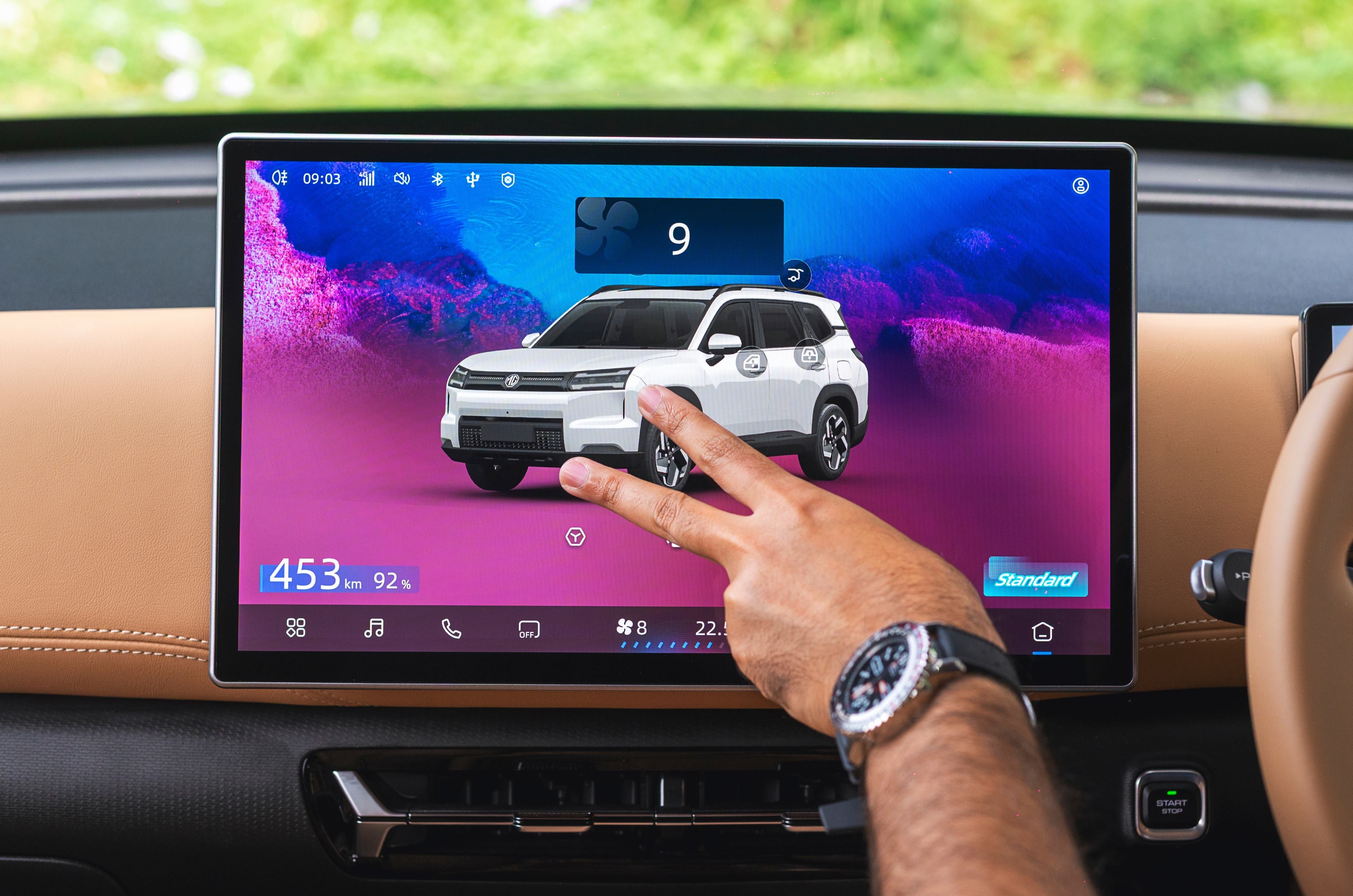
Taking centre stage on the dashboard is a 15.6-inch infotainment touchscreen, the user interface of which looks clean at first glance. The graphics are crisp and performance is snappy, too. MG has also added swipe-based gesture controls to make it easier to manipulate everyday functions such as adjusting the climate control system or the audio settings. The infotainment system comes with 6 mood-based ambient settings, wireless Apple CarPlay and Android Auto, AI-powered karaoke and multi-lingual voice commands.
Furthering the on-board experience is the well-integrated 256-colour ambient lighting system, a 10-speaker Infinity audio system (which sounds great), and crisp-looking 360-degree cameras. There’s also a ‘Custom’ mode for those who wish to tweak the power output and regen braking in 10-percent increments. The Level-2 ADAS suite of the MG Hector Tomahawk EV is comprehensive enough, while the regenerative braking system uses one of its sensors to automatically adjust regen levels in real-time based on traffic conditions.
Easy to drive
The large size of the Hector Tomahawk EV doesn’t make it a handful in the city
A commanding seating position, combined with the light steering and excellent all-around visibility, makes driving the MG Hector Tomahawk EV around town a manageable affair. Finding a suitable driving position is fairly easy too, thanks to the adjustable steering (for reach and rake) and the electrically adjustable driver’s seat. The Tomahawk EV also controls its body movements decently, feeling more mature than any MG EV before it. Finally, the brakes are good, too.
Reasons to not buy the MG Hector Tomahawk EV
Noisy suspension
The Tomahawk’s suspension can get audible over bad patches
While noises from the powertrain, tyres and wind are barely noticeable in this cabin, the same cannot be said about the Hector Tomahawk EV’s suspension. Going over bad roads, you will hear it working fairly easily, which takes away some of the premium feel of the cabin.
Non-linear power delivery
The Tomahawk EV’s powertrain lacks the linearity offered by rivals
The poor calibration of the electric powertrain of the MG Hector Tomahawk EV means that it may not be ideal for new drivers. ‘Standard’ drive mode dulls the response to prods from your right foot ever so slightly, with firmer throttle application resulting in torque steer due to a sudden surge in power reaching the front wheels. Trying to accelerate hard in ‘Sport’ mode will easily overwhelm the tyres up front – linearity in power delivery is missing.
Too much reliance on the touchscreen
Almost everything is routed through the massive infotainment screen
It might be sharp and responsive, but burying almost every major function and feature in the infotainment head unit gets distracting. The labyrinth of menus and sub-menus means that you will have to take your eyes off the road for using any of this SUV’s comprehensive feature set. Its sheer size also results in the touchscreen catching reflections, causing further distractions while driving.
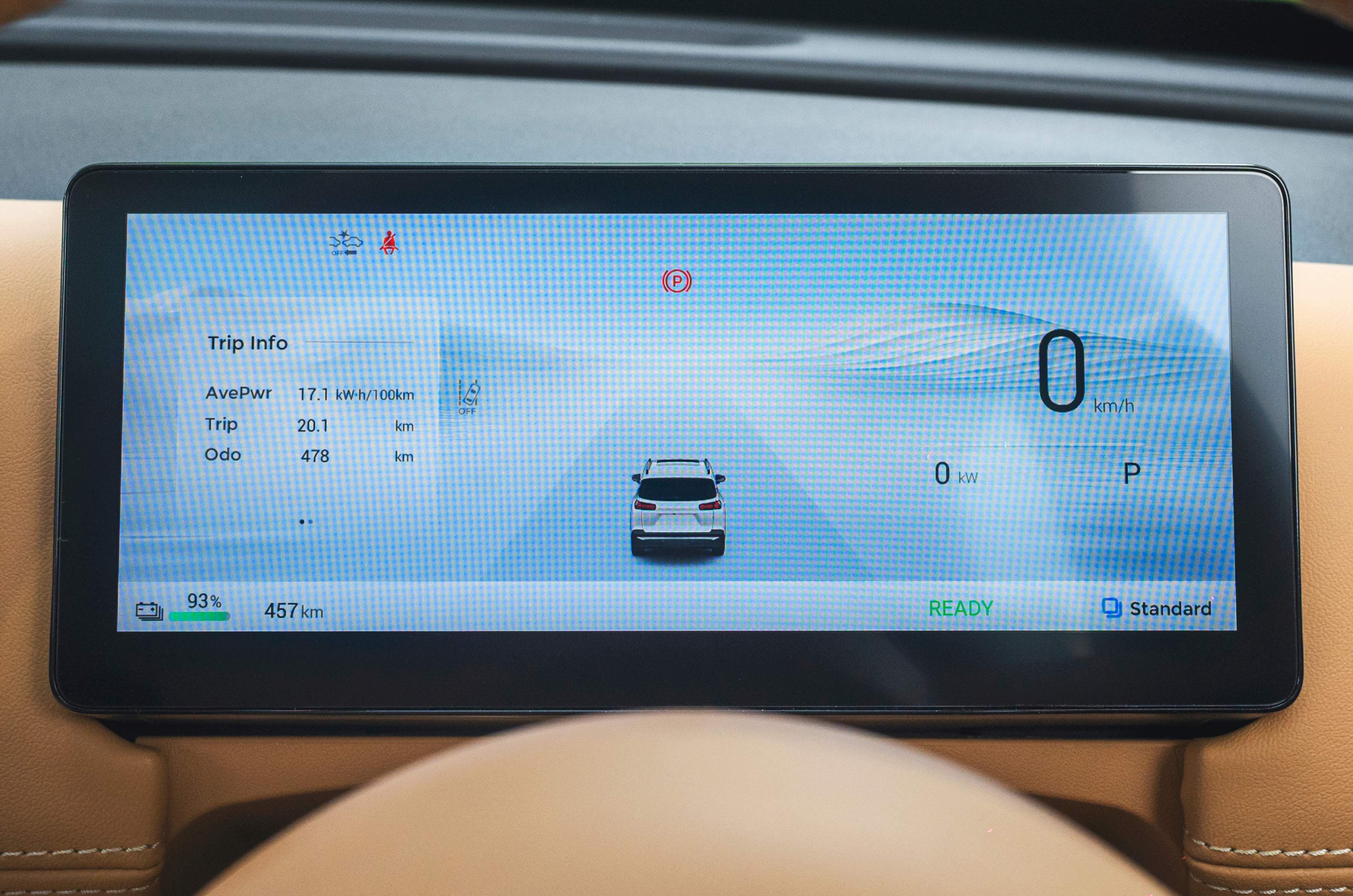
As for the 8.8-inch digital driver’s display, its real-estate could have been used better. While sharpness isn’t a problem, but that positive is overshadowed by the small fonts used for information read-outs. This can make reading most details on this display difficult.
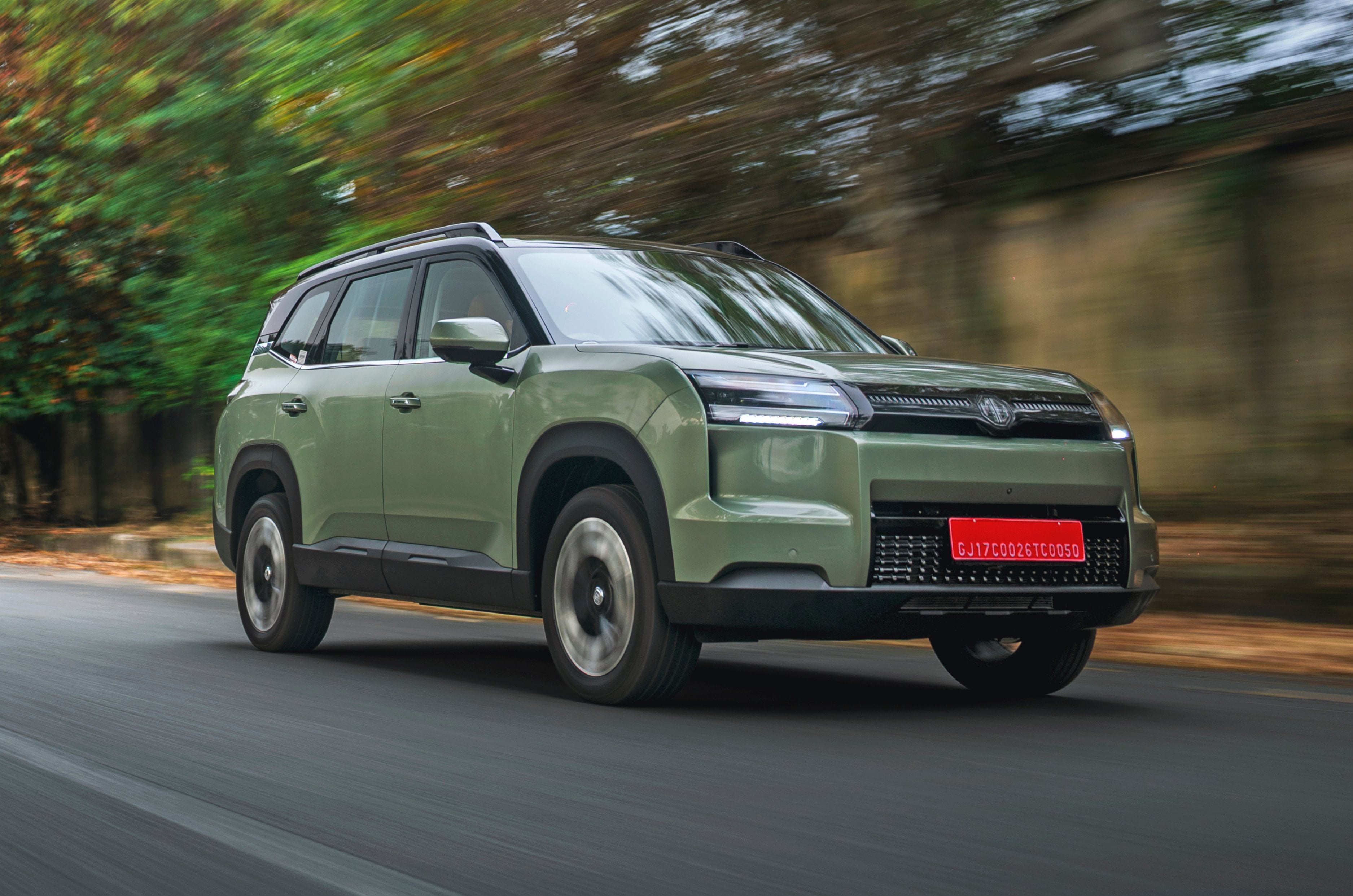
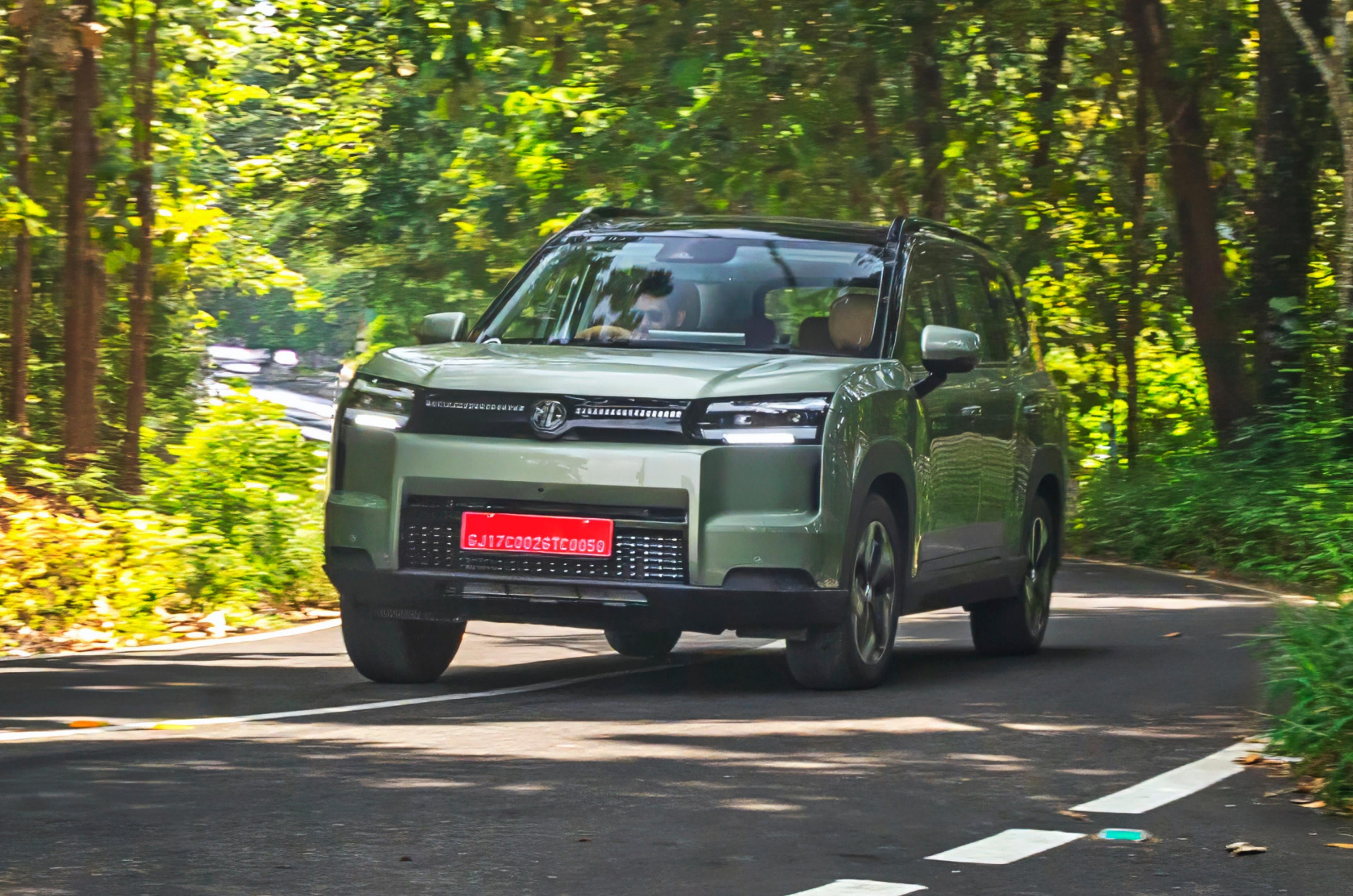
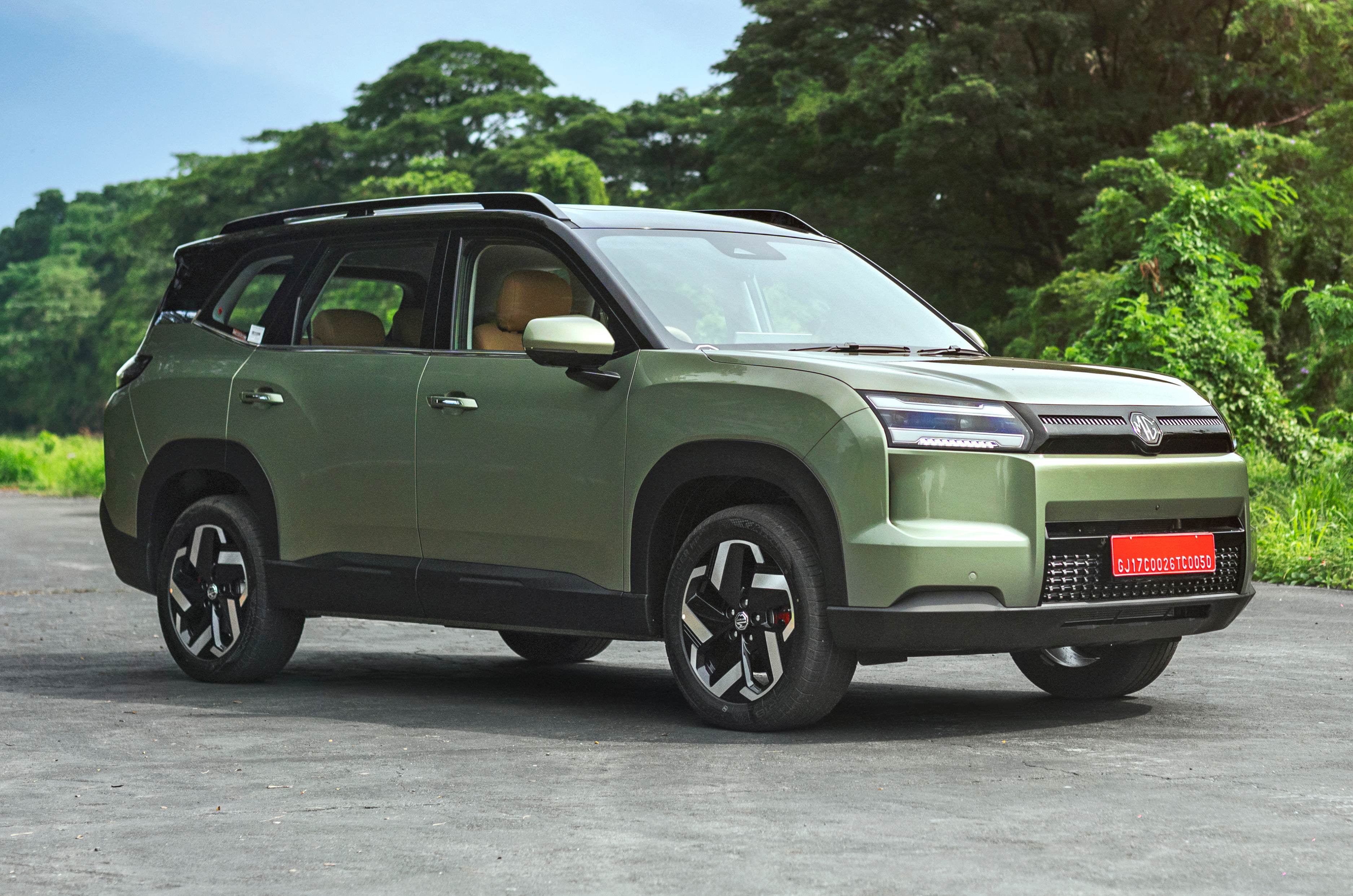
MG’s newest SUV has been christened the Hector Tomahawk, but despite the name, it shares nothing with the ICE-powered Hector we’ve known since 2019. The Hector Tomahawk EV and PHEV are the first models on MG’s ADAPT architecture, which will eventually spawn strong hybrids and range-extender hybrids. We drove the Tomahawk EV in sunny Kochi to see how it stacks up in the ever-growing segment.
MG Hector Tomahawk EV Exterior Design and Engineering – 6/10
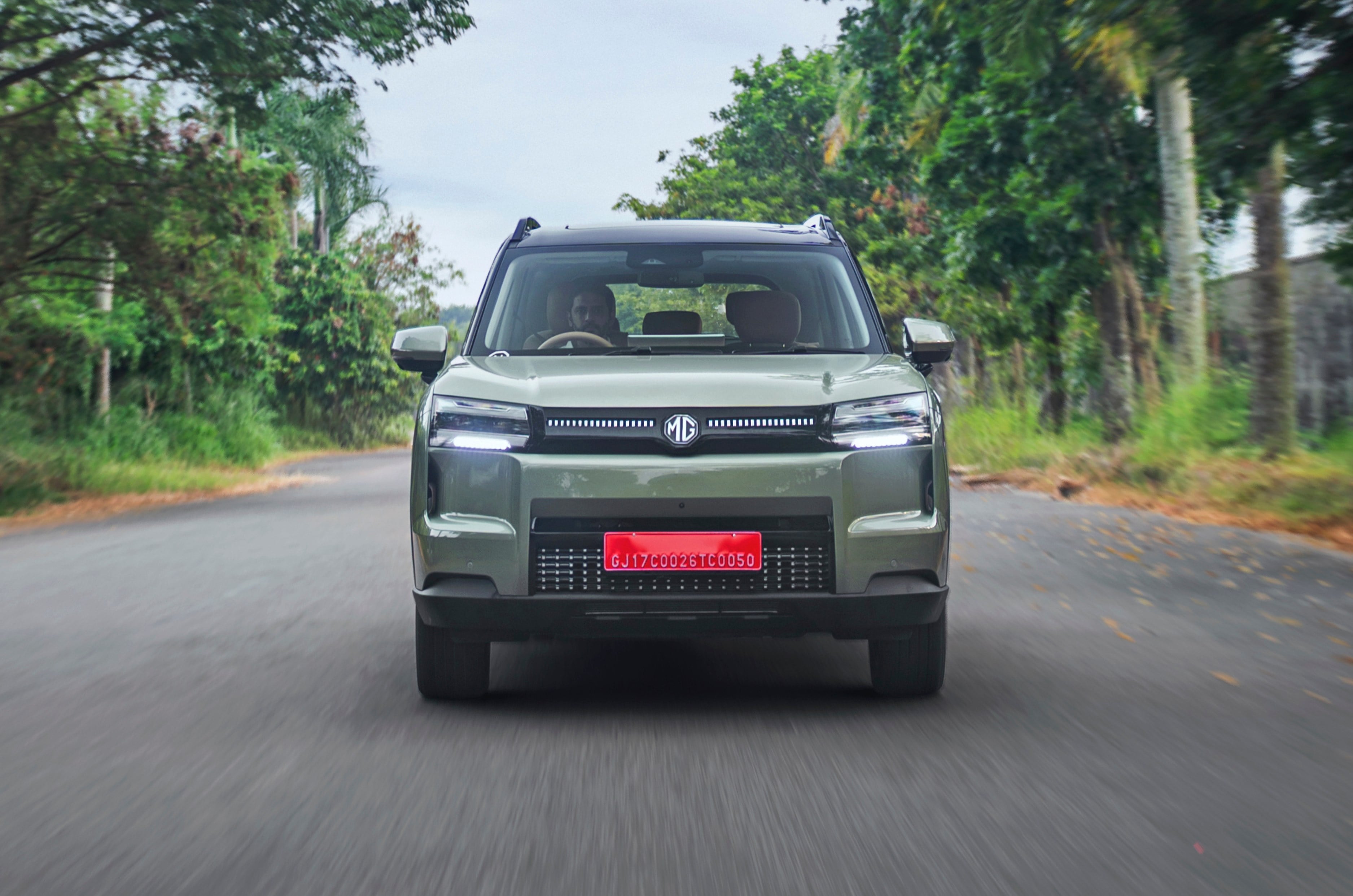
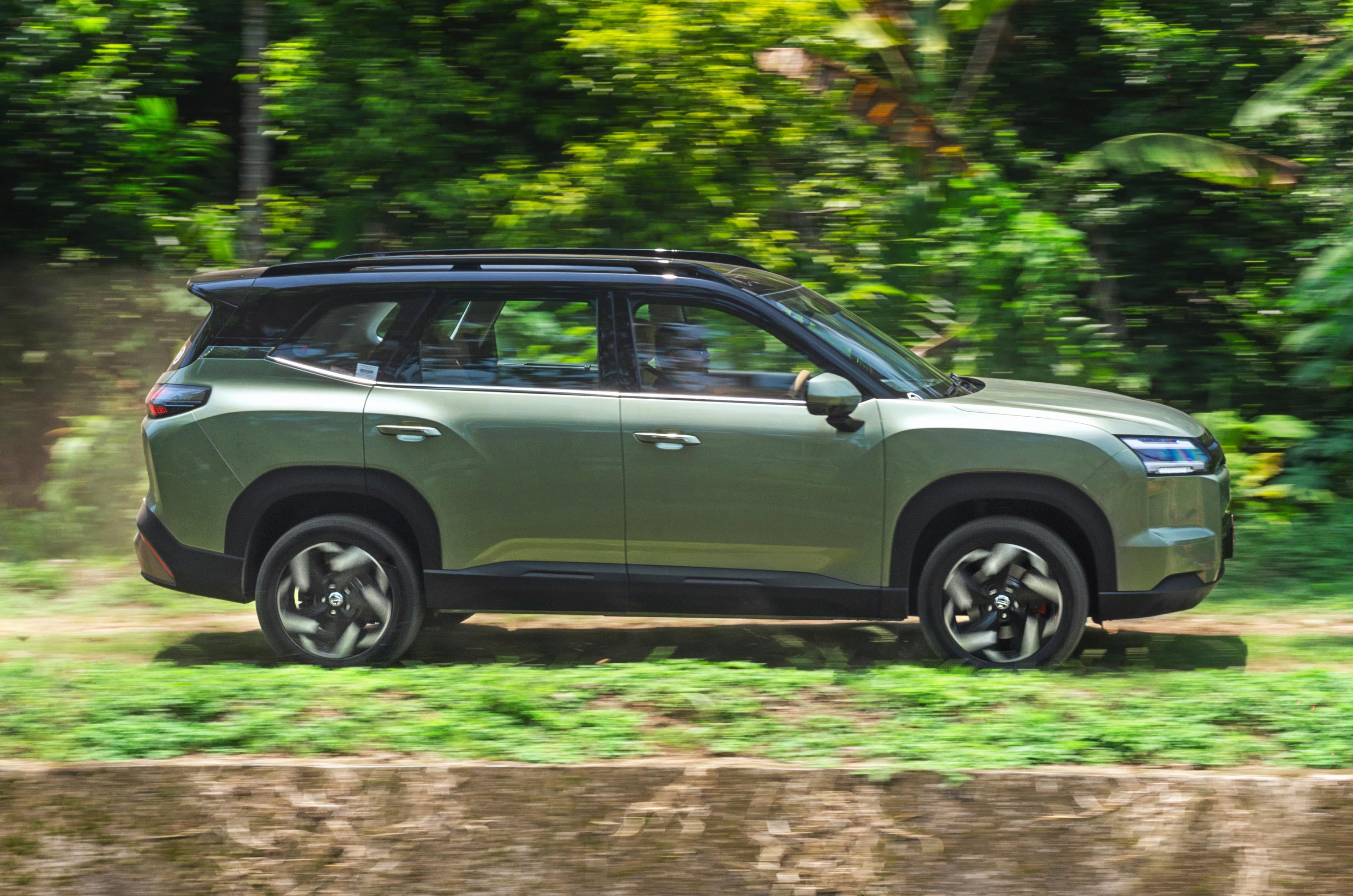
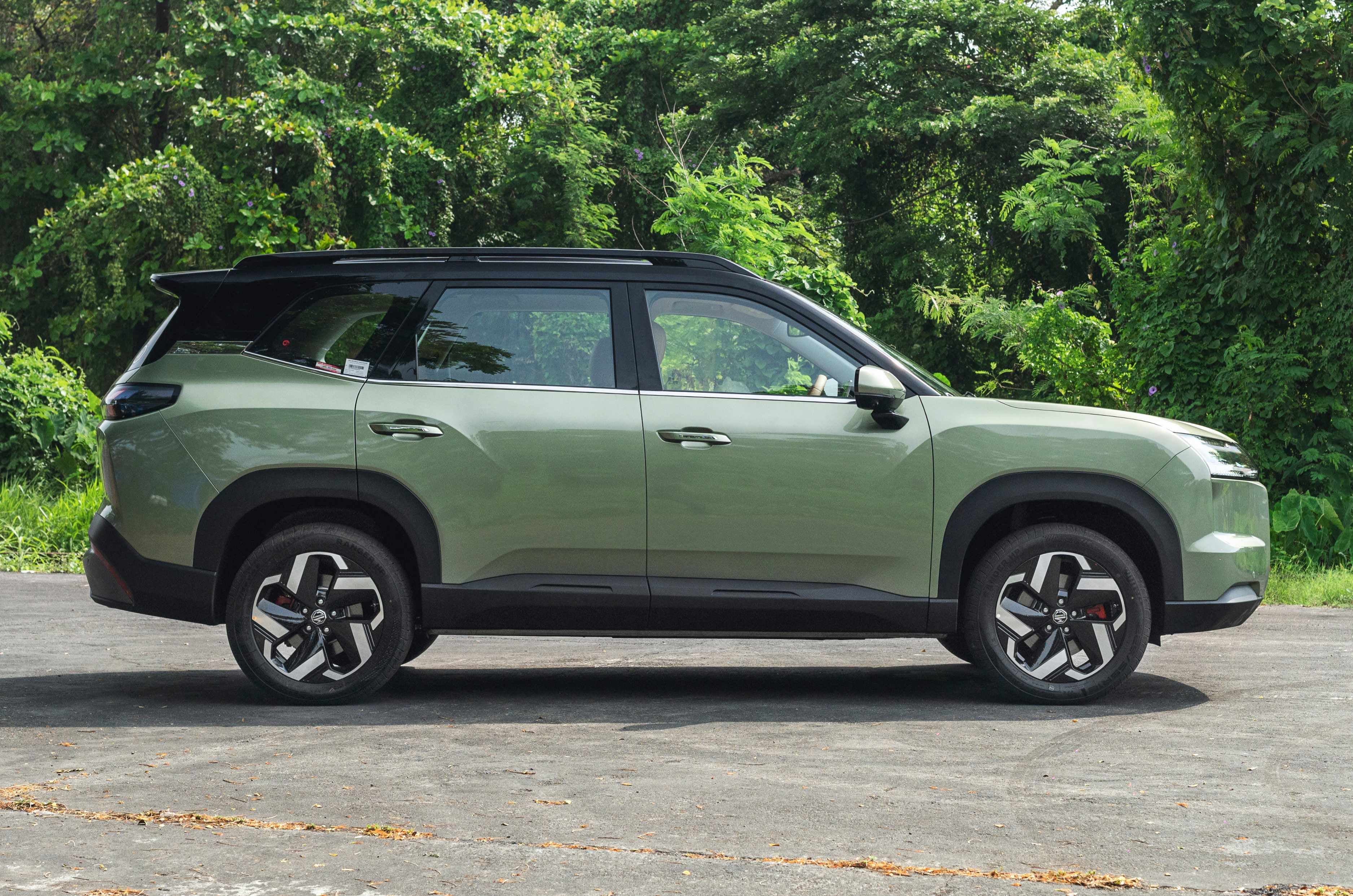
Let’s talk dimensions first. At 4,745mm long, 1,850mm wide, 1,770mm tall and with a 2,810mm wheelbase, the Tomahawk is larger than the Mahindra XEV 9S in all areas except width. Ground clearance, at 230mm (measured to battery), is also class-best. However, these numbers don’t translate to a particularly imposing stance. Instead, it straddles the line between an MPV and SUV.
Size doesn’t translate to an imposing stance; it straddles the line between an MPV and an SUV.
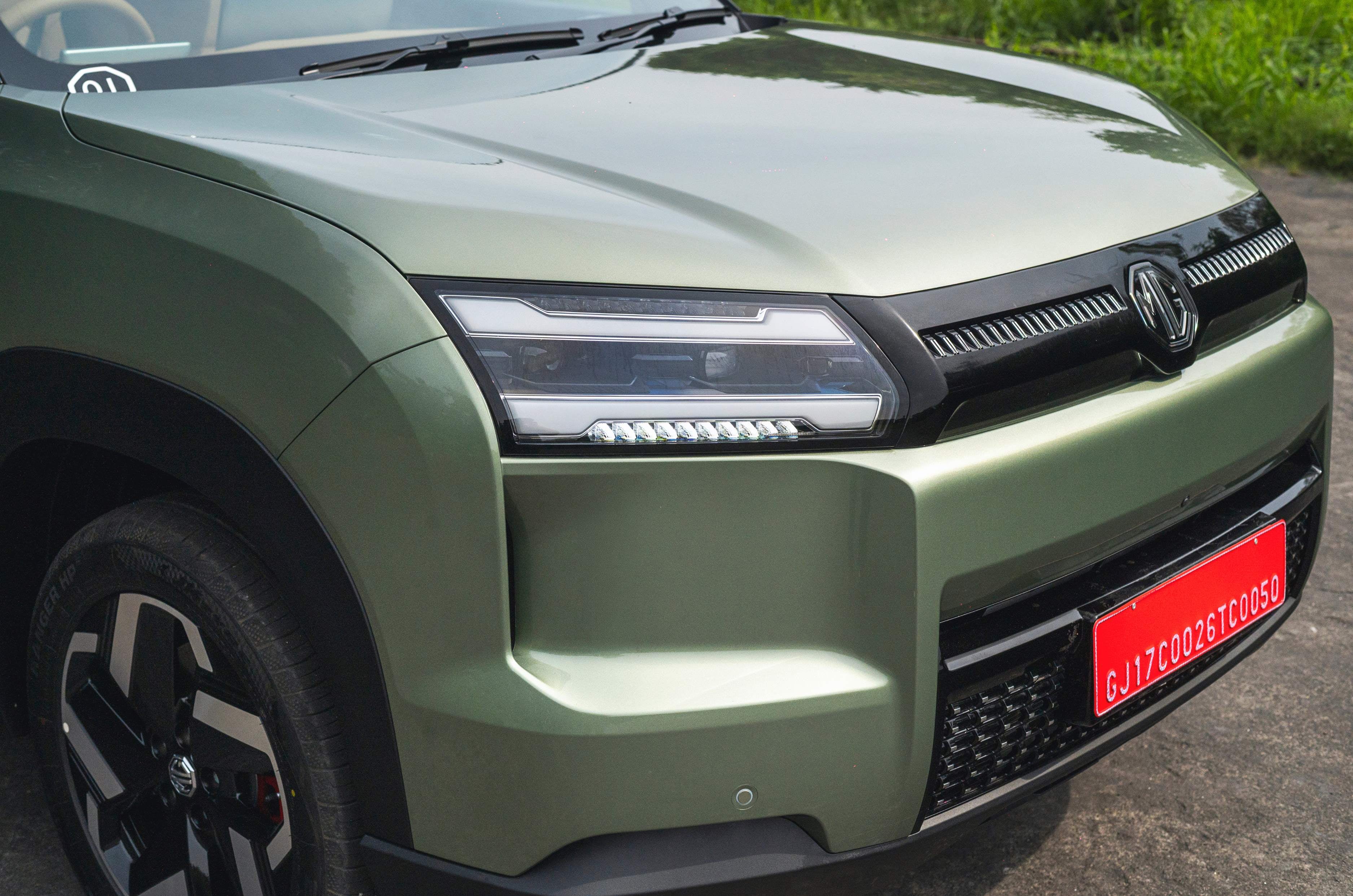
The design is clean and quite handsome, if a bit uninspiring. The front bumper is squared off with pass-through aero vents on the edges and chunky cladding lower down. Cooling requirements are met by slim slots in the centre section with some chrome detailing, while the conventional grille is blanked off and finished in gloss black. No light bar here, thankfully, but the MG logo does glow and is flanked by rectangular LED headlights with a subtle H-shaped light signature.
Large rectangular LED headlights have a subtle H in them; no light bar, but the MG logo glows.
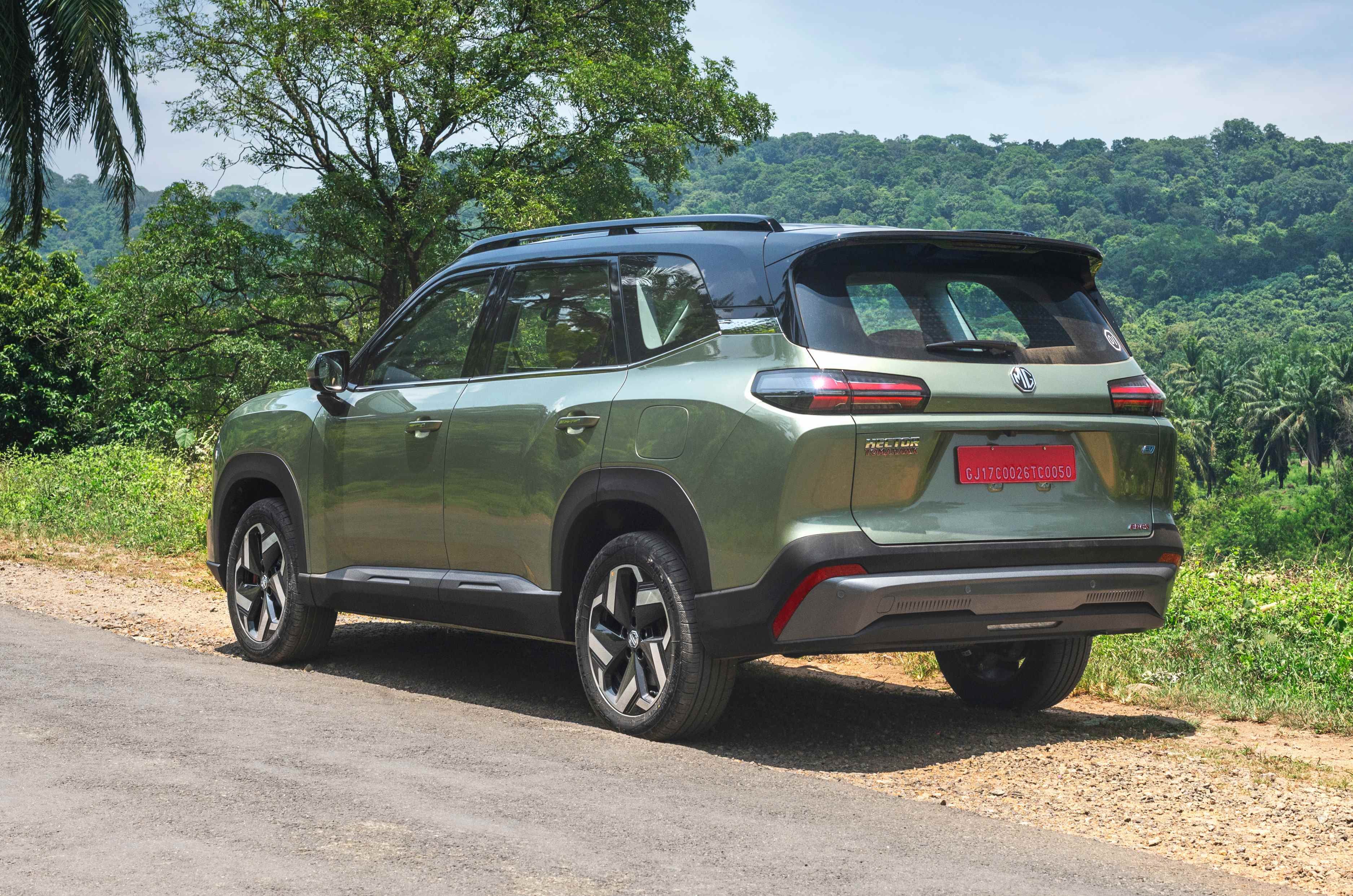
In profile, it looks quite slab-sided, with sharp creases along the fenders and plastic wheel-arch cladding adding some definition. These, along with the chunky door cladding, attempt to give it a rugged appearance but are let down by 18-inch wheels that look a tad too small. No electric door handles here, just good old-fashioned pull types.
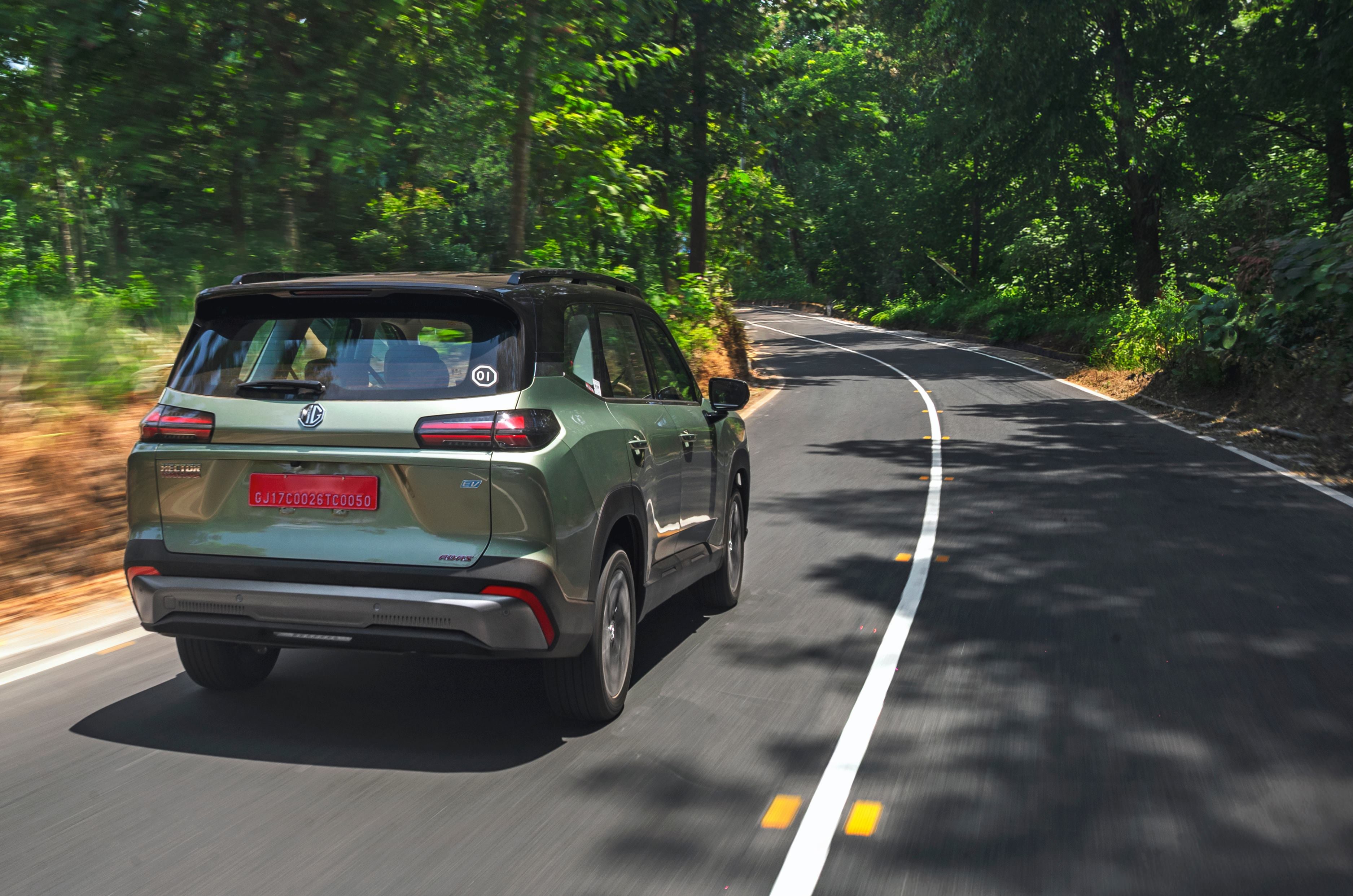
Further back are a set of intricate LED tail-lights that again resist the connected trend. MG’s love for badging is clear though, with four on the powered tailgate. Finishing things off nicely is a sculpted bumper with a grey trim piece and a centre-mounted reverse lamp. Overall, it’s a reasonably pleasing design, but it looks a tad dated and lacks the butch appeal of some rivals.
Overall styling is neatly done but somewhat uninspiring.
MG Hector Tomahawk EV Interior Space and Comfort – 8/10
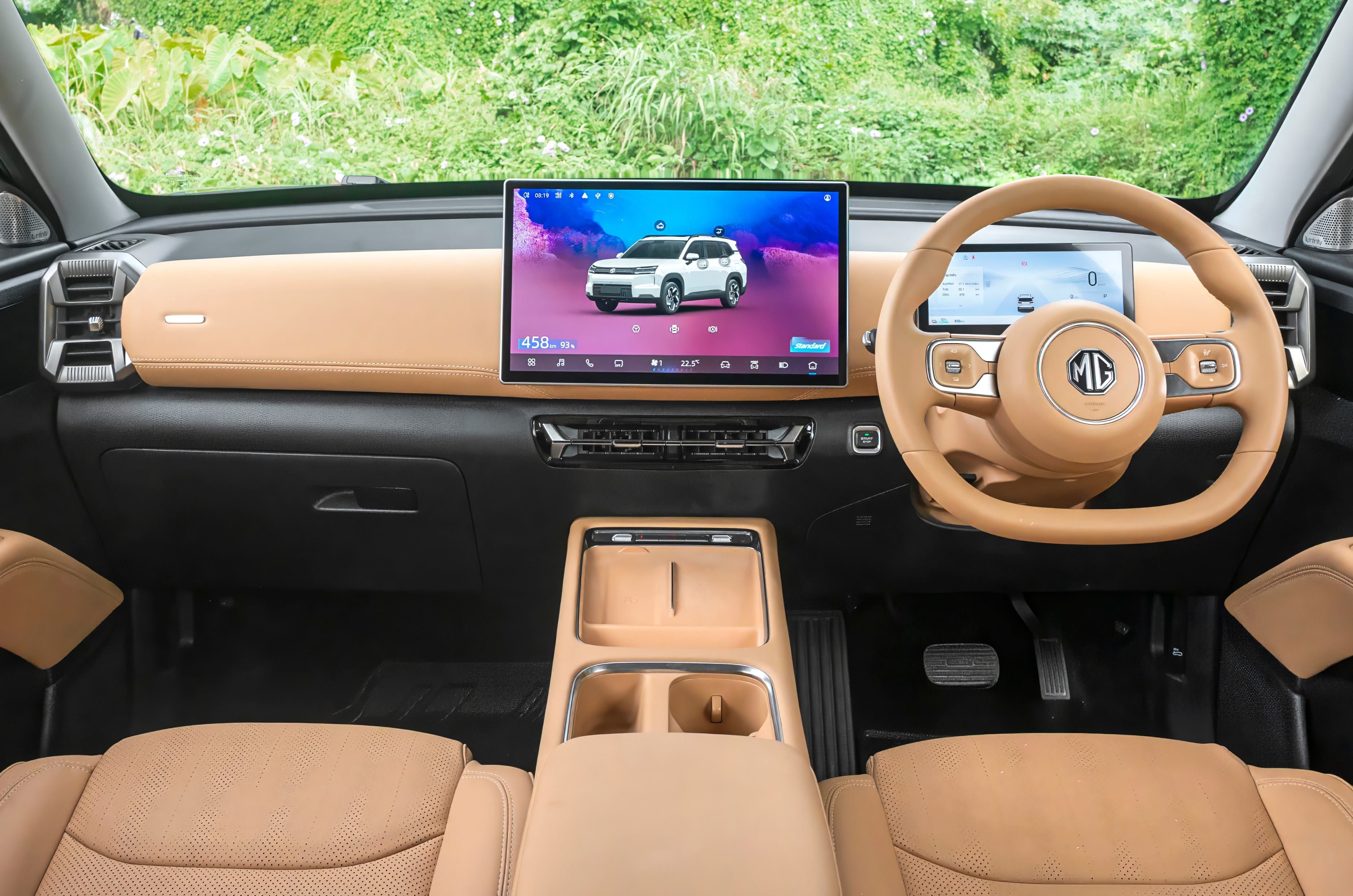
Inside, the dash features a familiar minimalistic layout with a large touchscreen front and centre. It looks premium and features soft-touch materials on the dash and doors, but lacks a certain wow factor, and the light tan colour palette might not be to all tastes. That said, the light tone and large windows do give it an airy ambience. Look hard, and you will find areas where fit and finish could be improved. The centre console in particular feels poorly textured and finished, which we were told is down to a supplier issue. Speaking of the centre console, the column-mounted drive selector frees up space here for a wireless charger, cupholders, multiple bins as well as a large pass-through cubby lower down, and the door bins are enormous too.
Minimalistic interior looks premium, but the light tan colour palette might not be to all tastes.
It’s easy to get into a comfortable and commanding driving position using the power-operated seats and reach-and-rake adjustment for the steering wheel. The seats themselves are wide, and despite the firm cushioning, they felt comfortable on our full day of driving. They are ventilated too, and the driver’s seat also gets a memory function.
Powered and ventilated front seats are wide and comfortable; driver’s seat gets a memory function.
The Tomahawk has the second-longest wheelbase in class (next only to the Vinfast MPV 7), and it shows in the second row. Legroom is excellent, and while you do sit slightly knees-up, thigh support is adequate too. The seatback reclines pretty far back and features an armrest and three adjustable headrests. Window sunshades, AC vents and Type-C USB ports add to the rear-seat comfort and convenience.
The chauffeur-driven are well taken care of, with a comfy reclining bench, plenty of room all around and sunblinds.
The Tomahawk EV is available in both 5- and 7-seater guises. The latter adds a sliding second row with one-touch tumble to access the third row, as well as more AC vents on the roof and a dedicated fan-speed control. Getting into the last row is surprisingly dignified thanks to a large aperture, but kneeroom depends largely on the middle-row passengers’ generosity, and the low seat means thigh support is non-existent. Headroom is good, though, and for short journeys, adults will be fine back there.
Third row will fit adults but with a slight compromise to the middle-row space.
With the third row up, boot space stands at 192 litres – enough for a couple of carry-on bags – expanding to a generous 528 litres with it stowed. Under the boot floor are a few more storage cubbies, which are handy since there is no frunk – a miss considering there appears to be enough space under the bonnet. A space-saver spare is mounted underneath the car.
MG Hector Tomahawk EV Features and Safety – 8/10
The minimalist interior layout means you reach for the 15.6-inch infotainment screen for most functions. While this can get distracting, physical and swipe-gesture controls together handle most basic HVAC and audio functions with surprising ease. Anything beyond basic, though, will require a deep dive into the screen. While the screen is sharp and snappy and the UI is clean, it can take a while to find your way through the maze of sub-menus. Wireless Android Auto and Apple CarPlay are also present, but using either hides the row of shortcuts at the bottom of the screen. Hardcoding these buttons to always stay on top would improve usability. The screen also often catches glare, which takes away from the otherwise sharp 360-degree camera.
Several functions are baked into the 15.6-inch touchscreen, but gesture controls for essential functions are quite intuitive.
Instrumentation is handled by an 8.8-inch display directly in front of the driver. The screen itself is sharp, but some smaller fonts might have you reaching for your reading glasses. Its real estate could also be better utilised by displaying the blind-view camera feed rather than the current pop-up on the centre screen. Other feature highlights include a sweet-sounding 10-speaker Infinity audio system, a panoramic sunroof that stretches over the second row, 256-colour ambient lighting, connected car tech, an AI assistant and more. It’s worth mentioning that the Tomahawk EV also gets a physical start/stop button, which is absent on the brand’s other EVs.
8.8-inch driver’s display is sharp, but some smaller fonts might have you reaching for your reading glasses.
A Level 2 ADAS suite is also available on the top Essence trim, with functions such as adaptive cruise control, lane keep assist and auto emergency braking. While there isn’t an official crash-test rating yet, the robust standard safety kit, including six airbags, ESP, all-wheel disc brakes and Isofix mounts, provides some confidence.
MG Hector Tomahawk EV Performance and Refinement – 7/10
The Tomahawk EV offers just one powertrain configuration – a 69.2kWh LFP battery pack powering a single motor on the front axle, producing 204hp and 310Nm, good for a claimed 0-100kph time of 8.2 seconds. Its front-wheel-drive layout puts it at a disadvantage against rivals from Tata and Mahindra, who offer either rear- or all-wheel drive and higher power outputs. The front-driven Hyundai Creta Electric or Kia Carens Clavis EV are closer matches, and the Tomahawk EV betters them on power and torque.
First EV on MG’s ADAPT architecture pairs a 69.2kWh battery with a front-mounted motor producing 204hp and 310Nm.
Initial throttle response is mild, making it quite easy to amble around town, but push harder, and you get a power spike resulting in torque steer. In Sport mode, you’ll hear the front tyres protest when made to put all that torque down on a less-than-perfect road. Standard mode dulls response slightly, but it can still catch new drivers off guard. With time, it is possible to drive around this, but the latest crop of rival EVs has mastered a more linear delivery. Eco mode feels a bit tepid and is best saved to counter range anxiety, while a Custom mode lets you customise power output and regen braking in increments of 10 percent. There are also three preset regen modes – Standard, Comfort and Strong – but no paddles to control them or one-pedal mode. Instead, you get an Intelligent setting that uses the ADAS sensors to adjust regen in real time based on the traffic in front of you.
Grip levels and body control are good, but FWD layout struggles to put power down.
Refinement is a bit of a mixed bag. While the motor is fairly muted and there is little wind or tyre noise coming through, you hear the suspension at work on rough patches.
MG Hector Tomahawk EV Range and Efficiency – 7/10
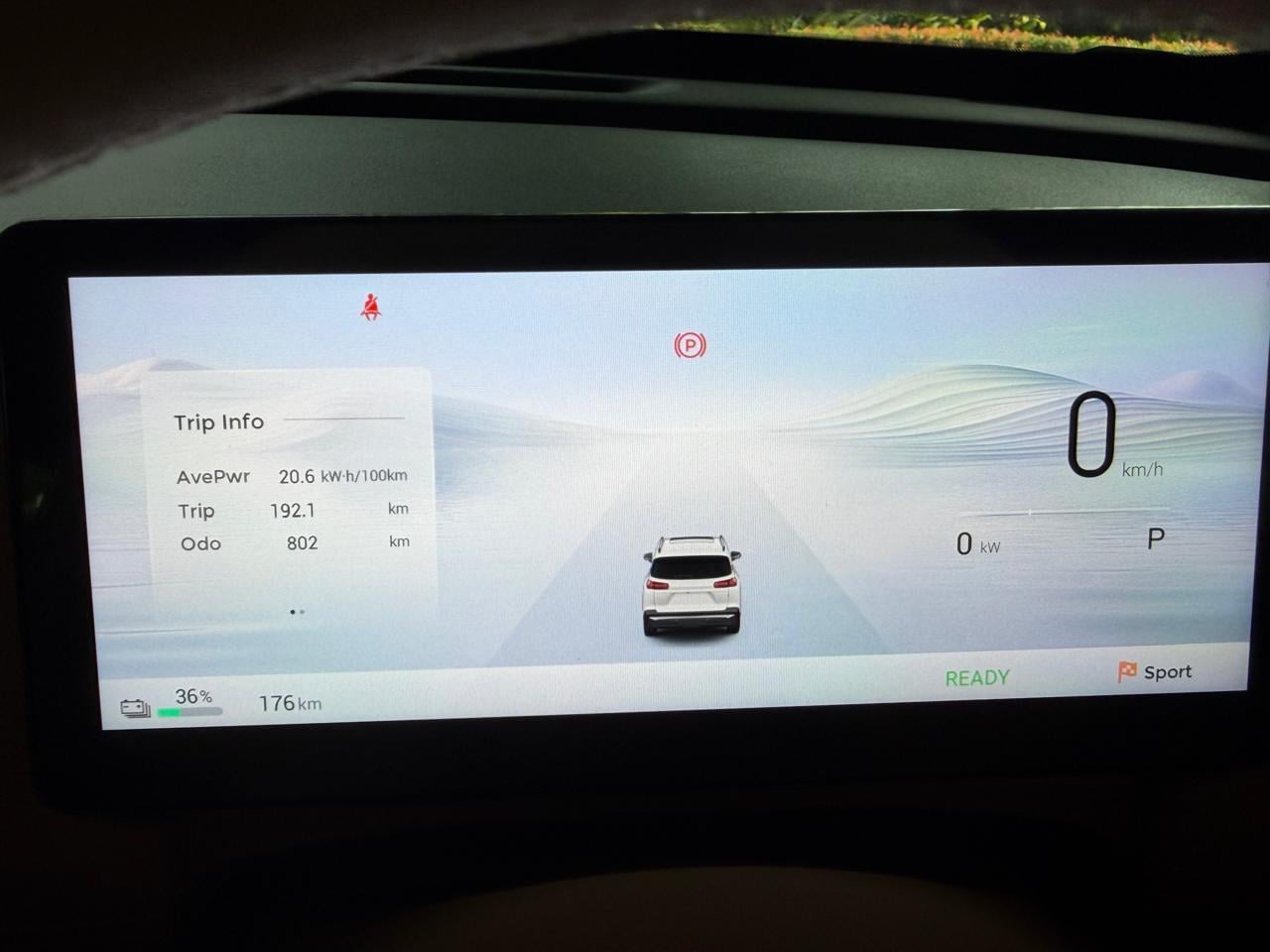
A spirited highway drive from Kochi to Kozhikode covering 192km, resulted in an overall efficiency of 4.85km/kWh.
While the Hector name is often associated with poor fuel efficiency, the new EV and PHEV hope to change that. MG claims an MIDC range of 517km from its 69.2kWh battery pack. On a spirited drive from Kochi to Kozhikode covering 192km, we recorded an overall efficiency of 4.85km/kWh, translating to a real-world range of 336km. This was on a fast highway run, where the Tomahawk’s tall shape won’t do its efficiency any favours. We’ll put it through our standard real-world efficiency test when we have the car for longer.
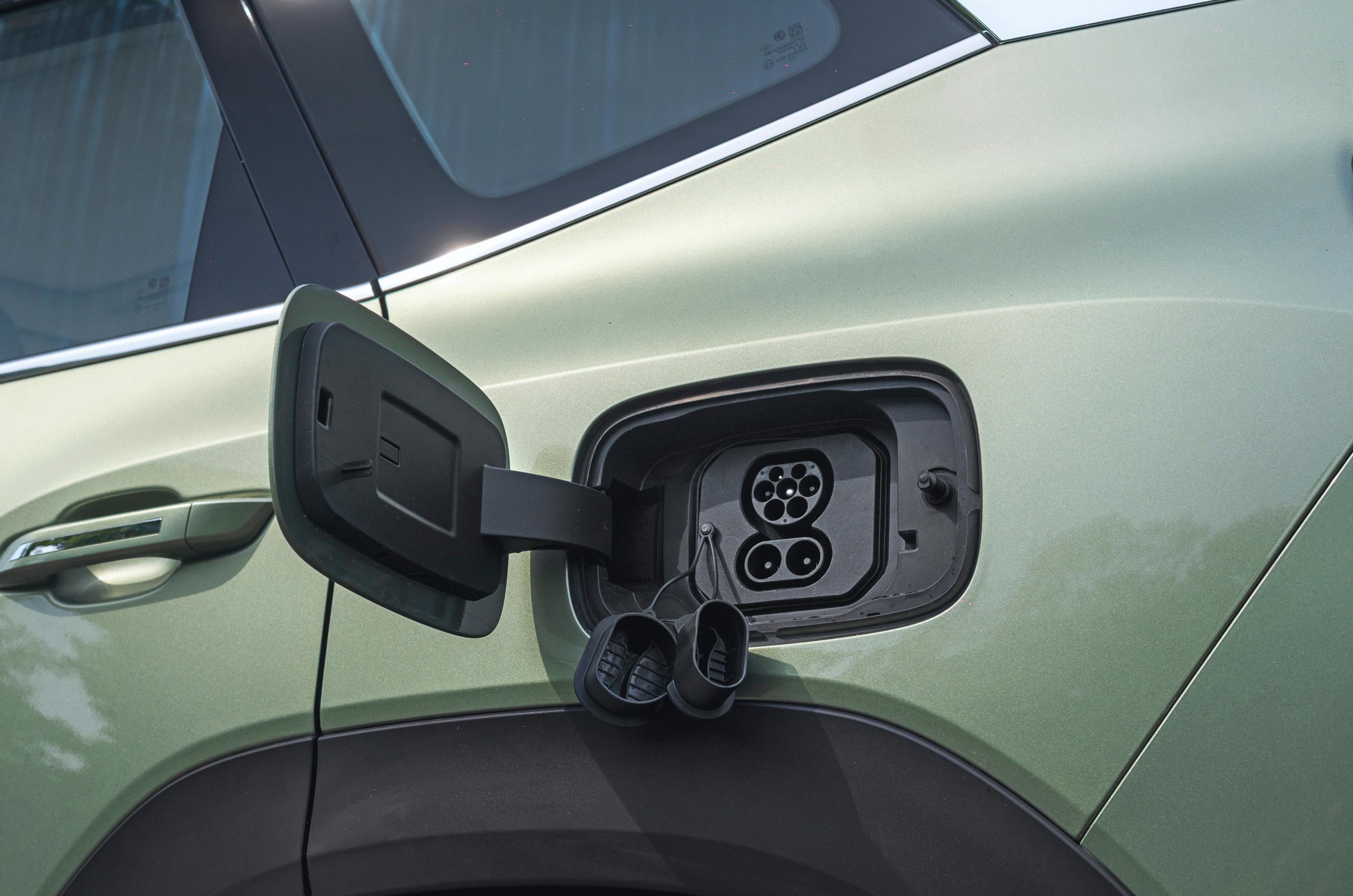
DC fast charges at 90kW – slower than rivals but enough for a 30 to 80 percent top-up in a claimed 35 minutes.
Topping up the battery from 10 to 100 percent using the 7.4kW charger is said to take around 12.5 hours. It can also DC fast charge at speeds of up to 90kW, which is lower than its immediate rivals but still enough to take the battery from 30 to 80 percent in about 35 minutes.
MG Hector Tomahawk EV Ride Comfort and Handling – 7/10
Rides with more maturity than previous MG EVs, but suspension can be heard working.
The Hector Tomahawk EV makes a big step up in ride and handling compared to the ICE Hector, but there is still some room for improvement. It rides with more maturity than previous MG EVs, comfortably absorbing most of what we threw at it. However, you do hear the suspension working. Sharper bumps reveal an underlying firmness that occasionally comes through to the cabin. Most roads around Kochi were relatively smooth, and we weren’t able to experience it on rippled concrete, so we will reserve full judgement until we have the car for longer.
A big positive is how easy the Tomahawk is to drive for something this large. Visibility all around is excellent, and you can see the bonnet’s edges from the driver’s seat. A light steering also helps, and overall, it feels less intimidating to drive through tight traffic than, say, the XEV 9S.
230mm claimed ground clearance is best in class; wheelbase second only to VF MPV 7.
The steering also weighs up as speeds rise and feels reasonably direct, though the sheer amount of torque going to just the front wheels corrupts the feel. At a quick pace through the twisties, you feel the wheel tugging at your hands as you apply power. Body control is good, and it stays composed through quick direction changes, but a sedate pace is more its element. Braking is strong, with four-wheel discs bringing the heavy SUV to a confident halt.
MGHector Tomahawk EV Value for Money – 7/10
Introductory pricing for the Hector Tomahawk EV starts at Rs 19.49 lakh and tops out at Rs 23.49 lakh. The Battery-as-a-Service (BaaS) scheme lowers the entry barrier to Rs 13.99 lakh, with battery rental set at Rs 4.90 per km. While all these prices are applicable to limited units only, this is quite aggressive pricing from MG.
Practical, comfortable and no-nonsense SUV will appeal to the chauffeur-driven but lacks the dynamic polish of its rivals.
When compared spec-for-spec, it undercuts the competition from Tata and Mahindra while offering a bigger battery and more performance than its Korean rivals. It has a spacious and comfortable cabin, a comprehensive feature set and is surprisingly easy to drive for its size. However, it lacks the dynamic polish of its rivals and therefore doesn’t feel like a latest-generation EV. As such, its Hector name starts to make more sense. It is a practical, comfortable, no-nonsense SUV that will appeal to the chauffeur-driven just like its forebear. Those looking to do the driving, though, are better off looking elsewhere.
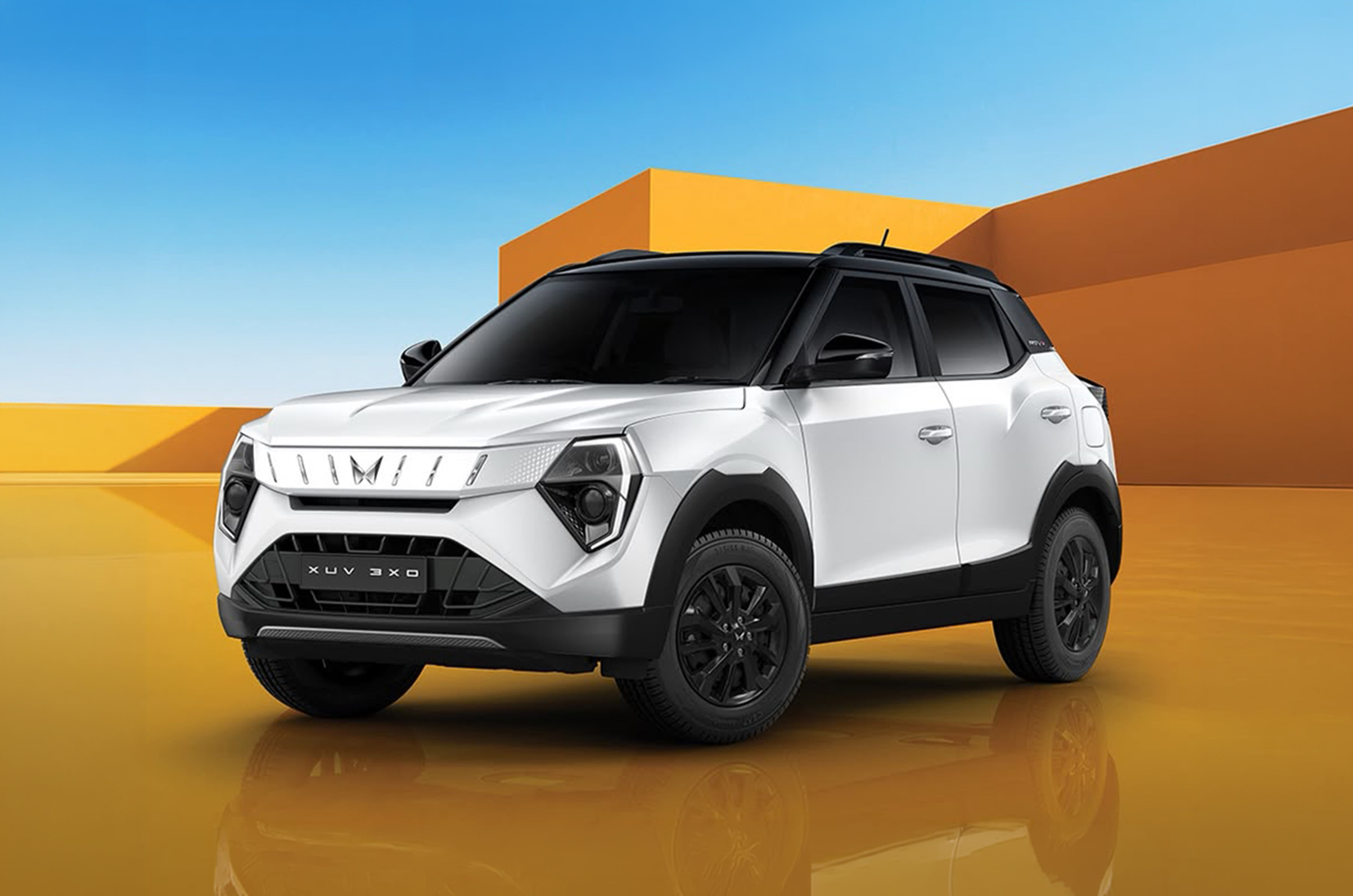
Mahindra has expanded the XUV 3XO RevX line-up with a new RevX Edge trim. Priced from Rs 9.39 lakh (ex-showroom), the RevX Edge essentially makes a few features more accessible from higher up in the trim lineup. Mahindra has also expanded the powertrain lineup on the RevX range, now offering it with a diesel engine and a more affordable 1.2-litre turbo-petrol automatic variant. Let’s look at all the updates in closer detail.
Here’s a look the prices (ex-showroom) of the newly introduced variants:
Trim
Petrol-MT
Petrol-AT
Diesel-MT
Diesel-AMT
RevX M(O)
Rs 9.99 lakh
RevX Edge
Rs 9.39 lakh
Rs 10.59 lakh
Rs 10.59 lakh
RevX Edge (O)
Rs 9.89 lakh
Rs 11.09 lakh
Rs 11.09 lakh
Rs 11.91 lakh
Mahindra XUV 3XO RevX Edge: what’s new?
The new RevX Edge and RevX Edge (O) trims sit above the previously launched RevX M and RevX M (O) trims. Overall, the new Edge trims are positioned bang in the centre of the XUV 3XO lineup. The XUV 3XO is now available in a total of 11 trims: MX1, MX2, RevX M, RevX M (O), RevX Edge, Rev X Edge (O), AX5, RevX A, AX5L, AX7, AX7L. Meanwhile, the previously available MX2 Pro, MX3 and MX3 pro trim have been discontinued.
Over the RevX M (O) trim, the new RevX Edge adds 10.25-inch touchscreen with wireless Apple CarPlay and Android Auto, a rearview camera, a Type C USB port and cruise control. The Rev X Edge (O) further adds a panoramic sunroof, roof rails, electrically foldable ORVMs, auto headlamps and wipers, remote entry and push button start.
As before, the RevX trims continue to be set apart from the regular trims with a dual-tone paint shade, a body-coloured grille and blacked-out alloy wheels.
Safety features such as 6 airbags, ESC, ISOFIX child-seat mounts, reverse parking sensors, three-point seat belts and seat-belt reminders for all passengers are standard across the entire XUV 3XO range.
Mahindra XUV 3XO RevX Edge powertrain options
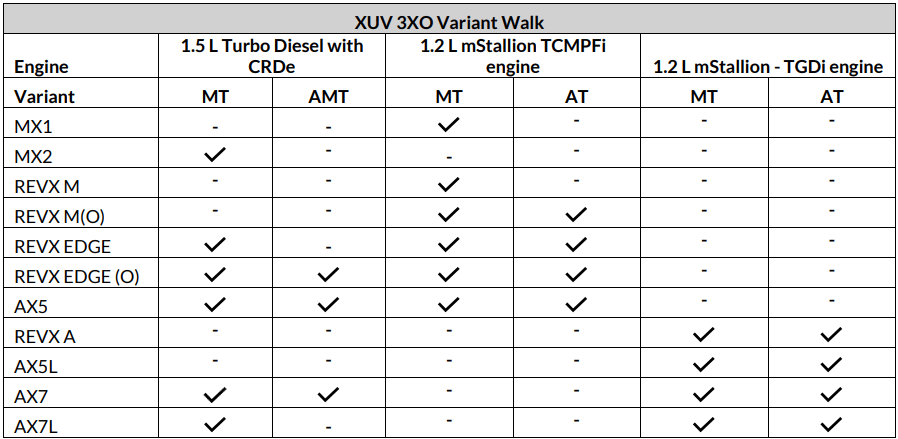
When the RevX trims were introduced last year, it was made available with the 111hp, 1.2-litre turbo-petrol and the 131hp, 1.2-litre TGDi turbo-petrol engines. Now, Mahindra has expanded the powertrain lineup to also include the 117hp, 1.5-litre diesel engine with manual and AMT gearboxes, but the RevX trims are no longer with the 131hp, TGDi turbo-petrol engine.
Here’s a look at the full variant spread of the updated XUV 3XO lineup
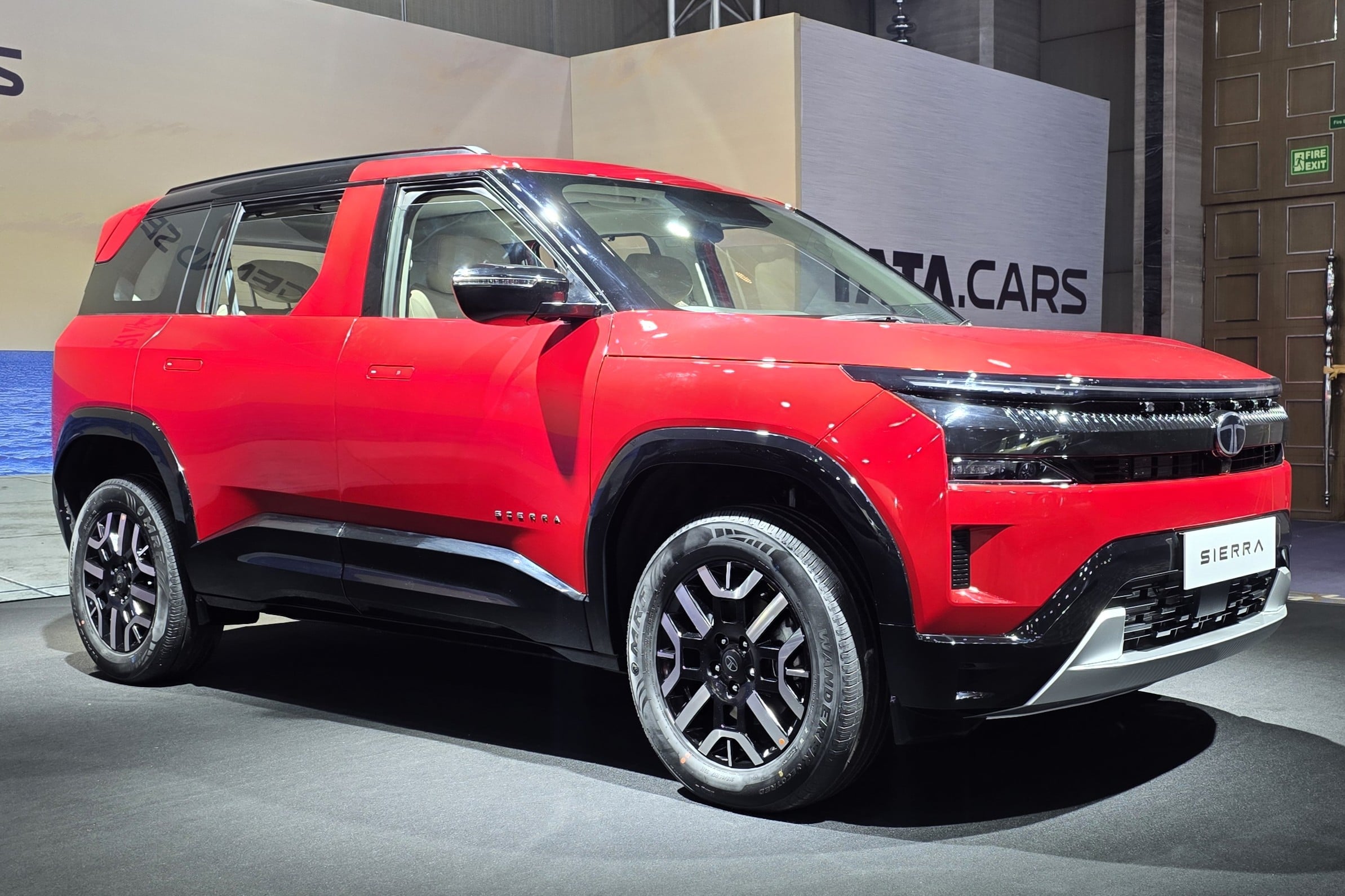
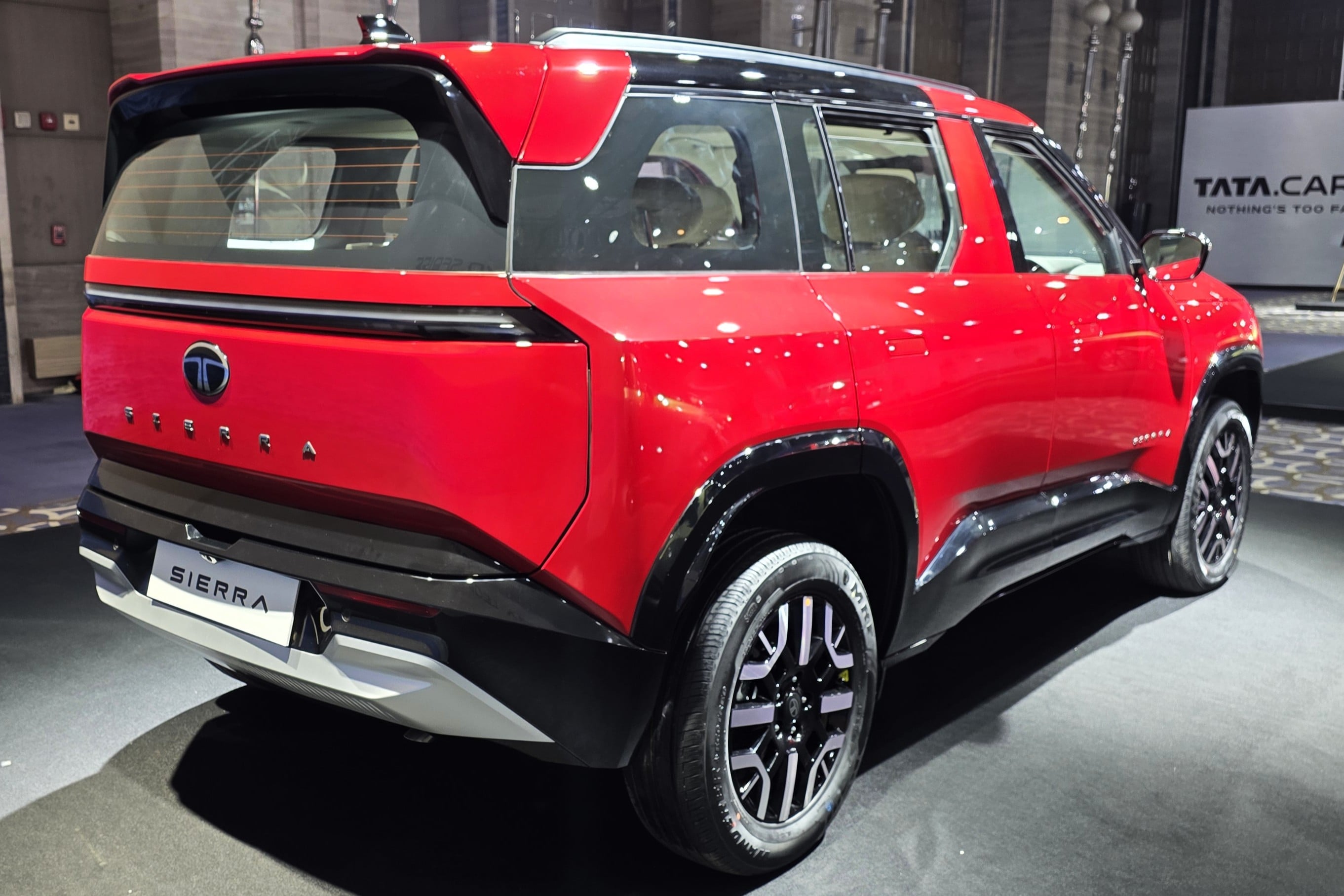
Tata Motors ने Sierra Legend Series के पांच नए वेरिएंट लॉन्च किए हैं। यह ब्रांड अपनी SUV रेंज में ज्यादा कंफर्ट, टेक्नोलॉजी और सेफ्टी वाले फीचर्स लेकर आया है, जिसकी शुरुआती कीमत ₹11.99 लाख (एक्स-शोरूम) है। यह अपडेट मुख्य रूप से इक्विपमेंट पर फोकस्ड है, जिसमें लेदरेट इंटीरियर, बड़ी इंफोटेनमेंट स्क्रीन, वेंटिलेटेड सीटें, पैनोरमिक सनरूफ और 360-डिग्री कैमरा जैसे फीचर्स अलग-अलग वेरिएंट में दिए गए हैं। इसके अलावा, Sierra में पहले की तरह पेट्रोल और डीजल इंजन और मैनुअल व ऑटोमैटिक ट्रांसमिशन का विकल्प मिलता रहेगा। Legend Series की कीमतें इंजन, ट्रांसमिशन और वेरिएंट के आधार पर ₹19.49 लाख (एक्स-शोरूम) तक जाती हैं। यहां बताया गया है कि हर वर्जन में क्या-क्या मिलता है और कीमतों में क्या अंतर है।
Tata Sierra Legend Series: एक्स-शोरूम प्राइस लिस्ट
आपकी जानकारी के लिए यहां एक्स-शोरूम कीमतों की पूरी लिस्ट दी गई है।
वेरिएंट
पेट्रोल मैनुअल
पेट्रोल DCT
डीजल मैनुअल
डीजल ऑटोमैटिक
टर्बो-पेट्रोल ऑटोमैटिक
Smart+ L
₹11.99 लाख
—
₹13.49 लाख
—
—
Pure L
₹13.79 लाख
₹14.99 लाख
₹15.24 लाख
—
—
Pure L (O)
₹14.29 लाख
₹15.59 लाख
₹15.74 लाख
₹16.99 लाख
—
Pure+ L
₹14.99 लाख
₹16.29 लाख
₹16.44 लाख
₹17.74 लाख
—
Adventure+ L
₹16.99 लाख
₹18.29 लाख
₹18.19 लाख
₹19.49 लाख
₹18.99 लाख
Tata Sierra Legend Series: नया क्या है?
Sierra Legend Series में 5 वेरिएंट आते हैं: Smart + L, Pure L, Pure L (O), Pure + L और Adventure + L। कंपनी ने Sierra के बेस पैकेज में कोई बड़ा बदलाव नहीं किया है। इसके बजाय, Tata Motors ने अलग-अलग कीमत वाले वेरिएंट में कुछ नए फीचर्स और सुविधाएं जोड़ी हैं।
इस सीरीज की शुरुआत Smart + L वेरिएंट से होती है, जिसकी कीमत 11.99 लाख रुपये (एक्स-शोरूम) है। इसमें लेदरेट सीट्स, डोर ट्रिम्स और आर्मरेस्ट दिए गए हैं। इसके अलावा, स्टीयरिंग-माउंटेड कंट्रोल्स, ऑटो-फोल्डिंग ORVMs और पैसिव एंट्री व पैसिव स्टार्ट जैसे फीचर्स भी मिलते हैं।
इस वेरिएंट में Bi-LED प्रोजेक्टर हेडलैंप्स, 6 एयरबैग्स, इलेक्ट्रॉनिक पार्किंग ब्रेक और 20 से ज्यादा फंक्शन वाला इलेक्ट्रॉनिक स्टेबिलिटी प्रोग्राम (ESP) भी दिया गया है।
Pure L में बड़ी इंफोटेनमेंट स्क्रीन और अलॉय व्हील्स
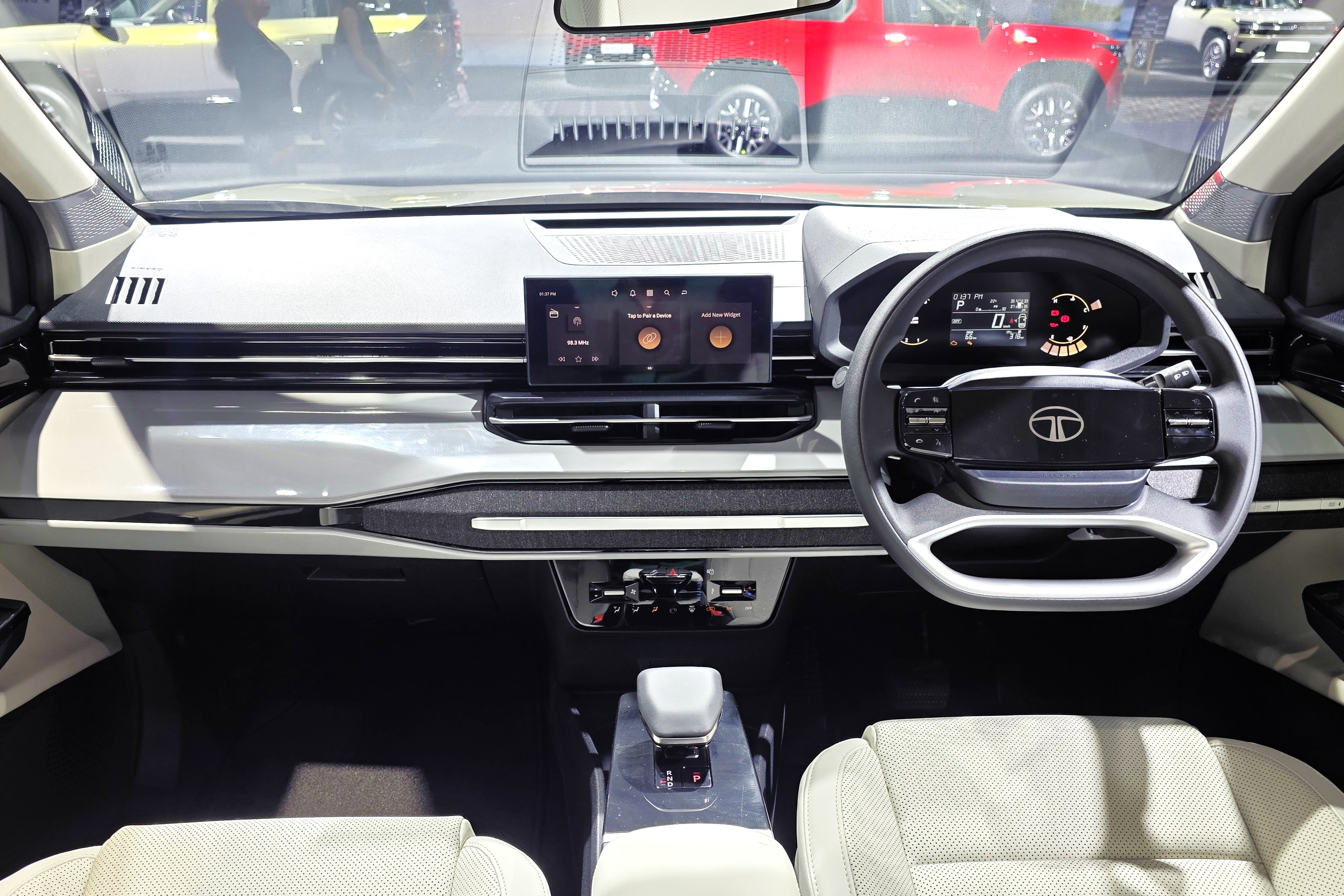
Pure L वेरिएंट की कीमत 13.79 लाख रुपये (एक्स-शोरूम) है। इसमें 10.24 इंच की टचस्क्रीन इंफोटेनमेंट स्क्रीन के साथ 8-स्पीकर ऑडियो सिस्टम दिया गया है। इसमें वायरलेस Android Auto और Apple CarPlay का सपोर्ट भी मिलता है। इसके अलावा, इस वेरिएंट में क्रूज कंट्रोल, हिल डिसेंट कंट्रोल, टायर प्रेशर मॉनिटरिंग सिस्टम और 17 इंच के अलॉय व्हील्स दिए गए हैं।
वहीं, Pure L (O) वेरिएंट की कीमत 14.29 लाख रुपये (एक्स-शोरूम) है। इसमें Panoramax वॉयस-असिस्टेड पैनोरमिक सनरूफ मिलता है। इस वेरिएंट में ऑटोमैटिक हेडलैंप्स और रेन-सेंसिंग वाइपर्स भी दिए गए हैं।
Pure + L में वेंटिलेटेड सीट्स की सुविधा
Pure + L वेरिएंट की कीमत 14.99 लाख रुपये (एक्स-शोरूम) है। इसमें खासतौर पर आगे की सीटों के आराम पर ध्यान दिया गया है। इसमें वेंटिलेटेड फ्रंट सीट्स और थाई-सपोर्ट एक्सटेंडर के साथ 6-वे पावर्ड ड्राइवर सीट दी गई है। इसके अलावा, इसमें Boss Mode, डुअल-जोन फुली ऑटोमैटिक क्लाइमेट कंट्रोल और पीछे की तरफ 65W के दो USB-C फास्ट चार्जिंग पोर्ट भी मिलते हैं।
Adventure + L में 360 डिग्री कैमरा
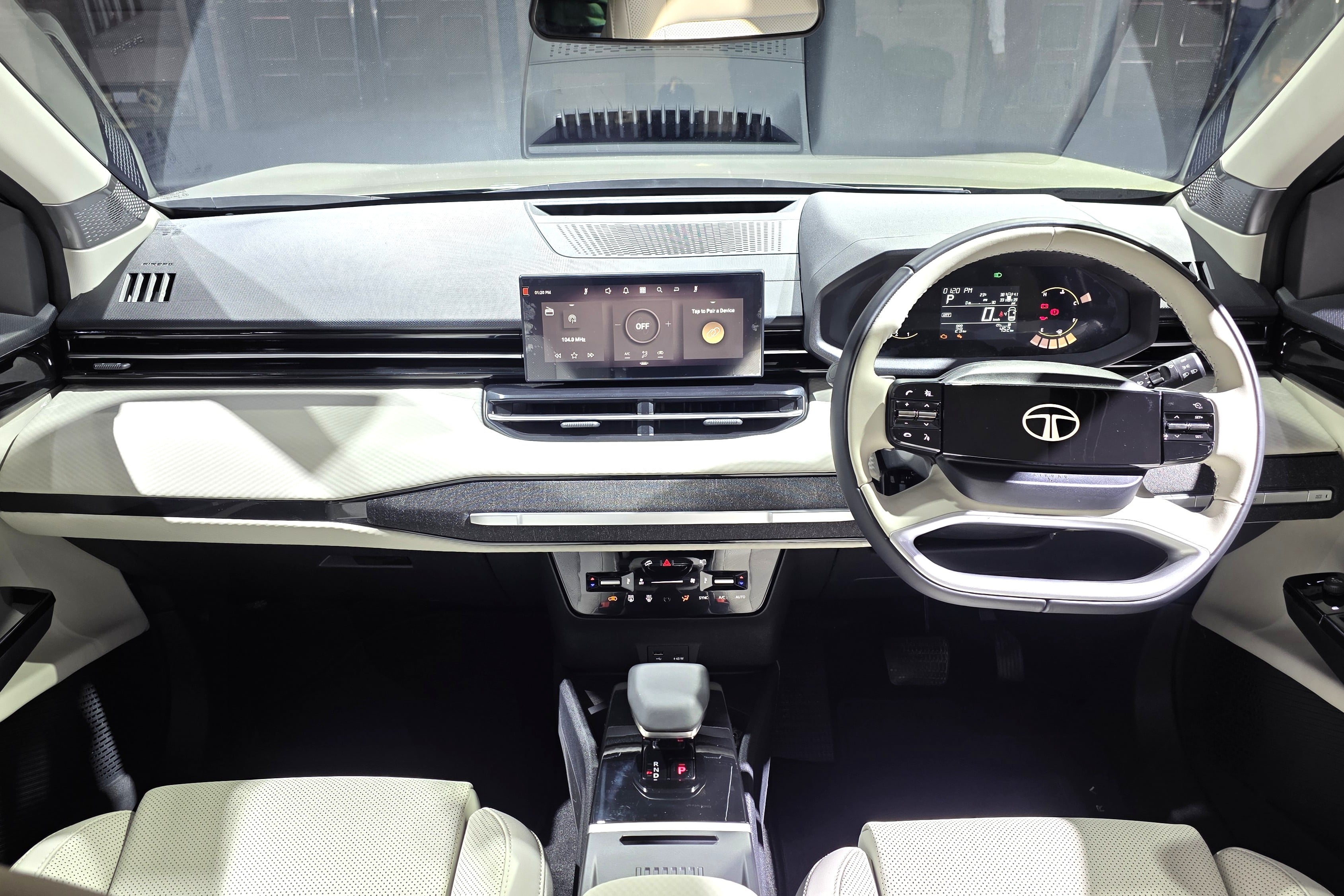
Legend Series का सबसे ऊपर वाला वेरिएंट Adventure + L है, जिसकी कीमत 16.99 लाख रुपये (एक्स-शोरूम) है। इसमें 4Sight के साथ 360 डिग्री HD Surround View System दिया गया है। इसके अलावा, Superglide Suspension with FDD, अलग-अलग Terrain Modes, 31.24 सेमी की टचस्क्रीन और नेविगेशन के साथ 26.03 सेमी का डिजिटल कॉकपिट मिलता है।
इस वेरिएंट में फ्रंट पार्किंग सेंसर, एम्बिएंट लाइटिंग, दो स्टेज में रिक्लाइन होने वाली रियर सीट, वायरलेस चार्जिंग और कूल्ड ग्लवबॉक्स जैसे फीचर्स भी दिए गए हैं।
Tata Sierra Legend Series: कीमत और इंजन
Tata Sierra Legend Series में पहले की तरह तीन इंजन का विकल्प मिलता है। इसमें 1.5-लीटर Hyperion TGDi पेट्रोल, 1.5-लीटर Revotron पेट्रोल और 1.5-लीटर Kryojet डीजल इंजन शामिल हैं। इसमें मैनुअल और ऑटोमैटिक दोनों ट्रांसमिशन के विकल्प मिलते हैं। हालांकि, किस वेरिएंट में कौन सा इंजन और ट्रांसमिशन मिलेगा, यह अलग-अलग हो सकता है। Legend Series की कीमत 19.49 लाख रुपये (एक्स-शोरूम) तक जाती है।
इस सीरीज में सबसे बड़ा बदलाव इंजन या मैकेनिकल सेटअप में नहीं किया गया है। कंपनी ने Sierra के अलग-अलग वेरिएंट में केबिन, टेक्नोलॉजी और रोजमर्रा के इस्तेमाल से जुड़े फीचर्स को ज्यादा बेहतर तरीके से जोड़ा है।
Tata has introduced a Legend Series trim line for the Sierra, with prices starting from Rs 11.99 lakh. The Legend Series adds a total of 18 variants to the Sierra range, spread across five trim levels: Smart+ L, Pure L, Pure L(O), Pure+ L and Adventure+ L. These are largely based on existing lower- and mid-spec Sierra trims and are denoted by an ‘L’ suffix in the name.
Tata Sierra Legend Series prices
The Sierra’s Legend Series trims command a premium of Rs 50,000-70,000 over the trims they are based on. Here’s the full price list for the Sierra Legend Series:
Petrol MT
Petrol DCT
Diesel MT
Diesel AT
Turbo-petrol AT
Smart+ L
11.99
–
13.49
–
–
Pure L
13.79
14.99
15.24
–
–
Pure L(O)
14.29
15.59
15.74
16.99
–
Pure+ L
14.99
16.29
16.44
17.74
–
Adventure+ L
16.99
18.29
18.19
19.49
18.99
Tata Sierra Legend Series trims explained
Tata Sierra Pure+ L
The Legend Series essentially democratises many feel-good features previously exclusive to higher-spec Sierra trims, affording a more premium experience to buyers on tighter budgets. For instance, the Sierra Pure+ L gets ventilated front seats and a 6-way powered driver’s seat, both of which were available only in the SUV’s one-below-top Accomplished trim. It also comes with dual-zone climate control, a manual Boss mode, a thigh support extender and a full leatherette finish for the interior.
Tata Sierra Pure+ L interior
In the base Smart+ L trim, you get leatherette seats and interior trim, wheel covers, auto-folding outside rearview mirrors (ORVMs), steering-mounted controls and roof rails over the standard Sierra Smart+. Move up to the Pure L, and the equipment list adds a 10.25-inch infotainment touchscreen, wireless Apple CarPlay and Android Auto, a rear camera, an 8-speaker sound system, cruise control, a tyre-pressure monitoring system, a rear wiper/washer, 17-inch alloy wheels and more.
Tata Sierra Pure L(O) interior
There’s a new Pure L(O) version on offer too, serving as the mid-spec Legend Series trim. It adds a panoramic sunroof, automatic headlamps and rain-sensing wipers over the Pure L. Finally, the top-spec Legend Series trim is the Adventure+ L, which packs a 360-degree camera, frequency-dependent dampers, terrain modes, dual 12.3-inch screens, front parking sensors, a reclining rear seat, ambient lighting, a cooled glove box and a wireless charging pad.
Tata Sierra Legend Series powertrains
Compared to the trims they are based on, powertrain options are mostly unchanged in the Legend Series. The only outliers are the Pure+ L, which additionally gets the 160hp 1.5-litre direct-injection turbo-petrol AT powertrain, and the Adventure+ L, which offers the 106hp 1.5-litre petrol DCT option. Notably, the Pure+ L is now the entry point to the Sierra’s turbo-petrol engine option.
Aside from the Legend Series, the standard Sierra Adventure+ trim can now be had with the 1.5-litre petrol DCT powertrain as well.
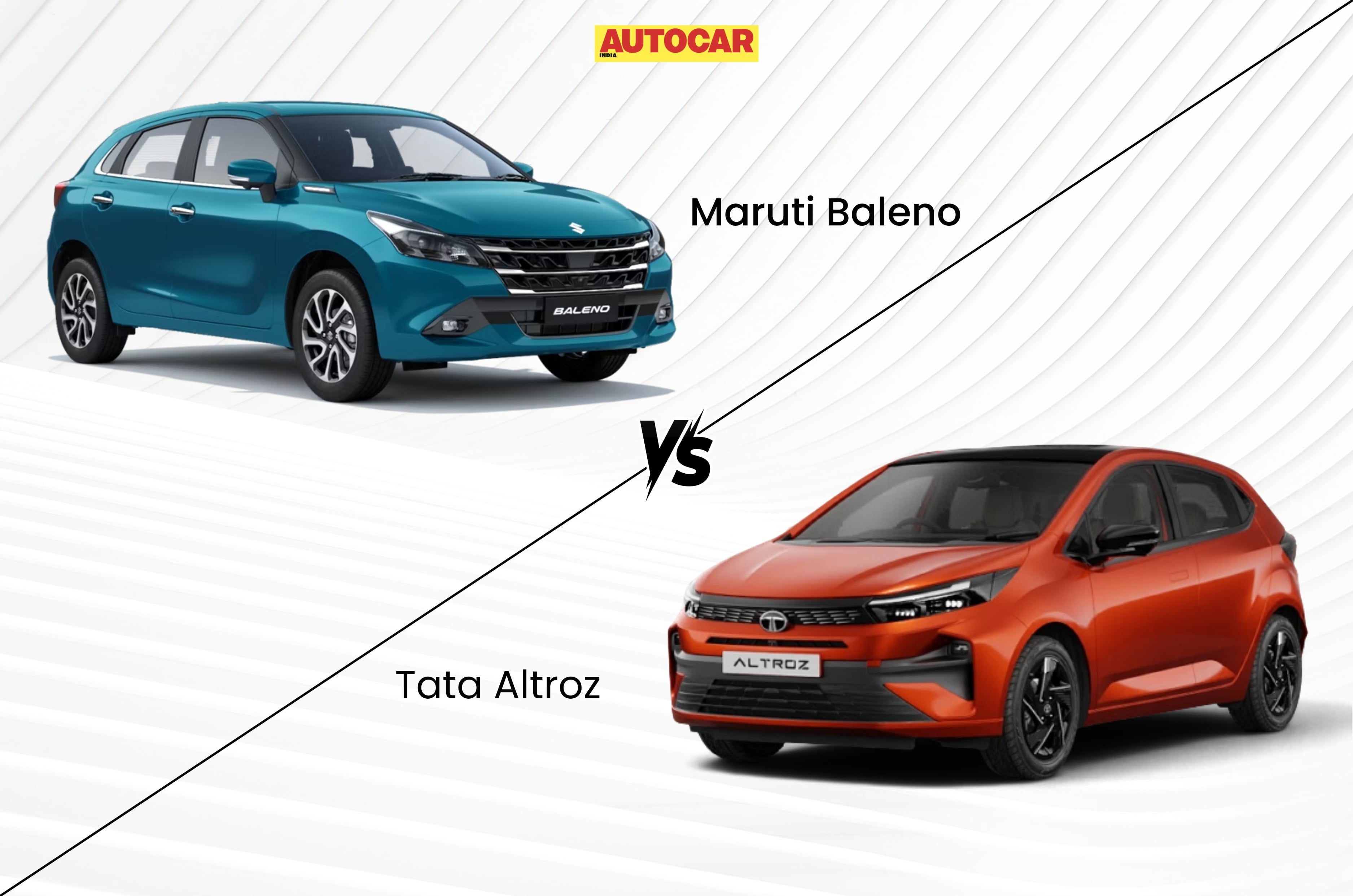
The Maruti Suzuki Baleno and Tata Altroz offer a wide range of features in their respective top variants. The Baleno Alpha(O) is available with both a 1.2-litre three-cylinder petrol engine with a 5-speed manual or 5-speed AMT, while the Altroz Accomplished+S is offered only with the 1.2-litre turbo-petrol engine paired with a 6-speed DCA automatic. Here, we compare the two top-spec variants on features and equipment.
Maruti Baleno vs Tata Altroz: Exterior features
Both get LED lighting and 16-inch alloy wheels
Exterior features
Maruti Baleno Alpha(O)
Tata Altroz Accomplished+S
Headlamps
LED projectors
LED projectors
LED DRLs
Yes
Yes
LED fog lamps
Yes
Yes
LED tail-lamps
Yes
Yes
Alloy wheels
16-inch
16-inch
ORVMs
Electrically adjustable and folding
Electrically adjustable and folding
Door handles
Pull-type
Flush-fitting
Rear wiper and washer
Yes
Yes
Shark-fin antenna
Yes
Yes
Dual-tone roof
No
Yes
Both hatchbacks get LED lighting, 16-inch alloy wheels, folding ORVMs and rear wipers, so the basic exterior equipment is broadly similar. The Altroz gets flush-fitting door handles and a dual-tone roof, while the Baleno gets UV-cut glass and pull-type door handles with chrome garnish. The differences here are largely limited to styling and exterior detailing rather than major differences in functionality.
Maruti Baleno vs Tata Altroz: Interior features
Altroz gets larger screens; Baleno has ventilated seats and a head-up display
Interior features
Maruti Baleno Alpha(O)
Tata Altroz Accomplished+S
Infotainment screen
9-inch
10.25-inch
Instrument cluster
Analogue dials with TFT MID
10.25-inch digital
Head-up display
Yes
No
Front ventilated seats
Yes
No
Sunroof
No
Yes
Wireless Android Auto/Apple CarPlay
Yes
Yes
Wireless charger
With active cooling
Yes
Automatic climate control
Yes
Yes
Rear AC vents
Yes
Yes
Audio system
Clarion, 4 speakers + 2 tweeters
4 speakers + 4 tweeters
Cooled glovebox
No
Yes
Rear armrest
No
Yes
Upholstery
Leatherette
Fabric + Leatherette
Cooled glovebox
No
Yes
The Altroz has the larger 10.25-inch infotainment screen and a 10.25-inch digital instrument cluster, giving it more screen area than the Baleno’s 9-inch touchscreen and analogue dials with a TFT MID. The Baleno instead offers features such as ventilated front seats and a head-up display, which are not available on the Altroz. The Altroz gets a sunroof, rear armrest and cooled glovebox, which the Baleno misses.
Both cars have wireless Android Auto and Apple CarPlay, automatic climate control, rear AC vents and wireless charging. The Baleno adds active cooling for the wireless charger and leatherette upholstery, while the Altroz has two additional tweeters, with both cars using four speakers.
Maruti Baleno vs Tata Altroz: Technology and convenience
Baleno gets adaptive cruise control; Altroz adds more cabin technology
Technology and convenience
Maruti Baleno Alpha(O)
Tata Altroz Accomplished+S
Adaptive cruise control
Yes
No
Air purifier
No
Yes
Blind-spot monitor
No
Yes
360-degree camera
Yes
Yes
Auto-dimming IRVM
Yes
No
Rain-sensing wipers
No
Yes
Voice assistant
Yes
Yes
Remote vehicle functions
Suzuki Connect
iRA
SOS calling
No
Yes
The Baleno’s adaptive cruise control works as part of its Level 2 ADAS package, while the Altroz gets features such as a blind-spot monitor, rain-sensing wipers, air purifier and SOS calling. The Baleno also gets an auto-dimming inside rear-view mirror, which is not offered on the Altroz.
Both cars have a 360-degree camera and voice assistant. Their connected-car systems also allow remote vehicle functions, with Suzuki Connect on the Baleno and iRA on the Altroz.
Maruti Baleno vs Tata Altroz: Safety features
Baleno gets Level 2 ADAS; both get six airbags
Safety features
Maruti Baleno Alpha(O)
Tata Altroz Accomplished+S
Level 2 ADAS
Yes
No
Airbags
6
6
TPMS
Yes
Yes
Electronic stability control
Yes
Yes
Hill-hold assist
Yes
Yes
ABS with EBD
Yes
Yes
ISOFIX mounts
Yes
Yes
Both cars get six airbags, TPMS, electronic stability control, hill-hold assist, ABS with EBD and ISOFIX mounts. The key difference is ADAS: the Baleno gets Level 2 ADAS with Lane Keep Assist, Lane Departure Warning, Advanced Emergency Braking, Forward Collision Warning and High Beam Assist, while the Altroz does not offer Level 2 ADAS.
Maruti Baleno vs Tata Altroz: Price and verdict
Maruti Baleno Alpha(O)
Tata Altroz Accomplished+S
Price (Rs, lakhs)
9.50 – 9.99
10.75
At Rs 9.50 lakh-Rs 9.99 lakh, the Baleno is Rs 1.25 lakh to Rs 76,000 cheaper than the Altroz. The Altroz, meanwhile, has its own advantages, including a larger 10.25-inch touchscreen and digital instrument cluster, along with features such as a sunroof and cooled glovebox.
Between the two, we would recommend the Baleno. Along with the lower price, it offers segment only features, such as ventilated front seats, a head-up display and Level 2 ADAS. The combination of these features, its two gearbox options and lower top-spec pricing gives the Baleno a broader equipment package for the money.
Vivo ने कन्फर्म कर दिया है कि उसका नया स्मार्टफोन Vivo V80 जल्द ही भारत में लॉन्च होने वाला है। कंपनी ने Vivo V70 के सक्सेसर यानी नए मॉडल को टीज किया है। हालांकि, अभी Vivo ने फोन की लॉन्च डेट का खुलासा नहीं किया है। चलिए जानते हैं कि Vivo V80 कब लॉन्च हो सकता है, इसमें कौन-कौन से स्पेसिफिकेशन मिल सकते हैं और इस फोन के बारे में अब तक क्या जानकारी सामने आई है।
Vivo V80 की संभावित लॉन्च डेट और स्पेसिफिकेशन
Vivo ने भारत में अपने अपकमिंग स्मार्टफोन Vivo V80 को टीज किया है। कंपनी ने अपने ऑफिशियल X अकाउंट पर इस आने वाले फ्लैगशिप फोन के पिछले हिस्से को ऑरेंज कलर में दिखाया है। हालांकि कंपनी ने Vivo V80 की लॉन्च डेट नहीं बताई है, लेकिन ऑनलाइन सामने आ रही कई लीक्स के अनुसार, इसके अक्टूबर के पहले हफ्ते में भारत में लॉन्च होने की उम्मीद है।
Vivo V80 में पिछले मॉडल की तरह दमदार कैमरा सेटअप मिलने की उम्मीद है। कंपनी की वेबसाइट पर बने Vivo V80 के लैंडिंग पेज के मुताबिक, फोन में Zeiss ब्रांडिंग मिलेगी और इसमें ट्रिपल रियर कैमरा सेटअप दिया जा सकता है। इसमें 50MP का प्राइमरी कैमरा, 50MP का टेलीफोटो कैमरा और 8MP का अल्ट्रा-वाइड कैमरा शामिल हो सकता है। वहीं, सेल्फी और वीडियो कॉल के लिए फोन में 50MP का फ्रंट कैमरा दिया जा सकता है।
इसके अलावा, इस फ्लैगशिप फोन में 144Hz रिफ्रेश रेट वाला 6.59-इंच का AMOLED डिस्प्ले होने की उम्मीद है, जिससे स्क्रॉलिंग और एनिमेशन स्मूद हो सकते हैं। ऐसी भी चर्चा है कि यह पैनल HDR+ को सपोर्ट करेगा और 6,000 निट्स तक की पीक ब्राइटनेस देगा।
वहीं, परफॉर्मेंस के लिए Vivo V80 में Qualcomm Snapdragon 7 Gen 4 प्रोसेसर दिया जा सकता है। इसके साथ Adreno 722 GPU मिलने की उम्मीद है। फोन को 8GB RAM और 256GB तक की इंटरनल स्टोरेज के साथ लॉन्च किया जा सकता है।
बैटरी की बात करें तो, Vivo V80 में 7,200mAh की बड़ी बैटरी होने की उम्मीद है। इस फोन में फास्ट चार्जिंग और रिवर्स चार्जिंग की सुविधा भी मिल सकती है। सॉफ्टवेयर के मामले में, यह डिवाइस Vivo के OriginOS 7 पर चल सकता है, जिसके Android 17 पर आधारित होने की उम्मीद है।
Vivo V80 की अनुमानित कीमत
खबरों के अनुसार, Vivo V80 को प्रीमियम सेगमेंट में पेश किया जाएगा और भारत में इसकी शुरुआती कीमत लगभग 55,000 रुपये हो सकती है। ध्यान दें कि जब तक Vivo लॉन्च के समय सही जानकारी की पुष्टि नहीं करता, तब तक इस जानकारी को पूरी तरह सच न मानें।