Kia Sorento HTK vs Toyota Innova Hycross ZX(O): Which one offers better value?

Kia Sorento HTK vs Toyota Innova Hycross ZX(O): Which one offers better value?
Kia Sorento HTK vs Toyota Innova Hycross ZX(O) specs and features compared

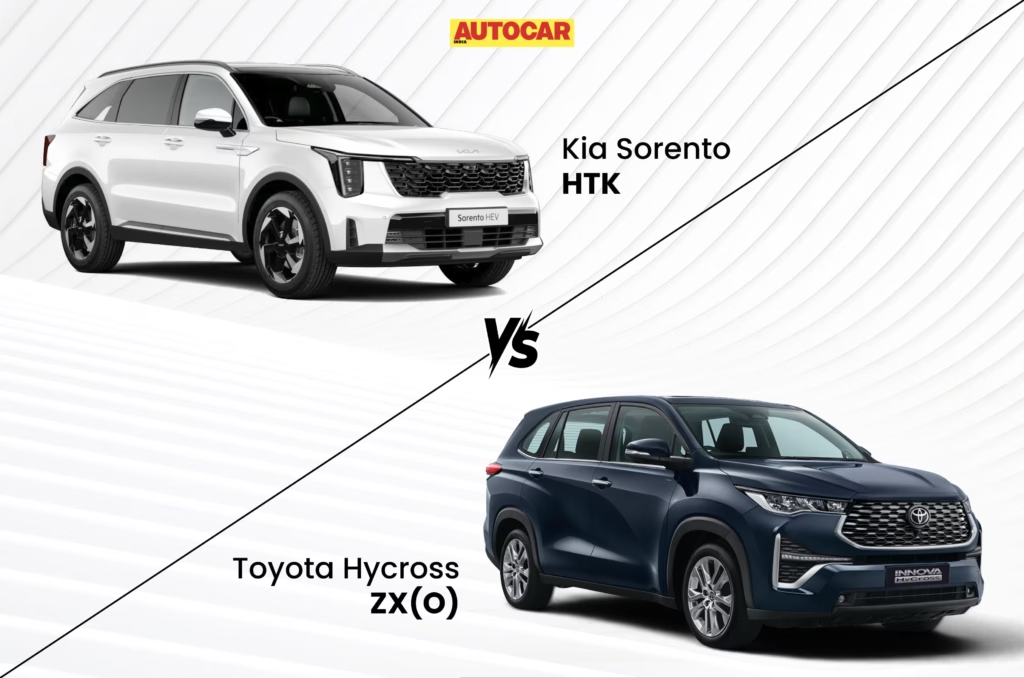
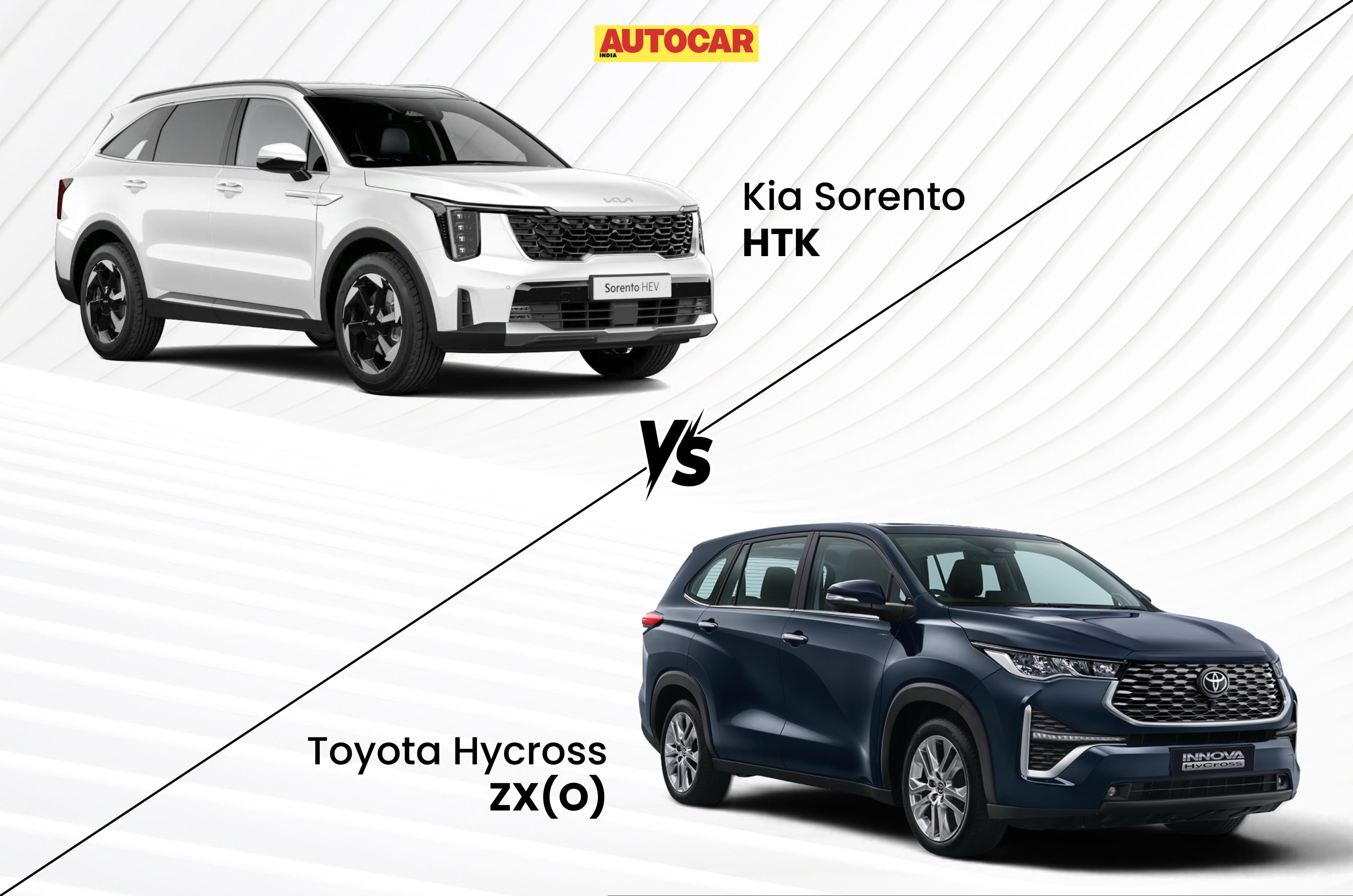
While the Kia Sorento is a direct rival to premium three-row SUVs such as the Volkswagen Tayron and Skoda Kodiaq, it can also be viewed as an indirect competitor to the Toyota Innova Hycross – both are three-row strong hybrids that somewhat overlap in price. Specifically, if you are looking to buy the top-spec Innova Hycross ZX(O) Hybrid, a relatively small budget extension will also put the mid-spec Sorento HTK Hybrid within your reach. Below, we’ve compared everything these Sorento and Innova Hycross variants offer to help you decide which one you should pull the trigger on.

Kia Sorento HTK vs Toyota Innova Hycross ZX(O): Dimensions

Sorento is longer overall and wider, Hycross offers longer wheelbase


Sorento HTK Hybrid

Innova Hycross ZX(O) Hybrid

Length (mm)

4,815

4,755

Width (mm)

1,900

1,850

Height (mm)

1,785

1,790

Wheelbase (mm)

2,815

2,850

Seating capacity

6/7

7

Wheel size (inches)

19

18

Among the key exterior distinctions between these two is that the Sorento is an SUV, and the Innova Hycross is an MPV. The Sorento is a good 60mm longer than the Innova Hycross overall, but the latter interestingly has a 35mm advantage on the wheelbase front. Height is also a narrow victory for the Innova Hycross, but the Sorento wins when it comes to width and alloy wheel size. The Kia SUV even offers a 6-seat layout but for a premium of Rs 20,000.

Kia Sorento HTK vs Toyota Innova Hycross ZX(O): Powertrains

Sorento has a smaller engine but makes much more torque


Sorento HTK Hybrid

Innova Hycross ZX(O) Hybrid

Engine

1.6-litre turbo-petrol

2.0-litre petrol

Cylinder count

4

4

Engine power (hp)

180

–

Engine torque (Nm)

265

191

Motor power (hp)

65

–

Motor torque (Nm)

264

206

Combined power (hp)

–

184

Gearbox

6-speed AT

e-CVT

Fuel tank capacity

67

52

As noted previously, both the Sorento and Innova Hycross are powered by strong hybrid setups. However, the Sorento gets a smaller direct-injection turbo-petrol engine, while the Innova Hycross gets a larger naturally aspirated mill. The Sorento’s torque figures are higher than those of the Innova Hycross, and the Toyota MPV’s combined power output is also not much higher than the Kia SUV’s engine output. Their gearboxes are quite different too, with the Sorento using a 6-speed torque converter, and the Innova Hycross an e-CVT. Lastly, the Sorento has a substantially larger fuel tank as well.

Kia Sorento HTK vs Toyota Innova Hycross ZX(O): Exterior features

Sorento gets sequential indicators and roof rails over Hycross


Sorento HTK Hybrid

Innova Hycross ZX(O) Hybrid

Auto LED headlamps

Yes

Yes

LED DRLs

Yes

Yes

Front fog lamps

Yes

Yes

LED tail-lamps

Yes

Yes

Sequential indicators

Yes

No

Roof rails

Yes

No

Powered ORVMs

Yes

Yes

Powered tailgate

Yes

Yes

Shark-fin antenna

Yes

Yes

Rear spoiler

Yes

Yes

Colour options

7, monotone

6, monotone

The Sorento and Innova Hycross are quite evenly matched in terms of functional features, with the Toyota missing out only on roof rails and sequential indicators. Exterior colours are again a win for the Sorento, as it offers one extra option over the Innova Hycross.

Kia Sorento HTK vs Toyota Innova Hycross ZX(O): Interior features

Sorento fares better on tech, but Hycross has a few aces up its sleeve


Sorento HTK Hybrid

Innova Hycross ZX(O) Hybrid

Infotainment screen

12.3-inch

10.1-inch

Instrument cluster

12.3-inch

Analogue with MID

Panoramic sunroof

Yes

Yes

Wireless charger

Yes

Yes

Powered front seats

Yes

Driver only

Ventilated front seats

Yes

Yes

Dual-zone climate control

Yes

Yes

Ambient lighting

64-colour

Blue only

Sound system

12-speaker Bose

9-speaker JBL

Apple CarPlay and Android Auto

Wireless

Wireless

Cabin air purifier

No

Yes

Connected car tech

Yes

Yes

Rear window sunshade

No

Yes

Rear centre armrest

Yes

Yes

Sliding, reclining rear seats

Yes

Yes

Rear-seat leg rests

No

Yes, powered

The Sorento is a step above the Innova Hycross when looking at nice-to-have features, such as a bigger touchscreen, a digital driver’s display, configurable ambient lighting, more speakers, a powered co-driver’s seat and more. However, the Innova Hycross holds its own on the comfort and convenience front, courtesy of goodies such as a rear window sunshade, a cabin air purifier, and powered leg rests for the second row.

Kia Sorento HTK vs Toyota Innova Hycross ZX(O): Driving features

Hycross offers adaptive cruise control


Sorento HTK Hybrid

Innova Hycross ZX(O) Hybrid

Drive modes

3

3

Acoustic vehicle alert system

Yes

Yes

Paddleshifters

Yes

Yes

Cruise control

Yes

Adaptive

Both hybrids are almost identical when it comes to driving features, but the Innova Hycross edges ahead thanks to adaptive cruise control, which can automatically adjust the car’s speed based on its proximity to the vehicle in front, making it superior to the Sorento’s standard cruise control system.

Kia Sorento HTK vs Toyota Innova Hycross ZX(O): Safety features

Sorento has 7 airbags and side sensors, while Hycross gets Level 2 ADAS


Sorento HTK Hybrid

Innova Hycross ZX(O) Hybrid

Level 2 ADAS

No

Yes

Airbags

7

6

ABS with EBD

Yes

Yes

ESC

Yes

Yes

Hill-hold control

Yes

Yes

TPMS

Yes

Yes

360-degree camera

Yes

Yes

Parking sensors

Front, rear, side

Front, rear

Electronic parking brake

Yes

Yes

Rain-sensing wipers

Yes

No

Rear wiper, defogger

Yes

Yes

Isofix child-seat anchors

Yes

Yes

Disc brakes

Front, rear

Front, rear

In its top-spec form, the Innova Hycross offers Level 2 ADAS, which the mid-spec Sorento lacks. ADAS can make highway cruising much easier, so buyers who frequently head out of the city will likely appreciate the Toyota more in this regard. The Sorento, on the other hand, offers a driver knee airbag and side parking sensors; the latter can make manoeuvrability much easier in the city.

Kia Sorento HTK vs Toyota Innova Hycross ZX(O): Prices

Hycross is Rs 2.15 lakh more affordable


Sorento HTK Hybrid 7S

Innova Hycross ZX(O) Hybrid 7S

Price (in Rs lakh)

33.99

31.84

The Sorento HTK Hybrid 7-seater commands a premium of Rs 2.15 lakh over the Innova Hycross ZX(O) Hybrid 7-seater. Some prospective buyers may find the price difference steep, but the Sorento makes it worthwhile if you want a more tech-laden and premium-looking cabin, as well as better performance. The Innova Hycross, on the other hand, packs a lot of comfort and convenience features that may interest buyers who are chauffeur-driven or frequently ferry around their families.

All prices are ex-showroom, India.
2026 BMW 7 Series vs old model: Differences explained

2026 BMW 7 Series vs old model: Differences explained
BMW 7 Series vs old model

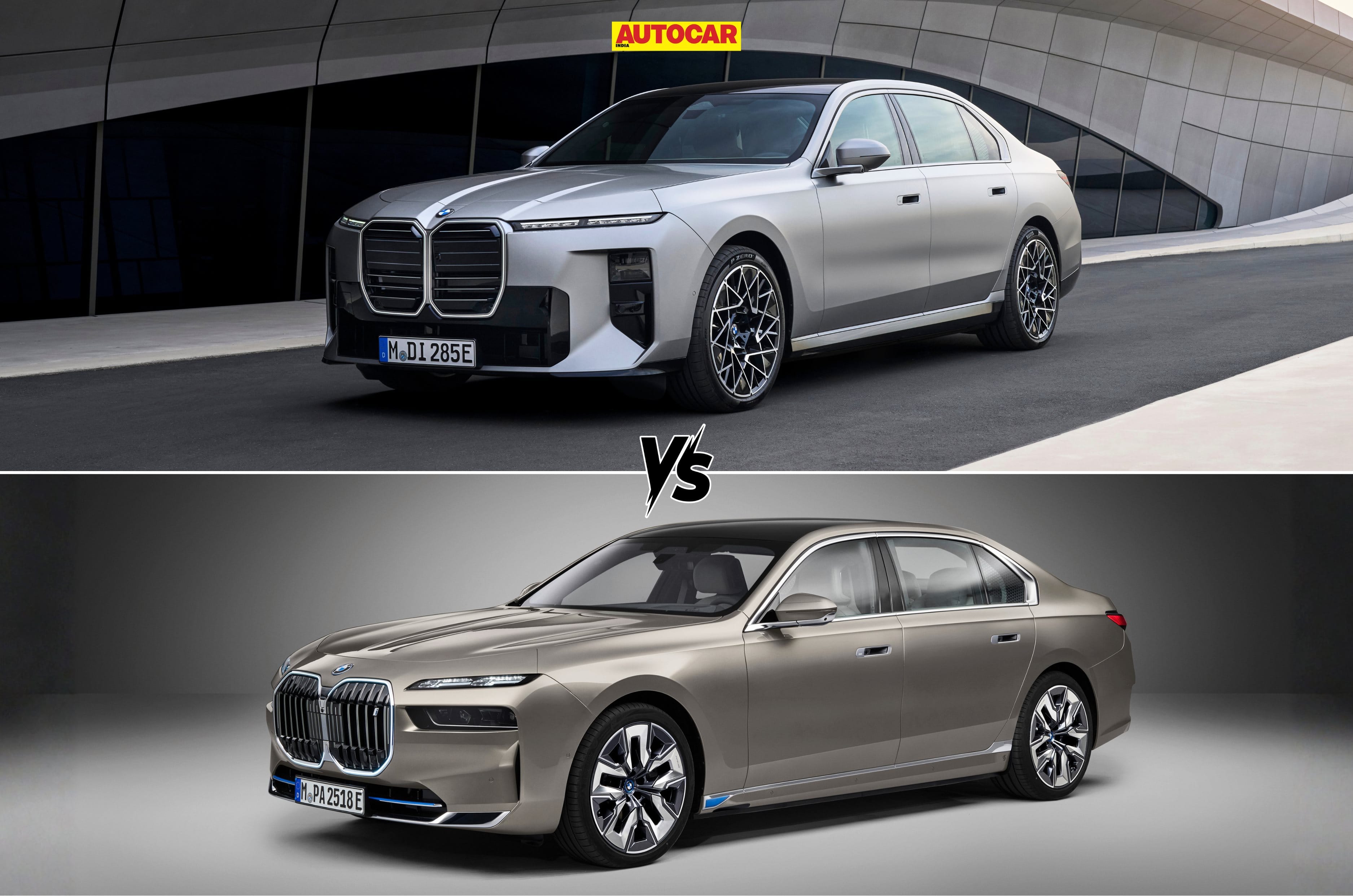
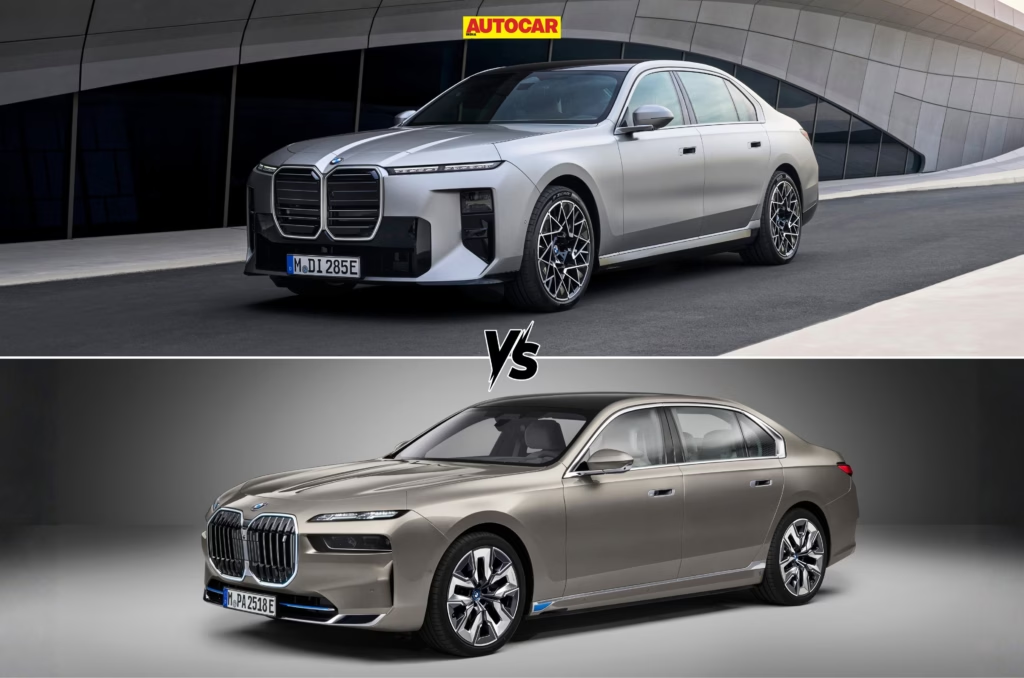
BMW has revealed the facelifted 7 Series, along with its electric counterpart, the i7. This mid-lifecycle update brings subtle changes to the exterior, but the bigger updates are inside, inspired by the brand’s latest Neue Klasse flair. There are also gains across powertrains, with improved outputs across the range. Here is a closer look at what has changed and how the updated BMW 7 Series compares with the outgoing model. 

Disclaimer: The image sliders below feature global-spec BMW i7 models.

2026 BMW 7 Series vs old model: Exterior design

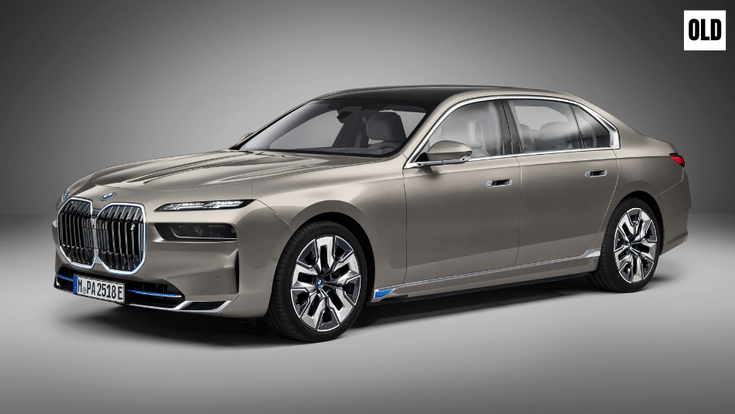
BMW 7 Series facelift new
BMW 7 Series facelift old
 

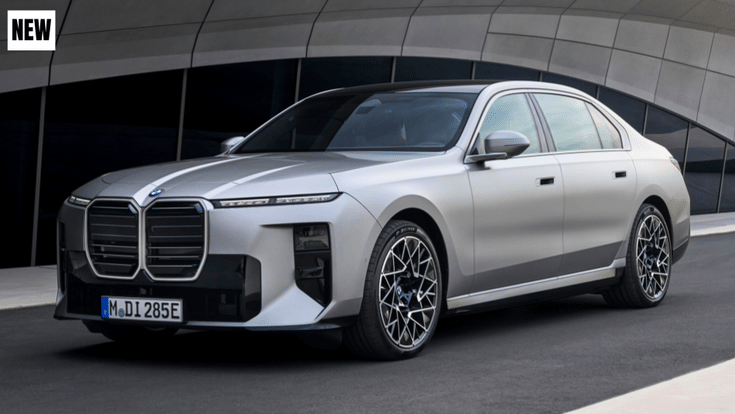
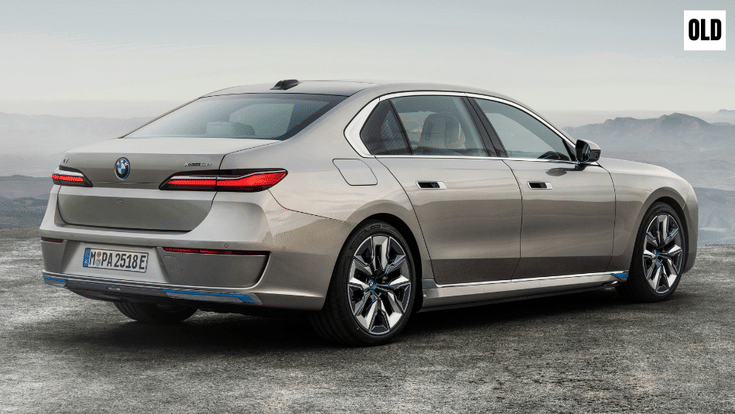
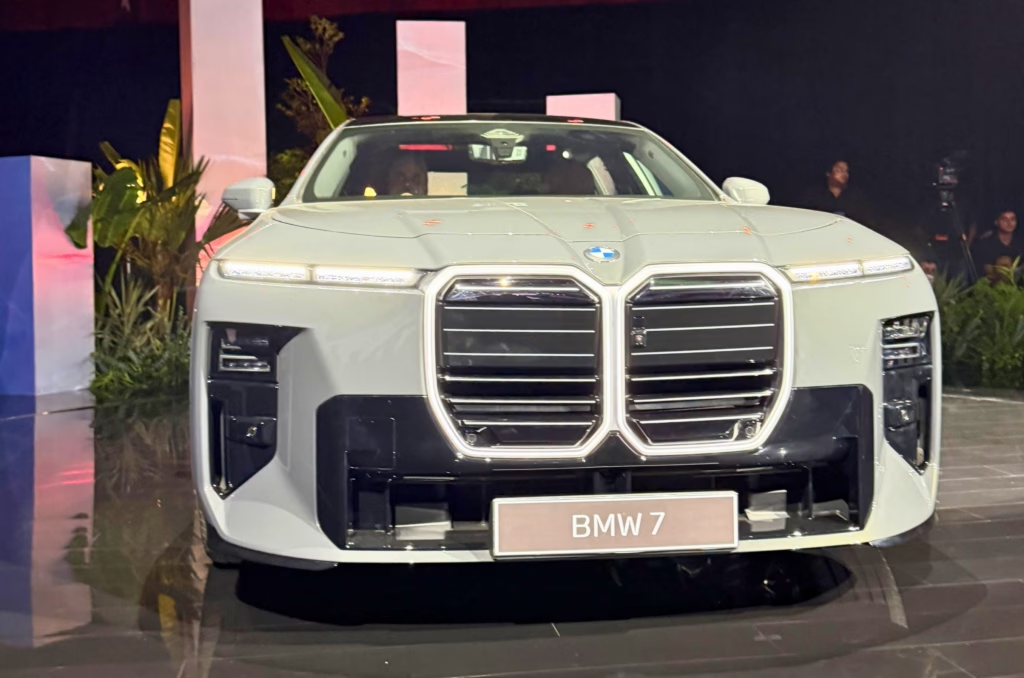
Unlike the predecessor that had the M-Sport package on certain variants, the 2026 7 Series gets it as standard. The facelifted 7 Series gets a much cleaner front end than the outgoing model. The biggest change is the updated illuminated kidney grille, which is now slimmer and more upright, and it also gets a new horizontal light graphic. While a split headlamp setup is carried over, the DRLs get a slimmer look, while the main headlamp units are now vertically stacked as opposed to the predecessor’s horizontal ones. The BMW badge on the bonnet is also new, larger, and finished in matte. BMW says the radar, camera, sensors, and washer nozzles are hidden inside the grille area, which helps keep the front uncluttered.

BMW 7 Series facelift side new
BMW 7 Series facelift old
 

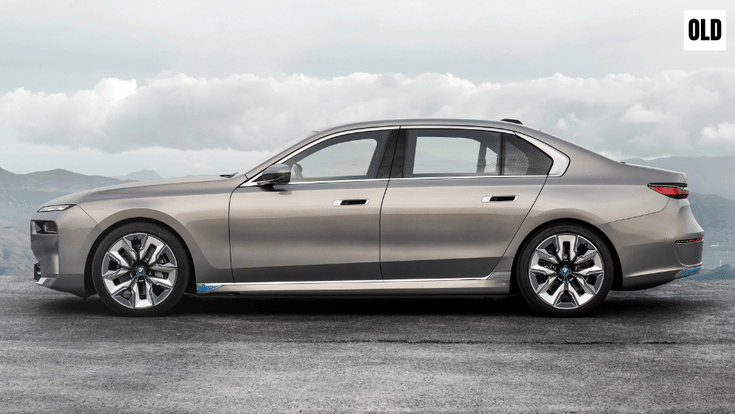
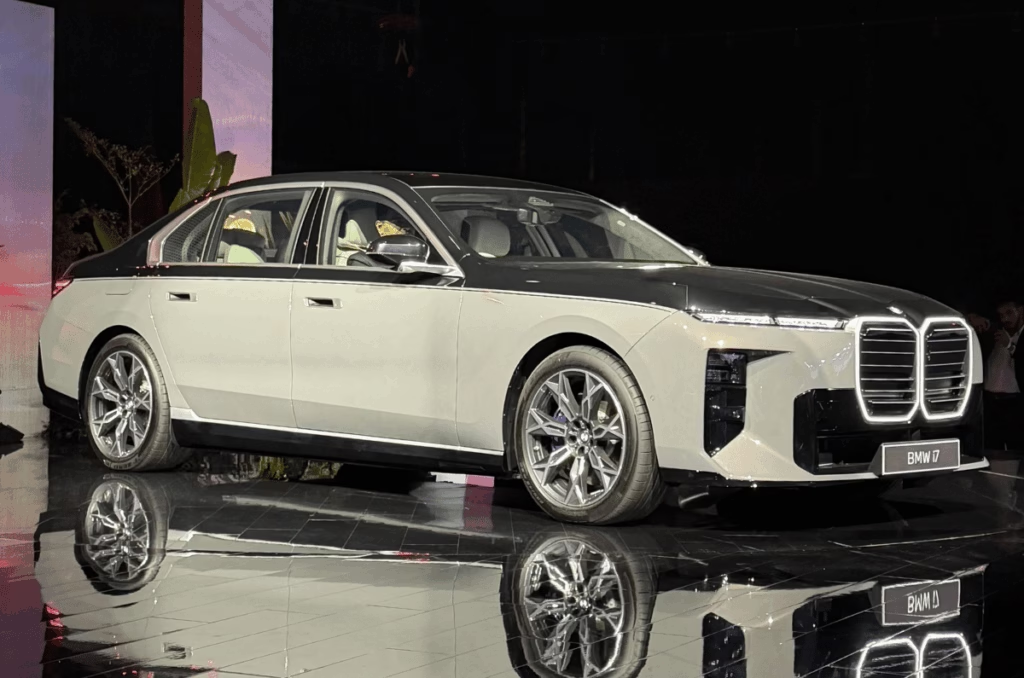
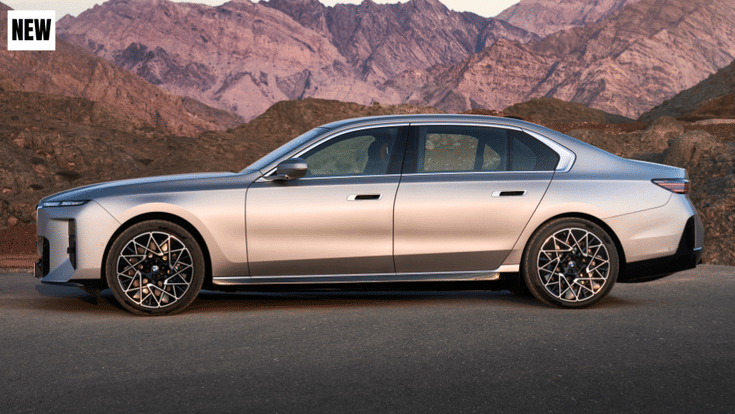
In profile, the facelift retains the clean and simple design. The door handles continue to be flush with the body, giving the surface a clean look. The trim around the handles is finished in Satin Aluminium, and the wheel design has been reworked. The B-pillar also has a visible embossed “7” when both doors on one side are opened. 

BMW 7 Series facelift new
BMW 7 Series facelift old
 

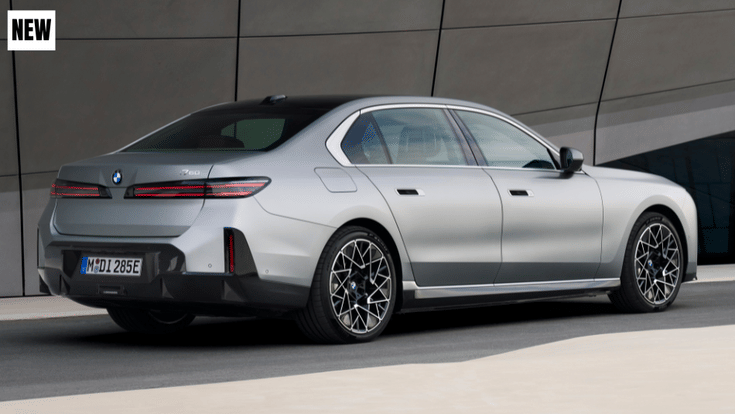
The rear gets new taillights, and this is one of the most obvious changes compared to the old model. They are slimmer, stretched further into the body, and give the car a wider look. BMW has also used chrome detailing inside the lamps and smoked glass for a darker finish. Like at the front, many of the technical bits, such as the boot release, rear camera, and washer nozzle, are tucked away. The rear bumper also gets a diffuser-like trim for a more modern look.

2026 BMW 7 Series vs old model: Interior and features

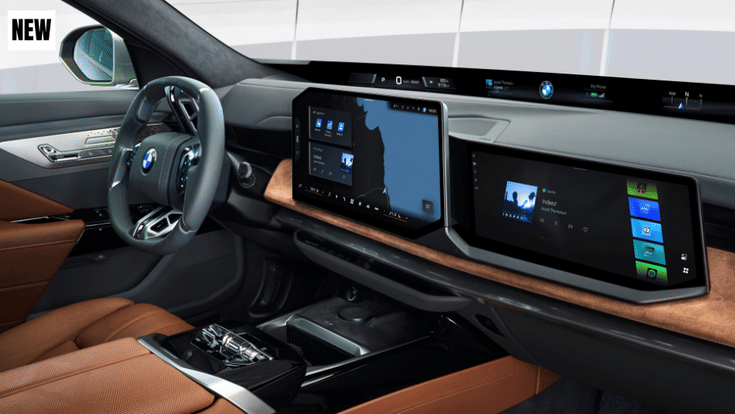
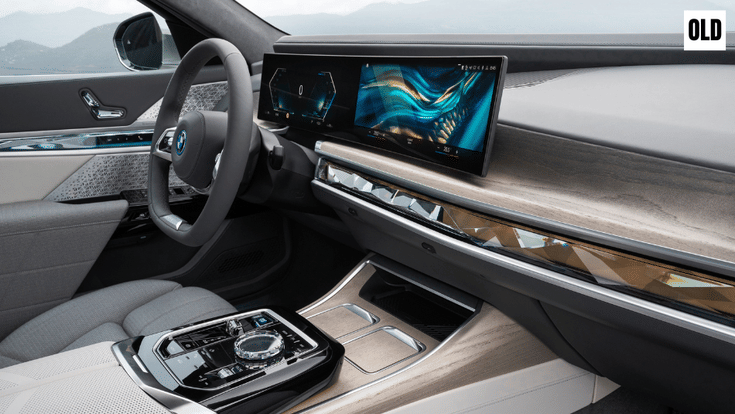
The facelifted 7 Series gets a 17.9-inch central touchscreen, a 14.6-inch front passenger display, and a projection across the full width of the windscreen’s base in contrast to its predecessor’s dual-screen setup. The touchscreen runs BMW’s Operating System X and supports over-the-air updates, wireless Apple CarPlay and Android Auto, and improved voice control. The four-spoke steering wheel is also new, inspired by classic BMW cars. The centre console has crystal-type controls for the engine start/stop button, gear selector, and volume control. There is also an illuminated cup holder and a smartphone tray with wireless charging.

BMW 7 Series facelift interior new
 

The 2026 7 Series comes with a Bowers & Wilkins Diamond Surround Sound System as standard, 4D audio, and Dolby Atmos. The carmaker has added a new lighting setup inside the car. There is a full-width ambient light strip across the cabin, lighting elements behind the front seats, illuminated rear-door speaker covers, and extra reading lights in the back. The optional panoramic glass roof also gets LED lighting with a graphic pattern. As per BMW, the lighting changes with the selected driving mode. 

As for interior trim choices, the regular 7 Series models come standard with a fine oak wood trim and are available with either a black-and-brown or black-and-white theme with leather-upholstered seats. Other options include carbon-fiber and cashmere trims. 

BMW 7 Series facelift interior new
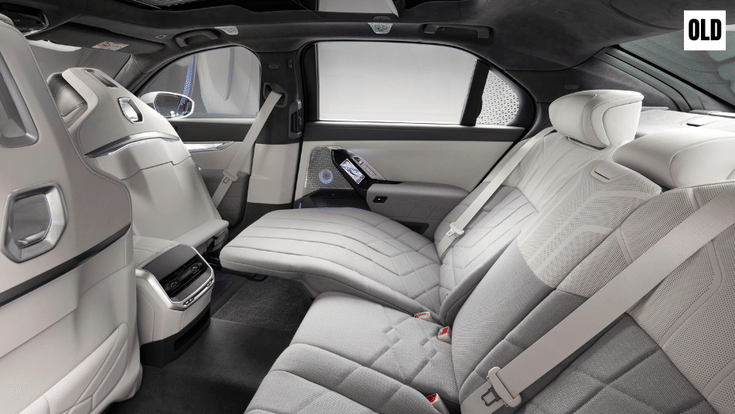
BMW 7 Series facelift interior old
 

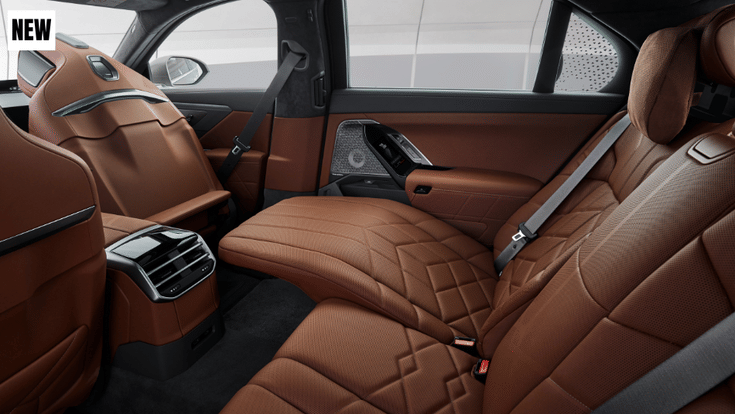
Standard seats come with electric adjustment, heating, massaging, armrest heating, lumbar support, and active ventilation. At the rear, BMW offers Executive Lounge Seating with a leg rest, a heated centre armrest and a more relaxed seating position. The front passenger seat can move fully forward to create more room for the rear passenger behind it. The rear gets a major update, too. The optional Theatre Screen is now a 31.3-inch 8K touchscreen and can be used for video calls, streaming, and gaming.  

The rear doors get updated screens that let passengers move these units, change the viewing angle, and control other functions. The facelift also brings new automatic doors with better-placed open and close buttons. BMW says they work with a touch of the flush-fitting handles and can even be operated through the My BMW app or voice commands. 

2026 BMW 7 Series facelift vs old model: Powertrains

7 Series petrol and diesel

7 Series old vs new: Powertrains

Variant740i M Sport (old)740 M Sport (new)
Engine3L inline-6 + 48V3L inline-6 + 48V
Power381hp400hp
Torque520Nm540Nm
Transmission8AT8AT
Drive layoutRWDRWD

With the facelift, the ICE-powered 7 Series has dropped the diesel engine and is now a petrol-only model. The new 740 does without the ‘i’ suffix and now makes 400hp and 540Nm, which is up by 19hp and 20Nm over the outgoing car. 

i7 EV

i7 old vs new: Powertrains

Variant50 eDrive (old)50 xDrive (new)M70 xDrive (old)M70 xDrive (new)
Battery101.7kWh112.4kWh101.7kWh112.4kWh
Motor power449hp455hp650hp680hp
Torque650Nm660Nm1,015Nmup to 1,100Nm
Drive layoutRWDAWDAWDAWD

For the electric i7, the biggest change is at the entry point. The old rear-wheel-drive 50 eDrive is gone, and BMW now offers a 50 xDrive with all-wheel drive instead. That variant now gets a bigger 112.4kWh battery, up from 101.7kWh, while power has risen only slightly from 449hp to 455hp and torque has gone up by 10Nm to 660Nm. The M70 xDrive also gets a similar battery upgrade. Power has increased by 30hp, from 650hp to 680hp, while torque has climbed from 1,015Nm to up to 1,100Nm.

Poco X8 और X8 Power की भारत में पहली सेल आज, चेक करें कीमत, स्पेसिफिकेशन्स और ऑफर्स

Poco X8 और Poco X8 Power की भारत में पहली सेल आज से शुरू होने वाली है। दोनों स्मार्टफोन को 4 सितंबर को लॉन्च किया गया था। इनमें मिड-रेंज हार्डवेयर दिया गया है और ये कई अलग-अलग कलर ऑप्शन में उपलब्ध होंगे। दोनों फोन में बड़ी क्षमता वाली बैटरी दी गई है। Poco X8 में 9,000mAh की बैटरी है, जबकि Poco X8 Power में 10,000mAh की बैटरी मिलती है। इसके अलावा, दोनों फोन में 50MP का रियर कैमरा दिया गया है और ये Qualcomm के Snapdragon 6 सीरीज प्रोसेसर पर काम करते हैं।

भारत में Poco X8 और Poco X8 Power की कीमत और सेल ऑफर

Poco X8 और Poco X8 Power आज दोपहर 12:00 बजे (IST) से खास तौर पर Flipkart पर उपलब्ध होंगे। Poco X8, 6+128GB, 8+128GB और 8+256GB वेरिएंट में उपलब्ध होगा, जिनकी कीमत क्रमशः ₹29,999, ₹32,999 और ₹35,999 होगी। जबकि Poco X8 Power, 8+128GB और 8+256GB वेरिएंट में उपलब्ध होगा, जिनकी कीमत क्रमशः ₹35,999 और ₹38,999 होगी। Poco X8 Black, Fiery Orange, and Frost White कलर में उपलब्ध होगा, जबकि Poco X8 Power Yellow और Black रंगों में उपलब्ध होगा।

लॉन्च ऑफर के तहत, खरीदार 2,000 रुपये की छूट के साथ-साथ बैंक ऑफर या एक्सचेंज बोनस के तौर पर 1,000 रुपये का फायदा भी पा सकते हैं। Poco का दावा है कि इससे Poco X8 की शुरुआती कीमत घटकर 26,999 रुपये और Poco X8 Power की शुरुआती कीमत 32,999 रुपये हो जाएगी। ये स्मार्टफोन 12 महीने की नो-कॉस्ट EMI पर भी उपलब्ध होंगे, जिसमें Poco X8 के लिए EMI 2,250 रुपये प्रति महीना और Poco X8 Power के लिए 2,750 रुपये प्रति महीना होगी।

Poco X8 और Poco X8 Power के स्पेसिफिकेशन्स

Poco X8 और Poco X8 Power, दोनों में 120Hz रिफ्रेश रेट वाला 6.83-इंच का 1.5K AMOLED डिस्प्ले है। Poco का दावा है कि ये डिस्प्ले HDR10+ और Dolby Vision को सपोर्ट करते हैं और गेमिंग के लिए 3,200 Hz का टच सैंपलिंग रेट देते हैं। ये फोन धूल और पानी से बचाव के लिए IP66, IP68 और IP69K रेटिंग वाले हैं। दोनों स्मार्टफोन में डुअल नैनो सिम कार्ड लगते हैं, ये डुअल स्टैंडबाय को सपोर्ट करते हैं और Xiaomi के HyperOS 3 पर चलते हैं, जो Android 16 पर आधारित है।

Poco X8 में Qualcomm का 4nm Snapdragon 6 Gen 5 प्रोसेसर है, जबकि Poco X8 Power में 4nm Snapdragon 6s Gen 4 प्रोसेसर दिया गया है। Poco X8 में LPDDR4X RAM है, जबकि Poco X8 Power में LPDDR5X RAM मिलती है। दोनों डिवाइस में UFS 4.1 इंटरनल स्टोरेज है।

Poco X8 और Poco X8 Power, दोनों में f/1.8 अपर्चर वाला 50MP का प्राइमरी कैमरा दिया गया है। Poco X8 में 2MP का डेप्थ सेंसर और 16MP का सेल्फी कैमरा है, जबकि X8 Power में 8MP का अल्ट्रावाइड कैमरा और 32MP का सेंसर है।

बैटरी की बात करें तो, Poco X8 में 67W वायर्ड चार्जिंग के साथ 9,000mAh की बैटरी है, जबकि Poco X8 Power में 100W वायर्ड चार्जिंग के साथ 10,000mAh की बैटरी दी गई है।

यह भी पढ़ें: Lava Bold N4 Pro 5G की लॉन्च डेट कंफर्म! खास स्पेसिफिकेशन्स, डिजाइन और अन्य जानकारी आई सामने

2026 BMW 7 Series facelift launched at Rs 1.95 crore

2026 BMW 7 Series facelift launched at Rs 1.95 crore
2026 bmw 7 series on stage

BMW has launched the 2026 7 Series facelift in India at a starting price of Rs 1.95 crore. Globally unveiled earlier this year, the 7 Series facelift brings a slew of changes to the flagship sedan’s exterior and interior, along with some powertrain upgrades. The 7 Series continues to rival the Mercedes-Benz S-Class, a facelift of which also went on sale in India a few months ago.

In addition to the ICE-powered 7 Series, BMW launched the luxury sedan’s updated all-electric counterpart, the i7, in eDrive50 and M70 guises. The 7 Series and i7 eDrive50 will be locally assembled at BMW’s Chennai plant.

2026 BMW 7 Series facelift price list

VariantPrice (Rs, crore)
7401.95

The ICE-powered 7 Series facelift is available in only one variant in India: the petrol-powered ‘740’. BMW has dropped the prior model’s ‘740d’ diesel version. Compared to the outgoing 7 Series, which was priced at Rs 1.85 crore, the facelift is pricier by Rs 10 lakh. Compared to the S-Class, which costs Rs 2.20 crore-2.38 crore, the 2026 7 Series is up to Rs 43 lakh more affordable.

2026 BMW 7 Series facelift exterior changes

The front end of the 7 Series facelift sees the most drastic changes, with a more slab-sided and imposing look. BMW has revised the split headlamps, with a slim pair of DRLs extending outwards from the top of the grille, and the main LED units relocated right above the redesigned vertical air intakes. The kidney grilles are now more squared-off and have horizontal slats, and continue to get an illuminated surround. Lastly, the air dam below the grille is much wider.

Over to the side, the 7 Series facelift gets updated side skirts and new alloy wheel designs – 20-inchers are fitted as standard, which can be optioned up to 22 inches. The rear end, meanwhile, features a pair of new wide LED tail-lamps and a smoother-looking bumper.

2026 BMW 7 Series facelift interior changes

On the inside, the 7 Series facelift has been updated to resemble BMW’s newer Neue Klasse models. The dashboard notably features a rhomboidal 17.9-inch infotainment touchscreen, a 14.6-inch passenger screen, a pillar-to-pillar Panoramic Vision display, and a four-spoke steering wheel. Lower down, the centre console has been redesigned with a larger storage space, fewer buttons, and a new cylindrical rotary drive selector.

As for features, the facelifted 7 Series packs an 18-speaker Bowers & Wilkins surround sound system, ambient lighting, powered doors, wireless Apple CarPlay and Android Auto, over-the-air updates, a fixed panoramic glass roof, Boss mode, powered leg rests, connected car tech, Level 2 ADAS, and powered, heated, ventilated, and massaging seats. Buyers can also opt for a 31.3-inch 8K rear entertainment screen and embedded LEDs for the fixed panoramic glass roof that sync up with the ambient lighting.

2026 BMW 7 Series facelift engine and gearbox

The 7 Series facelift carries forward the outgoing model’s 3.0-litre direct-injection turbo-petrol straight-six, which is mated to a 48-volt mild hybrid system. Thanks to internal upgrades, the 740 now produces up to 400hp and 540Nm – up 19hp and 20Nm over its predecessor. As noted previously, the 2026 7 Series facelift is not available with a diesel engine in India, even though the option is offered in some global markets.

An 8-speed torque converter automatic sends power to the rear wheels, enabling a claimed 0-100kph time of 5.4 seconds for the 740. Top speed is electronically limited to 250kph. Additionally, the 7 Series facelift packs rear-wheel steering and adaptive suspension.

All prices are ex-showroom, India.
2026 BMW i7 facelift launched at Rs 1.95 crore

2026 BMW i7 facelift launched at Rs 1.95 crore
BMW i7

BMW India has launched the 2026 i7 facelift at Rs 1.95 crore (eDrive 50 trim), ex-showroom. The range-topping M70 xDrive trim costs Rs 2.65 crore. With this year’s mid-lifecycle update, BMW’s flagship electric sedan gets powertrain upgrades, along with several exterior and interior design tweaks.

2026 BMW i7 facelift: Powertrain specs

The range-starting i7 eDrive 50 trim makes 455hp and 600Nm, accelerating from 0-100kph in 5.5 seconds and topping out at 210kph. It uses a 112.5kWh battery pack, allowing for a single charge range of 728km (WLTP rated). BMW claims that is an increase of 125km over the outgoing model.

The top-spec i7 M70 xDrive (all-wheel drive in BMW speak) makes higher outputs of 680hp, and 1,015Nm (in Sport mode) and 1,100Nm (with Sport Boost function). As a result, it does the sprint from rest to 100kph in just 3.8 seconds; top speed is 250kph. Range, however, stands at 686km (also WLTP).

With a 250kW DC fast charger, a 10-80 percent charge takes 28 minutes; BMW claims that a 10-minute charging top-up can add a range of 235km. Whereas, it takes about six hours to charge the battery from 0-100 percent with a 22kW AC charger. Both trims come with a complimentary wallbox charger with installation. It can be installed at home to enable charging at speeds of up to 22kW.

2026 BMW i7 facelift: Exterior highlights

The updated i7 sedan receives subtle styling revisions, though it carries over the overall design of the outgoing model. Part of the changes include a  more squared-off kidney grille with illuminated surrounds, revised LED headlamps and a new front bumper. Along the sides, BMW has introduced a new alloy wheel design while retaining the flush-fitting door handles. At the rear, the i7 gets new tail-lamps with smoked lenses, along with a redesigned tailgate and bumper.

Compared to the standard sedan, i7 M70 xDrive gets a larger front air intake. In addition to the grille, this trim also gets M badges on the Hofmeister kink of the side windows and on the outer edges of the rear lights. The M70 rides on 21-inch wheels.

2026 BMW i7 facelift: Interior features

The biggest changes are inside the cabin. Instead of a traditional driver’s display, the facelift gets BMW’s Panoramic Vision full-width projection at the windscreen’s base. The rhomboidal touchscreen in the centre measures 17.9 inches, and it runs the latest BMW Operating System X, supports over-the-air updates, wireless Apple CarPlay and Android Auto, and features improved voice controls. There’s a new passenger screen as well, and it measures 14.6 inches. 

Even the centre console has been redesigned with a more storage space, lesser buttons, and a new cylindrical rotary drive selector. BMW has also redesigned the dashboard, introduced a new four-spoke steering wheel like in its Neue Klasse models. 

As before, the i7 gets a massive 31.3-inch 8K Theatre Screen at the rear. Audio duties are taken care of by a Bowers & Wilkins surround sound system with Dolby Atmos. Powered doors have been retained as well. The panoramic glass roof can be specified with more than 40 LED lights. Other features include Boss mode, powered ottomans, connected car tech, Level 2 ADAS, and powered, heated, ventilated, and massaging seats. 

The 2026 BMW i7 eDrive 50 will be locally-assembled at the company’s Chennai plant, while the M70 xDrive version will arrive here as a fully imported model.

New SIM Activation: नया SIM कार्ड कैसे करें एक्टिवेट? जानें स्टेप-बाय-स्टेप प्रोसेस

New SIM Activation: नया SIM कार्ड लेना आमतौर पर आसान होता है, लेकिन इसका मतलब यह नहीं है कि आप उसे तुरंत इस्तेमाल करना शुरू कर सकते हैं। चाहे आपके पास फिजिकल SIM हो या eSIM, कॉल, मैसेज और मोबाइल डेटा का इस्तेमाल शुरू करने से पहले आपको कुछ जरूरी स्टेप्स पूरे करने पड़ सकते हैं।

SIM एक्टिवेट करने का तरीका इस बात पर भी निर्भर करता है कि आप नया मोबाइल नंबर ले रहे हैं, अपना पुराना SIM बदल रहे हैं या अपने कनेक्शन को किसी दूसरे फोन में इस्तेमाल करने जा रहे हैं। यहां हम आपको फोन में SIM एक्टिवेट करने का आसान स्टेप-बाय-स्टेप तरीका बता रहे हैं।

नया SIM कार्ड कैसे करें एक्टिवेट

  1. सबसे पहले नया SIM खरीदते समय KYC की प्रक्रिया पूरी करें। कनेक्शन एक्टिवेट होने से पहले आपका टेलीकॉम ऑपरेटर आपकी पहचान वेरिफाई करेगा।
  2. इसके बाद अपना फोन बंद करें और SIM इजेक्टर टूल की मदद से फोन की SIM ट्रे खोलें।
  3. नए SIM कार्ड को सही स्लॉट में लगाएं और SIM ट्रे को वापस बंद कर दें।
  4. अब फोन ऑन करें और SIM के नेटवर्क से कनेक्ट होने का इंतजार करें। ऑपरेटर और कनेक्शन के प्रकार के हिसाब से SIM एक्टिवेट होने में थोड़ा समय लग सकता है।
  5. जब आपकी टेलीकॉम कंपनी SIM एक्टिवेट करने के लिए कहे, तो दिए गए निर्देशों को फॉलो करें। इसमें टेली-वेरिफिकेशन कॉल या किसी दूसरे तरीके से वेरिफिकेशन करना शामिल हो सकता है।
  6. इसके बाद एक टेस्ट कॉल करें और चेक करें कि आप कॉल कर पा रहे हैं और कॉल रिसीव भी कर पा रहे हैं या नहीं।
  7. एक SMS भेजें और Wi-Fi बंद करके देखें कि मोबाइल डेटा काम कर रहा है या नहीं।
  8. अगर SIM नेटवर्क से कनेक्ट हो जाता है और कॉल, SMS और मोबाइल डेटा सही तरीके से काम करने लगते हैं, तो आप अपने नए कनेक्शन का इस्तेमाल शुरू कर सकते हैं।

eSIM कैसे एक्टिवेट करें

  1. सबसे पहले चेक करें कि आपका फोन eSIM को सपोर्ट करता है या नहीं। साथ ही यह भी देखें कि आपकी टेलीकॉम कंपनी आपके फोन में eSIM की सुविधा देती है या नहीं।
  2. इसके बाद अपनी टेलीकॉम कंपनी से eSIM के लिए रिक्वेस्ट करें। कंपनी के हिसाब से आप यह काम उसके ऐप या SMS के जरिए कर सकते हैं।
  3. eSIM के लिए रिक्वेस्ट करते समय आपको अपनी रजिस्टर्ड ईमेल आईडी, मोबाइल नंबर और फोन का EID जैसी जानकारी देनी पड़ सकती है। यह जानकारी कंपनी के हिसाब से अलग-अलग हो सकती है।
  4. अब टेलीकॉम कंपनी की ओर से मांगा गया वेरिफिकेशन पूरा करें। इसमें OTP, कन्फर्मेशन SMS या ऑटोमेटेड वेरिफिकेशन कॉल शामिल हो सकती है।
  5. रिक्वेस्ट मंजूर होने के बाद टेलीकॉम कंपनी आपको eSIM प्रोफाइल डाउनलोड करने का तरीका बताएगी। कंपनी के हिसाब से आपको ईमेल पर QR कोड मिल सकता है या फोन पर eSIM प्रोफाइल का नोटिफिकेशन आ सकता है।
  6. अब अपने फोन की Mobile Network Settings खोलें और Add eSIM या Add Mobile Plan का विकल्प चुनें।
  7. अगर आपको QR कोड मिला है, तो उसे स्कैन करें और स्क्रीन पर दिए गए निर्देशों को फॉलो करें। eSIM सेटअप के दौरान फोन को Wi-Fi या मोबाइल डेटा से कनेक्ट रखें।
  8. इसके बाद eSIM के आपकी टेलीकॉम कंपनी के नेटवर्क से कनेक्ट होने का इंतजार करें। इसमें लगने वाला समय अलग-अलग कंपनियों के हिसाब से अलग हो सकता है।
  9. eSIM एक्टिवेट होने के बाद एक टेस्ट कॉल करें और एक SMS भेजकर चेक करें कि कनेक्शन सही तरीके से काम कर रहा है या नहीं।
  10. अब Wi-Fi बंद करके मोबाइल डेटा चेक करें। अगर कॉल, SMS और मोबाइल डेटा सही तरीके से काम कर रहे हैं, तो आपका eSIM इस्तेमाल के लिए तैयार है।

अगर आपकी SIM काम नहीं कर रही है, तो क्या करें

अगर आपकी नई SIM नेटवर्क से कनेक्ट नहीं हो रही है, तो सबसे पहले अपना फोन रीस्टार्ट करें और देखें कि SIM सही तरीके से लगी है या नहीं। नेटवर्क कनेक्शन को रिफ्रेश करने के लिए आप एयरप्लेन मोड को ऑन और ऑफ भी कर सकते हैं। यह भी देखें कि आपका फोन SIM को पहचान रहा है या नहीं और जिस जगह आप हैं, वहां नेटवर्क कवरेज उपलब्ध है या नहीं।

अगर समस्या बनी रहती है, तो आप उस फिजिकल SIM को किसी दूसरे कम्पैटिबल फोन में लगाकर देख सकते हैं कि समस्या SIM में है या आपके डिवाइस में। eSIM के मामले में, देखें कि क्या आपके फोन की मोबाइल नेटवर्क सेटिंग्स में eSIM प्रोफाइल डाउनलोड और इनेबल हो गई है। अगर SIM फिर भी काम नहीं करती है, तो एक्टिवेशन में मदद के लिए अपने टेलीकॉम ऑपरेटर से संपर्क करें।

क्या नया SIM इस्तेमाल करने के लिए रिचार्ज की जरूरत है?

नया SIM इस्तेमाल करने के लिए रिचार्ज की जरूरत है या नहीं, यह आपके ऑपरेटर और कनेक्शन पर निर्भर करता है। भले ही SIM बिना रिचार्ज के एक्टिवेट हो जाए, लेकिन कॉल, SMS और मोबाइल डेटा के लिए आपको एक एक्टिव प्लान की जरूरत पड़ सकती है। अगर ये सर्विस काम नहीं कर रही हैं, तो चेक करें कि आपके SIM पर कोई एक्टिव प्लान है या नहीं। आप आमतौर पर अपनी टेलीकॉम कंपनी के ऐप या कस्टमर केयर के जरिए अपने प्लान की जानकारी देख सकते हैं।

पुराना SIM बदलने के बाद उसका क्या होता है?

अगर आप अपना मोबाइल नंबर वही रखते हुए मौजूदा SIM बदलते हैं, तो नया SIM एक्टिवेट होने के बाद पुराना SIM काम करना बंद कर देगा। इसके बाद आप पुराना SIM निकालकर नया SIM इस्तेमाल कर सकते हैं। आपका मोबाइल नंबर वही रहेगा।

यह भी पढ़ें: मोबाइल नंबर को एक नेटवर्क से दूसरे नेटवर्क पर कैसे करें पोर्ट? जानें स्टेप-बाय-स्टेप गाइड

3 लाख का iPhone Duo या पूरी जिंदगी का खर्च? इंटरनेट ने गिनाए ऐसे विकल्प, मीम्स देख नहीं रुकेगी हंसी

Apple का नया iPhone Duo लॉन्च होते ही सोशल मीडिया पर सिर्फ इसके फीचर्स की चर्चा नहीं हुई, बल्कि इसकी कीमत ने लोगों को अपना कैलकुलेटर निकालने पर मजबूर कर दिया। करीब 3 लाख रुपये की शुरुआती कीमत देखकर यूजर्स ने सवाल उठाया कि इतने पैसों में आखिर एक फोन खरीदा जाए या जिंदगी की कई दूसरी जरूरतें पूरी की जाएं। किसी ने कार और सोने का हिसाब लगाया, तो किसी ने पूरी Apple shopping list तैयार कर दी।

वहीं 3.5 लाख रुपये सालाना कमाने वालों से लेकर मिडिल क्लास की जेब तक, सब पर मीम्स बन गए। खास बात यह है कि iPhone Duo की कीमत जितनी बड़ी है, इंटरनेट की मीम क्रिएटिविटी उससे भी बड़ी निकली।

3 लाख में iPhone या बहुत कुछ और?

एक X यूजर ने iPhone Duo की कीमत को लेकर बेहद मजेदार हिसाब लगाया। उसका कहना है कि करीब 3 लाख रुपये में सिर्फ फोन खरीदने के बजाय एक अच्छी सेकंड-हैंड कार या मोटरसाइकिल ली जा सकती है। लगभग 20 ग्राम सोना खरीदा जा सकता है या कई शहरों में पूरे साल का किराया चुकाया जा सकता है। इतना ही नहीं, इस रकम में भाई या बहन की शादी का कैटरिंग बिल, घर का फ्रिज, एसी, टीवी, वॉशिंग मशीन और सोफा तक आ सकता है। माता-पिता को छुट्टी पर ले जाने या 10-15 अच्छे Android फोन खरीदने का विकल्प भी मौजूद है। और अगर निवेश करना चाहें तो रकम FD में डाल सकते हैं।

लेकिन मीम का पंचलाइन सबसे आखिर में आता है-या फिर 3 लाख रुपये में एक फोल्डिंग iPhone खरीद लीजिए।

एक फोन के बदले पूरा Apple सेटअप!

एक दूसरे यूजर ने भी iPhone Duo की कीमत देखकर अपना अलग गणित लगाया। उसके मुताबिक करीब 3 लाख रुपये खर्च करके एक iPhone Duo लेने के बजाय MacBook Neo, iPad, iPhone 17, AirPods और Apple Watch Series 10 खरीदे जा सकते हैं। खास बात यह कि उसके हिसाब से इतना सब लेने के बाद भी कुछ पैसे बच जाएंगे। एक फोल्डिंग फोन या Apple के कई डिवाइस?

3.5 लाख सालाना कमाई और 3 लाख का फोन!

iPhone Duo की कीमत करीब 3 लाख रुपये है। ऐसे में मीमर ने 3.5 लाख रुपये सालाना पैकेज वालों की हालत पर भी मजेदार मीम बना दिया। इसके लिए सांसद मनोज तिवारी का फेमस क्लिप इस्तेमाल किया गया है। मीम का इशारा साफ है जब साल भर की कमाई और फोन की कीमत में ज्यादा अंतर न हो, तो फोन खरीदने से पहले जेब जरूर याद आएगी।

 Apple का रिएक्शन भी बना मीम

एक अन्य इंटरनेट यूजर ने iPhone Duo लॉन्च होने के बाद Apple के संभावित रिएक्शन को लेकर मीम शेयर किया। यूजर ने लिखा, “आईफोन डुओ लॉन्च करने के बाद एप्पल का रिएक्शन कुछ ऐसा होगा।”

महंगी कीमत को लेकर बने इस मीम ने दिखा दिया कि सोशल मीडिया यूजर्स Apple के हर नए लॉन्च को कितने मजेदार अंदाज में लेते हैं।

मिडिल क्लास ने भी लगा दिया अपना हिसाब

एक यूजर ने मिडिल क्लास व्यक्ति के iPhone Duo खरीदने की कोशिश को लेकर मशहूर ‘तेरा घर जाएगा इसमें’ मीम शेयर किया। मीम के जरिए मजाक में यह दिखाया गया कि करीब 3 लाख रुपये का फोन खरीदने के लिए आम आदमी को किन-किन चीजों से समझौता करना पड़ सकता है। यानी iPhone Duo भले ही फोल्ड होता हो, लेकिन इसकी कीमत ने सोशल मीडिया पर लोगों की कल्पना को जरूर खोल दिया है।

ज्यादा कमाई के चक्कर में कहीं पैसा न गंवा दें! Radhika Gupta ने निवेशकों को दी ये अहम सलाह

2026 Maruti Baleno vs rivals: Price, specifications compared

2026 Maruti Baleno vs rivals: Price, specifications compared
Baleno v Rivals

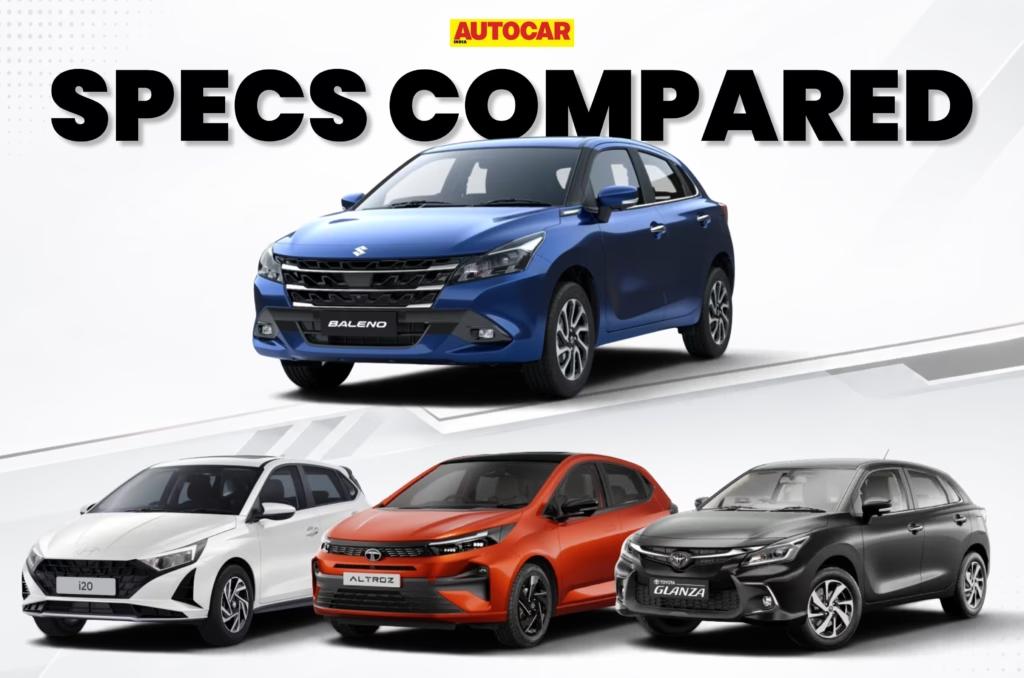
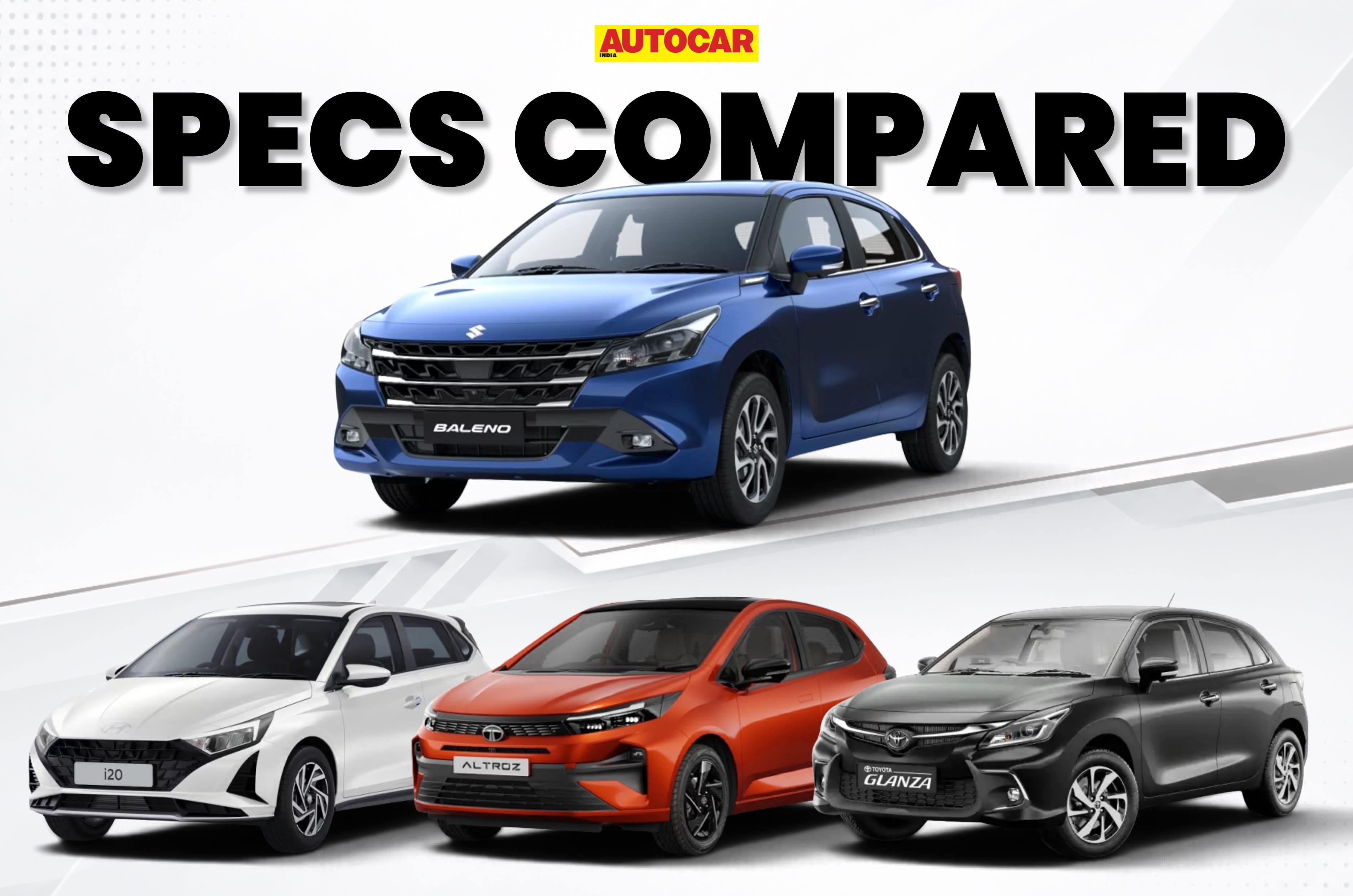
Maruti Suzuki has updated the Baleno for 2026, with changes to its powertrain, styling and equipment. It continues to compete with the Hyundai i20, Tata Altroz and Toyota Glanza in the premium hatchback segment. Here’s how the four compare on dimensions, specifications, features and prices.

2026 Maruti Baleno vs rivals: Dimensions

i20 has the longest wheelbase; Altroz has the biggest boot

DimensionsMaruti BalenoHyundai i20Tata AltrozToyota Glanza
Length3,990mm3,995mm3,990mm3,990mm
Width1,745mm1,775mm1,755mm1,745mm
Height1,530mm1,505mm1,523mm1,500mm
Wheelbase2,520mm2,580mm2,501mm2,520mm
Boot space318 litres311 litres345 litres318 litres

The i20 is the longest and widest of the four and also has the longest wheelbase, while the Altroz has the largest boot at 345 litres, although with CNG it falls to 210 litres. The Baleno and Glanza being badge-engineered siblings share identical length, width and wheelbase figures, although the new Baleno is 30mm taller. The Baleno also has a larger boot than the i20, despite being slightly shorter overall.

2026 Maruti Baleno vs rivals: Engine specifications

Altroz offers the widest choice of powertrains

Engine specificationsMaruti BalenoHyundai i20Tata AltrozToyota Glanza
Engine*1.2P | 1.2C1.2P1.2P | 1.2C | 1.5D 1.2P | 1.2C
No. of cylinders 3 | 3 43 | 3 | 44 | 4 
Power (hp)83 | 7083 (MT), 88 (IVT)88 | 74 | 9090 | 77
Torque (Nm)112 | 102114.7115 | 103 | 200113 | 98.5
Transmission5MT, 5AMT | 5MT5MT, IVT5MT, 5AMT, 6DCT | 5MT, 5AMT | 5MT5MT, 5AMT | 5MT

*P = Naturally aspirated petrol, C = CNG, D = Diesel

The Altroz offers the widest choice of powertrains, with petrol, CNG and diesel options, while the Baleno and Glanza also get CNG variants and the i20 is petrol-only. It is also the only hatchback in India to offer a diesel engine. The Baleno and Altroz use three-cylinder petrol engines, whereas the i20 and Glanza use four-cylinder units. 

The Glanza’s petrol and Altroz’s diesel engines makes the most power at 90hp, while the Altroz diesel has the highest torque at 200Nm. For automatics, the Baleno and Glanza get AMTs, the i20 gets an IVT, and the Altroz offers both AMT and dual-clutch automatic options.

2026 Maruti Baleno vs rivals: Features

Baleno is the only in the segment to offer ventilated front seats

FeaturesMaruti BalenoHyundai i20Tata AltrozToyota Glanza
Head-up displayYesNoNoYes
Ventilated front seatsYesNoNoNo
360-degree cameraYesNoYesYes
Wireless chargerYes, cooledYesYesNo
SunroofNoYesYesNo
Touchscreen9-inch10.25-inch10.25-inch9-inch
Instrument clusterAnalog + MID displayTFT display10.25-inch digital Analog + MID display
Android Auto/Apple CarPlayWirelessWirelessWirelessWireless
Automatic climate controlYesYesYesYes
Rear AC ventsYesYesYesYes
Cruise controlYes, adaptiveYesYesYes
Connected car technologyYesYesYesYes
Auto-folding ORVMsYes—YesYes
Push-button start/stopYesYesYesYes
Rear USB chargingYesYesYesYes
Premium audio systemClarion, 4-speakersBose, 7-speakerAudioWorXNo

The four hatchbacks offer a broadly similar level of equipment, but there are some notable differences. Both the Baleno and Glanza get a head-up display, while the Baleno stands out with ventilated front seats. The i20 and Altroz get larger 10.25-inch infotainment screens, compared with the 9-inch units in the Baleno and Glanza. All four get automatic climate control, rear AC vents, cruise control and wireless Android Auto and Apple CarPlay.

The Baleno also gets a cooled wireless charger and a 360-degree camera, while the i20 and Altroz offer sunroofs. Both the Altroz and i20 get 10.25-inch digital instrument displays, although the Altroz uses an LED display and the i20 gets a TFT unit. The Baleno and Glanza, meanwhile, use analogue dials with a MID. Overall, the four offer plenty of equipment, but buyers will have to decide whether they value features such as ventilated seats and a head-up display or a larger screen and sunroof more.

2026 Maruti Baleno vs rivals: Safety

Baleno brings Level 2 ADAS to the segment

Safety featuresMaruti BalenoHyundai i20Tata AltrozToyota Glanza
Level 2 ADASYesNoNoNo
Airbags6666
TPMSYesYesYesNo
Electronic stability controlYesYesYesYes
Hill-hold assistYesYesYesYes
ABS with EBDYesYesYesYes
ISOFIX mountsYesYesYesYes

All four cars get six airbags, electronic stability control, hill-hold assist, ABS with EBD and ISOFIX mounts as standard, making the core safety equipment broadly similar. The Baleno, however, has a clear advantage with Level 2 ADAS, which adds features such as adaptive cruise control, lane-keep assist, lane-departure warning and automatic emergency braking. The system is offered on the top-spec Alpha (O) trim. TPMS is also available on the Baleno, i20 and Altroz, but not on the Glanza. With the addition of ADAS, the Baleno has the most advanced active-safety package of these four hatchbacks on paper.

2026 Maruti Baleno vs rivals: Price

Baleno starts between the i20 and Altroz

 Price (ex-showroom), Rs lakhs
Maruti Baleno6.10 – Not disclosed
Hyundai i206 – 10.63
Tata Altroz6.30 – 10.51 
Toyota Glanza6.73 – 9.99

At Rs 6.10 lakh, the Baleno’s starting price sits between the Hyundai i20 and Tata Altroz, while it undercuts the Toyota Glanza by Rs 63,000. Maruti Suzuki has not yet revealed the prices of the Baleno’s higher variants, so a complete price comparison with its rivals is not possible yet.

It remains to be seen how competitively the Baleno is priced at the higher end of the range and how much value it offers for the additional equipment available over its rivals.

Kia Sorento base vs MG Hector Tomahawk PHEV top trim: Which one is better value?

Kia Sorento base vs MG Hector Tomahawk PHEV top trim: Which one is better value?
Kia Sorento base vs MG Hector Tomahawk PHEV top trim

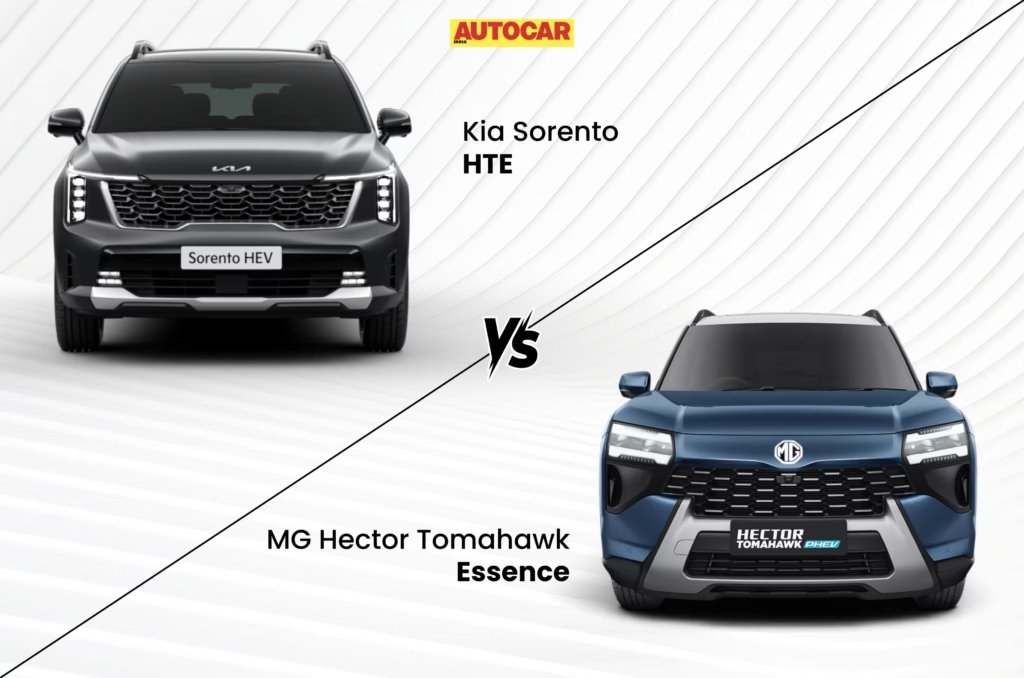
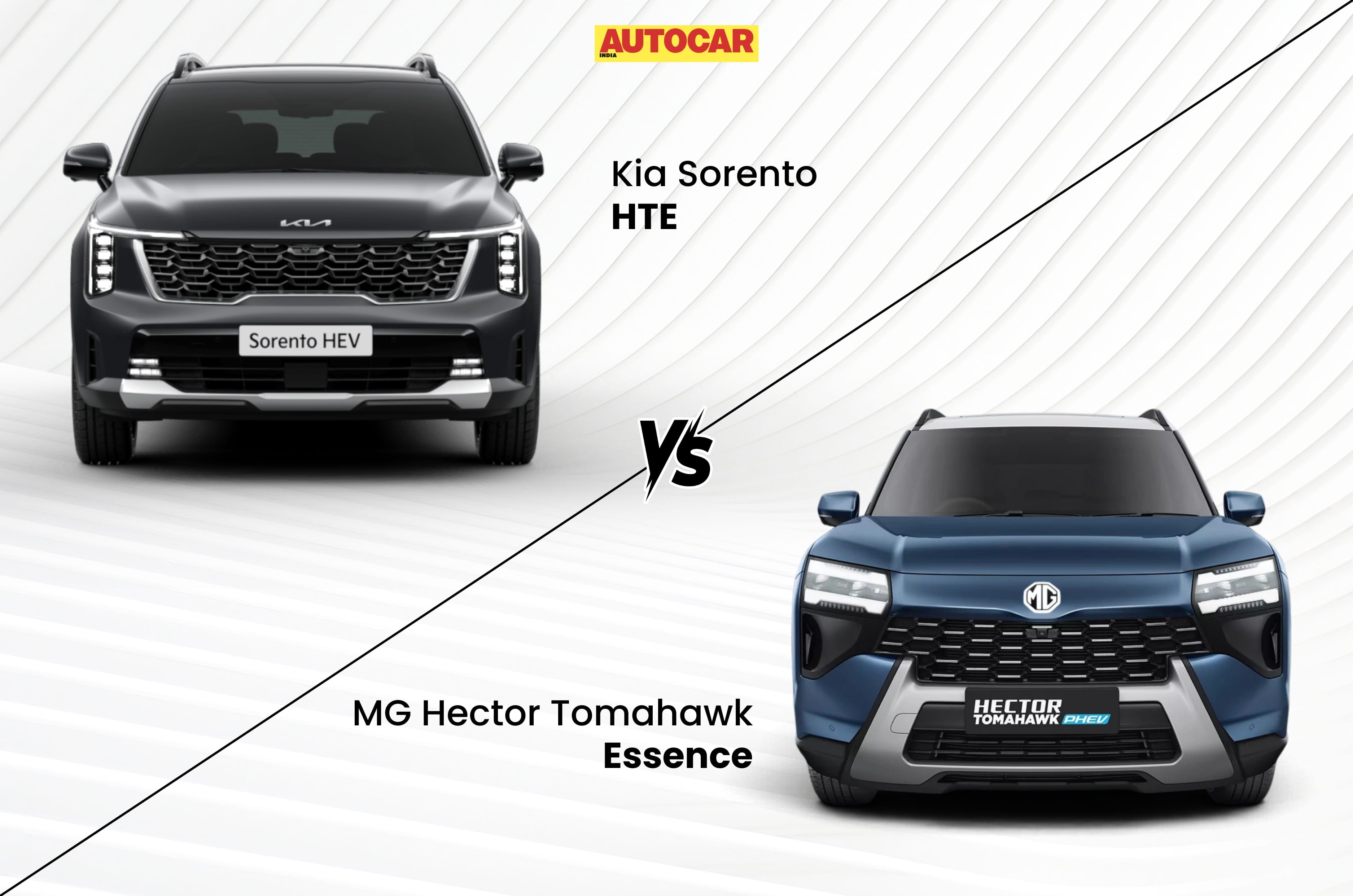
The Sorento is Kia’s first hybrid car to hit the Indian market. A few weeks prior, MG Motor India also launched its first hybrid car, the Hector Tomahawk PHEV. The Sorento is a strong hybrid, meaning it has a relatively small battery pack and isn’t designed for extended periods of pure-electric driving. On the other hand, the Hector Tomahawk PHEV is a plug-in hybrid, which means it gets a much larger battery that delivers a usable all-electric range.

If you’re looking to purchase a 7-seater hybrid SUV under the Rs 30 lakh price point (ex-showroom), the Sorento hybrid’s base variant (HTE) and the Hector Tomahawk PHEV’s top-spec variant are both within your reach. We examined their spec sheets closely to find out which of them is more value-for-money.

Kia Sorento hybrid base-spec vs MG Hector Tomahawk PHEV top-spec: Dimensions

Sorento is larger overall, while Hector Tomahawk PHEV has a bigger boot


Sorento Hybrid HTE

Hector Tomahawk PHEV Essence

Length (mm)

4,815

4,745

Width (mm)

1,900

1,850

Height (mm)

1,785

1,770

Wheelbase (mm)

2,815

2,810

Boot space*

179

192

Wheel size (inches)

18

18

*Measured with third row up.

While the Sorento is a good 70mm longer than the Hector Tomahawk PHEV, the difference between their wheelbases is just 5mm. The Kia SUV is 50mm wider and 15mm taller too, but the Hector Tomahawk PHEV has a slightly larger boot.

Kia Sorento hybrid base-spec vs MG Hector Tomahawk PHEV top-spec: Powertrains

Sorento has more powerful engine, while Hector Tomahawk PHEV offers more electric range 


Sorento Hybrid HTE

Hector Tomahawk PHEV Essence

Engine

1.6-litre turbo-petrol

1.5-litre petrol

Cylinder count

4

4

Engine power (hp)

180

102

Engine torque (Nm)

265

125

Motor power (hp)

65

201

Motor torque (Nm)

264

237

Combined power (hp)

–

198

Combined torque (Nm)

–

230

Gearbox

6-speed AT

DHT

Battery capacity (kWh)

–

20.5

Claimed electric range (km)

–

115

Fuel tank capacity

67

52

3.3kW AC charging time

–

7.5 hrs (10-100%)

25kW DC charging time

–

35 mins (30-80%)

The Sorento is the first car in India to offer a turbo-petrol strong hybrid powertrain, while the Hector Tomahawk PHEV is the first plug-in hybrid to be available in the mass-market segment. In terms of pure combustion power, the Sorento’s direct-injection turbo-petrol engine is much stronger than the Hector Tomahawk PHEV’s naturally aspirated mill. The MG’s electric motor makes over three times more power than that of the Sorento, but less torque.

Kia has not yet disclosed the combined output of the India-spec Sorento hybrid, so it’s difficult to compare it with the Hector Tomahawk PHEV in this regard. The Hector Tomahawk PHEV gets a substantial 20.5kWh battery pack, which can supply a claimed all-electric range of 115km (overall driving range is rated at over 1,100km) and can be charged via AC or DC wallboxes. On the other hand, the Sorento’s self-charging hybrid system means the engine solely charges the battery. The increased dependence on the engine means the Sorento’s fuel tank is larger too.

Kia Sorento hybrid base-spec vs MG Hector Tomahawk PHEV top-spec: Exterior features

Hector Tomahawk PHEV offers LED tail-lamps, rear fog lamps, and powered tailgate


Sorento Hybrid HTE

Hector Tomahawk PHEV Essence

LED headlamps

Yes

Yes

Rear fog lamps

No

Yes

LED tail-lamps

No

Yes

Illuminated logo

No

Yes

Roof rails

Yes

Yes

Powered ORVMs

Yes

Yes

Powered tailgate

No

Yes

Rear spoiler

Yes

Yes

Colour options

7, monotone

8, monotone+dual-tone

The Hector Tomahawk PHEV easily takes the win here, offering equipment like LED tail-lamps, rear fog lamps, a powered tailgate, and an illuminated logo over the Sorento. The MG SUV also offers dual-tone exterior finishes, while the Sorento comes in monotone colours only.

Kia Sorento hybrid base-spec vs MG Hector Tomahawk PHEV top-spec: Interior features

Hector Tomahawk PHEV is packed with several more goodies than the Sorento


Sorento Hybrid HTE

Hector Tomahawk PHEV Essence

Infotainment screen

12.3-inch

15.6-inch

Instrument cluster

Analogue w/ MID

8.8-inch

Sunroof

No

Panoramic

Wireless charger

Yes

Yes

Powered front seats

Driver only

Yes

Ventilated front seats

No

Yes

Dual-zone climate control

Yes

No

Ambient lighting

No

Yes

Sound system

6-speaker

10-speaker Infinity

Apple CarPlay and Android Auto

Wireless

Wireless

Cabin air purifier

No

Yes

Connected car tech

No

Yes

Rear window sunshade

No

Yes

Rear centre armrest

Yes

Yes

Sliding, reclining rear seats

Yes

Yes

Expectedly, the Hector Tomahawk PHEV edges ahead of the Sorento on this front too. The MG has a larger screen, a digital driver’s display, ventilated and powered front seats, a panoramic sunroof, a superior sound system, ambient lighting, cabin air purifier, and more. The Sorento’s only point against the Hector Tomahawk PHEV is the inclusion of a dual-zone climate control system.

Kia Sorento hybrid base-spec vs MG Hector Tomahawk PHEV top-spec: Driving features

Sorento gets virtual engine sounds, while Hector Tomahawk PHEV offers adaptive cruise control


Sorento Hybrid HTE

Hector Tomahawk PHEV Essence

Drive modes

4

4

Virtual engine sounds

Yes

No

Paddle shifters

Yes

Yes

Cruise control

Yes

Adaptive

The Sorento holds its own in this department, matching the Hector Tomahawk PHEV in most aspects and even additionally offering virtual engine sounds. However, the Hector Tomahawk PHEV gets adaptive cruise control, which can automatically adjust the speed based on proximity to the vehicle in front, whereas the Sorento gets conventional cruise control with manual speed limit adjustment.

Kia Sorento hybrid base-spec vs MG Hector Tomahawk PHEV top-spec: Safety features

Sorento has 7 airbags, but Hector Tomahawk PHEV gets ADAS, 360-deg camera, and more


Sorento Hybrid HTE

Hector Tomahawk PHEV Essence

Level 2 ADAS

No

Yes

Airbags

7

6

ABS w/ EBD

Yes

Yes

ESC

Yes

Yes

Hill hold control

Yes

Yes

TPMS

Yes

Yes

Camera setup

Rear

360-degree

Parking sensors

Front, rear

Front, rear

Electronic parking brake

Yes

Yes

Rain-sensing wipers

Yes

Yes

Isofix child-seat anchors

Yes

Yes

Disc brakes

Front, rear

Front, rear

Both SUVs are pretty well-matched when it comes to safety features, but yet again, the Hector Tomahawk PHEV pulls ahead by way of offering Level 2 ADAS and a 360-degree camera. The Sorento, on the other hand, comes with an additional airbag.

Kia Sorento hybrid base-spec vs MG Hector Tomahawk PHEV top-spec: Prices

Hector Tomahawk PHEV is more affordable by Rs 1.69 lakh


Sorento Hybrid HTE

Hector Tomahawk PHEV Essence

Price (in Rs, lakh)

29.49

27.80

If all the extra bells and whistles weren’t enough, the top-spec Hector Tomahawk PHEV turns out to be the more affordable option too, undercutting the base Sorento hybrid by Rs 1.69 lakh. Therefore, if you want a sedate, refined SUV that offers EV efficiency for city commutes and ICE dependability during highway trips, the Hector Tomahawk PHEV is our pick. On the other hand, if you can forgo a lot of the Hector Tomahawk PHEV’s features in the pursuit of better performance, the Sorento hybrid is worth a look.

All prices are ex-showroom, India.
BMW i5 LWB vs Lexus ES 500e specs, features comparison

BMW i5 LWB vs Lexus ES 500e specs, features comparison

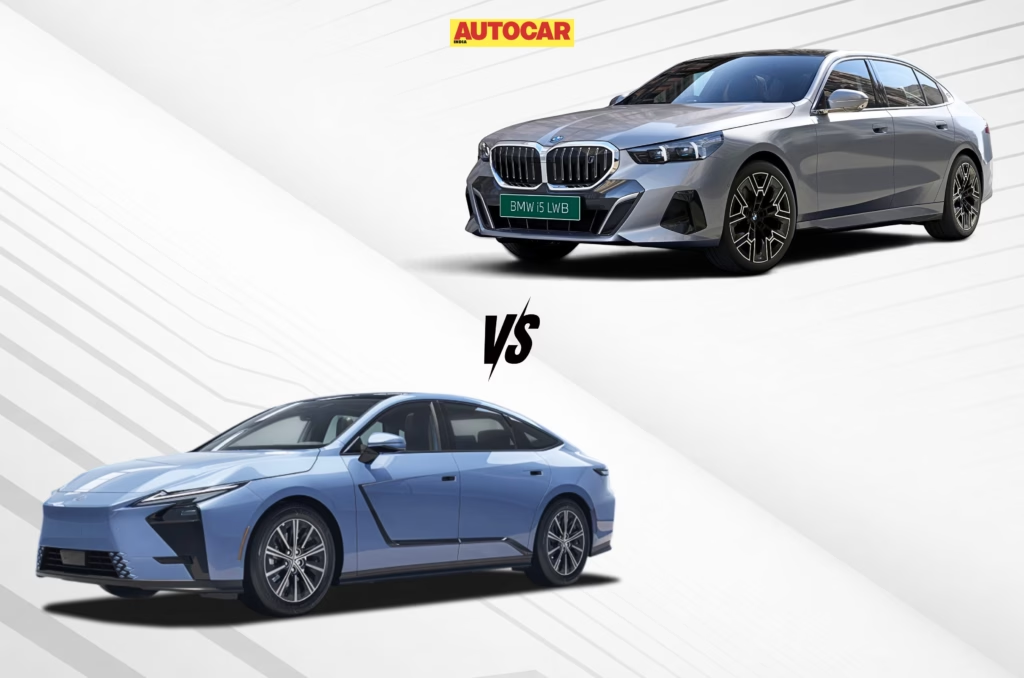
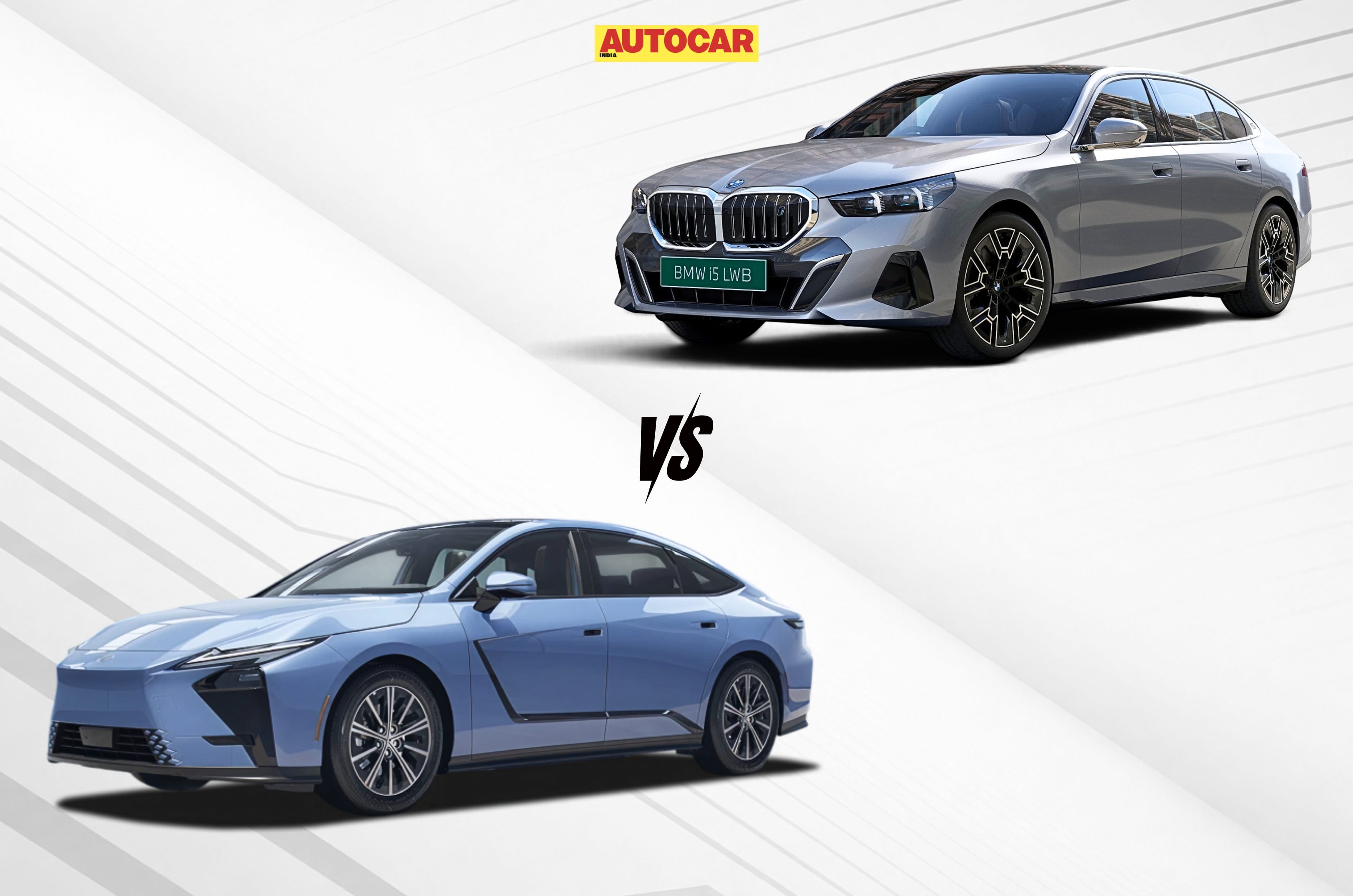
The BMW i5 LWB (long wheelbase) and Lexus ES 500e are two of the latest additions to the luxury electric sedan segment. Both pack an extensive list of features, but each has an advantage in some areas. They also get different battery pack sizes, and their peak power and torque outputs vary as well. So, how different are the two on paper? We find out.

BMW i5 LWB vs Lexus ES 500e: Dimensions


BMW i5 LWB

Lexus ES 500e

Length

5,175mm

5,145mm

Width

2,156mm

1,920mm

Height

1,520mm

1,575mm

Wheelbase

3,105mm

2,950mm

Boot space

Not disclosed

377 litres

Wheel size

20 inch

21 inch

The BMW i5 LWB is slightly longer by 30mm than the Lexus ES 500e, but the bigger difference is in width. The i5 LWB is 236mm wider than the Lexus; however, the ES 500e is 55mm taller. The BMW sedan also has a 155mm longer wheelbase. In terms of wheels, the Lexus EV rides on 21-inch units, which are 1 inch larger than the i5’s 20-inch ones. BMW has not disclosed the i5 LWB’s boot capacity at the time of writing. Meanwhile, the Es 500e has a 377 litre boot.

Another point of difference is the suspension. The i5 LWB gets rear-axle air suspension, which should offer better ride comfort in real-world conditions, while the ES 500e uses a multi-link setup.

BMW i5 LWB vs Lexus ES 500e: Powertrain specs


BMW i5 LWB

Lexus ES 500e

Battery size

81.6kWh

74.68kWh

Drive configuration

RWD

AWD

Power

268hp

343hp

Torque

410Nm

438Nm

0-100kph

6.7 seconds

5.5 seconds

Claimed range

669km (MIDC)

580km (WLTP)

AC charging (0-100 percent)

Not revealed (11kW charger)

~4 hours (22kW charger)

DC charging (10-80 percent)

33 minutes (160kW charger)

28 minutes (150kW charger)

Clearly, the dual-motor setup of the ES 500e makes much more peak outputs that the i5 LWB, which gets just a rear-mounted electric motor. Compared to the i5, the ES 500e has a 75hp and 28Nm advantage. It’s also quicker, taking 5.5 seconds to go from 0-100kph, which is 1.2 seconds quicker than the BMW. The BMW, however, gets a larger 81.6kWh battery than the Lexus’ 74.68kWh unit. 

As for the claimed range figures of the two sedans, it should be noted that the i5 LWB’s 669km figure is based on the modified Indian driving cycle (MIDC), which is more relaxed than the worldwide harmonised light vehicles test procedure (WLTP). The ES 500e, meanwhile, claims a range of 580km on the stricter WLTP cycle.

When it comes to fast charging times, the ES 500e has the upper hand. On DC charging, the Lexus takes 28 minutes from 10-80 percent compared to 33 minutes for the BMW. Although the BMW supports a slightly higher maximum charging speed of 160kW compared to the Lexus’ 150kW, its longer charging time could be due to the BMW sedan’s larger battery pack. 

BMW i5 LWB vs Lexus ES 500e: Exterior features


BMW i5 LWB

Lexus ES 500e

LED headlamps

Yes

Yes

LED DRLs

Yes

Yes

LED tail-lights

Yes

Yes

Fog lamps

No

Yes

Powered ORVMs

Yes

Yes

Door handles

Flap type

Flush-fitting

Shark-fin antenna

Yes

Yes

Powered tail-gate

Yes

Yes

In terms of exterior features, both sedans are similarly equipped. Both get LED headlamps, LED DRLs, LED tail-lights, powered ORVMs, shark-fin antennas and powered tail-gates. The Lexus, however, stands out here with fog lamps. The two also differ in their door-handle designs. The i5 LWB uses flap-type handles, while the ES 500e gets flush-fitting units.

BMW i5 LWB vs Lexus ES 500e: Interior features


BMW i5 LWB

Lexus ES 500e

Touchscreen

14.9 inch

14 inch

Digital driver’s display

12.3 inch

12.3 inch

Speakers

17-speaker Bowers & Wilkins

17-speaker Mark Levinson

Sunroof

Fixed, panoramic

Openable, single-pane

Ventilated front seats

Yes

Yes

Rear centre armrest

Yes

Yes

Wireless charger

Front and rear (1 each)

Front (2)

Ambient lighting

Yes

Yes

Apple CarPlay and Android Auto

Wireless

Wireless

Connected car tech

Yes

Yes

Rear sunshades

No

Yes

Soft-close doors

No

Yes

Digital IRVM

No

Yes

The two sedans get a 12.3-inch digital driver’s display, 17 speakers, ventilated front seats, rear centre armrest, ambient lighting, wireless Apple CarPlay and Android Auto, and connected car tech. While the BMW gets a Bowers & Wilkins sound system, the Lexus opts for a Mark Levinson setup.

The BMW gets a slightly larger 14.9-inch touchscreen compared to the Lexus’ 14-inch unit. The sunroof setup is different too, with the i5 LWB getting a fixed panoramic unit with integrated lights, while the ES 500e has an openable single-pane unit. The BMW also gets one wireless charger each at the front and rear, whereas the Lexus gets two at the front. The Lexus claws back some ground with rear sunshades, soft-close doors and a digital IRVM, all of which are missing on the BMW. 

BMW i5 LWB vs Lexus ES 500e: Safety features


BMW i5 LWB

Lexus ES 500e

Airbags

8

8

360-degree camera

Yes

Yes

Electronic parking brake

Yes

Yes

Digital IRVM

No

Yes

ISOFIX seat anchors

Yes

Yes

Rear defogger

Yes

Yes

ADAS

Yes

Yes

Both the sedans are evenly matched on most safety features. Both get eight airbags, a 360-degree camera, electronic parking brake, ISOFIX child seat anchors, rear defogger and ADAS. The Lexus, however, offers a digital IRVM, which is not offered on the BMW.

BMW i5 LWB vs Lexus ES 500e: Verdict


BMW i5 LWB

Lexus ES 500e

Ex-showroom price (Rs lakh)

79.60

89.99

Pricing is one area where the BMW i5 LWB and Lexus ES 500e differ quite significantly, by Rs 10.39 lakh to be precise. The other difference is in outright performance. The ES 500e’s AWD setup gives it an advantage in acceleration from 0-100kph. However, for most buyers, the i5 LWB makes more sense, as it gets a relatively larger battery pack and is much more accessible in terms of price. In addition to that, you also get the BMW badge value.