Xiaomi ने चीन में अपने नए Xiaomi 18 Pro और Xiaomi 18 Pro Max स्मार्टफोन लॉन्च कर दिए हैं। हालांकि, इन स्मार्टफोन का डिजाइन Xiaomi 17 Pro और Xiaomi 17 Pro Max जैसा ही है, लेकिन इनमें कुछ खास अपग्रेड देखने को मिले हैं। स्पेसिफिकेशन से लेकर कलर ऑप्शन तक, नए Xiaomi स्मार्टफोन के बारे में आपको जो कुछ भी जानना चाहिए, वह यहां बताया गया है।
Xiaomi 18 Pro और Xiaomi 18 Pro Max के स्पेसिफिकेशन
Xiaomi 18 Pro में 6.4 इंच की AMOLED स्क्रीन दी गई है, जिसका रिफ्रेश रेट 120Hz है और पीक ब्राइटनेस 4,000 निट्स तक है। वहीं, Xiaomi 18 Pro Max में 6.9 इंच का FHD+ AMOLED डिस्प्ले मिलता है। इसमें भी 120Hz का रिफ्रेश रेट और 4,000 निट्स तक की पीक ब्राइटनेस दी गई है।
दोनों स्मार्टफोन्स में अब पीछे की तरफ एक सेकेंडरी AMOLED स्क्रीन भी दी गई है। Xiaomi 18 Pro में 2.7 इंच का रियर डिस्प्ले है, जबकि Xiaomi 18 Pro Max में 2.9 इंच की स्क्रीन मिलती है।
अब इन दोनों हैंडसेट के पिछले हिस्से में एक सेकेंडरी AMOLED स्क्रीन भी दी गई है। Xiaomi 18 Pro में 2.7-इंच का पैनल है, जबकि Xiaomi 18 Pro Max में 2.9-इंच की स्क्रीन है।
प्रोसेसर की बात करें तो, Xiaomi 18 Pro में Snapdragon 8 Elite Gen 6 प्रोसेसर है, जबकि Xiaomi 18 Pro Max में Snapdragon 8 Elite Extreme Gen 6 चिपसेट दिया गया है। दोनों प्रोसेसर 2nm प्रोसेस पर बने हैं। इन स्मार्टफोन में 16GB तक LPDDR5x RAM और 1TB तक UFS 4.1 स्टोरेज मिलती है।
बैटरी की बात करें तो Xiaomi 18 Pro में 7,000mAh की बैटरी दी गई है। वहीं, Xiaomi 18 Pro Max में 8,500mAh की बड़ी बैटरी मिलती है। दोनों फोन 100W वायर्ड और 50W वायरलेस चार्जिंग को सपोर्ट करते हैं। इसके अलावा, दोनों स्मार्टफोन Android 17 पर आधारित Xiaomi के HyperOS 4 ऑपरेटिंग सिस्टम पर चलते हैं।
बता दें कि Xiaomi 18 Pro को चीन में 5,999 युआन (लगभग $895) की शुरुआती कीमत पर लॉन्च किया गया है। यह स्मार्टफोन चार कॉन्फिगरेशन में उपलब्ध है: इसके 12GB RAM + 256GB स्टोरेज वेरिएंट की कीमत 5,999 युआन (करीब 895 डॉलर) है। वहीं, 12GB RAM + 512GB स्टोरेज मॉडल की कीमत 6,999 युआन (करीब 1,045 डॉलर) है।
इसके अलावा, 16GB RAM + 512GB स्टोरेज वेरिएंट की कीमत 7,999 युआन (करीब 1,194 डॉलर) है। टॉप-एंड 16GB RAM + 1TB स्टोरेज मॉडल के लिए 8,999 युआन (करीब 1,343 डॉलर) खर्च करने होंगे।
वहीं, Xiaomi 18 Pro Max की शुरुआती कीमत 6,999 युआन (लगभग $1,045) है। इसके 12GB + 256GB वाले मॉडल की कीमत 6,999 युआन ($1,045) है, जबकि 12GB + 512GB, 16GB + 512GB और 16GB + 1TB वाले मॉडल की कीमतें क्रमशः 7,999 युआन ($1,194), 8,999 युआन ($1,343) और 9,999 युआन ($1,492) हैं।
Samsung Galaxy S26 FE vs Google Pixel 11 vs Vivo X300: नया स्मार्टफोन खरीदते समय सबसे बड़ा कन्फ्यूजन यही होता है कि एक ही बजट में कौन सा फोन लिया जाए। खासकर जब Samsung, Vivo और Google जैसे बड़े ब्रांड अपने-अपने दमदार फोन लेकर बाजार में हों। बता दें कि Samsung ने हाल ही में भारत में Galaxy S26 FE लॉन्च किया है। इसकी कीमत 79,999 रुपये रखी गई है। अगर आप अपना स्मार्टफोन अपग्रेड करने का प्लान बना रहे हैं और Android फोन लेना चाहते हैं, तो हमने आपके लिए Samsung Galaxy S26 FE की तुलना Vivo X300 और Google Pixel 11 से की है। इससे आपको यह समझने में मदद मिलेगी कि इन तीनों में से कौन-कौन से फोन आपके लिए बेहतर विकल्प हो सकते हैं।
Samsung Galaxy S26 FE vs Google Pixel 11 vs Vivo X300: भारत में कीमत
Galaxy S26 FE के इकलौते वैरिएंट की कीमत ₹79,999 है, जबकि Google Pixel की लॉन्च कीमत ₹89,999 है। वहीं, Vivo X300 की कीमत ₹75,999 है।
Samsung Galaxy S26 FE vs Google Pixel 11 vs Vivo X300: स्पेसिफिकेशन्स
डिस्प्ले की बात करें तो, Samsung Galaxy S26 FE में 6.7-इंच की Dynamic AMOLED 2X स्क्रीन मिलती है। इसमें 120Hz का रिफ्रेश रेट है और यह Gorilla Glass Victus+ से सुरक्षित है। इसमें धूल और पानी से बचाव के लिए IP68 रेटिंग दी गई है। Google Pixel 11 में 6.3-इंच का Actua OLED डिस्प्ले है, जिसका रिफ्रेश रेट 120Hz है और यह 3,000 निट्स तक की पीक ब्राइटनेस देता है। वहीं, Vivo X300 में 6.31-इंच का LTPO AMOLED डिस्प्ले है, जो 120Hz रिफ्रेश रेट और HDR10+ को सपोर्ट करता है। Vivo का कहना है कि डिस्प्ले आउटडोर में 4,500 निट्स तक की ब्राइटनेस दे सकता है। यह फोन IP68 और IP69 दोनों रेटिंग के साथ आता है।
प्रोसेसर की बात करें तो, Samsung Galaxy S26 FE में Exynos 2500 चिपसेट दिया गया है। इसमें 8GB RAM और 256GB इंटरनल स्टोरेज है और यह Android 17 पर आधारित One UI 9 पर चलता है। Google Pixel 11 में Tensor G6 प्रोसेसर के साथ 12GB RAM और 256GB व 512GB स्टोरेज के ऑप्शन मिलते हैं। यह सीधे Android 17 के साथ आता है। वहीं, Vivo X300 में MediaTek Dimensity 9500 चिपसेट है और इसमें 16GB तक RAM और 512GB स्टोरेज मिलती है। यह फोन Android 16 पर आधारित OriginOS 6 पर चलता है।
बैटरी की बात करें तो Samsung Galaxy S26 FE में 4,900mAh की बैटरी दी गई है। यह 45W वायर्ड फास्ट चार्जिंग को सपोर्ट करता है। वहीं, Google Pixel 11 में 4,985mAh की बैटरी मिलती है। दूसरी ओर, Vivo X300 में 6,040mAh की बड़ी बैटरी दी गई है, जो 90W वायर्ड फास्ट चार्जिंग को सपोर्ट करती है।
फोटोग्राफी के लिए Samsung Galaxy S26 FE के रियर पैनल पर ट्रिपल कैमरा सेटअप दिया गया है। इसमें 50MP का प्राइमरी कैमरा, 12MP का अल्ट्रा-वाइड कैमरा और 8MP का टेलीफोटो कैमरा शामिल है। वहीं, सेल्फी और वीडियो कॉल के लिए फोन में 12MP का फ्रंट कैमरा दिया गया है।
Vivo X300 में बेहतर रिजॉल्यूशन वाला कैमरा हार्डवेयर दिया गया है। इसके रियर सेटअप में 200MP का मेन कैमरा, 50MP का अल्ट्रा-वाइड सेंसर और 3x ऑप्टिकल जूम वाला 50MP का टेलीफोटो कैमरा शामिल है। इस कैमरा सिस्टम को ZEISS ने ट्यून किया है। वहीं, फोन के फ्रंट में 50MP का सेल्फी कैमरा है।
Google Pixel 11 के कैमरे की बात करें तो, इसमें 48MP का प्राइमरी कैमरा दिया गया है। इसके साथ 13MP का अल्ट्रा-वाइड कैमरा और 10.8MP का टेलीफोटो कैमरा मिलता है। टेलीफोटो कैमरा 5x ऑप्टिकल जूम को सपोर्ट करता है। वहीं, सेल्फी के लिए फोन में 10.5MP का फ्रंट कैमरा दिया गया है।
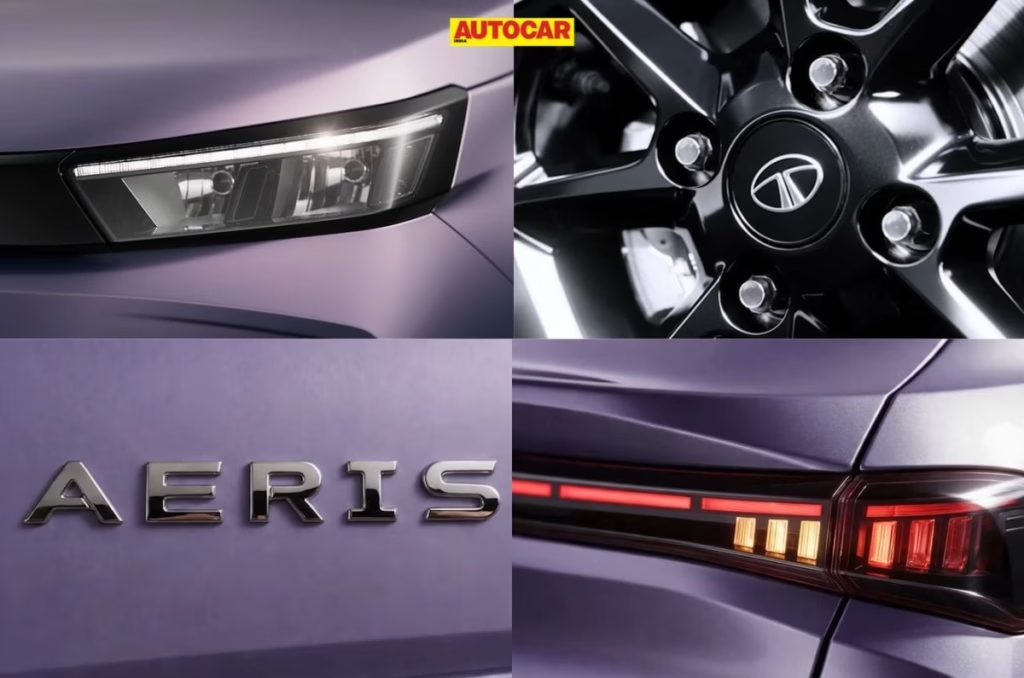
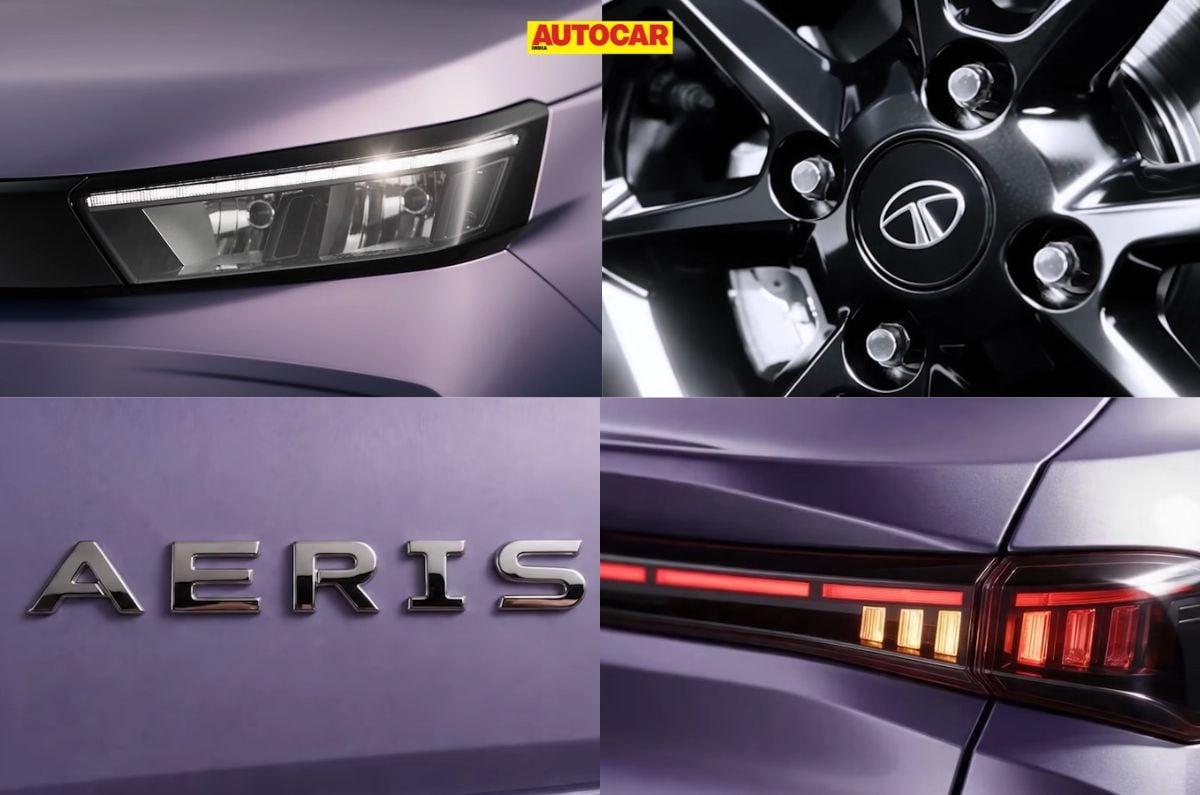
Tata Motors is set to launch the Aeris on September 25, 2026, both in internal combustion (ICE) and fully electric (EV) avatars. The Aeris is essentially a rebranded Tigor facelift, and the upcoming sub-4-metre sedan has already been previewed through official teasers and design patent filings. Here’s all you need to know about the Tata Aeris before it breaks cover tomorrow.
1. How will the Tata Aeris look?
The Aeris gets a sleeker face and new lighting without losing the Tigor’s notchback profile
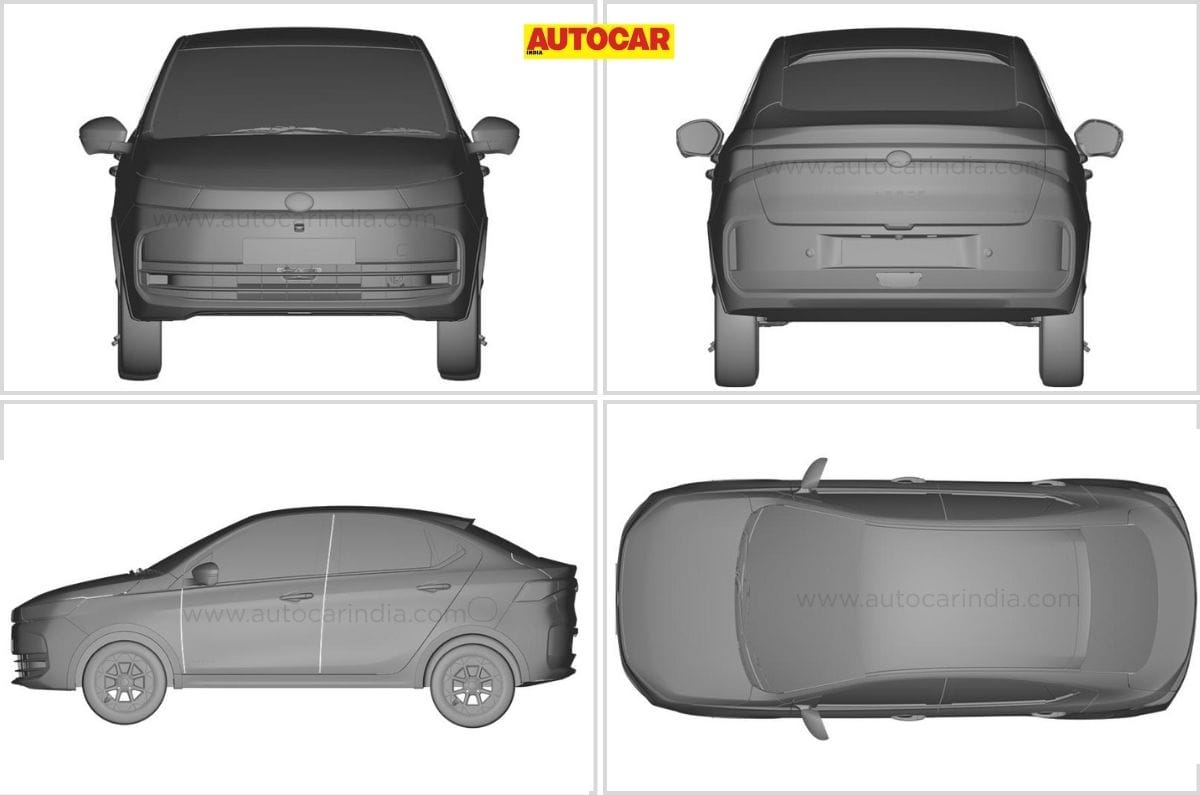
Compared to the Tigor, the new Tata Aeris will sport a sleeker front fascia featuring slim LED headlamps and thin LED DRLs. The official teaser also confirms LED fog lamps and C-shaped elements in the front bumper. Patent images suggest sharper-looking connected tail-lamps, with the number plate having been moved from the bootlid to the bumper.
Design patent of the Aeris as filed by Tata Motors.
Other changes expected include a new shoulder line and wheel designs, plus a new purple colour. The Aeris EV should share much of the ICE version’s overall design language, with a few tweaks as seen in Tata’s other ICE-to-EV models. The notchback roofline of the outgoing Tigor will be carried over, as shown in the patent filings.
2. How different will the interior of the Tata Aeris be?
The Aeris will get a more modern-looking and feature-rich cabin over the Tigor
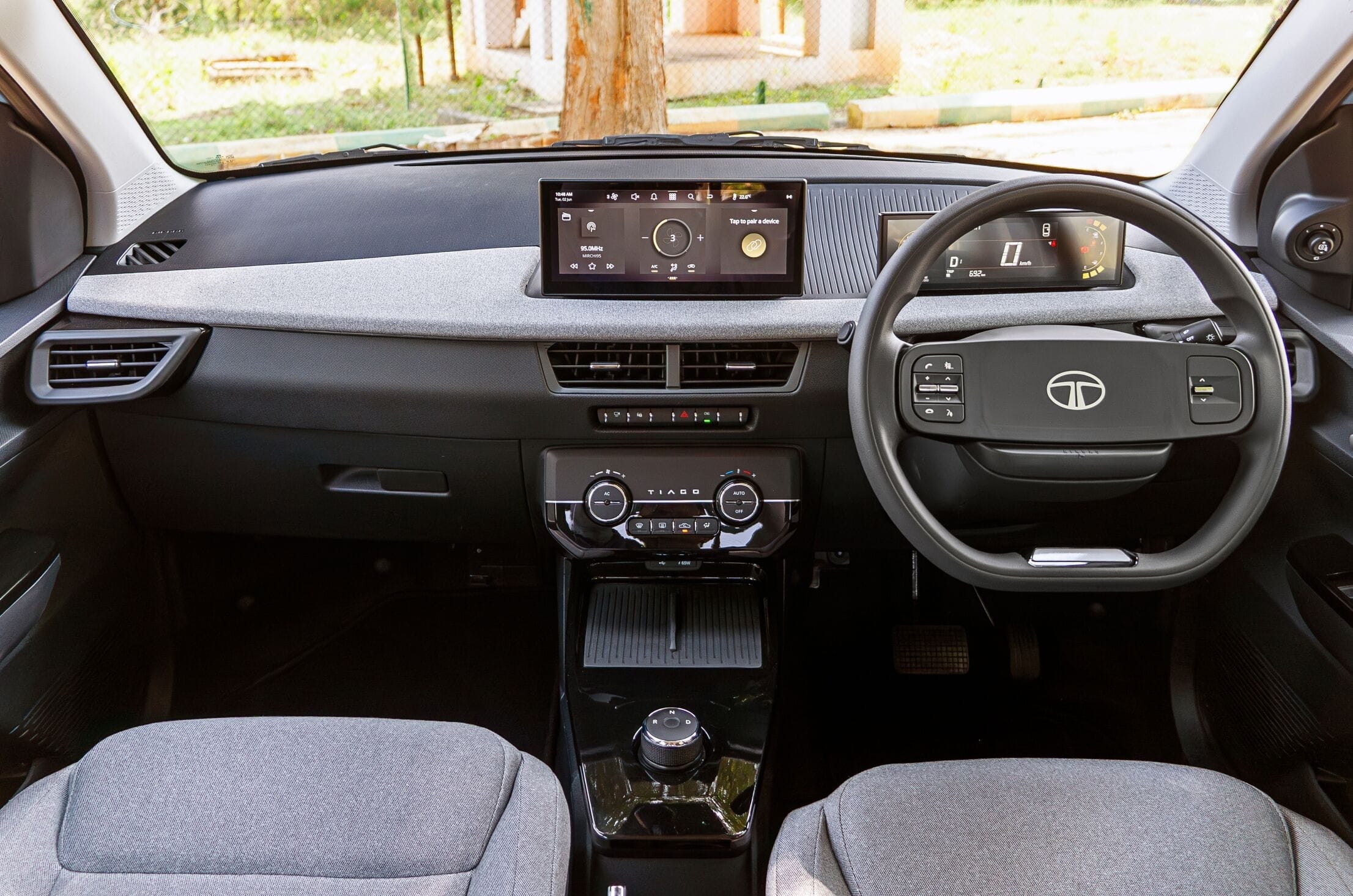
Tata hasn’t teased the cabins of the Aeris yet, but they are expected to be similar to those of the new Tiago and Tiago EV. This means a modern-looking dual-tone theme with piano-black accents and a layered dashboard design with two free-standing digital displays, plus Tata’s new two-spoke steering wheel and an array of physical buttons and dials.
Tata Tiago’s interior shown for representational purposes only.
The Tata Aeris is also expected to share the feature set that’s available with the updated Tiago. Wireless charging, automatic climate control, rear AC vents, a 10.25-inch touchscreen, a digital driver’s display, wireless Apple CarPlay & Android Auto, connected car tech, a 360-degree camera, 6 airbags and electronic stability control could all be offered with select variants of the Aeris as well.
3. What powertrain options will the Tata Aeris get?
The ICE version could get the same setup as the Tigor; the pure-electric option may get the Tiago EV’s battery packs
On the powertrain front, the Aeris ICE variants could carry on with the existing Tigor’s engine and gearbox options. The latter’s 1.2-litre naturally aspirated three-cylinder engine produces 86hp and 113Nm when on petrol, and 76hp and 97Nm when running on CNG. Its gearbox choices are a 5-speed manual and a 5-speed AMT (automated manual transmission).
As for the Aeris EV, it may borrow the Tiago EV’s 19.2kWh and 24kWh battery packs. Alternatively, Tata could equip it with the larger 26kWh battery that currently powers the Tigor EV. Both setups utilise a permanent magnet synchronous motor producing up to 75hp/114Nm and 75hp/170Nm, respectively. The Tata Aeris EV is likely to offer a multi-mode regenerative braking system and multiple drive modes as well.
4. What is the expected price of the Tata Aeris?
Tata could offer the Aeris EV with BaaS to lower upfront costs
A slew of updates could potentially bump up the price of the Tata Aeris when compared to the Tigor. For reference, the combustion-powered Tigor is priced between Rs 5.70 lakh and Rs 9.10 lakh, while the Tigor EV is priced from Rs 12.49 lakh to Rs 13.75 lakh – both ex-showroom. Tata could offer the Aeris EV with a Battery-as-a-Subscription (BaaS) option on the EV to lower upfront costs, as it has done with the Tiago EV. The Tata Aeris will rival the Honda Amaze, Maruti Dzire and Hyundai Aura, while the Aeris EV doesn’t have any direct competitors.
Instagram Username: कई बार सोशल मीडिया अकाउंट बनाते समय हम ऐसा यूजरनेम रख देते हैं, जो उस वक्त तो काफी अच्छा लगता है, लेकिन कुछ साल बाद वही नाम अजीब लगने लगता है। कभी पुराना निकनेम पसंद नहीं आता, तो कभी लगता है कि अब कोई ऐसा नाम होना चाहिए, जो हमारी मौजूदा पहचान या काम से मेल खाए। अगर आपके साथ भी ऐसा है और आप Instagram का यूजरनेम बदलना चाहते हैं, तो इसके लिए नया अकाउंट बनाने की जरूरत नहीं है। Instagram में ही एक आसान तरीका है, जिससे आप अपने मौजूदा अकाउंट का यूजरनेम बदल सकते हैं।
Instagram पर यूजरनेम बदलना
Instagram आपके यूजरनेम (जिसे ‘हैंडल’ भी कहते हैं) को आपकी प्रोफाइल पर दिखने वाले नाम से अलग रखता है। यूजरनेम आपकी प्रोफाइल के पेज पर सबसे ऊपर दिखता है और आपकी Instagram प्रोफाइल के URL का हिस्सा होता है। इसलिए, इसका यूनिक (अलग) होना जरूरी है। Username में अक्षर, नंबर, डॉट (.) और अंडरस्कोर (_) का इस्तेमाल किया जा सकता है। वहीं, Display Name यूनिक होना जरूरी नहीं है। इसके अलावा, Display Name रखने पर Username जैसी पाबंदियां भी नहीं होती हैं।
लेकिन अपना यूजरनेम बदलने की प्रक्रिया शुरू करने से पहले, बदलाव को कन्फर्म करने से पहले नए हैंडल को ध्यान से देख लेना चाहिए, खासकर तब जब अकाउंट का इस्तेमाल काम के लिए किया जाता हो या उसे बड़े पैमाने पर शेयर किया गया हो।
सबसे पहले अपने iPhone या Android फोन में Instagram ऐप खोलें और उस अकाउंट में लॉग इन करें, जिसका Username आप बदलना चाहते हैं।
नीचे दाईं ओर अपनी Profile Picture पर टैप करके प्रोफाइल खोलें।
अपनी Bio के नीचे Edit Profile पर टैप करें।
अब Username वाले ऑप्शन पर टैप करें।
यहां अपना पुराना Username डिलीट करें और नया Username लिखें।
Instagram आपको बताएगा कि नया Username उपलब्ध है या नहीं। अगर वह Username पहले से किसी दूसरे यूजर ने लिया हुआ है, तो आपको कोई दूसरा Username चुनना होगा।
जब आपको उपलब्ध Username मिल जाए, तो ऊपर दाईं ओर दिए Checkmark (✓) पर टैप करके बदलाव सेव कर दें।
कुछ बातों का ध्यान रखना जरूरी है। Instagram पर यूजरनेम यूनिक होते हैं, यानी अगर आप जो हैंडल चाहते हैं वह पहले से ही किसी और ने ले रखा है, तो Instagram आपको उसे इस्तेमाल करने नहीं देगा। आप कोई नंबर, डॉट या अंडरस्कोर जोड़कर या नाम का छोटा वर्जन इस्तेमाल करके कोशिश कर सकते हैं। हालांकि, इसे कितनी बार अपडेट किया जा सकता है, इस पर कोई ऑफिशियल लिमिट नहीं है, लेकिन सोशल मीडिया प्लेटफॉर्म 14 दिन का लॉक-इन पीरियड देता है। अगर इस दौरान आपका मन बदल जाता है, तो आप वापस अपने पुराने यूजरनेम पर जा सकते हैं।
14 दिन बाद, आपका पुराना यूजरनेम पब्लिक हो जाता है, इसलिए कोई भी दूसरा व्यक्ति जो इसे चाहता है, वह इसे ले सकता है।
एक और जरूरी बात यह है कि Username बदलते ही आपकी Instagram प्रोफाइल का URL भी तुरंत बदल जाता है। इसलिए अगर आपकी पुरानी प्रोफाइल लिंक किसी वेबसाइट या दूसरे सोशल मीडिया प्लेटफॉर्म पर शेयर की गई है, तो वह लिंक काम करना बंद कर सकती है। ऐसे में आपको उन जगहों पर जाकर पुरानी लिंक को नई प्रोफाइल लिंक से अपडेट करना होगा।
Android Phone Storage: हम सभी RAM और स्टोरेज के बारे में जानते हैं। स्टोरेज वह जगह है जहां आपका फोन फोटो, वीडियो, म्यूजिक, ऐप्स और दूसरी फाइलें सेव करता है, जबकि RAM का इस्तेमाल ऐप्स और Android सिस्टम के लिए होता है। आजकल स्मार्टफोन ब्रांड 1TB तक के ऑनबोर्ड स्टोरेज वाले मॉडल लॉन्च कर रहे हैं। फिर भी, Android फोन पर ‘Storage Ful’ का मैसेज दिखना परेशान करने वाला हो सकता है। स्टोरेज खत्म होने पर आप नए ऐप्स, फाइलें, फोटो और वीडियो डाउनलोड नहीं कर पाएंगे। ऐसे में फोन की स्टोरेज खाली करने का सबसे आसान और पहला तरीका गैर-जरूरी फाइलों को डिलीट करना है। इससे फोन में नए डेटा और फाइलों के लिए जगह बनेगी और स्मार्टफोन की परफॉर्मेंस बेहतर रखने में भी मदद मिल सकती है।
Android फोन पर स्टोरेज खाली करने के तरीके
सबसे पहले यह चेक कर लें कि आपके Android फोन में कितनी स्टोरेज इस्तेमाल हो रही है। इसके लिए Settings > Storage में जाएं और किसी भी Category को चुनें। यहां आपको पता चल जाएगा कि फोन की स्टोरेज में सबसे ज्यादा जगह किस चीज ने घेर रखी है। इसमें फोटो, वीडियो, ऐप्स, डाउनलोड और दूसरी फाइलें शामिल हो सकती हैं।
अपने-आप स्टोरेज खाली करें
कुछ Android फोन में Smart Storage फीचर मिलता है। यह फीचर फोन की स्टोरेज कम होने पर Google Photos में पहले से बैकअप की गई फोटो और वीडियो की कॉपी को अपने आप डिलीट कर देता है। इससे आपको फाइलों को एक-एक करके मैनुअली डिलीट करने की जरूरत नहीं पड़ती। इस फीचर को ऑन करने के लिए Settings में जाएं और Storage पर टैप करें। इसके बाद Free up space चुनें, फिर Menu पर टैप करके Smart Storage को ऑन कर दें।
गैर-जरूरी फाइलों को मैनुअली डिलीट करें
यूजर्स उन बड़ी फाइलों को चेक करके फोन की स्टोरेज खाली कर सकते हैं, जिनकी अब जरूरत नहीं है। ऐसी फाइलों को डिलीट करने से फोन में जगह बनाने और सिस्टम की परफॉर्मेंस बेहतर करने में मदद मिल सकती है।
आप उन फाइलों को भी चेक कर सकते हैं, जिनकी अब आपको जरूरत नहीं है और उन्हें मैन्युअली डिलीट कर सकते हैं।
Settings खोलें।
Storage में जाएं और फिर Free up space चुनें।
अब उस Category को चुनें, जिसमें से फाइलें डिलीट करनी हैं।
Select files पर जाएं।
जिन फाइलों को डिलीट करना है, उन्हें चुनें। अगर संबंधित कैटेगरी दिखाई नहीं दे रही है, तो Browse चुनें।
अब किसी एक फाइल को चुनें या उपलब्ध सभी फाइलों को सेलेक्ट करें।
इसके बाद Move files to Trash पर टैप करें।
अगर आपके फोन की फोटो और वीडियो का बैकअप Google Photos में है, तो आप फोन में सेव उनकी बैकअप कॉपी को भी हटा सकते हैं। इन फोटो और वीडियो का बैकअप Google Photos में सुरक्षित रहेगा और Android फोन के इंटरनेट से कनेक्ट होने पर आप उन्हें फिर से देख सकते हैं।
एक और तरीका है डाउनलोड किए गए मीडिया को हटाना, क्योंकि ये तेजी से स्टोरेज भर सकते हैं। आप Google TV डाउनलोड को इस तरह हटा सकते हैं: Google TV खोलें > Library पर टैप करें > डाउनलोड किए गए वीडियो पर स्क्रॉल करें > Downloaded पर टैप करें > Remove पर टैप करें।
YouTube Music डाउनलोड को भी इसी तरह हटाया जा सकता है: YouTube Music खोलें > Library पर टैप करें > गाने, एल्बम या प्लेलिस्ट के बगल में More चुनें > Remove download पर टैप करें।
दूसरे ऐप्स से डाउनलोड किए गए मीडिया को सीधे उस ऐप से हटाया जा सकता है।
ऐप्स Uninstall करें, ऐप Cache क्लियर करें
Android फोन में स्टोरेज खाली करने का एक और तरीका उन ऐप्स को हटाना है, जिनका आप बहुत कम इस्तेमाल करते हैं। फोन में इंस्टॉल सभी ऐप्स को चेक करें और जिन ऐप्स की अब जरूरत नहीं है, उन्हें अनइंस्टॉल कर दें।
कई ऐप्स समय के साथ टेम्पररी फाइलें स्टोर करते हैं। ऐप का Cache क्लियर करने से डेटा हटाए बिना कुछ स्टोरेज वापस मिल सकता है। आप यह काम फोन के Settings ऐप से कर सकते हैं।
इस्तेमाल न होने वाले ऐप्स को Archive करें
Android फोन में Archive फीचर की मदद से उन ऐप्स को हटाकर जगह बनाई जा सकती है, जिनका आप इस्तेमाल नहीं करते। इसमें ऐप फोन से हट जाता है, लेकिन आपका पर्सनल डेटा सुरक्षित रहता है और ऐप का आइकन फोन में दिखाई देता रहता है। बाद में आप Google Play Store से उस ऐप को दोबारा इंस्टॉल कर सकते हैं।
Google Play Store खोलें
अपनी प्रोफाइल फोटो पर टैप करें
Settings > General पर जाएं
‘Automatically archive apps’ को चालू या बंद करें।
डाउनलोड की गई फाइलें डिलीट करें
डाउनलोड फोल्डर में ऐसे डॉक्यूमेंट, इमेज, वीडियो, PDF और दूसरी फ़ाइलें हो सकती हैं जिनकी अब आपको जरूरत नहीं है। हर हफ्ते या महीने अपनी डाउनलोड की गई फाइलों को चेक करें और जो फाइलें अब काम की नहीं हैं, उन्हें हटा दें। इन फाइलों को देखने और डिलीट करने के लिए फोन में मौजूद Files या Files by Google ऐप का इस्तेमाल किया जा सकता है।
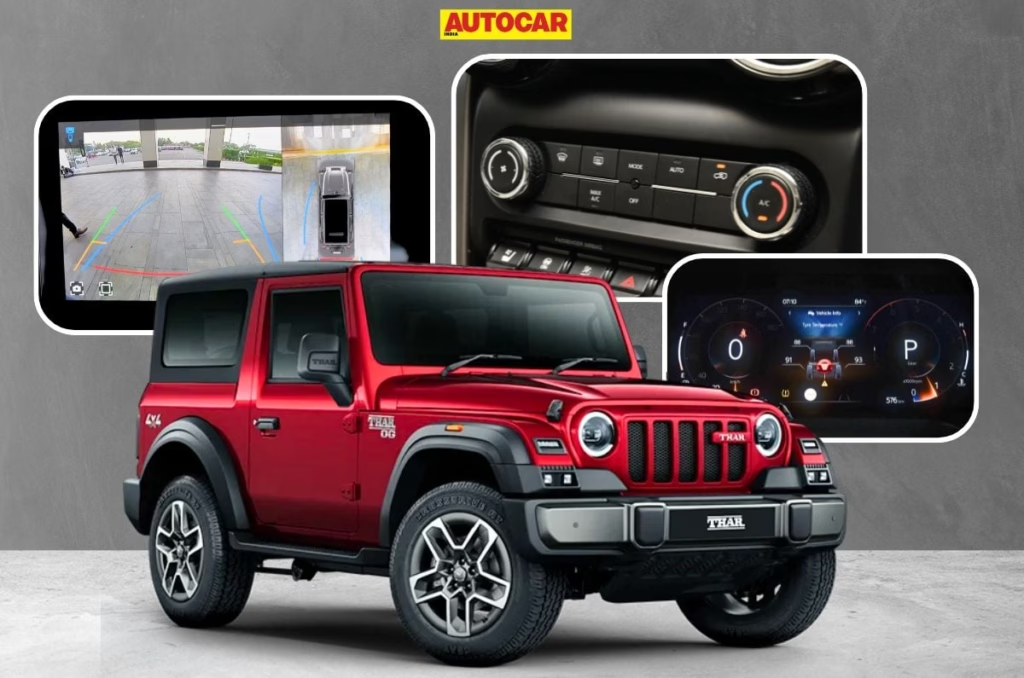
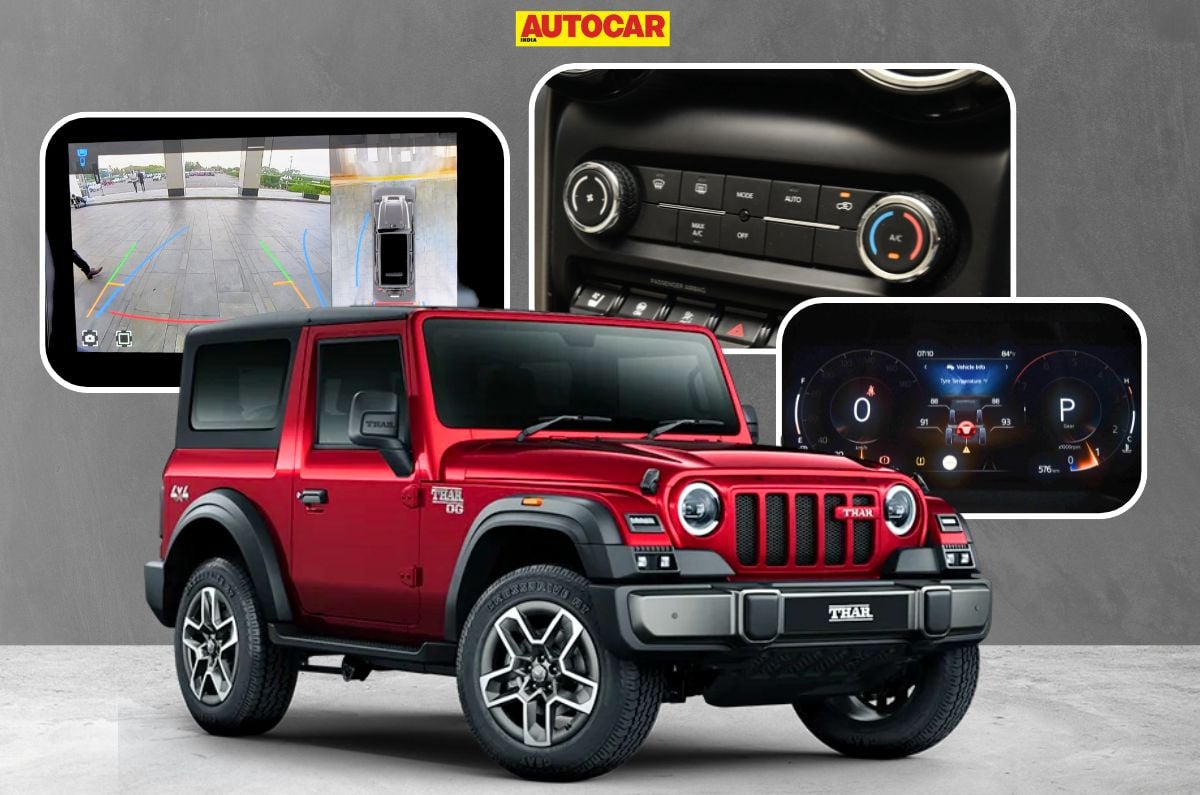
The Mahindra Thar has never been about having everything. It has always prioritised the essentials of a hardcore off-roader, even if that meant giving up some of the finesse offered in modern SUVs. The second-generation model, launched in 2020, followed the same philosophy. Mahindra has now tried to bring the Thar closer to the times with a second facelift, dubbed the Thar OG. It gets a longer list of equipment and some technical updates over the earlier model. But there are still some features that the Thar OG misses out on.
1. Automatic climate control
Offers manual climate controls and rear vents as standard
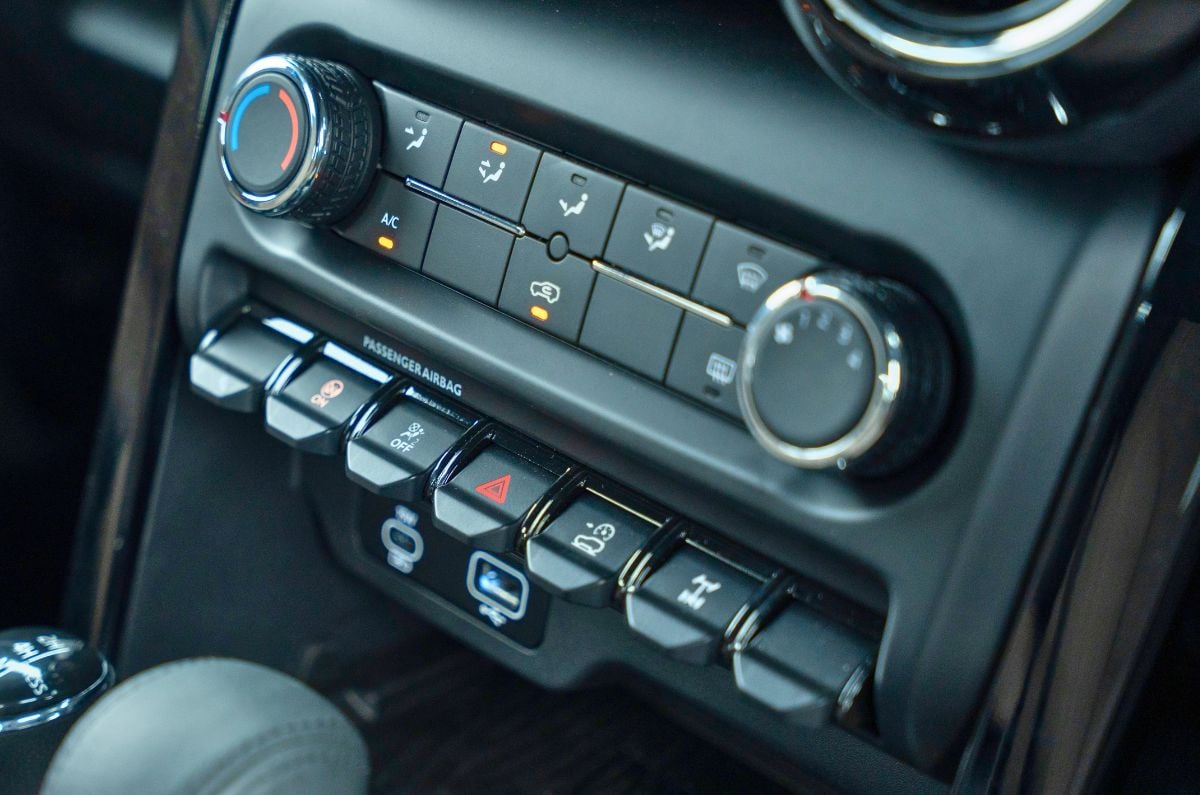
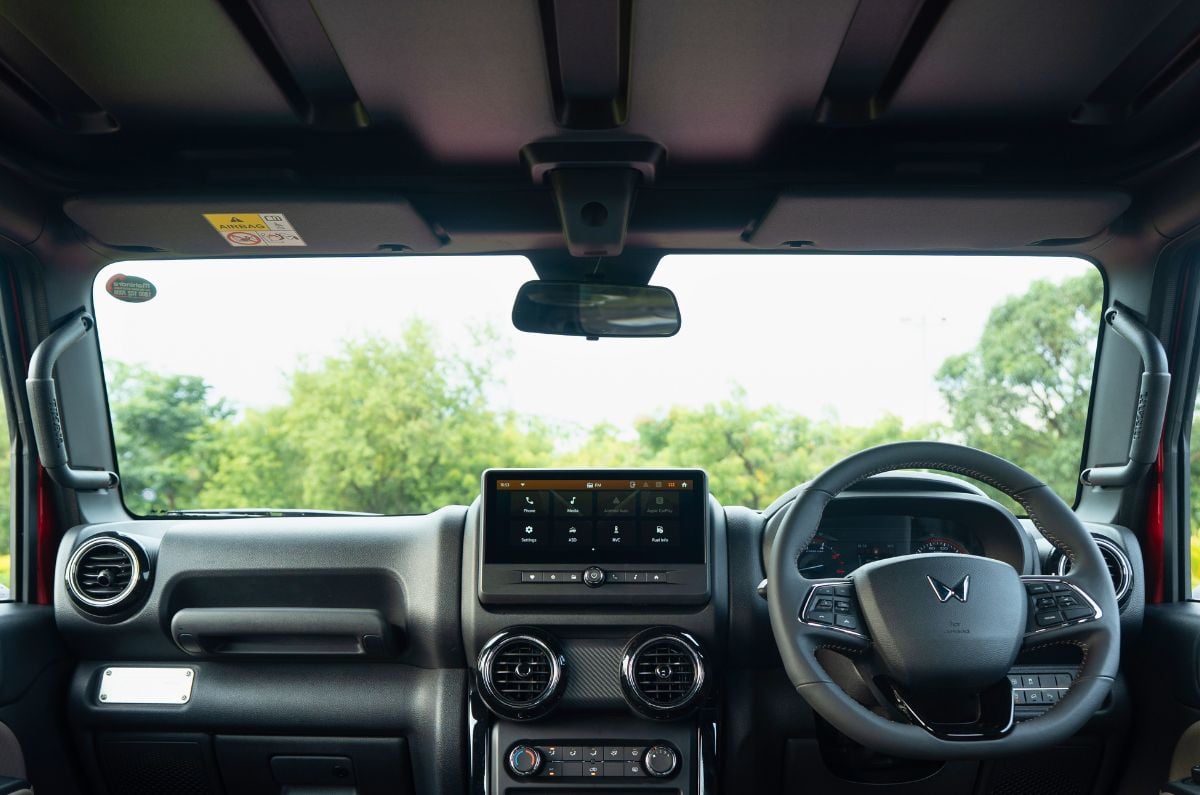
The Thar OG continues with a rudimentary climate control system. There is no automatic climate control on any variant, with the SUV getting manual AC controls from the base AXT trim all the way up to the top-spec ZXT. On the positive side, Mahindra offers rear AC vents as standard across the range, which should be convenient for rear-seat passengers who do not get openable windows.
2. Powered or ventilated seats
Driver and co-driver seats are manually adjustable
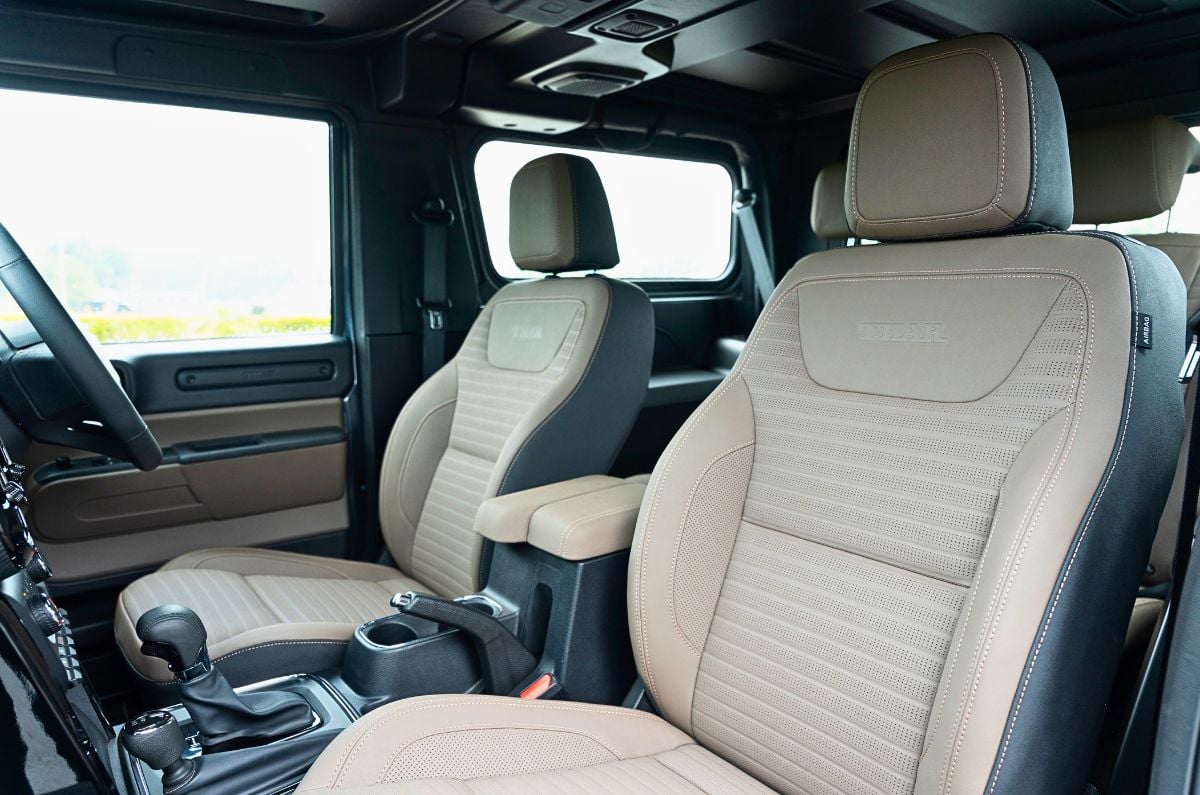
The front seats are manual across the range, with no electric adjustment or ventilation on offer even in the top-spec ZXT. The driver gets height and fore/aft adjustment, while the co-driver’s seat can only be adjusted for reach. The mechanism that allows the co-driver’s seat to be tilted and slid forward for access to the rear seats is manual as well.
3. 360-degree camera
Offered with a rear parking camera but only on the top ZXT trim
Parking assistance is another area where the Thar OG falls short among SUVs offered in a similar price range. The Thar OG is available with only a rear parking camera, and that too exclusively on the top-spec ZXT. The AXT and LXT trims get rear parking sensors instead.
4. Advanced driver assistance system (ADAS) suite
No driver assistance system is offered, unlike the larger Thar Roxx
The Thar OG also does without an ADAS suite. Driver assistance features have become increasingly common across the SUV market, including among several midsize and sub-4m SUVs. The larger Thar Roxx gets these features, but Mahindra has not brought them to the Thar OG.
5. Digital instrument cluster
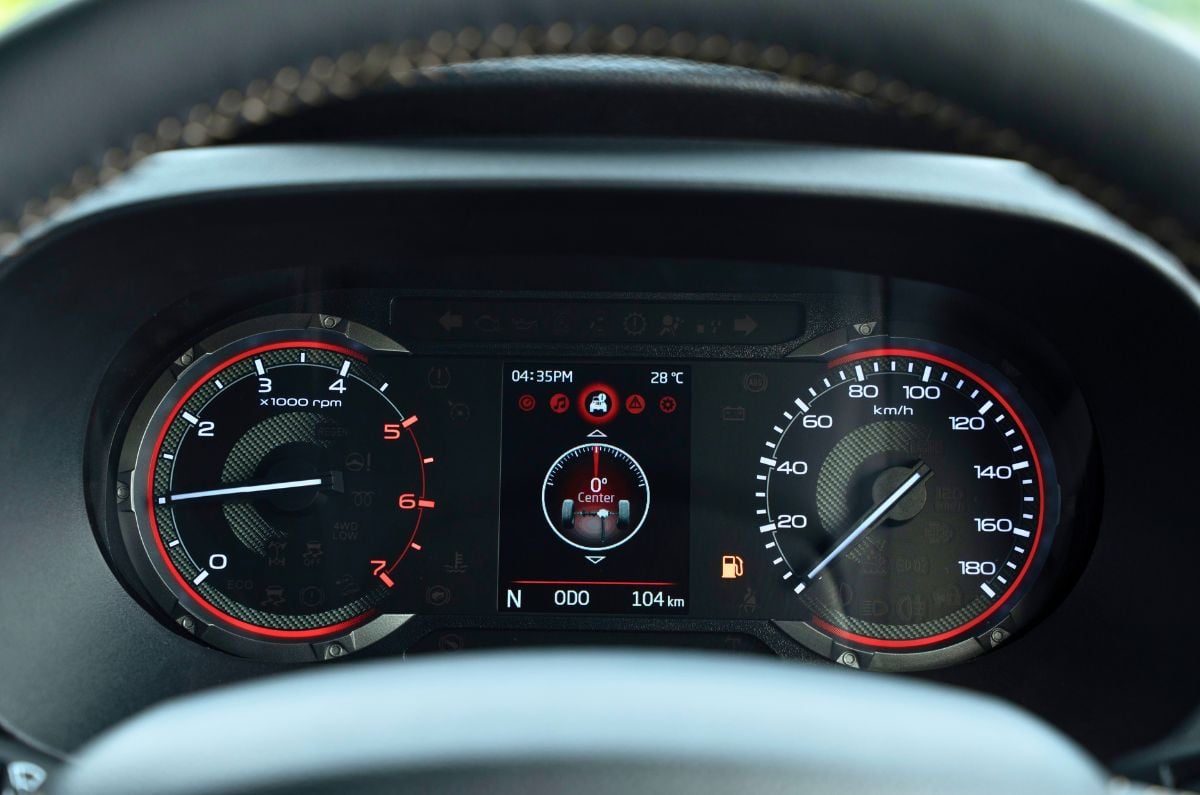
Continues to offer analogue dials and a coloured MID
While the Thar OG gets a fairly large 10.25-inch touchscreen, the instrument cluster retains a more traditional layout. There are two analogue dials for the speedometer and tachometer, with a multi-information display sitting between them. The AXT goes a step below with a monochrome MID instead of the colour unit offered on higher variants.
6. Branded audio system
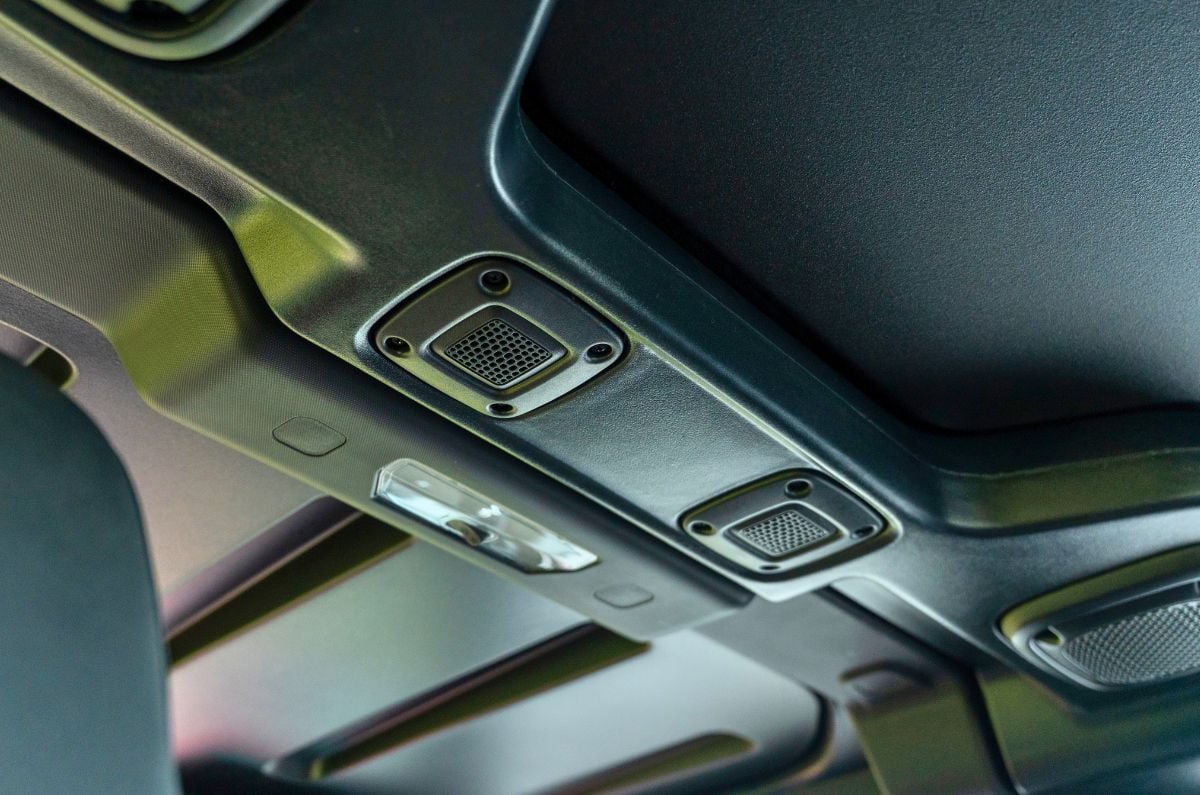
Gets 6 roof-mounted speakers
The Thar OG gets a six-speaker audio system, but there is no branded audio setup on offer. All six speakers are mounted on the roof, while other Mahindra SUVs get branded systems from the likes of Harman Kardon or Sony.
7. Wireless Apple CarPlay connectivity
Wireless smartphone connectivity is limited to Android Auto users
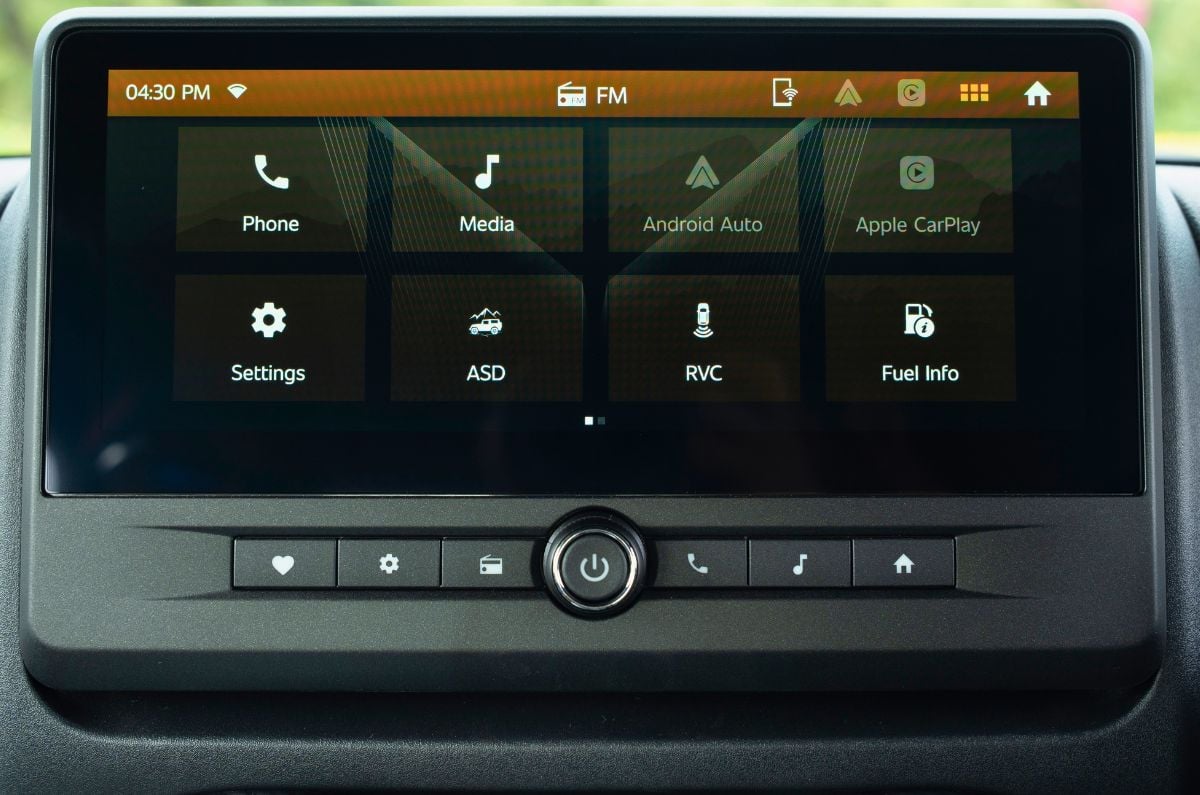
The Thar OG gets a 10.25-inch touchscreen from the mid-spec LXT onwards, but wireless smartphone connectivity isn’t equally convenient for Android and iOS platforms. Android Auto works wirelessly, while Apple CarPlay still requires a wired connection.
8. Auto-dimming inside rearview mirror (IRVM)
A manual day/night-adjustable IRVM is offered as standard
The inside rearview mirror is another piece of equipment that remains fairly basic. The Thar OG gets a conventional manual day/night-adjustable IRVM across its variants, rather than an auto-dimming unit that automatically reduces glare from tailing vehicles.
9. Electronic parking brake
Manual handbrake is offered on all trim levels
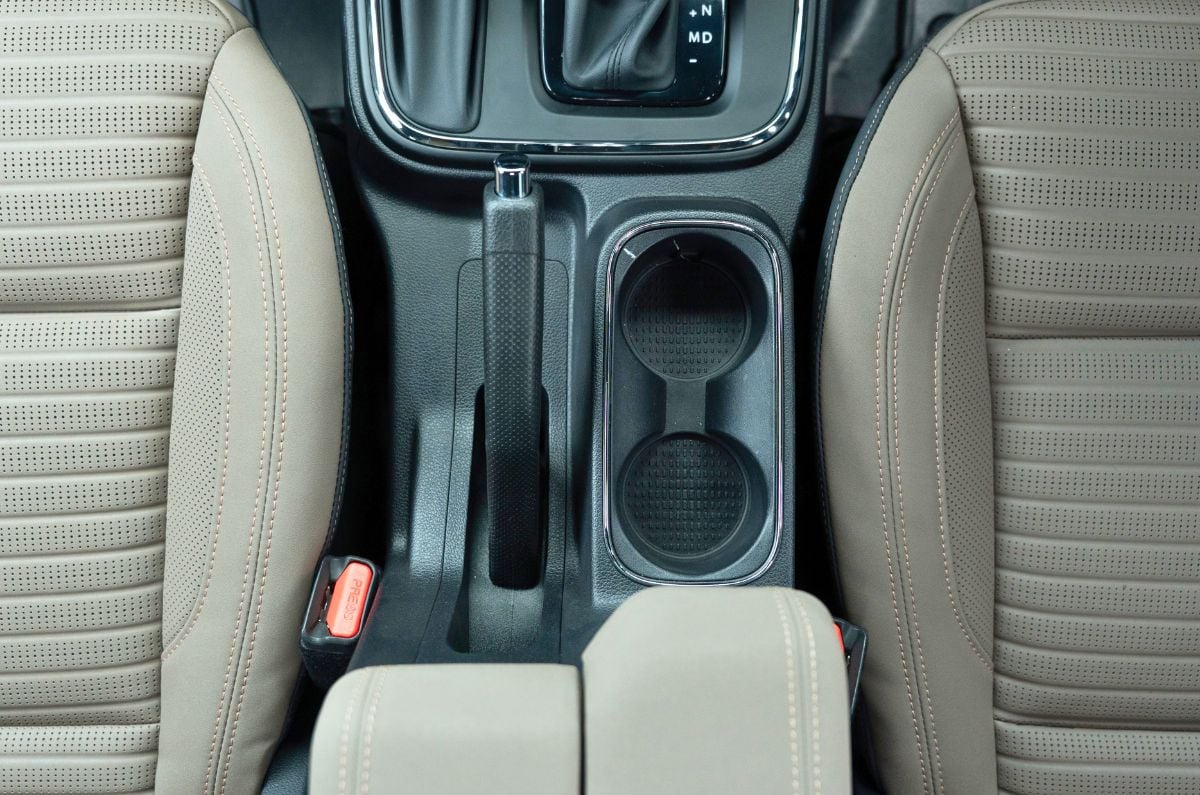
The Thar OG also sticks with a conventional mechanical handbrake across the range. There is no electronic parking brake, even on the top-spec ZXT. While it is not a glaring miss, an electronic parking brake, at least with the automatic variants, would have definitely made the Thar OG feel a bit more modern.
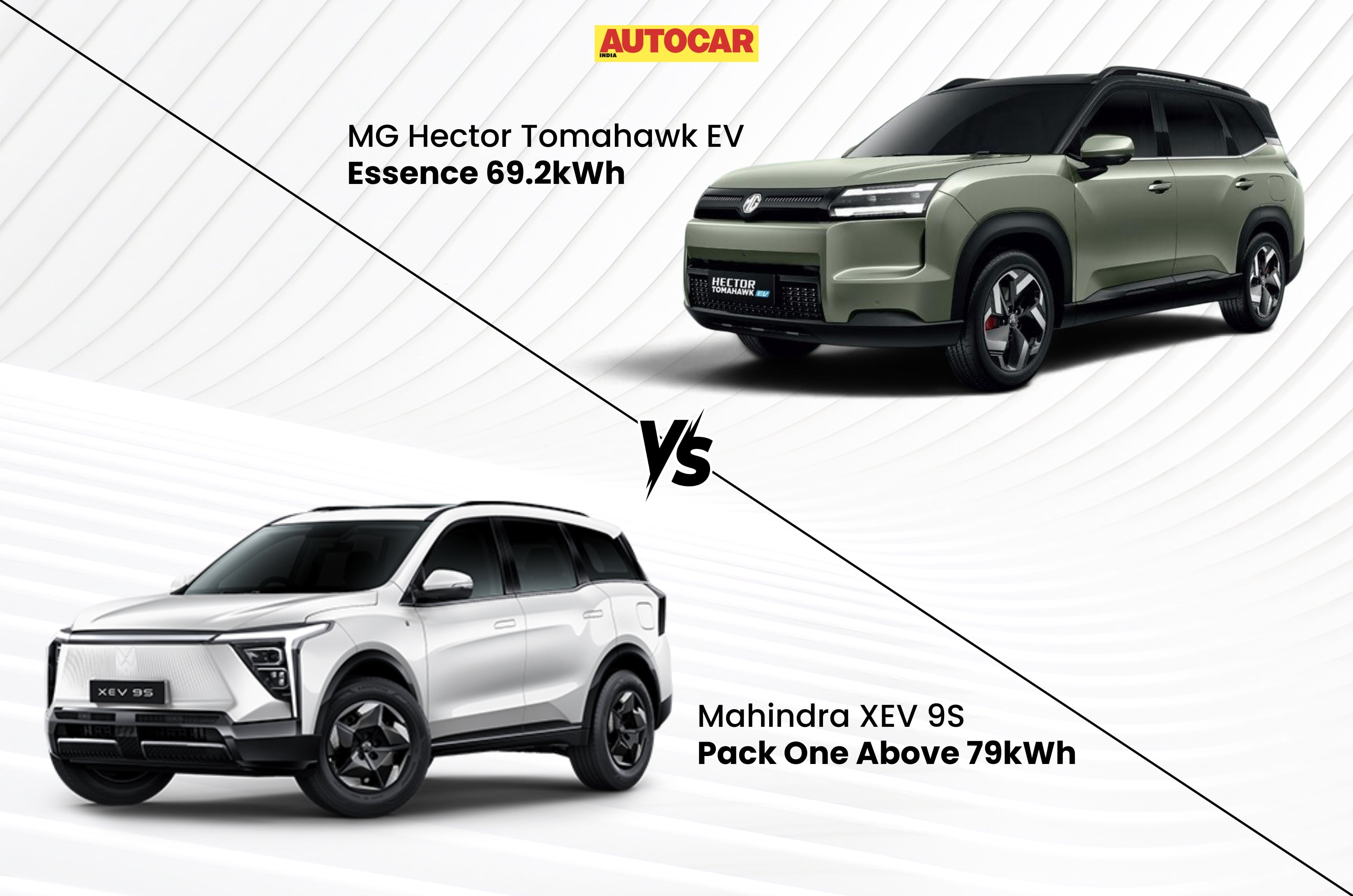
The MG Hector Tomahawk EV and Mahindra XEV 9S are EVs that can seat up to seven passengers, but when it comes to variant-wise pricing, the models differ quite a lot. The top-spec Tomahawk EV Essence is priced at Rs 23.5 lakh, ex-showroom, which is close to the range-starting XEV 9S Pack One Above at Rs 23.4 lakh (with the 79kWh battery pack). Here, we compare these trims to see what you get with each EV.
MG Hector Tomahawk EV vs Mahindra XEV 9S: Dimensions
MG Hector Tomahawk EV Essence vs Mahindra XEV 9S Pack One Above: Dimensions
Model
Hector Tomahawk EV
XEV 9S Pack One Above
Length (mm)
4,745
4,737
Width (mm)
1,850
1,900
Height (mm)
1,770
1,747
Wheelbase (mm)
2,810
2,762
Frunk (L)
N/A
150
Boot space (L)
192-528 (7str)/ 610 (5str)
527 (7str)
Ground clearance (mm)
230
222
The MG Hector Tomahawk EV is slightly longer than the Mahindra XEV 9S by 7mm and it is also 23mm taller, but 50mm narrower. Tomahawk’s wheelbase is 48mm longer as well. Overall, the Tomahawk EV is larger than the Mahindra in every dimension except width. Its 230mm ground clearance, measured to the battery, is also class-best.
Both SUVs use 18-inch wheels. The XEV 9S has a 150-litre frunk, while the Tomahawk EV does not have one. In the seven-seat layout, the Tomahawk EV offers 528 litres with the third row folded. That compares with 527 litres in the XEV 9S with its third row folded.
MG Hector Tomahawk EV vs Mahindra XEV 9S: Powertrain specs
MG Hector Tomahawk EV Essence vs Mahindra XEV 9S Pack One Above: Powertrain specs
Model
Hector Tomahawk EV
XEV 9S Pack One Above
Battery size (kWh)
69.2
79
Electric motor setup
Single, front
Single, rear
Power (hp)
204
286
Torque (Nm)
310
380
0-100kph sprint time (s)
8.2
7
MIDC range (km)
517
679
AC charging time (hours)
12.5 (7.4kW)
11.7 (7.2kW), 8 (11.2kW)
DC charging time (mins)
35 (90kW)
20 (180kW)
Clearly, the Mahindra XEV 9S has the more powerful powertrain, with 286hp and 380Nm compared to the Hector Tomahawk EV’s 204hp and 310Nm. That is an 82hp and 70Nm advantage for the Mahindra. It’s also quicker, with a claimed 0-100kph time of 7 seconds, which is 1.2 seconds quicker than the MG. The Tomahawk EV has front-wheel drive layout, while the XEV 9S uses a rear-wheel drive setup.
The XEV 9S also gets a larger 79kWh battery, compared to the Tomahawk EV’s 69.2kWh unit. This gives it a claimed MIDC range of 679km, which is 162km more than the MG’s 517km figure.
With AC charging, the XEV 9S takes 11.7 hours with a 7.2kW charger and 8 hours with an 11.2kW charger, compared to 12.5 hours for the Tomahawk EV with its 7.4kW charger. On DC charging, the XEV 9S takes 20 minutes from 20-80 percent with a 180kW charger, while the Tomahawk EV takes 35 minutes from 30-80 percent with a 90kW charger. The charging times claimed by the carmakers are based on different battery SoC ranges, so they are not directly comparable.
MG Hector Tomahawk EV vs Mahindra XEV 9S: Exterior features
MG Hector Tomahawk EV Essence vs Mahindra XEV 9S Pack One Above: Exterior features
Model
Hector Tomahawk EV
XEV 9S Pack One Above
Headlamps
LED
LED projector
Tail-lights
LED
LED
Fog lamps
No
No
Electrically adjustable ORVMs
Yes
Yes
Powered folding ORVMs
Yes
No
Turn indicators on ORVMs
Yes
Yes
Door handles
Pull type
Flush fitting
Wheels
18-inch, alloy
18-inch, steel with cover
Powered tail-gate
Yes
No
Connected light bar
N/A
Front
Rear spoler
Yes
Yes
Despite the XEV 9S Pack One Above being the range-starting trim, it packs a largely similar set of features to the top-spec Tomahawk EV, including LED tail-lights, electrically adjustable ORVMs with turn indicators and rear spoilers. The XEV 9S gets LED projector headlamps, while the Tomahawk EV gets regular LED units. The two also differ in their door handles, with the Tomahawk featuring pull-type ones and the XEV 9S getting flush-fitting units.
The top-spec Hector Tomahawk EV does have a few additional features over the range-starting XEV 9S, including alloy wheels, powered folding ORVMs and a powered tailgate. Interestingly, even the top-spec XEV 9S does not get a powered tailgate. Front fog lamps are missing from the entire Tomahawk range, while higher XEV 9S trims get them.
MG Hector Tomahawk EV vs Mahindra XEV 9S: Interior features
MG Hector Tomahawk EV Essence vs Mahindra XEV 9S Pack One Above: Interior features
Model
Hector Tomahawk EV
XEV 9S Pack One Above
Touchscreen
15.6 inch
12.3 inch
Digital driver’s display
8.8 inch
12.3 inch
Passenger screen
N/A
12.3 inch
Speakers
10
6
Sunroof
Panoramic
Panoramic
Ventilated front seats
Yes
No
Second-row centre armrest
Yes
Yes
Wireless charger
Yes
No
Ambient lighting
Yes
No
Apple CarPlay and Android Auto
Wireless
Wireless
Rear sunshades
Yes
No
Inside, the XEV 9S gets a three-screen setup – 12.3-inch digital driver’s display, central touchscreen and passenger display – right from its base trim. The Tomahawk EV, meanwhile, gets a massive 15.6-inch central touchscreen and an 8.8-inch driver’s display, with no passenger screen.
Both SUVs get a panoramic sunroof, second-row centre armrest and wireless Apple CarPlay and Android Auto, but the MG SUV has a few features that the base-spec XEV 9S misses, including ventilated front seats, a wireless charger, ambient lighting and rear sunshades. It also gets a 10-speaker system compared to the XEV 9S’s six speakers.
MG Hector Tomahawk EV vs Mahindra XEV 9S: Driving features
MG Hector Tomahawk EV Essence vs Mahindra XEV 9S Pack One Above: Driving features
Model
Hector Tomahawk EV
XEV 9S Pack One Above
Drive modes
Yes
Yes
Battery regen modes
Yes
Yes
Cruise control
Adaptive
Manual
There is little to separate the two EVs here. The main difference is that the Tomahawk EV gets adaptive cruise control, while the XEV 9S Pack One Above gets only regular manual cruise control.
MG Hector Tomahawk EV vs Mahindra XEV 9S: Safety features
MG Hector Tomahawk EV Essence vs Mahindra XEV 9S Pack One Above: Safety features
Model
Hector Tomahawk EV
XEV 9S Pack One Above
Airbags
6
6
360-degree camera
Yes
No
Electronic parking brake
Yes
Yes
ISOFIX seat anchors
Yes
Yes
Tyre-pressure monitoring system
Yes
Yes
Rear defogger
Yes
Yes
Rear wiper and washer
Yes
Yes
ADAS
Level 2
N/A
Both SUVs are evenly matched on several basic safety features. The top-spec Tomahawk EV, however, has an advantage with a 360-degree camera and Level 2 ADAS, both of which are missing from the XEV 9S Pack One Above.
MG Hector Tomahawk EV vs Mahindra XEV 9S: Verdict
MG Hector Tomahawk EV Essence vs Mahindra XEV 9S Pack One Above: Prices
Model
Hector Tomahawk EV
XEV 9S Pack One Above
Price (Rs lakh)
23-23.5
23.4 (with 11.2kW charger)
Between the MG Hector Tomahawk EV Essence vs Mahindra XEV 9S Pack One Above, our pick is the latter. The Mahindra XEV 9S is priced higher than the MG Tomahawk EV, but what is interesting is that even the range-starting trim makes a strong case against the more accessible MG. It gets a larger battery pack, a higher claimed range, faster charging speed compatibility and a more powerful electric motor. On the features front too, the base-spec Pack One Above trim gets a good mix of equipment and is not bare-bones, as is the case with some other cars.
However, if you specifically want a five-seater SUV with plenty of boot space and a long list of features, the Tomahawk EV can be considered; the XEV 9S does not offer the choice of a 5-seater layout.
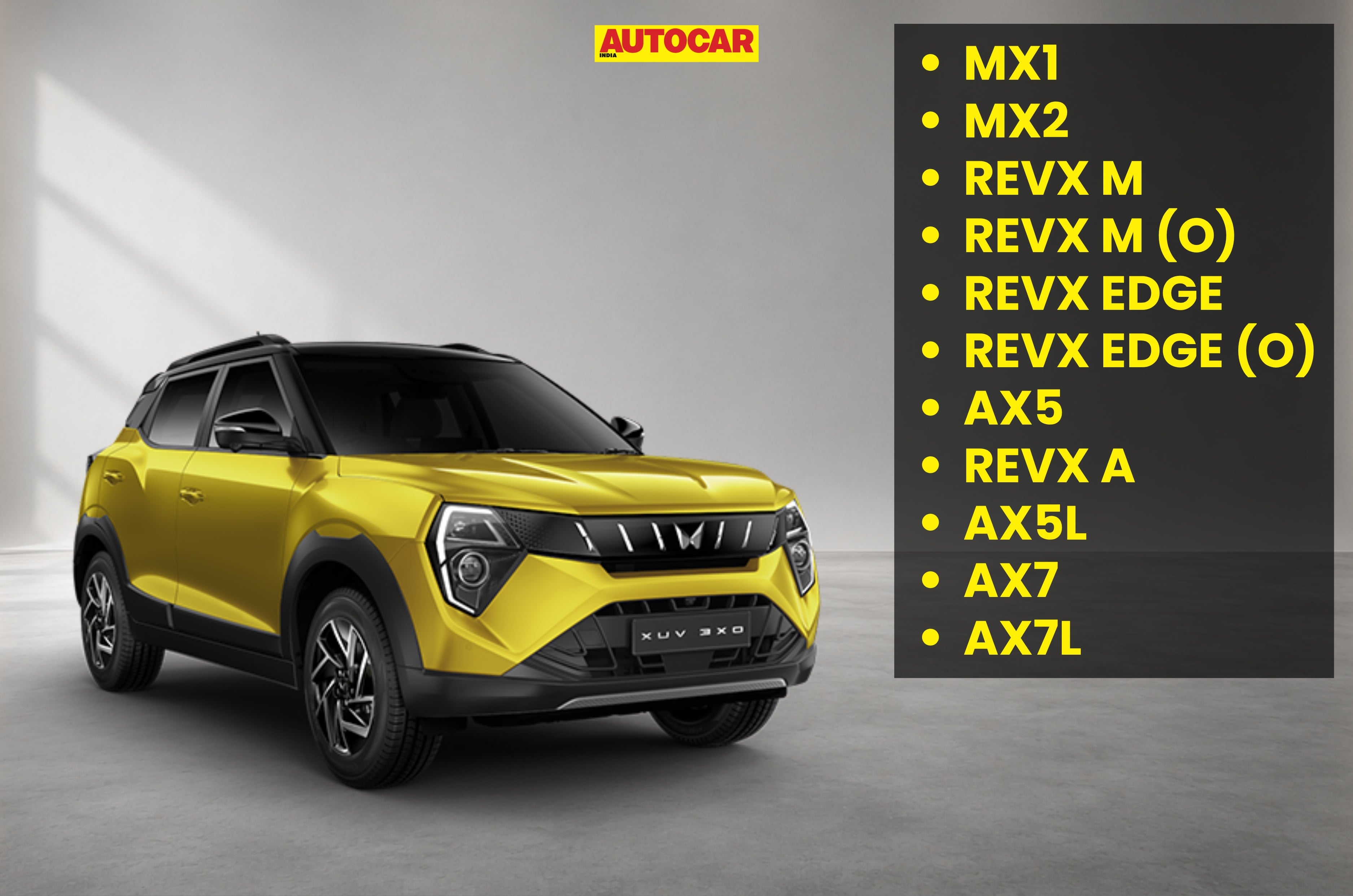
Mahindra launched the XUV 3XO in April 2024 as the facelifted version of the XUV300, with a redesigned exterior and interior, and new convenience and safety features. Over the years, the manufacturer has rejigged the variant-wise feature distribution and has added RevX trims to keep it relevant in the highly contested compact SUV space. Currently, the XUV 3XO is being offered in 11 trims and with 3 engine options. Among these, which variant should you choose? Let us find out.
Mahindra XUV 3XO powertrain options and prices
Available in 11 trims, offered with two turbo-petrol and a diesel engine option
Mahindra offers the XUV 3XO with two turbo-petrol engines and a diesel mill. These include a 1.2-litre MPFi turbo-petrol engine producing 111hp and 200Nm, a 1.2-litre TGDi turbo-petrol engine producing 131hp and 230Nm, and a 1.5-litre diesel engine producing 117hp and 300Nm. Both turbo-petrol engines are offered with a choice between a 6-speed manual and a 6-speed torque converter automatic transmission (AT). The diesel engine is paired with either a 6-speed manual or a 6-speed automated manual transmission (AMT).
Here are the powertrain-wise prices of the Mahindra XUV 3XO:
Mahindra XUV 3XO variant-wise ex-showroom prices (in Rs, lakh)
Turbo-petrol MT
Turbo-petrol AT
Diesel MT
Diesel AMT
MX1
7.79
–
–
–
MX2
–
–
9.36
–
RevX M
8.59
–
–
–
RevX M (O)
9.09
9.99
–
–
RevX Edge
9.39
10.59
10.59
–
RevX Edge (O)
9.89
11.09
11.09
11.91
AX5
10.30
11.88
11.40
12.20
RevX A
11.28
12.40
–
–
AX5L
12.03
13.28
–
–
AX7
12.20
13.34
13.04
13.80
AX7L
13.33
15.04
14.08
–
In the Mahindra XUV 3XO lineup, the more potent 131hp 1.2-litre TGDi turbo-petrol engine is offered only with the higher-spec RevX A, AX5L, AX7 and AX7L trims. The other lower-spec trims are offered with the 111hp 1.2-litre MPFi turbo-petrol engine.
Mahindra XUV 3XO colour options
Offered in 8 exterior hues, all of which are offered in dual-tone options too
Mahindra XUV 3XO Tango Red colour option.
The Mahindra XUV 3XO is offered in eight colour options: Citrine Yellow, Deep Forest, Dune Beige, Everest White, Galaxy Grey, Nebula Blue, Stealth Black, and Tango Red. All these colours are also offered in a dual-tone shade featuring either a Stealth Black or a Galvano Grey roof. Among these hues, only the Everest White, Galaxy Grey, Tango Red, Nebula Blue, and Stealth Black are being offered with the RevX trims.
Mahindra XUV 3XO variant-wise features
The top-spec AX7L’s dashboard image is shown for representational purposes only.
All four power windows with one-touch down on the driver-side window
USB Type-C charging ports for front and rear passengers
12V charging socket for front passengers
Front centre armrest with integrated storage space
Adjustable headrests on 2nd row (except middle passenger seat)
60:40 split rear seat
Auto engine start/stop
6 airbags
Rear parking sensors
Height-adjustable seatbelts for front passengers
ISOFIX child seat anchorages
Electronic stability control (ESC)
MX2
Price: Rs 9.36 lakh
Powertrain: 117hp diesel MT
Features over MX1
10.25-inch infotainment touchscreen
Wired Android Auto and Apple CarPlay
4-speaker sound system
Steering-mounted audio controls
Keyless entry
Follow-me-home headlight function
USB Type-A port for front passengers
RevX M
Price: Rs 8.59 lakh
Powertrain: 111hp turbo petrol MT
Features over MX2
Height-adjustable driver seat (manual)
Black leatherette seat upholstery
Black wheel covers on 16-inch steel wheels
Rear centre armrest with cupholders
Adjustable headrest for 2nd row middle passenger seat
Body coloured or Gunmetal Grey grille
Dual-tone roof
RevX M (O)
Price: Rs 9.09 lakh to Rs 9.99 lakh
Powertrain: 111hp turbo petrol MT/AT, 117hp diesel-MT
Features over RevX M
Single-pane sunroof
RevX Edge
Price: Rs 9.39 lakh to Rs 10.59 lakh
Powertrain: 111hp turbo petrol MT/AT
Features over RevX M
Wireless Android Auto and wired Apple CarPlay
Rear parking camera
Cruise control
RevX Edge (O)
Price: Rs 9.89 lakh to Rs 11.09 lakh
Powertrain: 111hp turbo petrol MT/AT, 117hp diesel-MT/AMT
Features over RevX Edge
Panoramic sunroof
Push-button start/stop
Electrically folding ORVMs
Auto headlights and wipers
Passive keyless entry
Roof rails
AX5
Price: Rs 10.30 lakh to Rs 12.20 lakh
Powertrain: 111hp turbo petrol MT/AT, 117hp diesel-MT/AMT
Features over MX2
10.25-inch digital instrument cluster
10.25-inch infotainment touchscreen
Wireless Android Auto and Apple CarPlay
6-speaker sound system
Connected car technology with built-in navigation
Dual-zone automatic climate control
Single-pane sunroof
Rear parking camera
Tyre pressure monitoring system (TPMS)
Auto projector LED headlights and LED DRLs
Connected LED taillights
Rear wiper and washers
Automatic wipers
Rear defogger
Passive keyless entry
Push-button start/stop
Electrically folding ORVMs
Height-adjustable driver’s seat (manual)
Rear centre armrest with cupholders
Leatherette-wrapped steering wheel and gear lever
One-touch up function for driver-side power window
RevX A
Price: Rs 11.28 lakh to Rs 12.40 lakh
Powertrain: 131hp TGDi turbo petrol MT/AT
Features over AX5
Panoramic sunroof
Dolby Atmos surround-sound support
16-inch black alloy wheels
Black leatherette seat upholstery
Body coloured or Gunmetal Grey grille
Dual-tone roof
AX5L
Price: Rs 12.03 lakh to Rs 13.28 lakh
Powertrain: 131hp TGDi turbo petrol MT/AT
Features over AX5
Level 2 advanced driver assistance system (ADAS)
360-degree camera with blind-spot monitor
Wireless phone charger
Auto-dimming inside rearview mirror (IRVM)
Electronic parking brake with auto-hold function
Cooled glovebox
Dolby Atmos surround-sound support
AX7
Price: Rs 12.20 lakh to Rs 13.80 lakh
Powertrain: 131hp TGDi turbo petrol MT/AT, 117hp diesel MT/AMT
Features over AX5
Panoramic sunroof
Wireless phone charger
Harman Kardon sound system with an amplifier and a subwoofer
Front LED fog lights
17-inch dual-tone alloy wheels
Front parking sensors
Cooled and illuminated glovebox
Dolby Atmos surround-sound support
Soft-touch leatherette elements on dashboard and door trims
AX7L
Price: Rs 13.33 lakh to Rs 14.08 lakh
Powertrain: 131hp TGDi turbo petrol MT/AT, 117hp diesel MT
Features over AX7
Level 2 ADAS
360-degree camera with blind-spot assist
Electronic parking brake with auto-hold function
Which variant of the Mahindra XUV 3XO should you buy?
AX5L is recommended, but the RevX Edge (O) is a good option for budget buyers
The Mahindra XUV 3XO’s higher-spec AX5L offers a fine balance between value for money and a loaded feature list. The most significant feature misses in this trim include a panoramic sunroof and a Harman Kardon sound system, but it is still loaded with modern-day features. However, if you want a diesel engine, the AX7 is the option to go for, which also equips it with features missing on the AX5L. If you are on a budget, the mid-spec RevX Edge (O) is the most value-for-money trim in the SUV’s lineup.
Motorola जल्द ही Motorola Signature 27 लॉन्च करके अपनी Signature सीरीज को आगे बढ़ाने जा रही है। कुछ हफ्ते पहले इस फोन का टीजर जारी किया गया था, और अब कंपनी ने एक बार फिर नया टीजर जारी किया है जिसमें डिवाइस का रियर कैमरा सेटअप और दो कलर ऑप्शन दिखाए गए हैं। हैंडसेट के टीजर वीडियो में फोन की संभावित लॉन्च डेट, रियर कैमरे की जानकारी और कलर ऑप्शन का पता चलता है।
टीजर के अनुसार, यह फोन 22 सितंबर, 2026 को लॉन्च किया जाएगा। हालांकि, यह साफ नहीं है कि उस दिन डिवाइस को लॉन्च किया जाएगा या सिर्फ उससे जुड़ी जानकारी ही सामने आएगी। अन्य जानकारियों की बात करें तो, फोन के टीजर वीडियो में Signature सीरीज के डिवाइस के लिए अलग-अलग मटीरियल दिखाए गए हैं। Motorola Signature 27 को दो कलर ऑप्शन में Pantone Capulet Olive और Pantone Coal Smoke में लॉन्च किया जाएगा।
Motorola Signature 27 के संभावित स्पेसिफिकेशन
Motorola Signature 27 में 165Hz रिफ्रेश रेट वाला 6.8-इंच का OLED 1.5 डिस्प्ले होगा। इसमें Qualcomm Snapdragon 8 Elite Gen 6 Pro प्रोसेसर के साथ 16GB RAM और 1TB तक की इंटरनल स्टोरेज मिल सकती है। कैमरे की बात करें तो यह कन्फर्म हो गया है कि डिवाइस में ट्रिपल रियर कैमरा सेटअप होगा, जिसमें 100X सुपर जूम वाला 200MP का Sony LYTIA LYT-901 सेंसर शामिल होगा। वहीं, सेल्फी और वीडियो कॉल के लिए, फोन में 50MP का फ्रंट कैमरा भी देखने को मिल सकता है।
इस डिवाइस में 5,500mAh से 6,000mAh के बीच की बैटरी दी जा सकती है, जो 90W वायर्ड और 50W वायरलेस फास्ट चार्जिंग सपोर्ट के साथ आ सकता है। यह फोन Android 17 ऑपरेटिंग सिस्टम पर आधारित होगा और इसमें Hello UI स्किन होगी।
सिक्योरिटी के लिए फोन में इन-डिस्प्ले फिंगरप्रिंट सेंसर भी मिल सकता है। फिलहाल फोन से जुड़ी बाकी सभी डिटेल्स सामने नहीं आई हैं। लॉन्च से पहले आने वाले दिनों में लीक और दूसरी रिपोर्ट्स के जरिए इसके बारे में और जानकारी मिलने की उम्मीद है।
दूरसंचार विभाग (DoT) ने फर्जी तरीके से SIM कार्ड जारी करने और उसके गलत इस्तेमाल को लेकर नागरिकों को सतर्क किया है। विभाग के मुताबिक, किसी व्यक्ति की जानकारी या सहमति के बिना उसके पहचान दस्तावेजों का इस्तेमाल करके मोबाइल कनेक्शन जारी करना, SIM का गलत इस्तेमाल करना या IMEI नंबर से छेड़छाड़ करना कानूनी अपराध हो सकता है।
DoT के मुताबिक फर्जी तरीके से SIM जारी करना, टेलीकॉम पहचानकर्ताओं का गलत इस्तेमाल करना और IMEI नंबर में छेड़छाड़ करना Telecommunications Act, 2023 के तहत दंडनीय अपराध हैं। दूरसंचार कानून के तहत ऐसे मामलों में 3 साल तक की जेल और ₹50 लाख तक का जुर्माना लगाया जा सकता है।
ऐसे में यह जानना जरूरी है कि आपके नाम पर कितने मोबाइल कनेक्शन चल रहे हैं और कोई नंबर आपकी जानकारी के बिना तो जारी नहीं हुआ है। DoT की यह एडवाइजरी मध्यप्रदेश लाइसेंस्ड सर्विस एरिया (MP LSA) की हालिया साइबर क्राइम जांच के बाद जारी की गई है। जांच में फर्जी तरीके से SIM कार्ड जारी किए जाने के मामले सामने आए हैं।
बिना जानकारी के जारी किए गए SIM का मामला सामने आया
DoT के अनुसार, साइबर जांच के दौरान छत्तीसगढ़ में ऐसे मामले सामने आए, जहां पॉइंट ऑफ सेल (POS) के जरिए नागरिकों की जानकारी या सहमति के बिना उनके पहचान दस्तावेजों का इस्तेमाल कर मोबाइल कनेक्शन एक्टिवेट किए गए।
आरोप है कि एजेंट ने नागरिकों के पहचान दस्तावेजों का इस्तेमाल उनकी जानकारी और सहमति के बिना 25 मोबाइल कनेक्शन एक्टिवेट कर दिए। जांच के बाद DoT और संबंधित टेलीकॉम कंपनियों ने इस PoS एजेंट को ब्लैकलिस्ट कर दिया। अब वह भविष्य में नए मोबाइल कनेक्शन जारी नहीं कर सकेगा।
मामले सामने आने के बाद दूरसंचार विभाग और संबंधित टेलीकॉम सर्विस प्रोवाइडर ने संबंधित POS को ब्लैकलिस्ट किया। इसके अलावा कई मोबाइल कनेक्शनों की जांच इंटेलिजेंस प्लेटफॉर्म पर की गई और संदिग्ध पाए गए नंबरों का दोबारा सत्यापन किया गया। जांच के बाद कई नंबरों को ब्लॉक भी किया गया।
DoT ने नागरिकों को सलाह दी है कि अपने नाम पर जारी SIM कार्ड किसी दूसरे व्यक्ति को न दें और न ही उसे ट्रांसफर या बेचें। अगर उस नंबर का इस्तेमाल साइबर फ्रॉड, धोखाधड़ी या किसी अन्य गैरकानूनी गतिविधि में होता है, तो वास्तविक सब्सक्राइबर के लिए कानूनी परेशानी खड़ी हो सकती है। इसलिए अपना SIM किसी को उधार देने, किराए पर देने या किसी अन्य उद्देश्य से इस्तेमाल करने के लिए देने से बचें।
IMEI से छेड़छाड़ वाले फोन से रहें दूर
विभाग ने नागरिकों को ऐसे मोबाइल डिवाइस खरीदने या इस्तेमाल करने से भी बचने की सलाह दी है, जिनके IMEI नंबर के साथ छेड़छाड़ की गई हो। मोबाइल खरीदते समय डिवाइस की वैधता और उसकी पहचान की जानकारी जांचना जरूरी है। IMEI मोबाइल डिवाइस की विशिष्ट पहचान संख्या होती है।
कॉलिंग लाइन आइडेंटिटी बदलने वाले ऐप से बचें
DoT ने नागरिकों को मोबाइल ऐप या वेबसाइट के जरिए Calling Line Identity (CLI) में बदलाव करने वाली सेवाओं का इस्तेमाल न करने की सलाह दी है। किसी दूसरे व्यक्ति के नाम पर SIM लेकर उसका इस्तेमाल करना या अपने नाम पर जारी SIM को किसी अन्य व्यक्ति को देकर उससे साइबर अपराध करवाना गंभीर कानूनी समस्या पैदा कर सकता है।
संचार साथी से ऐसे जांचें अपने नाम के SIM
अपने नाम पर कितने मोबाइल कनेक्शन सक्रिय हैं, इसकी नियमित जांच करना नागरिकों के लिए महत्वपूर्ण है। इसके लिए सरकार के संचार साथी (Sanchar Saathi) पोर्टल और मोबाइल ऐप का इस्तेमाल किया जा सकता है। अगर आपको अपने नाम पर ऐसा मोबाइल नंबर दिखाई देता है जिसे आपने जारी नहीं कराया है या जिसका इस्तेमाल आप नहीं करते हैं, तो उपलब्ध सुविधा के जरिए उसके खिलाफ कार्रवाई या उसे ब्लॉक कराने की प्रक्रिया शुरू की जा सकती है।
मोबाइल फोन असली है या नहीं, ऐसे करें चेक
संचार साथी प्लेटफॉर्म पर ‘Genuineness of Your Mobile Handset’ सुविधा भी उपलब्ध है। इसके जरिए मोबाइल हैंडसेट से जुड़ी जानकारी की जांच की जा सकती है। इस सुविधा में मोबाइल ब्रांड, मॉडल और निर्माता से जुड़ी जानकारी देखी जा सकती है। नया या इस्तेमाल किया हुआ मोबाइल खरीदते समय यह जांच उपयोगी हो सकती है। DoT ने नागरिकों से अपील की है कि वे सतर्क रहें और अपने नाम पर जारी मोबाइल कनेक्शन और इस्तेमाल किए जा रहे हैंडसेट की समय-समय पर जांच करते रहें। Sanchar Saathi की सेवाएं पोर्टल के साथ-साथ Android और iOS के लिए उपलब्ध मोबाइल ऐप के जरिए भी इस्तेमाल की जा सकती हैं।
नागरिकों के लिए DoT की जरूरी सलाह
अपने नाम पर जारी SIM किसी दूसरे व्यक्ति को न दें।
SIM को बेचने या अनधिकृत रूप से ट्रांसफर करने से बचें।
अपने नाम पर सक्रिय मोबाइल कनेक्शन की नियमित जांच करें।
अनजान या संदिग्ध मोबाइल नंबर की जानकारी मिलने पर उसकी शिकायत करें।
IMEI से छेड़छाड़ किए गए मोबाइल फोन का इस्तेमाल न करें।
संदिग्ध मोबाइल डिवाइस खरीदने से पहले उसकी जानकारी जांचें।
CLI बदलने वाली संदिग्ध वेबसाइट या ऐप का इस्तेमाल न करें।
संचार साथी के जरिए अपने मोबाइल कनेक्शन और हैंडसेट की जांच करें।
ऐसे मॉडेम, मॉड्यूल, SIM Box या अन्य उपकरणों का इस्तेमाल करना जिनमें IMEI नंबर बदला या छेड़छाड़ किया गया हो।
मोबाइल ऐप, वेबसाइट या किसी अन्य माध्यम से Calling Line Identity (CLI) या अन्य टेलीकॉम पहचानकर्ताओं में बदलाव करना।