Ather Konarc S 125 vs TVS Orbiter V2: Price and specifications compared

Ather Konarc S 125 vs TVS Orbiter V2: Price and specifications compared
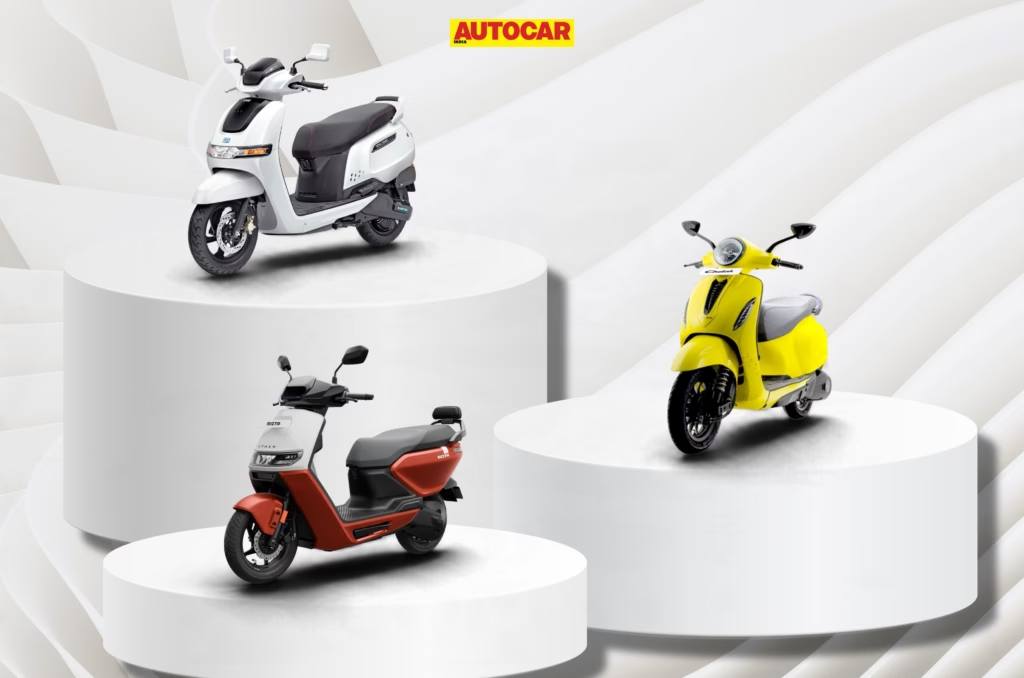
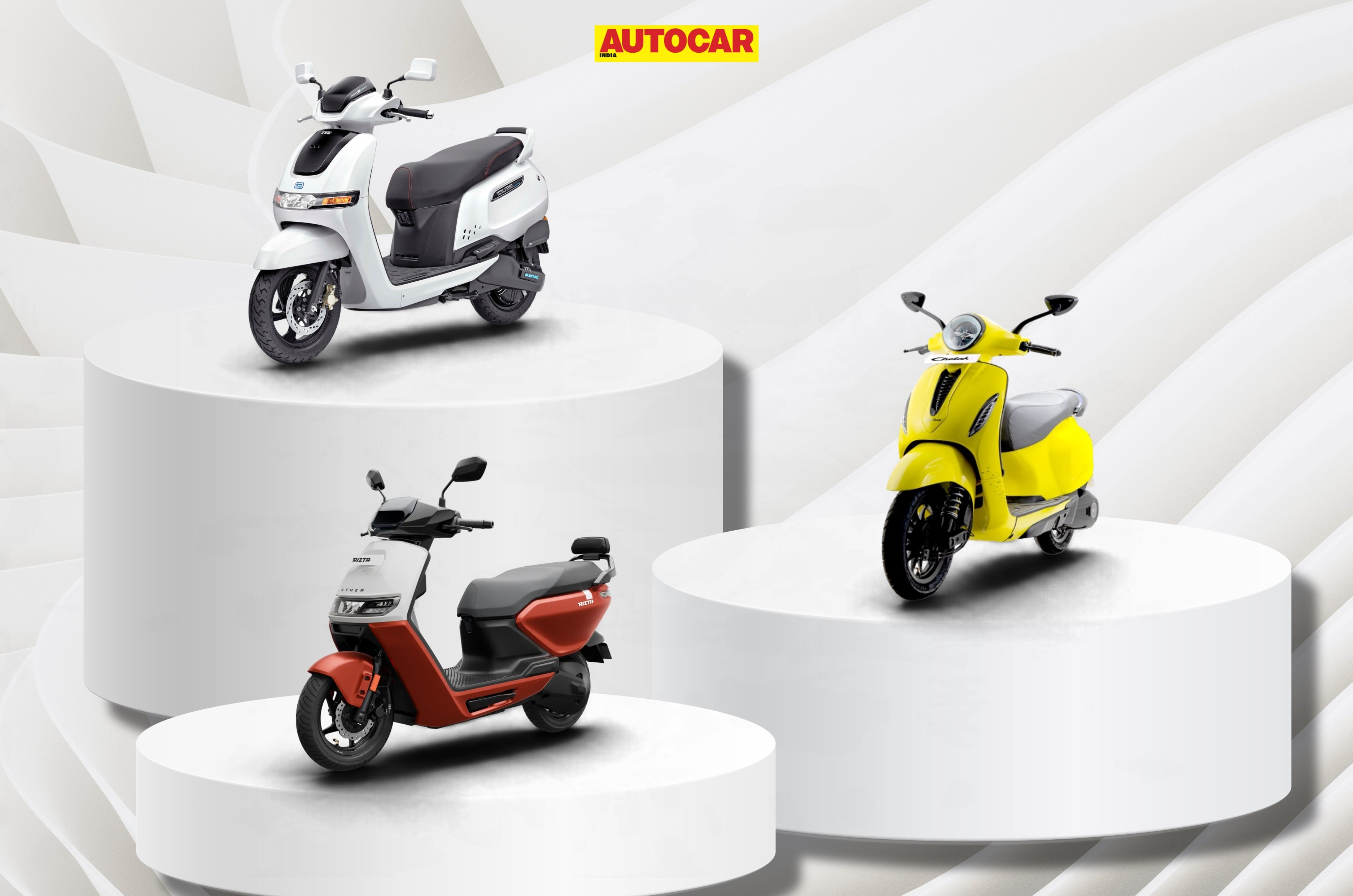
A render showing the Ather Konarc S 125 and TVS Orbiter V2

Ather has launched the Konarc with a brand-new EL platform at prices starting as low as Rs 99,999. This makes the scooter an obvious rival to the TVS Orbiter, which was revealed last year to target the urban scooter market. Since the Ather Konarc’s entry-level variant isn’t due for release until late next year, let’s see how the Konarc S 125, available later this month, compares to the TVS Orbiter V2.

Ather Konarc S 125 vs TVS Orbiter V2: Motor, battery and charging

Orbiter has more battery capacity and range


Ather Konarc S 125

TVS Orbiter V2

Peak motor power

4kW

2.9kW

Rated torque

16Nm

NA

Claimed top speed

70kph

69kph

Battery capacity

2.7kWh

3.1kWh

Claimed charge time (0-80 percent)

4h30m

4h10m

IDC range

125km

158km

Starting with the motor, the TVS Orbiter falls short of the Ather in terms of peak power. TVS has not mentioned a peak torque output for the Orbiter. However, the Orbiter bounces back with a higher battery capacity and range, as well as a quicker 0-80 charge time with a faster 650W bundled charger.

That said, both scooters offer optional hardware to speed up charging times. The Ather Konarc comes with a built-in 450W charger as standard, and it can be bundled with an external 450W charger for a faster 900W total charging speed, cutting the time down to 2 hours and 25 minutes. The Orbiter also offers a faster 950W charger as an add-on accessory, but it takes a longer 2 hours and 38 minutes to get to 80 percent from nil.

Ather Konarc S 125 vs TVS Orbiter V2: Dimensions and underpinnings

Orbiter is more accessible


Ather Konarc S 125

TVS Orbiter V2 

Wheelbase

1,352mm

NA

Seat height

770mm

760mm

Ground clearance

NA

165mm

Kerb weight

126.5kg

112kg

The Orbiter starts strong with an advantage in two important areas for a practical scooter: seat height and ground clearance. The Konarc is also the heavier scooter, with a 14.5kg higher kerb weight than the Orbiter. TVS hasn’t shared the wheelbase figure for the Orbiter.

Ather Konarc S 125 vs TVS Orbiter V2: Brakes, tyres and suspension

Konarc has the better ride package


Ather Konarc S 125

TVS Orbiter V2

Brakes (F, R)

220mm disc, 130mm drum

Drum, drum

Tyres (F, R)

90/90-14, 100/90-12

90/80-14, 90/90-12

Suspension (F, R)

Telescopic, monoshock

Telescopic, twin shock

The hardware package is where the Konarc gains significant ground. It gets a front disc brake compared to the Orbiter’s drum brake, along with wider front and rear tyres. Suspension setups are more evenly matched between the two, although the real-world experience could tip the scales towards one.

Ather Konarc S 125 vs TVS Orbiter V2: Features

TVS remains in (surprising) lockstep

Ather has reserved most of the headlining new features, such as the TFT instrument cluster, auto (boot) pop, smart key, and so on, for the Z line. The Konarc S gets a DeepView LCD instrument cluster and comes with AirWalk, which takes the motor’s assistance to make manually moving the scooter easier. Considering Ather’s tech-savviness, this is unsurprising. Some other tech-powered features include turn-by-turn navigation, AutoHold (hill hold), Vehicle FallSafe, TrueRange, and Find my Scooter, among others. The catch, however, is that all of them require you to pay for Ather StackPro, a one-time Rs 16,000 add-on to the Konarc S 125’s ex-showroom price.

The Orbiter, on the other hand, has a much smaller LCD cluster but matches almost all of Konarc’s features, such as turn-by-turn navigation, hill-hold, smartphone connectivity, theft and tow alerts, crash and fall alerts and motor cut-off on fall. TVS also offers cruise control, which is currently only on the Ather 450 series of scooters. Right now, you get access to all the features mentioned above at no extra cost on the Orbiter, but it remains to be seen if that will change, as the TVS iQube charges an annual subscription of Rs 999 for some advanced features.

Ather Konarc S 125 vs TVS Orbiter V2: Price

Konarc starts higher, and it only gets more expensive


Ather Konarc S 125

TVS Orbiter V2

Price (ex-showroom, Bengaluru)

Rs 1.23 lakh

Rs 1.15 lakh

The two variants in comparison here make the Ather about Rs 8,000 more expensive than the Orbiter. If you prefer access to all the smart features offered by Ather StackPro, that will increase the gap even further. Even though the two e-scooters are aimed at bringing in more mainstream users to the brands, both have been designed with different demographics in mind. If you happen to be in the common demographic, though, you should definitely take a test ride before picking one over the other because the on-paper specs don’t tell the whole story.

TVS outsells Hero and Honda to top bike and scooter sales in August 2026

TVS outsells Hero and Honda to top bike and scooter sales in August 2026
Graphic with TVS Apache, Honda Activa, and Hero Xtreme 160 4V on a podium

August 2026 delivered strong year-on-year growth across the board as manufacturers gear up for the festive season, but the standout story was TVS Motor Company leapfrogging both Honda and Hero MotoCorp to become India’s largest two-wheeler manufacturer by monthly dispatches for the first time.

TVS Motor: 5,91,437 units

TVS recorded its highest-ever monthly two-wheeler sales this past August, with dispatches climbing 21 percent year-on-year from 4,90,788 units last August. This pushed it past both Honda and Hero for the top spot this month. Domestic two-wheeler sales grew 18 percent to 4,33,796 units, while the company’s electric two-wheeler business posted growth of 137 percent to 59,453 units. TVS also continued to lead as an exporter, shipping 1,57,641 two-wheelers overseas, up 29 percent year-on-year.

Honda: 5,79,162 units

Honda Motorcycle & Scooter India (HMSI) posted 8 percent YoY growth, with total sales rising from 5,34,861 units last August. Domestic sales grew at the same 8 percent clip to 5,17,329 units, while exports rose by a sharper 15 percent to 61,833 units.

Hero MotoCorp: 5,68,398 units

Hero two-wheeler dispatches grew a modest 2.65 percent year-on-year from 5,53,727 units. Domestic ICE dispatches stood at 5,16,747 units, while the Vida brand continued its strong run with 25,558 units dispatched – a 38 percent growth. Exports fell 24.6 percent to 26,093 units from 34,588 a year earlier.

Bajaj Auto: 4,43,748 units

Bajaj two-wheeler dispatches grew 30 percent YoY from 3,41,887 units. Domestic sales rose 10 percent to 2,01,898 units, while exports jumped 53 percent to 2,41,850 units, continuing the company’s run as one of India’s largest two-wheeler exporters.

Royal Enfield: 1,26,479 units

Royal Enfield motorcycle sales grew 11 percent YoY from 1,14,002 units. Domestic sales rose 11 percent to 1,14,204 units, while exports grew 10 percent to 12,275 units. The month saw the launch of the Classic 350 Gorkha Edition and an updated Continental GT 650, alongside continued momentum for the Flying Flea C6, which the brand says has crossed 50,000 customer-driven kilometres in its current sole market of Bengaluru.

Suzuki: 1,20,611 units

Suzuki posted 6 percent year-on-year growth from 1,13,936 units, driven largely by domestic sales, which rose 13 percent to 1,03,118 units. Exports declined to 17,493 units from 22,307 units a year earlier.

Ather aims for a larger market presence with the Konarc

Ather aims for a larger market presence with the Konarc
An outside image showing the Ather Konarc after the launch

Ather‘s new scooter Konarc is a broader bet for the electric two-wheeler maker to move beyond the relatively narrow customer base it has built around its technology-led products and compete for a larger share of India’s mainstream electric scooter market. Konarc is the first product on Ather’s new EL platform, which the company says was developed with safety, serviceability and scale in mind.

  1. Six different Konarcs with two available starting September
  2. Konarc doubles the service interval compared to a typical scooter
  3. AtherNode and True Health to help with charging and resale, respectively

Konarc is built to be serviced faster and less frequent

Ather says EV priorities have changed with times

The Konarc will be offered across S and Z lines. The 100km Konarc S is priced at Rs 99,999, while the 125km and 161km versions cost Rs 1.22 lakh and Rs 1.45 lakh respectively. Prices for the 200km S and the two Z variants have not been announced. The rollout will start with the S 125 and S 161 variants from September 21, followed by the 100km version in the first quarter of 2027. The Z line is scheduled for the second quarter of 2027, and the 200km S will follow in the third quarter. Once all Konarc variants are rolled out over the next year, Ather expects to have an option for 80-90 percent of the scooter market.

Ather’s own assessment is that the questions surrounding EVs have changed. Ather co-founder and CEO Tarun Mehta said that when the company started, customers asked whether an electric scooter was powerful enough, reliable enough, or even practical. As adoption has grown, the questions have become more conventional: where to charge, how safe is the battery, how long it will last, how the vehicle will be serviced and what happens when it has to be eventually sold. The company wants to solve for the three main concerns: service, charging, and resale value for its EV scooters.

Serviceability is one of the areas where Ather says the EL platform is intended to deliver an advantage. The Konarc’s service interval is 10,000 km (vs 5,000 km for most other scooters), while the number of service checkpoints has also been reduced. In a demonstration during the launch, the motor and transmission assembly was removed in 38 seconds and put back in 1 minute 33 seconds. Mehta acknowledged that service centres would not necessarily replicate these times, but said the architecture was designed to make servicing simpler.

Charging network has also been improved

Ather is solving for public and residential charging

Konarc owners will of course have access to Ather’s existing network of about 6,000 public fast chargers known as Ather Grid. The company, however, sees apartment complexes as the next charging bottleneck. To solve that, it has built AtherNode, a new residential charging system, which uses a building’s common electricity supply to serve individual parking spaces. It manages the available load, queues vehicles, and generates separate bills for residents. This could allow housing societies to add more charging points without immediately upgrading their transformers. Ather plans to introduce the system in six cities from December, beginning with Bengaluru. The Konarc itself gets a 450W onboard charger and supports combined charging; which means that it can be paired with an external 450W charger to refill the battery at 900W.

Ather True Health to help with resale value

The company remains committed to its software first approach

With the Konarc, Ather has attempted to put more conventional attributes of a mass-market scooter alongside the technology it has developed over several years. The company is wanting to solve not only the product problem, but also some of the ownership concerns that could prevent customers from switching from petrol scooters. As the third prong on that front, Ather has introduced True Health on its app, a digital report covering the battery, motor, charger, dashboard, service history and wear components for eligible scooters more than three years old. Owners can view the condition of major components, the battery’s state of health and an estimated resale value. Such a company-verified report could give buyers and sellers a better basis for arriving at a price.

Finally, the company expects software adoption to remain strong even as it moves into a more mainstream segment. For example, in Madhya Pradesh, the adoption rate for AtherStack Pro initially stood at about 40 percent, but eventually crossed 88 percent with the number of stores increasing. The Konarc is Ather’s aim at a much broader part of the market, but that means competing not only with other electric scooter makers, but also with established petrol scooter brands. It remains to be seen whether the company’s push to improve serviceability, charging, and resale value will ease that challenge.

With inputs from Nayan Jain and Stephen Raj Antony.
 

Simple Wave Launched from Rs 1.10 lakh

Simple Wave Launched from Rs 1.10 lakh
An indoor shot showing the new Wave scooter with the founders of Simple Energy on stage

Simple, the Bengaluru based EV startup, has finally launched their family scooter Wave today. The scooter was first spotted testing back in March this year and was earlier referred to as Arrive during development. Simple is looking to position this as a mass market scooter compared to their sharp, performance focussed One and One S.

  1. Simple Wave has four variants; six, if you count instrument cluster options
  2. Lowest variant has a 2.2kWh battery, top variant has a 5kWh battery
  3. Delivery starts from 25 September 2026

Simple Wave: What you should know

New and improved motor, battery, and design

The Wave is based on an updated platform of the brand’s One scooter range. The first update is to the suspension, with the Wave using a twin shock rear suspension (compared to the One’s monoshock) and a much longer seat. Speaking of which, the Wave has a whopping 920mm long seat, claimed to be the longest scooter seat in the country. The other headline is the 70L storage in the Wave. Of which, 63 litres come from the under seat compartment, three litres on the front apron cubby, and four litres from a quick access pocket on the left side of the rider’s seat (called Pill Storage). An identical pocket for the right side is offered as an accessory.

The Wave has four variants by battery capacity. The base WaveS is offered in two battery capacities, 2.2kWh and 2.7kWh with 110km and 132km of IDC range, respectively. The middle variant, Wave, has a 3.7kWh battery and 171km of IDC range, and the top Wave+ variant has a 5kWh battery and 243km of IDC range. Wave+ currently has the highest range in its segment. Compared to the One range, the powertrain has seen updates all over. The 6.4kW motor has been updated to third generation and so has the Battery Management System, with the overall size of the motor reduced by 15 percent.

For context, the One uses a 5kWh battery and an 8.8kW motor; the One S has a 3.7kWh battery and a 6.4kW motor. They offer up to 265km and 190km of claimed range, respectively. Do note that there’s also a One Ultra with a 6.5kWh battery and a motor with 8.8kW of power with a claimed 400km range, but the delivery dates for that have not been announced so far. The One Ultra is currently the most expensive scooter from Simple, priced at Rs 2.35 lakh (ex-showroom, Bengaluru).

The scooter’s design has also shifted to a sleeker silhouette, letting go of the One’s sharp and aggressive lines. Simple claims it’s inspired by water, as opposed to air for the One range. However, the Wave retains the 7-inch TFT instrument cluster. The Wave+ gets it as standard, whereas the lower variants offer an option between the TFT or an InfinityBlack LCD cluster. The WaveS variants get three ride modes (EcoX, Eco, and Ride) with a claimed top speed of 75kph. Wave and Wave+ variants add an additional Sports mode and increases the top speed to 90kph. The 2.2kWh variant is available in two colours, 2.7kWh variants in four, and the 3.7kWh and 5kWh variants in six colours.

First spotted on the test mule, the Wave swaps the rear disc from the One range for a more cost-effective rear drum brake but retains the Combined Braking System (CBS) across all four variants. However, the One scooters offer traction control as standard rider aid, with the Wave limiting it to — called GripSense now — on the higher variants. Dimensions-wise, compared to the One range, seat height has been lowered by 5mm to 775mm and ground clearance has been increased by 3mm to 175mm.

The Simple Wave has been priced starting at Rs 1.10 lakh (ex-showroom, Bengaluru). Simple has announced that deliveries commence from September 25. Prices for the higher variants hasn’t been revealed, and Simple hasn’t clarified if the delivery date applies to all the variants. With its pricing, the Simple Wave directly rivals other EV scooters like the new Ather Konarc, Bajaj Chetak, Hero Vida, and TVS iQube, with range as its biggest trump card over all of them.
 

Ather Konarc S 125 vs rivals: Price and specifications compared

Ather Konarc S 125 vs rivals: Price and specifications compared
A studio shot showing the Ather Konarc, Chetak C3001, TVS iQube, and Vida VX2 Go.

Ather recently launched its first scooter on the completely new EL platform. Called the Konarc, it is currently available in six variants, starting at Rs 99,999 and going up to Rs 1.45 lakh at the moment. However, it appears that Ather is looking to make sure that there’s a Konarc at every price range. The most affordable Konarc S with 100km range isn’t going to be available until early next year, which makes the Konarc S 125km range variant the entry-level Konarc. So, how does it compare to the offerings from legacy manufacturers? Let’s find out.

Ather Konarc S 125 vs rivals: Motor, battery and charging

Chetak offers the most range


Ather Konarc S 125

TVS iQube 3.1 kWh

Chetak C3001

Vida VX2 Go 3.1

Peak motor power

4kW

4.4kW

3.1kW

6kW

Rated torque

16Nm

33Nm

20Nm

25Nm

Claimed top speed

70kph

82kph

80kph

70kph

Battery capacity

2.7kWh

3.1kWh

3kWh

3.1kWh

Claimed charge time (0-80 percent)

4h30m

4h03m

2h55m

4h45m

IDC range

125km

123km

131km

127km

These scooters rarely compare 1:1 in specifications, but if we take range as the most important factor, these are Ather Konarc’s closest rivals. As such, the Vida VX2 Go is the most powerful here, while the iQube develops the most torque. However, the Chetak quotes the highest range of the lot, and it sweetens the deal further by offering the fastest bundled charger (750W) and the shortest 0-80 charging time.

Ather Konarc S 125 vs rivals: Dimensions and underpinnings

iQube is the lightest and has the lowest seat height


Ather Konarc S 125

TVS iQube 3.1kWh

Chetak C3001

Vida VX2 Go 3.1

Wheelbase

1,352mm

1,301mm

1,355mm

1,301mm

Seat height

770mm

770mm

775mm

777mm

Ground clearance

NA

157mm

NA

155mm

Kerb weight

126.5kg

116.8kg

125kg

118kg

The C3001 and the Konarc have the longest and second-longest wheelbase, respectively, and they’re on the heavier side as well; the latter is explained by their metal body panels. Seat height is more or less on par, but if you care about the minutest of numbers, the Vida VX2’s is the tallest of the bunch. However, we wouldn’t expect that to deter buyers from choosing the Vida.

Ather Konarc S 125 vs rivals: Brakes, tyres and suspension

Konarc is the only one with a 14” wheel


Ather Konarc S 125

TVS iQube 3.1kWh

Chetak C3001

Vida VX2 Go 3.1

Brakes (F,R)

220mm disc, 130mm drum

220mm disc, 130mm drum

130mm drum, 130mm drum

190mm disc, 130mm drum

Tyres (F,R)

90/90-14, 100/90-12

90/90-12, 90/90-12

NA

90/90-12, 100/80-12

Suspension (F,R)

Telescopic, monoshock

Telescopic, twin shock

Leading-link, monoshock

Telescopic, monoshock

Ather’s biggest advantage over the others is its 14-inch front wheel, something none of the other scooters has. It also has the widest rear tyre, even though they all use 12-inch wheels. As for brakes, Chetak is the only one here without a disc brake. It is also the only one to feature a leading-link front suspension, paying homage to the design used on the original petrol-powered Chetak of yesteryear, whereas the others get a more modern telescopic fork.

Ather Konarc S 125 vs rivals: Features

Basics sorted, with more features requiring subscriptions

Ather has reserved the top-shelf feature set for the Konarc Z line, which is slated to release late next year. As standard, the Konarc gets the largest-in-size 7-inch LCD cluster. It also has AirWalk, a feature that will make manually moving the scooter easier. No other scooter in this comparison can match that. The iQube gets a 5-inch TFT instrument cluster, the C3001 gets a monochrome LCD cluster, and the VX2 Go 3.1 gets a 4.2-inch LCD. They all also offer ride modes and basic smartphone connectivity as standard.

However, most of Ather’s tech features require Ather StackPro, which costs Rs 16,000 for the Konarc S 125km variant. This is a big add-on to the overall price of the scooter, but it is a one-time purchase. If you spring for it, you do get a lot of features such as TrueRange, AutoHold and Vehicle FallSafe. Ather also promises yearly software upgrades and new features, a claim no other manufacturer on this list can meet or beat.

The other scooters also require a paid subscription to access the full feature suite. However, Ather’s is the most expensive and has the highest number of features. Chetak offers a lifetime subscription to its TecPac for Rs 3,000. Vida and TVS charge Rs 999 and Rs 900 per year, respectively, for theirs.

Ather Konarc S 125 vs rivals: Price

TVS is the most expensive, while Vida is the most affordable


Ather Konarc S 125

TVS iQube 3.1kWh

Chetak C3001

Vida VX2 Go 3.1

Price

Rs 1.22 lakh

Rs 1.29 lakh

Rs 1.14 lakh

Rs 1.12 lakh

Of this lot, the Konarc S is the second most expensive scooter to buy, behind only the TVS iQube. If you prefer to keep things simpler, both price-wise and features-wise, the Chetak and the Vida offer that: a lean feature set with promising range for the price. However, remember that real-world experience, such as comfort, can change this equation, and we can only comment on that after riding them.

The prices listed are ex-showroom, Bengaluru.

IIT-IIM के बाद लंदन में थी शानदार नौकरी, UPSC के लिए छोड़ा करियर; अब IAS दिव्या मित्तल ने दिया इस्तीफा

दिव्या मित्तल की कहानी उस सोच से बिल्कुल अलग है, जिसमें अच्छी पढ़ाई, विदेश की नौकरी और शानदार करियर को सफलता की आखिरी मंजिल माना जाता है। IIT Delhi और IIM Bangalore जैसे प्रतिष्ठित संस्थानों से पढ़ाई करने के बाद उन्होंने लंदन में ट्रेडर के तौर पर काम किया। बाहर से उनकी जिंदगी पूरी तरह सफल नजर आती थी, लेकिन उनके मन में अपने देश के लिए कुछ करने की इच्छा बनी रही। इसी सोच ने उन्हें विदेश की नौकरी छोड़कर भारत लौटने और IAS बनने के लिए प्रेरित किया। करीब 13 साल तक सिविल सेवा में रहने के बाद अब उन्होंने अपने पद से इस्तीफा दे दिया है।

30 अगस्त को सोशल मीडिया पर साझा किए गए भावुक पोस्ट में उन्होंने अपने सफर और उससे जुड़ी यादों को साझा किया। उनका ये फैसला इसलिए भी चर्चा में है, क्योंकि उन्होंने सफलता की कई मंजिलें हासिल करने के बाद भी अपनी राह बदलने का साहस दिखाया।

साधारण परिवार से IIT और IIM तक का सफर

दिव्या मित्तल ने बताया कि वह एक साधारण माहौल में पली-बढ़ीं और एक अच्छा और सफल जीवन बनाने का सपना देखा था। इस सपने को पूरा करने के लिए उन्होंने कड़ी मेहनत की और IIT Delhi में दाखिला लिया। इसके बाद उन्होंने IIM Bangalore से MBA किया और पढ़ाई पूरी करने के बाद लंदन में ट्रेडर के तौर पर काम शुरू किया। प्रतिष्ठित संस्थानों की डिग्री और विदेश में शानदार नौकरी के बावजूद उन्हें महसूस हुआ कि उनकी जिंदगी में कुछ कमी है।

लंदन की नौकरी छोड़ भारत लौटने का फैसला

विदेश में रहते हुए उन्हें अपने देश से दूर होने का एहसास लगातार परेशान करता रहा। Mittal के मुताबिक, उन्हें लगता था कि उनकी शिक्षा, आत्मविश्वास और मिले अवसरों पर देश का भी हक है। इसी सोच ने उन्हें वापस भारत आने और देश के लिए कुछ करने का फैसला लेने के लिए प्रेरित किया। इसके बाद उन्होंने IAS को अपना रास्ता चुना और 2013 में सिविल सेवा में शामिल हो गईं।

उत्तर प्रदेश में अफसर रहते हुए बदली सफलता की परिभाषा

IAS बनने के बाद मित्तल ने उत्तर प्रदेश में कई महत्वपूर्ण जिम्मेदारियां संभालीं। वह Deoria, Mirzapur और Sant Kabir Nagar की District Magistrate भी रहीं। प्रशासनिक जिम्मेदारियों के दौरान उनके सामने ऐसे कई मौके आए, जिन्होंने उनके लिए सफलता का मतलब बदल दिया। किसी परिवार को पहली बार जमीन का अधिकार मिलना, दिव्यांग लोगों को सम्मान के साथ आगे बढ़ने का मौका मिलना या किसानों के खेतों तक पानी पहुंचना इन अनुभवों ने उन्हें महसूस कराया कि सरकारी काम सिर्फ फाइलों तक सीमित नहीं है।

उन्होंने लिखा कि हर सरकारी फाइल के पीछे एक इंसान की जिंदगी जुड़ी होती है।

एक बुजुर्ग महिला का आशीर्वाद कभी नहीं भूल पाईं

Mirzapur के Lahuriya Dih गांव की एक घटना मित्तल के दिल में हमेशा के लिए बस गई। उन्होंने याद किया कि जब पहली बार गांव में पानी पहुंचा तो एक बुजुर्ग महिला ने यह देखकर कुछ नहीं कहा। इसके बजाय उसने कांपते हाथों से Mittal के सिर पर हाथ रखा और उन्हें आशीर्वाद दिया। Mittal के लिए वह पल किसी पद या उपलब्धि से कहीं बड़ा था। उन्होंने भावुक होकर कहा कि पद आज भले पीछे छूट जाए, लेकिन उस बुजुर्ग महिला का स्पर्श उनकी जिंदगीभर की याद बनकर रहेगा।

13 साल बाद समझ आया- देने से ज्यादा पाया

IAS के 13 सालों को याद करते हुए Mittal ने बताया कि शुरुआत में उन्हें लगता था कि वह लोगों को कुछ देने के लिए सेवा में आई हैं। लेकिन समय के साथ उनकी सोच बदल गई। उन्हें एहसास हुआ कि लोगों से मिले प्यार, भरोसे और सम्मान ने उन्हें कहीं ज्यादा समृद्ध किया। जब भी वह थकतीं या खुद मुश्किल दौर से गुजरतीं, लोगों का विश्वास उन्हें आगे बढ़ने की ताकत देता था।

पद छोड़ा, लेकिन सपना अब भी वही है

साधारण परिवेश से निकलकर IIT और IIM तक पहुंचना, लंदन में ट्रेडर बनना और फिर देश की सेवा के लिए IAS में आना Mittal का सफर कई मोड़ों से गुजरा है।

अब उन्होंने 13 साल की सेवा के बाद IAS से इस्तीफा दे दिया है। हालांकि, पद छोड़ने के बावजूद उनका कहना है कि जिस भारत का सपना देखकर वह विदेश से वापस लौटी थीं, वह सपना आज भी उनके साथ है।

Video: शहर बदला तो परिवार हुआ करीब! Bengaluru से Gurgaon शिफ्ट होने के बाद महिला ने गिनाए फायदे

Honda Rebel 300 Price and variants explained

Honda Rebel 300 Price and variants explained
Honda Rebel 300

The Honda Rebel 300 is available in two variants – Standard and E-Clutch – both of which share the same 286cc liquid-cooled single-cylinder engine, chassis, styling and feature set.

Honda Rebel 300 variant breakdown

Standard

The Rebel 300 Standard is powered by a 286cc liquid-cooled single-cylinder engine producing 30hp and 27.5Nm, paired with a 6-speed gearbox and a conventional hydraulic clutch operated via a handlebar lever. Features include a circular TFT display with Honda RoadSync connectivity and turn-by-turn navigation, full LED lighting with a projector headlamp and dual-channel ABS. The Standard variant is priced at Rs 2.22 lakh (ex-showroom, Bengaluru).

E-Clutch

The E-Clutch variant is mechanically and visually identical to the Standard, with one addition – Honda’s E-Clutch automated clutch system. The E-Clutch uses actuators to automatically operate the clutch, allowing the rider to change gears without using the clutch lever. It does not make the Rebel 300 a fully automatic motorcycle – the rider still selects gears manually using the gear lever – but the system handles clutch engagement and disengagement on its own.

Crucially, the clutch lever is retained and can be used manually whenever the rider chooses, retaining the conventional usability of the clutch lever. The E-Clutch variant is priced at Rs 2.62 lakh (ex-showroom, Bengaluru) – a substantial Rs 40,000 premium over the Standard.

10 things to know before buying the Honda ADV 160

10 things to know before buying the Honda ADV 160

The ADV 160 marks Honda’s entry into India’s rapidly growing maxi-scooter segment, but it has one key differentiator that sets it apart from the liquid-cooled maxi-scooters already on sale – E85 flex-fuel compatibility. Here are a few things you need to know before buying India’s first flex-fuel-compatible scooter.

1. How much does the Honda ADV 160 cost?

The Honda ADV 160 is priced at Rs 1.70 lakh (ex-showroom, Bengaluru), making it one of the more premium scooters on sale in India.

2. Is the Honda ADV 160 E85 compatible?

Yes. The ADV 160 is Honda’s first two-wheeler in India to be compatible with E85 fuel. Its engine can run on petrol containing anywhere between 0 and 85 percent ethanol, without the rider having to make any changes.

3. What engine does the Honda ADV 160 get?

Power comes from a 156.93cc, single-cylinder, liquid-cooled engine producing 16.3hp and 14.9Nm. It is paired with a CVT automatic gearbox.

4. How heavy is the Honda ADV 160?

The ADV 160 tips the scales at 133kg kerb, which is noticeably heavier than a conventional 125cc scooter, although it also packs in a higher-displacement engine that puts out more power than a conventional air-cooled mill powering regular scooters.

5. How much ground clearance does the Honda ADV 160 have?

The ADV 160 has 165mm of ground clearance, which, along with its larger wheels, should make it better suited to broken roads and speed breakers than most conventional scooters.

6. What are its wheel sizes?

It gets a 14-inch front and 13-inch rear wheel, both larger than those on most mainstream Indian scooters and in line with some of its compatriots. 

7. Does the ADV 160 get ABS?

Yes, but only single-channel ABS, operating on the front wheel with a rear disc brake.

8. Does it get traction control?

Yes. Honda’s HSTC (Honda Selectable Torque Control) is standard, helping reduce rear-wheel slip on low-grip surfaces.

9. How practical is the ADV 160?

It gets 27 litres of underseat storage, along with a USB Type-C charging port. While adding to the premium appeal, the 5-inch TFT instrument cluster also offers smartphone connectivity through Honda RoadSync.

10. Is the ADV 160 actually an adventure scooter?

Not in the traditional sense. Despite its styling, ground clearance and larger wheels, the ADV 160 is primarily a road-going scooter. Its hardware is better suited to dealing with poor roads and occasional rough surfaces than serious off-road riding. 

Ather Konarc Image gallery

Ather Konarc Image gallery
Ather Konarc front three quarter

Ather has launched the Konarc electric scooter in India at its Annual community day, with prices starting at Rs 1 lakh (ex-showroom, Bengaluru). It is available in three variants – S 100, S 125 and S 161 – with the numbers corresponding to their respective IDC range figures.

The Konarc is aimed at delivering improved ride comfort and stability, with 90mm of front and 100mm of rear suspension travel. It has a 1,352mm wheelbase, the longest of any Ather scooter, along with a 14-inch front wheel and 12-inch rear wheel. The S 100 gets drum brakes at both ends, while the S 125 and S 161 get a 220mm front disc and 130mm rear drum.

The S 100 gets a 2.1kWh battery and produces 4kW and 16Nm, while the S 125 and S 161 use 2.7kWh and 3.5kWh batteries, respectively, and produce 4.7kW and 16Nm. All three have a claimed top speed of 70kph. While their TrueRange figures are 80km, 100km and 130km, respectively.

The Konarc offers 31 litres of underseat storage, along with an 18W USB Type-C port and an underseat lamp. The S 100 gets a 4.2-inch DeepView display, while the higher variants get a 7-inch DeepView display. Other features include Park Assist reverse, which uses the motor to help manoeuvre the scooter backwards, and AutoHold, which holds the scooter stationary when stopped.

The Konarc S 100 is priced at Rs 1 lakh, while the S 125 costs Rs 1.22 lakh and the S 161 is priced at Rs 1.45 lakh. Ather has also revealed Konarc Z variants with 125km and 161km IDC range figures, although their prices are yet to be announce


Ather Konarc launched from Rs 1 lakh, up to 200km IDC range

Ather Konarc launched from Rs 1 lakh, up to 200km IDC range

Ather has launched the Konarc electric scooter in India at its Annual community day, with prices starting at Rs 1 lakh (ex-showroom, Bengaluru). It is available in three variants – S 100, S 125 and S 161 – with the numbers corresponding to their respective IDC range figures. A 200km version is also in the pipeline, while a feature-loaded Z variant with a 125km IDC range will also join the line-up.

  1. New AEBS braking system and MagicKey boot access headline the technology package.
  2. 100mm rear suspension travel and a 1,352mm wheelbase are aimed at improving ride comfort and stability.
  3. Up to 200km IDC range, 31-litre boot and 1.35kW combined charging add to its practicality.

Ather Konarc is based on the EL-platform

The Konarc is aimed at delivering improved ride comfort and stability, with 90mm of front and 100mm of rear suspension travel. It has a 1,352mm wheelbase, the longest of any Ather scooter, along with a 14-inch front wheel and 12-inch rear wheel. The S 100 gets drum brakes at both ends, while the S 125 and S 161 get a 220mm front disc and 130mm rear drum.

Ather Konarc Battery and range information

The S 100 gets a 2.1kWh battery and produces 4kW and 16Nm, while the S 125 and S 161 use 2.7kWh and 3.5kWh batteries, respectively, and produce 4.7kW and 16Nm. All three have a claimed top speed of 70kph. While their TrueRange figures are 80km, 100km and 130km, respectively.

The Konarc comes with a 450W onboard charger as standard. Ather says this can be combined with a 900W off-board charger, giving a total charging capacity of 1.35kW. The claimed home charging time from 0-80 percent with the standard charger is 4 hours for the S 100, 4hr 30min for the S 125 and 5hr 40min for the S 161. With the combined charger, these times fall to two hours, 2hr 25min and 3hr 10min, respectively. The charging speed is claimed at 13km in 10 minutes for the S 100 and 15km in 10 minutes for the S 125 and S 161.

Ather described EL as a scalable platform capable of underpinning different scooter formats while sharing major components. Developed using 26 lakh kilometres of field data, it features a new chassis, powertrain and electronics architecture. Ather says reducing the component count could make assembly 15 percent faster and periodic servicing up to twice as quick. The company also demonstrated the platform’s serviceability on stage, with trained technicians dismantling and reassembling the Konarc’s battery and motor in around three minutes, highlighting the potential to significantly reduce workshop time for major component replacement jobs.

The Konarc offers 31 litres of underseat storage, along with an 18W USB Type-C port and an underseat lamp. The S 100 gets a 4.2-inch DeepView display, while the higher variants get a 7-inch DeepView display. Other features include Park Assist reverse, which uses the motor to help manoeuvre the scooter backwards, and AutoHold, which holds the scooter stationary when stopped.

Ather Konarc features

The Konarc Z gets some of Ather’s more significant new technology, including Advanced Electronic Braking System (AEBS). The system uses electronic control to improve braking performance, with Ather saying it reduces stopping distances and minimises rear-wheel lock-ups. It is intended to offer greater braking control, particularly during hard braking.

The Z also gets MagicKey, which allows the rider to unlock the scooter’s boot through the Ather app rather than using a physical key. On the Konarc Z 161, MagicKey works with the boot’s AutoPop function, allowing the boot to open automatically.

Other Z-specific technology includes Google Maps and WhatsApp on the dashboard, while cricket scores can also be displayed when the scooter is stationary. The Konarc gets Ather Connect with features such as theft and tow alerts, ride statistics, Find My Scooter and remote charging-status monitoring. OTA updates are also supported.

The Konarc uses a PMSM motor with IP67 protection, while its battery is also IP67-rated and housed in an aluminium casing. The S 100 weighs 126.5kg, while the S 161 weighs 129kg.

Ather Konarc Price and warranty details

The Konarc also introduces longer service intervals, with periodic maintenance scheduled once every 10,000km or one year, whichever comes first. The Konarc S 100 is priced at Rs 1 lakh, while the S 125 costs Rs 1.22 lakh and the S 161 is priced at Rs 1.45 lakh. Ather has also revealed Konarc Z variants with 125km and 161km IDC range figures, although their prices are yet to be announce

Ather Konarc variants

VariantPrice (ex-showroom)IDC rangeBattery pack
Konarc S 100Rs 1 lakh100km2.1kWh
Konarc S 125Rs 1.22 lakh125km2.7kWh
Konarc S 161Rs 1.45 lakh161km3.5kWh
Konarc Z 125To be announced125kmNot specified in the sheet
Konarc Z 161To be announced161kmNot specified in the sheet