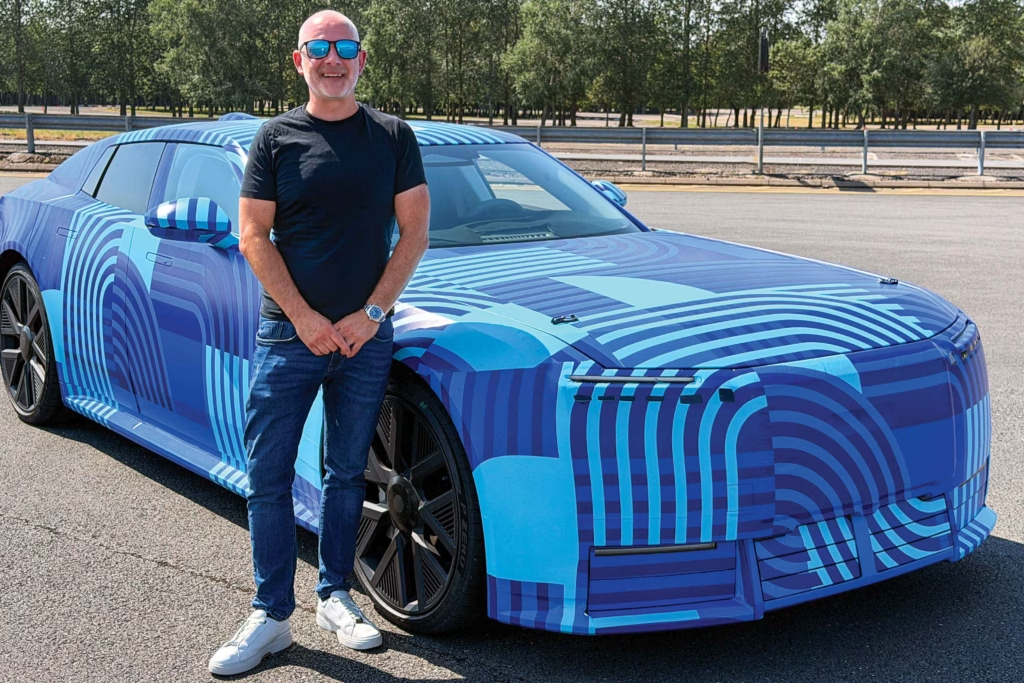
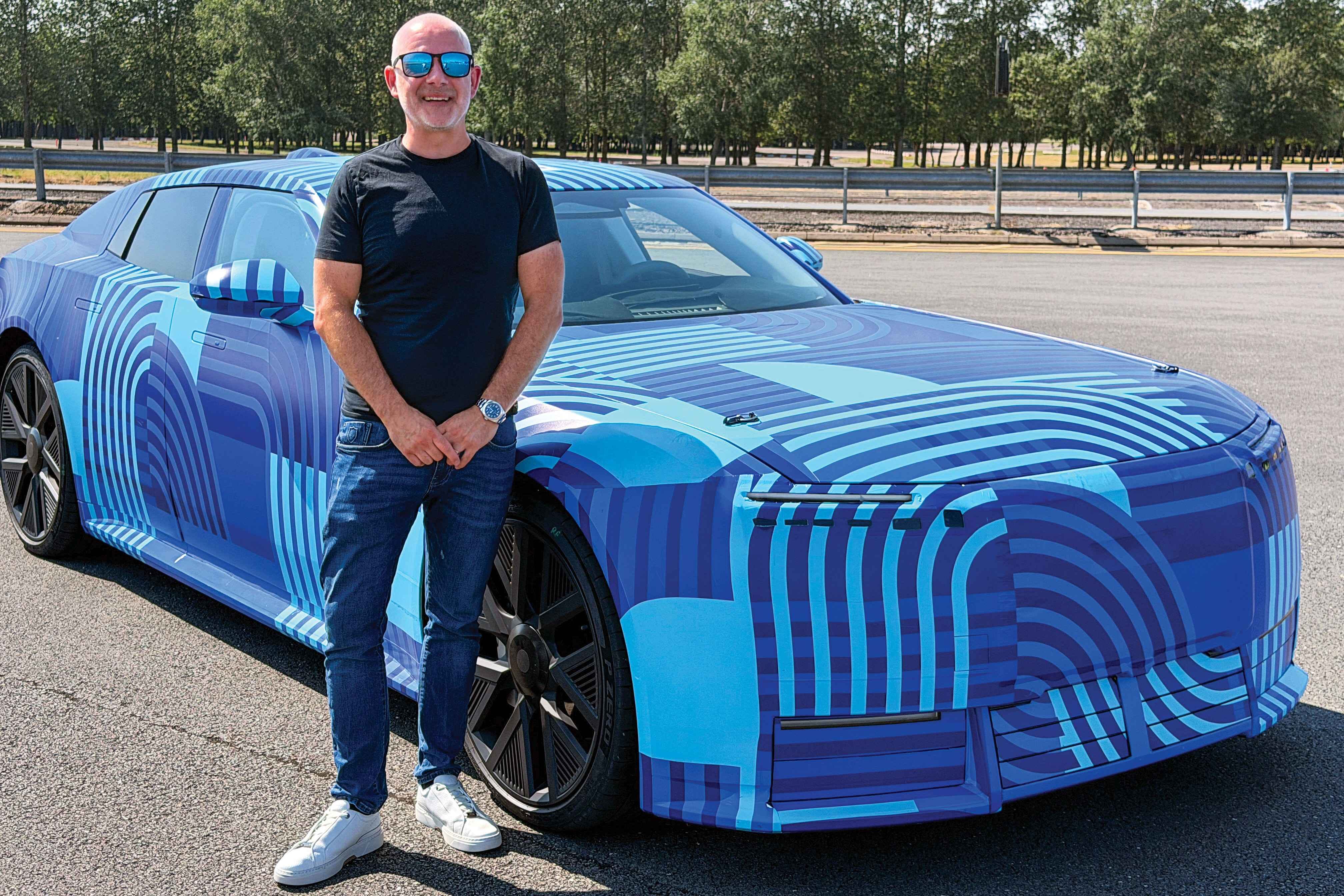
Rawdon Glover has worked with the JLR group for over 13 years and took charge as Managing Director 3 years ago. From the sidelines of our first drive with the Jaguar Type 01, we speak to Glover, who tells us about Jaguar’s new direction, taking risky decisions, core markets and upcoming products.
Why the major shift in the positioning of Jaguar?
Putting Jaguar back on a firm footing for the next 90 years is the main job. And if you look at the task, it’s brand management where sometimes you need small incremental changes. But if you look at today’s technical changes, competitive context, how the brand was performing globally and a host of factors, what was called for was a big shift. That requires you to be bold and confident.
Why go for a radical and polarising design?
We’re ok with polarising. If you look at our history, it was bold evolutions, for example the XJS, the spiritual successor to the E-Type. It would have been easy to say let’s just make a modern example of the E-Type, but that’s not what we did, and if you look back at reviews, it was applauded for its dynamics and refinement, but the design was seen as polarising. Now it’s a design icon. So, I’d rather have four out of ten absolutely love the car, rather than have everyone go – yeah, it’s ok.
Isn’t going all-electric a massively risky move?
The EV landscape is evolving rapidly, many new brands are coming in, and I believe one will crack the EV glass ceiling, so why not Jaguar? So we ripped up the EV rulebook because, in the luxury space, it wasn’t working. So it’s not designed as an EV without an engine and a really cab-forward layout. But it’s about presence and performance, and to deliver the level of performance and refinement, electric is best.
Would the car sit above the XJ in terms of price? All of the vehicles coming off this platform would be between GBP 1,20,000 and GBP 1,50,000. We see a white space at the top end of the premium segment, but underneath established luxury players. That’s where we want to be, and with this vehicle what you get is the stature, the presence, the drama of those uber-luxury brands at the top end of the premium price point.
What are the core markets, and how does India figure in the plan?
We used to sell in 130 markets, but we’ll narrow this to just eight or nine, with 85 percent of the volume. North America will remain a large part, China will become important, and the UK, Germany and some Nordics, where they have really embraced EVs, will be the mainstay. Then in markets like the Middle East and India, which have been small, we think we can really break into them now. The retail would, of course, still be through the existing JLR network.
FTAs do not favour EVs, so is the 01 capable of being locally assembled?
Manufacturing this outside of the UK is not currently in the plan. All production will be built out of Solihull, so all exports to other markets will be CBUs, but that doesn’t rule out local production outside UK. As you know, the geopolitical situation is so fluid at the moment, but in time we could consider production elsewhere.
Is there a more chauffeur-driven offering from Jaguar coming?
The 01 is unashamedly driver-focussed, it has four comfortable seats, but it’s a four-door GT, not a four-door sedan designed as a luxury chauffeur-driven car. There will be other vehicles off this platform that will share the same design language, but will have a distinct personality and target different groups, and they would be accessible to a wider audience. So, yes absolutely, there will be a chauffeur-driven-focused model from Jaguar.
Would an SUV body style be part of the portfolio?
What you shouldn’t expect from us is a high-sided Jaguar that is a Range Rover competitor. We already have the best SUV on the planet, and part of the house of brand’s strategy is to differentiate the brands. All I can say, for now, is that you can expect a variety of vehicles from us, and there will be vehicles slightly higher positioned, but all will drive like a Jaguar.
How has it been working with Tata Motors?
Unwavering is the word. There is nobody more dedicated and passionate about our success than the shareholders, and that’s an incredibly privileged position to be in. It puts a little pressure, but having somebody like PB Balaji come onto our board is great. He’s been on the journey with us, he understands it inside and out, and for him, Jaguar is personal. It’s important to our chairman and even was to Ratan Tata. I was reading stories about Ratan Tata driving about in his father’s XK120, so it’s really important to Tata that Jaguar wins. In all my interactions with the board, there is never talk of tempering ambitions, it’s always, just go for it.
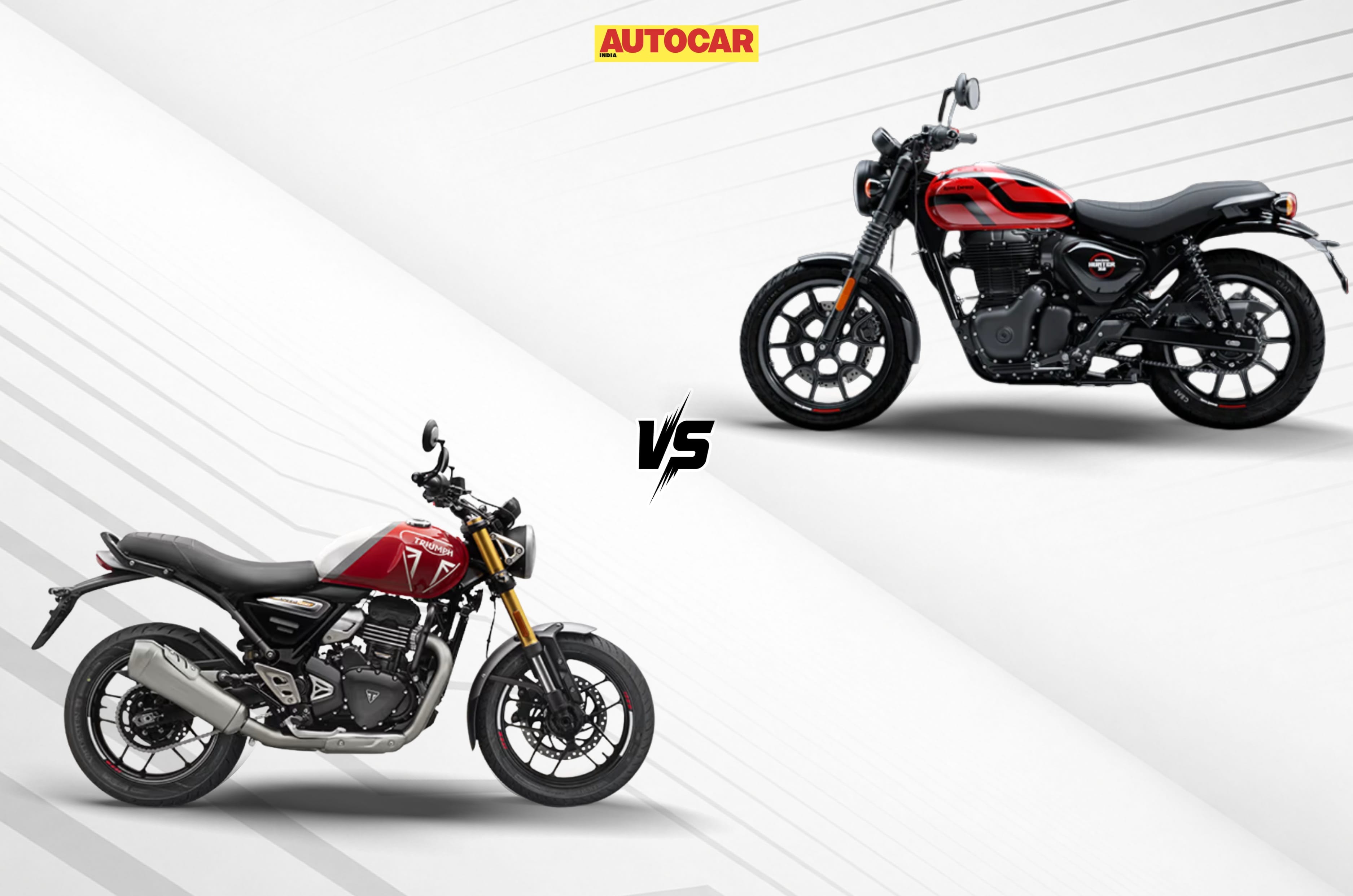
The last time we compared the Hunter 350 to the Speed 400, things were a lot more straightforward, but things have since changed. Royal Enfield has fixed the Hunter’s biggest deterrent, comfort and has positioned it squarely as a stylish and relaxed street naked; completely different from its retro siblings. Bajaj, on the other hand, had to downsize the Triumph Speed 400’s 398cc engine to a 349cc one, to meet the 18 percent GST slab. So, is picking one from these two, very good motorcycles still difficult? Let’s see.
Royal Enfield Hunter 350 vs Triumph Speed 400: Engine and output
Triumph has more power and torque, but RE delivers both earlier
Royal Enfield Hunter 350
Triumph Speed 400
Engine
349cc single-cylinder, air-cooled
349cc single-cylinder, liquid-cooled
Power
20.2hp at 6,100rpm
37hp at 8500rpm
Torque
27Nm at 4,000rpm
32Nm at 7,000rpm
Transmission
6-speed
5-speed
Power-to-weight ratio
111.6hp/tonne
206.7hp/tonne
Bajaj’s downsizing of the 398cc engine has reduced torque more than horsepower, making the Speed 400 a relatively weaker proposition compared to before, at least on paper. Royal Enfield, however, has not had to do anything and continues with its likable J-series engine making the same power and torque as before. It’s hard not to miss that the Hunter delivers both of it much earlier in the rev range than the Speed which reinforces the status quo that these still aren’t meant to be substitutes for each other. The Speed does have one extra gear, making it more capable at highway speeds of the two.
Royal Enfield Hunter 350 vs Triumph Speed 400: Dimensions and weight
Both remain in lockstep with each other
Royal Enfield Hunter 350
Triumph Speed 400
Fuel tank capacity
13 litres
13 litres
Ground clearance
160mm
164mm
Kerb weight
181kg
179kg
Seat height
790mm
803mm
Wheelbase
1370mm
1386mm
Had this been the Bullet/Classic 350, this section would’ve been an onslaught on them but perhaps that’s exactly why the Hunter 350 exists. Being the lightest Royal Enfield, the Hunter puts up a tough fight to the Speed 400 on every front. Even though it is 2kg heavier than the Speed, it’s more accessible with a lower seat height. Both are very approachable and friendly machines, for both newer and shorter riders.
Royal Enfield Hunter 350 vs Triumph Speed 400: Tyres, brakes, and suspension
Speed 400 gets a fatter fork and better brakes
Royal Enfield Hunter 350
Triumph Speed 400
Tyres (F, R)
110/70-17, 140/70-17
110/80R17, 150/70R17
Brakes (F, R)
300mm disc, 270mm disc; dual-channel ABS
300mm disc, 230mm disc; dual-channel ABS
Suspension (F, R)
41mm RSU fork, twin-shock
43mm USD fork, monoshock
On paper, the numbers once again continue to be really close. However, the Speed 400 gains on the Hunter 350 in a few areas. It has a wider rear tyre, gets radial tyres at both ends and a slightly fatter USD fork. The Triumph also gets better brakes with a far more effective four-piston, radial caliper at the front, whereas the Hunter 350 sticks to a more conventional two-piston, floating caliper.
Royal Enfield Hunter 350 vs Triumph Speed 400: Features
Par for the (retro) course for both
Packing in the most features for the money isn’t what this segment is known for, and neither motorcycle attempts to change that. The Hunter 350 offers dual-channel ABS, an assist and slipper clutch, a type-C USB port, and a TFT navigation tripper pod on higher variants. The Speed 400, gets everything except the navigation feature, offering traction control instead.
Royal Enfield Hunter 350 vs Triumph Speed 400: Price
Hunter is far more affordable
Royal Enfield Hunter 350
Triumph Speed 400
Price
Rs 1.37 lakh – Rs 1.71 lakh
Rs 2.34 lakh
Last but not least, how much do you pay to buy one of these? And this is an area where the Hunter 350 has a huge advantage. The top-most variant of the Hunter 350 will set you back by Rs 1.71 lakh, with the base variant starting at as low as Rs 1.37 lakh (both prices ex-showroom, Chennai). On the other hand, the Speed 400 costs Rs 2.34 lakh (ex-showroom, Delhi). On paper, this can look like a difficult choice considering how close these are, but that confusion will go away as soon as you take test rides considering the vastly different riding experiences of both.
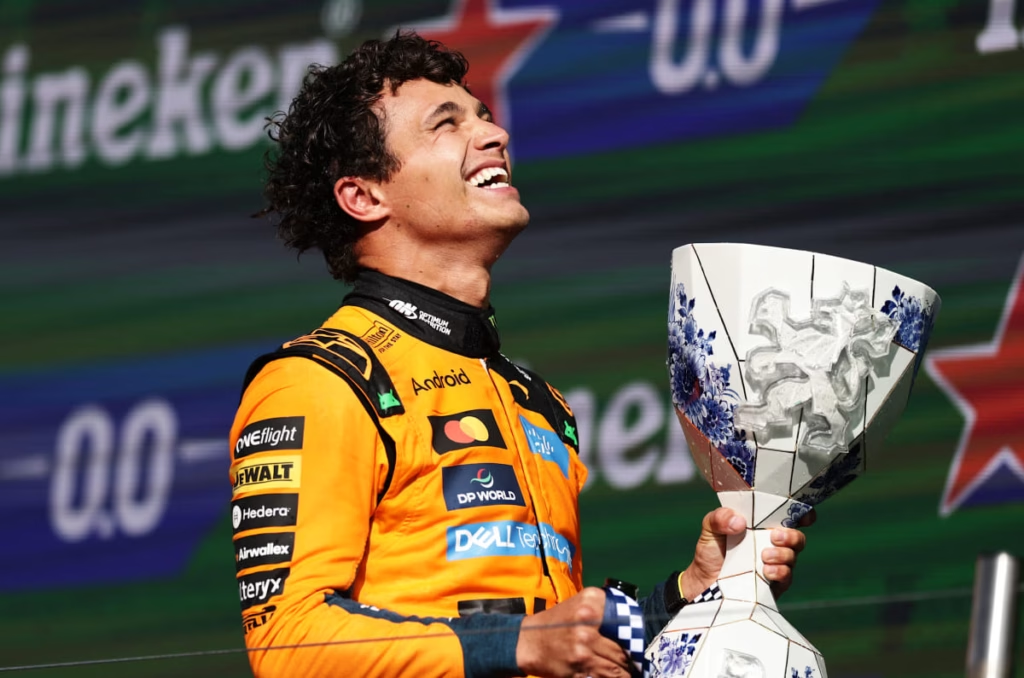
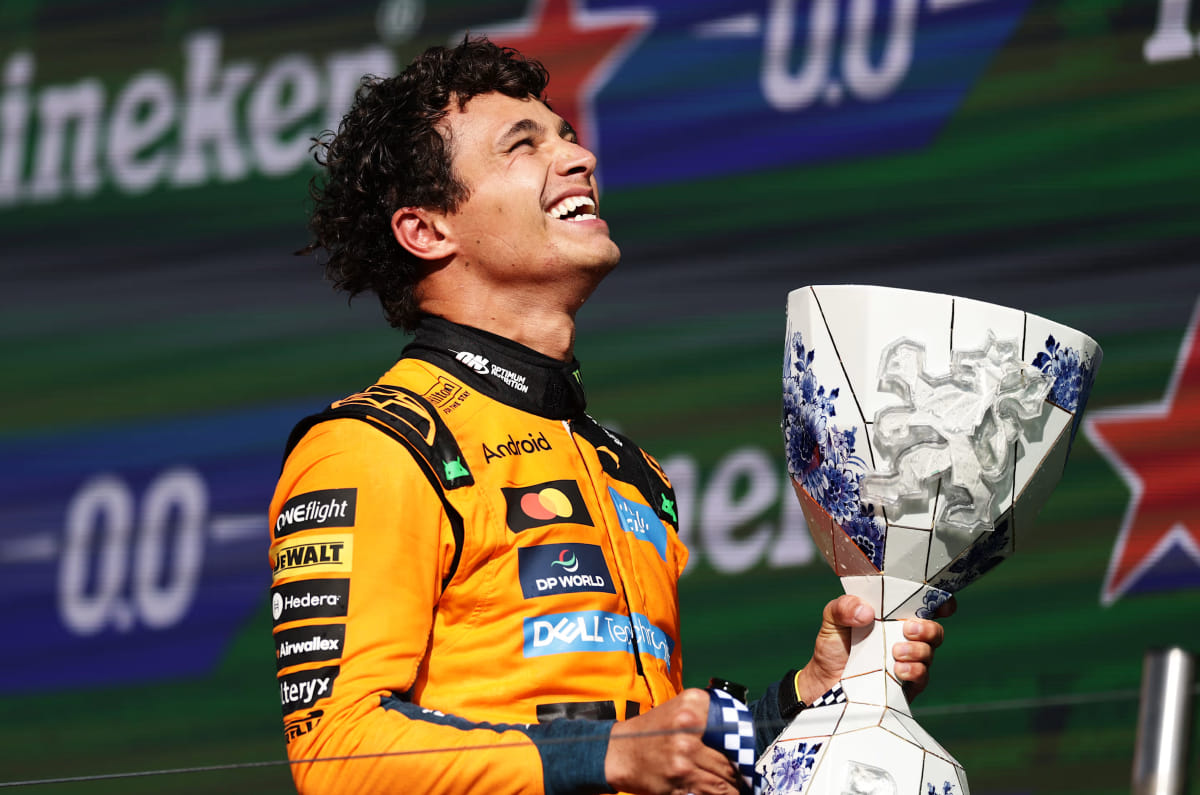
Lando Norris scored back-to-back wins after taking victory at the Dutch GP – the last race held at Zandvoort for the foreseeable future. Despite missing out on the win, Kimi Antonelli did stretch his championship lead after finishing second, ahead of his Mercedes teammate George Russell.
Norris wins, 11.536 sec ahead of Antonelli
Mercedes scores double podium finish
Alonso P9 for Aston Martin
Norris wins Dutch GP
Verstappen crashes out of home race
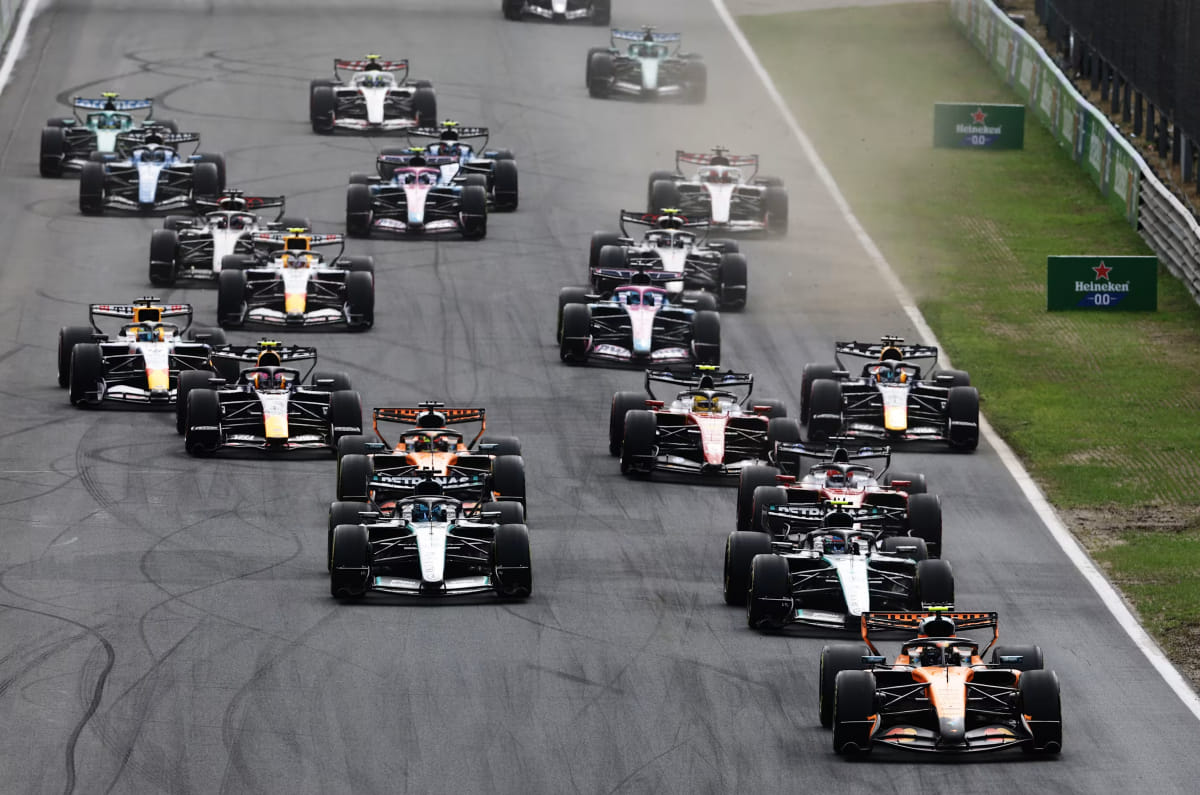
Starting from pole position, Norris initially held the lead. But the race was red-flagged moments later as Max Verstappen crashed out on the opening lap after losing control on the drying track.
Fresh off announcing his contract extension with Red Bull, the four-time world champion was keen to win his home race, with Zandvoort dropping off the F1 calendar next year. However, Verstappen appeared to struggle for pace throughout the weekend. “[It was a] disappointing end to a weekend that already, I think, was quite tough for us – not really having the pace to challenge the cars ahead. But we’ll see if we can do better in Monza and be a little bit closer to the front,” he said.
At the re-start, Norris lost the lead to Antonelli. The McLaren driver bid his time before finally making a move on Lap 52. Heading into Turn 1, he first passed Antonelli around the outside and then overtook Lewis Hamilton on the same lap to move into the lead.
A late Virtual Safety Car, brought out due to Esteban Ocon stopping on track, saw teams split strategies. A number of drivers, including Antonelli, pitted for fresh tyres, while Norris and Russell stayed out. Russell let Antonelli past on Lap 65, but Norris had already stretched a safe lead by then. He crossed the chequered flag 11.536 sec clear of Antonelli.
“Yesterday I said we needed to put on a bit of a show for everyone for the final race here, so I made it tough for myself today but [it was] a good race, well-fought,” Norris said. “Probably one of my better wins – we had to fight for it well but the pace was strong. We managed things incredibly well today, so over the moon, very happy. Nice to win the final race here in Zandvoort.”
Russell couldn’t follow up his Sprint win with victory on Sunday, but he fended off Hamilton to hold on to third place. Speaking after the race, the Mercedes driver explained, “I come away from this weekend as a whole satisfied. It’s been my best weekend for quite a while. I’ll take those positives.”
Charles Leclerc ended up fifth in the other Ferrari car, followed by McLaren’s Oscar Piastri. Liam Lawson, who replaced an injured Isack Hadjar at Red Bull Racing for this race, finished seventh despite being handed a 10-second time penalty for a yellow flag infringement.
Nico Hulkenberg crossed the line P8, handing Audi some valuable points. Aston Martin appears to be taking steps in the right direction with its recent updates, with Fernando Alonso finishing P9. Finally, Alpine’s Pierre Gasly rounded out the top 10.
2026 F1 championship standings
Antonelli has extended his championship lead to 59 points from his teammate Russell, who is now tied on points with Hamilton. Norris’ consecutive wins sees him climb up fourth place in the standings, 24 points behind Russell and Hamilton.
F1 will now head to Monza for the Italian GP on September 4-6.
In the analogue age, I planned road trips with paper maps, fluorescent highlighters and dog-eared guidebooks. Lately, however, Uncle Claude and Aunty Gemini have lured me into the world of artificial intelligence. When I asked them to suggest an adventurous drive through south Utah, they both recommended similar itineraries. It was like asking the chef at a dhaba to surprise me with something unusual and being served butter chicken instead. Zion, Bryce Canyon and Arches. Three magnificent National Parks connected by smooth highways and comfortable hotels.
Our search engine for Utah beyond the tourist trail. No signal required.
This route hits Utah’s greatest highlights, featuring soaring cliffs, towering hoodoos and delicate sandstone arches. However, the parks are often so busy that sedans circle overflowing car parks, rather like sharks patiently circling a lifeboat. I wanted roads that filtered out sedans and coaches, demanded preparation and delivered adventure, where the SUV became part of the journey rather than mere transport.
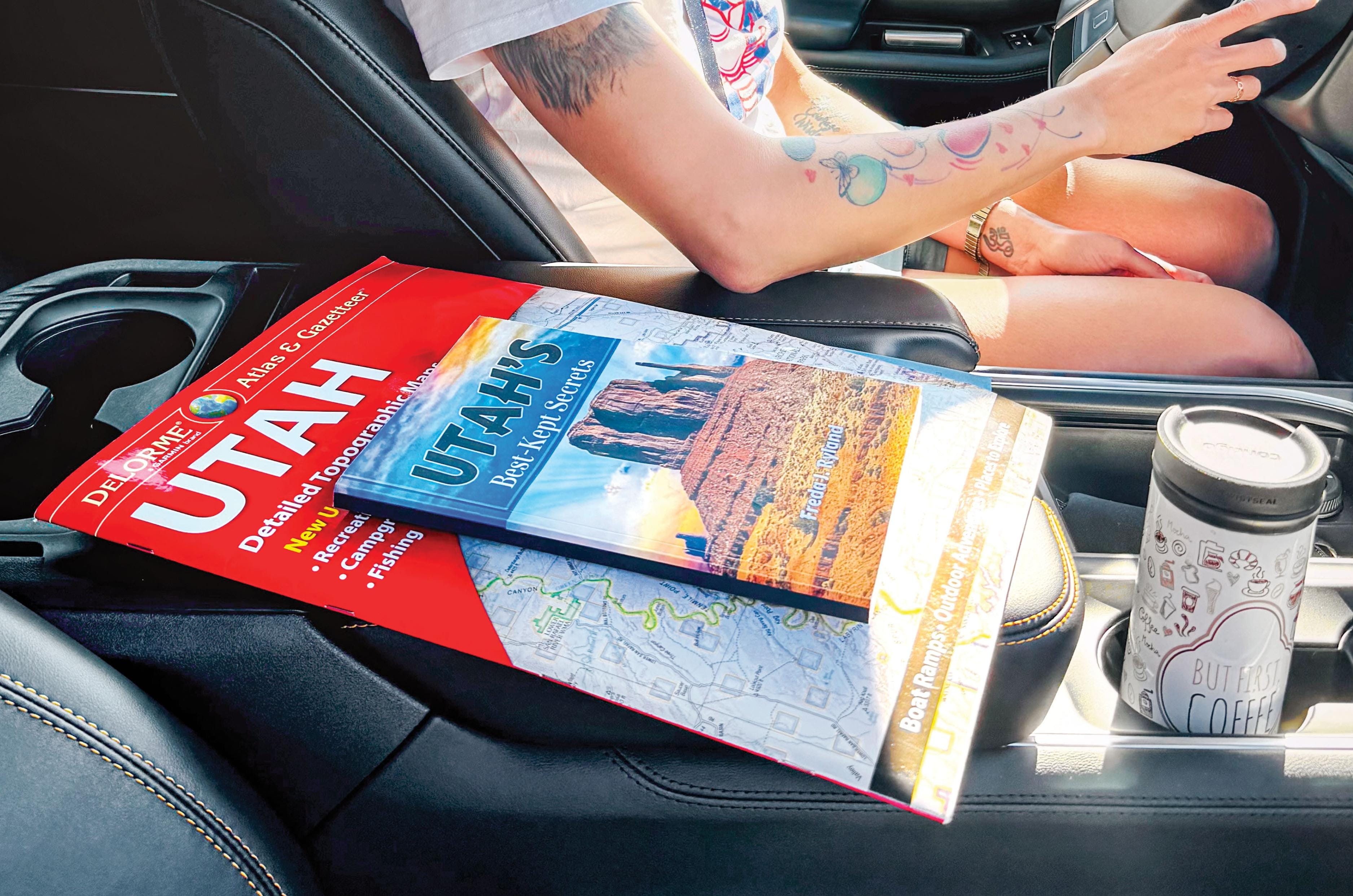
So, I turned my back on the algorithm and went analogue. While ordering the DeLorme Utah Atlas, Amazon suggested Freda J. Ryland’s Utah’s Best Kept Secrets, promising another Utah of mesas, switchbacks, unspoiled canyons, lonely dirt roads beyond the cellular umbrella and skies dark enough to make galaxies glow.
Her book was fuel for wanderlust; an invitation into a hidden Utah for those willing to stray off the tarmac. Though its typesetting suggested a clandestine hand-operated press during the Quit India movement, its content was pure gold. Paired with the DeLorme atlas and offline Gaia GPS, the trio was as dependable as egg, bacon and toast. Freda chose the destination, the atlas found the route, and Gaia confirmed where we were. What followed often felt like driving into a fairy tale.
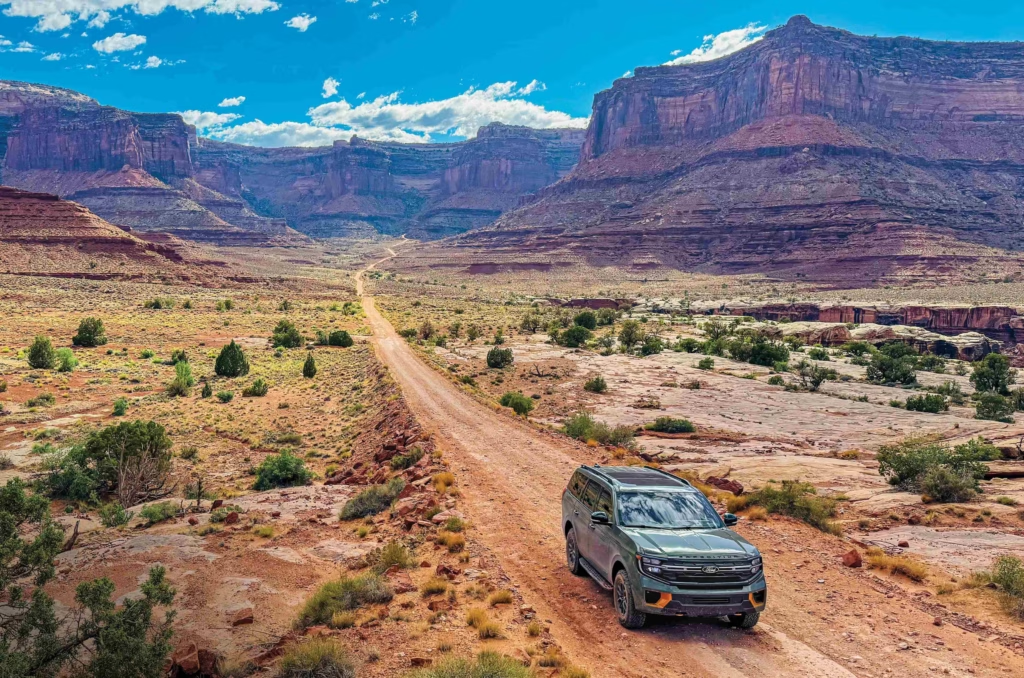
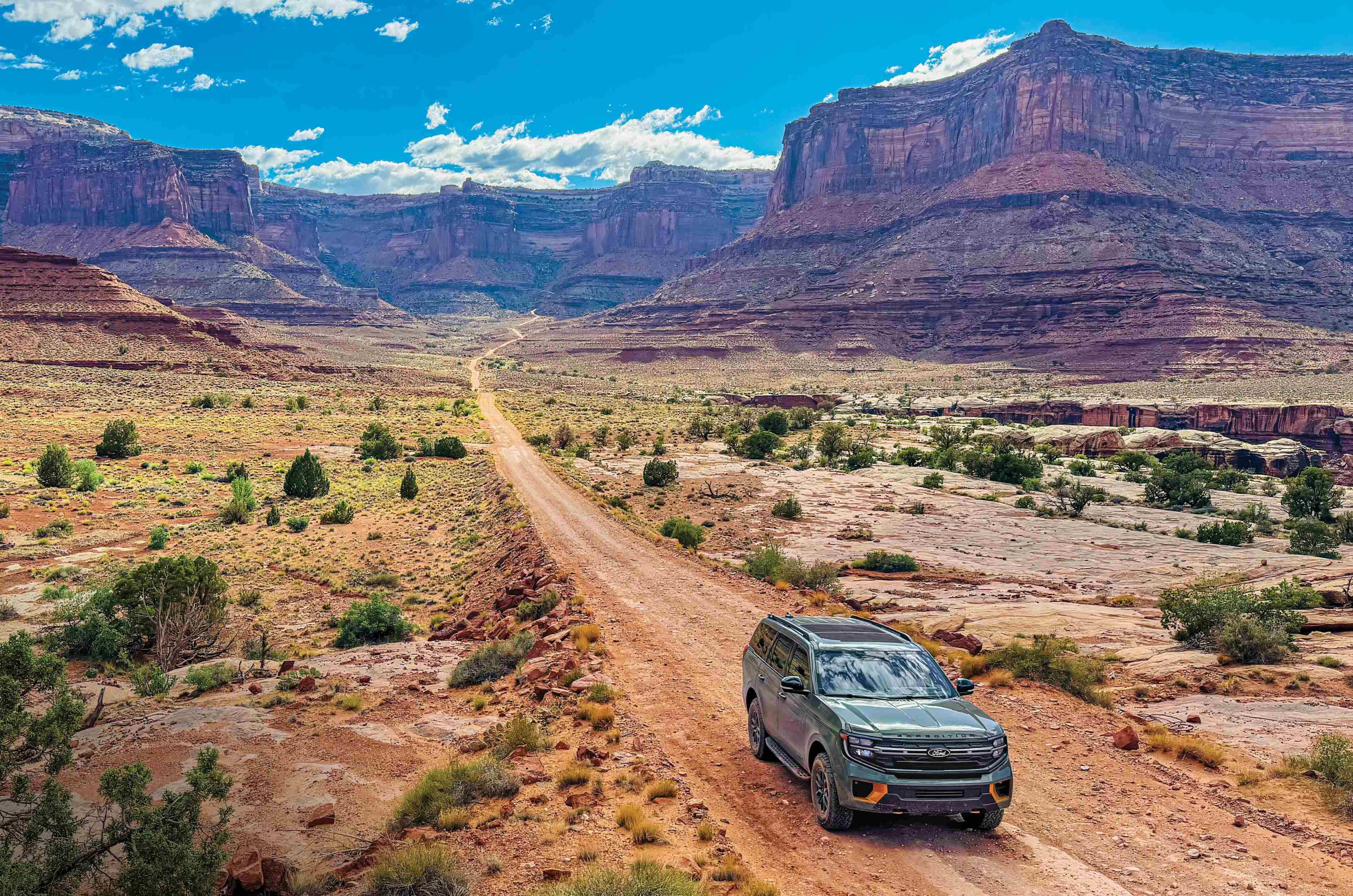
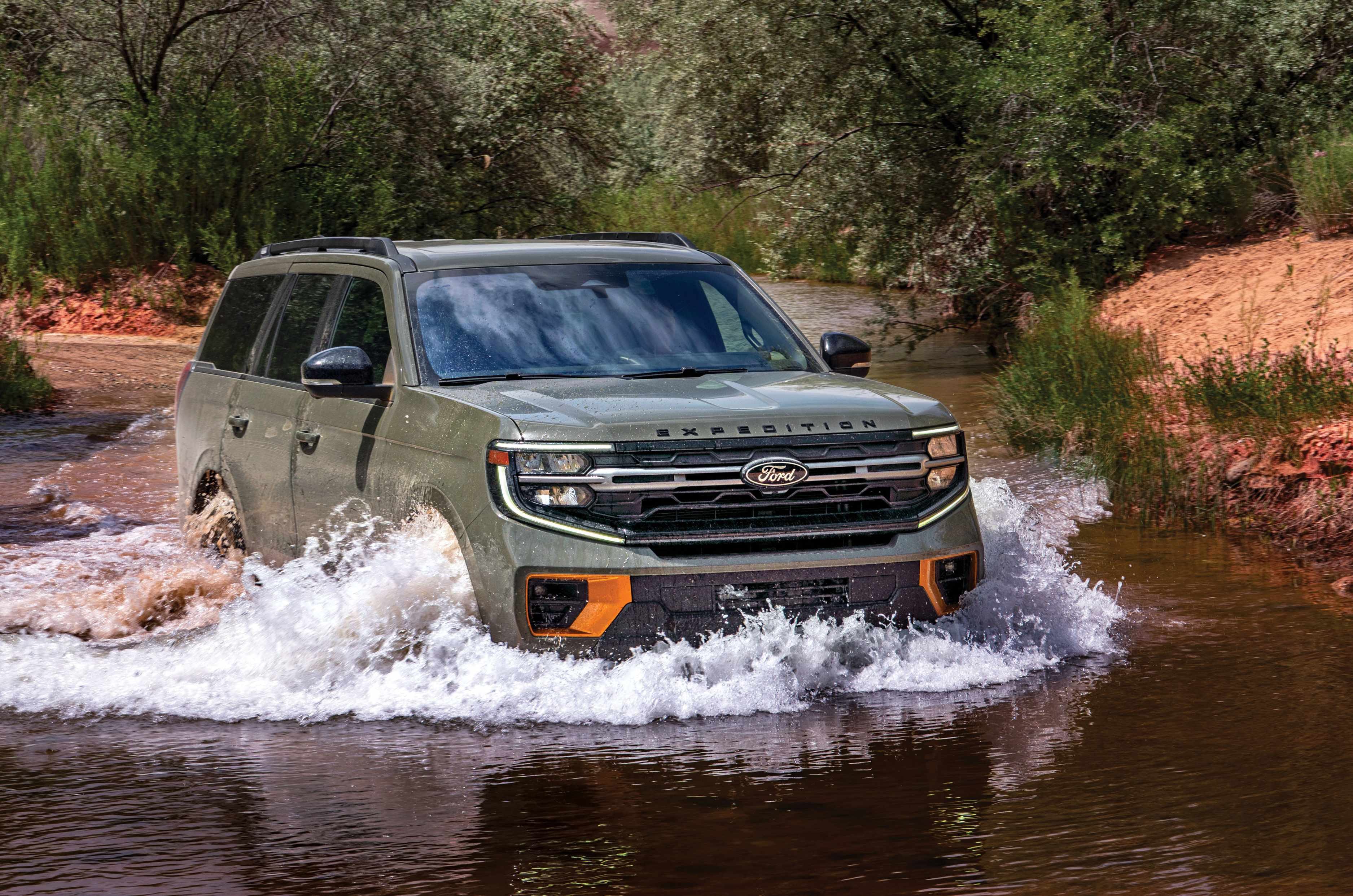
Off-grid Utah demands a dependable 4×4. The Tremor waded rivers, shrugged off loose gravel, tenacious clay and steep gradients, and kept going long after the tarmac lost interest.
None of it would have happened without the Ford Expedition Tremor, our fairy godmother. A tad tubby at over two tonnes, it came with a locking rear differential instead of a magic wand. The twin-turbocharged 3.5-litre EcoBoost V6 dispatched highway miles effortlessly. Once the tarmac disappeared, the Tremor earned its keep, shrugging off clay, loose rock, river crossings and deeply rutted tracks with nonchalant competence.
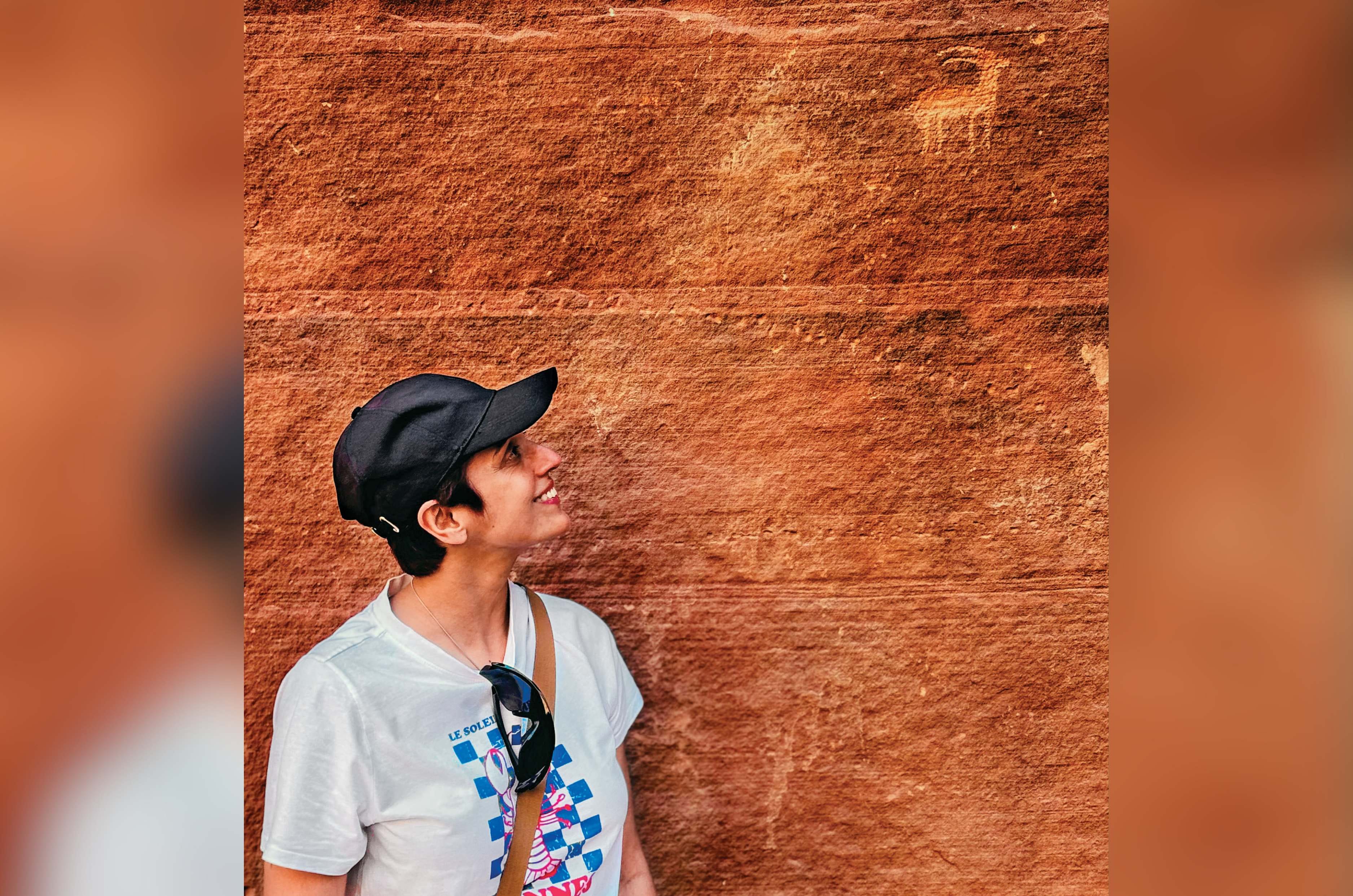
Follow her gaze. A long-gone artist still finds an audience a thousand years on. Utah is peppered with petroglyphs.
We forayed deeper into Utah’s wild, unadulterated beauty, beyond the tourist grid. To secret trails and solitude, to dinosaur tracks in ancient rock and to petroglyphs spanning two millennia, many still a mystery. I couldn’t help wondering if some ancient scribbling was simply the 2 BC equivalent of ‘Vinod loves Veronica’.
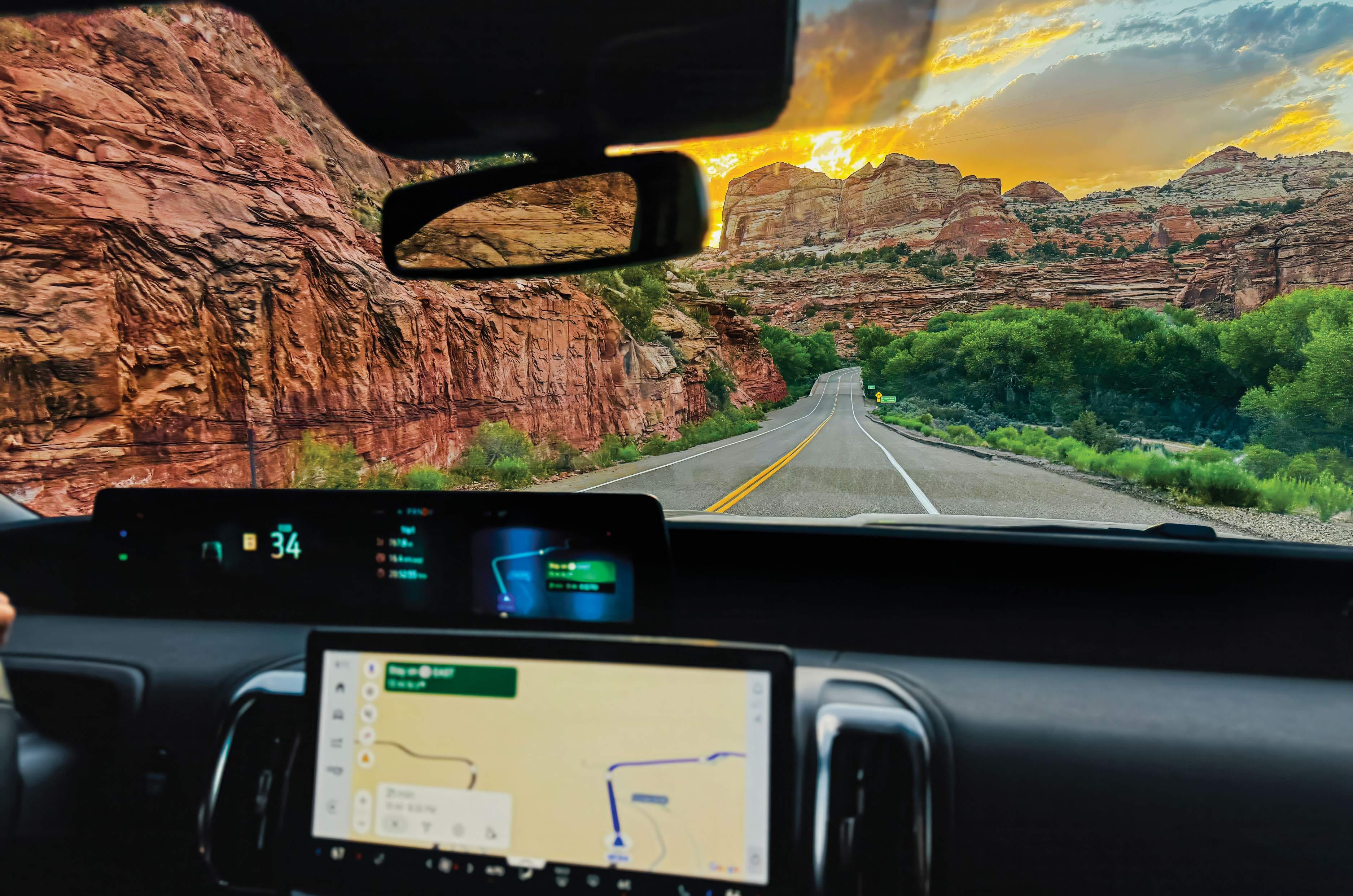
The first road to justify Freda’s confidence was Utah Scenic Byway 12, climbing out of Escalante towards Boulder through the folded canyons of Grand Staircase-Escalante National Monument, among the last regions in the contiguous US to be properly surveyed. Past Calf Creek, the road narrowed onto a hogback, a ribbon of blacktop along a ridge, with the ground dropping hundreds of feet on both sides. Red rock canyons fell open left and right, and for a few minutes it felt like driving along the spine of the Earth.
The windscreen became Utah’s widescreen, live streaming breathtaking views with hardly a break. This is Scenic Byway 12 between Escalante and Boulder.
At Boulder, we turned onto the Burr Trail, first beaten into the landscape by cattleman John Burr in the mid 1800s. Soon the road slipped past Long Canyon, colloquially called Singing Canyon because its towering, tapering walls possess the sort of acoustics that could make a bathroom baritone believe he had missed his calling. I sang a few notes and was astonished when the sandstone tuned my discordant tone to the smoothness of Sinatra.
Then the scenery became rather more serious. In 1948, the Atomic Energy Commission arrived looking for uranium, widening the trail and blasting switchbacks that tumble nearly 800 feet in less than a mile into the Waterpocket Fold, a colossal wrinkle in the earth running nearly a hundred miles across southern Utah, its tilted rock exposed in great bands of colour. We descended towards Ticaboo as the Fold surrendered to open desert.
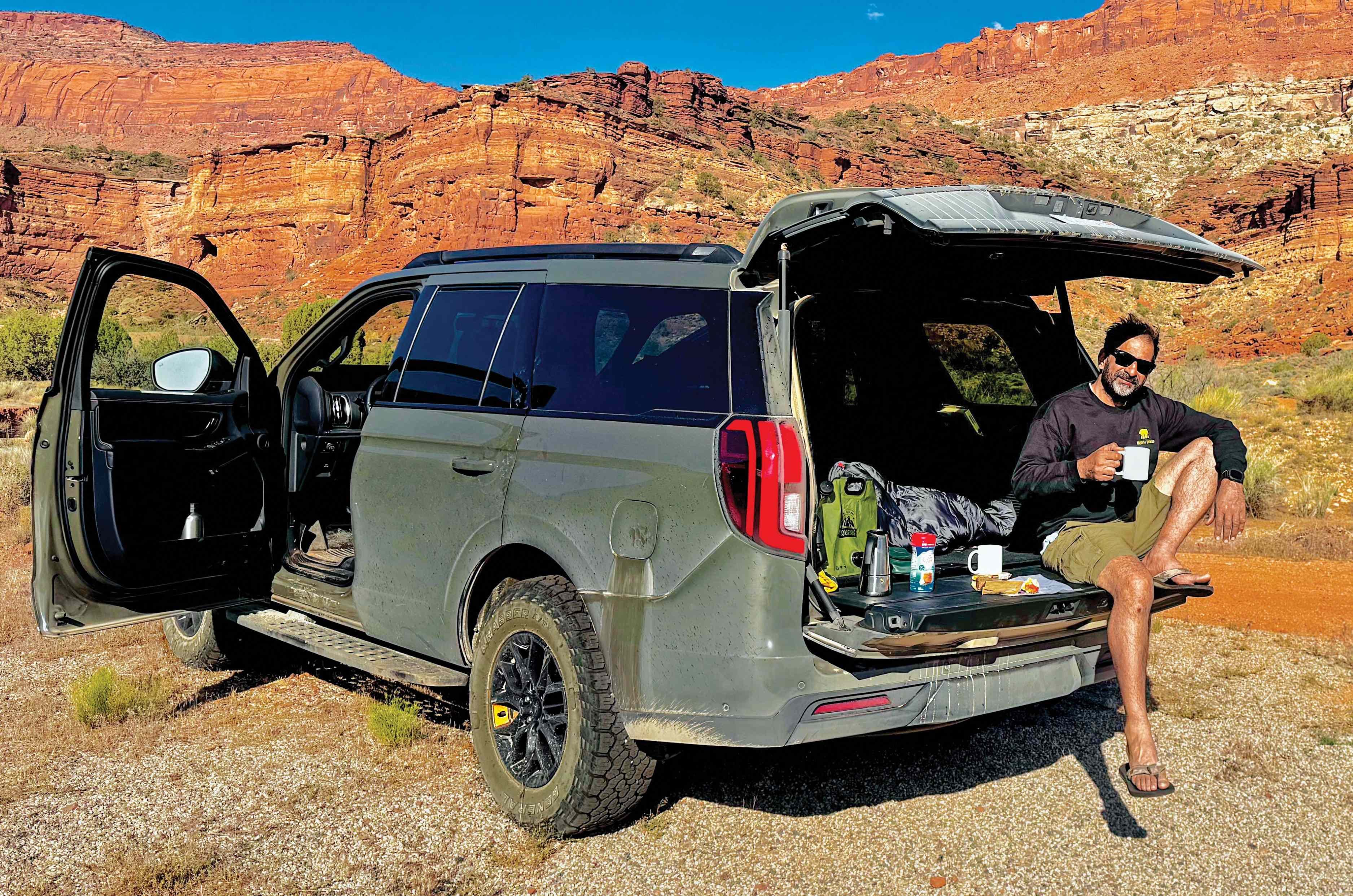
Morning coffee on the tailgate. The Expedition’s roomy interiors meant we could pull up and spend the night wherever we fancied.
We were hoping to camp at Muley Point, but we hadn’t accounted for Utah waylaying us with stupendous scenery, another slot canyon or lonely butte persuading us to stop every few miles. Around sunset, Muley Point was still hours away, so we turned into a secluded canyon and spent the night there, one of the trip’s happiest failures. We dropped the two rear seat rows into a flatbed, laid out a mattress, and slept under a sunroof full of stars and the Milky Way. We had camped at the base of the Henry Mountains, so remote that surveyors called them the Unknown Mountains until 1869.
The next morning, we pushed on to Muley Point through Bears Ears National Monument, named for a pair of buttes that really do resemble a bear’s ears poking above the treeline. An unmarked turn led to Muley Point, where the land simply stops a thousand feet above the San Juan River’s looping canyons, with views stretching to Monument Valley.
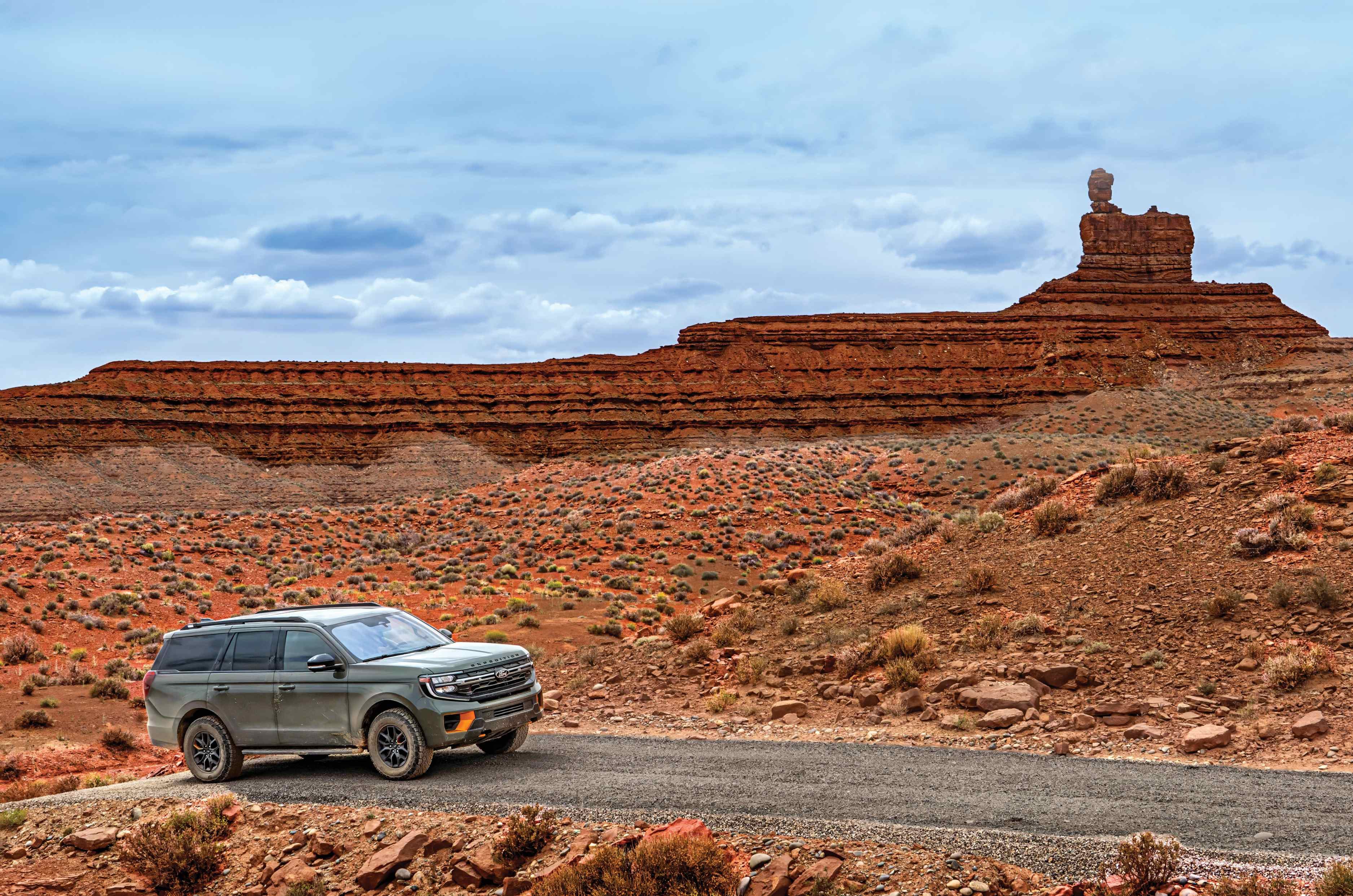
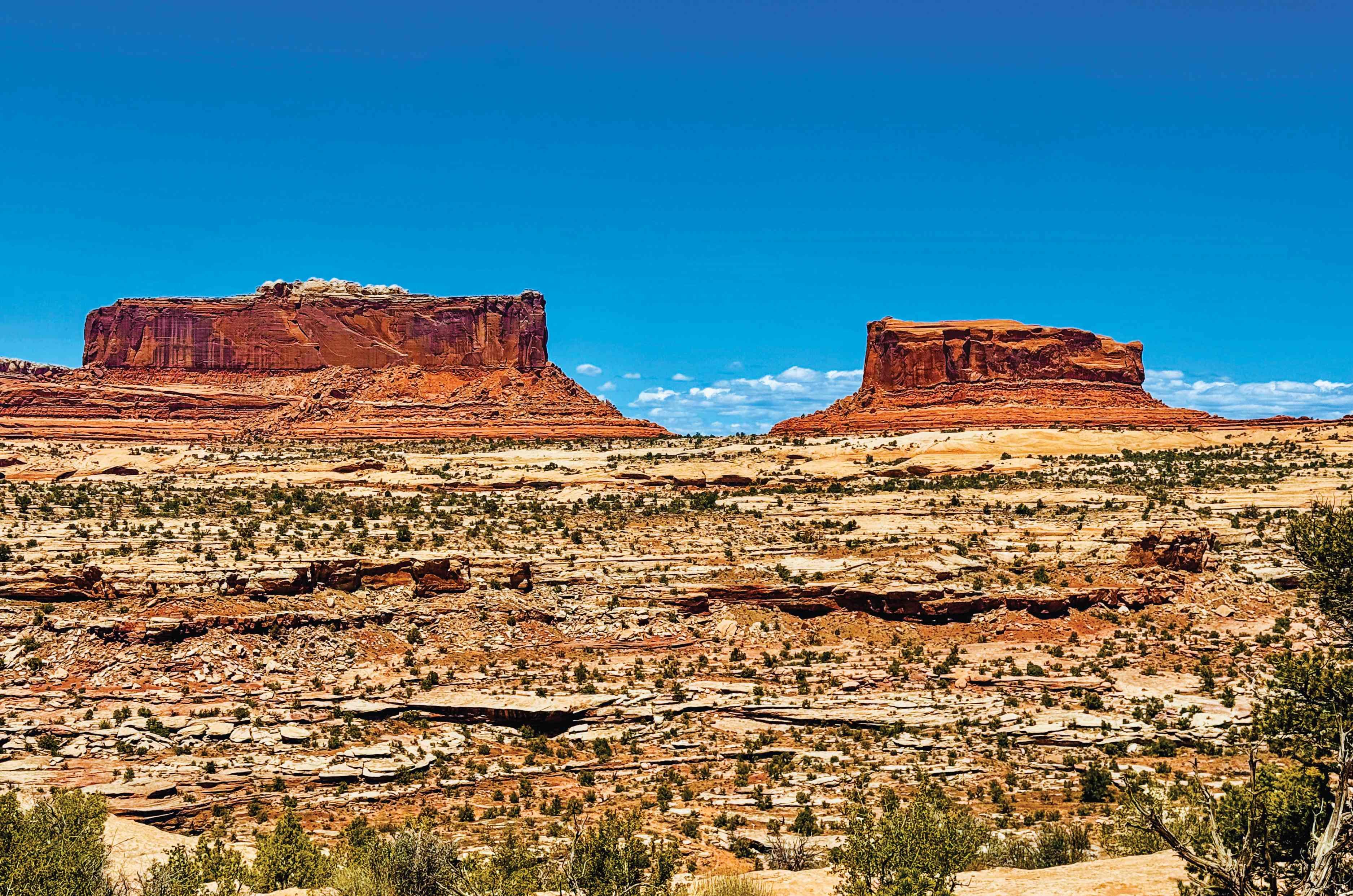
Look at the rocks above the Expedition. See anything? Someone did, and named it Lady in the Bathtub. Now try unseeing it. Welcome to the Valley of the Gods, where mesas and buttes come with wonderfully imaginative names.
Our next destination was the Valley of the Gods, the guidebook’s hidden Monument Valley twin. But first came the Moki Dugway, three miles of unpaved switchbacks blasted into Cedar Mesa in 1958 for trucks hauling uranium ore, dropping 1,100 feet at an 11 percent grade. The Tremor accepted the challenge with the calm assurance of a seasoned mountain guide.
At the bottom, a short detour brought us to Goosenecks State Park, where the San Juan River travels almost six miles in meanders to advance barely a mile and a half as the crow flies. From there, we turned into the Valley of the Gods, a dirt road meandering between sandstone monuments, nature’s own sculptures, with eccentric names. One was the Lady in the Bathtub. Had I not known the name, I might have seen only a rock. But once told, there she was, sitting bolt upright at one end of an enormous bath, her hair piled high and her back rather primly straight.
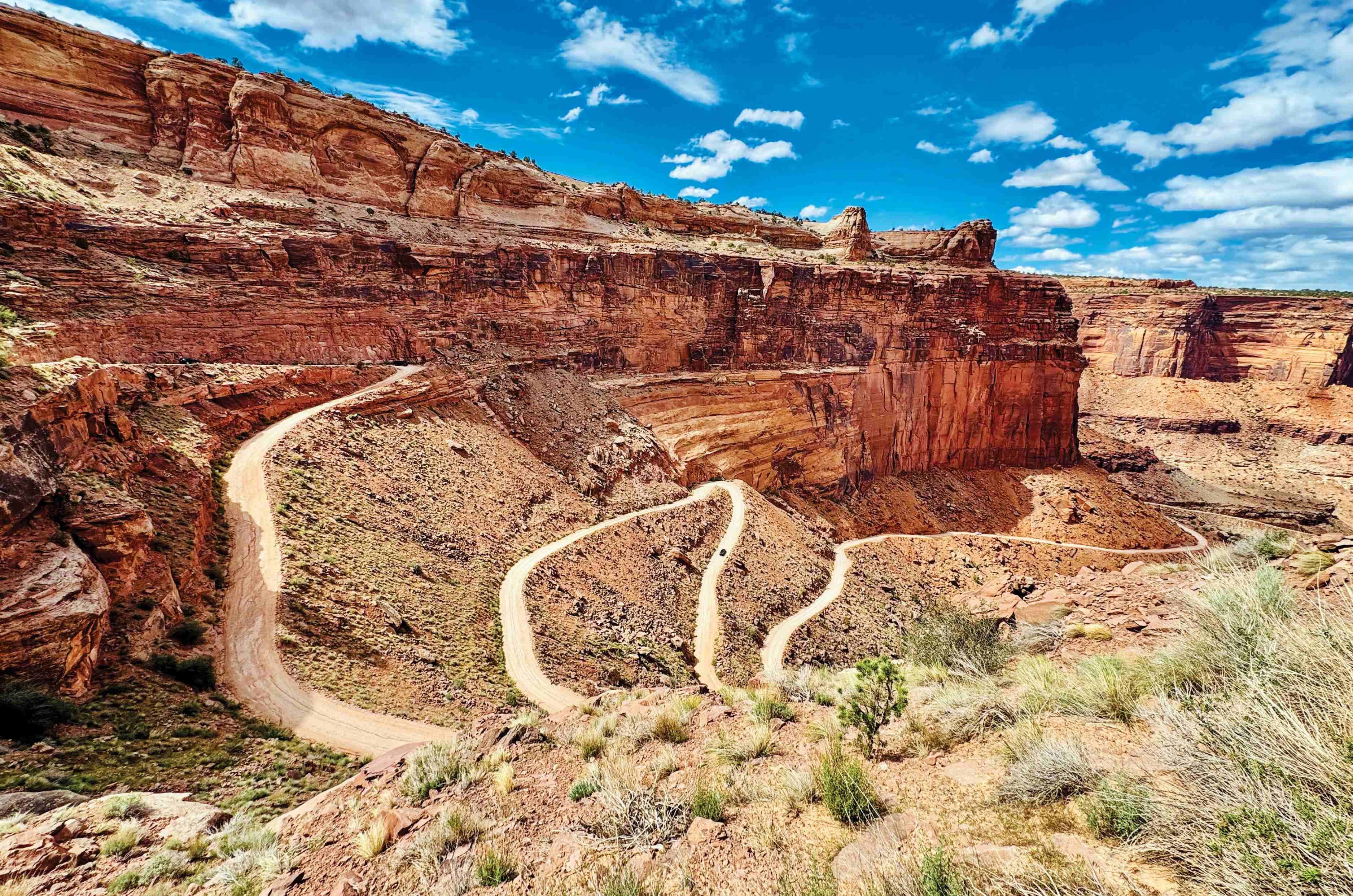
The Shafer Trail looked less like a road and more like a cartographer’s casual squiggle joining the top and bottom of a sandstone cliff. Then we drove it.
We slept another night in the car at the base of Rooster Butte, then rolled into urban Moab, our base for exploring the Needles and Island in the Sky districts of Canyonlands National Park, including the strange geological puzzle of Upheaval Dome. The highlight, though, was driving the Shafer Trail.
From the top, it was hard to believe vehicles drove down what looked like a pencil sketch etched onto a sandstone cliff. The trail began as a foot route, widened for cattle by rancher John “Sog” Shafer, then again in the 1950s for the uranium trucks that shaped the Burr Trail and Moki Dugway.
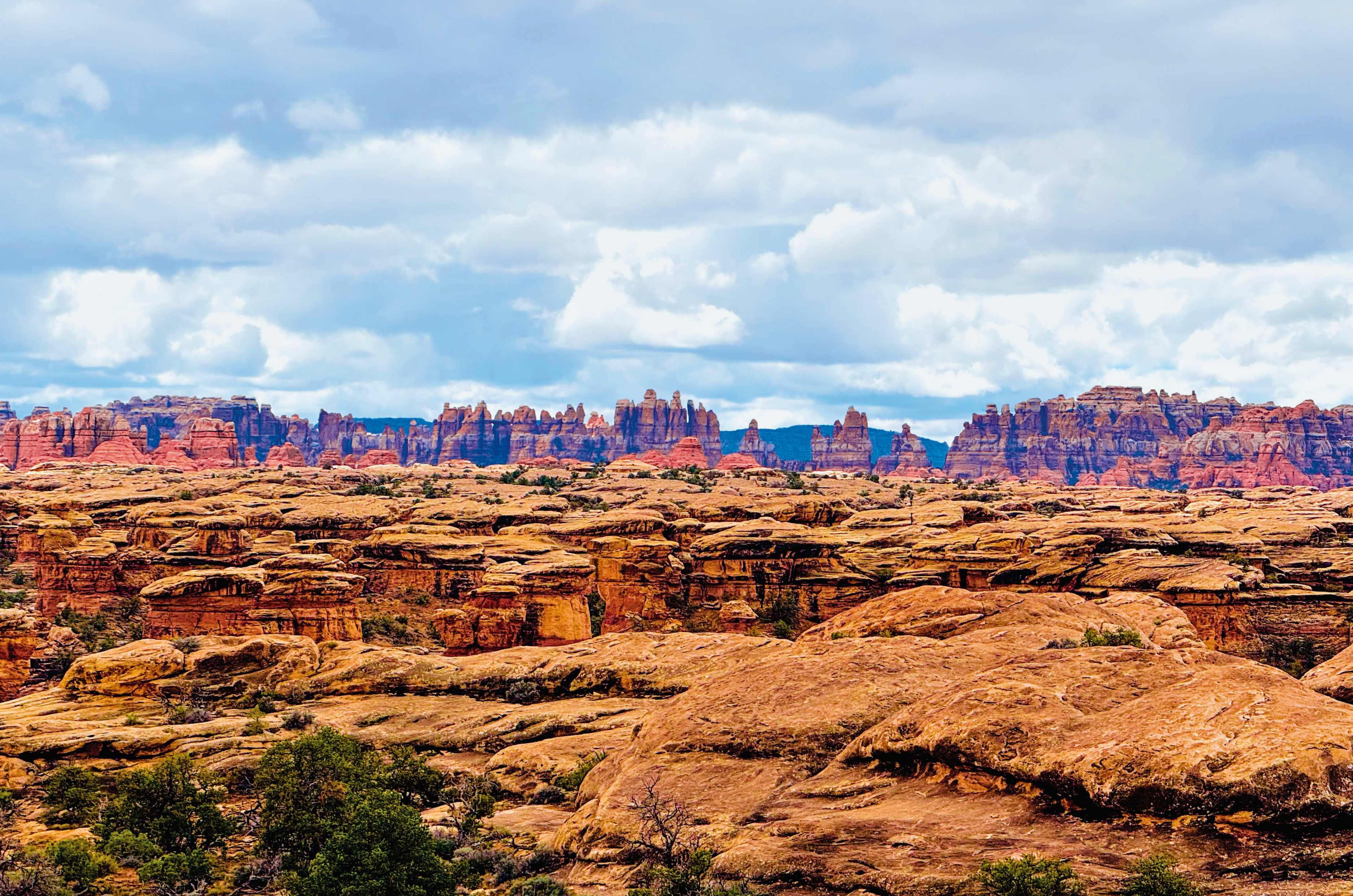
The Needles, Canyonlands – a forest of red and white banded sandstone spires, stained by iron and carved improbably thin by water patiently working through every crack.
The Expedition tipped over the edge, and we were committed. The Tremor crept down in low range, engine barely above idle, brakes doing quiet, constant work as gravel skittered from under the tyres. Every switchback flung the door mirror out over open air, nothing but red rock and sky where the road should have been, and my stomach dropped a beat before the front wheels found the turn. The cabin stayed eerily composed, no lurch, no scrabble for grip, while everything outside the glass insisted we should be afraid. At the bottom, the Colorado River came into view, and I exhaled properly for the first time in twenty minutes.
The warning isn’t for broken roads, but for deep clay bogs that require the torque and traction of a 4×4 to escape.
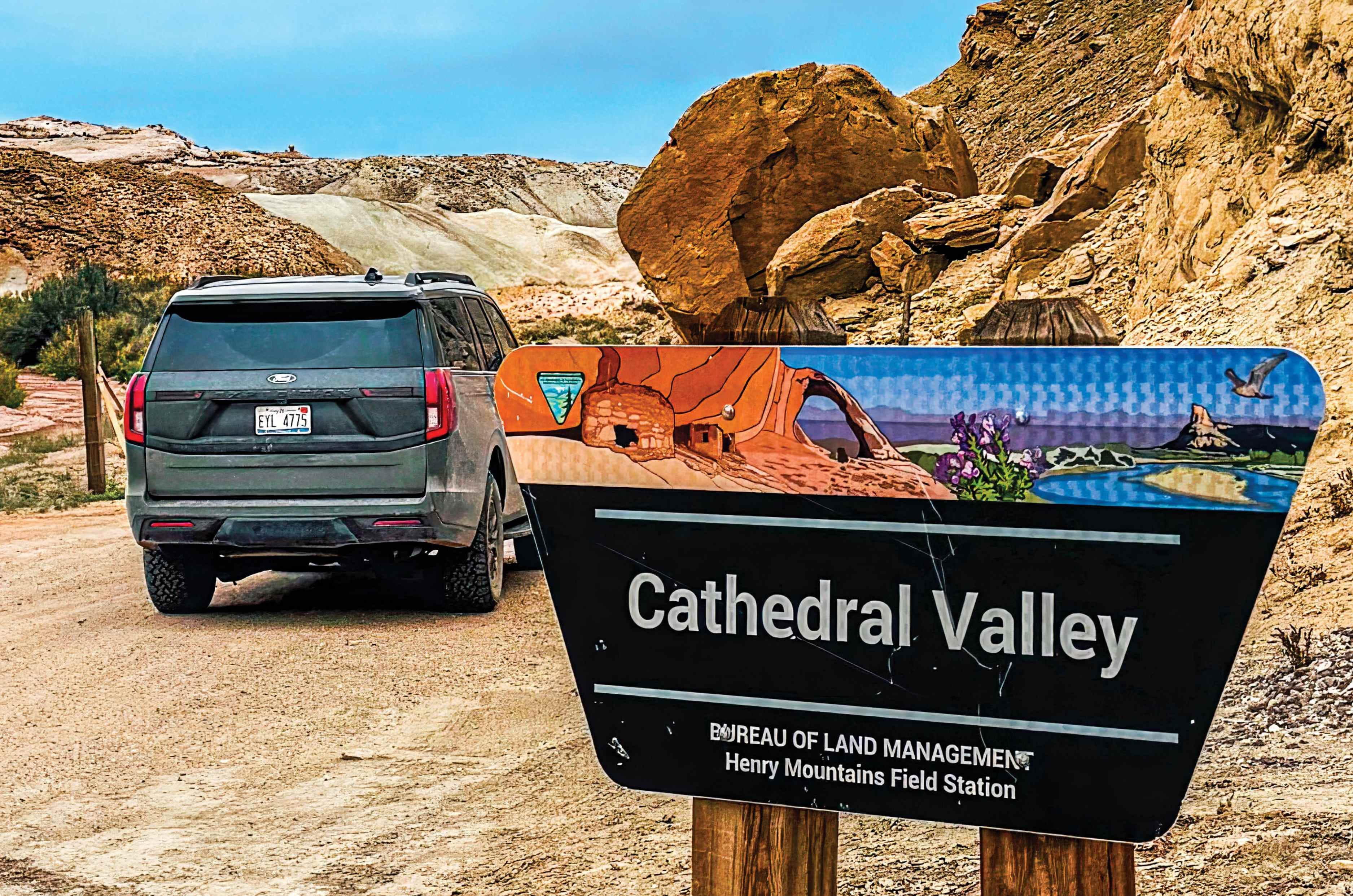
The final road I want to tell you about is the 80-mile loop through Cathedral Valley. According to Ms Ryland, this was Capitol Reef at its most remote – towering monoliths, strange badlands and perfect seclusion. At the entrance, a sign minced no words: ‘Road Impassable for Most Vehicles. Travel at Your Own Risk’.
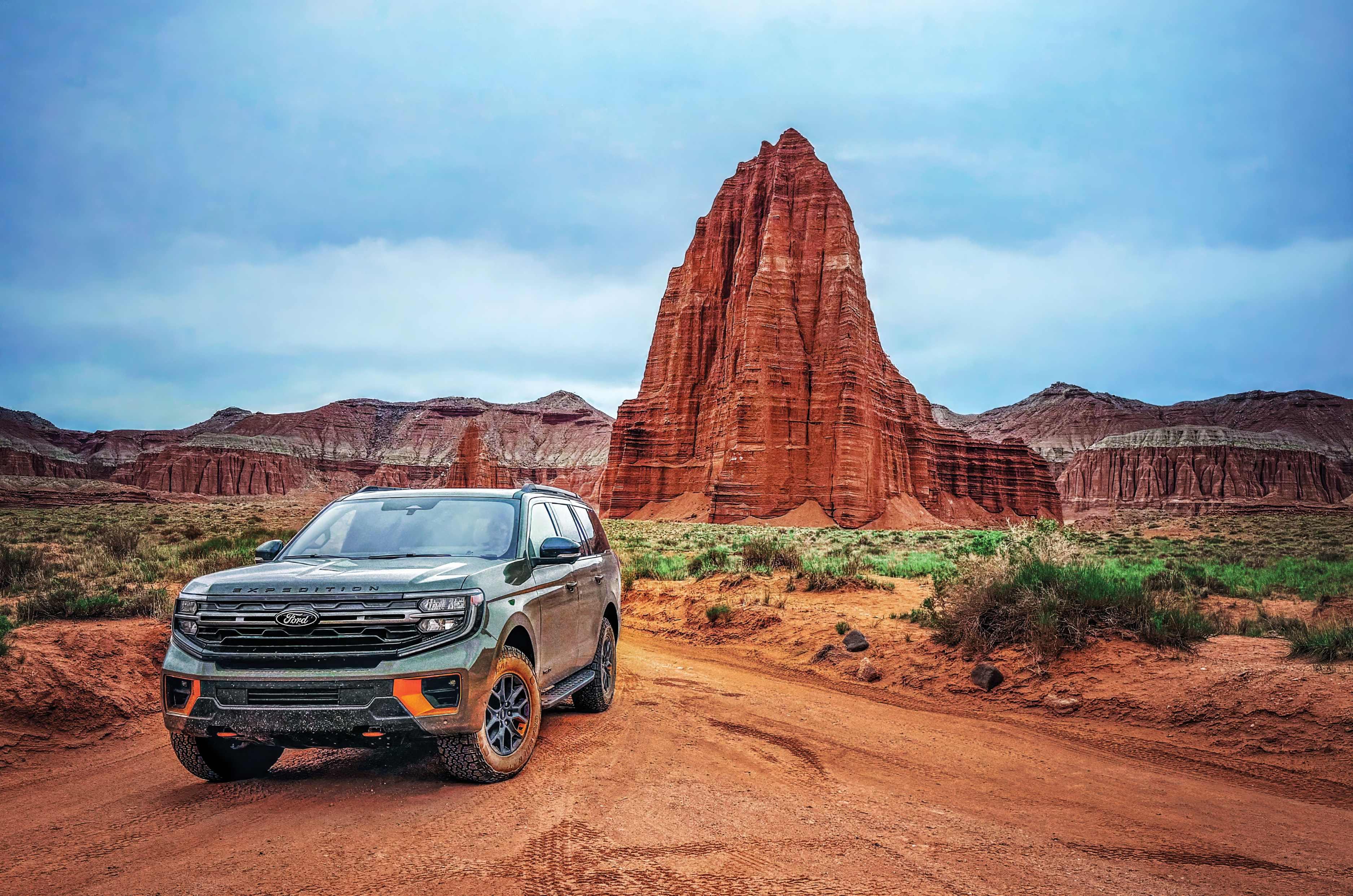
The dirt road climbs through the Bentonite Hills, bands of grey, purple and blue-green clay laid down eighty million years ago in an ancient inland sea, eroded into slopes that look lunar. Beyond them, the land opens onto a high bench where the Temples of the Sun and Moon stand, solitary honey-coloured monoliths like remnants of cathedrals of a long-lost civilisation.
What struck me most, standing before the Temple of the Sun, was how closely its silhouette echoed the thirteenth-century Temple of the Sun I knew well – still standing tall in Konark, Orissa. That was shaped by human hands wielding hammers and chisels, whereas this one by wind and water.
In the Cathedral Valley at The Temple of the Sun. Eighty million years in the making; no chisel required.
Most visitors run the Cathedral Valley Loop clockwise, meeting the Fremont River crossing at the start. We’d gone the other way, so it arrived at the very end, just short of Highway 24. Torrid brown water gushed across our path. Not crossing would mean backtracking 80 miles.
I waded in first to check for stone underfoot rather than clay, reading whether the current had strong opinions about being crossed. Satisfied, I waved the Tremor forward, and my partner drove it straight through, water climbing the doors. Then crossed again to pick me up, and once more just for fun, proof this was a vehicle built to encourage this kind of tomfoolery.
After Cathedral Valley, the long drive back to ordinary life began, the odometer past 1,300 miles. Looking back on those twelve days, I’m glad I chose the path not well trodden, as Robert Frost once suggested, in a digital age where it’s easiest to let the machines pick the route.
A badly printed, albeit meticulously researched book, an atlas, and a Ford that never once flinched had taken us somewhere far better than any algorithm would have dared suggest. Rather than a destination ticked off, Utah became one truly experienced, and that made all the difference.
The essentials
Self-sufficiency matters: A little preparation separates adventure from discomfort.
Water: Carry more than you think you need. We kept 20 litres in the Expedition.
Provisions: Stock up on energy bars, trail mix, fruit, chocolate, canned food, instant noodles, jerky and coffee. A camping stove is invaluable for hot meals in the middle of nowhere.
Fuel: Fill up whenever you can. Distances are vast and stations scarce.
Navigation: Download offline maps and carry a paper atlas. The DeLorme Utah Atlas and Gaia GPS worked well.
Clothing: Hot days, cold nights. Pack a warm layer and a sleeping bag.
Footwear: Sturdy hiking shoes.
Sun protection: A wide-brimmed hat, sunglasses, sunscreen and lip balm.
Vehicle: A high-clearance 4WD.
In-car essentials: First-aid kit, head torch, tyre gauge, air compressor and puncture repair kit.
Allow extra time. Utah ambushes you with one view after another, and the best memories happen at unplanned stops.
Going by the amount of social media chatter around any NCAP test, you’d think India is one safety-obsessed nation. Awareness is rising, but safety is far from ingrained in our ethos like it is in, say, Japan. We all know the current state of road safety is appalling, but I’m not talking about driving manners or vehicle collisions or crash ratings. Of late, there’s another aspect of road safety that’s really been bothering me; the road itself and everything around it.
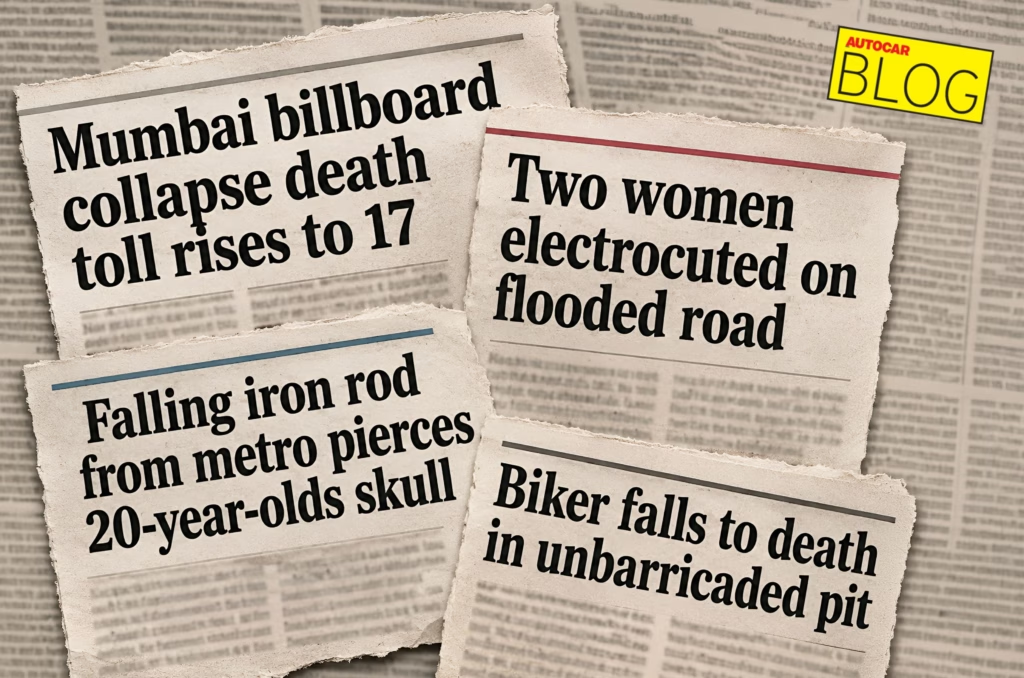
During the rains in Mumbai last month, two girls were electrocuted in a water-logged street. Luckily, timely intervention from a passer-by and medical treatment at a hospital saved them. Last year, an auto-rickshaw driver had his head
pierced by a falling iron rod from metro construction; thankfully emergency neurosurgery saved him too. Not everyone is so lucky though, if you can even call these accidents lucky. A concrete slab from an under-construction girder bridge fell onto a moving auto-rickshaw and car and resulted in one death and multiple injuries.
You would have read the horrific news of a 25-year-old biker in Delhi who died after his motorcycle plunged into an unbarricaded, 14-foot-deep construction pit dug up and left open. And it’s not just bikes; people have fallen into open manholes, flooded over with water, and lost their lives, and recently a 20-year-old student died after his car plunged into an open drain. Two years ago, a massive illegal billboard blew over and killed 17 people and injured over 75 others during heavy winds in Mumbai. This monsoon season, a tree collapsed onto a school bus and took the life of an 11-year-old child.
This is the aspect of road safety that has been bothering me recently, not because car crashes and other accidents do not, but because these are all too often termed ‘freak accidents’ or ‘random happenings’. Nonsense! These are not freak incidents, but accidents caused by negligence and unaccountability. So many folks say, ‘oh, his/her time had come’. Again, nonsense. Would you say all those poor kids who died in Africa due to starvation died because their time had come? No. They died because of human action, or inaction.
So, really, I write this column only to highlight this fact; to remind us all that it isn’t random. As the saying goes, ‘everything happens for a reason’. Here it’s callousness, from those in charge and from us. So, the next time you express outrage over a non-5-star NCAP-rated car, spare some words of outrage for these incidents too.
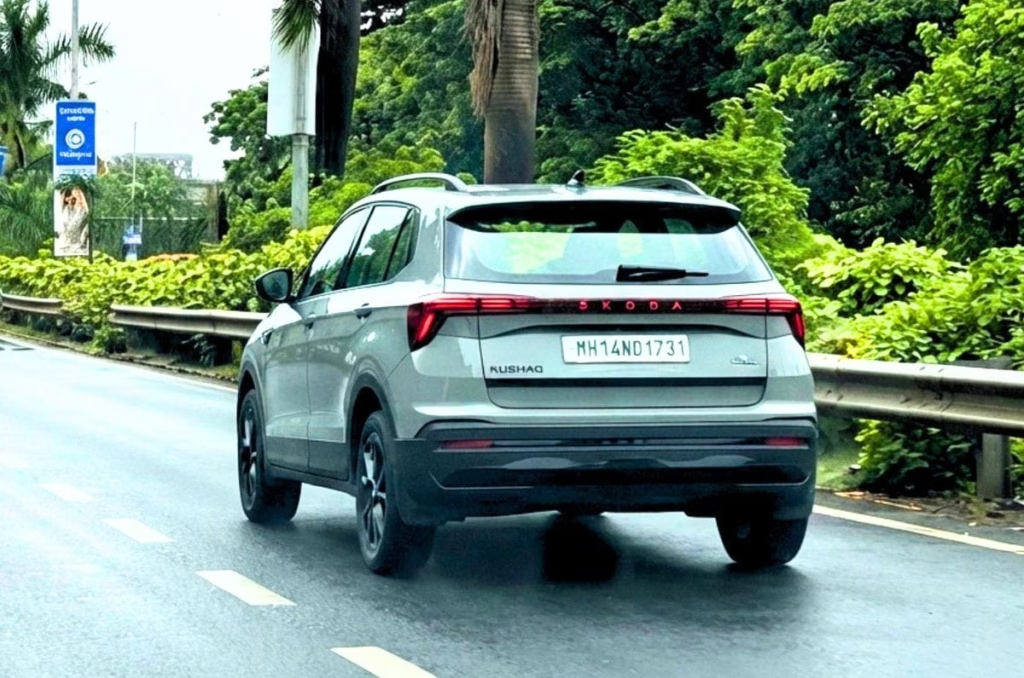
In March 2026, Skoda launched the updated Kushaq and one of the biggest updates was the introduction of a new 8-speed torque converter (automatic) with the smaller 1.0-litre turbo petrol engine, replacing the older 6-speed automatic. We’ve put the 2026 Kushaq 1.0L 8AT through our real-world fuel efficiency tests to see how it fares.
Gets an aggressive auto stop-start system
Weighs 1300kg
Claimed efficiency is 19.09kpl, 1kpl more than 1.0 6AT
Skoda Kushaq 1.0L automatic mileage explained
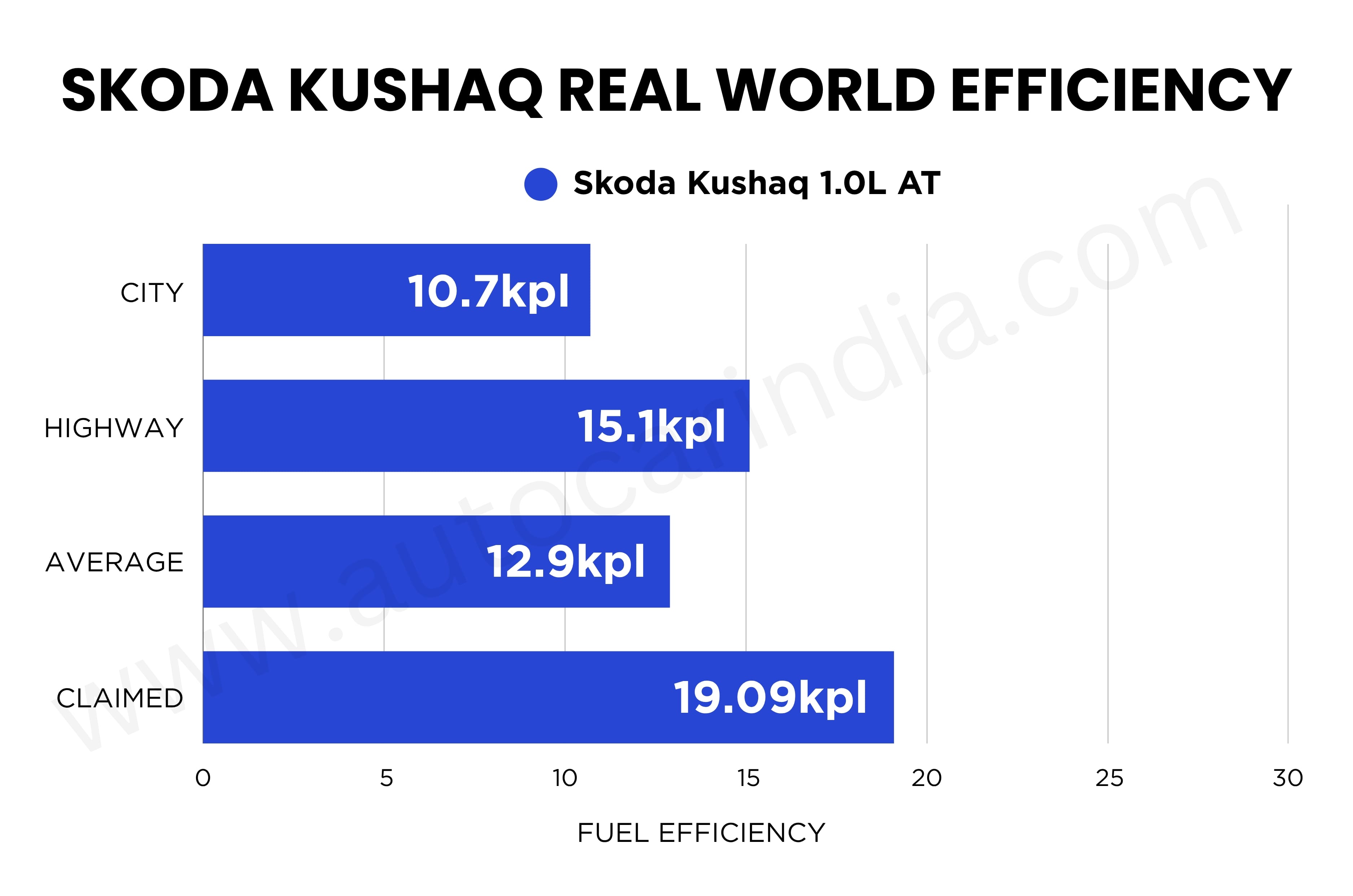
Powering the Kushaq is the same 1.0-litre three cylinder direct injection turbo-petrol engine that produces 115hp and 178Nm. With the addition of a new 8-speed automatic gearbox, the claimed efficiency has gone up by 1kpl, to 19.09kpl.
In our real world tests, the Kushaq returned 10.7kpl in the city and 15.1kpl on the highway, bringing its overall average efficiency to 12.9kpl. Interestingly, the updated Kushaq is 1.8kpl and 2.7kpl, more efficient than the older Kushaq with the 6-speed automatic gearbox, in the city and highway respectively, despite being 14kg heavier.
Notably, like the outgoing version, the Kushaq 1.0 8AT doesn’t get drive modes, but it continues to get an automatic engine stop-start feature. The latter is quite aggressive, and often tends to cut the engine while decelerating, even before the car has come to a complete stop. Also, while the creep function is less aggressive than the 6-speed auto version, it still feels quite eager off- the-line.
Autocar India’s fuel efficiency testing
Before our real-world fuel efficiency tests, we fill our test cars’ tanks to the brim and maintain tyre pressures based on the manufacturer’s recommendation. These cars are driven in fixed city and highway loops in and around Navi Mumbai, and we maintain certain average speeds. Throughout the tests, there is only one person in each car, running the aircon at 22deg C in full-auto mode, and other electricals, such as the audio system, indicators and wipers, when required, just like a regular user would. Periodic driver swaps further neutralise variations in driver patterns. At the end of each cycle, we calculate efficiency by filling the tanks to full again.
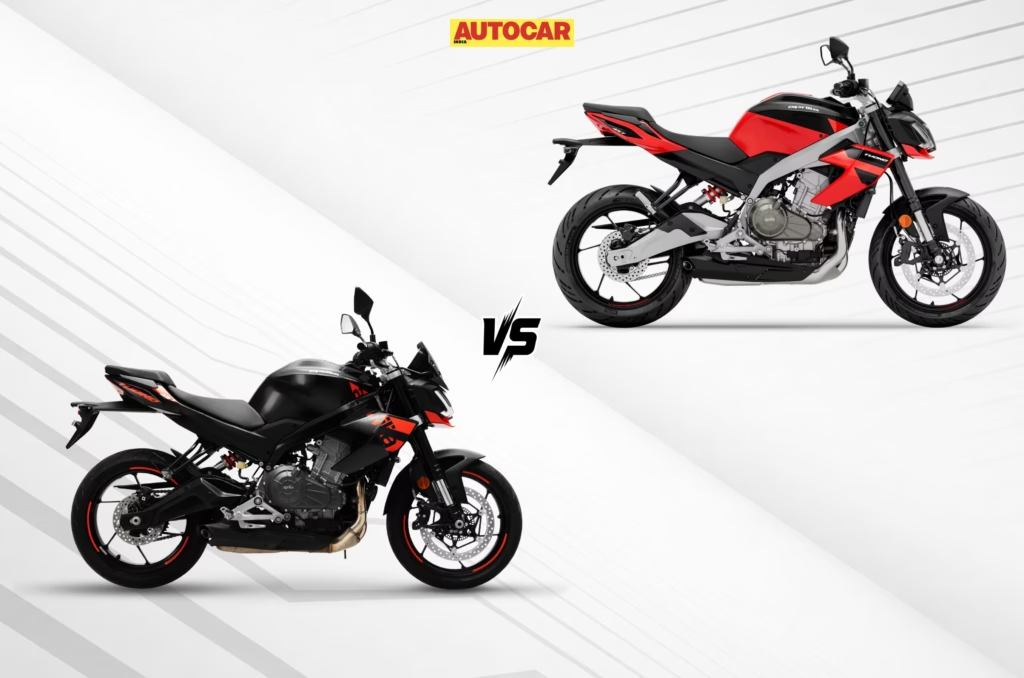
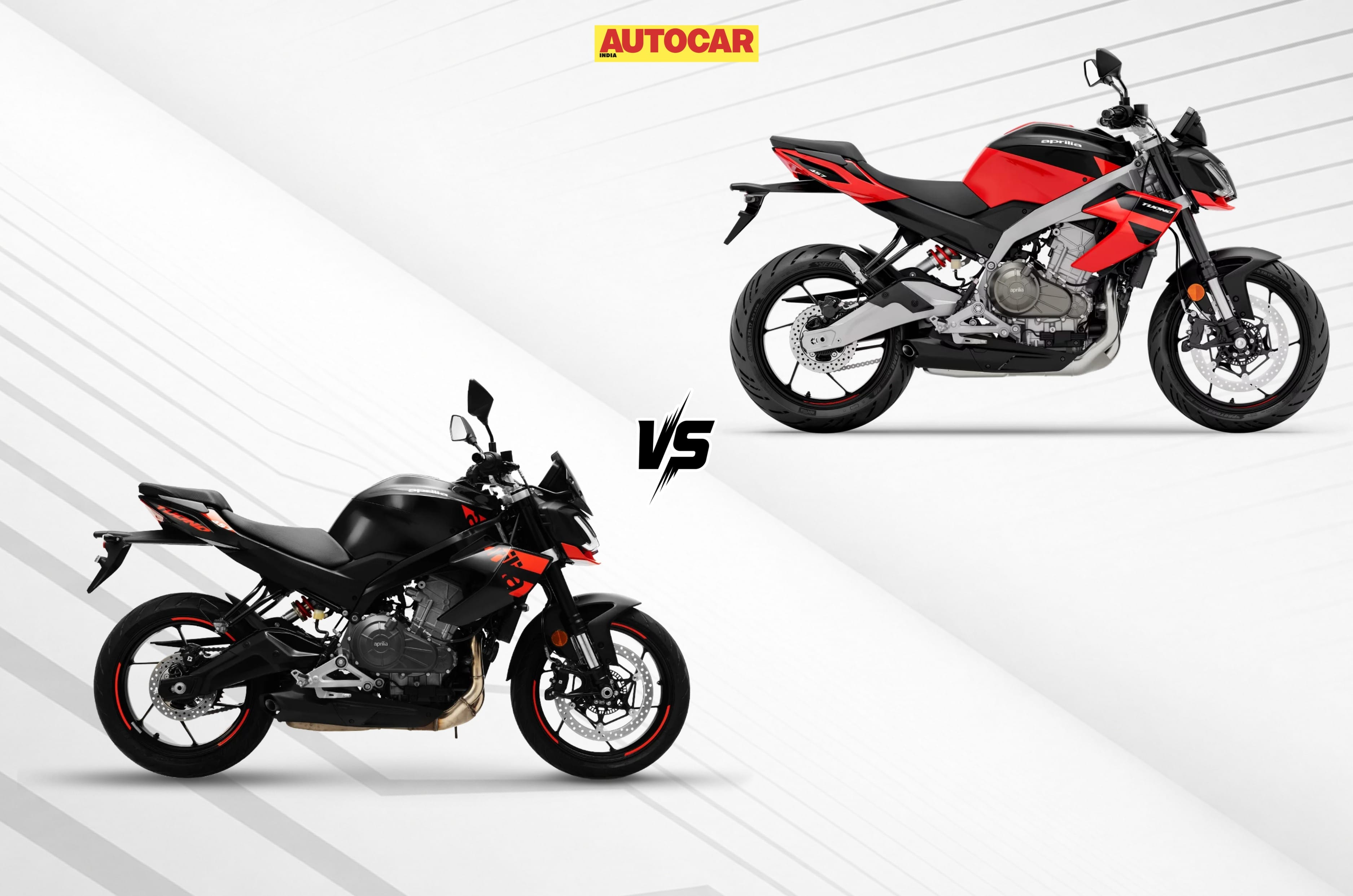
With the Special Edition, Aprilia has addressed almost all the major complaints with the Tuono 457 but what exactly are the changes? At first glance, both motorcycles look the same and they largely are the same as well. This is a case of small changes adding up to a markedly different (and better) final product.
Aprilia Tuono 457 vs Tuono 457 Special Edition: Design
Slightly different, with a new colour
The most obvious change is the updated decals and the brand-new Mamba Black colour. The new colourway, which is exclusive to the Special Edition at the moment, gets a blacked out chassis and swingarm which wasn’t the case earlier. Even on the Puma Gray colour (carried over from earlier), Aprilia has updated the decals so the India-specific Special Edition does look different compared to the international version of the Tuono 457.
Aprilia Tuono 457 vs Tuono 457 Special Edition: Comfort
Seat, handlebar, and suspension all see upgrades
Starting off with changes that are visible, Aprilia has updated the Tuono 457’s seat to be slightly different now from the RS 457. Although the main difference is the extra padding, the seat profile has been slightly changed too to make sure longer stints are more comfortable. It results in the Special Edition having a 10mm taller seat height at 810mm, but we don’t expect anyone to complain about that. The next change is to the handlebar that now gets a 10mm taller riser even though the bar itself is unchanged. Lastly, there’s a standard flyscreen above the headlight, but we’d chalk that as strictly an aesthetical improvement. Finally, the brake lever is now adjustable though the clutch lever remains non-adjustable.
The changes that won’t be visible are to the suspension. At launch, the Tuono appeared to share the exact same suspension setup as the RS 457, which was jostling to most, literally and figuratively. On the Special Edition, Aprilia has made the front suspension softer on both damping and spring preload. While the rear has a softer compression damping and spring preload; rebound damping remains where it was earlier.
Aprilia Tuono 457 vs Tuono 457 Special Edition: Price
Costs Rs 2,000 extra now
With all the upgrades, Aprilia has priced the Tuono 457 Special Edition at Rs 3.99 lakh (ex-showroom), a Rs 2,000 increase from before. Despite the name, this is the only Tuono you can buy in India now so if you were a fan of the earlier Tuono, tough luck.
Aprilia Tuono 457 vs Tuono 457 Special Edition: What did not change
Engine, chassis, and most features
The Tuono 457’s engine immediately became a favourite at launch so Aprilia has not changed that in any way. The Special Edition retains the 457cc twin-cylinder, liquid-cooled engine with a parallel twin configuration. No changes to the performance figures either with the power (47.6hp) and (43.5Nm) torque remaining exactly the same.
Like we mentioned at the beginning, the list of upgrades on the Tuono 457 Special Edition isn’t long. However, most of them make a meaningful difference to how the motorcycle is to ride which is what Aprilia seems to have wanted. It remains to be seen whether these changes will help make the Tuono any more popular than before.
Volkswagen is preparing for a much bigger push in India, with the company reviewing its broader product, powertrain and investment plans. While a locally produced compact SUV has already been confirmed for launch next year and is expected to drive volumes, the brand is also looking at the India-EU free trade agreement (FTA) as an opportunity to bring select niche models from its global portfolio here.
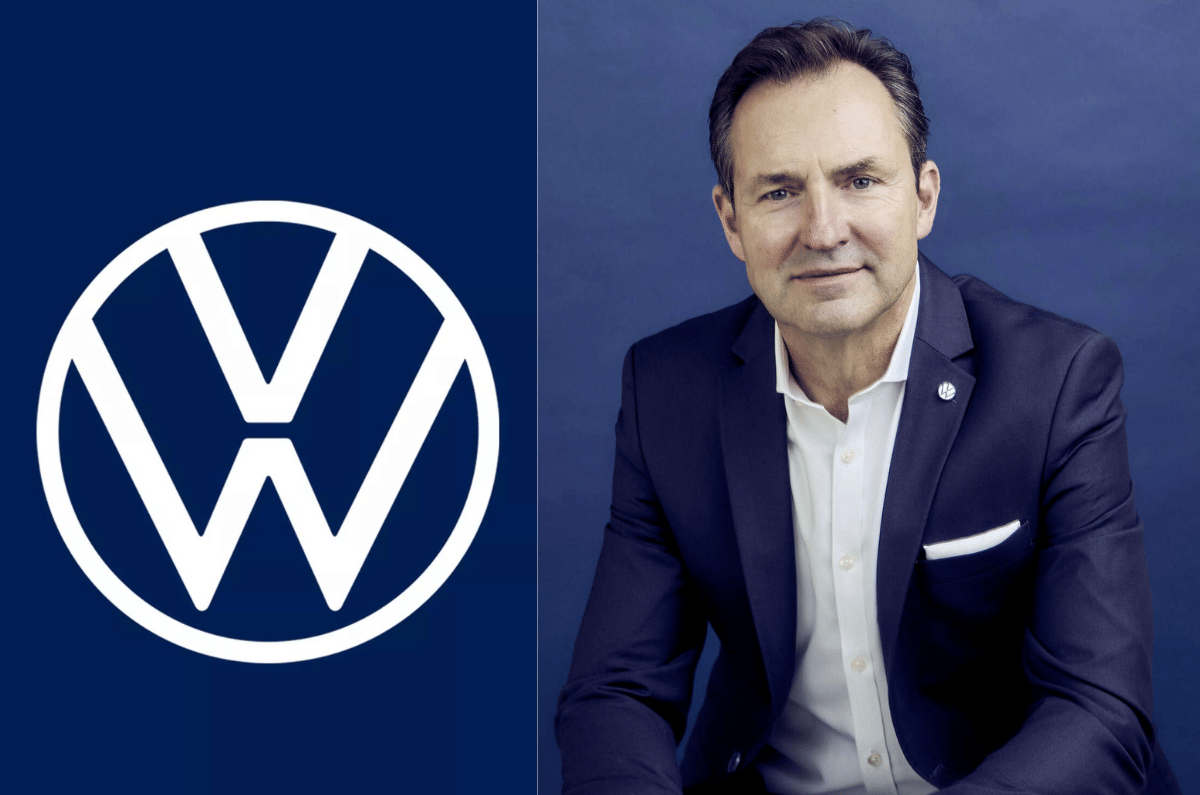
“FTA has been announced in Europe. It is a huge opportunity to bring a certain sort of niche models to widen the portfolio for the consumer to offer some exciting models every now and then, which is great,” Member of the Board of Management of Volkswagen AG and CEO of Volkswagen Brand Thomas Schafer told us. He did not reveal which models could be on the cards, but said the company is taking a long-term view and will study market conditions over the next few months before making a decision.
VW’s renewed focus for India
Schafer’s India visit comes as Volkswagen reviews its global business strategy amid geopolitical tensions, changing trade policies and a growing move towards regional manufacturing. “So, globally, we see almost like a decoupling. You have a geopolitical situation and the old business model where everything’s focused on Europe, and then you export to other markets is long gone. At the same time, you have a very different dynamic in China than in the US, which is putting import duties on Europe under certain attacks. So, in that game, you have to change your business model; you have to adapt it. And that’s what we’re busy doing,” he added.
This shift could benefit India. Along with the growing domestic market, Volkswagen sees India as an important hub for engineering, IT and R&D. “We will focus a lot on India going forward. Not only because the market is exciting and growing and creating more opportunity for the future, but also the sort of knowledge base that you have here in India,” he said.
Volkswagen also sees exports as an important way to build scale out of India. The company already exports vehicles made in the country to more than 40 markets, with Mexico being one of the major markets that imports vehicles from India. “So, exports are an important part of our business, and we will always strengthen that going forward,” he said. For the upcoming compact SUV, export potential could also help boost volumes and strengthen the business case.
More powertrains can be offered at the right time
Volkswagen’s current portfolio comprises cars powered by turbo-petrol engines, even as CNG and diesel remain in demand and EVs are gaining momentum. “So, what is clear is, in the long run, there will be strong electrification, especially also in India…You see it accelerating, probably driven by the conflict in the Middle East and the oil situation,” he said.
At the same time, he clarified that be it flex-fuel, CNG, diesel or EV, the brand has the technology already on sale in certain parts of the world. “We have flex-fuel, super strong in South America for years; we have CNG, diesel and EVs, it’s all there…When it’s the right time to localise it, we will localise it,” Schafer said.
The challenge, he said, is deciding when and how to use each powertrain technology. “The dynamics in India and the market shift have been quite significant even in the last couple of months. So, to be honest, we haven’t concluded our planning on that, but the good thing is that we have it and we can deploy it if and when it is the right situation,” he stated. Volkswagen is also evaluating its next-generation models and newer platforms, but these plans are still under consideration.
Cost remains a major hurdle for VW in India
Cost has been one of Volkswagen’s biggest challenges in India. Schafer said the company has spent the past few years working on two key areas: ensuring that its products retain the core characteristics of the Volkswagen brand while simultaneously reducing the cost base. “We worked over the last four years very focused on the cars that we bring to the market now are through and through Volkswagen in terms of quality, brand fit. And, yes, our cost base is traditionally high because we are very much focused on Europe and especially Germany,” he added.
India, he said, will play an important role in Volkswagen’s efforts to reduce costs, especially through more cost-effective development and manufacturing. “Part of the programs that’s been in the media over the last, especially two years, has been reducing our cost base, developing more in more cost-efficient places like in India very much, but also shifting production from high-cost locations into lower-cost locations,” he said.
Volkswagen is now working on its next set of products, investment plans and powertrain options for India. With India becoming an increasingly important part of its global strategy, there is plenty to look forward to from the brand in the coming years.
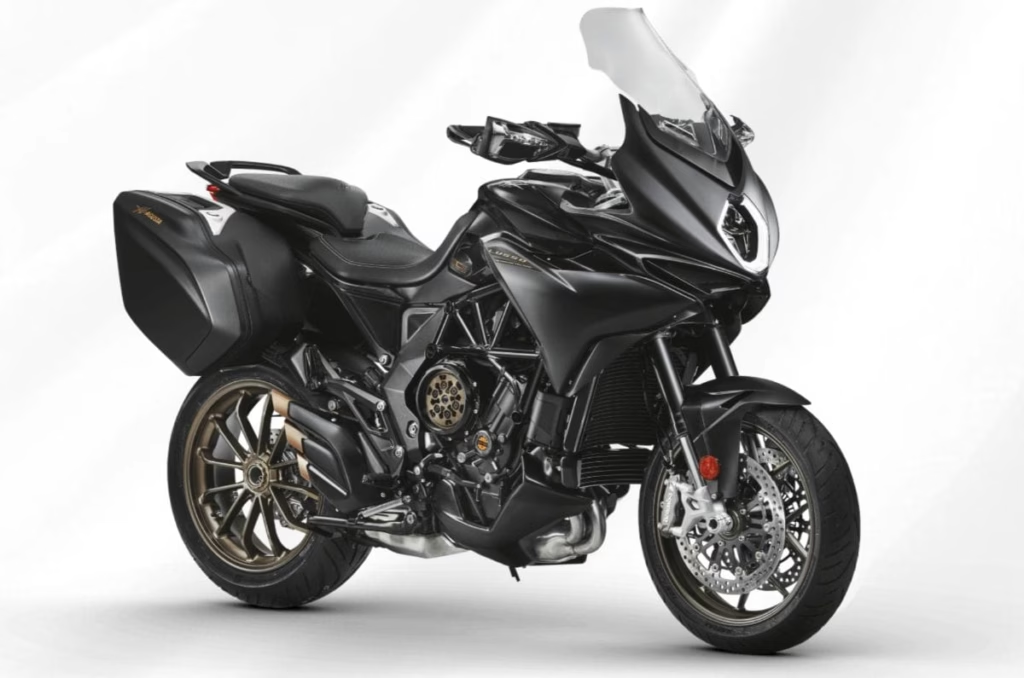
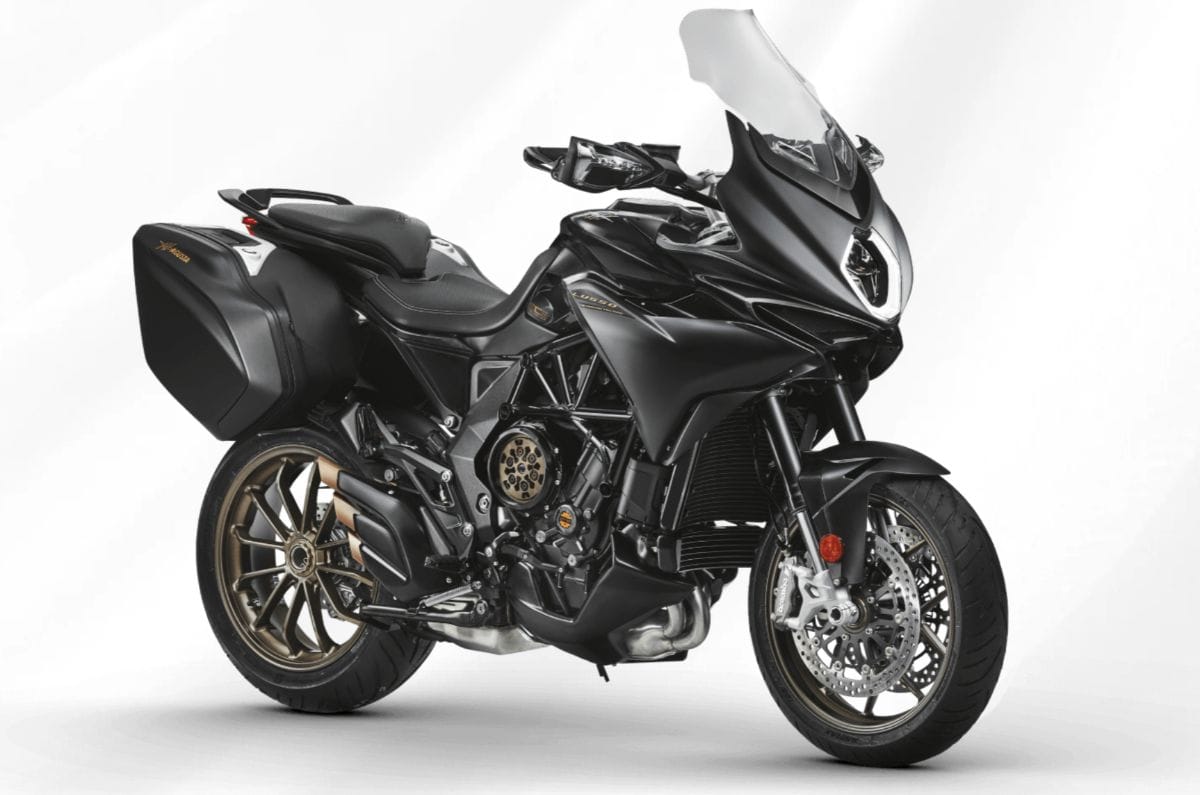
The MV Agusta Turismo Veloce SCS is a sport-tourer that combines the Italian brand’s performance-focused approach with long-distance touring ability. It is powered by a 798cc, three-cylinder engine producing 110hp and 84Nm, paired with a six-speed gearbox and MV Agusta’s Smart Clutch System (SCS), which allows clutchless operation. The bike gets semi-active suspension, Brembo brakes, cornering ABS, traction control and a quickshifter. Touring equipment includes cruise control, heated grips, an adjustable windscreen and integrated panniers. With its distinctive styling and SCS system, the Turismo Veloce offers a different take on the conventional sport-tourer.
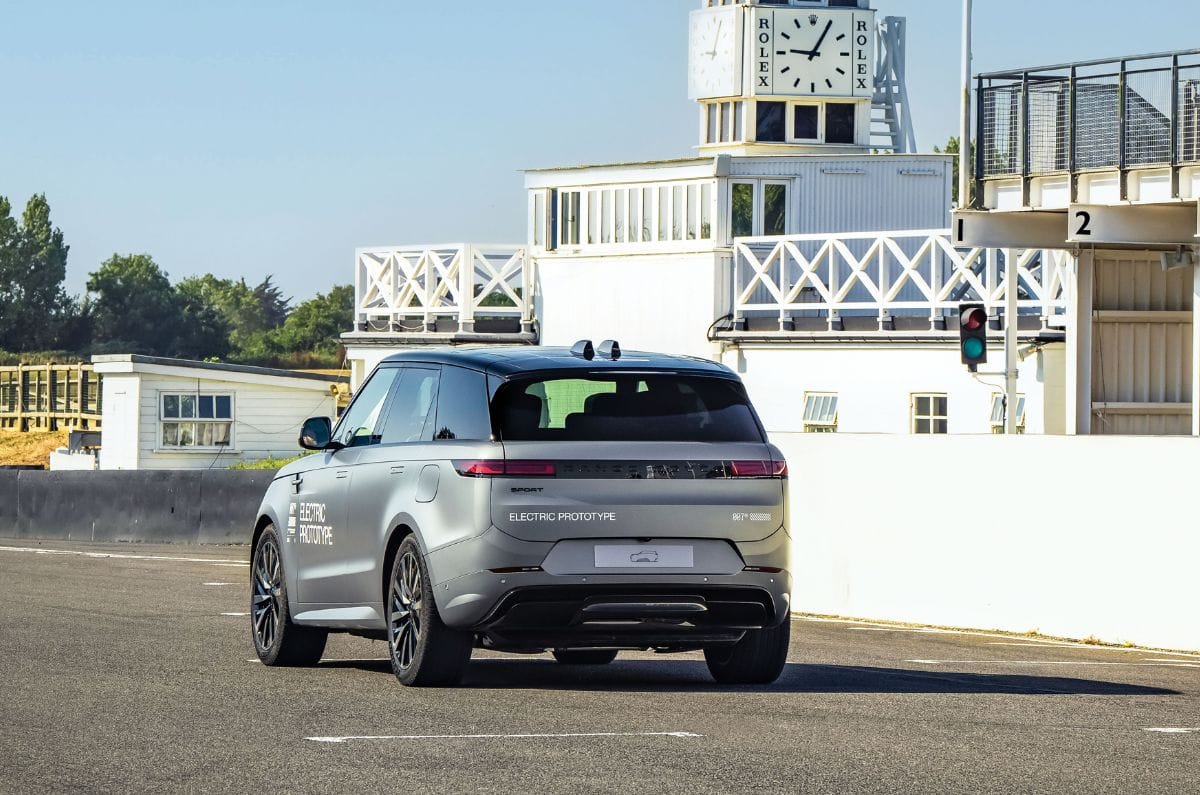
The Range Rover Sport EV has been a long time coming. After what feels like an eternity of teasers and test mules, the electric Range Rovers will finally be launched globally in September this year and should arrive in Indian showrooms around March 2027. Look at the car and you may wonder what took the company so long, because this appears to be just the regular Range Rover Sport. That, as it turns out, is entirely the point.
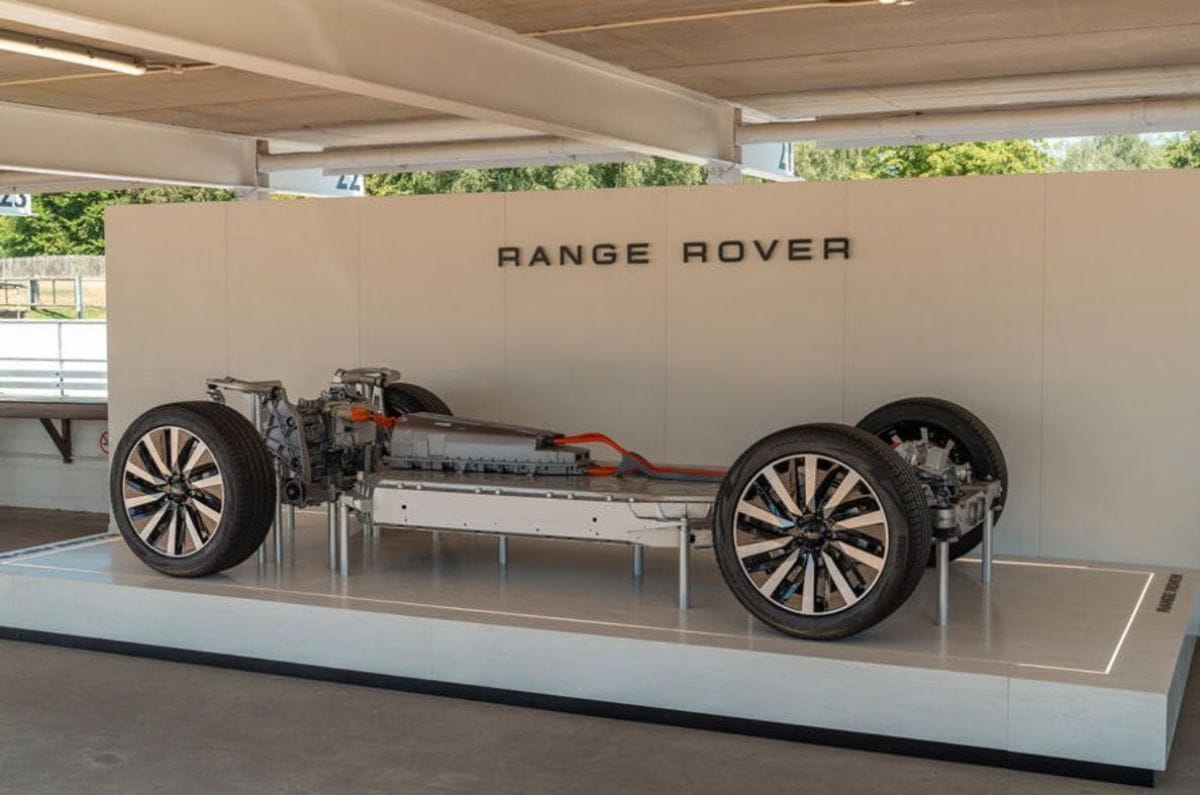
Under the familiar skin sit 300 patents’ worth of tech, a new 800V electrical architecture, two 326hp motors and a 118.5kWh battery, all validated over 60,000 hours of testing, the most for any Range Rover yet. The motors are Land Rover’s own design, developed in-house because nothing off the shelf could deliver the kind of instant, finely controlled torque the brand demanded for serious off-roading. The only real giveaways on the outside are a grille with narrower air slots and a new set of alloys with a more aero design, in keeping with the EV theme. Land Rover deliberately didn’t tamper with the styling because customers were clear – don’t change it, just make it better.
The new architecture, motors and battery have gone through 60,000 hours of testing.
So, is it better? A specially curated lap of the Goodwood circuit, complete with gravel stages and some party tricks, was our chance to find out.
Range Rover Sport Electric Prototype: performance, ride and handling
Set off, and the first impression is of eerie silence. All you can hear is the blower working overtime on a hot Goodwood day. Even when the tarmac ends and the gravel begins, the Sport EV feels like a magic carpet, gliding along on a pillow of velvet. The ride quality is absolutely exceptional, better even than the standard car’s, and that’s saying something.
When you want a quick turn of pace, the combined 550hp and 850Nm don’t leave you wanting. Engage launch control, and the Sport EV catapults forward hard enough to be a genuine shock, though the delivery is measured rather than manic. There is, however, a hint of torque steer from the front axle under hard acceleration, a slight tug at the wheel that reminds you how much force is being exerted. The brakes on our prototype also felt a bit grabby, with a sharp initial bite. Land Rover engineers admit this isn’t the final calibration and say production cars will have a more progressive pedal feel.
The Sport EV feels like a magic carpet, gliding along on a pillow of velvet.
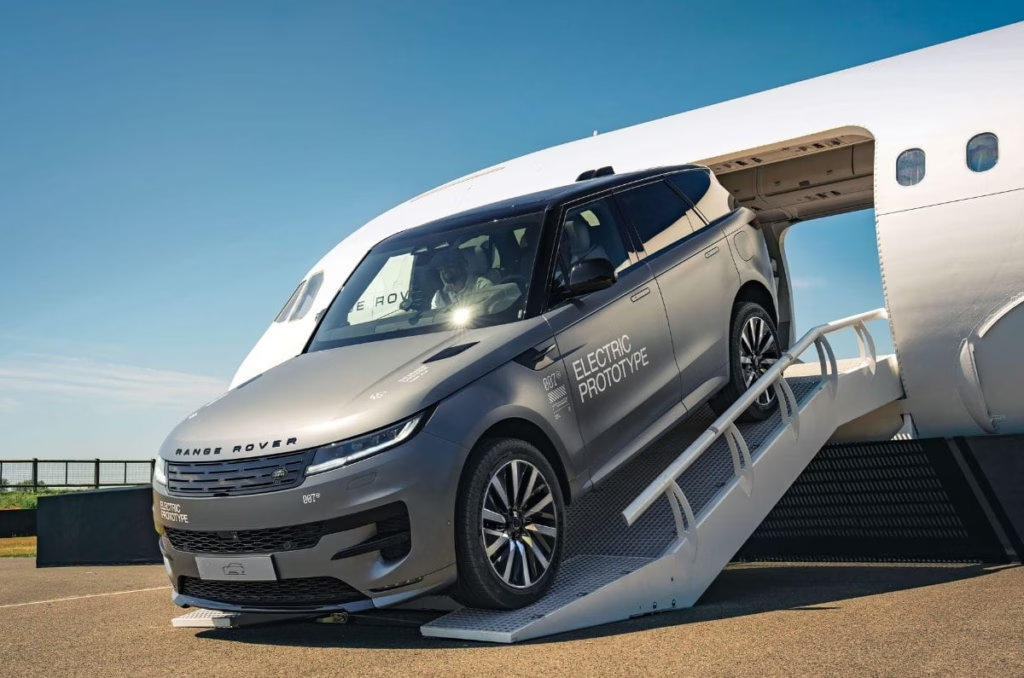
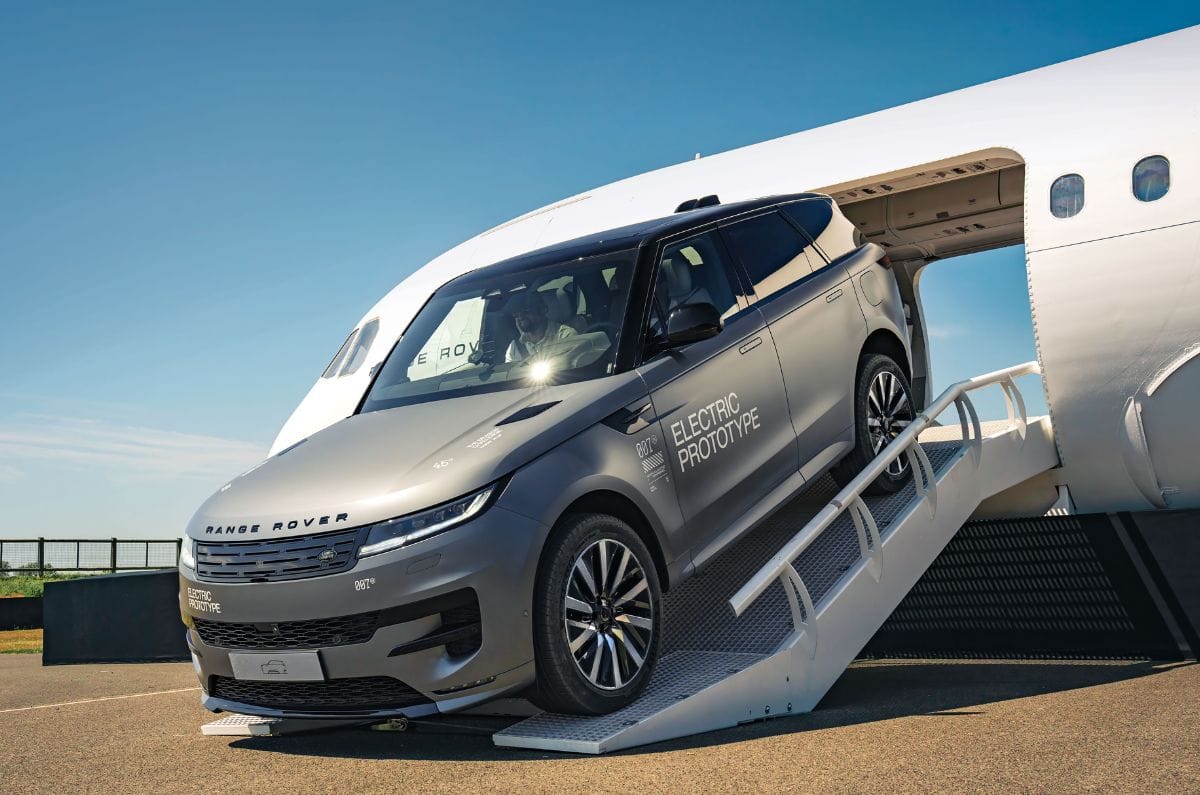
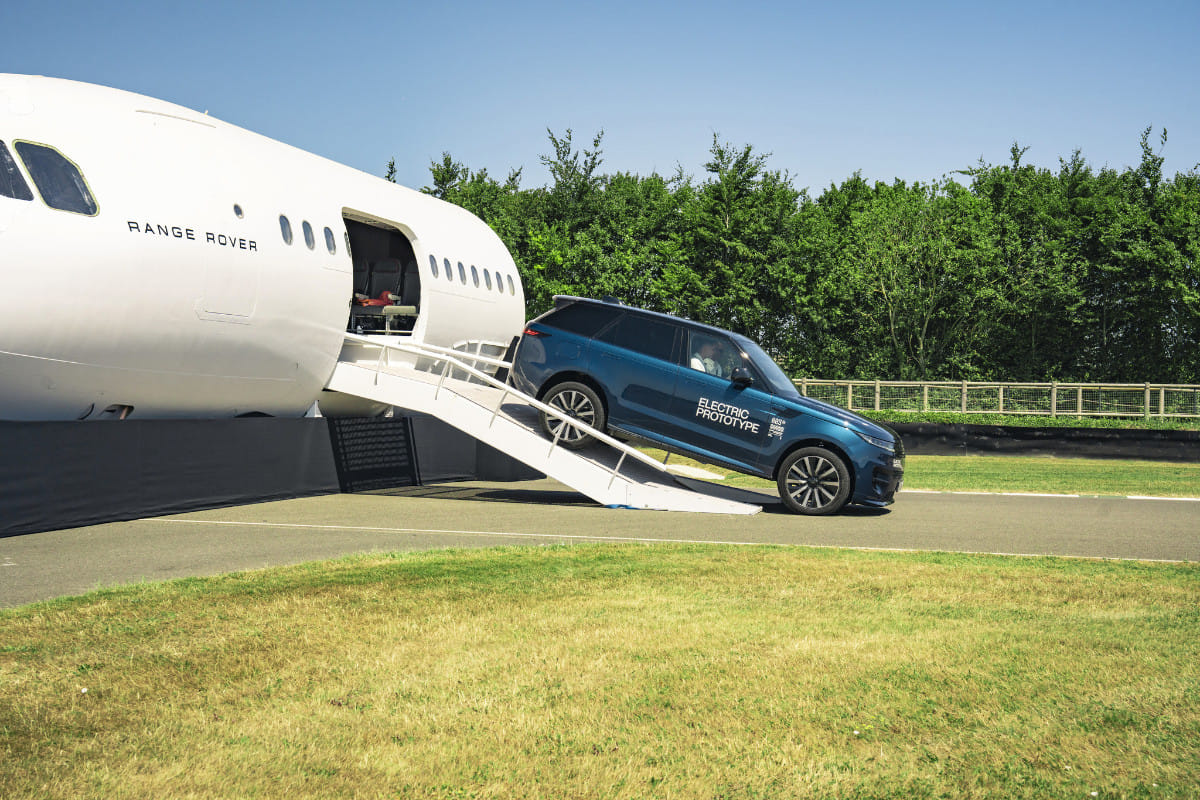
Then came the fun exercises, laid out to prove that this plush, polished and uber-refined Range Rover can do things no owner would ever dare attempt. The Sport EV climbed a staircase – a cheeky nod to the brand’s world record 999-step climb – and we even drove it through the fuselage of an Airbus. Silly? Absolutely. But it showcased what makes an electric drivetrain so effective off road. Torque arrives instantly from zero rpm and builds with perfect linearity, and because the electronics can meter out drive to each motor with such precision, there’s no need for the old hardware of locking diffs and low-range gearboxes. Raise the suspension to off-road height, let the cameras and hill descent control do their thing, and the car simply walks over obstacles. The single-pedal mode is something the engineers have finally nailed too, and it works seamlessly alongside hill descent control when needed.
The big surprise is how tidily this near 2.8-tonne SUV handles. Flick the wheel suddenly, and you can feel the mass move, but otherwise, it stays impressively planted through corners, helped by a centre of gravity that sits a significant 73mm lower than in the combustion car. Range Rovers have always had a top-heavy feel when pushed; this one doesn’t.
Questions remain. A real-world range of 531km is promised, but given the bluff shape and sheer size of this flagship EV, that figure could prove optimistic if driven briskly. Some owners may have liked the convenience of a frunk in their EV, which is absent, and packaging the rear motor has killed off any seven-seat option. Then again, these are misses most owners may not miss at all.
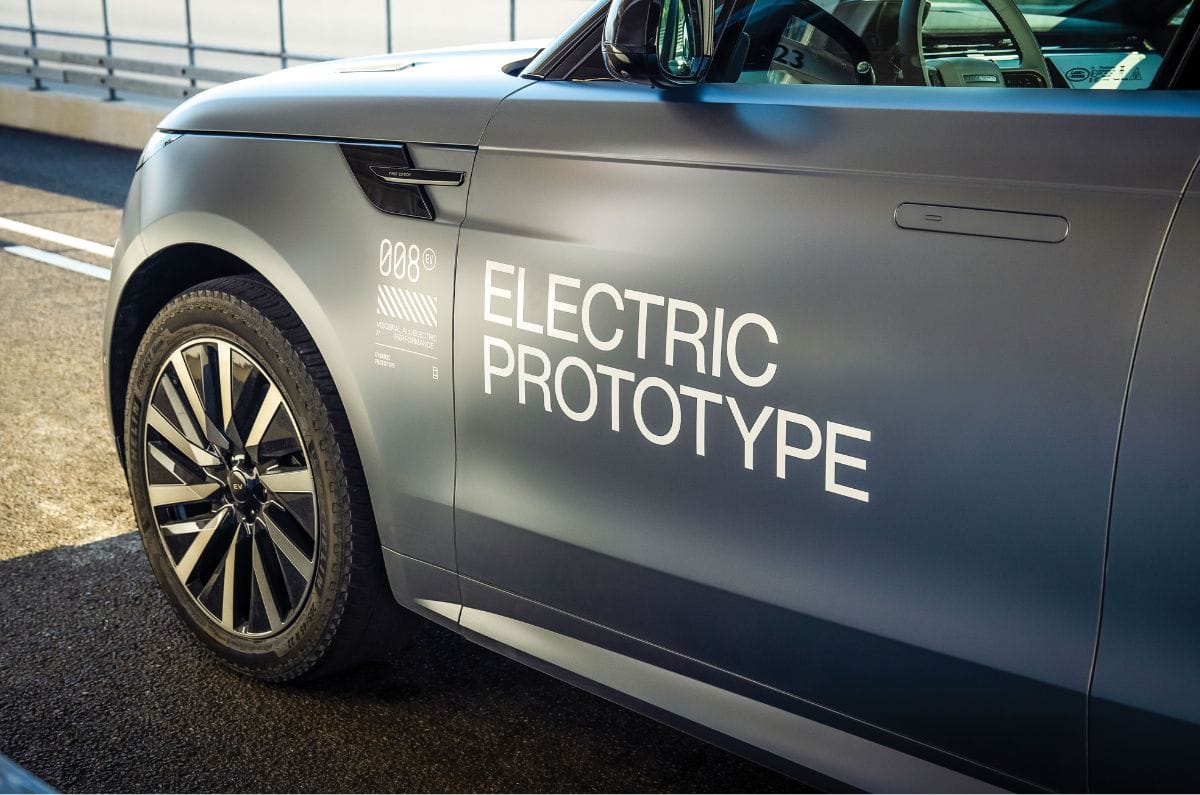
Prototype badging aside, there’s little to separate this from the combustion-engined Sport.
Pricing isn’t announced yet, but expect it to sit above the locally assembled combustion equivalents. More importantly, on this evidence, it will set a new benchmark for luxury for the brand. The electric Range Rover Sport doesn’t reinvent the formula, but it quietly perfects it.