VIDEO: ‘शुद्ध पेट्रोल तुम्हारे बाप के यहां से आएगा….’; एथेनॉल विवाद पर BJP सांसद जनार्दन मिश्रा का विवादित बयान

Ethanol-Petrol Controversy: देश में पेट्रोल में एथेनॉल मिलाने को लेकर जारी विवाद के बीच मध्य प्रदेश के रीवा से भारतीय जनता पार्टी (BJP) के सांसद जनार्दन मिश्रा ने रविवार (9 अगस्त) को इस पॉलिसी के बचाव में विरोधियों पर निशाना साधते हुए एक विवादित टिप्पणी की। रीवा से भोपाल और कोलकाता के लिए ‘नई उड़ान’ सेवाओं के उद्घाटन के मौके पर आयोजित एक कार्यक्रम को संबोधित करते मिश्रा ने कहा कि भारत में केवल 20 प्रतिशत कच्चे तेल का उत्पादन होता है। जबकि 80 प्रतिशत तेल विदेश से आयात करना पड़ता है। इस दौरान एथेनॉल-ब्लेंडिंग नीति का बचाव करते हुए बीजेपी सांसद ने विवादित बयान देते हुए कहा कि शुद्ध पेट्रोल तुम्हारे बाप के यहां से आएगा जब देश में शुद्ध पेट्रोल है ही नहीं…।

वैश्विक परिस्थितियों का हवाला देते हुए बीजेपी सांसद मिश्रा ने कहा कि तेल आपूर्ति के लिए जहाजों को 18,000 किलोमीटर के करीब अतिरिक्त दूरी तय करनी पड़ती है। उन्होंने कहा, “ऐसी परिस्थिति में प्रधानमंत्री नरेंद्र मोदी जब पेट्रोल में 20 प्रतिशत एथेनॉल मिलाने की बात करते हैं तो कुछ लोग विरोध में आंदोलन करने लगते हैं।” उन्होंने आक्रामक अंदाज में बघेली भाषा में कहा, “आंदोलन हो रहा है एथेनॉल नहीं चलेगा, शुद्ध पेट्रोल चलेगा। शुद्ध पेट्रोल तुम्हारे बाप के घर से आएगा? शुद्ध पेट्रोल है ही नहीं देश में तो कहां से आएगा?”

एथेनॉल से चलने वाले वाहनों का समर्थन किया

मिश्रा ने कहा कि भारत में वाहन एथेनॉल-ब्लेंडिंग ईंधन से चल सकते हैं। लेकिन कुछ लोग एथेनॉल के इस्तेमाल का विरोध करते हुए इसे पेट्रोल में नहीं मिलाने की बात कह रहे हैं। उन्होंने आगे कहा, “एथेनॉल नहीं बनेगा तो पेट्रोल कहां से आएगा, डीजल कहां से आएगा?” पेट्रोल में एथेनॉल मिलाने का बचाव करते हुए उन्होंने कहा कि ब्राजील में तो गाडियां 100 प्रतिशत एथेनॉल से चल रहीं। लेकिन इसके बावजूद वहां वाहनों में ऐसी कोई समस्या नहीं है। मिश्रा पेट्रोल में 20 प्रतिशत एथेनॉल मिलाने के सरकार के लक्ष्य का बचाव कर रहे थे।

उन्होंने जनता को याद दिलाया कि ब्राजील दुनिया में सबसे ज्यादा एथेनॉल का उत्पादन करता है। उन्होंने कहा कि यही वजह है कि वहां 100 फीसदी एथेनॉल से गाड़ियां चल रही हैं। अक्सर अपनी विवादित टिप्पणियों के लिए सुर्खियों में रहने वाले मिश्रा ने कहा कि भारत में भी विशेषज्ञों की राय है कि एथेनॉल से गाड़ियों के इंजन को कोई नुकसान नहीं पहुंचता। लेकिन इसके बावजूद बेवजह विरोध किया जा रहा है। उन्होंने यह भी कहा कि आज दुनिया में सबसे कम महंगाई और सबसे अधिक रोजगार कहीं है तो वह भारत में है।

एथेनॉल पर बहस तेज

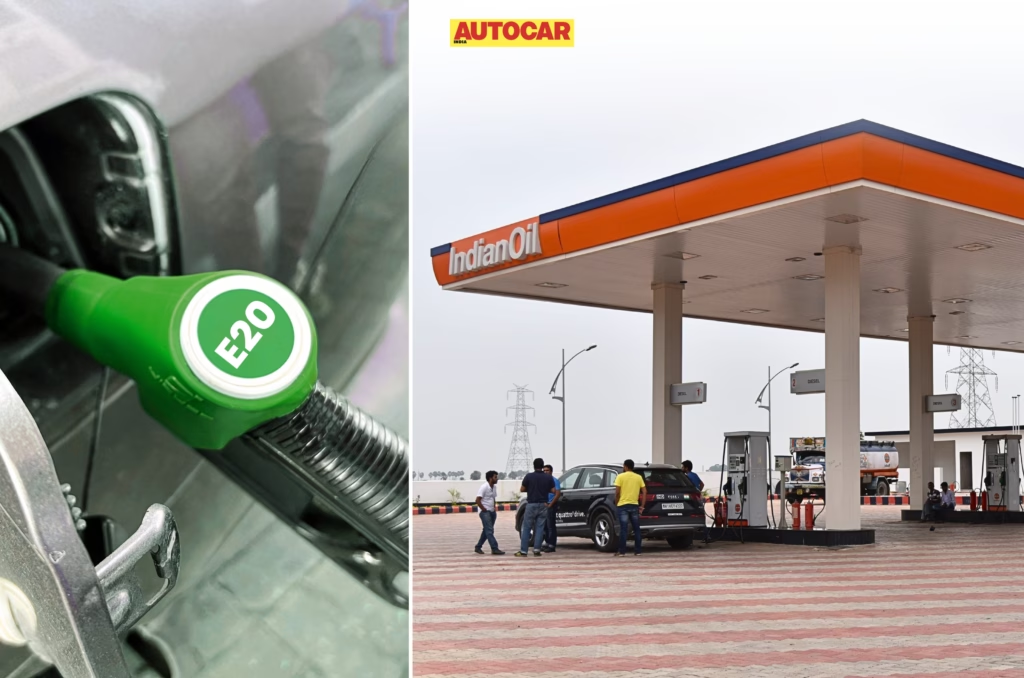
मिश्रा की ये बातें केंद्र के इथेनॉल-ब्लेंडिंग प्रोग्राम पर चल रही बहस के बीच आई हैं। इस बहस में मुख्य रूप से गाड़ियों की कम्पैटिबिलिटी, फ्यूल एफिशिएंसी और ग्राहकों पर पड़ने वाले असर को लेकर चिंताएं जताई जा रही हैं। सरकार E20 पेट्रोल को बढ़ावा दे रही है। इसमें 20 प्रतिशत एथेनॉल होता है। यह कदम कच्चे तेल के आयात को कम करने और देश में बने वैकल्पिक ईंधन को बढ़ावा देने की कोशिशों का हिस्सा है।

ये भी पढ़ें- ईरान युद्ध से निकलने की राह खोज रहे डोनाल्ड ट्रंप? होर्मुज स्ट्रेट को लेकर तेहरान की नई शर्तों ने बढ़ाई अमेरिका की टेंशन

केंद्र का कहना है कि E20 की टेस्टिंग और फील्ड अनुभव से इंजन में असामान्य टूट-फूट, जंग लगने या गाड़ी की उम्र कम होने का कोई सबूत नहीं मिला है। मिश्रा ने बायोगैस और CNG जैसे वैकल्पिक ईंधन के लिए सरकार की व्यापक कोशिशों का भी समर्थन किया। साथ ही हवाई कनेक्टिविटी बढ़ाने के लिए उठाए गए कदमों पर भी जोर दिया। फिलहाल, उनका वीडियो जमकर वायरल हो रहा है। विपक्षी पार्टियां भगवा पार्टी पर हमलावर हैं।

2027 Maserati GranTurismo review – GT to the T

2027 Maserati GranTurismo driving

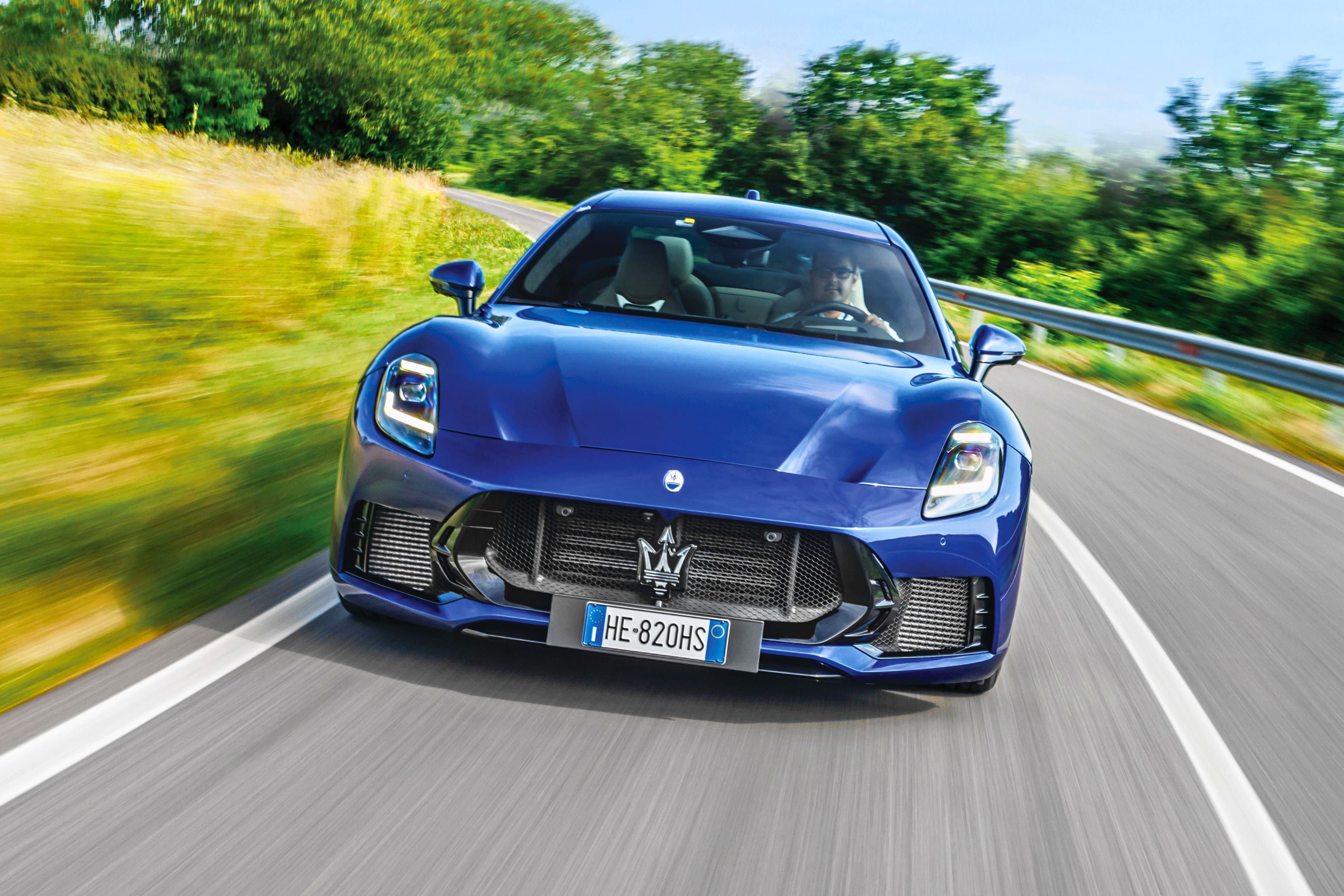
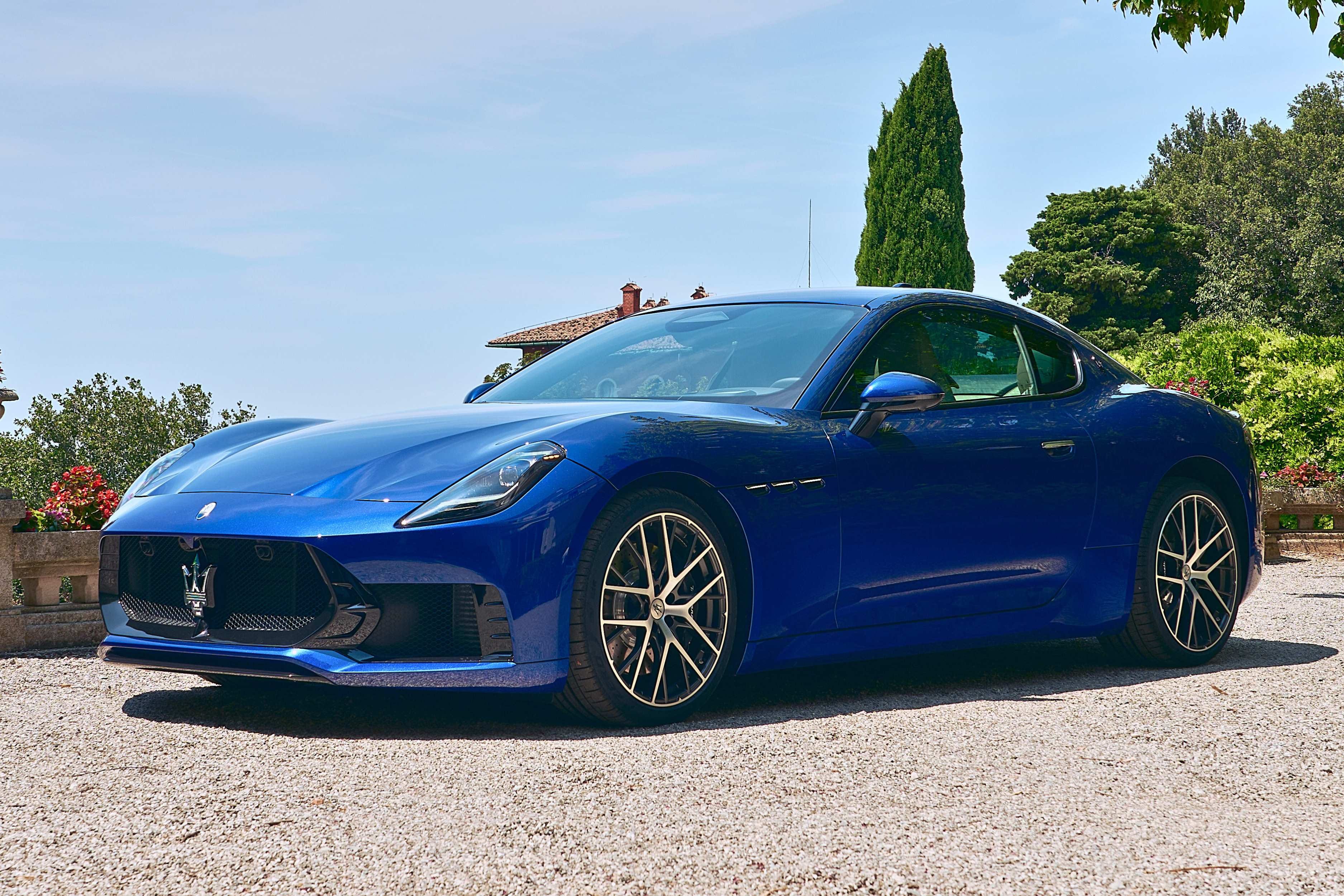
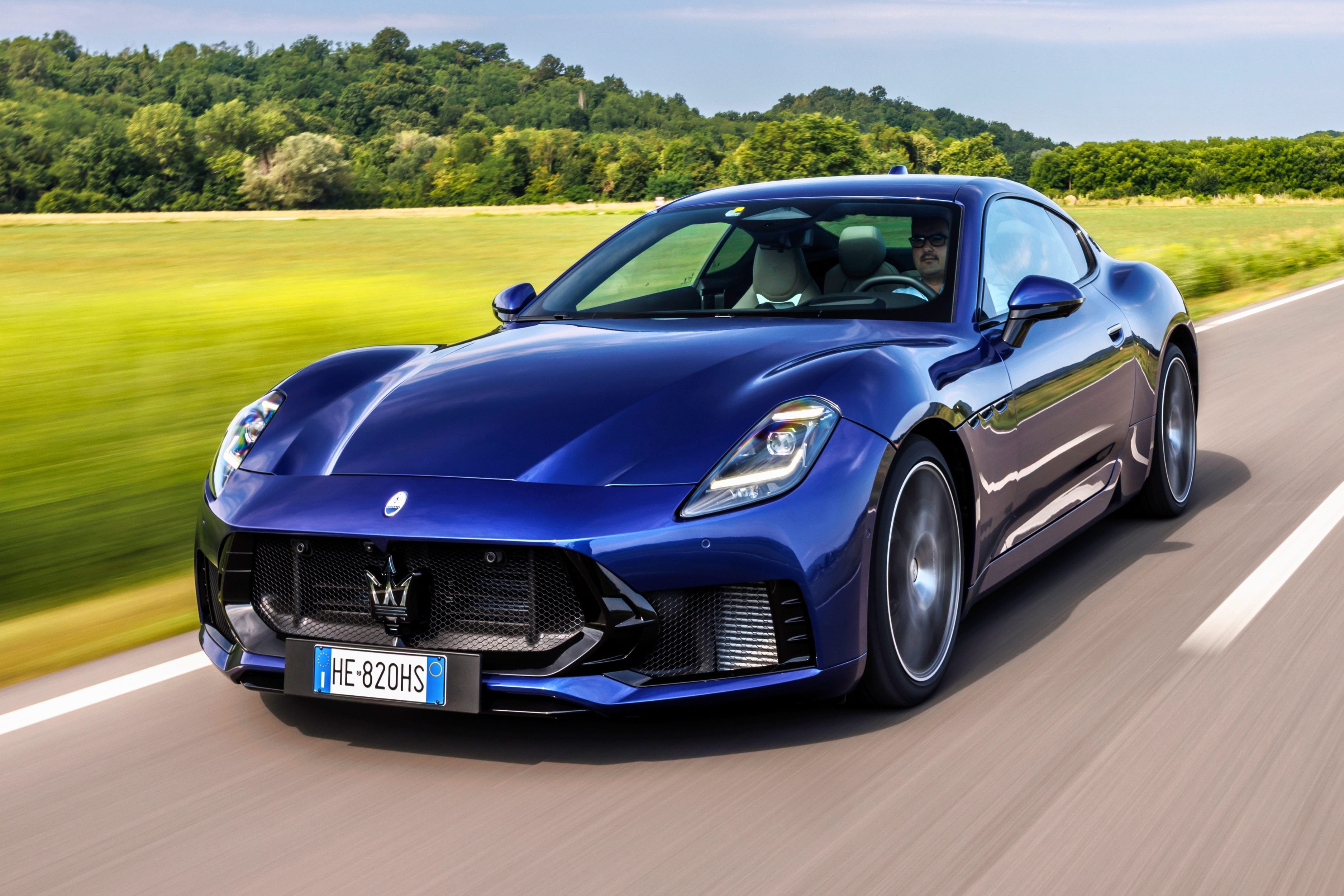
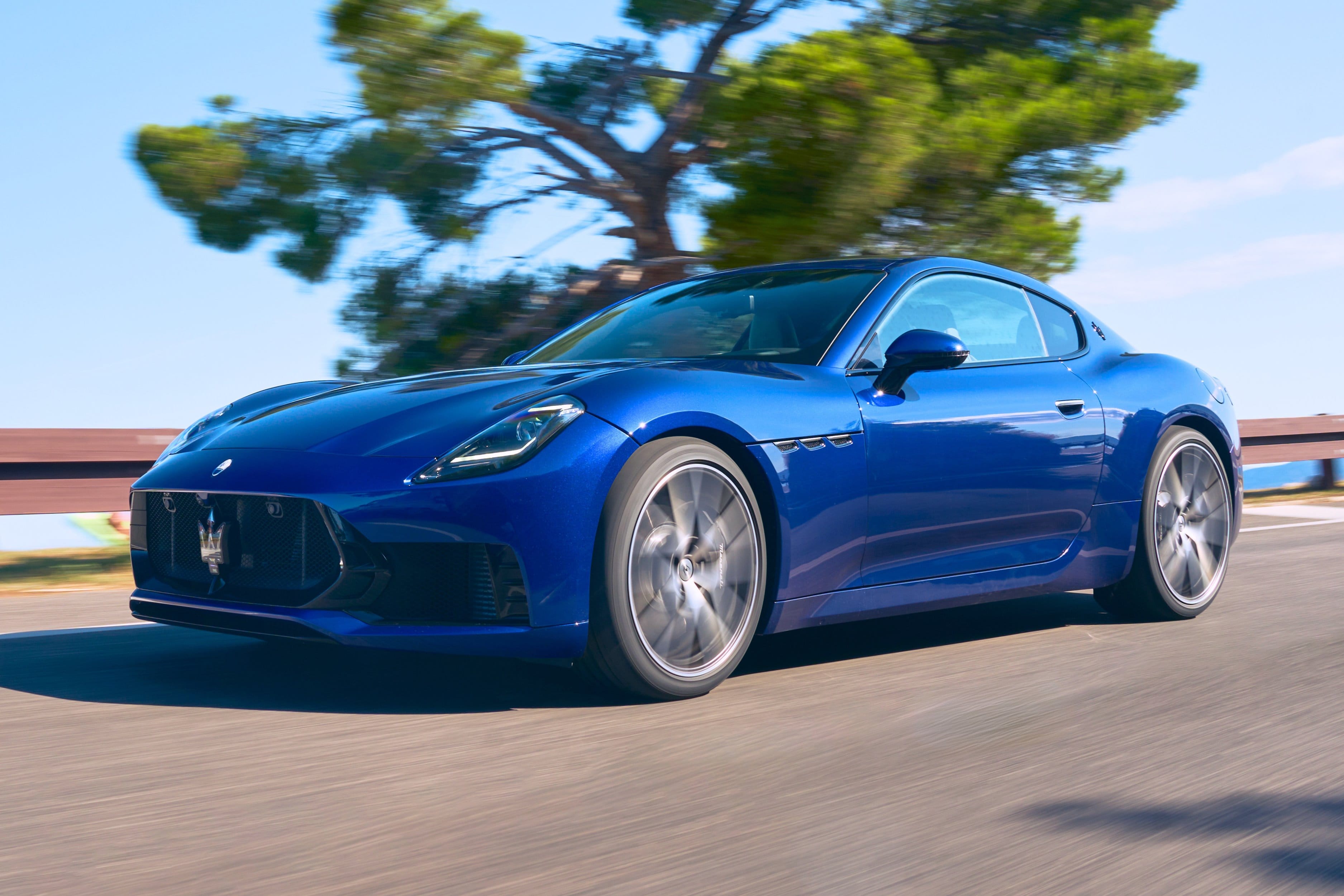
If Lamborghinis look like they’ve time-travelled from the future, and Ferraris appear shaped in wind tunnels, Maseratis are all about sculpture – flowing lines, gentle curves and delicate details. I’m no art connoisseur, but the gorgeous GranTurismo seems very much part of the awe-inspiring scenery at Italian seaside town Trieste’s Piazza Unità d’Italia.  

Maserati GranTurismo Exterior Design and Engineering – 9/10

Classic GT proportions and Maserati details make it very eye-catching.

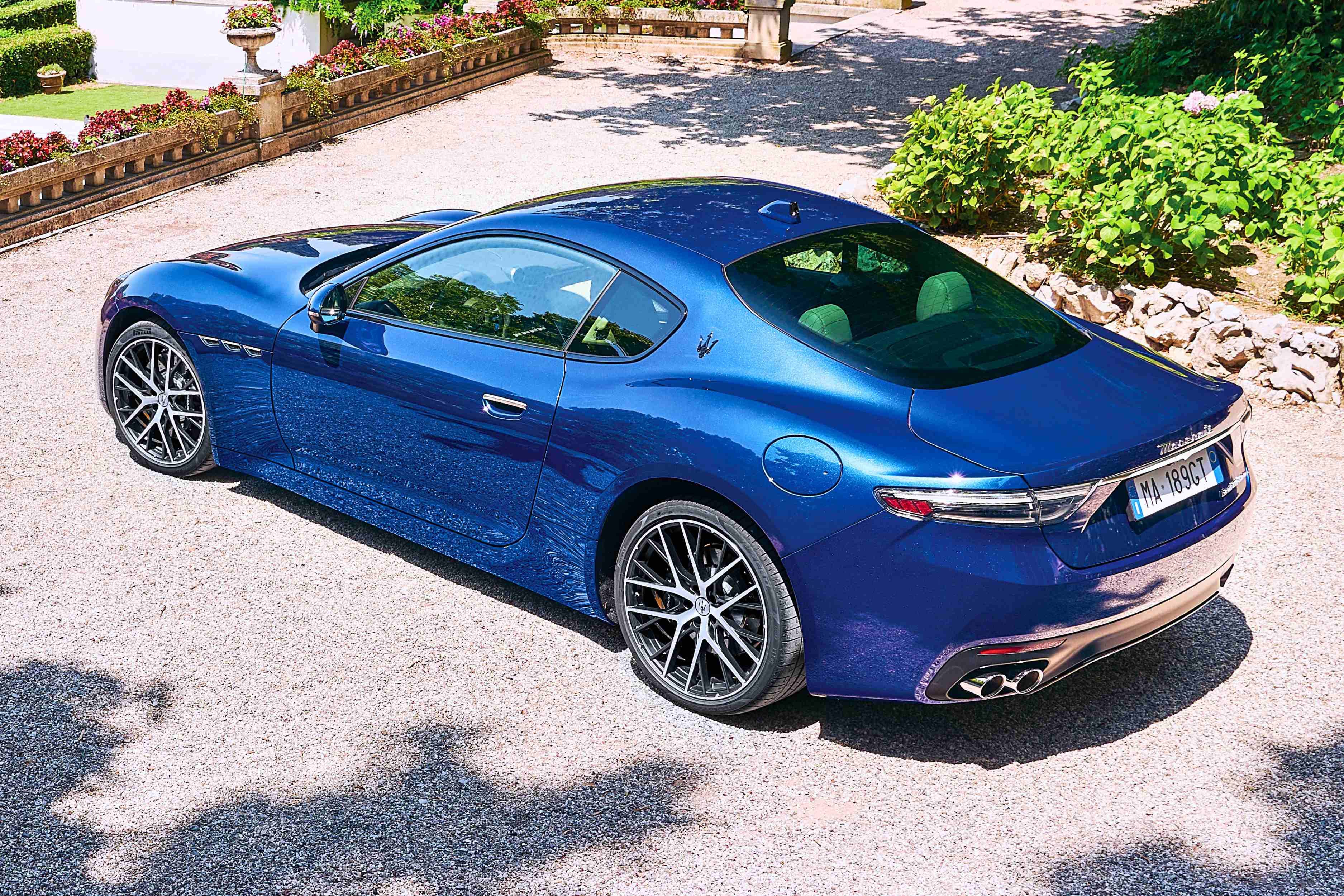
There’s the impossibly long bonnet, the neatly tucked-in cabin and the flowing rear that has become a GranTurismo trademark. Signature Maserati cues remain intact too, from the triple vents behind the front wheels to the distinctive rear quarter window and the Trident proudly displayed on the C-pillar. Even the way the muscular rear haunches merge into the tail has an elegance that’s hard to ignore.

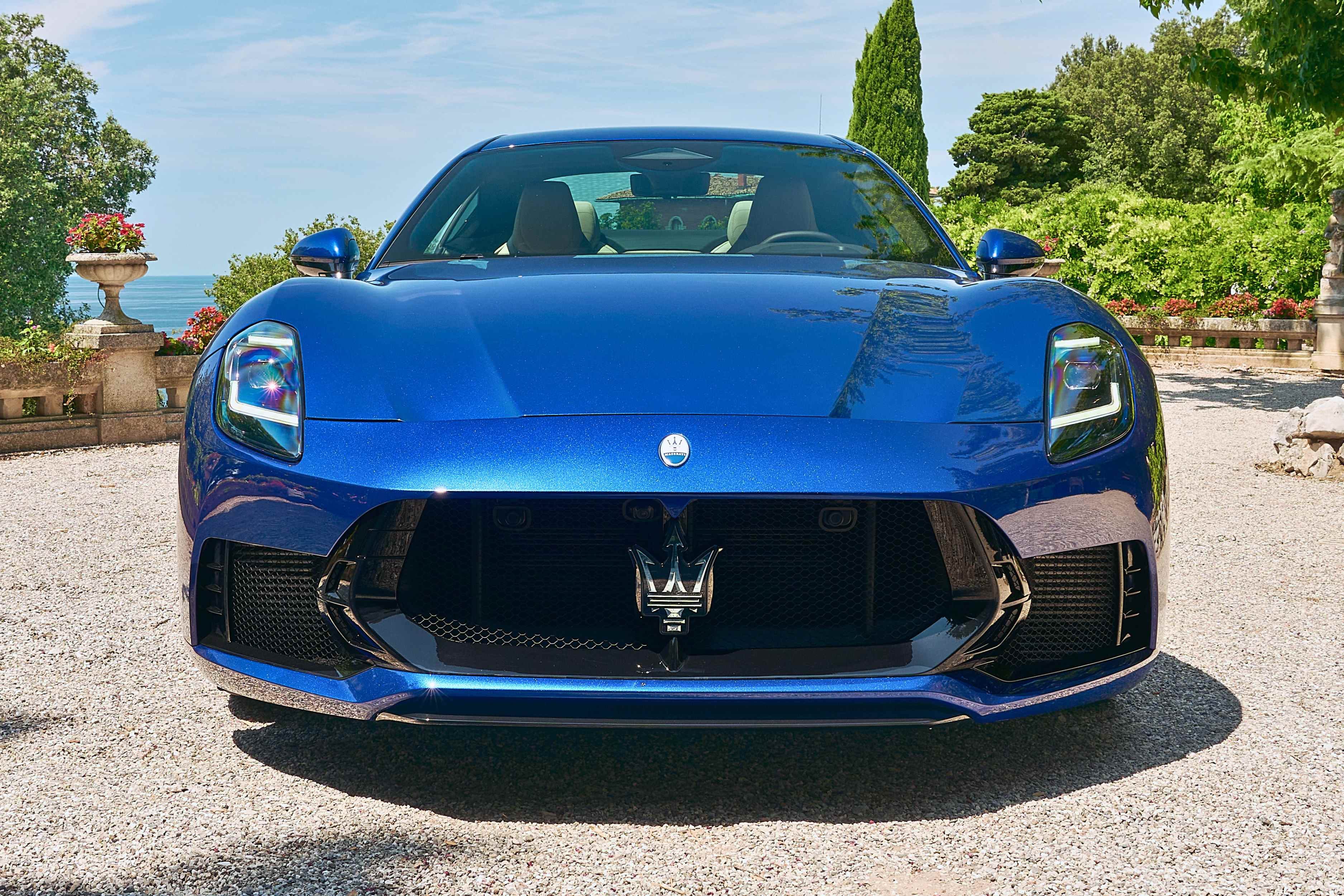
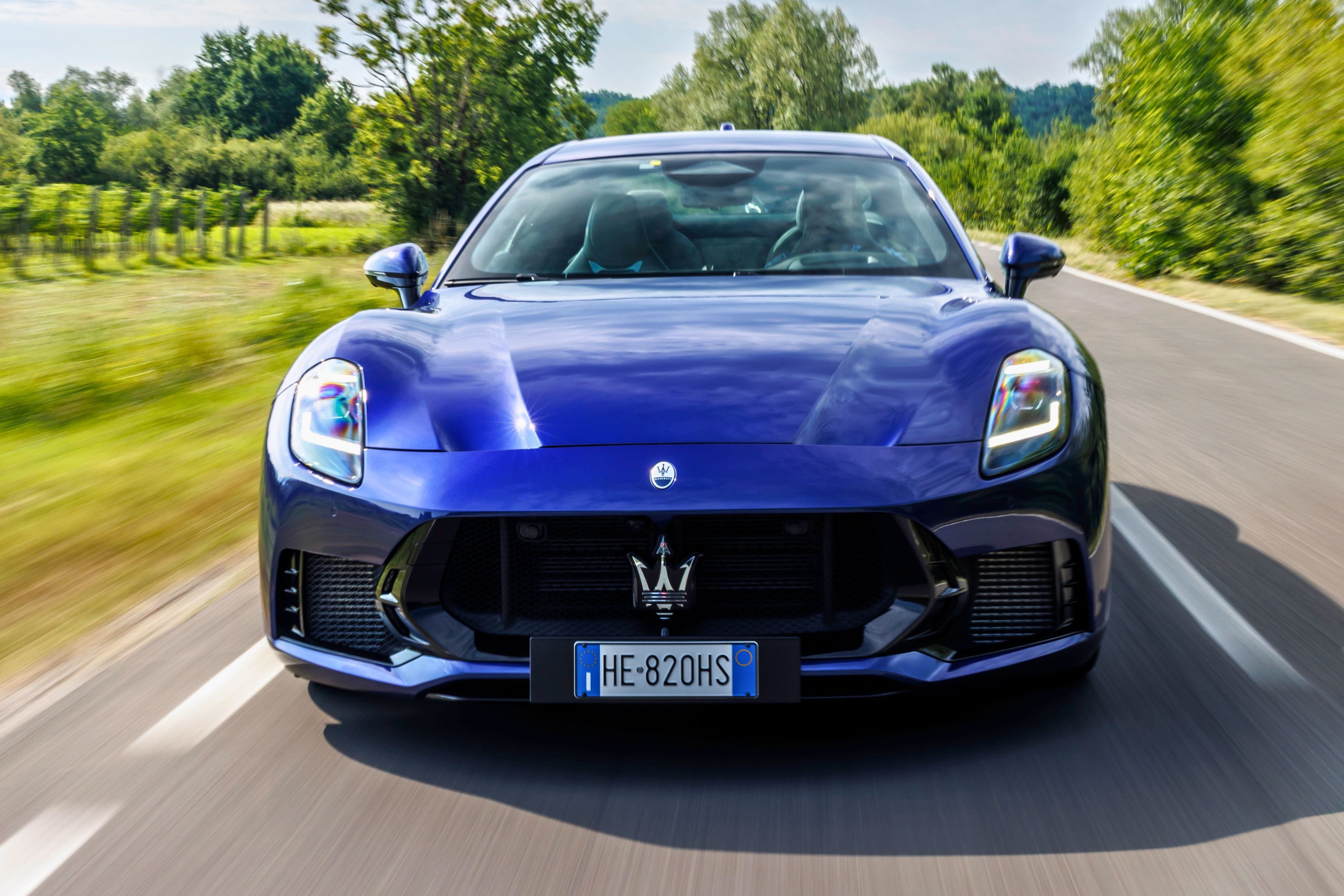
Revised front bumper adds aggression to GranTurismo look.

2026’s styling revisions are concentrated at the front. A larger grille sits lower down, flanked by bigger intercooler openings and a more pronounced splitter that together lend the GranTurismo a more aggressive face. At the rear, the clear-lens tail-lamps are the easiest (actually, only) way to identify the updated model. Oh, and if you see a GranTurismo without quad exhausts, you should know that you’re looking at the Folgore or electric version. 

Maserati GranTurismo Interior Space and Comfort – 8/10

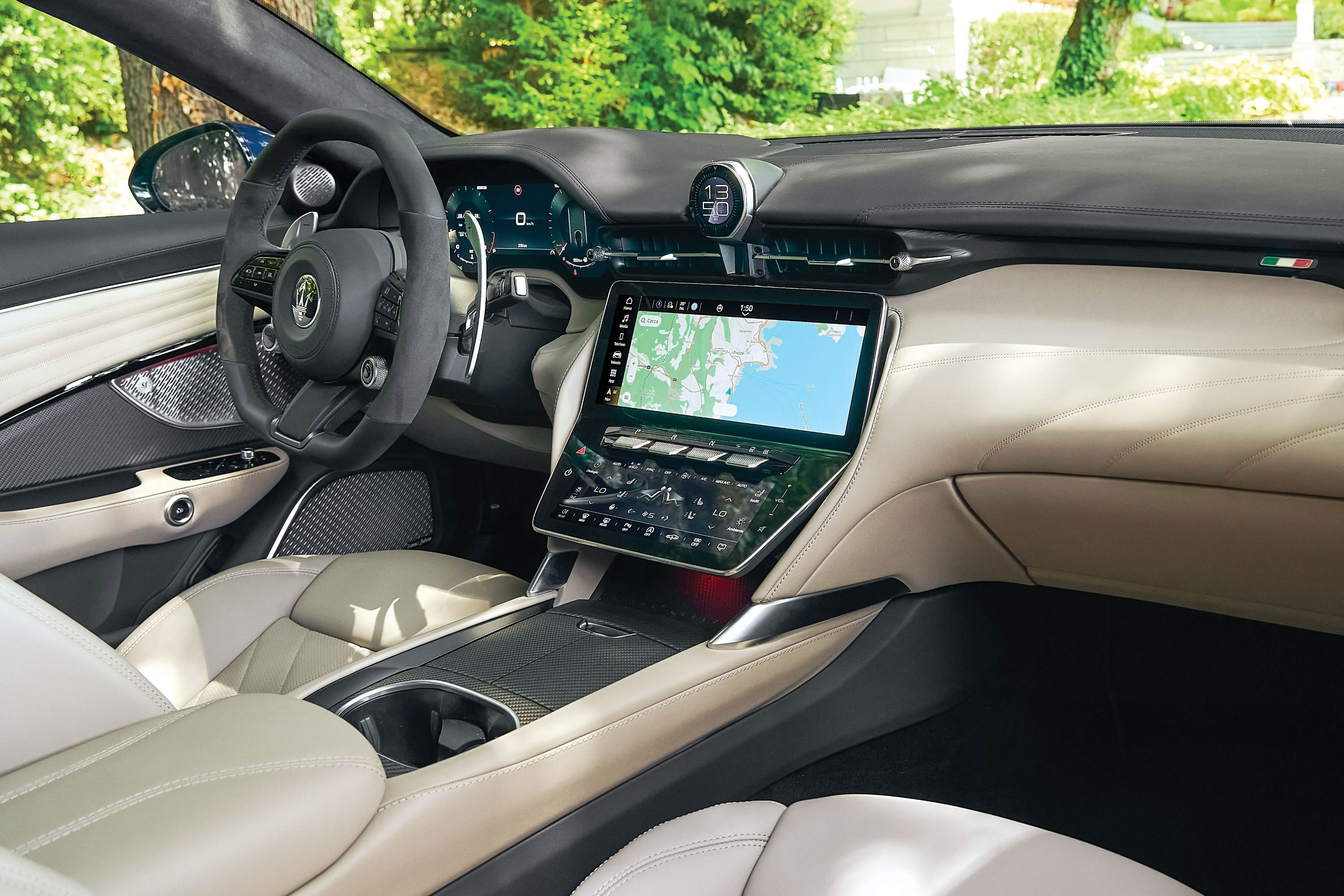
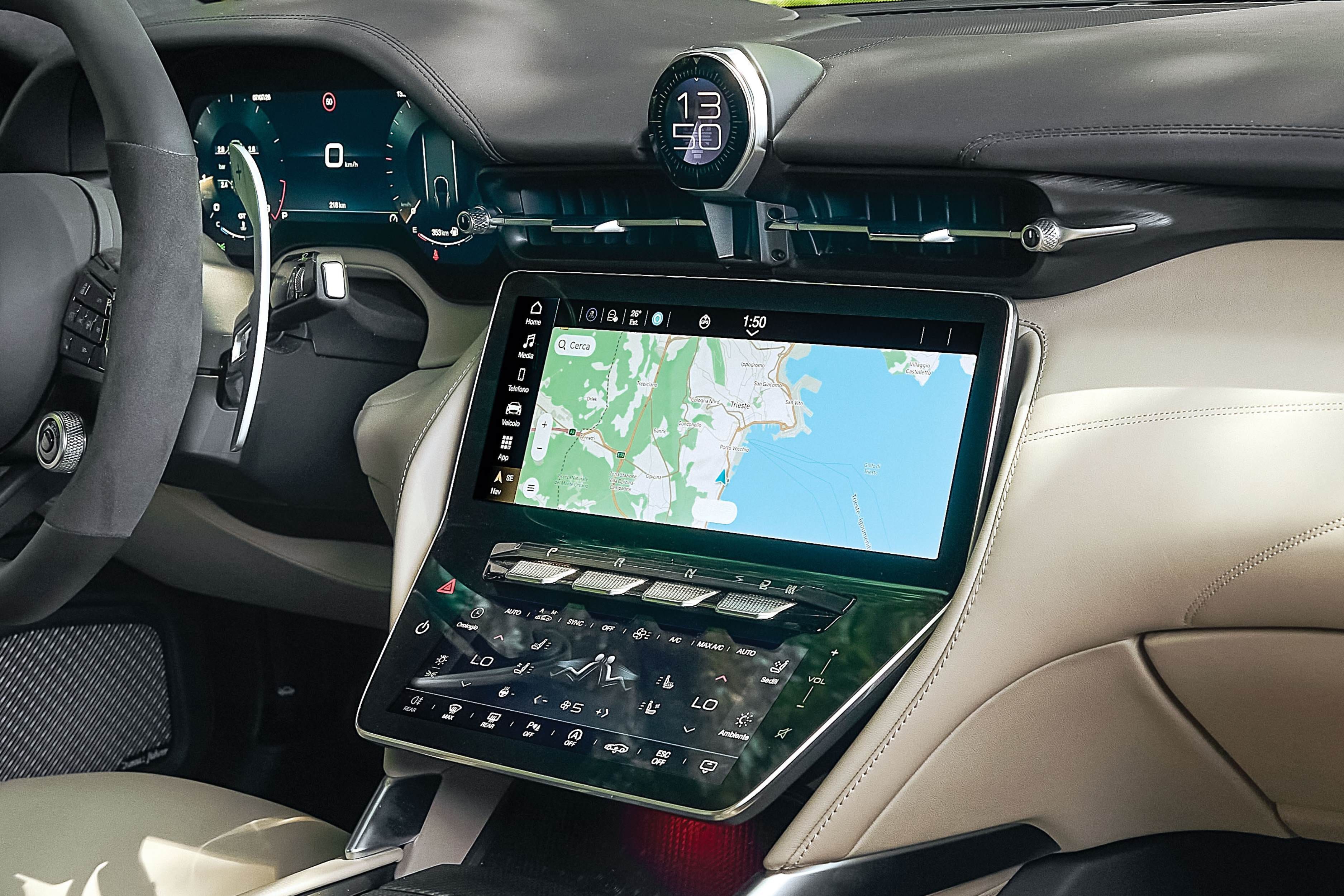
Inside too, the updates are subtle. The basic dash design is unchanged and is characterised by four screens 12.2-inch digital dials, a 12.3-inch central infotainment screen, an 8.8-inch lower touchscreen and a digital clock.

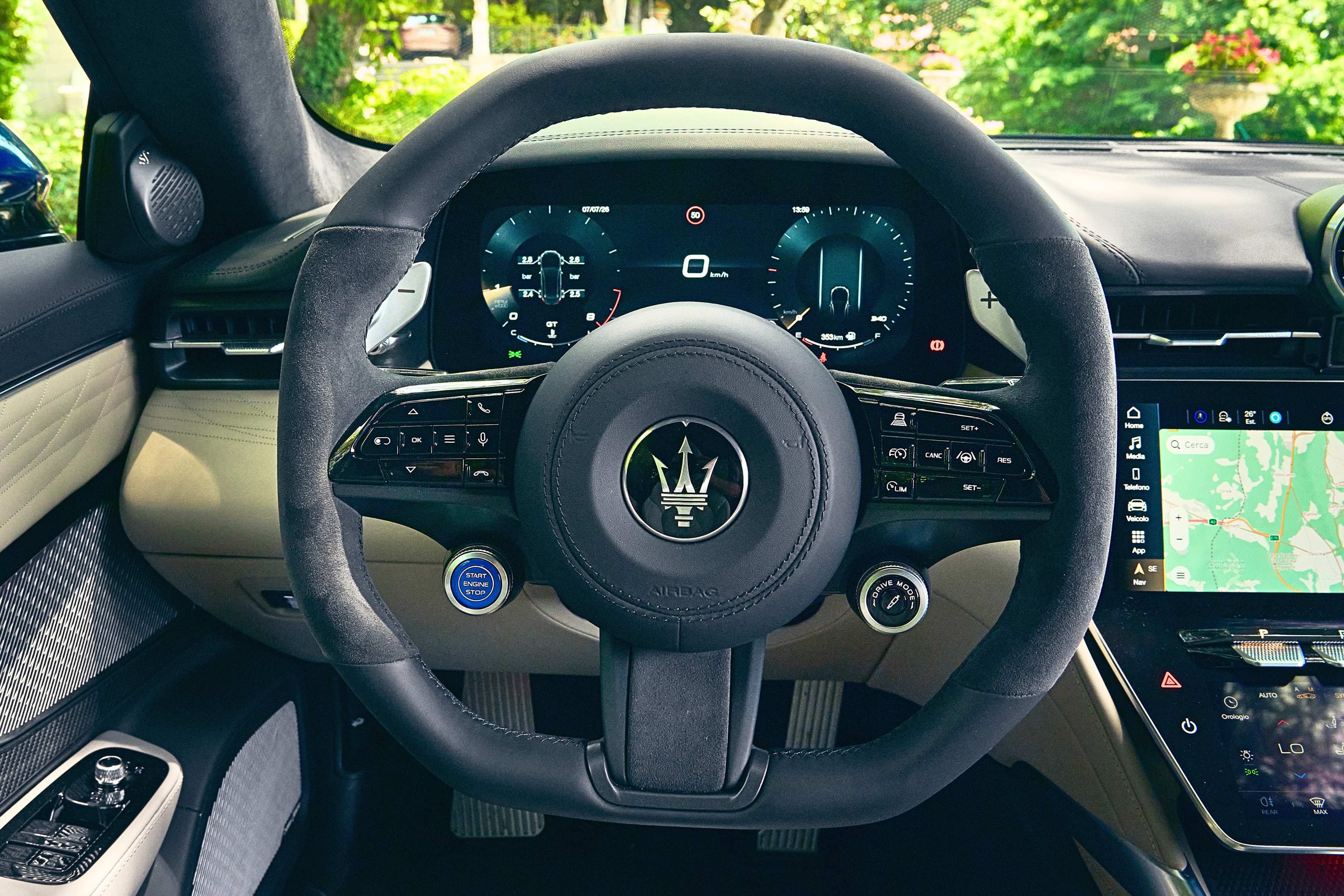
New steering and redone gear selector switches among the changes inside.

The steering gets a new squared-off design wrapped in Alcantara, and behind it remain the wonderfully oversized aluminium paddle shifters fixed to the steering column. The uninspiring P, R, N and D buttons on the dash make way for feelsome metallic toggles, while the digital clock gets a new glass face to make it look more, ahem, analogue. It works.

Interior is a happy blend of tech and craftsmanship.

Despite the abundance of screens, the cabin retains a handcrafted and very Italian feel thanks to the quality of (most) materials and intricate detailing. Maserati would only be too happy to introduce buyers to its universe of upholstery, colour and trim options to create an interior that’s truly personal. The only ergonomic complaint is the seating position, which doesn’t go quite as low as expected in a car of this nature. On the matter of seats, the GranTurismo’s rear seats aren’t just for show (I’m looking at you, 911). They are genuinely usable for short stints or the odd getaway. There’s a usable boot too, for your Gucci luggage.

Maserati GranTurismo Features and Safety – 7/10

New-age tech meets old-school warmth in here.

The GranTurismo comes with a fair bit of kit as standard. The front seats are powered and heated/ventilated, there’s a fabulous Sonus Faber sound system and enough screens to tell you you’re in 2026. The digital dials are easy to refer to, while the main touchscreen is also easy enough to navigate through. It does feel like a Stellantis group system rather than a bespoke Maserati unit, though. We’re not fans of touchscreens for climate control functions, but Maserati’s solution is among the best of the kind. Swipe sideways across the screen to adjust blower speed and vertically for temperature – intuitive to use on the move.

The safety suite includes camera- and radar-based ADAS.

Maserati GranTurismo Performance and Refinement – 8/10

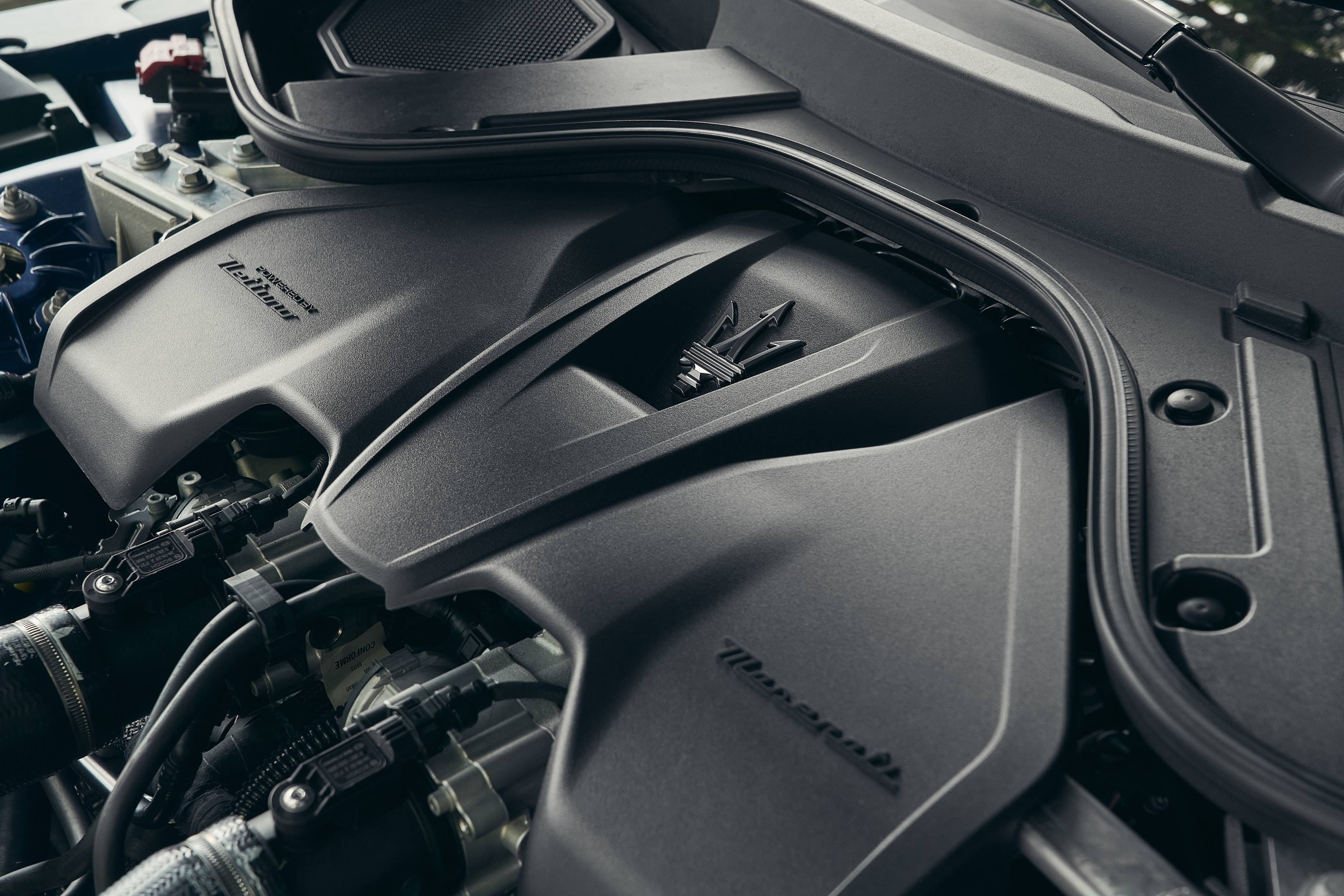
Modena’s 490hp V6 offers smooth, effortless acceleration; Trofeo’s 590hp is more emotive.

Power comes from Maserati’s own 3.0-litre twin-turbocharged ‘Nettuno’ petrol V6. In Modena guise as tested here, it produces 490hp, while the Trofeo’s output rises to 590hp from the previous 550hp. There’s also the ethanol-blending-proof all-electric Folgore, whose three-motor setup develops 760hp. 

GranTurismo Modena does 0-100kph in 3.9 sec; Trofeo takes 3.5 sec.

On the road, the GranTurismo immediately reminds you that it is, above all else, a grand tourer. Despite producing nearly 500hp, it never feels urgent or hyperactive. Instead, its responses are measured and relaxed. Press the throttle harder, and the performance arrives in one smooth, effortless surge rather than an explosive punch. Maserati claims 0-100kph in 3.9 seconds for the Modena and 3.5 seconds for the Trofeo, but it’s the manner in which the speed builds that defines the experience. It launches with elegance rather than violence.

The V6 complements that character perfectly. There’s a constant gruffness to its soundtrack that grows richer as the revs climb. The Trofeo benefits from a more emotive exhaust note.

Maserati GranTurismo Efficiency/Range – 5/10

GranTurismo excels as a grand tourer, prioritising comfort over urgency.

Maserati’s V6 features cylinder deactivation and will shut off the right bank of cylinders at light loads in the interest of better efficiency. As it is, the GranTurismo’s V6 will be more efficient than the V8s in some rivals, but only just. The GranTurismo will happily work through a full tank of 100-octane fuel if you drive with vigour, and even on relaxed drives, you’re looking at real-world figures in the region of 5-6kpl. 

The all-electric Folgore does have more to offer with the update. Range is up by 80km to 540km (WLTP) thanks to a new front-axle disconnect function.

Maserati GranTurismo Ride Comfort and Handling – 8/10

At nearly five metres long and weighing around 1.8 tonnes, the GranTurismo is no lightweight sports car. Yet, its standard air-suspension and all-wheel-drive system help disguise its size remarkably well. It doesn’t dart into corners like a Porsche 911, but there’s a lovely fluidity to the way it changes direction. The steering, in particular, deserves praise for its natural weighting and excellent feel.

Air suspension delivers a cushioned ride despite low-profile tyres.

Ride comfort is another highlight. Despite its large wheels and low-profile tyres, the suspension absorbs imperfections with impressive composure. A new ‘Country’ drive mode raises the ride height by 20mm at speeds of up to 120kph, making it particularly relevant for Indian roads.

Maserati GranTurismo Price and Verdict – 8/10

The GranTurismo (and open-top Gran Cabrio) will go on sale in India in the coming months, and we expect the range to start around Rs 2.7 crore (ex-showroom) with the Trofeo’s closer to the Rs 3 crore mark. The all-electric Folgore will also be on offer. 

Updated Maserati GranTurismo is expected to cost Rs 2.7-3 crore (ex-showroom).

Similar money could buy you a Porsche 911 GTS or a Mercedes-AMG GT, but I wouldn’t think of the GranTurismo as a direct rival. It’s not as focused as a performance car, but instead excels at a wider range of abilities. The GranTurismo story is as much about luxury as it is about sportiness. Ride comfort is a big plus, and for what it’s worth, the rear seats are usable too. It only helps that the GranTurismo is drop-dead gorgeous.

For the wealthy few shopping in the segment, the GranTurismo deserves a long, hard look. You might just fall for it.  

Top 10 bestselling cars in H1 2026 by powertrain type

Bestselling cars in H1 2026 by powertrain type

During the first half of calendar 2026, the Indian passenger vehicle market recorded total sales of over 25.91 lakh units across petrol, diesel, EV, CNG, and strong hybrid powertrains. Compared to the 21.88 lakh units sold in H1 2025, that’s a healthy YoY increase of around 18.4 percent. Below, we’ve sorted and listed the 10 bestselling cars of each powertrain type in H1 2026 to give you a more in-depth look at the data.

10 bestselling petrol cars in H1 2026

ModelH1 2026 salesYoY change (%)
Maruti Baleno83,552+19
Maruti Swift81,0460
Tata Punch61,701+29
Maruti Fronx61,565-6
Maruti Alto K1059,165+38
Hyundai Venue55,750+26
Maruti Dzire50,865-1
Tata Nexon50,240+31
Maruti Brezza49,096-14
Hyundai Creta49,094-8

The Baleno ascended to the top spot in petrol car sales during H1 2026, followed closely by the Swift, volumes for which interestingly remained flat YoY. However, thanks to the introduction of the updated Punch at the onset of 2026, the subcompact SUV recorded a substantial 29 percent increase in sales and jumped to third position.

Other notable highlights include a 38 percent YoY uptick for the Alto K10, indicating a renewed interest in the entry-level segment, along with a 4 percent drop for the midsize SUV sales champion, the Creta. However, its younger compact SUV sibling, the Venue, did see a 26 percent YoY bump on account of the second-gen model’s launch late last year.

10 bestselling diesel cars in H1 2026

ModelH1 2026 salesYoY change (%)
Mahindra Scorpio N+Classic86,403+7
Mahindra Bolero+Neo58,457+16
Mahindra XUV 7XO42,190+29
Hyundai Creta40,116-4
Mahindra Thar Roxx37,945+19
Mahindra Thar23,860+35
Kia Seltos22,906+54
Tata Sierra22,764N/A
Toyota Innova Crysta18,498-5
Kia Sonet18,290+67

Though diesel offerings remain limited in the Indian mass market, buyers continue to show up for them. All three diesel bestsellers in H1 2026 were made by Mahindra, and all three recorded a YoY growth in sales, with the XUV 7XO achieving the highest uptick among them at 29 percent. The Thar and Thar Roxx also managed to outperform their H1 2025 sales by healthy margins.

In fact, six out of the 10 diesel bestsellers experienced double-digit YoY sales growth, with only the Creta and Innova Crysta undergoing downturns. The Sierra also made it onto this list, but doesn’t rank even among the top 20 petrol bestsellers of H1 2026, suggesting a large chunk of buyers opted for the midsize SUV’s diesel variants. Its direct rival, the Seltos, edged past by fewer than 150 units, but the other Kia SUV here, the Sonet, clocked a whopping 67 percent boost.

10 bestselling CNG cars in H1 2026

ModelH1 2026 salesYoY change (%)
Maruti Ertiga78,764+23
Maruti Dzire75,339+69
Maruti Wagon R54,267+5
Tata Punch41,919+43
Tata Nexon41,355+38
Maruti Brezza39,871+8
Maruti Victoris38,806N/A
Maruti Eeco36,075+31
Hyundai Aura35,089+29
Maruti Fronx33,876+49

CNG cars put up the most impressive performance on the sales charts, with the top 10 achieving substantial YoY gains in volumes during H1 2026. The Dzire led the pack in this regard with a staggering 69 percent surge in sales, followed by the Fronx at 49 percent and then the Punch at 43 percent.

Seven of the top 10 CNG bestsellers are Maruti Suzuki models, two are from Tata, and only one is a Hyundai, reflecting Maruti’s dominance in this space. A likely reason behind the stellar performance is the uncertainty around ethanol blending in petrol, which could be shifting buyers towards CNG.

10 bestselling EV cars in H1 2026

ModelH1 2026 salesYoY change (%)
MG Windsor EV19,080-10
Mahindra XEV 9S18,074N/A
Tata Nexon EV16,567+78
Tata Punch EV15,683+108
Mahindra XEV 9e11,242-14
Tata Harrier EV10,499+2,110
Maruti e Vitara8,572N/A
Tata Curvv EV7,281+212
Mahindra BE 66,849+13
Tata Tiago EV6,816-19

The Windsor remains untouched as the top selling EV in H1 2026, though it did record a 10 percent YoY drop in sales. Impressively, the XEV 9S finished in second place with over 18,000 units sold – far ahead of the XEV 9e and BE 6. Nexon EV and Punch EV sales saw strong upticks, especially the latter’s whopping 108 percent YoY surge due to its 2026 facelift.

However, the Tiago EV experienced a 19 percent drop in sales despite also being updated this year. It’s worth noting that while the Harrier EV’s 2,110 percent YoY increase looks bonkers, it is a result of the SUV being launched in June 2025 and thereby counted from a relatively miniscule initial figure. Interestingly, the Curvv EV more than tripled its sales YoY, likely due to discounts and the SeriesX variant rejig in 2026.

Bestselling strong hybrid cars in H1 2026

ModelH1 2026 salesYoY change (%)
Toyota Innova Hycross27,812-6
Toyota Hyryder18,577+23
Maruti Grand Vitara4,086-54
Maruti Victoris3,231N/A
Maruti Invicto1,418-26
Toyota Camry1,188-1
Toyota Vellfire914+60
Honda City659+22

Only one new strong hybrid car went on sale in India between H1 2025 and H1 2026, the Maruti Victoris, which slotted in fourth position overall. The Innova Hycross continues to be the highest selling strong hybrid car, but did slip 6 percent YoY in sales. Notably, the Innova Hycross’ rebadged sibling, the Invicto, saw a more substantial 26 percent drop.

A similar phenomenon occurred for the Hyryder and Grand Vitara, where the Toyota SUV’s sales grew 23 percent YoY, but the Maruti’s slid by 54 percent. The City hybrid also looks to have piqued buyer interest courtesy of the facelift, recording a 22 percent YoY growth but still selling in the triple digits. Interestingly, the highest YoY sales uptick was achieved by the most expensive strong hybrid here, the Vellfire, showing the growth of the luxury MPV segment.

Combined car sales in H1 2026 by powertrain type

 H1 2026 salesYoY change (%)
Petrol13,42,304+10
Diesel4,56,076+15
CNG5,96,236+40
EV1,39,065+65
Strong hybrid57,8850
Total25,91,566+18.4

While petrol cars remain the largest chunk of the Indian passenger vehicle market by a huge margin, and even clocked a respectable 10 percent YoY growth in H1 2026, CNG saw much bigger gains during the same timeframe and even recorded the highest absolute volume increase among all powertrain types. The electric segment continues to expand at a healthy rate thanks to a proliferation of capable EVs across different price points, which can’t be said for strong hybrids as they barely receive any subsidies or tax breaks. Diesel car sales impressively keep growing too, despite higher upfront costs over equivalent petrol or CNG models.

SIAM withdraws E20 fuel contamination communication

E20

The Society of Indian Automobile Manufacturers (SIAM) has withdrawn its earlier communication to the Ministry of Petroleum and Natural Gas regarding E20 fuel contamination, stating that media reports had selectively quoted excerpts from the document and that some of the figures cited require further verification.

  1. Earlier communication withdrawn pending further verification
  2. SIAM reiterates support for the government’s E20 programme
  3. Petroleum Ministry says enhanced fuel quality checks are in place

The clarification follows media reports that cited portions of the communication relating to chloride and moisture contamination in E20 petrol and an increase in the replacement of certain vehicle components.

SIAM says figures require further verification

In a statement issued on Tuesday night, SIAM said, “SIAM has taken note of certain media reports that have cited excerpts from a SIAM communication, with specific and selective focus on chloride and sulphur content in fuel. SIAM wishes to clarify the matter and place it in its correct context for the benefit of the public and all stakeholders.”

It added that the communication formed part of routine technical discussions between industry bodies, automobile manufacturers, oil marketing companies (OMCs) and testing agencies.

“Some numbers quoted in the communication needs authentication through collection of elaborate data from various regions across the country followed by a comprehensive consultation with our member OEMs,” SIAM said.

The industry body added, “The referred numbers reported in the media need authentication and therefore SIAM is withdrawing its earlier communication.”

A news report published by a leading business channel on Tuesday, which has since been removed, had cited excerpts from the communication, claiming SIAM had flagged a rise in the replacement of fuel injectors, fuel pumps and other components, while also highlighting chloride contamination of up to 500mg/kg in some fuel samples.

Industry body reaffirms support for E20 rollout

SIAM said the Ministry of Petroleum and Natural Gas has already introduced a 3ppm guideline for chloride and sulphur in ethanol blended into petrol, while OMCs have strengthened quality checks across the fuel supply chain. According to the industry body, “all of these steps fully meet the needs of the automobile industry.” 

The industry body also reiterated its support for the nationwide rollout of E20 petrol, stating that there is “no cause for concern” for consumers and that such technical issues have routinely been addressed between automakers and OMCs.

Government reiterates fuel quality monitoring

Earlier on Tuesday, the Petroleum Ministry said fuel quality is monitored regularly by state-run OMCs and highlighted enhanced testing protocols following reports related to SIAM’s communication on E20 fuel quality.

E20 fuel contamination linked to rise in engine issue

E20

High chloride and moisture contamination in E20 petrol has emerged as a growing concern for the automotive industry, with vehicle manufacturers reporting a rise in failures of fuel system and exhaust-related components. Following discussions with automobile manufacturers and oil marketing companies (OMCs), the Centre has directed OMCs to strengthen fuel quality monitoring at retail outlets, while the industry has called for tighter fuel quality standards.

  1. High chloride and moisture levels found in E20 fuel samples
  2. Ageing fuel infrastructure identified as a likely source
  3. Industry calls for mandatory chloride limits in BIS standards

Contamination linked to rise in component failures

According to industry findings shared with the Ministry of Petroleum and Natural Gas, automakers have reported a significant increase in the replacement of fuel injectors, fuel pumps and other parts that come into direct contact with fuel. Field investigations have identified corrosion and wear caused by excessive chloride contamination as a key contributing factor.

Industry assessments indicate that chloride contamination, when combined with moisture, can form an acidic mixture that corrodes precision components such as fuel injectors, potentially leading to both immediate and long-term damage. 

Fuel samples collected from vehicle tanks have recorded chloride contamination levels of up to 500mg/kg, while samples collected from retail outlets have shown levels of up to 350mg/kg. Separate industry assessments have reported chloride levels of up to 300ppm at some fuel outlets, against a recommended limit of under 10ppm.

Moisture contamination adds to the problem

Industry assessments have also reported excessive moisture contamination in E20 petrol. Some samples recorded water content exceeding 10,000mg/kg, while separate investigations found levels of around 7,000mg/kg, against the permissible limit of 3,000mg/kg. Excess moisture can lead to phase separation, where the ethanol-water mixture settles at the bottom of the fuel tank and may be drawn into the engine during operation.

Chlorides and moisture enter the vehicle’s fuel tank via contaminated water and an unclean supply chain, made worse by ethanol’s hygroscopic nature. Industry assessments point to ageing storage tanks, pipelines, fuel tankers and other fuel handling infrastructure as likely sources of contamination.

Some petrol pump operators have also raised concerns that ageing underground storage tanks, particularly during the monsoon or in coastal regions, could be more susceptible to moisture ingress, increasing the risk of phase separation in ethanol-blended fuel. The contamination issue is cropping up in certain pockets of the country, especially in the north. 

The latest developments come weeks after Mercedes-Benz India also raised concerns over fuel contamination and urged tighter fuel quality checks after reporting contamination-related damage to vehicle components in some cases.

Industry seeks tighter fuel quality standards

According to report from CNBC TV18, the Society of Indian Automobile Manufacturers (SIAM) has urged the government to introduce mandatory chloride limits in BIS fuel specifications. It has proposed a chloride limit of less than 1mg/kg for commercial E20 and E85 fuels, and less than 3mg/kg for anhydrous ethanol used for blending. SIAM said it has been raising the issue with BIS for more than two years, but the proposal has not yet been implemented.

SIAM has also recommended regular audits of older fuel stations, stricter quality checks across the retail fuel network and mandatory chloride limits for diesel, where the parameter currently remains optional. The Centre has since asked OMCs to strengthen on-ground fuel quality monitoring while the root causes of contamination are investigated.

With inputs from Hormazd Sorabjee

Source: CNBC TV18, SIAM, OMCs and auto manufacturers.

IMD Heavy Rain Alert: उत्तर से दक्षिण तक मानसून का कहर! दिल्ली समेत इन राज्यों में 7 अगस्त तक भारी बारिश और तेज़ हवाओं का अलर्ट

IMD Heavy Rain Alert: भारतीय मौसम विभाग (IMD) ने देश के कई हिस्सों में अगले कुछ दिनों तक भारी से बहुत भारी बारिश की चेतावनी जारी की है। मौसम विभाग के अनुसार, 2 से 7 अगस्त के बीच उत्तर, मध्य, पूर्व, पश्चिम, पूर्वोत्तर और दक्षिण भारत के अनेक राज्यों में मूसलाधार बारिश होने की आशंका है। कई इलाकों में गरज-चमक, बिजली गिरने और 30 से 60 किलोमीटर प्रति घंटे की रफ्तार से तेज हवाएं चलने का भी अनुमान है।

IMD ने 2 अगस्त से 7 अगस्त तक देश भर के मौसम का विस्तृत पूर्वानुमान और अलर्ट जारी किया है। अगले कुछ दिनों तक उत्तर, पूर्व, पूर्वोत्तर और दक्षिण भारत के अधिकांश हिस्सों में झमाझम बारिश, तेज आंधी-तूफान और आकाशीय बिजली गिरने की आशंका जताई गई है।

उत्तर भारत में बारिश का अलर्ट

हिमाचल प्रदेश, उत्तराखंड, जम्मू-कश्मीर, पंजाब, हरियाणा, चंडीगढ़, दिल्ली, उत्तर प्रदेश और राजस्थान में अगले कई दिनों तक बारिश का सिलसिला जारी रहने की आशंका है। मौसम विभाग ने हिमाचल प्रदेश, उत्तराखंड, जम्मू-कश्मीर, हरियाणा, पंजाब और उत्तर प्रदेश के कई हिस्सों में भारी बारिश की चेतावनी जारी की है। वहीं, पूर्वी और पश्चिमी राजस्थान में भी कुछ स्थानों पर बहुत भारी बारिश हो सकती है।

मध्य और पूर्वी भारत पर भी मेहरबान रहेगा मानसून

मध्य प्रदेश, छत्तीसगढ़, विदर्भ, बिहार, झारखंड, ओडिशा, पश्चिम बंगाल और सिक्किम में भी व्यापक बारिश होने की आशंका जताई गई है। इसके अलावा बिहार, ओडिशा, झारखंड और गंगीय पश्चिम बंगाल के कई इलाकों में भारी बारिश का अलर्ट जारी किया गया है।

इन राज्यों में तेज बारिश की आशंका

अरुणाचल प्रदेश, असम, मेघालय, नागालैंड, मणिपुर, मिजोरम और त्रिपुरा में भी लगातार बारिश का दौर बना रहेगा। वहीं केरल, कर्नाटक, तमिलनाडु, तेलंगाना, आंध्र प्रदेश और लक्षद्वीप में भी कई स्थानों पर भारी बारिश के साथ तेज हवाएं चलने की आशंका है। कुछ इलाकों में 50 से 70 किलोमीटर प्रति घंटे तक की रफ्तार से हवाएं चल सकती हैं।

पहाड़ी राज्य: हिमाचल प्रदेश, उत्तराखंड और जम्मू-कश्मीर (लद्दाख, गिलगित-बालटिस्तान और मुज़फ़्फ़राबाद) में 2 से 7 अगस्त के दौरान व्यापक स्तर पर भारी बारिश और बिजली चमकने की चेतावनी दी गई है।

मैदानी क्षेत्र: पंजाब, हरियाणा, चंडीगढ़ और दिल्ली: 3 से 4 अगस्त के बीच भारी बारिश दर्ज की जा सकती है।

उत्तर प्रदेश: पश्चिमी यूपी में 3 से 7 अगस्त और पूर्वी यूपी में 2 से 6 अगस्त के बीच भारी बारिश होने की आशंका है।

राजस्थान: पूर्व और पश्चिम राजस्थान में 2 अगस्त को भारी से बहुत भारी बारिश हो सकती है। इसके साथ 30-50 किमी/घंटे की रफ्तार से तेज हवाएं चलने की आशंका है।

कोंकण, गोवा और गुजरात: कोंकण और गोवा में 2 से 7 अगस्त तक लगातार भारी बारिश होगी। गुजरात क्षेत्र और सौराष्ट्र-कच्छ में 2 से 3 अगस्त को भारी बारिश हो सकती है।

दक्षिण भारत: तटीय कर्नाटक, केरल और दक्षिण आंतरिक कर्नाटक में 2 अगस्त को भारी से बहुत भारी बारिश की आशंका है। 2 अगस्त को उत्तरी एवं दक्षिणी आंतरिक कर्नाटक में 50-70 किमी/घंटे की रफ्तार से तेज तूफानी हवाएं (Thundersquall) चल सकती हैं।

तापमान और बारिश की स्थिति

हालिया बारिश: पिछले 24 घंटों में केरल के कन्नानूर (11 सेमी) और त्रिशूर (10 सेमी) में सबसे ज्यादा बारिश दर्ज की गई। जबकि गुजरात के राजकोट में 7 सेमी बारिश हुई।

तापमान: मध्य प्रदेश के खरगोन में देश का सबसे कम न्यूनतम तापमान (18.2°C) और तमिलनाडु के तोंडी में सबसे अधिक अधिकतम तापमान (40.5°C) दर्ज किया गया।

मछुआरों के लिए विशेष चेतावनी

मौसम विभाग ने अरब सागर और बंगाल की खाड़ी के कई हिस्सों में समुद्र उग्र रहने की आशंका जताई है। गुजरात, कर्नाटक, केरल, लक्षद्वीप और श्रीलंका से लगे समुद्री क्षेत्रों में मछुआरों को अगले कुछ दिनों तक समुद्र में नहीं जाने की सलाह दी गई है।

अरब सागर: मौसम विभाग के मुताबिक, 6 अगस्त तक सोमालिया, ओमान तटों, गुजरात, कर्नाटक, केरल तटों और लक्षद्वीप के आसपास समुद्र में भीषण हलचल रहेगी।

बंगाल की खाड़ी: 6 अगस्त तक श्रीलंका तट और अंडमान सागर से सटे इलाकों में तेज हवाओं के कारण मछुआरों को समुद्र में न जाने की सख्त सलाह दी गई है।

बीते 24 घंटे में इन राज्यों में हुई अच्छी बारिश

पिछले 24 घंटों के दौरान असम-मेघालय, उत्तराखंड, हिमाचल प्रदेश, जम्मू-कश्मीर, पूर्वी राजस्थान, पश्चिम उत्तर प्रदेश, तेलंगाना, गुजरात, कोंकण-गोवा, महाराष्ट्र, केरल और कर्नाटक समेत कई राज्यों में व्यापक बारिश दर्ज की गई। केरल और सौराष्ट्र-कच्छ के कुछ इलाकों में भारी बारिश रिकॉर्ड की गई। IMD ने लोगों से खराब मौसम के दौरान सतर्क रहने, जलभराव वाले क्षेत्रों से बचने और स्थानीय प्रशासन द्वारा जारी सलाह का पालन करने की अपील की है।

ये भी पढ़ें- Ethanol Petrol Row: ‘…तो दिल्ली में पेट्रोल की कीमत ₹125 प्रति लीटर होती’; एथेनॉल विवाद पर सरकार का बड़ा दावा

LPG price today: LPG गैस सिलेंडर के दाम में राहत! आज से लागू हुए नए रेट, जानिए दिल्ली समेत देश के प्रमुख शहरों में आज की कीमतें

LPG price today: देशभर में एलपीजी (LPG) सिलेंडर के नए रेट लागू हो गए हैं। सरकारी तेल कंपनियों ने 1 अगस्त से कमर्शियल एलपीजी सिलेंडर की कीमतों में कटौती की है। जबकि 14.2 किलोग्राम वाले घरेलू एलपीजी सिलेंडर की कीमतों में कोई बदलाव नहीं किया गया है। ऐसे में घरेलू उपभोक्ताओं को पहले की तरह ही गैस सिलेंडर मिलेगा। जबकि होटल, रेस्तरां और अन्य व्यावसायिक उपभोक्ताओं को राहत मिली है।

प्रमुख शहरों में घरेलू LPG सिलेंडर की कीमतें

दिल्ली: ₹942

मुंबई: ₹941

कोलकाता: ₹968.50

चेन्नई: ₹958.50

वहीं, 19 किलोग्राम कमर्शियल LPG सिलेंडर की कीमतों में इस महीने ₹200 से अधिक की कटौती की गई है। इसका लाभ होटल, रेस्तरां, ढाबों और अन्य व्यावसायिक प्रतिष्ठानों को मिलेगा। सरकारी तेल कंपनियां हर महीने की पहली तारीख को एलपीजी सिलेंडर के दामों की समीक्षा करती हैं।

कीमतों में बदलाव अंतरराष्ट्रीय एलपीजी बाजार, आयात लागत और अन्य आर्थिक कारकों के आधार पर किया जाता है। घरेलू उपभोक्ताओं के लिए फिलहाल राहत की बात यह है कि रसोई गैस सिलेंडर की कीमतों में कोई बढ़ोतरी नहीं हुई है। वहीं, कमर्शियल सिलेंडर सस्ता होने से व्यापारिक गतिविधियों की लागत पर कुछ राहत मिलने की उम्मीद है।

कमर्शियल सिलेंडर 200 रुपये सस्ता

होटल और रेस्तरां जैसे प्रतिष्ठानों में उपयोग होने वाली कमर्शियल एलपीजी की कीमत में शनिवार को बड़ी कटौती की गई। इसके तहत 19 किलोग्राम के एलपीजी के सिलेंडर के दाम में 192 रुपये की कमी की गयी है। वहीं, विमान ईंधन (एटीएफ) की कीमत में 5 रुपये प्रति लीटर की बढ़ोतरी की गई। यह बदलाव अंतरराष्ट्रीय मानक दरों के रुख को देखते हुए किया गया है।

सार्वजनिक क्षेत्र की तेल कंपनियों से मिली सूचना के अनुसार, दिल्ली में 19 किलोग्राम का कमर्शियल एलपीजी सिलेंडर अब 2,930 रुपये के बजाय 2,738 रुपये का मिलेगा। वहीं, एटीएफ की कीमत 110 रुपये प्रति लीटर से बढ़ाकर 115 रुपये प्रति लीटर कर दी गई है।

कमर्शियल सिलेंडर की कीमतों में दो बार कटौती

यह लगातार दूसरा महीना है, जब कमर्शियल एलपीजी की कीमत में कटौती की गई है। इससे पहले एक जुलाई को 183.50 रुपये प्रति सिलेंडर की कमी की गई थी। वहीं, एटीएफ की कीमत में वृद्धि ने एक जुलाई को की गई लगभग समान कटौती का असर खत्म कर दिया।

एक जुलाई और एक अगस्त को कमर्शियल एलपीजी की कीमतों में की गई कटौती से पहले पश्चिम एशिया संकट के कारण जून में इसकी कीमत रिकॉर्ड स्तर पर पहुंच गई थी। फरवरी के आखिर में संघर्ष शुरू होने के बाद 19 किलोग्राम के कमर्शियल एलपीजी सिलेंडर की कीमत जून में बढ़कर 3,113.50 रुपये हो गई थी।

जबकि फरवरी में यह 1,740.50 रुपये थी। यानी इस दौरान इसमें कुल 1,373 रुपये प्रति सिलेंडर की बढ़ोतरी हुई थी। इसके साथ ही बाजार मूल्य वाले पांच किलो वाले एलपीजी सिलेंडर की कीमत भी 808.50 रुपये से घटाकर 762 रुपये कर दी गई है।

कब जारी होता है नया रेट?

हर महीने की पहली तारीख को एलपीजी की कीमतों में संशोधन किया जाता है। वैट जैसे स्थानीय करों के कारण विभिन्न राज्यों में इनकी कीमतें अलग-अलग होती हैं। फिलहाल आज यानी दो अगस्त को घरेलू रसोई गैस (14.2 किलोग्राम) की कीमत में कोई बदलाव नहीं किया गया है। इसकी कीमत 942 रुपये प्रति सिलेंडर बनी हुई है।

ये भी पढ़ें- Ethanol Petrol Row: ‘…तो दिल्ली में पेट्रोल की कीमत ₹125 प्रति लीटर होती’; एथेनॉल विवाद पर सरकार का बड़ा दावा

घरेलू एलपीजी की कीमत में आखिरी बार सात जून को 29 रुपये प्रति सिलेंडर की बढ़ोतरी की गई थी। इससे पहले पश्चिम एशिया संकट के कारण आपूर्ति प्रभावित होने और अंतरराष्ट्रीय ऊर्जा कीमतों में तेजी के चलते मार्च में 60 रुपये प्रति सिलेंडर की बढ़ोतरी की गई थी। पेट्रोल और डीजल की कीमतों में भी कोई बदलाव नहीं किया गया है। इन दोनों ईंधनों की कीमतों में आखिरी बार मई में लगभग 7.50 रुपये प्रति लीटर की बढ़ोतरी की गई थी।

Ethanol Petrol Row: ‘…तो दिल्ली में पेट्रोल की कीमत ₹125 प्रति लीटर होती’; एथेनॉल विवाद पर सरकार का बड़ा दावा

Ethanol Blending E20 Petrol Row: पेट्रोलियम मंत्रालय ने एथेनॉल प्रोग्राम का बचाव करते हुए दावा किया है जब ग्लोबल क्रूड ऑयल की कीमतें $135 प्रति बैरल तक पहुंच गई थीं, तब अगर तेल कंपनियों ने फ्यूल में एथेनॉल नहीं मिलाया होता, तो दिल्ली में पेट्रोल की कीमत लगभग ₹125 प्रति लीटर होती। मंत्रालय ने कहा कि लेकिन इसके बजाय ग्राहकों को ₹94.77 प्रति लीटर चुकाना पड़ा। दरअसल एथेनॉल पहले से तय कीमतों पर घरेलू स्तर पर खरीदा गया था। इसने क्रूड ऑयल की कीमतों में उछाल के असर से रिटेल कीमतों को बचाए रखने में मदद की, जिससे संकट के चरम पर लगभग ₹30 प्रति लीटर की बचत हुई।

सरकार ने 28 फरवरी को वेस्ट एशिया में संघर्ष शुरू होने के बाद लगभग 75 दिनों तक पेट्रोल और डीजल की कीमतें स्थिर रखीं। फिर मई में उन्हें 7.5 रुपये प्रति लीटर बढ़ा दिया। दिल्ली में स्टैंडर्ड E20 पेट्रोल (91-ऑक्टेन) की कीमत अब ₹102.12 प्रति लीटर है। जबकि 100-ऑक्टेन पेट्रोल की कीमत ₹169 है। मंत्रालय ने उन आरोपों को भी खारिज कर दिया कि गरीबों के लिए अनाज का इस्तेमाल एथेनॉल बनाने के लिए किया जा रहा था, या इस प्रोग्राम को सपोर्ट करने के लिए सब्सिडी वाले FCI चावल का इस्तेमाल किया जा रहा था।

एफिशिएंसी में 2-6% की कमी!

फ्यूल एफिशिएंसी के सवाल पर सड़क परिवहन मंत्रालय ने लोकसभा में ARAI, SIAM और IOC की एक स्टडी का हवाला देते हुए कहा कि E10 फ्यूल के लिए डिजाइन किए गए BS-III, BS-IV और BS-VI वाहनों में E20 पर चलने पर वाहन की कैटेगरी और उम्र के आधार पर एफिशिएंसी में 2-6% की कमी आ सकती है। मंत्रालय ने पहले 20 जुलाई को राज्यसभा को बताया था कि ऐसे वाहनों में यह कमी लगभग 3-5% तक सीमित है।

दोनों मंत्रालयों ने कहा कि इथेनॉल ब्लेंडेड पेट्रोल प्रोग्राम को एक चरणबद्ध, वैज्ञानिक रूप से प्रमाणित प्रक्रिया के माध्यम से शुरू किया गया था, जिसमें प्रोडक्शन कैपेसिटी और इंफ्रास्ट्रक्चर के बढ़ने के साथ-साथ ब्लेंडिंग का स्तर धीरे-धीरे बढ़ाया गया। सड़क परिवहन मंत्री नितिन गडकरी ने लोकसभा को बताया कि E20 पर स्विच करने का फैसला फ्यूल सिस्टम, इंजन की मजबूती, गाड़ी चलाने में आसानी, मटीरियल की अनुकूलता और उत्सर्जन पर असर की जांच-परख के बाद लिया गया।

ये भी पढ़ें- संडे 2 अगस्त का मौसम: दिल्ली NCR में बारिश पड़ेगी या बढ़ेगी उमस? IMD ने दिया ये पूर्वानुमान

इस प्रक्रिया में वाहन बनाने वाली कंपनियों, तेल मार्केटिंग कंपनियों और चीनी एवं अनाज उद्योगों से भी सलाह-मशविरा किया गया। सरकार ने यह भी कहा कि लैब स्टडीज और असल दुनिया के डेटा से पता चला है कि E20 फ्यूल से गाड़ियों की परफॉर्मेंस पर कोई बुरा असर नहीं पड़ता है। साथ ही, 20 करोड़ से अधिक दो-पहिया वाहन और 3 करोड़ से ज्यादा पेट्रोल कारें इन ब्लेंड्स पर चल चुकी हैं। इनमें एथेनॉल ब्लेंडिंग की वजह से इंजन खराब होने का कोई पक्का सबूत नहीं मिला है।

Honda ADV160 expected price and launch timeline

Honda ADV160 expected price and launch timeline

Honda pulled a bunch of surprises at its recent event with a 10-model onslaught comprising both updated and all-new models. While the motorcycles and scooters were only unveiled at the event, we now have clear information on when the brand intends to launch its debutant maxi-scooter in India and at what price.

  1. ADV160 to go on sale in the third quarter of 2026
  2. Expected price around Rs 1.70 lakh-Rs 1.80 lakh
  3. E85-compliant maxi-scooter to rival the upcoming Yamaha NMAX 155

ADV160 launch timeline: What to expect?

E85 compliance adds about 5 to 6 percent to the production cost of the ADV160

The ADV160 is slated to go on sale in the Indian market in the third quarter of this year, between September and October 2026. It is expected to be priced between Rs 1.70 lakh and Rs 1.80 lakh. This makes it considerably  more expensive than similarly sized maxi-scooters such as the Hero Xoom 160 (Rs 1.43 lakh ex-showroom), Yamaha Aerox 155 (Rs 1.45 lakh to Rs 1.48 lakh ex-showroom) and the soon-to-be-launched Yamaha NMAX 155

However, it’s worth bearing in mind that while the others are E20-compliant, Honda’s ADV160 is a flex-fuel maxi-scooter capable of running on ethanol blends ranging from E0 to E85. This, in itself, adds about 5-6 percent to the production cost compared to similar E20-compliant models. The ADV160 will be manufactured in India and exported to other markets.

The ADV160 is also more generously equipped, featuring a TFT display and a more powerful 157cc, liquid-cooled engine that produces 16.3hp and 14.9Nm of torque. The scooter rides on a telescopic fork and twin rear shock absorbers, with a 14-inch front and 13-inch rear wheel setup. It weighs 133kg, has a seat height of 780mm, ground clearance of 165mm, and an 8.1-litre fuel tank.

Government has no data on India’s E20-compatible vehicle fleet

E20

The central government has acknowledged that it has not formally assessed how many vehicles in India are compatible with E20 petrol, despite mandating E20 fuel nationwide and continuing to prepare for higher ethanol blends. The government, however, said laboratory studies and field trials have established the fuel’s safety under prescribed standards.

In a written reply in the Rajya Sabha, Minister of State for Petroleum and Natural Gas Suresh Gopi said the Ministry of Heavy Industries had not assessed the percentage of vehicles in the country that are compatible with E20 fuel.

  1. Government cites laboratory and field trials to support E20 rollout
  2. Mileage drop for E10-calibrated vehicles pegged at 3-5 percent
  3. No verified evidence of widespread E20-related engine failures, says Centre

However, the government’s latest response also raises questions over the rollout timeline. While the Centre formally announced nationwide availability of E20 petrol in mid 2025—five years ahead of its original 2030 target—it now says E19-E20 blends have been in widespread use for more than two-and-a-half years, while E15 and higher ethanol blends have been in active distribution for over three-and-a-half years, covering more than 20 crore two-wheelers and 3 crore petrol passenger vehicles. The response does not explain this apparent discrepancy.

Government reiterates mileage and reliability claims

Addressing concerns around fuel economy, the government said vehicles originally calibrated for E10 petrol could see a 3-5 percent reduction in mileage when running on E20, although actual fuel efficiency depends on driving conditions, driving style and vehicle maintenance.

The government also reiterated that there is no verified evidence of widespread engine failures or vehicle breakdowns linked to ethanol blending. 

Government cites laboratory and field testing

According to the government, the Ethanol Blended Petrol (EBP) programme was implemented through a phased process involving NITI Aayog, oil marketing companies, automobile manufacturers, the Automotive Research Association of India (ARAI), the Society of Indian Automobile Manufacturers (SIAM) and the Indian Institute of Petroleum (IIP).

The government said testing covered engine durability, drivability, startability, corrosion resistance, material compatibility, emissions and fuel efficiency. Based on these studies, it said legacy vehicles do not show any significant change in performance or abnormal component wear when operated on E20 petrol.

Government preparing for higher ethanol blends

The government said India’s ethanol production capacity has been planned to meet current E20 requirements while also supporting future petrol demand, higher ethanol blends, flex-fuel vehicles and other biofuel applications, subject to future government approvals. It added that ethanol production continues to follow a diversified feedstock strategy, with only surplus foodgrains being diverted after meeting food security and public distribution requirements.