Sugar-based ethanol has been left out of India’s ethanol tender for the 2026-27 supply year, according to a Reuters report. Citing the tender issued on October 16, the report states that the government has instructed state-run oil marketing companies (OMCs) to ensure no sugar is diverted towards ethanol production for this period. No bids have therefore been invited for ethanol produced using sugarcane juice, sugar or sugar syrup, or B-heavy molasses, the report adds.
Oil firms invited bids for 11 billion litres of ethanol for 2026-27
Tender allows bids for ethanol made from corn, broken rice and surplus FCI rice
Incentive for corn-based ethanol cut from Rs 5.79/litre to Rs 2.79/litre
Tender details
It seeks 11 billion litres for the supply year starting in November 2026
The tender comes from Indian Oil, Bharat Petroleum and Hindustan Petroleum. “The Government of India has issued directions that sugar diversion for ethanol be reduced to zero for ethanol supply year 2026-27,” the tender document said, according to the report.
The companies are looking to procure 11 billion litres of ethanol for the supply year, which kicks off in November 2026. Distillers can submit bids for ethanol produced from corn, broken rice and surplus FCI (Food Corporation of India) rice. Corn-based ethanol will also fetch less this time. Its incentive has dropped by Rs 3 per litre to Rs 2.79 per litre, taking the procurement price from Rs 71.86 per litre to Rs 68.86 per litre, as per the report.
Ethanol blending and sugar supply
India is trying to rein in high sugar prices
Surplus sugar has been a key contributor to India’s ethanol-blending programme for several years. India also consumes more sugar than any other country, and has been trying to increase local production while easing prices.
Reuters had reported in August 2026 that limits on the use of sugarcane for ethanol were being considered for the season starting October 2026. Weaker rains in Maharashtra and Karnataka had already cast doubt on this year’s sugar production at the time.
Ethanol blending is aims to reduce India’s oil imports. E20 petrol, which became compulsory nationwide earlier this year, was introduced to cut emissions as well as the country’s dependence on imported crude. However, diverting sugarcane juice, sugar syrup and B-heavy molasses towards ethanol can lead to a reduction in the amount of sugar produced.
Sugarcane Ethanol Ban: केंद्र सरकार ने एथेनॉल खरीदने के नियमों में बड़ा बदलाव किया है। अब सरकारी तेल कंपनियां गन्ने के रस, चीनी, शुगर सिरप और बी-हैवी शीरे से बने एथेनॉल की खरीद नहीं कर सकेंगी। सरकार ने एथेनॉल बनाने के लिए चीनी के इस्तेमाल को शून्य करने का निर्देश दिया है। यह नियम 1 नवंबर 2026 से शुरू होने वाले नए सप्लाई वर्ष में लागू होगा।
सरकार का मकसद देश में चीनी की उपलब्धता बनाए रखना है। साथ ही, चीनी की कीमतों पर दबाव कम करना भी इस फैसले की वजह है। इसके लिए सरकारी तेल कंपनियों ने करीब 1,100 करोड़ लीटर एथेनॉल खरीदने का टेंडर जारी किया है।
1,100 करोड़ लीटर एथेनॉल खरीदेंगी तेल कंपनियां
इंडियन ऑयल, भारत पेट्रोलियम, हिंदुस्तान पेट्रोलियम, मैंगलोर रिफाइनरी और नुमालीगढ़ रिफाइनरी ने मिलकर यह टेंडर जारी किया है। इसके तहत 1 नवंबर 2026 से 31 अक्टूबर 2027 तक एथेनॉल की सप्लाई होनी है।
नए नियमों के मुताबिक, कंपनियां गन्ने के रस, चीनी, शुगर सिरप और बी-हैवी शीरे से बने एथेनॉल के लिए बोली नहीं मांगेंगी। हालांकि, दूसरे कच्चे माल से बने एथेनॉल की खरीद जारी रहेगी।
मक्का और चावल से बने एथेनॉल की कीमत कितनी?
सरकार ने अलग-अलग कच्चे माल से बने एथेनॉल की बेस कीमत भी तय की है। मक्का से बने एथेनॉल की कीमत ₹66.07 प्रति लीटर रखी गई है। इसके अलावा ₹2.79 प्रति लीटर का अतिरिक्त प्रोत्साहन भी मिलेगा।
खराब खाद्यान्न से बने एथेनॉल की बेस कीमत ₹64 प्रति लीटर तय की गई है। भारतीय खाद्य निगम (FCI) से मिलने वाले अतिरिक्त चावल से बने एथेनॉल के लिए ₹60.32 प्रति लीटर की दर रखी गई है। वहीं, सी-हैवी शीरे से बने एथेनॉल की कीमत ₹57.97 प्रति लीटर होगी।
इन दरों में GST और परिवहन का खर्च शामिल नहीं है। ये खर्च अलग से देना होगा। राष्ट्रीय जैव ईंधन नीति के तहत मंजूर दूसरे कच्चे माल से बने एथेनॉल की खरीद टेंडर में लागू सबसे कम दर पर होगी।
चार चरणों में होगी एथेनॉल की सप्लाई
एथेनॉल की सप्लाई को चार हिस्सों में बांटा गया है। पहला चरण नवंबर 2026 से जनवरी 2027 तक होगा। दूसरा फरवरी से अप्रैल 2027, तीसरा मई से जुलाई 2027 और चौथा अगस्त से अक्टूबर 2027 तक चलेगा।
हालांकि, चौथे चरण में FCI से मिलने वाले अतिरिक्त चावल से बने एथेनॉल की सप्लाई के लिए दिए गए प्रस्ताव स्वीकार नहीं किए जाएंगे।
कोर्ट के फैसले के हिसाब से बदल सकता है आवंटन
टेंडर में एथेनॉल के आवंटन को लेकर एक शर्त भी रखी गई है। पहली तिमाही में होने वाला आवंटन कुछ लंबित कानूनी मामलों के फैसले पर निर्भर करेगा। ये मामले तेल कंपनियों के बीच एथेनॉल बांटने के तरीके से जुड़े हैं।
कंपनियों ने कहा है कि कोर्ट के आदेश के मुताबिक आवंटन में बदलाव किया जा सकता है। जरूरत पड़ने पर आवंटन घटाया जा सकता है या पूरी तरह रद्द भी किया जा सकता है। ऐसी स्थिति में कंपनियां सप्लायर को मुआवजा देने के लिए जिम्मेदार नहीं होंगी।
दूसरी कंपनी से खरीदकर एथेनॉल नहीं बेच सकेंगे सप्लायर
टेंडर में सप्लायर के लिए भी नियम तय किए गए हैं। उन्हें मंजूर कच्चे माल से एथेनॉल अपनी ही रजिस्टर्ड या स्वीकृत डिस्टिलरी में बनाना होगा।
कोई सप्लायर किसी तीसरे पक्ष से एथेनॉल खरीदकर सरकारी तेल कंपनियों को नहीं बेच सकेगा। ये सभी नियम 2026-27 के सप्लाई वर्ष के लिए जारी टेंडर पर लागू होंगे। नया सप्लाई वर्ष 1 नवंबर 2026 से शुरू होगा।
The government has notified the third phase of its Corporate Average Fuel Economy norms, setting progressively tighter fuel-efficiency requirements for passenger vehicle manufacturers from April 2027 while giving them several routes to comply, including higher weightage for electric and hybrid vehicles, benefits for alternative fuels, efficiency-technology credits and trading of compliance credits.
The final CAFE III framework will apply to M1 category passenger vehicles manufactured or imported for sale in India from April 1, 2027 to March 31, 2032, according to a Ministry of Power notification. The standards will continue to be calculated at the manufacturer level using the sales-weighted average fuel consumption of its vehicle portfolio.
CAFE III targets tighten through FY2032
Year
Permitted fleetwide fuel economy average*
FY28
3.996 litres/100kms
FY29
3.860 litres/100kms
FY30
3.7585 litres/100kms
FY31
3.5313 litres/100kms
FY32
3.3273 litres/100kms
*For a manufacturer with a reference fleet weight of 1,229kg
The permitted fleet-average fuel consumption will become progressively lower each year. The standard will be calculated using the formula a×(W−1,229)+c, where W represents the weighted average unladen mass of all eligible vehicles manufactured or imported for sale by an OEM.
For a manufacturer with a reference fleet weight of 1,229kg, the target falls from 3.996 litres of petrol equivalent per 100km in FY2028 to 3.3273 litres per 100km in FY2032. This corresponds to about 94.8g CO2/km in FY2028 and 78.9g/km in FY2032.
The targets are calculated across the manufacturer’s eligible fleet, meaning sales of more efficient vehicles can offset higher-consuming models within the same portfolio. Small-volume manufacturers with annual eligible vehicle volumes below 1,000 units are exempt from meeting the specific CAFE target, although they will still have to report their average fuel-consumption performance.
EVs gain biggest advantage
EVs get the biggest compliance boost
Battery electric vehicles and range-extended electric vehicles will receive a 3.0 super credit multiplier under CAFE III. Plug-in hybrids and flex-fuel strong hybrids get 2.5 super credit multiplier, strong hybrids get 1.6 and flex-fuel ethanol vehicles get 1.1 super credit multiplier.
Vehicle type
Multiplier
Battery electric
3.0
Range-extended electric
3.0
Plug-in hybrids
2.5
Flex-fuel strong hybrids
2.5
Strong hybrids
1.6
Flex-fuel ethanol
1.1
The final rules do not include the additional 3g CO2/km benefit for certain sub-four-metre petrol cars that had been proposed in an earlier draft of CAFE III.
CNG and ethanol also get benefits
CAFE III also gives carmakers another route through what the government calls a Carbon Neutrality Factor for alternative-fuel vehicles. Cars running on E20 or higher notified ethanol-petrol blends, including strong and plug-in hybrids, get an 8 percent carbon-neutrality factor on tailpipe CO2.
Flex-fuel ethanol vehicles get a 22.3 percent carbon-neutrality factor, while CNG vehicles get 5 percent or the notified CBG blending percentage, whichever is higher. Diesel vehicles receive a benefit linked to the notified biofuel blending level.
The provision gives manufacturers another compliance route alongside electrification, with the benefits extending to CNG, ethanol and other alternative-fuel vehicles.
Carmakers can trade fuel-efficiency credits
One of the bigger structural changes under CAFE III is the formalisation of a credit-and-debit system that allows compliance performance to carry financial value. Manufacturers whose fleet performs better than their prescribed target will generate credits, while those exceeding their permitted fuel-consumption level will accumulate debits. These will be maintained in a manufacturer-specific compliance “passbook”.
Surplus credits can be traded between manufacturers on mutually agreed terms. Carmakers can also buy credits from the Bureau of Energy Efficiency (BEE) to offset outstanding debits. The price rises from Rs 2,500 per g CO2/km in FY2028 to Rs 4,500 per g CO2/km in FY2032. The escalating price increases the incentive for companies to improve their underlying fleet performance.
The five-year CAFE III period will be split into two compliance blocks: FY2028-FY2030 and FY2031-FY2032. Credits and debits can be carried forward within each block, while unused credits will lapse at the end of the block.
Efficiency technologies also carry benefits
CAFE III allows manufacturers to claim a 1g CO2/km reduction for each eligible efficiency technology, subject to a maximum benefit of 9g CO2/km. The 12 eligible technologies include start-stop systems, tyre-pressure monitoring, regenerative braking, six-speed or higher transmissions, efficient alternators, motor-generators, LED exterior lighting, advanced glazing, electric water pumps and high-efficiency air-conditioning systems.
CAFE III introduces WLTP reporting
CAFE III also begins India’s transition towards using the Worldwide Harmonised Light Vehicles Test Procedure (WLTP) for corporate efficiency calculations. Manufacturers will have to declare the CO2 performance of models sold from April 1, 2027 under both the existing Modified Indian Driving Cycle (MIDC) and WLTP.
The conversion factor for translating the CAFE target from MIDC to WLTP will be notified separately by the Ministry of Power in consultation with the BEE. That leaves an important part of the implementation framework to be finalised despite the five-year CAFE III regime now being notified.
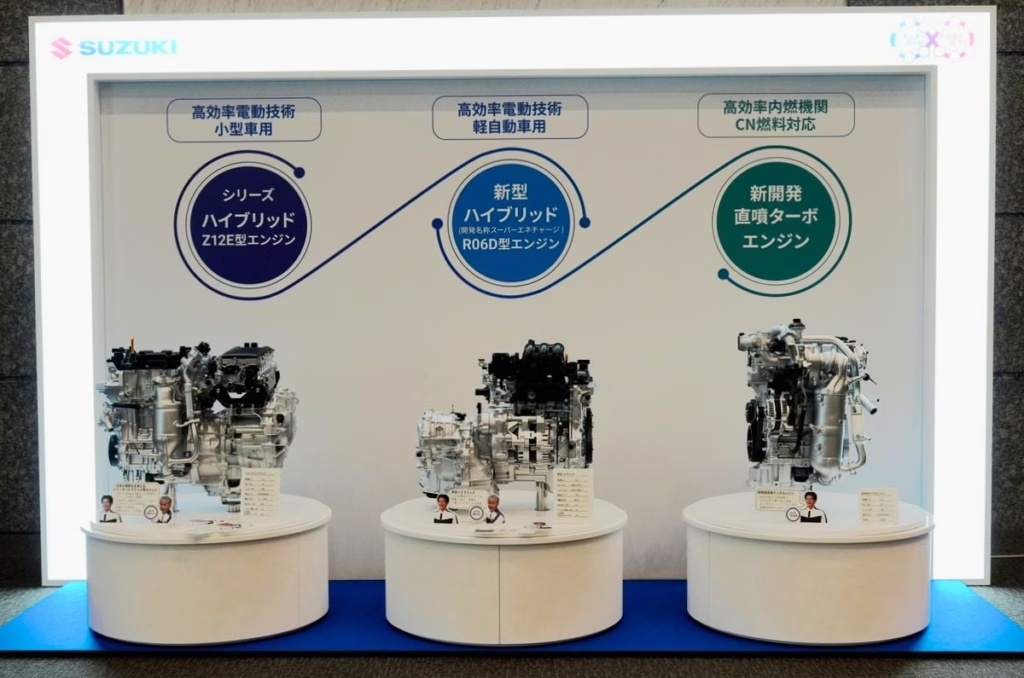
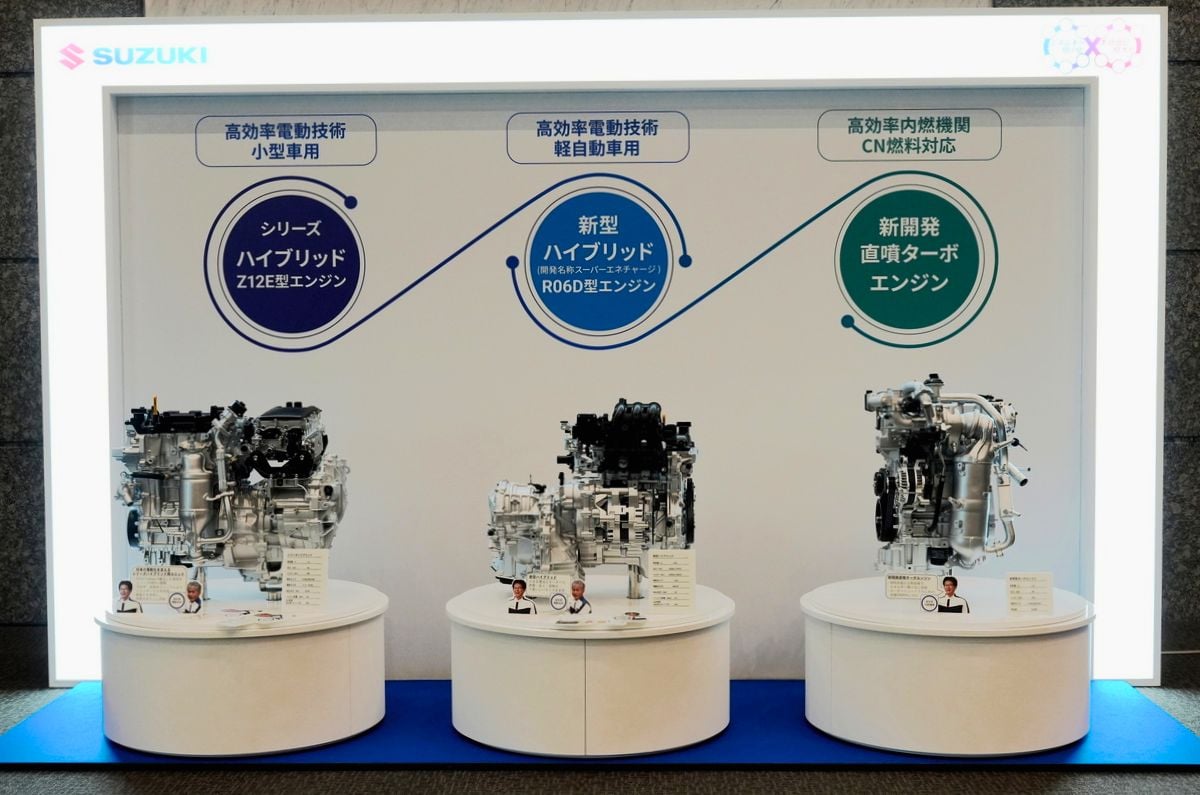
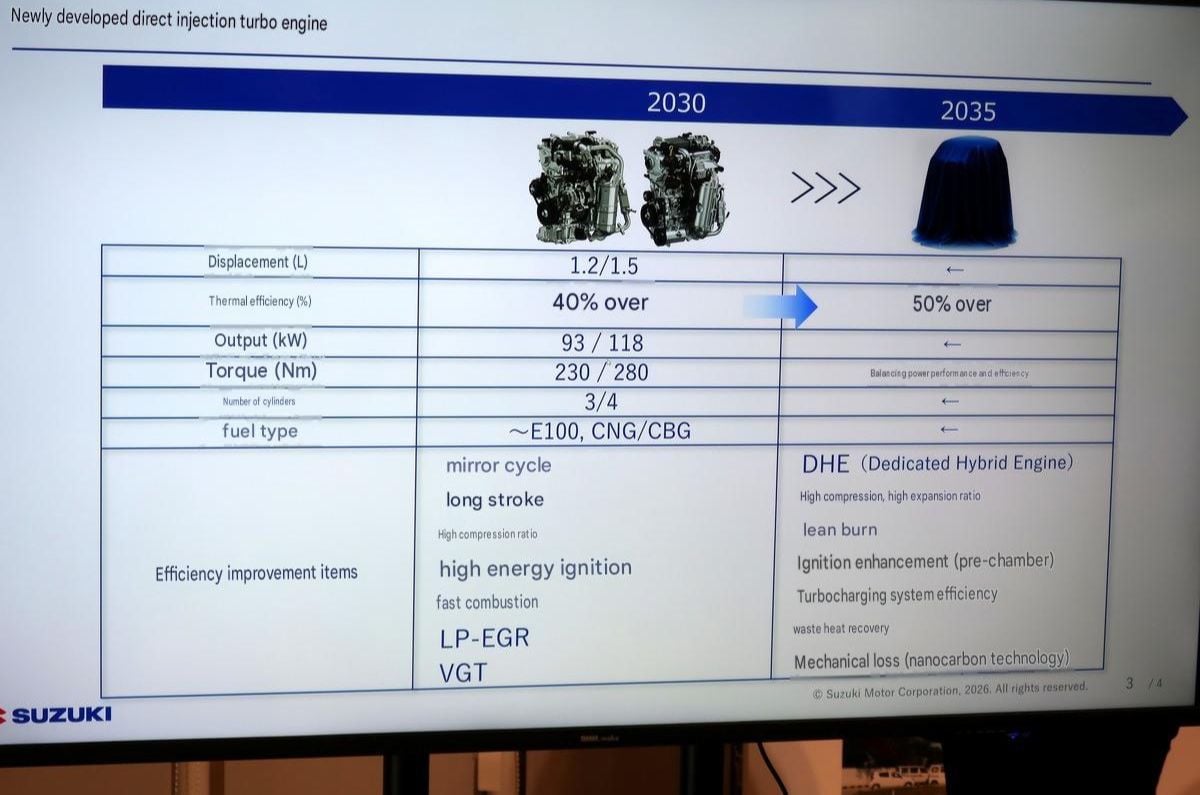
Suzuki recently revealed plans to develop a new direct-injection turbocharged (DITC) engine for growth markets, including India, as part of its ‘Technology Strategy 2026: Looking 10 Years Ahead’ roadmap. The manufacturer has also revealed specifications for a 1.2-litre 3-cylinder turbo-petrol engine prototype in Japan, which is being developed for compatibility with E100, CNG (compressed natural gas) and CBG (compressed biomethane gas). While not confirmed by the manufacturer, this engine is likely to eventually be offered in India.
1.2-litre turbo-petrol engine prototype produces up to 126hp and 230Nm
This engine is being developed to achieve up to 40 percent thermal fuel efficiency
Alongside the turbo-petrol engine, Suzuki has also showcased a series-hybrid powertrain based on the Z12E 3-cylinder engine and a smaller 0.66-litre engine for kei cars. Specifications of a 1.5-litre direct-injection turbo-petrol engine were also revealed.
Suzuki’s new engine prototypes: More details
1.2-litre 3-cylinder turbo-petrol engine is based on Z12E, as per a media report
Image source: Autocar Japan (text translated into English)
The showcased prototype is a 1.2-litre direct-injection turbo-petrol engine, aimed at producing up to 126hp and 230Nm, with thermal fuel efficiency targeted at up to 40 percent at launch and up to 50 percent by 2035. The engine is being developed for compatibility with E100 (100 percent ethanol), CNG and CBG.
According to a report by Japan’s MotorFan, the engine is based on Suzuki’s Z12E 3-cylinder unit and features a variable-geometry (VG) turbocharger and a water-cooled intercooler. The Z12E is offered in a naturally aspirated avatar in the Swift, Baleno and Dzire. While not confirmed by the manufacturer, the new turbocharged engine could eventually be offered in sub-4m cars in India.
Z12E engine to also form the basis of a series-hybrid powertrain
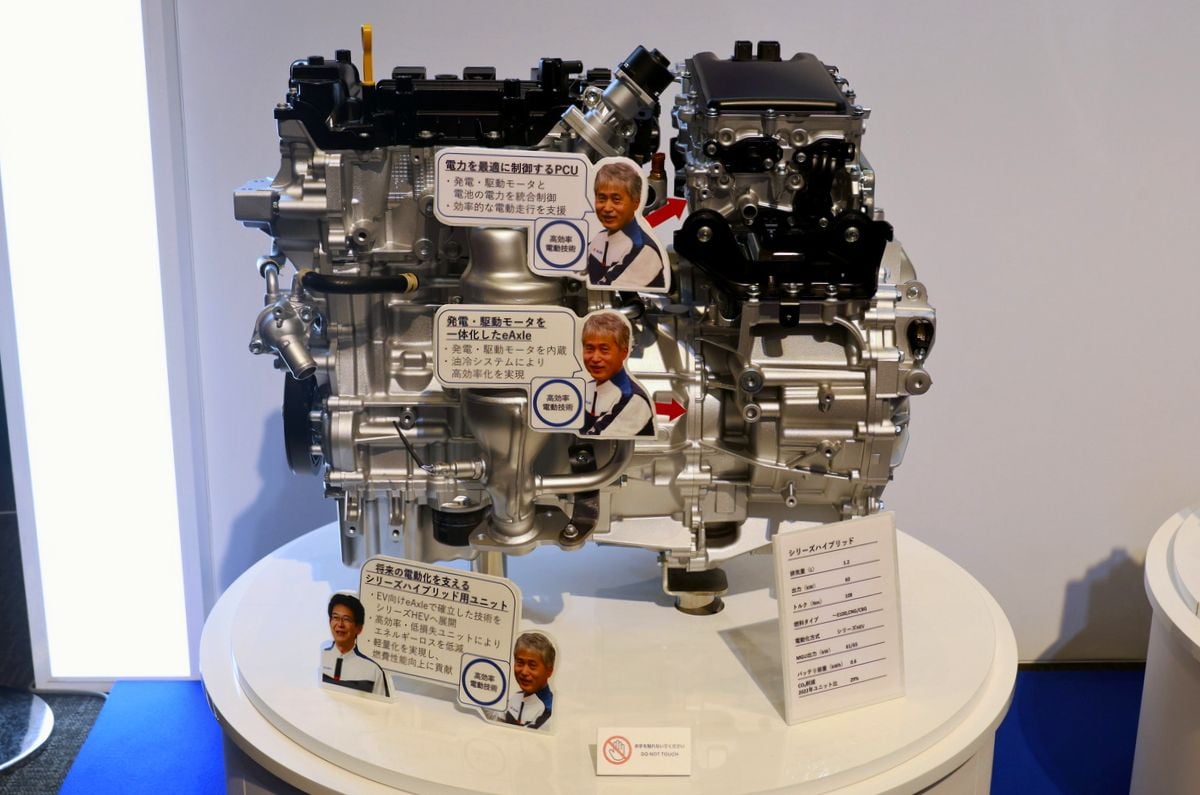
Suzuki is also developing the 1.2-litre Z12E 3-cylinder engine for use in a series-hybrid powertrain. In this setup, the engine generates electricity, while an electric motor drives the wheels. The system uses two motors – one for generating electricity and another for driving the wheels. In this application, the Z12E engine produces up to 82hp and 108Nm, while the generator motor has a maximum output of 83hp and the drive motor produces up to 88hp. The system uses a 0.6kWh battery.
Series hybrid system combining a 1.2L engine and two electric motors. (Image source: Autocar Japan)
Suzuki is also considering combining this series-hybrid system with its new 1.2-litre direct-injection turbo-petrol engine in a future plug-in hybrid setup. The proposed combination could deliver a total system output of up to 177hp.
1.5-litre turbo-petrol engine and a 0.66-litre engine (for kei cars) also in development
As per Autocar Japan, Suzuki is also developing a 1.5-litre 4-cylinder, aimed at producing up to 160hp and 280Nm. Like the smaller 1.2-litre engine, the 1.5-litre turbo-petrol engine is also being developed for compatibility with E100, CNG and CBG fuels.
Suzuki also showcased a smaller 0.66-litre 3-cylinder engine in Japan. The engine is being developed in both naturally aspirated and turbocharged forms for kei cars.
Notably, all the engines showcased by Suzuki are designed for transverse-mounted, front-wheel-drive (FWD) vehicles, with no mention of powertrains for longitudinally mounted, rear-wheel-drive (RWD) models such as the Jimny. However, powertrains for RWD models are also understood to be under development and could be revealed at a later date.
Car buyers today are pretty spoilt for choice. Beyond a multitude of brands, body styles and variants, there are now more fuel options than ever before. Petrol, diesel, CNG, hybrid, electric, and soon even ethanol-powered vehicles are all vying for attention, making the decision increasingly complicated. So, which powertrain makes the most sense for you?
Tata Nexon models (left to right): Petrol, diesel, petrol-CNG and EV.
To answer that question, we turned to one of the most versatile models on sale in India – the Tata Nexon. Few vehicles offer such a broad range of powertrain choices, and with design, space, practicality, safety and features remaining largely consistent across the range, the Nexon provides the perfect platform to isolate the one key variable – the fuel itself. So, we got together the turbo-petrol, CNG, diesel, as well as the EV to find out each fuel’s pros and cons, and thus, which would best fit your needs.
Disclaimer: Fuel prices vary from state to state.
Tata Nexon turbo-petrol: Fuss free
Tata’s 1.2-litre, three-cylinder ‘Revotron’ turbo-petrol engine debuted with the Nexon in 2017 and received a power bump in 2020, taking outputs to 120hp and 170Nm. Today, it is offered with an unusually wide range of transmission choices – a 5-speed manual, 6-speed manual, 6-speed AMT and a 7-speed dual-clutch automatic.
Prices start at Rs 7.40 lakh and extend up to Rs 13.90 lakh, ex-showroom (excluding dual-tone, Dark and Red Dark editions). Its broad variant spread and attractive pricing are key reasons why the turbo-petrol accounts for 42 percent of all Nexon sales.
The engine offers decent driveability and benefits from selectable Eco, City and Sport drive modes. But outright performance, refinement and smoothness aren’t class-leading and not what you get from other turbo-petrols.
Within the range, the 7-speed DCA stands out as the most desirable option. Despite accounting for less than 4 percent of total Nexon sales, it is arguably the nicest ICE-powered Nexon on sale. The wet-clutch dual-clutch transmission prioritises smoothness over sportiness and suits the engine’s character well. While downshifts can occasionally feel a touch hesitant, the overall experience is noticeably more polished than the manual and AMT alternatives. Notably, the top-spec Turbo DCA is the best-equipped ICE version and is also the only version to offer ADAS.
Fuel efficiency, however, remains this powertrain’s weakest area. In our tests, the turbo-petrol DCA returned 7.7kpl in the city and 13.9kpl on the highway, translating to an average running cost of Rs 9.46 per kilometre – the highest among all Nexon powertrains.
To put that into perspective, even though a fully loaded Fearless + A PS DCA is Rs 2.65 lakh more affordable than a top-spec Empowered + A 45 EV, the EV’s significantly lower running costs (of Rs 1.03 per km using home charging) allow owners to recover that initial price difference in roughly 32,000km.
Tata Nexon diesel: Highway star
The diesel range starts at Rs 9.15 lakh and extends up to Rs 14.40 lakh for the top-spec AMT. Interestingly, while the diesel once outsold the petrol version in the Nexon’s early years, buyer preferences shifted following the BS6 transition, causing diesel sales to gradually decline to 13 percent. Despite this, Tata has persisted with the fuel, and today remains one of the few carmakers still offering diesel engines in its portfolio.
Instead of adopting a conventional SCR setup with a urea tank, AdBlue injection system and additional electronic controls, Tata developed a Lean NOx Trap system for the 1.5-litre, four-cylinder turbo-diesel engine. Despite this relatively low-cost passive emissions-control system, the price premium over an equivalent turbo-petrol variant remains around Rs 1 lakh – broadly in line with what rivals charge. The only tangible benefit for buyers is that, unlike many competitors, there is no urea tank requiring periodic top-ups, resulting in marginal savings over time and a bit less hassle.
Like the turbo-petrol, refinement isn’t this diesel’s strongest suit. And even though turbo lag is more perceptible than in the petrol iteration, performance flows in a rather strong manner, making it well-suited for highway drives. Its tall fuel efficiency also makes it ideal for those who cover long distances frequently. In our tests, the diesel-manual delivered an impressive average of 17.95kpl, resulting in a running cost of just Rs 5.30 per kilometre – significantly lower than the turbo-petrol.
Tata Nexon EV: Smooth operator
As India’s first widely accessible electric SUV from a domestic manufacturer, the Nexon EV played a pivotal role in democratising EV ownership. Combining brisk performance, usable real-world range and a relatively accessible price point, it opened up the Tata brand to an entirely new set of buyers. For a long time, it was India’s bestselling EV. Within the Nexon range, it accounts for 14 percent of total sales.
Today, the Nexon EV range spans Rs 12.49 lakh to Rs 17.49 lakh, with buyers able to choose between two battery packs – 30kWh and 45kWh. The line-up itself is relatively straightforward, with three trims available for each battery option.
In the real world, the 30kWh version can deliver a little over 200km on a charge, while the larger 45kWh battery can comfortably manage around 350km. For buyers seeking the smoothest and most refined driving experience, nothing quite matches the seamlessness of an EV. Acceleration feels brisk, and its zippy yet seamless performance makes for a hushed, enjoyable drive experience.
The two battery versions differ in more ways than just capacity. The 45kWh version uses Tata’s newer Gen 2 motor, which is lighter, more compact and more efficient than the Gen 1 unit used in the 30kWh variant. The long-range version’s more modern architecture also enables significantly faster DC charging. To put it into perspective, the 30kWh version takes about an hour to charge from 20-80 percent using a DC fast charger, whereas the 45kWh variant achieves the same in just 29 minutes. Not only does the larger battery offer greater range, but it is also quicker to recharge despite its higher capacity, making it the more suitable choice for longer highway journeys.
Interestingly, the EV also enjoys a feature advantage over the best-equipped turbo-petrol DCA, gaining a larger 12.3-inch touchscreen, rear disc brakes, and an electronic parking brake with auto-hold functionality.
Coming to the 45kWh version’s running cost, using a home charger (at an average cost of Rs 8 per unit of electricity), buyers can enjoy driving around at just Rs 1.03 per km. Even if users opt for public DC fast-charging, the rates of which range between Rs 24 and Rs 28 per unit, still, average running costs work out to merely Rs 3.34 per km, which is almost a third of the petrol-automatic’s number and about sixty percent of a diesel-manual’s cost per km.
Tata Nexon CNG: Jack of all trades
There’s a lot Tata has got right with the Nexon CNG. For starters, prices range from Rs 8.35 lakh to Rs 13.60 lakh, positioning it neatly between the petrol and diesel alternatives.
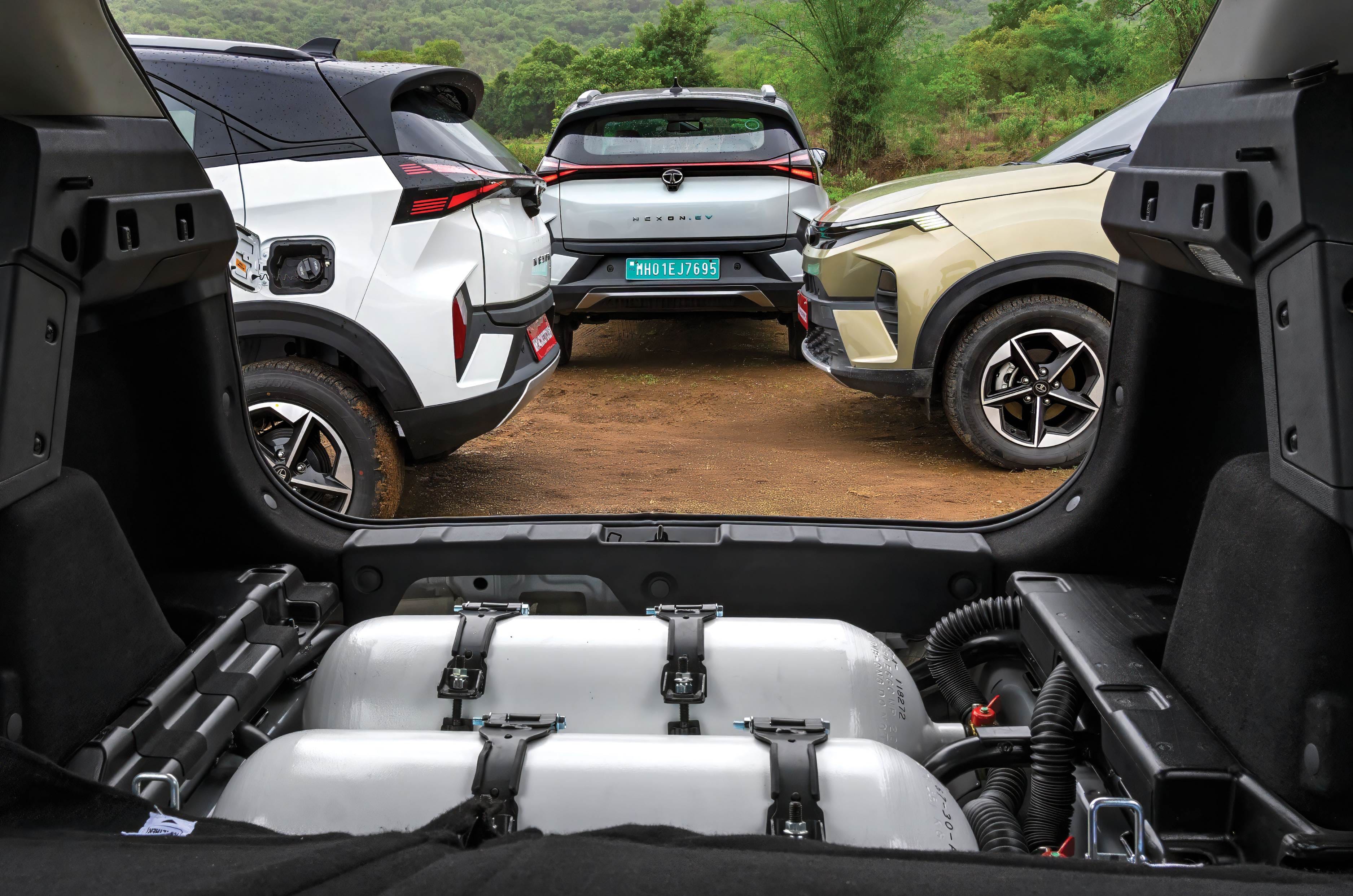
Under the bonnet is the same 1.2-litre, three-cylinder turbocharged engine found in the petrol Nexon. Not only is it India’s first turbo-petrol CNG SUV, but it is also the most powerful, producing 100hp and 170Nm when running on CNG. Impressively, peak torque remains identical to the petrol version, although it is available across a narrower band. As a result, driveability feels remarkably similar to the turbo-petrol, and users are unlikely to find themselves wanting for performance, whether in urban conditions or on the highway.
Being a turbocharged CNG engine, efficiency in city driving can take a hit. In our real-world city test involving frequent stop-start traffic, the Nexon CNG returned 15.1km/kg. Out on the highway, however, flowing traffic and the presence of a sixth gear helped it achieve close to 24km/kg. The end result is an average running cost of just Rs 4.28 per kilometre, making it the most economical option in the ICE line-up.
With driveability that’s remarkably close to the turbo-petrol, lower purchase and running costs than the diesel, and very few compromises in practicality or equipment, the Nexon CNG presents perhaps the strongest all-round case in the range. Its only notable drawback is the limited CNG infrastructure. While station availability continues to improve, rising CNG adoption often leads to longer queues and wait times at many outlets.
Unlike many CNG vehicles, the Nexon CNG doesn’t feel like a stripped-down, budget-focused alternative. It remains spacious, practical and generously equipped while delivering the lowest running costs of any ICE Nexon. Small omissions, such as cruise control, connected-car technology and JBL-branded speakers, are unlikely to be deal-breakers for most buyers.
Viewed through the lens of value, usability and cost of ownership, the Nexon CNG strikes perhaps the most convincing balance of the lot. Which perhaps explains why, despite being offered with just one engine and a manual gearbox, it now contributes more than a third of all Nexon sales.
Tata Nexon petrol vs diesel vs CNG vs EV: Verdict
The turbo-petrol’s lowest starting price, as well as the widest choice for buyers, is the reason behind its popularity. Our pick of the range, however, is the priciest 7-speed DCA, which delivers the smoothest and most polished Nexon ICE driving experience. That said, performance and efficiency aren’t exactly class-best.
The diesel’s impressive fuel efficiency and thus low running costs make it an ideal choice for those who rack up high annual mileages. Performance is the strongest among all ICE versions, and its torquey nature makes it an excellent highway companion, perfect for those who regularly cover long distances.
For buyers with reliable home charging, a predominantly urban usage pattern and high annual running, the EV is the one to pick. The 45kWh model has a genuinely usable real-world range and is also the most advanced version with a rich feature list, making it a very well-rounded option.
The Nexon CNG retains the petrol’s drivability, offers low running costs, a long range, and buyers aren’t forced to compromise features or practicality either. It thus strikes a convincing balance between price, performance and real-world usability, emerging as the sweet spot of the line-up.
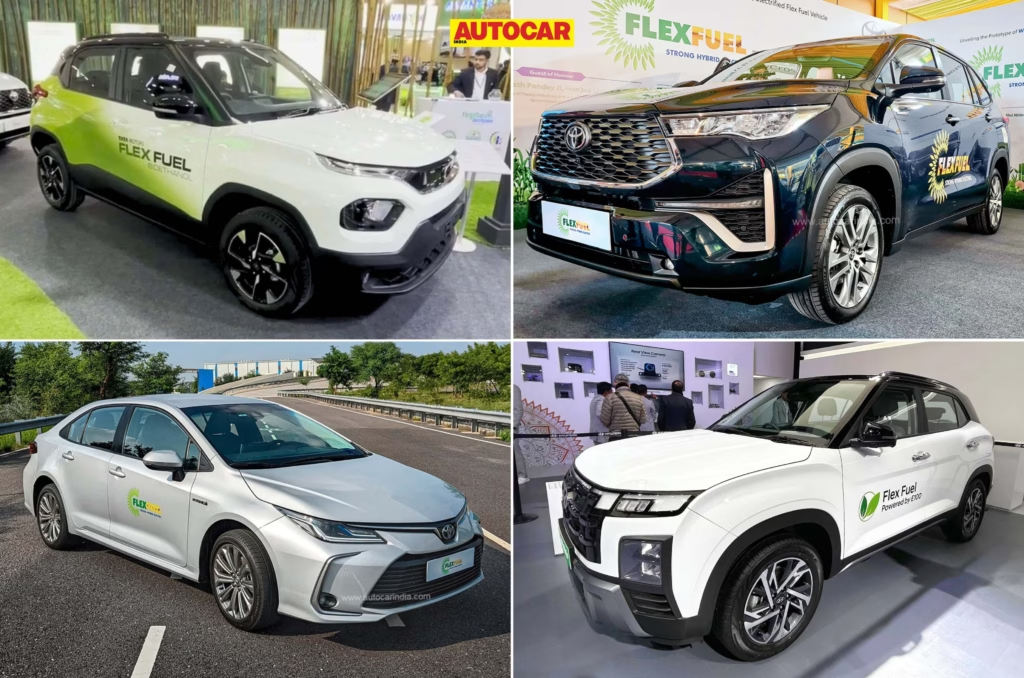
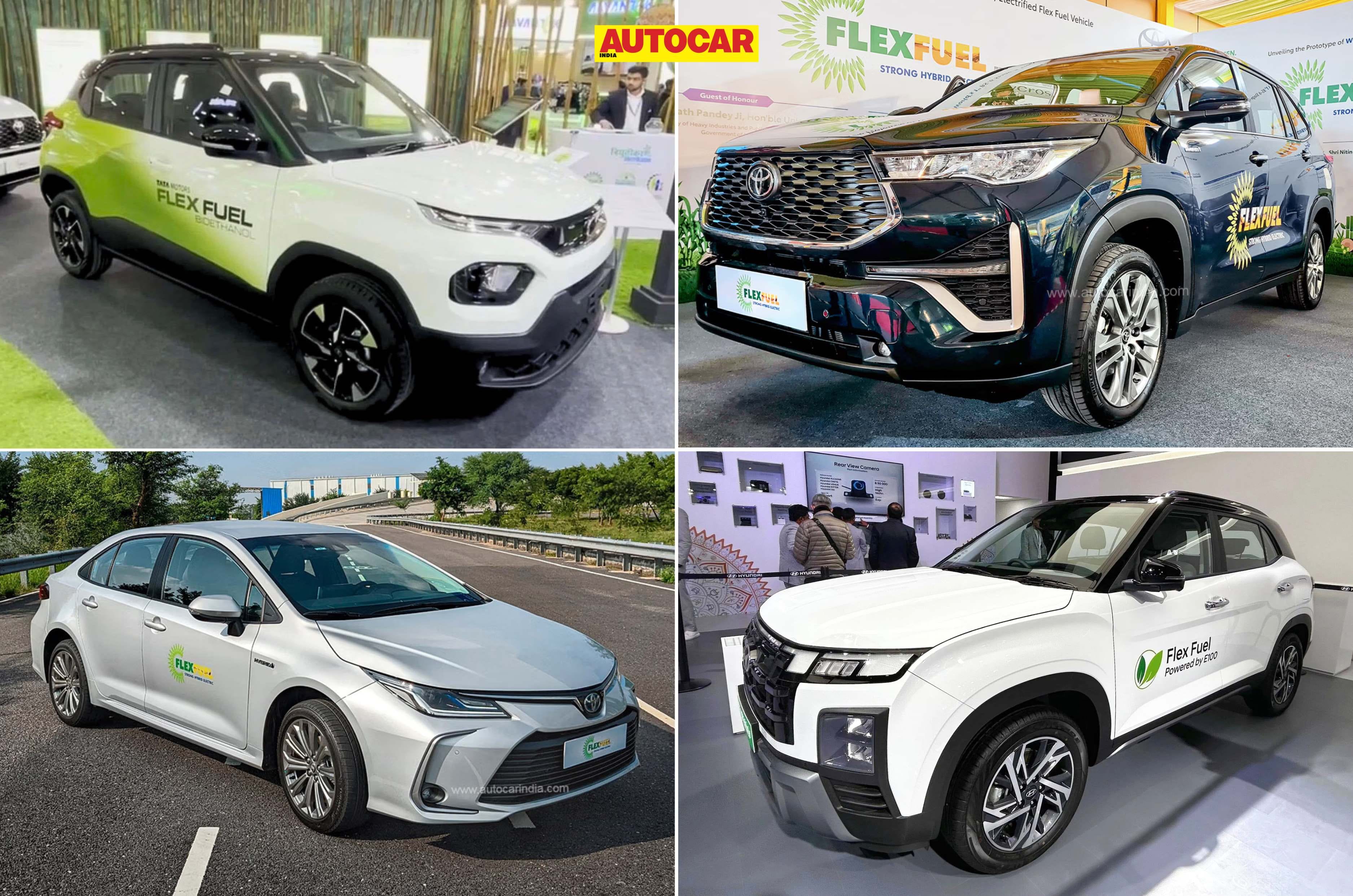
With authorities pushing for higher ethanol-blended petrol, mass-market carmakers have been working toward bringing flex-fuel vehicles to our market. Infact, Maruti Suzuki was the first carmaker to begin production and launch a flex -fuel vehicle with the Wagon R Bioflex. Other carmakers such as Toyota, Hyundai, Tata, and Kia have also showcased flex-fuel models that show readiness for higher blends of ethanol-blended petrol. With E85 fuel dispensing stations being established across the nation, more carmakers could join the flex-fuel bandwagon in the future. Below is a list of all the flex-fuel cars showcased in India, with some capable of running purely on ethanol as well.
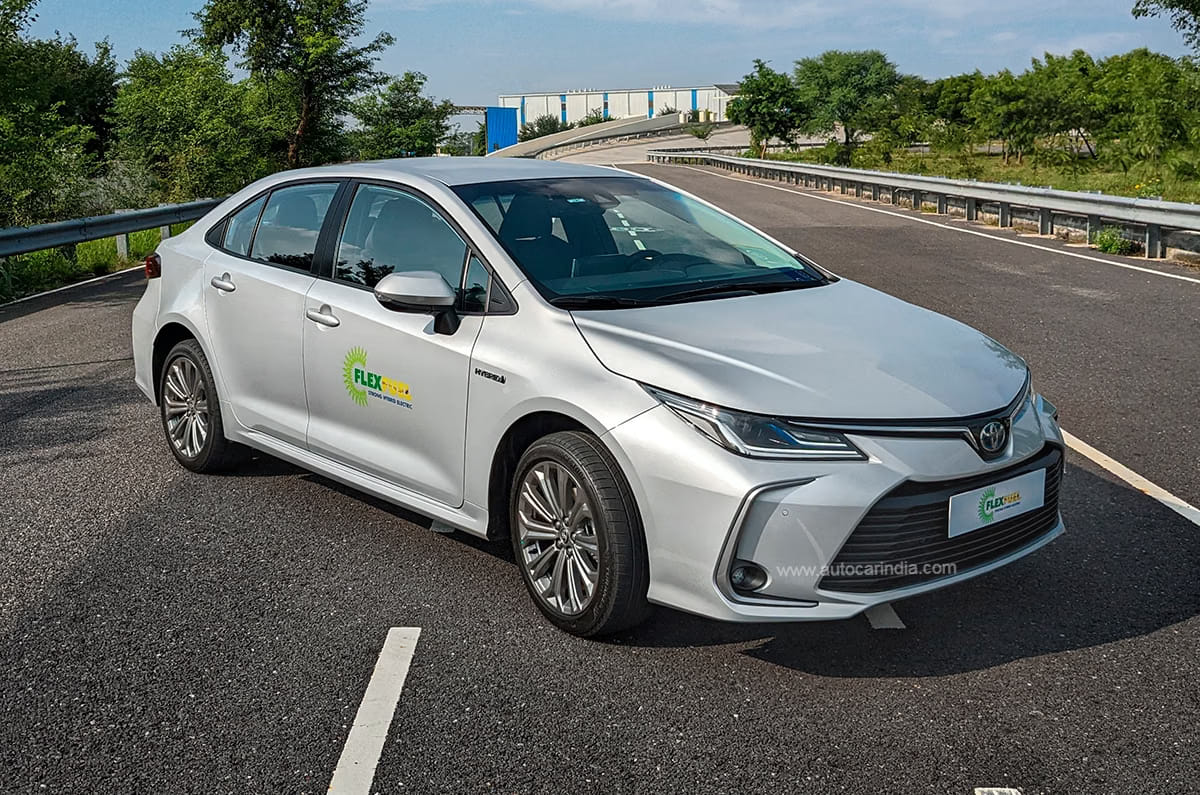
Toyota Corolla flex fuel
Toyota showcased its flex-fuel technology capabilities with the Corolla hybrid. Revealed in October 2022, the sedan uses a 102hp, 142Nm 1.8-litre petrol engine mated to a strong hybrid system and is capable of running on E100 fuel. It is unlikely to make it to our market, but at the time, Toyota said that its flex-fuel vehicle could arrive here if E85 or pure ethanol can be supplied across India, given that the technology is ready. We even had the opportunity to experience the flex-fuel Corolla on a test track.
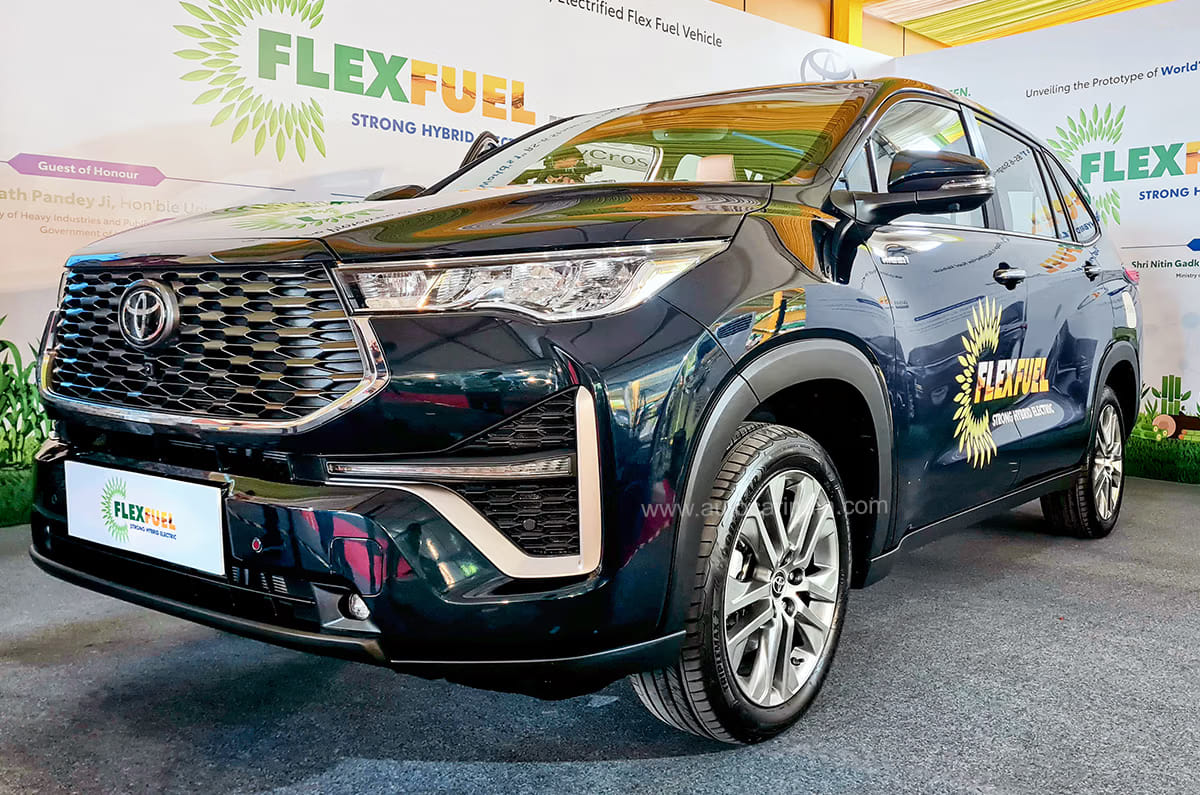
Toyota Innova Hycross flex fuel prototype
In August 2023, Toyota revealed a prototype of the Innova Hycross flex fuel. Like the standard Hycross, it utilises the same 2.0-litre Atkinson-cycle petrol engine paired to an electric motor. Engine tweaks include different spark plugs and piston ring tops, as well as valves and valve seals designed to be water-resistant and prevent corrosion. It also gets a three-way catalyst in the exhaust system to reduce hydrocarbon emissions. Ethanol-compatibility modifications have been done to the vehicle’s fuel filter, fuel pump and fuel lines.
Tata Punch flex fuel
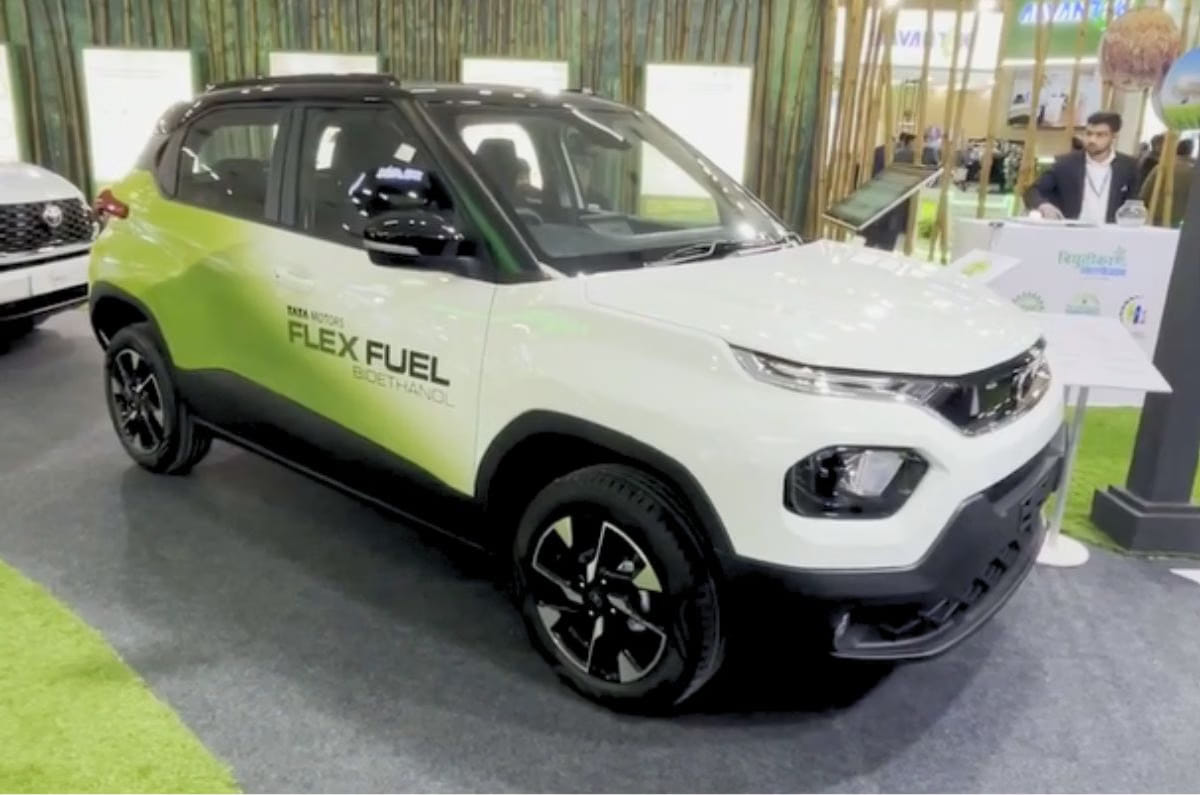
Tata showcased its first flex-fuel model in the form of the Punch SUV, though in pre-facelift guise. It has the 88hp, 115Nm 1.2-litre petrol engine that also powers the current model. The engine is capable of running on blends of up to E85 and has modified ECU software, fuel injector systems and an exhaust after-treatment system to adapt to different ethanol blends.
Hyundai Creta flex fuel
Hyundai revealed the Creta flex fuel at the Auto Expo 2025 to highlight its readiness for flex-fuel technology. The SUV’s engine has been modified to run on E100 ethanol. But instead of using the 1.5-litre naturally aspirated petrol or turbo-petrol that’s available on the India-spec model, it gets a 1.0-litre turbo-petrol engine that does duty in the Venue and i20 N Line. It develops 120hp and 172Nm, and is paired to a 6-speed torque converter automatic, unlike the 7-speed DCT on the Venue and i20.
Maruti Suzuki Wagon R flex fuel
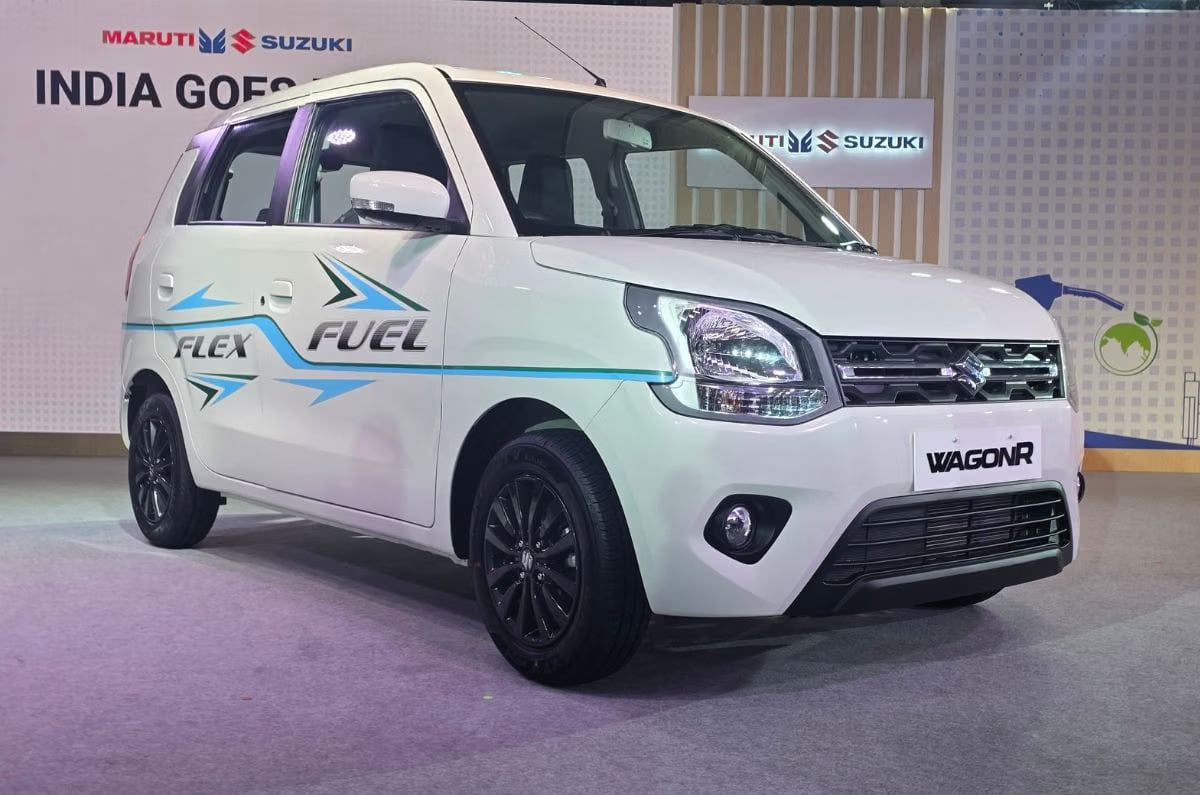
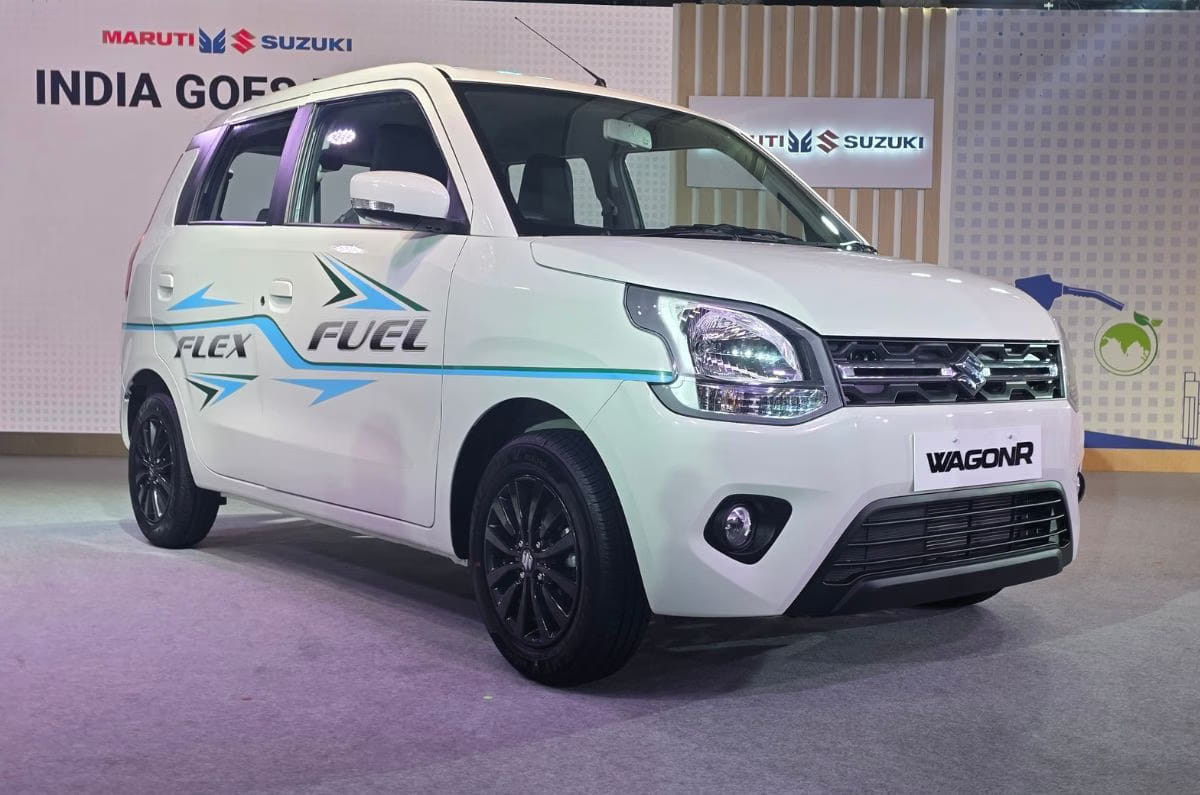
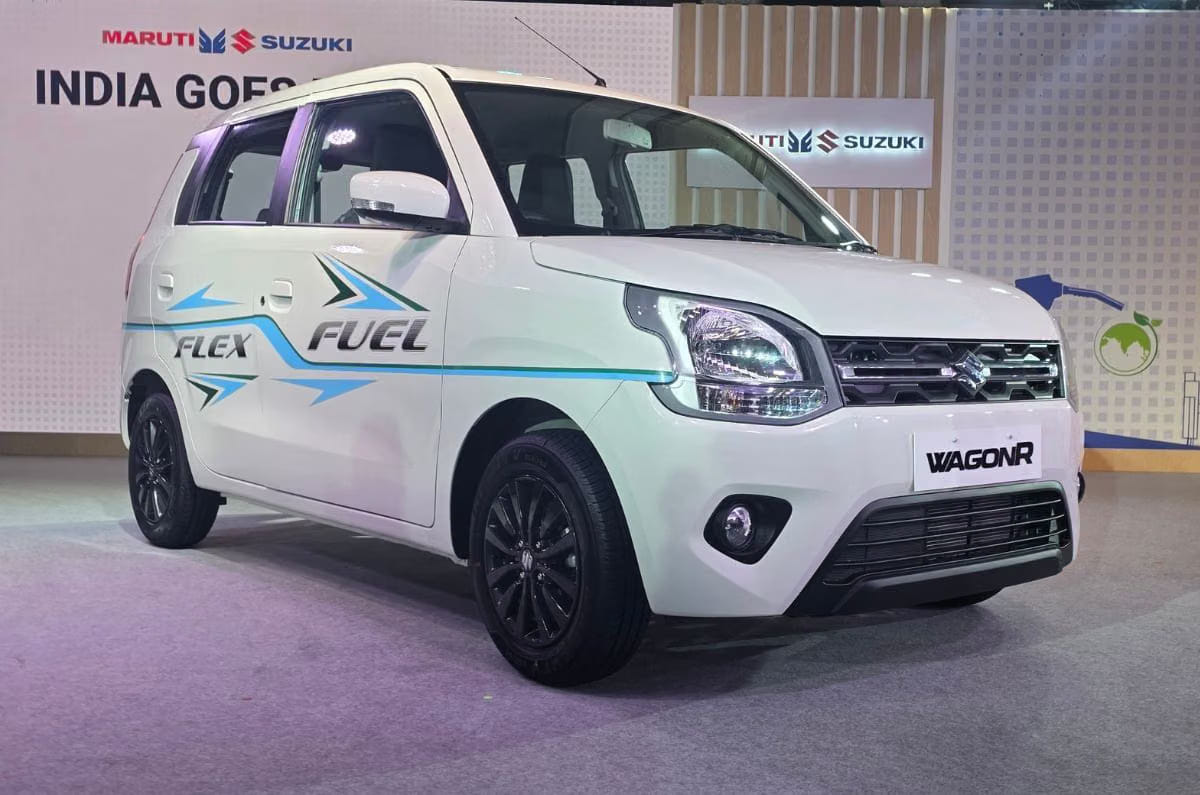
The Maruti Wagon R Bioflex is the first flex-fuel car that went on sale in the country. Maruti unveiled the production-spec Wagon R flex fuel years after unveiling its prototype in 2022. It is powered by the 1.2-litre petrol engine that also does duty in the standard model. While the Wagon R is compatible with running on E100 fuel, it has been homologated to only run on E85 fuel. Like the rest of the cars here, it gets upgraded fuel injectors and fuel pumps, new fuel lines, a newly calibrated ECU, and an ethanol sensor for ethanol compliance.
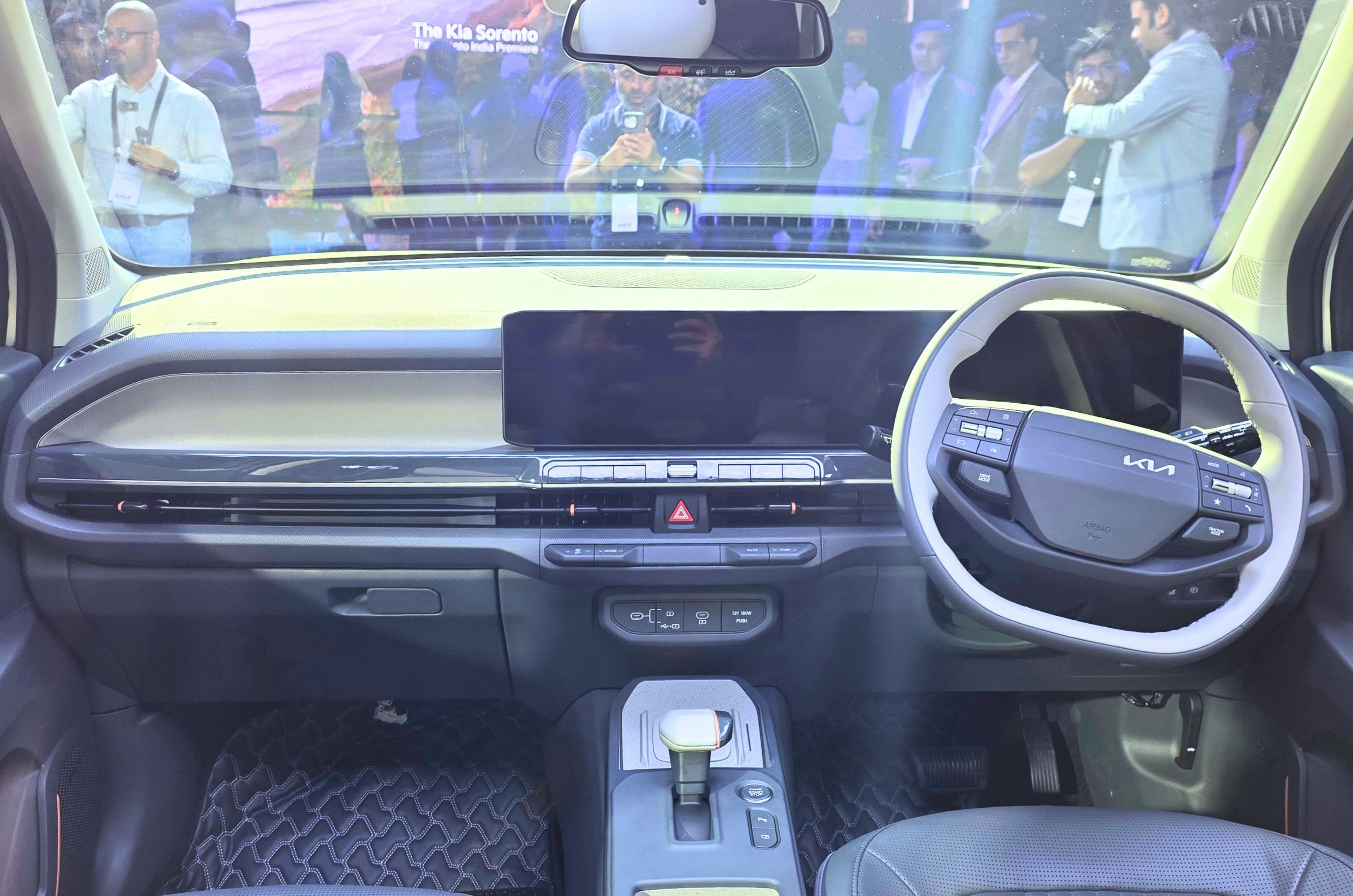
Kia Syros FFV Concept
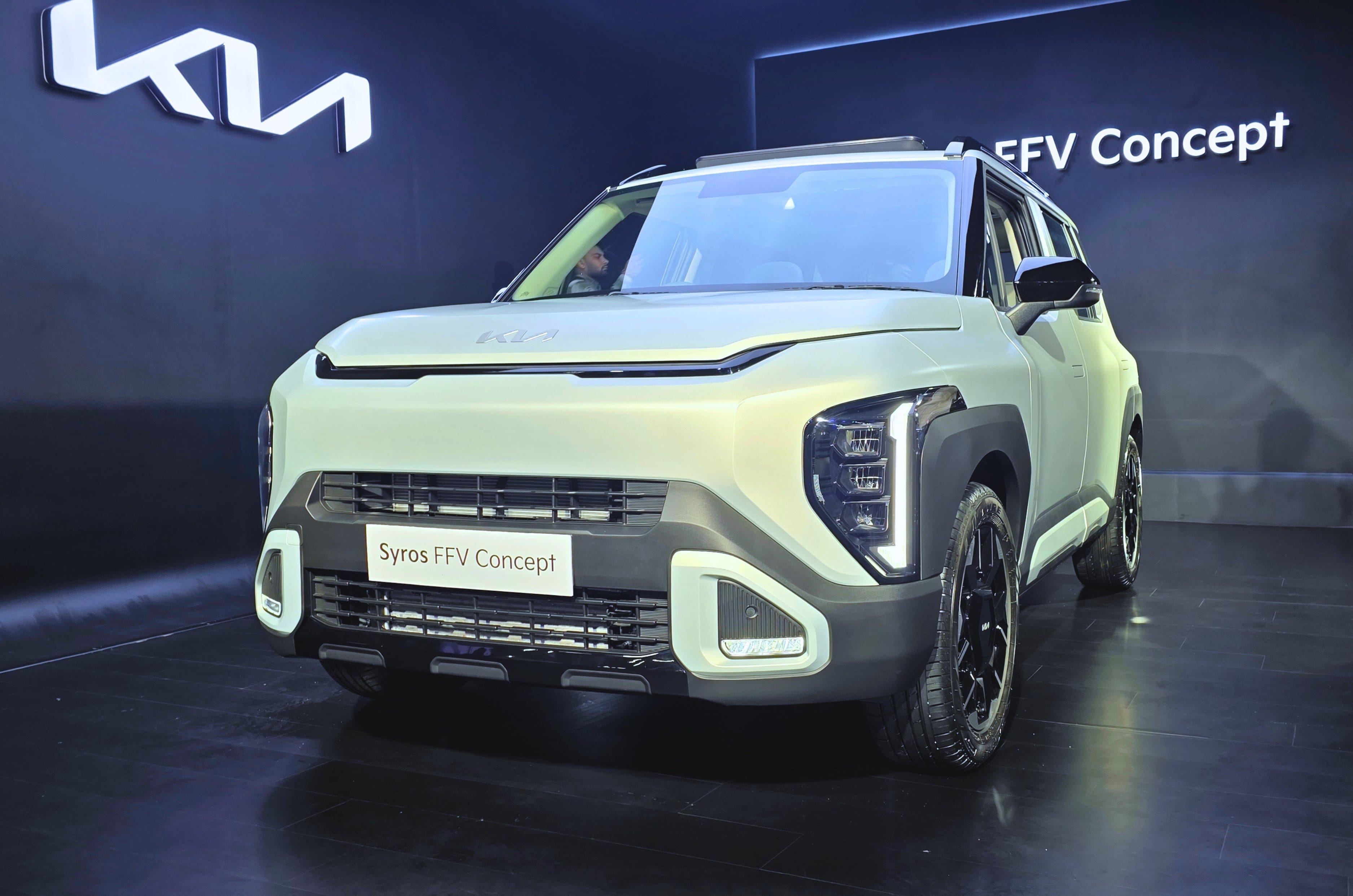
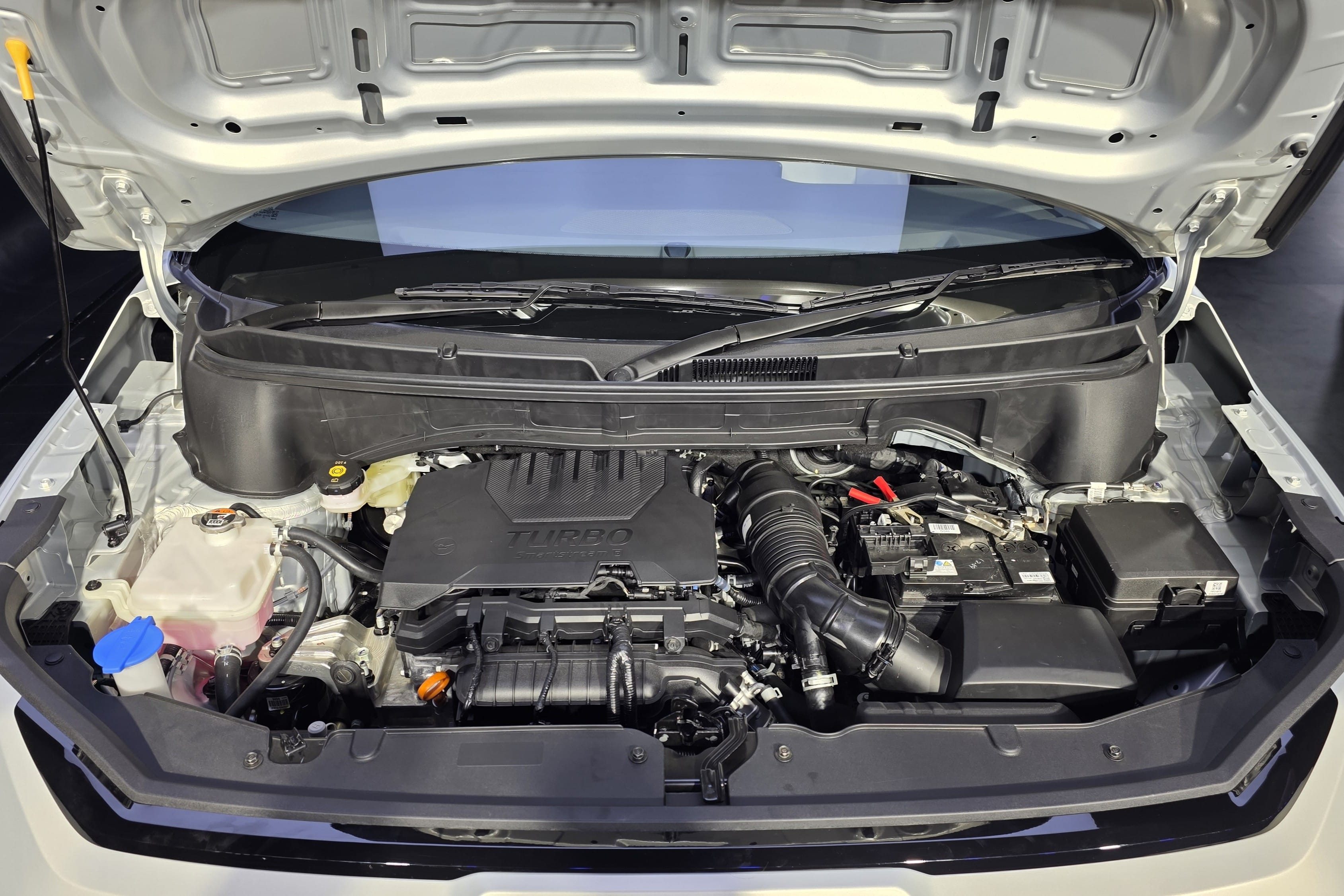
Kia India showcased its commitment to bringing flex-fuel cars to India with the Syros flex fuel vehicle (FFV) concept. According to Kia, the Syros FFV is capable of running on pure petrol, pure ethanol, and varying ethanol-petrol blends. It looks identical to the standard Syros, but under the bonnet is a 1.0-litre three-cylinder direct-injection turbocharged engine which has tweaked components for compatibility with ethanol and is paired with a 6-speed torque converter automatic. The arrival of a production-spec version is yet to be confirmed by Kia.
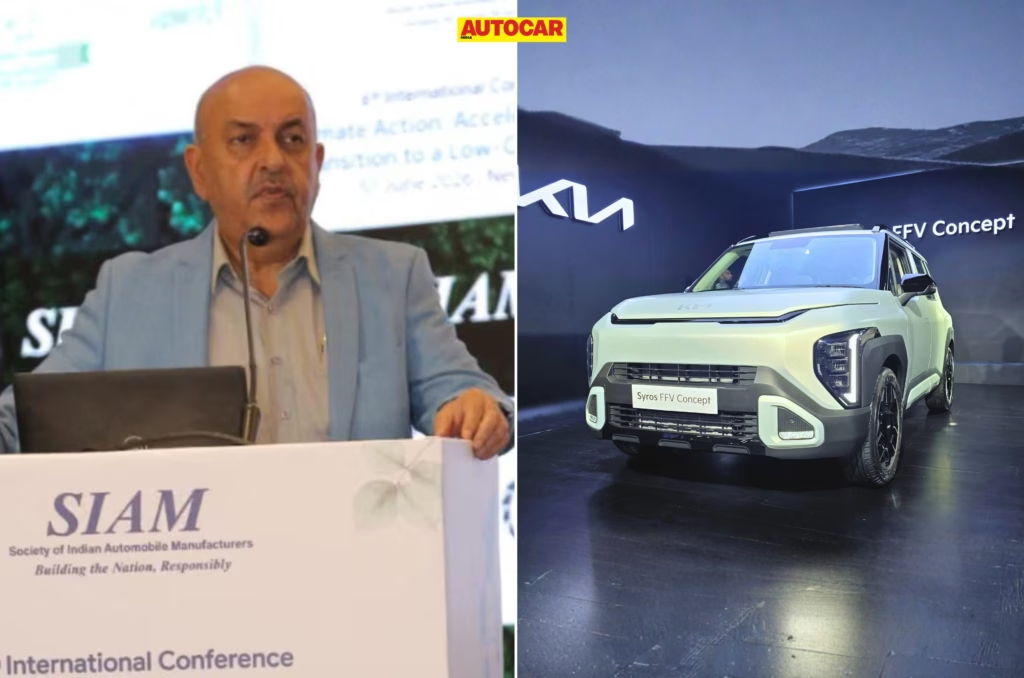
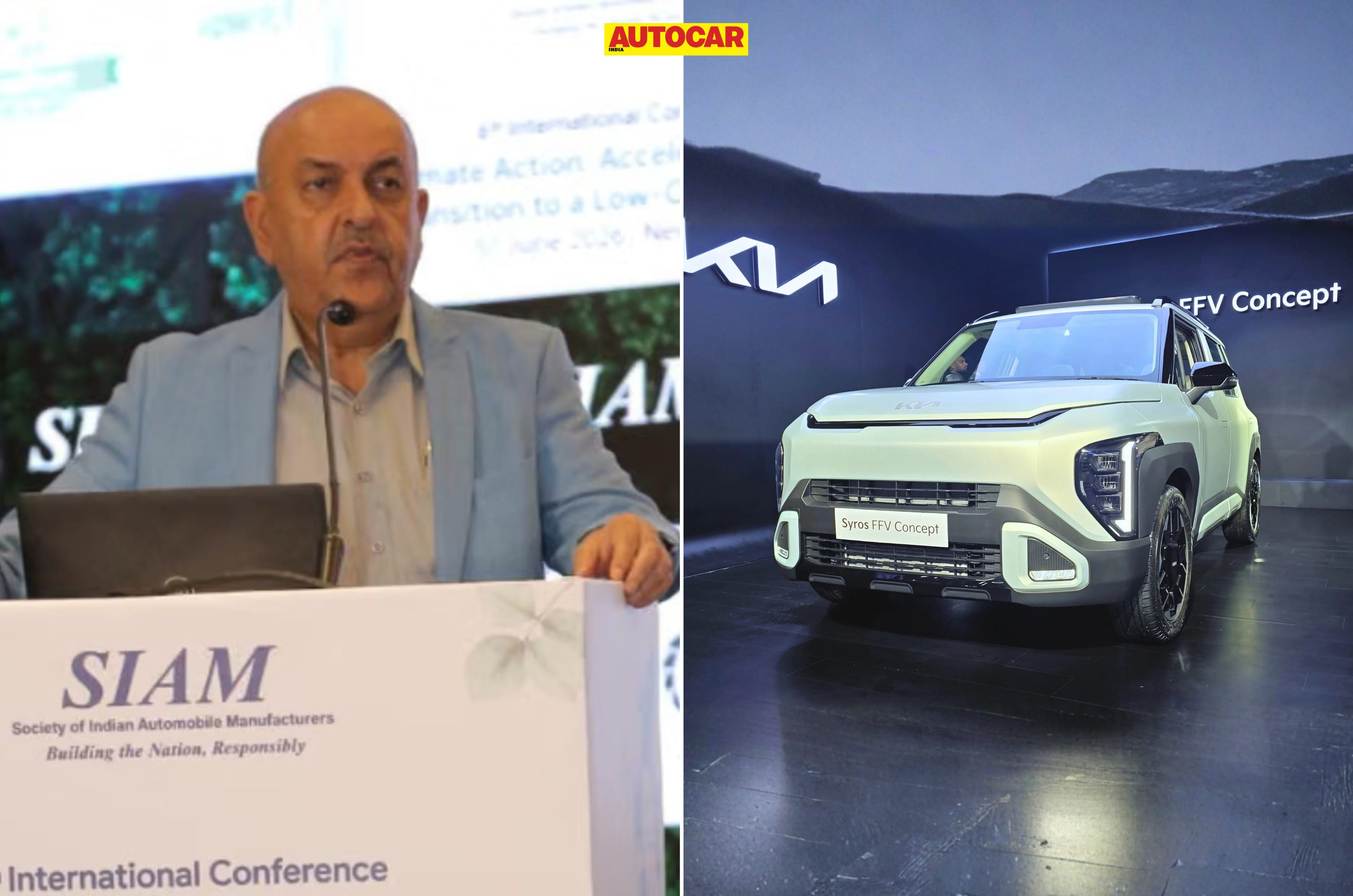
After achieving a 20 percent ethanol blend in petrol, the focus is now on flex-fuel vehicles and increasing the ethanol blend in petrol beyond 20 percent, according to PMO advisor, Tarun Kapoor. Kapoor made the comments in his address at the India Sugar and Bio Energy Conference organised by the India Sugar Manufacturers Association.
He said the E20 programme has been successful, while acknowledging criticism over its impact on vehicles that are not compatible with E20. His comments come as the government looks to move towards higher ethanol blends through flex-fuel vehicles. “Up to E20 it’s been very successful. Now our focus is on going into flex-fuel vehicles and allowing blending at a percentage which should be higher than E20, and it has to be on flex-fuel vehicles.”
Ethanol production now exceeds blending needs
Isobutanol is being studied for potential diesel biofuel use
Government is exploring non-transport uses for ethanol
Automakers preparing flex-fuel vehicles
Maruti Wagon R flex fuel.
Kapoor said several motor vehicle manufacturers have announced plans to introduce flex-fuel vehicles soon, and their launch could help drive higher use of ethanol. “I am happy to learn that several motor vehicle companies have announced that they are going to come out with flexible vehicles very soon and so we should see good numbers in the market.”
He also said the availability of higher ethanol blends or pure ethanol at petrol stations would need to expand alongside the rollout of flex-fuel vehicles. Some stations already have such fuel, but Kapoor said its availability needs to expand. “Supply of pure ethanol or whatever, maybe some additive has to be added to it, should also happen quite soon. There are some petrol stations where it is already available, but it has to be expanded now, but it has to go hand in hand with availability of flexible vehicles.”
Kapoor said India also needs biofuel products that can be blended with diesel and pointed to experiments involving isobutanol as a potential route for deploying biofuels on a larger scale.
E20 compatibility remains a point of concern
While Kapoor called the E20 programme successful, he acknowledged criticism over vehicles that are not compatible with the blend. He said studies and experiments had found that E20 works well, although fuel efficiency may decline to some extent. “E20 is quite good and works very well, maybe a little bit of fuel efficiency declines somewhere, but it gets compensated with higher octane,” he said.
Ethanol production exceeds blending requirement
Kapoor said ethanol production has exceeded what is currently required for blending, prompting the government to explore additional uses for the fuel. Kapoor said, “Now the production is more than that, probably it’s more than what we actually need for blending, but then probably we have to look for more uses of ethanol in various forms.”
The government is looking at uses beyond transportation, including cooking and industrial applications, to expand demand for ethanol. “We are very keen that we are able to expand the market as much as possible so that this overcapacity issue is resolved at the earliest time,” he added.
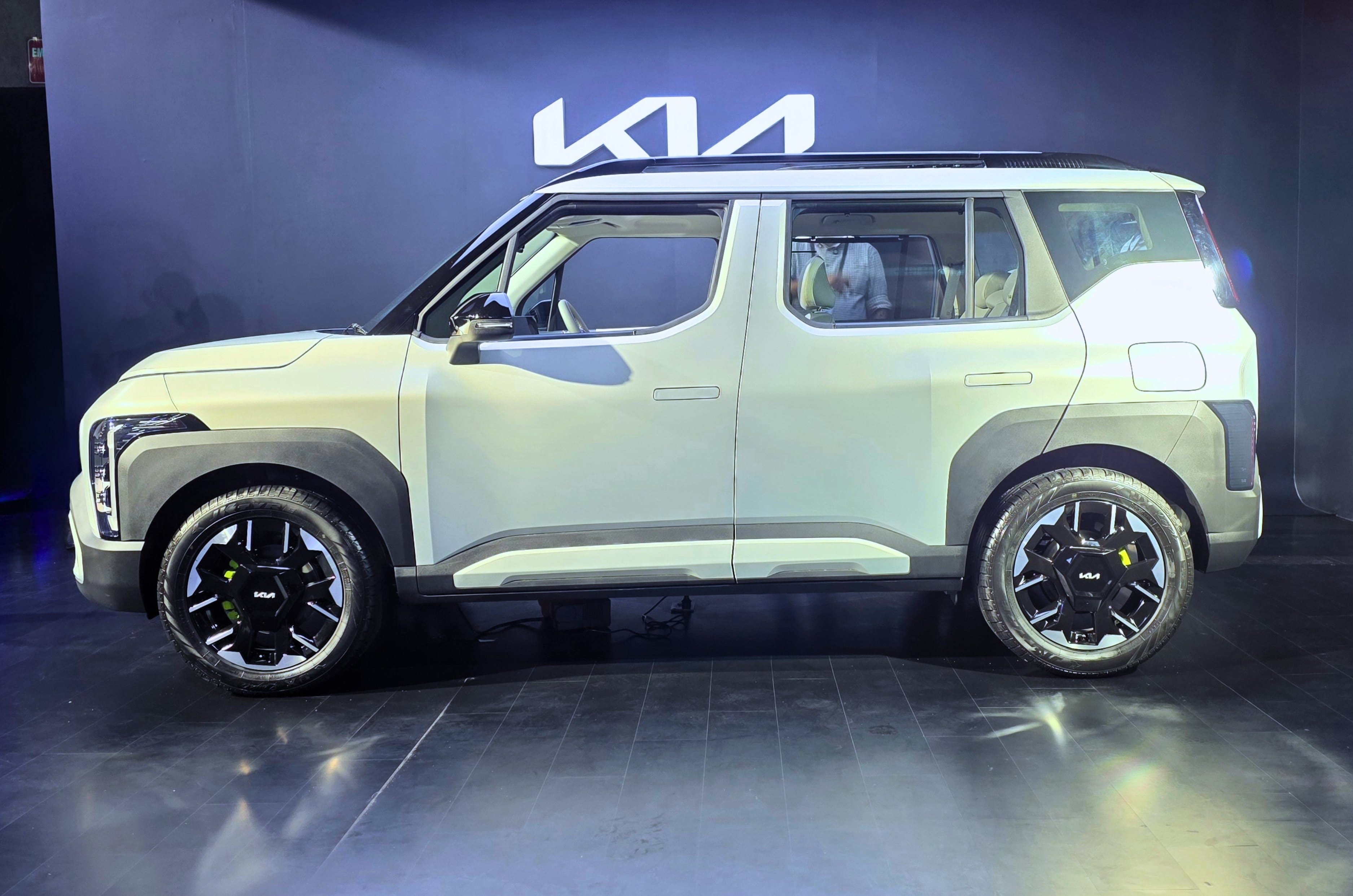
In a bid to join the flex–fuel race in India, Kia has unveiled the Syros FFV concept, its first flex-fuel car in India. The carmaker says that the Syros flex-fuel can run on pure petrol, pure ethanol, and varying ethanol-petrol blends. Kia is yet to confirm when a production-spec version will come to our market.
Utilises a 1.0-litre direct-injection turbo-petrol engine.
The engine comes with an upgraded ECU, TCU, and fuel system.
Transmission duties handled by a 6-speed automatic gearbox.
Kia Syros flex-fuel concept: Powertrain details
Powering the Syros flex-fuel is a 1.0-litre, three-cylinder, direct-injection turbo-petrol engine. However, the carmaker has not confirmed the power outputs of this engine. For compatibility with varying ethanol blends, Kia has tweaked components like its ECU, TCU, and fuel system. Unlike the standard Syros turbo-petrol that’s paired to a 7-speed DCT, the Syros flex fuel is mated with a 6-speed torque converter automatic.
Kia Syros flex-fuel concept: Exterior and interior
Apart from E85 compatibility, the Syros flex-fuel’s exterior remains unchanged from the standard model. You continue to get the familiar boxy, ‘tall-boy’ silhouette, ice-cube LED headlamps with DRLs, 17-inch dual-tone alloy wheels, roof rails, dual-tone bumpers, and high-mounted L-shaped LED signatures at the back.
Like the exterior, the interior of the Syros flex-fuel is quite similar to the standard model. The dashboard is dominated by a triple-screen display for the digital instrument cluster, infotainment system, and HVAC controls, while you get an array of physical buttons at the centre. Lower down is a wireless phone charger, the same gear lever, and storage spaces as seen on the standard Syros.
With the debut, Kia is India’s second manufacturer to debut a flex-fuel car. Earlier this year, Maruti Suzuki was the first to unveil the Wagon R flex fuel, which currently retails at Rs 7.24 lakh. Kia joins the list of carmakers who are working on bringing flex fuel cars to India, as the government pushes for higher ethanol-blended petrol in an effort to reduce crude oil imports.
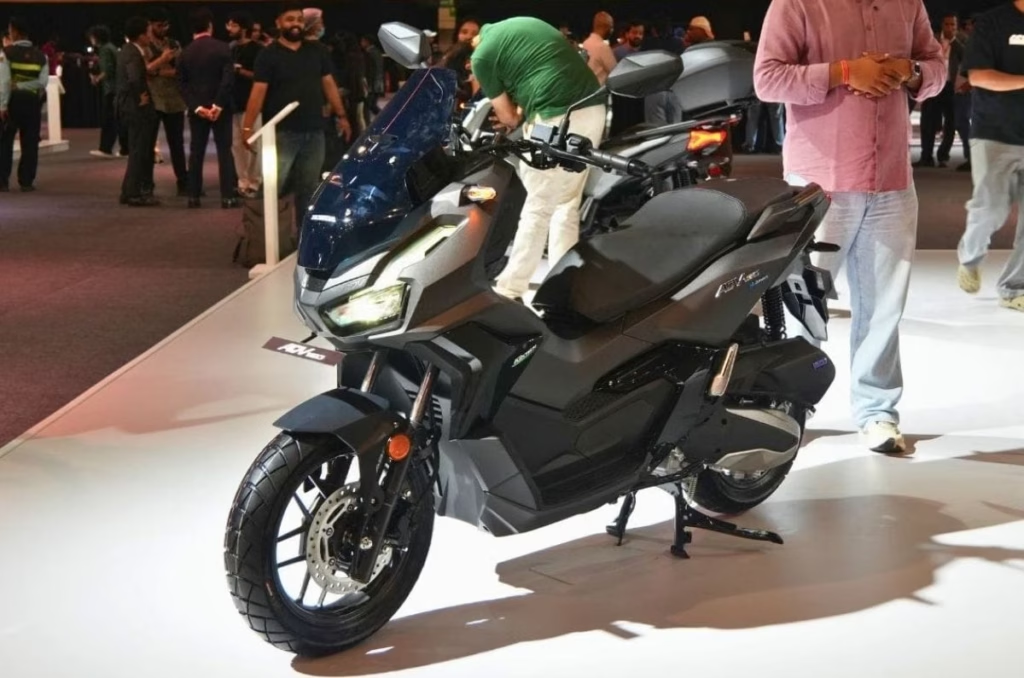
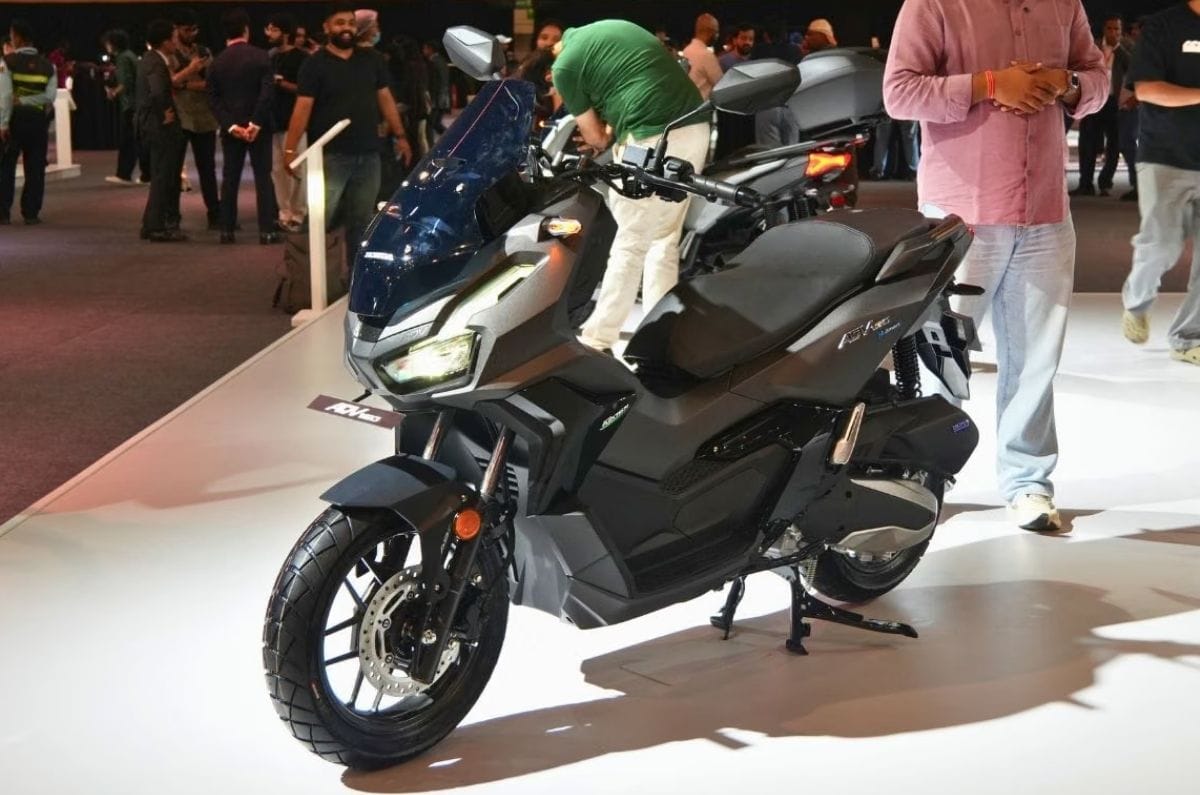
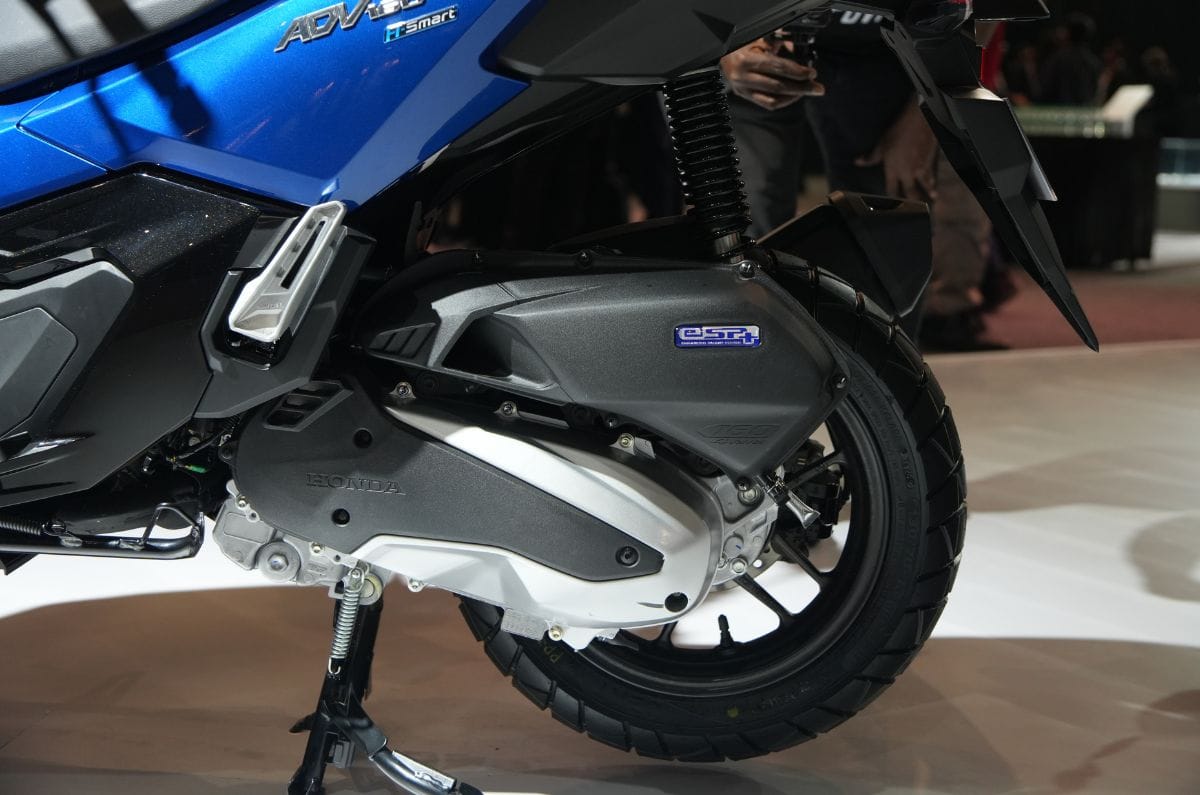
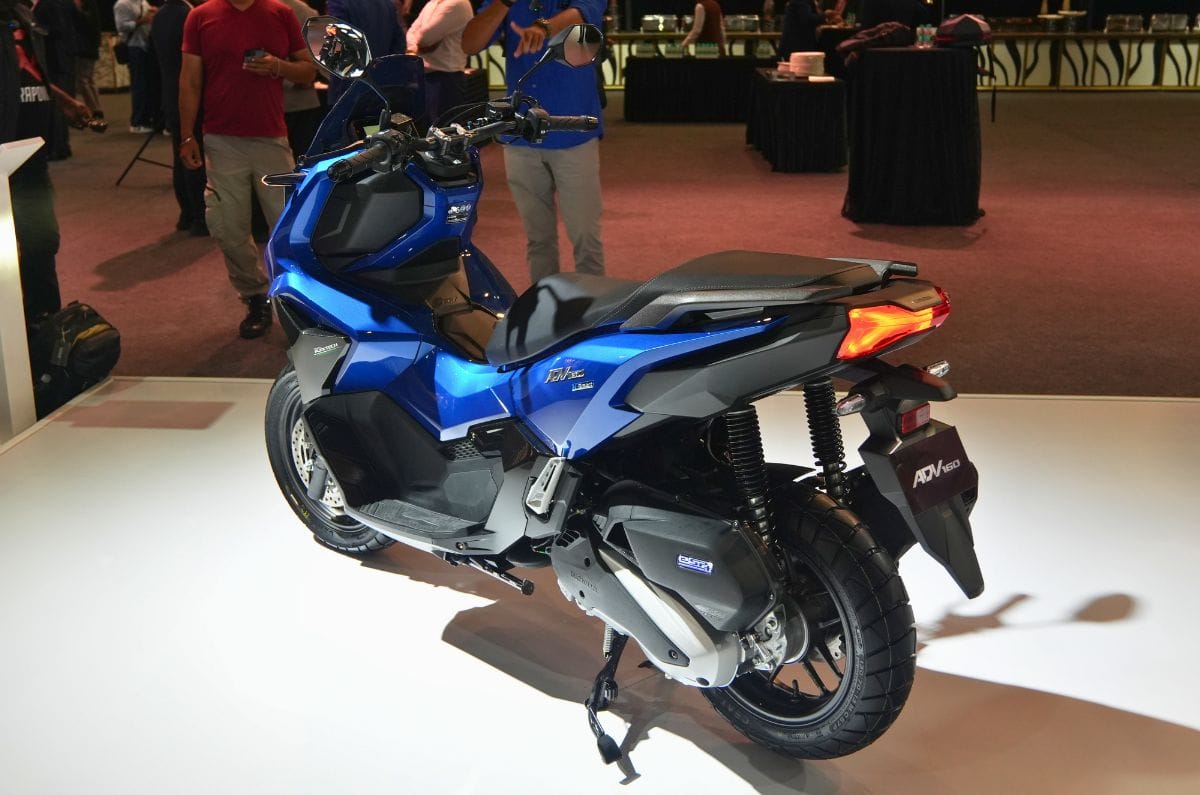
The ADV 160 marks Honda’s entry into India’s rapidly growing maxi-scooter segment, but it has one key differentiator that sets it apart from the liquid-cooled maxi-scooters already on sale – E85 flex-fuel compatibility. Here are a few things you need to know before buying India’s first flex-fuel-compatible scooter.
1. How much does the Honda ADV 160 cost?
The Honda ADV 160 is priced at Rs 1.70 lakh (ex-showroom, Bengaluru), making it one of the more premium scooters on sale in India.
2. Is the Honda ADV 160 E85 compatible?
Yes. The ADV 160 is Honda’s first two-wheeler in India to be compatible with E85 fuel. Its engine can run on petrol containing anywhere between 0 and 85 percent ethanol, without the rider having to make any changes.
3. What engine does the Honda ADV 160 get?
Power comes from a 156.93cc, single-cylinder, liquid-cooled engine producing 16.3hp and 14.9Nm. It is paired with a CVT automatic gearbox.
4. How heavy is the Honda ADV 160?
The ADV 160 tips the scales at 133kg kerb, which is noticeably heavier than a conventional 125cc scooter, although it also packs in a higher-displacement engine that puts out more power than a conventional air-cooled mill powering regular scooters.
5. How much ground clearance does the Honda ADV 160 have?
The ADV 160 has 165mm of ground clearance, which, along with its larger wheels, should make it better suited to broken roads and speed breakers than most conventional scooters.
6. What are its wheel sizes?
It gets a 14-inch front and 13-inch rear wheel, both larger than those on most mainstream Indian scooters and in line with some of its compatriots.
7. Does the ADV 160 get ABS?
Yes, but only single-channel ABS, operating on the front wheel with a rear disc brake.
8. Does it get traction control?
Yes. Honda’s HSTC (Honda Selectable Torque Control) is standard, helping reduce rear-wheel slip on low-grip surfaces.
9. How practical is the ADV 160?
It gets 27 litres of underseat storage, along with a USB Type-C charging port. While adding to the premium appeal, the 5-inch TFT instrument cluster also offers smartphone connectivity through Honda RoadSync.
10. Is the ADV 160 actually an adventure scooter?
Not in the traditional sense. Despite its styling, ground clearance and larger wheels, the ADV 160 is primarily a road-going scooter. Its hardware is better suited to dealing with poor roads and occasional rough surfaces than serious off-road riding.