
Nepal Flood : नेपाल बाढ़ की चपेट में कैलाश मानसरोवर तीर्थयात्रियों का ग्रुप, 77 लोग इमिग्रेशन सेंटर पर थे, 743 लोग तिब्बत, सद्गुरु जग्गी वासुदेव ने दिया बड़ा अपडेट

Nepal Flood : नेपाल बाढ़ की चपेट में कैलाश मानसरोवर तीर्थयात्रियों का ग्रुप, 77 लोग इमिग्रेशन सेंटर पर थे, 743 लोग तिब्बत, सद्गुरु जग्गी वासुदेव ने दिया बड़ा अपडेट

nepal flood

नेपाल-तिब्बत बॉर्डर पर बुधवार सुबह अचानक आई बाढ़ ने  भारी तबाही मचाई। आध्यात्मिक गुरु सद्गुरु जग्गी वासुदेव ने सोशल मीडिया पर पोस्ट कर तिब्बत के ग्यिरोंग में आई भयावह फ्लैश फ्लड को लेकर चिंता जताई है। उन्होंने अपने ग्रुप को लेकर जानकारी दी। एक्स पर ट्‍वीट कर बताया गया कि उनके कैलाश यात्रा समूहों में से एक समूह बाढ़ की चपेट में आ गया।

ALSO READ: नेपाल में भीषण बाढ़ से तबाही, 55 लोगों की मौत, सैकड़ों लापता, बिहार में भी दहशत

सद्गुरु ने बताया कि यह घटना उस समय हुई जब समूह के सदस्य वापस लौट रहे थे और इमिग्रेशन कार्यालय में मौजूद थे। उनके मुताबिक, बाढ़ के दौरान इमिग्रेशन कार्यालय की इमारत और आसपास का काफी हिस्सा पानी में डूब गया।

उन्होंने कहा कि इमिग्रेशन कार्यालय में मौजूद लोगों के बारे में अभी तक कोई आधिकारिक जानकारी नहीं मिल पाई है। उनकी टीम अधिकारियों के साथ मिलकर प्रभावित इलाके तक पहुंचने की कोशिश कर रही है और जोखिम के बावजूद राहत एवं बचाव कार्यों में सहयोग के लिए तैयार है।

ALSO READ: क्या होती है फ्लैश फ्लड? क्यों पहाड़ों से अचानक आता है बर्बादी का सैलाब और नेपाल प्रलय से भारत क्यों है अलर्ट पर

सद्गुरु ने बताया कि उनके Sojourn में शामिल 21 समूहों में से 495 लोग सुरक्षित वापस लौट चुके हैं। वहीं, 743 लोग इस समय तिब्बत में, 148 लोग नेपाल में और 77 लोग इमिग्रेशन सेंटर पर थे। इसके अलावा नेपाल के तिमुरे में उनके 3 स्वयंसेवक मौजूद हैं। उन्होंने कहा कि उनकी टीम अधिकारियों के संपर्क में है और प्रभावित स्थान तक पहुंचने तथा बचाव अभियान में सहयोग करने के लिए तैयार है।

भारतीय दूतावास ने जारी किए हेल्पलाइन नंबर

भारतीय नागरिकों की मदद और जानकारी के लिए काठमांडू स्थित भारतीय दूतावास ने आपातकालीन नंबर जारी किए हैं। प्रभावित लोग +977 985 131 6807 और +977 970 910 7500 पर संपर्क कर सकते हैं। नेपाल टूरिज्म बोर्ड ने भी मदद के लिए टोल-फ्री नंबर 1234, हॉटलाइन 1144 और टूरिस्ट पुलिस नंबर 9851289445 जारी किया है।
Mercedes-Benz reveals long-wheelbase GLE L in China

Mercedes-Benz reveals long-wheelbase GLE L in China

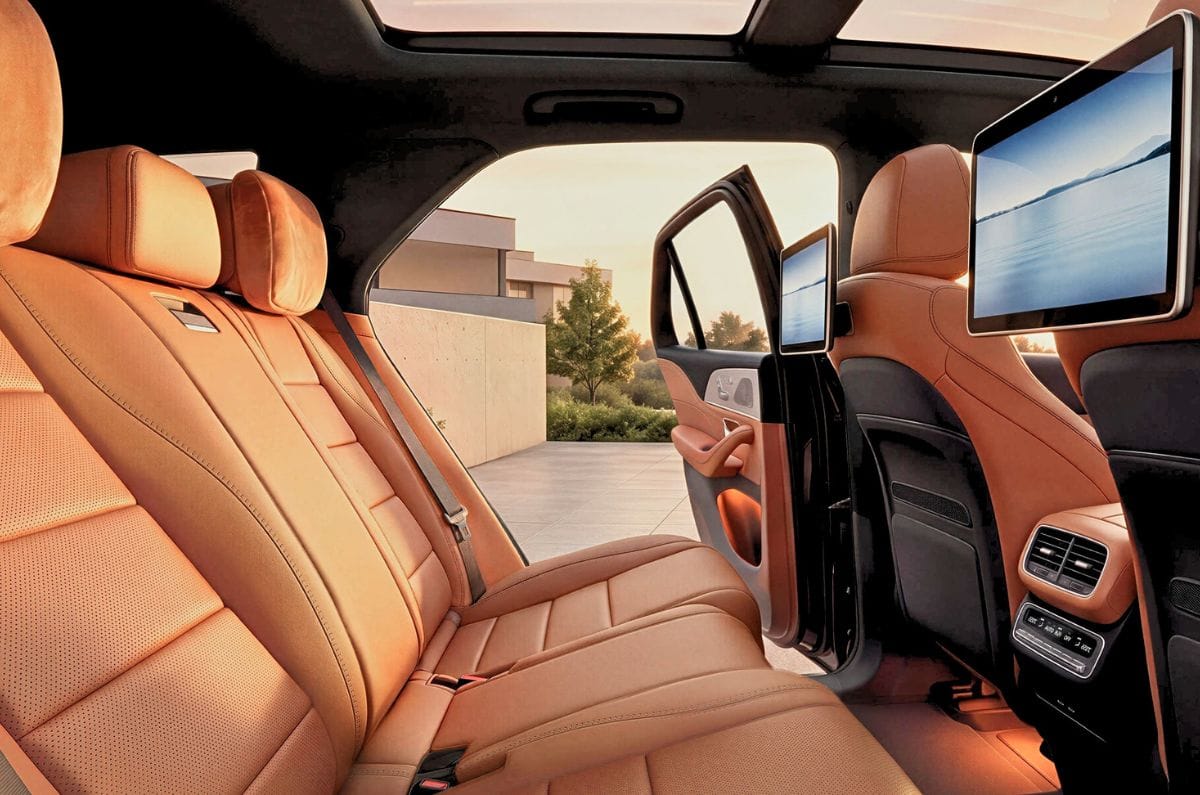
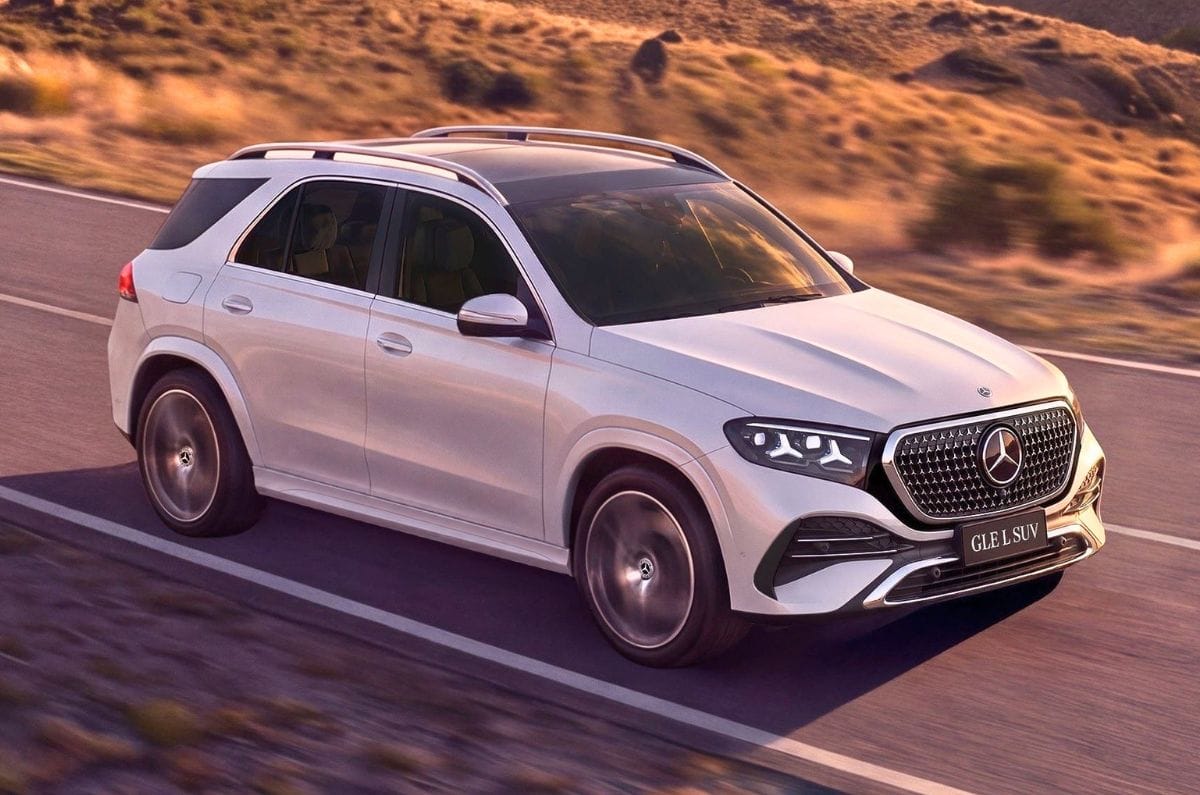
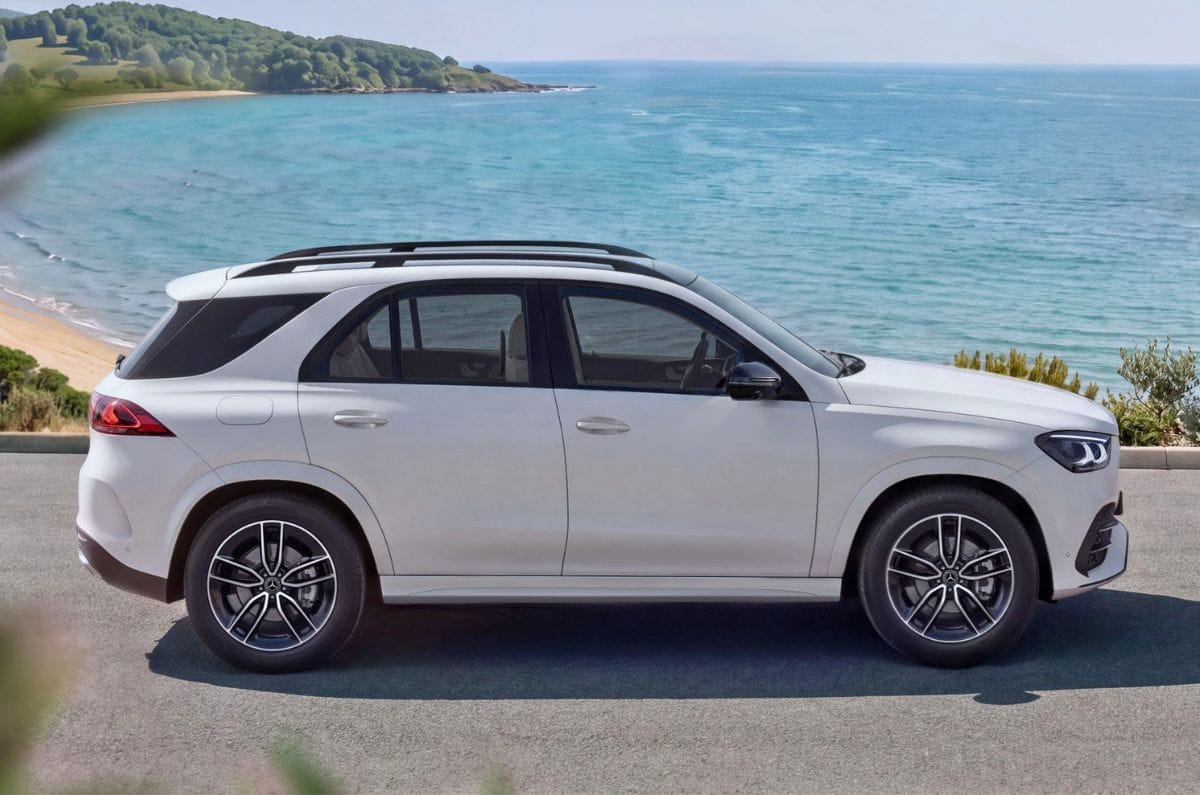
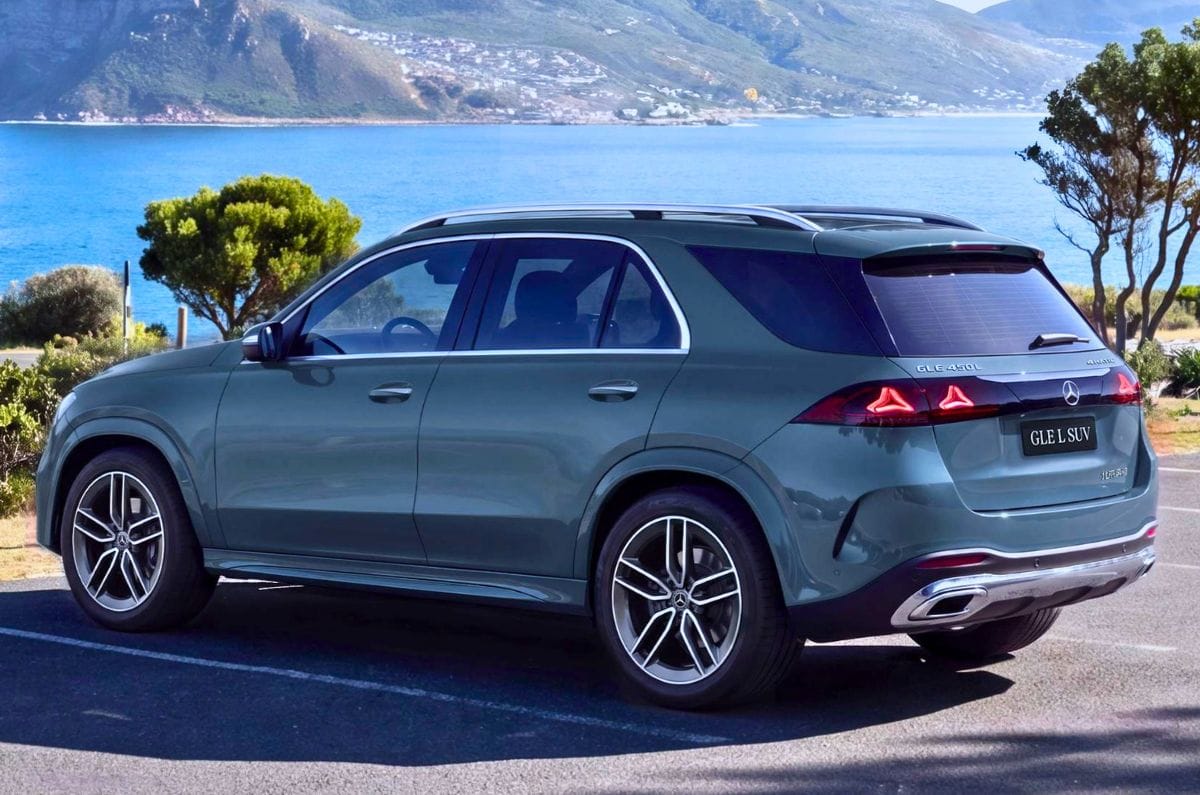
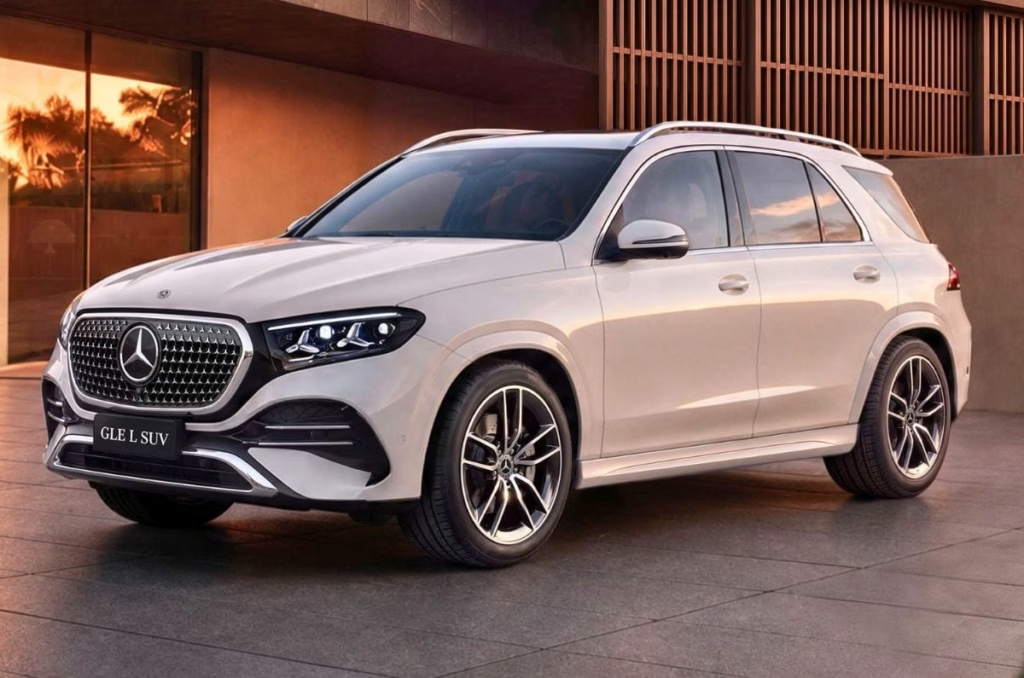
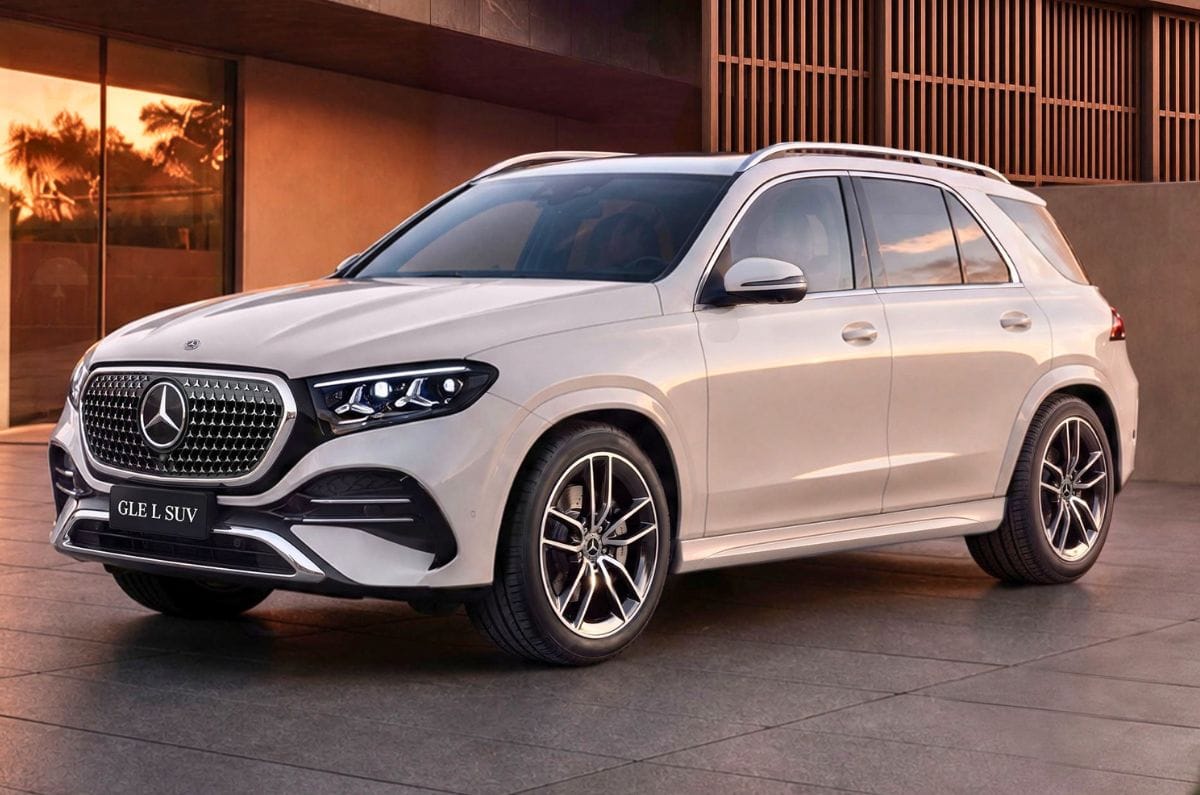
Mercedes-Benz has revealed the long-wheelbase version of the GLE SUV, called the GLE L, at the 2026 Chengdu Auto Show in China. Currently built in China, the Mercedes-Benz GLE L has a 120mm longer wheelbase than the standard-wheelbase model and is offered with two turbo-petrol engine options. 

  1. Engine options include 2.0L 4-cyl turbo-petrol and 3.0L 6-cyl turbo-petrol mills
  2. Gets a boss mode feature that tilts the front passenger seat by 10.91 degrees
  3. Also features new rear seat entertainment screens and a China-specific AI assistant

Mercedes-Benz GLE L: All you need to know

Gets a new boss mode and rear entertainment screens 

What’s new is a boss mode feature, which tilts the front passenger seat by 10.91 degrees for enhanced rear-seat comfort. Mercedes states that this feature is derived from the more opulent Maybach GLS. The GLE L also gets new rear seat entertainment screens and an indigenous AI assistant.

Offers two turbo-petrol engines, which are the same as the standard-wheelbase model

Mercedes-Benz will offer the GLE L in two trim levels: 350 L 4Matic and 450 L 4Matic, with the same turbo-petrol engine options as the standard-wheelbase model. The ‘350’ has a 2.0-litre four-cylinder turbo-petrol engine producing 258hp and 400Nm, while the ‘450’ has a 3.0-litre inline-six turbo-petrol engine that produces 381hp and 560Nm. Both the engines are available with a 45V mild-hybrid assist and are mated to a 9-speed automatic transmission that sends power to all four wheels (AWD). 

Notably, the standard-wheelbase GLE is also offered in a ‘580’ version with a 537hp, 4-litre twin-turbo V8, a plug-in-hybrid ‘450e’, and two diesel versions: 350d and 450d. 

Everything else is similar to the standard-wheelbase model

Save for the additional wheelbase and redesigned alloy wheels, there is no difference in how the Mercedes-Benz GLE LWB looks compared to the standard-wheelbase model. It continues with a gloss-black grille with a chrome surround and a plethora of tristar elements, and the same dual-barrel headlights with tristar-shaped LED DRLs. The rear design is also identical, with wraparound taillights sporting triangular LED elements, joined by a black trim and dual exhaust tips.

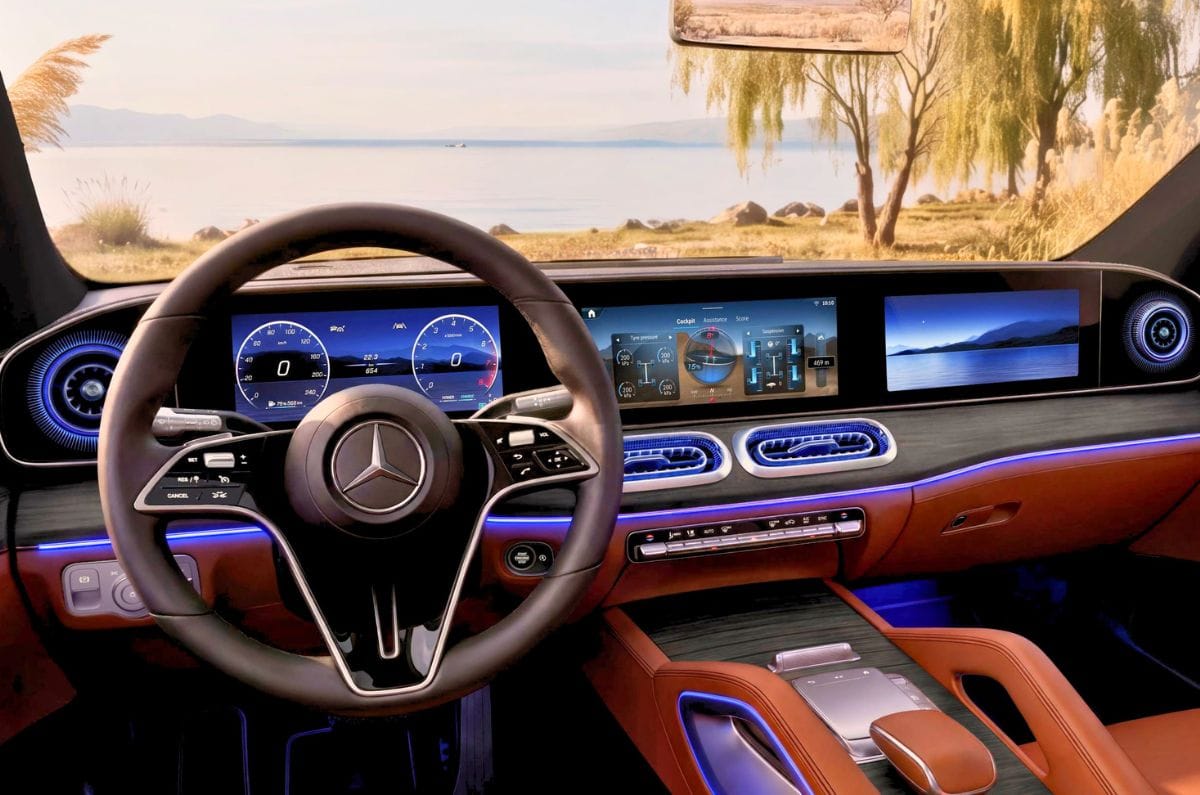
The interior design of the China-spec GLE L is identical to the standard-wheelbase SUV. It features three 12.3-inch screens on the dashboard, one each for the instrumentation, infotainment and front passenger entertainment, and a 3-spoke steering wheel with touch-enabled buttons and physical rocker and roller toggles.

There is no word from Mercedes-Benz about the long-wheelbase GLE’s India launch. The manufacturer offers the E-Class and the V-Class in their respective long-wheelbase avatars in the country. Moreover, there is a growing interest in long-wheelbase cars in the luxury segment, which could make the GLE L an interesting proposition in India. Interestingly, the GLE’s prime rival, the BMW X5, is slated to launch in India in 2027 in a long-wheelbase avatar. 

MG Hector Tomahawk PHEV exterior and interior image gallery

MG Hector Tomahawk PHEV exterior and interior image gallery
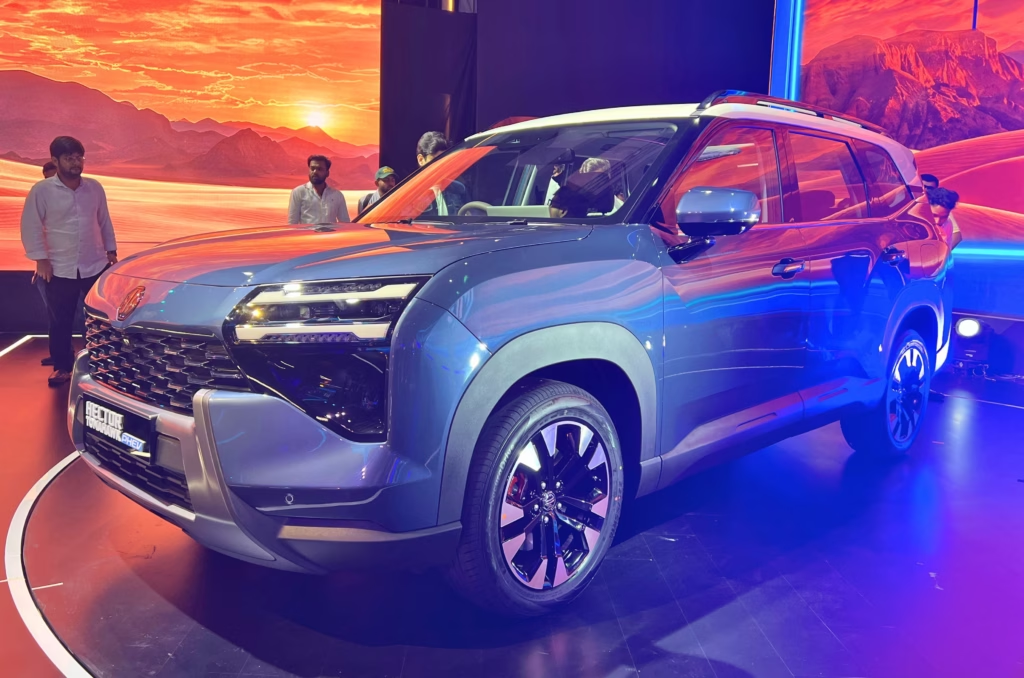
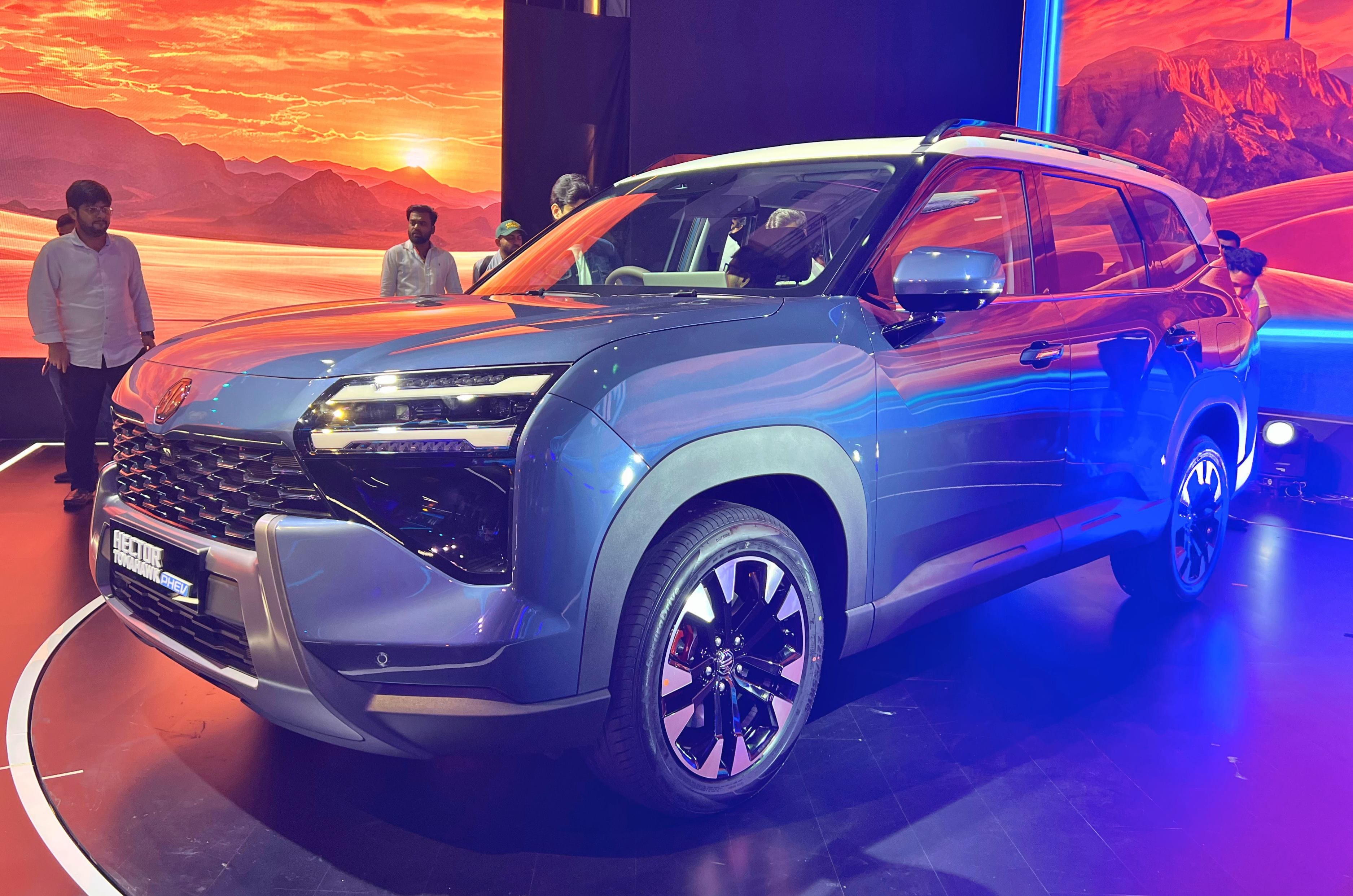
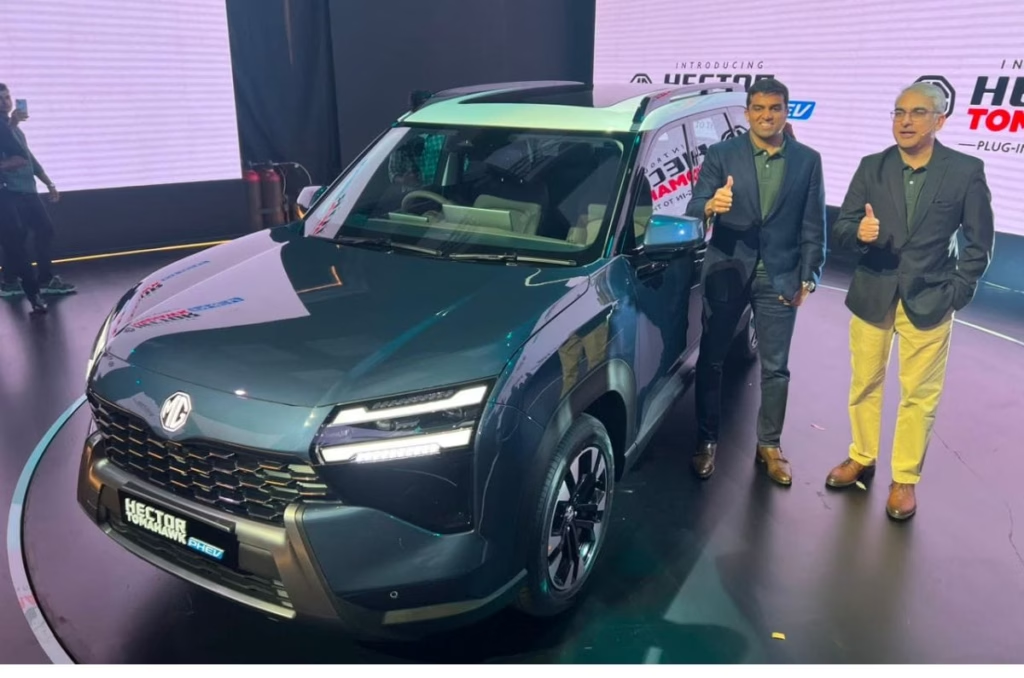
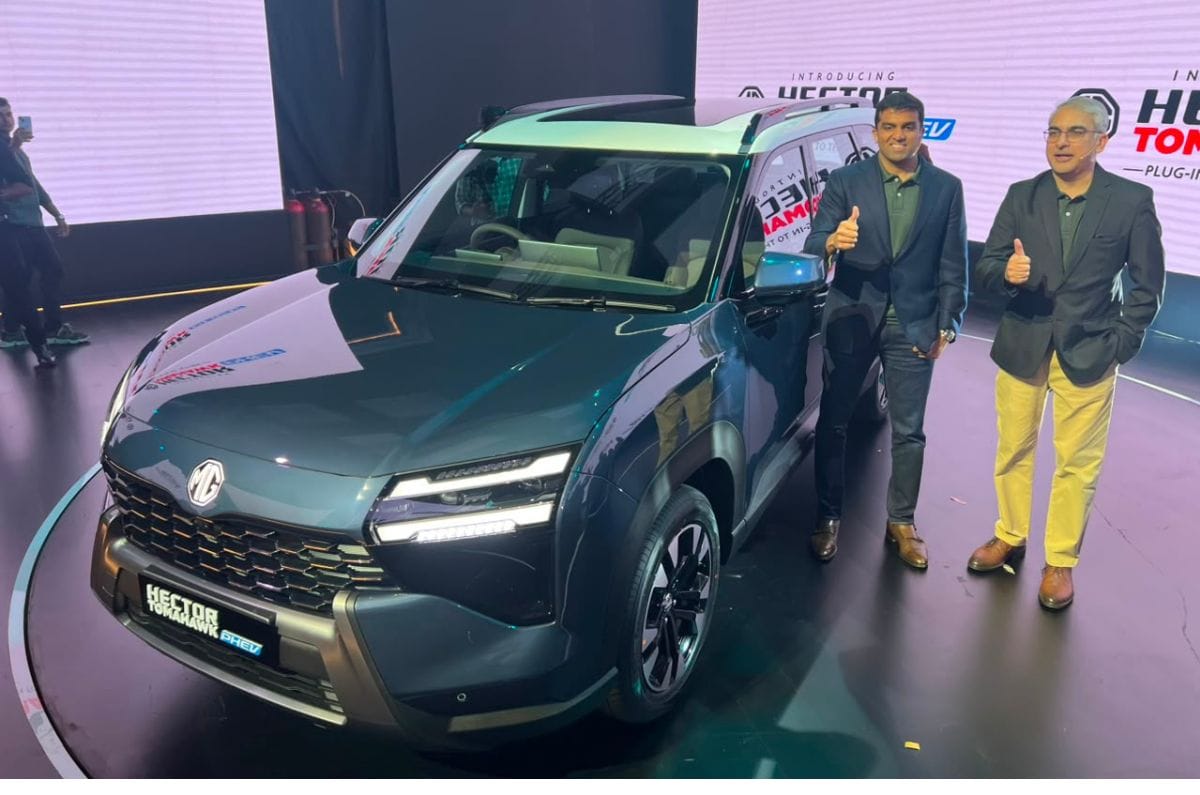
MG Hector Tomahawk PHEV Front Quarter

Alongside the fully electric model, JSW MG Motor has also launched the plug-in hybrid version of the Hector Tomahawk. Called the MG Hector Tomahawk PHEV, it too is based on the company’s ADAPT platform. The plug-in hybrid option pairs a 1.5-litre Atkinson-cycle petrol engine with a single electric motor and a 20.5kWh battery pack. The brand claims a maximum range of over 1,100km (on a full tank and charge), while the quoted 0-100kph time of the MG Hector Tomahawk PHEV is 9 seconds.

Also see

MG Hector Tomahawk EV exterior and interior image gallery

Genesis GV90 exterior and interior design image gallery

Which variant of the MG Hector Tomahawk EV should you buy?

Which variant of the MG Hector Tomahawk EV should you buy?
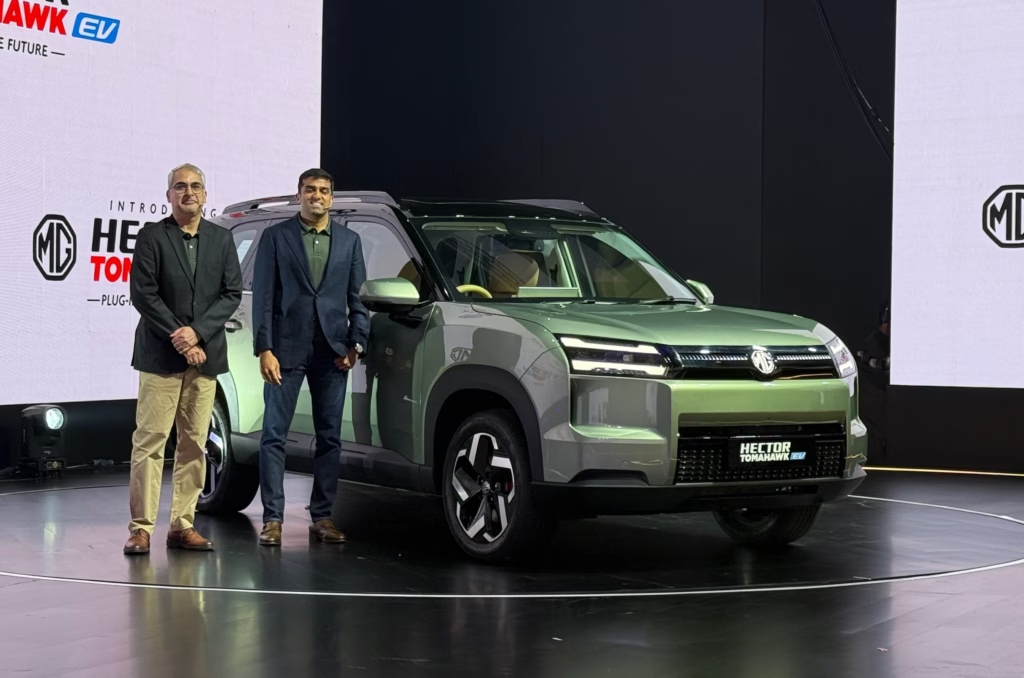
MG Hector Tomahawk EV

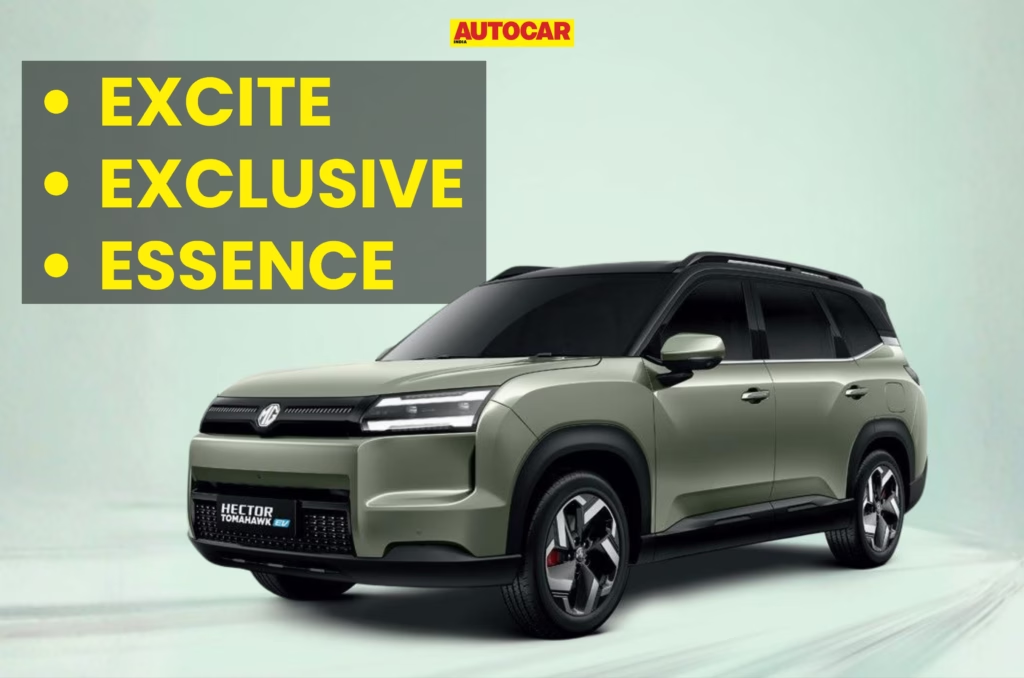
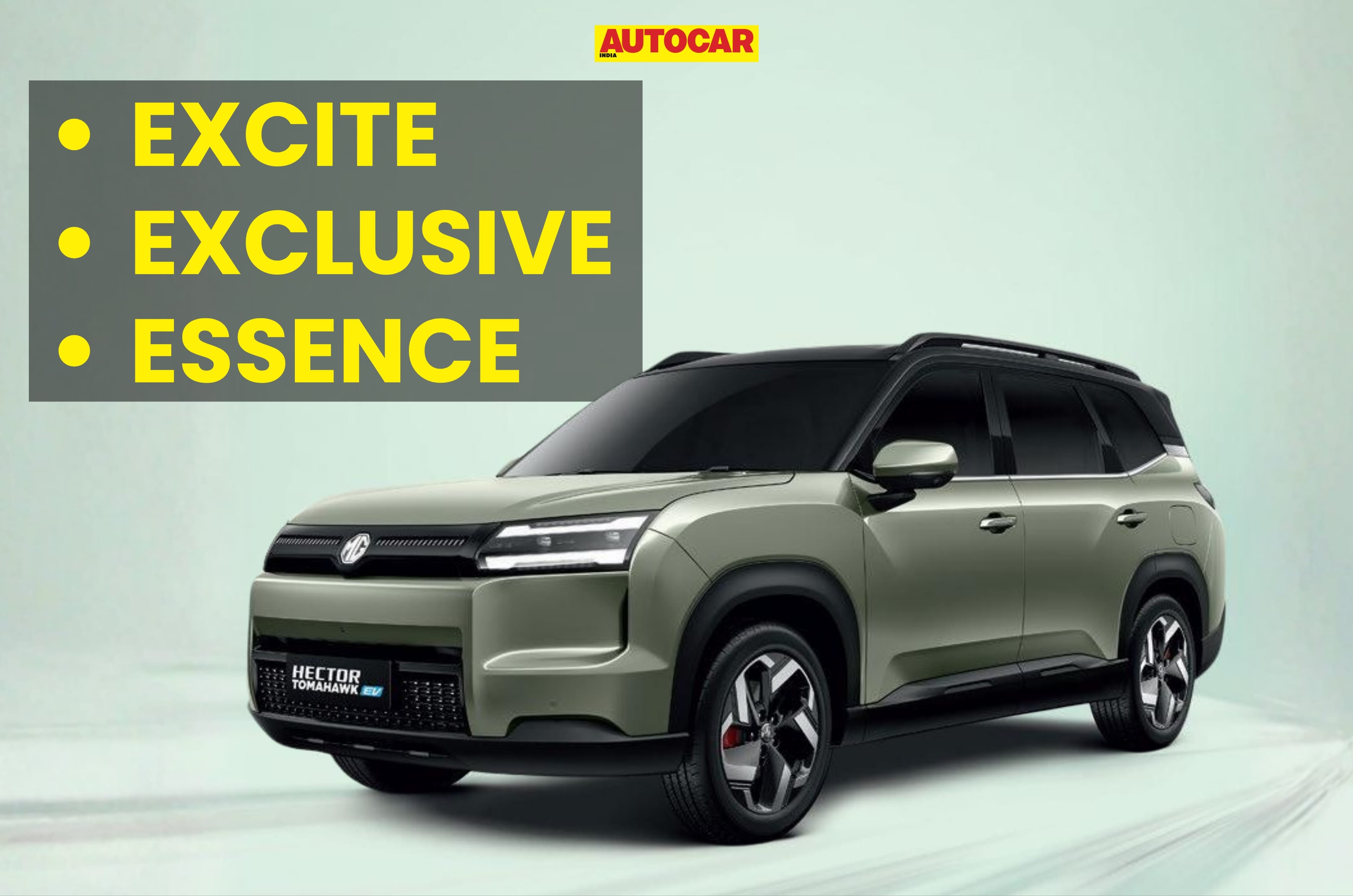
The MG Hector Tomahawk EV is a three-row SUV available in Excite, Exclusive and Essence trims. All three use the same battery pack and electric motor, with the main differences being the features and seating layouts on offer. If you’re considering the Hector Tomahawk EV, here’s a detailed look at which variant makes the most sense.

MG Hector Tomahawk EV: Prices, powertrain specs

TrimBaaS price (Rs)Non-BaaS price (Rs)Difference (Rs)
Excite 7 seater13.99 lakh + 4.9 per km*19.5 lakh5.51 lakh
Exclusive 7 seater15.99 lakh + 4.9 per km*22 lakh6.01 lakh
Essence 5 seater16.99 lakh + 4.9 per km*23 lakh6.01 lakh
Essence 7 seater17.49 lakh + 4.9 per km*23.5 lakh6.01 lakh

*Battery rental fee.

The MG Hector Tomahawk EV, like all MG EVs sold in India (excluding the M9 and the Cyberster), is available with a Battery-as-a-Service (BaaS) scheme that lowers the upfront cost. Notably, buyers opting for BaaS have to pay a battery rental fee of Rs 4.9 per kilometre. For the Hector Tomahawk EV, the scheme reduces the upfront price by up to Rs 6.01 lakh.

All trims feature a 69.2kWh battery pack, which powers a 204hp, 310Nm electric motor mounted on the front axle. The sprint from 0-100kph takes 8.2 seconds. On the Modified Indian Driving Cycle (MIDC), the SUV can go up to 517km on a single charge. As per MG, it takes about 35 minutes to charge the battery from 30 percent to 80 percent with a 90kW DC fast charger. With a 7.4kW AC unit, the carmaker claims a charging time of about 12.5 hours for a 10 percent to 100 percent top-up.

MG Hector Tomahawk EV: Features

Excite

Rs 19.5 lakh

  • Six airbags
  • Electronic stability program (ESP)
  • Traction control system (TCS)
  • Hill hold control
  • ABS and EBD
  • All four disc brakes
  • Electronic parking brake with auto hold
  • TPMS
  • Front and rear defogger
  • Rear wiper and washer
  • Three-point seatbelts for all seats
  • Reverse parking camera
  • 8.8-inch driver’s display
  • 12.8-inch touchscreen
  • Wireless Android Auto, Apple CarPlay
  • AI voice assistant
  • OTA updates
  • Six speakers
  • Steering-mounted controls
  • Leatherette seat upholstery
  • Pro Pet mode
  • Eco, Normal, Sports, Custom drive modes
  • Powered adjustment for front seats
  • Push button start/stop system
  • Powered ORVMs with auto fold and integrated turn indicators 
  • Tilt and telescopic adjustment for steering wheel
  • Cruise control
  • Slide function for second-row seats (7-seater version)
  • Second and third row AC vents
  • 60:40 split seats in the second row with recline function
  • 50:50 split seats in the third row (7-seater version)
  • Front armrest with storage for the driver
  • Type-A and fast charging Type-C ports at the front
  • Fast charging Type-C, Type-A ports in the second row
  • Height-adjustable headrests 
  • LED projector headlights, LED tail lamps
  • LED daytime running lights (DRLs)
  • Illuminated MG logo at the front
  • 18-inch alloy wheels
  • Roof rails

Exclusive

Rs 22 lakh

In addition to Excite

  • 360-degree camera with Transparent Chassis view
  • Rain-sensing wipers
  • Ambient lighting (blue colour only)
  • Panoramic sunroof
  • Ventilated seats at the front
  • 50W wireless charger with cooling
  • Chrome-finish on select exterior trims
  • Automatic headlights
  • Powered tailgate

Essence

Rs 23 lakh-23.5 lakh

In addition to Exclusive

  • Level 2 ADAS
  • Adaptive cruise control
  • Front parking sensors
  • Auto-dimming IRVM
  • Memory function for the driver’s seat
  • Rear window sunshade
  • 15.6-inch touchscreen
  • 10-speaker Infinity sound system
  • Multi-colour ambient lights (256 colours)
  • Rear parcel tray (5-seater version only)
  • Vehicle to load (V2L), vehicle to vehicle (V2V) charging support
  • Vehicle to home (V2H) charging support
  • Red-coloured brake callipers

Which variant of the MG Hector Tomahawk EV should you buy?

The mid-spec Exclusive trim, priced at Rs 22 lakh, ex-showroom, is the one we recommend for the MG Hector Tomahawk EV. Compared to the base Excite, it adds front ventilated seats, a 50W wireless charger with cooling and a powered tailgate, features that should appeal to buyers of such an EV. With the BaaS option, the upfront cost can be reduced by Rs 6.1 lakh (as on August 26, 2026), making for a significant initial saving. Buyers who want the five-seat version will have to choose the top-spec Essence trim, as it is the only one available with this seating configuration. 

What’s good is that there is no difference in performance or range across the lineup. All trims use the same 69.2kWh battery pack and 204hp electric motor, while the MIDC-rated range remains identical at 517km.

MG Hector Tomahawk EV 5-seater vs rivals: Price, specs compared

MG Hector Tomahawk EV 5-seater vs rivals: Price, specs compared
MG Hector Tomahawk EV 5-seater vs rivals

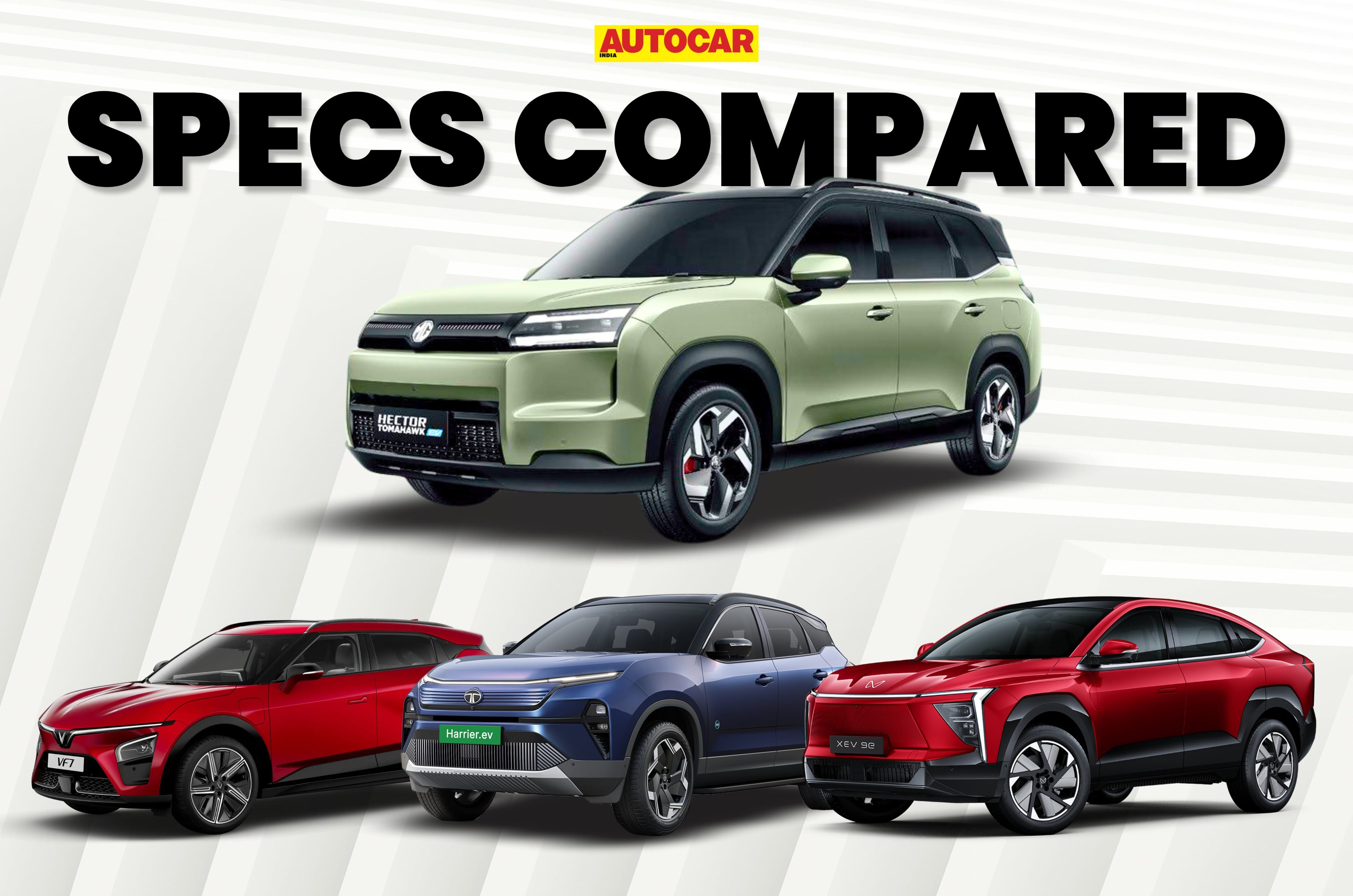
MG Motor India has launched the Hector Tomahawk EV in India as the brand’s contender for the electric midsize SUV segment. In this space, the 5-seat version of the Hector Tomahawk EV rivals the Tata Harrier EV, Mahindra XEV 9e, Vinfast VF7, and BYD Atto 3. Let’s have a look at how MG’s latest SUV stacks up against its peers on paper.

MG Hector Tomahawk EV 5-seater vs rivals: dimensions

Tallest in its segment, and one of the longest

 Hector Tomahawk EVHarrier EVXEV 9eVF7Atto 3
Length (mm)4,7454,6074,7894,5504,455
Width (mm)1,8501,9221,9071,8931,875
Height (mm)1,7701,7401,6941,5961,615
Wheelbase (mm)2,8102,7412,7752,8402,720
Wheel size (inches)1818-19191917-18
Boot space (litres)610502*663537440
Frunk space (litres)N/A35-67150N/AN/A

*Measured till roof instead of parcel tray.

The Hector Tomahawk EV is the second-longest SUV in its segment, falling behind the XEV 9e by only 44mm. That said, the Hector Tomahawk EV extracts a longer wheelbase from its length than the XEV 9e does, but even so, it’s behind the VF7 by a margin of 30mm. The MG electric SUV is the narrowest among its rivals, but edges past all of them on height front. It also claims a 230mm ground clearance, but this is measured at the battery.

Coming to luggage space, the Hector Tomahawk EV has the second-largest boot here, though it doesn’t get a frunk like the Harrier EV and XEV 9e do. At 18 inches, the Hector Tomahawk EV’s alloy wheel sizes are also competitive by segment standards, though the XEV 9e and VF7 offer 19-inchers.

MG Hector Tomahawk EV 5-seater vs rivals: battery and motor

Battery size fits right between those of Harrier EV and XEV 9e

 Hector Tomahawk EVHarrier EVXEV 9eVF7Atto 3
Battery size (kWh)69.265 / 7559 / 7959.6 / 7049.92 / 60.48
Electric motor setupSingle, frontSingle, rear / Dual, front and rearSingle, rearSingle, front / Dual, front and rearSingle, front
Power (hp)204238 / 313231 / 286177 / 204, 353204
Torque (Nm)310315 / 504380250 / 310, 500310
Gearbox1-speed AT1-speed AT1-speed AT1-speed AT1-speed AT
Drive layoutFWDRWD / RWD, AWDRWDFWD / FWD, AWDFWD
Claimed 0-100kph time (seconds)8.26.3 (AWD)6.8 (79kWh)9.1 / 8.5 (FWD), 5.8 (AWD)7.9 / 7.3

Under the skin, the Hector Tomahawk EV comes fitted with a sole 69.2kWh battery pack. At that capacity, it fits quite well between the ones offered by the Harrier EV and XEV 9e, comes very close to the top-spec unit of the VF7, and outsizes both of the Atto 3’s battery options. The Hector Tomahawk EV’s battery powers a sole front-mounted electric motor, making for a front-wheel drive layout. Rivals like the Harrier EV and VF7 can be had with all-wheel drive, and the XEV 9e is purely rear-wheel drive.

In terms of output, the Hector Tomahawk EV perfectly matches the Atto 3 and the 70kWh FWD version of the VF7, but significantly behind the XEV 9e and Harrier EV. Higher-powered versions of the Mahindra and Tata SUVs claim sub-7-second 0-100kph times, while the Hector Tomahawk EV’s acceleration figure slots between those of the Atto 3 and VF7.

MG Hector Tomahawk EV 5-seater vs rivals: range and charging

Range is on the lower end of the segment, and charging times are the highest

 Hector Tomahawk EVHarrier EVXEV 9eVF7Atto 3
Battery capacity (kWh)69.265 / 7559 / 7959.6 / 7049.92 / 60.48
Drive layoutFWDRWD / RWD, AWDRWDFWD / FWD, AWDFWD
MIDC range (km)517538 / 627 (RWD), 622 (AWD)542 / 656438 / 532 (FWD), 510 (AWD)468 / 521
7.2kW AC charging time (hours)12.59.3 / 10.78.7 / 11.78.0 / 9.5-10
11.2kW AC charging time (hours)6 / 8
DC charging time (minutes)35 (90kW)25 (100kW) / 25 (120kW)20 (140kW) / 20 (180kW)24 (100kW) / 28 (110kW)50 (88kW)

Coming to range, the Hector Tomahawk EV carries the lowest MIDC figure when compared with similarly-sized batteries offered by rivals. In fact, even the 60.48kWh Atto 3 and the smaller-battery versions of the Harrier EV and XEV 9e boast higher range figures than that of the Hector Tomahawk EV. The MG SUV also claims the longest AC charging time, more than even the 75kWh and 79kWh variants of the Harrier EV and XEV 9e, respectively.

MG Hector Tomahawk EV 5-seater vs rivals: price

Substantially cheaper than top-spec variants of competitors

 Price range (Rs, lakh)
Hector Tomahawk EV23.00 (16.99 w/ BaaS)
Harrier EV*21.69-29.19
XEV 9e*21.90-29.35
VF722.99-28.09
Atto 324.99-34.49

*Prices exclusive of home charger and installation costs.

The 5-seat configuration for the Hector Tomahawk EV is available only in the top-spec Essence variant, and is priced at Rs 23 lakh. This makes the Hector Tomahawk EV much more affordable than the equivalent top-spec versions of its rivals, with the Atto 3 commanding the highest premium at over Rs 11 lakh – the BYD SUV is retailed via the CKD route in India and thereby attracts higher taxation.

It’s also worth noting that MG offers the Hector Tomahawk EV with a segment-first battery-as-a-service (BaaS) scheme. This knocks off an additional Rs 6 lakh from the sticker price, and introduces a battery rental fee of Rs 4.9/km that is to be paid on a monthly basis. At the BaaS price, the Hector Tomahawk EV competes with electric SUVs of a segment below and even undercuts a lot of them, making for stellar value.

All prices are ex-showroom, India.

यशस्वी जायसवाल को सस्ते में छोड़ने पर संजय मांजरेकर ने ट्वीट कर दिखाई नाराजगी

भारत के पूर्व बल्लेबाज संजय मांजरेकर ने युवा खिलाड़ियों वैभव सूर्यवंशी और यशस्वी जायसवाल से जुड़े अनुशासनहीनता के मामलों से निपटने के तरीके को लेकर अंतरराष्ट्रीय क्रिकेट परिषद (ICC) और भारतीय क्रिकेट बोर्ड (BCCI) की आलोचना की है।उन्होंने कहा कि यह दोनों संस्थाएं नरम रवैया अपना रही हैं जिससे खिलाड़ियों को अनुशासनहीनता के लिए प्रोत्साहन मिल रहा है।

मांजरेकर ने एक्स पर लिखा, ‘‘आईसीसी और बीसीसीआई, वैभव ने हाल ही में भारत ​​ए के लिए और अब जायसवाल ने (अनुशासनहीनता दिखाई है)। अगर आप उनका इस तरह के व्यवहार में बचाव करते रहेंगे तो आप उन्हें ऐसा व्यवहार दोहराने के लिए प्रशिक्षित कर रहे हैं। यह खेल के लिए अच्छा नहीं है और सबसे महत्वपूर्ण बात यह है कि यह उनके भविष्य के लिए भी अच्छा नहीं है।’’

कोलंबो में दूसरे टेस्ट के पहले दिन मैदान पर हुई कहासुनी के लिए जायसवाल और श्रीलंका के तेज गेंदबाज असिथा फर्नांडो पर उनकी मैच फीस का 25 प्रतिशत जुर्माना लगाया गया। दोनों को एक-एक डिमेरिट अंक भी दिया गया।भारत की पहली पारी के 17वें ओवर में फर्नांडो ने जायसवाल को आउट किया जिसके बाद दोनों में कहासुनी हो गई थी।जून में 15 वर्षीय बल्लेबाज सूर्यवंशी भारत ए की तरफ से खेलते हुए श्रीलंका ए के एक खिलाड़ी के साथ तीखी बहस में उलझ गए थे और हाथापाई की नौबत तक आ गई थी।

हालांकि इससे पहले भारत के बल्लेबाजी कोच सितांशु कोटक ने भी कहा था कि यशस्वी जायसवाल को अशिता फर्नाडो के इतने करीब नहीं जाना चाहिए। सितांशु कोटक ने कहा, “मुझे लगता है कि गेंदबाज़ ने कुछ कहा और यह जोश-जोश में हुआ। ज़ाहिर है, यशस्वी को उनके इतना करीब नहीं जाना चाहिए था, लेकिन जोश-जोश में ऐसा हो जाता है।”

श्रीलंका के तेज़ गेंदबाज़ी कोच रयान वैन नीकेर्क की राय भी कुछ ऐसी ही थी। उन्हें लगा कि यह कड़े मुकाबले वाले दिन का हिस्सा था और उन्होंने इसे “भावनाओं के उबाल” का नतीजा बताया। “देखिए, टेस्ट क्रिकेट मुश्किल होता है, है ना? जब आप भारत जैसी टीम के खिलाफ खेल रहे हों, तो आप बस पीछे हटकर गेंदबाजी नहीं कर सकते। मुझे लगता है कि हमारी तरफ से, हमें हर समय चुनौती पेश करनी होगी और कुछ न कुछ करने की कोशिश करनी होगी।”

उन्होंने आगे कहा,”इसलिए, मेरे नजरिए से, मैंने गेंदबाजों से आगे बढ़कर कुछ करने को कहा है। शायद तीखी बातें भावनाओं के उबाल का नतीजा हैं। मैं इसे मैच रेफरी पर छोड़ता हूं कि वे इसे कैसे देखते हैं।”

Which variant of the MG Hector Tomahawk PHEV should you buy?

Which variant of the MG Hector Tomahawk PHEV should you buy?

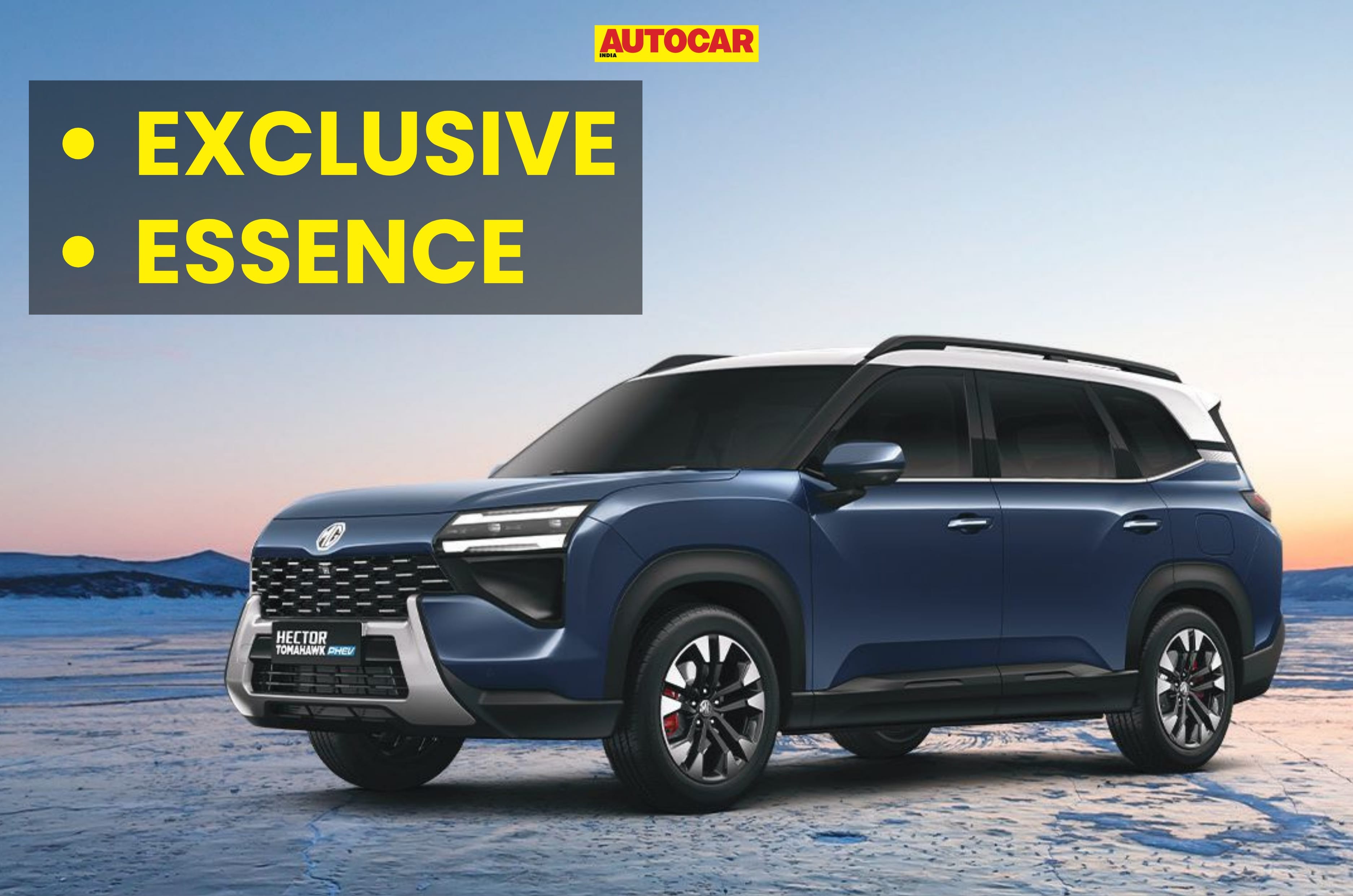
MG has launched the Hector Tomahawk PHEV as the first mass-market plug-in-hybrid (PHEV) car in India, priced from Rs 25.70 lakh (ex-showroom). It is offered in two trims: Exclusive and Essence, and like other MG cars, it is equipped with a plethora of modern-day features. If you are interested in the MG Hector Tomahawk PHEV, which variant should you choose? Let us find out.  

MG Hector Tomahawk PHEV powertrain options and prices

Both Hector Tomahawk PHEV variants get the same 1.5L engine and 20.5kWh battery

The MG Hector Tomahawk PHEV is offered with a 1.5-litre naturally aspirated petrol engine producing 102hp and 125Nm. It gets a 20.5kWh battery pack powering an electric motor producing 201hp and 237Nm. The battery pack has an indicative claimed range of 115km, and combined with the petrol engine, it could have a total range of around 1,100km. Both the Exclusive and Essence variants are offered with the same powertrain. 

MG Hector Tomahawk PHEV variant-wise BaaS, non-BaaS prices


Hector Tomahawk PHEV Exclusive

Hector Tomahawk PHEV Essence

Non-BaaS price

Rs 25.70 lakh

Rs 27.80 lakh 

BaaS price

Rs 21.79 lakh + Rs 3.2 per km*

Rs 23.89 lakh + Rs 3.2 per km*

*Rs 3.2 per km is charged as the battery rental fee for the battery-as-a-service (BaaS) scheme.

MG Hector Tomahawk PHEV variant-wise features

Exclusive

Price: Rs 25.70 lakh (or Rs 21.79 lakh + Rs 3.2 per km with BaaS)

  • Automatic LED projector headlights
  • LED taillights
  • LED DRLs
  • Rear LED fog lamps
  • Illuminated MG logo at the front
  • 18-inch alloy wheels
  • ORVM-mounted turn indicators
  • Glass antenna
  • Roof rails
  • Rear spoiler
  • Chrome finish on window beltline and door handles
  • Black body cladding on side and wheel arches
  • Brown and grey interior
  • Blue ambient lighting
  • 12.8-inch touchscreen infotainment system
  • 6-speaker sound system
  • Wireless Android Auto and Apple CarPlay support
  • 8.8-inch digital driver’s display
  • Panoramic sunroof
  • 6-way powered driver’s seat
  • 4-way powered co-driver’s seat
  • Ventilated front seats
  • Powered tailgate
  • 50W wireless phone charger
  • Leatherette seat upholstery
  • Leatherette materials on steering wheel and door pads
  • Drive modes: Eco, Normal, Sports, Custom
  • Rain-sensing wipers
  • PM2.5 air filter
  • Push-button start/stop
  • Powered ORVMs
  • Steering-mounted audio controls
  • Tilt and telescopic adjustable steering column
  • Cruise control
  • 2nd row features: 60:40 split, seat recline, one-touch tumble, centre armrest with cupholders
  • 3rd row features: 50:50 split
  • USB Type-A and Type-C chargers in 1st and 2nd rows
  • All four power windows with one-touch up/down and anti-pinch functions
  • Rear wiper and washer
  • Pet mode, Nap mode and Camp mode
  • Connected car technology
  • 6 airbags
  • 360-degree camera with under-bonnet and wheel views
  • Digital rearview monitor
  • Reverse parking sensors
  • All four disc brakes
  • Electronic parking brake with auto hold
  • TPMS
  • Front and rear defogger
  • ISOFIX child seat anchors
  • Hill hold control
  • Traction control
  • ESP
  • ABS+EBD


Essence (features over Exclusive)

Price: Rs 27.80 lakh (or Rs 23.89 lakh + Rs 3.2 per km with BaaS)

  • 15.6-inch touchscreen infotainment system
  • 10-speaker Infinity sound system
  • Rear window sunshades
  • Driver’s seat memory and welcome/exit retract functions
  • V2L, V2V and V2H charging support
  • Level-2 ADAS
  • Auto-dimming IRVM
  • Front parking sensors
  • 256-colour ambient lighting 
  • Red brake callipers
  • Sequential turn indicators

Which MG Hector Tomahawk PHEV variant should you buy?

We recommend the entry-spec Essence variant, as it is offered with a lot of modern-day features like a 12.8-inch touchscreen infotainment system, a panoramic sunroof, a powered tailgate and a 360-degree camera. It also costs Rs 2.10 lakh less than the top-spec Essence, making it the more value-for-money Hector Tomahawk PHEV variant. 

Prices are ex-showroom, India.

Bajaj to launch six more motorcycles before festive season

Bajaj to launch six more motorcycles before festive season
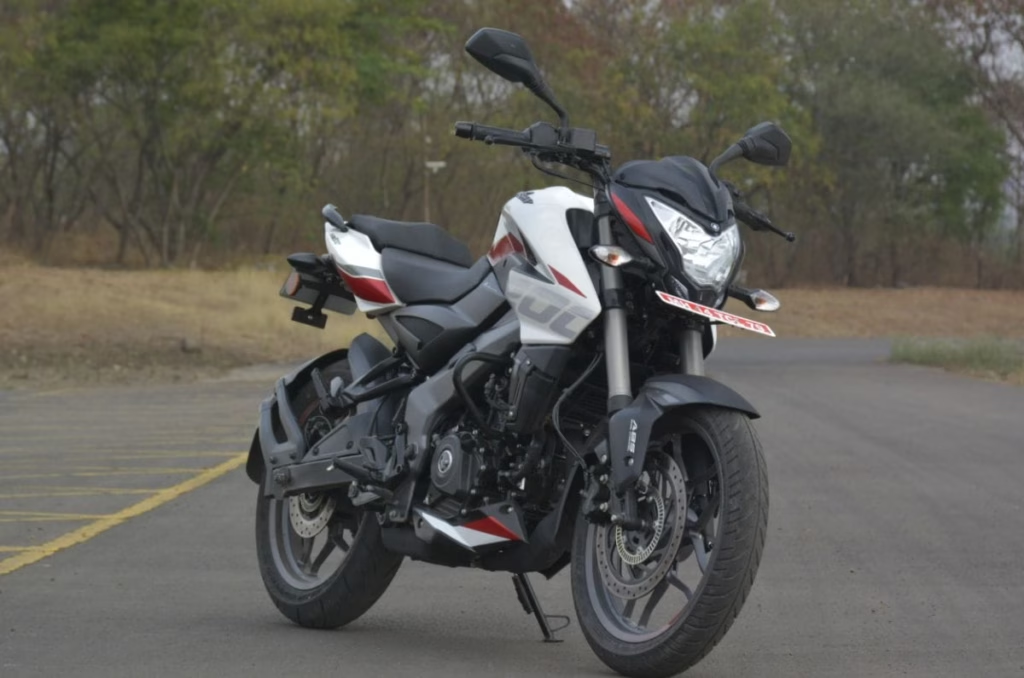
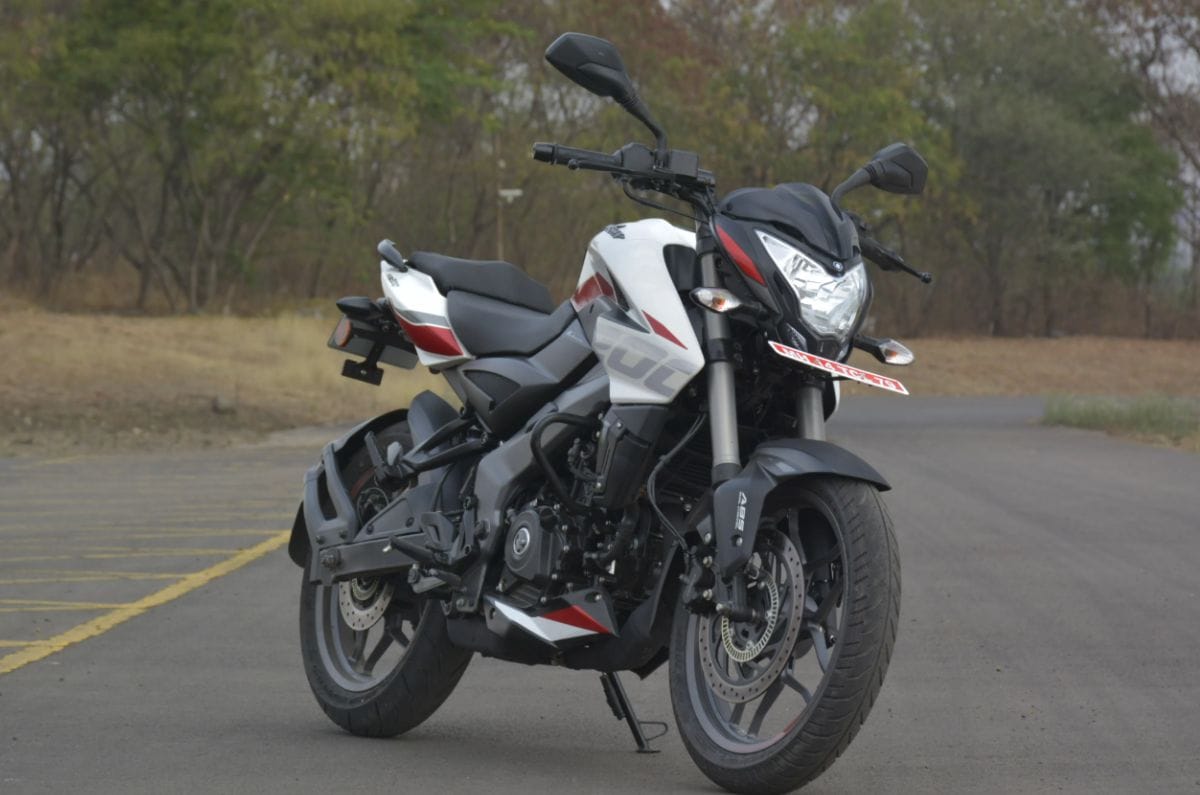
Front left outside image of the Pulsar NS200

Bajaj has been having an eventful August with four launches, the freshly updated Pulsar 125/150 and the new Pulsar N160 S and SS. Seems like they aren’t planning to slow down any time soon. The company has said two of the 10 models would be all-new Pulsars, while the rest would comprise new variants and product upgrades. “Our 150 and 125 are the second launch in this journey,” said Sumeet Narang, President, Marketing, Bajaj Auto. “We will meet you soon again. There’s a lot of stuff that we will still be coming up with in the coming days.”

  1. Bajaj Pulsar was the third best-selling motorcycle range in July 2026
  2. After original and N Pulsars, NS line is expected to be updated
  3. Bajaj dual-sport and Triumph Bonneville 400 will also arrive soon

Pulsar portfolio takes shape

All models are expected to get updates

The launch comes as the Pulsar nameplate remains one of India’s largest-selling motorcycle ranges. It ranked third in the July motorcycle sales chart with 66,156 units dispatched, according to AutoPunditz. Bajaj’s sports motorcycle segment, meanwhile, grew about 50% year on year in the April-June quarter, with Pulsar, Avenger and Dominar recording double-digit growth.

The company has also said upgrades are planned across its 125-160cc motorcycle range. Narang said the refreshed range will be organised around the three Pulsar platforms. “Three very clear distinct platforms, the original, the N and the NS,” he said, with each aimed at a different customer and riding use case.

Triumph Bonneville 400 and Bajaj’s first dual-sport also in the works

Bajaj is also looking to expand manufacturing capacity

We had just reported that Bajaj’s first dual-sport motorcycle was spotted testing again. Our reports indicate that the motorcycle will launch in Brazil before the end of this year, making its way to India at a later time. Currently, it’s unclear if Bajaj is counting that as a part of this 10-Model portfolio. Besides that, Bajaj is also expected to launch the Triumph Bonneville 400, long awaited retro cousin of the existing Triumph 400s.
Speaking of which, the launches come ahead of Bajaj’s planned expansion of annual manufacturing capacity from about 72 lakh vehicles to more than 90 lakh. The company has said the additional capacity will support growing demand across the board. It is evaluating brownfield expansion and a greenfield facility, with the location and investment yet to be finalised. The company has not yet declared any dispatch dates, but clearly they’re looking at a packed schedule inching closer to the festive season.

With inputs from Stephen Raj Antony.
 

MG Hector Tomahawk PHEV launched at Rs 25.69 lakh

MG Hector Tomahawk PHEV launched at Rs 25.69 lakh
MG-Hector-Tomahawk-PHEV

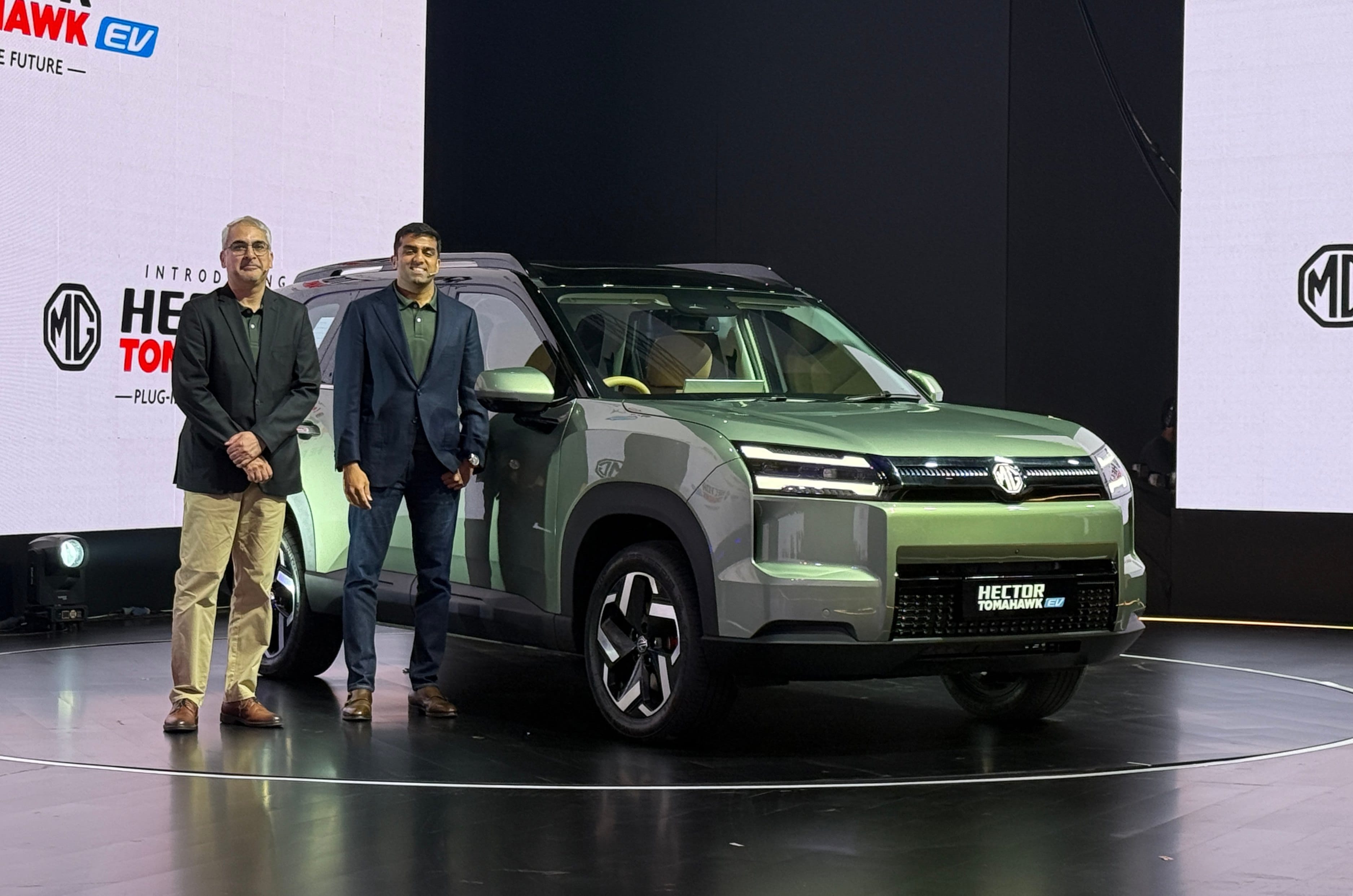
JSW MG Motor India has launched the Hector Tomahawk PHEV at a price of Rs 25.69 lakh (ex-showroom) alongside the all-electric version of this brand-new SUV. This becomes the first mainstream plug-in hybrid SUV in our market. It is powered by a 1.5-litre, naturally aspirated petrol engine paired to a 20.5kWh battery for a claimed fuel economy of around 40kpl and an electric-only range of over 115km. MG claims that the Hector Tomahawk can deliver over 1100km of range with a full tank of fuel and a fully charged battery. Bookings for the Tomahawk PHEV have commenced today and deliveries will begin in November this year. 

Unlike the Hector Tomahawk EV that’s available in both 5- and 7-seater configurations, the PHEV is only available in a 7-seater configuration. MG is also offering the Tomahawk PHEV under the BaaS program, where prices start from Rs 21.79 lakh and Rs 3.20 is charged additionally on the battery rental. 

MG Hector Tomahawk EV launched at Rs 19.49 lakh

MG Hector Tomahawk EV launched at Rs 19.49 lakh
MG Hector Tomahawk EV

JSW MG Motor India has launched the Hector Tomahawk EV at a starting price of Rs 19.49 lakh (ex-showroom), while prices under its Battery-as-a-Service (BaaS) programme start at Rs 13.99 lakh. The electric SUV gets a 69.2kWh battery and is available in five and seven-seat configurations. The Tomahawk EV is the first MG model in India based on the brand’s ADAPT architecture. 

  1. Deliveries to commence in September
  2. Gets a 15.6-inch touchscreen and 8.8-inch digital driver’s display
  3. 204hp electric motor develops 310Nm
  4. 90kW DC charging; 30-80 percent in 35 minutes

MG Hector Tomahawk EV: price and variants

VariantSeatingEx-showroom price
Excite7-seatRs 19.49 lakh
Exclusive7-seatRs 21.99 lakh
Essence7-seatRs 23.49 lakh
Essence5-seatRs 22.99 lakh

The Hector Tomahawk EV is priced from Rs 19.49 lakh to Rs 23.49 lakh (ex-showroom). The five-seat version is offered only in the Essence variant and is priced at Rs 22.99 lakh, while the seven-seat version is available in Excite, Exclusive and Essence trims. 

MG is also offering the Hector Tomahawk EV under its Battery-as-a-Service (BaaS) programme, with prices starting at Rs 13.99 lakh. Buyers opting for BaaS pay a separate battery rental of Rs 4.90 per km. MG has not disclosed variant-wise BaaS prices.

The prices are introductory and applicable to limited units only.

In terms of rivals, the Hector Tomahawk EV will primarily face the Mahindra XEV 9S and Kia Carens Clavis EV, both of which are available with three-row seating. The Tomahawk EV’s five-seat version also broadens its competition to other electric SUVs in this price range.

MG Hector Tomahawk EV: exterior

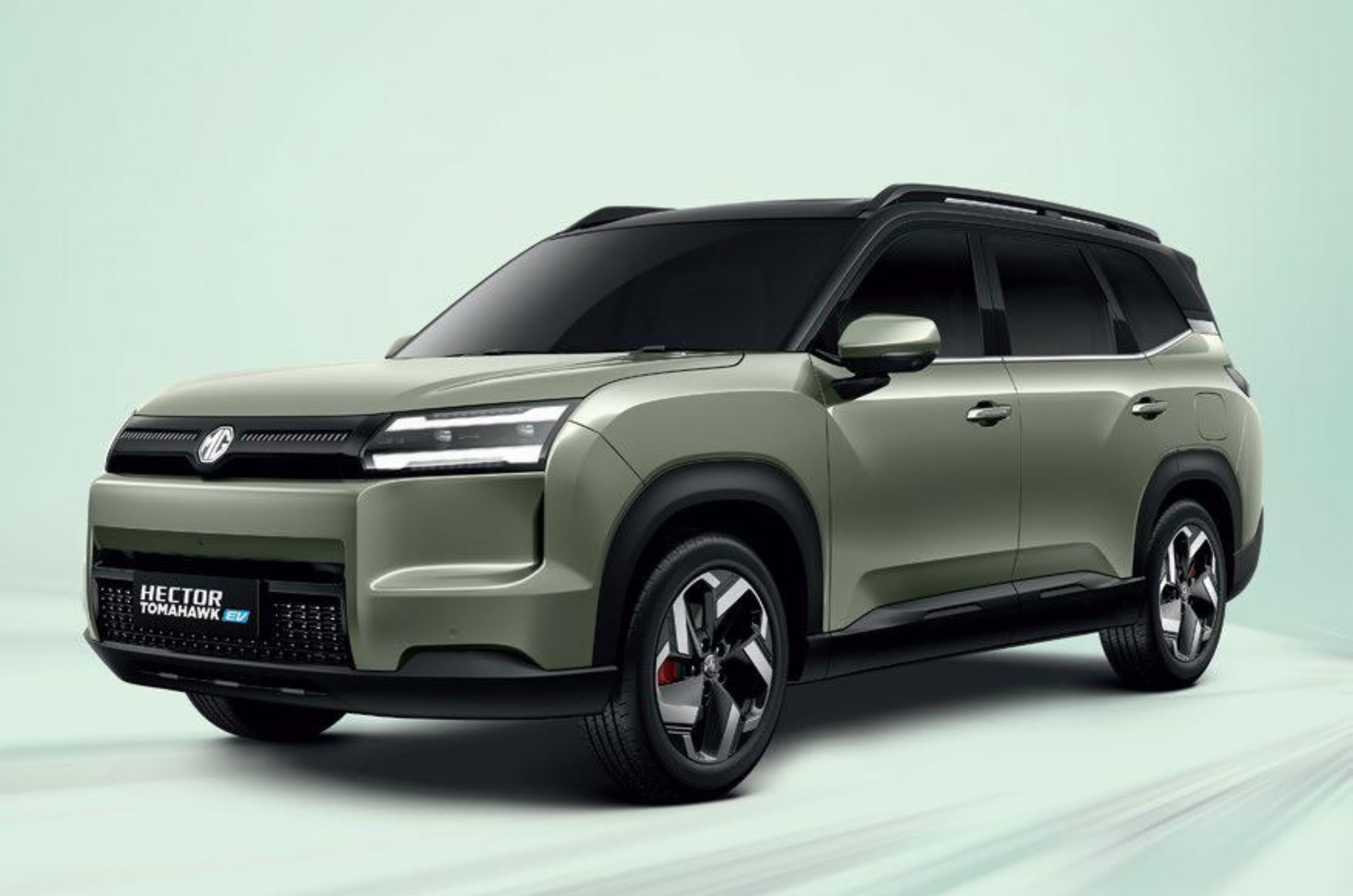
The Hector Tomahawk EV gets LED projector headlamps with LED daytime running lights with an illuminated MG logo positioned between them. The front bumper has a blacked out, closed-off lower front fascia, while the SUV rides on 18-inch dual-tone alloy wheels. It also gets roof rails, black cladding around the wheel arches and lower doors and an automatic powered tailgate.

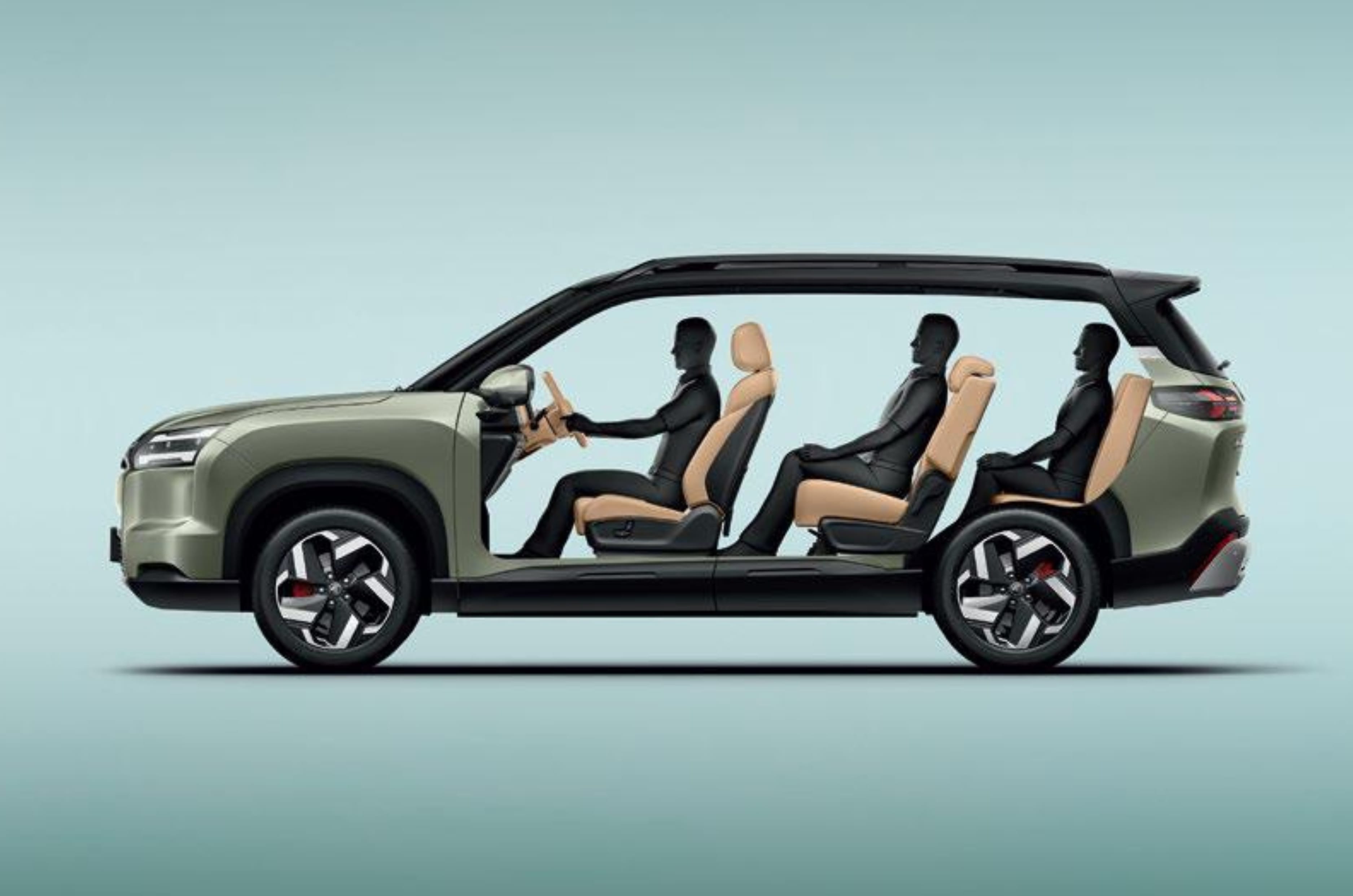
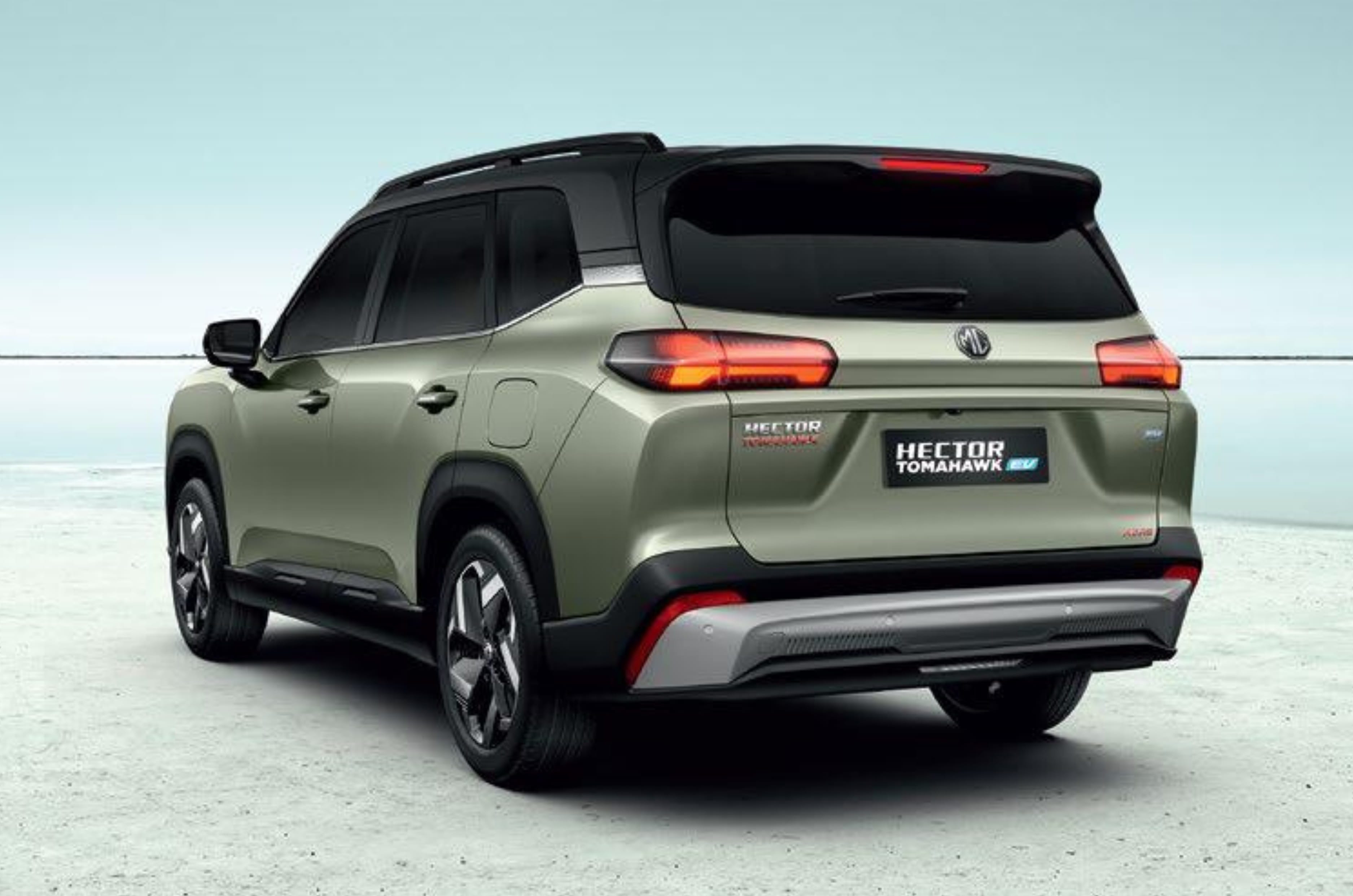
At the rear, the Tomahawk EV features wraparound LED tail-lamps and a sculpted rear bumper. The SUV measures 4,745mm long, 1,850mm wide and 1,770mm tall, with a 2,810mm wheelbase and 230mm ground clearance. The Hector Tomahawk EV gets a 610-litre boot for the five-seat version, while the seven-seat version offers 192 litres with all three rows in use and 528 litres with the third row folded.

MG Hector Tomahawk EV: interior and features

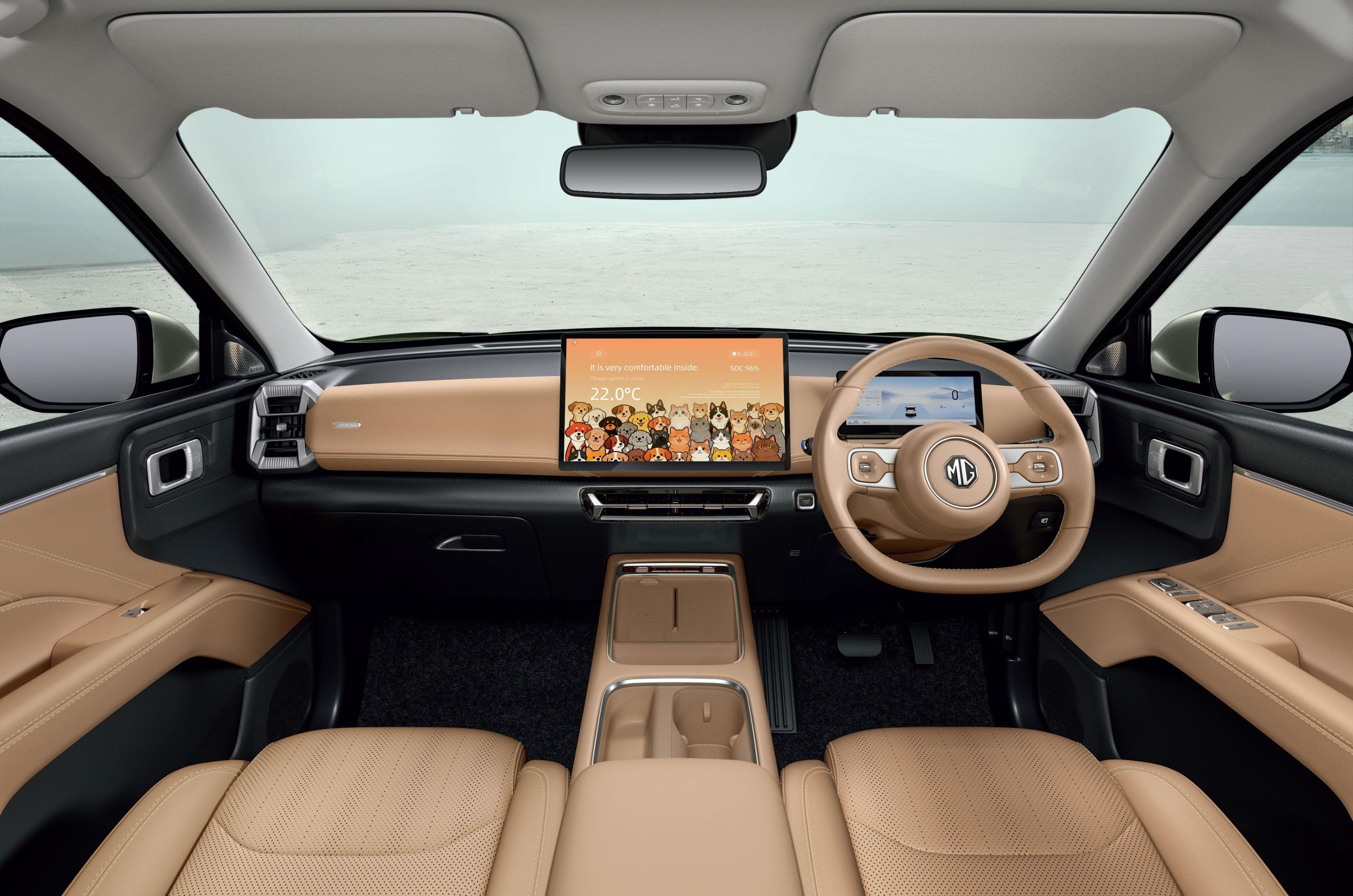
The Hector Tomahawk EV gets a 15.6-inch infotainment touchscreen, a 8.8-inch digital drivers display, wireless Apple CarPlay and Android Auto, wireless phone charging and gesture controls for functions such as the air-conditioning and audio system. 

Other features include a panoramic sunroof, ventilated front seats, 256-colour ambient lighting, a 10-speaker Infinity sound system, a powered tailgate, connected car tech, rear window sunshades and a driver’s seat with memory and auto-retract functionality. The SUV also gets several cabin modes, including Nap, Camp, Energise, Pro Pet, Valet and Quiet modes.

The Hector Tomahawk EV is available with five or seven seats. The five-seat version has 610 litres of boot space, which increases to 1,053 litres with the second row folded. The seven-seat version offers 192 litres with all three rows in use and 528 litres with the third row folded.

MG Hector Tomahawk EV: battery and range

The Tomahawk EV gets a 69.2kWh battery paired with a permanent-magnet synchronous motor producing 204hp and 310Nm. MG claims a 517km MIDC range and a 0-100kph time of 8.2sec.

The EV uses a CCS2 charging connection and supports DC fast charging at up to 90kW. MG claims a 30-80 percent charge in around 35 minutes using a 90kW DC charger. With a 7.4kW AC charger, a 10-100 percent charge takes around 12.5 hours. A portable charger that plugs into a 15A socket is also offered.

The Tomahawk EV also supports vehicle-to-load (V2L) and vehicle-to-vehicle (V2V) functions. MG says V2L can power compatible external devices and appliances, while V2V allows the SUV to charge another electric vehicle. It also claims the Tomahawk EV is India’s first vehicle-to-home (V2H) vehicle, allowing its battery to supply power to household appliances through two-way charging.