MG’s new 7-seat electric SUV to be called Hector Tomahawk

MG's new 7-seat electric SUV to be called Hector Tomahawk
MG Hector Tomahawk teased

JSW MG has teased its upcoming new SUV for India, which is to be called the Hector Tomahawk, our sources have indicated. The official launch date is set for August 26, 2026. Sold as the Wuling Eksion in the Indonesian market, the upcoming Hector Tomahawk will sit atop JSW MG’s new ADAPT (Advanced Drive Architecture Platform Technology) platform. The Hector Tomahawk will be launched as a fully electric model first, and will be slotted above the Hector in the brand’s line-up in India.

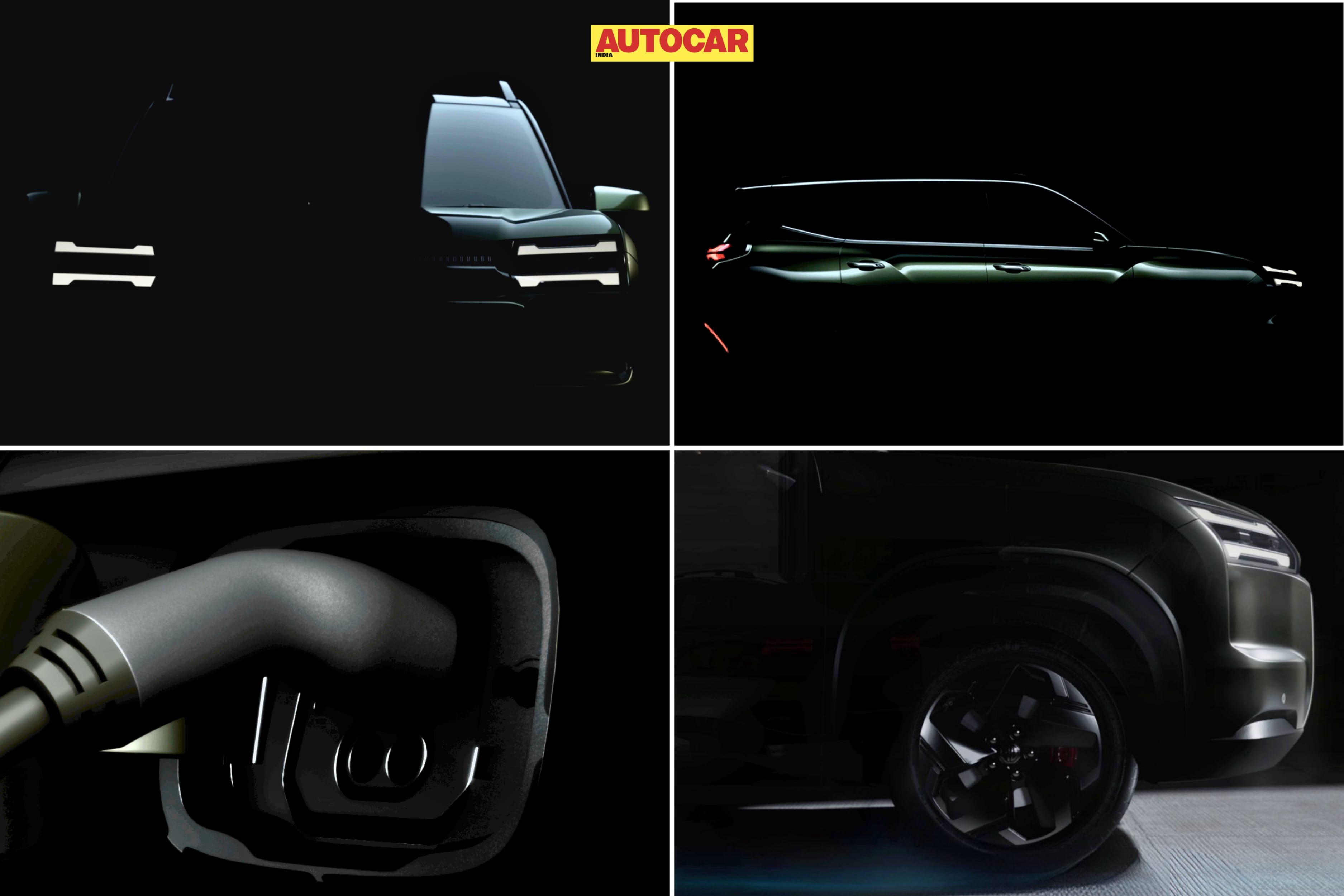
  • Teaser confirms rectangular headlamps, signature LED DRLs, a panoramic sunroof and more
  • Will be offered in EV guise first; PHEV could arrive later
  • Seating for 7 occupants; bench-style second row

JSW MG Hector Tomahawk exterior design

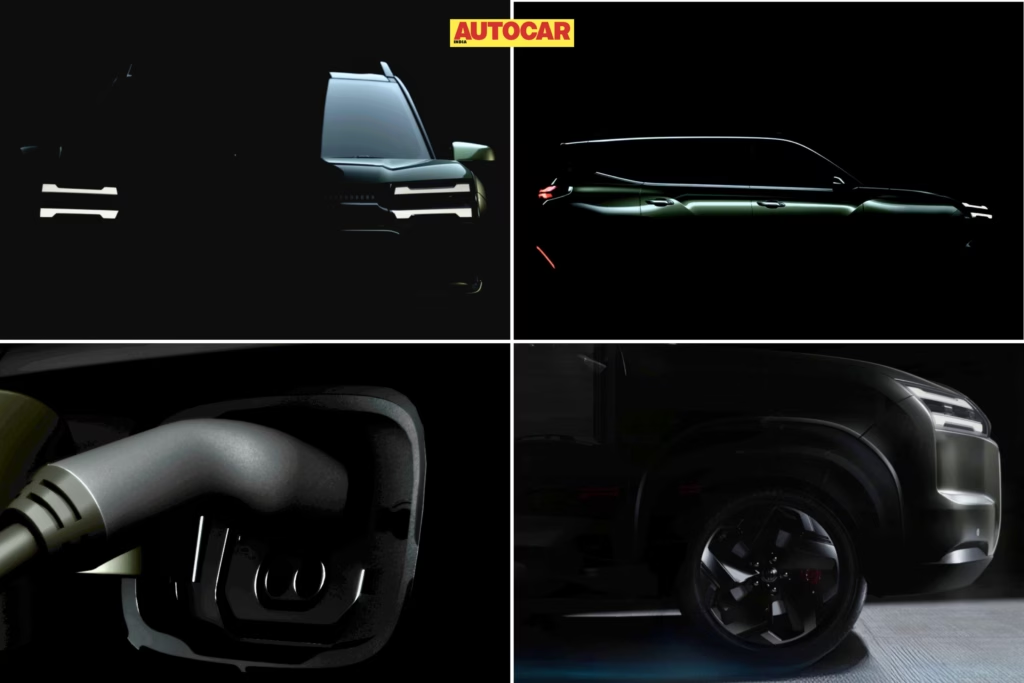
The teaser offers a few important design details on the outside of this upcoming MG SUV
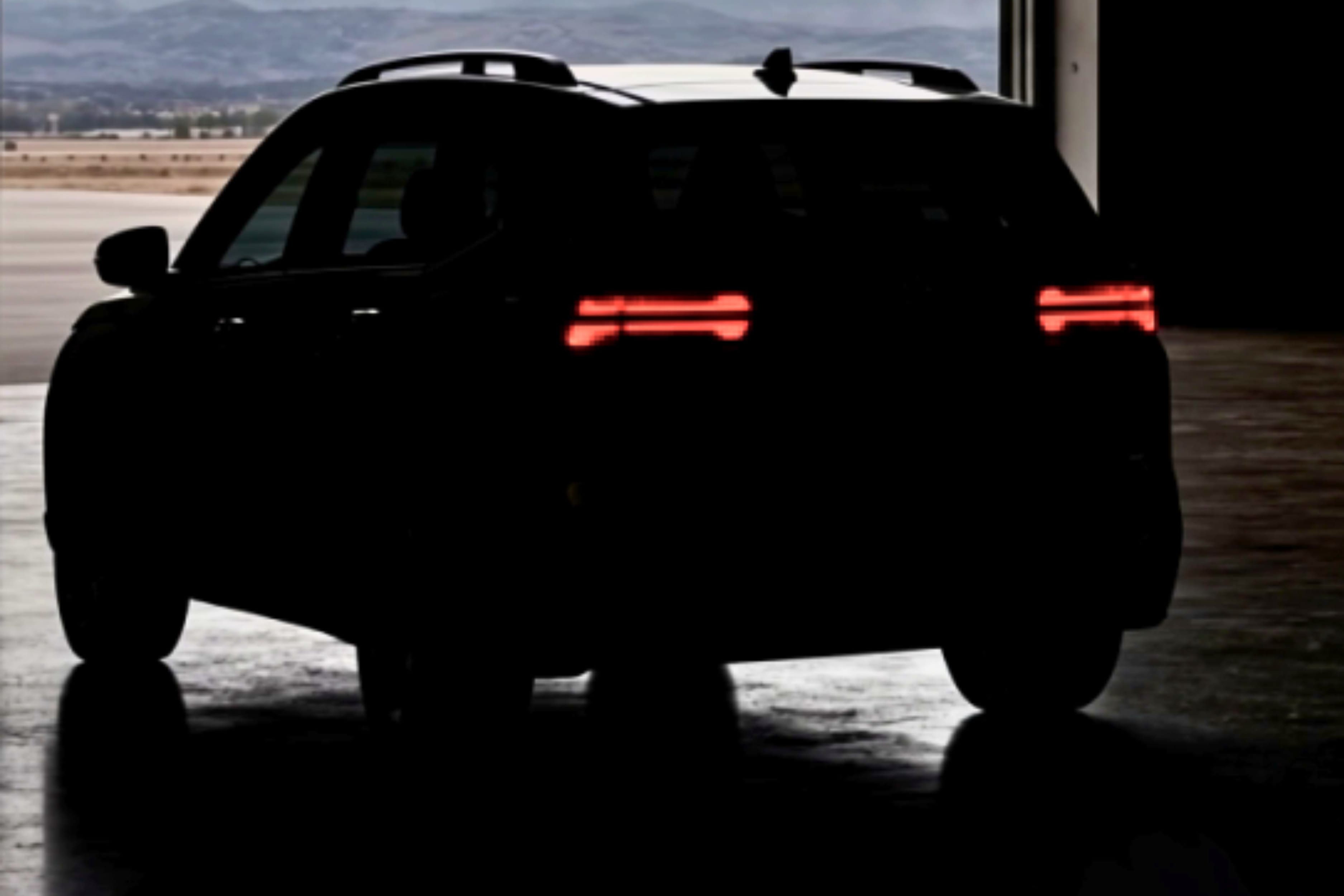
MG_Hector_Tomahawk_Rear_Quarter_Static

The official teaser confirms the rectangular LED headlamps first seen in spy shots. It also reveals details like the twin-element LED DRLs (daytime running lights) at the front and rear of the Hector Tomahawk. Observable details here also include the silver-finished alloy wheels, black plastic cladding under the doors, pronounced front fenders, pull-type door handles, prominent roof rails and wraparound LED tail-lamps. It’s clear from the teaser that the Hector Tomahawk sports chrome garnish along the windowline, plus a relatively flat roofline that leads to a roof spoiler.

In terms of dimensions, the JSW MG Hector Tomahawk is likely to have similar dimensions as the Wuling Eksion 7-seater that’s sold in Indonesia. For reference, the latter measures 4,745mm in length, 1,850mm in width, 1,755mm in height, and has a wheelbase of 2,9810mm. Its two-tone exterior colour options are likely to be offered in our market, too.

JSW MG Hector Tomahawk interior design and features

Apart from the exterior, the brand’s latest teaser also confirms a few details upcoming Hector Tomahawk’s interior. For starters, we now know that there will be 7 seats on offer, with a bench-style arrangement for the second row. The teaser also shows a beige colour theme for this cabin, along with a panoramic sunroof as part of the equipment that’ll be on offer. While more details are to be confirmed, the Hector Tomahawk EV could share much of the rest of its design and feature set with the Wuling Eksion. This means a minimalistic cabin with physical switchgear on and behind the two-spoke steering wheel, on the centre console and the doors.
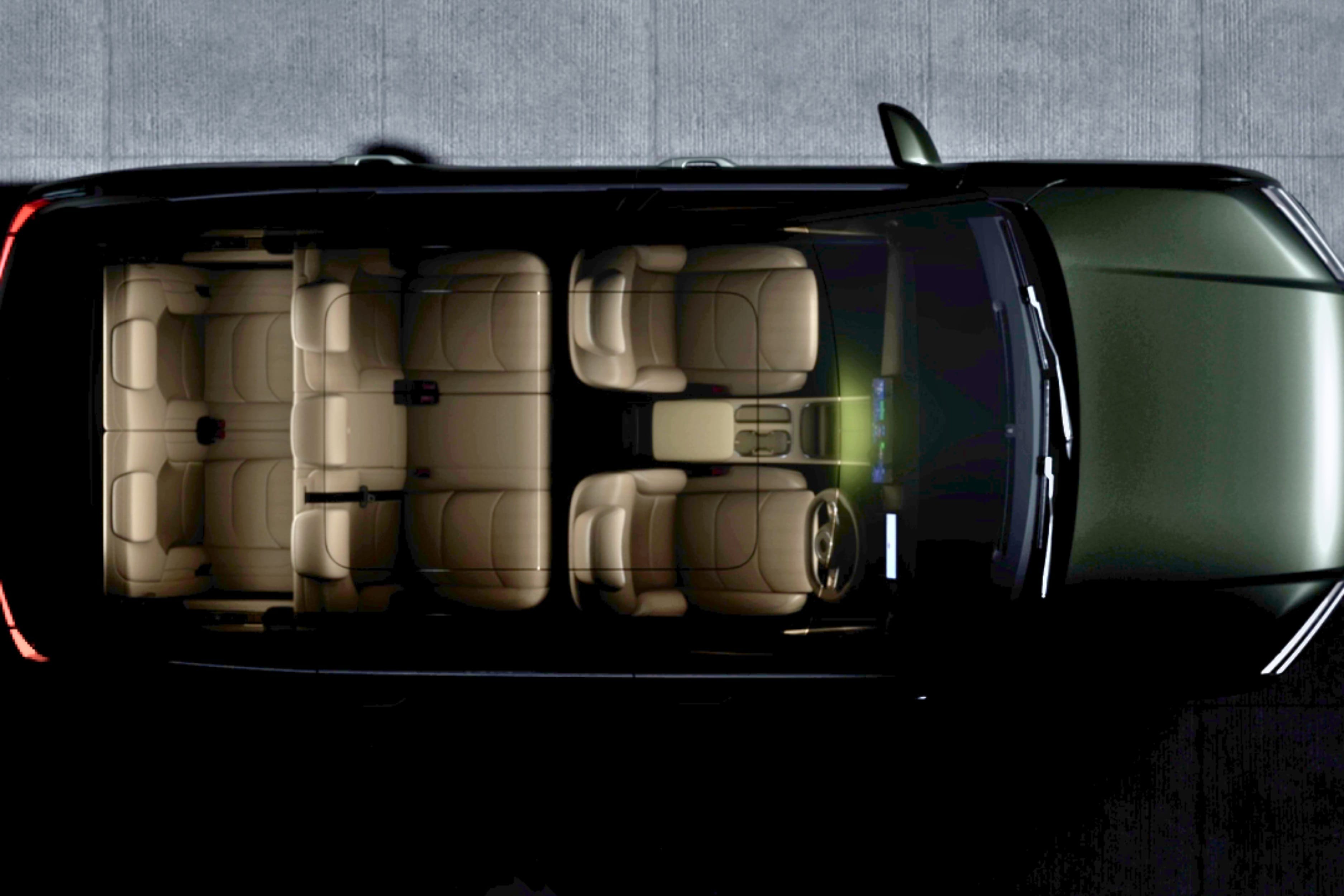
MG Hector Tomahawk Seating

Depending on the trim level, the equipment on offer include a powered tailgate, leatherette upholstery, powered and ventilated front seats, a 12.8-inch touch-infotainment head unit, an 8.8-inch digital driver’s display, a 50-watt wireless charger, automatic climate control with AC vents for the second and third rows, a 360-degree camera system, an electronic parking brake, six airbags, and an ADAS (Advanced Driver Assistance Systems) suite, among others.

JSW MG Hector Tomahawk powertrain details

ADAPT platform supports battery-electric, plug-in hybrid, range-extender and strong-hybrid powertrains

While JSW MG is likely to reveal the Hector Tomahawk PHEV (plug-in hybrid) on August 26 as well, the brand’s teaser suggests that the ADAPT-based SUV will be introduced in its EV avatar first. The fully electric version of the Wuling Eksion EV that’s available in Indonesia is equipped with a single front-mounted electric motor that generates 201hp and 310Nm, allowing a claimed top speed of 160kph. It’s backed by a 69.2kWh LFP (Lithium Iron Phosphate) battery pack with a CLTC (China Light-Duty Vehicle Test Cycle) range of up to 530km.

The Hector Tomahawk PHEV is also likely to share its powertrain setup with its Eksion counterpart. For reference, the latter comes with a single electric motor that produces up to 195hp and 230Nm on its own, while the 1.5-litre naturally aspirated petrol engine puts out 105hp and 130Nm. There’s also a 20.5kWh battery pack in the equation, and the maximum all-electric range of the Eksion PHEV is a claimed 125km. JSW MG’s ADAPT platform is capable of supporting battery-electric, plug-in hybrid, range-extender and strong-hybrid powertrains.

Also read
Skoda Superb diesel India launch in 2027

Toyota Hyryder Aero Black Edition launched at Rs 15.19 lakh

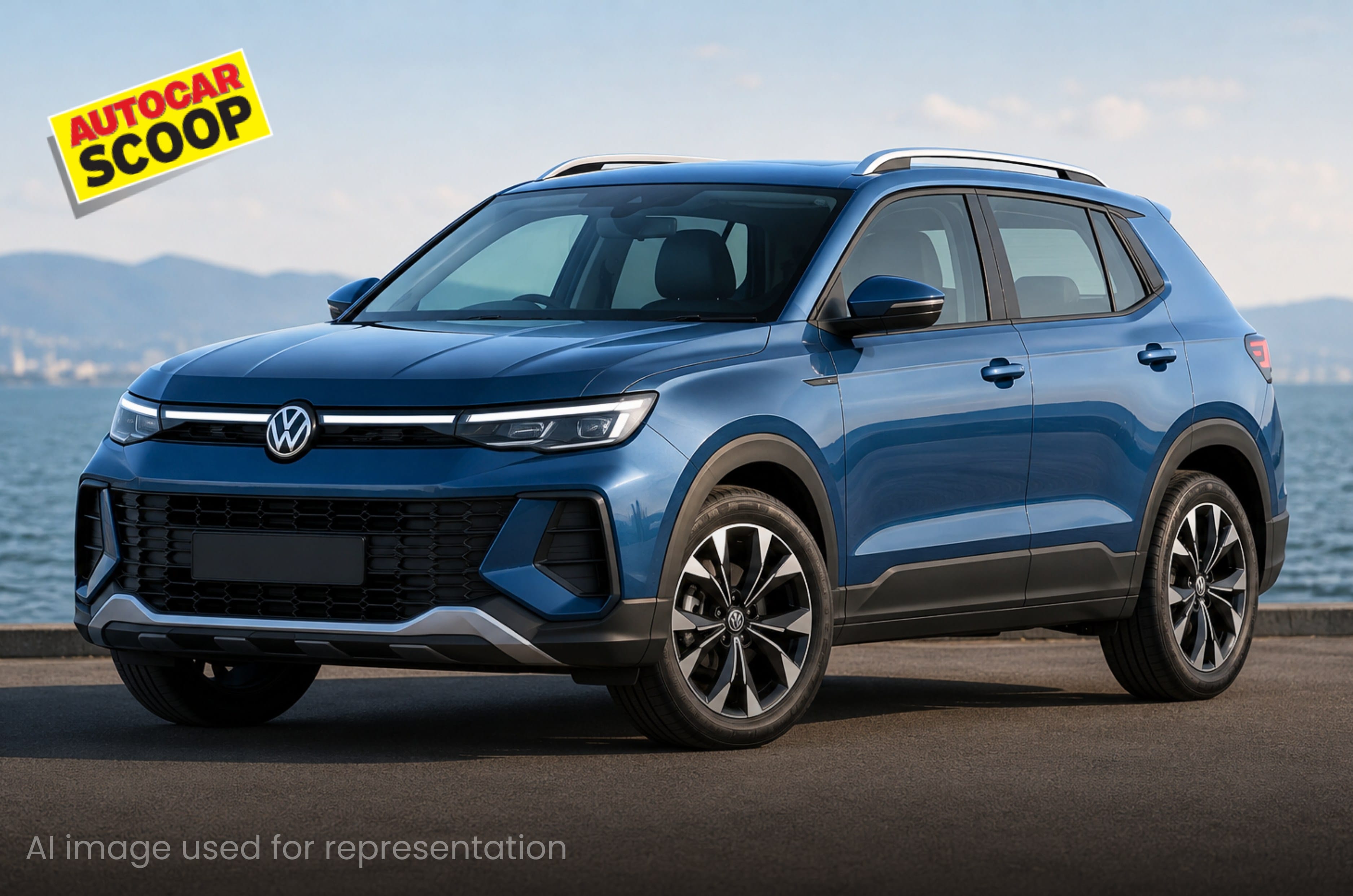
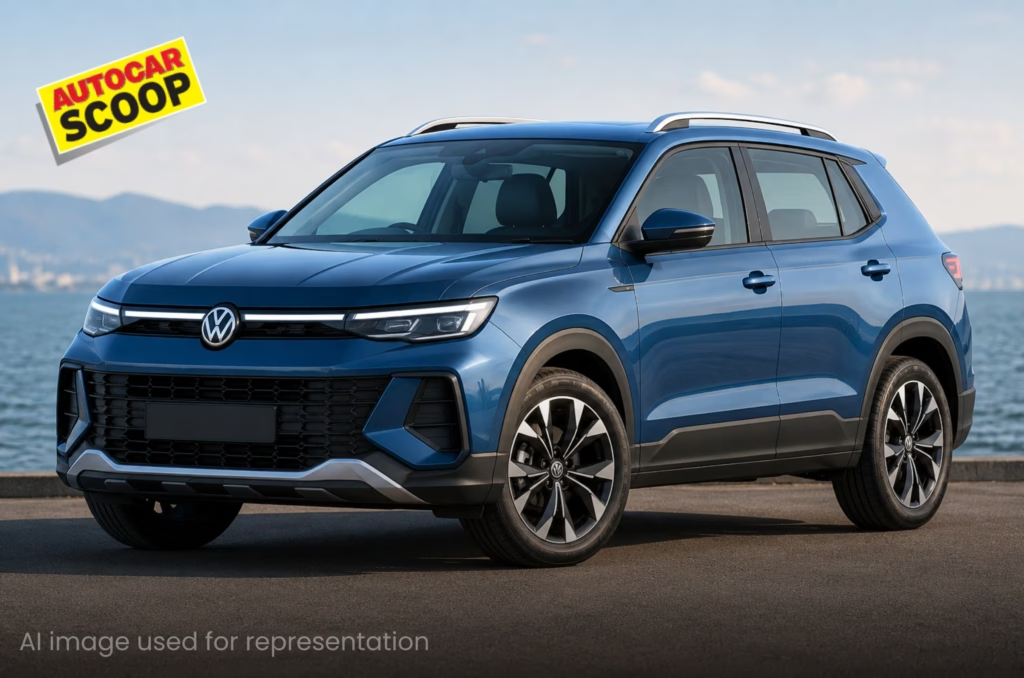
Volkswagen Kylaq-based compact SUV confirmed for India

Volkswagen Kylaq-based compact SUV confirmed for India
Volkswagen compact SUV India launch details

Volkswagen has been working on its version of the Skoda Kylaq, which we first reported on six months ago. Volkswagen India has now secured global approval for the project, which is estimated to cost around 25 million euros (Rs 275 crore). The green light paves the way for Volkswagen’s re-entry into India’s high-volume sub-four-metre vehicle market, which the brand had exited following the discontinuation of the Ameo compact sedan and Polo hatchback.

  1. VW compact SUV to share powertrain options with Kylaq 
  2. Differentiation will come in the form of design, features and positioning 
  3. Will mark VW’s return to the sub-4m space since the discontinuation of Polo 

Volkswagen compact SUV: what to expect?

The programme will mark an important step in a broader expansion of Volkswagen’s India portfolio, allowing the brand to reach customers in segments below the Taigun and Virtus.

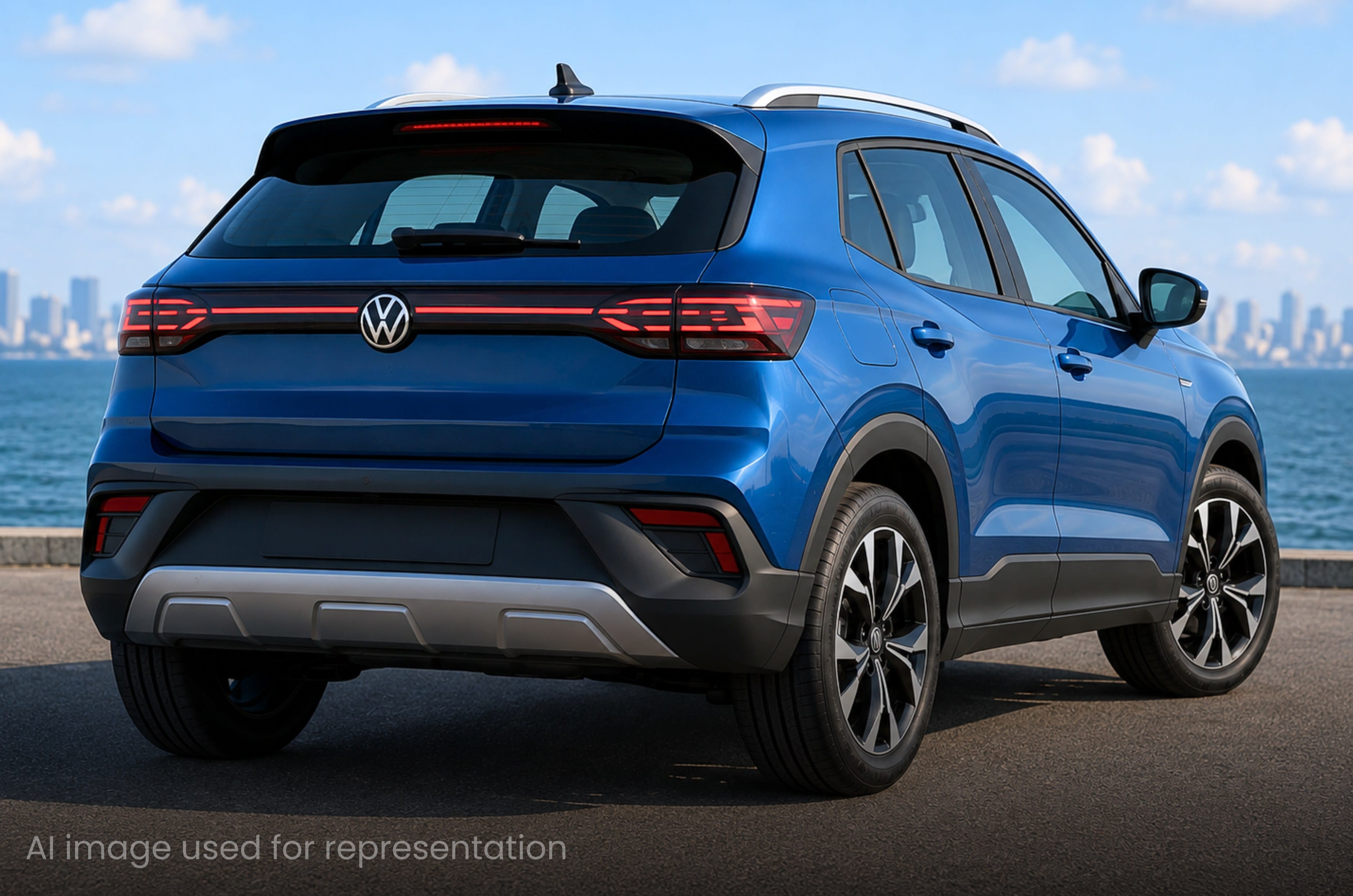
The new compact SUV will essentially be a badge-engineered version of the Kylaq, but will receive substantial design changes to give it a distinct Volkswagen identity. The differentiation is expected to extend to the exterior, interior, features and positioning.

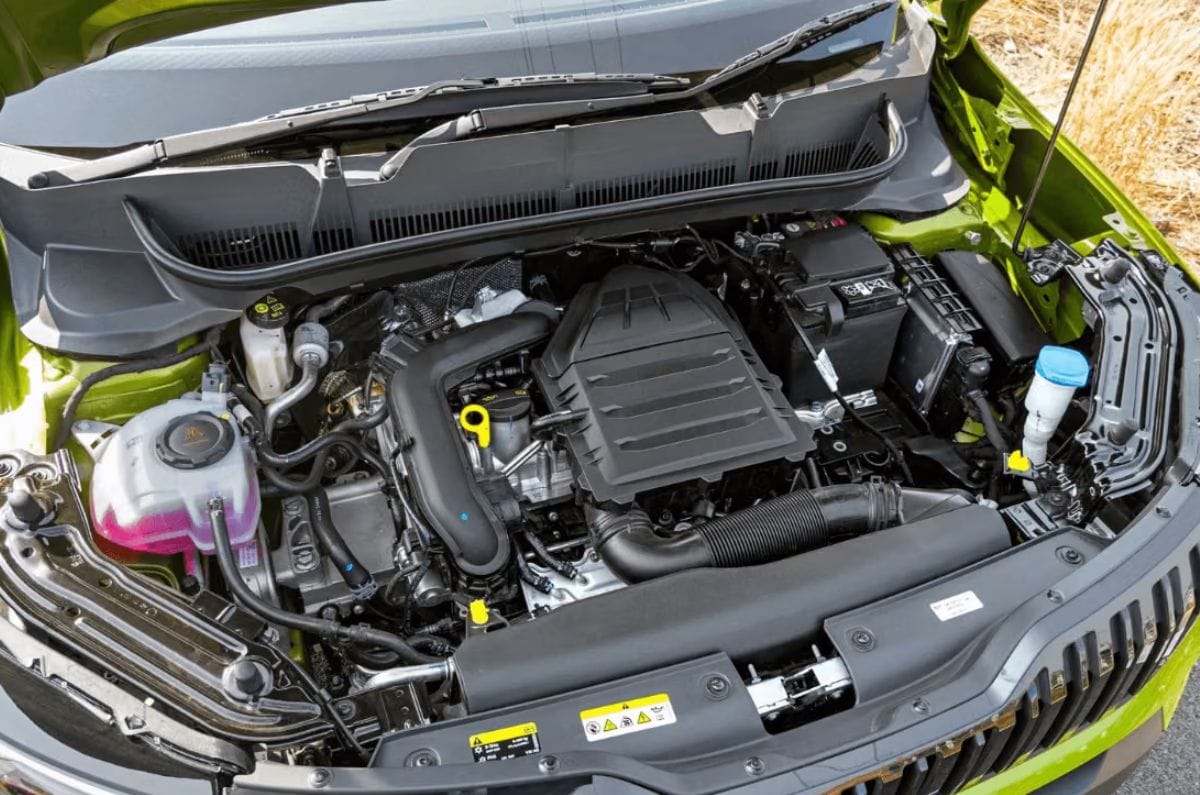
The 1.0-litre TSI engine will be shared with the Kylaq

It will use the same 1.0-litre TSI petrol engine as the Kylaq, paired with manual and automatic gearbox options. At launch, the Volkswagen compact SUV will get an 8-speed automatic transmission rather than the 6-speed automatic currently offered on the Kylaq. The Kylaq, however, is also expected to receive the 8-speeder with its next update.

It’s unclear what the compact SUV will be named upon launch, but Volkswagen already sells the Tera in the Brazilian market that’s closely related to the Skoda Kylaq. It remains to be seen what it will be called here in India. Prices can be expected to range between Rs 8-13 lakh (ex-showroom). 

Scope of the compact SUV segment 

The model will give Volkswagen access to one of India’s largest vehicle categories. The broader sub-four-metre SUV market, comprising compact and micro-SUVs, currently generates monthly sales of around 1.1 lakh units. The category accounts for around 30 percent of India’s passenger vehicle sales and more than half of utility vehicle volumes. Its growth has been supported by hatchback buyers moving to SUVs, the drastic reduction of GST from 28 percent to 18 percent last year on cars meeting prescribed length and engine-capacity limits, and the availability of multiple powertrain options.

The market is led by Tata Motors with the Punch and Nexon, followed by Maruti Suzuki with the Fronx and Brezza. Sister brand Skoda too has grown significantly after the launch of the Kylaq last year, further underscoring the need for a compact SUV in VW’s portfolio. 

This will mark VW’s return to the compact SUV space since the Polo was discontinued in 2022. 

Volkswagen’s locally produced portfolio is currently limited to the Taigun and Virtus, both positioned above the compact vehicle market. The Kylaq-based SUV will lower the entry point to the Volkswagen brand and give it access to a substantially larger customer base.

Additional volumes from the compact SUV could also improve capacity utilisation at Skoda Auto Volkswagen India’s Chakan plant and deliver better economies of scale, helping lower costs for both Volkswagen and Skoda.

Ultraviolette registers highest monthly sales yet in July 2026

Ultraviolette registers highest monthly sales yet in July 2026
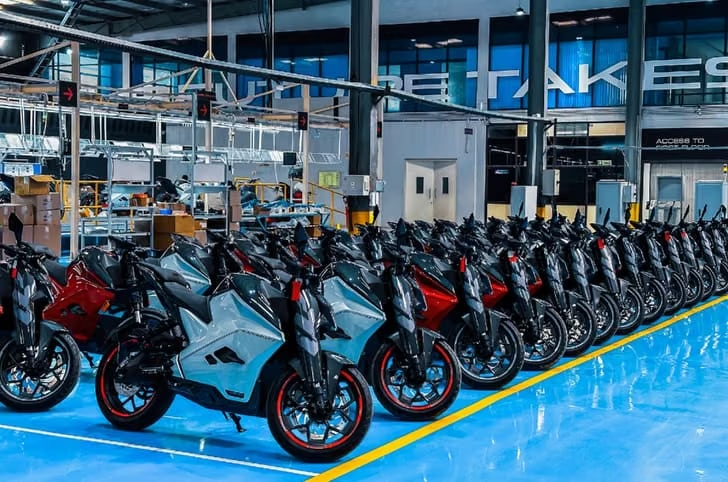
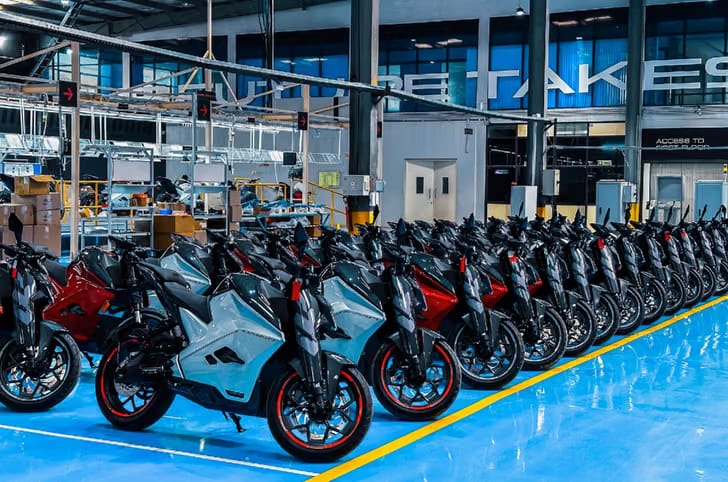
Multiple Ultraviolette F77 bikes inside the factory

Since their inception, Ultraviolette Automotive has been focussed on the premium end of the EV two-wheeler market with their products prices from Rs 2.49 lakh to Rs 4.59 lakh, a challenge for high sales numbers. However, with the changing winds in the ICE world, Ultraviolette looks to have turned a corner for the better. With almost no direct competition, this shouldn’t be a surprise, but it’s noteworthy regardless.

  1. Ultraviolette registers 406 percent increase in sales YoY
  2. BaaS and more versatile X-47 model looks to have helped this
  3. Ultraviolette has two more lower price models in the works

Largest EV motorcycle monthly sales in July 2026

Only behind Revolt and Oben

As per the retail sales data on the Vaahan portal, Ultraviolette Automotive has delivered 694 units in July 2026, a 406 percent increase compared to last year. Till July 2026, the brand has sold 3200 vehicles, the best since the brand was founded in 2023. Although the increase in sales numbers could be attributed to them offering more products, it’s hard not to consider this a sign of premium motorcycle buyers now trusting EV motorcycles more.

The brand is showing no signs of slowing down either. Already present in 40 locations across India, the brand intends to increase that number to 100 by the end of 2026. It’s worth mentioning that they had recently opened their first showroom in the North east, in Aizwal, Mizoram. The focussed efforts from the brand should help them finish the year on a high note, considering the upcoming festive season.

If we consider the sales numbers of other EV manufacturers who sell motorcycles, the brands ahead of Ultraviolette are Revolt Motors (6,876 units so far in 2026) and Oben Electric (3,347 units so far in 2026). However, it should be noted that Ultraviolette operates at a considerably higher premium level compared to these two brands. Other EV manufacturers who currently offer EV motorcycles in their lineup are Ola, KLB Komaki, Matter Motor Works, Okaya EV, Wardwizard Innovations, and the latest entrant Royal Enfield with their Flying Flea sub brand.

In addition to their current lineup of four motorcycles (F77 Mach 2, F77 Superstreet, X-47, and X-47 Desert Wing), Ultraviolette is also preparing to launch their first-ever scooter, the Tesseract, and an off-roader, the Shockwave. The Shockwave, starting at Rs 1.75 lakh, is aimed at eco-friendly and efficient city commutes and short weekend, adventure-focussed rides. The Tesseract on the other hand is expected to be priced at Rs 1.45 lakh with a claimed 261km IDC range and a top speed of 125kph. Deliveries for the Shockwave were previously supposed to start in Q2 2026 (we’re currently in Q3), and the Tesseract delivery has been delayed to Q1 of 2027.

What made this possible for Ultraviolette

The brand has upcoming challenges and opportunities

The two biggest factors that look to have helped the brand increase their numbers are the BaaS option from the brand for all their motorcycles and of course, the uncertainty surrounding ICE vehicles at the moment. The brand, however, is also looking to improve their existing international presence. Speaking to Autocar Professional, the CEO Narayan Subramaniam said “India is a key market but we were clear right at the start that we need to take this brand global. Europe is critical because it has amongst the most stringent certification processes. While the F-77 has been certified for sale in Europe, certification for the X-47 is at an advanced stage, and the bike should hit the European market this year as well. At present, we are in about 10 countries across Europe, including Germany, France, the UK, Spain, Portugal, the Netherlands, Belgium and Italy.”

With their current momentum and the upcoming favourable winds, the brand is looking to increase their numbers and subsequently their market share further. The only other player currently capable to take them head on, surprisingly, is Royal Enfield, who started selling their Flying Flea C6 in April 2026 with a Scrambler-like S6 on the way; but, their sales numbers are much lower with the brand selling a total of 124 units till July 2026. That said, the Flying Flea C6 is currently available only in Bengaluru.

Developments on the EV motorcycle space have been slow mainly because customers are expected to pay higher prices for a less capable machine for the money, especially compared to their ICE counterparts. The EV two-wheeler market has so far been carried forward by scooters. As such, EV motorcycles doing even a small fraction of the 13 million vehicle sales done by ICE two-wheelers should be phenomenal, and assuming Ultraviolette Automotive continues to make the right moves, it should remain a key name in the field.

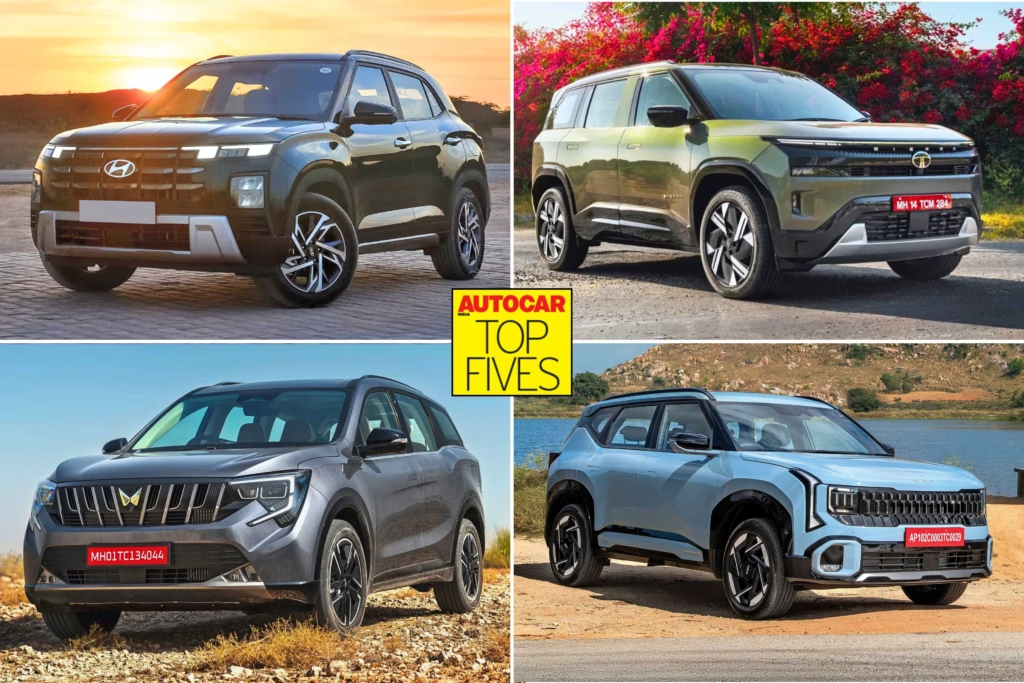
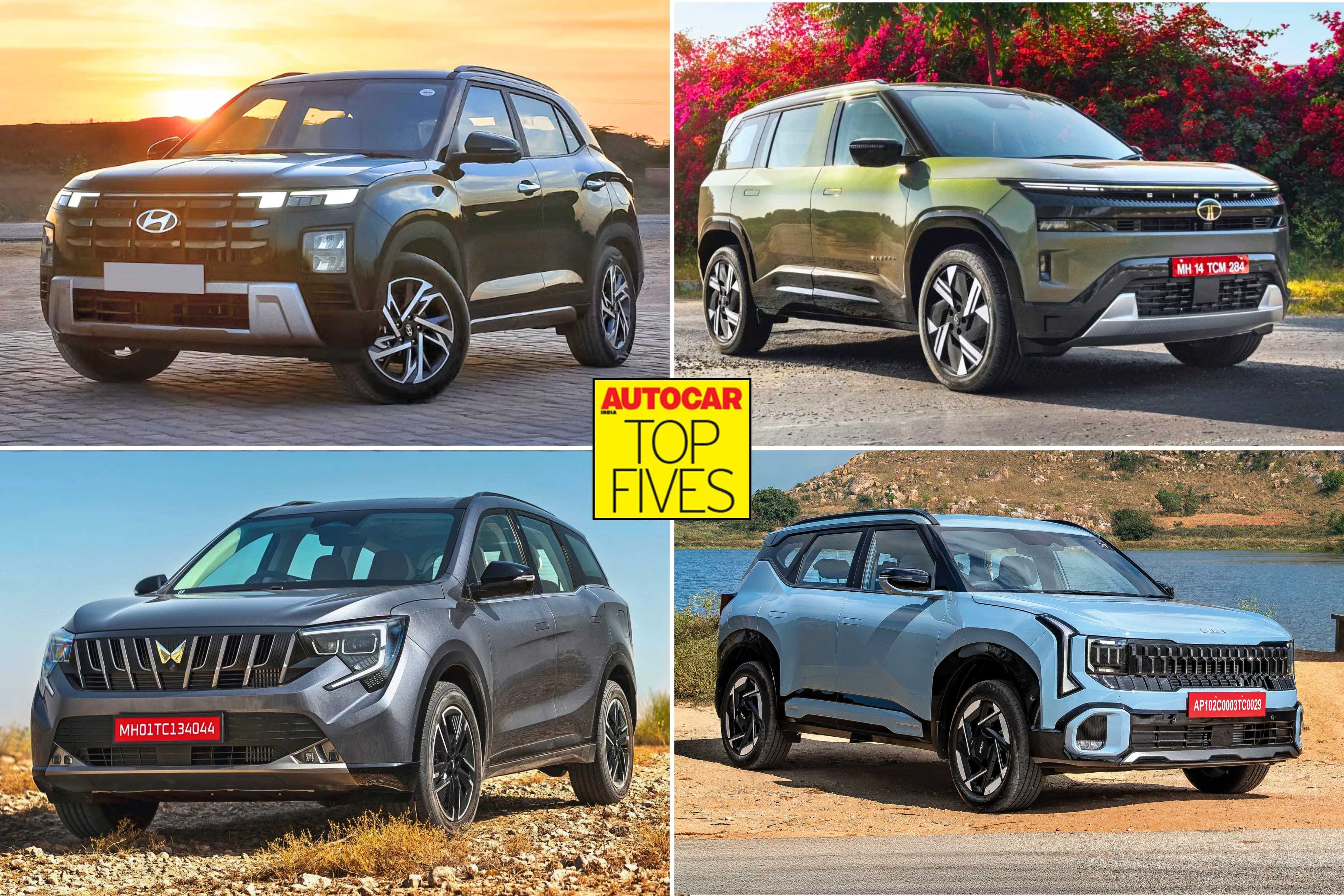
Top Five diesel-automatic midsize SUVs under Rs 25 lakh ranked

Top Five diesel-automatic midsize SUVs under Rs 25 lakh ranked
Best diesel automatic SUVs under Rs 25 lakh

SUVs are best had with diesel engines, but given our policies and the disapprobation surrounding this fuel, most carmakers have entirely withdrawn themselves from offering diesel engines. What’s interesting is that where diesel is still on offer, it continues to make up a sizeable portion of that segment, meaning that demand is still healthy but customers only have a handful of options to choose from. So, if you are in the market looking for a diesel-automatic SUV, here we have compiled a list of the five best diesel-AT midsize SUVs available within a budget of Rs 25 lakh. 

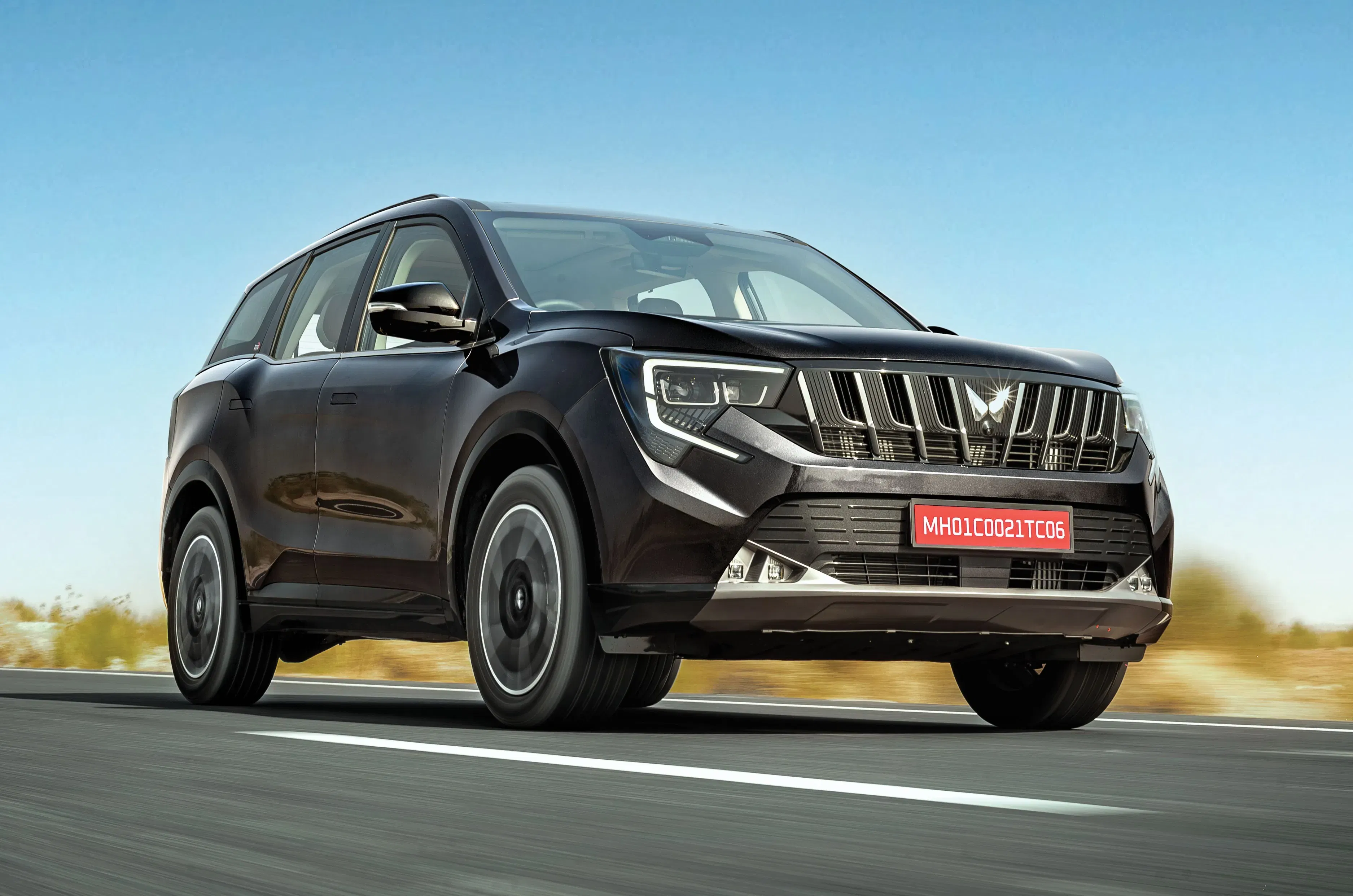
Mahindra XUV 7XO 

Price: Rs 15.29 lakh – Rs 25.79 lakh 

Mahindra is almost synonymous with large diesel SUVs and the XUV 7X0’s 185hp, 2.2-litre diesel is a benchmark for refinement and performance. It’s the most powerful SUV here, and the 6-speed torque converter automatic gearbox that’s offered with this engine is smooth, too. A premium and spacious interior with generous levels of equipment and a sorted ride and handling balance are some of XUV 7XO’s other strengths. The third-row isn’t particularly spacious, but it at least offers the flexibility of one.  

Kia Seltos 

Price: Rs 15.32 lakh – Rs 21.82 lakh 

Although much lesser in capacity and power output than the XUV 7X0, the Seltos’s 116hp, 1.5-litre diesel also stands out for smoothness and refinement. With linear power delivery and max torque coming in at just 1500rpm, it makes for a comfortable cruiser. However, it lacks that outright diesel punch and urgency, even in Sport mode. The gearbox, while smooth, is also a slow shifter, even via the paddles. The Seltos, too, is a very spacious and premium on the inside, and arguably has the best UI/UX for the infotainment system. 

Hyundai Creta 

Price: Rs 16.08 lakh – Rs 20.11 lakh 

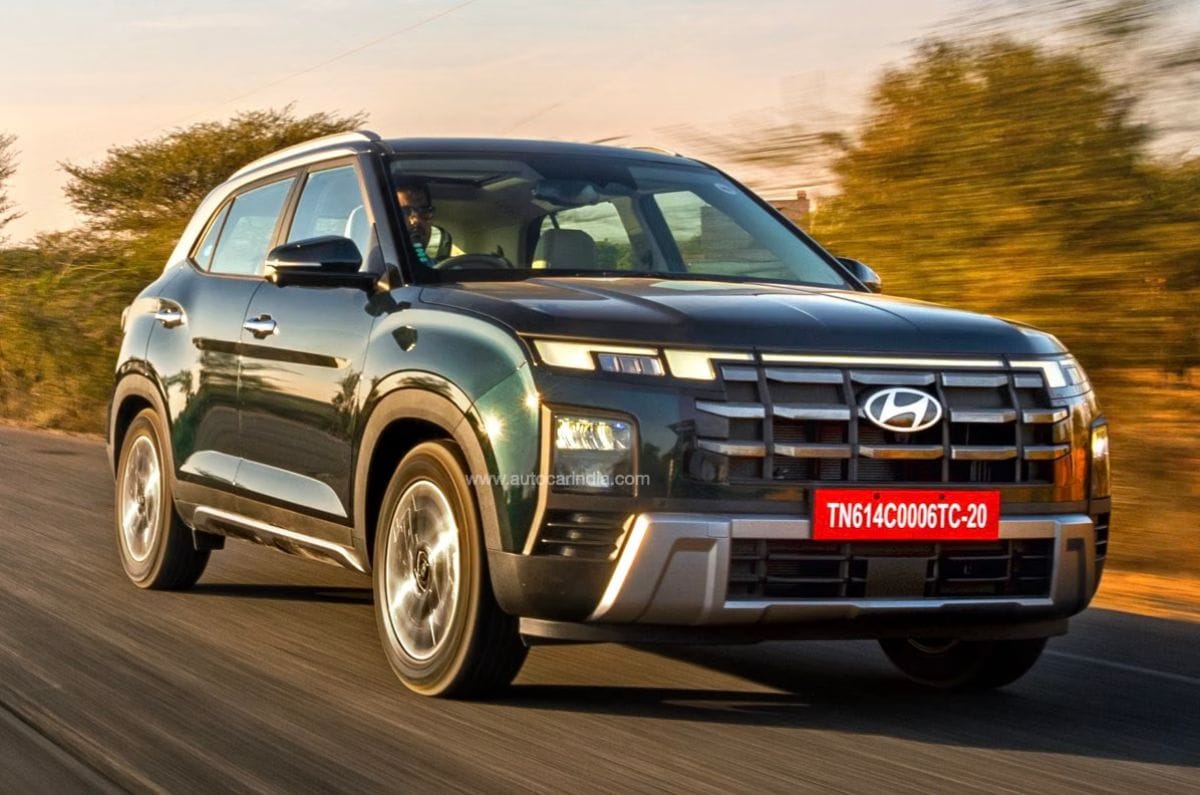
The Creta uses the same 116hp, 1.5-litre diesel engine as the Seltos, so the smooth and refined character of the engine applies here as well. However, being an older generation model and slightly smaller than the new Seltos, it doesn’t feel lack lustre in terms of performance. It’s also quite efficient, making the diesel-auto one of the best powertrain choices on the Creta. Otherwise, too, the Creta remains one of the most competent offerings in the segment faring well on space, features and premium-ness despite its relative age compared to its rivals. 

Tata Sierra 

Price: Rs 15.99 lakh – Rs 21.29 lakh 

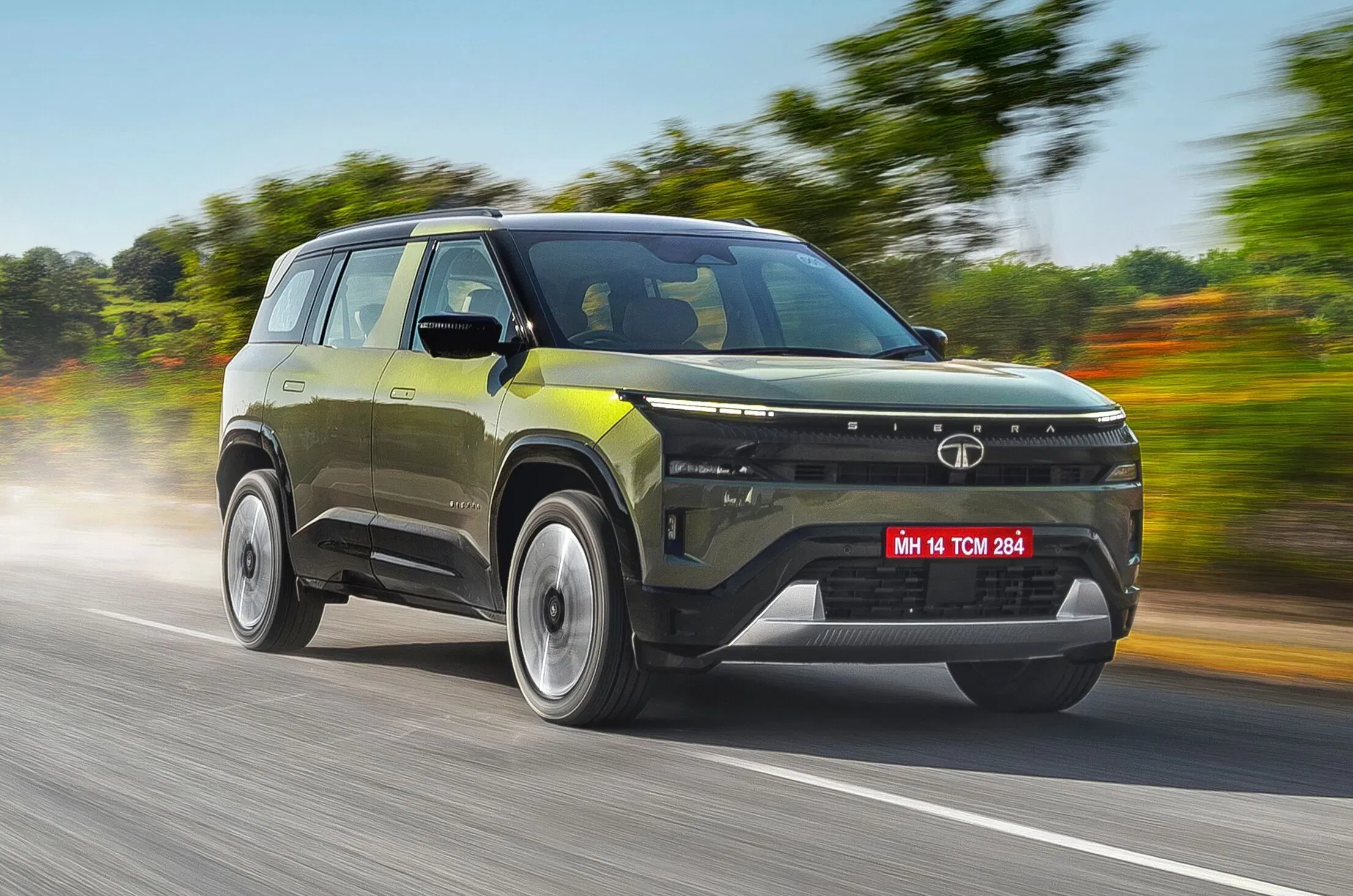
The Sierra uses the same 1.5-litre diesel engine that’s offered on the Curvv and the Nexon, but it has been up-tuned to produce 118hp and 280Nm. This 1.5 unit doesn’t have the midrange punch associated with diesels; instead, it builds power linearly. It also isn’t particularly refined as you can feel vibrations at all times, which makes it known to you that you are, in fact, driving a diesel. The torque-converter auto, however, is a smooth unit that keeps the engine in the meat of the powerband. Elsewhere, the Sierra impresses with its space, features and well-judged ride and handling balance. 

Mahindra Scorpio N 

Price: Rs 14.19 lakh – Rs 25.49 lakh


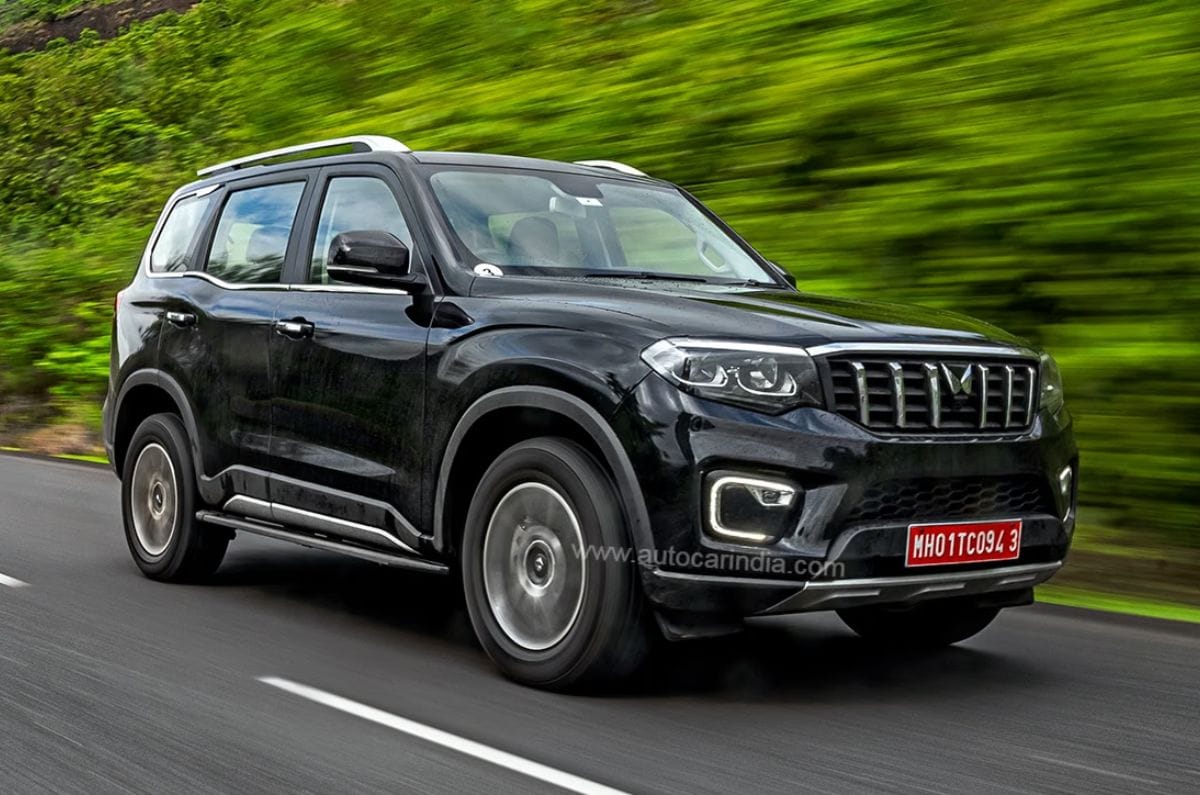
The Scorpio N uses the same 2.2-litre diesel engine as the XUV 7XO, but in a slightly different state of tune, producing 175hp and 370Nm (400Nm in 4×4 guise) here. Given the Scorpio N’s hardy underpinnings and rugged nature, the diesel engine makes for a great fit on this SUV, thanks to its strong reserves of torque. The 6-speed AT gearbox isn’t particularly quick shifting or sporty, but it is smooth. The Scorpio N is also the only SUV on this list to come with an optional 4×4 system, and you’d be surprised by how capable it is off the tarmac. It also has a premium interior and is well-specced with features, but third-row is quite limited on space. 

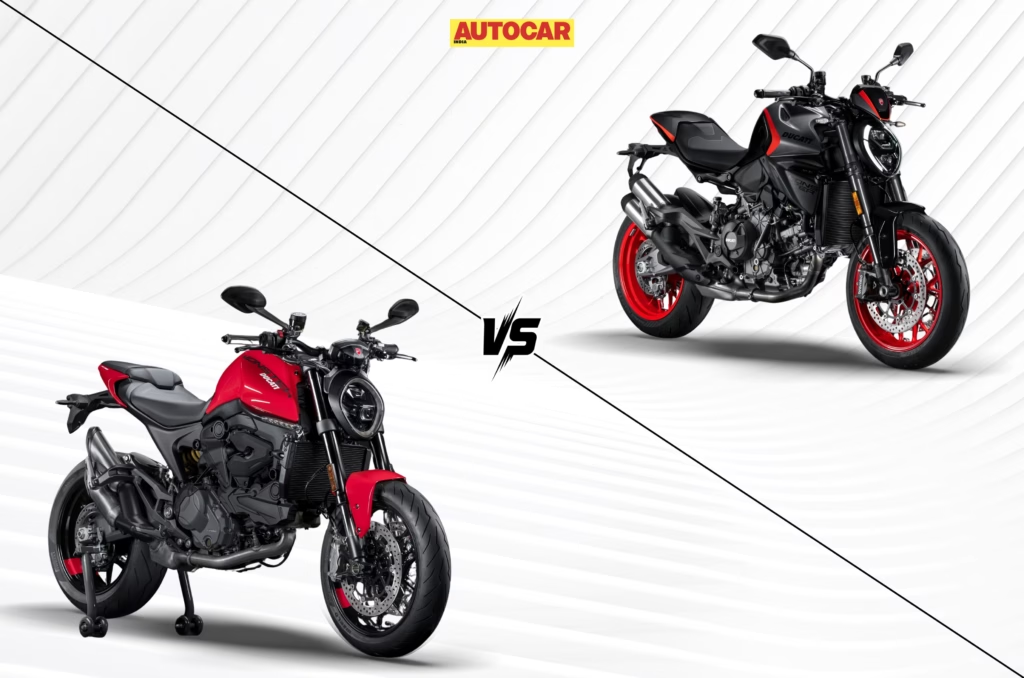
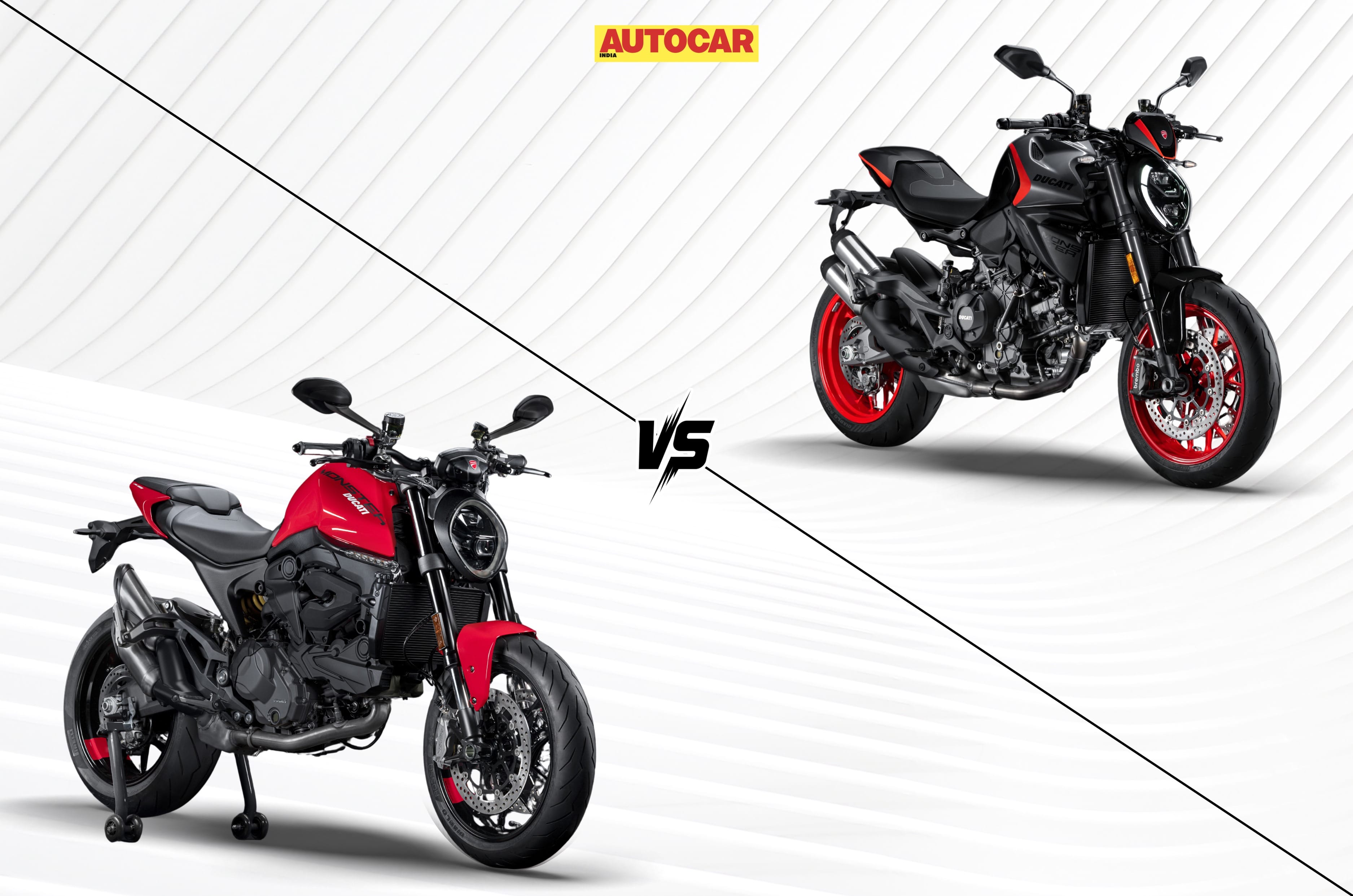
Ducati Monster old vs new: Price and differences explained

Ducati Monster old vs new: Price and differences explained

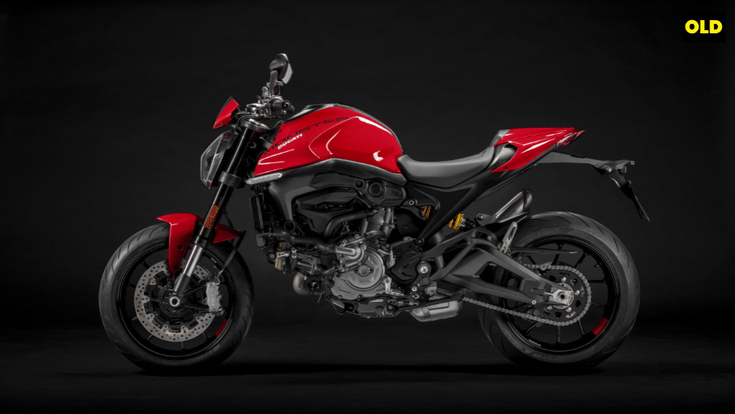
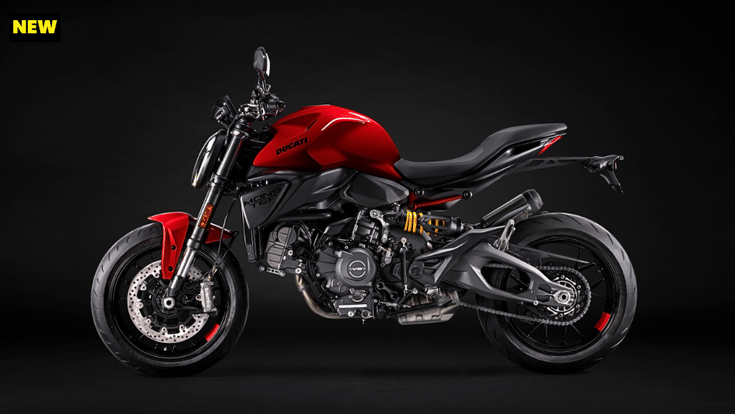
Besides the new 890cc V-twin engine, Ducati has also changed a bunch of things under the skin that make the new Monster a significantly different motorcycle to the one it replaces. For the sake of simplicity, for the remainder of this article, Monster old refers to the previous MY2024 937cc Monster and Monster new is the current MY2026 890cc Monster V2. Let’s go through the changes and also see what remains unchanged on the Monster V2.

Ducati Monster old vs new: Engine and chassis

Biggest changes from the older Monster

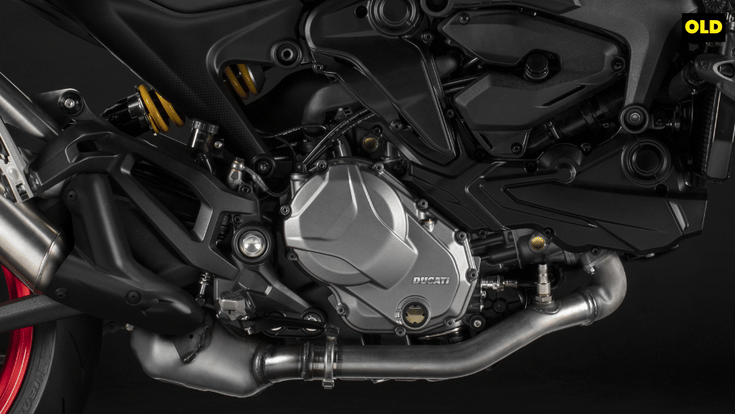
Ducati Monster Old engine
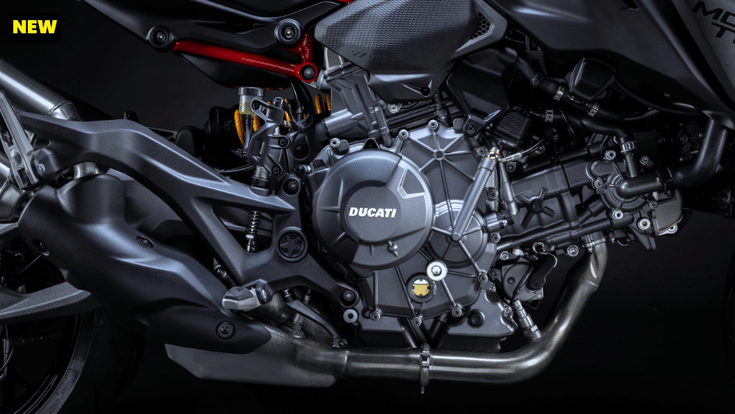
Ducati Monster V2 engine


This is the headlining change and for a good reason. Ducati went from the previous 937cc V-twin engine to a new 890cc V-twin engine that’s also available on the Multistrada V2, Panigale V2, and Streetfighter V2. Despite getting smaller, the engine delivers the same power as before and it does it 250rpm earlier in the rev range. Torque, however, sees a 2Nm reduction and it’s now delivered 750rpm later in the rev range than before. The other big change is the new monocoque chassis replacing the previous one’s aluminium one. Ducati only reports wet weight without fuel, so the power-to-weight ratio here uses wet weight numbers with 90 percent fuel.

Ducati Monster old left side profile
Ducati Monster new left side profile


Ducati Monster V2

Ducati Monster MY24

Engine

890cc, V-twin, liquid-cooled

937cc, V-twin, liquid-cooled

Power

111hp at 9,000rpm

111hp at 9,250rpm

Torque

91.1Nm at 7,250rpm

93Nm at 6,500rpm

Gearbox

6-speed

6-speed

Power-to-weight ratio

601.63hp/tonne

589.64hp/tonne

Ducati Monster old vs new: Design and weight

Monster V2 is lighter and more accessible than before

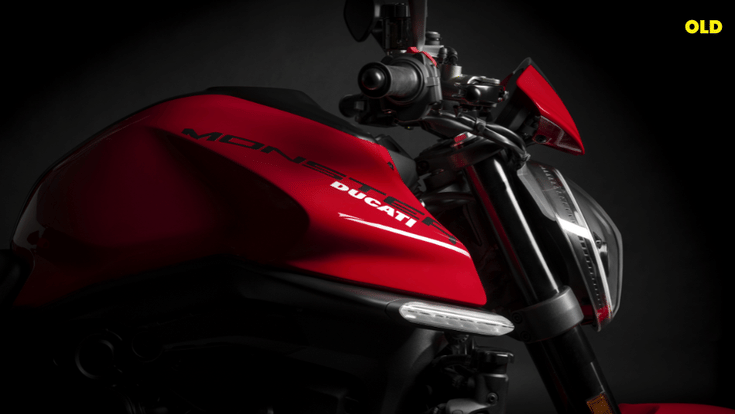
Ducati Monster Old tank
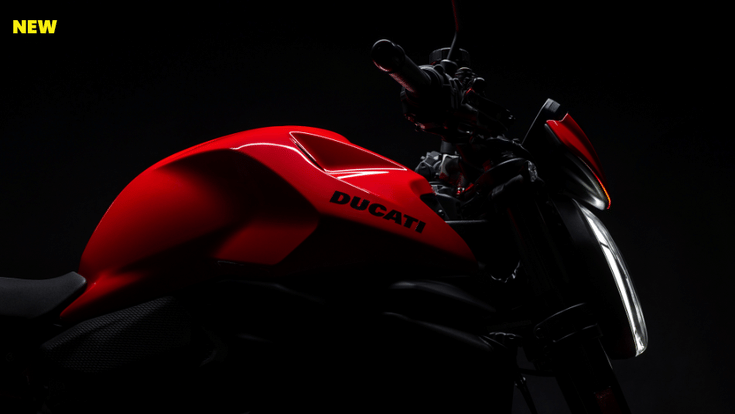
Ducati Monster V2 tank


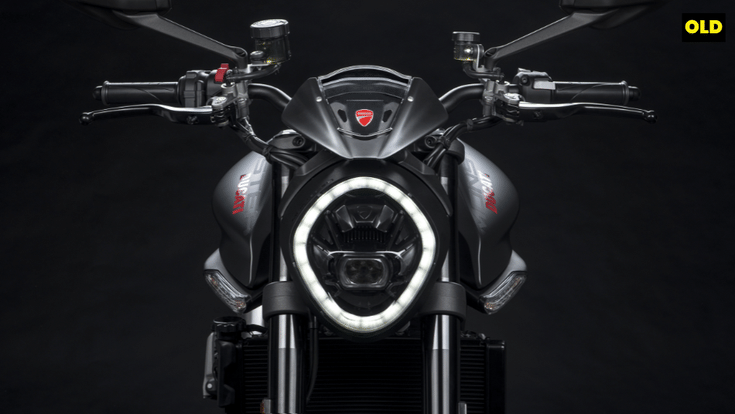
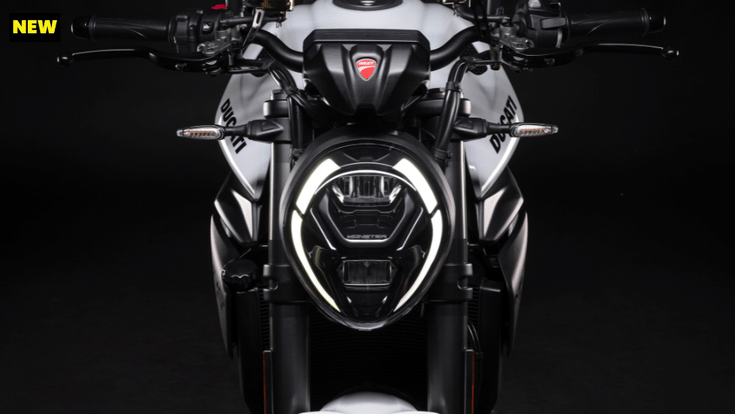
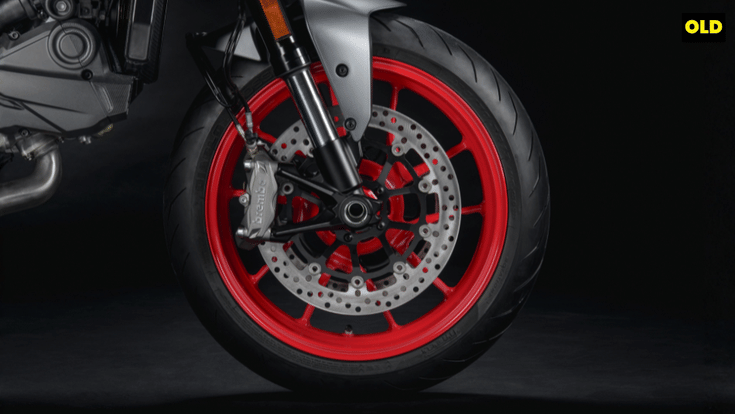
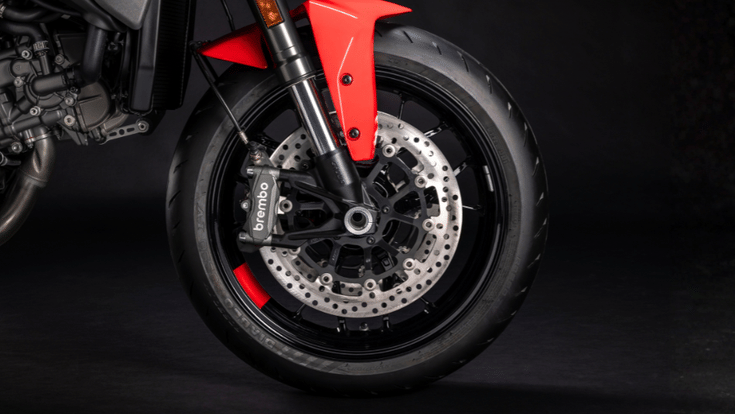
The obvious difference between the Monster V2 and the previous model is the ‘bison-back tank’ as Ducati calls it, but we’ll just call it a return to the big-tank design legacy of the Monsters of yesteryear. Tank capacity however remains the same at 14 litres. The seat height on the Monster V2 has also been dropped to 815mm (compared to 820mm earlier) and it’s narrower than before. Other exterior changes include a different alloy design, a slightly different headlight. The wet weight (without fuel) has also dropped from 179kg to 175kg. Other than this, the Monster V2 continues with the same tyre and rim sizes as the previous one at 120/70R17 for the front and 180/55R17 for the rear. The Monster V2 gets the new Pirelli Rosso IV tyres, whereas the earlier model came with Rosso III.

Ducati Monster old vs new: Rider aids

TFT instrument cluster has grown

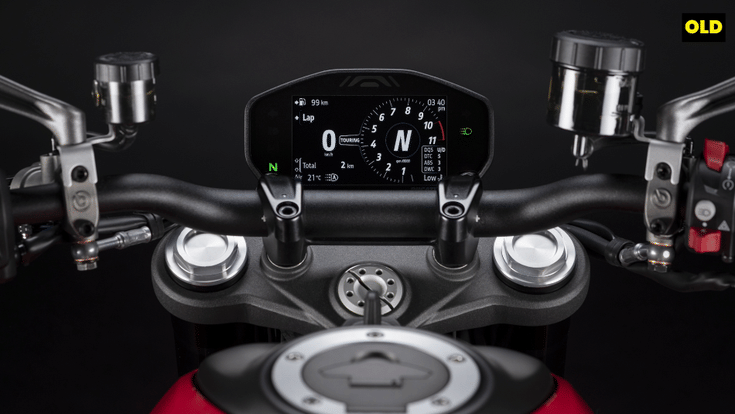
Ducati Monster TFT Old
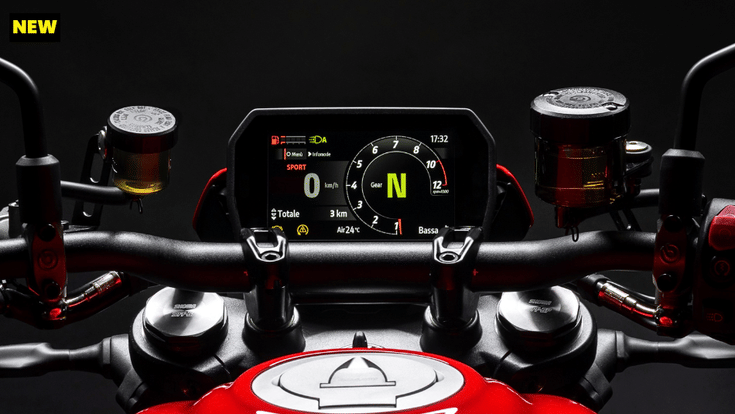
Ducati Monster TFT new


The new Monster retains all the electronic aids present in the previous one such as ride modes (Sport, Road and Wet), power modes (Low, Medium, and High), traction control, and wheelie control. However, the bi-directional quickshifter has been updated for the V2 and the TFT instrument cluster has also grown in size from 4.3-inch to 5-inch.

Ducati Monster old vs new: Colour schemes

One new colour on the V2

Ducati Monster old headlight
Ducati Monster V2 new


There aren’t too many differences between the old and the new Monster in terms of the colours but Ducati has now discontinued the ‘Aviator Grey’ colour and has switched the Racing Red wheels to the ‘Iceberg White’ colour. The Monster V2 gets a third colour option called ‘Sport Livery’.

Ducati Monster old vs new: Price

Rs 15,000 more expensive than before

Ducati Monster Old front wheel
Ducati Monster V2 front wheel


With all the new changes, the Monster V2 now starts at Rs 13.99 lakh (ex-showroom) which is a Rs 15,000 increase over the previous model. This price is applicable to the base ‘Ducati Red’ colour with the ‘Iceberg White’ and ‘Sport Livery’ options each costing Rs 14.23 lakh. We also have the Monster+ V2 which adds headlight cowl and passenger seat cover and starts at Rs 14.34 lakh (Ducati Red) and goes up to Rs 14.45 lakh (Iceberg White, Sport Livery)


Aston Martin reveals Le Mans-inspired DB12 S models

Aston Martin reveals Le Mans-inspired DB12 S models
Aston Martin reveals Le Mans-inspired bespoke DB12 S models

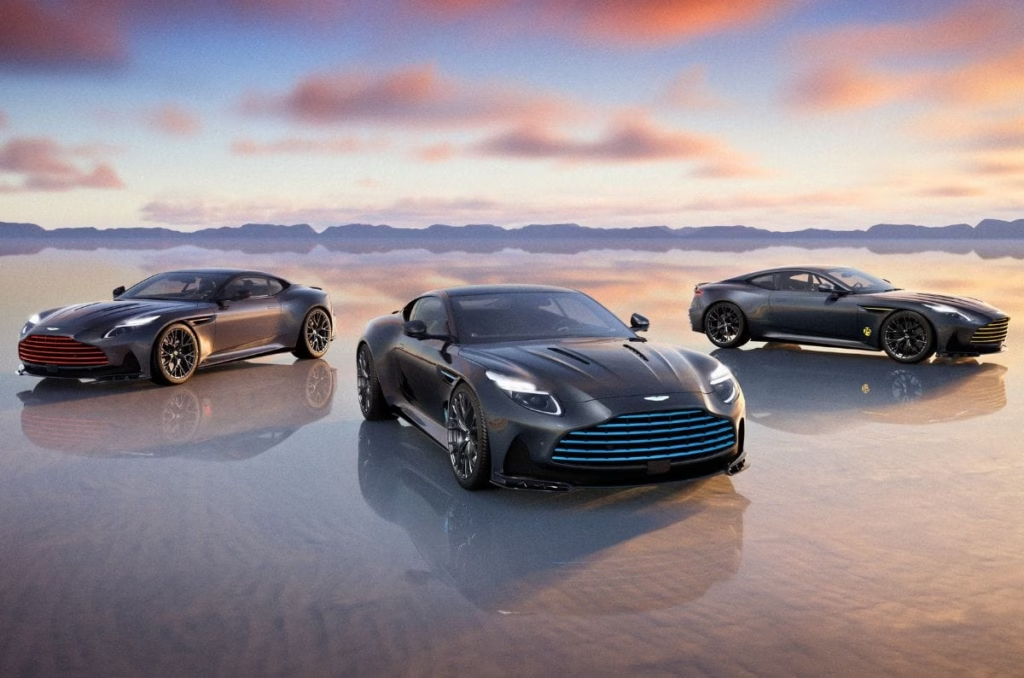
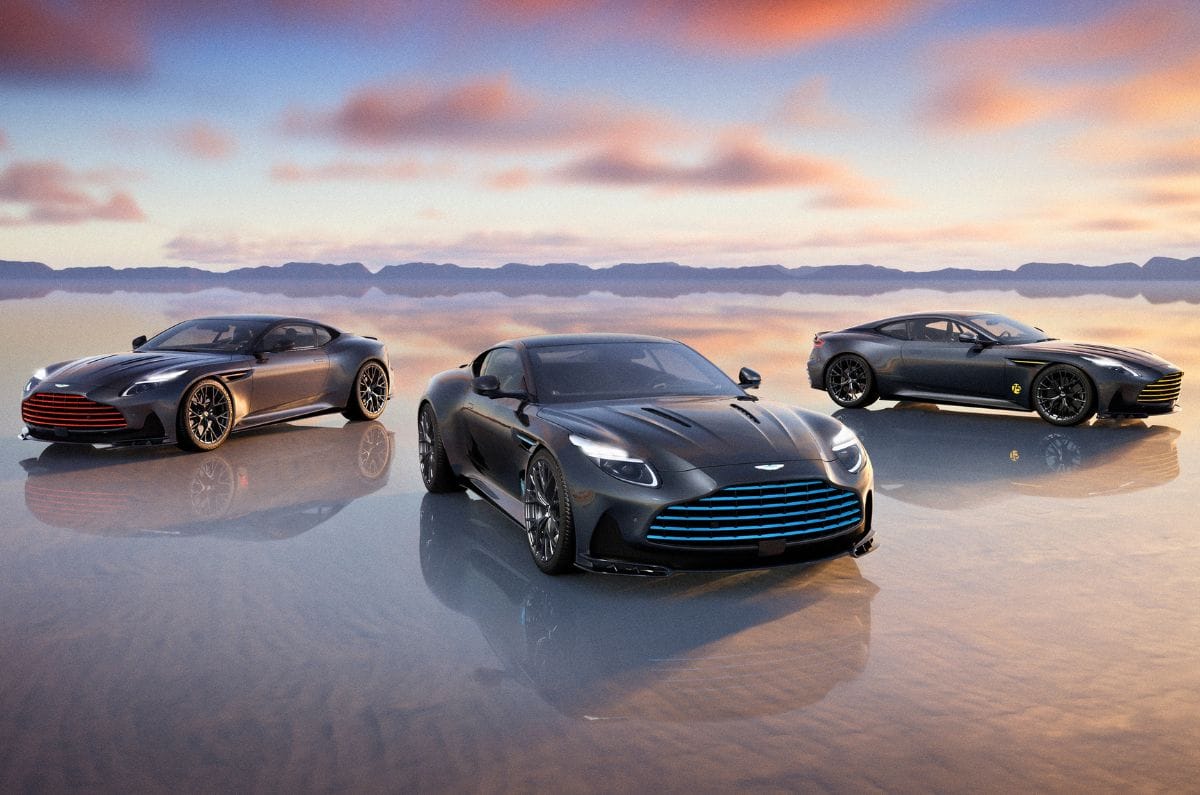
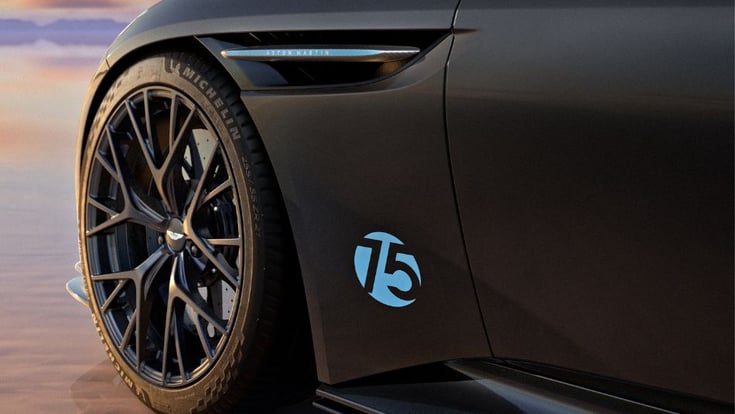
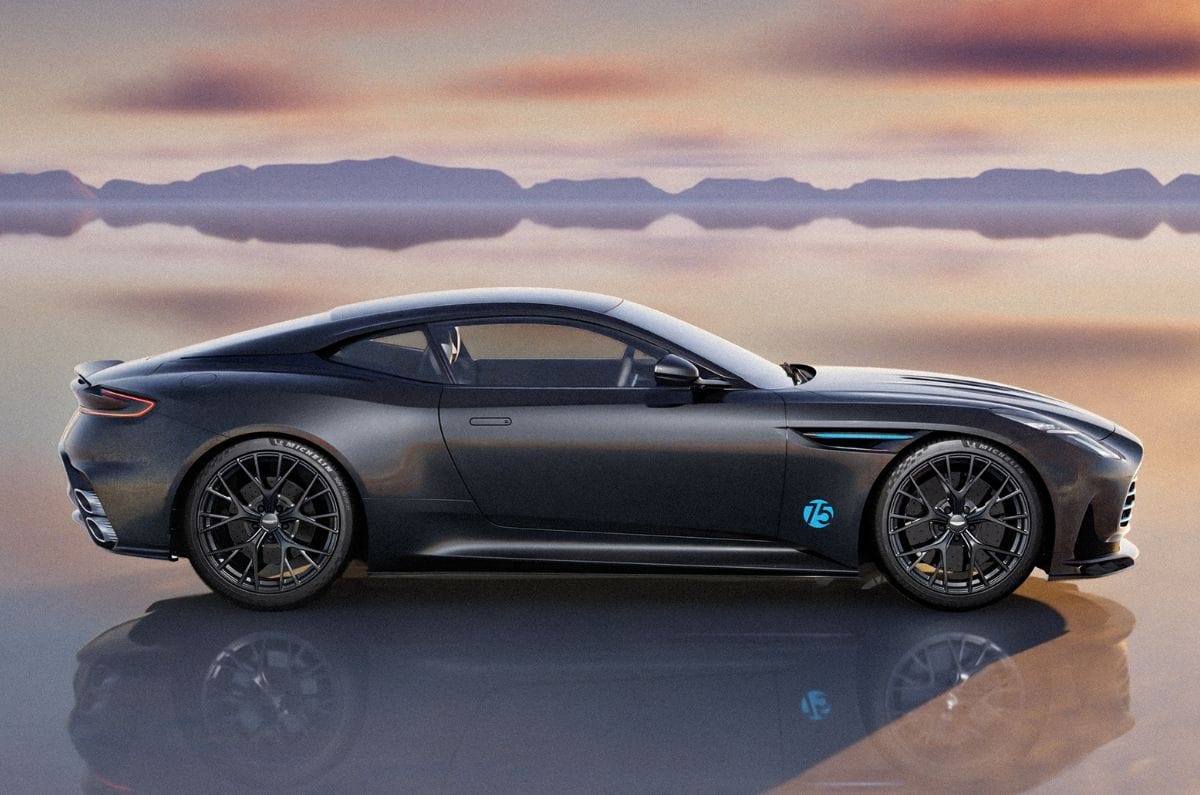
Aston Martin has revealed three bespoke DB12 S Coupe models, called the VMF 63, VMF 64, and VMF 65, at the ongoing Monterey Car Week 2026. These one-off models are curated by the manufacturer’s in-house ‘Q’ personalisation department and take inspiration from the DB2 race cars from the 1951 24 Hours of Le Mans. These new VMF models feature a black exterior paint, distinct hues for the grille vanes, additional carbon fibre elements outside, contrast stitching inside and some ‘75’ badges inside-out.  

  1. Gets black exterior hue, different paint on grille vanes and some carbon fibre elements
  2. Features contrast stitching and bespoke embroideries and door sill plates inside

The British manufacturer says that the three DB12 S ‘VMF’ cars “celebrate and honour the racing roots of the Pebble Beach Concours D’Elegance”, which is seeing its 75th anniversary this year. 

Aston Martin DB12 S ‘VMF’ cars: All you need to know

All VMF models get the same exterior colours but different accent and stitching hues

Aston Martin DB12 S 'VMF' car
 

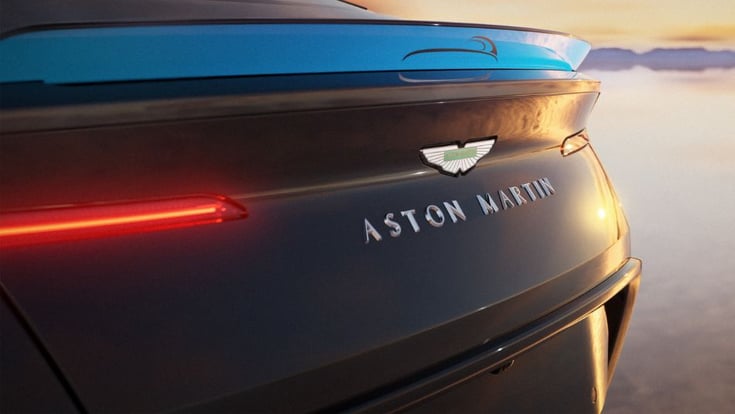
Aston Martin’s ‘Q’ department has distinguished the models with a Carbon Black exterior paint and painted grille vanes – Rosso Red on the VMF 63, Speed Yellow on the VMF 64, and Ellwood Blue on the VMF 65. There’s a ‘75’ decal on the fenders and painted carbon fibre side strakes. The models also get a painted carbon fibre ‘Aeroblade’ and a DB2 silhouette logo graphic at the rear.

Inside, the Aston Martin VMF 63, VMF 64, and VMF 65 feature contrast stitching on the seats, the colour coordinated with the exterior accent hue. The front seat backs have an embroidered DB2 silhouette, while the rear seats sport ‘75’ stitching. The door sills have bespoke ‘75’ plaques, and the start/stop rotary dial and paddle shifters are painted.

Powertrain details of the VMF models are yet to be revealed

While Aston Martin has yet to reveal the powertrain specifications of the VMF 63, VMF 64, and VMF 65, they could be similar to the DB12 S, on which the bespoke models are based. For reference, the DB12 S is powered by a 4.0-litre twin-turbo V8 petrol engine that produces 700hp and 800Nm, and is paired with an 8-speed automatic transmission. It does a 0-100kph run in 3.5 seconds before reaching an electronically limited top speed of 325kph. 

The 75th edition of Monterey Car Week is themed around early 1950s sports cars and racing icons. The one-off models highlight Aston Martin’s racing heritage and the evolution of performance design since the first Pebble Beach Concours d’Elegance. Alongside the three DB12 S ‘VMF’ cars, Aston Martin is also displaying a DB2 heritage model, the limited-run Vanquish 25 Special Edition from its ‘Q’ bespoke division, and its current ‘S’ lineup, comprising the DB12 S, Vantage S, and DBX S.

Mercedes-Benz India unveils AI-powered car scanner for servicing

Mercedes-Benz India unveils AI-powered car scanner for servicing

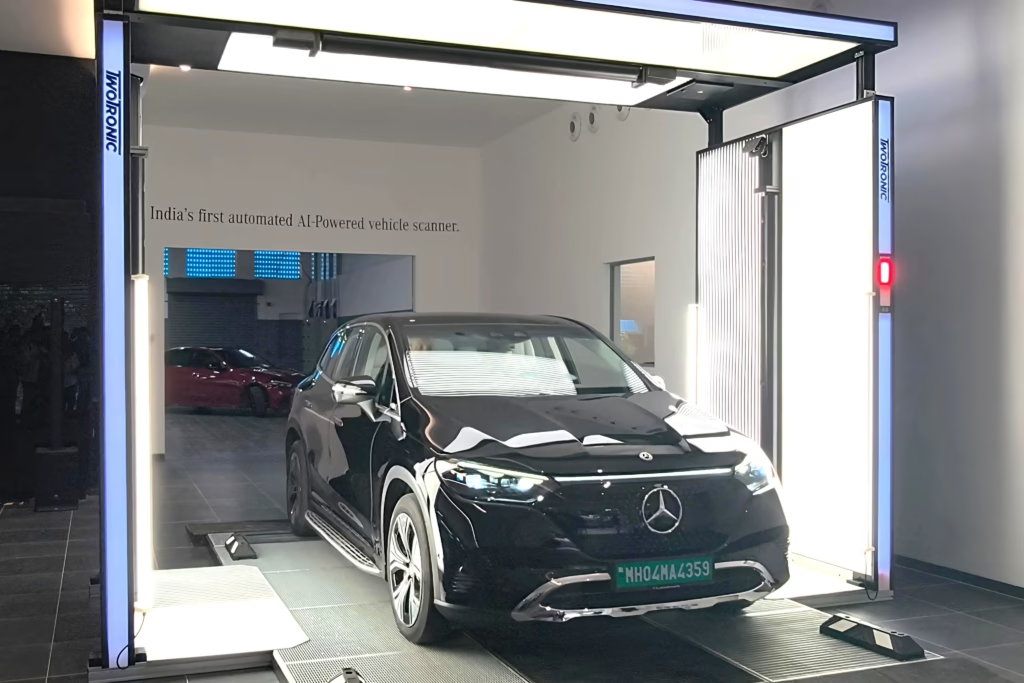
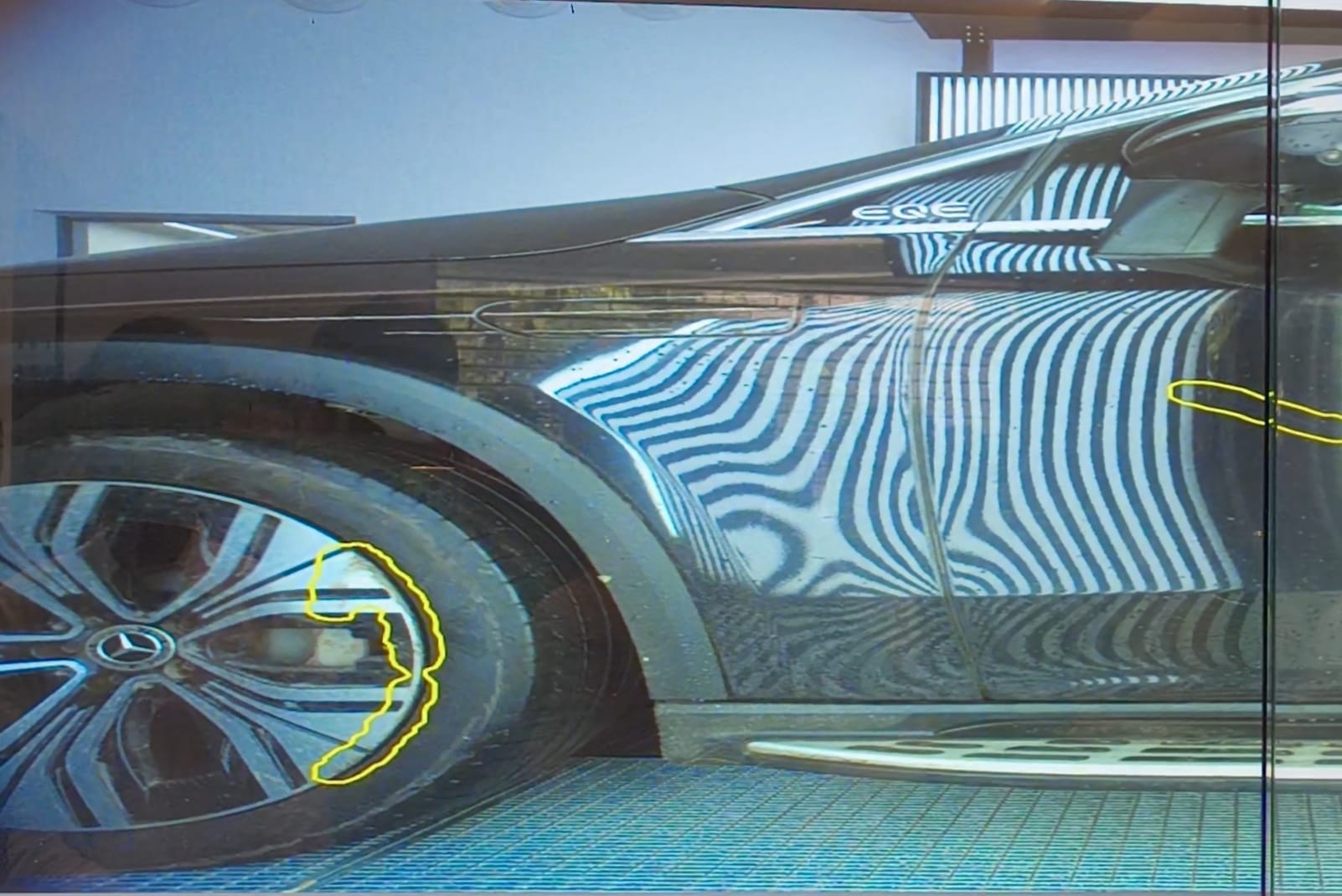
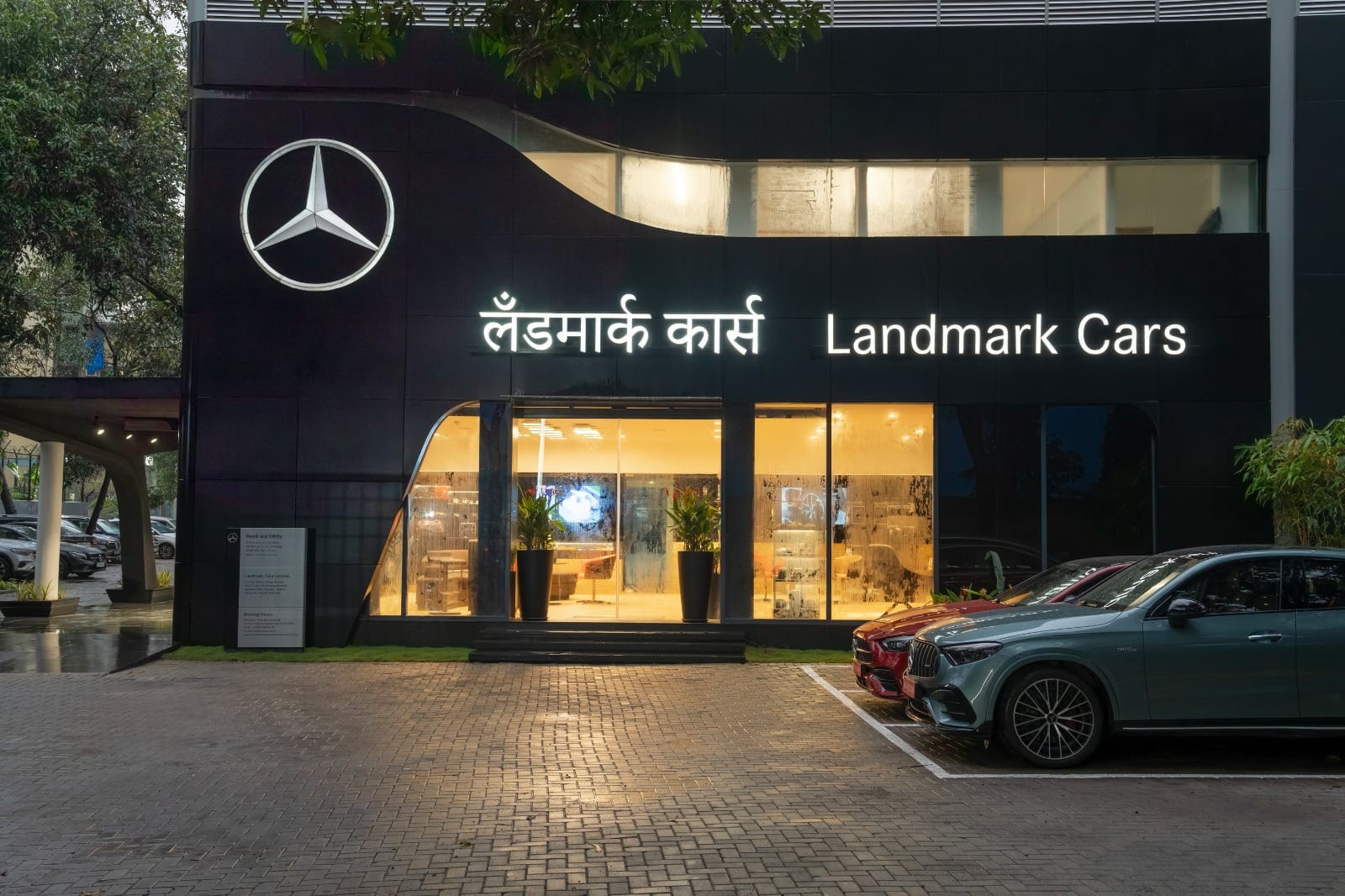
Mercedes-Benz India has revealed an AI-powered device that enables quicker vehicle inspection upon entry to its service centre. Dubbed the XENTRY Scanner, the service debuted at the brand’s newly established centre by Landmark Cars in Jogeshwari, Mumbai.

  1. Mercedes’ first AI-powered car scanning system arrives at its largest workshop in Mumbai.
  2. Uses a 360-degree camera system to identify damage on a car’s exterior.
  3. Service Select debuts as a new scheme for older Mercedes vehicles.

Currently, the scanner is the only one of its kind in India at this service centre, which spans around 58,000 sq. ft., making it the brand’s largest in Mumbai. This facility consists of 16 preventive maintenance and general repair bays, 9 body and paint bays and 9 supporting bays, supported by a dedicated 6,000 sq. ft. spare-parts area.

How does Mercedes’ XENTRY Car Scanner work?

The brand calls it an MRI scanner for its cars

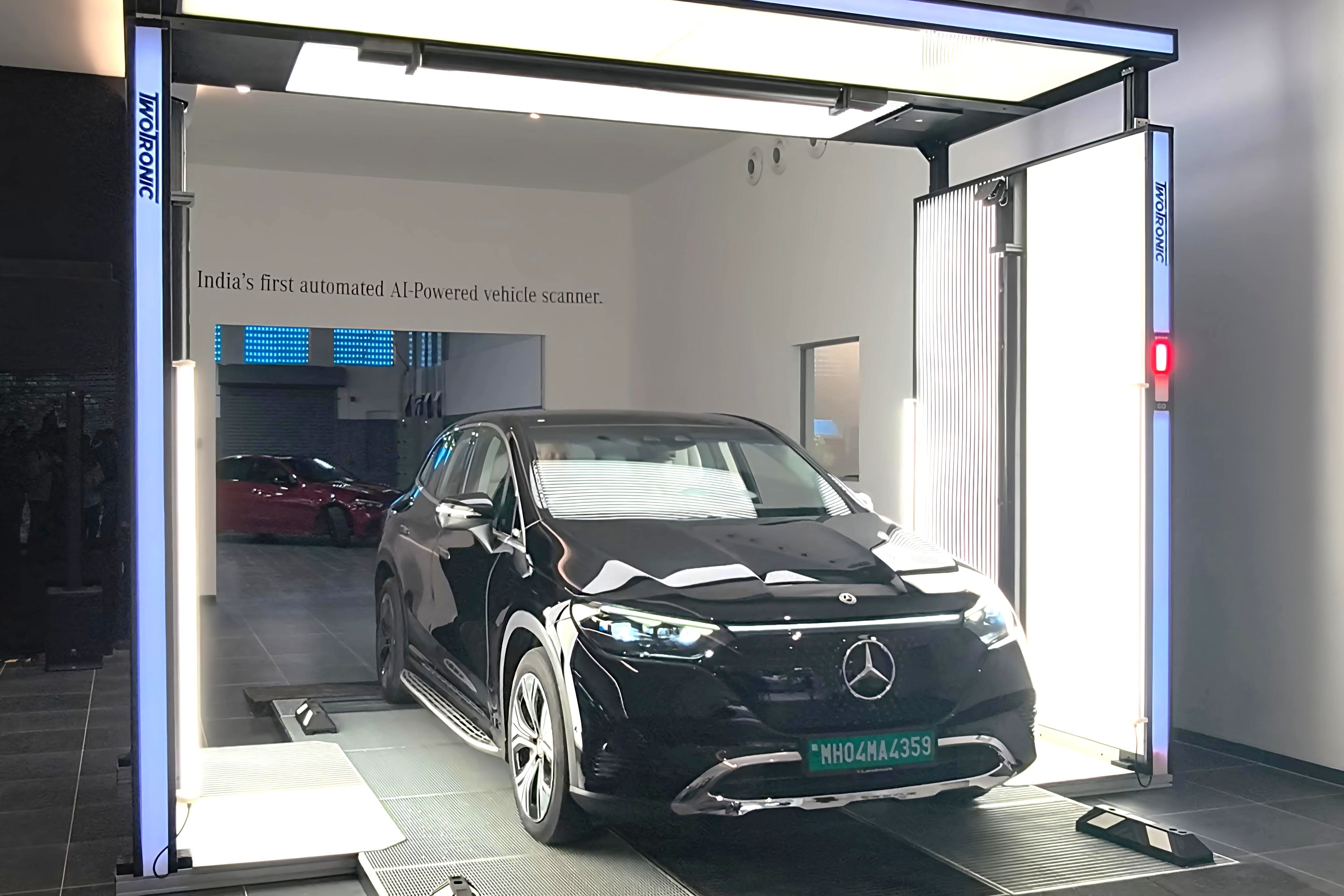
Mercedes-Benz’s XENTRY car scanner.

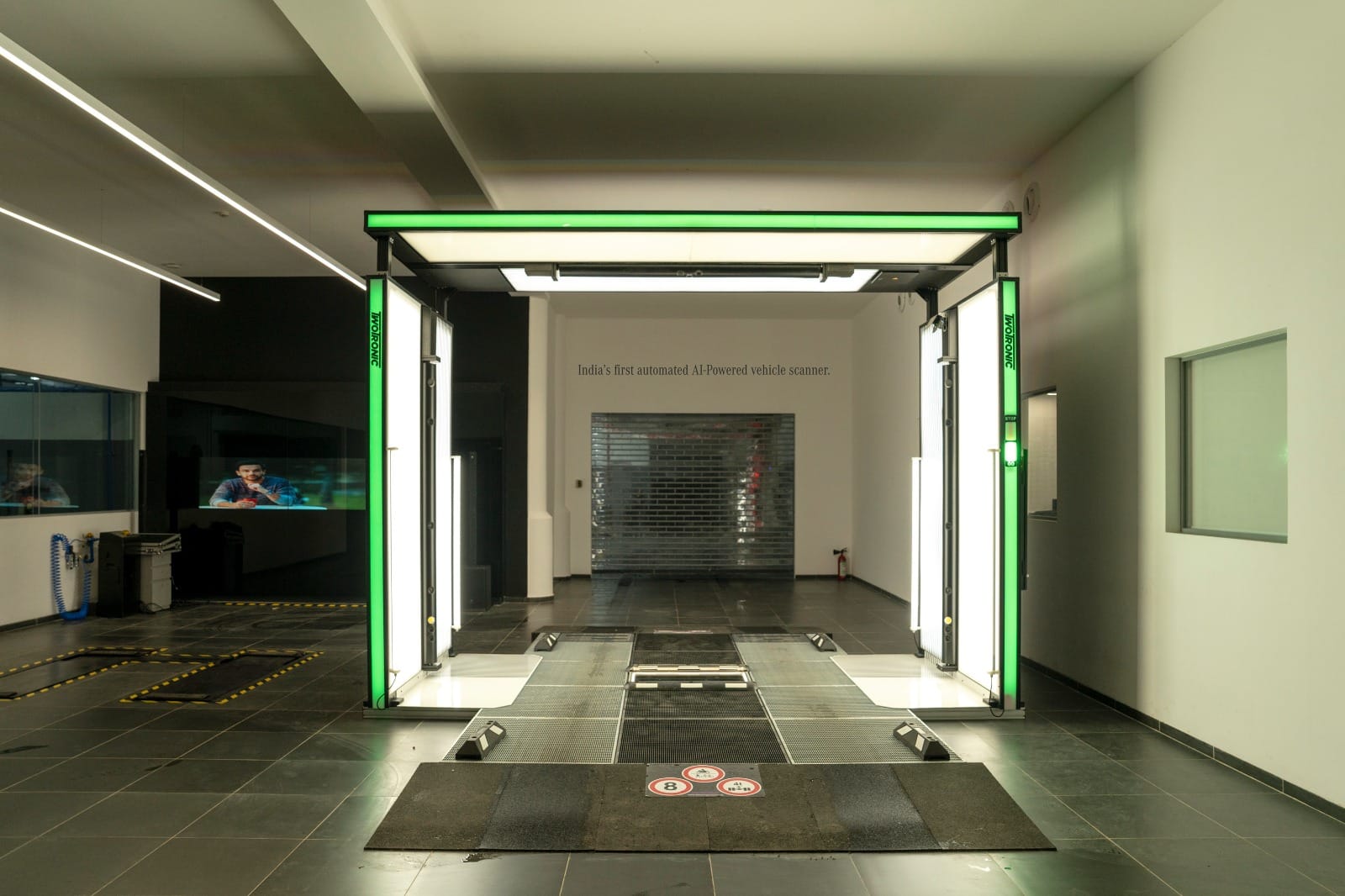
As the car enters the workshop, it is made to pass through the XENTRY scanner. The scanner utilises a 360-degree high-resolution camera system comprising 13 cameras and a LiDAR sensor. Images of the car are captured and analysed across four categories: body, underbody, windshield and tyres. The system captures 150 images within 3 to 5 seconds and then transmits the data to the Mercedes-Benz cloud.

Artificial intelligence then comes into play, identifying every kind of damage on the car’s exterior, even the ones that aren’t visible to the naked eye. It also provides in-depth tyre information, including their health, tread depth and braking performance. To maintain privacy, the system does not capture images of the driver. The findings are added directly to the job card of the particular car without manual entry, enabling better co-ordinated workshop processes. Mercedes says the process is entirely paperless, reducing walking distances, waiting times and paperwork that traditionally accompanied service reception.
Speaking about the thinking behind such initiatives, Mr Santosh Iyer, MD and CEO, Mercedes-Benz India said, “Productivity has to be the core. Reason being, from a real estate perspective, you need to turn cars around faster, while initiatives like the car scanner are more of a productivity enhancement. But on the customer side too, they expect the car to be turned around quickly, which is a pure mobility requirement for the customer.”

Through AI, external wear and tear is automatically detected by the XENTRY car scanner.

Next, a service advisor receives all the information on a tablet and informs the customer of a detailed list of vehicle wear and tear. It is then up to the customer to approve servicing of the concerned parts on the spot. The brand claims that a digital record of service status eliminates the need for manual inspections by the customer.

Interestingly, Landmark’s own internal research points to a shift in service revenue coming from EV adoption growth. “Landmark did a study of the service cost of EV versus ICE. Over the last six months, they’ve seen that the cost is the same in terms of maintenance. But this isn’t coming from maintenance; it’s coming from the body shop. More of the latter is done on EVs compared to ICE cars, said Mr Iyer.

At around 58,000 sq ft, the Landmark Cars workshop in Jogeshwari is the brand’s largest in Mumbai.

India now adds to the list of countries to offer Mercedes’ XENTRY scanner. Previously, the tech was available in international markets like Germany, Italy, Korea, the Netherlands, Switzerland, and Turkey. Furthermore, Mercedes-Benz plans to expand to more than 20 ‘world-class’ luxury outlets in 2026 in India, supported by an investment of more than Rs 450 crore by franchise partners over the next two years.

Mercedes Service Select: A service plan for older Mercedes vehicles

While Mercedes-Benz provides a standard 3-year warranty on new cars, it has also introduced a new service scheme for older vehicles. Called ‘Service Select’, Mercedes cars 7 years or older are eligible for this service. The scheme enables up to 25 percent savings for periodic service and brake care, a 2-year warranty on spare parts, benefits of its ‘Mobilio Lite’ service facility, and residual value protection of the vehicle.

With inputs from Hormazd Sorabjee

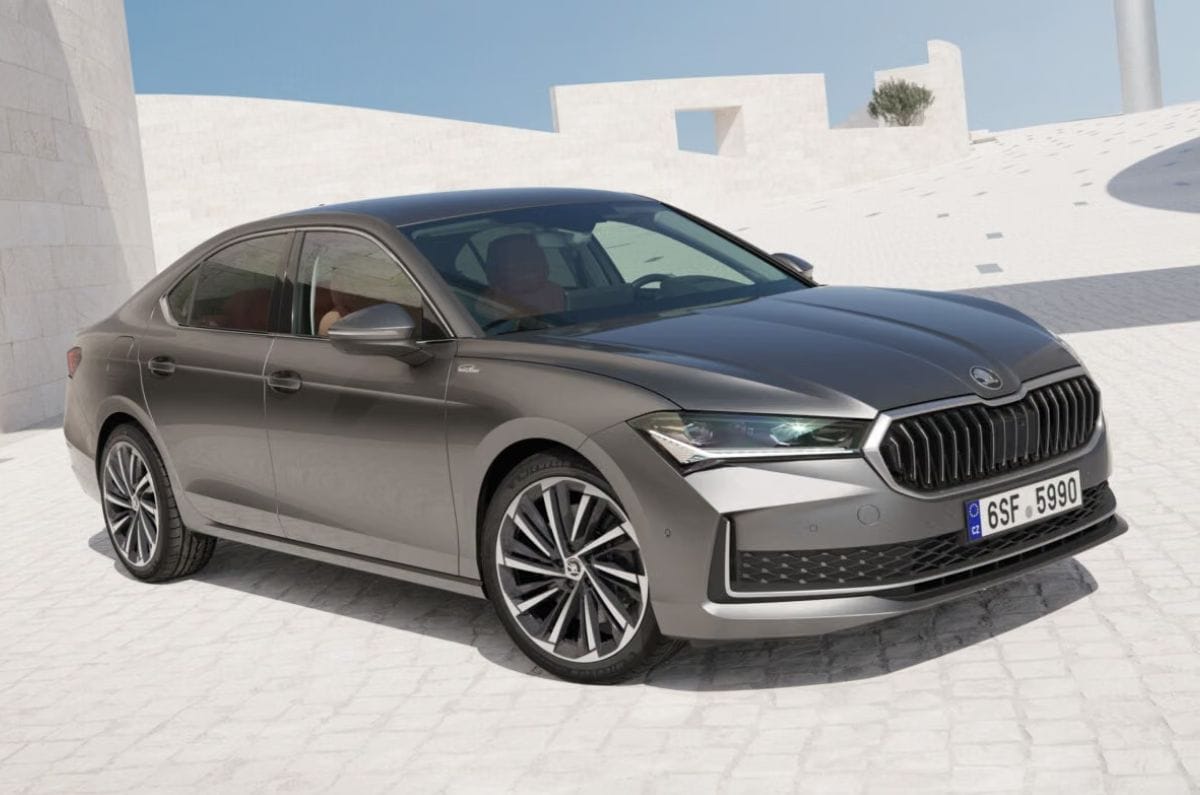
Skoda Superb diesel India launch in 2027

Skoda Superb diesel India launch in 2027
Skoda Superb India launch details

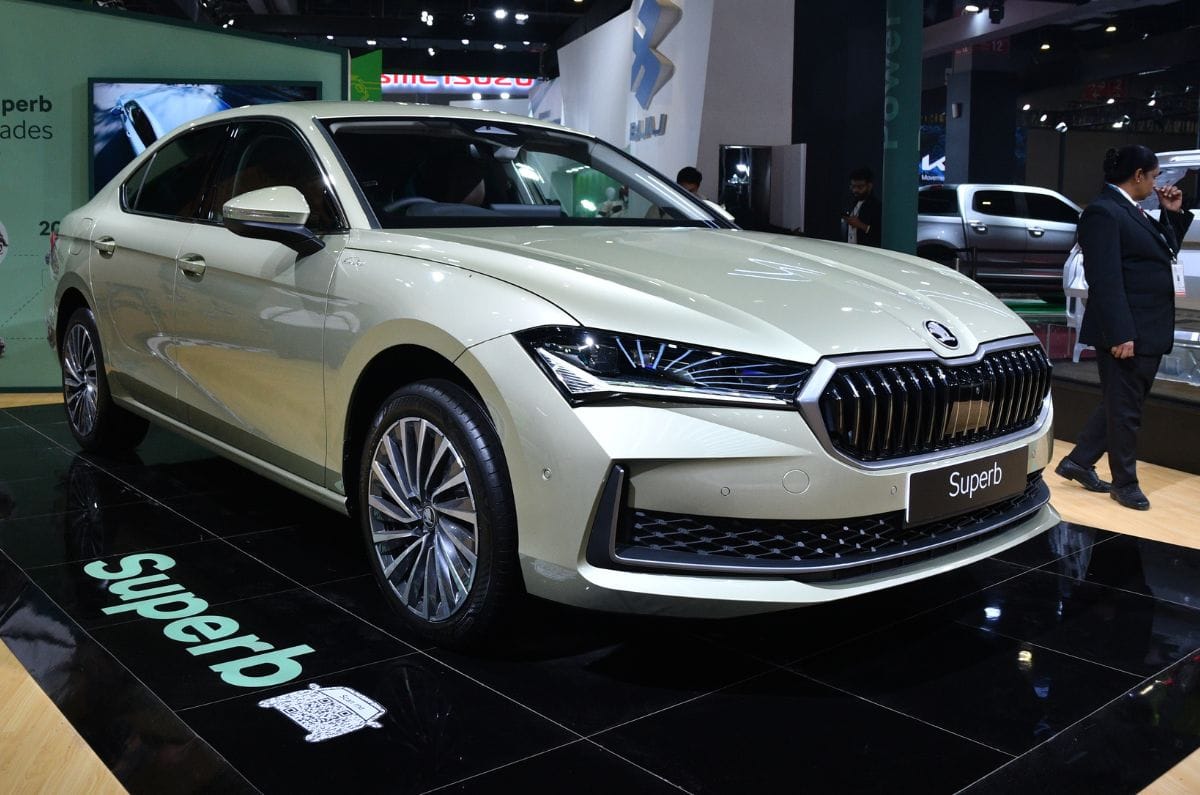
Skoda Auto will bring the diesel-powered Superb back to India in the first half of 2027, marking the return of the brand’s flagship sedan after a two-year hiatus. The previous, third-gen Superb had a brief second innings as an import, with a limited run of just 100 units. Skoda, however, hasn’t given up on its flagship. In fact, the latest fourth-gen Superb, which debuted globally in late 2023, was shown to the Indian public at the Bharat Mobility Show in January 2025, and Skoda had indicated at the time that it would bring the sedan to India. 

  1. Superb expected to return with a 2.0-litre diesel engine 
  2. Marks the return of diesel to a VW group brand since 2020
  3. Could benefit from India-EU FTA set to take effect next year 

The flagship sedan is expected to be imported as a completely built-up unit (CBU) and positioned at the top of Skoda’s Indian range. 

Skoda Superb to return with a diesel 

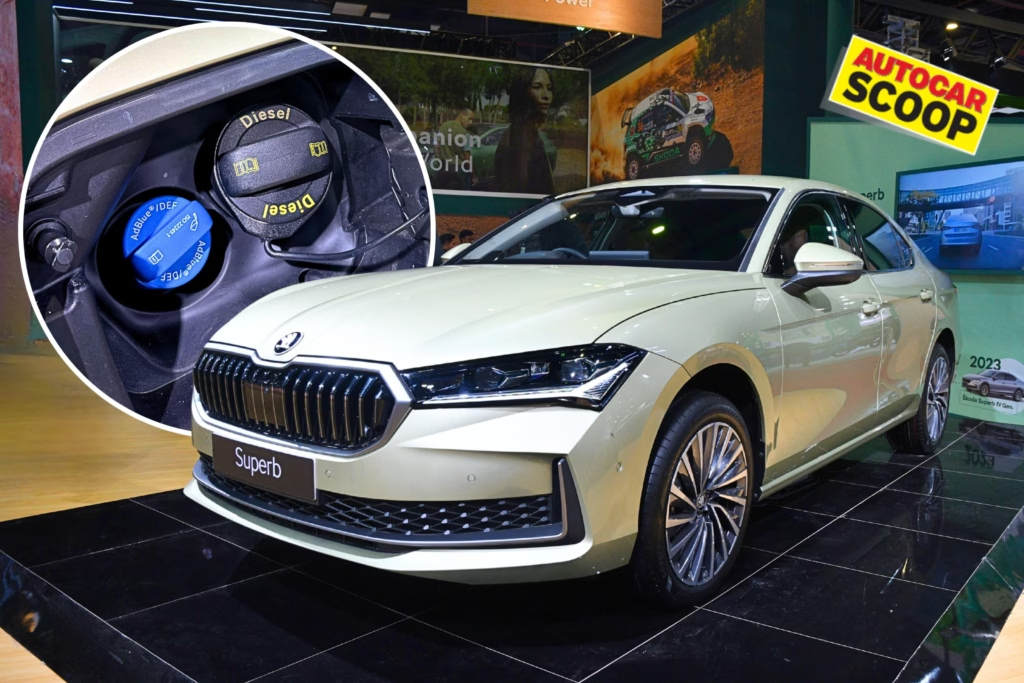
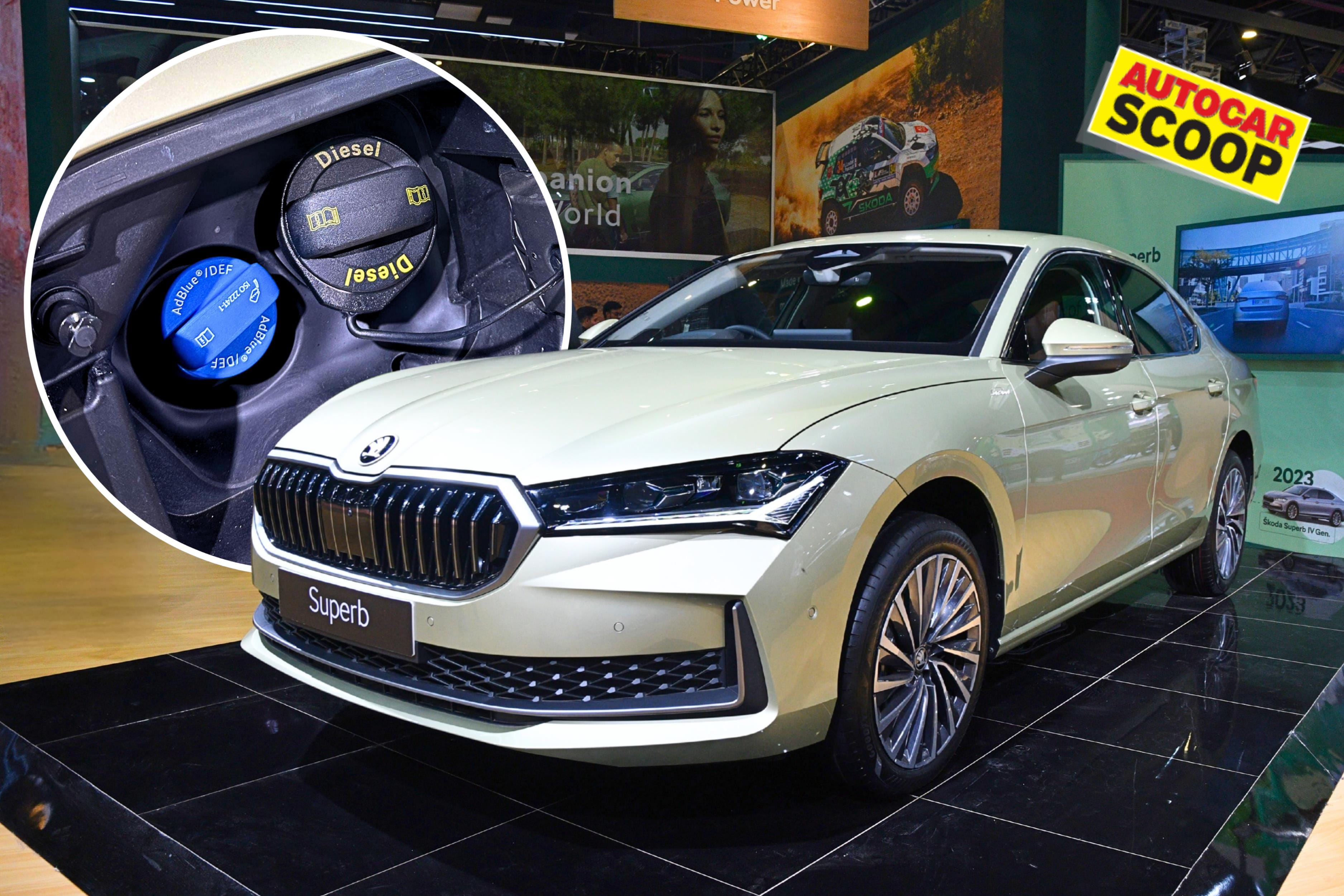
Significantly, the Superb will mark the return of diesel to Skoda’s India portfolio, and is expected to use VW Group’s 2.0-litre TDI engine. The carmaker discontinued diesel ahead of the transition to BS6 emission norms in 2020 and currently sells only petrol-powered models in the country. 
The Superb diesel was showcased at the 2026 Bharat Mobility Global Expo. 

The diesel engine could well be the Superb’s main selling point, as there is no premium diesel sedan on sale in India today. There is still a small but steady demand for diesel, and that’s exactly what Skoda cleverly wants to tap into. The model is expected to remain a low-volume import, with its role focused on strengthening the brand and the sedan legacy of Skoda.

Flagship appeal, halo effect

The Superb has played an important part in establishing Skoda’s premium image over its 25 years in India. Its return would give existing customers an upgrade path within the brand and add a large sedan option in a portfolio dominated by SUVs. It would also allow dealers to address a wider price band and reach customers from rival brands. If priced right, the Superb could be an alternative to the Toyota Camry, the only other sedan in the premium segment. 

Superb diesel could be a unique proposition as there are currently no premium diesel sedans available. 

As a CBU, the Superb will attracts steep customs duties, and local assembly isn’t an option either, as the Bratislava plant that builds the sedan has no facility to produce CKD kits for export markets. The timing, however, is just right. With the EU-India free trade agreement set to take effect from next year, a sharp reduction in customs duties could see the Superb diesel priced far more attractively than before. For now, though, expect the fully loaded variant to come in at around Rs 55 lakh-60 lakh.

With inputs from Ketan Thakkar 

Updated Ampere Magnus G Max launched at Rs 1.10 lakh

Updated Ampere Magnus G Max launched at Rs 1.10 lakh
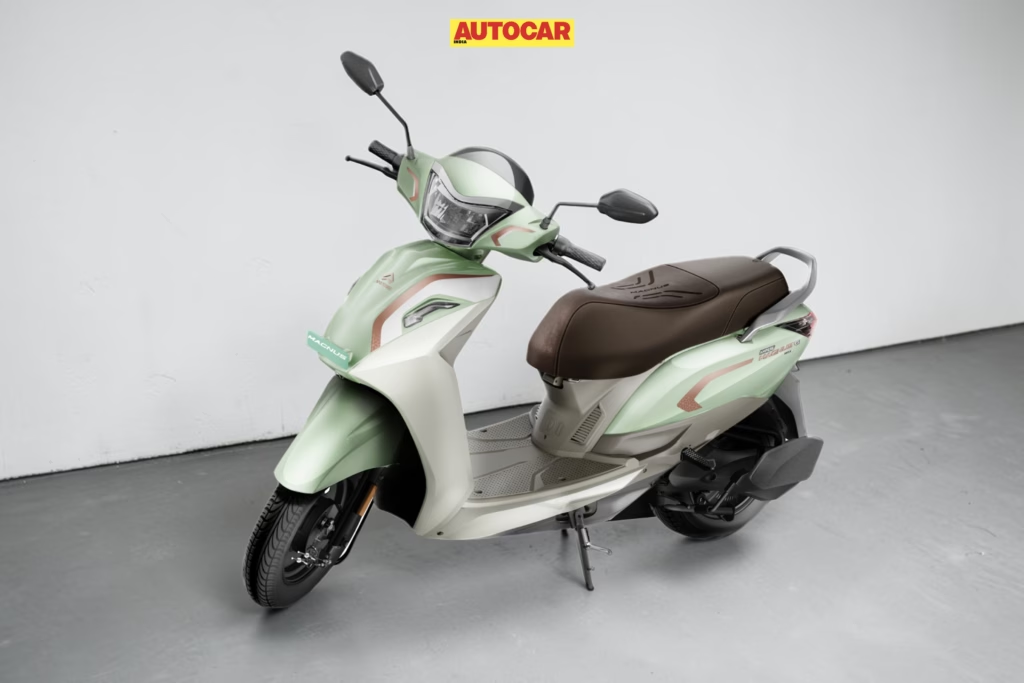
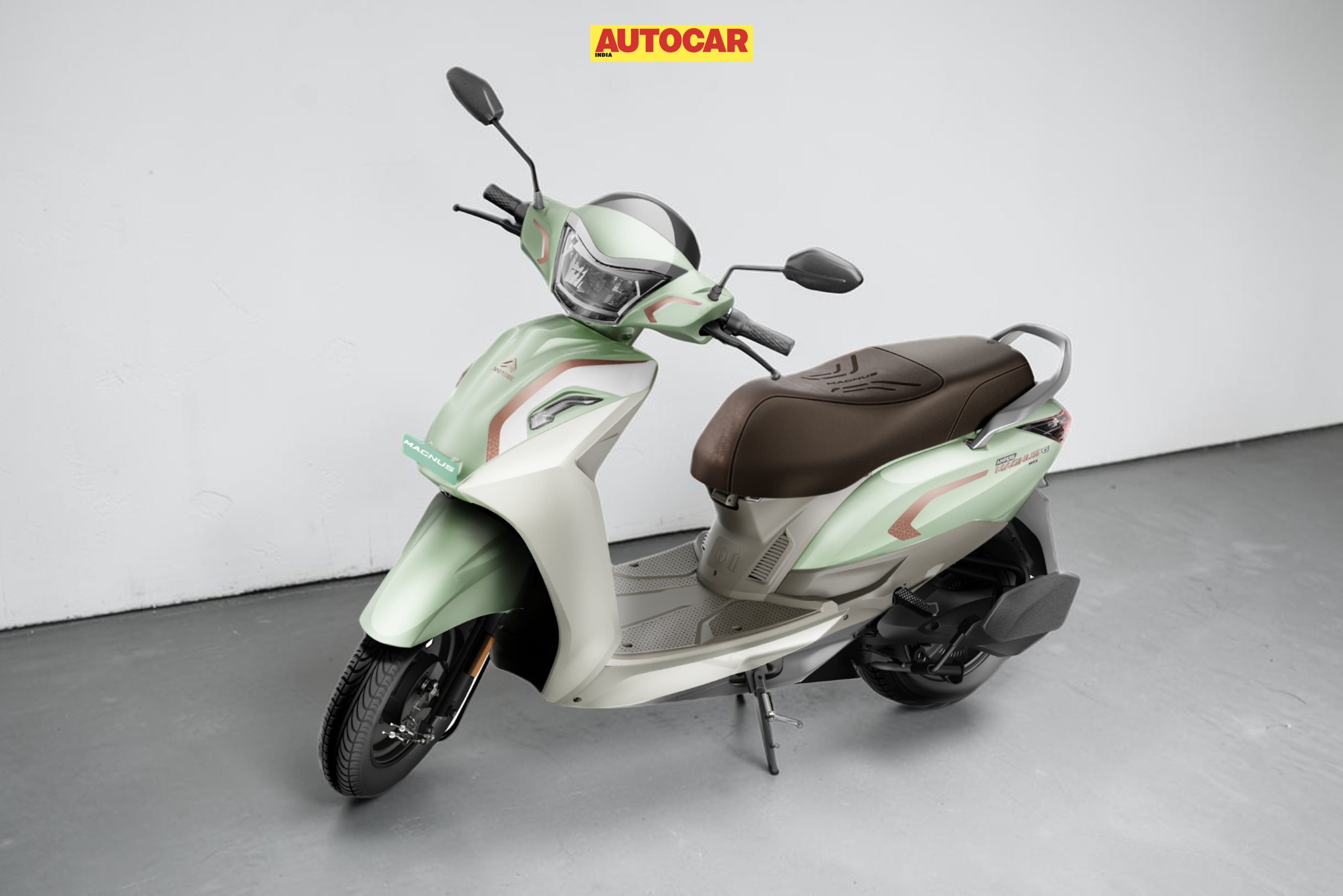
Updated Ampere Magnus G Max

Ampere has updated the Magnus G Max with a comprehensive connectivity upgrade powered by what it calls its new NxG.io software platform. The company says the update adds over 30 features to the scooter, along with a new 5-inch display.

  1. Magnus G Max updated with 30+ IoT features
  2. Adds cruise control, hill hold, turn-by-turn navigation, Find My Scooter and OTA updates

Updated Ampere Magnus G Max details

Update adds practical features like cruise control and hill hold assist

The most notable additions are cruise control and hill hold assist, which prevents the scooter from rolling back while on an incline, making it a practical feature for riders who may struggle with this. The scooter also now features a 5-inch display with turn-by-turn navigation, along with the ability to find or ping the scooter via the phone app, making it easier to locate after parking.

The broader connected ecosystem also includes real-time charging status, live tracking, geofencing, theft and tow alerts, remote diagnostics, service booking, charging history, battery health insights and OTA update capability. All connected features are accessible through the Ampere Connect app.

The underlying mechanical package remains unchanged. The Magnus G Max uses a 3kWh LFP battery with a 2.4kW peak hub-mounted motor, offering a claimed IDC range of 142km and a claimed top speed of 65kph. The battery carries a 5-year/75,000km warranty and is rated for a claimed lifespan of 2,00,000km. The scooter is available in dual-tone colour options, including the new Cinnamon Copper alongside the existing Monsoon Blue and Matcha Green.