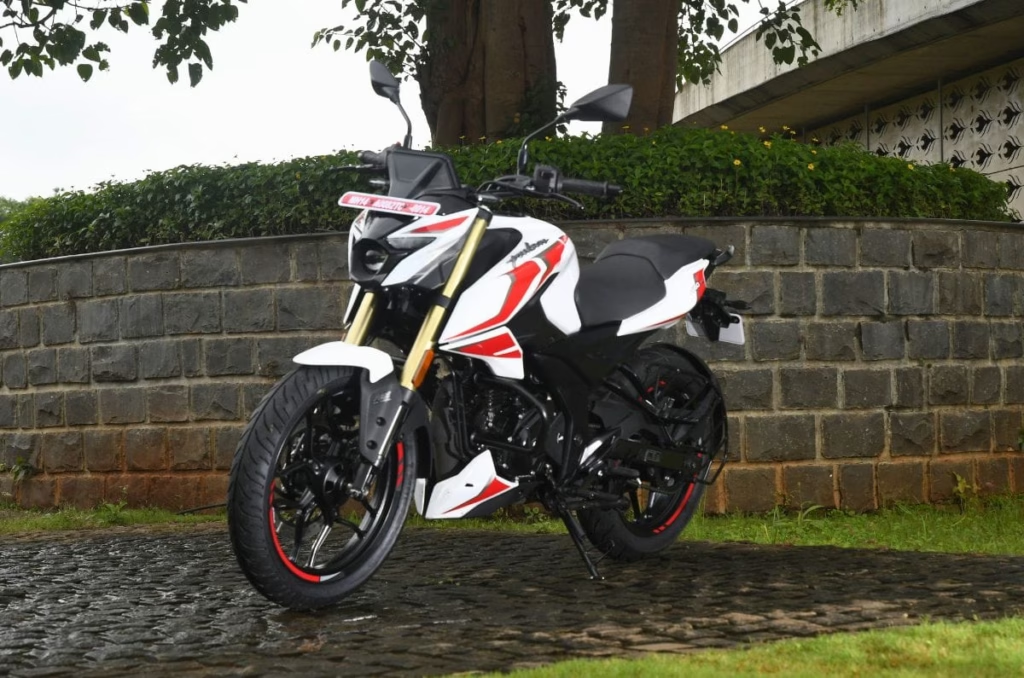
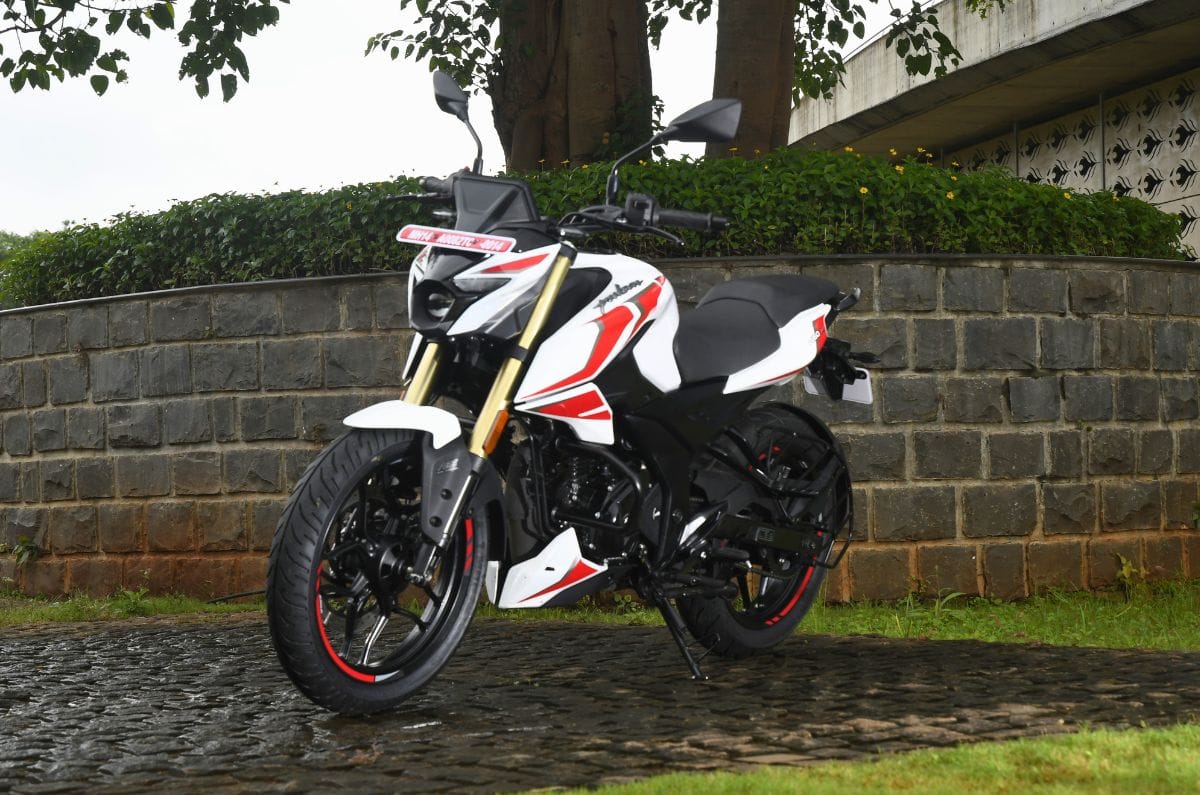
Bajaj Auto has expanded the Pulsar N160 range with the launch of the Pulsar N160 S and Pulsar N160 SS, priced at Rs 1.34 lakh and Rs 1.43 lakh (ex-showroom, Delhi), respectively. The biggest update is the new 164.5cc single-cylinder oil-cooled 4-valve engine, which produces 18.5hp at 9,500rpm and 14.5Nm at 8,000rpm. Compared to the outgoing 2-valve motor’s 16hp and 14.65Nm, power is up by 2.5hp, while torque drops marginally by 0.25Nm.
The electronic throttle enables Road, Rain, Sport and Off-road ride modes, along with Crawl Technology similar to what we see on KTM bikes, which allows the motorcycle to move at low speeds in higher gears with minimal clutch input. The flagship N160 SS additionally gets traction control. Watch out this space, our review of the Pulsar N160 SS goes live on August 17.
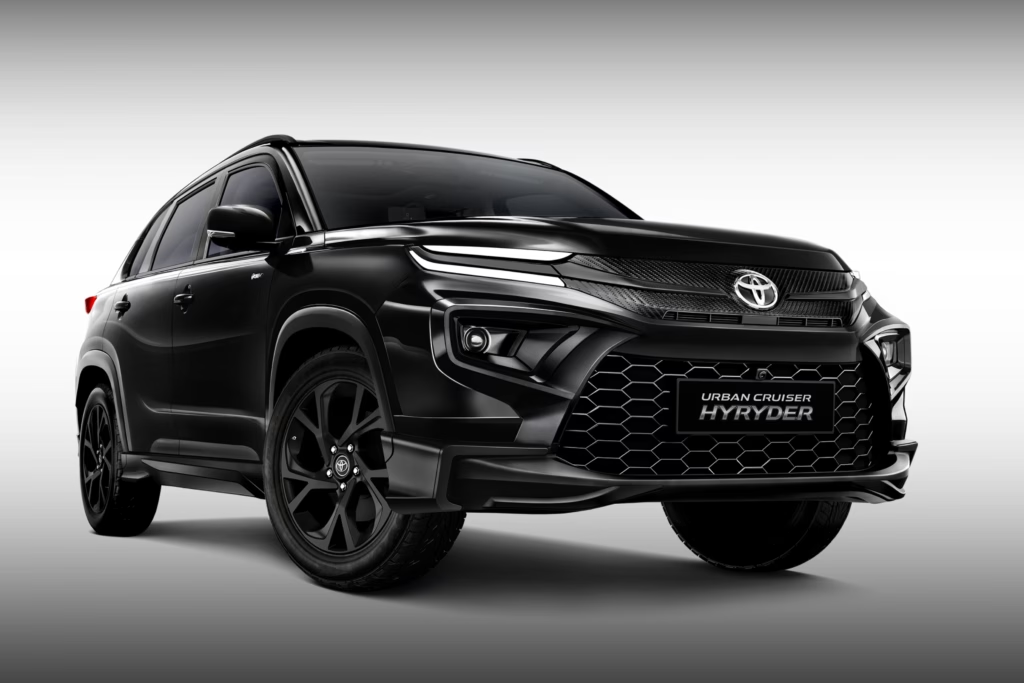
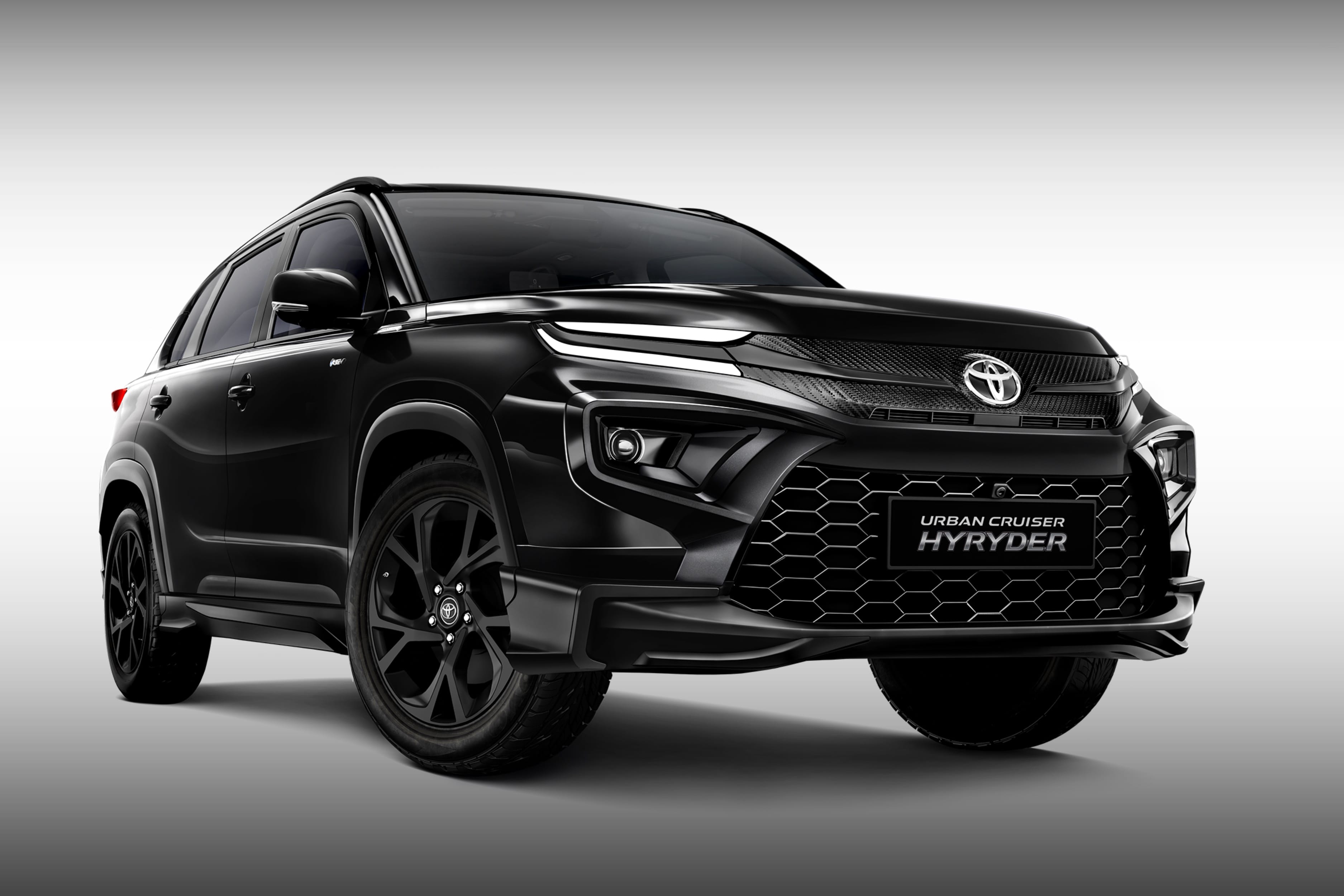
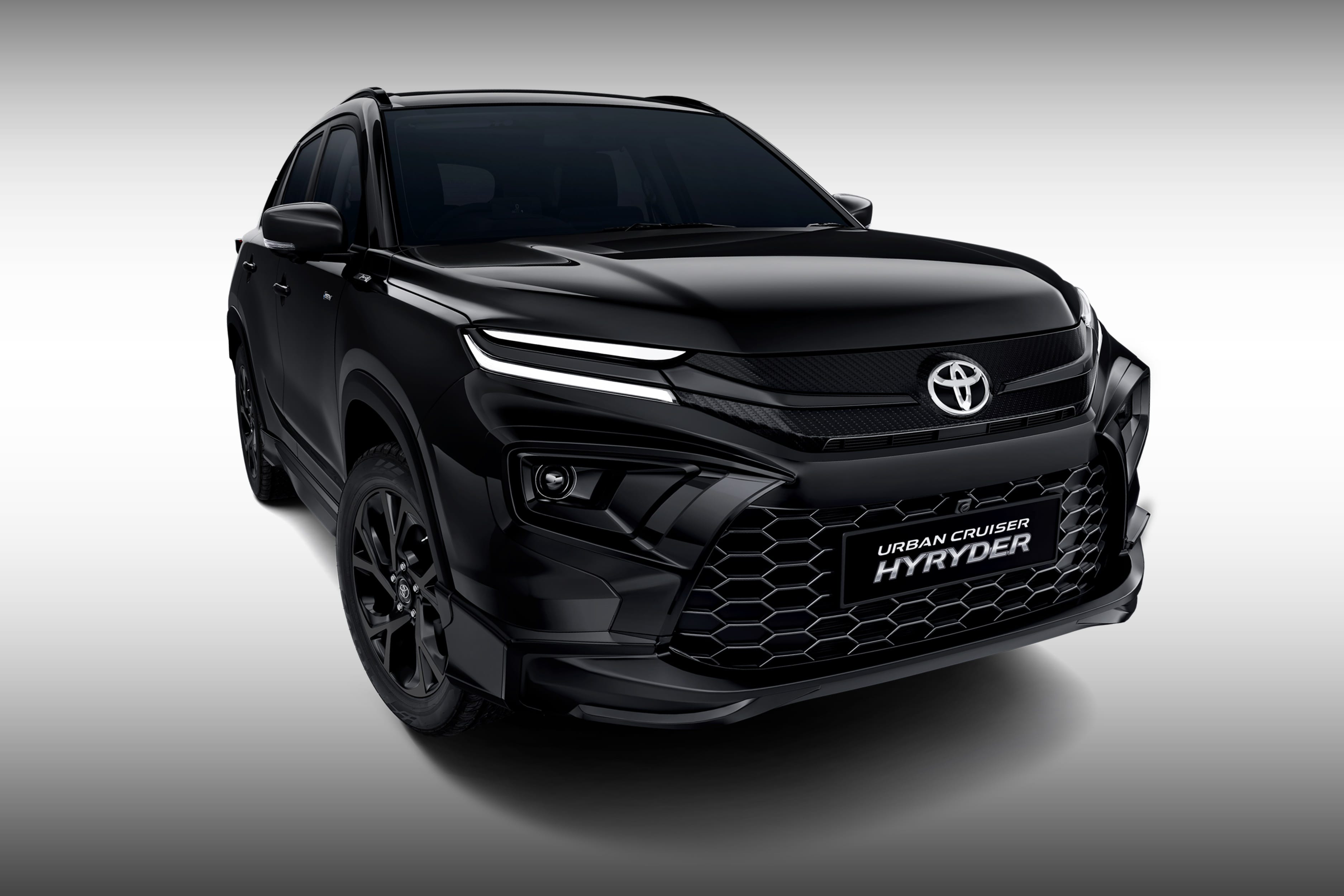
Toyota has introduced a limited-run Aero Black Edition styling package for the Hyryder, priced at Rs 31,999. Available at the brand’s dealerships, the new edition is offered only with the Midnight Black exterior shade on the G(O) and V petrol and strong-hybrid trims. The Hyryder’s G(O) and V trims start at Rs 14.87 lakh and Rs 16.42 lakh, respectively, while adding the Aero Black Edition package takes their prices to Rs 15.19 lakh and Rs 16.74 lakh. Last year, the carmaker had introduced the Aero Edition styling kit for the Hyryder.
Toyota Hyryder Aero Black Edition details
The styling package blacks out several chrome elements on the exterior, including those around the headlights, on the front grille and on the tailgate. It also replaces the silver-finished trim on the lower section of the front bumper with black. An Aero Black Limited Edition badge is added as well, further setting it apart from the rest of the range.
Toyota Hyryder Aero Black Edition powertrains
Since this is just a cosmetic styling package, no mechanical changes have been made to the Hyryder. Depending on the trim, petrol, CNG and strong-hybrid powertrain options are on offer. The Hyryder’s 1.5-litre 4-cylinder petrol engine develops 103hp and 137Nm, which can be paired with either a 5-speed manual transmission (MT) or a 6-speed torque converter automatic gearbox. Also, both two- and four-wheel drive choices are on offer with this engine. With the CNG kit, power and torque outputs fall to 88hp and 121.5Nm, respectively (in CNG mode). The Hyryder CNG is offered solely with a 5MT unit.
Speaking of the strong-hybrid version, it features a 1.5-litre 3-cylinder petrol engine and an electric motor, both of which work together to produce 115hp. The e-motor sources power from a 0.60kWh lithium-ion battery pack, and transmission duties are handled by an eCVT unit, sending the drive to the front wheels only.
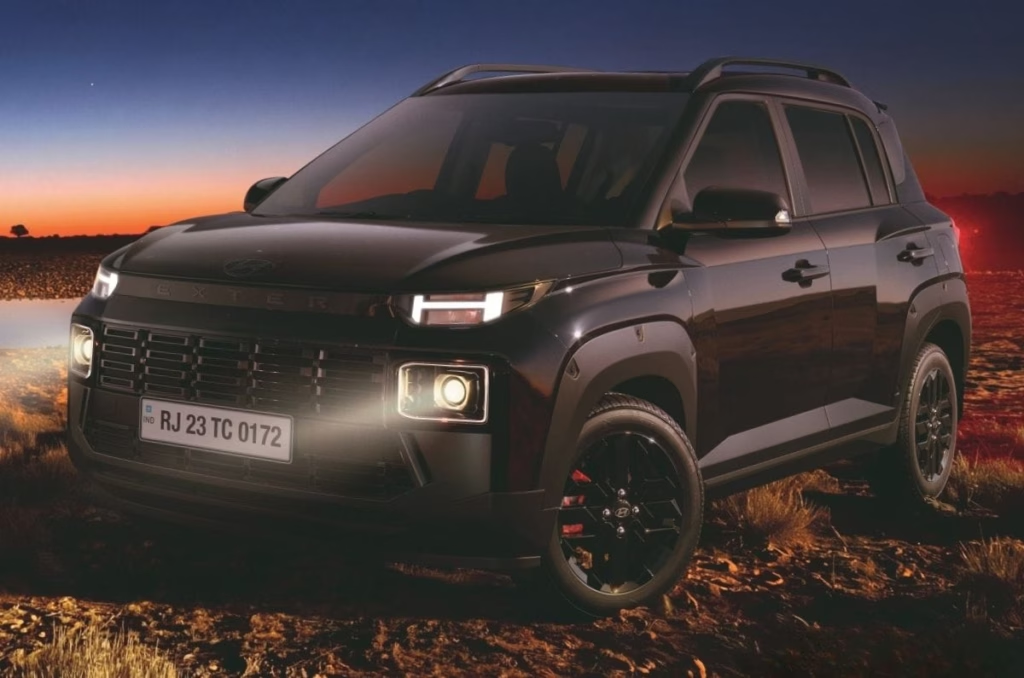
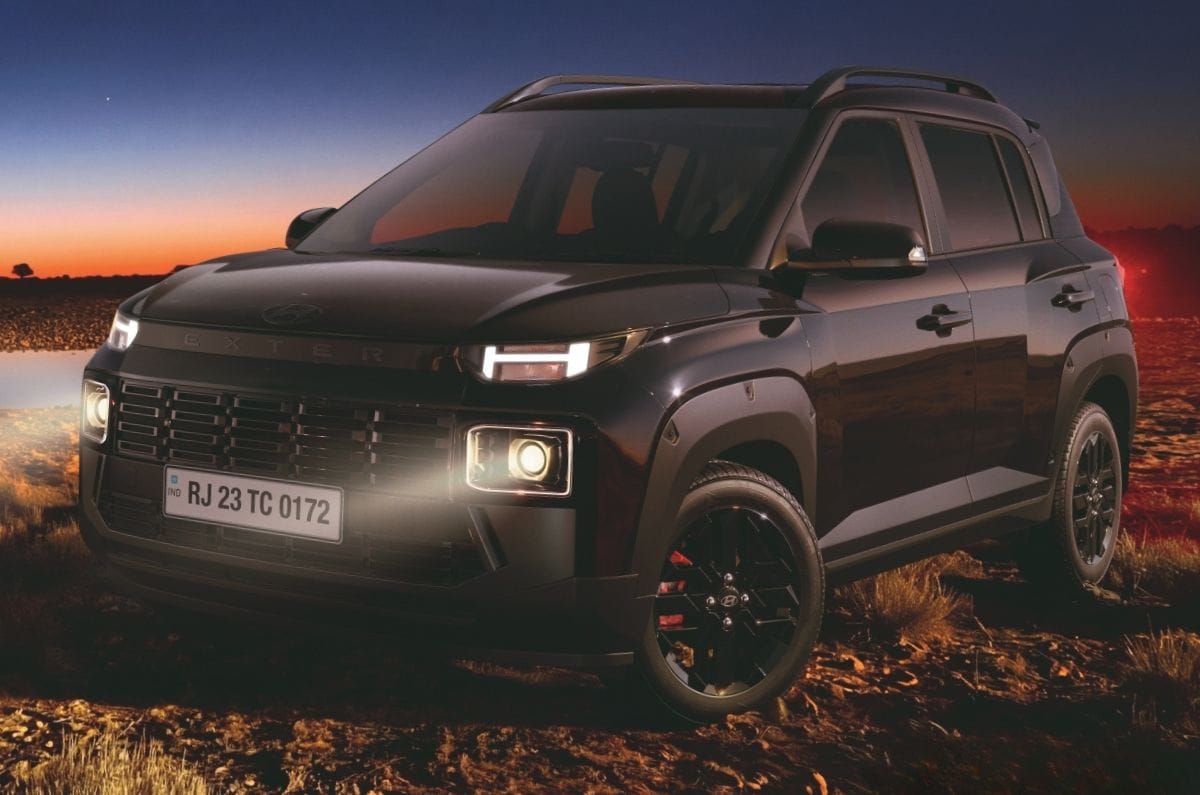
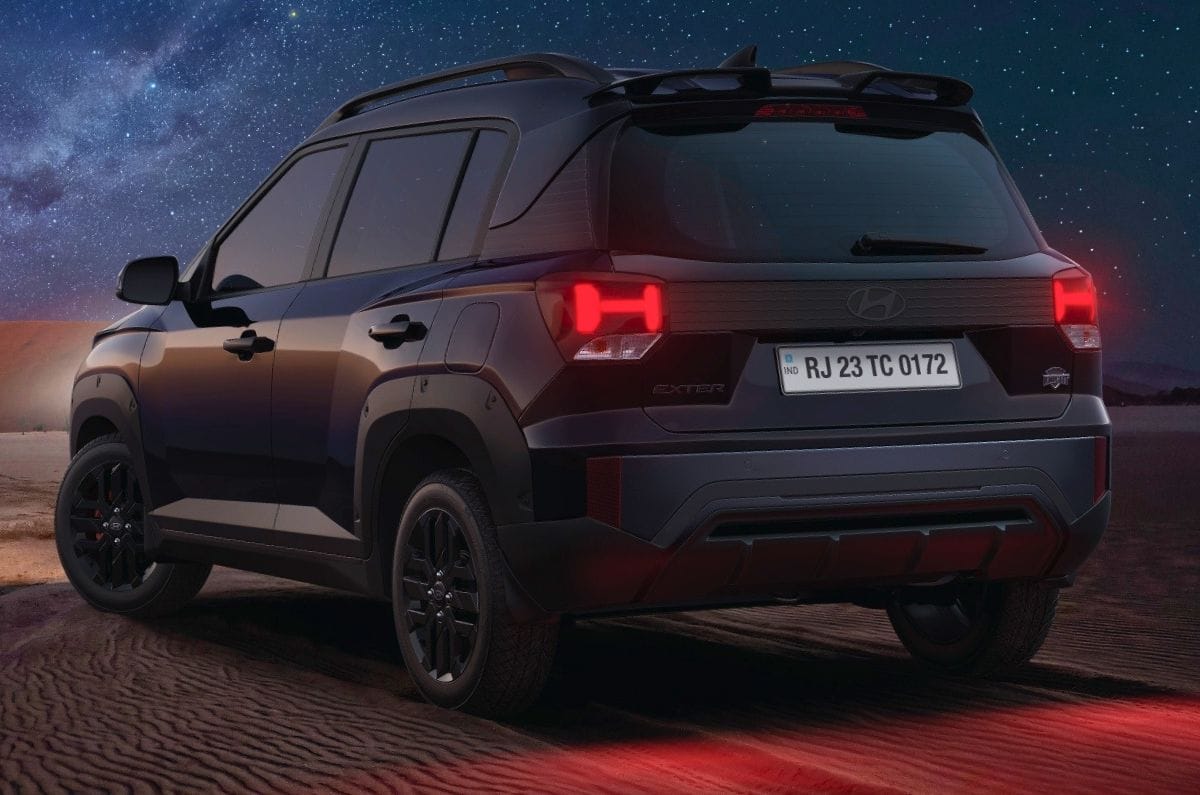
Hyundai has launched the 2026 Exter Knight edition, with prices starting from Rs 8.14 lakh (ex-showroom). It is available with all petrol and CNG variants of the HX 6, and the petrol-AMT variant of the HX 10 trim. The Exter Knight gets additional black exterior design elements and an all-black cabin at an additional Rs 15,000.
Sports black logos and alloys, and red front brake callipers
Gets an all-black cabin with black fabric seat upholstery
Available in five exterior colour options
Notably, the Knight edition is not new to the Exter, having first been introduced in July 2024. This time around, however, Hyundai is offering the Knight edition with the facelifted Exter, which was launched in March 2026.
2026 Hyundai Exter Knight edition: Prices
Knight edition costs Rs 15,000 more than the standard variants
2026 Hyundai Exter Knight edition prices compared with standard model
Variant
Knight edition price
Standard model price
Difference
HX 6 petrol MT
Rs 8.14 lakh
Rs 7.99 lakh
+ Rs 15,000
HX 6 petrol AMT
Rs 8.74 lakh
Rs 8.59 lakh
+ Rs 15,000
HX 6 CNG MT
Rs 9.10 lakh
Rs 8.95 lakh
+ Rs 15,000
HX 10 petrol AMT
Rs 9.61 lakh
Rs 9.46 lakh
+ Rs 15,000
The Hyundai Exter Knight edition costs Rs 15,000 more than the standard variants, like the dual-tone Ranger Khaki colour option offered with the SUV.
2026 Hyundai Exter Knight edition: What’s new?
Gets some black and dark grey elements outside
While the overall silhouette of the Exter Knight edition is identical to the standard model, Hyundai has added dark elements to give a sportier look to the SUV. These include blacked-out Hyundai logos and Exter lettering at the front and rear, and dark grey garnish on the front and rear bumpers. The Exter Knight gets the same 15-inch rims, but with a black or dark grey finish, depending on the variant. To add contrast, Hyundai has equipped it with red brake callipers on the front wheels. At the rear, it gets a ‘Knight’ badge on the tailgate.
The Exter Knight edition is available in five exterior shades: Titanium Black, Atlas White, Starry Night, Titan Grey and Golden Bronze. Notably, it is not available in the Ranger Khaki colour option, which is offered with the standard model.
Gets an all-black cabin theme with brass accents
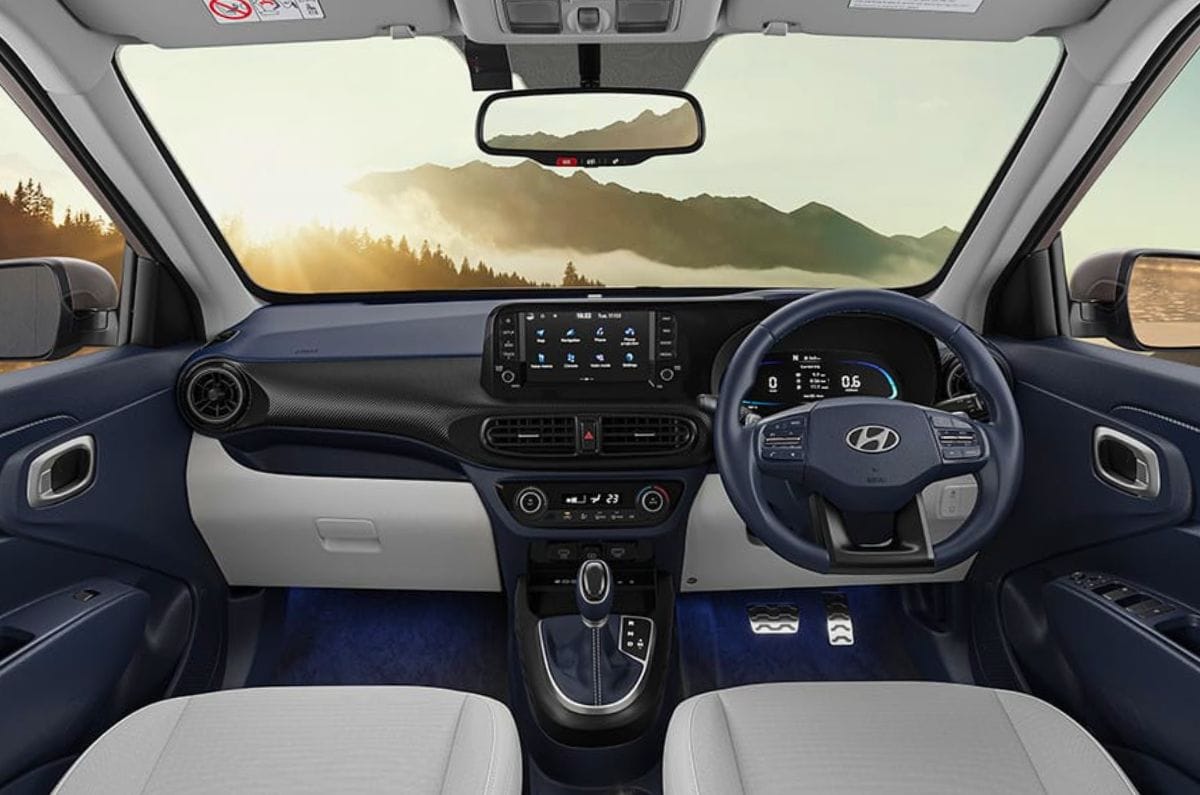
Inside, the Exter Knight’s dashboard design is the same as the standard model, but it gets an all-black finish with brass-coloured accents, compared to the standard model’s navy and grey interior theme. It also gets amber-coloured footwell lighting, which is blue on the standard variants. The seats on the Knight edition feature black fabric upholstery.
Standard Exter’s dashboard is shown for representational purposes only.
The feature suite is the same as the corresponding variants – the HX 6 gets an 8-inch touchscreen infotainment system, a single-pane sunroof, powered outside rearview mirrors (ORVMs), automatic climate control with rear vents, and a rear parking camera with sensors. The HX 10 adds a wireless phone charger, a cooled glovebox, connected car technology, and a rear wiper and washer to the feature mix.
Available with the same 83hp petrol and 69hp CNG engine options
As mentioned earlier, the Exter Knight is offered with a 1.2-litre petrol engine that produces 83hp and 114Nm, and a CNG option that puts out 69hp and 95Nm. The petrol engine gets an option between a 5-speed manual and a 5-speed automated manual transmission (AMT), while the CNG is available only with the manual gearbox.
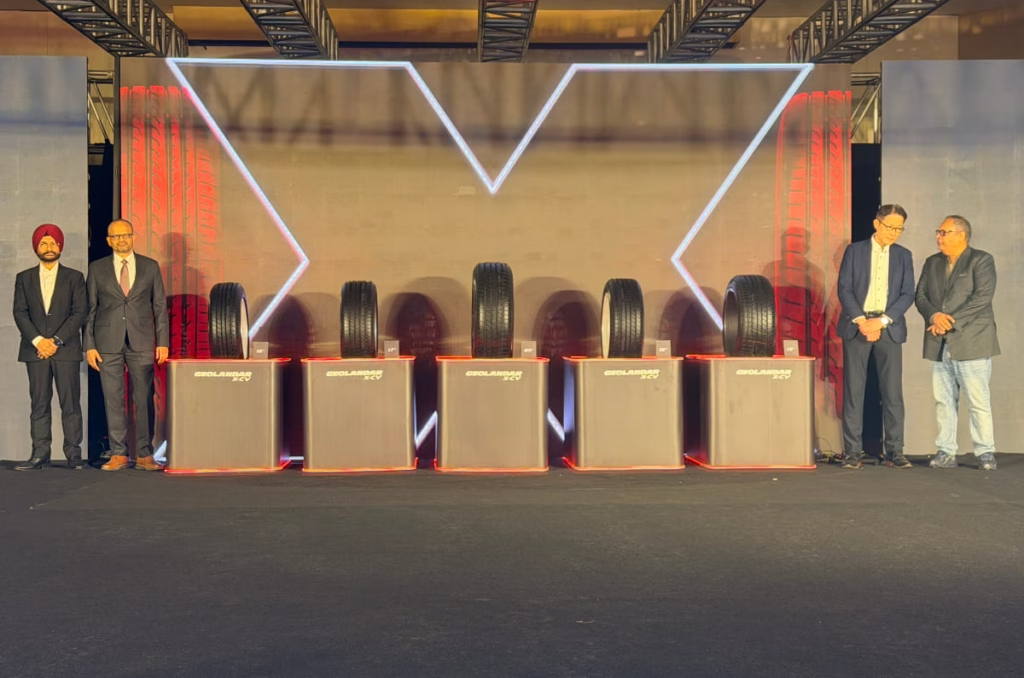
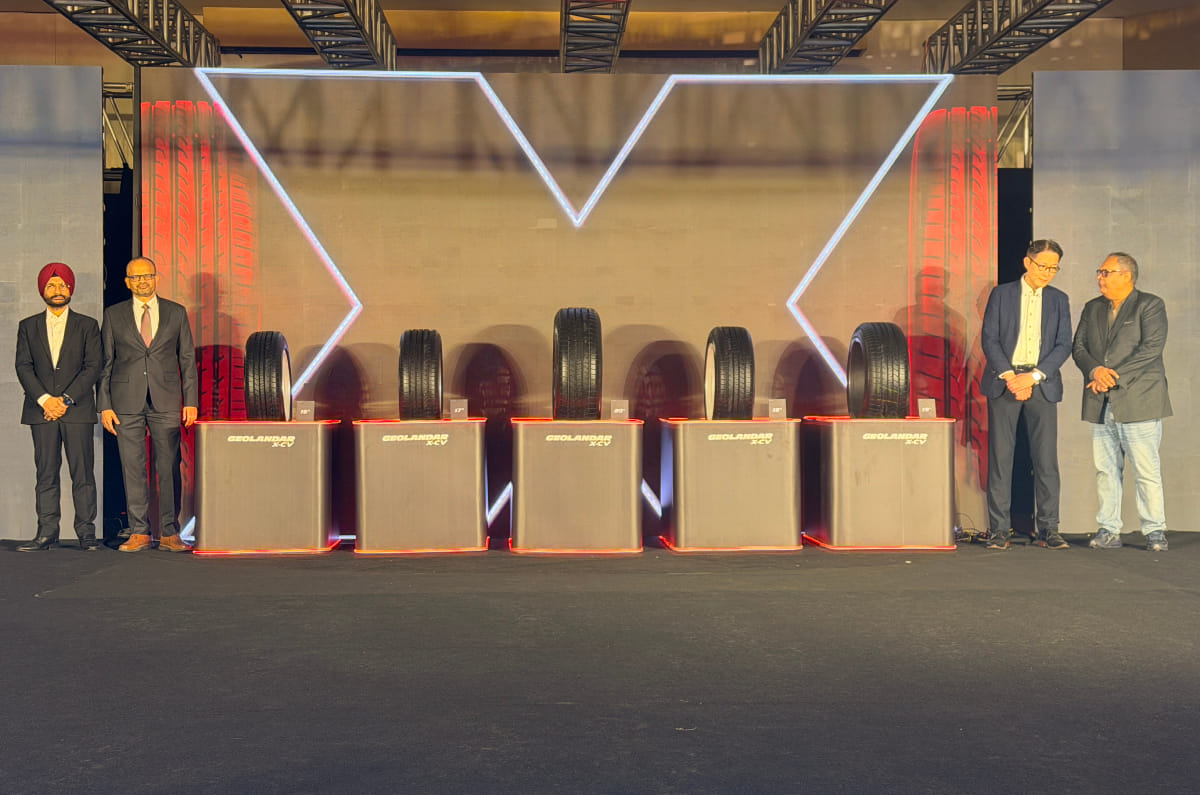
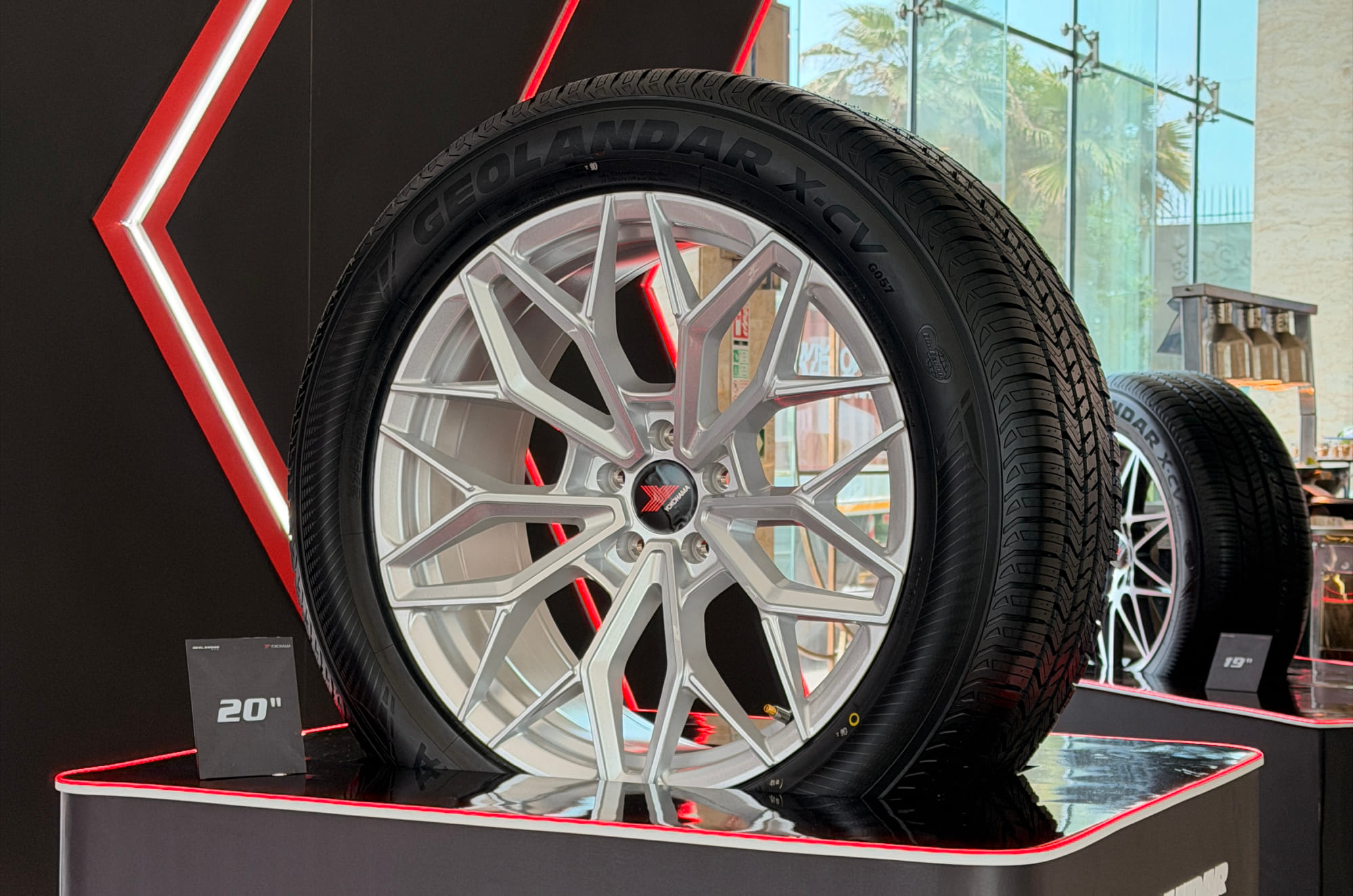
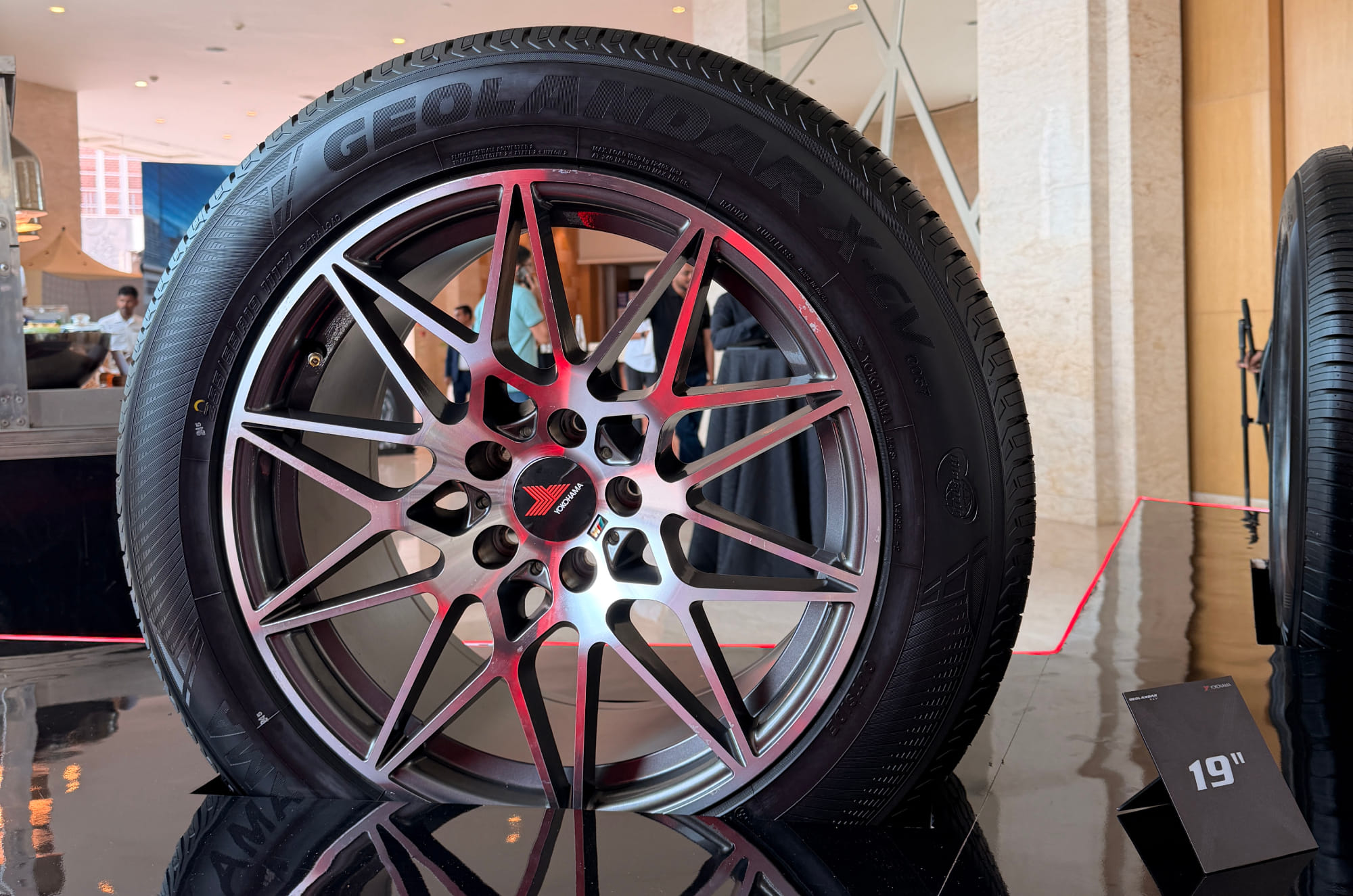
Yokohama India has launched the Geolandar X-CV tyre range for crossover and premium SUVs. Originally developed for larger luxury SUVs, the locally manufactured Geolandar X-CV is now being offered in 16-inch wheel sizes for the first time, expanding its reach to compact and midsize SUVs. The range will eventually be available in 32 sizes spanning 16 to 20 inches, with 17 sizes available immediately and the remaining 15 sizes set to be introduced over the next two to three months. Yokohama claims the new tyre delivers 20 percent better wet grip and 10 percent longer tyre life than its conventional tyre, based on the company’s internal testing.
Available in 32 sizes from 16-20 inches
Claimed 20 percent better wet grip and 10 percent longer tyre life
17 sizes available now; remaining to follow
Yokohama Geolandar X-CV: what does it fit?
The Geolandar X-CV has been developed for a wide range of crossover and premium SUVs. Yokohama says it is suitable for compact and midsize models such as the Maruti Suzuki Brezza, Kia Sonet, Tata Nexon EV, Harrier EV, Mahindra XUV700 and Kia Seltos, while also catering to luxury SUVs including the BMW X5, Porsche Cayenne, Volvo XC90, Mercedes-Benz GLS, Audi Q7 and Range Rover models.
Yokohama Geolandar X-CV: features
According to Yokohama, the Geolandar X-CV has been developed to meet the requirements of crossover SUVs and electric vehicles. It features an asymmetric tread pattern, four wide circumferential grooves, Micro Silica compound, 2D and 3D sipes, five-pitch variation technology, a reinforced two-ply sidewall and a full nylon cover. The company says these technologies are designed to improve wet grip, cornering stability, braking performance, wear characteristics, durability, high-speed stability and cabin refinement.
The tyre is also EV-compatible, with its construction designed to handle the higher weight and instant torque characteristics of electric SUVs while maintaining durability and driving refinement. The Geolandar X-CV will be available from August 2026 through Yokohama Club Network outlets and select authorised dealers, with a no-cost EMI offer available at launch.
Yamaha R2 could be priced between Rs 2 lakh – 2.20 lakh
To be powered by a 200-220cc engine
Will sit above the R15 M in Yamaha’s lineup
Yamaha R2: What to expect?
Will rival the Hero Karizma XMR and KTM RC 200
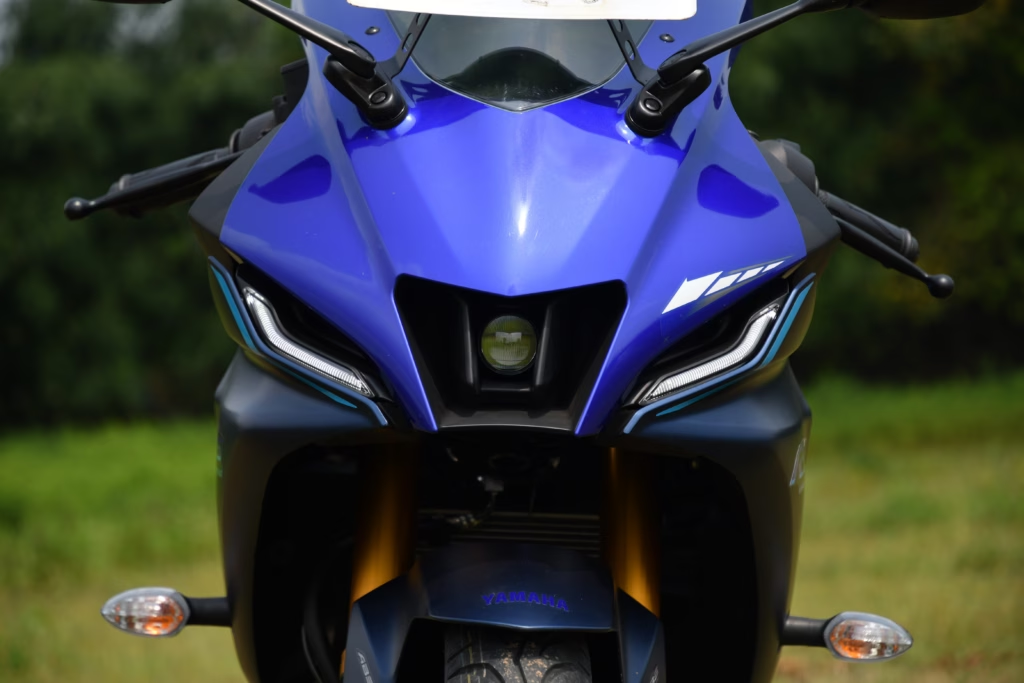
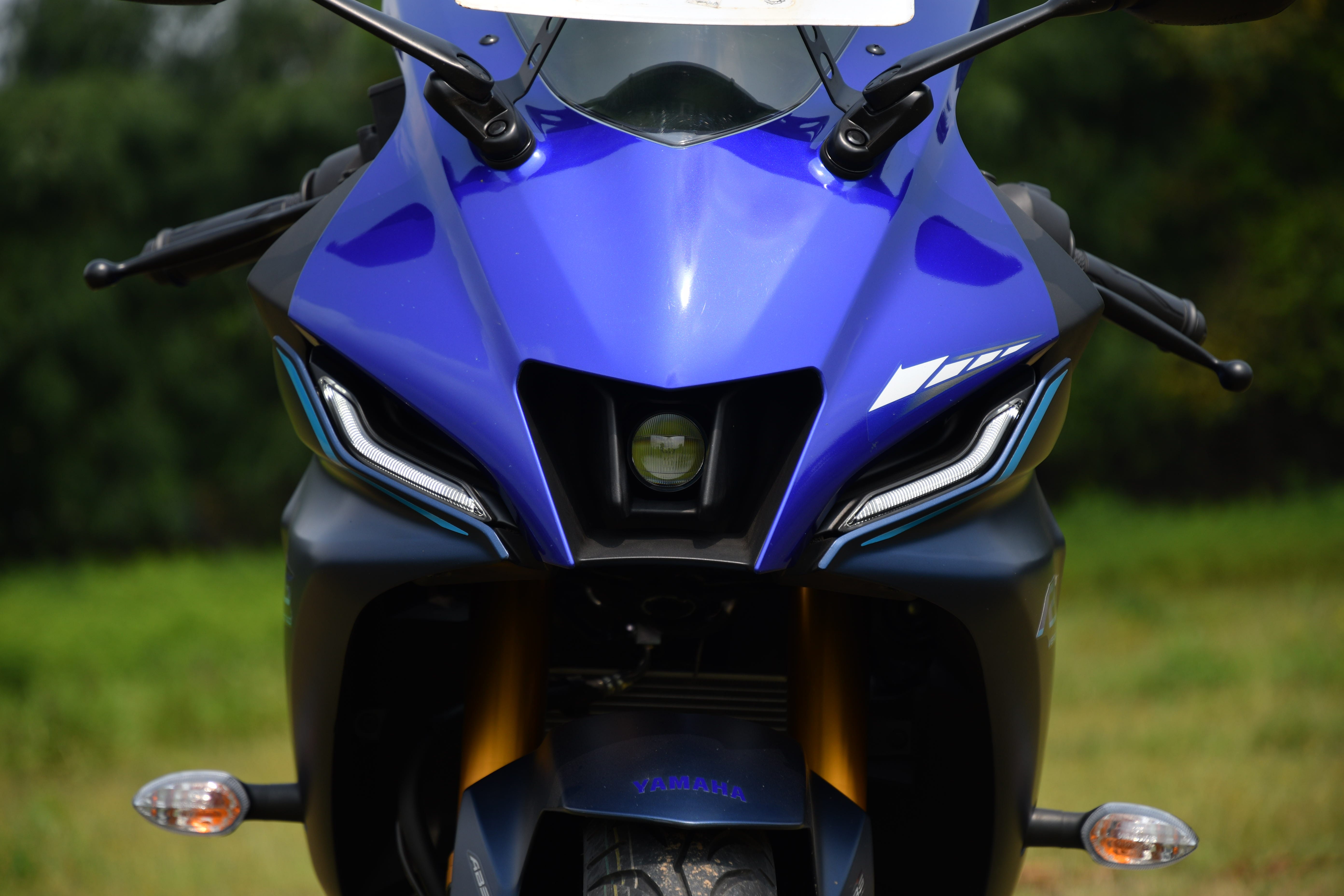
We exclusively reported early this year that the R2 will be launched in India. It will carry forth the same spirit of its younger sibling – the R15 – in terms of its riding experience. Which means, it’s safe to say that it will be powered by a high-revving, higher displacement, single-cylinder engine that will punch well above its weight, much like the R15’s, delectable 155cc engine does.
Details on the exact engine capacity are not yet clear, but we expect it to be slightly over 200cc, likely in the 200-220cc range. Power figures are also yet to be confirmed, although sources suggest performance should be on par with, if not better than, its key rivals. The Yamaha will go up against the KTM RC 200 and Hero Karizma XMR, both of which produce around 25hp, suggesting the Yamaha could offer a similar output.
Where the R15 also holds an advantage, and where the R2 is likely to as well, is kerb weight. It is expected to be lighter than its rivals, which should give it an advantage in terms of agility and power-to-weight ratio. For example, the KTM weighs 160kg, the Karizma 163.5kg, while the current Yamaha R15 V4 weighs in at just 141kg.
As mentioned earlier, the Yamaha R2 will not replace the Yamaha R15. That said, the current R15 line-up will be streamlined, and we expect that the range topping M will be discontinued to make way for the R2. It’s also possible that the current R15 S (which is based on the gen-3 R15) will also be discontinued.
With current R15 prices starting at Rs 1.57 lakh for the S and going up to Rs 1.98 lakh for the top M variant, we expect that the R2 range could start at around Rs 2-2.2 lakh, depending on how aggressive Yamaha plans to be. The R2 will be manufactured entirely in India and will also be exported from here to other global markets.
The pre-booking amount of Rs 10,000 is fully refundable, although refunds will only be processed after September 5. The bike is slated to launch on August 27, with Yamaha giving priority to customers who pre-book before the launch.
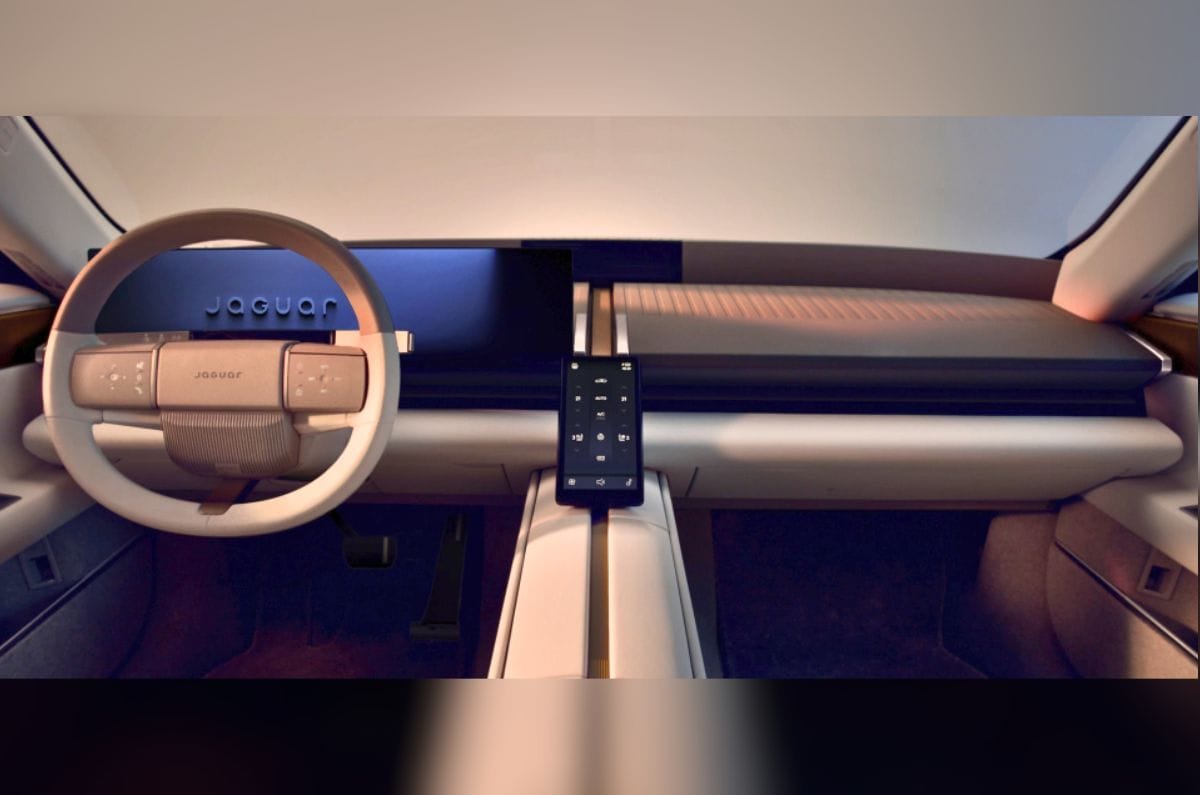
Jaguar has revealed the interior of the upcoming Type 01 electric GT. The Type 01’s cabin is inspired by the Type 00 concept on which it is based, and is as radical as its exterior design. Jaguar will debut the production-spec Type 01 in New York on October 6.
Has a ‘central spine’ spanning the length of the cabin
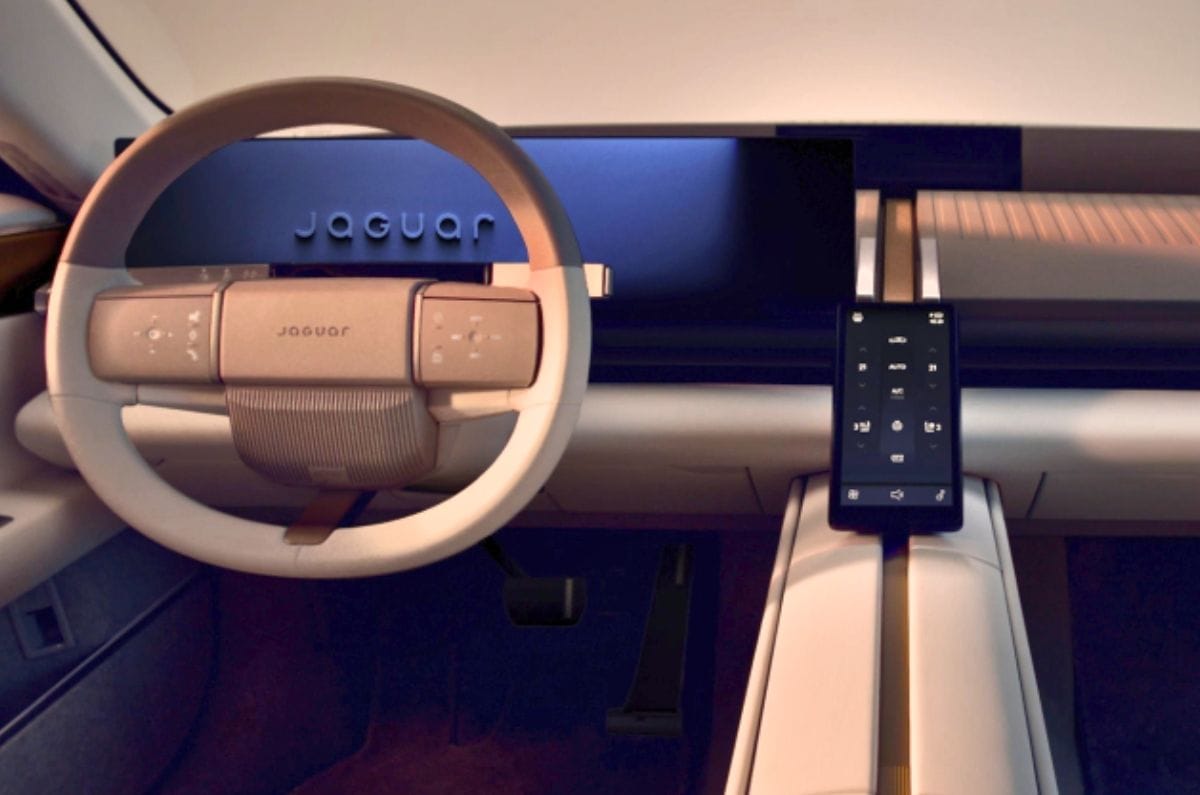
Gets a screen in front of the driver and a central screen for AC controls
Misses out on a rear windscreen, but features digital rearview cameras
Jaguar Type 01 interior revealed
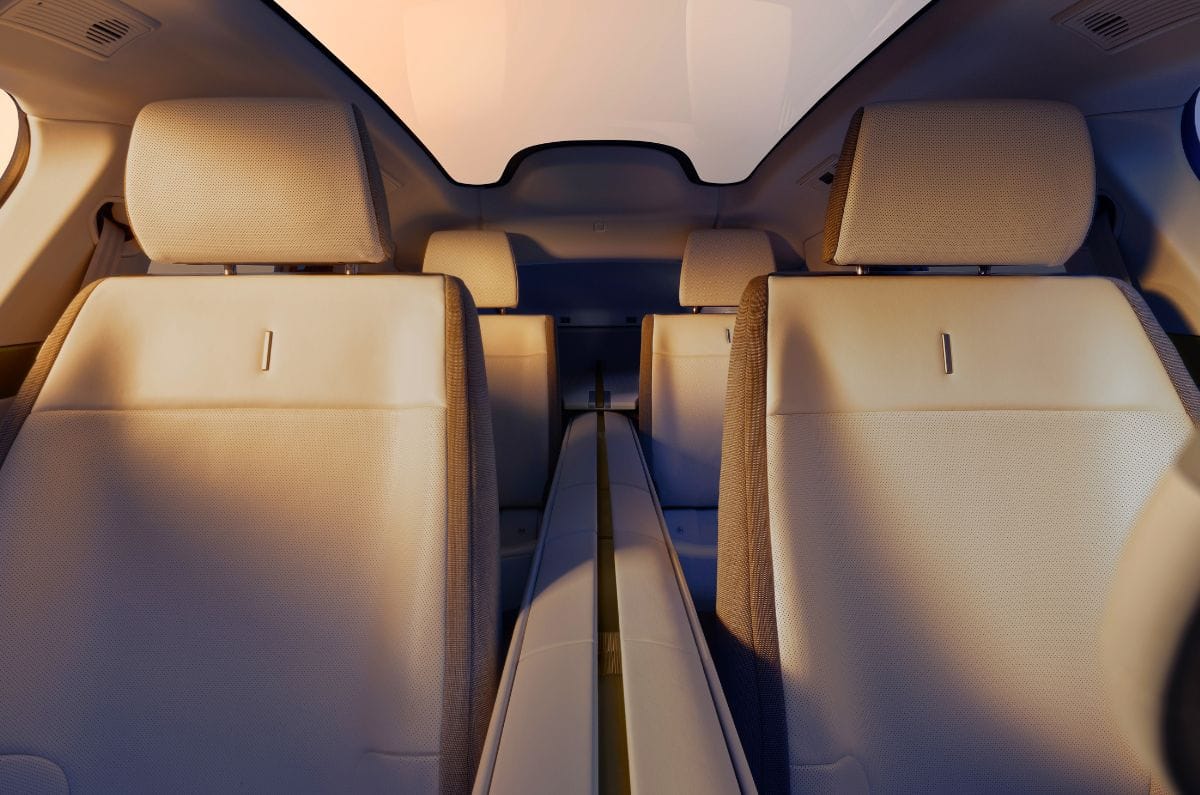
4-seater electric GT has a minimalist cabin divided into four individual spaces
Jaguar’s “hidden on-demand technology” is integrated into the EV’s architecture.
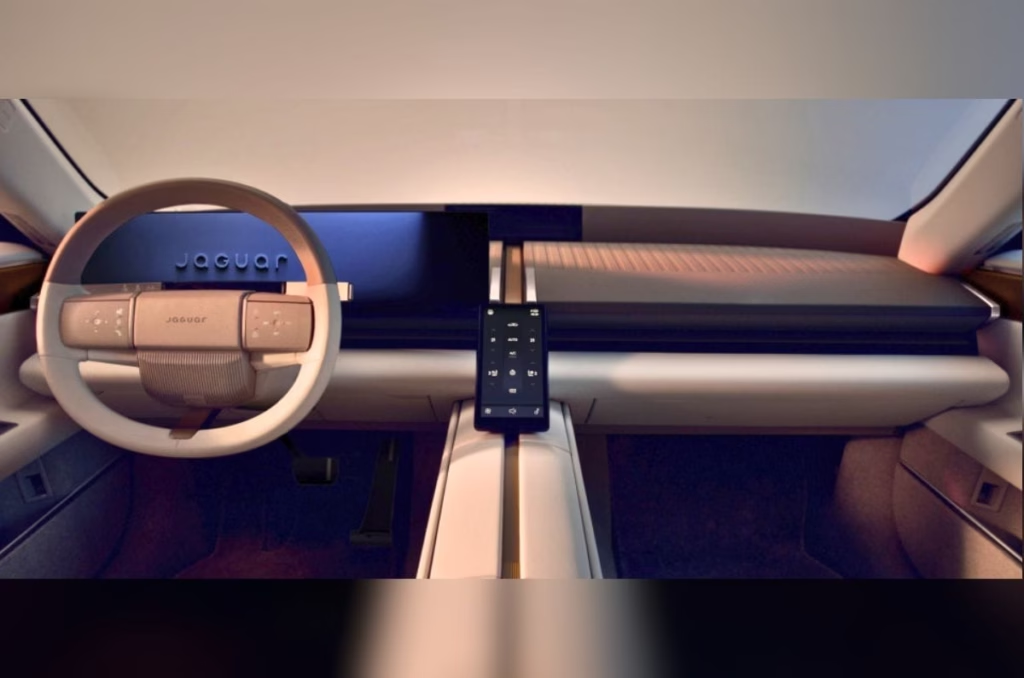
The interior design of the Jaguar Type 01 concept takes inspiration from the Type 00 concept, calling it “a concept car vision brought to production”. The production-spec model features a ‘central spine’ spanning the length of the cabin and divides it into four individual segments – one each for every passenger. This central spine has a brass finish and features a small screen at the front for operating the climate controls. This AC control screen and another display on the dashboard are being called “hidden on-demand technology”, which, Jaguar says, is integrated into the EV’s architecture.
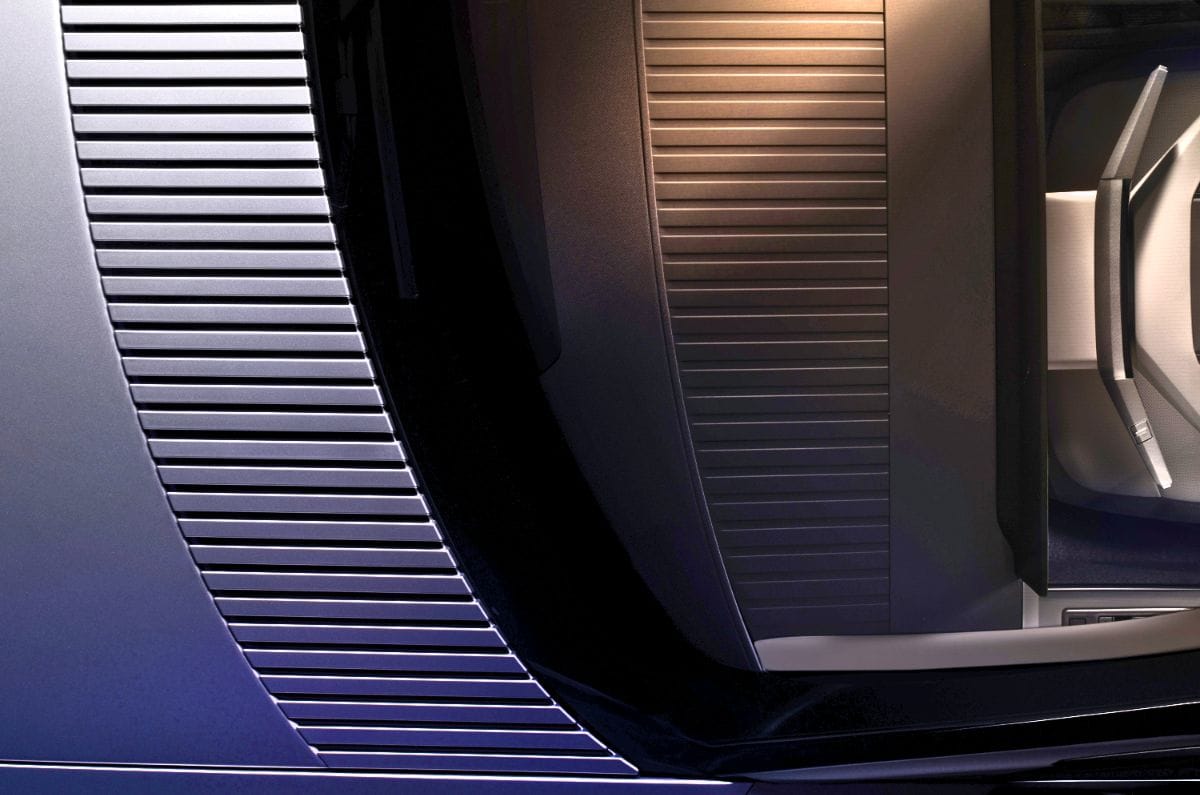
Strikethrough elements on the dashboard are similar to those on the bonnet’s top lip.
The interior features a 2-spoke steering wheel with touch-enabled buttons and a distinct dashboard design for the driver and front passenger areas. There’s a digital screen in front of the driver and ‘strikethrough’ elements in front of the co-driver. Similar ‘strikethrough’ design elements are also present on the top lip of the bonnet to fuse the Type 01’s exterior and interior design.
There is no glass rear windscreen.
A low swooping roof can also be seen with panoramic glass, which is likely to feature customisable lighting patterns. The Jaguar Type 01 does not feature a rear windscreen but digital rearview cameras instead. It features four seats with a dual-tone upholstery.
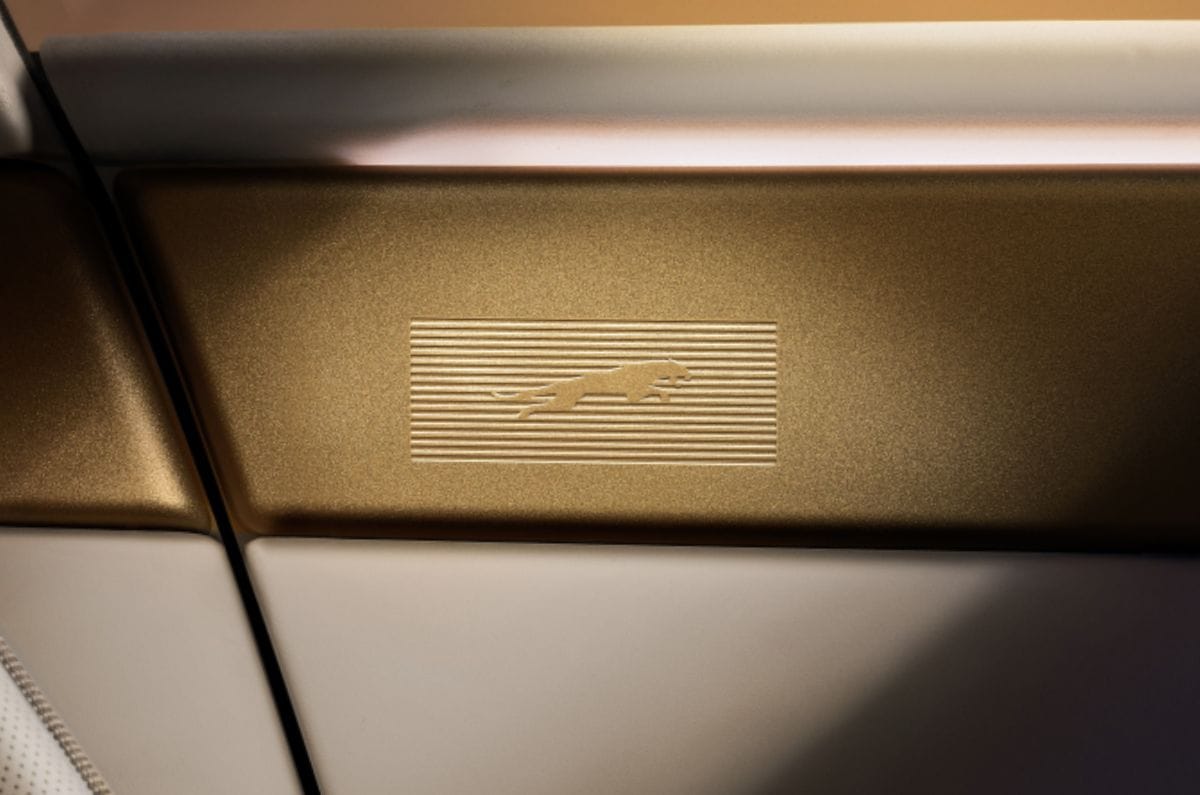
The doors sport the same brass finish as the central spine but additionally feature Jaguar’s ‘leaper’ logo. Jaguar says that the Type 01’s interior is inspired by travertine stone (a type of natural limestone) and textures of artisan textiles for a “deeply sensorial experience”.
Jaguar Type 01: Other details
Built on the JEA platform; will offer over 700km of range
The top section of the doors feature the Jaguar leaper logo.
The Jaguar Type 01 will debut in New York on October 6, 2026, as the luxury marque’s first car after its ‘reinvention’ as an all-electric brand. It will be underpinned by the Jaguar Electric Architecture (JEA), offering a claimed range of over 700km and featuring three electric motors producing over 1,000hp. It is expected to arrive in international markets by the first half of 2027 as a rival to the Ferrari Luce, Audi e-tron GT, Porsche Taycan and Mercedes-AMG GT 4-Door Coupe.
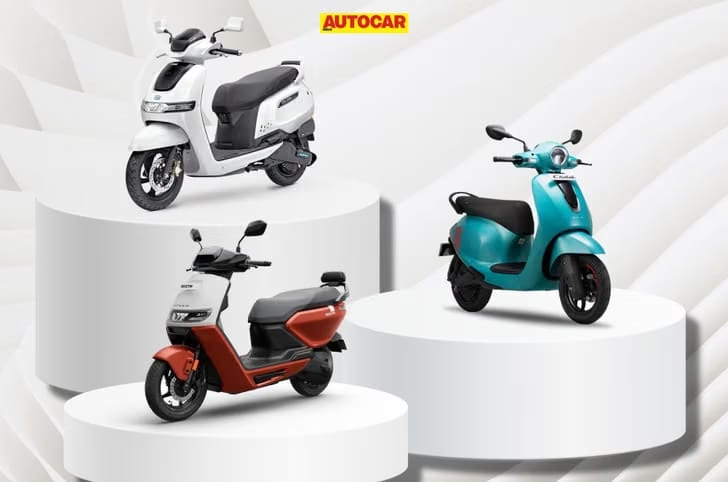
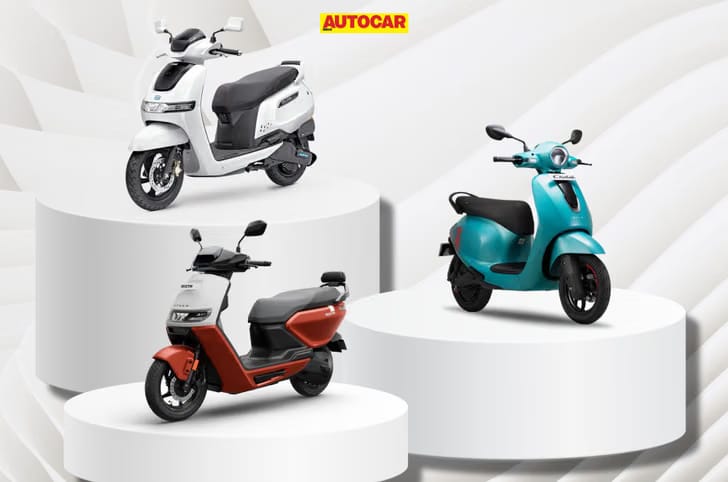
The government has extended demand incentives for electric two-wheelers under the PM E-Drive scheme to March 31, 2028, through a notification issued by the Ministry of Heavy Industries. The move gives electric two-wheeler manufacturers a longer subsidy runway, following an earlier extension only up to July 31, 2026.
PM E-Drive subsidy for electric two-wheelers extended to March 31, 2028
Segment allocation raised by Rs 1,000 crore to Rs 2,767 crore
Per-vehicle subsidy rate unchanged at Rs 2,500 per kWh, capped at Rs 5,000
PM E-Drive extension details
The scheme remains fund-limited – subsidies could end before March 2028 if funds are exhausted
The total allocation for the electric two-wheeler segment under the scheme has also been increased by Rs 1,000 crore to Rs 2,767 crore, while the overall PM E-Drive scheme outlay rises to Rs 11,900 crore.
The subsidy rate for electric two-wheelers registered between April 1, 2025, and March 31, 2028, remains at Rs 2,500 per kWh of battery capacity, subject to a maximum of Rs 5,000 per vehicle. This is lower than the Rs 5,000 per kWh (capped at Rs 10,000 per vehicle) offered in FY25, a reduction the government made as part of a planned tapering of EV support. The maximum ex-factory price of an eligible electric two-wheeler also remains unchanged at Rs 1.5 lakh. The incentive is capped at the specified amount or 15 percent of the ex-factory price, whichever is lower. The number of electric two-wheelers eligible for support under the scheme has been raised to 45,79,120 units.
That said, the scheme is fund-limited. If the Rs 11,900 crore total outlay or the allocation for any specific component is exhausted before March 31, 2028, that component can be closed and no further claims will be entertained. December 31, 2027, has been set as the last date for submitting claims.
The extension comes at a time when electric two-wheeler sales have grown sharply in India. According to Vahan data, electric two-wheeler sales reached 1.46 million units in FY26 – up significantly from 2,52,787 units in FY22 – and the segment crossed 2 lakh monthly sales for the first time in July 2026. The continuation of the subsidy is expected to sustain momentum in the segment, particularly in the sub-Rs 1.5 lakh price category where the majority of mainstream electric scooters are sold.
N Chandrasekaran has resigned as chairman of Tata Sons but will continue in the role until the end of his current term in February, according to a source familiar with the matter, Reuters reported on Wednesday. The development comes months after Tata Sons deferred a decision on Chandrasekaran’s reappointment amid differences with Tata Trusts chairman Noel Tata over the future governance of the conglomerate.
Why Chandrasekaran Is Stepping Down: Tata Trusts Rift Explained
Tata Sons is the holding company of the Tata Group and oversees more than 30 companies, including Tata Consultancy Services (TCS), Tata Motors and Air India. Tata Trusts, the group’s philanthropic arm, owns a 66 per cent stake in Tata Sons.
In February, Tata Sons postponed a decision on extending Chandrasekaran’s tenure after Noel Tata opposed the move, Reuters reported at the time. According to a source cited by Reuters, Noel Tata had sought several conditions, including a commitment that Tata Sons would never be listed. Chandrasekaran was unwilling to make such a commitment, the source said.
The two sides have also disagreed over board representation, Reuters reported, citing people familiar with the matter.
What This Means for Tata Motors, TCS and Air India
Tata Sons did not immediately respond to a Reuters request for comment, while Chandrasekaran could not be reached for comment.
Chandrasekaran joined the Tata Group in 1987 and became CEO of TCS in 2009. He was appointed as the chairman of Tata Sons in February 2017 and his second 5-year tenure will come to an end on February 20, 2027.
The leadership uncertainty comes as the Tata Group faces challenges across several businesses. Reuters has reported that Air India has come under regulatory scrutiny following a fatal crash, while TCS has faced pricing pressure. Jaguar Land Rover (JLR) has also been dealing with the impact of a cyberattack that disrupted production and affected Britain’s economic output.
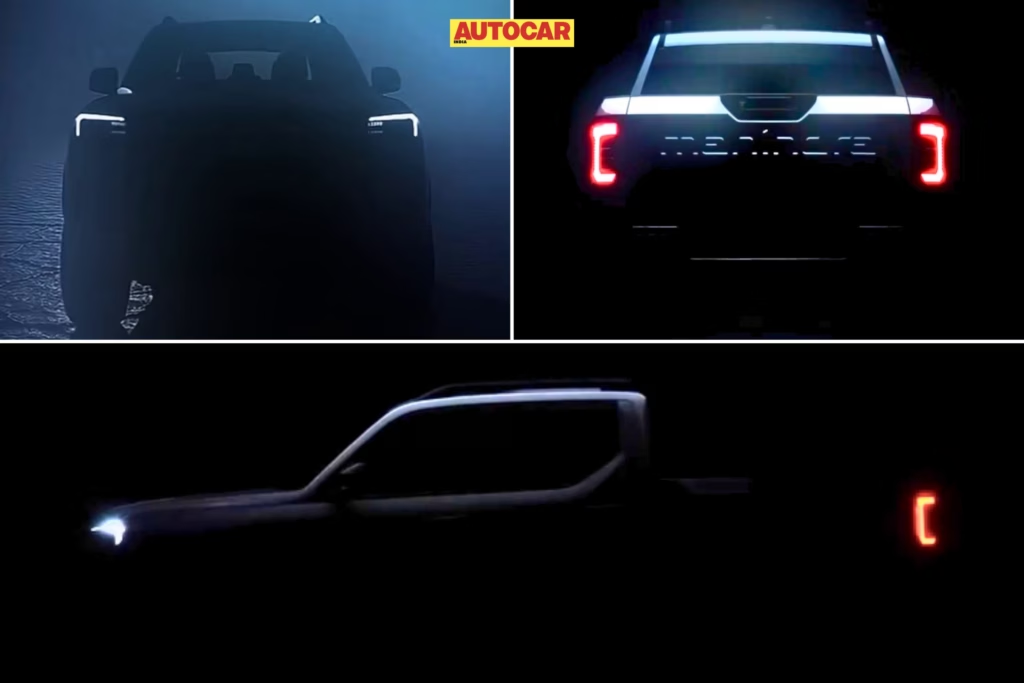
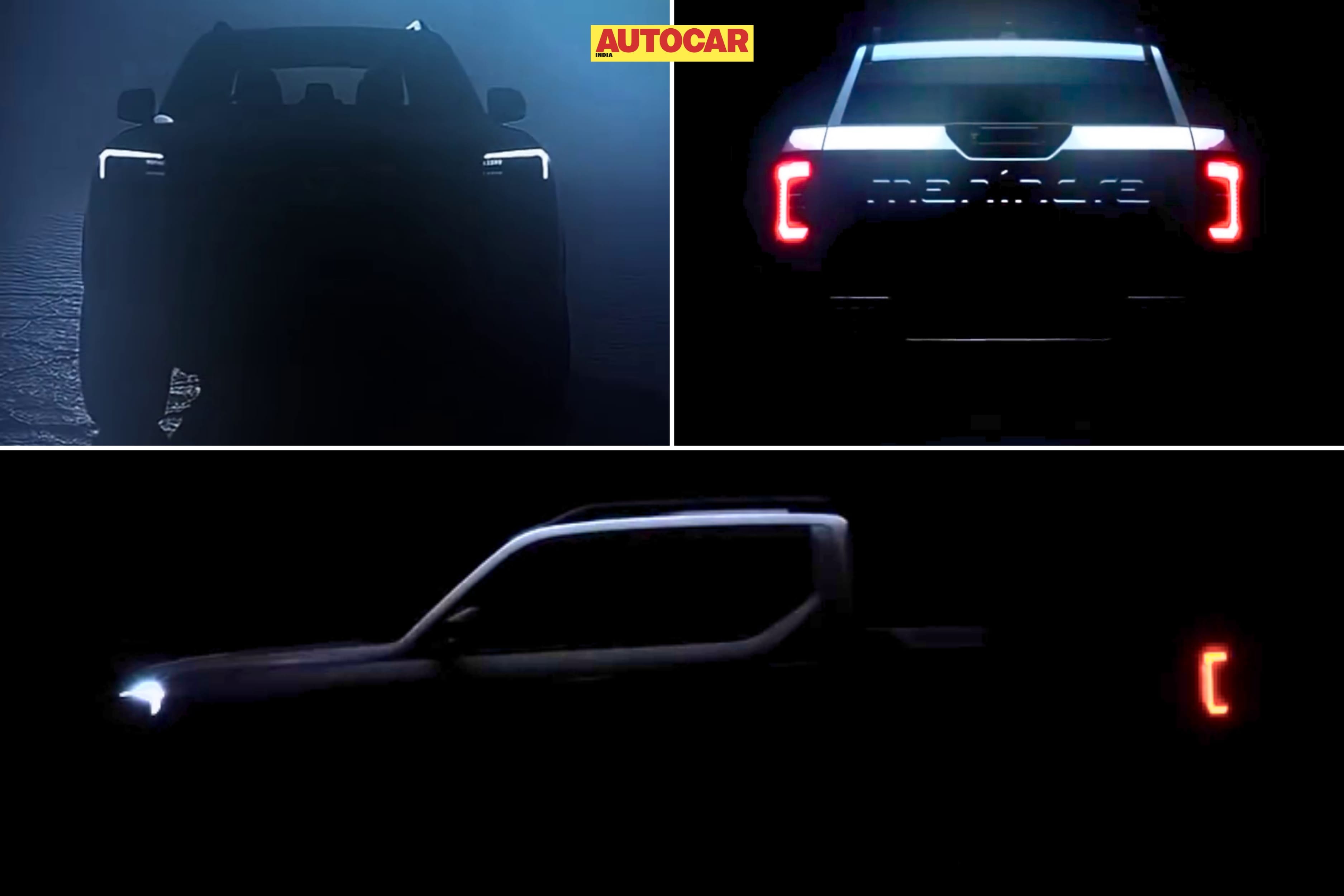
Mahindra has dropped a new teaser for its Scorpio N pickup truck, set to be unveiled on August 14. The teaser video showed only some parts of the upcoming vehicle’s exterior and interior, keeping most details hidden. More information is expected to be revealed in the run-up to the pickup truck’s reveal.
Mahindra is offering discounts across much of its ICE line-up in August 2026. The Thar Roxx and Scorpio N receive the highest benefits among the brand’s mainstream SUVs this month, while offers are also available on the Scorpio Classic, Thar, XUV 3XO, Bolero Neo and Bolero Neo Plus. Offers are valid until August 31 and may vary depending on the region, dealer and stock availability.
Disclaimer: Offers may vary by region, dealer, stock availability and customer eligibility. Please check with your nearest authorised Mahindra dealership for exact details.
Mahindra Scorpio N discounts in August 2026
Up to Rs 1.25 lakh off
The Scorpio N is available with benefits of up to Rs 1,25,000. These include a cash discount of Rs 1,00,000 and accessories worth Rs 25,000. These discounts apply to existing pre-facelift stock available with dealers.
The Scorpio N is priced between Rs 13.69 lakh and Rs 25.49 lakh (ex-showroom). It rivals the Tata Safari and Thar Roxx. It impresses with its smooth petrol and diesel engines and off-road capability, although the third-row seats and luggage space are not great.
Mahindra Thar Roxx discounts in August 2026
Up to Rs 1.20 lakh off
The Thar Roxx receives benefits of up to Rs 1.20 lakh this month. This comprises a cash discount of Rs 92,000 along with a ceramic coating package worth Rs 28,000. Priced between Rs 12.52 lakh and Rs 23.52 lakh, the Thar Roxx rivals the Force Gurkha 5-door and serves as a more practical alternative to the three-door Thar. It combines the Thar’s off-road capability with a more practical cabin, better refinement and stronger road manners.
Mahindra Scorpio Classic discounts in August 2026
Up to Rs 75,000 off
Mahindra is offering benefits of up to Rs 75,000 on the Scorpio Classic. The offer comprises a cash discount of Rs 50,000 and accessories worth Rs 25,000. Priced between Rs 13.37 lakh and Rs 17.40 lakh, the Scorpio Classic continues to appeal with its refined diesel engine and rugged character, although it lacks the features and driving sophistication of newer rivals.
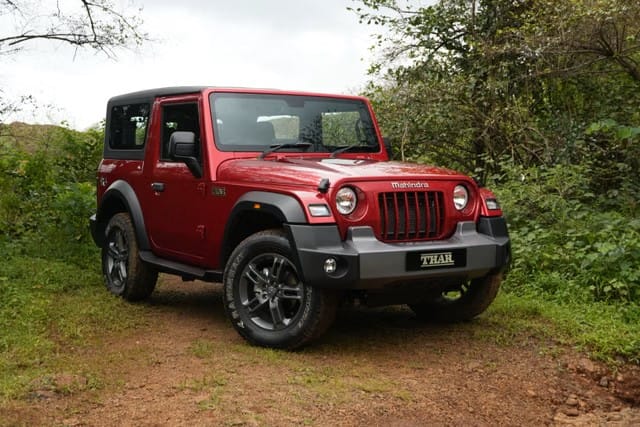
Mahindra Thar discounts in August 2026
Up to Rs 50,000 off
The three-door Thar is available with a cash discount of up to Rs 50,000 this month. Priced between Rs 10.32 lakh and Rs 18.00 lakh, the Thar rivals the Force Gurkha and Maruti Suzuki Jimny. It offers great off-road capability and is offered with refined and punchy petrol and diesel engine options, although luggage space is limited and access to the rear seats can be cumbersome.
Mahindra Bolero Neo and Bolero Neo Plus discounts in August 2026
Up to Rs 45,000 off
The Bolero Neo and Bolero Neo Plus receive cash discounts of up to Rs 45,000. The Bolero Neo is priced between Rs 8.99 lakh and Rs 10.79 lakh, while the Bolero Neo Plus costs Rs 11.39 lakh to Rs 12.49 lakh. Both SUVs are built to withstand rough roads and heavy use, although they are not as refined or as well equipped as newer compact SUVs.
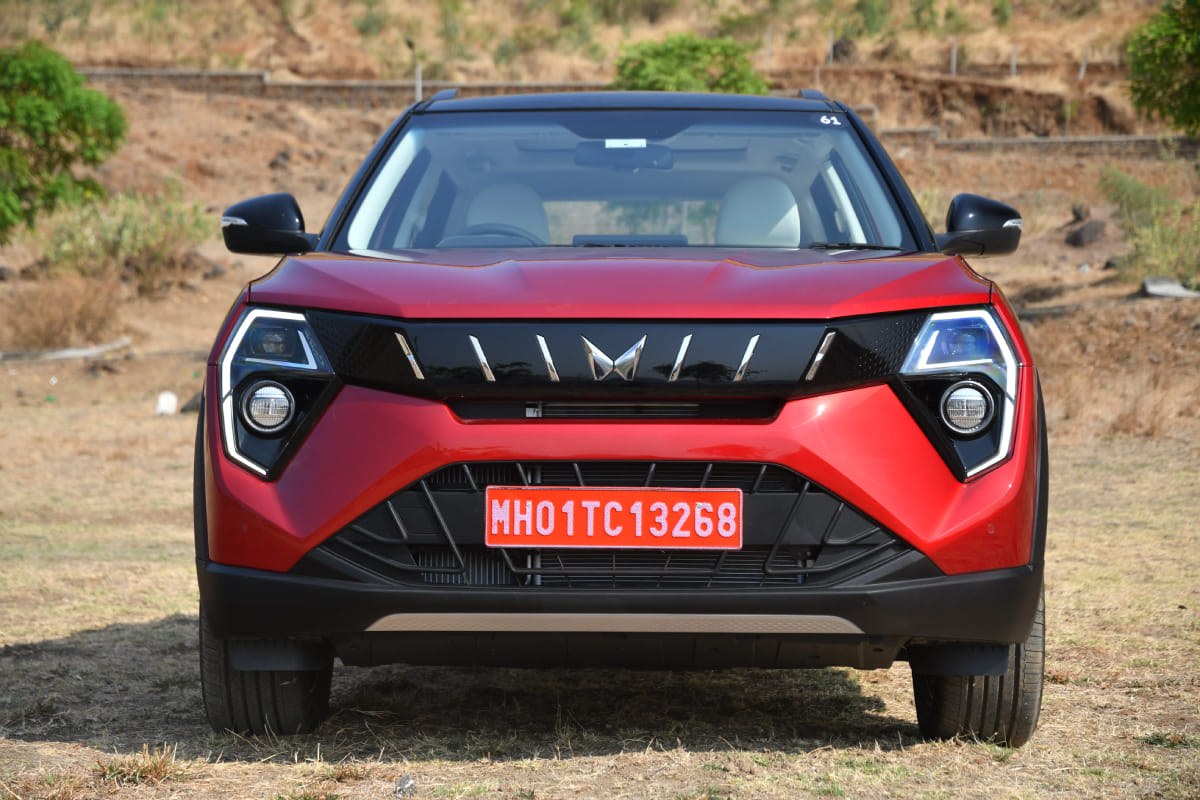
Mahindra XUV 3XO discounts in August 2026
Up to Rs 40,000 off
The XUV 3XO is available with a cash discount of up to Rs 40,000 this month. Priced from Rs 7.79 lakh to Rs 15.04 lakh (ex-showroom), the XUV 3XO rivals the Maruti Brezza, Tata Nexon, Hyundai Venue, Kia Sonet, Skoda Kylaq and Nissan Magnite. It offers strong petrol and diesel engines along with a feature-rich cabin, although its boot is smaller than several rivals.