MG celebrates 7-year anniversary of Hector with up to Rs 60,000 in benefits

mg hector

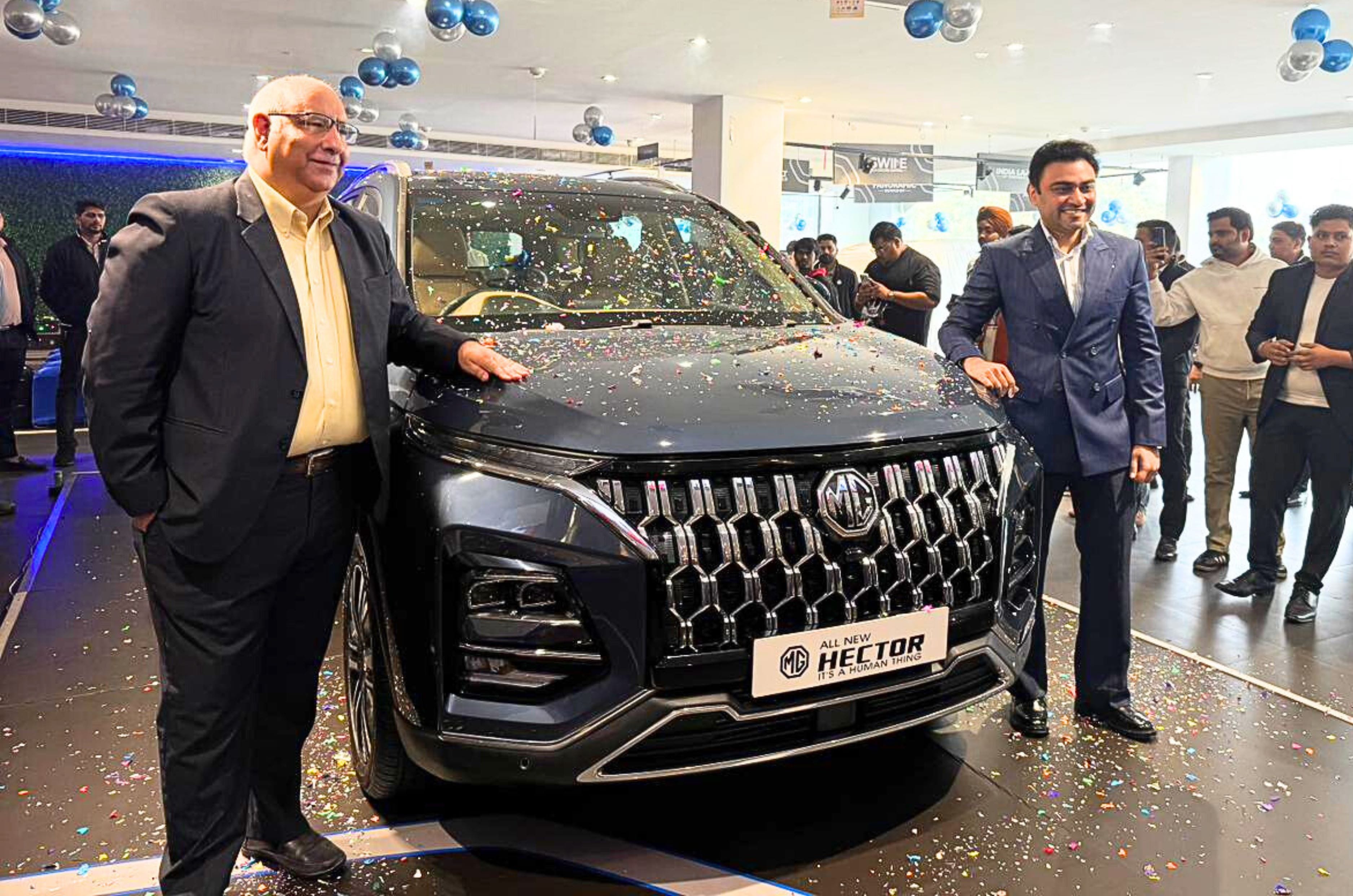
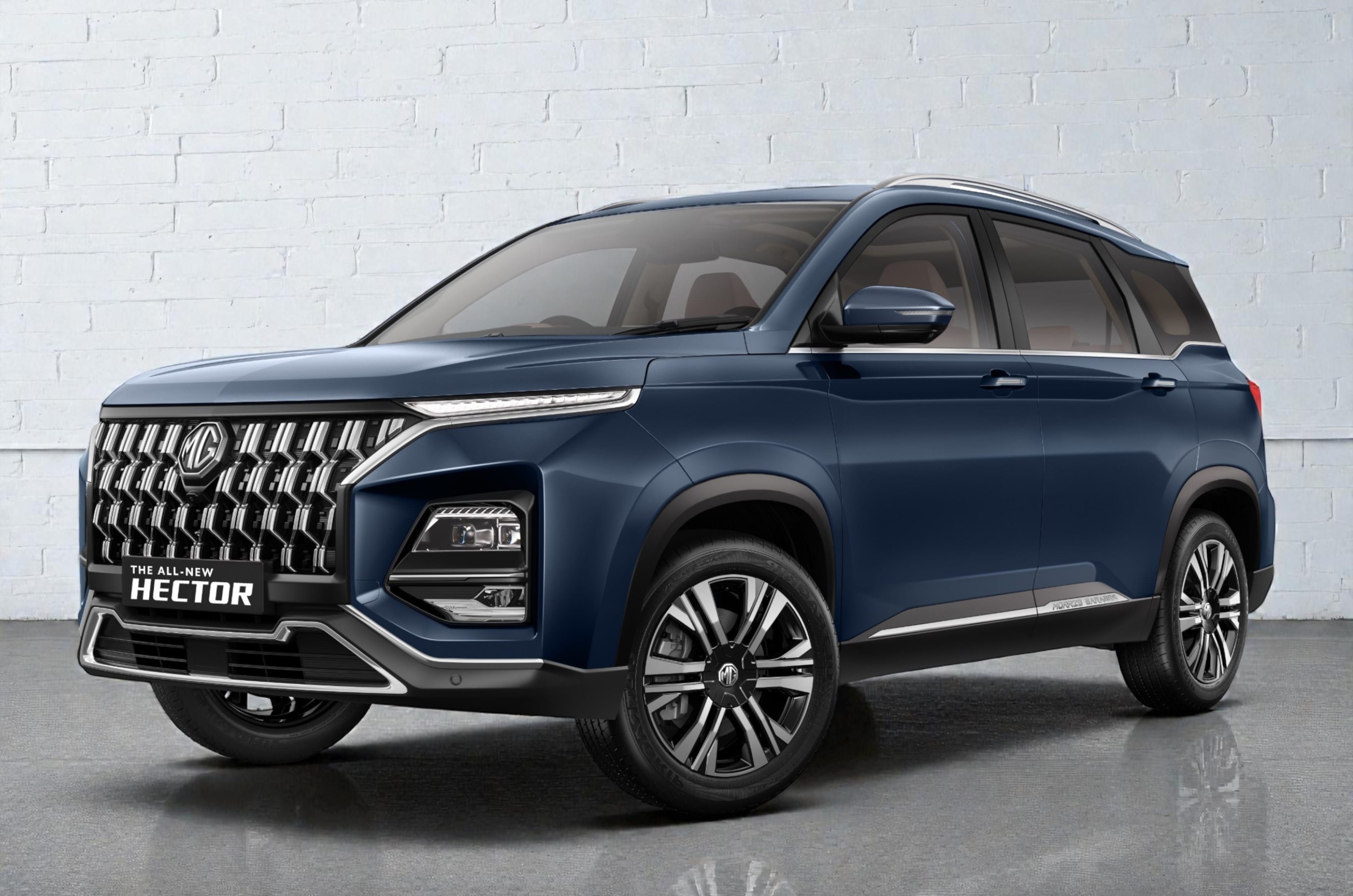
MG has introduced an anniversary programme for the Hector to commemorate seven years since the SUV first launched in India. The Hector was MG’s debut offering for the Indian market and resonated quite well with buyers thanks to its refined petrol and diesel engines, spacious and comfortable cabin, and extensive features list. By May 2022, over 80,000 units of the Hector were sold, and production hit the 1,00,000 milestone in December that year.

MG Hector discounts in August 2026

To celebrate the Hector’s 7-year anniversary, MG is offering benefits of up to Rs 60,000 for the SUV this month. These benefits include exchange bonuses, loyalty rewards, corporate offers, and anniversary discounts, and all Hector bookings placed during August 2026 will be eligible for them. Hector buyers can also take advantage of 100 percent on-road price funding with tenures of up to 84 months, along with 100 percent funding support on accessories.

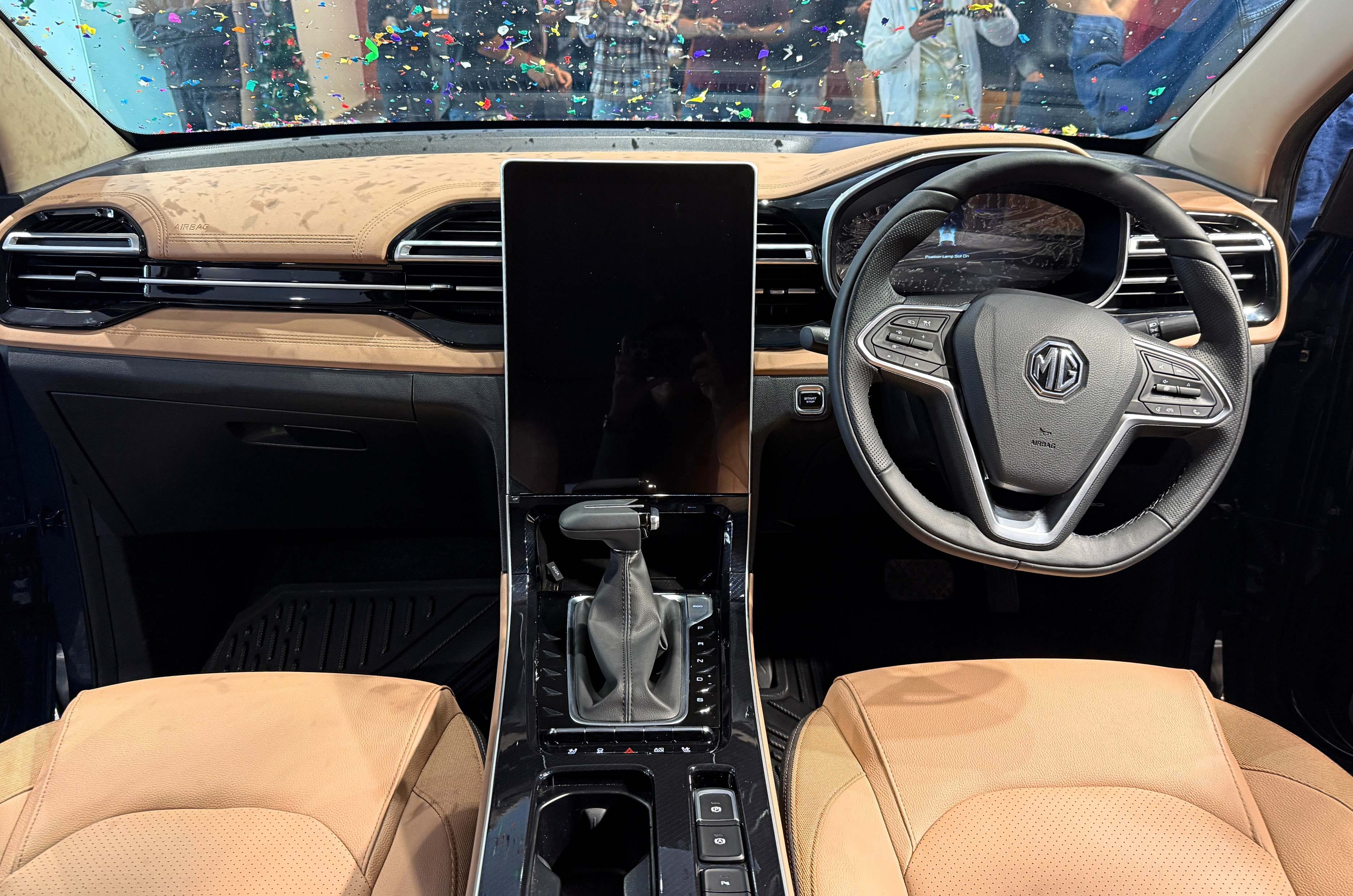
Pricing for the Hector starts at Rs 11.99 lakh and extends to Rs 20 lakh (ex-showroom). The Hector is available solely with a 143hp 1.5-litre 4-cylinder turbo-petrol engine paired with either a 6-speed manual or a CVT automatic gearbox. 5-seat and 7-seat configurations are available for the Hector.

VinFast Rasad electric maxi-scooter design patented in India

VinFast Rasad

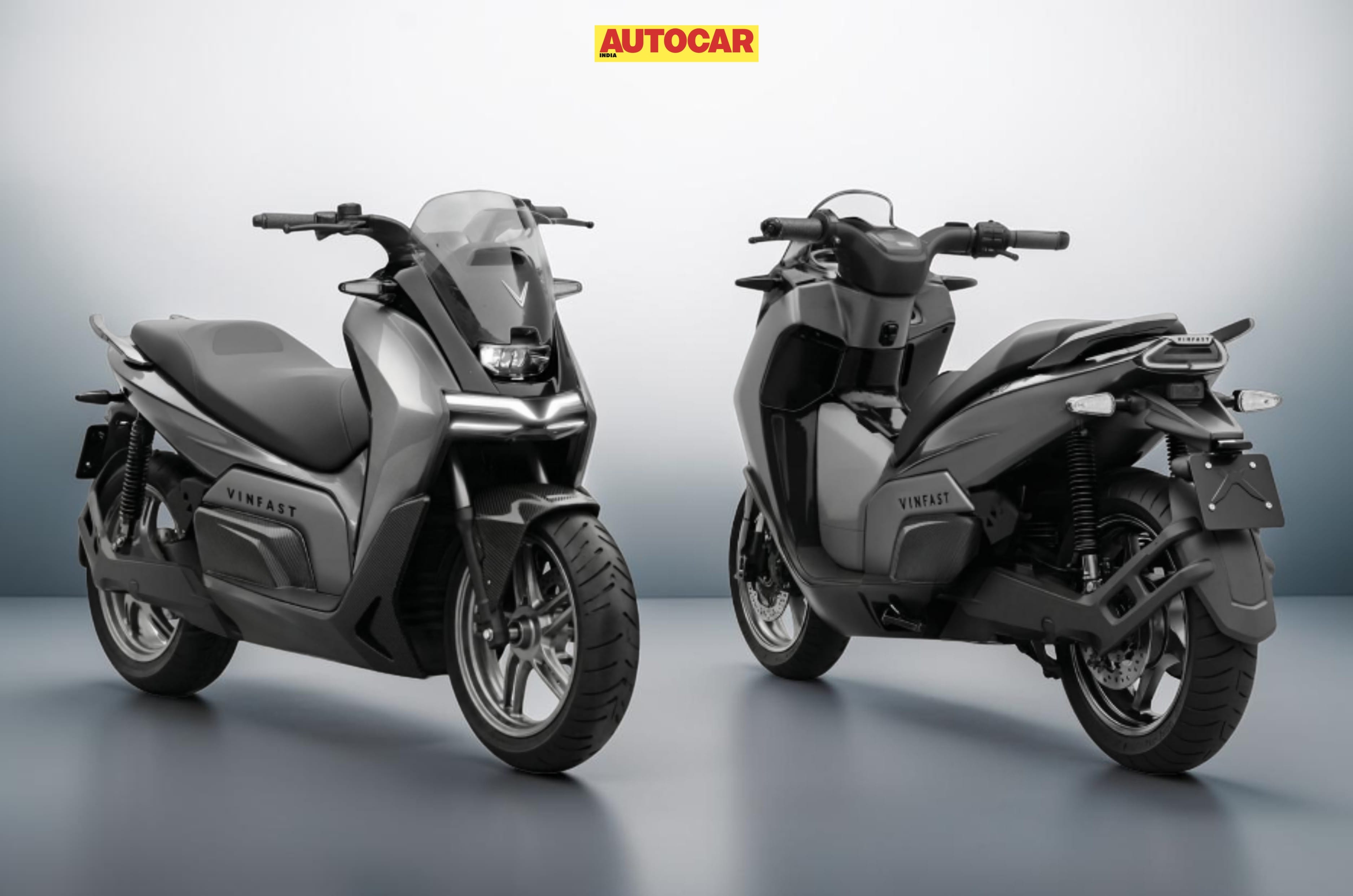
VinFast has filed a design patent in India for what appears to be the Rasad, an electric maxi-scooter concept that the Vietnamese brand unveiled in early 2026 as part of a comprehensive overhaul of its electric two-wheeler portfolio.

  1. Unveiled globally alongside the VinFast Sadie and Saxil
  2. VinFast Viper scooter and Sulad motorcycle also recently patented in India

Upcoming VinFast Rasad details

The Rasad will likely be positioned as a performance-oriented maxi-scooter

The filing comes just a few weeks after VinFast patented two other electric two-wheelers in India – the Viper scooter and an electric motorcycle believed to be based on the Sulad concept, another model the brand unveiled in January 2026 as part of its future product portfolio. The multiple patent filings suggest VinFast is actively preparing a broader product lineup for the Indian market than previously indicated.

The Rasad features a muscular, angular design with chunky tyres and an underbone chassis, similar to the Yamaha Aerox and the recently unveiled Honda ADV160. The design patent also reveals disc brakes at both ends, a spacious-looking stepped seat and a tall windscreen. Suspension duties are handled by a telescopic fork at the front and twin rear shock absorbers.

While VinFast has not officially revealed specifications, Vietnamese publications including Vietnam News have reported that the scooter will use a centrally mounted motor producing 7.1kW of peak power, enabling a claimed top speed of 100kph. The same reports also suggest that VinFast is targeting a global launch in the fourth quarter of 2026.

With regard to the Indian market, VinFast had previously stated that it planned to enter the country in 2026, initially identifying three models from its Vietnam lineup as candidates. Since then, the Viper, the Sulad and now the Rasad have all been patented in India. While patent filings don’t necessarily confirm a launch, they do suggest these models could eventually make their way to our market.

OMCs reject E20 fuel contamination claims after nationwide testing

Fuel station

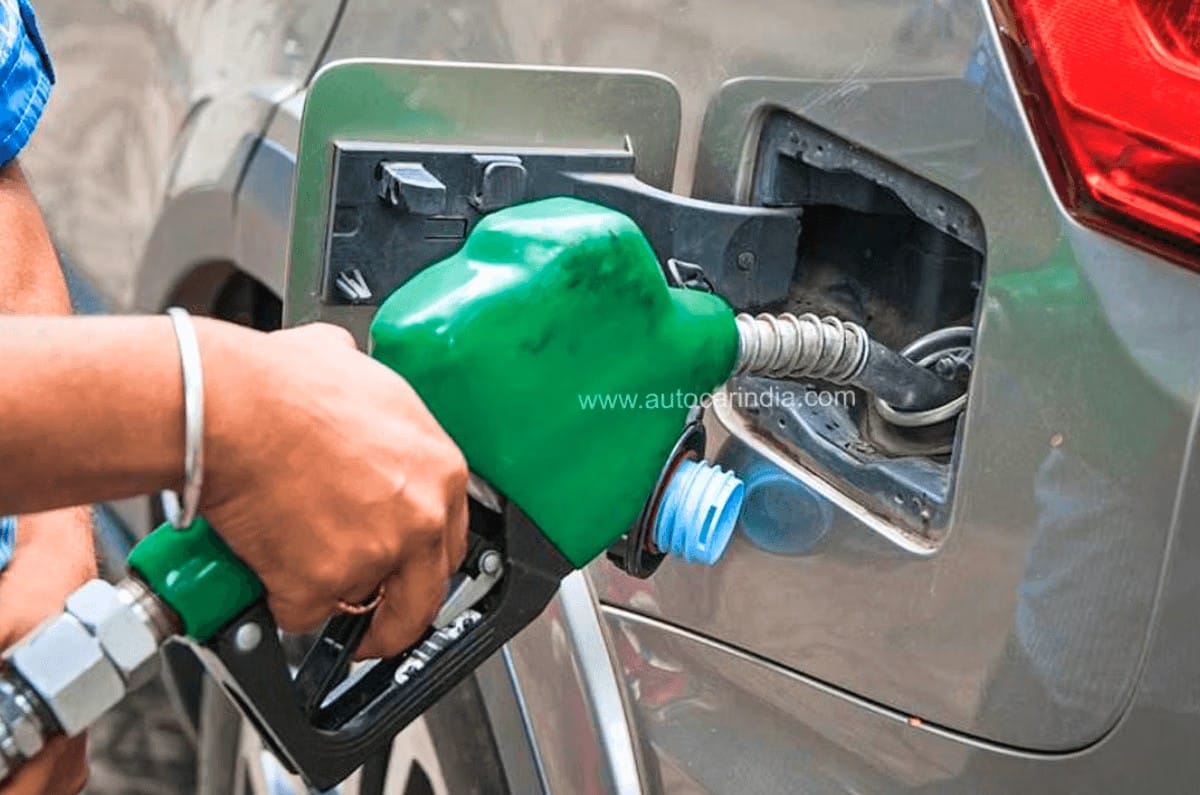
State-run oil marketing companies (OMCs) – Indian Oil, Bharat Petroleum (BPCL) and Hindustan Petroleum (HPCL), have rejected recent claims of widespread contamination in E20 petrol, saying a nationwide testing exercise found no evidence to support reports of elevated chloride and moisture levels. The companies said fuel samples collected across the supply chain recorded chloride levels within the prescribed limits, while enhanced checks have also found no signs of water ingress in underground fuel storage tanks.

  1. OMCs say chloride levels remained between 0-3ppm
  2. Testing covered refineries, ethanol plants, depots and retail outlets
  3. Two retail outlets temporarily suspended after isolated findings

This statement comes less than a week after reports citing an internal communication from the Society of Indian Automobile Manufacturers (SIAM) alleged elevated chloride and moisture contamination in E20 petrol, raising concerns over possible damage to fuel system components. SIAM, however, subsequently withdrew the communication, saying media reports had “selectively” quoted excerpts from the document and that some of the figures cited required further authentication through additional data collection and consultation with its member OEMs.

OMCs say testing found no widespread contamination

The oil companies said samples collected from refineries, ethanol distilleries, storage depots, tanker trucks and retail fuel stations recorded chloride levels between 0ppm and 3ppm, well below the several-hundred-ppm figures reported earlier. They added that claims of chloride contamination of up to 500ppm could not be validated.

According to the companies, testing included more than 100 petrol samples from refineries, ethanol supplied by 80 distilleries, more than 80 samples from terminals and over 160 samples from retail outlets, all of which returned chloride readings within the 0-3ppm range. The ethanol testing was carried out jointly by the OMCs and the Centre for High Technology, the petroleum ministry’s technical arm.

Two fuel stations flagged during testing

The OMCs said two retail outlets recorded elevated chloride levels during the exercise. Fuel supplies at both stations were suspended, investigated and restored only after corrective measures were implemented.

Moisture checks expanded across fuel stations

On the issue of moisture contamination, the companies said around 90,000 fuel stations have begun mandatory inspections of underground storage tanks, with checks carried out eight to twelve times a day. According to the OMCs, no water intrusion has been detected so far.

The companies added that mobile fuel testing laboratories have been deployed, with results independently verified by fuel laboratories. Test data is also being published on the Centre for High Technology’s website and will continue to be updated as additional samples are analysed.

Ducati Monster V2 launched from Rs 13.99 lakh

Ducati Monster V2 launched from Rs 13.99 lakh

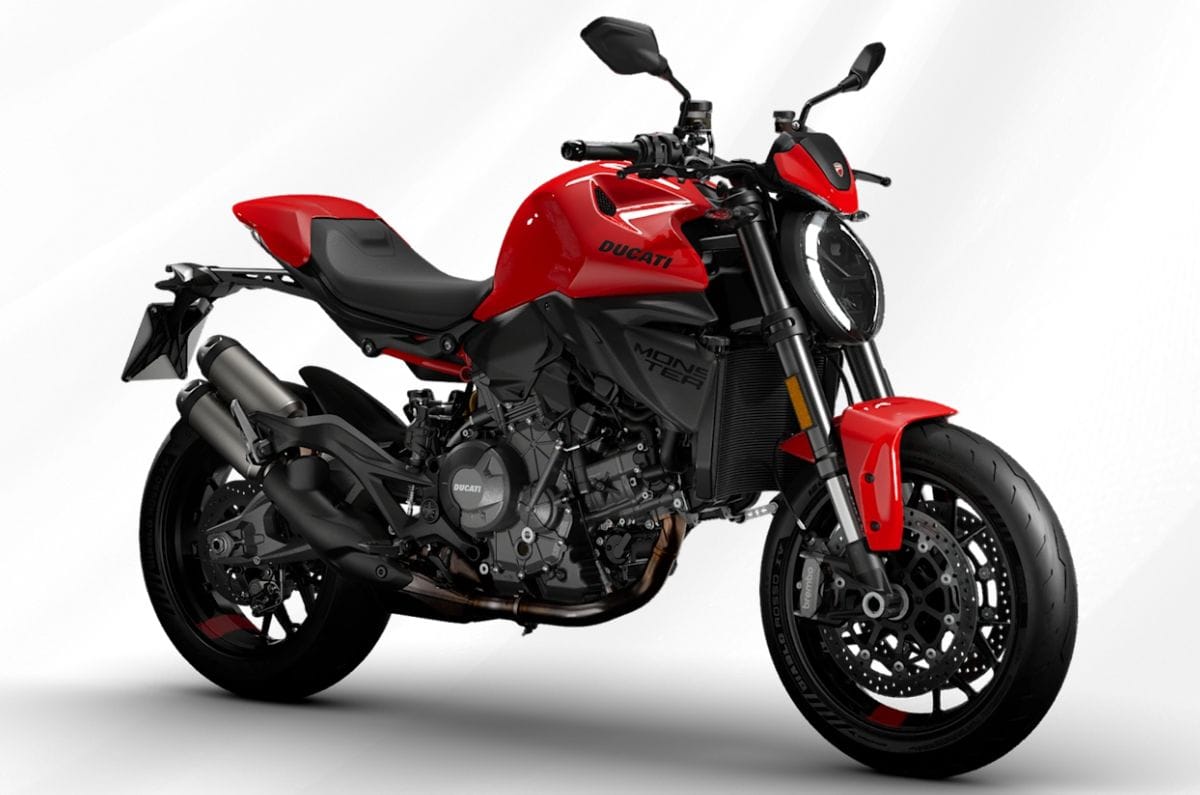
Ducati India has launched the Monster and Monster+ V2 in India. Like we’d reported a few days ago, the updated Monster gets a brand-new 890cc engine that’s shared with the Multistrada V2, Panigale V2, and Streetfighter V2. The new Monsters start at Rs 13.99 lakh (ex-showroom, India), Rs 15,000 more than the outgoing models.

  1. Gets a new 890cc V2 engine that delivers similar power
  2. Both variants are mechanically identical
  3. Ducati Protect Periodic Maintenance Contract available as an extra

Available in Monster and Monster+ guises

Both are mechanically identical, cosmetically different

Ducati has revealed the prices for both the Monster and the Monster+. Both get three colours: Ducati Red, Iceberg White, Sport Livery. The Monster in Ducati Red colour starts at Rs 13.99 lakh with the other two colours costing Rs 14.23 lakh. The Monster+ is mechanically identical to the Monster, but with the addition of a headlight cowl and a passenger seat cover. The Monster+ starts at Rs 14.34 lakh for Ducati Red and Rs 14.45 lakh for Iceberg White and Sport Livery.

New 890cc V-twin engine, shared with Multistrada V2 and Panigale V2

Power and torque figures are similar despite the smaller size

The Monster V2 gets a new 890cc V-twin engine, a brand-new monocoque chassis replacing the aluminium frame on the previous model, more muscular tank design that’s in line with the Monster’s design legacy but the capacity itself remains unchanged at 14-litres. Not only is the overall weight reduced by 5kg, thanks to IVT (Intake Variable Timing), the new 890cc engine makes the same 111hp as the previous Monster’s 937cc engine but peak power is delivered at 9,000rpm (250rpm earlier than before). Torque, on the other hand, sees a 2Nm reduction coming in at 91.1Nm and peak torque is now delivered at 7,250rpm (vs 6,500rpm earlier). However, 80 percent of this torque is now available between 4,000 and 9,000rpm.

The maintenance schedule has also become more relaxed, thanks again to IVT, with valve clearance check intervals now necessary only at 45,000km. Ducati expects the Monster to be serviced once a year, or once every 15,000km, whichever is earlier. The standard warranty is two years with unlimited mileage.

Other areas on the Monster V2 also see updates. The seat height is lower at 815mm and it’s narrower than before. For riders wanting to make it more accessible, there’s a lower 795mm seat accessory and an even lower seat with a 775mm seat height, which requires a lower suspension kit. Speaking of, the suspension is handled by the Showa 43mm USD fork and the rear monoshock suspension which are touted to balance comfort and sportiness. Brakes are from Brembo with front 320mm dual-disc brakes and a rear 245mm disc brake. The ride package is completed with the Pirelli Diablo Rosso IV tires with the front having a 120/70R17 and the rear 180/55R17.

Standard rider aids consist of ride and power modes, traction control, wheelie control, engine brake control, and cornering ABS. Other electronic features include a 5-inch TFT instrument cluster, full LED lighting, a bi-directional quickshifter, dynamic and self cancelling indicators. The new Monsters are also ready for a number of Ducati accessories like TPMS, cruise control, turn-by-turn navigation, and heated grips etc., The Monster V2 is now available for booking on Ducati India’s website.


Triumph to introduce new race engines for 2027 Moto2 World Championship

Triumph to introduce new race engines for 2027 Moto2 World Championship

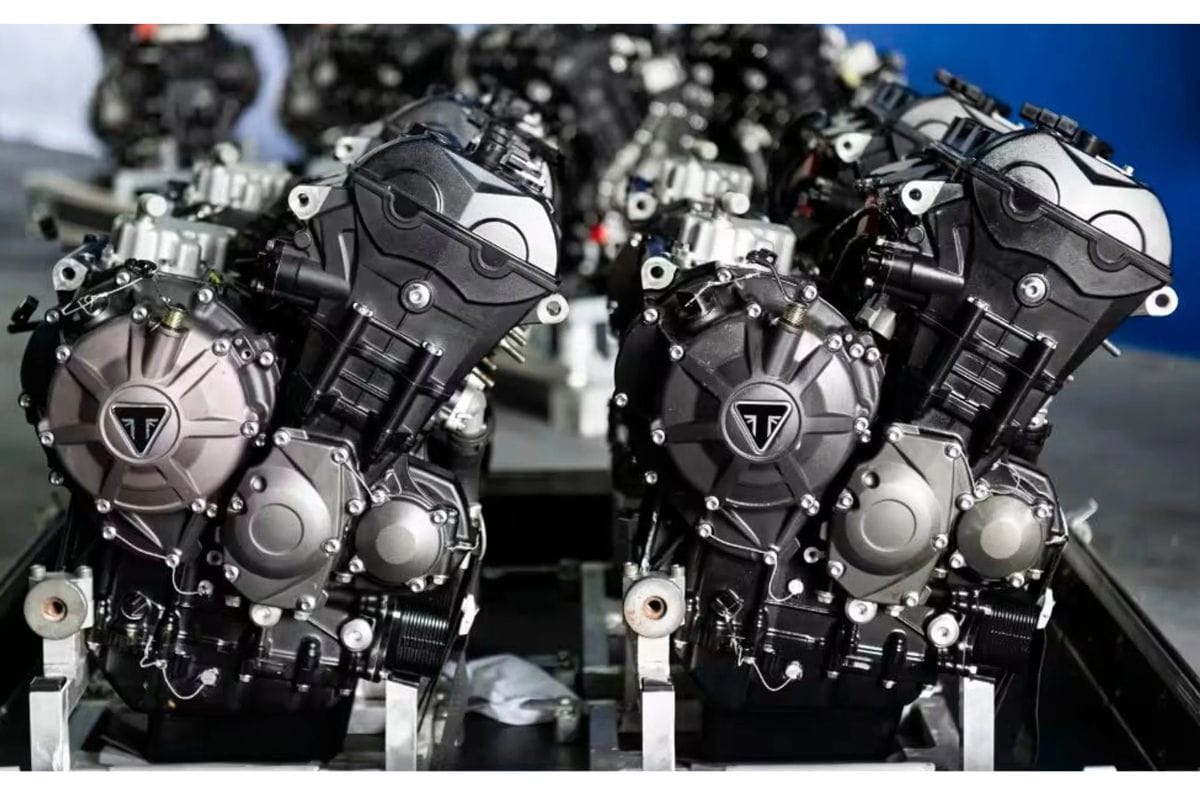
Triumph Motorcycles will introduce a new race engine for the Moto2 World Championship from 2027, with track testing scheduled to begin in the coming months. The new power unit is expected to deliver around 6 percent higher peak power than the current engine and will also bring a change in engine capacity.

  1. Triumph has been the exclusive engine supplier for Moto2 since 2019
  2. Based on data gathered from nearly two million kilometres of racing
  3. This new engine focuses on increasing airflow into the cylinders

Triumph’s new Moto2 engine

This new engine is 2kg lighter and produces 6 percent more peak output

Triumph has been the exclusive engine supplier for Moto2 since 2019, when it replaced Honda. The new engine represents the most significant performance update to the Moto2 power unit since Triumph began supplying the championship.

The development has been based on data gathered from nearly two million kilometres of racing since 2019, along with feedback from Moto2 riders. The existing 765cc three-cylinder engine, derived from the Street Triple 765 RS, has received several updates over the years, including gearbox changes aimed at improving performance.

According to Triumph, the new engine focuses on increasing airflow into the cylinders. It features a redesigned cylinder head, a lower-inertia valvetrain, higher-flow ports and a new combustion chamber. These changes are intended to enable a higher compression ratio and increase torque across the rev range.

The crankcases and internal components have also been redesigned to handle the additional power and torque. Despite the performance increase, the revised engine is around 2kg lighter than the current unit.

The engine upgrade will also require Moto2 chassis manufacturers to develop new designs for the 2027 season. Changes will be required to the air-intake positioning and engine mounting points, among other areas.

Triumph said it has been working with chassis manufacturers for the past 12 months to provide the technical information required for the new engine. The power unit will be made available to Moto2 teams ahead of private testing, with its on-track debut planned for later this year.

Since Triumph became the Moto2 engine supplier, the championship has recorded close to 100 improvements in all-time and race lap records, according to the company.

Steve Sargent, Chief Product Officer, Triumph Motorcycles, said the new engine marks a step forward in the company’s partnership with MotoGP and builds on the development work carried out since 2019.

The new engine will make its competitive debut in the Moto2 World Championship in 2027 and could go on to power the future generation of the Triumph Street Triple as well.

Mahindra BE 07 interior spied for the first time

Mahindra BE 07 interior

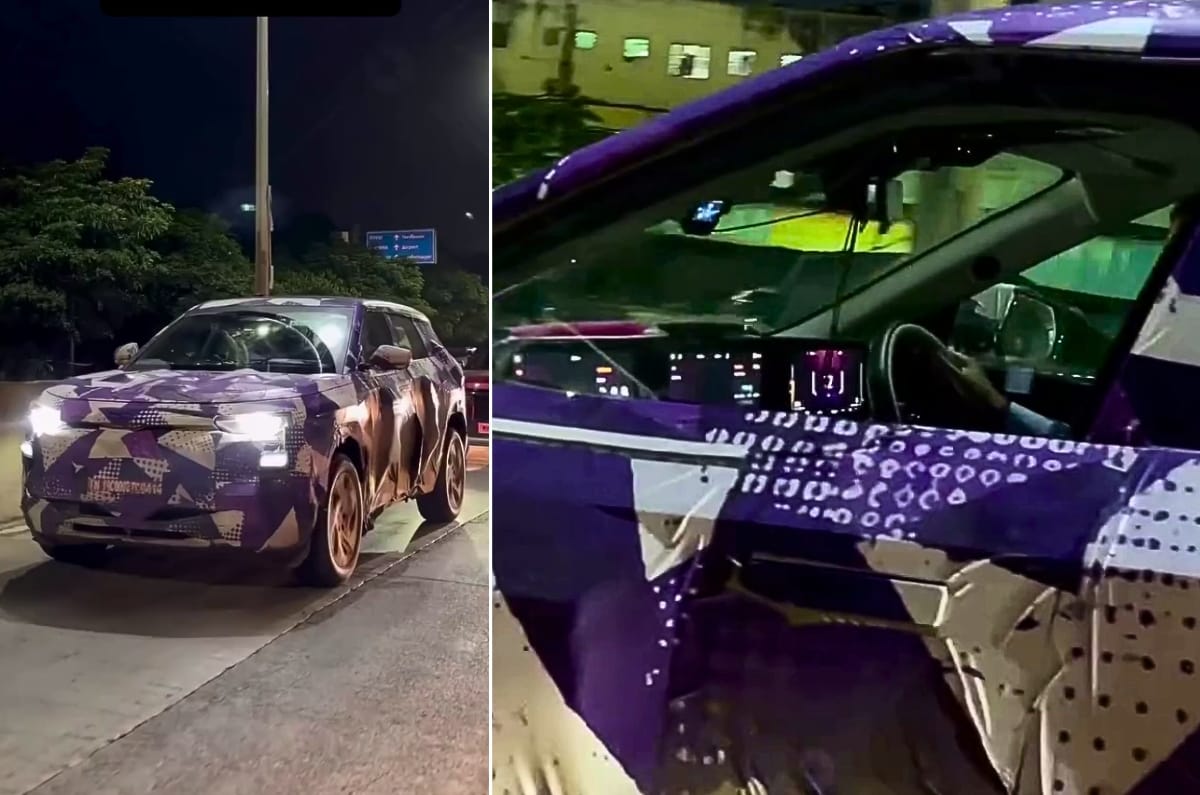
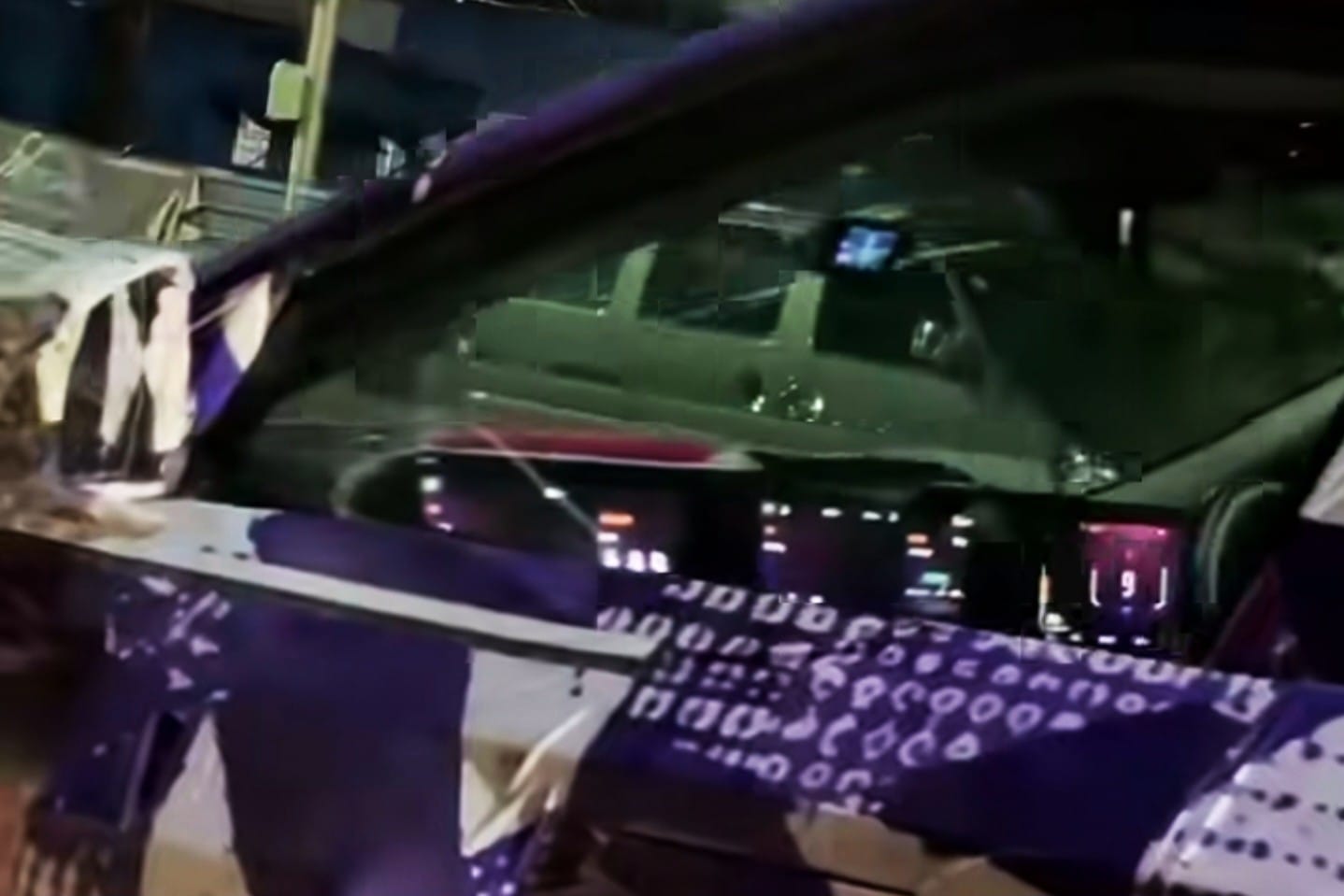
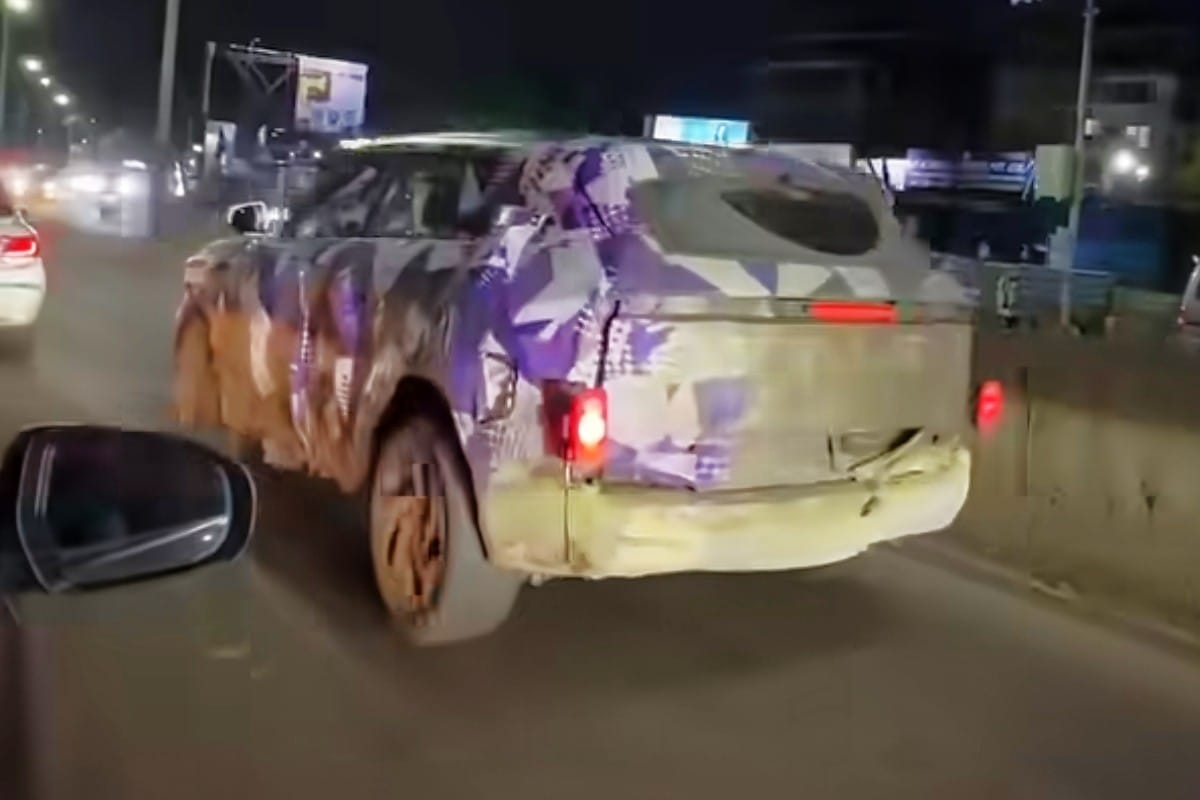
New spy shots of a Mahindra BE 07 test mule have given us the first glimpse of the upcoming electric SUV’s interior. Slated to hit the market in 2027, this SUV will be the production-spec version of the BE 07 concept, and will sit above the BE 6 as the second offering under Mahindra’s BE sub-brand.

Mahindra BE 07 interior details

Credit: CarDekho

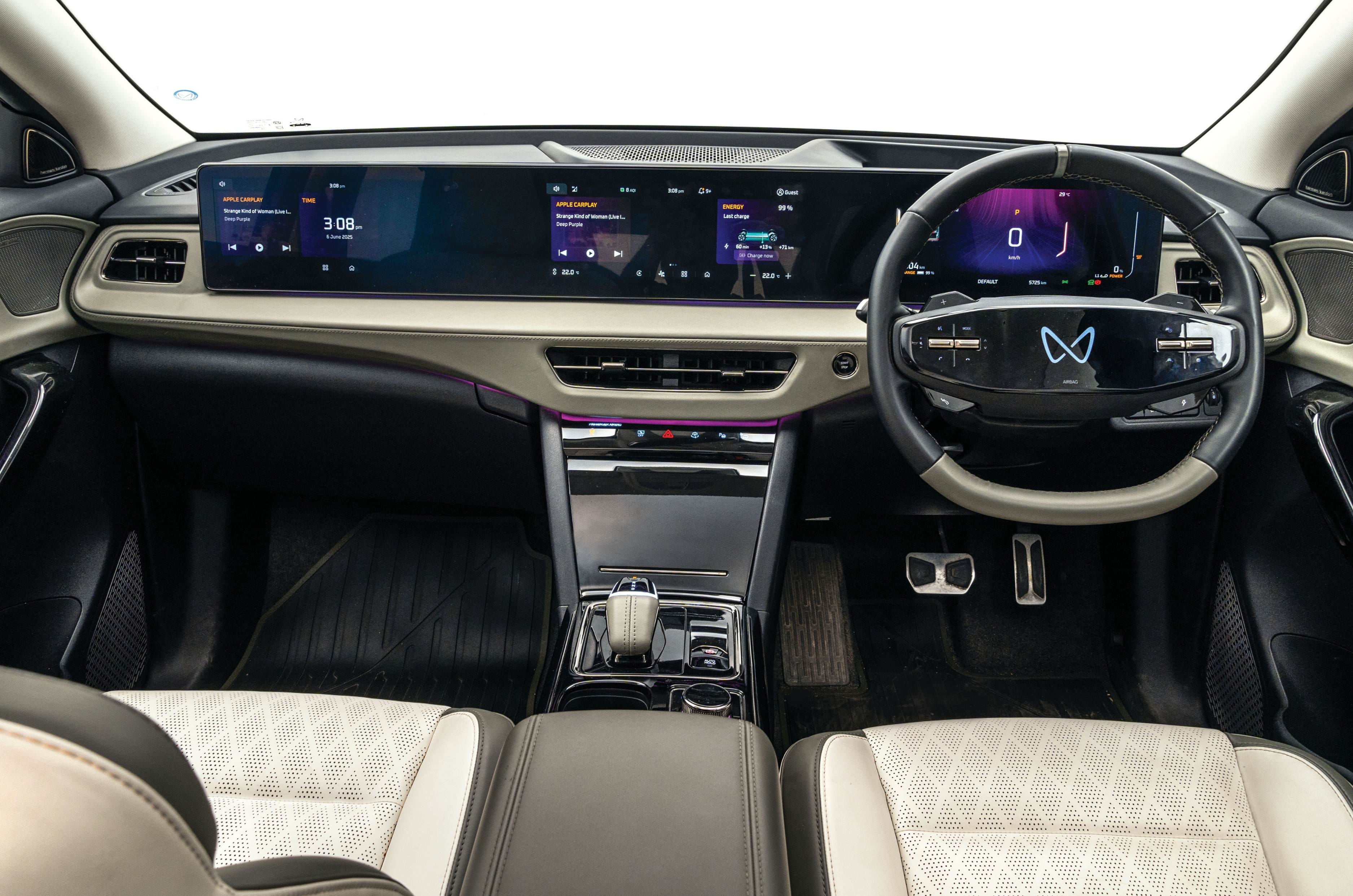
If this test mule is any indication, the production-spec BE 07 will mirror many of Mahindra’s newer models by hopping on the triple-screen bandwagon. A trio of large displays can clearly be seen in the spy shot, spanning the width of the dashboard. The Mahindra XEV 9e and XEV 9s offer similar setups, and a forthcoming updated version of the BE 6 will come with a triple-screen layout as well.

A small dashcam display is also visible on the BE 07’s windscreen, though it remains unclear whether it hints at a built-in unit or is specific to the prototype. For reference, the BE 6, XEV 9e, and XEV 9S feature a dashcam function that uses the 360-degree camera setup to record and save clips during emergency situations. However, continuous general-loop recording (like in a conventional dashcam) requires a USB storage device to be plugged in.

Mahindra XEV 9e interior. Image used for representation only.

Elsewhere, the production-spec BE 07’s cabin is likely to get a two-spoke steering wheel with the ‘butterfly’ Mahindra logo (used exclusively for the carmaker’s born-electric offerings), ambient lighting, a 5-seat configuration, and more.

Mahindra BE 07 battery and range

Credit: CarDekho

The BE 07 is expected to be underpinned by Mahindra’s INGLO platform and retain the BE 6’s 59kWh and 79kWh battery packs. Since the BE 07 will be larger than the BE 6, its range is likely to be lower than the MIDC-tested 548-683km that the latter claims. As for rivals, the BE 07 is expected to butt heads with the likes of the Tata Harrier EV, Vinfast VF7, and BYD Atto 3.

Nissan Gravite CNG real world fuel economy tested, explained

Nissan Gravite CNG

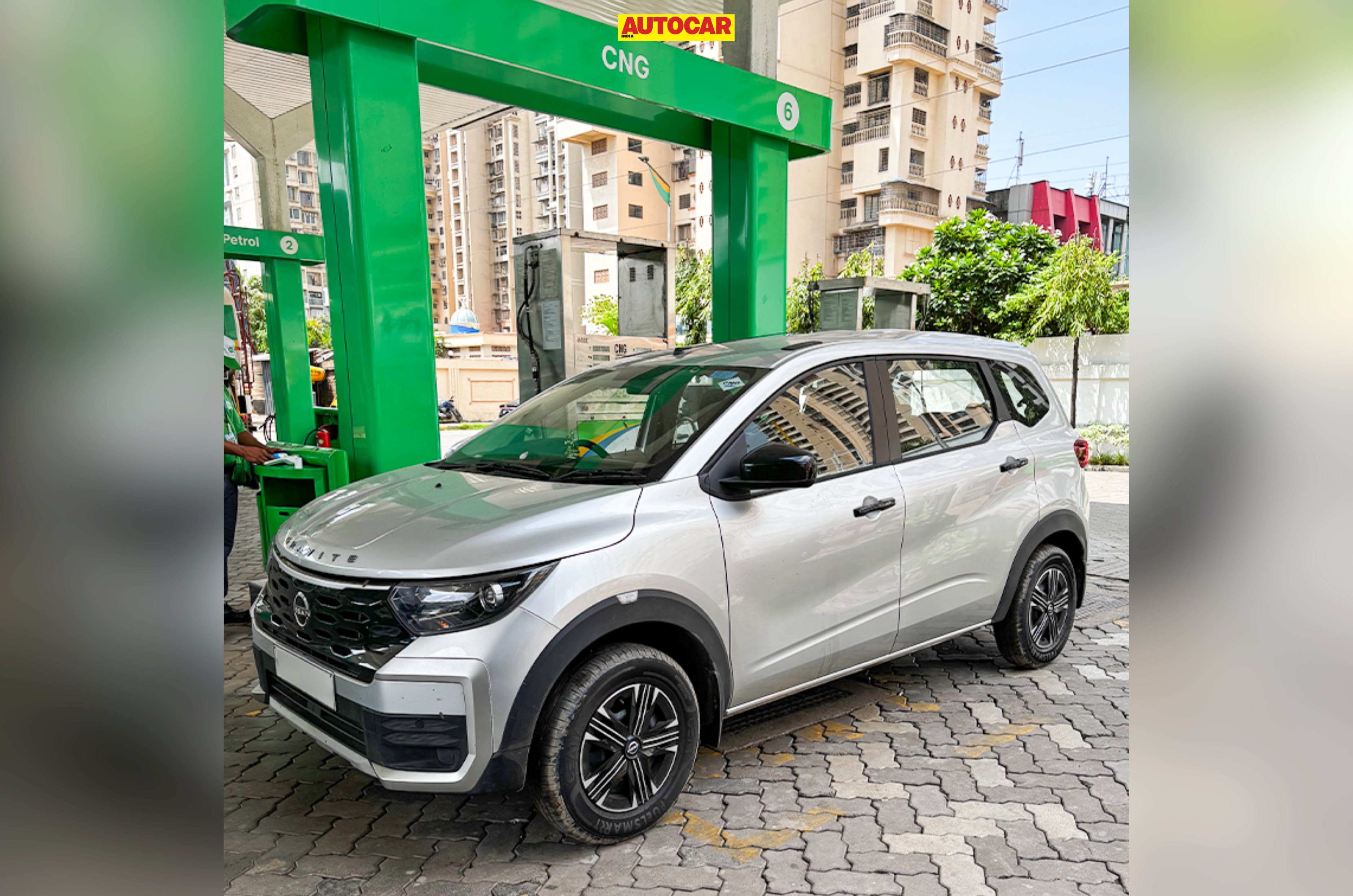
The Nissan Gravite, launched in February, 2026, is among the most affordable three-row MPVs sold in the country. In May, Nissan started offering the Gravite with a dealer-level CNG kit. Manufactured by Motozen, the kit is government and ICAT approved, and is available at an additional cost of Rs. 83,000. 

We’ve now put the Gravite CNG through our real-world fuel-efficiency tests to see how it performs.

  1. CNG kit available at an introductory price of Rs. 83,000.
  2. Spare wheel is mounted underneath the boot floor.
  3. 3-year/1,00,000km third-party warranty offered on CNG components.

It is powered by the same 1.0-litre, three-cylinder petrol engine (BR10) as seen in the Renault Triber, paired to a 5-speed gearbox. It produces 72hp and 96Nm of torque in petrol mode, however, Nissan is yet to reveal the claimed efficiency and the engine’s output when run on CNG. The twin CNG tanks are stacked vertically in the boot one above the other, each with a 25-litre capacity.

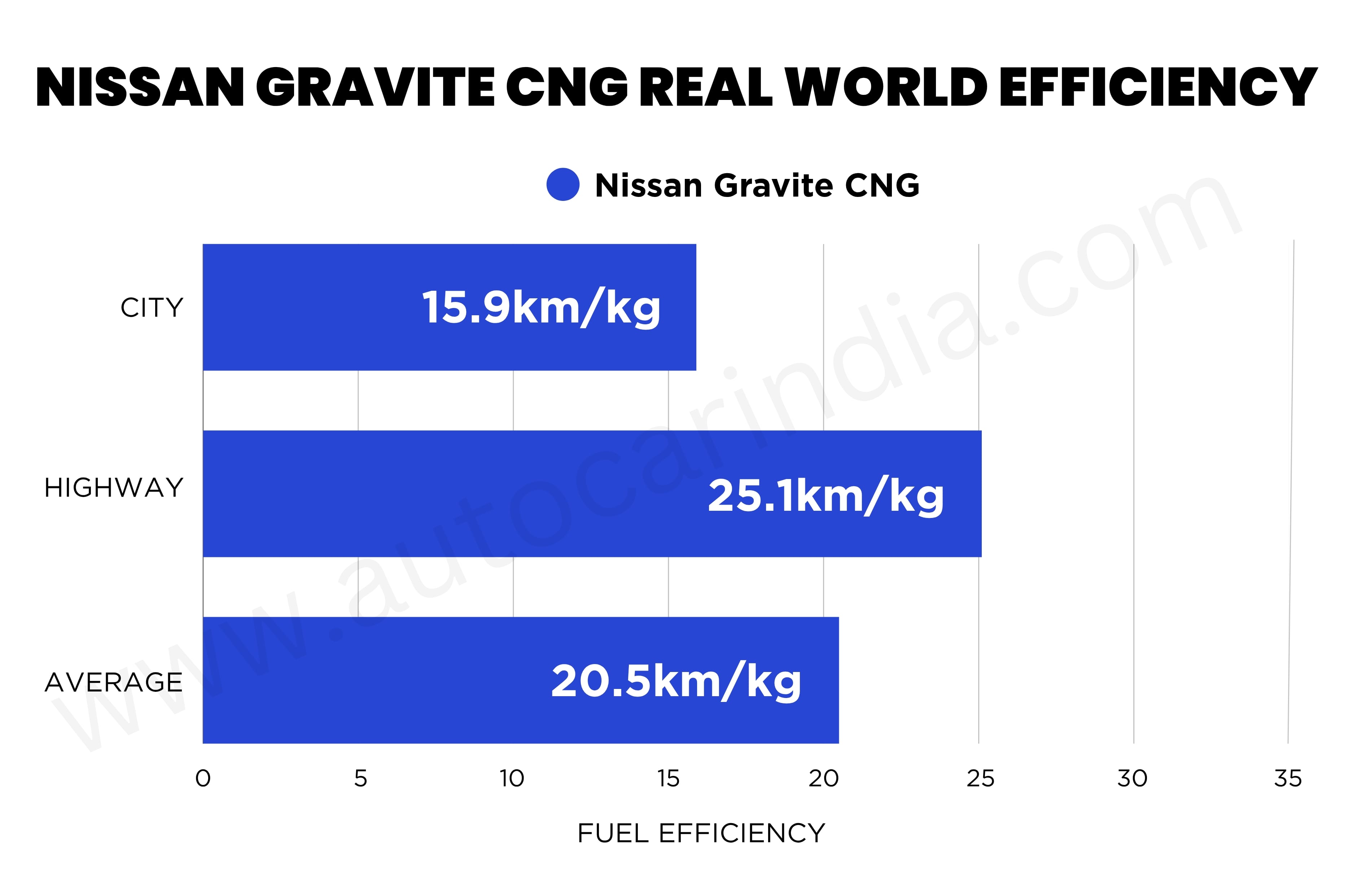
In our tests, the Gravite CNG delivered 15.9km/kg in the city and 25.1km/kg on the highway, for an overall average efficiency of 20.5km/kg.

When refilled from empty, we managed to fill  7.7kg of CNG, although this can vary depending on the pump pressure and ambient temperature. Based on our average overall efficiency of 20.5km/kg, one can expect a real-world range of 150-160km on a full tank of CNG.

Autocar India’s fuel-efficiency testing

Since CNG tanks are more difficult to fill consistently due to variables such as ambient temperature and pump pressure, we did not use our standard tankful-to-tankful methodology. Instead, for our real-world tests, we emptied the CNG tank and refilled it with 2kg of CNG. We then drove the vehicle in city conditions until the gas was exhausted. The same process was repeated for the highway run. Throughout both tests, the Gravite was driven exclusively in CNG mode.

Before our real-world fuel efficiency tests, we maintain tyre pressures based on the manufacturer’s recommendations. These cars are driven in fixed city and highway loops in and around Navi Mumbai, and we maintain certain average speeds. Throughout the tests, there is only one person in each car, and the aircon is set to fan speed 2 with temperature dialed to the lowest position. We operate other electricals, such as the audio system, indicators and wipers, just like a regular user would. Periodic driver swaps further neutralise variations in driver patterns.

BMW M 1000 RS in the works for 2027

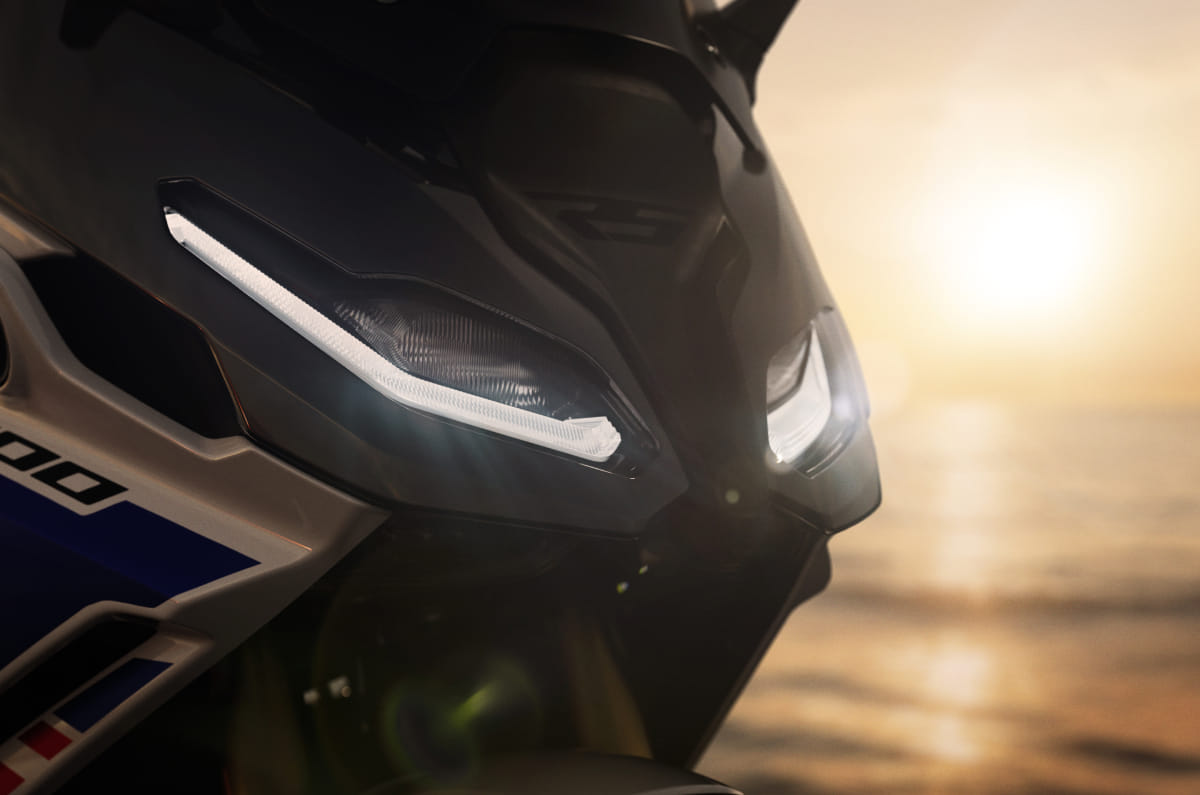
R 1300 RS headlight

A new BMW M model appears to be in the works for 2027 with emissions filings with the US Environmental Protection Agency (EPA) and the California Air Resources Board (CARB) having independently certified a model listed as the BMW M 1000 RS. The nomenclature suggests that the upcoming model could be a sport-touring derivative of the M 1000 RR.

  1. US EPA and CARB certifications independently confirm a 2027 BMW M 1000 RS
  2. Expected to use the same 999cc inline-four as the M 1000 RR
  3. Likely to feature a sport-touring setup

What to expect from the BMW M 1000 RS

Spy images have revealed that BMW is also likely working on an M 1300 GS

In both the EPA and CARB filings, the M 1000 RS appears alongside the M 1000 RR under the same emissions certification, suggesting it will share the same 999cc inline-four engine. The CARB data for the 2027 M 1000 RR points to the same 205hp at 13,000rpm and 113Nm as the current model.

What distinguishes the RS from the RR is likely to be its intent rather than its engine. BMW has traditionally used the ‘RS’ (Reise und Sport, German for ‘Travel and Sport’) suffix on its sport-touring motorcycles, such as the R 1300 RS, which uses a 1,300cc boxer twin. An M 1000 RS would therefore represent an entirely new product, becoming the first RS model to use an inline-four platform.

Currently, BMW’s global M motorcycle lineup comprises the M 1000 RR, M 1000 XR and M 1000 R, the last of which was recently launched in India at Rs 33.50 lakh. Spy images of what appears to be an M 1300 GS have also surfaced online in recent days, suggesting the M 1000 RS may not be the only all-new M model planned for 2027. BMW is also known to be developing the next-generation S 1000 RR, and a design patent for the motorcycle was filed in India last month.

BMW seems to have several major product unveilings in the pipeline, and with the emissions certifications covering the 2027 model year, an official reveal at EICMA this November appears likely.

Source: Motorcycle.com

Bugatti Destrier image gallery

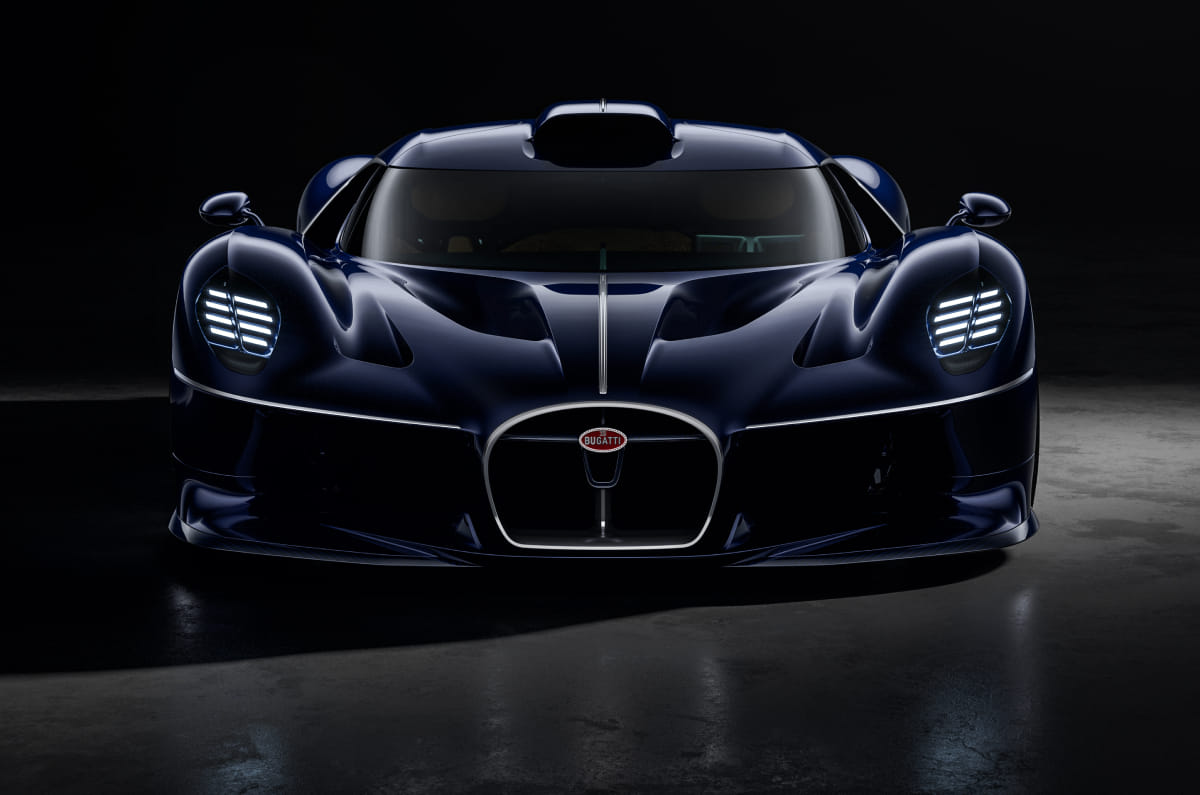
Bugatti Destrier

The Bugatti Destrier is a one-off hypercar created under the brand’s Programme Solitaire bespoke division. Based on the track-only Bolide, it retains the carbon-fibre chassis and 1,600hp quad-turbo W16 engine but features an all-new body inspired by the legendary Type 57SC Atlantic. Unlike the Bolide, the Destrier has been designed with a greater emphasis on elegance, craftsmanship and grand touring rather than outright track performance. It is also the lowest Bugatti ever built at just 1 metre tall and wears a bespoke ‘Sapphire Celeste’ paint finish. Bugatti has not disclosed the Destrier’s price, as with its previous Solitaire projects.