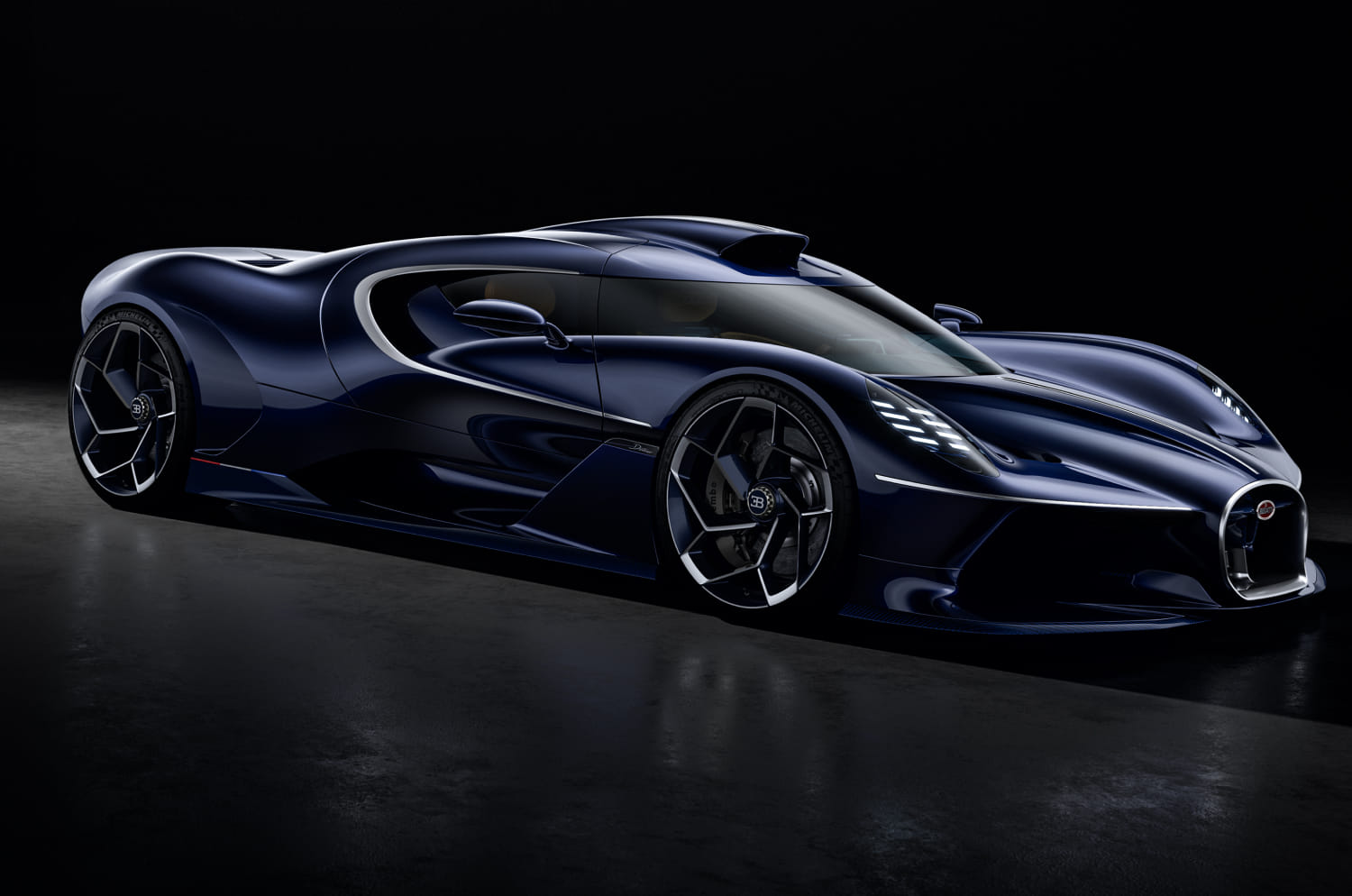
Bugatti has revealed the Destrier, a one-off hypercar created under its Programme Solitaire bespoke division. The third one-off commission after the Brouillard and F.K.P. Hommage, the Destrier is based on the track-only Bolide but adopts an all-new body inspired by the Buggati Type 57SC Atlantic, widely regarded as one of the most beautiful cars ever built. While it retains the Bolide’s W16 powertrain, the Destrier has been conceived as a design-led grand touring hypercar rather than one focused on outright lap times.
Based on the Bugatti Bolide’s carbon-fibre chassis
Retains the 1,600hp quad-turbo W16 engine
Third one-off created under Bugatti’s Programme Solitaire
Bugatti Destrier: exterior
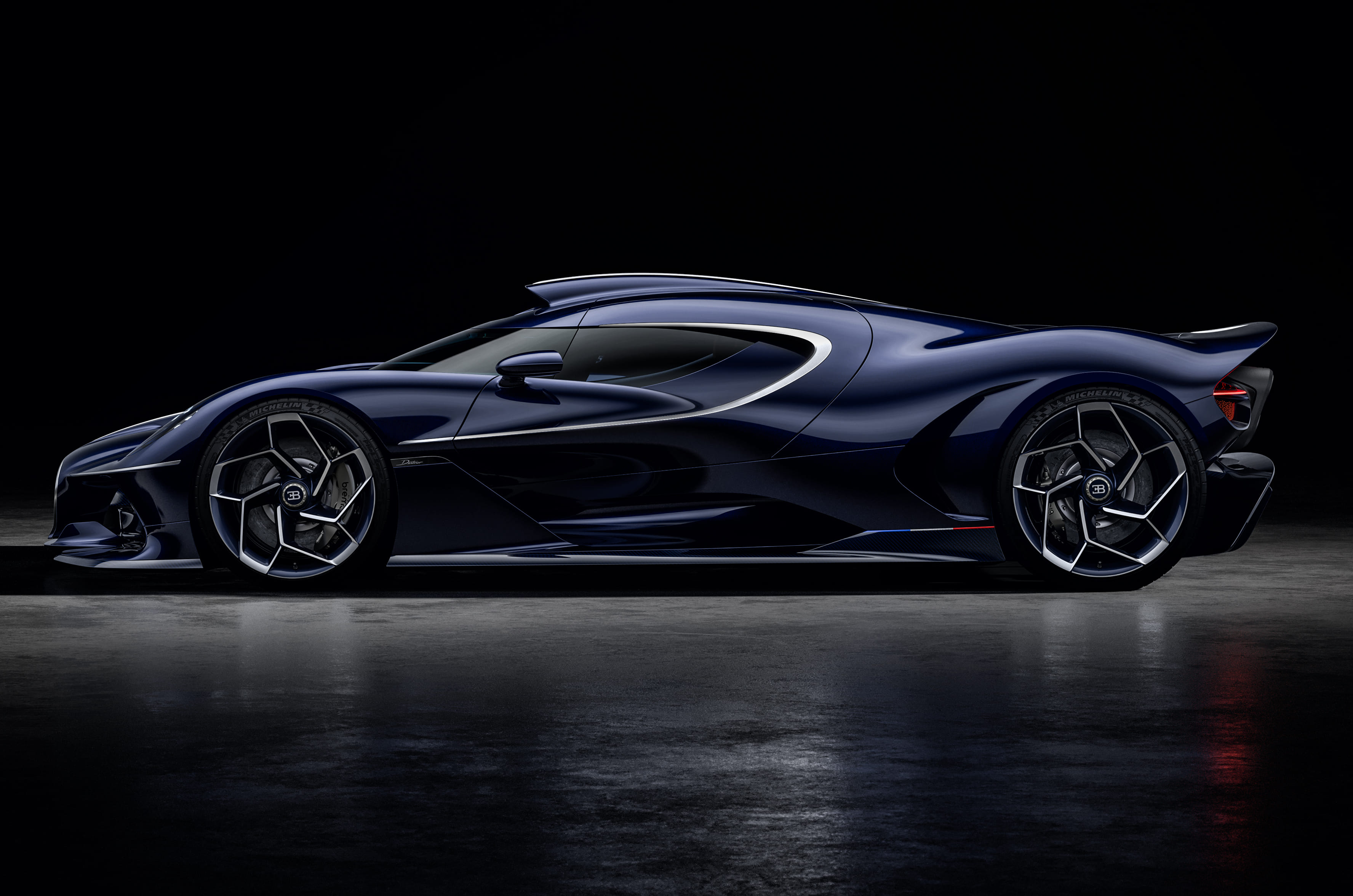
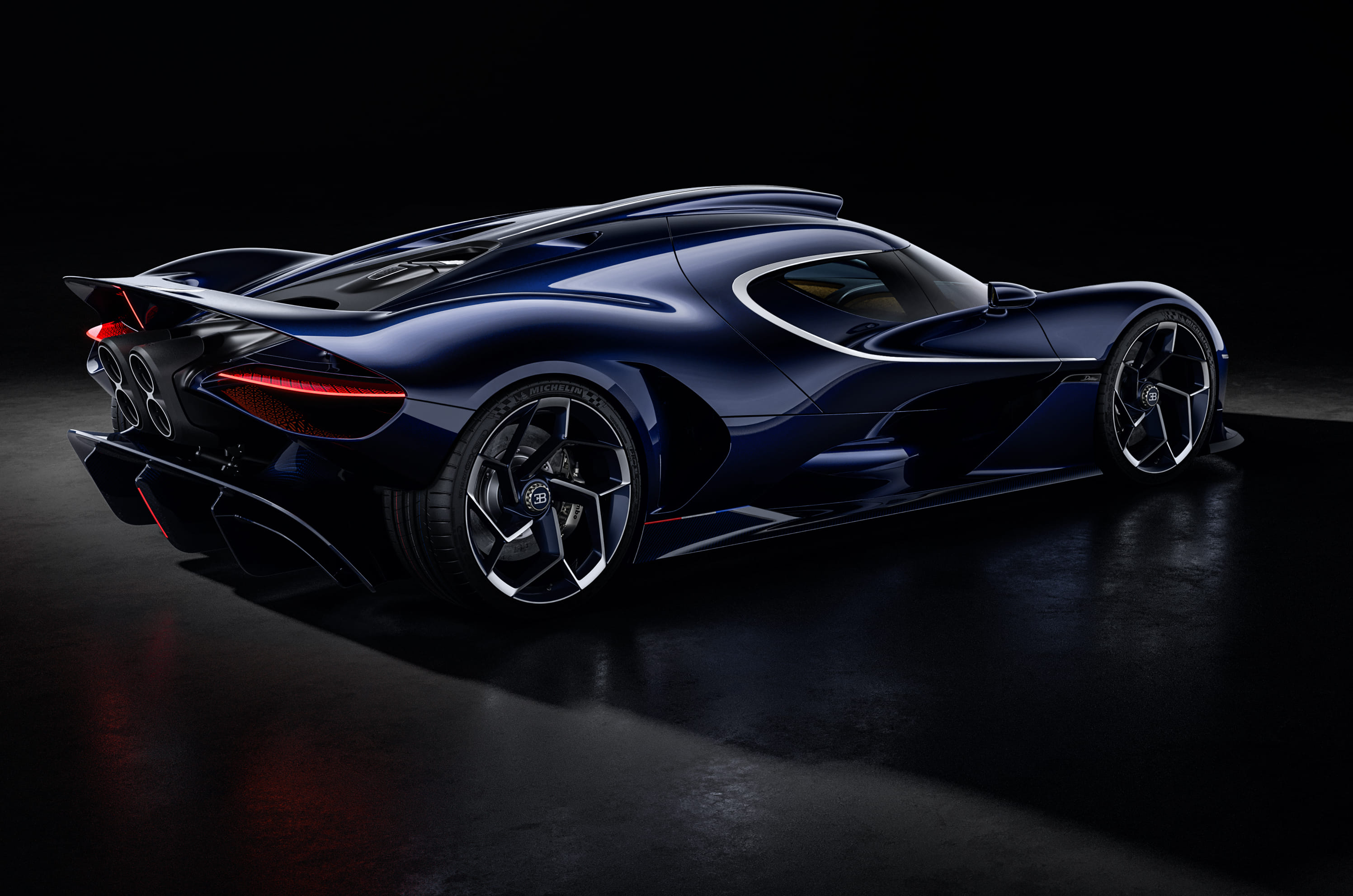
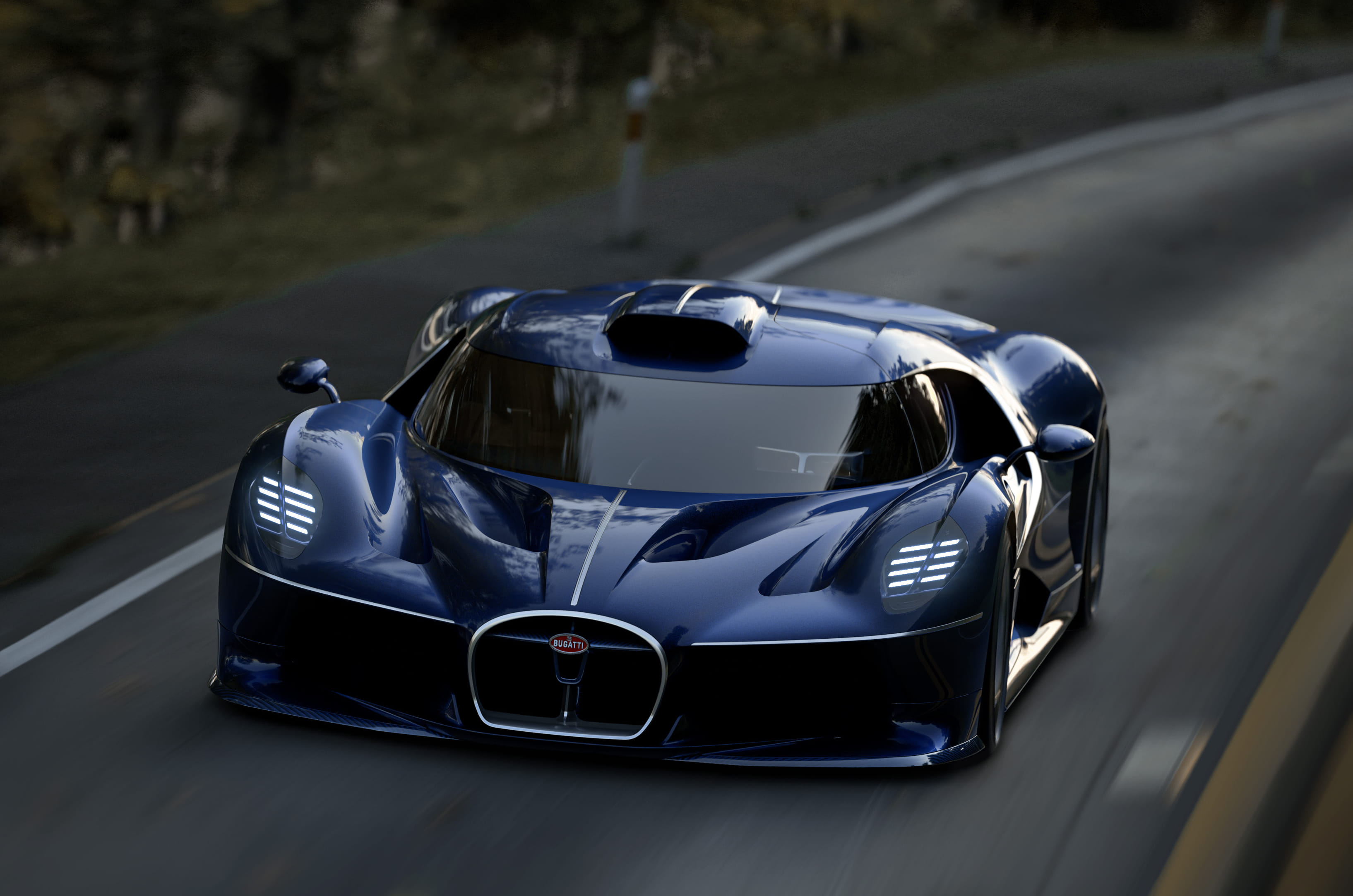
The Destrier shares its carbon-fibre monocoque with the Bolide but wears completely new bodywork. Inspired by the Type 57SC Atlantic, it features a cleaner, more sculpted design with fewer aerodynamic add-ons than its track-focused sibling. The signature Bugatti C-line has been reinterpreted, while redesigned lighting elements, a wider horseshoe grille, blended rear wing and pronounced rear haunches distinguish it from the Bolide.
Standing just 1 metre tall, the Destrier is the lowest Bugatti ever built. It rides on 20-inch front and 21-inch rear wheels, with the proportions intended to resemble those of a medieval war horse, from which the car takes its name. The one-off is finished in a bespoke Sapphire Celeste paint shade created exclusively for its owner, with polished aluminium trim and tinted exposed carbon-fibre accents.
Bugatti Destrier: interior
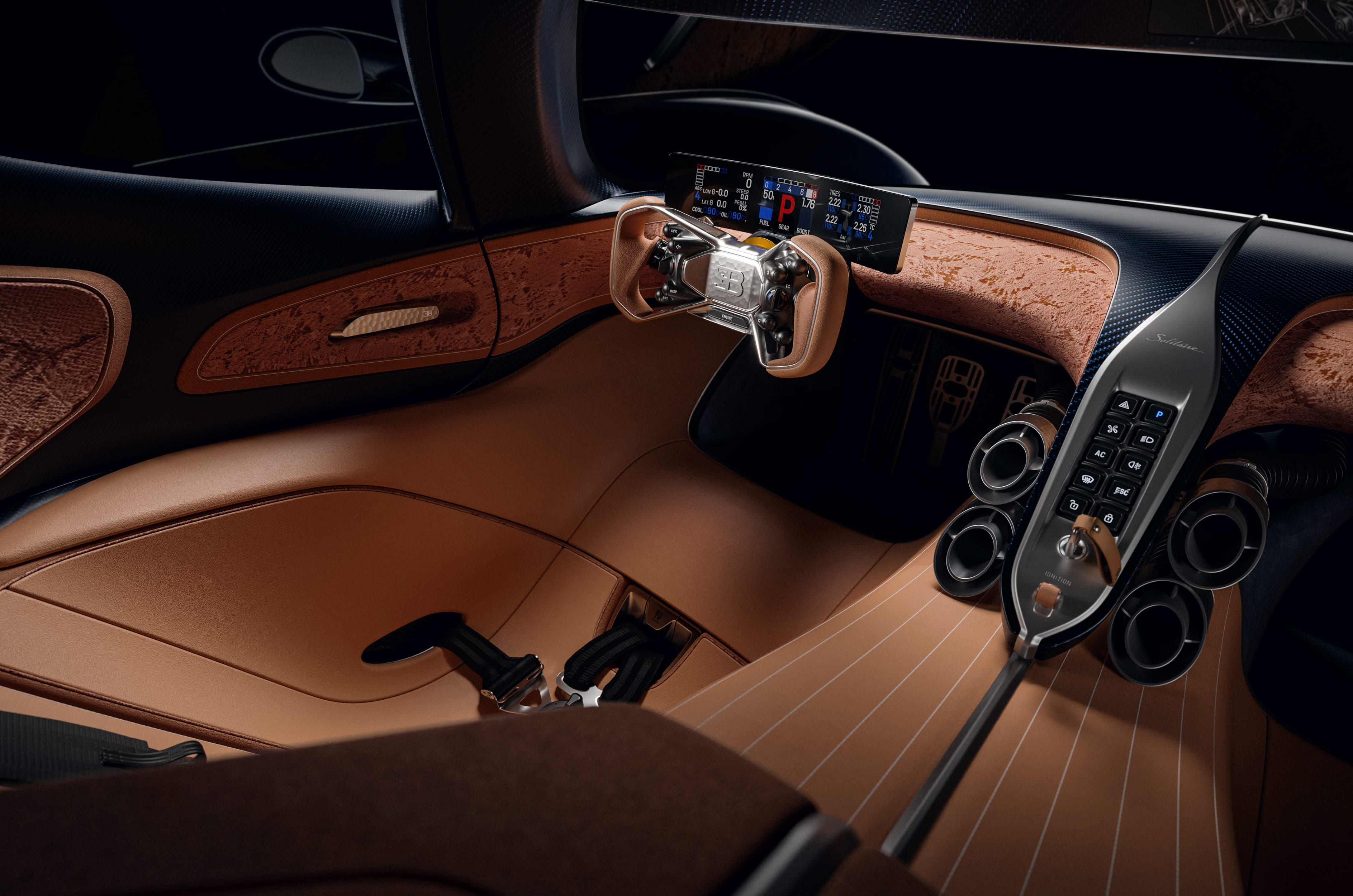
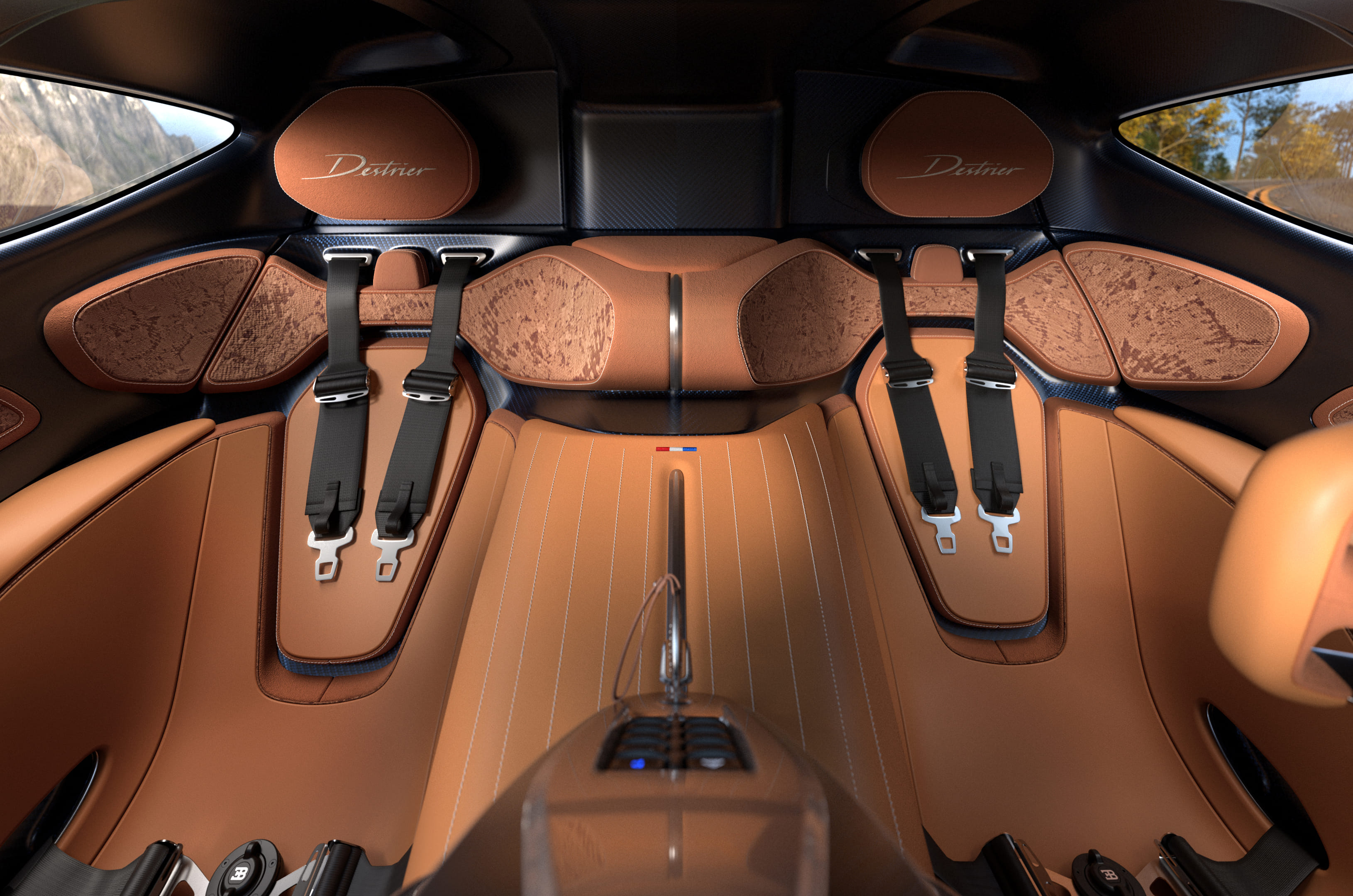
Unlike the stripped-out cockpit of the Bolide, the Destrier’s cabin has been redesigned with a greater emphasis on craftsmanship and luxury. It uses ‘Ambre Voyageur’ leather and nubuck upholstery, together with a bespoke 3D-knitted textile woven with copper yarn.
Hammered metal finishes on the door handles, air vents, steering wheel hub and entry plates reference the car’s medieval inspiration, while a discreet French flag pays tribute to Bugatti’s heritage.
Bugatti Destrier: engine and performance
Power comes from the Bolide’s 8.0-litre quad-turbocharged W16 engine, producing 1,600hp. The company has not disclosed performance figures, stating that the Destrier’s focus is on design and craftsmanship rather than outright speed.
The Destrier continues to use the Bolide’s carbon-fibre chassis and running gear, although Bugatti has not confirmed any mechanical changes beyond the new bodywork.
The Destrier is a one-off (1/1) commission created under Bugatti’s Programme Solitaire and will make its public debut during Monterey Car Week, culminating at the Pebble Beach Concours d’Elegance on August 16, 2026. As with previous Solitaire projects, Bugatti has not disclosed the price.
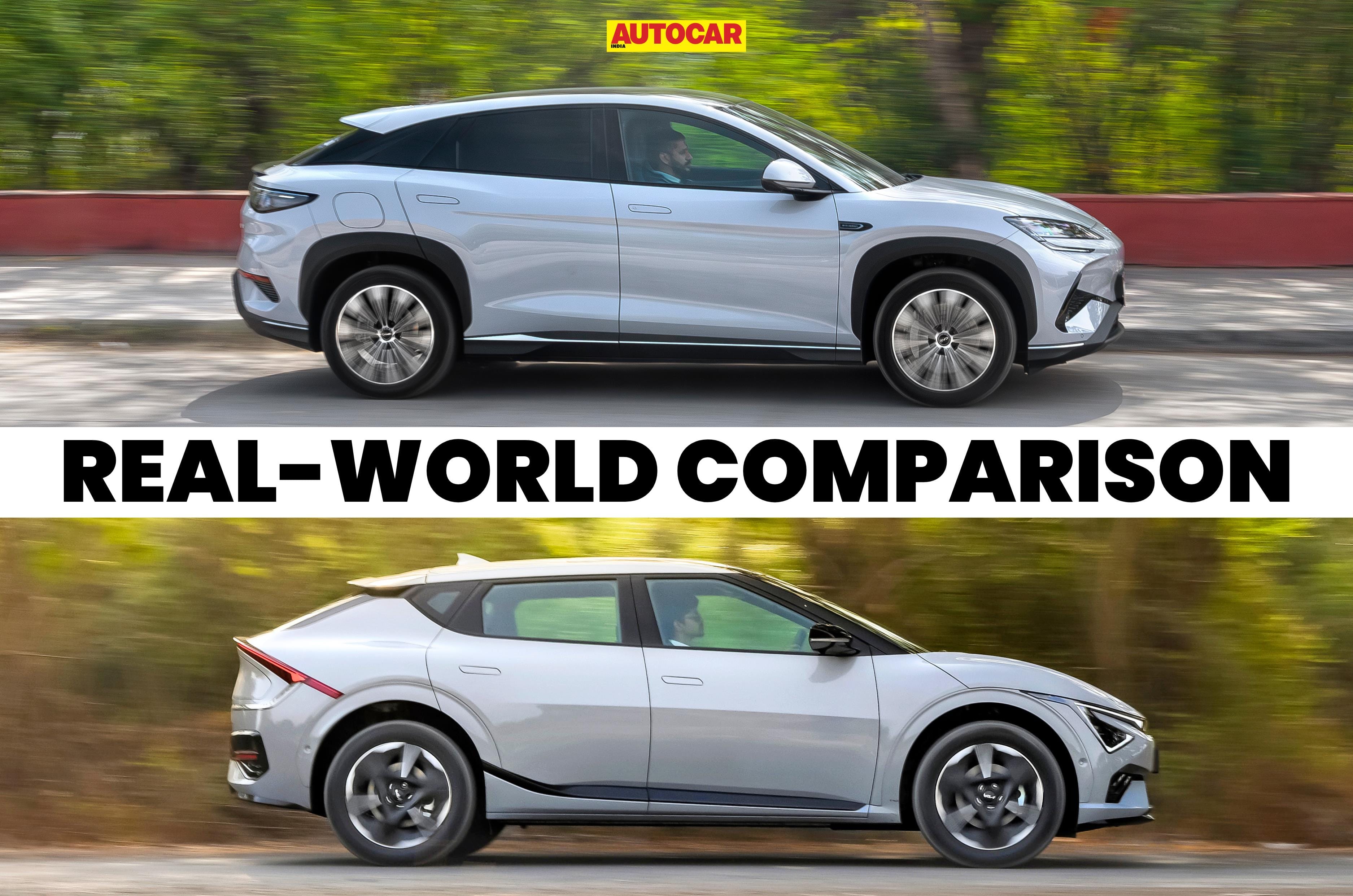
The BYD Sealion 7 and Kia EV6 are premium EV offerings, roughly priced between Rs 50-70 lakh. They’ve both got modern designs, premium cabins and punchy performance. They are also fully imported as completely built units (CBU) and rival cars like the Hyundai Ioniq 5 and BMW iX1. In this story, we compare the performance, range and regen of the respective top-spec variants of both cars.
BYD Sealion 7 vs Kia EV6: Specifications, price
The Sealion 7 is bigger, has more performance and is less expensive
BYD Sealion 7 Performance AWD vs Kia EV6 GT Line AWD: Specifications, price
Sealion 7 Performance AWD
EV6 GT Line AWD
Battery Size (kWh)
82.56
84
Power (hp)
530
325
Torque (Nm)
690
605
Claimed Range (km)
542 (NEDC)
663 (ARAI)
Kerb weight (kg)
2,340
NA
Power-to-weight*
226.49
NA
Torque-to-weight^
294.87
NA
Price (in Rs lakh)
Rs 55.9 lakh
Rs 65.97 lakh
*Power-to-weight is hp per tonne
^Torque-to-weight is Nm per tonne
The BYD Sealion 7 is bigger in every dimension – length, width, height and even wheelbase, but the Kia gets a bigger 84kWh NMC battery (versus an 82.56kWh LFP battery in the Sealion 7). In terms of performance, the Sealion 7 makes 205hp and 85Nm more than the EV6. And while the EV6 is available in an AWD setup only, the Sealion 7 is available in a RWD layout with less performance. The big difference is how they are priced, and the price difference between the top-spec trims of these cars is roughly Rs 10 lakh.
BYD Sealion 7 vs Kia EV6: Performance tests
With 205hp and 85Nm more, the Sealion 7 is quicker in all our tests
BYD Sealion 7 Performance AWD vs Kia EV6 GT Line AWD: Performance tests
BYD Sealion 7
Kia EV6
Winner
0-100kph (sec)
4.43
5.16
Sealion 7
20-80kph (sec)
2.48
2.77
Sealion 7
40-100kph (sec)
2.91
3.49
Sealion 7
With the difference in performance between these two, it was a little easier to predict the outcome. In all the performance tests, the Sealion 7 was faster. It completed the 0-100kph run in 4.43s and is 0.73s faster than the EV6. Again, 20-80kph and 40-100kph runs are 0.29s and 0.58s faster than the EV6, respectively.
BYD Sealion 7 vs Kia EV6: Regen and range tests
Kia EV6 has stronger regen modes and offers better range overall
BYD Sealion 7 Performance AWD vs Kia EV6 GT Line AWD: Regen and range
Regen mode
BYD Sealion 7
Kia EV6
Winner
One-pedal
NA
NA
–
High
236.44m / 18.13s
105.49m / 7.6s
Kia EV6
Medium
–
146.75m / 10.95s
Kia EV6
Low
421.22m / 32.16s
365.88m / 26.85s
Kia EV6
The BYD gets two regen modes – Standard and High, whereas the EV6 gets four, including the option of a single pedal driving mode. In all the modes, the EV6 showed stronger regenerative braking than the Sealion 7. In their respective highest regen mode, the Sealion 7 takes more than twice as long to slow down from 80-20kph when compared to the Kia EV6.
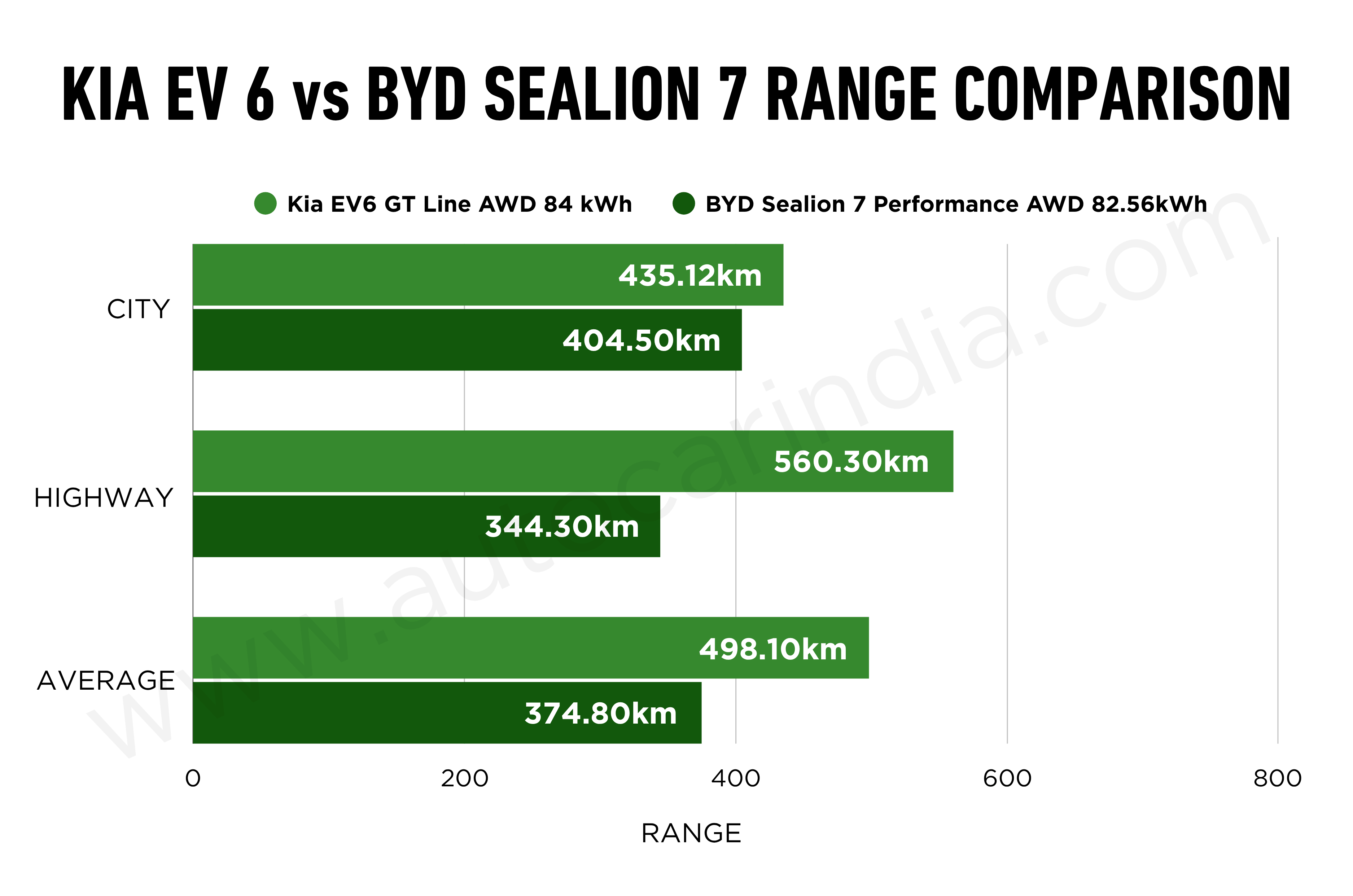
In our real-world range tests, we found the Kia to be more efficient than the BYD. In the city, the EV6 delivered an efficiency of 5.18km/kWh versus 4.90km/kWh for the Sealion 7. Thanks to the stronger regen modes in the EV6, you can expect a real-world range of 435km in the city, whereas with the Sealion 7 you can expect 405km – about 30km less than the EV6.
On the highway, the difference is even wider – the EV6 becomes more efficient (6.67km/kWh), and the Sealion 7 becomes even less efficient (4.17km/kWh) than in the city. One can expect a real-world range of 344km with the Sealion 7, whereas the EV6 will go 216km further!
BYD Sealion 7 vs Kia EV6: Verdict
The BYD Sealion 7 is priced from Rs 49.9 lakh for the RWD variant to Rs 55.9 lakh for the top-spec AWD variant, and is the more affordable option here, while also being the more powerful EV. The Kia EV6 GT-Line AWD is the more expensive pick and costs Rs 65.97 lakh. If budget isn’t an issue, the Kia EV6 will be a better all-rounder. It has better range, faster charging speeds and multiple regenerative braking modes, including single-pedal driving that makes city driving that much easier.
Autocar India’s testing standards
Before we conduct our performance tests, we check and maintain tyre pressures per the manufacturer’s recommendations and ensure the car is charged to 100 percent. The car is then tested in a controlled environment with two people on board, and the data is collected via highly accurate GPS-based timing equipment.
For our real-world range test, we begin with each car’s battery fully charged and tyre pressures set as per the manufacturer’s recommendations. We drive the cars on a fixed loop covering both city and highway stretches while maintaining set average speeds. We then calculate the range based on the percentage of charge consumed. The AC is set to 22deg C in auto mode, and features such as the music system, lights and ventilated seats are used as needed, just as a regular user would. This approach ensures consistency and gives a clear idea of what to expect in daily use.
To test regenerative braking, we pre-select a level of regen braking, completely lift off the throttle pedal and allow the car to decelerate till under 20kph. This procedure is then repeated for as many levels of regenerative braking the EV packs in. The deceleration rate, distance covered and time taken to go from 80kph to 20kph are recorded on a GPS-based Vbox system.
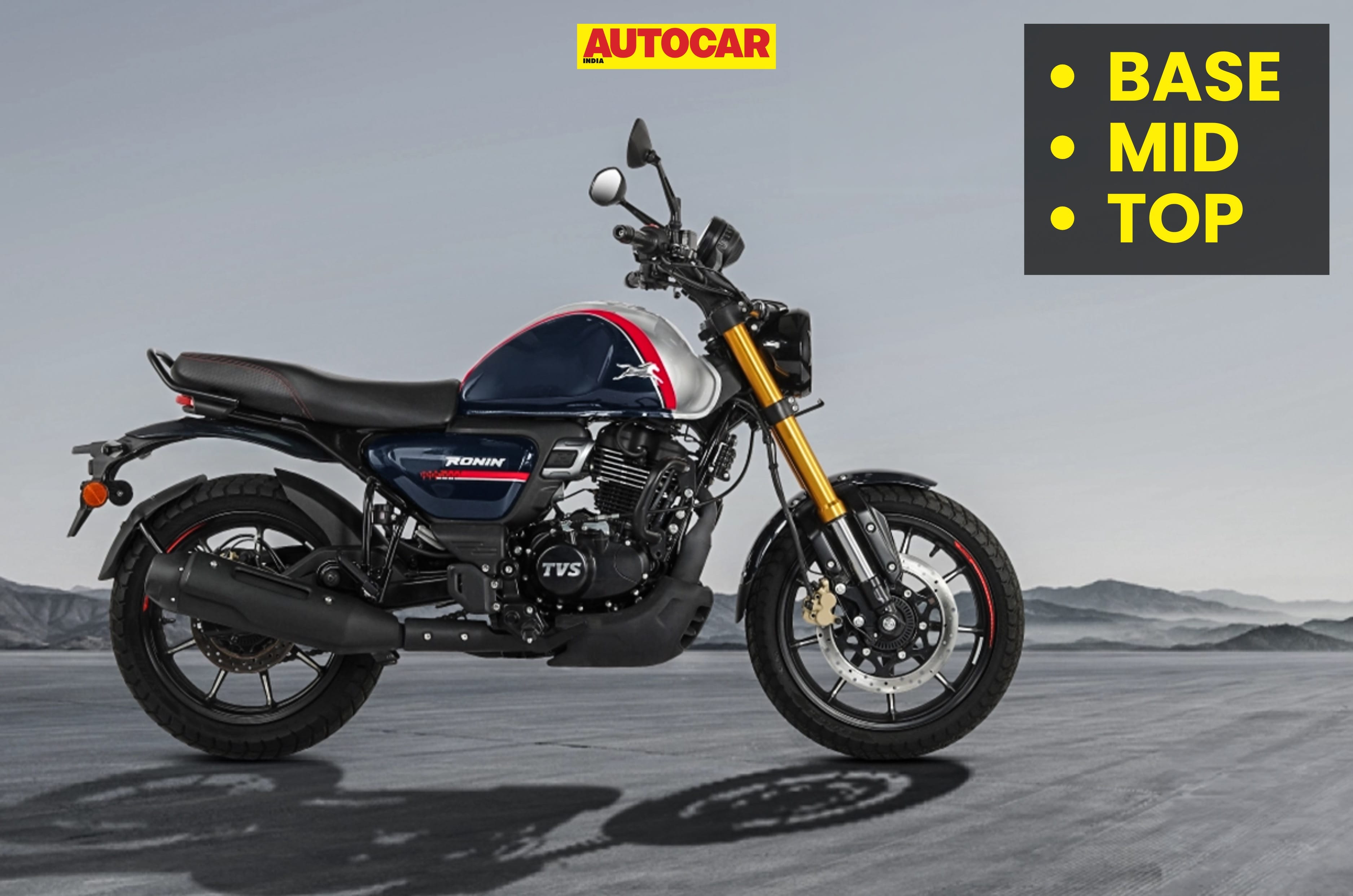
The TVS Ronin has had a strong run of late, with quarterly sales nearly doubling year-on-year and the bike steadily gaining ground in the 200-250cc segment. The bike is available in three trims – Base, Mid and Top – all powered by the same 225.9cc, single-cylinder, oil-cooled engine that makes 20.4hp and 19.9Nm. The three also share the same suspension hardware, with the differences coming down to braking hardware, features and colour options. Here’s what each variant offers.
TVS Ronin variant breakdown
Ronin Base
The Base trim is the entry point into the Ronin range and gets single-channel ABS, along with two riding modes – Rain and Urban. With a kerb weight of 159kg, it’s also 1kg lighter than the Mid and Top variants. Other features include all-LED lighting and an asymmetric digital instrument cluster, but it misses out on TVS SmartXonnect connectivity, voice assist, turn-by-turn navigation and call alerts. Prices for the Base start at Rs 1.29 lakh.
Ronin Mid
The Mid trim steps up to dual-channel ABS while retaining the same Rain and Urban riding modes. It’s otherwise largely identical to the Base, without any of the SmartXonnect-based connectivity features. Visually, it adds gold-finished USD forks. Prices for the Mid start at Rs 1.49 lakh.
Ronin Top
The range-topping Top trim carries over the dual-channel ABS and gold-finished USD forks, but adds adjustable levers and a more capable digital instrument cluster with SmartXonnect connectivity, voice assist, turn-by-turn navigation, ETA, incoming call alerts and ride analysis via the TVS Connect app. Prices for the Top start at Rs 1.62 lakh.
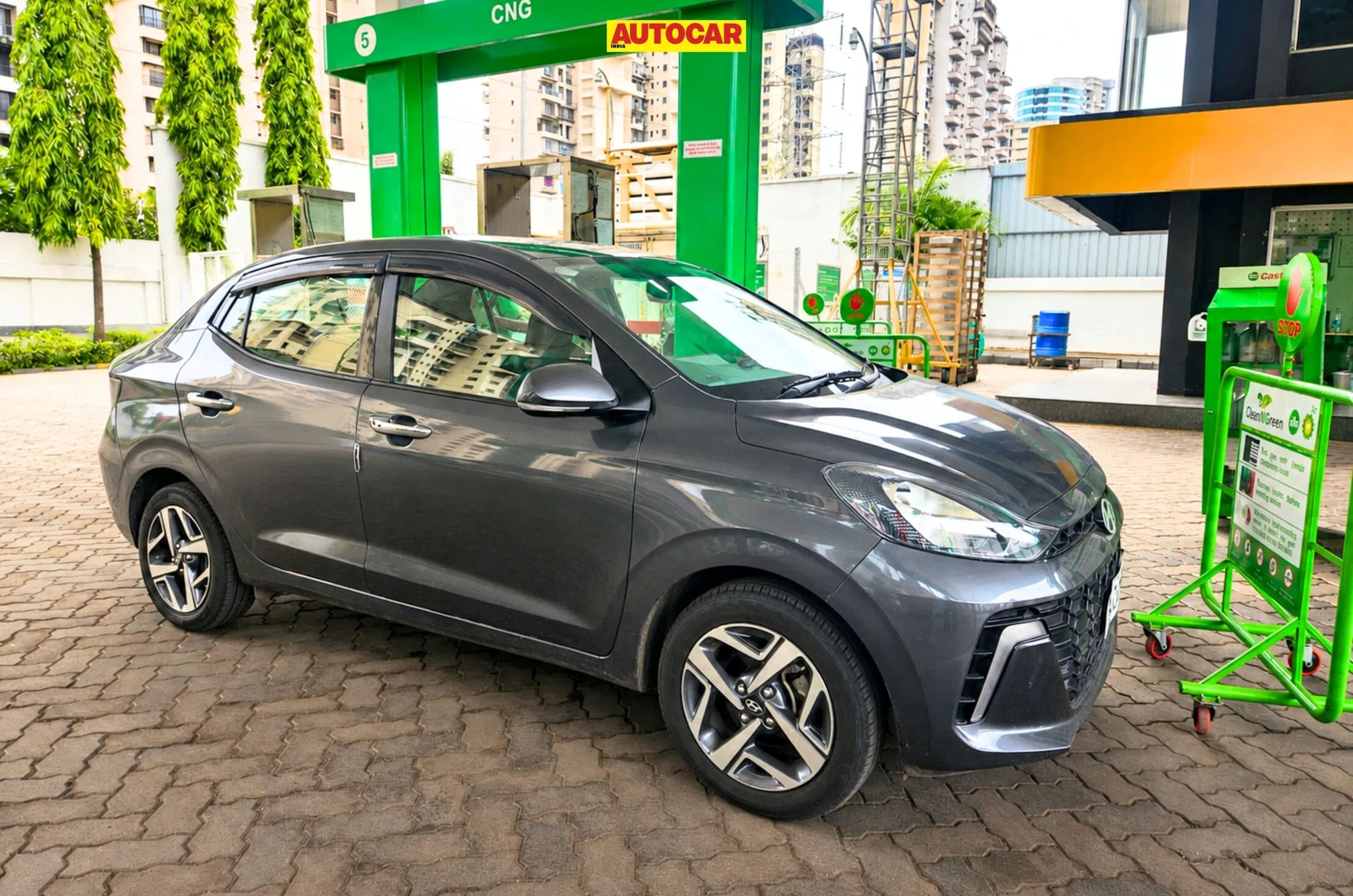
Launched in 2020, the Hyundai Aura has been available with a factory-fitted CNG option since its introduction. It is currently offered in three variants – S CNG (Rs 7.8 lakh), Corporate CNG (Rs 7.9 lakh) and SX CNG (Rs 8.6 lakh). We put the Aura CNG through our real-world fuel-efficiency tests to see how it fares.
No automatic engine stop-start system
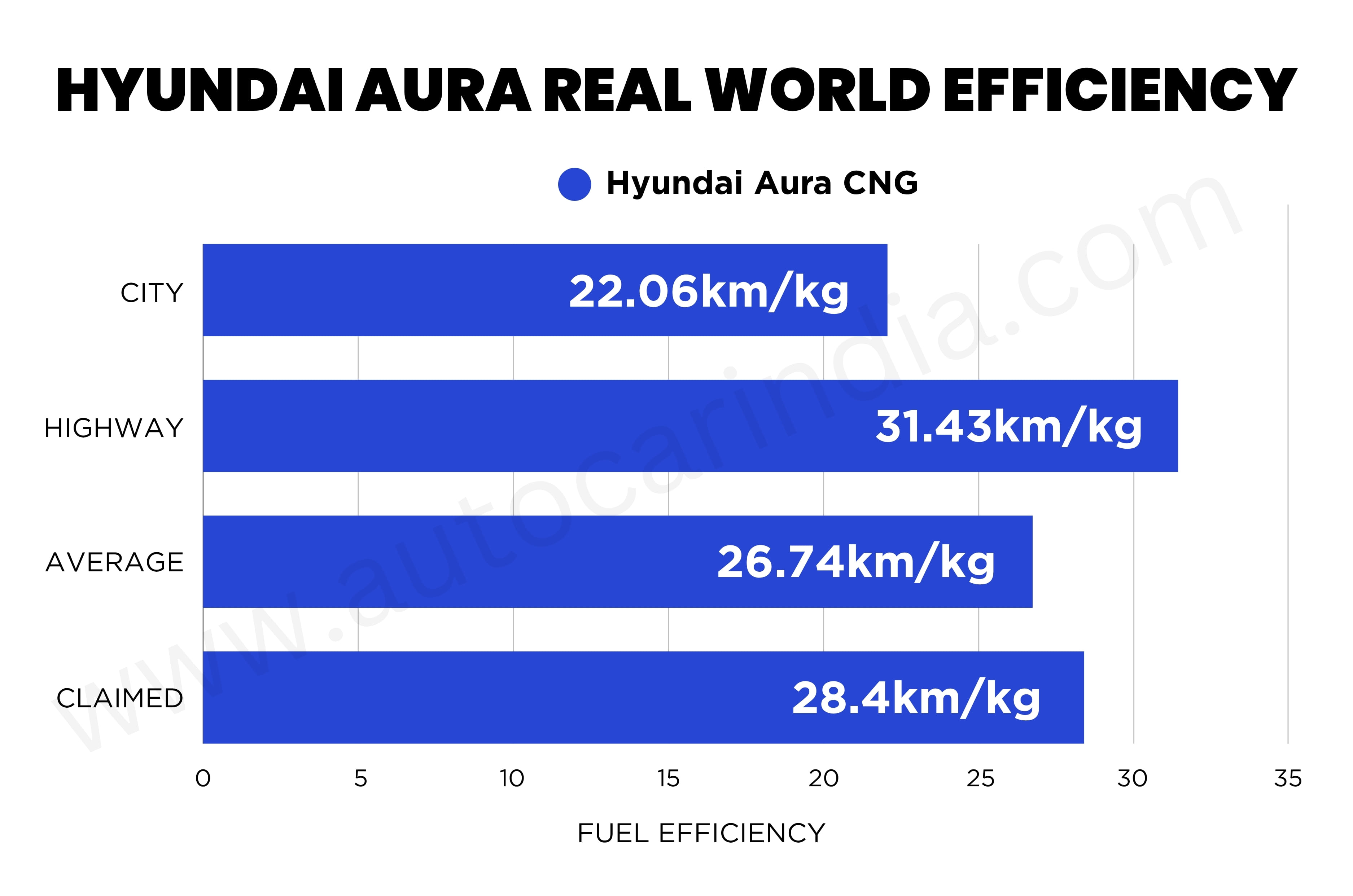
Claimed fuel efficiency: 28.4km/kg
Priced Rs 90,000 higher than comparable petrol variants
Hyundai Aura CNG fuel efficiency explained
Powering the Aura CNG is a 1.2-litre, four-cylinder engine that produces 69hp and 95.2Nm when running on CNG. Transmission duties are handled by a 5-speed manual gearbox.
In our tests, the Aura CNG returned 22.06km/kg in the city and 31.43km/kg on the highway, resulting in an overall average efficiency of 26.74km/kg. Based on these figures, owners can expect a real-world driving range of around 240km on a full tank of CNG.
Interestingly, when refilling the Aura’s empty 65-litre CNG tank, it accommodated 8.95kg of gas. Under favourable conditions, such as higher pump pressure and cooler ambient temperatures, the tank should be able to hold close to 10kg of CNG.
For context, the Maruti Dzire CNG is equipped with a smaller 55-litre CNG tank, while the Tata Tigor CNG features a larger 70-litre dual-cylinder setup.
Autocar India’s fuel-efficiency testing
Since CNG tanks are more difficult to fill consistently due to variables such as ambient temperature and pump pressure, we did not use our standard tankful-to-tankful methodology. Instead, for our real-world tests, we emptied the CNG tank and refilled it with 2kg of CNG. We then drove the vehicle in city conditions until the gas was exhausted. The same process was repeated for the highway run. Throughout both tests, the Aura was driven exclusively in CNG mode.
Before our real-world fuel efficiency tests, we maintain tyre pressures based on the manufacturer’s recommendations. These cars are driven in fixed city and highway loops in and around Navi Mumbai, and we maintain certain average speeds. Throughout the tests, there is only one person in each car, and the aircon is set to fan speed 2 with temperature dialed to the lowest position. We operate other electricals, such as the audio system, indicators and wipers, just like a regular user would. Periodic driver swaps further neutralise variations in driver patterns.
LOOK OUT FOR: Suspension wear, infotainment issues
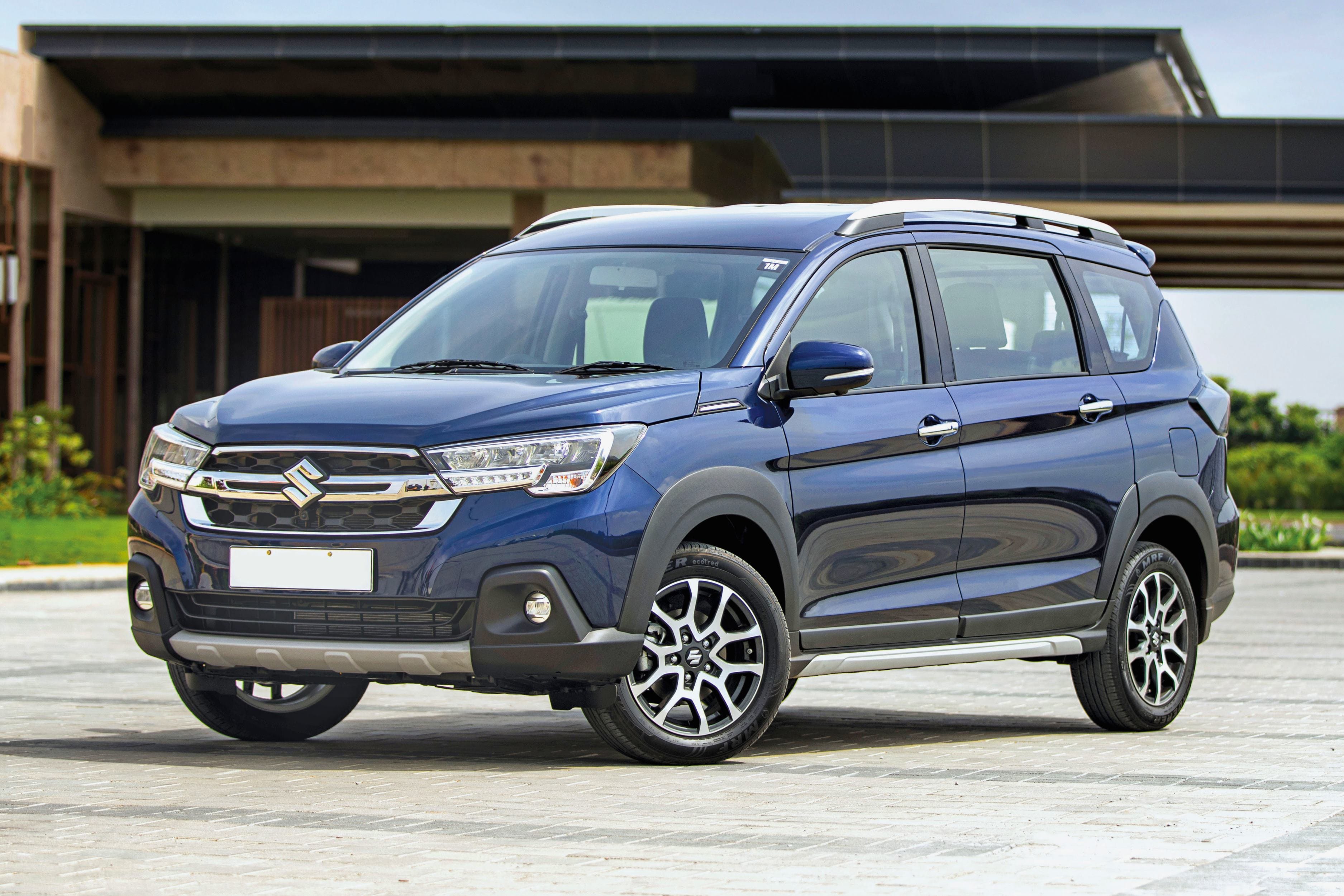
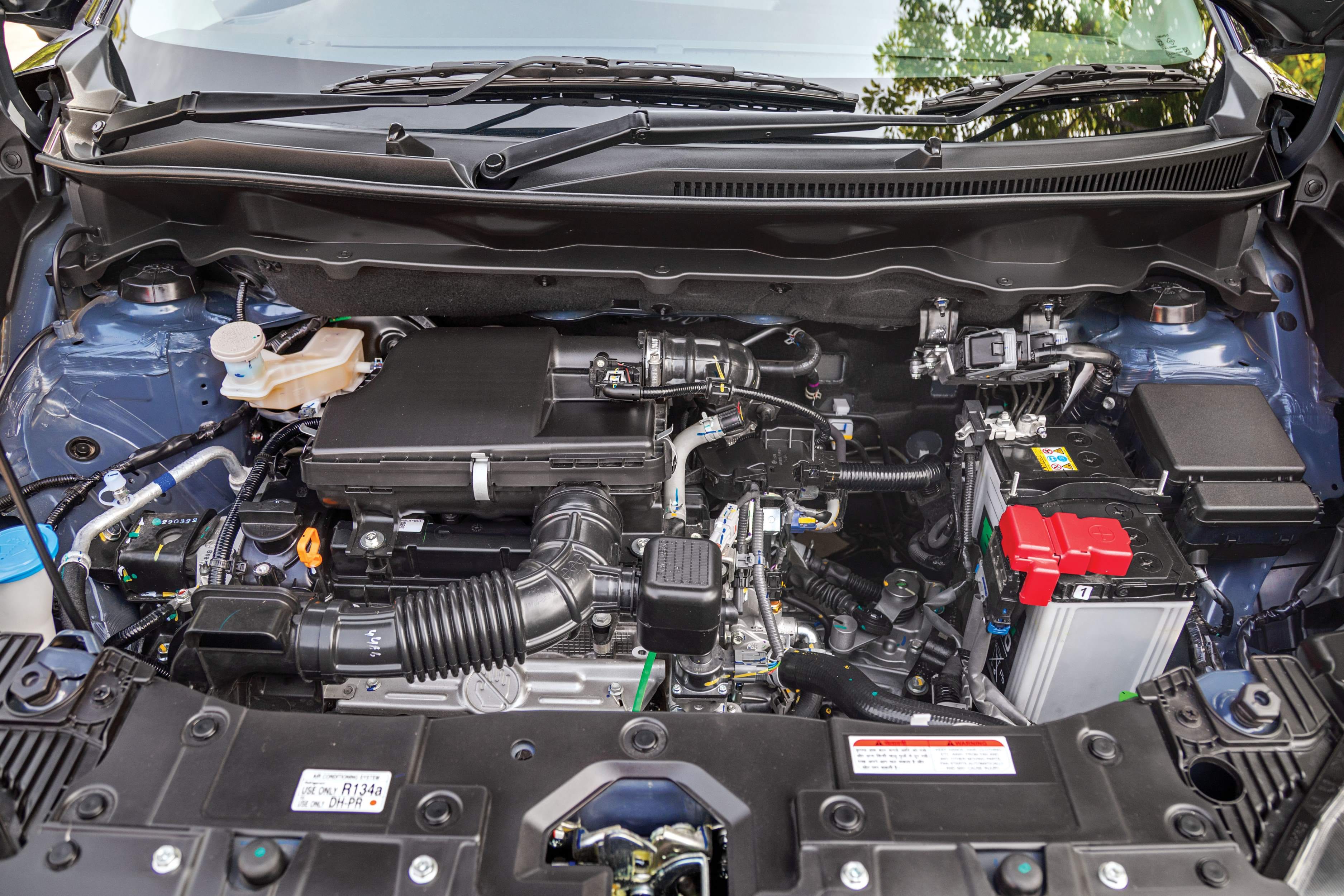
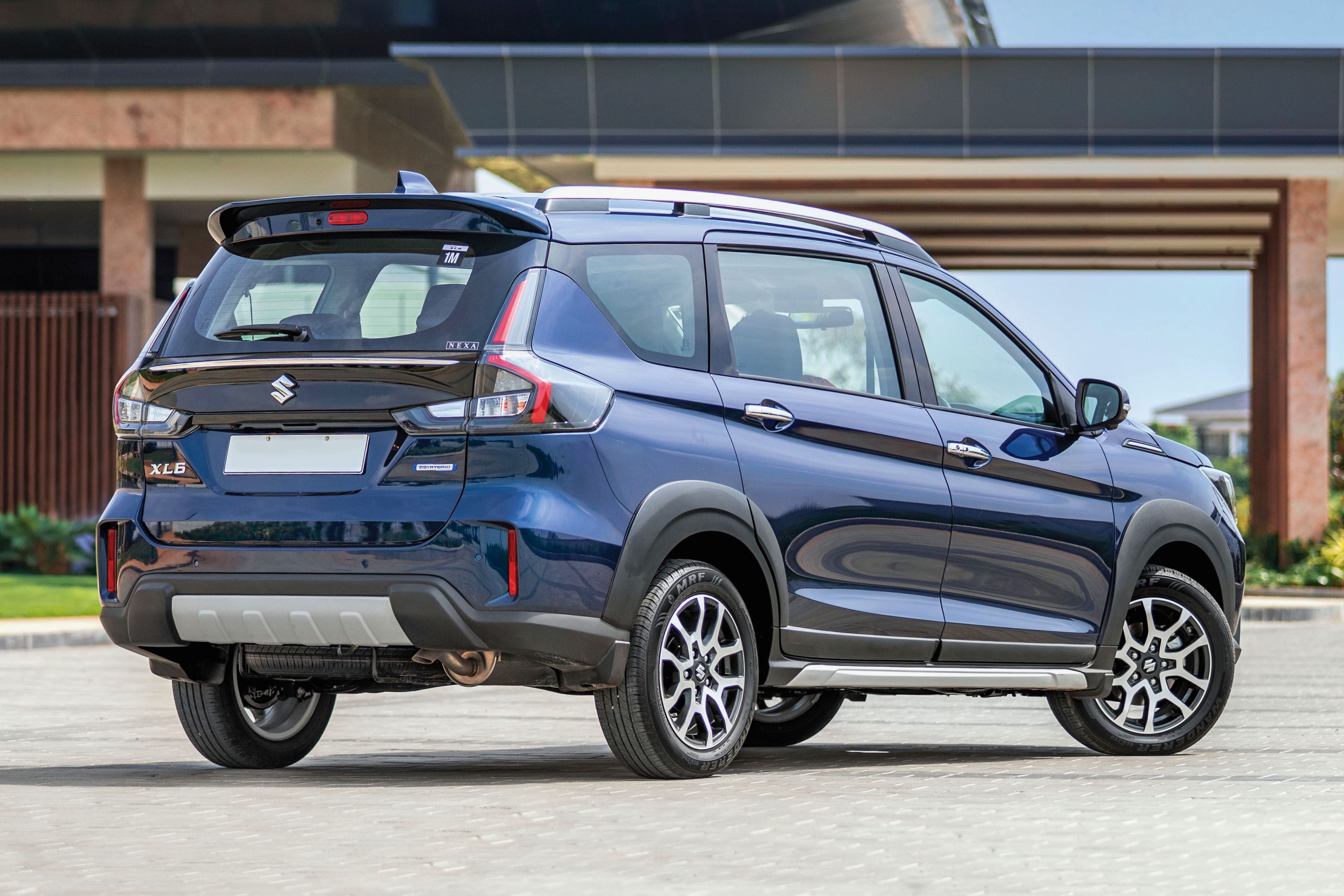
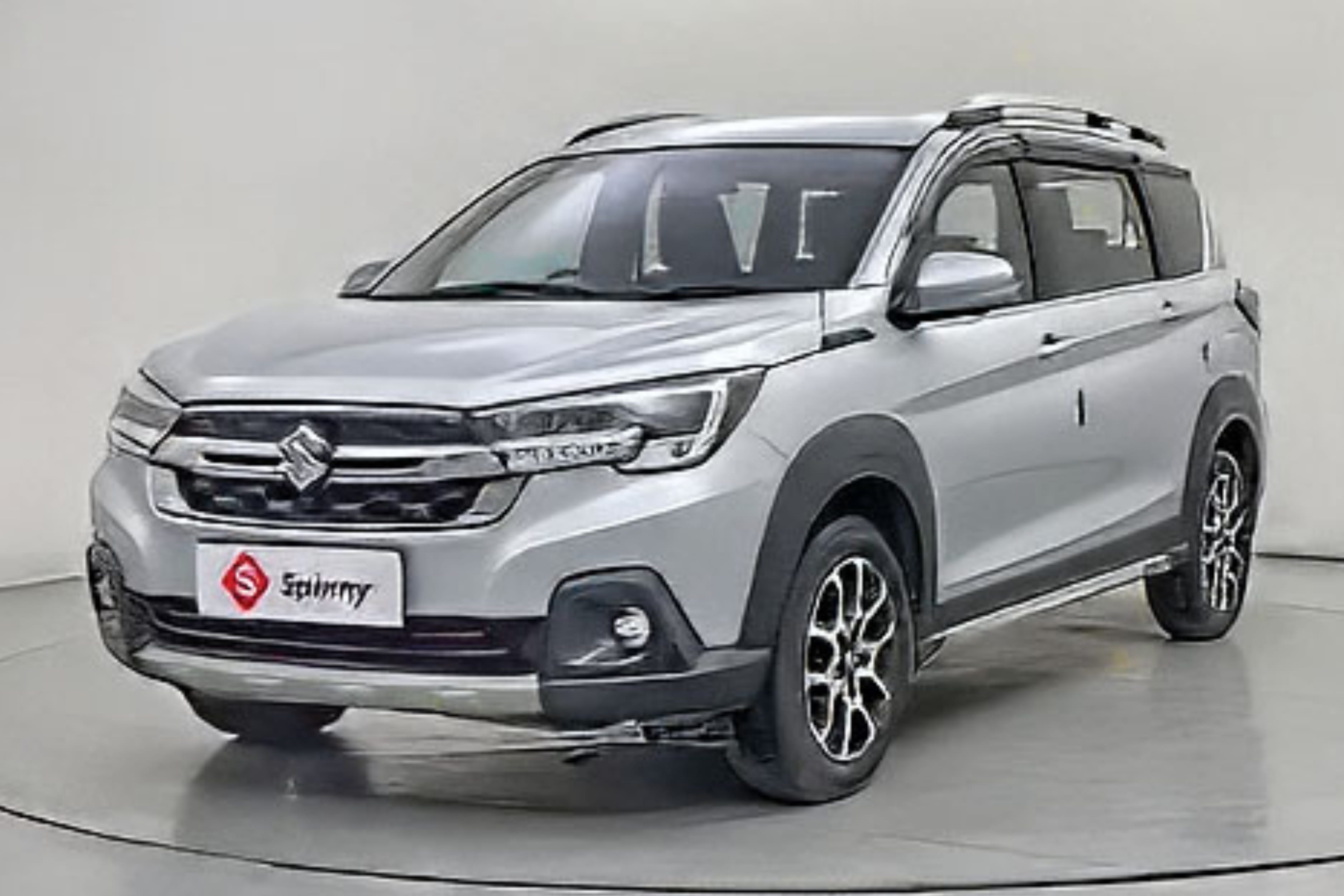
A more premium 6-seat alternative to the venerable Ertiga MPV, the Maruti XL6 has been on sale since 2019 and received a substantial update in 2022. Being a comfortable, practical and easy-to-drive MPV, the updated Maruti XL6 is worth considering as a used buy. Here’s all you need to know.
In terms of cosmetics, not much changed for the XL6 when it got an update in 2022. It got a mildly updated grille with more chrome, a new chrome bar on the tailgate, new 16-inch dual-tone alloy wheels and tweaked tail-lights with smoked clear lens effect. It also got new dual-tone colour options – silver, brown and red – with a contrasting black roof.
Petrol and CNG powertrains; up to 20.97kpl claimed mileage
The biggest change was under the hood, with the XL6 receiving Maruti’s then-new 1.5-litre DualJet petrol engine, with two injectors per cylinder, which put out 103hp and 136.8Nm. The other big highlight was the new 6-speed torque converter automatic gearbox with paddle shifters, replacing the older 4-speeder. The standard 5-speed manual gearbox was carried over as is. It also featured Maruti’s mild-hybrid technology with an integrated starter generator and start-stop technology. The updated XL6 has a claimed fuel efficiency of 20.97kpl with the manual gearbox and 20.27kpl with the auto.
Later in 2022, Maruti launched the XL6 CNG, which was offered in a single Zeta variant and cost about Rs 95,000 more than the equivalent petrol variant. Powered by the same 1.5 engine, it put out a lower 88hp and 121.5Nm in CNG mode, and 101hp and 136Nm in petrol mode, and came paired with the 5-speed manual only. Maruti claimed that the XL6 CNG had a fuel efficiency of 26.32km/kg.
The petrol manual is ideal for most users, as it’s easy to drive, efficient and will be the most affordable to buy. Those with most of their running within the city can opt for the automatic for greater convenience, while high-mileage users will benefit from the CNG’s low running costs.
Maruti Suzuki XL6 variants and features
7-inch touchscreen, ventilated front seats, 360-degree camera, and more
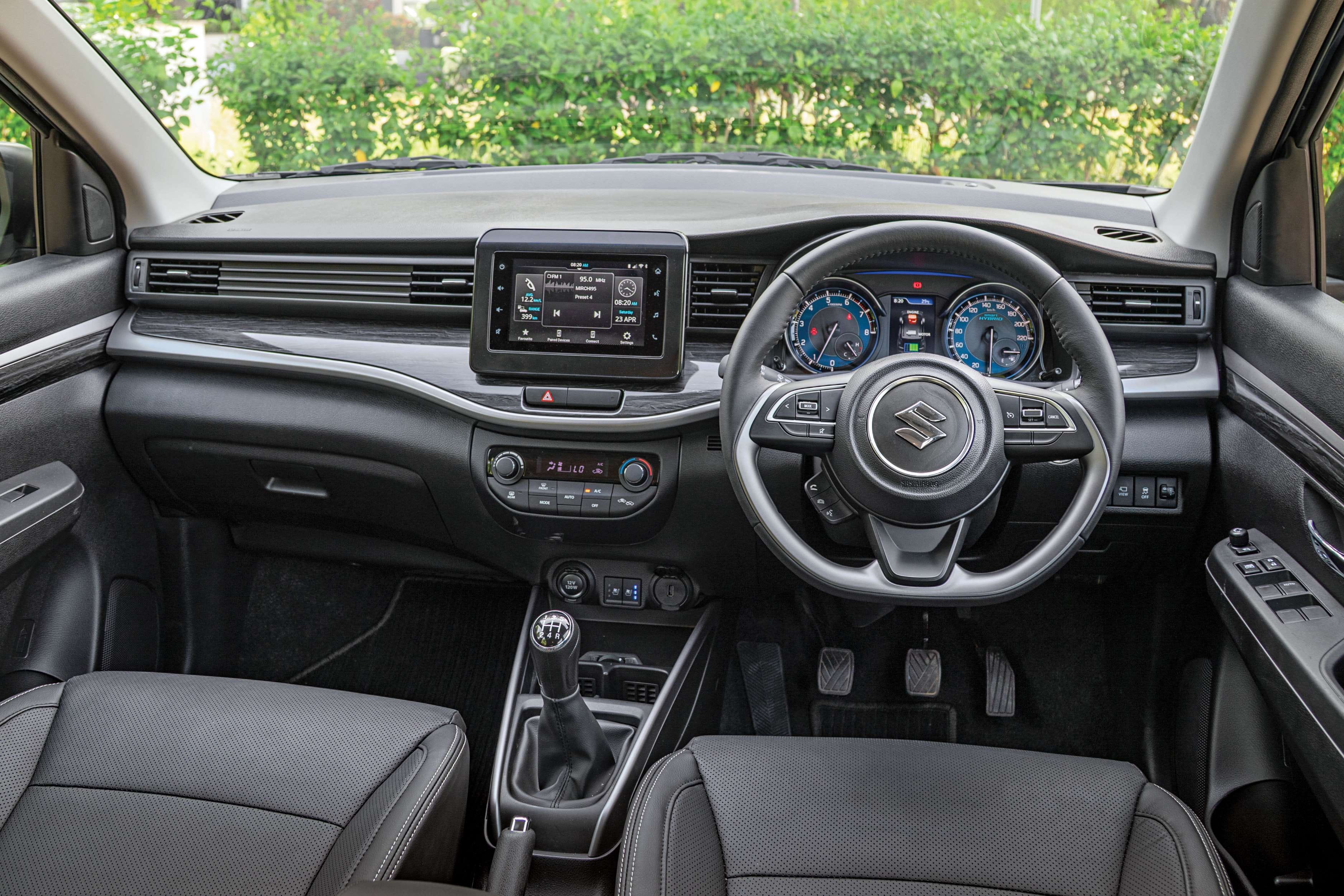
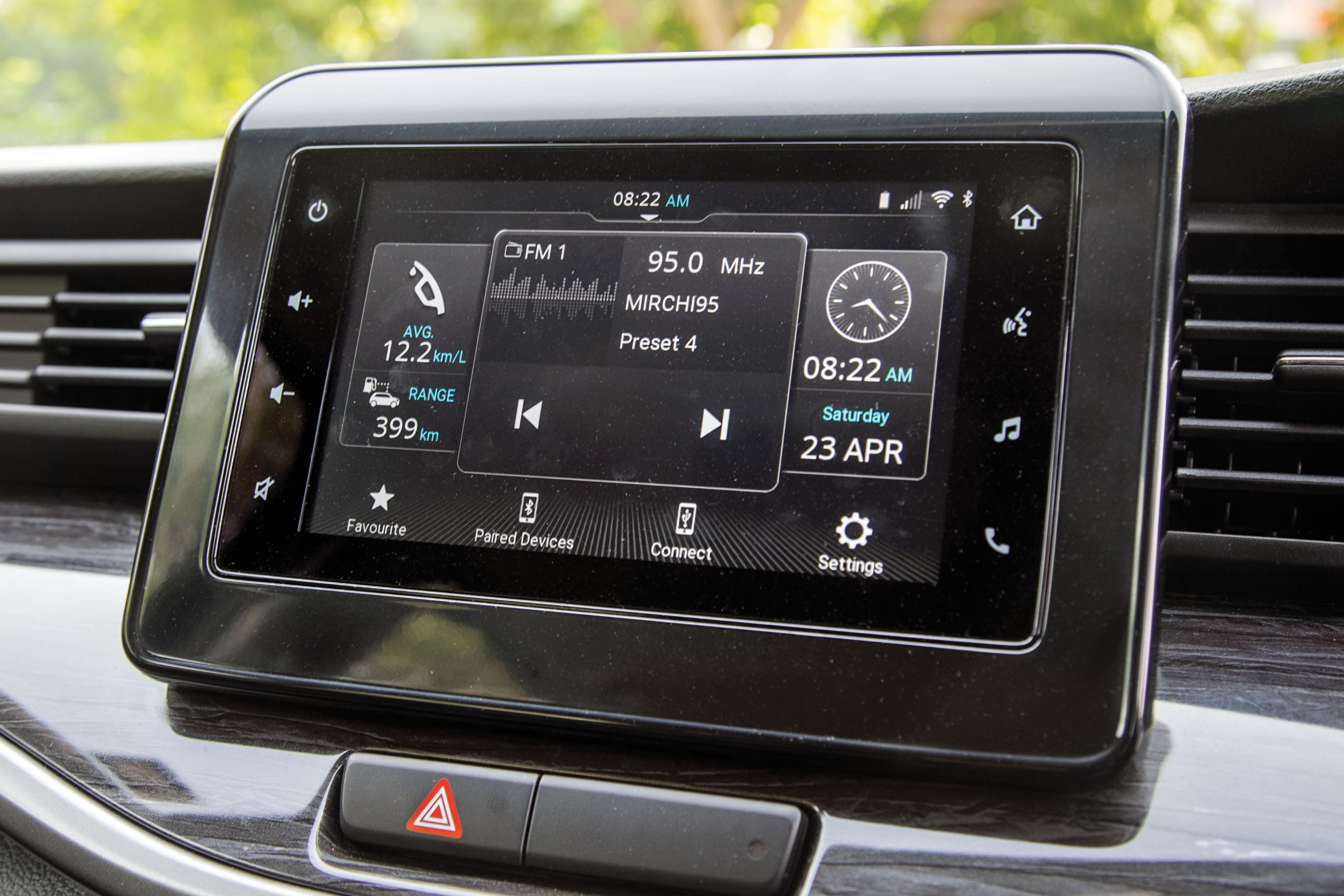
As for variants, there’s three on offer – Zeta, Alpha and Alpha+. The range-topping Alpha+ packs in features like a 7-inch touchscreen infotainment with Android Auto and Apple CarPlay compatibility, auto climate control, leatherette upholstery, LED lights, 360-degree camera, ventilated front seats, connected car tech, cruise control, tyre pressure monitor, traction control and much more. All variants come well equipped, and features like the touchscreen and cruise control are offered right from the base Zeta variant, so choose the one that best fits your budget.
XL6 aftersales details
Being a Maruti product, the XL6 is a proven and reliable MPV that’s also easy to maintain. Spare parts are readily available and affordable, while Maruti’s widespread service network throughout India gives you peace of mind. It’s also worth going for an example that has an extended warranty package, and the XL6’s great resale value also means you’ll recoup a considerable amount when you sell it later on.
What to look out for in a used Maruti Suzuki XL6
Suspension wear
Since the XL6 is a family car, it’s bound to be subjected to heavy loads from time to time. Hence, it’s worth checking out the condition of the suspension. Listen for any noises that come from the suspension, or check if it crashes excessively over bumps and ruts, as these are signs of worn-out suspension bushings. This is not an expensive fix, however.
Infotainment issues
Owners have faced issues with the XL6’s SmartPlay Pro 7-inch infotainment system, like Apple CarPlay/Android Auto disconnections, screen freezing and the display getting stuck. Before purchasing, check that it functions smoothly, pairs up with your phone easily and that the system’s software is up to date.
Potential defect in front seatbelts
XL6 units manufactured between November 2 and November 28, 2022 were recalled by Maruti Suzuki to rectify a possible defect in one of the child parts of the height-adjuster assembly of the front seatbelts, which could lead to seat belt disassembly. Replacement of the faulty part was done free of charge, so make sure this has been taken care of if you’re looking at a car from this time frame.
Second-hand Maruti Suzuki XL6 price and resale value
Rs 8 lakh-12 lakh
The XL6 is still on sale, and being a Maruti, it commands very good value in the resale market. However, refrain from spending over Rs 12 lakh, irrespective of the variant and mileage, as you’d be better off buying a new one. What’s nice, though, is that you’ll also be able to recover a good chunk of your investment once you go on to sell it.
Maruti Suzuki XL6 fact file
Years produced
2022-present
Price when new
Rs 11.29 lakh-14.55 lakh (ex-showroom, India)
Engine
4 cyls, 1462cc, petrol / 4 cyls, 1462cc, petrol+CNG
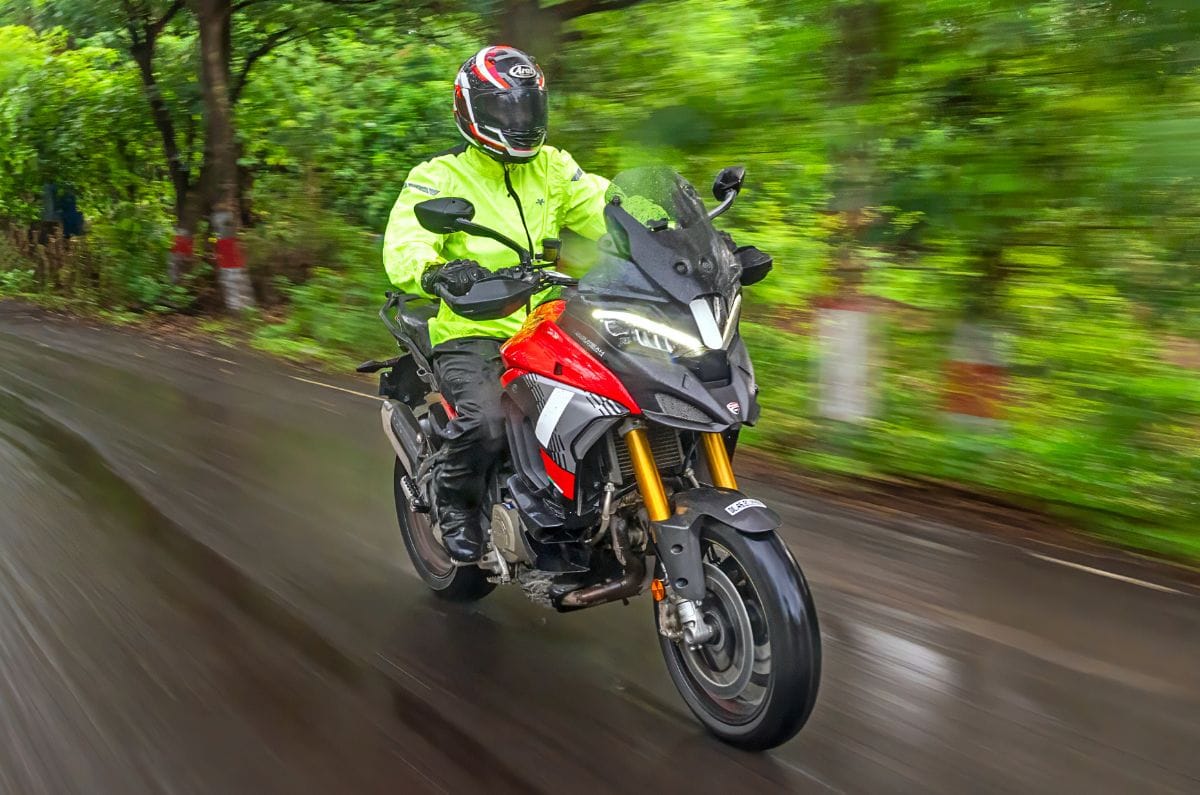
The DucatiMultistrada is one of the most successful modern motorcycles to have raced up the famed Pikes Peak hill climb, having taken 7 wins over the years. Motorcycle racing was banned at the Peak after Ducati star Carlin Dunne tragically lost his life in a crash just metres before the finish line in 2019, but Ducati still has a tribute to this race in the form of the Multistrada V4 Pikes Peak.
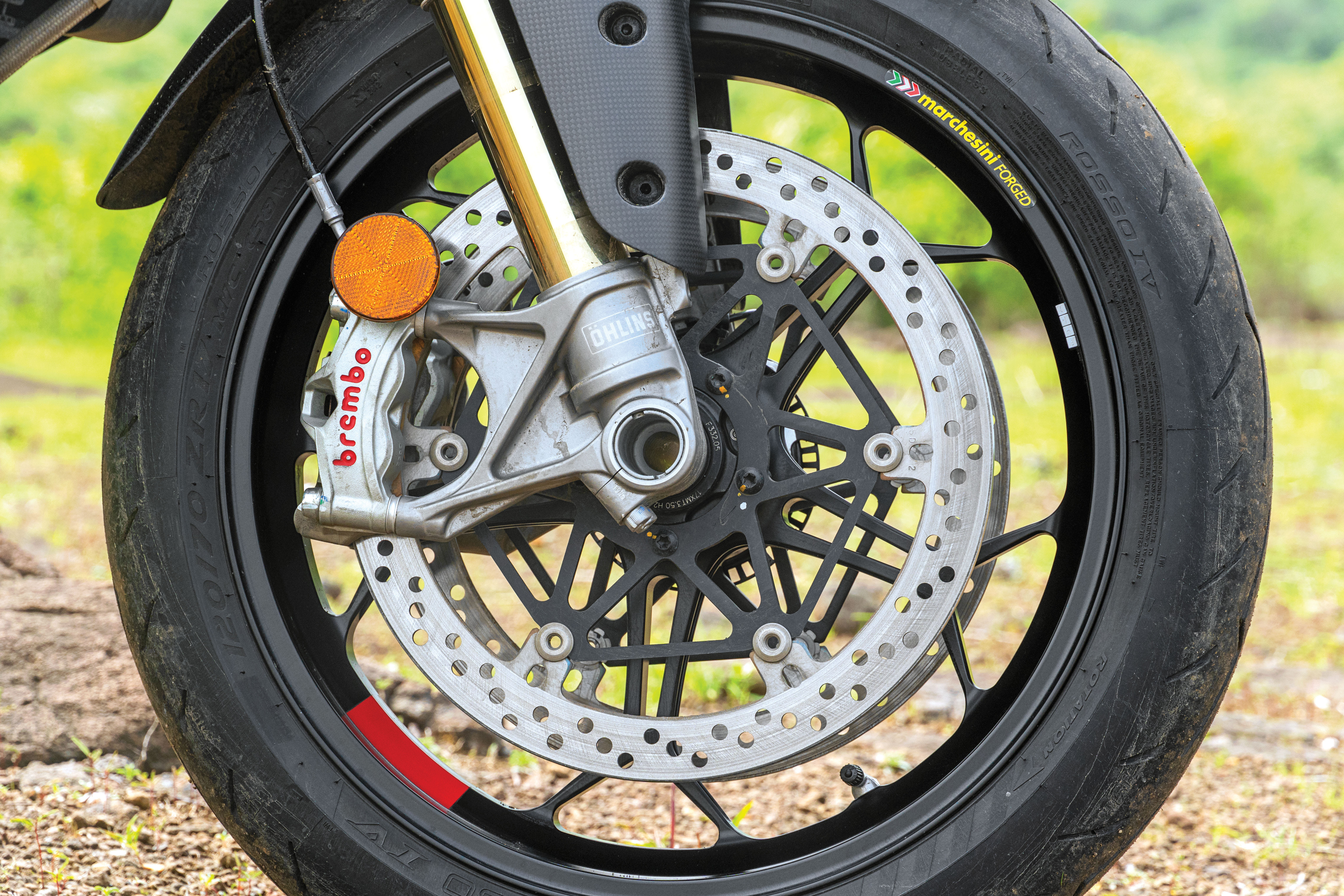
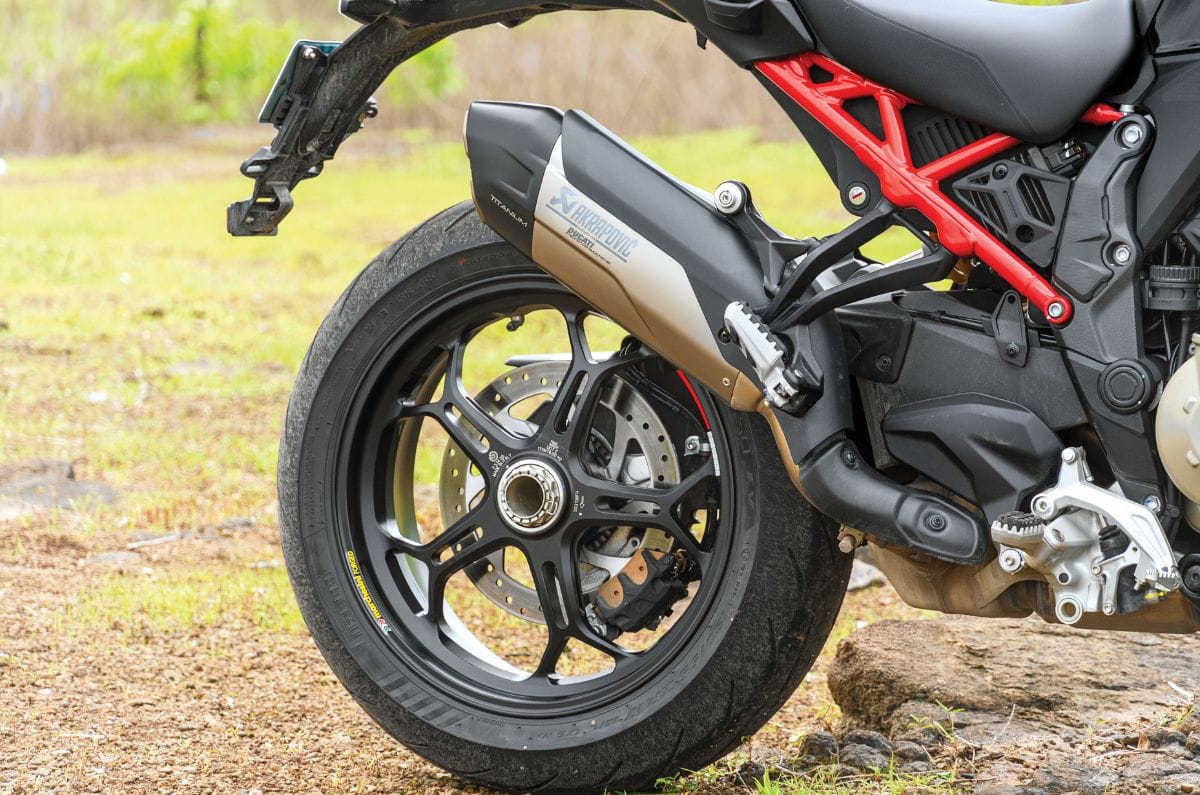
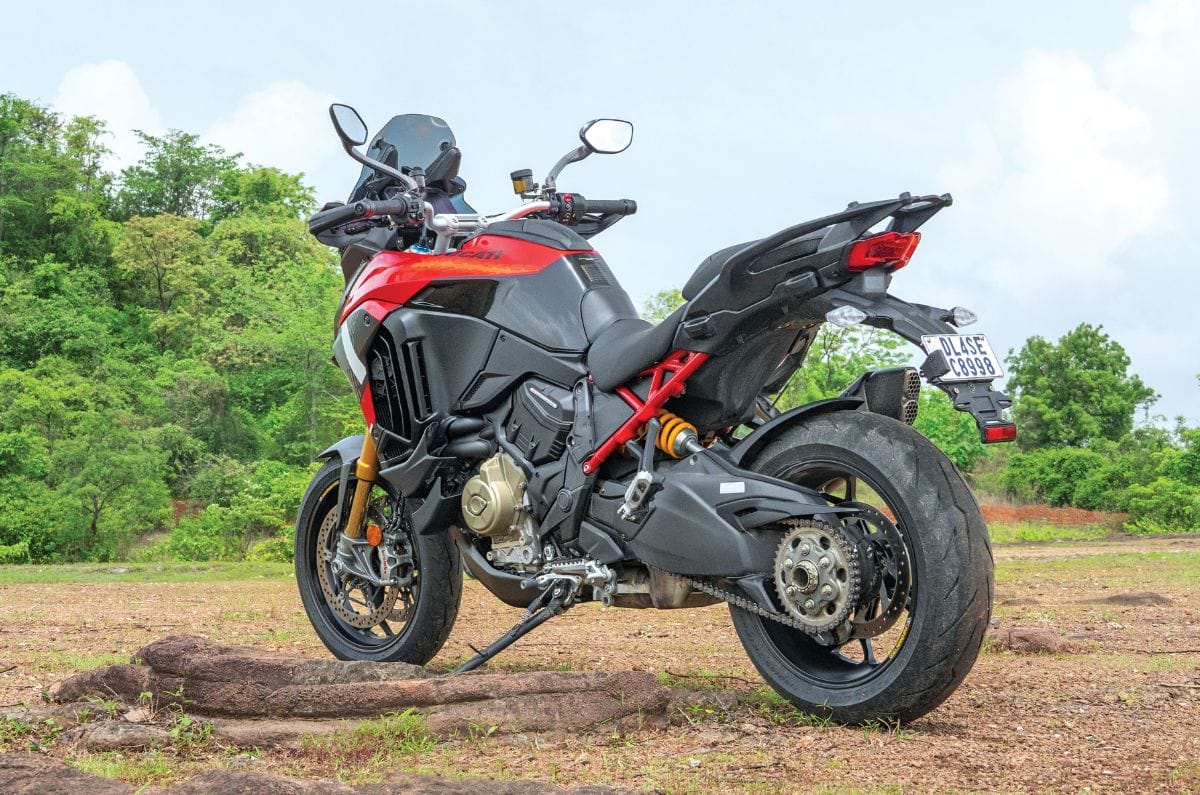
Effectively, this motorcycle goes back to the Multistrada’s roots of being a tall, sporty road-biased motorcycle. The primary sporty element comes in the shift from a 19-inch front on the standard Multistrada V4 to a 17-inch unit here. But there’s a whole lot more that you get for the (considerable) extra cash over the Multi V4 S than just a smaller front wheel. That includes a new Race Mode and Öhlins EC 2.0 semi-active suspension, just like you would have found on the previous-gen Panigale V4 S. It even gets a single-sided swingarm, forged aluminium wheels and a road-legal titanium Akrapovič end-can.
Multistrada V4 Comfort – 8/10
All of these changes are aimed at sharpening the Multi’s handling capabilities, which leaves the question – how much of an adventure bike is still in there? To find an answer, I pulled out Google Maps and picked a few random roads that I’d been eyeing over the years, but never had the opportunity to explore. The idea was to end up at the fabulous roads around Tahmini ghat, which is closer to Pune, and I’d chalked out a round-trip that came up to about 350km.
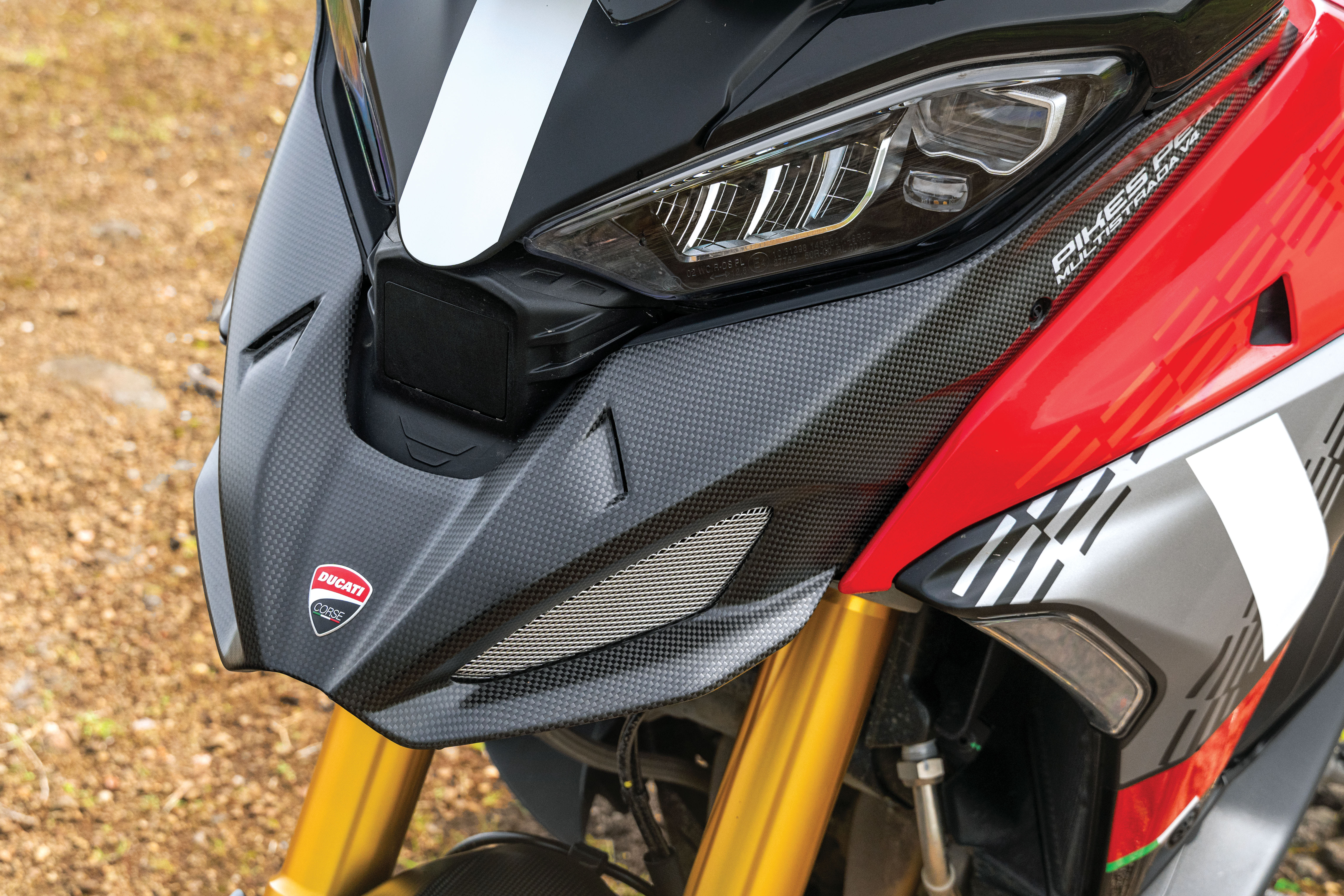
The Pikes Peak gets carbon parts, different ergos and reduced wind protection
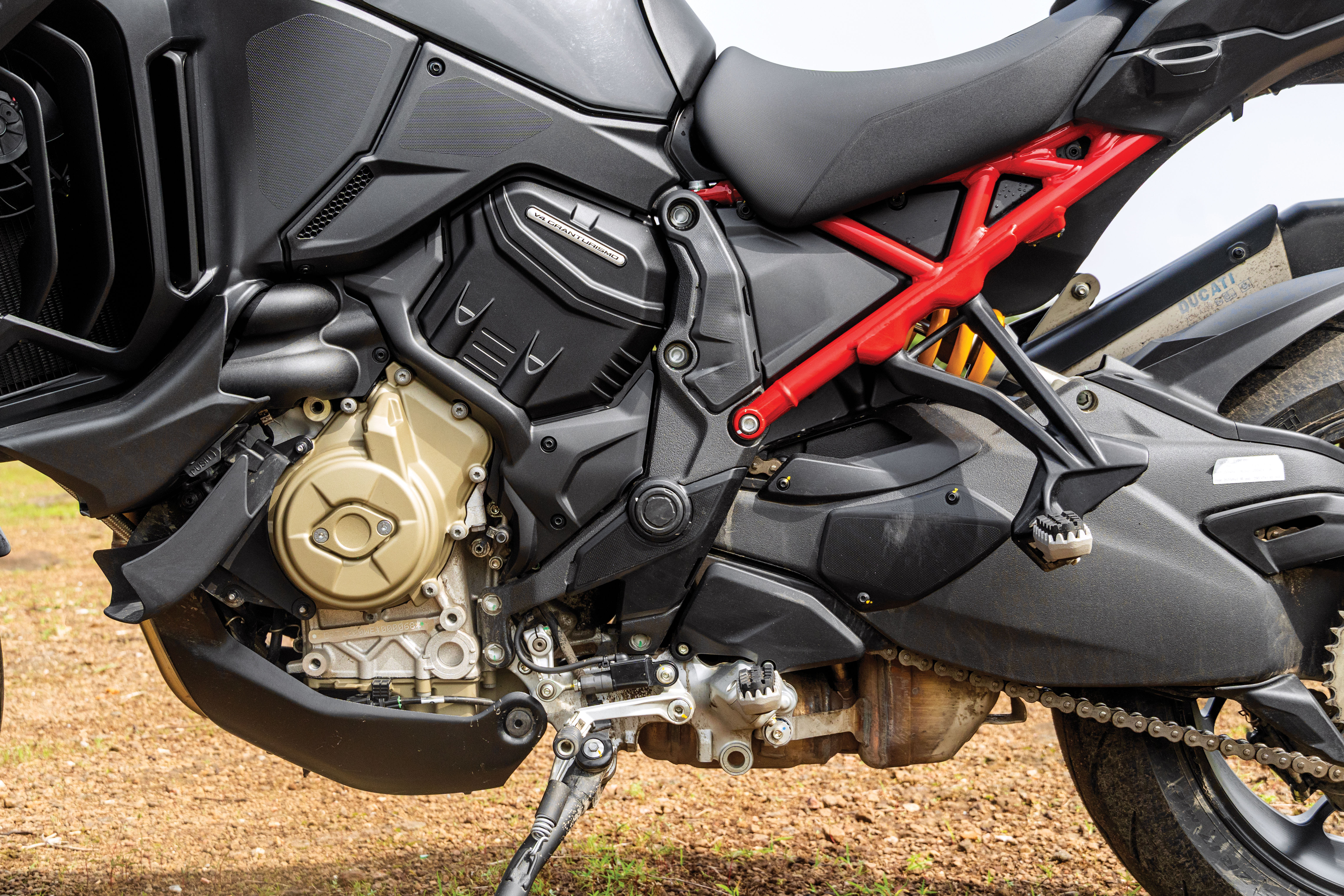
The first quest would be the hour-long escape from the mayhem of Monday morning Mumbai. Ducatis are usually the worst bikes for being stuck in jammed traffic, but the V4-engined Multi is different. As with its lesser V4 siblings, the Pikes Peak uses twin radiators that are housed on the sides, and the bodywork neatly ducts the hot air blast away from the rider. Also, as with all Ducatis, the cooling system does a remarkable job of keeping the operating temperature below 106 degrees even when stationary.
Specifications
Values
Engine Displacement
1158 cc
Max Engine Power
170 hp @ 10,750 rpm
Max Engine Torque
124 Nm @ 9000 rpm
Number of Gears
6
So, unless you’re stuck in a nasty bad jam where the clutch can get painful, this bike is surprisingly pleasant to manage in traffic. Of course, that’s a fairly relative statement, considering that this is a big, tall, 240-plus-kilo motorcycle.
However, after an hour or so, there’s no escaping the heat radiating off the rear cylinder bank that’s right under your thighs. I noticed that this was an issue in 36-degree afternoon heat on the highway, but not so much when the temperatures dropped in the hilly regions around Lonavala. Despite this, the Multi was far happier when it broke free from the clutches of the city.
Multistrada V4 Performance and suspension setup – 9/10
What truly blew me away on the Pikes Peak was the sheer range of its ability to change character. Like with the other V4 models, this one also has many different riding modes, a boat-load of electronic assists and minutely adjustable electronic suspension modes. However, the difference between ‘full chill’ and ‘full attack’ mode on this bike is truly breathtaking. After a couple of hours of quick and perfectly pleasant highway riding, the Multi and I soon found ourselves staring at miles of completely broken rural roads without a soul on them.
There’s no way I’d ever want to bring a sporty Italian exotic to a place like this, but putting the engine into Low Power mode (115hp instead of 170hp) and diving deep into the suspension setting menus to slack off the damping and preload completely changed the bike.
Specifications
Values
Wheelbase
1595 mm
Seat height
840-860 mm
Kerb Weight
227 kg
Fuel Tank Size
22 L
With ADV seating comfort and the 170mm of suspension travel soaking in the terrain quite well, I had no concerns with simply riding through these non-stop broken road conditions. The bike was unbothered to the point that I could ride it at a gentle pace and enjoy the spectacular beauty of rural Maharashtra in the monsoon. However, I must also make it clear that while the Pikes Peak can tolerate this sort of punishment, it doesn’t thrive on it. Think of this as a surprisingly comfortable road-tourer rather than a true ADV.
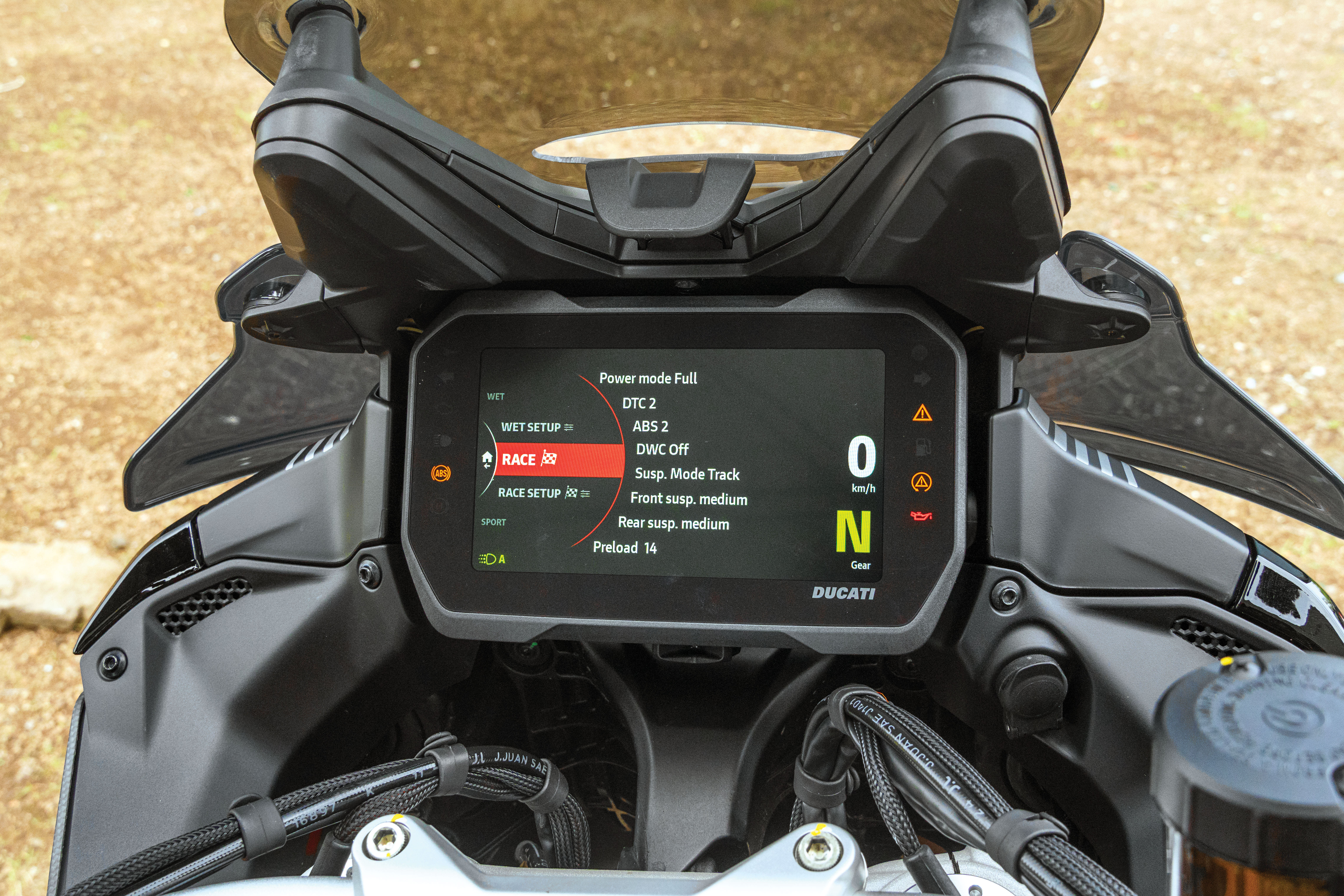
Race-bred electronics and superbike-spec suspension are what make the Pikes Peak experience unique.
Multistrada V4 Ride and Handling – 10/10
A big Tiger or GS would have surely been more capable in these conditions, but the Pikes Peak would have simply blown away any ADV on the roads that came next. After ages of enduring gravel and shattered tarmac, we finally arrived at Tahmini to be greeted by some of the finest riding roads in the country.
It uses the standard V4 engine with conventional spring valves
A few button presses later, the Multi was now in Race mode, and the difference was startling. The bike suddenly felt tight, taut and taller, thanks to increased preload at the rear. This was no longer a cushy tourer and had suddenly turned into quite a fearsome beast that demanded respect. The raucous intake bark as the V4 engine snarled past 6,000rpm was almost as intoxicating as the way it built speed. While you could get the same sort of performance on a ‘normal’ Multi V4 that uses the same engine, the immense braking and incredible suspension composure of the Pikes Peak was something else.
Pikes Peak gets a single-sided swingarm, forged wheels and an Akrapovič end-can
I was now riding a sport bike, and it cornered and braked with such ferocity that it was easy to get carried away. I had to remind myself that this was a public road and we were going far too fast for good health! Slap on a sticky set of tyres, and this bike could genuinely embarrass a swarm of sport bike riders on the racetrack. After an awesomely exhilarating time on the ghat, there was no doubt that the Pikes Peak spirit is truly alive in this bike, and it most certainly isn’t just a branding exercise to charge a heap of money.
Multistrada V4 Price and Verdict – 8/10
Nevertheless, a heap of money is exactly what you have to pay to own this motorcycle. At Rs 36.9 lakh (ex-showroom), the Pikes Peak is exorbitantly expensive, and you still have to pay more for extras like heated grips, tyre pressure monitoring and keyless functionality for the fuel tank. At the end of the day, this is the connoisseur’s version of what is already a connoisseur’s adventure motorcycle. You’ve got to really want this particularly unique combination of all-road sport bike skills. After all, you can get either phenomenally capable super ADVs or proper super bikes for far less money.
The sheer range of its ability to change character is what is truly incredible.
I struggle to convince myself that it’s worth the price, but I’m also infinitely grateful that such a thing even exists and that we have the option to own one in India. If you’re among the precious few with the desire and funds to own such a bike, all I’d like to say is go for it!
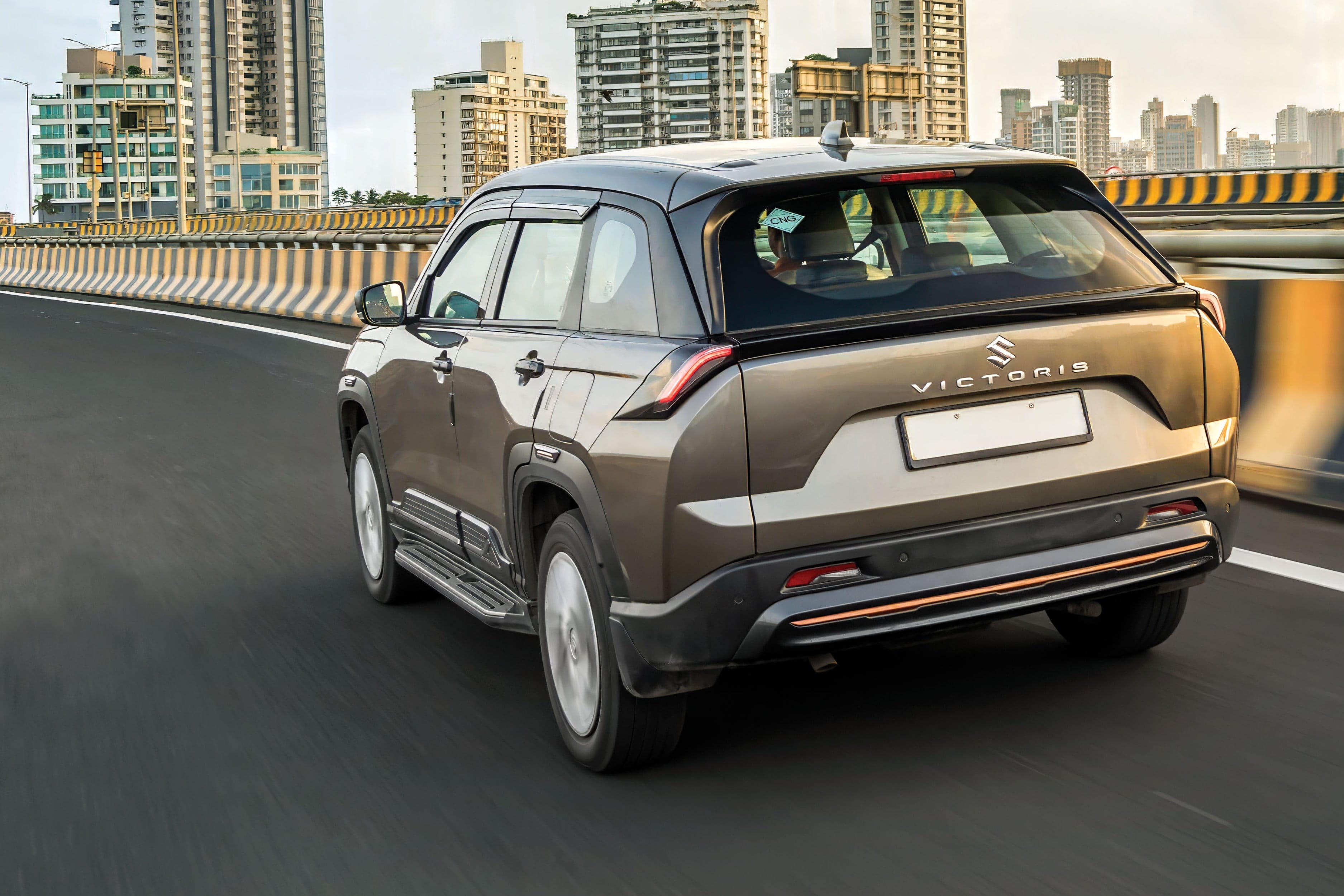
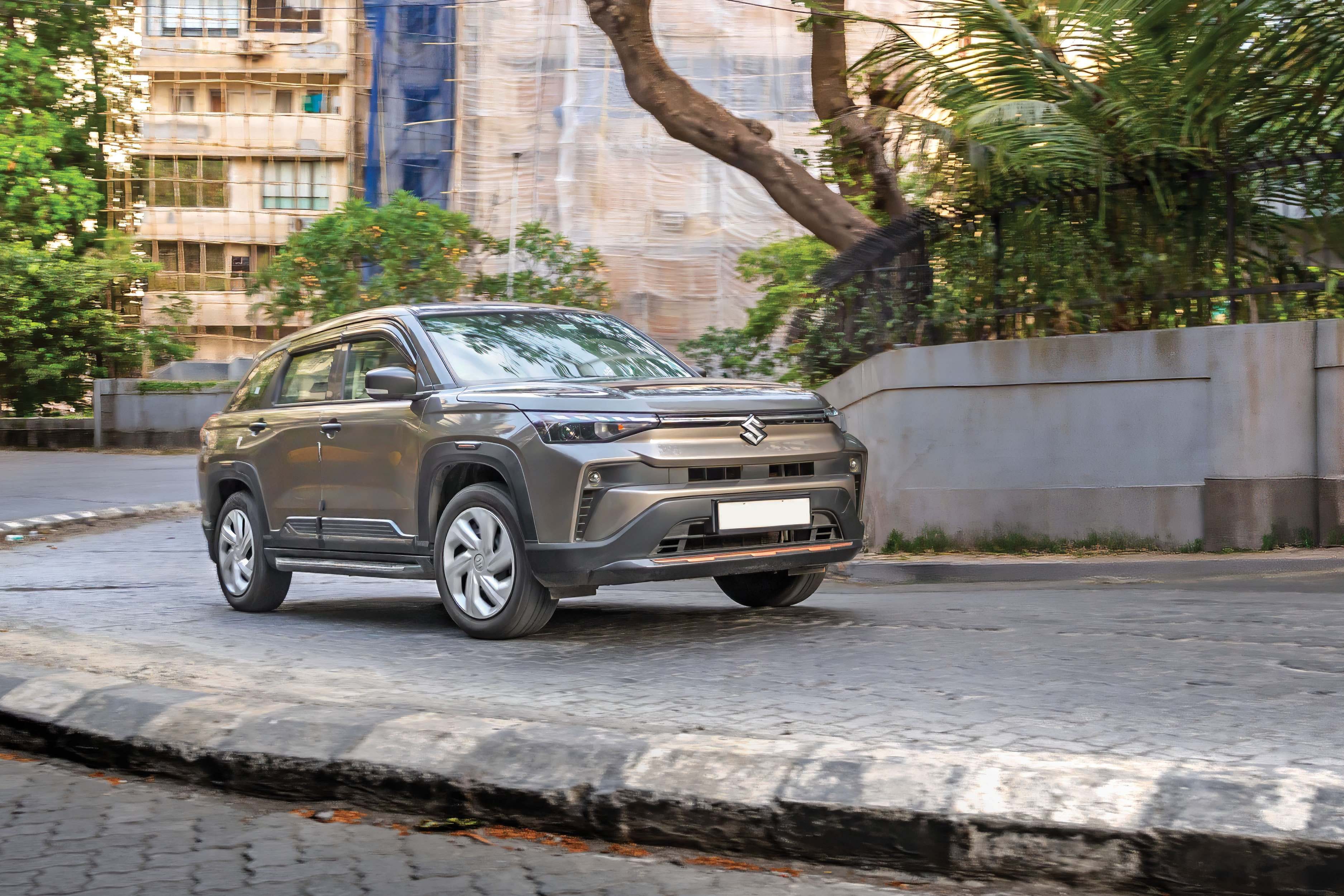
Maruti offers buyers a wide range of powertrain options with the Victoris – a 1.5-litre petrol engine paired with either a manual or automatic transmission, an all-wheel-drive automatic, a strong hybrid, and a CNG version. Interestingly, nearly one in every two Victoris buyers opts for the CNG variant. To understand the reason behind its popularity, we put it through our real-world tests.
City drivability is good; efficiency is impressive.
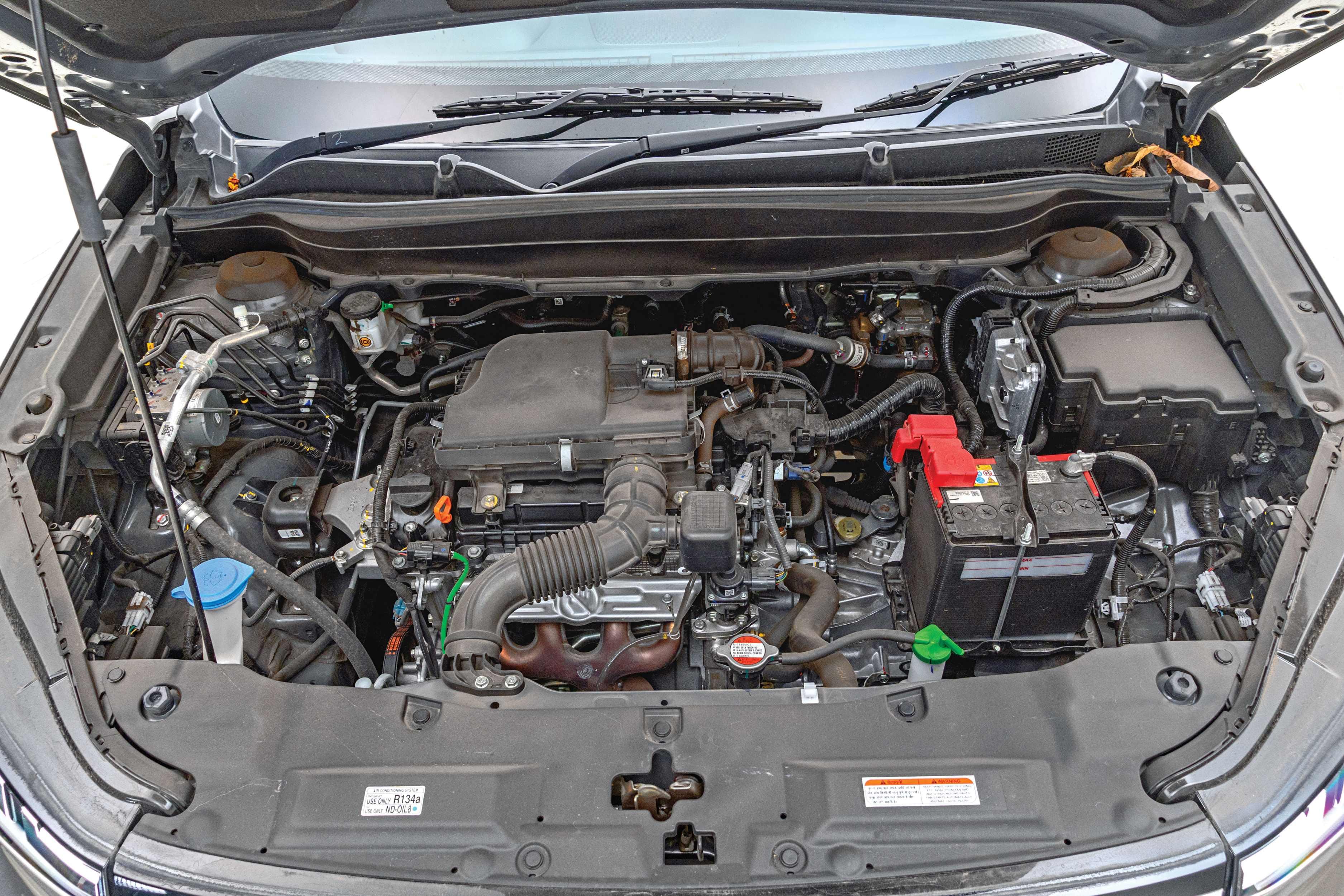
Powered by a 1.5-litre four cylinder engine, the Victoris produces 88hp and 122Nm when running on CNG. While those figures may appear modest on paper, the good news is that the engine feels responsive right from the outset, and overall driveability remains impressive. It is more than capable of keeping pace with city traffic, and up to about 80kph, with the engine spinning below 3,000rpm, there is enough performance on tap to satisfy most users. You do need to be mindful of being in the right gear, and occasionally, you may find yourself revving the engine harder for a quick overtake. On that note, Maruti’s 5-speed manual gearbox remains one of the best in the business, offering precise shifts and a light, effortless action. The clutch is also light, making the Victoris CNG particularly easy to drive.
Maruti Suzuki Victoris S-CNG acceleration times
CNG
Petrol
Speed (Kph)
Time (Sec)
Time (Sec)
20
1.33
1.32
40
3.28
3.22
60
6.31
5.79
80
9.88
8.87
100
15.14
13.43
120
23.44
19.56
That said, performance isn’t effortless, and when it comes to quick overtakes, you’ll need to work the engine harder. But it is only then that the difference between petrol and CNG modes becomes noticeable. In petrol mode, the engine feels freer and more eager to rev, whereas in the CNG mode, it feels slightly more restrained. To put things into perspective, the Victoris accelerates from 0-100kph in 15.14 seconds in CNG mode, making it 1.7 seconds slower than in petrol mode. Performance also tapers off noticeably beyond 100kph, regardless of which mode you are in.
Maruti Suzuki Victoris S-CNG rolling acceleration
Speed (Kph)
Time (Sec)
Time (Sec)
20-80kph (3rd gear)
16.14
15.98
40-100kph (4th gear)
22.45
18.92
Maruti Suzuki Victoris S-CNG mileage – 9/10
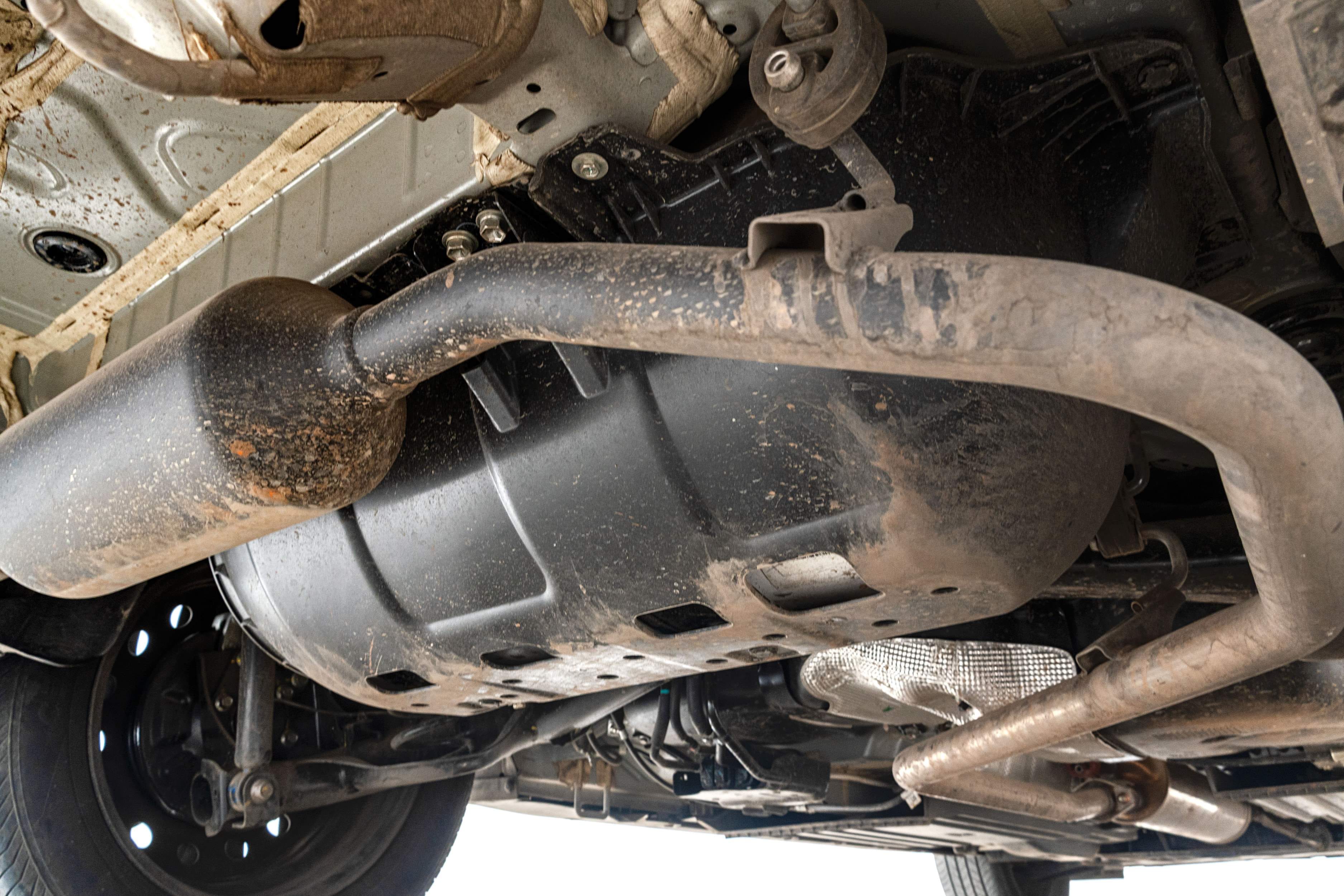
Under-floor CNG tank occupies spare tyre space.
Owners, however, will certainly appreciate this SUV’s efficiency. In our tests, the Victoris CNG delivered 18km/kg in the city and 26km/kg on the highway. The latter figure is particularly impressive, coming close to Maruti’s claimed fuel-efficiency figure of 27.02km/kg.
Its 55-litre CNG tank, mounted beneath the vehicle, can typically hold between 7.4kg and 8kg of gas, depending on ambient conditions and pump pressure. Based on our findings, owners can expect an average real-world driving range of around 180km on a full CNG fill.
Maruti Suzuki Victoris S-CNG ride comfort and handling – 8/10
You’ll need to work its engine harder on hilly terrain or to make quick highway overtakes.
Shifting focus to other aspects, the Victoris inspires confidence on almost every kind of road thanks to its well-sorted underpinnings and expertly judged suspension setup. It feels tough and robust in the way it smothers small undulations and absorbs even sharp road shocks with ease. Even when driven at higher speeds, this Maruti remains composed, riding flat without unnecessary body movements.
Maruti Suzuki Victoris S-CNG features and safety – 8/10
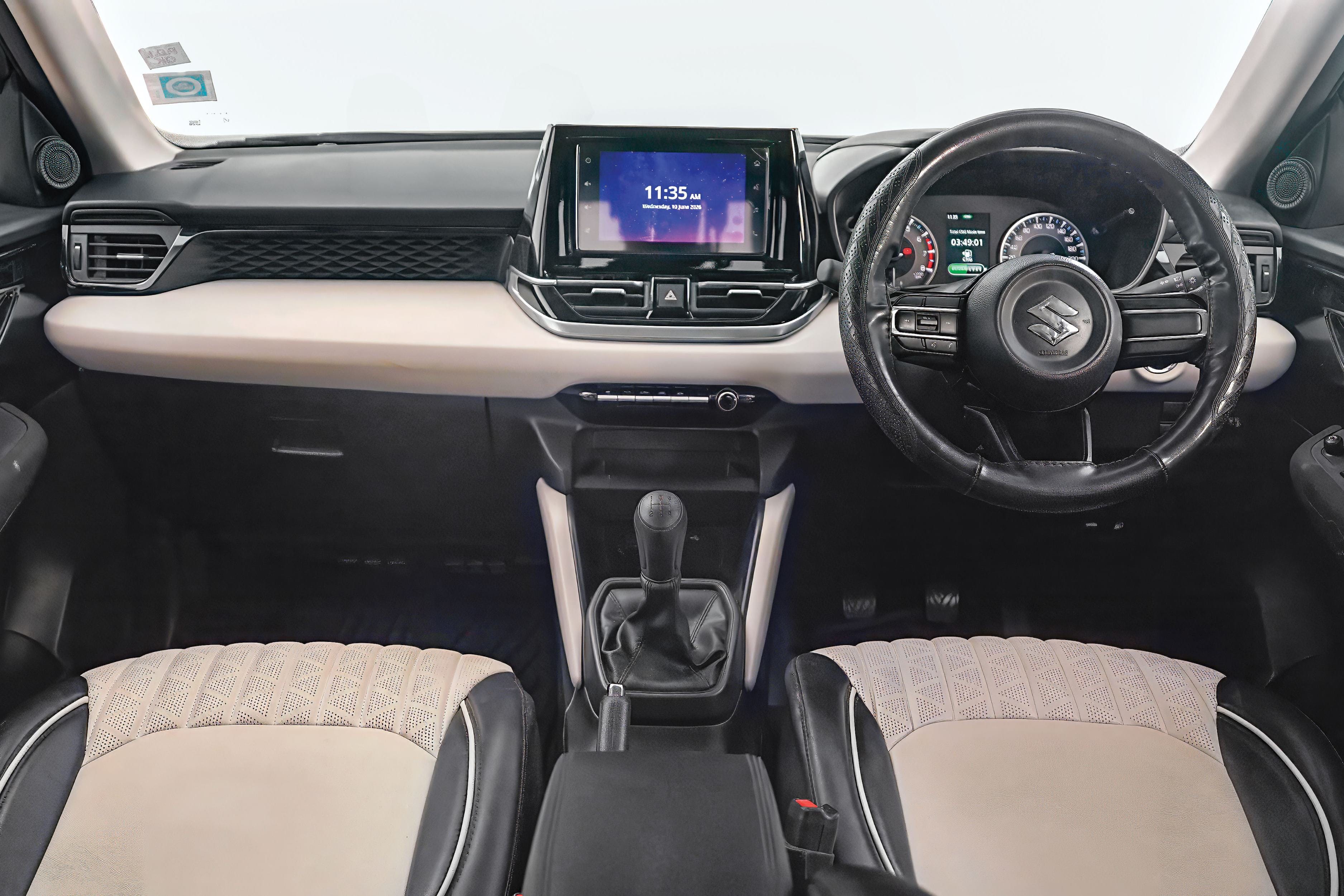
Pleasing dual-tone interiors with generous standard equipment.
As for safety, six airbags, ESP, ABS with EBD and all the essential modern safety features come as standard. Notably, the entry-level LXI variant represents excellent value for money. Priced at Rs 11.5 lakh, it comes equipped with keyless entry, push-button start, automatic climate control, a 7-inch touchscreen with wireless Android Auto and Apple CarPlay, and projector headlamps, among other notable features.
Maruti Suzuki Victoris S-CNG boot space – 8/10
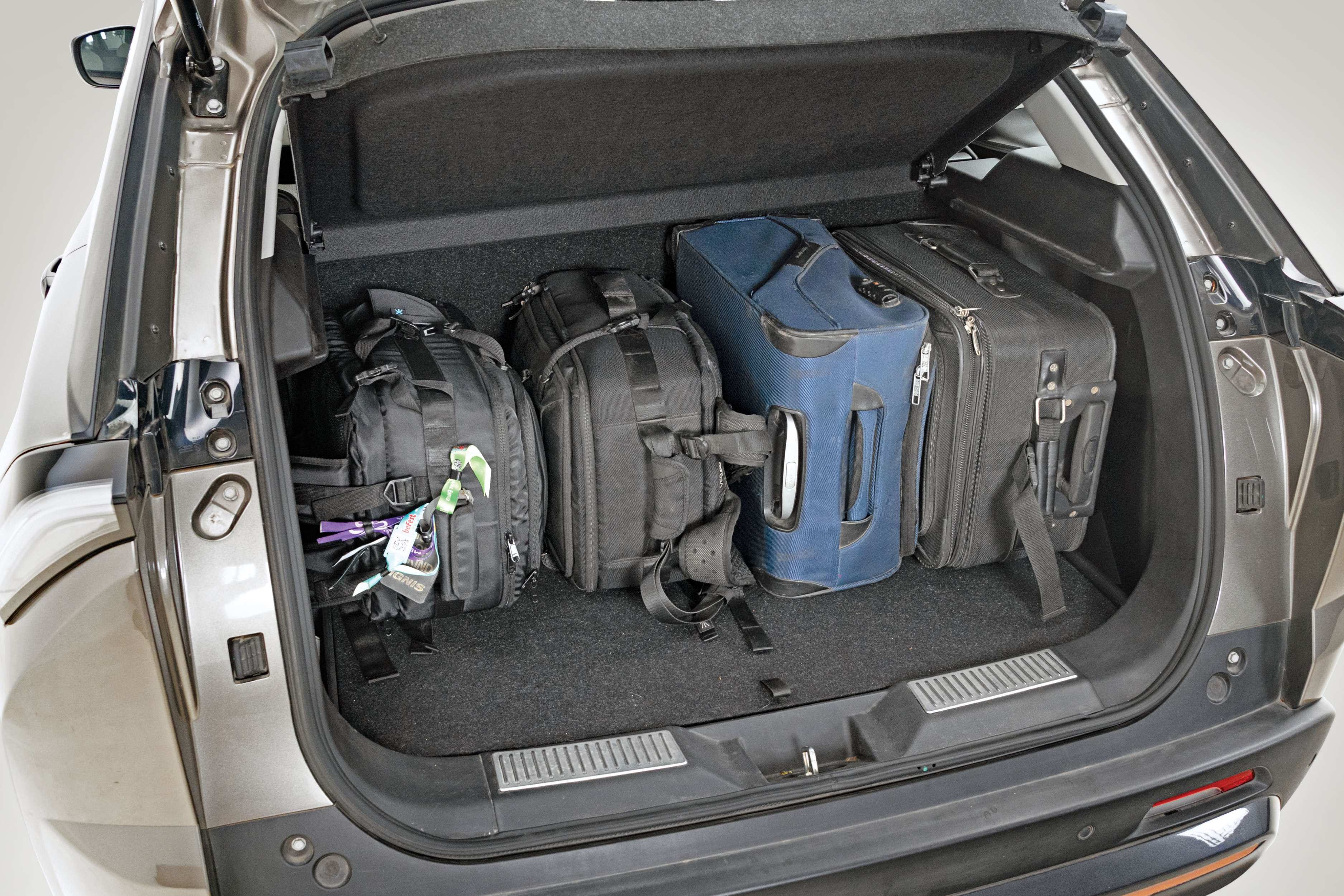
With the under-floor CNG tank, boot space is good.
Maruti has also cleverly packaged the Victoris’ CNG tank beneath the boot floor, which means luggage space remains identical to the petrol version, making it just as practical. The only compromise is the absence of a spare tyre, with CNG variants making do with a tyre inflator kit instead.
Maruti Suzuki Victoris S-CNG verdict- 8/10
It is an efficient, sensible, value-for-money SUV.
In summary, the Victoris is a sensible, efficient and genuinely value-for-money midsize SUV. For buyers with high running requirements who want to keep fuel costs in check, the CNG version is the obvious choice. The drivability is good, the efficiency is excellent, and although it costs around Rs 1 lakh more than an equivalent petrol version, the significantly lower running costs should allow owners to recover that premium over time.
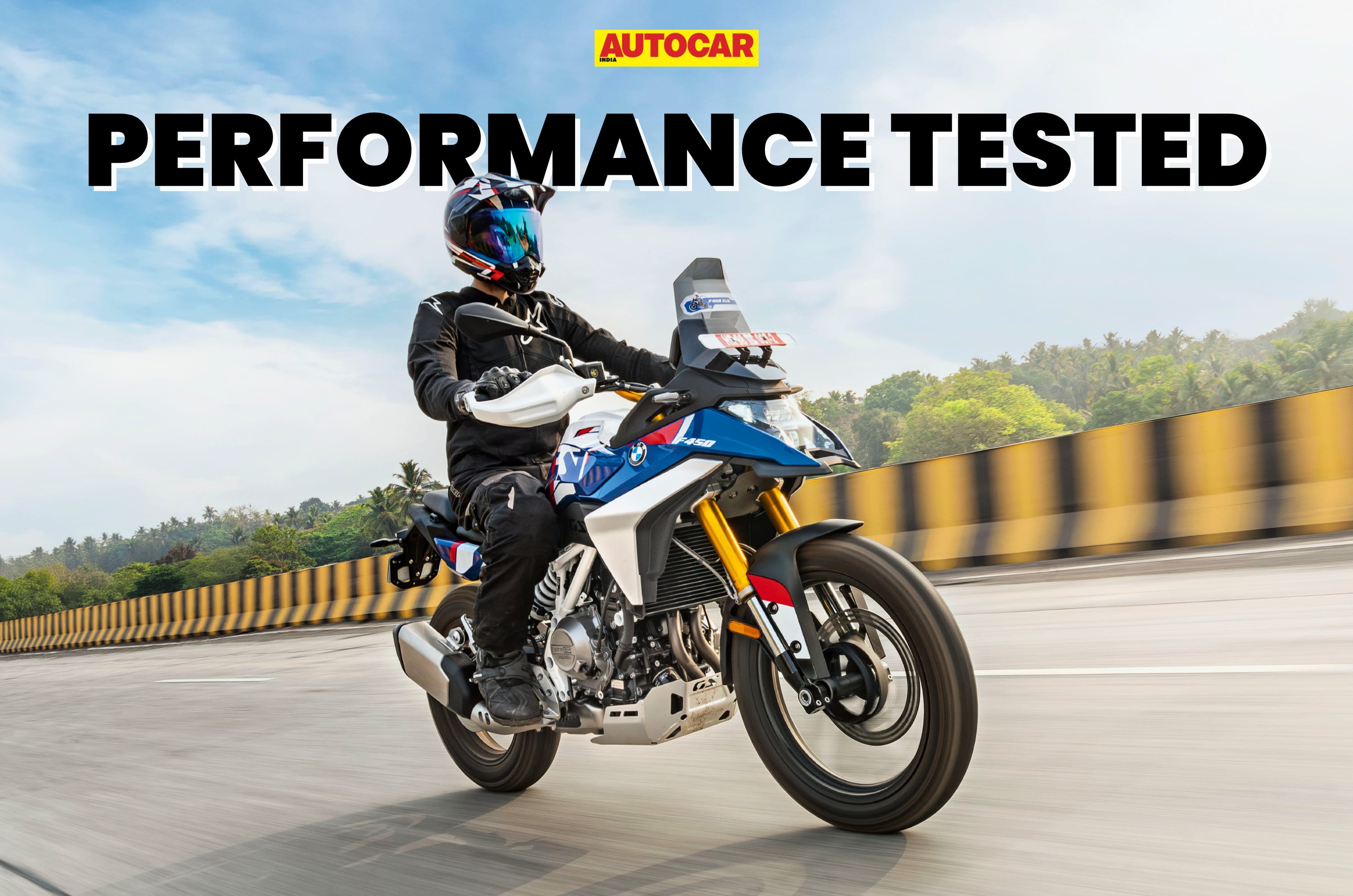
The BMW F 450 GS line-up is spread across three variants – Base, Exclusive and GS Trophy – which share the same engine and differ based on features and components. The 420cc parallel-twin liquid-cooled engine produces 48hp at 8,750rpm and 43Nm at 6,750rpm, paired with a 6-speed gearbox. BMW’s Shift Assistant Pro for clutchless upshifts and downshifts is standard from the Exclusive variant. For this test, we had the top-spec variant that gets BMW’s Easy Ride Clutch.
BMW F 450 GS: Acceleration
During our test, the road conditions were wet.
Acceleration
Time (seconds)
0-40kph
1.55s
0-60kph
2.57s
0-80kph
3.88s
0-100kph
5.72s
For the acceleration test, we were riding the bike in Road mode with the traction control turned off. We launched the bike manually instead of using the Easy Ride Clutch for a quick launch off the line. The bike offers potent performance in the mid range and acceleration tapers off as the revs climb close to the redline. The F 450 GS achieved the 0-100kph sprint in 5.72 seconds, which is a quick timing.
BMW F 450 GS: Roll-On Acceleration
The bike makes 48hp at 8,750rpm and 43Nm at 6,750rpm.
Roll-On Acceleration
Time
20-50kph (2nd Gear)
1.81 seconds
30-70kph (3rd Gear)
3.04 seconds
50-80kph (4th Gear)
2.95 seconds
In our roll-on acceleration tests, the bike took 1.81 seconds to get from 20-50kph, 3.04 seconds from 30-70kph, and 2.95 seconds for the 50-80kph run. In the city, it is tractable, able to make quick overtakes effortlessly and the Easy Ride Clutch makes commutes with a lot of traffic a breeze.
BMW F 450 GS: Braking
Strong braking performance with sharp feedback.
Braking
Distance
60-0kph
16.52 metres
The F 450 GS features disc brakes at both ends with dual channel ABS. The feedback at the lever is sharp and in our tests, it took just 16.52 metres to come to a complete stop from 60kph. The tyres are also really grippy and inspired confidence, despite the road being wet.
BMW F 450 GS: Specifications and price
There are a total of three variants including Base, Exclusive and GS Trophy.
Engine
420cc, twin-cyl, liquid-cooled
Power
48hp at 8,750rpm
Torque
43Nm at 6,750rpm
Gearbox
6-speed with ERC (Easy Ride Clutch)
Fuel capacity
14 litres
Kerb weight
178kg
Seat height
845mm
Brakes (F/R)
310mm disc / 240mm disc
Tyres (F/R)
100/90-R19 / 130/80-R17
The bike is priced starting at Rs 4.70 lakh for the Base, Rs 4.90 lakh for the Exclusive, and goes up to Rs 5.30 lakh for the GS Trophy variant (ex-showroom prices).
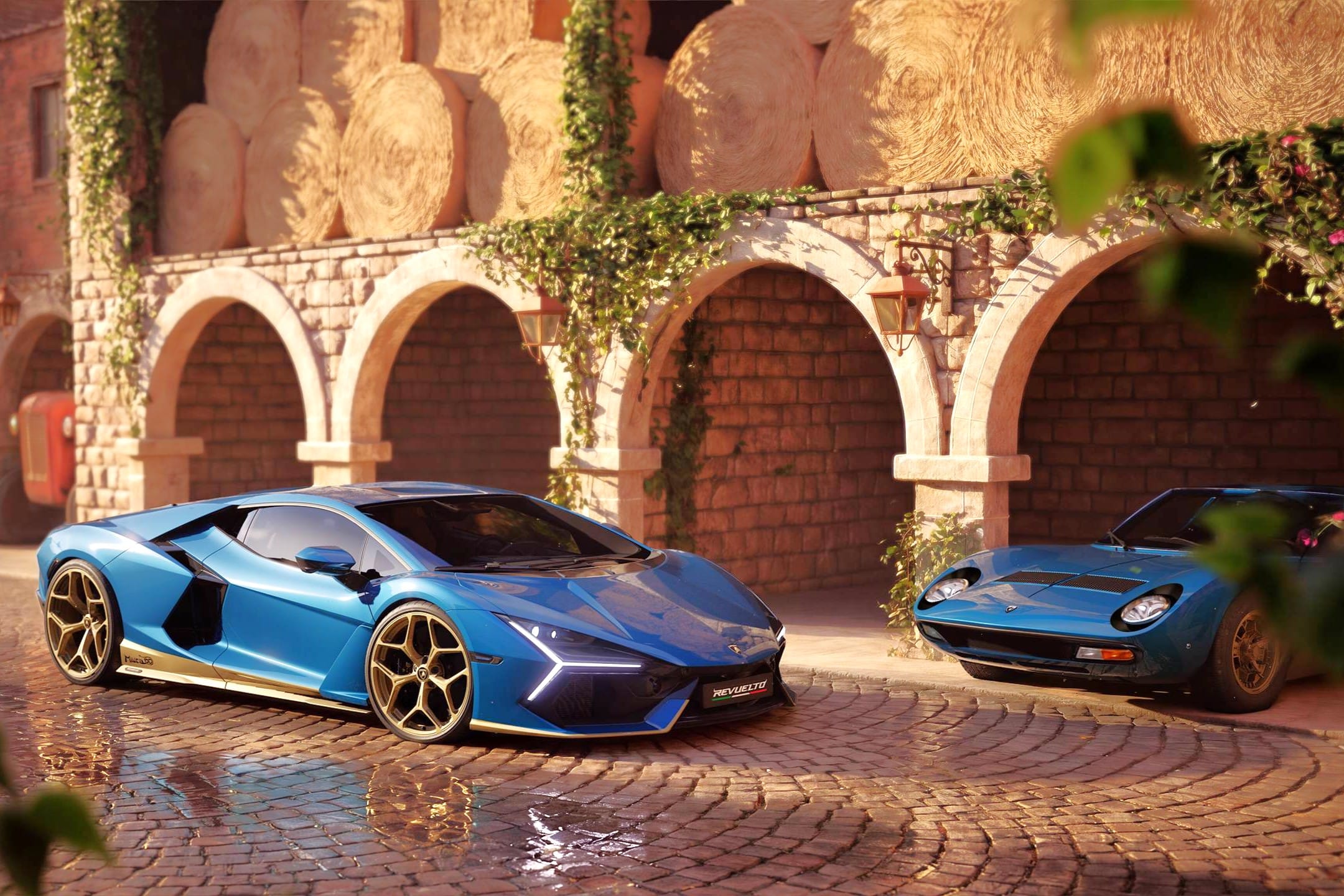
Lamborghini has revealed the Revuelto Miura 60 Homage, a limited-run special edition that marks 60 years of the iconic Miura. Only 99 units will be built, with the Revuelto Miura 60 Homage featuring exclusive heritage-inspired exterior colours, bespoke interior detailing, and Miura-inspired design elements while retaining the standard version’s 1,015hp V12 PHEV powertrain. The Revuelto Miura 60 Homage will make its public debut at the 2026 Monterey Car Week.
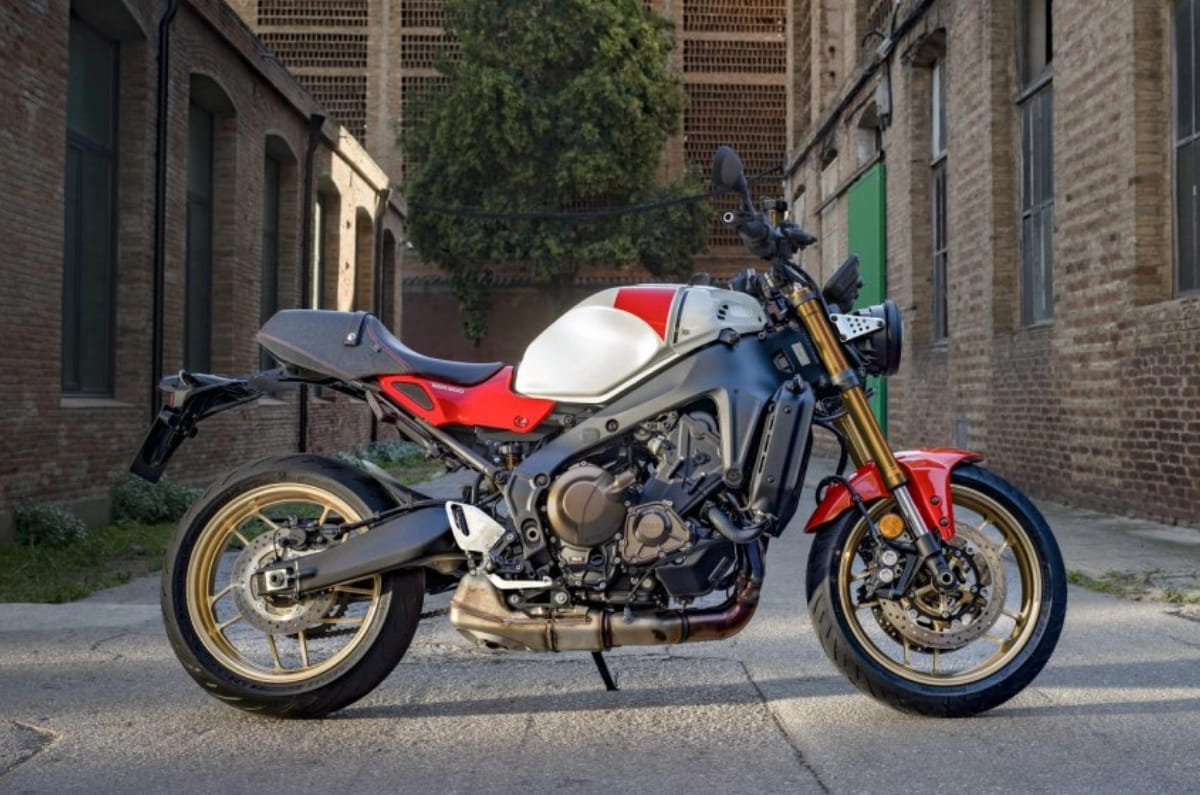
The Yamaha XSR900 is a neo-retro naked motorcycle built around the brand’s 890cc CP3 inline-triple engine, the same crossplane unit that powers the MT-09 and Tracer 9. The bike gets a 5-inch full-colour TFT display, a bidirectional quickshifter, and an electronics package comprising multiple riding modes, traction control and slide control, all managed via a six-axis IMU. Suspension duties are handled by a KYB USD fork at the front and a KYB monoshock at the rear, while Brembo calipers handle braking at the front.