New Bajaj Pulsar 150 leaked before launch

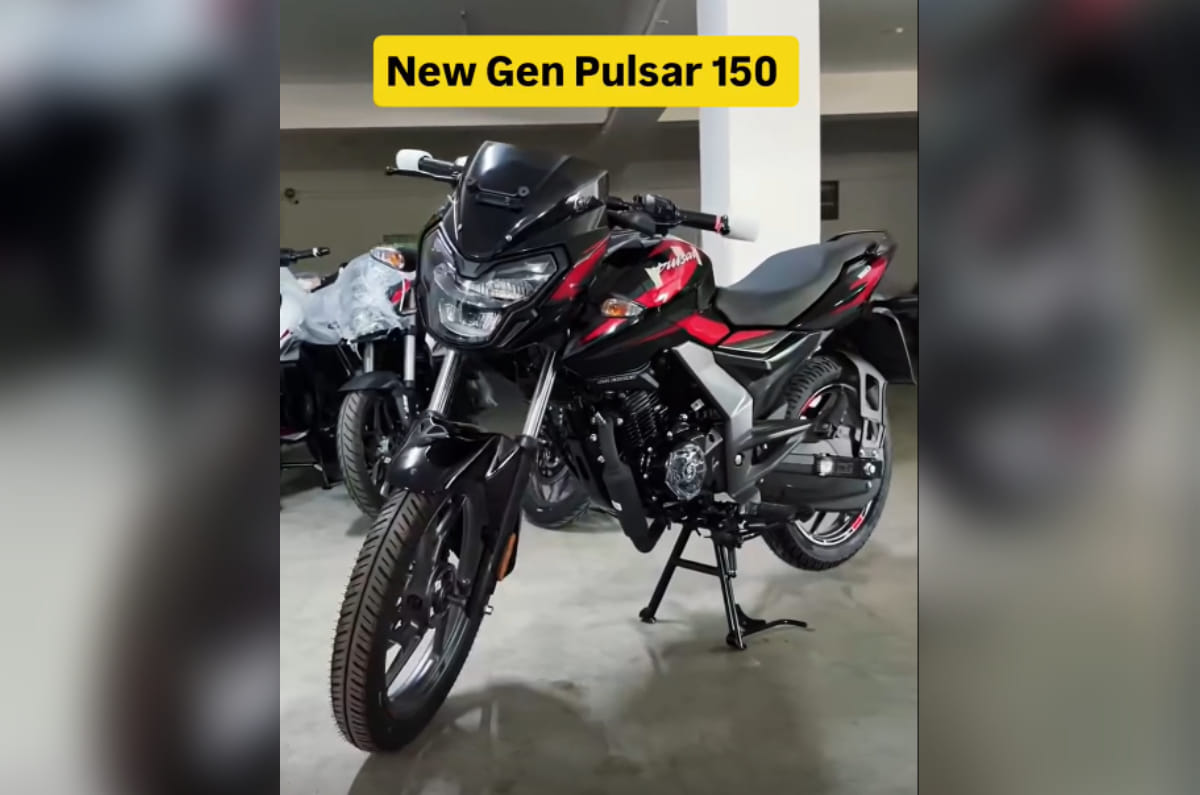
New Pulsar 150 at dealership

It’s no secret that Bajaj is working on multiple product launches over the next few months. We know the updated Pulsar N160 will launch on August 12, while the all-new Pulsar 125 was also spotted at a dealership earlier this week. Now, the new Bajaj Pulsar 150, too, has been spotted at a dealership, giving a production-ready look at the motorcycle ahead of its expected launch in the near future.

  1. Gets a new air- and oil-cooled engine
  2. Features a new single-downtube frame with monoshock rear suspension

All-new Bajaj Pulsar 150 details

Shares design DNA and platform with the all-new Pulsar 125

The new Pulsar 150 sits on an entirely new platform with a single-downtube frame like the one seen on the all-new Pulsar 125 earlier this week. This replaces the older architecture that has underpinned the Classic Pulsar range for years. Suspension comprises a telescopic fork at the front and a preload-adjustable monoshock at the rear, again mirroring the new Pulsar 125’s setup and marking an upgrade over the outgoing model’s twin-shock arrangement.

More notably, Bajaj has also made a significant change to the engine. The outgoing Pulsar 150 uses an air-cooled motor, but the new unit adds oil cooling. Improved thermal management could also allow Bajaj to extract more performance from the engine, but official output figures are yet to be revealed. For reference, the current Pulsar 150 is powered by a 149.5cc single-cylinder air-cooled engine producing 14hp and 13.3Nm of torque.
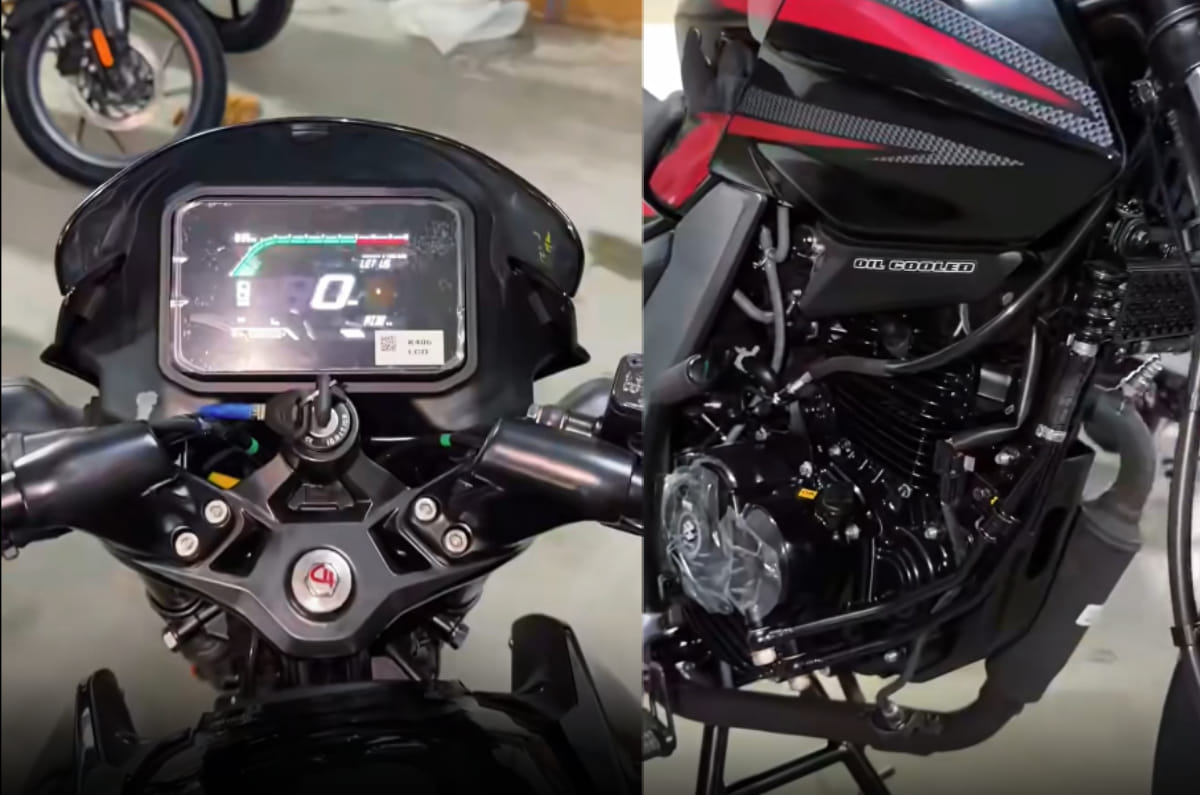
Even design-wise, the bike adopts several styling cues from the new Pulsar 125, including a redesigned headlight cowl, the familiar muscular fuel tank with extensions and a sleeker tail section featuring the signature twin LED tail-lights. The updated colour LCD instrument cluster also appears to have been carried over.

Bajaj has scheduled an event for August 12, and we’ve learnt that the updated Pulsar N160 will be among the launches. There is still no official word on whether the all-new Pulsar 125 and Pulsar 150 will also debut at the event. However, given that the new Pulsar 150 has already started reaching dealerships, a launch appears to be just around the corner.

Image source: Akram Saifullah

3 reasons to buy the Maruti Jimny and 3 reasons not to

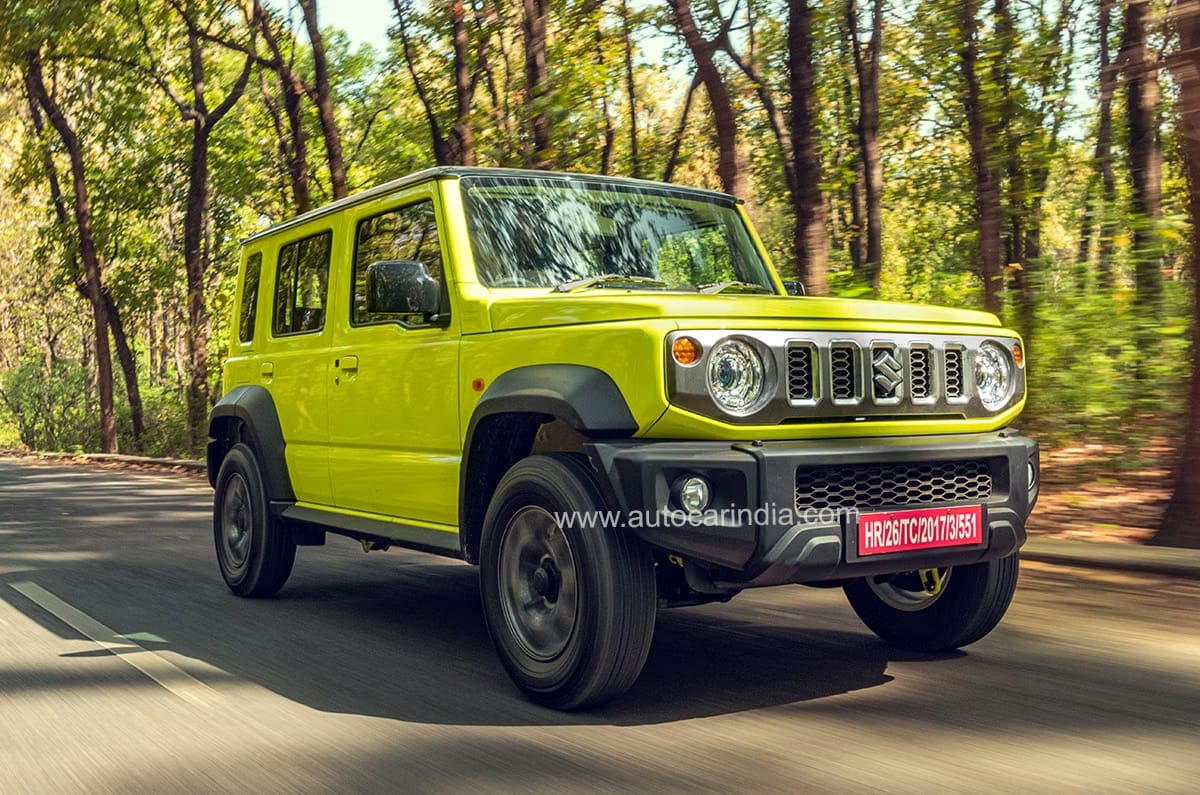
Maruti Jimny front quarter tracking

Introduced in 2023, the Jimny debuted in India as Maruti’s successor to the Gypsy. And while the Jimny was sold internationally as a 3-door model, India was the first country to have the 5-door Jimny. It gets retro-futuristic looks, high ground clearance, and a 4×4 drive system with low range. If you’re looking for a hardcore compact off-road SUV, should you consider the Jimny? We list out reasons to buy one and why it may not be the SUV for you.

Reasons to buy the Maruti Jimny  

Superb Off-road ability 

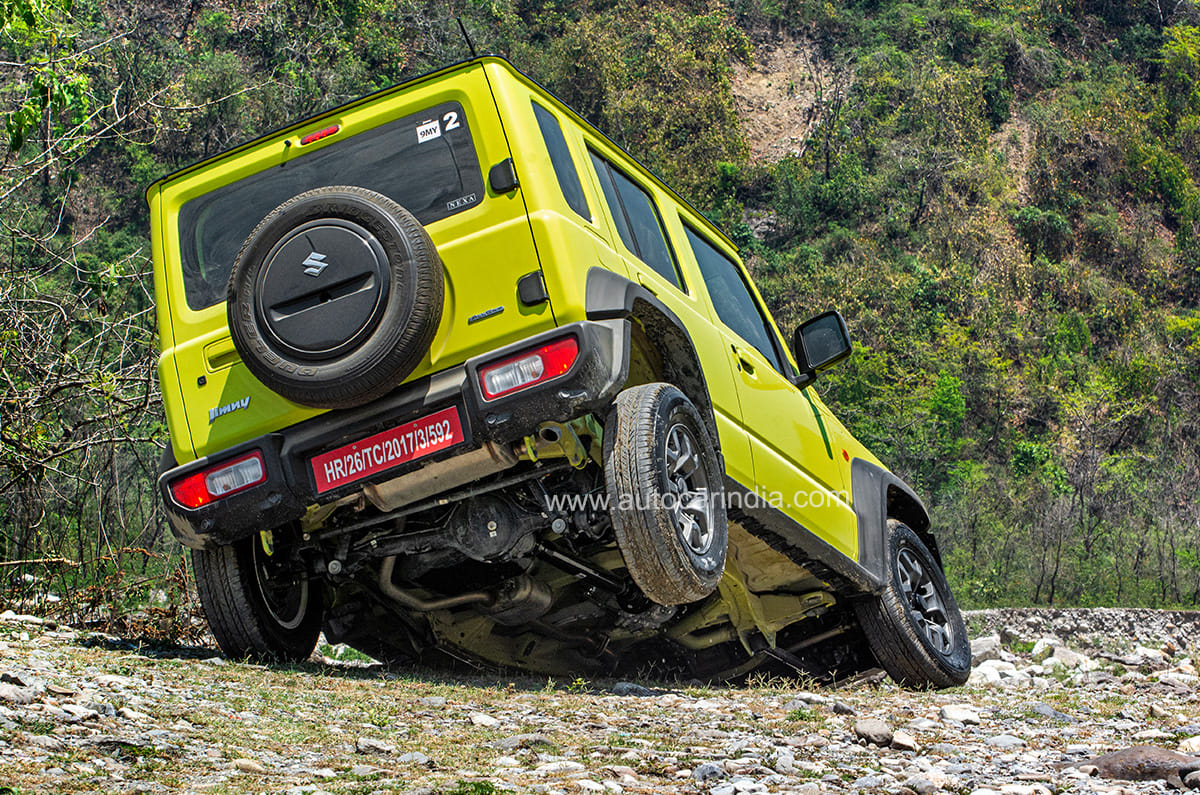
Underpinning the Jimny is a ladder frame chassis that’s best suited for heavy off-roading. Additionally, it gets Suzuki’s All Grip Pro 4×4 drive system with a lever to switch to ‘2WD-high’, ‘4WD-high’ and ‘4WD-low.’ High approach (36-degree) and departure (47-degree) angles, solid front and rear axles along with tech like hill-start assist, hill-descent control, and electronic braking differential (front and rear), help the Jimny feel right at home when off-roading. It performs superbly when wading through water, going up rock-covered steep inclines, pulling out of tricky situations and leaning at unimaginable angles all without breaking a sweat.

Charming character

In a sea of pseudo SUVs, the Jimny comes across as one of the few hardcore compact off-road SUVs that’s underpinned by a ladder-frame chassis. Additionally, it’s the only compact off-roader with 5-doors as opposed to other off-road SUVs in the segment like the Force Gurkha 3-door and Mahindra Thar. What’s best is that it isn’t as intimidating as the latter two and is very usable in the city as well. Adding to its overall appeal is a quirky exterior and interior with retro-futuristic elements all over, lending it a very charming character. 

Comfortable ride 

While ladder-frame vehicles aren’t known for their ride quality, the Jimny feels comfortable on the whole. Especially when compared to rivals, it is more pliant and has better-controlled body roll. It handles broken roads and potholes with ease, and you could take two wheels off the road to dodge traffic with confidence. With a 210mm ground clearance, you wouldn’t need to think twice about going on a beaten path. 

Reasons to not buy the Maruti Jimny

Weak engine 

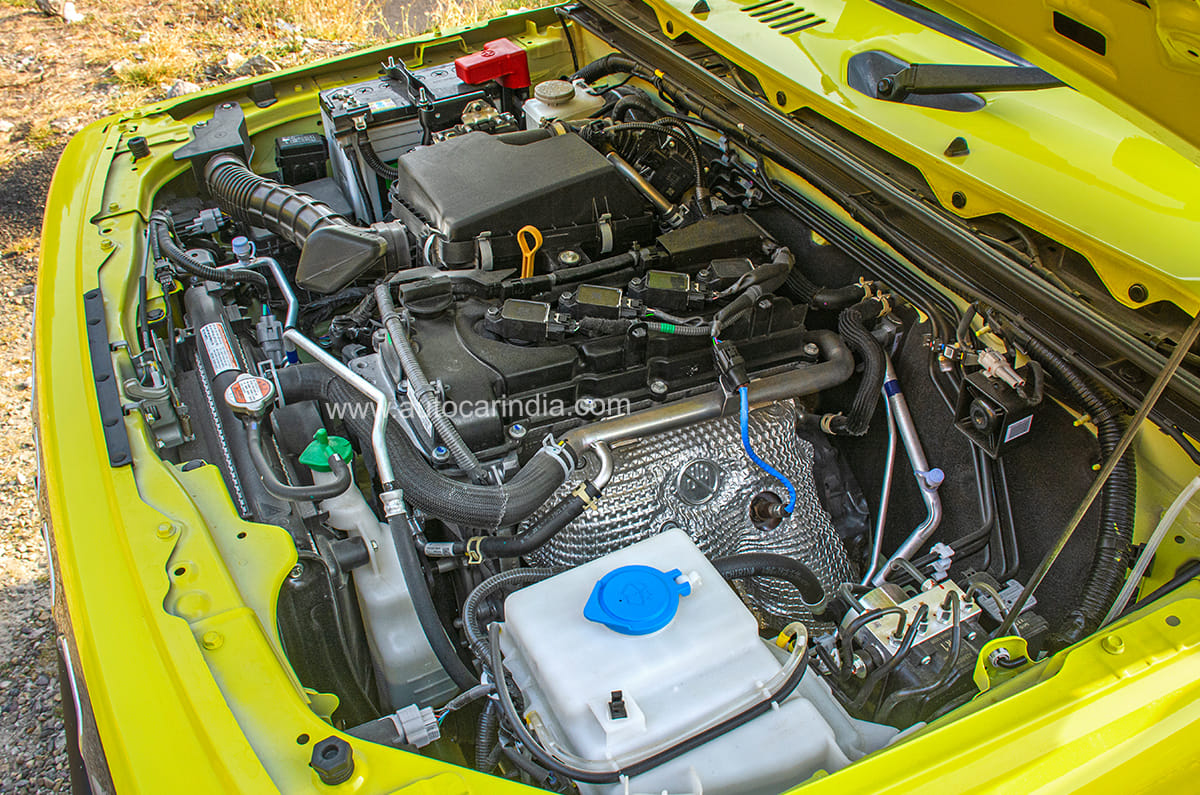
The Jimny is powered solely by a 1.5-litre naturally aspirated petrol engine developing 104hp and 134.2 Nm of torque. It’s grunty enough in urban and off-road conditions, but it falls short if you ask more of it. As with naturally aspirated engines, mid-range punch is lacking. For simple overtakes, you’ll find yourself flattening your right foot and wringing the motor’s neck. 0-100kph acceleration timings were 14.59 and 17.47 seconds for the manual and automatic gearboxes respectively, which is slow.

Clunky manual gearbox 

While manual Marutis have been known for buttery-smooth operation, the same can’t be said for the Jimny. Though acceleration is quicker when paired with the manual gearbox, it doesn’t bode well with the Jimny. Shifting is firm and requires substantial effort to slot it into gears, thus taking away the fun that’s associated with driving a manual gearbox. The heavy clutch is also a let-down, especially when driving in city conditions.

Heavy steering 

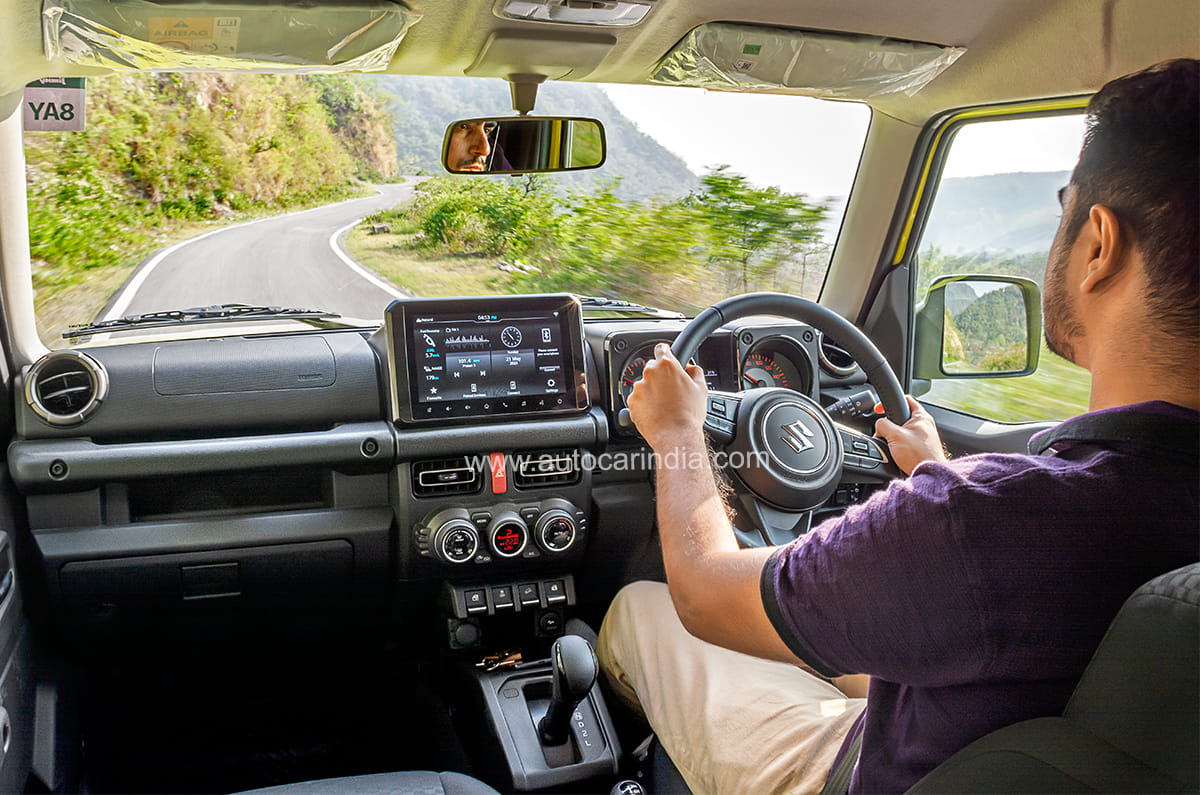
The Jimny’s steering takes 4+ turns lock-to-lock, which is more than most cars, and is cumbersome. Secondly, the electric power steering is slow-geared, and while that’s good for off-roading, it does not bode well on the road. The weight of the steering itself is heavier than most vehicles of its size and has a huge turning radius of 5.7 metres.

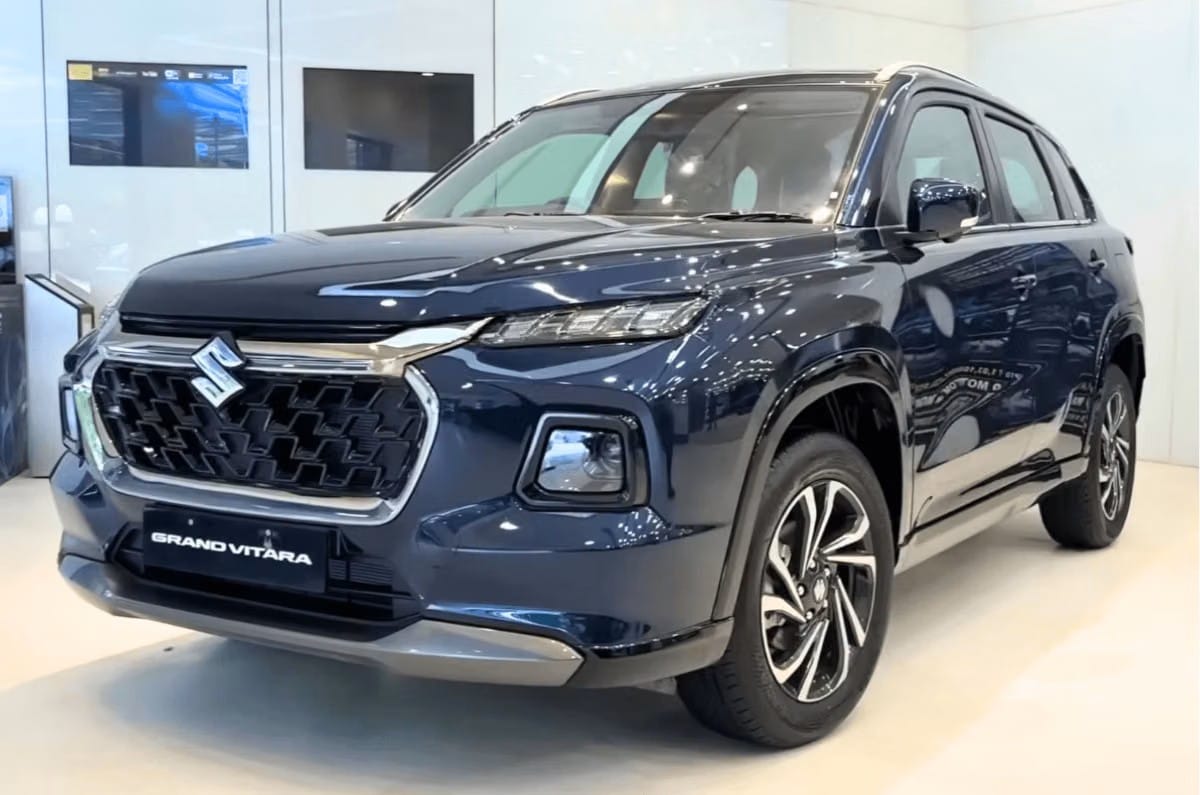
Benefits of up to Rs 1.30 lakh on Maruti Grand Vitara in August 2026

Maruti Grand Vitara

Maruti Suzuki is offering discounts across its Nexa line-up in August 2026. The offers include cash discounts, exchange or scrappage bonuses, loyalty upgrade benefits and institutional discounts, depending on the model and variant. The highest benefits this month are available on the Invicto, while the Grand Vitara, XL6, Jimny, Baleno and Fronx also receive offers.

Disclaimer: Offers may vary by city and are subject to stock availability. Check with your nearest dealer for exact details.

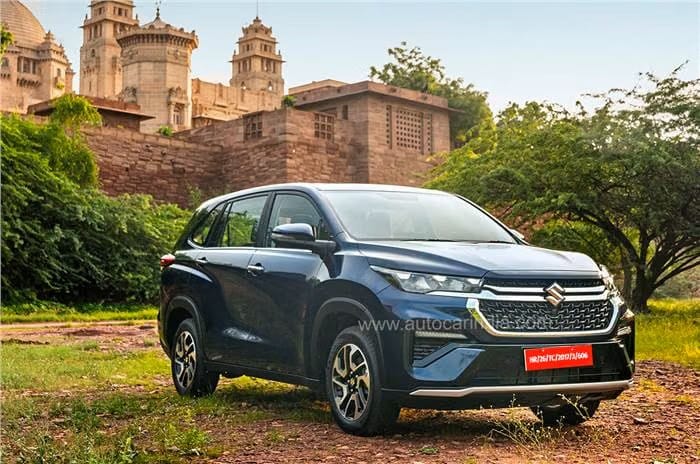
Maruti Invicto discounts in August 2026

Up to Rs 1.55 lakh off

The Invicto attracts the highest discounts in the Nexa range this month, with benefits of up to Rs 1.55 lakh. These include a Rs 55,000 cash discount, an exchange bonus of up to Rs 50,000 or a Rs 50,000 scrappage bonus, a Rs 30,000 loyalty bonus and a Rs 20,000 institutional discount.

Priced between Rs 24.97 lakh and Rs 28.61 lakh, the Invicto is Maruti Suzuki’s flagship MPV and rivals the Toyota Innova Hycross.

Maruti Grand Vitara discounts in August 2026

Up to Rs 1.30 lakh off

The Grand Vitara Sigma petrol receives the highest discounts of up to Rs 1.30 lakh. Delta petrol variants are available with benefits of up to Rs 1.20 lakh, while Zeta, Alpha and AWD variants get offers worth Rs 1.20 lakh, along with a complimentary five-year extended warranty.

Strong hybrid variants also receive plenty of benefits, totaling up to Rs 1.25 lakh along with zero road tax (worth up to Rs 1.85 lakh in Delhi), a five-year extended warranty. The benefits comprise of an exchange bonus of up to Rs 75,000 or a Rs 45,000 scrappage bonus, a Rs 30,000 loyalty upgrade bonus and a Rs 20,000 institutional discount. Delta CNG variants get benefits of up to Rs 1.05 lakh, while Zeta CNG variants receive up to Rs 95,000.

The Grand Vitara is priced from Rs 10.77 lakh to Rs 19.57 lakh and rivals the Hyundai Creta, Kia Seltos, Honda Elevate, Toyota Hyryder and Tata Sierra.

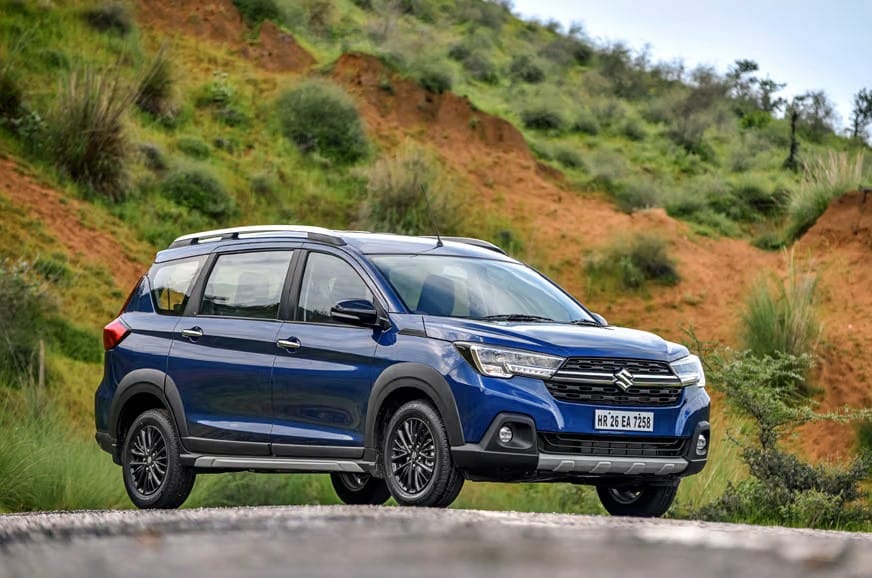
Maruti XL6 discounts in August 2026

Up to Rs 50,000 off

Petrol and CNG variants of the XL6 are available with benefits of up to Rs 50,000. The offer comprises a Rs 20,000 cash discount, an exchange bonus of up to Rs 30,000 or a Rs 15,000 scrappage bonus, and a Rs 10,000 institutional discount. The XL6 is priced between Rs 11.57 lakh and Rs 14.37 lakh and serves as the premium six-seat sibling to the Ertiga.

Maruti Jimny discounts in August 2026

Up to Rs 35,000 off

All variants of the Jimny are available with a Rs 35,000 cash discount this month. No exchange, scrappage, loyalty or institutional benefits are being offered. The Jimny is priced between Rs 12.39 lakh and Rs 14.37 lakh and rivals the Mahindra Thar and Force Gurkha.

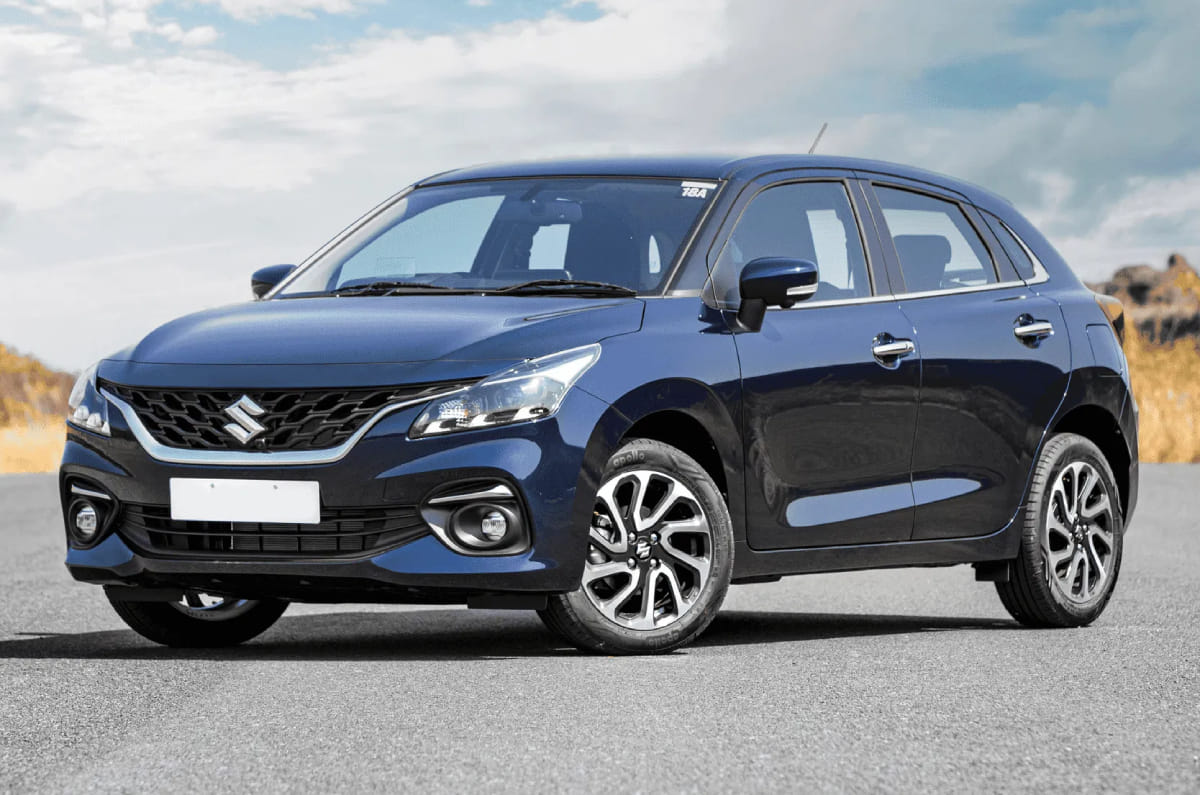
Maruti Baleno discounts in August 2026

Up to Rs 30,000 off

Petrol manual and AMT variants of the Baleno receive benefits of up to Rs 30,000, while CNG variants are available with discounts of up to Rs 25,000. Petrol variants get a Rs 5,000 cash discount, an exchange bonus of up to Rs 25,000 or a Rs 10,000 scrappage bonus, while CNG variants miss out on the cash offer but receive the same exchange or scrappage benefits. Priced between Rs 5.99 lakh and Rs 9.17 lakh, the Baleno rivals premium hatchbacks such as the Hyundai i20 and Tata Altroz.

Maruti Fronx discounts in August 2026

Up to Rs 20,000 off

The turbo-petrol Fronx gets the highest discounts this month, with benefits of up to Rs 20,000. Petrol and CNG variants are available with offers of up to Rs 15,000. Turbo variants additionally receive a Rs 5,000 cash discount, while all variants are eligible for an exchange bonus of up to Rs 15,000 or a Rs 10,000 scrappage bonus, along with a Rs 5,000 institutional discount. The Fronx is priced from Rs 6.85 lakh to Rs 11.84 lakh and rivals the Toyota Taisor, Tata Nexon, Hyundai Venue, Kia Sonet, Mahindra XUV 3XO and Nissan Magnite.

All prices are ex-showroom, India.

KTM made-in-India Duke and RC range prices hiked by up to Rs 15,000

KTM made-in-India Duke and RC range prices hiked by up to Rs 15,000

After we recently reported price hikes for the 390 Duke and 390 Adventure range, KTM has now increased prices of its other lower-capacity, made-in-India motorcycles. The latest revision affects the 160 Duke, 200 Duke, 250 Duke, RC 160 and RC 390, with hikes ranging from Rs 5,000 to Rs 15,000.

  1. RC 160 gets the steepest Rs 15,000 price hike
  2. 160 Duke is now priced from Rs 1.84 lakh
  3. RC 390 price rises by Rs 10,000 to Rs 3.33 lakh

KTM Duke and RC range prices increased

160 Duke gets up to Rs 10,000 more expensive

The standard 160 Duke has received the largest hike among the Duke models, with its price rising by Rs 10,000, from Rs 1.74 lakh to Rs 1.84 lakh. The higher-spec 160 Duke TFT is now priced at Rs 1.91 lakh, following a smaller Rs 5,000 increase.

Prices of the 200 Duke and 250 Duke have gone up by Rs 6,000 each. The 200 Duke now costs Rs 2.06 lakh, while the 250 Duke is priced at Rs 2.27 lakh. 

Model

Old price

New price

Difference

160 Duke

Rs 1.74 lakh

Rs 1.84 lakh

Rs 10,000

160 Duke TFT

Rs 1.86 lakh

Rs 1.91 lakh

Rs 5,000

200 Duke

Rs 2.00 lakh

Rs 2.06 lakh

Rs 6,000

250 Duke

Rs 2.21 lakh

Rs 2.27 lakh

Rs 6,000

RC 160

Rs 1.85 lakh

Rs 2.00 lakh

Rs 15,000

RC 200

Rs 2.32 lakh

Rs 2.32 lakh

No change

RC 390

Rs 3.23 lakh

Rs 3.33 lakh

Rs 10,000


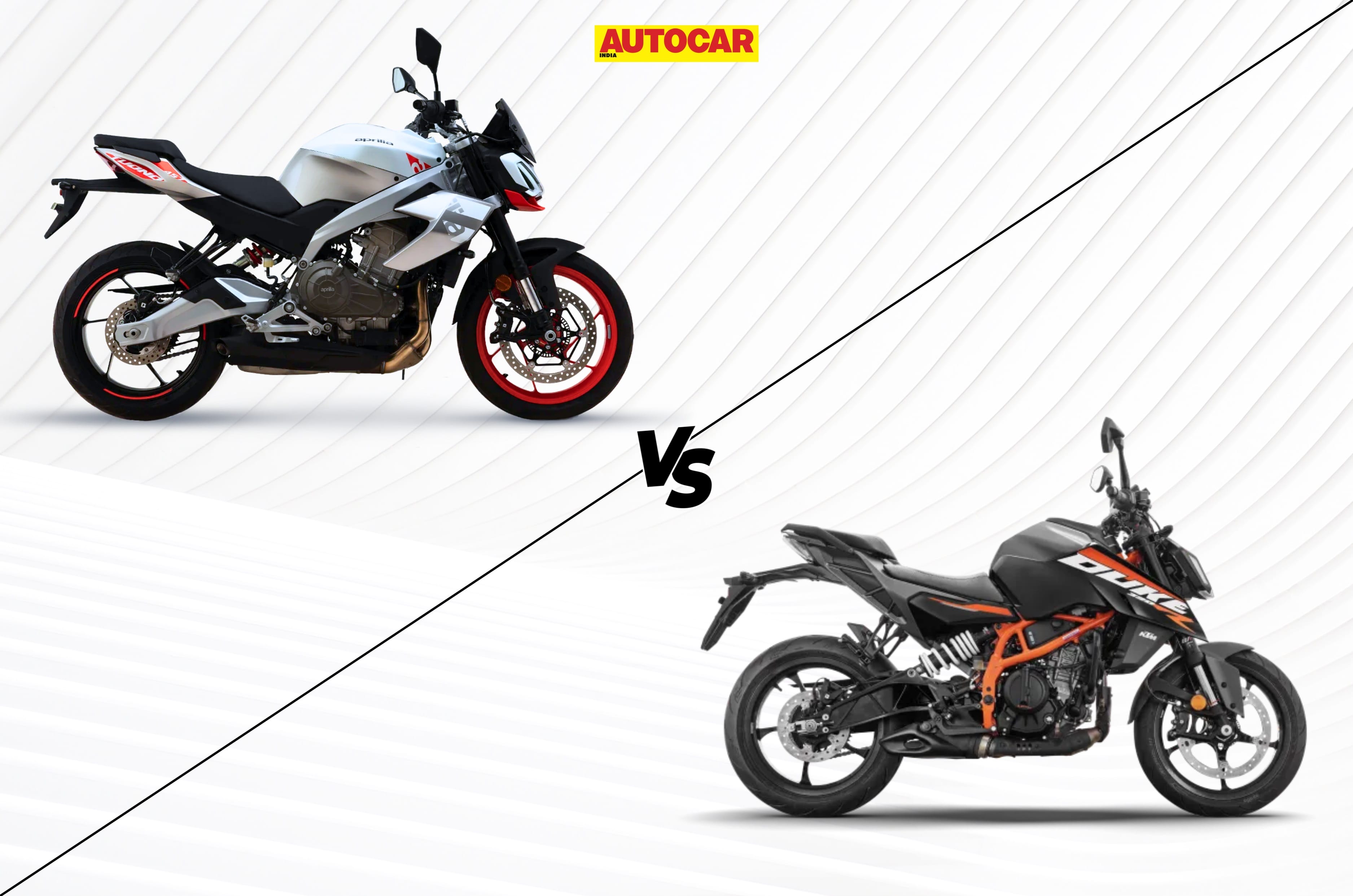
Aprilia Tuono 457 Special Edition vs KTM 390 Duke R: Price and spec comparison

Aprilia Tuono 457 Special Edition vs KTM 390 Duke R: Price and spec comparison

At the time of the Aprilia Tuono 457’s original launch, this comparison looked like a slam dunk in favour of the KTM 390 Duke (now the KTM 390 Duke R). It was less expensive, offered more features and was markedly more comfortable to ride. However, Aprilia has now updated the Tuono 457, and there’s a new, confusing “Special Edition” moniker. With the KTM being more expensive now, let’s see how these two European – but manufactured here in Maharashtra – sport-nakeds stack up on paper.

Aprilia Tuono 457 Special Edition vs KTM 390 Duke R: Engine and output

Tuono was and remains more powerful than Duke


Aprilia Tuono 457 Special Edition

KTM 390 Duke R

Engine

457cc, twin-cylinder, liquid cooled

398.63cc, single-cylinder, liquid cooled

Power

47.6hp

46hp

Torque

43.5Nm

39Nm

Gearbox

6-speed

6-speed

Power-to-weight ratio

272hp/tonne

273.3hp/tonne

Aprilia didn’t make any changes to the powertrain side of things for the Special edition, so the Tuono retains its parallel twin-cylinder 457cc engine that makes 47.6hp of power and 43.5Nm of torque. Contrast this against the Duke R’s single-cylinder 399cc engine making 45.3hp of power and 39Nm of torque, and the Tuono’s gain in power might look marginal on paper, its engine is markedly smoother across the rev range whereas the KTM’s engine gets smoother after 6,000rpm.

Aprilia Tuono 457 Special Edition vs KTM 390 Duke R: Dimensions and weight


Aprilia Tuono 457 Special Edition

KTM 390 Duke R

Fuel tank capacity

13 litres

15 litres

Ground clearance

NA

183mm

Kerb weight

175kg

168.3kg

Seat height

800mm

800mm

Wheelbase

NA

NA

Aprilia India’s website has not been updated at the time of publishing to reflect the complete details of the Tuono 457 Special Edition so these numbers are for the ‘regular’ Tuono. As such, some changes in kerb weight and seat height are likely. Neither Aprilia nor KTM shares wheelbase numbers in India, and Aprilia also doesn’t list the ground clearance for the Tuono. The KTM does get the larger fuel tank of the two which could mean marginally longer tank-to-tank distance for the 390 Duke R.

Aprilia Tuono 457 Special Edition vs KTM 390 Duke R: Tyres, brakes, and suspension

Tuono’s likely to have improved its front and rear suspensions


Aprilia Tuono 457 Special Edition

KTM 390 Duke R

Tyres

110/70R17, 150/60R17

110/70R17, 150/60R17

Brakes

320mm radial disc, 220mm floating disc (Dual-channel ABS)

320mm radial disc, 240mm floating disc (Dual-channel ABS)

Suspension

USD forks with 120mm travel,

Monoshock with 130mm travel

USD forks with 150mm travel, Monoshock with 150mm travel

When the Tuono 457 was launched, the suspension was said to be too firm for Indian conditions. With the Special Edition, Aprilia tells us that both the front and rear suspensions have been reworked, with softer compression and rebound damping with spring preload to the front USD forks, and softer compression damping with spring preload to the rear mono shock. Front and rear preload is adjustable for further fine tuning. The KTM retains its impressive suspension and it offers even more adjustability (compression and rebound at the front, preload and rebound at the rear) with more travel on both ends. 

Aprilia Tuono 457 Special Edition vs KTM 390 Duke R: Features

KTM’s stronghold. Remains that way!

This was a marked advantage for the KTM, especially when it was almost a lakh cheaper than the Aprilia. Even with the prices increased now, the Duke R still offers more features than the Tuono 457 Special Edition; the only model trumping the 390 Duke R on value being the 390 Duke with the 350cc engine. In addition to matching the Tuono with dual-channel ABS, full LED lighting, riding modes, TFT cluster, and traction control the KTM offers bi-directional quickshifter as standard (available as an accessory for the Tuono), cornering ABS, and cruise control. Another small difference is that the KTM’s brake and clutch levers are adjustable whereas Aprilia has made only the brake lever adjustable with the Tuono 457 Special Edition. So, if rider aids had convinced you to side with KTM, Aprilia’s Special Edition is unfortunately unlikely to change your mind.

Overall though, Aprilia has aimed to address almost all the initial complaints with this Special Edition model. Apart from the changes discussed above, the Tuono 457 Special Edition also gets a taller handlebar, a revised seat with a different profile, and a windscreen as standard.

Aprilia Tuono 457 Special Edition vs KTM 390 Duke R: Price

Aprilia Tuono 457 Special Edition costs Rs 55,000 more than the KTM 390 Duke R


Aprilia Tuono 457 Special Edition

KTM 390 Duke R

Price 

Rs 3.45 lakh

Rs 4 lakh

With all of these updates, Aprilia has launched the Tuono 457 Special Edition at Rs 4 lakh (ex-showroom, Maharashtra), an increase of Rs 2,000 over the ‘regular’ Tuono it replaces in India. The KTM 390 Duke R on the other hand costs Rs 3.45 lakh (ex-showroom, Maharashtra), thanks to the new GST slabs. Because of GST, we also have a 390 Duke with a 350cc engine at Rs 2.84 lakh (ex-showroom, Maharashtra). The Duke (without the R) shares all the electronic features with the Duke R, except for the slight reduction in power and torque figures. As things stand, the Aprilia Tuono 457 Special Edition costs Rs 55,000 more than the KTM 390 Duke R; and Rs 1.16 lakh more than the KTM 390 Duke.


Top 10 bestselling cars in H1 2026 by powertrain type

Bestselling cars in H1 2026 by powertrain type

During the first half of calendar 2026, the Indian passenger vehicle market recorded total sales of over 25.91 lakh units across petrol, diesel, EV, CNG, and strong hybrid powertrains. Compared to the 21.88 lakh units sold in H1 2025, that’s a healthy YoY increase of around 18.4 percent. Below, we’ve sorted and listed the 10 bestselling cars of each powertrain type in H1 2026 to give you a more in-depth look at the data.

10 bestselling petrol cars in H1 2026

ModelH1 2026 salesYoY change (%)
Maruti Baleno83,552+19
Maruti Swift81,0460
Tata Punch61,701+29
Maruti Fronx61,565-6
Maruti Alto K1059,165+38
Hyundai Venue55,750+26
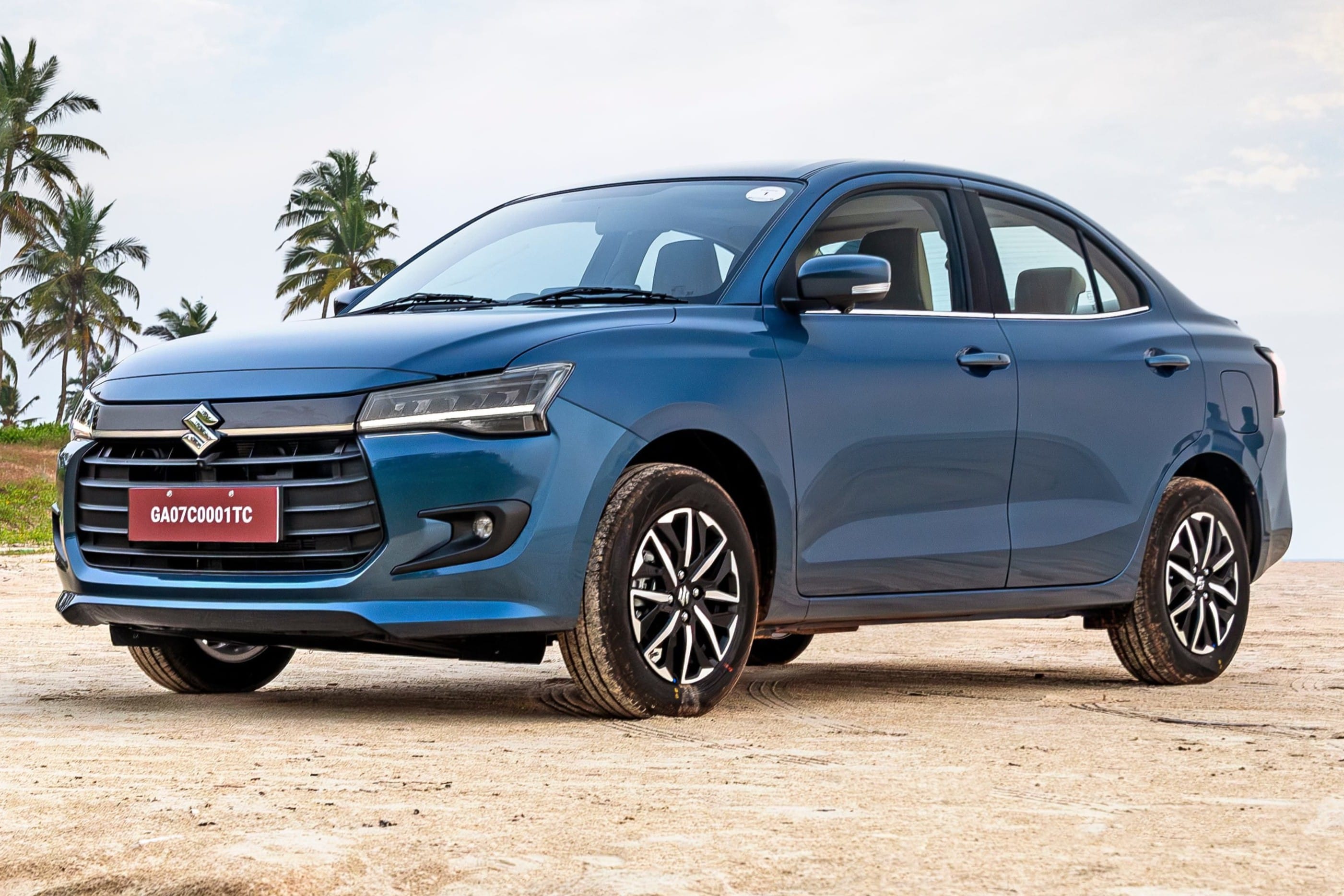
Maruti Dzire50,865-1
Tata Nexon50,240+31
Maruti Brezza49,096-14
Hyundai Creta49,094-8

The Baleno ascended to the top spot in petrol car sales during H1 2026, followed closely by the Swift, volumes for which interestingly remained flat YoY. However, thanks to the introduction of the updated Punch at the onset of 2026, the subcompact SUV recorded a substantial 29 percent increase in sales and jumped to third position.

Other notable highlights include a 38 percent YoY uptick for the Alto K10, indicating a renewed interest in the entry-level segment, along with a 4 percent drop for the midsize SUV sales champion, the Creta. However, its younger compact SUV sibling, the Venue, did see a 26 percent YoY bump on account of the second-gen model’s launch late last year.

10 bestselling diesel cars in H1 2026

ModelH1 2026 salesYoY change (%)
Mahindra Scorpio N+Classic86,403+7
Mahindra Bolero+Neo58,457+16
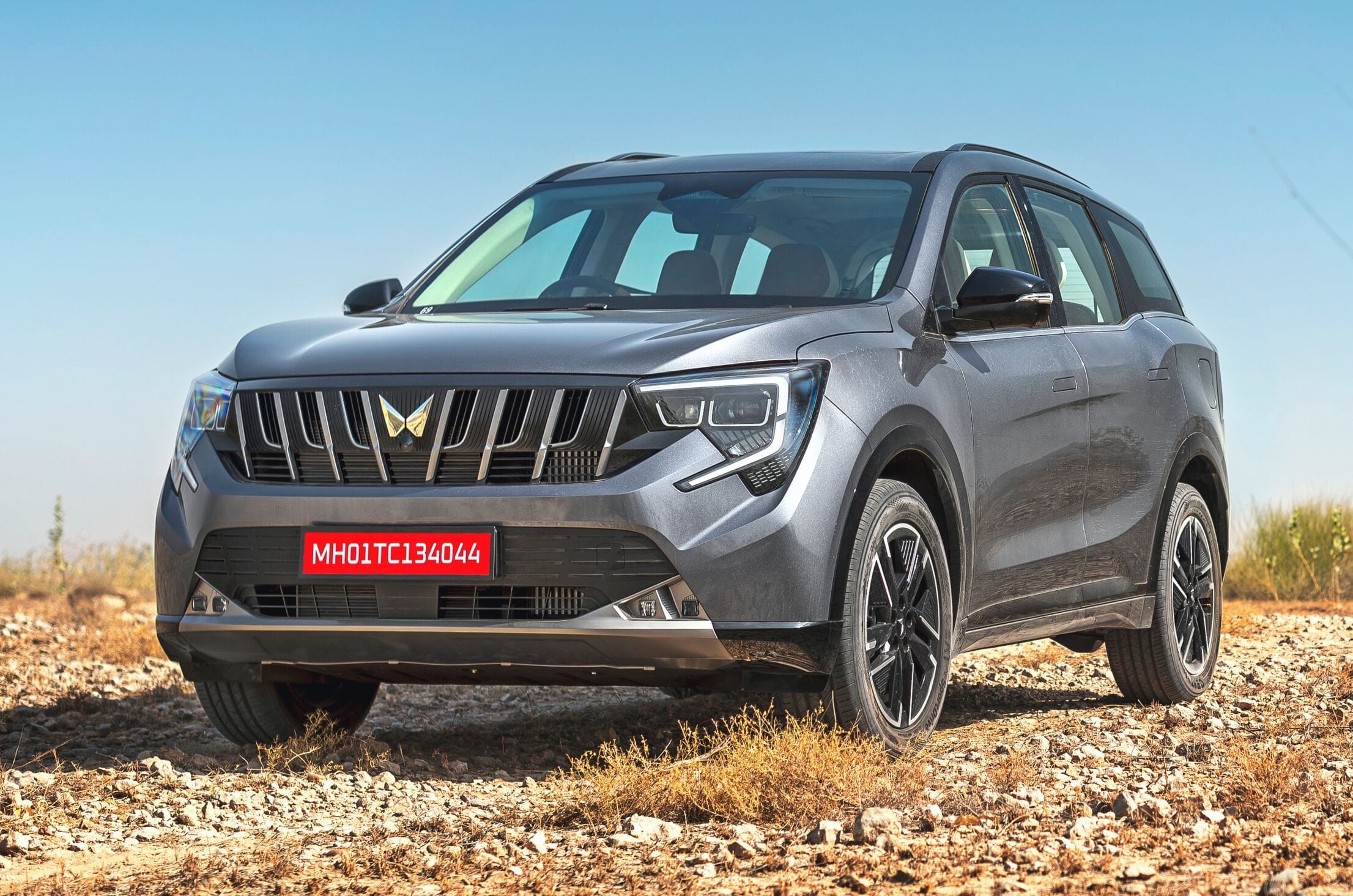
Mahindra XUV 7XO42,190+29
Hyundai Creta40,116-4
Mahindra Thar Roxx37,945+19
Mahindra Thar23,860+35
Kia Seltos22,906+54
Tata Sierra22,764N/A
Toyota Innova Crysta18,498-5
Kia Sonet18,290+67

Though diesel offerings remain limited in the Indian mass market, buyers continue to show up for them. All three diesel bestsellers in H1 2026 were made by Mahindra, and all three recorded a YoY growth in sales, with the XUV 7XO achieving the highest uptick among them at 29 percent. The Thar and Thar Roxx also managed to outperform their H1 2025 sales by healthy margins.

In fact, six out of the 10 diesel bestsellers experienced double-digit YoY sales growth, with only the Creta and Innova Crysta undergoing downturns. The Sierra also made it onto this list, but doesn’t rank even among the top 20 petrol bestsellers of H1 2026, suggesting a large chunk of buyers opted for the midsize SUV’s diesel variants. Its direct rival, the Seltos, edged past by fewer than 150 units, but the other Kia SUV here, the Sonet, clocked a whopping 67 percent boost.

10 bestselling CNG cars in H1 2026

ModelH1 2026 salesYoY change (%)
Maruti Ertiga78,764+23
Maruti Dzire75,339+69
Maruti Wagon R54,267+5
Tata Punch41,919+43
Tata Nexon41,355+38
Maruti Brezza39,871+8
Maruti Victoris38,806N/A
Maruti Eeco36,075+31
Hyundai Aura35,089+29
Maruti Fronx33,876+49

CNG cars put up the most impressive performance on the sales charts, with the top 10 achieving substantial YoY gains in volumes during H1 2026. The Dzire led the pack in this regard with a staggering 69 percent surge in sales, followed by the Fronx at 49 percent and then the Punch at 43 percent.

Seven of the top 10 CNG bestsellers are Maruti Suzuki models, two are from Tata, and only one is a Hyundai, reflecting Maruti’s dominance in this space. A likely reason behind the stellar performance is the uncertainty around ethanol blending in petrol, which could be shifting buyers towards CNG.

10 bestselling EV cars in H1 2026

ModelH1 2026 salesYoY change (%)
MG Windsor EV19,080-10
Mahindra XEV 9S18,074N/A
Tata Nexon EV16,567+78
Tata Punch EV15,683+108
Mahindra XEV 9e11,242-14
Tata Harrier EV10,499+2,110
Maruti e Vitara8,572N/A
Tata Curvv EV7,281+212
Mahindra BE 66,849+13
Tata Tiago EV6,816-19

The Windsor remains untouched as the top selling EV in H1 2026, though it did record a 10 percent YoY drop in sales. Impressively, the XEV 9S finished in second place with over 18,000 units sold – far ahead of the XEV 9e and BE 6. Nexon EV and Punch EV sales saw strong upticks, especially the latter’s whopping 108 percent YoY surge due to its 2026 facelift.

However, the Tiago EV experienced a 19 percent drop in sales despite also being updated this year. It’s worth noting that while the Harrier EV’s 2,110 percent YoY increase looks bonkers, it is a result of the SUV being launched in June 2025 and thereby counted from a relatively miniscule initial figure. Interestingly, the Curvv EV more than tripled its sales YoY, likely due to discounts and the SeriesX variant rejig in 2026.

Bestselling strong hybrid cars in H1 2026

ModelH1 2026 salesYoY change (%)
Toyota Innova Hycross27,812-6
Toyota Hyryder18,577+23
Maruti Grand Vitara4,086-54
Maruti Victoris3,231N/A
Maruti Invicto1,418-26
Toyota Camry1,188-1
Toyota Vellfire914+60
Honda City659+22

Only one new strong hybrid car went on sale in India between H1 2025 and H1 2026, the Maruti Victoris, which slotted in fourth position overall. The Innova Hycross continues to be the highest selling strong hybrid car, but did slip 6 percent YoY in sales. Notably, the Innova Hycross’ rebadged sibling, the Invicto, saw a more substantial 26 percent drop.

A similar phenomenon occurred for the Hyryder and Grand Vitara, where the Toyota SUV’s sales grew 23 percent YoY, but the Maruti’s slid by 54 percent. The City hybrid also looks to have piqued buyer interest courtesy of the facelift, recording a 22 percent YoY growth but still selling in the triple digits. Interestingly, the highest YoY sales uptick was achieved by the most expensive strong hybrid here, the Vellfire, showing the growth of the luxury MPV segment.

Combined car sales in H1 2026 by powertrain type

 H1 2026 salesYoY change (%)
Petrol13,42,304+10
Diesel4,56,076+15
CNG5,96,236+40
EV1,39,065+65
Strong hybrid57,8850
Total25,91,566+18.4

While petrol cars remain the largest chunk of the Indian passenger vehicle market by a huge margin, and even clocked a respectable 10 percent YoY growth in H1 2026, CNG saw much bigger gains during the same timeframe and even recorded the highest absolute volume increase among all powertrain types. The electric segment continues to expand at a healthy rate thanks to a proliferation of capable EVs across different price points, which can’t be said for strong hybrids as they barely receive any subsidies or tax breaks. Diesel car sales impressively keep growing too, despite higher upfront costs over equivalent petrol or CNG models.

Ather Konarc spotted testing

Ather Konarc test mule

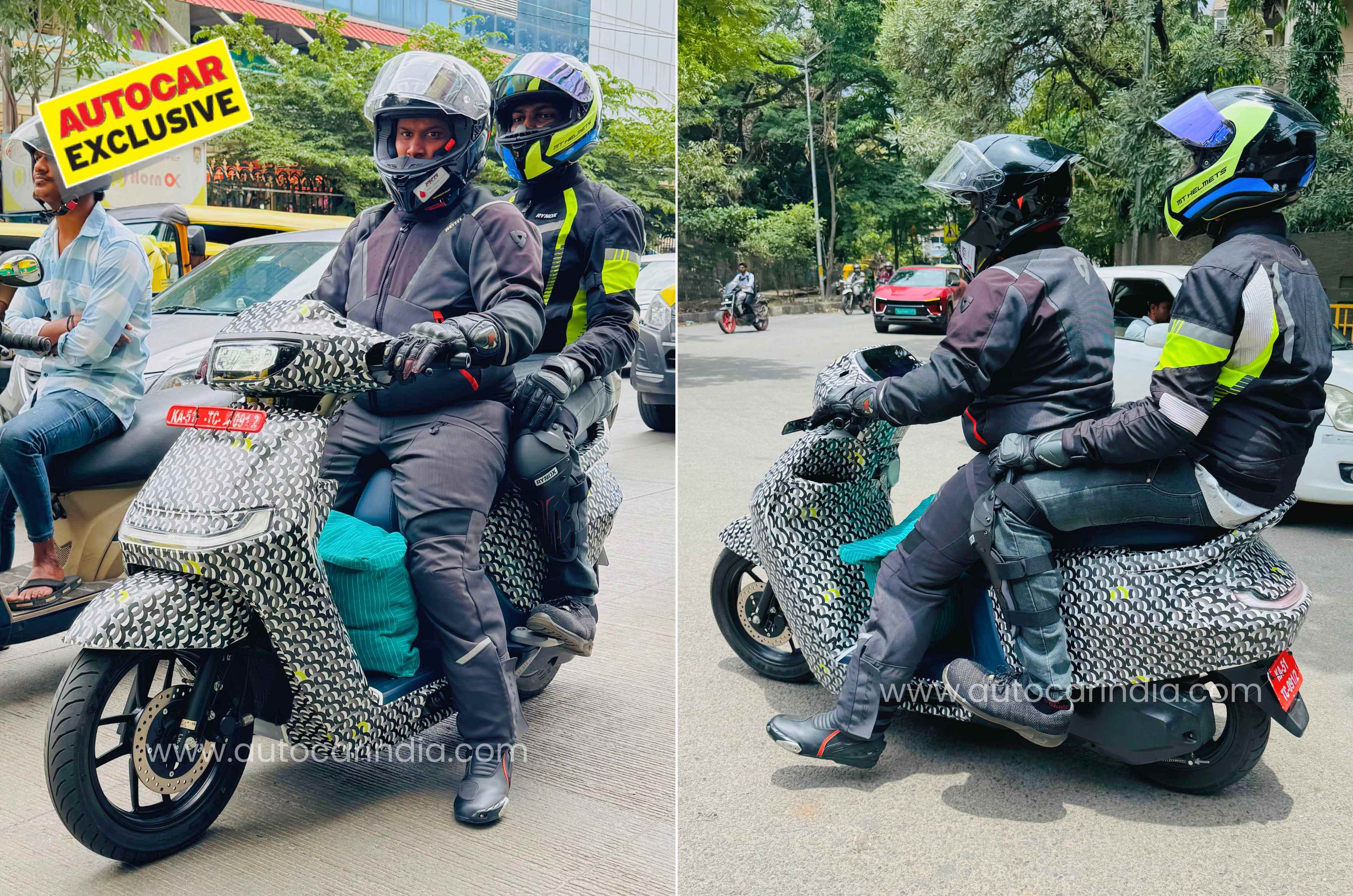
Just yesterday, we learnt that Ather’s upcoming electric scooter will be called the Konarc. Now, the scooter has been spotted testing in Bengaluru ahead of its official launch on August 29.

  1. Ather Konarc launch on August 29
  2. Scooter to feature a swingarm-mounted motor
  3. Will rival TVS iQube and Bajaj Chetak

Ather Konarc: What we can expect

New platform promises easier servicing and longer service intervals

As we’ve learnt from previous sightings of the upcoming scooter, including the assembly line image shared by CEO Tarun Mehta, the latest spy shots once again confirm that the Konarc’s design closely follows the EL01 concept that Ather showcased at Community Day 2025.

The scooter features a handlebar-mounted headlight and a wide LED daytime running light (DRL) on the front apron, giving it a more conventional scooter look compared to the sharper, more angular 450 range. The images also confirm that the Konarc gets an all-new fully digital instrument cluster, but we’ll have to wait until the end of the month to see what features it will offer. That said, Ather has built a reputation for impressive tech, so we’d expect the Konarc to continue that trend.

We also know that the scooter will feature a 14-inch front wheel and a 12-inch rear wheel, with a front disc brake and rear drum brake. The test mule further confirms the use of a swingarm-mounted motor, although its specifications are yet to be revealed. Lastly, the images show that the scooter could comfortably accommodate two adults and features a spacious floorboard.

Expected to be priced in the range of Rs 1 lakh to Rs 1.25 lakh, the Konarc will slot below the Rizta as Ather’s most affordable scooter. At that price point, it will take on the entry-level variants of the TVS iQube and Bajaj Chetak, which currently lead the electric scooter sales charts in India.

Mercedes-AMG reveals entry-spec GT 53 4-door Coupe

Mercedes-AMG reveals entry-spec GT 53 4-door Coupe

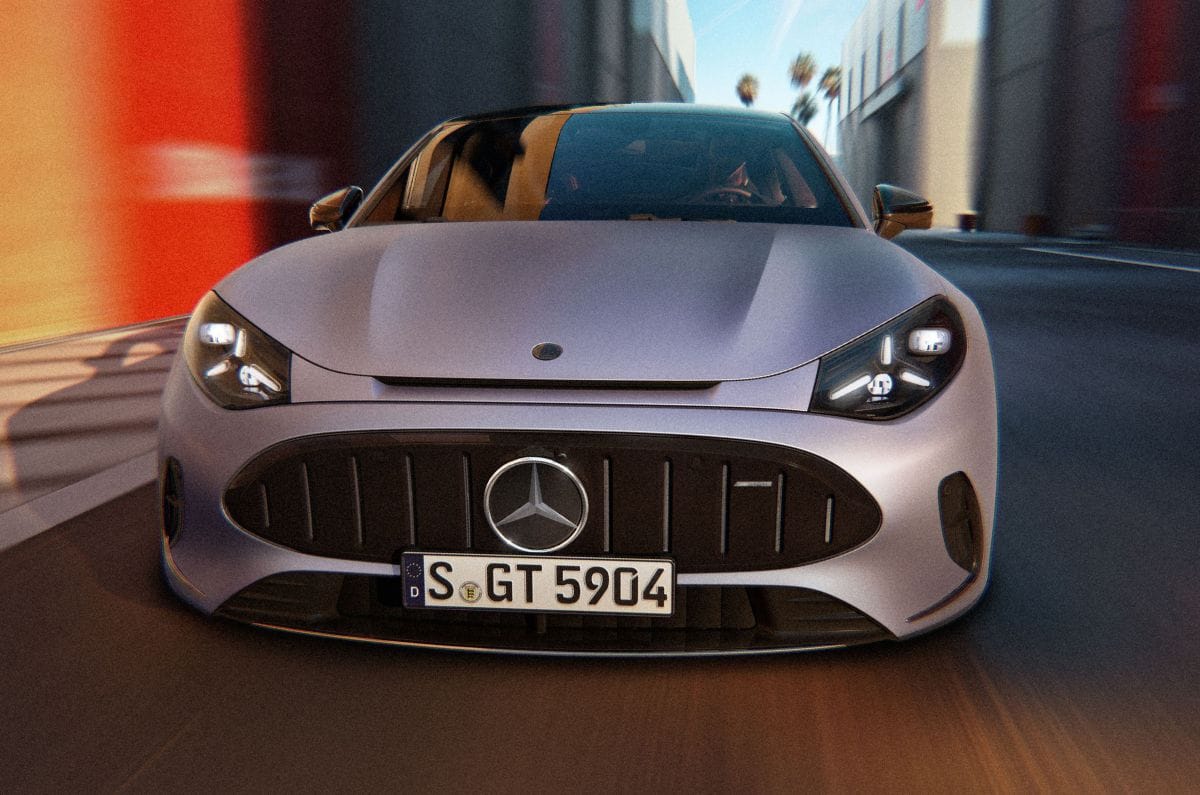
Mercedes-AMG has revealed the new GT 53 4-door Coupe internationally, positioned as the new entry-spec model for the flagship performance nameplate. It sits below the GT 55 and GT 63 variants, which were revealed in May 2026. The new GT 53 variant gets a 106kWh battery with a claimed range of 793km, and a 544hp dual-motor AWD setup with a claimed 0-100kph time of 3.5 seconds. 

  1. Produces 272hp and 625hp less than the GT 55 and GT 63, respectively.
  2. Offers 103km more range than the GT 55, 107km more range than the GT 63.

E3 Trion electric scooter launched at Rs 1 lakh

E3 Trion electric scooter launched at Rs 1 lakh

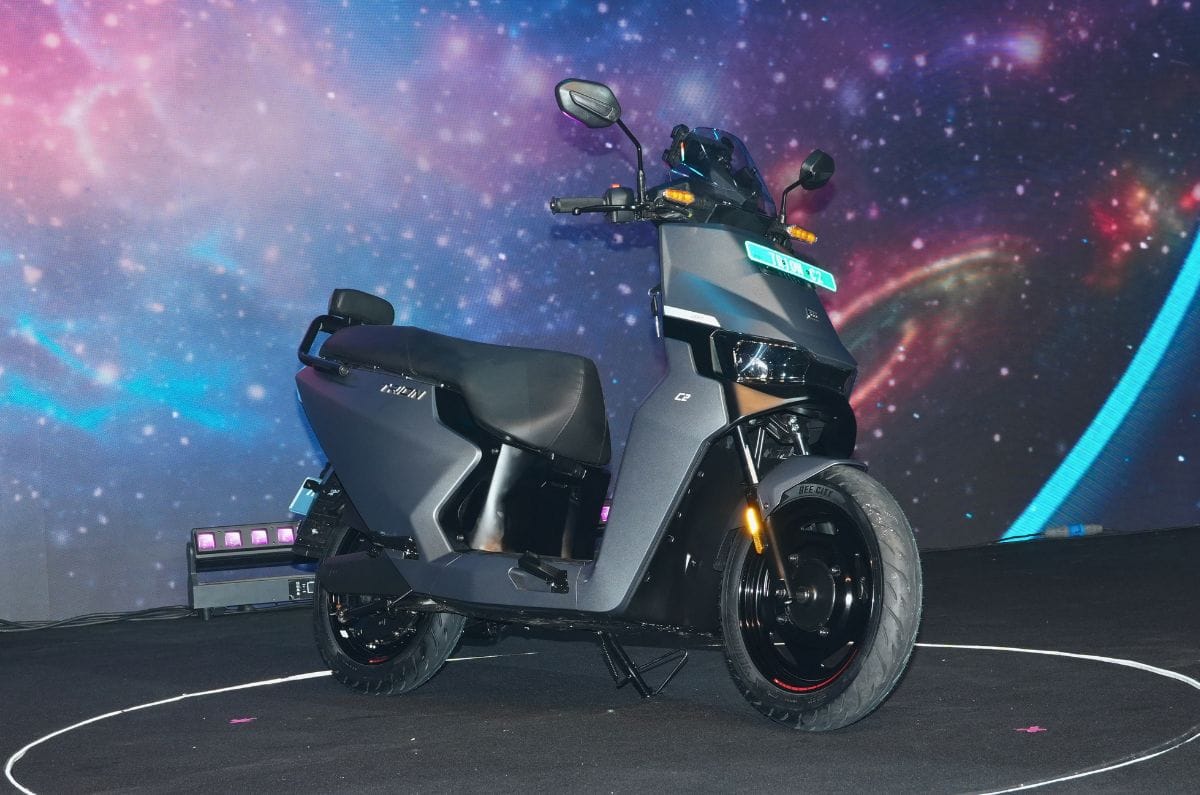
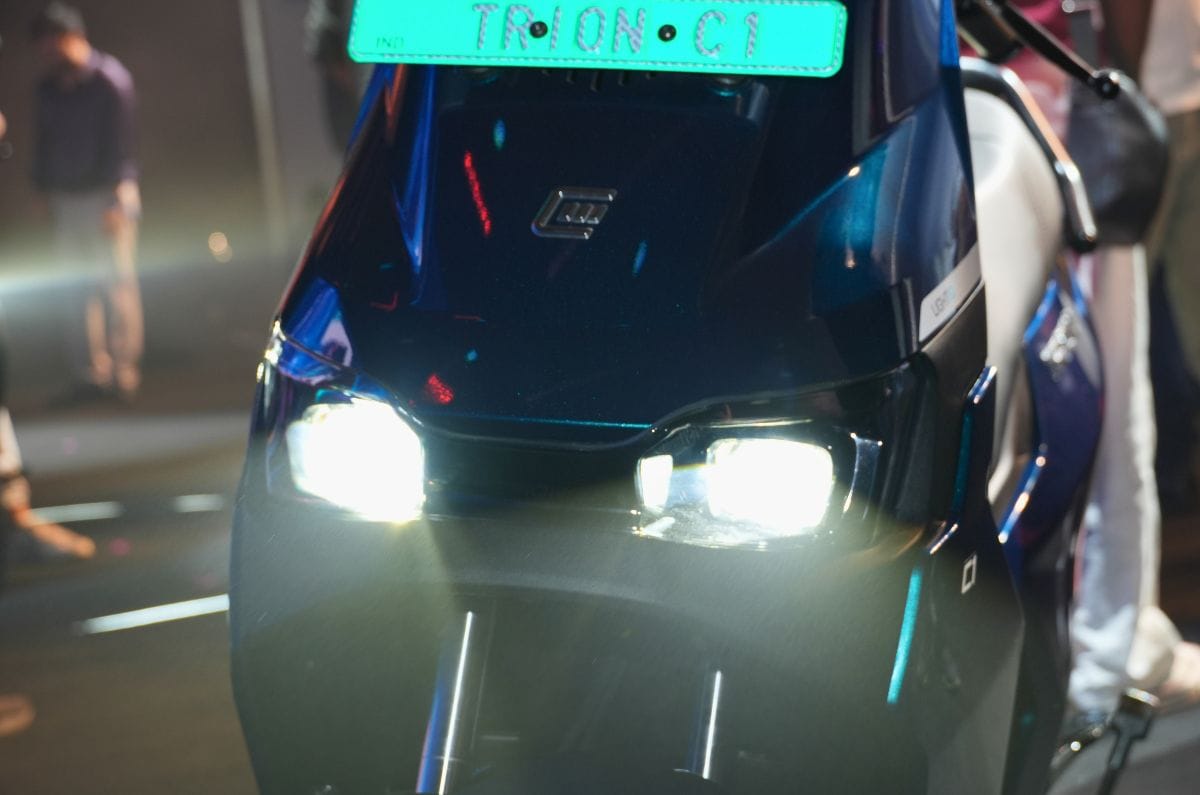
Bengaluru-based electric mobility startup E3 Electric.AI has launched its first electric scooter, the Trion, at an introductory price of Rs 1 lakh (ex-showroom, Bengaluru). The new electric scooter is available in three variants – C1, C1x and C2 – and the company is positioning AI-based predictive features and a modular platform as its key differentiators.

  1. Trion range starts at Rs 1 lakh
  2. Available with 2.3kWh and 3kWh LFP batteries
  3. Top-spec C2 has an 82kph claimed top speed

E3 Trion battery, range and performance

The C1x has a claimed IDC range of 165km

The entry-level Trion C1 uses a removable 2.3kWh LFP battery, while the C1x and C2 get larger, fixed 3kWh LFP units. All three variants use a PMSM hub motor, although E3 has yet to disclose detailed motor output figures.

E3 claims an IDC range of 165km for the C1x. The range figure for the C1 hasn’t been revealed yet. Meanwhile, the range-topping C2 has a claimed top speed of 82kph and can accelerate from 0-40kph in 6 seconds. The C1 and C1x have Eco and Power riding modes, while the C2 adds a Sport mode.

The Trion rides on 14-inch wheels, which are larger than those on most electric scooters currently on sale in India. E3 also says the scooter offers up to 52 litres of combined storage across its underseat compartment, floorboard and glovebox. However, just the underseat storage hasn’t been disclosed. 

E3 Trion features

Its connected suite includes predictive diagnostics, navigation and remote vehicle functions

E3 describes the Trion as India’s first AI-powered intelligent electric scooter. Central to this is what the company calls the E3 CommandCenter, which uses vehicle and cloud data to monitor the scooter and provide predictive diagnostics and service alerts.

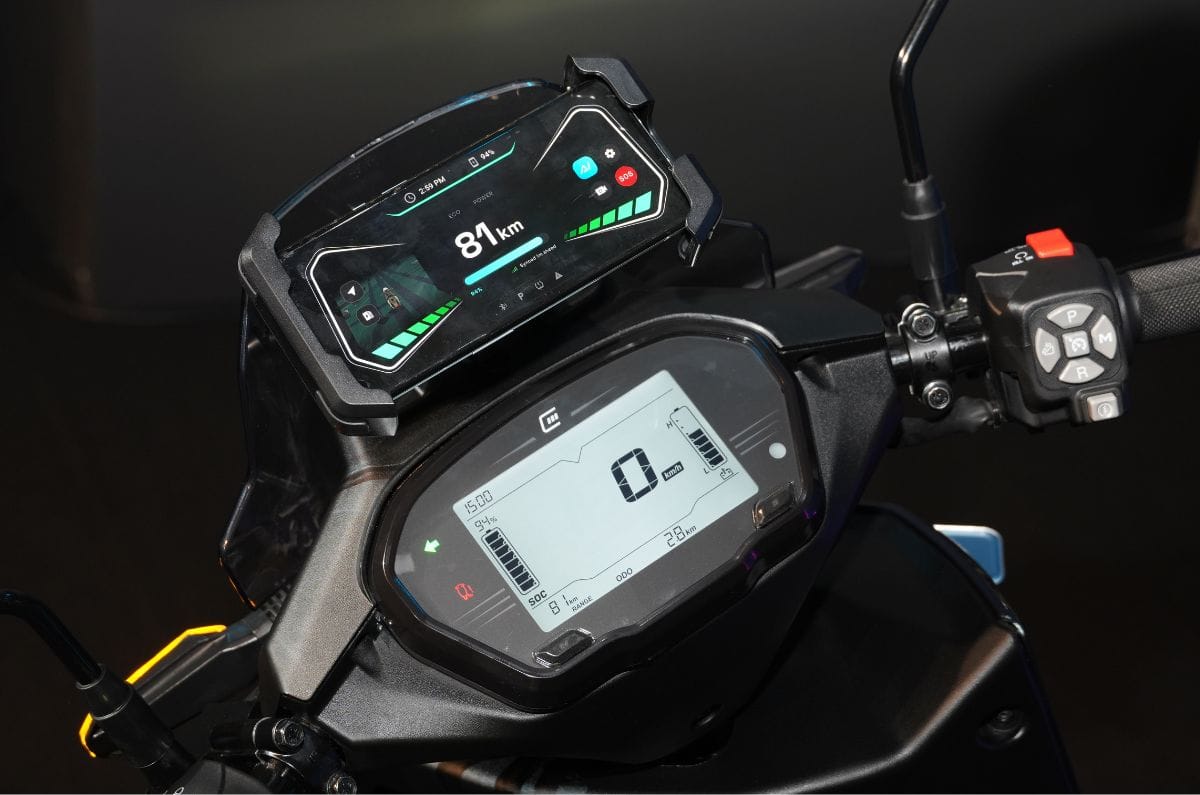
The scooter gets a 5-inch LCD display and connected functionality through the company’s TripSense system, which essentially uses the Rider’s smartphone as a secondary display to provide additional information. Features include navigation, a trip planner with charger locations, remote battery monitoring, vehicle controls, geofencing, SOS assistance and a dashcam. E3 also claims that its AI HealthScan feature can perform vehicle diagnostics in 10 seconds.

The battery system incorporates what E3 calls an AI Digital Twin, which is claimed to provide real-time diagnostics and predictive information about the battery. Both battery options use LFP chemistry.

Other equipment includes dual-projector LED headlights, LED tail-lights and IP67-rated weather protection. The Trion is based on E3’s Triaxisframe modular architecture, which has been designed to accommodate different battery configurations and future derivatives.

E3 Trion price, variants and availability

Pre-bookings have opened in Bengaluru, with more markets to follow

The Trion is available in six colours: Solar Red, Misty Green, Graphite Grey, Nova Blue, Teal Blue and Luna White. Accessories include a backrest, helmet, phone holder and pillion footrest.

The E3 Trion C1 has been introduced at Rs 99,999, while the C1x costs Rs 1.10 lakh and the range-topping C2 is priced at Rs 1.20 lakh. All prices are introductory and ex-showroom, Bengaluru.

Pre-bookings have opened in Bengaluru, and E3 says other markets will follow. The company is also offering an extended warranty of up to eight years or 1 lakh kilometres.

Maruti Victoris gets up to Rs 1.35 lakh discount in August 2026

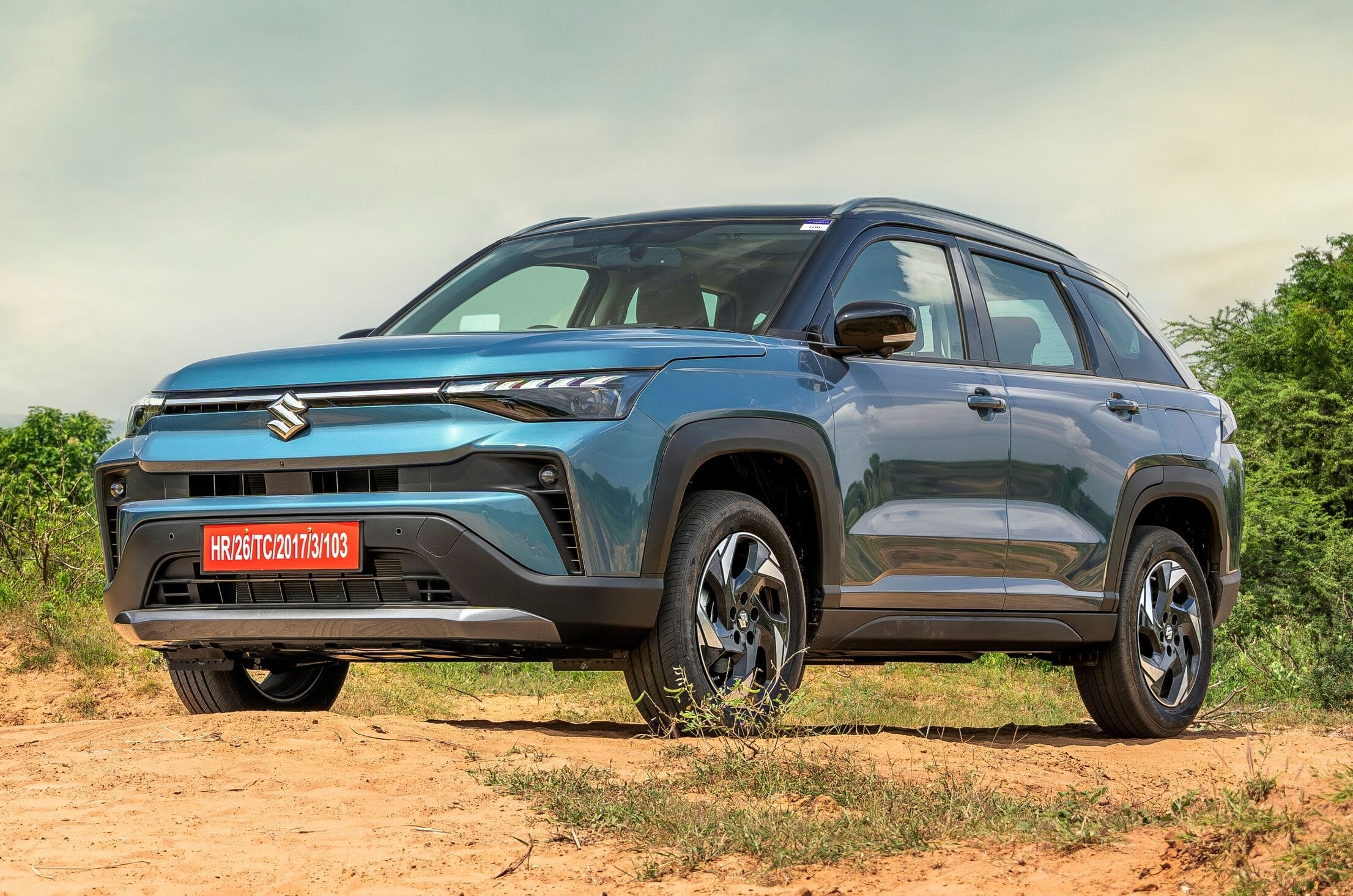
Maruti Victoris

Maruti Suzuki is offering discounts across much of its Arena line-up, including the Victoris, Swift, Wagon R, Alto K10, Celerio, S-Presso and Eeco, in August 2026. The highest benefits are available on the Victoris, with savings of up to Rs 1.35 lakh. These offers comprise cash discounts, exchange or scrappage bonuses, loyalty benefits and institutional discounts, depending on the variant.

Disclaimer: Offers may vary by city and are subject to stock availability. Check with your nearest dealer for exact details.

Maruti Victoris discounts in August 2026

Up to Rs 1.35 lakh off

The Victoris strong hybrid attracts the highest benefits this month, with total discounts of up to Rs 1.35 lakh. These include a Rs 20,000 cash discount, an exchange bonus of up to Rs 75,000 or a Rs 45,000 scrappage bonus, a Rs 30,000 loyalty upgrade bonus and a Rs 10,000 institutional discount.

Petrol and CNG variants, meanwhile, are available with benefits of up to Rs 85,000. Both are eligible for an exchange bonus of up to Rs 55,000, while customers opting for the scrappage scheme can avail of benefits of up to Rs 25,000 on petrol variants and Rs 20,000 on CNG variants. These variants also receive a Rs 20,000 loyalty upgrade bonus and a Rs 10,000 institutional discount.

Priced between Rs 10.50 lakh and Rs 19.99 lakh, the Victoris rivals the Hyundai Creta, Kia Seltos, Tata Sierra and Honda Elevate.

Maruti Wagon R discounts in August 2026

Up to Rs 52,500 off

The Wagon R is available with benefits of up to Rs 52,500 across its petrol and CNG range. Buyers can avail of a Rs 25,000 cash discount, an exchange bonus of up to Rs 25,000 or a Rs 10,000 scrappage bonus, along with a Rs 2,500 institutional discount.

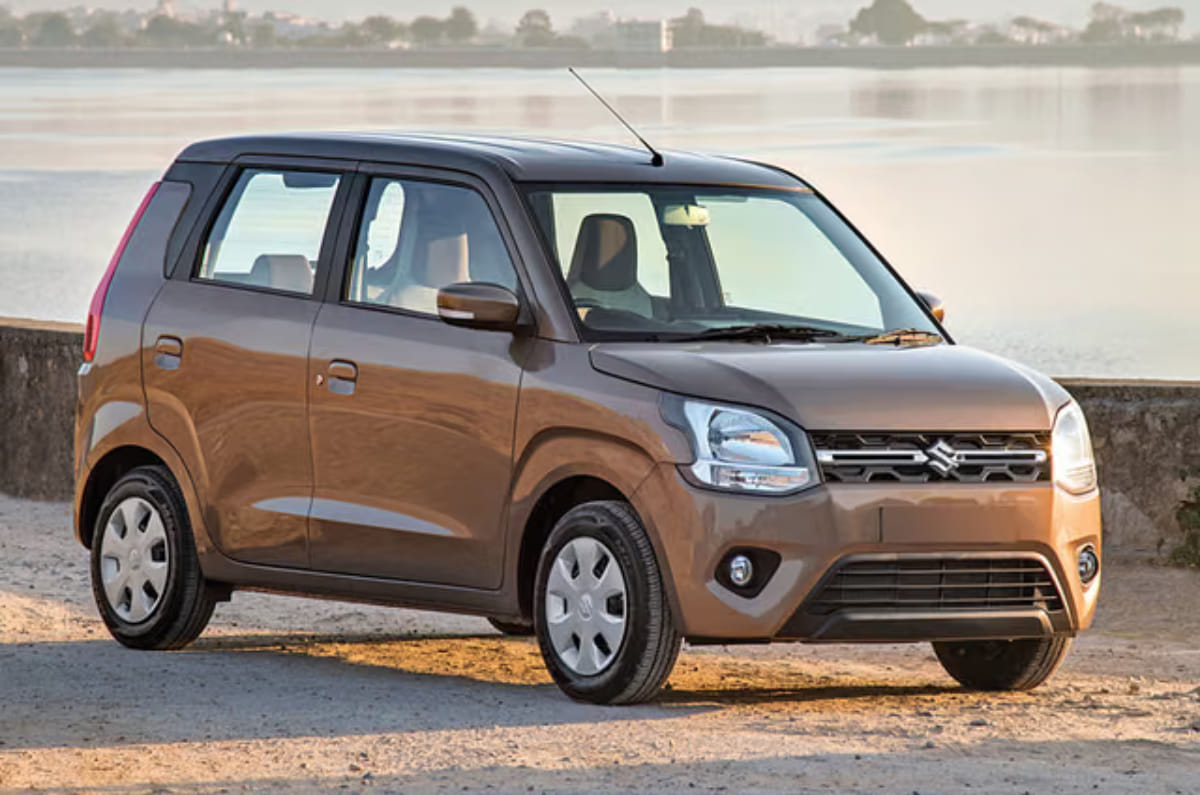
Priced between Rs 4.99 lakh and Rs 7.24 lakh, the Wagon R rivals the Tata Tiago and Citroen C3.

Maruti Alto K10 discounts in August 2026

Up to Rs 52,500 off

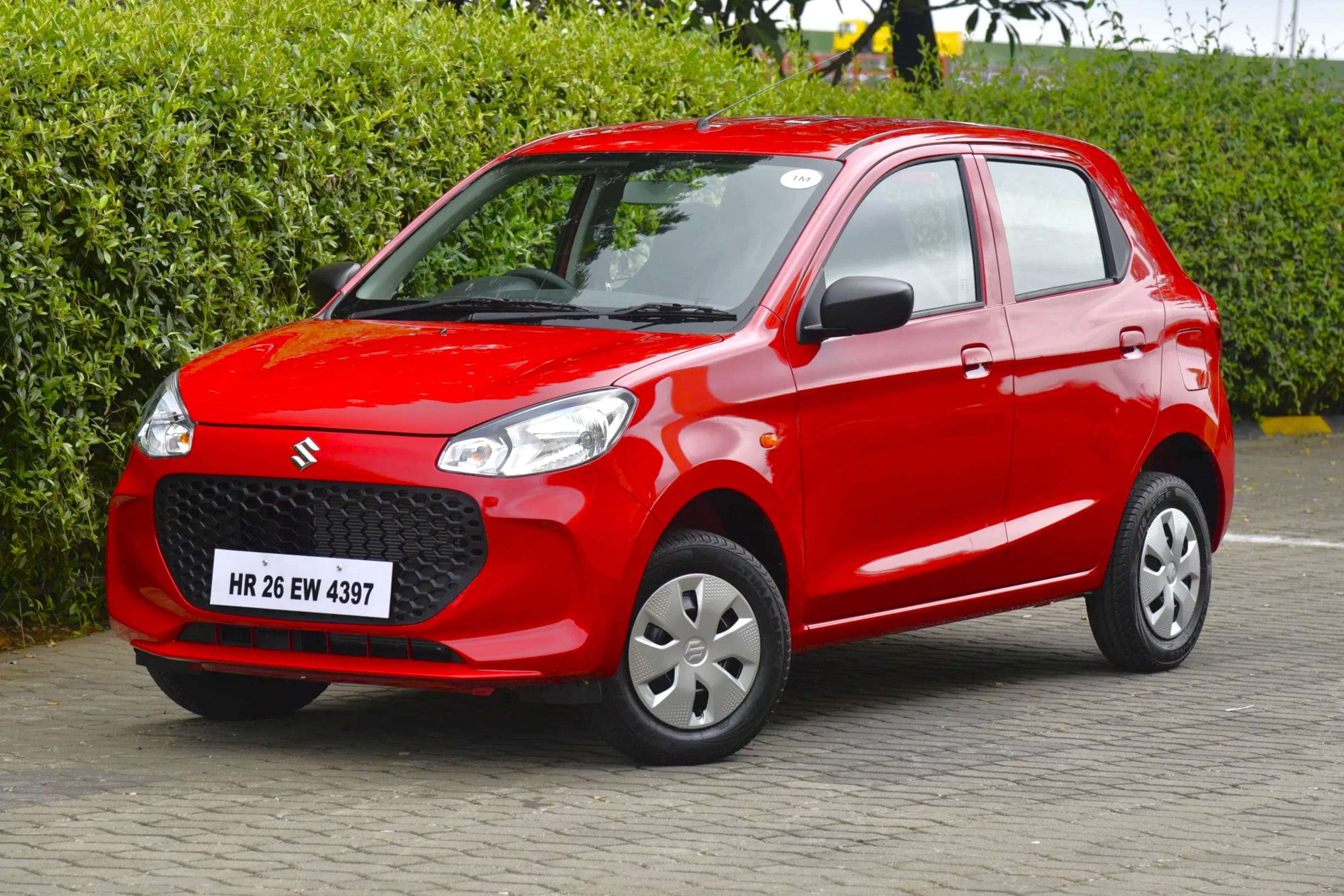
In the Alto K10 line-up, the LXi petrol variant gets the highest benefits of Rs 52,500, while other petrol variants are available with discounts of up to Rs 42,500. Benefits on CNG variants are capped at Rs 37,500.

Depending on the variant, buyers can avail of a cash discount of up to Rs 25,000, an exchange bonus of up to Rs 25,000 or a Rs 10,000 scrappage bonus, and a Rs 2,500 institutional discount. This rival to the Renault Kwid is priced between Rs 3.70 lakh and Rs 5.45 lakh.

Maruti Celerio discounts in August 2026

Up to Rs 42,500 off

Benefits of up to Rs 42,500 are available across the Celerio range this month. The offer includes a Rs 15,000 cash discount, an exchange bonus of up to Rs 25,000 or a Rs 10,000 scrappage bonus, along with a Rs 2,500 institutional discount. A rival to the Tata Tiago and Renault Kwid, the Celerio has a starting price of Rs 4.70 lakh and costs Rs 6.73 lakh for the top-spec variant.

Maruti Eeco discounts in August 2026

Up to Rs 42,500 off

Petrol variants of the Eeco receive benefits of up to Rs 42,500, while CNG versions are eligible for discounts of up to Rs 32,500. Petrol models get a Rs 15,000 cash discount, whereas CNG variants receive Rs 5,000. Both are offered with an exchange bonus of up to Rs 25,000, along with a Rs 2,500 institutional discount. The Eeco is priced between Rs 5.23 lakh and Rs 6.41 lakh.

Maruti Swift discounts in August 2026

Up to Rs 40,000 off

Petrol variants of the Swift are available with benefits of up to Rs 40,000, including a Rs 10,000 cash discount, an exchange bonus of up to Rs 25,000 or a Rs 10,000 scrappage bonus, and a Rs 5,000 institutional discount. CNG variants receive lower benefits of up to Rs 30,000, as they are not eligible for a cash discount this month.

The Swift is priced between Rs 5.79 lakh and Rs 8.69 lakh and rivals the Hyundai Grand i10 Nios and Tata Tiago.

Maruti S-Presso discounts in August 2026

Up to Rs 37,500 off

All variants of the S-Presso are being offered with benefits of up to Rs 37,500. Buyers can avail of a Rs 10,000 cash discount, an exchange bonus of up to Rs 25,000 or a Rs 10,000 scrappage bonus, and a Rs 2,500 institutional discount. Maruti’s most affordable offering currently, the S-Presso is priced from Rs 3.50 lakh to Rs 5.25 lakh and rivals the Renault Kwid and its stablemate Alto K10.

All prices are ex-showroom, India.