What to expect from Maruti Baleno facelift ahead of September 5 launch

What to expect from Maruti Baleno facelift ahead of September 5 launch
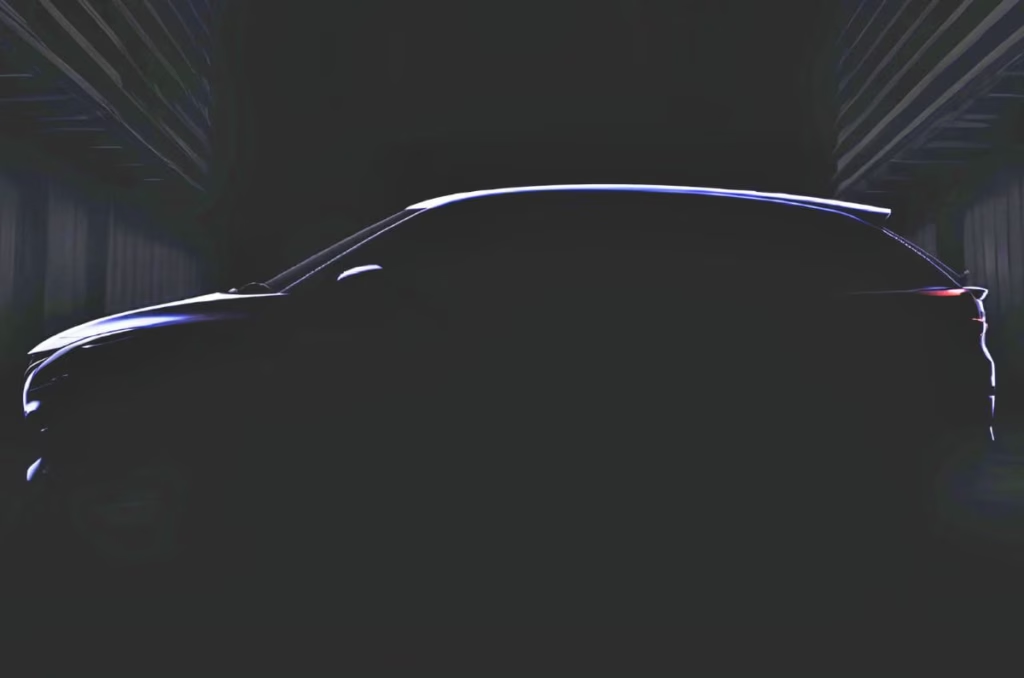
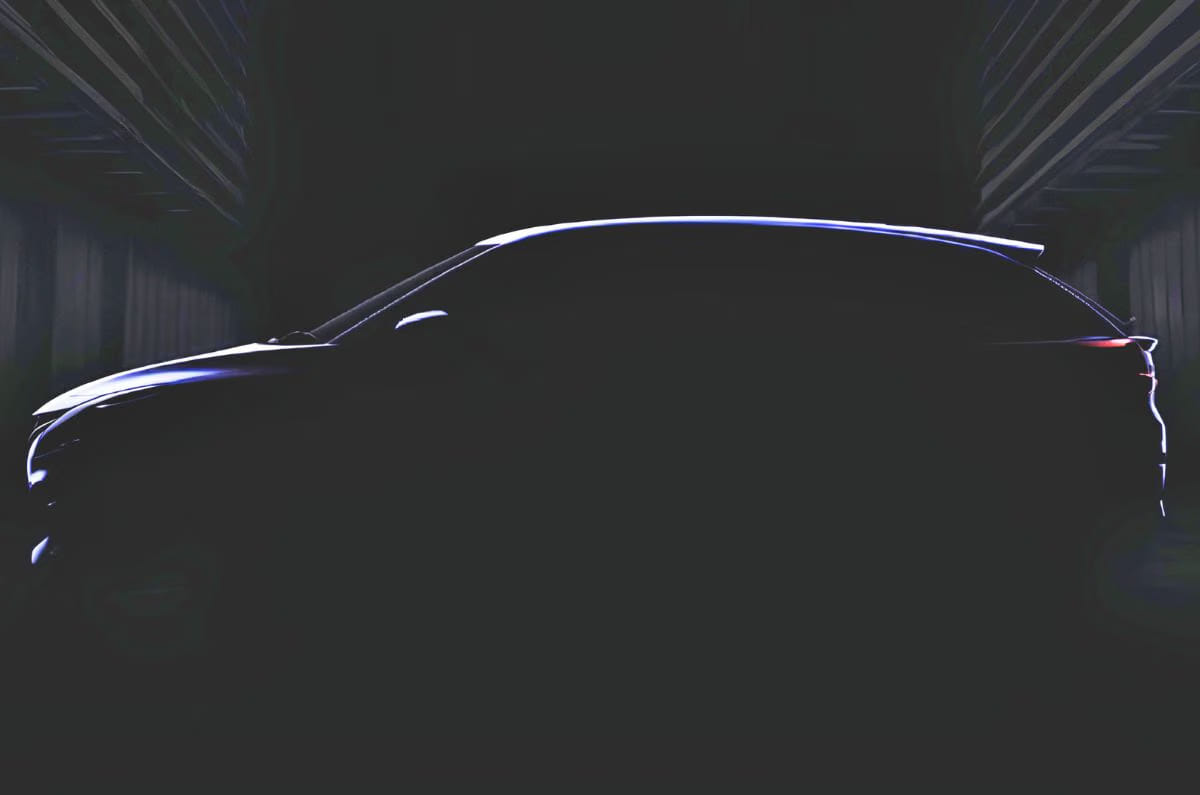
Maruti Baleno facelift silhouette

Maruti Suzuki is slated to launch the Baleno facelift on September 5, 2026. This will be the first update to the second-gen Baleno, which was introduced in 2022. Ahead of its arrival, here’s everything you can expect from the facelift of Maruti’s premium hatchback. 

1. What exterior updates are expected on the Maruti Baleno facelift?

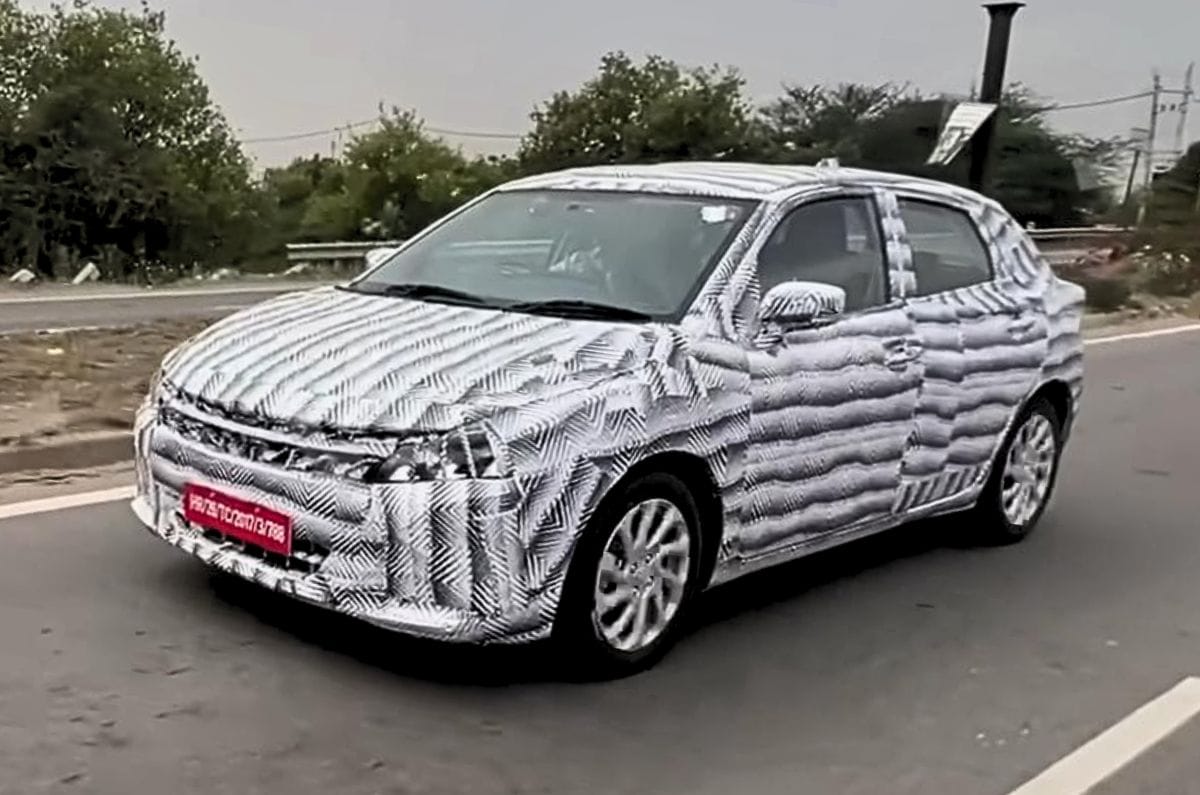
Credit: Harsh Vlogs via YouTube

Heavily camouflaged prototypes of the upcoming Baleno facelift have been spied previously on our roads. Test mules hint at what the Baleno facelift could get in terms of design. While the overall silhouette will remain the same, the facelift is likely to have revisions to the grille, bumpers, and alloy wheels. 

2. What interior updates are expected on the Maruti Baleno facelift?

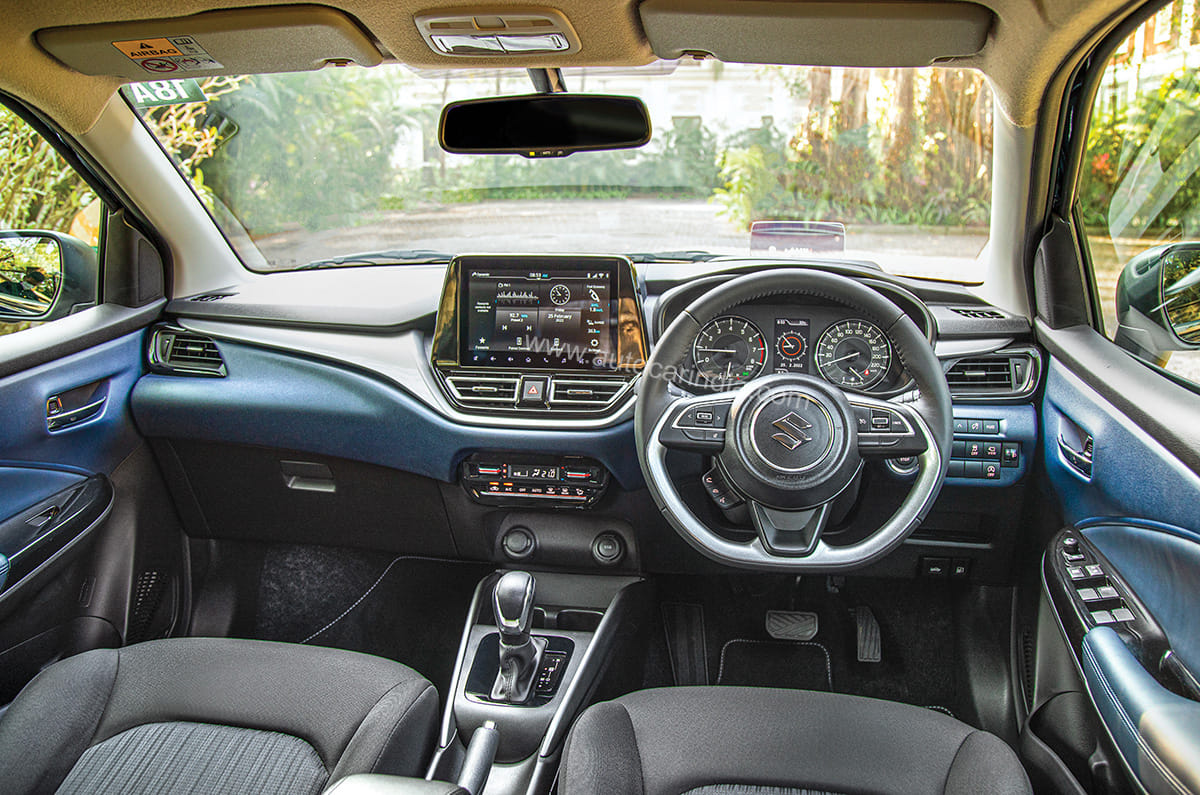
Current Maruti Baleno interior used for representation.

On the inside, the Baleno facelift is expected to retain the cabin layout of the current model. This includes a layered dashboard look with a freestanding infotainment system sitting atop the dash, trapezoidal AC vents, physical knobs for HVAC controls and a flat-bottom steering wheel. However, Maruti could introduce updated trim materials, seat upholstery and a new colour scheme.

3. What features will the Maruti Baleno facelift get?

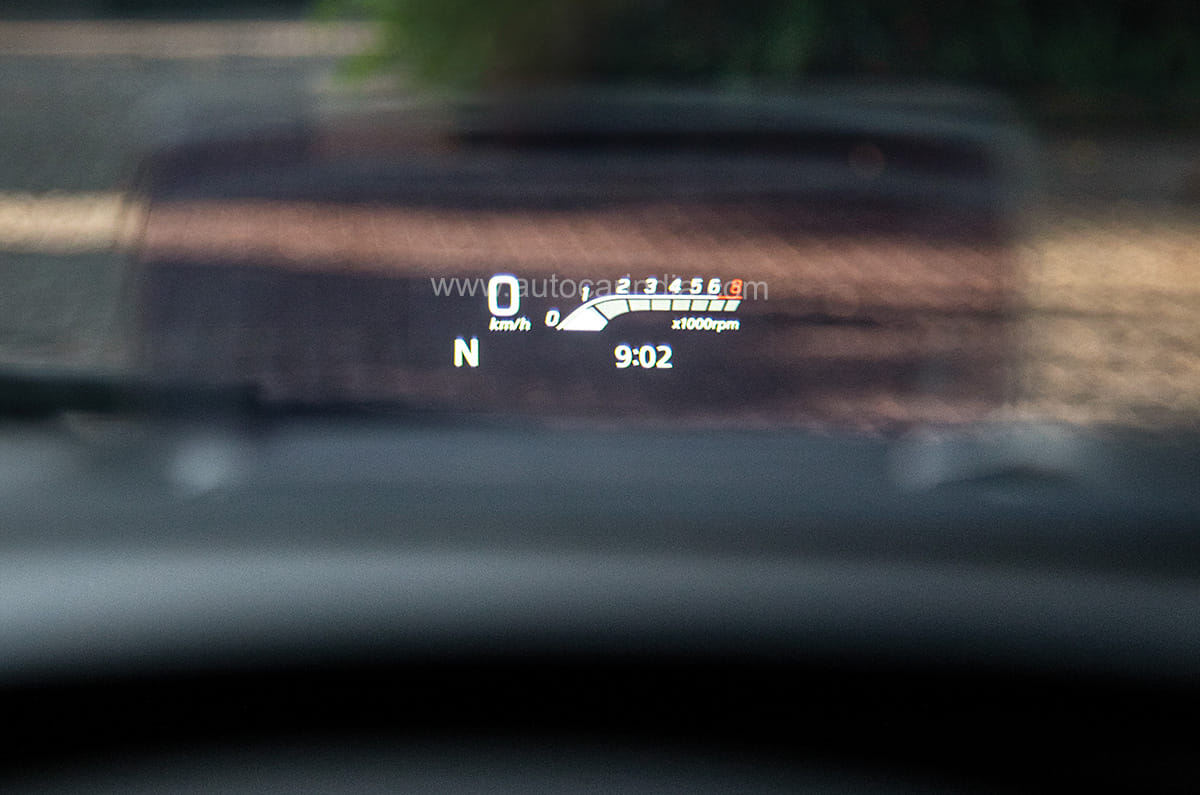
Current Baleno’s head-up display used for representation.

With the facelift, Maruti is expected to equip the Baleno with a single-pane sunroof and ambient lighting, features that rivals already offer. On the other hand, it will retain features from the current version, which include a 9-inch infotainment system with Apple CarPlay and Android Auto, a head-up display (HUD), 6-speaker Arkamys audio system, voice assistant, OTA updates, auto-dimming IRVM, keyless entry, automatic climate control, connected car tech and a 360-degree camera.

4. What powertrain options is the Maruti Baleno facelift expected to have?

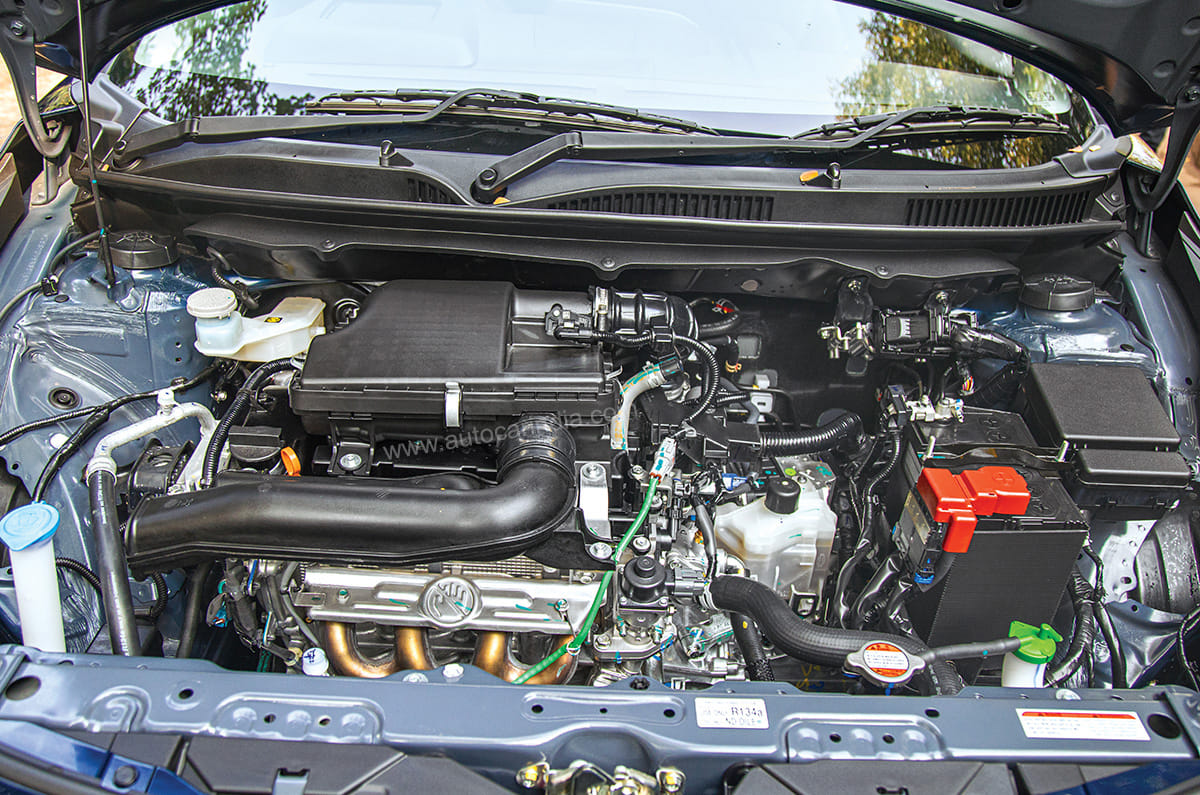
Current Maruti Baleno 1.2-litre engine used for representation

The Maruti Baleno facelift is expected to retain the current version’s powertrain option. This includes a 1.2-litre naturally aspirated petrol engine developing 90hp and 113Nm paired to either a 5-speed manual or AMT gearbox. A factory-fitted CNG kit can be paired to this engine, which develops 78hp and 99Nm in CNG mode, and is paired solely with a 5-speed manual.

5. What is the expected price of the Maruti Baleno facelift?

Updates to the Baleno facelift are expected to make it slightly pricier than the current version. For reference, the Baleno currently has a price tag of Rs 5.99 lakh to Rs 9.48 lakh (ex-showroom). It will take on the likes of the Hyundai i20, Tata Altroz and the Toyota Glanza.

Genesis reveals flagship GV90 EV as its most luxurious model yet

Genesis reveals flagship GV90 EV as its most luxurious model yet

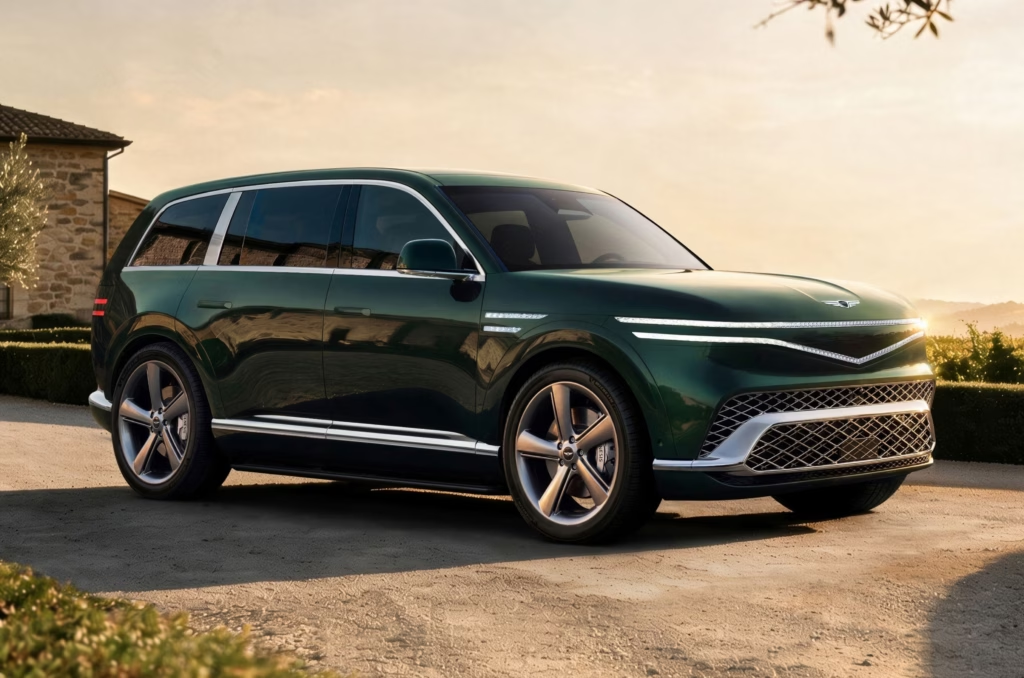
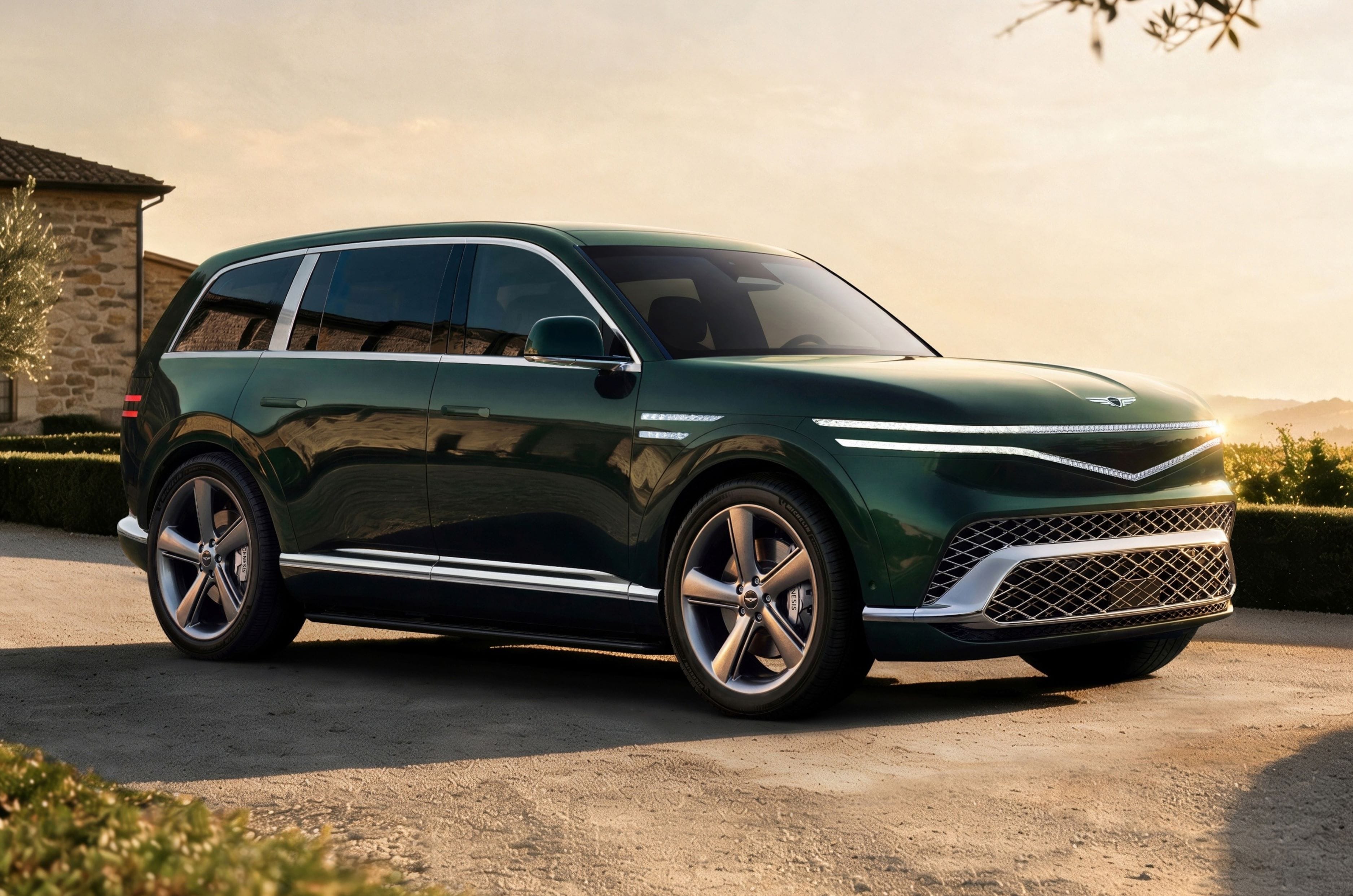
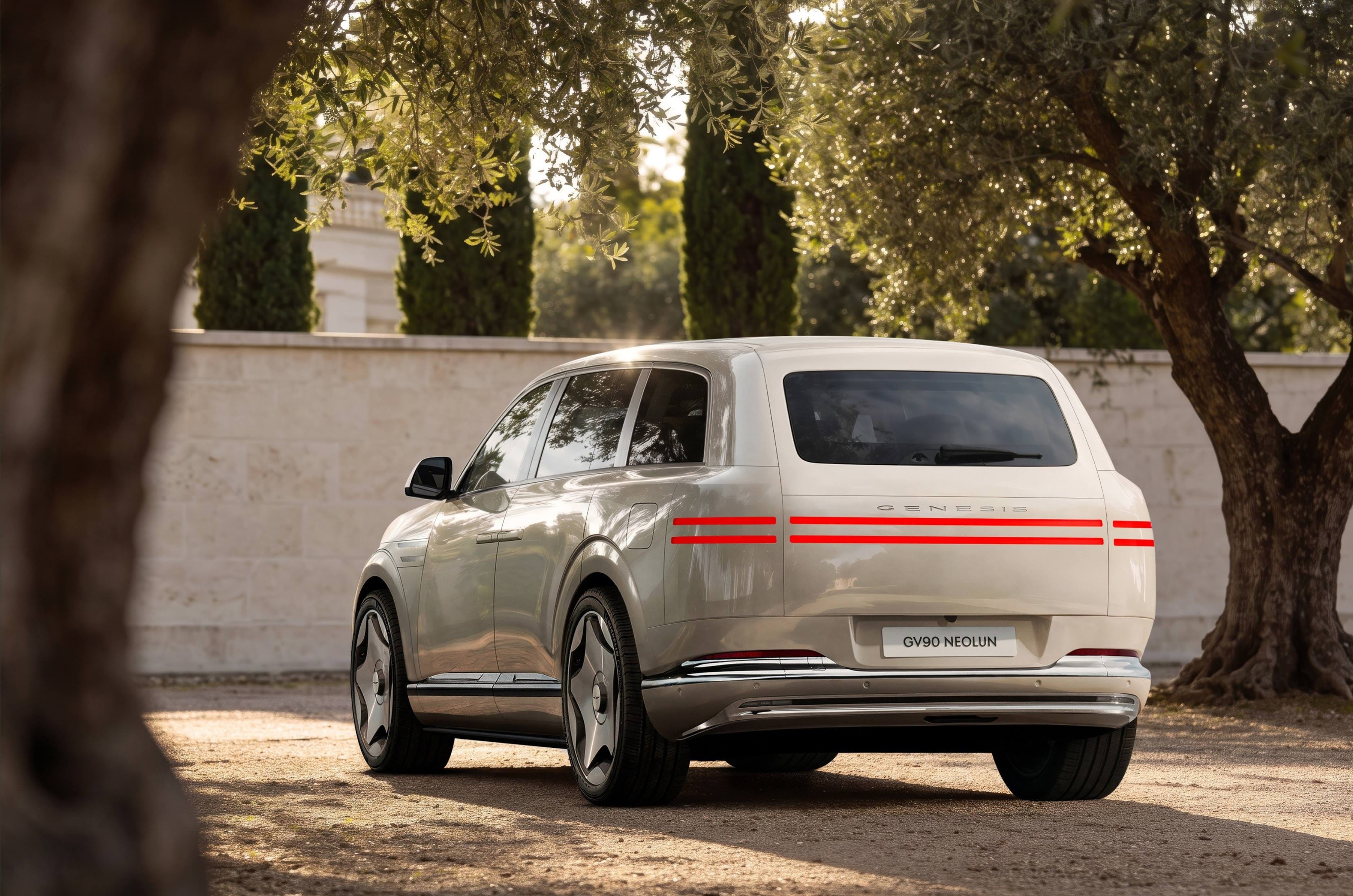
Genesis has revealed the GV90 EV as its new flagship SUV. Showcased in its production-ready avatar, the GV90 is the largest and most luxurious Genesis model to date. It is based on the 2024 Neolun Concept (Neolun translates to ‘New Moon’) and retains most of the concept’s exterior design, but sports a more polished cabin. It gets the largest-ever battery on any Hyundai model yet, and a dual-motor AWD setup.

  1. 5.3-metre length is closer to the Rolls-Royce Cullinan
  2. 123.5kWh battery offers around 500km range
  3. Dual-motor AWD setup produces 544hp, 800Nm
  4. 4-seater variant gets coach doors, hidden B-pillar

Genesis is offering the GV90 globally in two versions: the standard GV90 and the GV90 Neolun, with 7- and 4-seater layouts, respectively.

Genesis GV90 powertrain details

Producing 544hp and 800Nm, it is the most-powerful EV for the Hyundai group yet

The Genesis GV90 eSUV is offered with a 123.5kWh battery, the biggest ever for the larger Hyundai group, which offers around 500km range (as per the manufacturer’s internal testing). The battery powers dual electric motors, which deliver a combined output of 544hp and 800Nm, the most of any EV in the larger Hyundai group. The battery pack can be charged from 10-80 percent in 22 minutes using a 350kW DC fast charger. 

Each motor of the GV90 gets its own e-LSD (limited-slip differential), another first for the Hyundai group, through which “power is efficiently supplied to all four wheels during high-speed cornering for agile handling”. It also enhances the EV’s grip on snowy, rainy or uneven roads. The GV90 also gets multi-chamber air suspension that adjusts ride height to road conditions, and dual-valve adaptive dampers that soften or stiffen for a pliant ride in all situations. The EV gets rear-axle steering, enabling the rear wheels to turn up to five degrees.

What Brazil’s 50-year ethanol experiment tells us

What Brazil’s 50-year ethanol experiment tells us
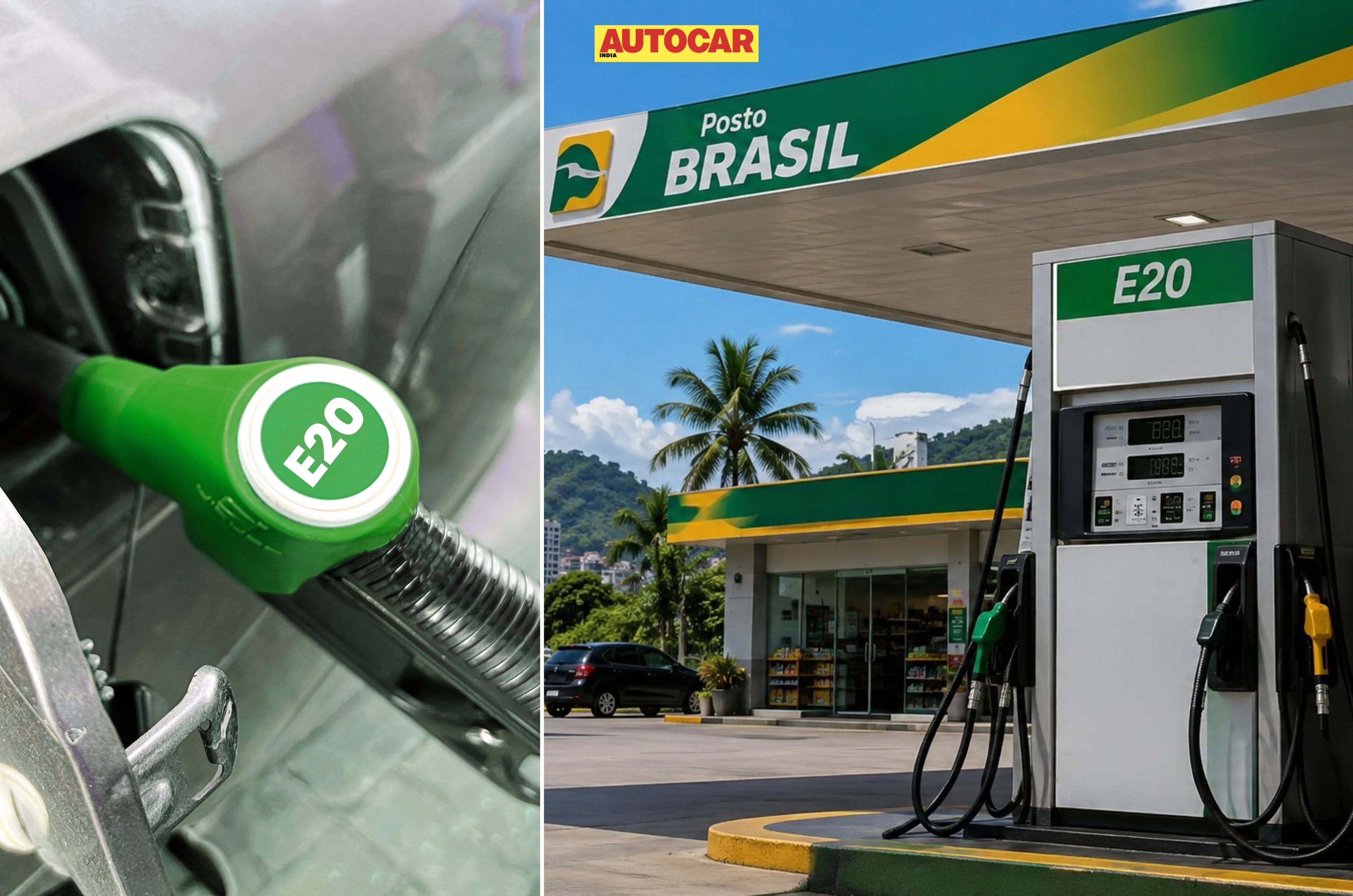
E20 fuel in Brazil

The forced introduction of E20 has set social media ablaze, with outraged car and bike owners complaining bitterly of damage to their vehicles and a drop in fuel efficiency. The anger isn’t irrational. The efficiency drop is real and, going by Autocar India’s own tests, larger than the figures the government itself has acknowledged. 

But while there’s no debate over the mileage penalty, the bigger fear is long-term damage to the vast majority of cars on our roads that are not E20-compliant. It’s a worry fanned by social media and by the way the government has handled the concern. Field trials conducted by the Automotive Research Association of India (ARAI) before the rollout reportedly found no major compatibility issues even in legacy vehicles. 

However, that report has never been made public, which has only deepened suspicion among car and bike owners. Most damaging of all was the Society of Indian Automobile Manufacturers (SIAM) formally flagging alarming levels of contamination in a letter it was later forced to publicly withdraw. Crucially, SIAM’s concern was contaminated fuel carrying worrying levels of chlorine, not the blend itself. That distinction has been lost in the noise, and it sits at the heart of the confusion, even panic, among customers fearing the worst.

So, is E20 the menace it is being made out to be, or is fuel contamination the bigger issue? The fact is, there is no workshop epidemic yet, though sceptics will argue it’s only a matter of time before engines start giving trouble. What social media is amplifying right now is the theoretical damage of a higher blend. That doesn’t make the concerns baseless, since long-term effects take years to show, but the truth is that panic and outrage are currently running well ahead of the evidence. Which makes it worth studying the one country that actually has the evidence, gathered over 50 years: Brazil.

The Brazil experience

If you think India’s leap from E10 to E20 was abrupt, consider what happened there. In November 1975, squeezed by the oil crisis and desperate to protect its foreign currency reserves, the Brazilian government launched Proalcool and shoved its motorists in at the deep end. “The blends with gasoline started at 20 percent. It went very soon up to 30 percent, and it was imposed by the government,” says Peter Gilbert, head of Operational Marketing and Customer Tech Services at Infineum Brazil, a fuel and lubricant additive specialist company whose business, it should be said, depends on ethanol-blended fuels working well. 

The documented history broadly bears him out, with one point worth noting: there was a brief low-blend ramp-up with E10, but that lasted roughly two to three years against the five decades of E20 and above since. Compare that with India, which took nearly two decades from its 2003 blending programme to reach E10. And like India, Brazil never kept an escape hatch. “There was no E0 when E20 was introduced,” says Gilbert, and there is none today: the mandated blend has since climbed through 25, 27 and 30 percent, and since August this year, all pumps in Brazil, including the super-premium ones, dispense E32.

But what is telling is the kind of cars running around on E20 in the late 1970s. Back then, cars were mainly carburetted with no fuel injection, no closed-loop control and no lambda sensors – machinery far cruder than even the oldest E10-era car on Indian roads today. So what broke?

According to Gilbert, remarkably little that could be pinned on E20 itself. “There weren’t any major issues reported,” he says. “There were issues related to the materials of the fuel system, the gaskets and the rubbers used at that time, but that has changed.”

His colleague Leandro Benvenutti, Infineum’s product manager for Latin America, says the trouble in 1970s and 1980s Brazil came almost entirely from dedicated alcohol cars running pure hydrous ethanol (E100), not from petrol cars on E20. “Everything we can remember from that time is related to these alcohol vehicles, not to the gasoline vehicles using E20,” he says. Carburettor corrosion, clogged jets, perished hoses and O-rings: all of it, in their experience, traced back to E100. “If there were problems in the other [non-flex fuel] vehicles, they were really not important at all.”

A caveat both experts volunteer: 1970s Brazil is not 2020s India, and the comparison is not like-for-like. “It’s difficult to correlate to vehicles today,” Gilbert admits. What the Brazilian record offers is not proof that nothing will go wrong here, but a large, long-running natural experiment in which the E20-specific damage everyone feared did not show up.

So what about India’s E10 cars?

Asked what he’d tell a worried Indian owner running an E10-era car on E20, Benvenutti replies, “There is no reason for panic. We don’t expect any immediate impact.” Note the word immediate. The honest answer regarding the long term is unknown, and to their credit, neither of Infineum’s experts pretends otherwise. Over years, rubber components in cars whose materials weren’t specified for E20 may embrittle sooner, and Benvenutti concedes older cars and motorcycles “may see issues with time”. But complicating the issue is attribution – what is due to ethanol and what is not. Rubber parts perish with pure petrol, too. 

Benvenutti recalls his father’s flex-fuel car whose fuel hose dried out and leaked after years of use. “Was that really caused by the ethanol, or was that something going to happen anyway after five or ten years?” If there is a cost to owners, in other words, it is most likely a shortened life for cheap parts such as hoses, gaskets and O-rings rather than failures of expensive ones. “The risk for the metal components, the hard components like valves, injectors and pumps, is much lower if you maintain this product within spec,” explains Gilbert. That last clause matters, and we’ll revisit it.

On material margins, Benvenutti is careful not to overclaim. He believes manufacturers build in buffers. “If I am developing an engine, I would prefer to keep some buffer,” he remarks but adds that he is not a materials specialist and that the buffer may mean a component lasting eight years instead of 10. Whether every manufacturer selling in India engineered that headroom is a question only the manufacturers can answer.

Calibration is key

The more concrete near-term issue isn’t corrosion. It’s calibration. E20 carries less energy per litre, so the engine management system must inject more fuel to keep the mixture correct. Most closed-loop systems that have been around since the move to BS-II fuel-injection in 2000 should easily adapt, but if an older car’s injectors or fuel-trim maps run out of adjustment range, the mixture runs lean. The tell-tale? “Probably the most impactful result will be a light on your cluster. You will see the malfunction indication light on,” says Benvenutti. If your check engine light comes on after the switch to E20, that’s your car telling you it can’t fully compensate. Whether yours will is a manufacturer-by-manufacturer, even model-by-model chance.

Then there is Brazil’s import experience, which is genuinely striking and even reassuring. European and Japanese cars homologated for E10 markets are sold in Brazil and run on E30, now E32, every day. “I haven’t seen any report on issues with those engines,” says Gilbert. And there is no exemption at the top of the market. With no E0 sold anywhere in the country, every Ferrari, Lamborghini and Porsche in Brazil fills up on E32; even the super-premium pumps dispense it. Ask whether a supercar owner can escape the blend, and the answer is emphatic. “No way,” says Benvenutti. 

Low volumes are no excuse to offer a special blend, unlike in India, where supercars have the safety net of a high-priced E0 premium fuel. Benvenutti points out that even a manufacturer bringing in a handful of sports cars must ensure the car is fit for the market’s fuel. “I would not imagine any OEM bringing one unit and selling it if that’s not prepared for that market.” The one genuine weak spot he flags concerns independent, grey-market imports, which arrive exactly as built for the European or Japanese market with no local adaptation. Much of ethanol’s impact is based on anecdotal data rather than any controlled study, but it is decades of anecdotes across millions of cars, from hatchbacks to hypercars.

How much evidence of ethanol impact is there?

Enough of it to take seriously. Start with a fact that rarely features in the Indian debate: Brazil is not a country of new cars. Punishing taxes on new vehicles and tight credit mean Brazilians hold on to their cars for a long time, and the tax system actively rewards them for doing so. Most states have long exempted the oldest cars from the annual IPVA vehicle tax, and a constitutional amendment now makes that exemption national for anything 20 years or older. The result, as per the Brazilian auto components association Sindipeças, is a fleet averaging over 11 years old, with 7.3 million vehicles past 16 years and some 220,000 past 25. Every one of them fills up on E27-to-E32 petrol because nothing else is sold. No doubt, much of this ageing fleet is flex-fuel, engineered from birth to drink anything up to E100, so their survival may seem overplayed, but only up to a point. 

Flex-fuel technology arrived in Brazil only in 2003 with the Volkswagen Golf, which means the country’s first two and a half decades on E20-and-higher blends were served entirely by ordinary petrol cars, and the earliest of those were designed for no ethanol whatsoever; the blend was simply imposed on them, which is exactly what’s happening in India today. The cars that predate the flex era and the imported non-flex cars still running on E32 haven’t seen a trend of ethanol casualties. There is no scrapyard full of ethanol victims; the old cars are still on the road.

Then there’s the formal testing. Before Brazil raised its mandate from E27 to E30 in August 2025, a working group under the country’s Ministry of Mines and Energy ran durability tests on vehicles representative of the national fleet. ANFAVEA, Brazil’s association of vehicle manufacturers (the counterpart to our SIAM), reported that the tests showed no adverse effects on engine durability or performance, with one telling condition attached: provided fuel quality standards are met. Independently, a year-long University of Nebraska-Lincoln study ran E30 in ordinary non-flex-fuel state government vehicles in the US and found no adverse effects either. None of this is a guarantee for every ageing car in India, but it is consistent, multi-source evidence that corroborates Infineum’s findings.

The dangerous C word 

So is the all-clear justified? Only conditionally, and the condition is the same one ANFAVEA attached: clean fuel made and blended to specification. And this is where India’s real problem appears to lie. If genuine damage is occurring in Indian fuel systems, the evidence points not to the ethanol blend but to what’s riding along with it: chloride contamination picked up during the production process and from storage tanks. SIAM’s now-withdrawn letter reported chloride levels of up to 500 ppm in samples from vehicle tanks and 350 ppm at retail outlets, figures the petroleum ministry has vehemently contested. Ministry officials say their own testing found high chlorine levels at just two pumps and that plastic sample containers had corrupted some tests and thrown up false readings. Yet, even a fraction of SIAM’s figures would dwarf the 3 ppm the ministry itself treats as the acceptable ceiling. 

Also, 3 ppm is only a guideline. India has yet to mandate BIS limits for chloride in fuel ethanol – something Brazil has enforced by law at 1 ppm for years. Chlorides corrode fuel pumps, injectors and valves regardless of whether a car was designed for E10 or E20, which is precisely why blaming the blend misdiagnoses the disease. The Brazilian experience, in short, largely acquits ethanol. It says nothing to acquit the fuel quality actually coming out of Indian pumps, and fixing that is a question of standards and enforcement, not of retreating to E10. 

The E20 debate, now thoroughly political, will no doubt rage on: the government and its agencies on one side, and on the other, opposition parties and a swarm of influencers and social media experts riding the outrage for popularity and views, but few of them have bothered to put an independent expert on record. The good thing is that science and first-hand experience – Brazil’s, in this case – take no sides. And that’s the side we are on.


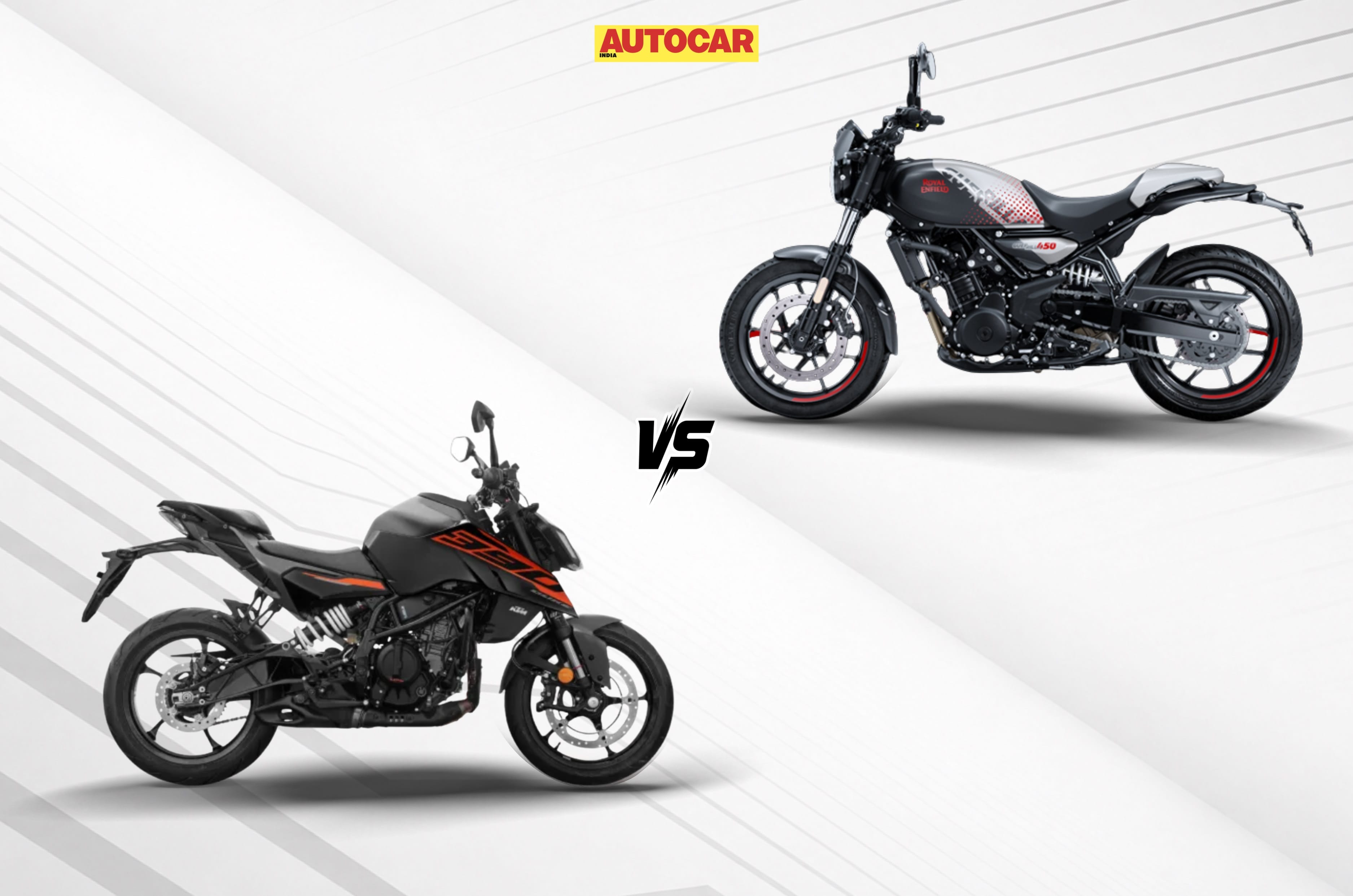
KTM 390 Duke vs RE Guerrilla 450 Apex: Price and Specification Comparison

KTM 390 Duke vs RE Guerrilla 450 Apex: Price and Specification Comparison

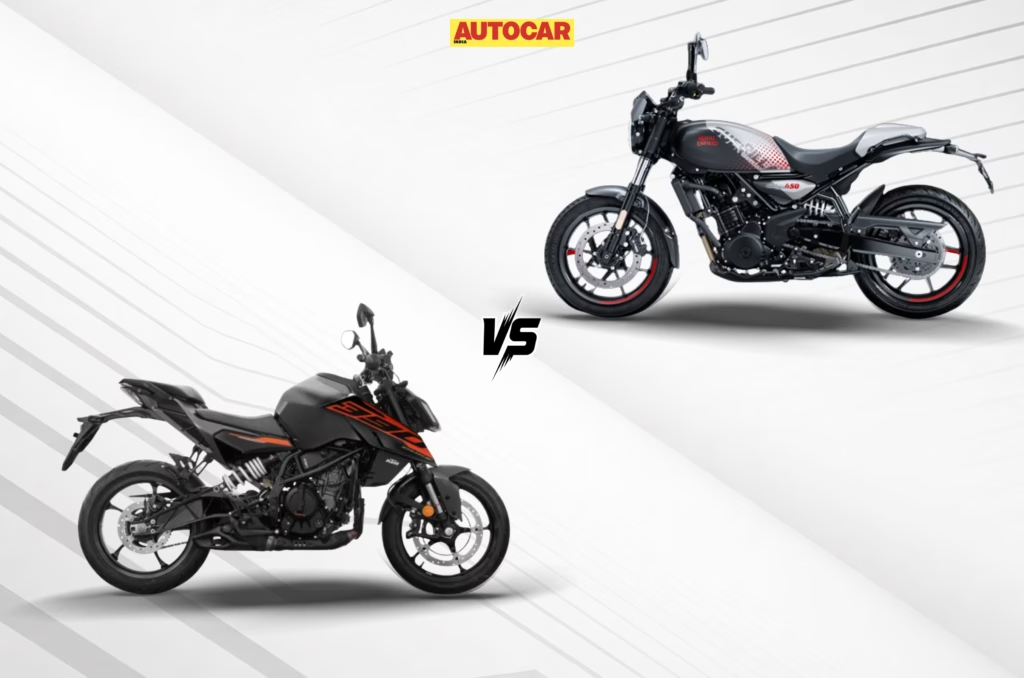
When the Guerrilla 450 first launched in 2024, comparisons to the KTM 390 Duke (now known as the Duke R) were inevitable. In 2026 though, things have changed because, following the revised GST structure on motorcycles, Bajaj decided to downsize all of its 400cc manufactured bikes to fall below the 350cc threshold. So, we now have a 390 Duke with a 349cc engine and the 398cc version continues on as the 390 Duke R. Meanwhile, the Royal Enfield Guerrilla 450 is now available in a new, sportier Apex variant. Let’s see how the motorcycles compare on paper with these redrawn boundaries.

KTM 390 Duke vs Royal Enfield Guerrilla 450 Apex: Engine and output

KTM has more power, Guerrilla has more torque


KTM 390 Duke

Royal Enfield Guerrilla 450 Apex

Engine

349.32cc, single-cylinder, liquid-cooled

452cc, single-cylinder, liquid-cooled

Power

41.5hp at 8,600rpm

40.02hp at 8,000rpm

Torque

33.5Nm at 7,000rpm

40Nm at 5,500rpm

Transmission

6-speed

6-speed

Power-to-weight ratio

246.58hp/tonne

216.32hp/tonne

The biggest reason for this comparison is the KTM’s downsized 349cc engine. It now makes 41.5hp of power (vs 46hp on the Duke R) and 33.5Nm of torque (vs 39Nm on the Duke R). Both are now delivered slightly later in rev range as well. KTM achieved this with an 8mm shorter stroke length, although the bore remains unchanged. The Guerrilla 450 Apex, on the other hand, has not changed on the engine front and retains its 452cc engine with the same power and torque figures. Thus, the Guerrilla offers quite a bit more torque than the Duke and it’s delivered much earlier in the rev range too. Which means you will have to work the throttle and gearbox comparatively less on the Royal Enfield. Thus, if you spend most of your time in the city, it will be the less cumbersome bike to ride in this regard. 

KTM 390 Duke vs Royal Enfield Guerrilla 450 Apex: Dimensions and weight

Duke is lighter despite a 30 percent larger fuel tank


KTM 390 Duke

Royal Enfield Guerrilla 450 Apex

Fuel tank capacity

15 litres

11 litres

Ground clearance

183mm

169mm

Kerb weight

168.3kg

185kg

Seat height

800mm

780mm

Wheelbase

1357mm

1440mm

The 390 Duke continues to be far lighter than the Guerrilla, which weighs a staggering 17kg more. Another pertinent detail is that despite the lower weight, the Duke gets a 4-litre larger fuel tank compared to the Guerrilla. The Guerrilla does get a 20mm lower seat height and its ground clearance is 14mm lesser than the Duke. However, it’s worth noting that both bikes are perfectly usable on our roads, pothole-ridden or otherwise.

KTM 390 Duke vs Royal Enfield Guerrilla 450 Apex: Tyres, brakes, and suspension

Duke has adjustable suspension and better brakes


KTM 390 Duke

Royal Enfield Guerrilla 450 Apex

Tyres (F, R)

110/70R17, 150/60R17

120/70R17, 160/60R17

Brakes (F, R)

320mm front disc, 240mm rear disc; dual-channel ABS

310mm front disc, 270mm rear disc; dual-channel ABS

Suspension (F, R)

43mm USD fork, monoshock

43mm RSU fork, linkage monoshock

Moving on to one of the most important links between the rider and the tarmac, the tyres. The Guerrilla gets slightly wider tyres than the Duke at both ends, but the disc brakes on the Guerrilla are slightly smaller at the front, and slightly larger at the rear. However, the KTM comes with a more sophisticated radial calliper at the front, whereas the Guerrilla makes do with a simpler axial unit. As for suspension, the Duke gives you an USD fork which is compression and rebound adjustable; and the rear monoshock is rebound and preload adjustable. The only adjustability the Guerrilla gets is for its rear preload.

KTM 390 Duke vs Royal Enfield Guerrilla 450 Apex: Features

KTM continues its tech-forward approach

KTM has always offered a myriad of tech features and rider aids on its motorcycles. Royal Enfield on the other hand has always been restrained on that front, prioritizing simplicity and ease of use instead. Depending on your preferences, you will gravitate towards one or the other. KTM offers you slip-and-assist clutch, ride modes, traction control, launch control, lean-sensitive ABS, bi-directional quickshifter, cruise control, turn-by-turn navigation, track screen, and a type-C charging port. Royal Enfield, to its credit, has given the Guerrilla a decent feature-set comprising a TFT instrument cluster which allows you to screencast Google Maps, two ride modes and a slip-and-assist clutch.

KTM 390 Duke vs Royal Enfield Guerrilla 450 Apex: Price

Guerrilla is more affordable with a bigger engine but has less features

 KTM 390 DukeRoyal Enfield Guerrilla 450 Apex
PriceRs 2.84 lakh (ex-showroom, Delhi)Rs 2.51 lakh (ex-showroom, Chennai)

Last but not least, the other reason necessitating the comparison, is the price. With its downsized engine KTM was able to meet a lower GST slab and thus the 390 Duke now costs Rs 2.84 lakh (ex-showroom, Delhi). The Guerrilla 450 Apex still manages to undercut it and by a good deal, starting at Rs 2.51 lakh and going up to Rs 2.58 lakh for the Apex Green colour.


Bajaj Pulsar N160 4V SS: Numbers game

Bajaj Pulsar N160 4V SS: Numbers game
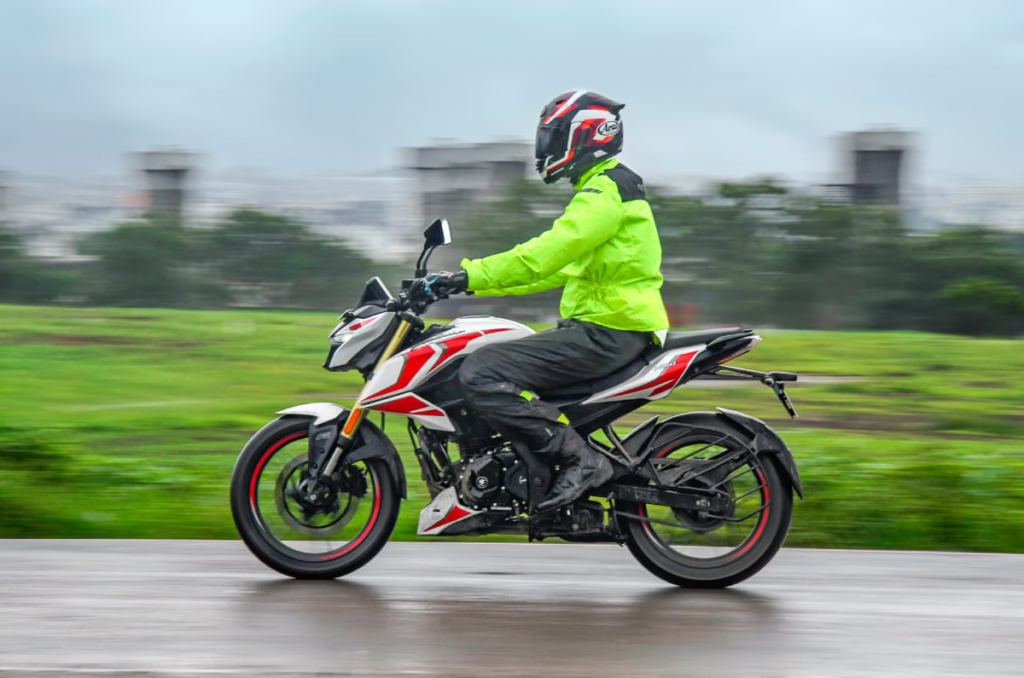
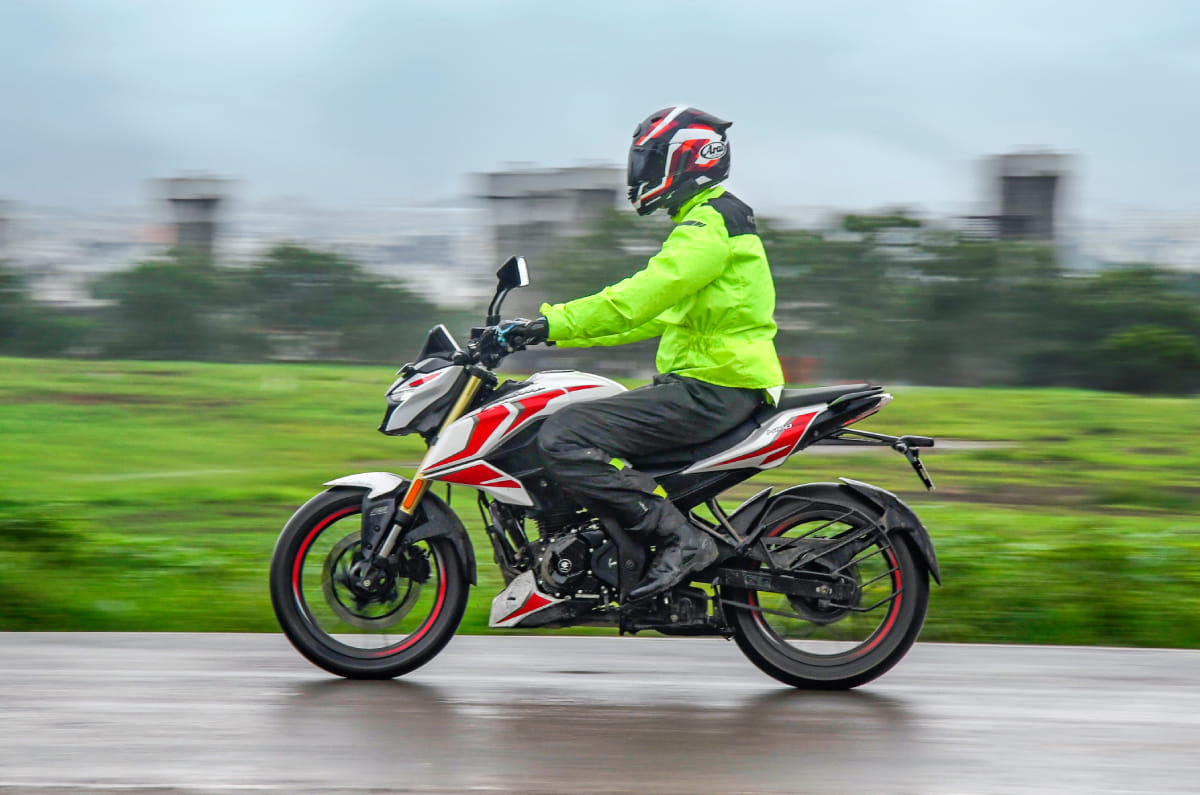
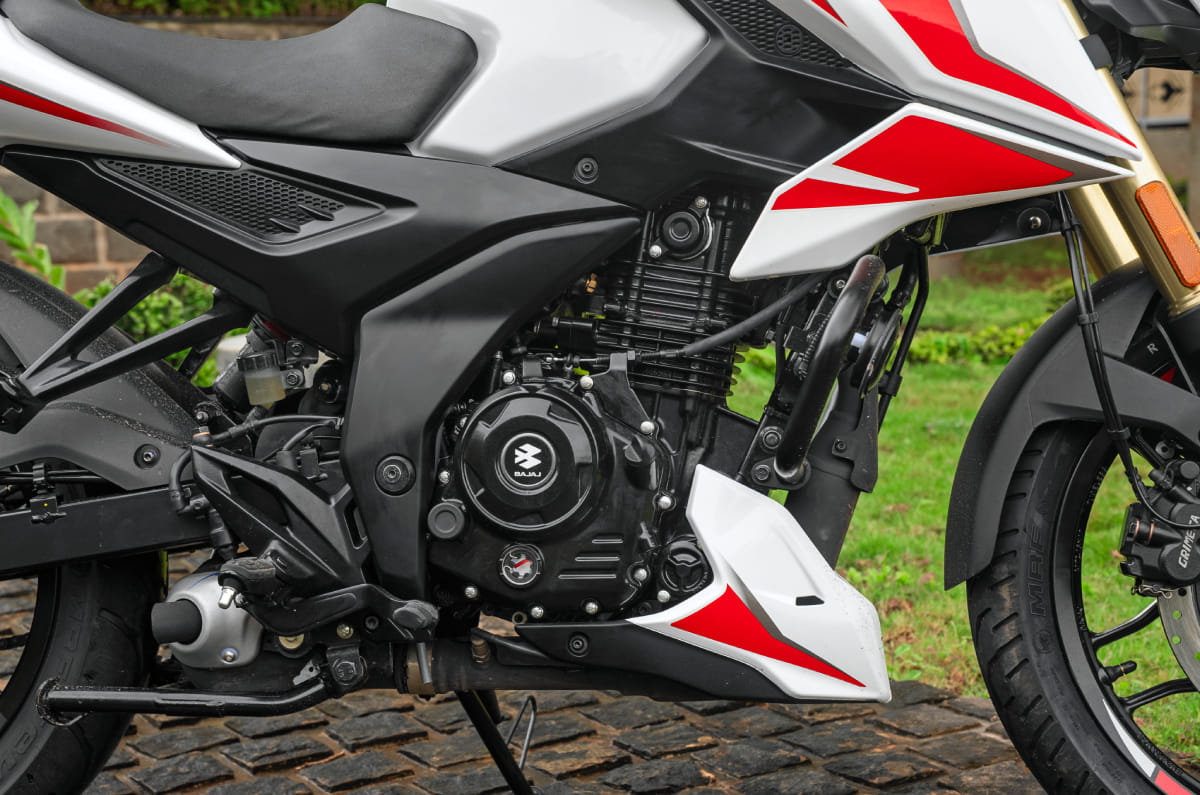
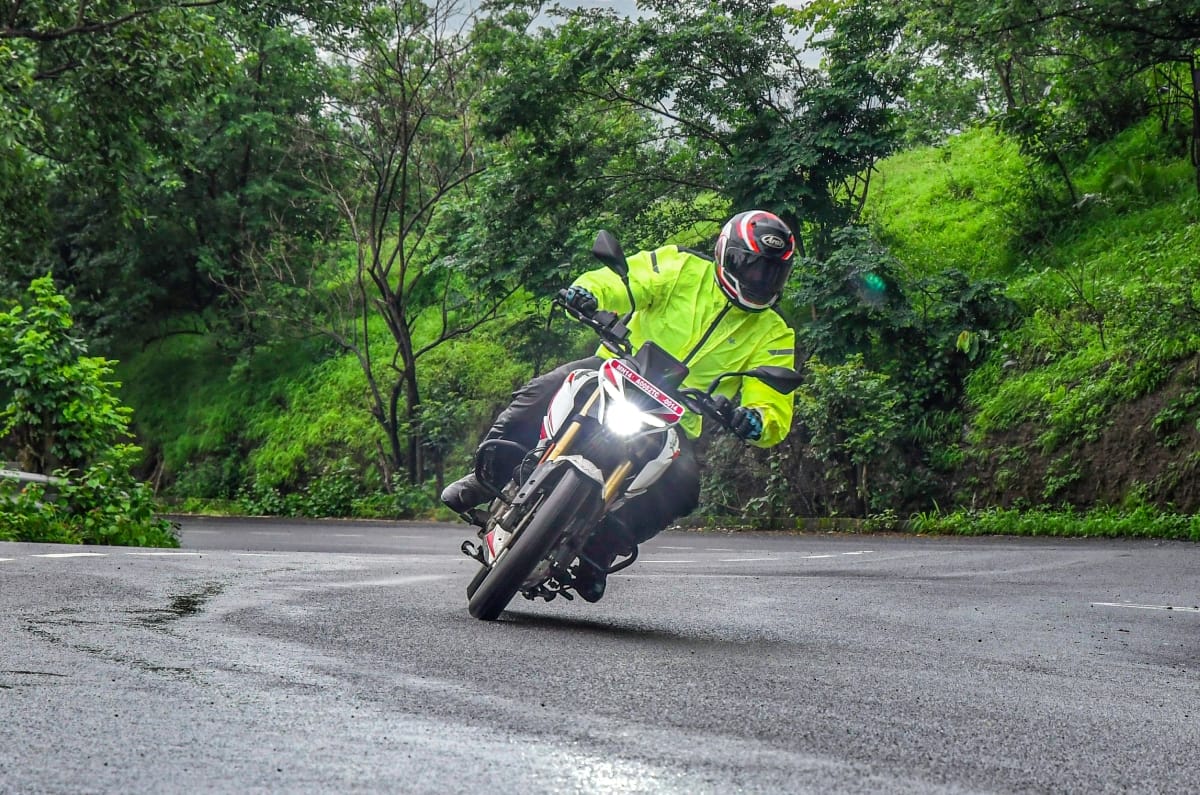
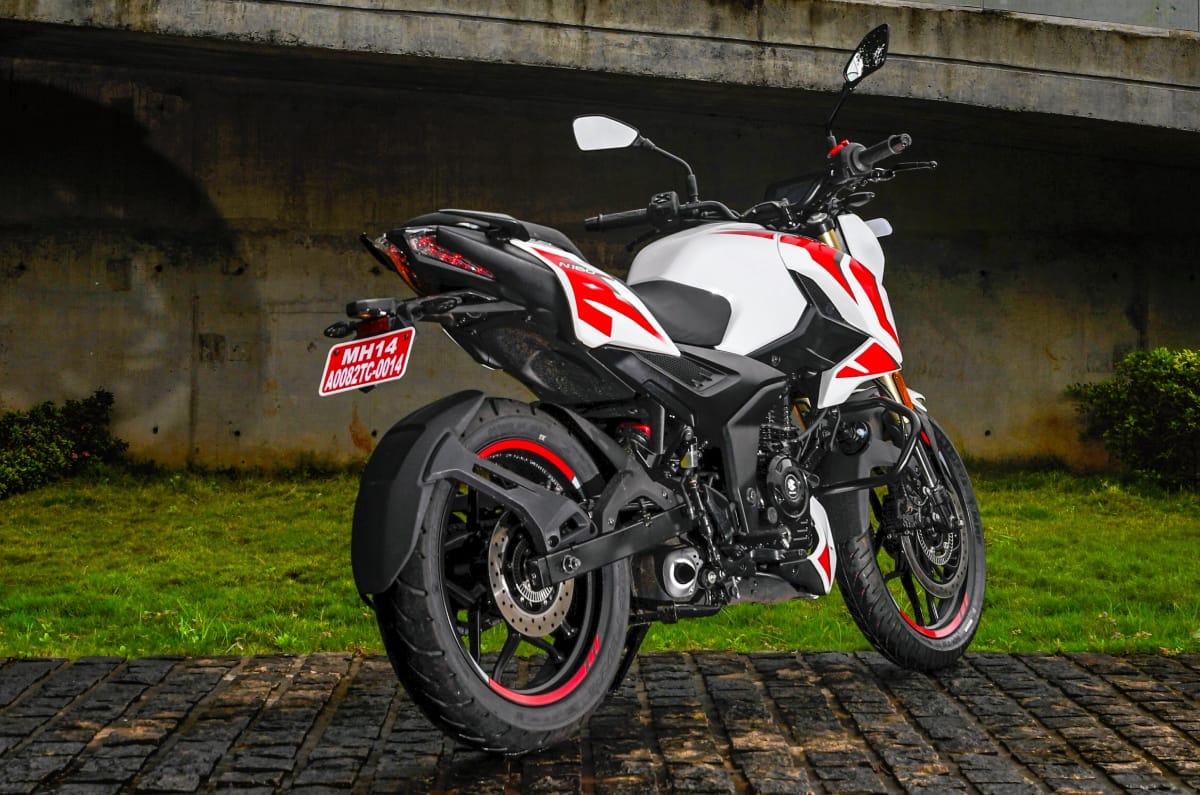
Bajaj Pulsar side tracxking image

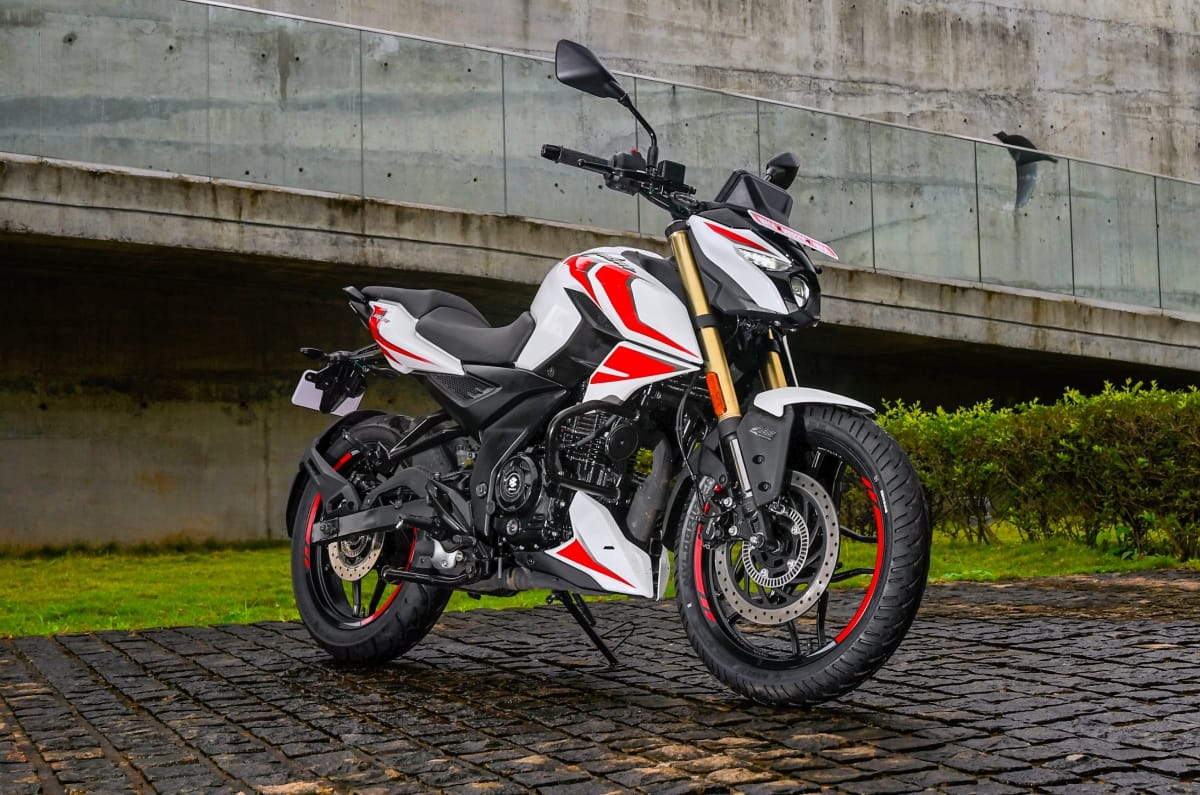
The Bajaj Pulsar N160 has gained a lot of traction in the last three years and Bajaj has now given it even more appeal with the introduction of a new 4 valve version. The existing 2-valve N160 continues to be on sale while two new 4-valve variants have been added to the line up.
Bajaj Pulsar N160 4V: Whats new

The engine changes are bigger than expected with this being a new engine that is still 165cc but now has a bigger 63.5mm bore and shorter 52mm stroke. Bajaj claims a sizable jump from 16hp at 8750rpm to 18.5hp at 9500rpm while torque drops marginally from 14.65Nm at 6750rpm to 14.4Nm at a higher 8000rpm. Bajaj also claims a high rev limit of 10,900rpm. The bottom end of the engine and the gearbox are the same as before.

The chassis is also mostly the same, but there have been some minor refinements in the main frame and swingarm which have helped offset the minor gain in engine weight as well as the move to a fatter new 37mm USD fork on the 4V models. As a result, kerb weight is unchanged at 151kg. 

Bajaj has also improved the seating ergos when compared to the previous split seat 2V model. The seat has been slightly reprofiled and the handlebar angle has been relaxed as well. Seat height remains the same at 795mm and while tall riders will prefer less of an upward curve at the back of the seat, this is still a more comfortable perch for long legged folks than the Apache 160 4V.

Bajaj Pulsar N160 Engine and Performance 8/10

While the new power figure is actually 0.1hp more than the liquid-cooled Yamaha R15, this engine’s feel and performance is more in line with its oil-cooled rivals. It’s quick, but doesn’t feel up there with the Yamaha’s although it should now more closely match the potent Apache. The motor retains its excellent smoothness and there are only a few minor vibrations to be felt at high revs. Clutch pull is very light and the engine is quite tractable at lower revs, which makes it very pleasant to ride in the city.

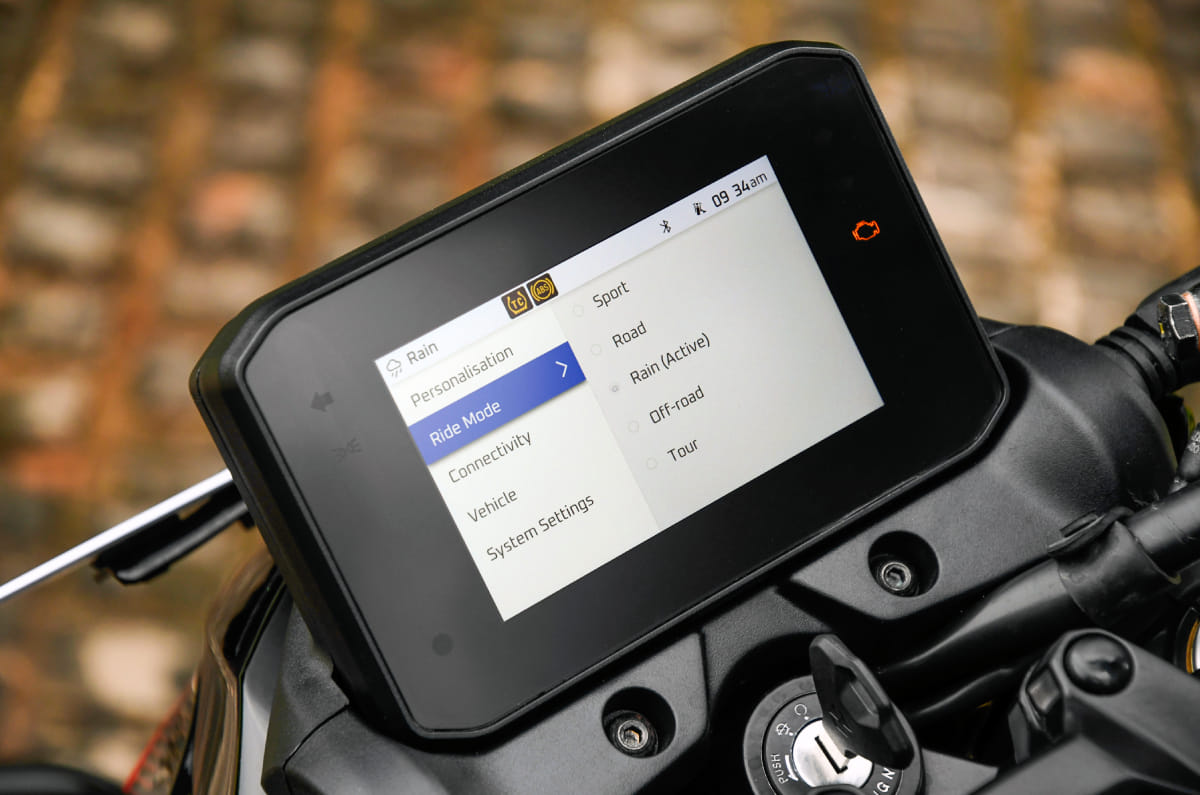
The new ride by wire throttle has unlocked four riding modes and the throttle opening feels smooth and controllable no matter the mode. While this engine does have a near 11,000rpm rev limiter (in Sport mode) we found no value in revving it much beyond 9,500rpm.

Bajaj Pulsar N160 Handling and comfort 7/10

Bajaj has moved to a new 37mm USD fork on the 4V, vs the 33mm USD on the 2V and this does give the front end more of a chunky look. Beyond that change, the way this bike rides is mostly the same as before. The suspension does have a taut feel to it and its not as soft and cushy feeling in the suspension stroke as the Apache. However, it handles rough roads well and the handling in corners is also well controlled and quite enjoyable. We did notice that the turning radius in the city could be a little more generous.

The N160 was the first bike in the category to get dual channel ABS and this SS version carries that forward. It also gets a larger 300mm front disc and overall braking performance is up to the job. The SS model also brings in a new 5-inch TFT display with a fresh looking layout and features like document storage, Bluetooth music control and even Google Maps casting. That last feature works via Bajaj’s app and you can keep your phone screen off when casting if its an Android device, but no such luck for iOS users – a Google decision, not Bajaj’s.

Bajaj Pulsar N160 price and features 9/10

The base S version of the Pulsar N160 4V comes with single channel ABS, a single seat and an LCD display and is priced at Rs 1.34 lakh ex-showroom. This SS model is priced at rs 1.43 lakh ex-showroom which places it slightly lower than the equivalent top variant of the Apache RTR 160 4V.

These new updates have not transformed the N160 into something new, but have definitely enriched the experience and widened the bikes overall appeal. It did not win when we compared it to the Apache a few years ago, but the story could be different today. It’s something we look forward to finding out. 

2027 Maserati Grecale review: V6 sense

2027 Maserati Grecale review: V6 sense
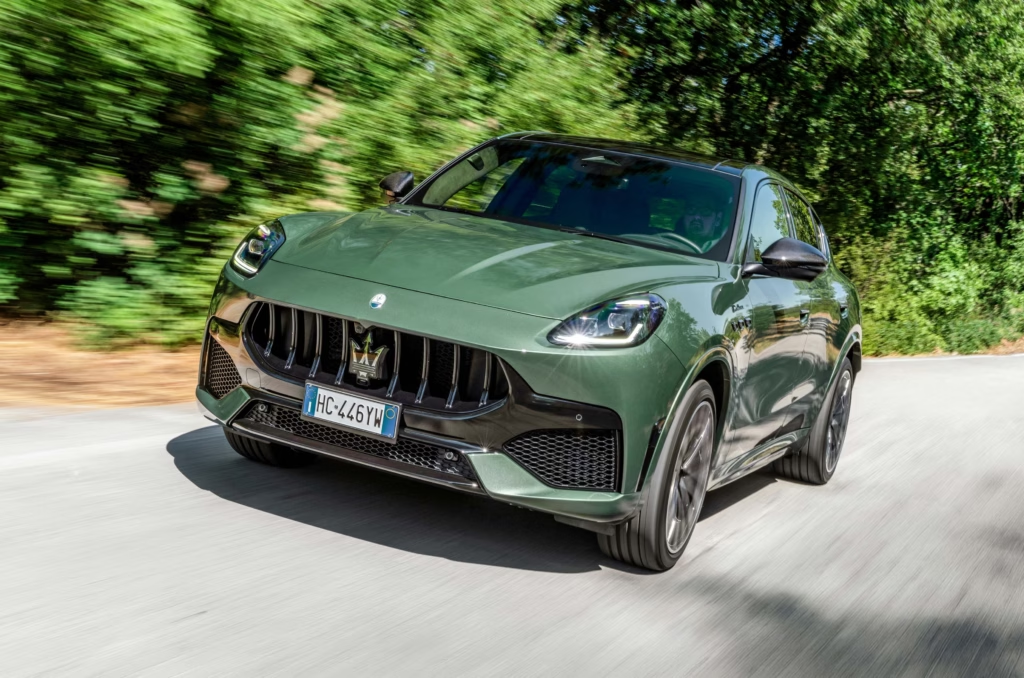
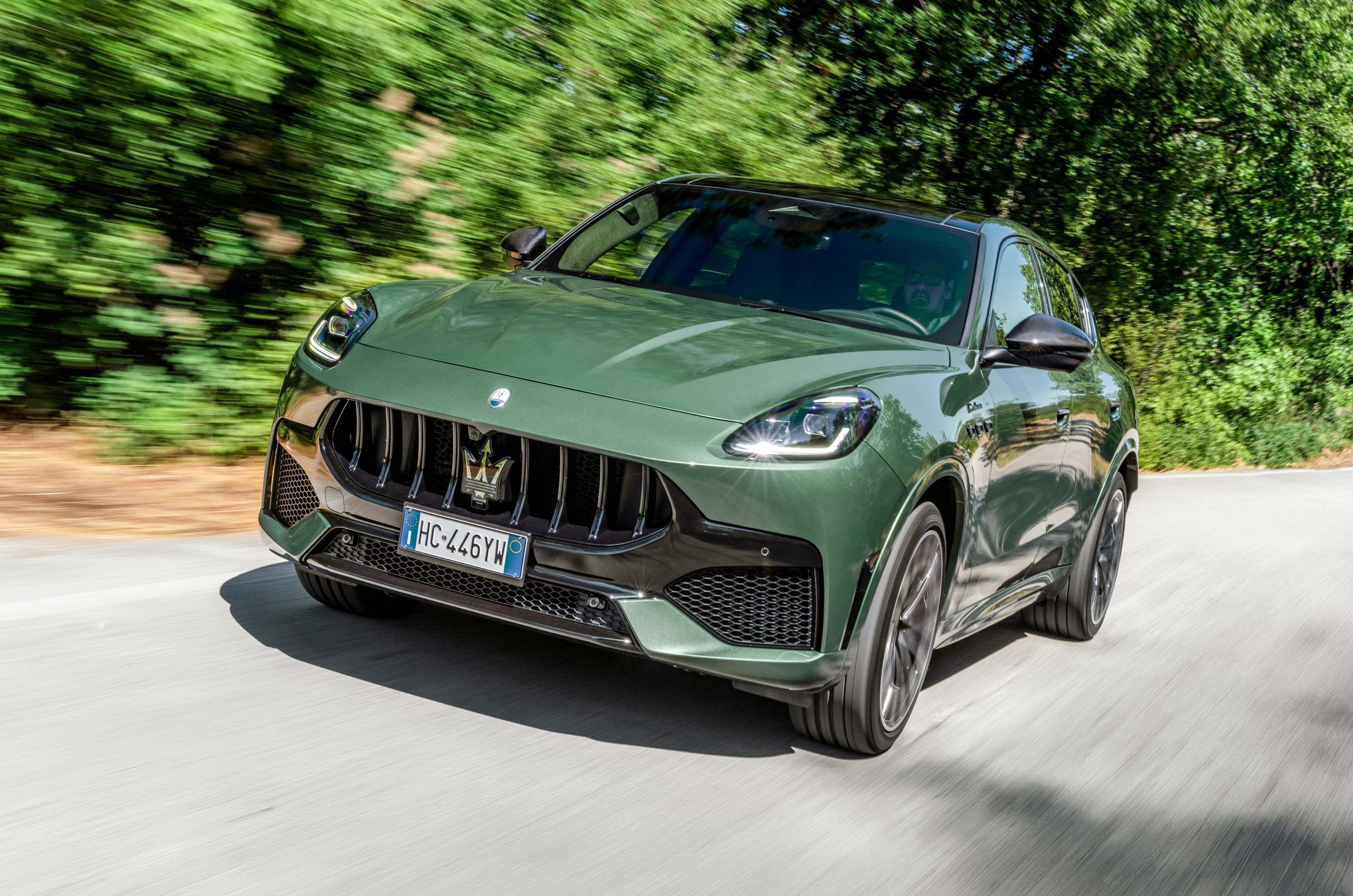
Maserati Grecale Modena

The Grecale is Maserati’s take on the mid-size luxury SUV and in SUV-crazy India will likely be the first port of call for buyers intrigued by the iconic brand. It’s been updated outside, inside and under the hood to help convert that mystique into sales.

2027 Maserati Grecale Exterior Design and Engineering – 8/10

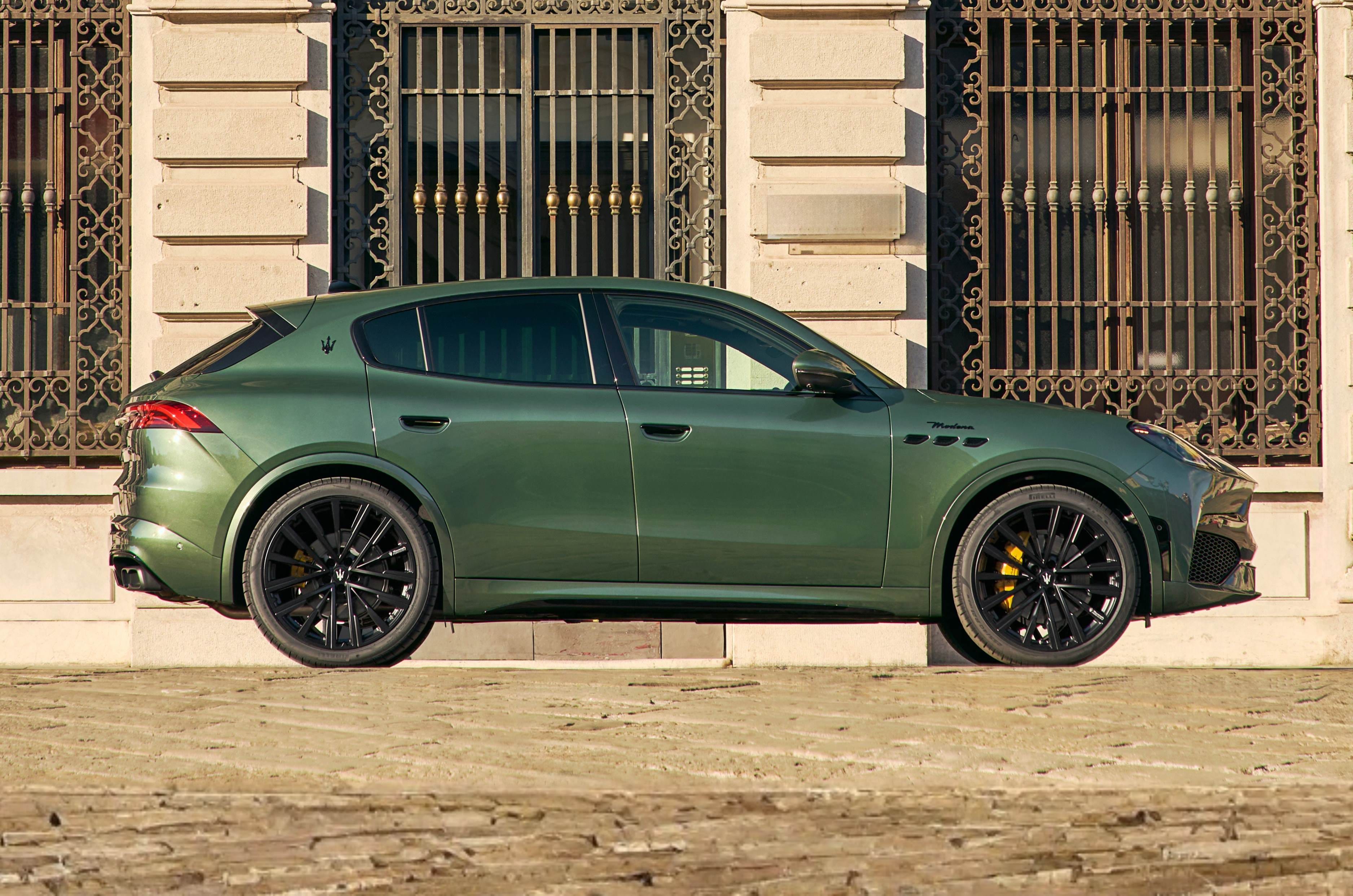
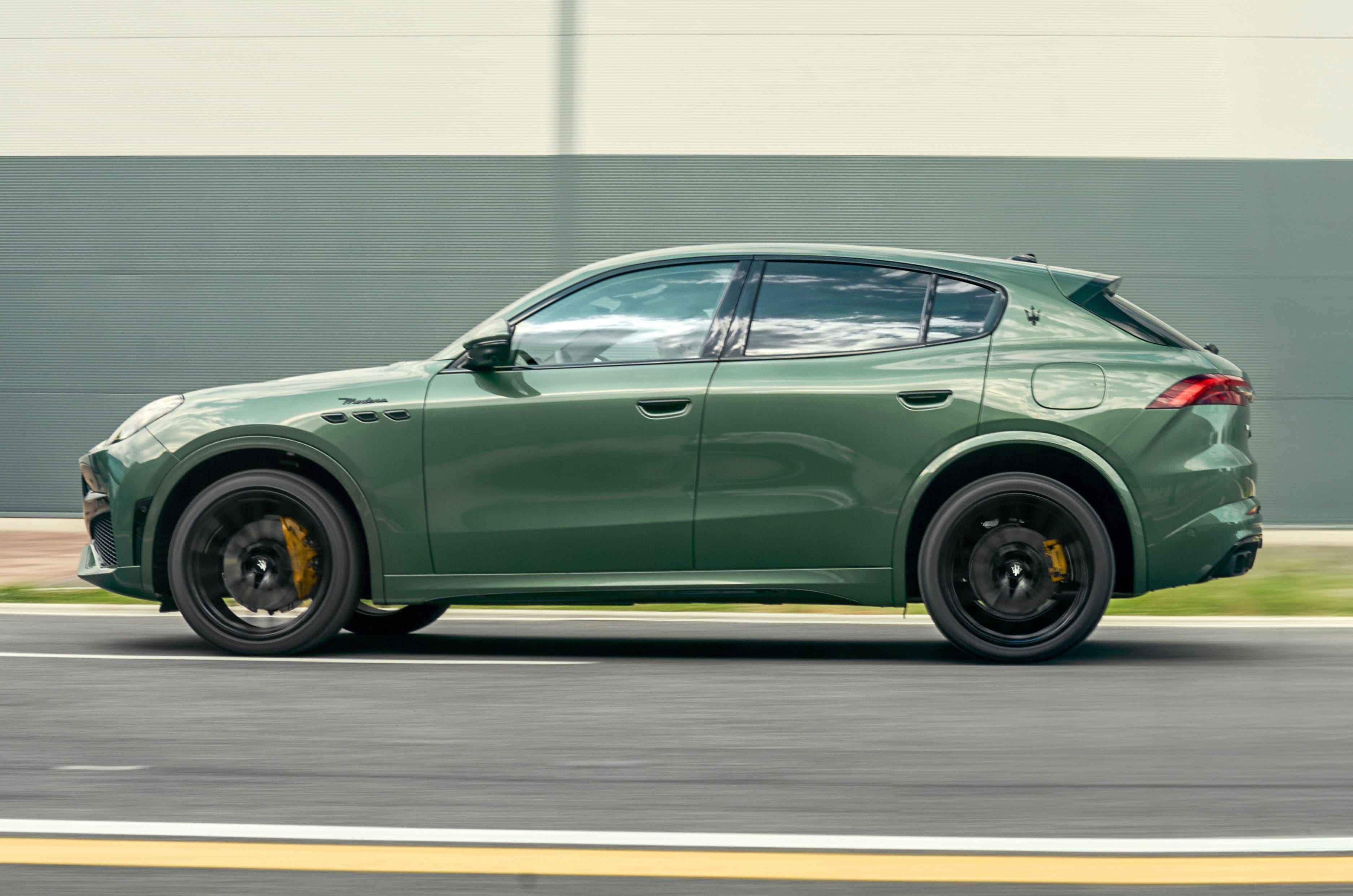
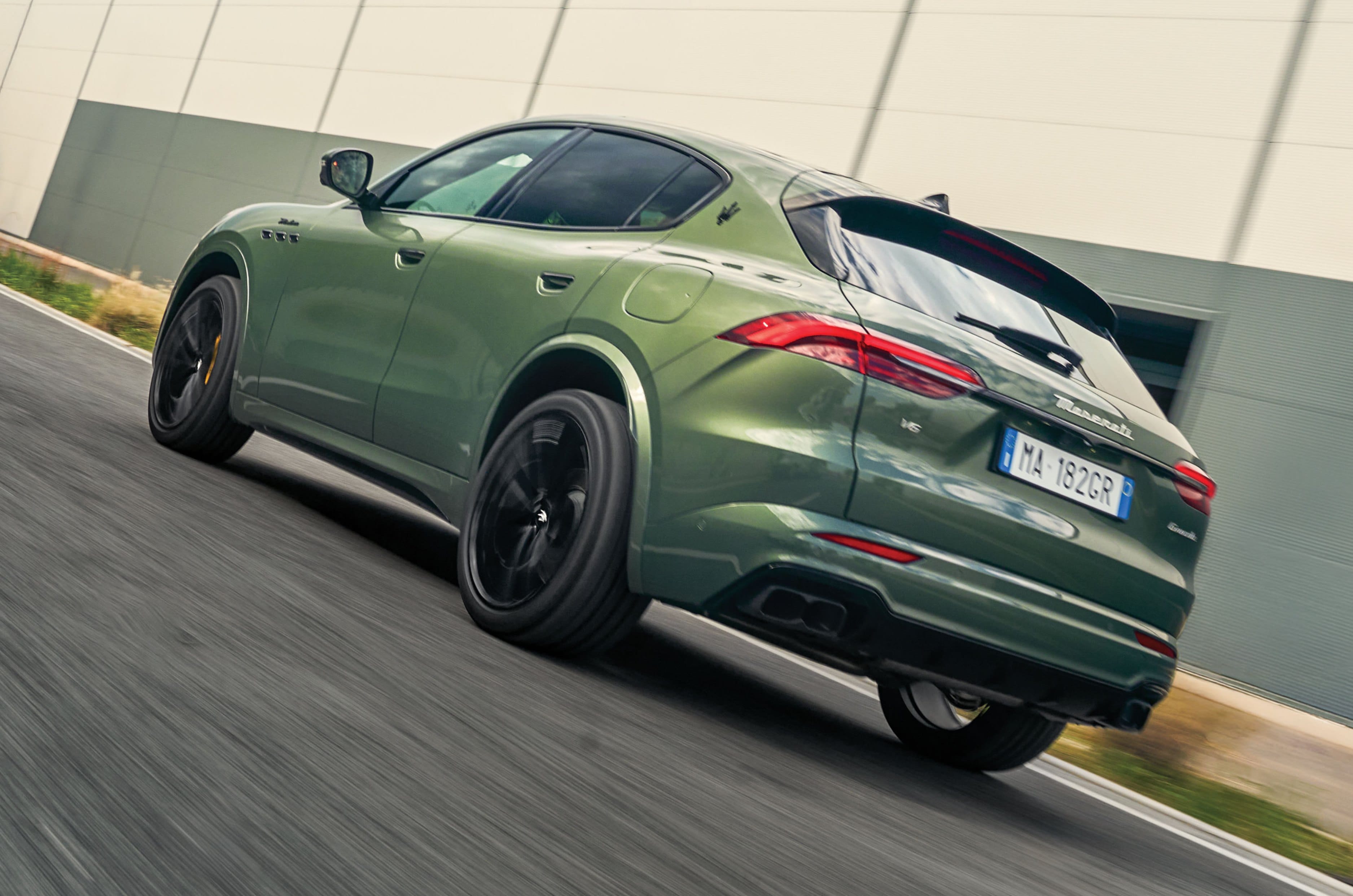
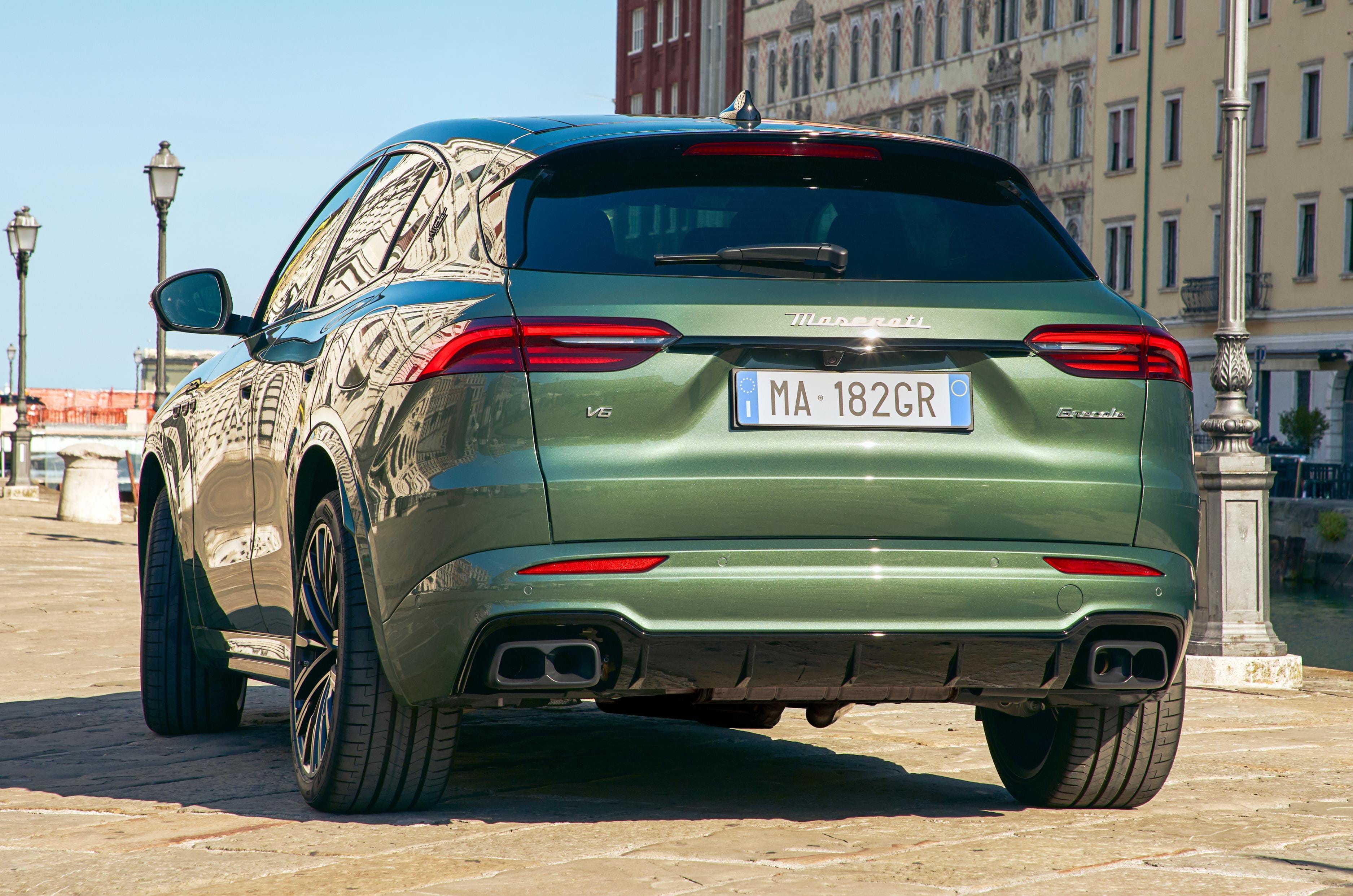
Like most Maseratis, the Grecale is one of those cars that looks better in the metal than it does in photographs. There’s Italian flair to the design, with the proportions finely balanced across its 4.8m length. The classic Maserati cues – voluptuous fenders, vents aft of the front wheels and the cut of the glasshouse – are all there and help establish the marque, even in profile.

Maserati Grecale Exterior
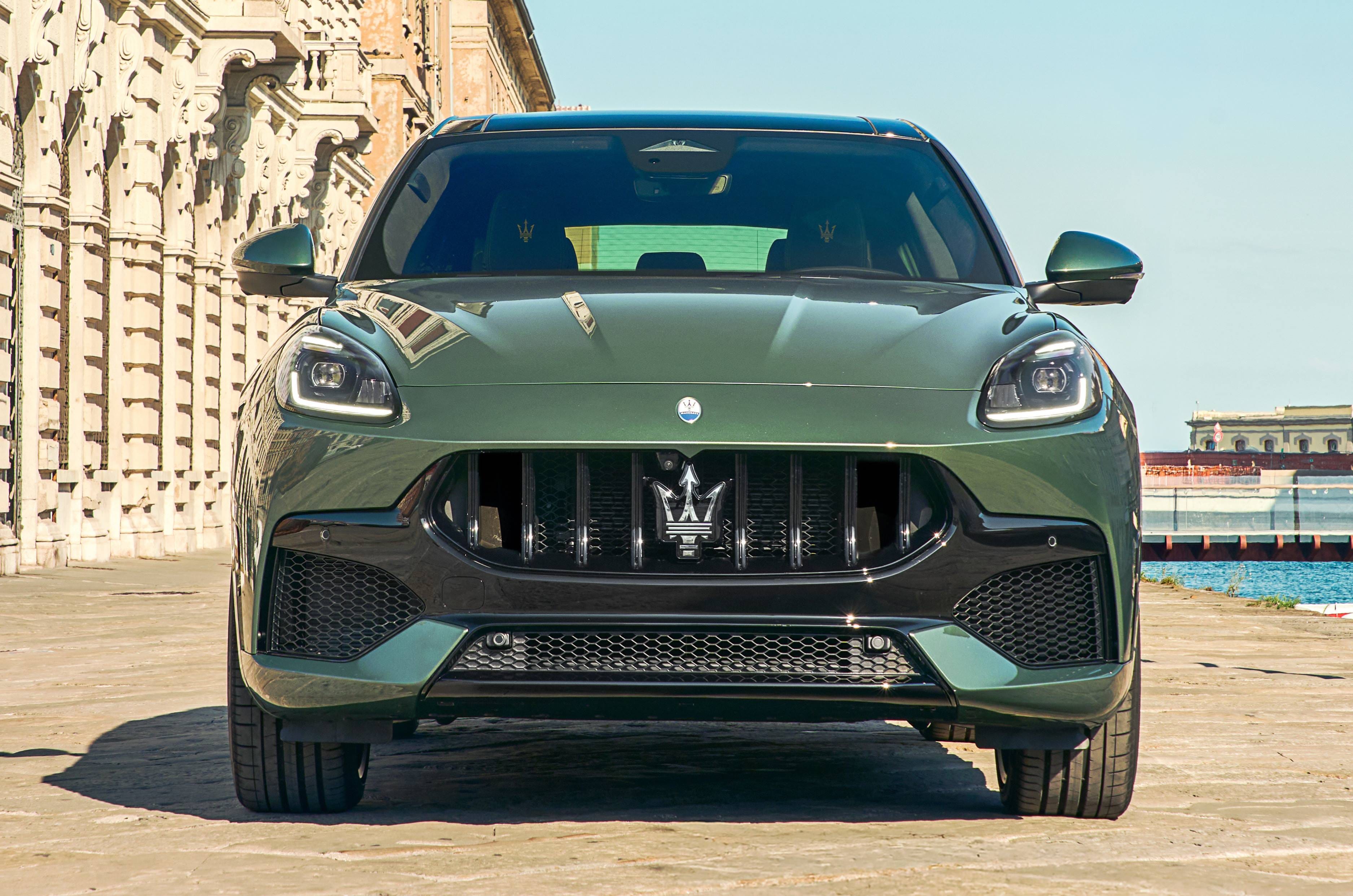
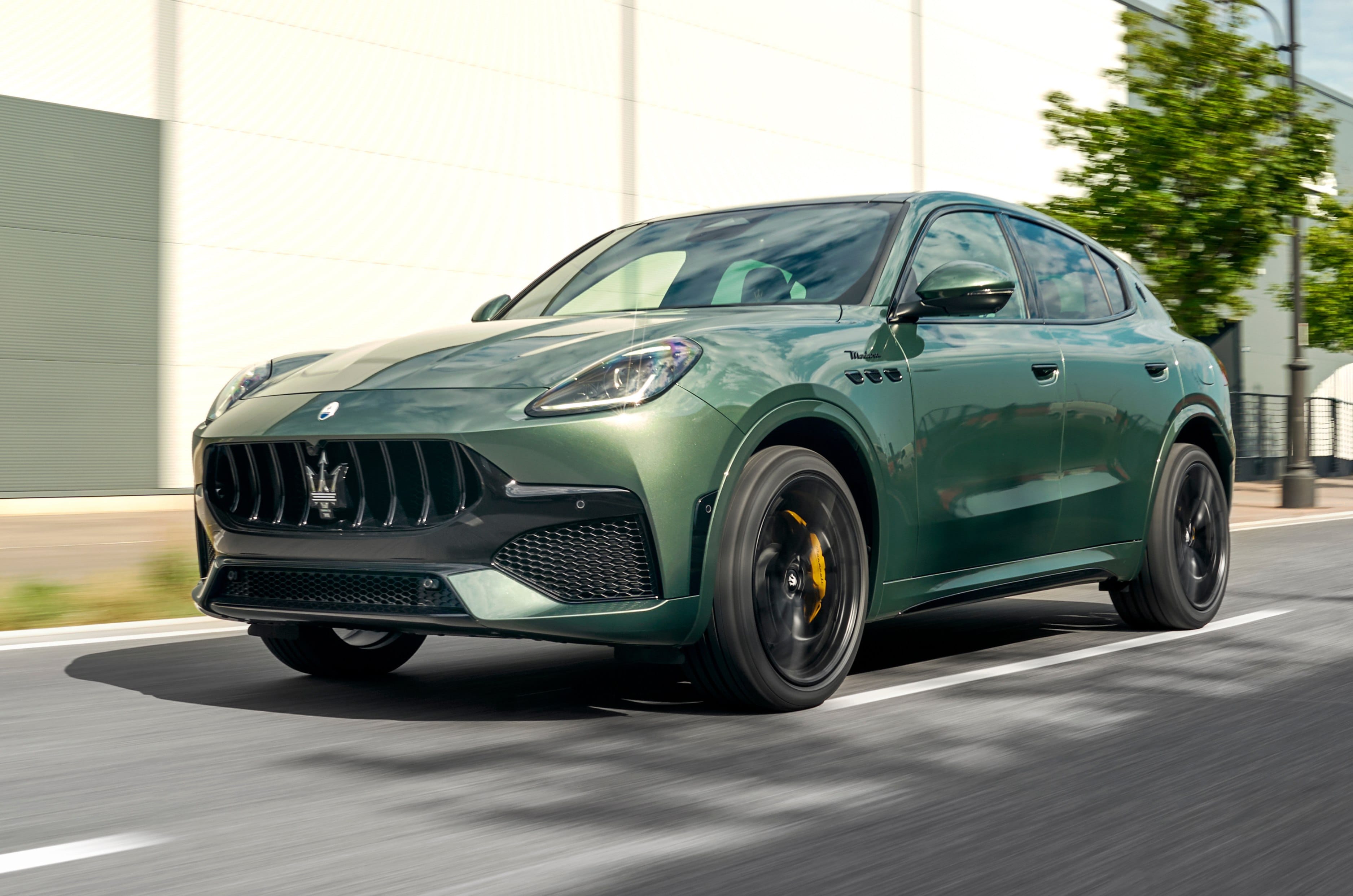
The 2027 Grecale gets a more prominent concave grille with the Trident logo at its centre.

The key visual change comes at the front. A strong horizontal crease visually divides the face into two distinct sections. The upper portion retains the familiar sculpted Maserati look, while the lower section adopts a far more technical and aggressive appearance. Larger air intakes flank a more pronounced concave grille, with the Trident logo taking centre stage. The changes aren’t dramatic, but they make the Grecale look considerably sportier and give it much stronger road presence. Ahem, that visual link to the humble Suzuki Swift is also less pronounced now.

Maserati Grecale Modena
Signature vents on the front fenders add character to the Grecale’s profile.

There are minor tweaks to the trim elsewhere and, as ever, there’s lots of scope to customise the appearance. I wouldn’t change our test car’s arresting Verde Royale-on-black colour scheme, thank you very much.

2027 Maserati Grecale Interior Space and Comfort – 8/10

Maserati Grecale Modena
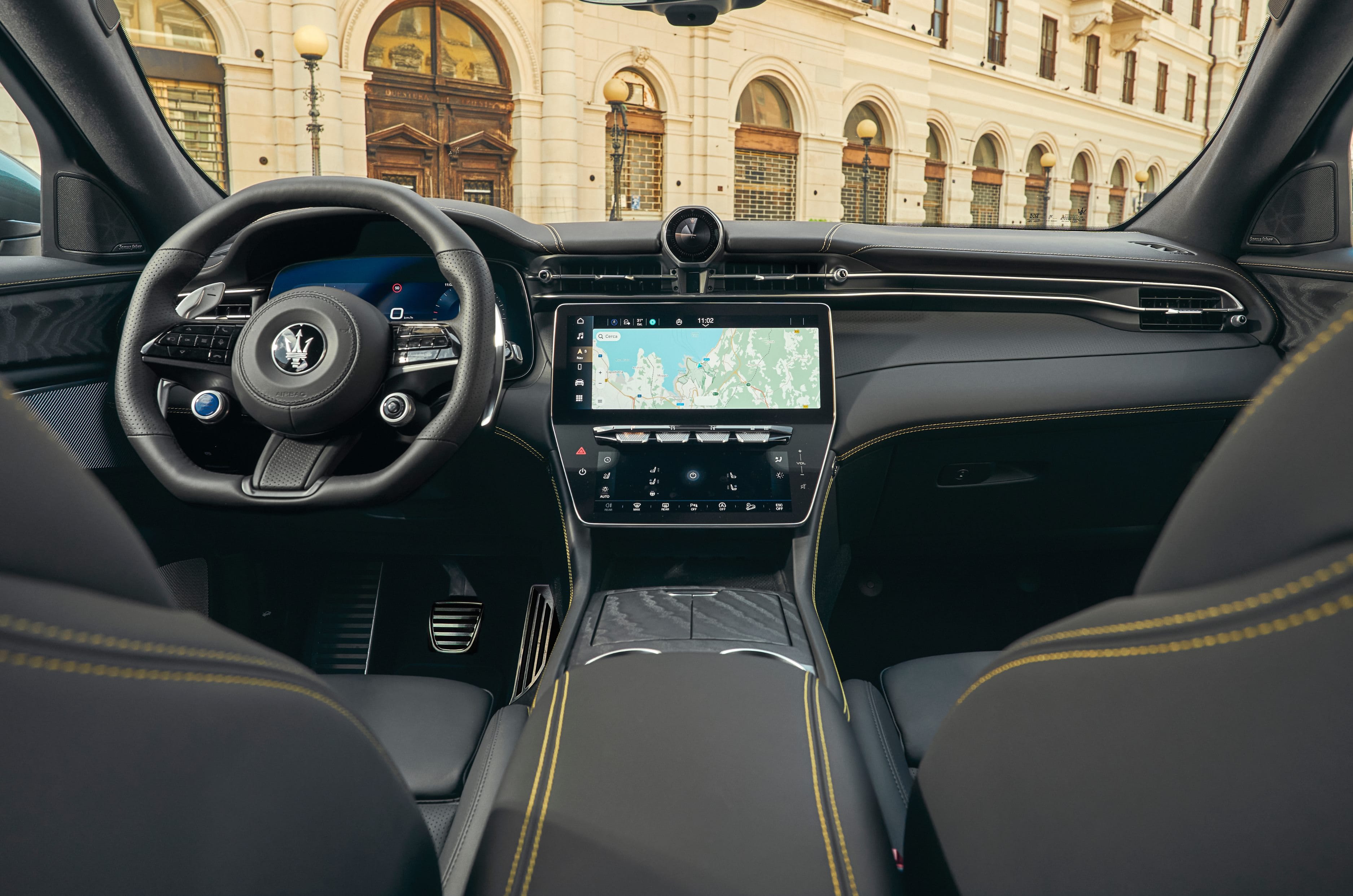
The cabin continues to combine rich leather upholstery with stitched dashboard detailing.

Not much has changed inside, but that’s no bad thing because this remains a cabin that strikes a nice balance between modern technology and traditional Italian craftsmanship.

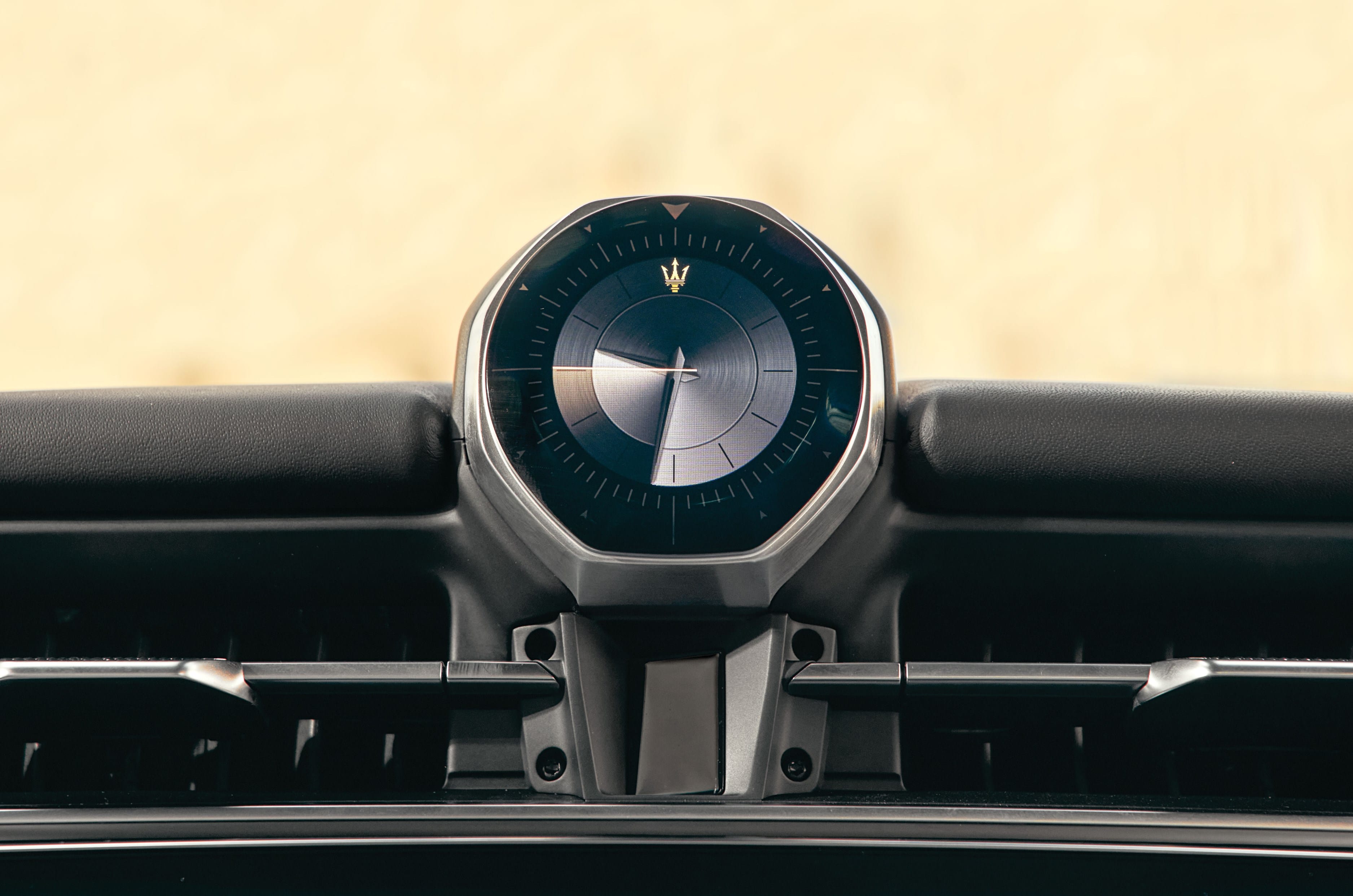
There are still four displays: a digital instrument cluster, a large central touchscreen, a lower touchscreen for climate control functions and Maserati’s signature clock. Each has been subtly updated. The digital clock gets a revised face and new glass designed to mimic the appearance of a conventional analogue timepiece while retaining its digital functionality.

Maserati Grecale Modena
The digital clock gets a new face and glass designed to imitate an analogue timepiece.

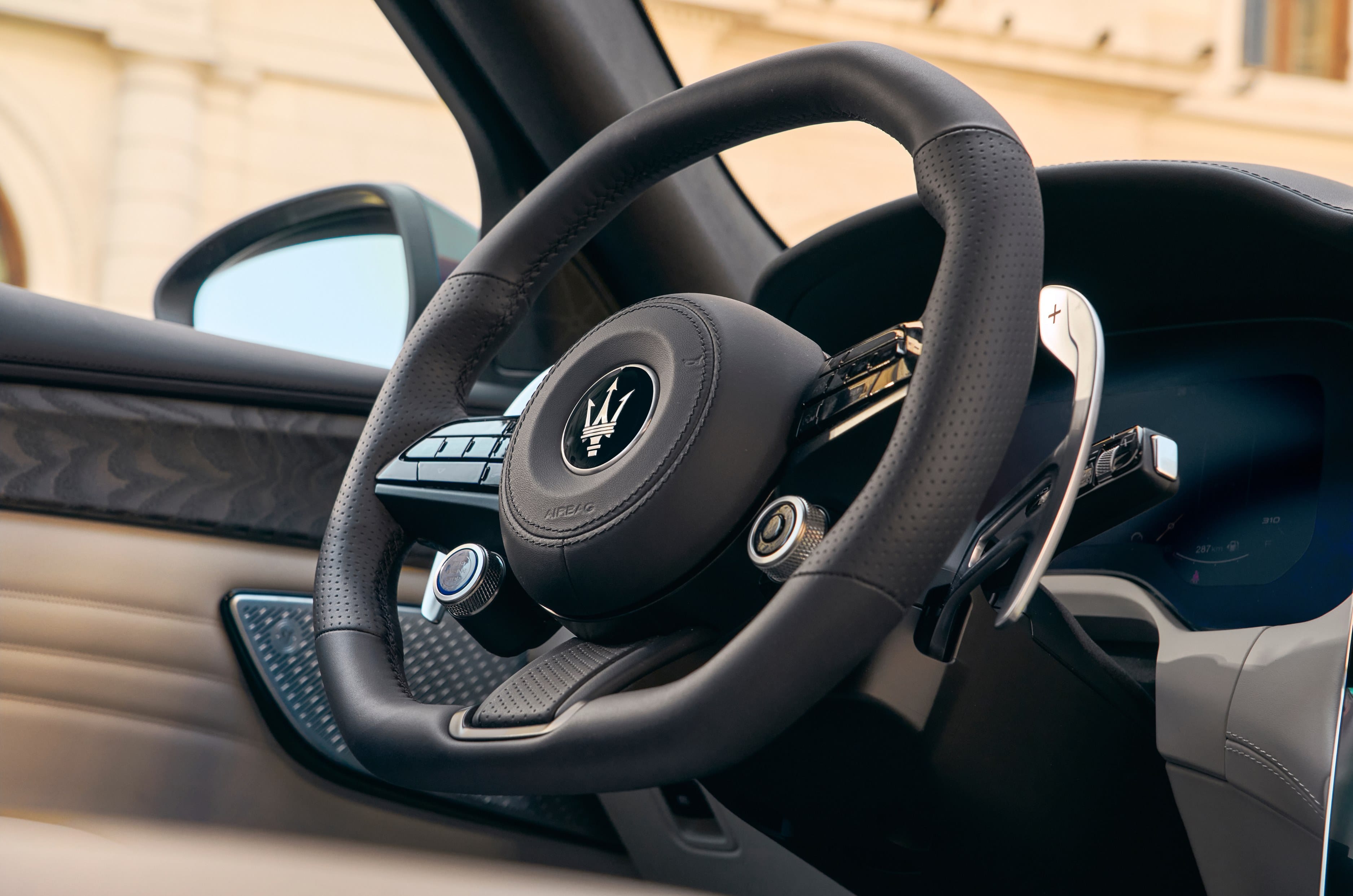
Lower down, the old gear selector buttons have made way for metallic toggle switches that look and feel richer. The steering wheel has also been redone with a squared-off shape that feels great to hold. Behind it sit Maserati’s trademark oversized aluminium paddle shifters, mounted to the steering column, and they remain among the most satisfying paddle shifters you’ll use in any performance SUV.

Maserati Grecale Modena
Grecale’s aluminium paddle shifters are among the most satisfying to use.

Despite the screen-heavy layout, the Grecale’s interior isn’t lacking on warmth. Rich leather upholstery, beautifully stitched dashboard trim and some plush materials (exposed carbon fibre for the win) tell you a lot of love and work has gone into putting the interior together. Some plastics do feel ordinary, though.

Maserati Grecale Modena
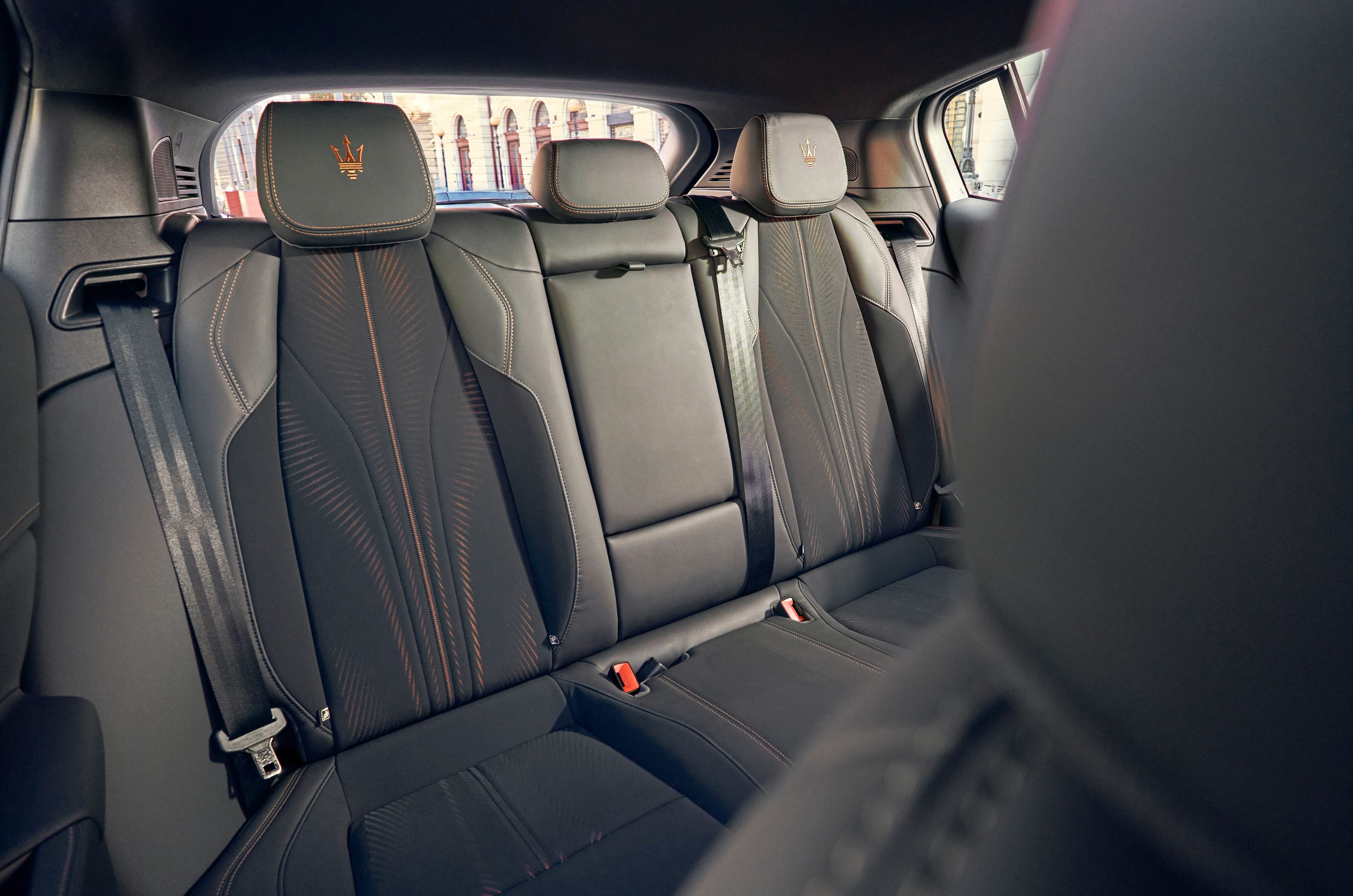
Rear passengers get good kneeroom and headroom, although the backrest is not reclinable.

The front seats are supportive and are the best ones in the house. While rear seat space is better than that of a Porsche Macan (the car the Grecale was built to beat), it’s not the ideal buy for chauffeur-driven buyers who will see more value in a like-priced Merc GLE or BMW X5.

Rear-seat passengers will find kneeroom and headroom more than adequate, although a reclinable backrest would have added another layer of comfort.

2027 Maserati Grecale Performance and Refinement – 8/10

The Grecale continues to be offered in three flavours – GT, Modena and Trofeo – but today’s Modena isn’t exactly the same as the one before. While the Modena was powered by a 2.0-litre four-cylinder turbo-petrol producing 330hp, the new Modena, confusingly enough, also gets Maserati’s 3.0-litre Nettuno V6, with output pegged at 390hp. It neatly bridges the gap between the entry-level 300hp Grecale GT and the full-fat 530hp Trofeo.

Maserati Grecale Modena
2027 Grecale Modena switches to 3.0-litre V6 from the erstwhile 2.0-litre 4-cylinder mill.

It’s easy to fall for the charms of the ‘new’ Modena. The new 390hp V6 comes across as a much more natural fit for something with the Maserati badge. There’s ready power at hand and a nice pull past 6,500rpm when the roads allow. There’s great fun working through the gears too, partly because of the feel at the paddles and partly because of the ‘braaap’ from the exhaust during shifts. The soundtrack, in general, is very appealing, with a gentle growl growing into a muscle-car burble. How much of that sound originates from the engine and exhaust, and how much is enhanced through the speakers, is difficult to tell, but the end result is undeniably enjoyable.

2027 Maserati Grecale Ride Comfort and Handling – 8/10

Maserati Grecale Modena
Its sporty setup lets some road imperfections through, but it stops short of feeling uncomfortable.

What’s also easy to glean is that the Grecale isn’t trying to be a soft, comfort-focused luxury SUV. There is a definite sporting edge to the way it rides and handles. You’ll feel bumps and imperfections in the road more readily than you would in some rivals, although it never crosses the line into feeling harsh or uncomfortable.

Maserati Grecale Modena
Adaptive dampers let you adjust the suspension response through via drive modes.

Adaptive dampers allow you to tailor the suspension’s responses depending on the selected drive mode, and while they do make a noticeable difference, even the most comfort-oriented setting stops short of completely isolating you from the road. The way to look at it is that it allows a little more of the driving experience to filter through, reminding you that this is a Maserati first and an SUV second. The crisp handling is up there with the now-retired Porsche Macan ICE, and that’s high praise.

2027 Maserati Grecale Price and Verdict – 8/10

The updates for 2026 may not completely transform the Grecale, but they make an already distinctive luxury SUV a more convincing proposition. The sharper styling gives it greater visual presence, while the introduction of the V6-powered Modena fills an important gap in the range. More importantly, it strengthens the Grecale’s case for anyone in the market for an SUV that prioritises driver appeal.
Maserati Grecale Modena

The timing couldn’t be better either. Maserati is renewing its focus on India with a new dealer network and a stronger push in the market. The Grecale will continue to command a premium over similarly sized luxury SUVs (we expect the range to start at Rs 1.2 crore ex-showroom), but it has the style and character to charm its way into contention.

MG Hector Tomahawk EV spied undisguised ahead of August 26 launch

MG Hector Tomahawk EV spied undisguised ahead of August 26 launch
MG Hector Tomahawk EV

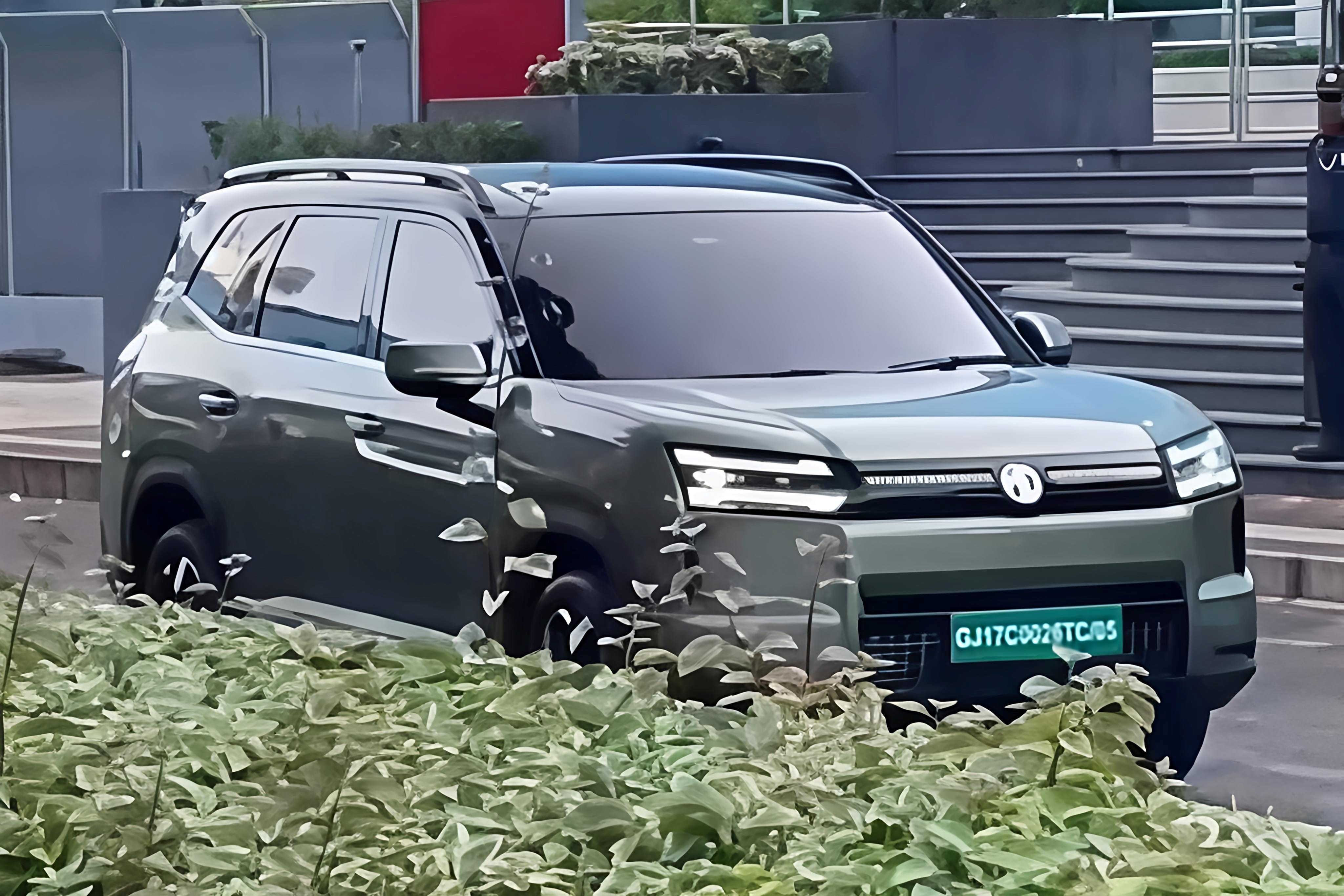
JSW MG’s upcoming Hector Tomahawk has been spied undisguised on our roads ahead of its launch. The new model will be the first in the brand’s portfolio to be underpinned by the ADAPT (Advanced Drive Architecture Platform Technology) platform. The carmaker has teased the SUV previously, giving a glimpse of its design details and its 7-seat capacity.

  1. Hector Tomahawk to slot above the Hector in MG’s portfolio. 
  2. Likely to be powered by a 69.2kWh battery pack.
  3. Expected to be priced between Rs 18 lakh and Rs 25 lakh.

JSW MG Hector Tomahawk EV: What was spied?

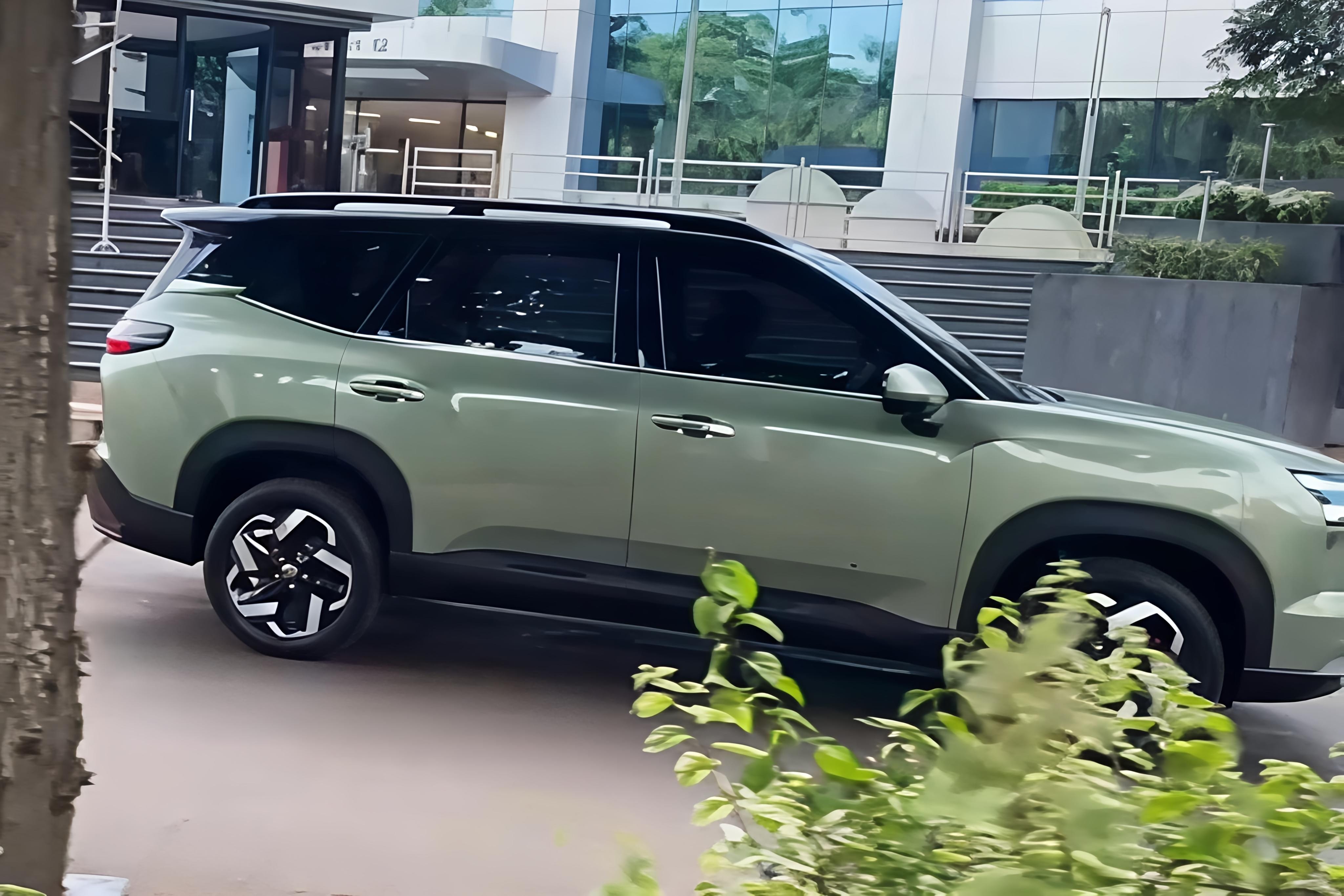
The undisguised test mule that was spied hinted at the Hector Tomahawk’s final design. The front end comes with LED headlamps with dual LED DRLs connected by a black trim that has two silver strips and the MG badge at the centre. Being an EV, it gets a blanked-off grille, with a rectangular air inlet lower down. The front bumper has a dual-tone design, with vertical air curtains on its sides. The bonnet has subtle ridges, while the car is finished in an olive green shade with a black roof and rails. 

In profile, the sides look clean with chrome door handles, and the window line, finished in chrome, gets an upward kink at the back. Additionally, there’s plenty of black cladding for the squared-off wheel arches and door sills extending toward the rear bumper. The large alloy wheels were spotted with a dual-tone design. While the rear end was not spotted, it will likely come with wraparound tail-lamps and a dual-tone finish for the bumper.  

JSW MG Hector Tomahawk EV: What to expect

The JSW MG Hector Tomahawk is based on the Wuling Eksion that’s sold in the Indonesian market. The former is expected to retain the latter’s dimensions of 4,745mm in length, 1,850mm in width, 1,755mm in height, and a wheelbase of 2,810mm.  A previous teaser of the model confirmed a beige colour theme for the Hector Tomahawk’s cabin. While the dashboard is yet to be revealed, it is expected to retain the Eksion’s minimalistic layout. This includes screens for the driver’s display and infotainment system, a two-spoke steering wheel and a centre console with cupholders and storage spaces. 

MG is yet to confirm the feature list it is expected to come with a powered tailgate, leatherette upholstery, powered and ventilated front seats, a 12.8-inch touch-infotainment head unit, an 8.8-inch digital driver’s display, a 50-watt wireless charger, automatic climate control with AC vents for the second and third rows, a 360-degree camera system, an electronic parking brake, six airbags, and an ADAS (Advanced Driver Assistance Systems) suite.

While exact powertrain specs of the Hector Tomahawk EV remain under wraps, the Eksion, for reference, is powered by a 69.2kWh LFP (Lithium Iron Phosphate) battery pack with a CLTC (China Light-Duty Vehicle Test Cycle) range of up to 530km. The battery is paired with a front-mounted motor delivering 201hp and 310Nm, and has a 160kph top speed.

As far as price is concerned, the MG Hector Tomahawk EV is expected to be priced between Rs 18 lakh and Rs 25 lakh. It will take on the likes of the Mahindra XEV 9S and the Kia Carens Clavis EV.

All prices are ex-showroom, India

3 reasons to buy the Aprilia Tuono 457 Special Edition and 2 reasons to skip it

3 reasons to buy the Aprilia Tuono 457 Special Edition and 2 reasons to skip it
Aprilia Tuono 457 Special Edition side profile static

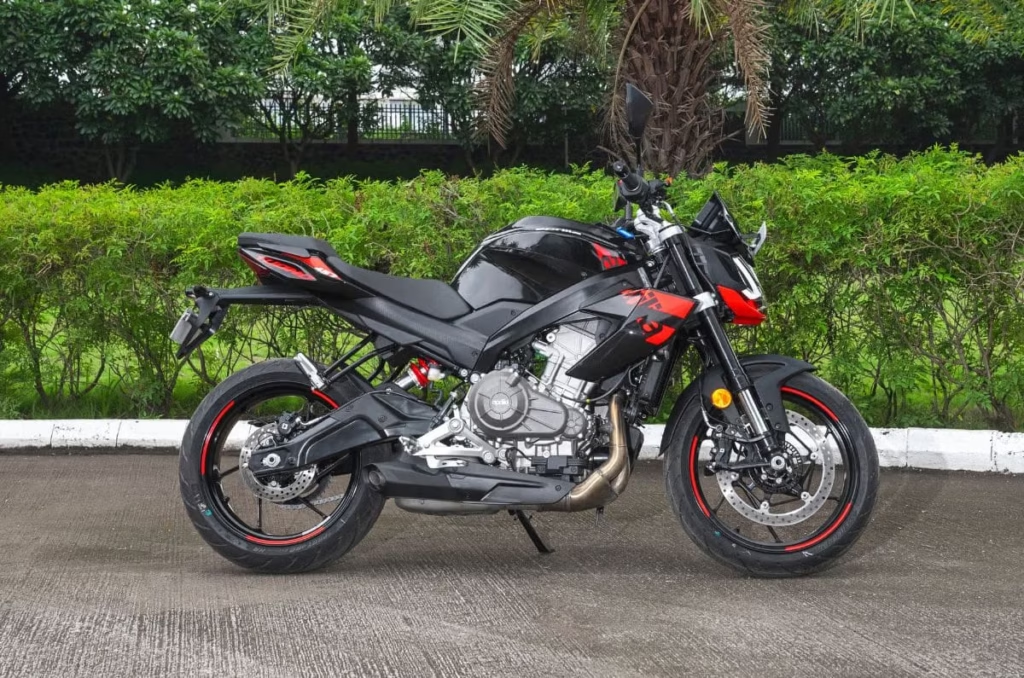
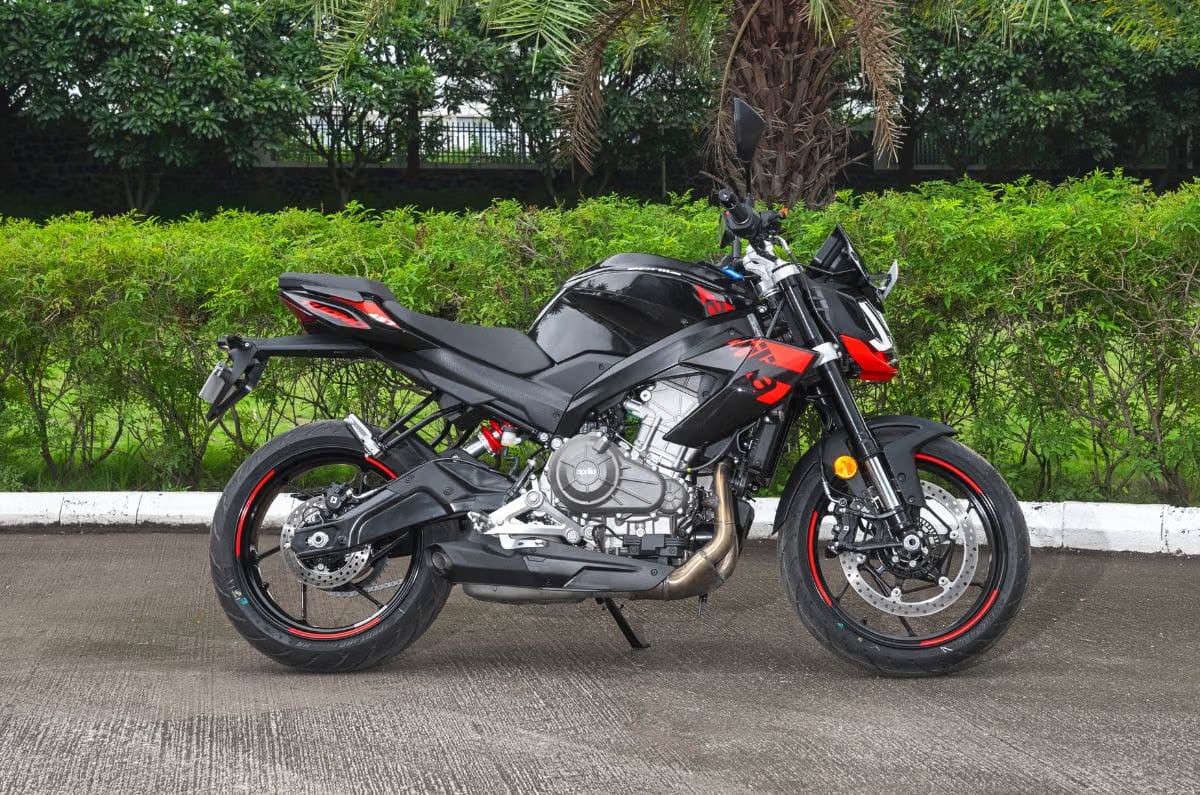
The Aprilia Tuono 457 Special Edition is now the only version of the Tuono 457 available in India. Despite the name, this is not a limited run on top of the standard bike, but the replacement for it. It arrives with a revised riding position, retuned suspension and a standard-fit flyscreen, all aimed at making the Tuono a more liveable everyday machine without compromising its core character. Here’s what works in its favour and a couple of reasons it might not be for you.

Reasons to buy the Aprilia Tuono 457 Special Edition

Noticeably better ergonomics and comfort

The original Tuono 457 was essentially a naked RS 457 with the same seat, same riding position, and just with a flat handlebar instead of clip-ons. For taller riders in particular, it felt uncomfortably cramped. The Special Edition addresses this with taller handlebar risers and additional seat padding (both around 10mm each) which sound modest on paper but make a meaningful difference in practice. During our time with the bike, Rishaad, who stands 6’1″ found that the new ergonomics offered a substantial improvement over the older bike, especially after a long ride. The retuned suspension, with a softer initial stroke front and rear, also makes the bike less abrasive over imperfect roads without blunting its handling.

An engine and chassis that no locally manufactured rival can match

The 457cc parallel-twin remains the highlight of the package. It produces 47.6hp and 43.5Nm, makes a genuinely excellent sound, and has a strong enough mid-range to pull clutch-up wheelies in second gear – something no other locally manufactured motorcycle at this price can do. The chassis is equally impressive, with a taut, reactive feel that gives it what the reviewer describes as a scaled-down big bike character. Highway speeds are effortless, and the bike cruises comfortably at 130kph and above.

Better relative value than before

The Tuono 457 Special Edition is priced at Rs 3.99 lakh – unchanged from when the standard Tuono launched. Meanwhile, its closest rival, the KTM 390 Duke, has seen its price rise due to the GST rate hike applicable to motorcycles above 350cc. What was previously a Rs 1 lakh gap has now narrowed to around Rs 50,000. That shift in relative positioning makes the Tuono a more compelling consideration than it was even a few months ago.

Reasons to skip the Aprilia Tuono 457 Special Edition

It’s still a compact motorcycle

The ergonomic improvements are real, but the Tuono 457 remains a small, compact motorcycle. The footpegs are still high-set, position is still sporty, and taller riders will still find it more constricted than, say, a KTM 390 Duke or a Triumph Speed 400. The changes make it more manageable, not roomy. If everyday comfort over long distances is your priority, this is not the bike for you.

Aprilia’s dealer network remains limited

Aprilia’s sales and service network in India is significantly more restricted than rivals like KTM, Triumph and Royal Enfield. For riders outside major metropolitan areas, finding an Aprilia dealership for routine servicing or warranty work can be a real inconvenience and it’s a concern that hasn’t been addressed alongside the motorcycle’s improvements. It also tends to be a more expensive bike to run, both in terms of service costs and spare parts.

TVS Apache RTX BTO long-term review, 4,500km report

TVS Apache RTX BTO long-term review, 4,500km report

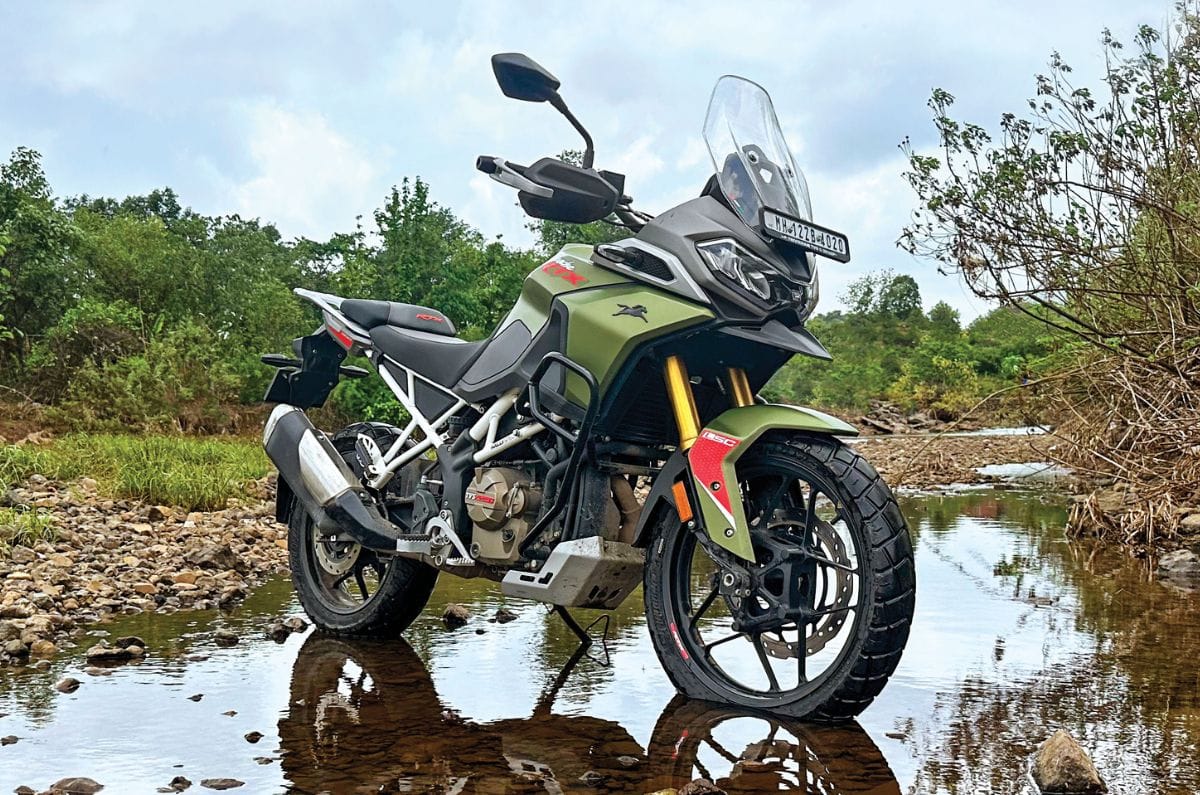
This is the second time, after the original RR 310 in 2017, that TVS has created enormous excitement over a brand-new premium bike and then struggled to deliver. The RTX 300’s massive waiting periods have been well documented now, and like many customers, we have also had to wait nearly a year after its launch to get a long-term test bike.

I hopped off the Xpulse 210 that I’ve been riding for months and onto the RTX, and the first impression was… dull. The engine seems to lack zing and excitement at lower revs, and it all felt very calm and controlled. At first, this was disappointing, and to be honest, I didn’t care for the bike much on that initial commute home. It was quick, comfy and effortless, but simply lacked spice or drama.

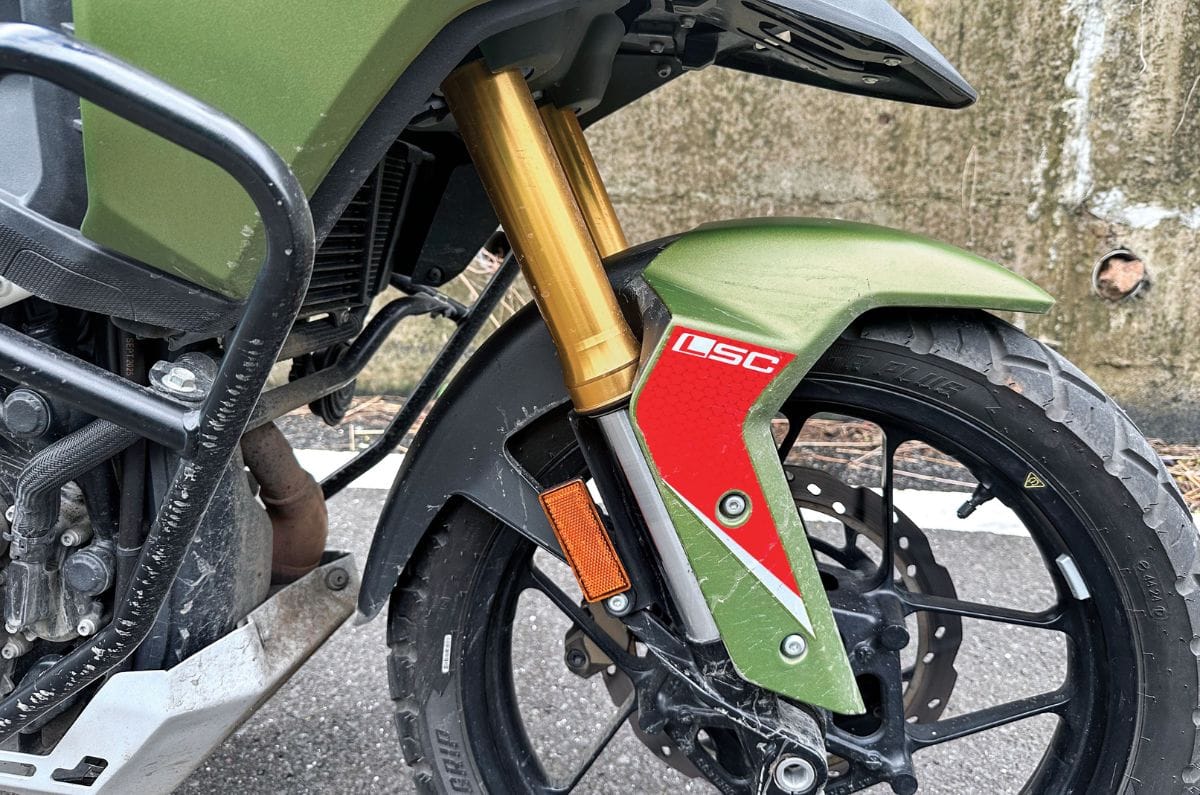
The adjustable Showa suspension does a great job of soaking up bad roads.

Having now spent a few weeks with the bike, my opinion has evolved. The bike still feels the same, but I have grown to like its demeanour. While it is a mild-mannered gentleman of a motorcycle that almost never encourages bad behaviour, it still gets me from point A to B at a quick pace and in very good comfort. While lacking in drama, the engine is superbly tractable and never threatens to stall at low revs in thick traffic. This efficient, almost Honda-like character is bolstered by a fabulous feel-good factor.

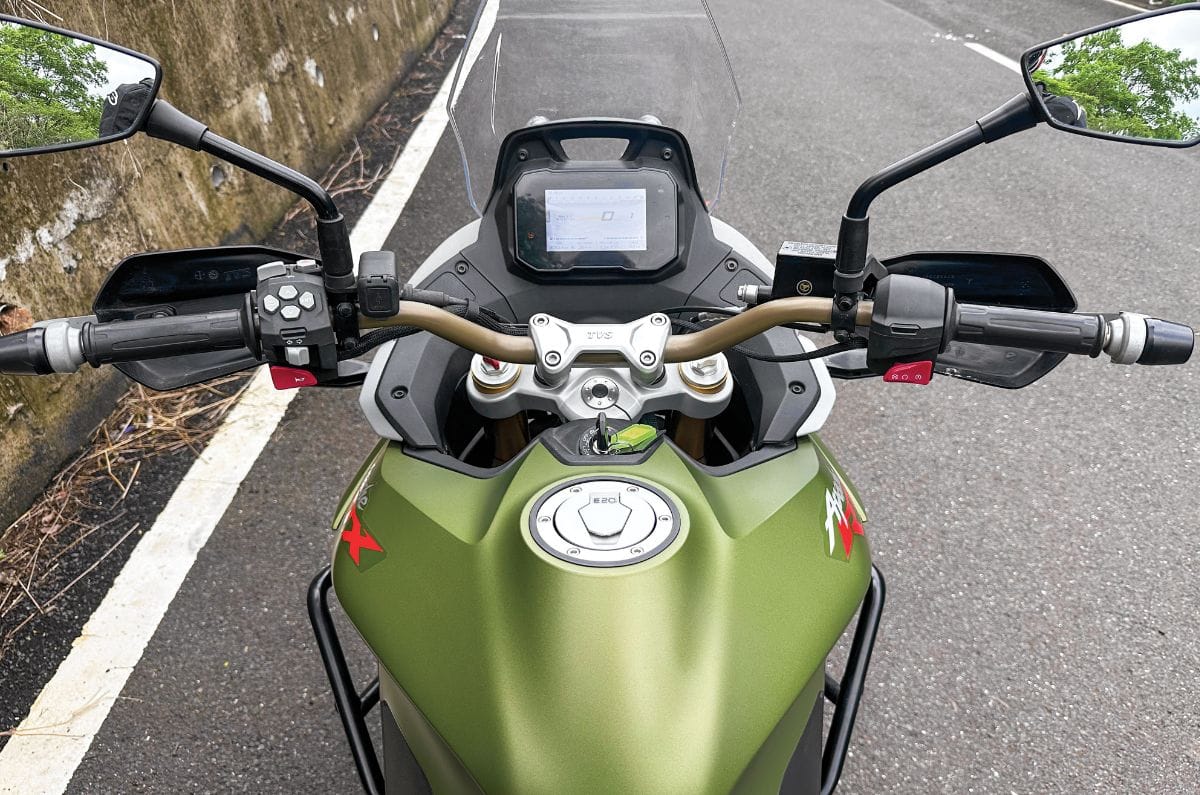
The look and size from the rider’s POV are of a much more expensive bike.

The rider’s point of view is fabulous, and the whole tank area, as well as the TFT and windscreen, feel like they were off a bike that cost three times the price. It even feels like a large motorcycle when you’re sitting on it, and TVS has achieved something truly special in how it can give you this experience at such a low price.

The quickshifter occasionally causes a short cut in power delivery.

On the topic of features, some of them have been highly appreciable, while others could stand to improve. As someone who doesn’t check tyre pressures as often as I should, the tyre pressure monitoring system has been great. I also love the fact that the bike remembers to keep the traction control and rear ABS off, and I don’t have to deactivate them on every ignition cycle. However, as we reported before, the engine does occasionally hesitate under acceleration at lower speeds, and this has to do with the quickshifter sensitivity. I’ve deactivated it for now, and doing so has solved the issue, but I do miss using it.

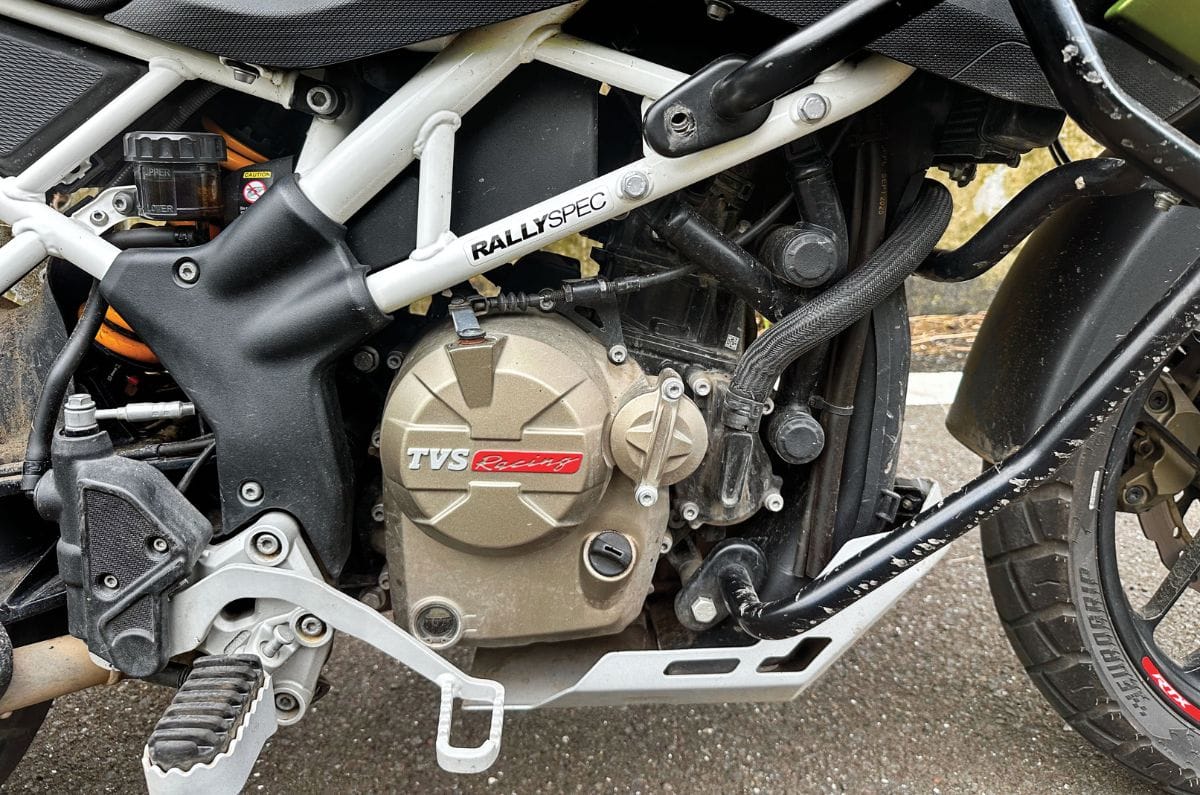
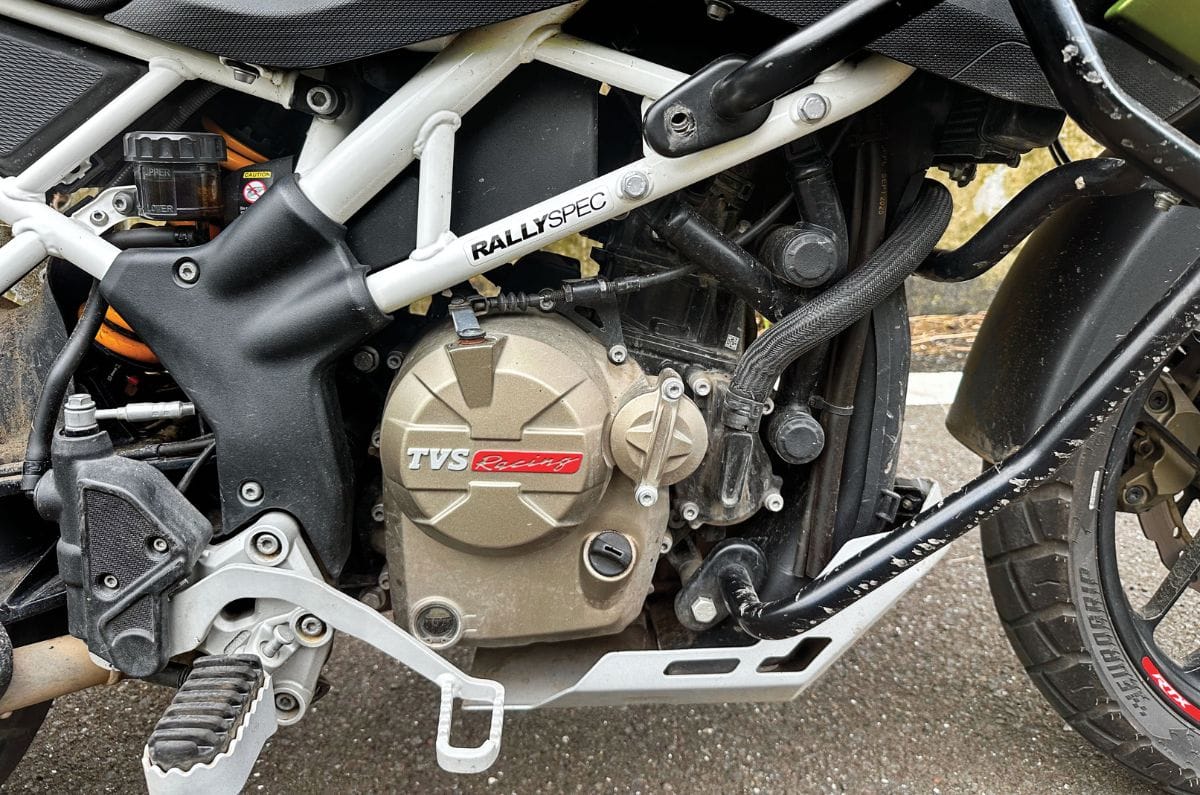
The motor is tractable and has good performance, but is a bit low on character.

Beyond that, the RTX is proving to be everything that we discovered in our initial reports. It has fantastic suspension comfort with a taut, but absorptive setup. The chassis is stable and communicative, and it gives you the confidence to ride over rough surfaces at speed without concern. Seating comfort is also fabulous, and while the engine may not blow your socks off, it certainly performs well and can easily cruise at triple digit speeds.

As for vibrations, they certainly exist but haven’t been bothersome so far. I’d like to spend more time with the bike, especially on the highway before sharing whether there are any situations where the vibrations become a pain. We’ll save that for the next report. 

Vinfast VF5 Spied testing in India

Vinfast VF5 Spied testing in India
Vinfast VF5 prototype front quarter static

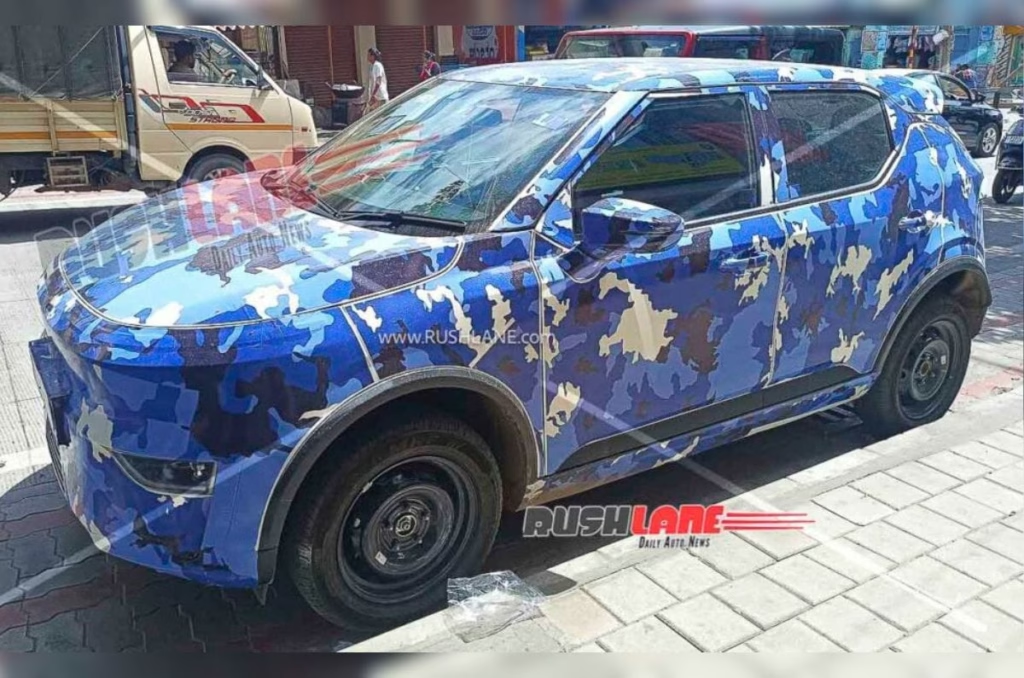
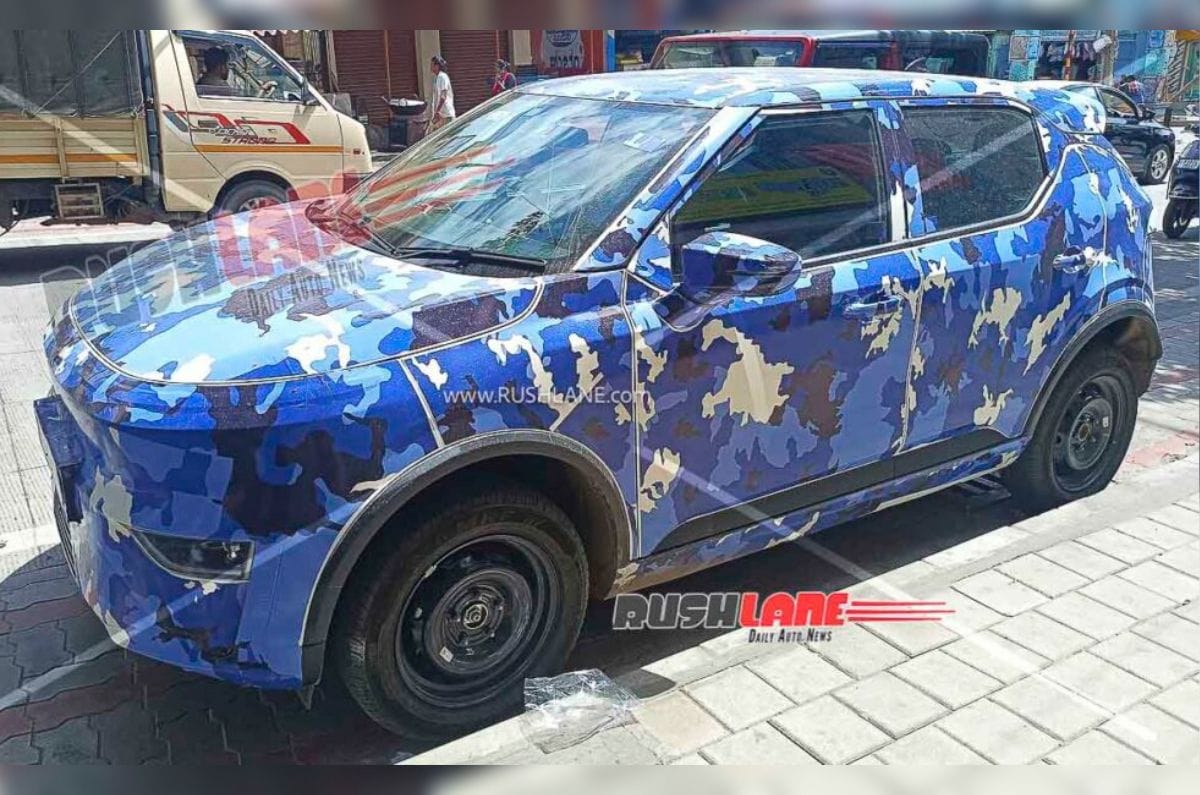
We exclusively reported earlier this year that Vinfast is considering launching the VF5 SUV in India. Ahead of its arrival, a heavily camouflaged prototype has been spotted on our roads, hinting at the design of the India-spec version. When the VF5 arrives here, it’ll be positioned below the VF6 midsize electric SUV. Secondly, the Vietnamese carmaker is also expected to utilise a fleet version of the VF5 for its Green SM taxi service

  1. India-spec VF5 likely to have different soft parts compared to global-spec VF5.
  2. VF5 expected to be available for private and fleet buyers like the VF MPV 7.

Vinfast VF5: What the spy shots revealed

While the overall silhouette of the prototype is largely similar to the global-spec VF5, there were differences spotted. The front-end of the prototype has a more upright look with a clamshell bonnet compared to the global-spec VF5’s more swooping nose. Headlamp units positioned lower down on the sides of the bumper suggest a split design. The headlamps themselves feature a revised look, suggesting that the India-spec VF5 would have a revised fascia in comparison to the global-spec version. 

In profile, the mule sported a similar design for the glass house, black wheel arches, a black section on the C-pillar, and moulding on the lower sides of the doors to the global-spec VF5. 

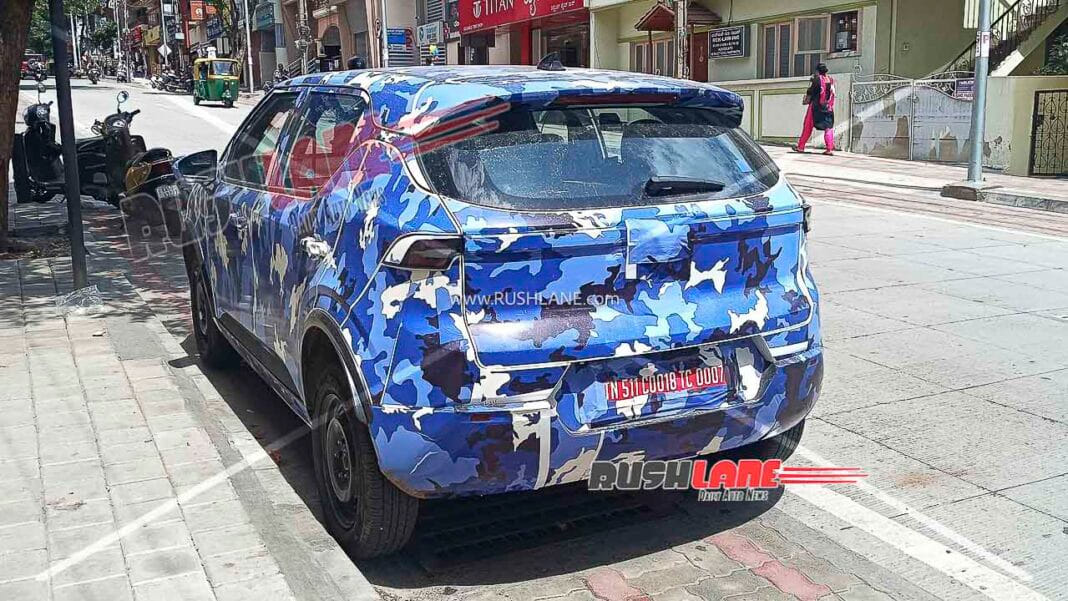
The rear end was spotted with a raked windscreen, while a concealed horizontal section on the tailgate suggests a connected LED tail-lamp setup with a look that differs from the global-spec VF5. Moreover, there was also a spoiler-mounted stop lamp, while the bumper lower down gets a curved look with horizontal reflectors and a hexagonal layout for the license plate.

Inside, the test mule had a completely different layout from the global-spec VF5. It had an all-black colour scheme, a two-spoke steering wheel, and cup holders on the centre console. Unlike the global-spec VF5, which has a dedicated instrument cluster, the prototype does without it and gets a large floating infotainment display, which is likely to be the main source of all information and functionality.

The India-spec VF5 is expected to be under 4 metres in length. For context, the global-spec VF5 is 3,967mm long, 1,723mm wide, 1,579mm high and has a 2,514mm wheelbase. 

Vinfast VF5: Expected powertrain

The global-spec VF5 is offered with two battery packs. There’s a 29.6kWh battery pack paired to a front-mounted motor developing 95hp and 135Nm. Also, there’s a larger 37.23kWh battery pack mated with a front-mounted motor delivering 136hp and 135Nm. NEDC-claimed ranges for the 29.6kWh and 37.23kWh are 268km and 326km, respectively. It remains to be seen what is brought to India.

Vinfast VF5: Expected price

Expect the Vinfast VF5 to be priced in the ballpark of Rs 12 lakh. Once launched, it will take on the likes of the Tata Nexon EV (Rs 12.49 lakh to Rs 17.49 lakh) and the Mahindra XUV 3XO EV (Rs 13.89 lakh to Rs 14.96 lakh).

All prices are ex-showroom, India