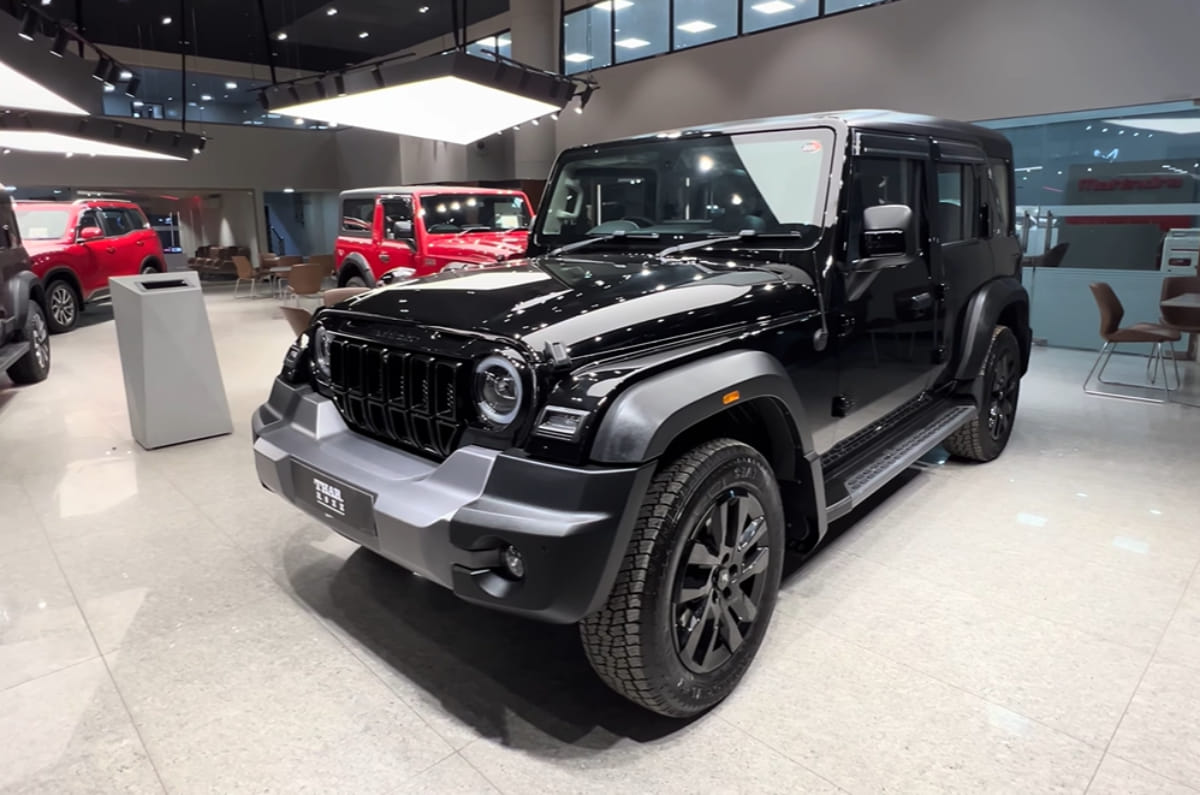
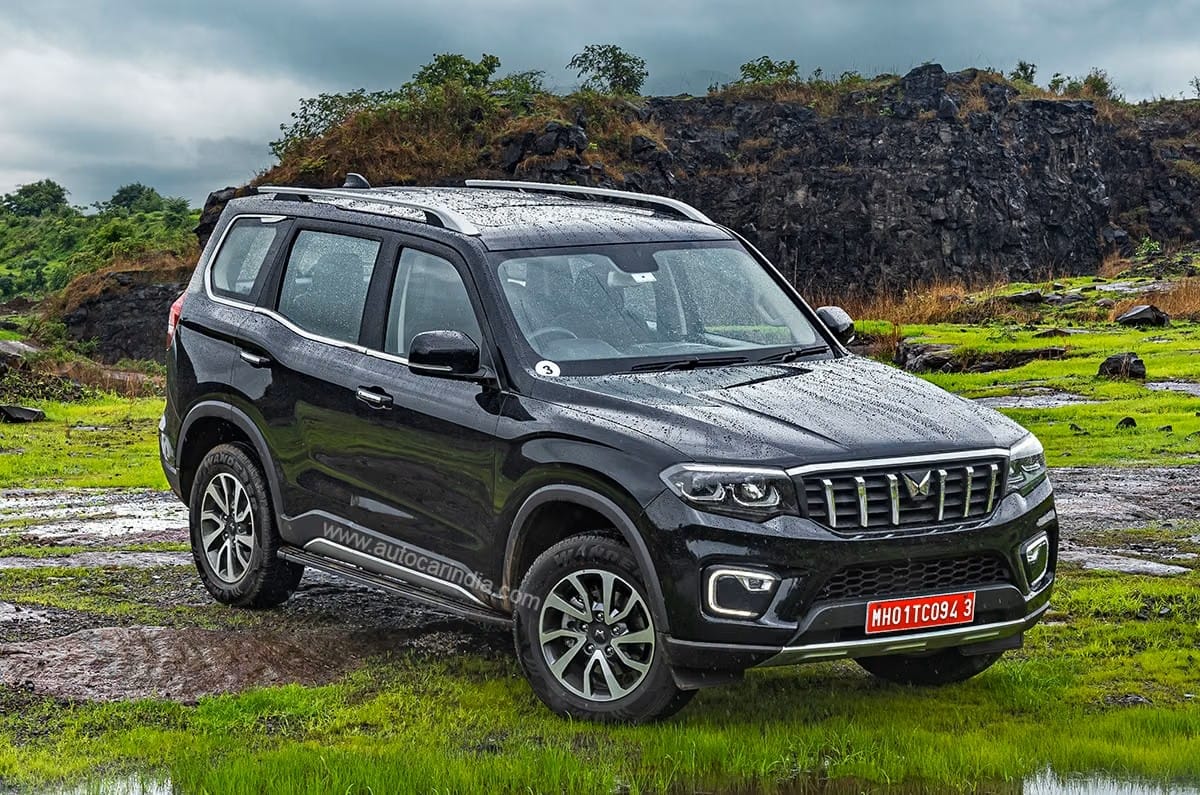
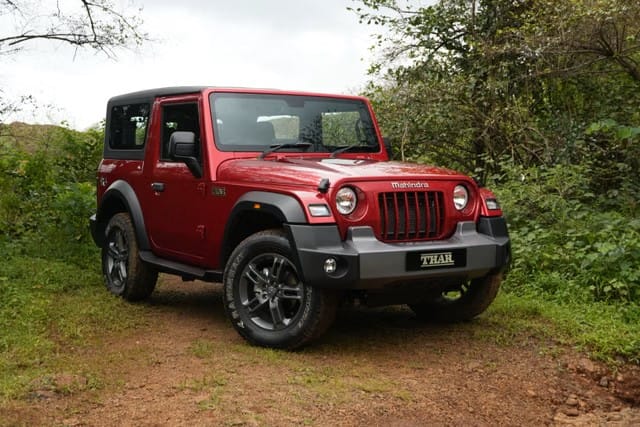
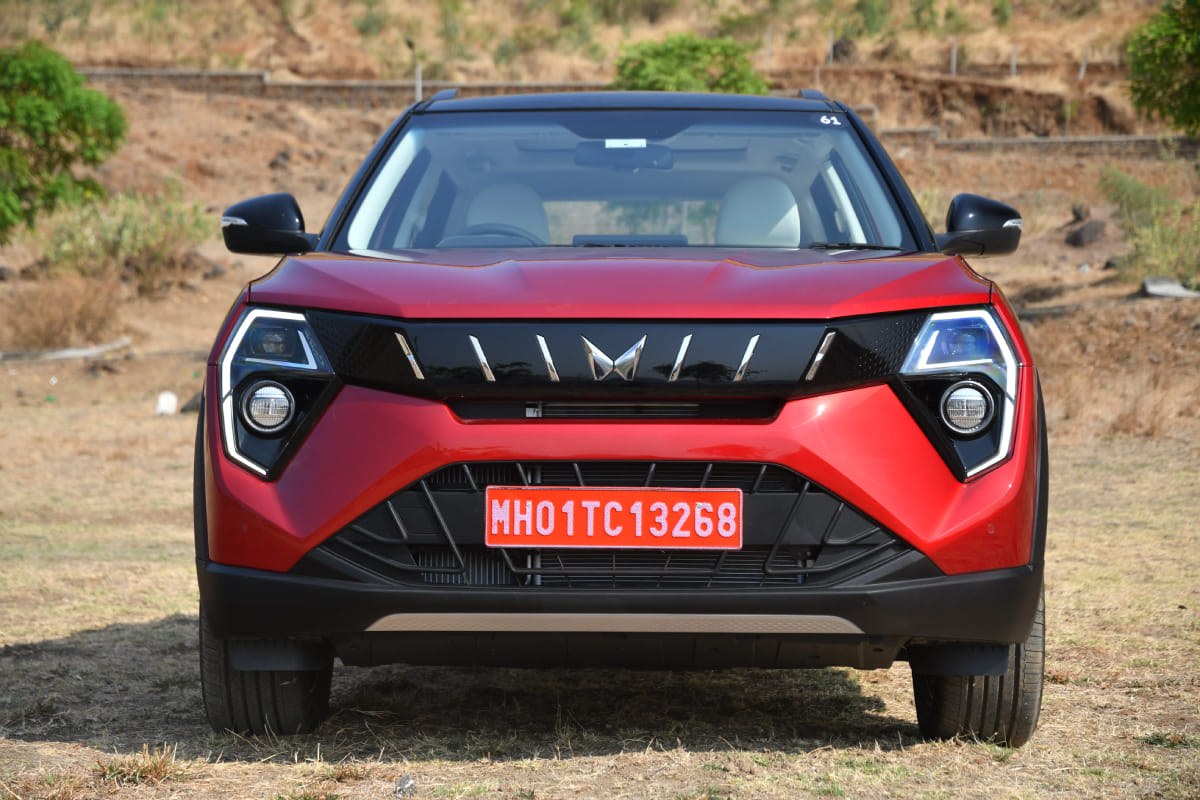
Mahindra is offering discounts across much of its ICE line-up in August 2026. The Thar Roxx and Scorpio N receive the highest benefits among the brand’s mainstream SUVs this month, while offers are also available on the Scorpio Classic, Thar, XUV 3XO, Bolero Neo and Bolero Neo Plus. Offers are valid until August 31 and may vary depending on the region, dealer and stock availability.
Disclaimer: Offers may vary by region, dealer, stock availability and customer eligibility. Please check with your nearest authorised Mahindra dealership for exact details.
Mahindra Scorpio N discounts in August 2026
Up to Rs 1.25 lakh off
The Scorpio N is available with benefits of up to Rs 1,25,000. These include a cash discount of Rs 1,00,000 and accessories worth Rs 25,000. These discounts apply to existing pre-facelift stock available with dealers.
The Scorpio N is priced between Rs 13.69 lakh and Rs 25.49 lakh (ex-showroom). It rivals the Tata Safari and Thar Roxx. It impresses with its smooth petrol and diesel engines and off-road capability, although the third-row seats and luggage space are not great.
Mahindra Thar Roxx discounts in August 2026
Up to Rs 1.20 lakh off
The Thar Roxx receives benefits of up to Rs 1.20 lakh this month. This comprises a cash discount of Rs 92,000 along with a ceramic coating package worth Rs 28,000. Priced between Rs 12.52 lakh and Rs 23.52 lakh, the Thar Roxx rivals the Force Gurkha 5-door and serves as a more practical alternative to the three-door Thar. It combines the Thar’s off-road capability with a more practical cabin, better refinement and stronger road manners.
Mahindra Scorpio Classic discounts in August 2026
Up to Rs 75,000 off
Mahindra is offering benefits of up to Rs 75,000 on the Scorpio Classic. The offer comprises a cash discount of Rs 50,000 and accessories worth Rs 25,000. Priced between Rs 13.37 lakh and Rs 17.40 lakh, the Scorpio Classic continues to appeal with its refined diesel engine and rugged character, although it lacks the features and driving sophistication of newer rivals.
Mahindra Thar discounts in August 2026
Up to Rs 50,000 off
The three-door Thar is available with a cash discount of up to Rs 50,000 this month. Priced between Rs 10.32 lakh and Rs 18.00 lakh, the Thar rivals the Force Gurkha and Maruti Suzuki Jimny. It offers great off-road capability and is offered with refined and punchy petrol and diesel engine options, although luggage space is limited and access to the rear seats can be cumbersome.
Mahindra Bolero Neo and Bolero Neo Plus discounts in August 2026
Up to Rs 45,000 off
The Bolero Neo and Bolero Neo Plus receive cash discounts of up to Rs 45,000. The Bolero Neo is priced between Rs 8.99 lakh and Rs 10.79 lakh, while the Bolero Neo Plus costs Rs 11.39 lakh to Rs 12.49 lakh. Both SUVs are built to withstand rough roads and heavy use, although they are not as refined or as well equipped as newer compact SUVs.
Mahindra XUV 3XO discounts in August 2026
Up to Rs 40,000 off
The XUV 3XO is available with a cash discount of up to Rs 40,000 this month. Priced from Rs 7.79 lakh to Rs 15.04 lakh (ex-showroom), the XUV 3XO rivals the Maruti Brezza, Tata Nexon, Hyundai Venue, Kia Sonet, Skoda Kylaq and Nissan Magnite. It offers strong petrol and diesel engines along with a feature-rich cabin, although its boot is smaller than several rivals.
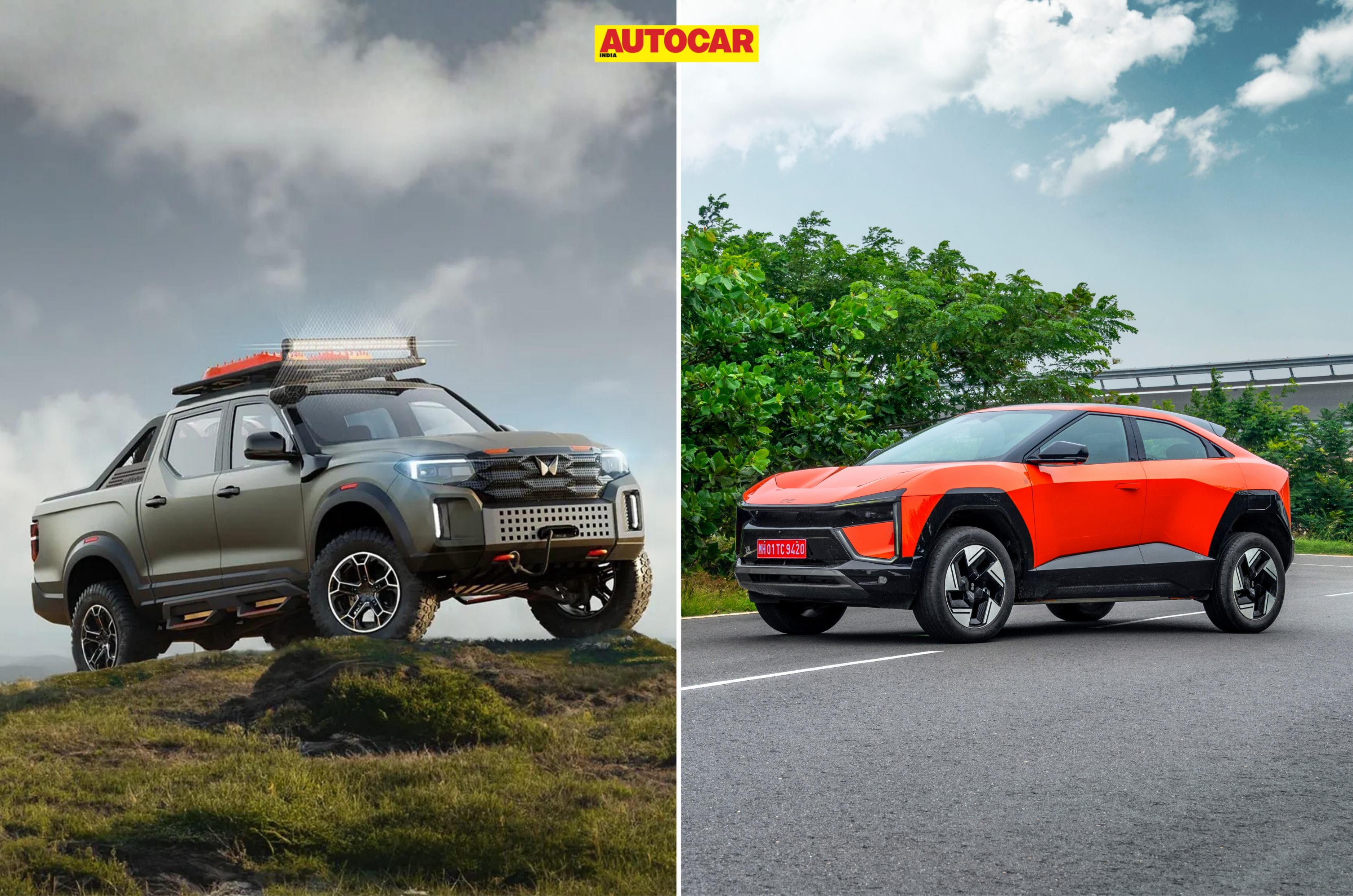
Over the past few years, Mahindra celebrated Independence Day by debuting all-new models (Thar Roxx and XUV700), concept cars that preview upcoming models (Vision S, Vision T, Thar.e, and more), or even fresh platforms and technologies (Nu_IQ and INGLO). The tradition will continue in 2026, with Mahindra set to host a blowout on August 15. Here’s what you can expect.
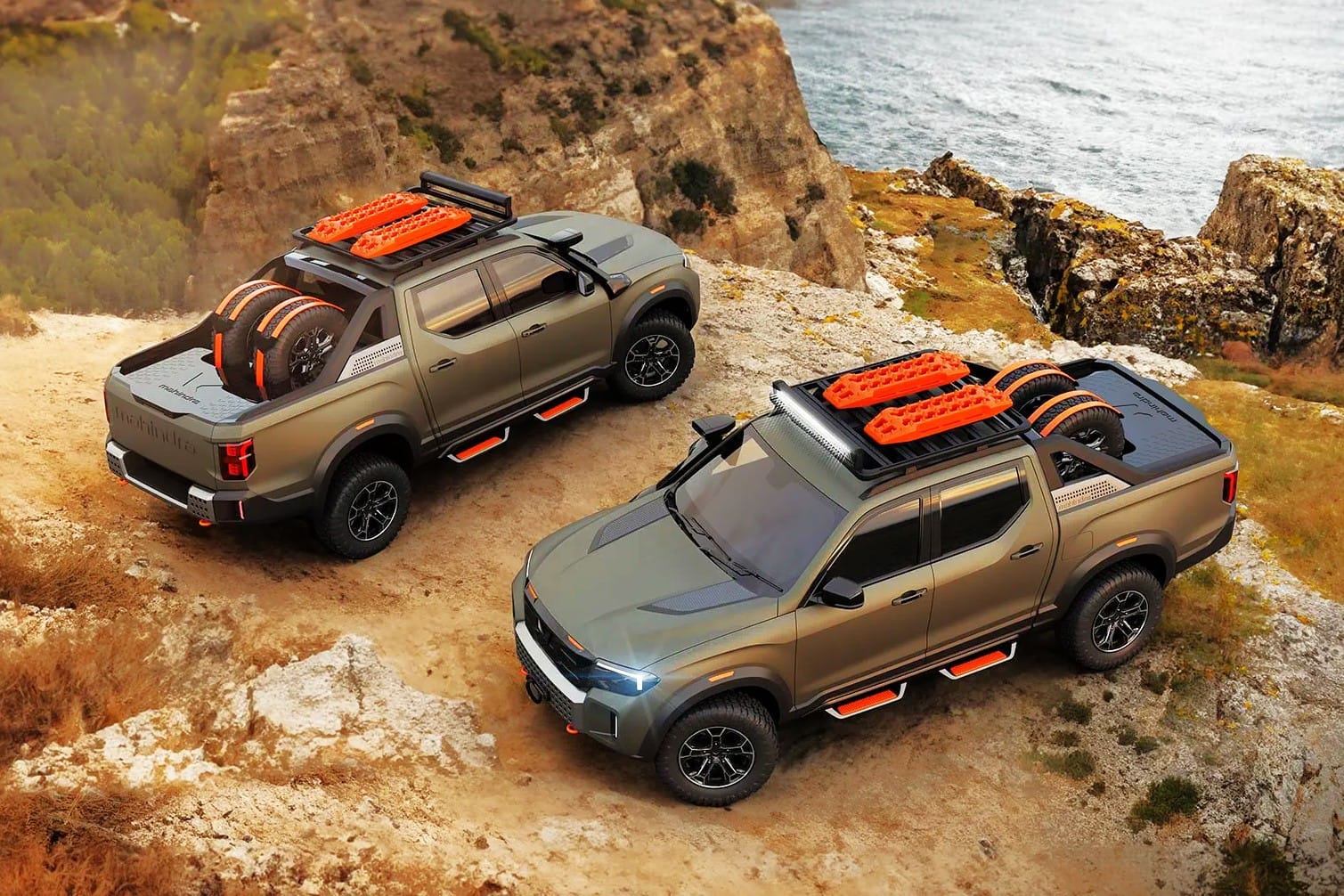
Closer-to-production-spec Mahindra Scorpio N pickup truck
Mahindra’s Hilux rival is likely just days away from its unveil
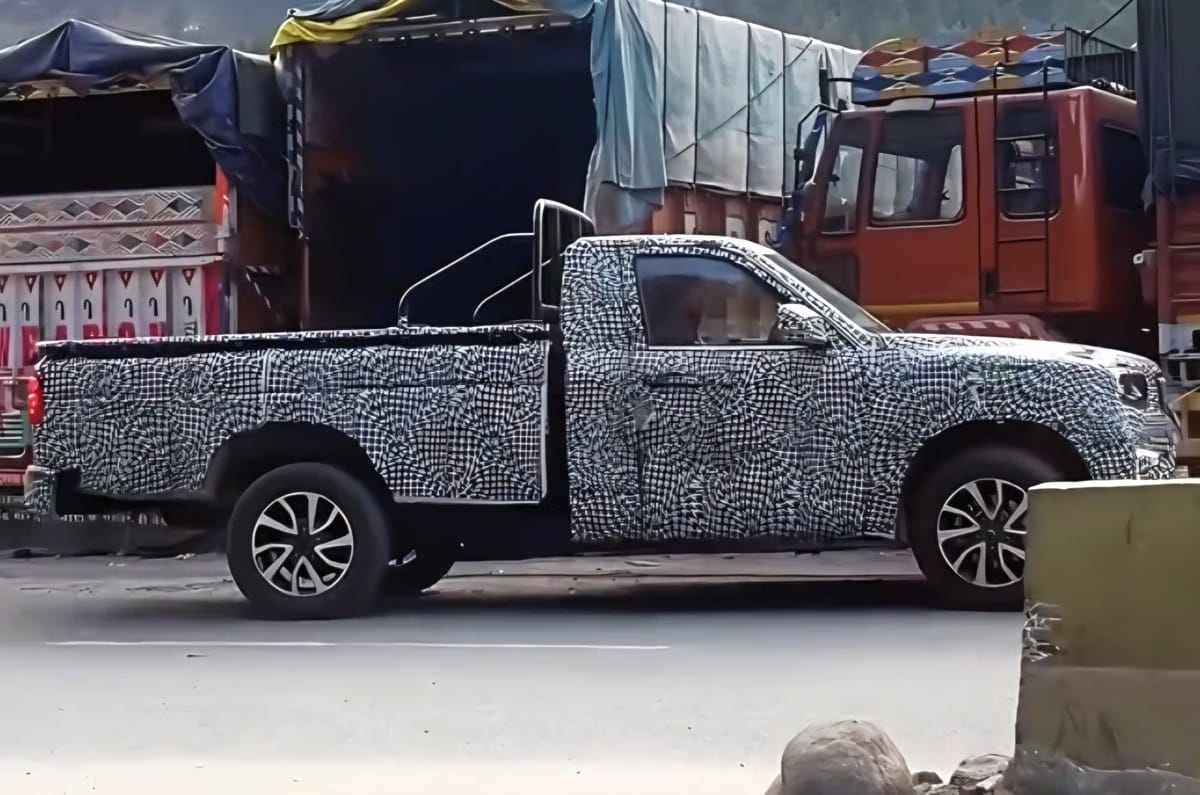
First previewed at Mahindra’s 2023 Independence Day event by way of the Global Pik Up Concept, the Scorpio N pickup truck is expected to finally break cover in a closer-to-production guise at this year’s celebration. Mahindra has been testing the Scorpio N pickup on Indian roads for quite some time, with prototypes sporting a single-cab configuration and an extended load bed. It remains to be seen if the final versions will sport a similar body style.
Credit: vashusinghyt via Instagram
Styling elements for the pickup truck are anticipated to largely mirror those of the Scorpio N SUV, possibly with more rugged cues for differentiation. Under the bonnet, we expect the Scorpio N pickup to retain the SUV’s 203hp 2.0-litre direct-injection turbo-petrol and 175hp 2.2-litre diesel engines, with 6-speed manual and 6-speed automatic gearbox options. 4WD is expected to be on offer as well.
The Scorpio N pickup is likely to rival the Toyota Hilux, which has done well to grow the popularity of the lifestyle pickup truck segment in India and make it a more lucrative space – one where Mahindra’s formula of tough, off-road-capable ladder-frame offerings fits quite well.
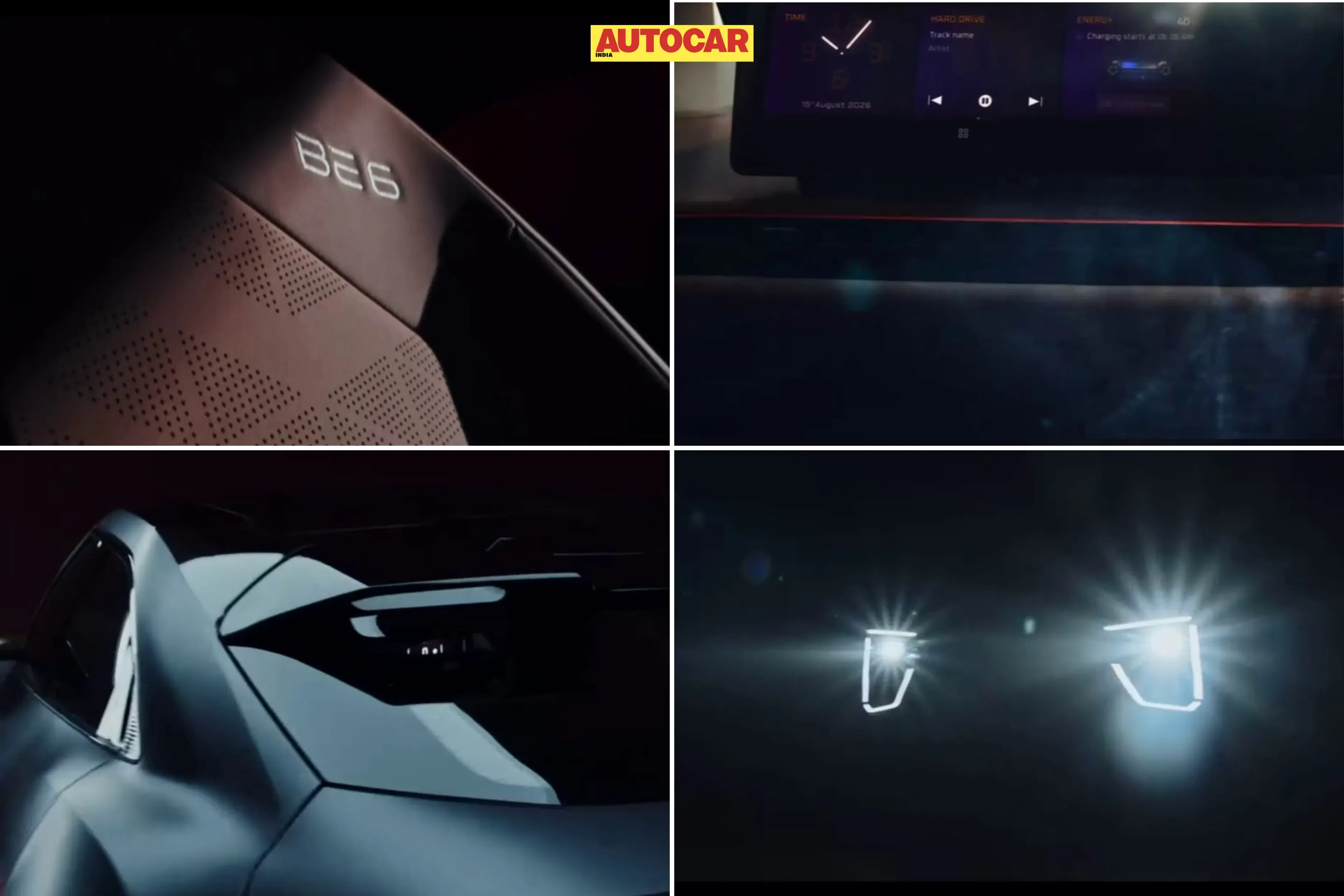
Mahindra BE 6 Sporteq variant
Gets triple-display setup and more conventional dashboard design
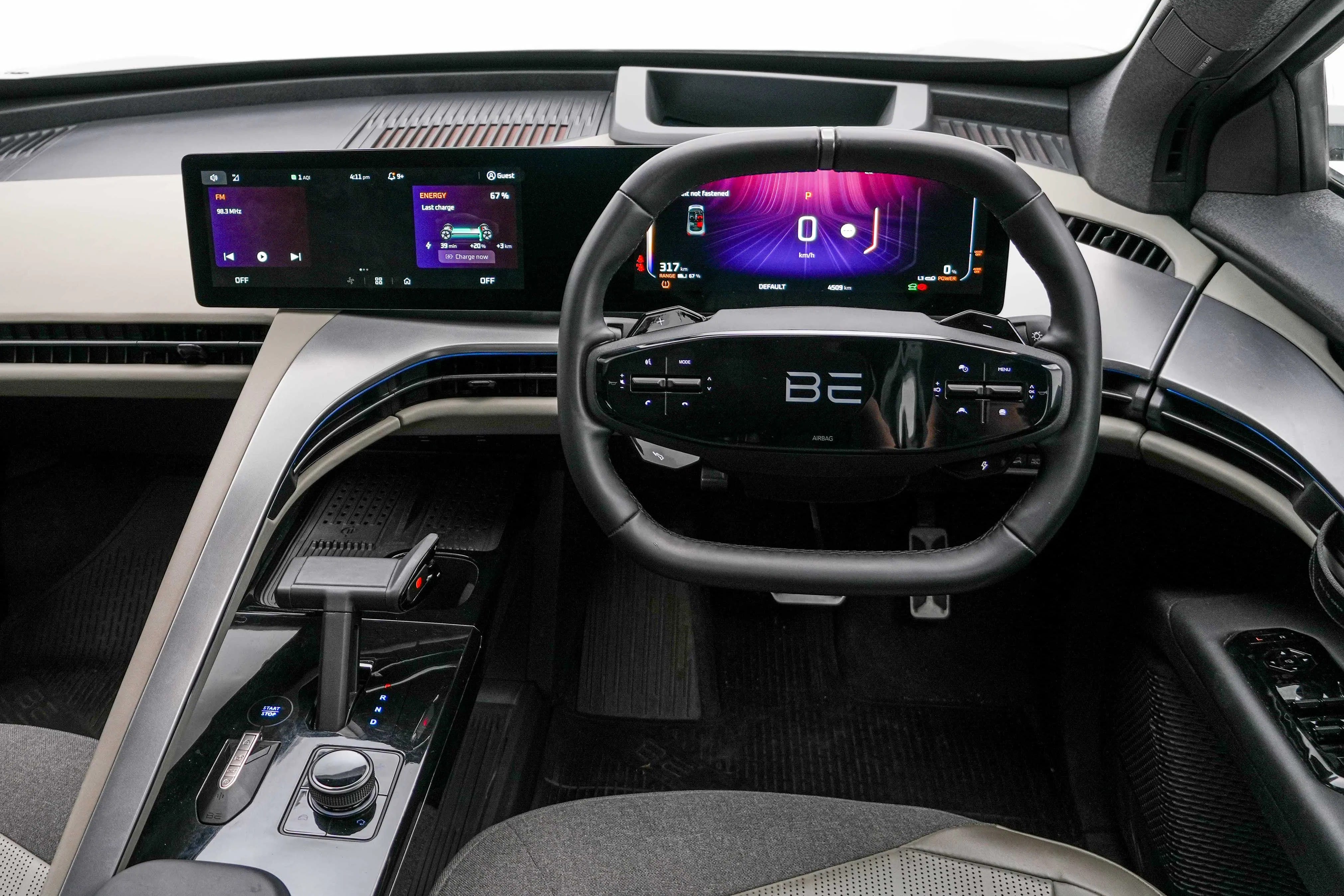
Mahindra will debut a new Sporteq variant of the BE 6 electric SUV on August 15. The BE 6 Sporteq’s key update is the addition of a passenger display on the inside, forming a triple-screen setup like those of the larger XEV 9e and XEV 9S. It will also sport a redesigned dashboard that eschews the large divider between the front seats, which was an ergonomic flaw that restricted access to the wireless charging pad and USB Type-C ports for the co-driver, and did not leave enough space for a second cupholder.
Current Mahindra BE 6 dashboard. Image used for representation only.
In addition to the aforementioned updates, the BE 6 Sporteq may offer new interior upholstery and colour options. Since the Sporteq is likely to be positioned as the new top-spec BE 6 variant, expect it to come with the 79kWh, rear-motor powertrain outputting 286hp and 380Nm, and claiming an MIDC range of 683km. As for pricing, the BE 6 Sporteq is anticipated to command a slight premium over the current top-spec Pack Three 79kWh variant, which costs Rs 26.9 lakh (ex-showroom).
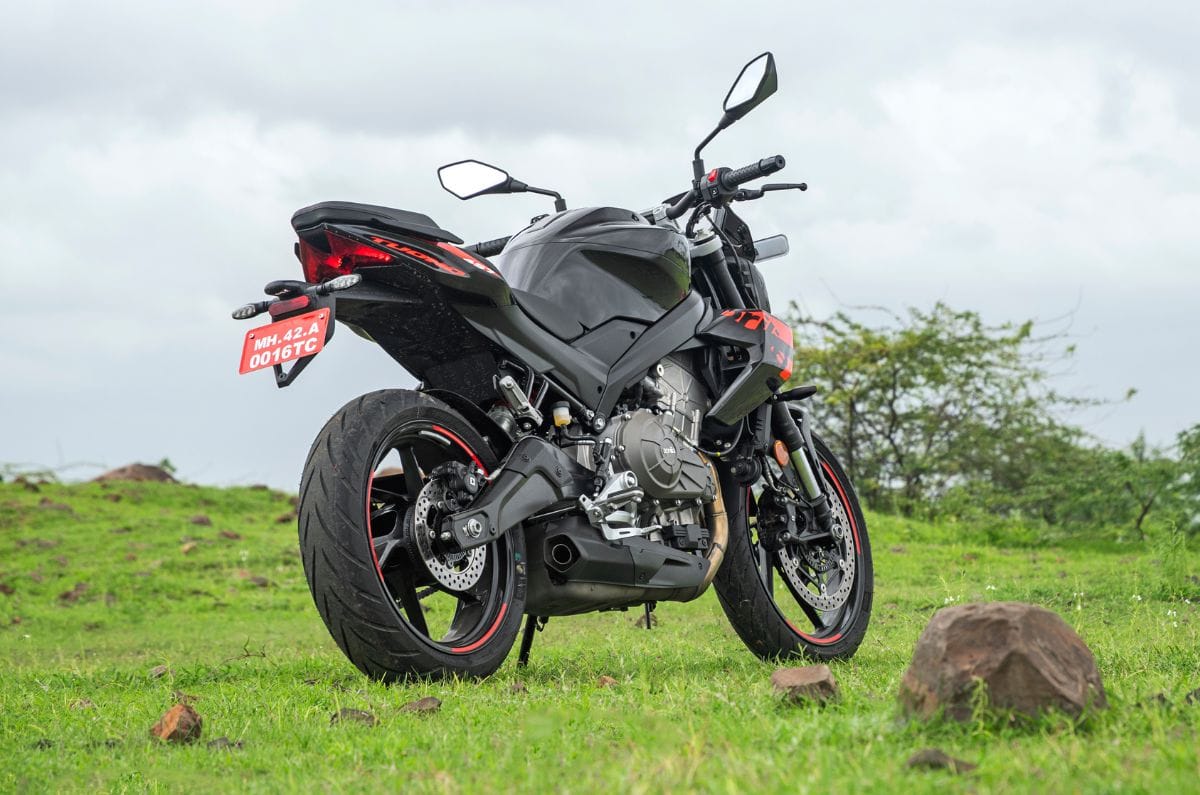
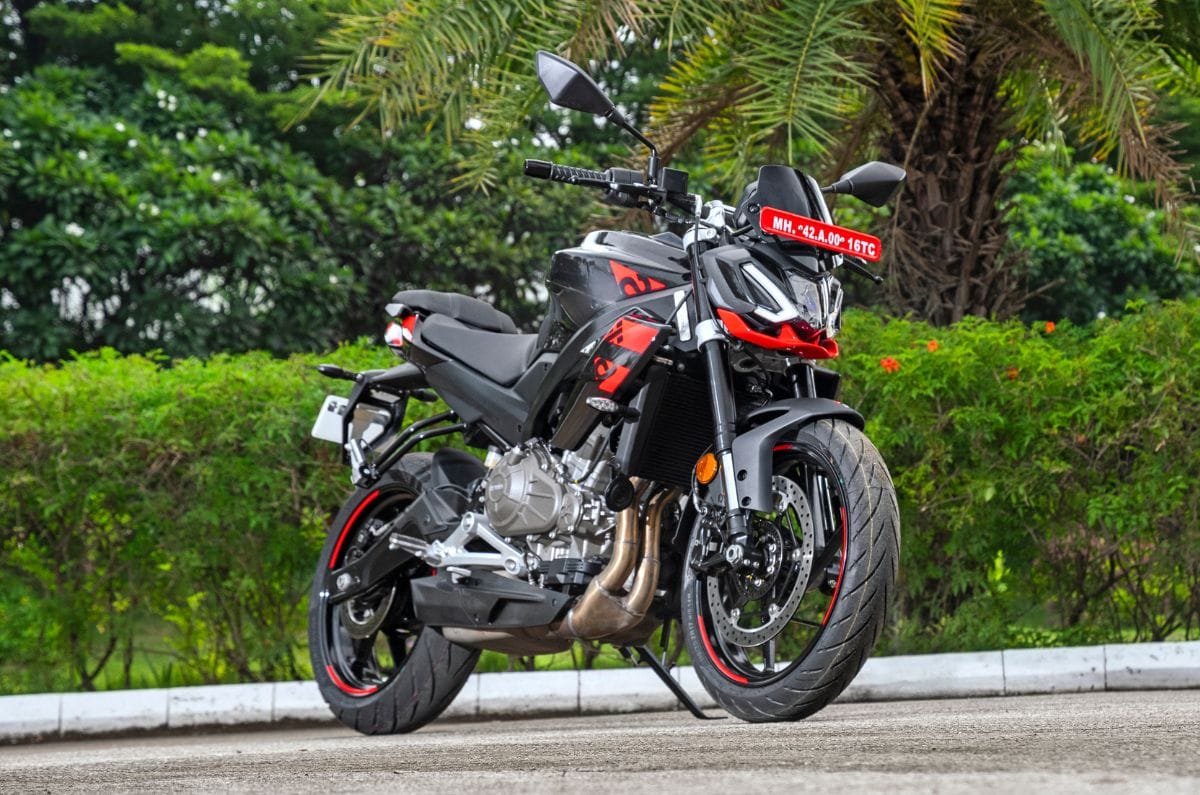
When you hear the words Special Edition, the natural assumption is that this is the special version of a normal bike. Aprilia thinks otherwise, and unlike what the name suggests, the new Special Edition is the only Tuono 457 you can buy in India today.
Tuono 457 Special Edition Comfort – 7/10
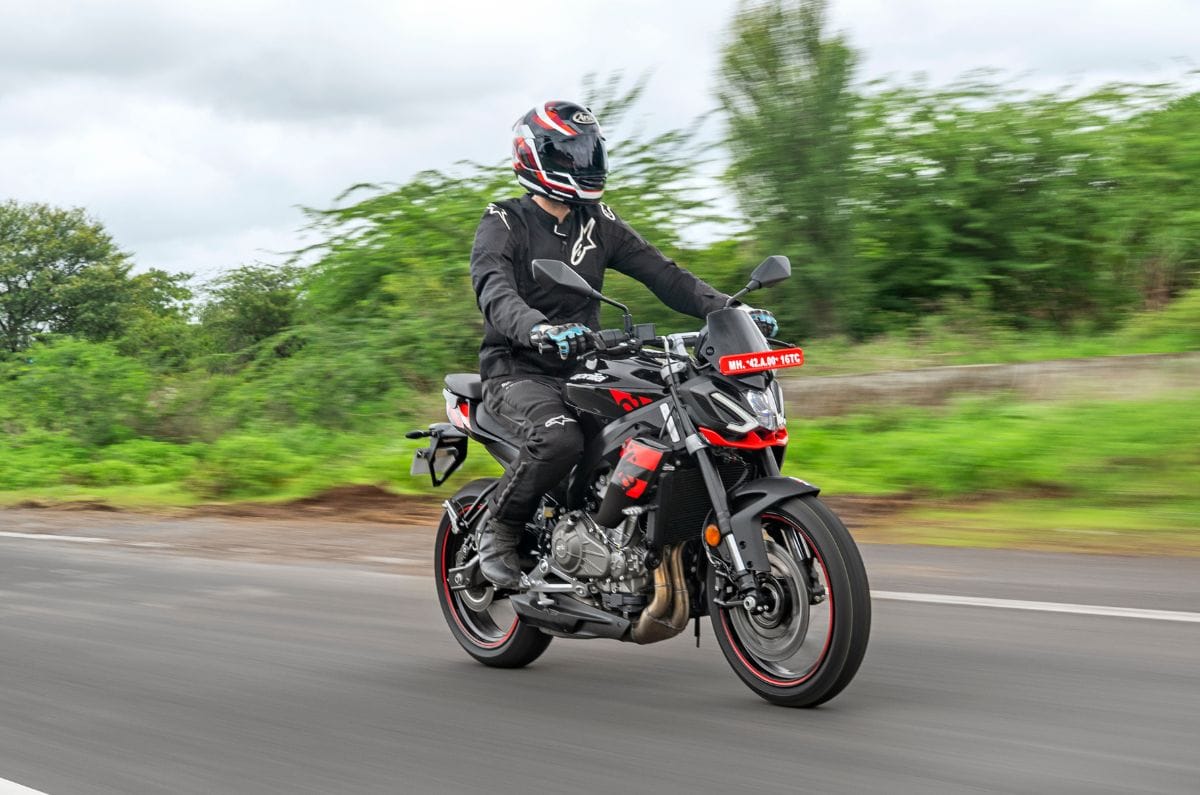
The changes are all aimed at making the Tuono a little easier to live with. When first launched, the Tuono was quite literally the naked version of the racy RS 457 with the only differences being in how it looked and the fact that it had a flat handlebar instead of clip-ons. The result was a high capable bike but one that was unforgiving in terms of comfort.
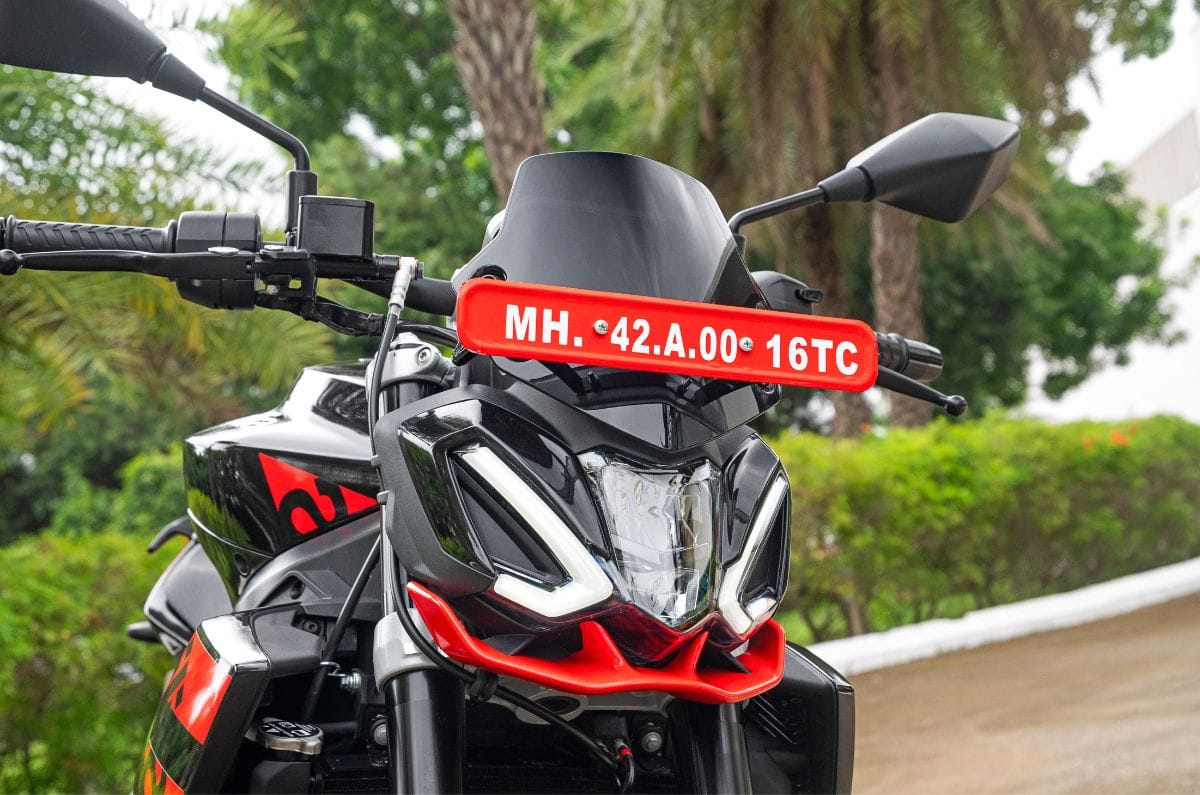
Fly screen is now standard fit
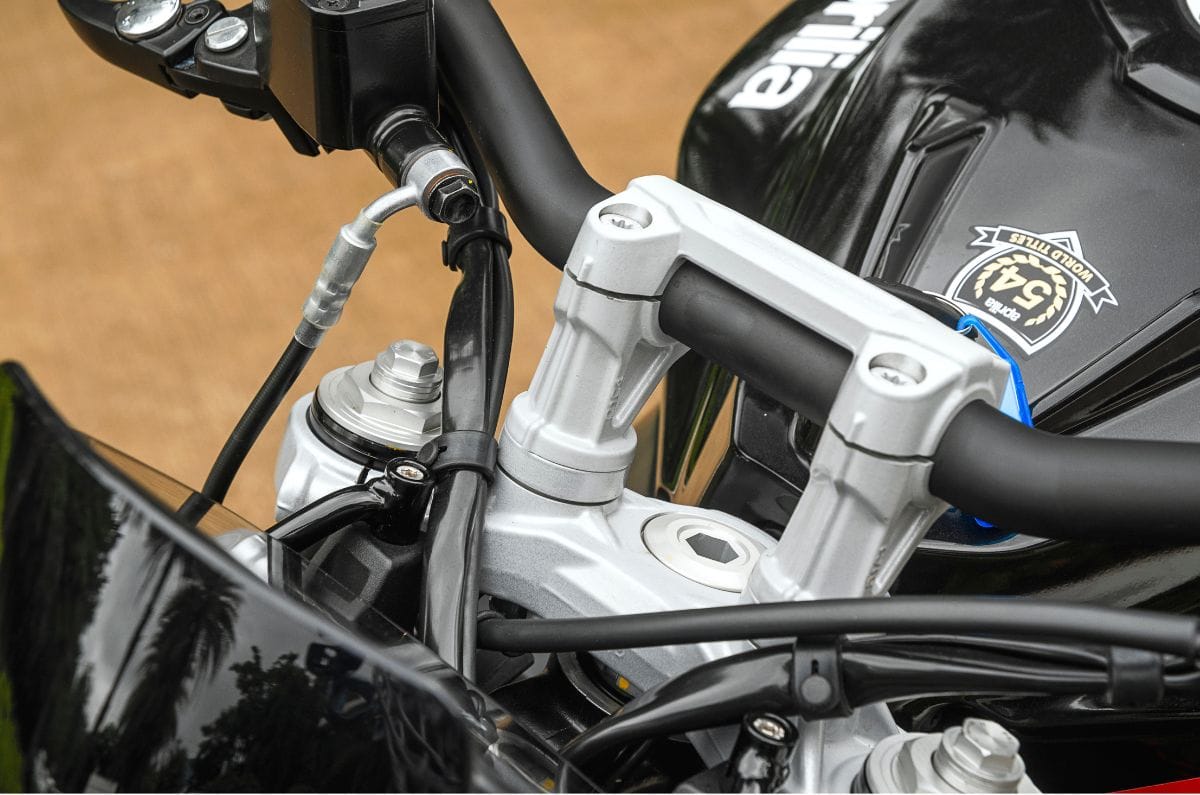
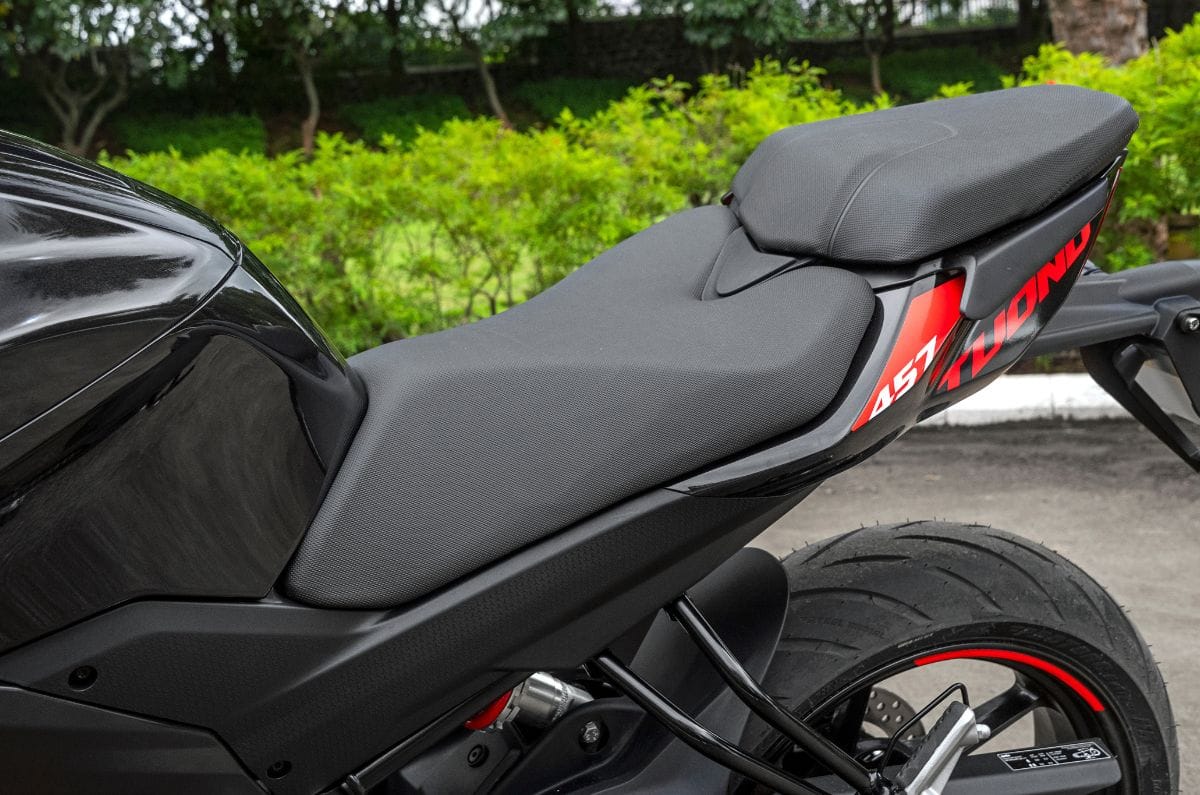
The Special Edition aims to make the Tuono more inviting with tweaks made to the riding position as well as the suspension. The handlebar is the same, but a new riser raises it by about 10mm. While the Tuono used to have the same seats as the RS 457, the rider seat now has additional padding which again raises the seat height by about 10mm.
Same handlebar as before but with taller risers
These two changes may sound marginal, but they have a noticeable effect. At 6’1”, I used to find the Tuono uncomfortably cramped, with my knees feeling locked in place by the tank and the handlebar aggressively low. The new setup improves things and while this is still a compact riding position with high-set footpegs, it’s not punishingly so – I do appreciate the difference it makes to comfort after an hour of riding.
Tuono 457 Special Edition Suspension and Handling – 9/10
Monoshock, adjustable preload, 130 mm wheel travel
Front Tyre Size
110/70 – 17
Rear Tyre Size
150/60 – 17
Brake type
Front – Disc, Rear – Disc
The other change comes in the form of retuned suspension with a focus on comfort. Wheel travel is unchanged, but the compression/rebound damping and spring rates have been reduced a little at the front while the rear gets reduced spring rates as well as a little less compression damping – rebound damping is similar to before. Aprilia stresses that while the suspension is softer, it will not bottom out under hard riding conditions.
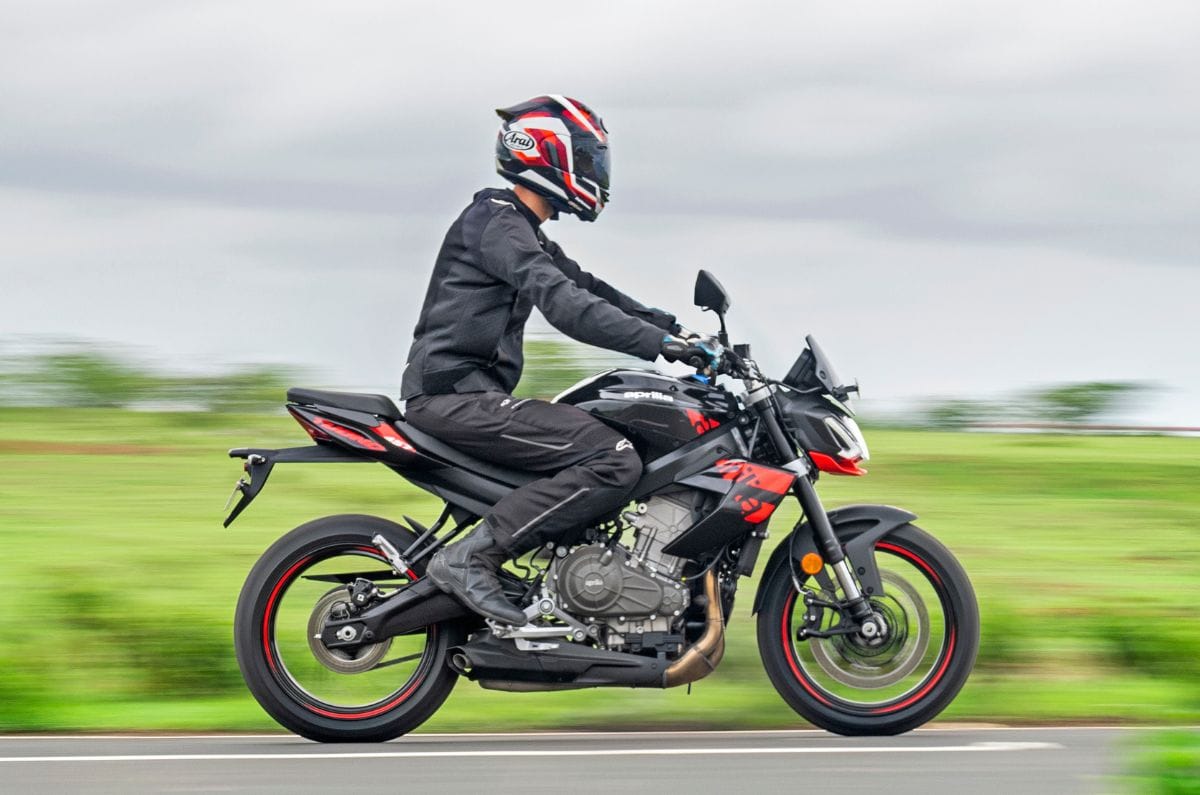
The riding position is still sporty but now noticeably more comfortable
Specifications
Values
Fuel Tank Size
12.7 L
Kerb Weight
175 kg
From what I could tell, the bike does feel a little softer and more absorptive in the initial travel, but we faced an unusual difficulty in making a clear verdict – the roads around Baramati where we were riding it were shockingly good! You could tell that this was still a very agile and reactive motorcycle with a taut feel. I’m quite confident that its superb handling skills are still intact and the only difference may be seen when being pushed to the limit at the race track – something we look forward to evaluating soon. At the same time, I don’t expect this to be a plush and comfortable bike over Mumbai’s bumpy concrete roads, but it should be a little less harsh than before.
Rider seat gets more padding for better comfort
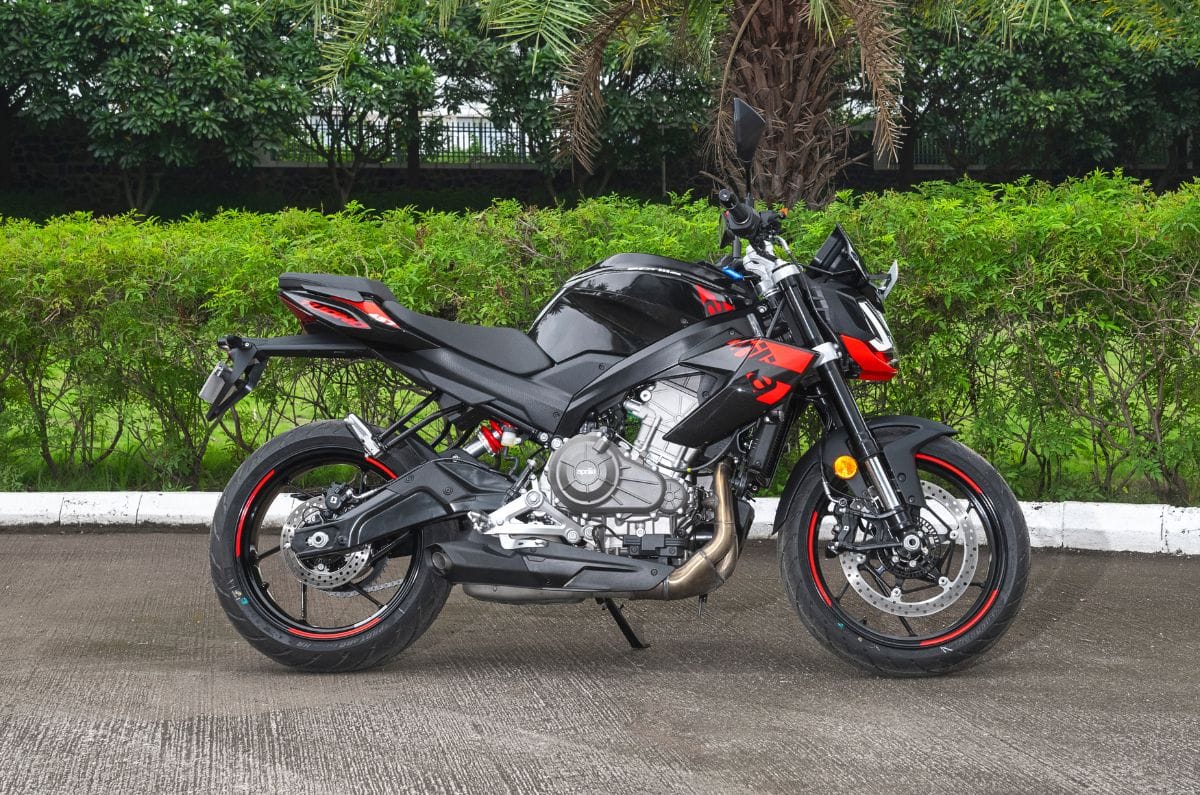
The other changes on the Tuono are largely visual. It now gets a fly screen as standard which adds to the look but doesn’t transform its wind protection capabilities in any significant way. There’s also a new adjustable brake lever and a smart shade of black that I think makes the Tuono 457 a better looking bike.
Tuono 457 Special Edition Engine and performance – 9/10
The 457cc twin cylinder engine has strong performance and makes a great sound
Specifications
Values
Engine Displacement
457 cc
Max Engine Power
47.6 hp @ 9400 rpm
Max Engine Torque
43.5 Nm @ 6700 rpm
Number of Gears
6
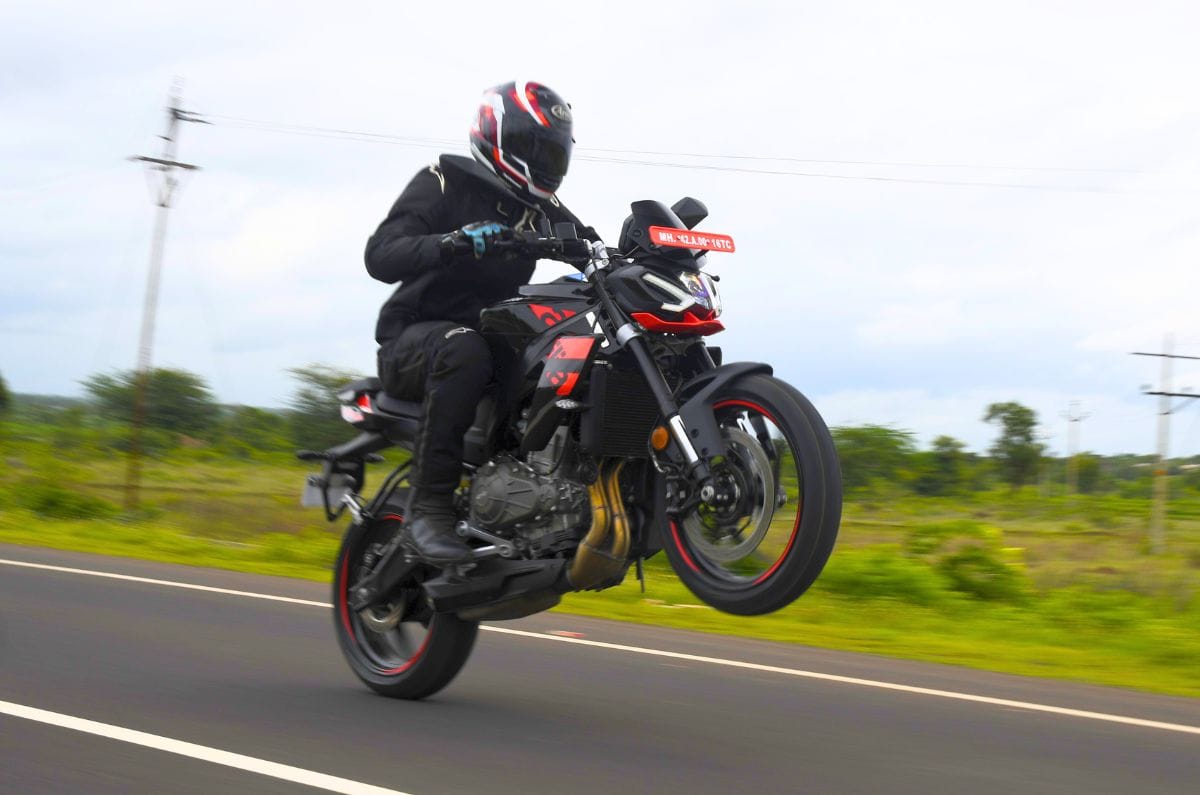
The rest remains the same, including the absolutely delectable 457cc parallel twin engine that makes a superb sound and has solid punch. The engine doesn’t have a great top end, but the mid range is strong enough to pull clutch up wheelies in second gear in a way that no other locally manufactured bike can match. Highway speeds are smooth and effortless and the bike can sit at 130 or higher without stress. This really would make for a great engine in a Tuareg 457 ADV whenever that finally becomes a reality. The company also seems to be ironing out the significant reliability concerns that plagued the first RS 457 models and the number of customer complaints has reduced.
Suspension is now a little softer while the braking set up is the same
Braking hardware is the same as well and it is good enough for road use. It’s only under repeated hard braking conditions that you will want to upgrade to better brake pads at the very least. The one missing feature is a bi-directional quickshifter which can be bought for an additional Rs 21,000.
Tuono 457 Special Edition Price and Conclusion – 8/10
The Aprilia Tuono 457’s Rs 4 lakh ex-showroom price is suddenly a lot more appealing than it used to be. That’s not because Aprilia lowered it in any way, but simply because they haven’t raised it after the GST rate hike. While its chief rival the KTM 390 Duke used to cost around Rs 1 lakh less, that difference is now just Rs 50,000 and that suddenly puts the Tuono in a new light.
It is still a more expensive bike – both to buy and run – and the dealer network is far more limited as well. However, as far as riding thrills go, no rival comes close to the ‘scaled down big bike’ feel this bike offers and with these changes, it makes for a much more appealing package at this price.
उत्तराखंड के चमोली जिले में भारत-चीन सीमा के पास लता गांव के नजदीक बादल फटने के बाद हालात बिगड़ गए। इस घटना का एक चौंकाने वाला वीडियो सामने आया है, जिसमें बॉर्डर रोड्स ऑर्गनाइजेशन (बीआरओ) का एक पुल तेज बहाव वाले बाढ़ के पानी में बहता नजर आ रहा है। सोशल मीडिया प्लेटफॉर्म एक्स पर सामने आए वीडियो में देखा जा सकता है कि नदी का पानी अचानक तेज हो गया। पानी का बहाव पुल के चारों तरफ तेजी से बढ़ता दिखाई देता है। कुछ ही देर में पानी की तेज लहरें पुल के ढांचे से टकराने लगती हैं।
VIDEO | Uttarakhand: A Border Roads Organisation (BRO) bridge was swept away following a cloudburst near Lata village along the India-China border in Chamoli district.
पानी का दबाव इतना ज्यादा था कि पुल ज्यादा देर तक टिक नहीं सका। तेज बहाव ने देखते ही देखते पुल को अपनी चपेट में ले लिया और कुछ ही पलों में पूरा पुल पानी के साथ बह गया। वीडियो में बादल फटने के बाद अचानक बढ़े पानी की ताकत और उससे हुई तबाही साफ नजर आती है। सीमावर्ती इलाके में हुई इस घटना से वहां हुए नुकसान की गंभीरता का अंदाजा लगाया जा सकता है। फिलहाल इस घटना में किसी के घायल होने की तत्काल सूचना नहीं मिली है।
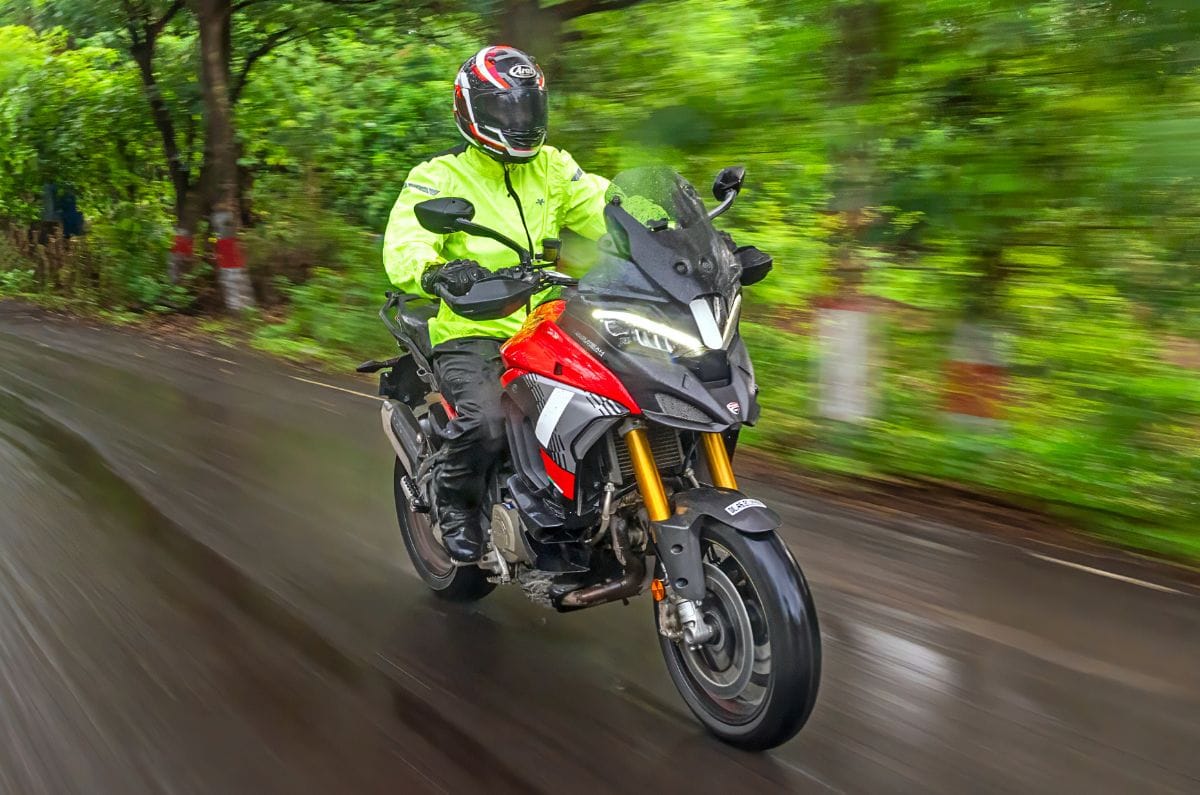
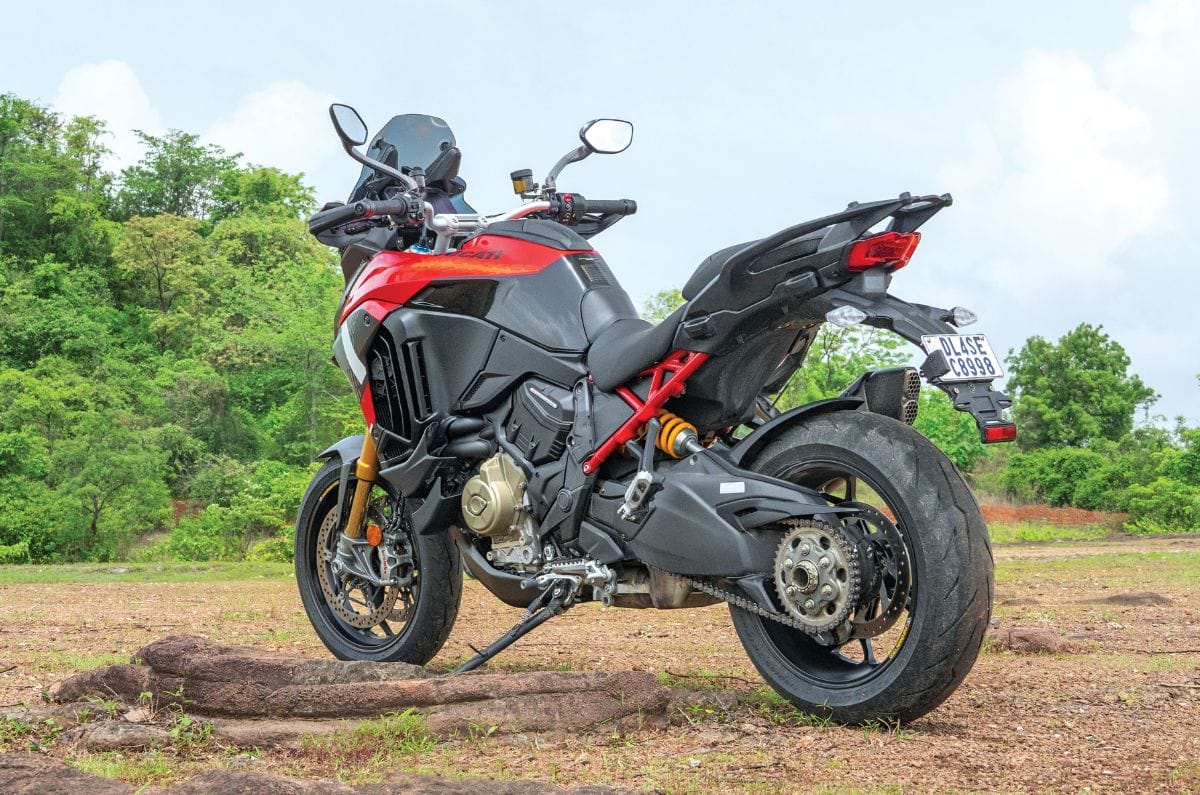
The DucatiMultistrada is one of the most successful modern motorcycles to have raced up the famed Pikes Peak hill climb, having taken 7 wins over the years. Motorcycle racing was banned at the Peak after Ducati star Carlin Dunne tragically lost his life in a crash just metres before the finish line in 2019, but Ducati still has a tribute to this race in the form of the Multistrada V4 Pikes Peak.
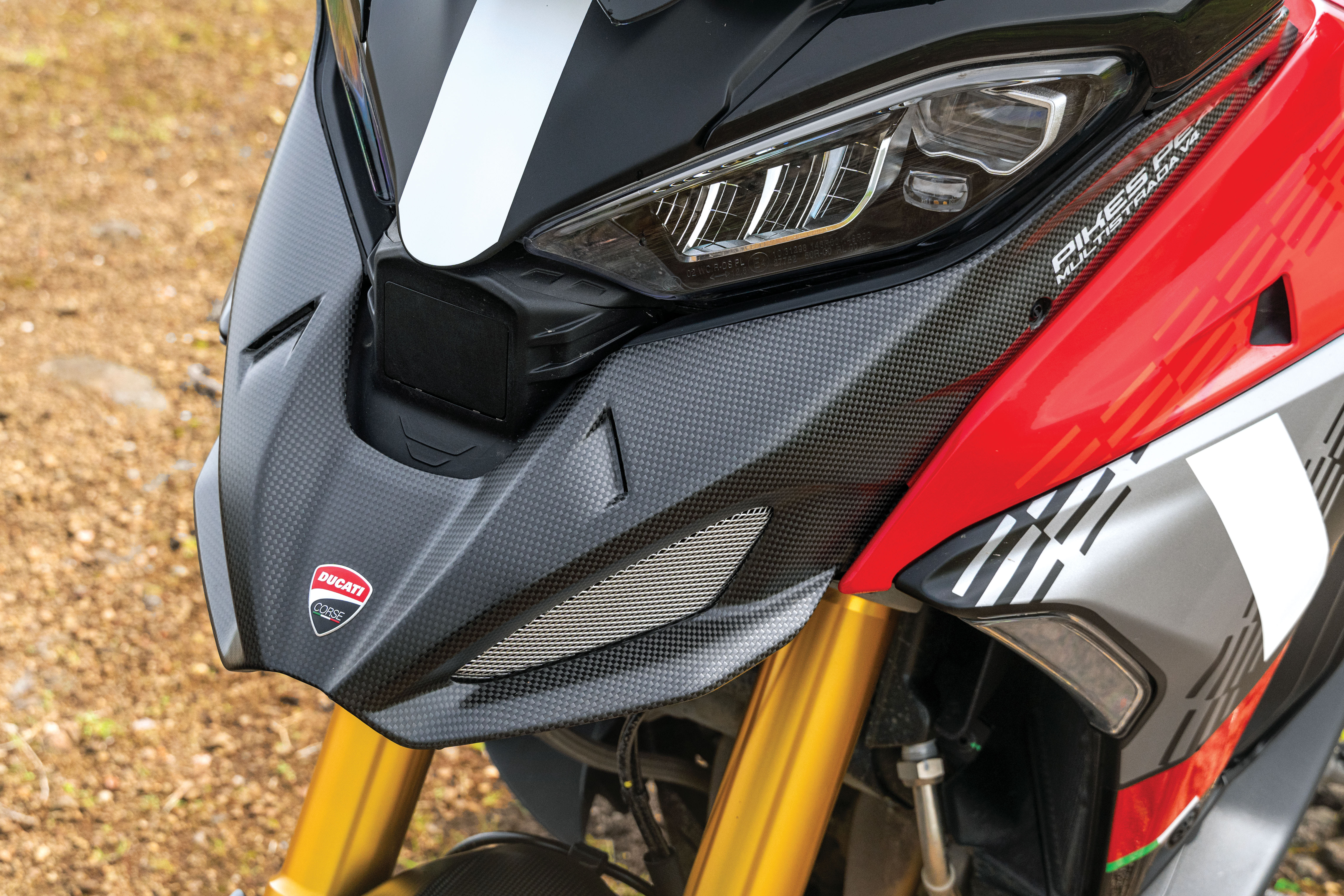
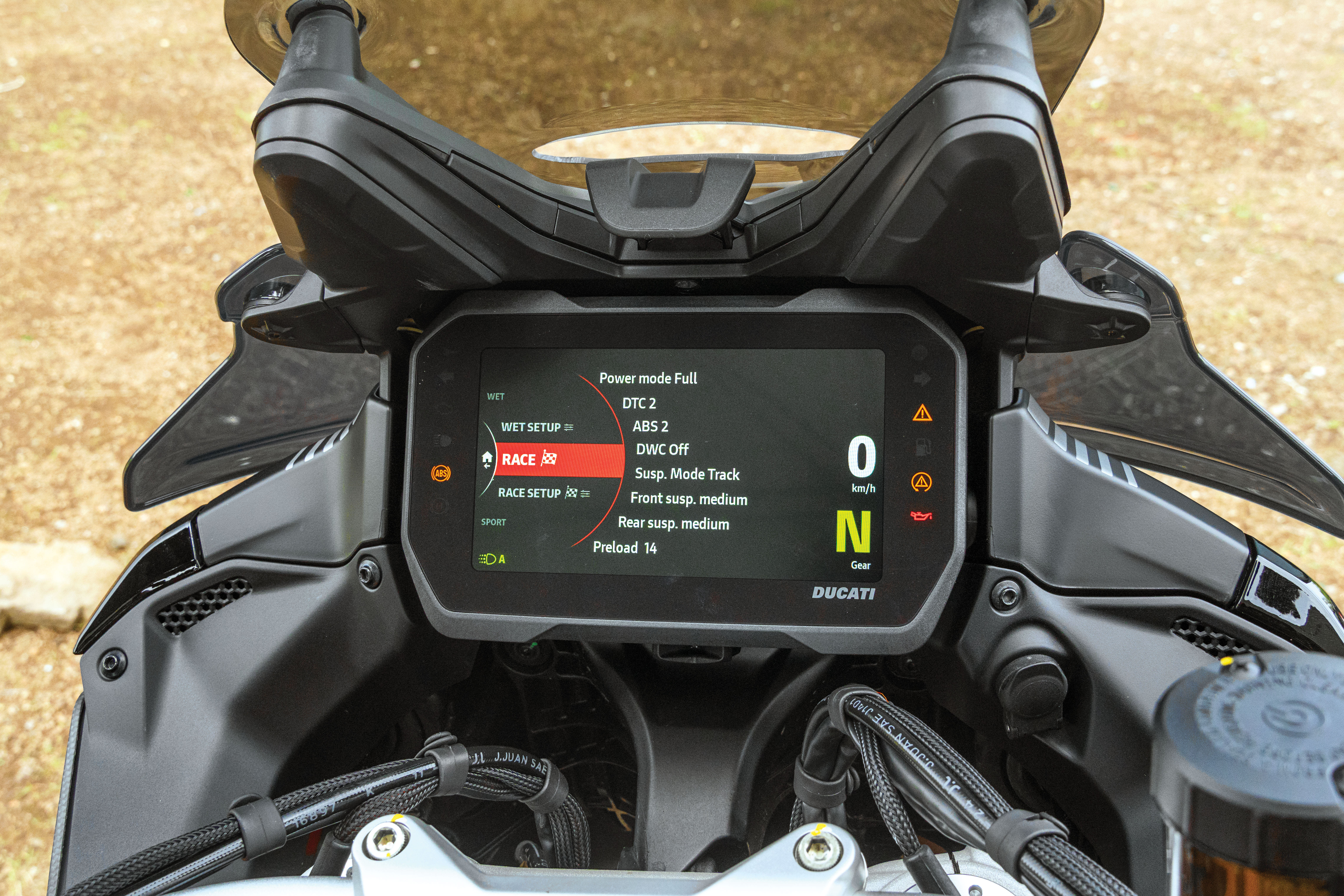
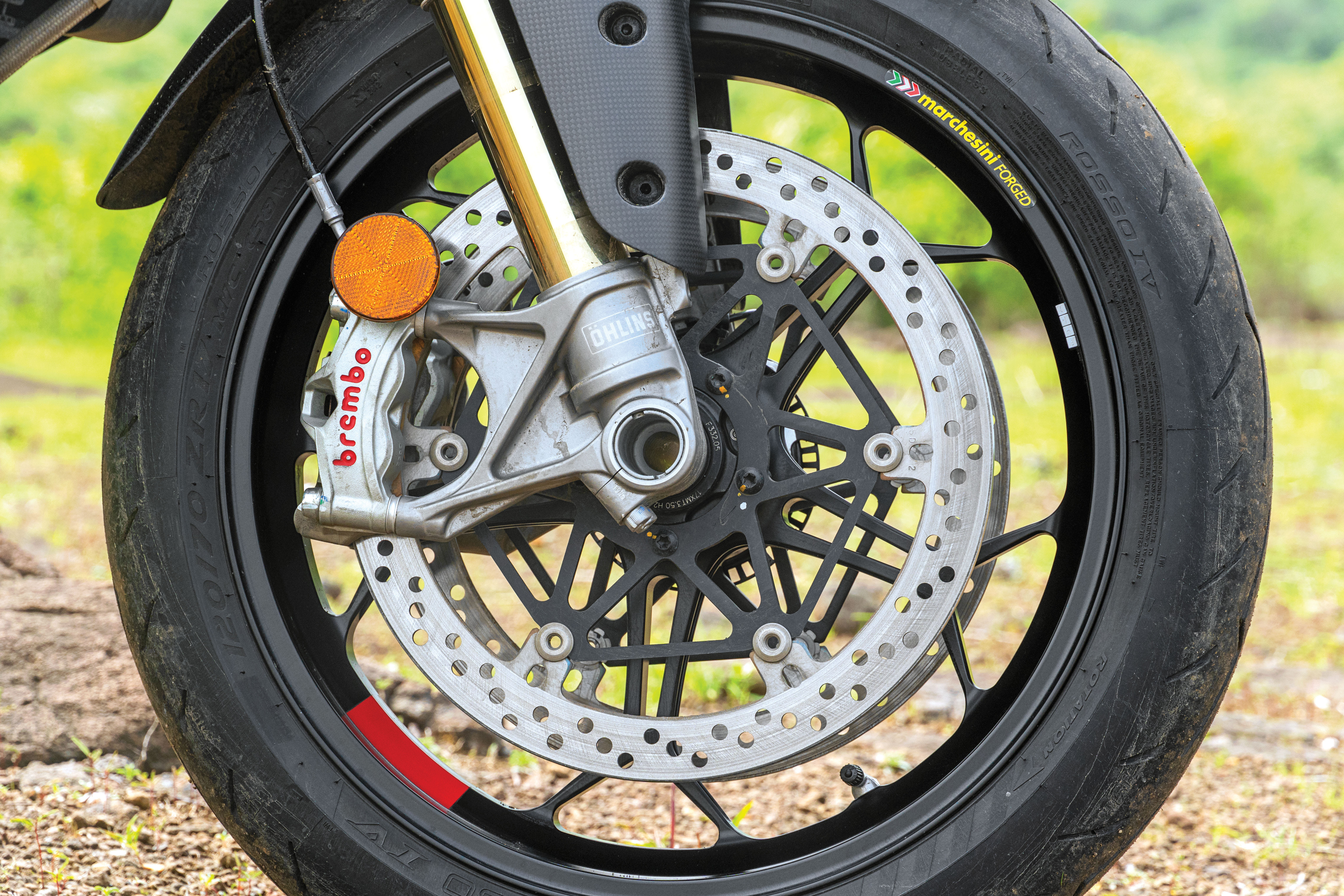
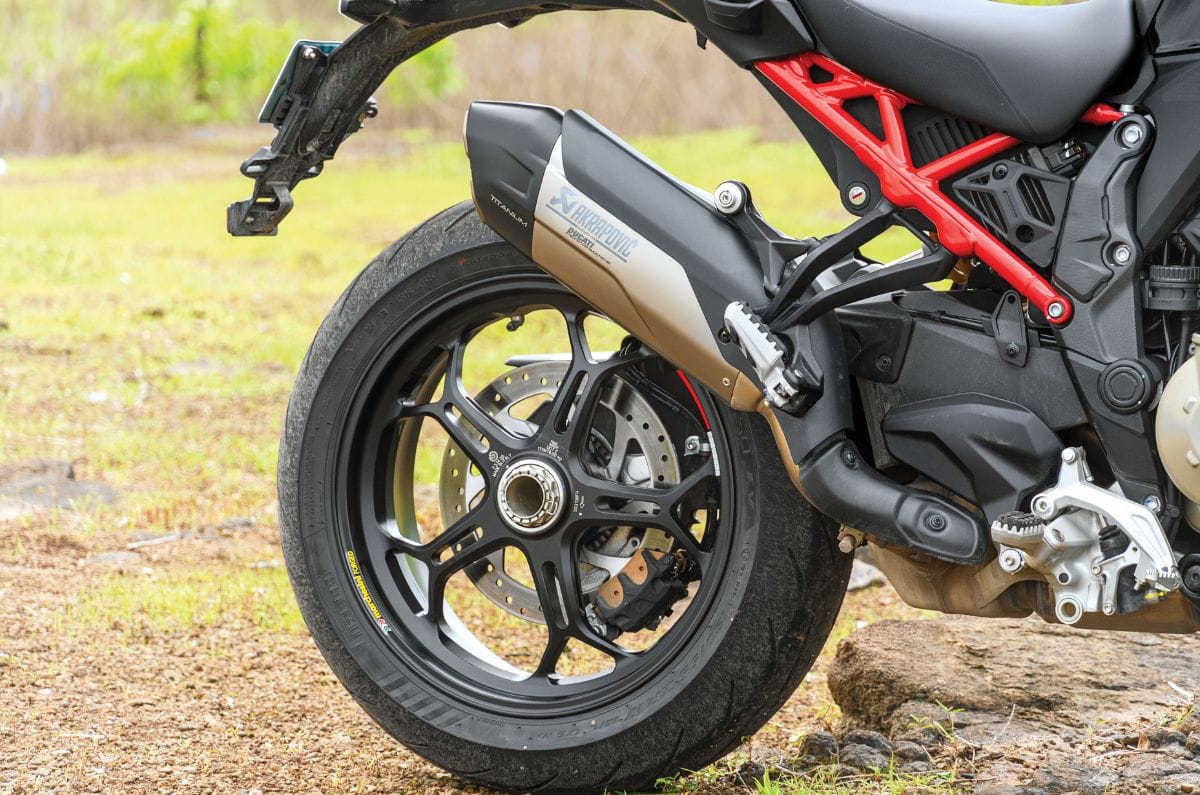
Effectively, this motorcycle goes back to the Multistrada’s roots of being a tall, sporty road-biased motorcycle. The primary sporty element comes in the shift from a 19-inch front on the standard Multistrada V4 to a 17-inch unit here. But there’s a whole lot more that you get for the (considerable) extra cash over the Multi V4 S than just a smaller front wheel. That includes a new Race Mode and Öhlins EC 2.0 semi-active suspension, just like you would have found on the previous-gen Panigale V4 S. It even gets a single-sided swingarm, forged aluminium wheels and a road-legal titanium Akrapovič end-can.
Multistrada V4 Comfort – 8/10
All of these changes are aimed at sharpening the Multi’s handling capabilities, which leaves the question – how much of an adventure bike is still in there? To find an answer, I pulled out Google Maps and picked a few random roads that I’d been eyeing over the years, but never had the opportunity to explore. The idea was to end up at the fabulous roads around Tahmini ghat, which is closer to Pune, and I’d chalked out a round-trip that came up to about 350km.
The Pikes Peak gets carbon parts, different ergos and reduced wind protection
The first quest would be the hour-long escape from the mayhem of Monday morning Mumbai. Ducatis are usually the worst bikes for being stuck in jammed traffic, but the V4-engined Multi is different. As with its lesser V4 siblings, the Pikes Peak uses twin radiators that are housed on the sides, and the bodywork neatly ducts the hot air blast away from the rider. Also, as with all Ducatis, the cooling system does a remarkable job of keeping the operating temperature below 106 degrees even when stationary.
Specifications
Values
Engine Displacement
1158 cc
Max Engine Power
170 hp @ 10,750 rpm
Max Engine Torque
124 Nm @ 9000 rpm
Number of Gears
6
So, unless you’re stuck in a nasty bad jam where the clutch can get painful, this bike is surprisingly pleasant to manage in traffic. Of course, that’s a fairly relative statement, considering that this is a big, tall, 240-plus-kilo motorcycle.
However, after an hour or so, there’s no escaping the heat radiating off the rear cylinder bank that’s right under your thighs. I noticed that this was an issue in 36-degree afternoon heat on the highway, but not so much when the temperatures dropped in the hilly regions around Lonavala. Despite this, the Multi was far happier when it broke free from the clutches of the city.
Multistrada V4 Performance and suspension setup – 9/10
What truly blew me away on the Pikes Peak was the sheer range of its ability to change character. Like with the other V4 models, this one also has many different riding modes, a boat-load of electronic assists and minutely adjustable electronic suspension modes. However, the difference between ‘full chill’ and ‘full attack’ mode on this bike is truly breathtaking. After a couple of hours of quick and perfectly pleasant highway riding, the Multi and I soon found ourselves staring at miles of completely broken rural roads without a soul on them.
There’s no way I’d ever want to bring a sporty Italian exotic to a place like this, but putting the engine into Low Power mode (115hp instead of 170hp) and diving deep into the suspension setting menus to slack off the damping and preload completely changed the bike.
Specifications
Values
Wheelbase
1595 mm
Seat height
840-860 mm
Kerb Weight
227 kg
Fuel Tank Size
22 L
With ADV seating comfort and the 170mm of suspension travel soaking in the terrain quite well, I had no concerns with simply riding through these non-stop broken road conditions. The bike was unbothered to the point that I could ride it at a gentle pace and enjoy the spectacular beauty of rural Maharashtra in the monsoon. However, I must also make it clear that while the Pikes Peak can tolerate this sort of punishment, it doesn’t thrive on it. Think of this as a surprisingly comfortable road-tourer rather than a true ADV.
Race-bred electronics and superbike-spec suspension are what make the Pikes Peak experience unique.
Multistrada V4 Ride and Handling – 10/10
A big Tiger or GS would have surely been more capable in these conditions, but the Pikes Peak would have simply blown away any ADV on the roads that came next. After ages of enduring gravel and shattered tarmac, we finally arrived at Tahmini to be greeted by some of the finest riding roads in the country.
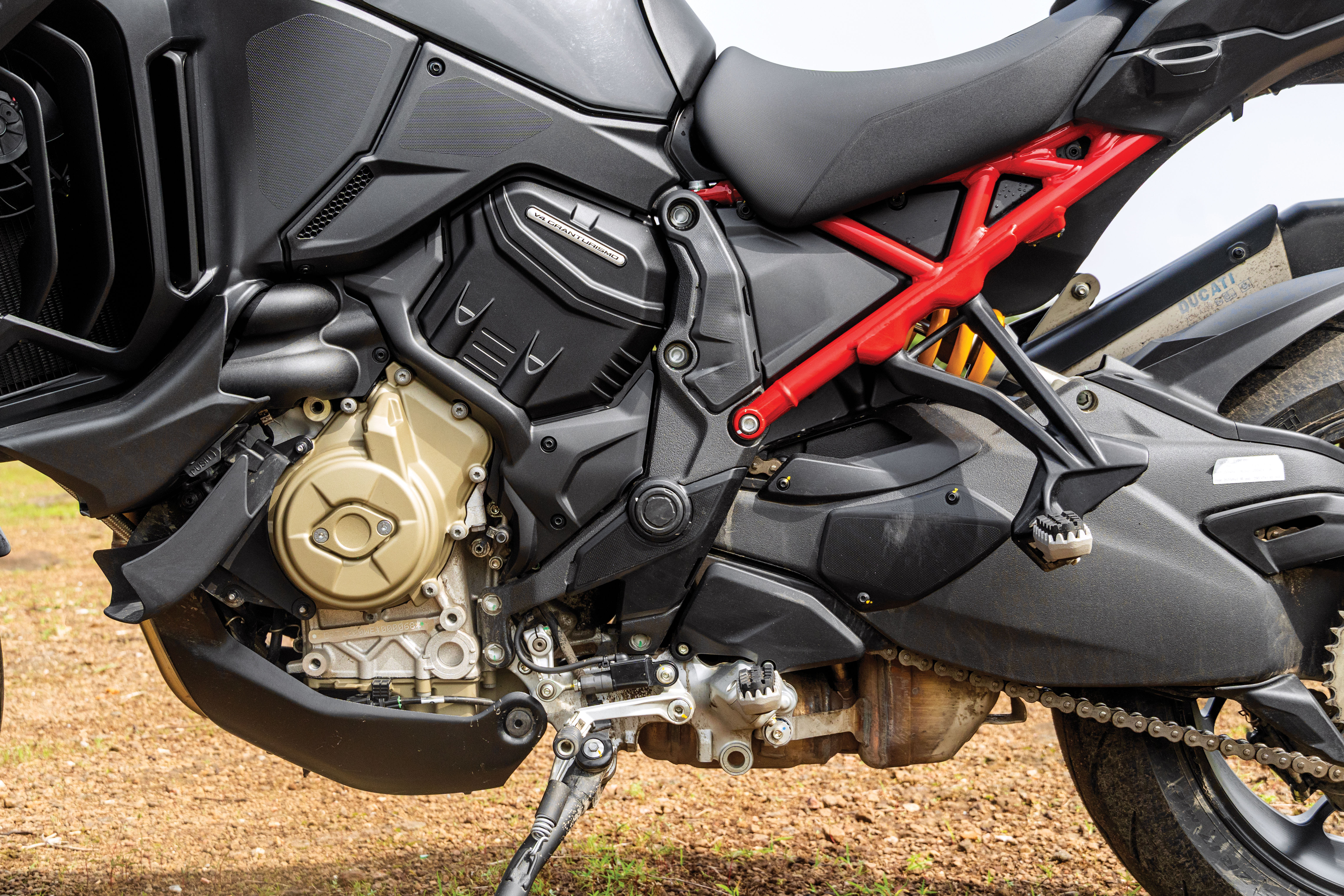
It uses the standard V4 engine with conventional spring valves
A few button presses later, the Multi was now in Race mode, and the difference was startling. The bike suddenly felt tight, taut and taller, thanks to increased preload at the rear. This was no longer a cushy tourer and had suddenly turned into quite a fearsome beast that demanded respect. The raucous intake bark as the V4 engine snarled past 6,000rpm was almost as intoxicating as the way it built speed. While you could get the same sort of performance on a ‘normal’ Multi V4 that uses the same engine, the immense braking and incredible suspension composure of the Pikes Peak was something else.
Pikes Peak gets a single-sided swingarm, forged wheels and an Akrapovič end-can
I was now riding a sport bike, and it cornered and braked with such ferocity that it was easy to get carried away. I had to remind myself that this was a public road and we were going far too fast for good health! Slap on a sticky set of tyres, and this bike could genuinely embarrass a swarm of sport bike riders on the racetrack. After an awesomely exhilarating time on the ghat, there was no doubt that the Pikes Peak spirit is truly alive in this bike, and it most certainly isn’t just a branding exercise to charge a heap of money.
Multistrada V4 Price and Verdict – 8/10
Nevertheless, a heap of money is exactly what you have to pay to own this motorcycle. At Rs 36.9 lakh (ex-showroom), the Pikes Peak is exorbitantly expensive, and you still have to pay more for extras like heated grips, tyre pressure monitoring and keyless functionality for the fuel tank. At the end of the day, this is the connoisseur’s version of what is already a connoisseur’s adventure motorcycle. You’ve got to really want this particularly unique combination of all-road sport bike skills. After all, you can get either phenomenally capable super ADVs or proper super bikes for far less money.
The sheer range of its ability to change character is what is truly incredible.
I struggle to convince myself that it’s worth the price, but I’m also infinitely grateful that such a thing even exists and that we have the option to own one in India. If you’re among the precious few with the desire and funds to own such a bike, all I’d like to say is go for it!
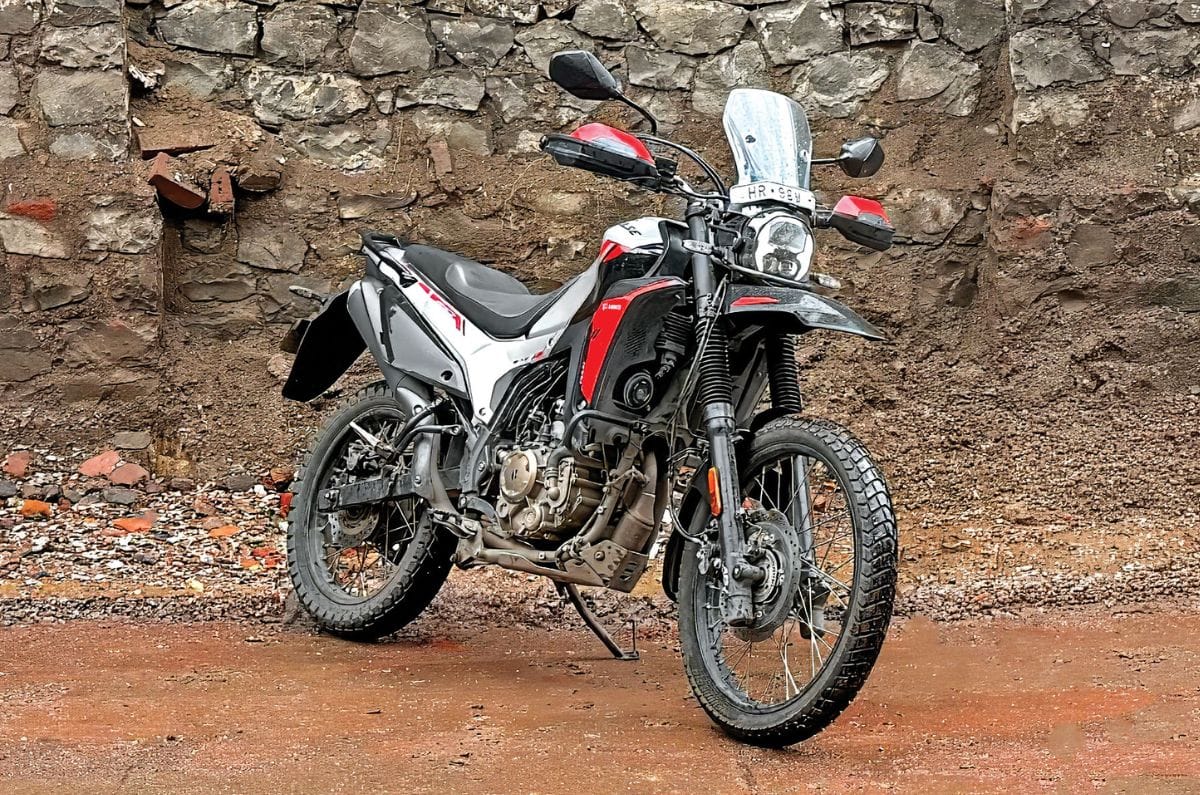
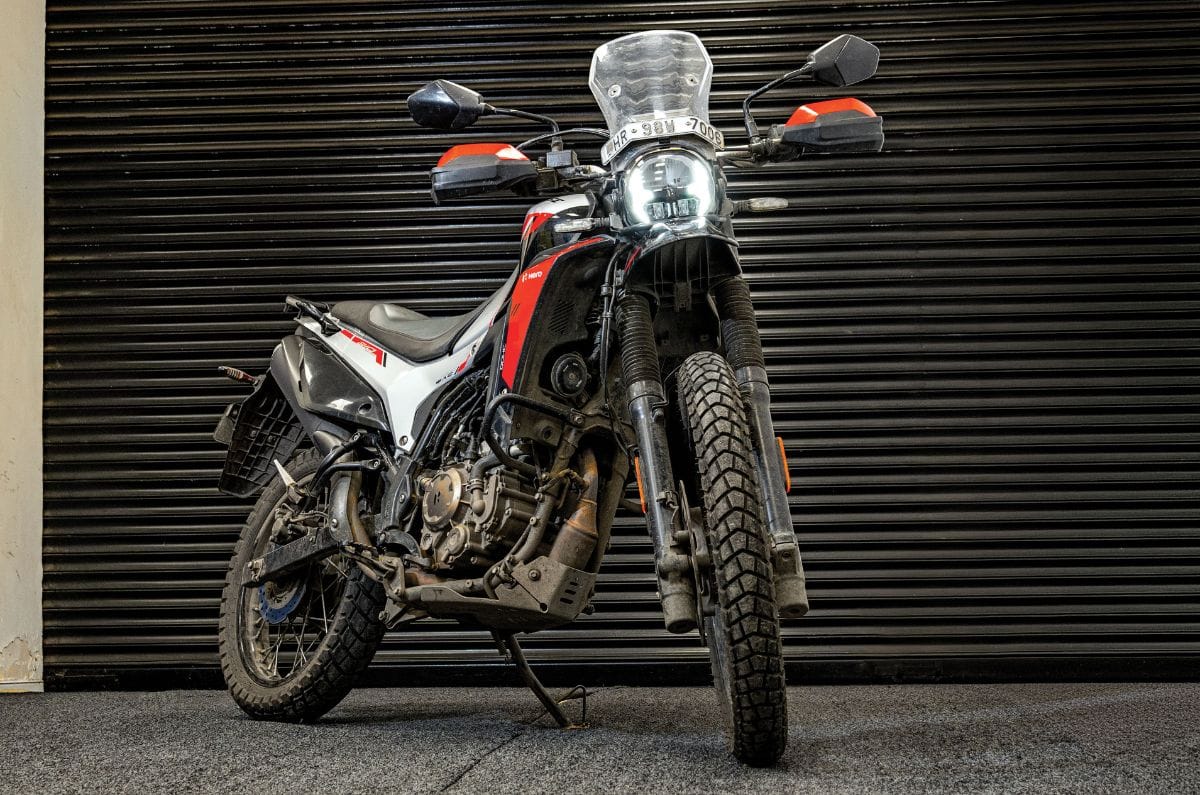
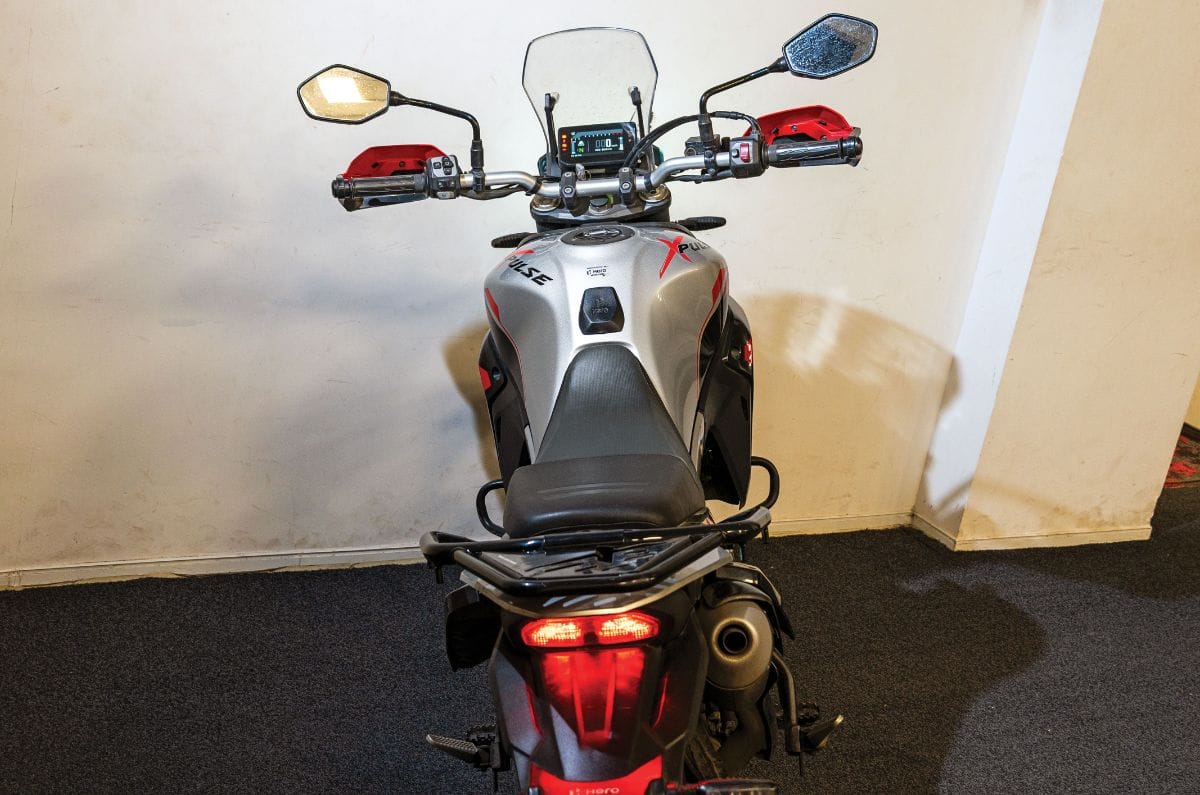
Ever since the Xpulse 210 was launched, I was fascinated by the balance it strikes between a dual-sport motorcycle and an adventure tourer. With its slim midsection, 21-inch front wheel, long-travel suspension and commanding riding position, it seemed like the ideal companion for our less-than-perfect roads. After spending over two months with the bike, I can confidently say it has lived up to those expectations. The odometer has now crossed the 5,600km mark, and the Xpulse continues to reinforce why it’s such a unique proposition.
The 21-inch front wheel and beak lend the Xpulse an imposing stance
There really isn’t another motorcycle at this price point that offers the same blend of everyday usability, touring ability and genuine off-road capability. Spend another Rs 30,000-40,000, and you’ll find yourself looking at the TVSApache RTX, which is a more touring-oriented adventure motorcycle. The Hero, meanwhile, stays true to its dual-sport roots, making it just as happy on broken roads and dirt trails as it is on the highway.
The Xpulse’s relatively narrow proportions make it an excellent commuter.
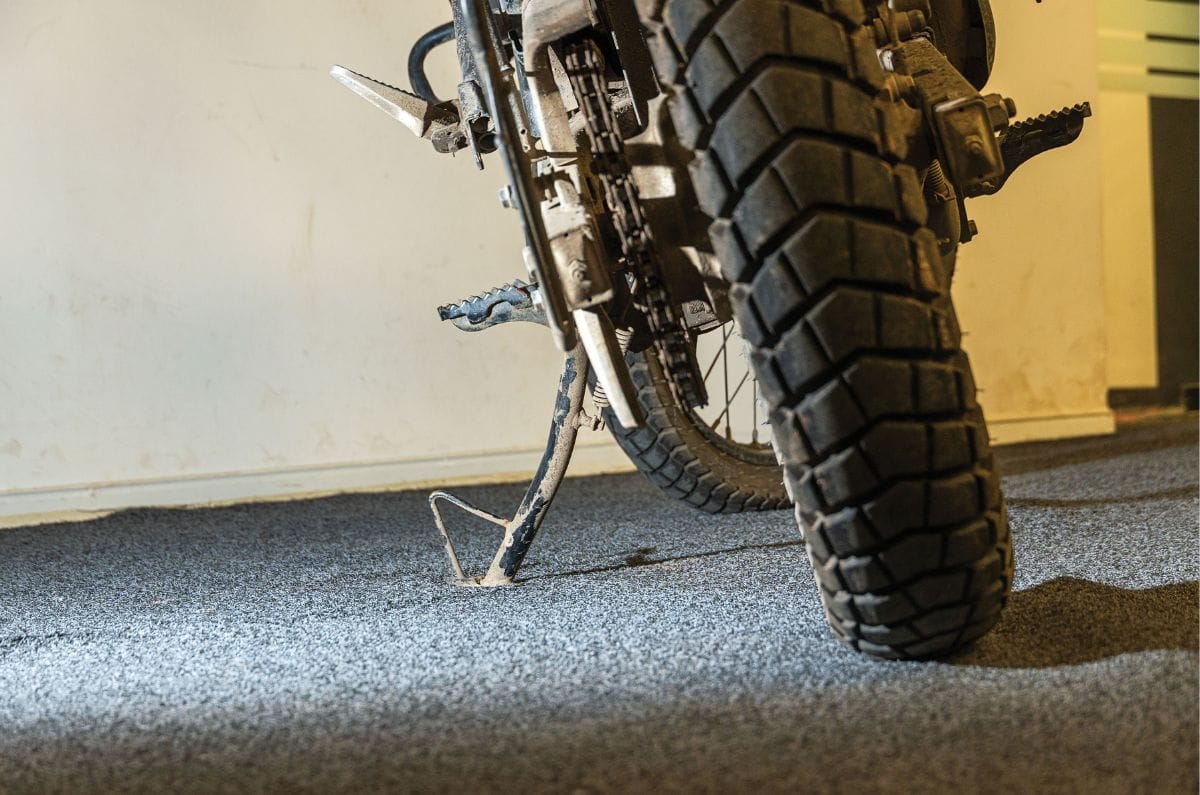
The suspension remains the bike’s standout feature. Mumbai’s cratered roads barely faze it, and the confidence to ride over almost anything without slowing to a crawl is what makes the Xpulse so easy to live with. It opens up new roads within the city that you earlier avoided. The high-mounted LED headlight and sculpted tank flowing into the relatively low seat give it a distinctive, imposing stance. Living with it hasn’t been entirely perfect. The Xpulse has a pronounced lean on its side stand, and the soft suspension causes the bike to settle and readjust as you get off, making parking feel less reassuring than it actually is.
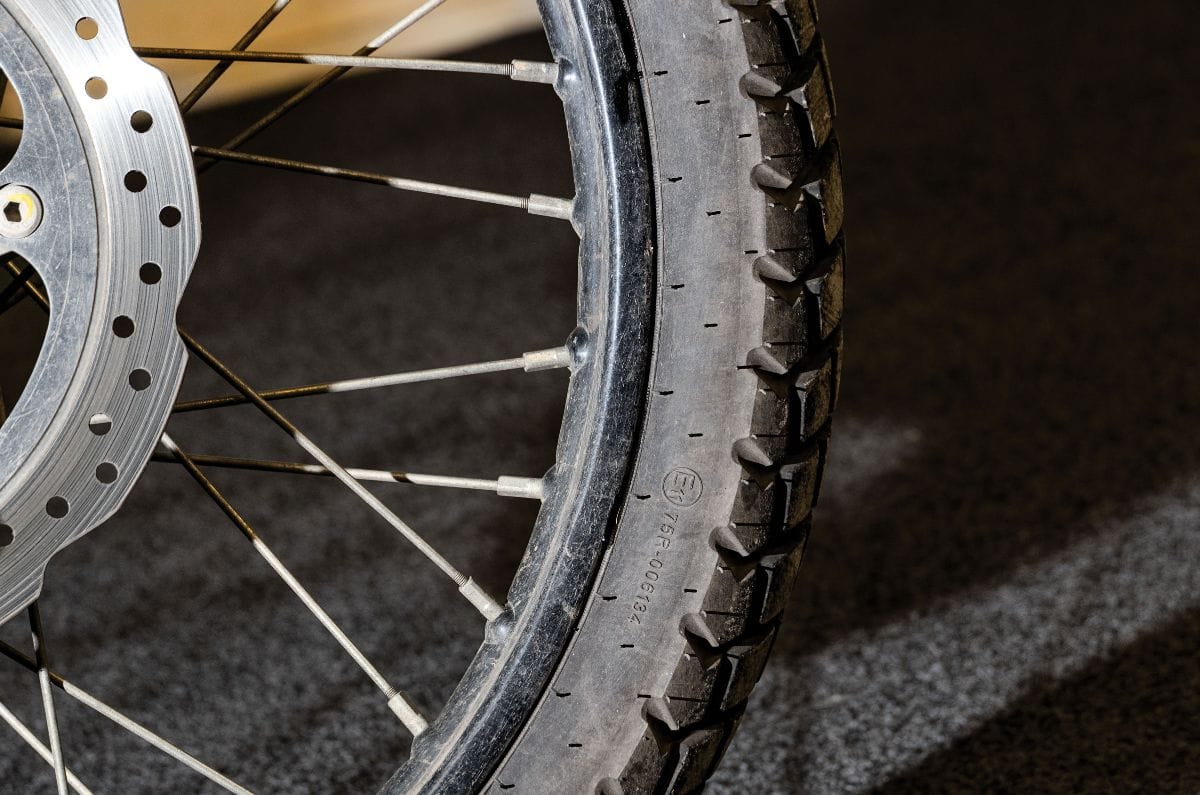
Tubed tyres are great off the road, but can pose an inconvenience if punctured.
The lack of a tubeless tyre option is another compromise. While tubed tyres make sense on a motorcycle designed to venture off-road, they can be a real inconvenience in everyday use. I learnt that the hard way when both the front and rear tyres punctured on the same day. Between pushing the bike to puncture shops, removing the wheels and getting everything back together, I lost well over three hours.
The brakes, too, continue to disappoint. We’d previously complained about the lack of bite and feel, and although the service centre bled the brakes and confirmed the pads didn’t require replacement, the improvement was only marginal. During the same visit, we also queried about the amount of heat being thrown onto the rider’s left leg was normal, but didn’t receive a satisfactory explanation.
It tends to lean excessively on its side stand, which isn’t quite reassuring.
As a motorcycle retailed through Hero’s premium Premia dealership network, the overall service experience and ambience still have plenty of headroom for improvement. Although the service cost was quite reasonable at Rs 2,214, of which, Rs 1,300 went towards oil, Rs 145 for the air filter and Rs 649 for the service charge.
Despite those shortcomings, the Xpulse 210 remains one of the easiest motorcycles to recommend. Few bikes at this price blend commuting fun, decent touring capability and genuine off-road chops as convincingly, and even after 5,500km, we all still find ourselves reaching for its keys.
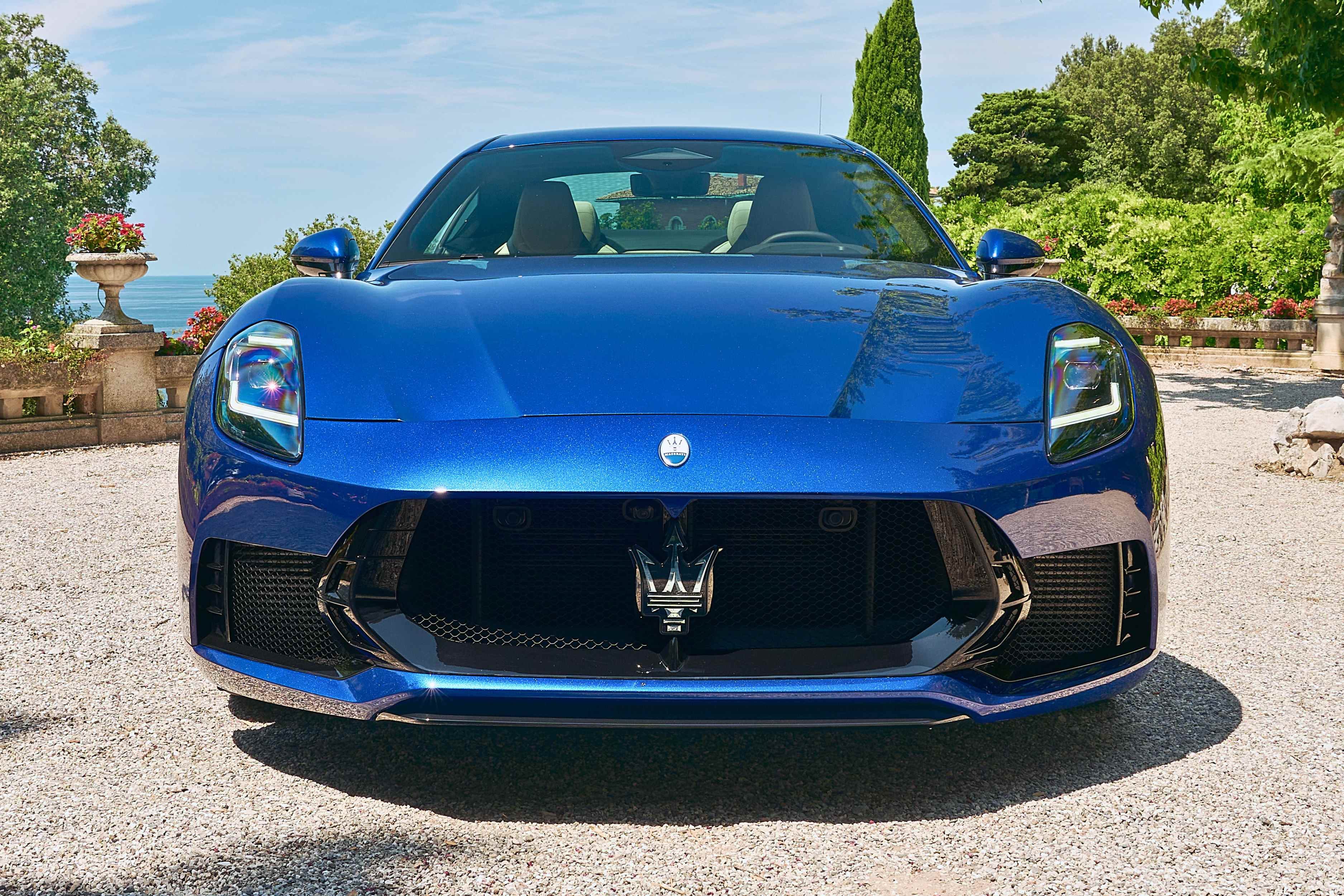
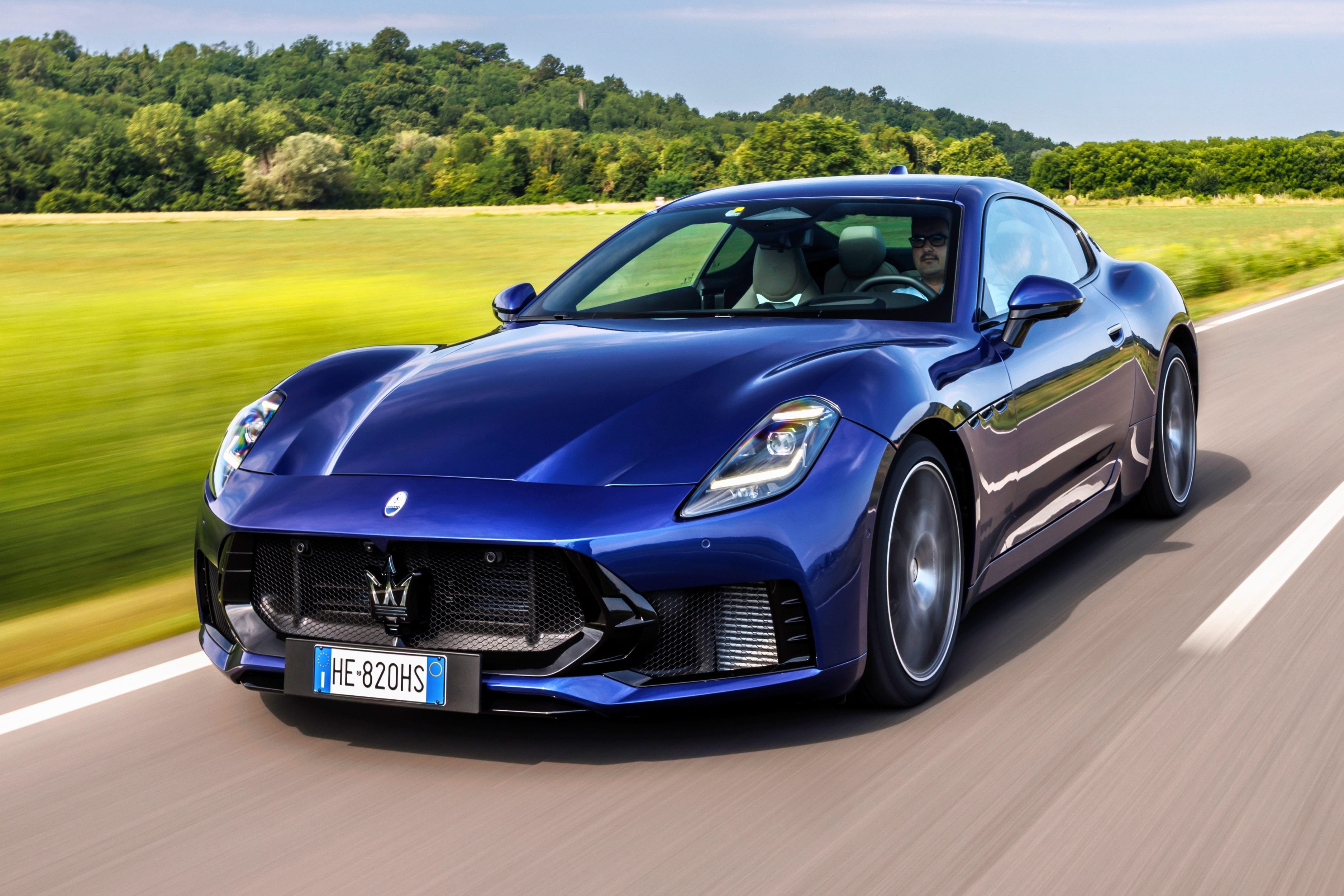
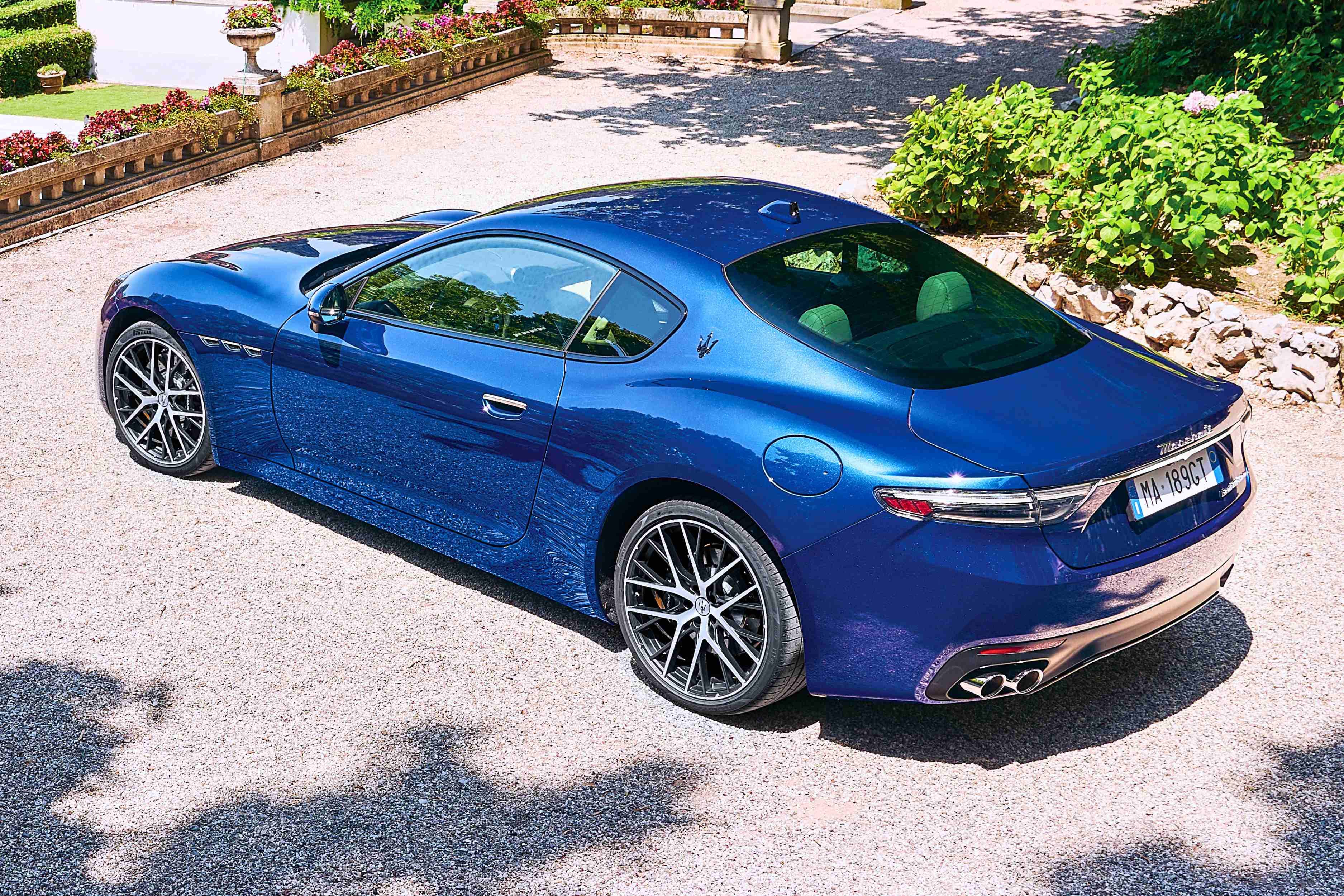
If Lamborghinis look like they’ve time-travelled from the future, and Ferraris appear shaped in wind tunnels, Maseratis are all about sculpture – flowing lines, gentle curves and delicate details. I’m no art connoisseur, but the gorgeous GranTurismo seems very much part of the awe-inspiring scenery at Italian seaside town Trieste’s Piazza Unità d’Italia.
Maserati GranTurismo Exterior Design and Engineering – 9/10
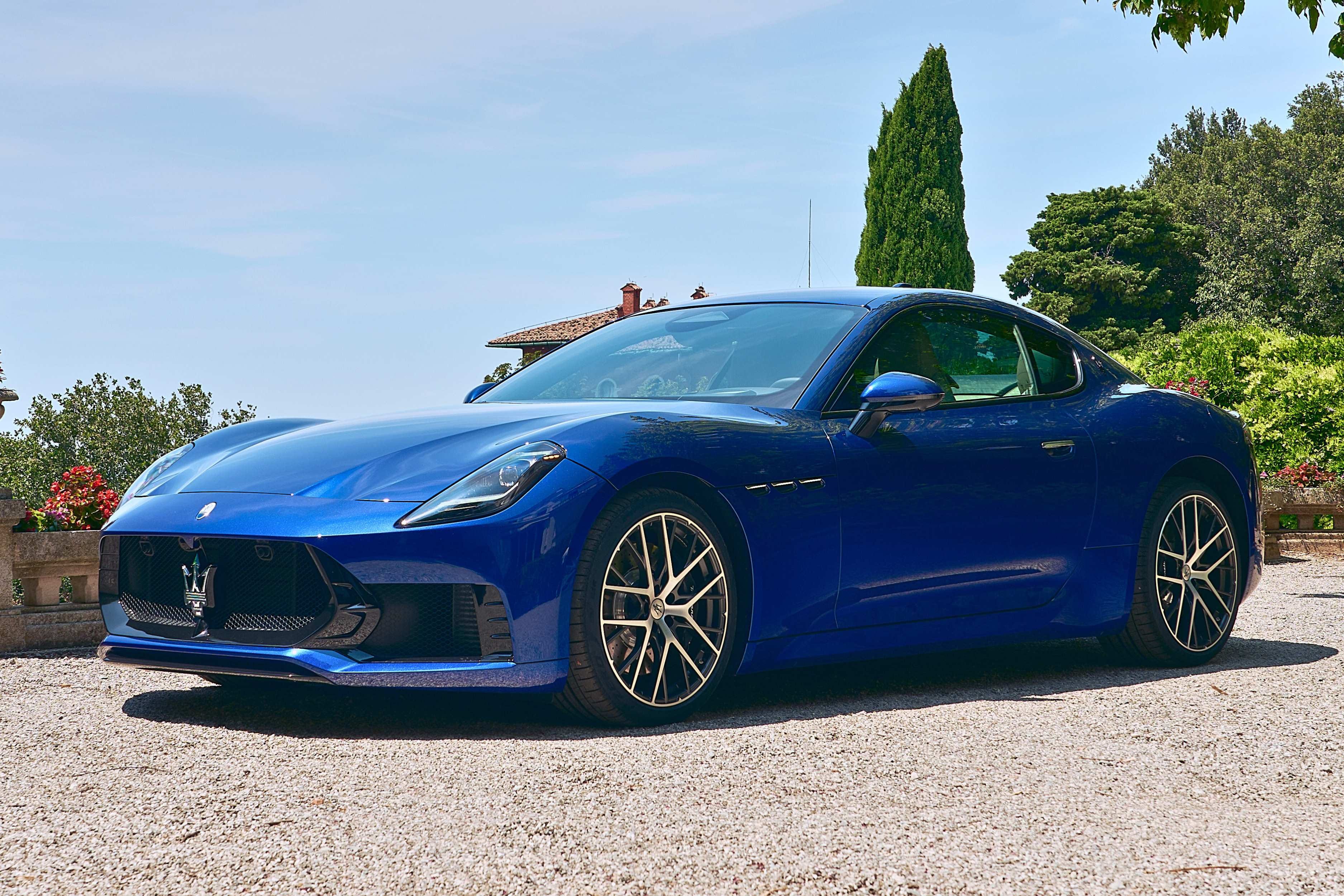
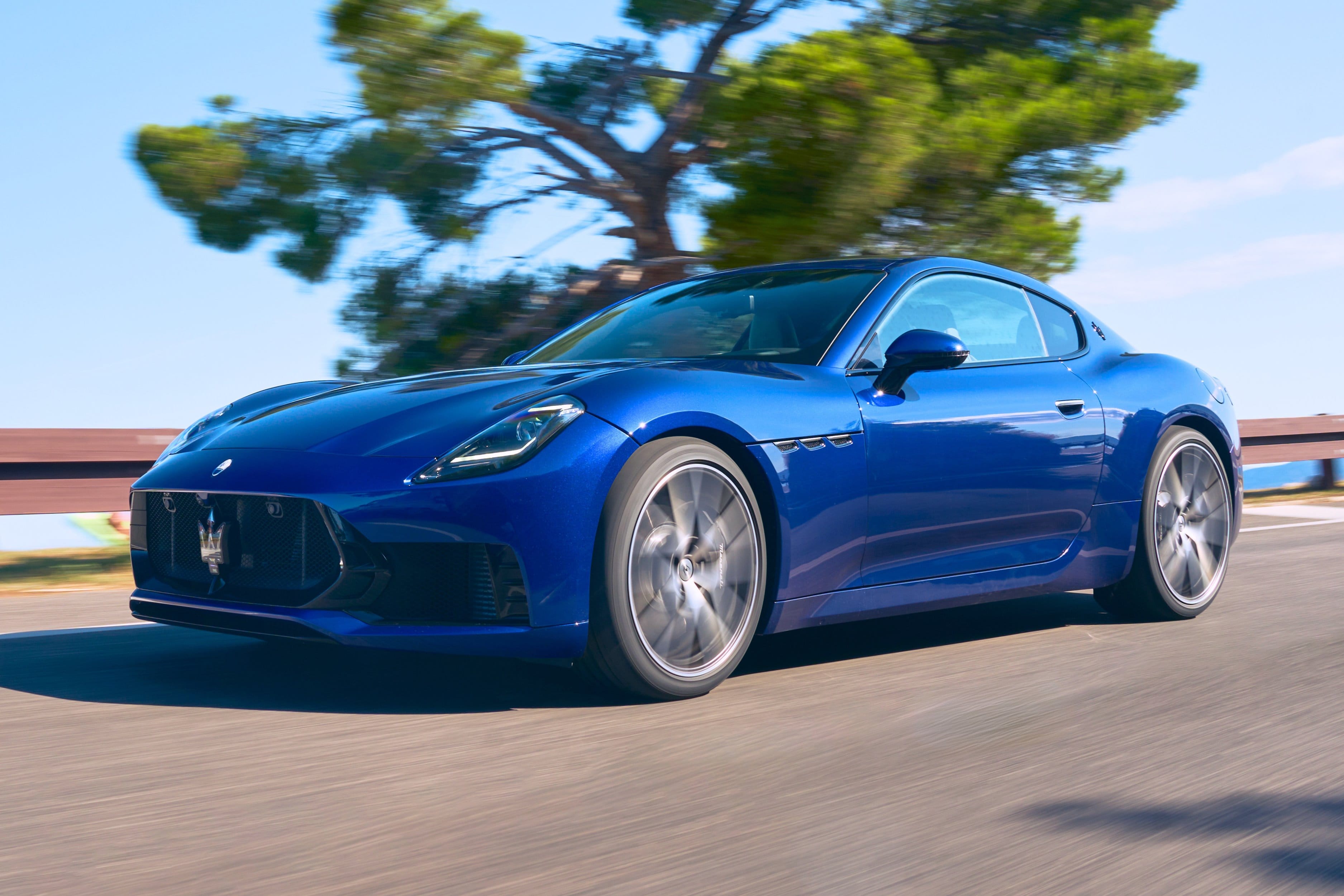
Classic GT proportions and Maserati details make it very eye-catching.
There’s the impossibly long bonnet, the neatly tucked-in cabin and the flowing rear that has become a GranTurismo trademark. Signature Maserati cues remain intact too, from the triple vents behind the front wheels to the distinctive rear quarter window and the Trident proudly displayed on the C-pillar. Even the way the muscular rear haunches merge into the tail has an elegance that’s hard to ignore.
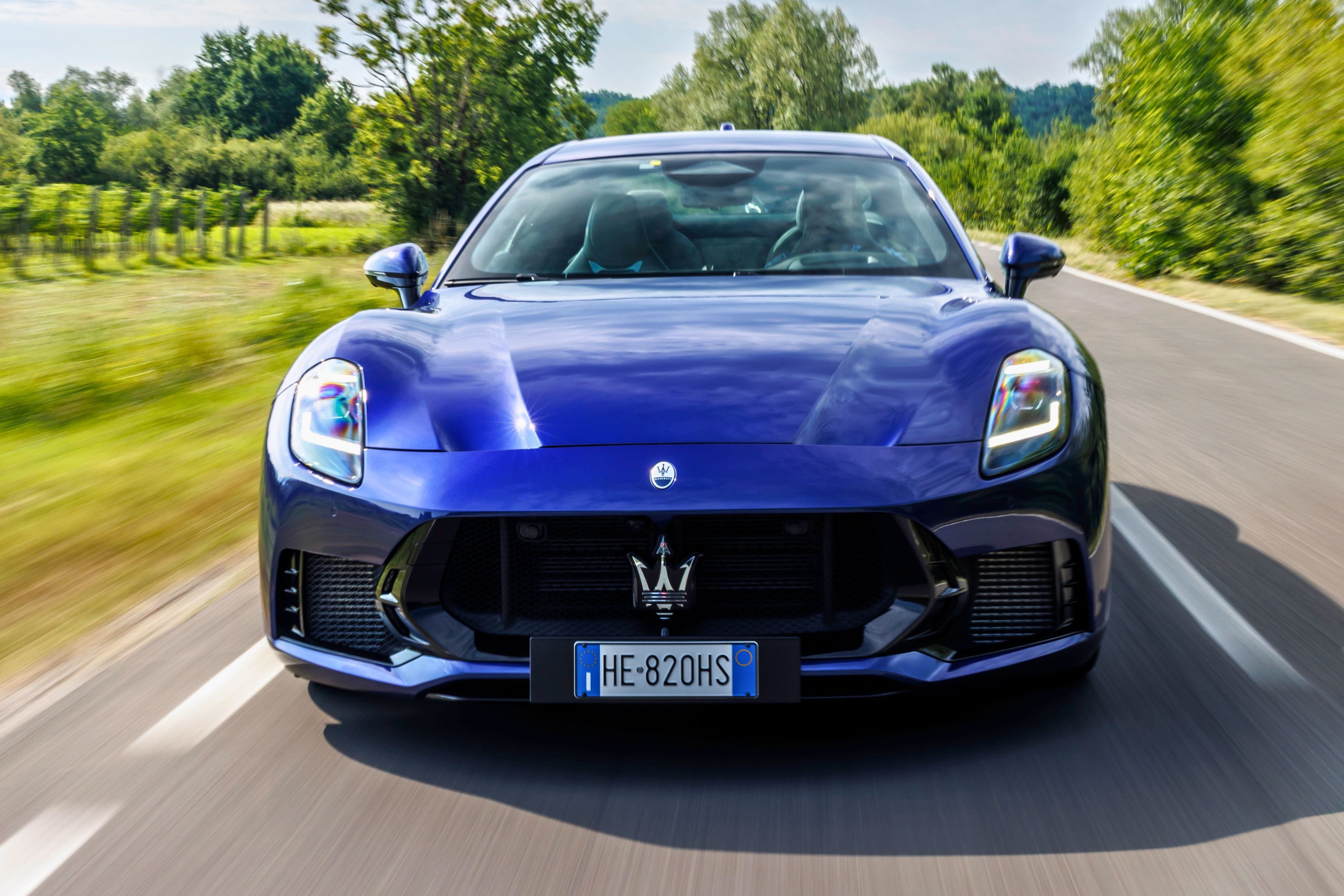
Revised front bumper adds aggression to GranTurismo look.
2026’s styling revisions are concentrated at the front. A larger grille sits lower down, flanked by bigger intercooler openings and a more pronounced splitter that together lend the GranTurismo a more aggressive face. At the rear, the clear-lens tail-lamps are the easiest (actually, only) way to identify the updated model. Oh, and if you see a GranTurismo without quad exhausts, you should know that you’re looking at the Folgore or electric version.
Maserati GranTurismo Interior Space and Comfort – 8/10
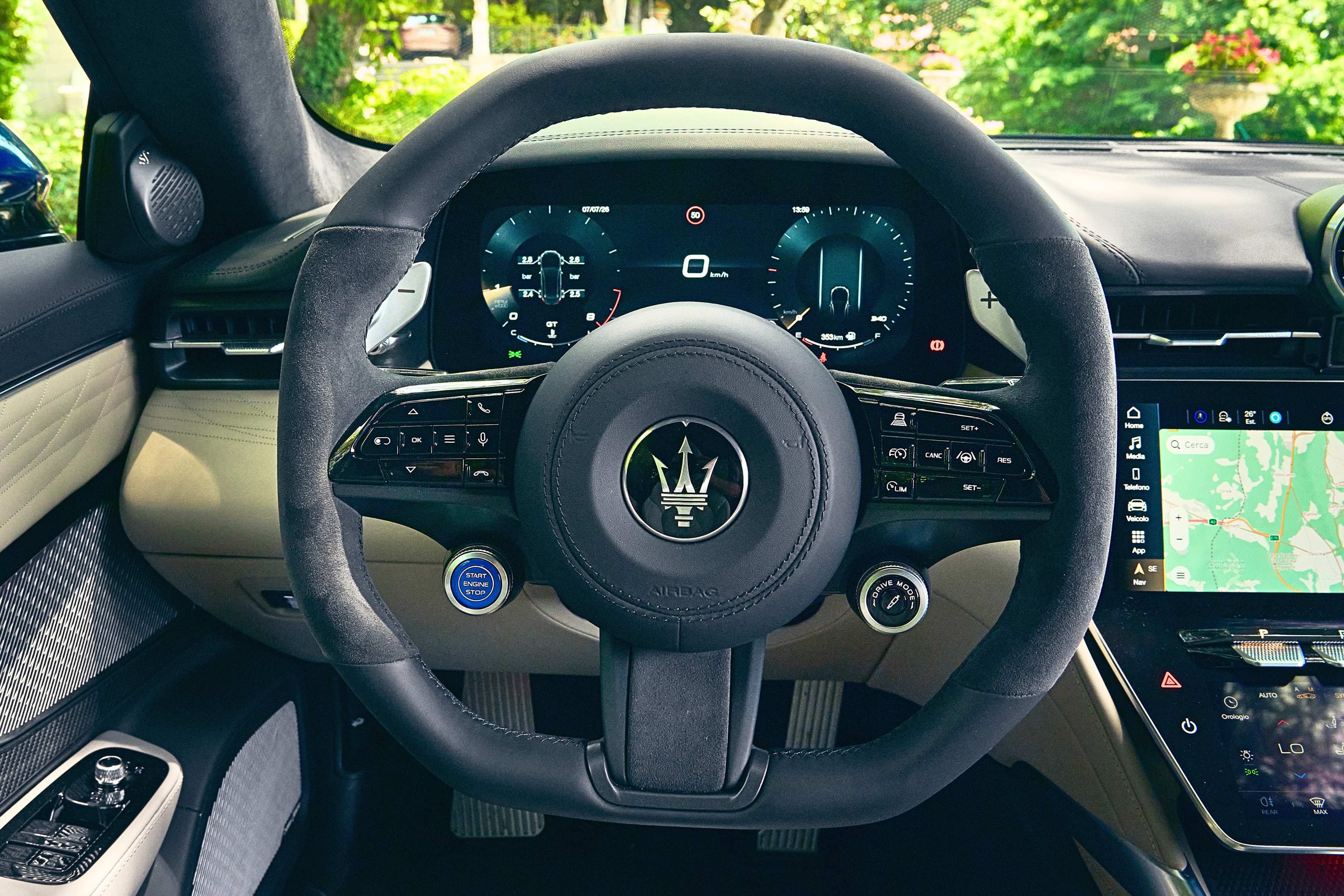
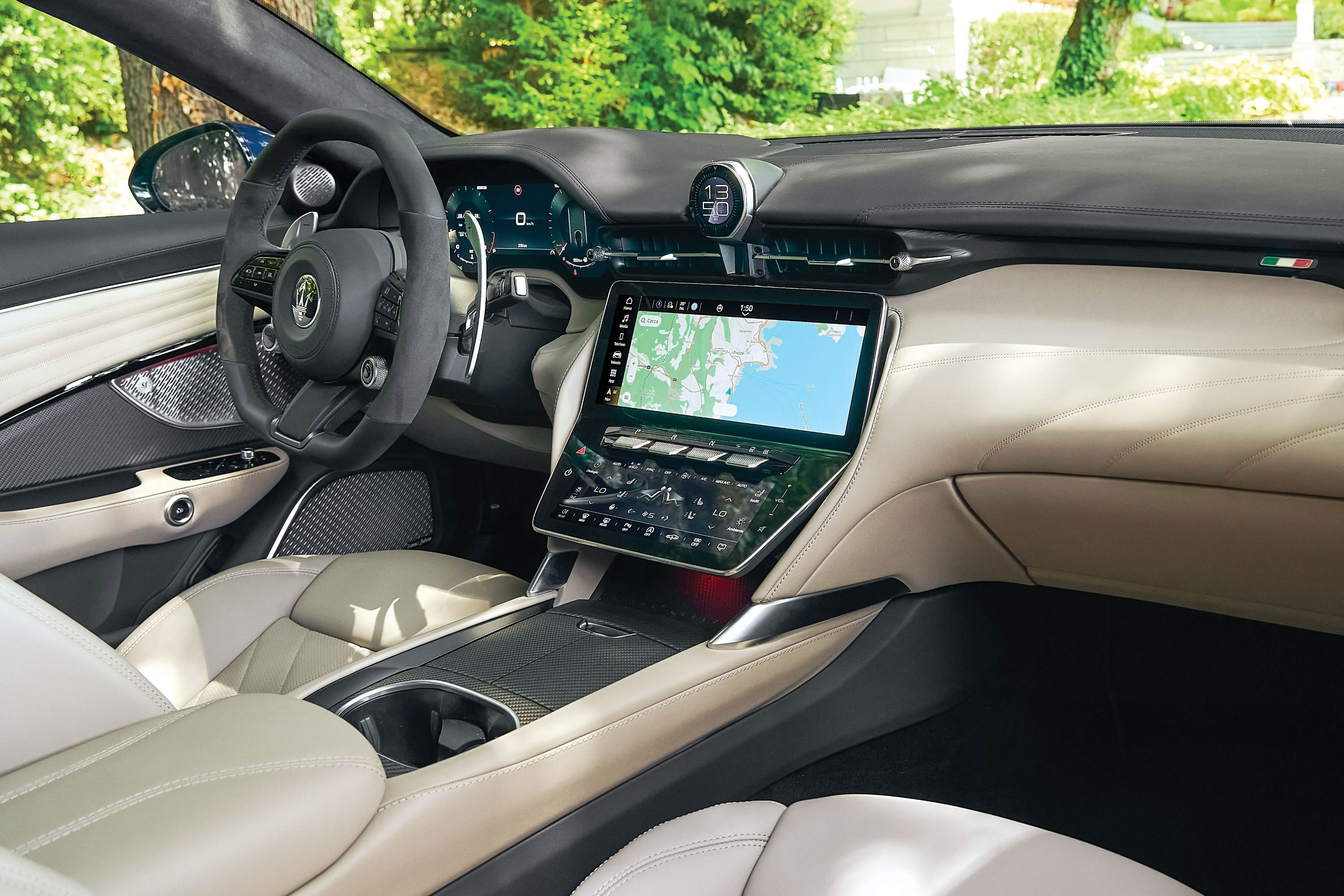
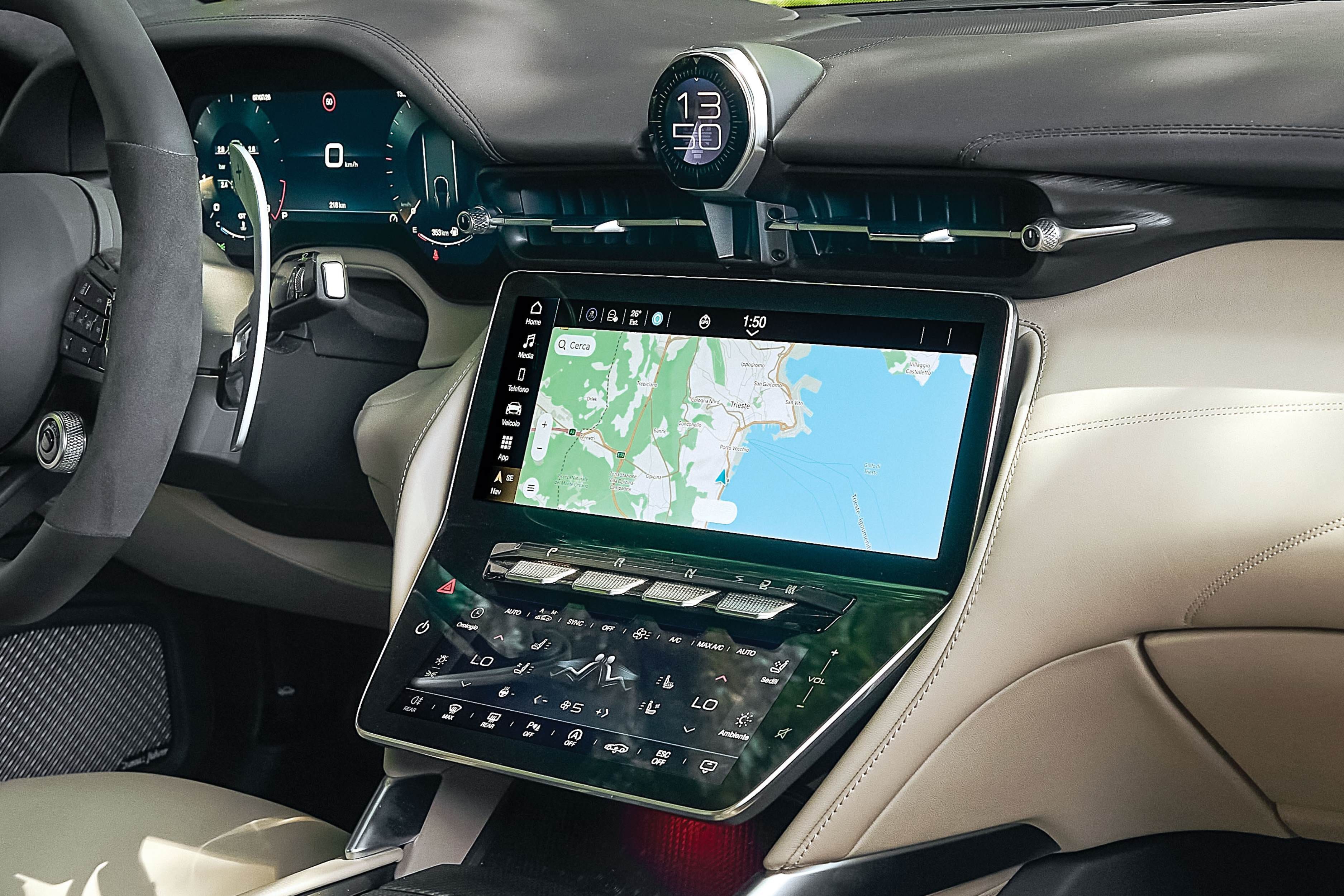
Inside too, the updates are subtle. The basic dash design is unchanged and is characterised by four screens– 12.2-inch digital dials, a 12.3-inch central infotainment screen, an 8.8-inch lower touchscreen and a digital clock.
New steering and redone gear selector switches among the changes inside.
The steering gets a new squared-off design wrapped in Alcantara, and behind it remain the wonderfully oversized aluminium paddle shifters fixed to the steering column. The uninspiring P, R, N and D buttons on the dash make way for feelsome metallic toggles, while the digital clock gets a new glass face to make it look more, ahem, analogue. It works.
Interior is a happy blend of tech and craftsmanship.
Despite the abundance of screens, the cabin retains a handcrafted and very Italian feel thanks to the quality of (most) materials and intricate detailing. Maserati would only be too happy to introduce buyers to its universe of upholstery, colour and trim options to create an interior that’s truly personal. The only ergonomic complaint is the seating position, which doesn’t go quite as low as expected in a car of this nature. On the matter of seats, the GranTurismo’s rear seats aren’t just for show (I’m looking at you, 911). They are genuinely usable for short stints or the odd getaway. There’s a usable boot too, for your Gucci luggage.
Maserati GranTurismo Features and Safety – 7/10
New-age tech meets old-school warmth in here.
The GranTurismo comes with a fair bit of kit as standard. The front seats are powered and heated/ventilated, there’s a fabulous Sonus Faber sound system and enough screens to tell you you’re in 2026. The digital dials are easy to refer to, while the main touchscreen is also easy enough to navigate through. It does feel like a Stellantis group system rather than a bespoke Maserati unit, though. We’re not fans of touchscreens for climate control functions, but Maserati’s solution is among the best of the kind. Swipe sideways across the screen to adjust blower speed and vertically for temperature – intuitive to use on the move.
The safety suite includes camera- and radar-based ADAS.
Maserati GranTurismo Performance and Refinement – 8/10
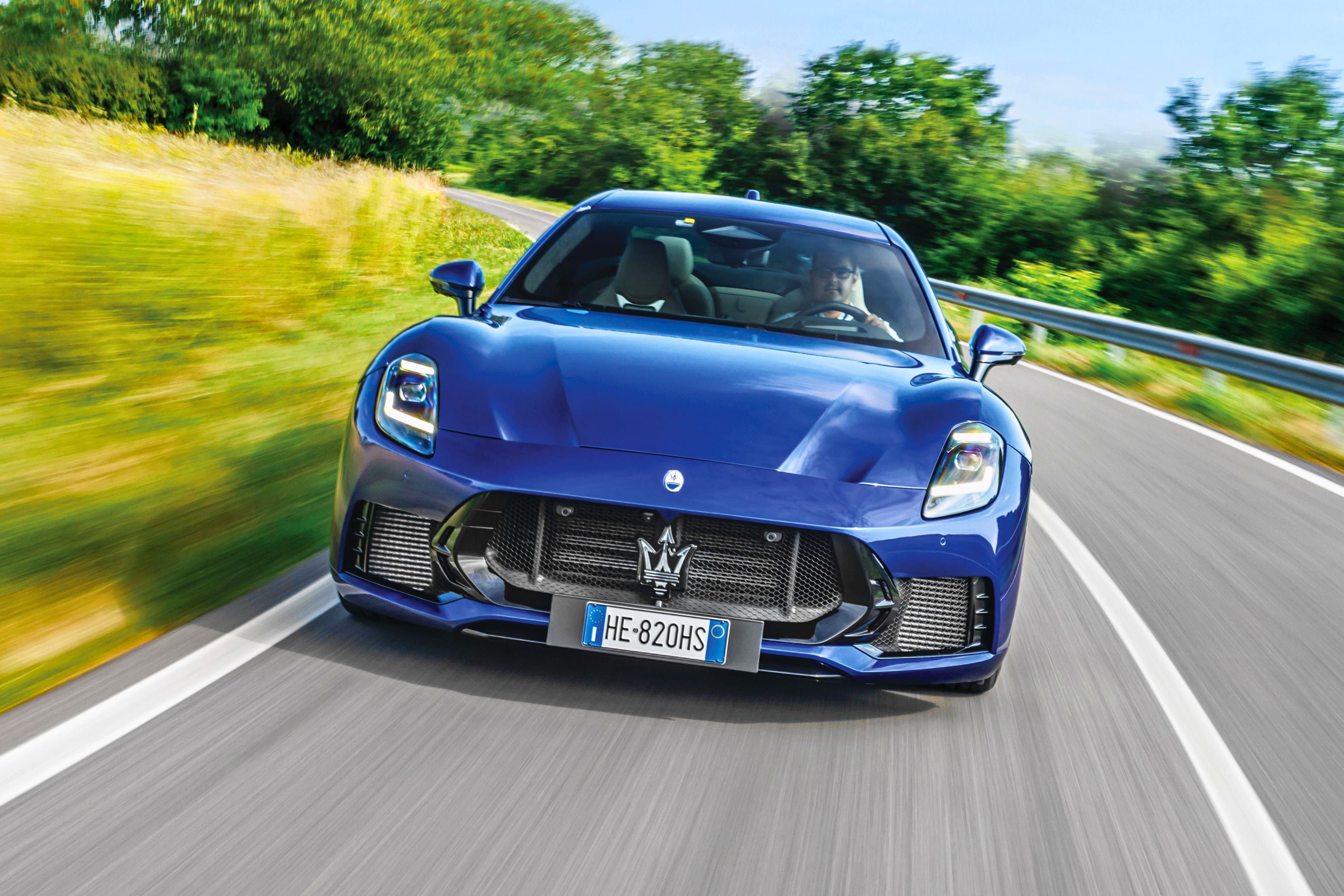
Modena’s 490hp V6 offers smooth, effortless acceleration; Trofeo’s 590hp is more emotive.
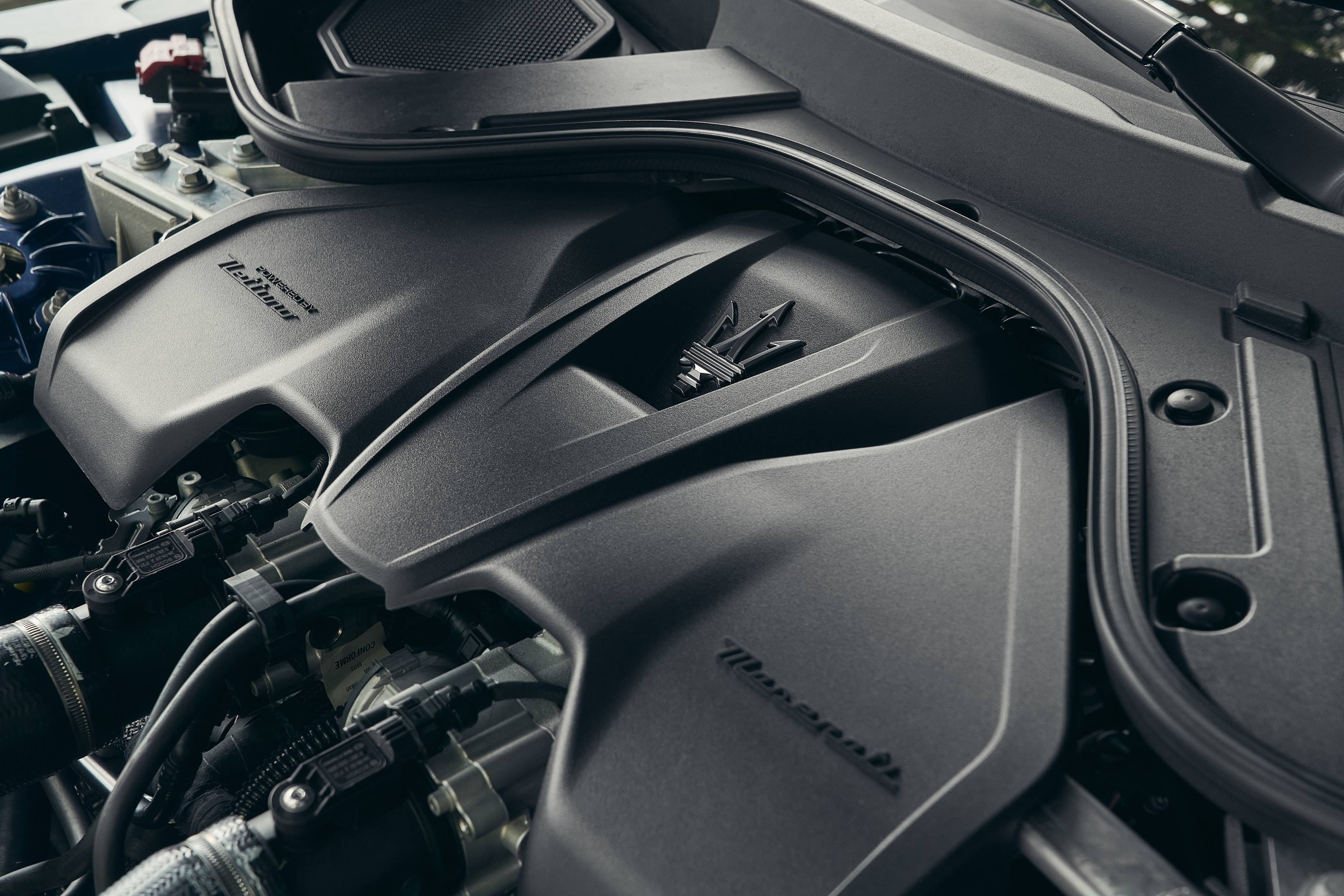
Power comes from Maserati’s own 3.0-litre twin-turbocharged ‘Nettuno’ petrol V6. In Modena guise as tested here, it produces 490hp, while the Trofeo’s output rises to 590hp from the previous 550hp. There’s also the ethanol-blending-proof all-electric Folgore, whose three-motor setup develops 760hp.
GranTurismo Modena does 0-100kph in 3.9 sec; Trofeo takes 3.5 sec.
On the road, the GranTurismo immediately reminds you that it is, above all else, a grand tourer. Despite producing nearly 500hp, it never feels urgent or hyperactive. Instead, its responses are measured and relaxed. Press the throttle harder, and the performance arrives in one smooth, effortless surge rather than an explosive punch. Maserati claims 0-100kph in 3.9 seconds for the Modena and 3.5 seconds for the Trofeo, but it’s the manner in which the speed builds that defines the experience. It launches with elegance rather than violence.
The V6 complements that character perfectly. There’s a constant gruffness to its soundtrack that grows richer as the revs climb. The Trofeo benefits from a more emotive exhaust note.
Maserati GranTurismo Efficiency/Range – 5/10
GranTurismo excels as a grand tourer, prioritising comfort over urgency.
Maserati’s V6 features cylinder deactivation and will shut off the right bank of cylinders at light loads in the interest of better efficiency. As it is, the GranTurismo’s V6 will be more efficient than the V8s in some rivals, but only just. The GranTurismo will happily work through a full tank of 100-octane fuel if you drive with vigour, and even on relaxed drives, you’re looking at real-world figures in the region of 5-6kpl.
The all-electric Folgore does have more to offer with the update. Range is up by 80km to 540km (WLTP) thanks to a new front-axle disconnect function.
Maserati GranTurismo Ride Comfort and Handling – 8/10
At nearly five metres long and weighing around 1.8 tonnes, the GranTurismo is no lightweight sports car. Yet, its standard air-suspension and all-wheel-drive system help disguise its size remarkably well. It doesn’t dart into corners like a Porsche 911, but there’s a lovely fluidity to the way it changes direction. The steering, in particular, deserves praise for its natural weighting and excellent feel.
Air suspension delivers a cushioned ride despite low-profile tyres.
Ride comfort is another highlight. Despite its large wheels and low-profile tyres, the suspension absorbs imperfections with impressive composure. A new ‘Country’ drive mode raises the ride height by 20mm at speeds of up to 120kph, making it particularly relevant for Indian roads.
Maserati GranTurismo Price and Verdict – 8/10
The GranTurismo (and open-top Gran Cabrio) will go on sale in India in the coming months, and we expect the range to start around Rs 2.7 crore (ex-showroom) with the Trofeo’s closer to the Rs 3 crore mark. The all-electric Folgore will also be on offer.
Updated Maserati GranTurismo is expected to cost Rs 2.7-3 crore (ex-showroom).
Similar money could buy you a Porsche 911 GTS or a Mercedes-AMG GT, but I wouldn’t think of the GranTurismo as a direct rival. It’s not as focused as a performance car, but instead excels at a wider range of abilities. The GranTurismo story is as much about luxury as it is about sportiness. Ride comfort is a big plus, and for what it’s worth, the rear seats are usable too. It only helps that the GranTurismo is drop-dead gorgeous.
For the wealthy few shopping in the segment, the GranTurismo deserves a long, hard look. You might just fall for it.
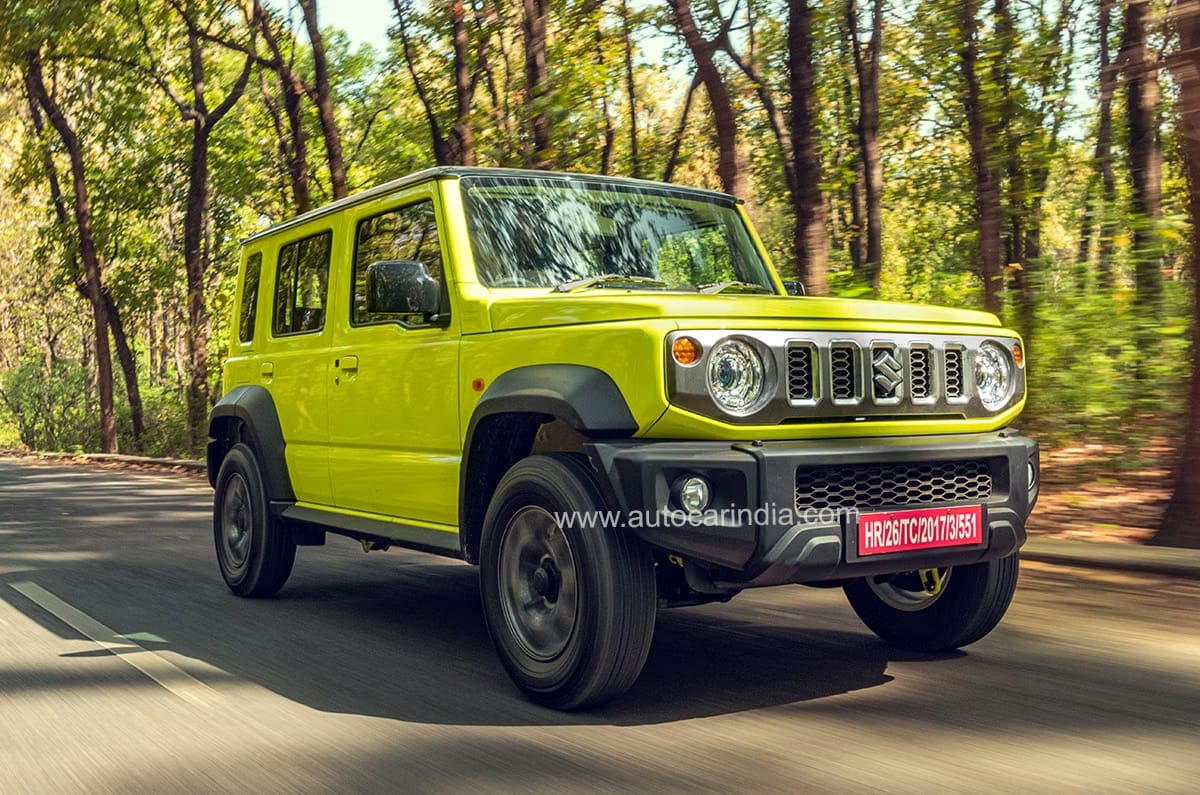
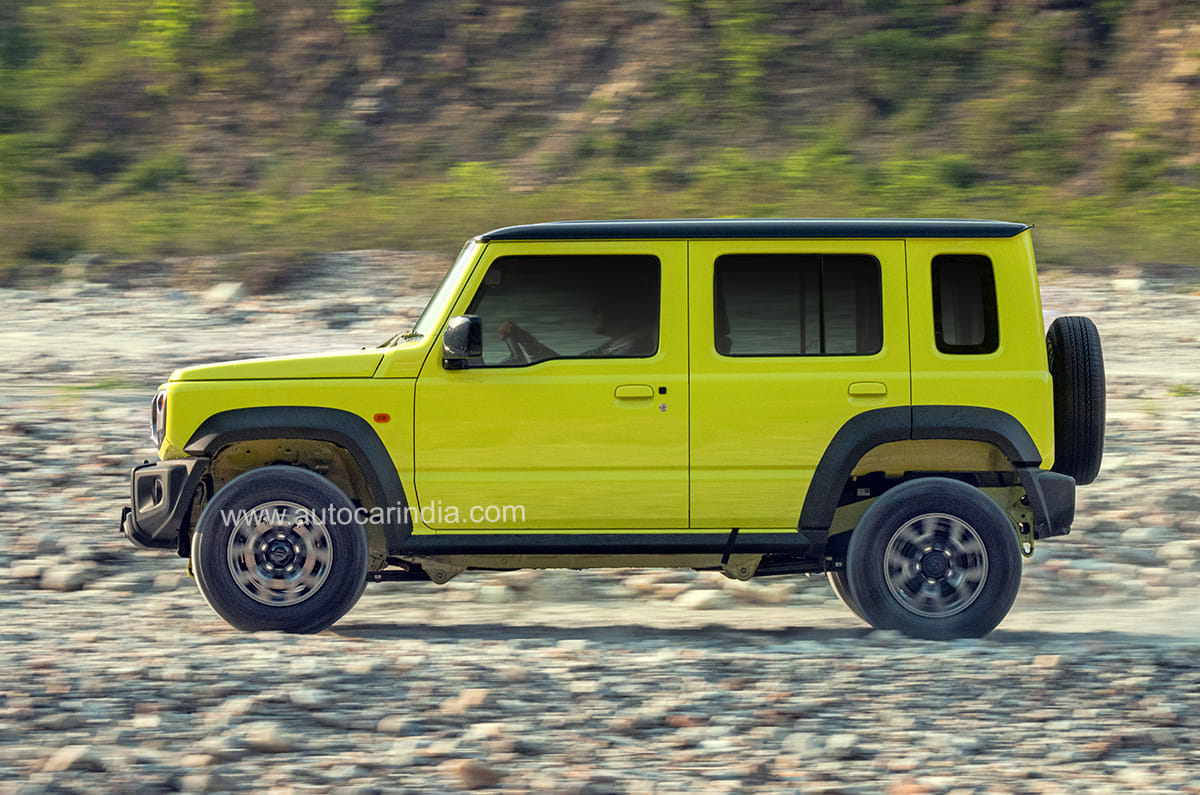
Introduced in 2023, the Jimny debuted in India as Maruti’s successor to the Gypsy. And while the Jimny was sold internationally as a 3-door model, India was the first country to have the 5-door Jimny. It gets retro-futuristic looks, high ground clearance, and a 4×4 drive system with low range. If you’re looking for a hardcore compact off-road SUV, should you consider the Jimny? We list out reasons to buy one and why it may not be the SUV for you.
Reasons to buy the Maruti Jimny
Superb Off-road ability
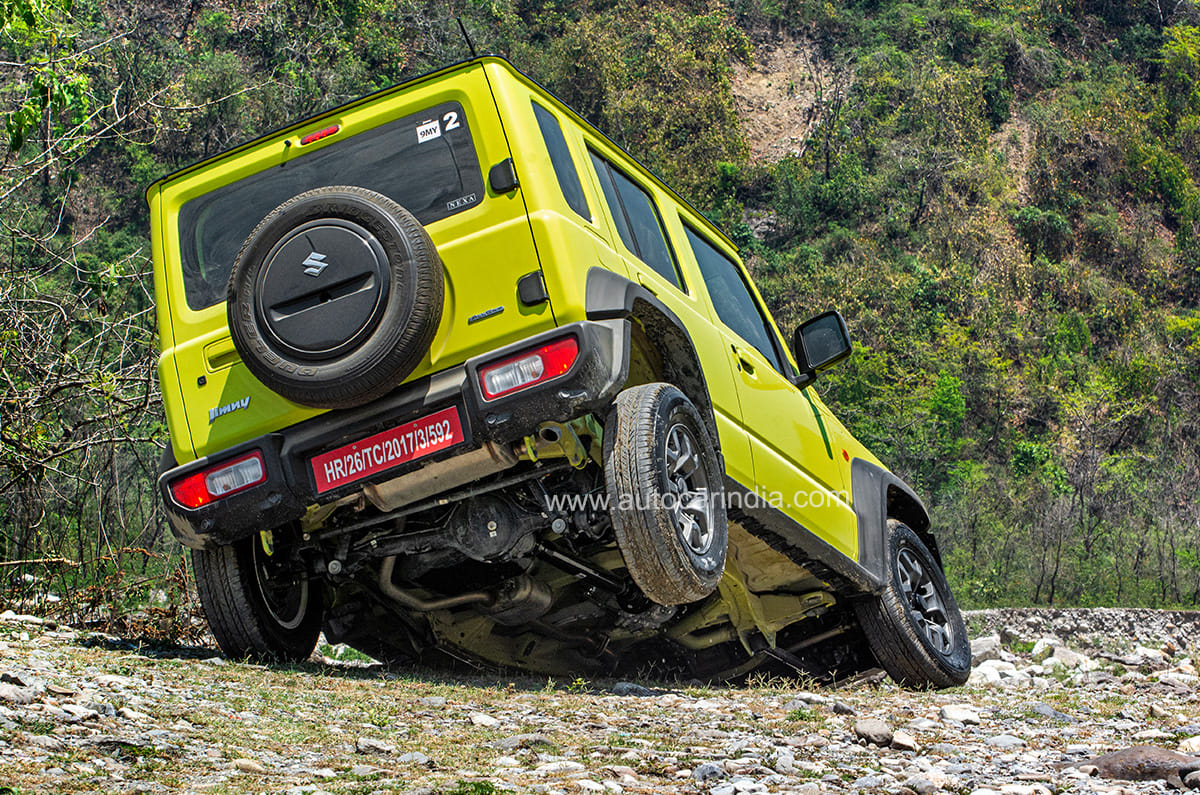
Underpinning the Jimny is a ladder frame chassis that’s best suited for heavy off-roading. Additionally, it gets Suzuki’s All Grip Pro 4×4 drive system with a lever to switch to ‘2WD-high’, ‘4WD-high’ and ‘4WD-low.’ High approach (36-degree) and departure (47-degree) angles, solid front and rear axles along with tech like hill-start assist, hill-descent control, and electronic braking differential (front and rear), help the Jimny feel right at home when off-roading. It performs superbly when wading through water, going up rock-covered steep inclines, pulling out of tricky situations and leaning at unimaginable angles all without breaking a sweat.
Charming character
In a sea of pseudo SUVs, the Jimny comes across as one of the few hardcore compact off-road SUVs that’s underpinned by a ladder-frame chassis. Additionally, it’s the only compact off-roader with 5-doors as opposed to other off-road SUVs in the segment like the Force Gurkha 3-door and Mahindra Thar. What’s best is that it isn’t as intimidating as the latter two and is very usable in the city as well. Adding to its overall appeal is a quirky exterior and interior with retro-futuristic elements all over, lending it a very charming character.
Comfortable ride
While ladder-frame vehicles aren’t known for their ride quality, the Jimny feels comfortable on the whole. Especially when compared to rivals, it is more pliant and has better-controlled body roll. It handles broken roads and potholes with ease, and you could take two wheels off the road to dodge traffic with confidence. With a 210mm ground clearance, you wouldn’t need to think twice about going on a beaten path.
Reasons to not buy the Maruti Jimny
Weak engine
The Jimny is powered solely by a 1.5-litre naturally aspirated petrol engine developing 104hp and 134.2 Nm of torque. It’s grunty enough in urban and off-road conditions, but it falls short if you ask more of it. As with naturally aspirated engines, mid-range punch is lacking. For simple overtakes, you’ll find yourself flattening your right foot and wringing the motor’s neck. 0-100kph acceleration timings were 14.59 and 17.47 seconds for the manual and automatic gearboxes respectively, which is slow.
Clunky manual gearbox
While manual Marutis have been known for buttery-smooth operation, the same can’t be said for the Jimny. Though acceleration is quicker when paired with the manual gearbox, it doesn’t bode well with the Jimny. Shifting is firm and requires substantial effort to slot it into gears, thus taking away the fun that’s associated with driving a manual gearbox. The heavy clutch is also a let-down, especially when driving in city conditions.
Heavy steering
The Jimny’s steering takes 4+ turns lock-to-lock, which is more than most cars, and is cumbersome. Secondly, the electric power steering is slow-geared, and while that’s good for off-roading, it does not bode well on the road. The weight of the steering itself is heavier than most vehicles of its size and has a huge turning radius of 5.7 metres.
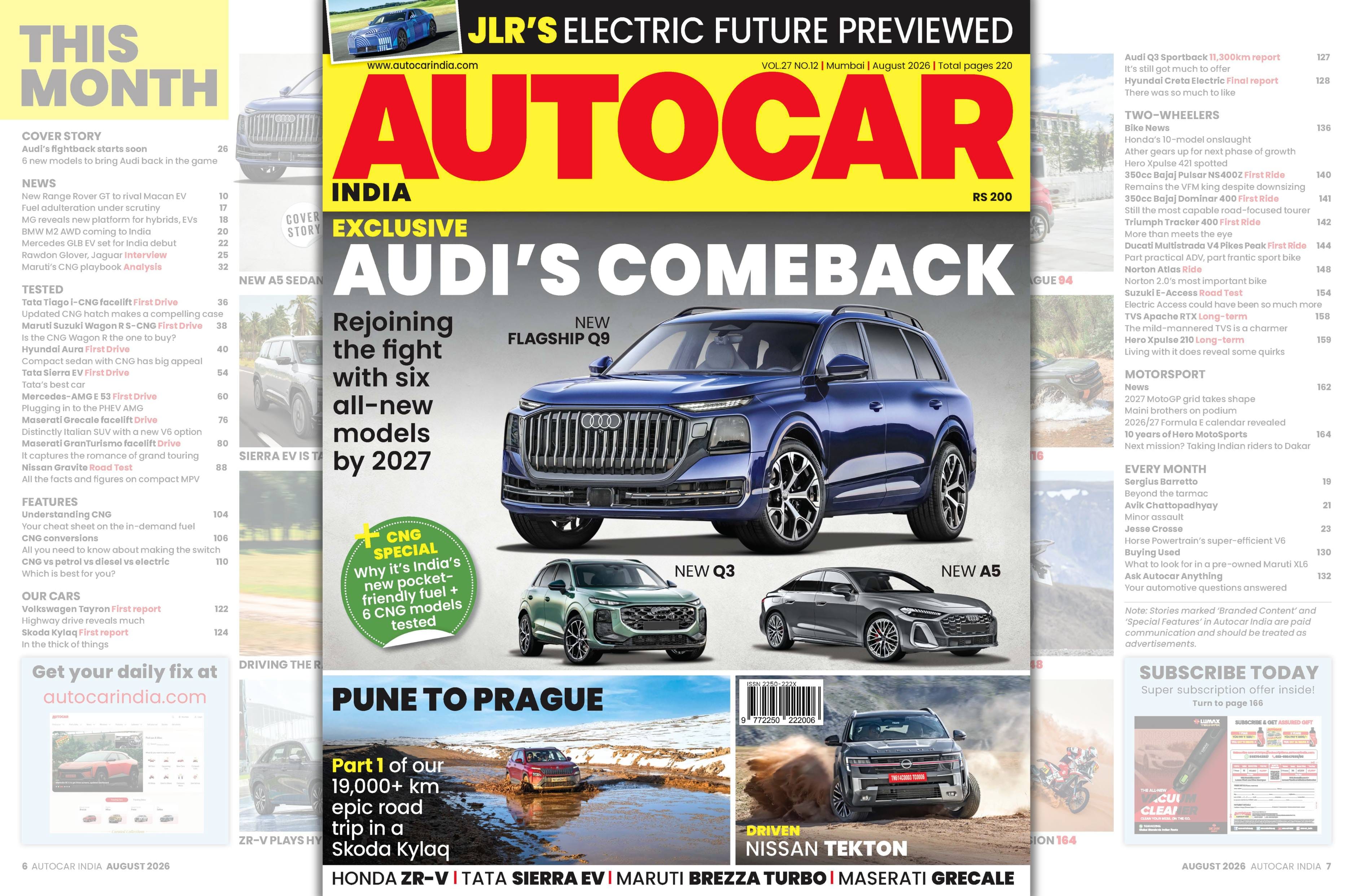
Our August 2026 issue has all the exclusive details of Audi India’s most ambitious product offensive in over a decade, with six all-new locally assembled models planned over the next 18 months. We also get behind the wheel of Jaguar’s camouflaged Type 01 prototype and drive the Range Rover Sport EV at Goodwood. Closer to home, we find out if the Tata Sierra EV lives up to its billing as the best Tata on sale, while the Nissan Tekton is put through a 700km-plus real-world test from Chandigarh to Leh. We also break down India’s new most popular fuel in our CNG special, with five models tested back-to-back. On two wheels, the new Norton Atlas is ridden in Iceland, while a special Ducati takes on some of Maharashtra’s tricky trails. All this while a Skoda Kylaq sets off on an epic 19,351km drive from Pune to Prague.
Audi’s Big Comeback: Cover Story
Audi was once India’s bestselling luxury brand. Today, it is a shadow of that. Now, with six all-new locally assembled models planned by end-2027, the four rings are back on the offensive. We have all the details and speak to Audi India head Balbir Singh Dhillon and Audi AG chairman Gernot Dollner about the upcoming cars.
Jaguar Type 01: Drive
Jaguar has walked away from 90 years of combustion heritage, cancelled every existing model and started again with a blank sheet of paper. The Type 01 is the result – a five-metre all-electric grand tourer with a 1,000hp three-motor setup, 600km of range and a starting price north of Rs 3 crore. We drive a camouflaged prototype at JLR’s Gaydon test track to find out if the boldest bet in the car industry’s history has legs.
Range Rover Sport EV: Drive
Under its familiar skin sits an 800V architecture, two Land Rover-developed 326hp motors and a 118.5kWh battery validated over 60,000 hours of testing. The electric Range Rover Sport arrives in India around March 2027 and could set a new luxury benchmark for the brand. We drive a prototype at Goodwood to find out if it lives up to that promise.
Tata Sierra EV: First Drive
The best Tata in years gets the brand’s smoothest powertrain yet. The Sierra EV comes in rear-wheel-drive and all-wheel-drive forms, with the AWD variant making a class-leading 306hp and bringing the first AWD option in this segment. We drive all variants, including a proper off-road test, to see if it lives up to the hype.
Honda ZR-V: Drive
Honda’s first hybrid SUV in India arrives as a full import from Japan, packing a 184hp strong-hybrid powertrain and a claimed 22.8kpl. We get a brief first taste at the Buddh International Circuit to find out if it delivers on its promise.
Mercedes-AMG E 53 Hybrid 4Matic+: First Drive
The new E 53 pairs a 3.0-litre straight-six with a 28.6kWh battery for 585hp and up to 100km of electric range. It is a PHEV AMG that also does daily commutes without a drop of fuel. But has electrification enhanced the AMG experience, or diluted it?
CNG Special: Features
CNG now accounts for nearly 20 percent of India’s passenger car market. We explain everything you need to know about the fuel – what it is, how it works and whether an aftermarket conversion makes sense. We also road test five CNG models: the Tata Tiago iCNG, Maruti Wagon R S-CNG, Hyundai Aura CNG, Maruti Brezza Turbo (petrol) and Maruti Victoris S-CNG.
Tata Nexon: Petrol vs Diesel vs Electric vs CNG
The Nexon is one of the few cars in India offered with four distinct powertrain options. We test every variant – turbo-petrol, diesel, CNG and electric – with real-world performance and efficiency figures to find the sweet spot of the range. The result might just surprise you.
Skoda Kylaq: Pune to Prague, Part 1
A made-in-India Skoda Kylaq sets off on a near-20,000km adventure from its birthplace at Skoda’s Chakan plant to Skoda Auto’s headquarters in Prague. Part 1 covers India, Nepal, Tibet and China – including a detour to Mount Everest Base Camp.
Norton Atlas: Ride
TVS’s second Norton – and the brand’s most important – debuts in Iceland. The Atlas is a 585cc parallel-twin adventure tourer with 70hp, a full electronics suite and 19-inch front wheel. We ride 200km of sweeping mountain roads and gravel trails to find out if it can justify the hype and, crucially, a competitive price tag.
Ducati Multistrada V4 Pikes Peak: First Ride
The most focused Multistrada money can buy blurs the line between a practical ADV and an out-and-out sport bike. With Ohlins semi-active suspension, a single-sided swingarm and a race-mode, it promises to be two bikes in one. We find out if the price premium is worth it.
Suzuki E-Access: Road Test
Suzuki’s first electric scooter carries a big name and an even bigger price tag. It gets some things right, but in a segment that rewards value, performance and range, does the Access badge alone justify the Rs 1.92 lakh asking price?
Our August 2026 issue has all the exclusive details of Audi India’s most ambitious product offensive in over a decade, with six all-new locally assembled models planned over the next 18 months. We also get behind the wheel of Jaguar’s camouflaged Type 01 prototype and drive the Range Rover Sport EV at Goodwood. Closer to home, we find out if the Tata Sierra EV lives up to its billing as the best Tata on sale, while the Nissan Tekton is put through a 700km-plus real-world test from Chandigarh to Leh. We also break down India’s new most popular fuel in our CNG special, with five models tested back-to-back. On two wheels, the new Norton Atlas is ridden in Iceland, while a special Ducati takes on some of Maharashtra’s tricky trails . All this while a Skoda Kylaq sets off on an epic 19,351km drive from Pune to Prague.
Audi’s Big Comeback: Cover Story
Audi was once India’s bestselling luxury brand. Today, it is a shadow of that. Now, with six all-new locally assembled models planned by end-2027, the four rings are back on the offensive. We have all the details, and speak to Audi India head Balbir Singh Dhillon and Audi AG chairman Gernot Döllner about the upcoming cars.
Jaguar Type 01: Drive
Jaguar has walked away from 90 years of combustion heritage, cancelled every existing model and started again with a blank sheet of paper. The Type 01 is the result – a five-metre all-electric grand tourer with a 1,000hp three-motor setup, 600km of range and a starting price north of Rs 3 crore. We drive a camouflaged prototype at JLR’s Gaydon test track to find out if the boldest bet in the car industry’s history has legs.
Range Rover Sport EV: Drive
Under its familiar skin sits an 800V architecture, two Land Rover-developed 326hp motors and a 118.5kWh battery validated over 60,000 hours of testing. The electric Range Rover Sport arrives in India around March 2027 and could set a new luxury benchmark for the brand. We drive a prototype at Goodwood to find out if it lives up to that promise.
Tata Sierra EV: First Drive
The best Tata in years gets the brand’s smoothest powertrain yet. The Sierra EV comes in rear-wheel and all-wheel-drive forms, with the AWD variant making a class-leading 306hp and bringing the first AWD option in this segment. We drive all variants, including a proper off-road test, to see if it lives up to the hype.
Honda ZR-V: Drive
Honda’s first hybrid SUV in India arrives as a full import from Japan, packing a 184hp strong-hybrid powertrain and a claimed 22.8kpl. We get a brief first taste at the Buddh International Circuit to find out if it delivers on its promise.
Mercedes-AMG E 53 Hybrid 4Matic+: First Drive
The new E 53 pairs a 3.0-litre straight-six with a 28.6kWh battery for 585hp and up to 100km of electric range. It is a PHEV AMG that also does daily commutes without a drop of fuel. But has electrification enhanced the AMG experience, or diluted it?
CNG Special: Features
CNG now accounts for nearly 20 percent of India’s passenger car market. We explain everything you need to know about the fuel – what it is, how it works and whether an aftermarket conversion makes sense. We also road test five CNG models: the Tata Tiago iCNG, Maruti Wagon R S-CNG, Hyundai Aura CNG, Maruti Brezza Turbo (petrol) and Maruti Victoris S-CNG.
Tata Nexon: Petrol vs Diesel vs Electric vs CNG
The Nexon is one of the few cars in India offered with four distinct powertrain options. We test every variant – turbo-petrol, diesel, CNG and electric – with real-world performance and efficiency figures to find the sweet spot of the range. The result might just surprise you.
Skoda Kylaq: Pune to Prague, Part 1
A made-in-India Skoda Kylaq sets off on a near-20,000km adventure from its birthplace at Skoda’s Chakan plant to Skoda Auto’s headquarters in Prague. Part 1 covers India, Nepal, Tibet and China – including a detour to Mount Everest Base Camp.
Norton Atlas: Ride
TVS’s second Norton – and the brand’s most important – debuts in Iceland. The Atlas is a 585cc parallel-twin adventure tourer with 70hp, a full electronics suite and 19-inch front wheel. We ride 200km of sweeping mountain roads and gravel trails to find out if it can justify the hype and, crucially, a competitive price tag.
Ducati Multistrada V4 Pikes Peak: First Ride
The most focused Multistrada money can buy blurs the line between a practical ADV and an out-and-out sport bike. With Öhlins semi-active suspension, a single-sided swingarm and a race-mode, it promises to be two bikes in one. We find out if the price premium is worth it.
Suzuki E-Access: Road Test
Suzuki’s first electric scooter carries a big name and an even bigger price tag. It gets some things right, but in a segment that rewards value, performance and range, does the Access badge alone justify the Rs 1.92 lakh asking price?