Market Trend:मिलेजुले ग्लोबल संकेतों के बीच, 24 अगस्त को भारतीय इंडेक्स बढ़त के साथ खुले और निफ्टी 24300 के आसपास दिख रहा है। ग्लोबल संकेत काफी हद तक ठीक-ठाक हैं । शुक्रवार को अमेरिकी बाजार बढ़त के साथ बंद हुए,जबकि एशियाई बाजारो में मिला-जुला एक्शन दिख रहा है। ईरान पर संभावित अमेरिकी प्रतिबंधों से पहले तेल की कीमतों में कुछ नरमी आई है,हालांकि ब्रेंट क्रूड अभी भी 93 डॉलर के आसपास बना हुआ है। बाजार के लिए भू-राजनीतिक जोखिम बने हुए हैं। निवेशकोम की नजर इस हफ्ते के आखिर में आने वाले Nvidia के नतीजों और Fed चेयर केविन वॉर्श के जैक्सन होल भाषण पर रहेगी।
जियोजित इन्वेस्टमेंट्स चीफ इन्वेस्टमेंट स्ट्रेटेजिस्ट वी के विजयकुमार का कहना है कि नियर टर्म में निफ्टी के 24200-24600 की रेंज में रहने की संभावना है। मजबूत अर्थव्यवस्था और बेहतर होते अर्निंग ग्रोथ जैसे कारण बाजार को सपोर्ट दे सकते हैं। लेकिन निफ्टी के 24600 के स्तर को पार करने की संभावना कम है, क्योंकि कच्चे तेल की ऊंची कीमतें और पश्चिम एशिया संकट और रूस-यूक्रेन युद्ध से जुड़े भू-राजनीतिक तनाव जैसी चुनौतियां मौजूद हैं। ऐसे में,किसी भी तेजी के दौरान ऊपरी स्तरों पर बिकवाली बढ़ सकती है।
निवेशकों को निफ्टी शेयरों के अलावा छोटे-मझोले शेयरों पर भी नजर रखनी चाहिए,जहां काफी हलचल हो रही है। जो कंपनियां अच्छे नतीजे और आगे के लिए अच्छी गाइडेंस दे रही हैं,निवेशक (चाहे वे रिटेल हों या इंस्टीट्यूशनल) उन्हें ऊंचे भाव पर भी खरीद रहे हैं। चूंकि स्मॉल और मिडकैप स्पेस में ज्यादातर शेयरों में बहुत ज्यादा फ़्लोटिंग स्टॉक नहीं हैं,इसलिए इनमें तेजी भी ज़बरदस्त है। CDMO, हेल्थकेयर,प्रिसिजन इंजीनियरिंग और पावर इंफ्रास्ट्रक्चर जैसे सेक्टर निवेशकों को आकर्षित कर रहे हैं। हालाँकि,निवेशकों को किसी भी भाव पर जल्दबाज़ी में खरीदारी नहीं करनी चाहिए। ध्यान रखें कि वैल्यूएशन मायने रखता है।
निफ्टी पर रणनीति
सीएनबीसी-आवाज़ के वीरेंद्र कुमार का कहना है कि निफ्टी के लिए पहला रजिस्टेंस 24281-24331 पर और बड़ा रजिस्टेंस 24378-24419/466 पर है। इसके लिए पहला बेस 24219-24181 पर और बड़ा बेस 24113-24089/24040 पर है। ग्लोबल संकेत अच्छे हैं। लेकिन 10-ईयर यील्ड को लेकर चिंता है। IT सेक्टर के लिए संकेत खराब हैं। कच्चा तेल ऊपर है और FIIs की कैश मार्केट में बिकवाली देखने को मिली है। इंडेक्स में थोड़ी शॉर्ट कवरिंग हुई है। नेट शॉर्ट करीब 2.09 लाख पर रहे हैं। 24,300–24,500 पर कॉल राइटिंग हुई है। यह ऊपर की तरफ मजबूत रेजिस्टेंस है। 24,281–24,331 निफ्टी के लिए मुश्किल रजिस्टेंस है। 24,281–24,331 के ऊपर टिकने पर निफ्टी रजिस्टेंस-2 की ओर बढ़ सकता है। 24,219–24,181 मजबूत सपोर्ट है। यह गिरावट में खरीदारी के लिए अहम है। फिलहाल निफ्टी रेंजवाउंड दिख रहा है। बेस-1 टूटने पर बेस-2 जोन की ओर जाने का रिस्क है।
निफ्टी बैंक पर रणनीति
वीरेंद्र कुमार का कहना है कि बैंक निफ्टी के लिए पहला रजिस्टेंस 57868-58037 पर और बड़ा रजिस्टेंस 58189-58278/361 पर है। इसके लिए पहला बेस 57566-57410 पर और बड़ा बेस 57271-57161 पर है। निफ्टी बैंक का प्रदर्शन बेहतर रहा है लेकिन अभी भी बड़ा रिस्क है। 58,000 पर सबसे ज्यादा कॉल राइटिंग हुई है,हालांकि कुछ शॉर्ट कवरिंग भी दिखी है। पहली बड़ी रुकावट रजिस्टेंस-1 जोन में है। 58,037 के ऊपर टिकने पर रजिस्टेंस-2 की ओर बढ़ने की तैयारी होगी। 57,566–57,410 के आसपास मजबूत सपोर्ट है। एवरेज और पुट राइटर्स को देखते हुए गिरावट में खरीदारी बेहतर रणनीति होगी। बेस-1 पर Buy on Dips ज्यादा बेहतर ट्रेड रहेगा। बेस-1 टूटने पर कमजोरी बढ़ेगी। इसके बाद बेस-2 तक टेस्ट संभव है।
चकाचक चार्ट वाले शेयर
चकाचक चार्ट वाले शेयर बताने के लिए हमारे साथ जुड़े हैं manasjaiswal.com के मानस जायसवाल। इनकी KFINTECH में 969 रुपए के स्टॉपलॉस के साथ 1000 रुपए के टारगेट के लिए और NATIONAL ALUMINIUM में 389 रुपए के स्टॉप-लॉस के साथ, 405 रुपए के टारगेट के लिए खरीदारी की सलाह है।
डिस्क्लेमर: मनीकंट्रोल.कॉम पर दिए गए विचार एक्सपर्ट के अपने निजी विचार होते हैं। वेबसाइट या मैनेजमेंट इसके लिए उत्तरदाई नहीं है। यूजर्स को मनी कंट्रोल की सलाह है कि कोई भी निवेश निर्णय लेने से पहले सर्टिफाइड एक्सपर्ट की सलाह लें।
Market news : कच्चे तेल में नरमी से भारतीय बाजारों के सेंटिमेंट सुधरे हैं। गिफ्ट निफ्टी में करीब 70 प्वाइंट की बढ़त दिख रही है। FIIs की कैश और वायदा मिलाकर करीब 680 करोड़ की नेट खरीदारी देखने को मिली है। नेट शॉर्ट कॉन्ट्रैक्ट भी थोड़े कम हुए हैं। यहां हम आपके लिए तमाम समाचार प्लेटफॉर्मों पर चल रही आज की ऐसी अहम खबरों की एक सूची जारी कर रहें हैं जो भारतीय और अंतर्राष्ट्रीय बाजारों को प्रभावित कर सकते हैं।
मार्केट ओवरव्यू
21 अगस्त को उतार-चढ़ाव भरे सेशन में मार्केट पिछले सेशन की जबरदस्त रिकवरी को आगे नहीं बढ़ा पाए और सपाट बंद हुए। मेटल,PSU बैंक और रियल्टी शेयरों में बढ़त का असर ऑटो,IT,मीडिया और फार्मा शेयरों में बिकवाली से खत्म हो गया। मिले-जुले ग्लोबल संकेतों के बावजूद,मार्केट बढ़त के साथ खुला लेकिन उस बढ़त को बनाए नहीं रख पाया और पूरे सेशन के दौरान एक सीमित दायरे में ही घूमता रहा। कच्चे तेल की बढ़ती कीमतों और दुनिया भर में बनी अनिश्चितताओं के बीच इन्वेस्टर्स सतर्क नजर आए। कारोबार के अंत में,सेंसेक्स 3.11 अंक बढ़कर 77,540.83 पर और निफ्टी 20.15 अंक या 0.08 प्रतिशत बढ़कर 24,252 पर बंद हुआ।
ईरान के खिलाफ आर्थिक D-Day का एलान, ईरान की तेल निर्यात थामने की चेतावनी
वेस्ट एशिया में अब आर-पार की लड़ाई दिख रही है। अमरिका ने ईरान के खिलाफ सबसे बड़ी इकोनॉमिक स्ट्राइक शुरू कर दी है। US के वित्त मंत्री ने कहा है कि ईरान के खिलाफ वॉर अब आखिरी चरण में है। ईरान का भी पलटवार हुआ है। उसने कहा कि ये प्रतिबंध एक्ट ऑफ वॉर की कटेगरी में आते हैं। अमेरिका का साथ देने वाले देशो को भी निशाना बनाते हुए एक्सपोर्ट ठप करेंगे।
कच्चे तेल में मामूली नरमी, $91 के नीचे, सोना 4600 डॉलर के पार
वेस्ट एशिया तनाव बढ़ने के बावजूद कच्चे तेल में नरमी है। यह 91 डॉलर के नीचे है। इधर सोना-चांदी चमके हैं। सोना 4600 डॉलर के पार चला गया है। 10 साल की US बॉन्ड यील्ड भी 4.7 के अहम लेवल के ऊपर है। हलांकि डॉलर इंडेक्स 99 डॉलर के नीचे है।
अमेरिकी बाजारों में रही बढ़त, निक्केई और कॉस्पी में दबाव
शुक्रवार को अमेरिकी बाजारों में जोरदार तेजी दिखी। डाओ जोंस में 500 प्वाइंट से ज्यादा का उछाल आया। नैस्डैक और S&P में भी हल्की बढ़त रही। वहीं एशिया में मिला-जुला कारोबार देखने को मिल रहा है। कॉस्पी में करीब 1.25 फीसदी की गिरावट के साथ कारोबार हो रहा है। निक्केई फ्लैट कारोबार कर रहा है।
एशियाई करेंसी
अमेरिकी डॉलर के मुकाबले ज़्यादातर एशियाई करेंसी में बढ़त देख रही है। इसमें इंडोनेशियाई रुपिया सबसे आगे है, जिसमें 0.305% की बढ़त हुई है। इसके बाद दक्षिण कोरियाई वॉन (0.216%),ताइवान डॉलर (0.154%),थाई बाहत (0.141%),चीनी रेनमिनबी (0.051%),जापानी येन (0.044%) और मलेशियन रिंगित (0.017%)का नंबर है। सिंगापुर डॉलर में कोई बदलाव नहीं हुआ है। जबकि फिलीपींस पेसो में डॉलर के मुकाबले 0.092% की गिरावट आई है।
लेंसकार्ट और मीशो में बड़ी ब्लॉक डील संभव
लेंसकार्ट में आज 2800 करोड़ रुपये की ब्लॉक डील हो सकती है। 4% डिस्कउंट पर 635 रुपये फ्लोर प्राइस तय की गई है। इसके साथ मीशो में भी करीब 957 करोड़ रुपये की ब्लॉक डील हो सकती है। इसके लिए 4 फीसदी तक के डिस्काउंट पर 197 रुपये के करीब फ्लोर प्राइस तय है। दोनों में बड़े निवेशक हिस्सेदारी बेच रहे हैं।
शुरू हुई मोबाइल PLI 2.0 स्कीम, सरकार ने जारी किया नोटिफिकेशन
डिक्सन और अंबर जैसी कंपनियों पर आज फोकस रखें। सरकार ने मोबाइल PLI 2.0 स्कीम का नोटिफिकेशन जारी किया है। सरकार 62500 करोड़ रुपये के इंसेंटिव देगी। यह स्कीम एक अप्रैल 2026 से ही लागू होगी और वित्त वर्ष 2031 तक चलेगी। इसके तहत सरकार 5% तक के इंसेंटिव देगीएफआईआई और
डीआईआई फंड फ्लो
21 अगस्त को घरेलू संस्थागत निवेशकों (DIIs) ने लगातार नौवें सेशन में भी खरीदारी जारी रखी और ₹2,124 करोड़ के शेयर खरीदे, जबकि विदेशी संस्थागत निवेशक (FIIs) लगातार दूसरे सेशन में भी नेट सेलर बने रहे और ₹543 करोड़ के शेयर बेचे।
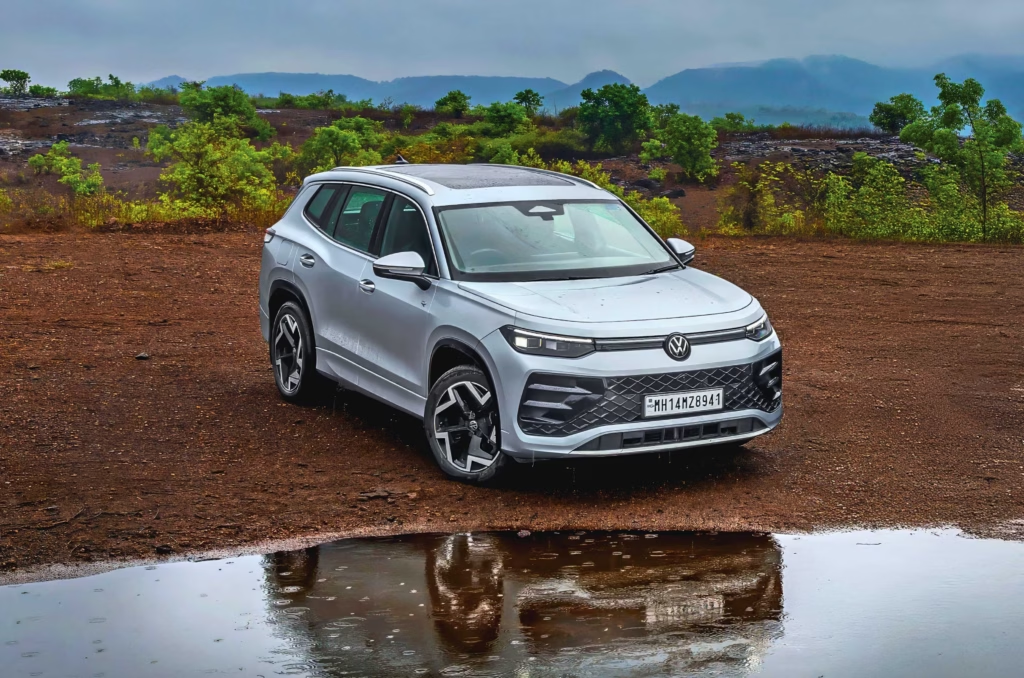
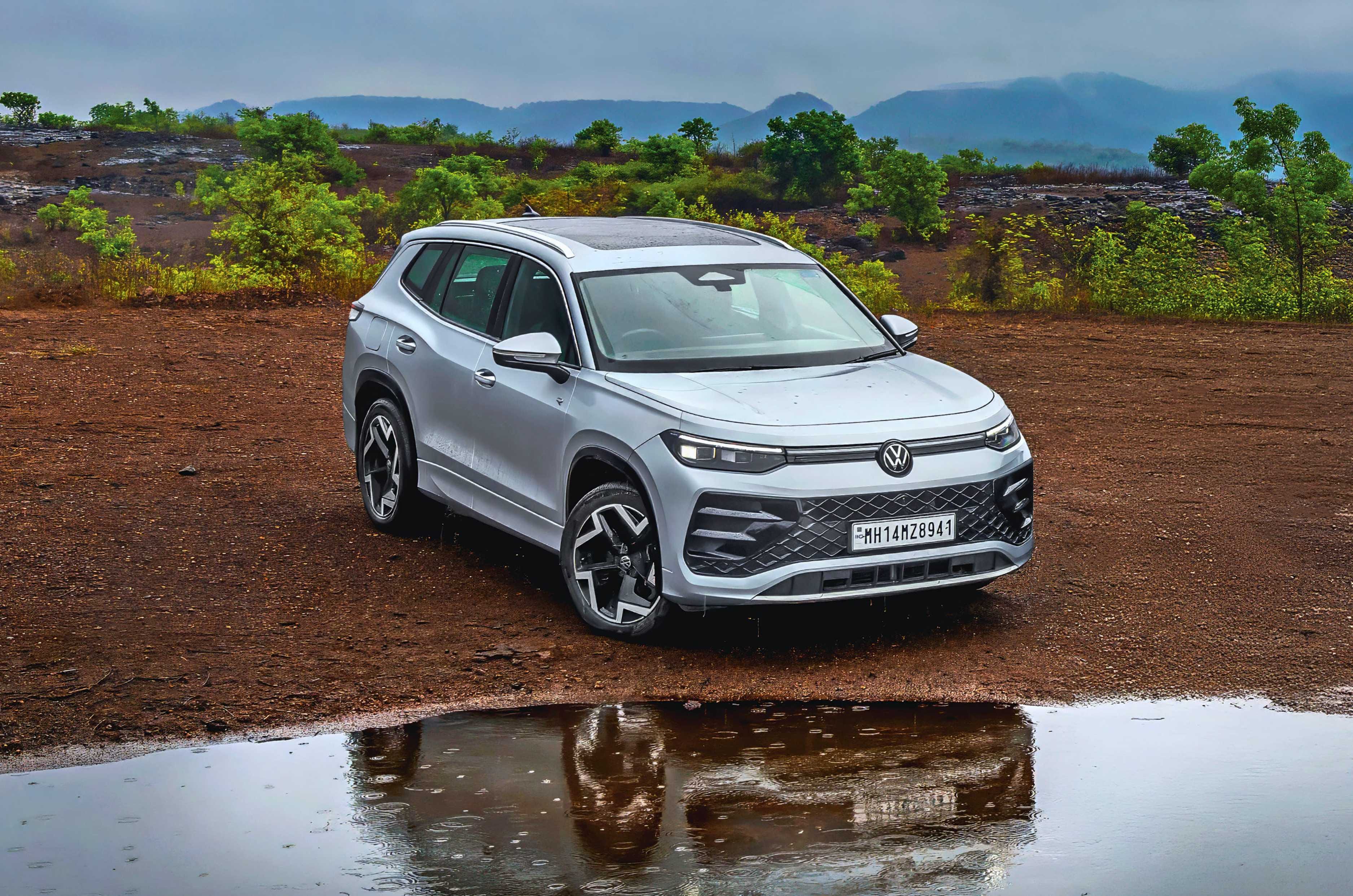
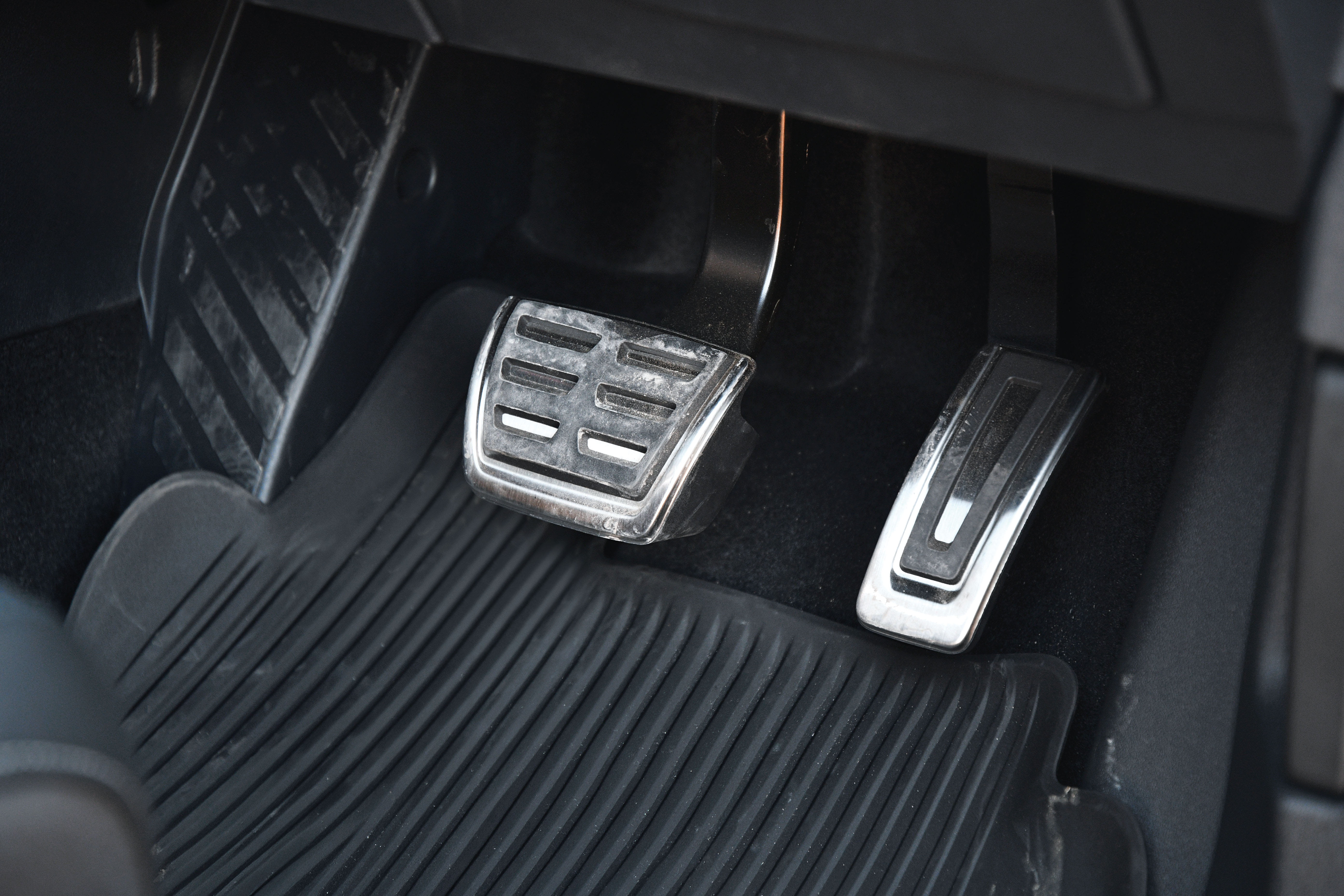
The VW Tayron R-Line is back in the Autocar India garage, and we’ve been running it for some weeks now. First things first, I switch off the Automatic Emergency Braking (AEB) as a matter of habit. The thing is, every time you turn on the car, the system defaults to AEB being active; it doesn’t remember that you last turned it off. This can be rather annoying, but like with most CBUs, which this VW Tayron R-Line is, it follows the homologation requirements of Europe, or what is called GSR 870. That means, for safety reasons, it is mandated to have the AEB on by default every time you begin driving the car.
AEB triggers inadvertently in traffic.
Now, in Europe and other parts of the world where traffic is predictable and sane, it makes sense, but on our chaotic streets, pedestrians, cyclists, bikes and three-wheelers can trigger the AEB into a heart-stopping slam on the brakes, with the risk of being rear-ended by someone who is two inches away from your bumper. Every run to work, the proximity sensors go berserk tackling Mahalaxmi’s infamous Saat Rasta roundabout in Mumbai. It’s also a reminder that the Tayron is a long car, but the good thing is that outside visibility is pretty good, so you can judge the edges quite easily, which is essential when threading through traffic.
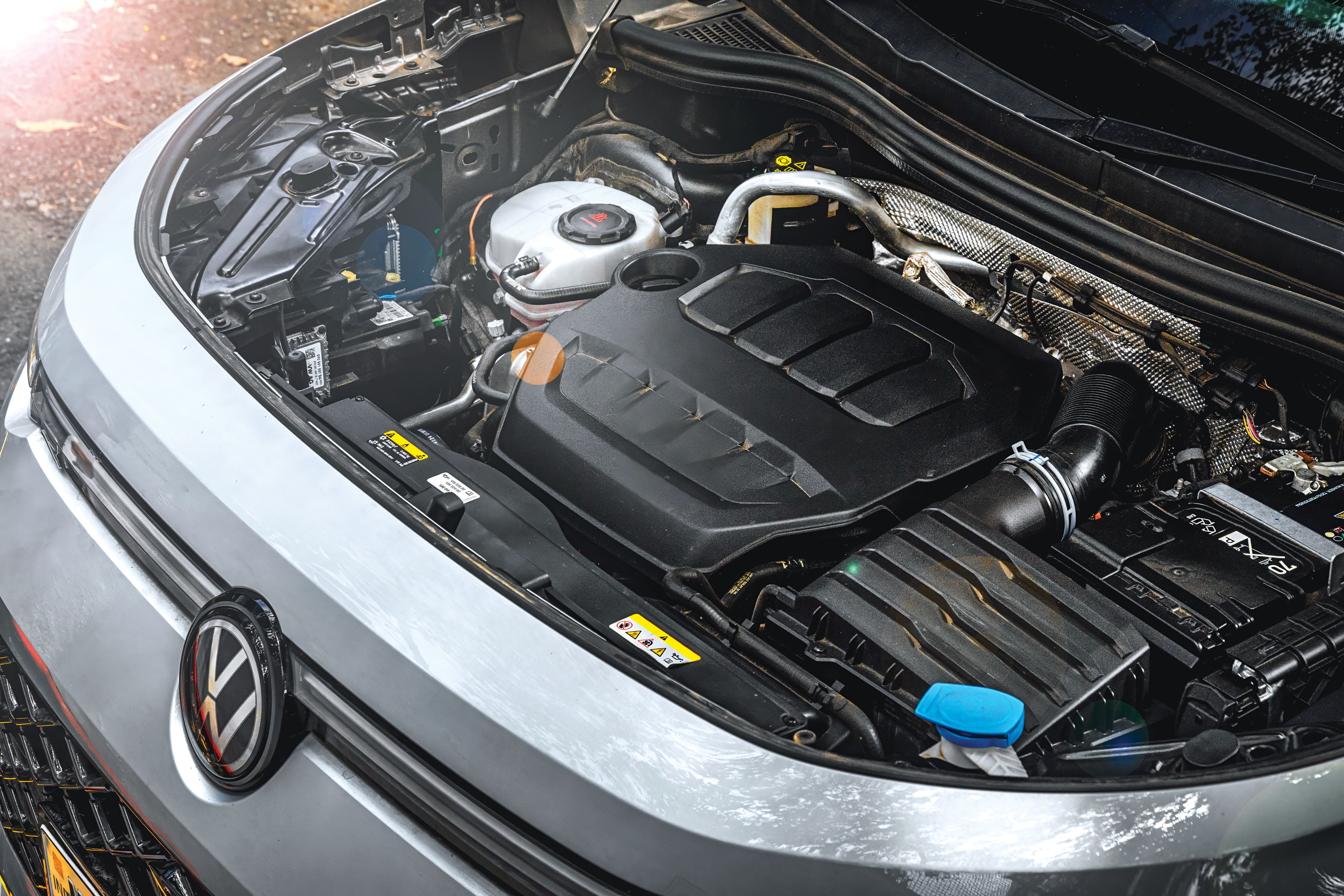
2.0-litre TSI feels refined at all speeds.
The Tayron got a chance to stretch its legs on a run to the Nanoli track. The ‘EA888 Evo’ 2.0-litre TSI engine is the epitome of refinement and possibly the smoothest turbo-petrol in the premium segment. It lacks a bit of low-end punch, but likes to be revved and encourages visits to the 6,000rpm redline. The Tayron is a happy cruiser too, and feels nice and planted at expressway speeds in a VW sort of way.
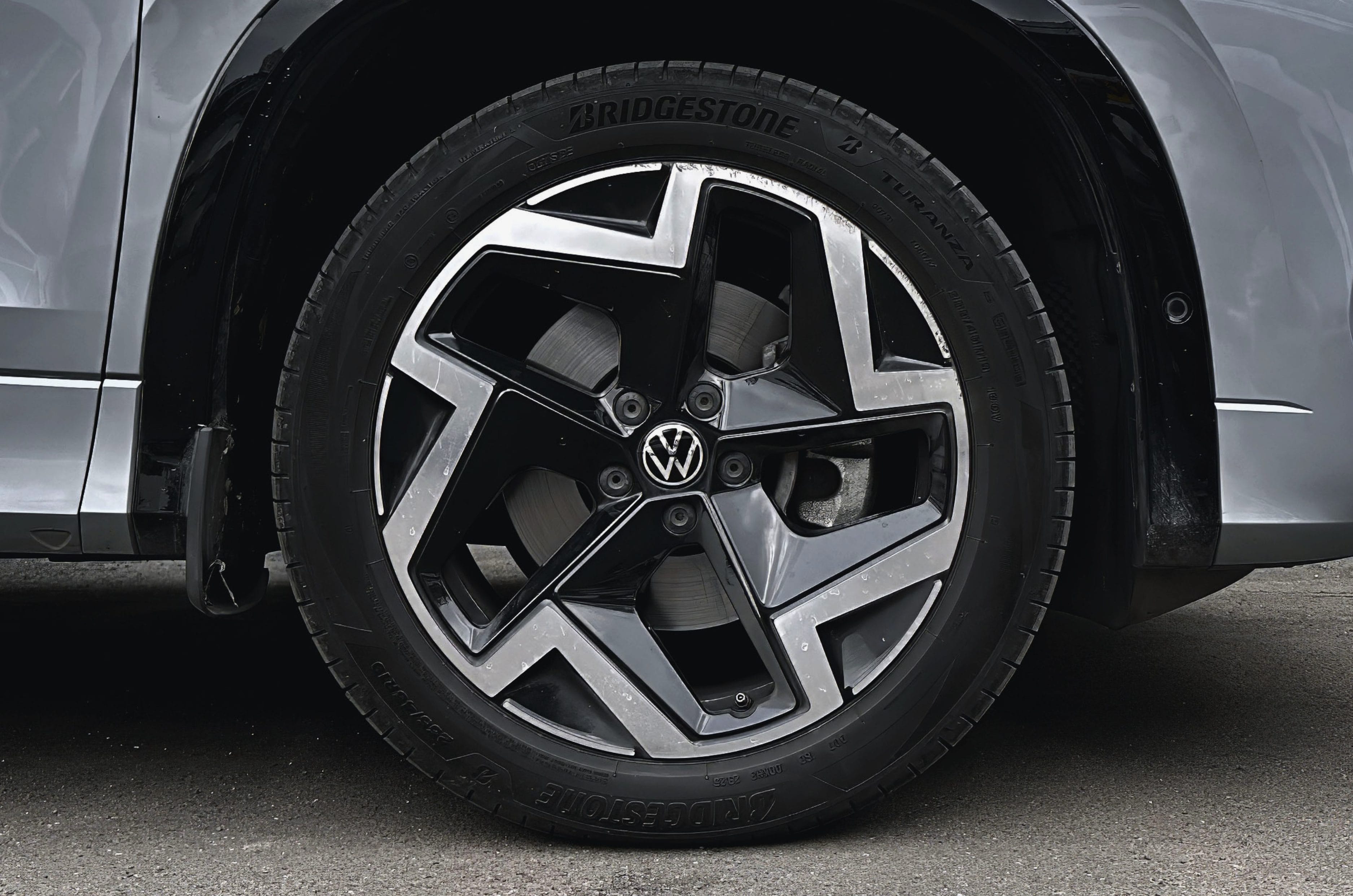
Peeling off the expressway onto the poorly paved, single-lane roads leading to Nanoli exposes a weak chink in the Tayron R-Line – a crashy ride that makes the body jar. The true culprit is the low 45-profile tyres the R-Line comes with, and their short sidewalls simply can’t cushion sharp edges, ruts and jagged tarmac well enough. I suspect the lower-spec Tayron Life, recently launched at Rs 41.99 lakh, is a cheaper and more practical option with the less sporty spec and taller 55-profile tyres.
Low-profile tyres impact ride comfort.
Living with the Tayron R-Line, you discover the smaller details that go some way in justifying the hefty Rs 46.99 lakh price. Cabin materials feel genuinely plush – the stitching, fit and finish and tasteful use of ambient lighting – though I have to say some of the trim did creak on bad roads. There’s good storage space too, which makes long-distance driving with your family a pleasant affair. What stood out for me was the clarity and ease of use of the infotainment system. Large fonts, smooth and slick operation and a nicely intuitive menu make it easy to operate on the go.
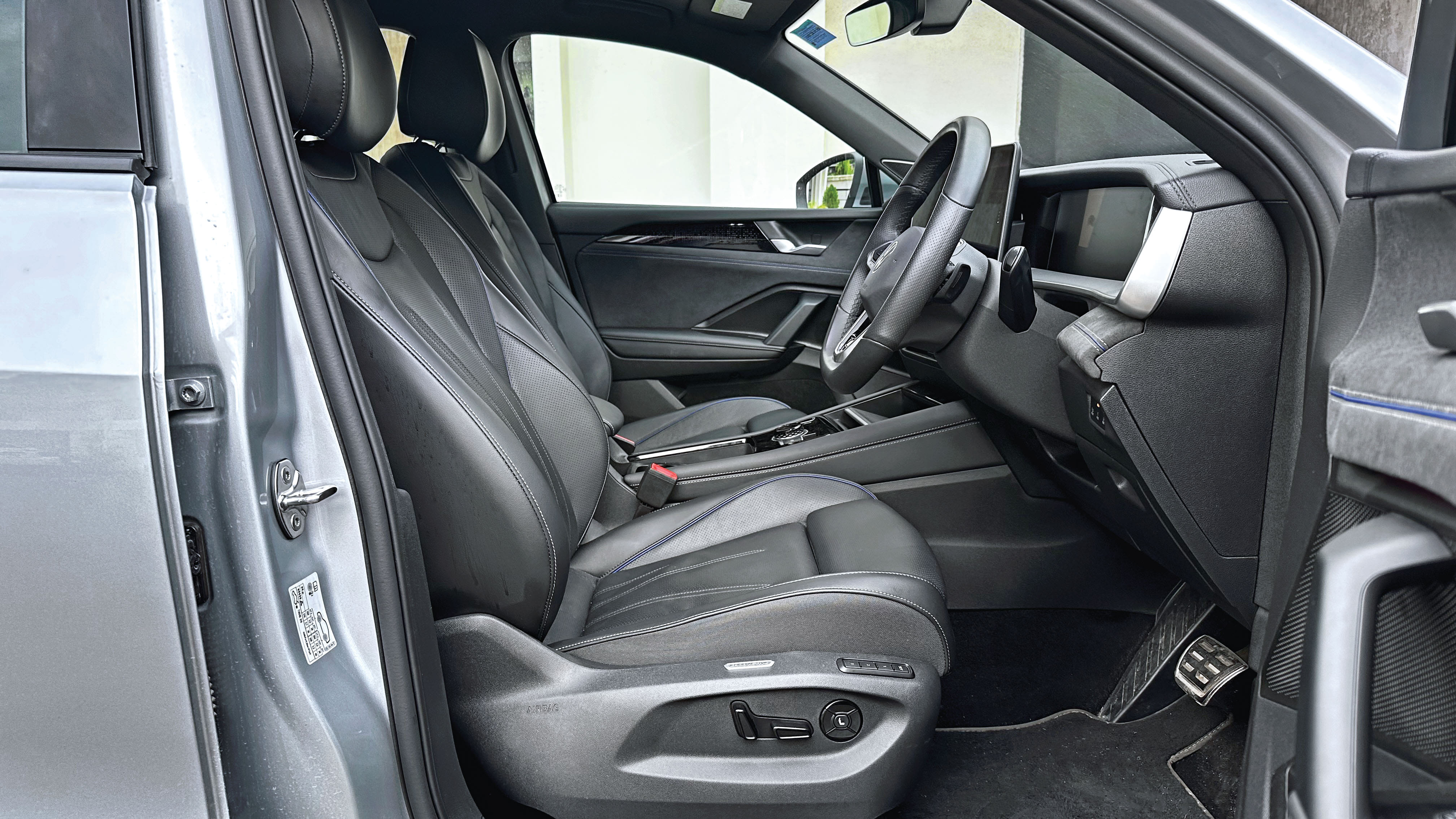
Seats comfy for long hours behind the wheel.
Other things that stood out after a long drive were the seats – supremely comfortable and not too hard and stiff like those in Volkswagens of the past. These seats have well-judged cushioning, and what makes them special is that they also give your upper body good and even support.
Fuel efficiency is not the strength of a turbo-petrol, and E20 now being the only choice doesn’t help matters. In the city, we could only muster up 6.2kpl, whilst on the sole highway run to Nanoli, we averaged 11.2kpl.
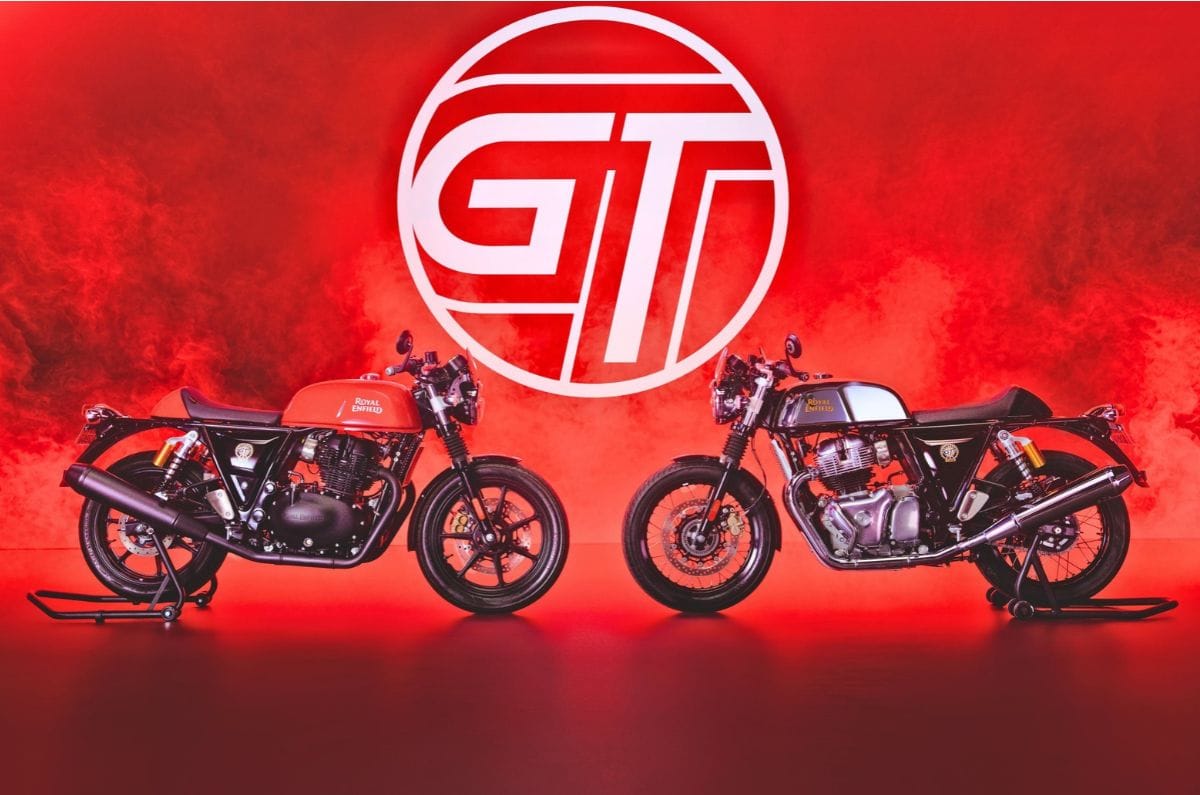
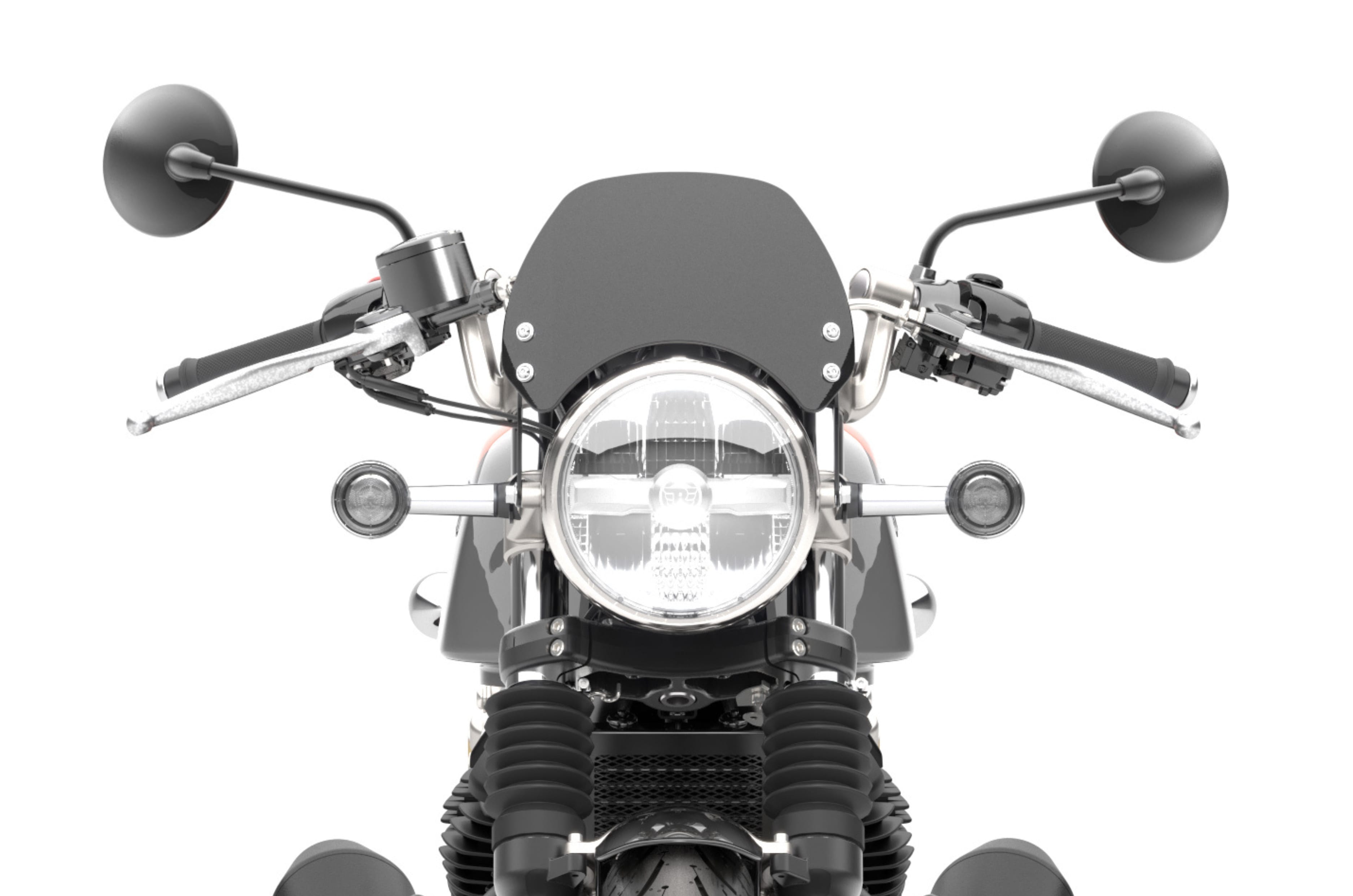
Royal Enfield’s Continental GT 650 is the brand’s modern take on the classic cafe racer, combining a retro design with its 648cc parallel-twin engine. If you’re considering one, here’s everything you need to know about the motorcycle.
1. How much does the Continental GT 650 cost?
Royal Enfield has priced the Continental GT 650 from Rs 3.58 lakh to Rs 3.88 lakh (ex-showroom, Chennai). The Rocker Red and British Racing Green variants are priced at Rs 3.58 lakh, while the Apex Grey and Mr Clean cost Rs 3.81 lakh and Rs 3.88 lakh, respectively.
2. Which engine does the Continental GT 650 have?
The Continental GT 650 continues with Royal Enfield’s 648cc, air/oil-cooled parallel-twin engine. It produces 47hp at 7,150rpm and 52.3Nm at 5,250rpm, with power sent to the rear wheel through a six-speed gearbox.
3. What is the seat height of the Continental GT 650?
The Continental GT 650 has an 820mm seat height. It also has a 1,398mm wheelbase and 174mm of ground clearance.
4. What features does the Continental GT 650 get?
The updated Continental GT 650 gets LED indicators, a USB Type-C charging port and a black-painted instrument cowl. The Rocker Red and Apex Grey variants get blacked-out engines and exhausts, while both are equipped with cast-alloy wheels.
5. Does the Continental GT 650 get dual-channel ABS?
Yes, the Continental GT 650 gets dual-channel ABS as standard. It uses a 320mm disc at the front and a 240mm disc at the rear.
6. What is the weight and ground clearance of the Continental GT 650?
The Continental GT 650 has a 214kg kerb weight and 174mm of ground clearance.
7. What is the fuel tank capacity of the Continental GT 650?
The Continental GT 650 gets a 12.5-litre fuel tank.
8. Does the Continental GT 650 get alloy wheels?
Not all versions. The Rocker Red and Apex Grey variants get cast-alloy wheels, while the British Racing Green and Mr Clean versions continue with traditional spoke wheels.
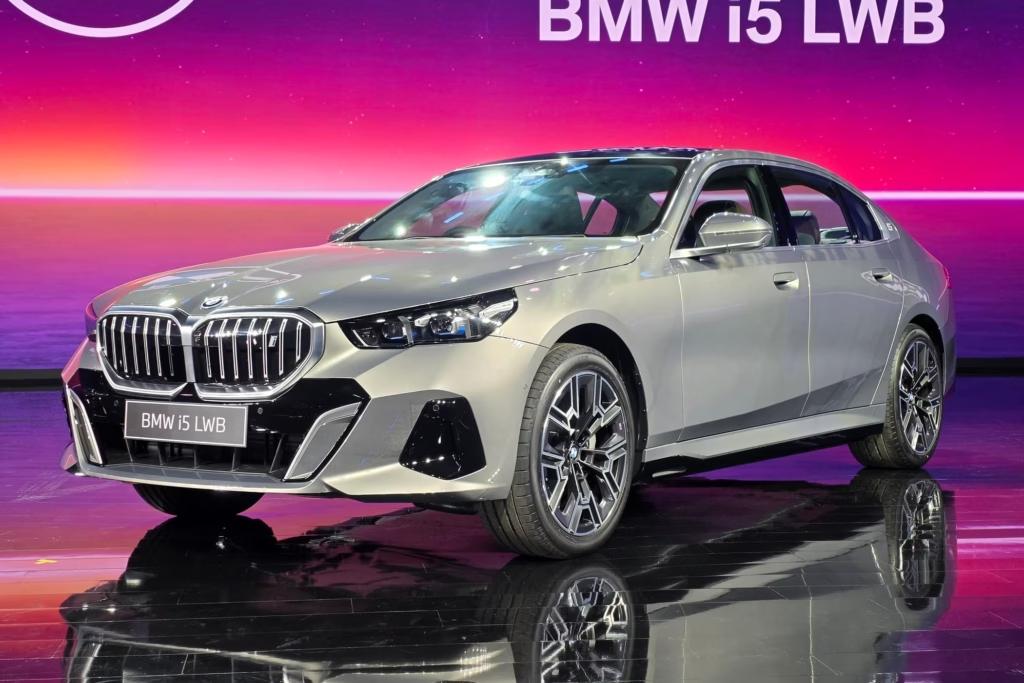
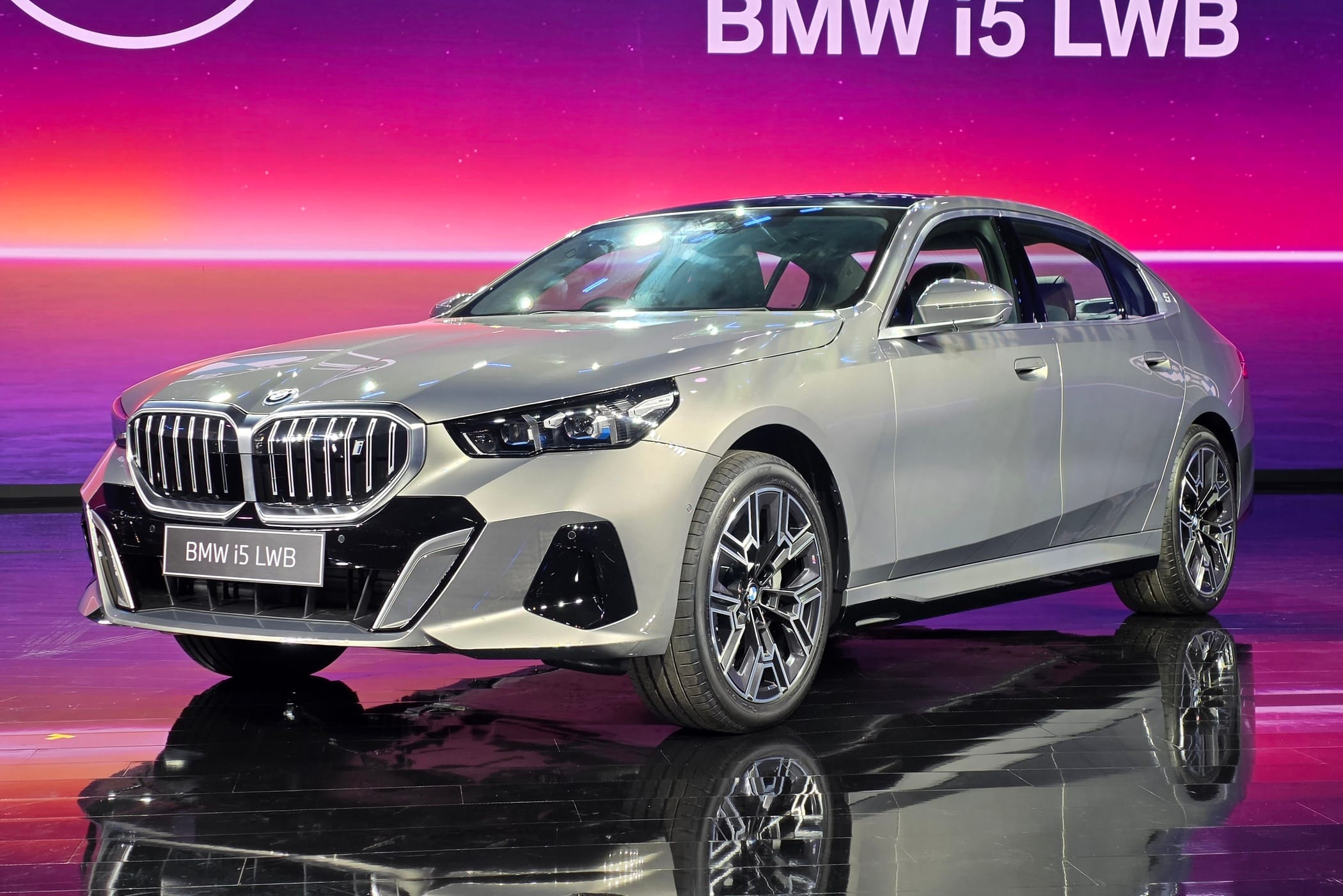
BMW has debuted the India-spec i5 LWB in India, with bookings now open and launch slated for the coming weeks. The i5 LWB is not the first of the i5 nameplate to be available in the Indian market, as BMW has been selling the performance-focused standard-wheelbase i5 M60 here since 2024. Where the i5 M60 is a fully imported model, though, the i5 LWB will be locally assembled, allowing BMW to price it more competitively.
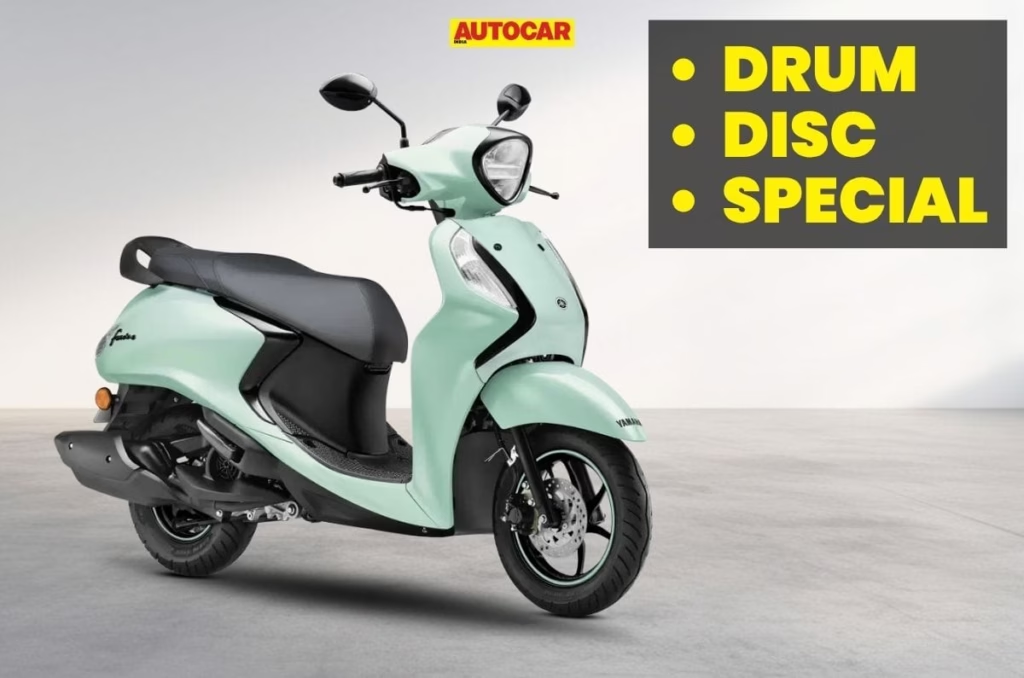
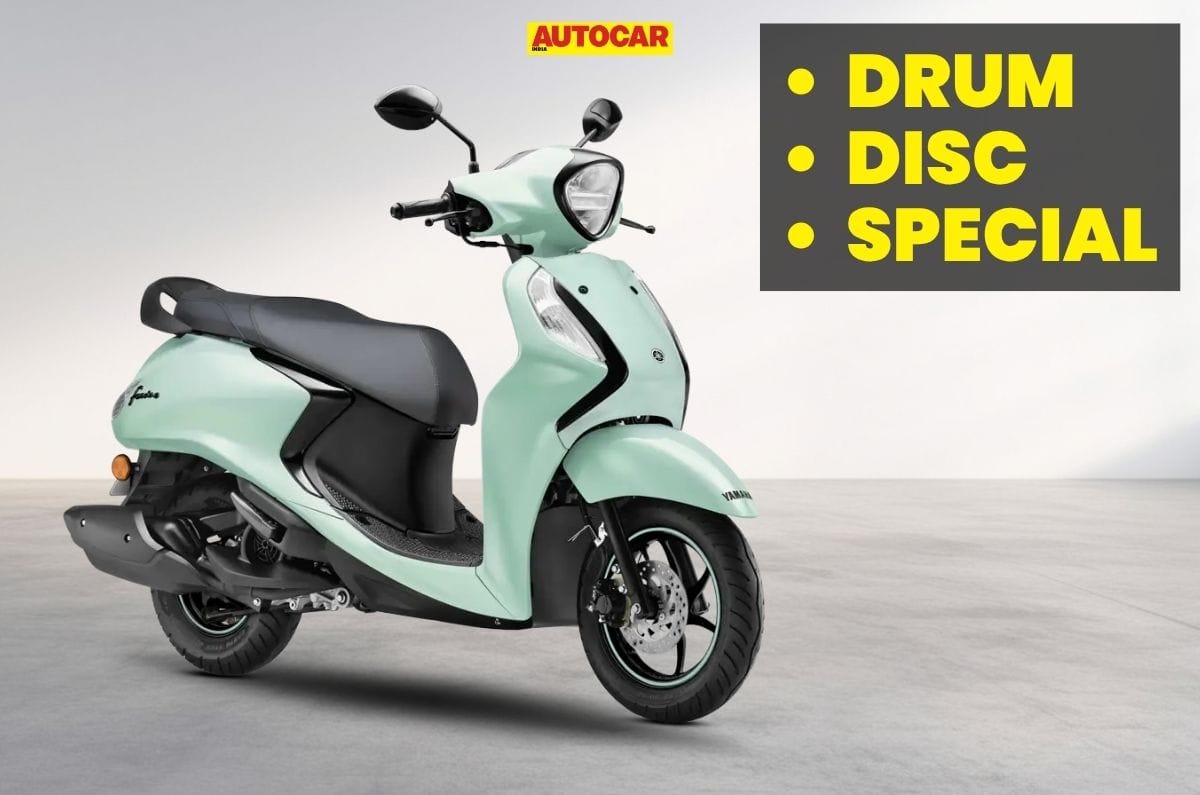
The YamahaFascino has been a functional, yet good-looking scooter from the beginning. Yamaha has just given it new features like a TFT display and refreshed colour options. Unlike its sibling, the RayZR, the Fascino keeps things simpler with a three variant spread and though they all (mostly) look the same, there are features to be gained by stepping up to a higher variant, but should you?
To keep the comparison easier to follow, here are all the things that are common. All three variants share the same 125cc single-cylinder engine with 8.2hp of power and 10.3Nm of torque. All three are also equipped with Yamaha’s mild hybrid system to deliver slightly more torque, a starter motor generator, and a stop-start system. They all also have a unified braking system (UBS), same tyre and rim sizes, a rear drum brake, 21L underseat storage, and there’s no change in seat height and kerb weight either.
All prices mentioned are ex-showroom, Delhi.
Yamaha Fascino 125 Fi variant breakdown
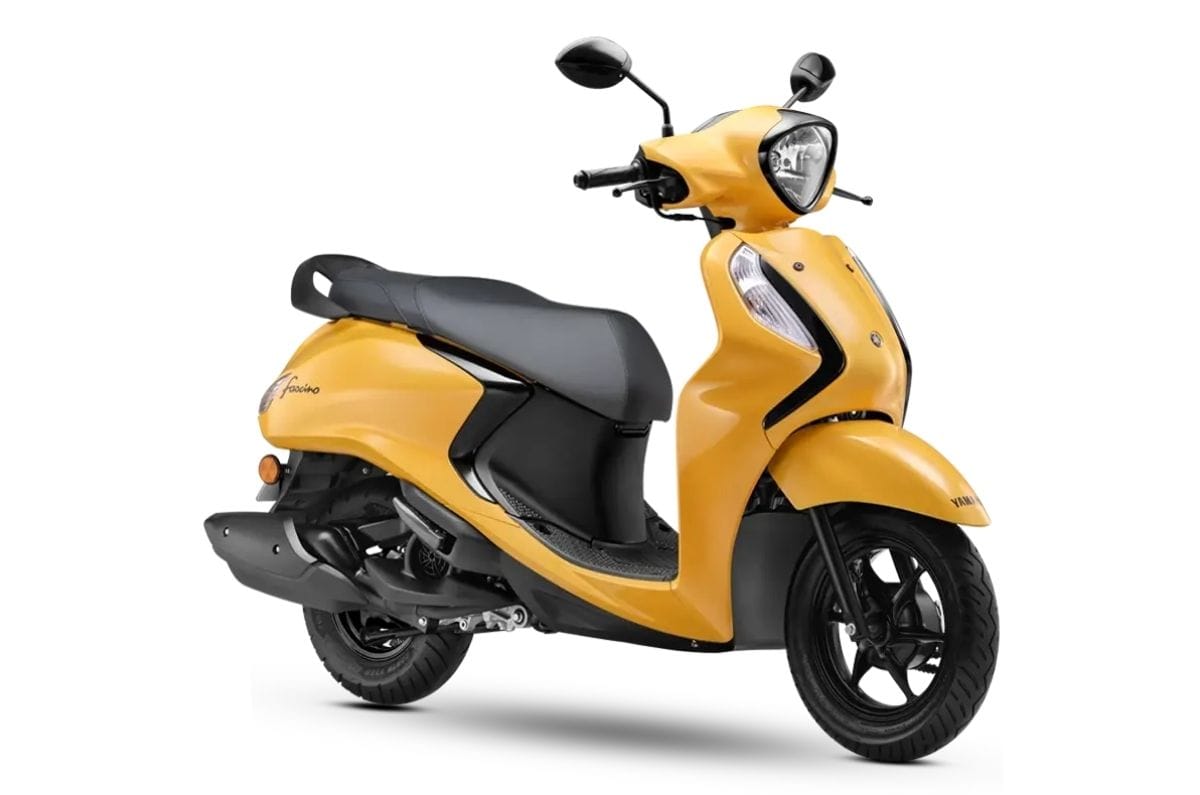
Drum
The base variant gets a front drum brake and an LCD instrument cluster. There’s no connectivity features of any kind and it comes in two colours, Yellow Cocktail and Metallic Black. It costs Rs 78,980.
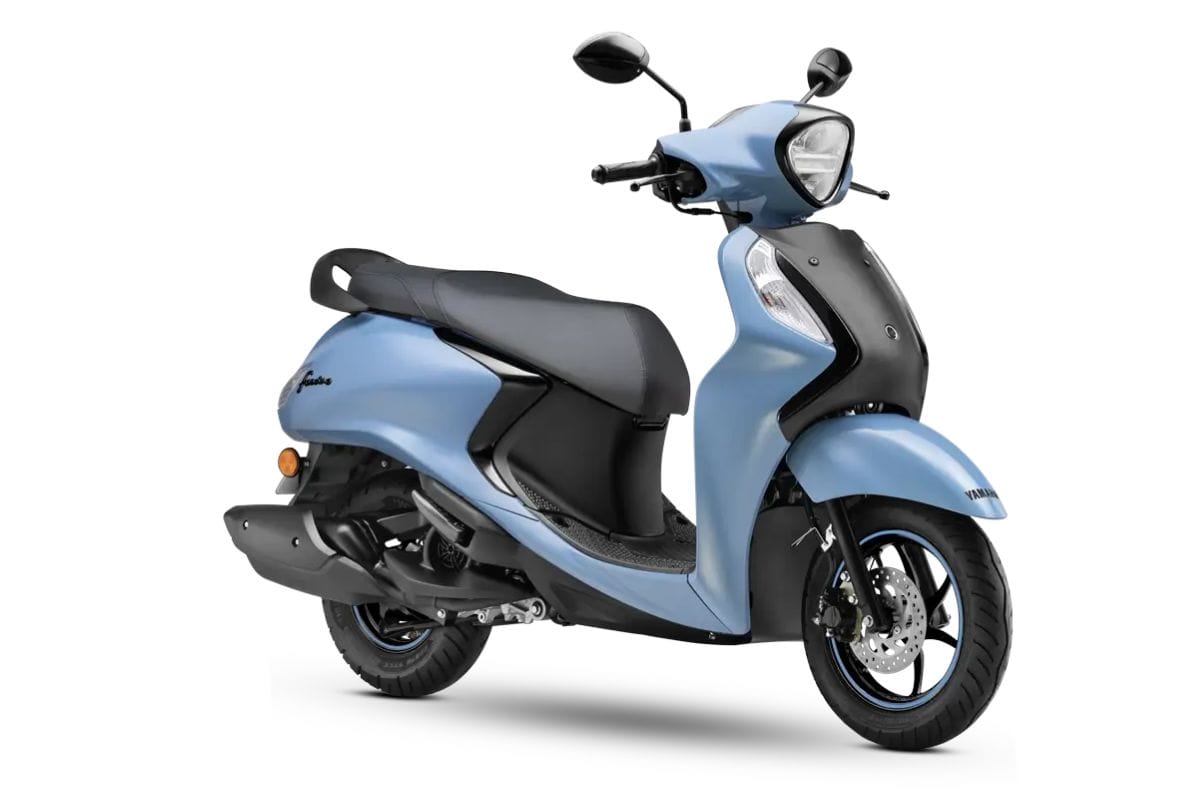
Disc
The disc variant gets a front disc brake and adds Y-Connect capabilities to the instrument cluster which adds basic features like phone alerts, battery level, and data points like fuel consumption, maintenance recommendations, last parked location through the app. This variant gets four completely different colour options, Cool Blue Metallic, Dark Matte Blue, Matte Black, and Metallic Light Green and costs Rs 91,070 (Rs 12,090 over the Drum variant).
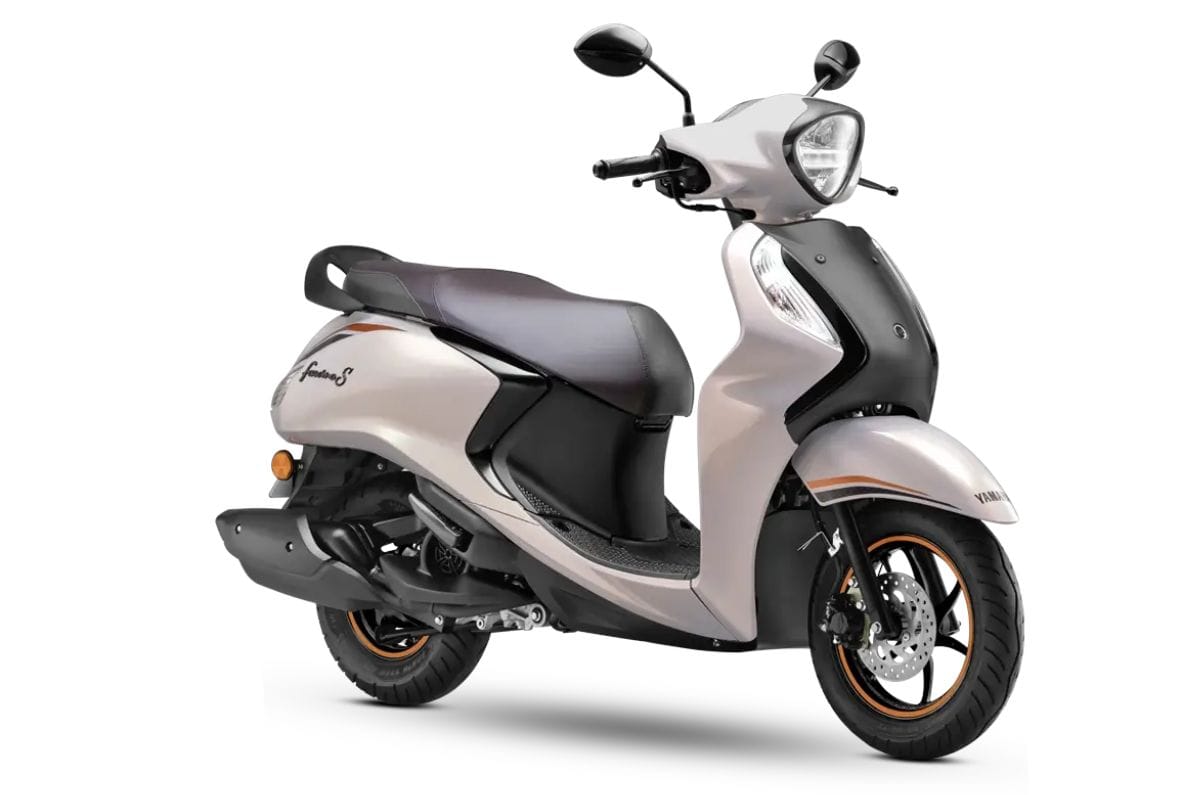
Special
This is currently the fully loaded variant of the Fascino. It swaps out the LCD instrument cluster for a TFT instrument cluster which adds turn-by-turn navigation and music alerts to the existing Y-Connect feature set. This variant also supports Yamaha Scooter Answer Back, giving owners the ability to identify it quickly with the app’s help. The SPL variant once again gets completely different colour options, Matte Black (different one!) and Metallic Orangish Gray. It commands a price of Rs 99,030, comfortably lower than the one lakh rupee mark.
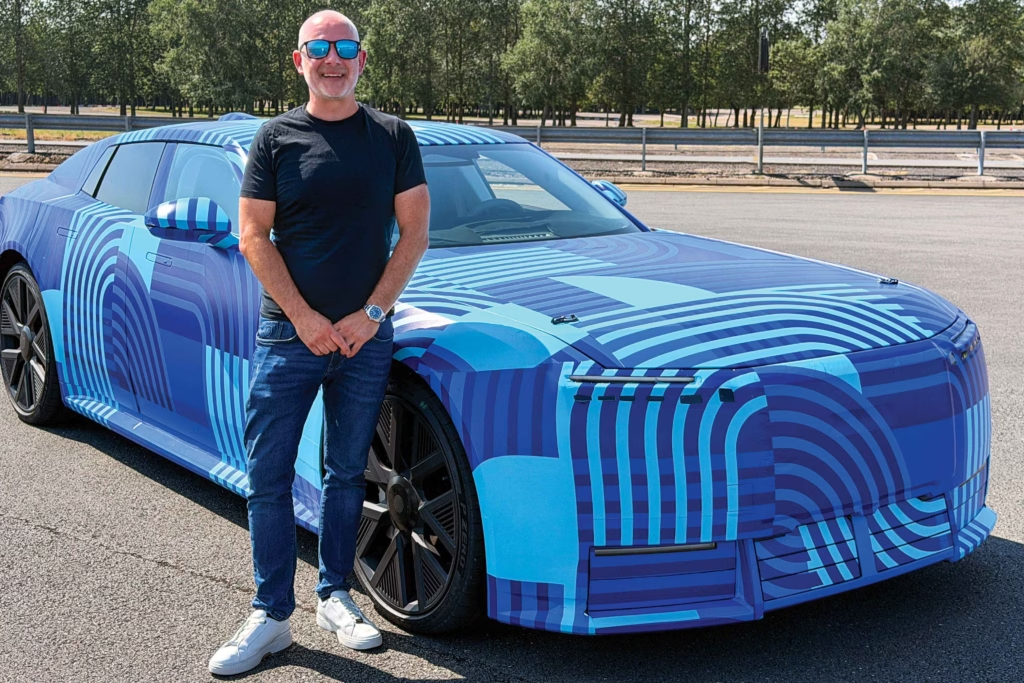
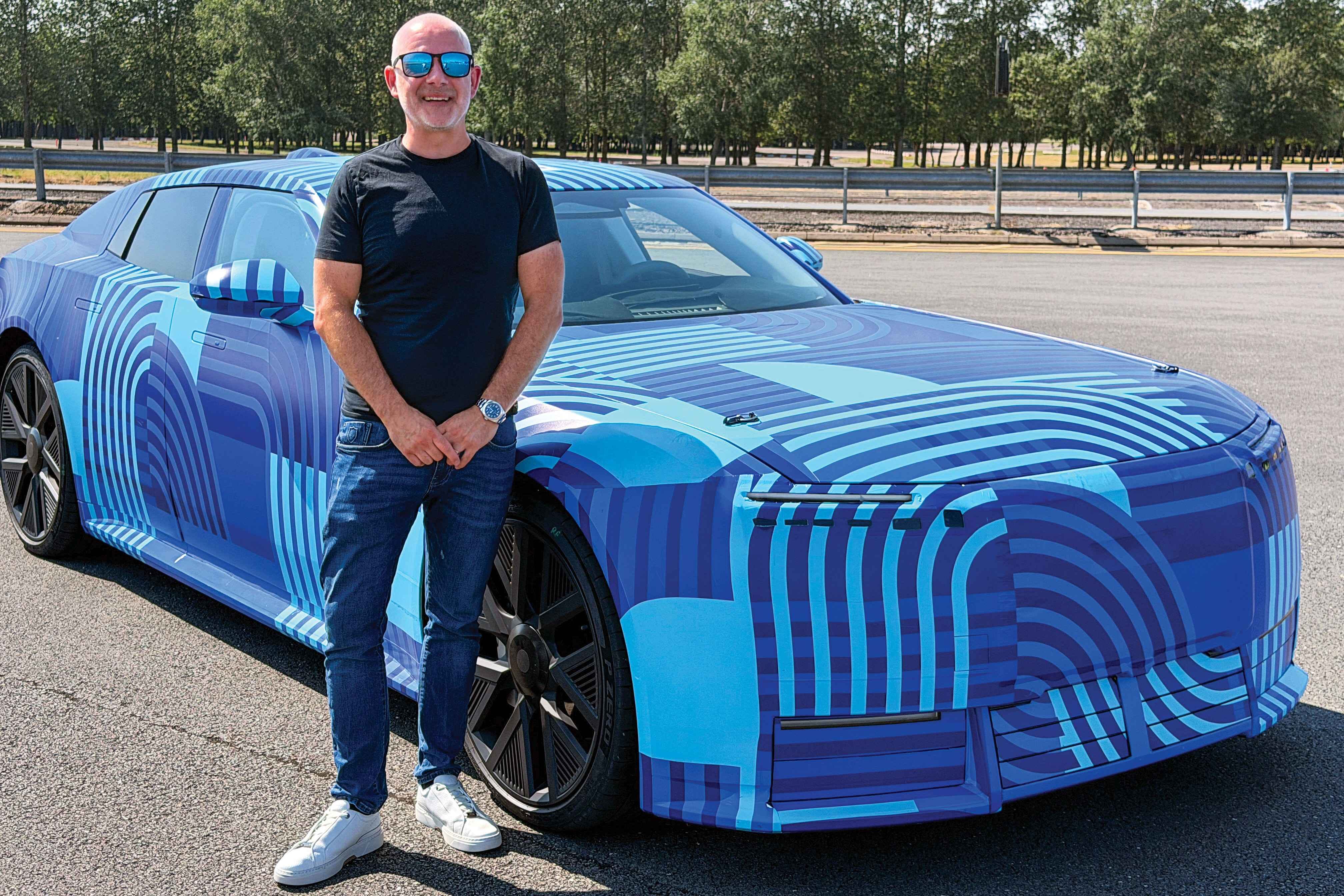
Rawdon Glover has worked with the JLR group for over 13 years and took charge as Managing Director 3 years ago. From the sidelines of our first drive with the Jaguar Type 01, we speak to Glover, who tells us about Jaguar’s new direction, taking risky decisions, core markets and upcoming products.
Why the major shift in the positioning of Jaguar?
Putting Jaguar back on a firm footing for the next 90 years is the main job. And if you look at the task, it’s brand management where sometimes you need small incremental changes. But if you look at today’s technical changes, competitive context, how the brand was performing globally and a host of factors, what was called for was a big shift. That requires you to be bold and confident.
Why go for a radical and polarising design?
We’re ok with polarising. If you look at our history, it was bold evolutions, for example the XJS, the spiritual successor to the E-Type. It would have been easy to say let’s just make a modern example of the E-Type, but that’s not what we did, and if you look back at reviews, it was applauded for its dynamics and refinement, but the design was seen as polarising. Now it’s a design icon. So, I’d rather have four out of ten absolutely love the car, rather than have everyone go – yeah, it’s ok.
Isn’t going all-electric a massively risky move?
The EV landscape is evolving rapidly, many new brands are coming in, and I believe one will crack the EV glass ceiling, so why not Jaguar? So we ripped up the EV rulebook because, in the luxury space, it wasn’t working. So it’s not designed as an EV without an engine and a really cab-forward layout. But it’s about presence and performance, and to deliver the level of performance and refinement, electric is best.
Would the car sit above the XJ in terms of price? All of the vehicles coming off this platform would be between GBP 1,20,000 and GBP 1,50,000. We see a white space at the top end of the premium segment, but underneath established luxury players. That’s where we want to be, and with this vehicle what you get is the stature, the presence, the drama of those uber-luxury brands at the top end of the premium price point.
What are the core markets, and how does India figure in the plan?
We used to sell in 130 markets, but we’ll narrow this to just eight or nine, with 85 percent of the volume. North America will remain a large part, China will become important, and the UK, Germany and some Nordics, where they have really embraced EVs, will be the mainstay. Then in markets like the Middle East and India, which have been small, we think we can really break into them now. The retail would, of course, still be through the existing JLR network.
FTAs do not favour EVs, so is the 01 capable of being locally assembled?
Manufacturing this outside of the UK is not currently in the plan. All production will be built out of Solihull, so all exports to other markets will be CBUs, but that doesn’t rule out local production outside UK. As you know, the geopolitical situation is so fluid at the moment, but in time we could consider production elsewhere.
Is there a more chauffeur-driven offering from Jaguar coming?
The 01 is unashamedly driver-focussed, it has four comfortable seats, but it’s a four-door GT, not a four-door sedan designed as a luxury chauffeur-driven car. There will be other vehicles off this platform that will share the same design language, but will have a distinct personality and target different groups, and they would be accessible to a wider audience. So, yes absolutely, there will be a chauffeur-driven-focused model from Jaguar.
Would an SUV body style be part of the portfolio?
What you shouldn’t expect from us is a high-sided Jaguar that is a Range Rover competitor. We already have the best SUV on the planet, and part of the house of brand’s strategy is to differentiate the brands. All I can say, for now, is that you can expect a variety of vehicles from us, and there will be vehicles slightly higher positioned, but all will drive like a Jaguar.
How has it been working with Tata Motors?
Unwavering is the word. There is nobody more dedicated and passionate about our success than the shareholders, and that’s an incredibly privileged position to be in. It puts a little pressure, but having somebody like PB Balaji come onto our board is great. He’s been on the journey with us, he understands it inside and out, and for him, Jaguar is personal. It’s important to our chairman and even was to Ratan Tata. I was reading stories about Ratan Tata driving about in his father’s XK120, so it’s really important to Tata that Jaguar wins. In all my interactions with the board, there is never talk of tempering ambitions, it’s always, just go for it.
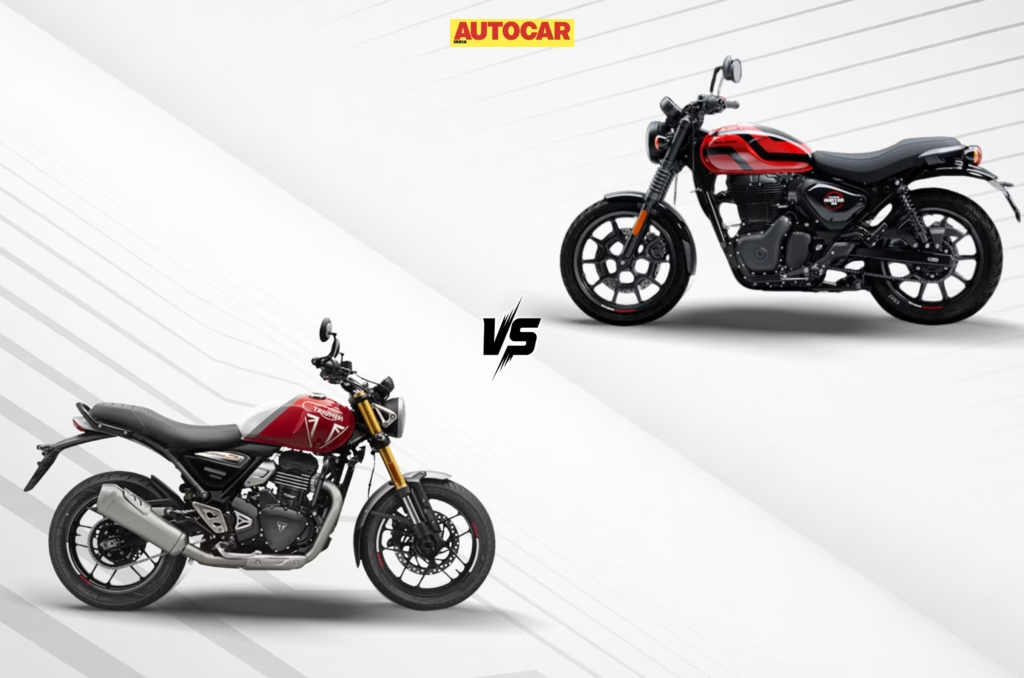
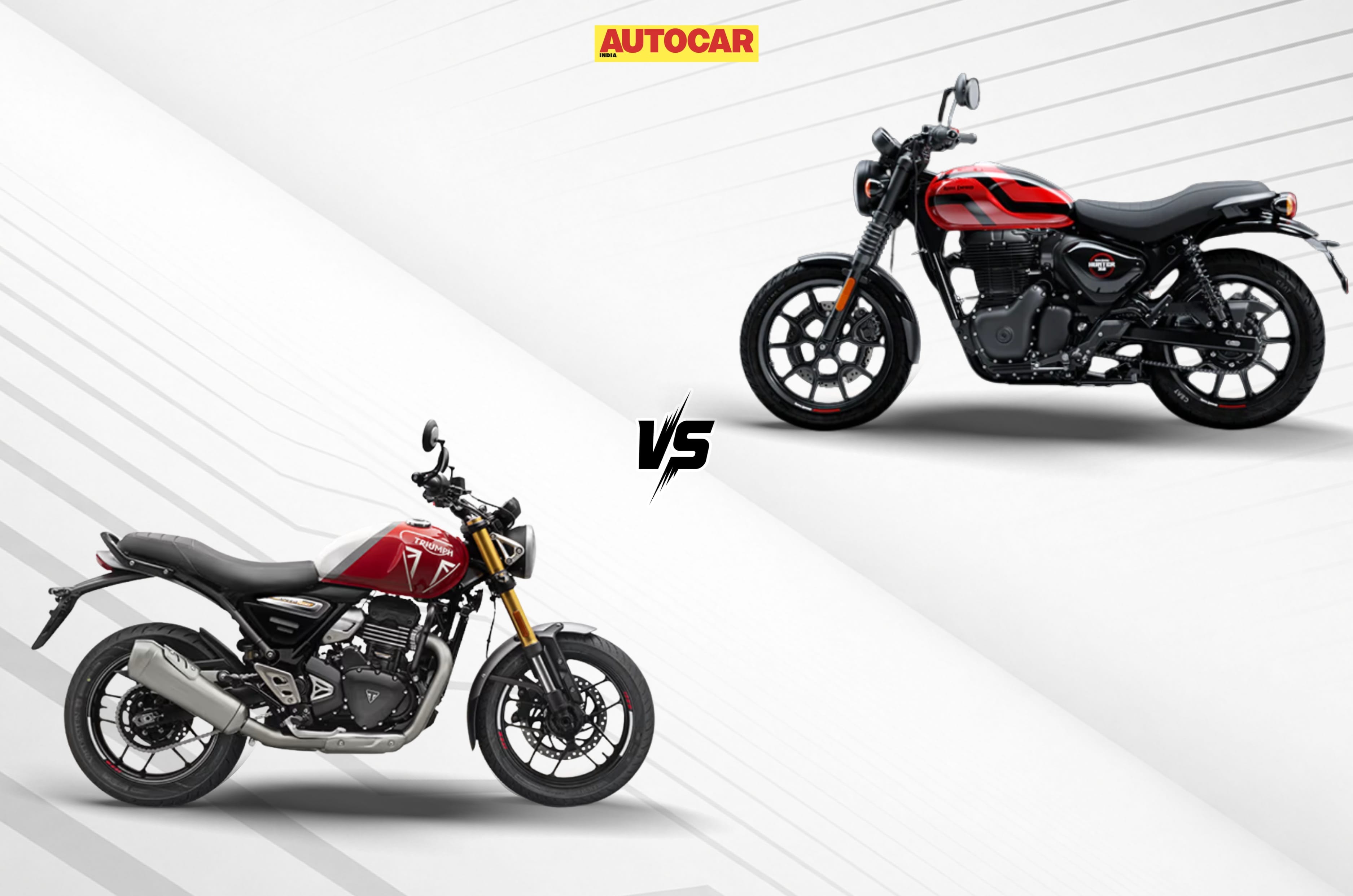
The last time we compared the Hunter 350 to the Speed 400, things were a lot more straightforward, but things have since changed. Royal Enfield has fixed the Hunter’s biggest deterrent, comfort and has positioned it squarely as a stylish and relaxed street naked; completely different from its retro siblings. Bajaj, on the other hand, had to downsize the Triumph Speed 400’s 398cc engine to a 349cc one, to meet the 18 percent GST slab. So, is picking one from these two, very good motorcycles still difficult? Let’s see.
Royal Enfield Hunter 350 vs Triumph Speed 400: Engine and output
Triumph has more power and torque, but RE delivers both earlier
Royal Enfield Hunter 350
Triumph Speed 400
Engine
349cc single-cylinder, air-cooled
349cc single-cylinder, liquid-cooled
Power
20.2hp at 6,100rpm
37hp at 8500rpm
Torque
27Nm at 4,000rpm
32Nm at 7,000rpm
Transmission
6-speed
5-speed
Power-to-weight ratio
111.6hp/tonne
206.7hp/tonne
Bajaj’s downsizing of the 398cc engine has reduced torque more than horsepower, making the Speed 400 a relatively weaker proposition compared to before, at least on paper. Royal Enfield, however, has not had to do anything and continues with its likable J-series engine making the same power and torque as before. It’s hard not to miss that the Hunter delivers both of it much earlier in the rev range than the Speed which reinforces the status quo that these still aren’t meant to be substitutes for each other. The Speed does have one extra gear, making it more capable at highway speeds of the two.
Royal Enfield Hunter 350 vs Triumph Speed 400: Dimensions and weight
Both remain in lockstep with each other
Royal Enfield Hunter 350
Triumph Speed 400
Fuel tank capacity
13 litres
13 litres
Ground clearance
160mm
164mm
Kerb weight
181kg
179kg
Seat height
790mm
803mm
Wheelbase
1370mm
1386mm
Had this been the Bullet/Classic 350, this section would’ve been an onslaught on them but perhaps that’s exactly why the Hunter 350 exists. Being the lightest Royal Enfield, the Hunter puts up a tough fight to the Speed 400 on every front. Even though it is 2kg heavier than the Speed, it’s more accessible with a lower seat height. Both are very approachable and friendly machines, for both newer and shorter riders.
Royal Enfield Hunter 350 vs Triumph Speed 400: Tyres, brakes, and suspension
Speed 400 gets a fatter fork and better brakes
Royal Enfield Hunter 350
Triumph Speed 400
Tyres (F, R)
110/70-17, 140/70-17
110/80R17, 150/70R17
Brakes (F, R)
300mm disc, 270mm disc; dual-channel ABS
300mm disc, 230mm disc; dual-channel ABS
Suspension (F, R)
41mm RSU fork, twin-shock
43mm USD fork, monoshock
On paper, the numbers once again continue to be really close. However, the Speed 400 gains on the Hunter 350 in a few areas. It has a wider rear tyre, gets radial tyres at both ends and a slightly fatter USD fork. The Triumph also gets better brakes with a far more effective four-piston, radial caliper at the front, whereas the Hunter 350 sticks to a more conventional two-piston, floating caliper.
Royal Enfield Hunter 350 vs Triumph Speed 400: Features
Par for the (retro) course for both
Packing in the most features for the money isn’t what this segment is known for, and neither motorcycle attempts to change that. The Hunter 350 offers dual-channel ABS, an assist and slipper clutch, a type-C USB port, and a TFT navigation tripper pod on higher variants. The Speed 400, gets everything except the navigation feature, offering traction control instead.
Royal Enfield Hunter 350 vs Triumph Speed 400: Price
Hunter is far more affordable
Royal Enfield Hunter 350
Triumph Speed 400
Price
Rs 1.37 lakh – Rs 1.71 lakh
Rs 2.34 lakh
Last but not least, how much do you pay to buy one of these? And this is an area where the Hunter 350 has a huge advantage. The top-most variant of the Hunter 350 will set you back by Rs 1.71 lakh, with the base variant starting at as low as Rs 1.37 lakh (both prices ex-showroom, Chennai). On the other hand, the Speed 400 costs Rs 2.34 lakh (ex-showroom, Delhi). On paper, this can look like a difficult choice considering how close these are, but that confusion will go away as soon as you take test rides considering the vastly different riding experiences of both.
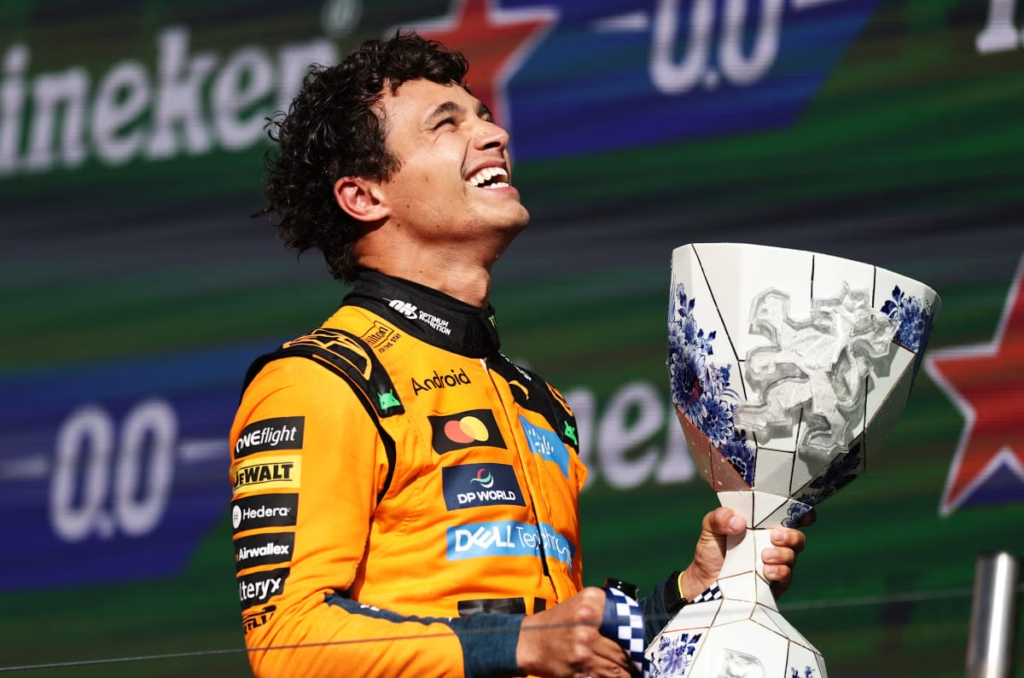
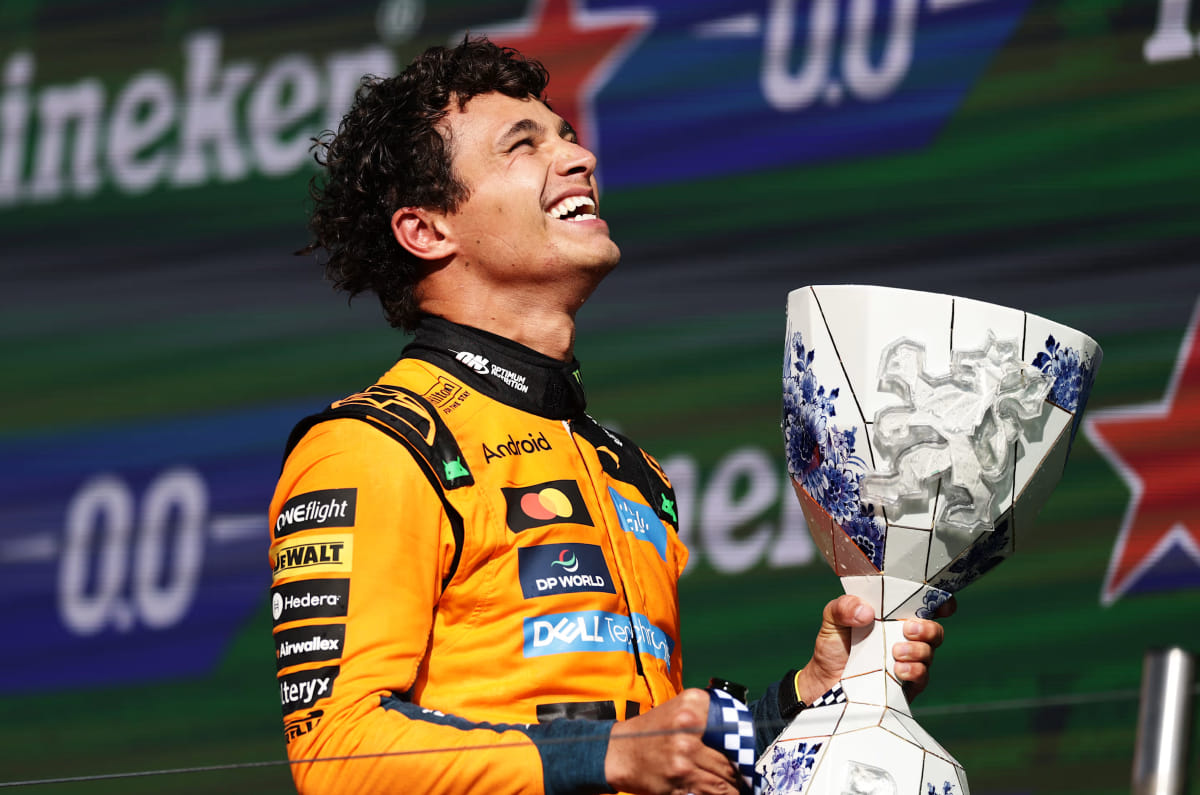
Lando Norris scored back-to-back wins after taking victory at the Dutch GP – the last race held at Zandvoort for the foreseeable future. Despite missing out on the win, Kimi Antonelli did stretch his championship lead after finishing second, ahead of his Mercedes teammate George Russell.
Norris wins, 11.536 sec ahead of Antonelli
Mercedes scores double podium finish
Alonso P9 for Aston Martin
Norris wins Dutch GP
Verstappen crashes out of home race
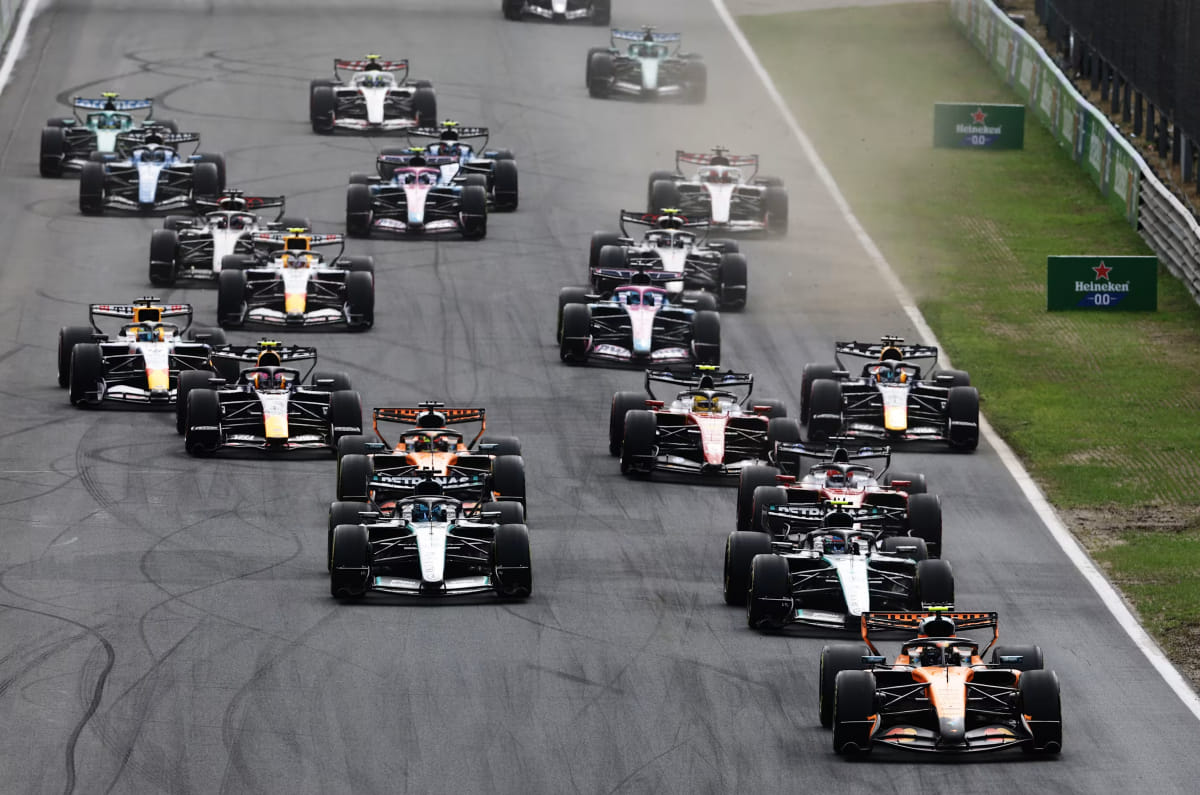
Starting from pole position, Norris initially held the lead. But the race was red-flagged moments later as Max Verstappen crashed out on the opening lap after losing control on the drying track.
Fresh off announcing his contract extension with Red Bull, the four-time world champion was keen to win his home race, with Zandvoort dropping off the F1 calendar next year. However, Verstappen appeared to struggle for pace throughout the weekend. “[It was a] disappointing end to a weekend that already, I think, was quite tough for us – not really having the pace to challenge the cars ahead. But we’ll see if we can do better in Monza and be a little bit closer to the front,” he said.
At the re-start, Norris lost the lead to Antonelli. The McLaren driver bid his time before finally making a move on Lap 52. Heading into Turn 1, he first passed Antonelli around the outside and then overtook Lewis Hamilton on the same lap to move into the lead.
A late Virtual Safety Car, brought out due to Esteban Ocon stopping on track, saw teams split strategies. A number of drivers, including Antonelli, pitted for fresh tyres, while Norris and Russell stayed out. Russell let Antonelli past on Lap 65, but Norris had already stretched a safe lead by then. He crossed the chequered flag 11.536 sec clear of Antonelli.
“Yesterday I said we needed to put on a bit of a show for everyone for the final race here, so I made it tough for myself today but [it was] a good race, well-fought,” Norris said. “Probably one of my better wins – we had to fight for it well but the pace was strong. We managed things incredibly well today, so over the moon, very happy. Nice to win the final race here in Zandvoort.”
Russell couldn’t follow up his Sprint win with victory on Sunday, but he fended off Hamilton to hold on to third place. Speaking after the race, the Mercedes driver explained, “I come away from this weekend as a whole satisfied. It’s been my best weekend for quite a while. I’ll take those positives.”
Charles Leclerc ended up fifth in the other Ferrari car, followed by McLaren’s Oscar Piastri. Liam Lawson, who replaced an injured Isack Hadjar at Red Bull Racing for this race, finished seventh despite being handed a 10-second time penalty for a yellow flag infringement.
Nico Hulkenberg crossed the line P8, handing Audi some valuable points. Aston Martin appears to be taking steps in the right direction with its recent updates, with Fernando Alonso finishing P9. Finally, Alpine’s Pierre Gasly rounded out the top 10.
2026 F1 championship standings
Antonelli has extended his championship lead to 59 points from his teammate Russell, who is now tied on points with Hamilton. Norris’ consecutive wins sees him climb up fourth place in the standings, 24 points behind Russell and Hamilton.
F1 will now head to Monza for the Italian GP on September 4-6.
In the analogue age, I planned road trips with paper maps, fluorescent highlighters and dog-eared guidebooks. Lately, however, Uncle Claude and Aunty Gemini have lured me into the world of artificial intelligence. When I asked them to suggest an adventurous drive through south Utah, they both recommended similar itineraries. It was like asking the chef at a dhaba to surprise me with something unusual and being served butter chicken instead. Zion, Bryce Canyon and Arches. Three magnificent National Parks connected by smooth highways and comfortable hotels.
Our search engine for Utah beyond the tourist trail. No signal required.
This route hits Utah’s greatest highlights, featuring soaring cliffs, towering hoodoos and delicate sandstone arches. However, the parks are often so busy that sedans circle overflowing car parks, rather like sharks patiently circling a lifeboat. I wanted roads that filtered out sedans and coaches, demanded preparation and delivered adventure, where the SUV became part of the journey rather than mere transport.
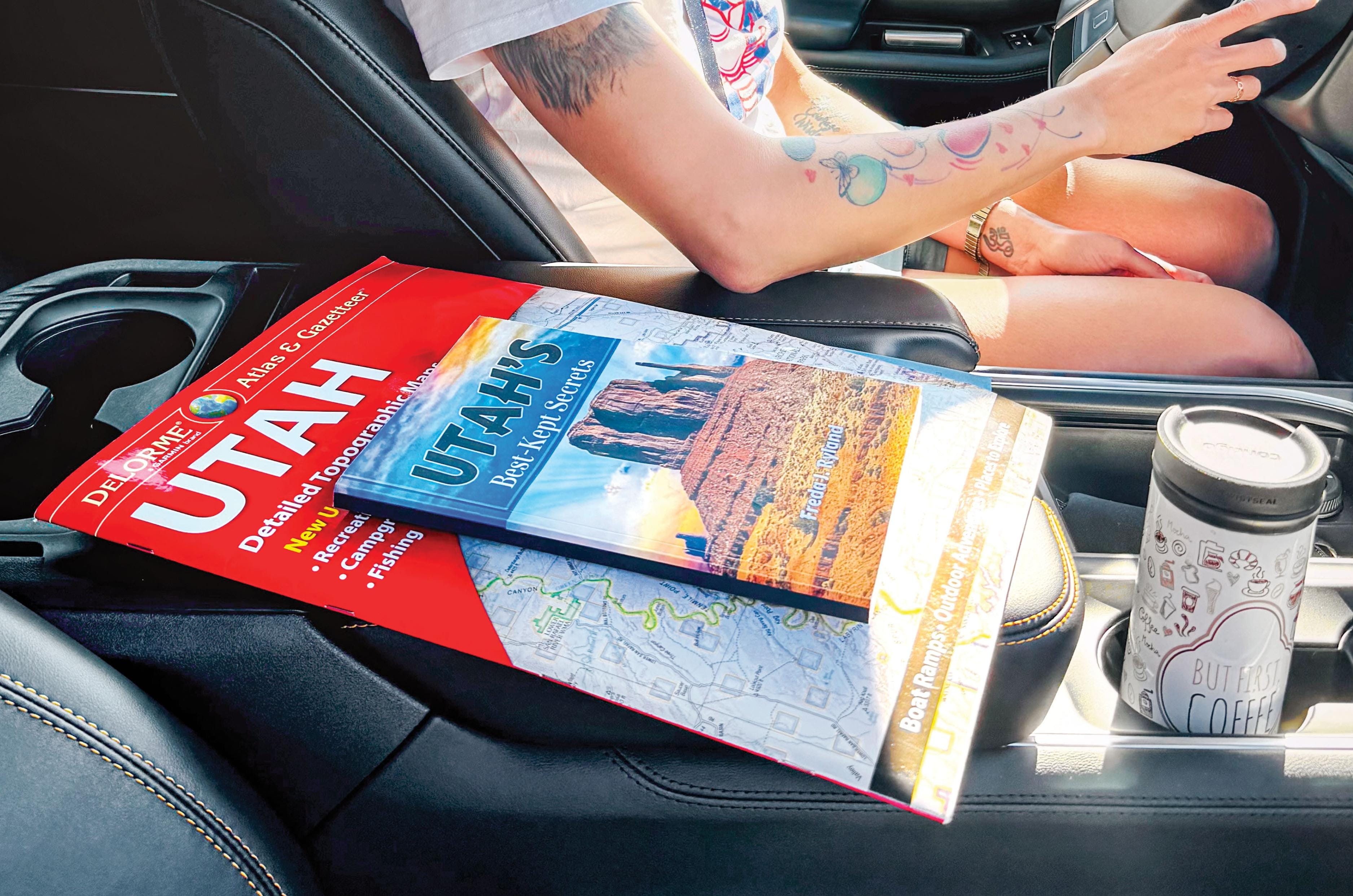
So, I turned my back on the algorithm and went analogue. While ordering the DeLorme Utah Atlas, Amazon suggested Freda J. Ryland’s Utah’s Best Kept Secrets, promising another Utah of mesas, switchbacks, unspoiled canyons, lonely dirt roads beyond the cellular umbrella and skies dark enough to make galaxies glow.
Her book was fuel for wanderlust; an invitation into a hidden Utah for those willing to stray off the tarmac. Though its typesetting suggested a clandestine hand-operated press during the Quit India movement, its content was pure gold. Paired with the DeLorme atlas and offline Gaia GPS, the trio was as dependable as egg, bacon and toast. Freda chose the destination, the atlas found the route, and Gaia confirmed where we were. What followed often felt like driving into a fairy tale.
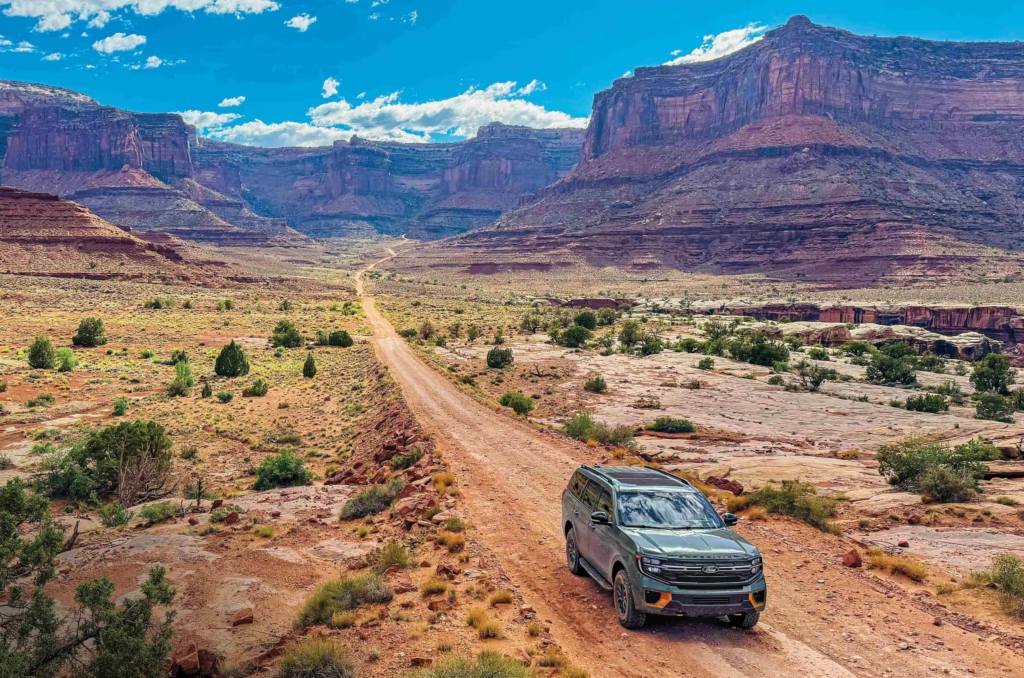
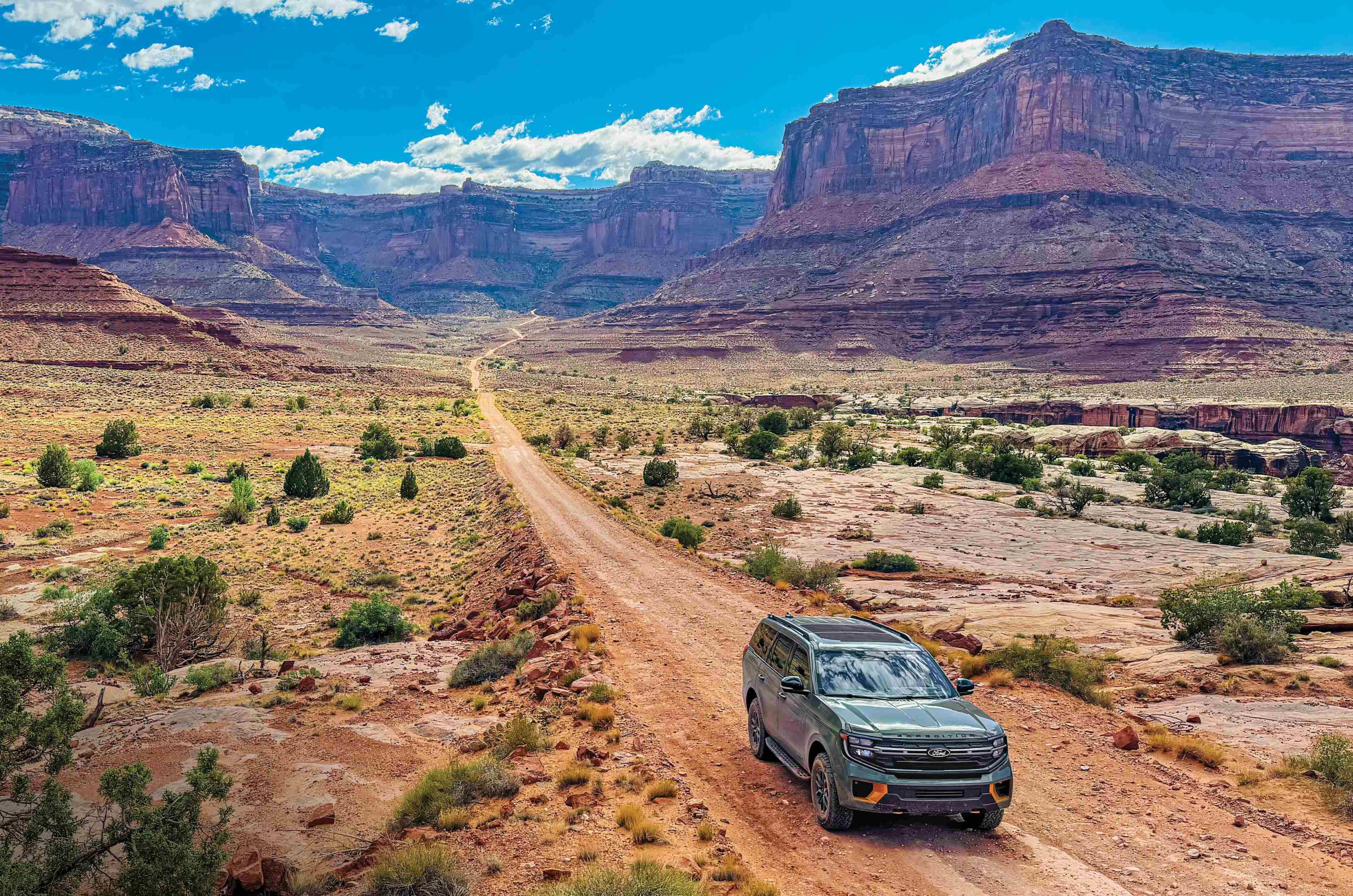
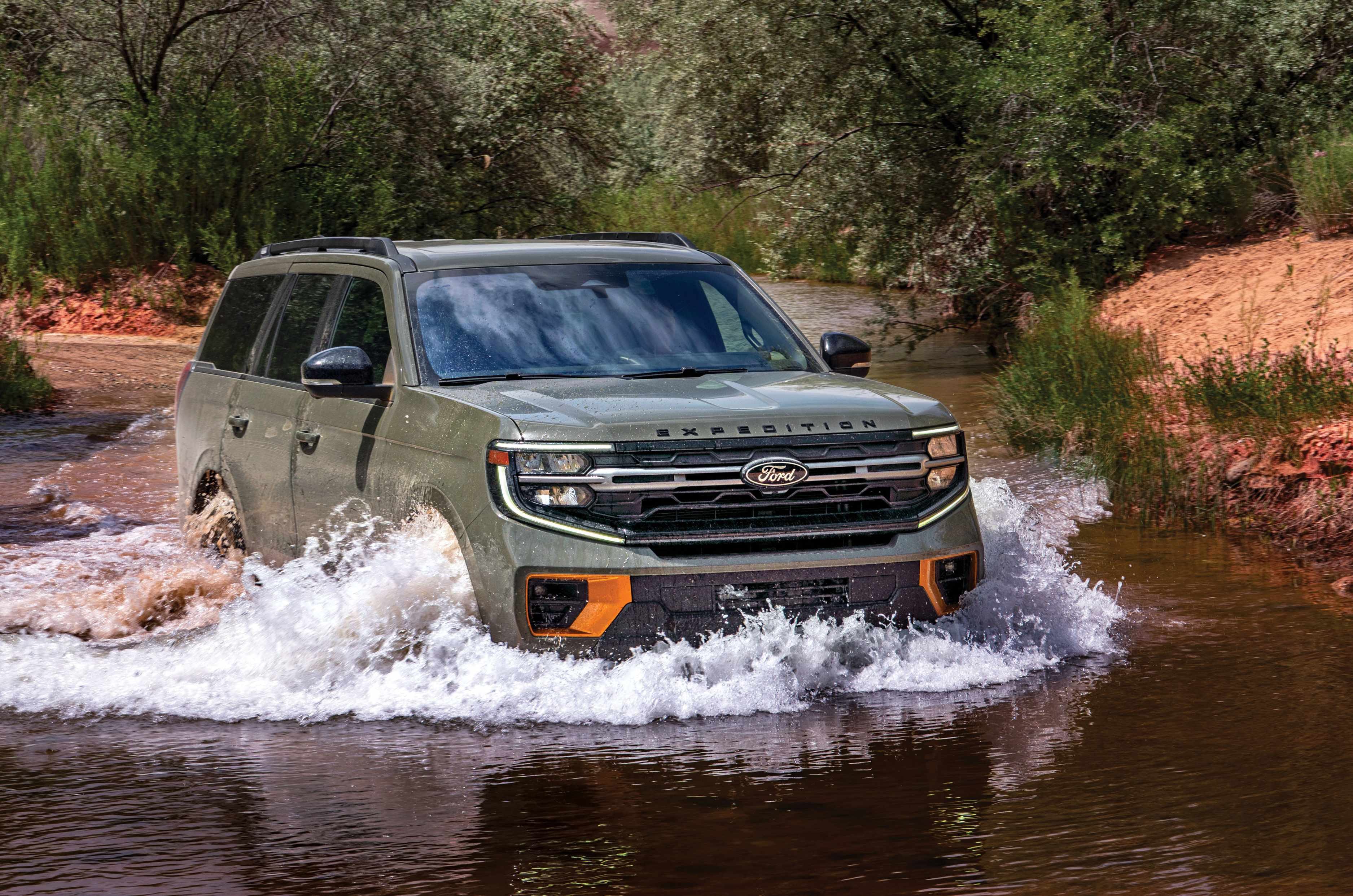
Off-grid Utah demands a dependable 4×4. The Tremor waded rivers, shrugged off loose gravel, tenacious clay and steep gradients, and kept going long after the tarmac lost interest.
None of it would have happened without the Ford Expedition Tremor, our fairy godmother. A tad tubby at over two tonnes, it came with a locking rear differential instead of a magic wand. The twin-turbocharged 3.5-litre EcoBoost V6 dispatched highway miles effortlessly. Once the tarmac disappeared, the Tremor earned its keep, shrugging off clay, loose rock, river crossings and deeply rutted tracks with nonchalant competence.
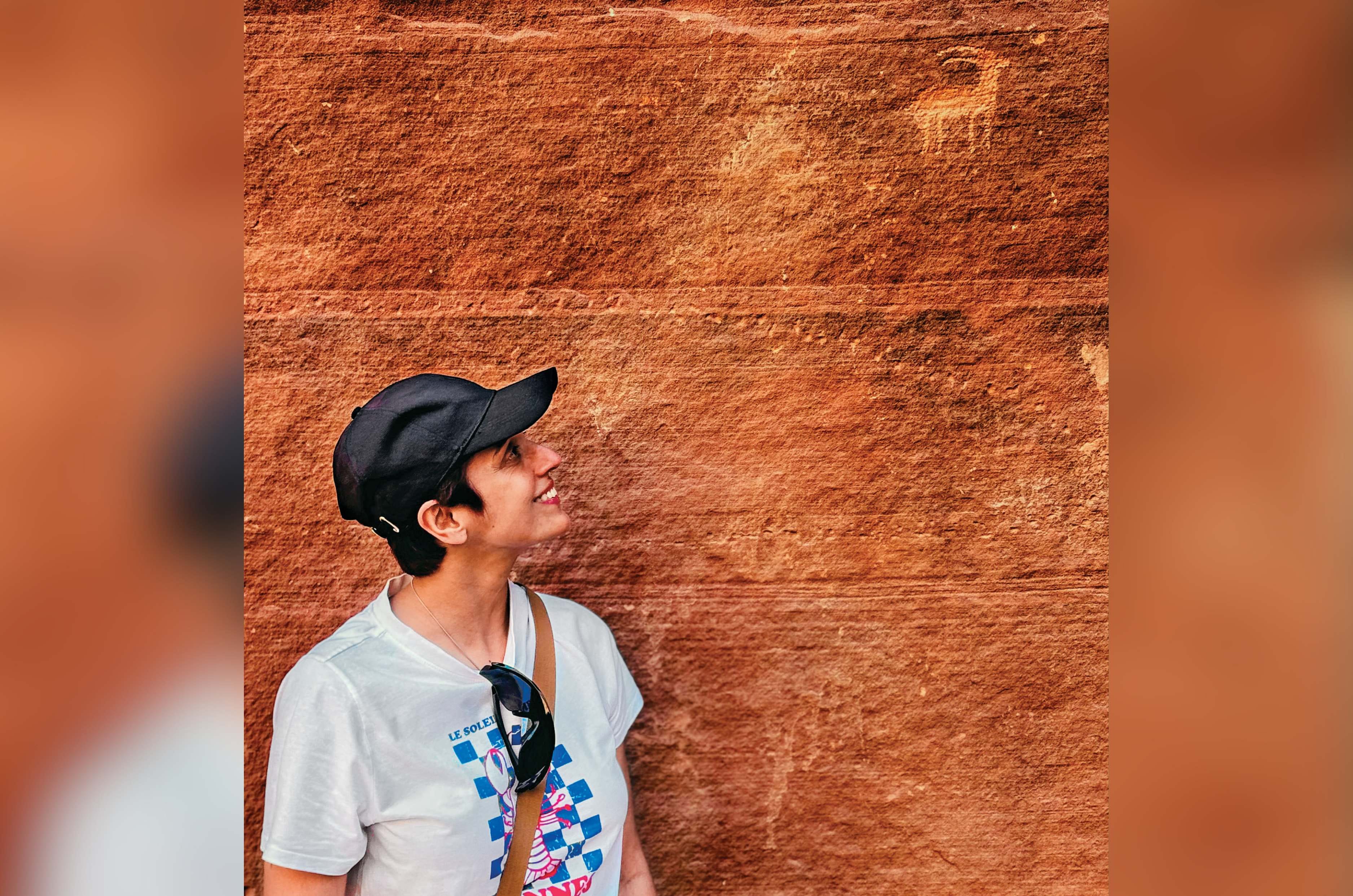
Follow her gaze. A long-gone artist still finds an audience a thousand years on. Utah is peppered with petroglyphs.
We forayed deeper into Utah’s wild, unadulterated beauty, beyond the tourist grid. To secret trails and solitude, to dinosaur tracks in ancient rock and to petroglyphs spanning two millennia, many still a mystery. I couldn’t help wondering if some ancient scribbling was simply the 2 BC equivalent of ‘Vinod loves Veronica’.
The first road to justify Freda’s confidence was Utah Scenic Byway 12, climbing out of Escalante towards Boulder through the folded canyons of Grand Staircase-Escalante National Monument, among the last regions in the contiguous US to be properly surveyed. Past Calf Creek, the road narrowed onto a hogback, a ribbon of blacktop along a ridge, with the ground dropping hundreds of feet on both sides. Red rock canyons fell open left and right, and for a few minutes it felt like driving along the spine of the Earth.
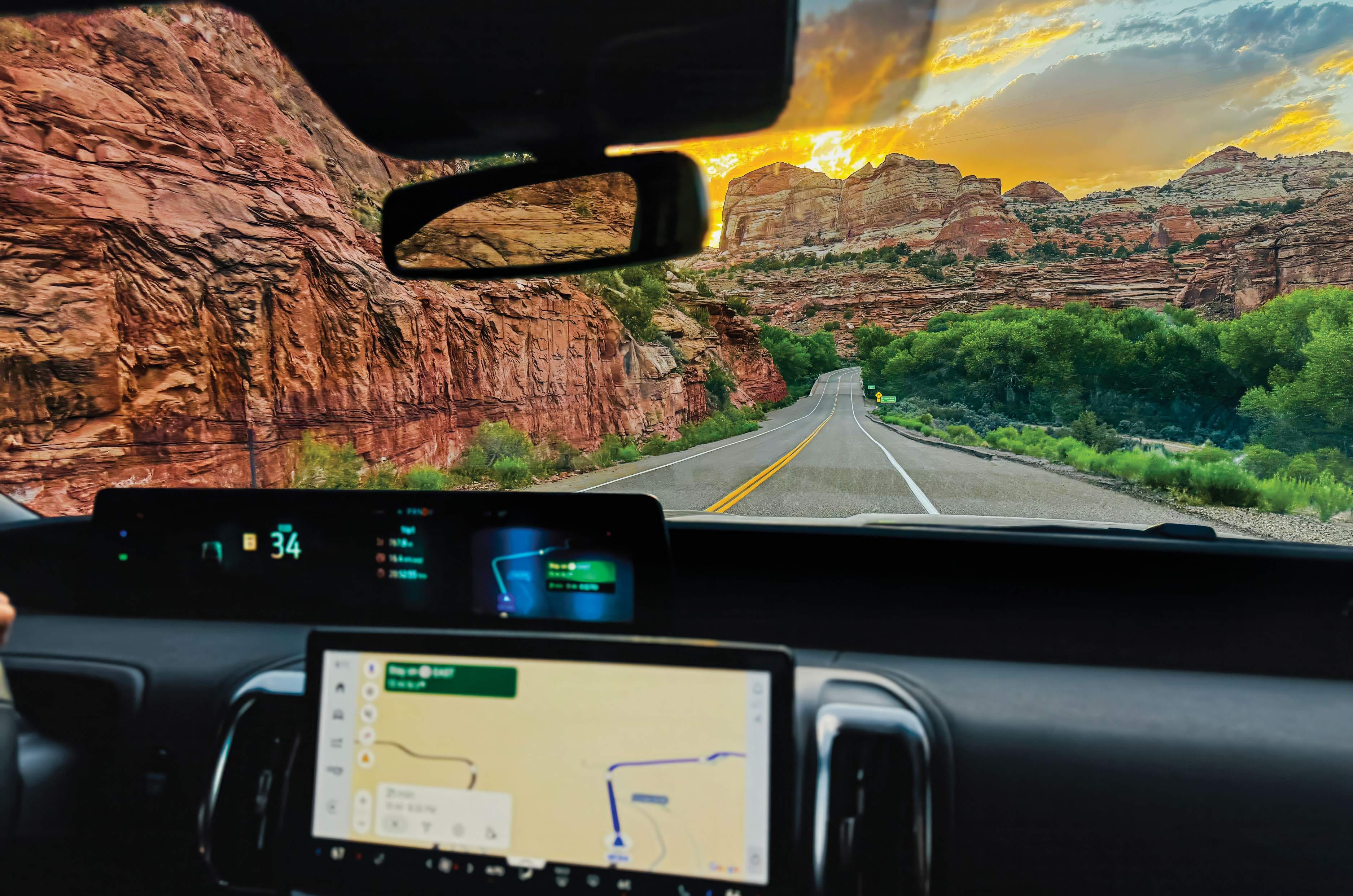
The windscreen became Utah’s widescreen, live streaming breathtaking views with hardly a break. This is Scenic Byway 12 between Escalante and Boulder.
At Boulder, we turned onto the Burr Trail, first beaten into the landscape by cattleman John Burr in the mid 1800s. Soon the road slipped past Long Canyon, colloquially called Singing Canyon because its towering, tapering walls possess the sort of acoustics that could make a bathroom baritone believe he had missed his calling. I sang a few notes and was astonished when the sandstone tuned my discordant tone to the smoothness of Sinatra.
Then the scenery became rather more serious. In 1948, the Atomic Energy Commission arrived looking for uranium, widening the trail and blasting switchbacks that tumble nearly 800 feet in less than a mile into the Waterpocket Fold, a colossal wrinkle in the earth running nearly a hundred miles across southern Utah, its tilted rock exposed in great bands of colour. We descended towards Ticaboo as the Fold surrendered to open desert.
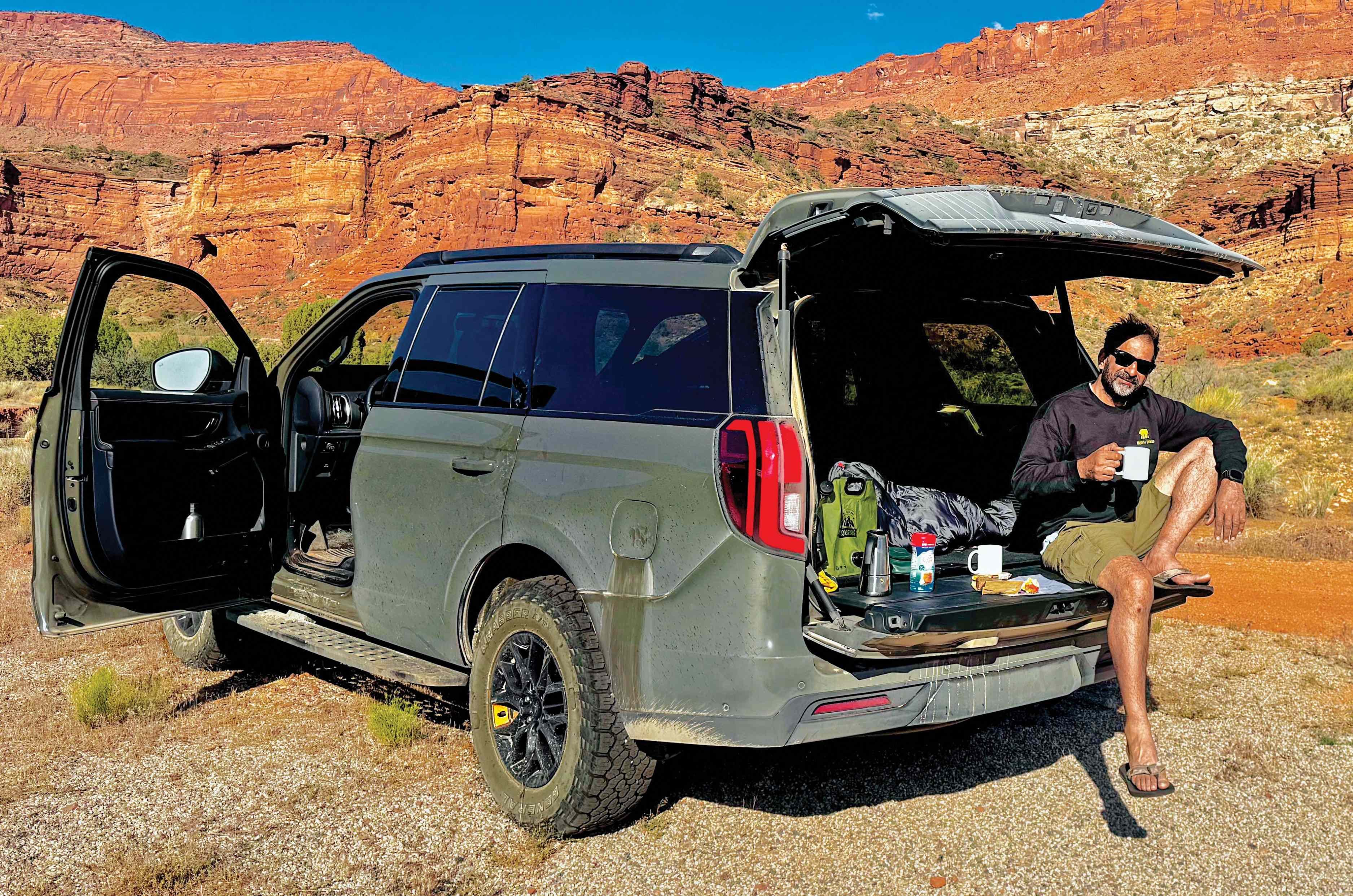
Morning coffee on the tailgate. The Expedition’s roomy interiors meant we could pull up and spend the night wherever we fancied.
We were hoping to camp at Muley Point, but we hadn’t accounted for Utah waylaying us with stupendous scenery, another slot canyon or lonely butte persuading us to stop every few miles. Around sunset, Muley Point was still hours away, so we turned into a secluded canyon and spent the night there, one of the trip’s happiest failures. We dropped the two rear seat rows into a flatbed, laid out a mattress, and slept under a sunroof full of stars and the Milky Way. We had camped at the base of the Henry Mountains, so remote that surveyors called them the Unknown Mountains until 1869.
The next morning, we pushed on to Muley Point through Bears Ears National Monument, named for a pair of buttes that really do resemble a bear’s ears poking above the treeline. An unmarked turn led to Muley Point, where the land simply stops a thousand feet above the San Juan River’s looping canyons, with views stretching to Monument Valley.
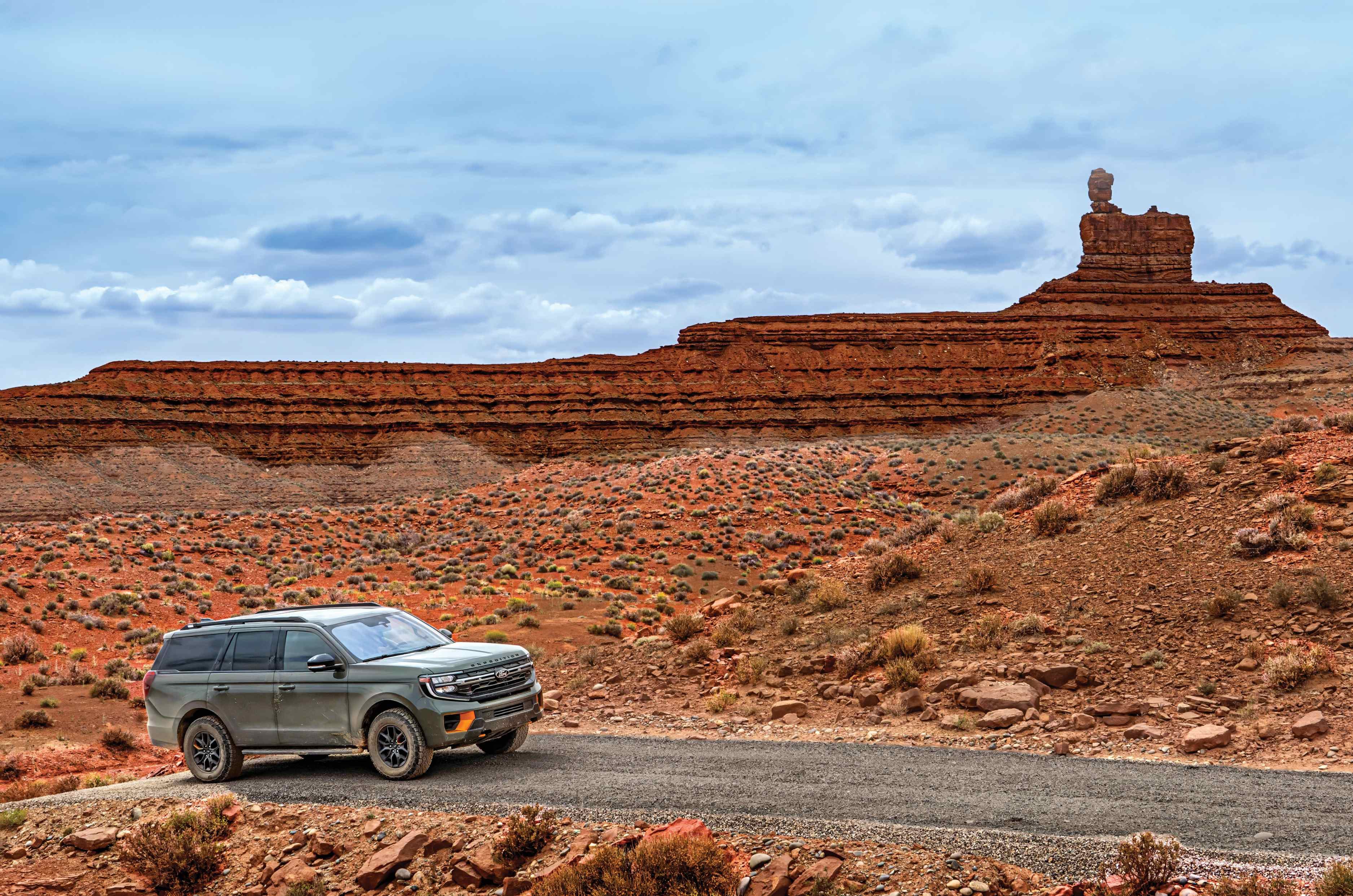
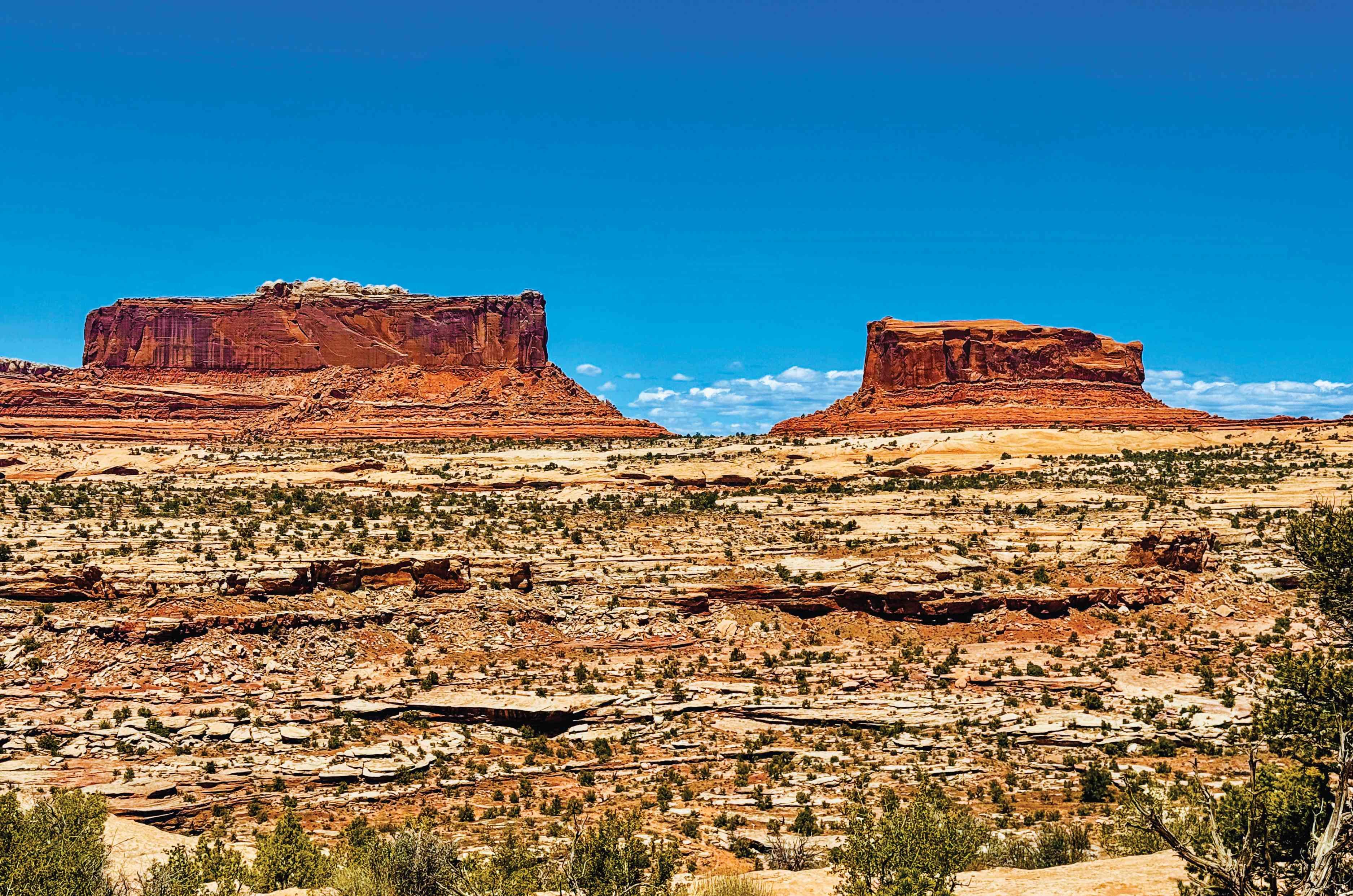
Look at the rocks above the Expedition. See anything? Someone did, and named it Lady in the Bathtub. Now try unseeing it. Welcome to the Valley of the Gods, where mesas and buttes come with wonderfully imaginative names.
Our next destination was the Valley of the Gods, the guidebook’s hidden Monument Valley twin. But first came the Moki Dugway, three miles of unpaved switchbacks blasted into Cedar Mesa in 1958 for trucks hauling uranium ore, dropping 1,100 feet at an 11 percent grade. The Tremor accepted the challenge with the calm assurance of a seasoned mountain guide.
At the bottom, a short detour brought us to Goosenecks State Park, where the San Juan River travels almost six miles in meanders to advance barely a mile and a half as the crow flies. From there, we turned into the Valley of the Gods, a dirt road meandering between sandstone monuments, nature’s own sculptures, with eccentric names. One was the Lady in the Bathtub. Had I not known the name, I might have seen only a rock. But once told, there she was, sitting bolt upright at one end of an enormous bath, her hair piled high and her back rather primly straight.
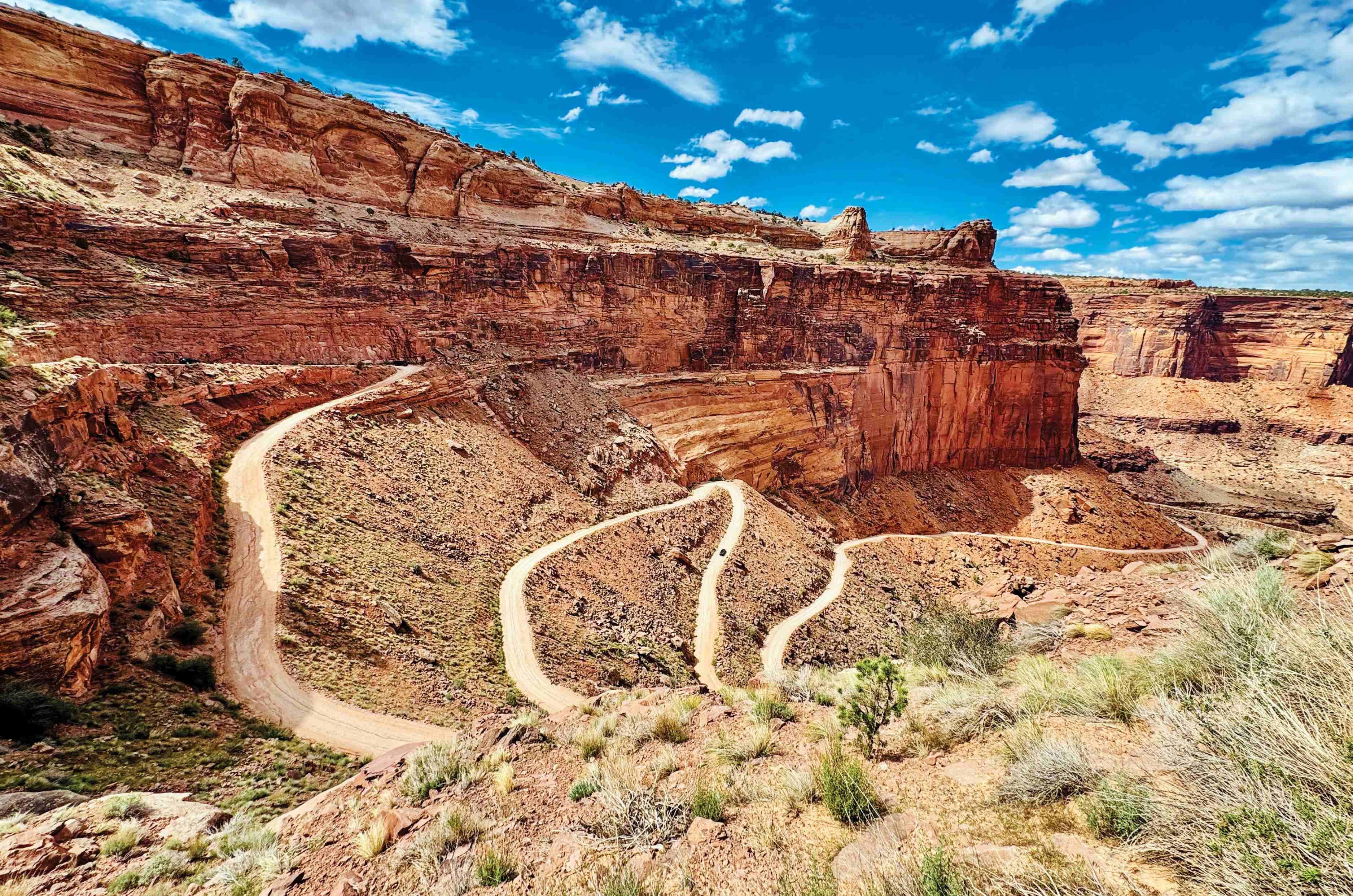
The Shafer Trail looked less like a road and more like a cartographer’s casual squiggle joining the top and bottom of a sandstone cliff. Then we drove it.
We slept another night in the car at the base of Rooster Butte, then rolled into urban Moab, our base for exploring the Needles and Island in the Sky districts of Canyonlands National Park, including the strange geological puzzle of Upheaval Dome. The highlight, though, was driving the Shafer Trail.
From the top, it was hard to believe vehicles drove down what looked like a pencil sketch etched onto a sandstone cliff. The trail began as a foot route, widened for cattle by rancher John “Sog” Shafer, then again in the 1950s for the uranium trucks that shaped the Burr Trail and Moki Dugway.
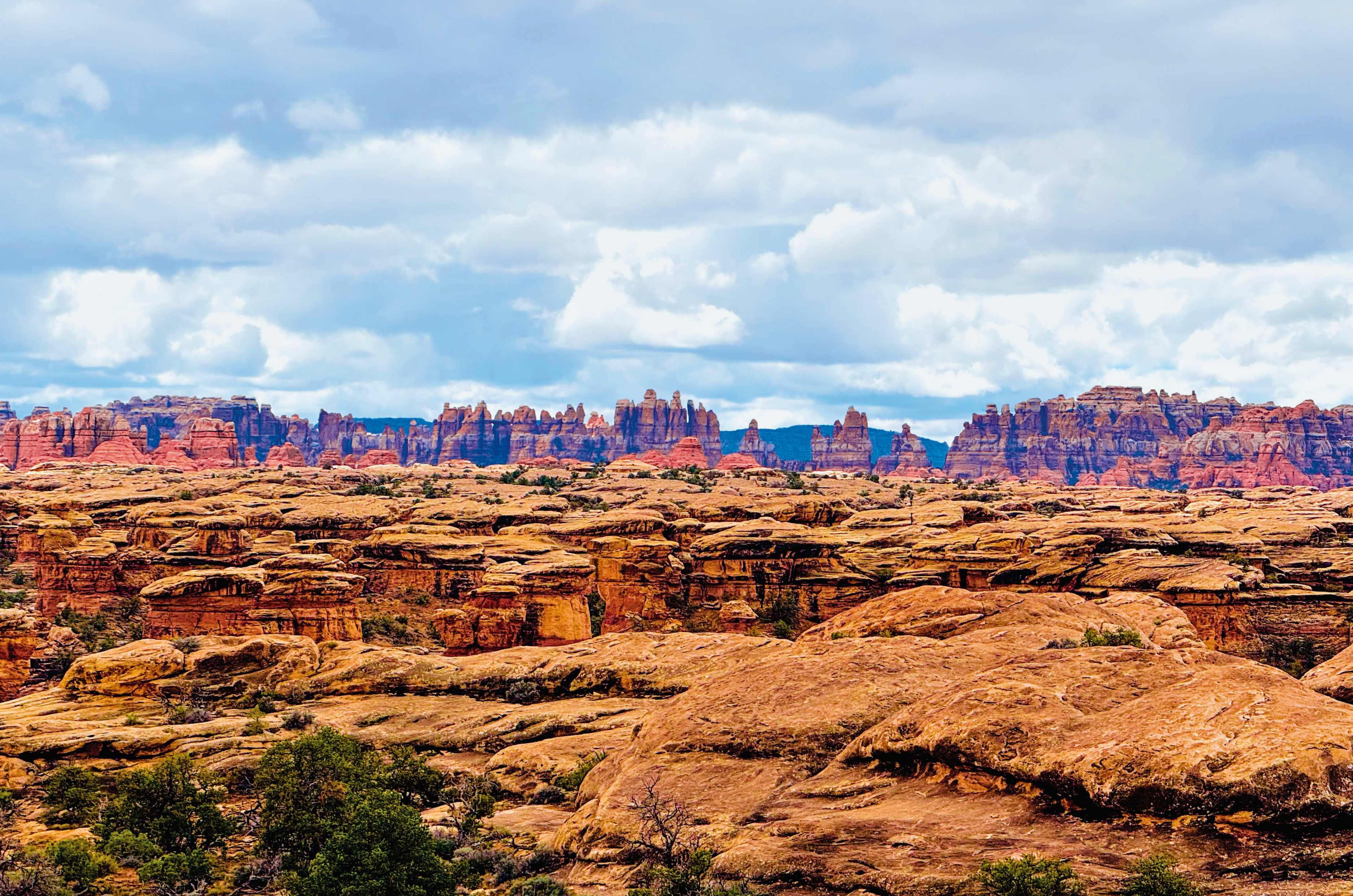
The Needles, Canyonlands – a forest of red and white banded sandstone spires, stained by iron and carved improbably thin by water patiently working through every crack.
The Expedition tipped over the edge, and we were committed. The Tremor crept down in low range, engine barely above idle, brakes doing quiet, constant work as gravel skittered from under the tyres. Every switchback flung the door mirror out over open air, nothing but red rock and sky where the road should have been, and my stomach dropped a beat before the front wheels found the turn. The cabin stayed eerily composed, no lurch, no scrabble for grip, while everything outside the glass insisted we should be afraid. At the bottom, the Colorado River came into view, and I exhaled properly for the first time in twenty minutes.
The warning isn’t for broken roads, but for deep clay bogs that require the torque and traction of a 4×4 to escape.
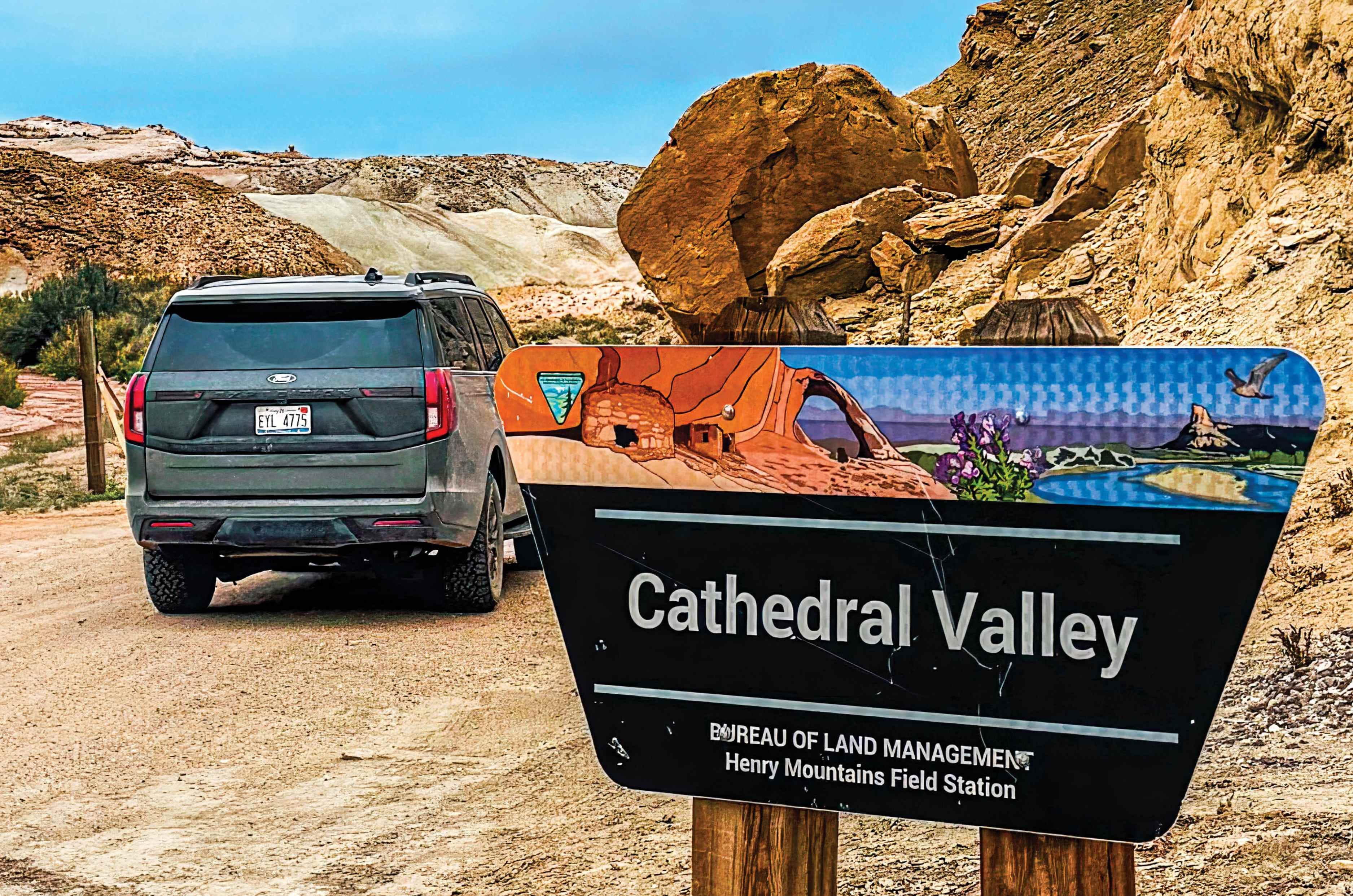
The final road I want to tell you about is the 80-mile loop through Cathedral Valley. According to Ms Ryland, this was Capitol Reef at its most remote – towering monoliths, strange badlands and perfect seclusion. At the entrance, a sign minced no words: ‘Road Impassable for Most Vehicles. Travel at Your Own Risk’.
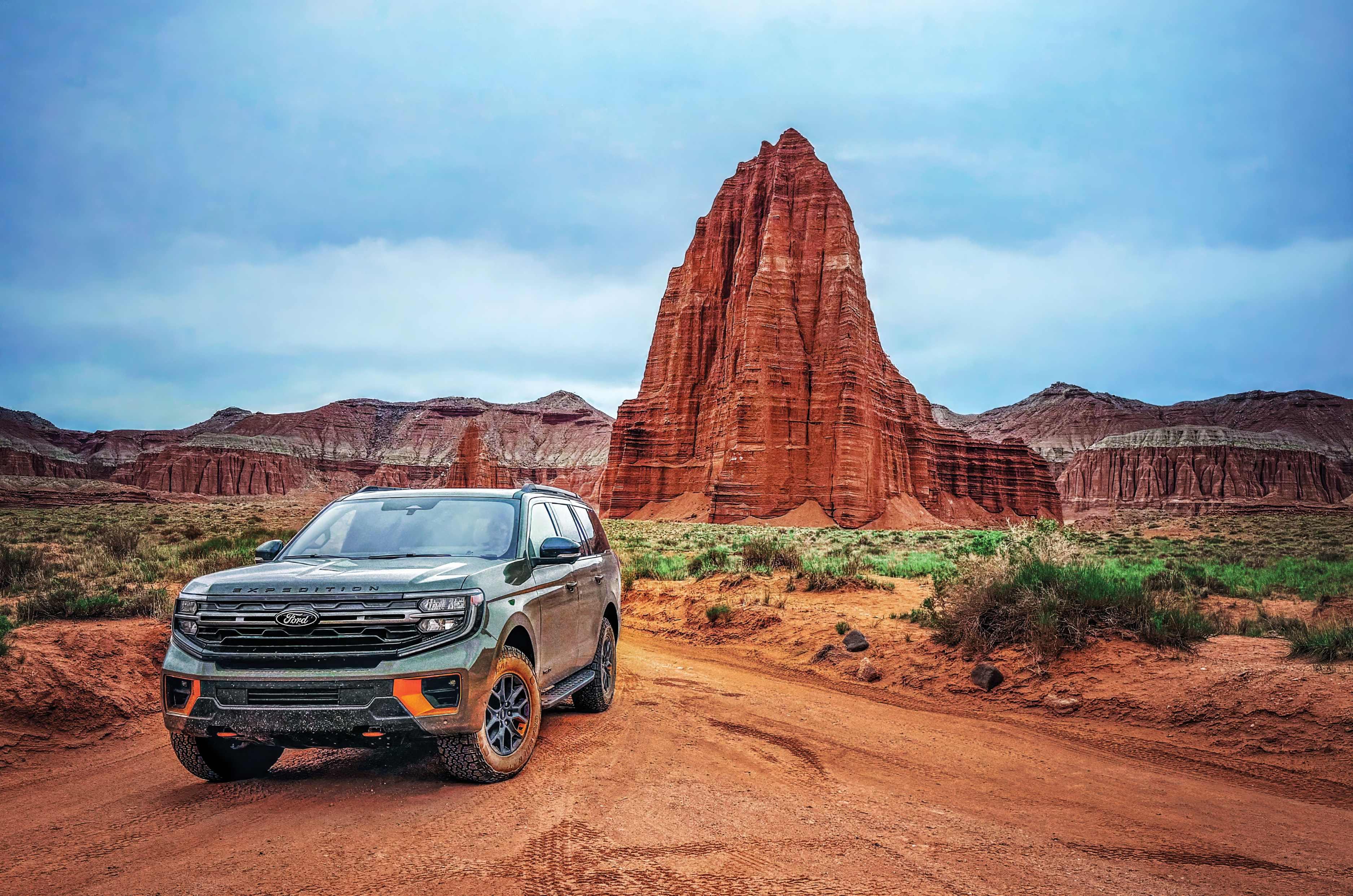
The dirt road climbs through the Bentonite Hills, bands of grey, purple and blue-green clay laid down eighty million years ago in an ancient inland sea, eroded into slopes that look lunar. Beyond them, the land opens onto a high bench where the Temples of the Sun and Moon stand, solitary honey-coloured monoliths like remnants of cathedrals of a long-lost civilisation.
What struck me most, standing before the Temple of the Sun, was how closely its silhouette echoed the thirteenth-century Temple of the Sun I knew well – still standing tall in Konark, Orissa. That was shaped by human hands wielding hammers and chisels, whereas this one by wind and water.
In the Cathedral Valley at The Temple of the Sun. Eighty million years in the making; no chisel required.
Most visitors run the Cathedral Valley Loop clockwise, meeting the Fremont River crossing at the start. We’d gone the other way, so it arrived at the very end, just short of Highway 24. Torrid brown water gushed across our path. Not crossing would mean backtracking 80 miles.
I waded in first to check for stone underfoot rather than clay, reading whether the current had strong opinions about being crossed. Satisfied, I waved the Tremor forward, and my partner drove it straight through, water climbing the doors. Then crossed again to pick me up, and once more just for fun, proof this was a vehicle built to encourage this kind of tomfoolery.
After Cathedral Valley, the long drive back to ordinary life began, the odometer past 1,300 miles. Looking back on those twelve days, I’m glad I chose the path not well trodden, as Robert Frost once suggested, in a digital age where it’s easiest to let the machines pick the route.
A badly printed, albeit meticulously researched book, an atlas, and a Ford that never once flinched had taken us somewhere far better than any algorithm would have dared suggest. Rather than a destination ticked off, Utah became one truly experienced, and that made all the difference.
The essentials
Self-sufficiency matters: A little preparation separates adventure from discomfort.
Water: Carry more than you think you need. We kept 20 litres in the Expedition.
Provisions: Stock up on energy bars, trail mix, fruit, chocolate, canned food, instant noodles, jerky and coffee. A camping stove is invaluable for hot meals in the middle of nowhere.
Fuel: Fill up whenever you can. Distances are vast and stations scarce.
Navigation: Download offline maps and carry a paper atlas. The DeLorme Utah Atlas and Gaia GPS worked well.
Clothing: Hot days, cold nights. Pack a warm layer and a sleeping bag.
Footwear: Sturdy hiking shoes.
Sun protection: A wide-brimmed hat, sunglasses, sunscreen and lip balm.
Vehicle: A high-clearance 4WD.
In-car essentials: First-aid kit, head torch, tyre gauge, air compressor and puncture repair kit.
Allow extra time. Utah ambushes you with one view after another, and the best memories happen at unplanned stops.