Volvo EX90 launched at Rs 1.26 crore

Volvo EX90 launched at Rs 1.26 crore
Volvo EX90 India launch

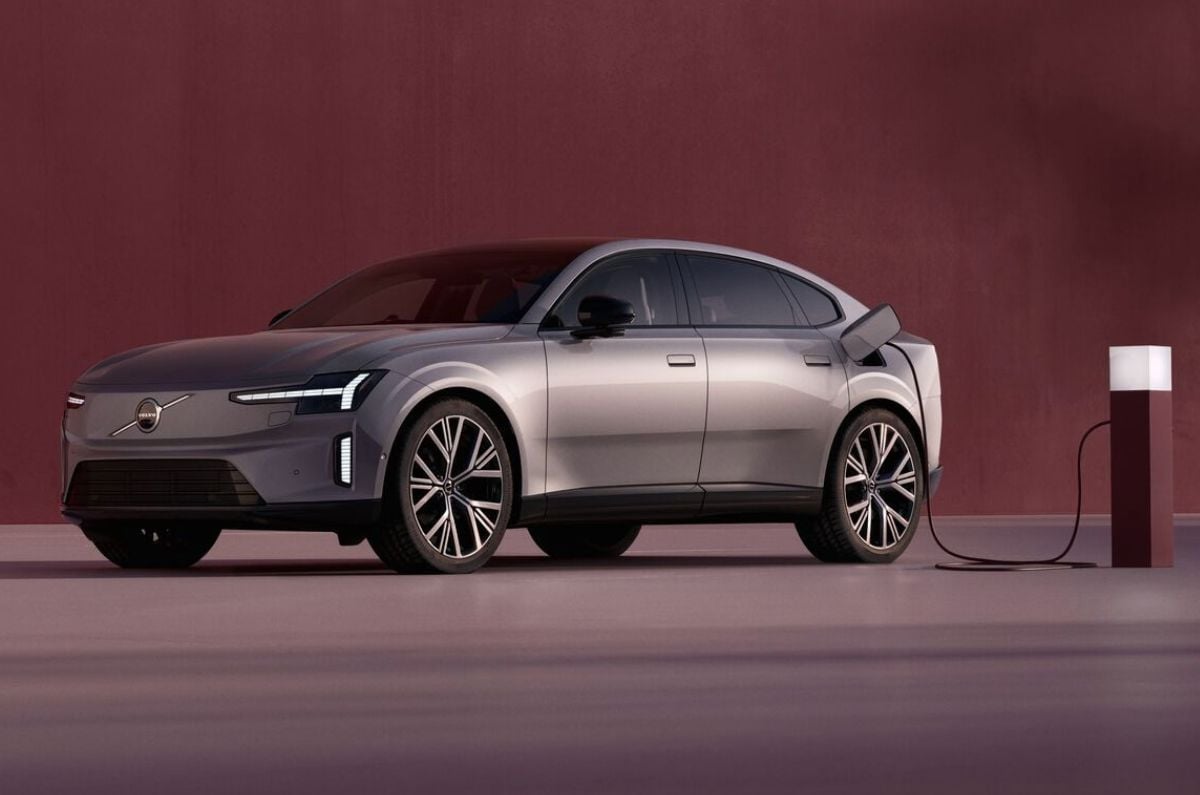
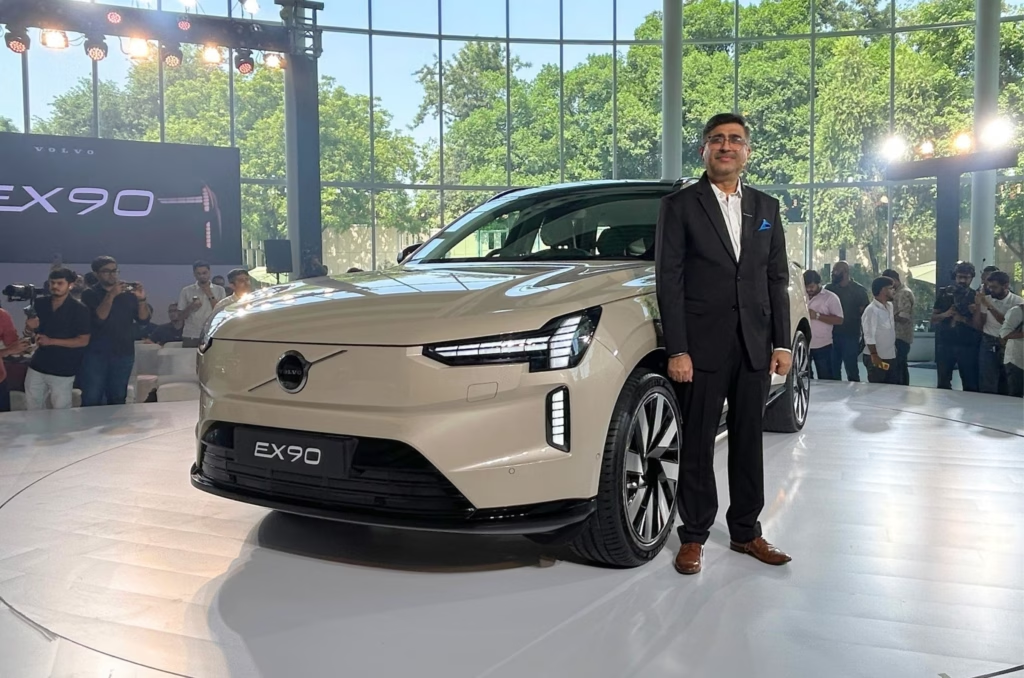
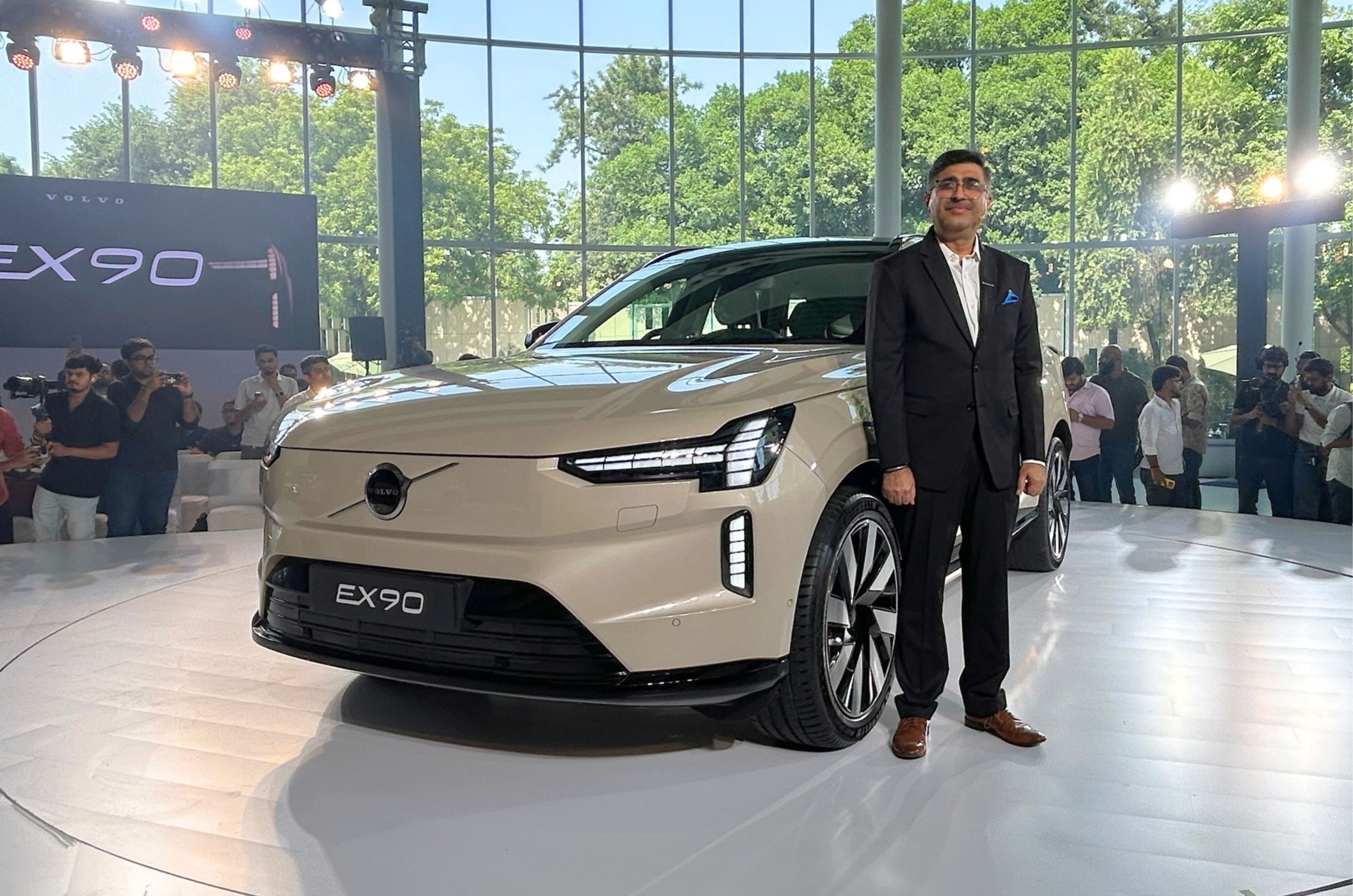
Volvo India has launched the EX90 electric SUV at Rs 1.26 crore as the Swedish carmaker’s new range-topper. The EX90 is Rs 27.2 lakh more expensive than its combustion-powered equivalent, the XC90. However, that’s on account of the EX90 being much more modern and tech-loaded than the XC90, the current generation of which has been around for more than a decade.

As part of an introductory offer for bookings placed before 31 December, 2026, Volvo will bundle an 11kW home charger, a 3-year service package, and assured buyback scheme (65 percent / 3 years) for every EX90 buyer.

Volvo EX90 battery and range
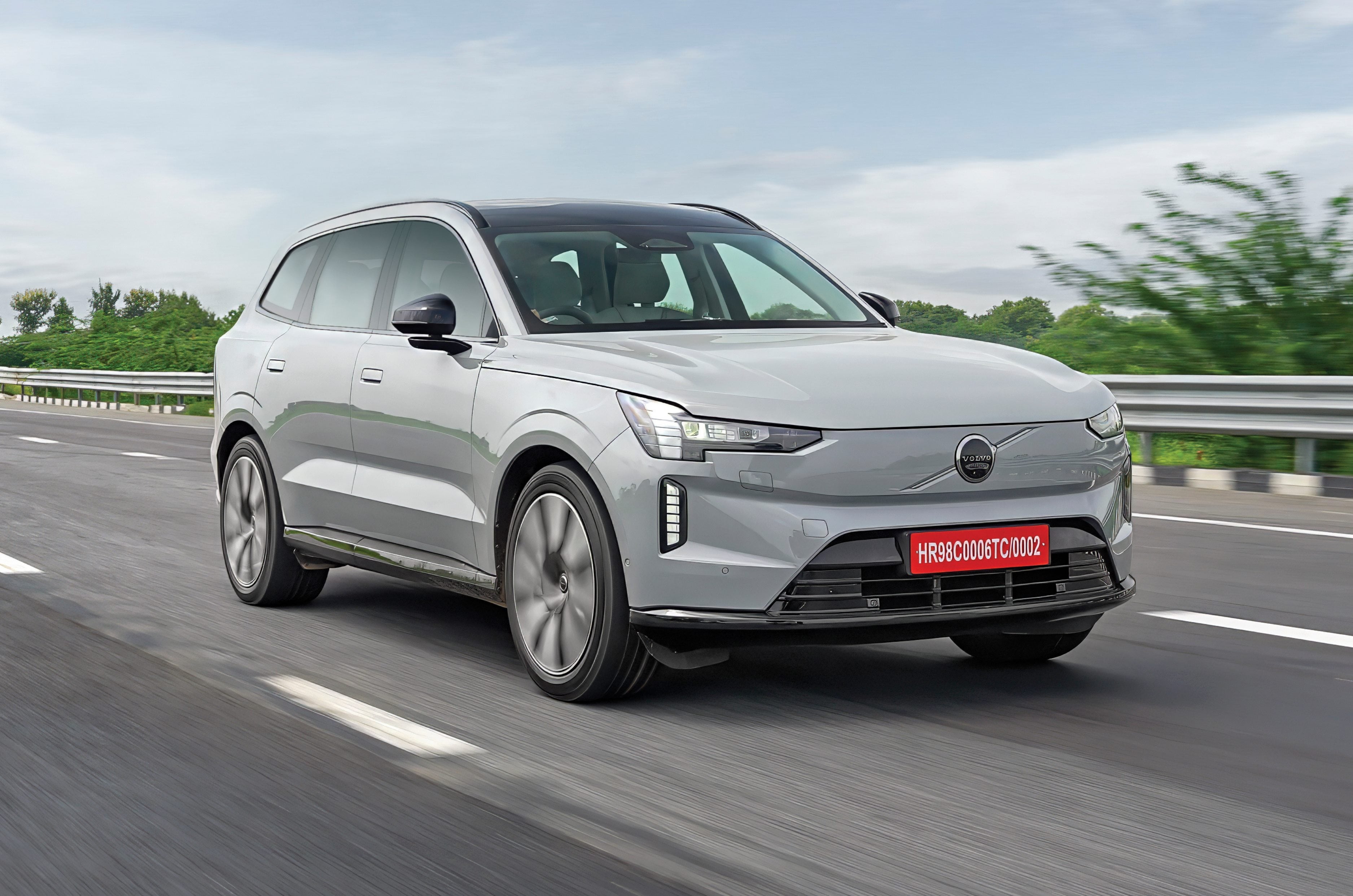
The EX90 is available with a sole 106kWh battery pack powering a dual-motor all-wheel drive setup. Combined output is 456hp and 670Nm, which is good for a claimed 0-100kph time of 5.5 seconds and a top speed of 180kph. The WLTP-rated range is 625km, and in our EX90 review, the SUV returned an efficiency of roughly 5.5km/kWh, which translates to a real-world range of around 580km.
As for charging, an 11kW AC wallbox takes approximately 11 hours for a full charge. Thanks to its 800-volt SPA2 architecture, the EX90 can also charge at up to 350kW from a DC source, at which speed a 10 to 80 percent top-up takes just 22 minutes.

Volvo EX90 exterior design
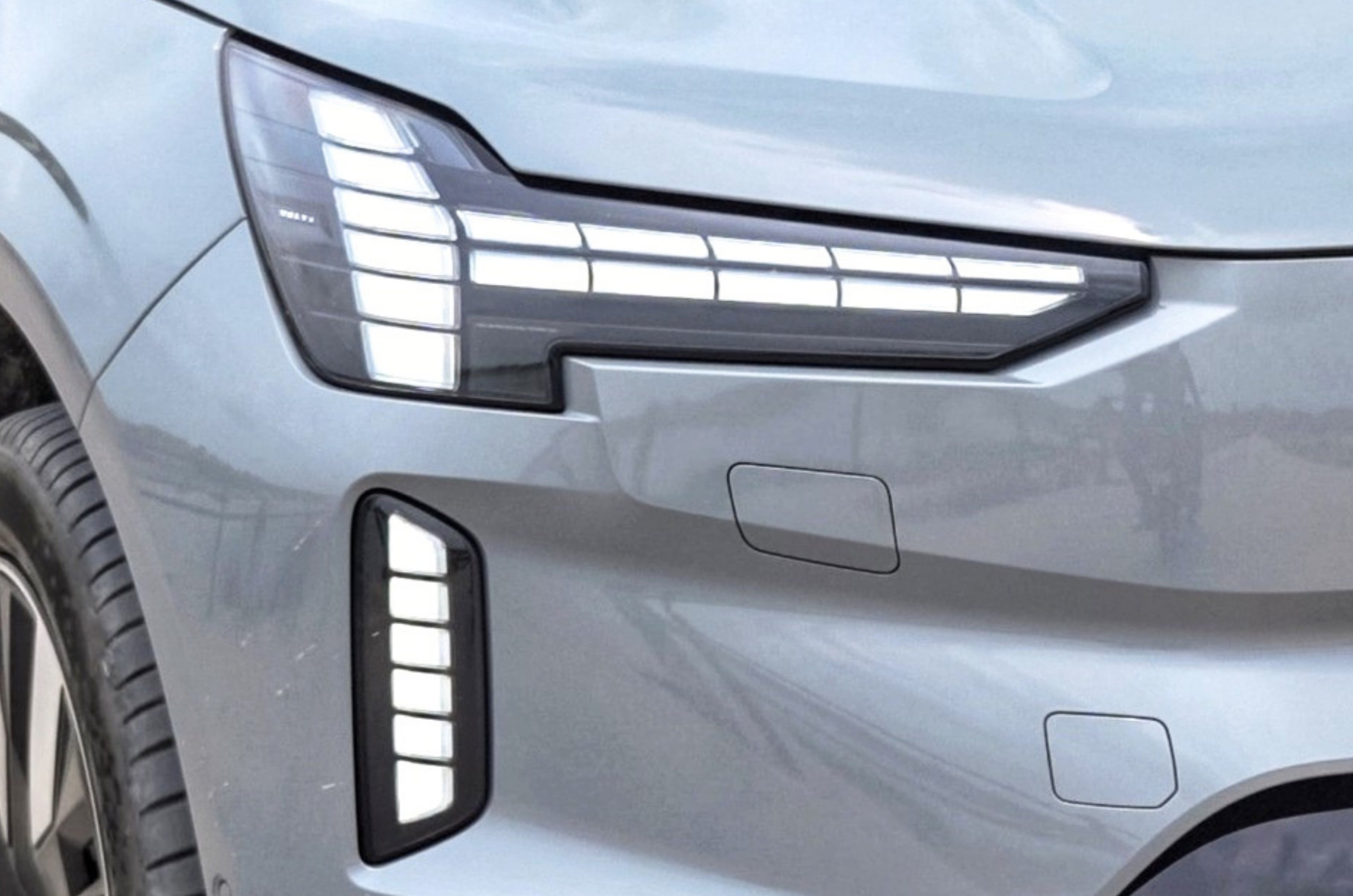
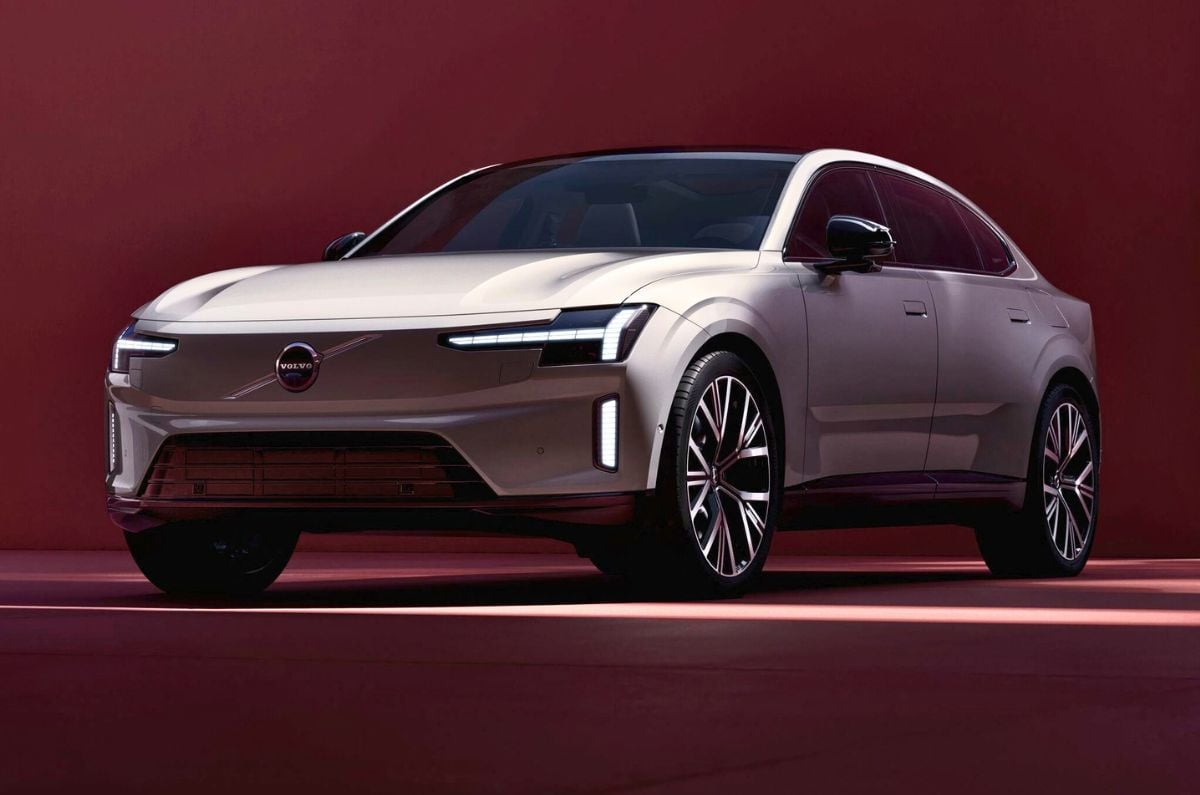
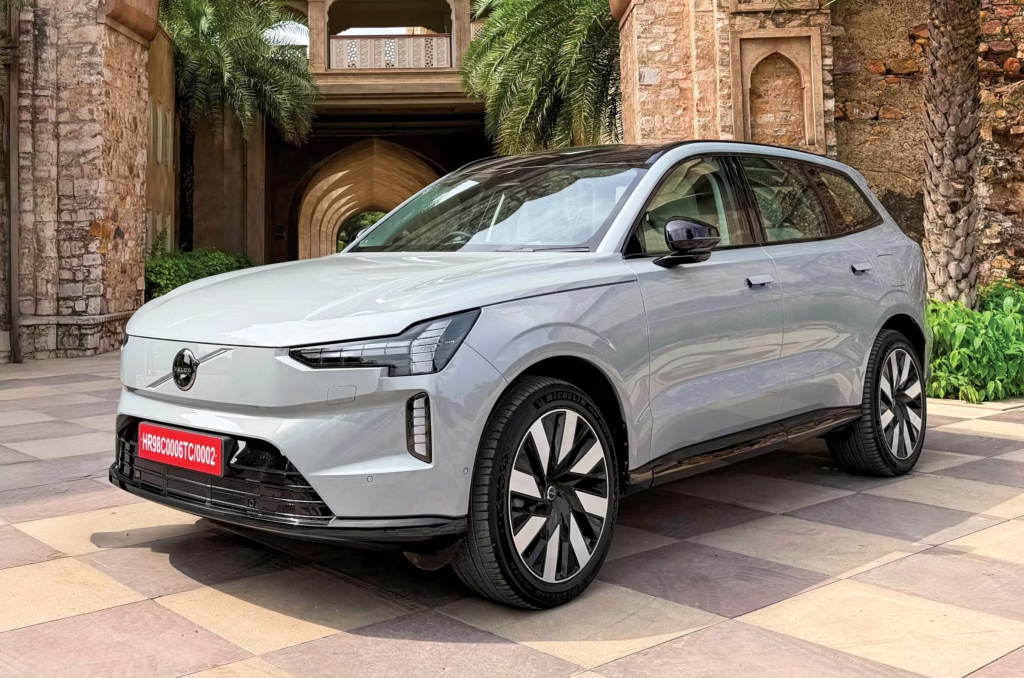
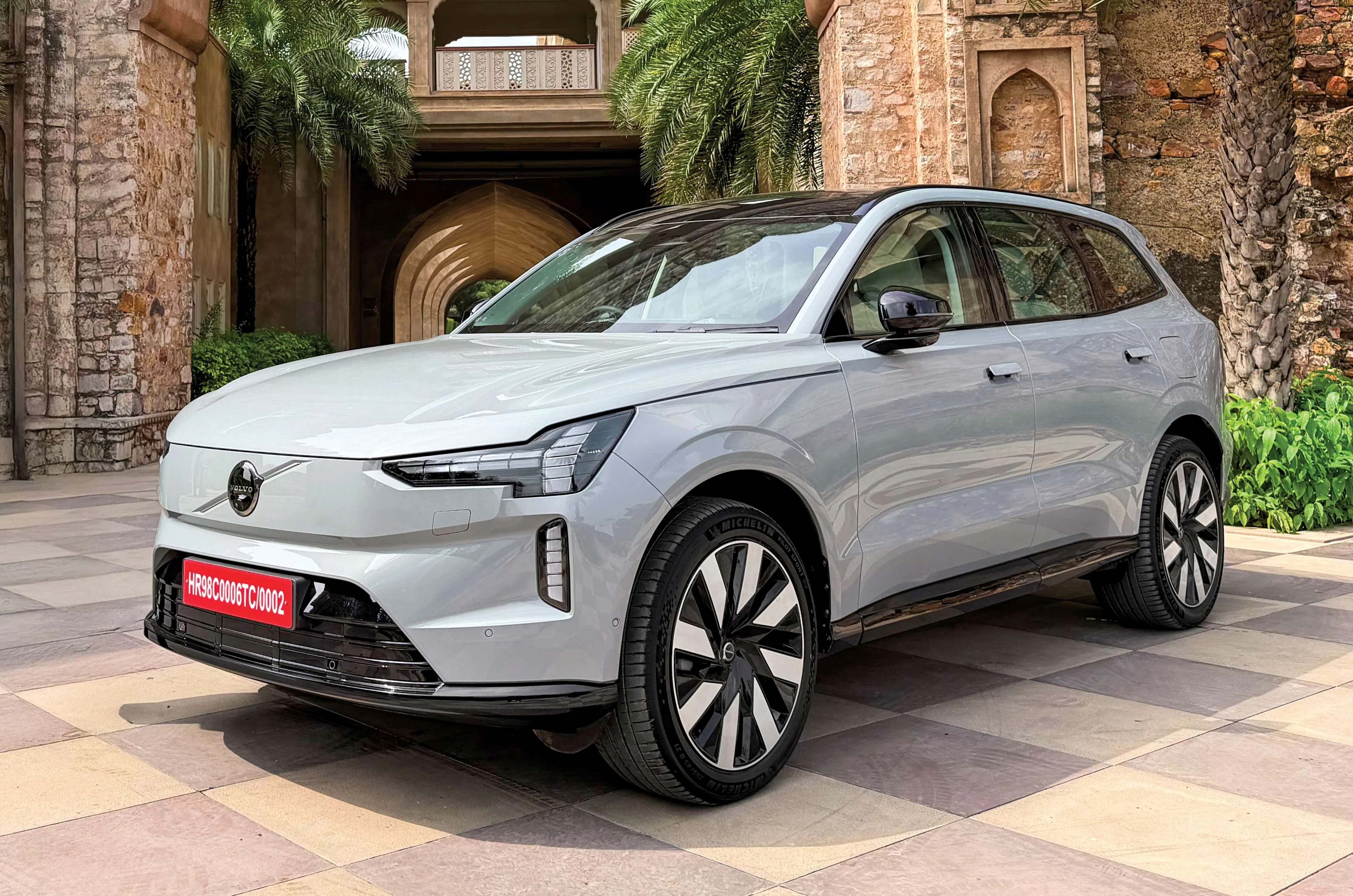
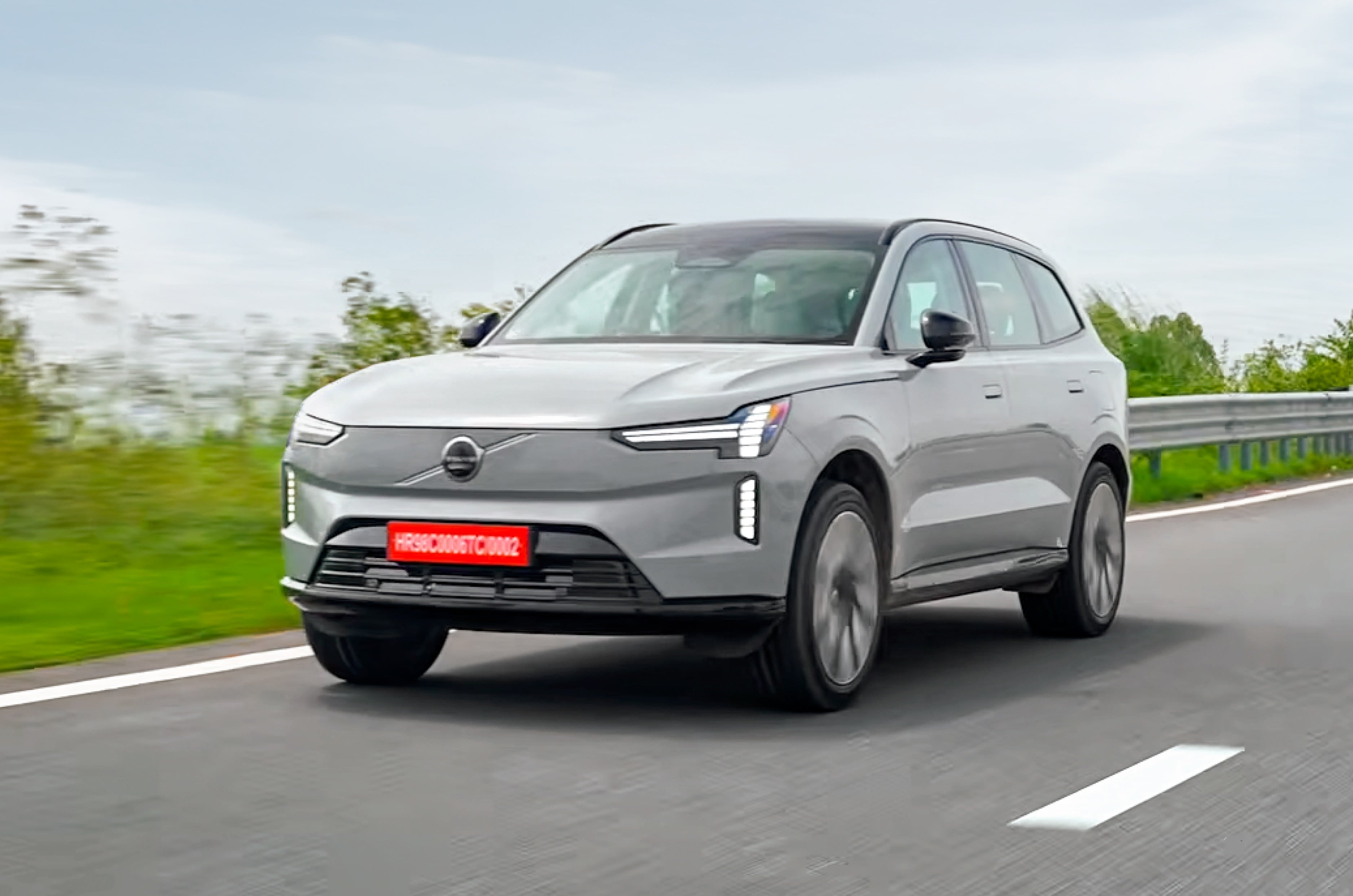
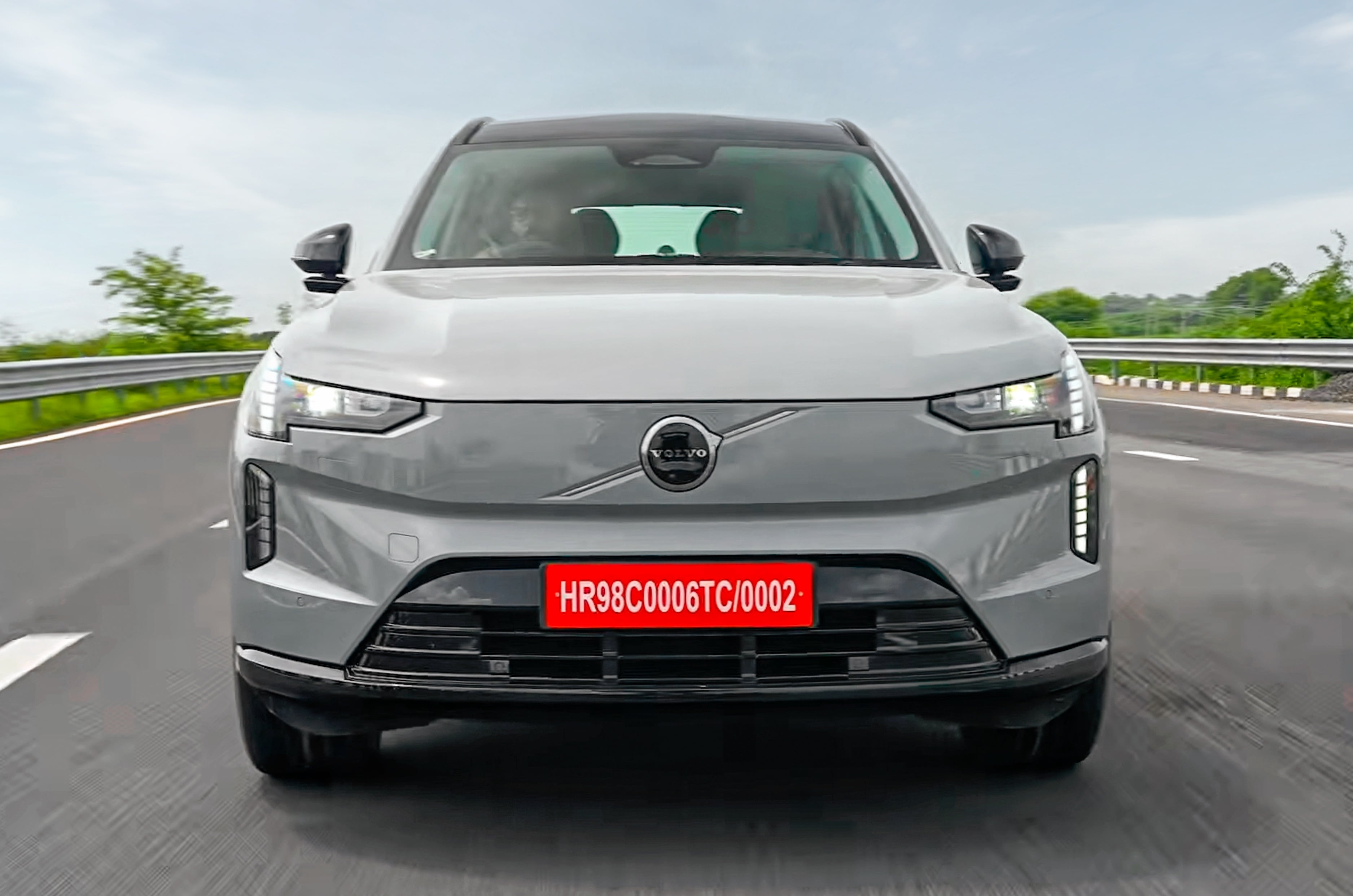
On the outside, the EX90 carries forward Volvo’s hallmark minimalistic styling, but with some new-age touches. The front end gets T-shaped LED headlamps with pixel-like DRL signatures, below which sit slim, vertically oriented fog lamps. There’s no grille on the fascia, only the Volvo emblem in the centre and a trapezoidal air dam lower down.
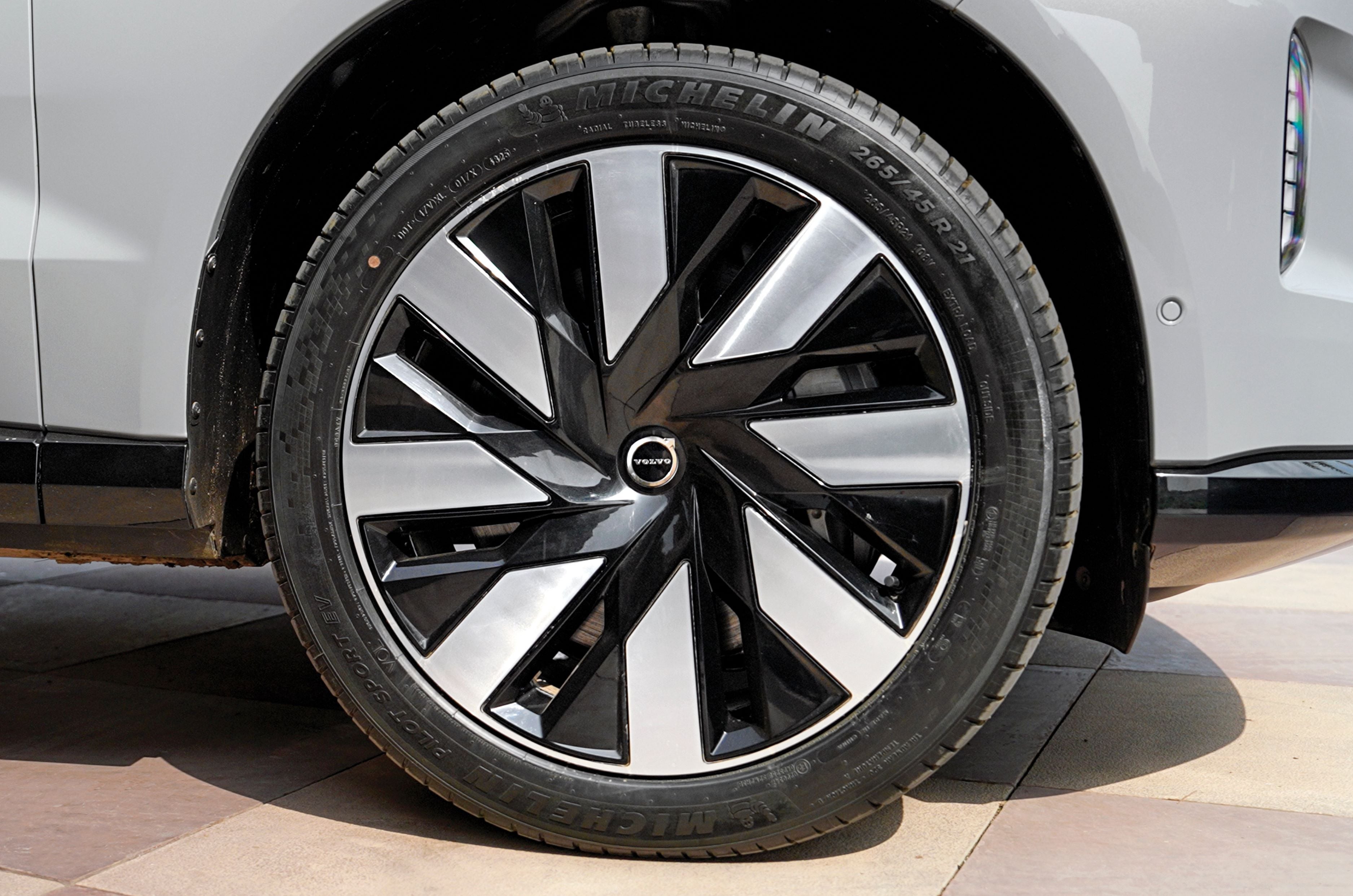
The side profile is clean and upright, with a 2,985mm wheelbase, 21-inch alloy wheels as standard, and a 210mm ground clearance. Air suspension is standard fit on the EX90 too, allowing you to raise the ground clearance to a maximum of 250mm.
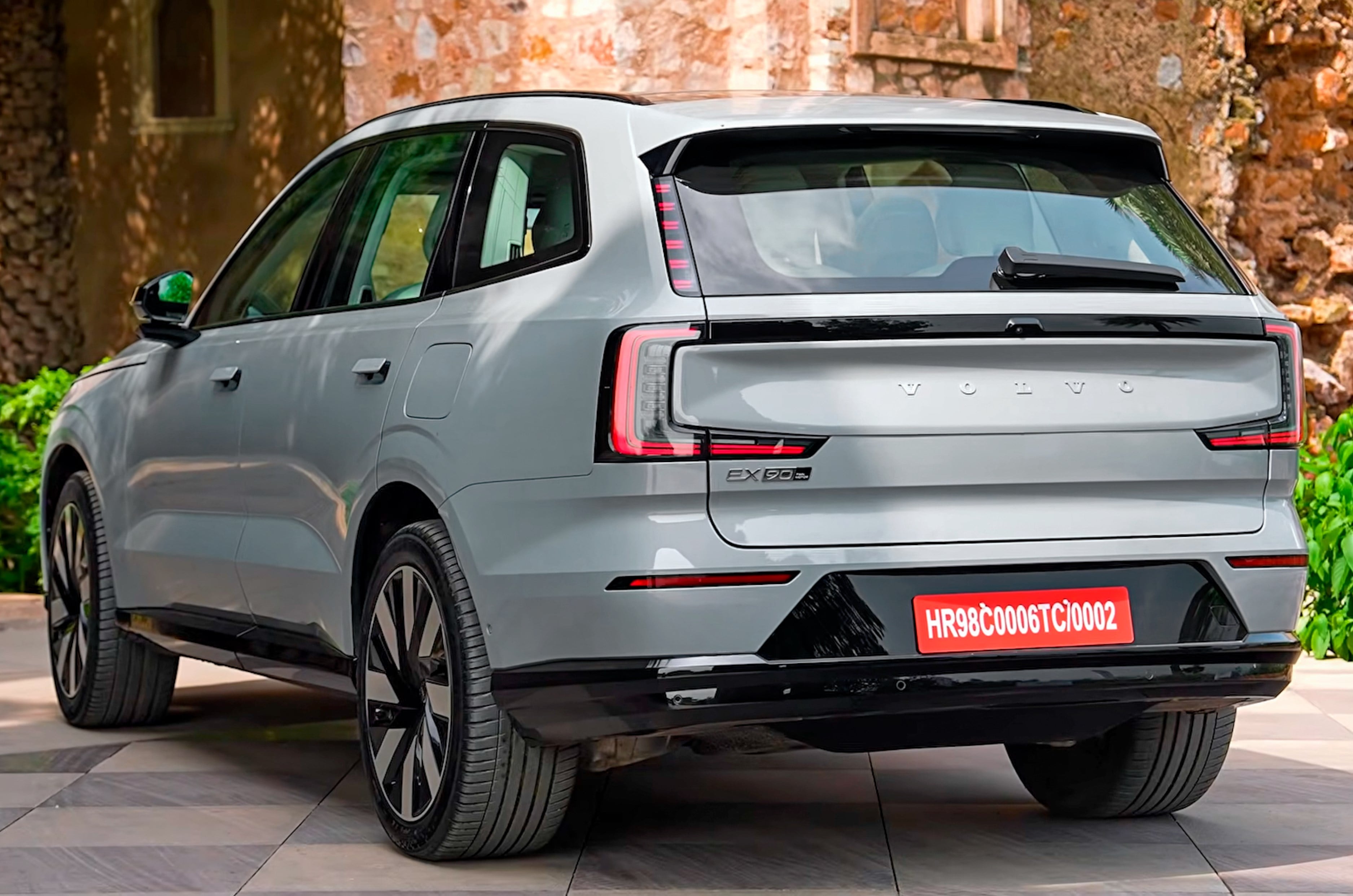
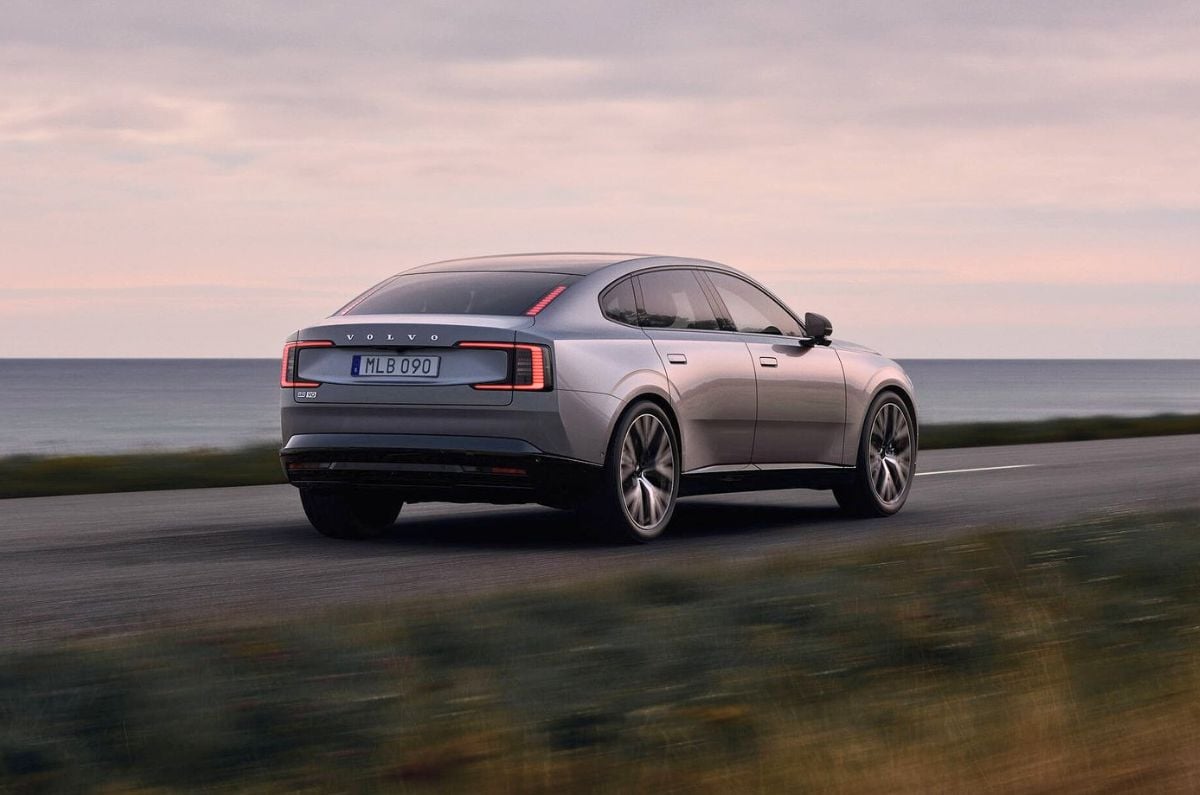
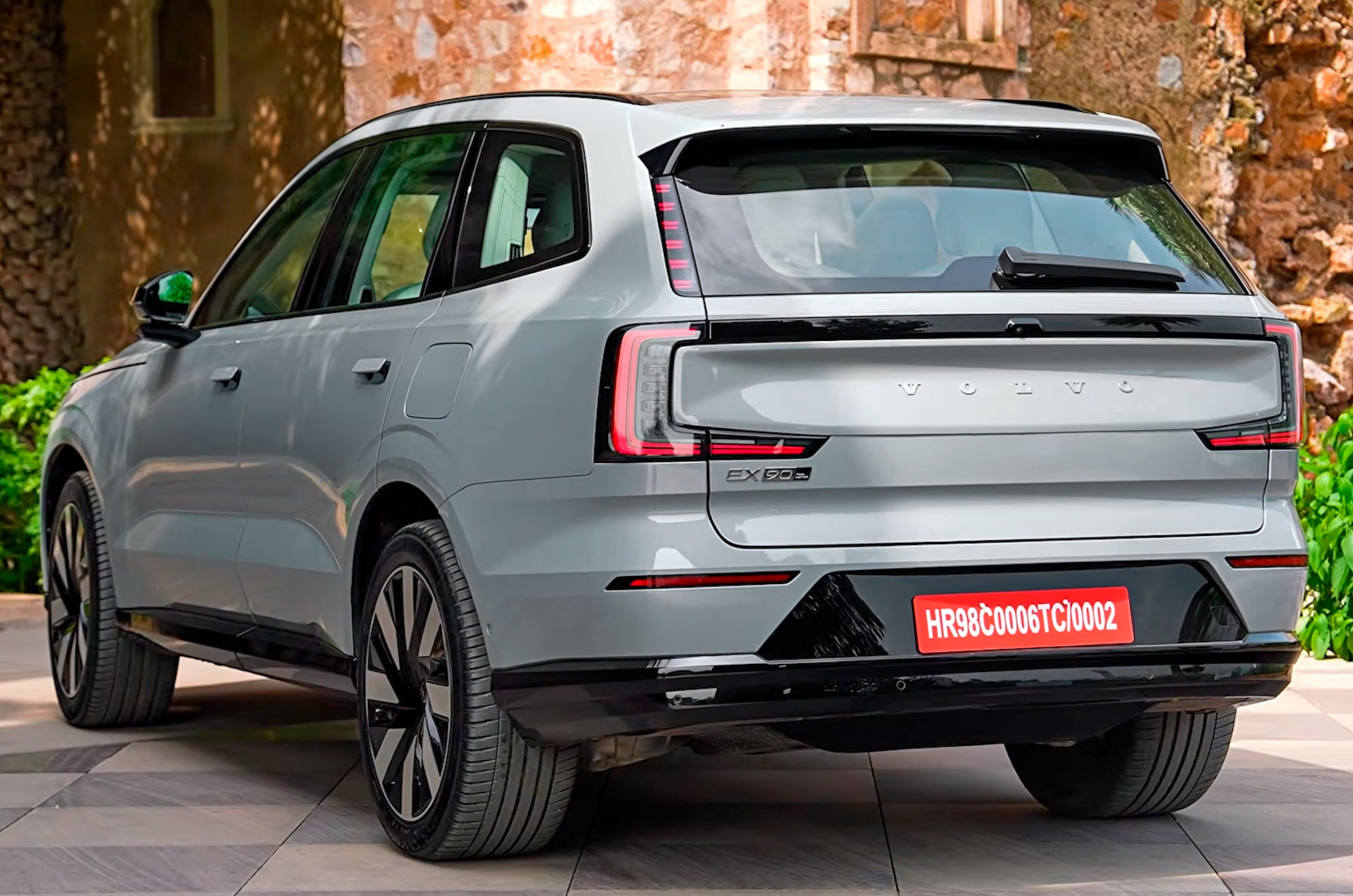
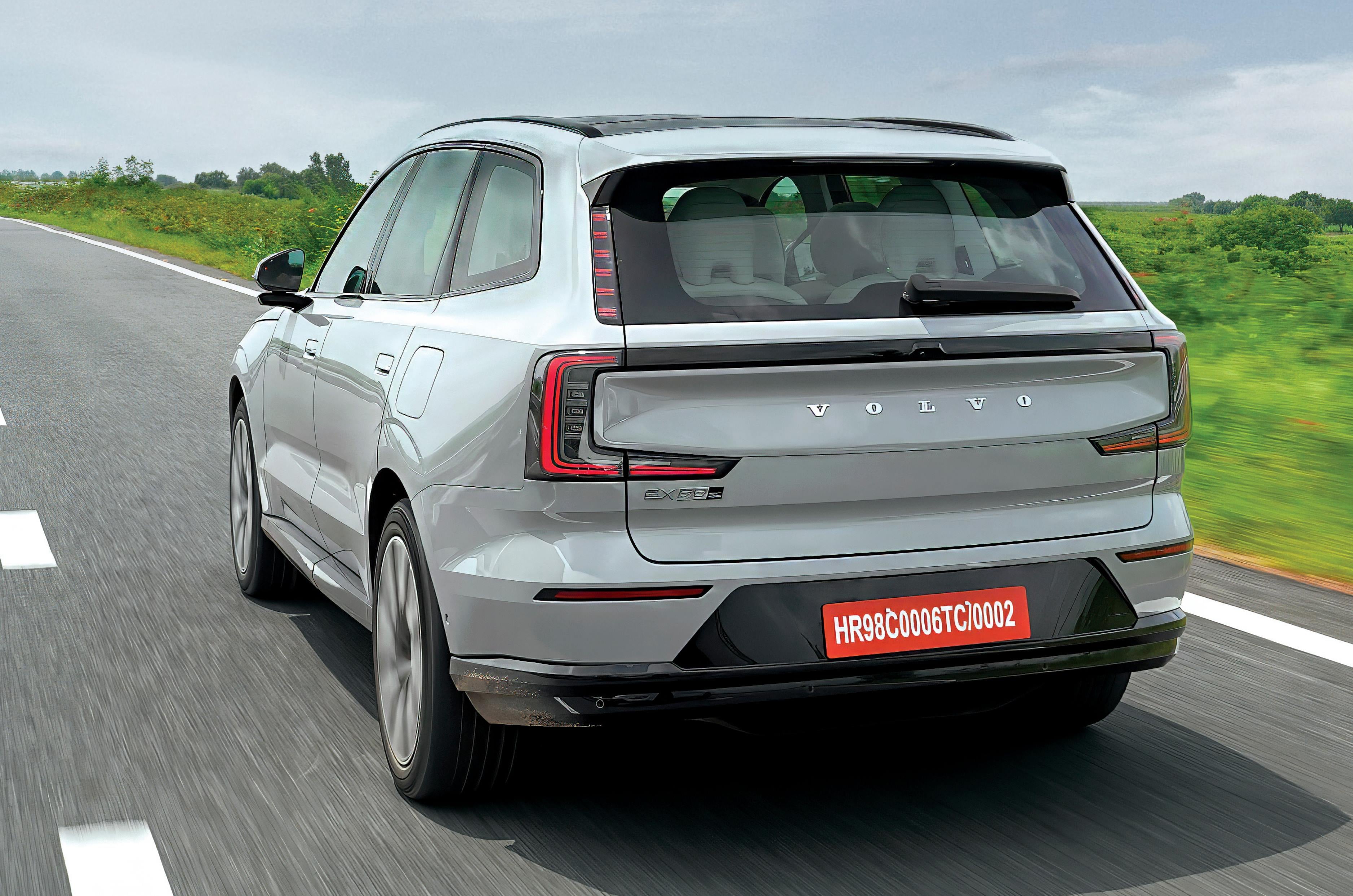
At the back, the EX90 features C-shaped LED tail-lamps connected by a black strip, along with LED arrays flanking the rear windscreen. A Volvo wordmark sits proud in the centre of the bootlid, and the bumper has a neat and discreet design. Colour options for the EX90 comprise Crystal White, Denim Blue, Mulberry Red, Onyx Black, Sand Dune, and Vapour Grey.

Volvo EX90 interior and features
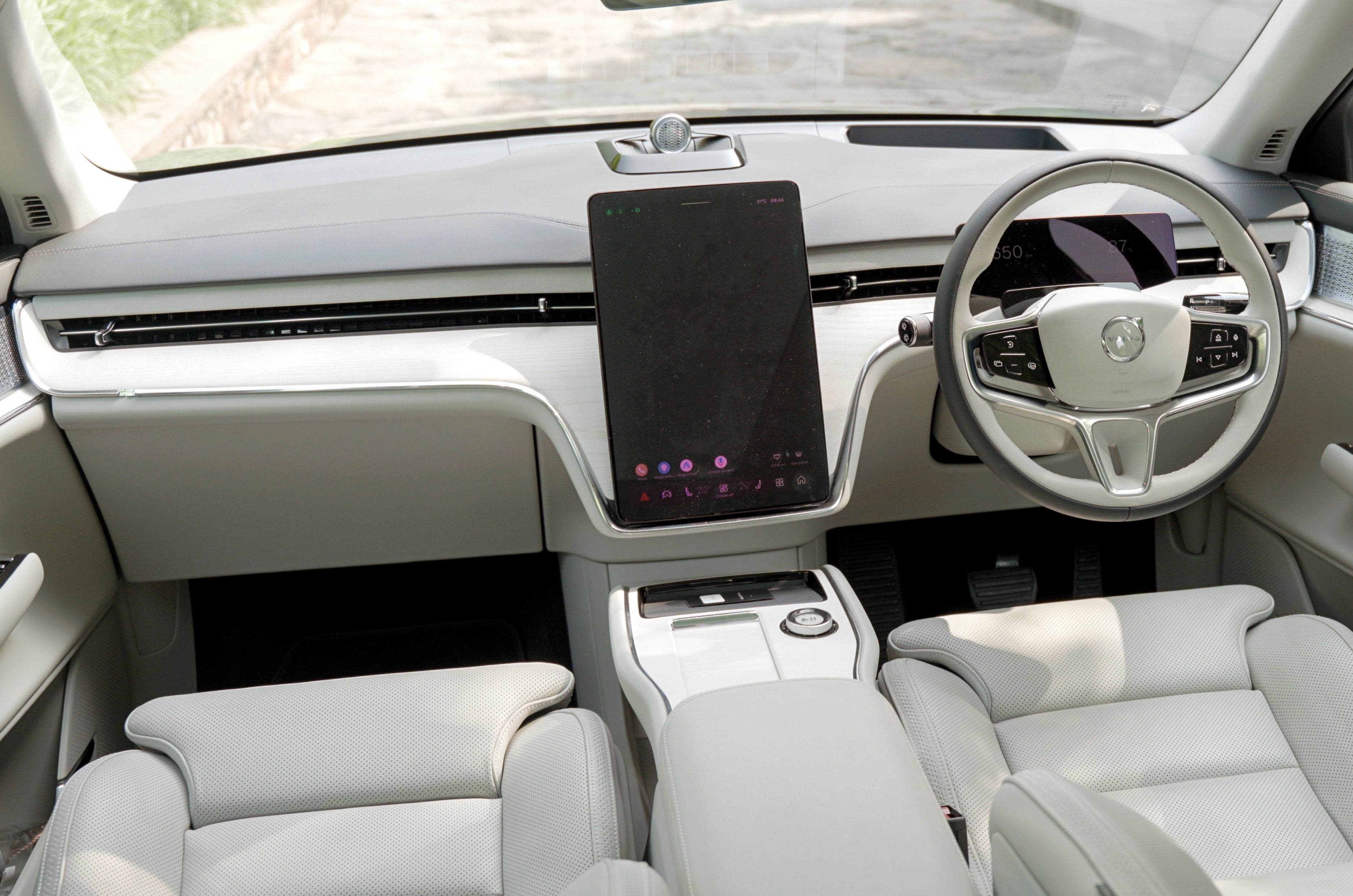
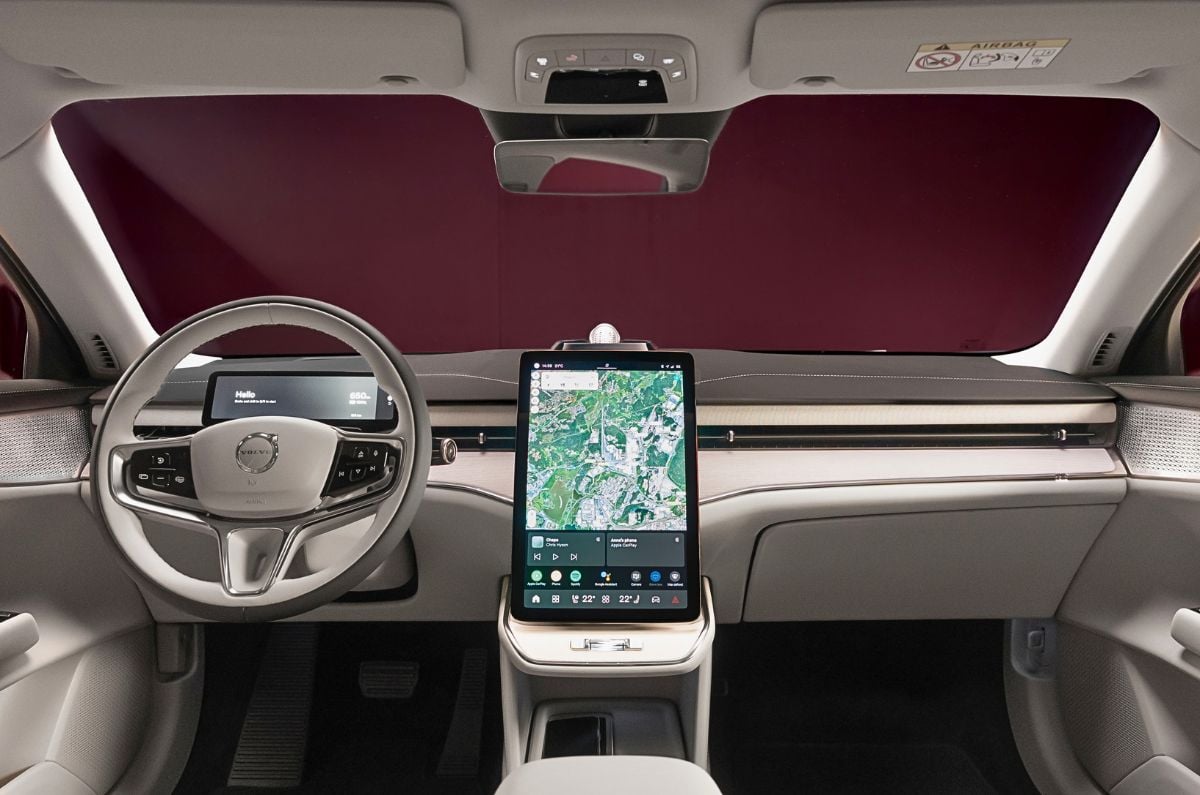
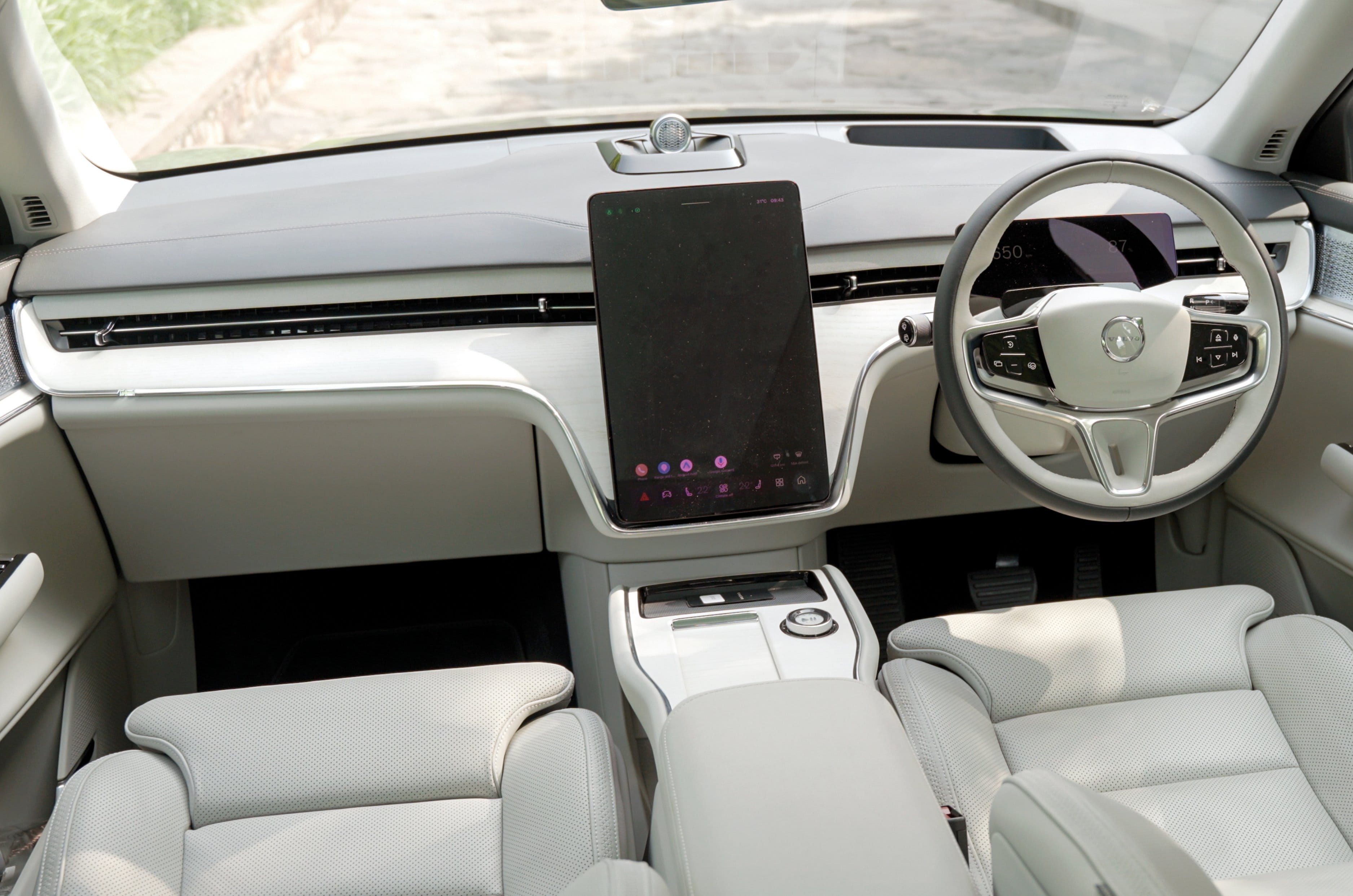
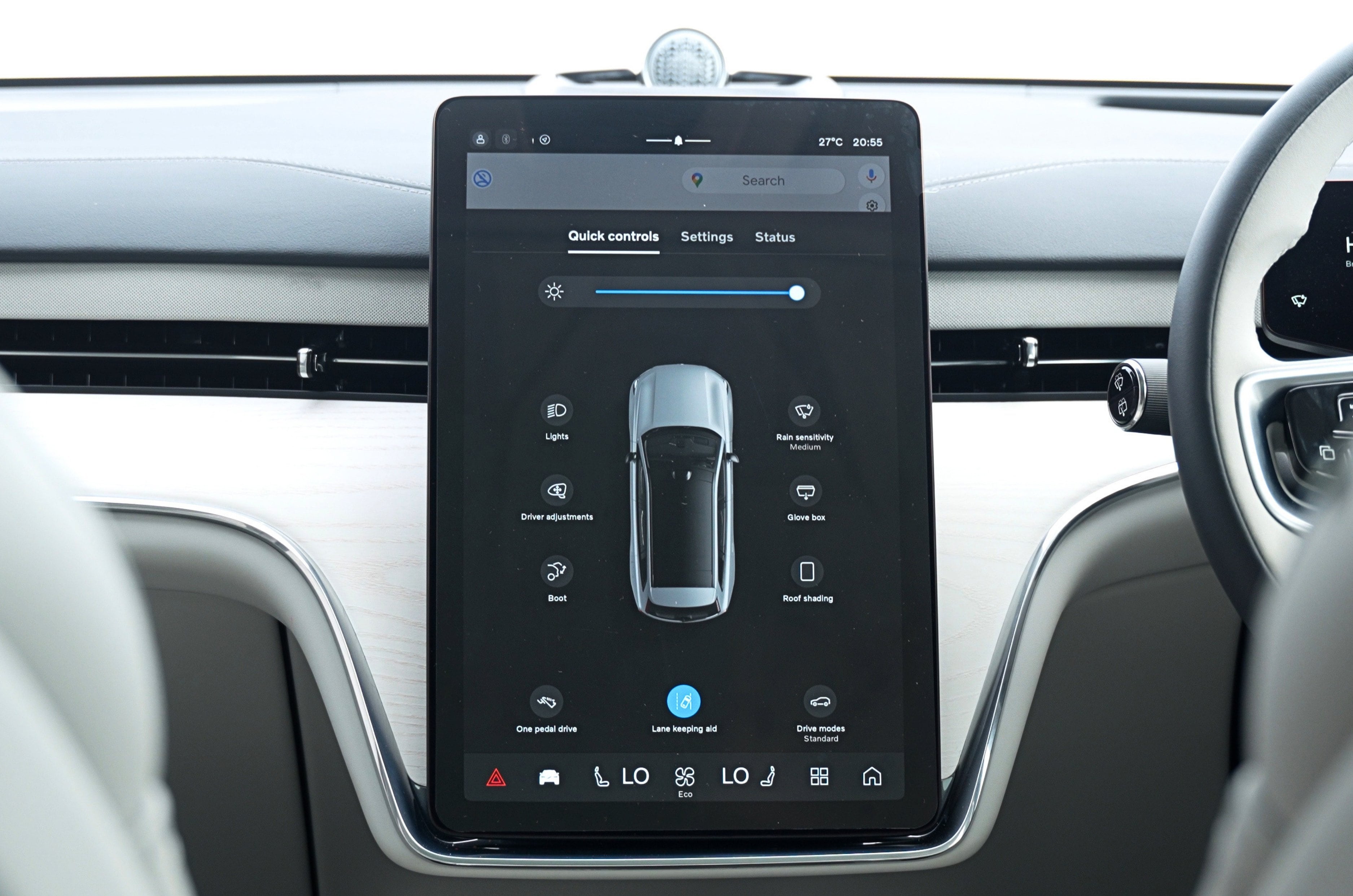
Volvo’s minimalist design philosophy extends to the EX90’s cabin, with a clean dashboard layout that incorporates rich two-tone Nappa leather upholstery, a three-spoke steering wheel, brushed aluminium trim pieces, a huge 14.5-inch vertically oriented infotainment touchscreen, and a slimmer 9-inch driver’s display. Physical controls are a rare sight in the cabin, as most of the in-car functions have been folded into the central touchscreen.
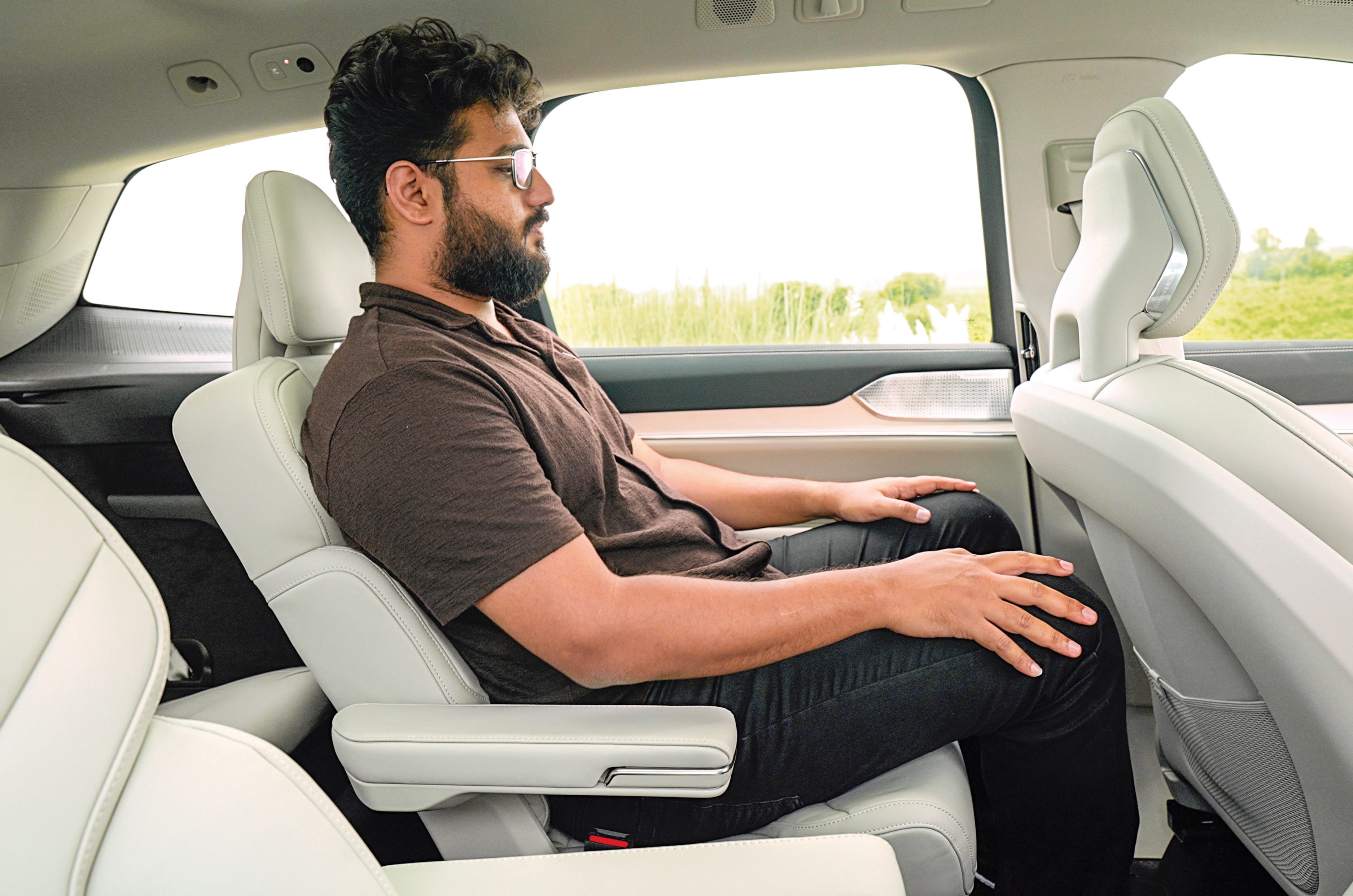
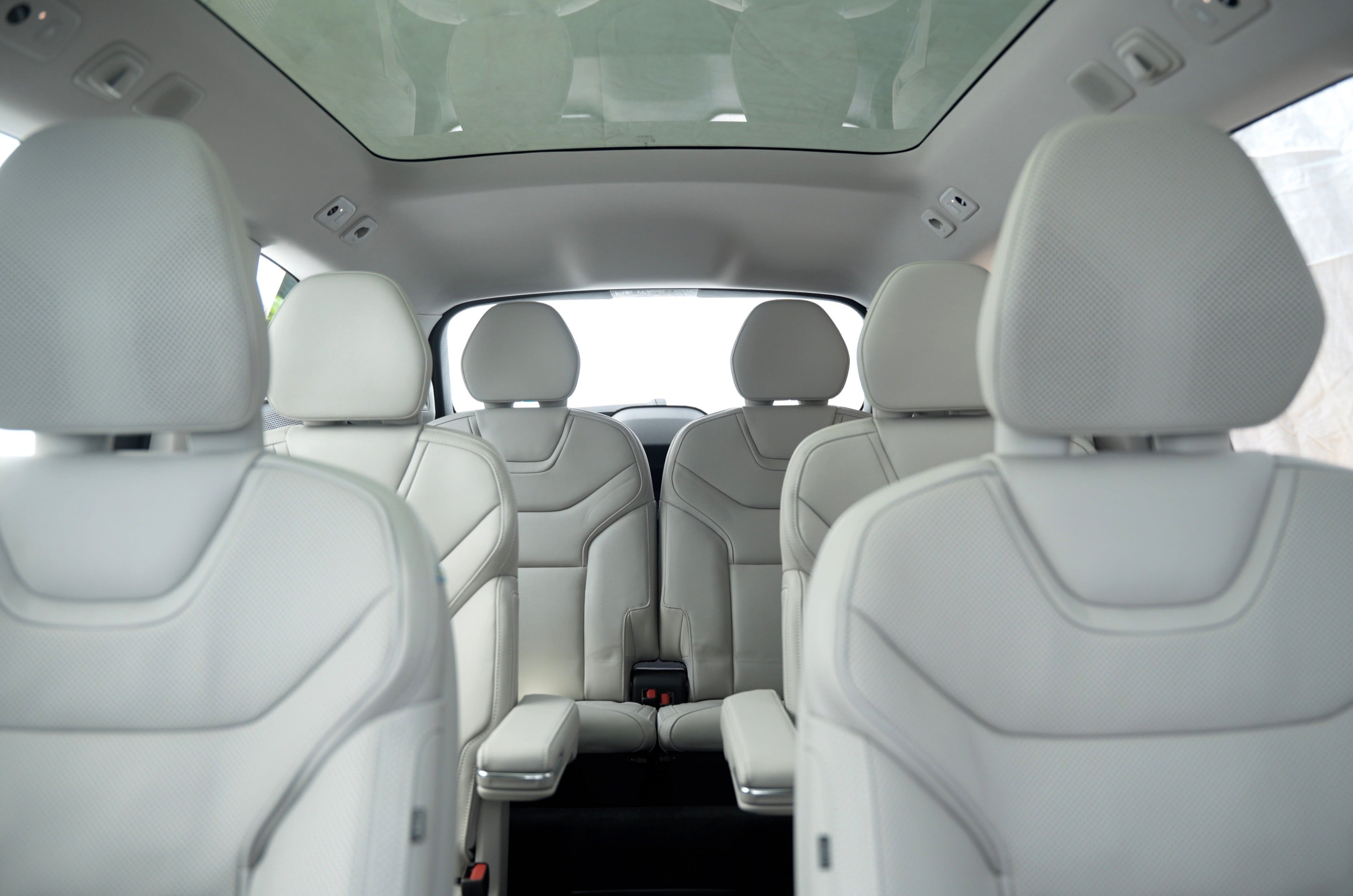
As noted previously, the India-spec EX90 is offered solely as a 6-seater with second-row captain’s chairs that slide and recline. There’s good space and comfort for second-row occupants, but these captain’s chairs don’t get the electrical adjustment, ventilation, heating, and massage functions that the front seats do. There are no sunshades for the rear windows, either, but you do get a large panoramic sunroof with switchable transparency.
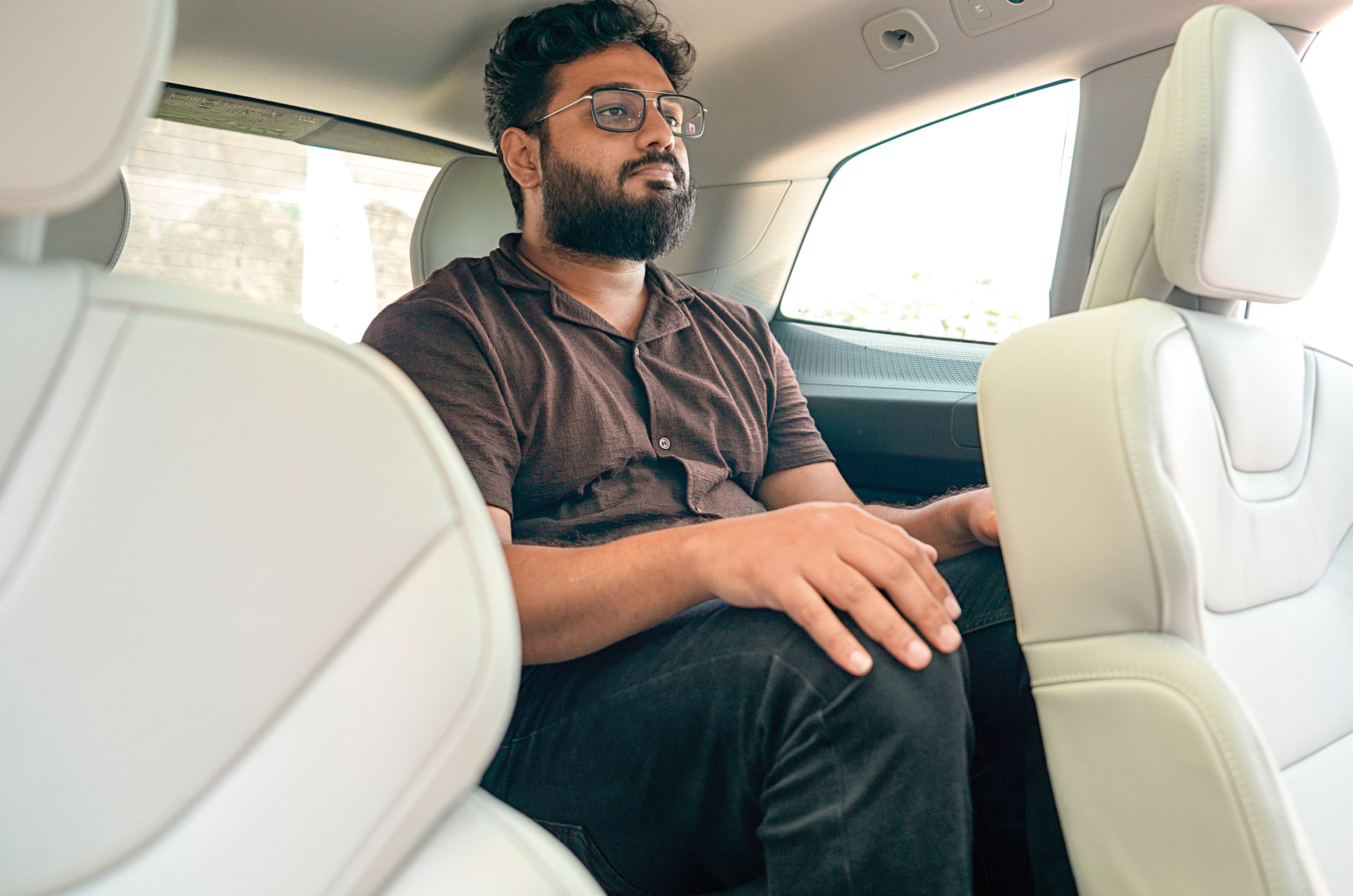
Coming to the third row, access is easy by way of the space between the captain’s chairs (they don’t fold down, though). Once you’re there, however, the space on offer is best-suited to kids, or adults on short drives. Boot space is rated at 324 litres with the third row up, and if you fold that down, the capacity increases to 690 litres. You get a 46-litre frunk as well.
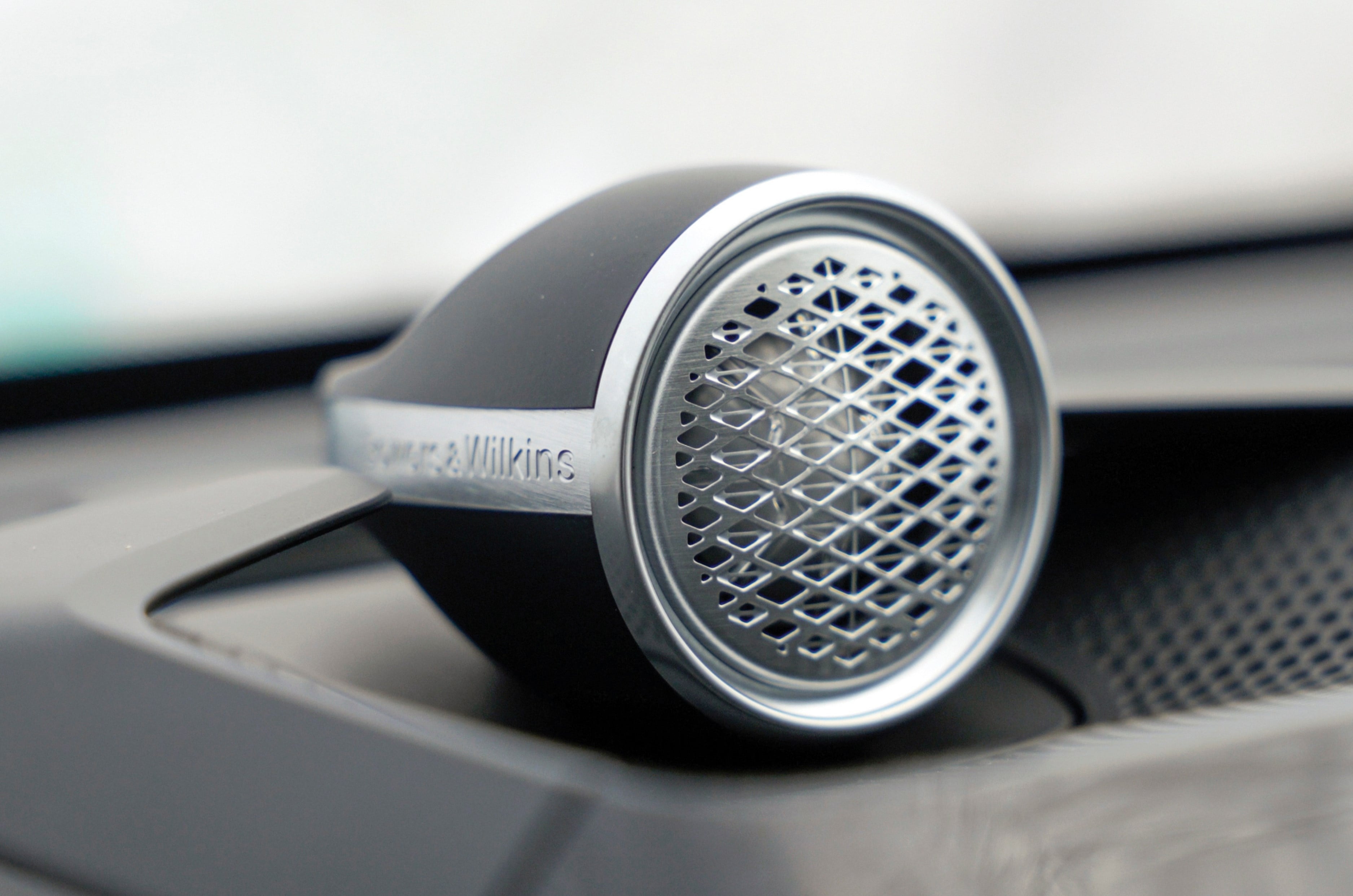
In addition to the features mentioned above, the EX90 comes packed with four-zone climate control, a 25-speaker Bowers & Wilkins sound system, configurable ambient lighting, 9 airbags, an ADAS suite, wireless Apple CarPlay and Android Auto, a 360-degree camera, auto park assist, a digital key, a wireless charging pad, a cabin air purifier, and more.

The Volvo EX90 rivals electric luxury SUVs like the Mercedes-Benz EQS SUV 580 and Kia EV9, which are priced at Rs 1.49 crore and Rs 1.30 crore, respectively. With its Rs 1.26 crore price tag, the EX90 undercuts both of its chief rivals.

All prices are ex-showroom, India.
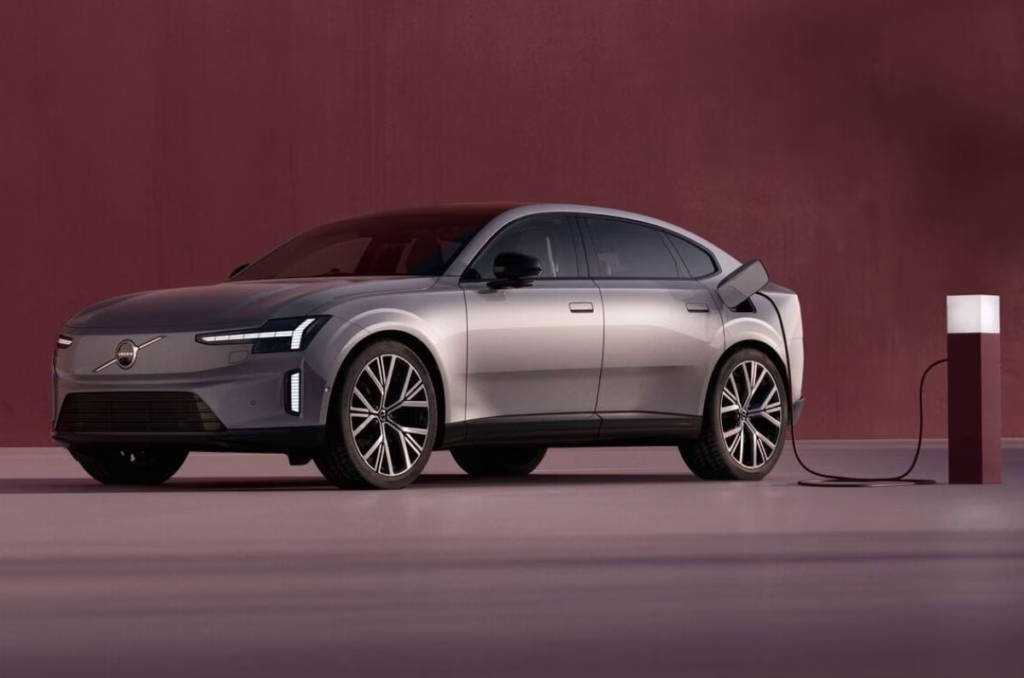
What to expect from Volvo ES90 ahead of launch tomorrow

What to expect from Volvo ES90 ahead of launch tomorrow

The Volvo ES90 will be launched in India tomorrow, marking a comeback for a Volvo sedan in the country after the S90’s discontinuation in 2024. Upon launch, it will serve as the manufacturer’s flagship EV alongside the EX90 SUV, which will also be launched alongside the ES90 sedan. Here’s everything you need to know about the upcoming Volvo ES90 ahead of its launch tomorrow. 

1. What is the expected price of the Volvo ES90?

Prices are expected to be in the Rs 1 crore to Rs 1.20 crore range (ex-showroom)

The Volvo ES90 will arrive in India as a completely built unit (CBU) import. It is expected to be priced in the Rs 1 crore to Rs 1.20 crore range (ex-showroom) in the country. 

2. What powertrain option will the India-spec Volvo ES90 get?

Gets two battery pack options and choices between RWD and AWD internationally

The Volvo ES90 is built on the manufacturer’s 800-volt SPA2 architecture shared with the EX90 eSUV. Internationally, the ES90 is offered with either a 92kWh or a 106kWh battery. The smaller battery has a claimed WLTP range of 664km and is paired with a rear-axle-mounted (RWD) electric motor that produces 333hp and 480Nm. It has a claimed 0-100kph time of 6.6 seconds and has a 180kph capped top speed. It supports up to 350kW DC fast charging, which can replenish the battery from 10-80 percent in 22 minutes. 

The larger 106kWh battery has a claimed WLTP range of 702km, and is offered with a dual-motor all-wheel-drive (AWD) setup producing either 456hp and 670Nm, or 680hp and 870Nm, with claimed 0-100kph sprint times of 5.4 seconds and 4 seconds, respectively, depending on the chosen trim. 180kph capped top speed, 350kW DC fast-charging capability, and 22-minute 10-80 percent charging time are the same as the smaller battery version. 

Volvo is yet to reveal which powertrain option will be offered with the India-spec ES90 sedan. 

3. What are the design highlights of the Volvo ES90?

Gets LED lights all around, with a rather simple and elegant design

The Volvo ES90 features a blanked-off body-coloured grille with a Volvo logo in the centre, flanked by LED headlights with segmented Thor’s hammer LED DRLs on both ends. The bumper has air inlets in the centre to cool the internals and features vertically stacked LED fog lamps similar to those on the EX90. A LiDAR sensor was previously mounted on the edge of the roof, but is no longer offered on Volvo’s MY2026 models in international markets, following the termination of Volvo’s contract with its supplier, Luminar, after the latter filed for bankruptcy. 

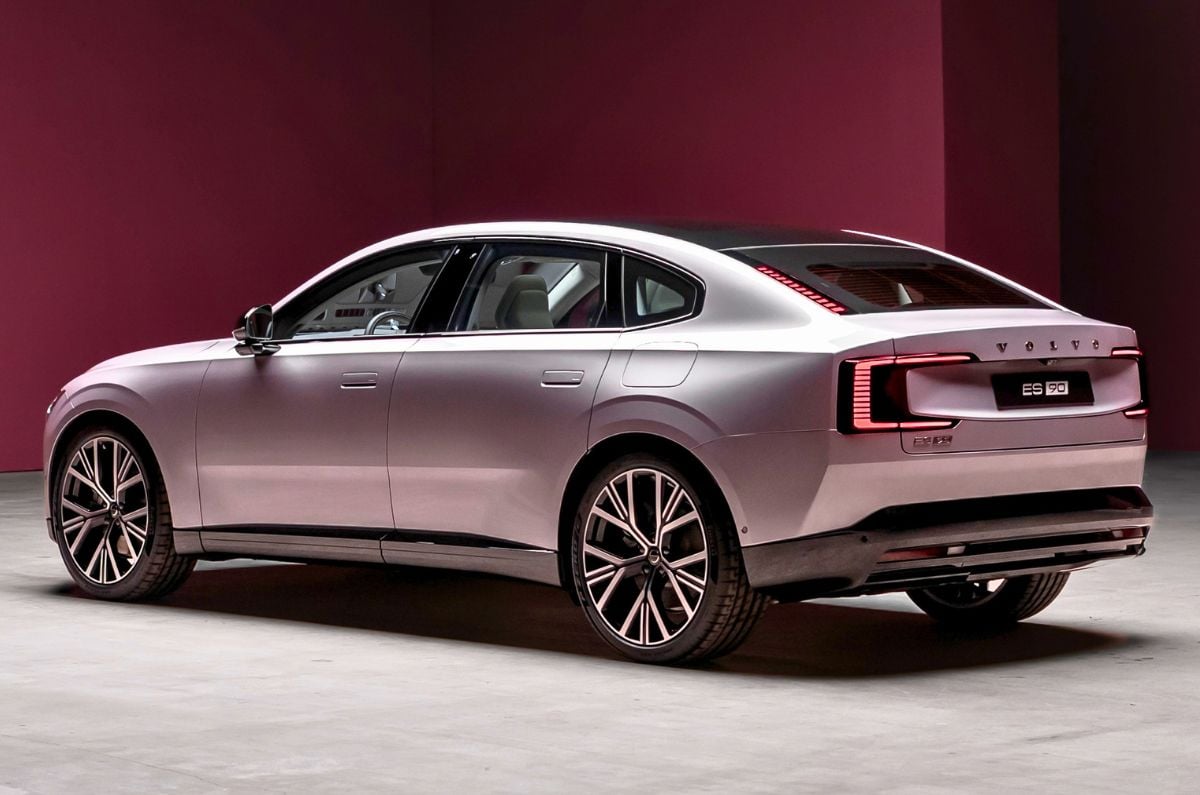
In profile, it offers wheel sizes ranging from 20 to 22 inches, all with aerodynamic inserts. It gets a gloss black section on the lower portion of the doors, along with black outside rearview mirrors (ORVMs) and a blacked-out roof, which add contrast. It gets sleek pull-type door handles. Interestingly, the ES90 has a drag coefficient (Cd) of 0.25, making it Volvo’s most aerodynamic production car yet. 

At the rear, it features C-shaped wraparound LED taillights and LED stop lights on both sides of the rear windscreen, similar to the EX90. The rear bumper features a gloss black portion that gives a nice contrast to the otherwise simple design.

4. What features will the Volvo ES90 offer?

Features two free-standing screens, 4-zone AC, and up to 25 speakers

Inside, the Volvo ES90 has a clean design and is filled to the brim with modern-day features. These include a 14.5-inch portrait-oriented, free-standing infotainment touchscreen, a 9-inch digital driver’s display, a 13.2-inch coloured head-up display (HUD), and a 14-speaker Bose sound system, which can be upgraded to a 25-speaker Bowers & Wilkins audio setup. Other features include a wireless phone charger, a powered tailgate, a 4-zone climate control and a digital key. The front seats are powered, heated, ventilated and offer a massage function with powered lumbar support. The rear seats are electrically reclinable, have powered side bolsters, and are offered with heating and ventilation functions. 

Most of these features are expected to be a part of the India-spec Volvo ES90. 

5. Which cars will the Volvo ES90 rival in India

Will be a more affordable alternative to full-size BMW and Mercedes-Benz electric sedans

The Volvo ES90 will be a more reasonably priced alternative to the Mercedes-Benz EQS sedan (Rs 1.30 crore) and the BMW i7 (Rs 1.95 crore).  

Prices are ex-showroom, India. 
What to expect from Volvo ES90 ahead of launch tomorrow

What to expect from Volvo ES90 ahead of launch tomorrow

The Volvo ES90 will be launched in India tomorrow, marking a comeback for a Volvo sedan in the country after the S90’s discontinuation in 2024. Upon launch, it will serve as the manufacturer’s flagship EV alongside the EX90 SUV, which will also be launched alongside the ES90 sedan. Here’s everything you need to know about the upcoming Volvo ES90 ahead of its launch tomorrow. 

1. What is the expected price of the Volvo ES90?

Prices are expected to be in the Rs 1 crore to Rs 1.20 crore range (ex-showroom)

The Volvo ES90 will arrive in India as a completely built unit (CBU) import. It is expected to be priced in the Rs 1 crore to Rs 1.20 crore range (ex-showroom) in the country. 

2. What powertrain option will the India-spec Volvo ES90 get?

Gets two battery pack options and choices between RWD and AWD internationally

The Volvo ES90 is built on the manufacturer’s 800-volt SPA2 architecture shared with the EX90 eSUV. Internationally, the ES90 is offered with either a 92kWh or a 106kWh battery. The smaller battery has a claimed WLTP range of 664km and is paired with a rear-axle-mounted (RWD) electric motor that produces 333hp and 480Nm. It has a claimed 0-100kph time of 6.6 seconds and has a 180kph capped top speed. It supports up to 350kW DC fast charging, which can replenish the battery from 10-80 percent in 22 minutes. 

The larger 106kWh battery has a claimed WLTP range of 702km, and is offered with a dual-motor all-wheel-drive (AWD) setup producing either 456hp and 670Nm, or 680hp and 870Nm, with claimed 0-100kph sprint times of 5.4 seconds and 4 seconds, respectively, depending on the chosen trim. 180kph capped top speed, 350kW DC fast-charging capability, and 22-minute 10-80 percent charging time are the same as the smaller battery version. 

Volvo is yet to reveal which powertrain option will be offered with the India-spec ES90 sedan. 

3. What are the design highlights of the Volvo ES90?

Gets LED lights all around, with a rather simple and elegant design

The Volvo ES90 features a blanked-off body-coloured grille with a Volvo logo in the centre, flanked by LED headlights with segmented Thor’s hammer LED DRLs on both ends. The bumper has air inlets in the centre to cool the internals and features vertically stacked LED fog lamps similar to those on the EX90. A LiDAR sensor was previously mounted on the edge of the roof, but is no longer offered on Volvo’s MY2026 models in international markets, following the termination of Volvo’s contract with its supplier, Luminar, after the latter filed for bankruptcy. 

In profile, it offers wheel sizes ranging from 20 to 22 inches, all with aerodynamic inserts. It gets a gloss black section on the lower portion of the doors, along with black outside rearview mirrors (ORVMs) and a blacked-out roof, which add contrast. It gets sleek pull-type door handles. Interestingly, the ES90 has a drag coefficient (Cd) of 0.25, making it Volvo’s most aerodynamic production car yet. 

At the rear, it features C-shaped wraparound LED taillights and LED stop lights on both sides of the rear windscreen, similar to the EX90. The rear bumper features a gloss black portion that gives a nice contrast to the otherwise simple design.

4. What features will the Volvo ES90 offer?

Features two free-standing screens, 4-zone AC, and up to 25 speakers

Inside, the Volvo ES90 has a clean design and is filled to the brim with modern-day features. These include a 14.5-inch portrait-oriented, free-standing infotainment touchscreen, a 9-inch digital driver’s display, a 13.2-inch coloured head-up display (HUD), and a 14-speaker Bose sound system, which can be upgraded to a 25-speaker Bowers & Wilkins audio setup. Other features include a wireless phone charger, a powered tailgate, a 4-zone climate control and a digital key. The front seats are powered, heated, ventilated and offer a massage function with powered lumbar support. The rear seats are electrically reclinable, have powered side bolsters, and are offered with heating and ventilation functions. 

Most of these features are expected to be a part of the India-spec Volvo ES90. 

5. Which cars will the Volvo ES90 rival in India

Will be a more affordable alternative to full-size BMW and Mercedes-Benz electric sedans

The Volvo ES90 will be a more reasonably priced alternative to the Mercedes-Benz EQS sedan (Rs 1.30 crore) and the BMW i7 (Rs 1.95 crore).  

Prices are ex-showroom, India. 
Opinion: The Japanese are finally taking India more seriously

Opinion: The Japanese are finally taking India more seriously
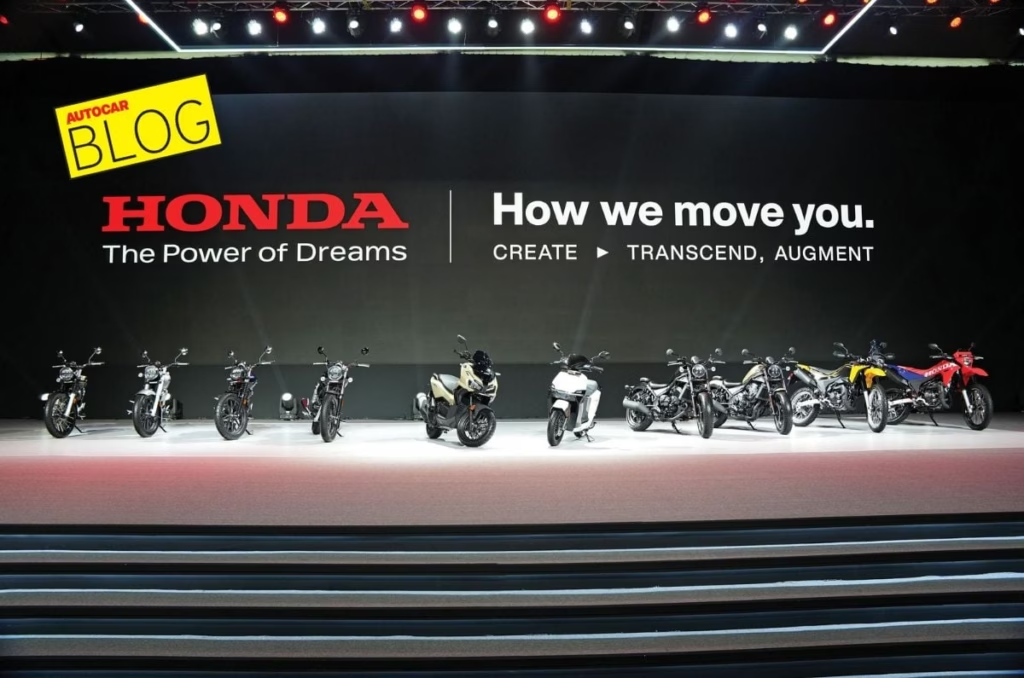
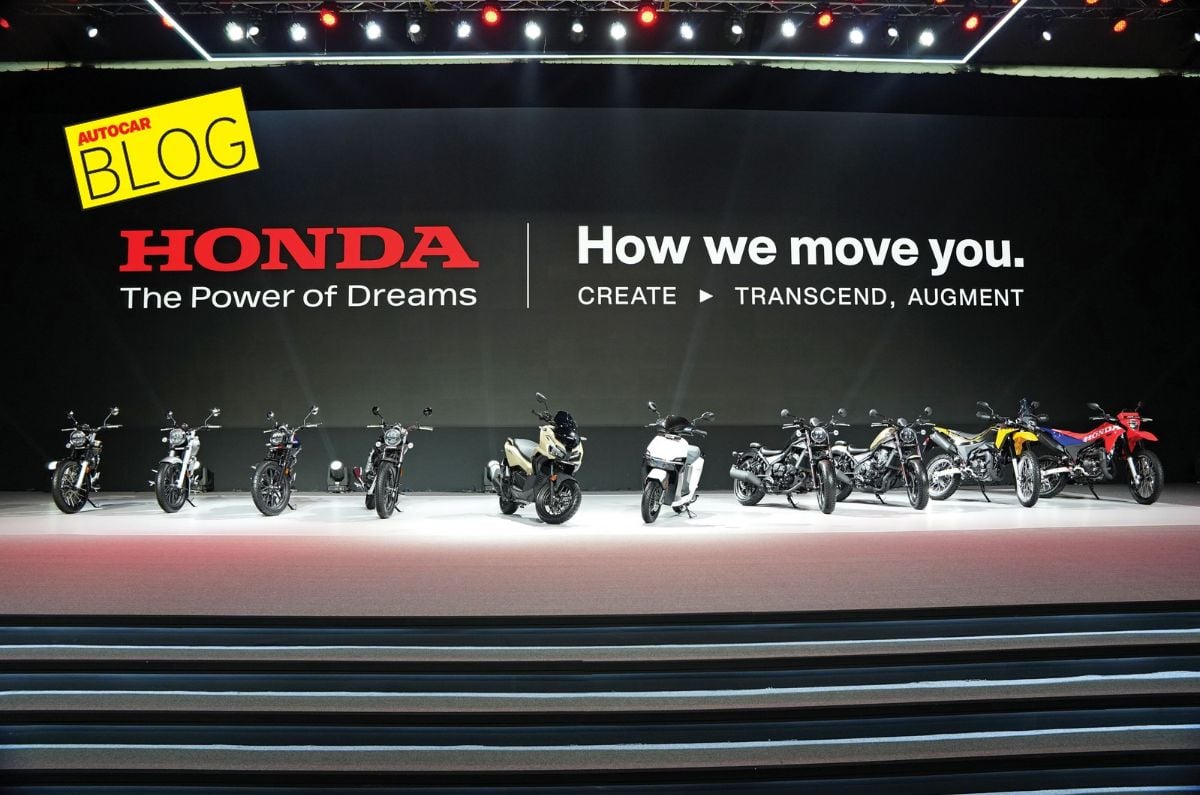
Honda bikes onstage at a big press event

2026 has revealed a change in how the Japanese treat our market. After years of being content to watch Indian competitors moving forward into more premium segments, the Japanese have finally realised that this is a space they can no longer ignore. 

The world’s biggest two-wheeler manufacturer is leading this charge. Honda recently held a huge event in Delhi in July, where they revealed ten new premium two-wheelers for India. That event on its own was a good sign, but there was still the very real concern of what these products would be priced at. After all, Indian enthusiasts have been burned by unrealistic pricing from the Japanese far too many times in the past.
Thankfully, things seem different this time around. So far, Honda has already released prices for the Rebel 300 (Rs 2.22 lakh-2.62 lakh), ADV160 (Rs 1.7 lakh), the QC3 electric scooter (Rs 1.35 lakh), XR300L and XR300 Rally (Rs 1.83 lakh & Rs 2.08 lakh, respectively) and the CB500 (Rs 2.75 lakh-3.02 lakh). All these prices are very reasonable and are either directly comparable with rivals or are at a small but justifiable premium. 

The best way to highlight this shift within Honda’s pricing strategy is to examine its own prices from a few years ago. The far superior Rebel 300 costs less today than the Rs 2.29 lakh price in 2022 for the now-discontinued CB300F. 

Sure, the Rebel now benefits from a lower GST structure, but the opposite holds true for the Honda CB1000 Hornet SP, which is priced at Rs 13.29 lakh. In comparison, the older CB1000R cost Rs 14.46 lakh in 2019, and it had far less fancy equipment. With Honda’s big bikes, the main issue is no longer the price but the fact that many of them aren’t available half the time. 

These new Hondas hold their own when compared with rivals as well. The new QC3 electric scooter is priced bang on par with equivalent rivals from Ather, Bajaj and TVS, and it will finally get Honda taken seriously in the EV space. The new CB500 is also priced Rs 10,000 lower than the top-spec Harley-Davidson X440 T, which is its closest rival. 

Yamaha is another manufacturer that has started to take crucial steps ahead. The awfully overdue XSR155 was finally introduced to India late last year, the R2 was just launched, and the NMax 155 will be coming in next year as well. These are good moves, but Yamaha needs to do more to cater to Indian riders who want more than just 150-200cc products. Kawasaki has localised a handful of its small bikes and we hear Suzuki is in the process of improving localisation on some of its big bikes as well, which is welcome news. 

None of these companies are taking these calls because they suddenly feel for the poor Indian motorcycle enthusiast who is crying out for more options. Those calls have gone unheeded for the better part of a decade.

The fact is that the Japanese (particularly Honda) are now seriously feeling the heat from local competition. Indian manufacturers (particularly TVS) have made massive gains over the last 5-10 years in all segments from scooters to EVs to premium motorcycles. Competition always benefits the customer, and it’s competition that we have to thank for this new enthusiasm shown by the Japanese towards the Indian market.

What to expect from Volvo EX90 ahead of launch tomorrow

What to expect from Volvo EX90 ahead of launch tomorrow
Volvo EX90 front quarter static

Volvo India will launch its flagship electric EX90 SUV on October 12, 2026. It will launch alongside the ES90 flagship sedan, and both are underpinned by Volvo’s EV-dedicated SPA2 architecture. In Volvo India’s portfolio, it will sit above the brands other electric SUVs like the EX30 and EC40. The EX90 will be positioned as an all-electric alternative to the already existing ICE-powered XC90. Ahead of its launch, here’s everything you need to know about the Volvo EX90.  

What is the expected price and rivals of the Volvo EX90? 

The Volvo EX90 is expected to be priced in the ballpark of Rs 1.4 crore to Rs 1.5 crore, ex-showroom. The Volvo EX90 will lock horns with the Mercedes-Benz EQS and the Kia EV9. 

What powertrains will the Volvo EX90 get?

The EX90 will come in one fully-loaded variant to India. It will be powered by a 106kWh battery pack paired with a dual-motor setup enabling AWD. The combined power output is 456hp and 670Nm with a claimed 0-100kph time of 5.5 seconds. Volvo claims a WLTP-certified range of 625km and, during our time with it, it delivered a respectable 530km range. As for charging, it supports 11kW AC charging speeds, taking 11 hours to top up from 0-100 percent. On DC charging, it supports up to 350kW thanks to its 800V system. 

What will the Volvo EX90 look like?

In typical Volvo fashion, the EX90 gets an understated exterior appearance, and it looks quite different from its ICE-powered XC90. At the front, there are LED DRLs with ‘Thor’s Hammer’ signatures that split open to reveal the main headlamp units. The grille gets a blanked-off finish with the Volvo badge in the centre, DRL strips on the sides of the bumper, and a trapezoidal air intake lower down.

In profile, it gets a smooth finish for the doors, flush door handles, a rising window line, gloss black cladding for the sills, and 21-inch dual-tone alloy wheels. The rear gets a split design for the LED tail-lamps with C-shaped LEDs below and vertically stacked LED strips on the D-pillar. Like the front, there’s minimal cladding at the back with a gloss black finish lower down the bumper. Boot space is 324 litres with the third row up and 690 litres when folded

What will the Volvo EX90 interior look like?

Inside, the Volvo EX90 gets a minimalistic cabin with a two-tone grey and white theme. There aren’t many physical buttons here, but a large vertically oriented infotainment screen is placed at the centre of the dashboard.

Across the interior, there’s open-pore wood and brushed aluminium trims, while the seats are wrapped in Nappa leather upholstery. Below the infotainment screen is a centre console comprising a wireless phone charger and a rotary knob for media controls. The Volvo EX90 is a 6-seat SUV in a 2+2+2 configuration with captain chairs for the middle row.

What features will the Volvo EX90 get?

The Volvo EX90’s equipment list includes a 14.5-inch infotainment screen powered by Google, 9-inch digital driver’s display. Wireless phone charger, 25-speaker Bowers & Wilkins sound system, powered, ventilated, and massaging front seats, an electrochromic panoramic glass roof, and 4-zone climate control. Safety features include 9 airbags, an ADAS suite, a 360-degree camera, and automatic parking.  

EV two-wheeler sales crosses 11 lakh units in FY2027

EV two-wheeler sales crosses 11 lakh units in FY2027
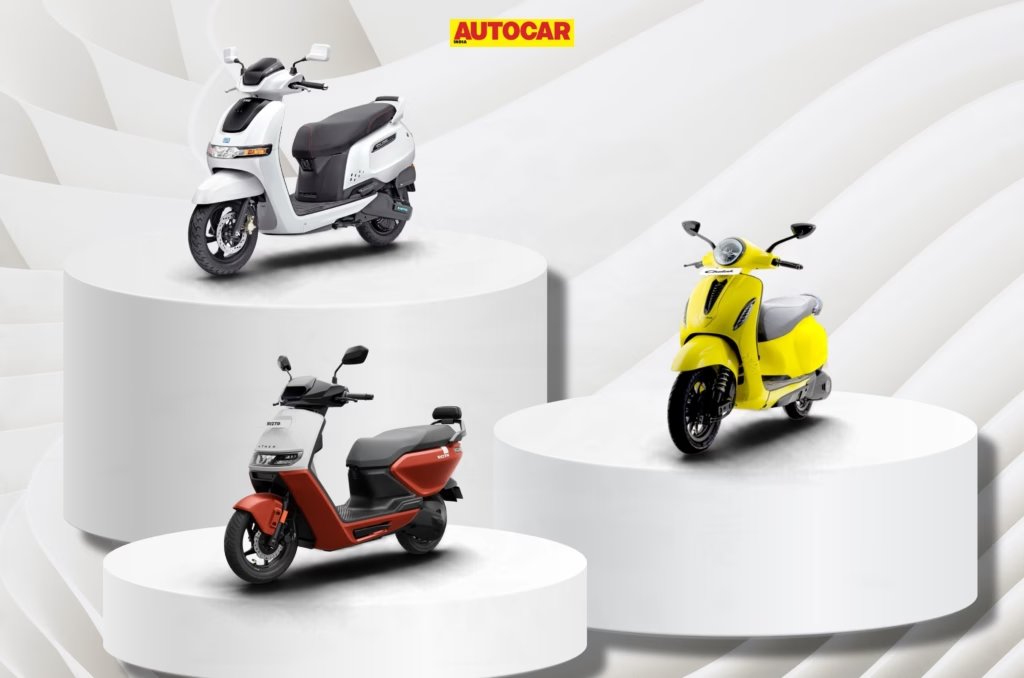
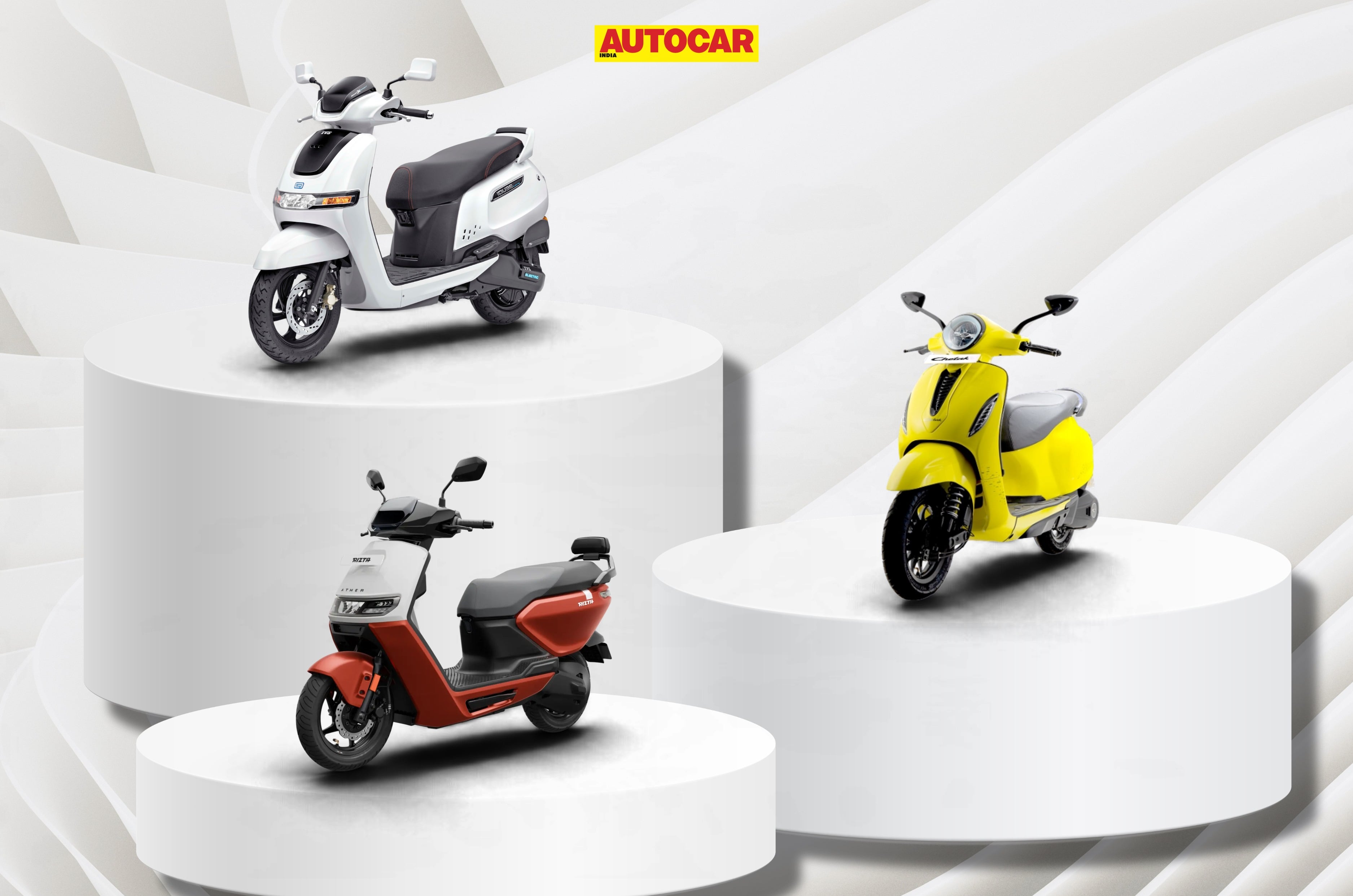
TVS iQube, Bajaj Chetak, and Ather Rizta listed in a podium as the first, second, and third respectively.

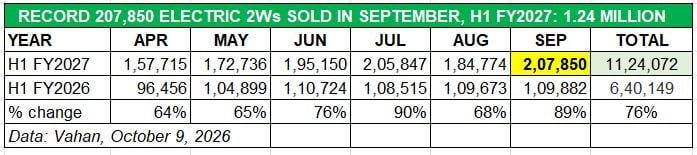
India’s electric two-wheeler market is on a roll and how. While January-September 2026 retail sales have already crossed 1.61 million units, e-2-wheeler customer deliveries in April-September 2026 increased 76 percent to 11.2 lakh units (versus 6.40 lakh units same time last year). The rapid pace of demand means that the industry is predicted to end the financial year with 22.6 lakh total sales. September 2026 was also the first time the industry sold 2.07 lakh units (highest yet), which is an 89 percent increase compared to 2025.

  1. Besides the top-three, Bounce and River have improved the most
  2. Ola has held on to fifth place, but lost 9 percent of its market share
  3. September’s high sales numbers will likely be surpassed by the upcoming festive season

Indian e-2-wheeler industry sales: The trend so far

TVS and Bajaj continue to lead, with Vida steadily improving

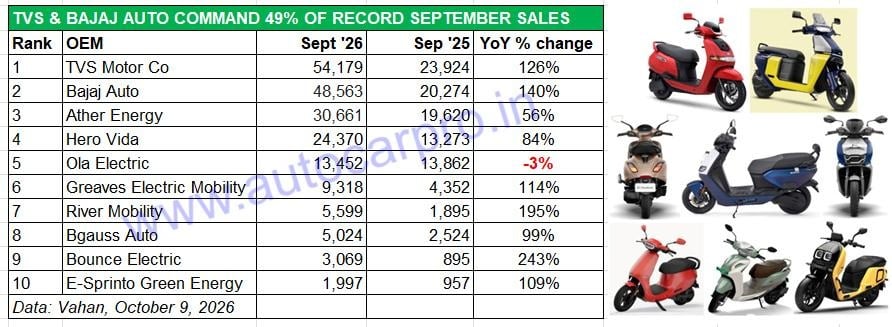
TVS and Bajaj, which have been the top two brands since Ola moved out of the top spot in April 2025, continue to register handsome gains. In September, both companies registered triple-digit growth, which ensured that they make up a 49 percent share of the record monthly retails. This is the highest monthly sales for Bajaj, beating March 2026 (47,755 units). Ather, in the third position, sold 30,661 units and marked 56 percent YoY growth. March 2026 continues to be Ather’s best month, sales-wise (36,634 units) with the Konarc expected to contribute to that number substantially soon. Vida, backed by Hero, sold its highest ever 24,370 units in September, crossing July’s number (22,996).

Brand-wise performance and market share in H1 FY2027

Besides the top two, River and Bounce improved the most

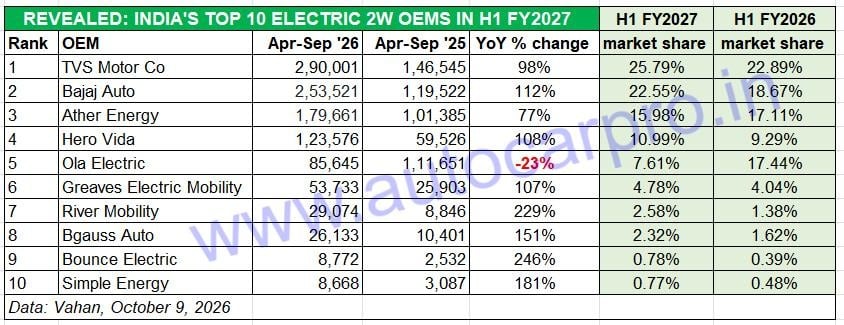
Electric 2W market leader TVS nearly doubled its first-half retail sales YoY to 2.90 lakh units, giving it a 26 percent market share. For TVS, EVs are now a key growth driver and every fifth scooter the company sells is now a zero-emission model. Bajaj, which sells multiple variants of the Chetak, has retailed 2.53 lakh units in the past six months. The strong performance gives it a current market share of 23 percent. Ather, in third position, has clocked retail sales of 1.79 lakh units in H1 FY2027. Ather crossed the 30,000 mark in three of the past six months, June, July and September. Its H1 FY2027 market share is 16 percent, one percentage less than H1 FY2026. A few days ago, cumulative Ather sales surpassed 8 lakh units, making it the fourth company after Ola, TVS and Bajaj to achieve that milestone.

Fourth-ranked Vida registered retail sales of 1.23 lakh units in first-half FY2027, up 107 percent YoY. Ola remains glued to the fifth rank with an 8 percent market share, considerably down from the 17 percent it had in H1 FY2026. Greaves Electric Mobility (GEM), manufacturer of Ampere e-scooters, has sold 53,733 units, comes in at sixth with a 107 percent YoY growth.

The Bengaluru-based River, which continues to impress month on month, has sold 29,074 units in H1 FY2027. The stellar performance sees River’s market share rise to 3 percent from 1 percent in H1 FY2026. The startup’s highest monthly sales came in July (6,044 units). In eighth place, the Mumbai-based BGauss has sold 26,133 units in H1 FY2027, registering a 107 percent growth compared to H1 FY2026. Bounce ranks ninth with 8,772 units, up 246 percent YoY. Simple, which has been a regular in the monthly top 10 e-2-wheeler sales listing since February 2026, has clocked cumulative six-month sales of 8,668 units, up 181 percent YoY. This momentum comes just as Simple launched its most affordable scooter yet, the Wave, starting at Rs 1.10 lakh.

India’s e-2-wheeler market with 200 players, is the largest contributor to India’s EV sales numbers with a 62 percent share of the total EVs sold in the April-September 2026 period. The market is currently led by TVS, Bajaj, Ather, Vida, Ola and GEM – who account for 88 percent share of the e-2-wheeler sales in H1 FY2027. Given its robust 76 percent growth so far, and the festive season having just begun, one can expect September’s record 2.07 lakh unit sales to be surpassed soon.

With inputs from Stephen Raj Antony.

Honda, Suzuki and Yamaha e-scooter sales cross 10,000 units in 2026

Honda, Suzuki and Yamaha e-scooter sales cross 10,000 units in 2026
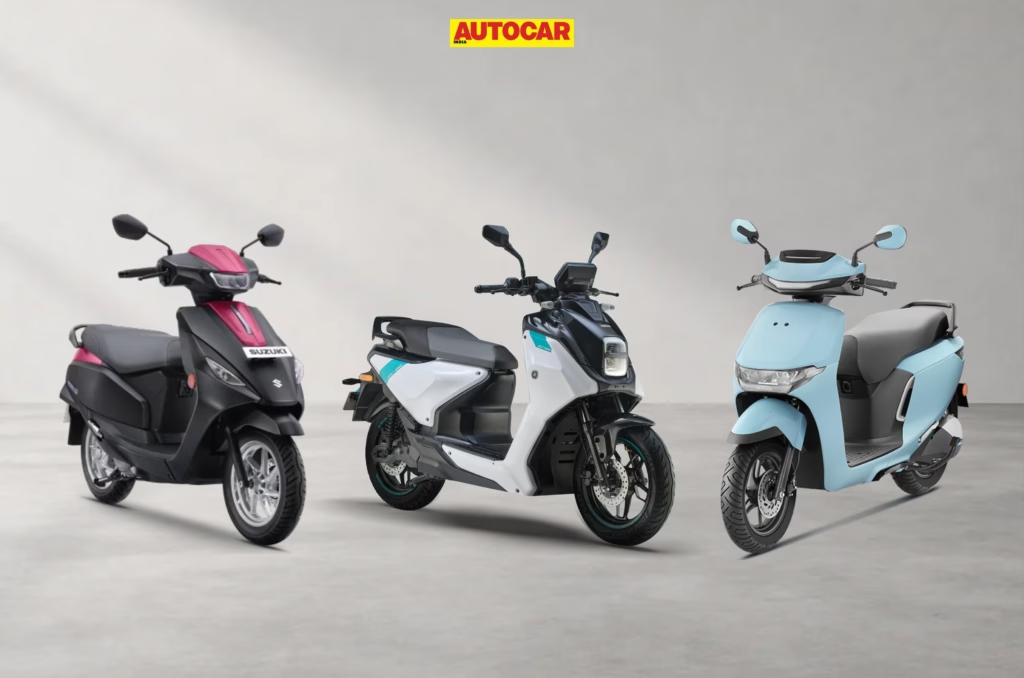
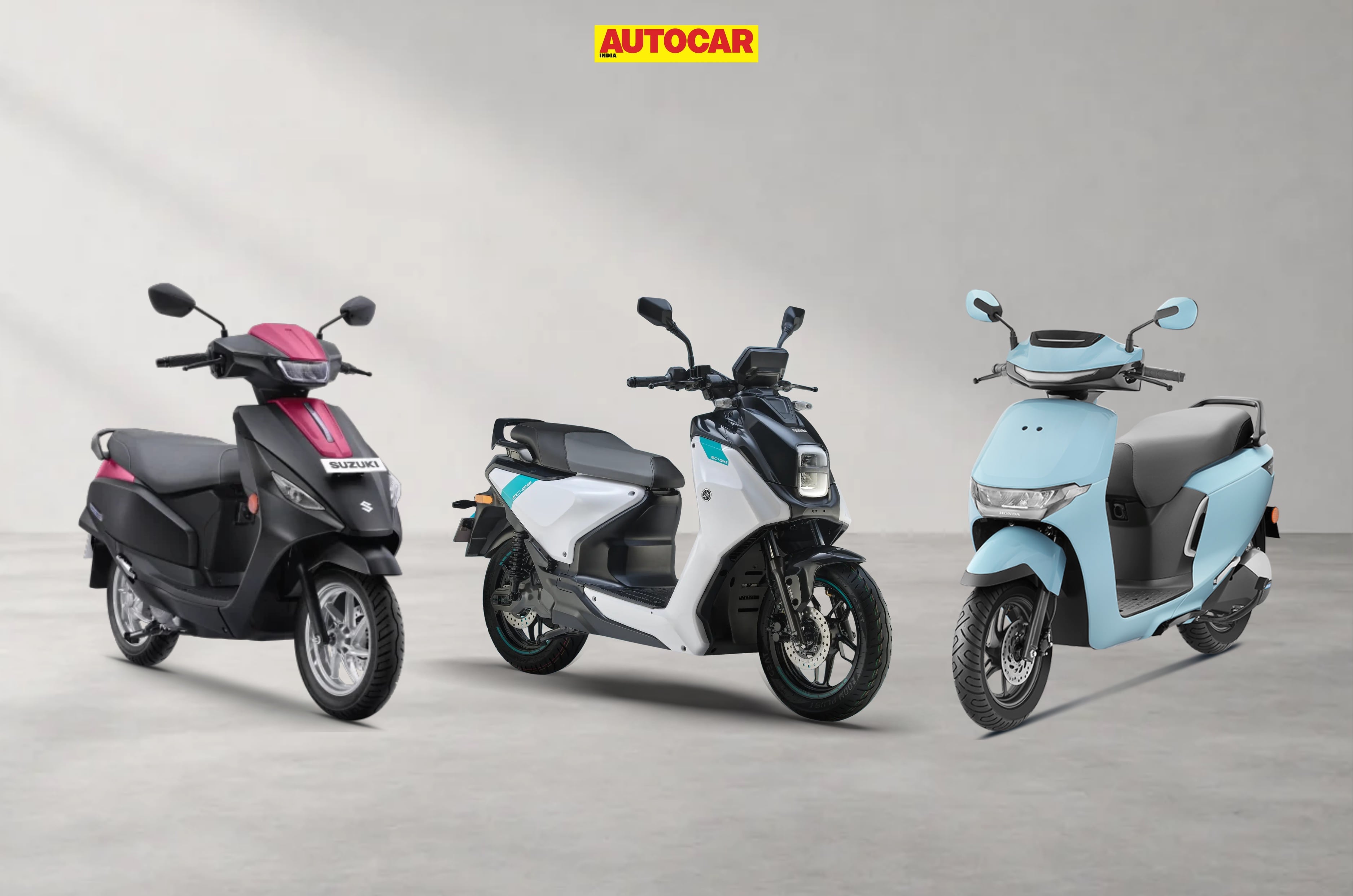
Graphic with Honda, Suzuki and Yamaha e-scooters

Cumulative retail sales of the three Japanese electric scooter manufacturers in India – Honda, Suzuki and Yamaha – have crossed the 10,000-units mark for the first time in a calendar year. As per the latest Vahan statistics, this triumvirate have delivered 10,735 units to their customers between January 1 and October 8 in 2026. 

Last year, Honda, which was the sole e-2-wheeler OEM in India, had sold 7,730 units of the Activa-e and QC1, less of the former and more of the latter. While Suzuki entered the market in January 2026 with its e-Access, Yamaha plugged in two months later in March with its EC-O6. This makes 2026 the first year when all these three Japanese OEMs are part of the Indian electric scooter market.

A look at the OEMs’ monthly performance reveals that Honda Motorcycle & Scooter India has sold 5,536 units in this year to date, accounting for 51 percent of the total 10,735 Japanese e-scooters delivered. HMSI’s best monthly sales this year were in September (1,107 units), marking the first time the OEM has crossed 1,000 units. This number can only improve following the recent launch of its third e-scooter for India – the QC3. 

The initial rollout of the QC3 will be limited to five cities across the country: Delhi, Agra, Cuttack, Surat and Kollam, with a nationwide rollout to follow in a phased manner.. 

Suzuki Motorcycle India, which entered the India e-2W market with its e-Access in January this year as an alternative to the popular petrol-engined Suzuki Access 125, has delivered 4,133 units till October 8. This gives the company a 39 percent share of the three Japanese OEM’s total e2W retail sales. The monthly sales chart reveals that monthly sales have crossed 600 units for three months running: July (606 units), August (674 units) and September (657 units). Rather creditable considering this is an expensive product, priced at Rs 1.88 lakh (ex-showroom) and the costliest amongst the Japanese EVs. 

India Yamaha Motor, which plugged into the e-2W market this March, has retailed 1,066 units, which gives it a 10 percent share of the 10,735 units delivered by Honda, Suzuki and Yamaha. Yamaha’s vehicle of entry is the EC-06, its first electric scooter developed in collaboration with River Mobility. IYM’s highest monthly sales to date were in September (232 units)

Japanese OEMs have 0.66 percent share of e-2Ws sold in 2026 so far

As the monthly retail sales data table depicts, combined Honda-Suzuki-Yamaha sales were at their highest in September 2026 (1,996 units), which gives them a 1 percent share of the record 2,07,850 e-2Ws sold in India last month. Of the total 16,10,854 e-2Ws sold between January 1 and October 8, these three Japanese OEMs with 10,735 units have a meagre 0.66 percent share. 

Among the reasons for their minimal presence in this booming segment of the Indian EV industry is that Honda, Suzuki and Yamaha entered the e-2W market late, as compared to their ICE legacy rivals TVS Motor Co (January 2020), Bajaj Auto (January 2020) or Hero MotoCorp Vida (November 2022).

While market leader TVS has sold 4,22,274 iQubes and Orbiters for a 26 percent market share of the e-2W sales in 2026 to date, Bajaj Auto has delivered 3,61,988 Chetaks (22 percent share), Ather Energy has sold 2,67,579 units (17 percent share) and Hero Vida 1,77,541 e-scooters (11 percent share). 

There is also the issue of their stiff model pricing in a value-conscious market, which has a plethora of more affordable e-scooters which are also more tech-laden, as well as a limited sales network compared to the Indian legacy OEMs as well as a host of startups which are regulars in the monthly Top 10 e-2W OEM chart. 

Bajaj Pulsar NS200 Updated with Quickshifter and TFT display

Bajaj Pulsar NS200 Updated with Quickshifter and TFT display
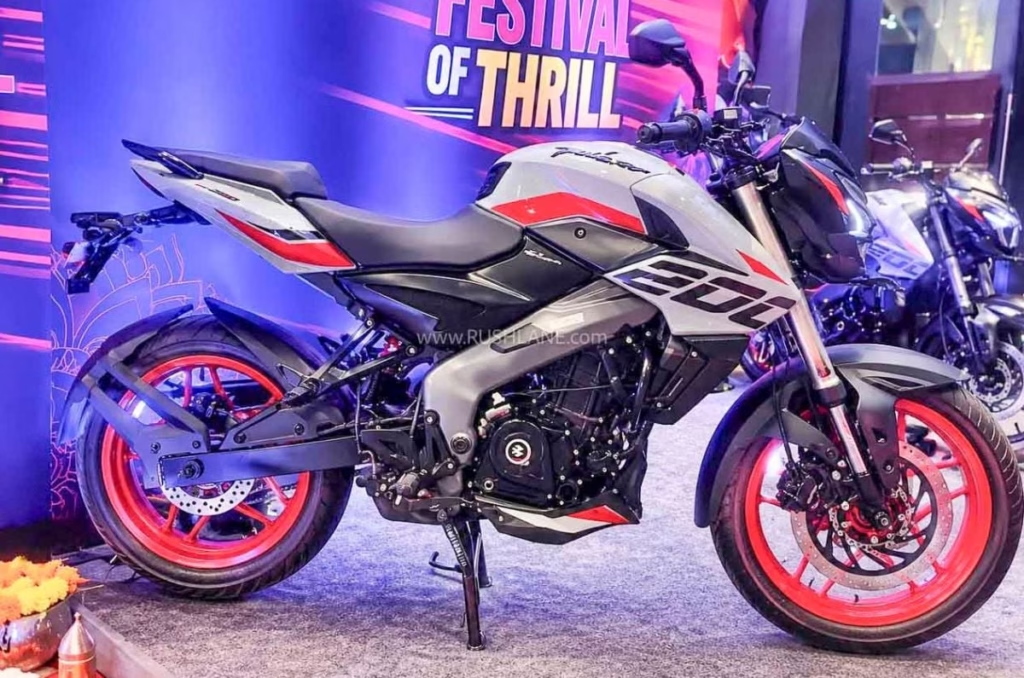
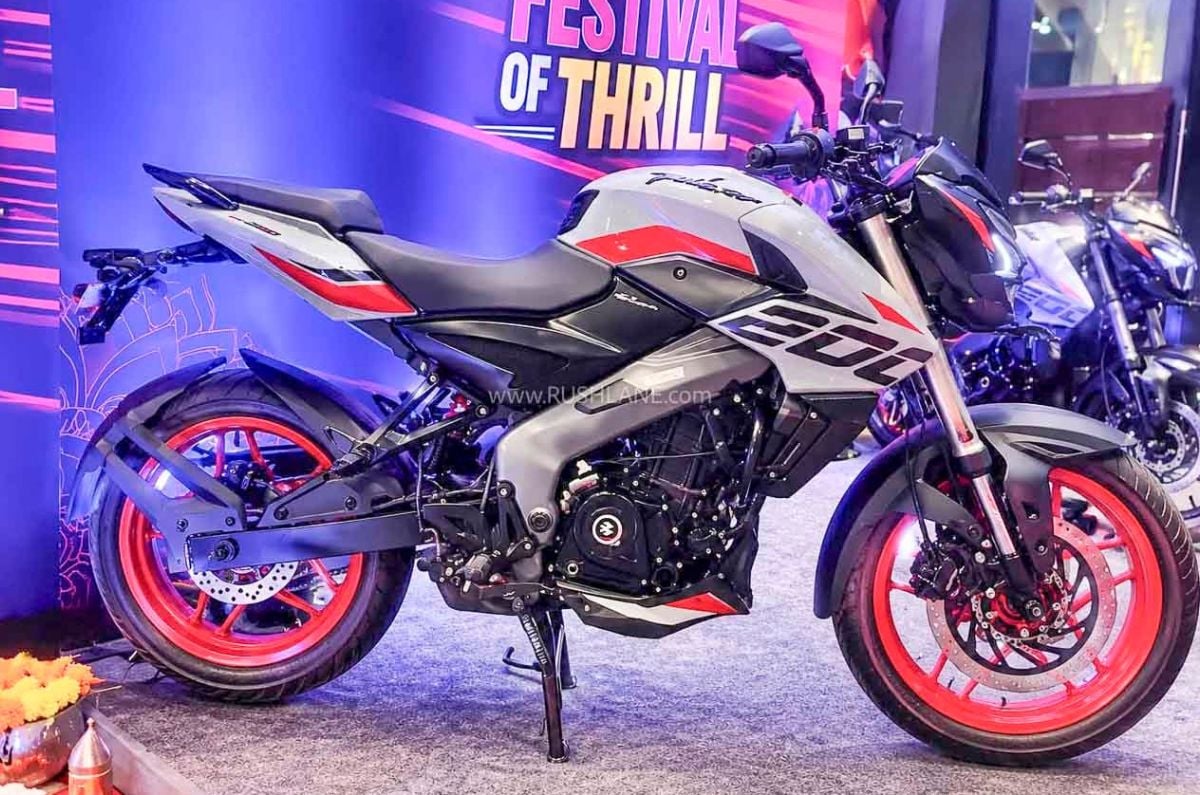
An indoor image showing the new Nardo Grey colour of the updated Pulsar NS200

Bajaj continues to update its Pulsar line-up, and the latest one to see feature additions is the Pulsar NS200. While we had previously spotted the NS200 and the N250 with a new instrument cluster and WP USD front fork, the bike that has now reached dealerships doesn’t seem to have the latter feature.

  1. Has a Quickshifter, 4 Ride Modes, Traction control, TFT instrument cluster
  2. Now gets Radial tyres, Adjustable levers and USB Type-C charging 
  3. A New Nardo Grey colour, price expected to increase from current Rs 1.48 lakh

Bajaj Pulsar NS200: what’s new?       

The 200cc engine now produces 25.5hp, 1hp bump

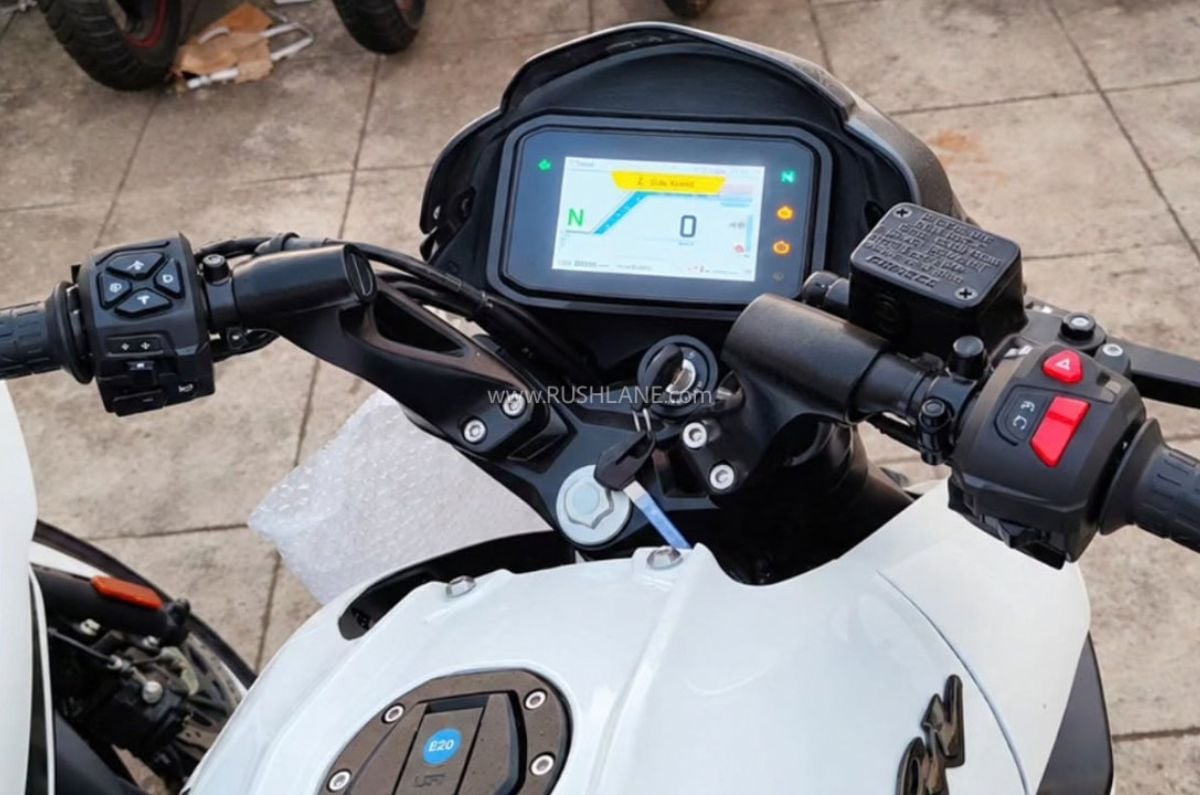
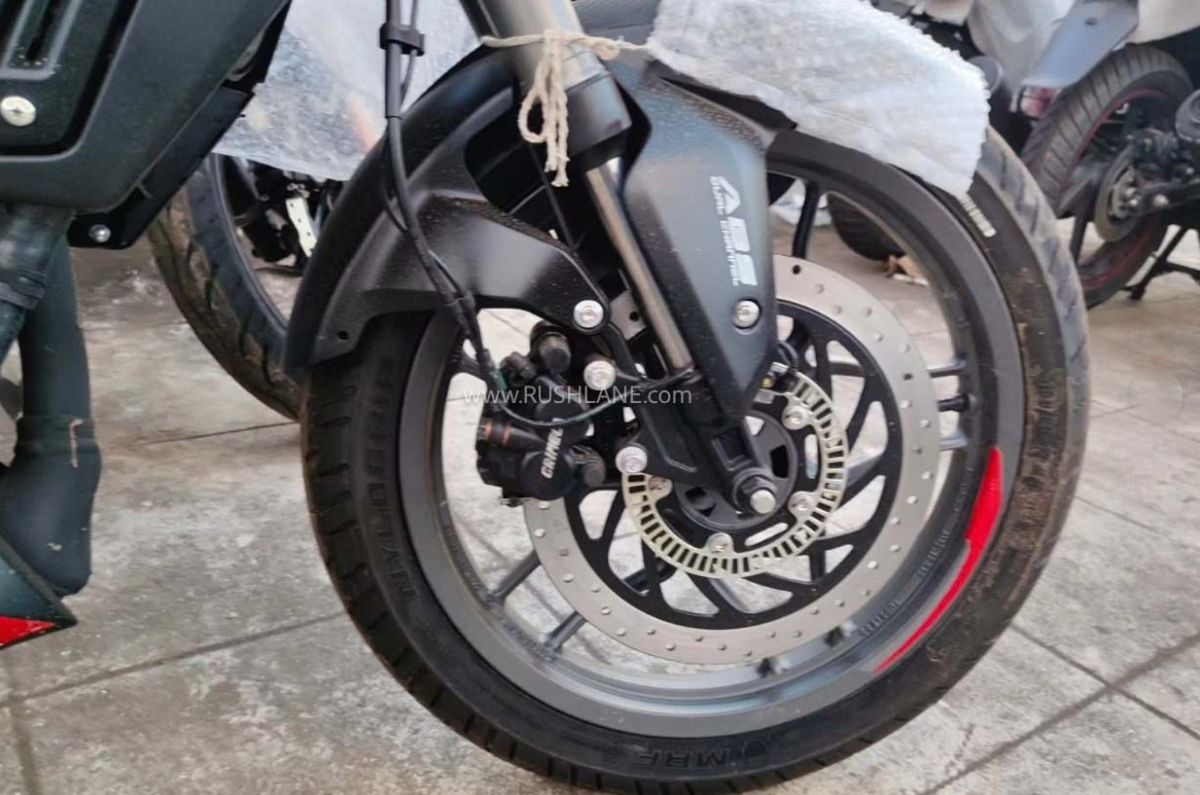
Having offered a bidirectional quickshifter, traction control and riding modes on the Pulsar NS400Z, Bajaj has now trickled these features down to the Pulsar NS200 as well. While the 37mm USD fork is carried over from before, radial tyres are a new addition to the motorcycle, though it remains unclear whether the bike features radial tyres at both ends or only the rear, there has been no official communication from the brand, hence the ambiguity.

There is also a slight bump in power as well, from 24.5hp of the current model to 25.5hp on the latest version. The 5-inch TFT instrument cluster with Google Maps mirroring, first introduced on the N160 SS, has also made its way here. Other listed features include USB Type-C charging, a hazard switch, a panic brake alert, and adjustable levers, though it remains unclear if the adjustability applies to both the clutch and brake levers.

For now, the announcement remains confined to the dealership level. The current USD-fork equipped Pulsar NS 200 is priced at Rs 1.48 lakh, which is on par with its chief rival, the TVS Apache RTR 200 4V (Rs 1.48 lakh to 1.49 lakh). However, given the additional features on the upcoming model, we can expect a price bump when Bajaj officially reveals it.

Source: Tarun Bajaj (X) 

River Indie now also available on Flipkart

River Indie now also available on Flipkart
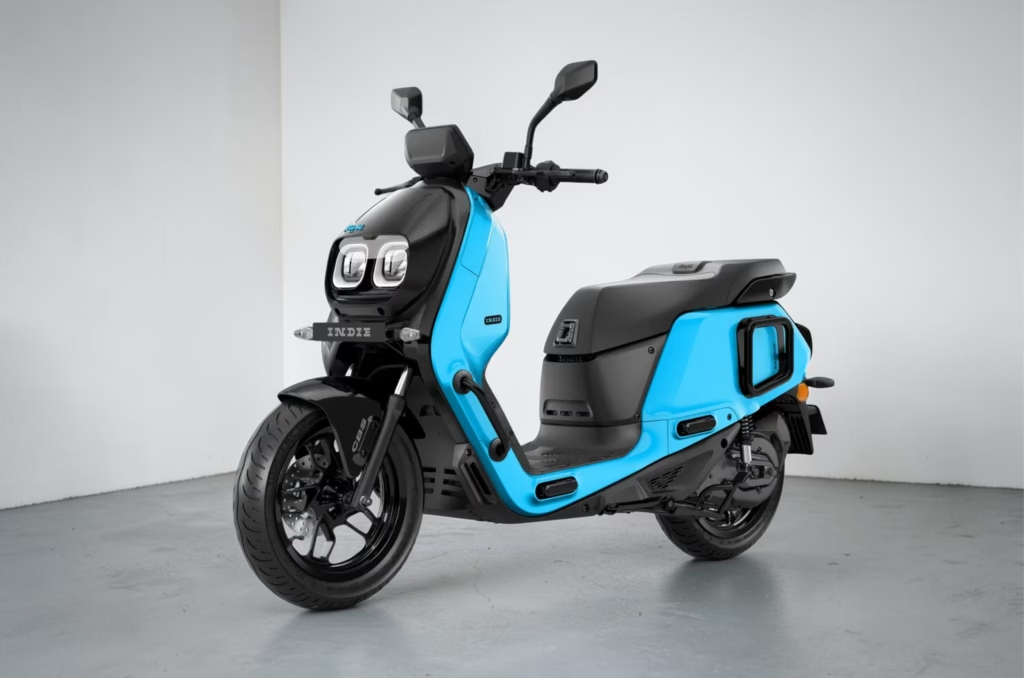
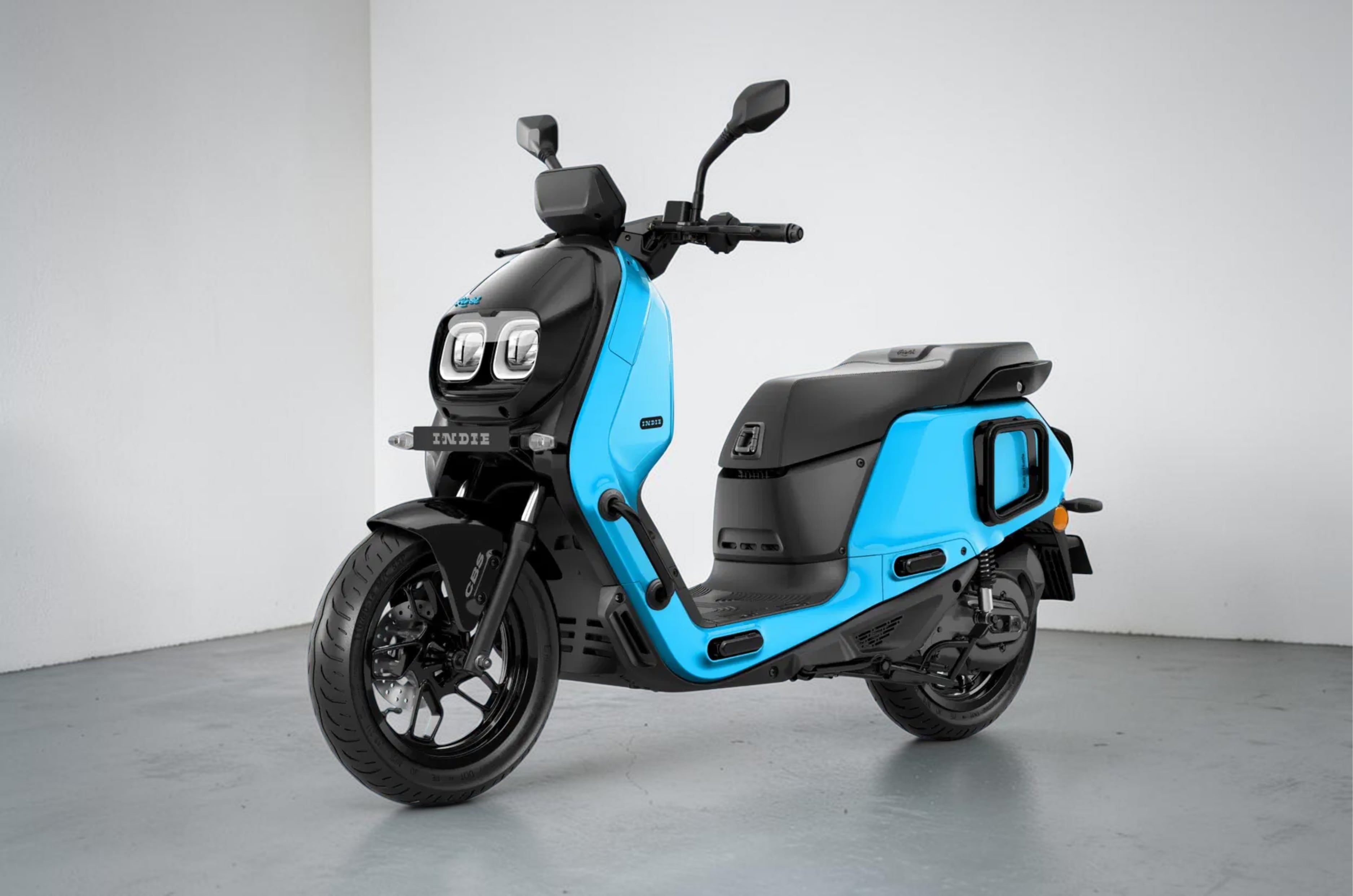
River Indie in Monsoon Blue colour.

Bengaluru-based EV manufacturer River sells just one product so far, the Indie e-scooter. The company also manufactures the EC-06 for Yamaha, which is based on the Indie. Availability has been a limiting factor, and they’re now looking to make it a bit easier for customers to book an Indie.

  1. River currently has over 80 stores across 48 cities in India
  2. The e-scooter is sold in one variant, with a 4kWh battery and 163km IDC range

River Indie on Flipkart: How does the process work?

Living near a River showroom is a requirement

At the time of writing, River has over 80 stores in 48 cities across India, with more in the works. Assuming you live near one of them, you no longer have to visit one in person to book an Indie. The company has listed the Indie on Flipkart, where you can check out and make your booking. Vehicles being sold via e-commerce websites isn’t new, and brands like Royal Enfield, Yezdi, Ather, and Vida are already sold online. . Like with these other manufacturers, once a booking is made, it gets transferred to the nearest dealership, who will fulfill it. After purchase, they’ll take care of the service as well.

To give a brief recap, the River Indie is an e-scooter with a 4kWh battery and a claimed range of 163km with a claimed 90kph top speed. However, the scooter distinguishes itself from the others by prioritising utility over technology. Its 55-litre under seat storage, “the SUV of scooters” tagline, and design all signal that the Indie means business, literally and figuratively. River currently sells the Indie in one variant for Rs 1.57 lakh (ex-showroom, Bengaluru); a price that’s reflected on Flipkart too.

Bajaj Pulsar RS200 spotted with TFT display and USD fork

Bajaj Pulsar RS200 spotted with TFT display and USD fork
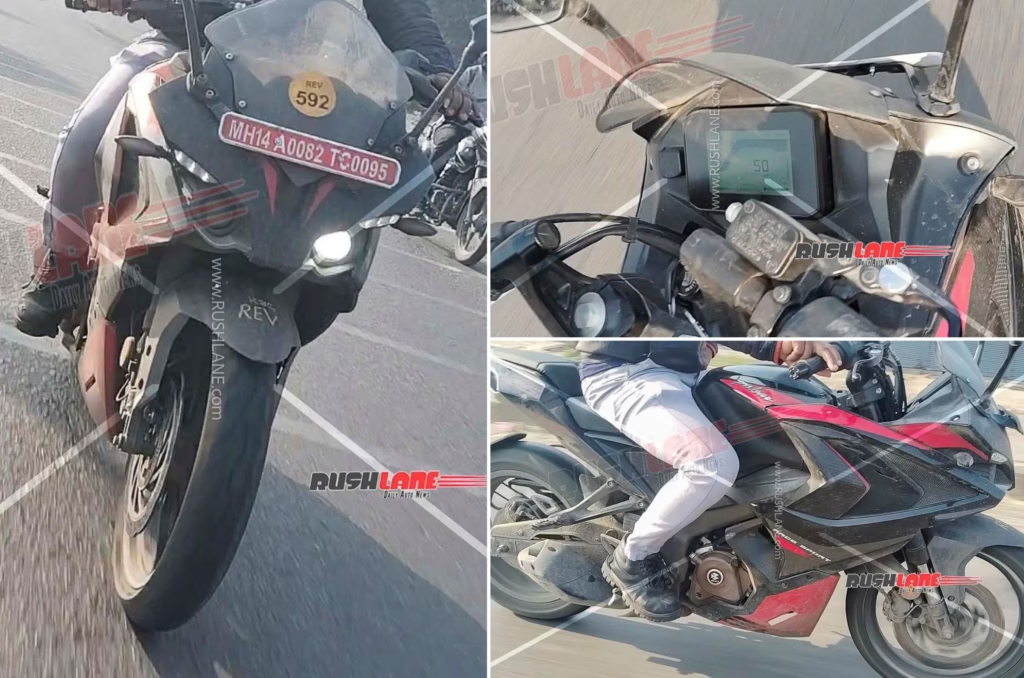
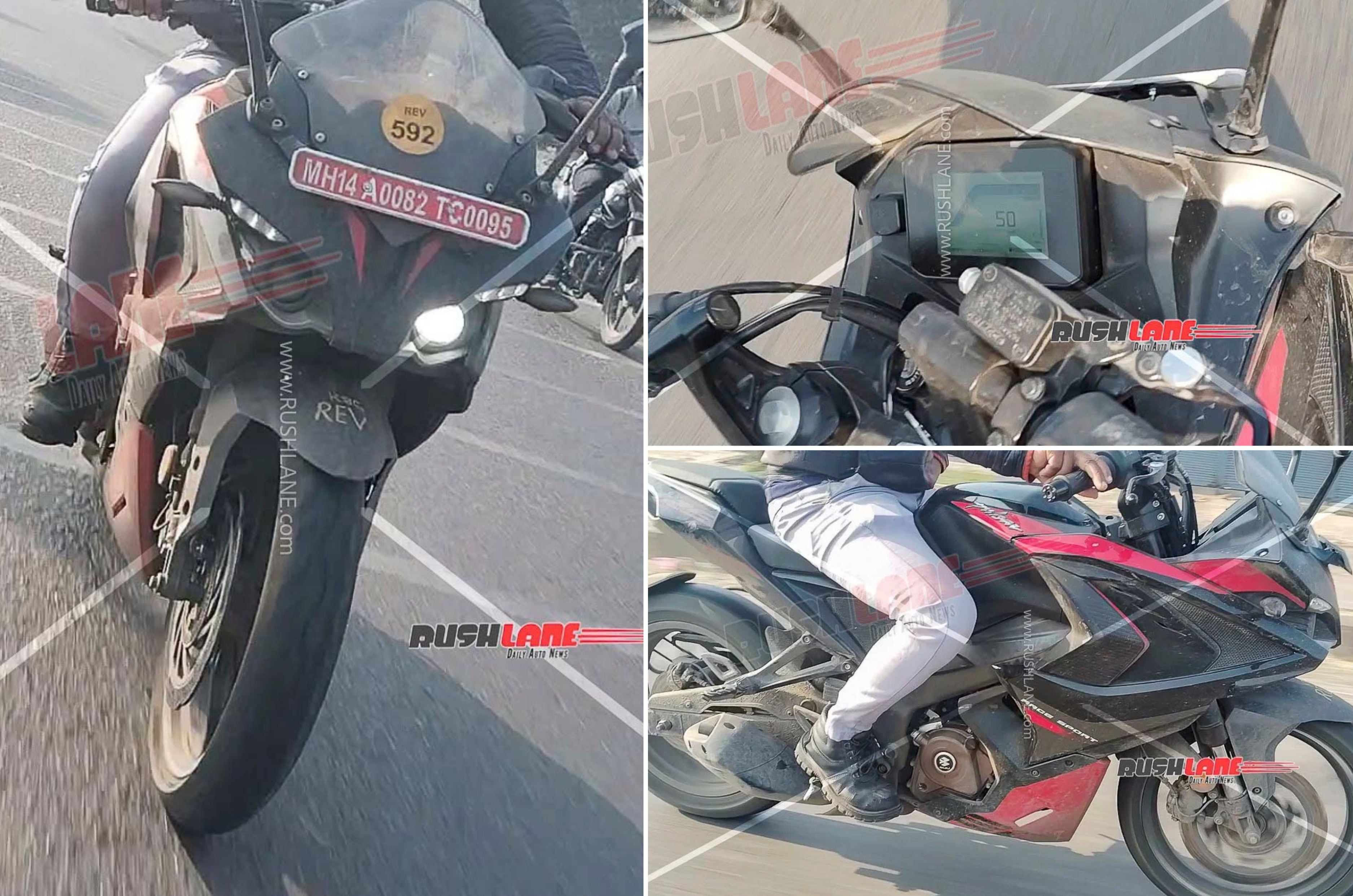
Bajaj Pulsar RS200's new 5-inch TFT screen, unchanged side profile and headlight in clockwise direction.

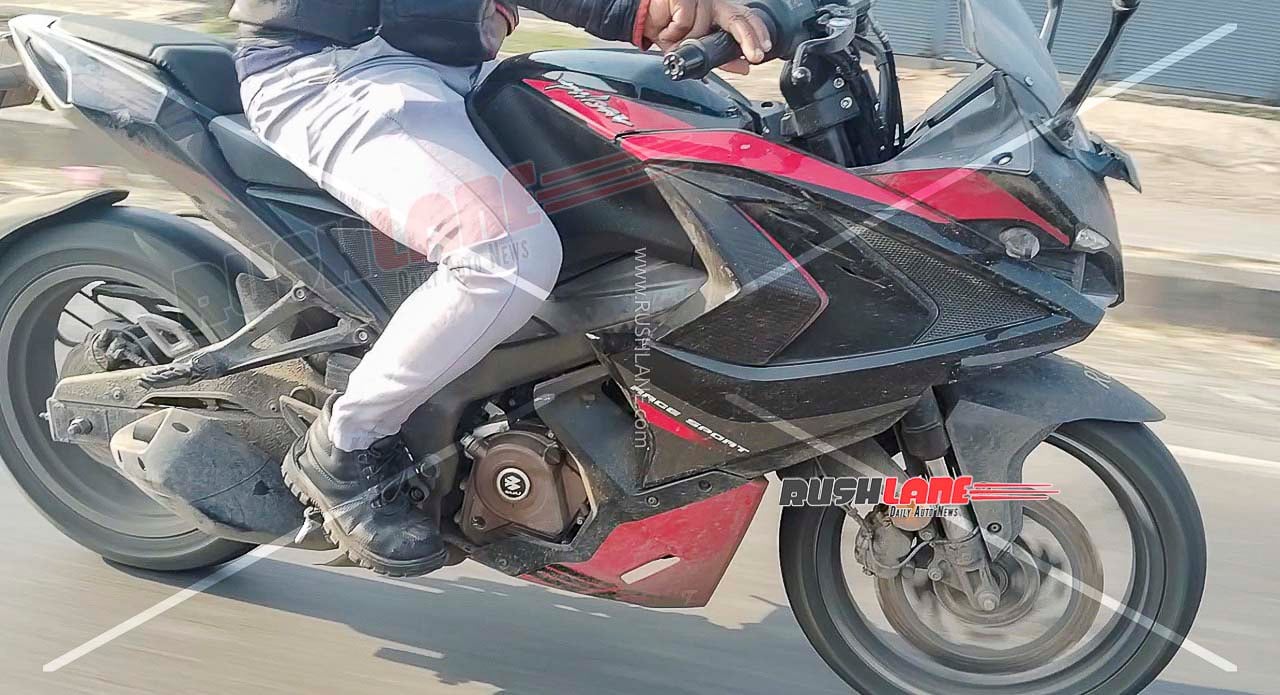
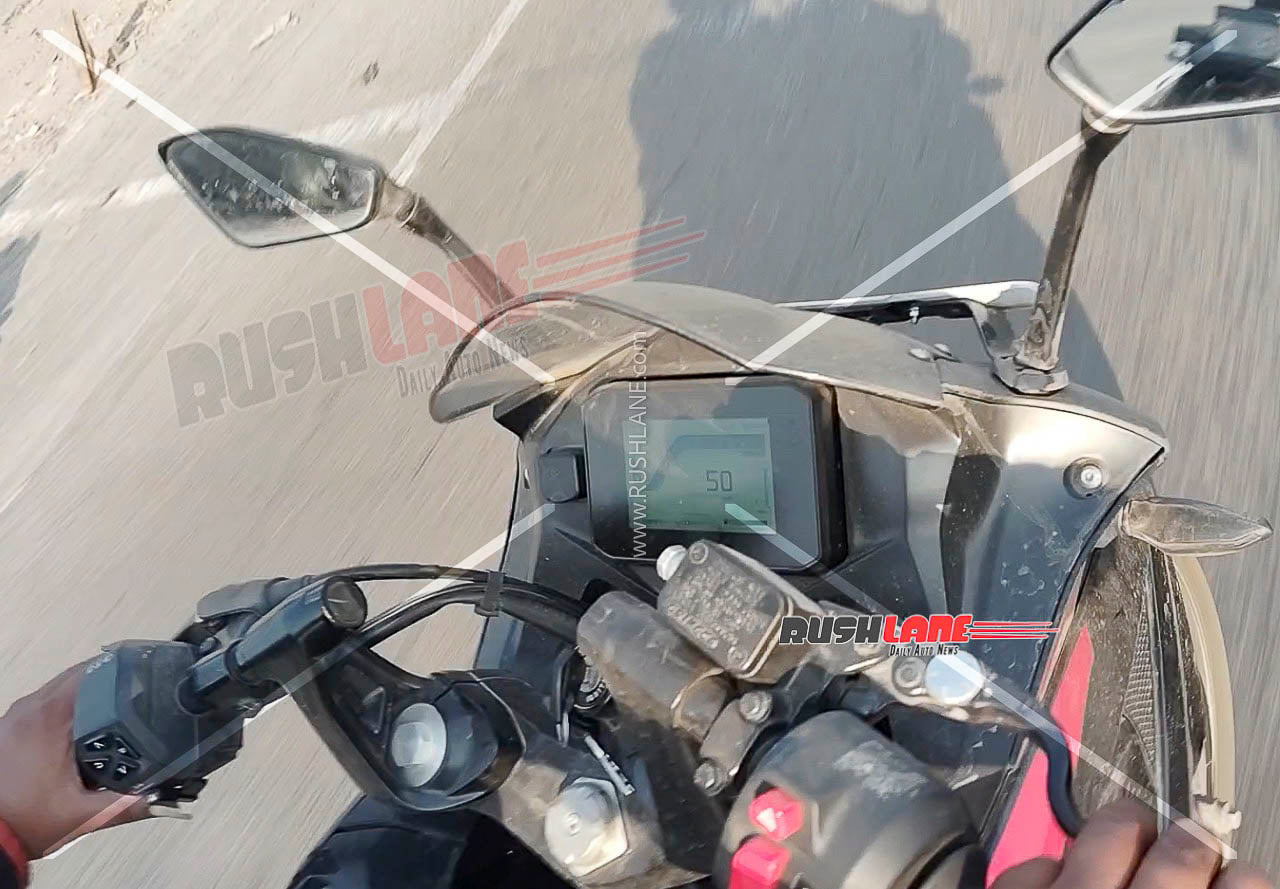
The Southwest monsoon may be over, but in Pune, it appears to be raining Pulsars. After updating the N160, 125, 150, and the NS400Z, the RS200 could be up next to get updated. If these images are anything to go by, it looks to be a pretty massive one as well. Bajaj’s only Pulsar with a fairing was spotted testing with two significant changes: an USD fork and the company’s new 5-inch TFT display that first debuted on the Pulsar N160 SS.

  1. Expected to stick to the same design and the 199.5cc engine with 24.5hp and 18.7Nm
  2. Likely to get new switch cubes and adjustable levers
  3. NS200 expected to get even more updates

Bajaj Pulsar RS200: The story so far

11 years of being in a class of one

Bajaj first introduced the RS200 in 2015, based on the NS200. The official Bajaj full form of RS is Race Sport versus the NS’ Naked Sport. At launch, it was the Pune-based automaker’s first fully-faired motorcycle and till date it remains the only one as well. In its current form, the RS200 has a 199.5cc, single-cylinder, liquid-cooled engine with 24.5hp and 18.7Nm. The standard rider aids on offer are dual-channel ABS and a slip-and-assist clutch which are expected to be carried over. The RS has largely been mechanically similar to the NS200, except of course the front suspension unit. The current RS200 has a right side up (RSU) telescopic fork compared to the NS200, which has had upside down (USD) units since 2023.

Bajaj Pulsar RS200 side profile

While this update is pretty substantial for the RS200, the NS looks poised to get even more upgrades, such as one extra hp, ride-by-wire, four ride modes, traction control, a quickshifter and radial rear tyre, besides the TFT display. It’s entirely possible that the RS200 will also get these features, and we should hear more about that closer to its launch. If that doesn’t end up being the case, the upcoming RS200 would still be a few beats behind its sport-naked sibling.

Besides giving the RS200 these two, admittedly major mechanical upgrades, Bajaj looks to be taking it easy elsewhere. The motorcycle in the images visually looks very similar to the current version, sharing even the design details on the bodywork. However, it’s possible that Bajaj will bring slight updates to the decals at launch. We do see upgraded switch cubes on both sides though, likely necessitated by the new display. Since the TFT display also supports Google Maps mirroring on the other Pulsars, it’s more than likely that the feature will be present in this RS 200 as well, possibly limited to a higher variant. Adjustable brake and clutch levers can also be seen – a nice touch from Bajaj.

Bajaj Pulsar RS200 with Bajaj's new 5-inch TFT display, USB-C port and updated switch cubes.

Excluding the Pulsars that have already been updated with the TFT display, the NS125 was spotted at a dealership with new colour options and an LCD screen. The NS200 and N250 were spotted testing with the same TFT unit and the upgraded switch cube. This leaves the NS160, Pulsar 180, and the 220F as the three Pulsars without any sort of upgrades thus far. Currently, the RS200 retails for Rs 1.81 lakh (ex-showroom, Delhi) for its single variant. It remains to be seen how much that changes when the upgraded version arrives. For context, all recently upgraded Pulsars have received price increases from Rs 5,000 to as high as Rs 14,000.

Source: Rushlane