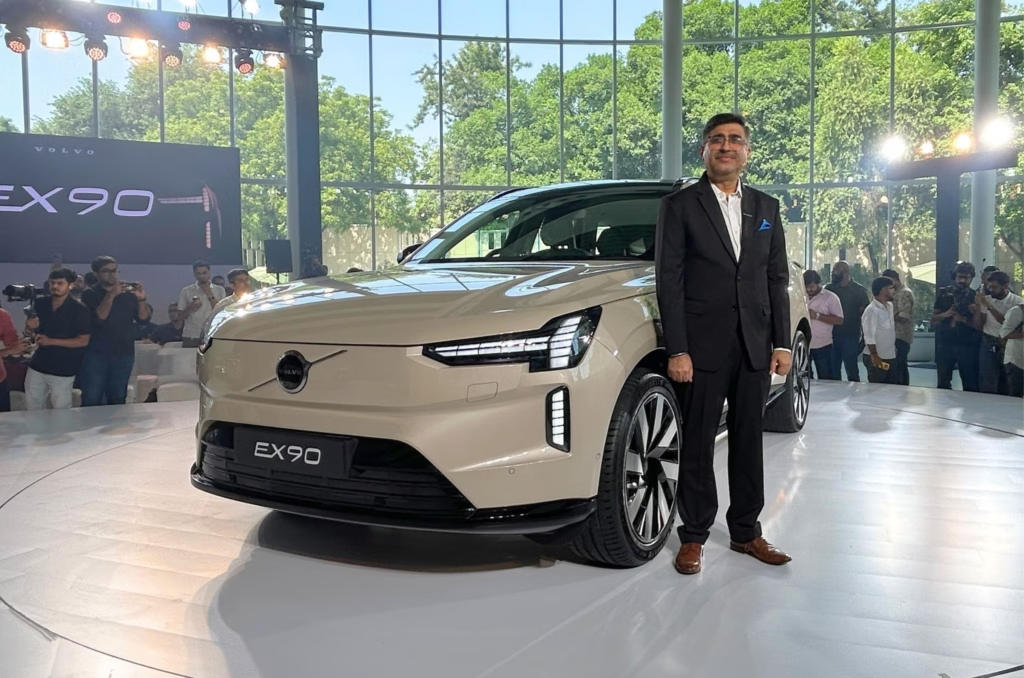
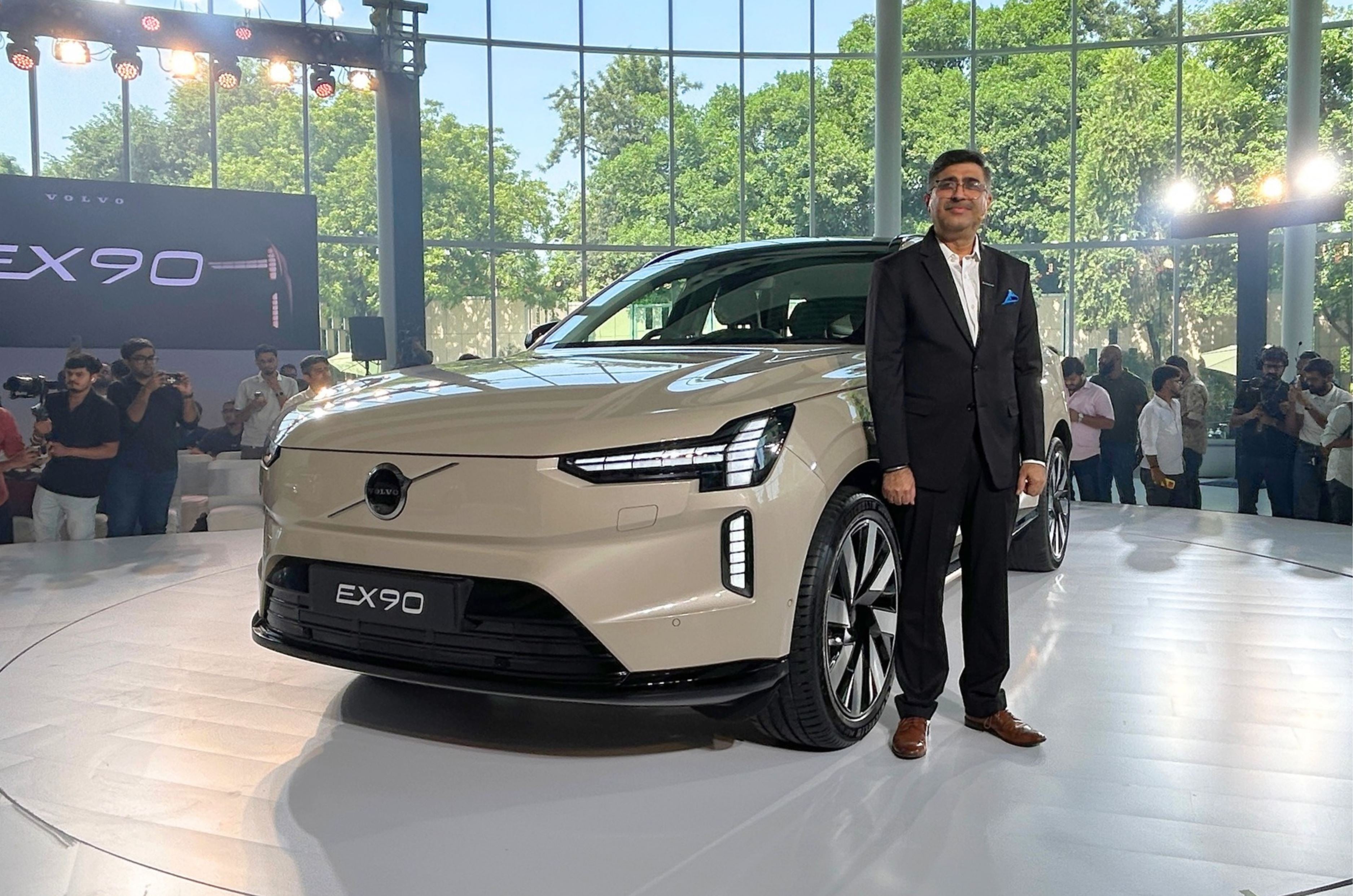
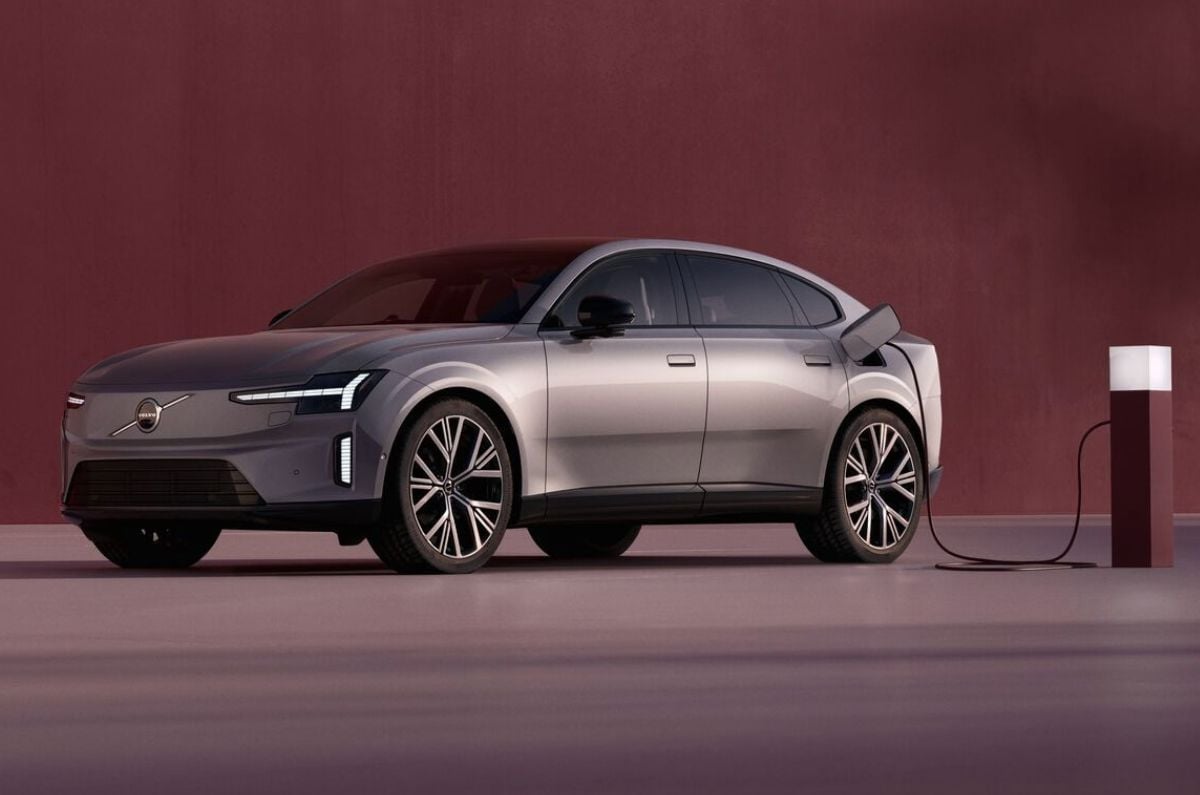
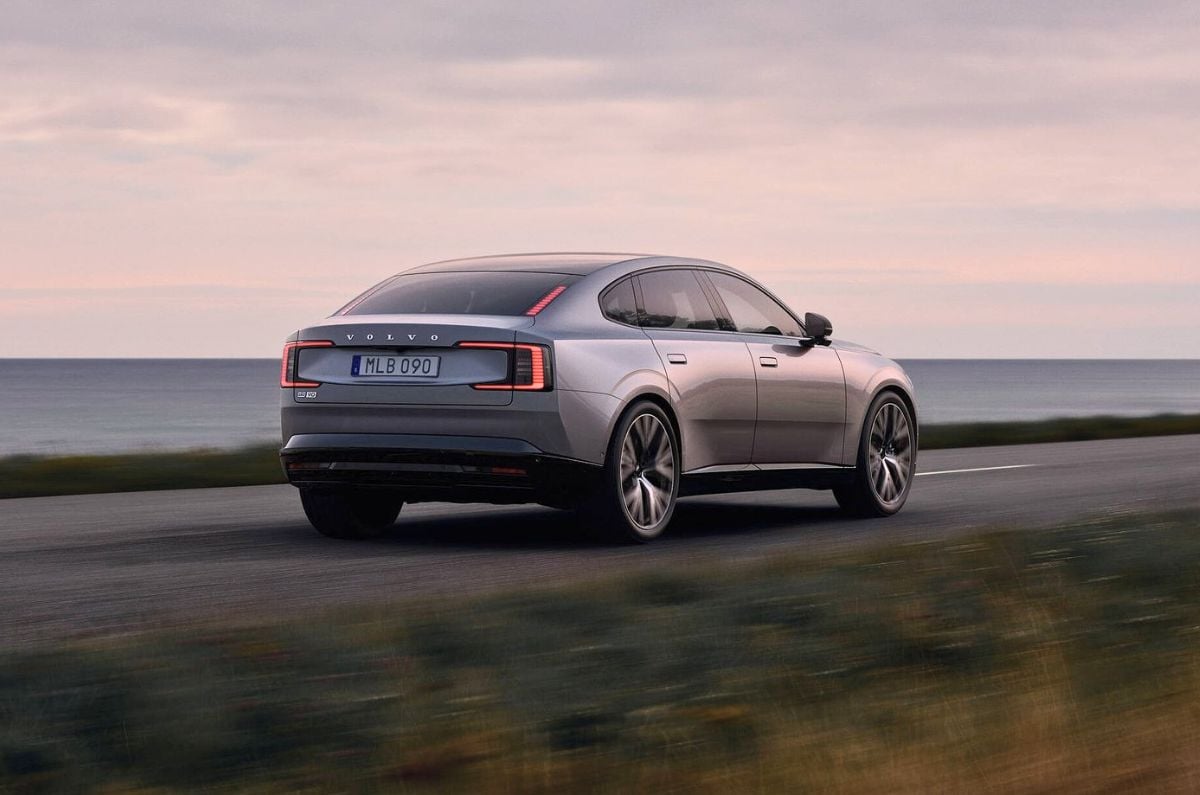
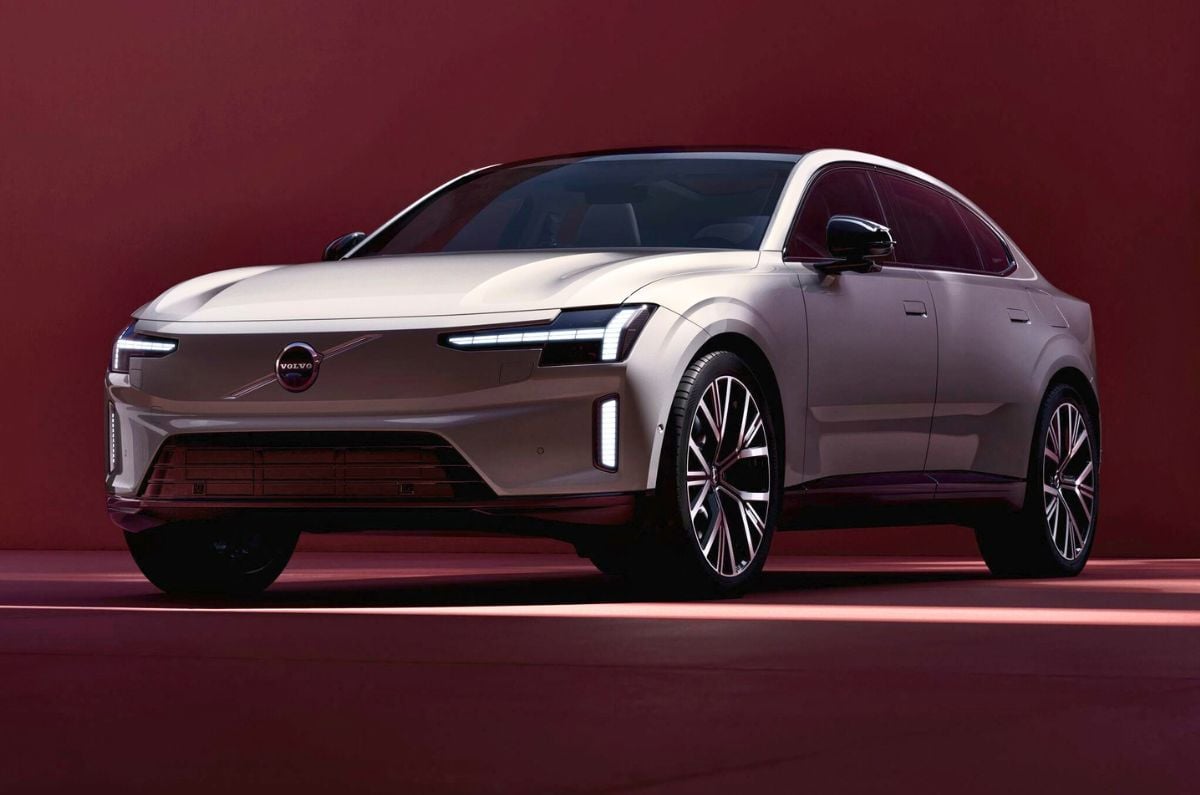
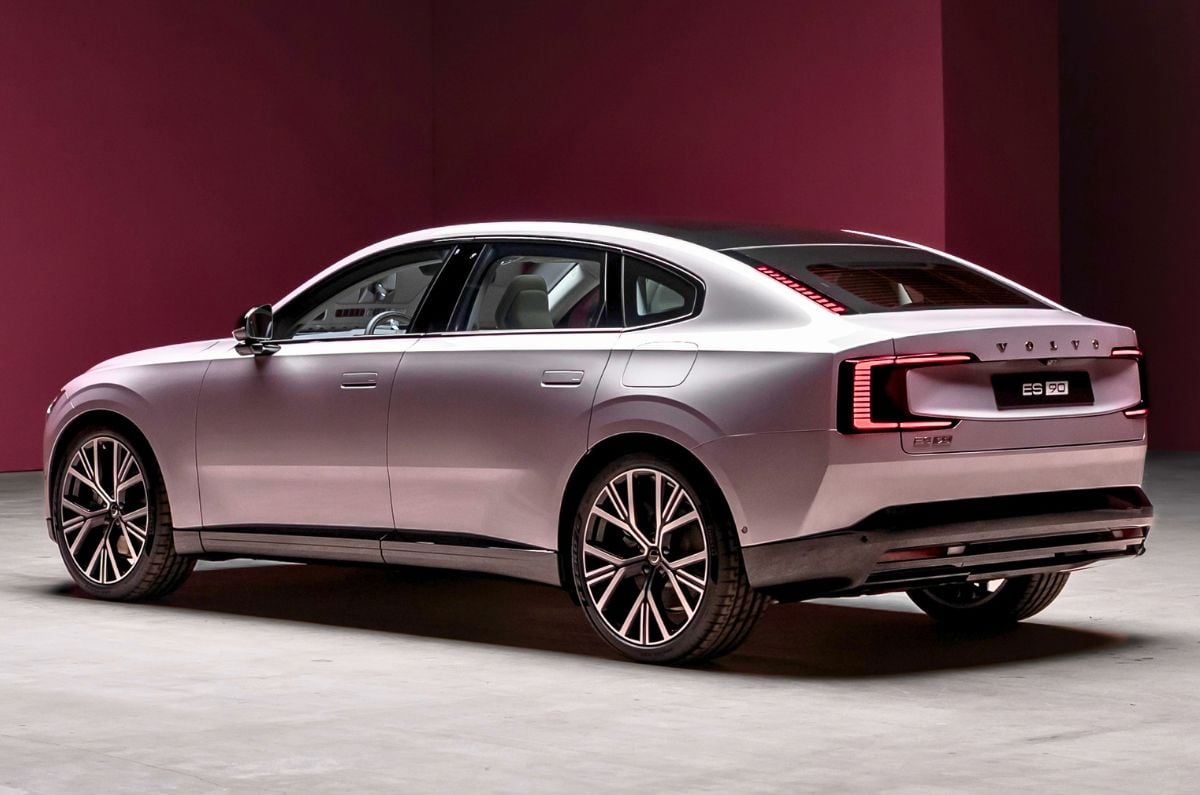
Volvo India has launched the EX90 electric SUV at Rs 1.26 crore as the Swedish carmaker’s new range-topper. The EX90 is Rs 27.2 lakh more expensive than its combustion-powered equivalent, the XC90. However, that’s on account of the EX90 being much more modern and tech-loaded than the XC90, the current generation of which has been around for more than a decade.
As part of an introductory offer for bookings placed before 31 December, 2026, Volvo will bundle an 11kW home charger, a 3-year service package, and assured buyback scheme (65 percent / 3 years) for every EX90 buyer.
Volvo EX90 battery and range
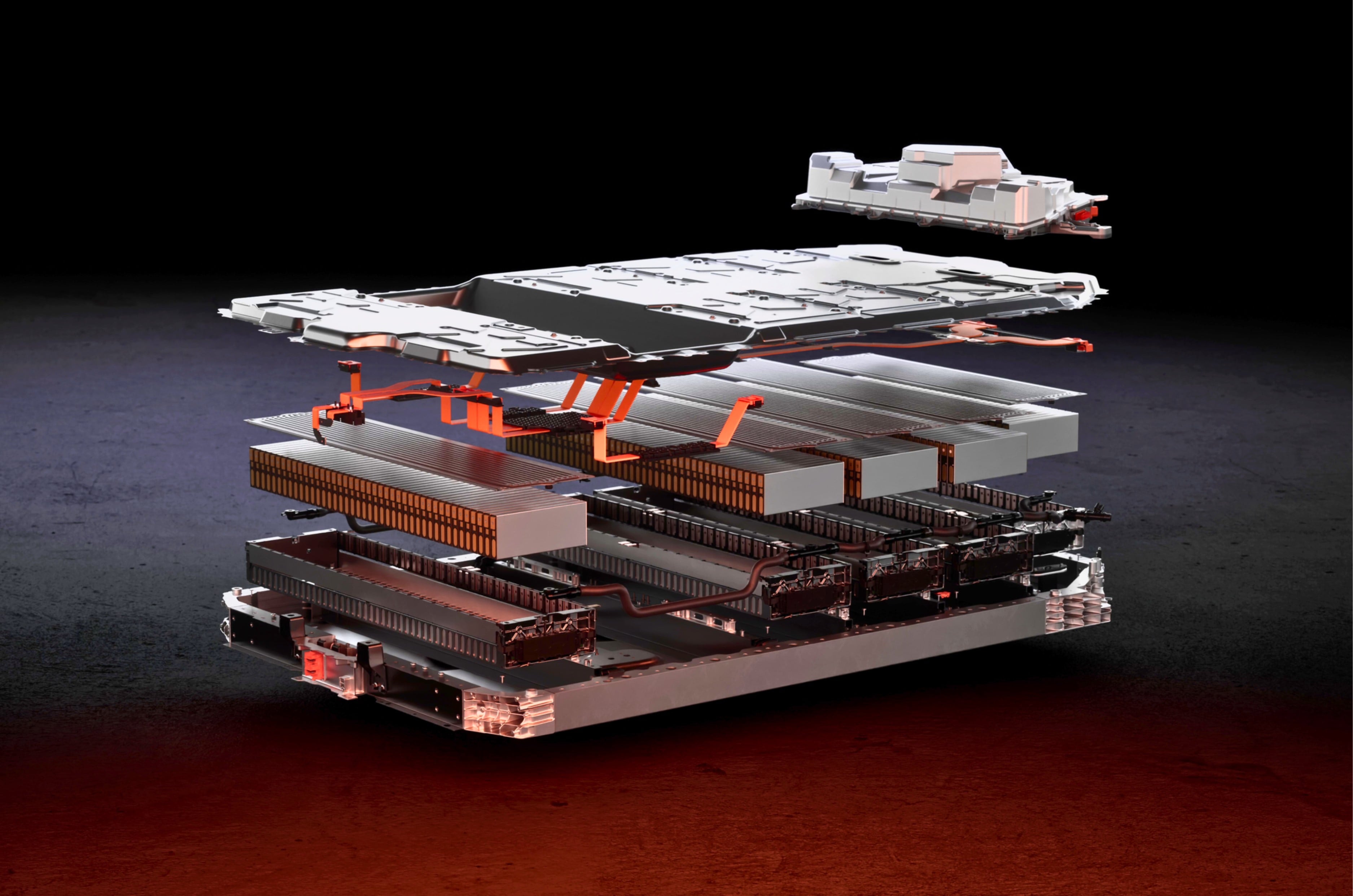
The EX90 is available with a sole 106kWh battery pack powering a dual-motor all-wheel drive setup. Combined output is 456hp and 670Nm, which is good for a claimed 0-100kph time of 5.5 seconds and a top speed of 180kph. The WLTP-rated range is 625km, and in our EX90 review, the SUV returned an efficiency of roughly 5.5km/kWh, which translates to a real-world range of around 580km.
As for charging, an 11kW AC wallbox takes approximately 11 hours for a full charge. Thanks to its 800-volt SPA2 architecture, the EX90 can also charge at up to 350kW from a DC source, at which speed a 10 to 80 percent top-up takes just 22 minutes.
Volvo EX90 exterior design
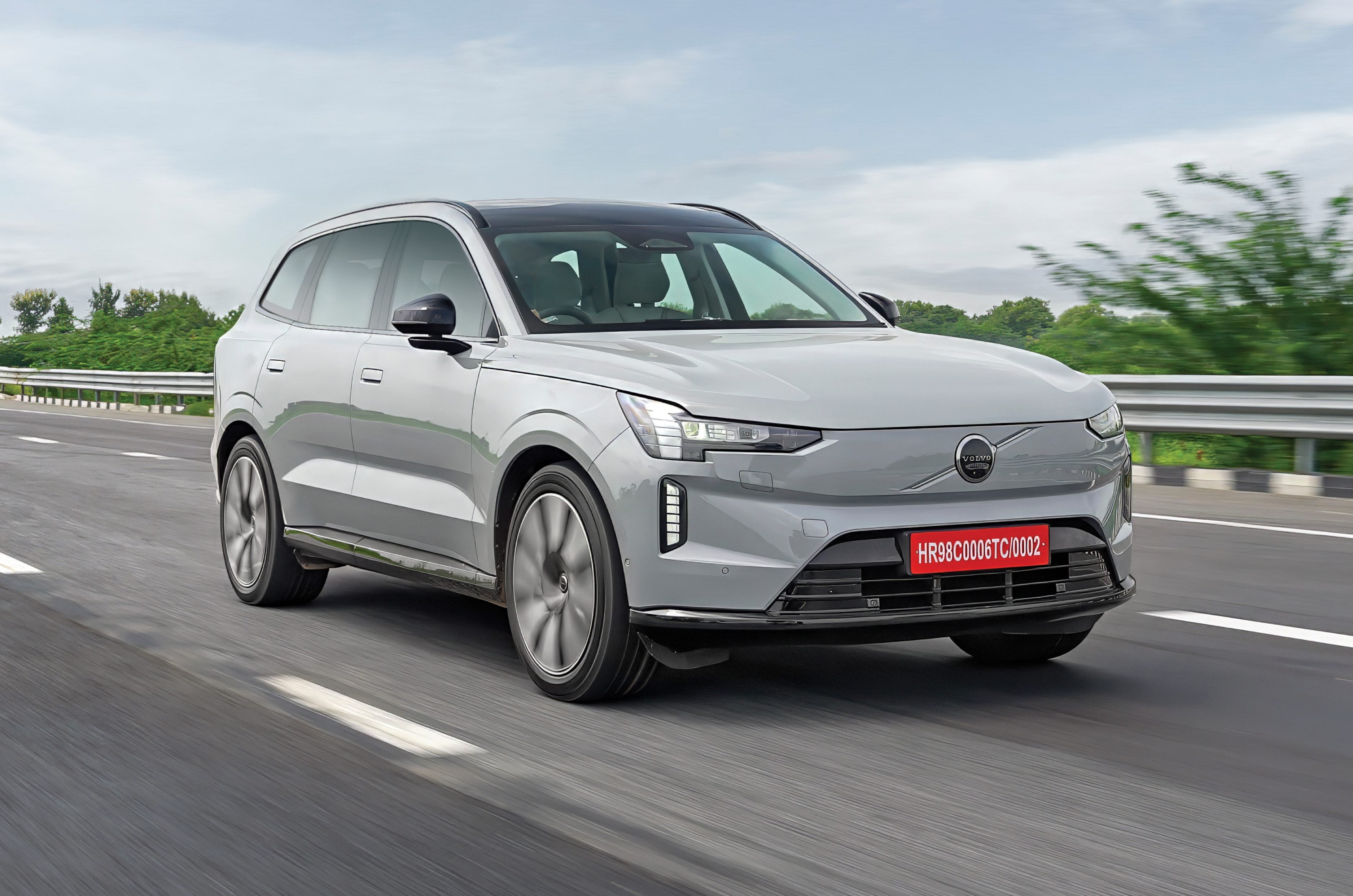
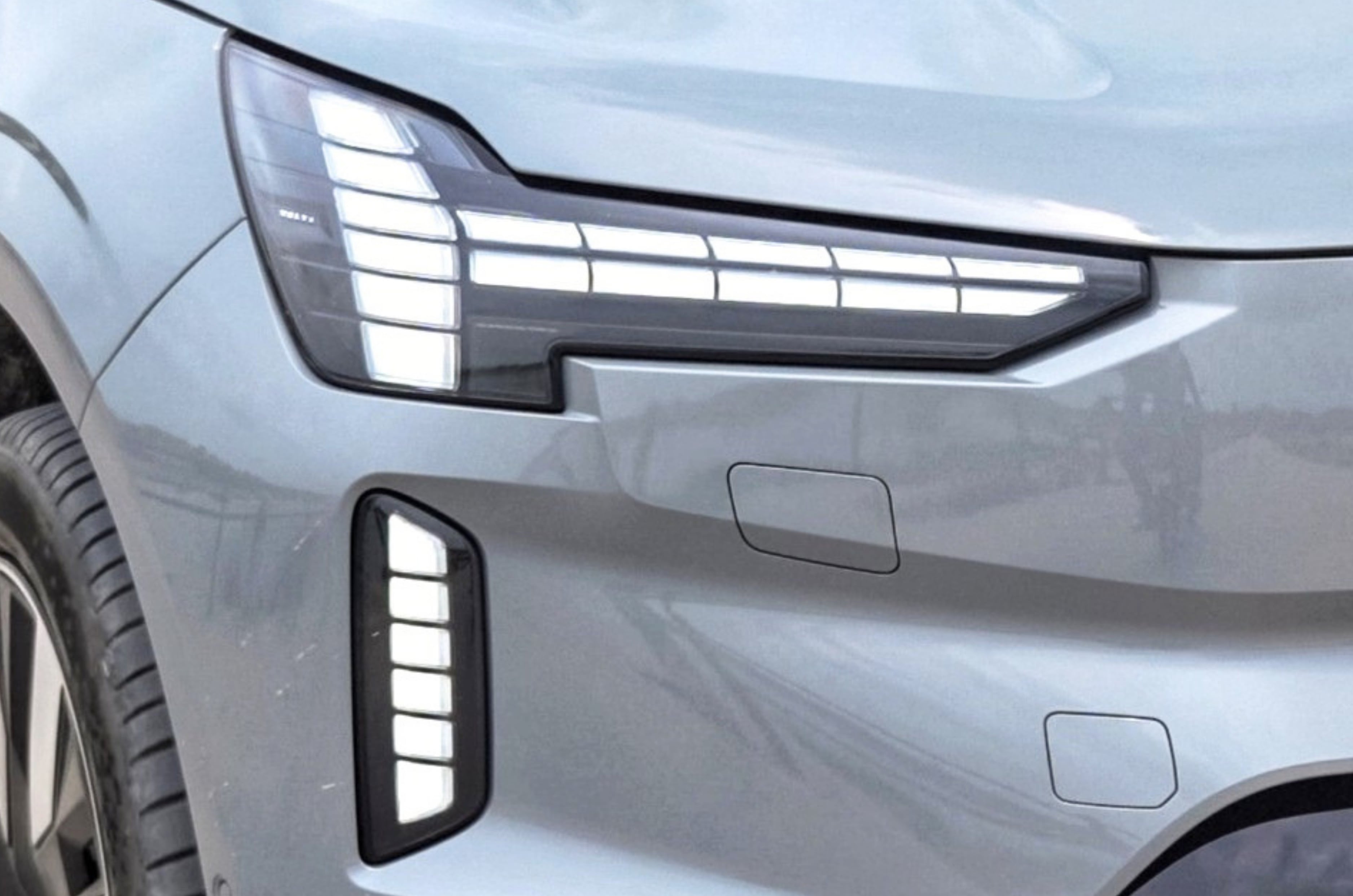
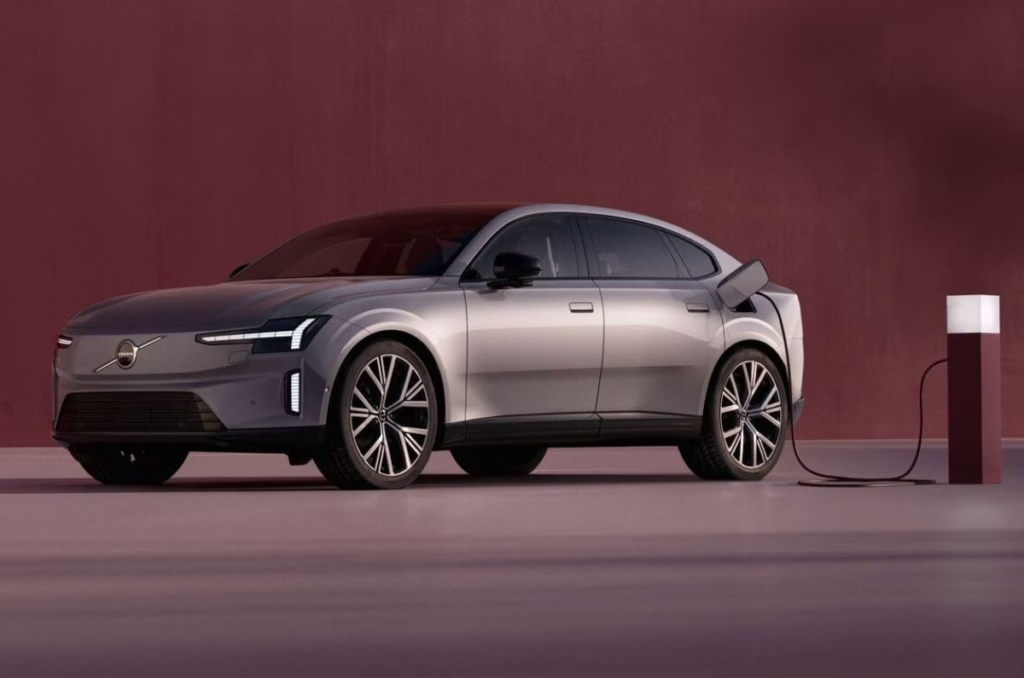
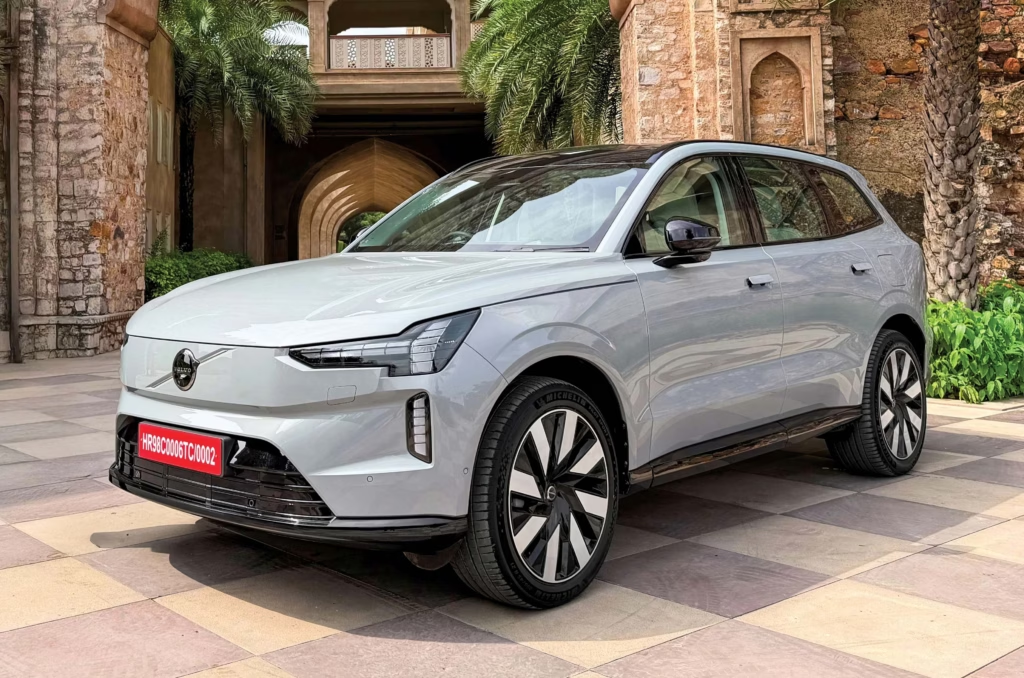
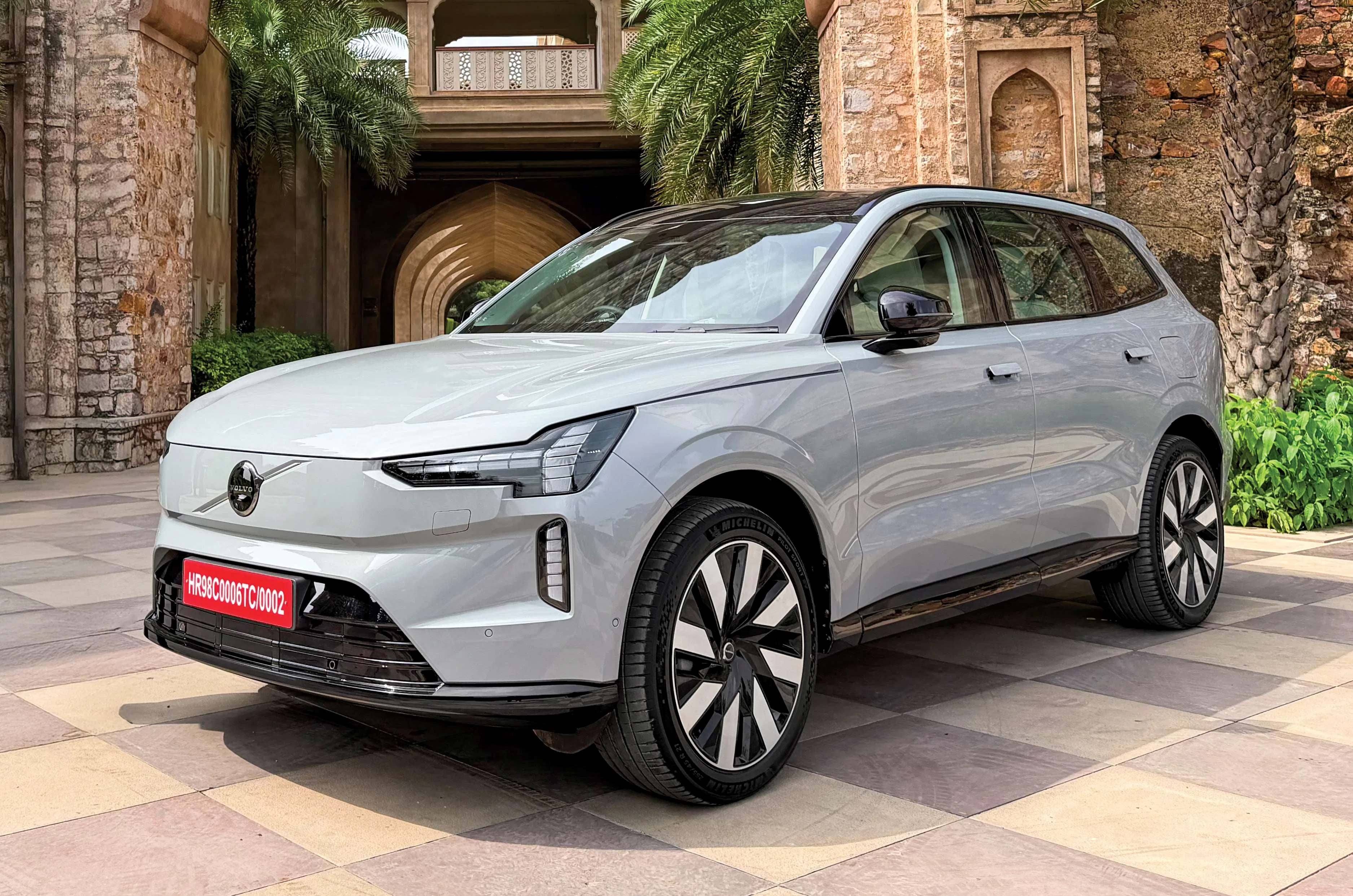
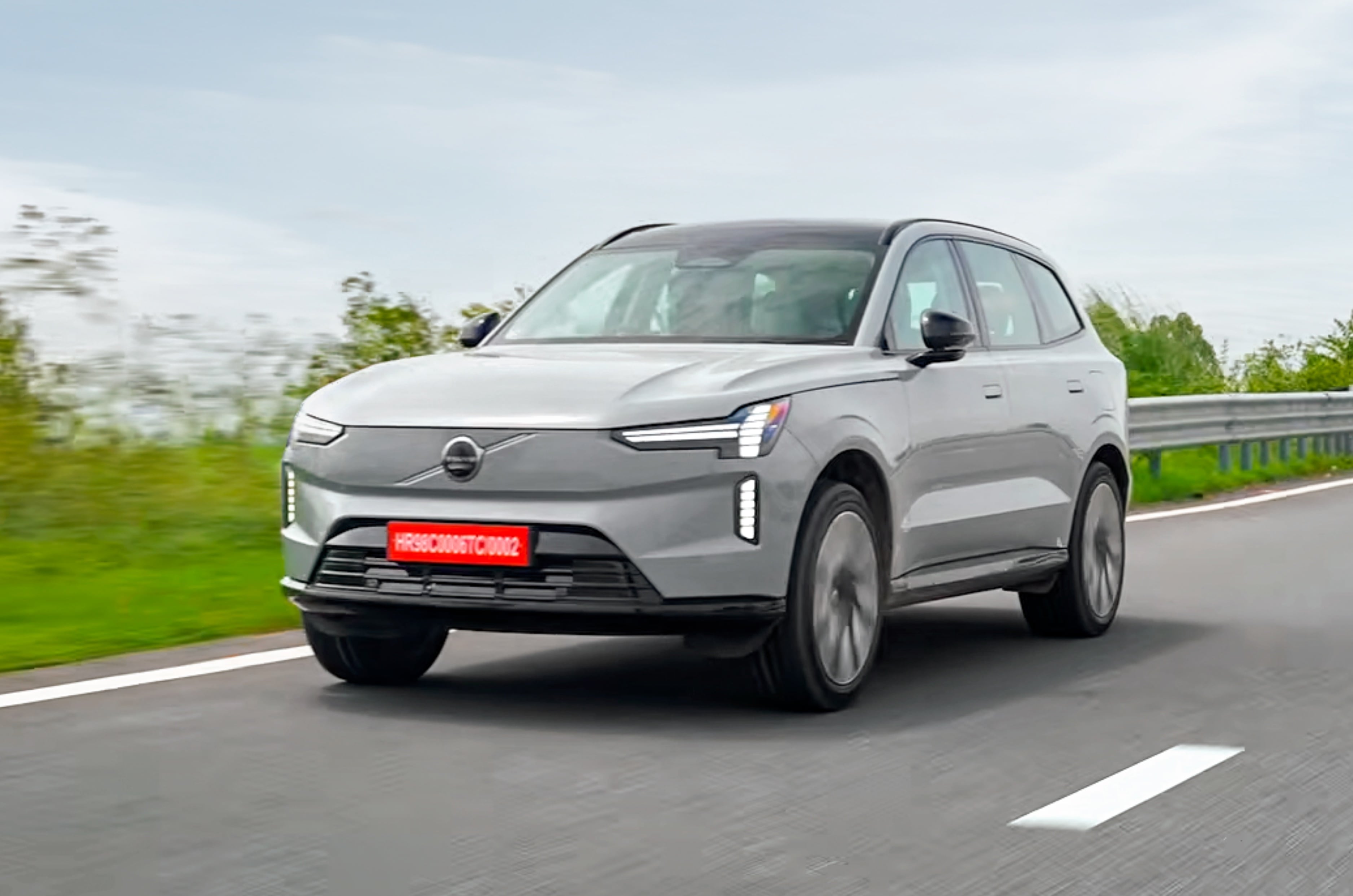
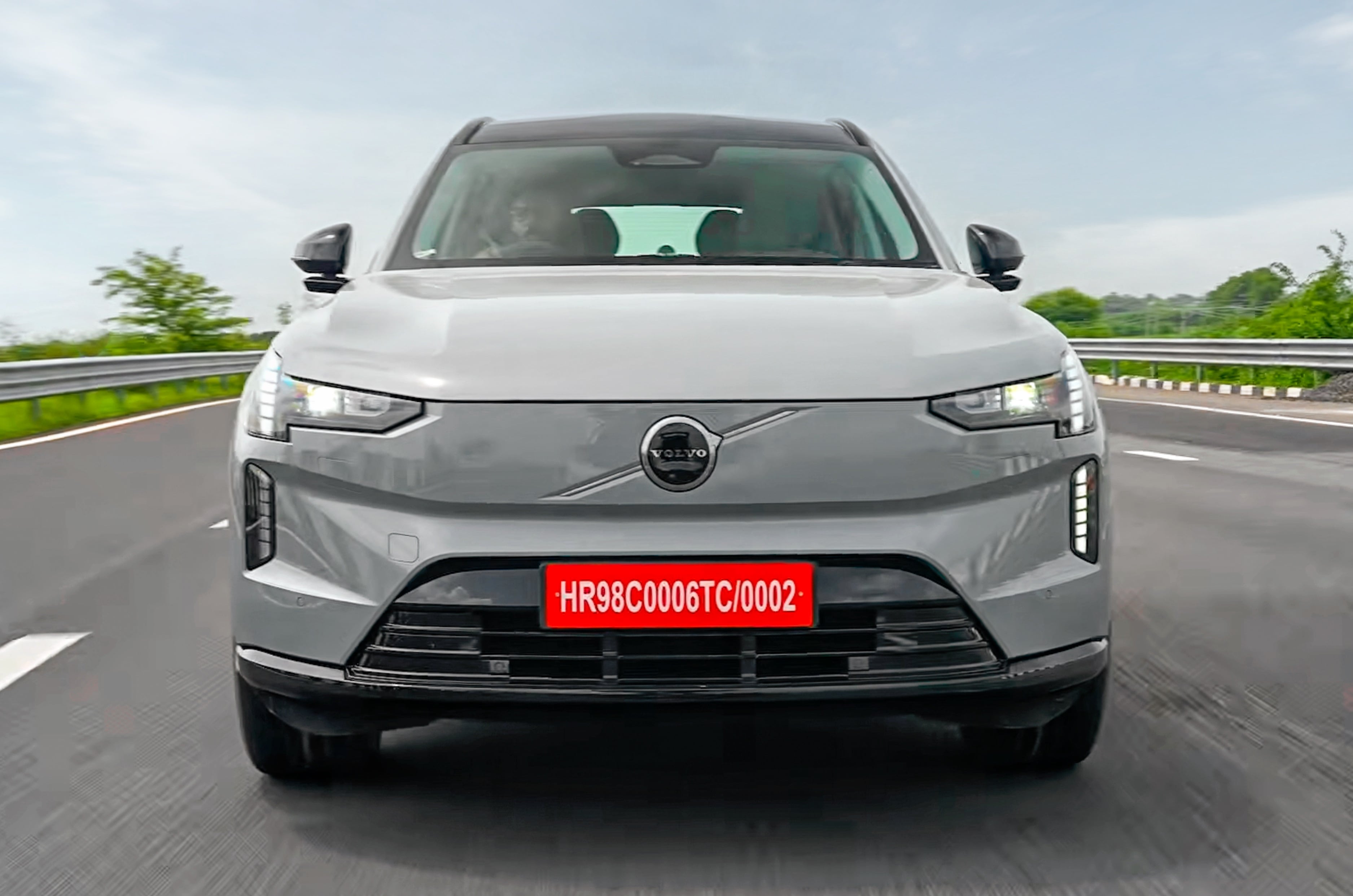
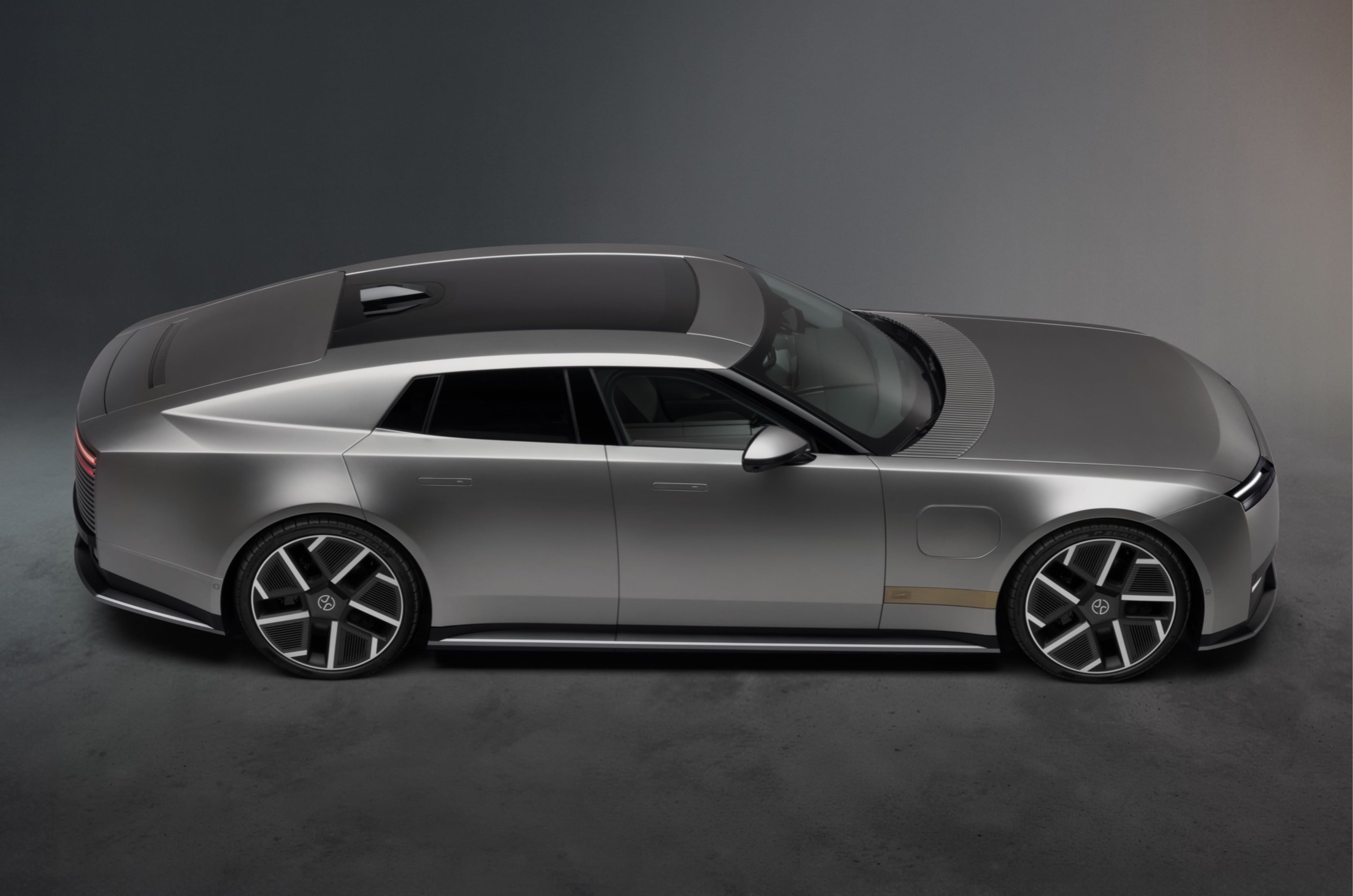
On the outside, the EX90 carries forward Volvo’s hallmark minimalistic styling, but with some new-age touches. The front end gets T-shaped LED headlamps with pixel-like DRL signatures, below which sit slim, vertically oriented fog lamps. There’s no grille on the fascia, only the Volvo emblem in the centre and a trapezoidal air dam lower down.
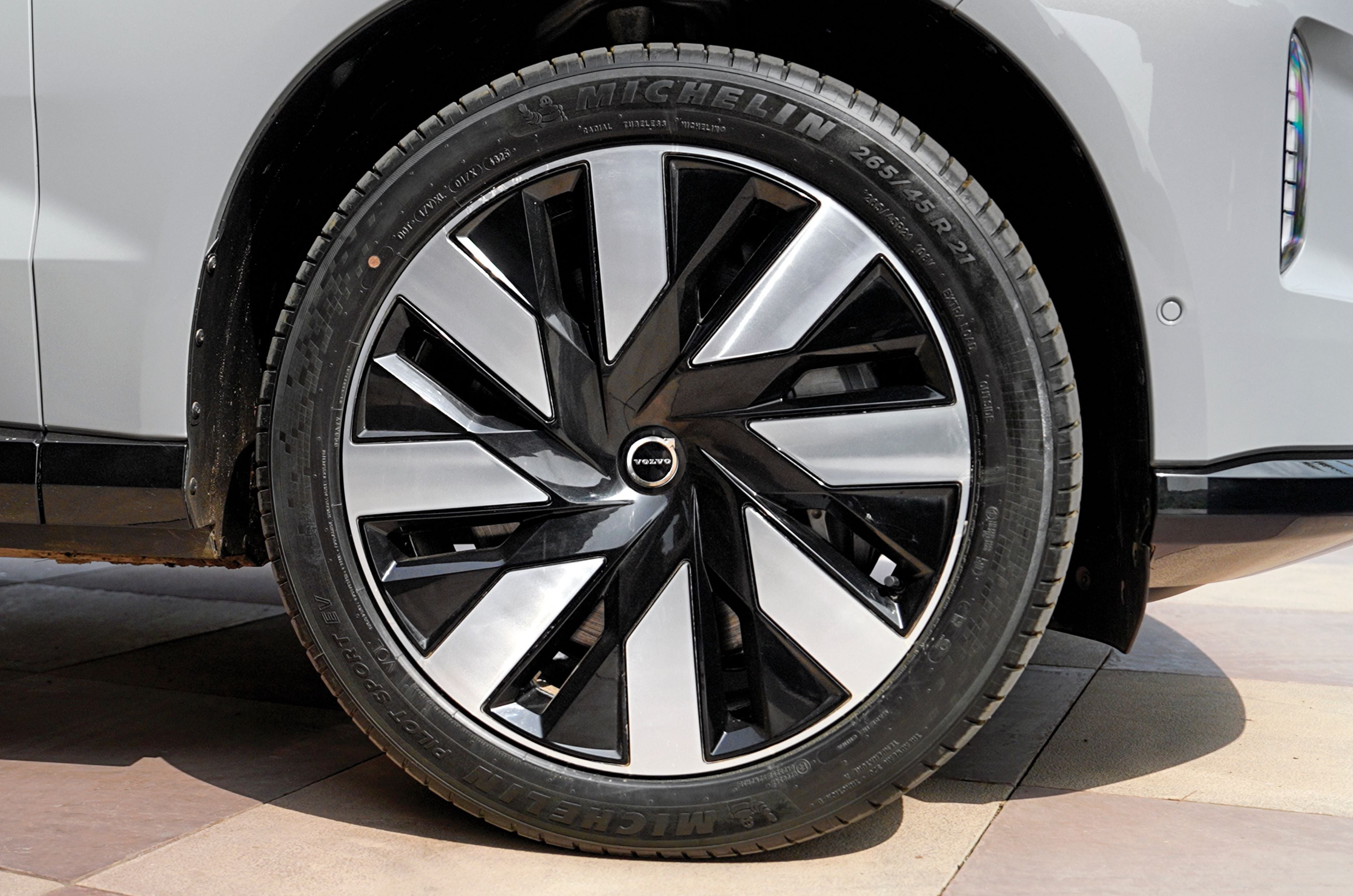
The side profile is clean and upright, with a 2,985mm wheelbase, 21-inch alloy wheels as standard, and a 210mm ground clearance. Air suspension is standard fit on the EX90 too, allowing you to raise the ground clearance to a maximum of 250mm.
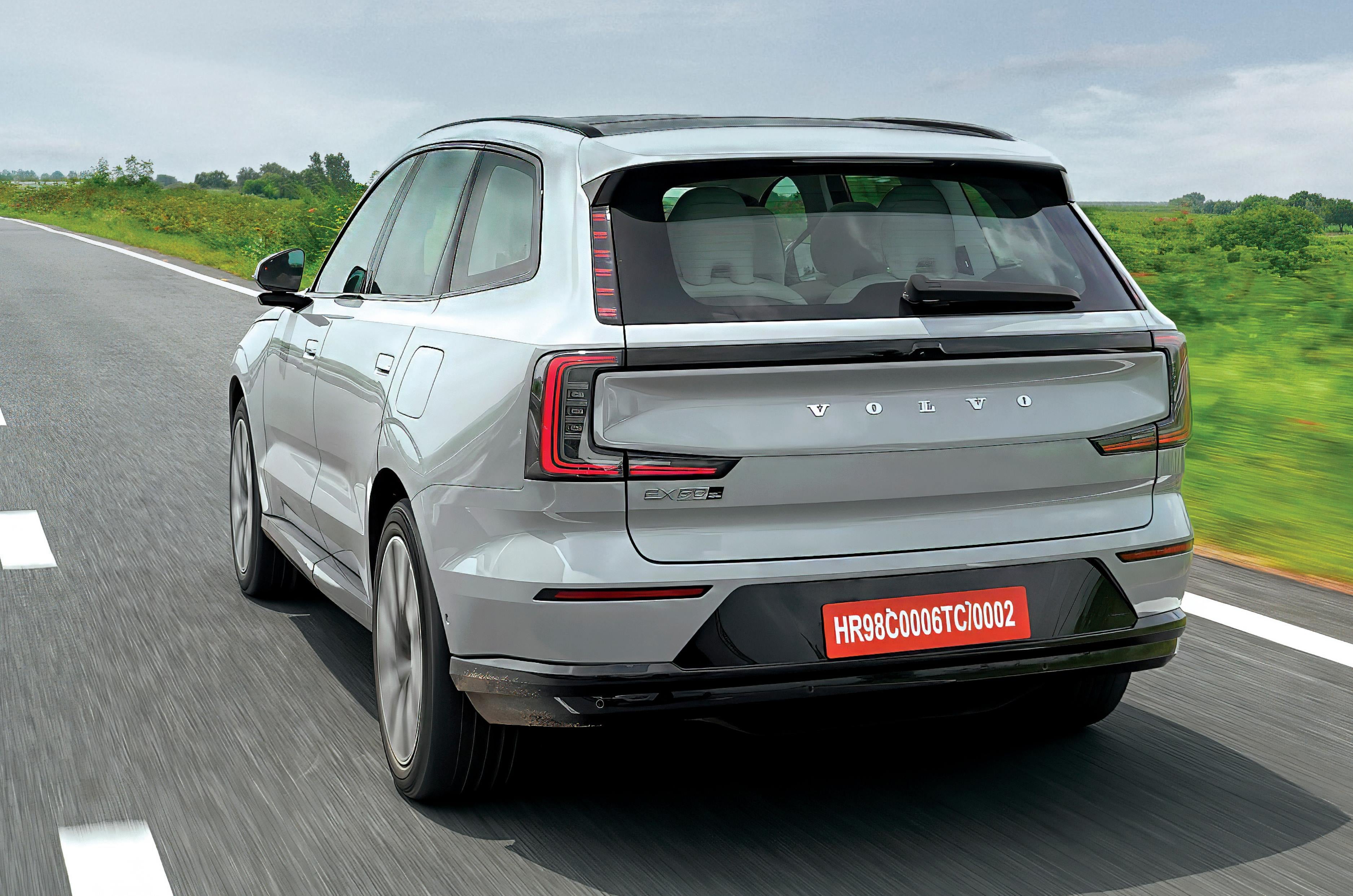
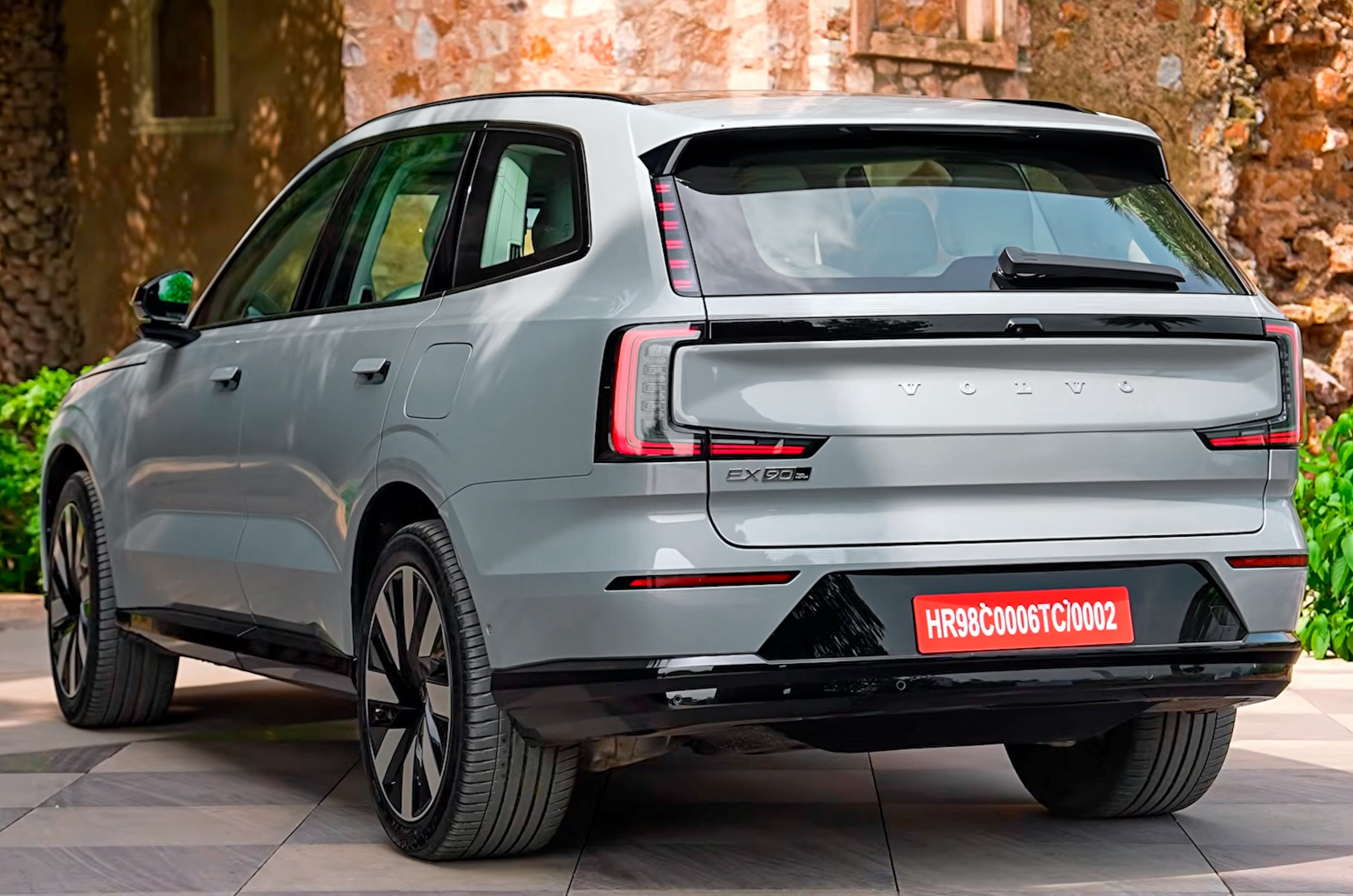
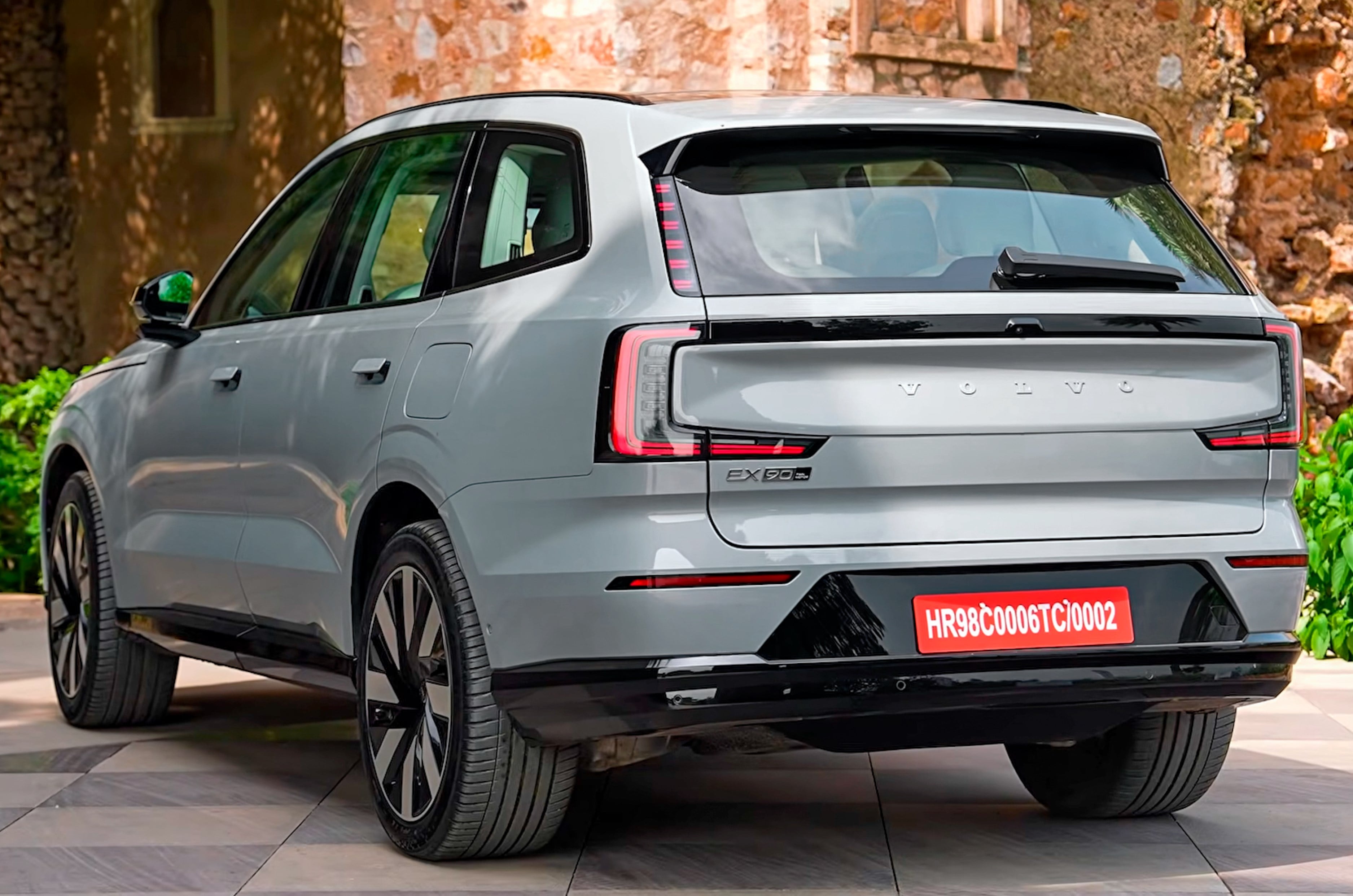
At the back, the EX90 features C-shaped LED tail-lamps connected by a black strip, along with LED arrays flanking the rear windscreen. A Volvo wordmark sits proud in the centre of the bootlid, and the bumper has a neat and discreet design. Colour options for the EX90 comprise Crystal White, Denim Blue, Mulberry Red, Onyx Black, Sand Dune, and Vapour Grey.
Volvo EX90 interior and features
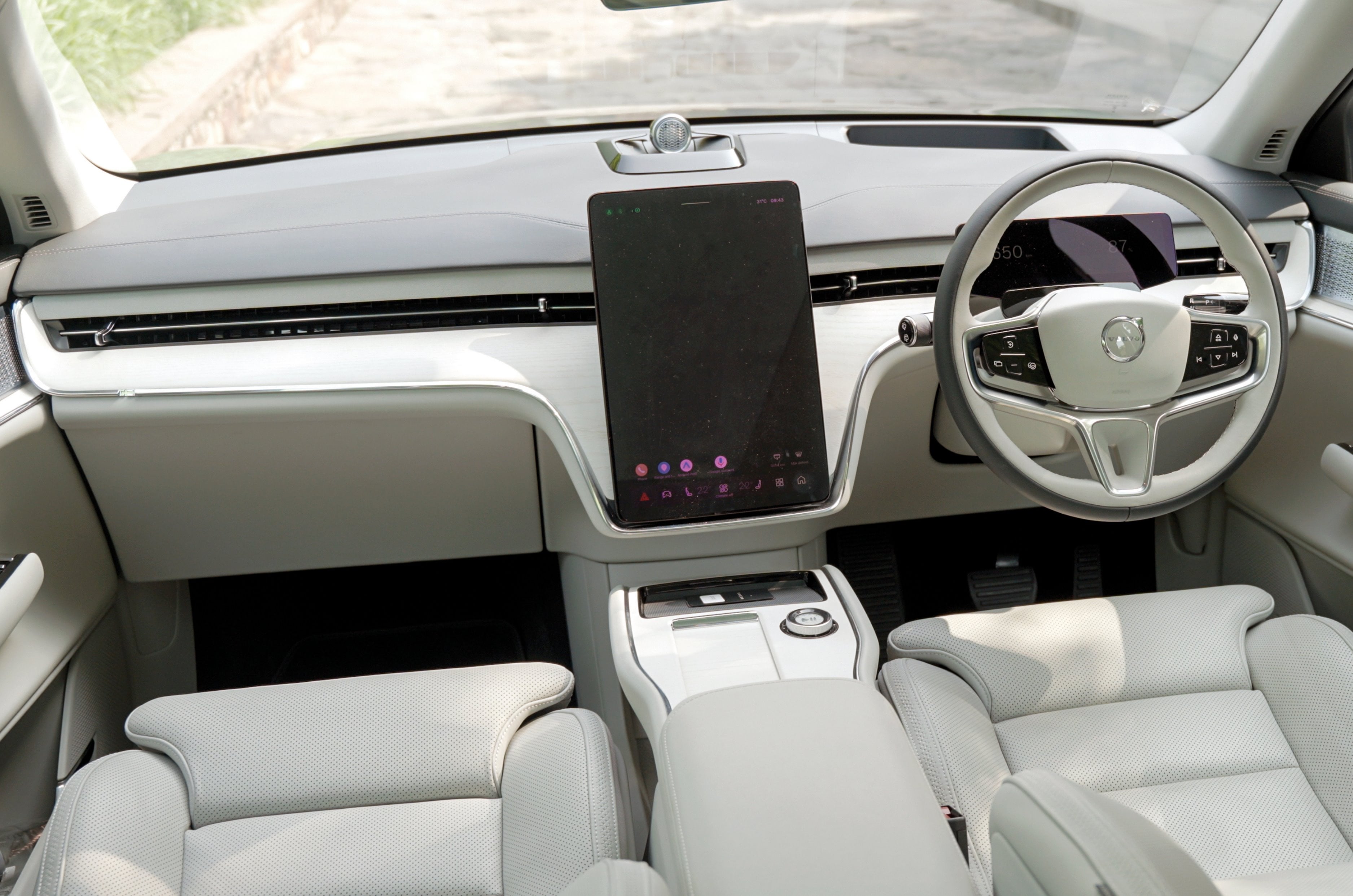
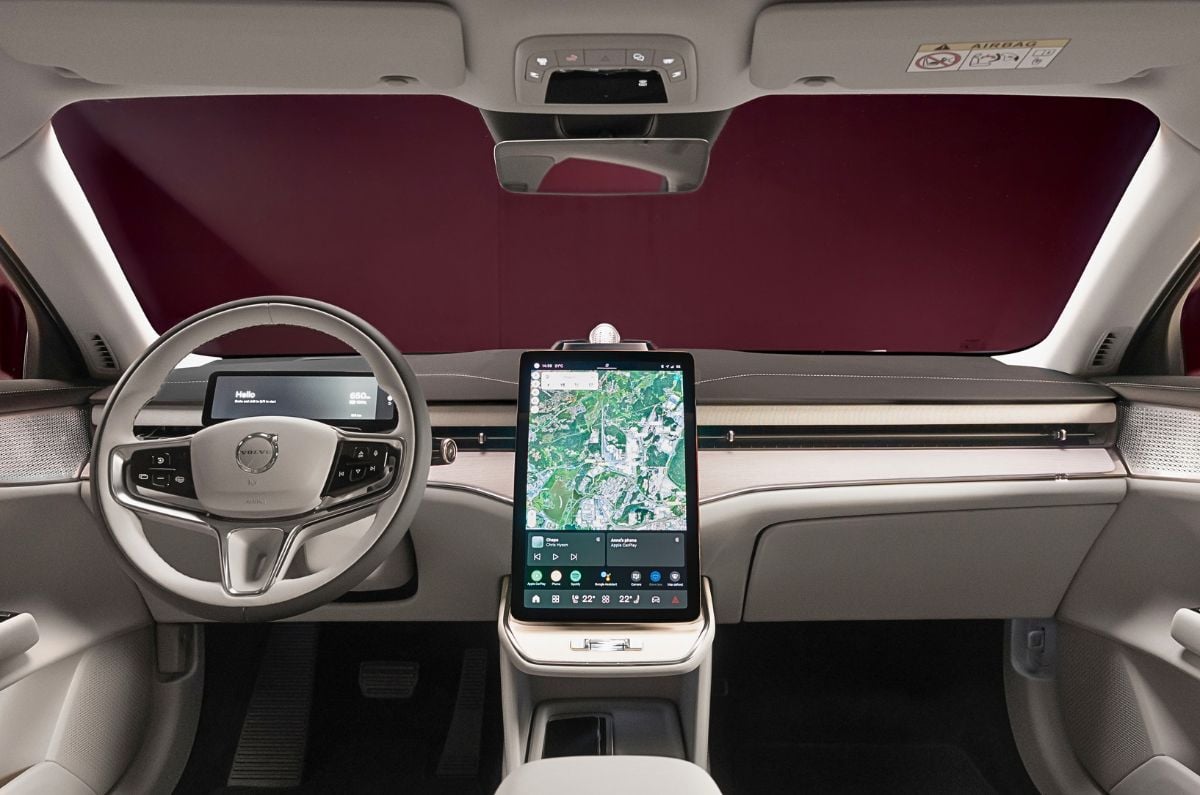
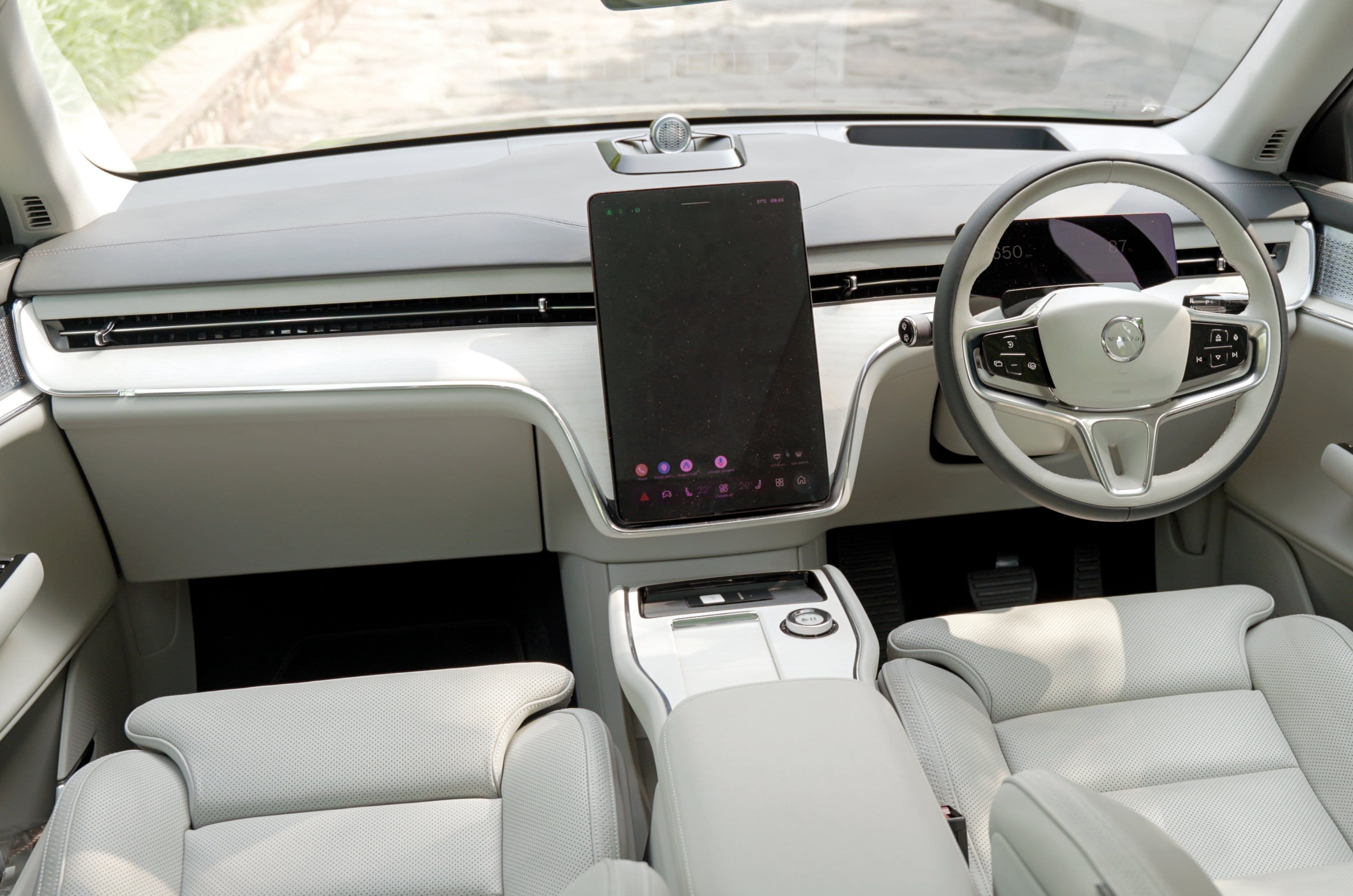
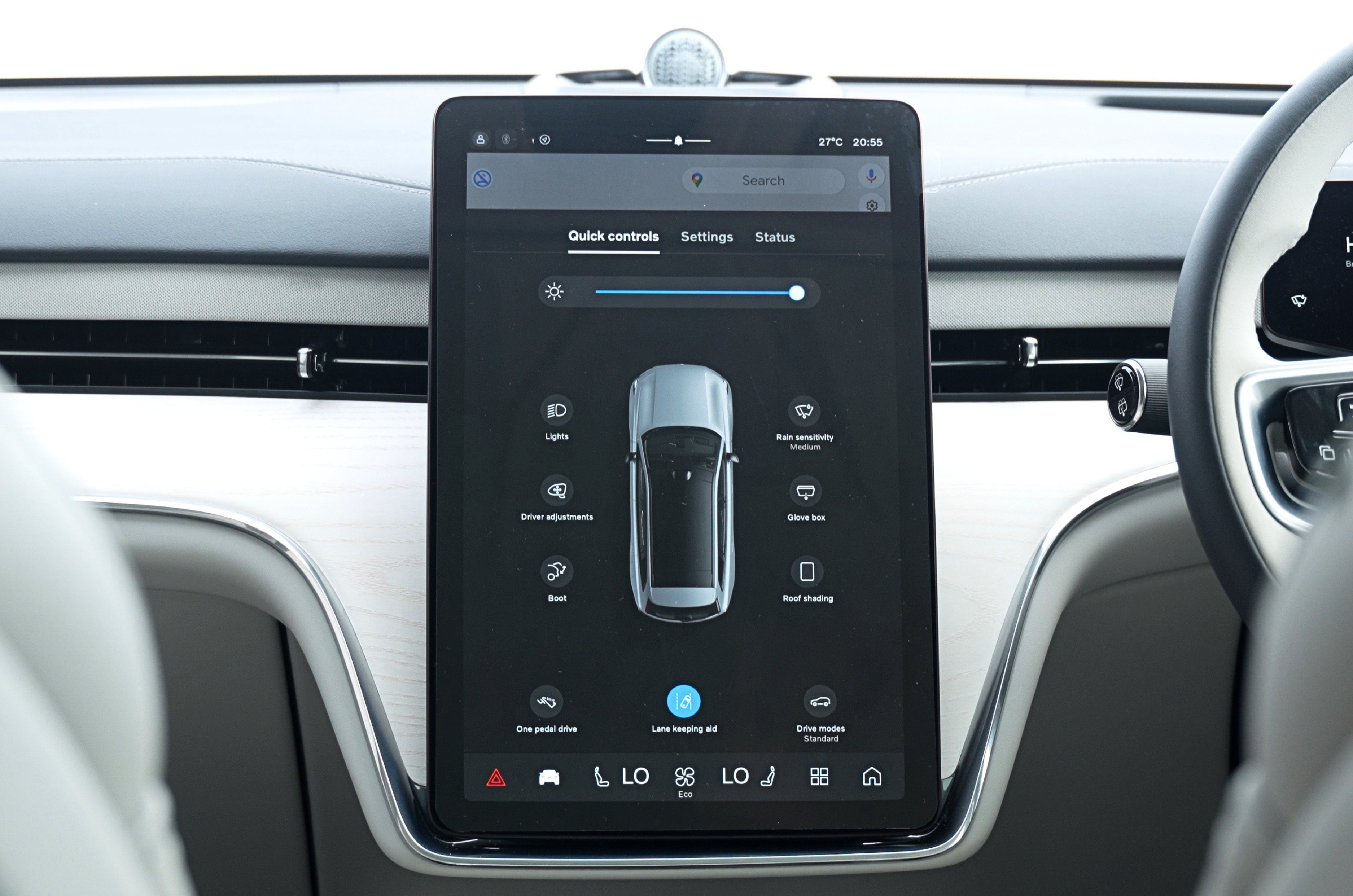
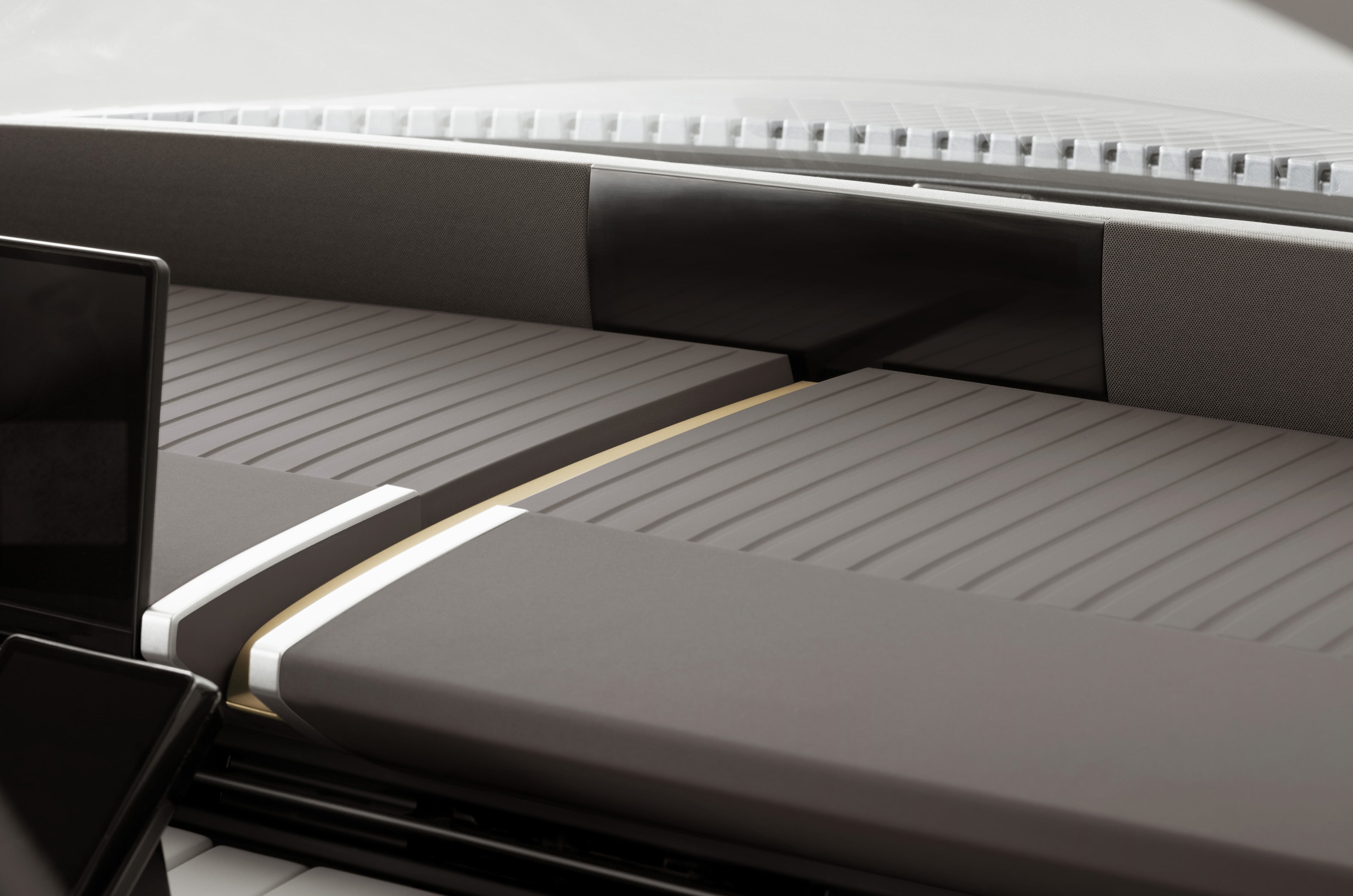
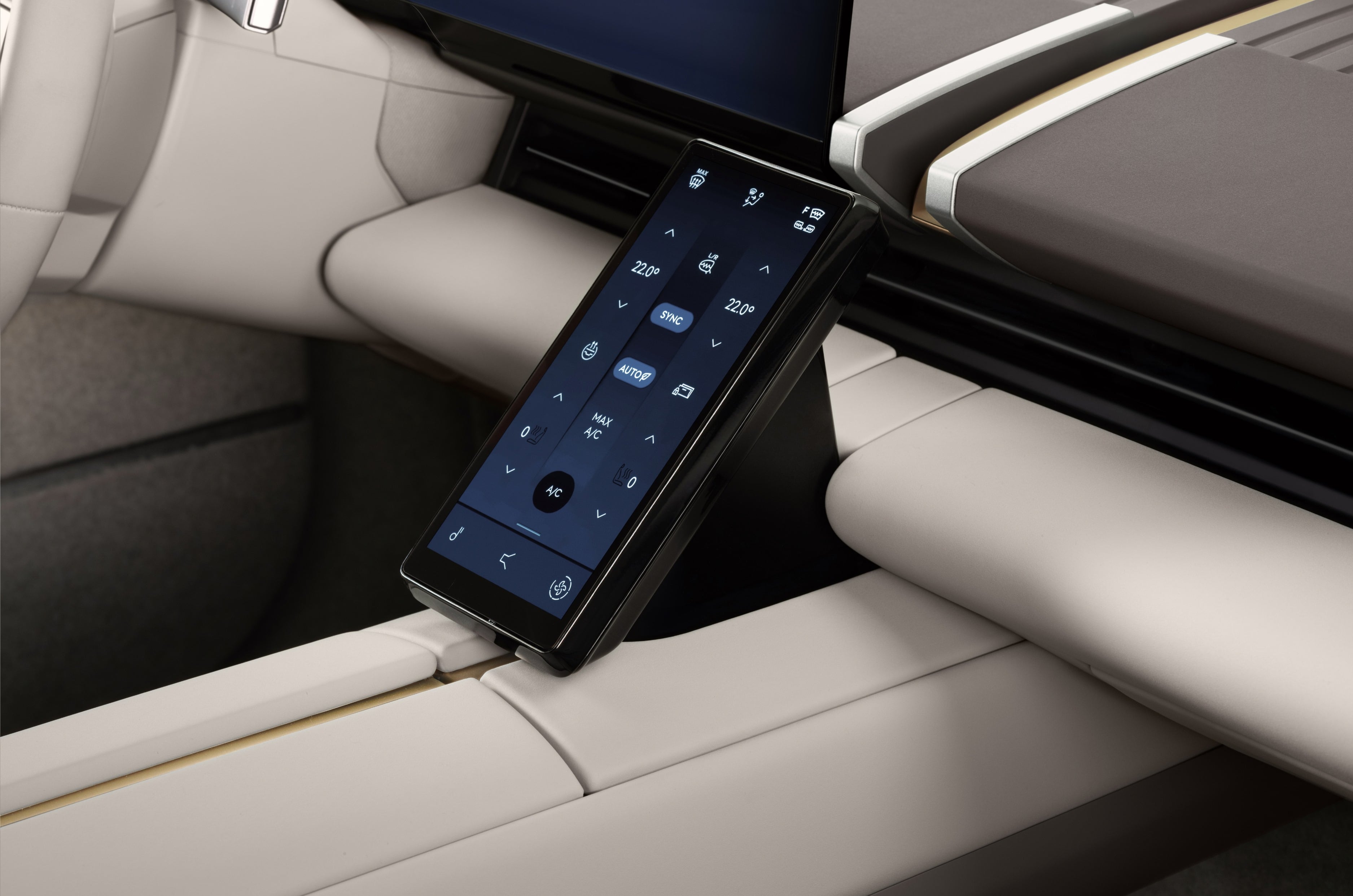
Volvo’s minimalist design philosophy extends to the EX90’s cabin, with a clean dashboard layout that incorporates rich two-tone Nappa leather upholstery, a three-spoke steering wheel, brushed aluminium trim pieces, a huge 14.5-inch vertically oriented infotainment touchscreen, and a slimmer 9-inch driver’s display. Physical controls are a rare sight in the cabin, as most of the in-car functions have been folded into the central touchscreen.
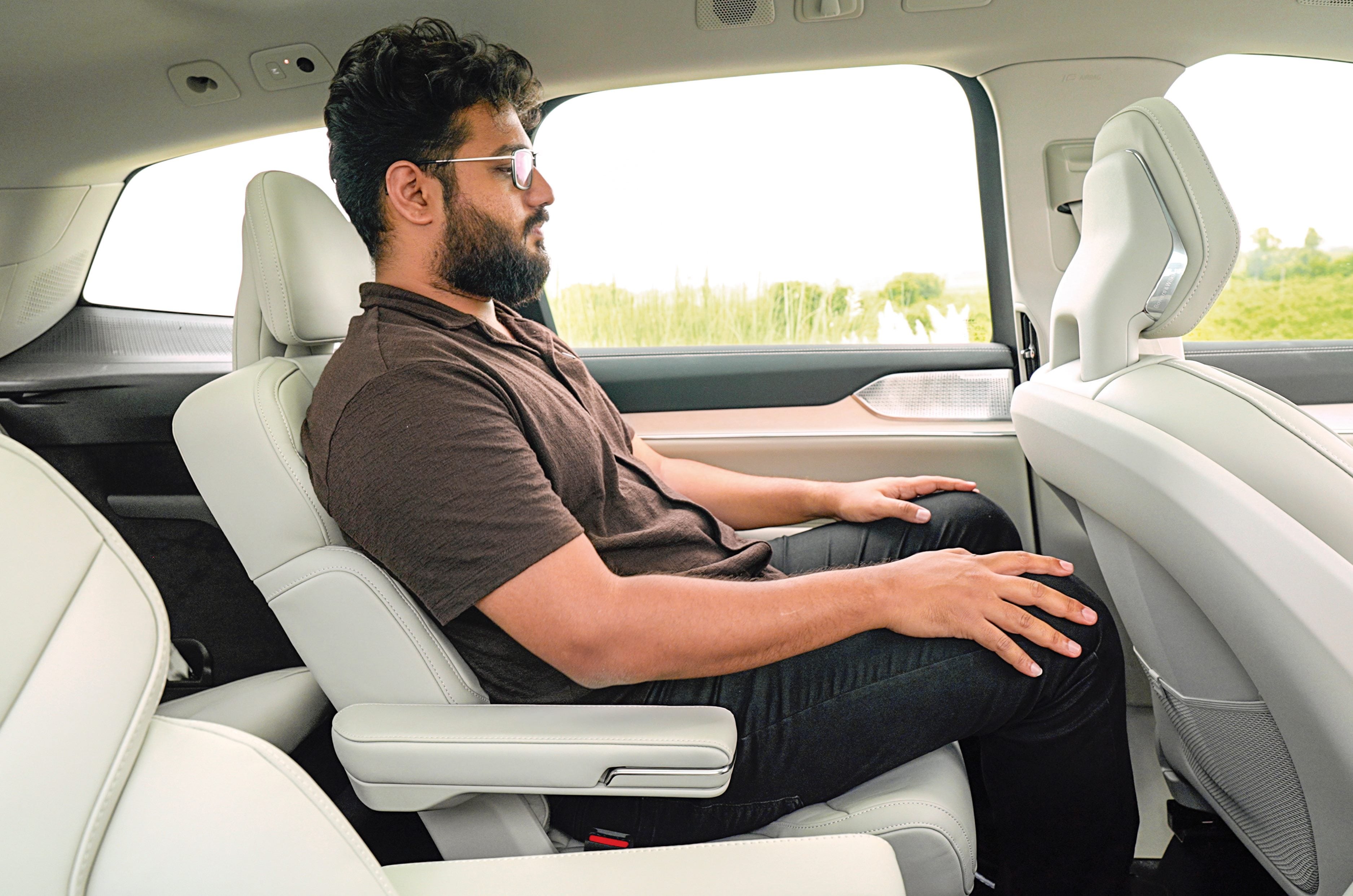
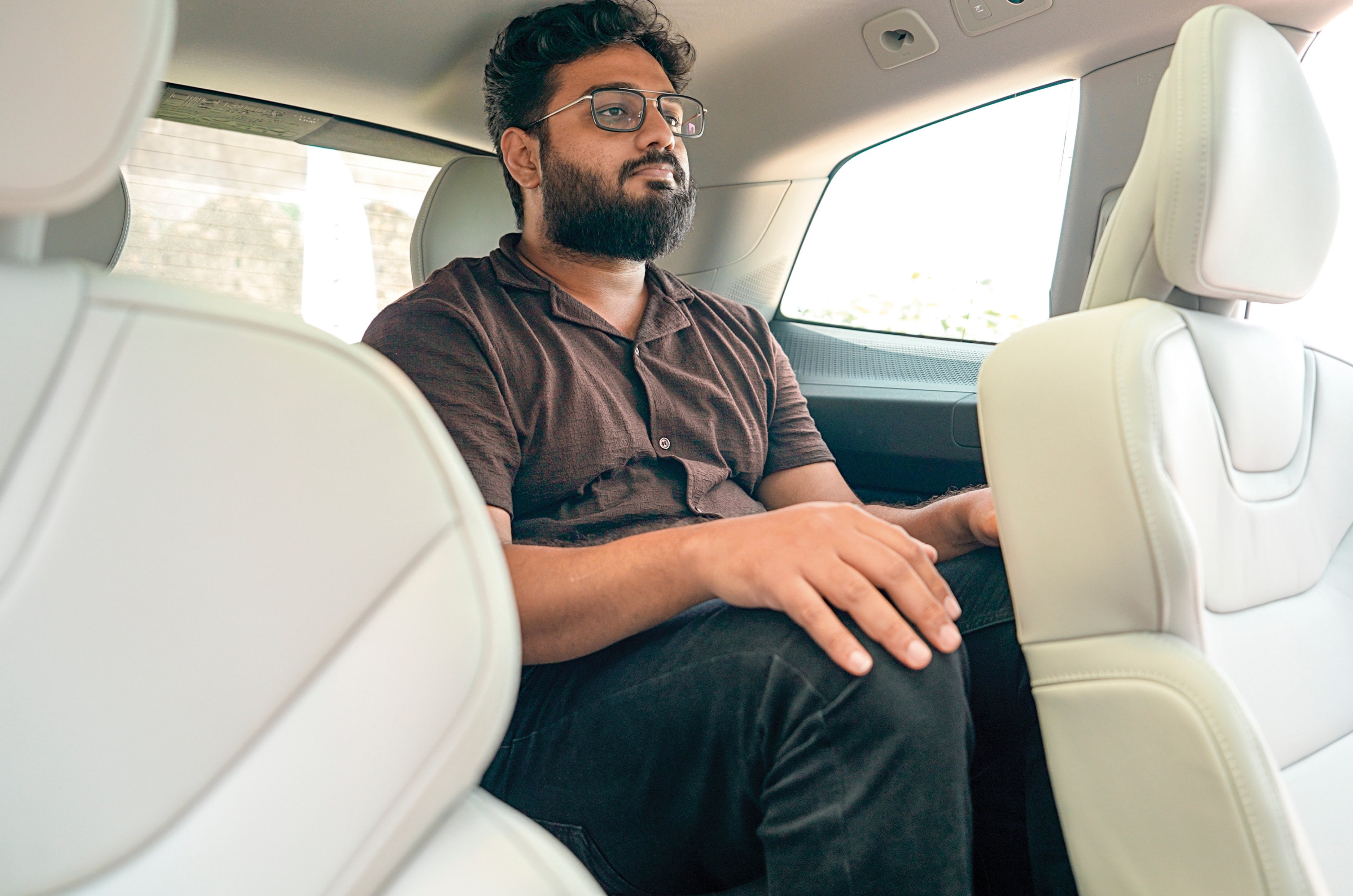
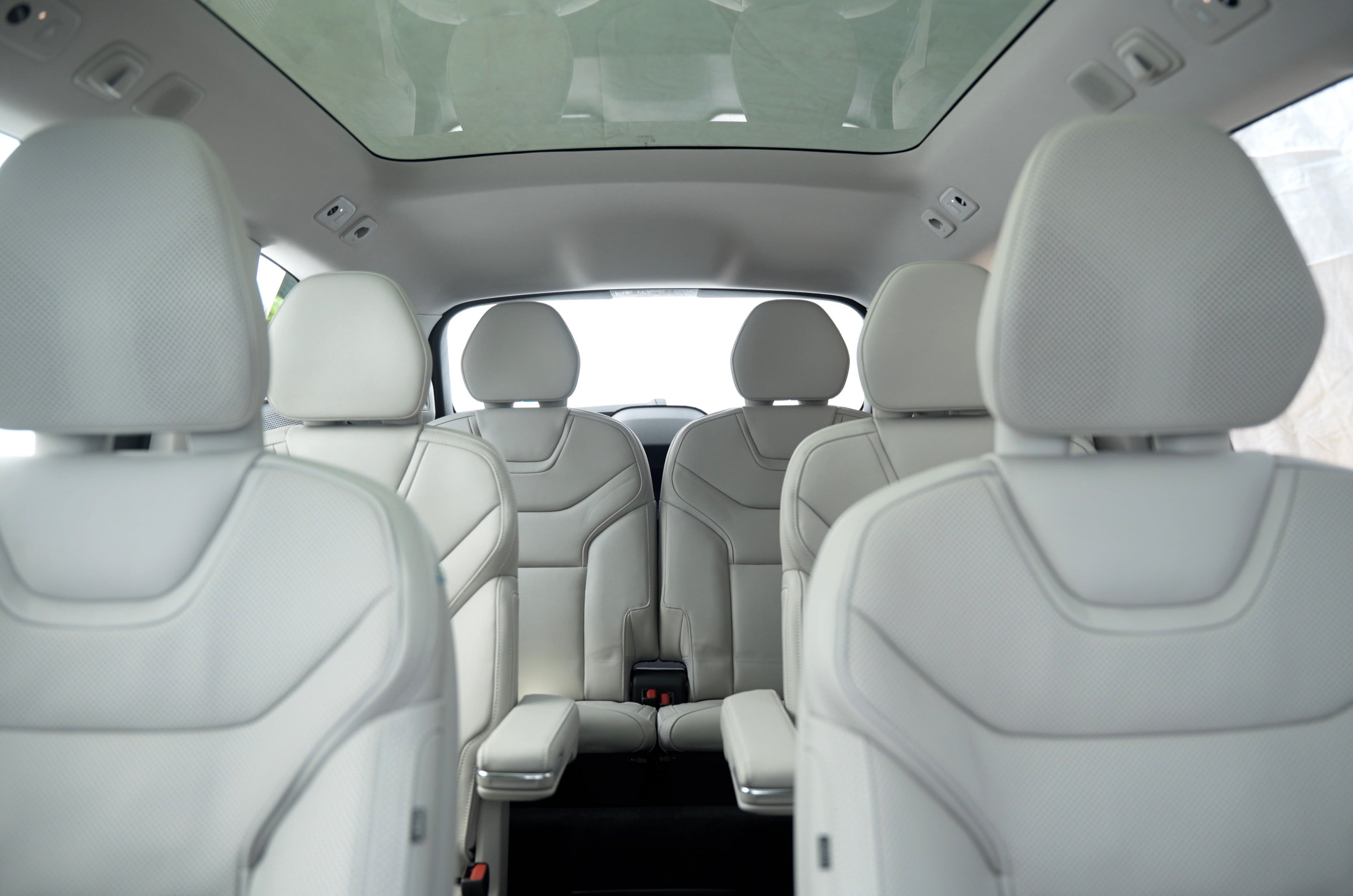
As noted previously, the India-spec EX90 is offered solely as a 6-seater with second-row captain’s chairs that slide and recline. There’s good space and comfort for second-row occupants, but these captain’s chairs don’t get the electrical adjustment, ventilation, heating, and massage functions that the front seats do. There are no sunshades for the rear windows, either, but you do get a large panoramic sunroof with switchable transparency.
Coming to the third row, access is easy by way of the space between the captain’s chairs (they don’t fold down, though). Once you’re there, however, the space on offer is best-suited to kids, or adults on short drives. Boot space is rated at 324 litres with the third row up, and if you fold that down, the capacity increases to 690 litres. You get a 46-litre frunk as well.
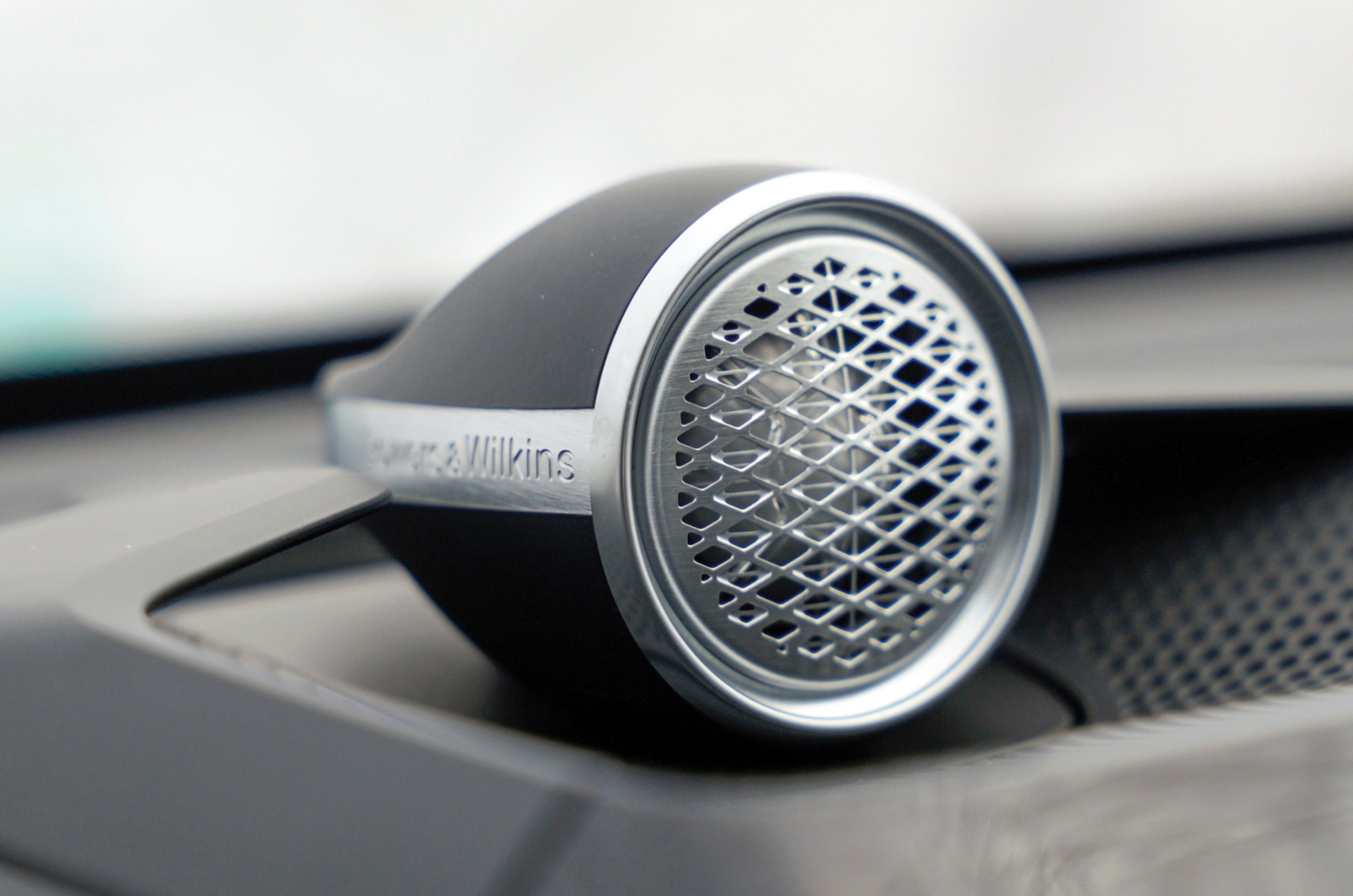
In addition to the features mentioned above, the EX90 comes packed with four-zone climate control, a 25-speaker Bowers & Wilkins sound system, configurable ambient lighting, 9 airbags, an ADAS suite, wireless Apple CarPlay and Android Auto, a 360-degree camera, auto park assist, a digital key, a wireless charging pad, a cabin air purifier, and more.
The Volvo EX90 rivals electric luxury SUVs like the Mercedes-Benz EQS SUV 580 and Kia EV9, which are priced at Rs 1.49 crore and Rs 1.30 crore, respectively. With its Rs 1.26 crore price tag, the EX90 undercuts both of its chief rivals.
This month, we go big on power and even bigger on premium metal. The cover story is Kia’s biggest swing yet at the executive SUV segment, and then there’s a family SUV with more horsepower than a Lamborghini, and BMW’s electric onslaught continues with a new long-wheelbase sedan and a sharper flagship limousine.
Kia Sorento: Cover Story
Six trims, two powertrains, up to seven seats and 32 variants in all. Kia isn’t dipping a toe into the premium SUV pool; it’s diving straight in, locally assembling the Sorento from Rs 27.99 lakh to take on the Skoda Kodiaq and VW Tayron. Has Kia cracked the code, or has it bitten off more than it can chew?
Porsche Cayenne Electric: First Drive
Forget hypercars. The most powerful vehicle currently on sale in India is a family SUV, the Cayenne Electric, with more horsepower than your senses can fathom. We took it to an airstrip to see what that actually does to your stomach.
BMW i5 LWB & i7 Facelift: First Drives
BMW’s electric push continues, with a long-wheelbase i5 slotting in between the iX1 and flagship i7. Can BMW’s long-wheelbase playbook continue to work? And there’s also the i7 getting a sharper face and more tech to go with it, like it didn’t have enough already.
Mercedes-Benz GLC Electric: Drive
The first-gen electric GLC was far from ideal. The new one, however, is a completely new generation with an 800V architecture, 330kW charging and a claimed 715km range. We took all 489 of its horses to the Autobahn to see how much of an improvement it has been over its predecessor.
MG Hector Tomahawk EV: First Drive
Don’t let the familiar name fool you. The Hector Tomahawk EV rides on MG’s all-new ADAPT platform, bigger than the Mahindra XEV 9S in every dimension, with a PHEV sibling already waiting in the wings.
Maruti Suzuki Baleno, Renault Triber Turbo and Skoda Slavia: First Drives
India’s favourite premium hatch, the Baleno, gets a new engine and ADAS, the budget-friendly Triber finally gets the power it’s been begging for, and the Slavia’s facelift turns out to be more than skin-deep.
Mahindra Thar OG: First Drive
The original three-door Thar gets another round of updates, bringing changes to its engines, equipment and chassis. With the off-road icon continuing to evolve, we head out to discover what this latest iteration brings to the table.
Taking the High Road: Features
Goa’s new Porvorim Elevated Corridor opens on NH66, and we test it in two ways: solo against Google Maps’ ETA in an MG Cyberster, and then flanked by a dozen supercars, Ferraris, a McLaren 750S and a Lamborghini Huracan among them, for its proper initiation.
Rocket Ship to the Moon: Feature
A Lamborghini SUV is already an exercise in excess. Take it somewhere unexpected, add a little spectacle, and you have the ingredients for an automotive adventure that refuses to be ordinary.
Royal Enfield Himalayan 440
The original Himalayan is back with a bigger engine and a handful of meaningful changes. In a world where adventure bikes keep getting more complicated, there’s something rather appealing about going back to basics.
Tracker 400 vs Guerrilla 450: Comparison
Two left-field street nakeds, the Triumph Tracker 400 and Royal Enfield Guerrilla 450, go head-to-head. One takes its inspiration from flat-track racers, while the other fancies itself a sporty roadster. Both want your money, and neither is particularly interested in being sensible about it.
KTM Adventure Rally Extreme: Ride
Adventure riding is all well and good until the road disappears, the terrain turns hostile and you begin questioning your life choices. We get a taste of KTM’s rally raid experience, where the only shortcut is having the skill to take one.
The Volvo ES90 will be launched in India tomorrow, marking a comeback for a Volvo sedan in the country after the S90’s discontinuation in 2024. Upon launch, it will serve as the manufacturer’s flagship EV alongside the EX90 SUV, which will also be launched alongside the ES90 sedan. Here’s everything you need to know about the upcoming Volvo ES90 ahead of its launch tomorrow.
1. What is the expected price of the Volvo ES90?
Prices are expected to be in the Rs 1 crore to Rs 1.20 crore range (ex-showroom)
The Volvo ES90 will arrive in India as a completely built unit (CBU) import. It is expected to be priced in the Rs 1 crore to Rs 1.20 crore range (ex-showroom) in the country.
2. What powertrain option will the India-spec Volvo ES90 get?
Gets two battery pack options and choices between RWD and AWD internationally
The Volvo ES90 is built on the manufacturer’s 800-volt SPA2 architecture shared with the EX90 eSUV. Internationally, the ES90 is offered with either a 92kWh or a 106kWh battery. The smaller battery has a claimed WLTP range of 664km and is paired with a rear-axle-mounted (RWD) electric motor that produces 333hp and 480Nm. It has a claimed 0-100kph time of 6.6 seconds and has a 180kph capped top speed. It supports up to 350kW DC fast charging, which can replenish the battery from 10-80 percent in 22 minutes.
The larger 106kWh battery has a claimed WLTP range of 702km, and is offered with a dual-motor all-wheel-drive (AWD) setup producing either 456hp and 670Nm, or 680hp and 870Nm, with claimed 0-100kph sprint times of 5.4 seconds and 4 seconds, respectively, depending on the chosen trim. 180kph capped top speed, 350kW DC fast-charging capability, and 22-minute 10-80 percent charging time are the same as the smaller battery version.
Volvo is yet to reveal which powertrain option will be offered with the India-spec ES90 sedan.
3. What are the design highlights of the Volvo ES90?
Gets LED lights all around, with a rather simple and elegant design
The Volvo ES90 features a blanked-off body-coloured grille with a Volvo logo in the centre, flanked by LED headlights with segmented Thor’s hammer LED DRLs on both ends. The bumper has air inlets in the centre to cool the internals and features vertically stacked LED fog lamps similar to those on the EX90. A LiDAR sensor was previously mounted on the edge of the roof, but is no longer offered on Volvo’s MY2026 models in international markets, following the termination of Volvo’s contract with its supplier, Luminar, after the latter filed for bankruptcy.
In profile, it offers wheel sizes ranging from 20 to 22 inches, all with aerodynamic inserts. It gets a gloss black section on the lower portion of the doors, along with black outside rearview mirrors (ORVMs) and a blacked-out roof, which add contrast. It gets sleek pull-type door handles. Interestingly, the ES90 has a drag coefficient (Cd) of 0.25, making it Volvo’s most aerodynamic production car yet.
At the rear, it features C-shaped wraparound LED taillights and LED stop lights on both sides of the rear windscreen, similar to the EX90. The rear bumper features a gloss black portion that gives a nice contrast to the otherwise simple design.
4. What features will the Volvo ES90 offer?
Features two free-standing screens, 4-zone AC, and up to 25 speakers
Inside, the Volvo ES90 has a clean design and is filled to the brim with modern-day features. These include a 14.5-inch portrait-oriented, free-standing infotainment touchscreen, a 9-inch digital driver’s display, a 13.2-inch coloured head-up display (HUD), and a 14-speaker Bose sound system, which can be upgraded to a 25-speaker Bowers & Wilkins audio setup. Other features include a wireless phone charger, a powered tailgate, a 4-zone climate control and a digital key. The front seats are powered, heated, ventilated and offer a massage function with powered lumbar support. The rear seats are electrically reclinable, have powered side bolsters, and are offered with heating and ventilation functions.
Most of these features are expected to be a part of the India-spec Volvo ES90.
5. Which cars will the Volvo ES90 rival in India
Will be a more affordable alternative to full-size BMW and Mercedes-Benz electric sedans
The Volvo ES90 will be a more reasonably priced alternative to the Mercedes-Benz EQS sedan (Rs 1.30 crore) and the BMW i7 (Rs 1.95 crore).
The Volvo ES90 will be launched in India tomorrow, marking a comeback for a Volvo sedan in the country after the S90’s discontinuation in 2024. Upon launch, it will serve as the manufacturer’s flagship EV alongside the EX90 SUV, which will also be launched alongside the ES90 sedan. Here’s everything you need to know about the upcoming Volvo ES90 ahead of its launch tomorrow.
1. What is the expected price of the Volvo ES90?
Prices are expected to be in the Rs 1 crore to Rs 1.20 crore range (ex-showroom)
The Volvo ES90 will arrive in India as a completely built unit (CBU) import. It is expected to be priced in the Rs 1 crore to Rs 1.20 crore range (ex-showroom) in the country.
2. What powertrain option will the India-spec Volvo ES90 get?
Gets two battery pack options and choices between RWD and AWD internationally
The Volvo ES90 is built on the manufacturer’s 800-volt SPA2 architecture shared with the EX90 eSUV. Internationally, the ES90 is offered with either a 92kWh or a 106kWh battery. The smaller battery has a claimed WLTP range of 664km and is paired with a rear-axle-mounted (RWD) electric motor that produces 333hp and 480Nm. It has a claimed 0-100kph time of 6.6 seconds and has a 180kph capped top speed. It supports up to 350kW DC fast charging, which can replenish the battery from 10-80 percent in 22 minutes.
The larger 106kWh battery has a claimed WLTP range of 702km, and is offered with a dual-motor all-wheel-drive (AWD) setup producing either 456hp and 670Nm, or 680hp and 870Nm, with claimed 0-100kph sprint times of 5.4 seconds and 4 seconds, respectively, depending on the chosen trim. 180kph capped top speed, 350kW DC fast-charging capability, and 22-minute 10-80 percent charging time are the same as the smaller battery version.
Volvo is yet to reveal which powertrain option will be offered with the India-spec ES90 sedan.
3. What are the design highlights of the Volvo ES90?
Gets LED lights all around, with a rather simple and elegant design
The Volvo ES90 features a blanked-off body-coloured grille with a Volvo logo in the centre, flanked by LED headlights with segmented Thor’s hammer LED DRLs on both ends. The bumper has air inlets in the centre to cool the internals and features vertically stacked LED fog lamps similar to those on the EX90. A LiDAR sensor was previously mounted on the edge of the roof, but is no longer offered on Volvo’s MY2026 models in international markets, following the termination of Volvo’s contract with its supplier, Luminar, after the latter filed for bankruptcy.
In profile, it offers wheel sizes ranging from 20 to 22 inches, all with aerodynamic inserts. It gets a gloss black section on the lower portion of the doors, along with black outside rearview mirrors (ORVMs) and a blacked-out roof, which add contrast. It gets sleek pull-type door handles. Interestingly, the ES90 has a drag coefficient (Cd) of 0.25, making it Volvo’s most aerodynamic production car yet.
At the rear, it features C-shaped wraparound LED taillights and LED stop lights on both sides of the rear windscreen, similar to the EX90. The rear bumper features a gloss black portion that gives a nice contrast to the otherwise simple design.
4. What features will the Volvo ES90 offer?
Features two free-standing screens, 4-zone AC, and up to 25 speakers
Inside, the Volvo ES90 has a clean design and is filled to the brim with modern-day features. These include a 14.5-inch portrait-oriented, free-standing infotainment touchscreen, a 9-inch digital driver’s display, a 13.2-inch coloured head-up display (HUD), and a 14-speaker Bose sound system, which can be upgraded to a 25-speaker Bowers & Wilkins audio setup. Other features include a wireless phone charger, a powered tailgate, a 4-zone climate control and a digital key. The front seats are powered, heated, ventilated and offer a massage function with powered lumbar support. The rear seats are electrically reclinable, have powered side bolsters, and are offered with heating and ventilation functions.
Most of these features are expected to be a part of the India-spec Volvo ES90.
5. Which cars will the Volvo ES90 rival in India
Will be a more affordable alternative to full-size BMW and Mercedes-Benz electric sedans
The Volvo ES90 will be a more reasonably priced alternative to the Mercedes-Benz EQS sedan (Rs 1.30 crore) and the BMW i7 (Rs 1.95 crore).
Volvo India will launch its flagship electric EX90 SUV on October 12, 2026. It will launch alongside the ES90 flagship sedan, and both are underpinned by Volvo’s EV-dedicated SPA2 architecture. In Volvo India’s portfolio, it will sit above the brands other electric SUVs like the EX30 and EC40. The EX90 will be positioned as an all-electric alternative to the already existing ICE-powered XC90. Ahead of its launch, here’s everything you need to know about the Volvo EX90.
What is the expected price and rivals of the Volvo EX90?
The Volvo EX90 is expected to be priced in the ballpark of Rs 1.4 crore to Rs 1.5 crore, ex-showroom. The Volvo EX90 will lock horns with the Mercedes-Benz EQS and the Kia EV9.
What powertrains will the Volvo EX90 get?
The EX90 will come in one fully-loaded variant to India. It will be powered by a 106kWh battery pack paired with a dual-motor setup enabling AWD. The combined power output is 456hp and 670Nm with a claimed 0-100kph time of 5.5 seconds. Volvo claims a WLTP-certified range of 625km and, during our time with it, it delivered a respectable 530km range. As for charging, it supports 11kW AC charging speeds, taking 11 hours to top up from 0-100 percent. On DC charging, it supports up to 350kW thanks to its 800V system.
What will the Volvo EX90 look like?
In typical Volvo fashion, the EX90 gets an understated exterior appearance, and it looks quite different from its ICE-powered XC90. At the front, there are LED DRLs with ‘Thor’s Hammer’ signatures that split open to reveal the main headlamp units. The grille gets a blanked-off finish with the Volvo badge in the centre, DRL strips on the sides of the bumper, and a trapezoidal air intake lower down.
In profile, it gets a smooth finish for the doors, flush door handles, a rising window line, gloss black cladding for the sills, and 21-inch dual-tone alloy wheels. The rear gets a split design for the LED tail-lamps with C-shaped LEDs below and vertically stacked LED strips on the D-pillar. Like the front, there’s minimal cladding at the back with a gloss black finish lower down the bumper. Boot space is 324 litres with the third row up and 690 litres when folded
What will the Volvo EX90 interior look like?
Inside, the Volvo EX90 gets a minimalistic cabin with a two-tone grey and white theme. There aren’t many physical buttons here, but a large vertically oriented infotainment screen is placed at the centre of the dashboard.
Across the interior, there’s open-pore wood and brushed aluminium trims, while the seats are wrapped in Nappa leather upholstery. Below the infotainment screen is a centre console comprising a wireless phone charger and a rotary knob for media controls. The Volvo EX90 is a 6-seat SUV in a 2+2+2 configuration with captain chairs for the middle row.
What features will the Volvo EX90 get?
The Volvo EX90’s equipment list includes a 14.5-inch infotainment screen powered by Google, 9-inch digital driver’s display. Wireless phone charger, 25-speaker Bowers & Wilkins sound system, powered, ventilated, and massaging front seats, an electrochromic panoramic glass roof, and 4-zone climate control. Safety features include 9 airbags, an ADAS suite, a 360-degree camera, and automatic parking.
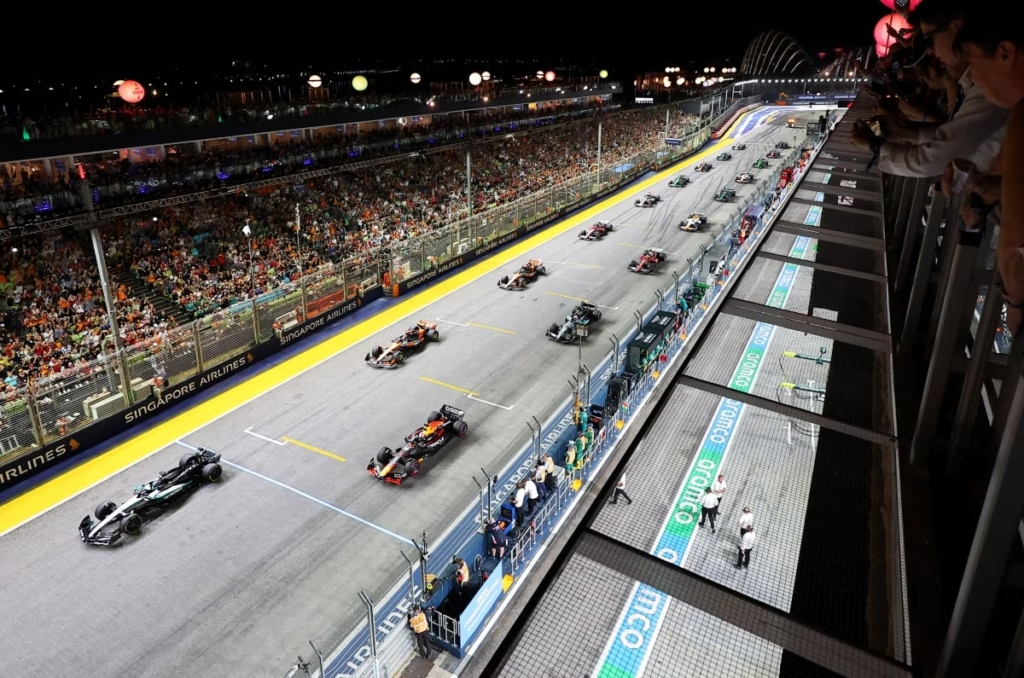
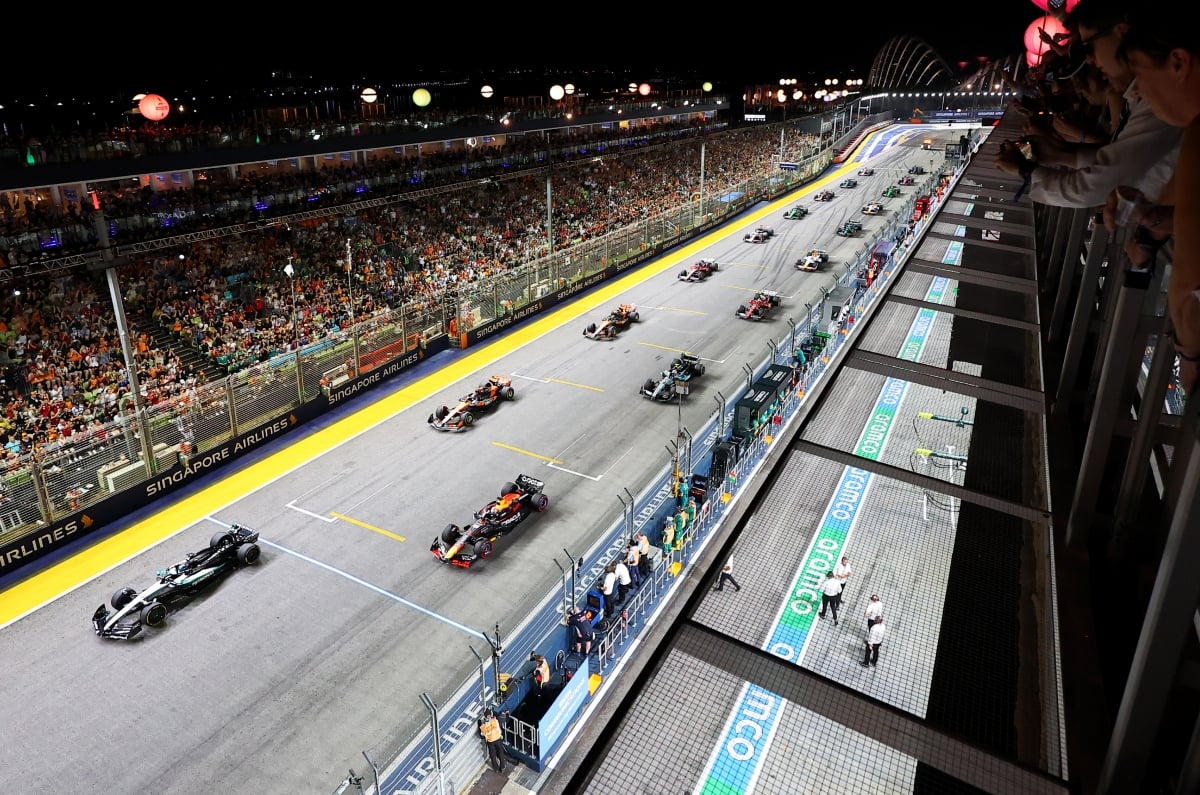
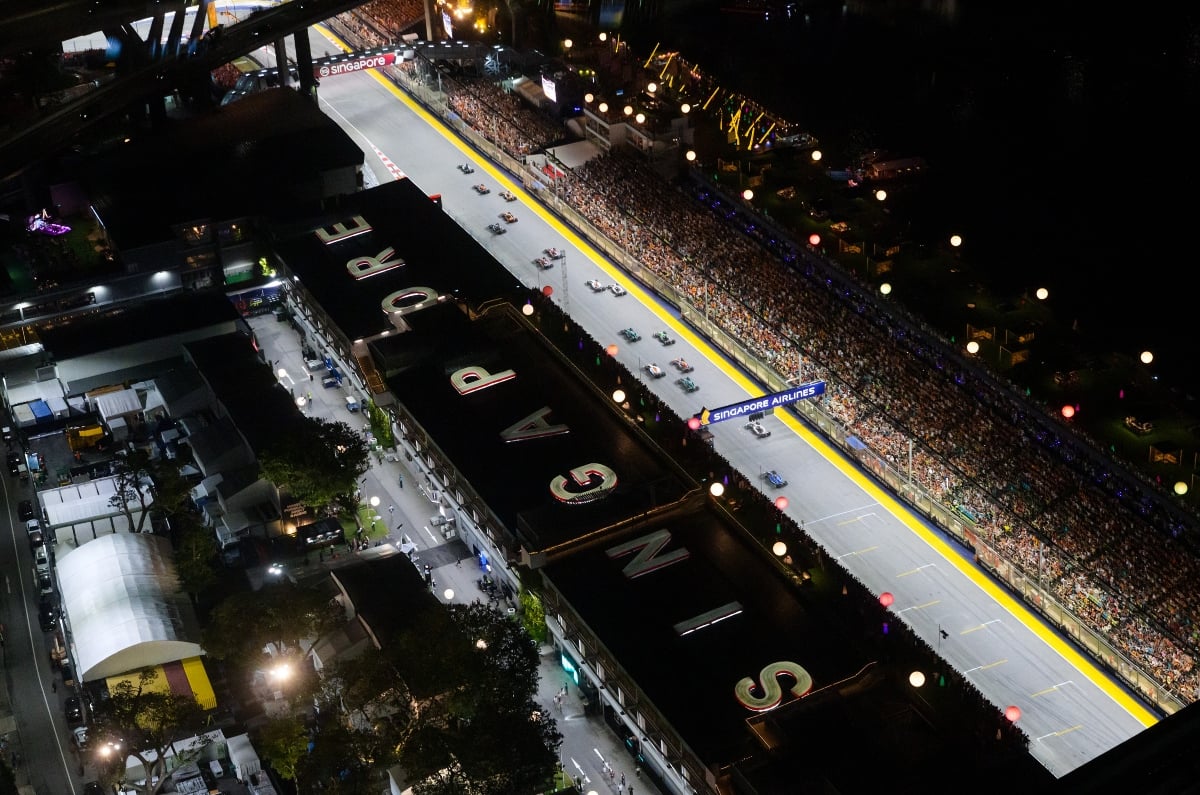
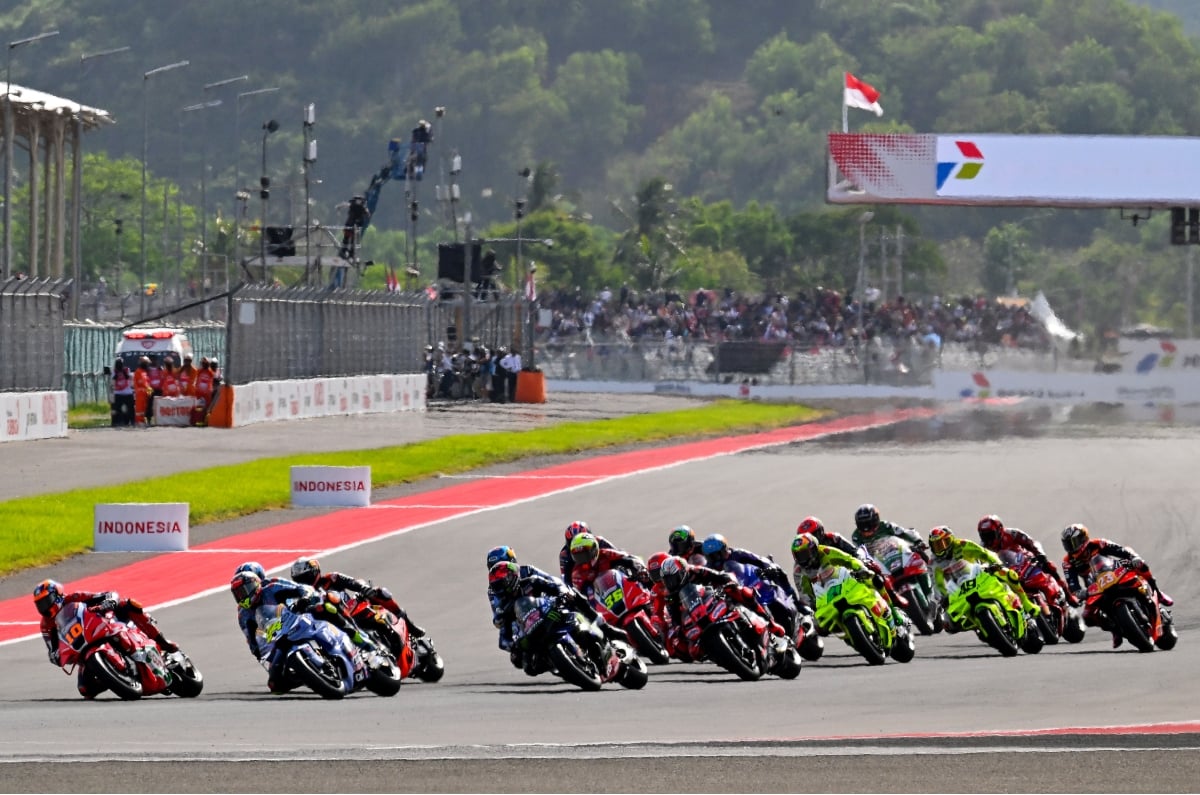
Singapore’s Marina Bay Street Circuit will host a sprint round for the very first time this weekend. The Singapore GP is already one of the most physically demanding races on the calendar, but with a Sprint race added to the mix, there’s another layer of complexity this year.
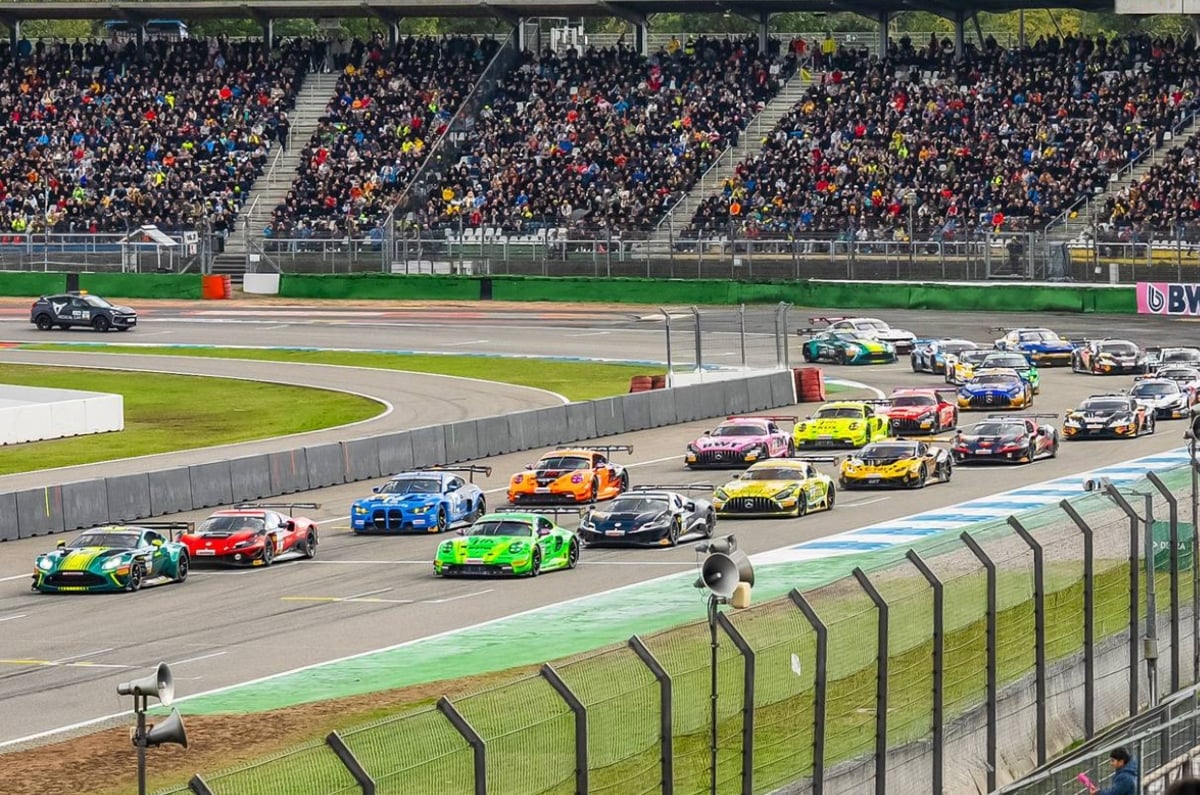
MotoGP, meanwhile, heads to Indonesia’s Mandalika International Circuit with just two points separating Jorge Martin and Marc Marquez at the top of the standings. And lastly, a new DTM champion will be crowned this weekend, with Hockenheimring hosting the 2026 finale.
F1 Singapore GP schedule
Singapore will stage the final Sprint weekend of the 2026 F1 season, giving teams just a single practice session to fine-tune their car set-ups.
Max Verstappen clinched his first win of the season last time out at Malaysia, while Kimi Antonelli stretched his championship lead to 84 points after his teammate George Russell retired in the closing laps. The gap between the two Mercedes drivers is already more than three race wins and Russell faces another setback this weekend with a power unit penalty dropping him to the back of the grid.
Mercedes has also opted to split car specifications at Singapore. Antonelli’s car will carry the Malaysia upgrade package along with a new front wing. Russell, meanwhile, will stick to the pre-Malaysia spec car, giving the team the chance to get a direct comparison at Singapore.
2026 F1 Singapore GP: Where to watch?
All F1 Singapore GP sessions will be streamed live on the FanCode and F1 TV apps.
2026 F1 Singapore GP schedule IST
Date
Day
Session
Time
October 9
Friday
FP1
2pm
October 9
Friday
Sprint Qualifying
6pm
October 10
Saturday
Sprint
2:30pm
October 10
Saturday
Qualifying
6:30pm
October 11
Sunday
Race
5:30pm
MotoGP Indonesian GP schedule
Marc Marquez comes to the Indonesian GP just two points behind championship leader Jorge Martin – that’s the closest-ever gap between the top two after 16 races. But Mandalika has been a notoriously difficult track for Marquez; in fact, he’s never finished a Sunday MotoGP race at the venue.
The seven-time MotoGP champion will be hoping to reverse that trend this weekend. “On paper, Indonesia hasn’t historically been my best track, and in the past, I’ve never managed to finish the main race; irony aside, the main objective with the Team is precisely to reverse that trend and put together a strong weekend,” he said.
2026 MotoGP Indonesian GP: Where to watch?
All MotoGP Indonesian GP sessions will be streamed live on FanCode. Fans in India can also catch the live TV broadcast on Eurosport.
2026 MotoGP Indonesian GP schedule IST
Date
Day
Session
Time
October 9
Friday
FP1
8:15am
October 9
Friday
Practice
12:30pm
October 10
Saturday
FP2
7:40am
October 10
Saturday
Qualifying
8:20am
October 10
Saturday
Sprint
12:30pm
October 11
Sunday
Race
12:30pm
DTM Hockenheimring schedule
Six drivers will be battling it out for the 2026 DTM title this weekend at the Hockenheimring finale. Manthey’s Thomas Preining holds a 23-point advantage over Mercedes-AMG Team Ravenol’s Maro Engel at the top of the standings. Marco Wittmann is third overall, just a single point behind Engel. With 56 points up for grabs this weekend, Lucas Auer, Matteo Cairoli and Nicki Thiim are also within title contention.
India’s Arjun Maini is currently P8 overall, six points behind Ben Dorr.
DTM Hockenheimring: Where to watch?
All DTM Hockenheimring sessions will be streamed live on FanCode.
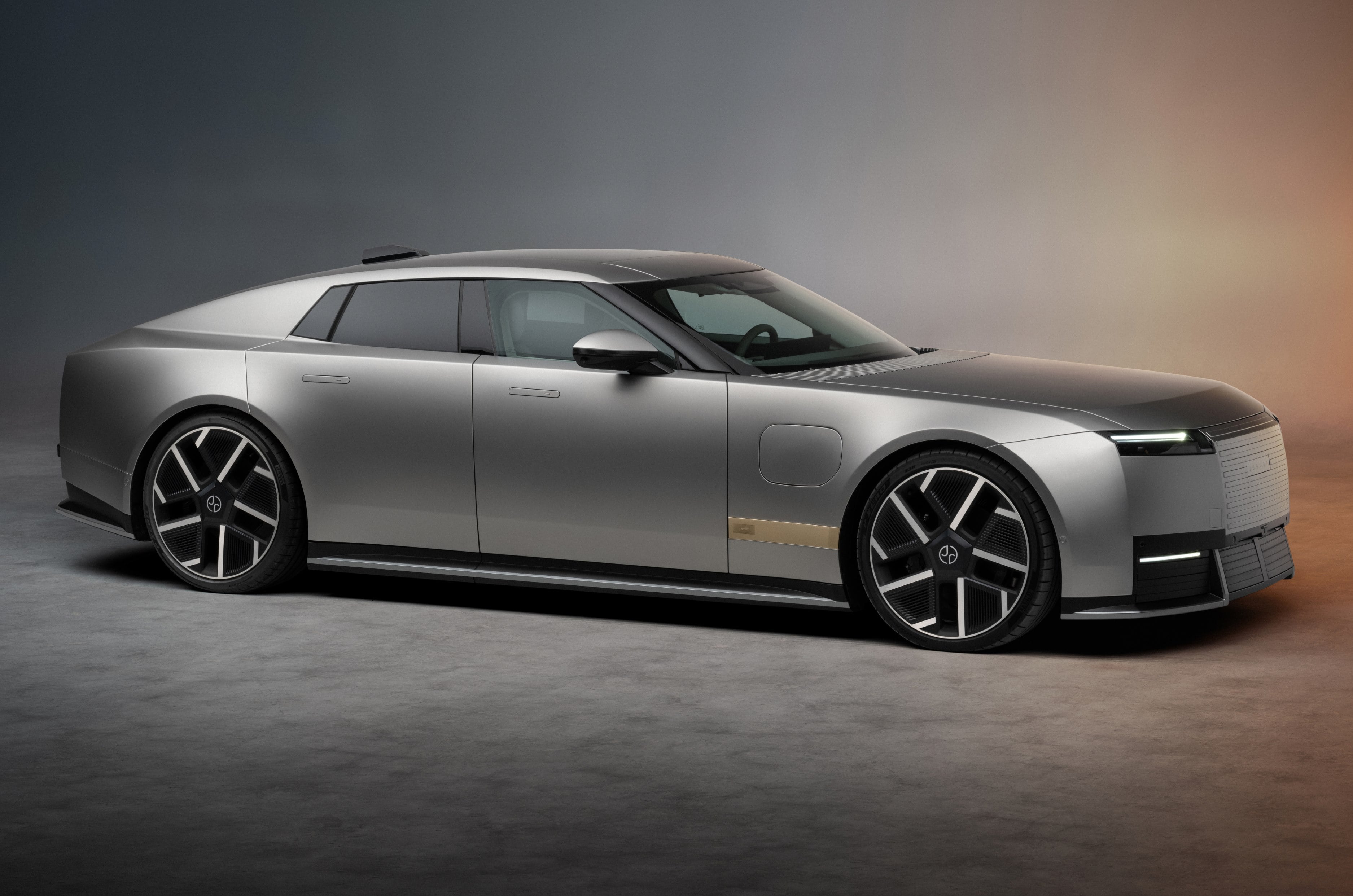
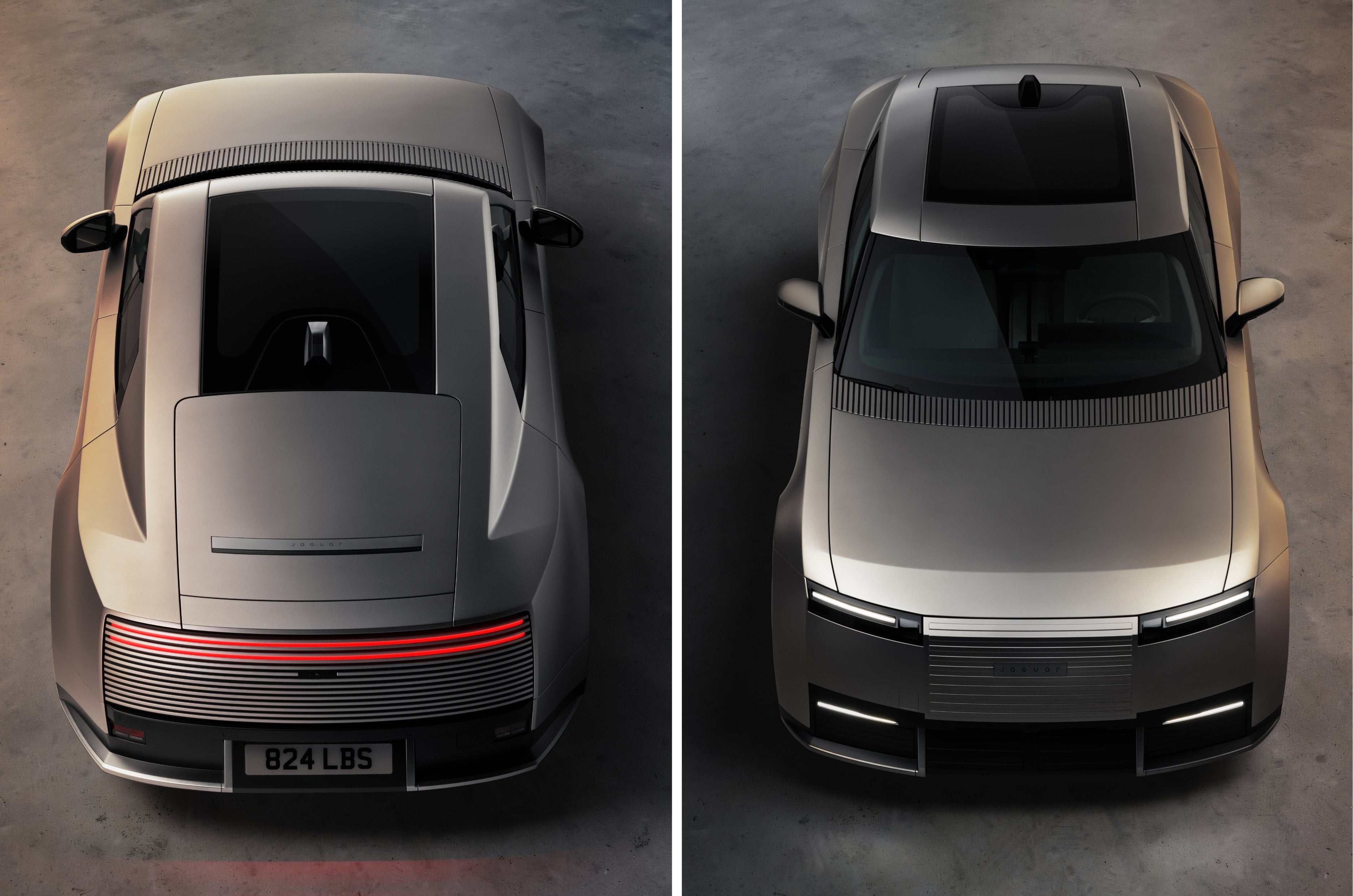
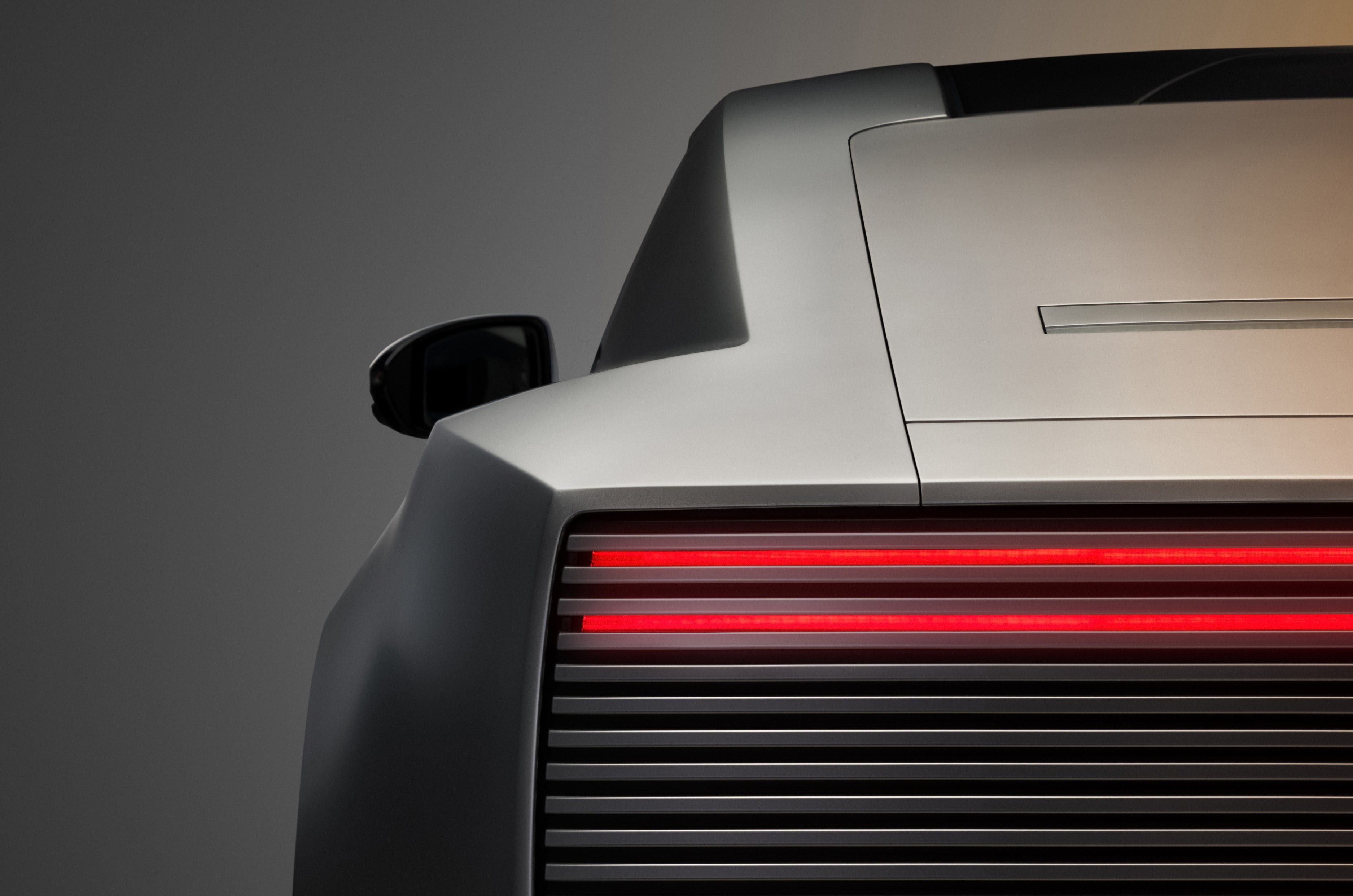
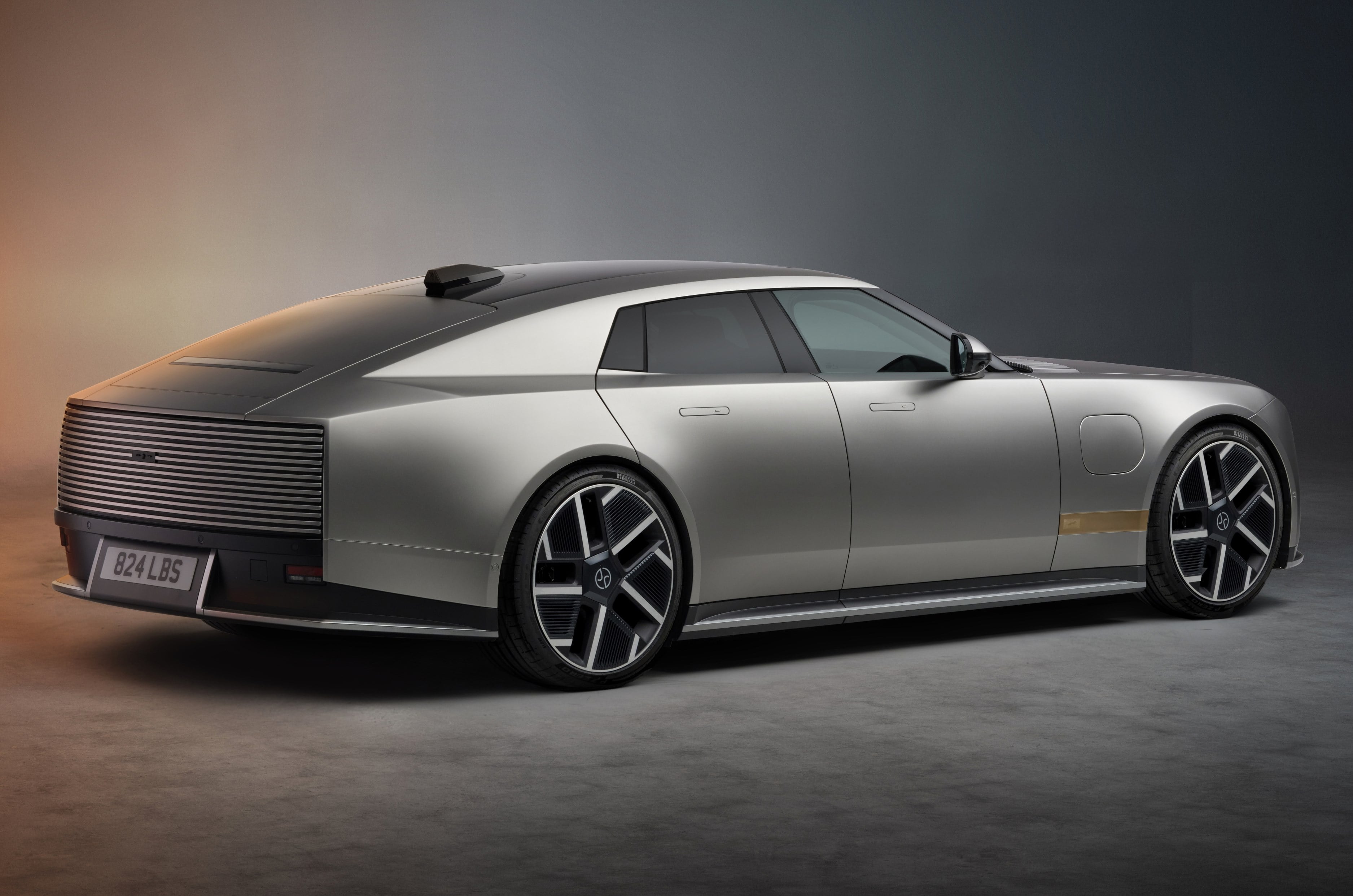
Grace, Space, Pace. That’s been a long-held Jaguar maxim, clearly no more the case, though, at least not that first part. Jaguar’s new Type 01 ditches grace for a design that’s very much in your face, or, styled with exuberant modernism, as the brand more eloquently puts it.
Yes, exuberant it most certainly is; the sheer size and presence of the car are unapologetically bold, and we knew this would be the case when we saw the Type 00 concept. At the time, Jaguar said it would greatly influence the actual production car. Love it or hate it, you have to applaud Jaguar for keeping a majority of the concept’s far-out ideas to the point where a lot of time was spent engineering the new Jaguar Electric Architecture (JEA) to make the design possible.
Strike a chord
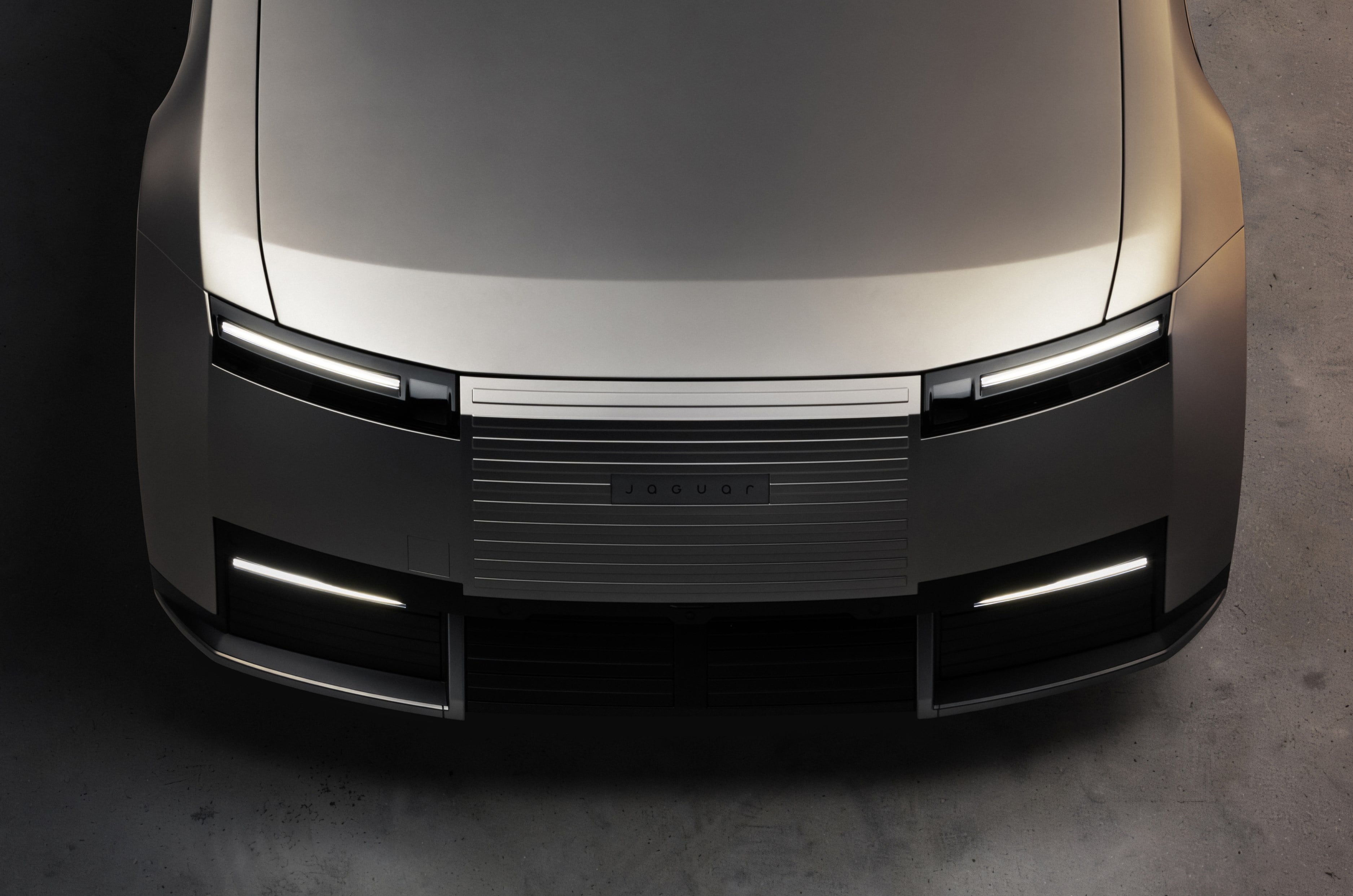
The front is dominated by Jaguar’s new ‘strikethrough’ design element, which gives the bluff nose some character. Unlike most EVs that have a blanked-off front, the strikethrough simulates a grille, retaining some of the visual character of a conventional car. There is, of course, cooling required, and this is handled by active shutters lower down, which open and close depending on cooling requirements.
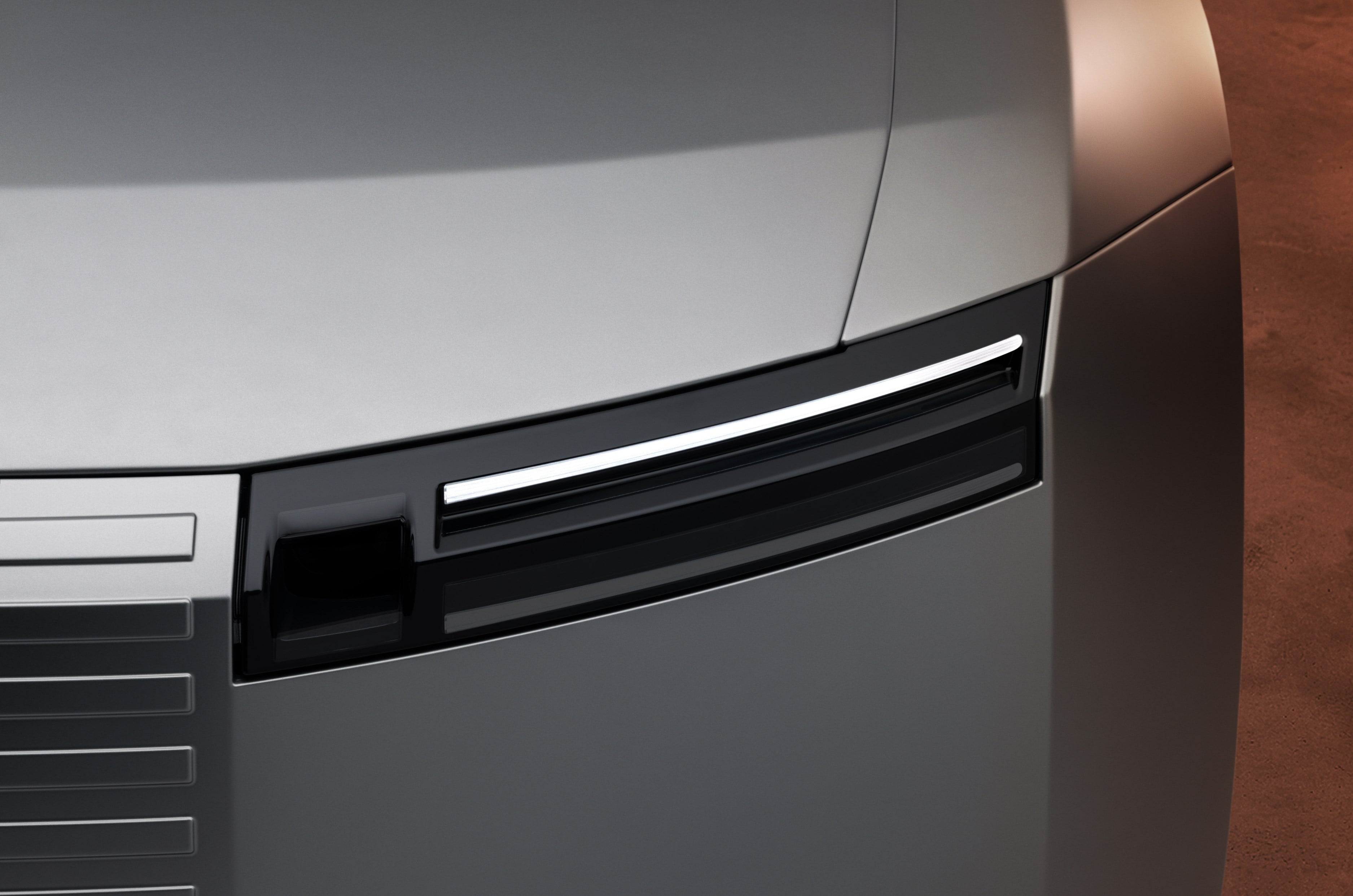
The four ‘line’ daytime running lights are another distinctive element and could become a signature for future Jaguars. The headlights, meanwhile, are the slimmest ever fitted to a Jaguar.
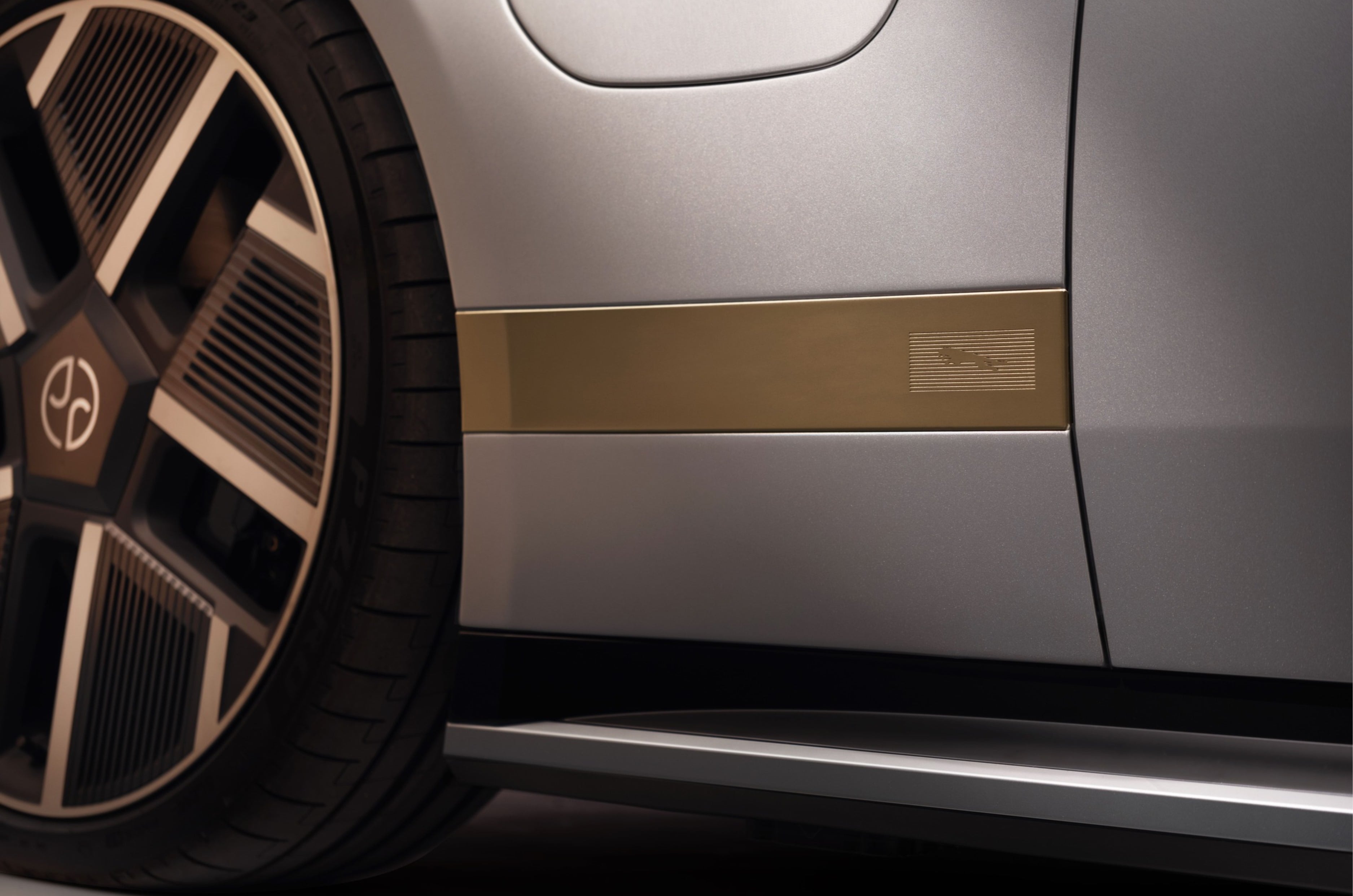
Despite its almost upright front end, the Type 01 is the most aerodynamic Jaguar yet, with a drag coefficient of just 0.23. This has been achieved through extensive aerodynamic work, including active aero elements and clean, uninterrupted body surfaces. The traditional leaping Jaguar mascot is absent from the bonnet, but fear not, it’s not entirely gone, surfacing on a brass-like panel on the front fenders, which also highlights what Jaguar calls the ‘luxury gap’ — the distance between the front axle and the A-pillar. This massive length gives the car its distinctive bonnet-forward proportions and a very regal stance; there is also a functional purpose.
The Type 01 has a split battery pack, comprising five separate modules: one positioned ahead of the A-pillar – in this gap – necessitating a re-engineered front crash structure; then there are three modules behind the A-pillar, a gap around the B-pillar area and then the final module near the C-pillar. Typically, EVs use a single battery pack contained between the A and C pillar line; however, the low roof meant Jaguar needed that gap to create a footwell for rear passengers.
The long 3.2-metre wheelbase and low 1,400mm overall height give the Type 01 its dramatic slammed-down stance, a hallmark of the concept. In fact, the massive 23-inch wheels make up more than half the height of the entire car. Charging ports are provided on both sides, making it convenient to plug in regardless of which side the charging station is on.
One of the most interesting elements of the Type 01’s is what Jaguar calls the ‘impossible panel’. This is essentially the rear fender panel that extends all the way to the A-pillar at the top and has an extremely deep draw forming massive shoulders over the rear wheels. Jaguar says computer simulations initially suggested that the required depth could not be created with a single piece of aluminium, but it worked with the tooling and made it a reality. The resulting panel features a sharp crease that rises from the window line and creates a striking visual effect, which stands out nicely in the silver finish of the car we see here.
The rear is another striking area and will be the one with the most polarised views. The strikethrough design continues, but it pretty much dominates the entire width of the car; even the taillights are hidden within. When the car is switched off, the lights are invisible, leaving just the grille-like surface, and it does look excessively lined, though unique.
Then there’s the complete absence of a rear windscreen. Jaguar says a conventional rear windscreen would offer very limited visibility with a short vertical height, given the car’s long sloping roofline, so it opted for a clean monolithic panel while a camera feeds a digital rear-view mirror. There’s also a rear spoiler that can be deployed; there are three positions in all, adjusting according to speed to aid aerodynamic efficiency and stability. Beneath the tailgate is 450 litres of boot space in a relatively shallow bay, with some additional storage beneath a panel.
Give and take
The Type 01’s concept car design and proportions do come with some compromises, and that’s immediately apparent stepping into the rear. You have to move around a protruding rear panel and sink into the seats. Once there, the space is cosy or claustrophobic depending on how you see small spaces. The trouble is the low roof is very close to your head, and the window panes are extremely small; there’s a glass roof, but it only does so much to alleviate the lack of cabin volume. Furthermore, you sit behind the pillar, so you get some privacy, but not an open view outside.
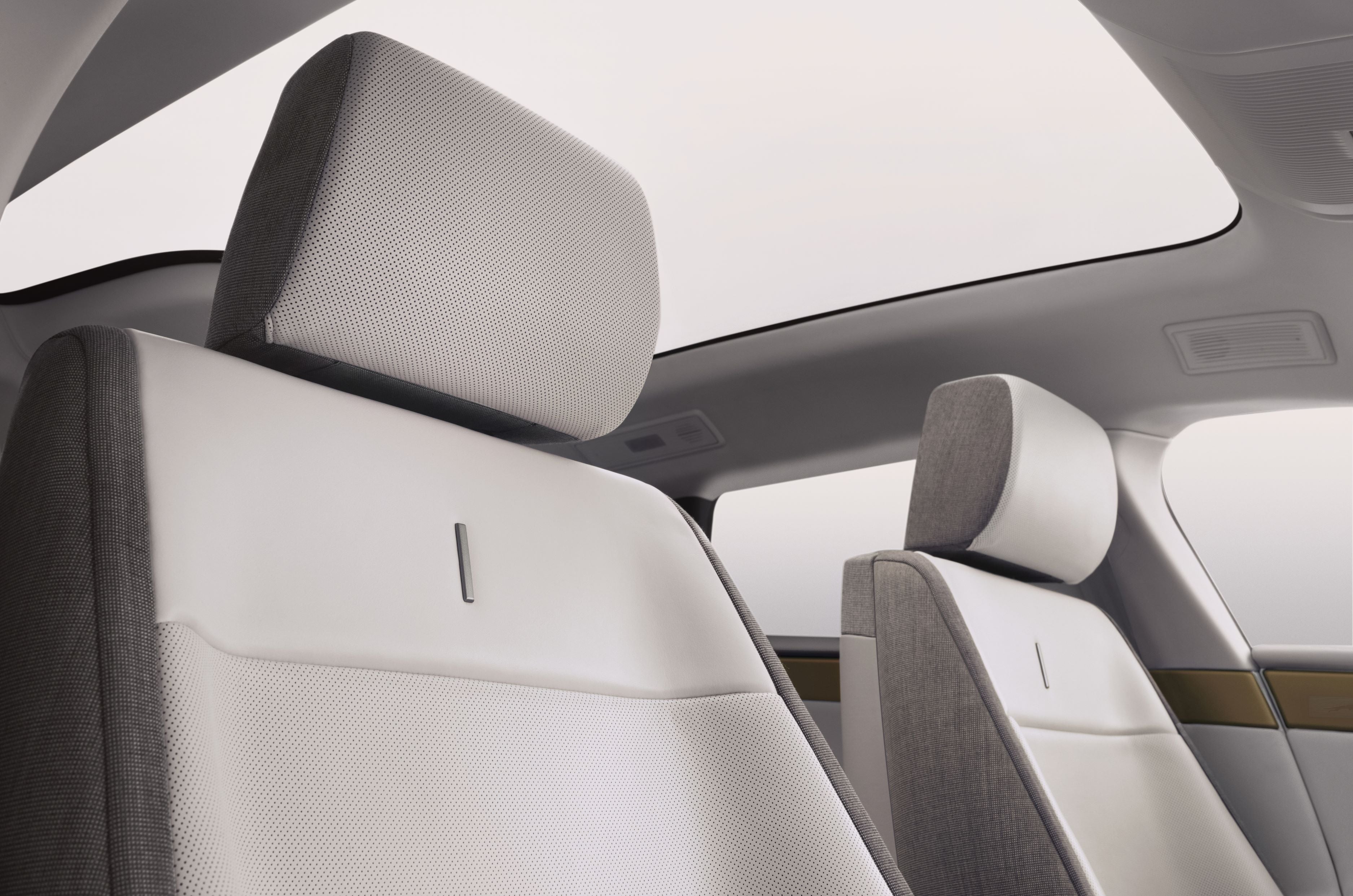
The seats are comfy enough, and at the rear the split battery arrangement reduces the knees-up seating position; while it isn’t comfortable like a conventional car, the arrangement makes a meaningful difference.
At the front too, the low roof means a low-set driving position; the windscreen is shallow in height, and headroom is just about sufficient for taller occupants. Also, the rear-view mirror – or display, more accurately – is positioned at the base of the windscreen rather than atop. The front seats feature heating, cooling and massage functions.
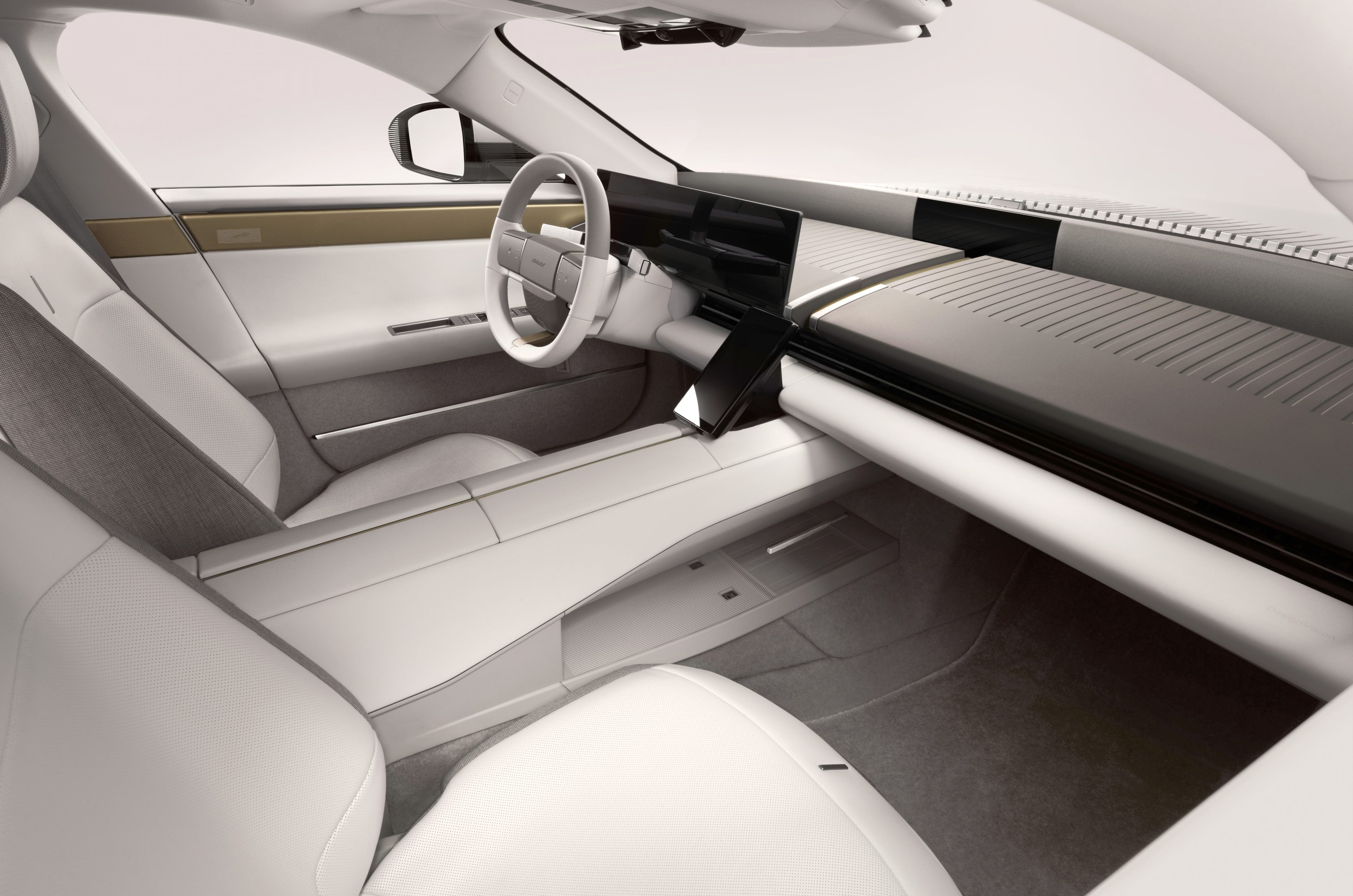
The cabin is divided into four distinct zones by a prominent central spine that houses storage spaces and a rear touchscreen controller. The dashboard carries the strikethrough pattern from the bonnet outside, and the doors carry prominent brass-finished panels. The absence of physical buttons is disappointing; thankfully, the central touchscreen, which handles climate control, is positioned in a manner that allows the driver to rest a hand on the central spine to make operations a bit easier.
There’s a single large 24-inch display combining the instrument cluster and central infotainment screen; driver-focused information is to the right, and functions accessible to the front passenger are on the left.
Number crunching
Underneath its dramatic styling, the Type 01 packs in some serious performance hardware and is the latest to join the 1,000hp+ club. Power comes from a three-motor setup, two at the rear and one at the front. Combined, these produce a massive 1,030hp and 1,365Nm of torque, and despite it weighing in at about 2.7 tonnes, the Type 01 does the 0 to 100kph sprint in 3.2 seconds. This isn’t the 2-second territory that others of this high horsepower club claim, but it’s still extremely quick for what is essentially a four-door GT. Jaguar has often talked of ‘power in reserve’ and highlights its strong 100kph to 180kph of 4.0 seconds as evidence.
Feeding this power is the split module battery; it utilises NMC chemistry and has a 120kWh capacity (118kWh usable) and promises a WLTP range of up to 720km. Jaguar says thanks to the 850-volt architecture, on a 350kW DC charger you can add 321km of range in 13 minutes and 10-80 per cent in around 22 minutes with the split pack set-up to maximise 400-volt chargers. The Type 01 also features twin AC charging ports, one on each side, so it’s easy to charge no matter how you park.
The powertrain has drive modes, torque vectoring and ride is courtesy of switchable air springs and twin-valve active dampers. Rear-wheel steering keeps a tight 11.5m wall-to-wall turning circle diameter.
Shock! And awe?
The Type 01 is unlike Jaguars of the past, which were the target. Jaguar sales were drying up, and it needs to bring in new customers, and that’s where this entirely new design direction comes in. It has traces of its heritage but, on the whole, is unique, and there’s no denying it’s striking to look at with its wild concept car looks. This, however, means interior space is at a premium, and there are ingress and egress challenges. Making amends in some way is the minimal and classy interior styling and, of course, a powertrain with all the right numbers and ingredients that promises a thrilling drive experience.
Asking prices for all this will be going up, not to the levels of a Rolls or Bentley but above what the brand’s previous flagships like the XJ were at. Expect prices to start at £120,000 in international markets where deliveries are scheduled to begin by mid-2027. India will follow a few months on with prices around the Rs 2 crore mark, give or take.
Sitting between Mercedes and BMWs at the lower end and Rolls and Bentleys above, the Type 01 has found a gap and a differentiation in its style and appeal too. But can Jaguar transform from elegance and heritage to exuberant modernism? It’s a big leap for sure, and one that the company needs the big cat to make.
Mercedes-Maybach S 580e: Mercedes-Benz India ने देश की पहली इलेक्ट्रिक Mercedes-Maybach, ‘Mercedes-Maybach S 580e’ लॉन्च की है, जिसकी कीमत 3.35 करोड़ रुपये (एक्स-शोरूम) है। यह लग्जरी सेडान Maybach ब्रांड के पारंपरिक आराम और बेहतरीन कारीगरी को प्लग-इन हाइब्रिड पावरट्रेन के साथ जोड़ती है। बता दें कि Mercedes-Benz शुरू में भारत में S 580e की सिर्फ 30 यूनिट्स ही बेचेगी।
Mercedes-Maybach S 580e: डिजाइन
Mercedes-Maybach S 580e का डिजाइन काफी हद तक फ्लैगशिप S-Class जैसा ही है, लेकिन इसे Maybach की खास पहचान देने के लिए कई बदलाव किए गए हैं। इसमें रोशनी वाला Maybach ग्रिल, Maybach लोगो प्रोजेक्शन और इल्यूमिनेटेड डोर सिल्स दिए गए हैं। इसके अलावा, ग्राहकों को MANUFAKTUR के तहत कई कस्टमाइजेशन विकल्प भी मिलते हैं।
ग्राहक इस कार के लिए खास टू-टोन पेंट फिनिश और अपनी पसंद के Nappa लेदर इंटीरियर का विकल्प चुन सकते हैं।
भारत में इसका मॉडल सिर्फ 4-सीटर कॉन्फिगरेशन में उपलब्ध होगा। इसमें पीछे Executive सीटें और पूरी लंबाई में रियर बिजनेस कंसोल दिया गया है। Mercedes-Benz के मुताबिक, कार में पीछे बैठने वाले यात्रियों के आराम पर खास ध्यान दिया गया है, जो Maybach कारों की सबसे खास खूबियों में से एक है।
Mercedes-Maybach S 580e: फीचर्स
Mercedes-Maybach S 580e के केबिन में लग्जरी और टेक्नोलॉजी से जुड़े कई शानदार फीचर्स दिए गए हैं। इसमें 31 स्पीकर वाला Burmester 4D साउंड सिस्टम मिलता है। इसमें 8 एक्साइटर्स और 1,610 वॉट का आउटपुट दिया गया है, जिससे कार के अंदर शानदार साउंड का अनुभव मिलता है।
पीछे बैठने वाले यात्रियों के लिए वायरलेस चार्जिंग, फोल्डिंग टेबल, तापमान कंट्रोल वाले कप होल्डर और Rear Comfort Package Plus जैसे फीचर्स दिए गए हैं।
टेक्नोलॉजी की बात करें तो कार में Mercedes-Benz का लेटेस्ट Operating System (MB.OS), 3D ड्राइवर डिस्प्ले, MBUX Superscreen, Augmented Reality नेविगेशन और Head-Up Display मिलता है। सेफ्टी के लिए इसमें ADAS Level 2, PRE-SAFE सिस्टम और कुल 15 एयरबैग दिए गए हैं।
Mercedes-Maybach S 580e: स्पेसिफिकेशन्स
इसमें 3.0-लीटर, छह-सिलेंडर वाला पेट्रोल प्लग-इन हाइब्रिड पावरट्रेन है, जो Mercedes के 4MATIC ऑल-व्हील-ड्राइव सिस्टम के साथ आता है। इसका कंबशन इंजन 443 hp की पावर और 560 Nm का टॉर्क देता है, जबकि इलेक्ट्रिक मोटर 160 hp की पावर और 480 Nm का टॉर्क जोड़ती है।
इसकी कुल पावर 585 hp और टॉर्क 750 Nm है, जो 9G-TRONIC ऑटोमैटिक ट्रांसमिशन के जरिए मिलता है। Mercedes का दावा है कि S 580e 4.8 सेकंड में 0 से 100 kmph की रफ्तार पकड़ सकती है और इसकी टॉप स्पीड 250 kmph है। इस सेडान में 22 kWh का बैटरी पैक भी है, जो WLTP-सर्टिफाइड लगभग 100 km की इलेक्ट्रिक रेंज देता है। चार्जिंग के लिए इसमें 11 kW AC और 60 kW DC फास्ट चार्जिंग की सुविधा है।
Mercedes-Maybach S 580e: कीमत, उपलब्धता और कस्टमाइजेशन
Mercedes-Maybach S 580e की कीमत ₹3.35 करोड़ (एक्स-शोरूम) रखी गई है। कंपनी शुरुआत में इस लग्जरी सेडान की सिर्फ 30 यूनिट ही उपलब्ध कराएगी। इसके साथ ग्राहकों को घर पर कार चार्ज करने के लिए फ्री होम चार्जिंग सॉल्यूशन भी दिया जाएगा।
ग्राहक अपनी पसंद के हिसाब से कार को और भी खास बना सकते हैं। इसके लिए Mercedes-Benz ने MANUFAKTUR कस्टमाइजेशन का विकल्प दिया है। इसमें खास पेंट स्कीम, प्रीमियम लेदर थीम और हाथ से तैयार किए गए इंटीरियर ट्रिम जैसे विकल्प शामिल हैं।
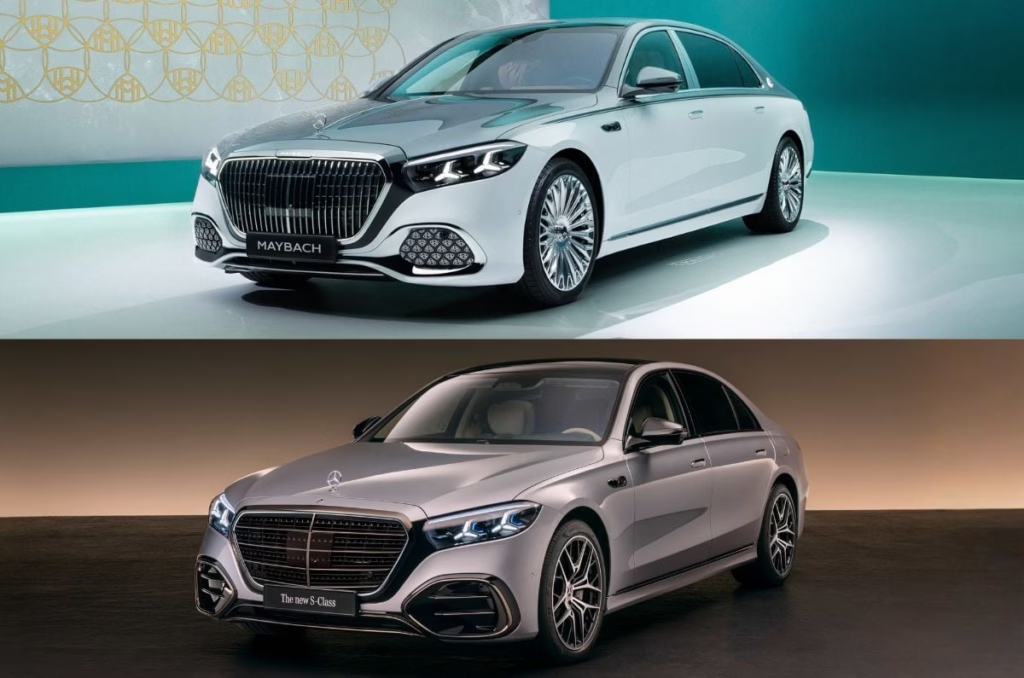
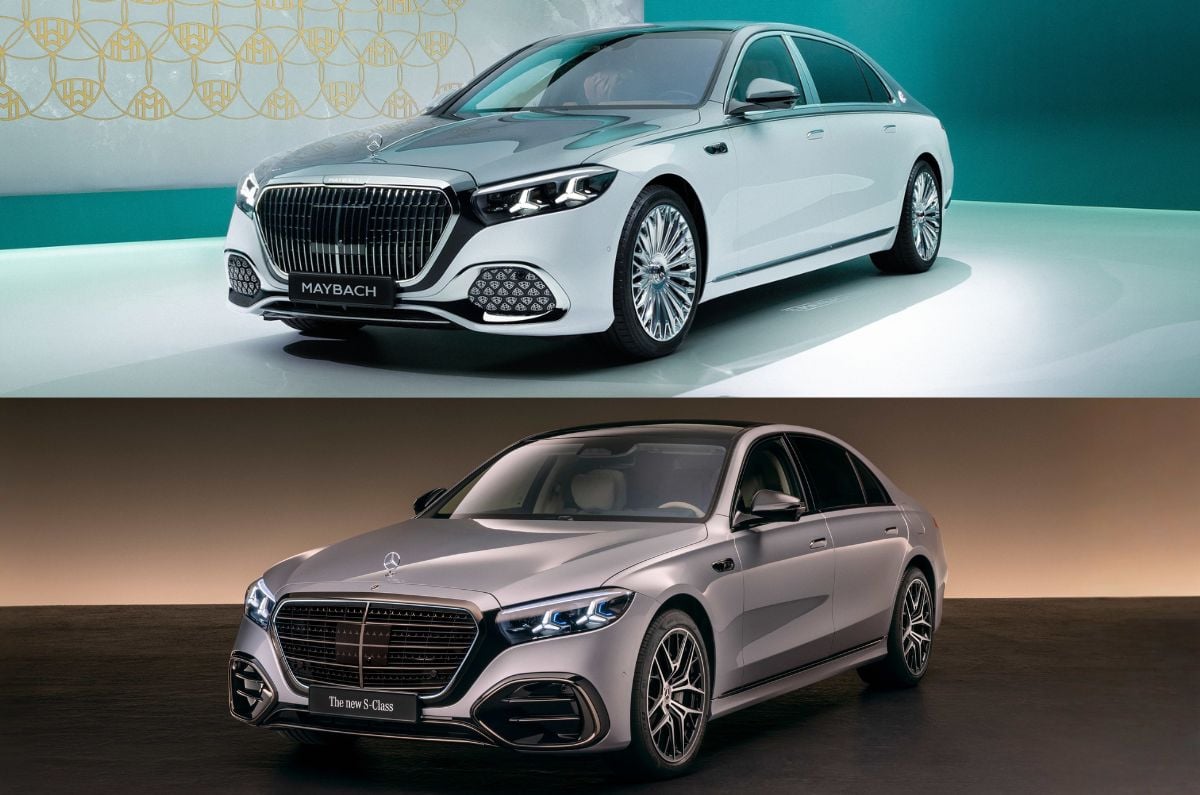
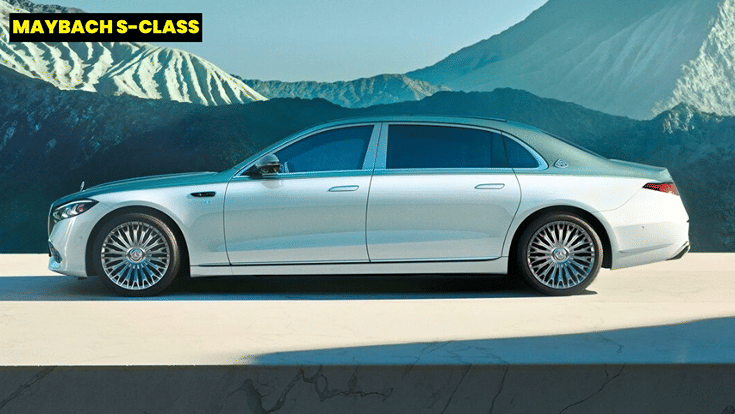
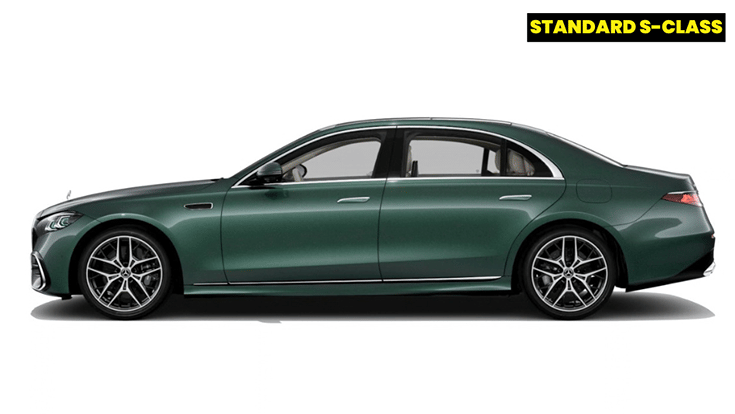
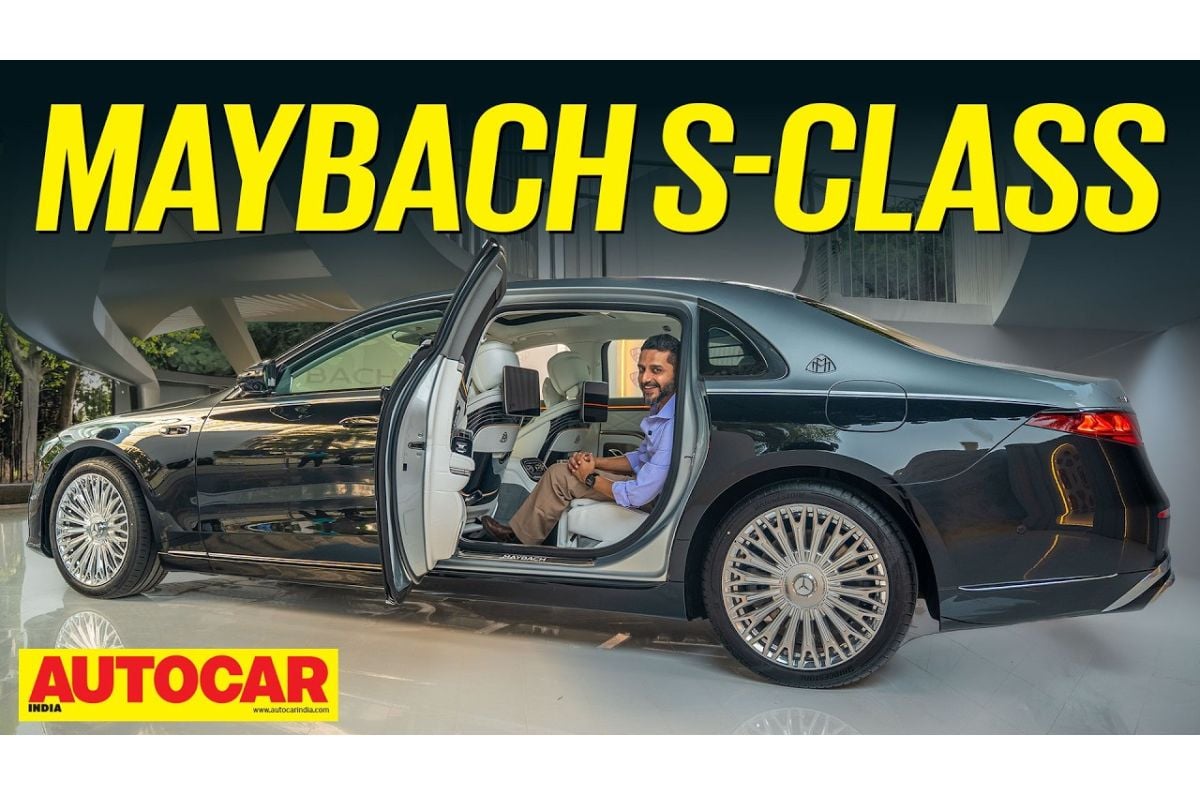
A few months after introducing the 2026 S-Class facelift, Mercedes has launched its more luxurious Maybach counterpart. Priced at Rs 3.35 crore, the Maybach S-Class commands a premium of Rs 1.15 crore over the standard model. But apart from the Maybach badge, what exactly does it offer for the extra money? Here is everything you need to know.
Note: LHD models used for representation
Mercedes-Maybach S-Class vs Regular S-Class: Exterior
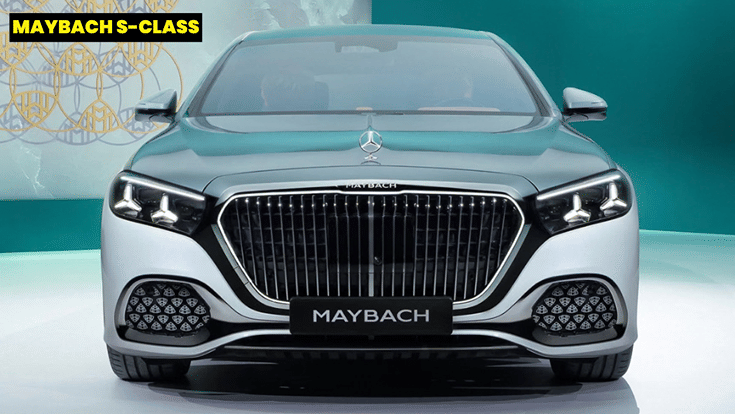
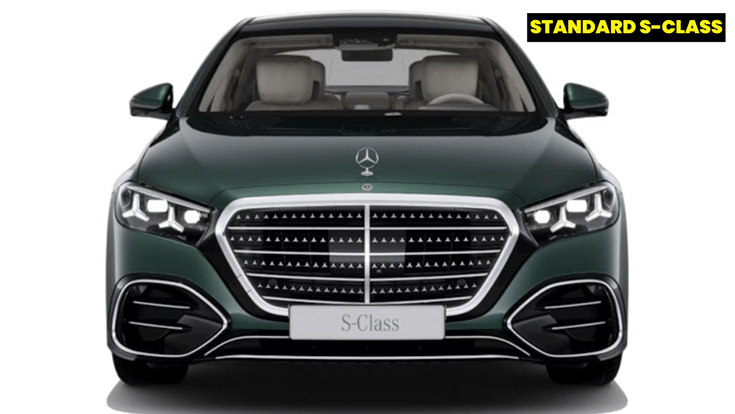
Unlike the standard S-Class, which features two exterior designs across variants, the Maybach S-Class gets a uniform exterior design throughout. The Maybach builds on the standard S-Class design, turning up the luxury quotient. At the front, it sports a Maybach-specific grille with fine vertical chrome slats and Maybach lettering at the top. The regular S-Class, by contrast, features horizontal chrome slats paired with a pattern of tri-star motifs.
Lower down, the standard S-Class’s air intake details are replaced on the Maybach by a fine mesh patterned with small Maybach logos, and there’s thicker chrome trim along the bumper’s edges. The LED headlights feature rose-gold accents, while the bonnet-mounted Mercedes star is retained.
In profile, both models ride on 20-inch alloy wheels. However, the Maybach features multi-spoke forged rims, self-centring wheel caps that keep the Mercedes logo upright while moving, and noise-absorbing tyres. The Maybach’s rear doors are also slightly longer, as it has a 180mm longer wheelbase than the standard model. A subtle illuminated Maybach badge on the C-pillar further sets it apart from the side.
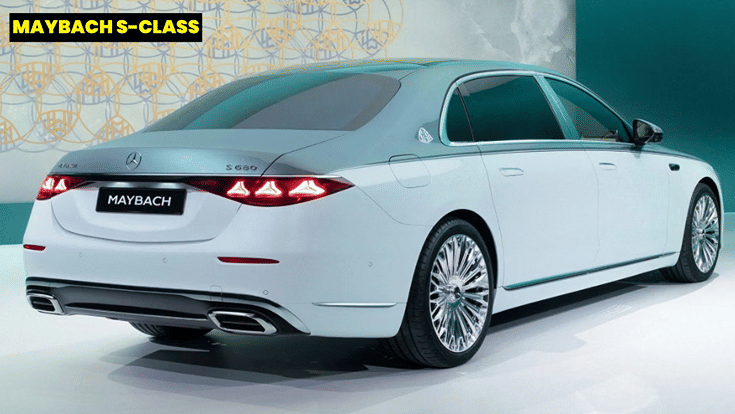
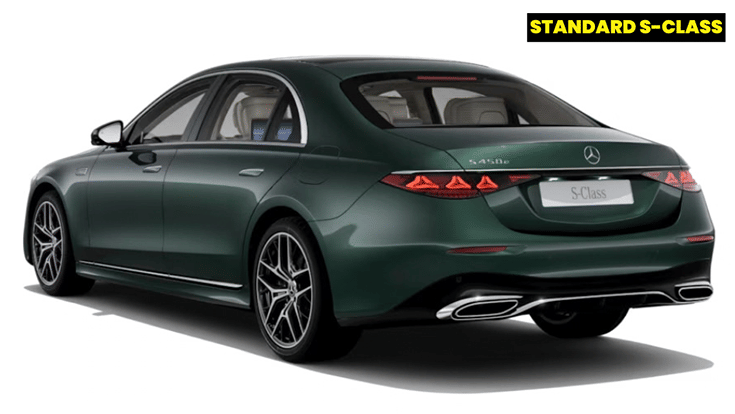
At the rear, the updates are more understated. Maybach lettering on the bootlid distinguishes it from the standard model, alongside minor tweaks to the lower sides of the bumper. Both models share the same LED taillights with tristar motifs connected, and there’s a full-width chrome strip right above it. The Maybach S-Class also offers greater personalisation, including dedicated paint options and exclusive dual-tone colour schemes.
Mercedes-Maybach S-Class vs Regular S-Class: Interior
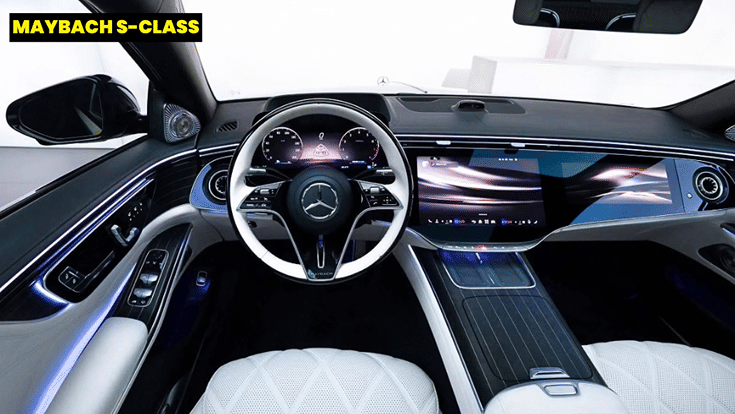
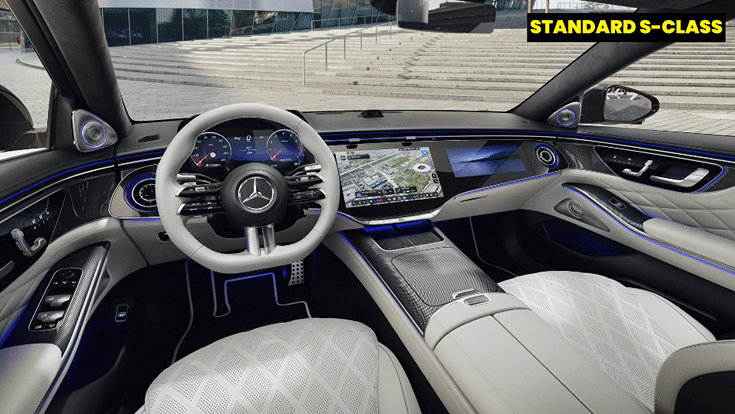
Inside, the Maybach retains the multi-screen layout of the regular S-Class. The dashboard features a 14.4-inch OLED central touchscreen, a 12.3-inch digital instrument cluster, and a dedicated 12.3-inch display for the front passenger. Both models run the latest MB.OS software, but the Maybach gets custom user-interface graphics. It also offers richer materials and expanded upholstery options, including bespoke leather finishes, stitching, and embroidery.
At the back, the Maybach S-Class gets the “executive rear seats” package as standard, whereas the standard S-Class gets it as an optional extra. This means you get a 4-seat layout as standard, and the rear seat recline angle is increased to 43 degrees, up from 38 degrees on the standard model’s 5-seat configuration.
Rear passengers in the Maybach get more creature comforts over the standard S-Class, including temperature-controlled cup holders and dual wireless phone chargers.
Mercedes-Maybach S-Class vs Regular S-Class: Powertrain
Like the standard S-Class, the Maybach uses a plug-in hybrid (PHEV) setup. In the S 580e trim, it pairs a 3.0-litre turbocharged inline-six petrol engine with an electric motor and a 22kWh battery pack. Combined output reaches 585hp and 750Nm of torque—a noticeable step up from the regular S 450e’s 435hp and 680Nm. Both cars send power to the rear wheels via a 9-speed automatic transmission. An AWD layout is standard on both models.
Both models feature a dedicated pure-electric mode. Here, the regular S-Class offers a WLTP-certified electric range of up to 115km, while the Maybach achieves 100km. Conversely, the Maybach earns a higher claimed combined efficiency figure of 34.48kpl versus the standard model’s 32.3kpl. Additionally, the Maybach adds an exclusive “Maybach” drive mode that’s used for maximum rear-seat ride comfort.